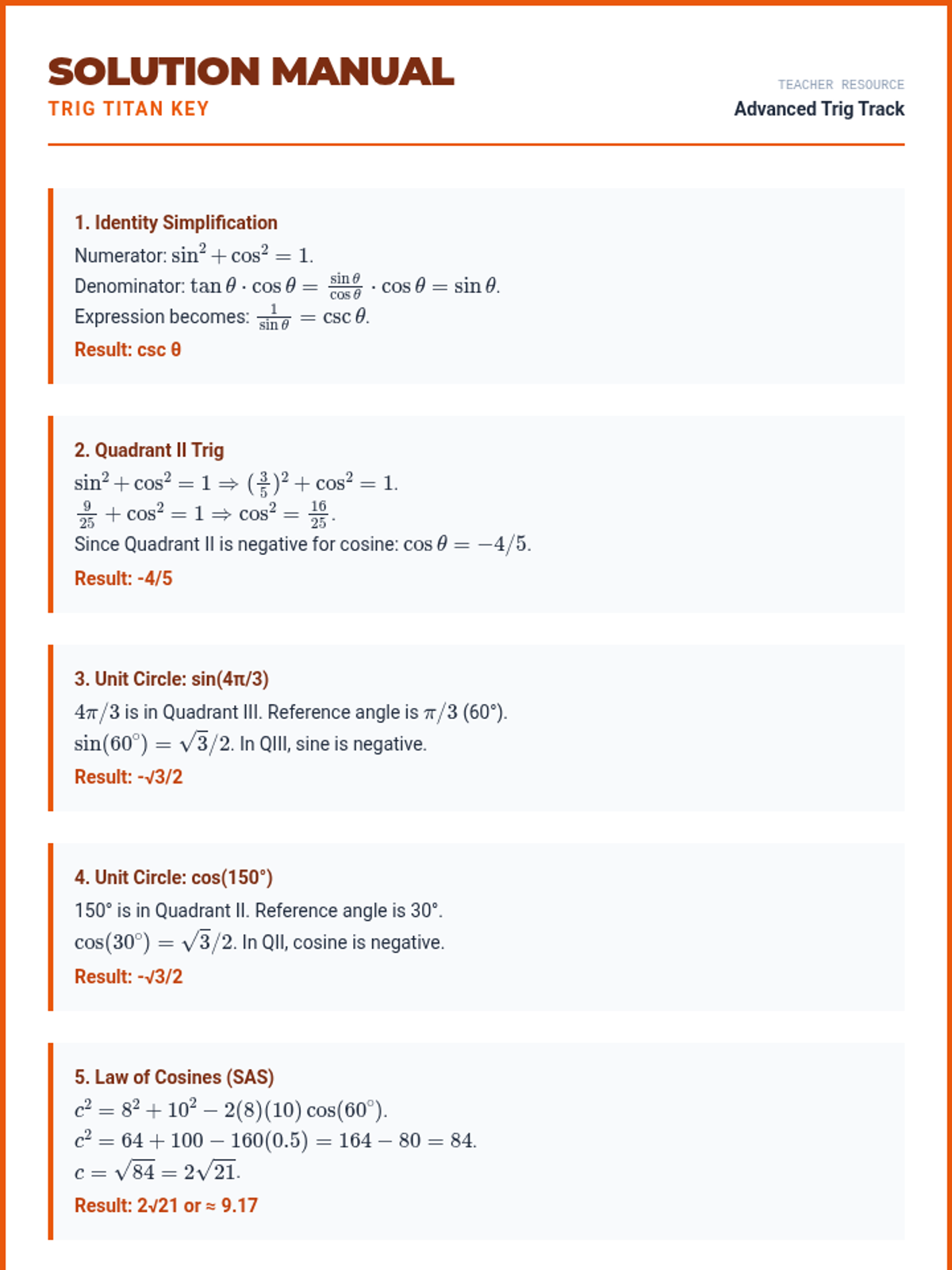
Right triangle ratios, unit circle definitions, and fundamental identities applied to angles and geometric relationships. Models periodic phenomena using trigonometric functions to analyze real-world cycles and waveforms.
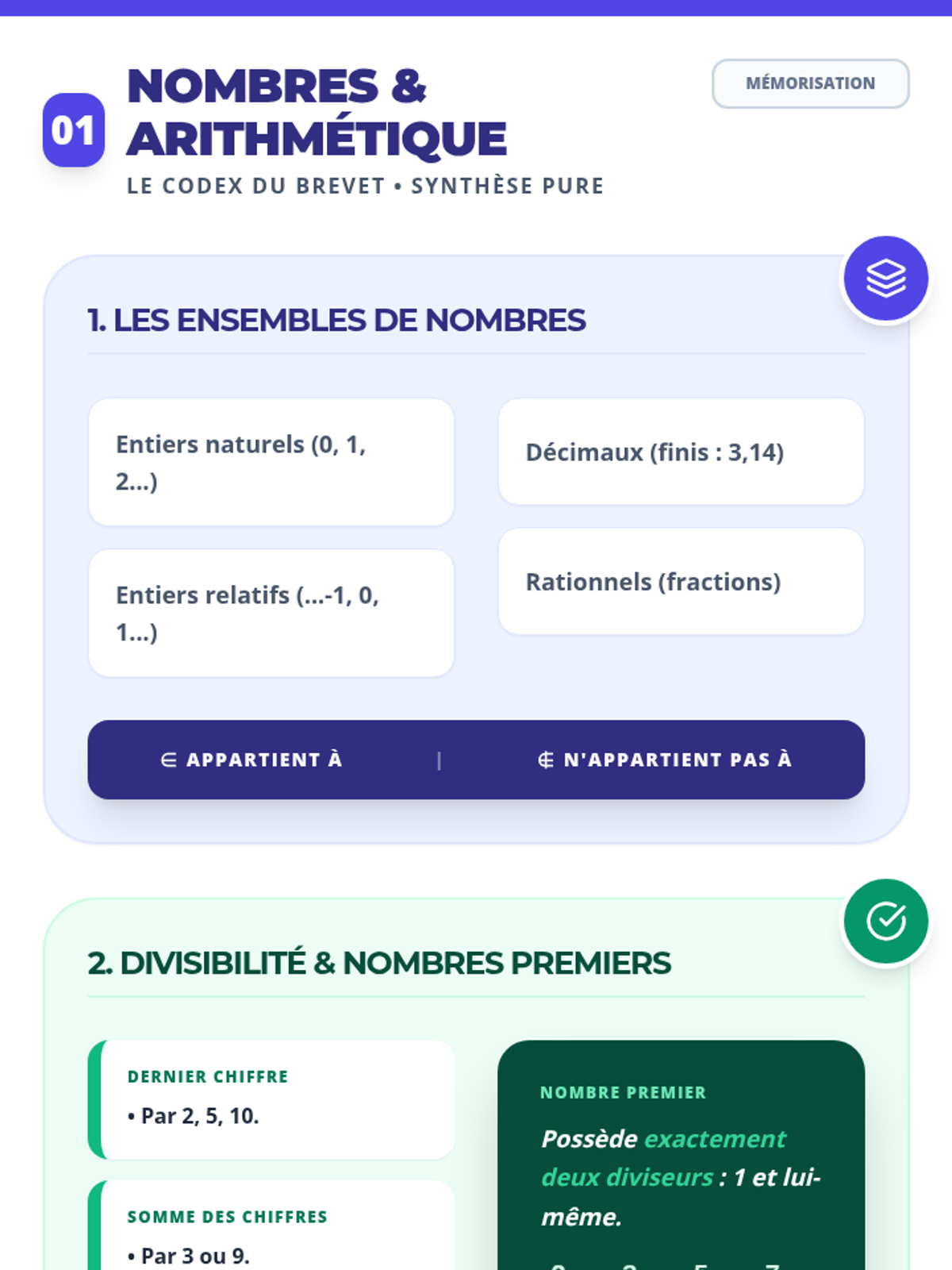
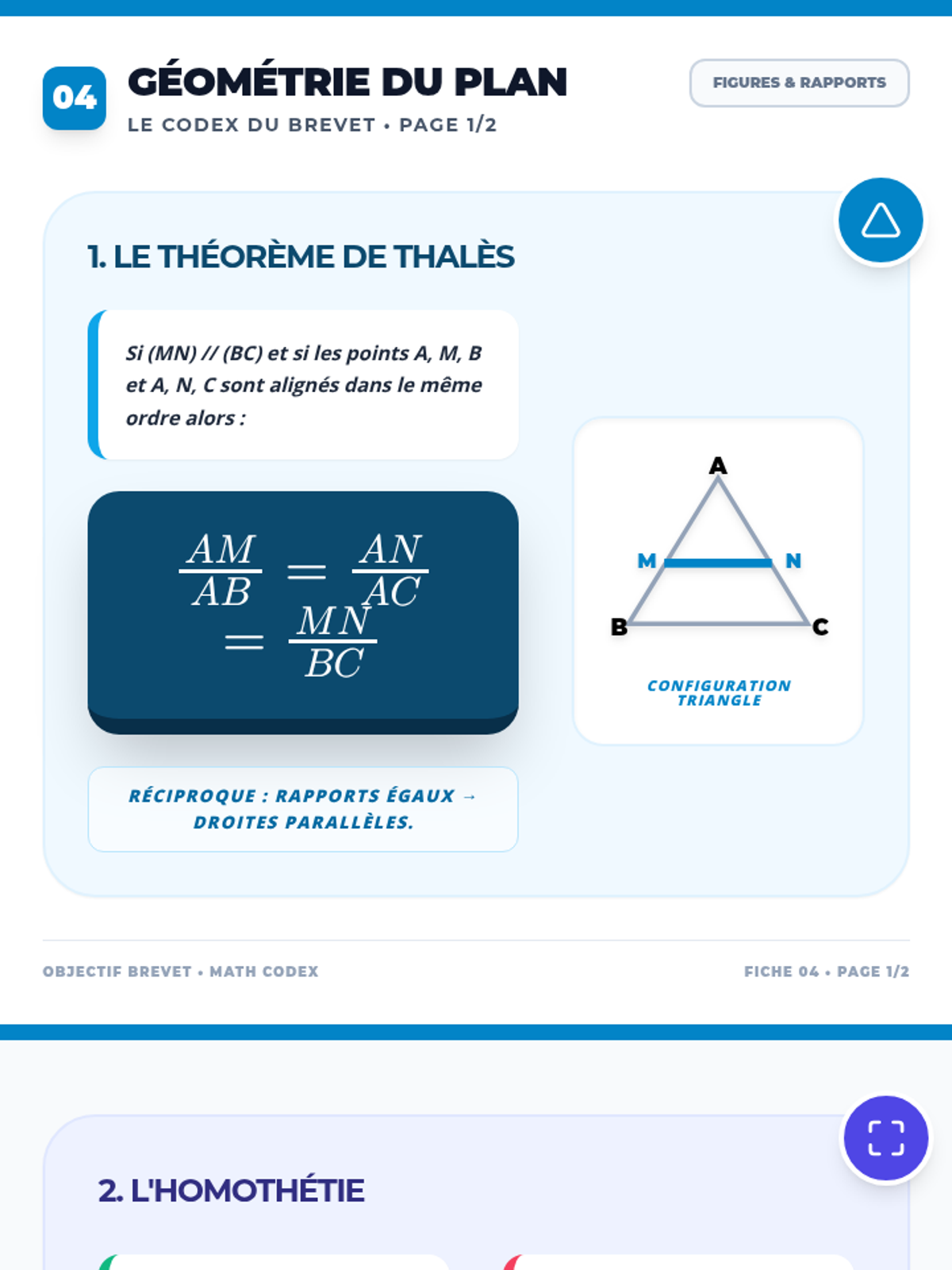
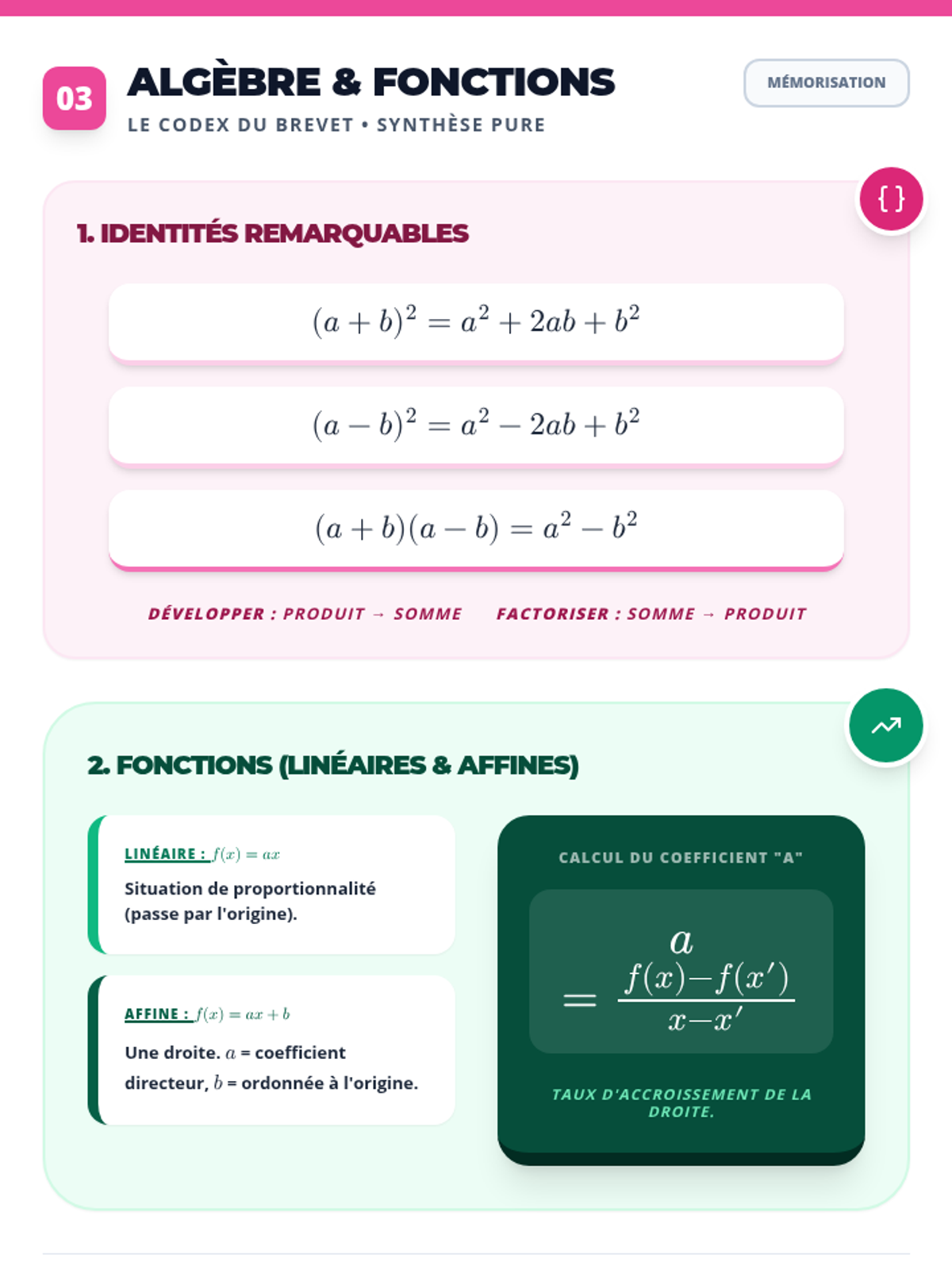
Une collection complète de fiches de révision et un diaporama dynamique pour maîtriser le programme de mathématiques de 3ème. Couvre l'arithmétique, l'algèbre, la géométrie et la trigonométrie avec des visuels clairs et modernes.
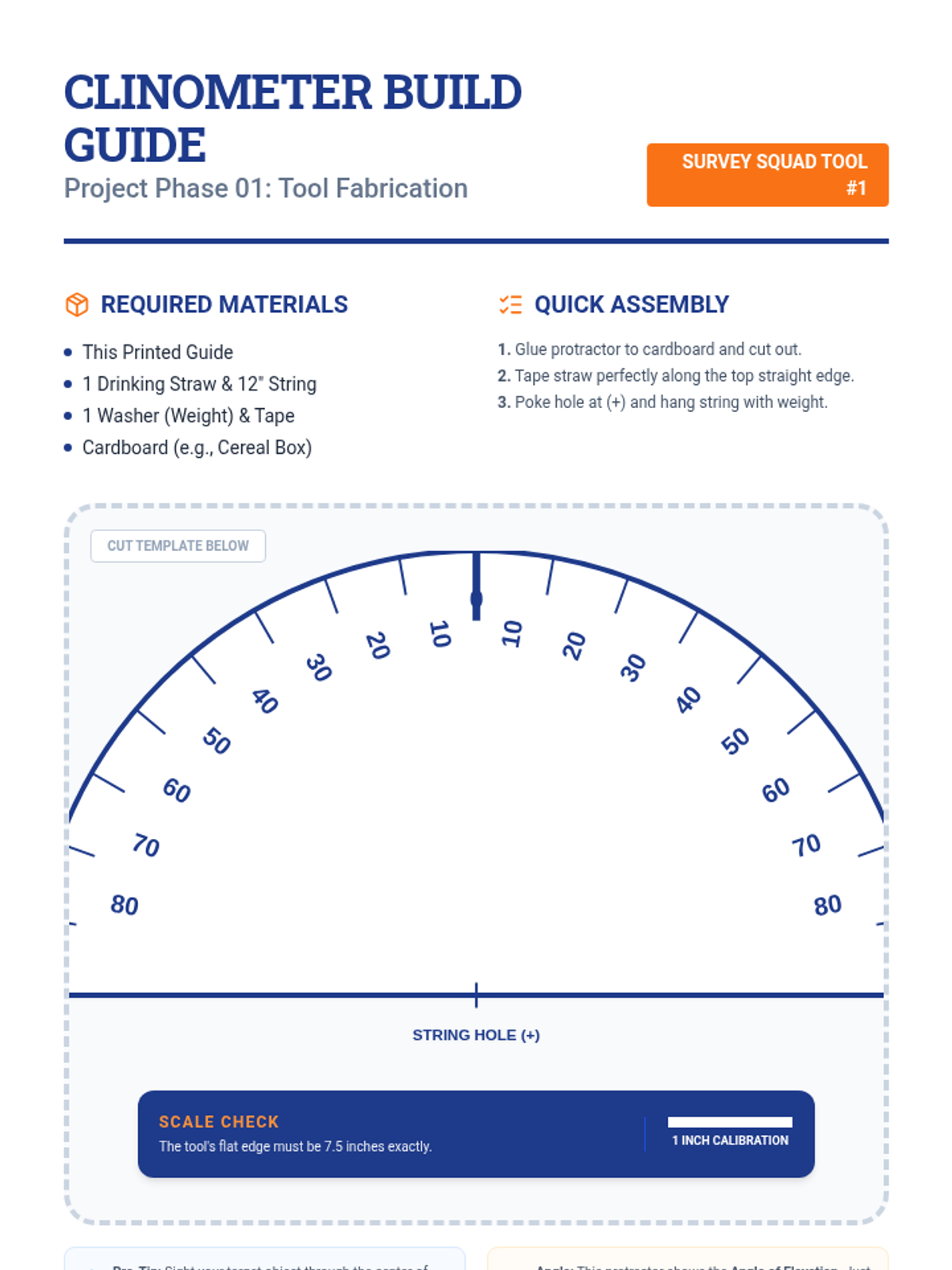
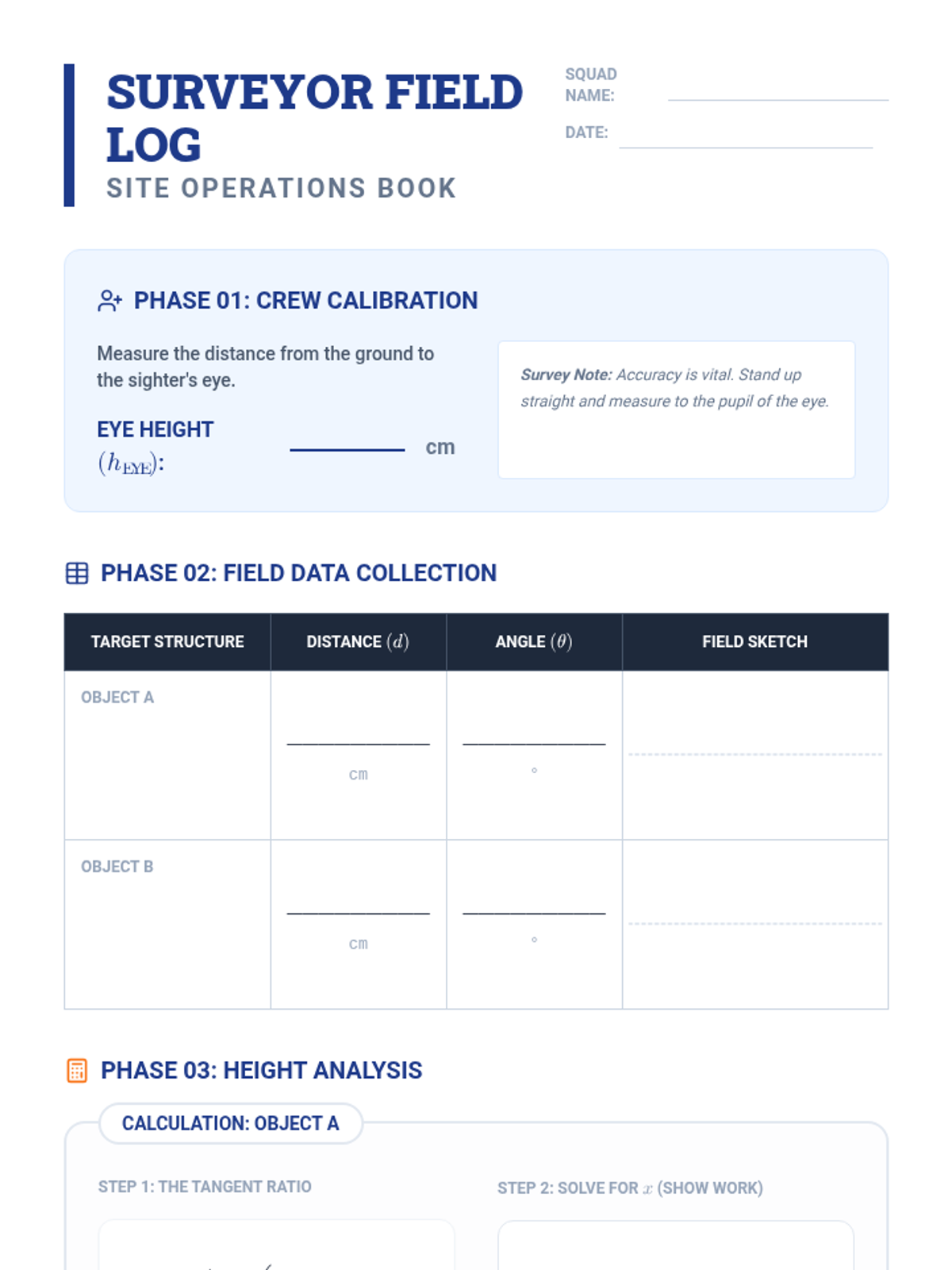
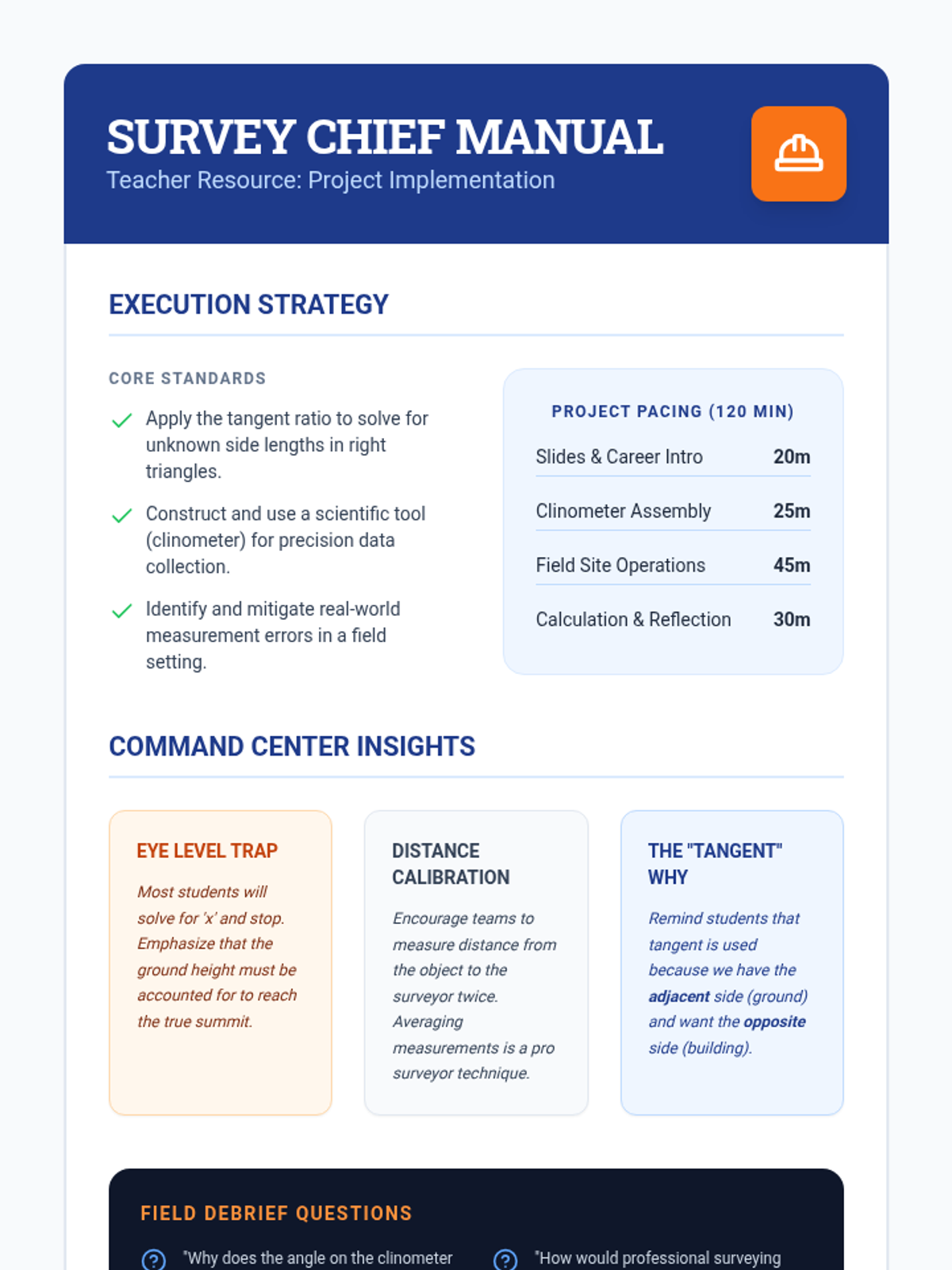
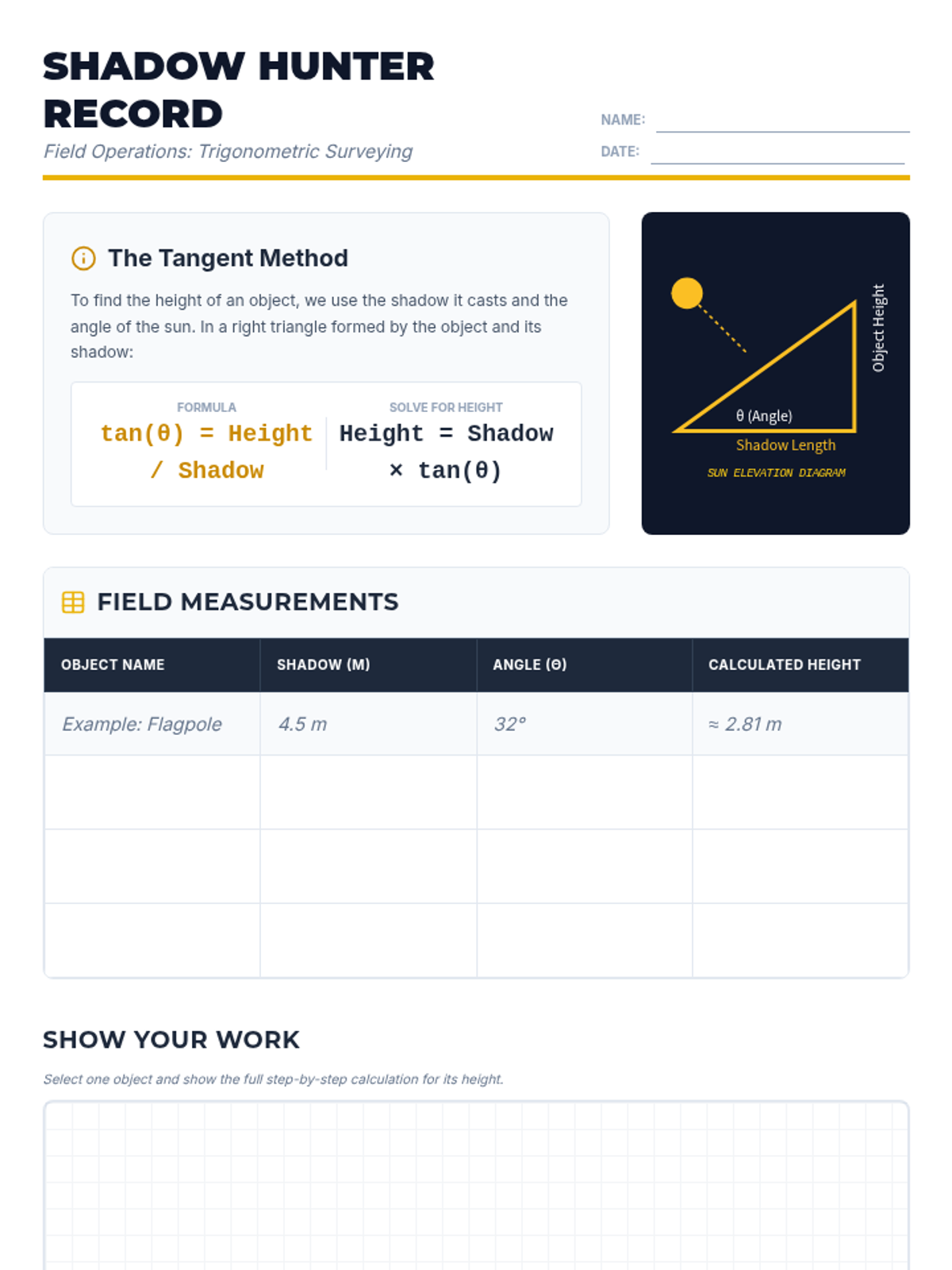
A hands-on project where students step into the role of professional surveyors to measure the height of tall objects around their school using DIY clinometers and trigonometric ratios.
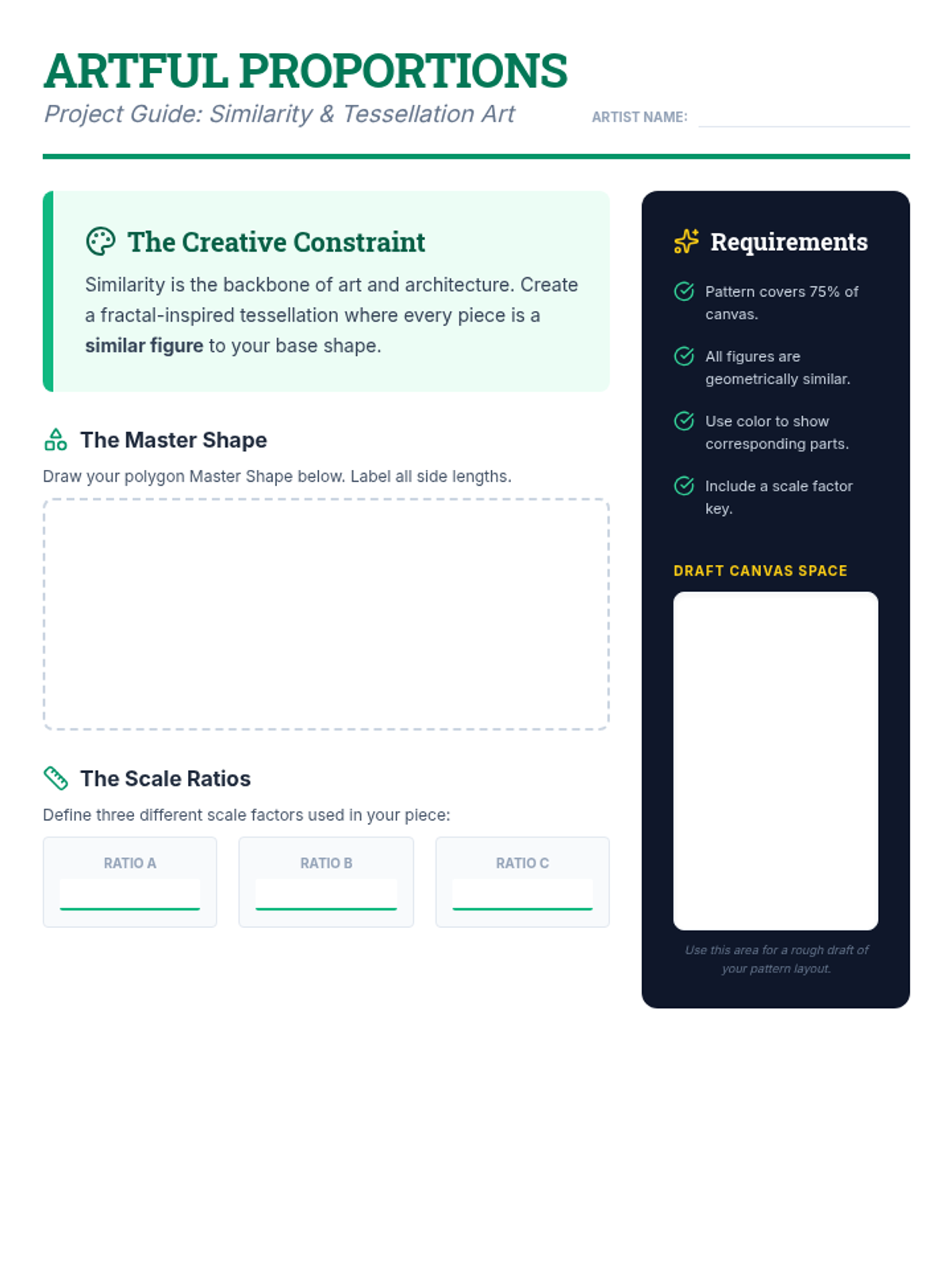
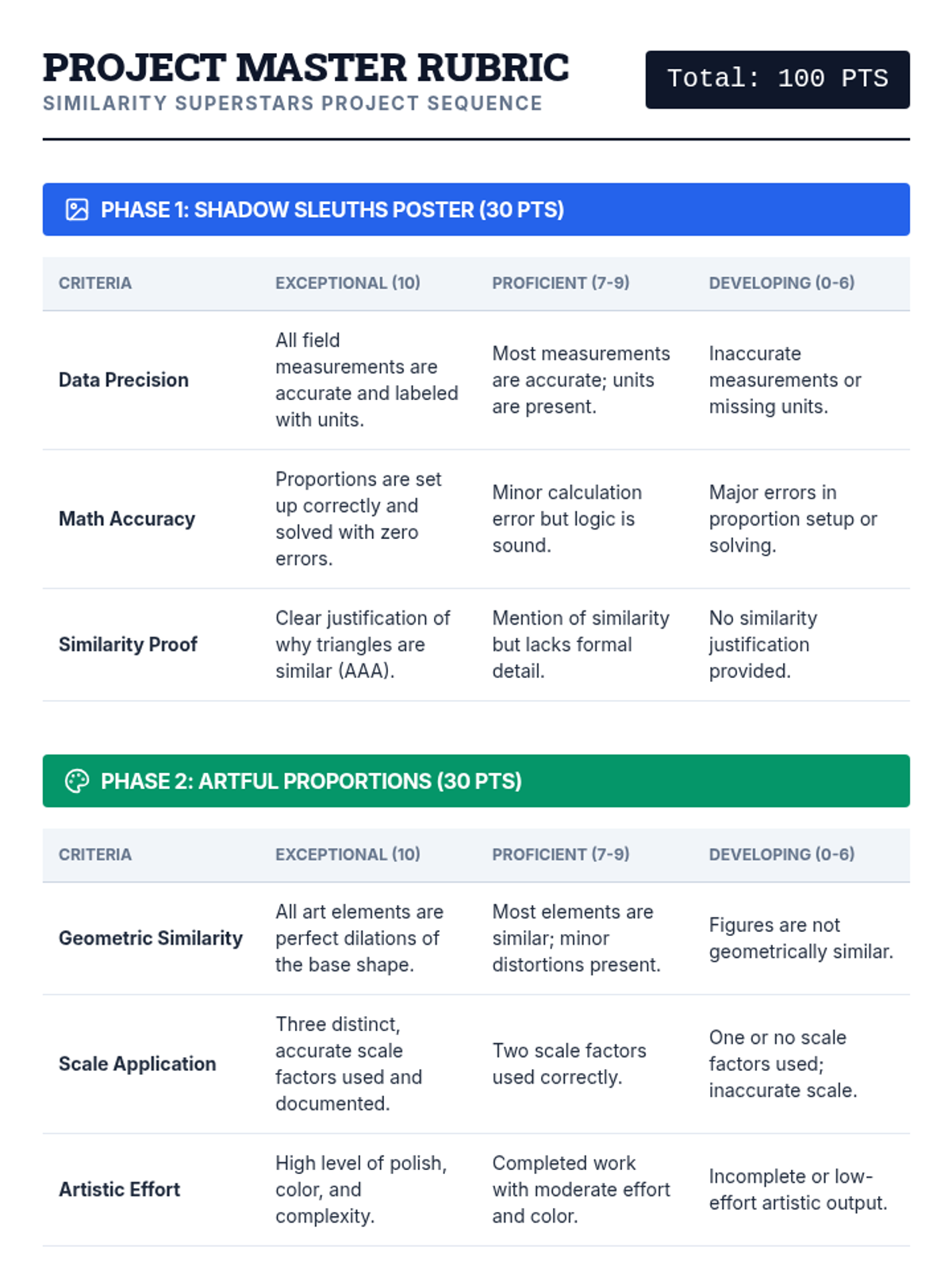
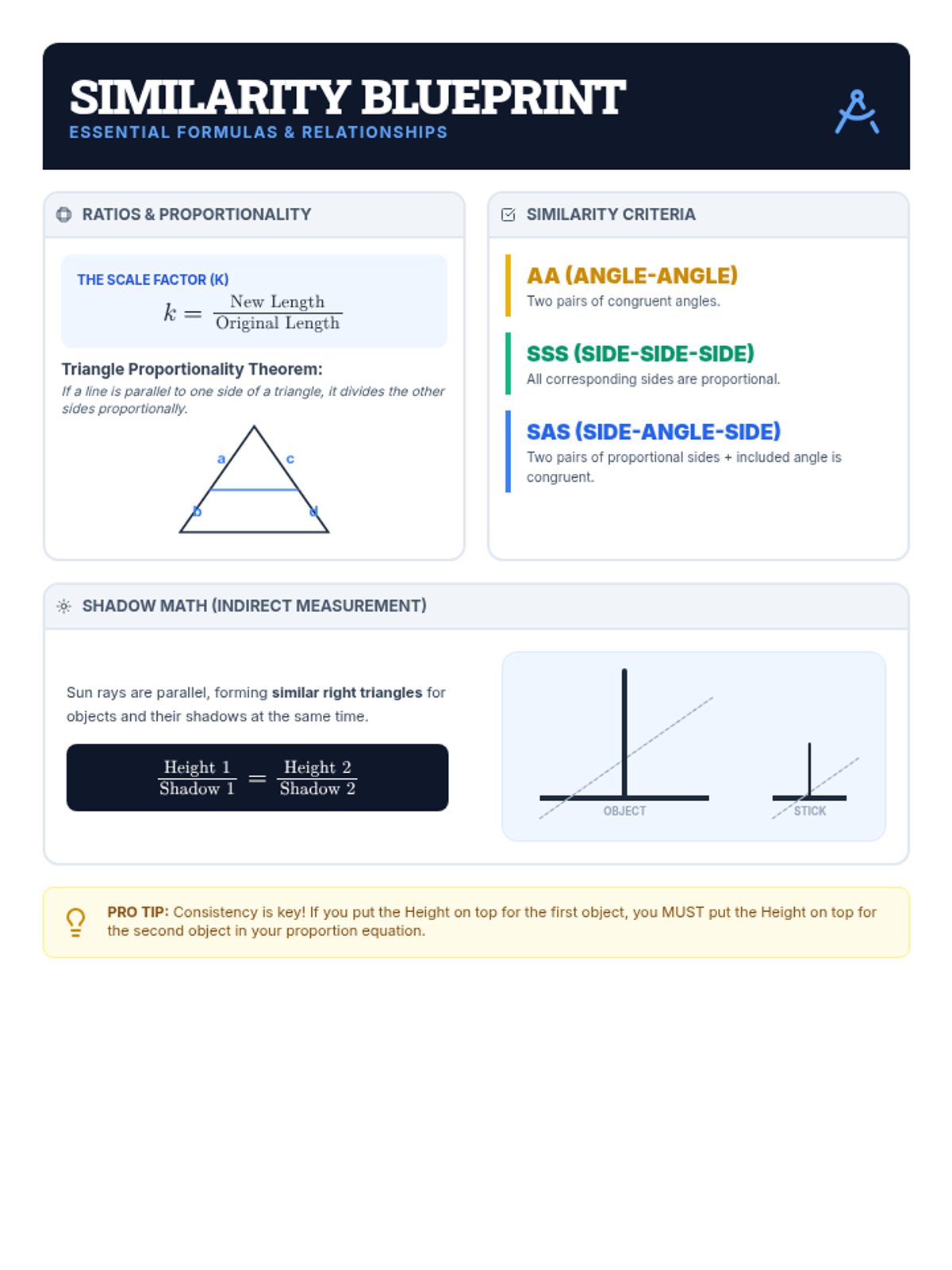
Students explore geometric similarity through art and tessellations, applying ratios and proportional parts to create scaled masterpieces.
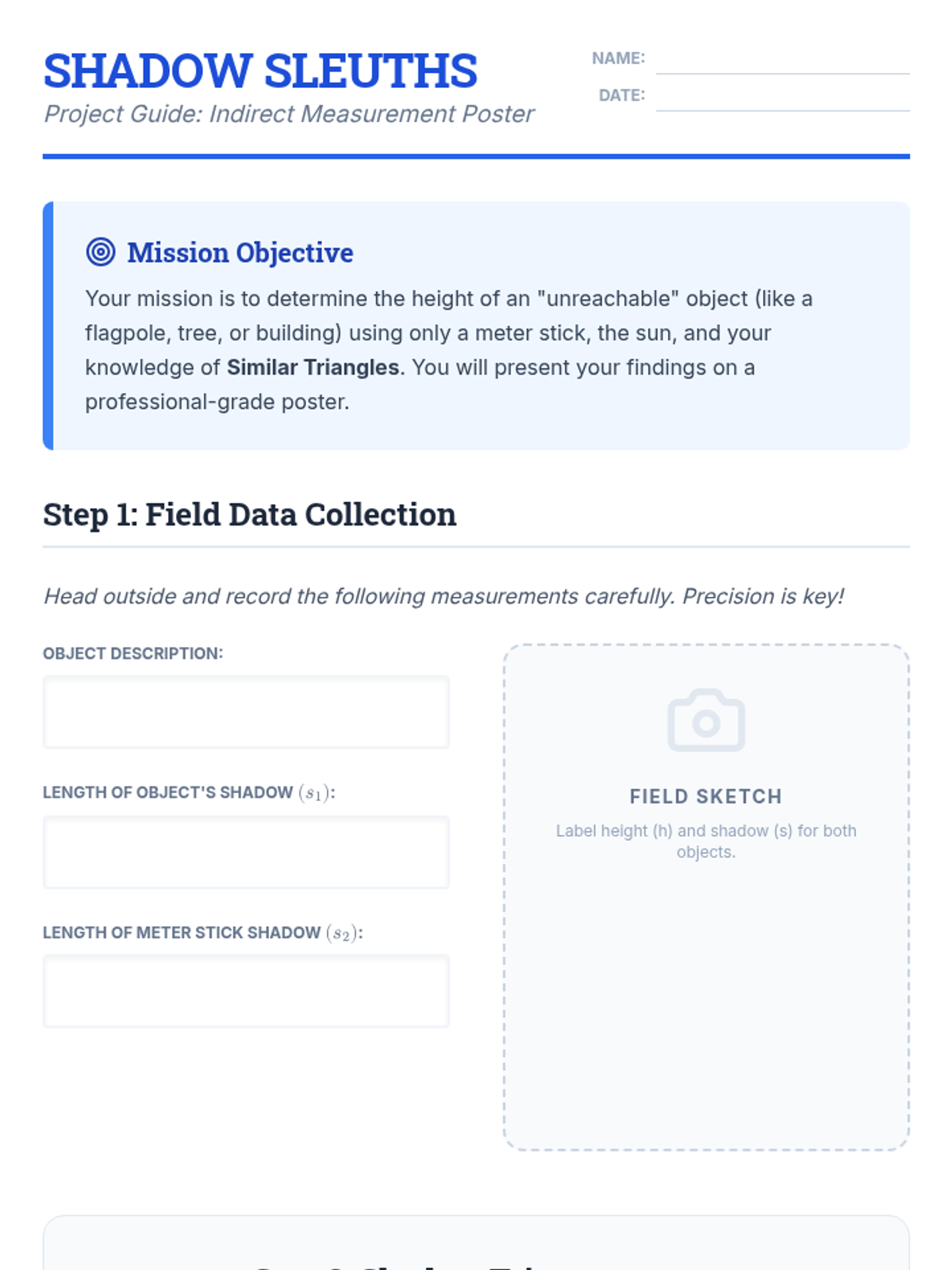
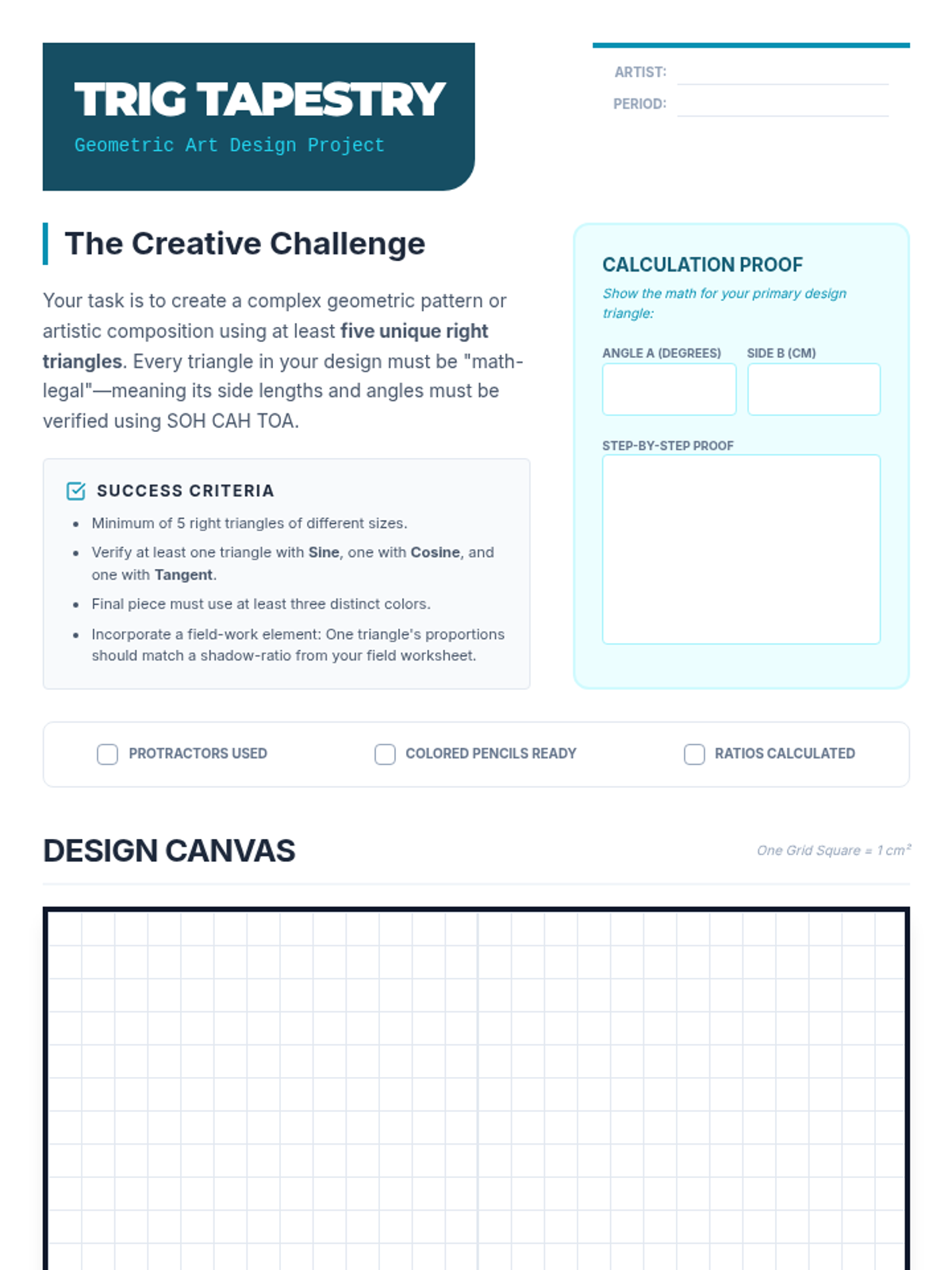
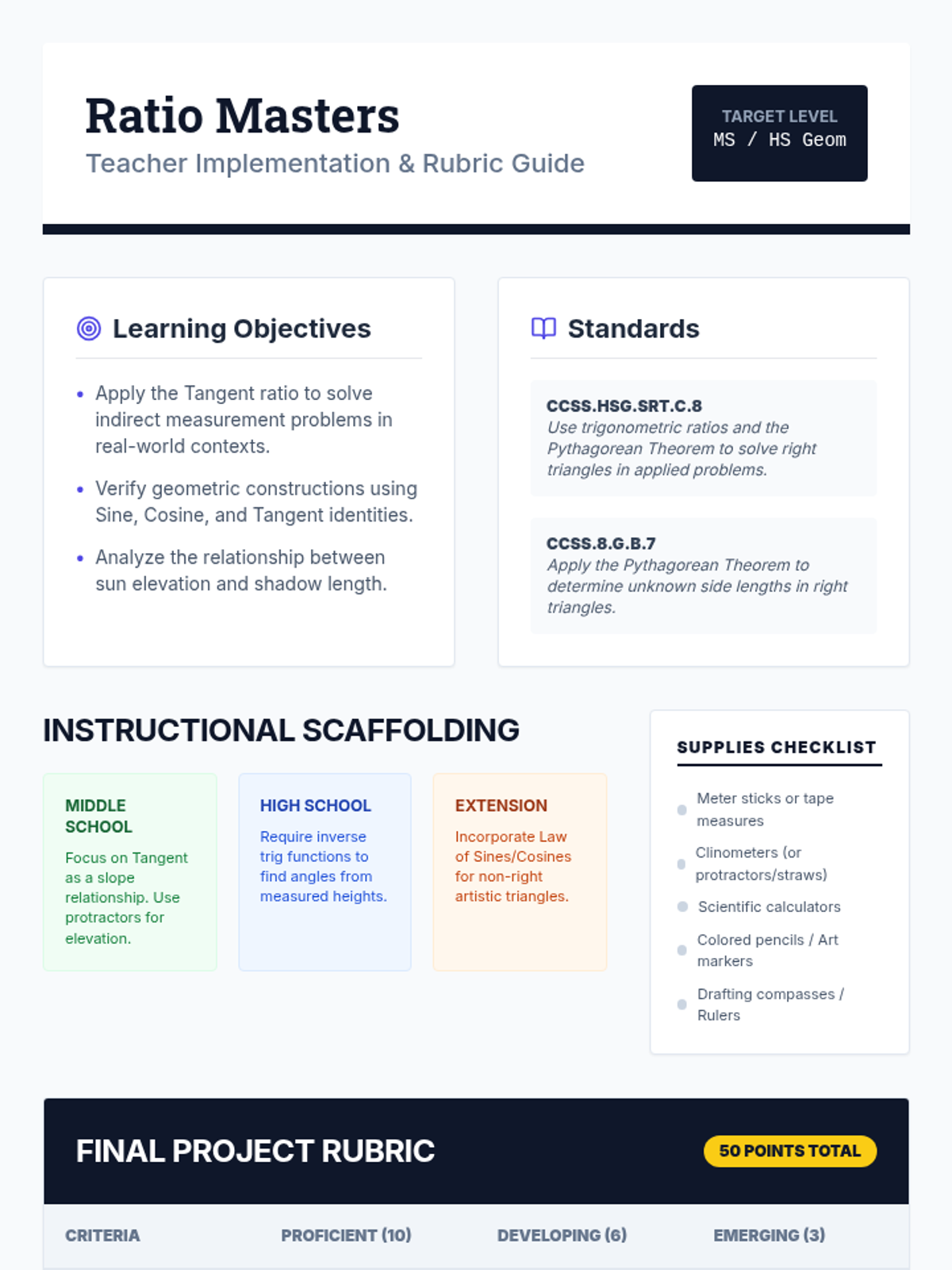
Students learn to apply Sine, Cosine, and Tangent to real-world measurements and abstract artistic design, culminating in a dual-phase project.
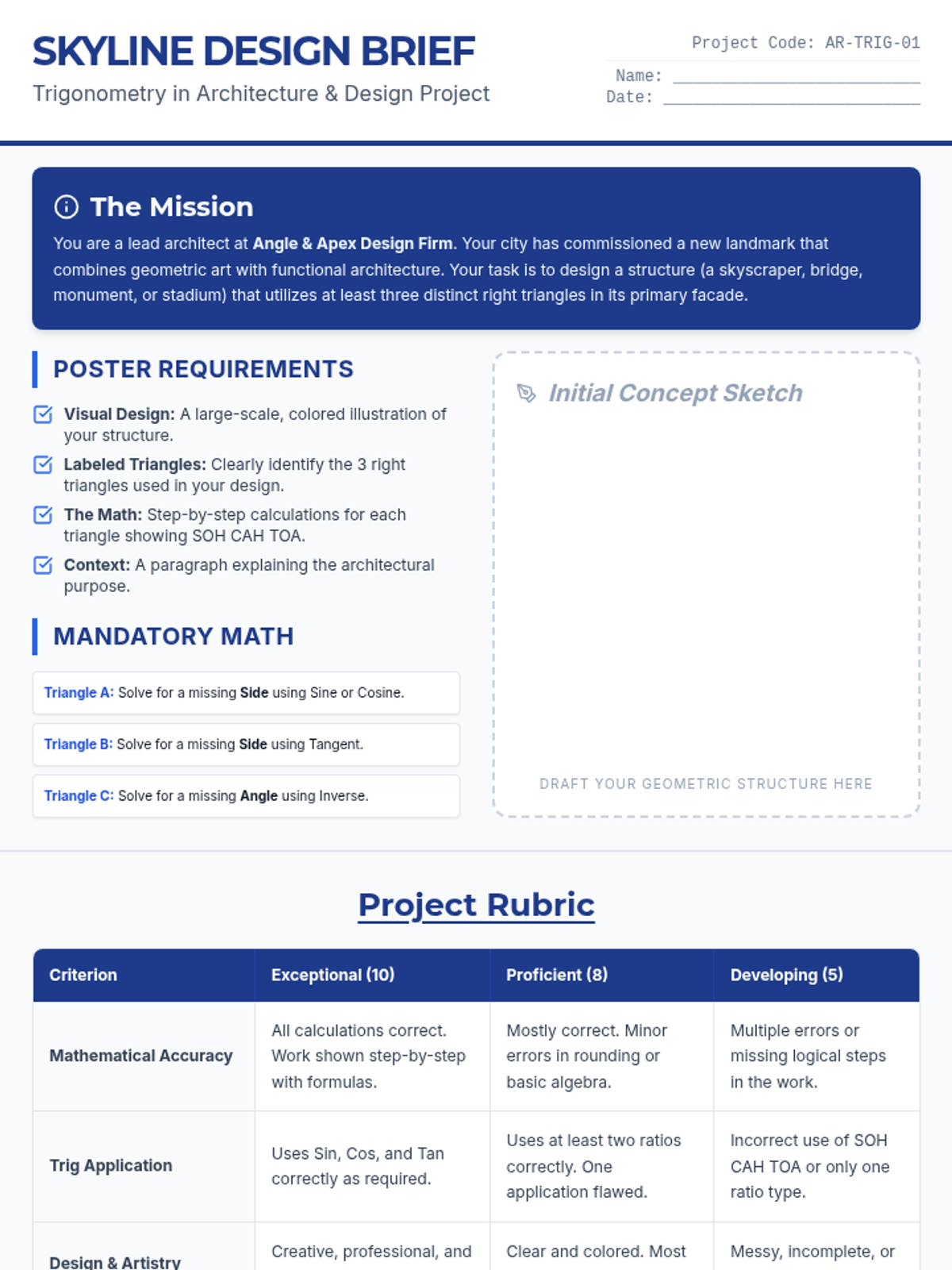
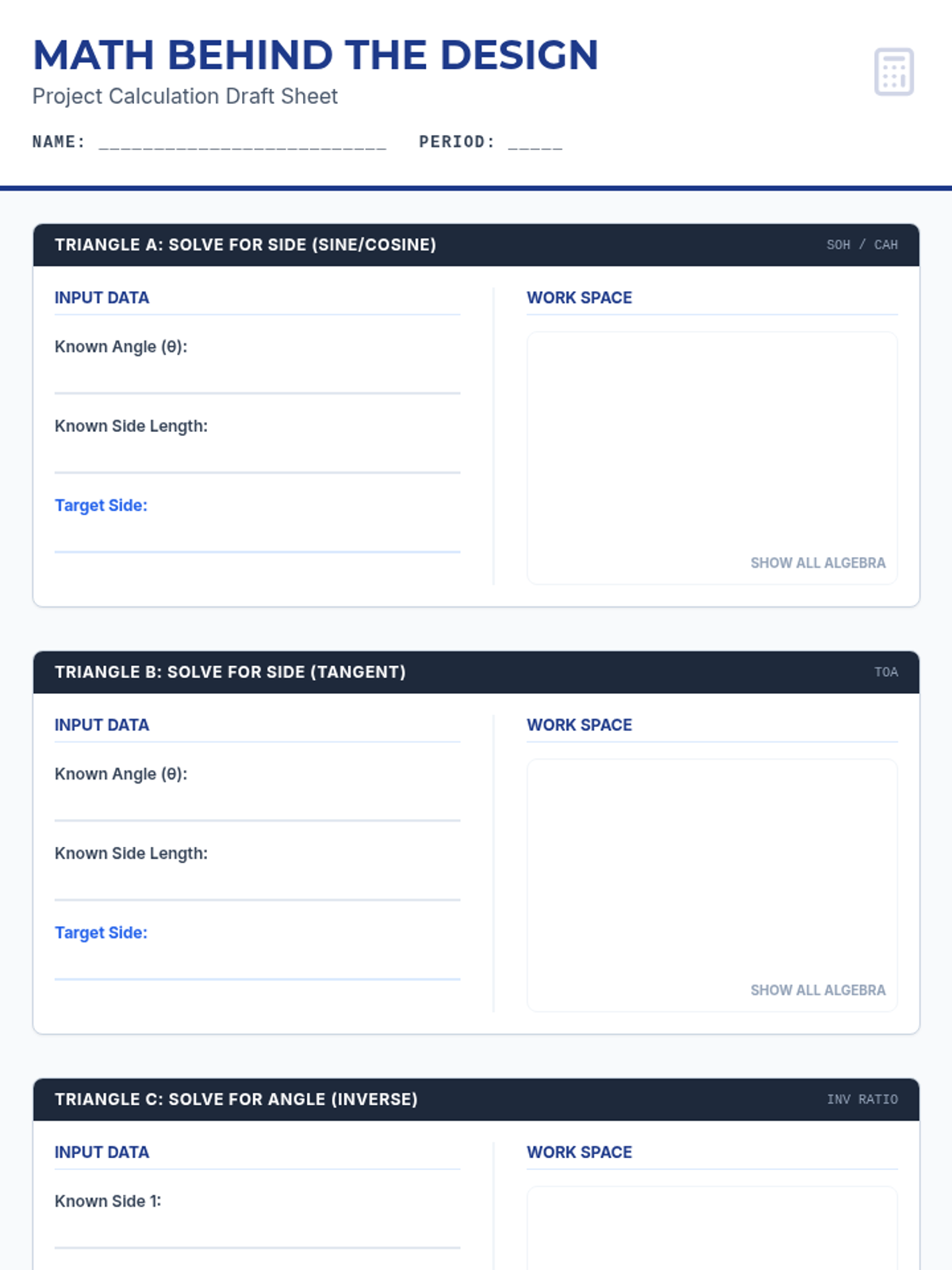
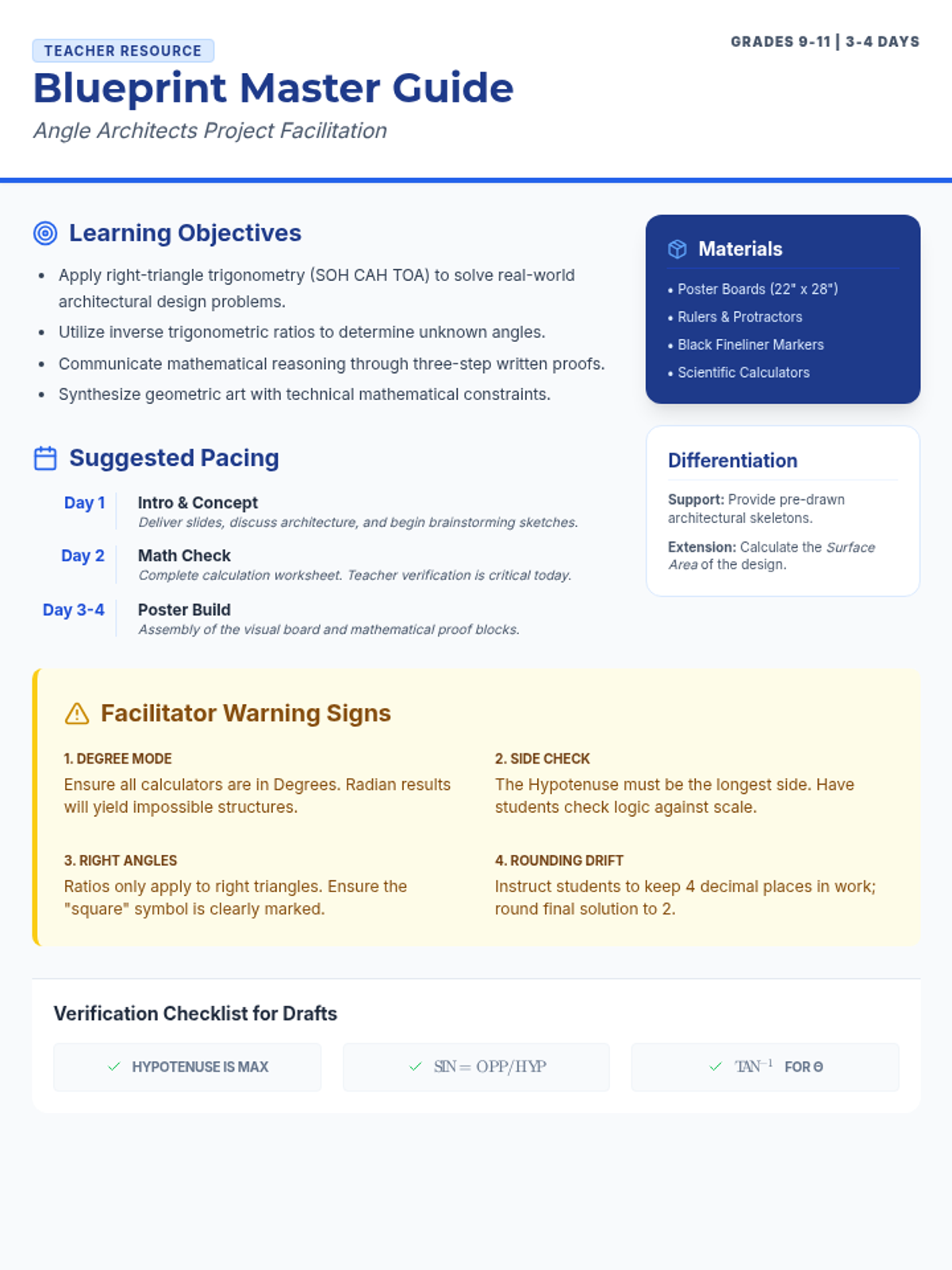
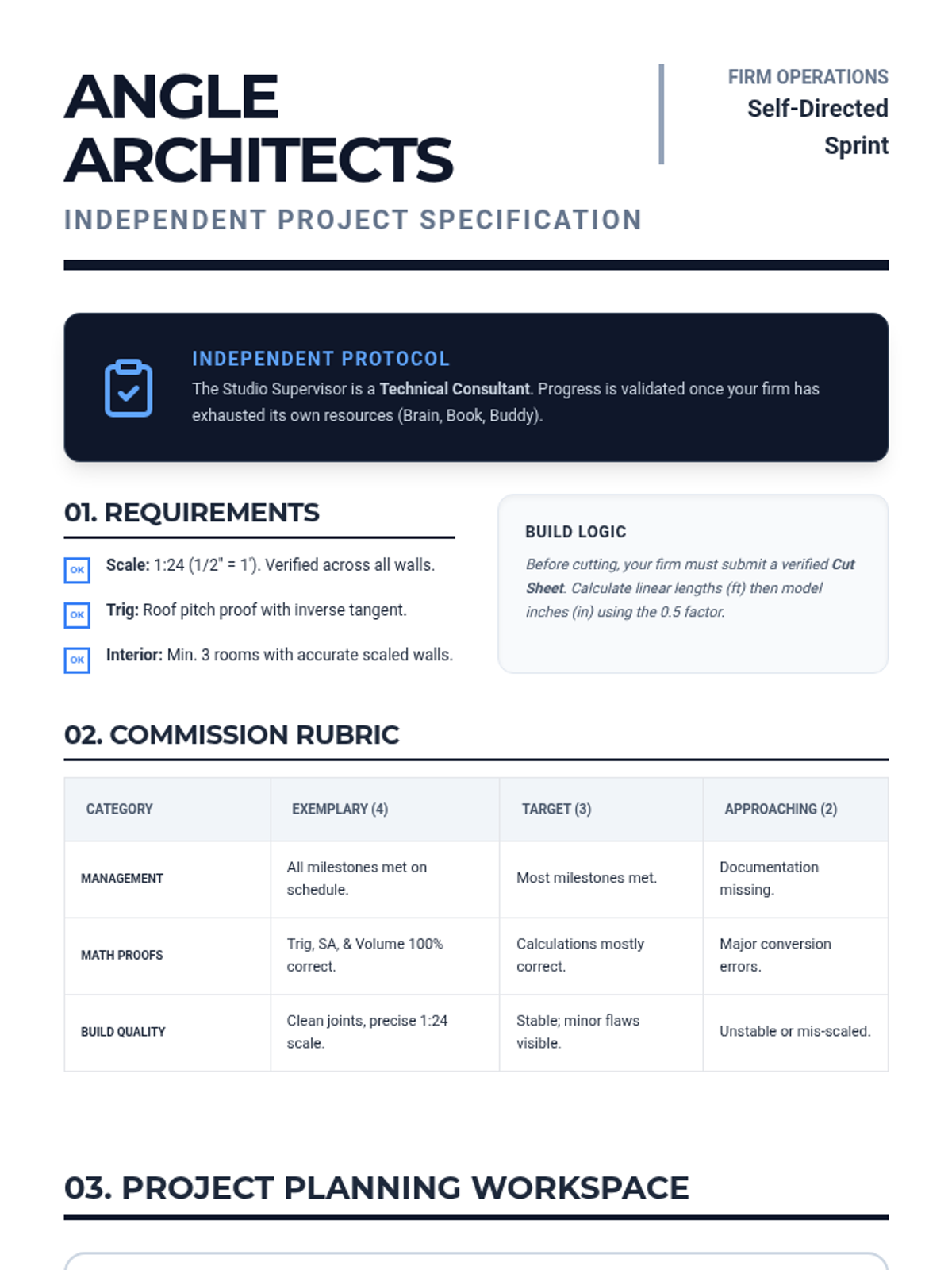
A hands-on project where students apply right triangle trigonometry to design a piece of modern architecture or geometric art, culminating in a detailed calculation poster.
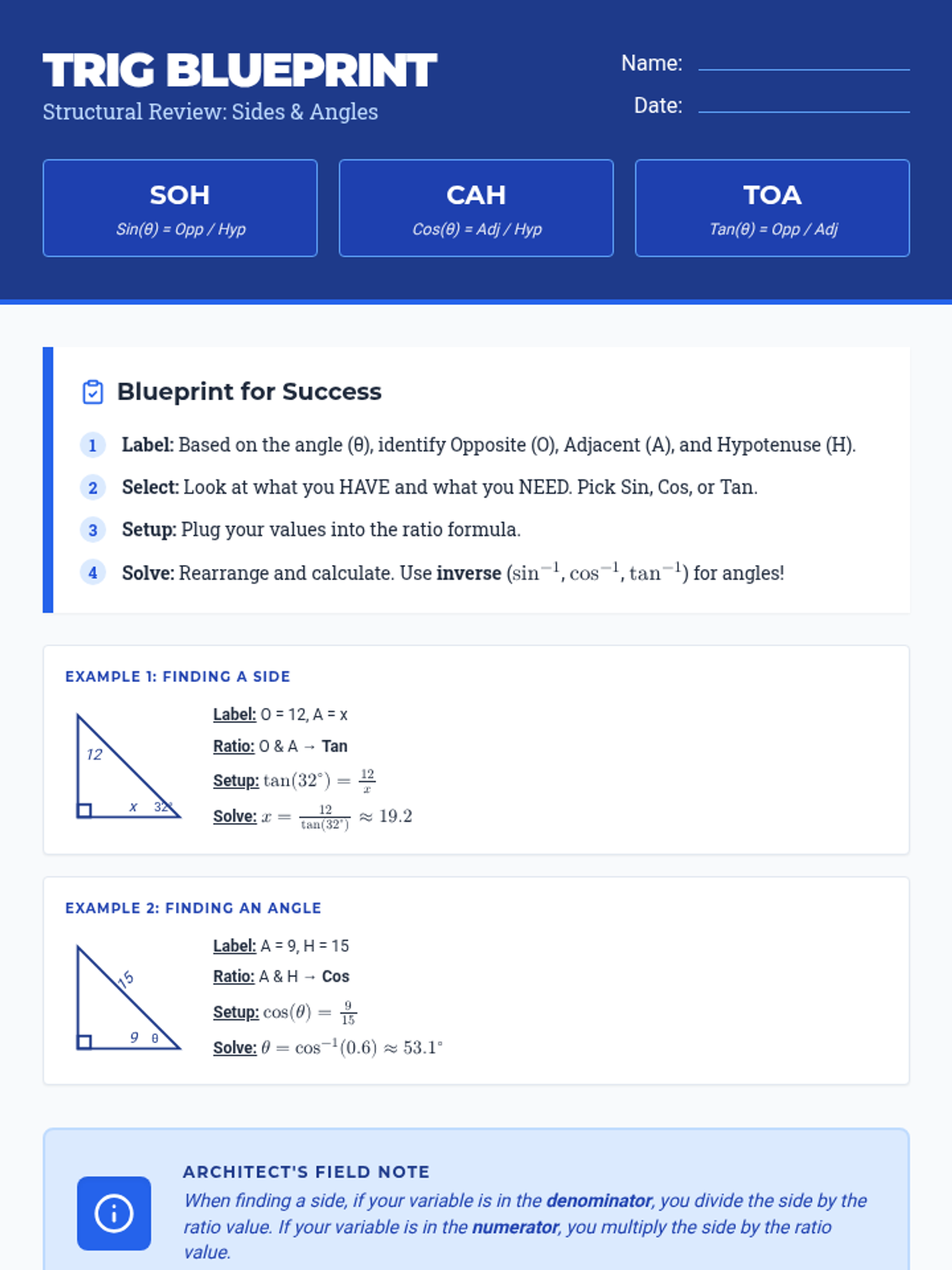
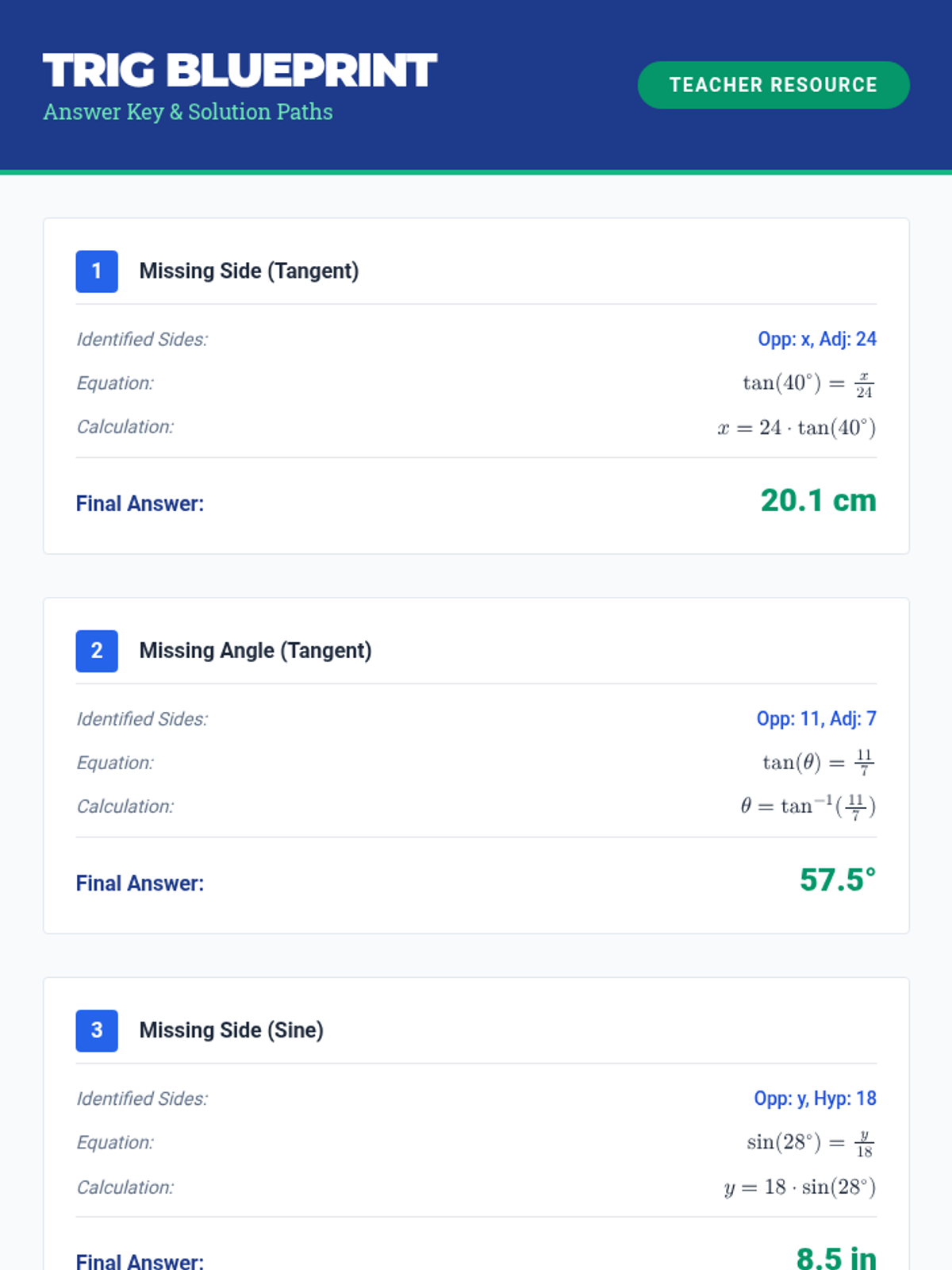
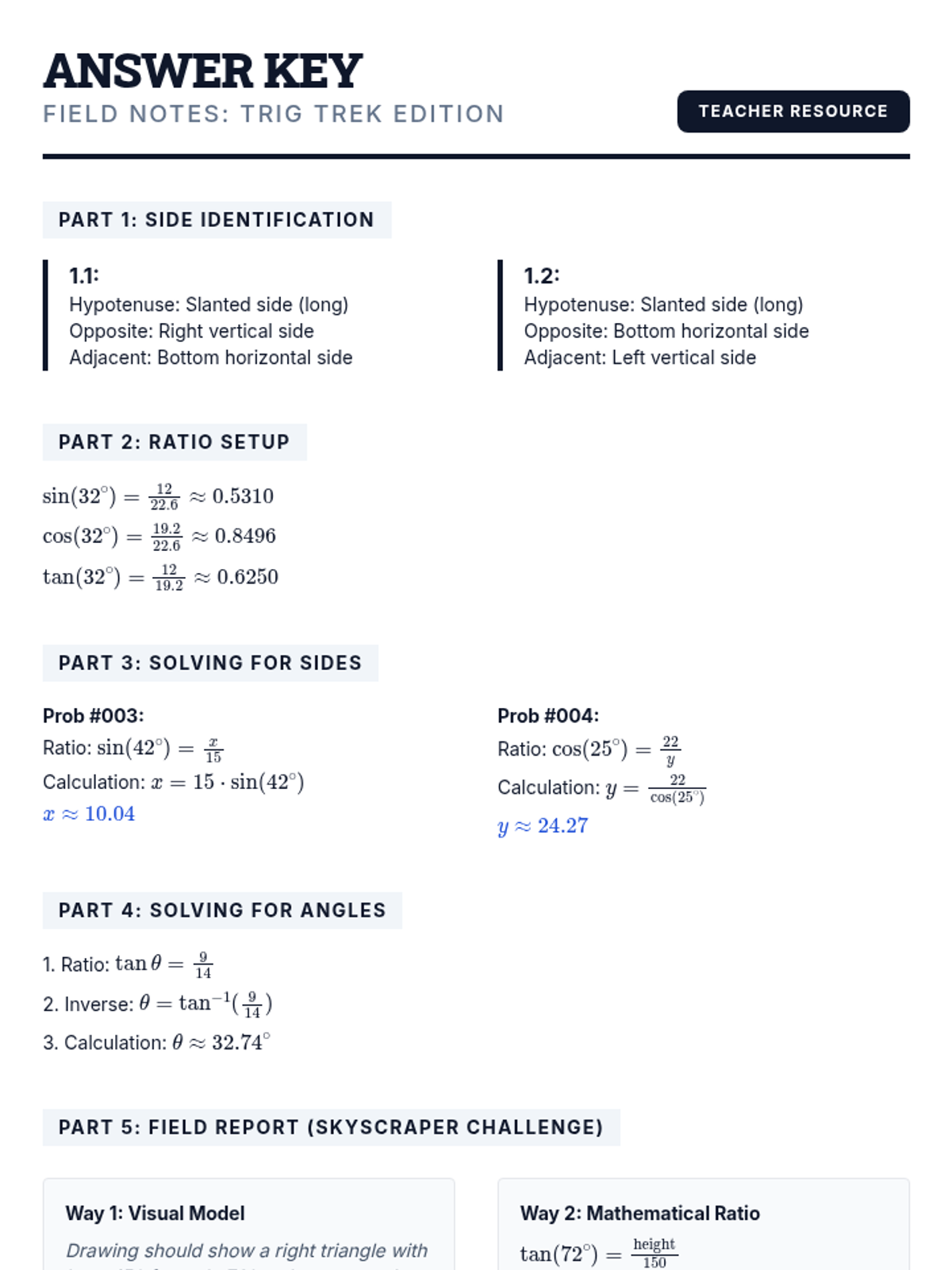
A comprehensive review of basic trigonometry (sine, cosine, tangent) for finding missing sides and angles, featuring a step-by-step checklist and worked examples.
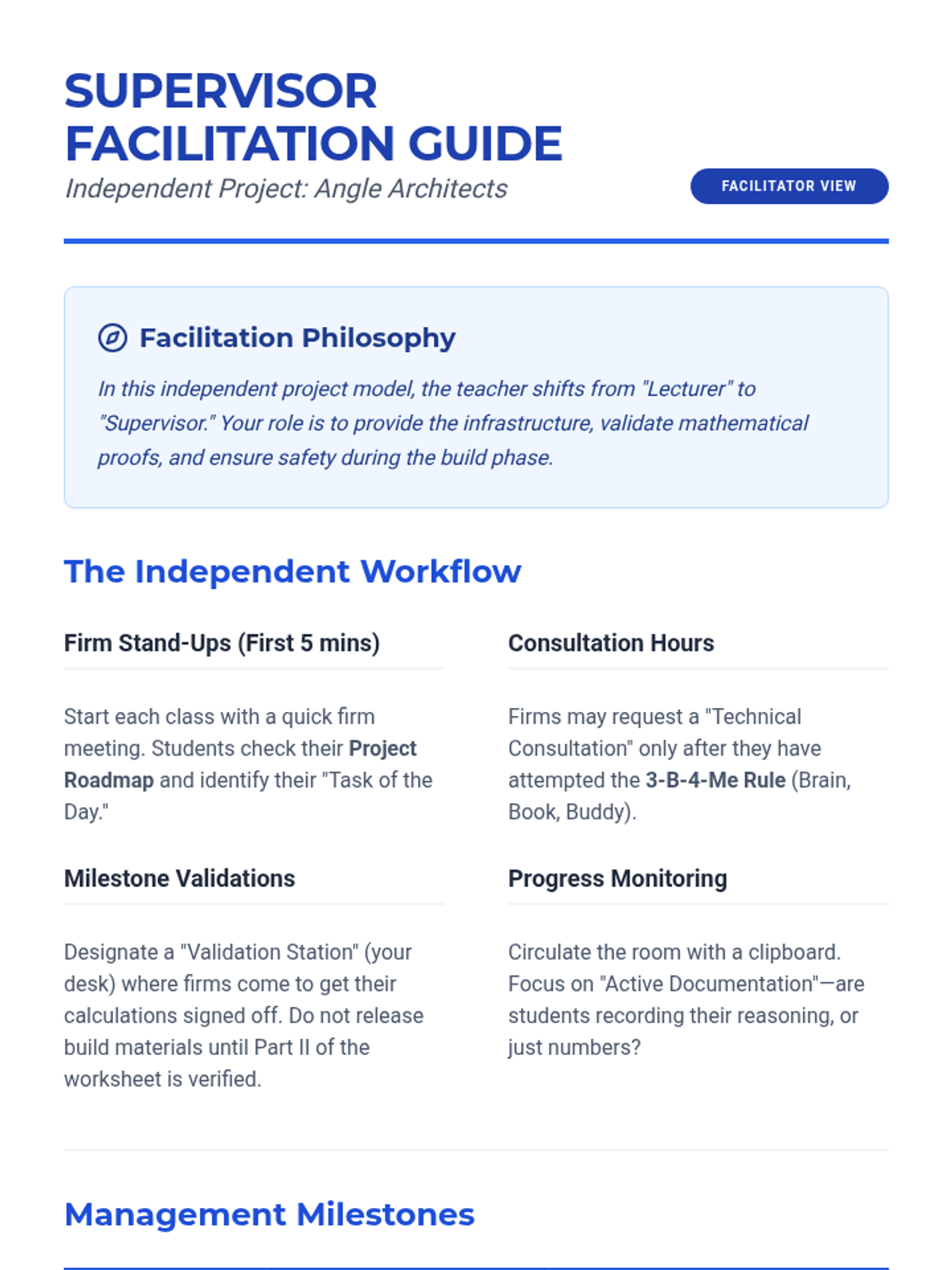
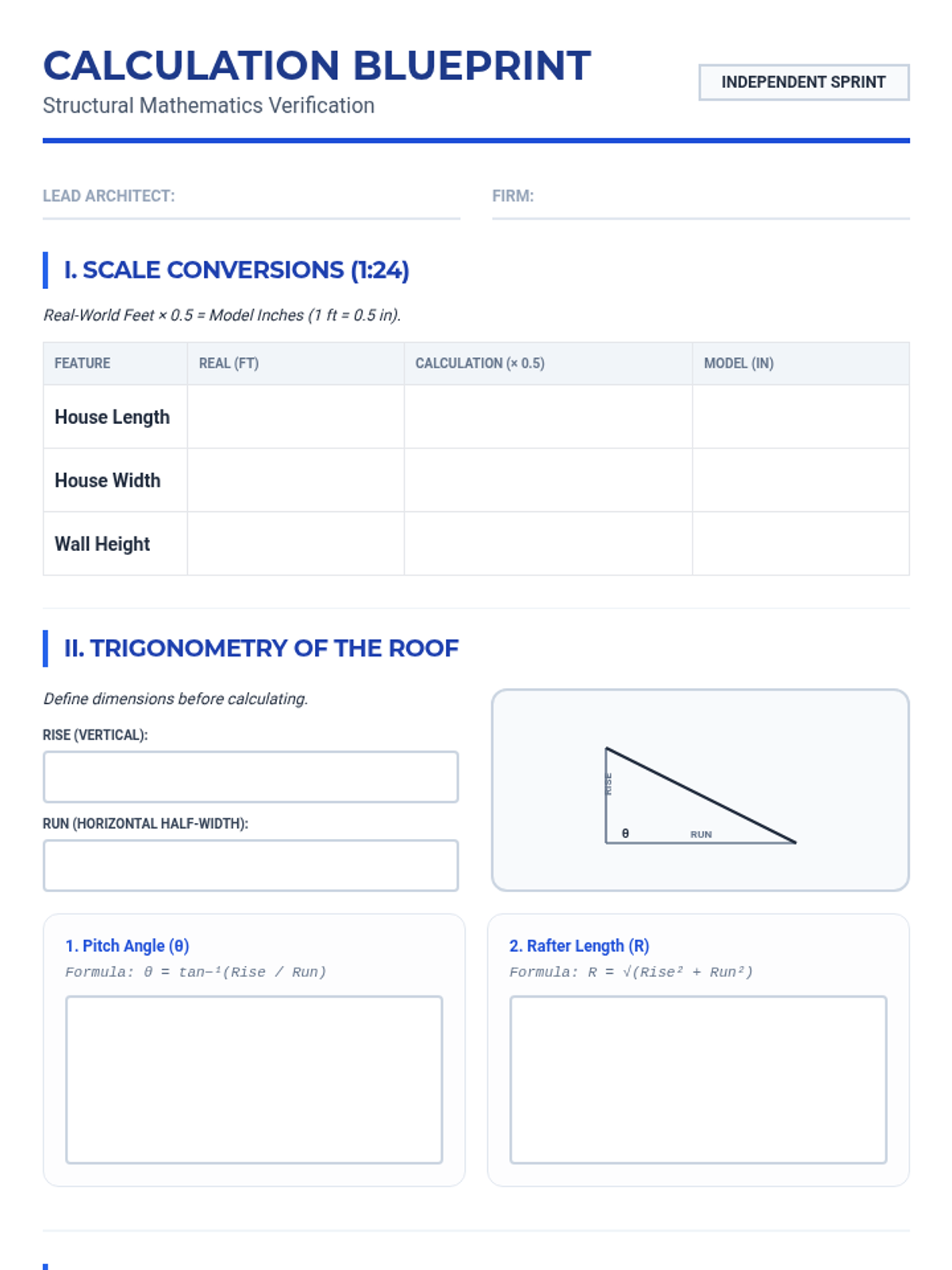
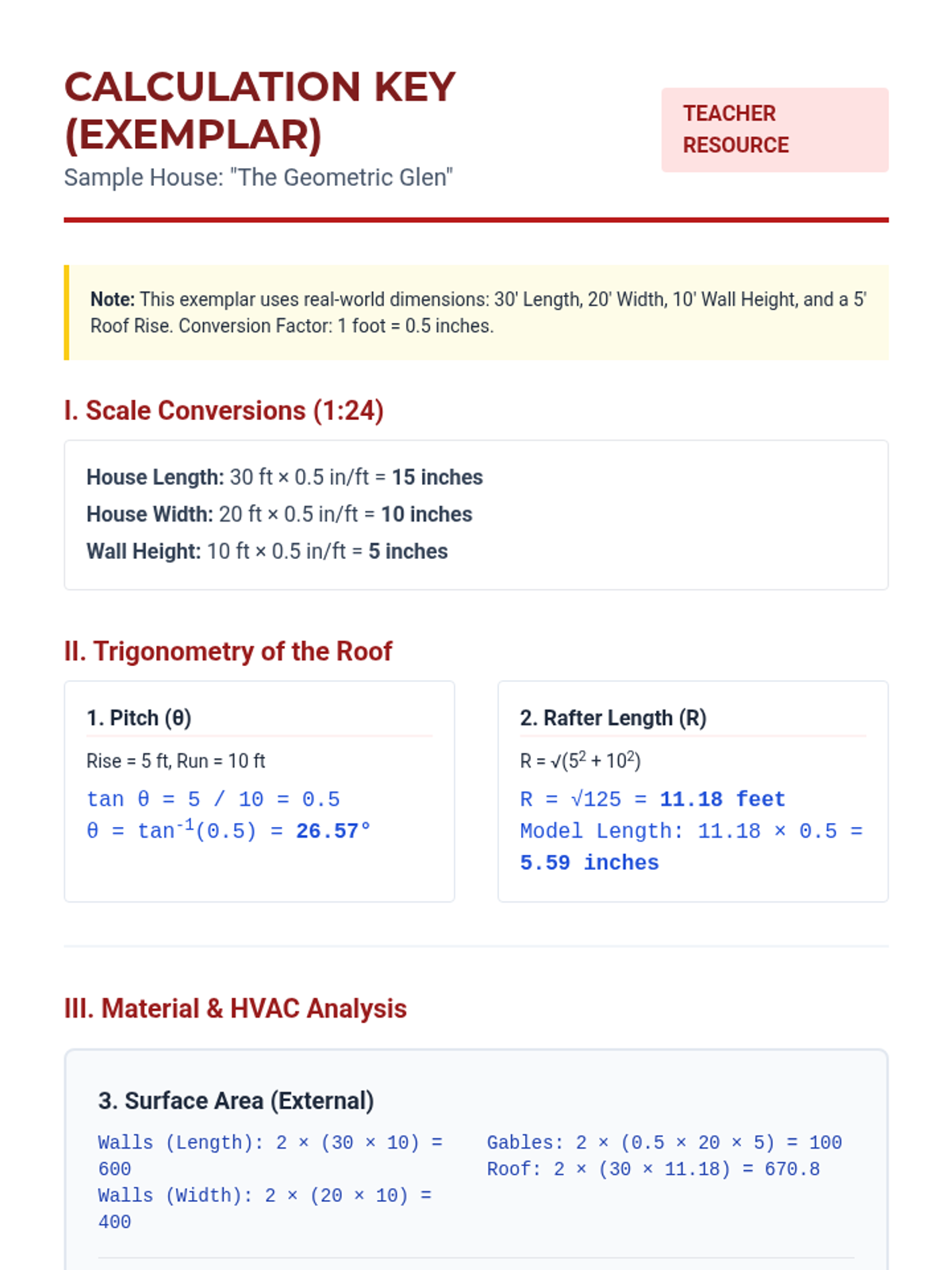
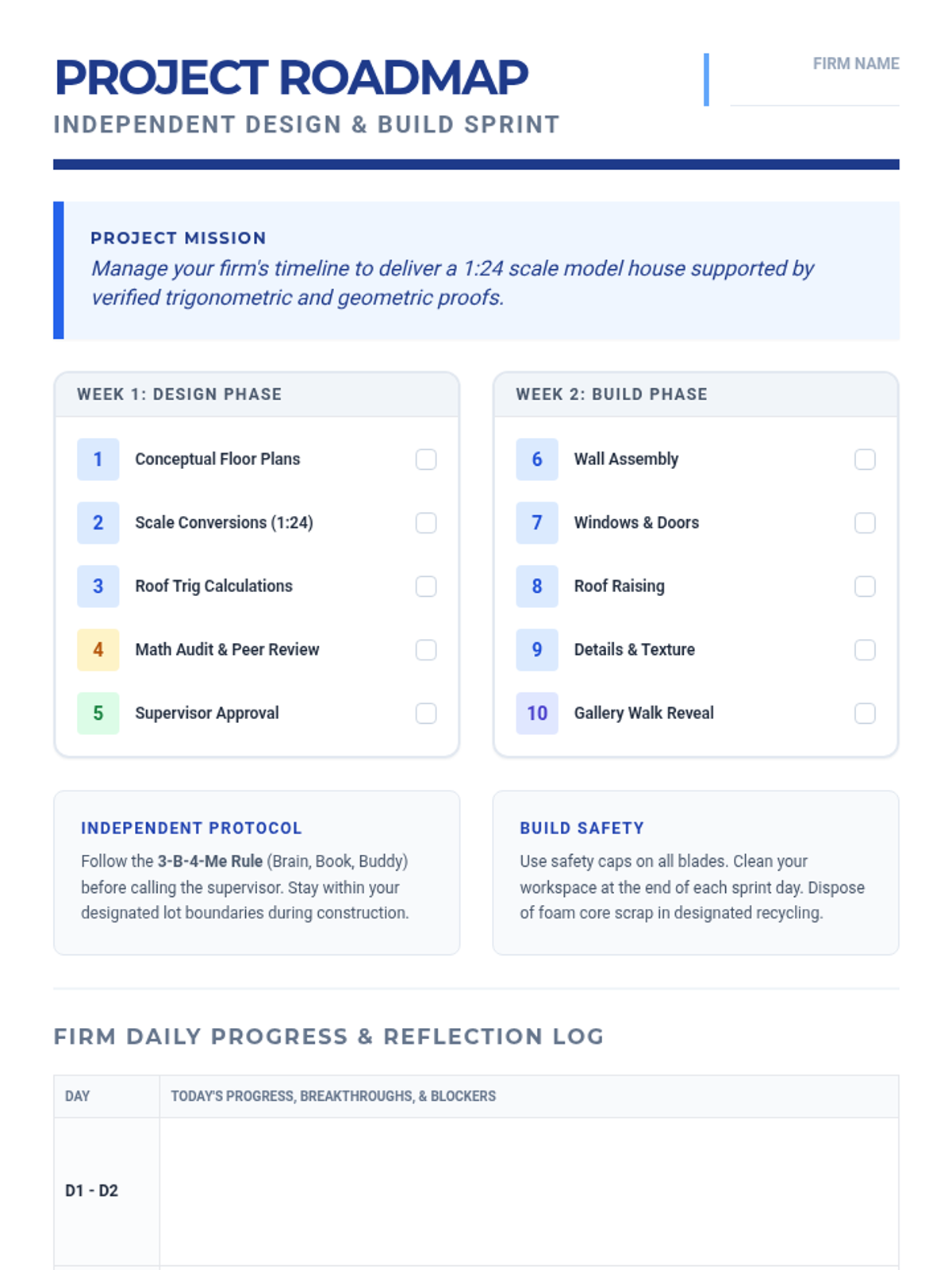
The core instructional and project-based unit where students transition from architectural theory to a physical model, focusing on the mathematical precision required for construction.
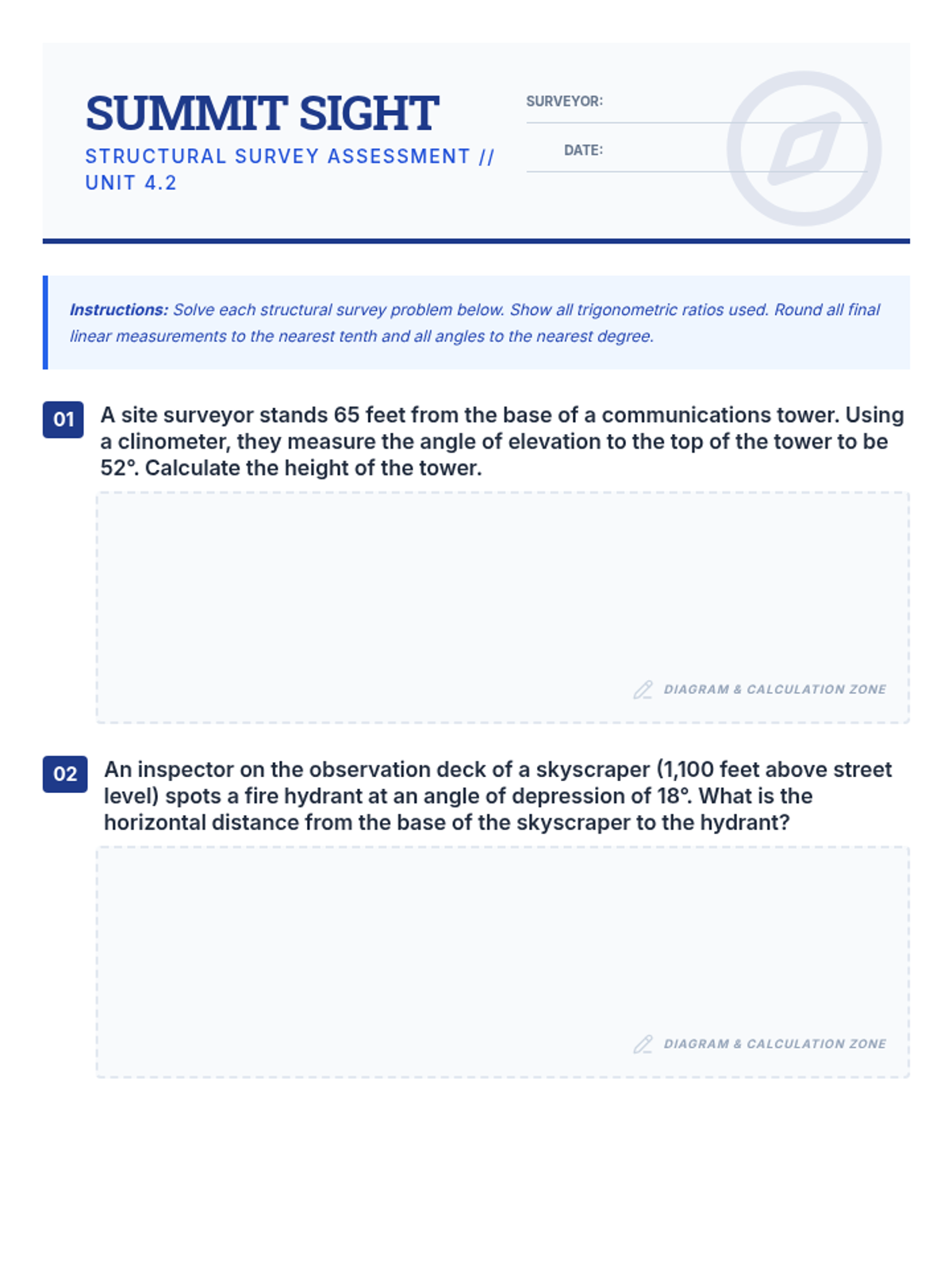
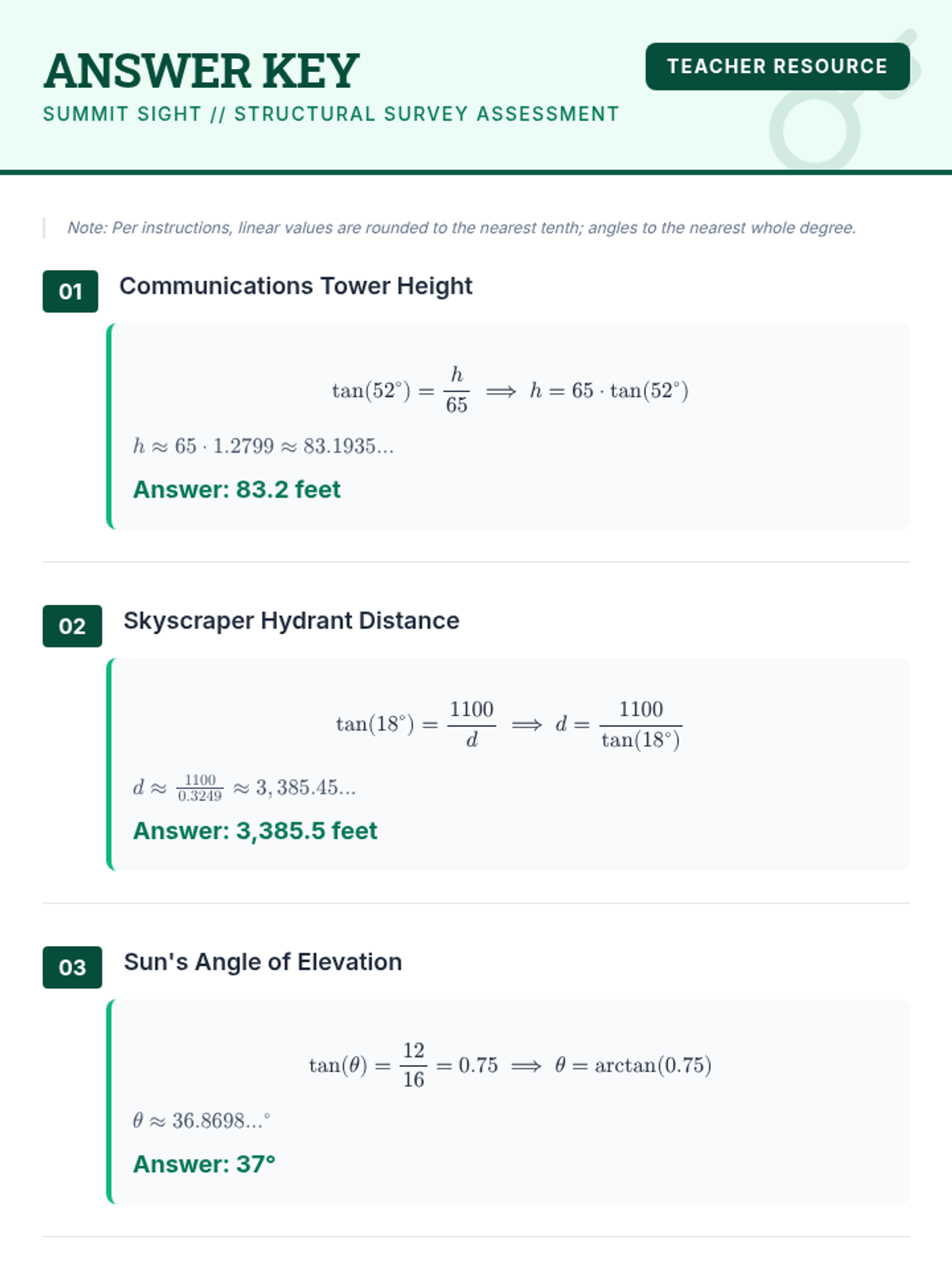
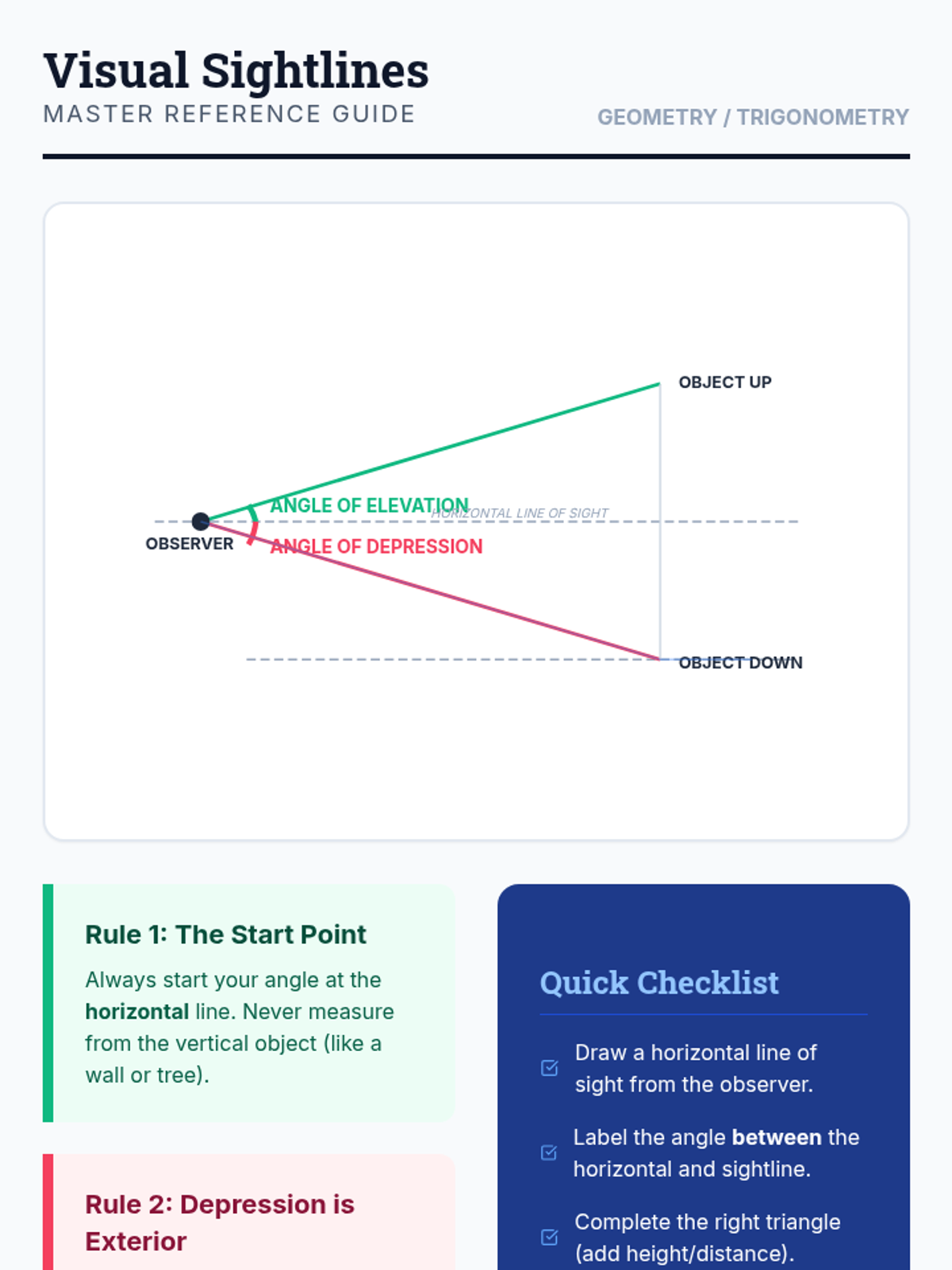
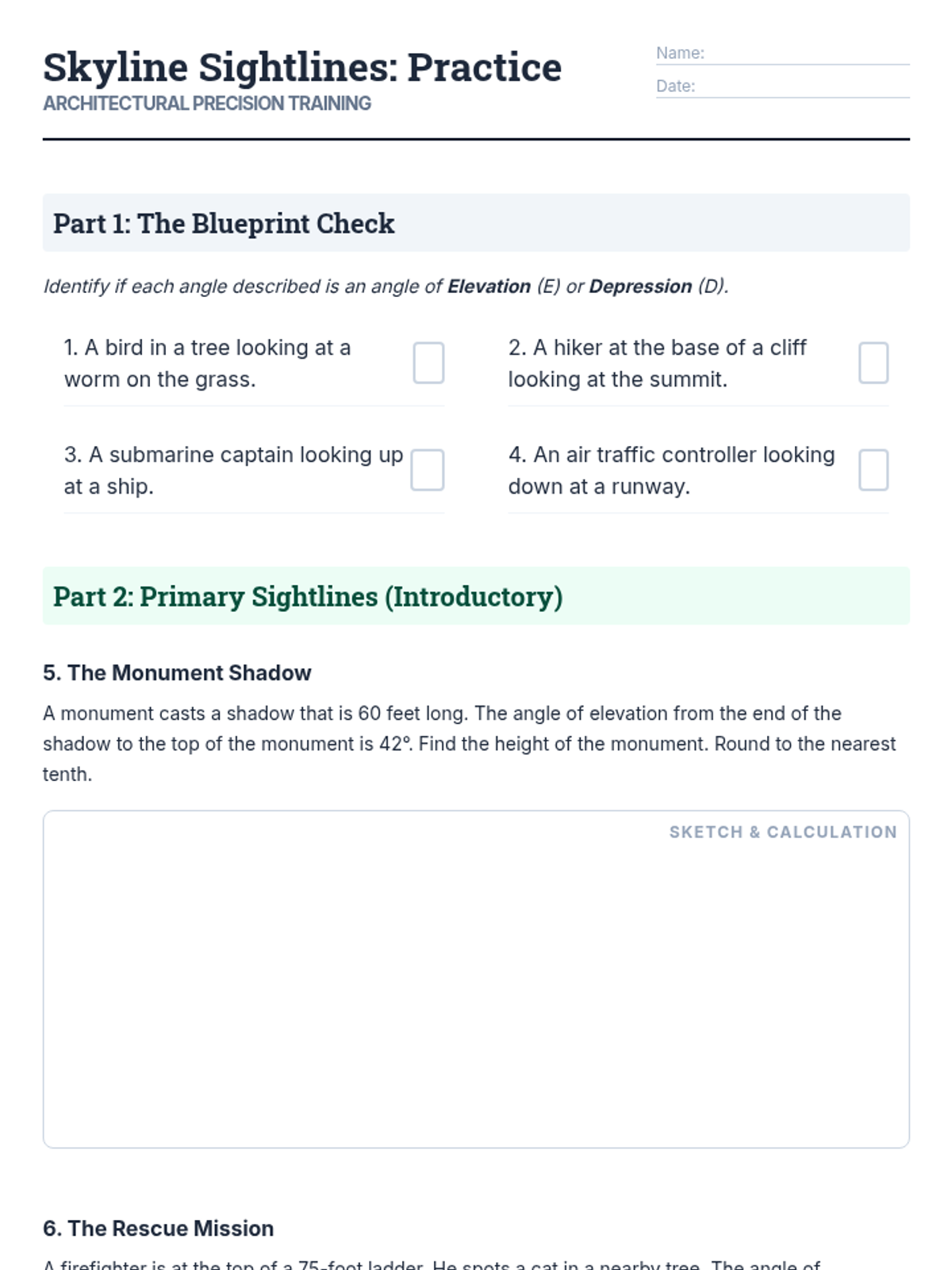
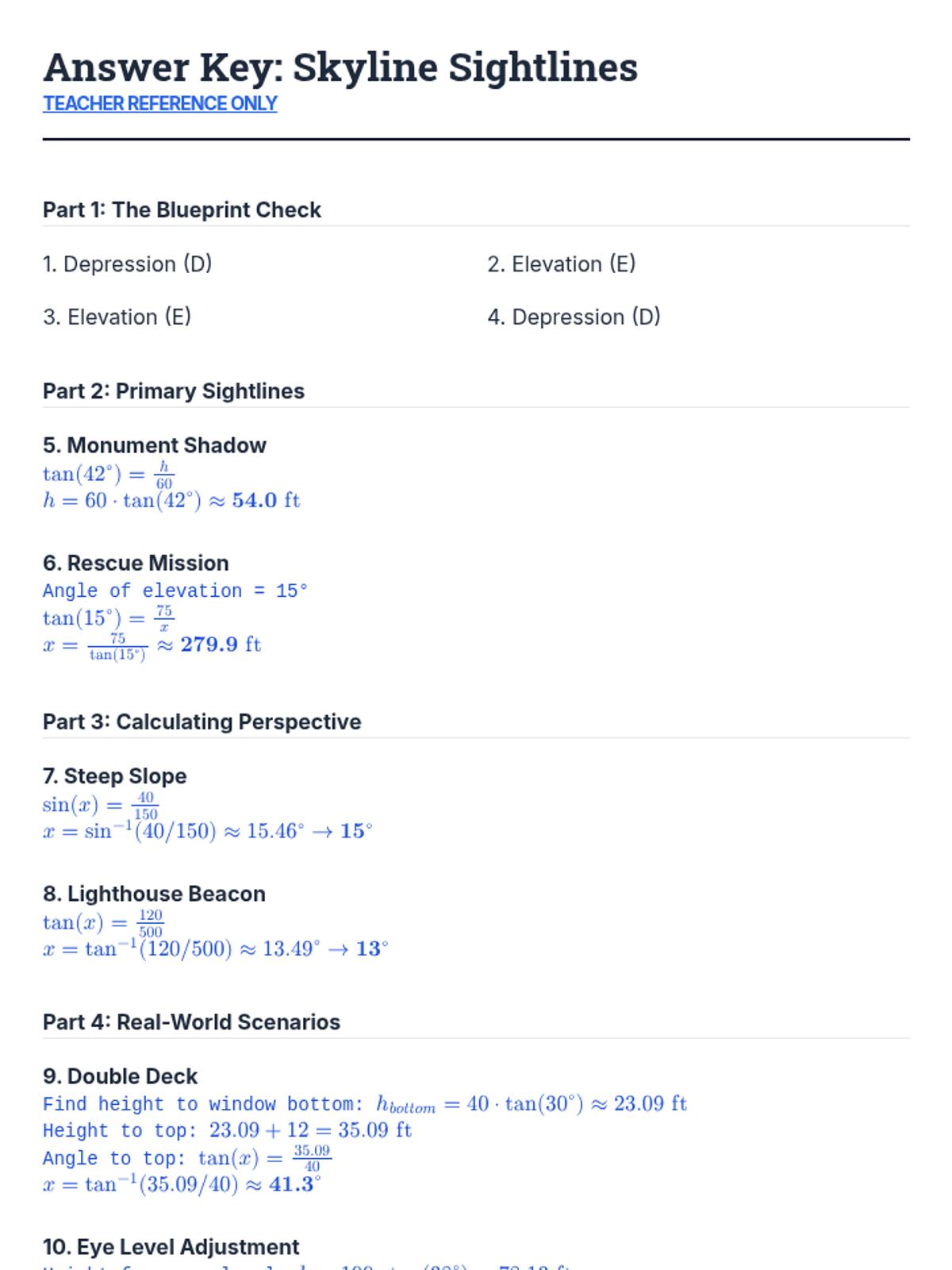
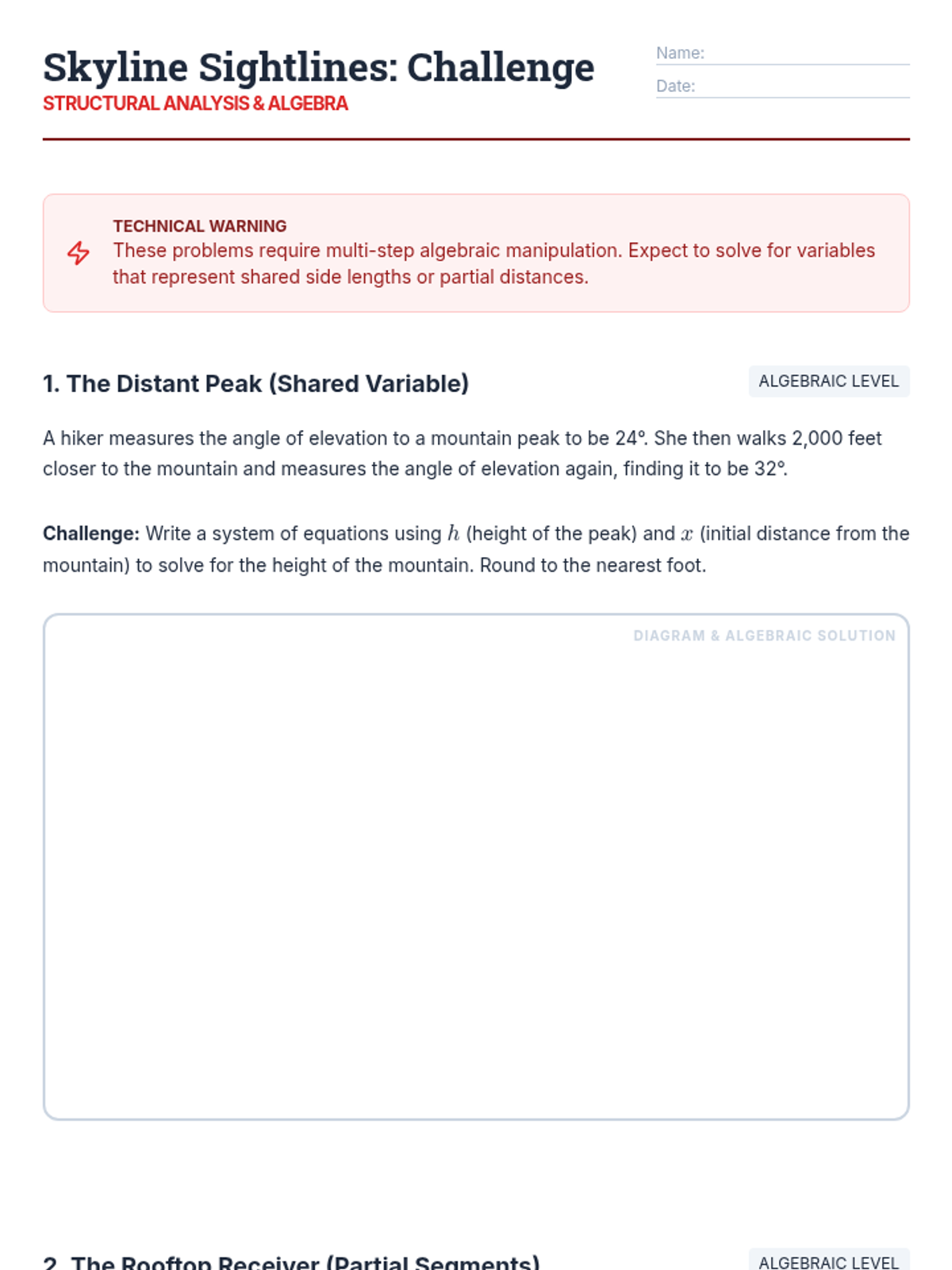
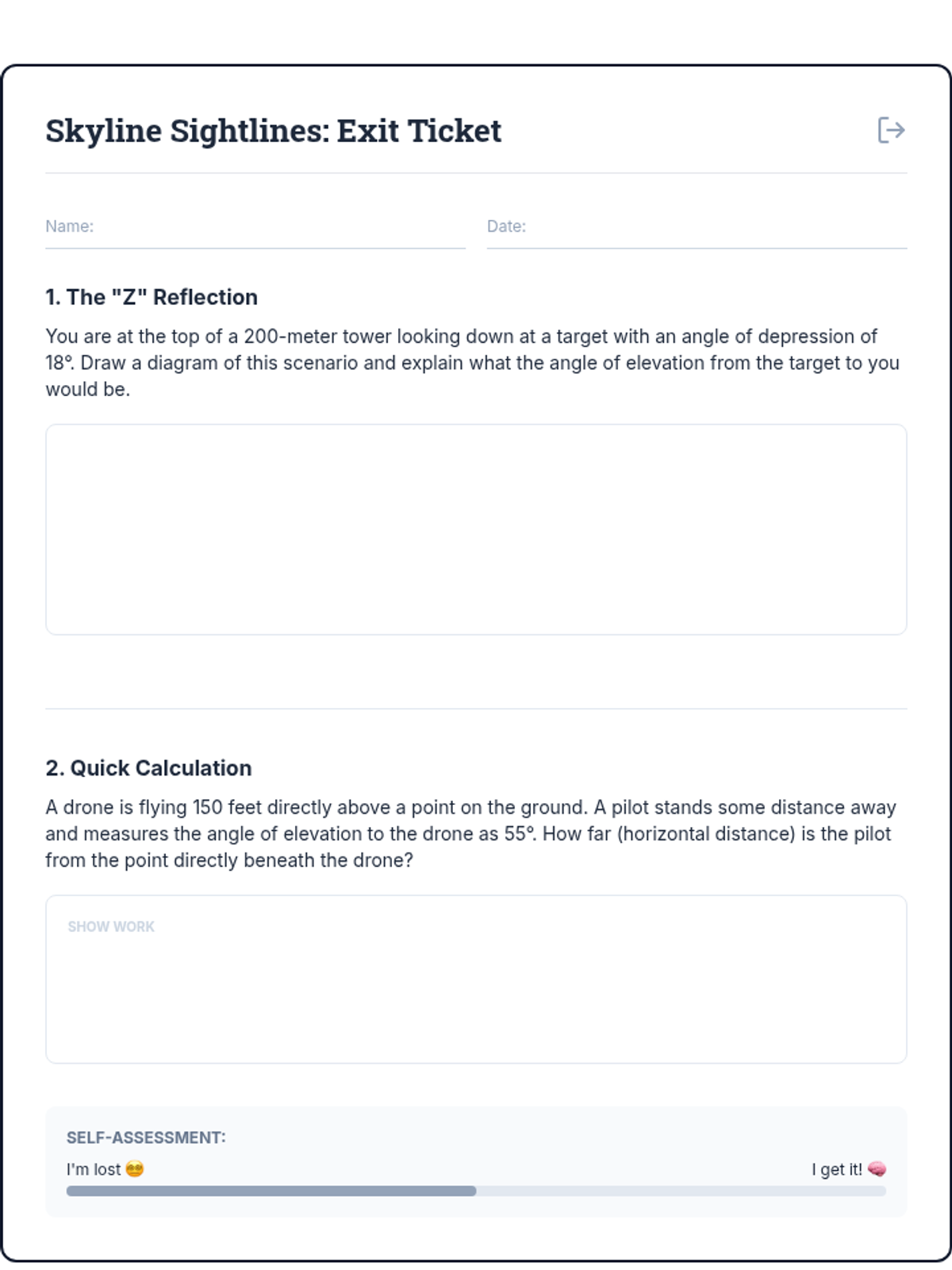
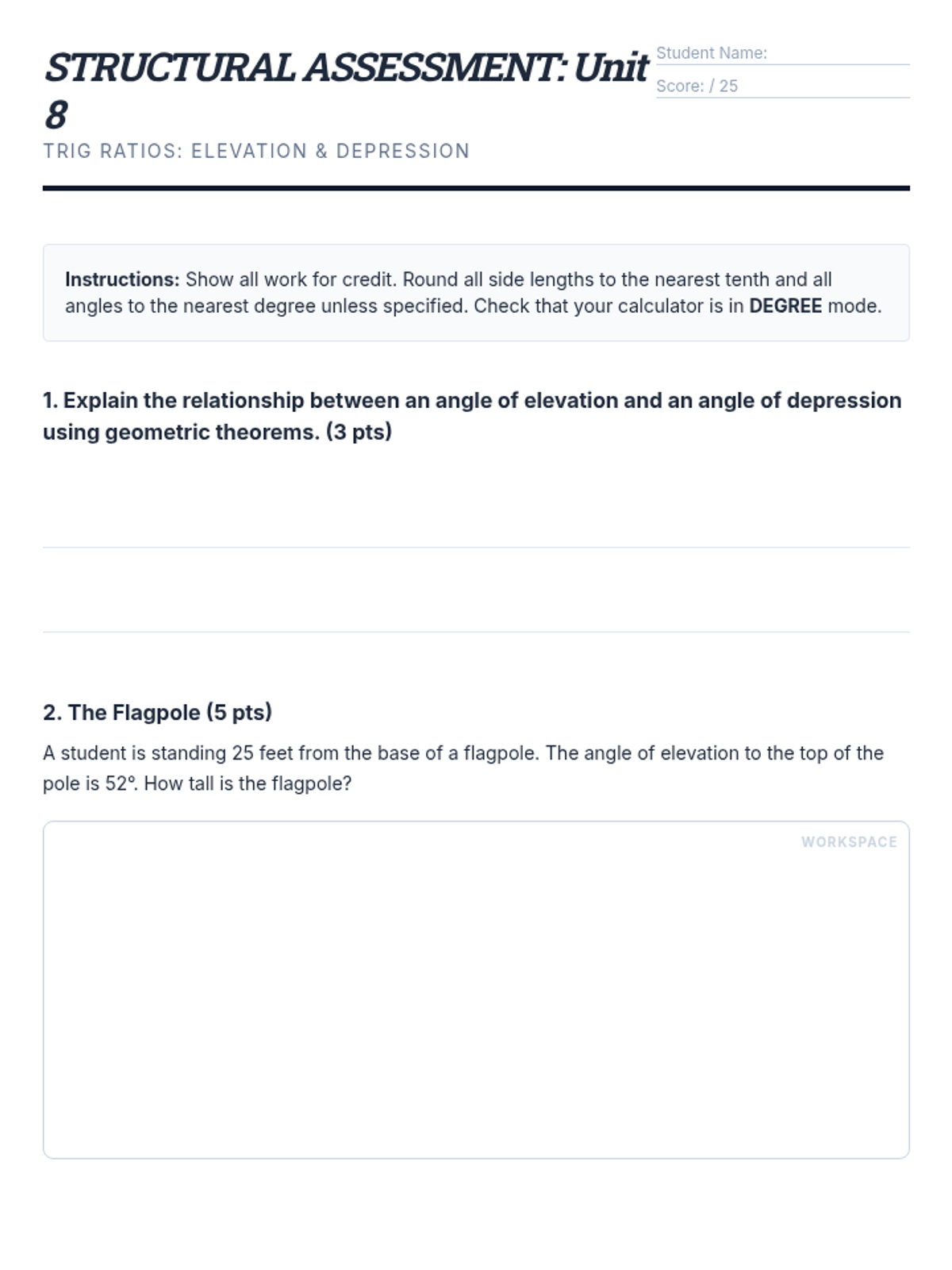
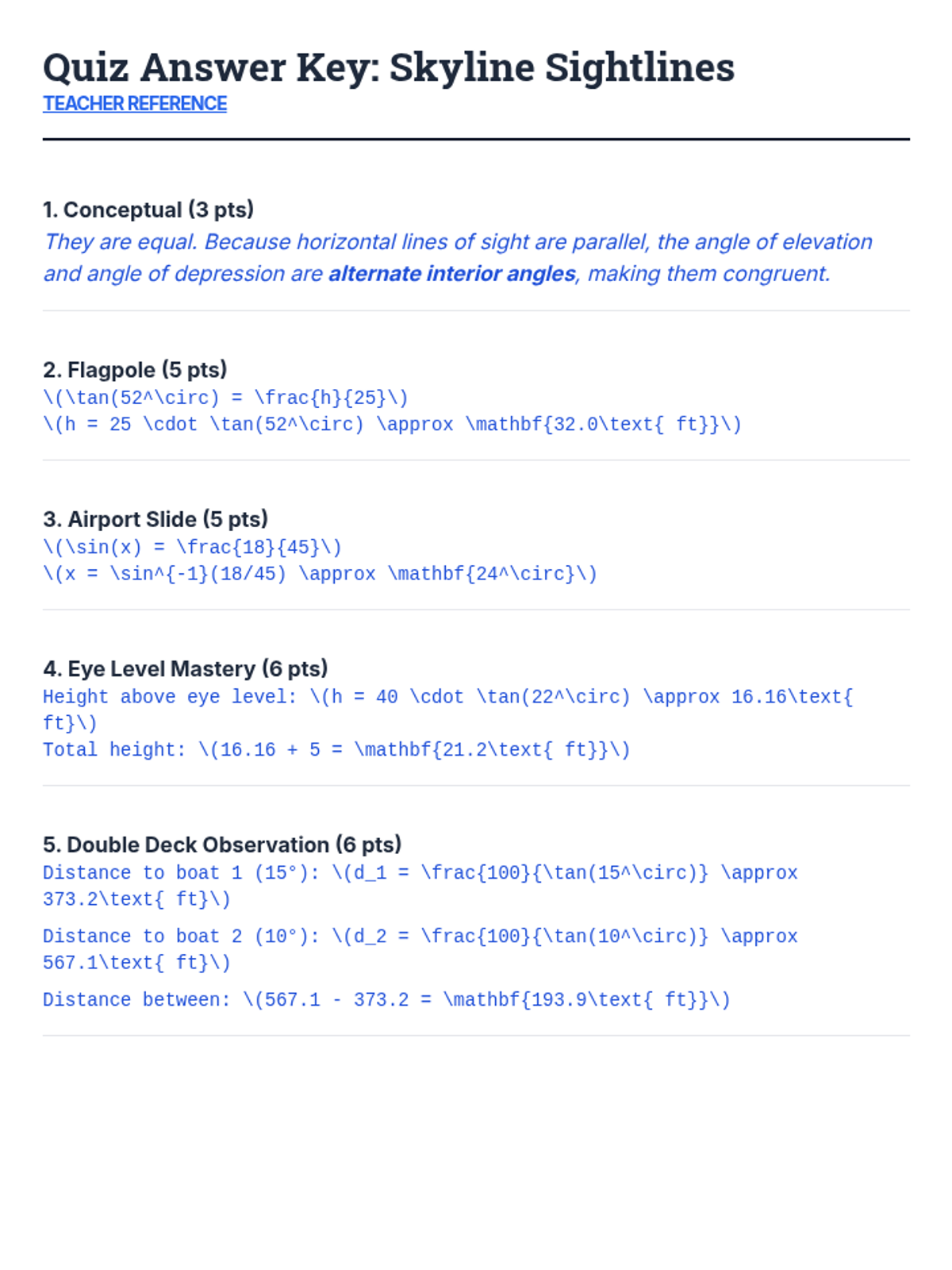
A focused assessment and practice module on right-triangle trigonometry, specifically covering the concepts of elevation and depression through architectural and surveying contexts.
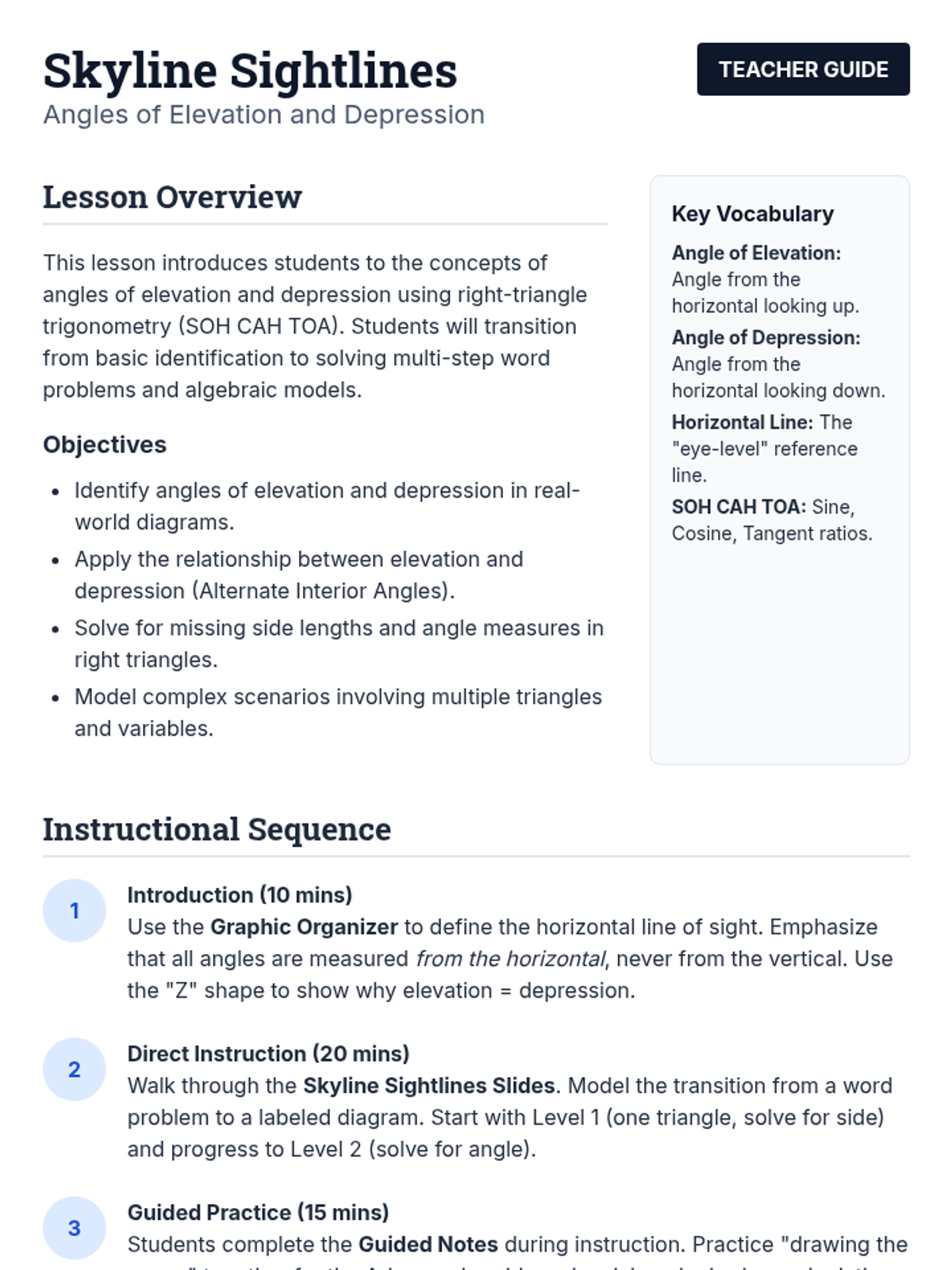
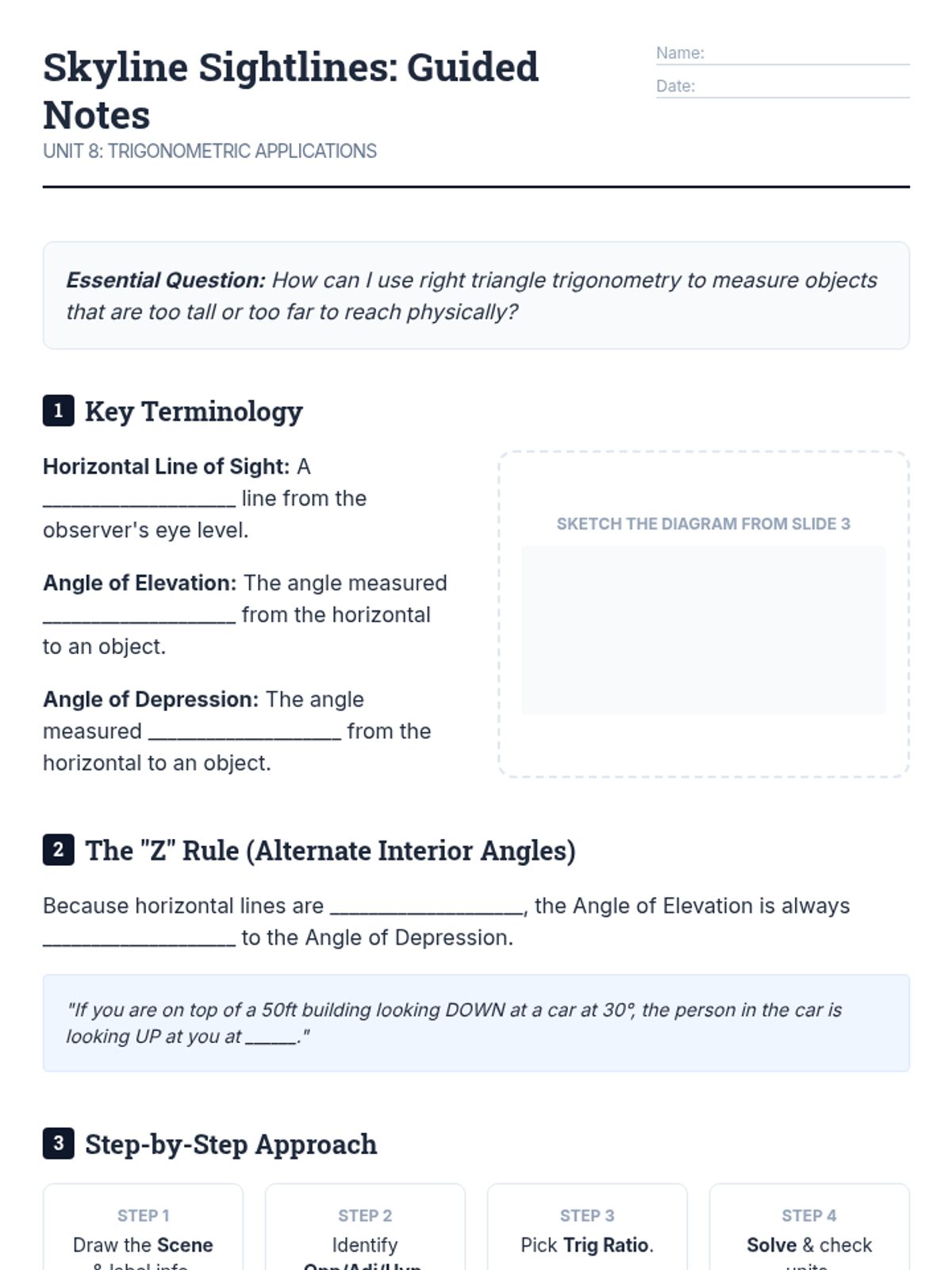
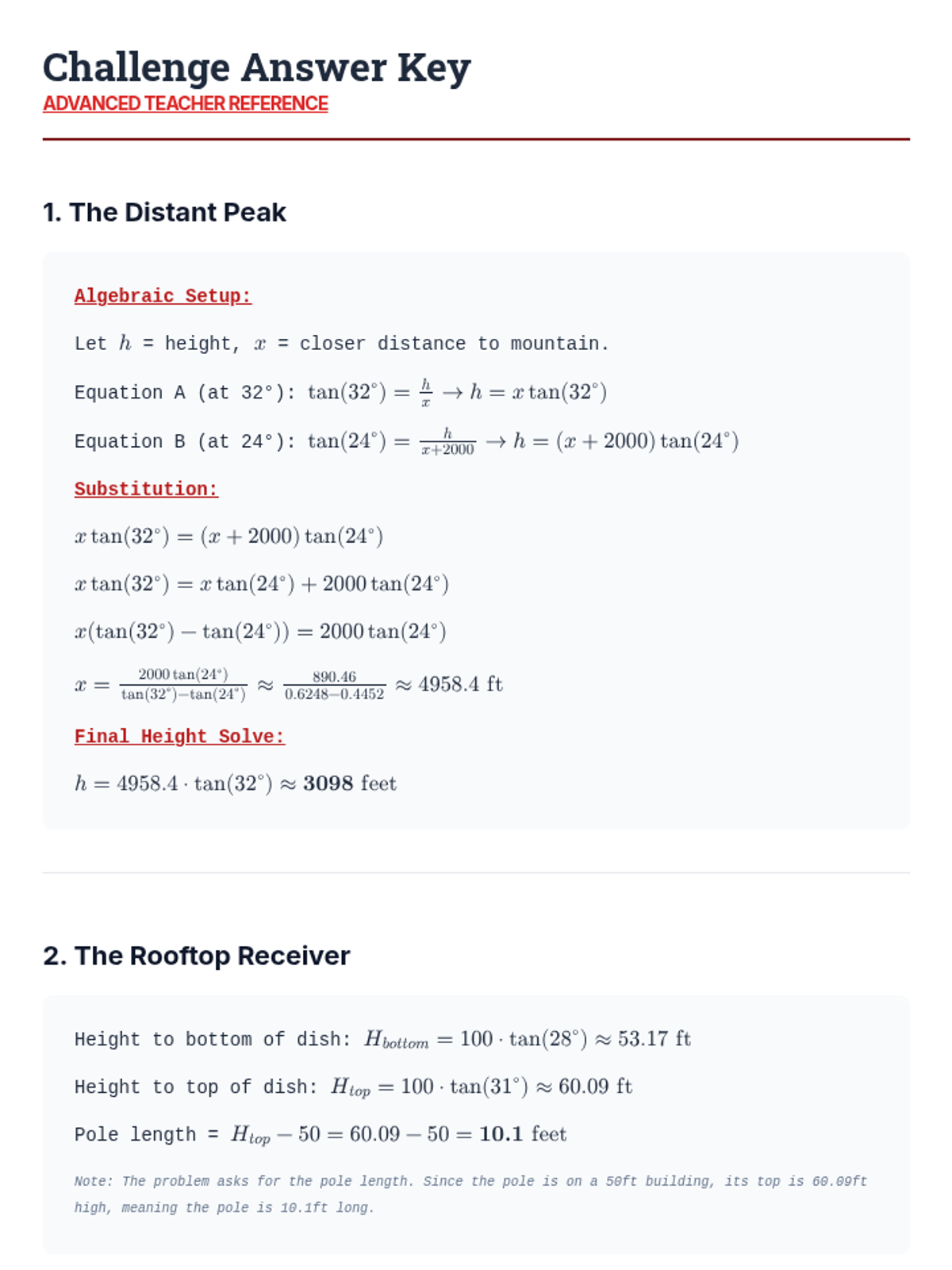
A comprehensive geometry lesson on angles of elevation and depression, ranging from basic trigonometry to complex algebraic applications. Students will master identifying, labeling, and solving for angles and distances in real-world scenarios.
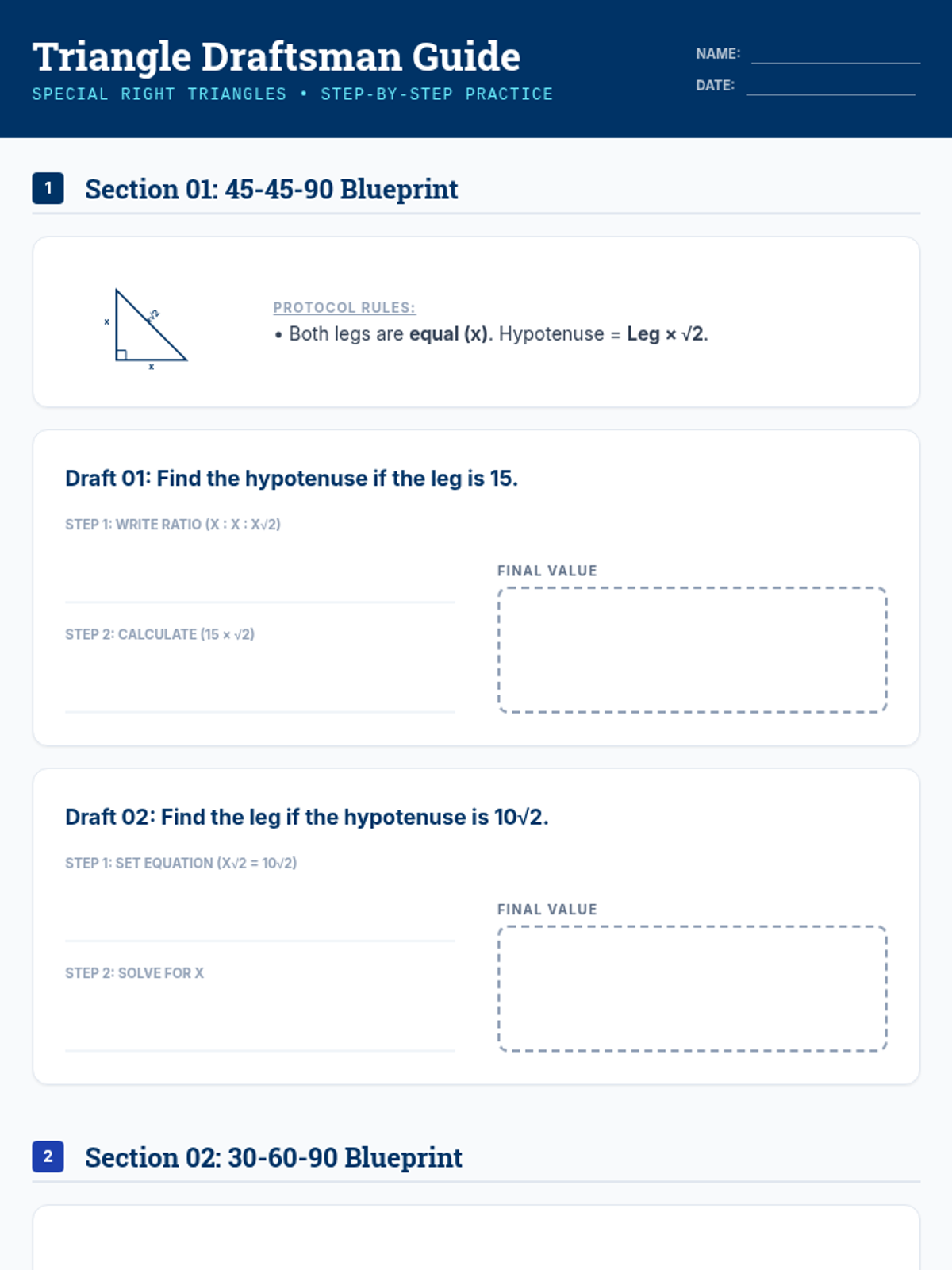
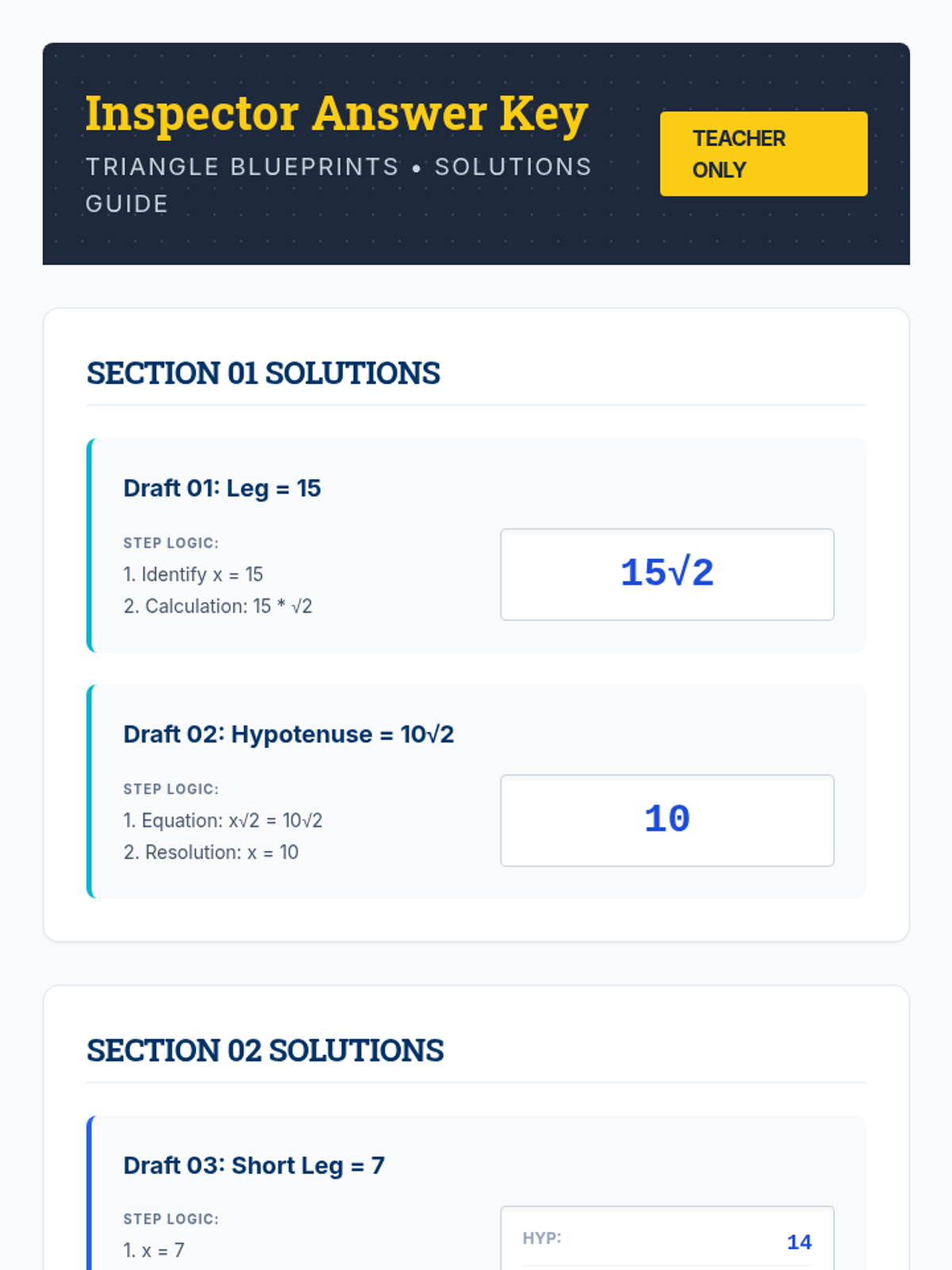
A comprehensive lesson introducing 45-45-90 and 30-60-90 triangles through the lens of architectural drafting and technical blueprints.
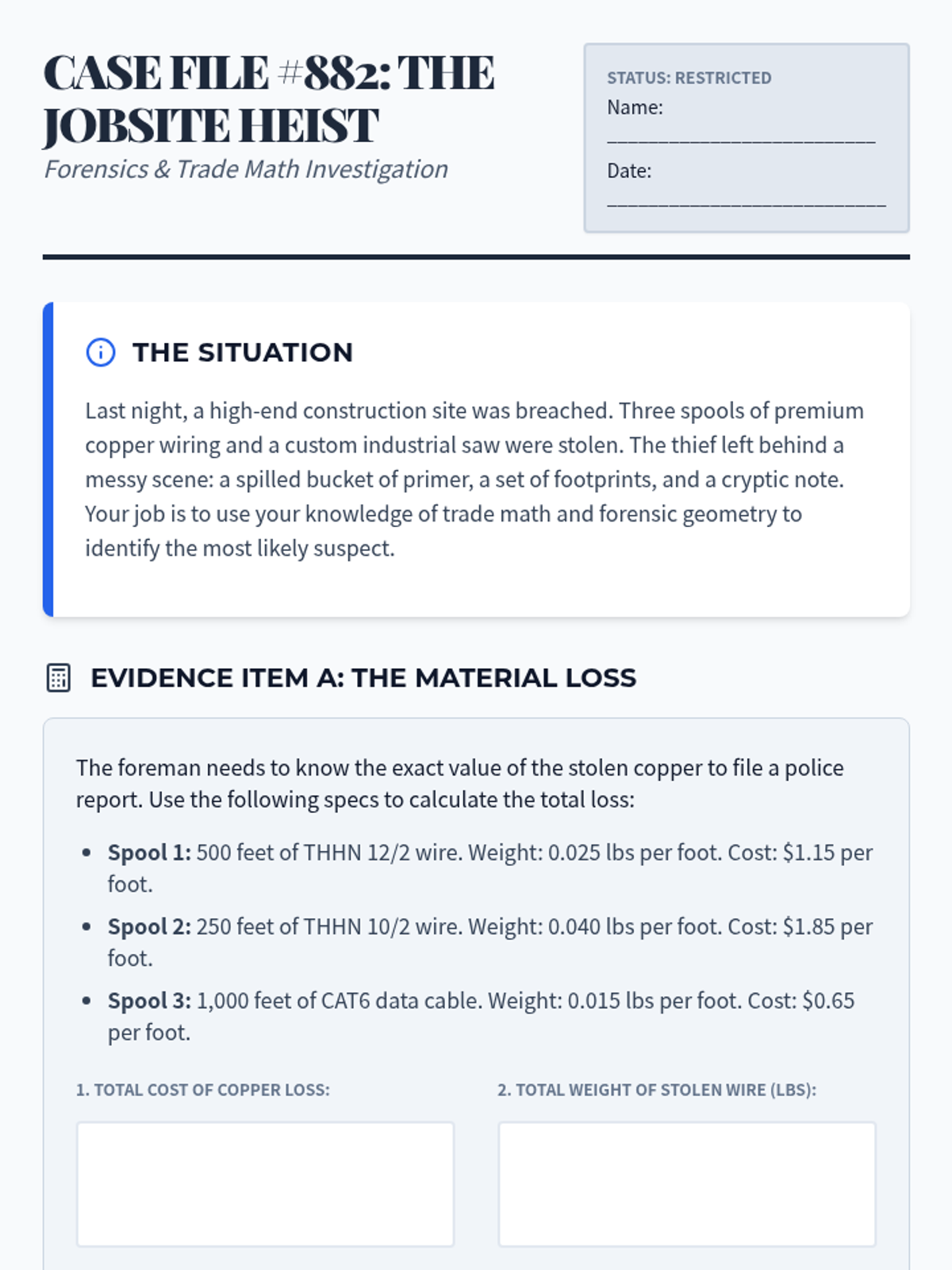
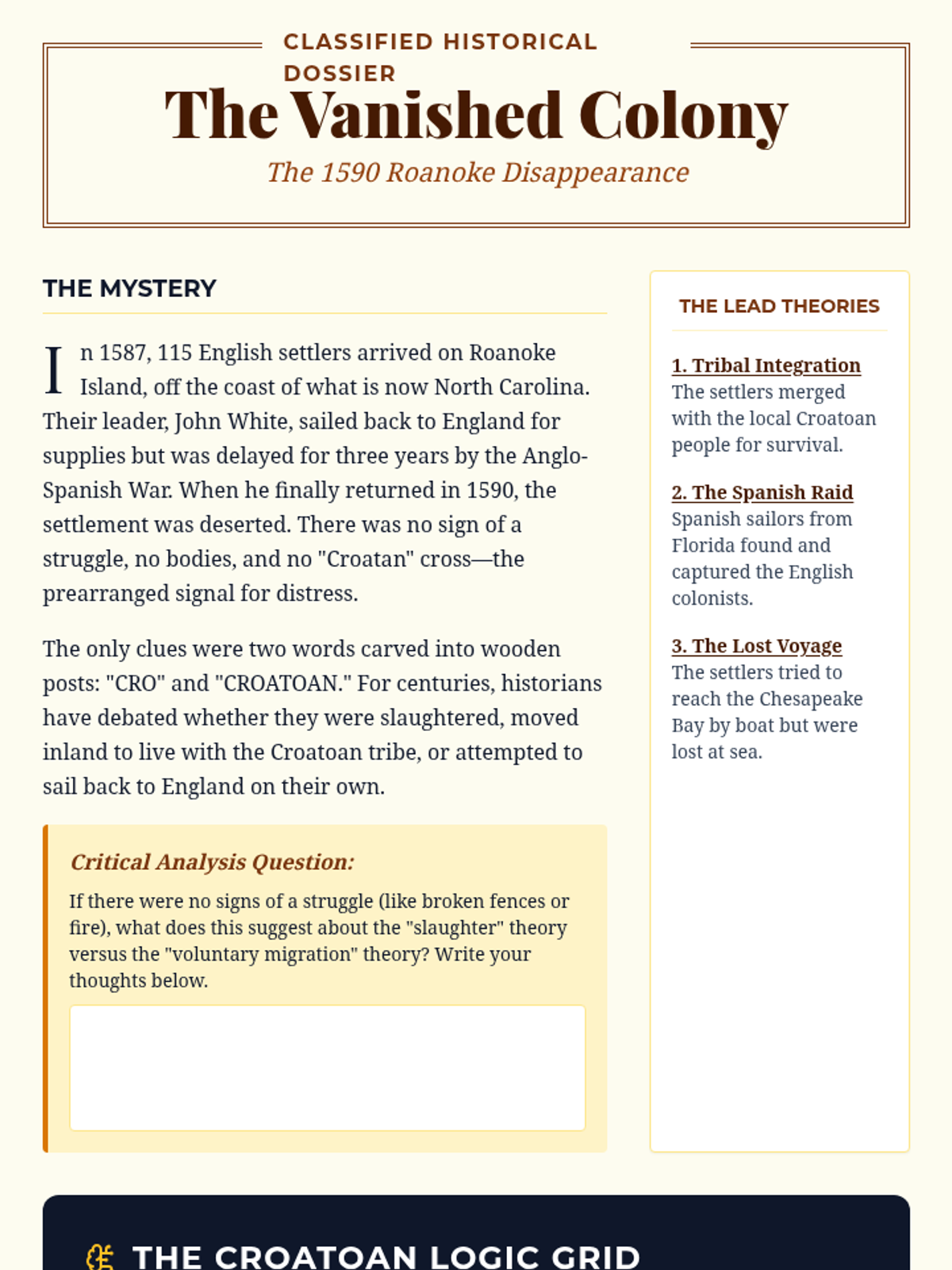
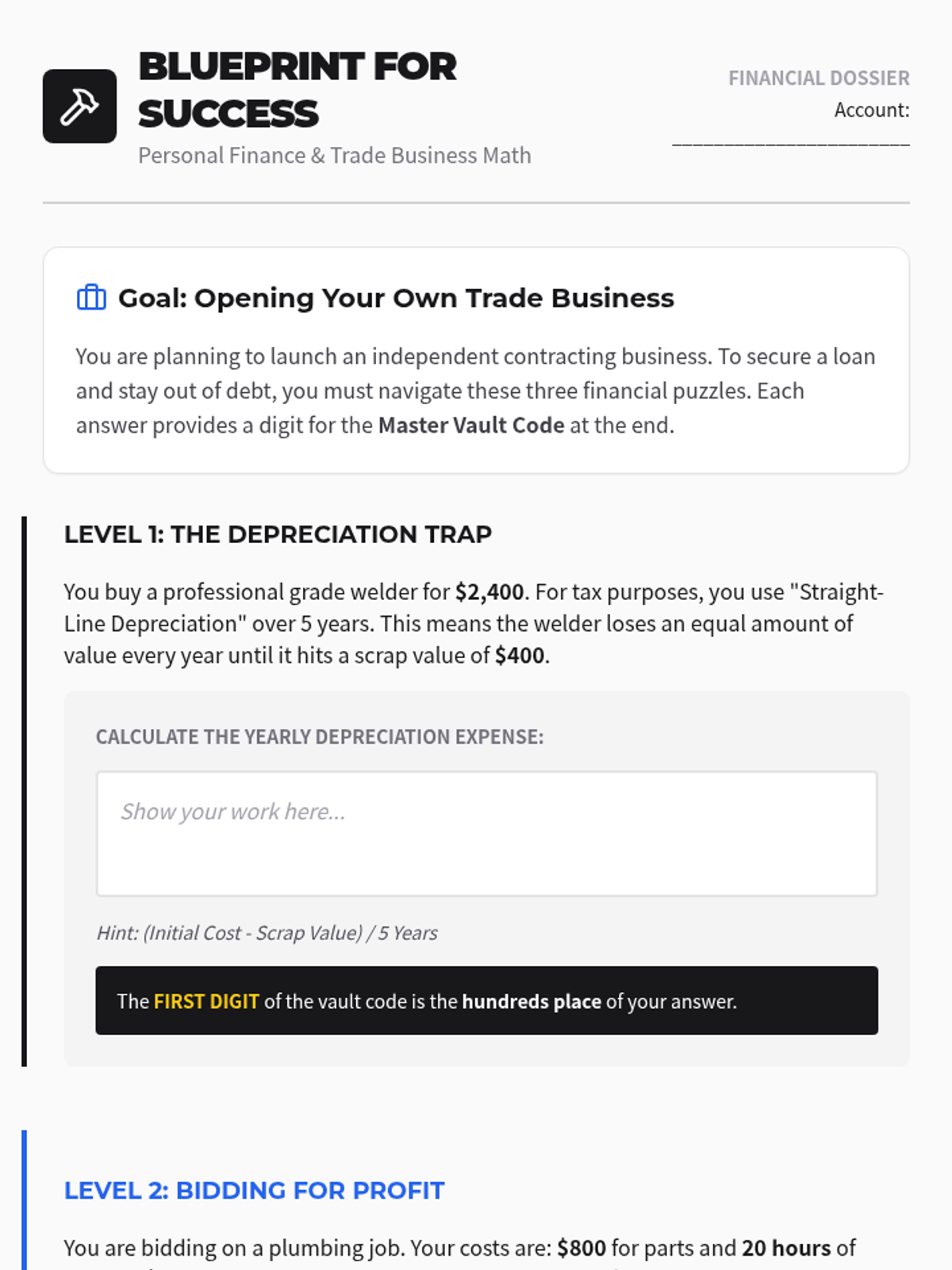
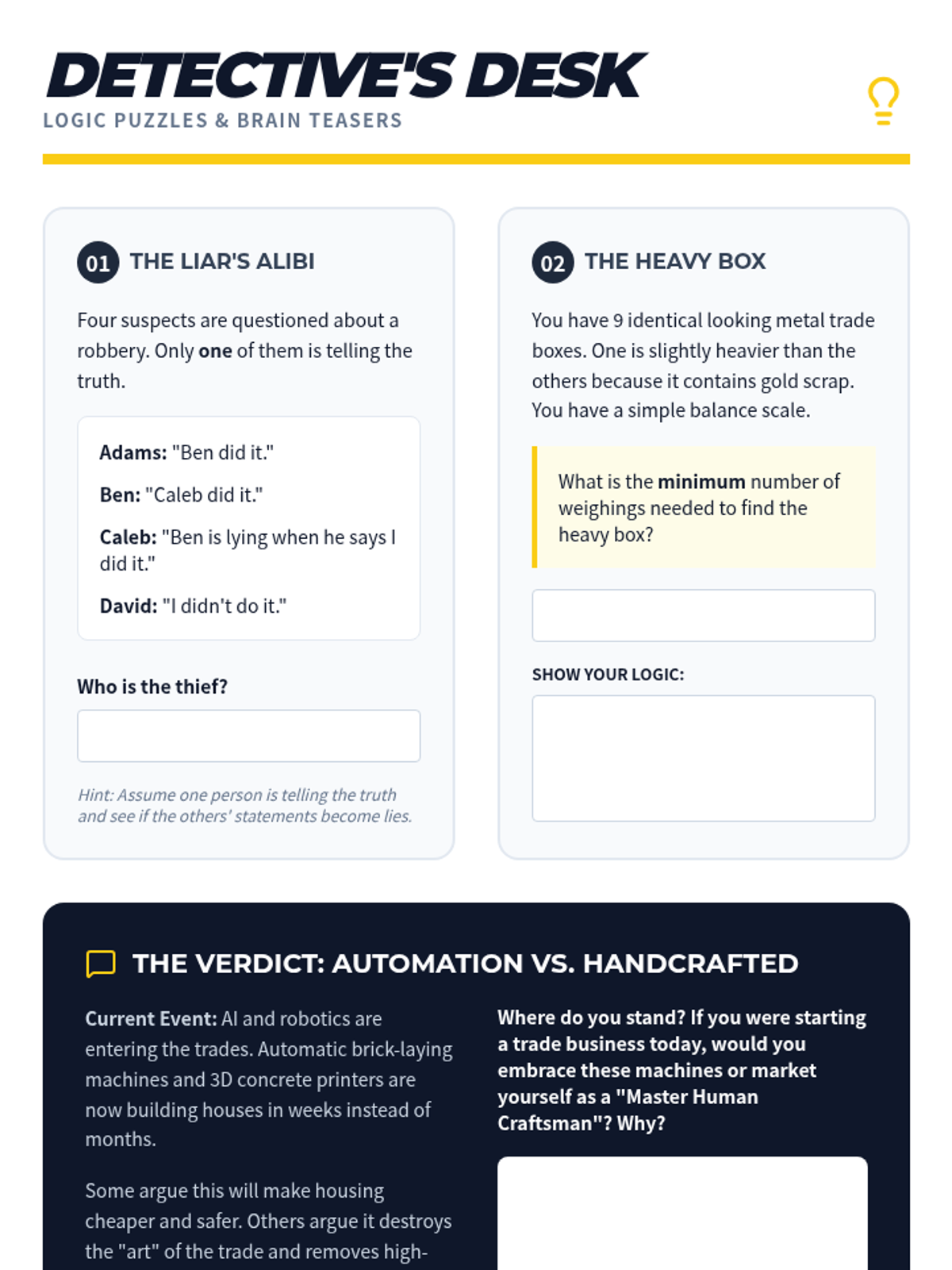
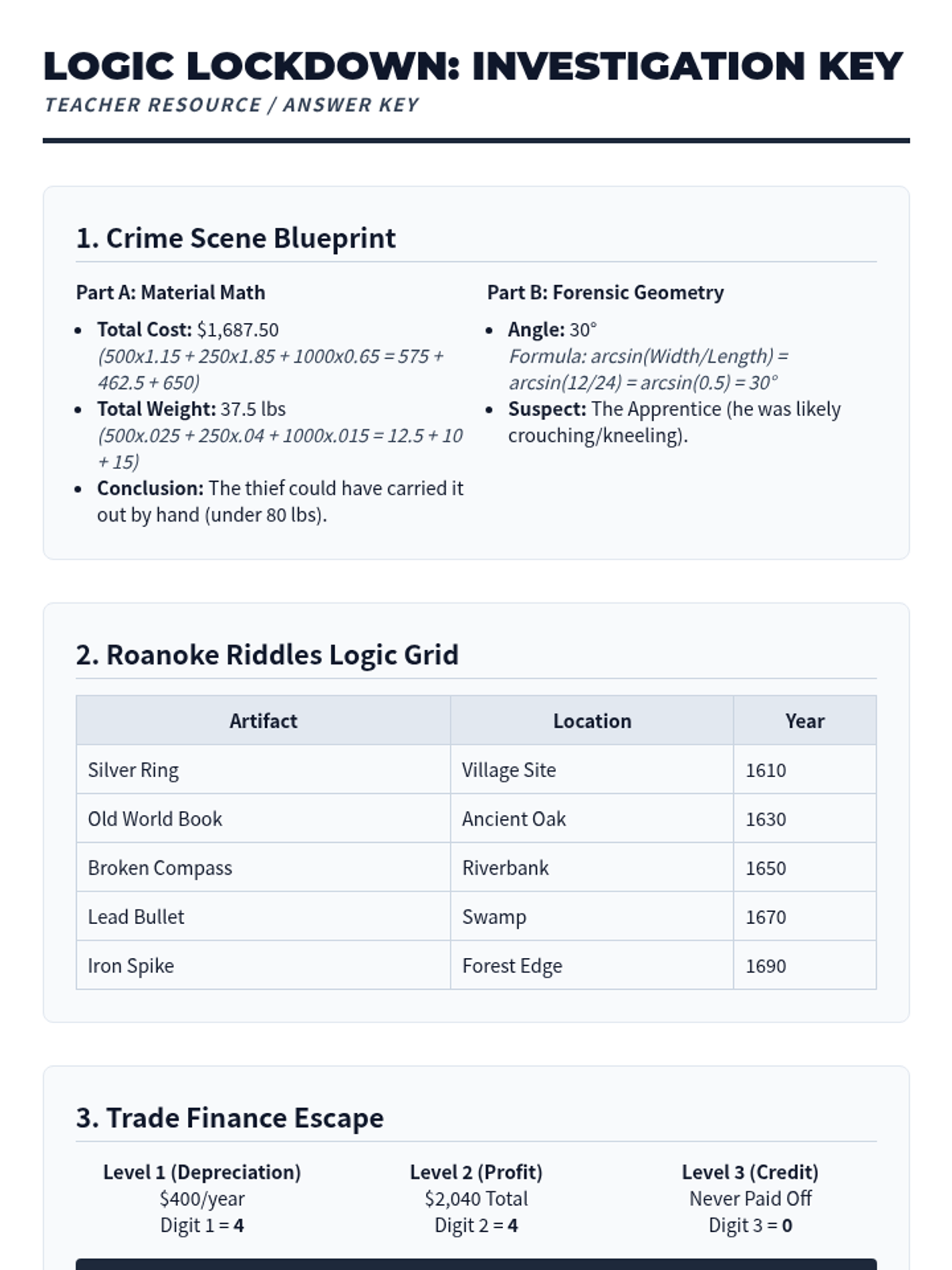
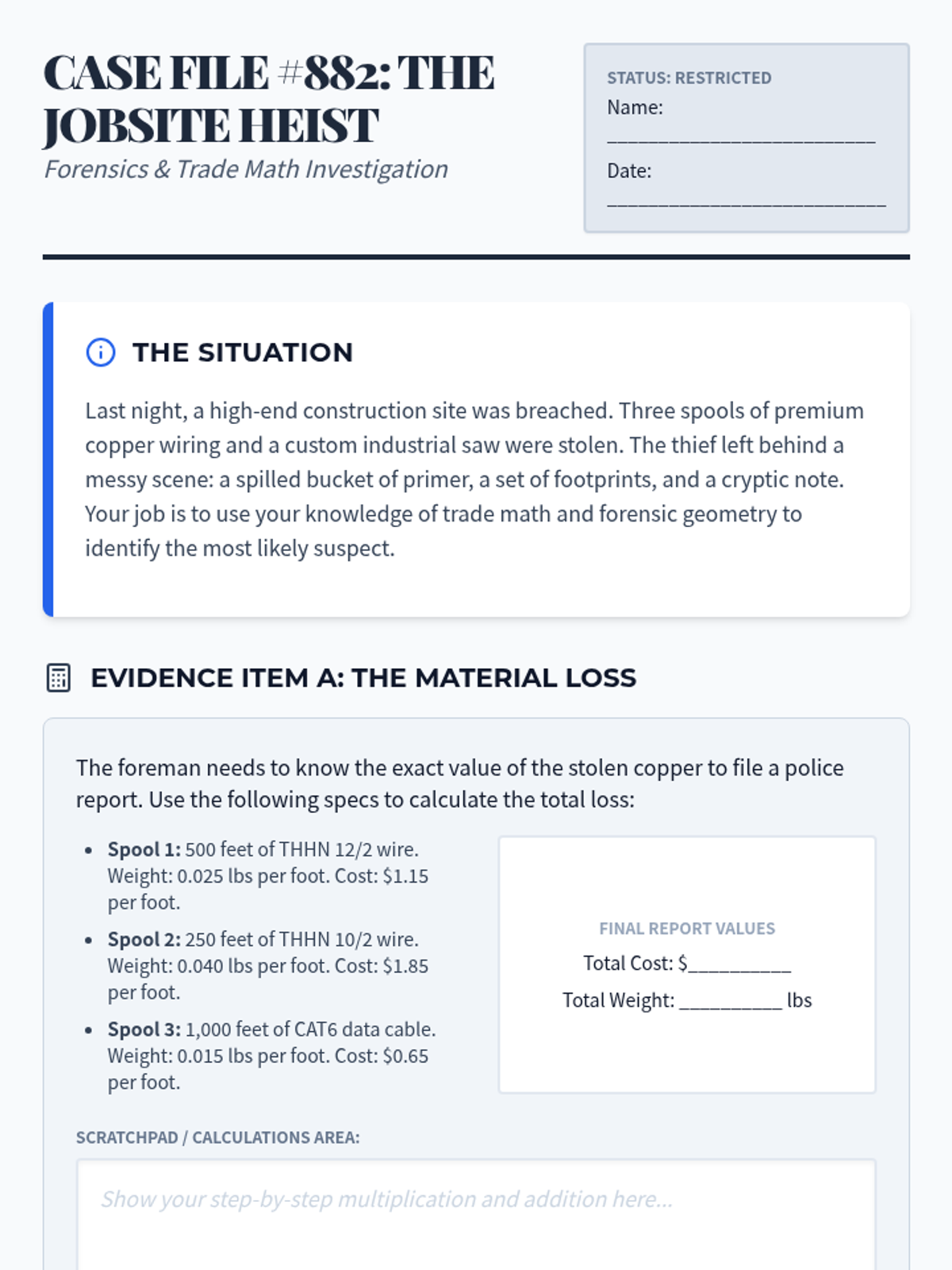
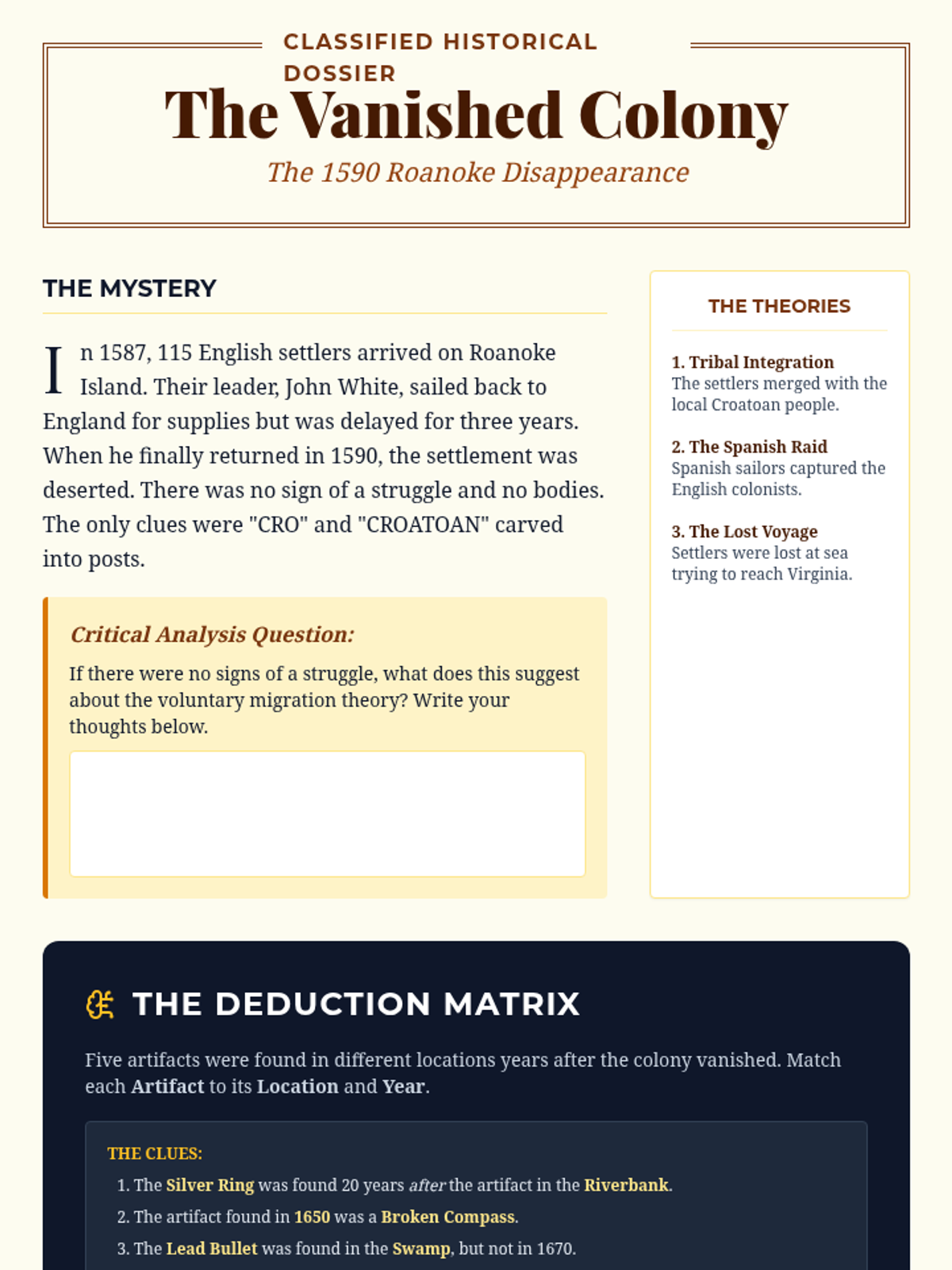
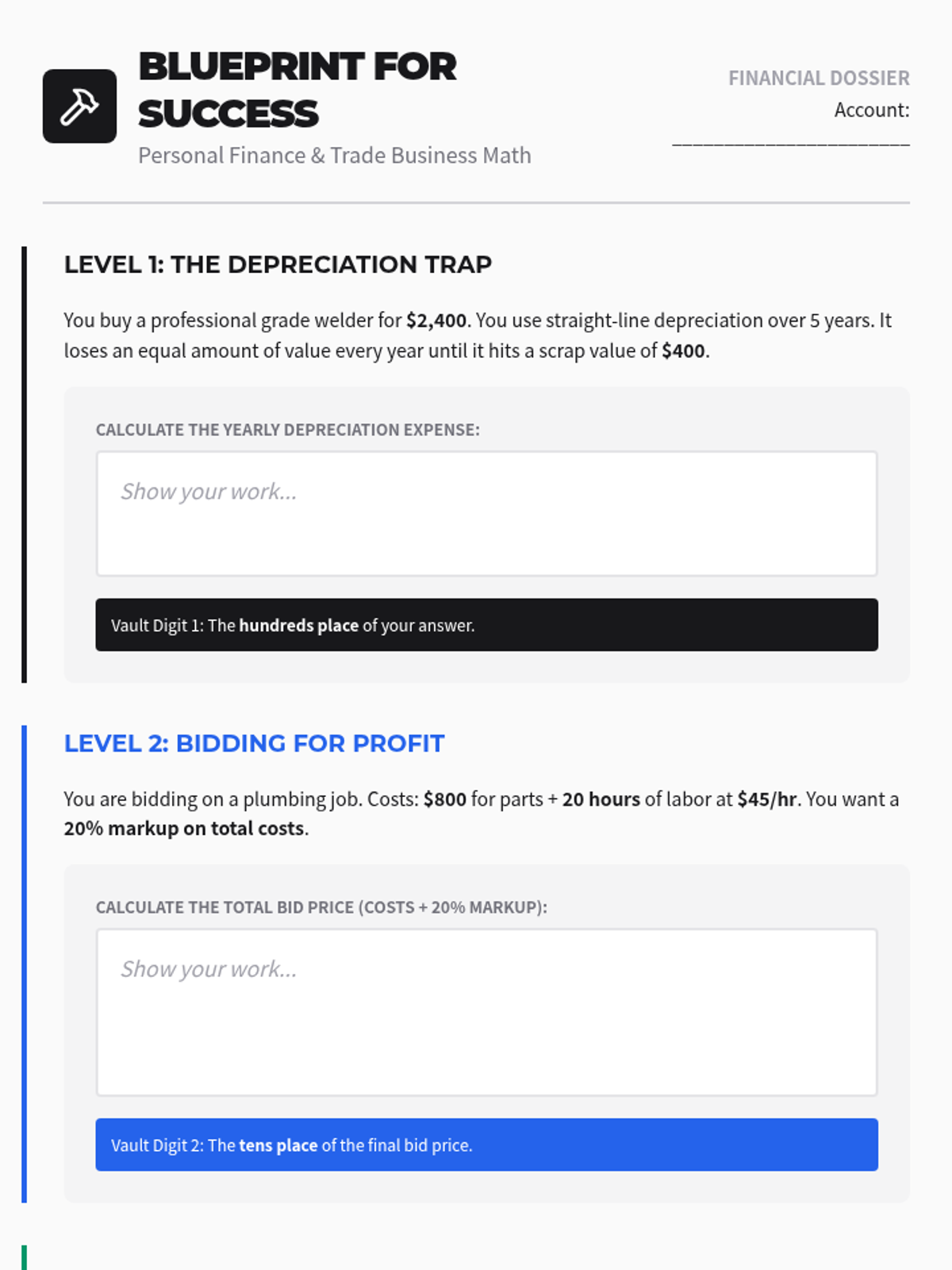
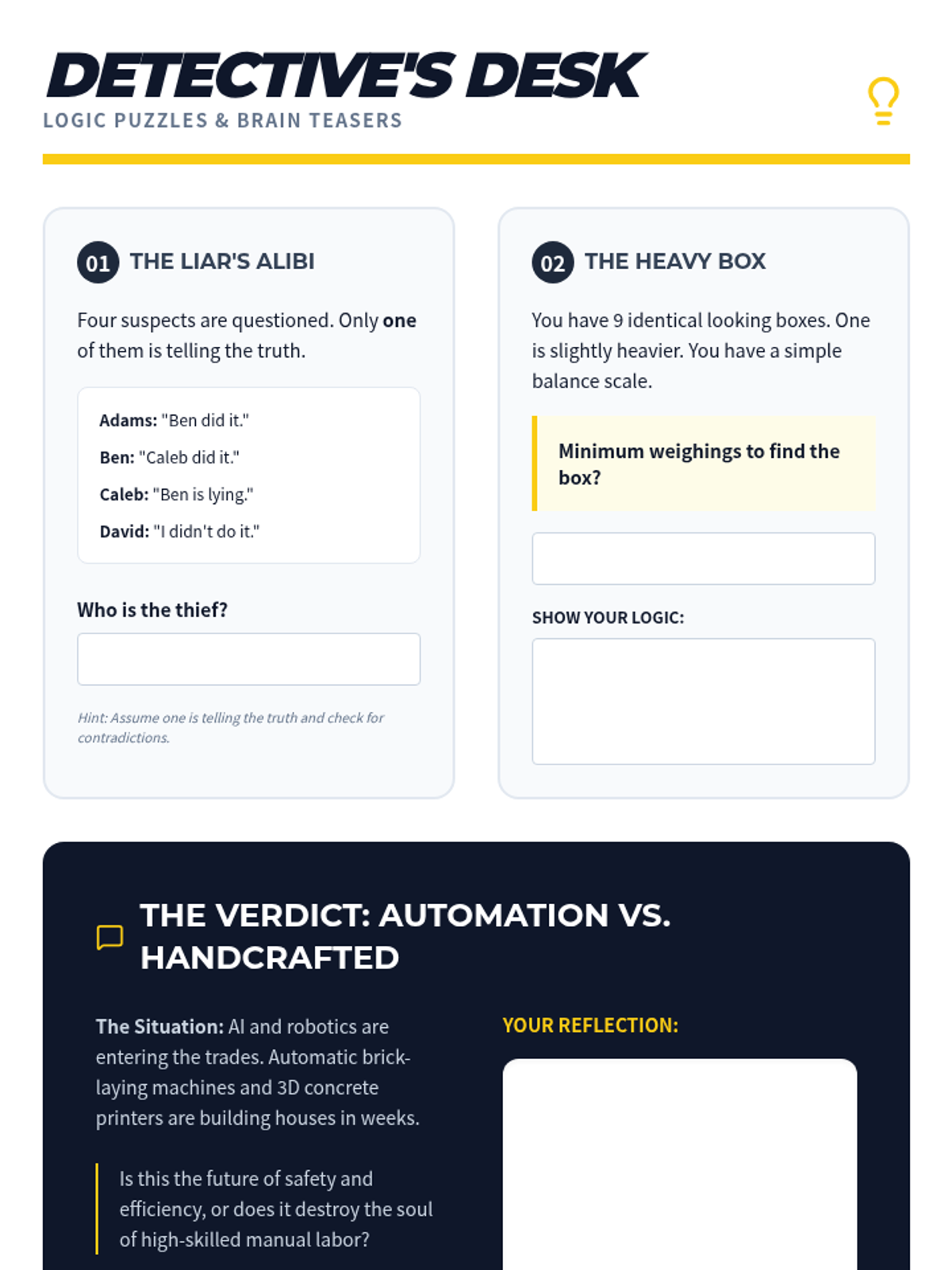
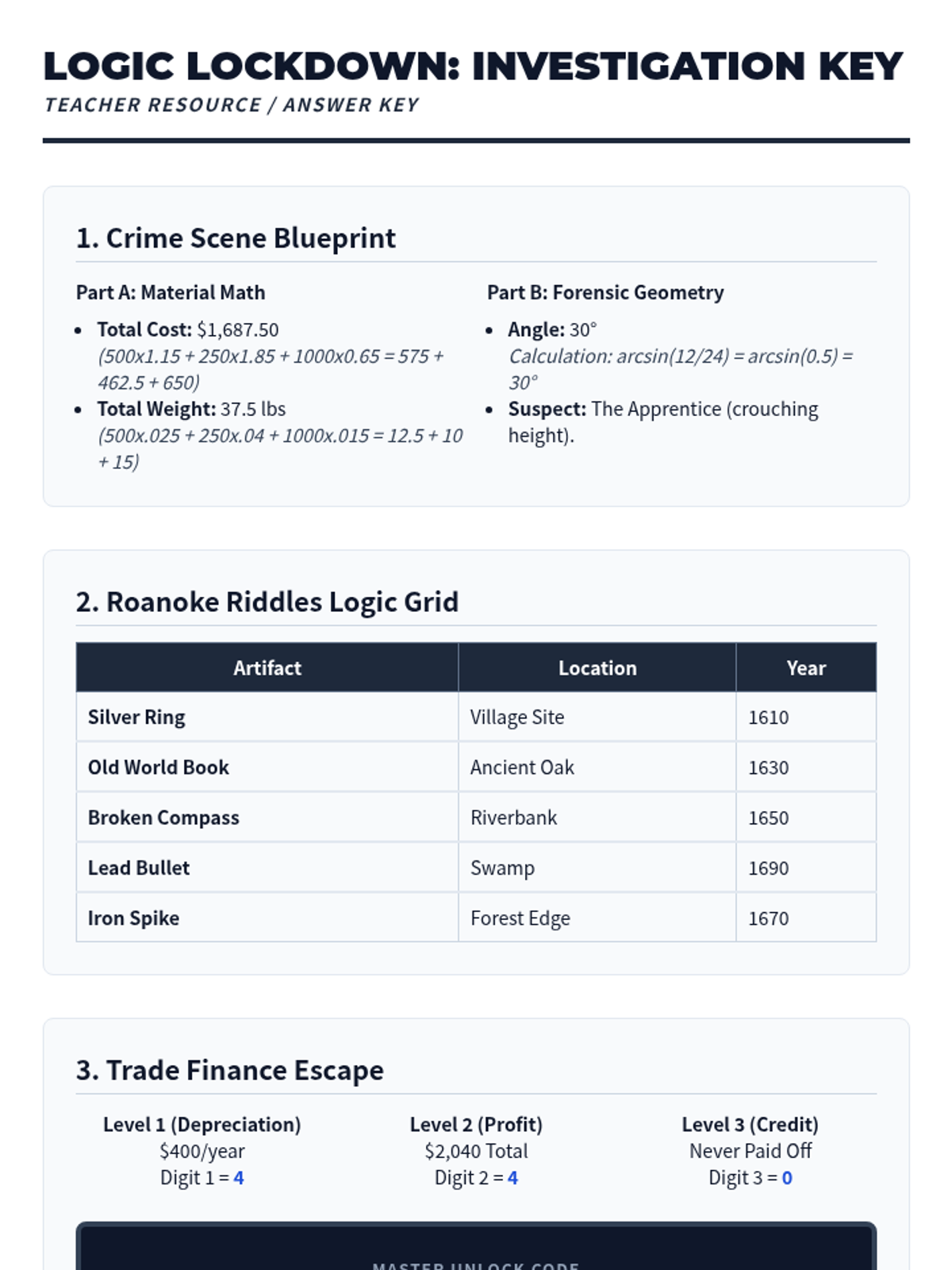
A collection of high-interest, multi-disciplinary logic and math challenges themed around forensic investigation, trade skills, and historical mysteries. Designed for high-school level adult learners to practice critical thinking and practical math application.
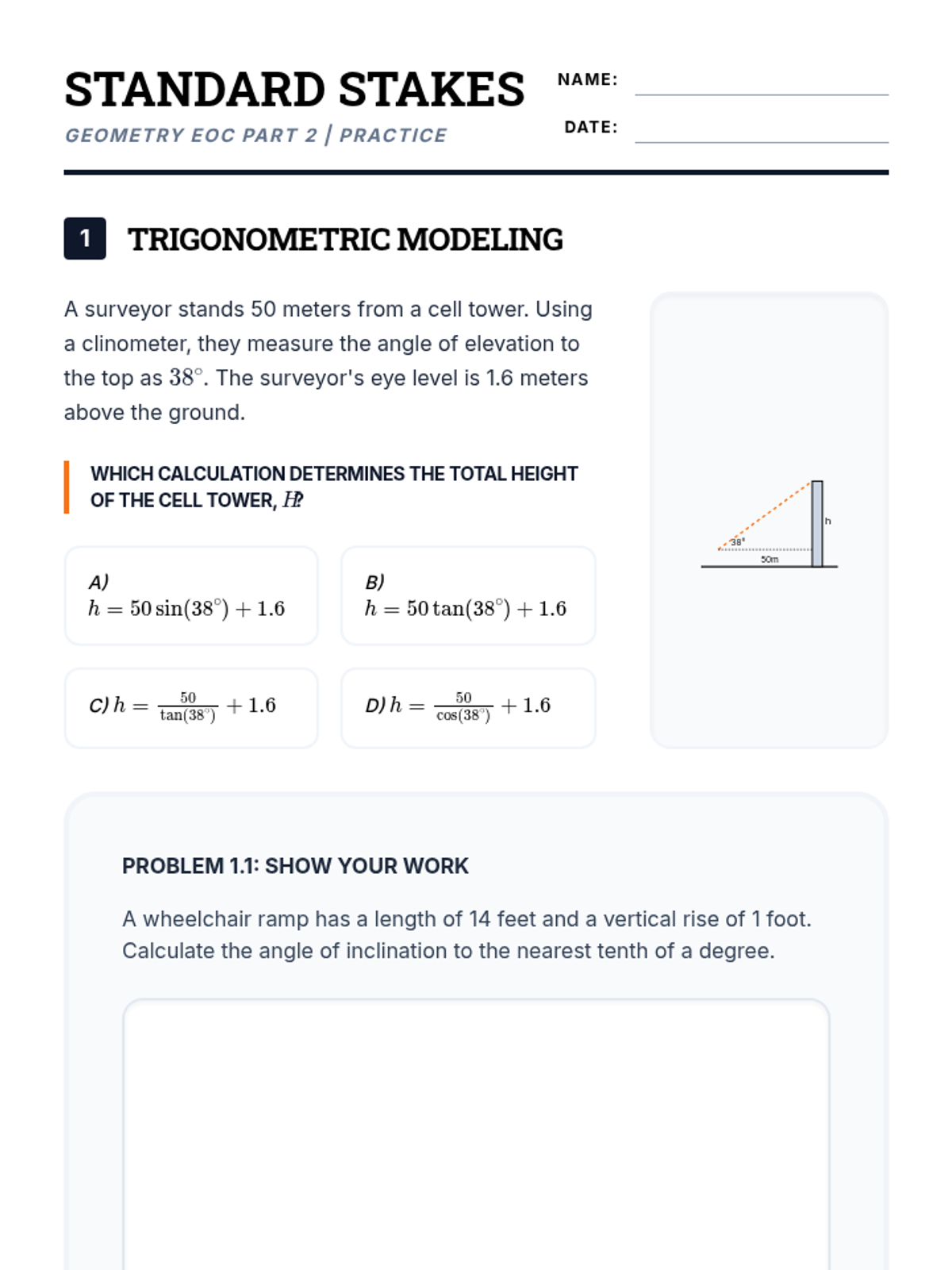
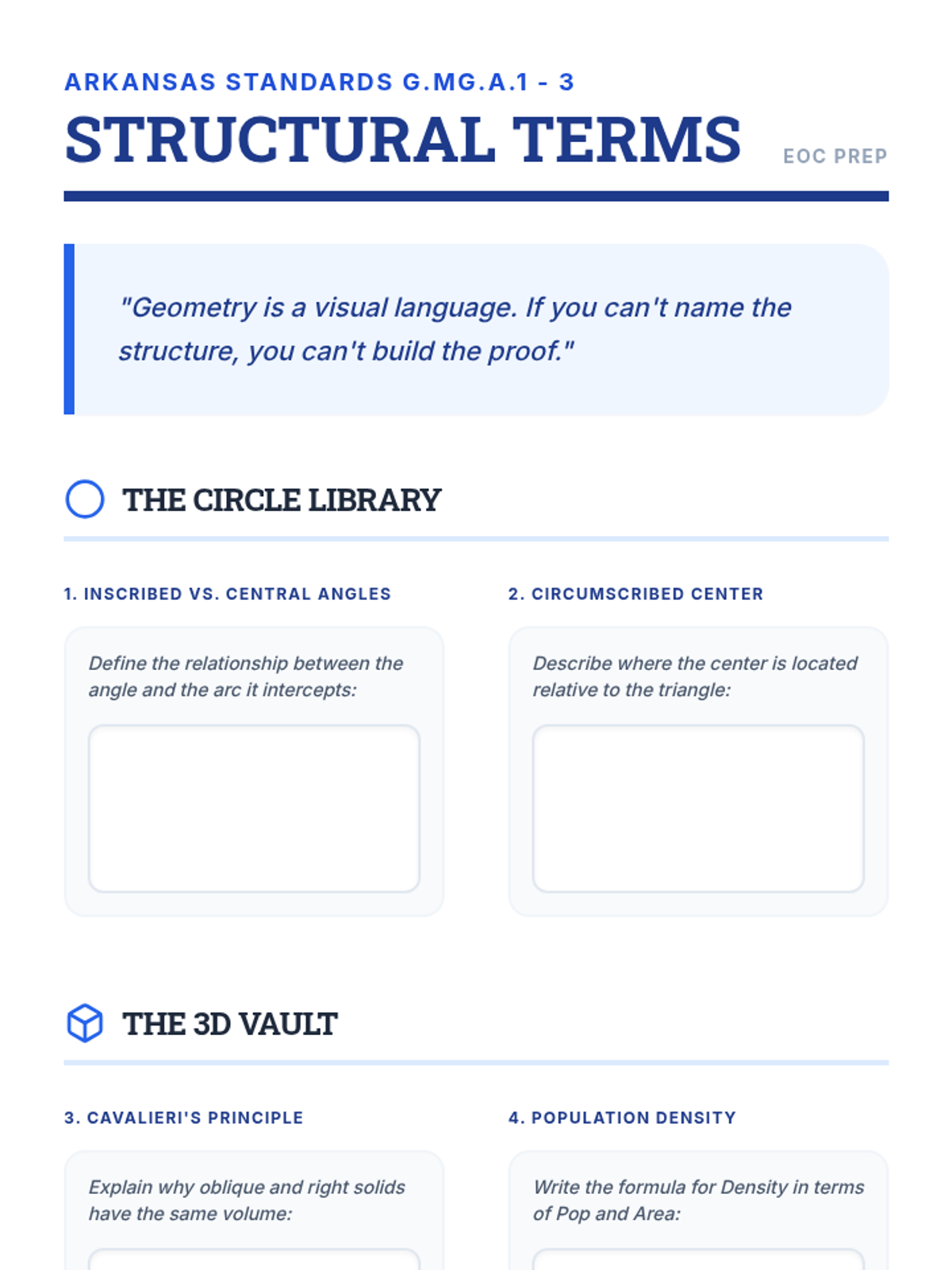
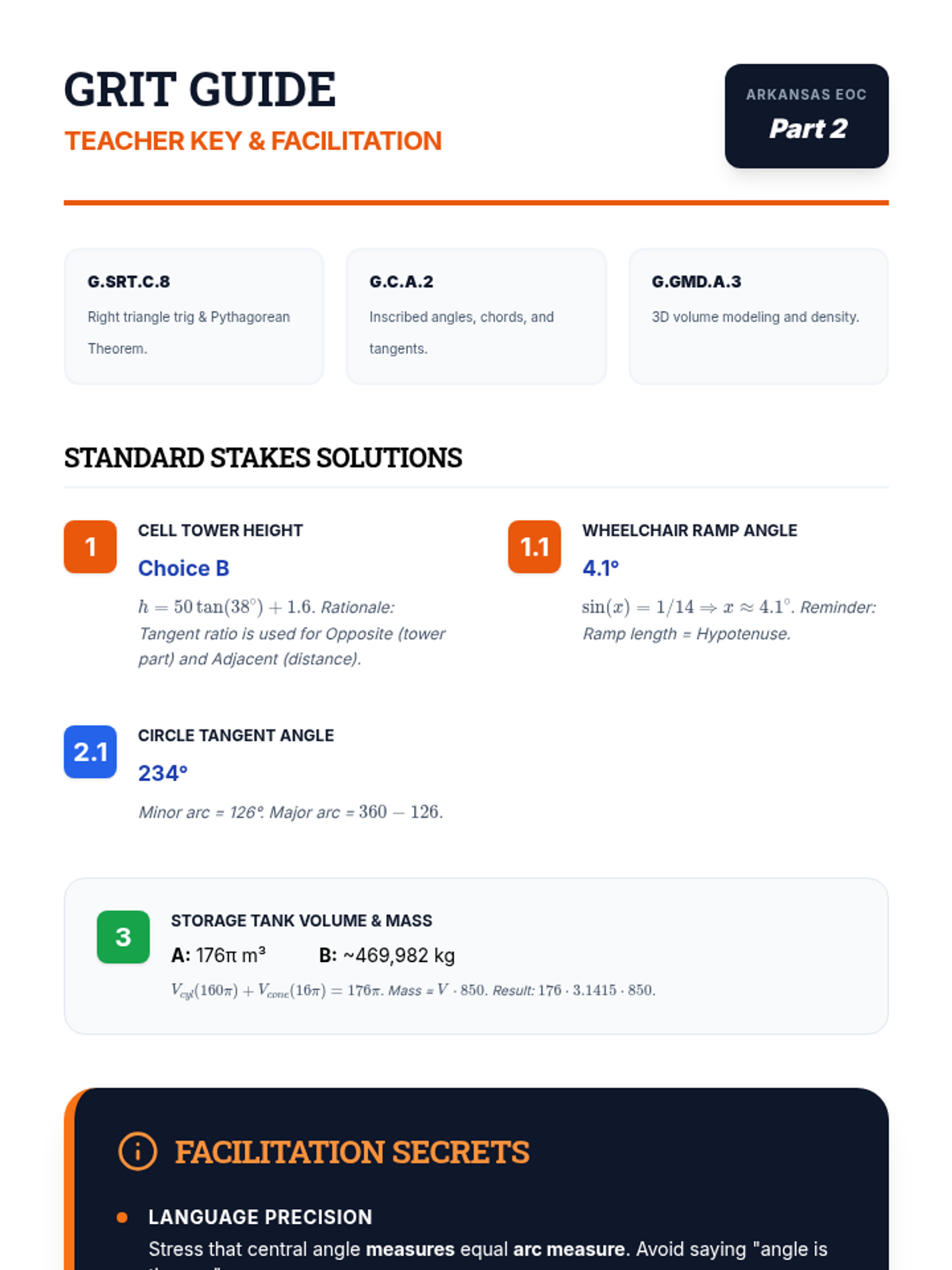
A high-intensity EOC prep lesson for Arkansas Geometry standards, focusing on trigonometry, circle properties, and 3D geometry through diagram-heavy practice.
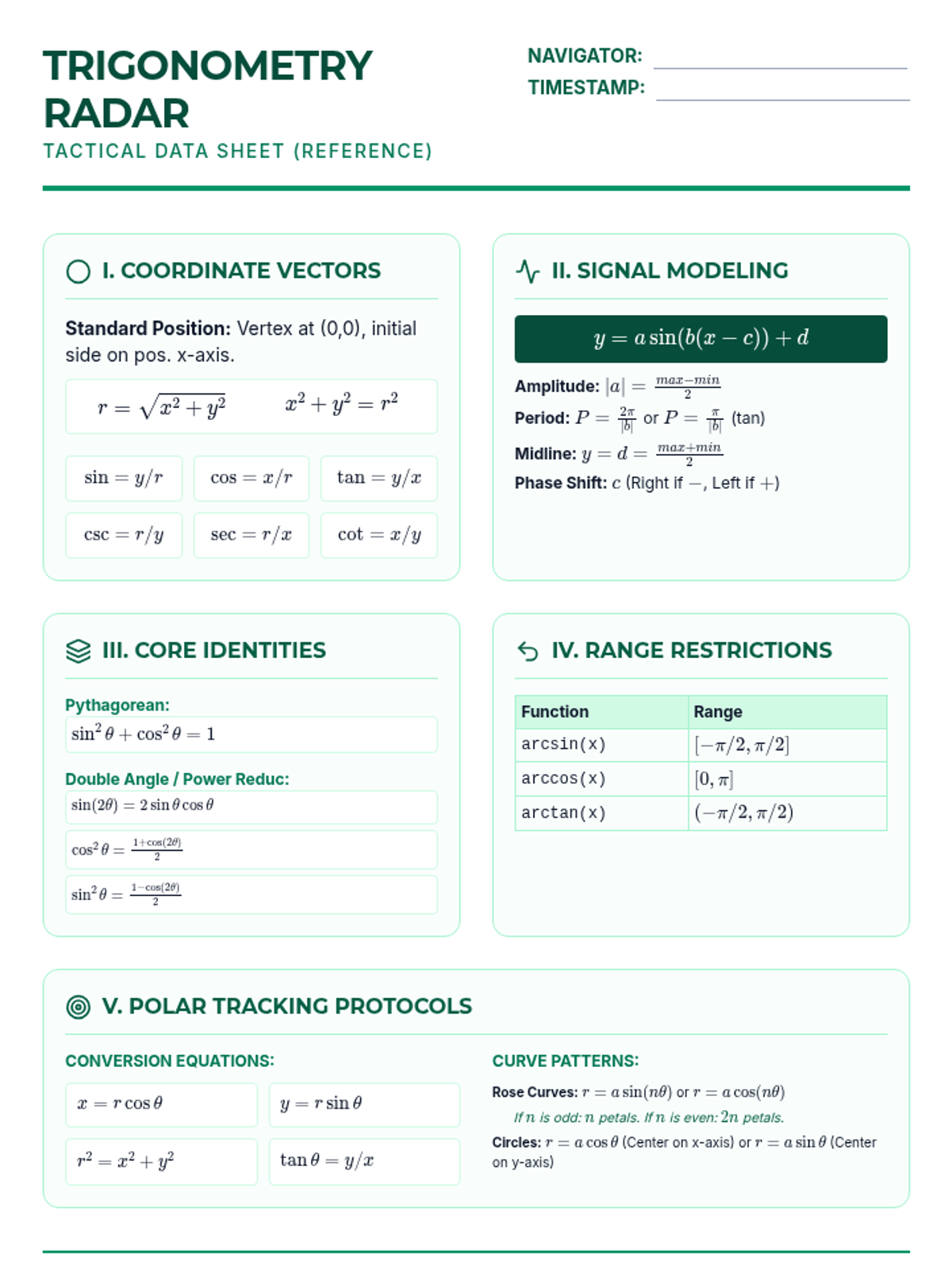
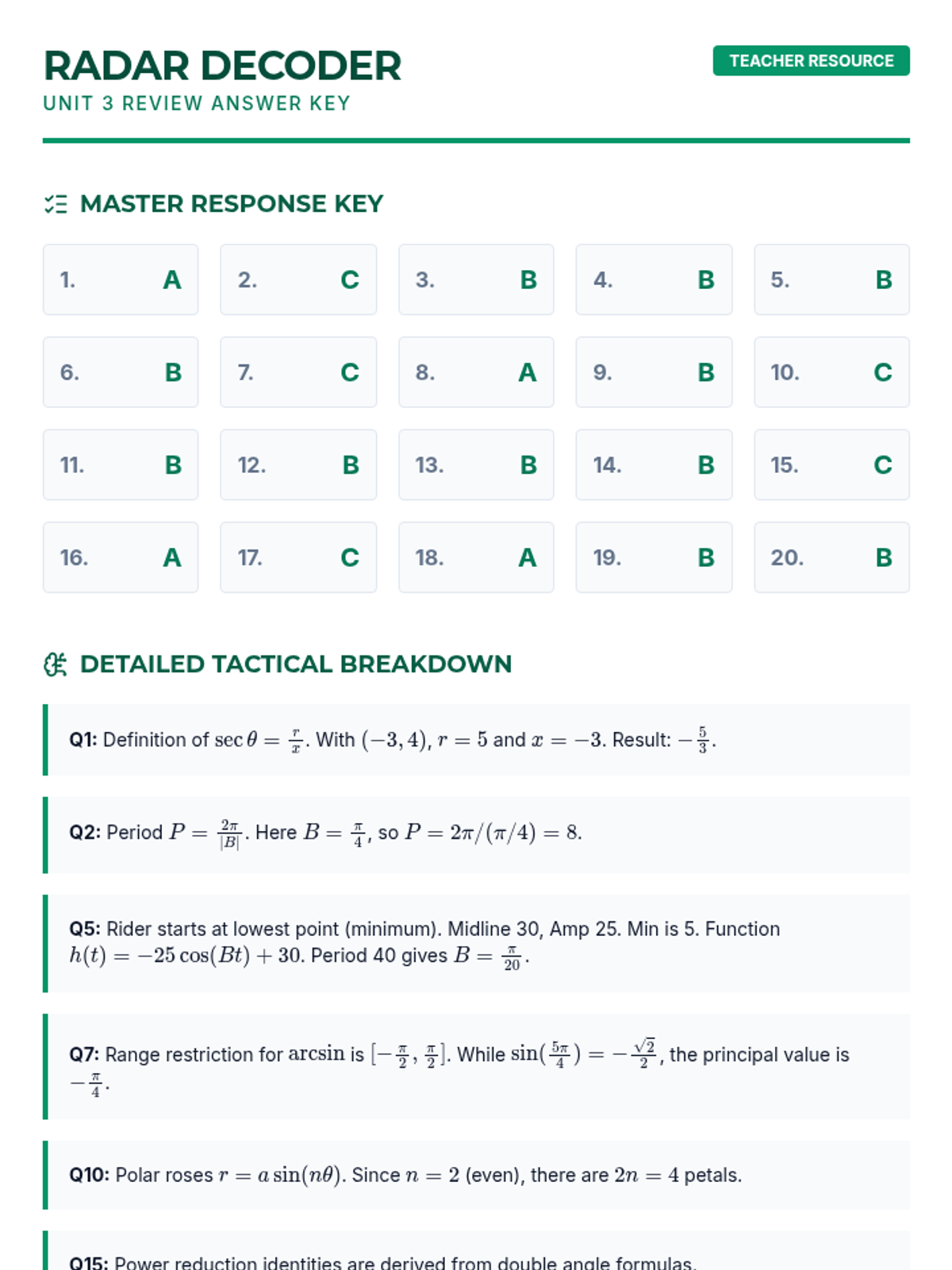
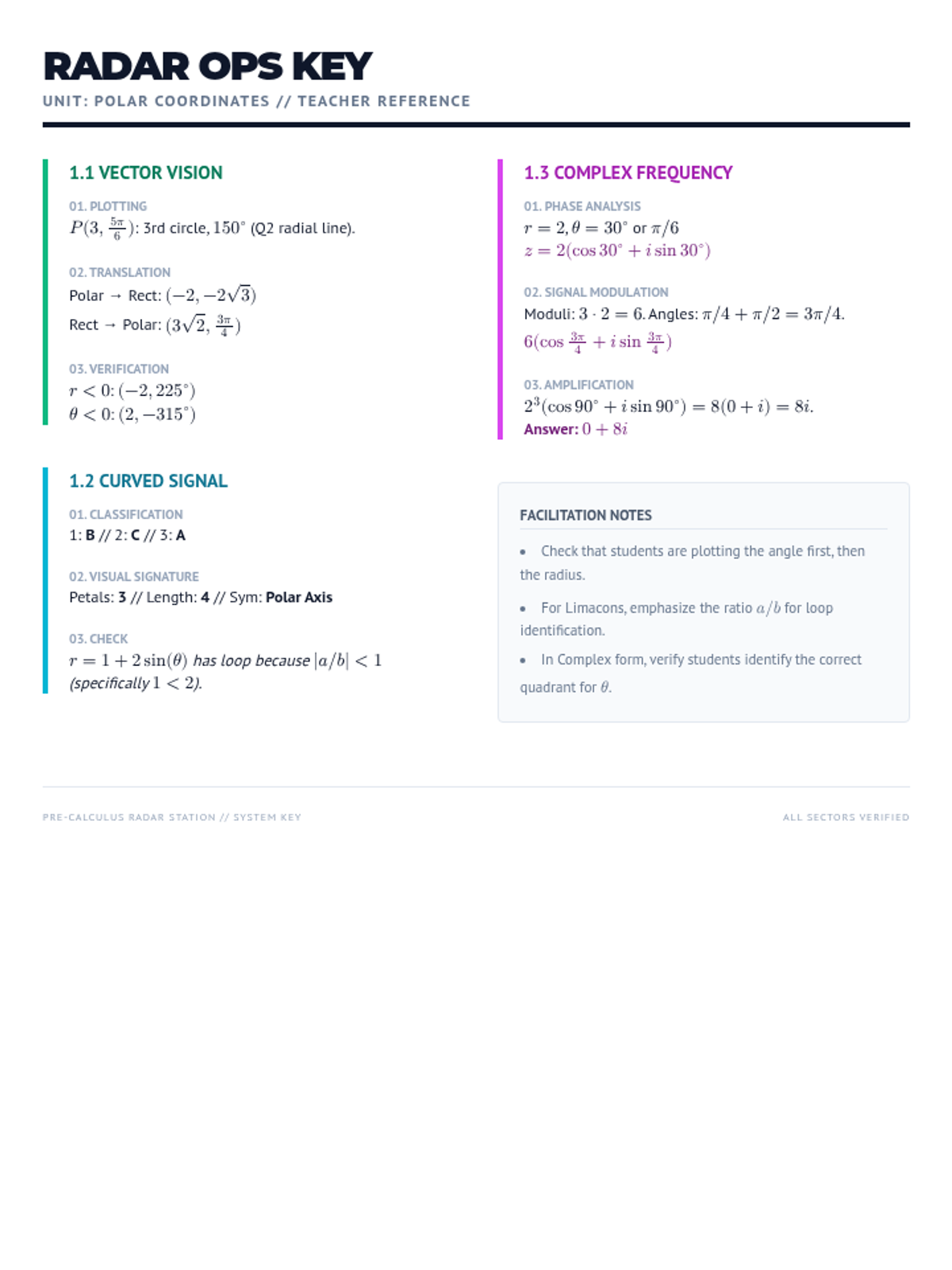
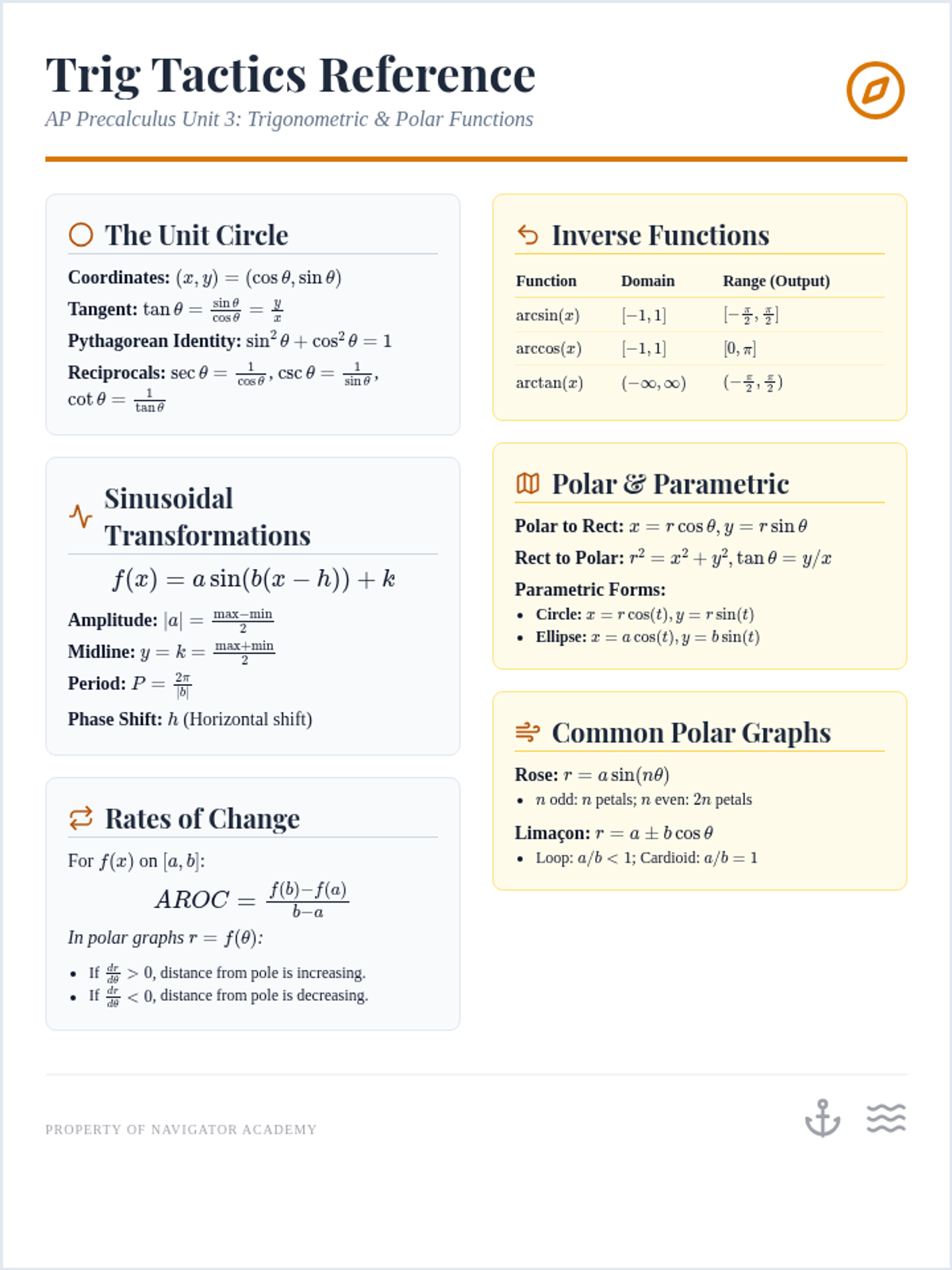
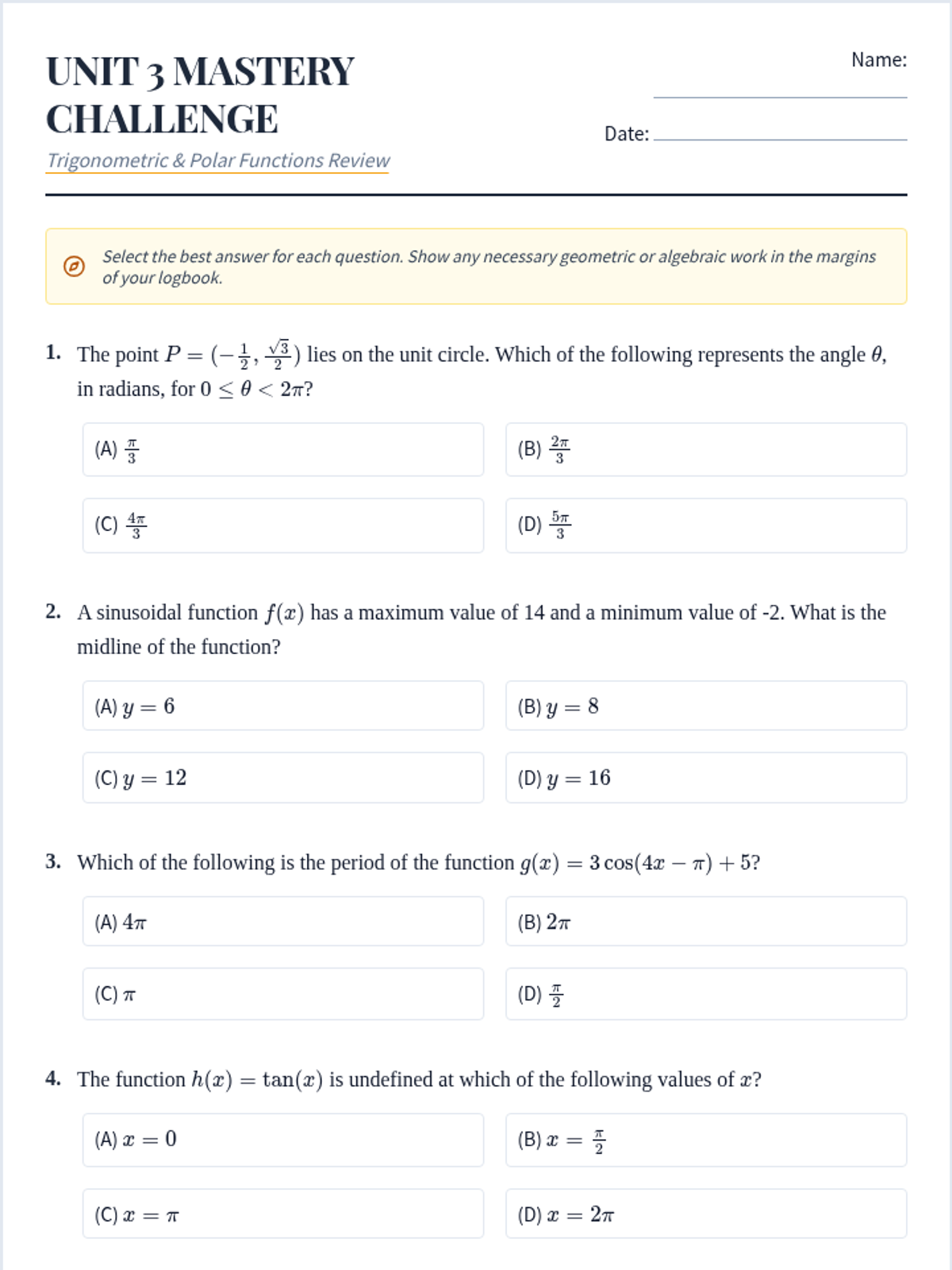
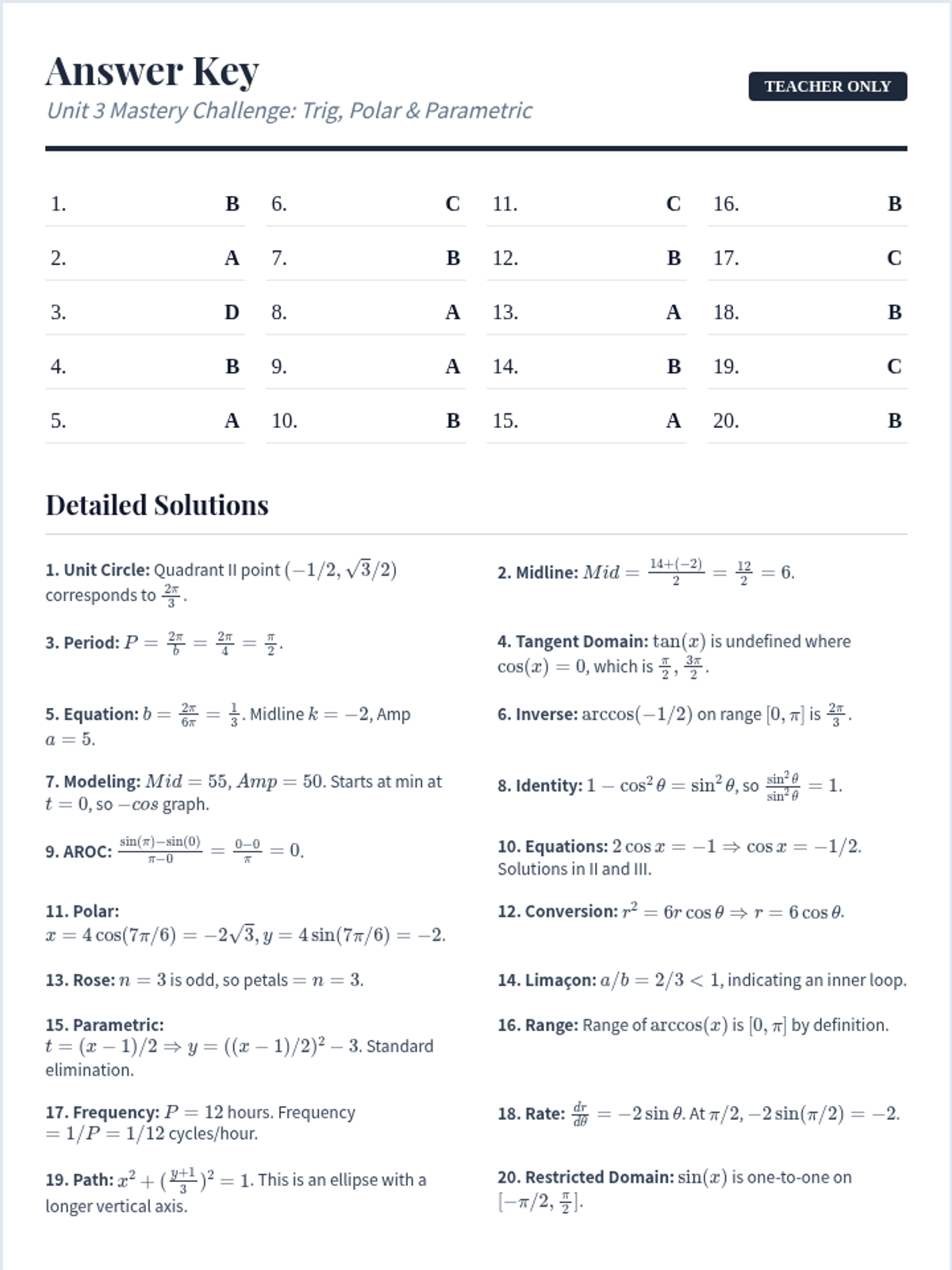
A high-intensity review session for AP Precalculus Unit 3, covering trigonometric functions, inverse functions, and polar coordinates through a "Radar Tech" thematic lens.
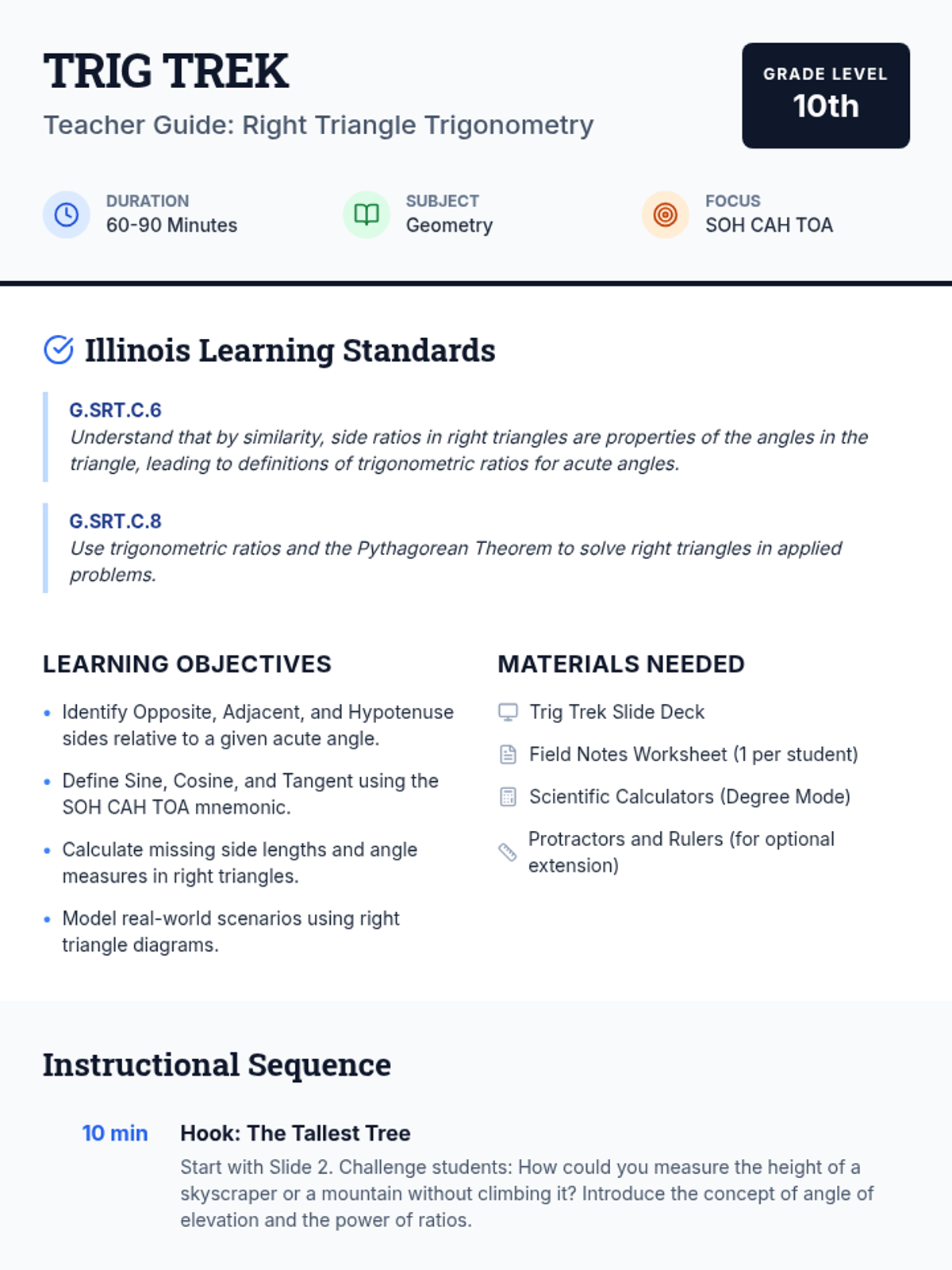
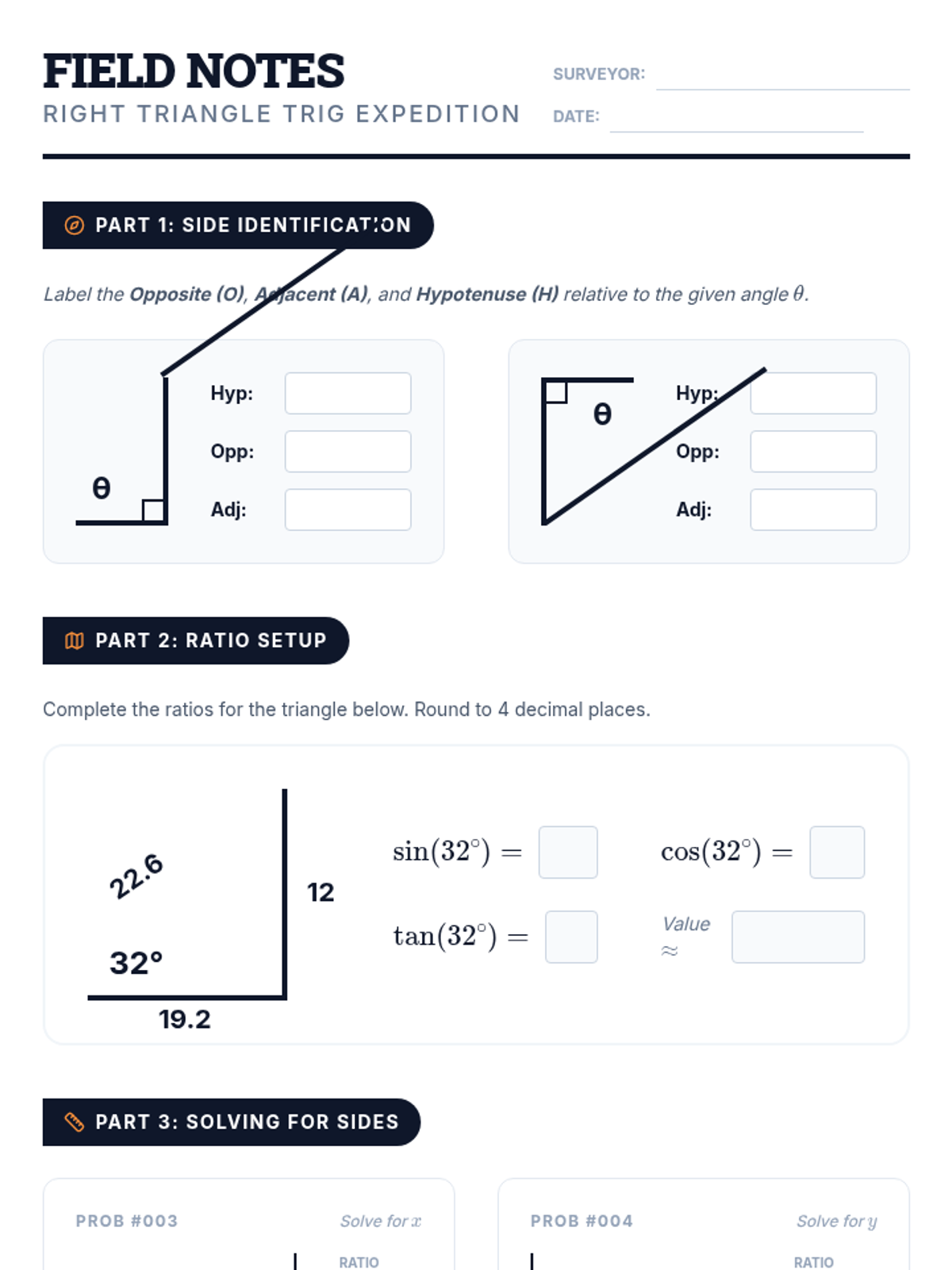
A comprehensive introduction to Right Triangle Trigonometry (SOH CAH TOA) aligned with Illinois High School Geometry standards. Students will explore ratios, solve for missing dimensions, and apply trigonometry to real-world surveying scenarios.
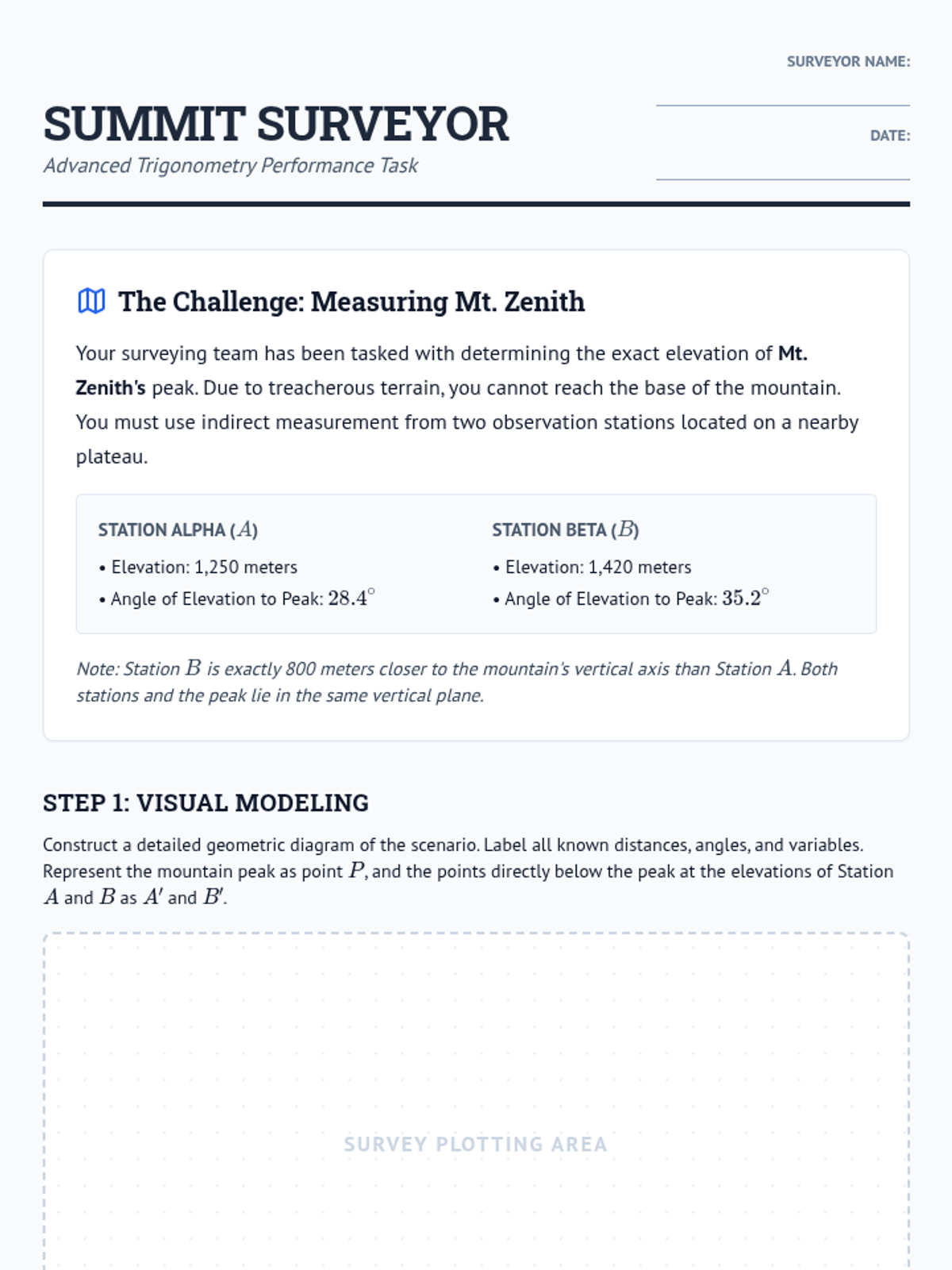
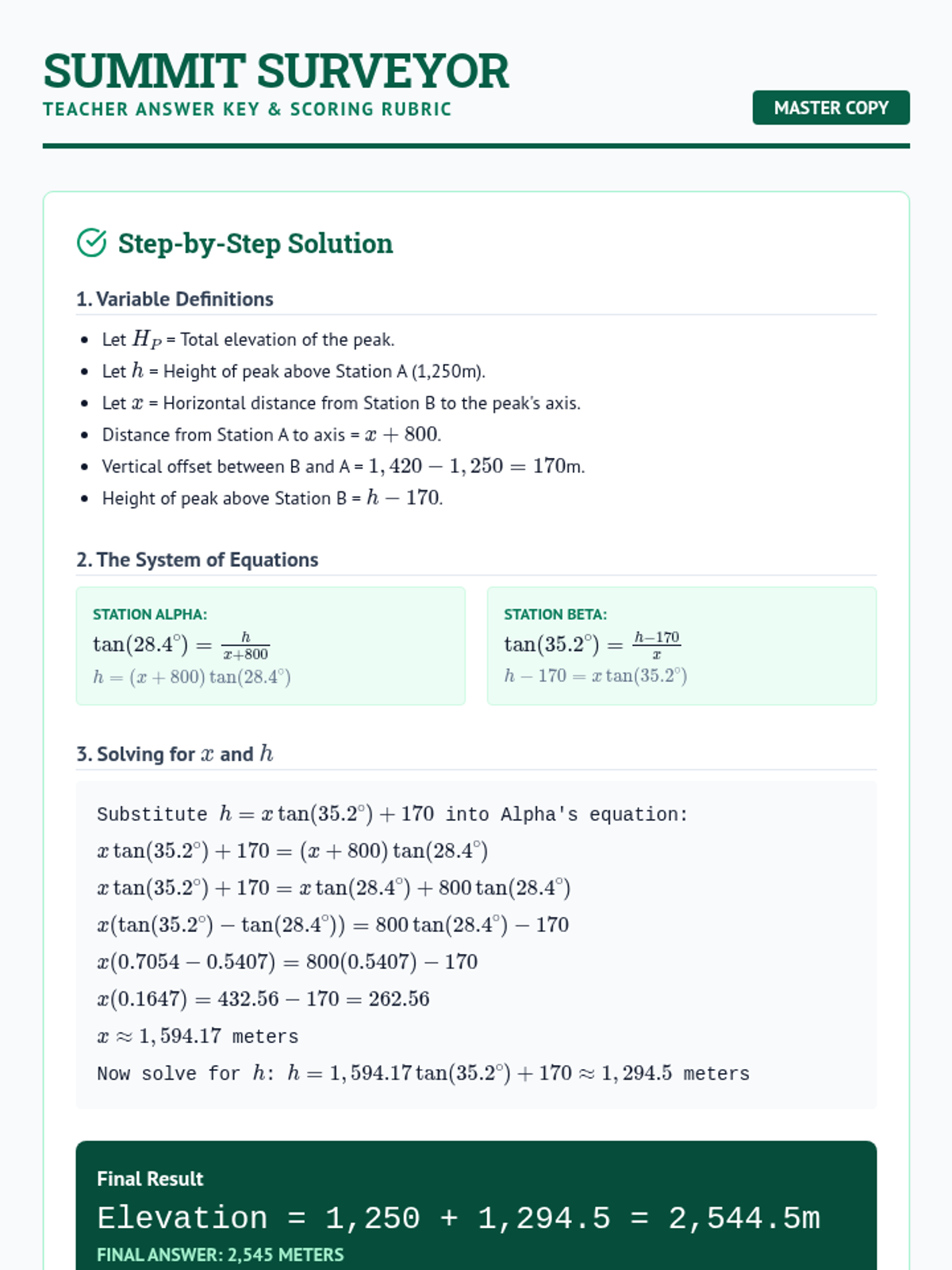
A high-level performance task involving nested right triangles and surveying applications to challenge advanced geometry students.
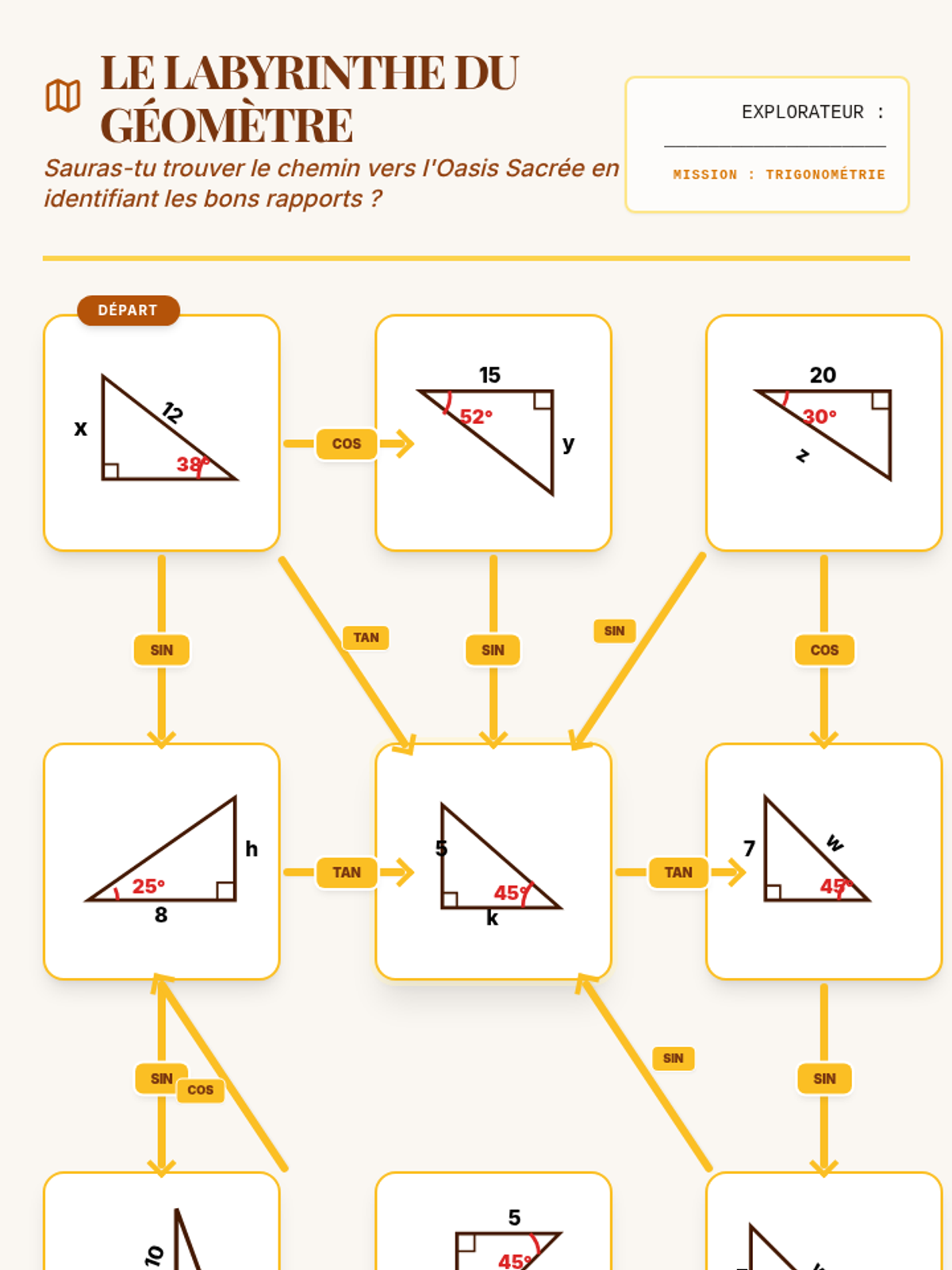
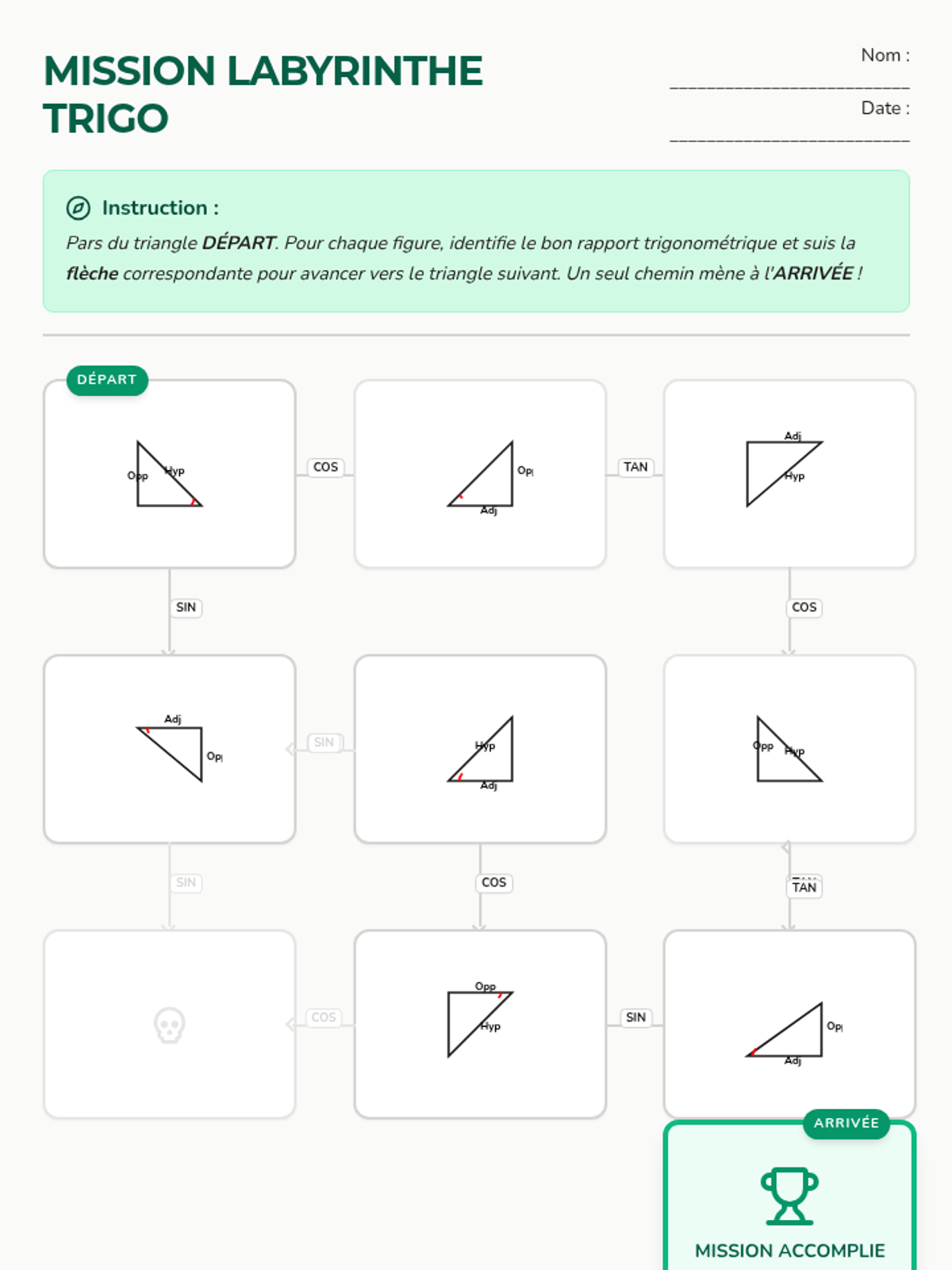
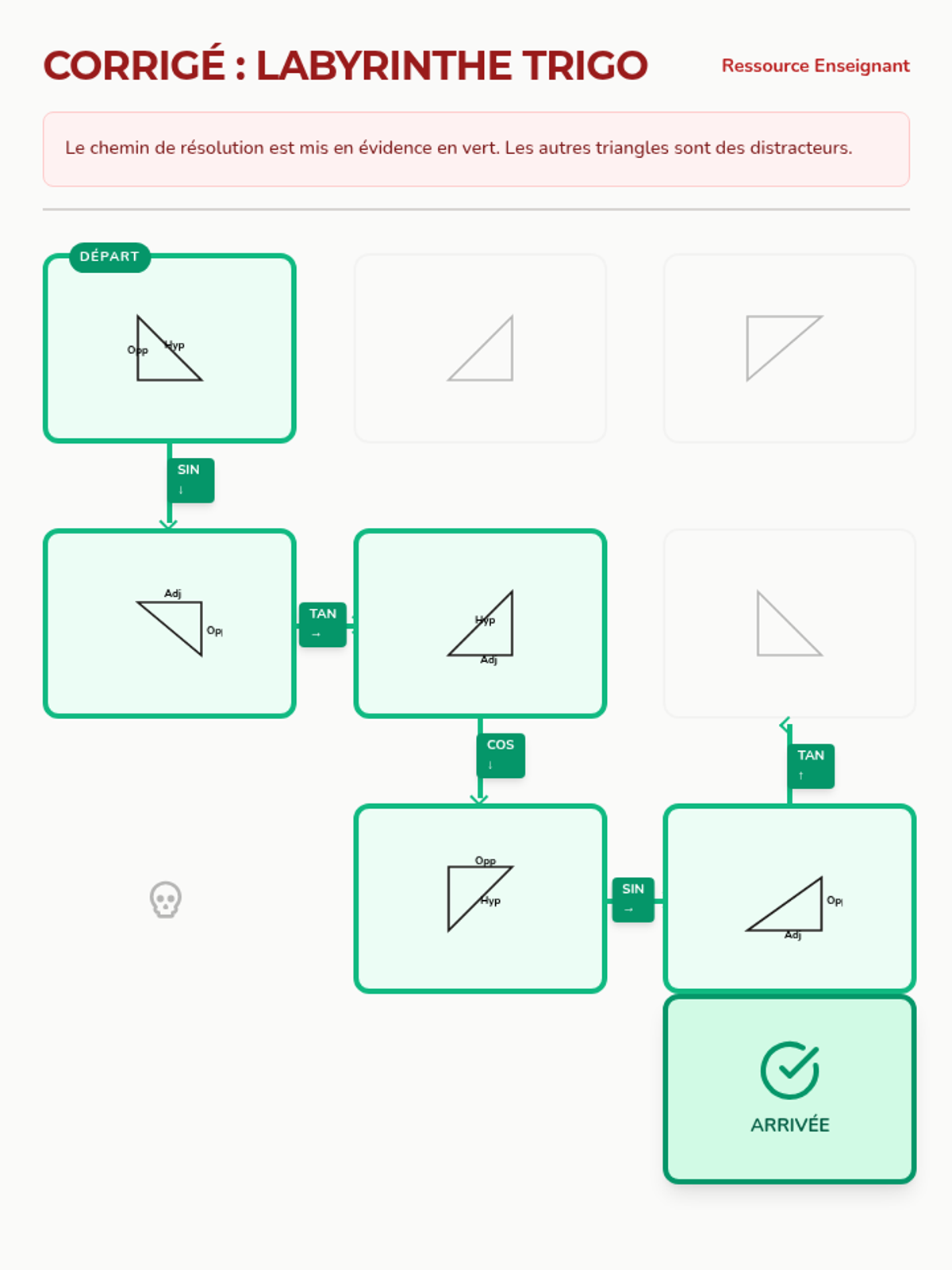
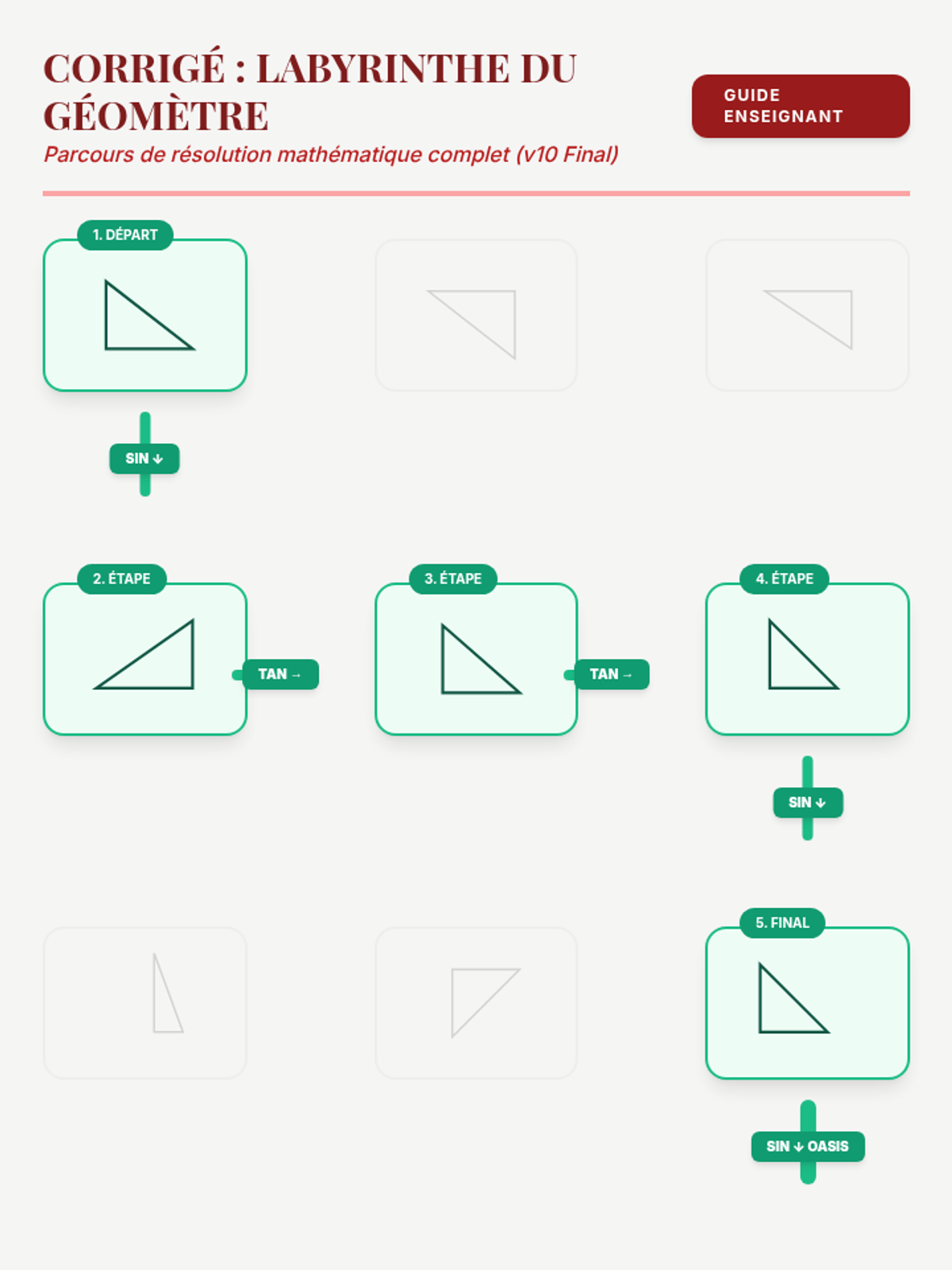
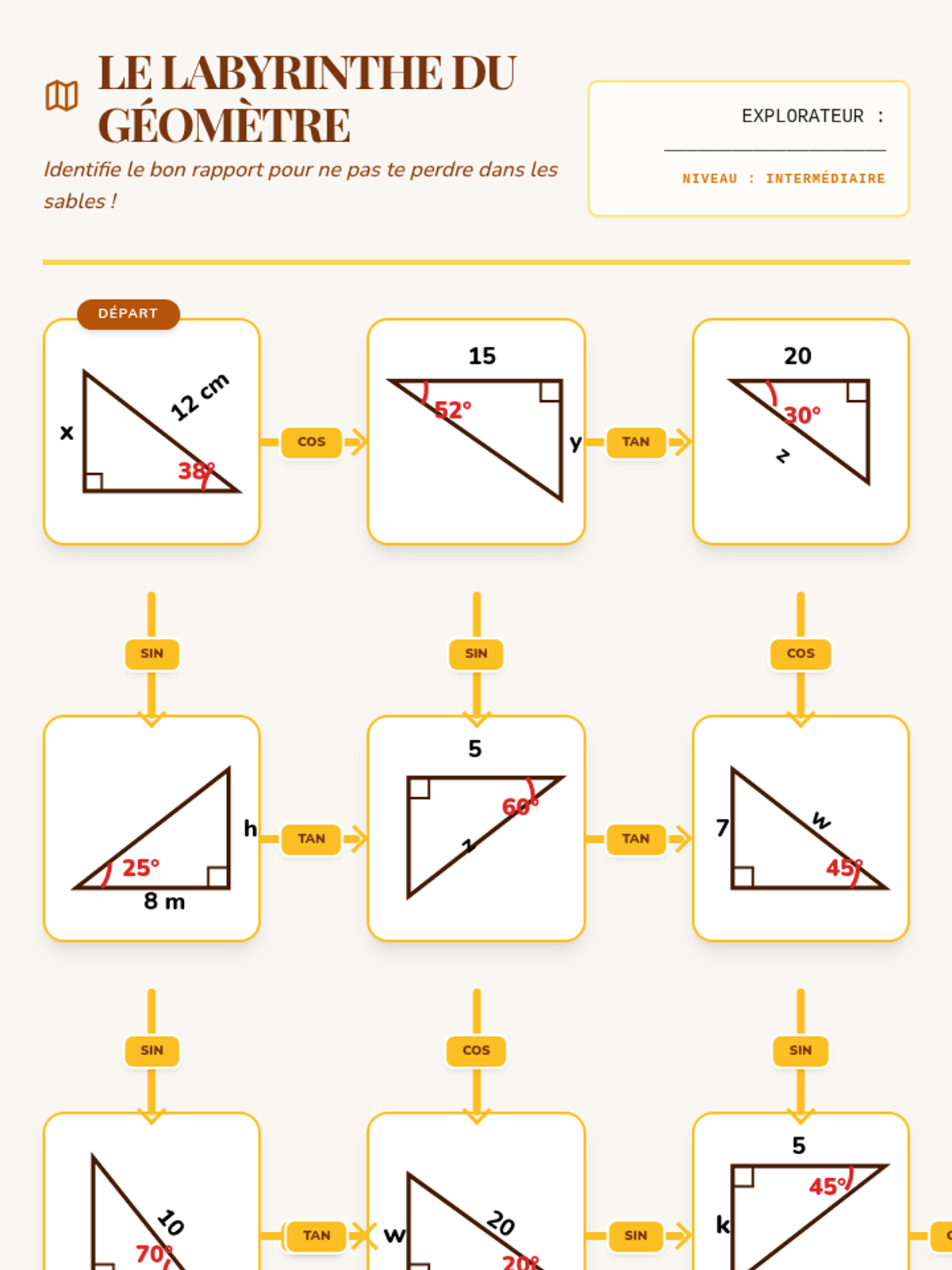
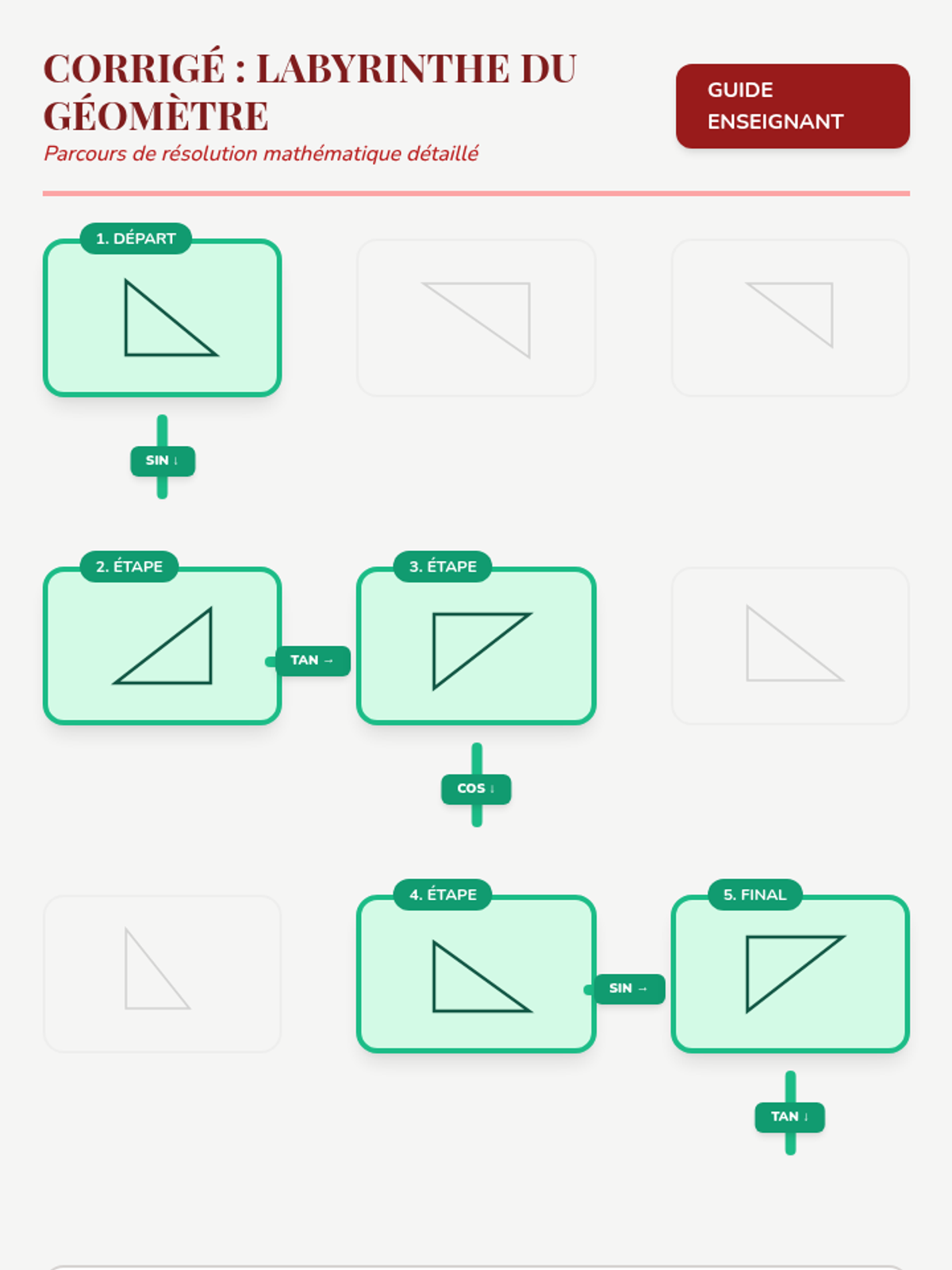
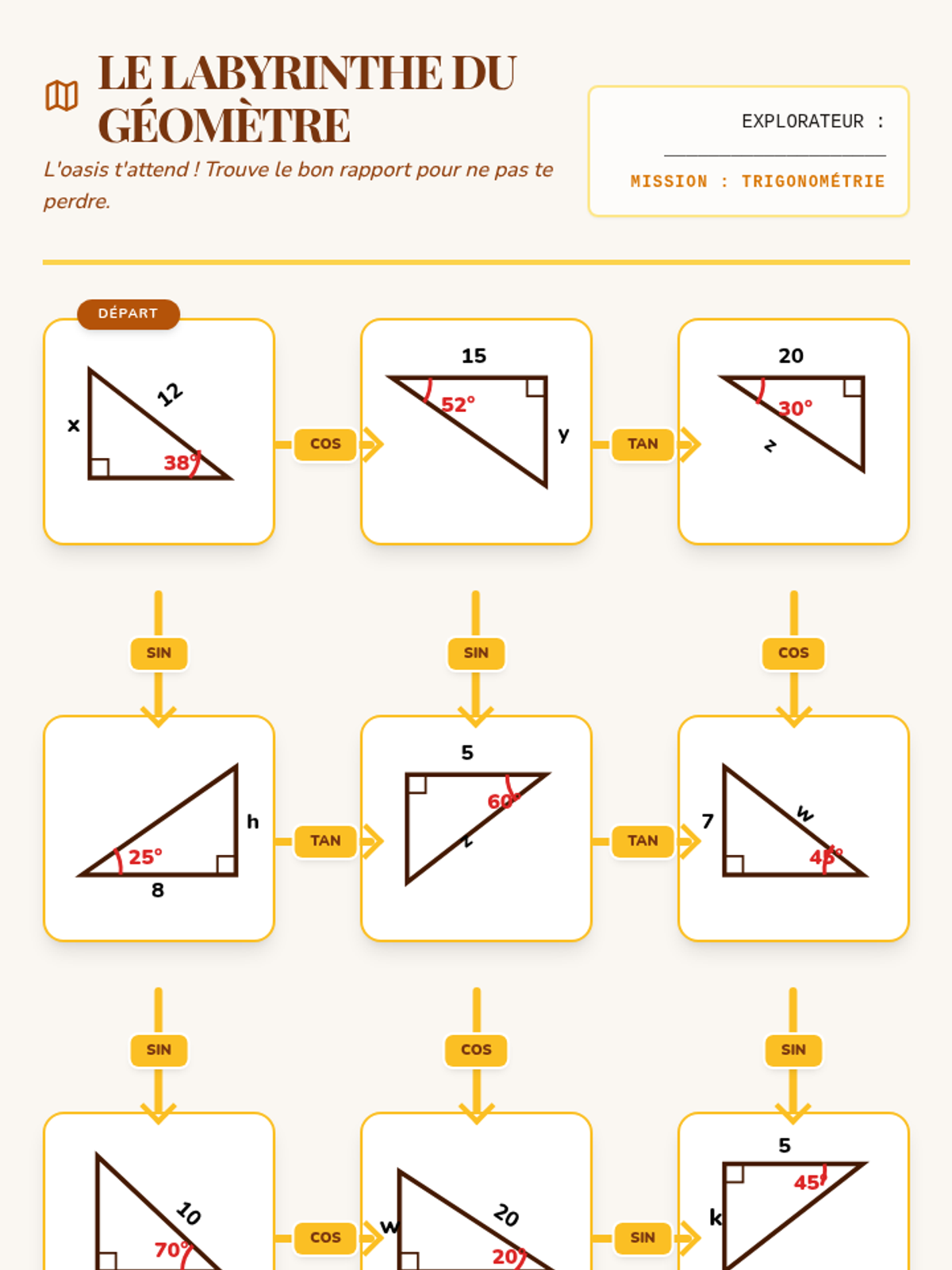
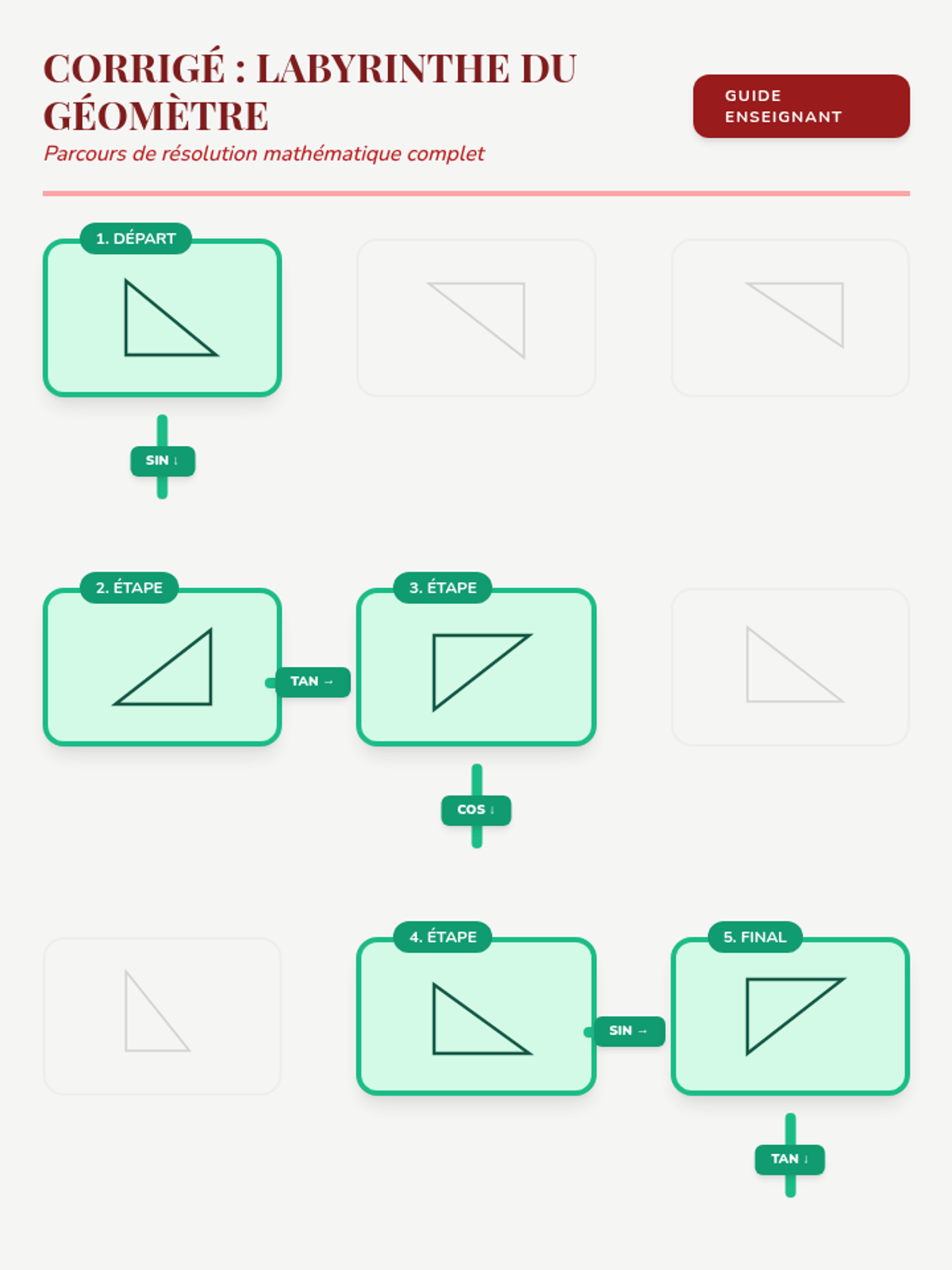
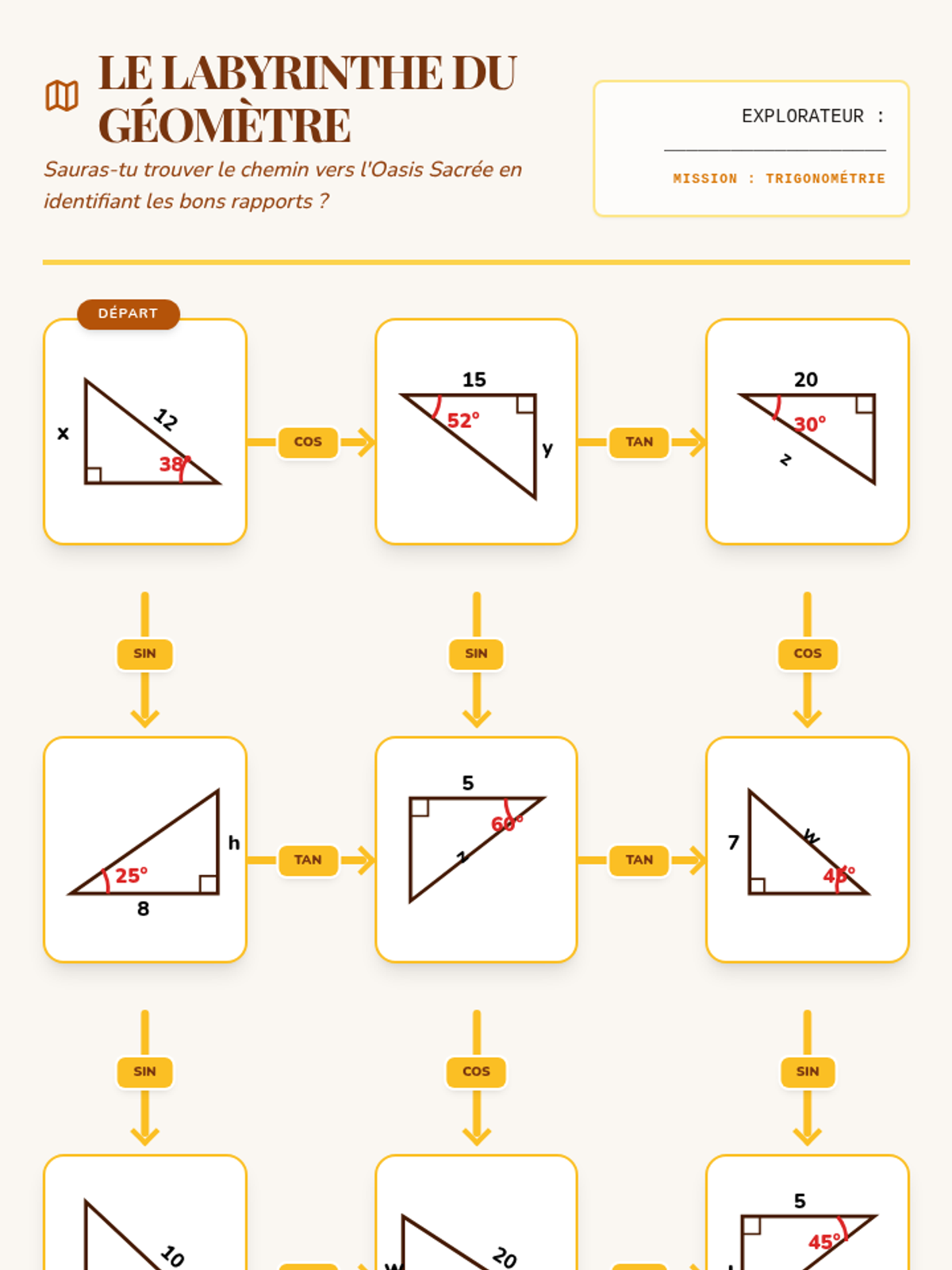
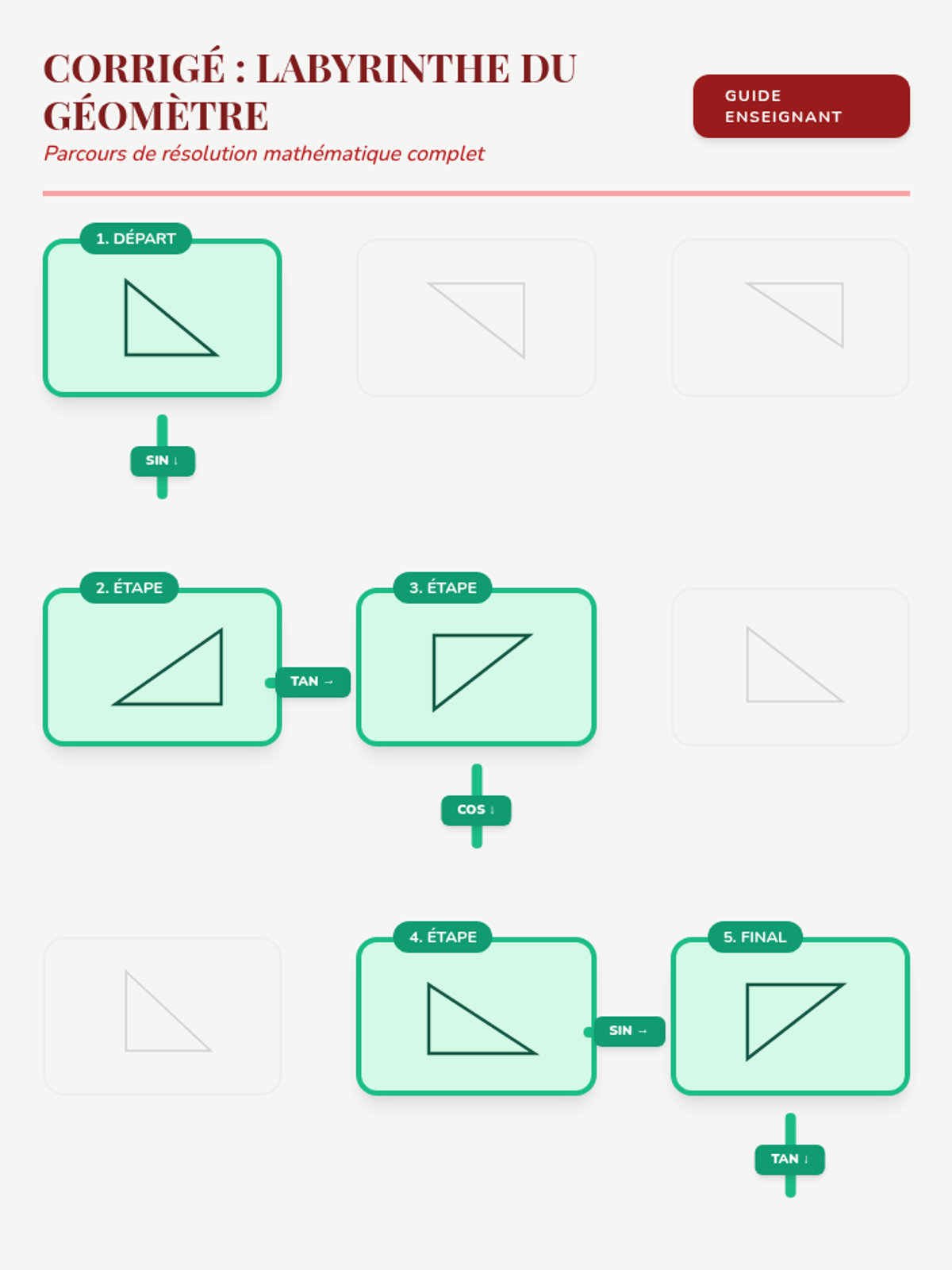
Une leçon interactive centrée sur l'identification des rapports trigonométriques (sinus, cosinus, tangente) dans des triangles rectangles à travers un défi de labyrinthe.
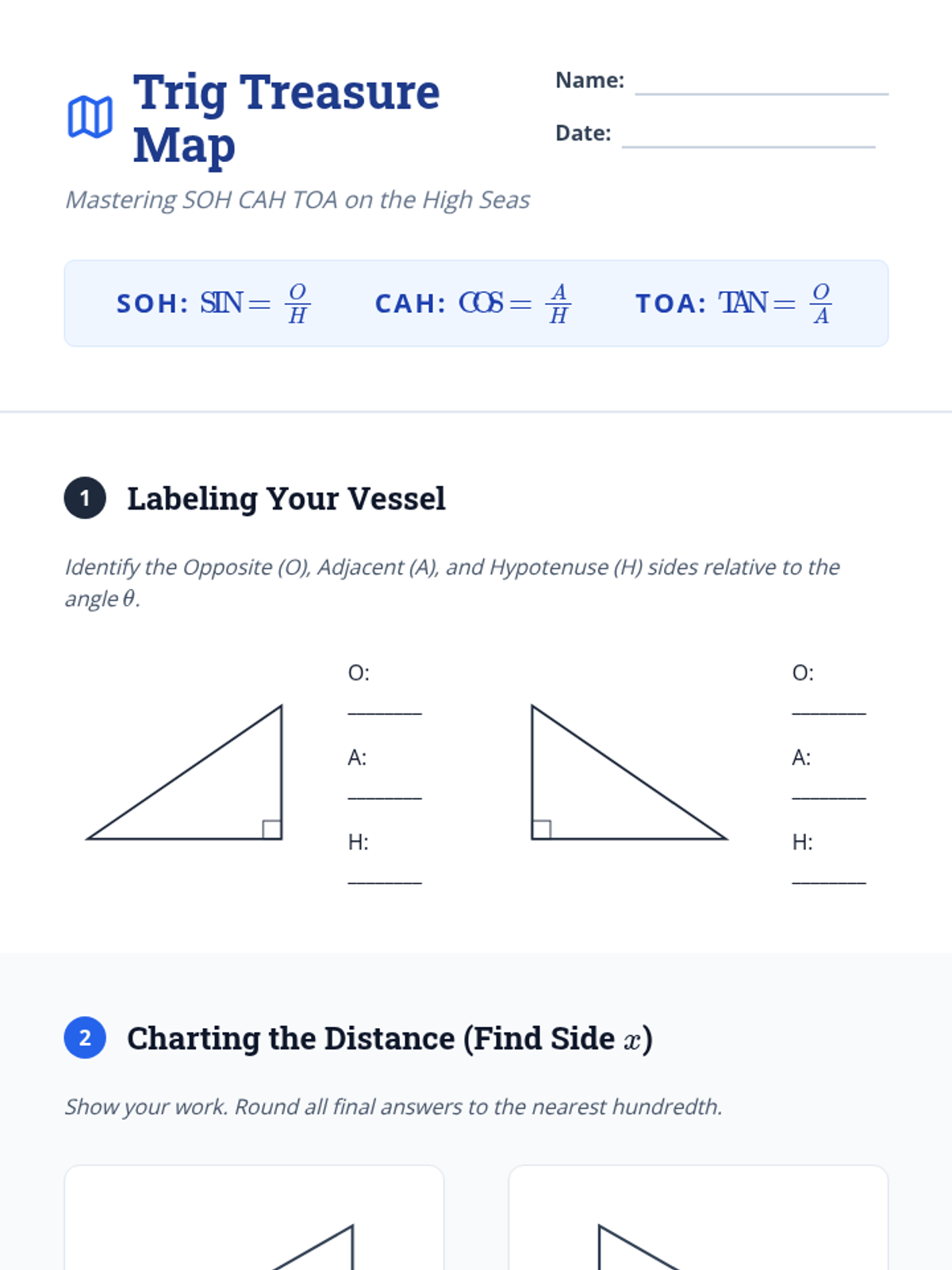
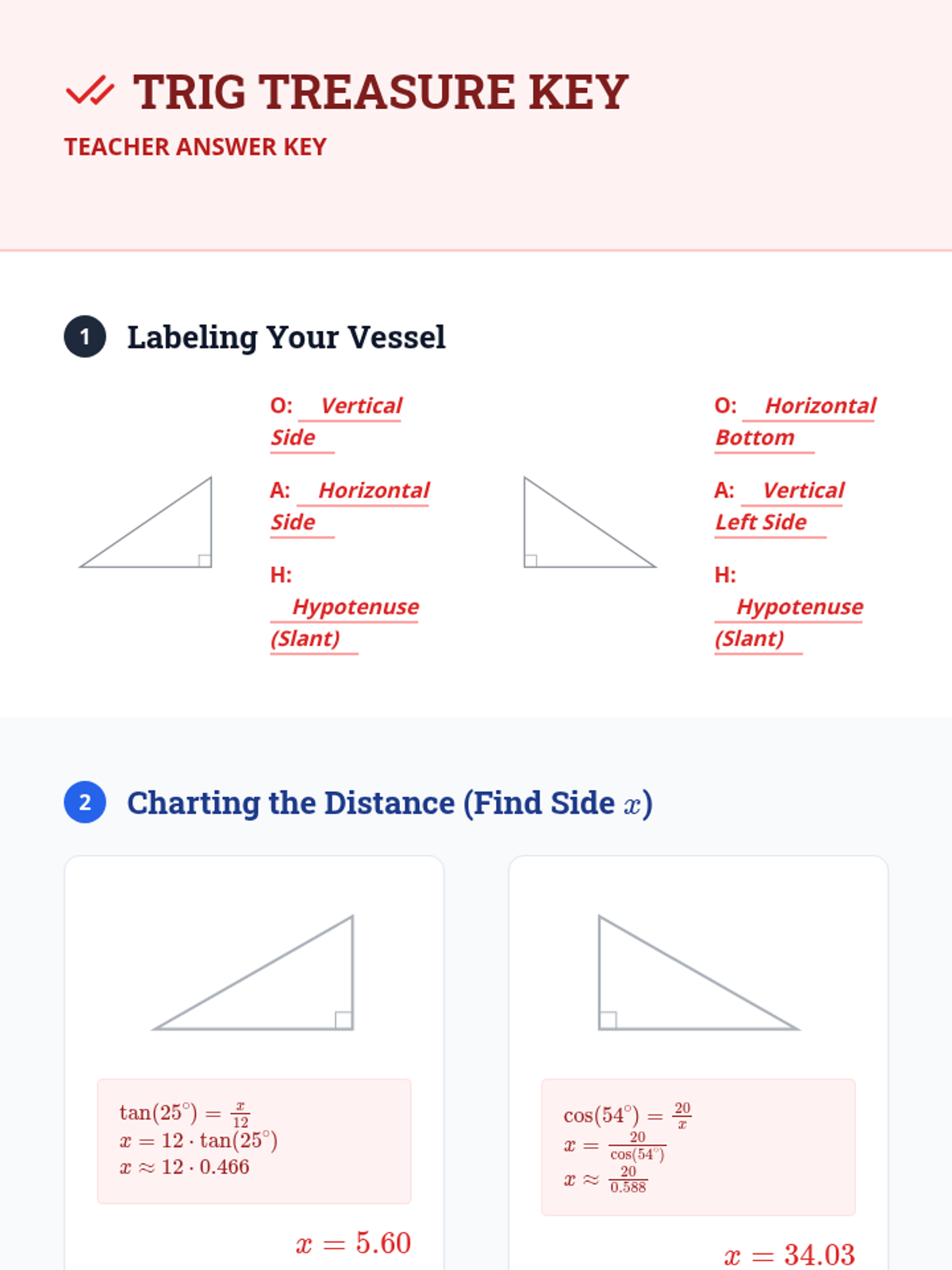
An introduction to right triangle trigonometry using Sine, Cosine, and Tangent (SOH CAH TOA) to solve for missing side lengths and angles in real-world nautical contexts.
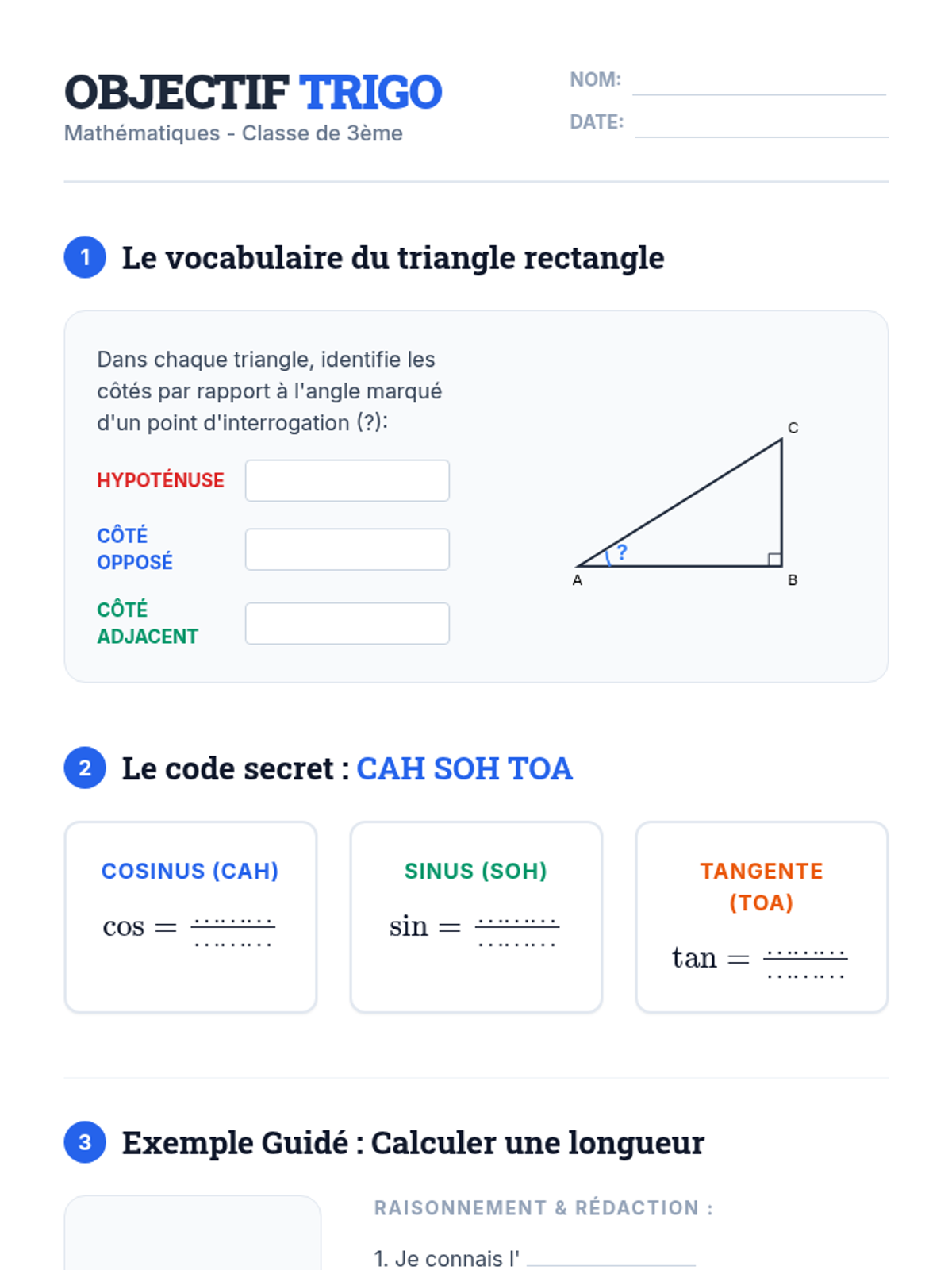
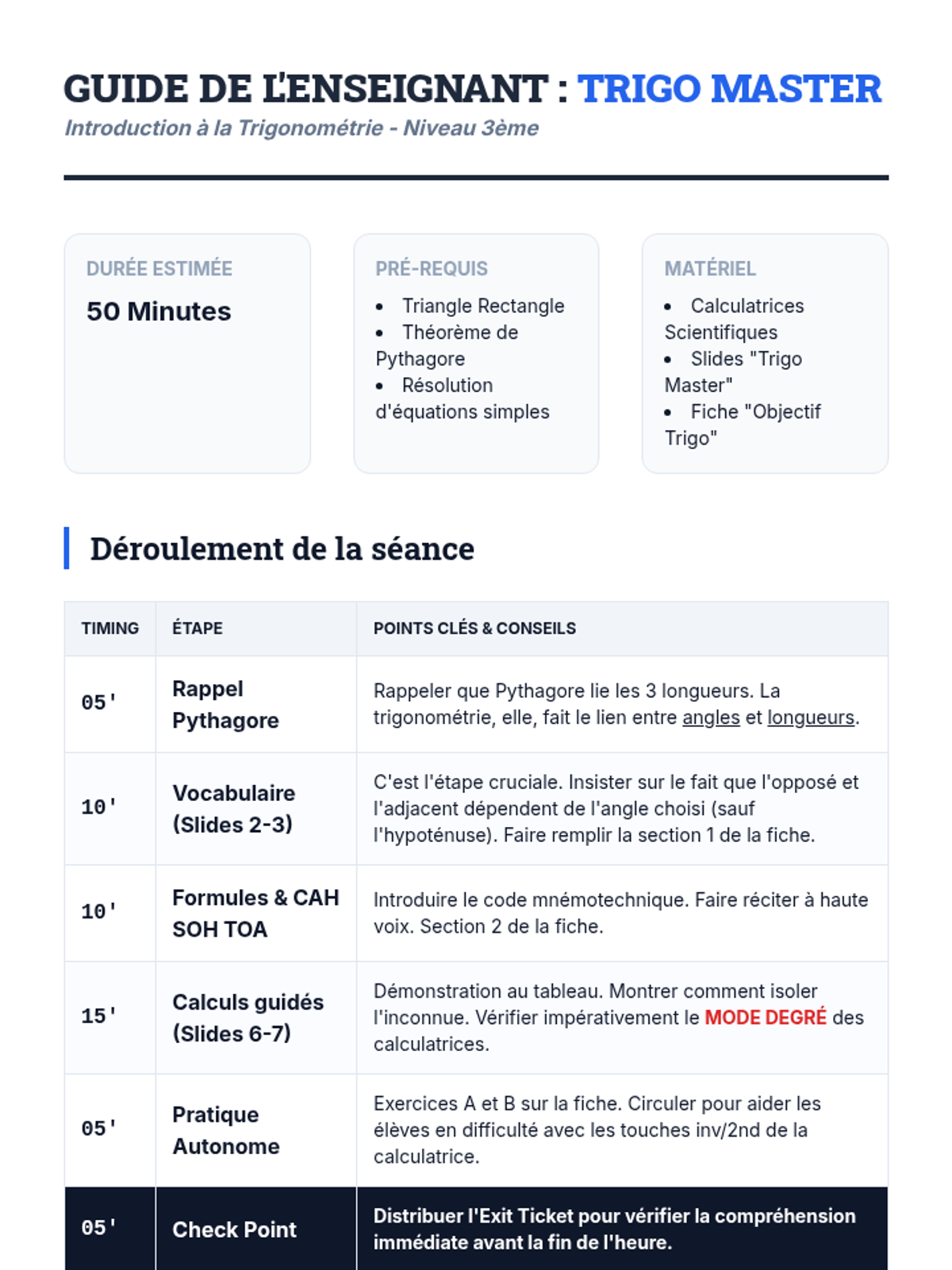
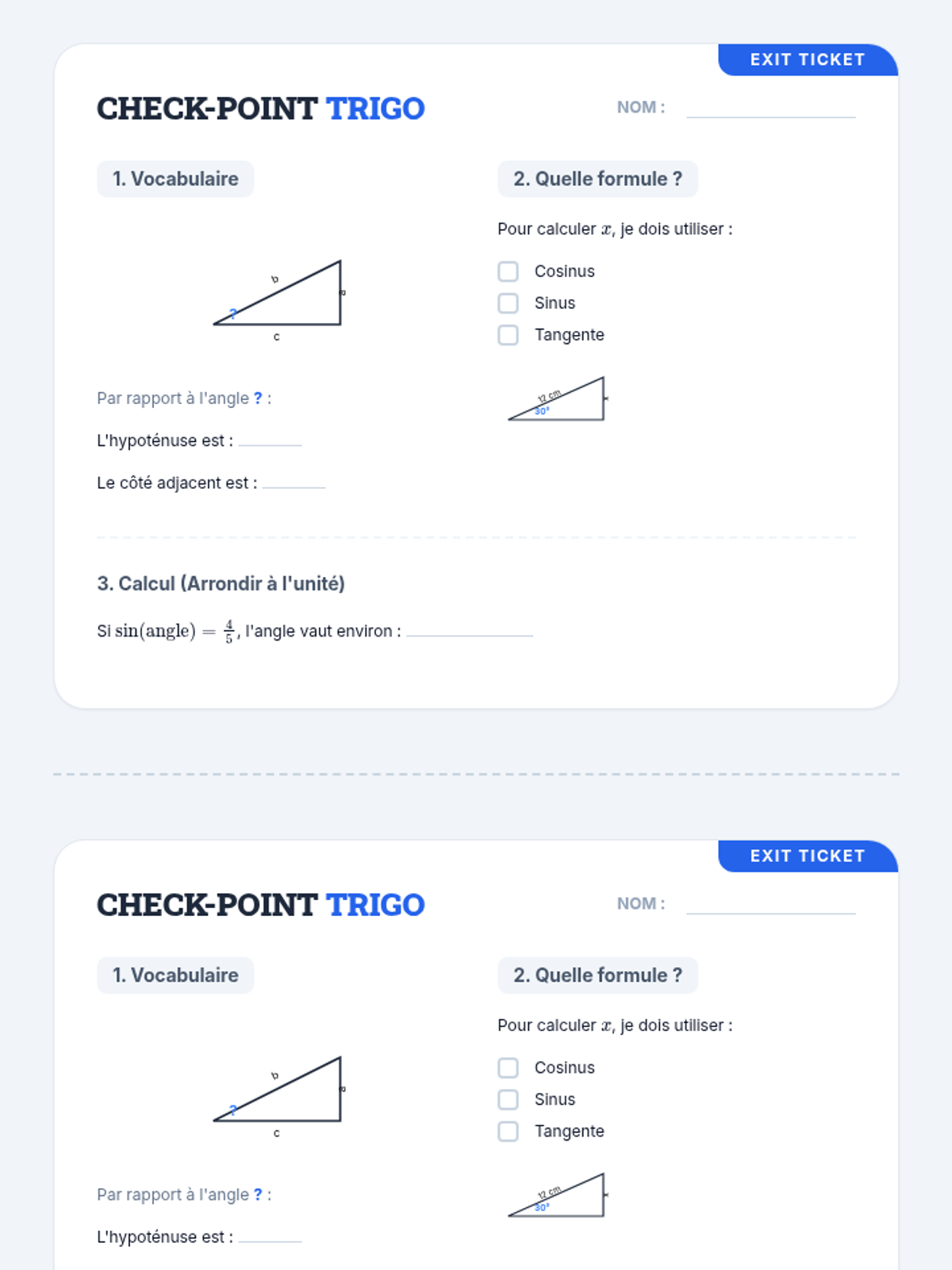
Une séance d'introduction complète à la trigonométrie pour les classes de troisième, couvrant le vocabulaire du triangle rectangle, les trois rapports trigonométriques, et les premières applications de calcul de longueurs et d'angles.
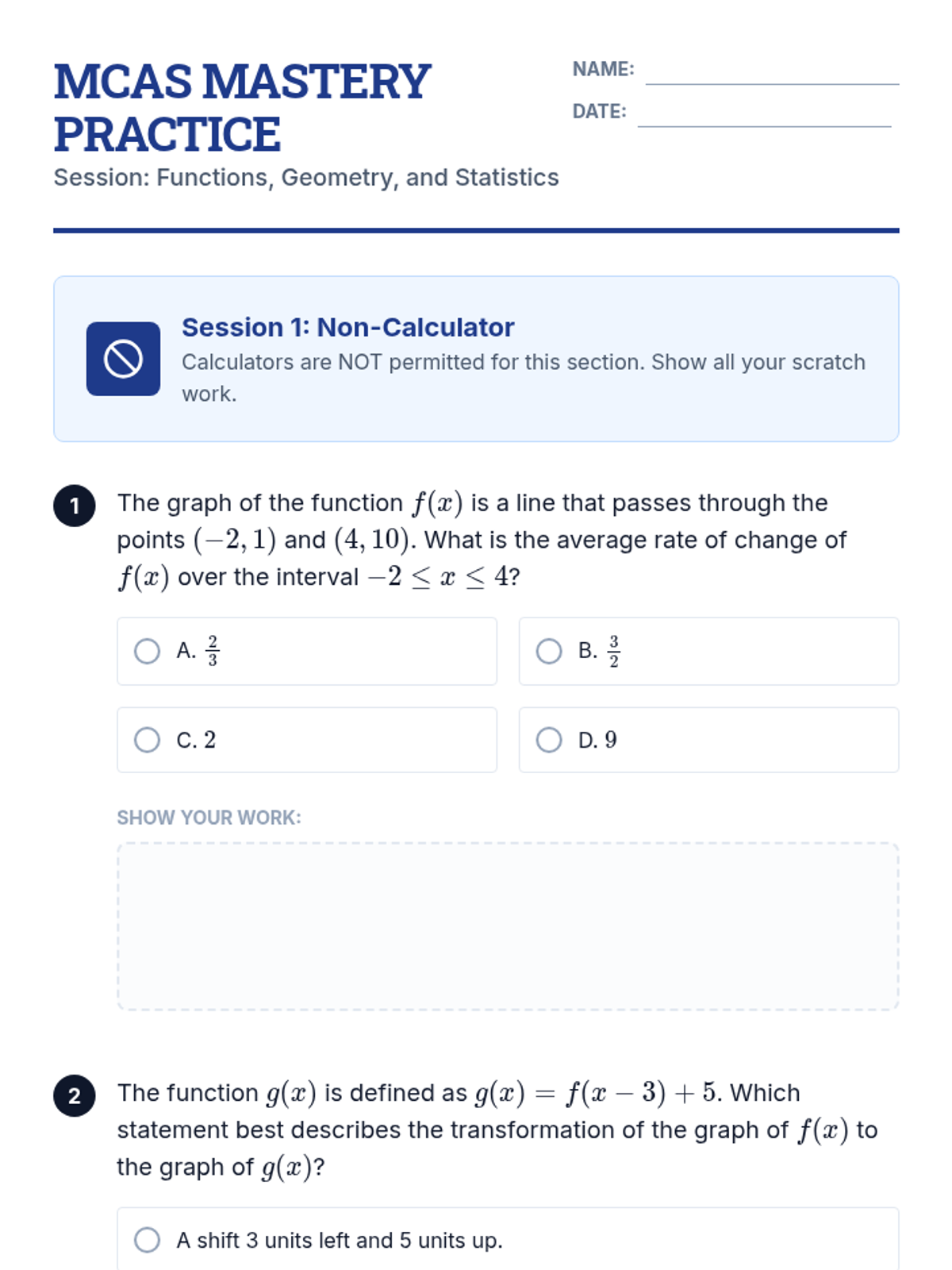
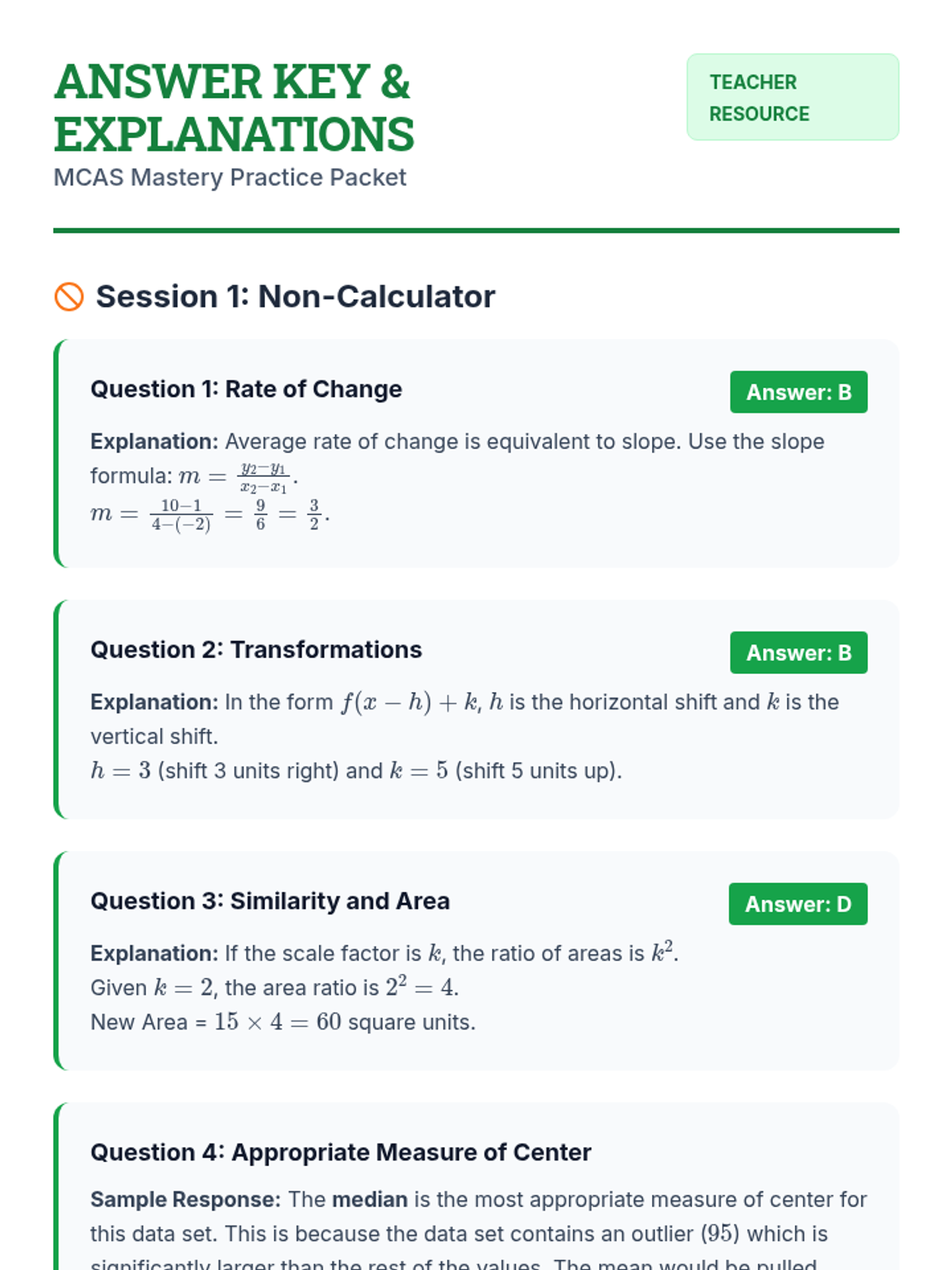
A comprehensive MCAS prep lesson focusing on high-frequency 10th-grade topics in Functions, Geometry, and Statistics. Includes test-taking strategies for both calculator and non-calculator sections aligned to Massachusetts Mathematics Curriculum Frameworks.
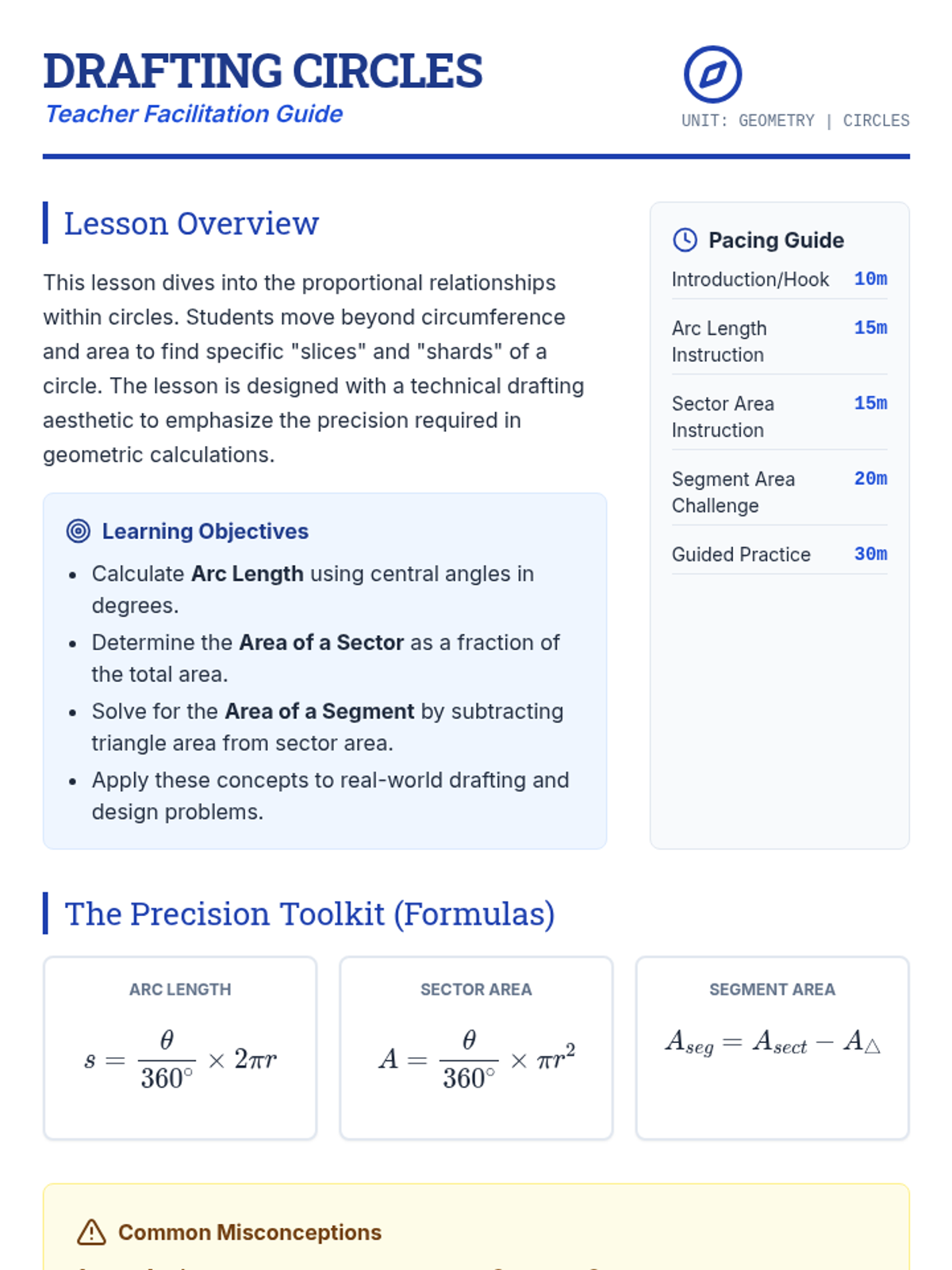
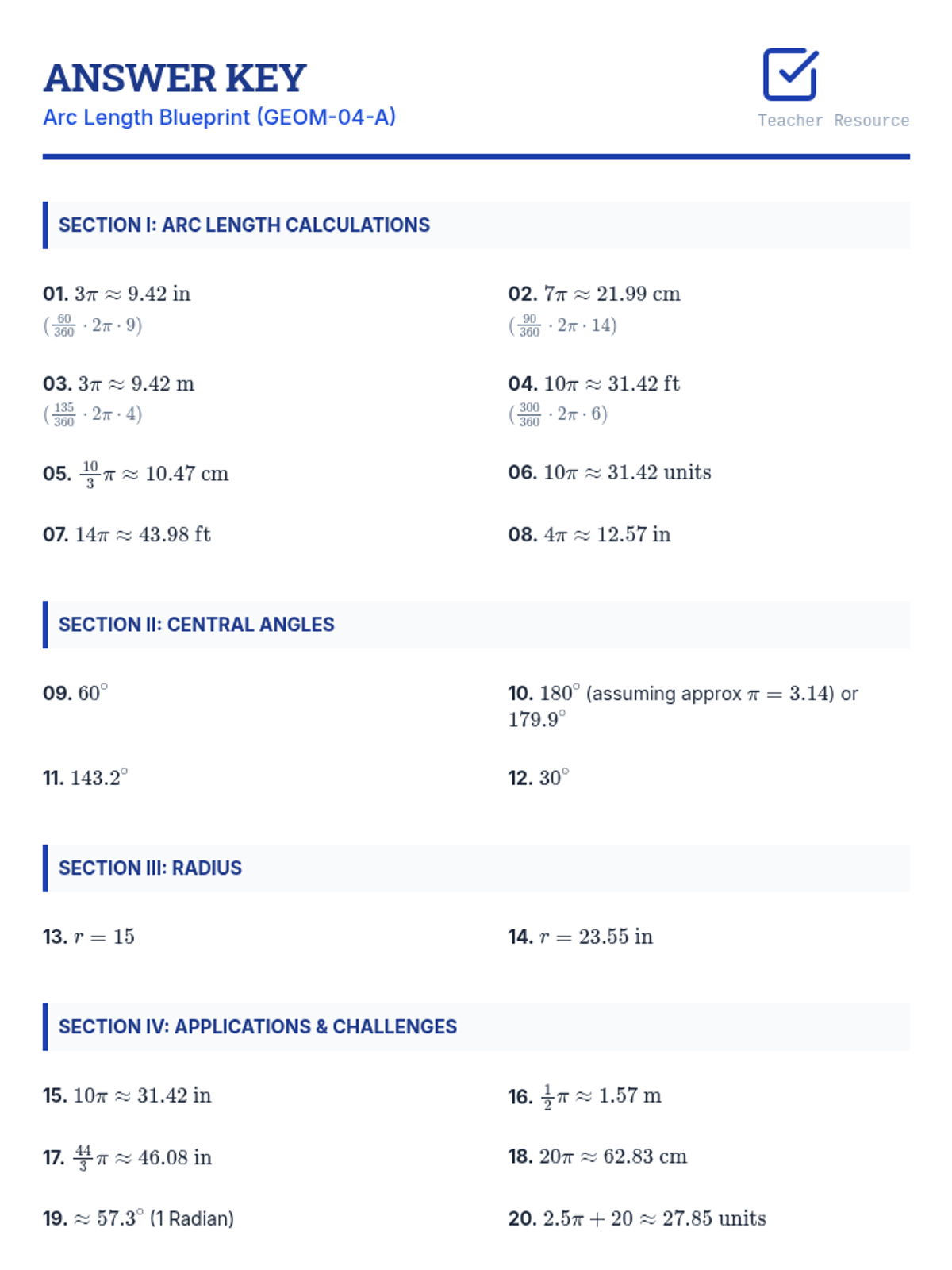
A comprehensive lesson covering the calculation of arc length, area of a sector, and area of a segment within circles, utilizing a precision drafting theme.
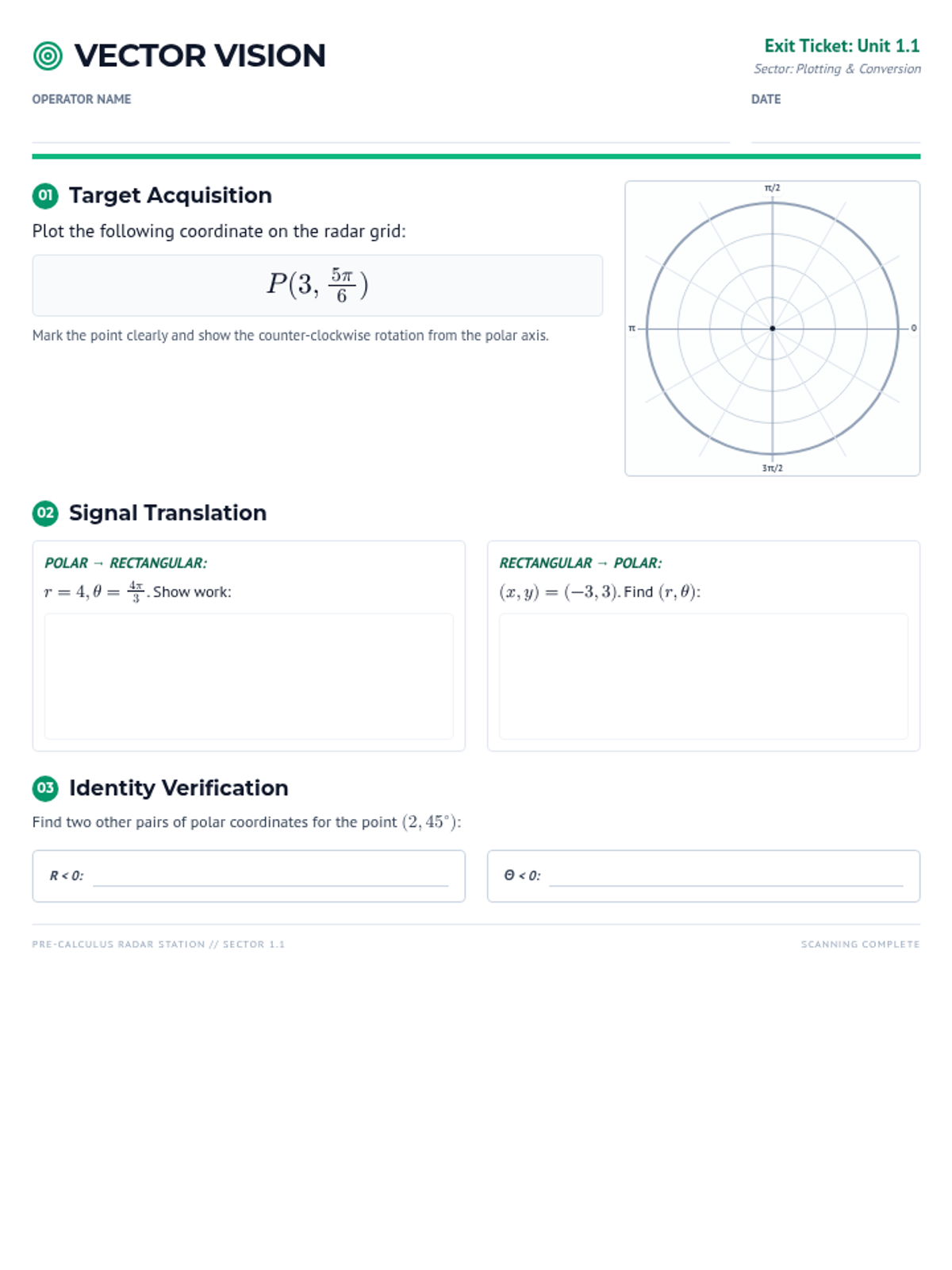
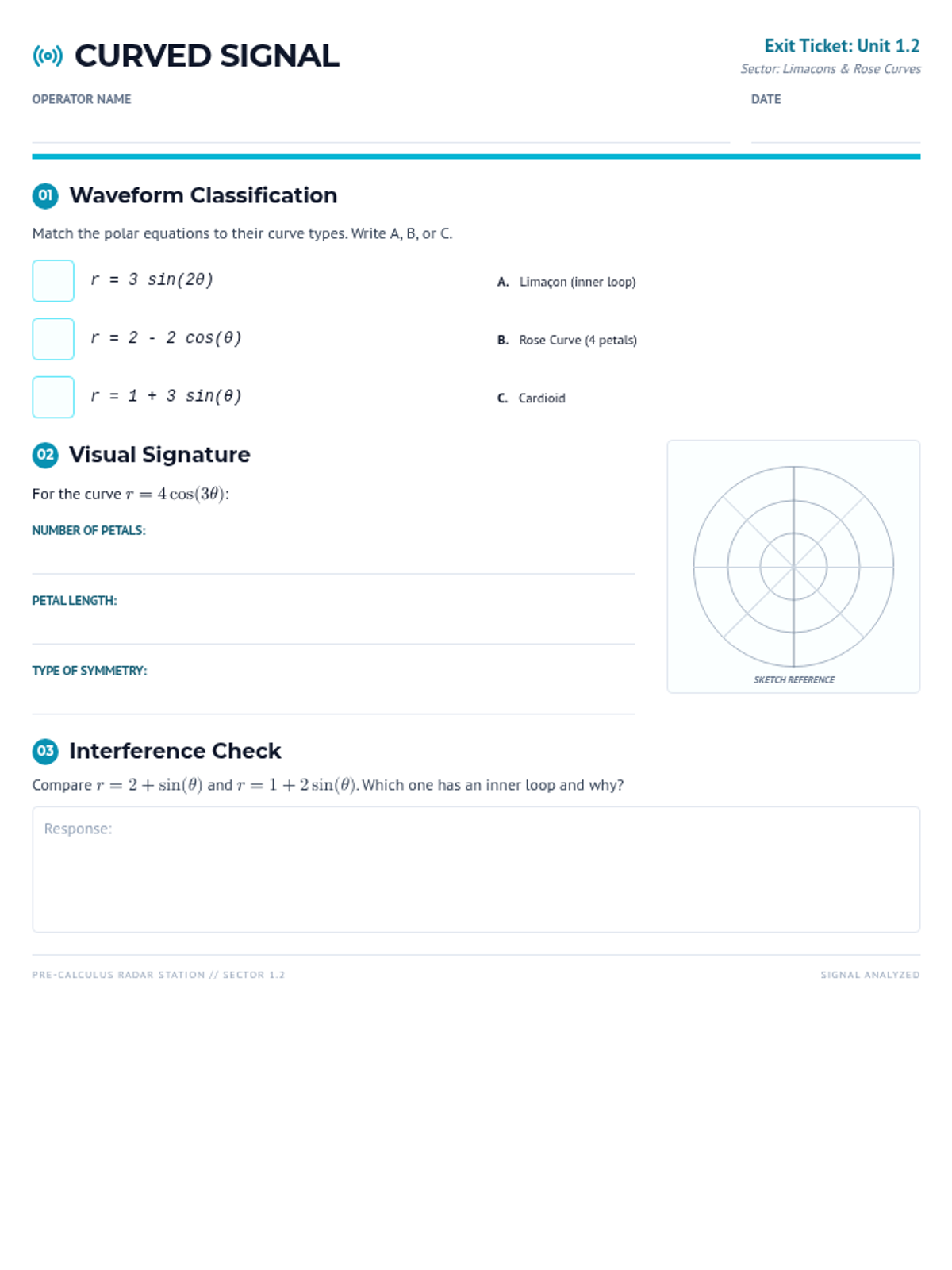
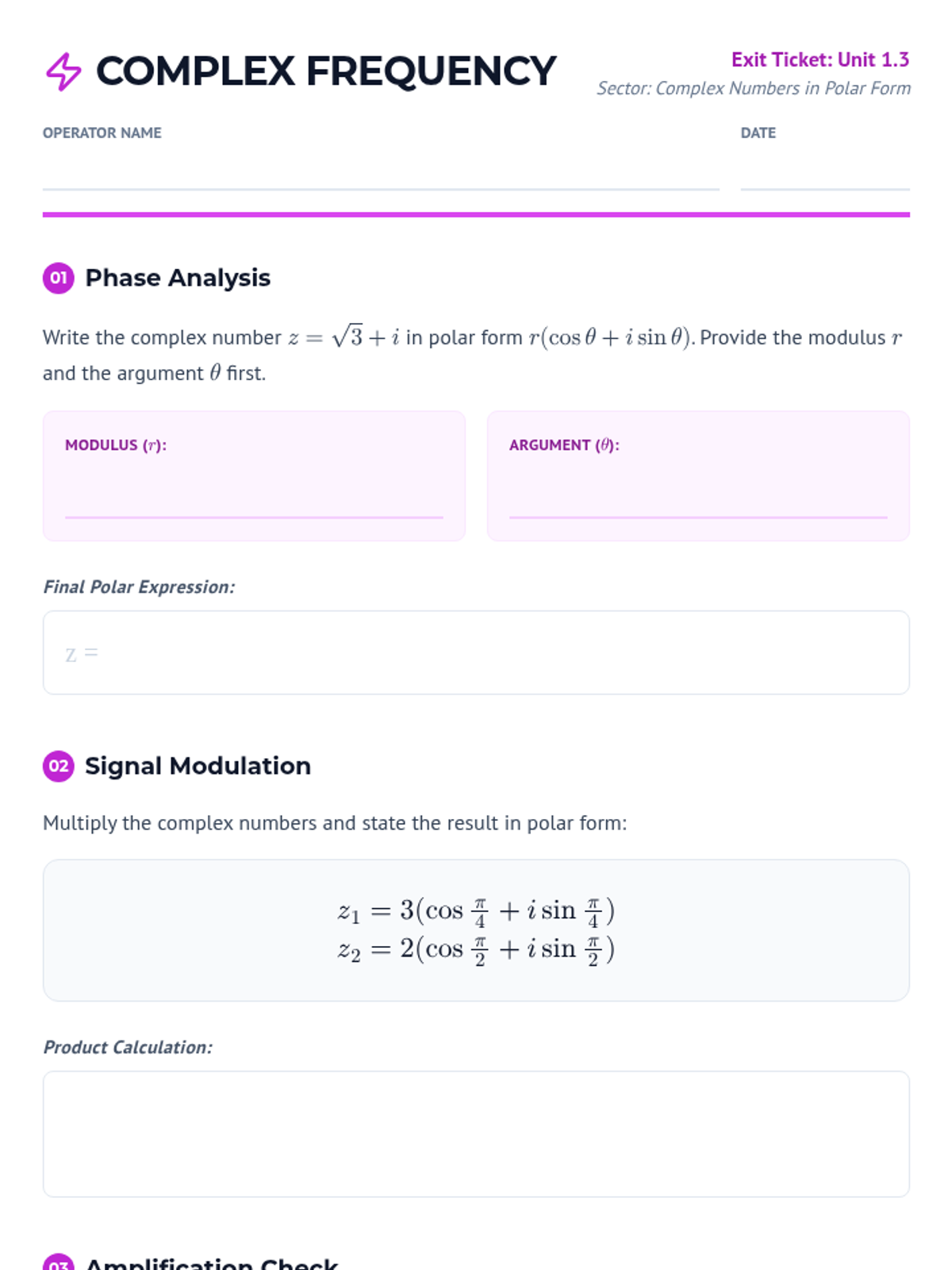
A series of focused assessments to verify student mastery of polar coordinate plotting, conversion, graphing special curves, and representing complex numbers in polar form.
A comprehensive review for Unit 3 of AP Precalculus, focusing on trigonometric and polar functions through reference materials and practice assessments.
A high-energy, collaborative first-day activity for 11th-grade math students designed to foster teamwork and problem-solving through a classroom-wide scavenger hunt.
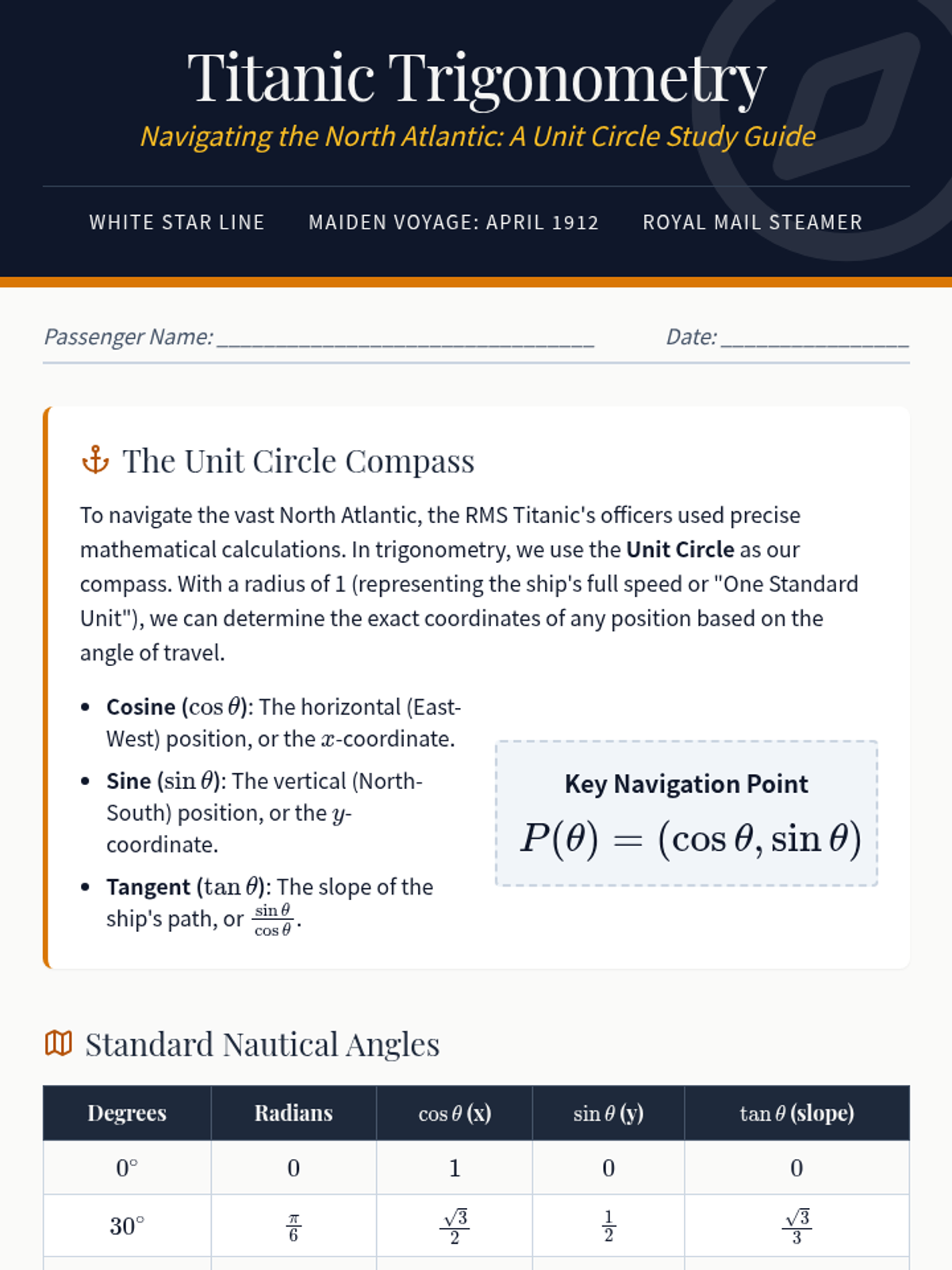
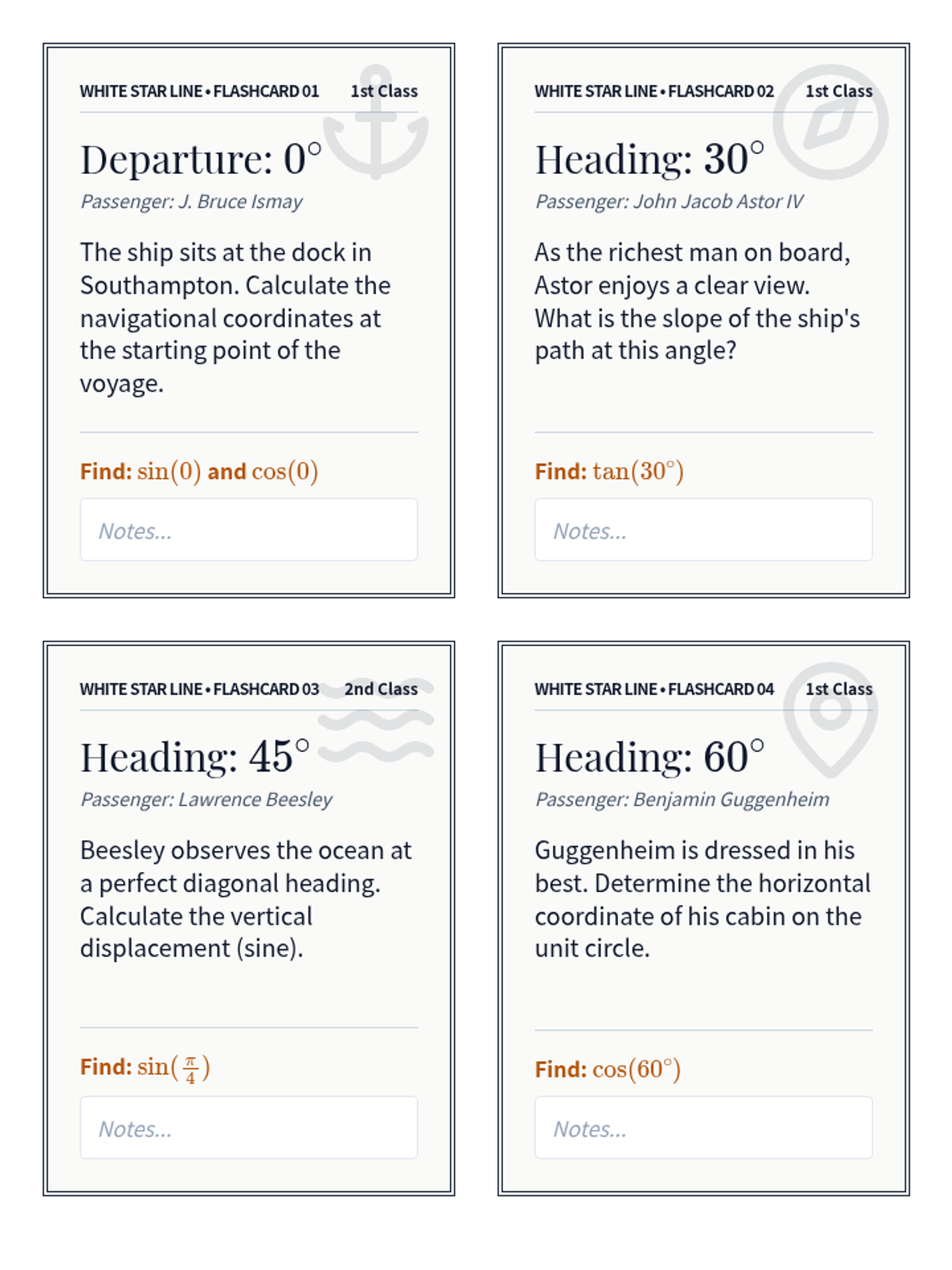
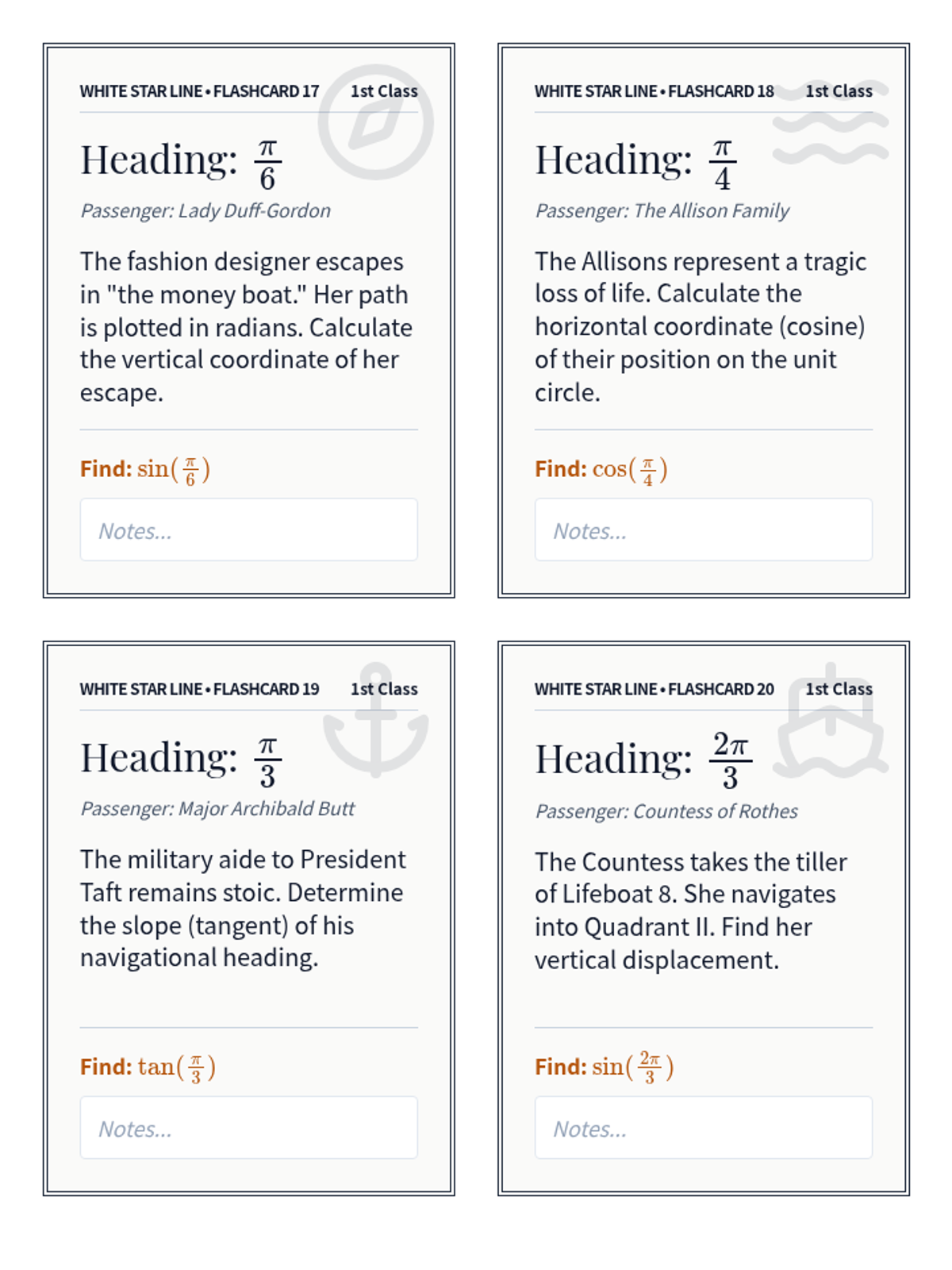
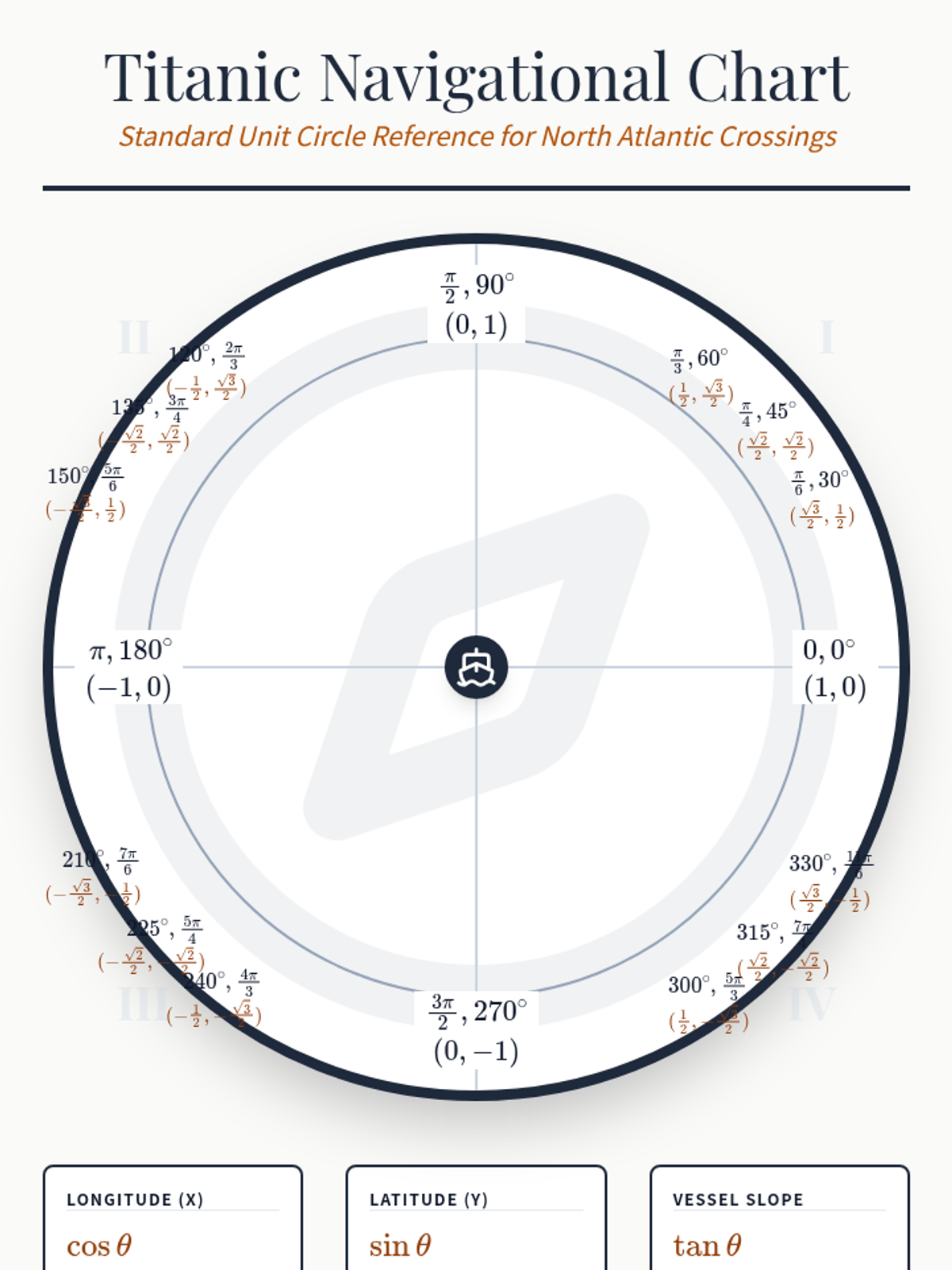
A maritime-themed lesson exploring trigonometry through the lens of the Titanic's maiden voyage. Students master unit circle coordinates and trigonometric values using historical figures and navigation scenarios.
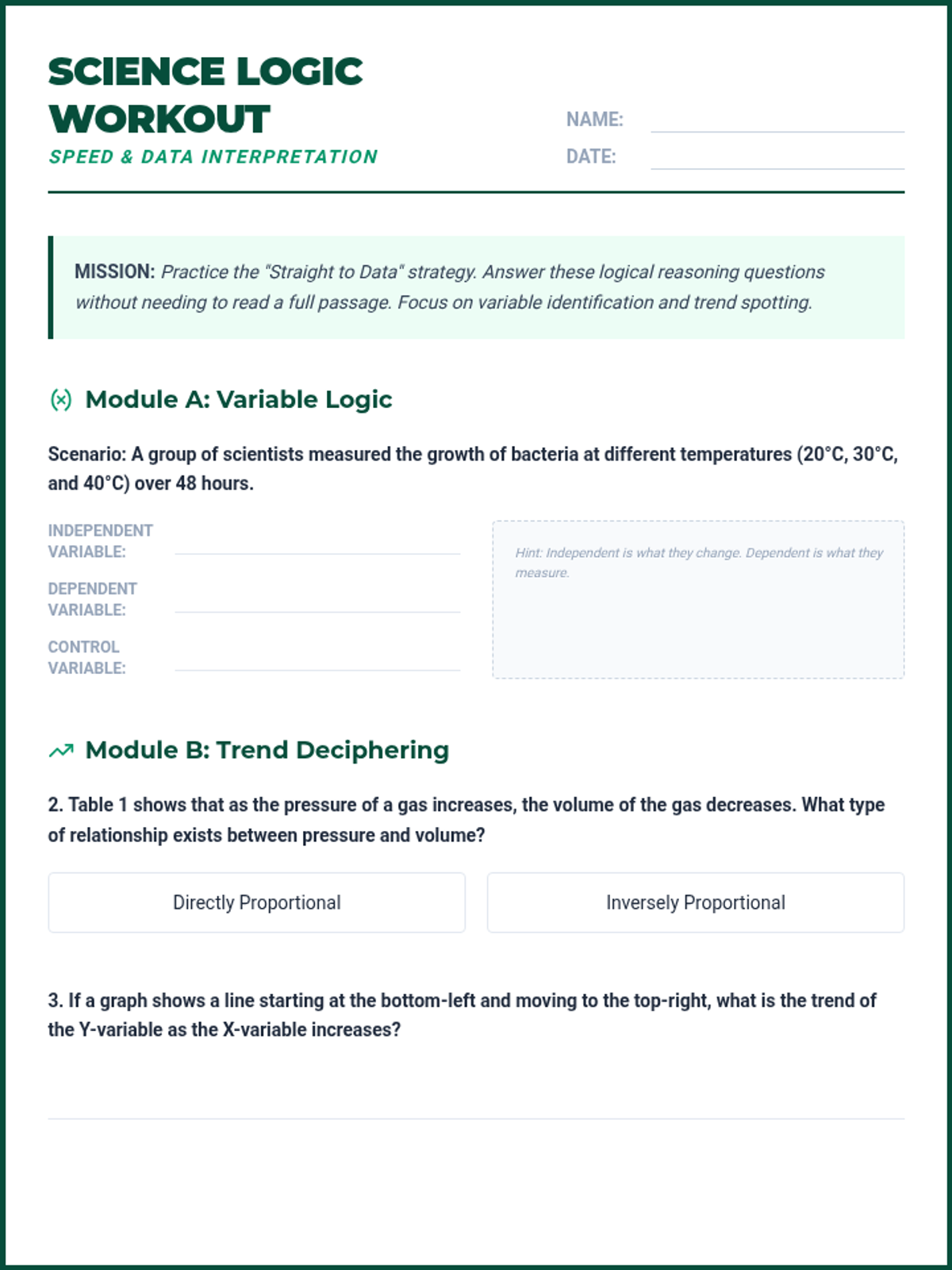
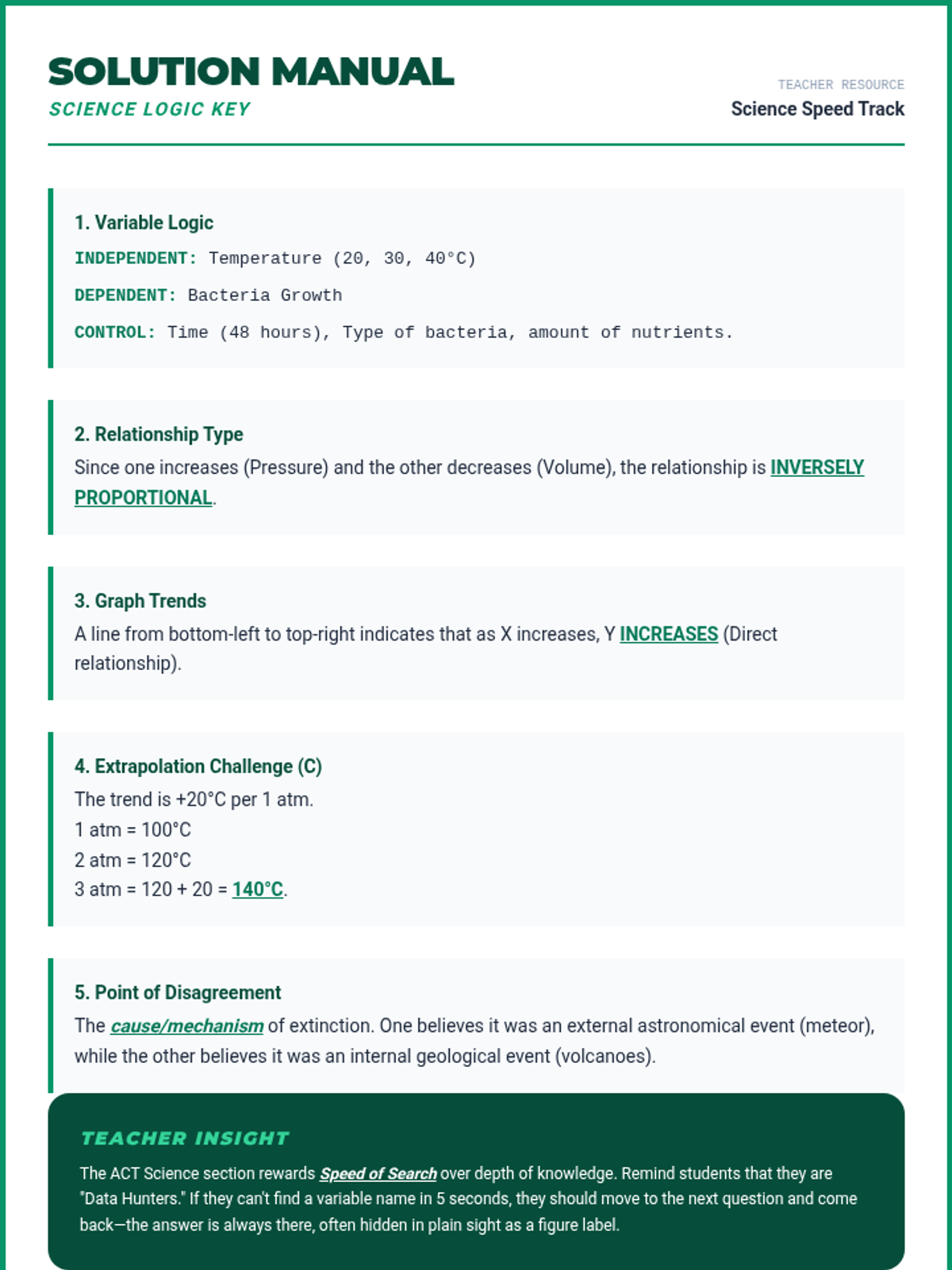
A strategic masterclass for the ACT Science section, focusing on speed-reading data sets, identifying experimental variables, and decoding scientific logic. This lesson emphasizes the 'Straight to the Data' approach to maximize score in the 35-minute time limit.
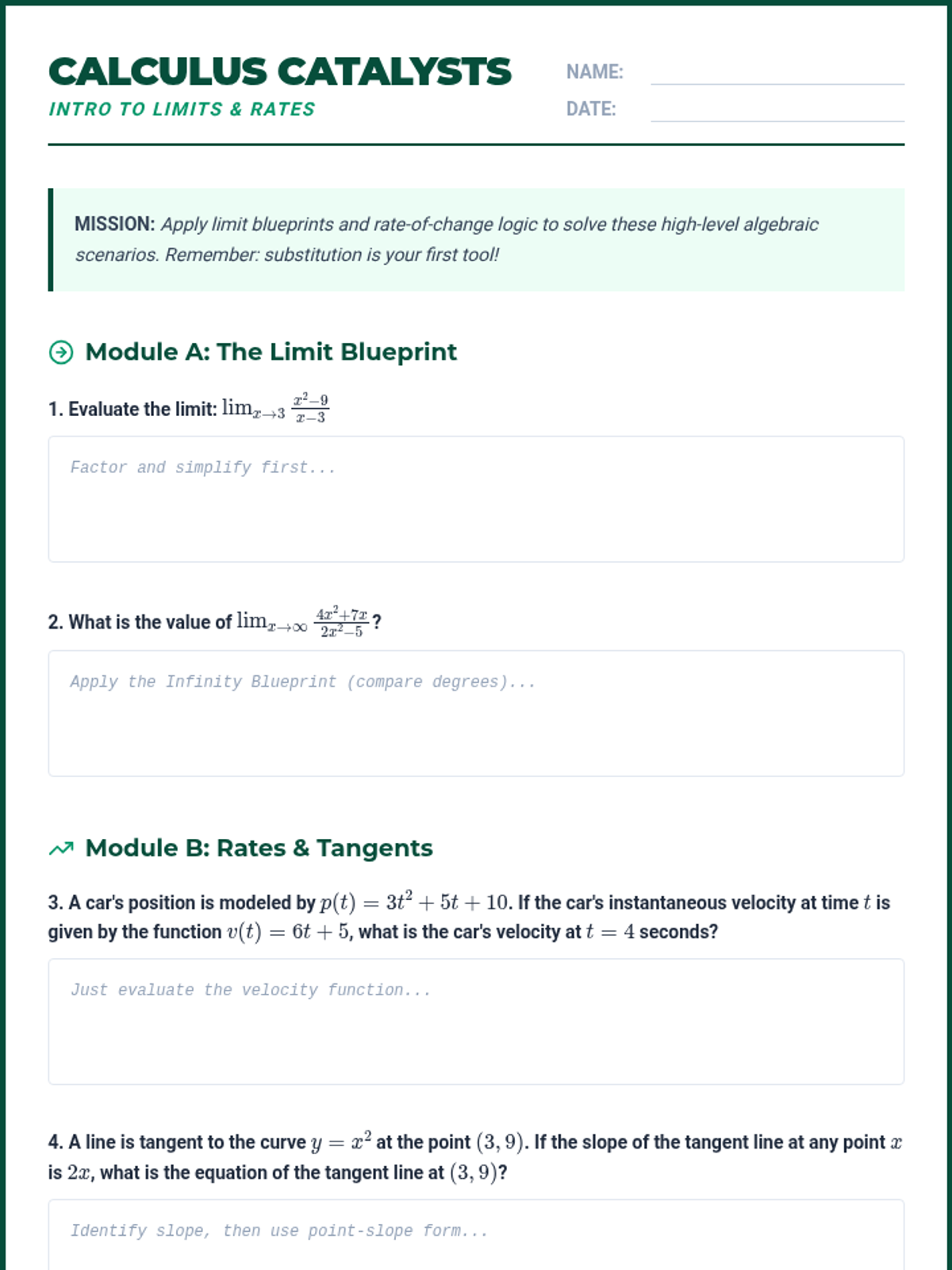
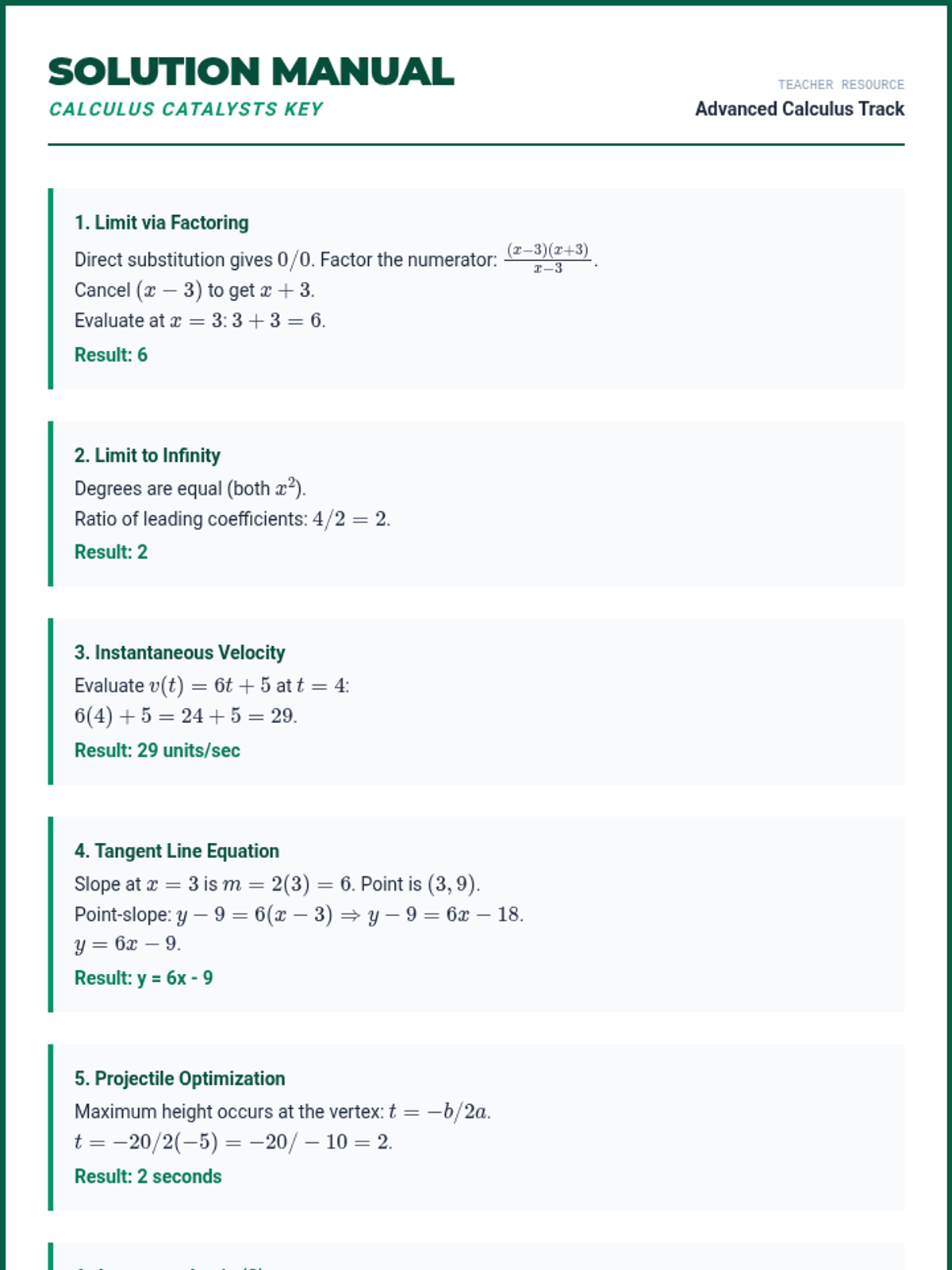
An introductory exploration of calculus-adjacent concepts tested on the ACT, focusing on limits, instantaneous rates of change, and function optimization. Students will master the Limit Blueprint and apply rate-of-change logic to complex algebraic scenarios.
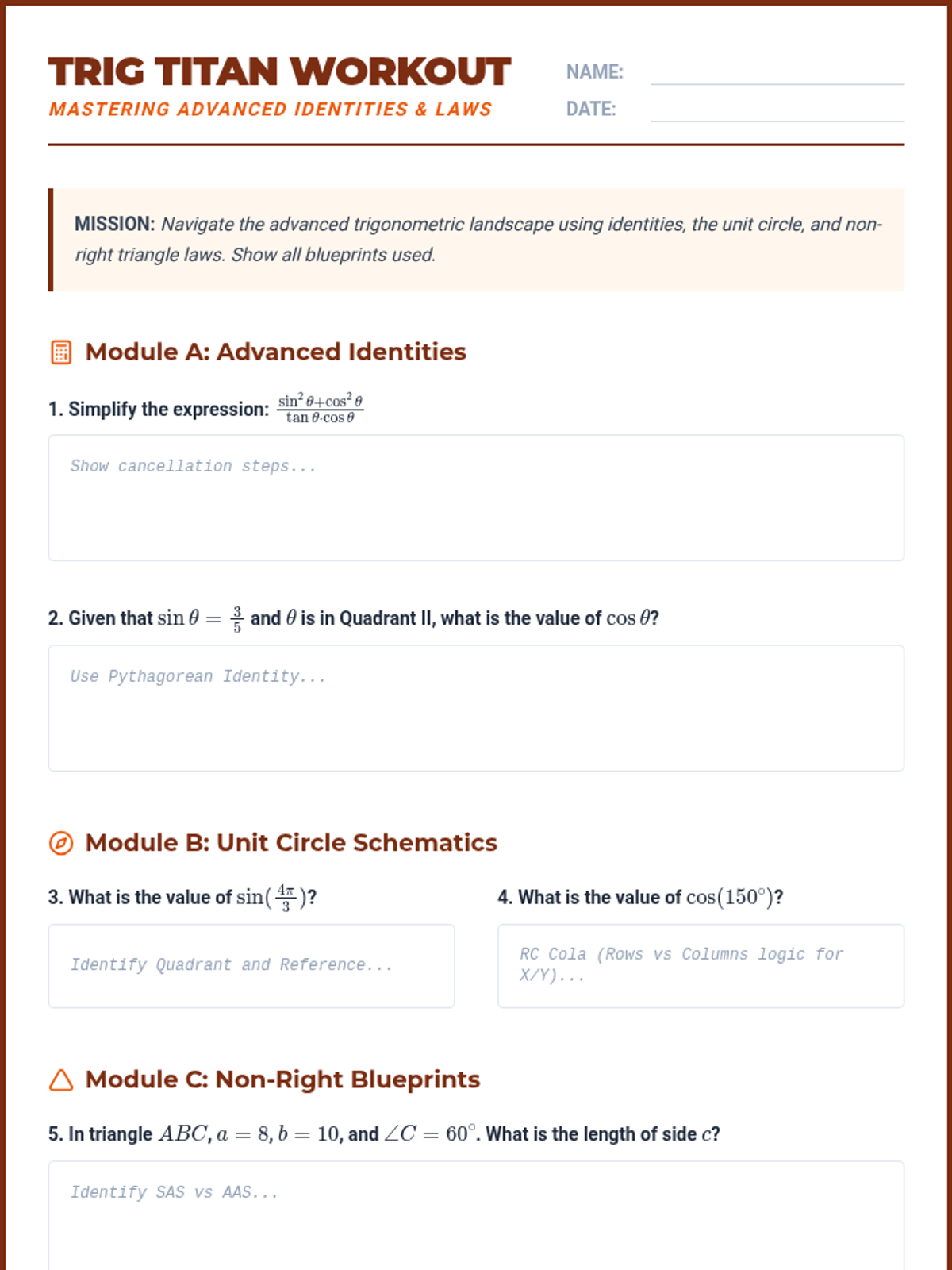
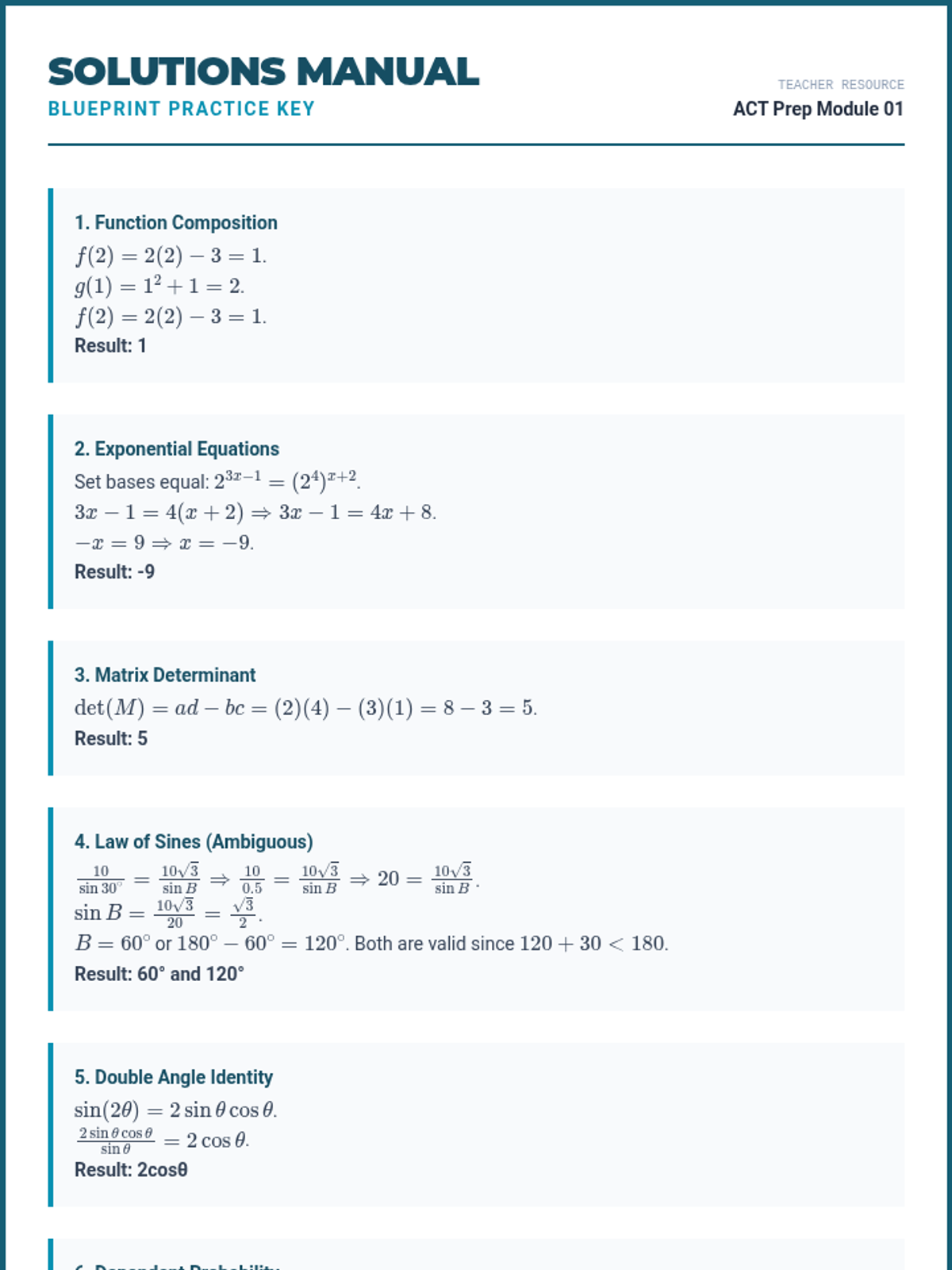
An intensive masterclass on advanced trigonometric identities, the unit circle, and non-right triangle laws. Students will master the Pythagorean identities, Law of Sines/Cosines, and the specific ACT-style unit circle coordinates required for top-tier scores.
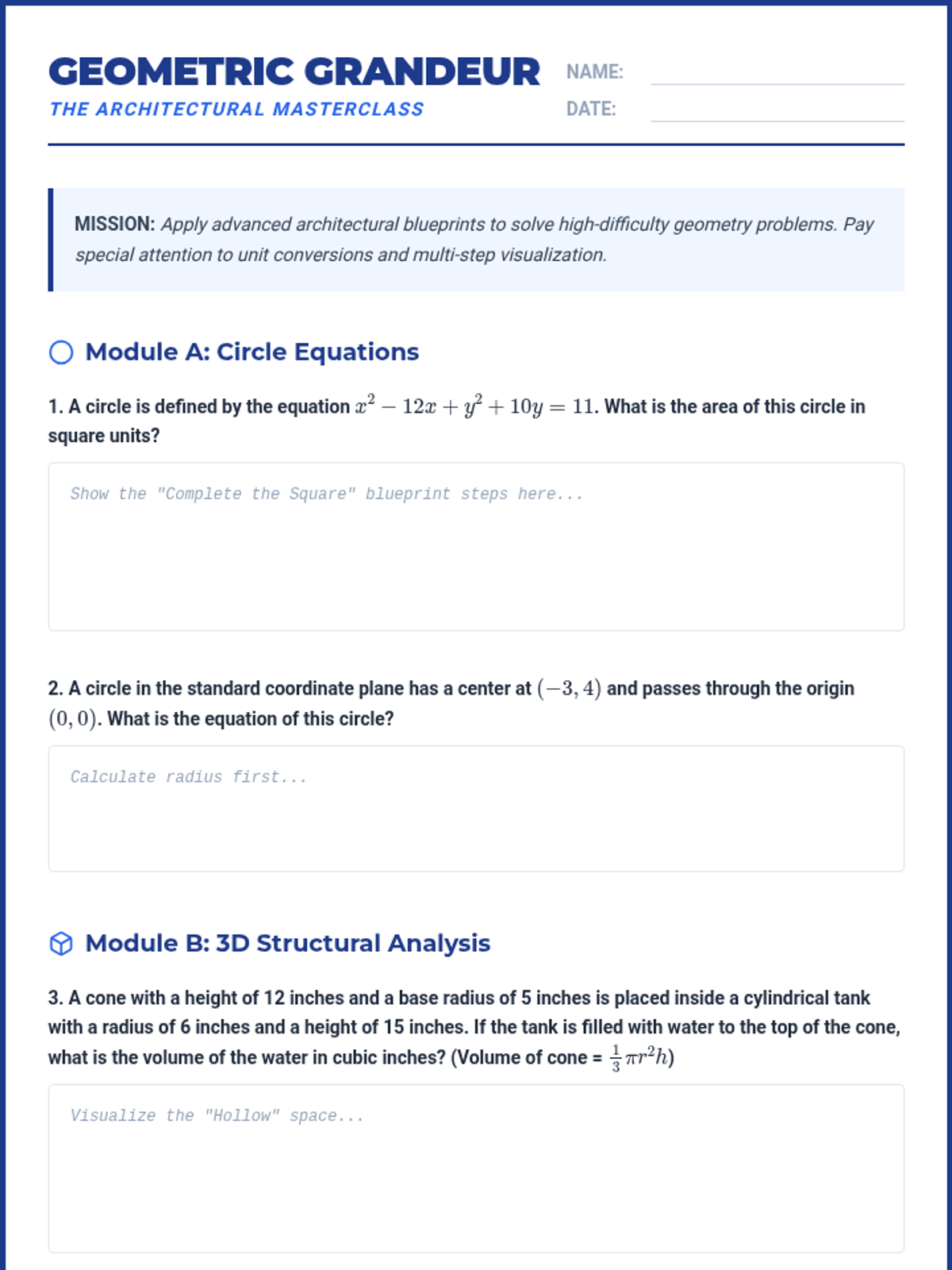
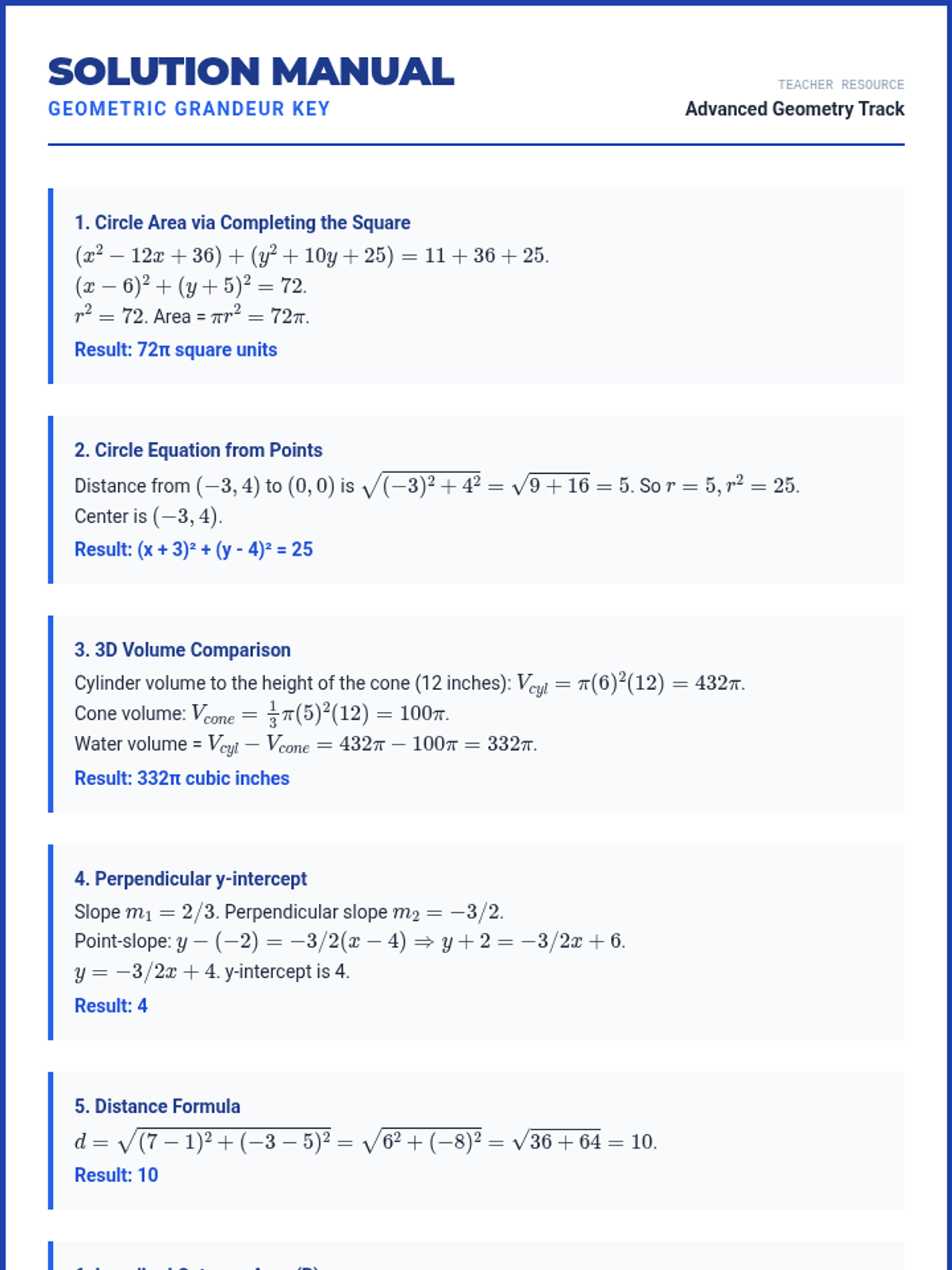
A specialized deep dive into advanced geometry concepts including circle equations, 3D volume/surface area of complex shapes, and coordinate geometry involving perpendicularity and distance. Students will master completing the square for circles and visualizing 3D cross-sections.
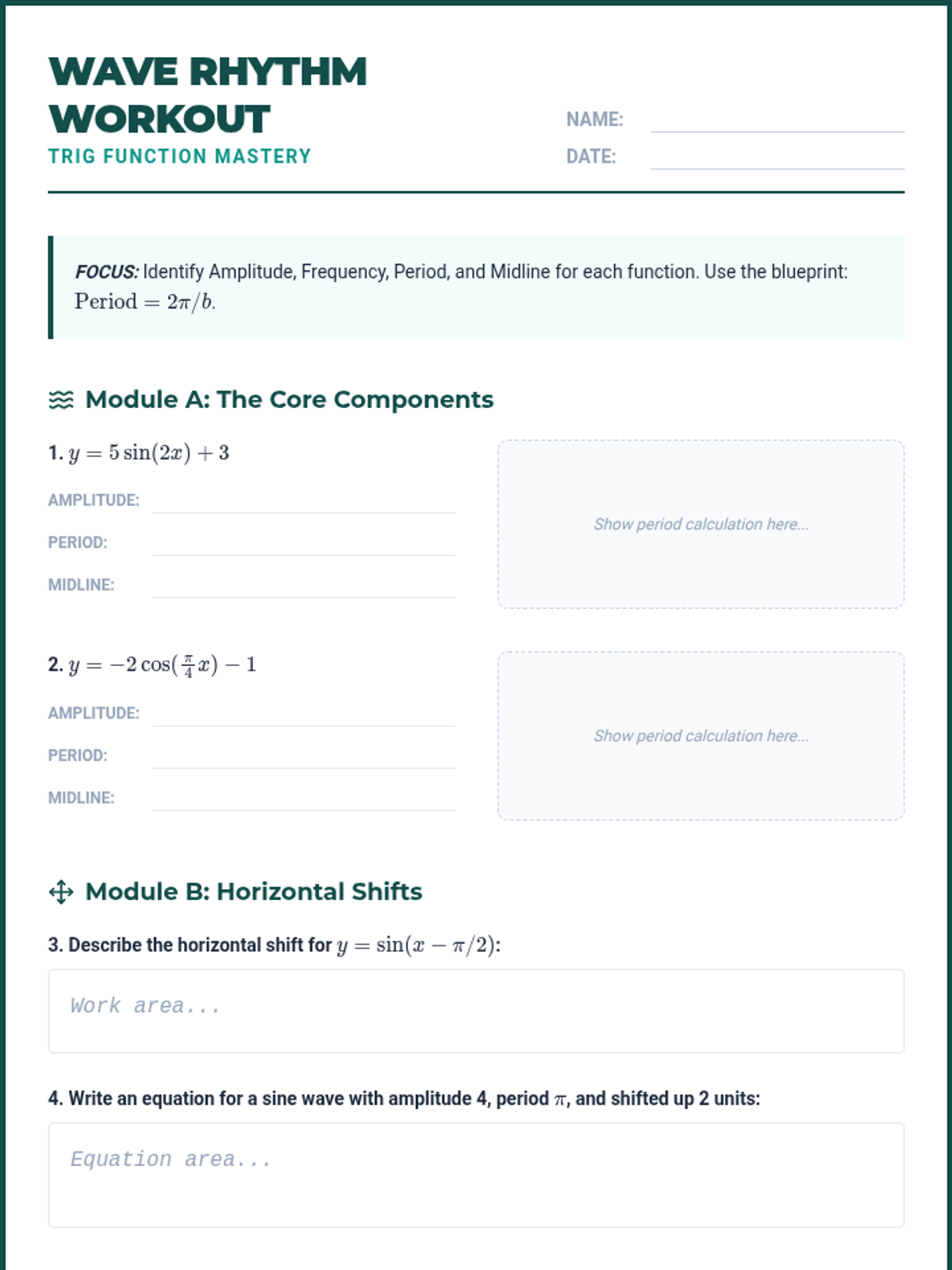
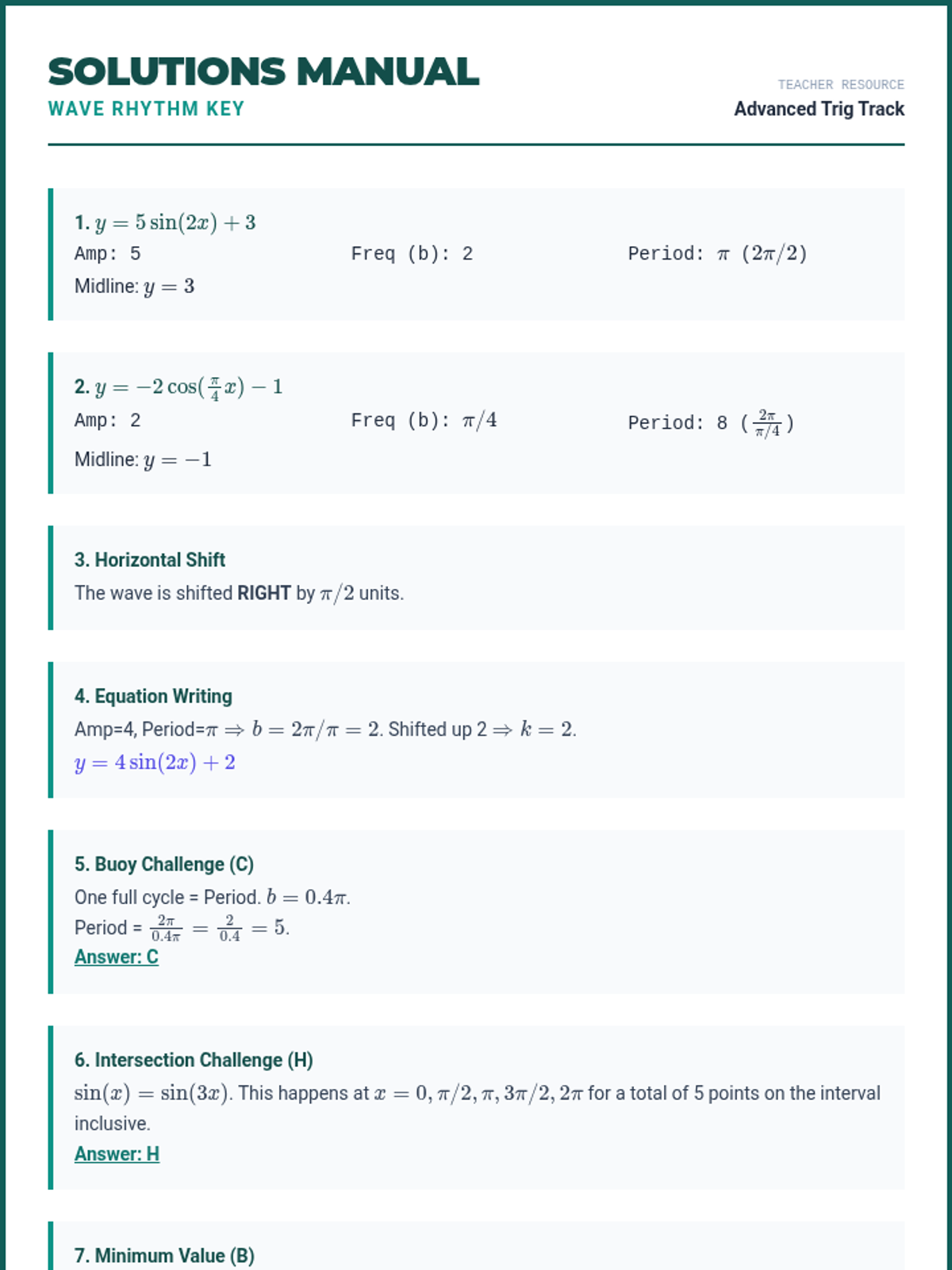
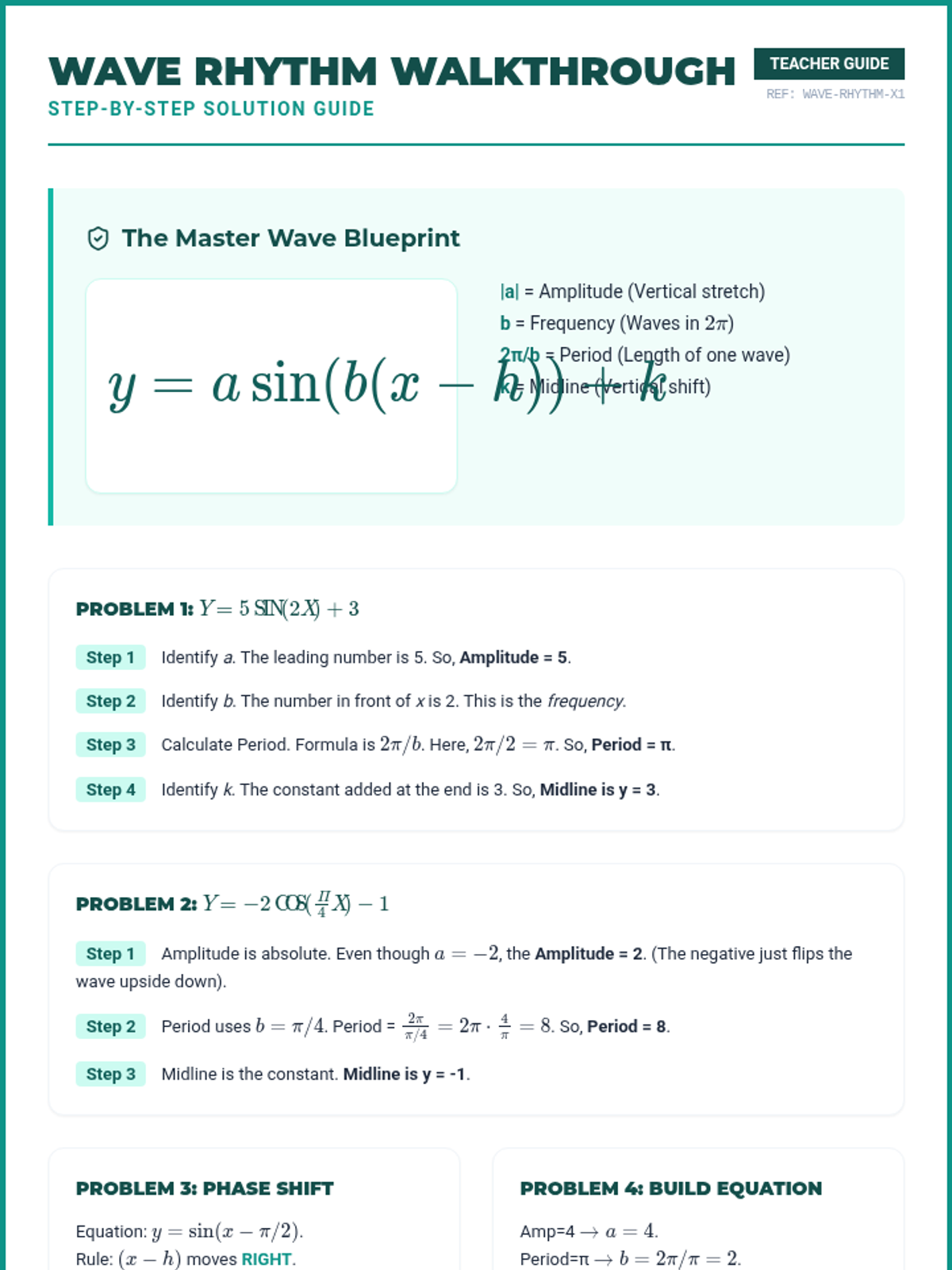
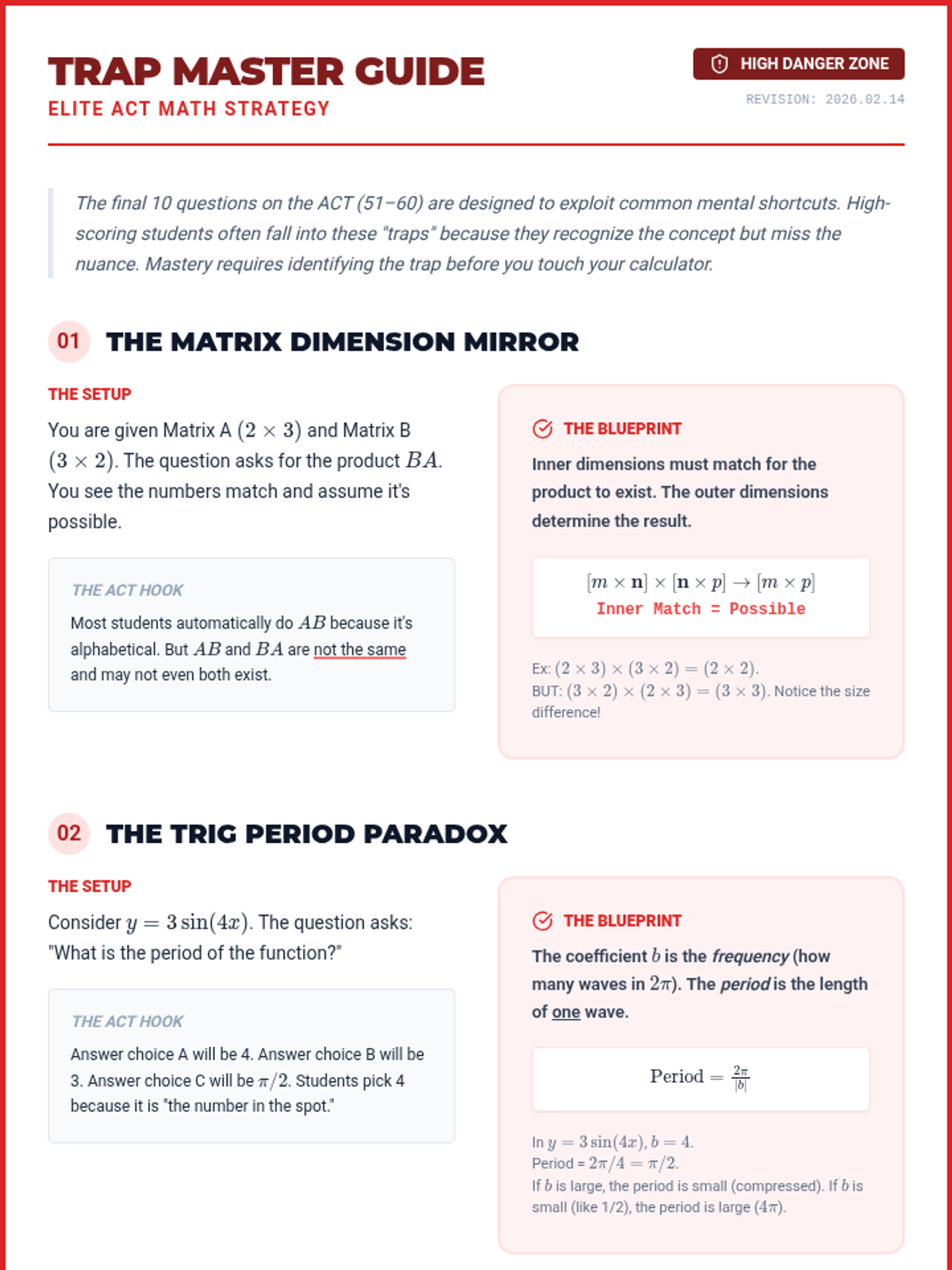
A specialized deep dive into trigonometric functions, mastering the critical distinction between period and frequency. Students will apply the 2π/b blueprint to decode sine and cosine graphs and solve high-difficulty periodic motion problems.
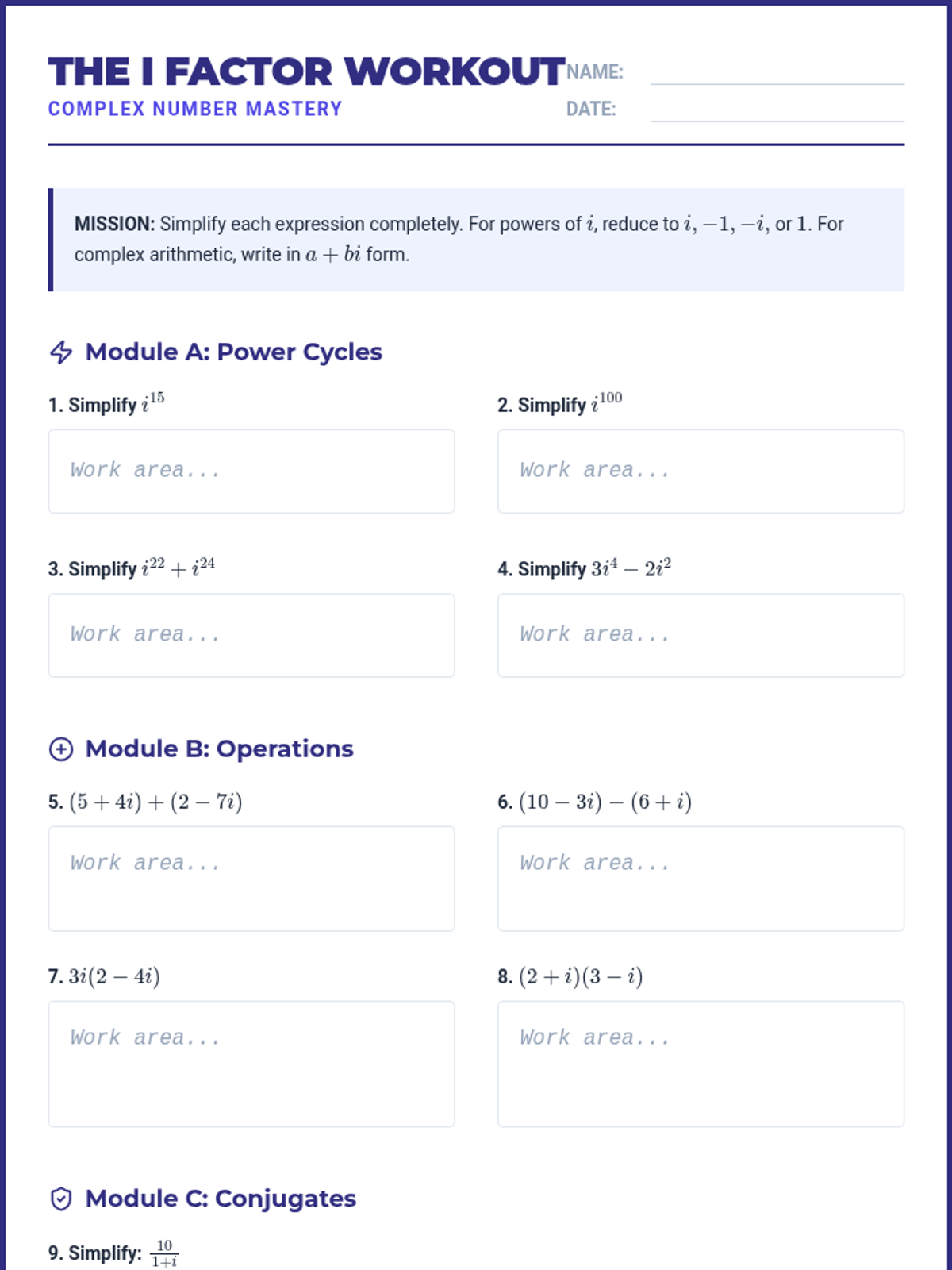
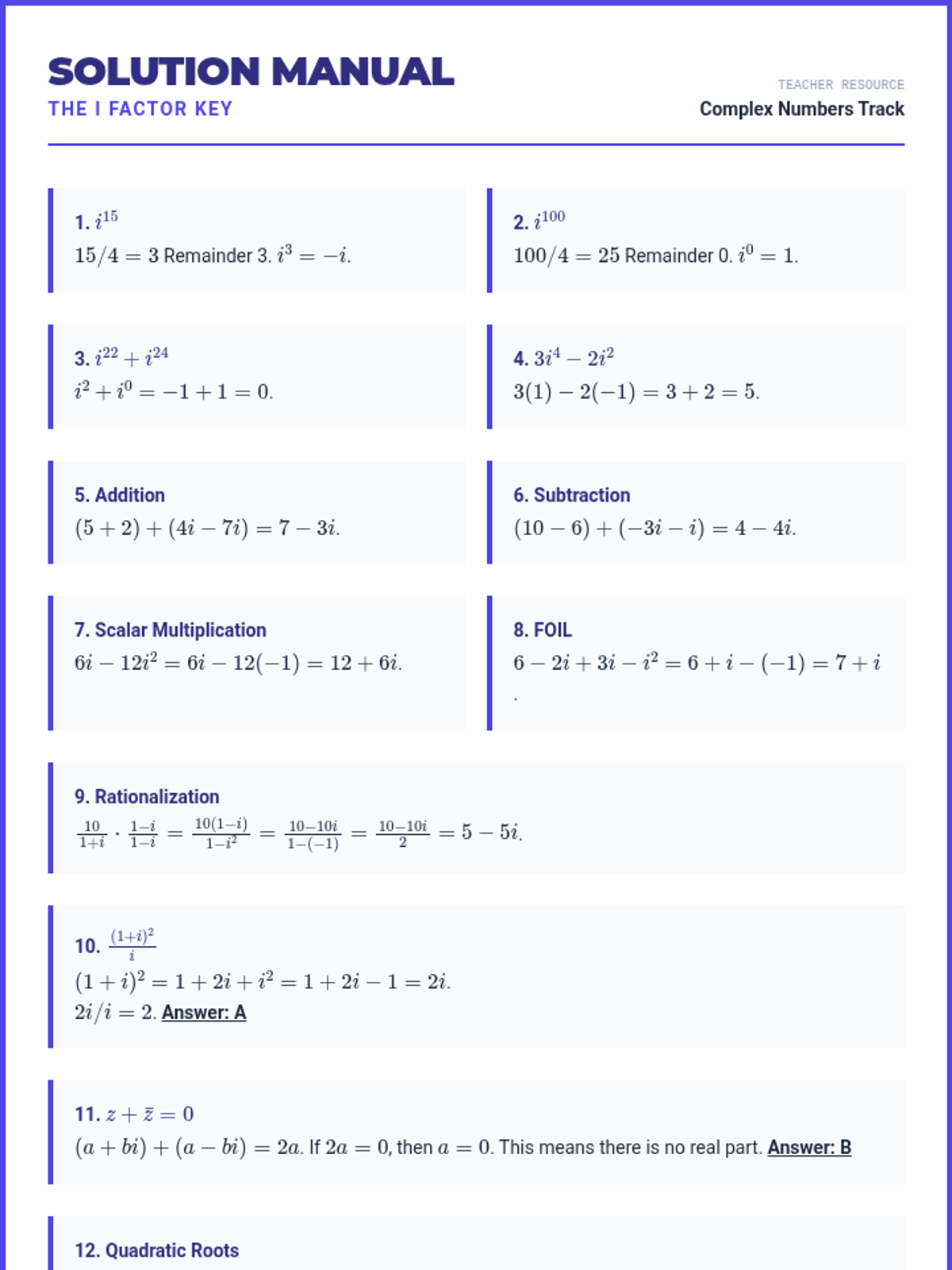
A focused deep dive into imaginary and complex numbers. Students will master powers of i, arithmetic with complex conjugates, and solving quadratic equations with complex roots—all through the lens of ACT-style 'Final Ten' questions.
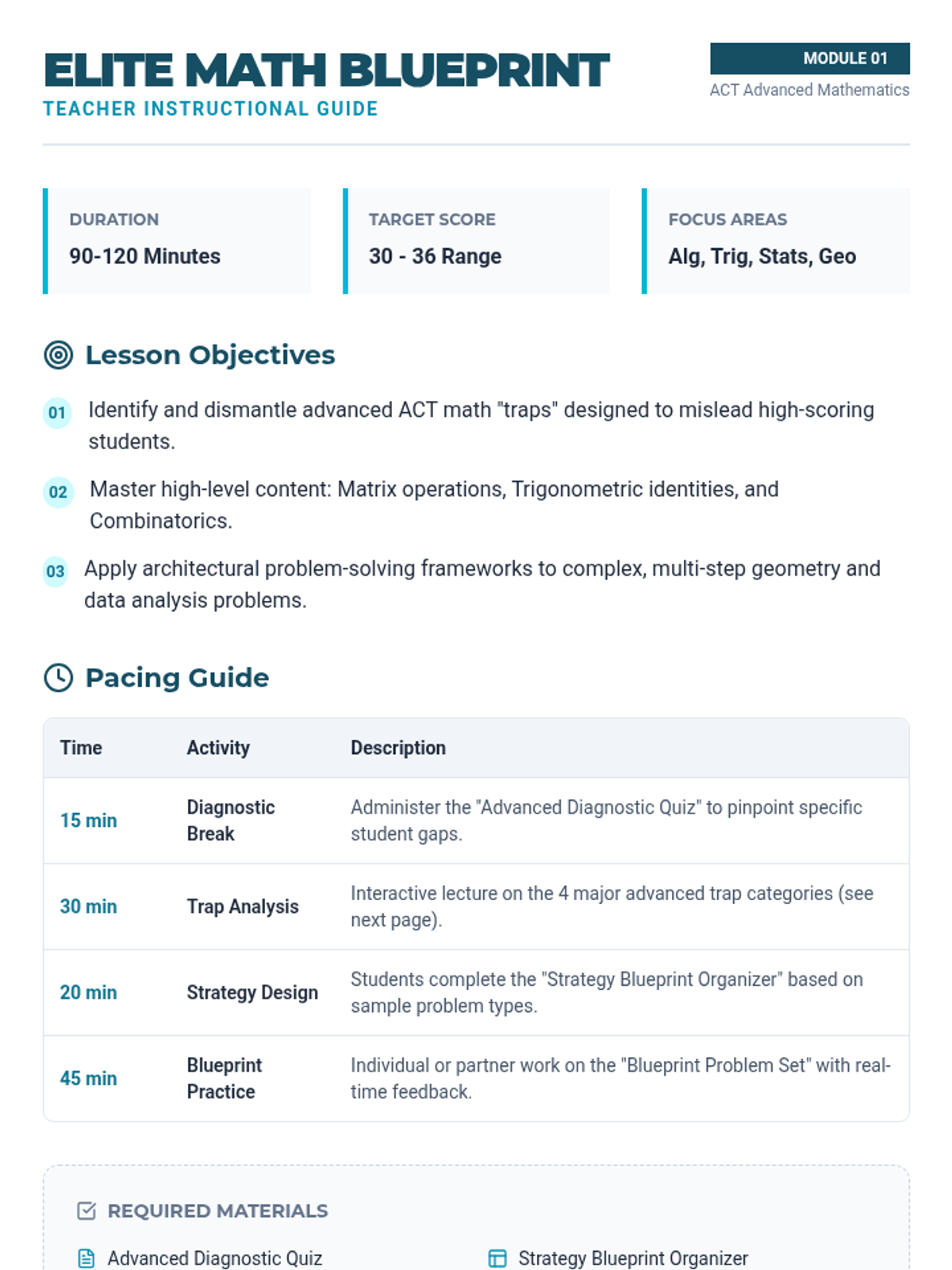
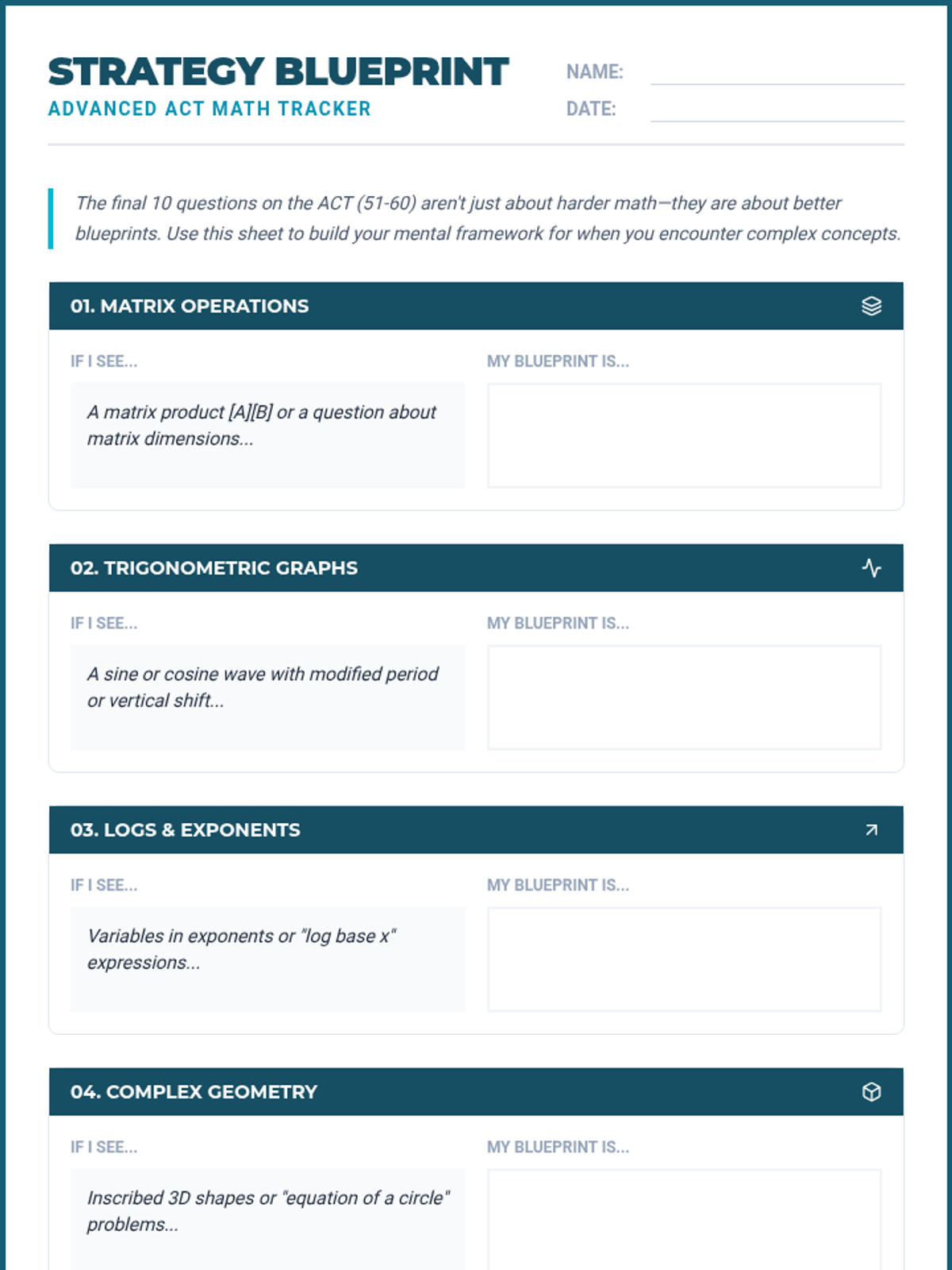
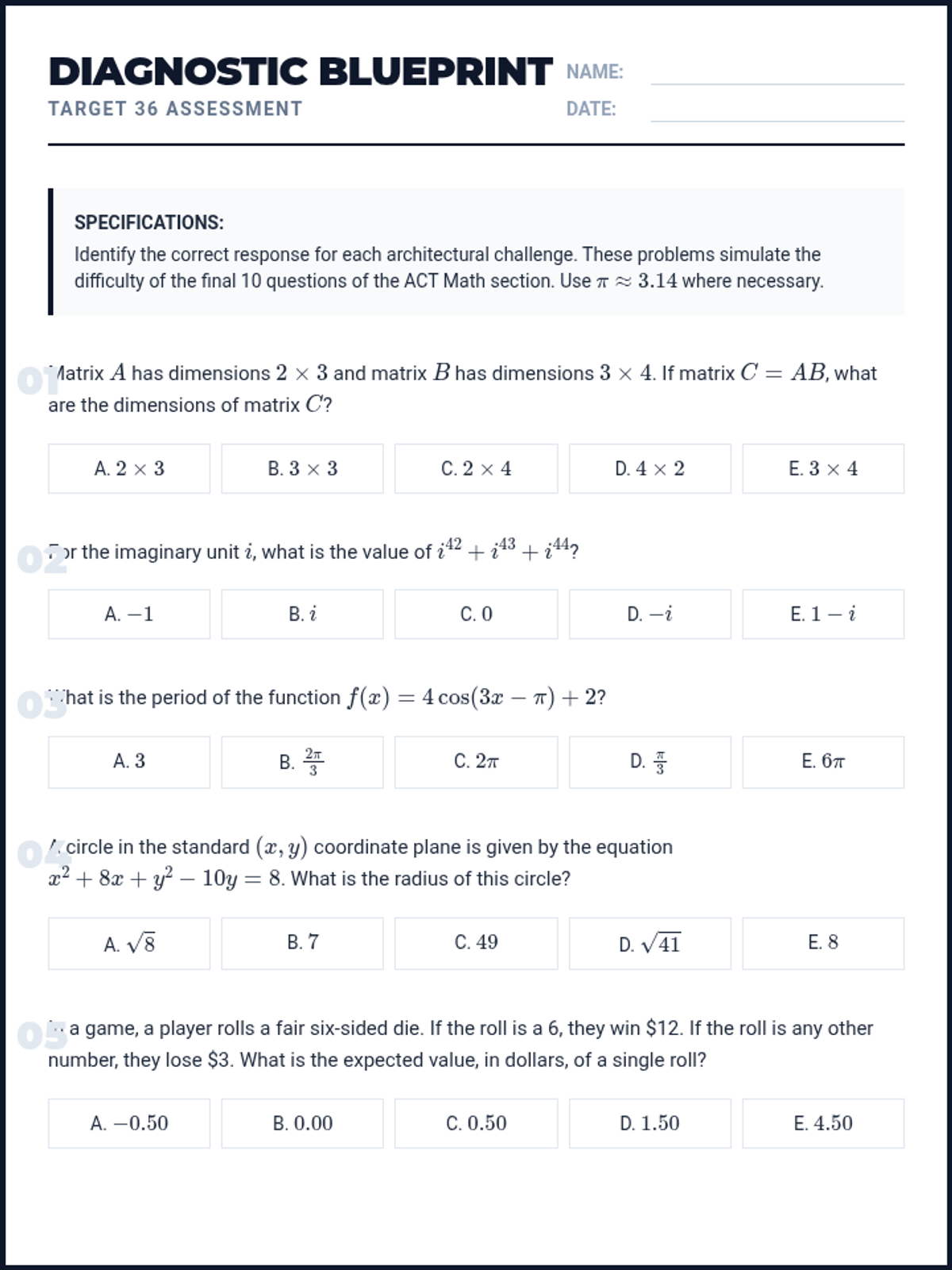
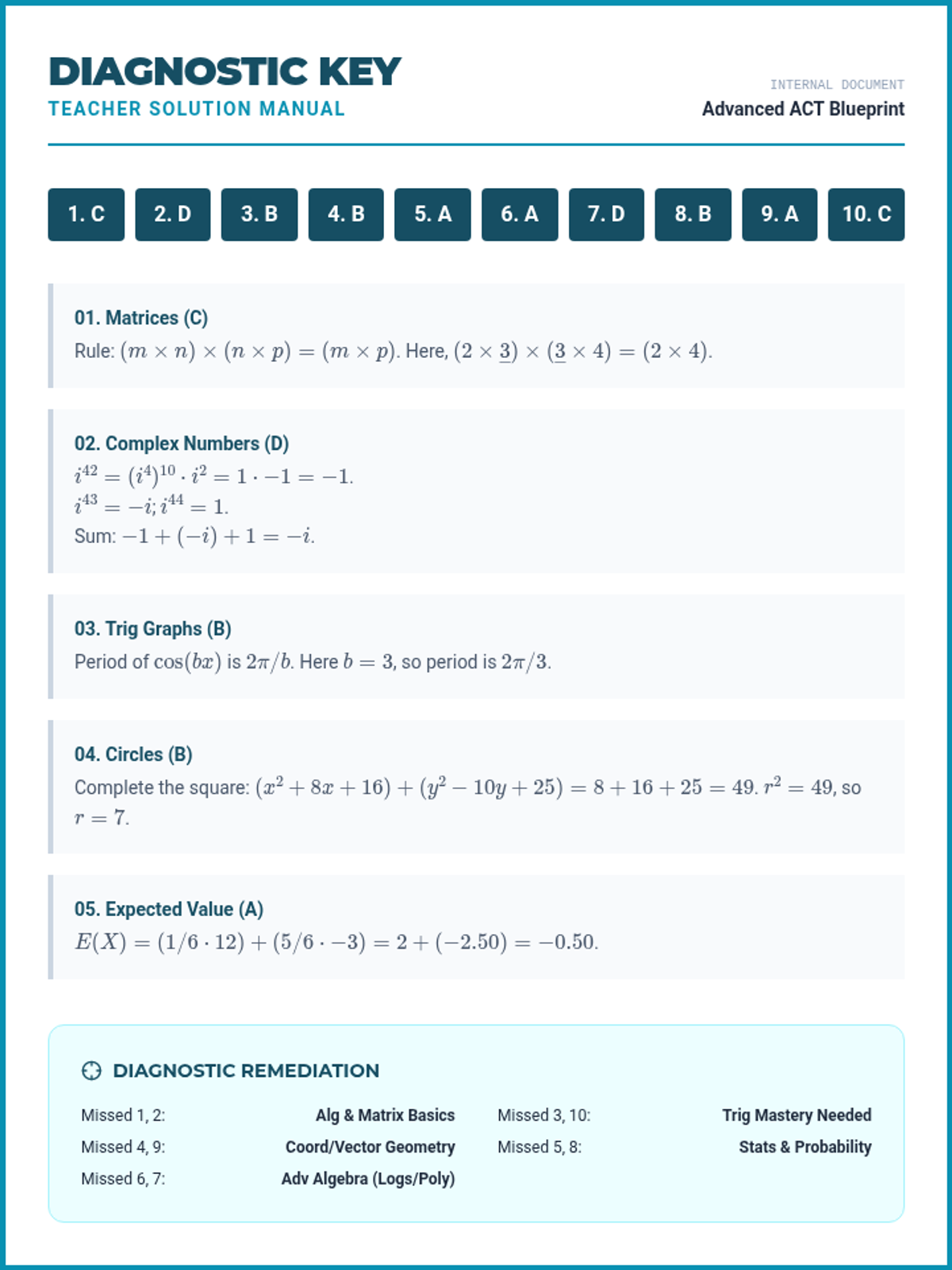
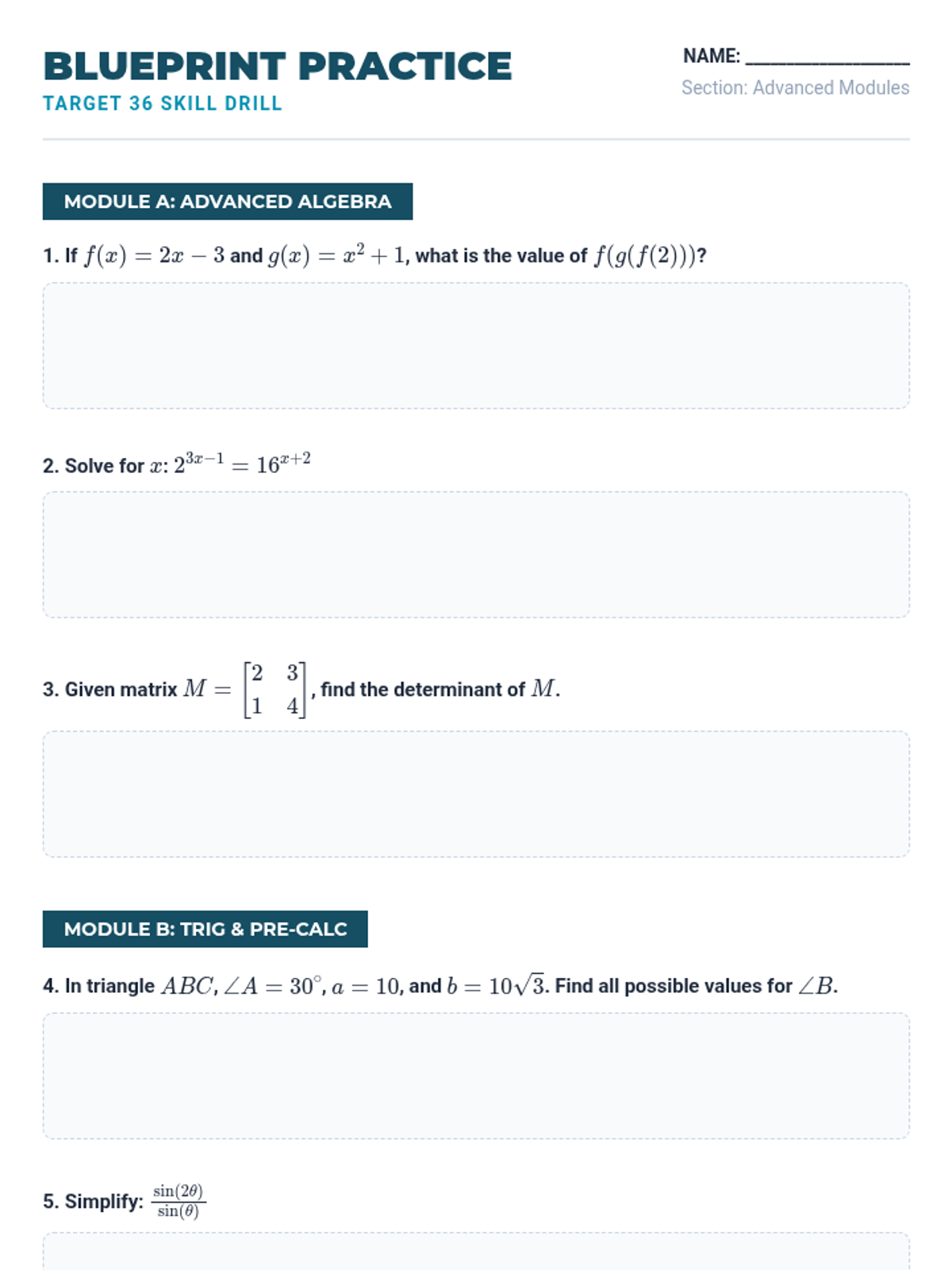
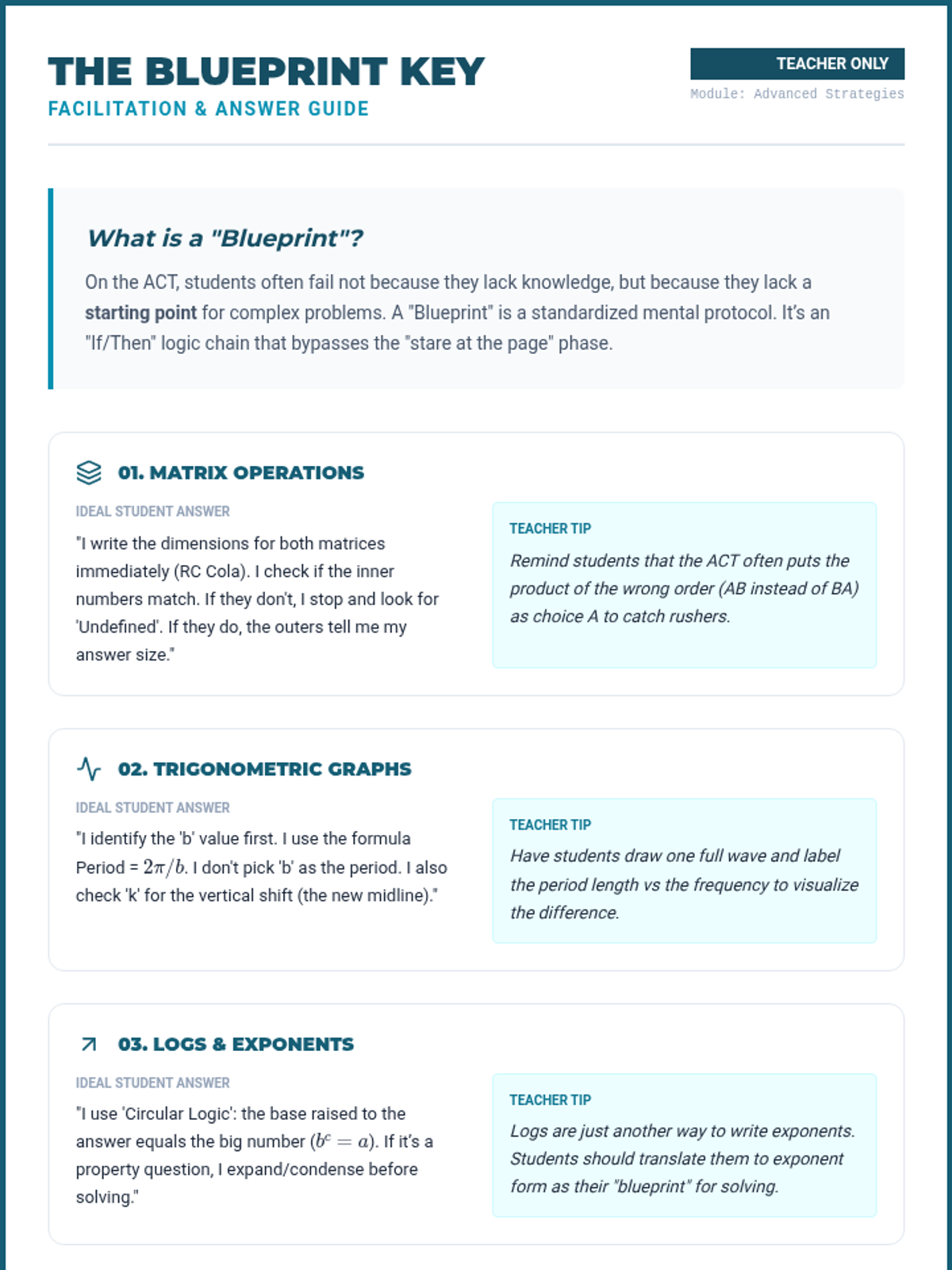
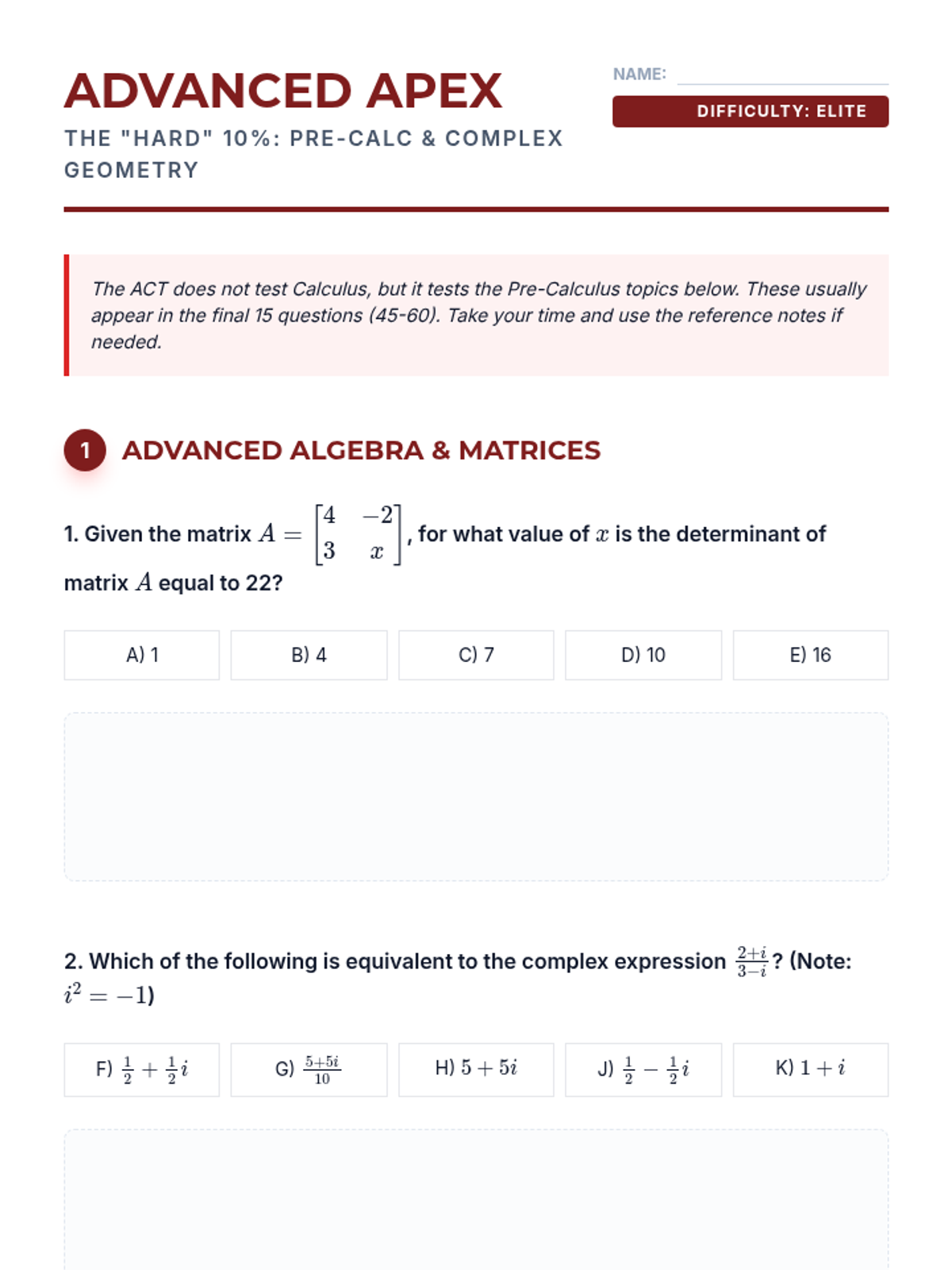
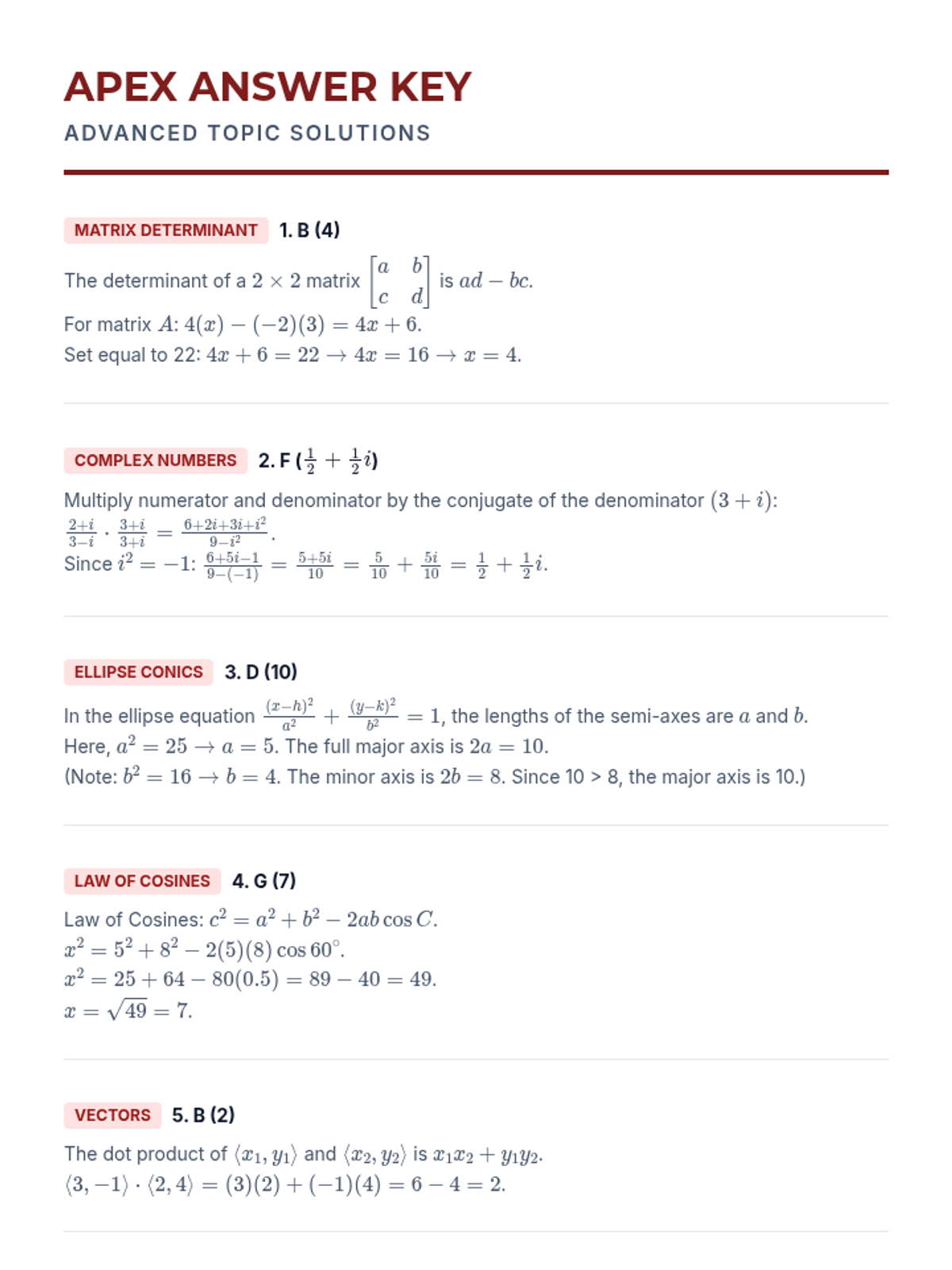
A comprehensive lesson focused on high-level ACT Math topics including matrices, complex functions, trigonometry, and advanced statistics. The lesson emphasizes identifying common 'traps' and applying architectural-style problem-solving strategies.
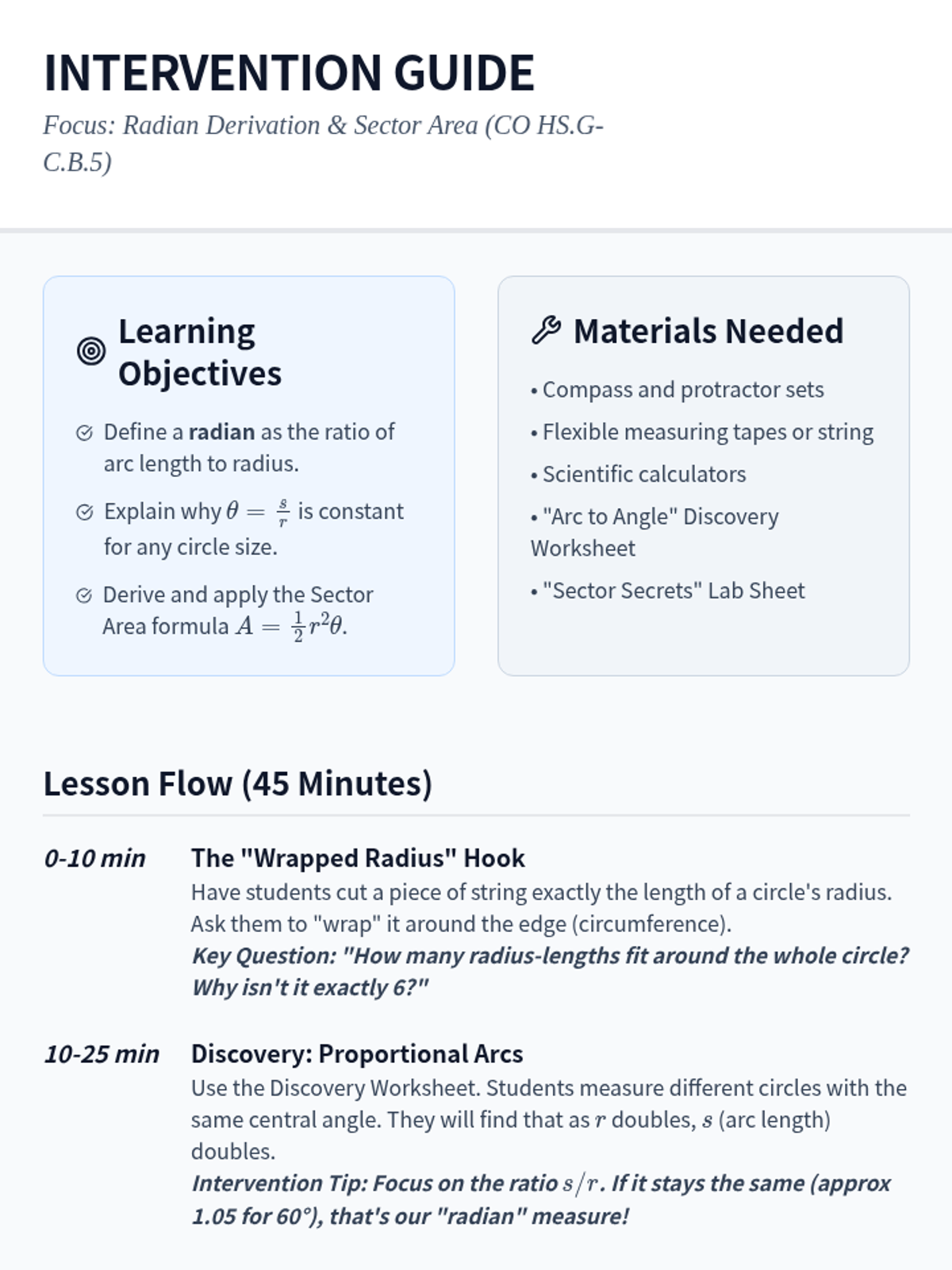
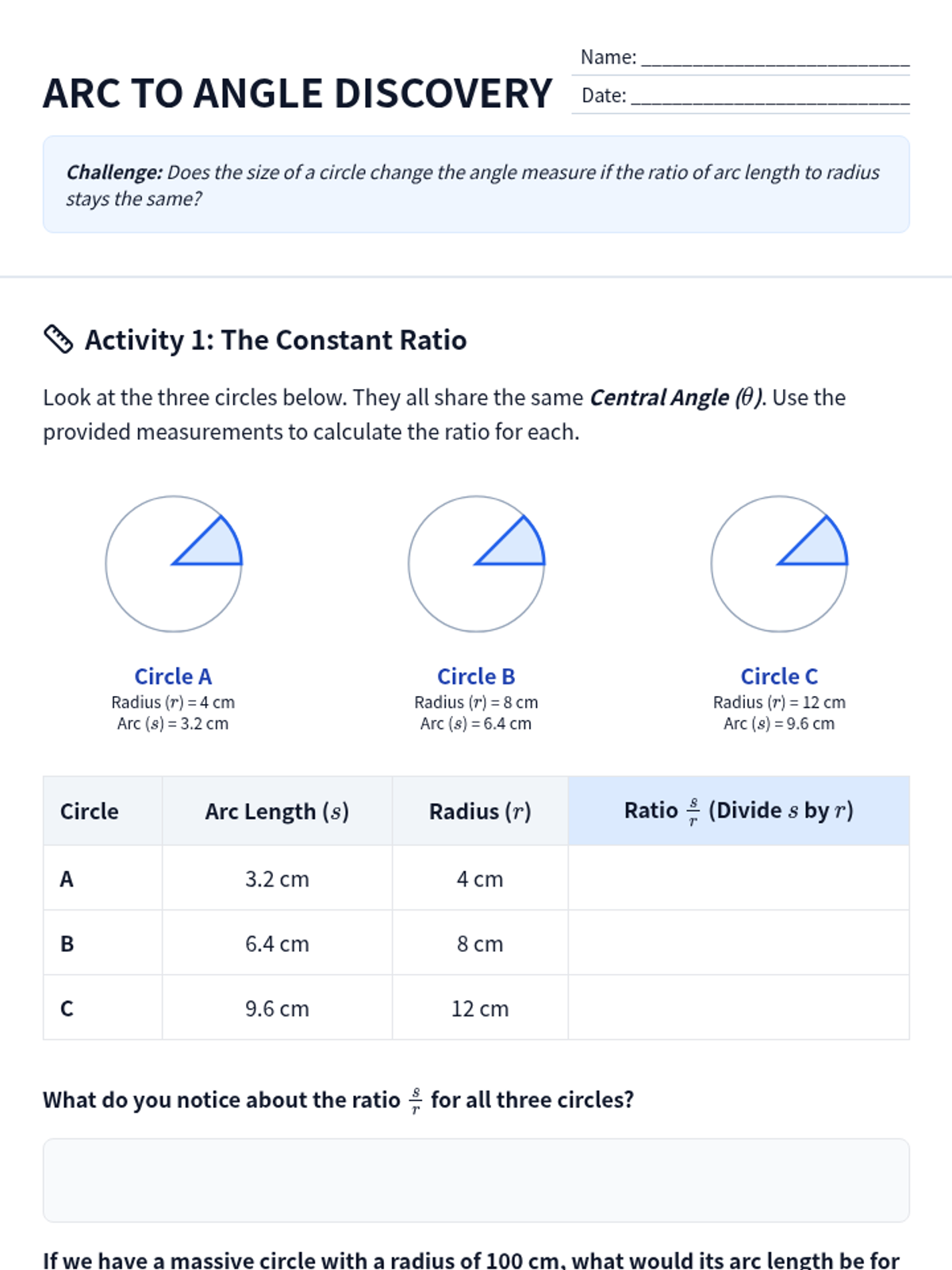
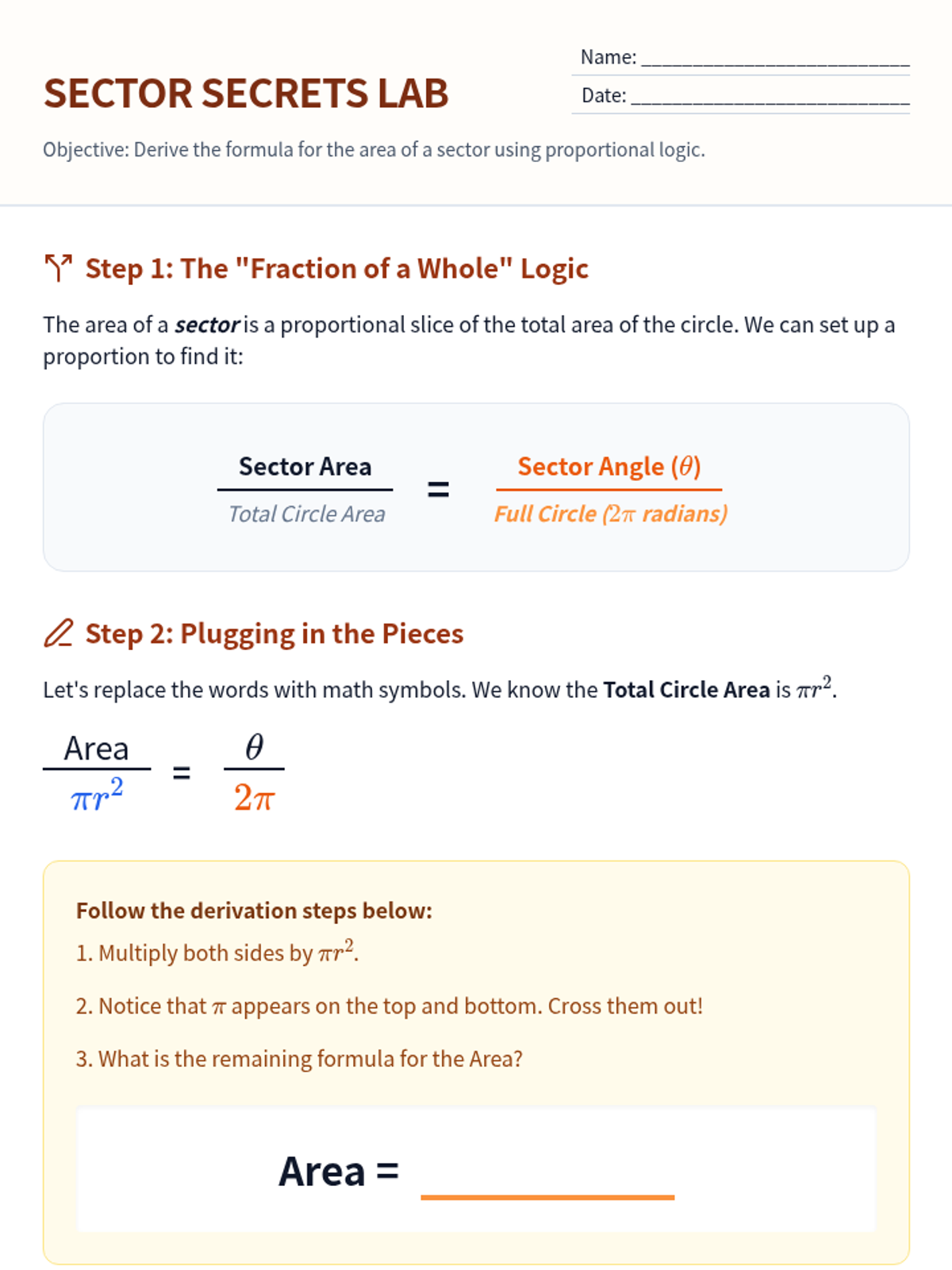
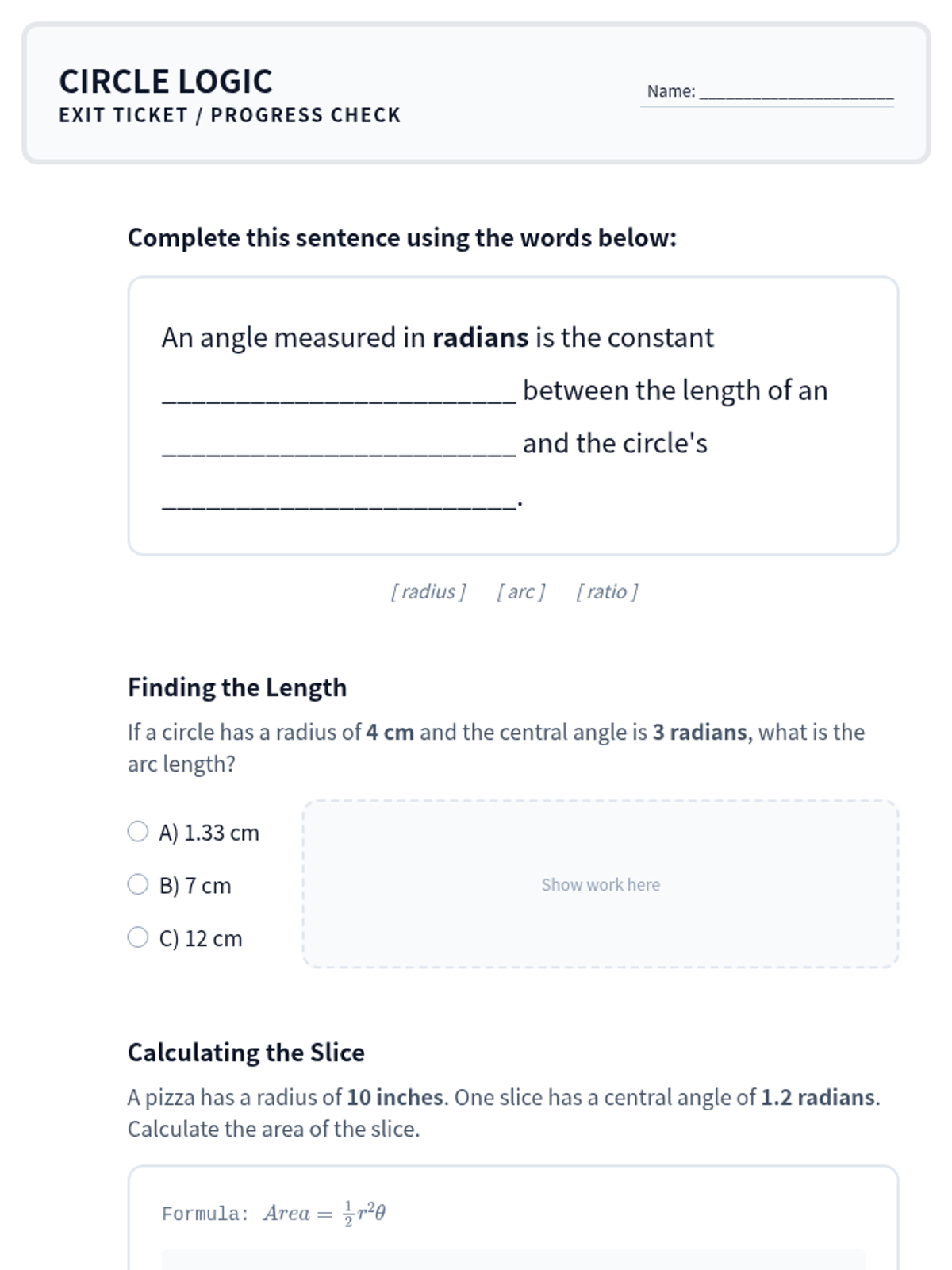
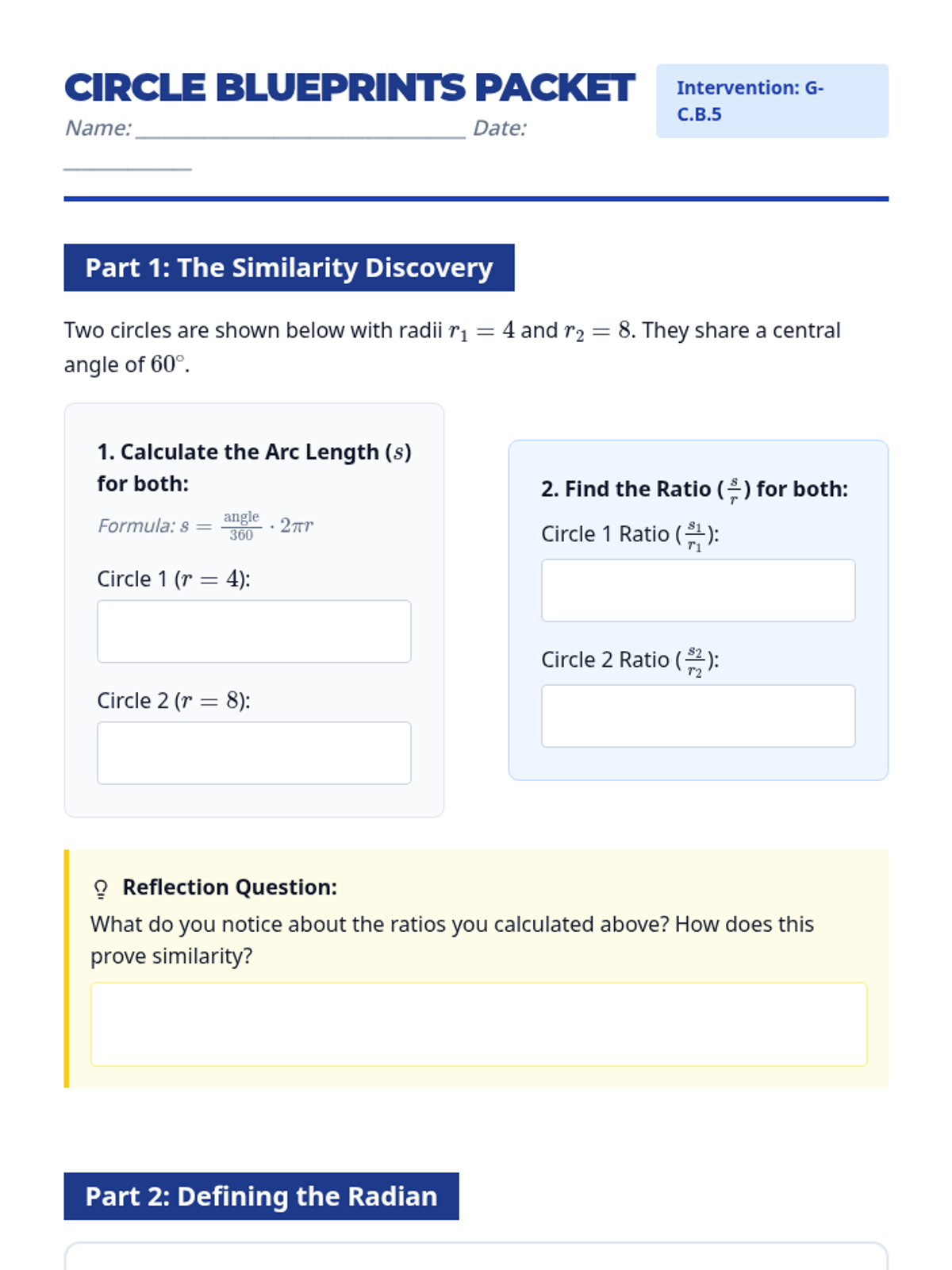
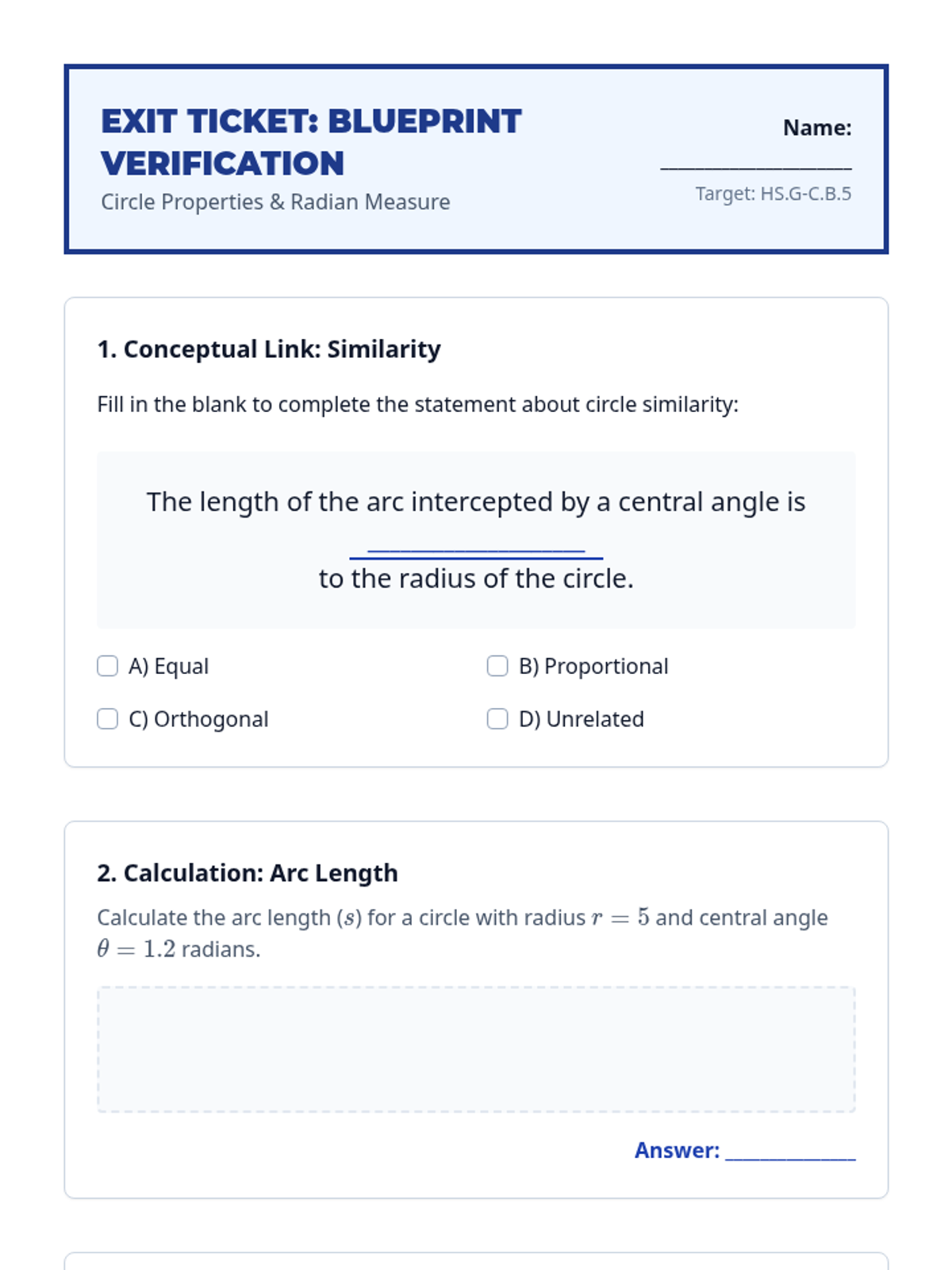
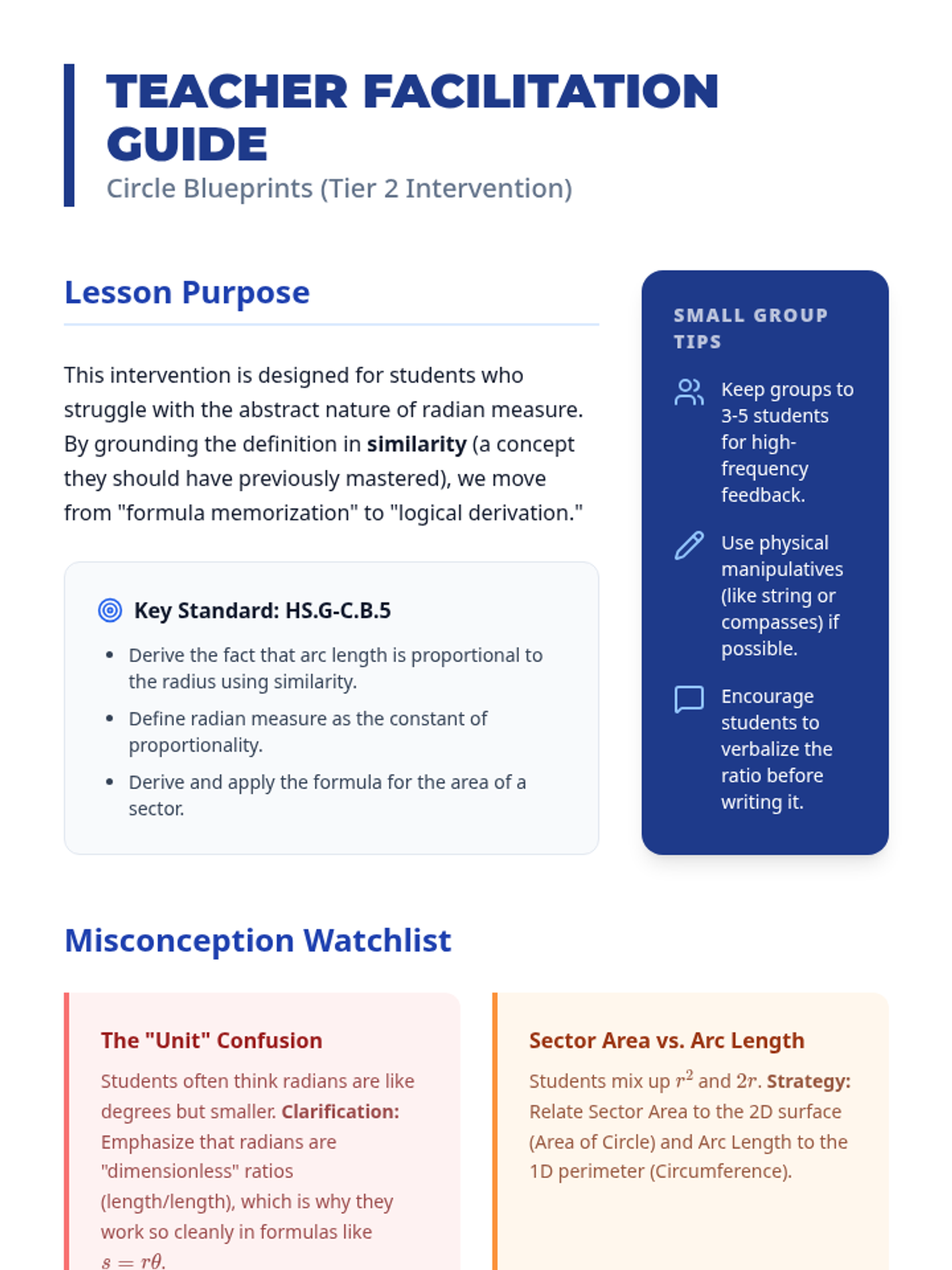
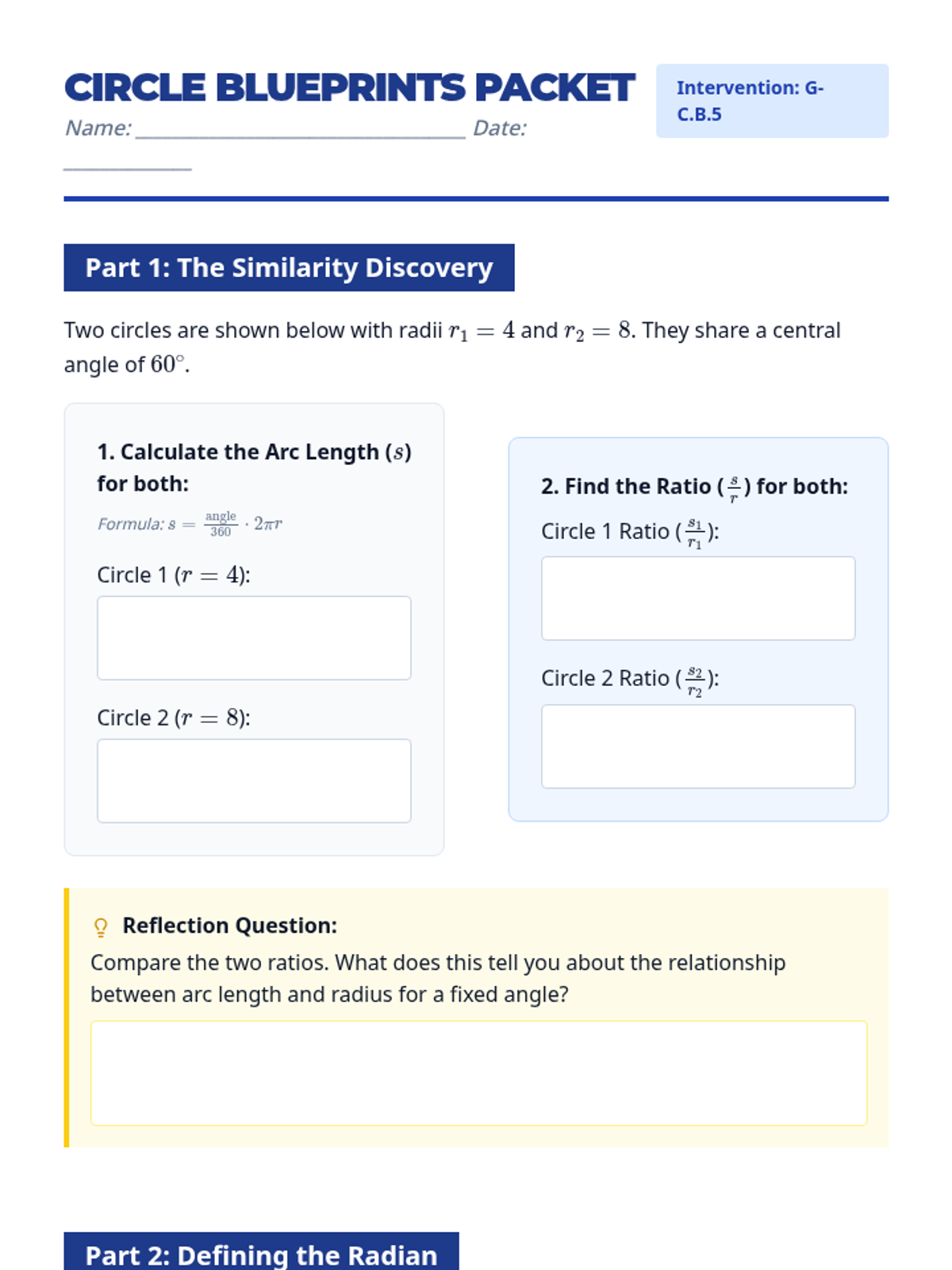
A targeted Tier 2 intervention lesson focusing on the derivation of radian measure and sector area through proportional reasoning and hands-on measurement concepts. Students explore why the ratio of arc length to radius is constant for a given angle and apply this to find areas of circular sectors.
A targeted small group intervention lesson focused on deriving circle formulas using similarity, defining radians, and calculating sector areas with scaffolded support.
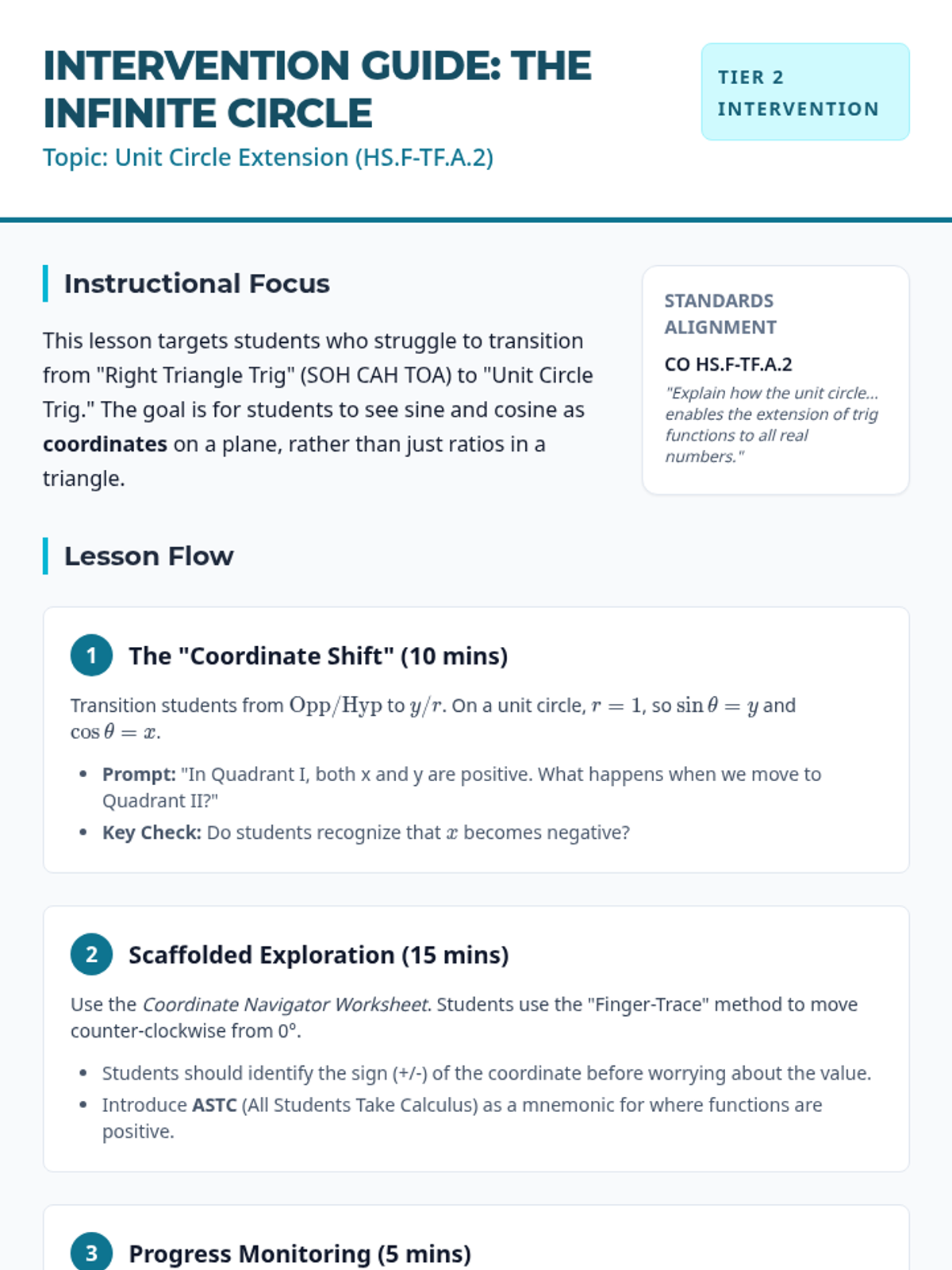
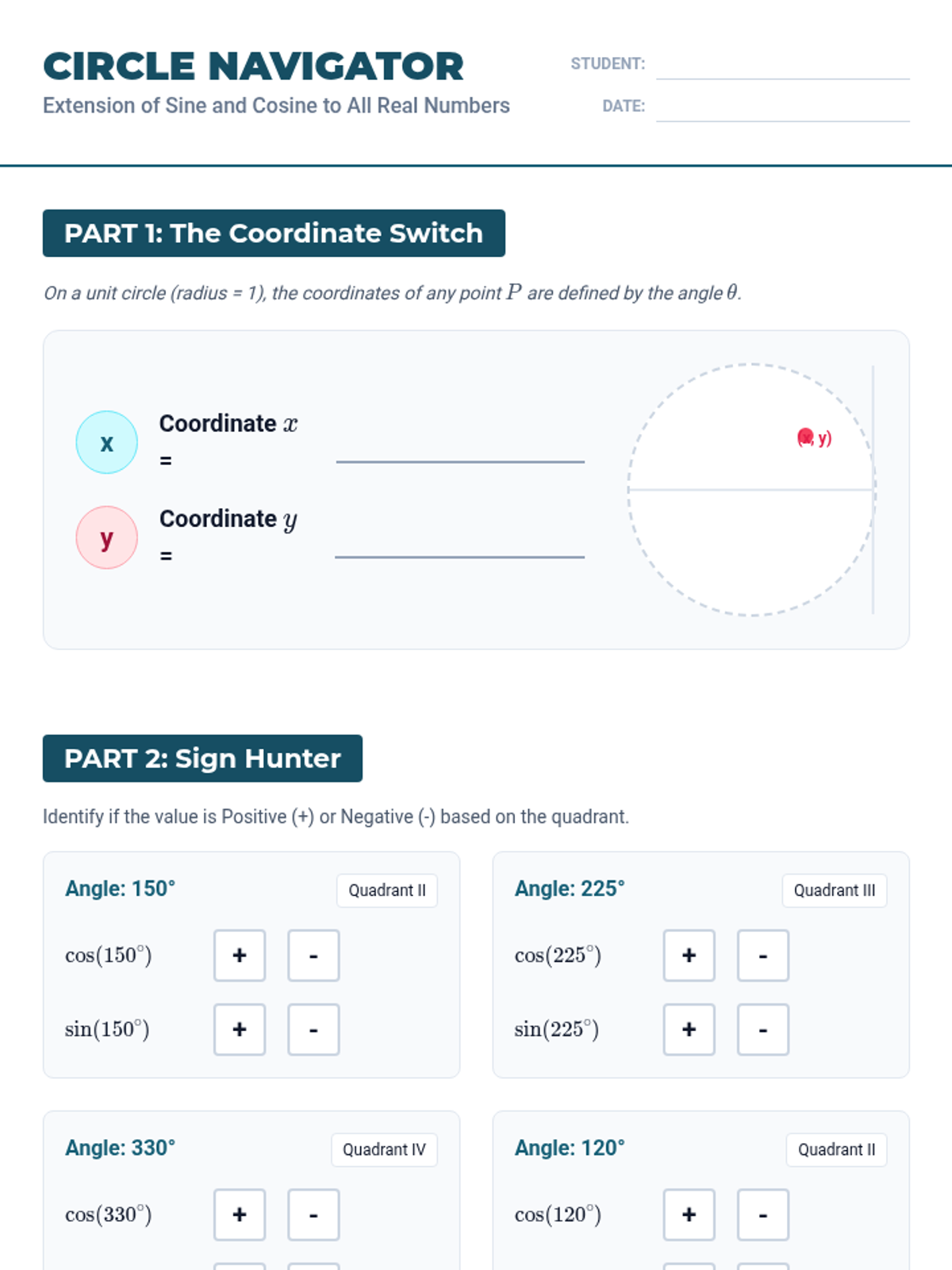
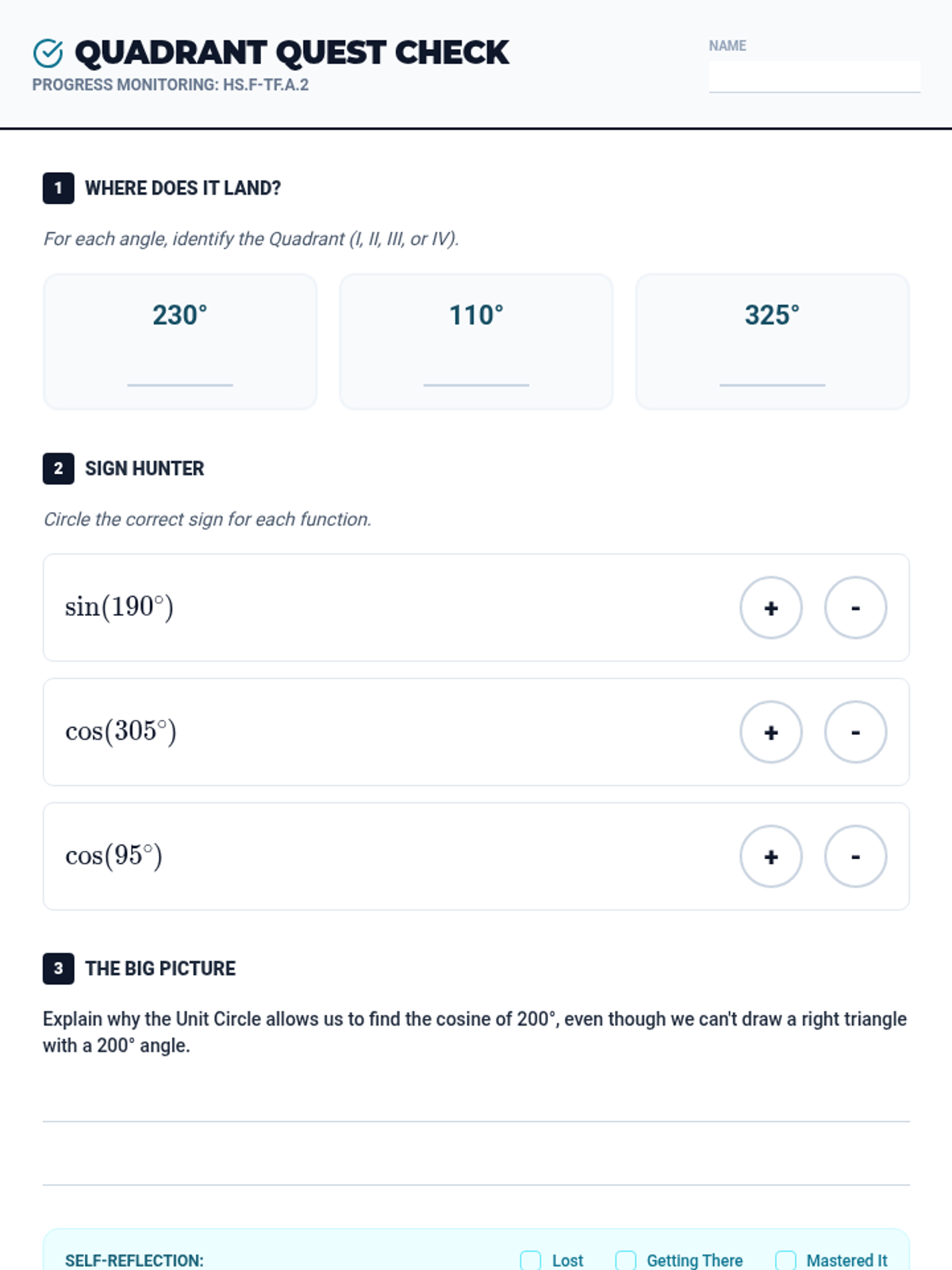
A scaffolded intervention lesson explaining how the unit circle defines sine and cosine for all real numbers. Students will explore quadrant signs, reference angles, and coordinate mapping to find values for angles greater than 90 degrees.
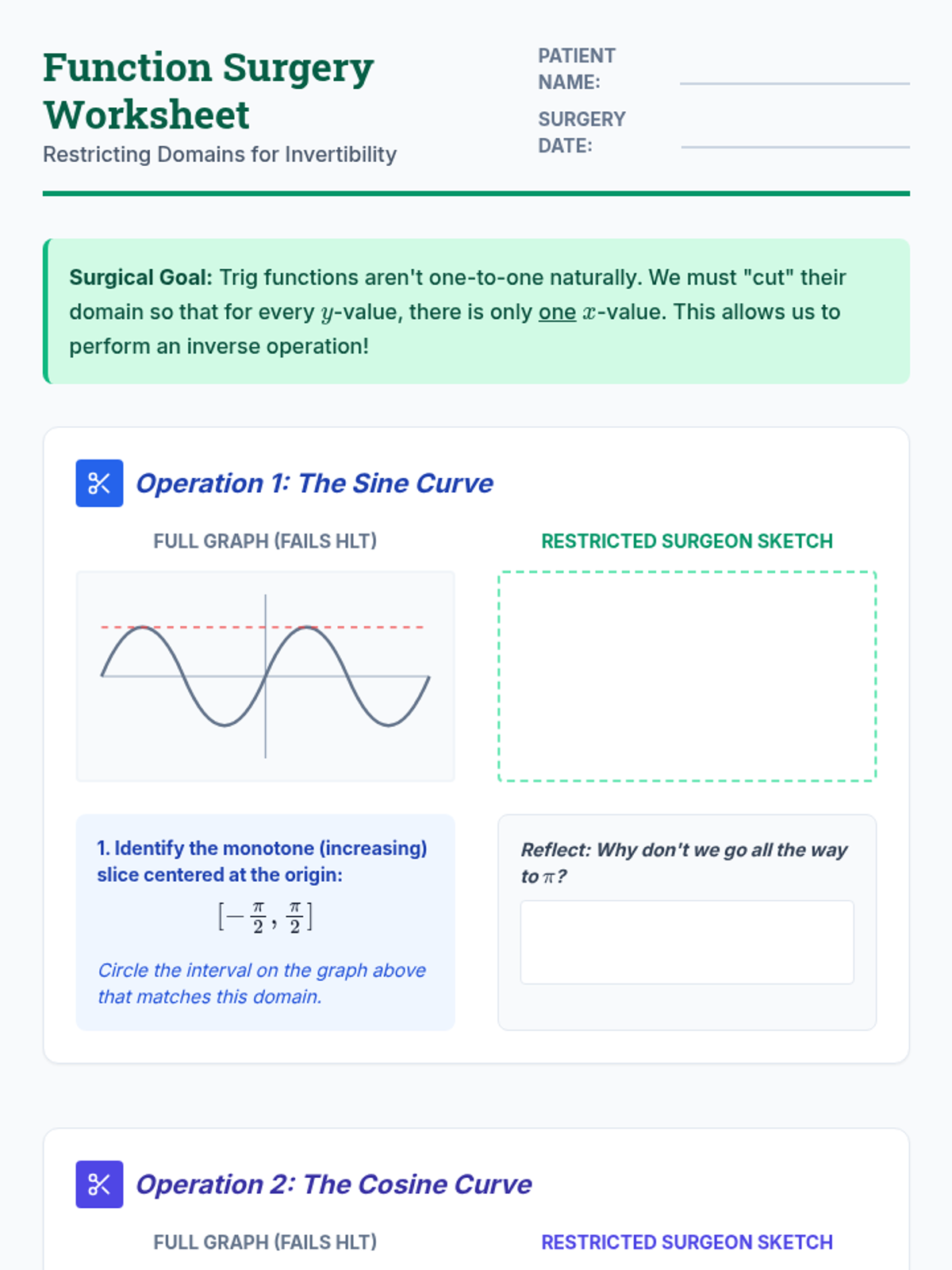
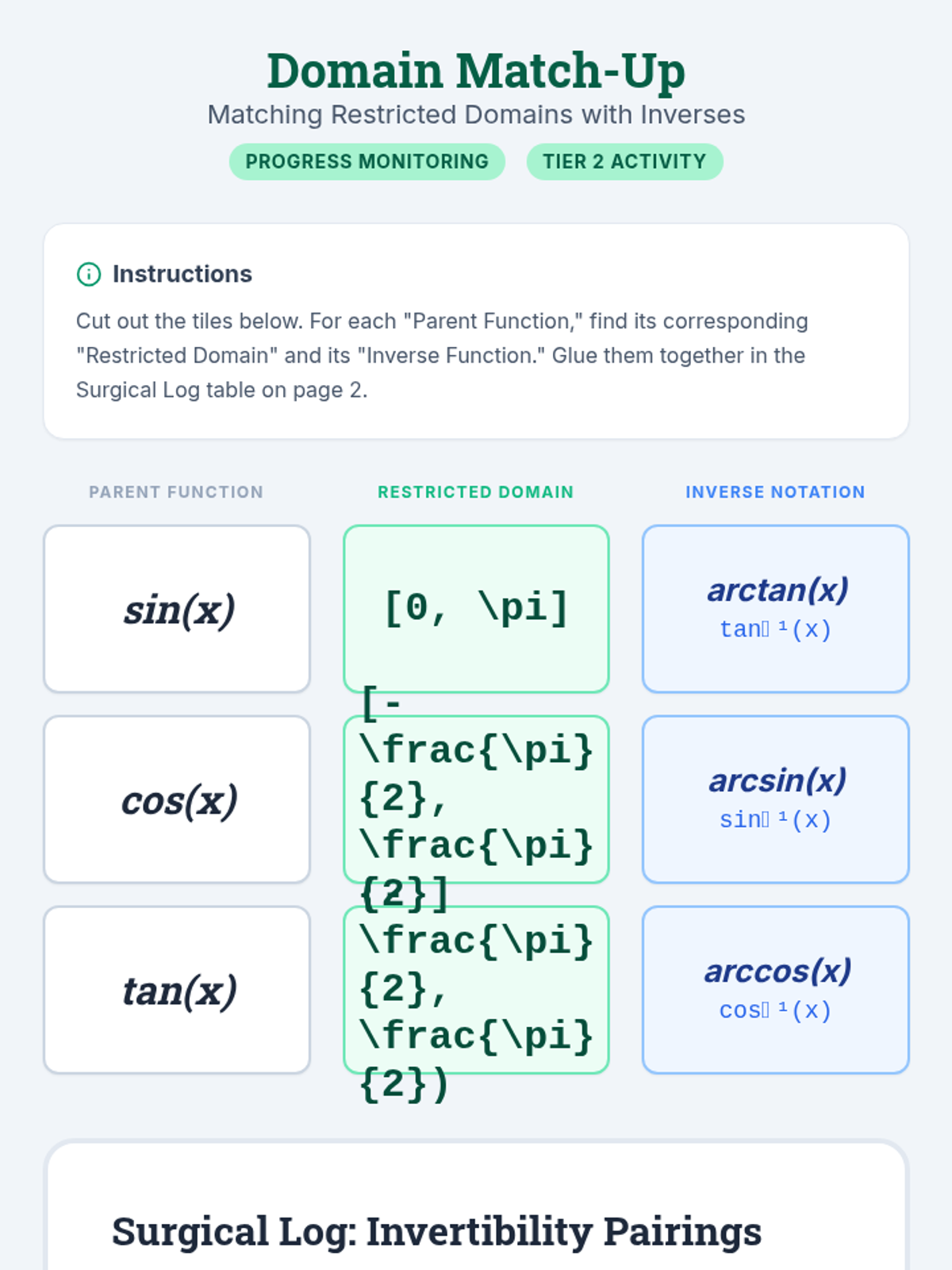
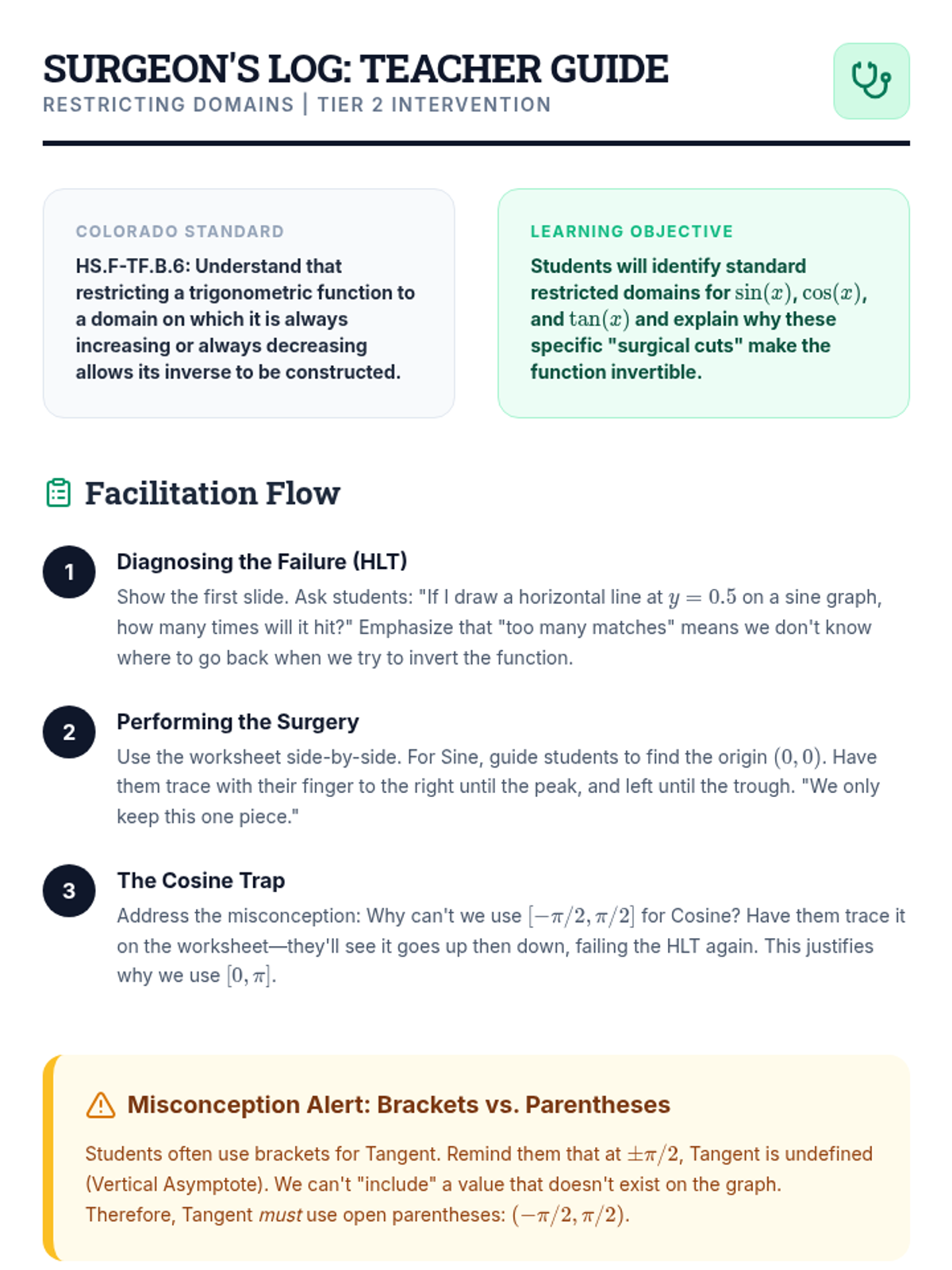
A Tier 2 intervention lesson focused on restricting the domains of trigonometric functions to make them invertible. Students use a 'surgery' metaphor to identify and isolate monotonic intervals for sine, cosine, and tangent.
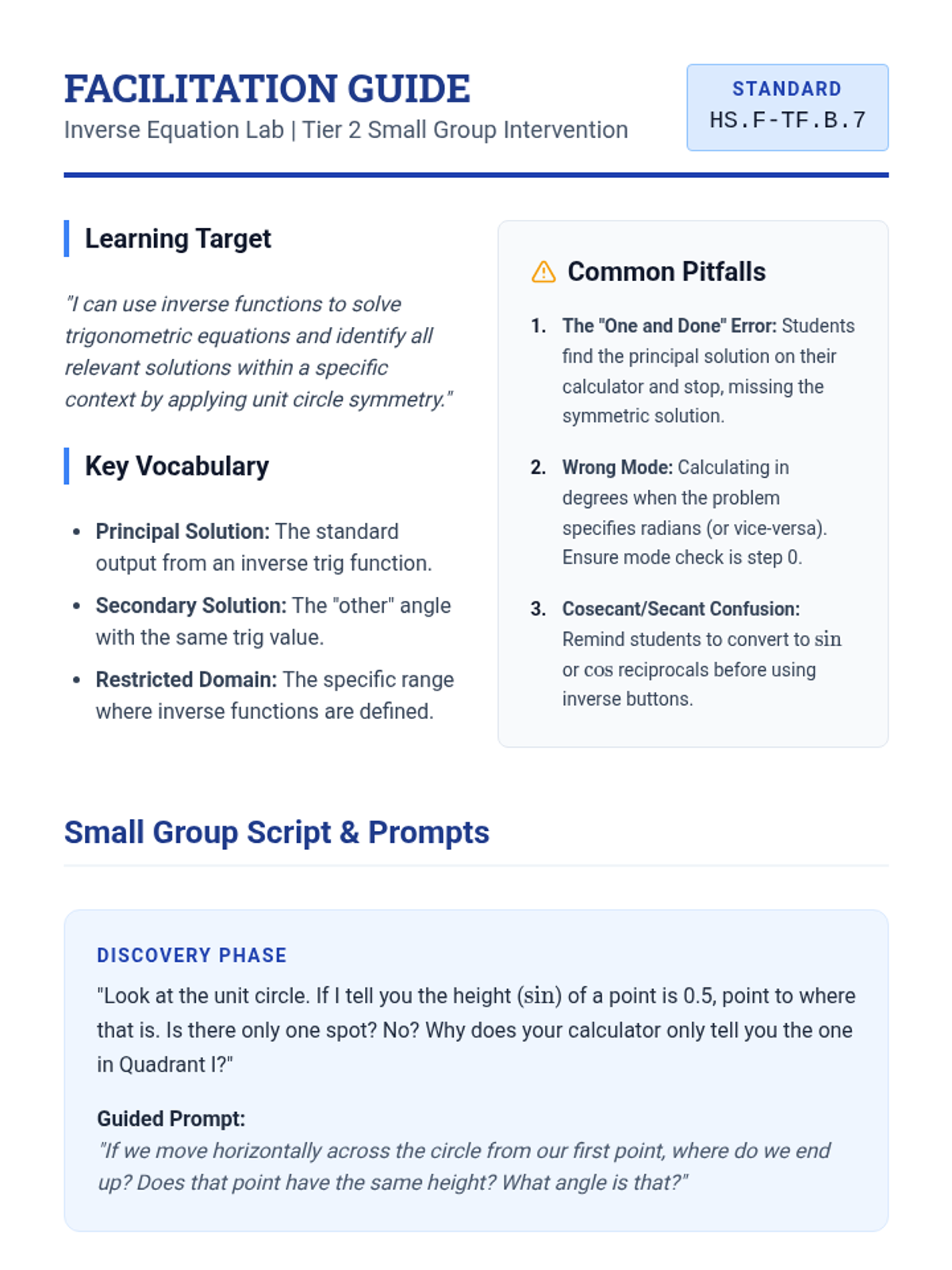
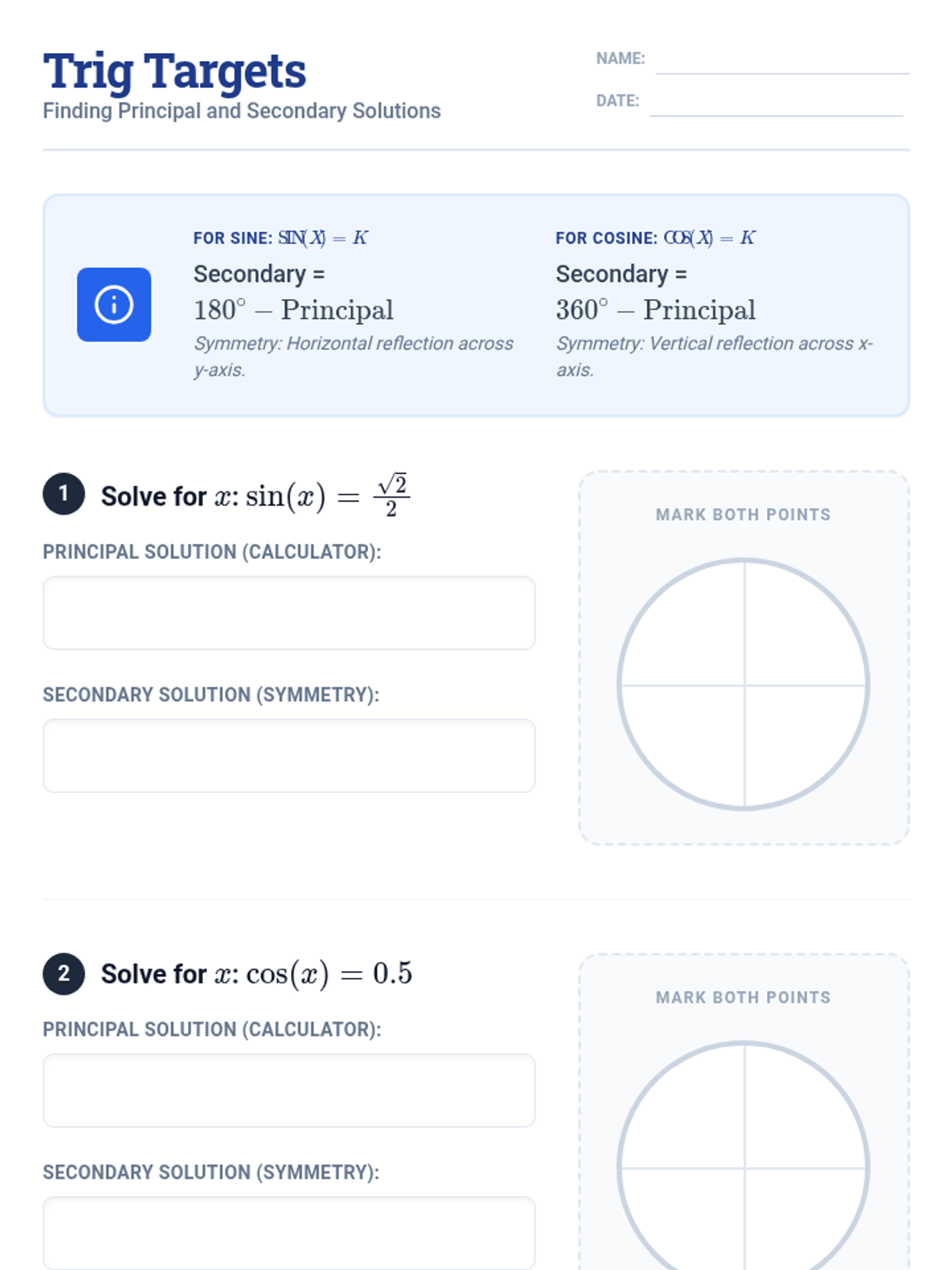
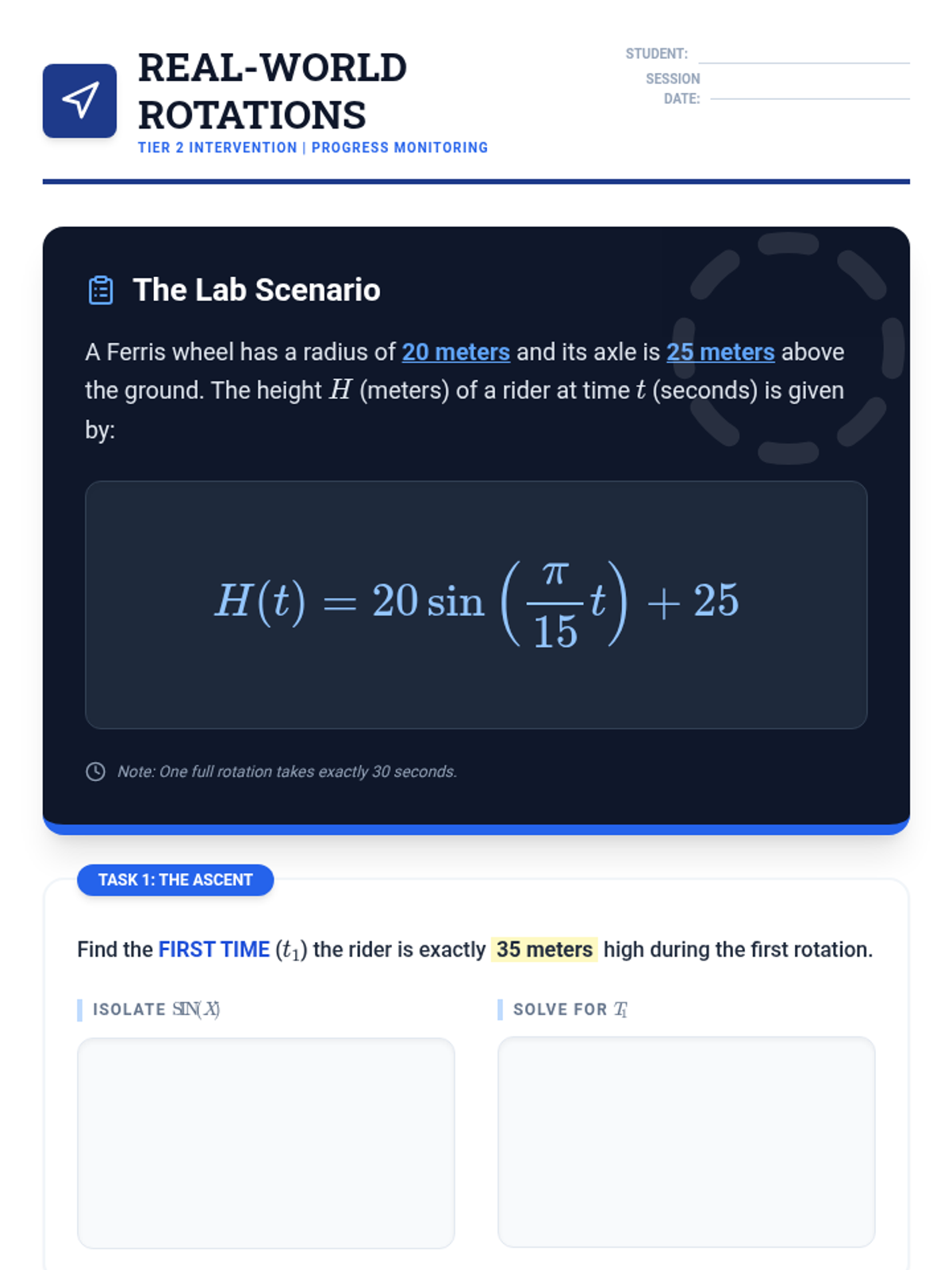
This lesson focuses on solving trigonometric equations using inverse functions, emphasizing the discovery of multiple solutions through unit circle symmetry and applying these skills to real-world periodic contexts.
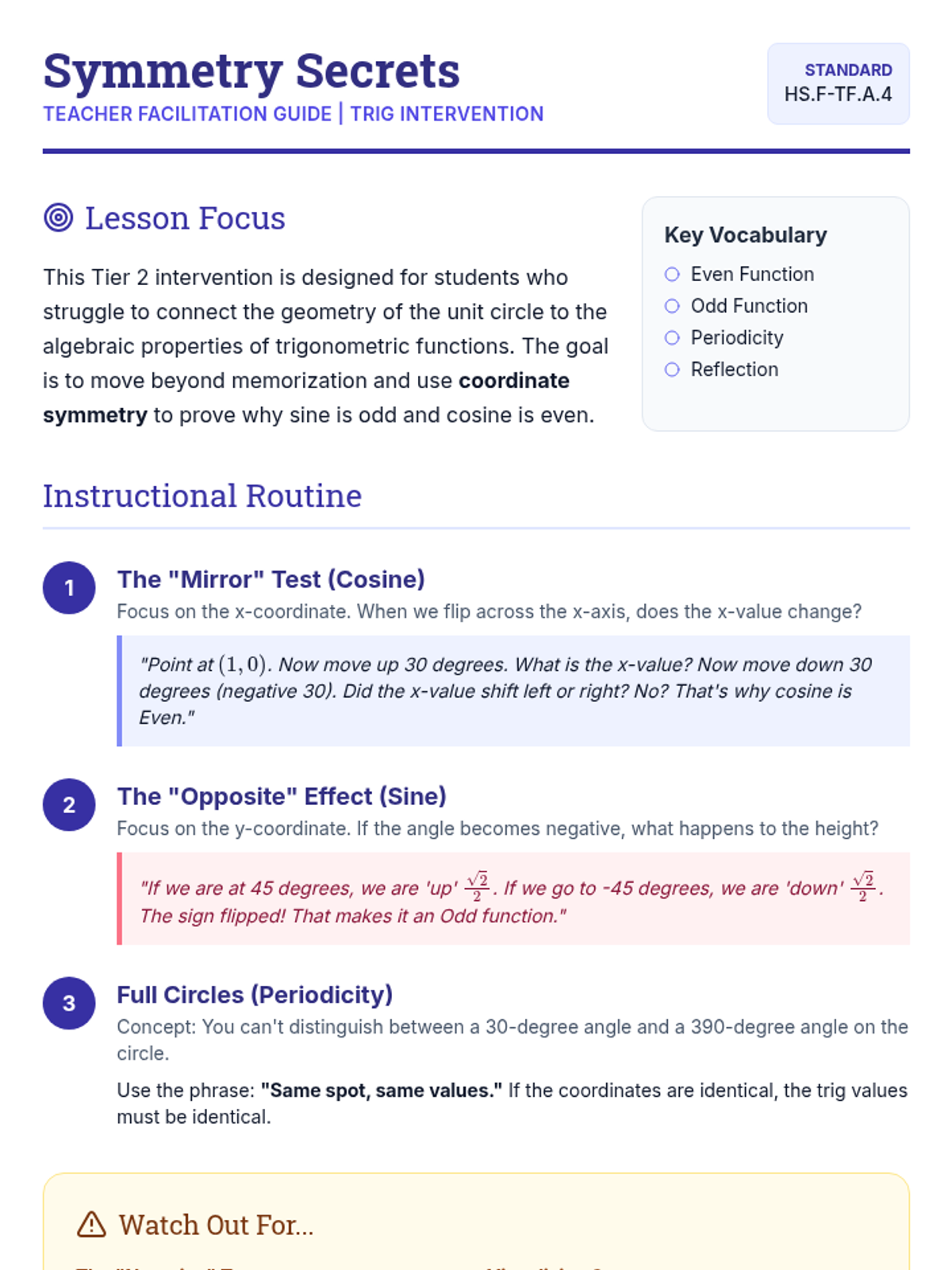
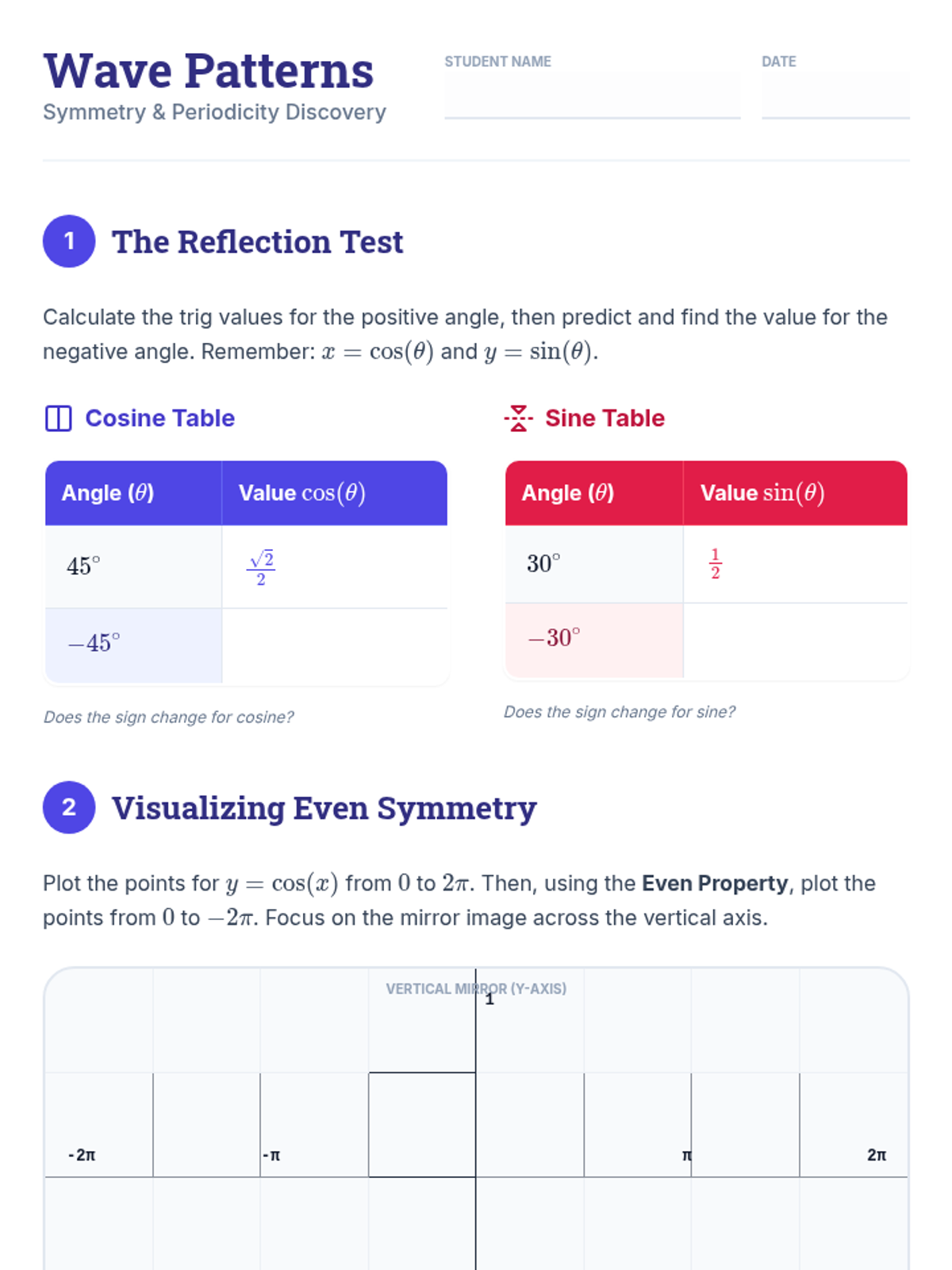
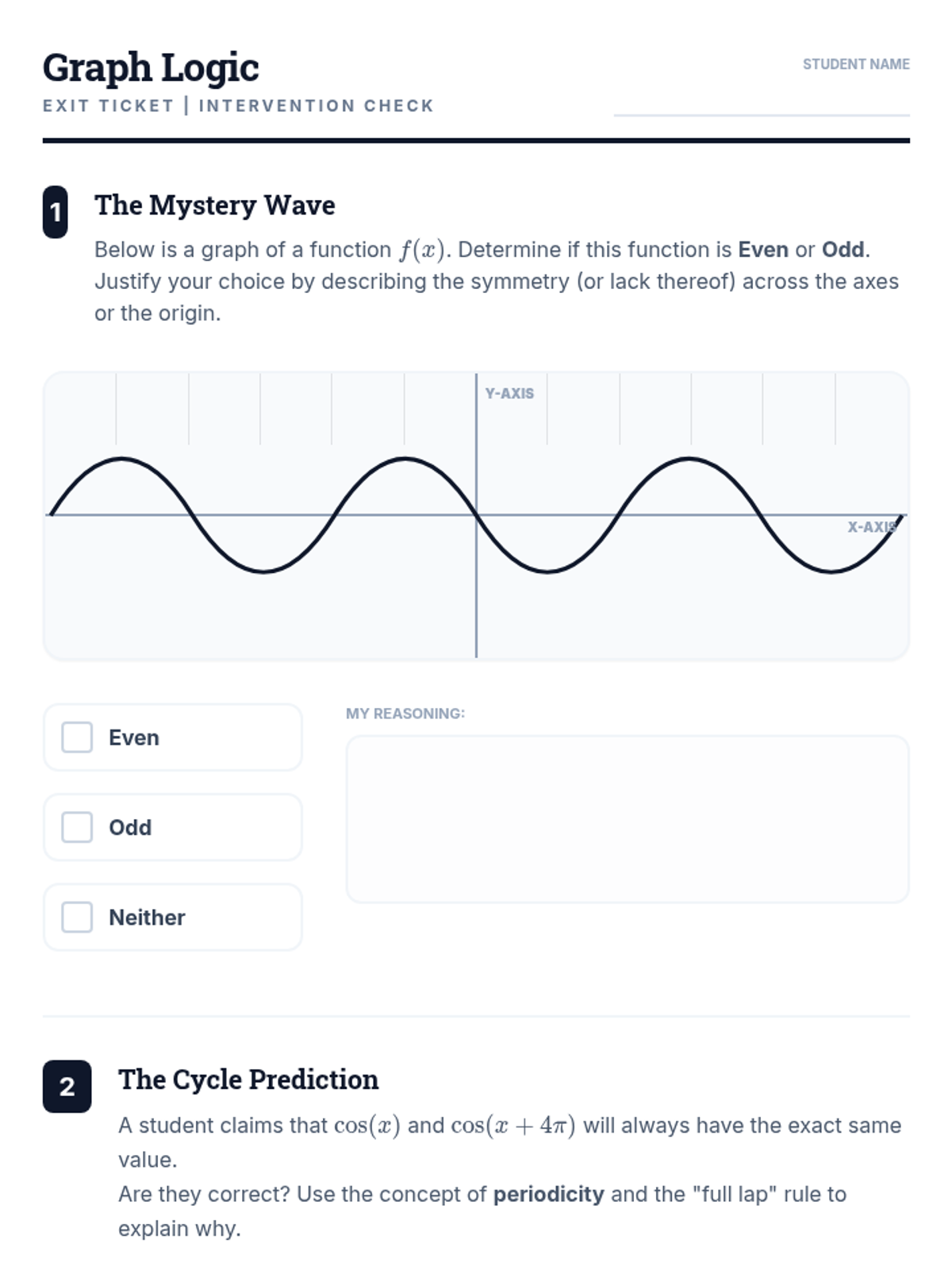
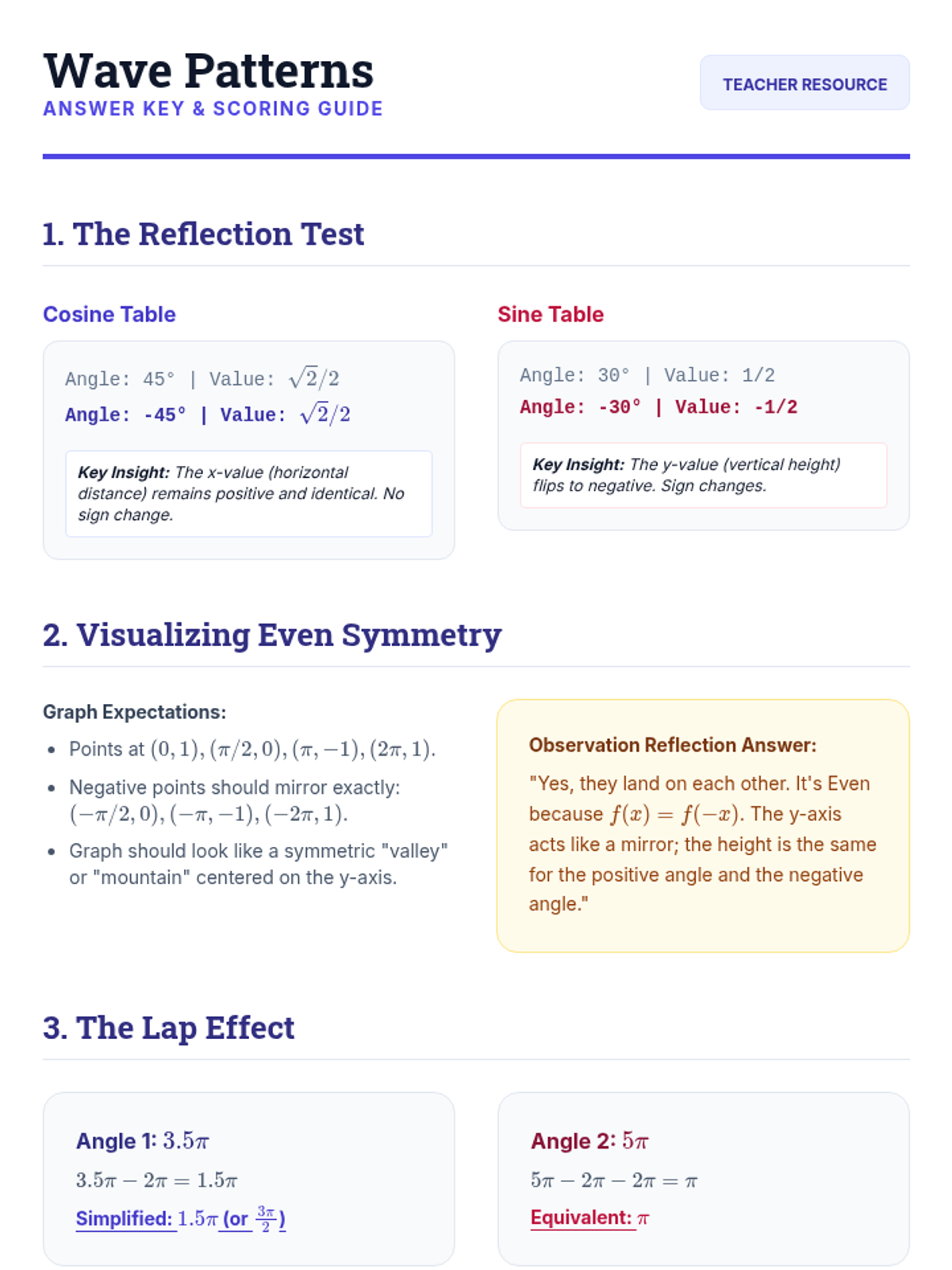
A targeted intervention lesson for high school students to master the symmetry (even/odd) and periodicity of sine and cosine functions using the unit circle and coordinate-based reasoning.
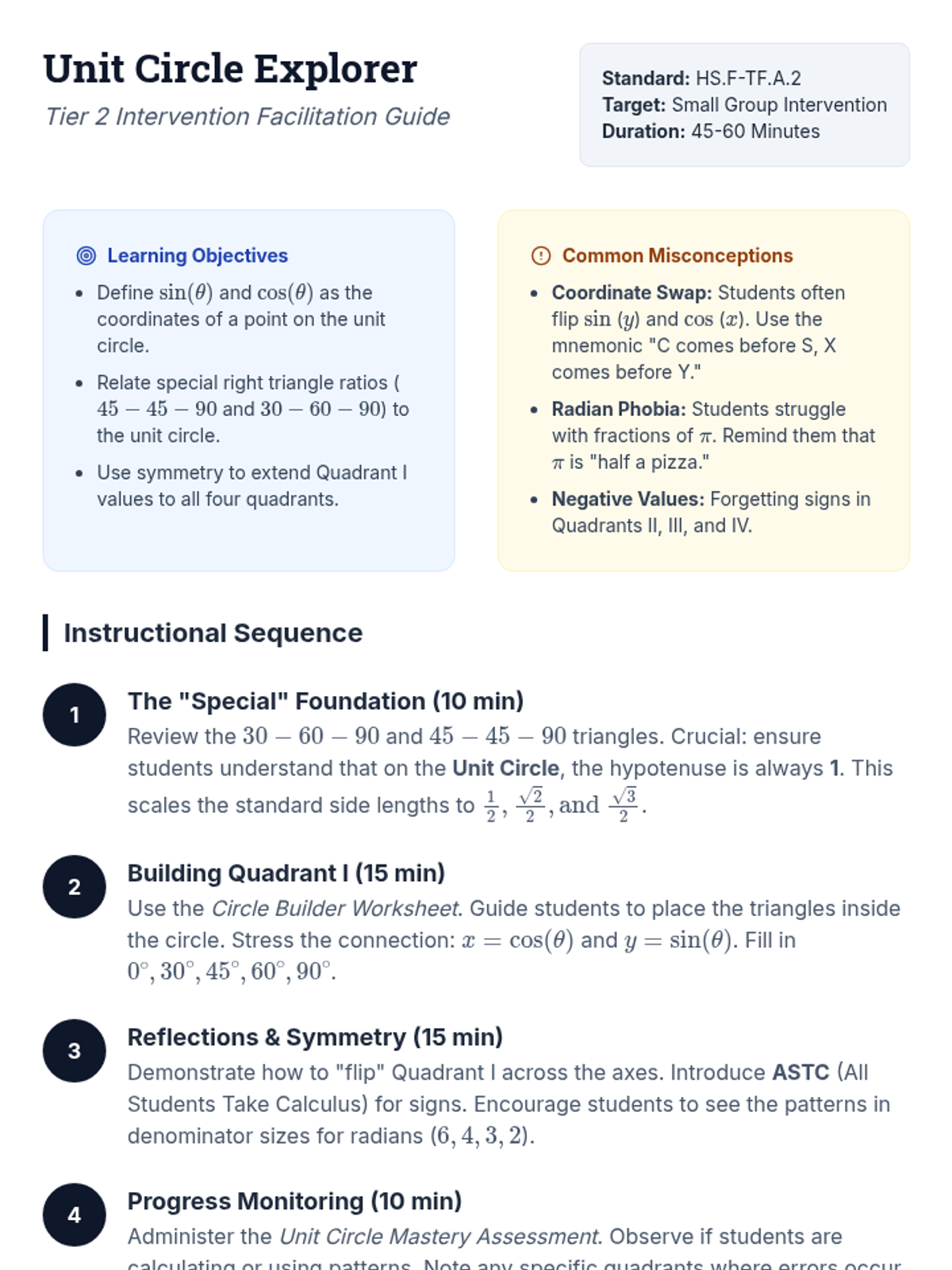
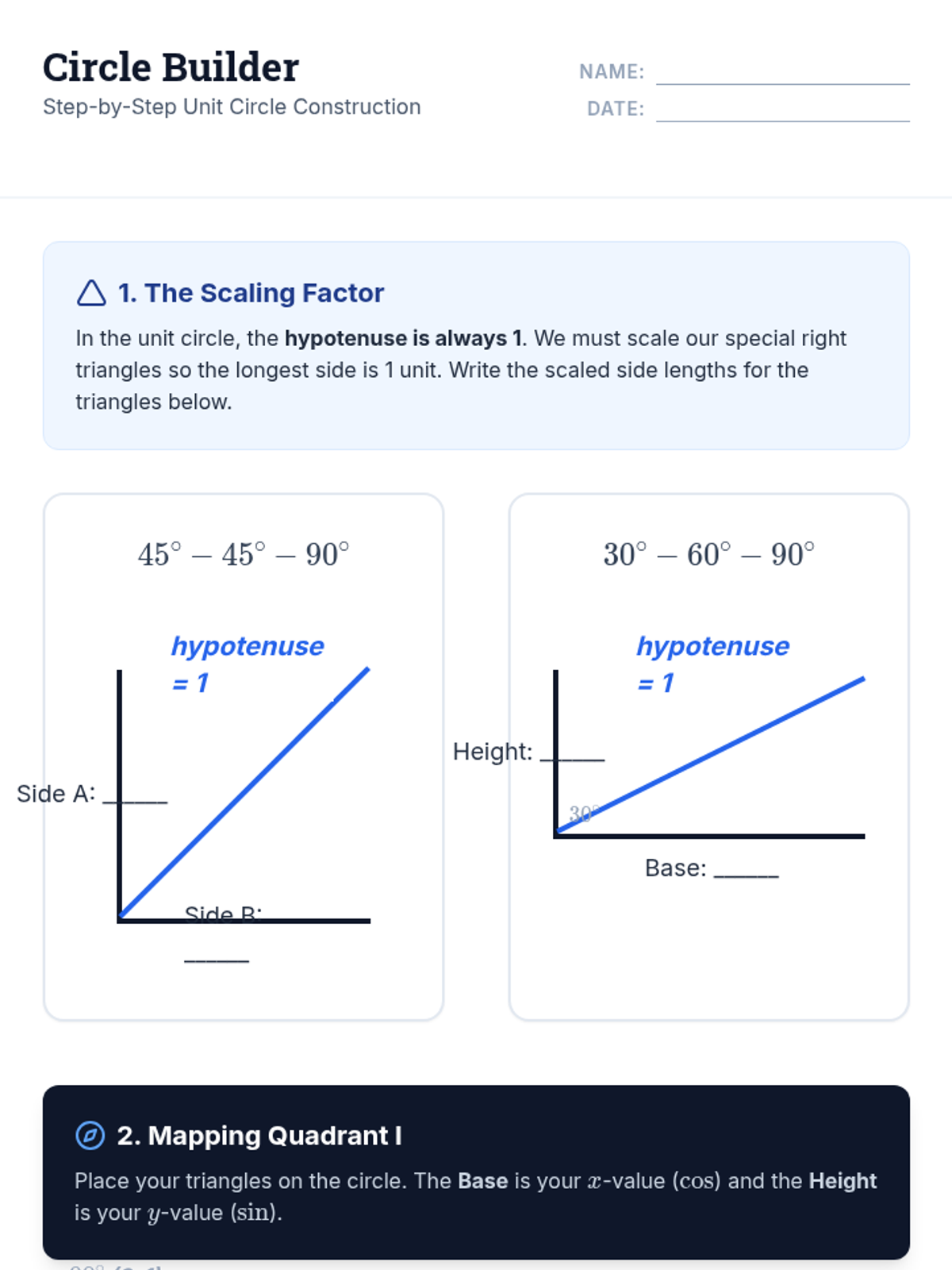
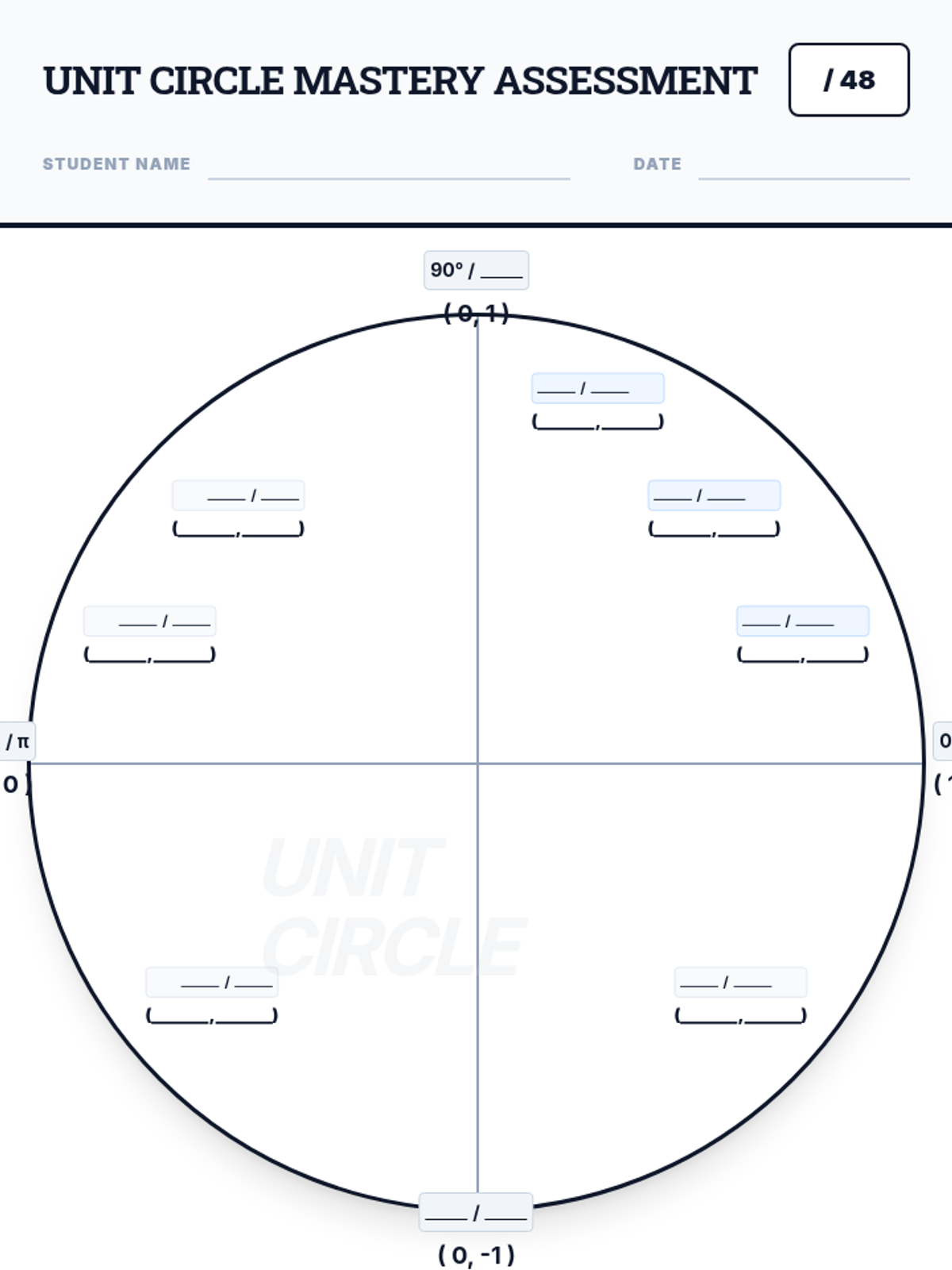
A targeted Tier 2 intervention lesson designed to help students master the unit circle by connecting special right triangles to coordinate geometry. Students will build the circle step-by-step and learn to evaluate trigonometric functions using symmetry and radian measures.
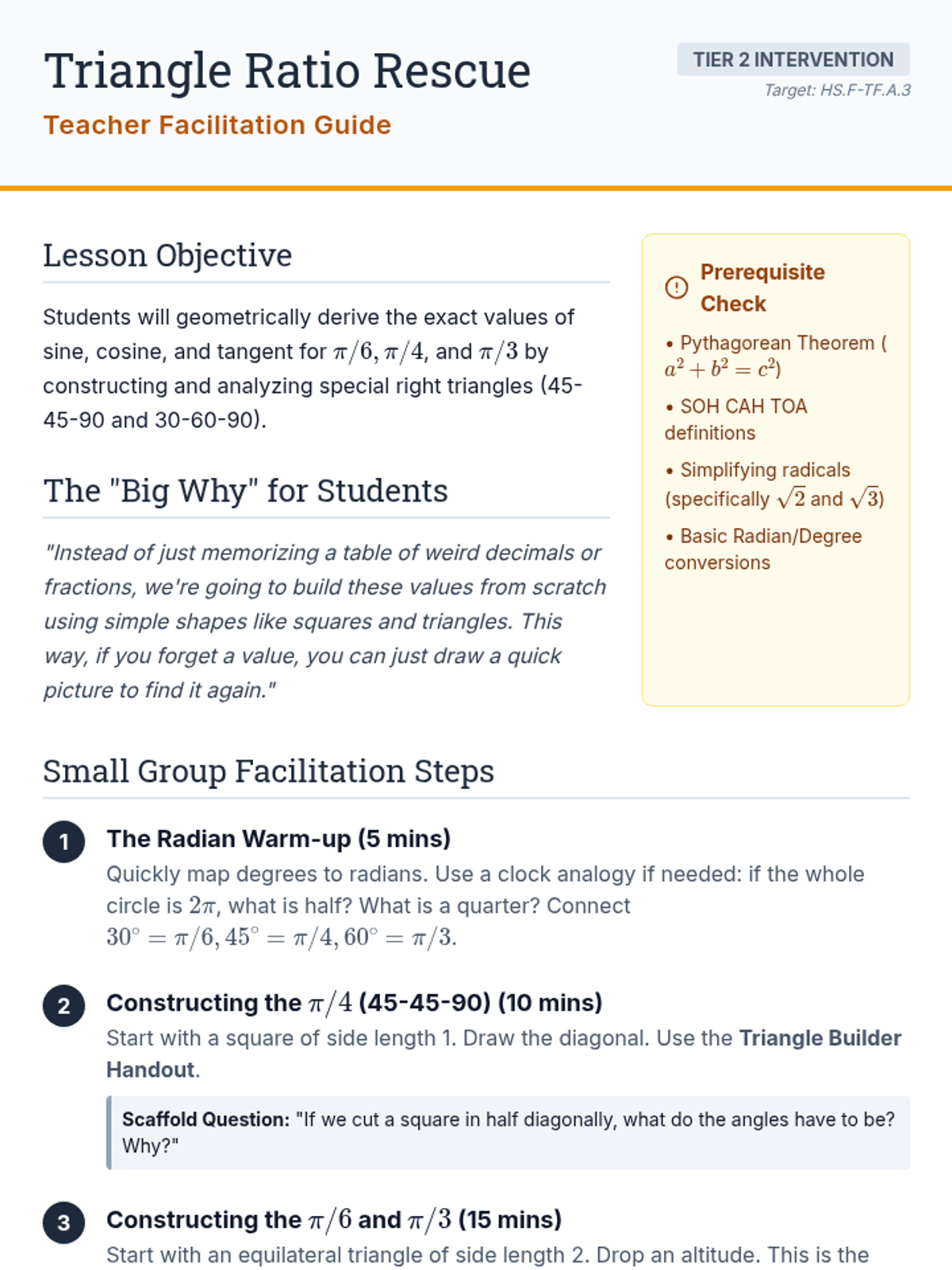
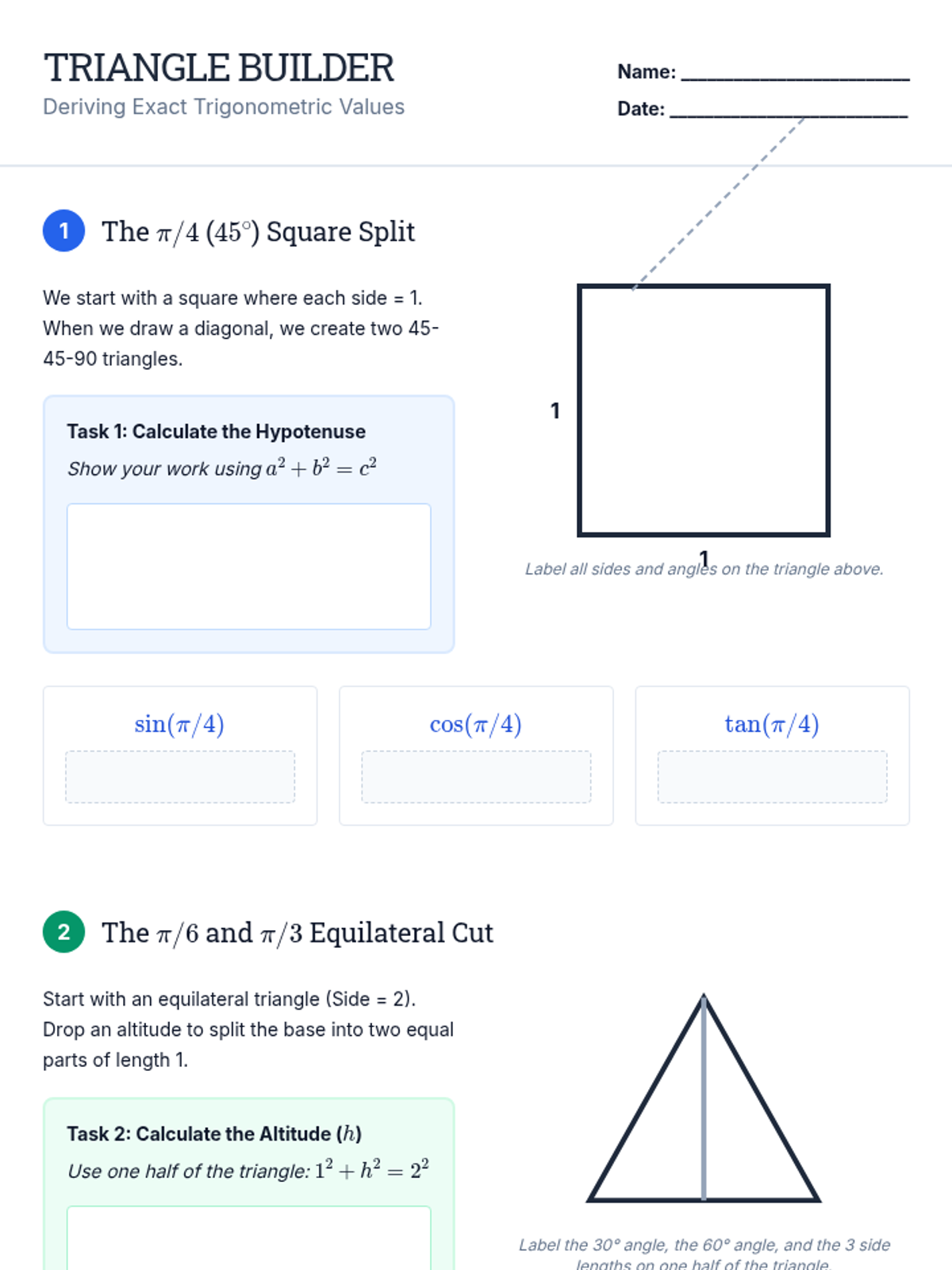
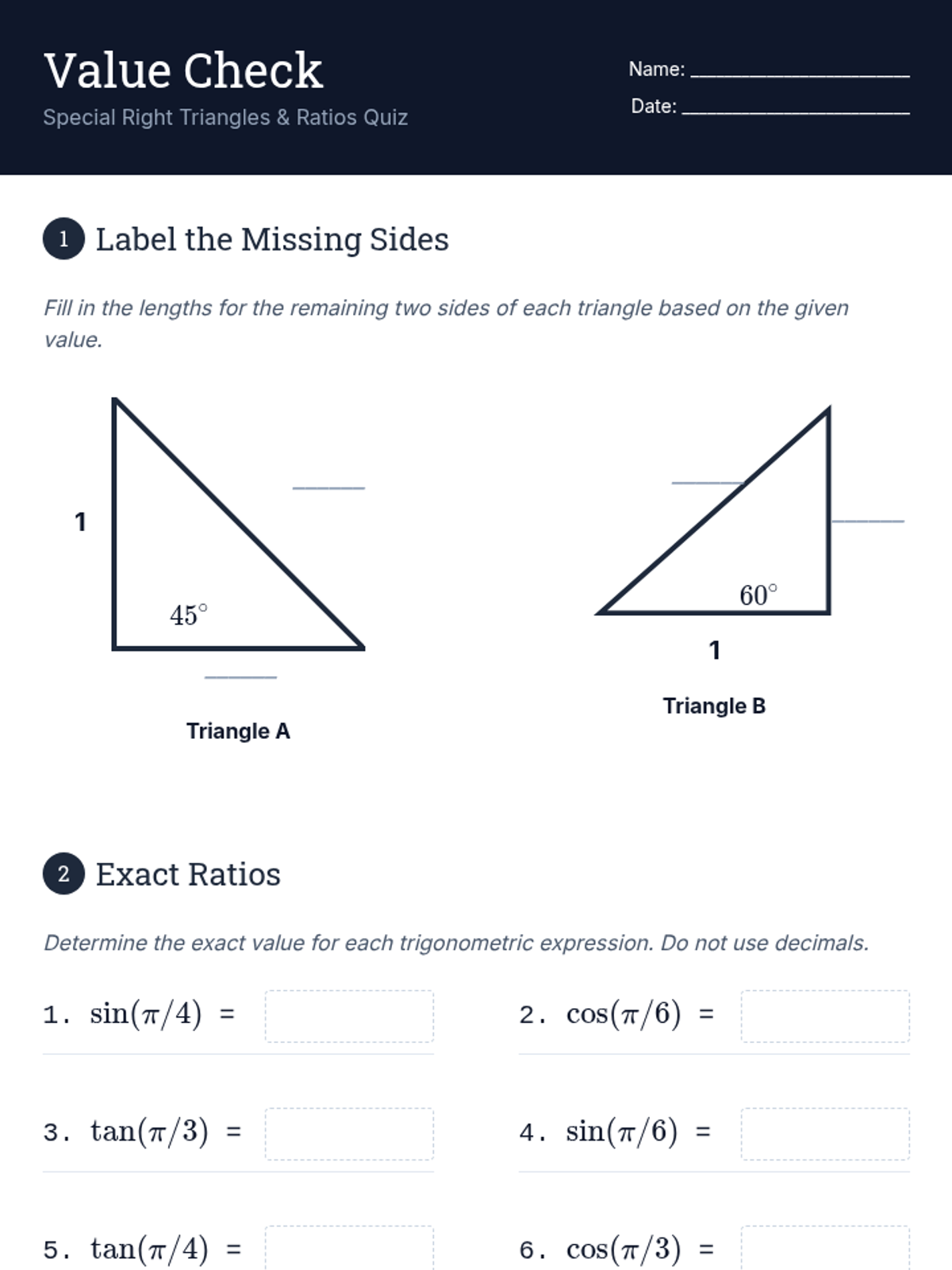
A targeted intervention lesson for small groups to geometrically derive trigonometric ratios for pi/3, pi/4, and pi/6 using special right triangles. This lesson focuses on conceptual understanding through construction and pattern recognition.
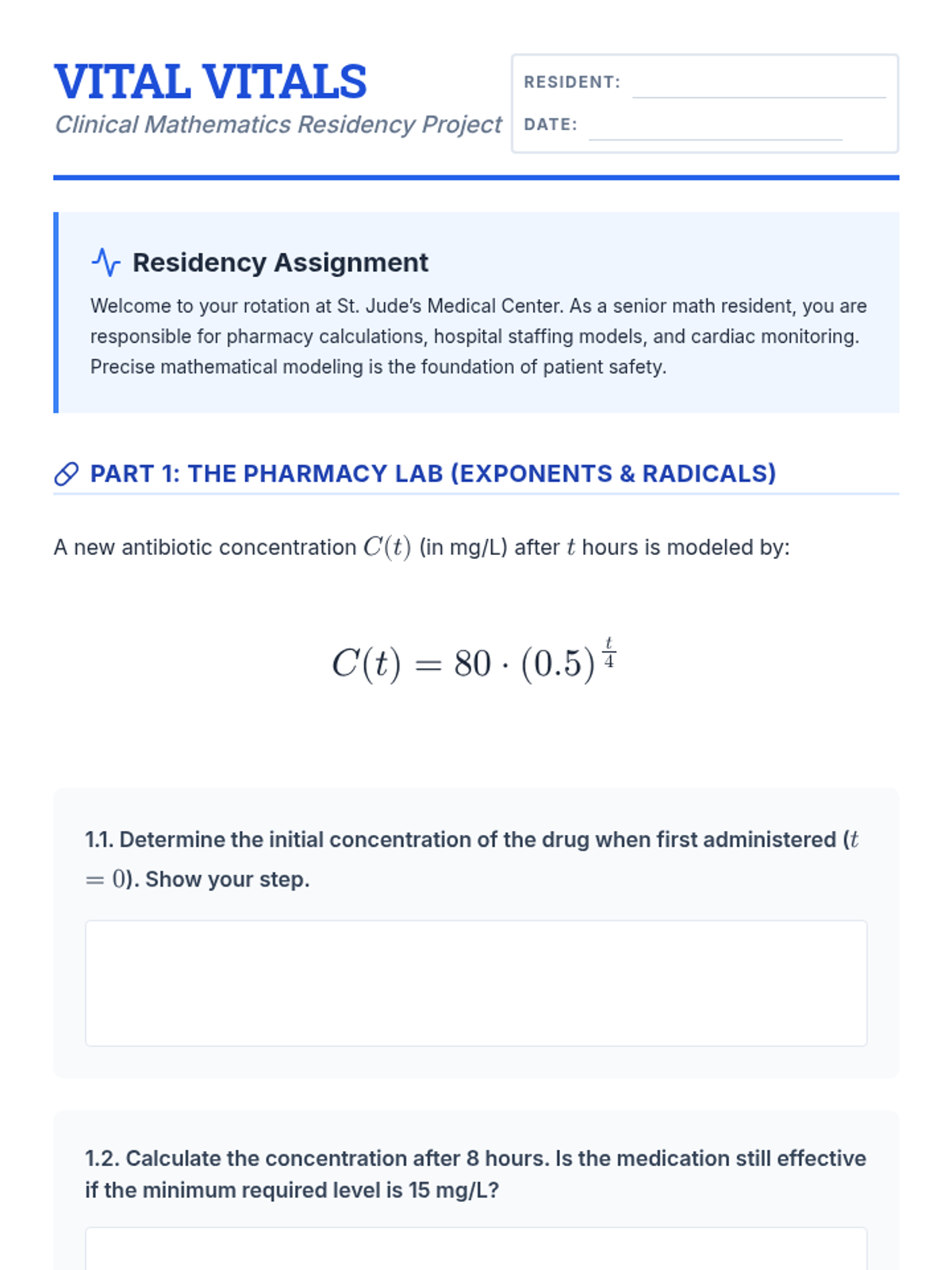
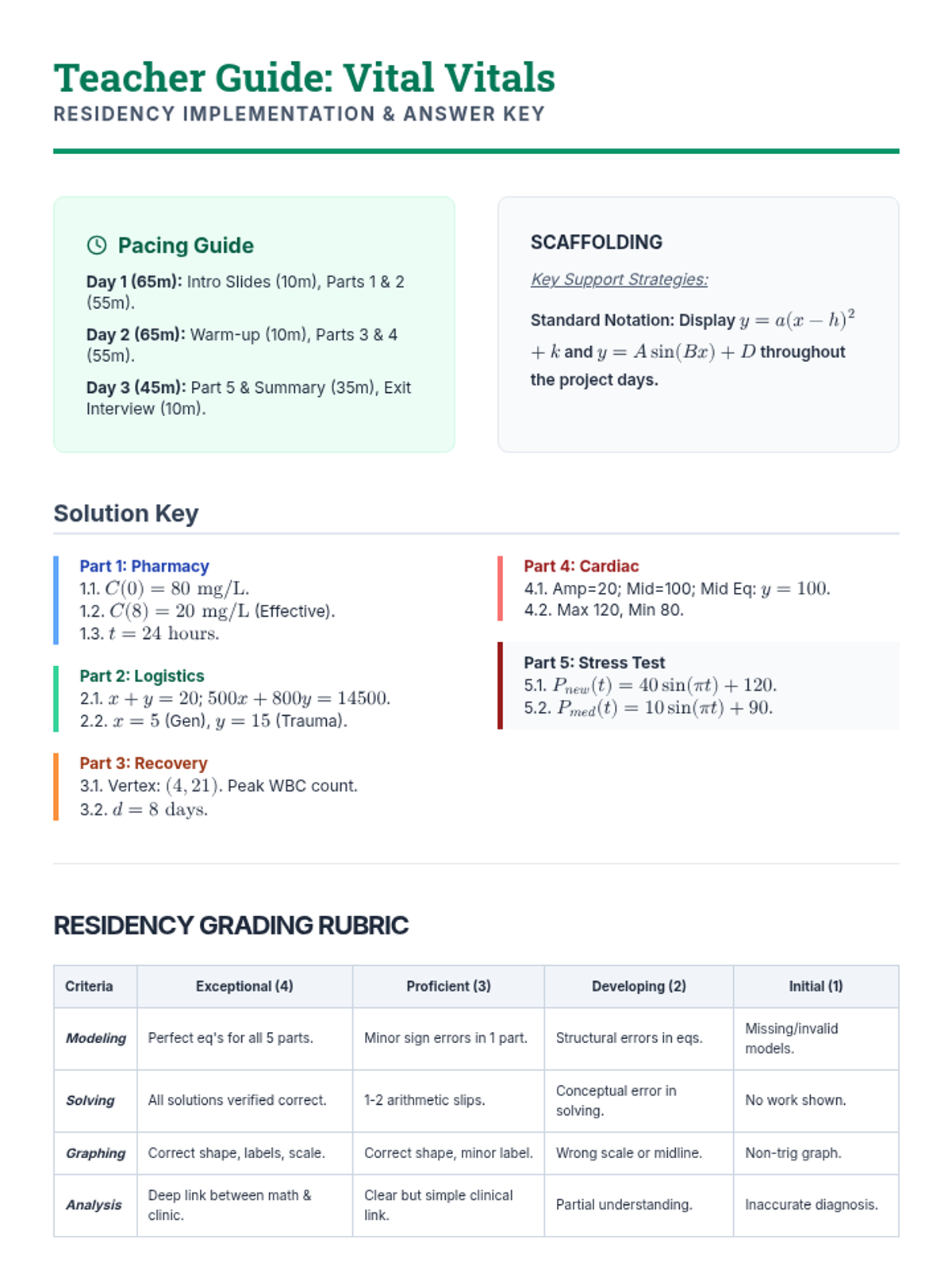
Students act as hospital residents to solve clinical problems using algebra 2 and trigonometry skills. The project spans three days and includes systems of equations and periodic function transformations.
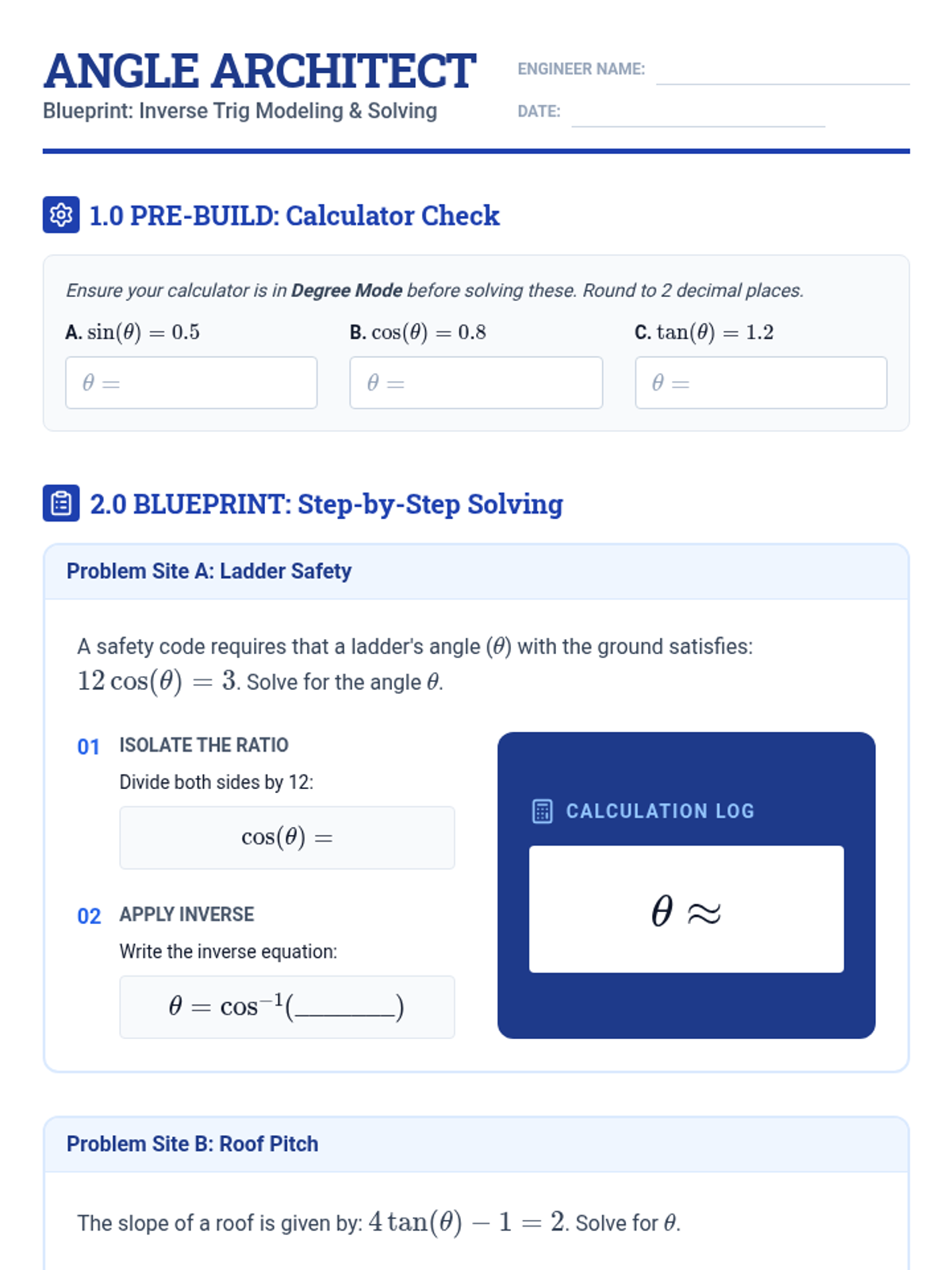
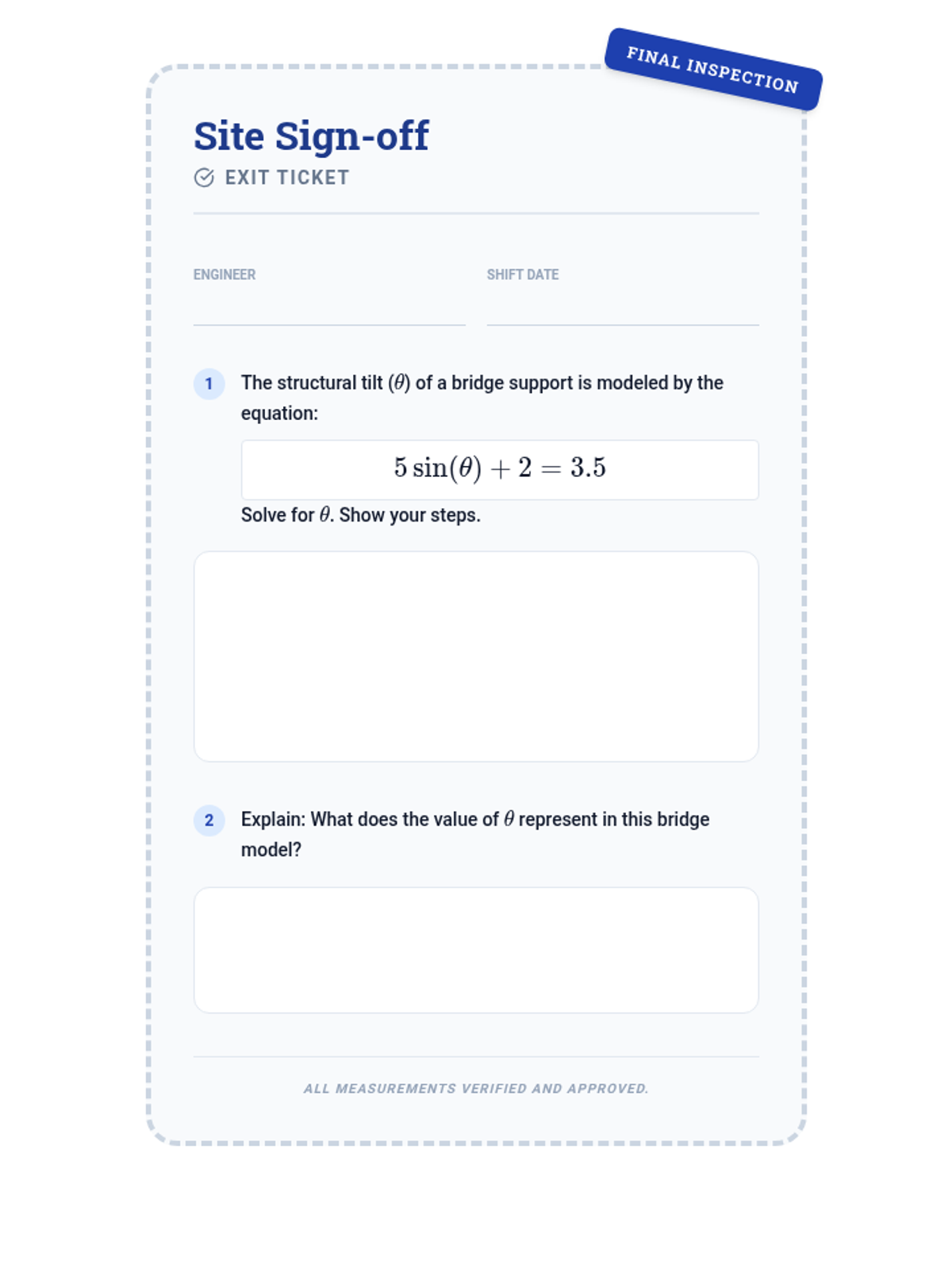
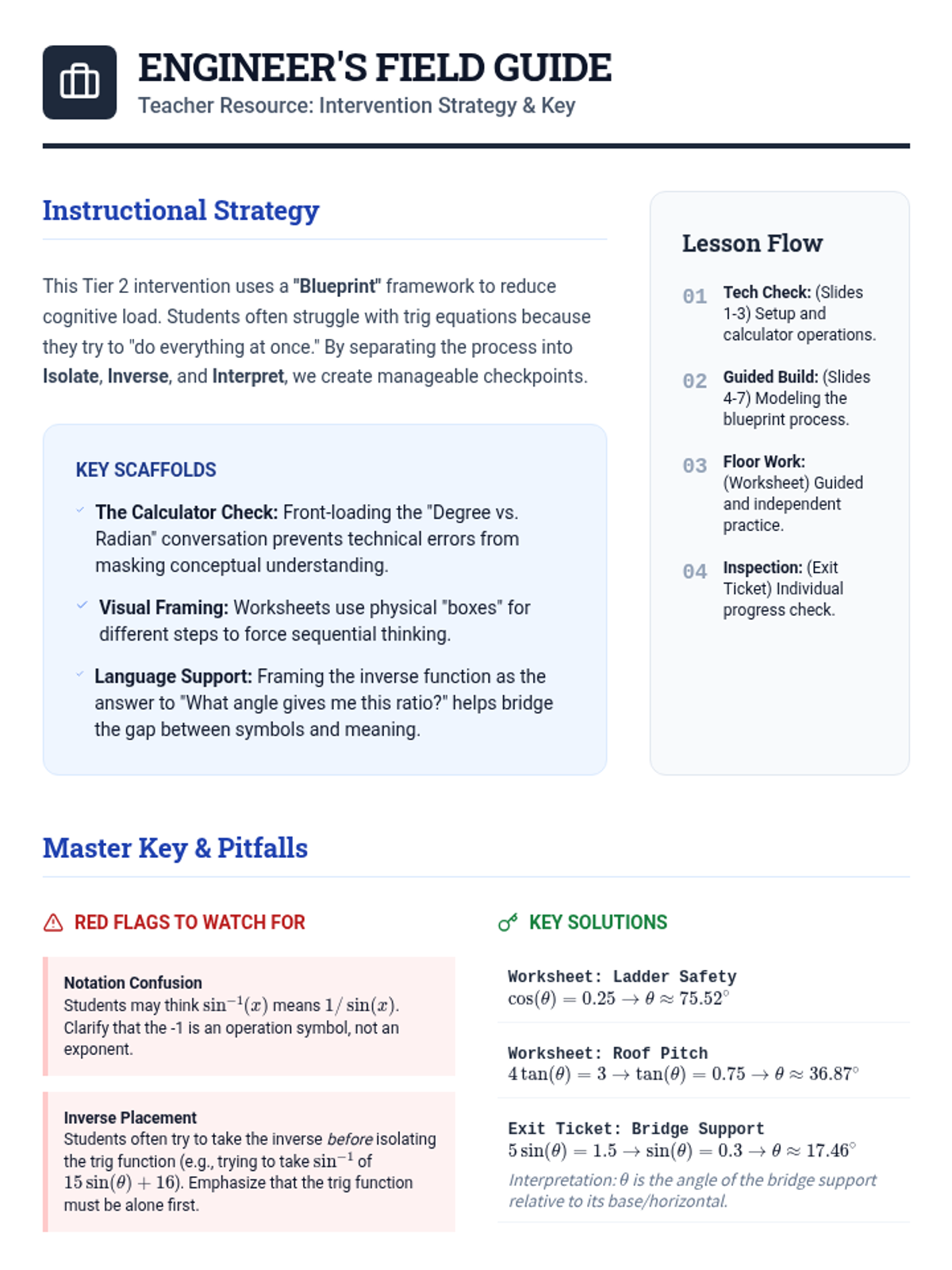
A targeted intervention lesson for high school students focused on solving trigonometric equations using inverse functions. This lesson uses a scaffolded 'blueprint' approach to help students navigate calculator settings, step-by-step equation solving, and interpreting results in real-world modeling contexts.
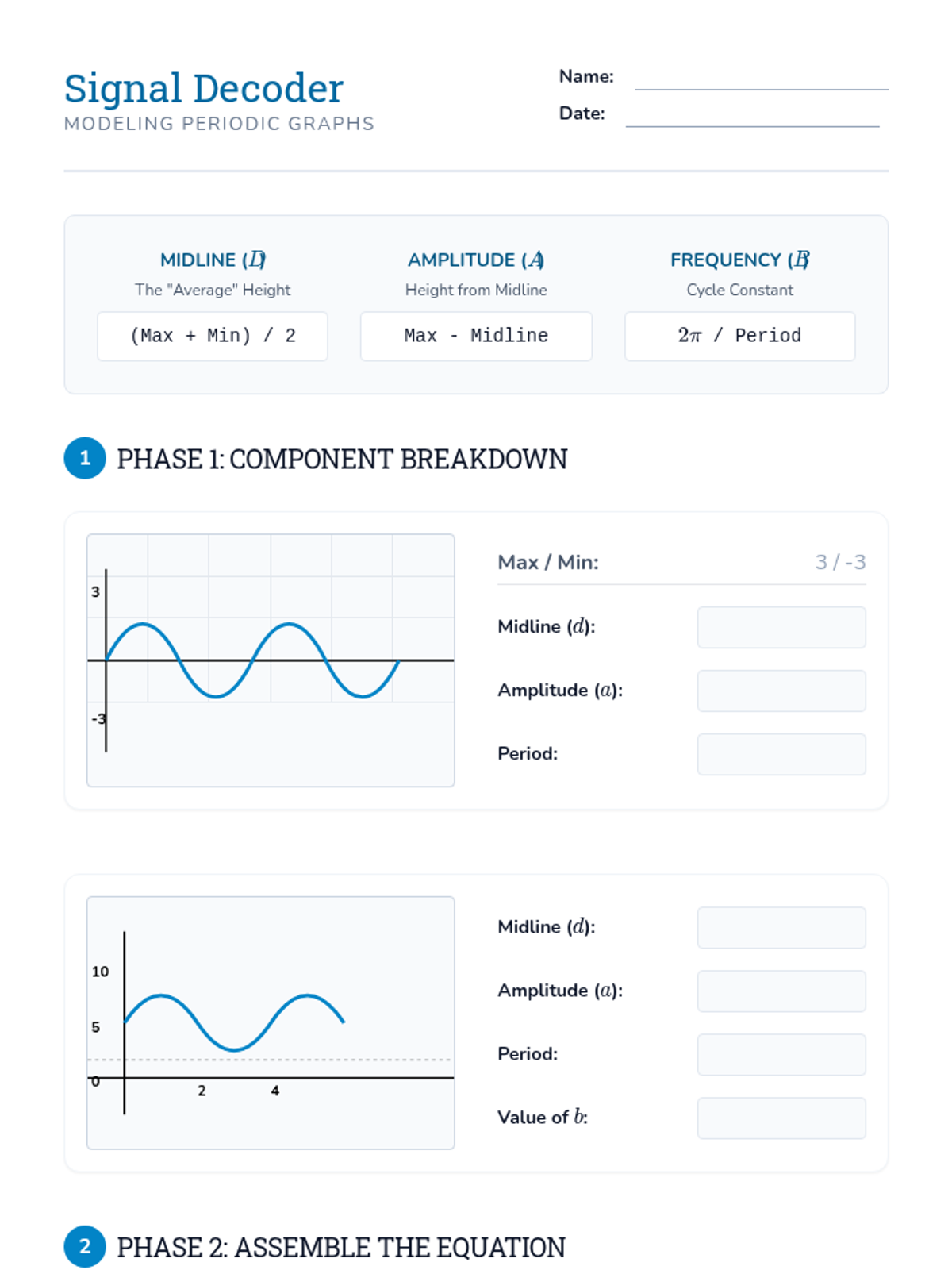
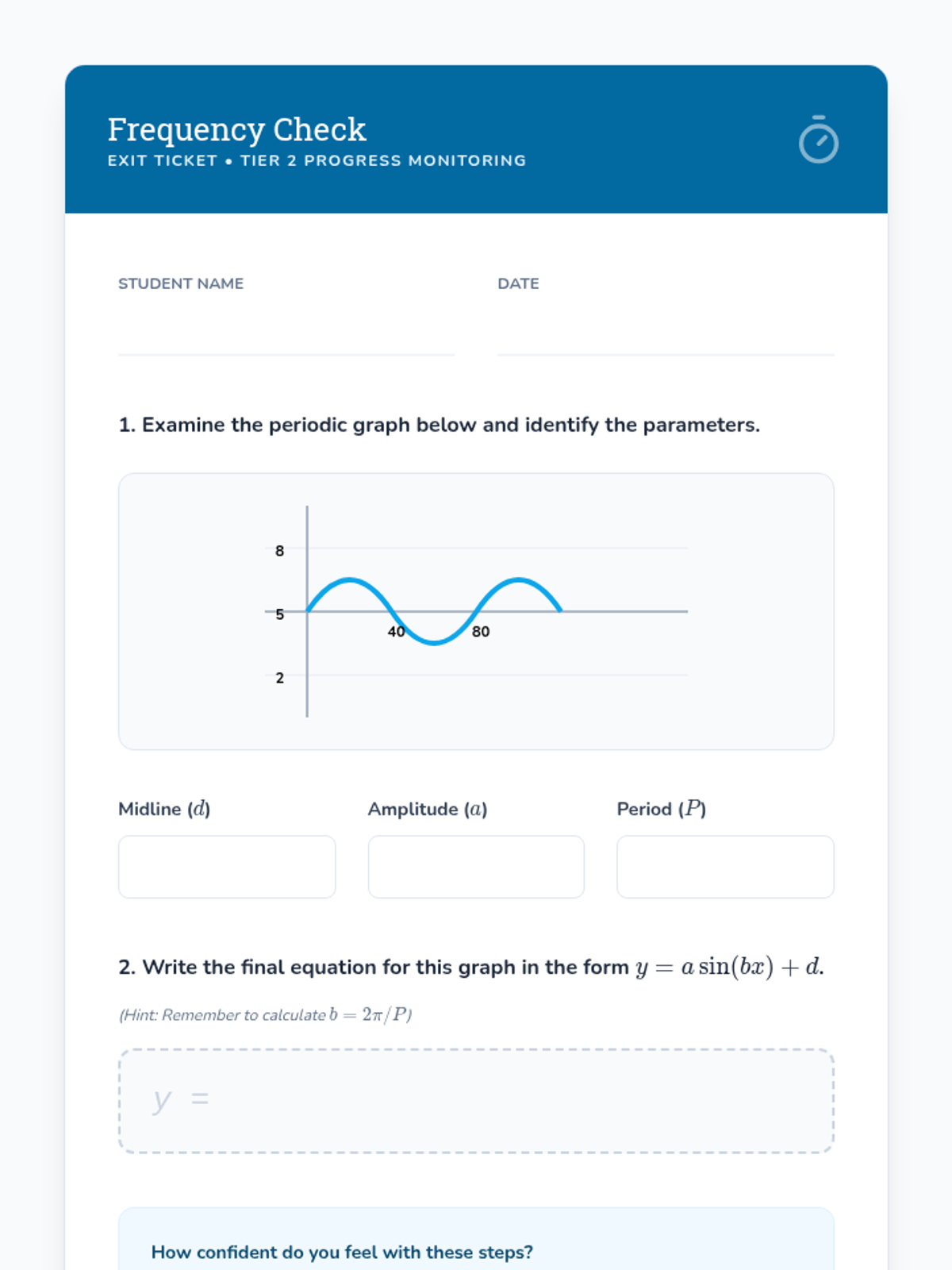
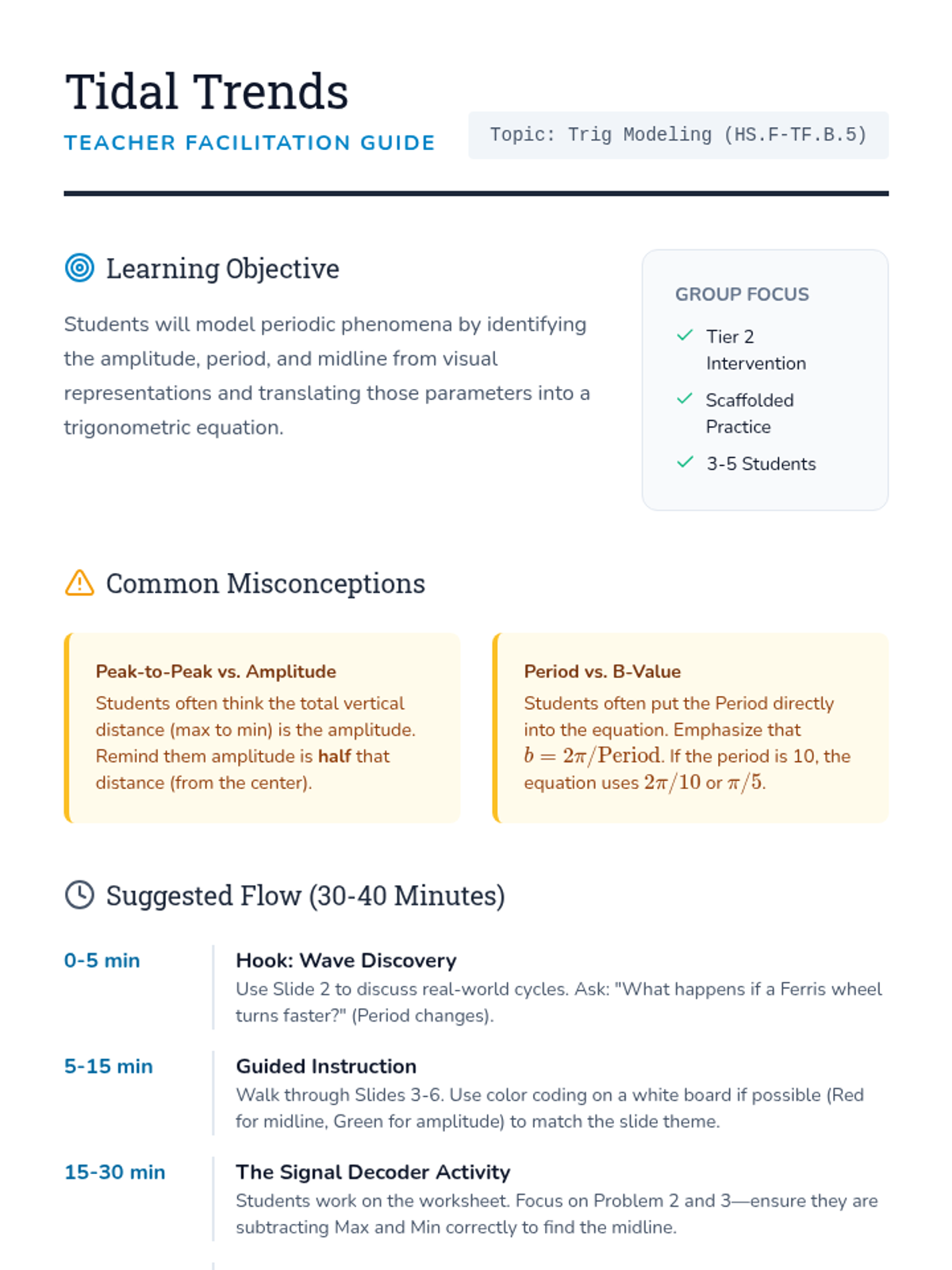
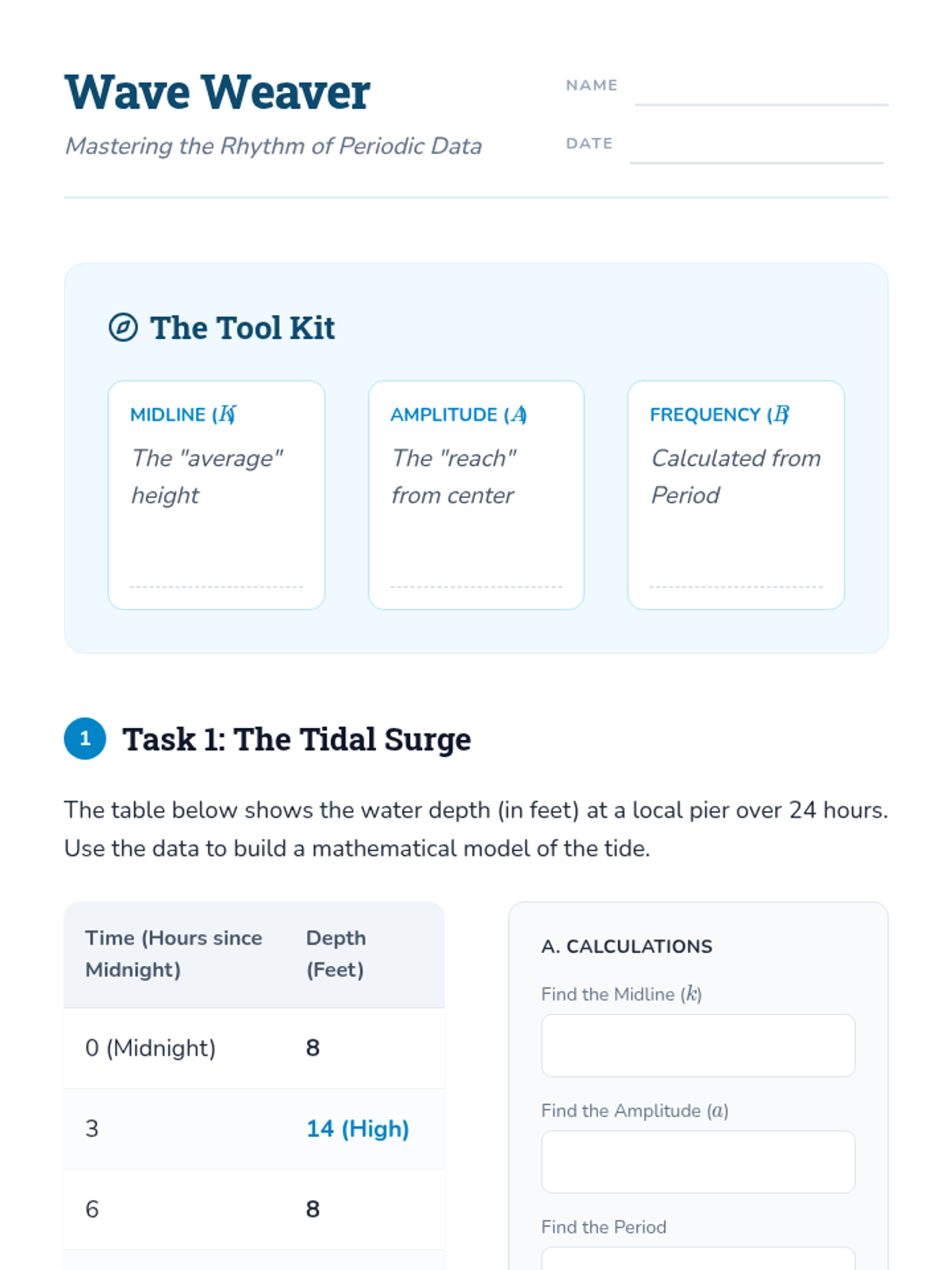
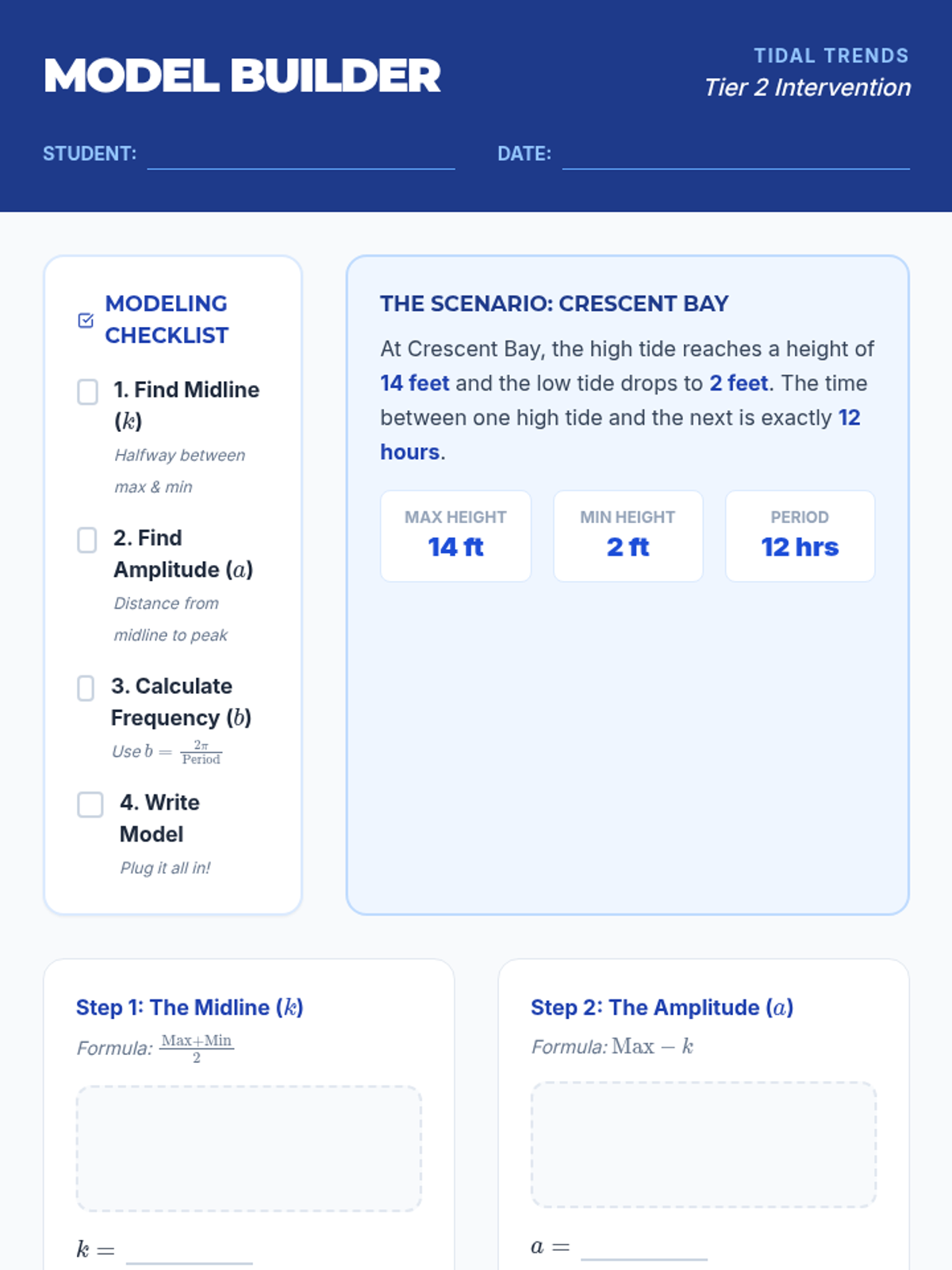
A Tier 2 small group intervention focused on identifying and modeling periodic parameters (amplitude, midline, and period) from graphs to build trigonometric equations. Students progress from visual identification to algebraic representation using a scaffolded approach.
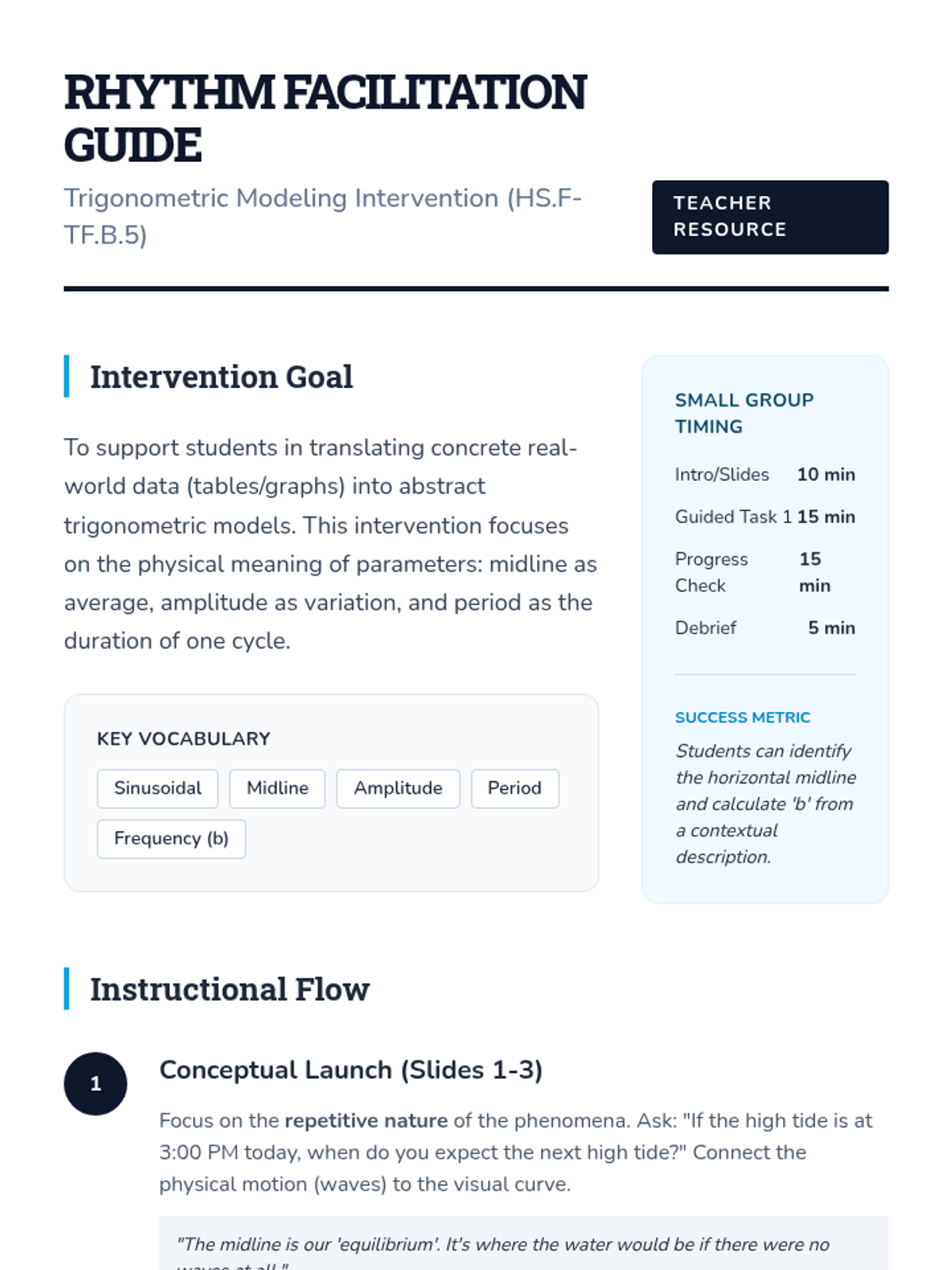
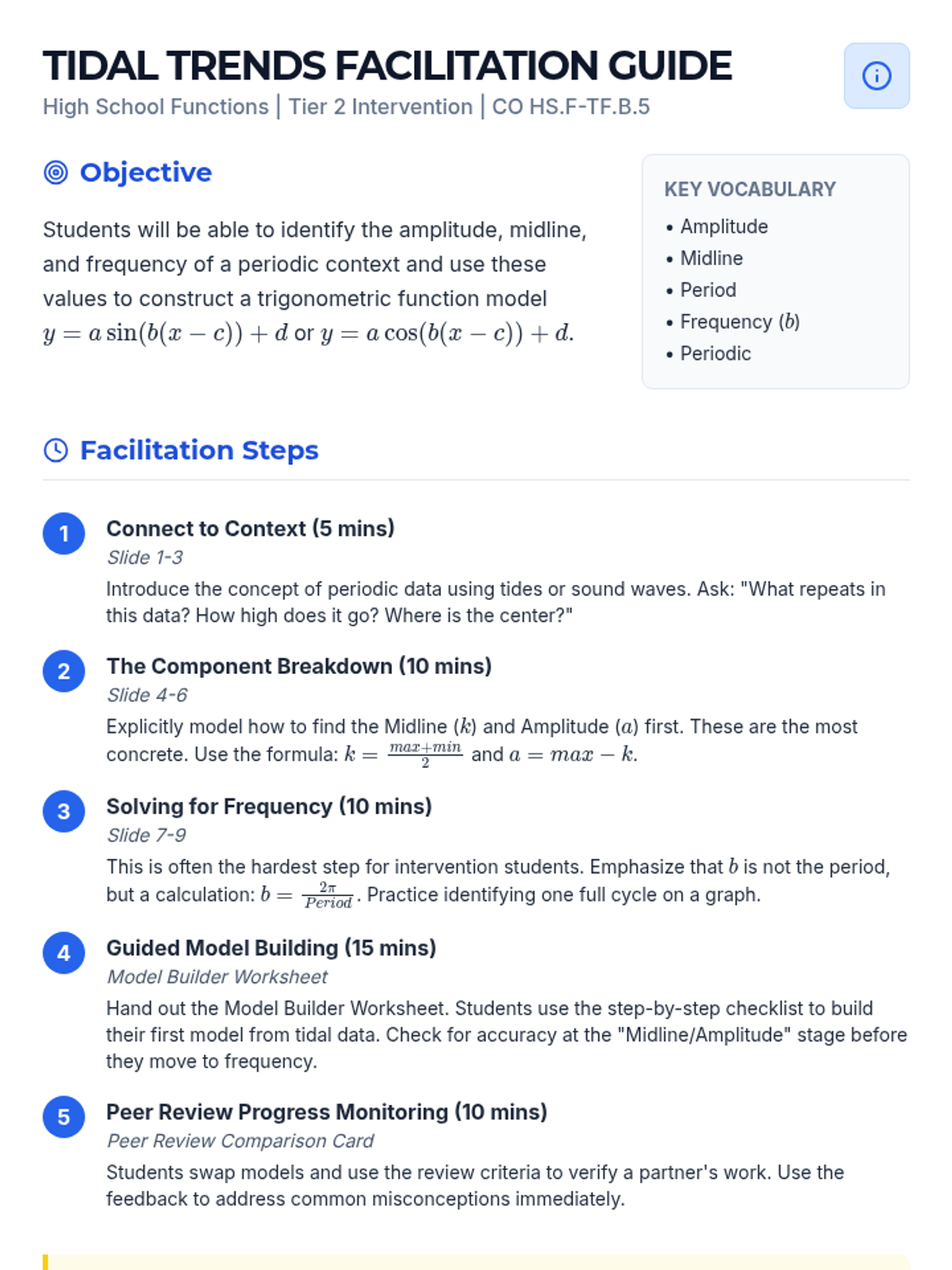
A Tier 2 small group intervention lesson focused on modeling real-world periodic phenomena using trigonometric functions. Students will learn to translate data from tables and graphs into sinusoidal equations, specifically targeting Colorado standard HS.F-TF.B.5.
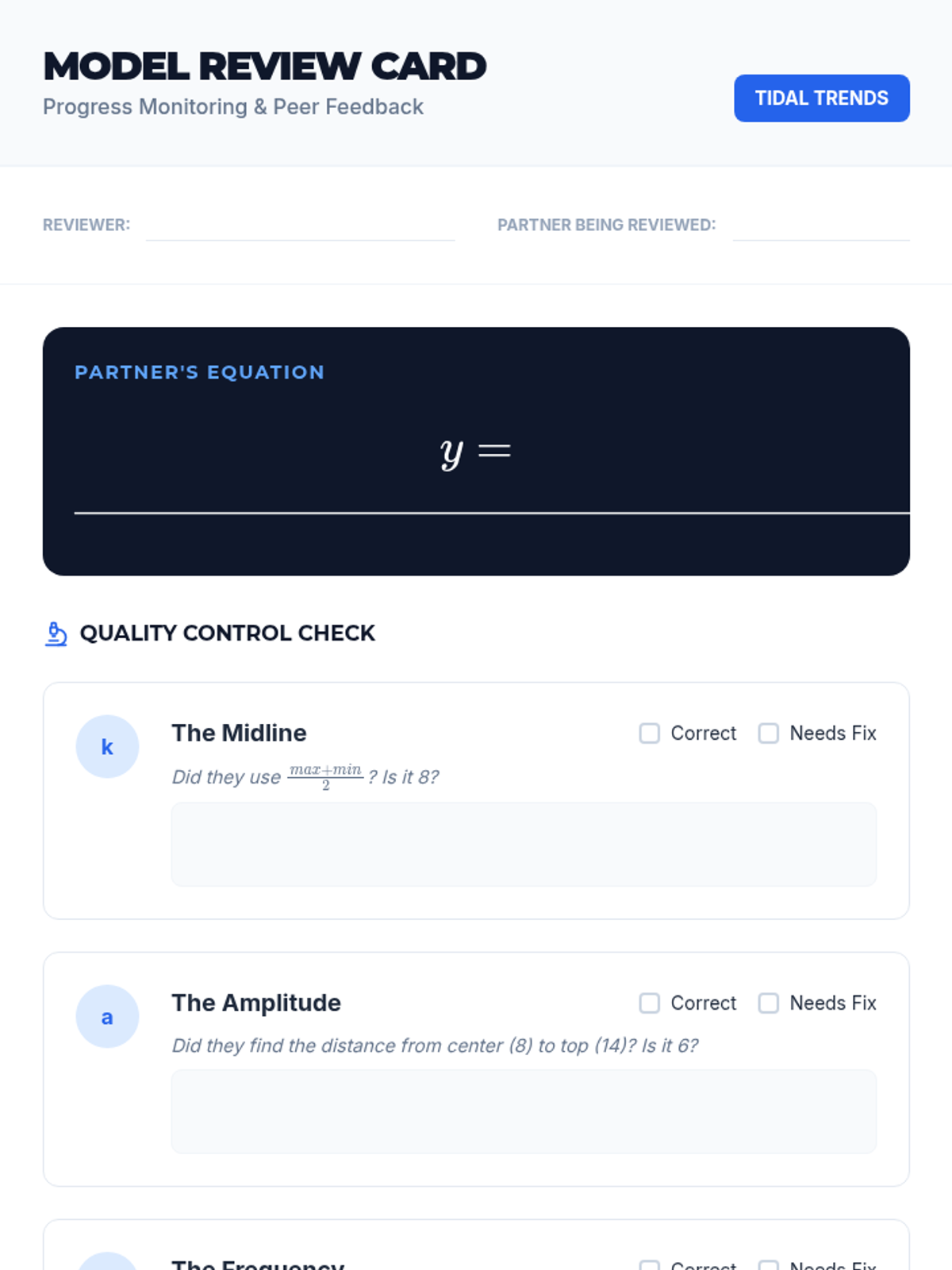
A Tier 2 intervention lesson focused on modeling periodic phenomena using trigonometric functions. Students learn to extract amplitude, midline, and frequency from real-world data to construct sine and cosine equations.
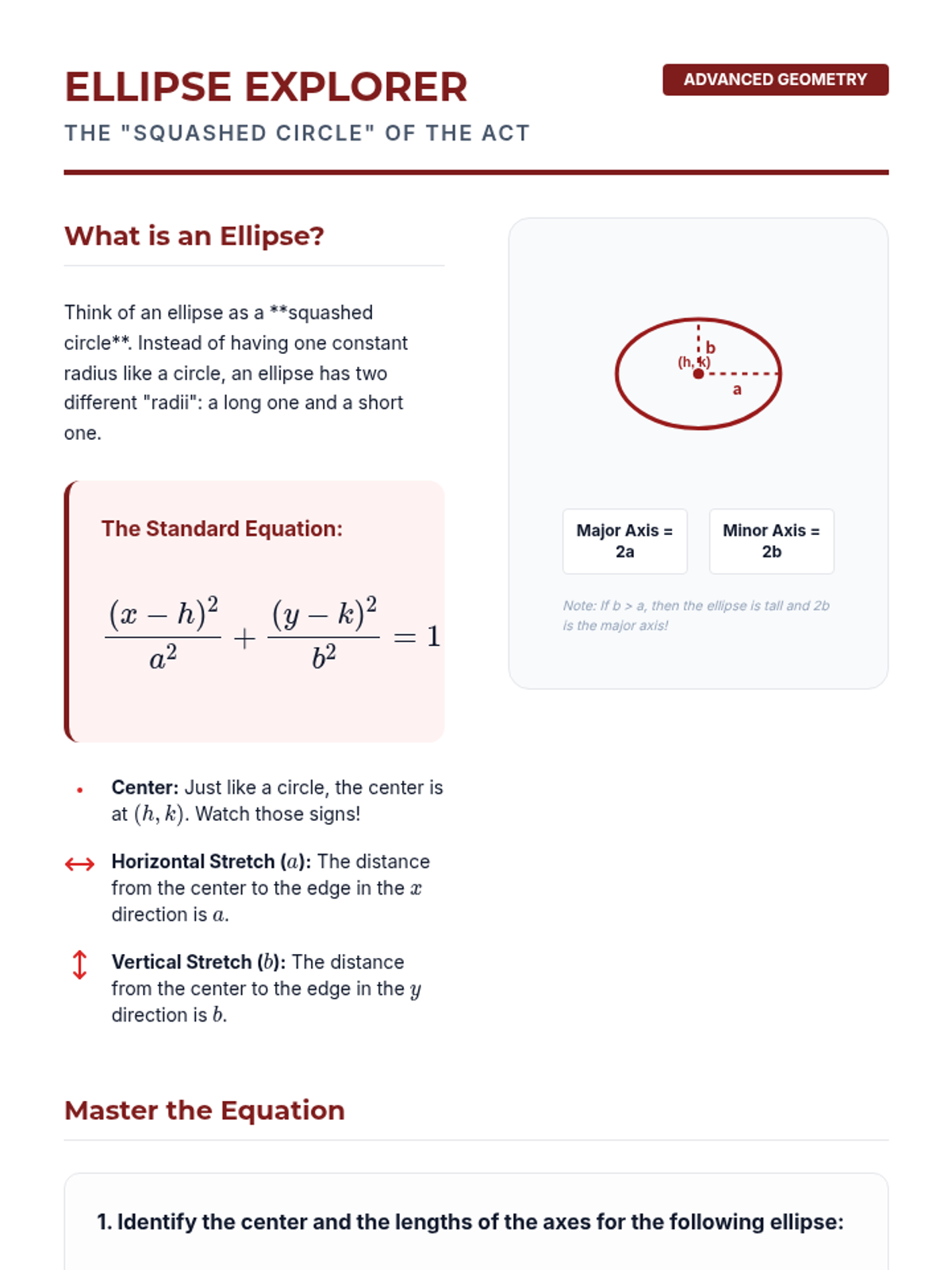
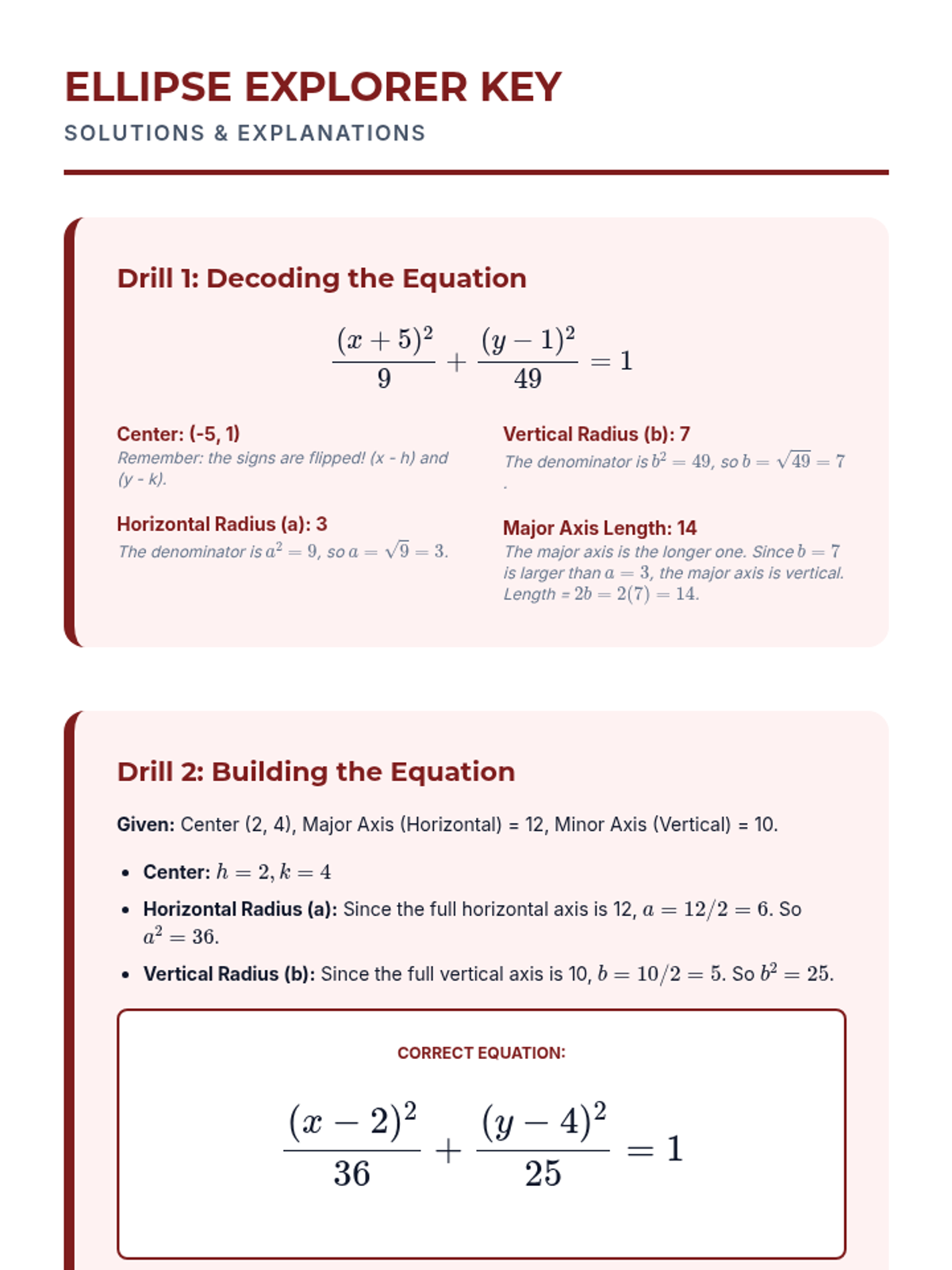
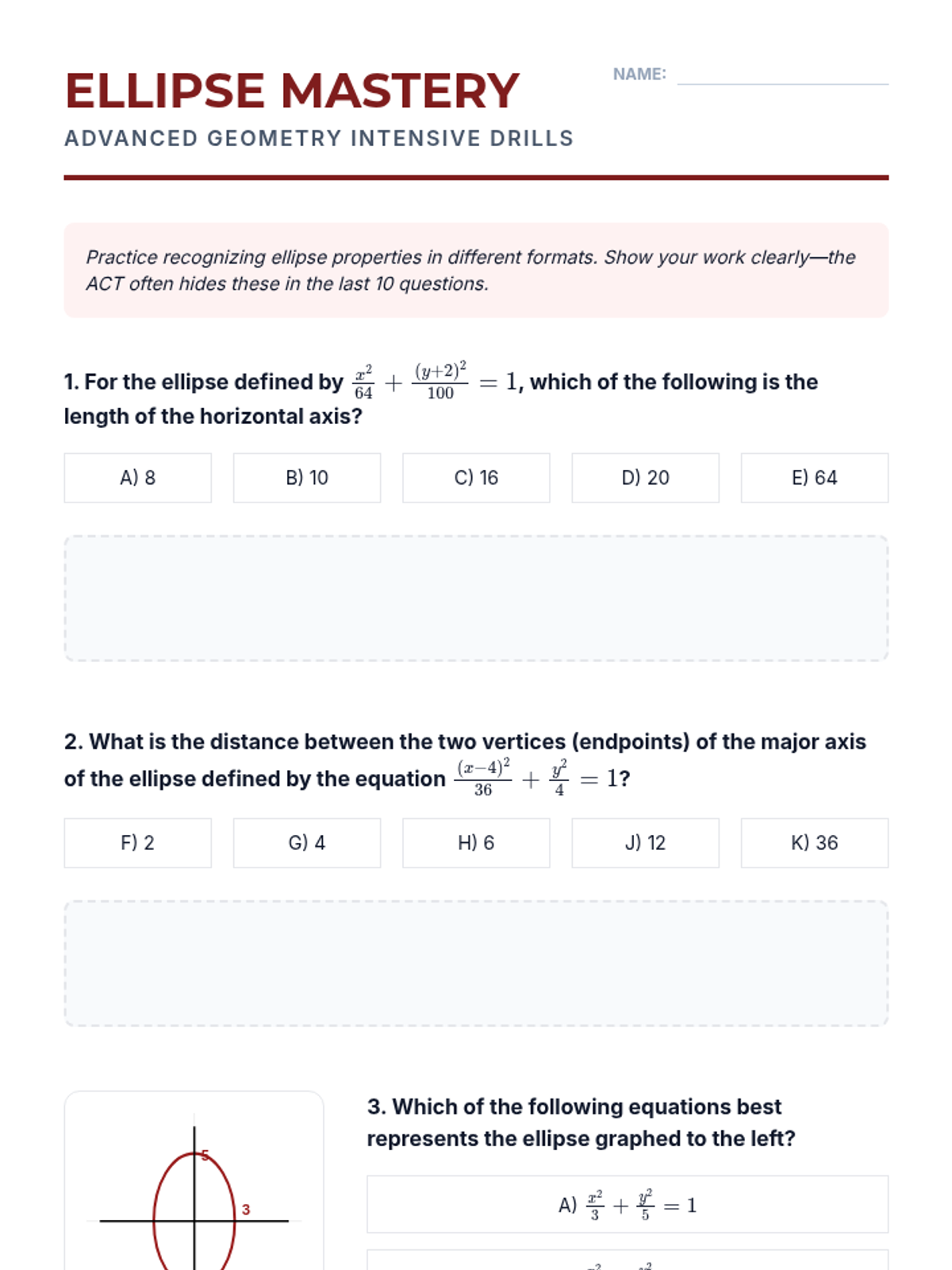
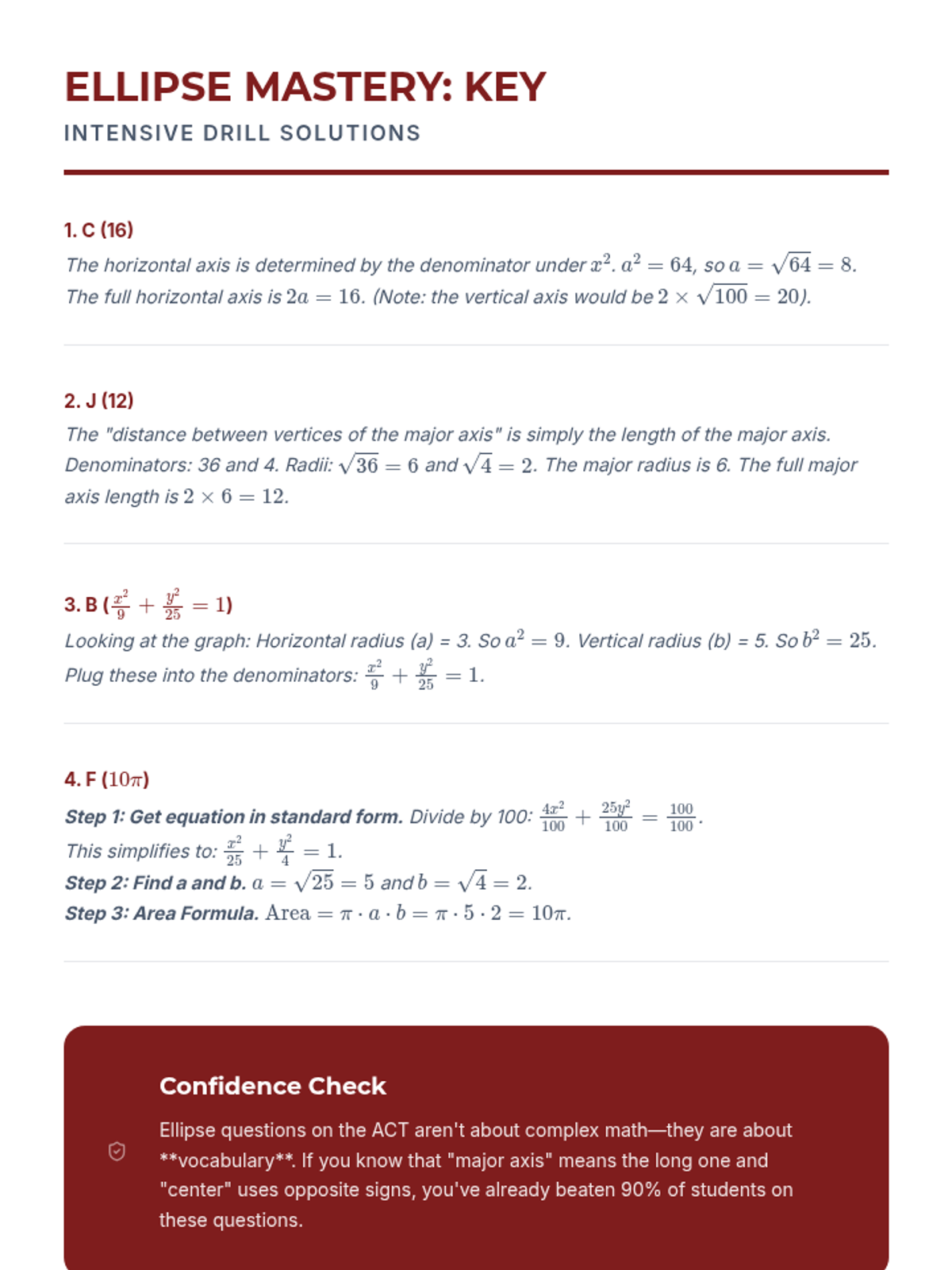
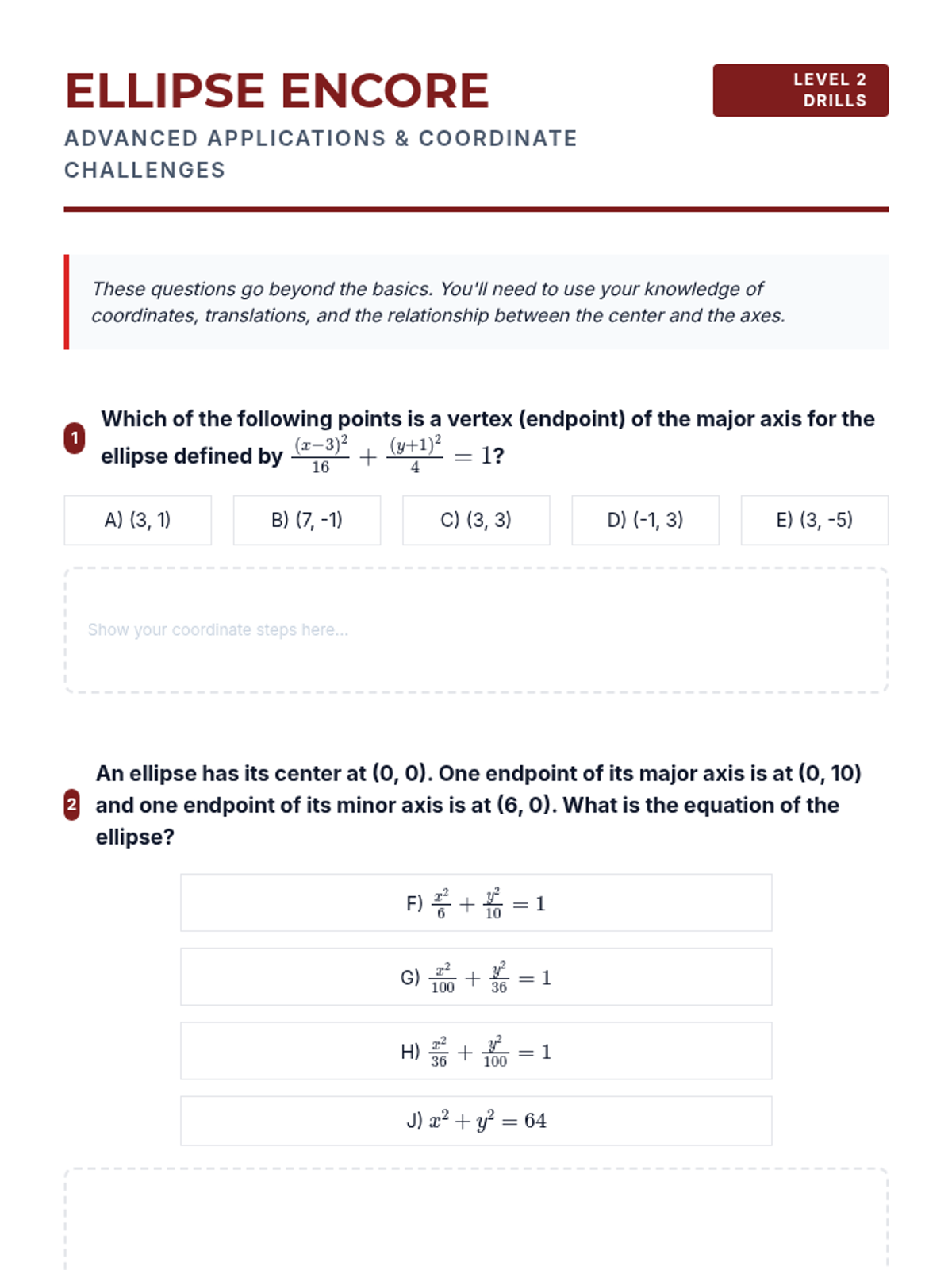
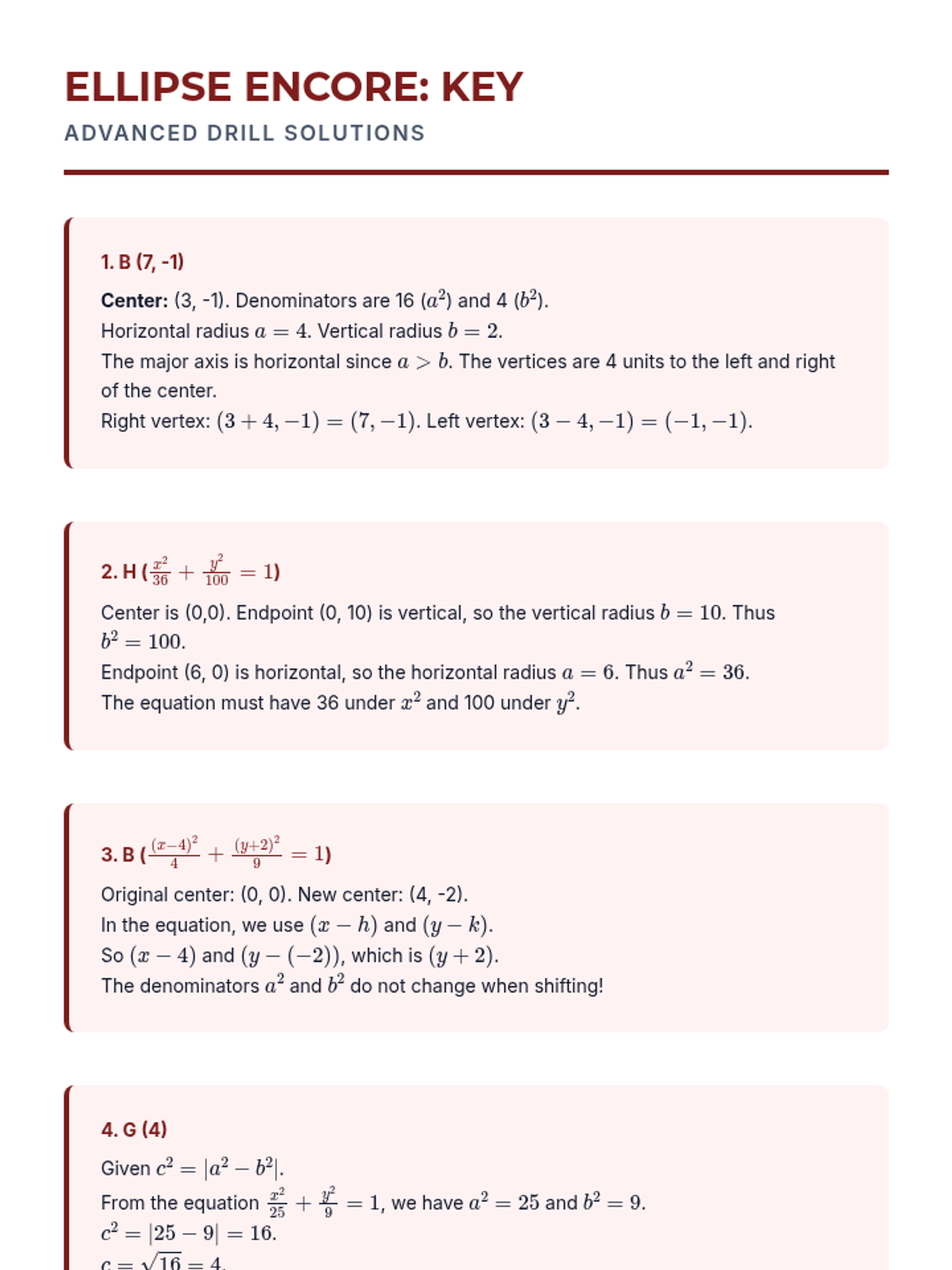
Master the most challenging topics on the ACT, including Pre-Calculus concepts (matrices, vectors, complex numbers) and high-difficulty Geometry (Law of Sines/Cosines, ellipses).
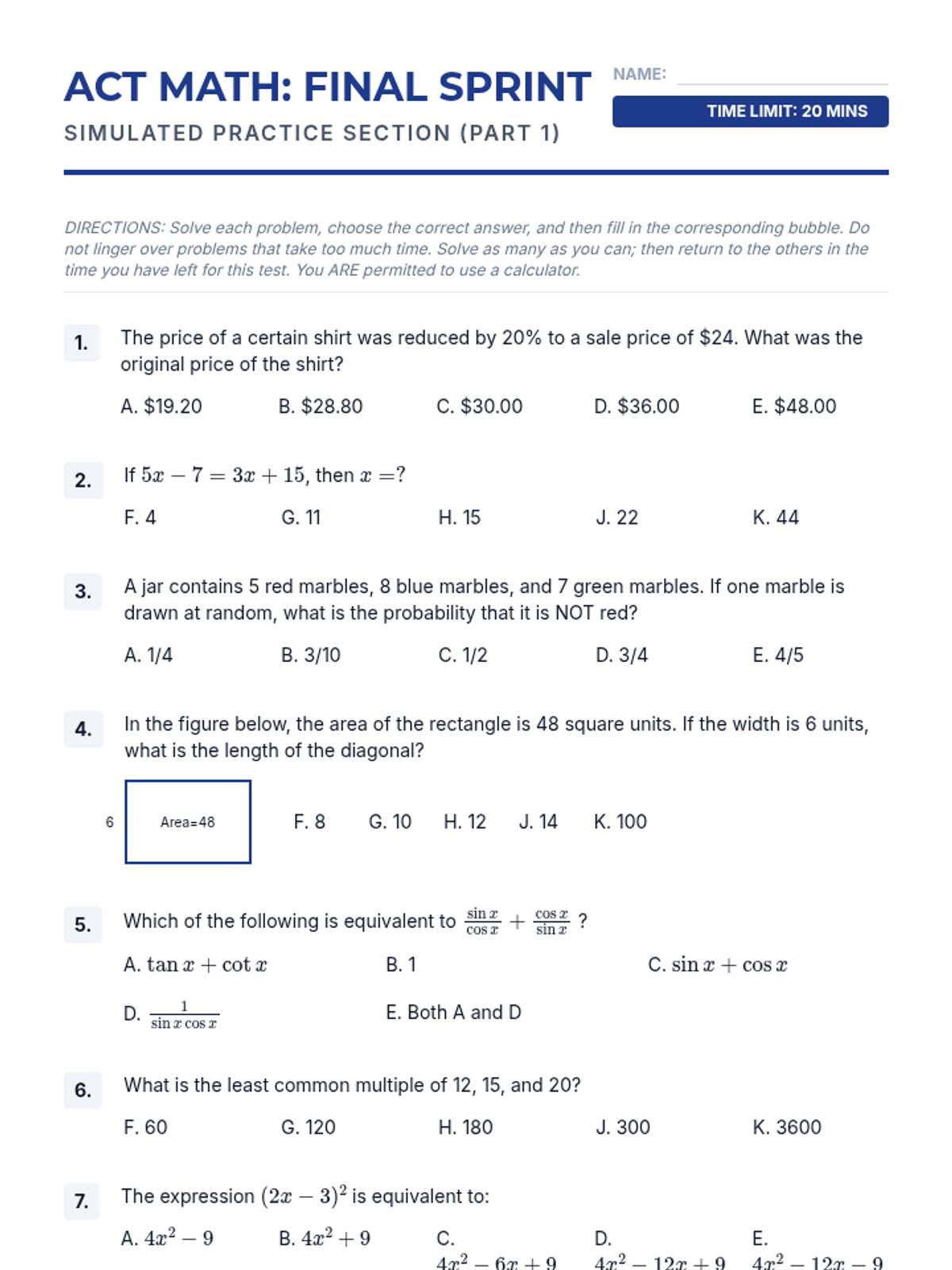
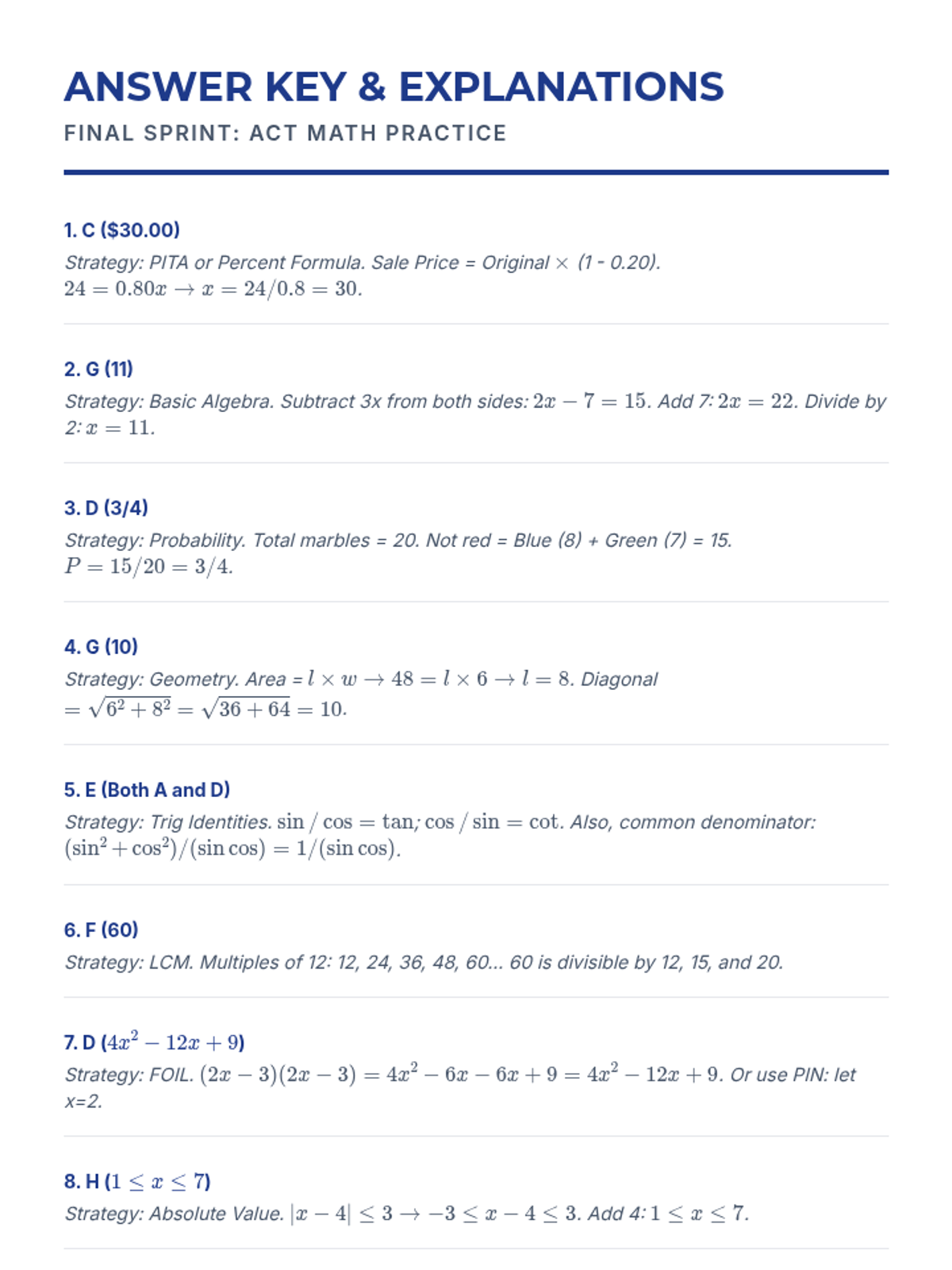
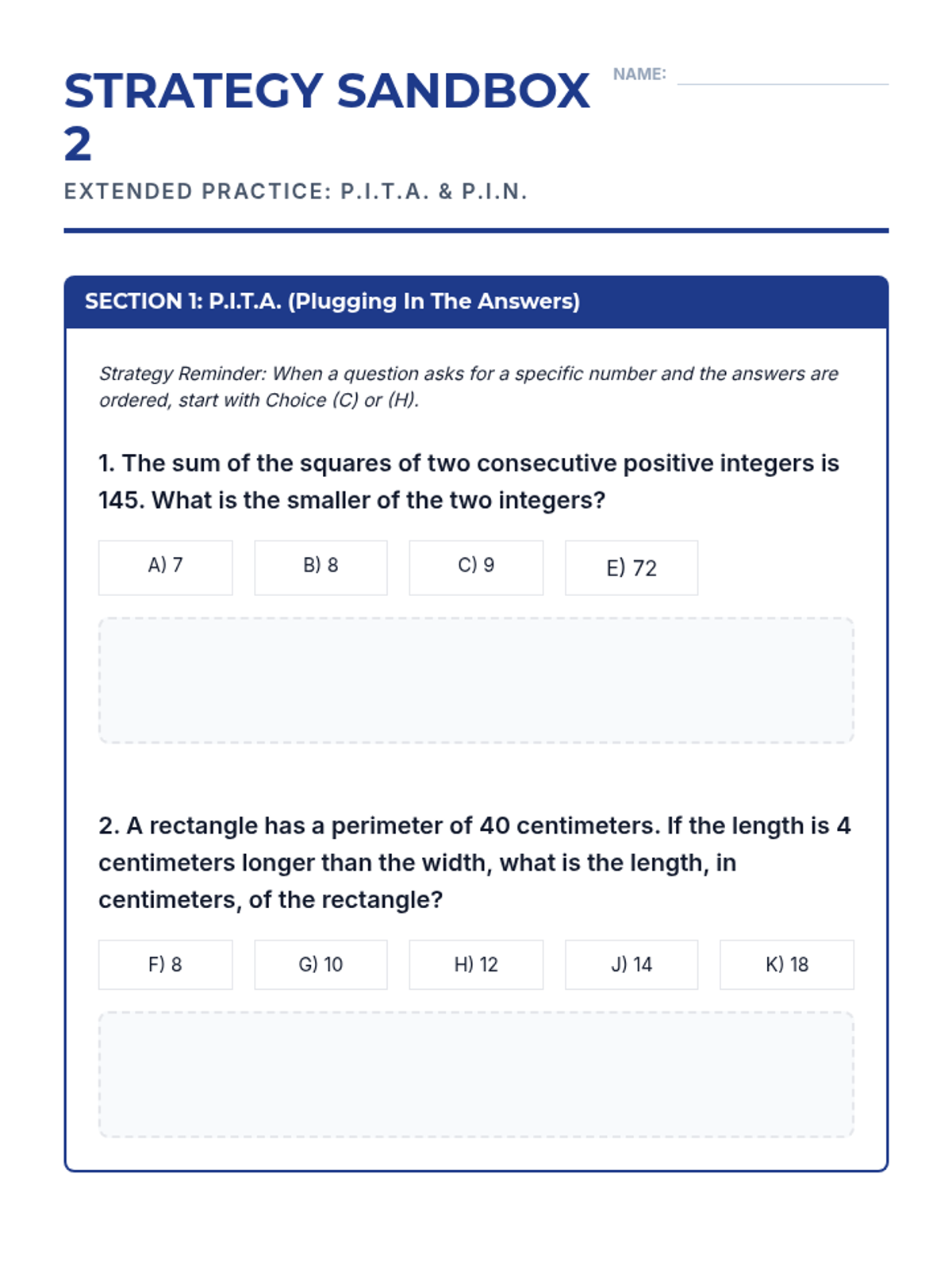
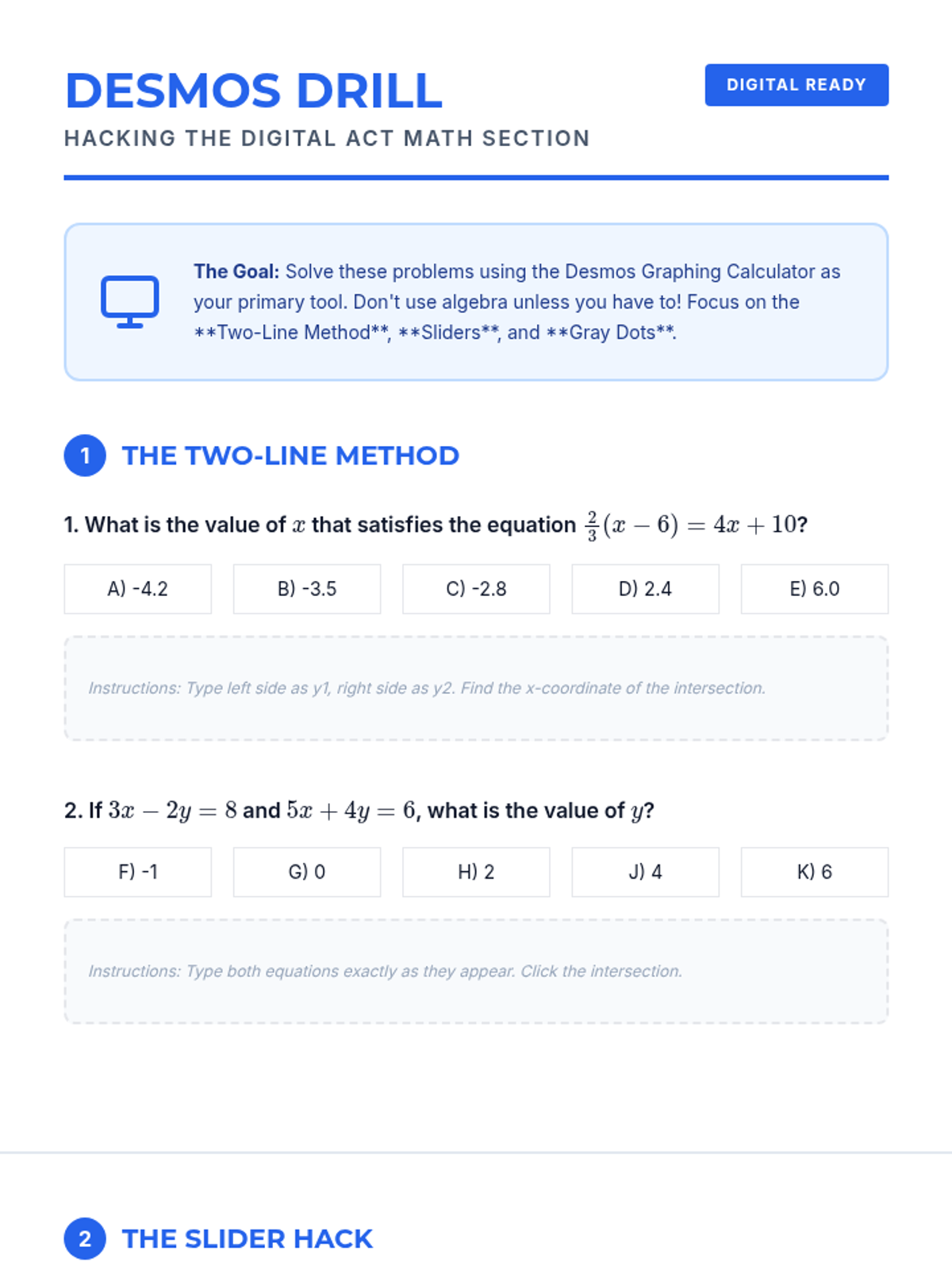
Apply strategies and knowledge in a timed practice environment with a representative ACT Math question set.
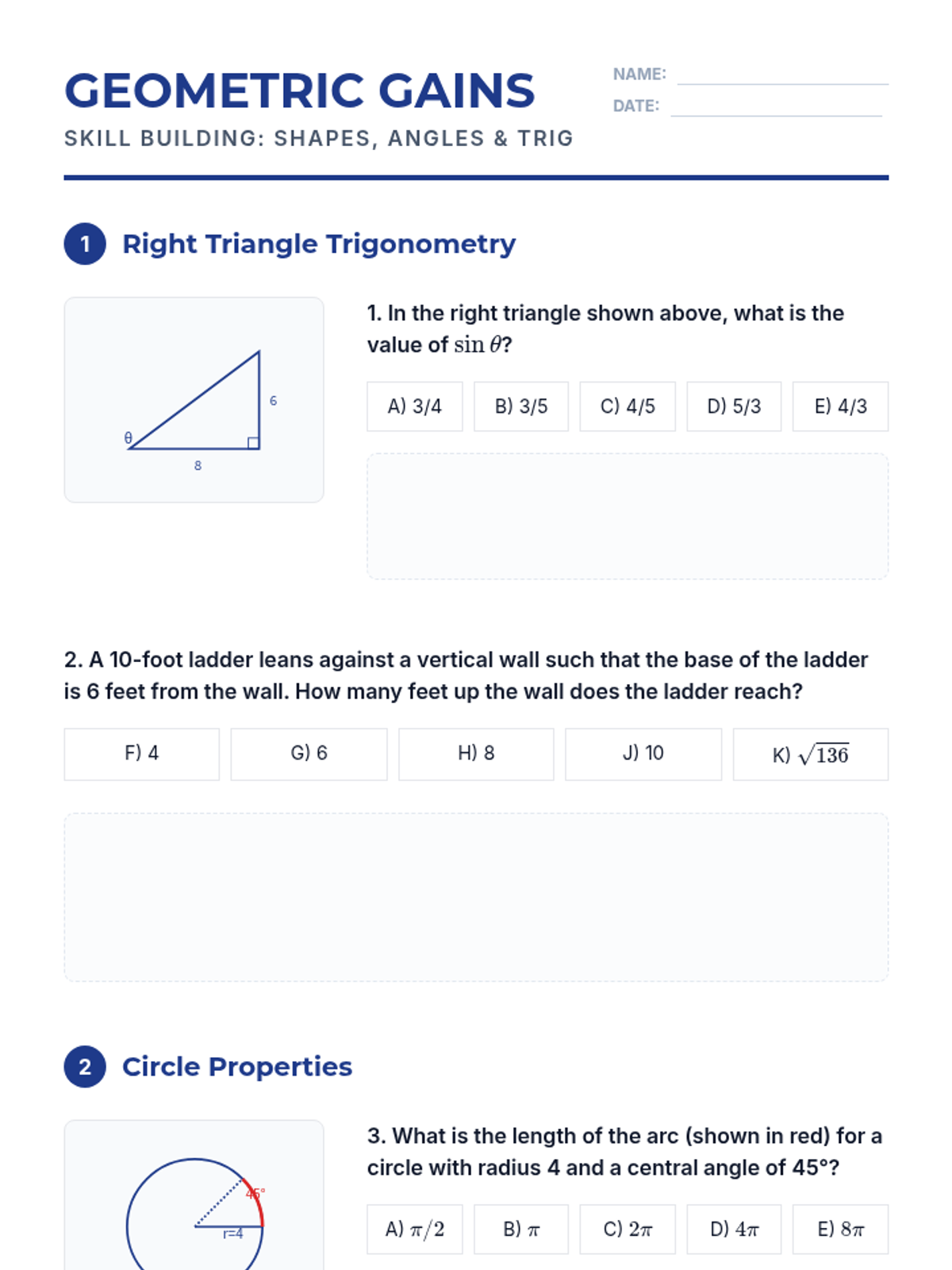
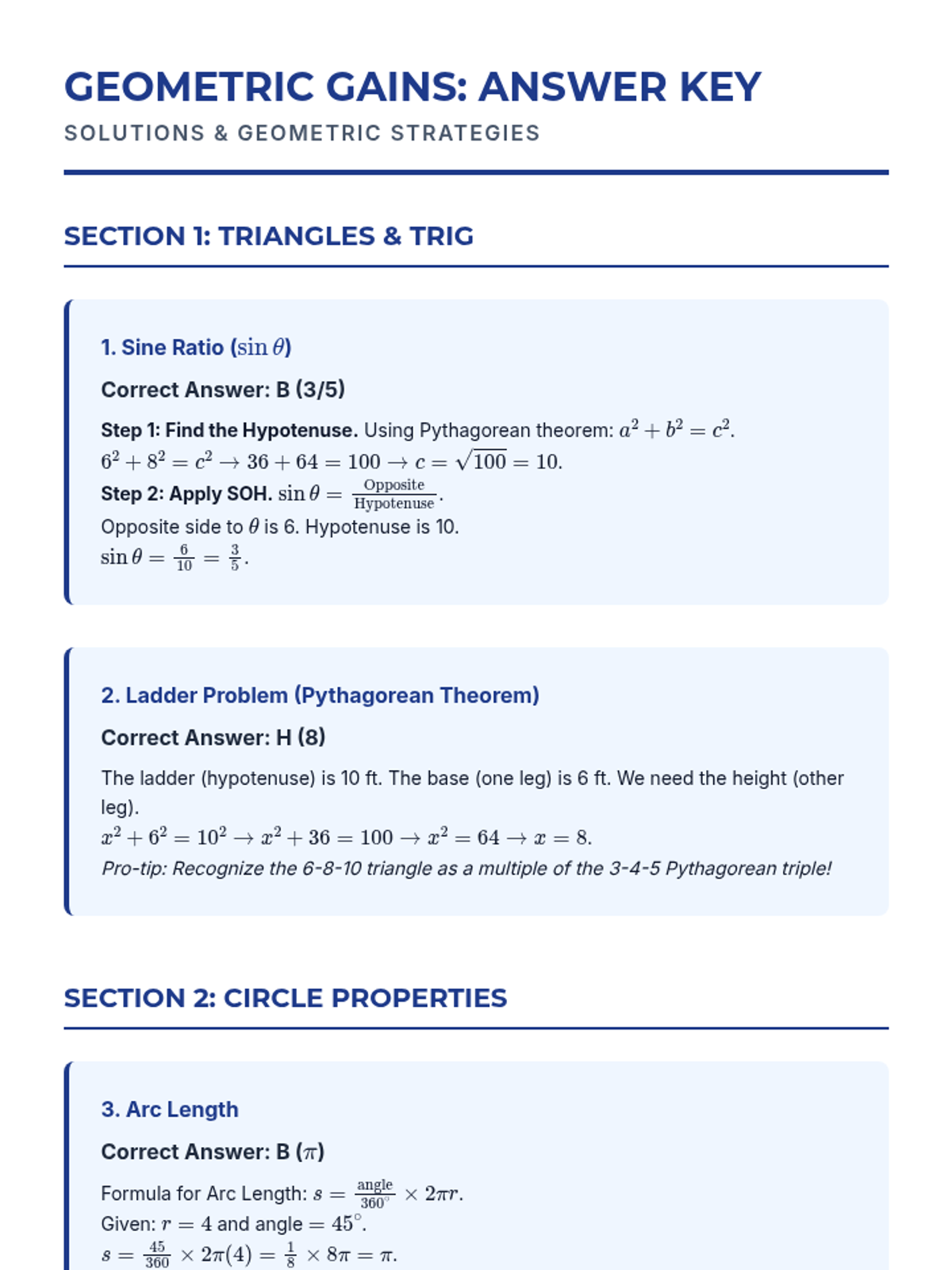
Review critical Geometry and Trigonometry concepts, from SOH CAH TOA to circle properties and coordinate geometry.
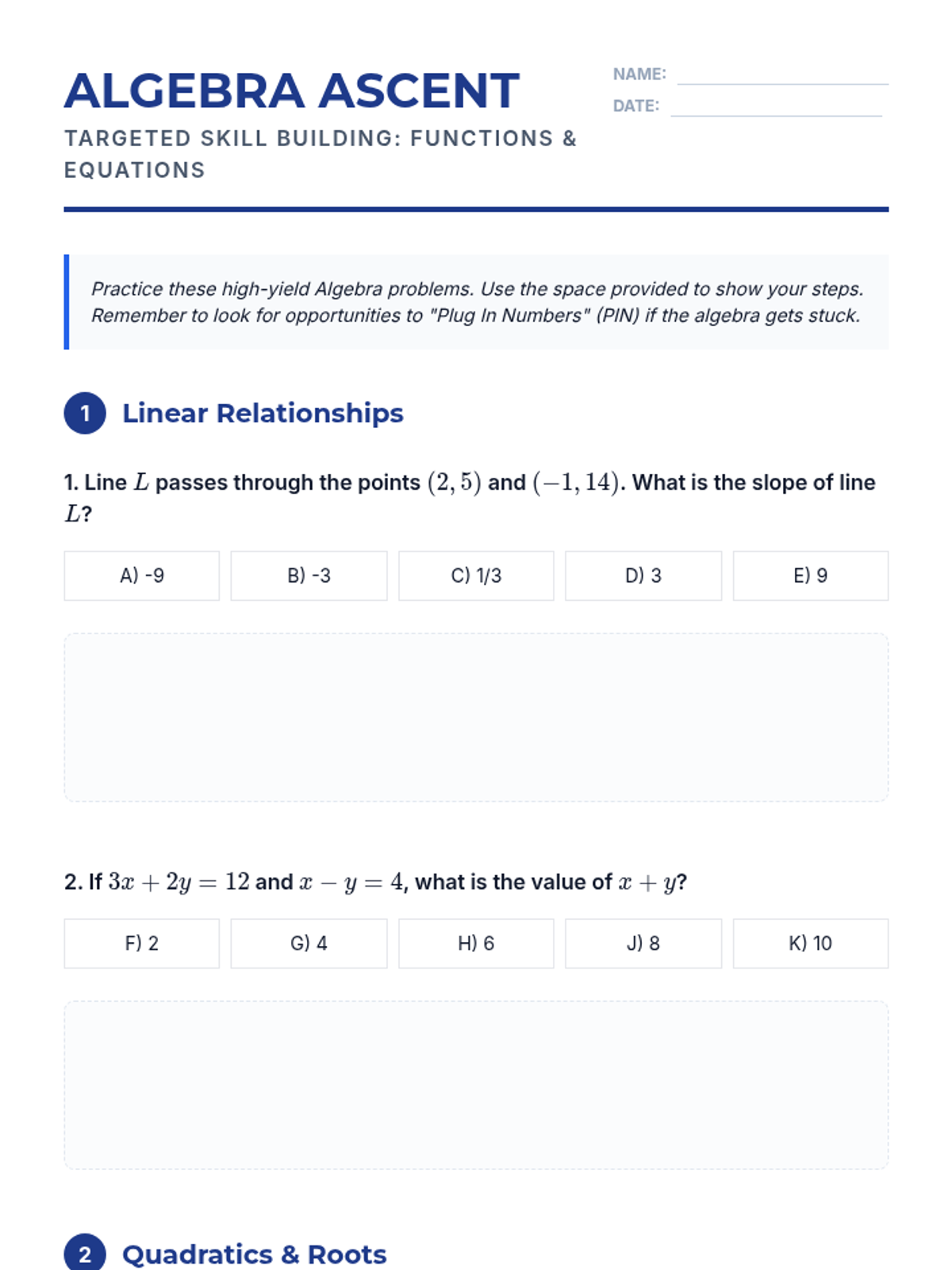
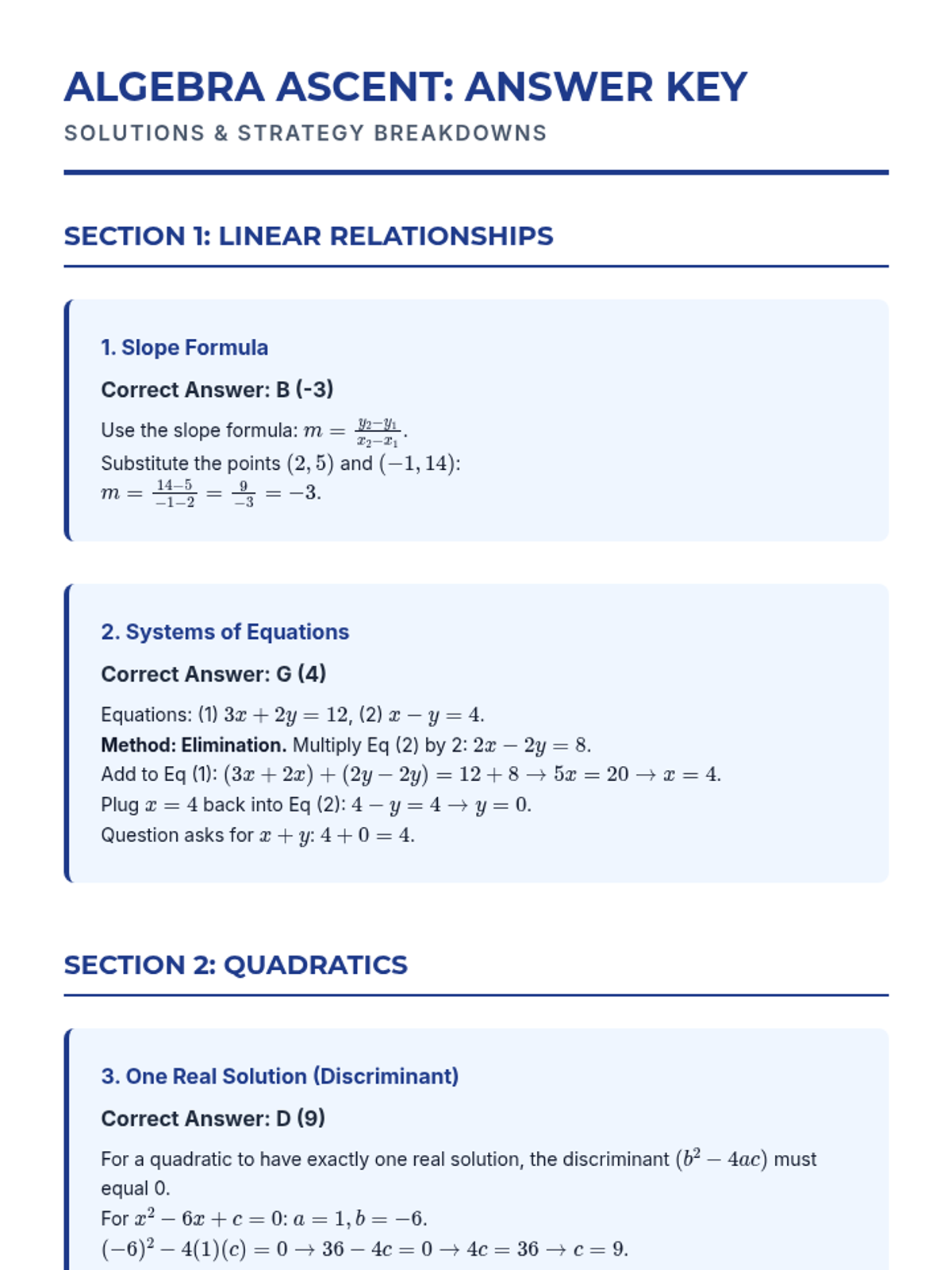
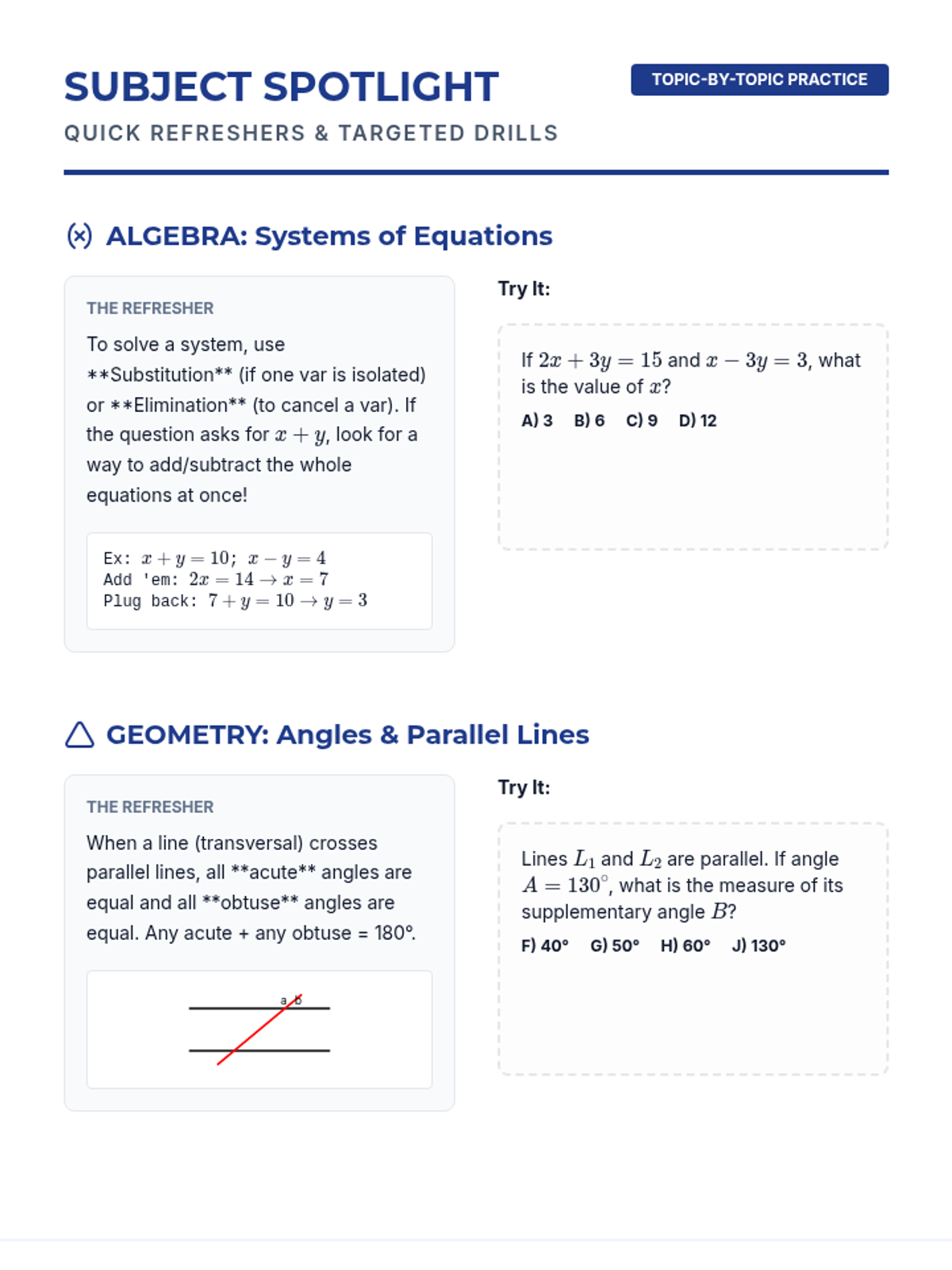
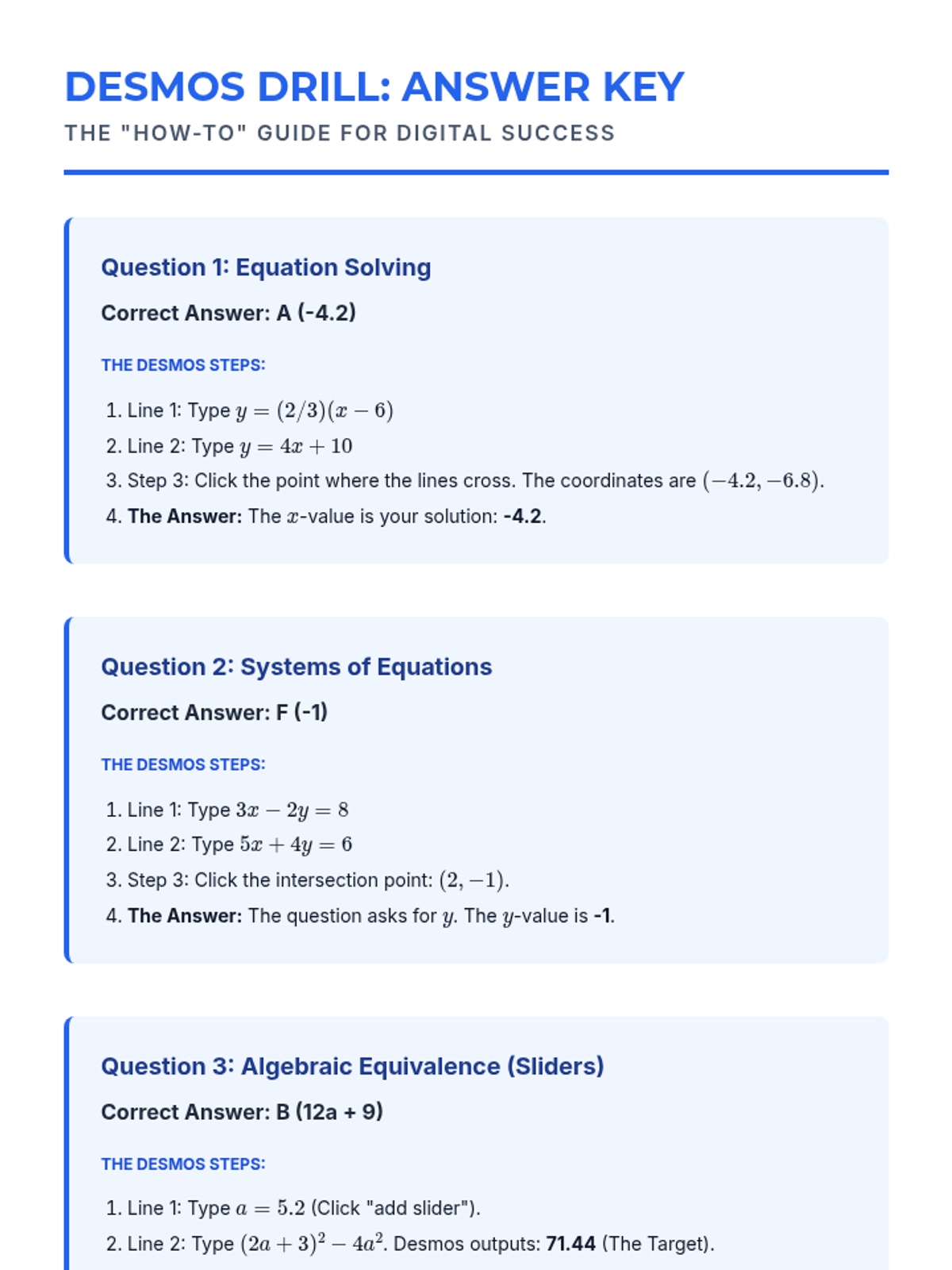
Deep dive into high-yield Algebra topics including linear functions, systems of equations, and quadratic properties frequently tested on the ACT.
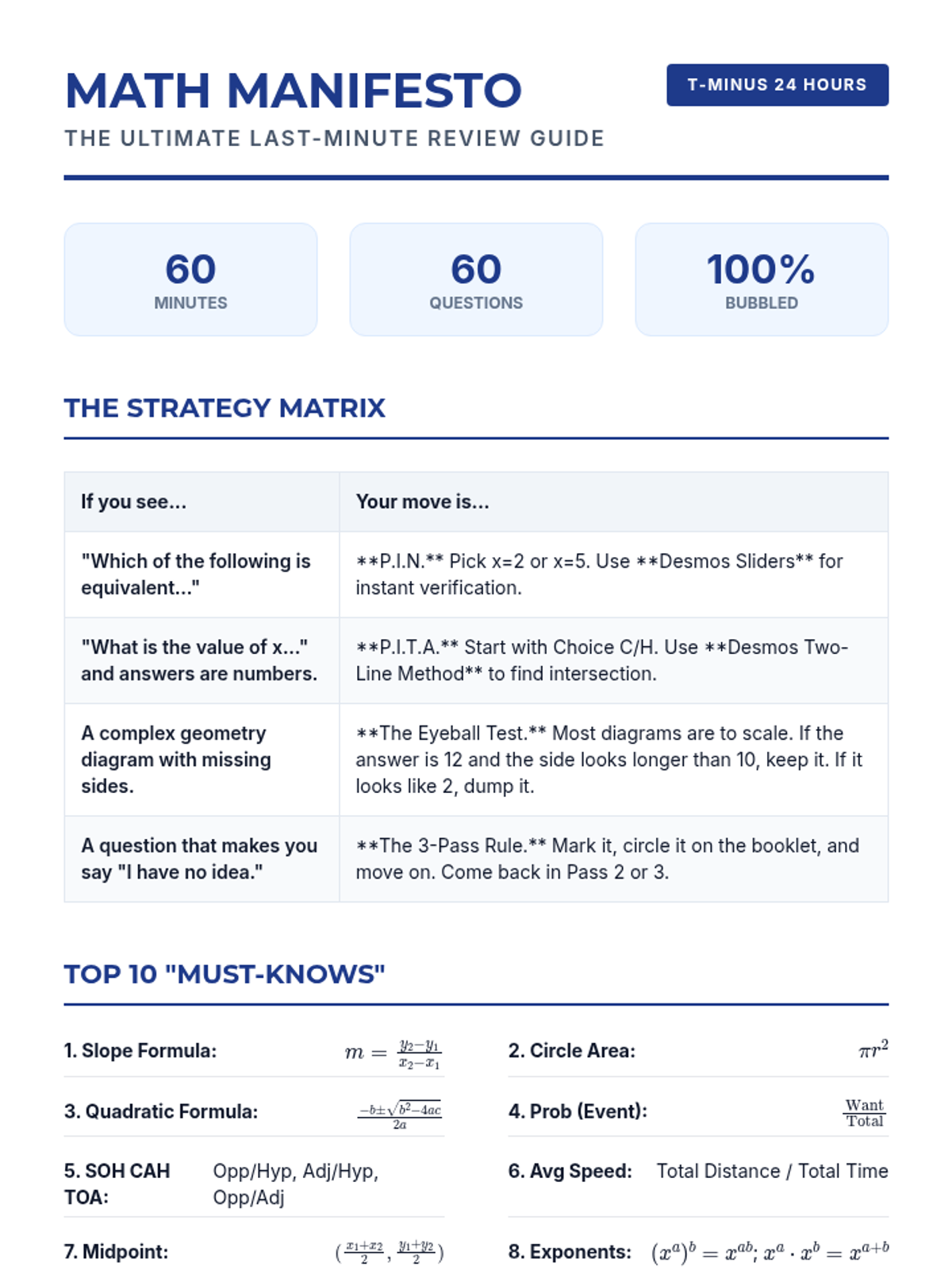
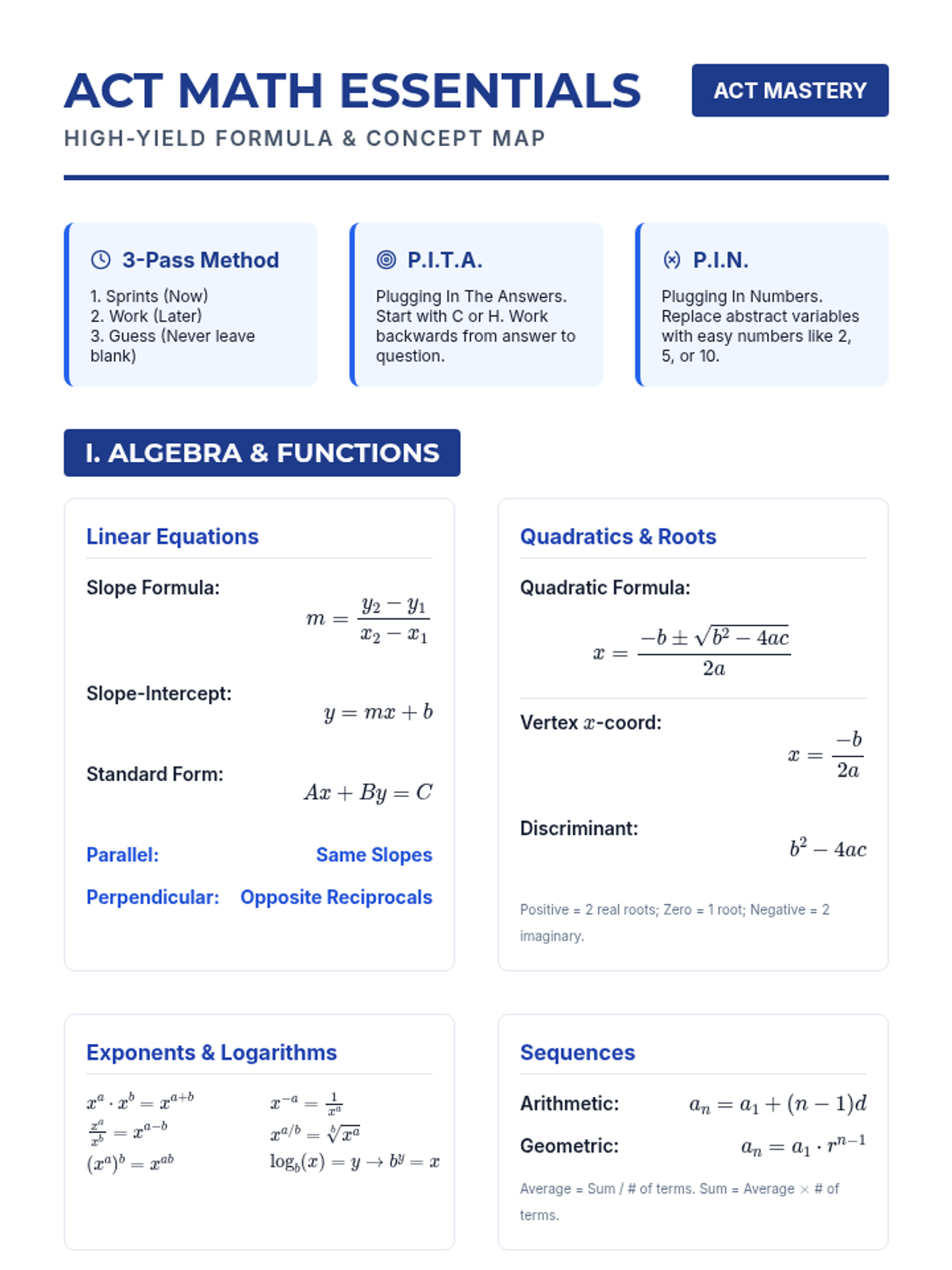
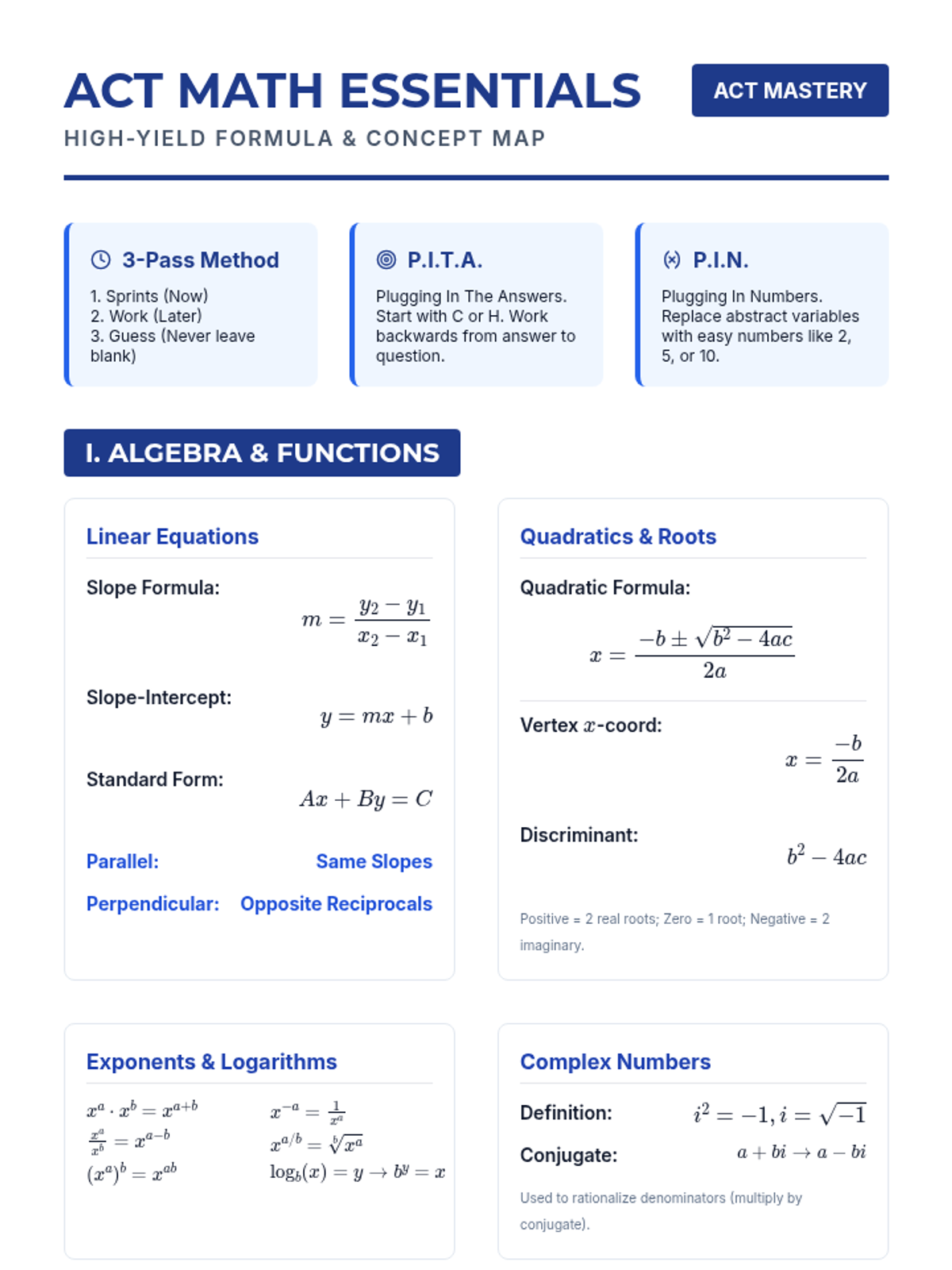
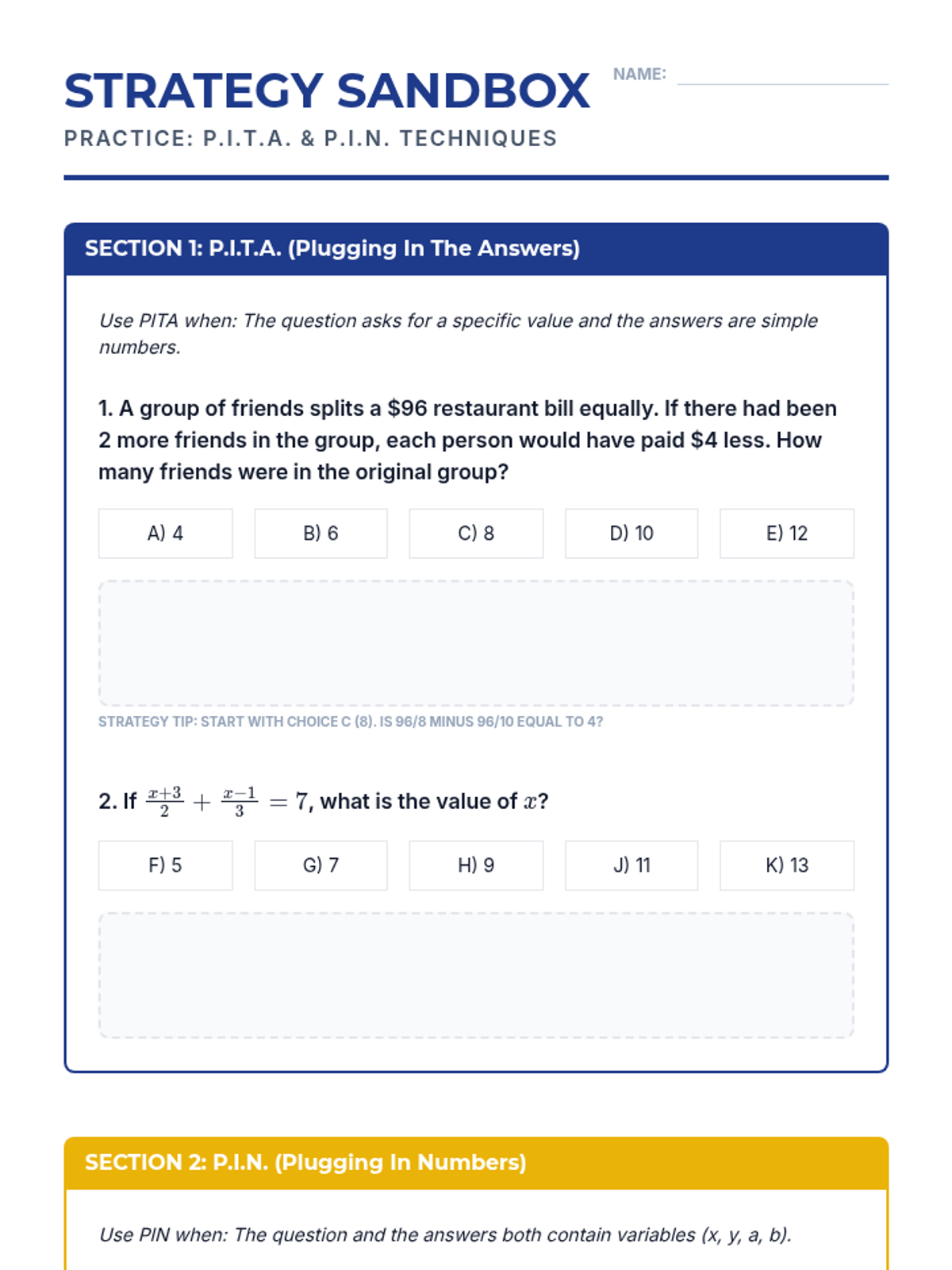
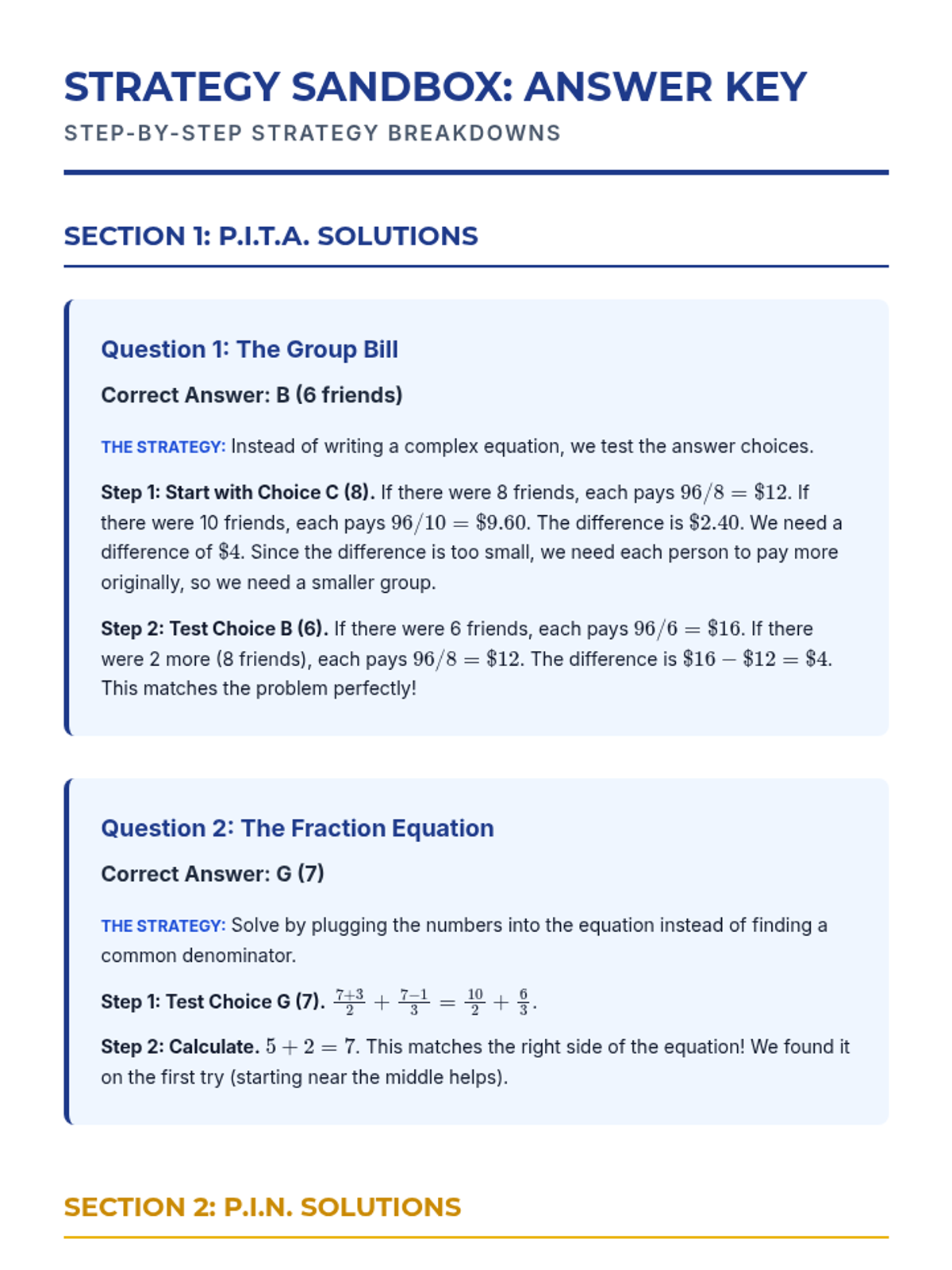
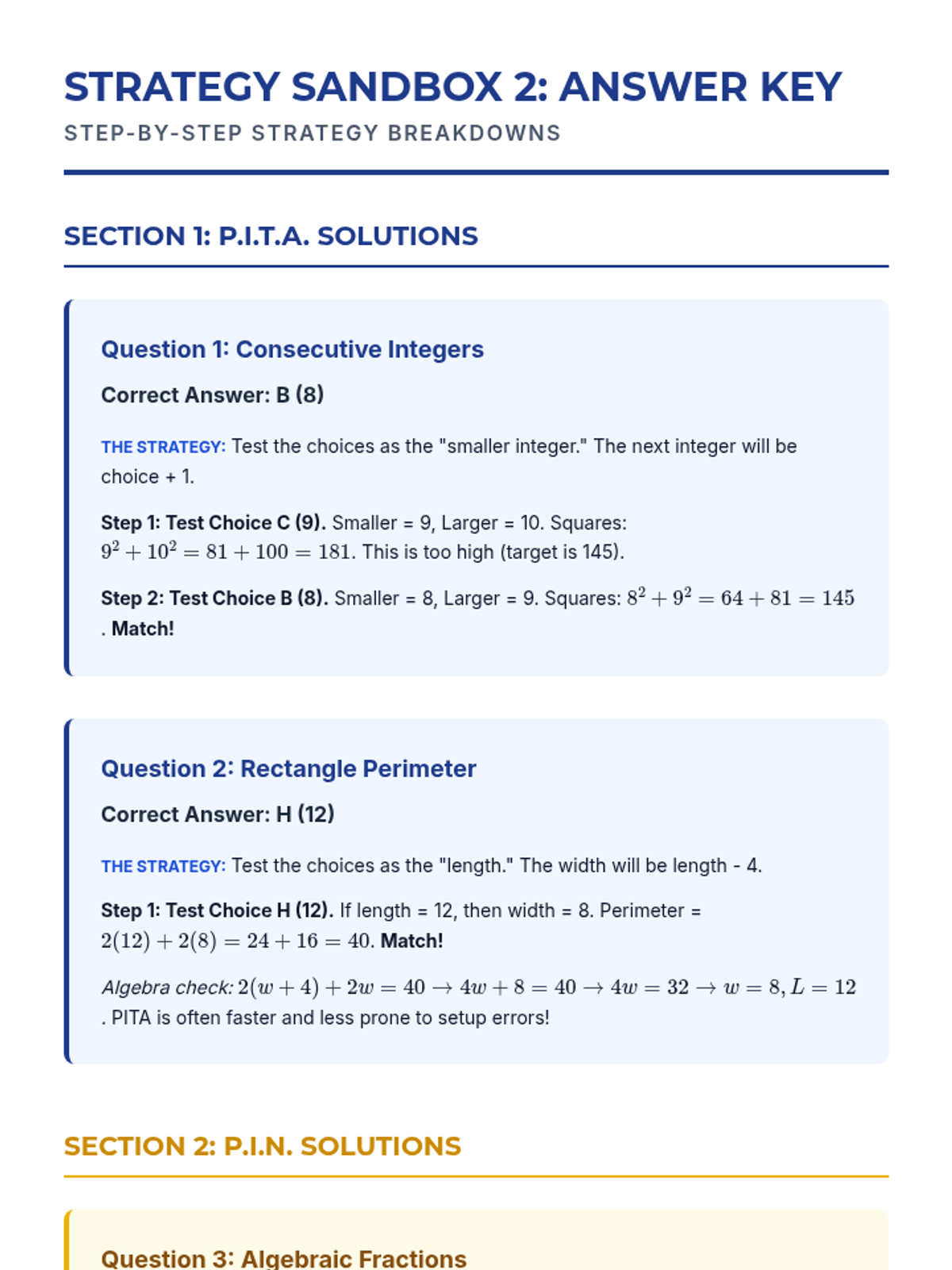
Master the structure of the ACT Math section and learn time-saving strategies like 'The 3-Pass Method' and 'Plugging In' while reviewing essential formulas.
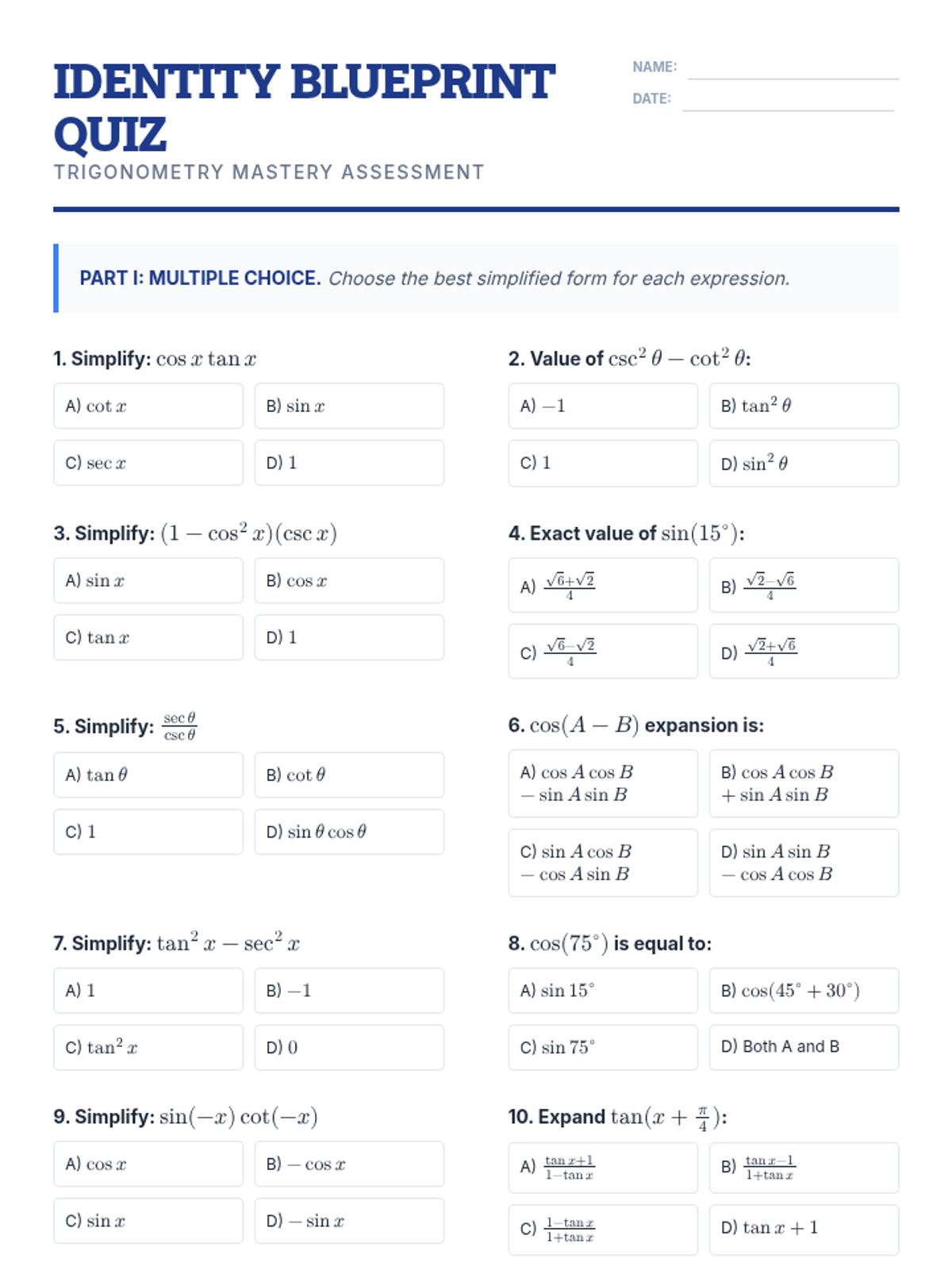
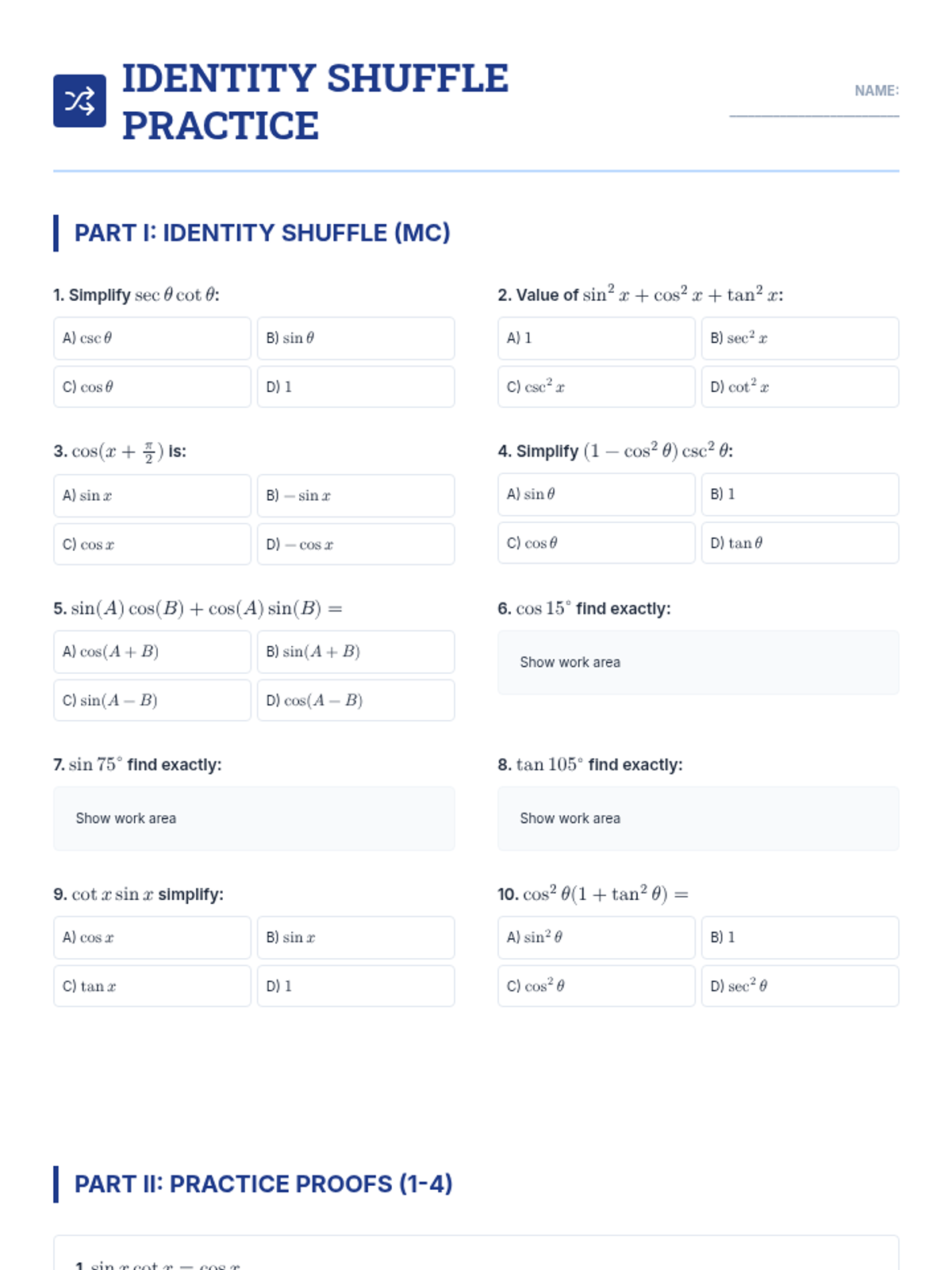
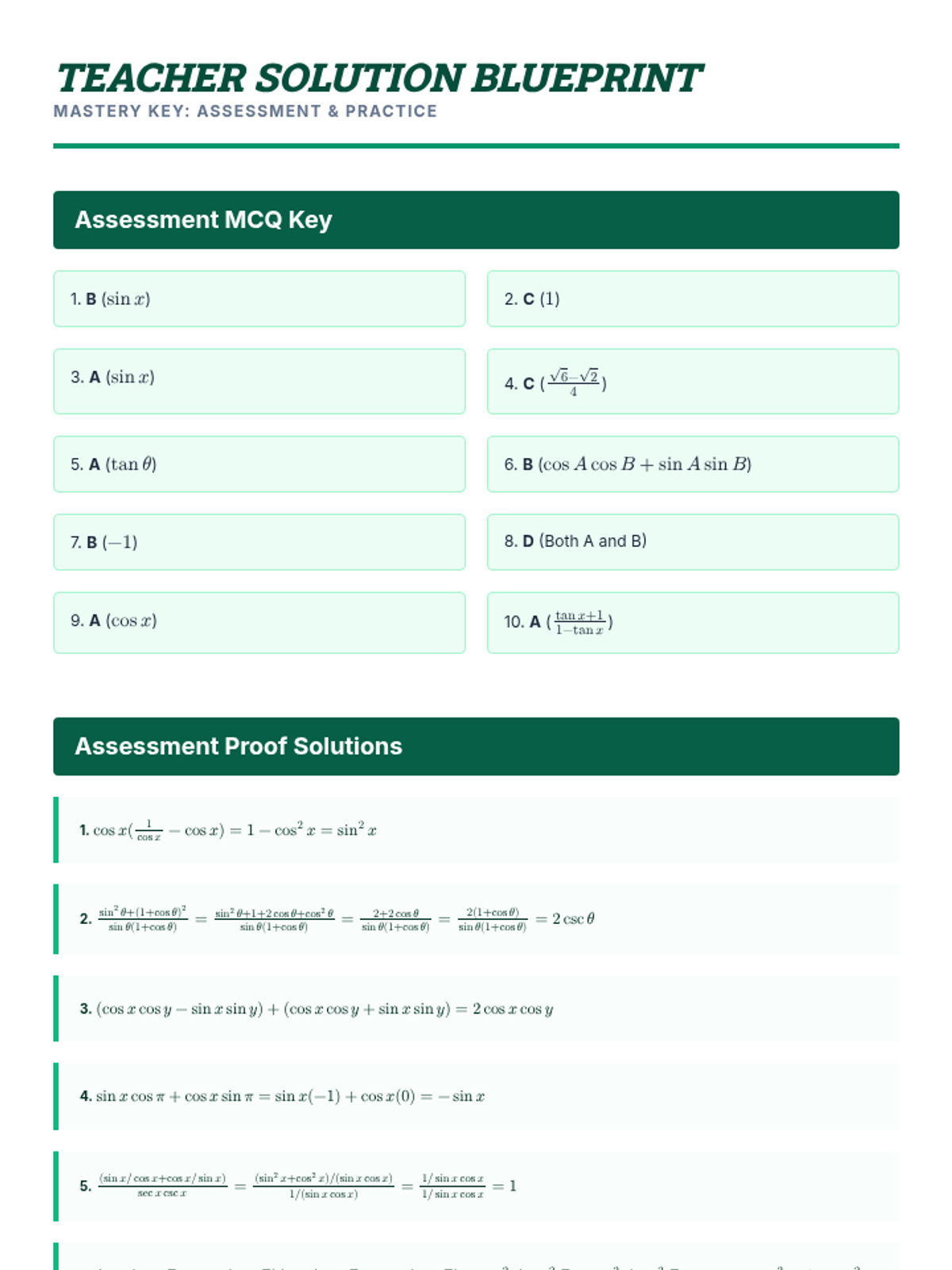
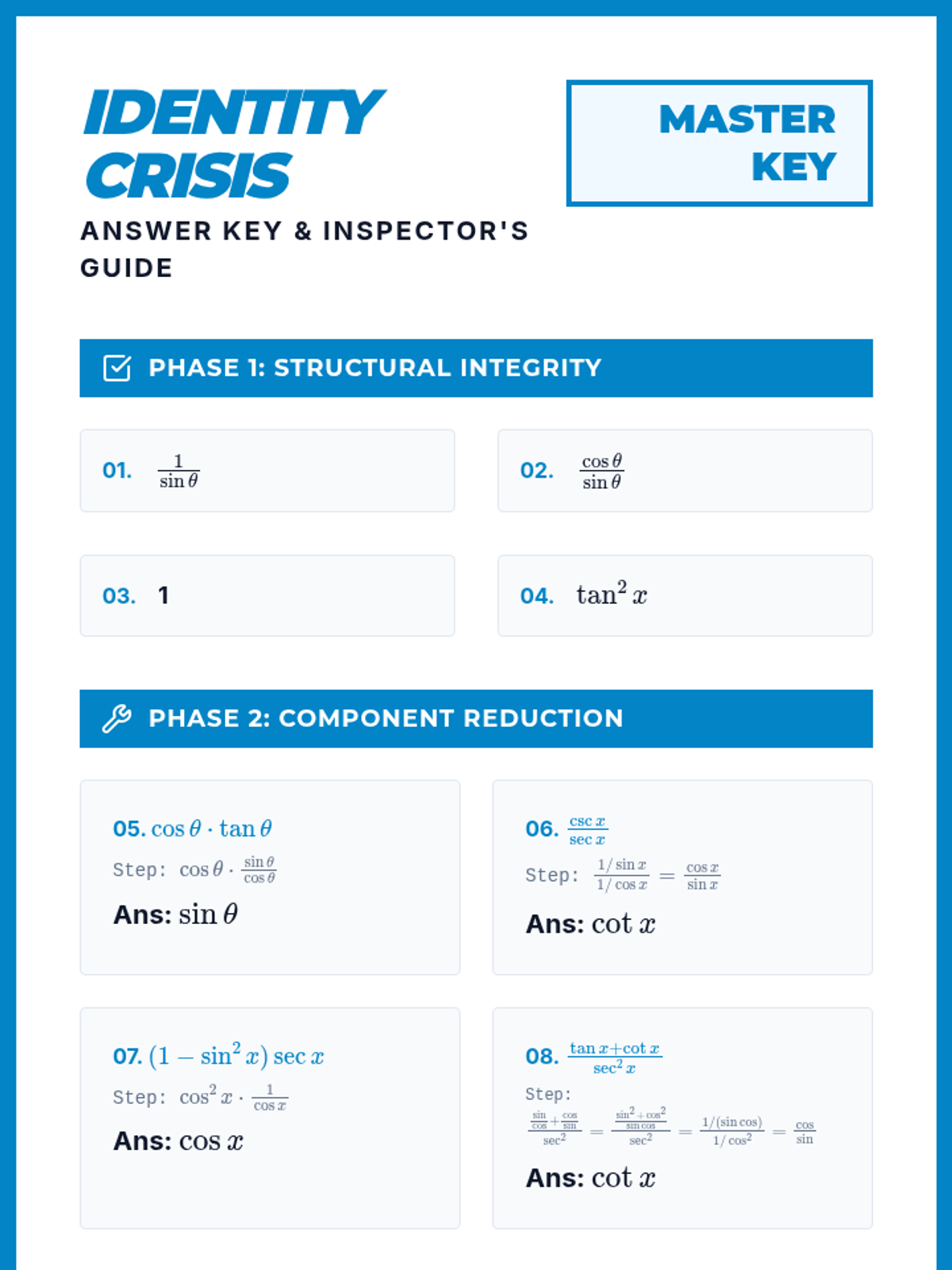
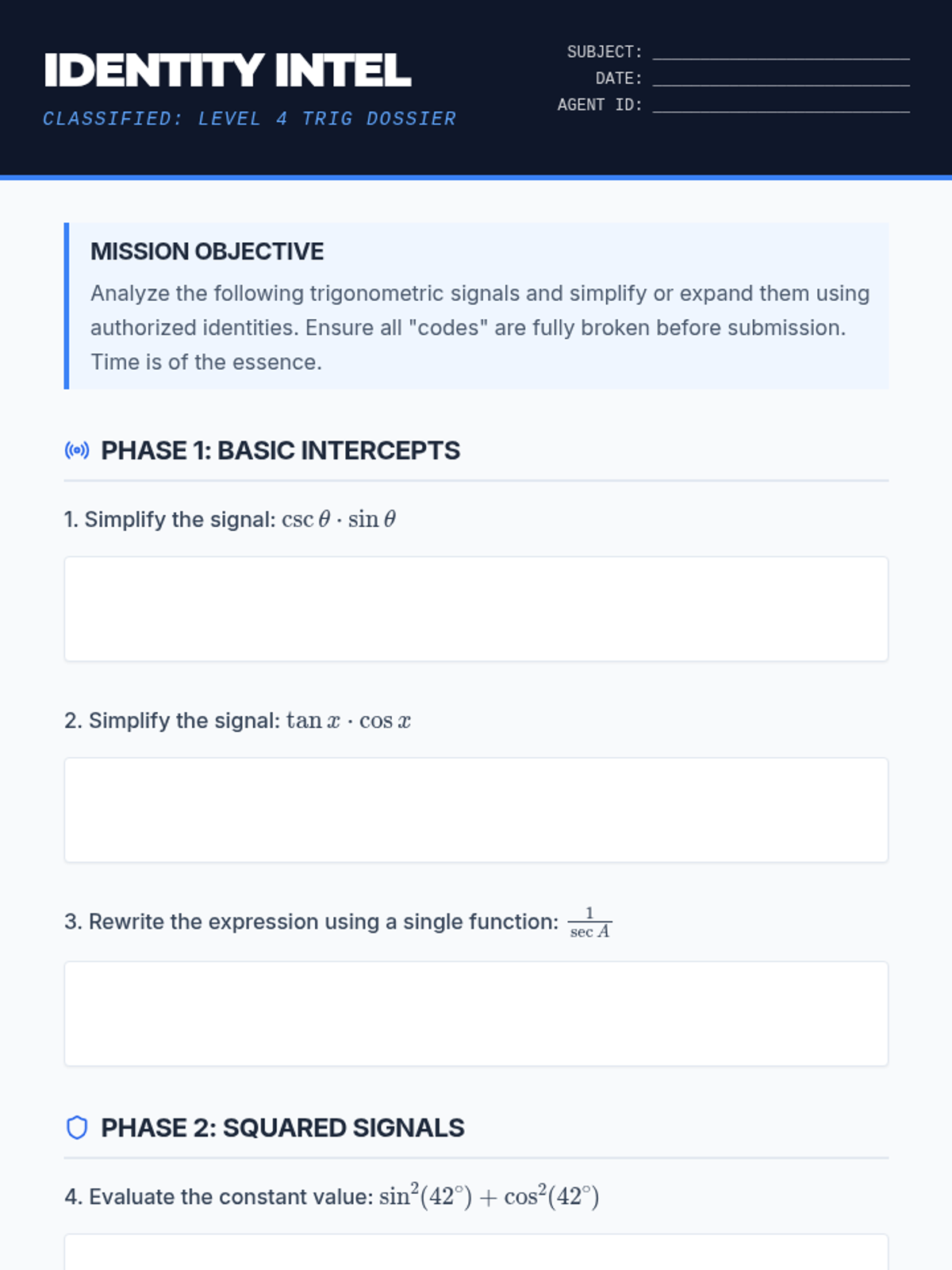
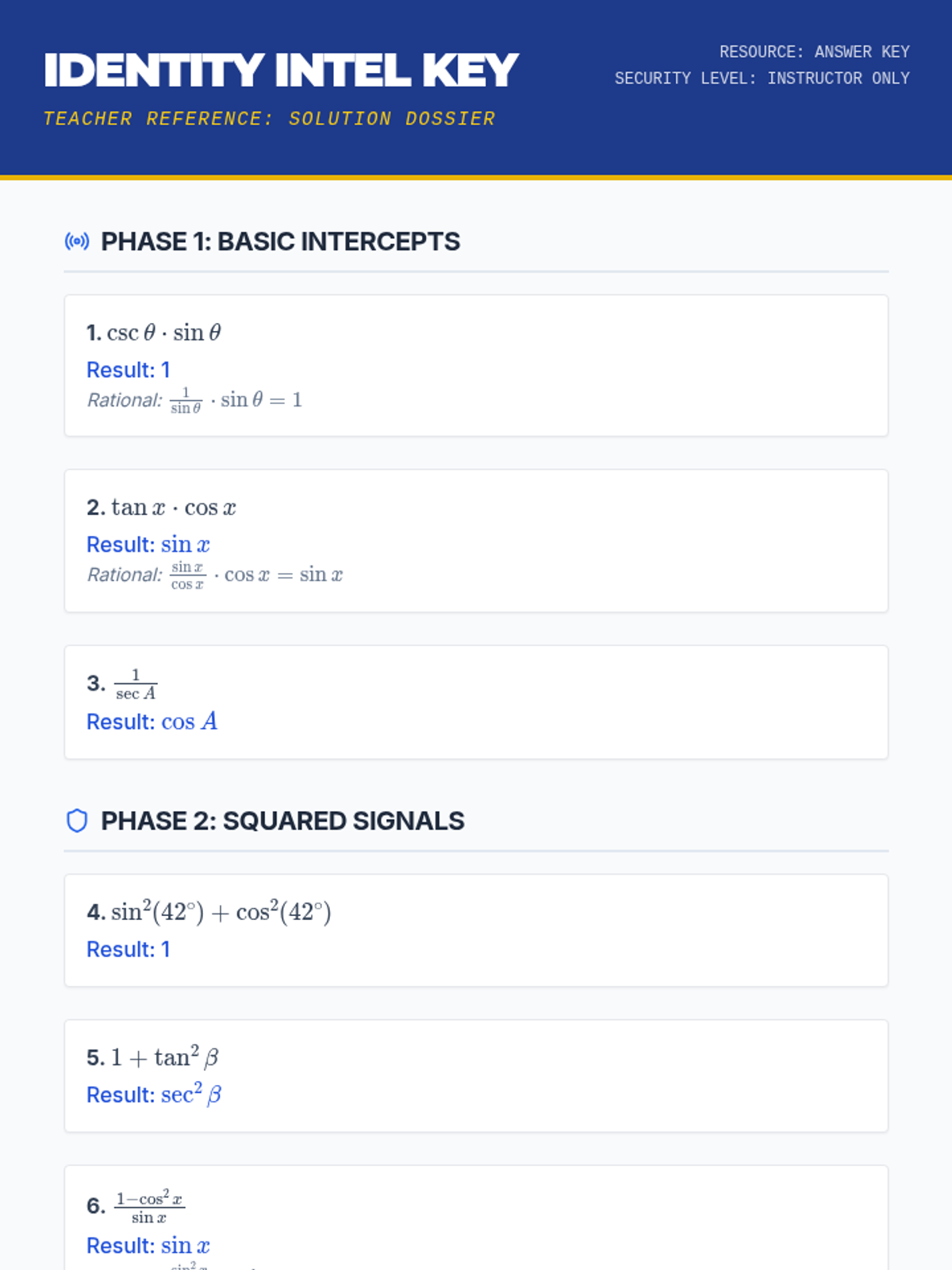
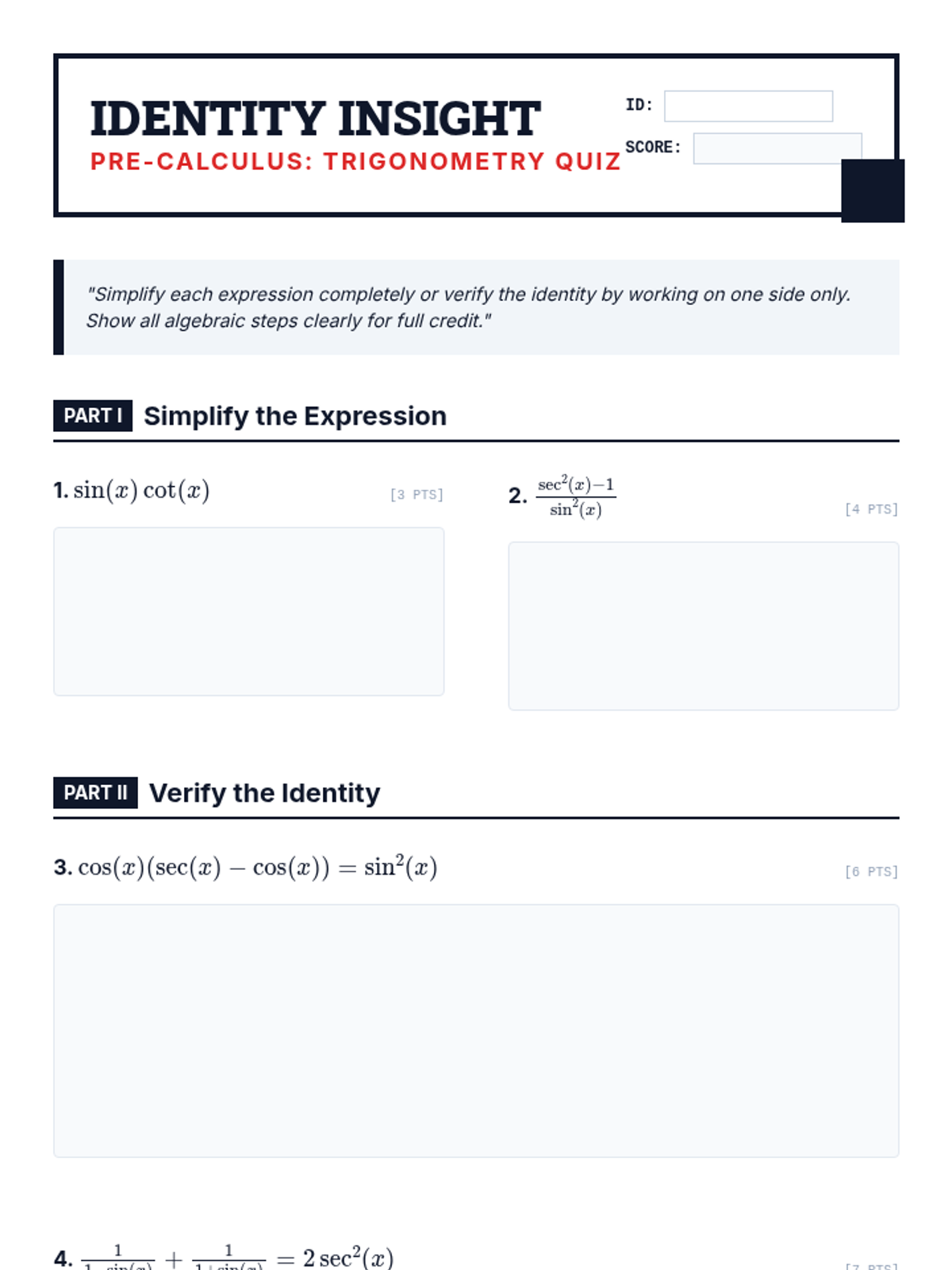
A comprehensive assessment and practice suite for mastering trigonometric identities, focusing on reciprocal, quotient, Pythagorean, and sum/difference formulas.
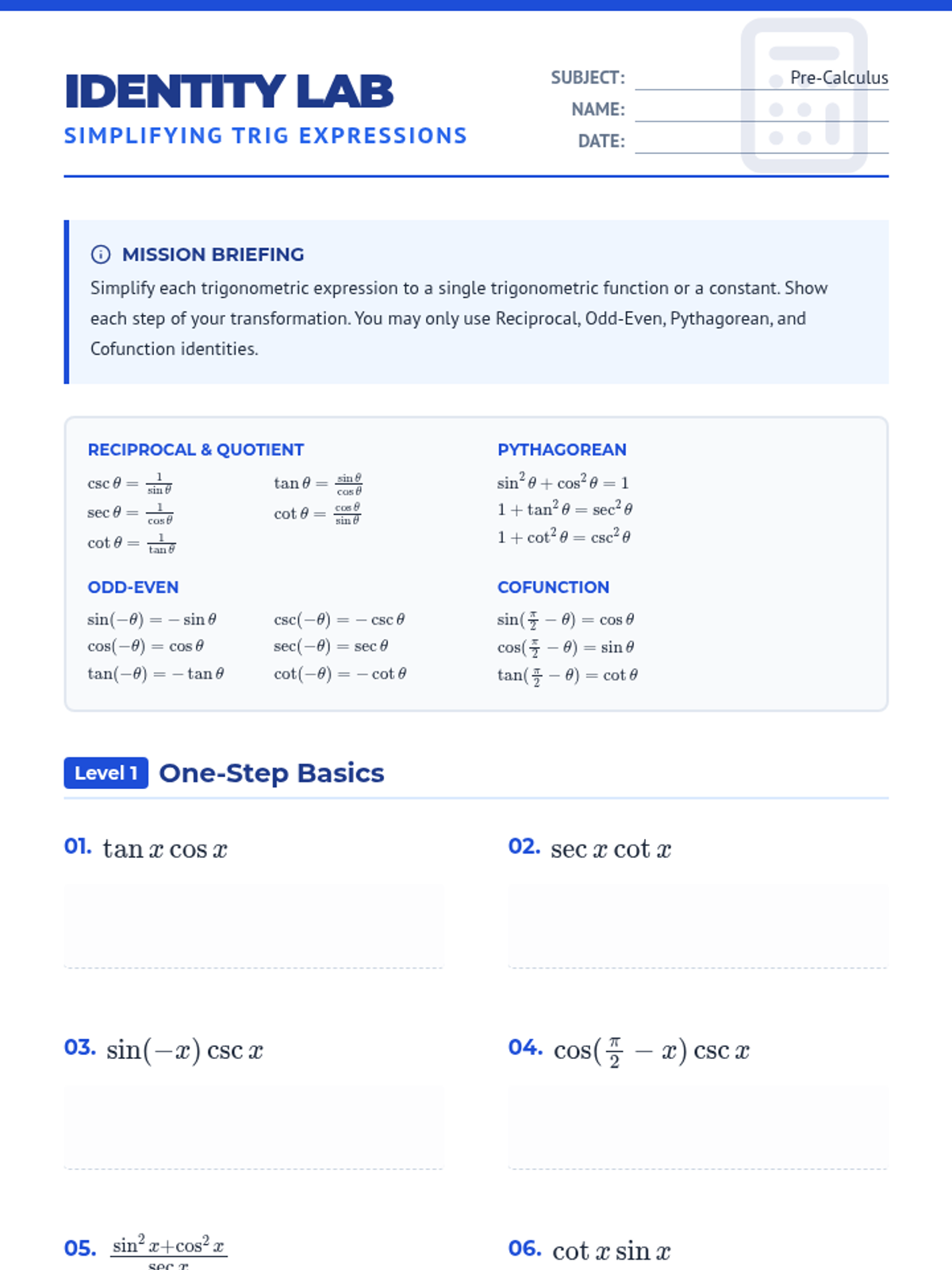
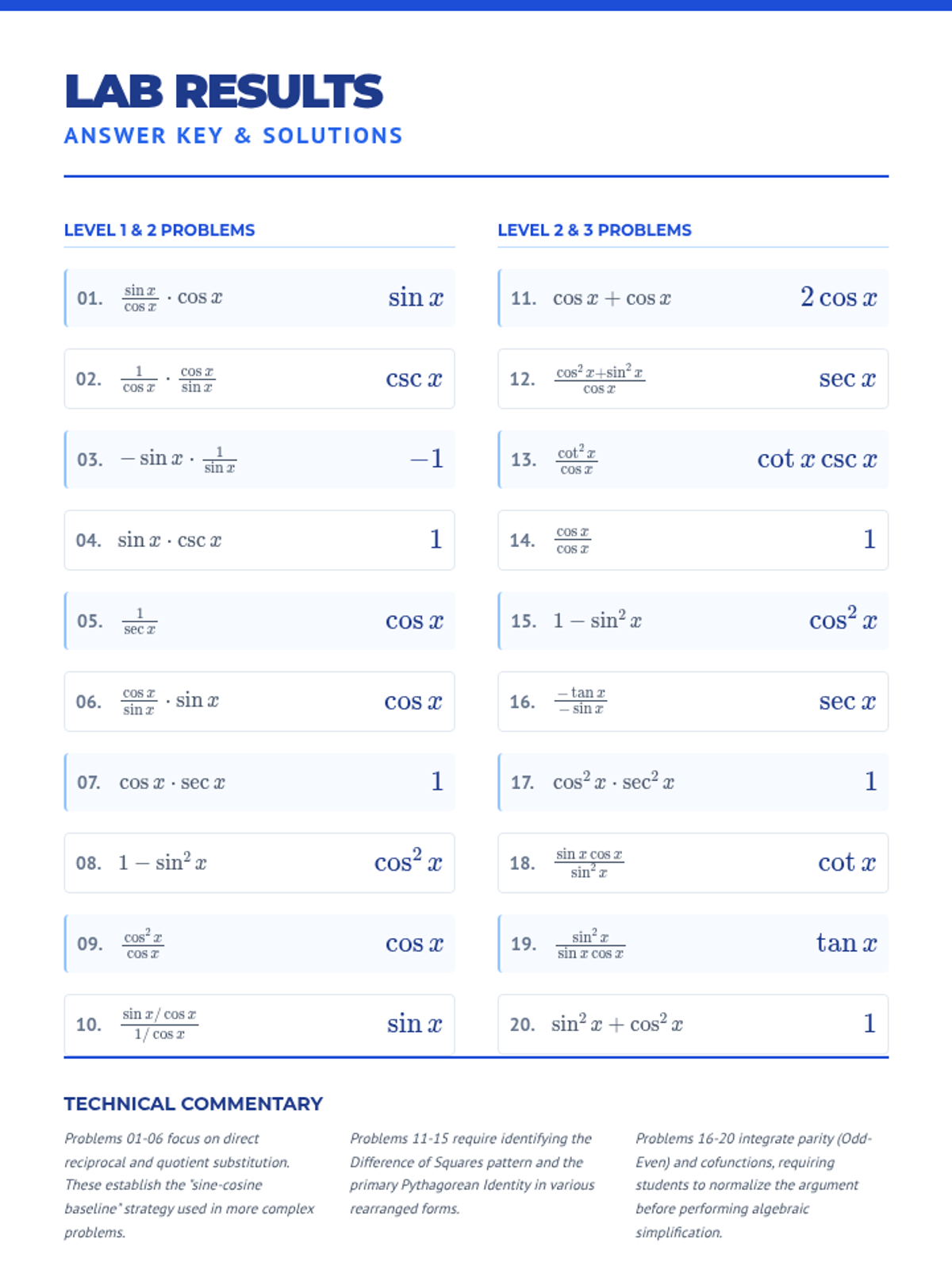
This lesson focuses on simplifying trigonometric expressions using fundamental identities: reciprocal, odd-even, Pythagorean, and cofunction. It provides scaffolded practice transitioning from basic one-step simplifications to more complex algebraic manipulations.
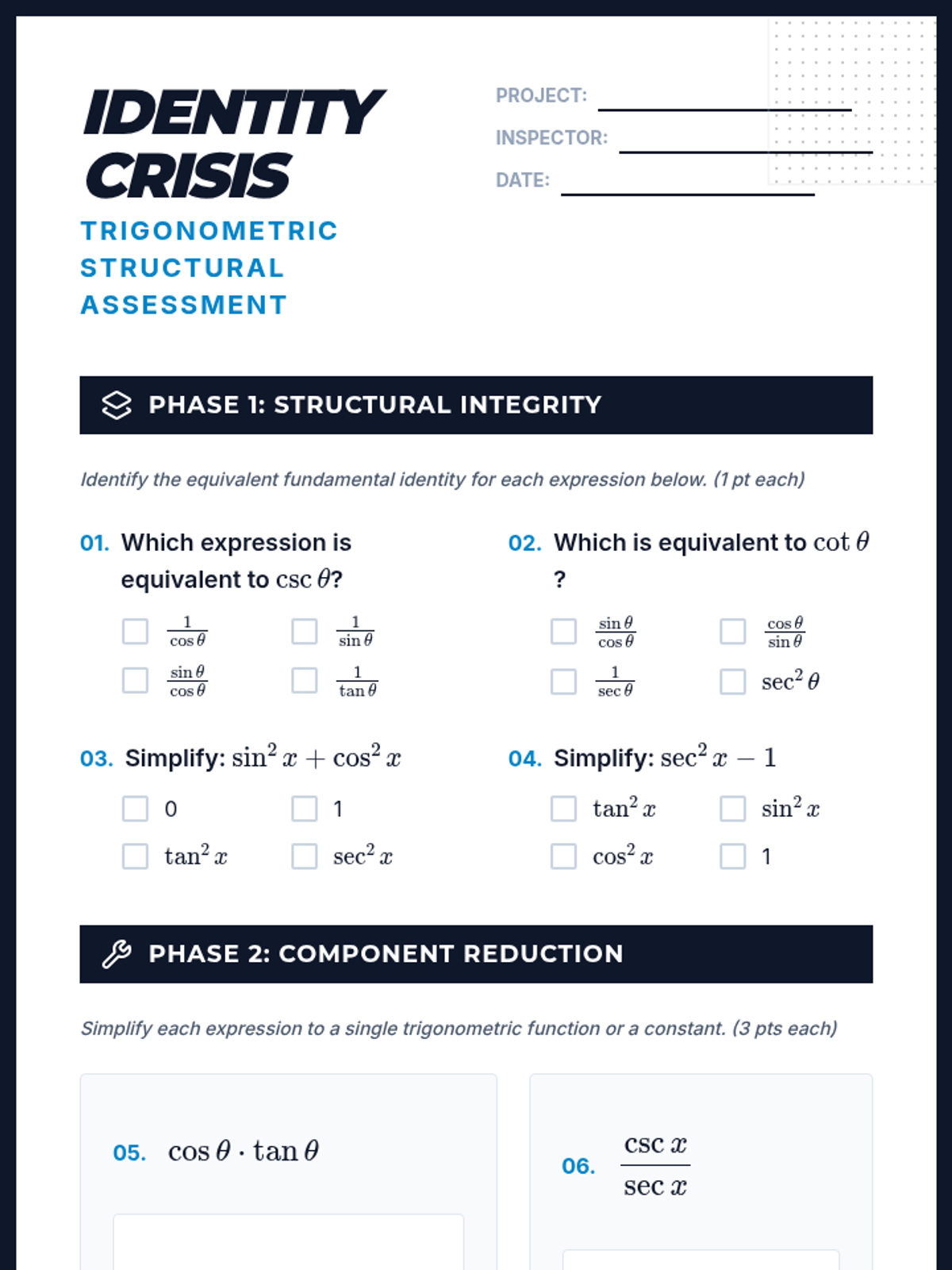
A comprehensive assessment and review lesson on fundamental trigonometric identities, including Pythagorean, reciprocal, and quotient identities. Students will practice simplifying expressions and proving identities.
A comprehensive assessment and review on fundamental trigonometric identities, including Pythagorean, reciprocal, sum/difference, and double angle formulas. Students will decode mathematical relationships through a spy-themed dossier.
A diverse collection of high-quality math resources spanning Algebra, Geometry, Statistics, and Pre-Calculus.
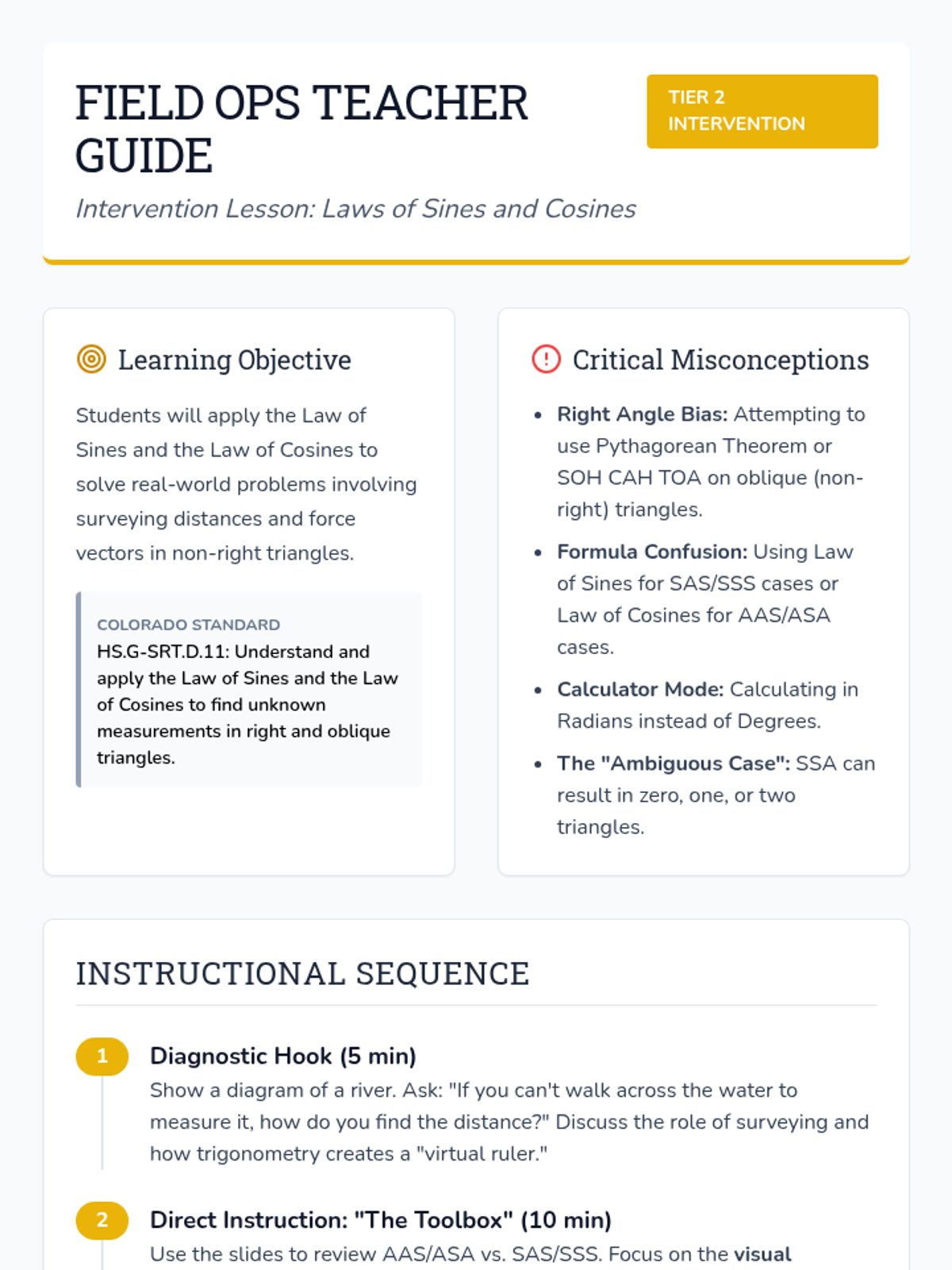
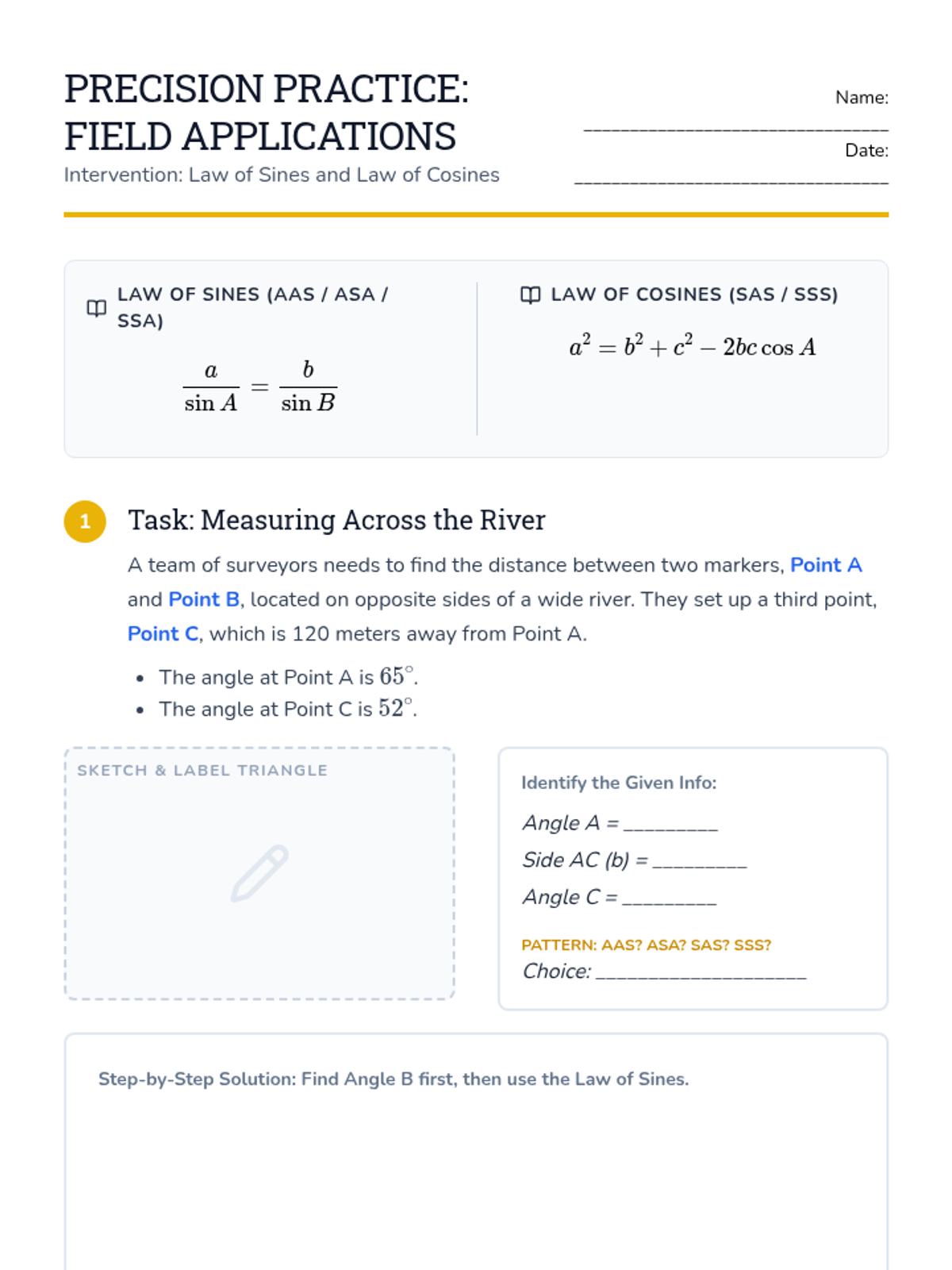
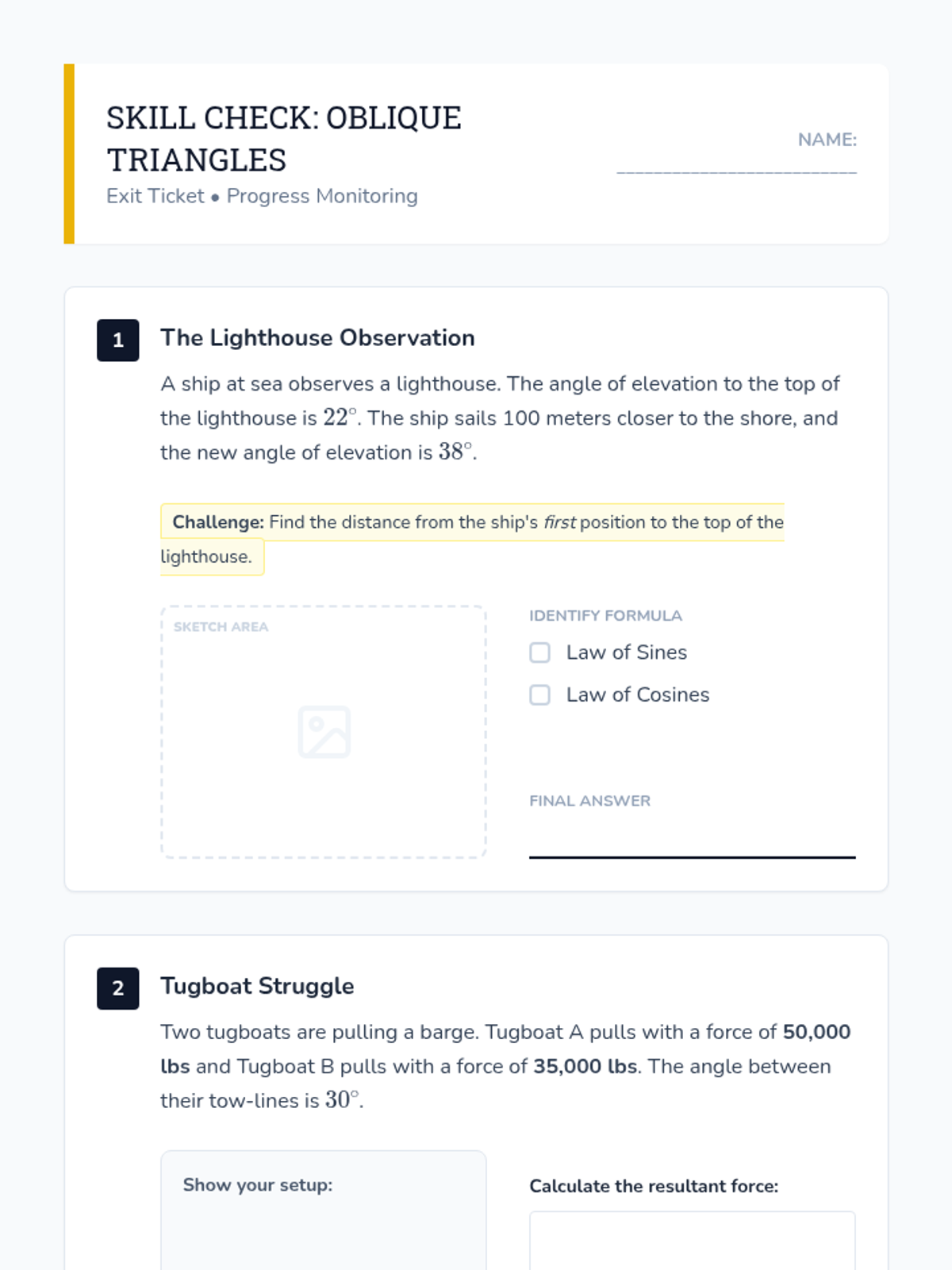
A targeted intervention lesson for high school geometry students, focusing on practical applications of the Laws of Sines and Cosines in surveying and physics contexts. This lesson utilizes scaffolded instruction and real-world scenarios to support Tier 2 learners in mastering oblique triangle trigonometry.
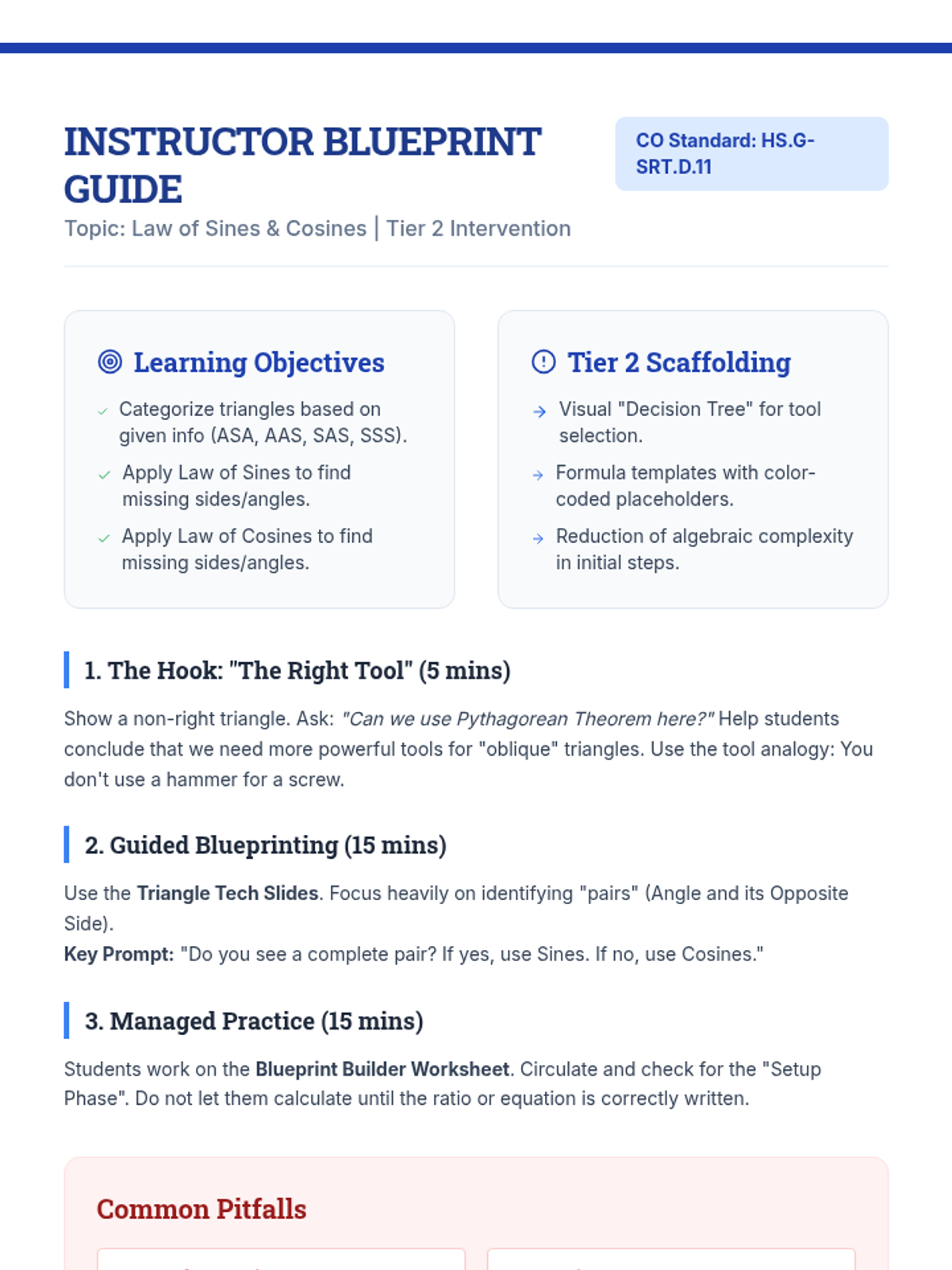
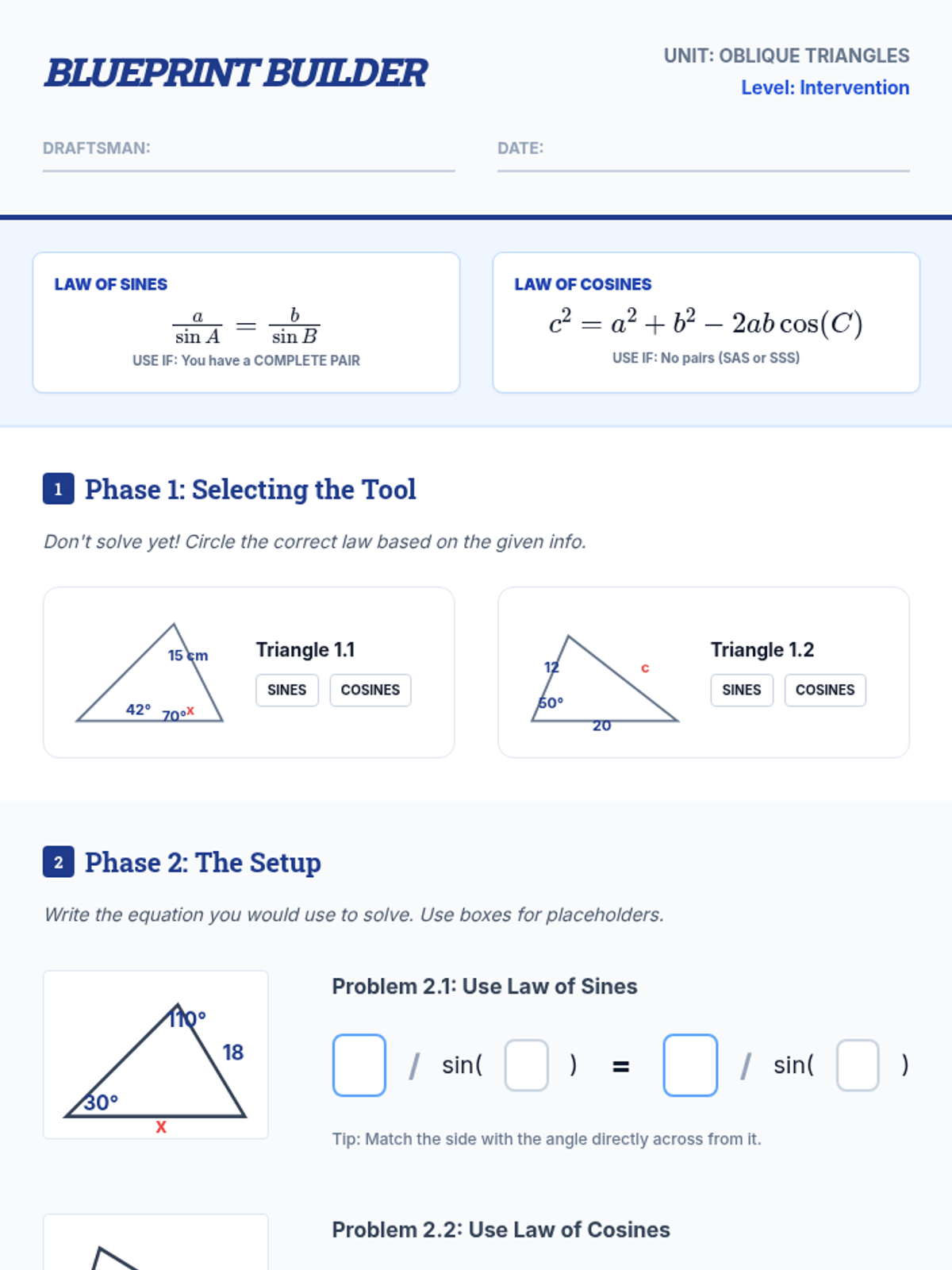
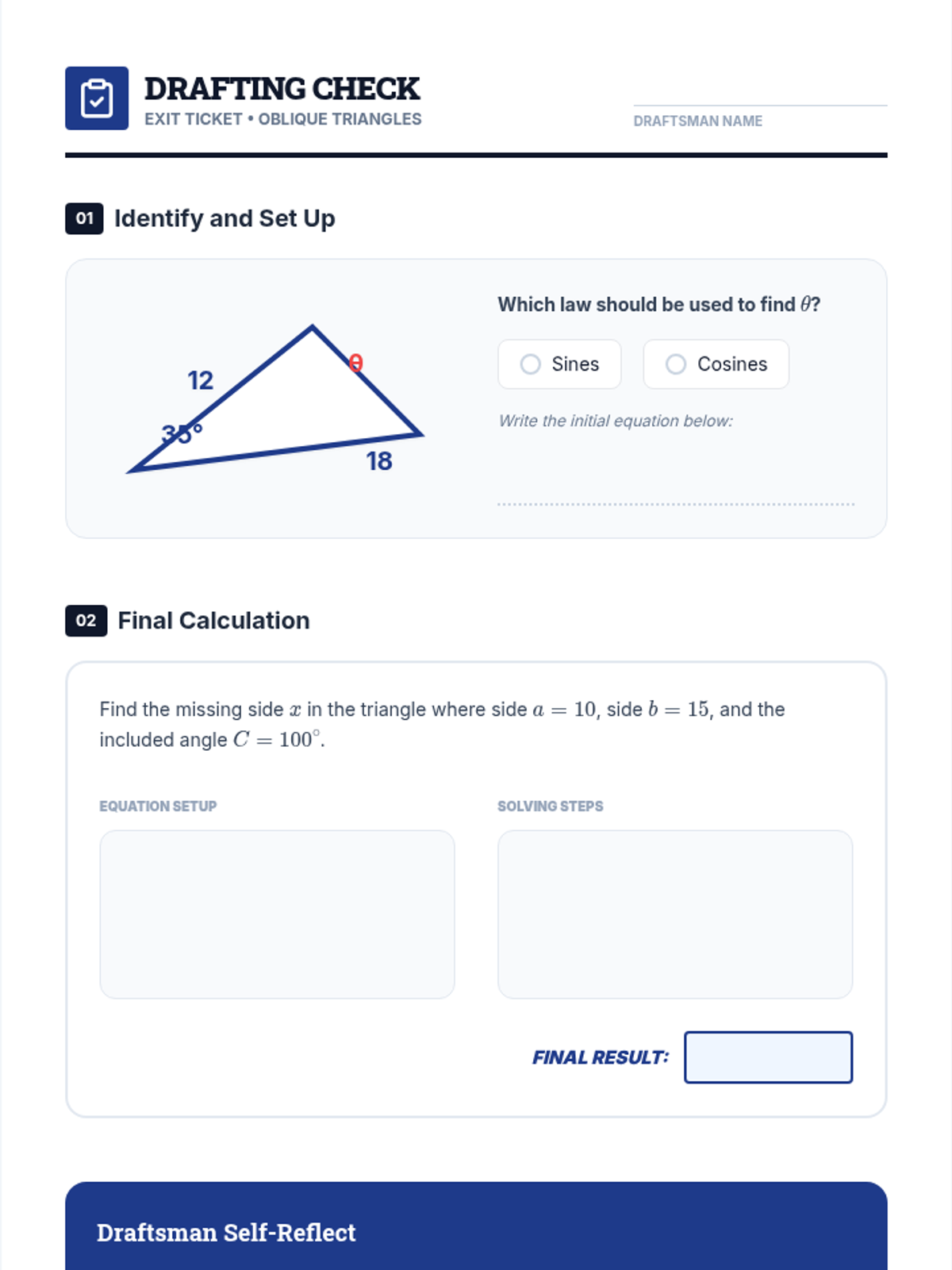
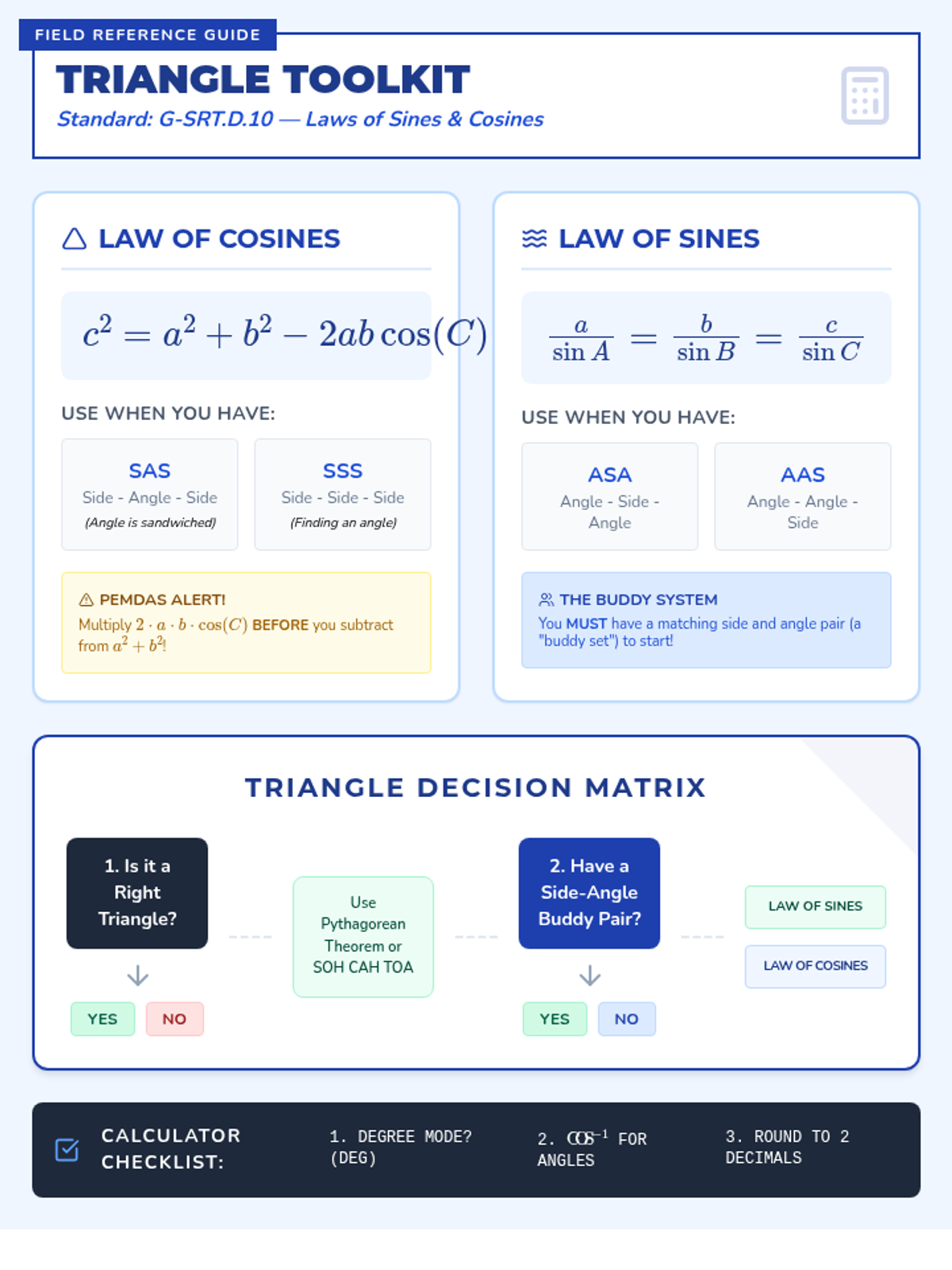
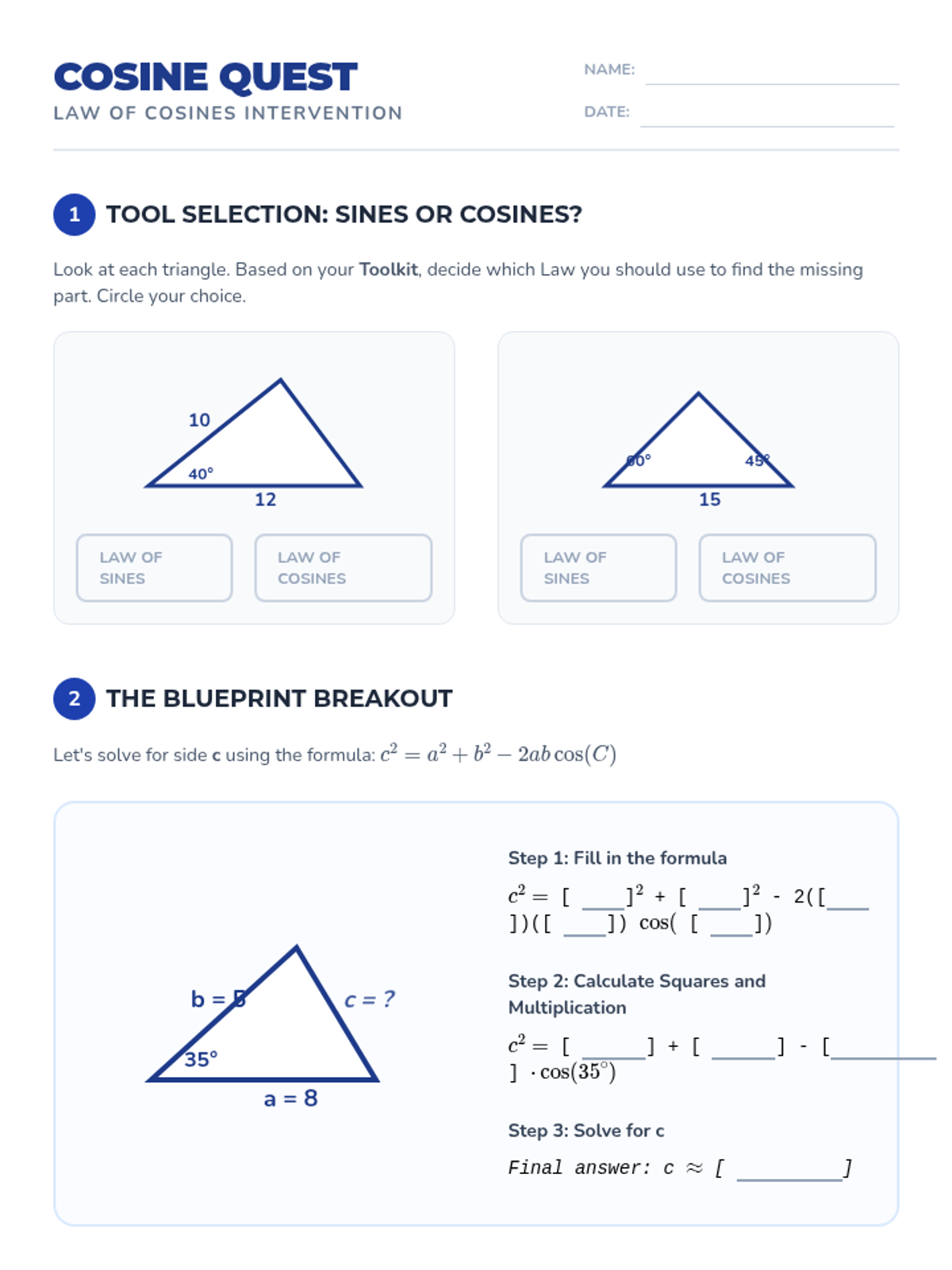
A targeted intervention lesson focusing on the Law of Sines and Law of Cosines. This lesson helps Tier 2 students identify when to use each law and provides scaffolded practice for solving unknown sides and angles in non-right triangles.
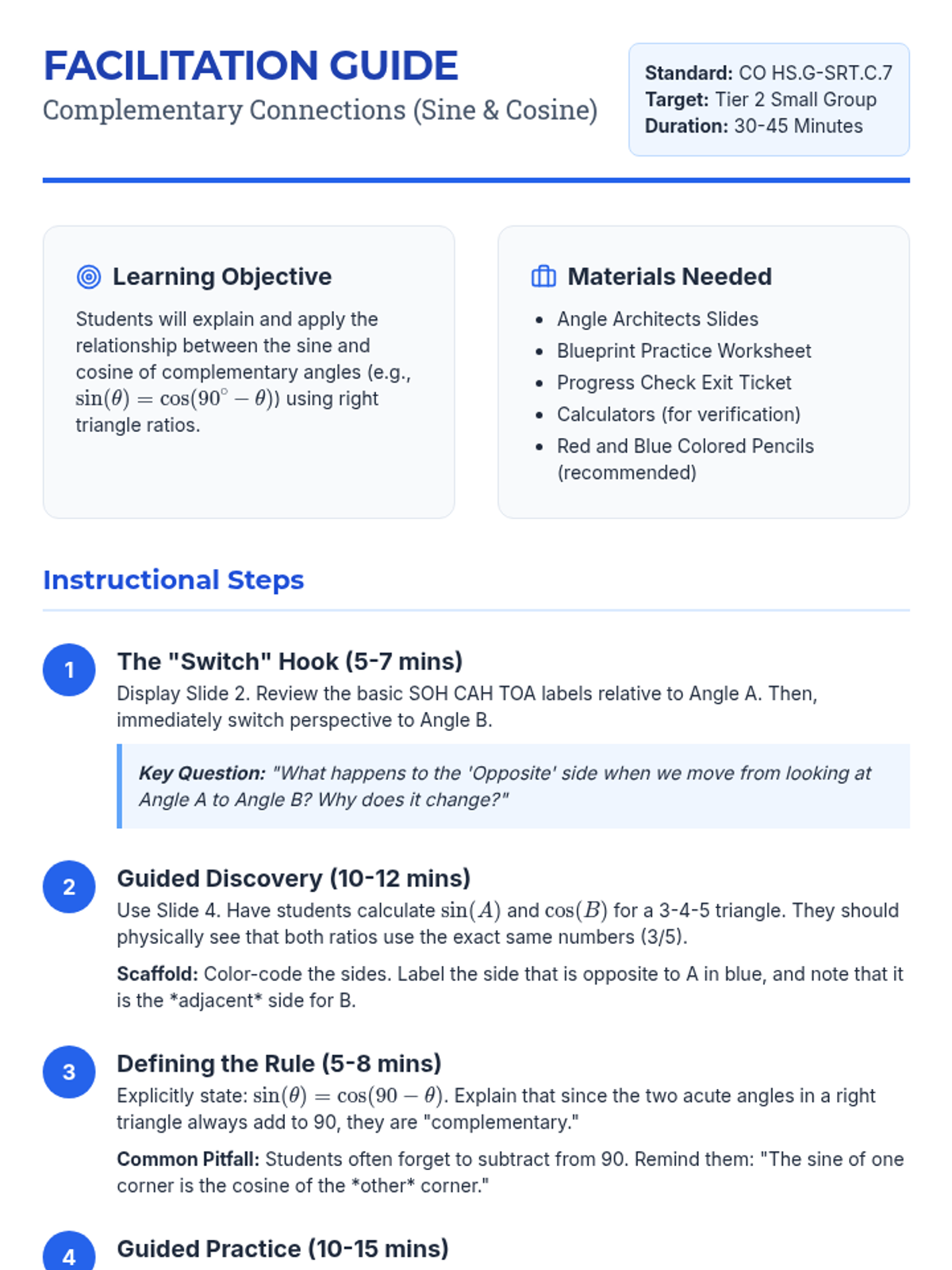
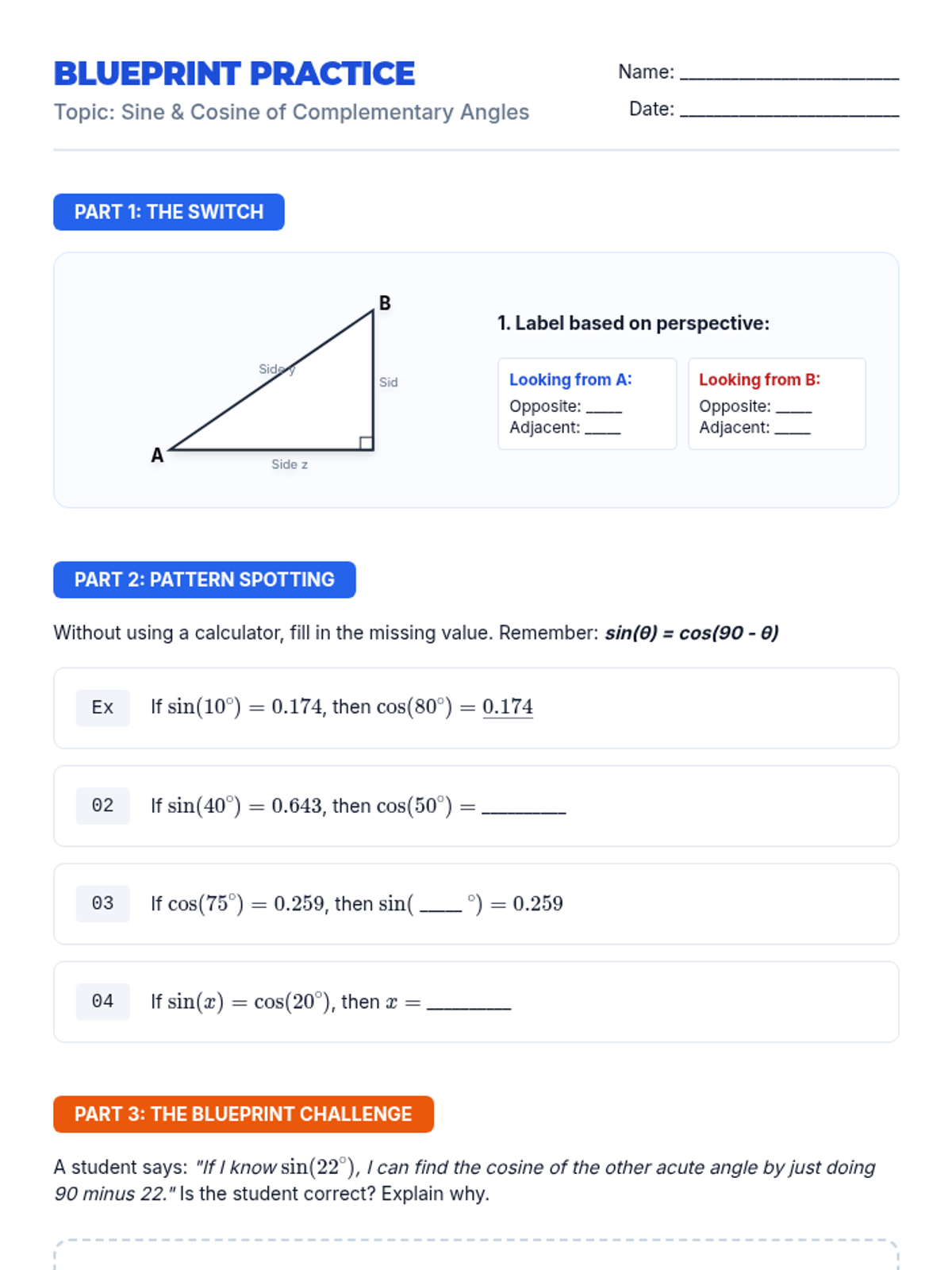
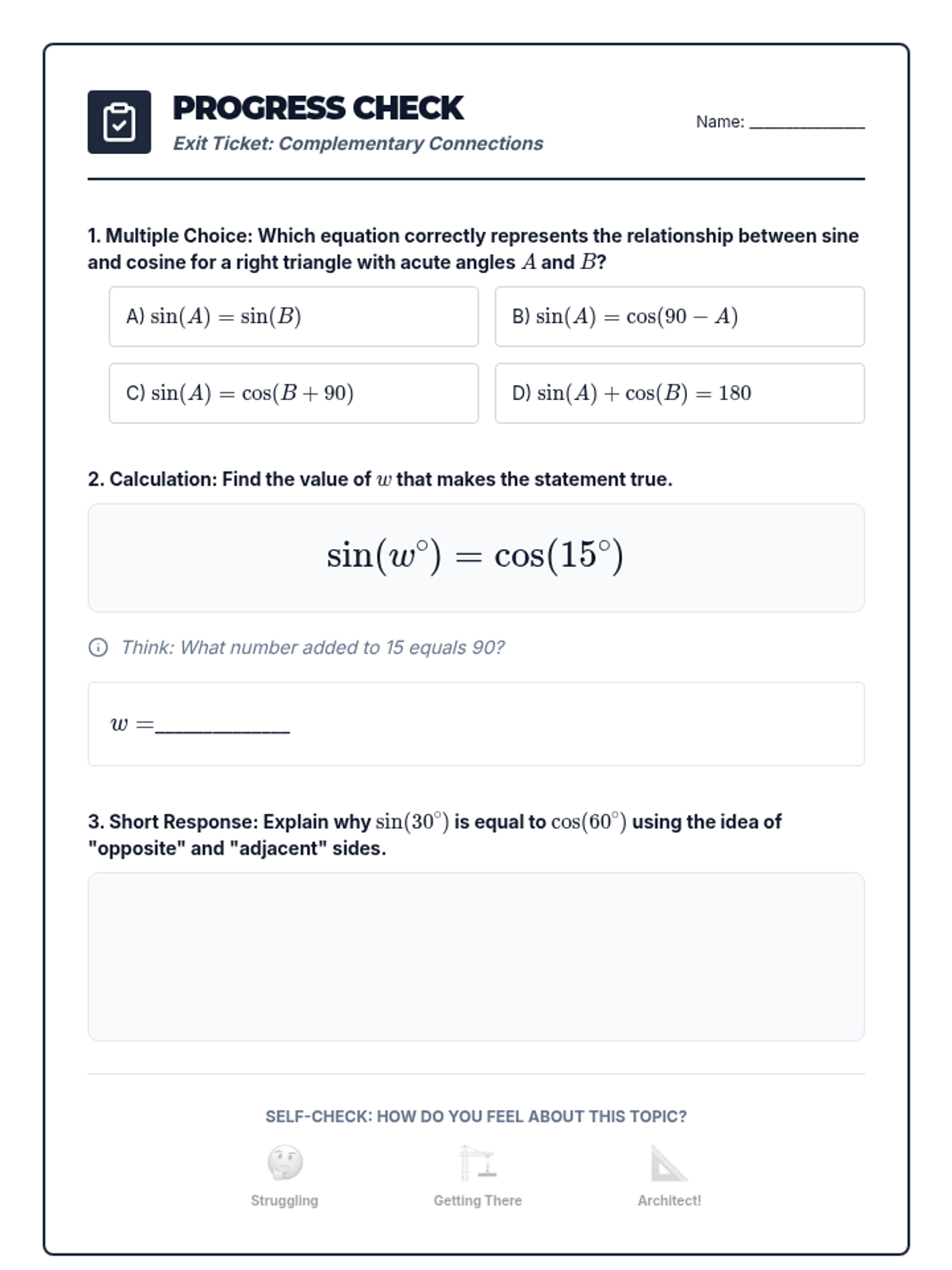
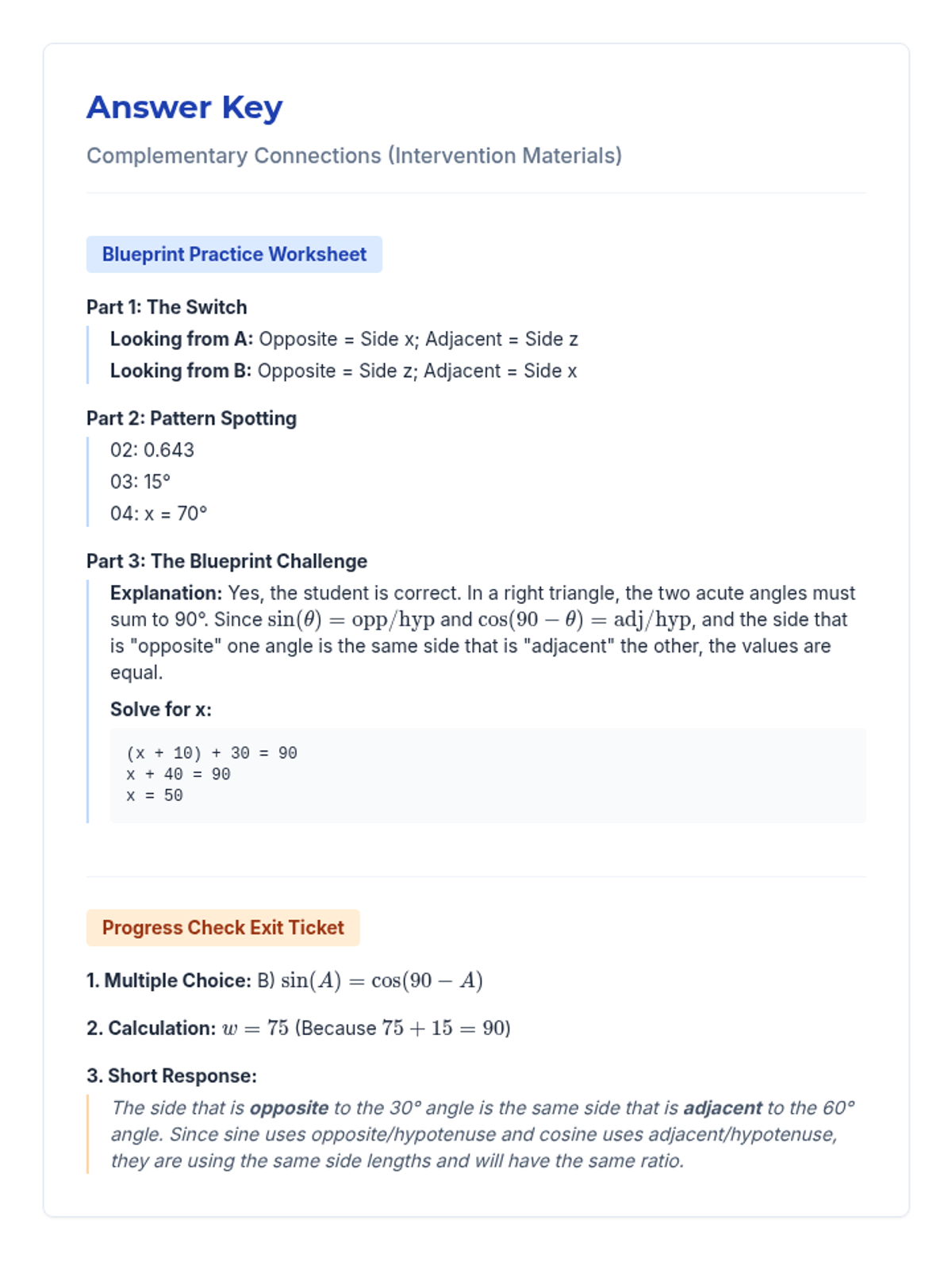
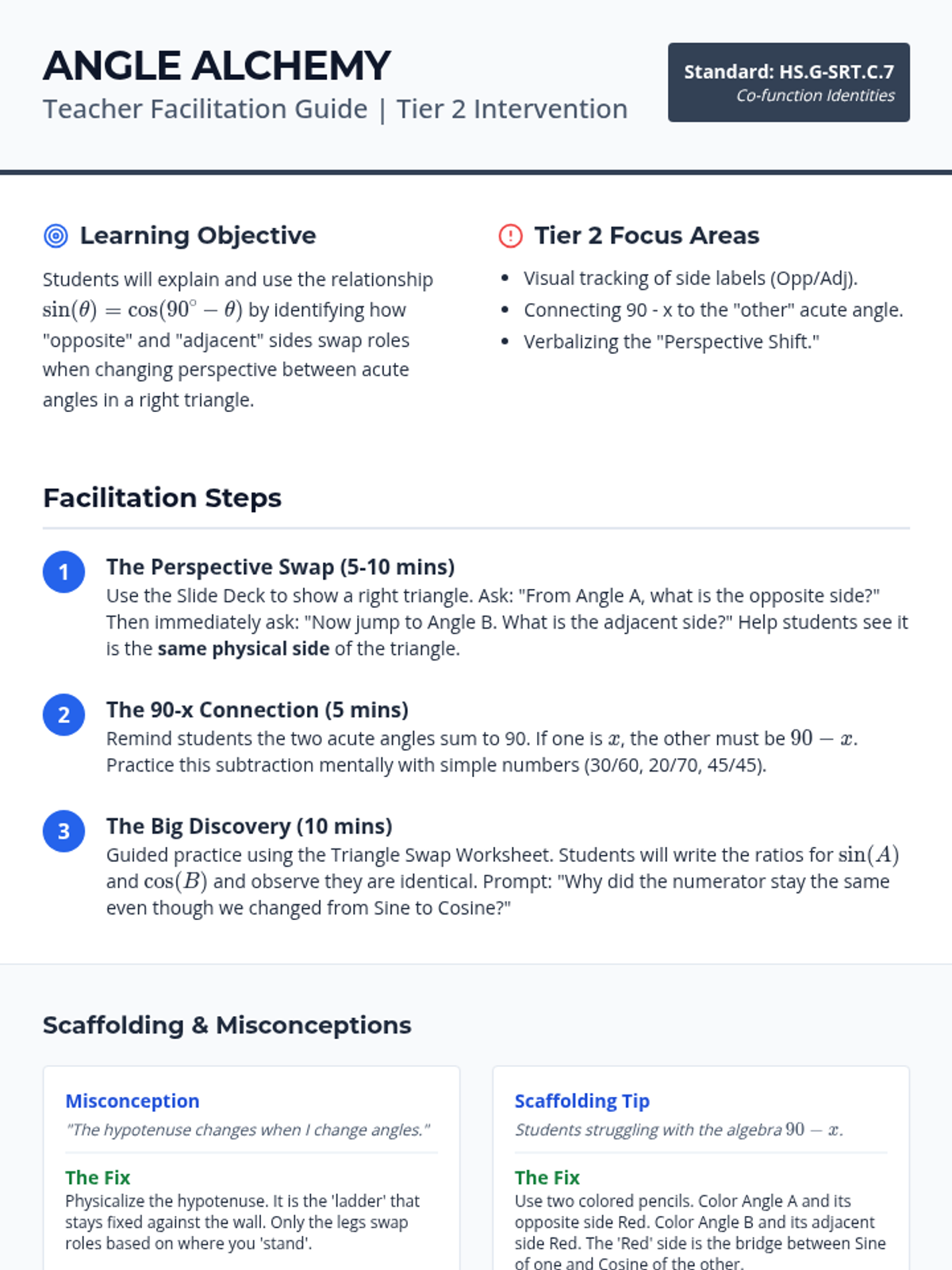
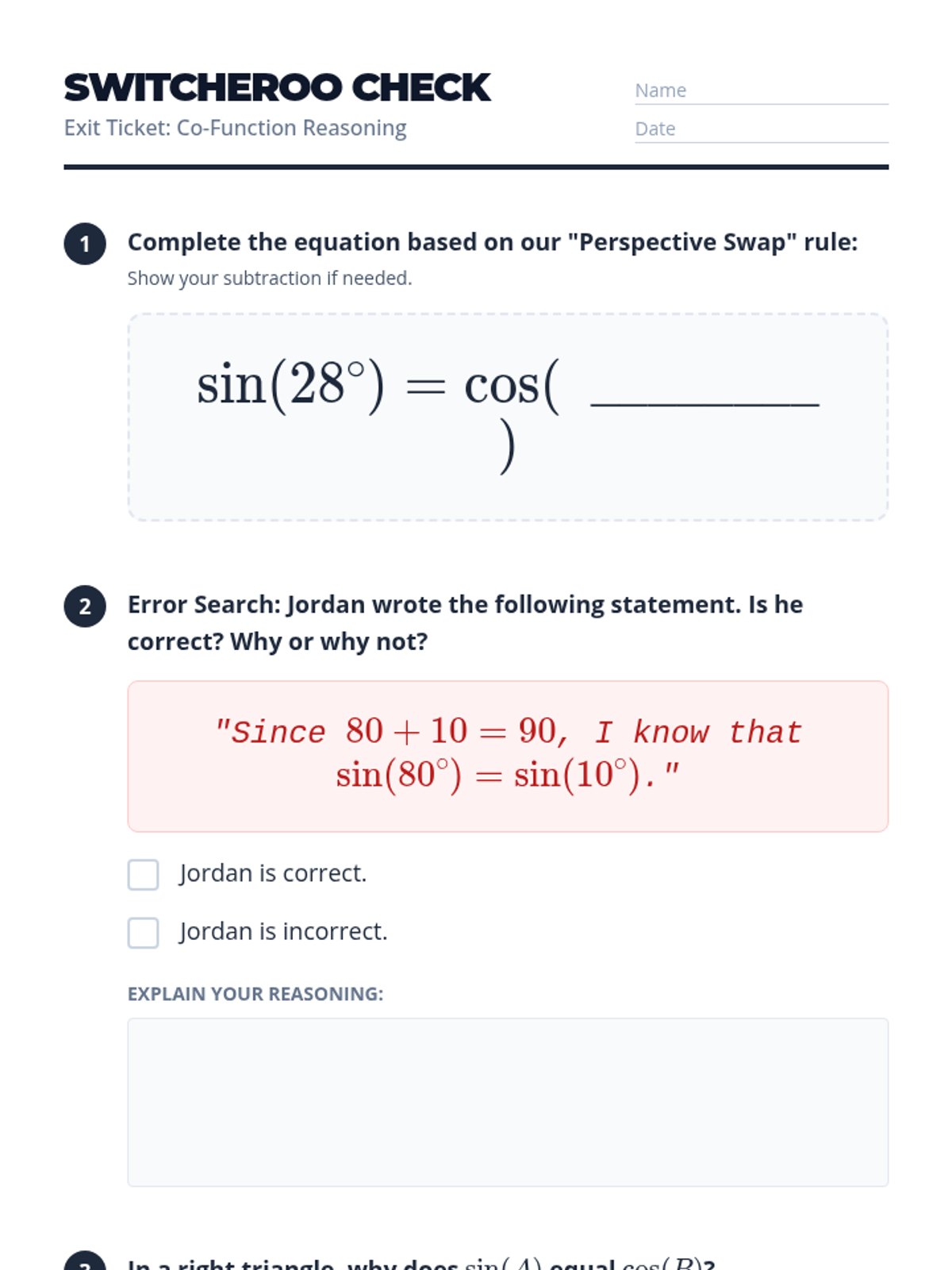
A targeted intervention lesson focused on the relationship between sine and cosine in complementary angles. Designed for Tier 2 small group support with scaffolded visual aids and progress monitoring.
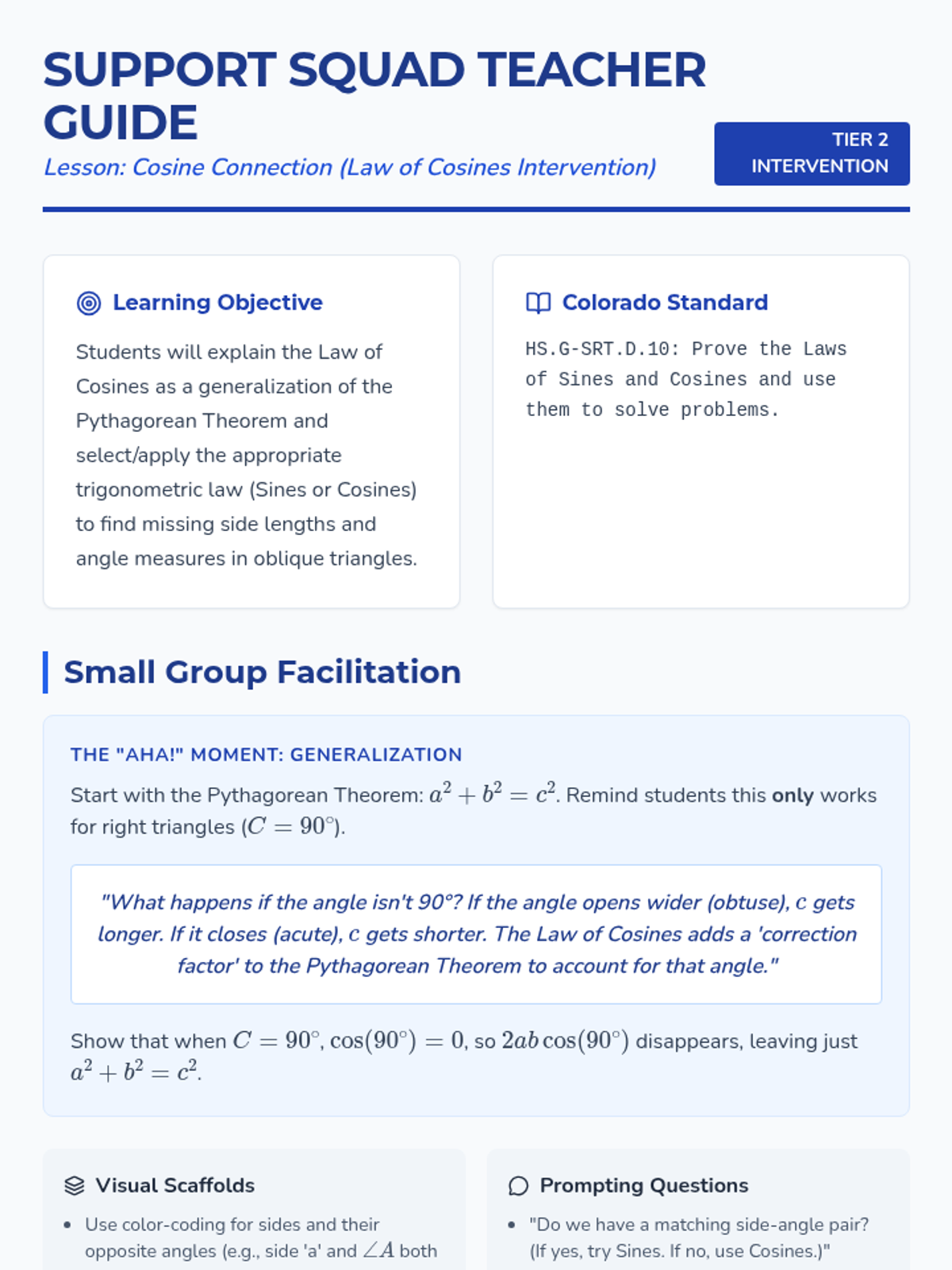
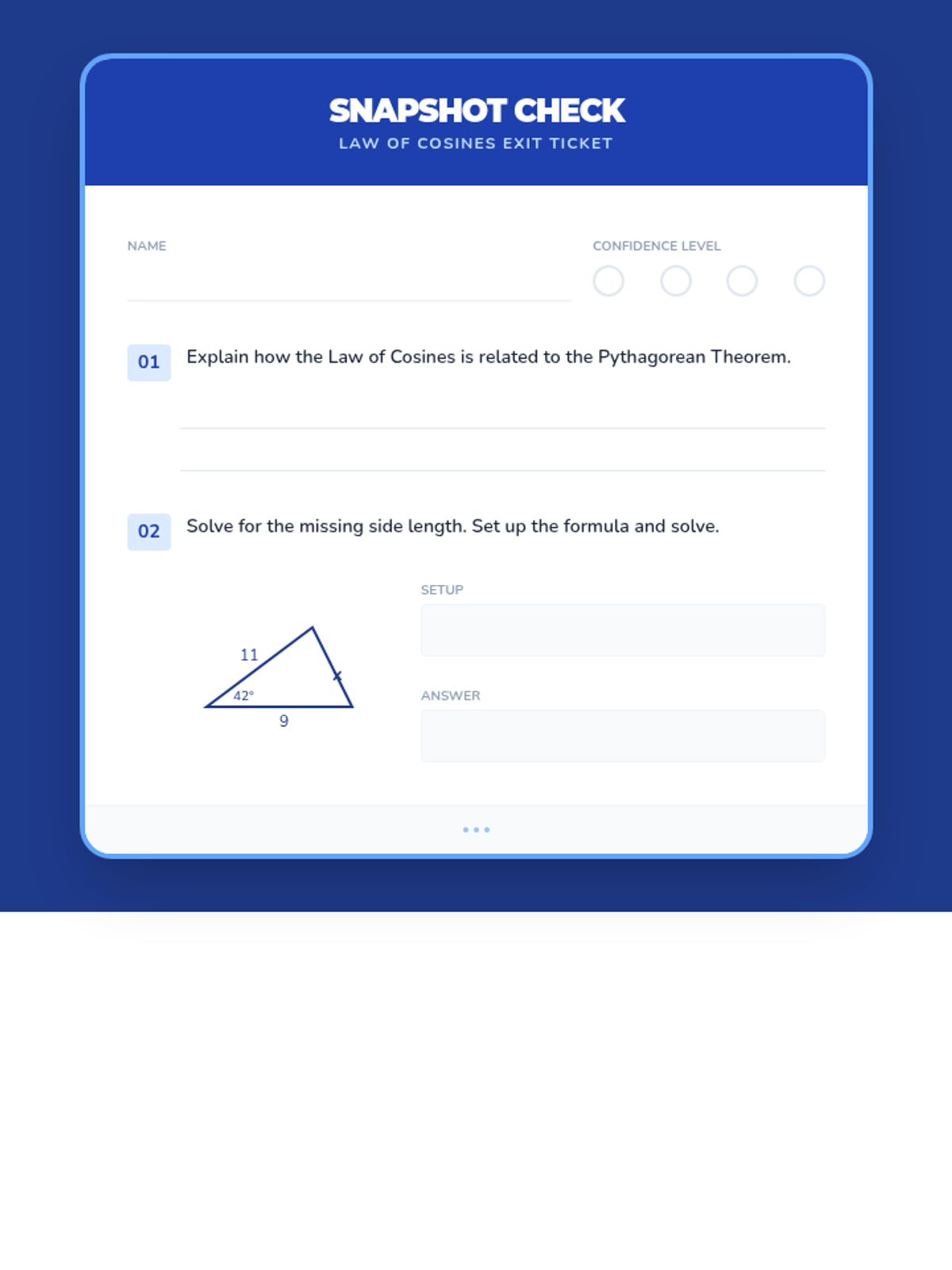
A targeted intervention lesson designed to help students connect the Law of Cosines to the Pythagorean Theorem and apply trigonometric laws to solve oblique triangles. Features visual scaffolds, step-by-step worked examples, and decision-making tools for choosing between laws.
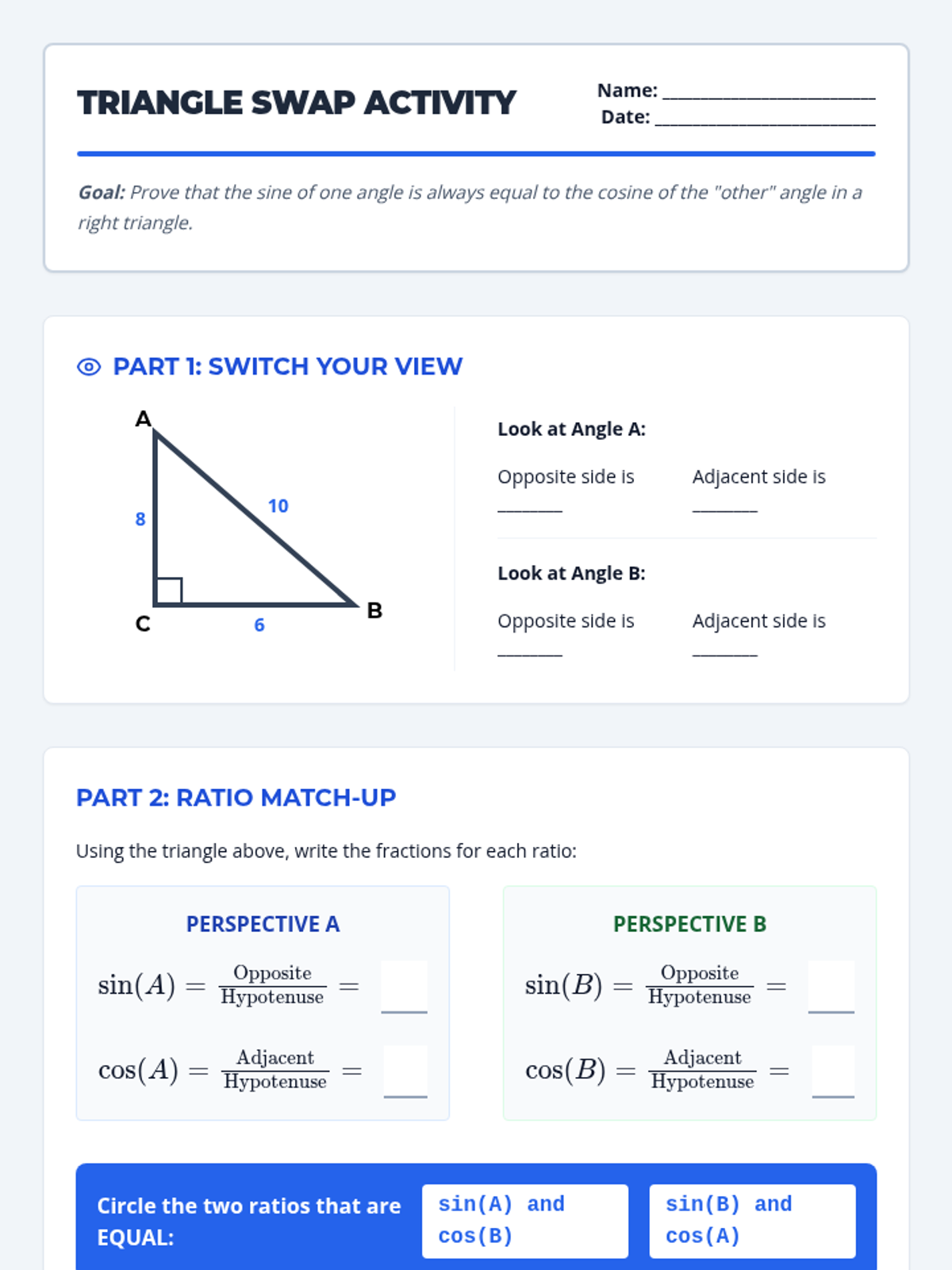
A Tier 2 intervention lesson focusing on the relationship between sine and cosine of complementary angles using right triangle models. Students will explore how switching perspectives within a triangle reveals the co-function identity.