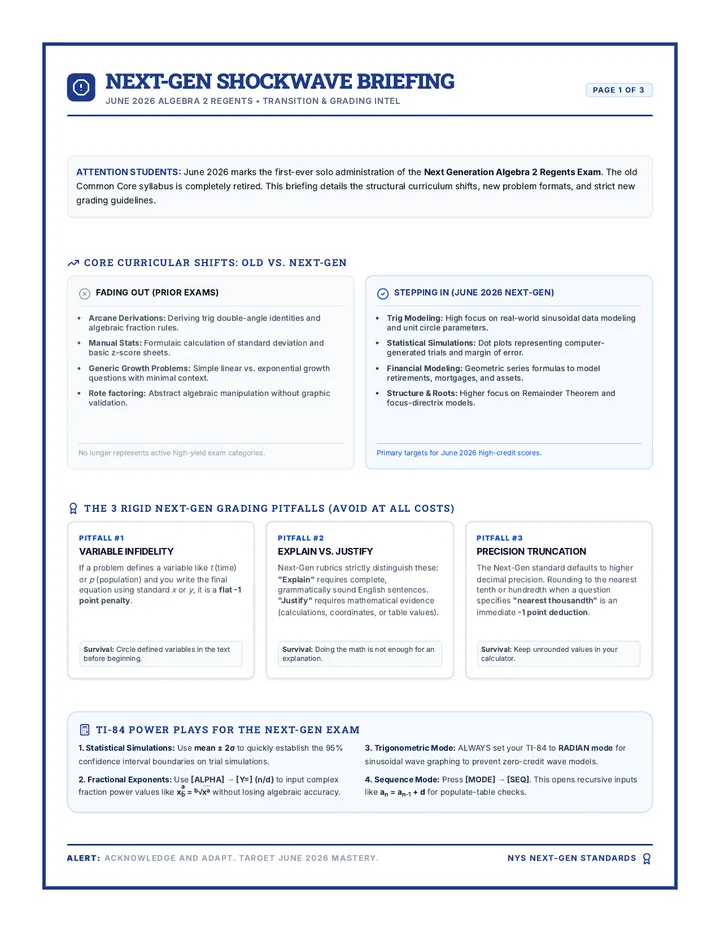
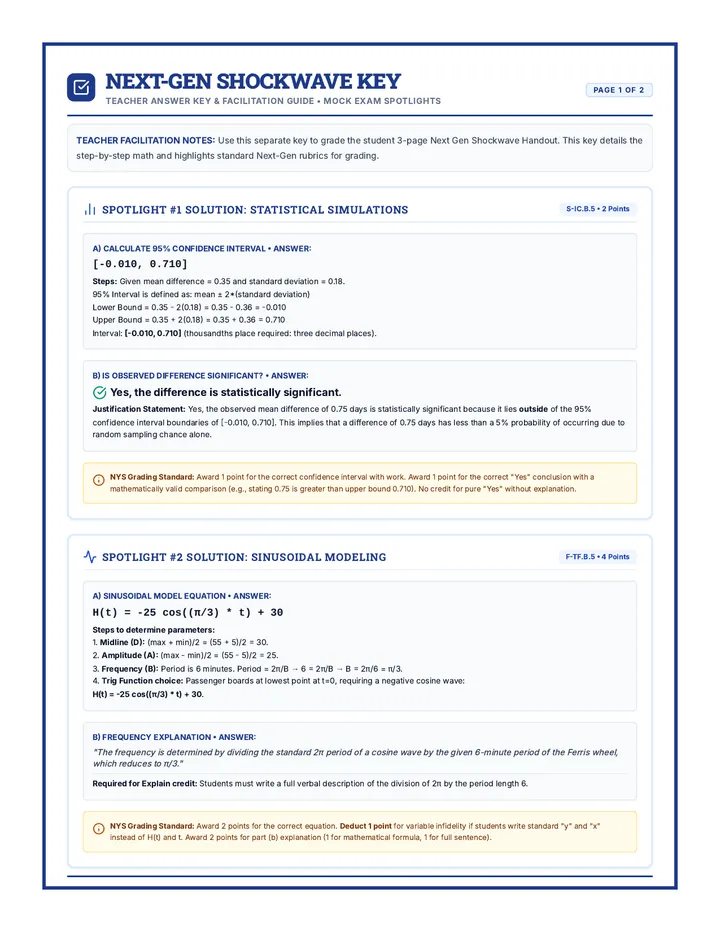
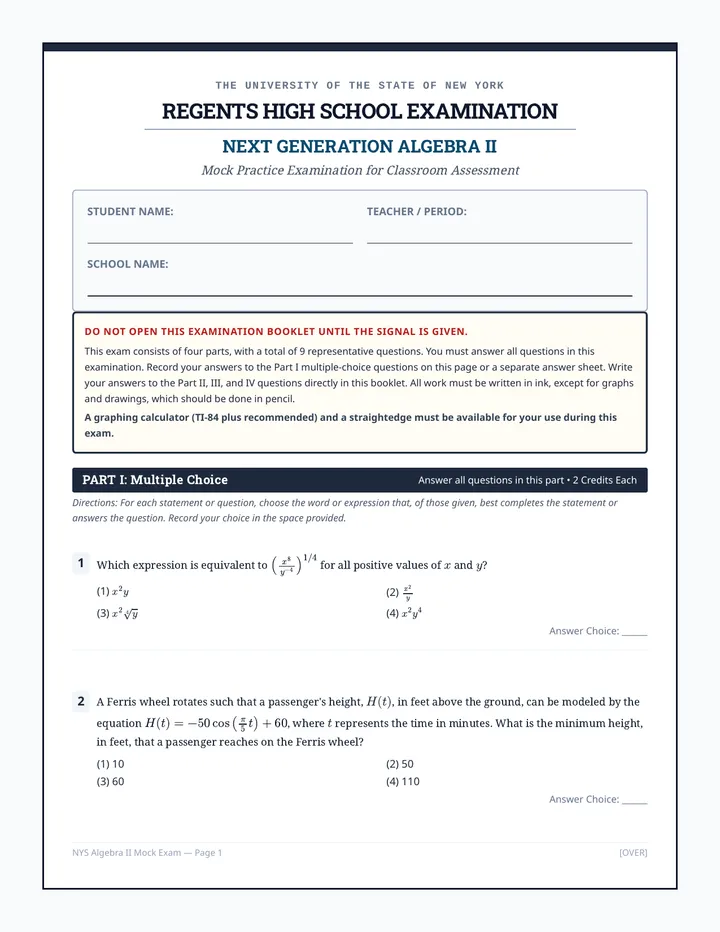
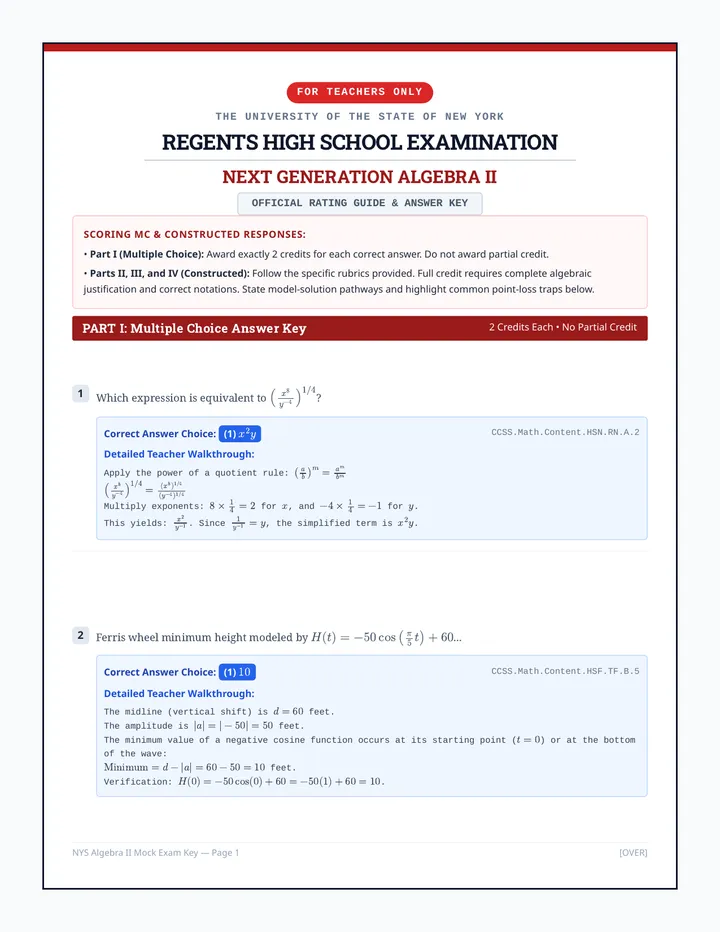
A 10th-grade math lesson that introduces the Left-Hand Technique for memorizing trig values of special angles, focusing on pattern recognition and the mathematical logic behind the shortcut.
A targeted intervention session providing differentiated pathways for students based on their mastery of domain and range: enrichment projects, error analysis, and foundational reteaching.
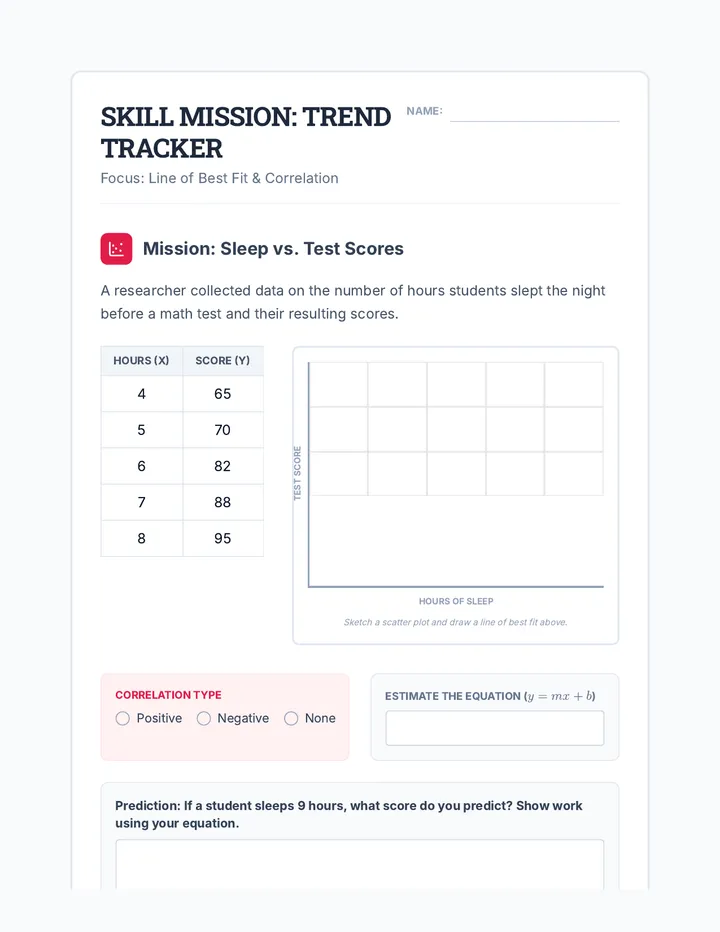
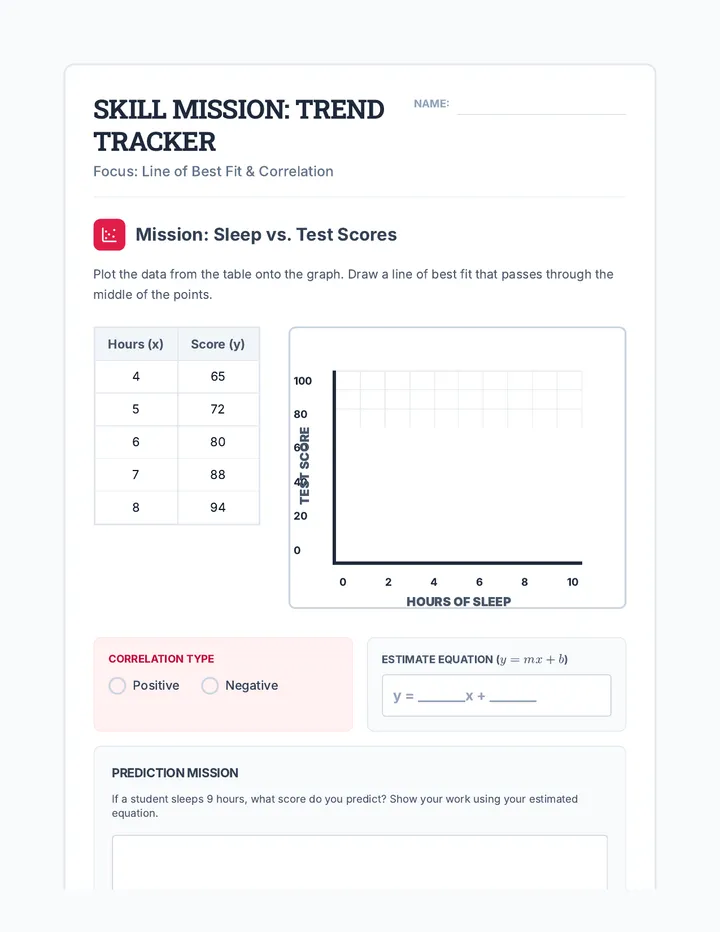
A tiered assignment covering TEKS A.4(A-C) focusing on correlation, causation, and linear regression. Students progress through three levels of complexity to master data analysis skills.
A modified geometry lesson focused exclusively on translations, featuring visual aids, simplified language, and scaffolded practice for high school students.
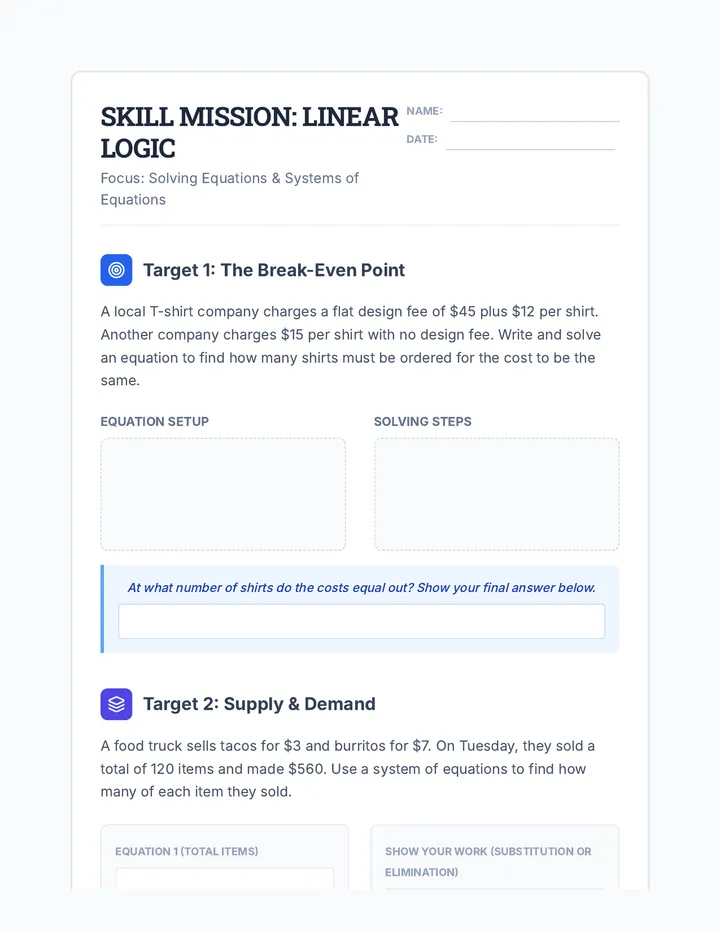
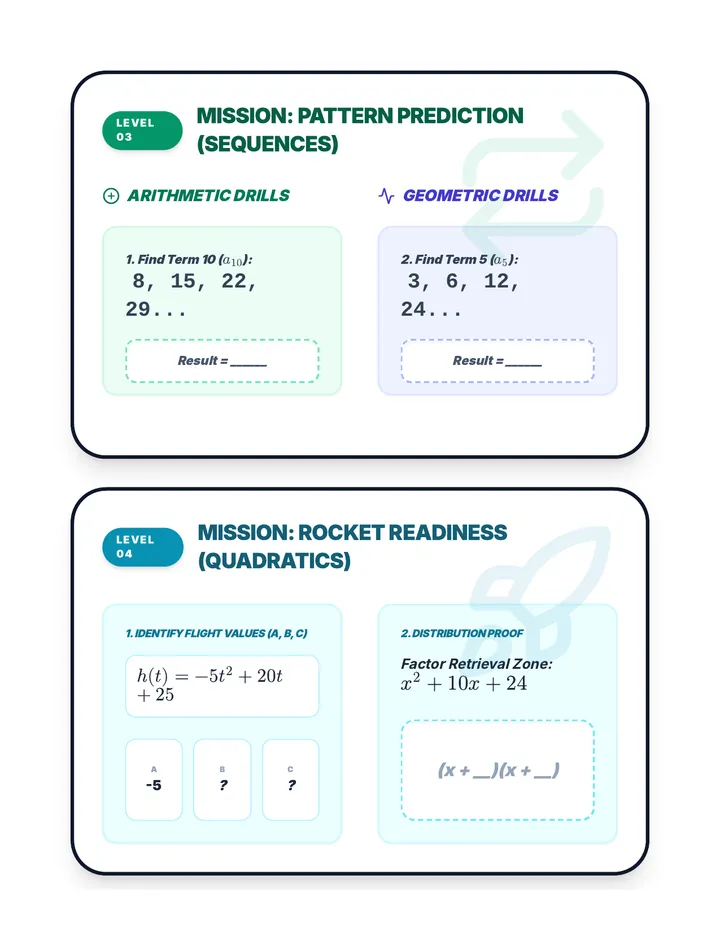
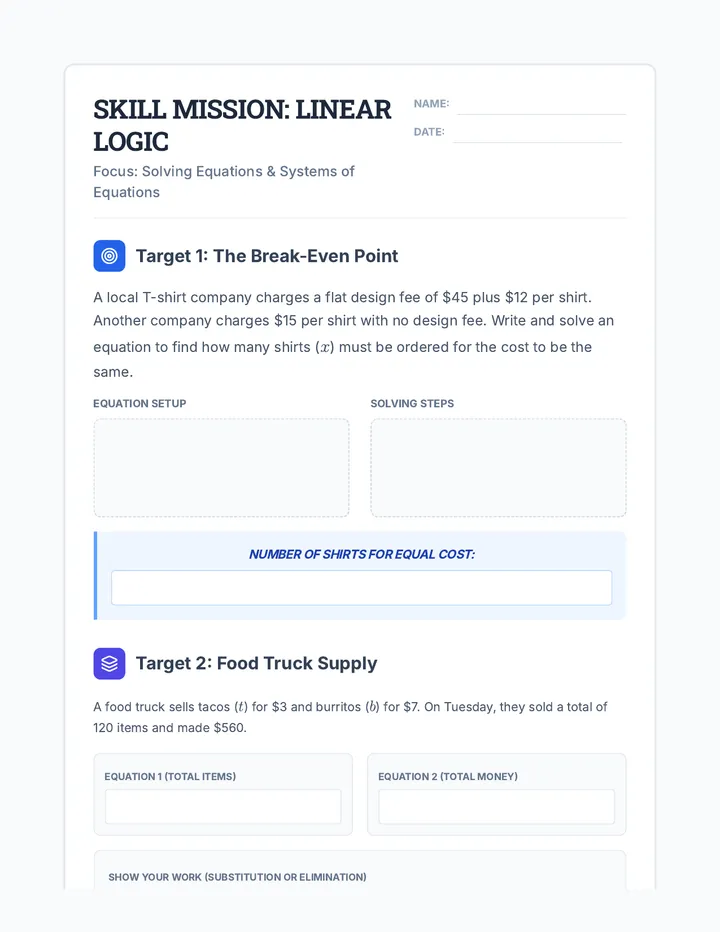
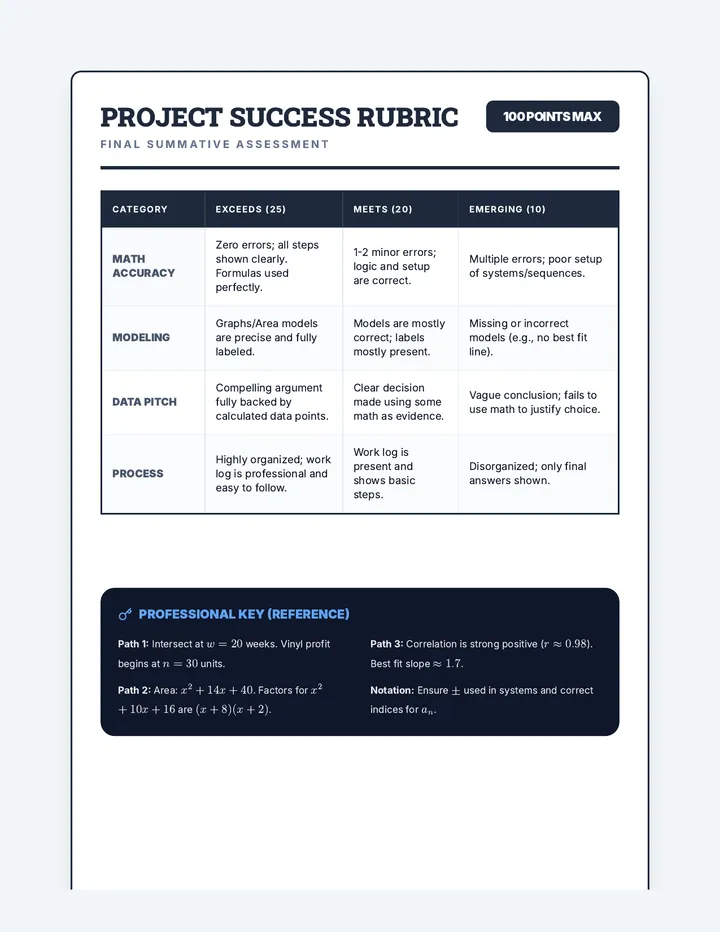
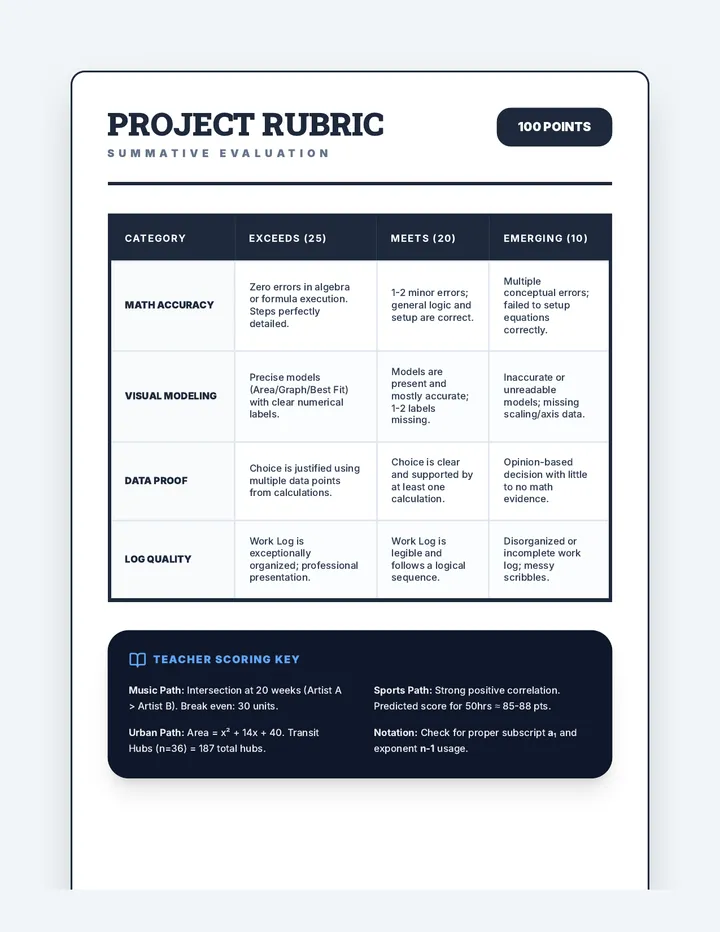
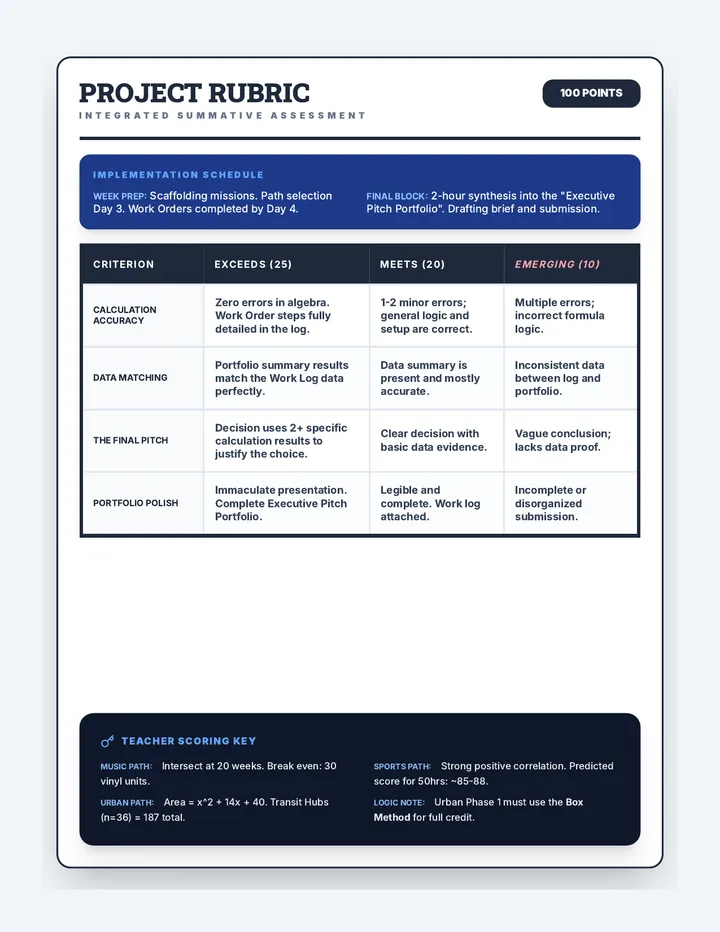
A comprehensive final assessment for Algebra 1 covering linear equations, systems, exponents, polynomials, and quadratic functions. Includes free response and graphing sections to evaluate deep understanding.
A high-energy, Valentine's-themed 'Price is Right' game designed to last up to 120 minutes, covering item pricing, logic, and estimation.
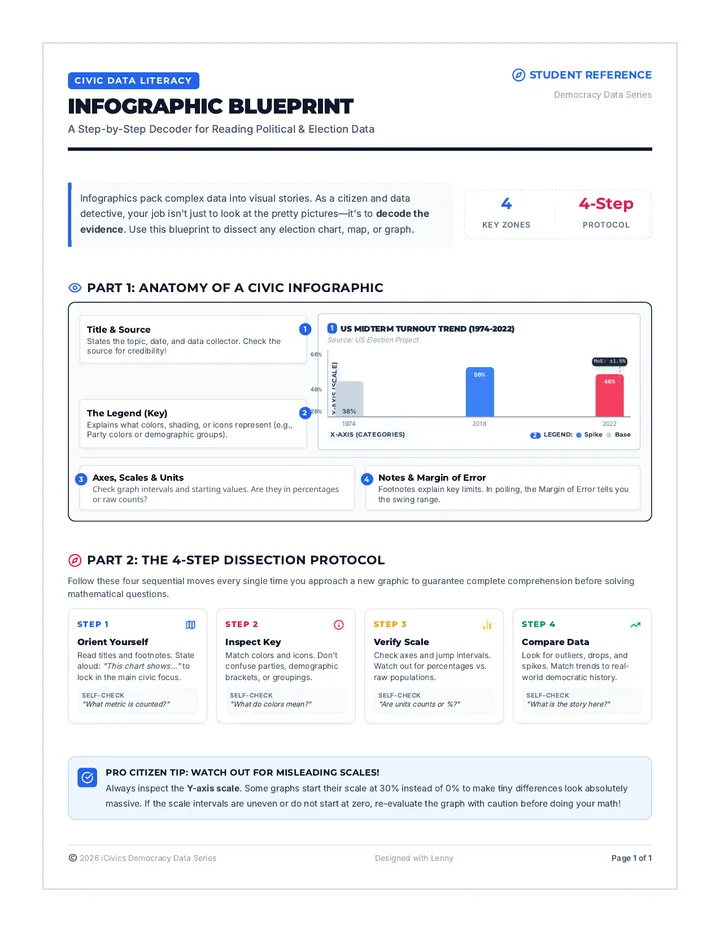
A 45-minute investigation into the world of data manipulation, covering misleading graphs, correlation vs. causation, and source credibility.
A quick, functional introduction to interpreting bar and pie charts using real-world life skills scenarios like budgeting and time management.
A scaffolded lesson on geometric translations that simplifies complex vocabulary, breaks down coordinate rules into manageable steps, and provides clear visual anchors for students.
A 10th-grade math lesson focused on developing mathematical communication skills. Students practice verbalizing their internal logic and justifying their algorithmic choices to a partner.
A collection of 10 distinct data analysis work samples featuring bar and circle graphs, designed for MCAS Alt portfolio evidence. Each sample focuses on identifying key information, making comparisons, and calculating totals.
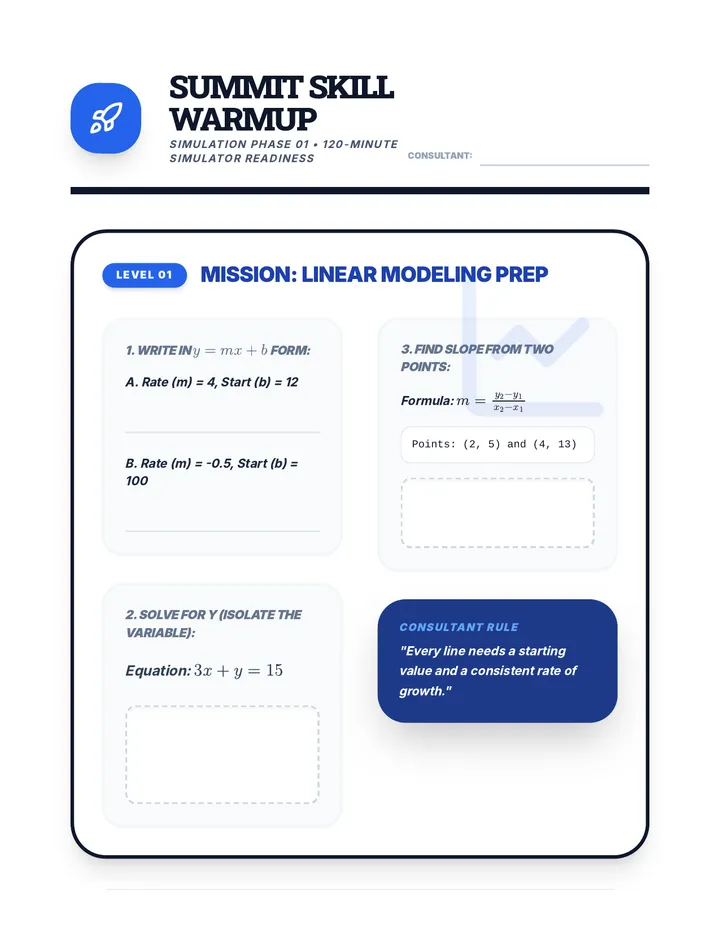
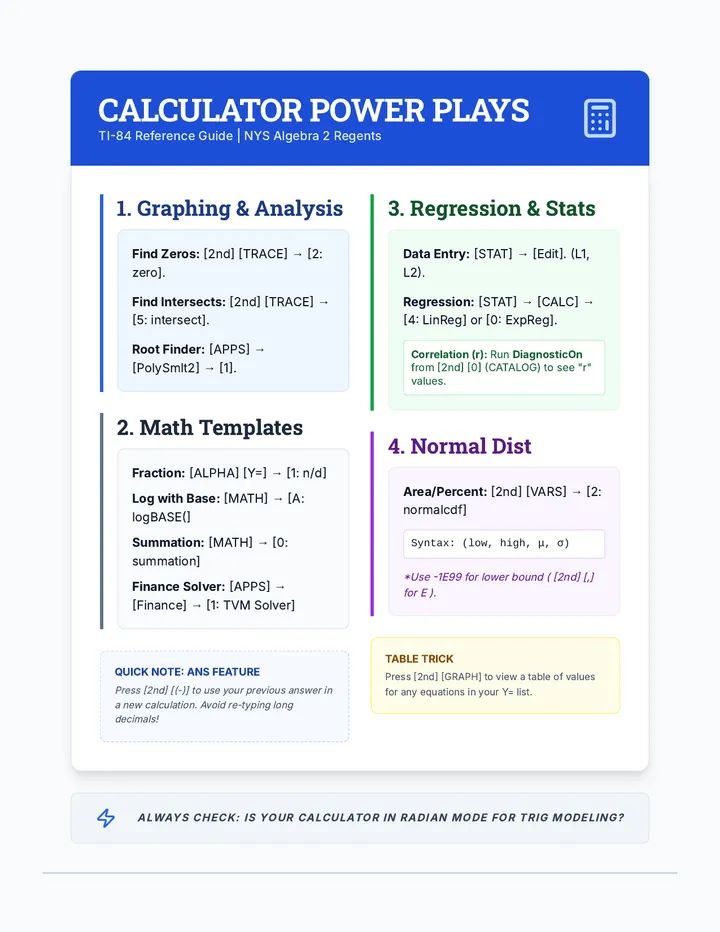
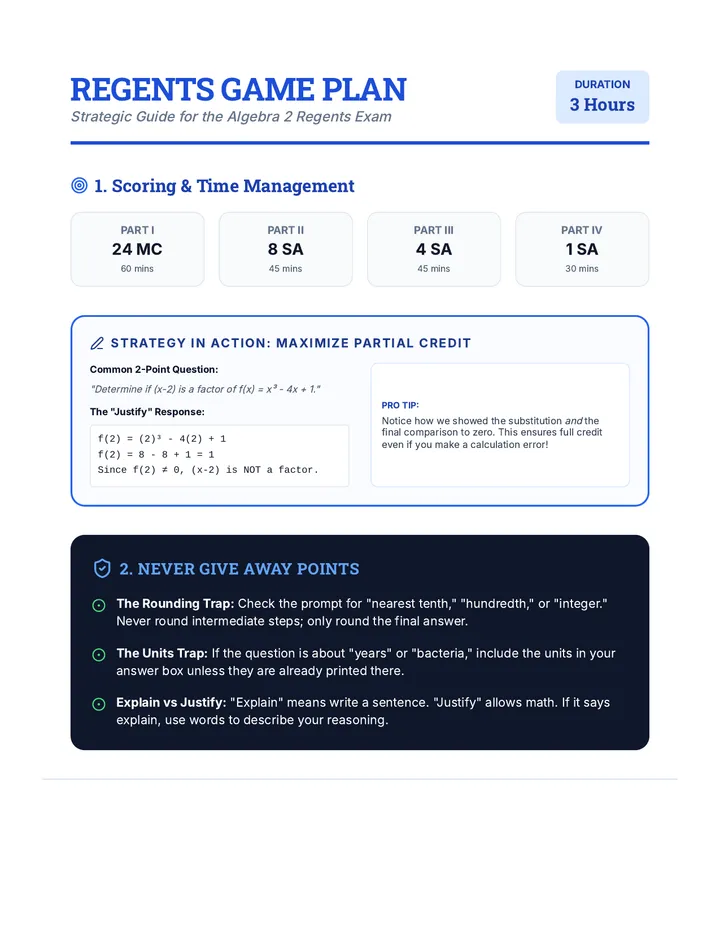
A comprehensive ACT Math preparation module focusing on core concepts, time management strategies, and targeted practice across all test categories.
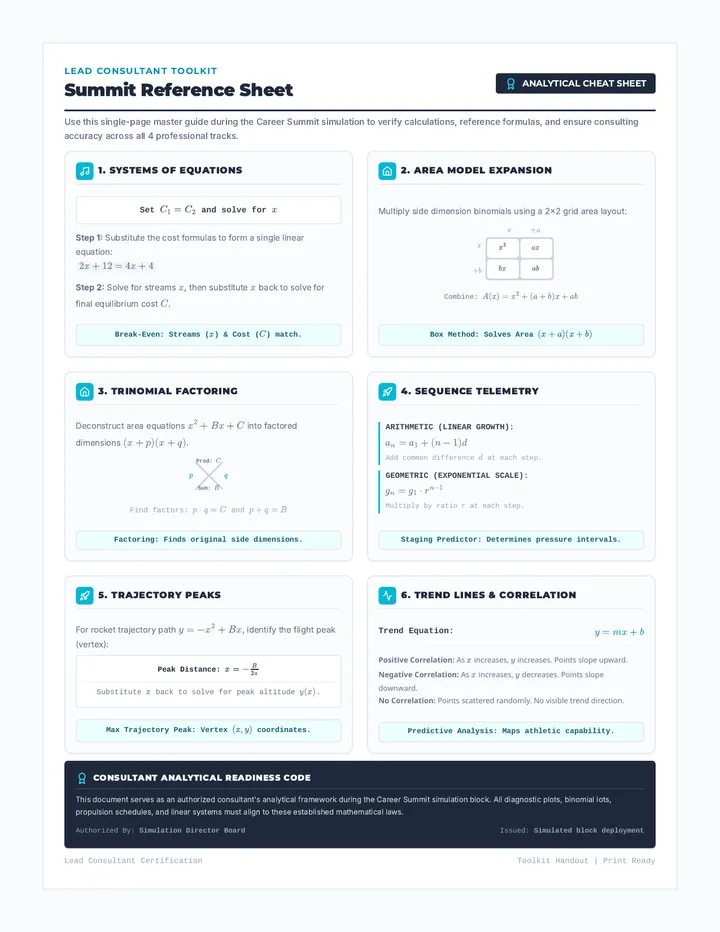
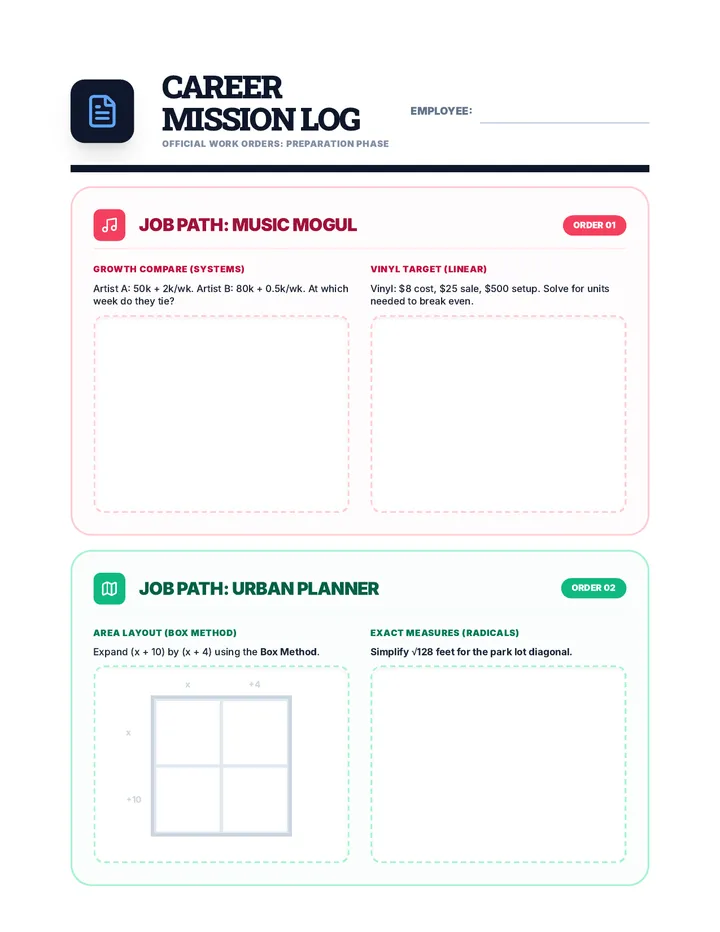
A lesson focused on solving quadratic equations using various factoring techniques, from basic trinomials to complex cases with leading coefficients greater than one.
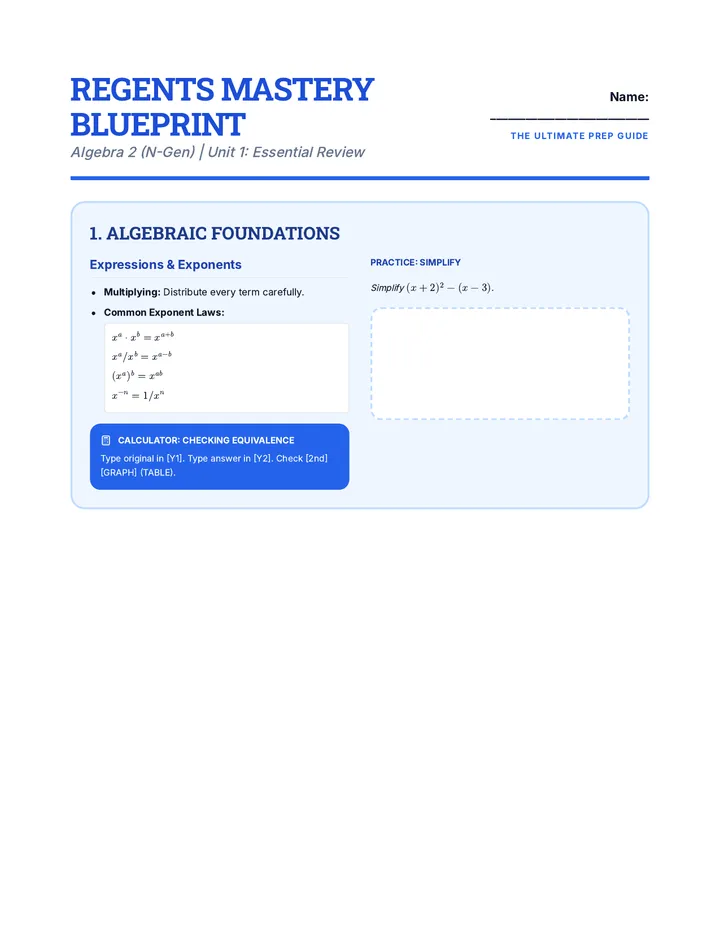
A comprehensive Algebra 2 lesson on adding polynomials, aligned with TEKS 2A.7(B). Students will learn to combine like terms using both horizontal and vertical methods within an architectural blueprint theme.
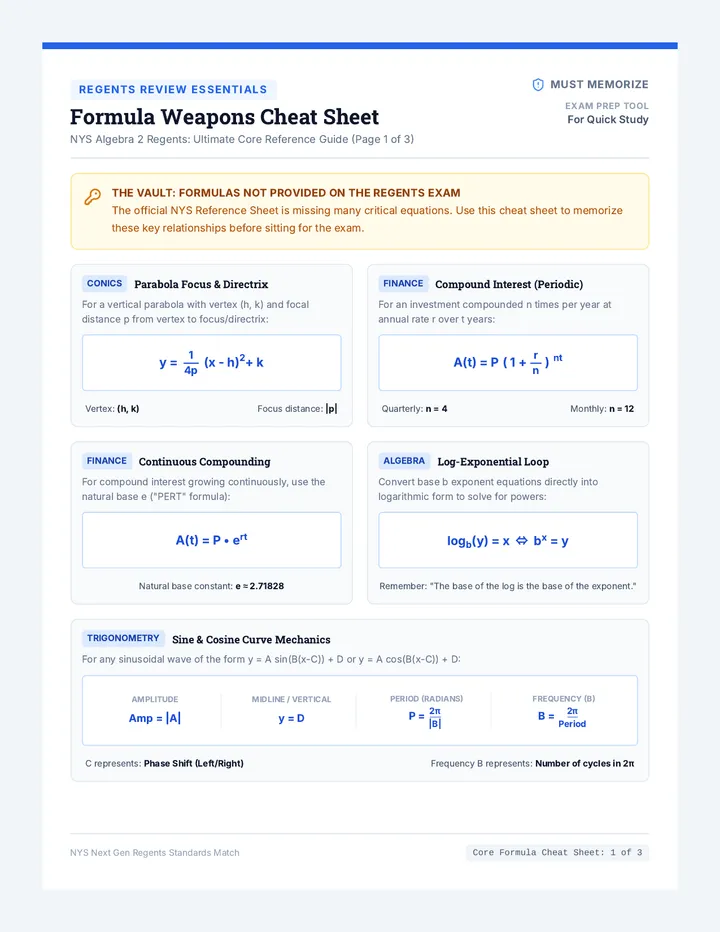
A comprehensive lesson on graphing Sine and Cosine functions, featuring guided notes, instructional slides, and a detailed answer key. Students will learn to identify amplitude, period, midline, and phase shifts to accurately sketch periodic graphs.
A comprehensive introduction to parent functions and their transformations, designed for Algebraic Reasoning students to master shifts, stretches, and reflections.
A lesson designed to help English learners practice TELPAS speaking skills while comparing the solutions and characteristics of quadratic functions.
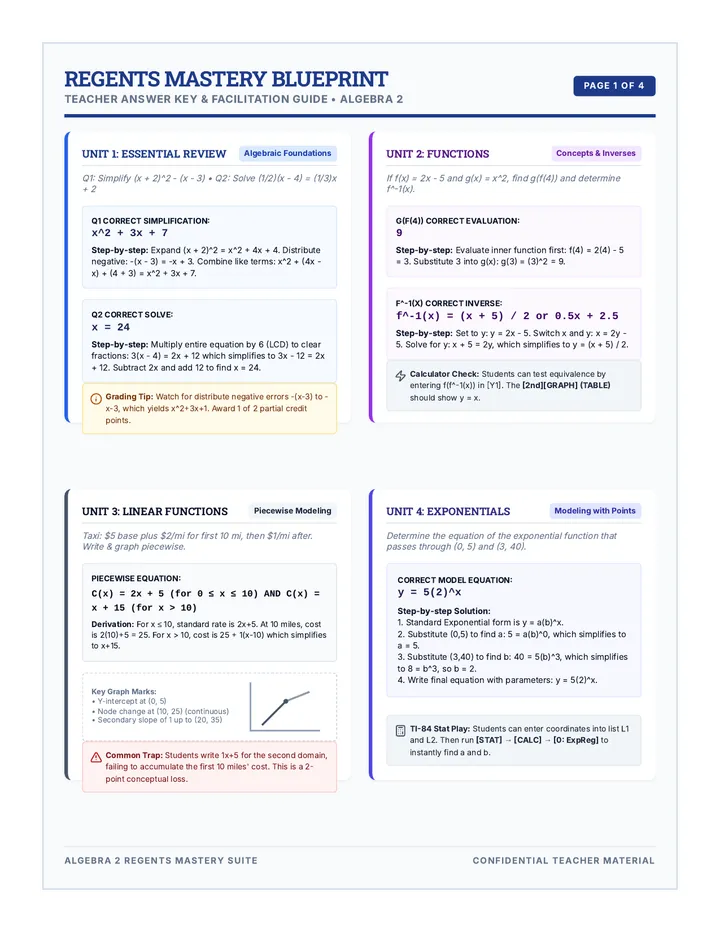
Focusing on the mechanics of exponential growth functions and identifying the 'a' and 'b' values in real-world scenarios.
A lesson designed to help English Learners master the academic English required for reading and writing about linear equations, specifically aligned with TELPAS standards.
A lesson introducing factoring polynomials specifically through the method of grouping four-term expressions, designed for Algebra 2 students focusing on low to medium complexity.
A lesson focused on applying the Pythagorean Theorem to find missing side lengths of right triangles, with a specific emphasis on expressing final answers as simplified radicals rather than decimals.
A lesson focused on finding the real and complex zeros of polynomial functions using various algebraic methods like factoring and synthetic division.
A comprehensive 20-question practice test and answer key designed to prepare students for the TSIA2 Mathematics assessment, focusing on algebraic, geometric, and statistical reasoning.
A comprehensive lesson on the laws of exponents designed for Algebra 1 students, featuring ESL support with Spanish translations and a hands-on foldable notes activity.
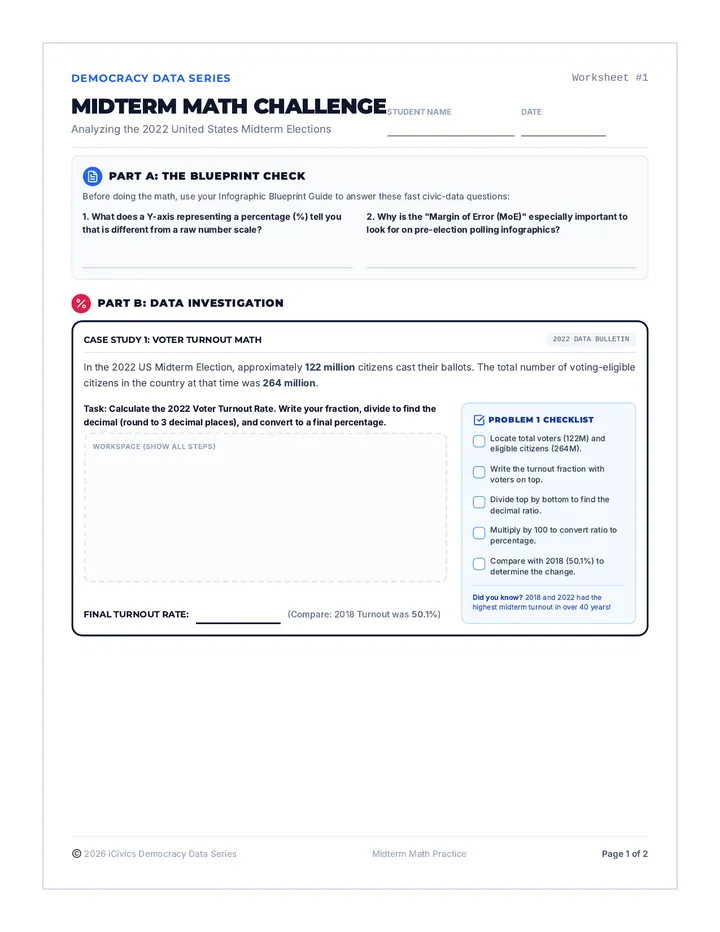
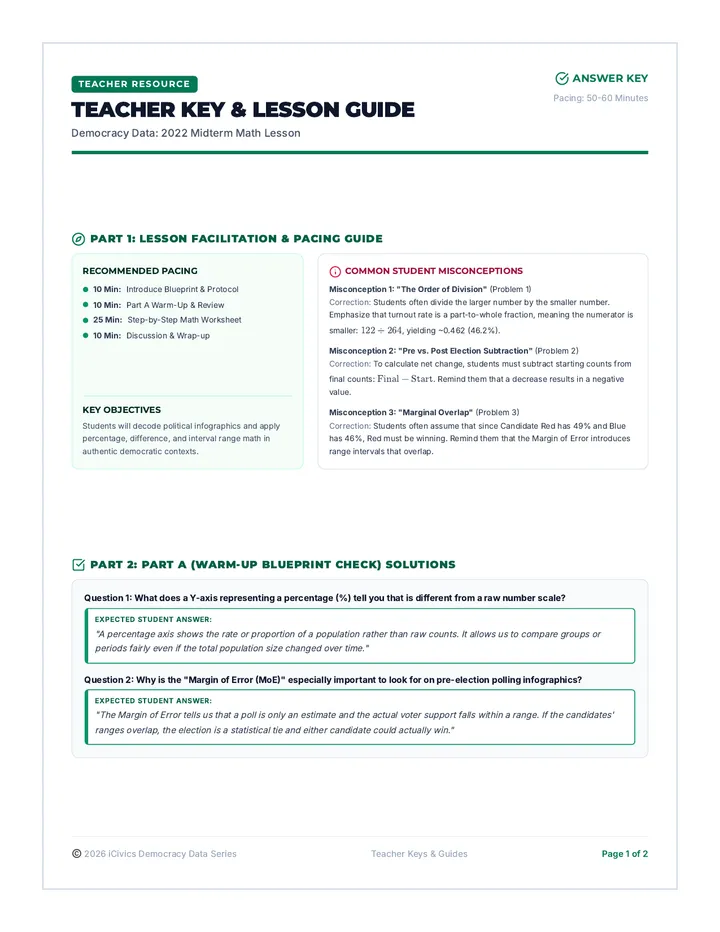
A cross-curricular lesson combining 8th-grade math and civics. Students use 2020 Census data to calculate representation ratios in the House of Representatives, identifying mathematical disparities in voting power across different states.
A high school statistics lesson focused on identifying and creating biased polls to understand sampling error and selection bias in political contexts.
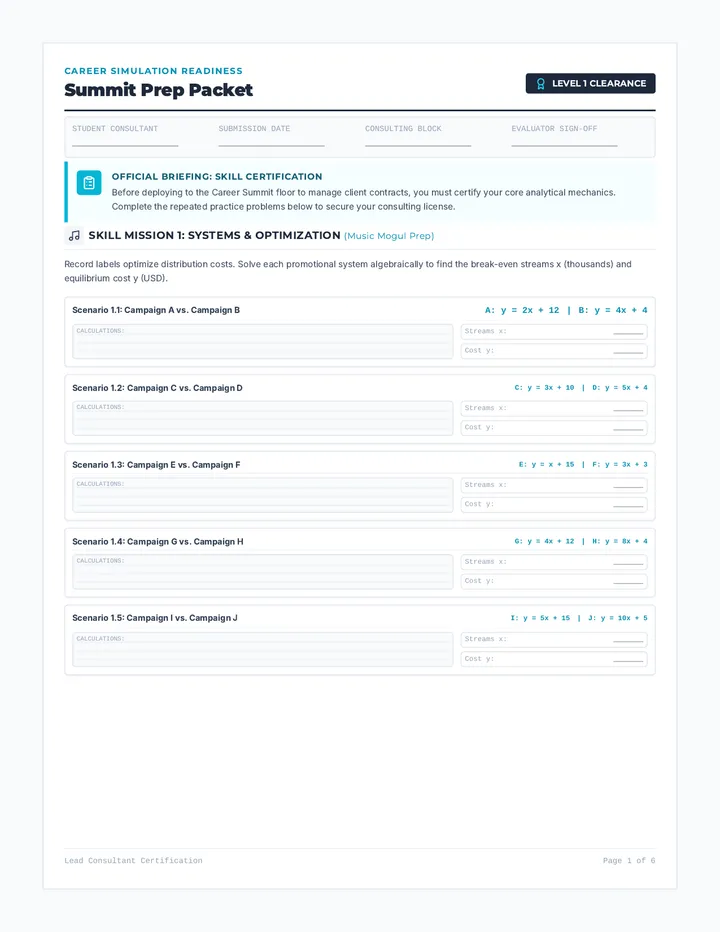
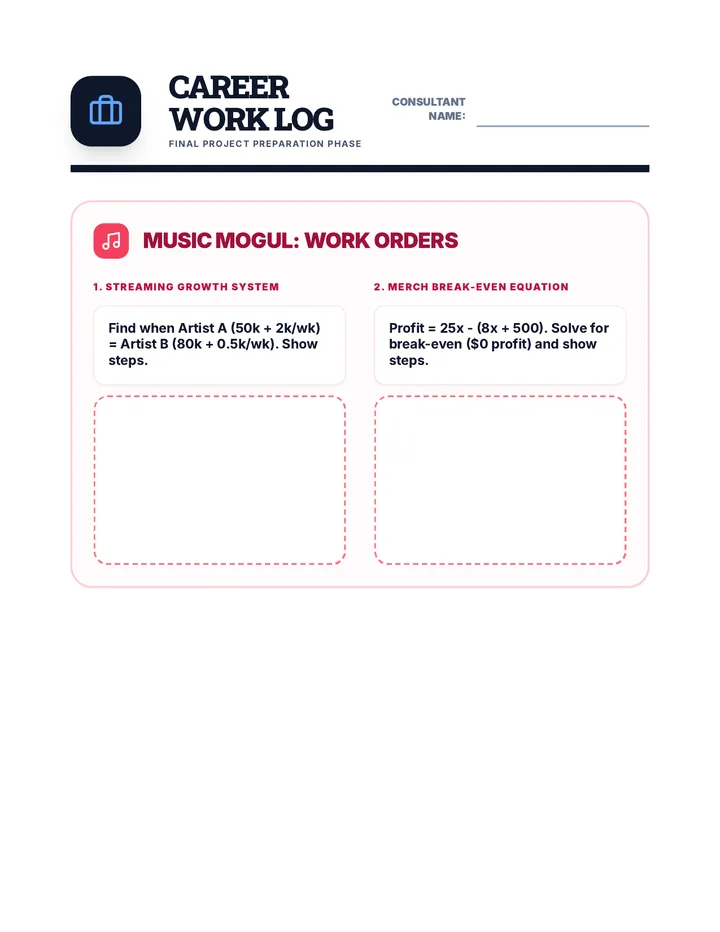
Students learn to model business costs using linear equations and graphs. They define fixed and variable costs through a video case study and apply these concepts to a custom sneaker business scenario.
A high school statistics and math lesson that uses data from the War on Drugs to explore disproportionate impact, ratio disparities, and data visualization. Students calculate and visualize significant statistical gaps in drug-related arrests, sentencing, and global incarceration rates.
Students will learn to solve systems of linear equations by finding the equilibrium point between supply and demand curves. This lesson bridges algebra and economics through graphical and algebraic methods using the 'FrostBite' game console context.
Students apply ratios and percentages to analyze electoral fairness. They will learn to identify 'packing' and 'cracking' strategies and calculate a simplified efficiency gap to mathematically prove gerrymandering in a hypothetical state.
A 10th-grade math lesson that bridges coordinate geometry with economics. Students interpret and construct line graphs (demand curves) and analyze how non-price factors cause parallel shifts in the graph.
A 10th-grade Math and Consumer Math lesson exploring price elasticity of demand. Students will visualize the 'stretch' of demand curves through graphing and analyze the relationship between price changes and total revenue.
A math and statistics lesson where students interpret campaign spending data from a Crash Course video, visualize the scale of billions, and create comparative graphs against consumer spending habits.
A kinesthetic geometry lesson where students physically walk a large floor grid to internalize coordinate notation for reflections across the x-axis, y-axis, y=x, and y=-x.
A high school geometry lesson focused on solving for pre-image coordinates using reflection notation and algebraic equations. Students learn to 'reverse engineer' transformations by setting up and solving coordinate-specific equations.