Students apply ratios and percentages to analyze electoral fairness. They will learn to identify 'packing' and 'cracking' strategies and calculate a simplified efficiency gap to mathematically prove gerrymandering in a hypothetical state.
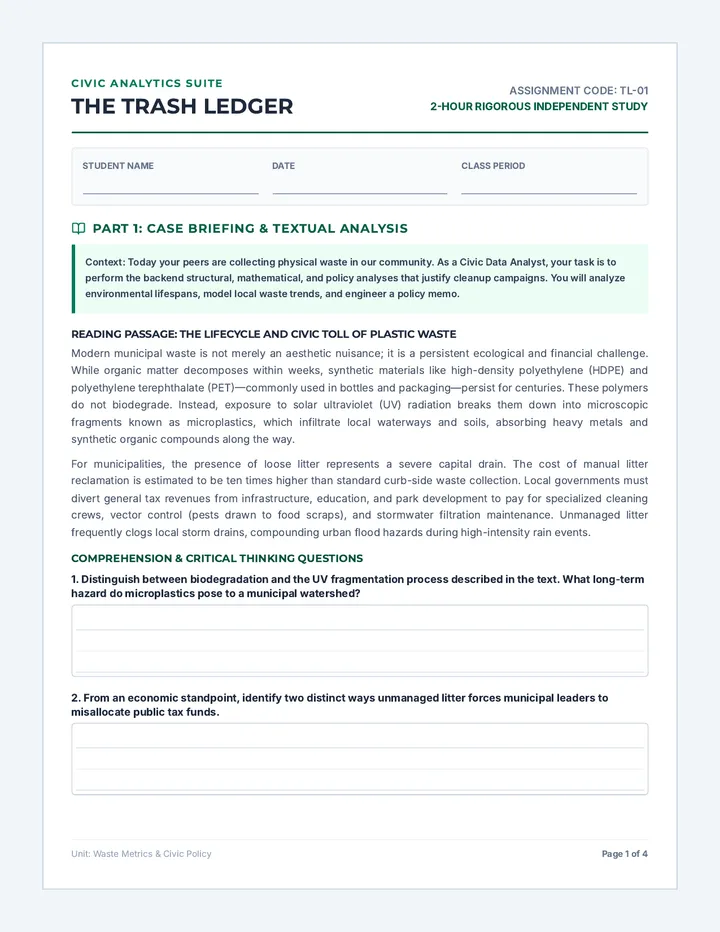
A rigorous mathematical and analytical alternative assignment for students missing the community service cleanup. Students analyze local waste data, calculate trash accumulation rates, and write a data-driven proposal to local leaders.
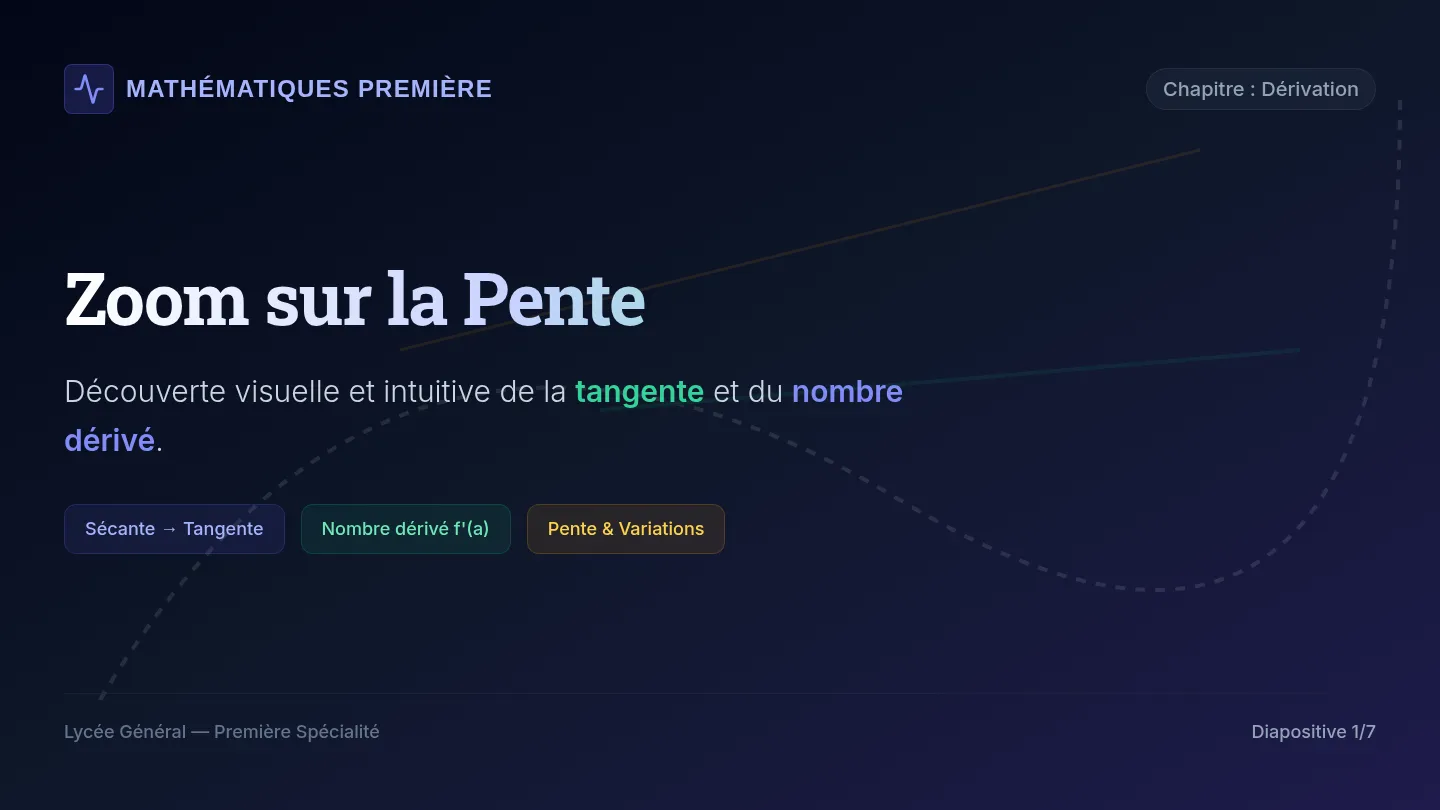
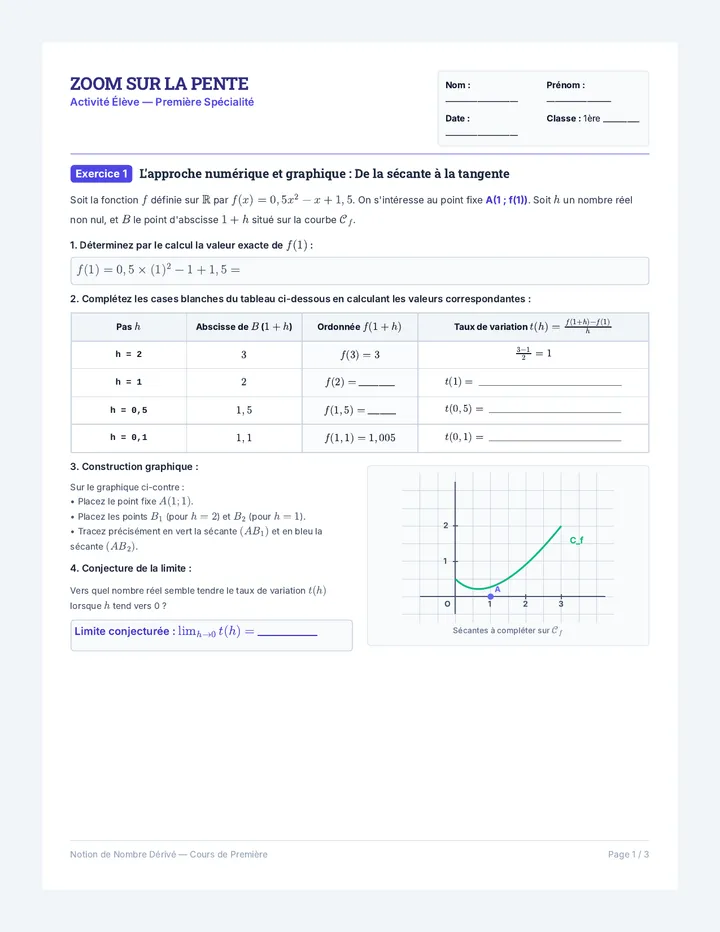
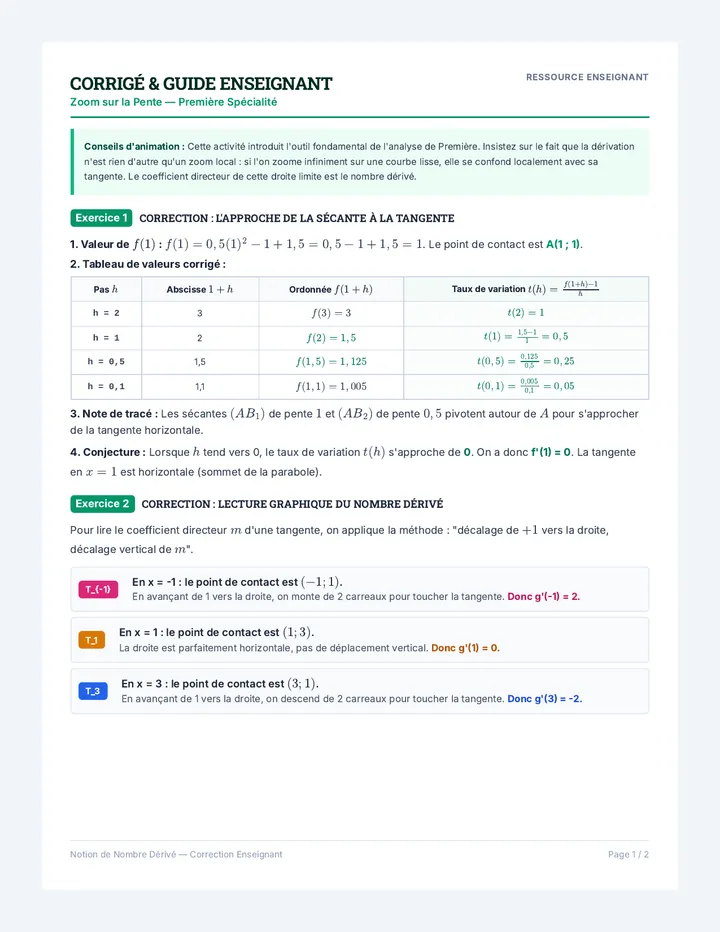
Une leçon interactive de niveau Première générale sur la notion de nombre dérivé, s'appuyant sur des visualisations graphiques du passage de la sécante à la tangente, la lecture et le tracé de coefficients directeurs, et le lien avec le sens de variation.
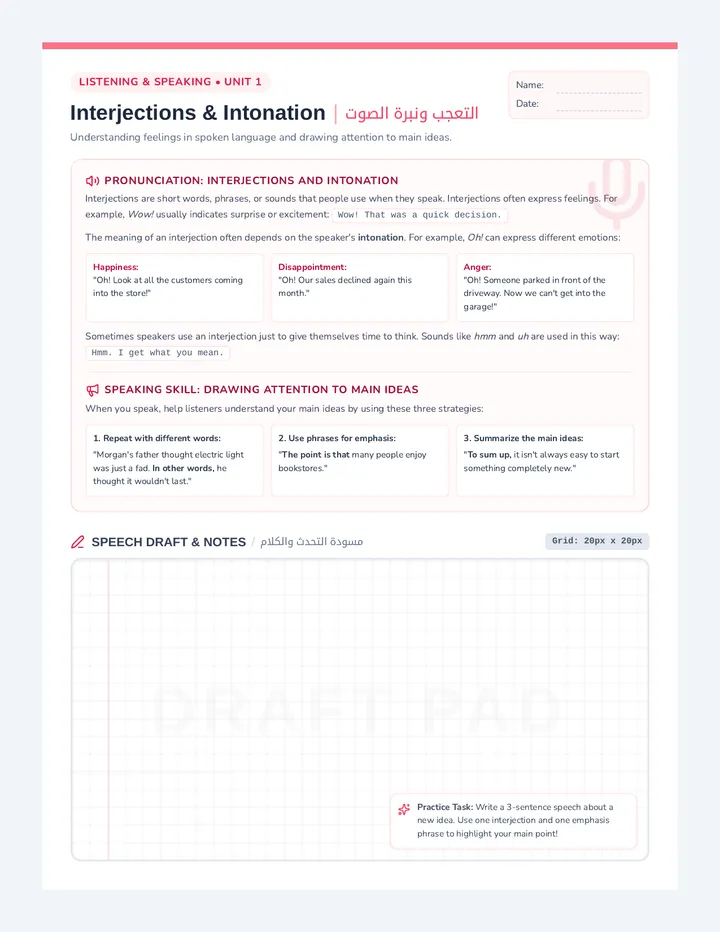
A premium, student-facing draft and rule booklet for English Listening and Speaking (L&S) across 8 core units of pronunciation and speech skills.
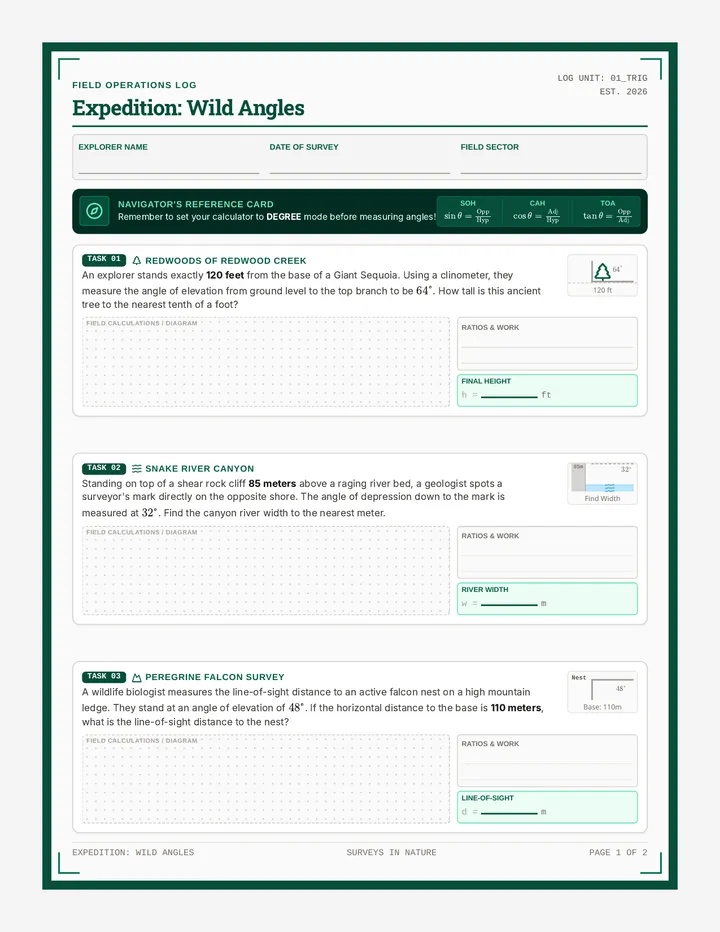
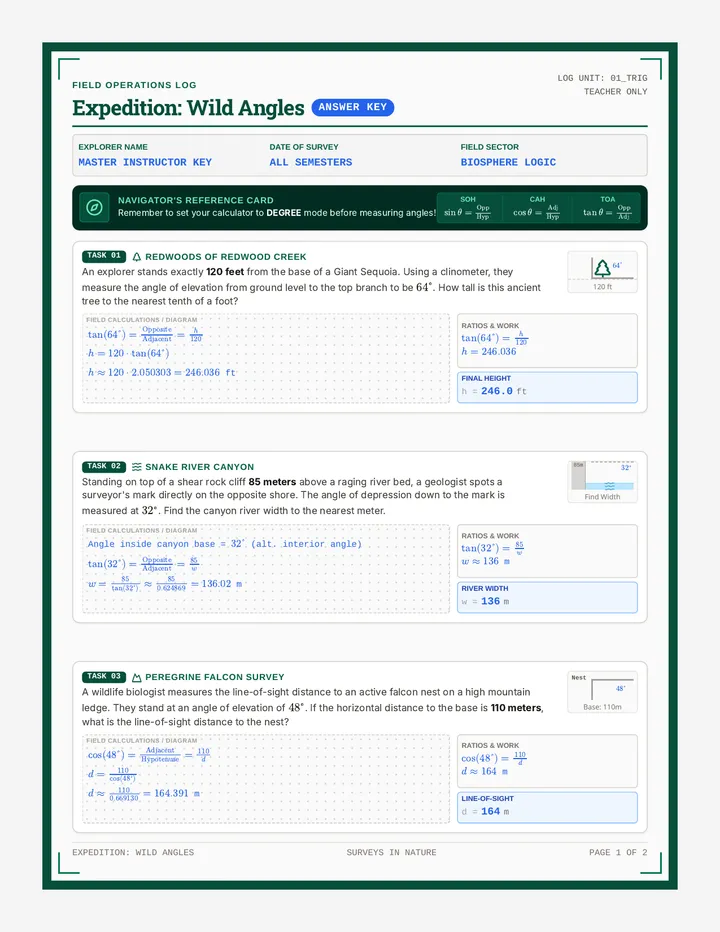
An adventurous trigonometry lesson applying sines, cosines, and tangents to solve real-world mysteries in nature and astronomy. Students calculate heights of towering redwoods, map rushing river widths, and measure cosmic distances.
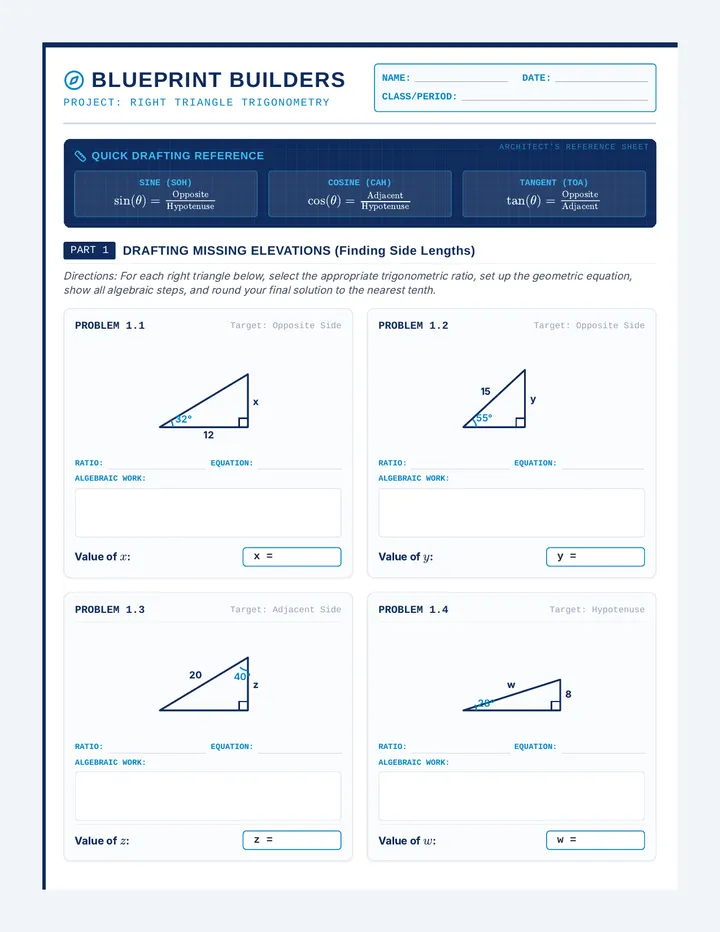
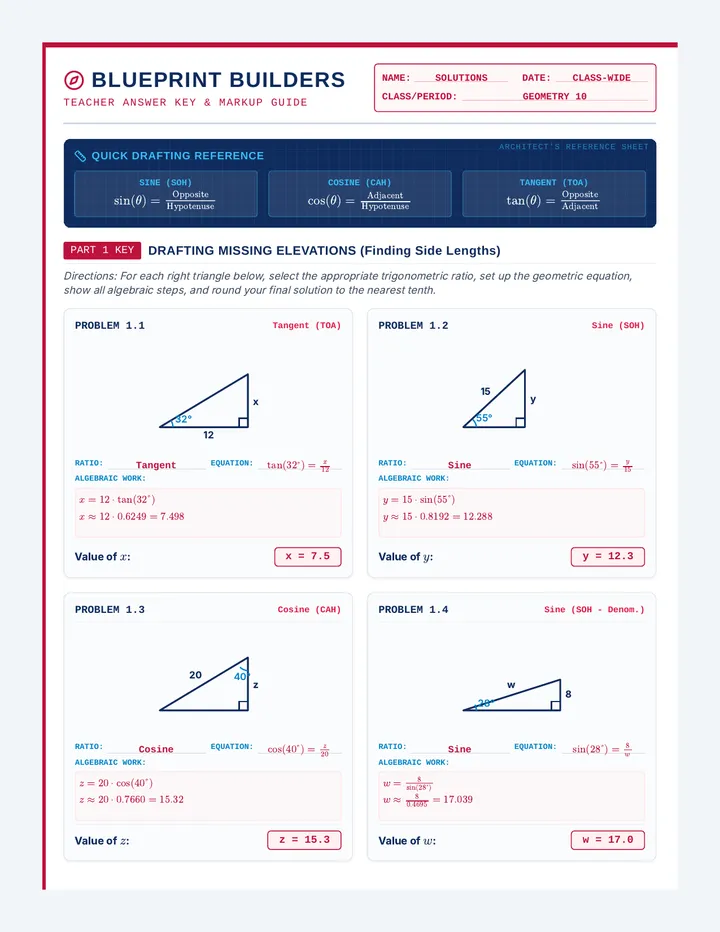
A standard-aligned high school geometry lesson exploring right triangle trigonometry. Students learn to use sine, cosine, and tangent ratios to find missing side lengths and acute angle measures in right triangles, styled with an immersive architectural blueprint design.
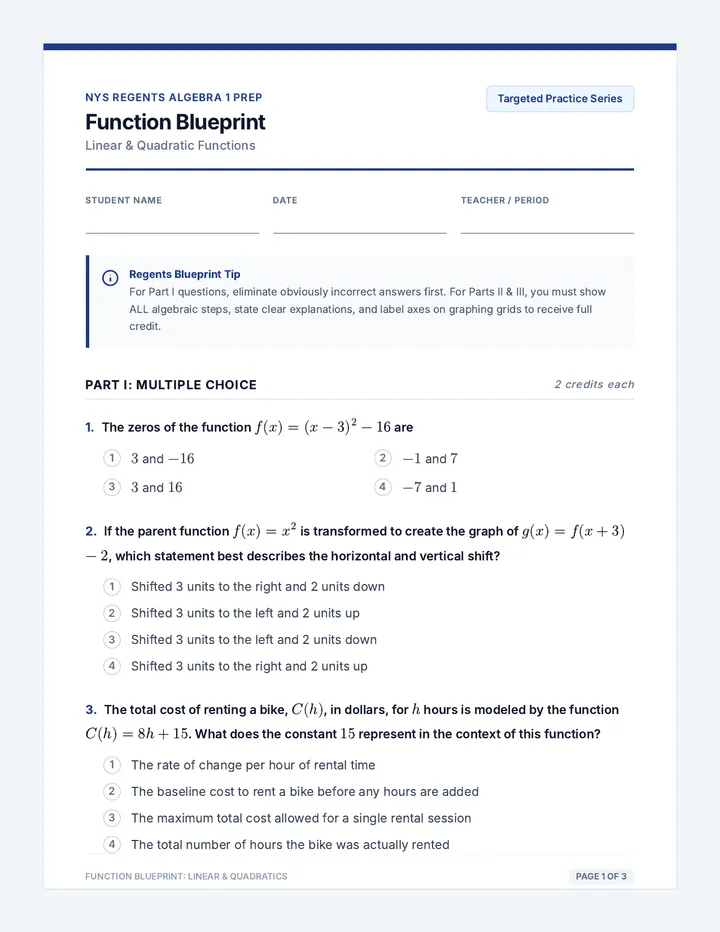
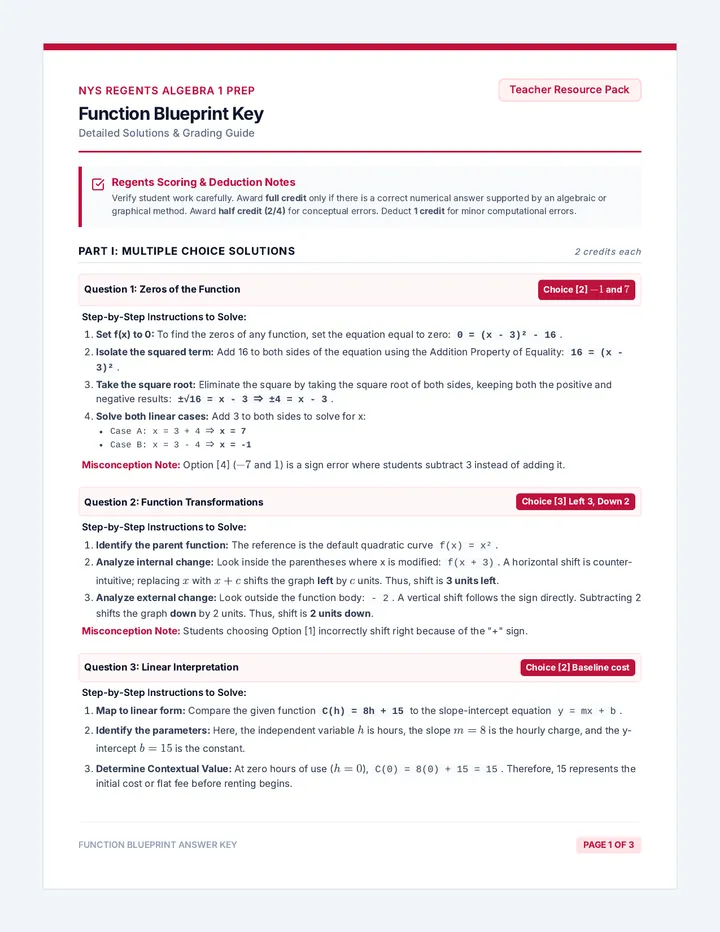
A targeted exam prep lesson focusing on NYS Regents Algebra 1 questions for linear and quadratic functions. Includes high-stakes graphing, transformations, modeling, and constructed-response practice with a detailed grading guide.
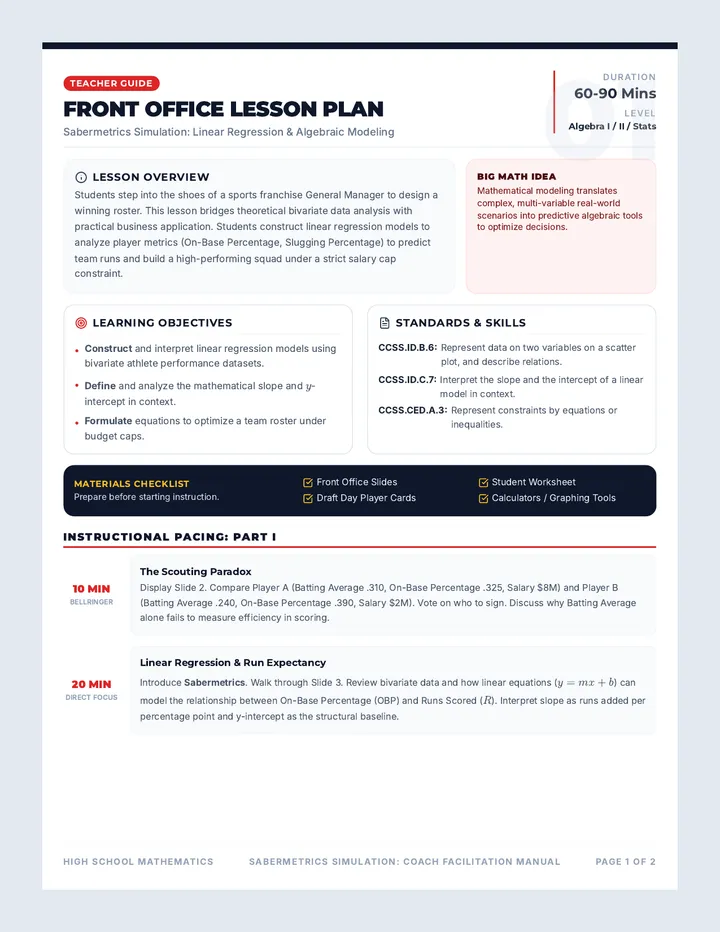
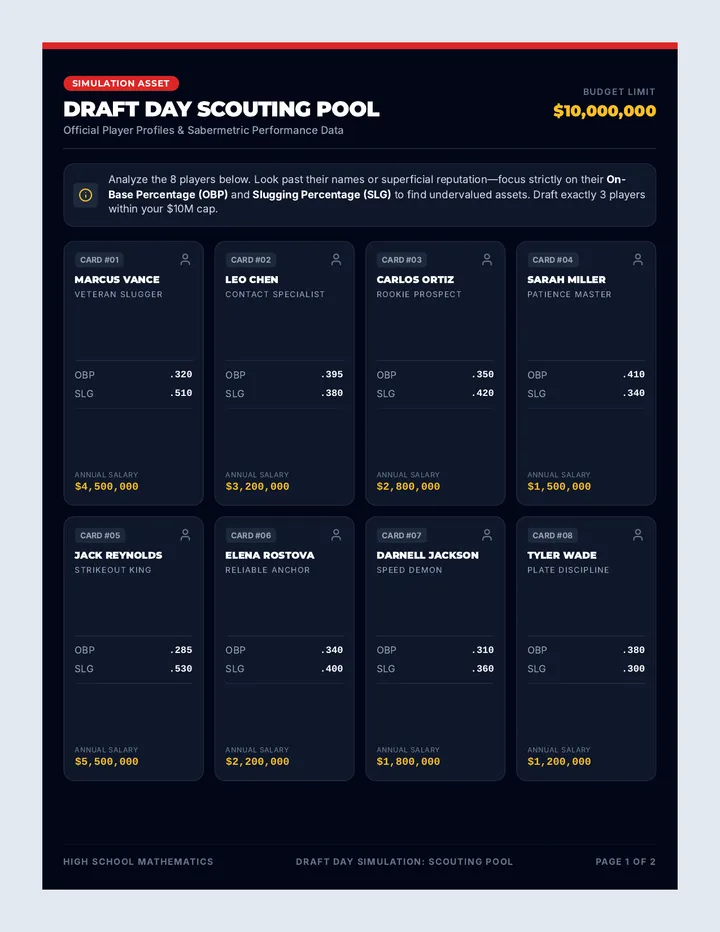
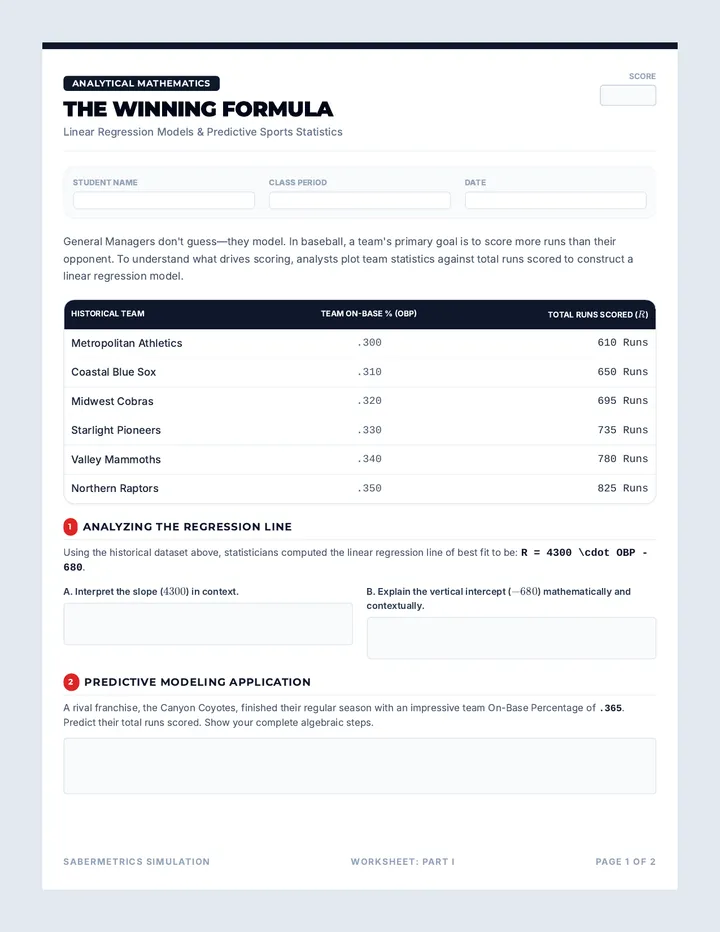
A hands-on high school mathematics lesson where students step into the role of a sports general manager. Using linear regression and algebraic modeling, they analyze real-world baseball statistics to construct a high-performing team within a budget, learning how data drives modern athletic strategy.
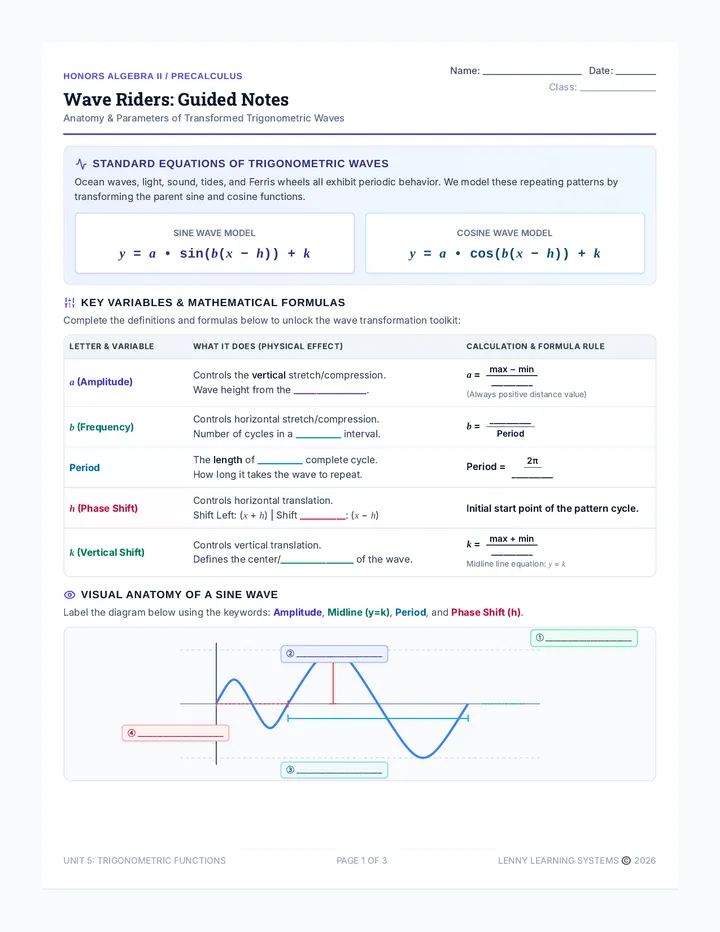
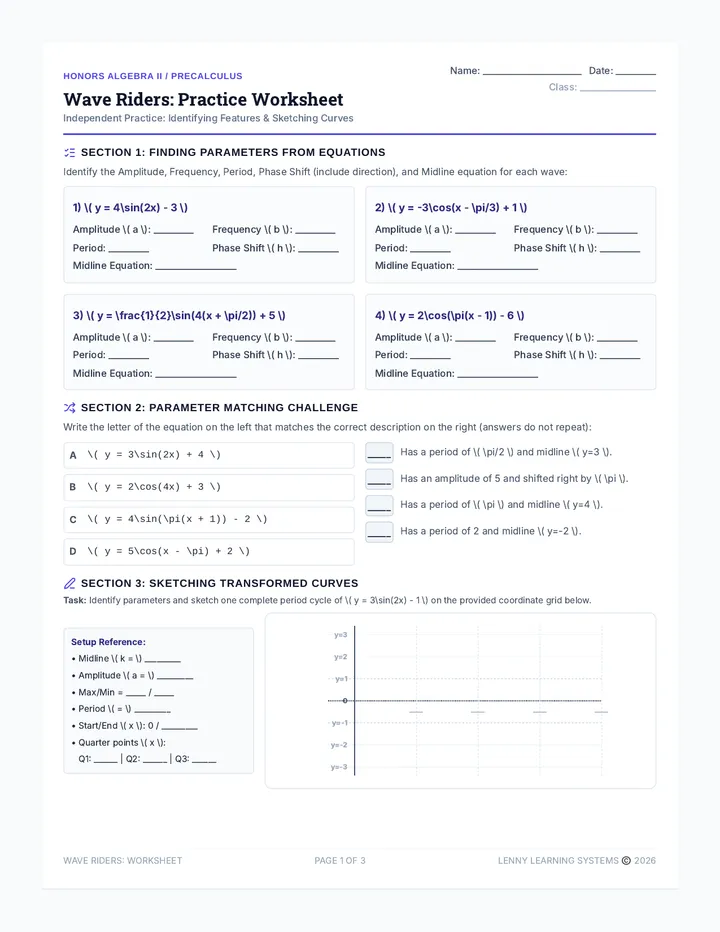
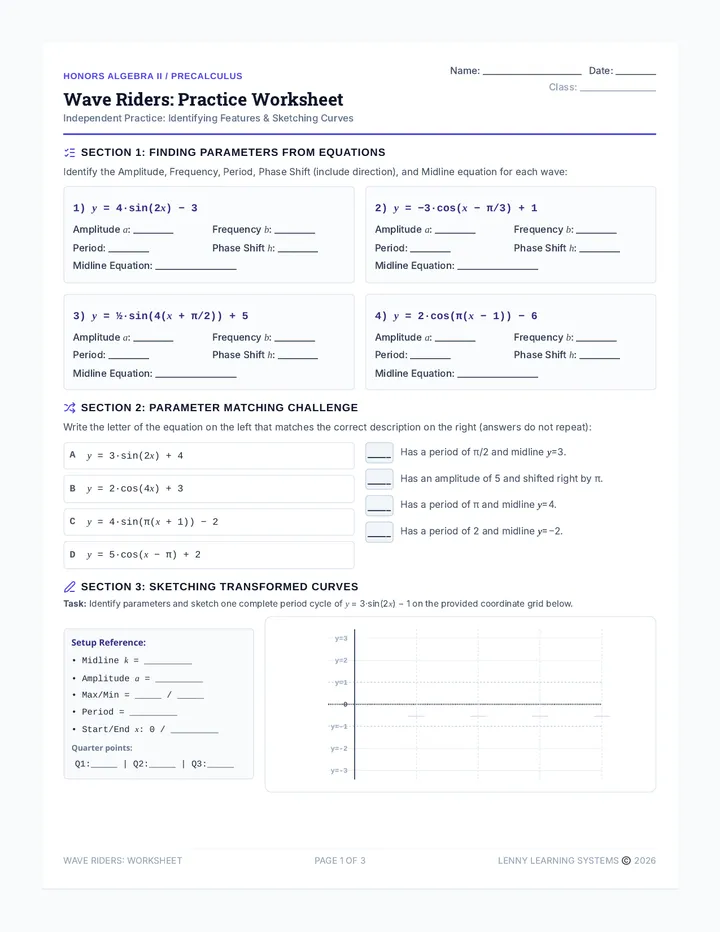
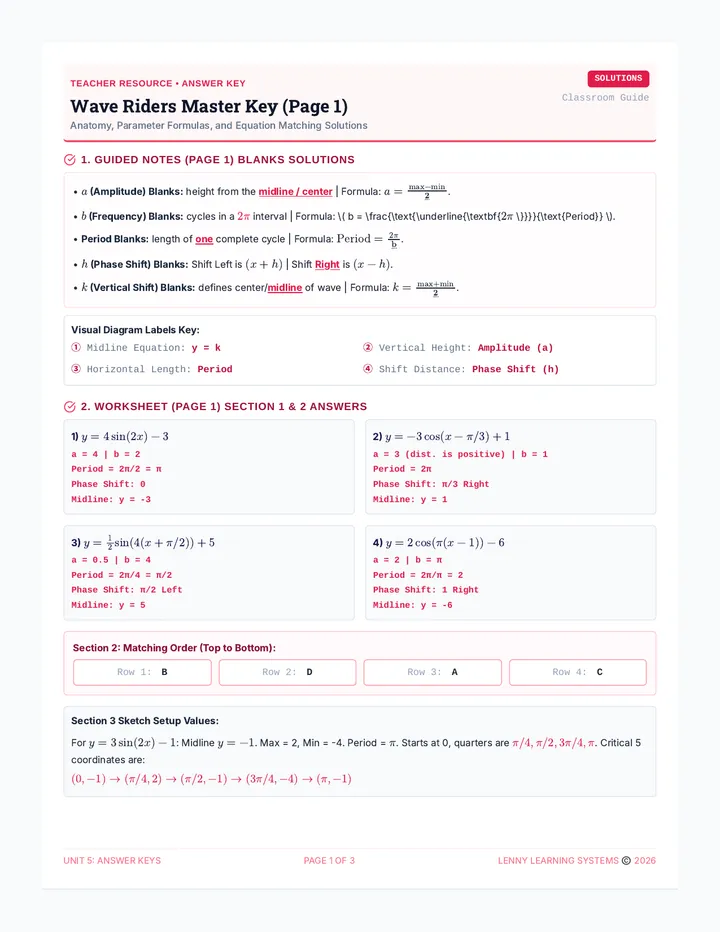
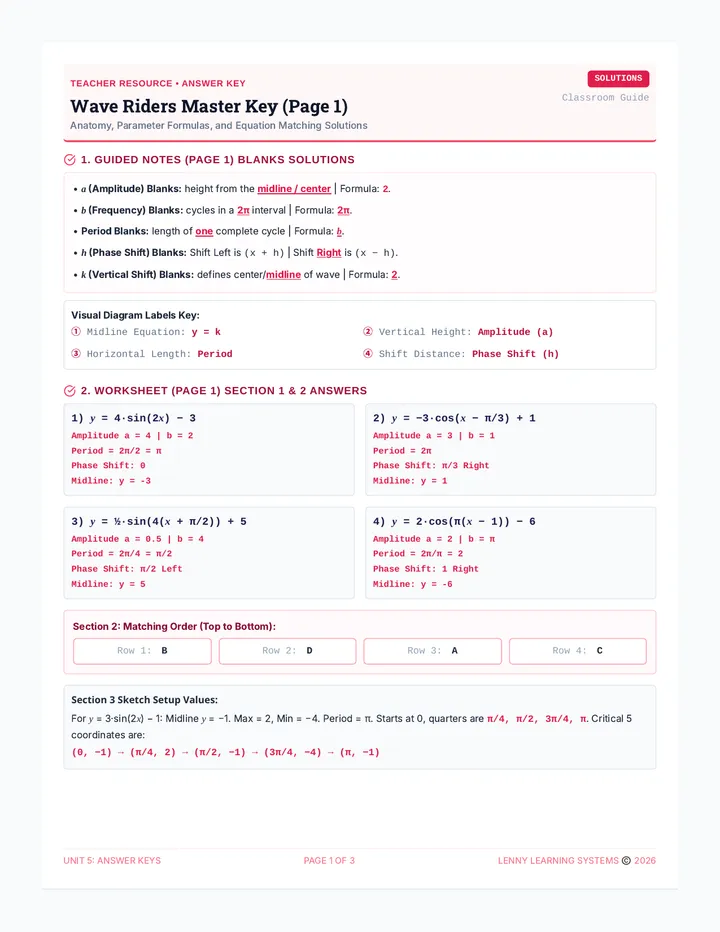
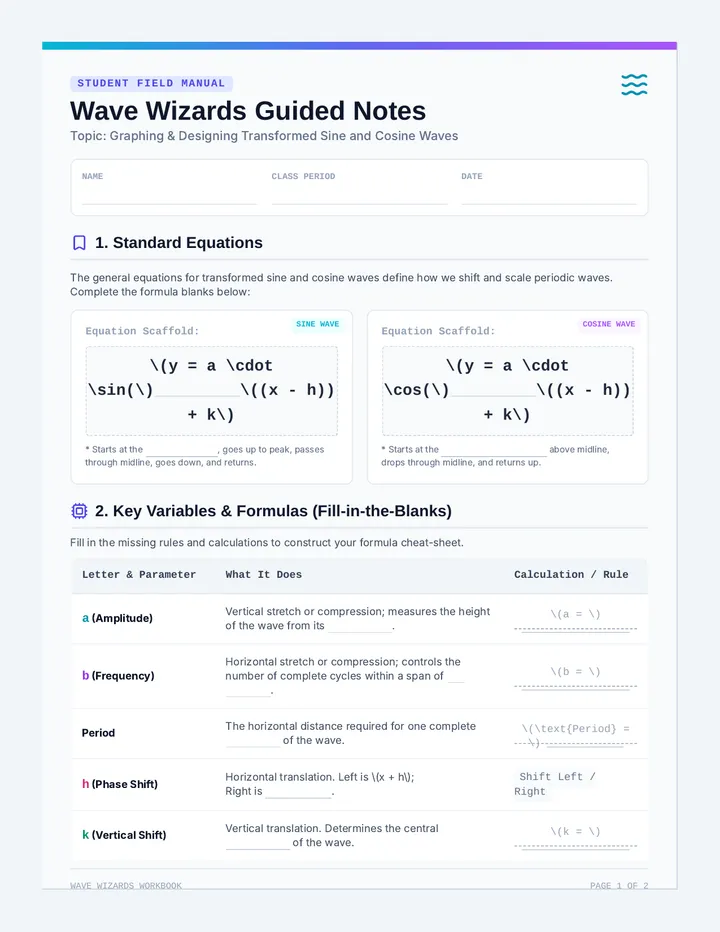
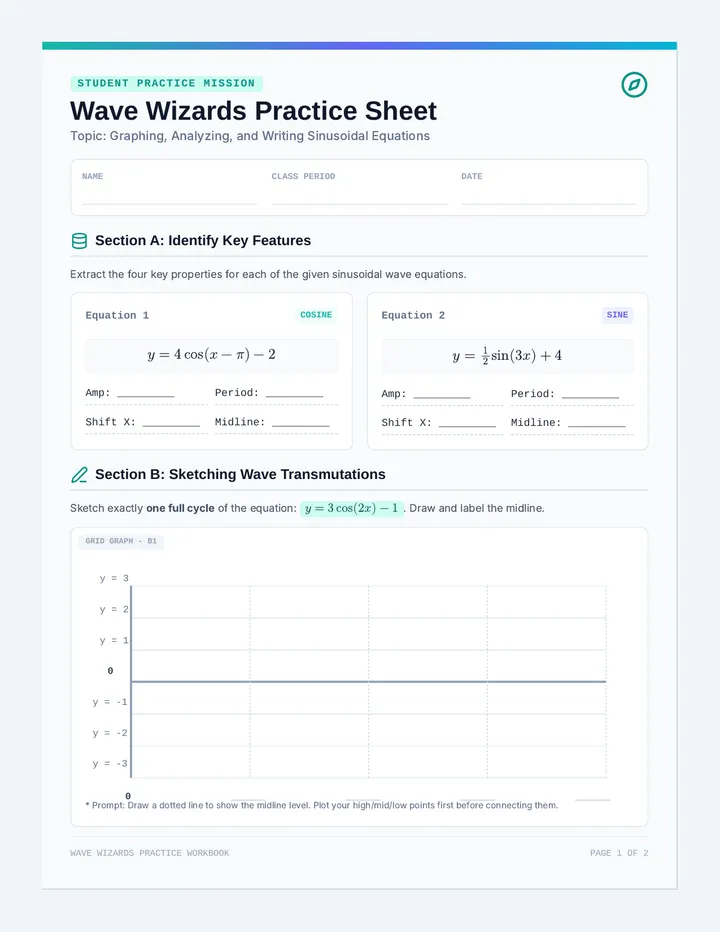
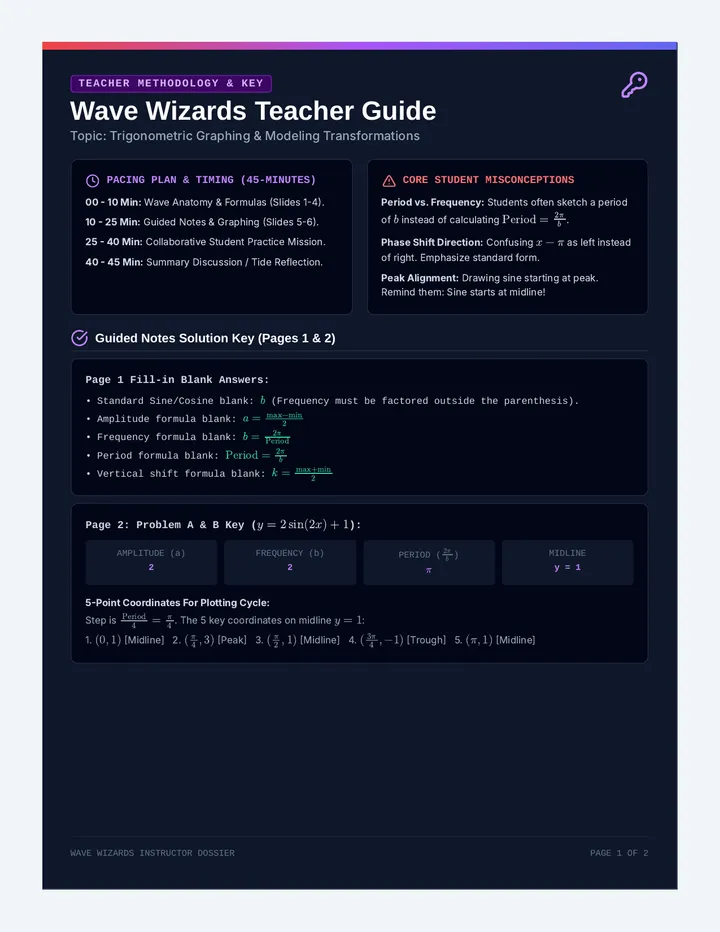
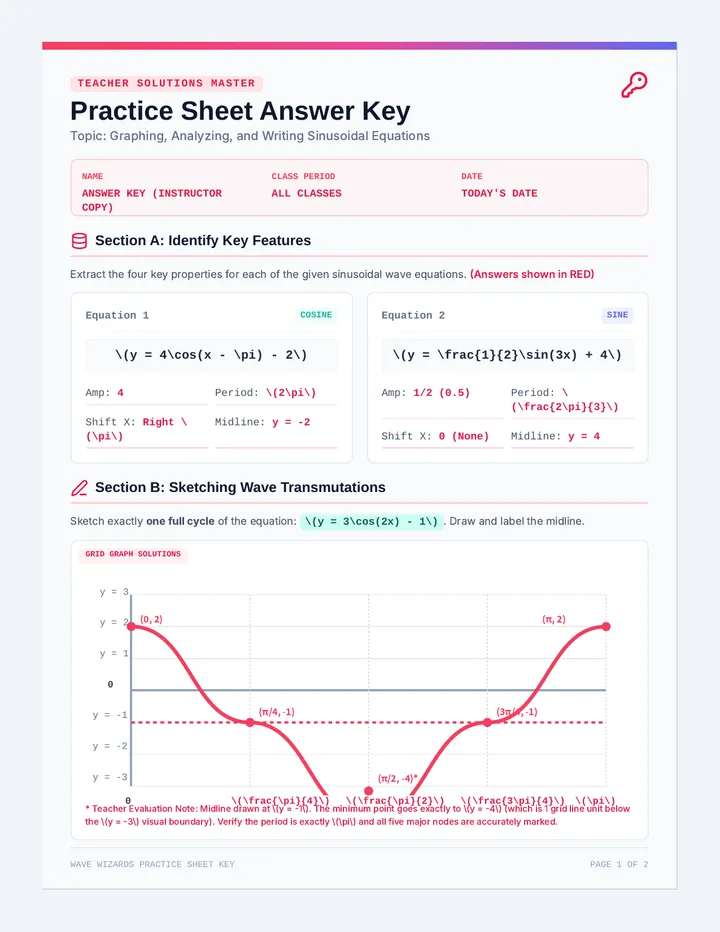
A mini-lesson on graphing, analyzing, and modeling transformed sine and cosine trigonometric waves. Students learn to identify key parameters (amplitude, period, phase shift, midline) from equations and graphs, and apply them to periodic real-world scenarios.
A mini-lesson on transforming trigonometric sine and cosine functions. Students will learn to identify key wave parameters, sketch transformations on a grid, write equations from sinusoidal graphs, and model real-world periodic phenomena.
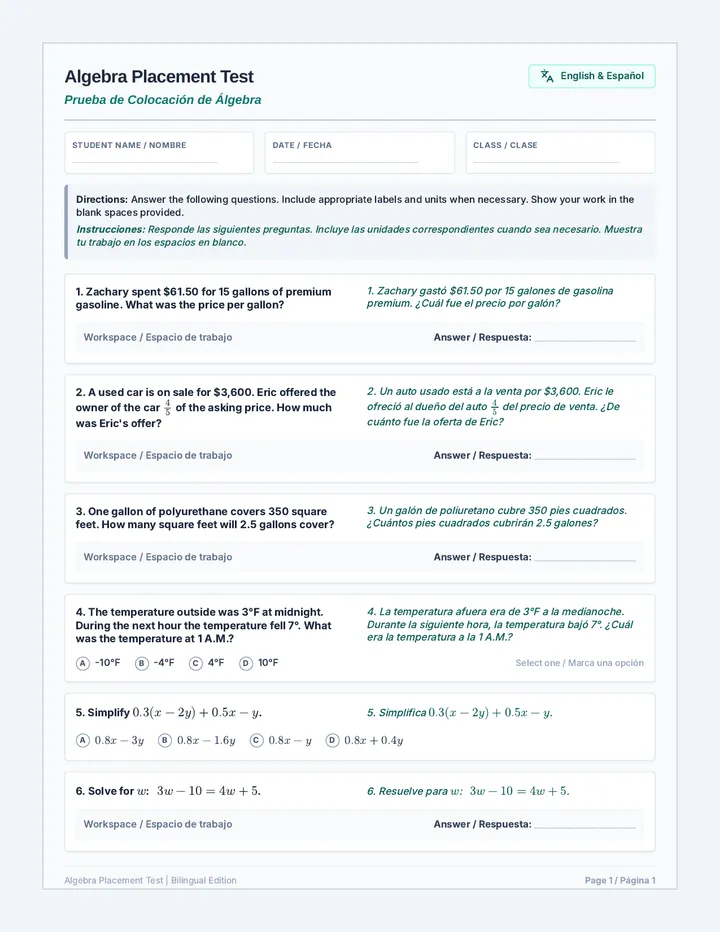
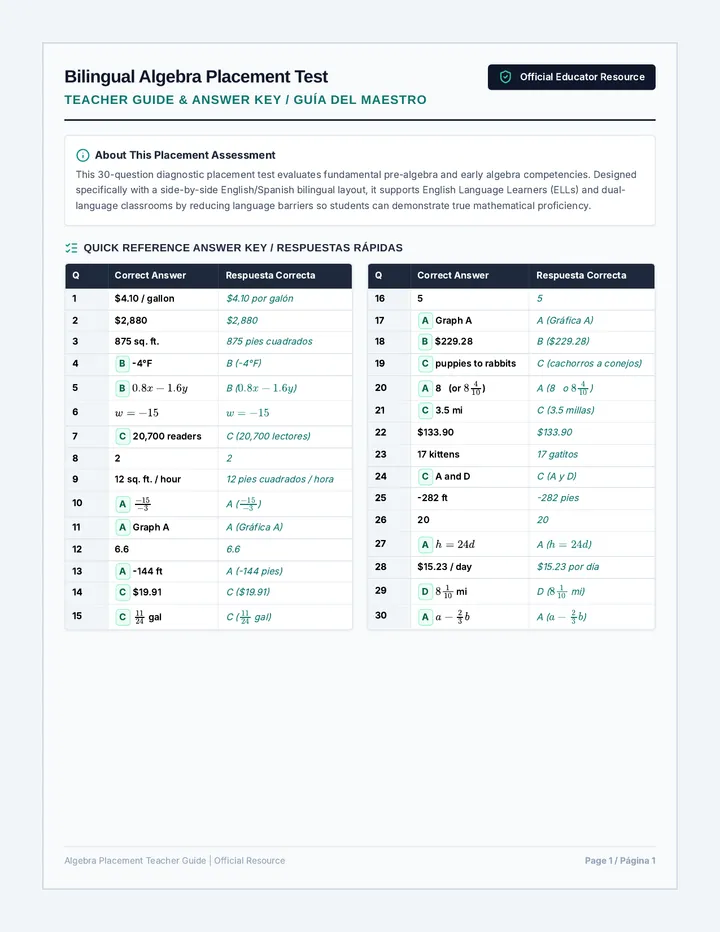
A bilingual English/Spanish algebra placement test lesson, tailored for English Language Learners and students needing dual-language support.
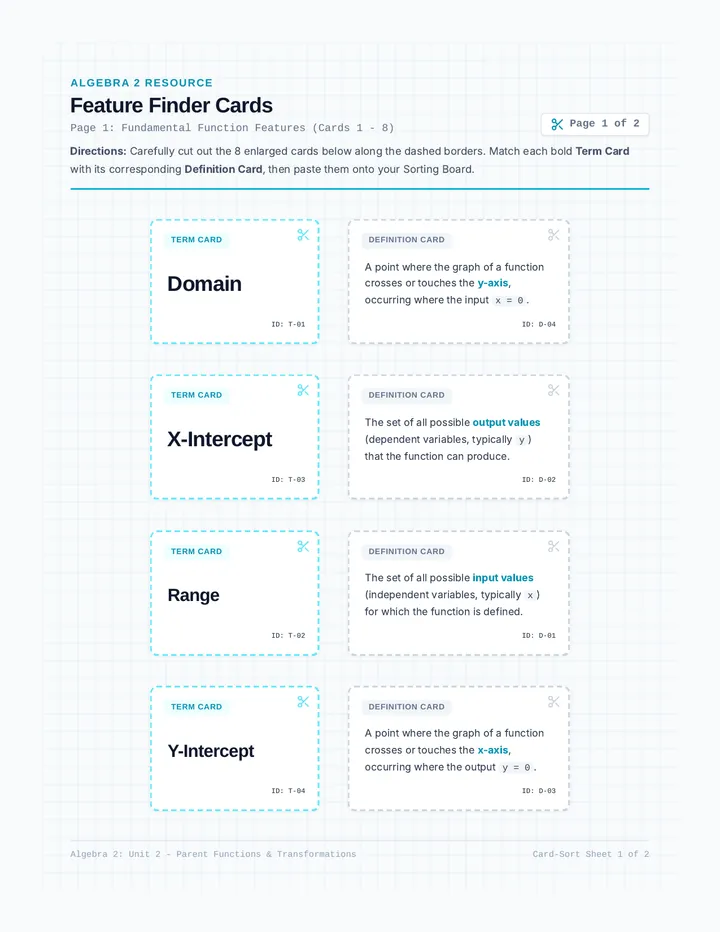
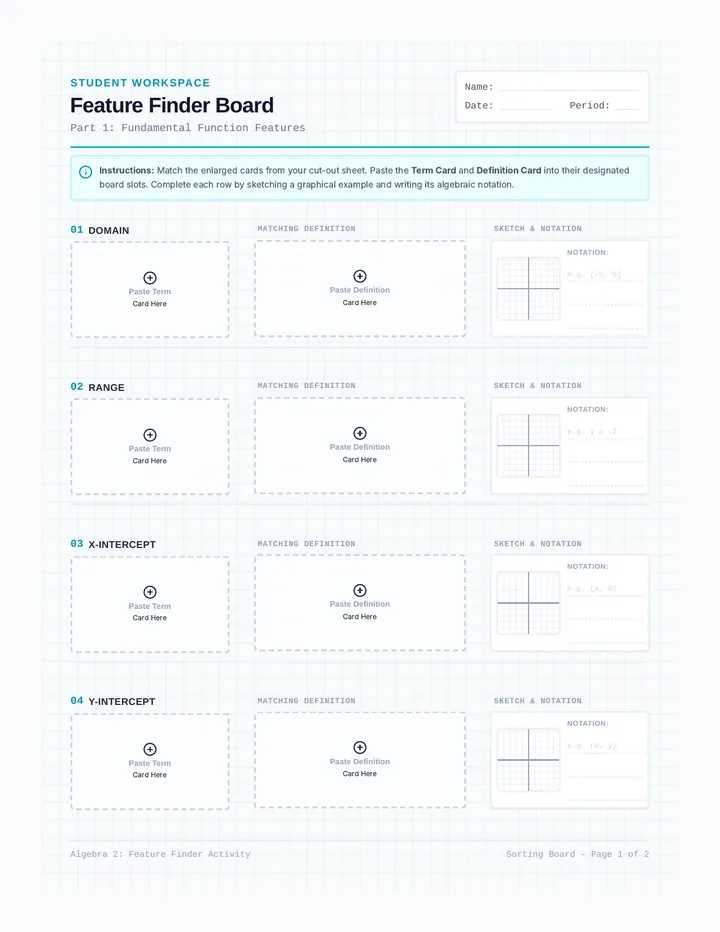
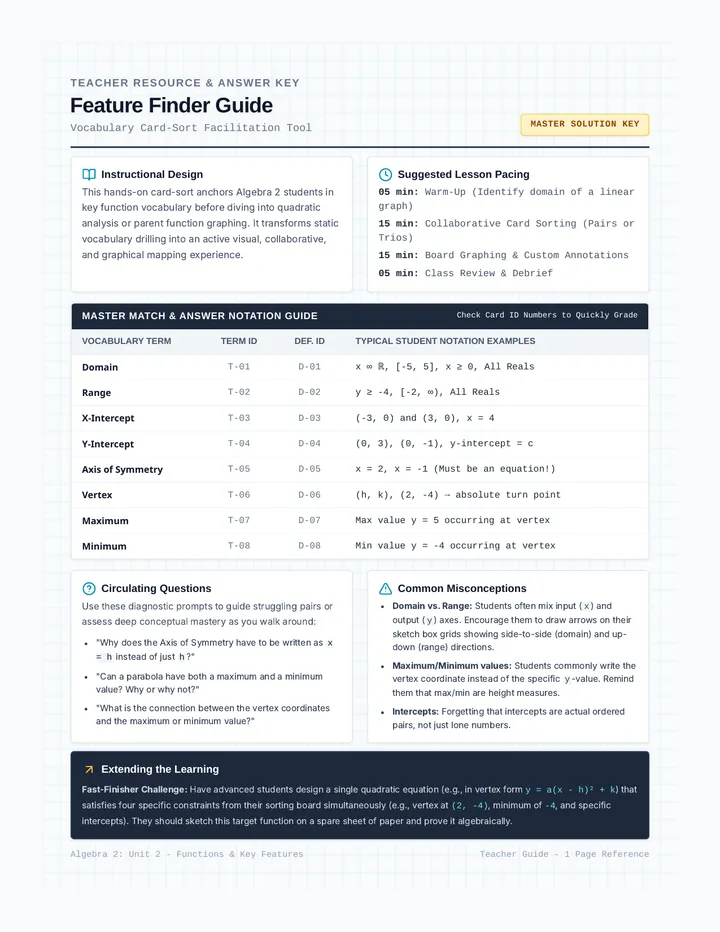
A high school Algebra 2 vocabulary card-sort activity focusing on the essential graphical and algebraic features of functions. Students match 8 key terms with their definitions, paste them onto a structured sorting board, and sketch or write custom examples for each feature.
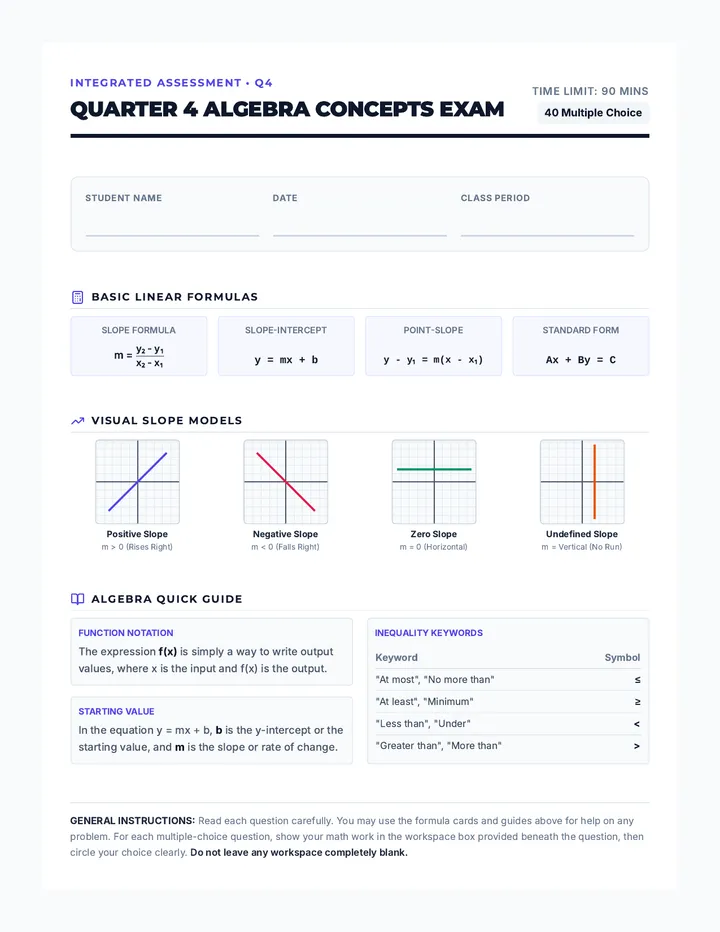
A comprehensive 40-question algebra cumulative exam assessing standard-form modeling, linear functions, slope, graphing, systems of equations, inequalities, and functions. Includes a student booklet with reference sheet and a separate comprehensive answer key with detailed solutions.
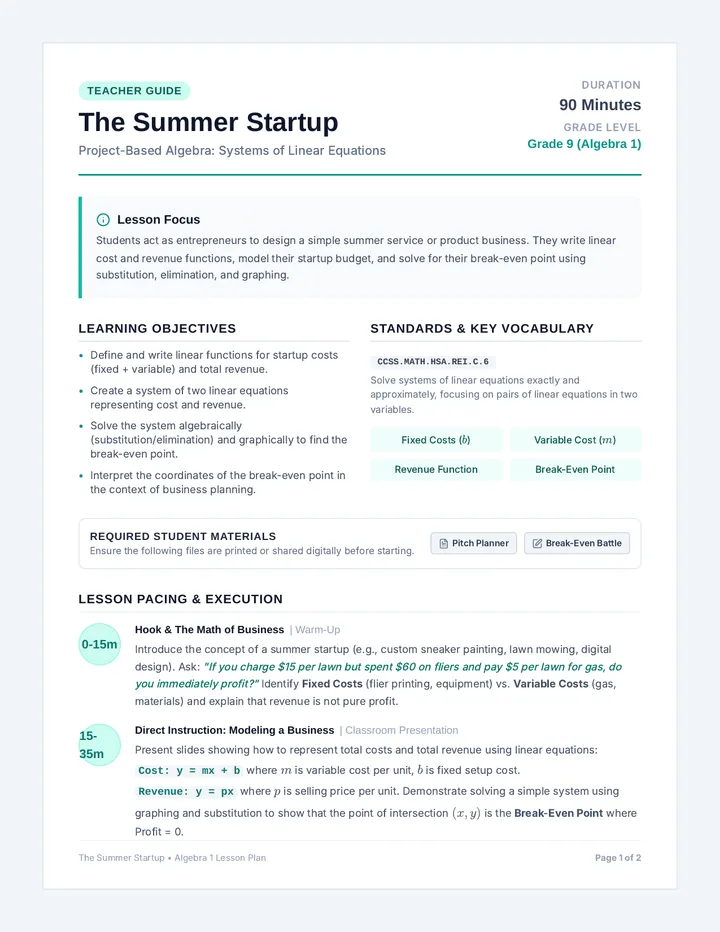
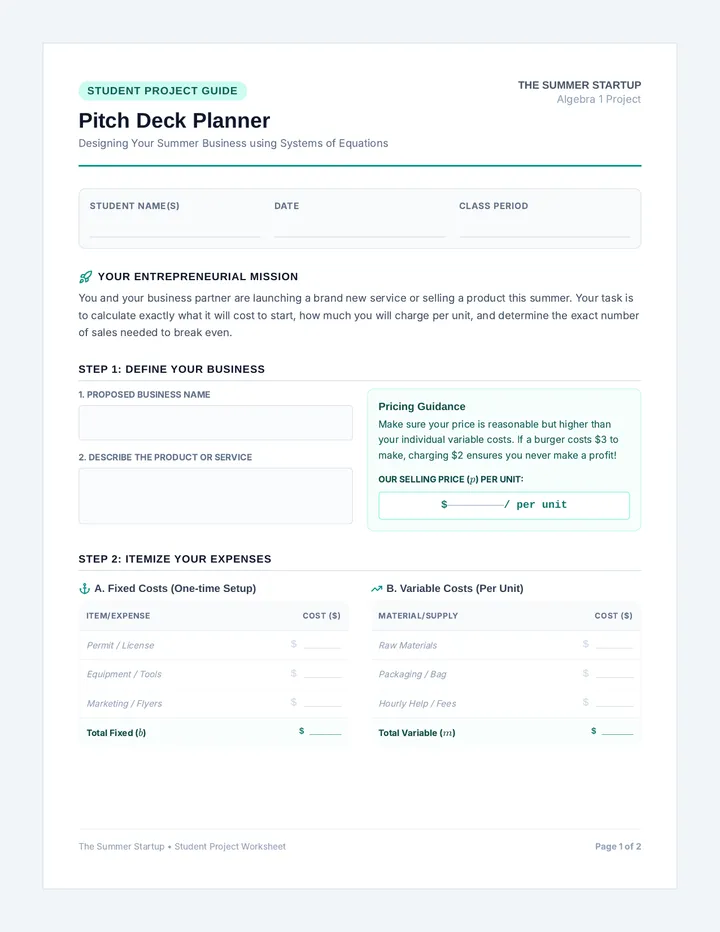
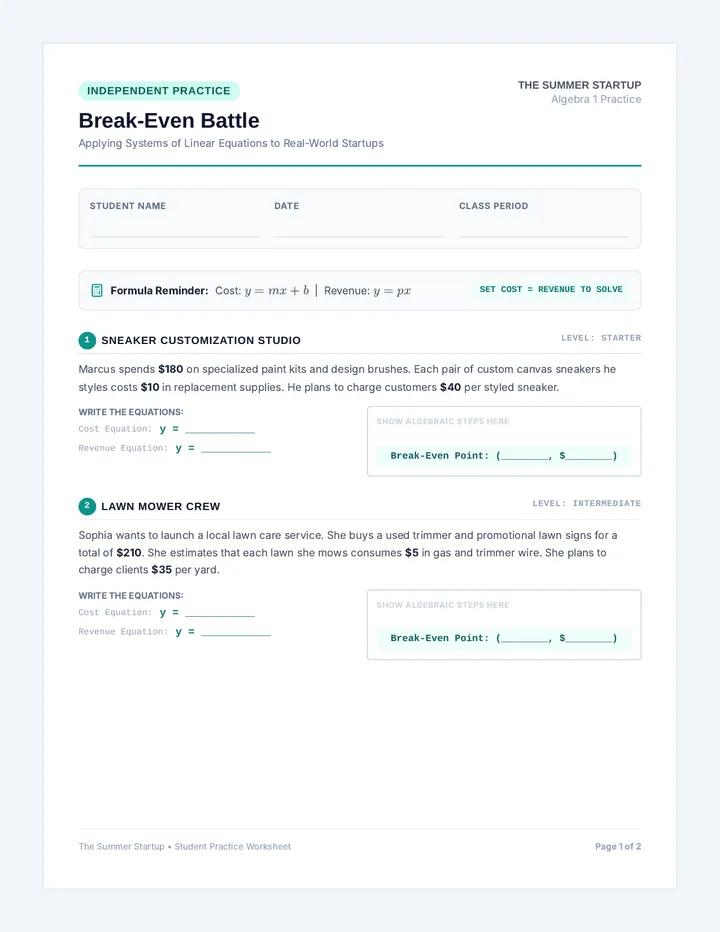
A project-based algebra lesson where students design a hypothetical summer business to explore systems of linear equations. They calculate fixed and variable costs, define revenue, and solve for their break-even point using multiple algebraic methods.
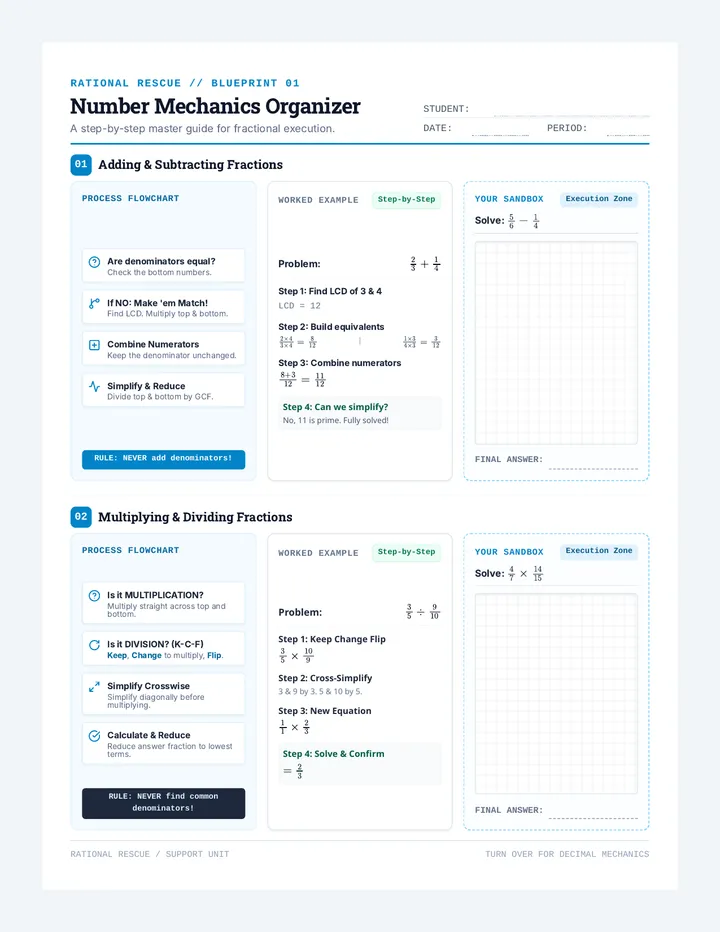
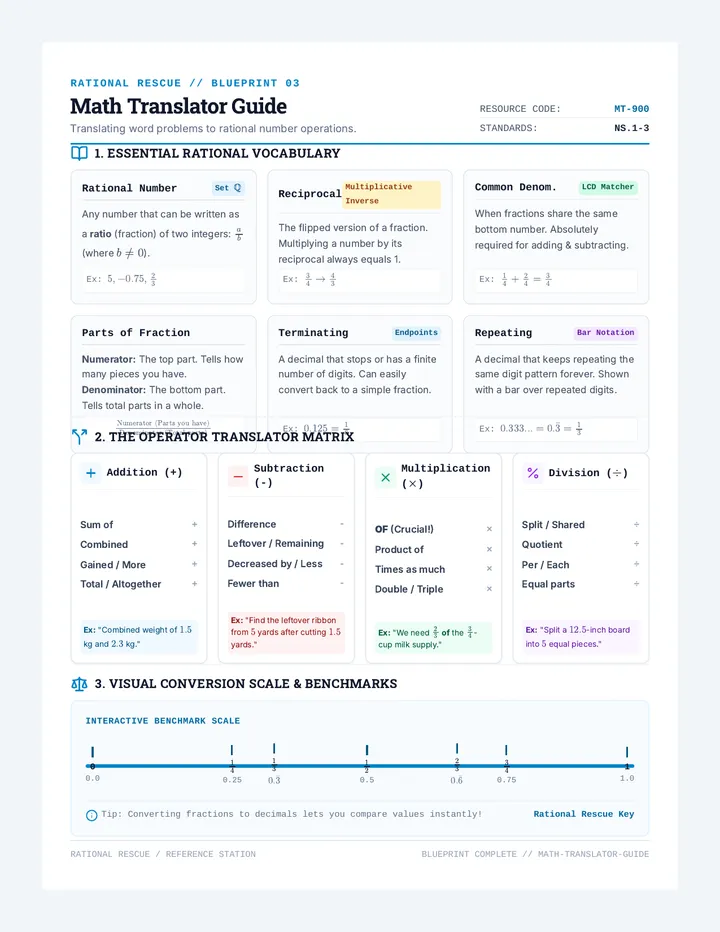
A foundational high school math support lesson focused on master operating with fractions and decimals. Includes a step-by-step graphic organizer for execution and an in-depth vocabulary guide translating word problems to mathematical operations.
Master planning resources, pacing guides, and curriculum frameworks for advanced high school mathematics courses.
Une séquence complète de remédiation en calcul et conversion pour les élèves de CAP Agricole. Conçue spécialement pour le domaine de l'horticulture et du paysage, elle s'appuie sur des visuels puissants et des mises en situation concrètes (terreau, engrais, parcelles).
Une leçon de remédiation en mathématiques sur le produit en croix pour les élèves de CAP Agricole, bilingue Français/Bislama, intégrant des situations concrètes de l'agriculture calédonienne et du Vanuatu (calcul d'aliments pour bétail, dosage de traitements, densité de semis).
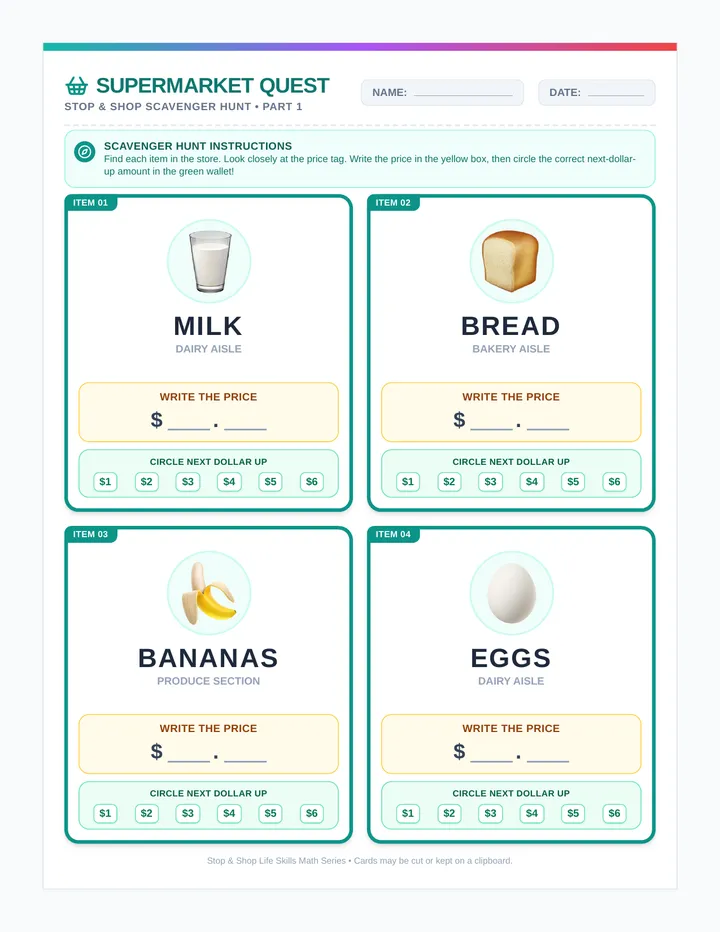
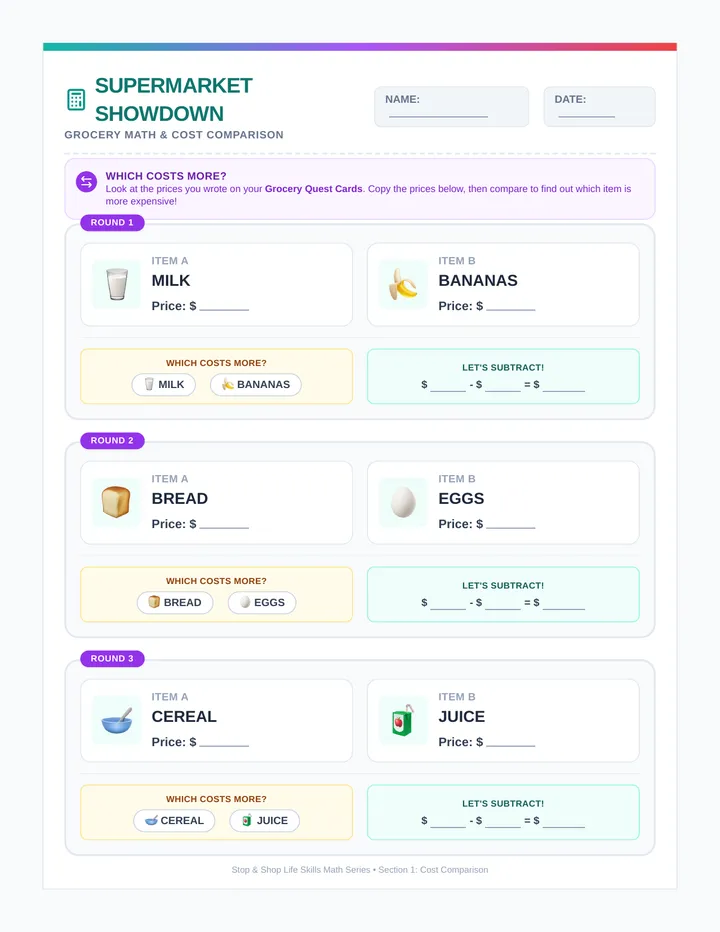
A real-world functional math lesson designed for life skills students. Students navigate a Stop & Shop store to locate items, read price tags, and calculate next-dollar-up budgets using highly visual scaffolded cards.
A comprehensive end-of-year final exam package evaluating 3D geometry skills, focusing on surface area and volume of prisms, cylinders, pyramids, and cones. Includes a clean, printable 25-question student exam and a matching step-by-step teacher key.
A scale drawing and architectural design project where students draft floor plans to a precise scale ratio and compute real-world dimensions.
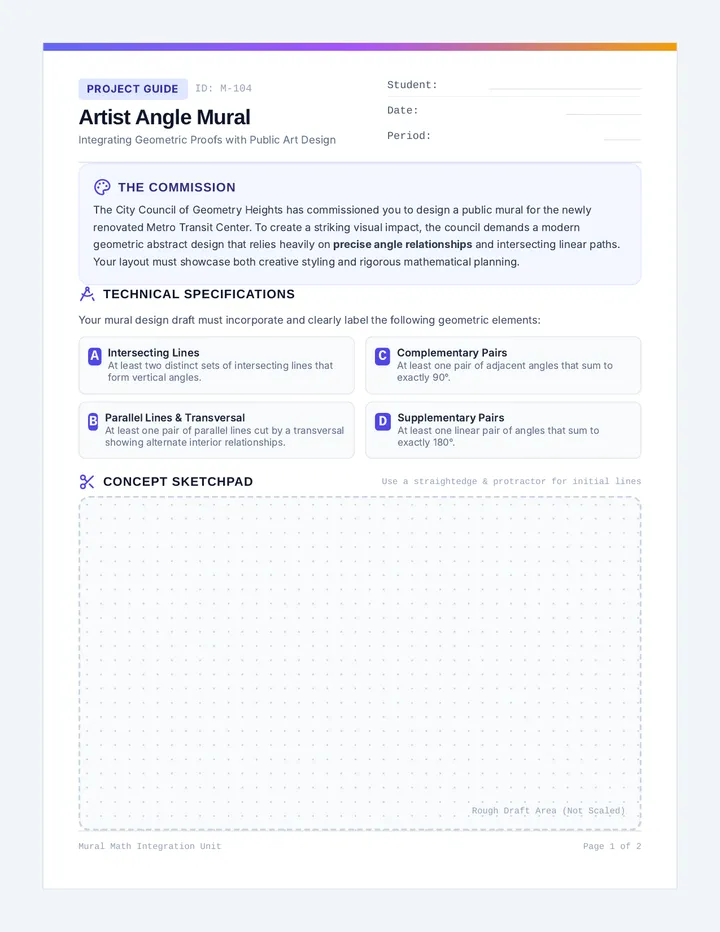
A creative math and art integration project where students design a geometric mural using precise angle relationships and calculate missing measurements.
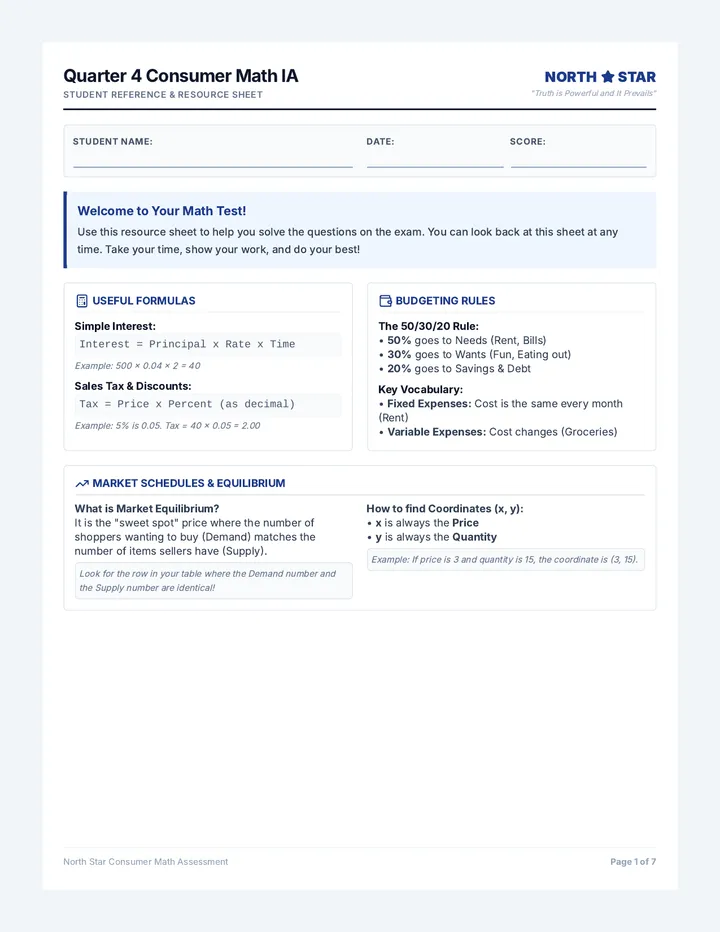
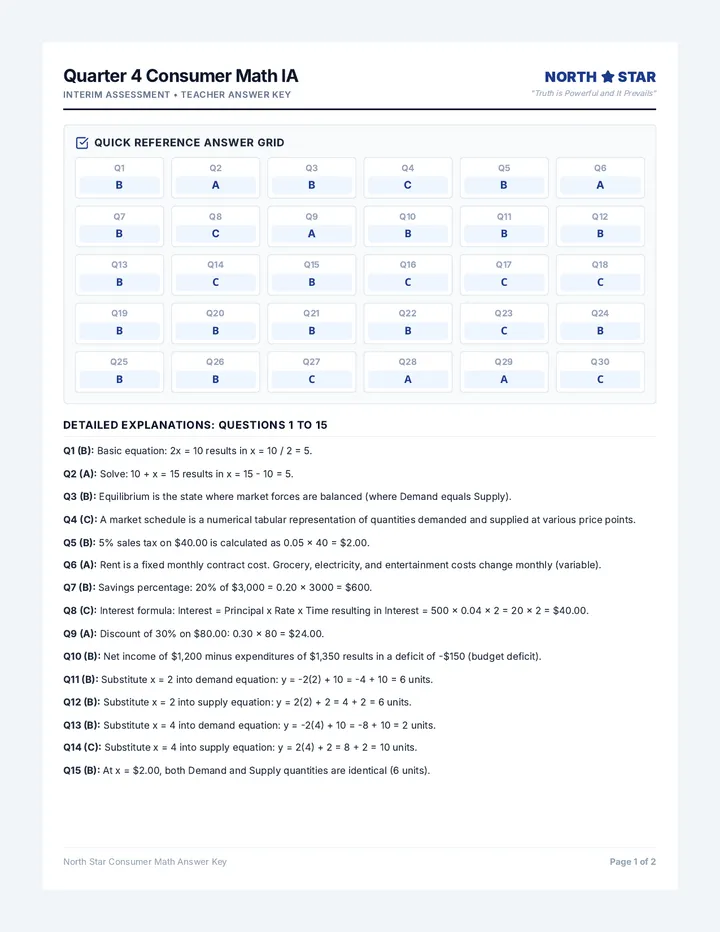
Quarter 4 Consumer Math Interim Assessment lesson containing the student exam and teacher answer key.