A targeted exam prep lesson focusing on NYS Regents Algebra 1 questions for linear and quadratic functions. Includes high-stakes graphing, transformations, modeling, and constructed-response practice with a detailed grading guide.
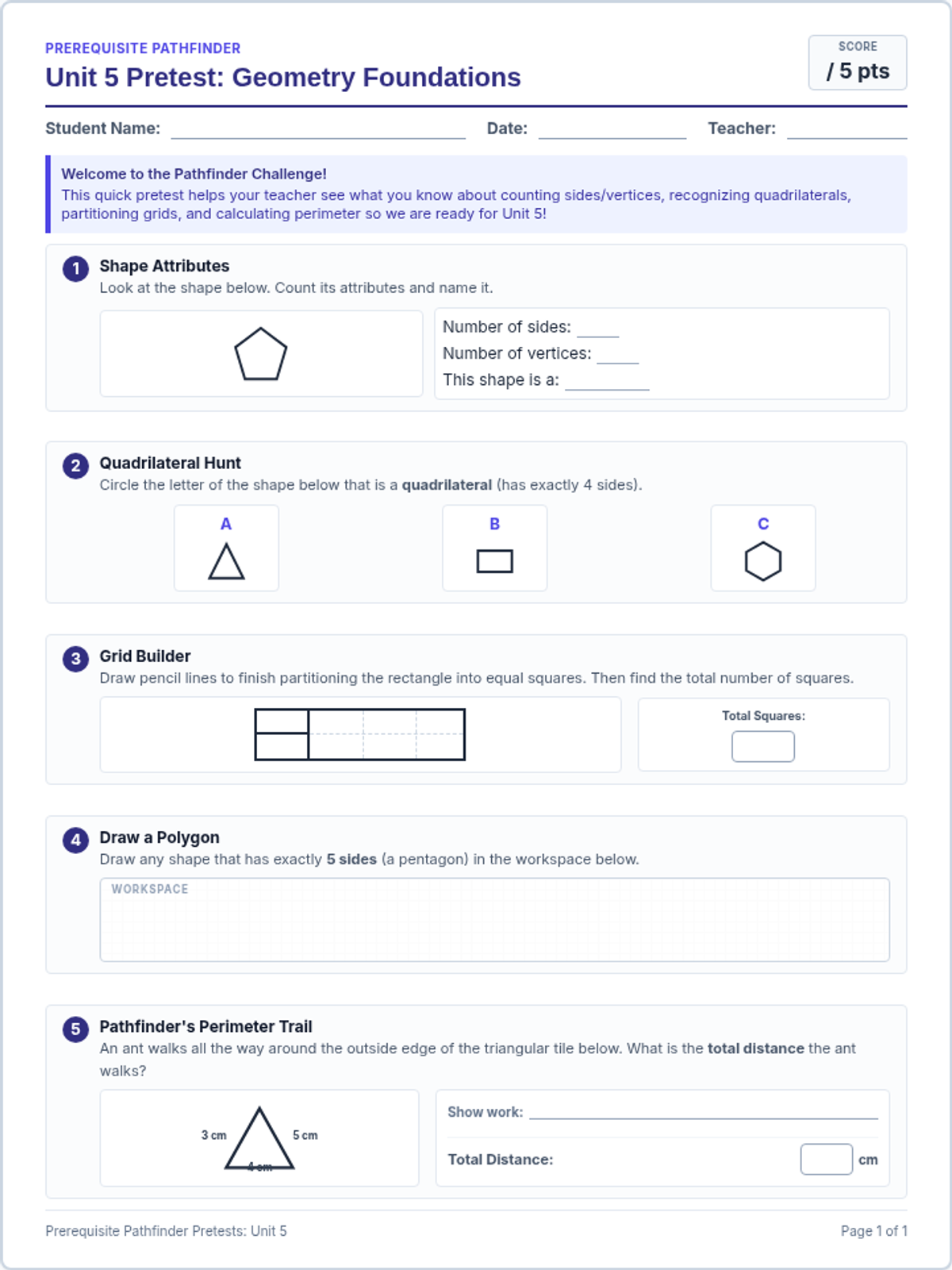
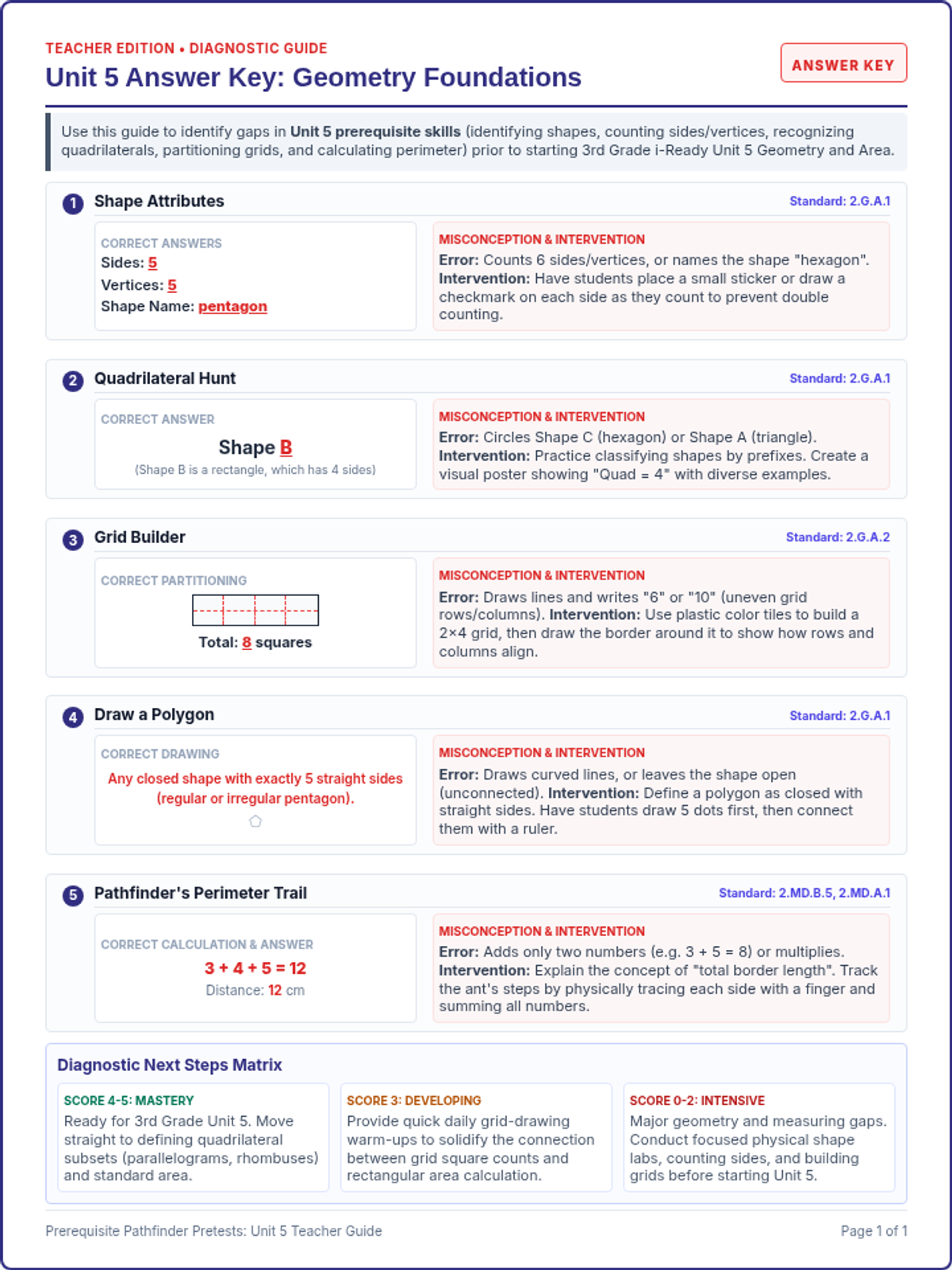
Investigates student recognition of shape attributes, partitioning rectangles into grids, and counting vertices prior to 3rd-grade geometry and area.
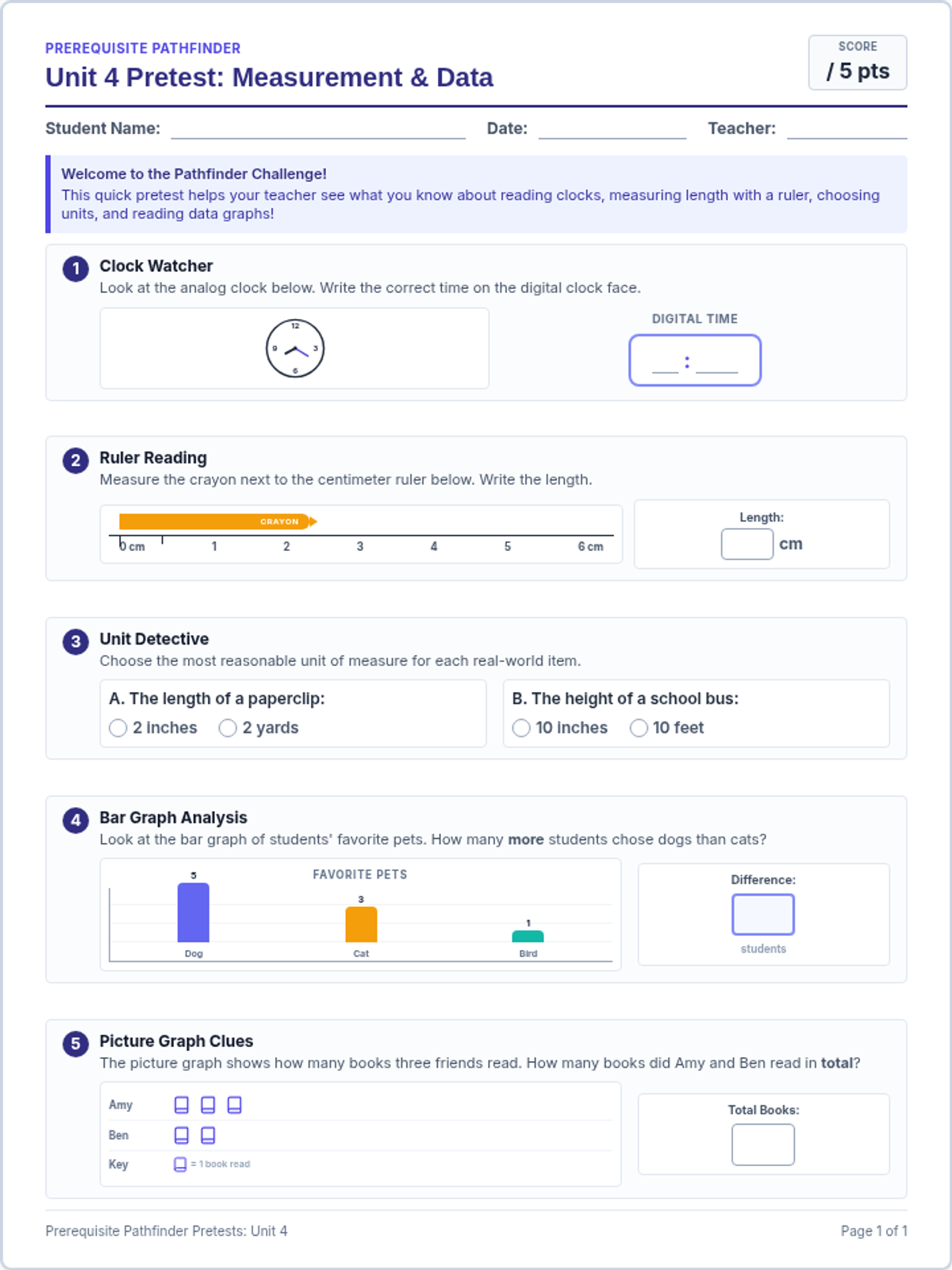
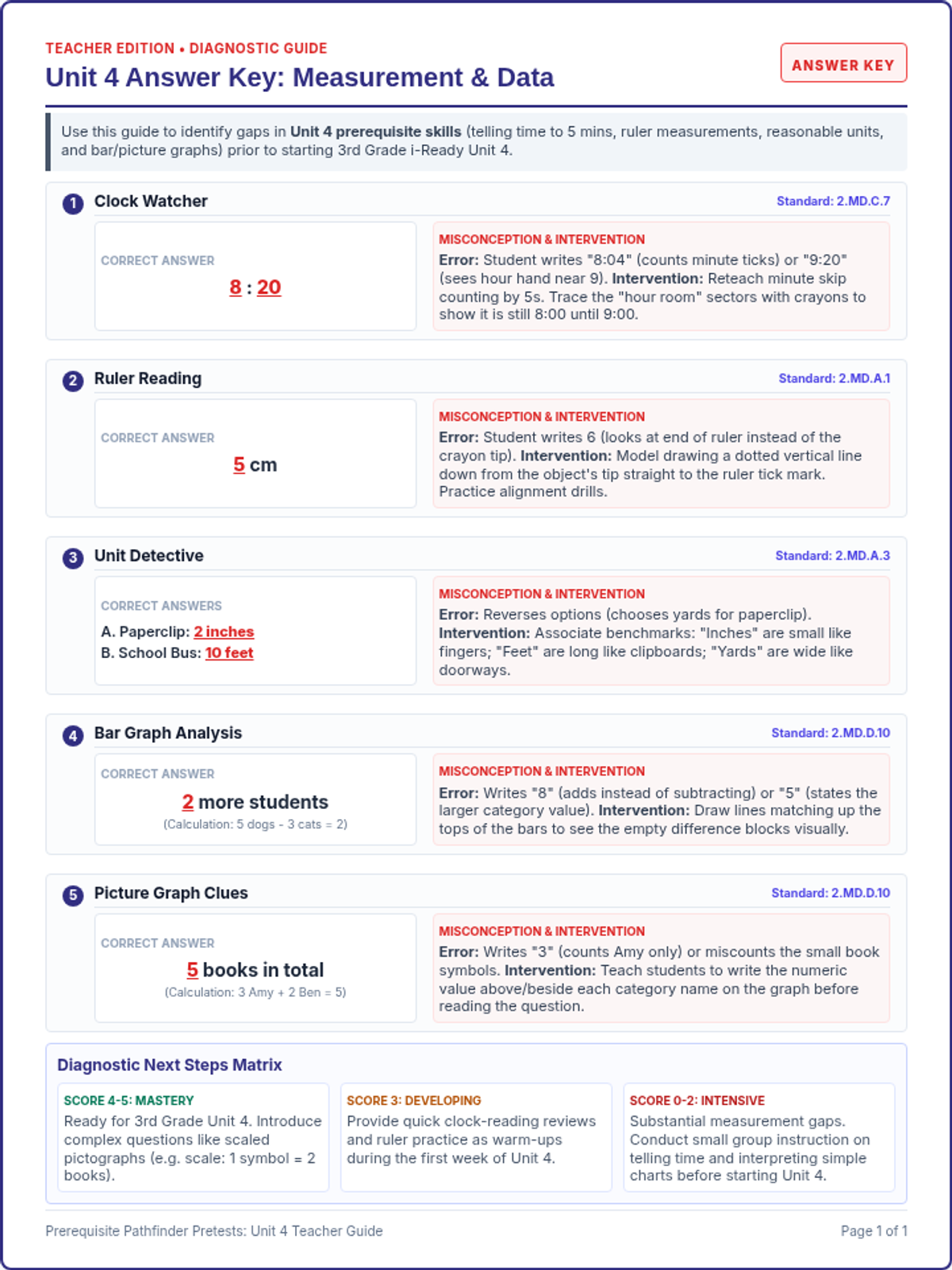
Evaluates prerequisite skills for time, measurement, and bar/picture graphs to ensure readiness for complex measurement topics.
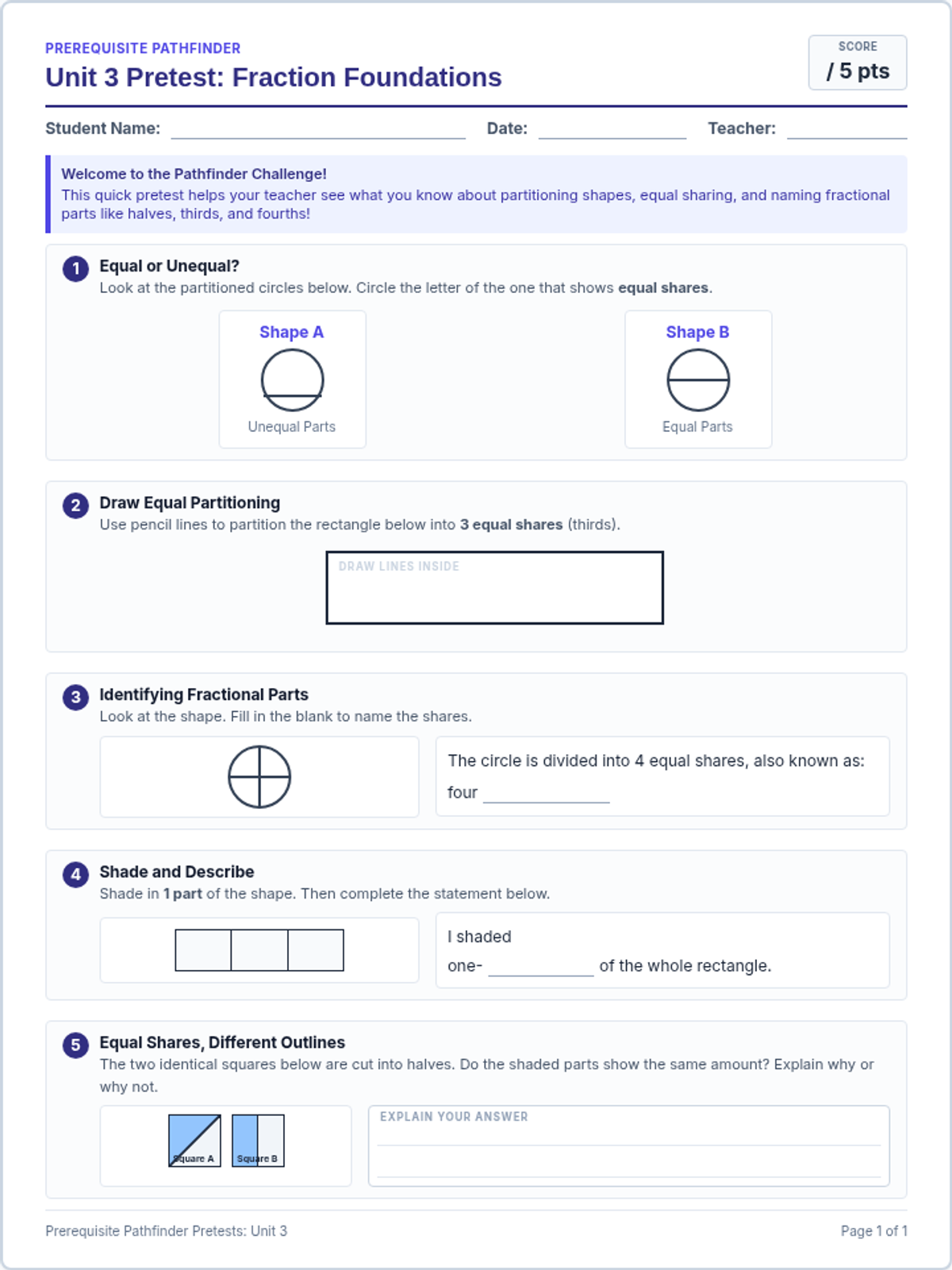
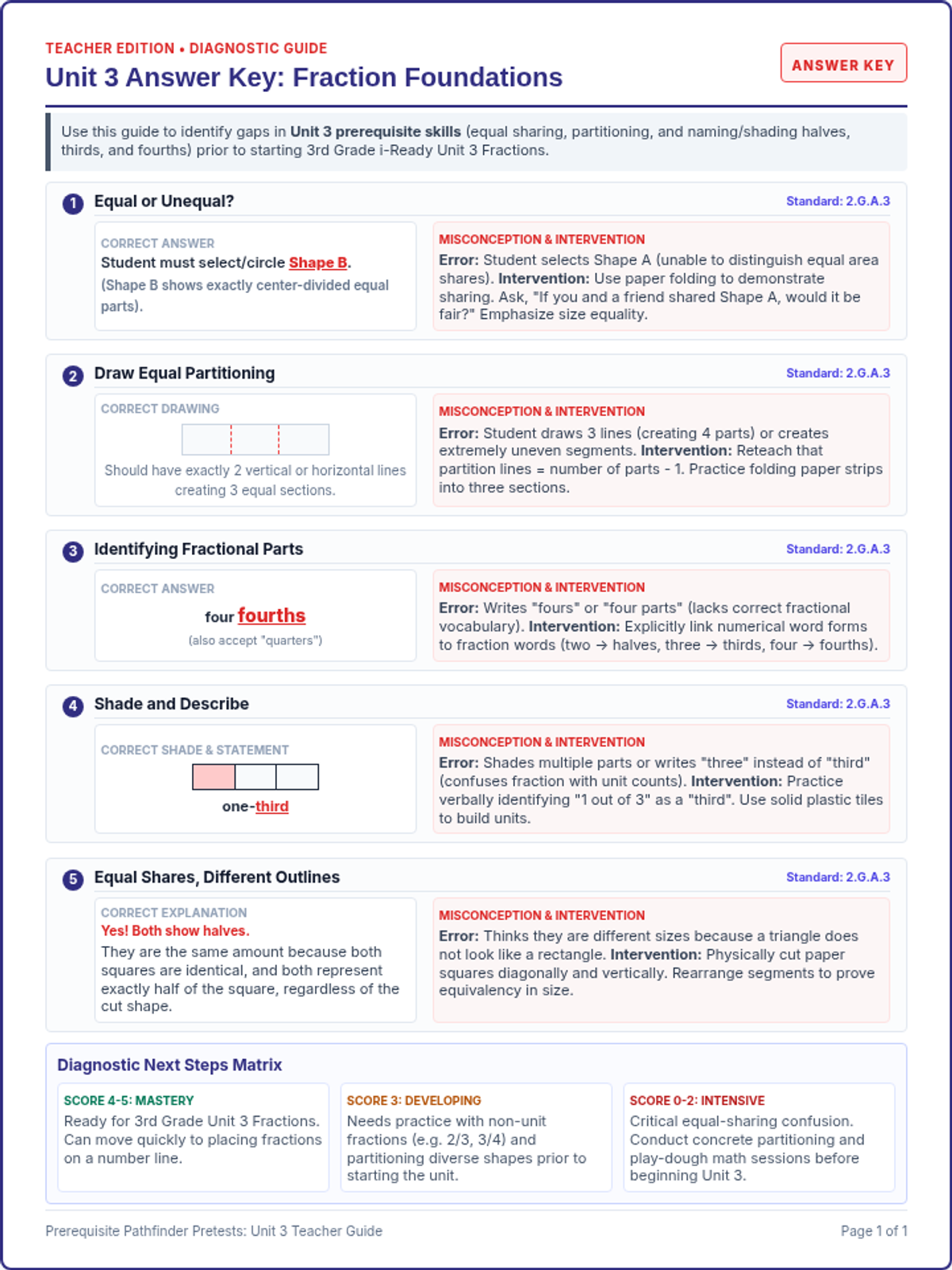
Assesses understanding of equal shares, partitioning shapes into halves, thirds, and fourths, and naming fraction parts prior to 3rd-grade fraction units.
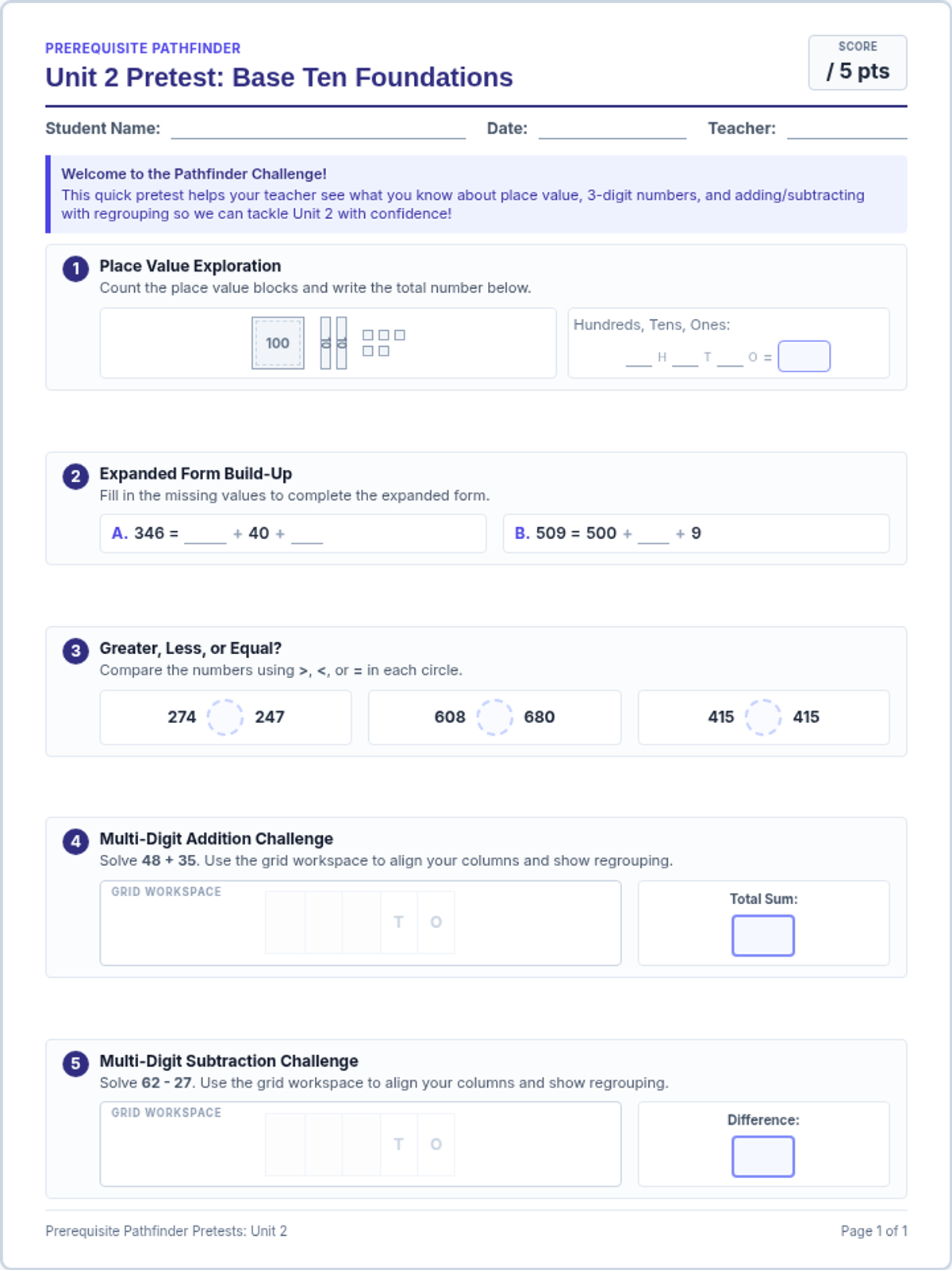
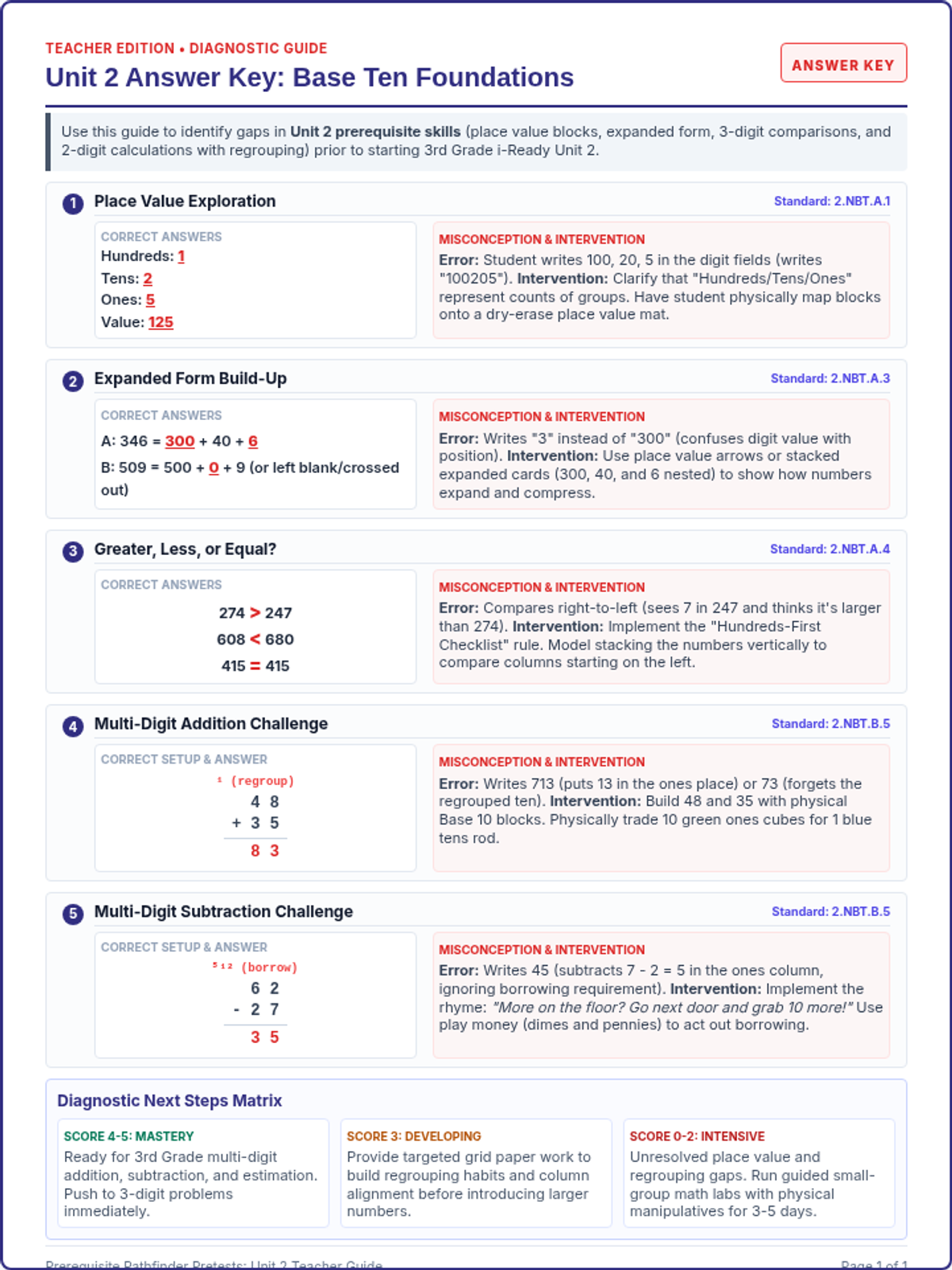
Diagnoses readiness for 3rd-grade place value, multi-digit addition, subtraction, and estimation, based on 2nd-grade standards.
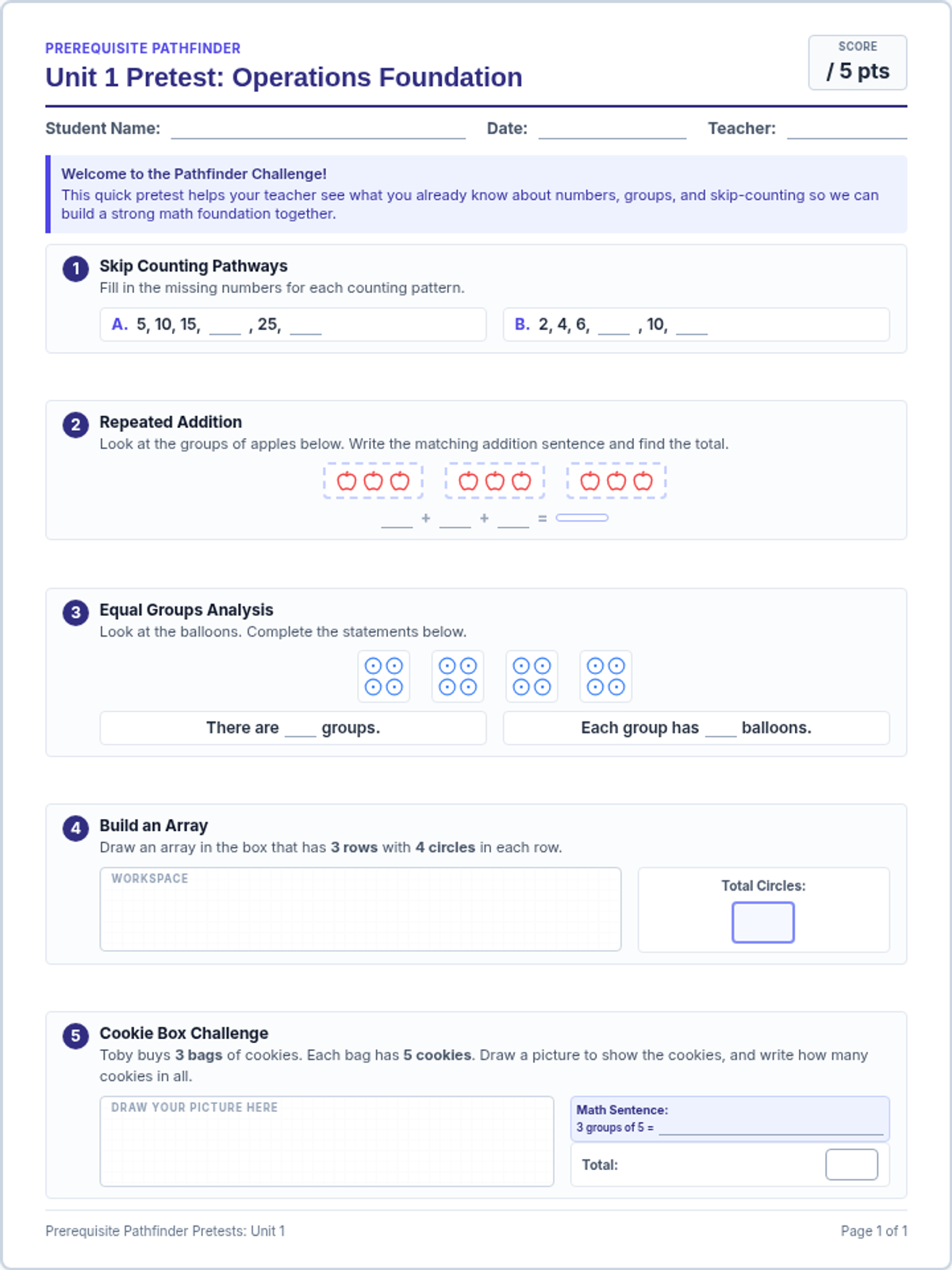
Focuses on prerequisite skills for multiplication and division, including equal groups, skip counting, arrays, and repeated addition.
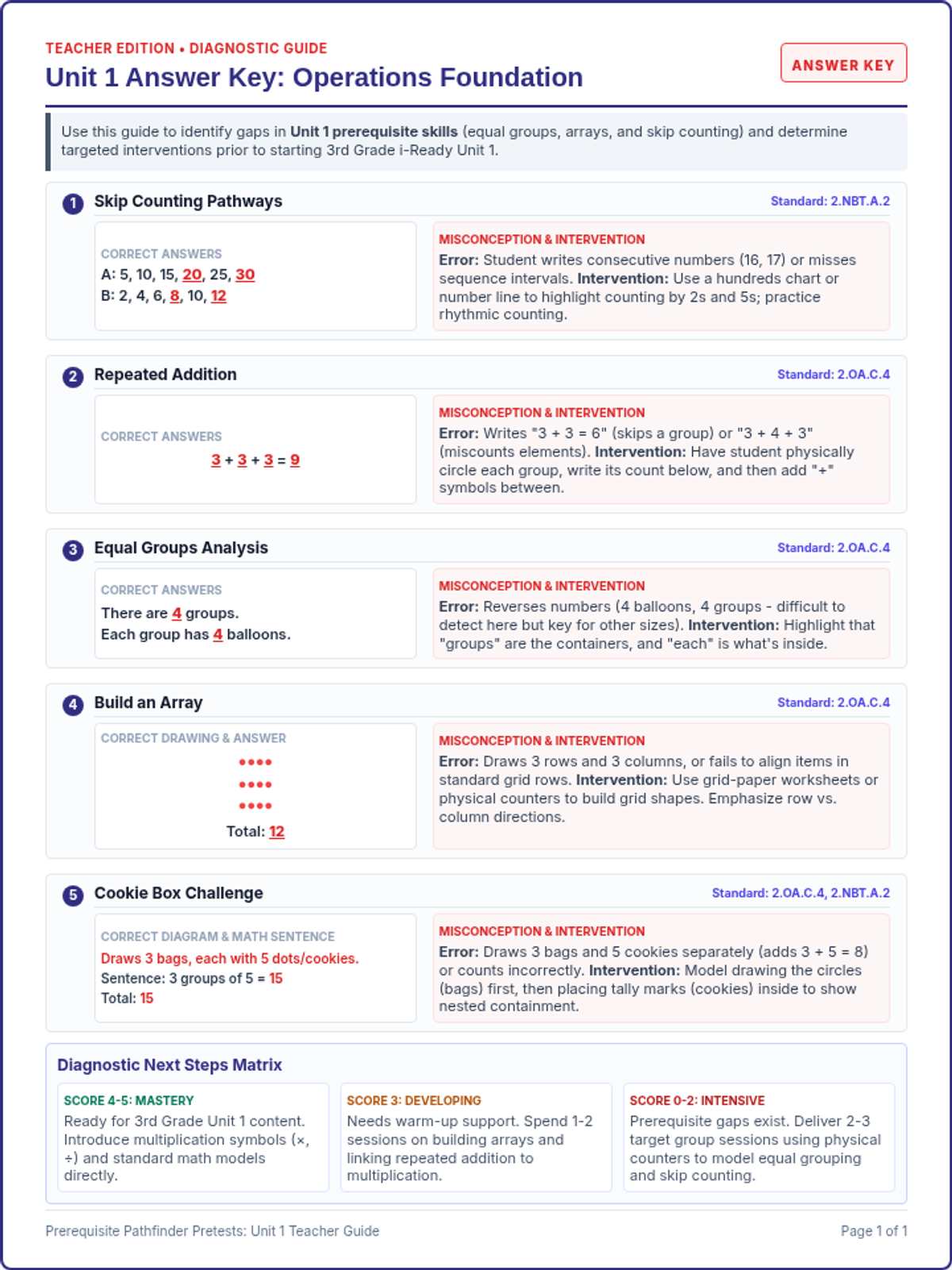
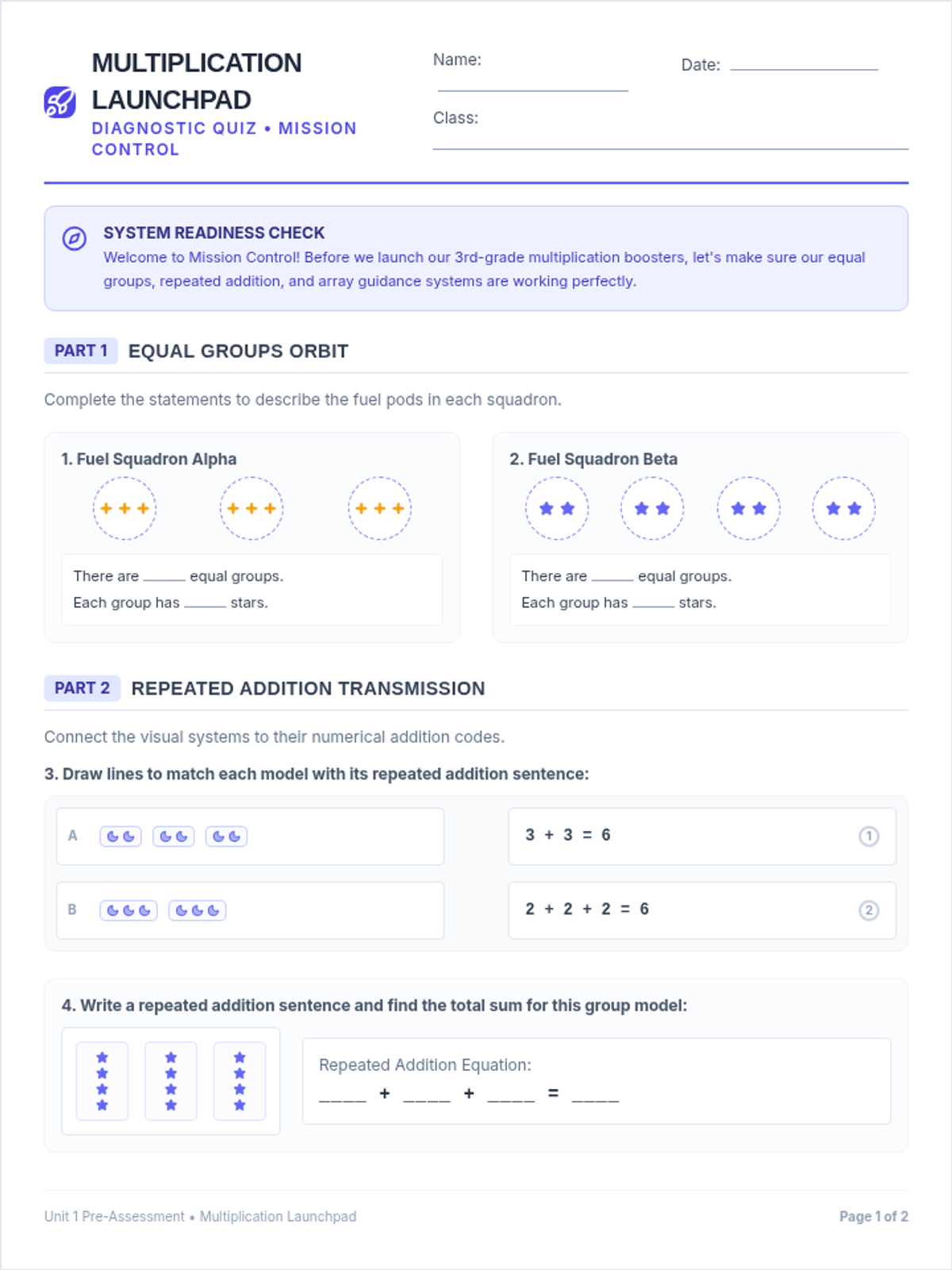
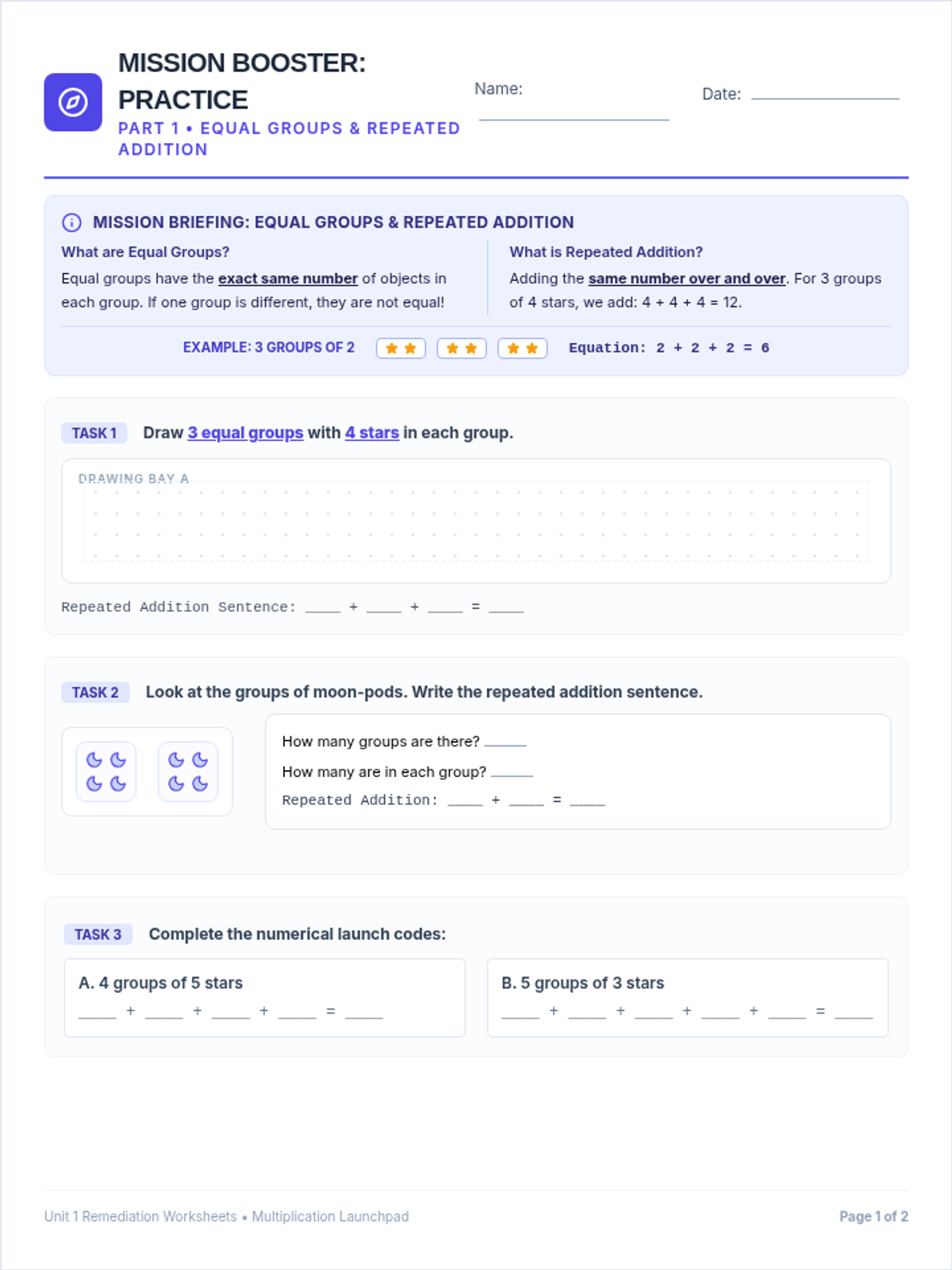
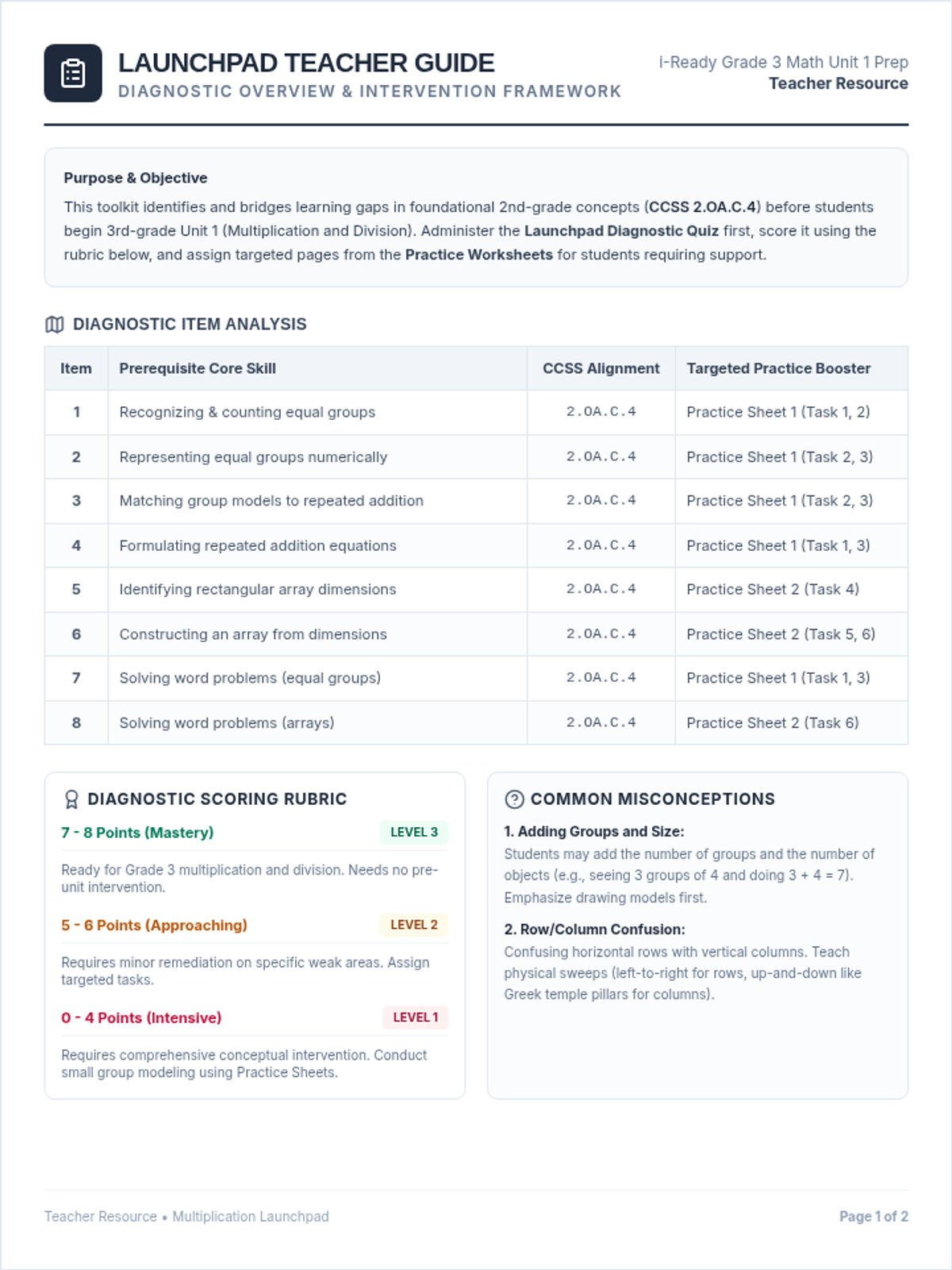
A diagnostic pretest and intervention package designed to assess and remediate 2nd-grade prerequisite math skills (equal groups, repeated addition, and basic arrays) before starting 3rd-grade Unit 1 Multiplication and Division. Includes a student quiz, targeted intervention worksheets, and a comprehensive teacher guide with rubrics and answer keys.
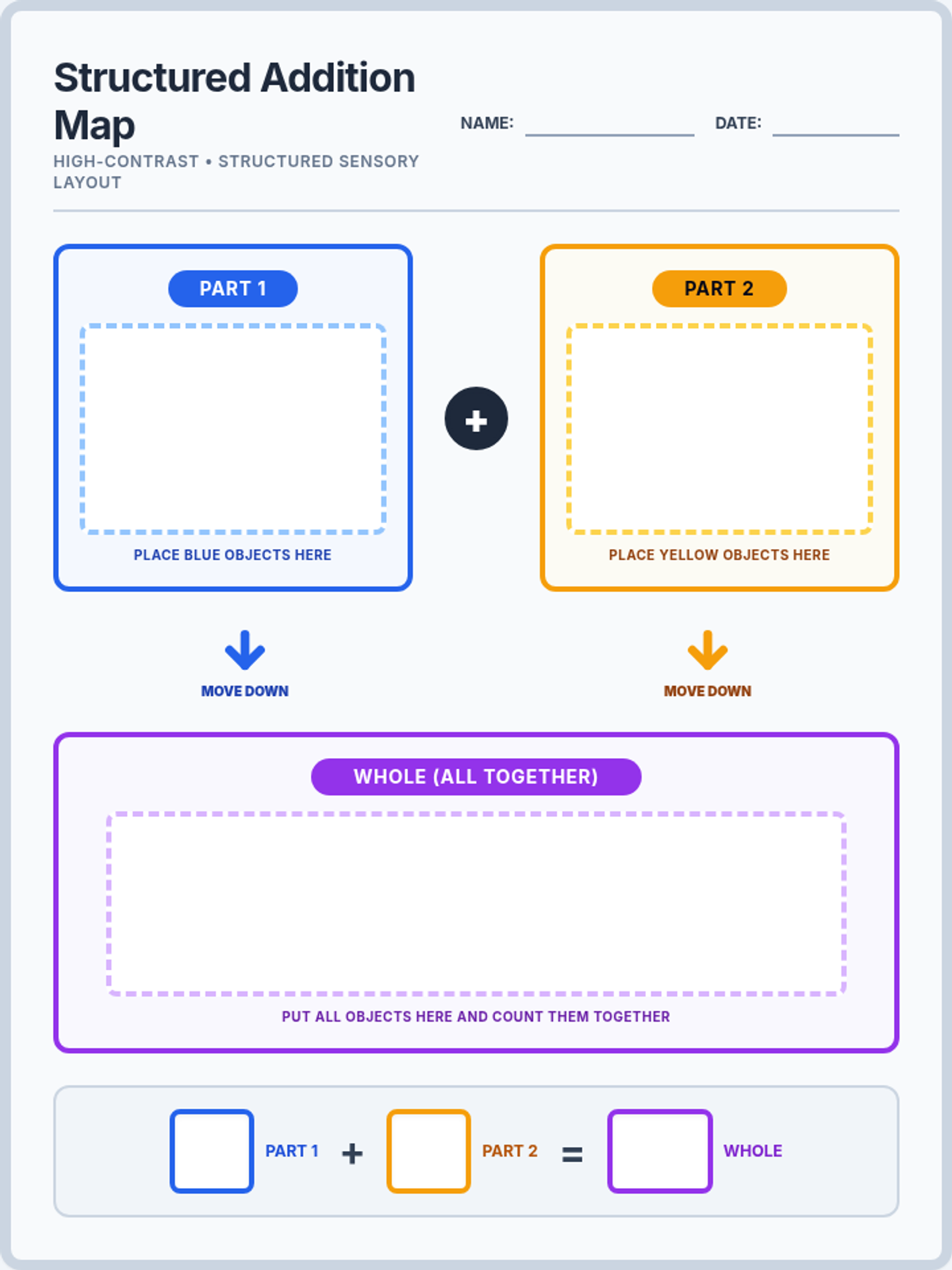
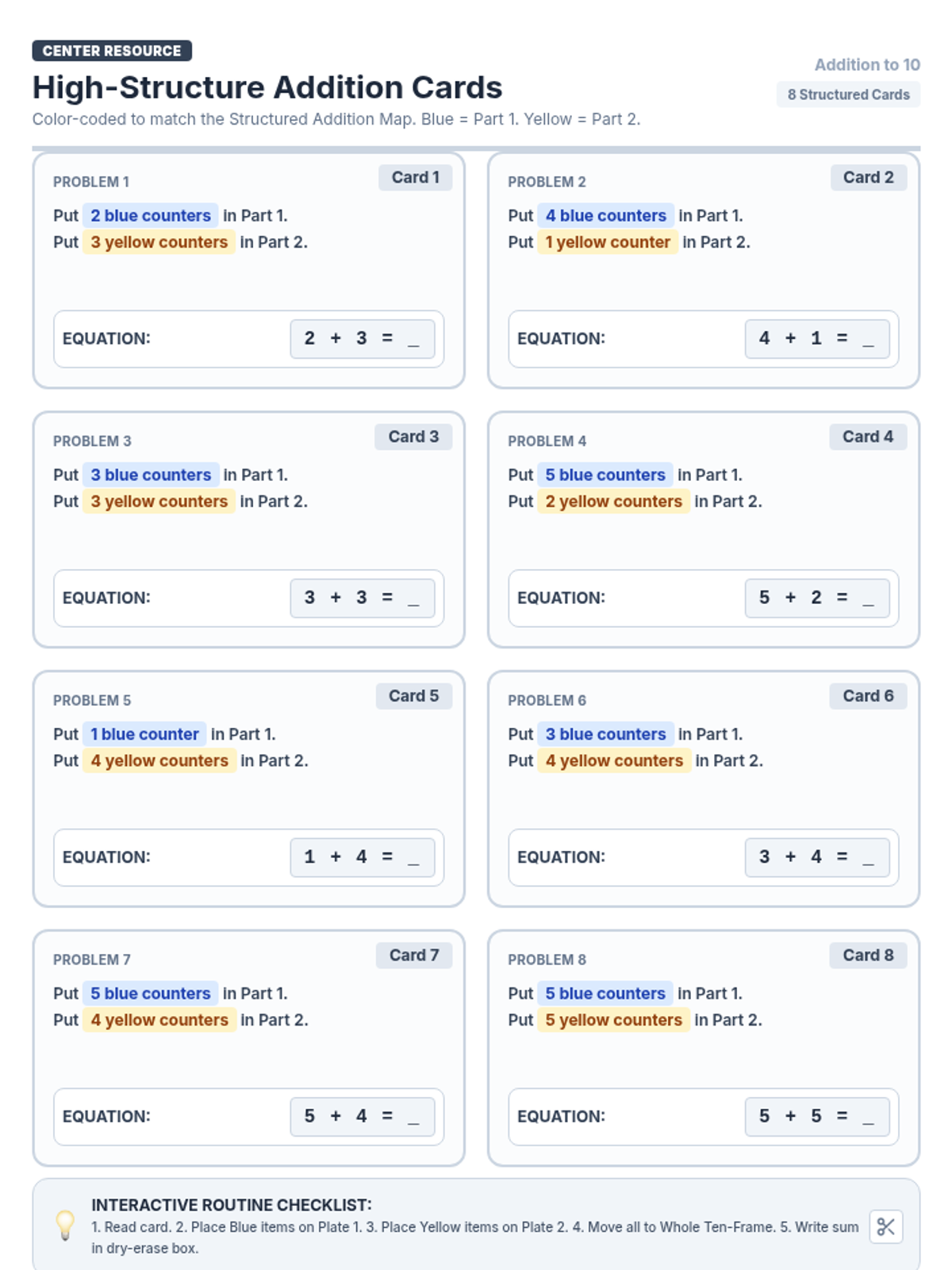
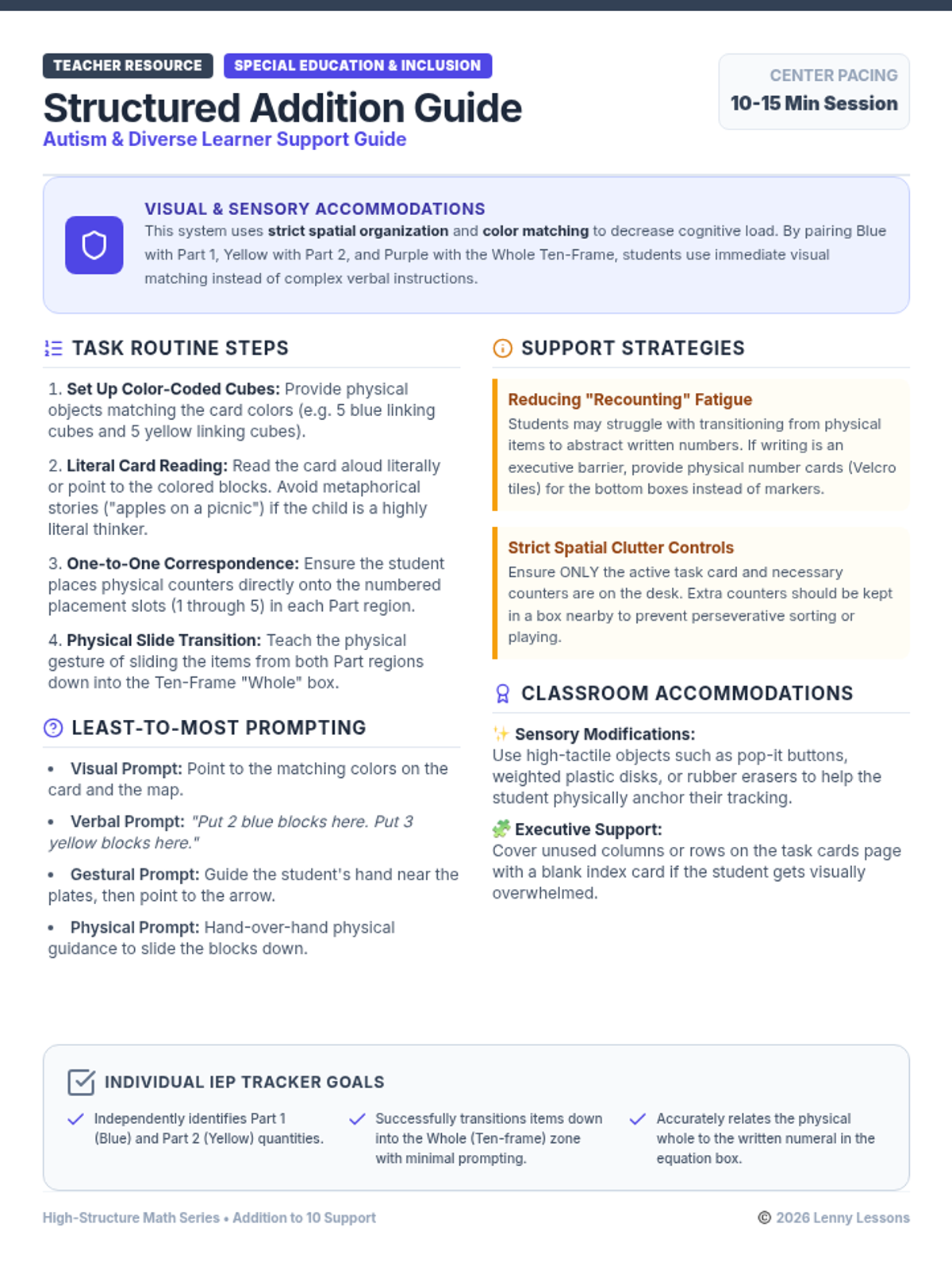
An autism-friendly, high-structure math center featuring a distraction-free Part-Part-Whole Mat with solid, clean workspaces and color-coded task cards for structured physical addition.
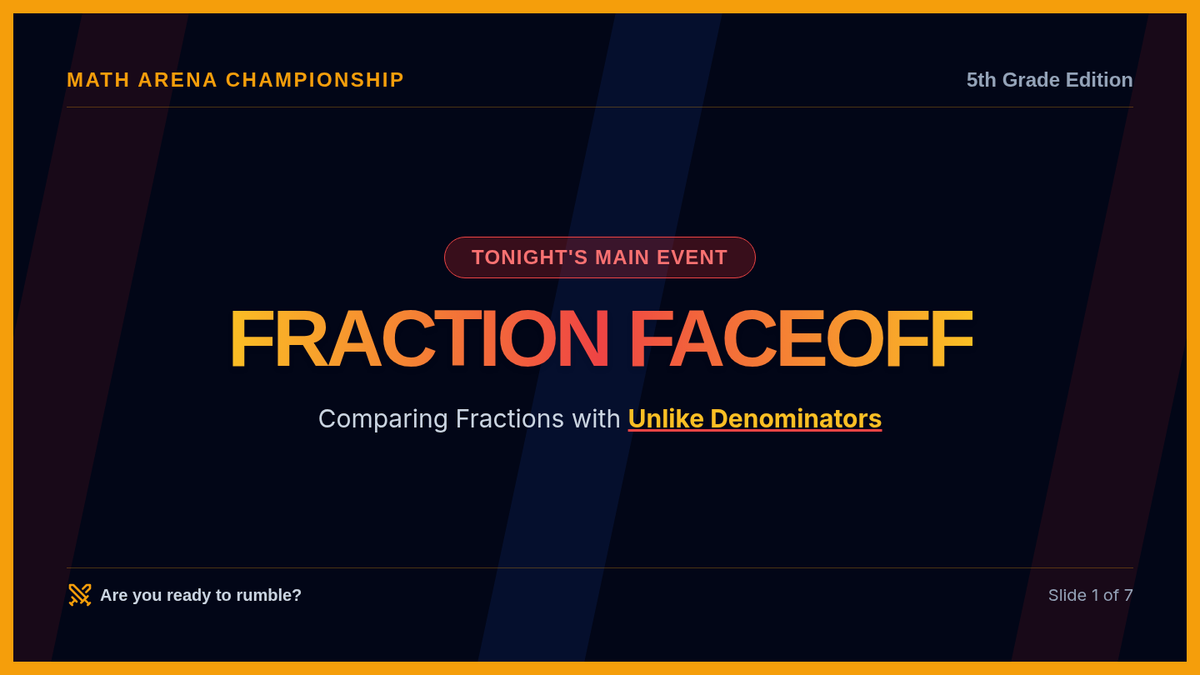
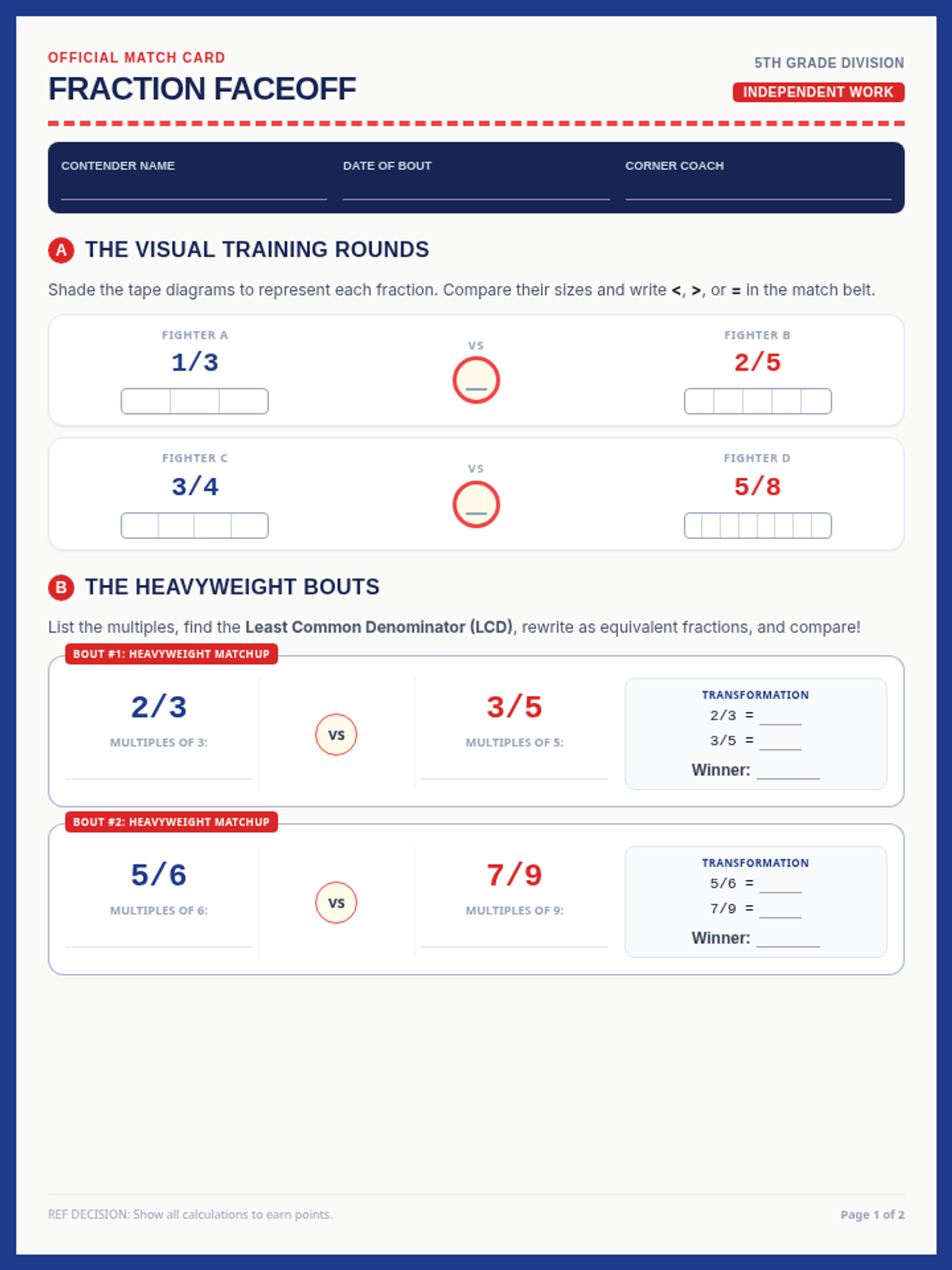
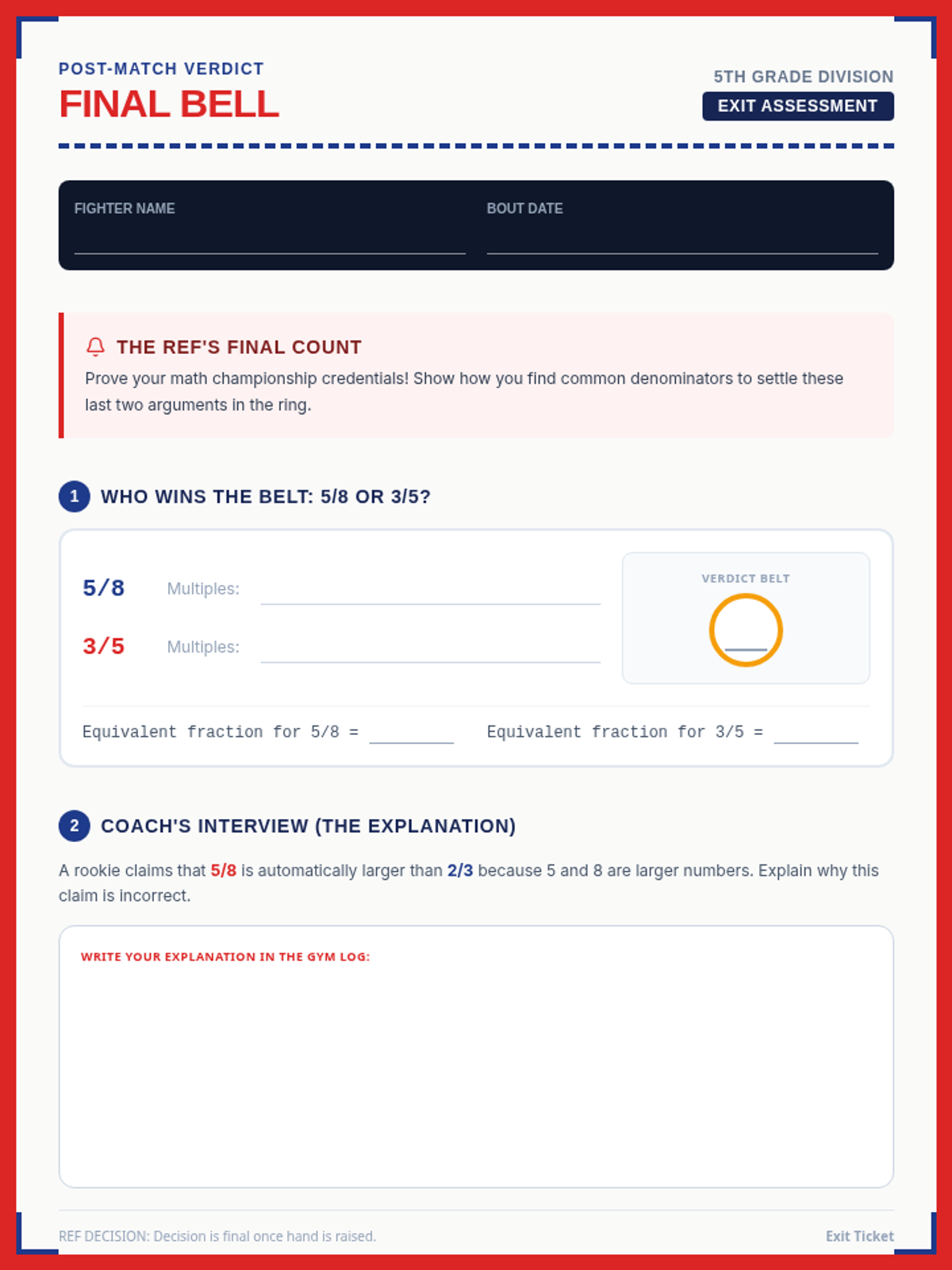
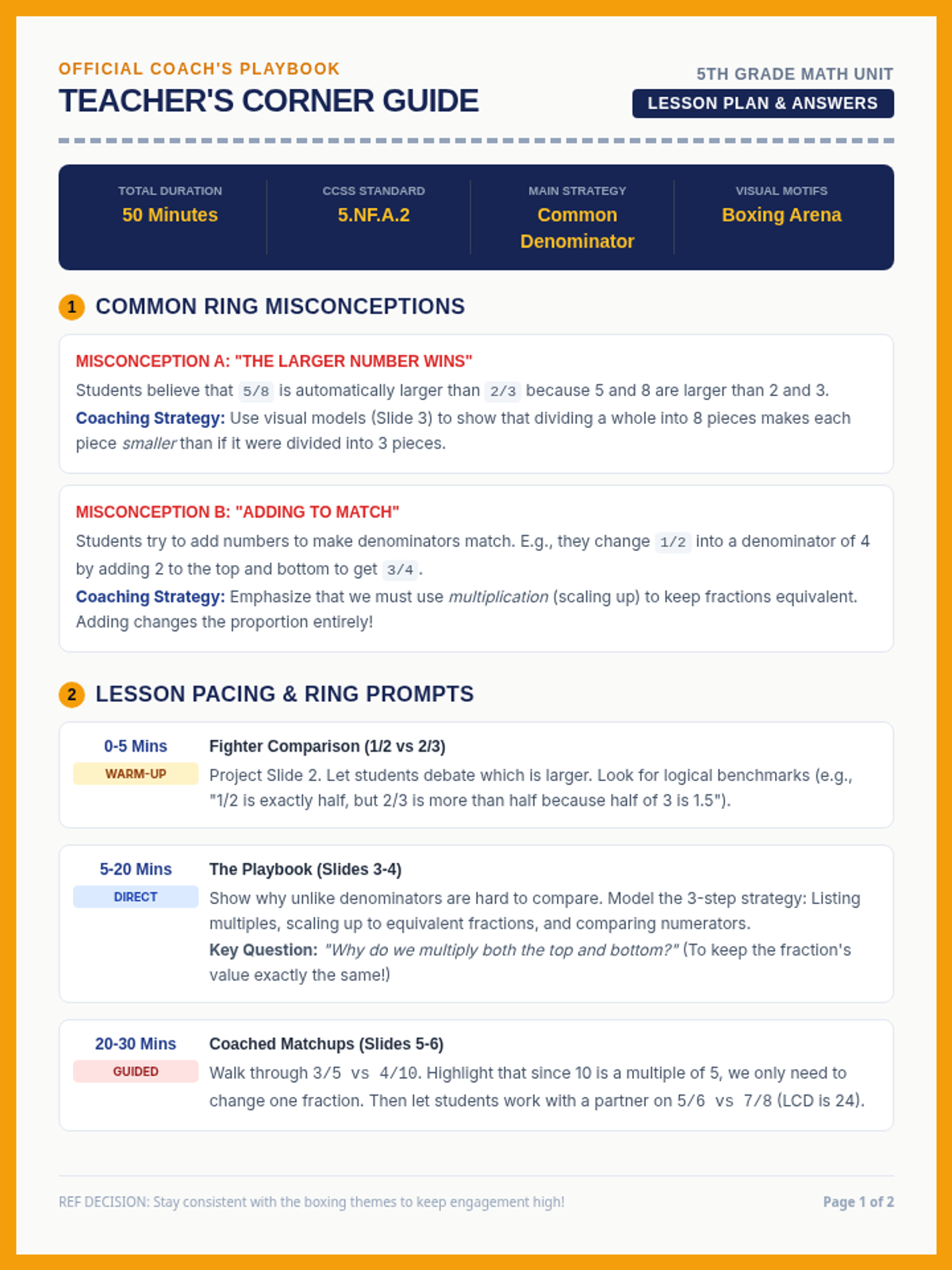
A 5th-grade math lesson focused on comparing fractions with unlike denominators. Students learn to use visual models and find common denominators to determine which fraction is larger in a fun, sports-themed 'Fraction Faceoff' matchup.
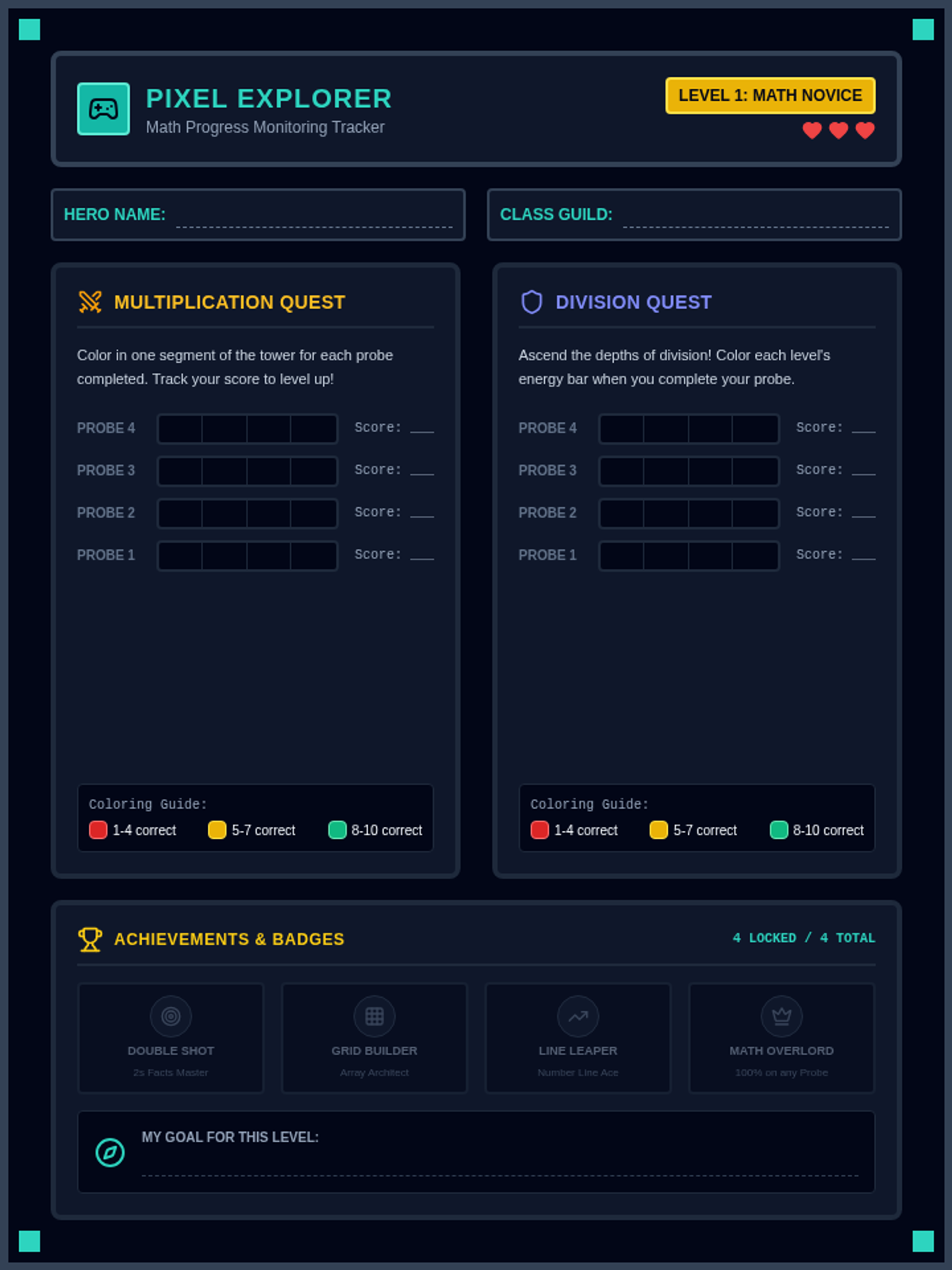
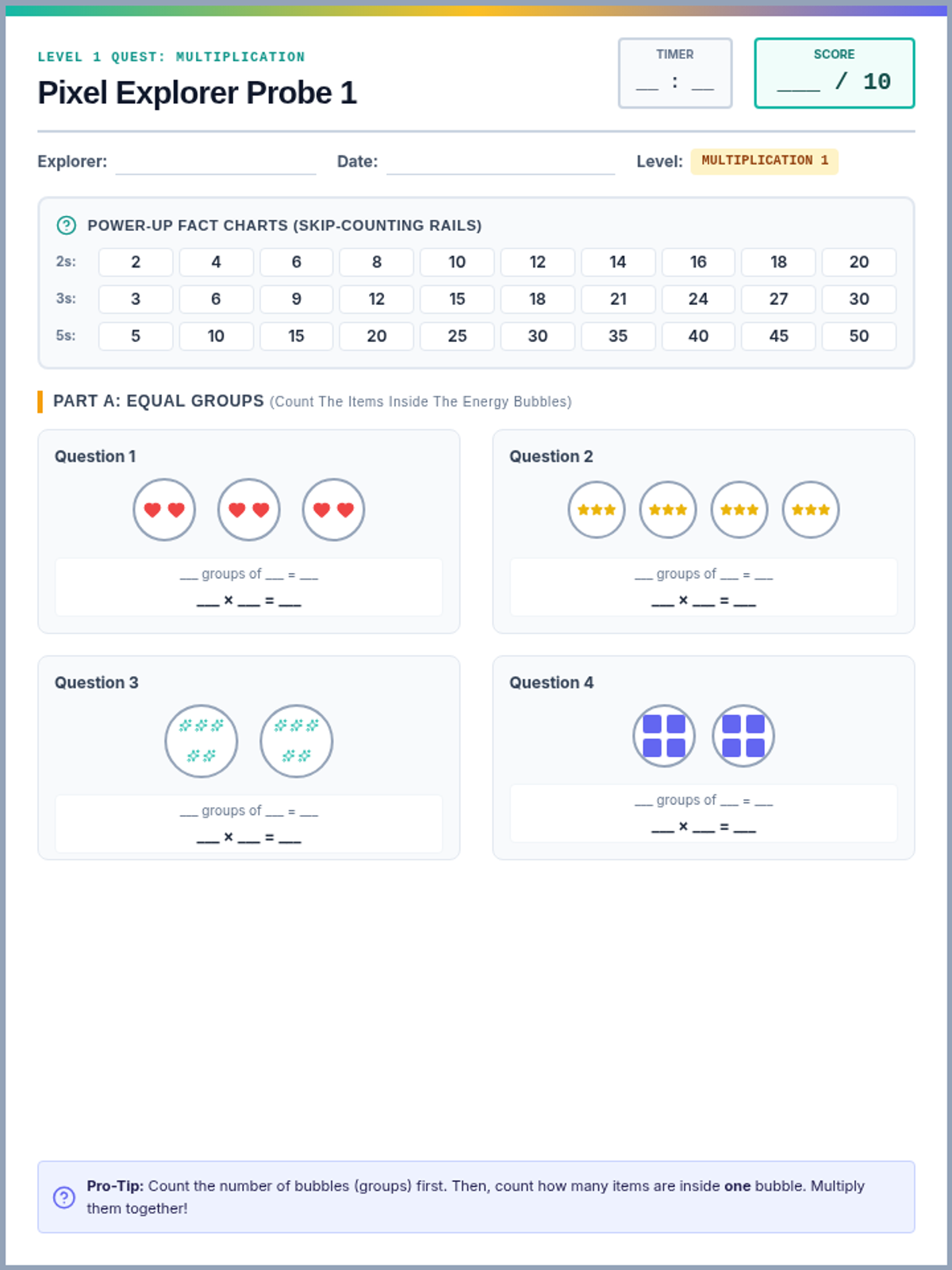
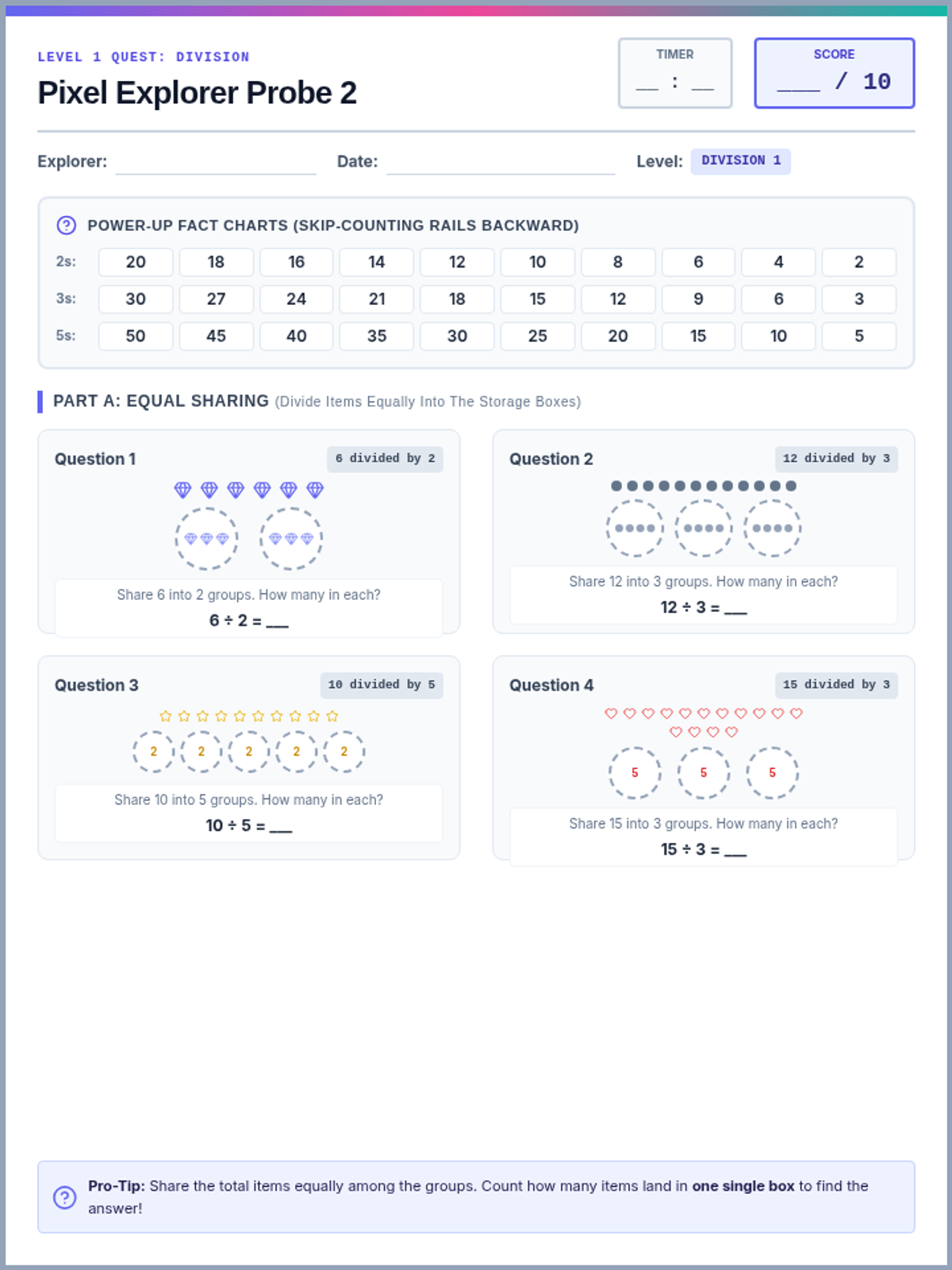
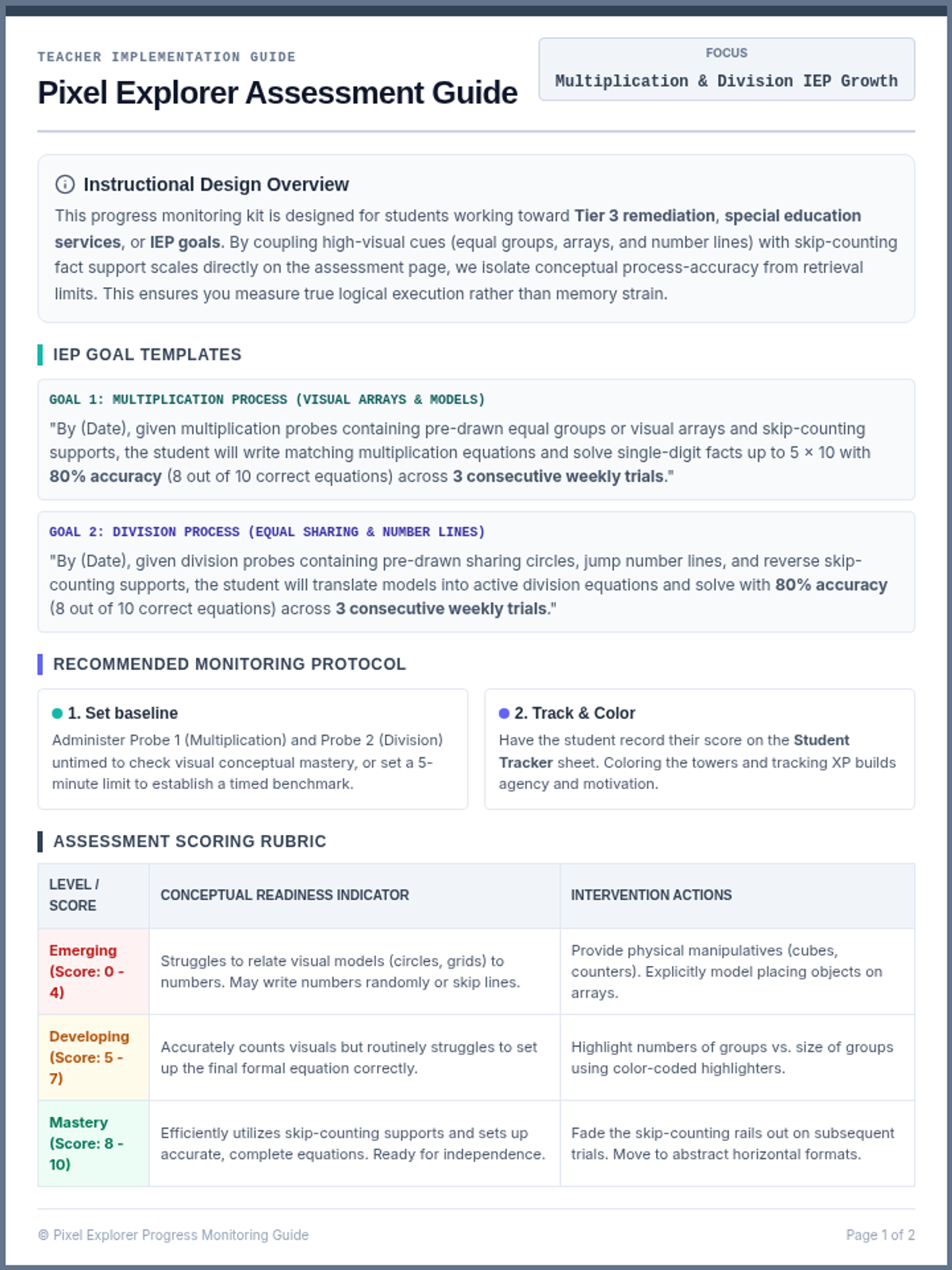
A structured progress monitoring kit for division and multiplication, designed with retro-game aesthetics. Includes two highly-scaffolded visual probes, an interactive student tracker, and a comprehensive teacher guide with IEP goals.
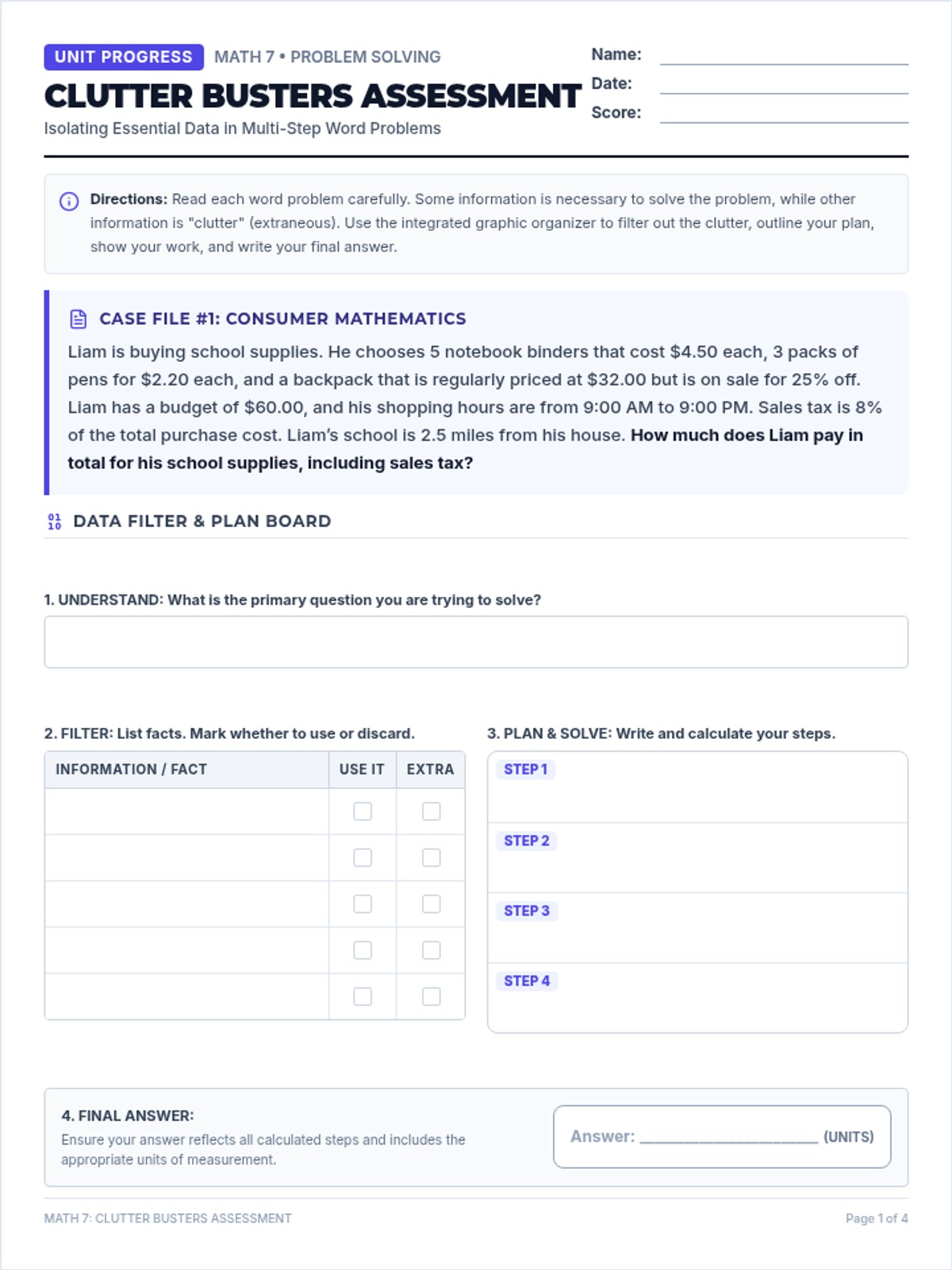
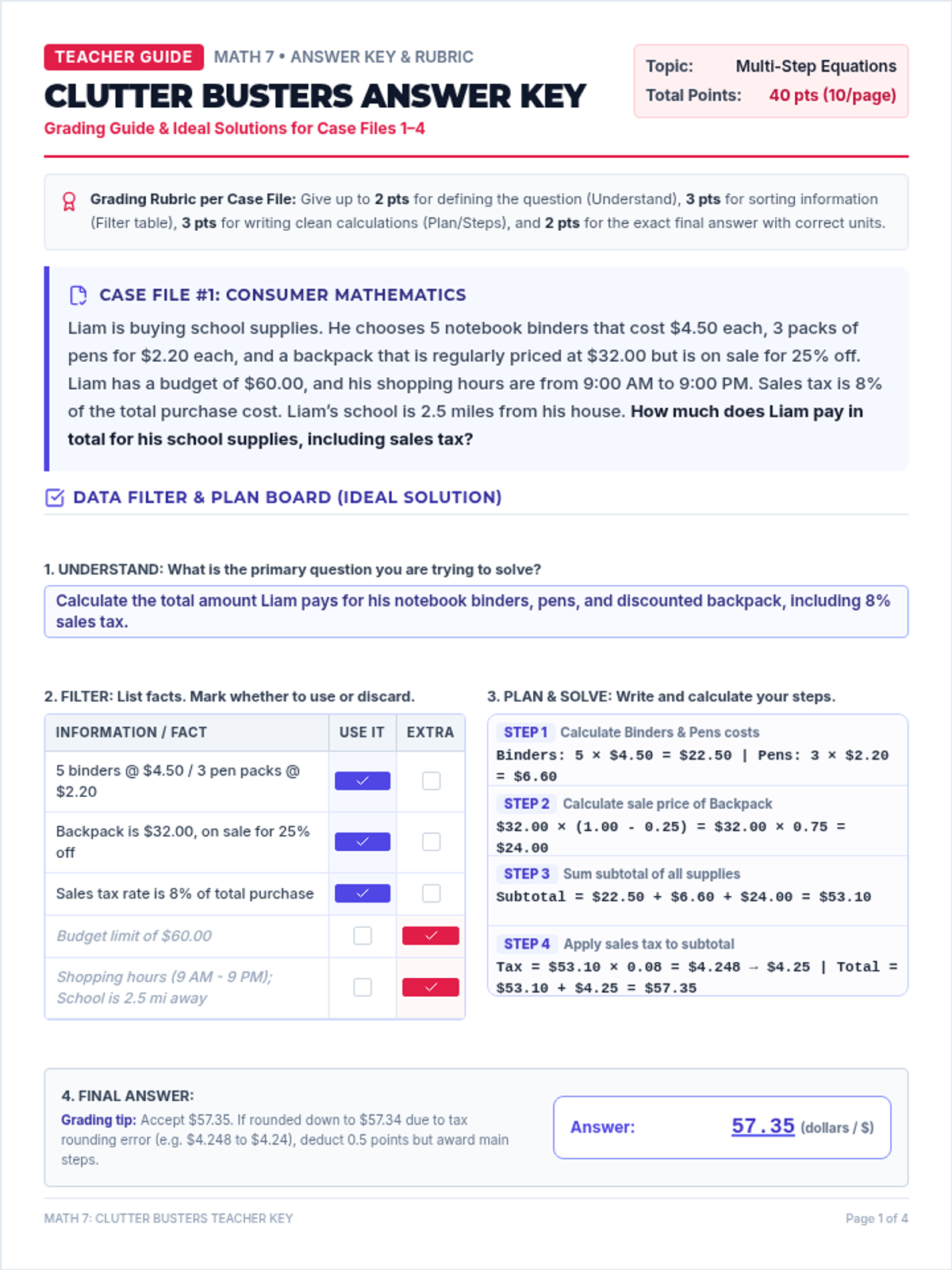
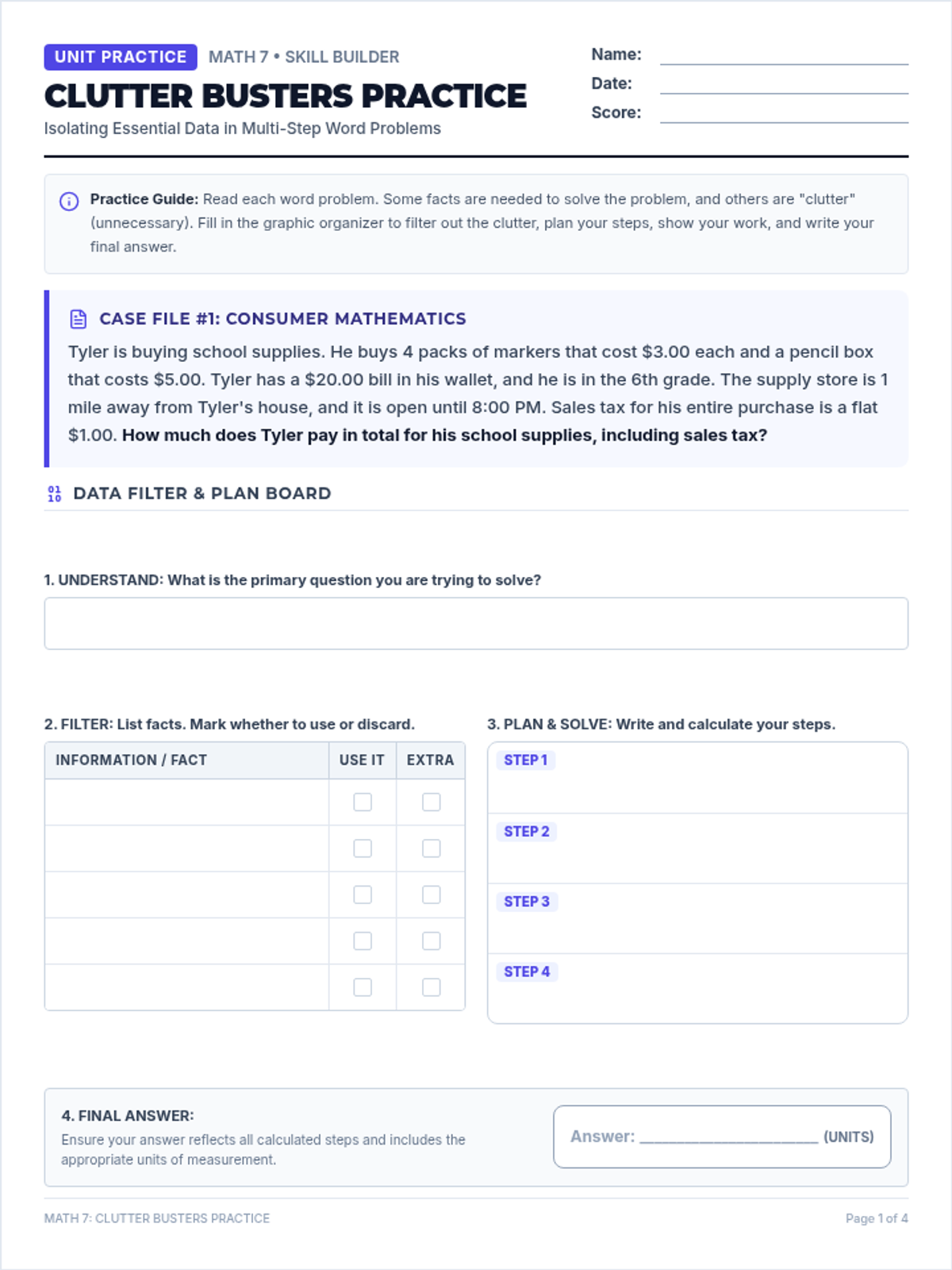
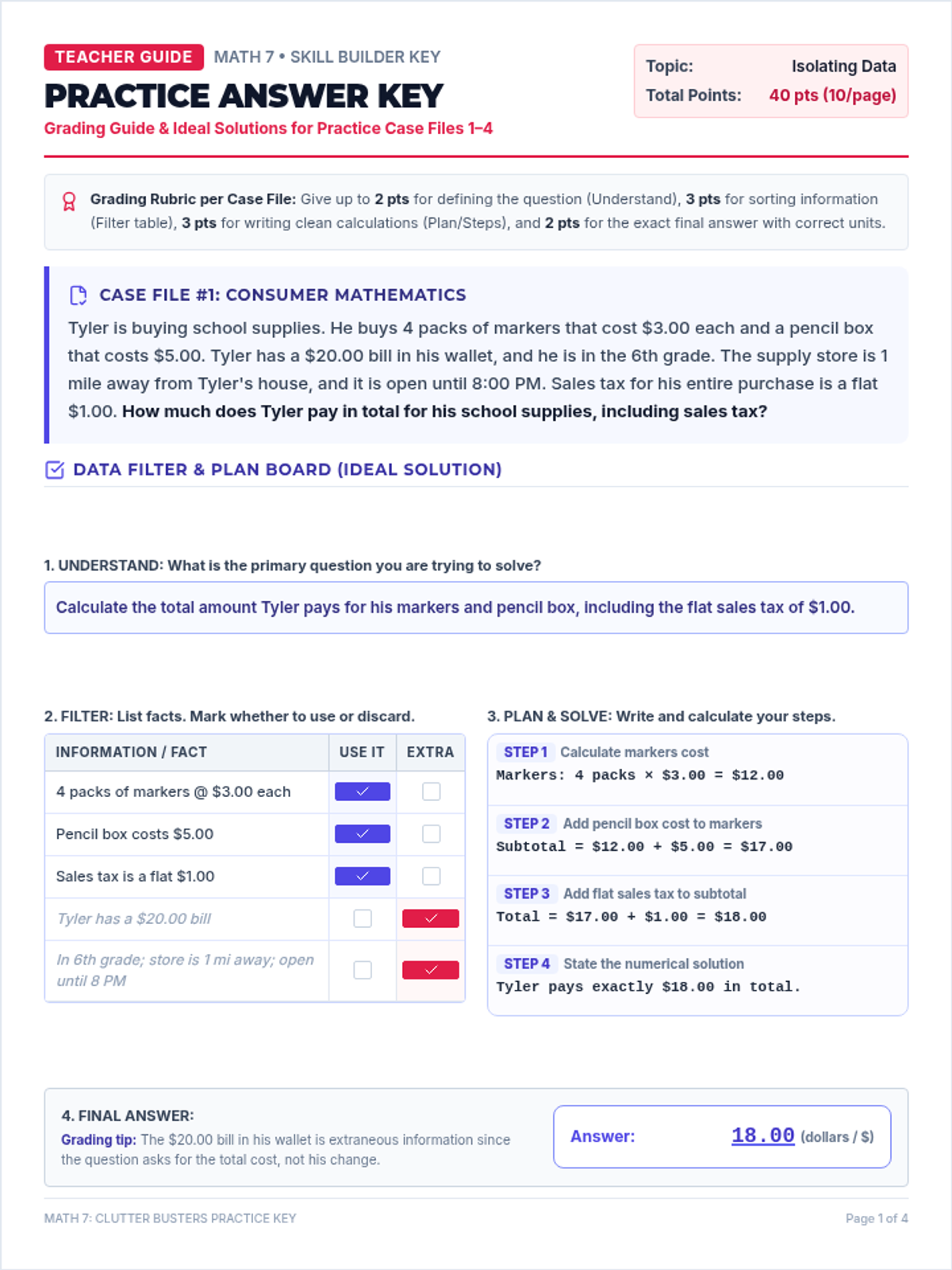
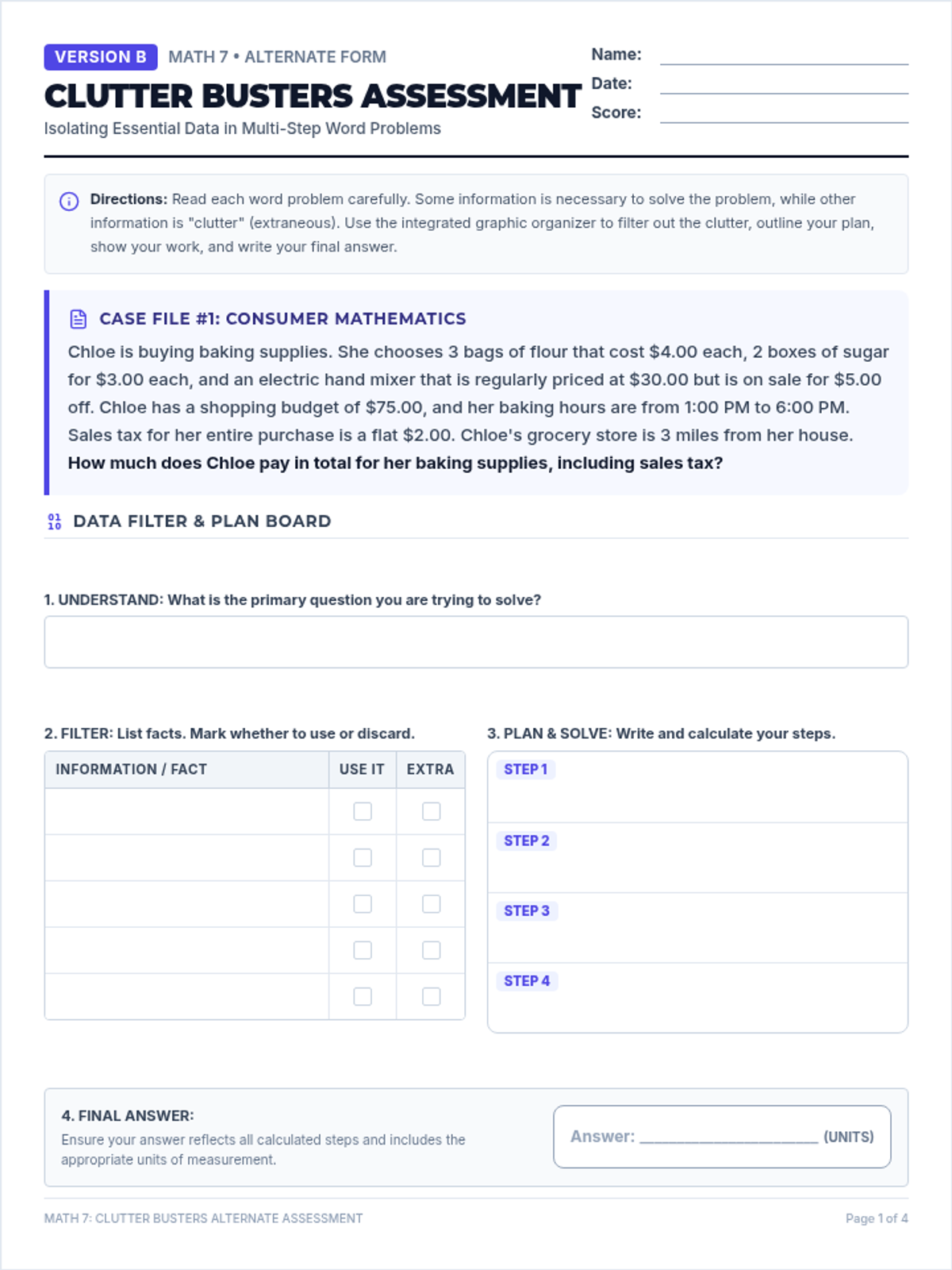
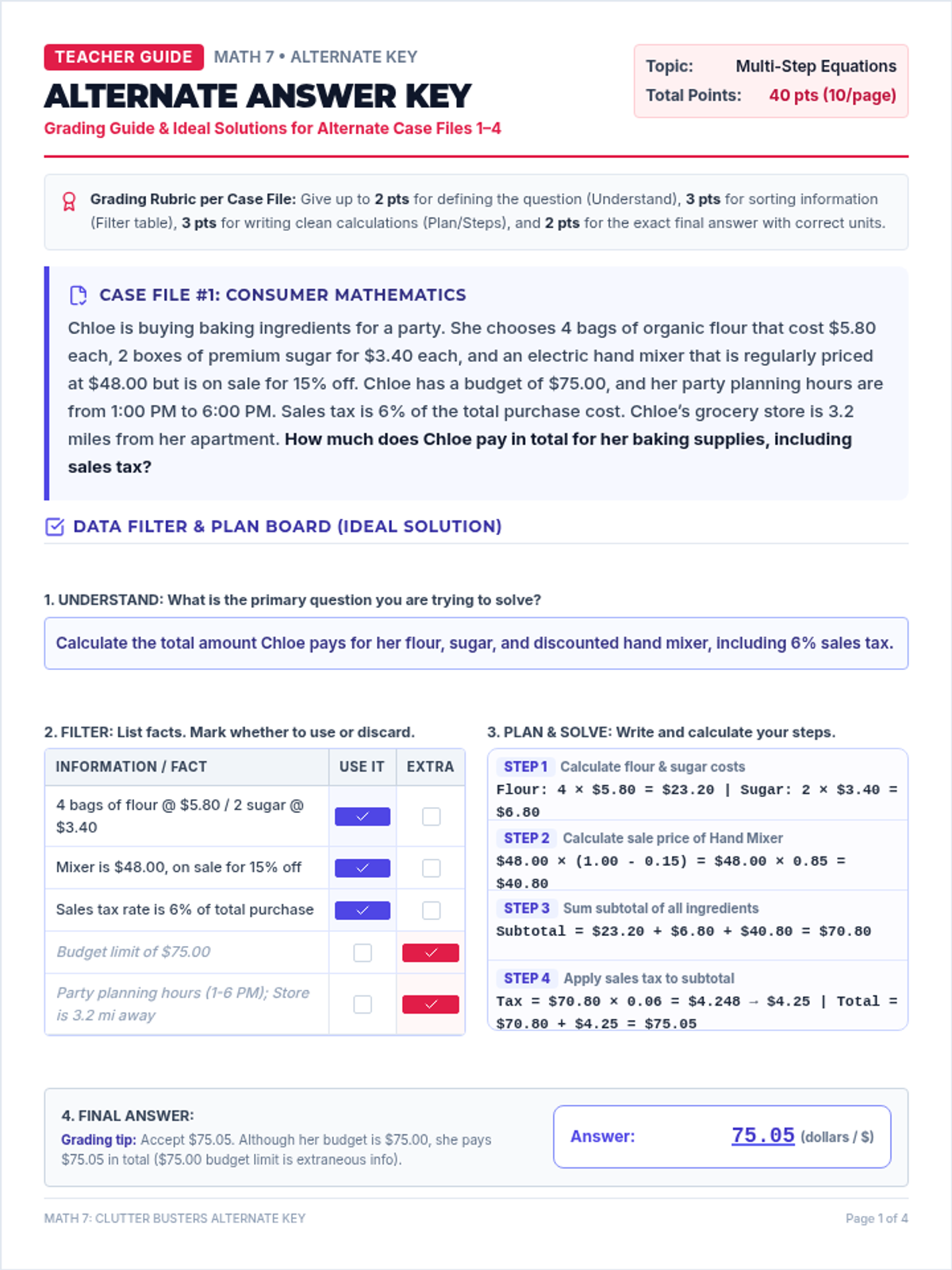
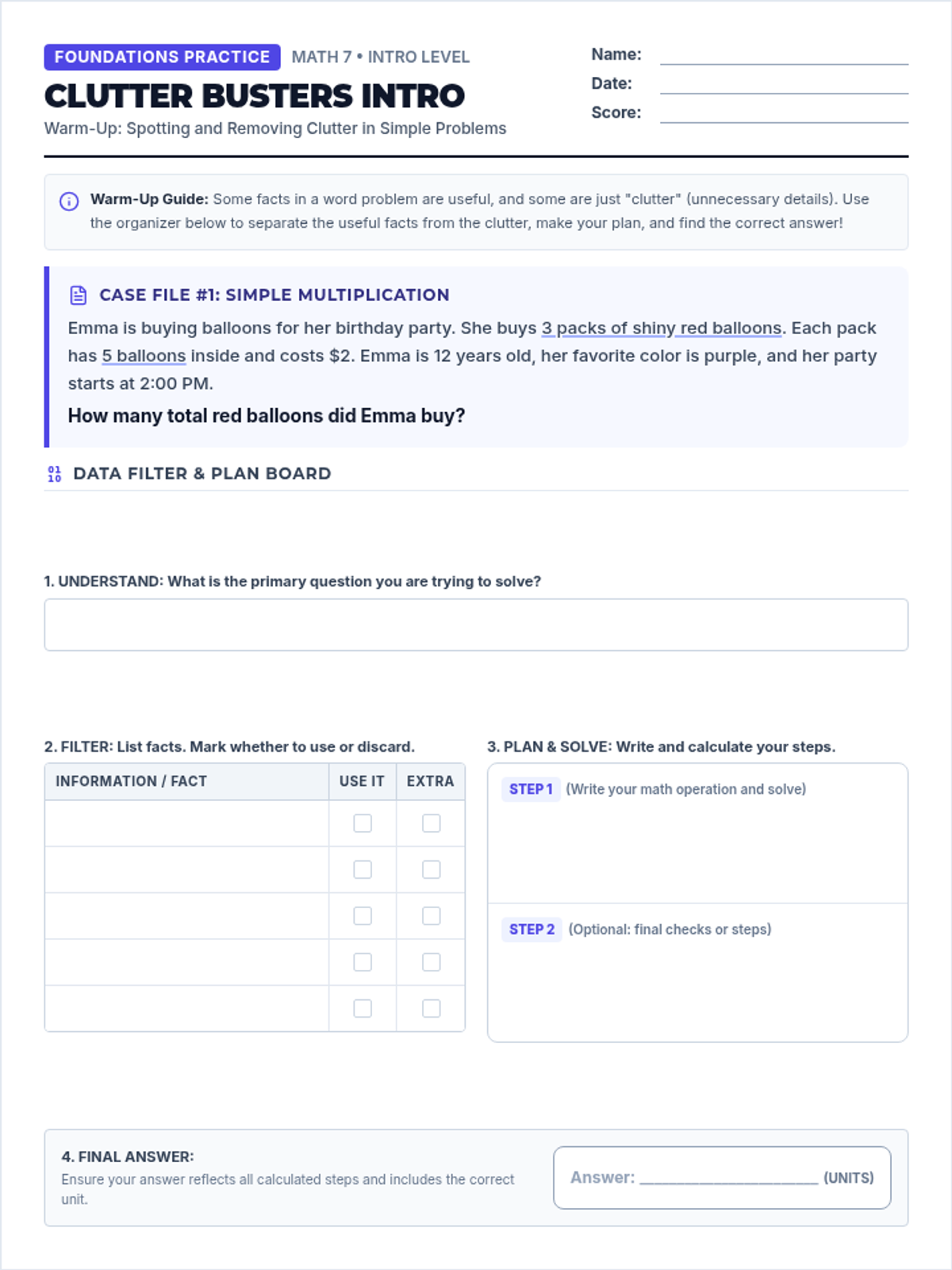
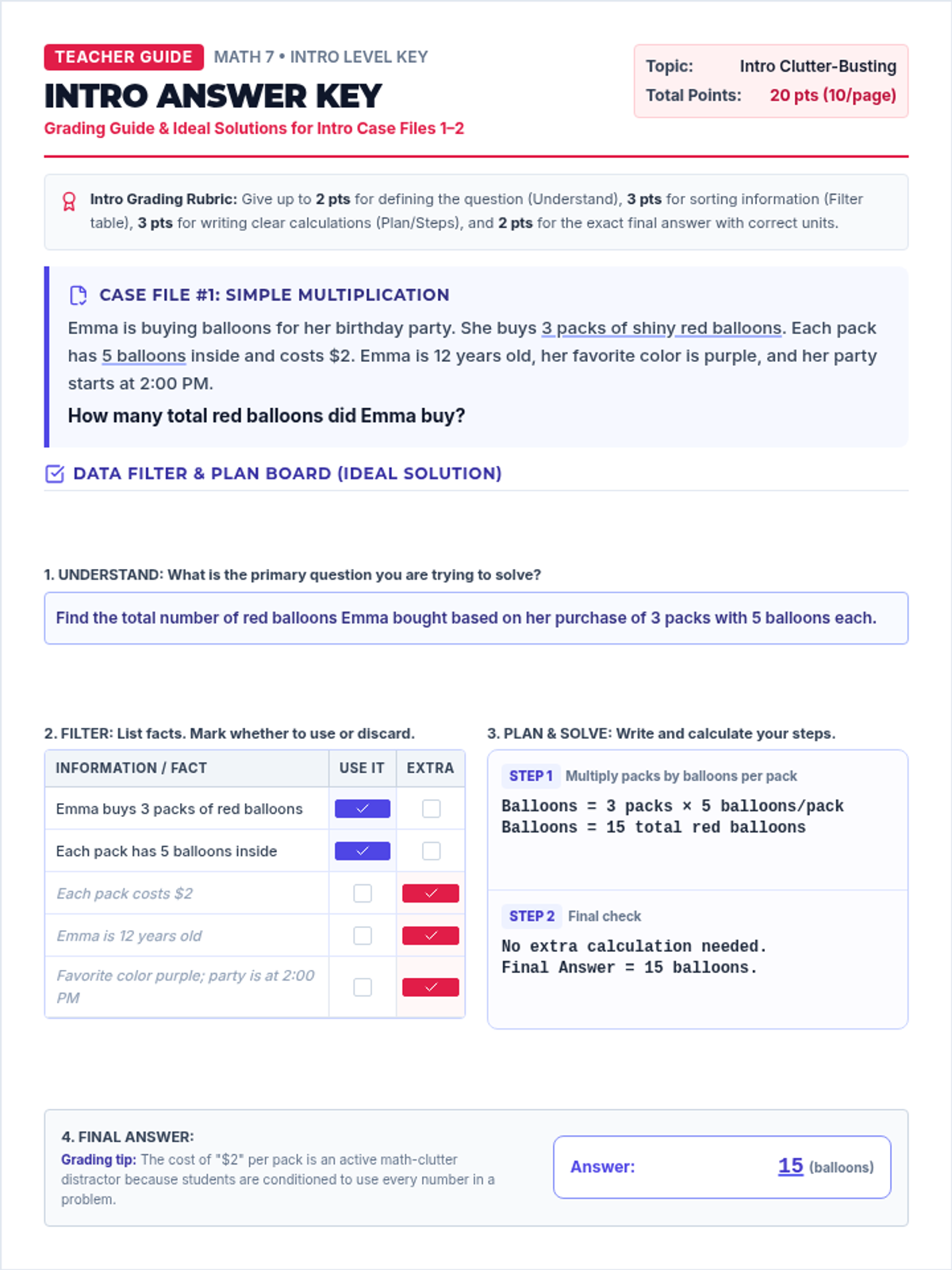
A middle-school math lesson focused on identifying and isolating extraneous information in multi-step word problems. It teaches students to separate relevant data from distracting context using an intuitive, column-based graphic organizer.
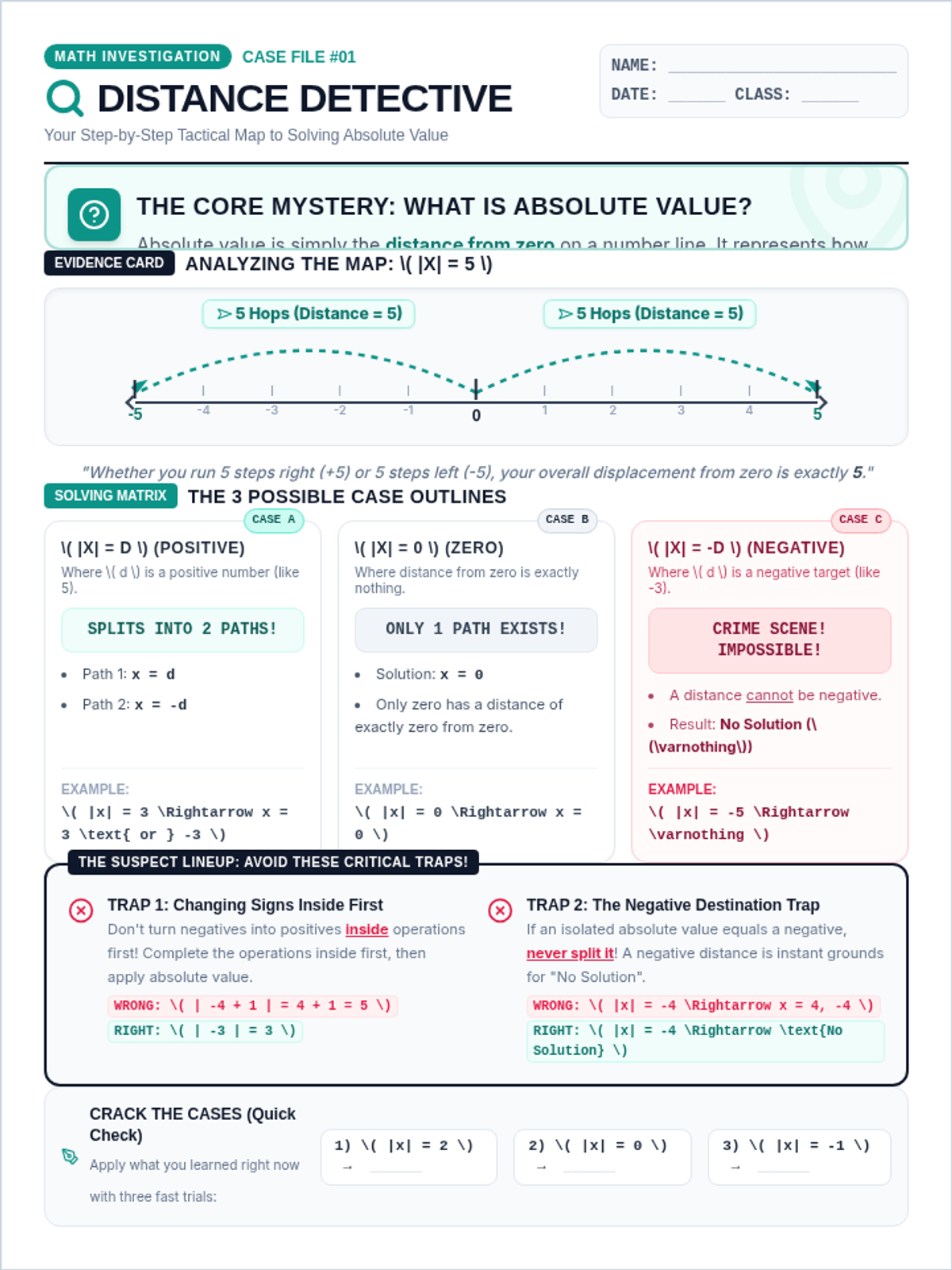
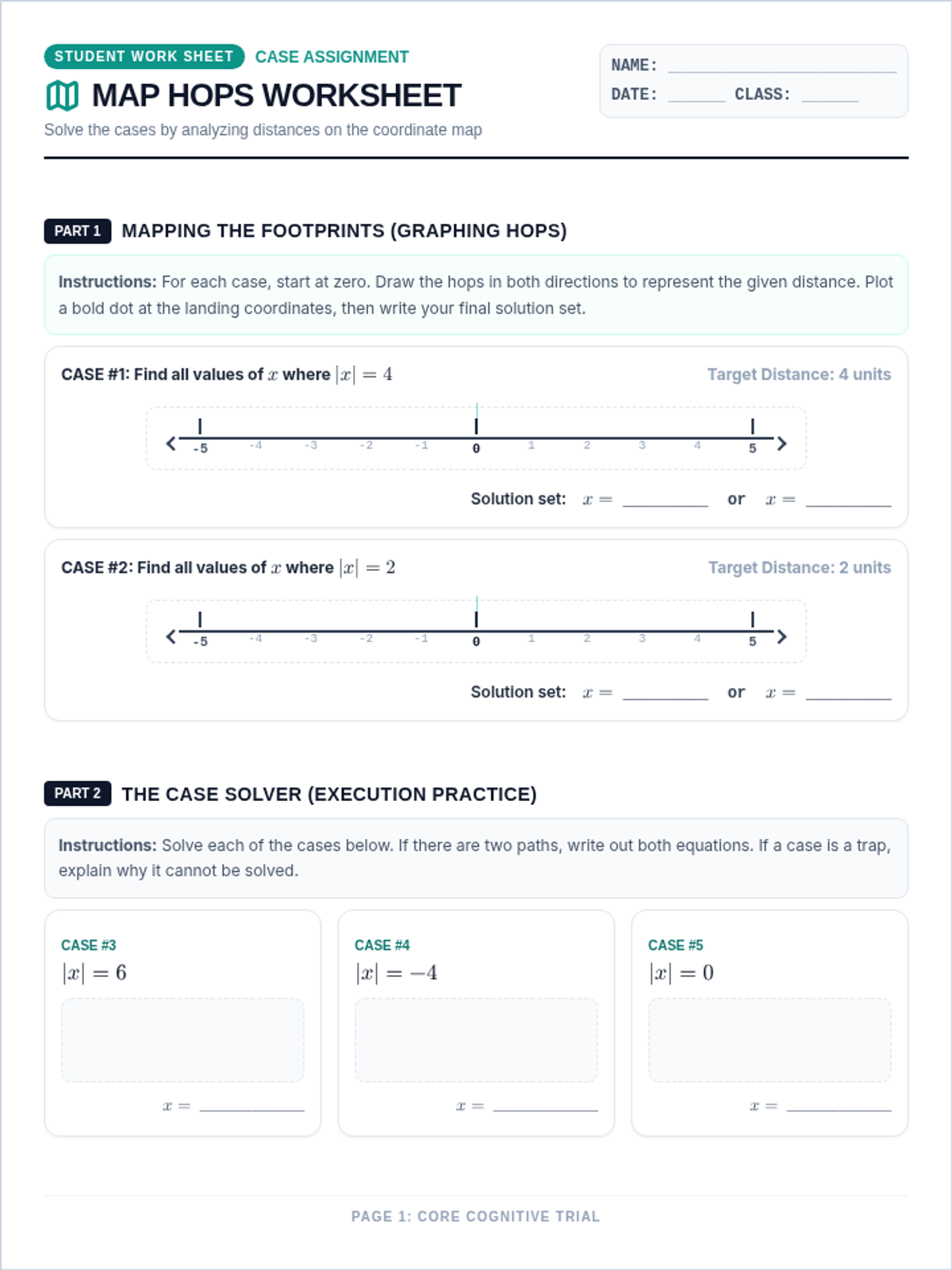
An introductory math lesson designed to teach the fundamentals of absolute value as distance on a number line. It includes conceptual breakdowns, visual guides, and coaching tools for educators.
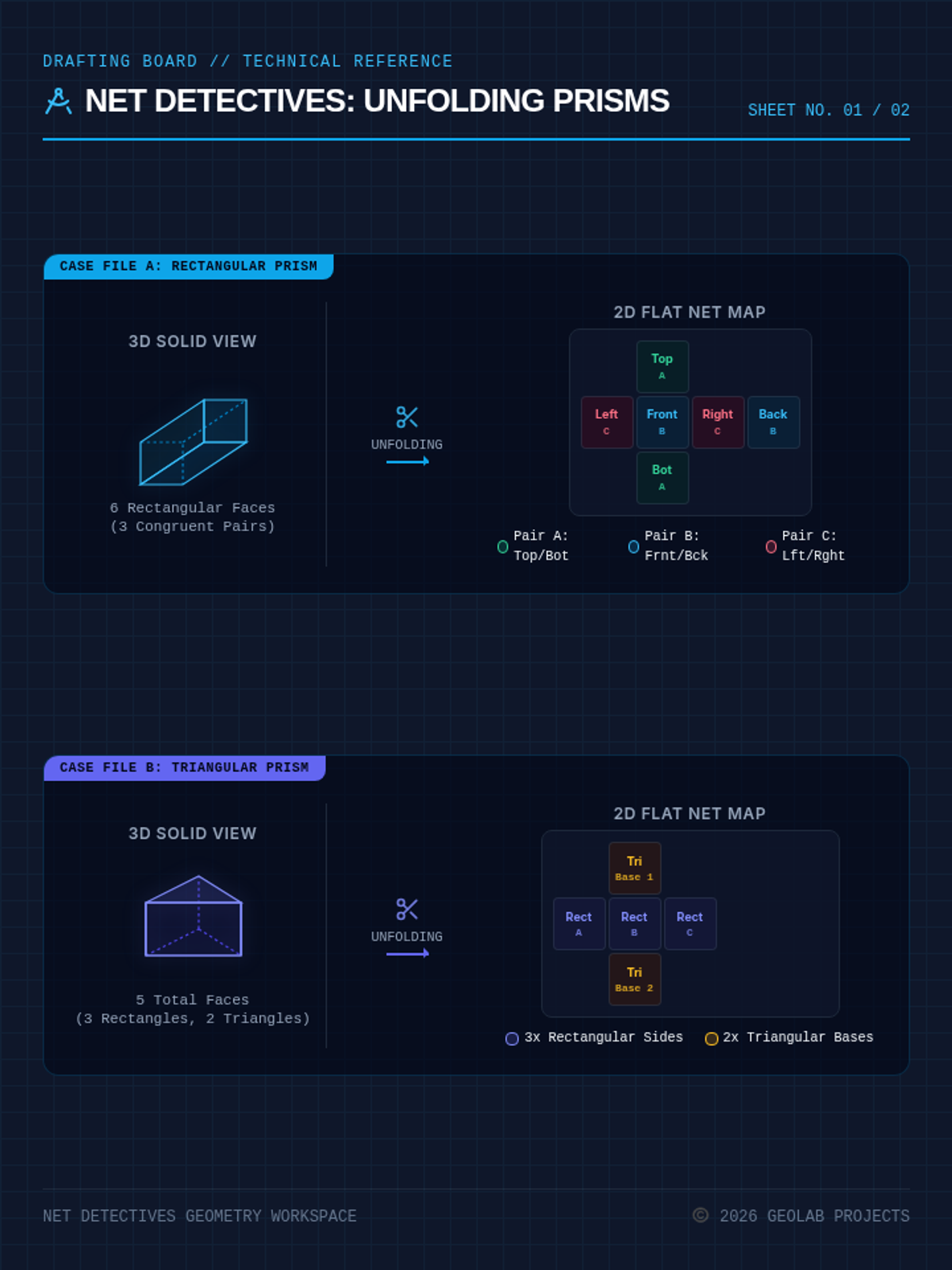
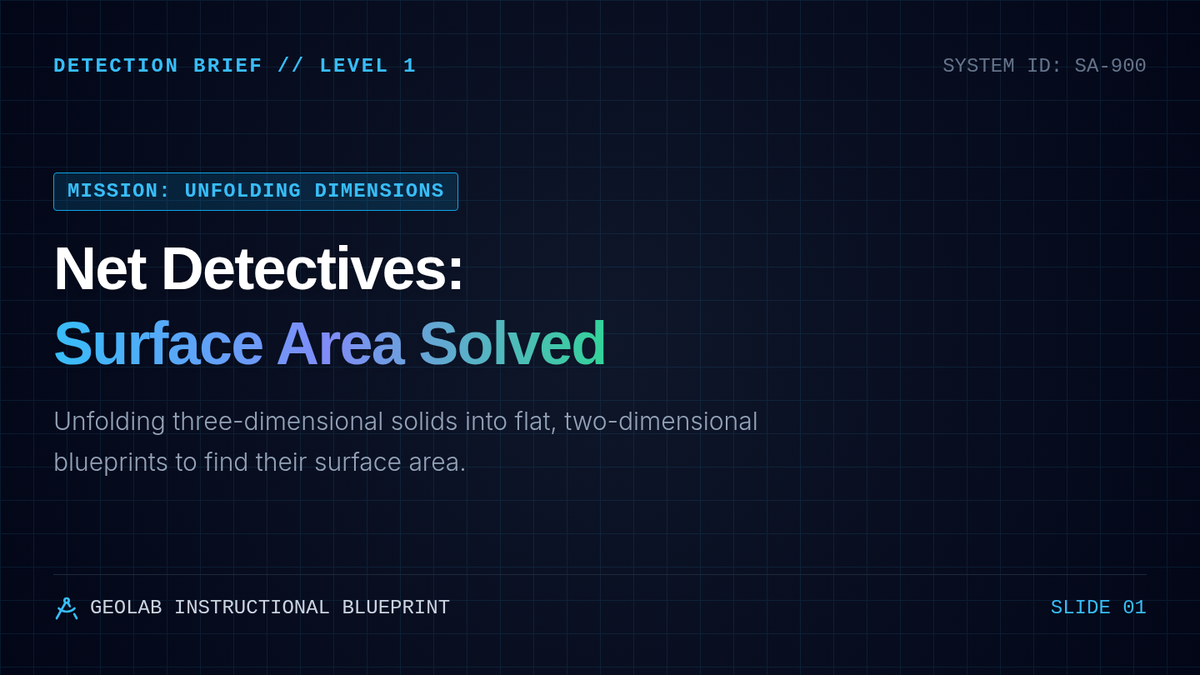
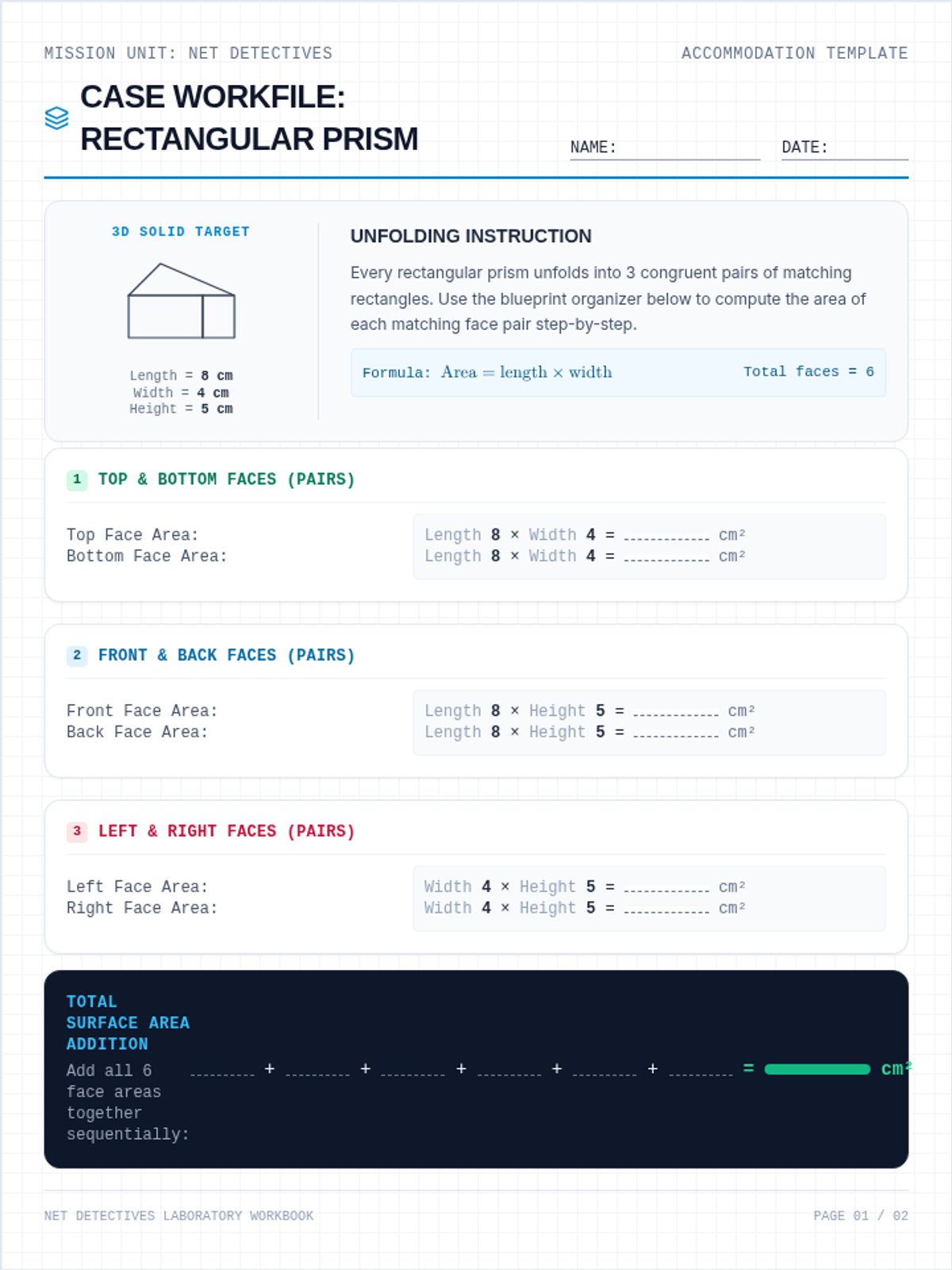
A highly visual, scaffolding lesson that guides students through unfolding three-dimensional prisms and pyramids into two-dimensional nets to calculate their surface area. Features graphic organizer templates, step-by-step scaffolding slides, and interactive blueprint-style anchor charts.
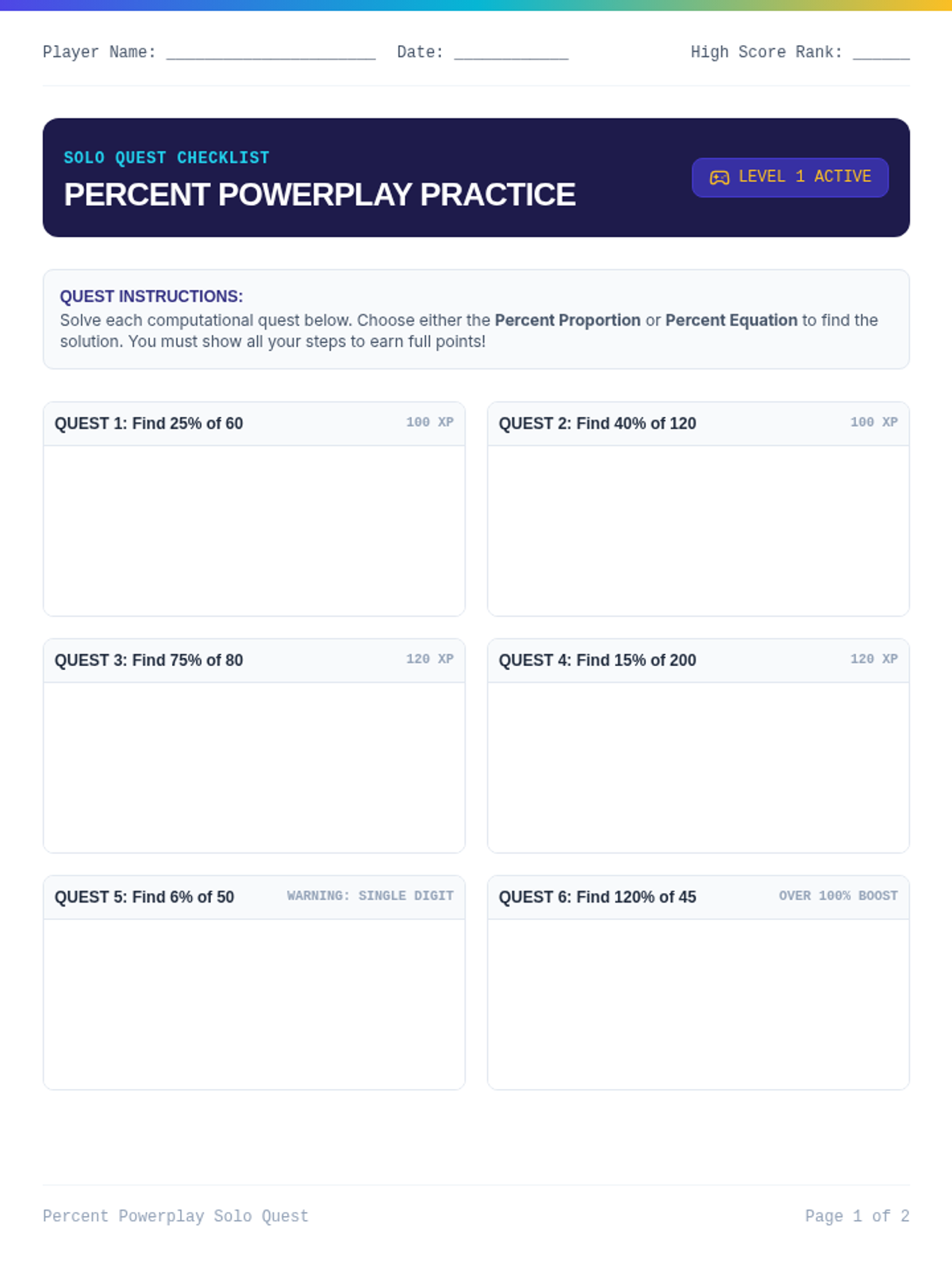
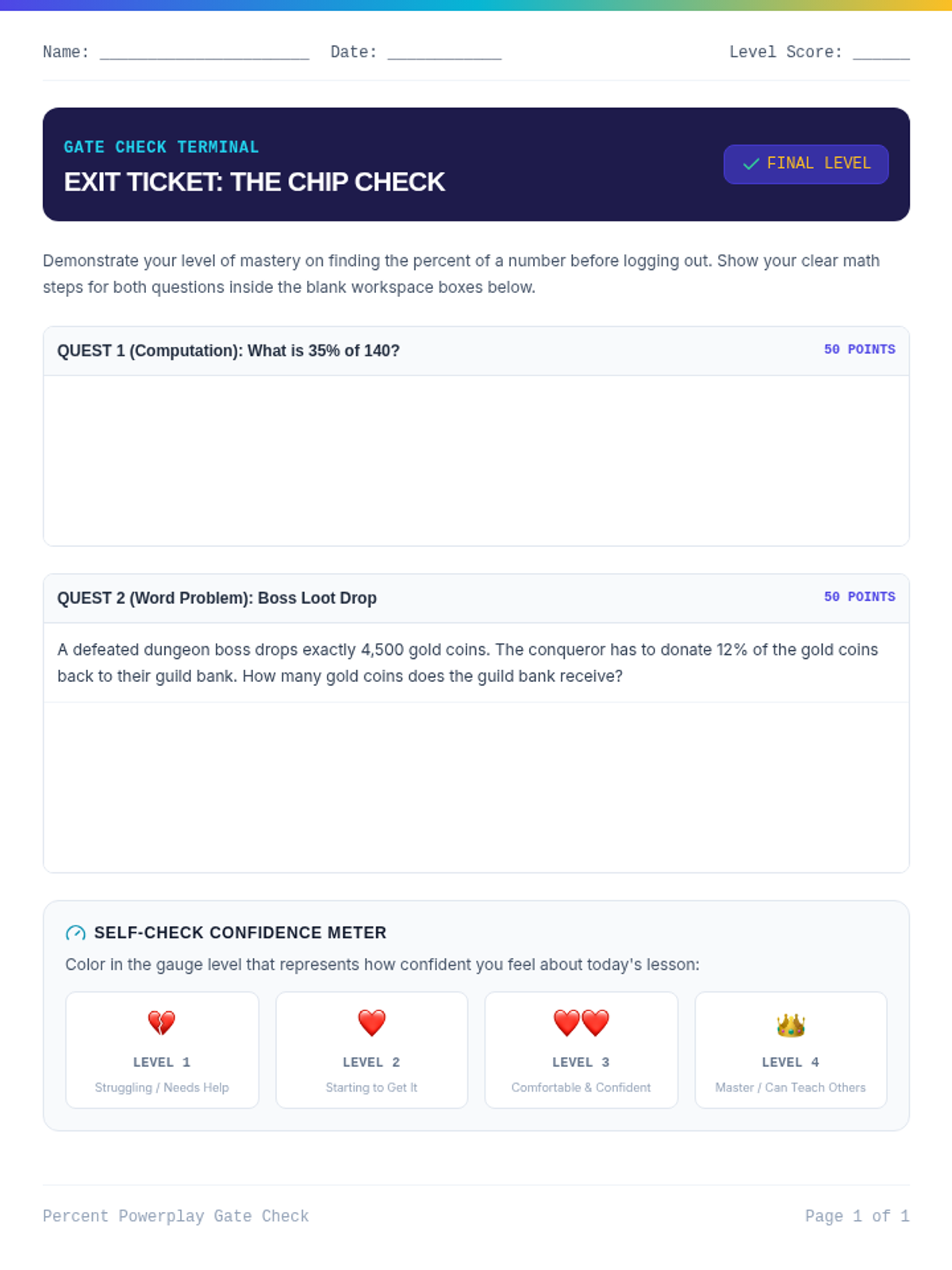
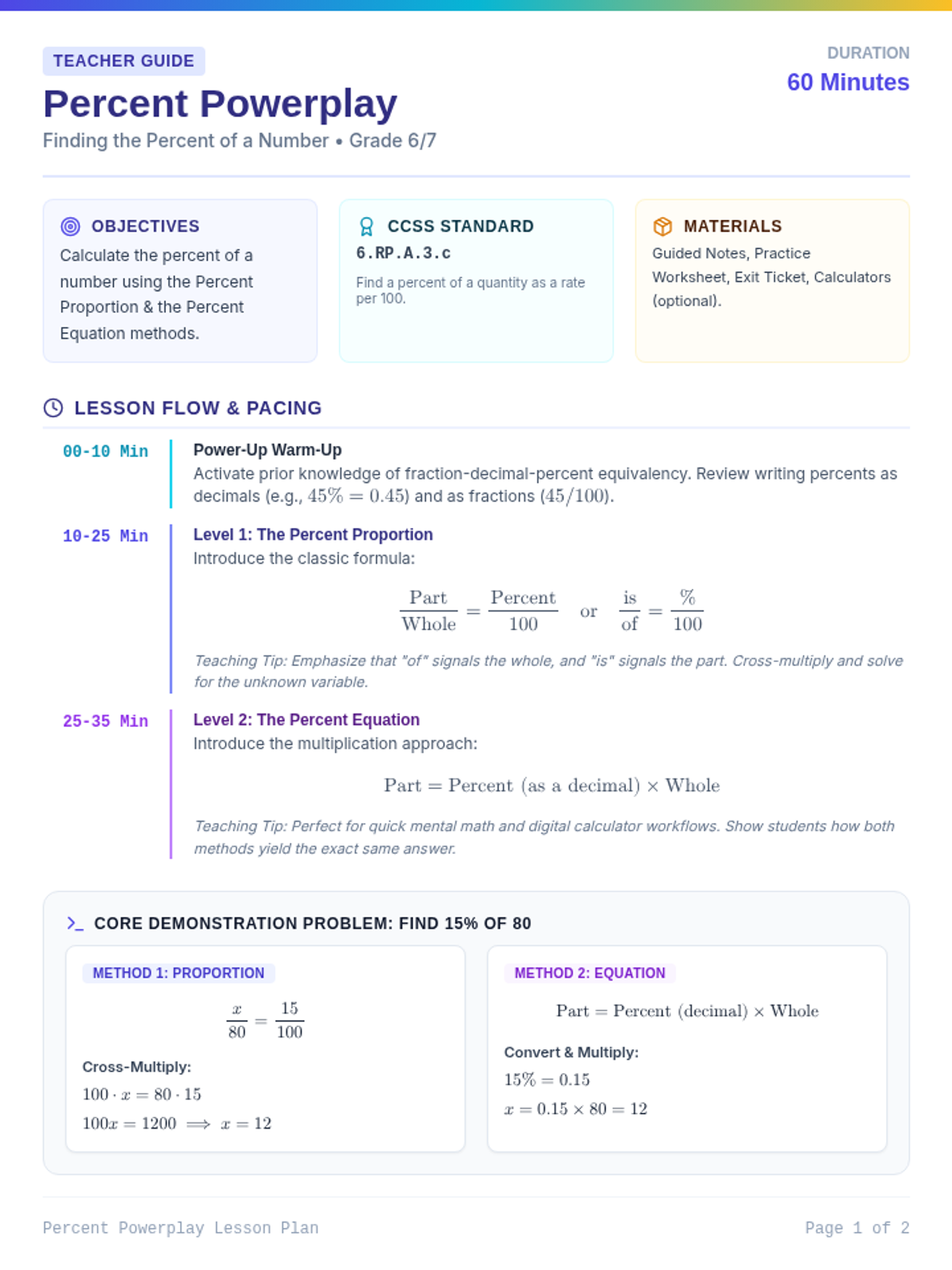
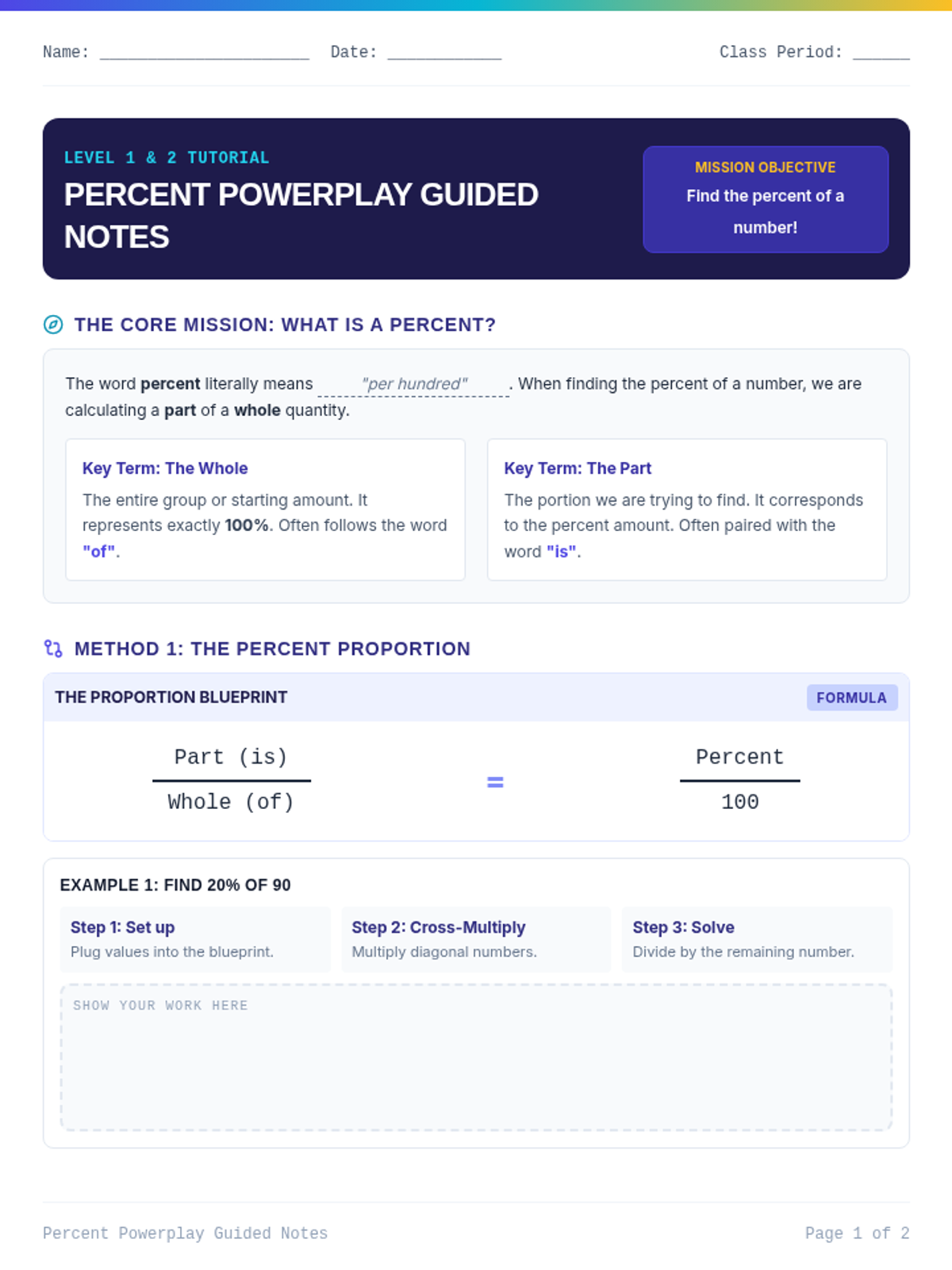
A complete lesson bundle designed to teach students how to calculate the percent of a number using the Percent Proportion and Percent Equation. Includes an instructional lesson plan, guided notes, a practice worksheet, and an exit ticket.
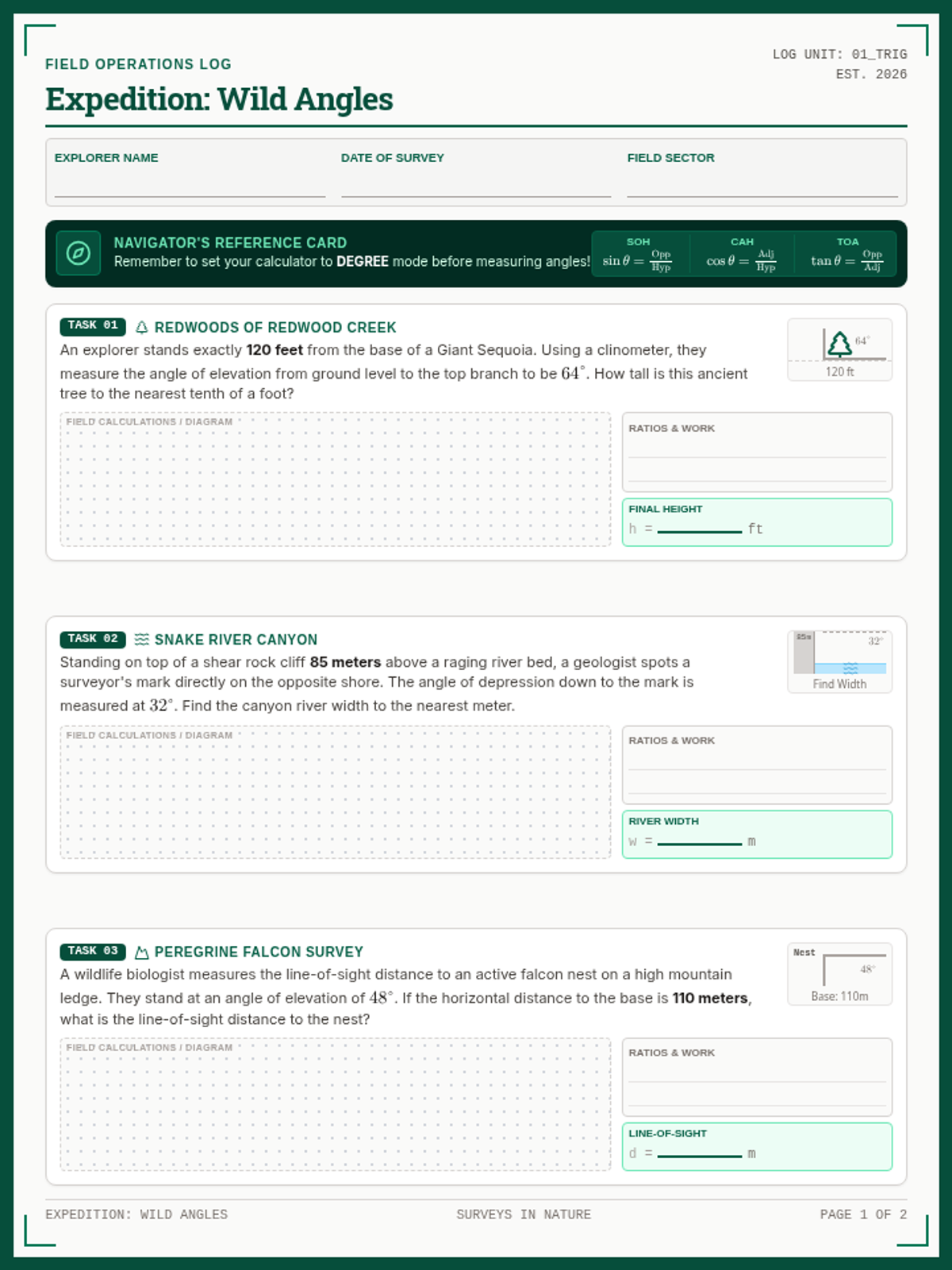
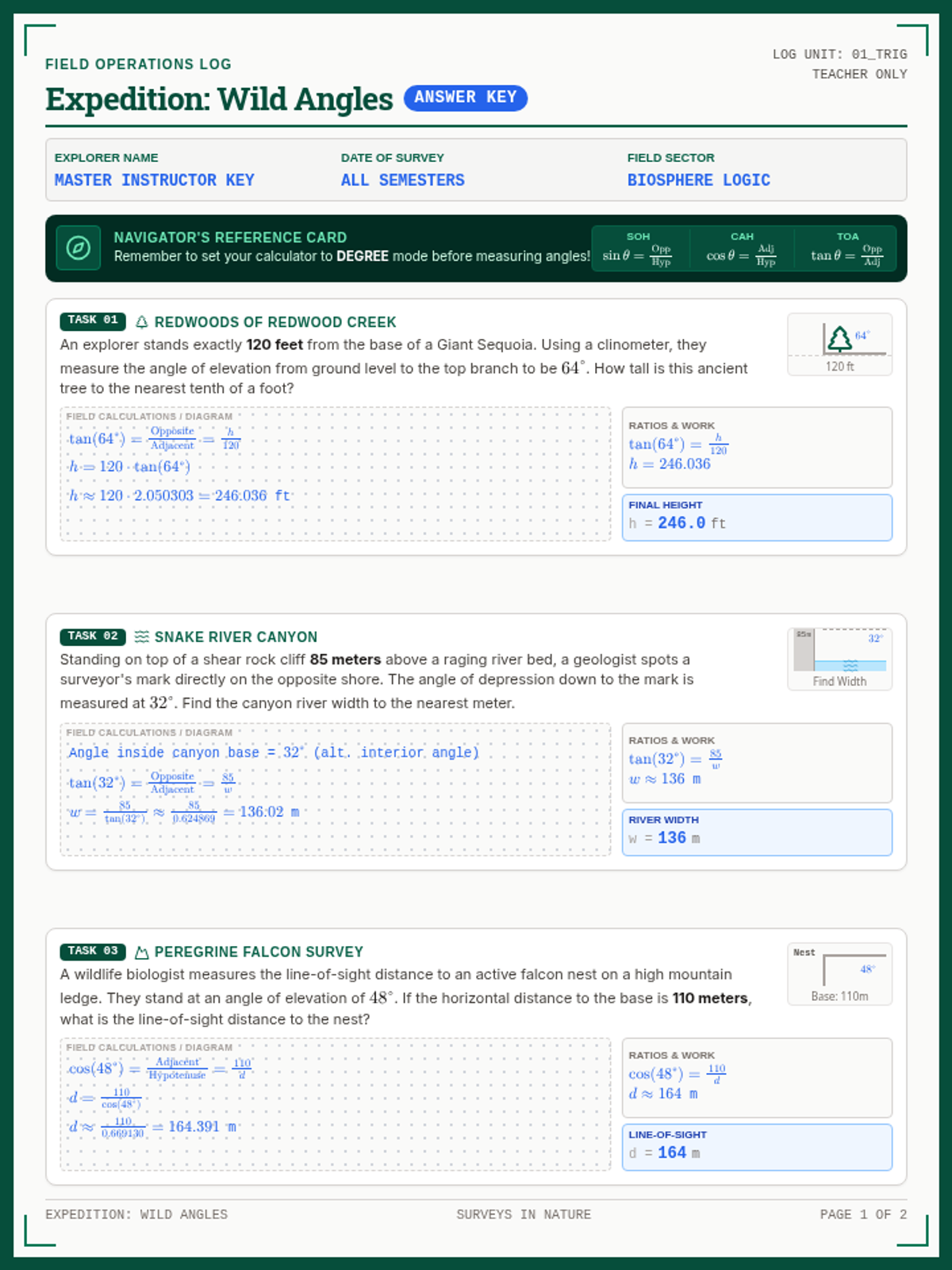
An adventurous trigonometry lesson applying sines, cosines, and tangents to solve real-world mysteries in nature and astronomy. Students calculate heights of towering redwoods, map rushing river widths, and measure cosmic distances.
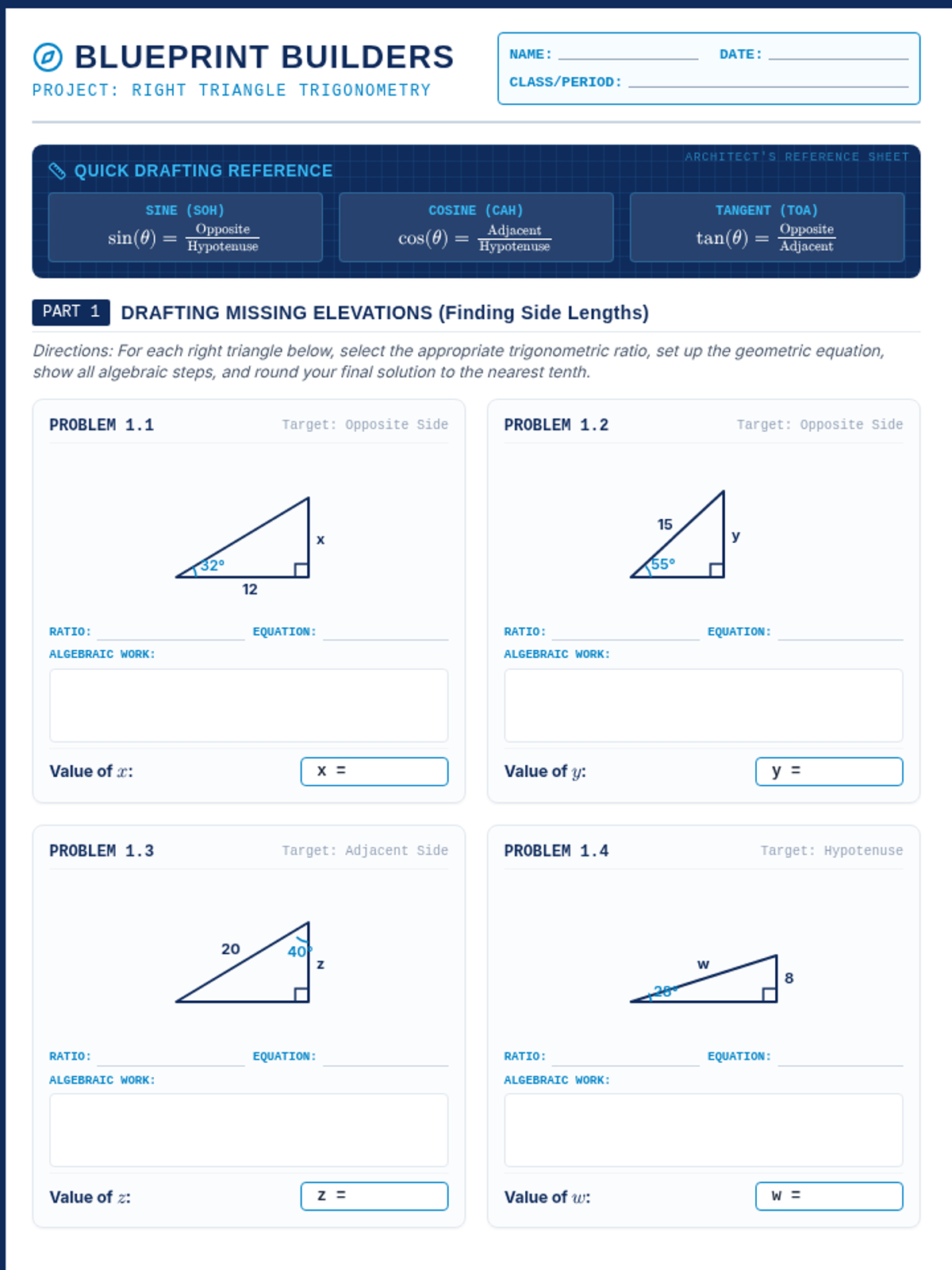
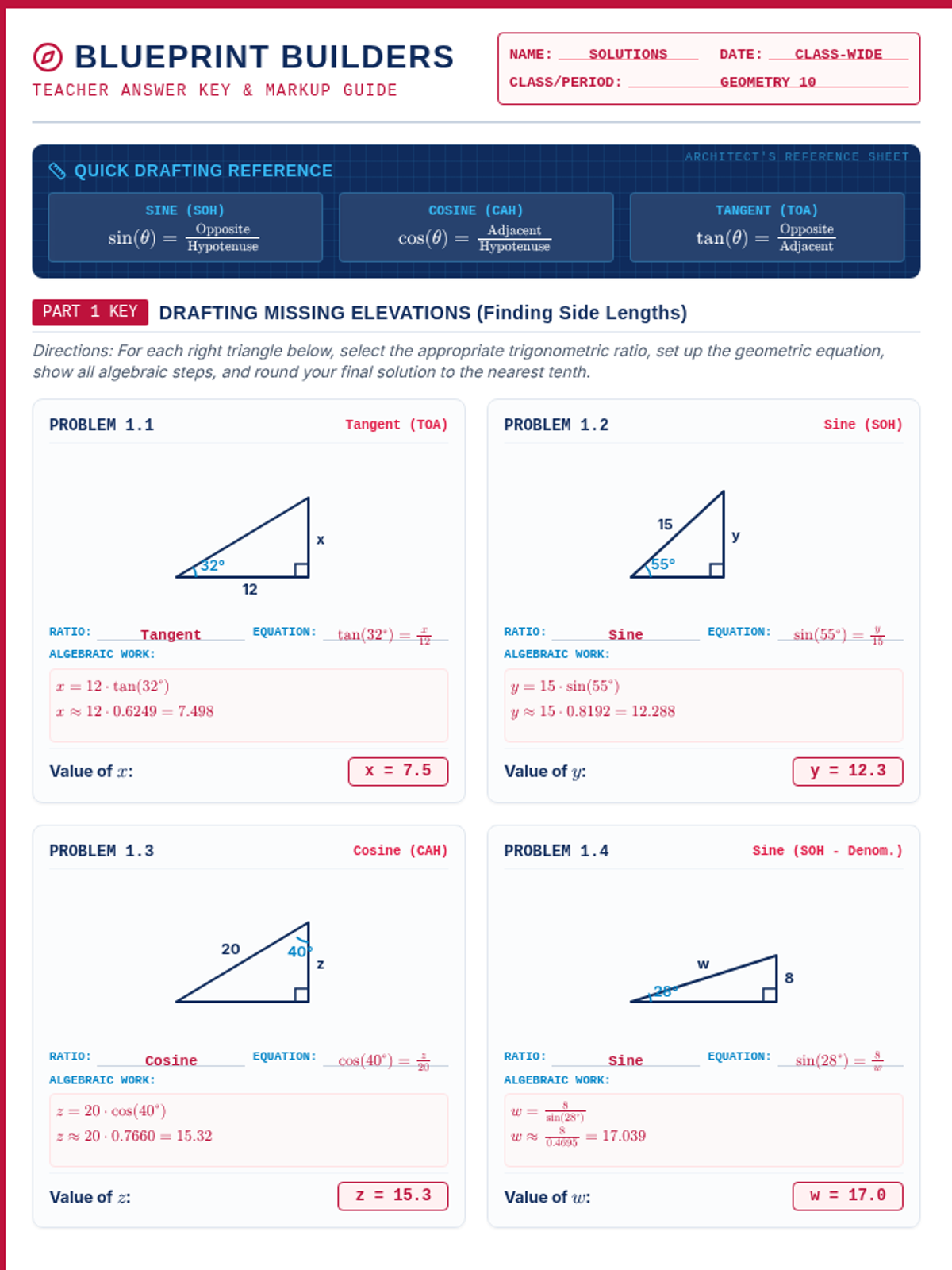
A standard-aligned high school geometry lesson exploring right triangle trigonometry. Students learn to use sine, cosine, and tangent ratios to find missing side lengths and acute angle measures in right triangles, styled with an immersive architectural blueprint design.
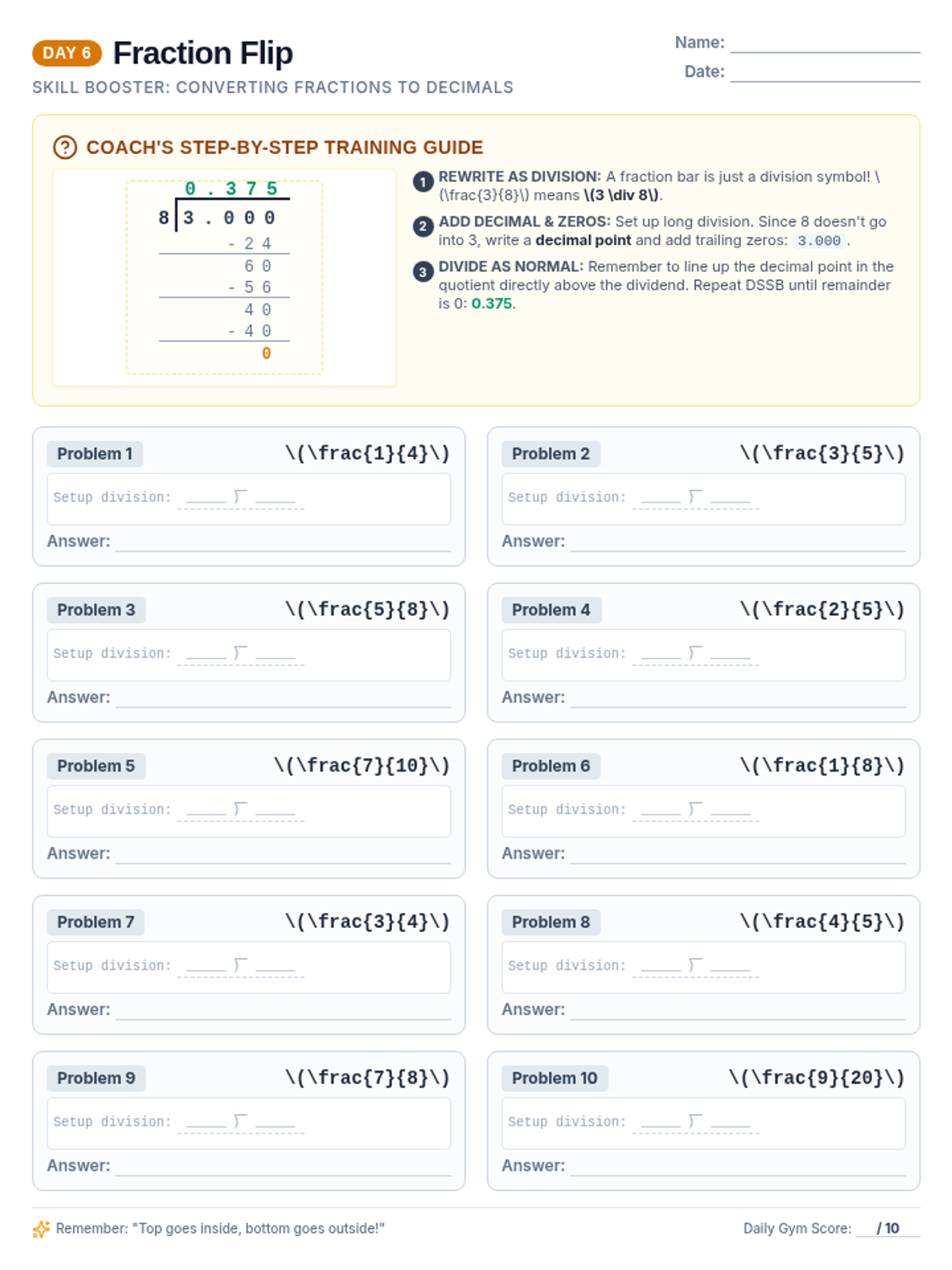
Day 6 of the Daily Math Gym series. Focuses on converting fractions to decimals with step-by-step division-based scaffolding and 10 targeted practice problems.
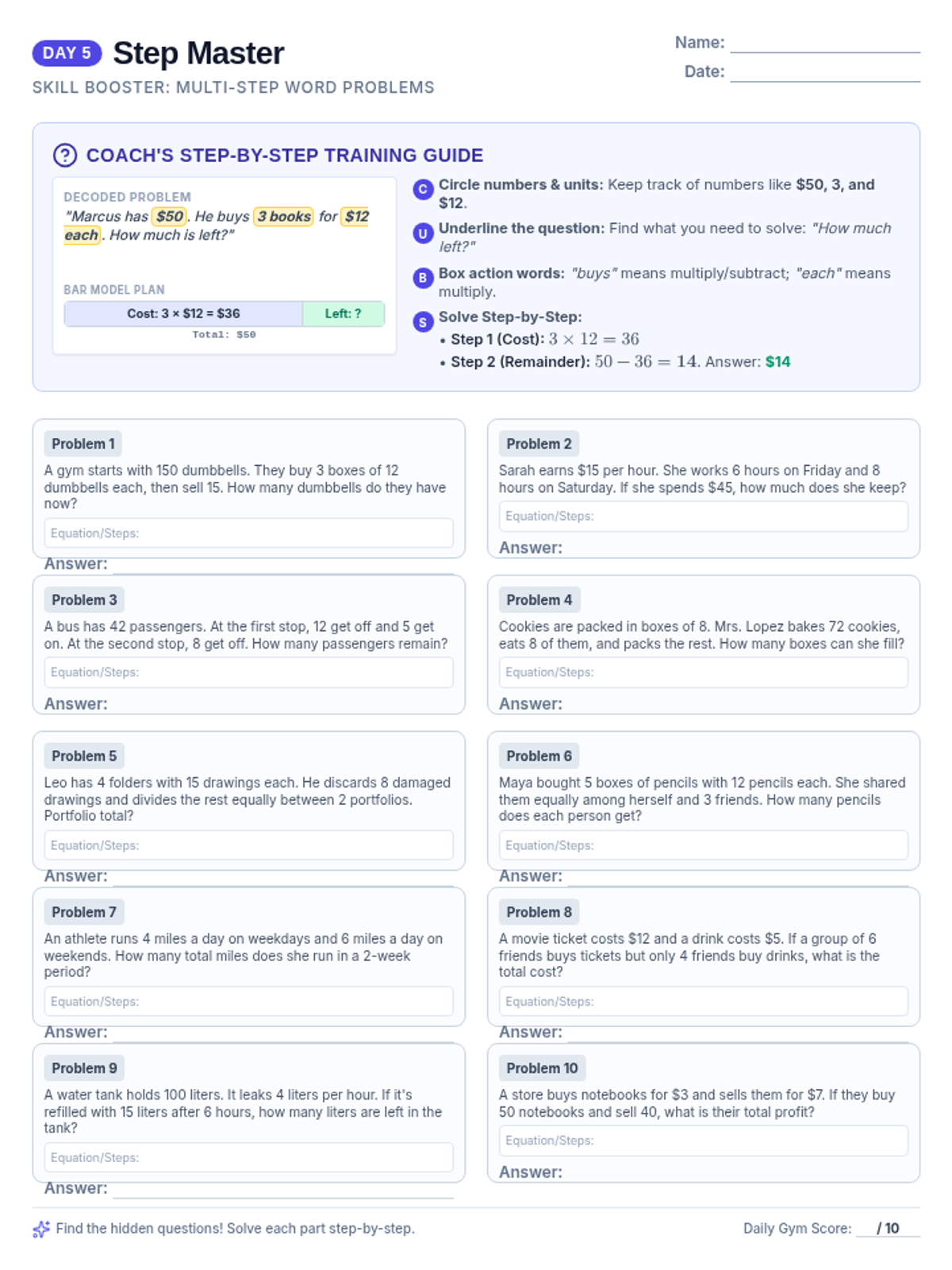
Day 5 of the Daily Math Gym series. Focuses on solving multi-step word problems using the CUBES strategy, bar models, and 10 multi-step practice questions.
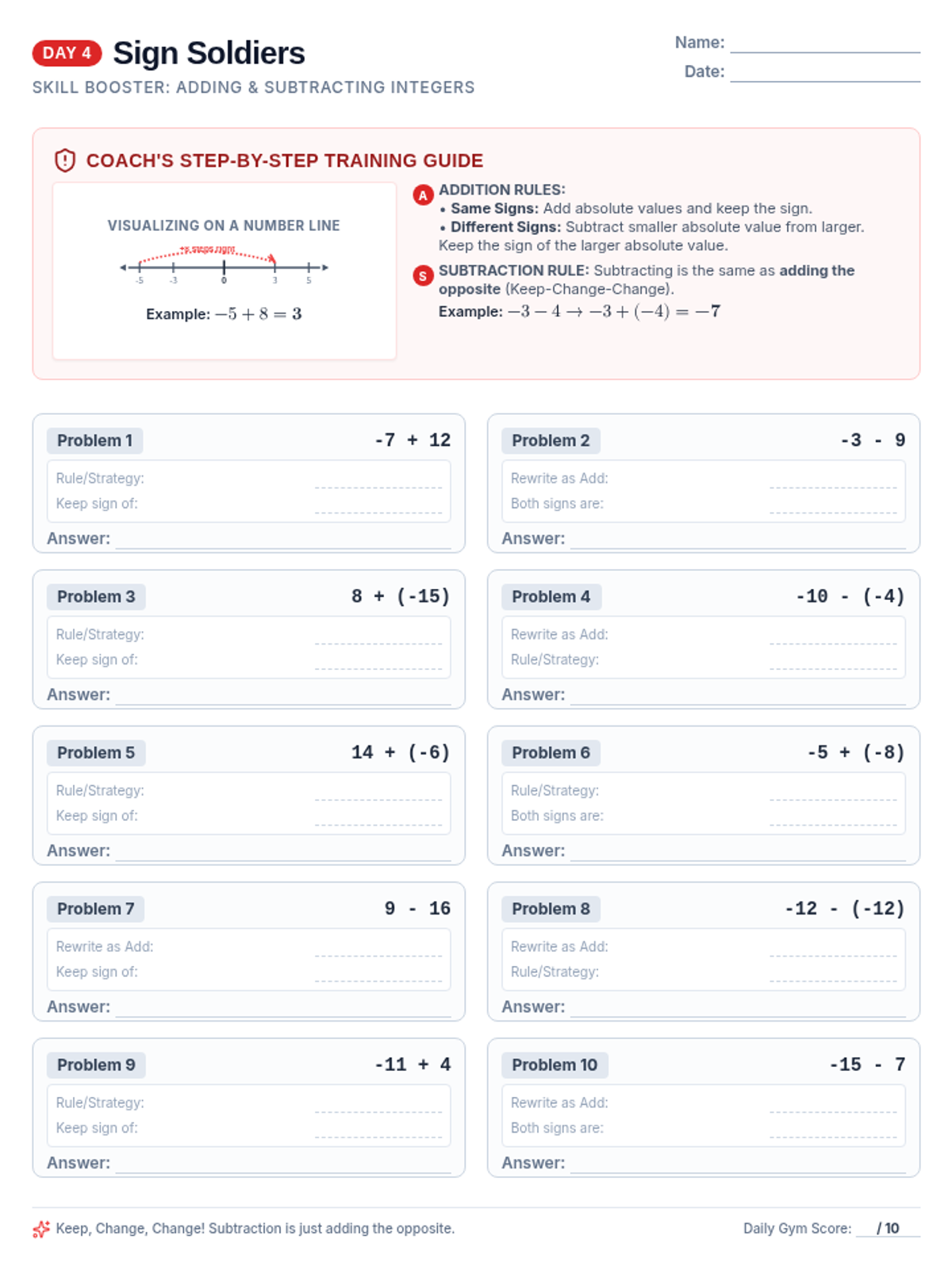
Day 4 of the Daily Math Gym series. Focuses on adding and subtracting positive and negative integers with visual and procedural scaffolding and 10 targeted problems.
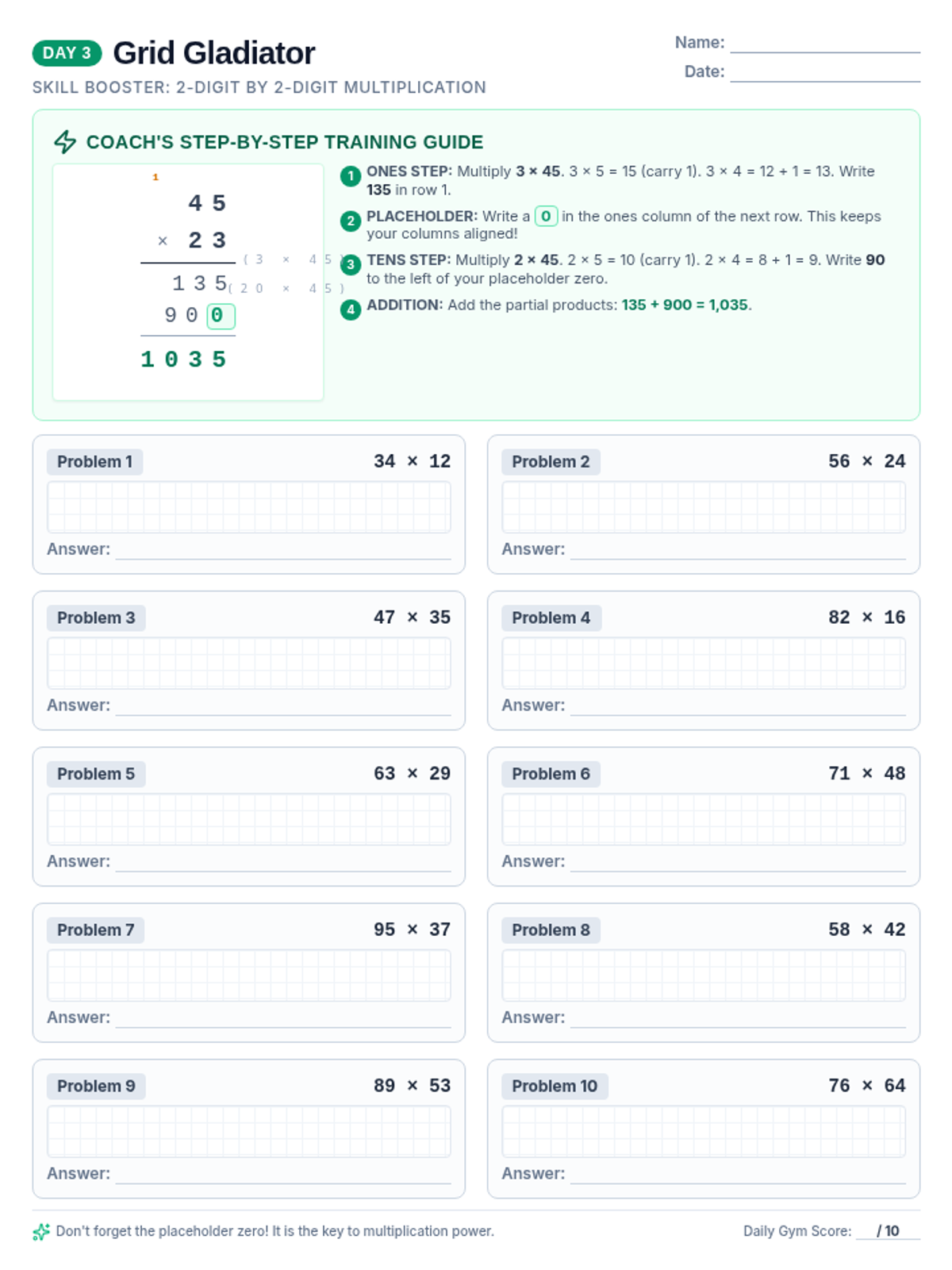
Day 3 of the Daily Math Gym series. Focuses on 2-digit by 2-digit multiplication with step-by-step standard algorithm scaffolding and 10 practice problems.
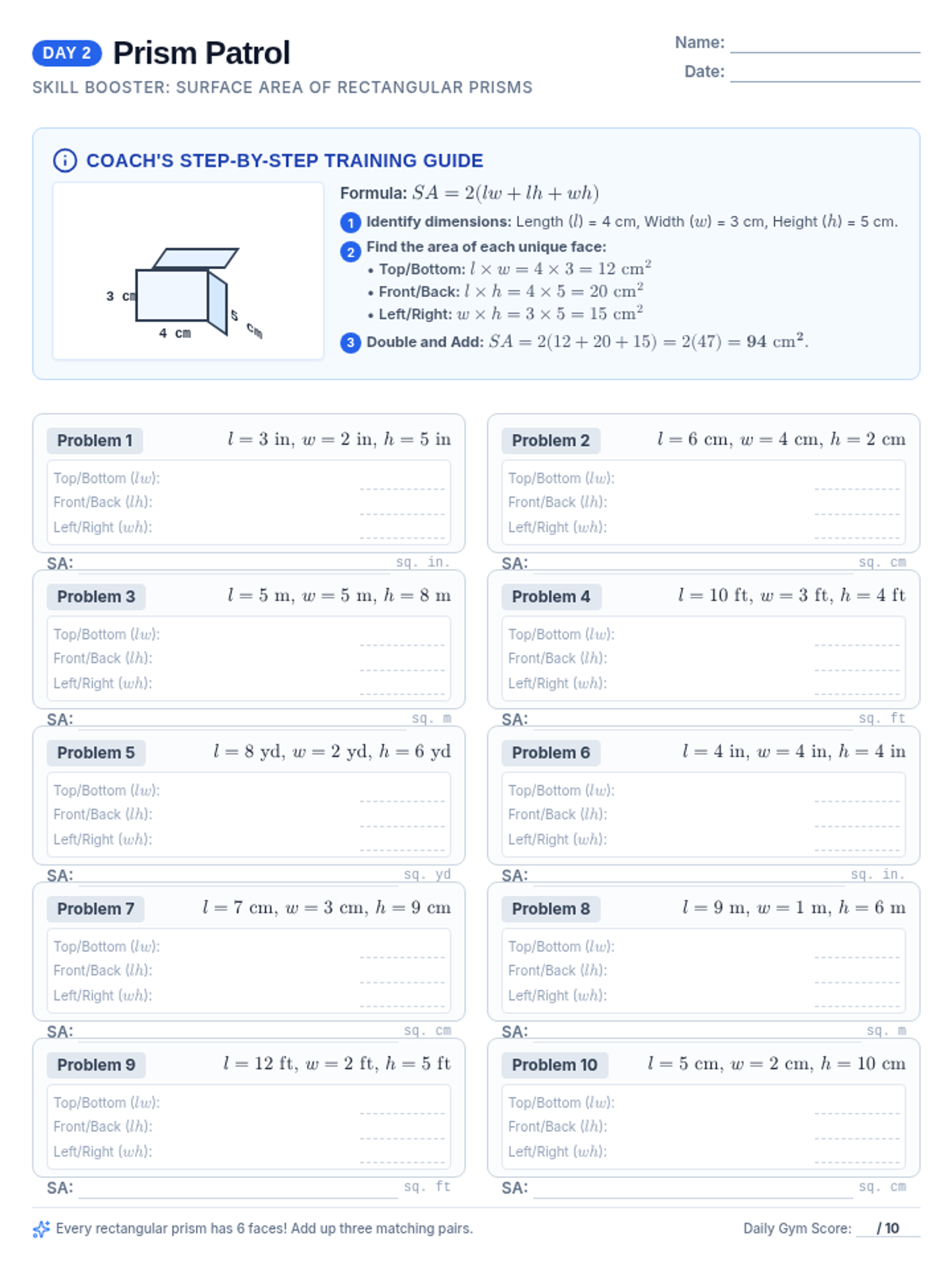
Day 2 of the Daily Math Gym series. Focuses on calculating the surface area of rectangular prisms with step-by-step scaffolding and 10 targeted practice problems.
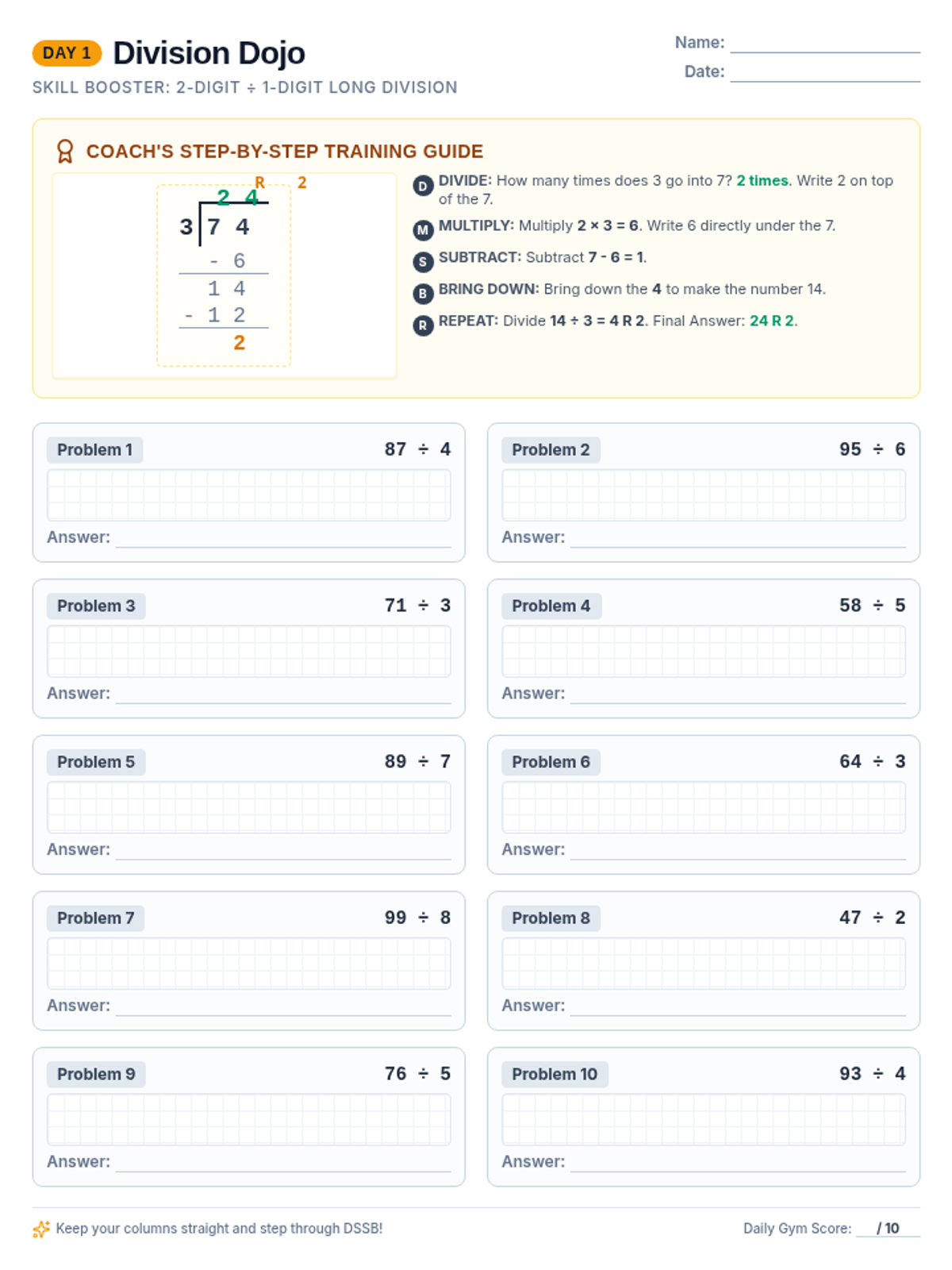
Day 1 of the Daily Math Gym series. Focuses on dividing a two-digit dividend by a single-digit divisor with a step-by-step solved example and 10 targeted practice problems.
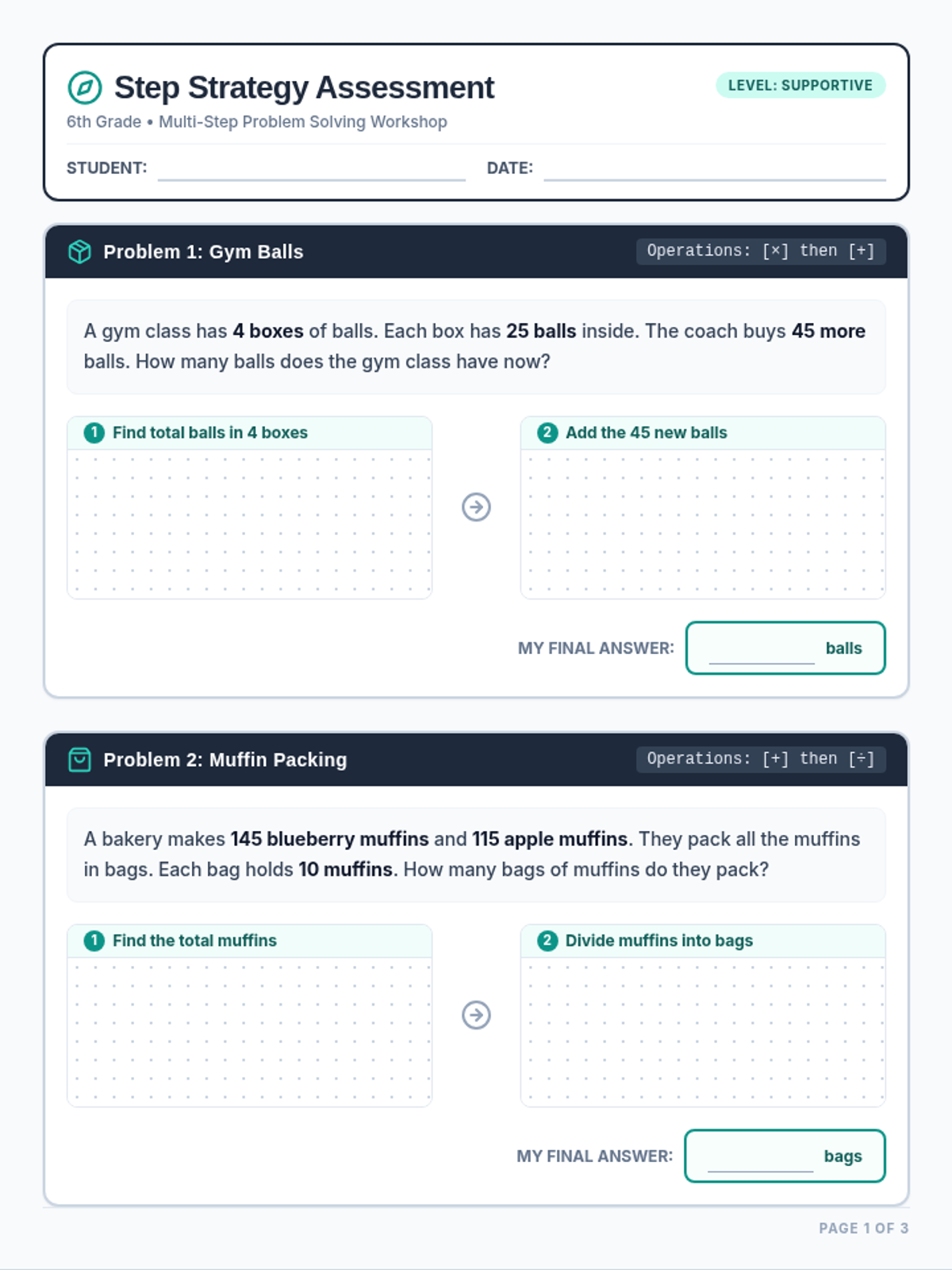
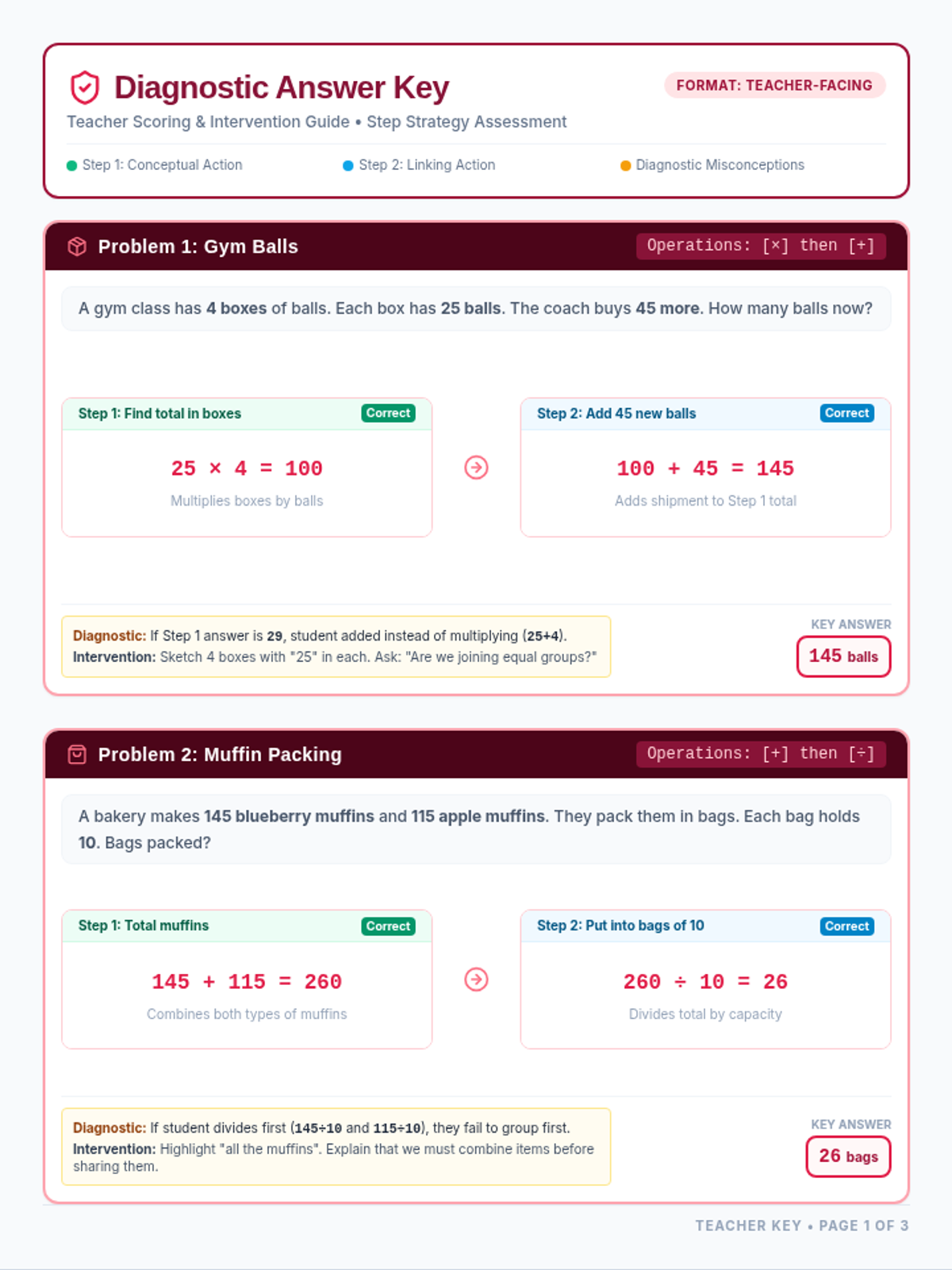
An assessment lesson designed specifically for 6th-grade students who struggle with multi-step word problems. It features a student-facing assessment with visual step-by-step graphic organizers and simplified language, alongside a teacher-facing diagnostic answer key.
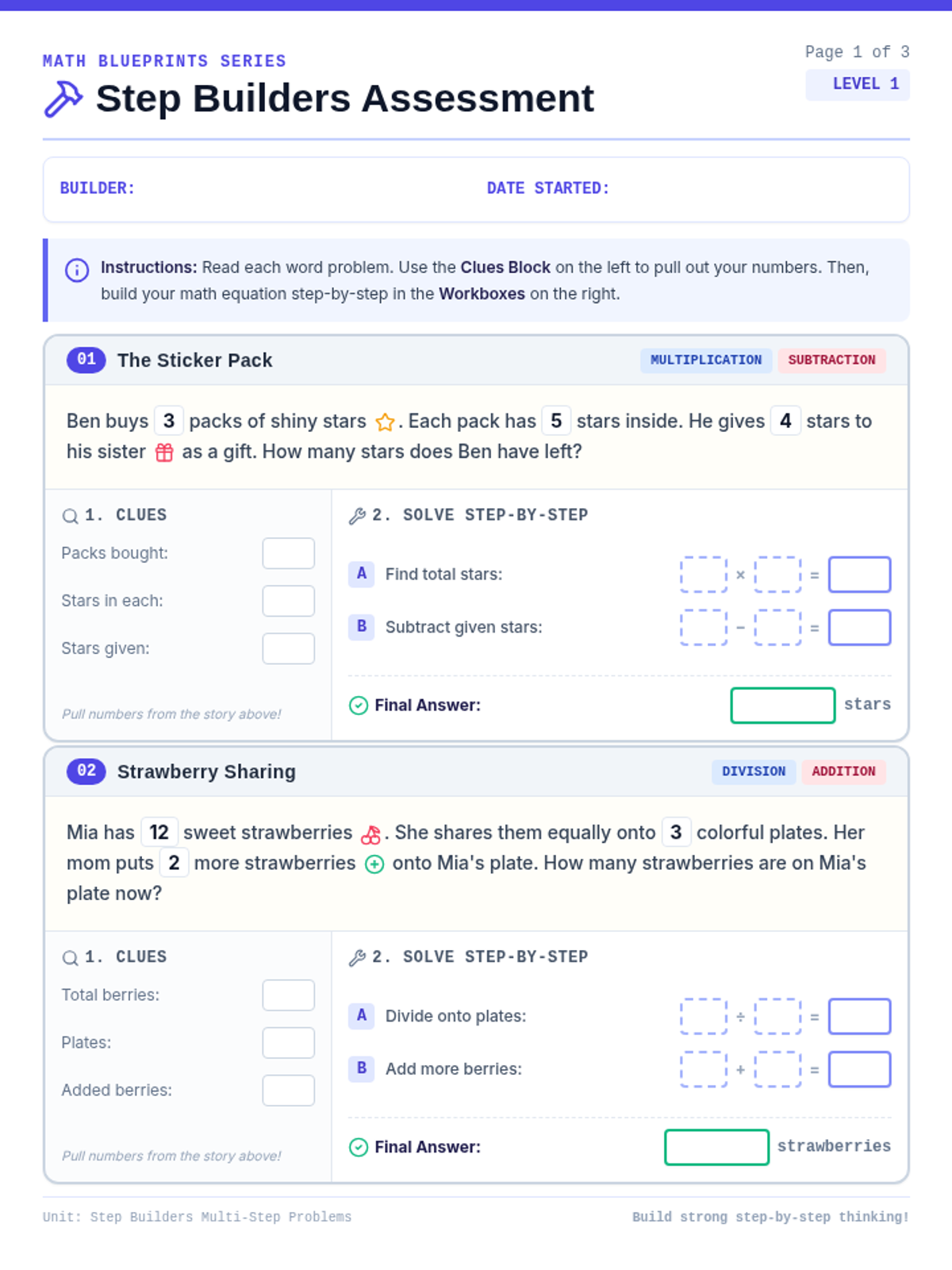
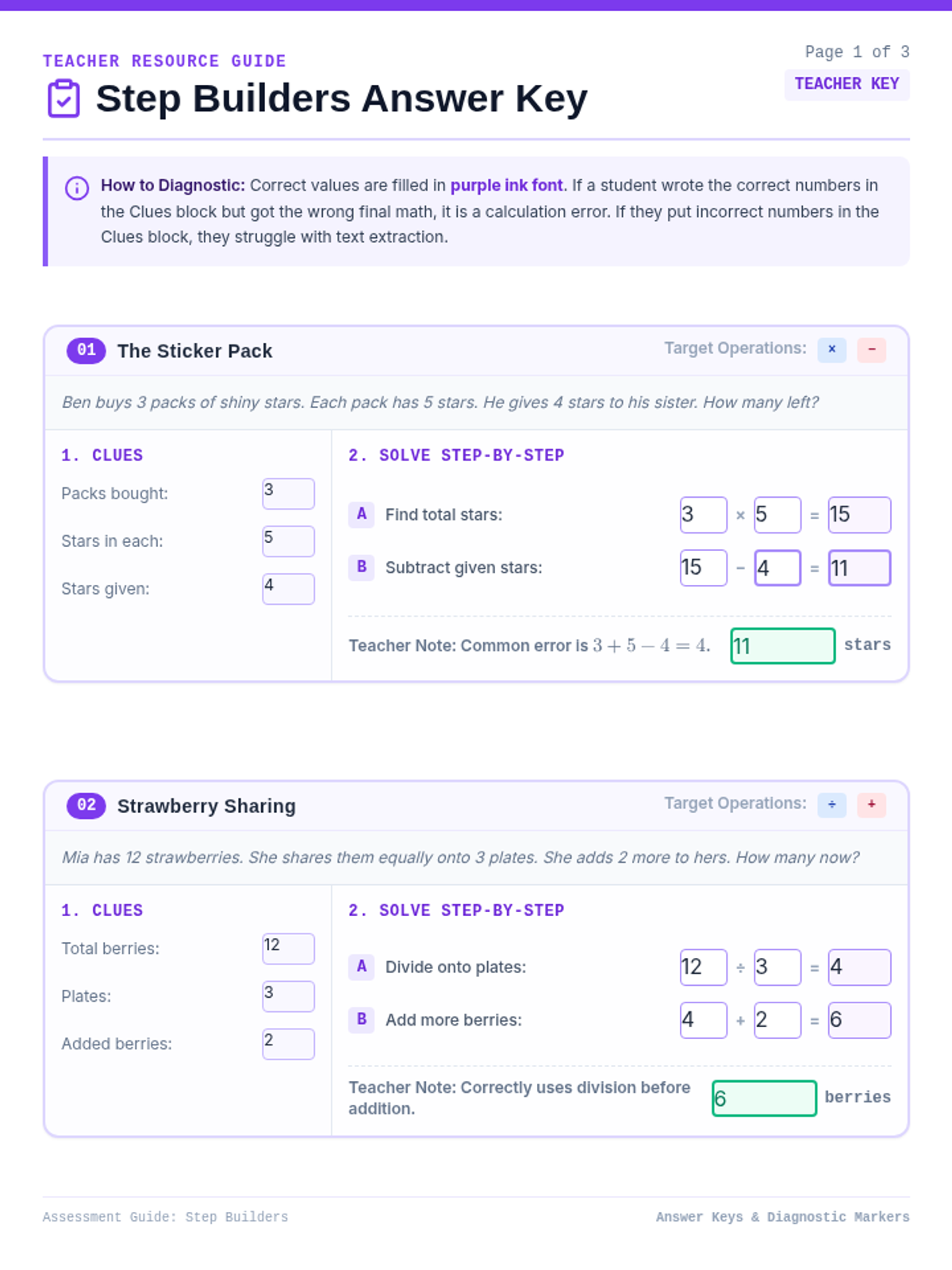
An assessment and supporting resources for students who struggle with multi-step word problems. It features simplified language, rebus-style icon clues, and a step-by-step graphic organizer workspace embedded in every problem.
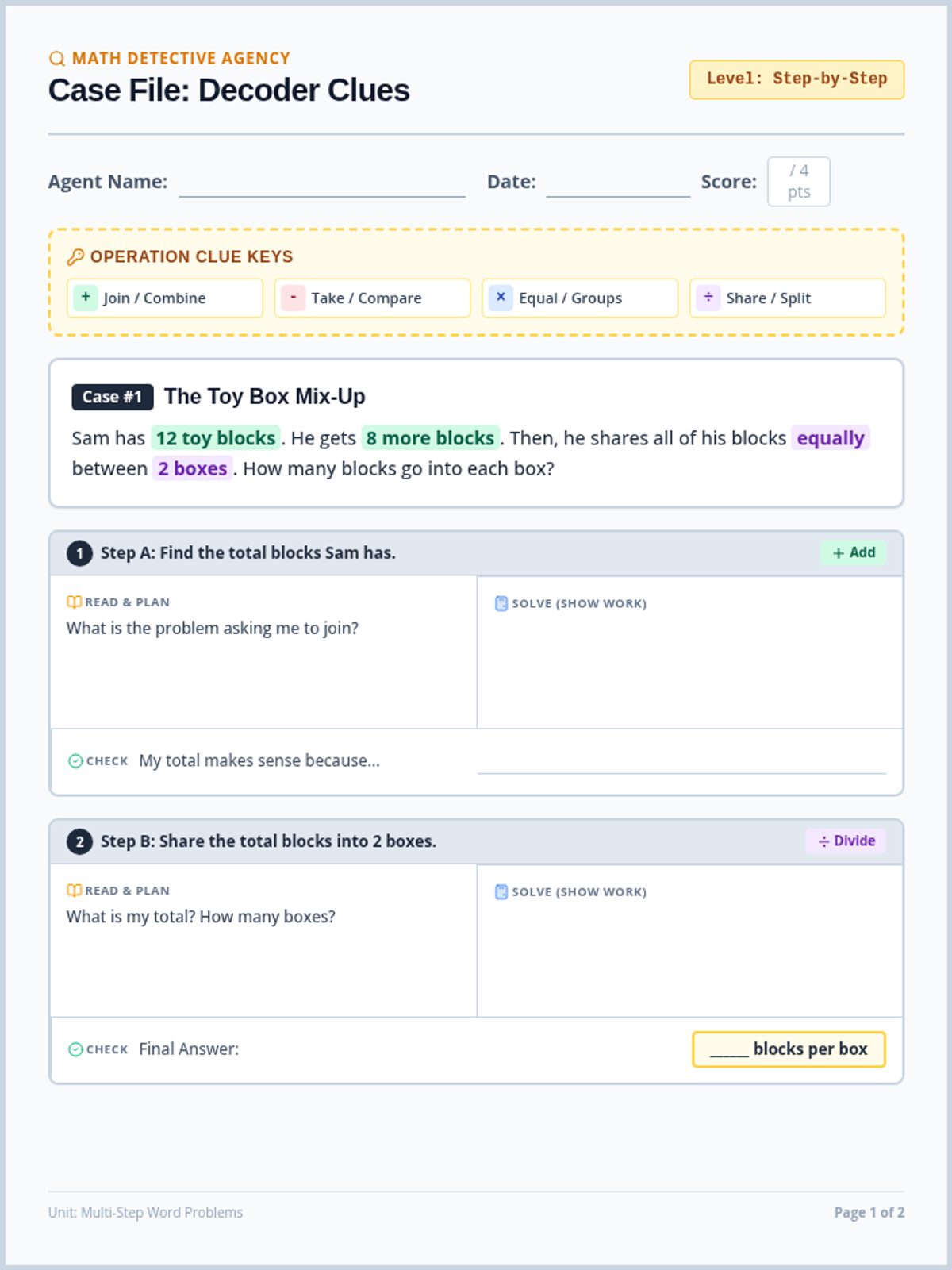
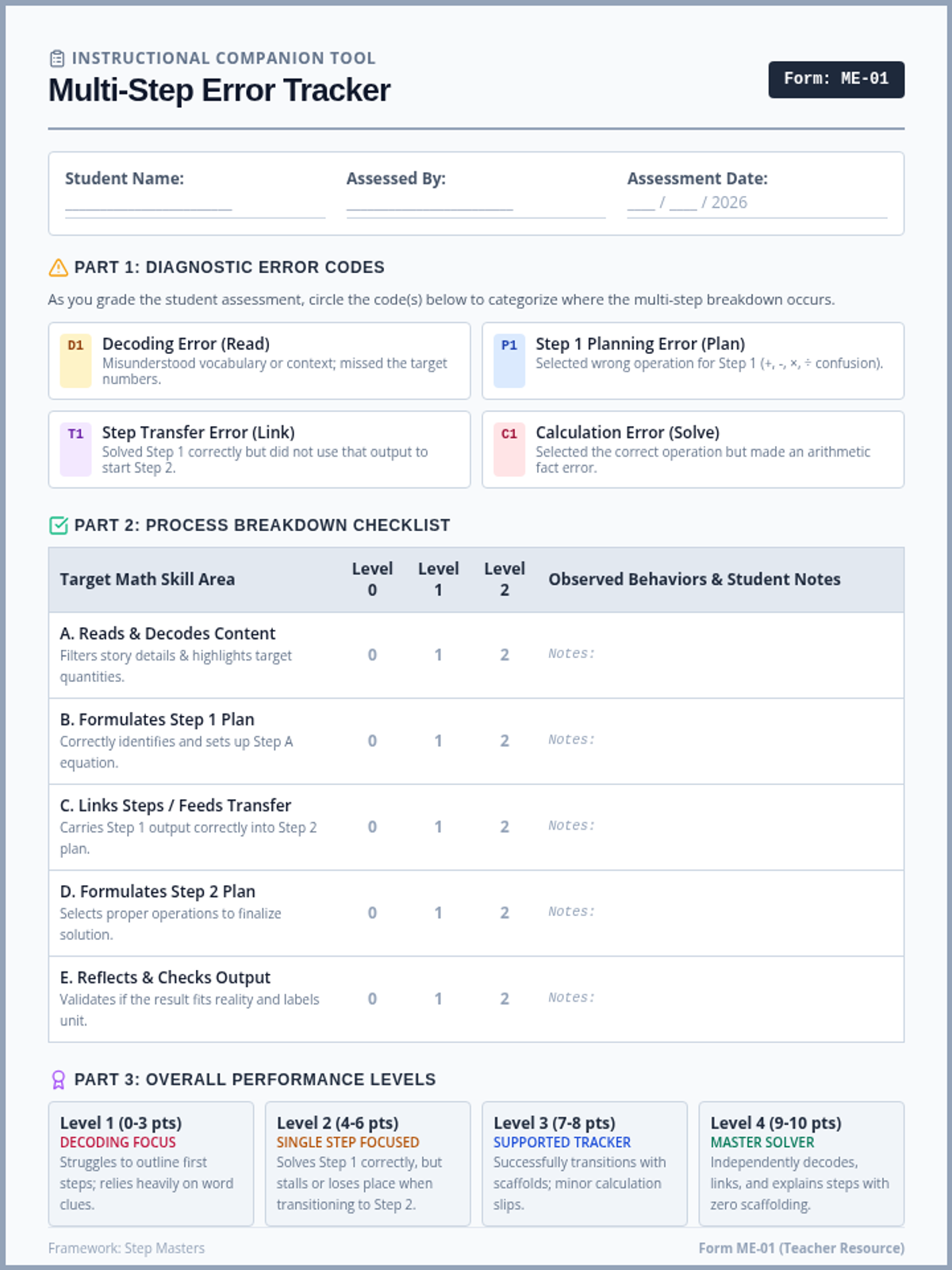
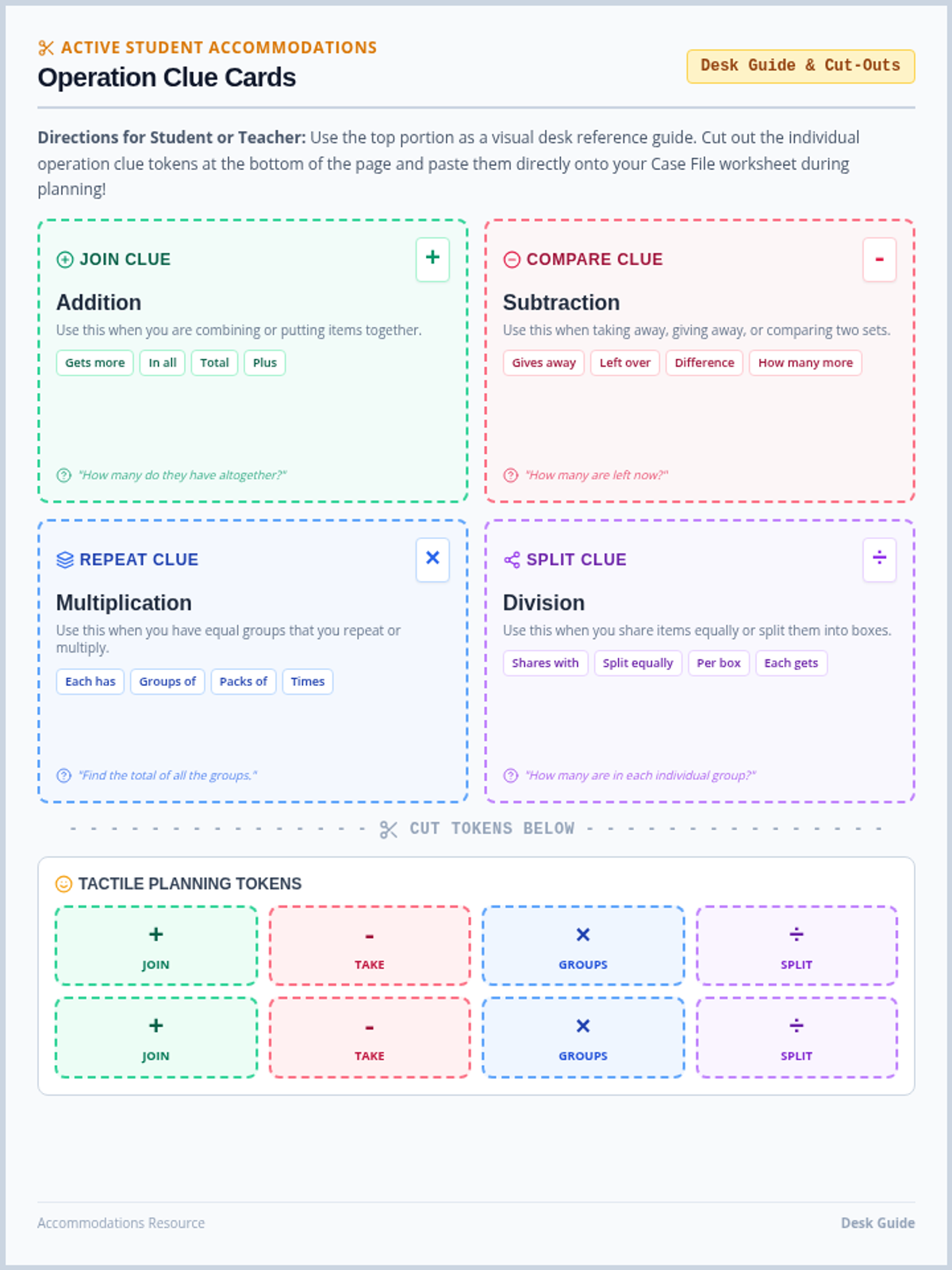
A scaffolded math toolkit designed to help students break down multi-step word problems using visual graphic organizers, reading accommodations, and a detailed teacher error-tracking framework.
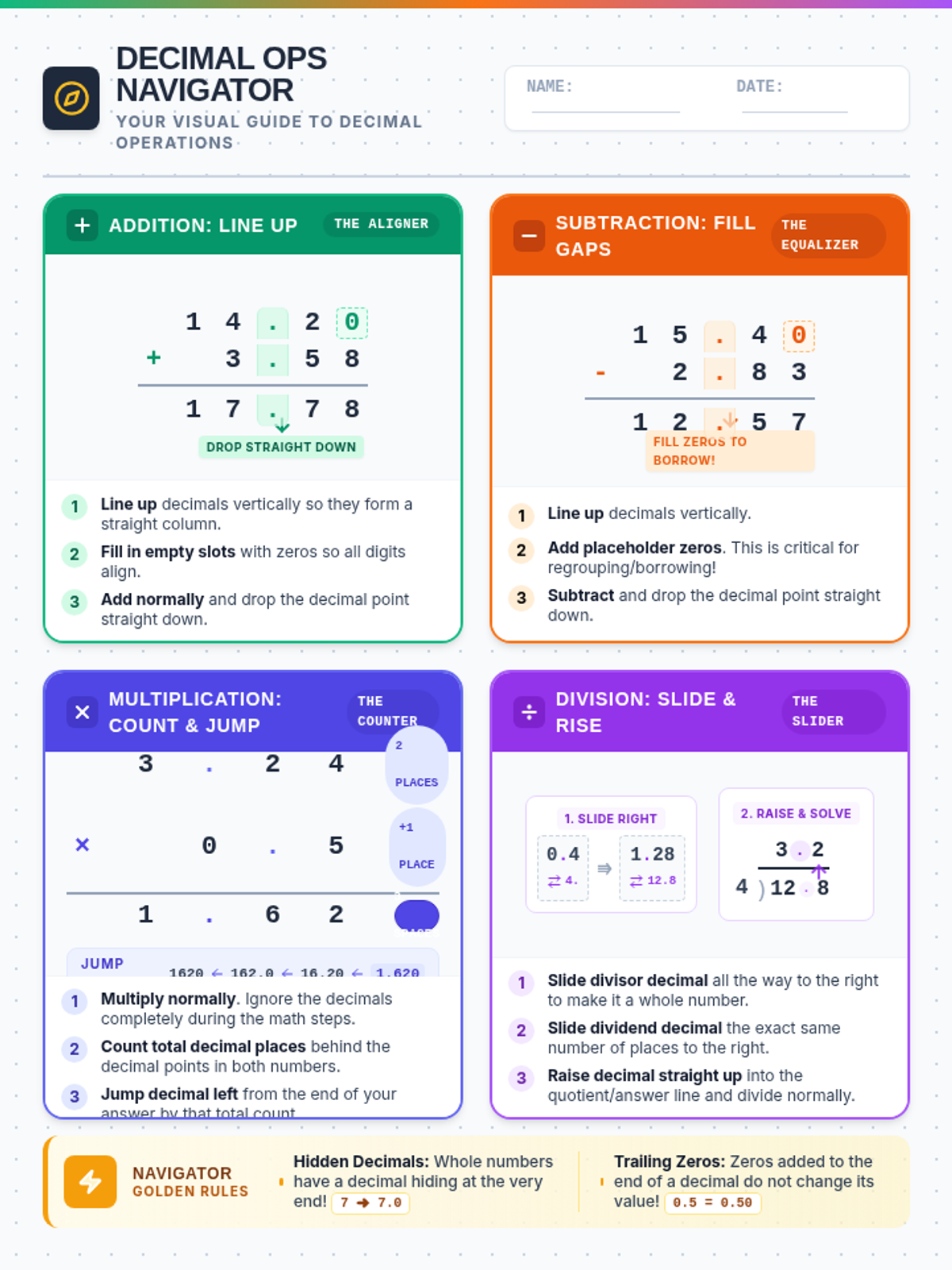
A lesson focused on mastering operations with decimals, providing step-by-step visual models and core strategies for adding, subtracting, multiplying, and dividing decimals accurately.
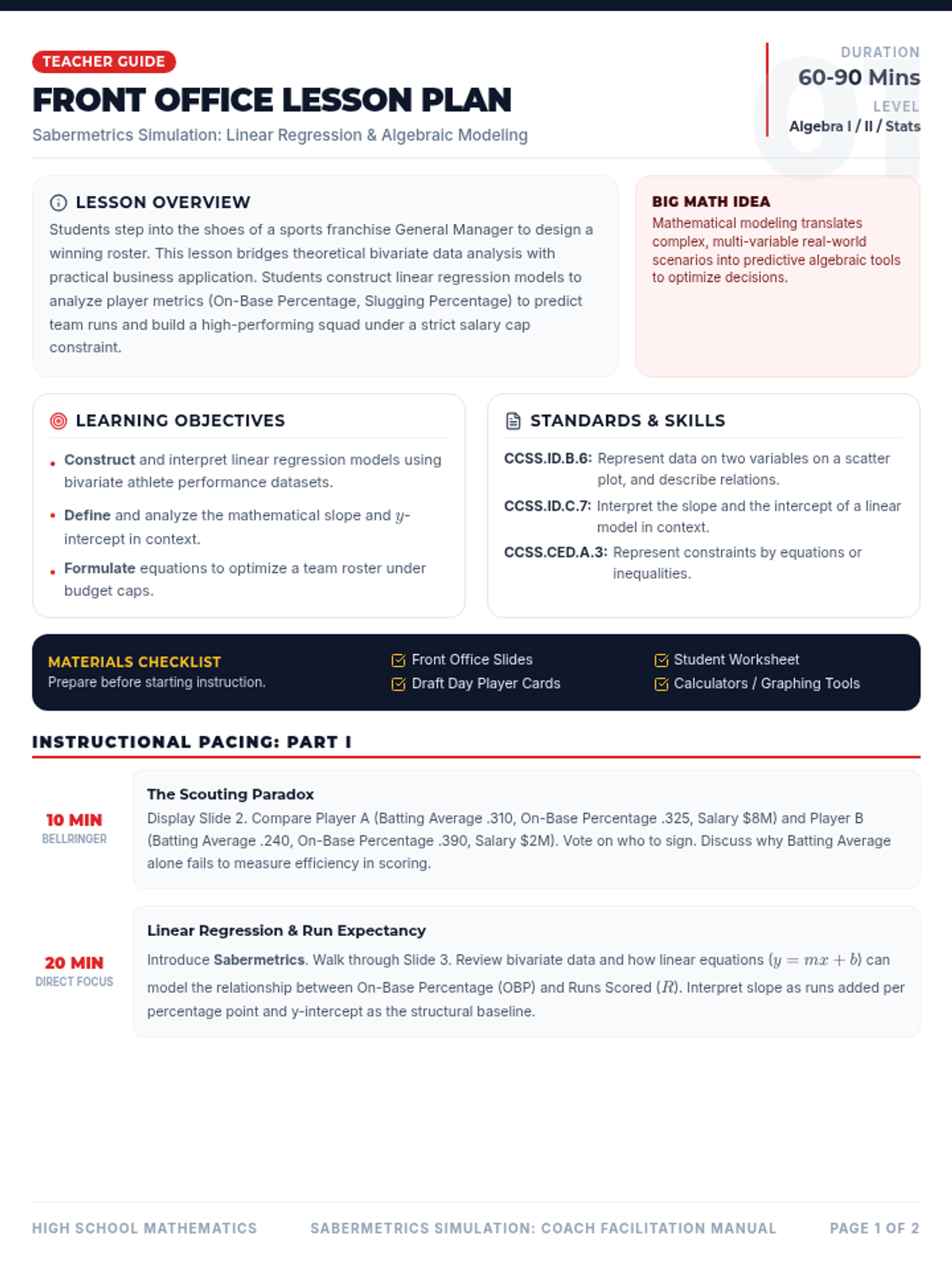
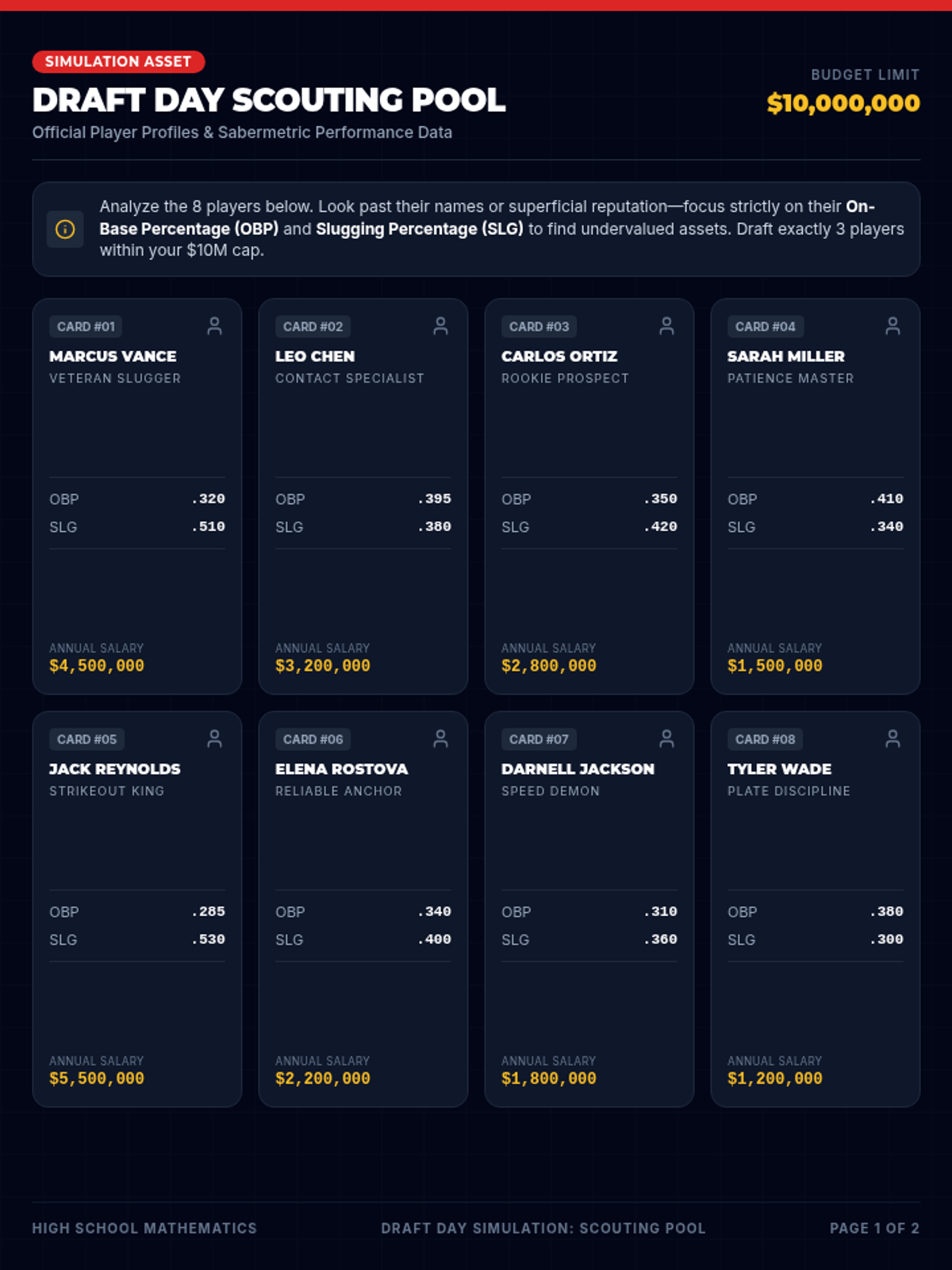
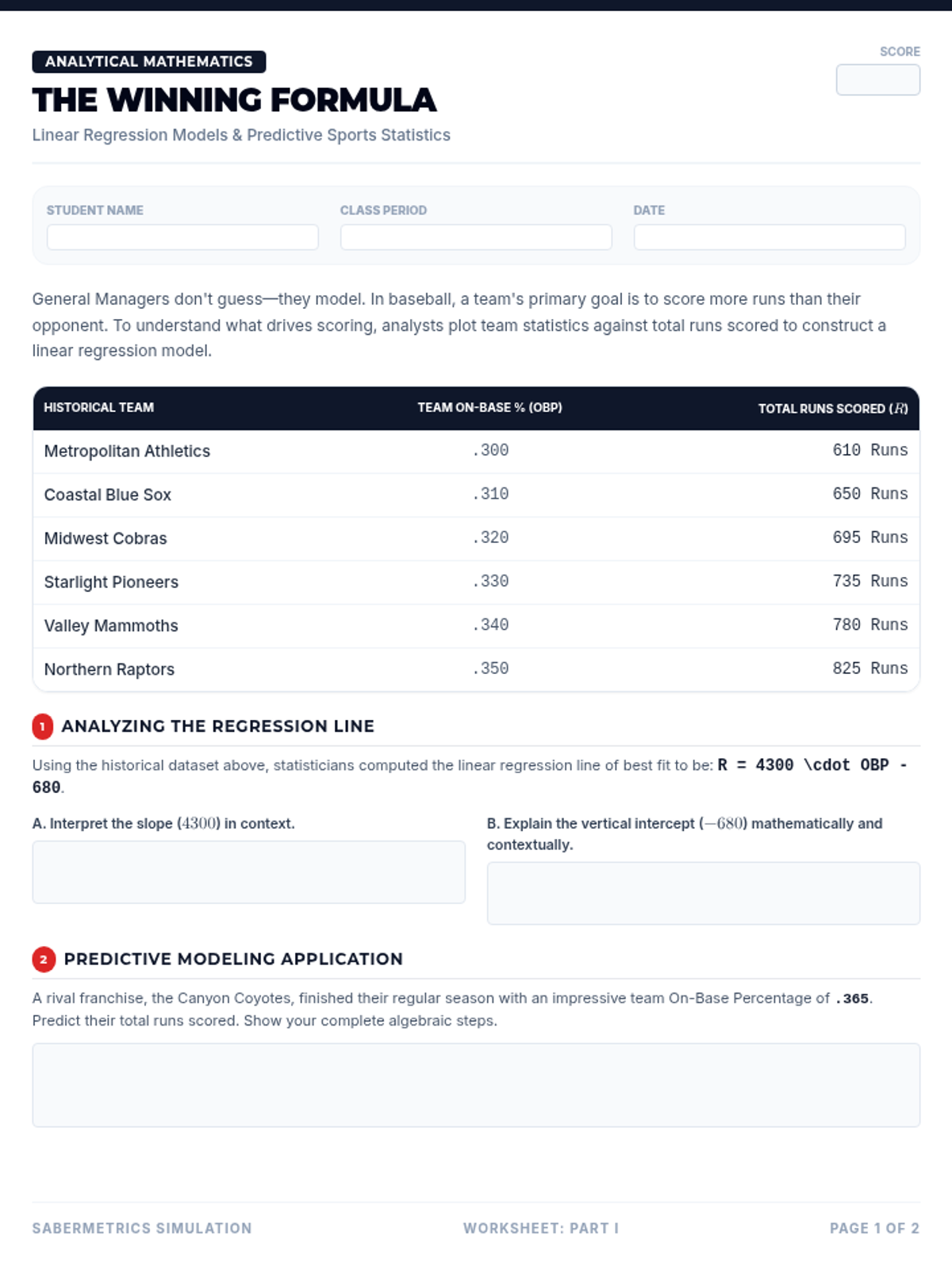
A hands-on high school mathematics lesson where students step into the role of a sports general manager. Using linear regression and algebraic modeling, they analyze real-world baseball statistics to construct a high-performing team within a budget, learning how data drives modern athletic strategy.
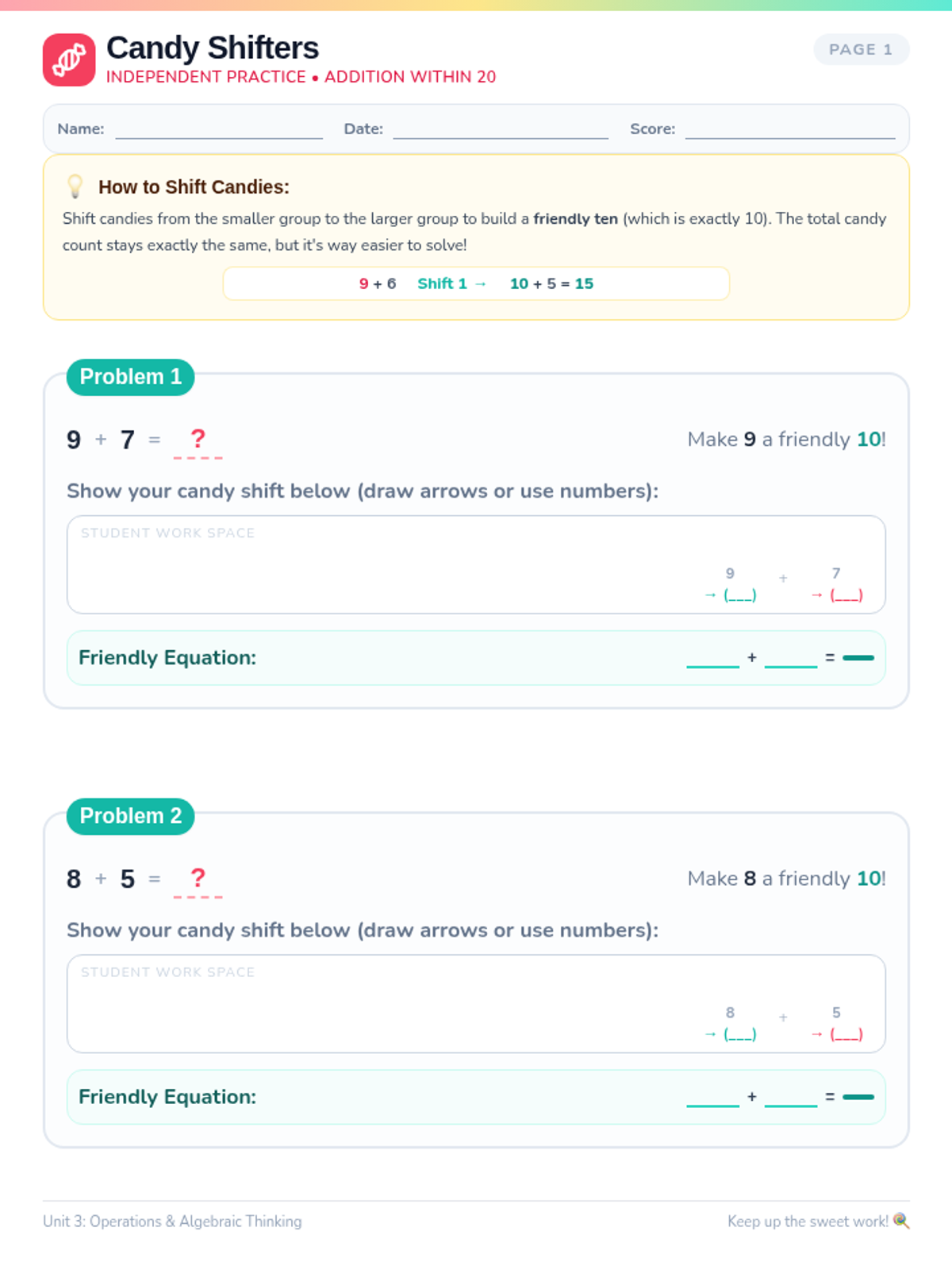
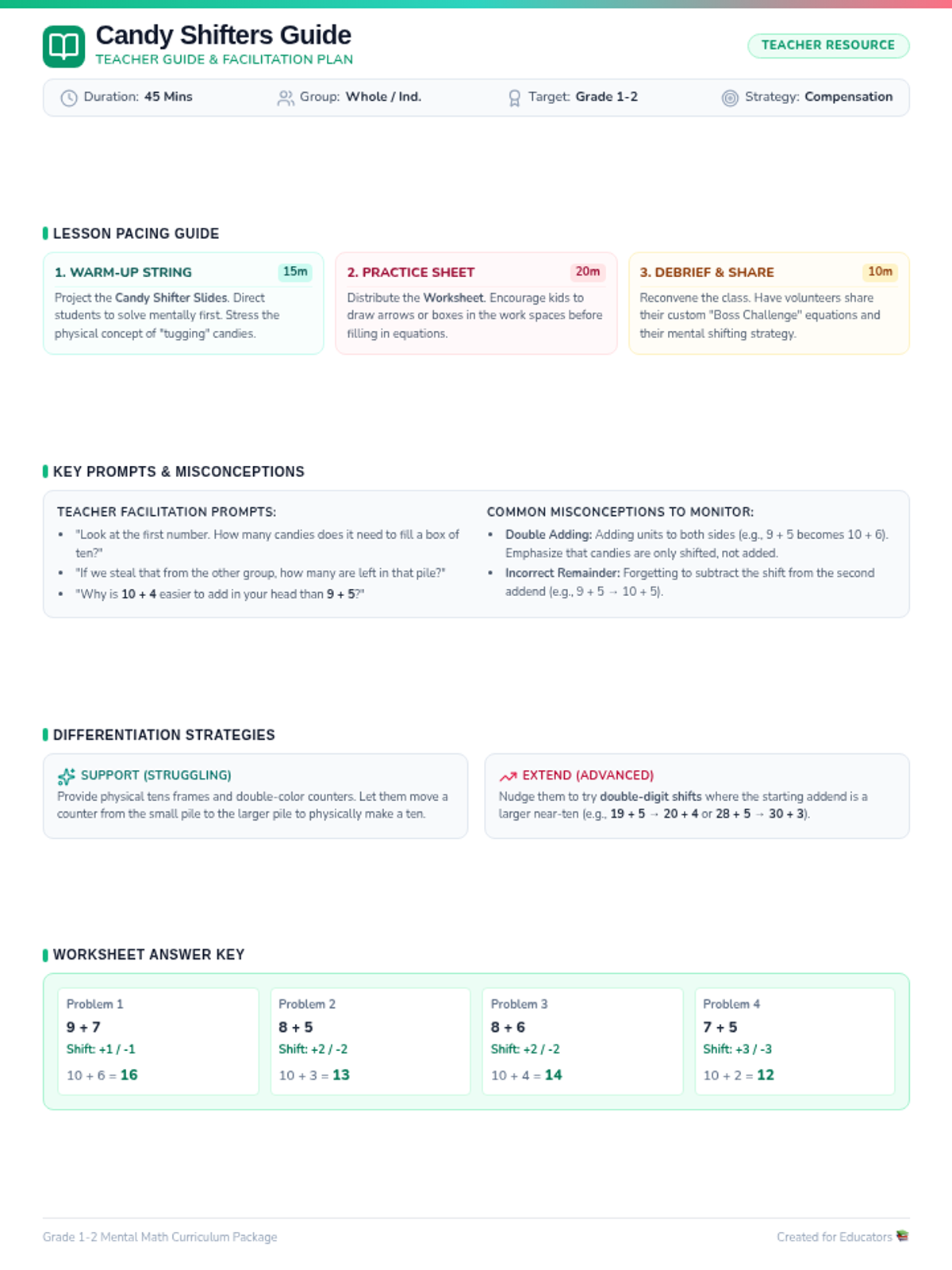
A mental math lesson introducing the compensation strategy for addition within 20 using a playful candy shop theme. Students shift amounts between addends to create 'friendly tens' (e.g., 9 + 5 becomes 10 + 4), practicing this mentally during a slide-guided warm-up and on paper with a themed student worksheet.
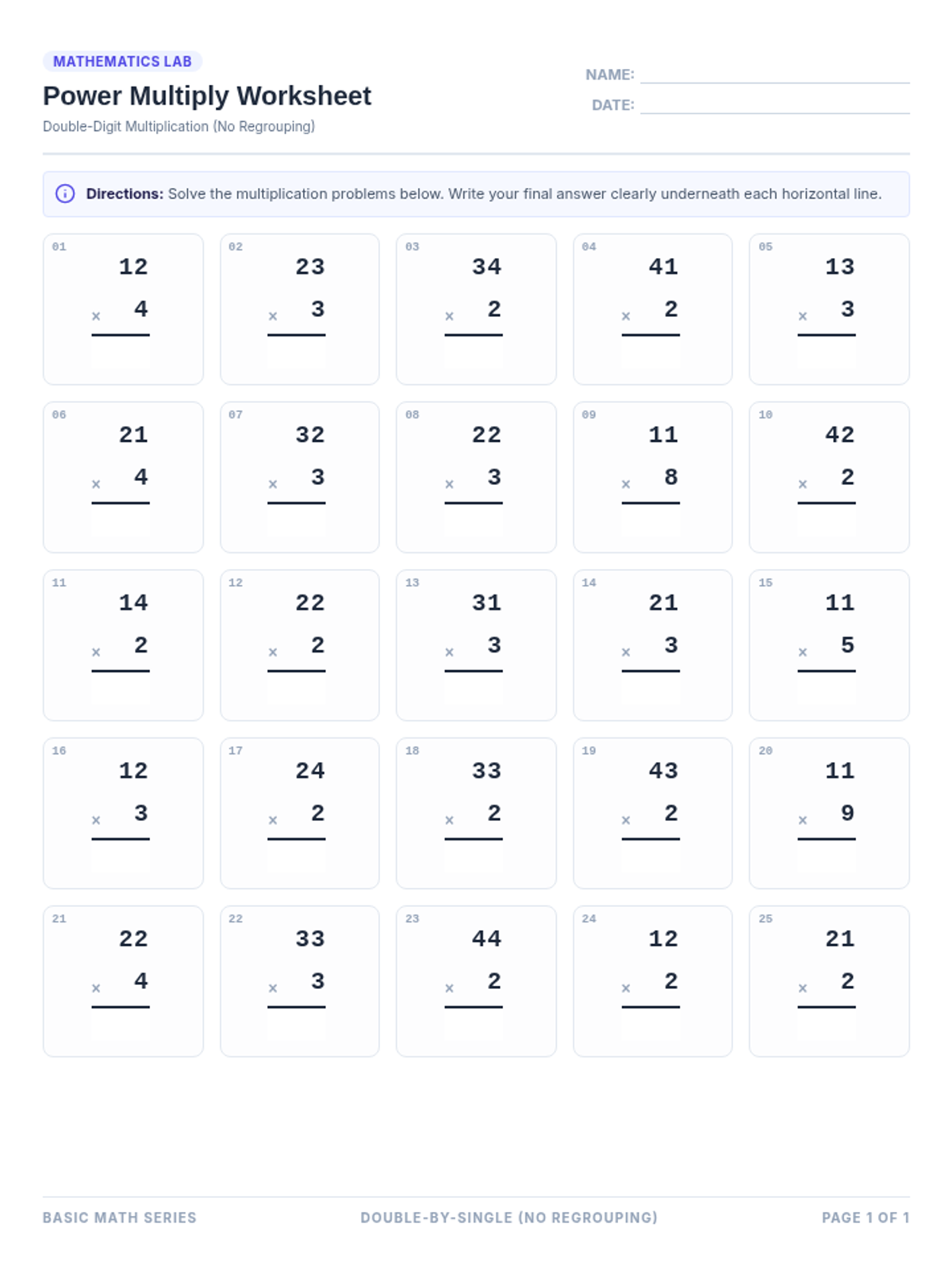
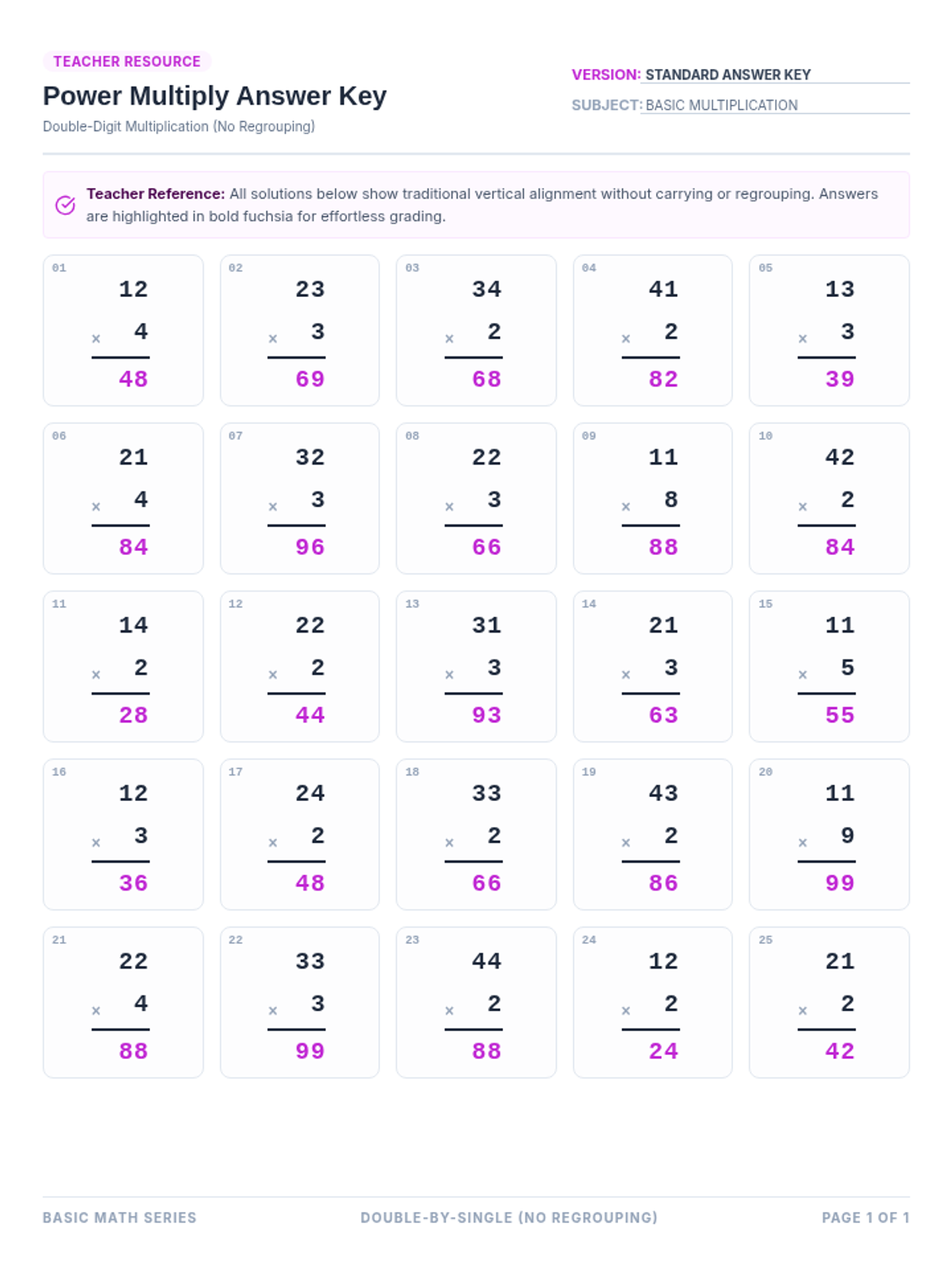
A math lesson focused on double-digit by single-digit multiplication without regrouping, using a clean, traditional vertical format.
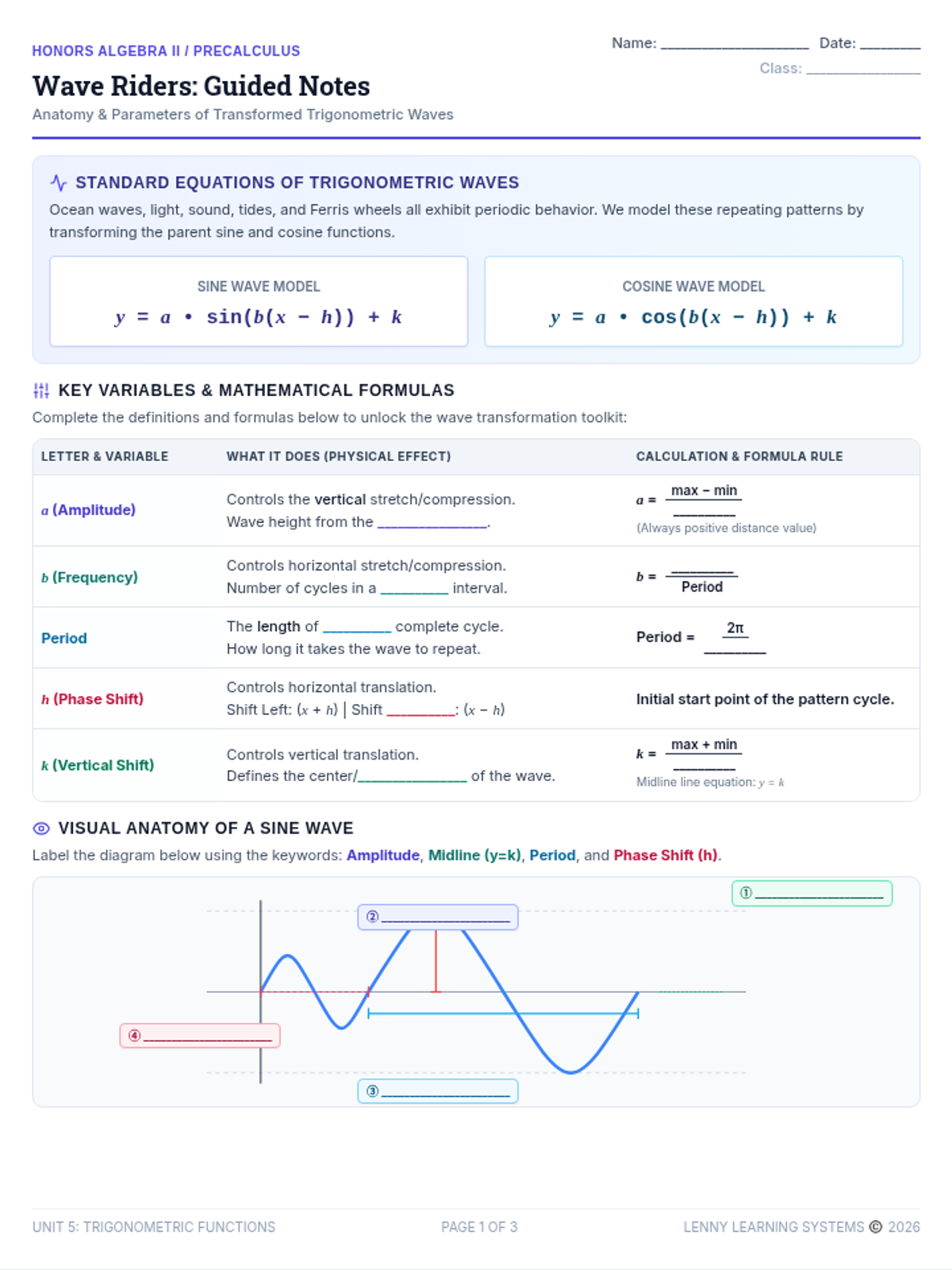
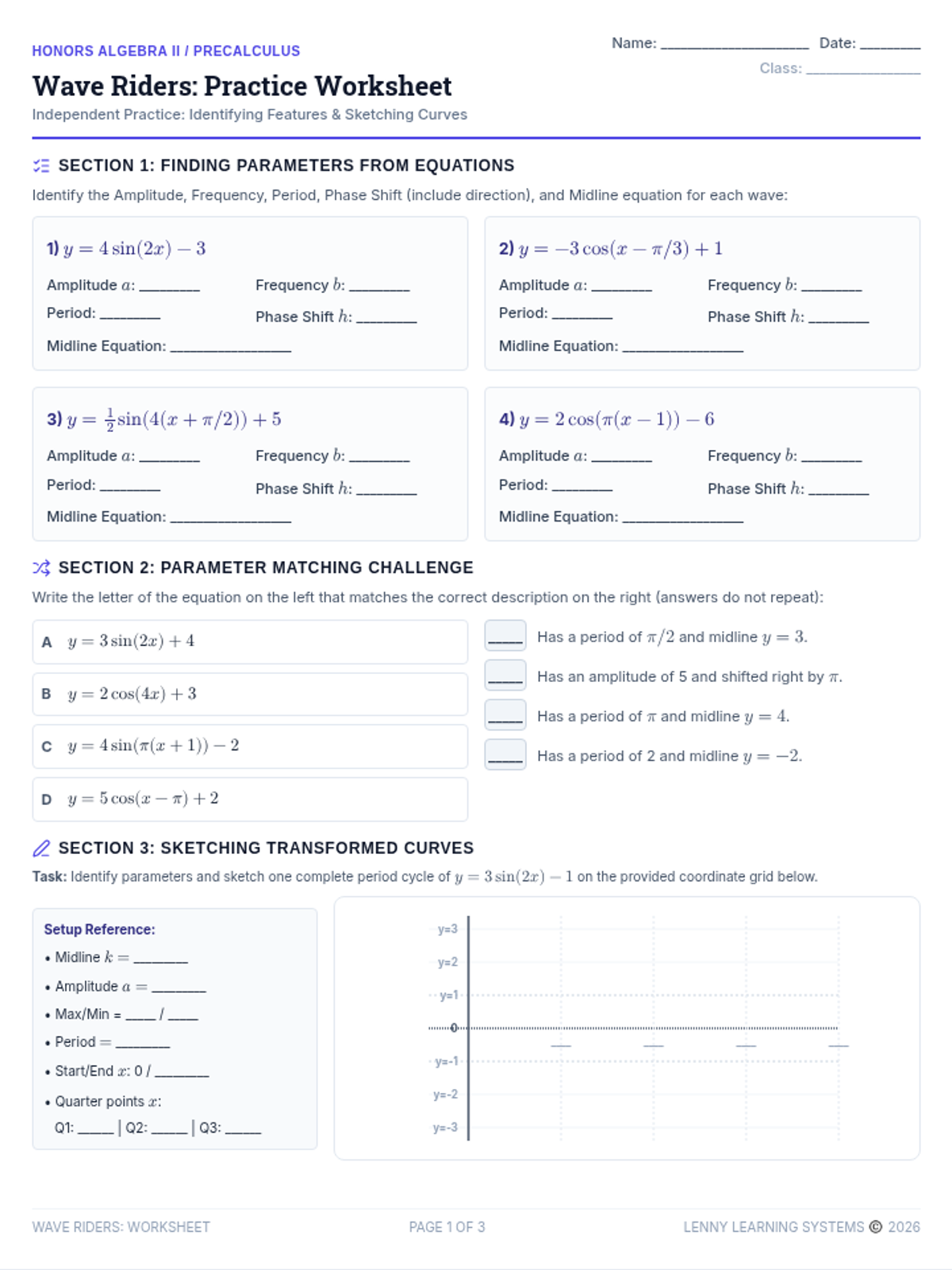
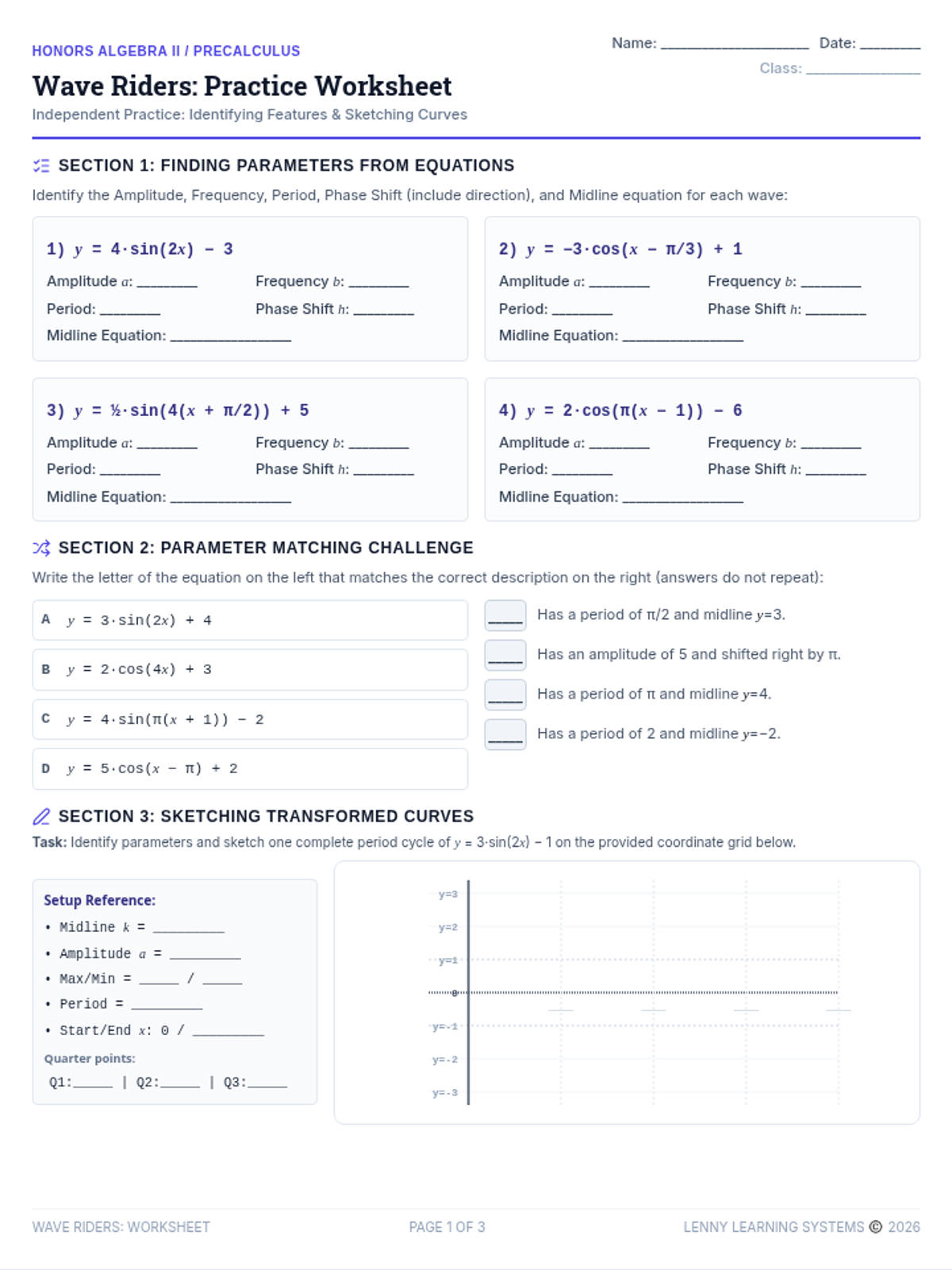
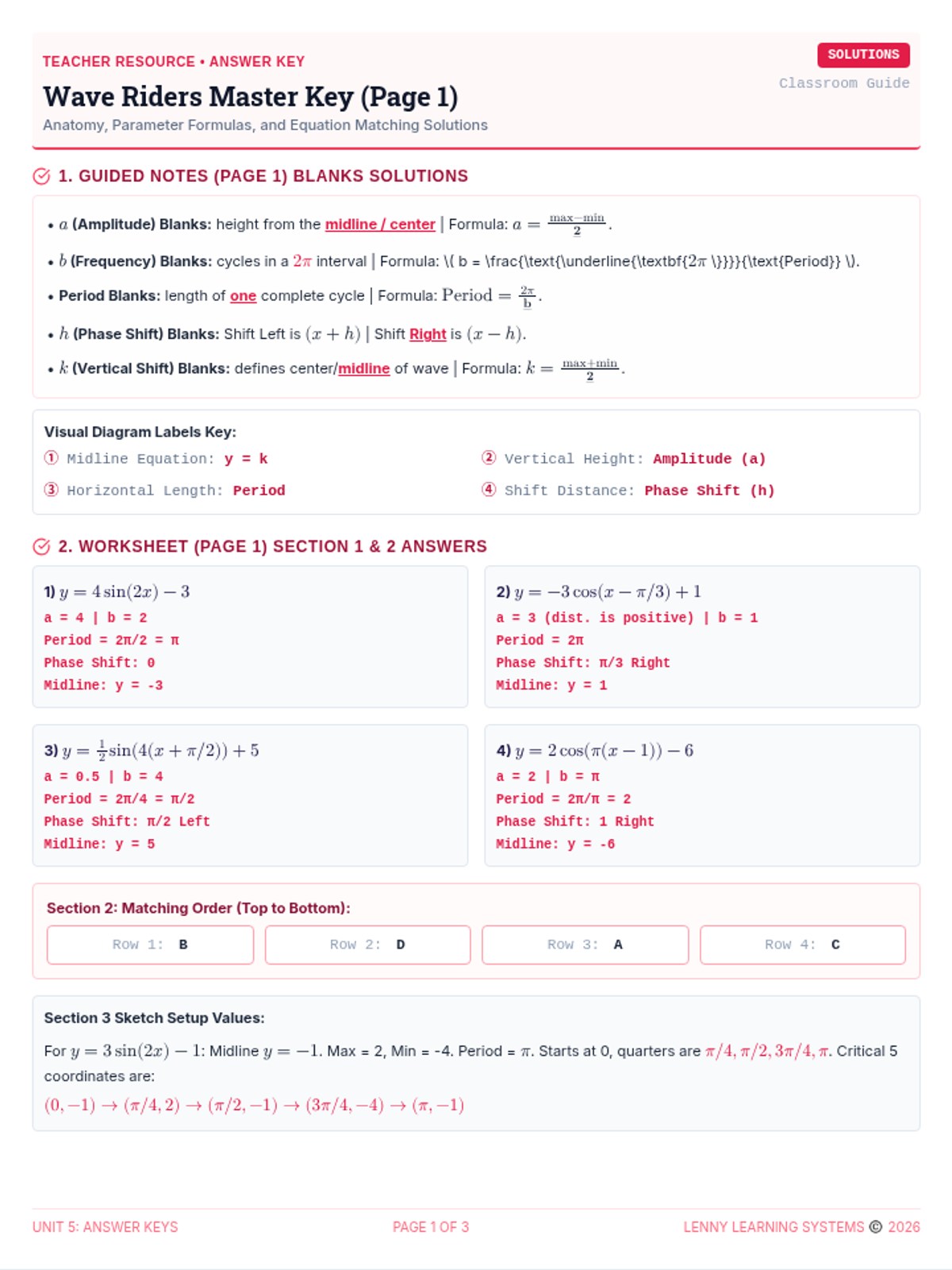
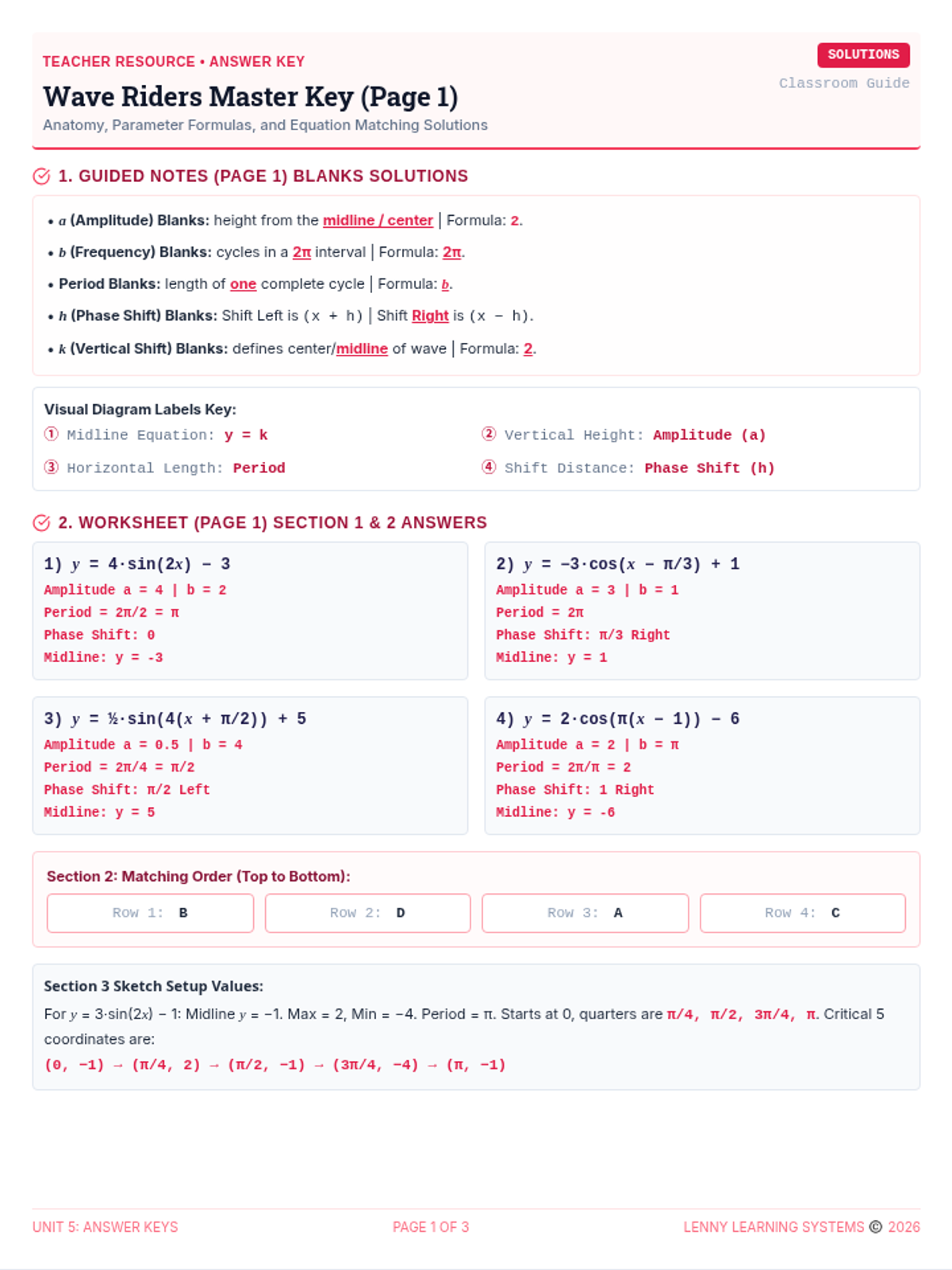
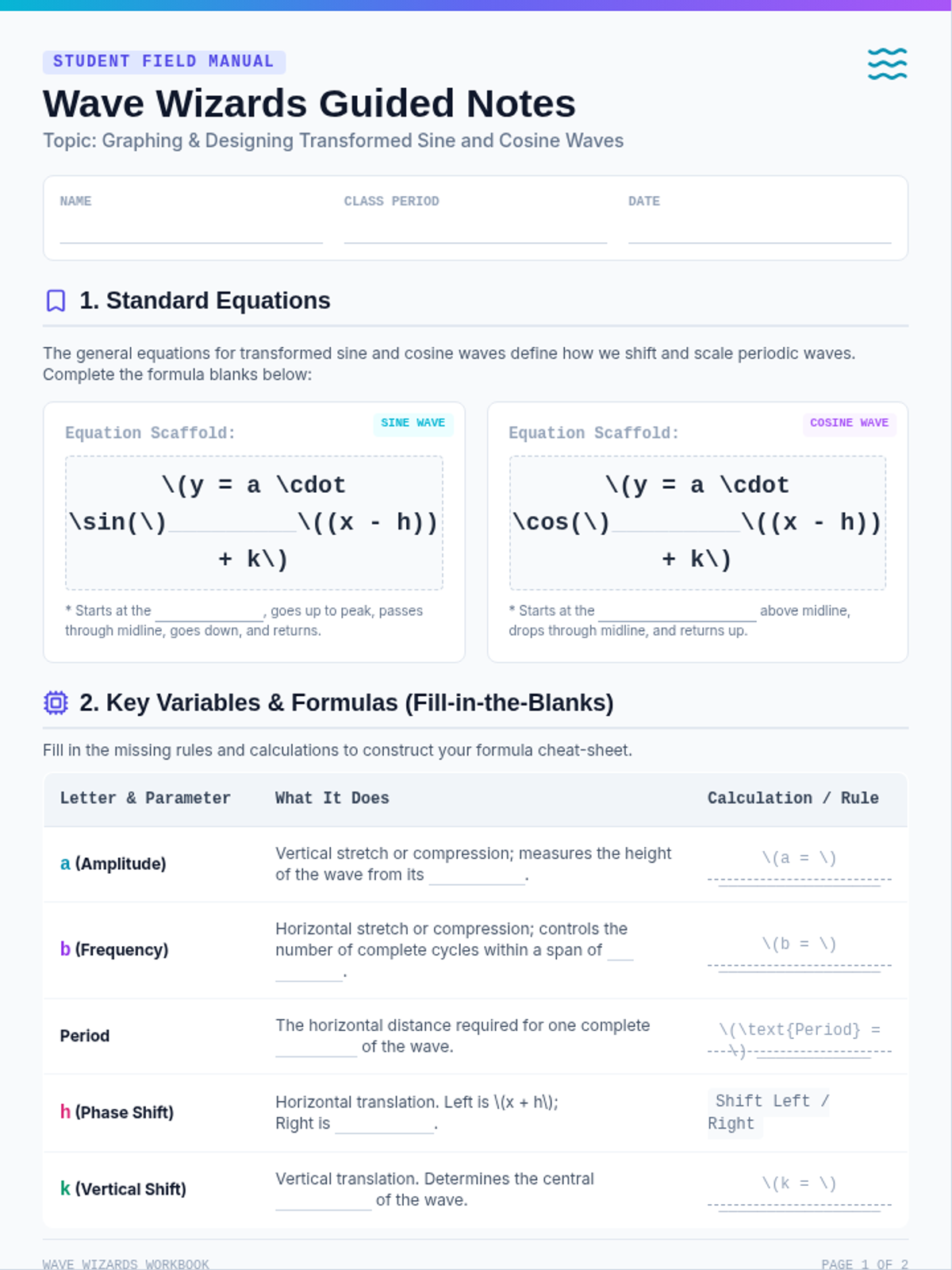
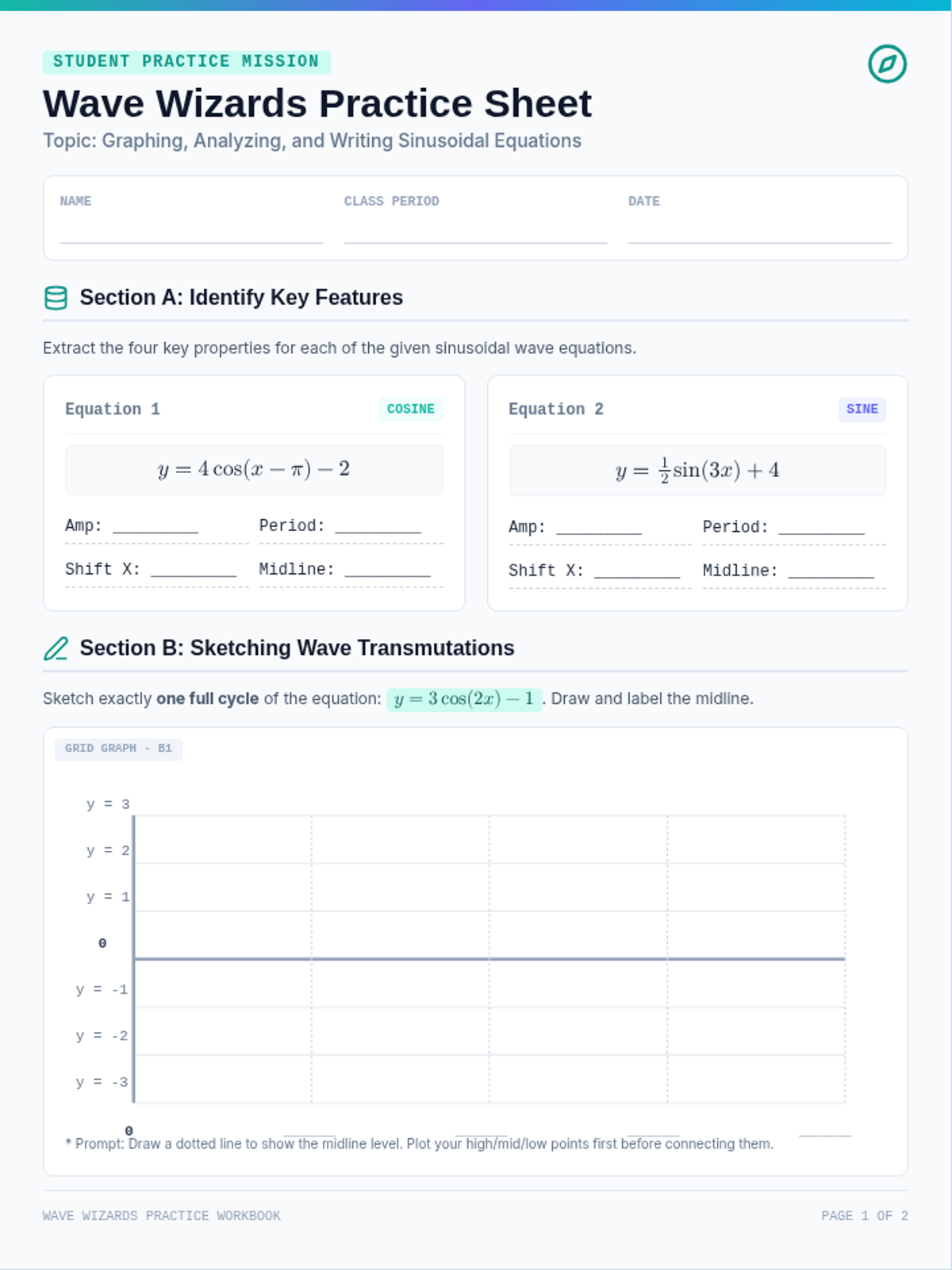
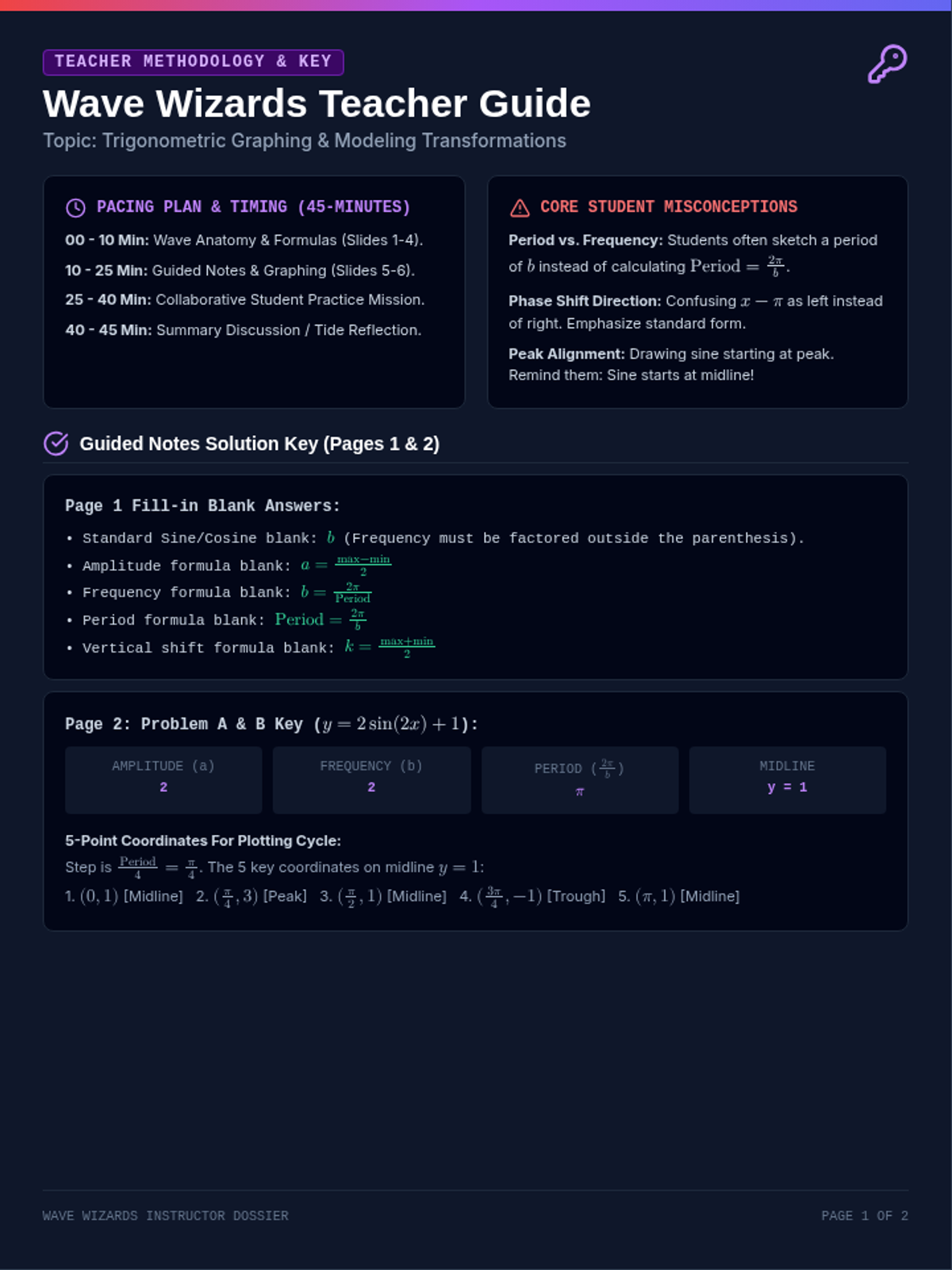
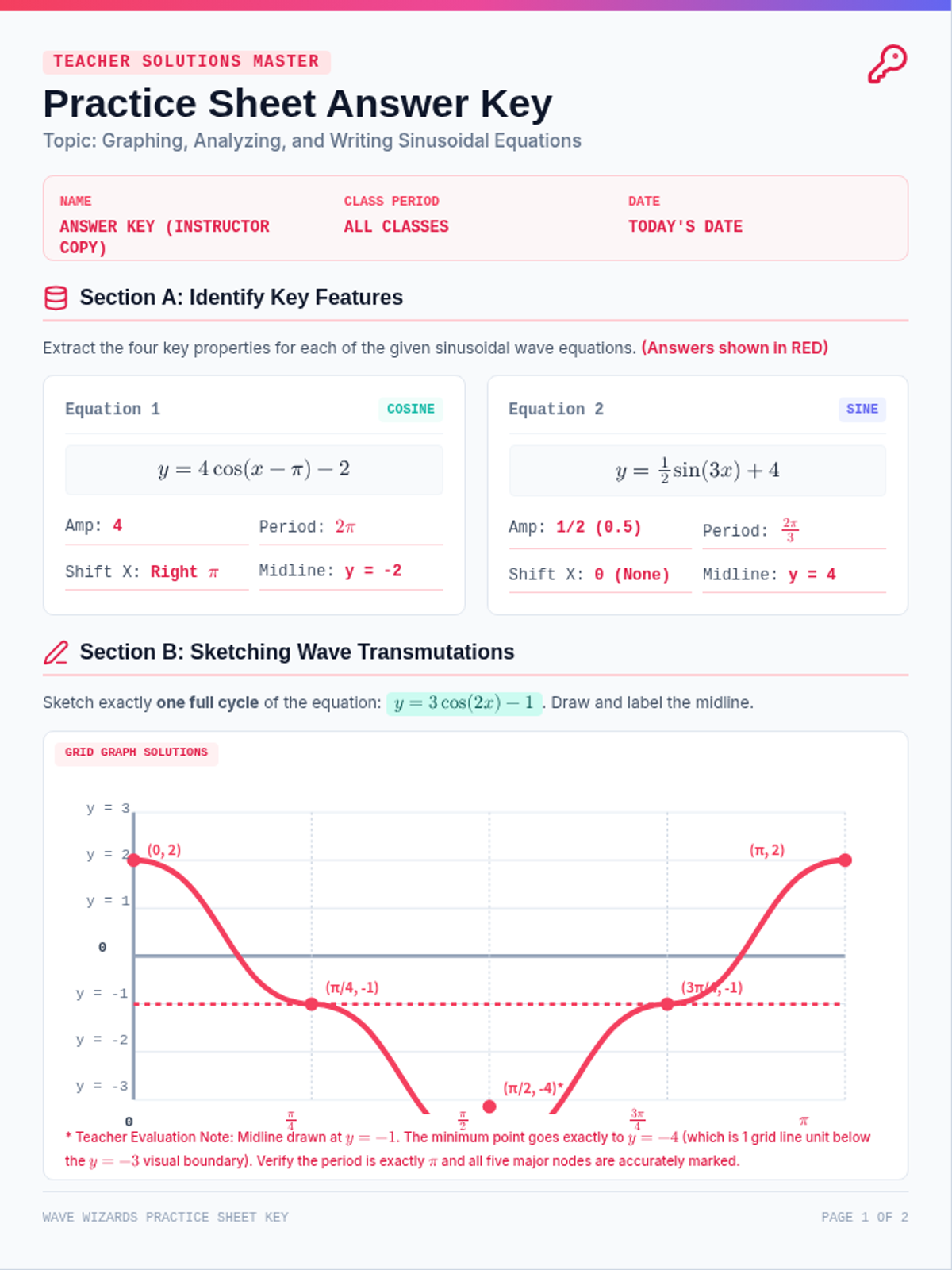
A mini-lesson on graphing, analyzing, and modeling transformed sine and cosine trigonometric waves. Students learn to identify key parameters (amplitude, period, phase shift, midline) from equations and graphs, and apply them to periodic real-world scenarios.
A mini-lesson on transforming trigonometric sine and cosine functions. Students will learn to identify key wave parameters, sketch transformations on a grid, write equations from sinusoidal graphs, and model real-world periodic phenomena.