An autism-friendly, high-structure math center featuring a distraction-free Part-Part-Whole Mat with solid, clean workspaces and color-coded task cards for structured physical addition.
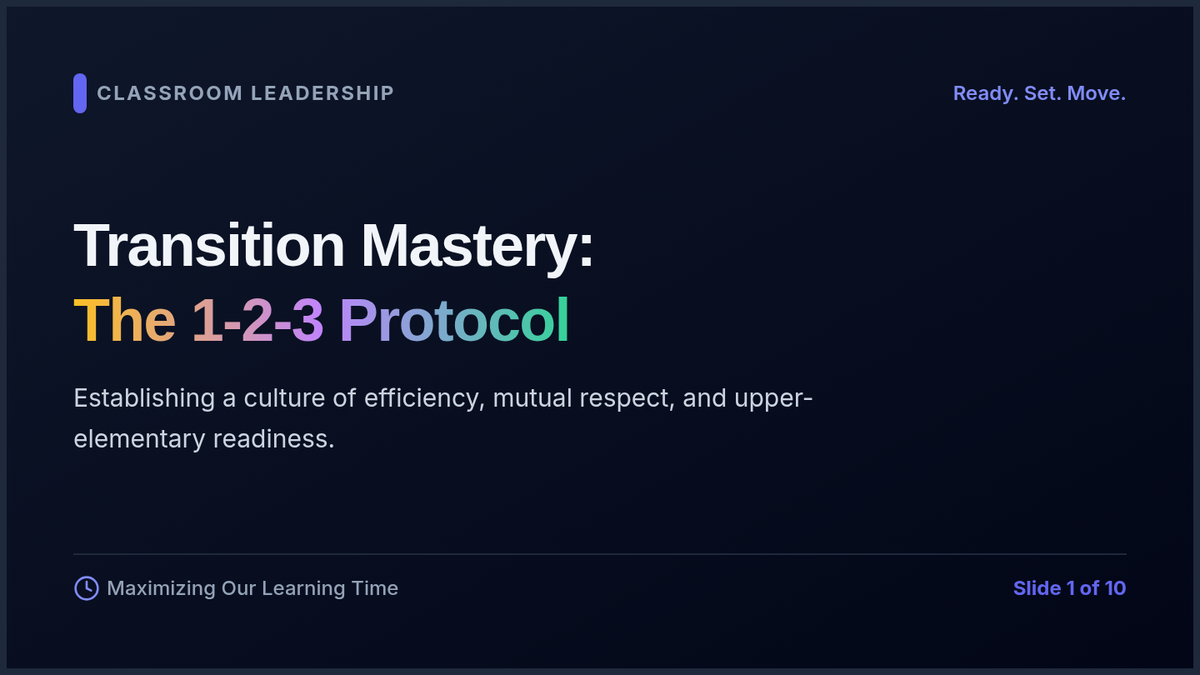
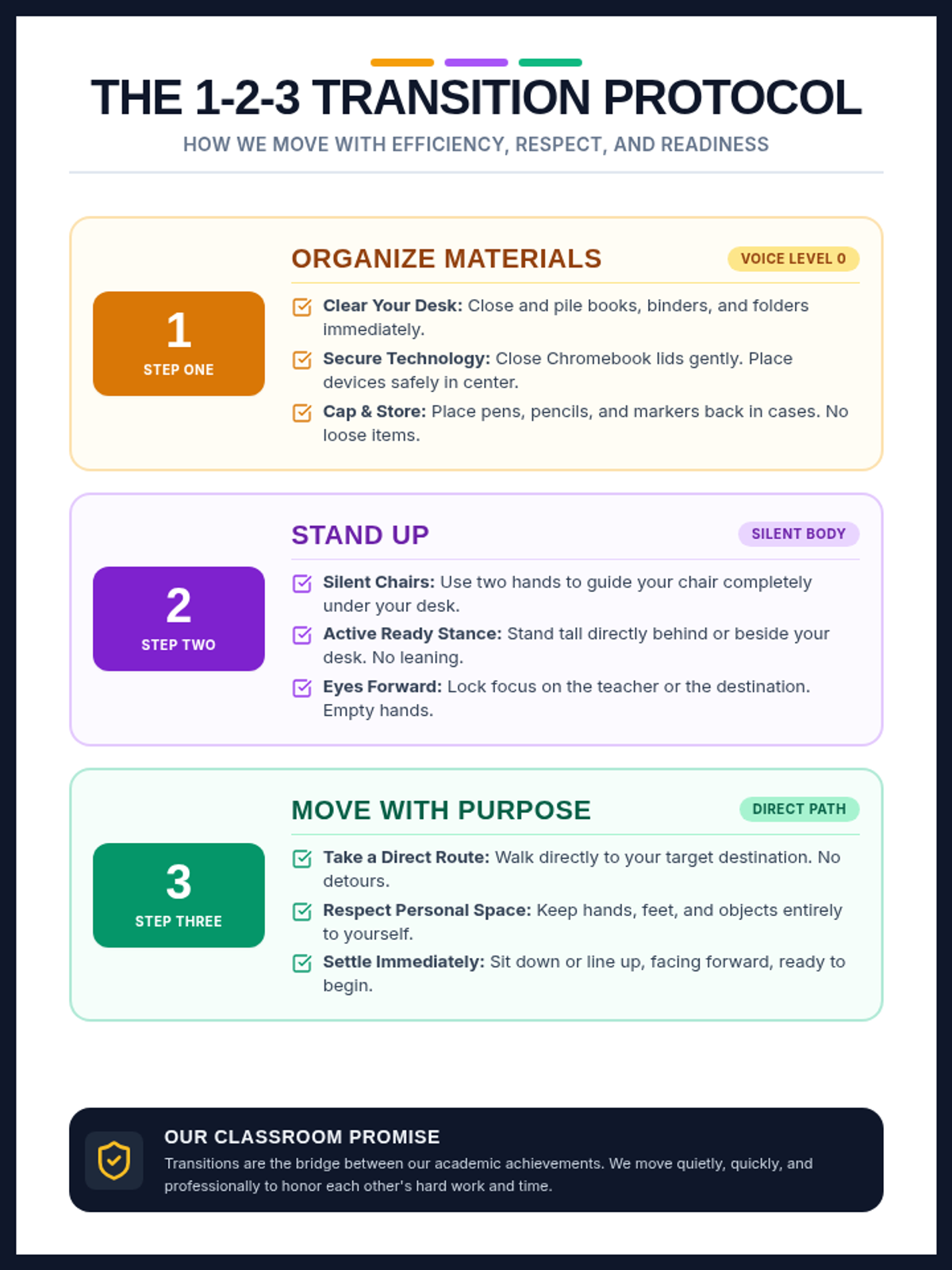
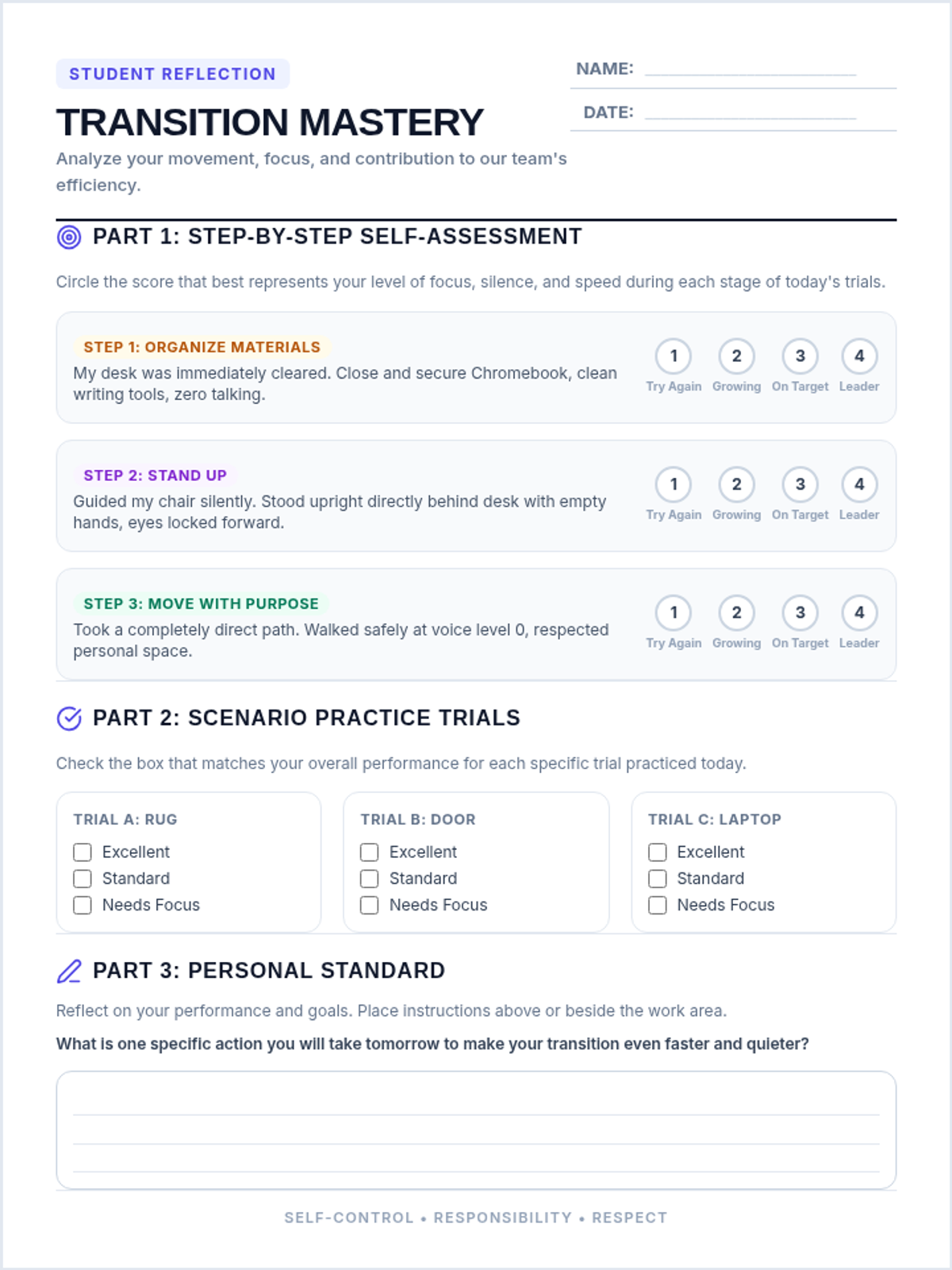
This lesson introduces and structures the '1, 2, 3' transition protocol (1: Organize, 2: Stand, 3: Move) to establish class-wide efficiency. Through modeling, guided practice, and independent application, students master essential classroom routines.
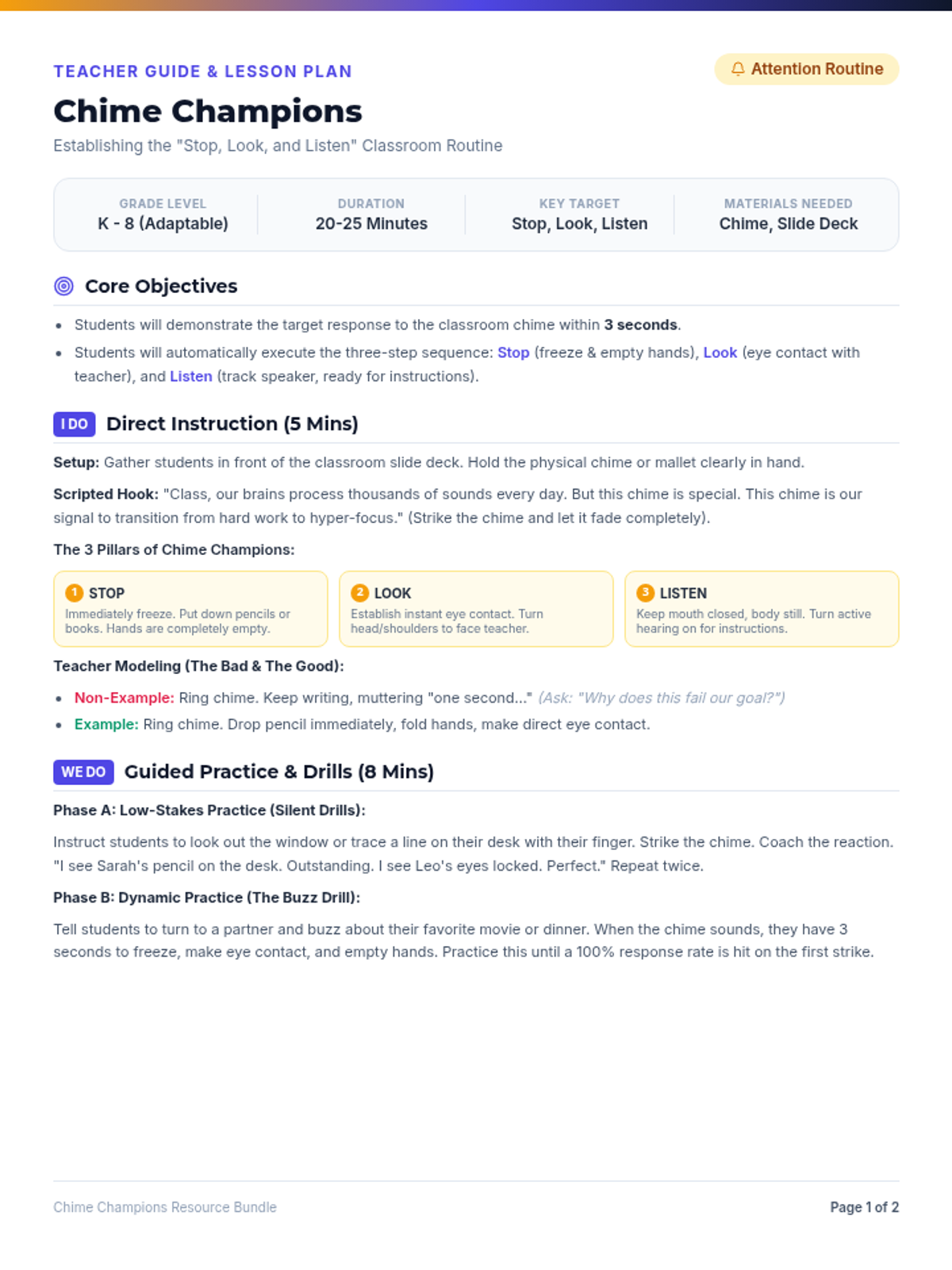
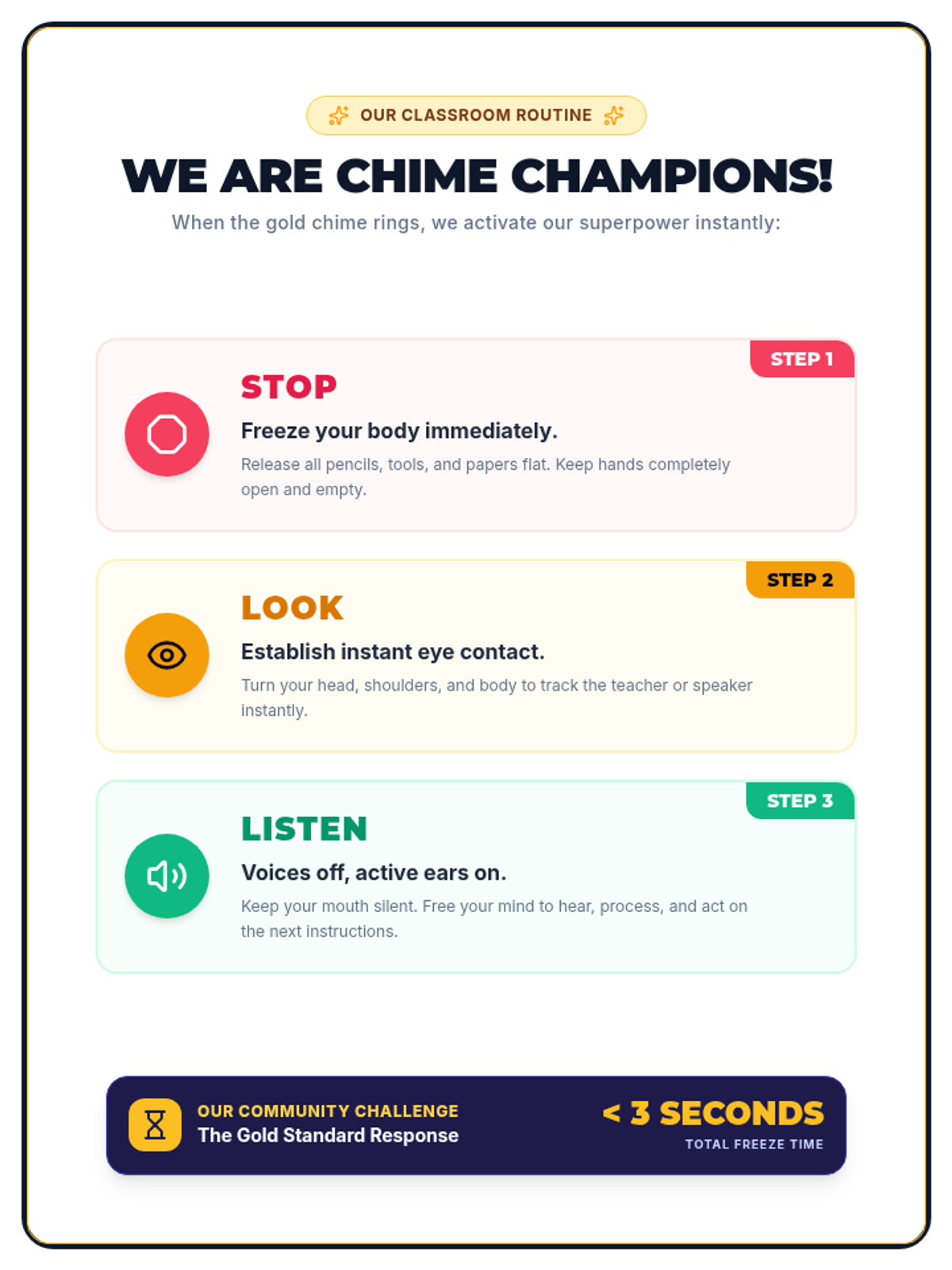
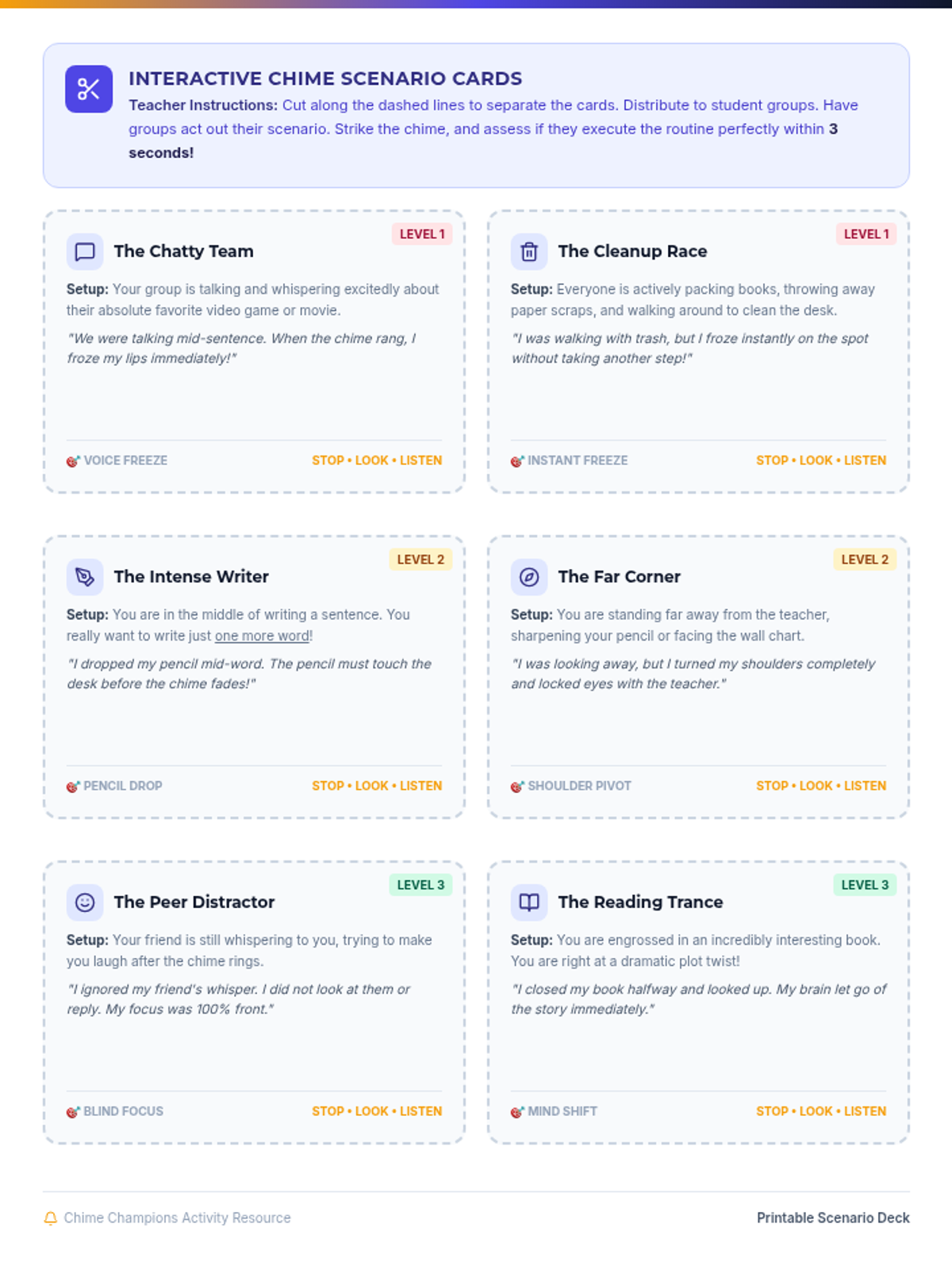
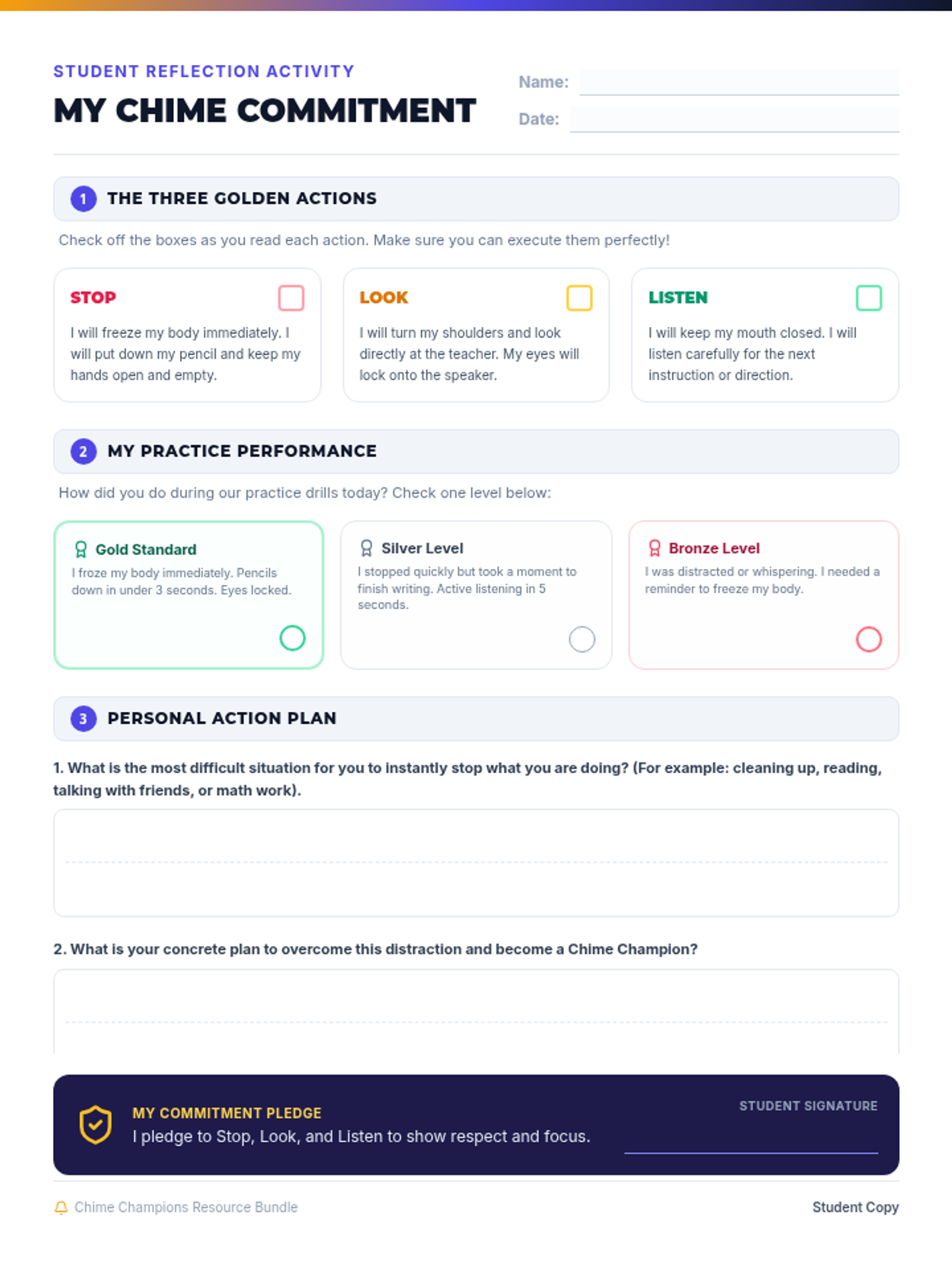
A structured mini-lesson and resource bundle to teach, practice, and master the classroom chime routine. Features a clear 'I Do, We Do, You Do' progression to establish the immediate 'Stop, Look, and Listen' behavior.
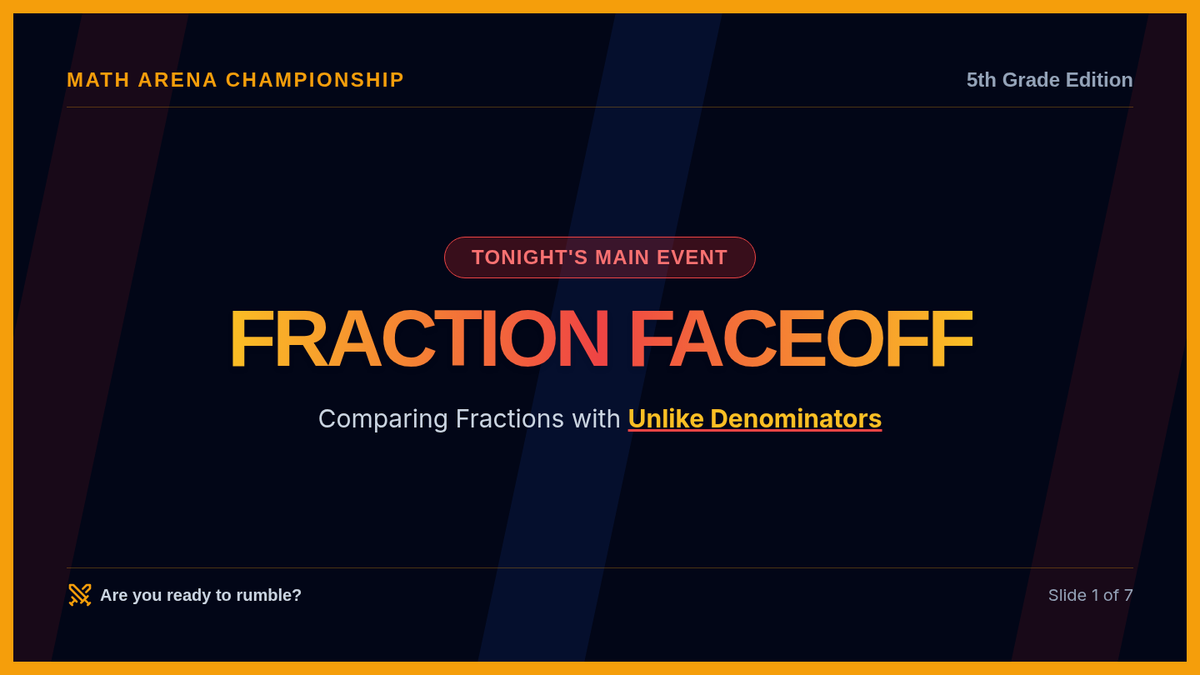
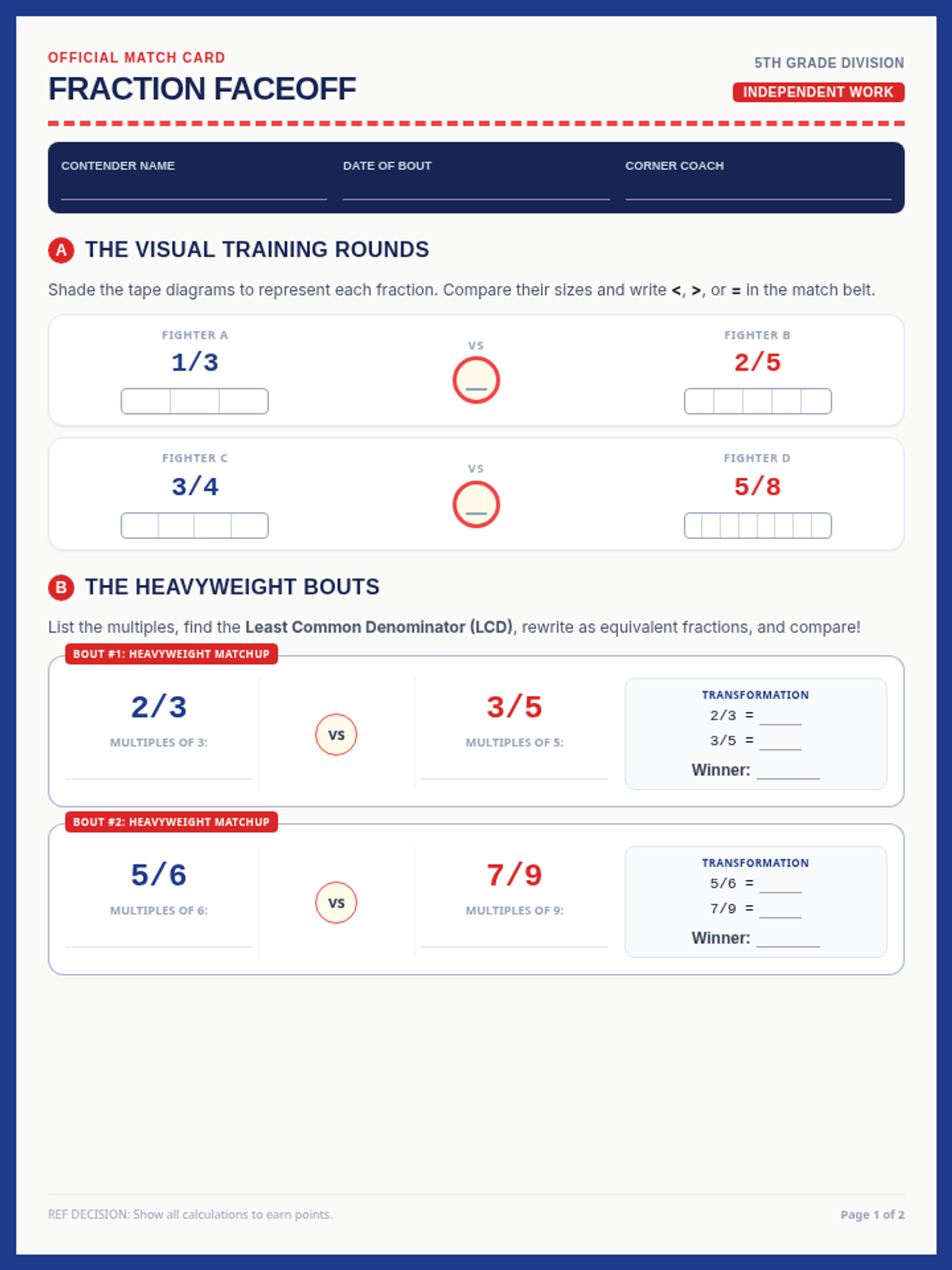
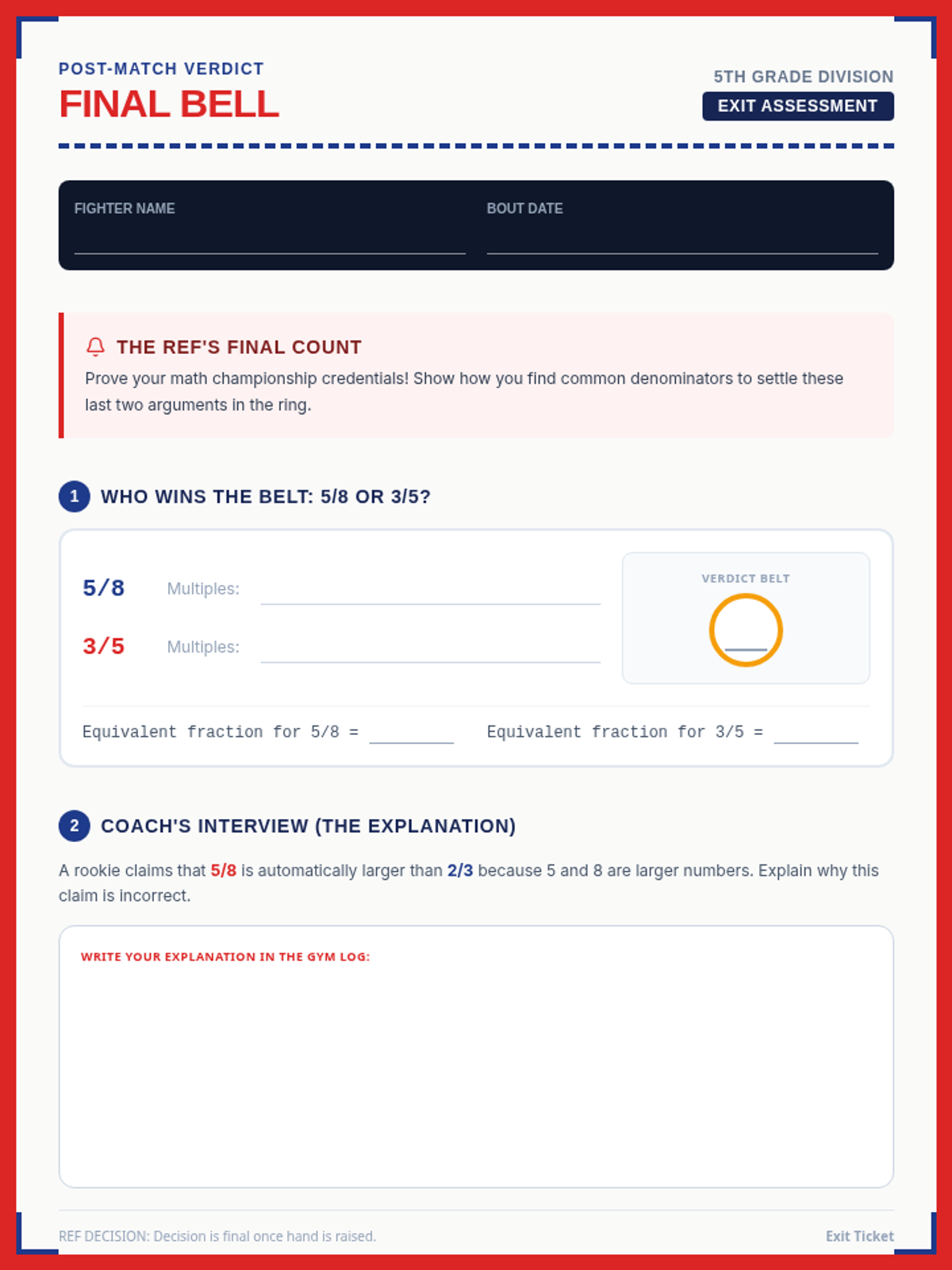
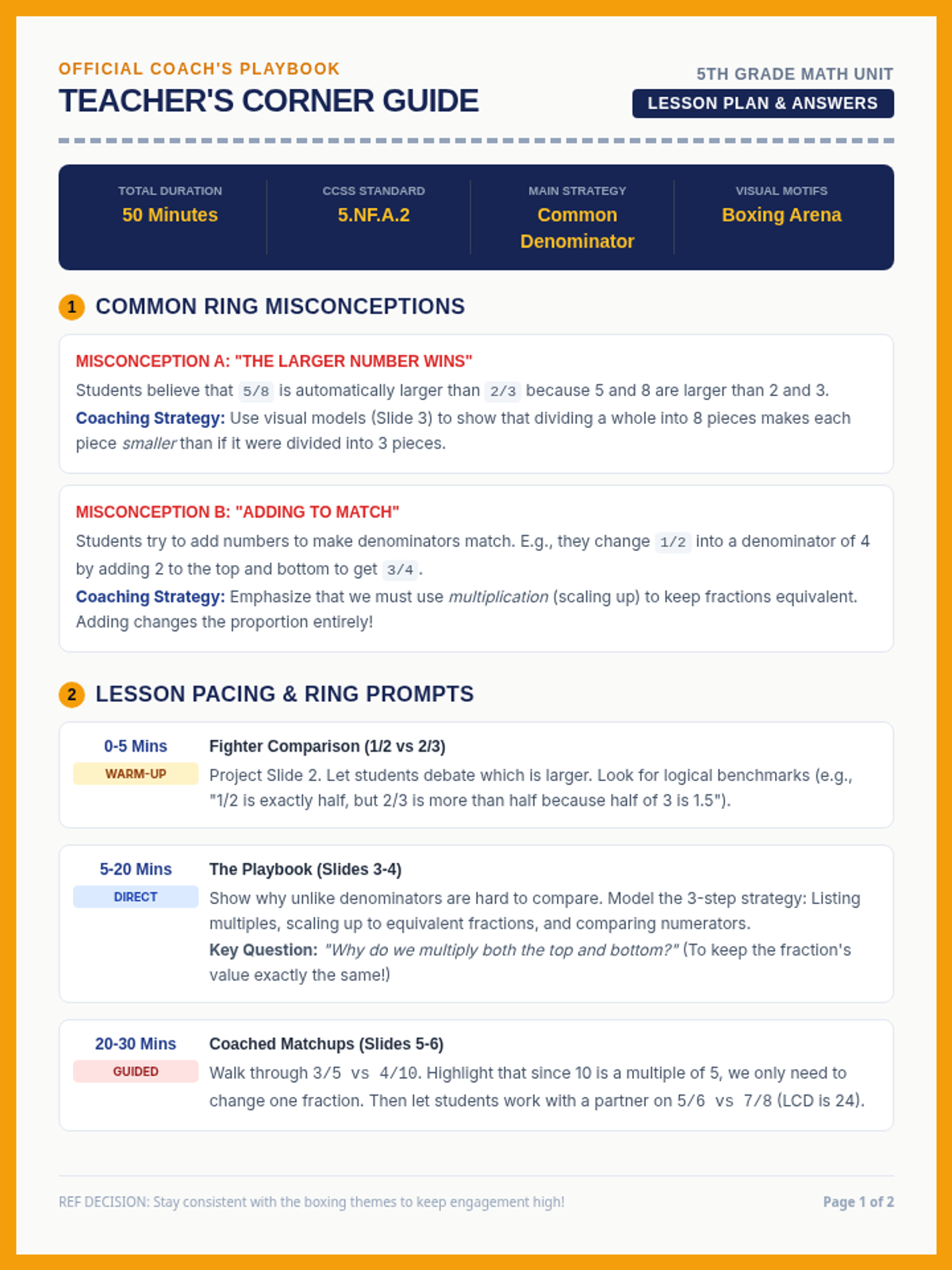
A 5th-grade math lesson focused on comparing fractions with unlike denominators. Students learn to use visual models and find common denominators to determine which fraction is larger in a fun, sports-themed 'Fraction Faceoff' matchup.
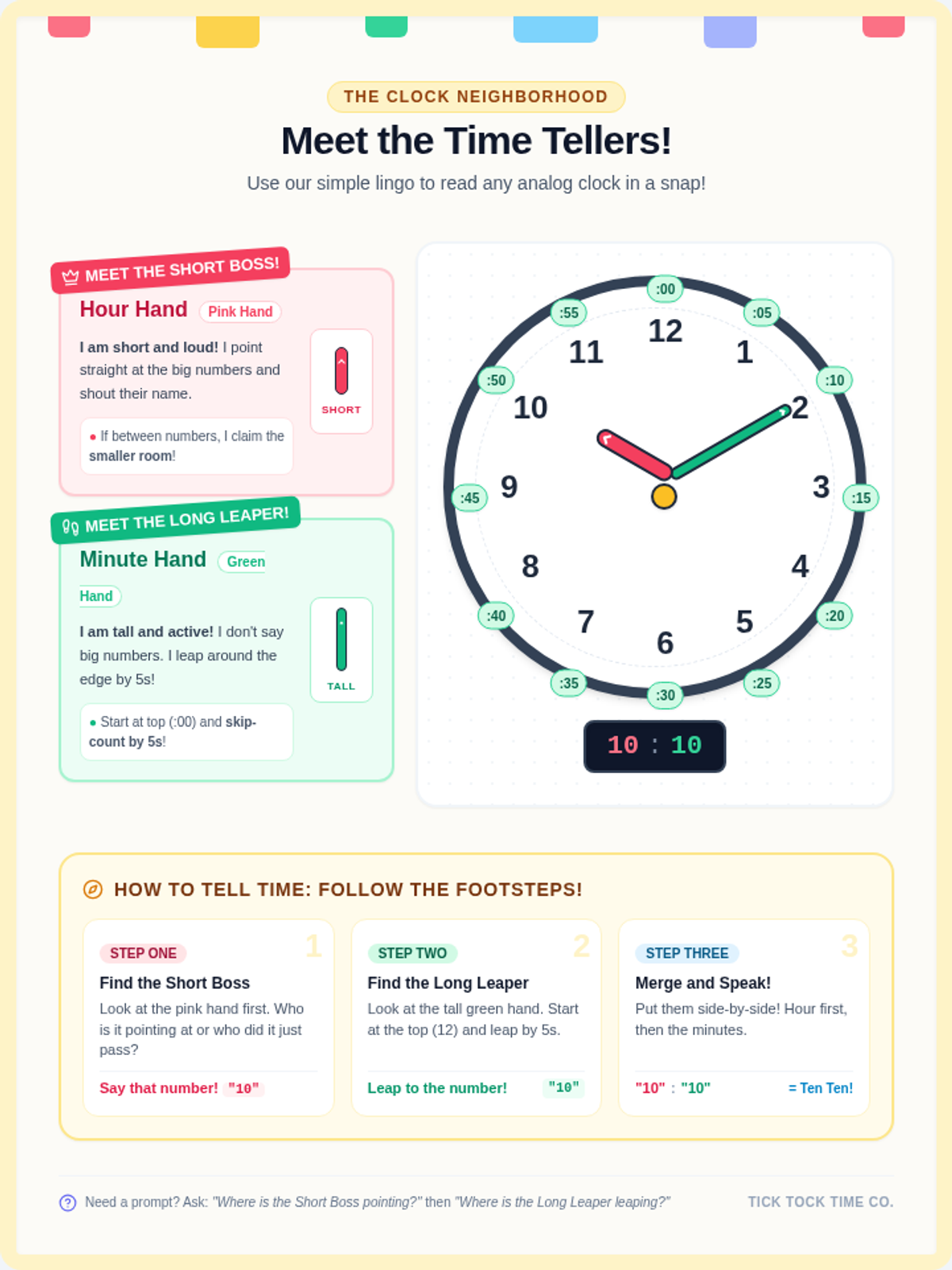
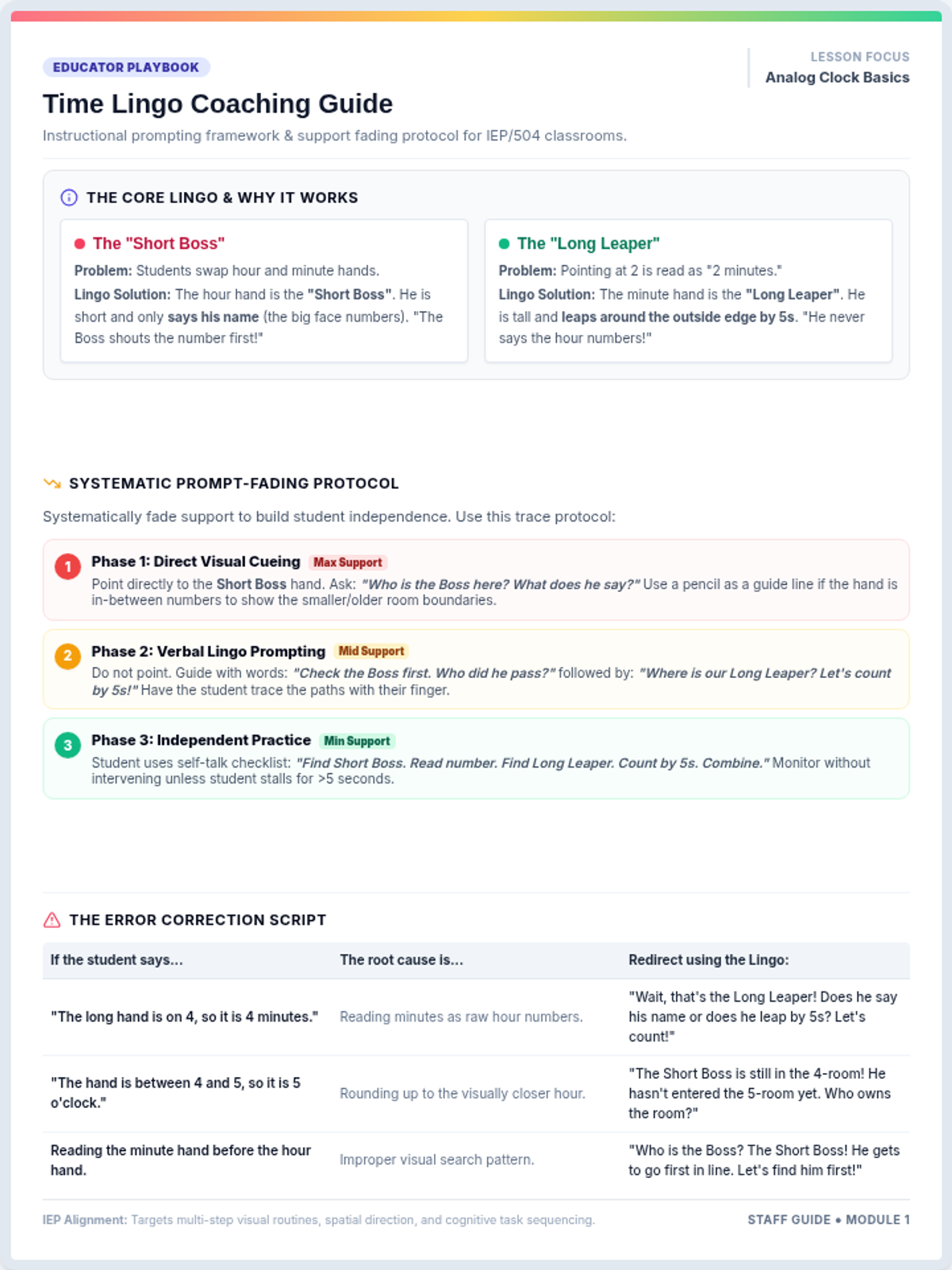
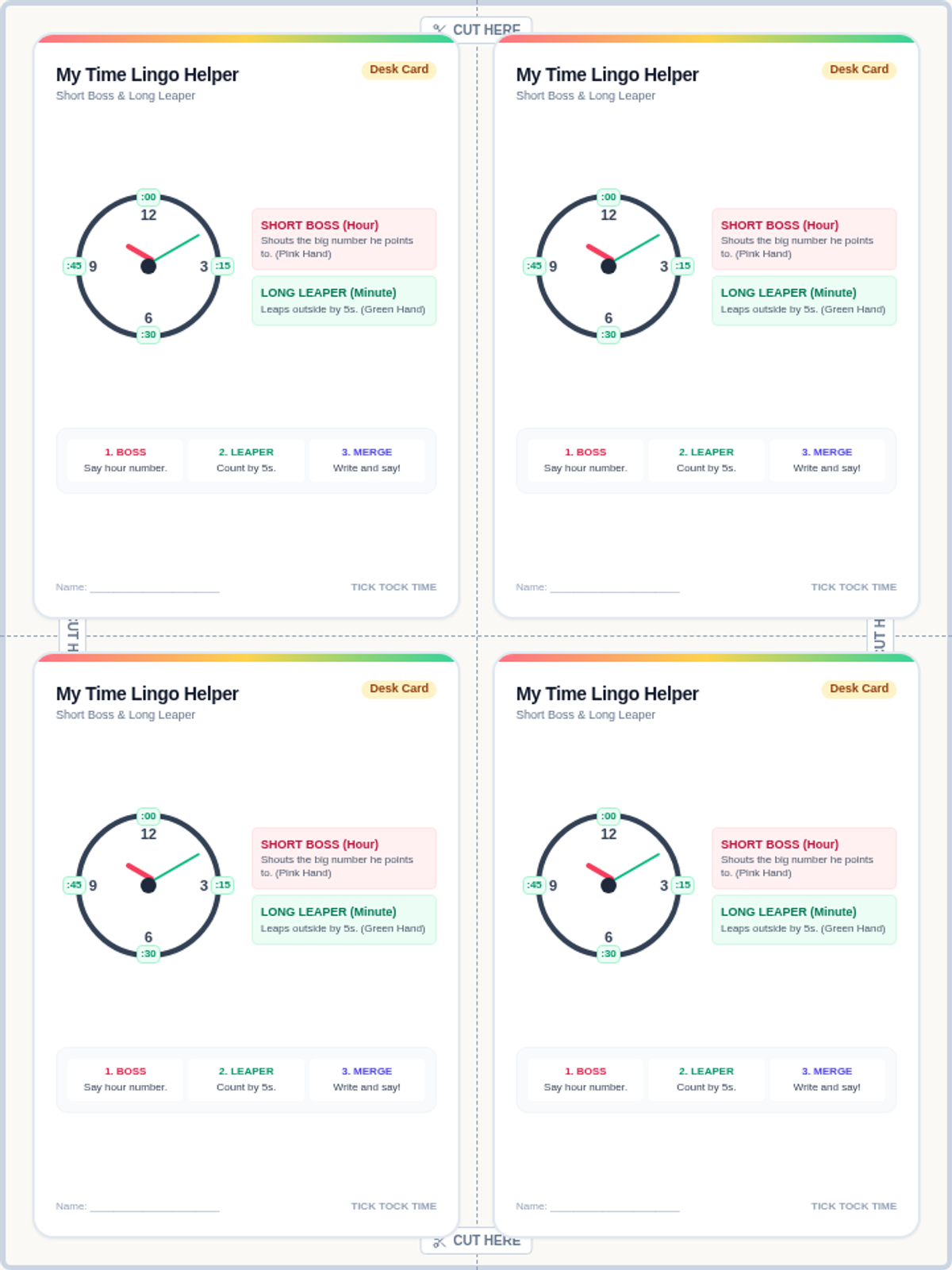
A specialized learning resource pack for teaching analog time using friendly, memorable lingo designed for students with IEP goals and general classroom support. Includes a high-impact visual poster, desktop reference mini-cards, and an educator coaching guide.
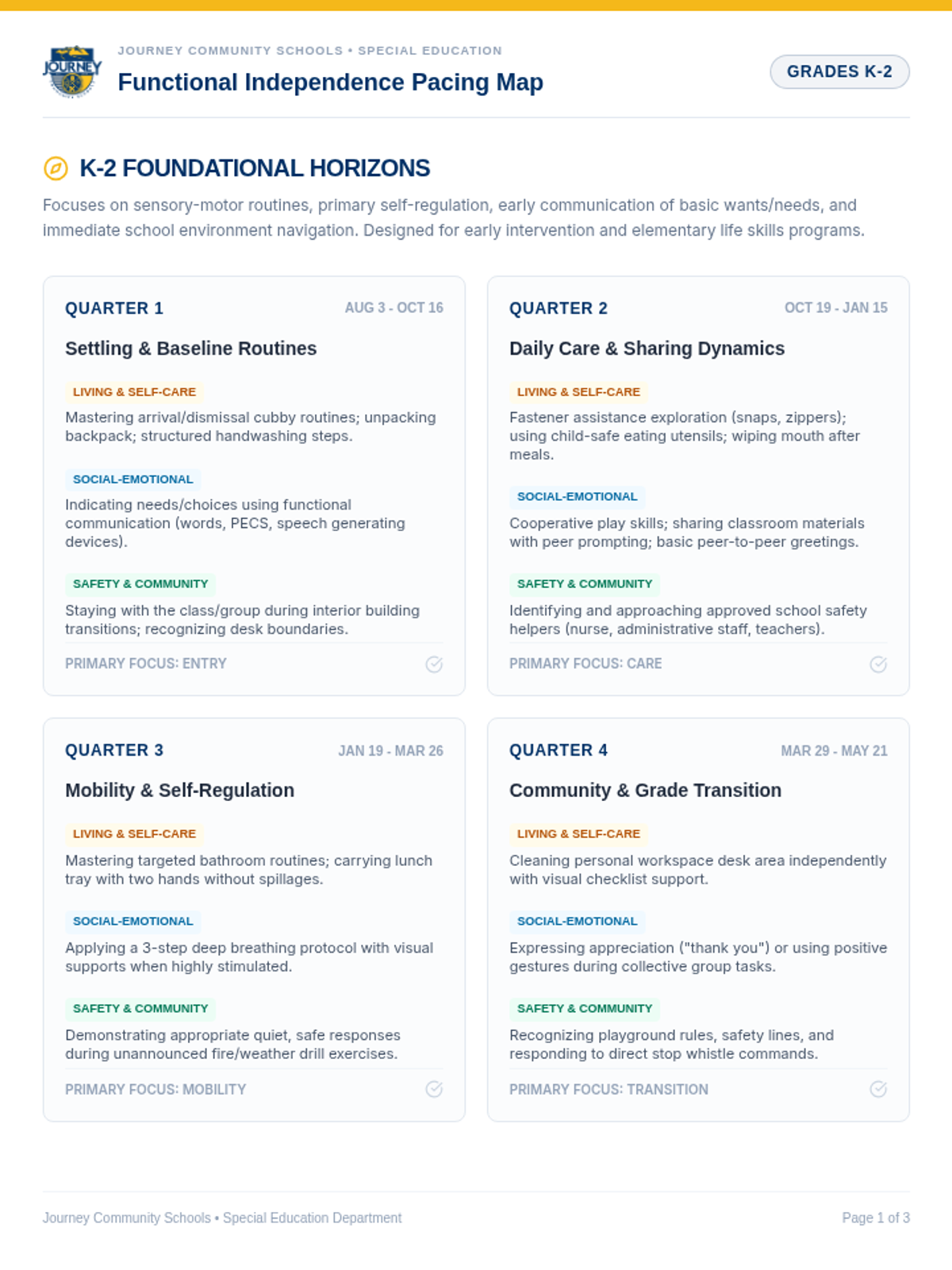
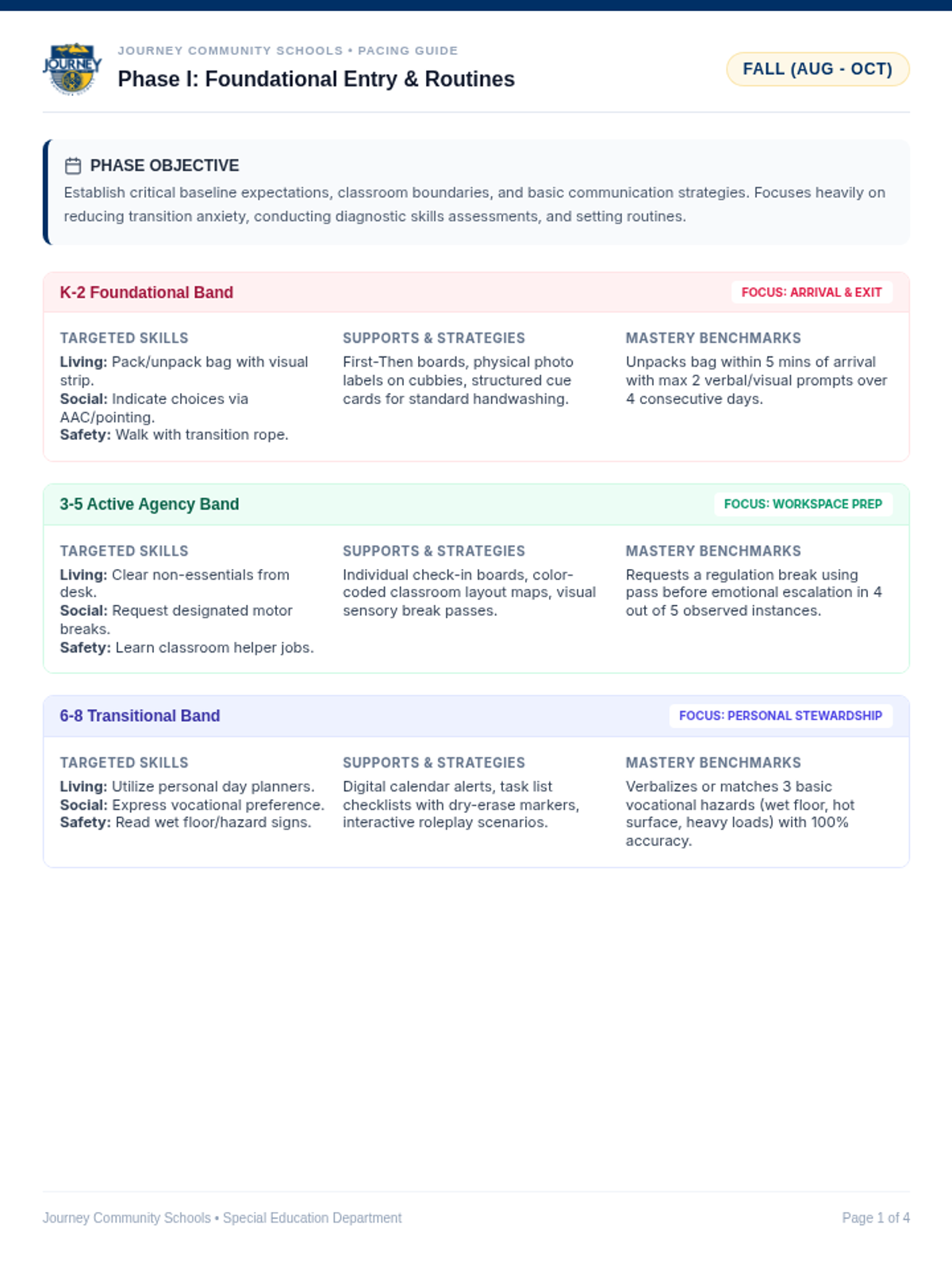
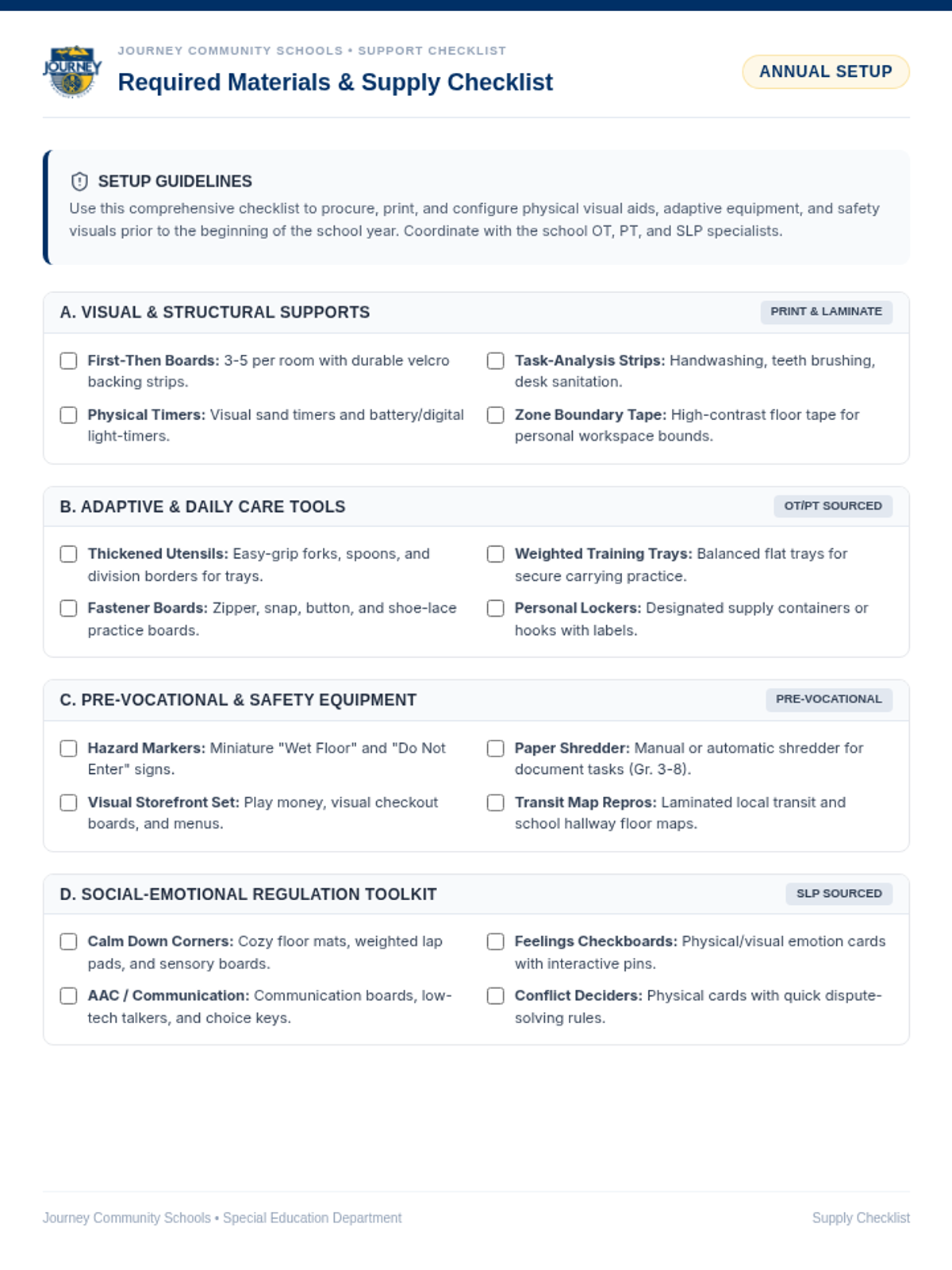
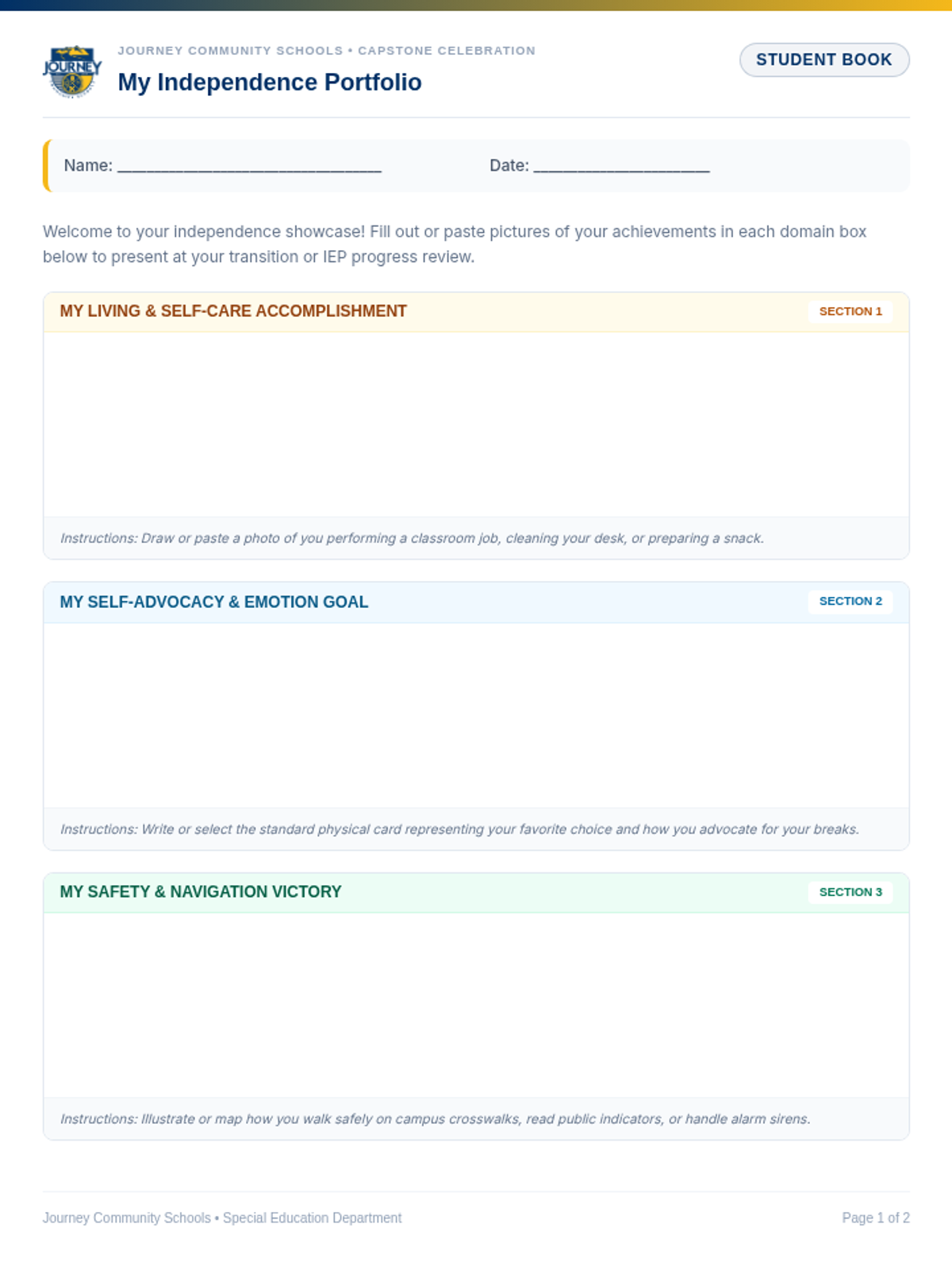
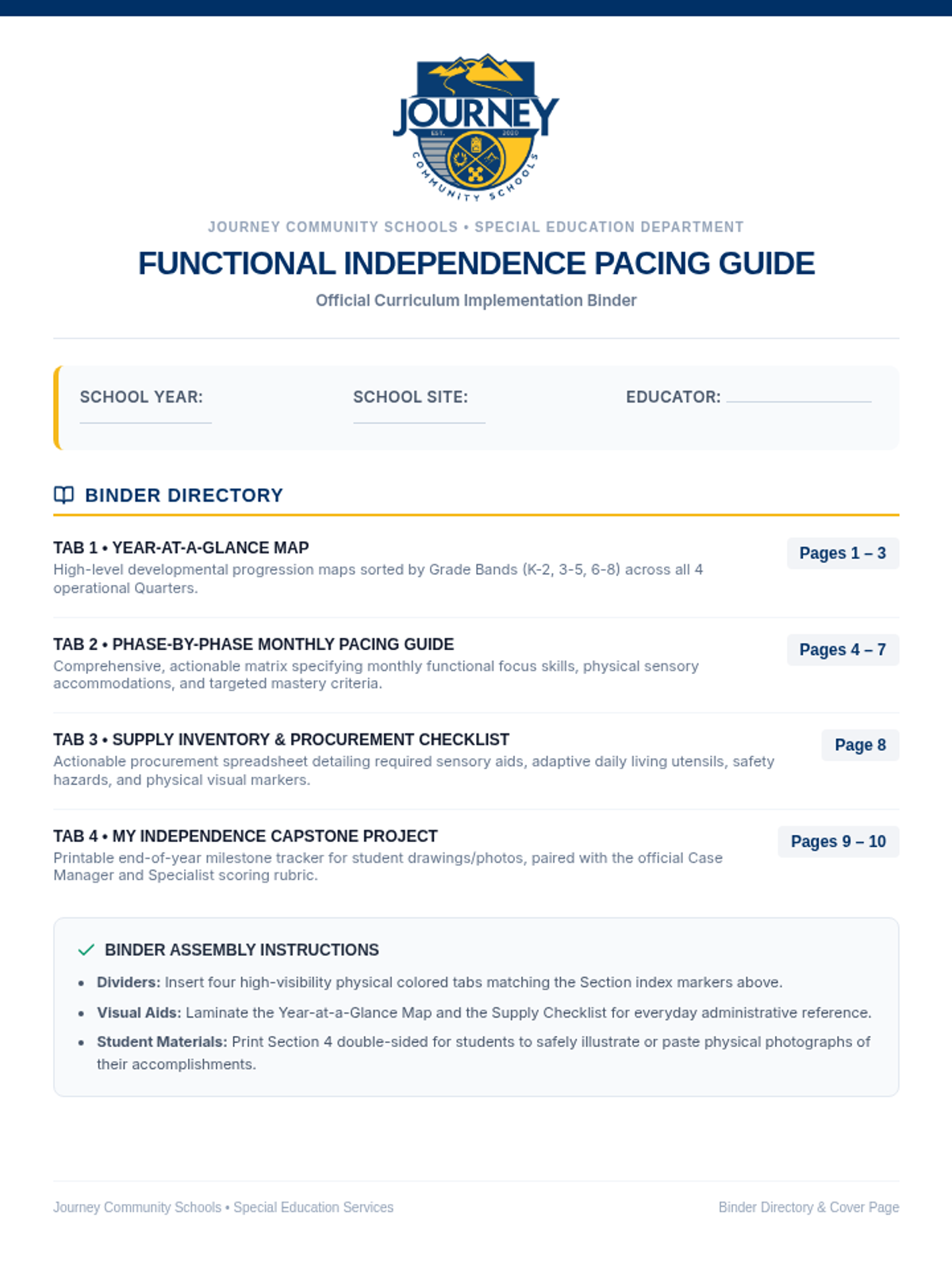
A comprehensive annual functional skills pacing framework for grades K-8. This framework structures a whole-school alignment across living, social-emotional, and community safety domains, optimized for special education administrators, resource teachers, and service providers.
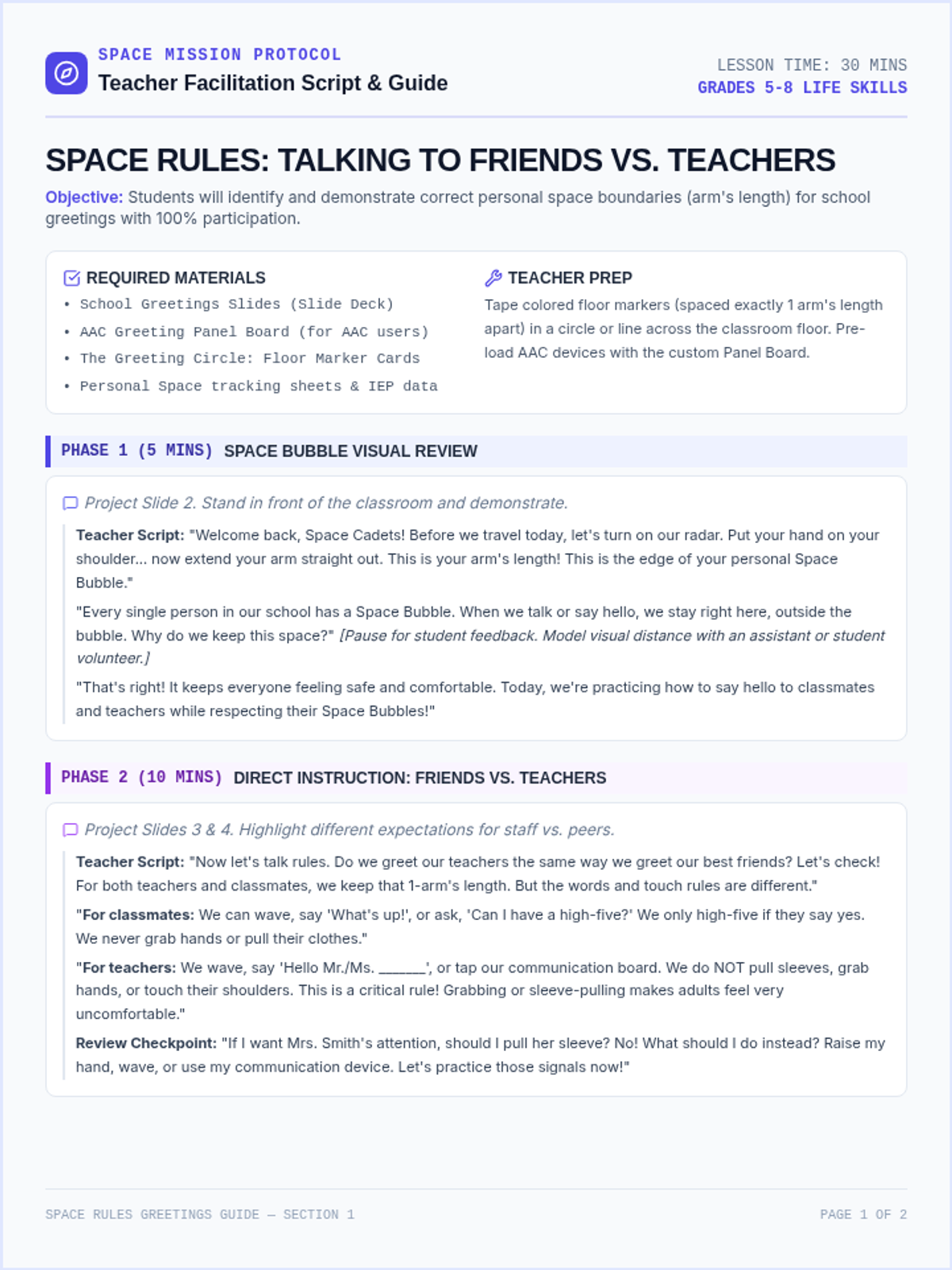
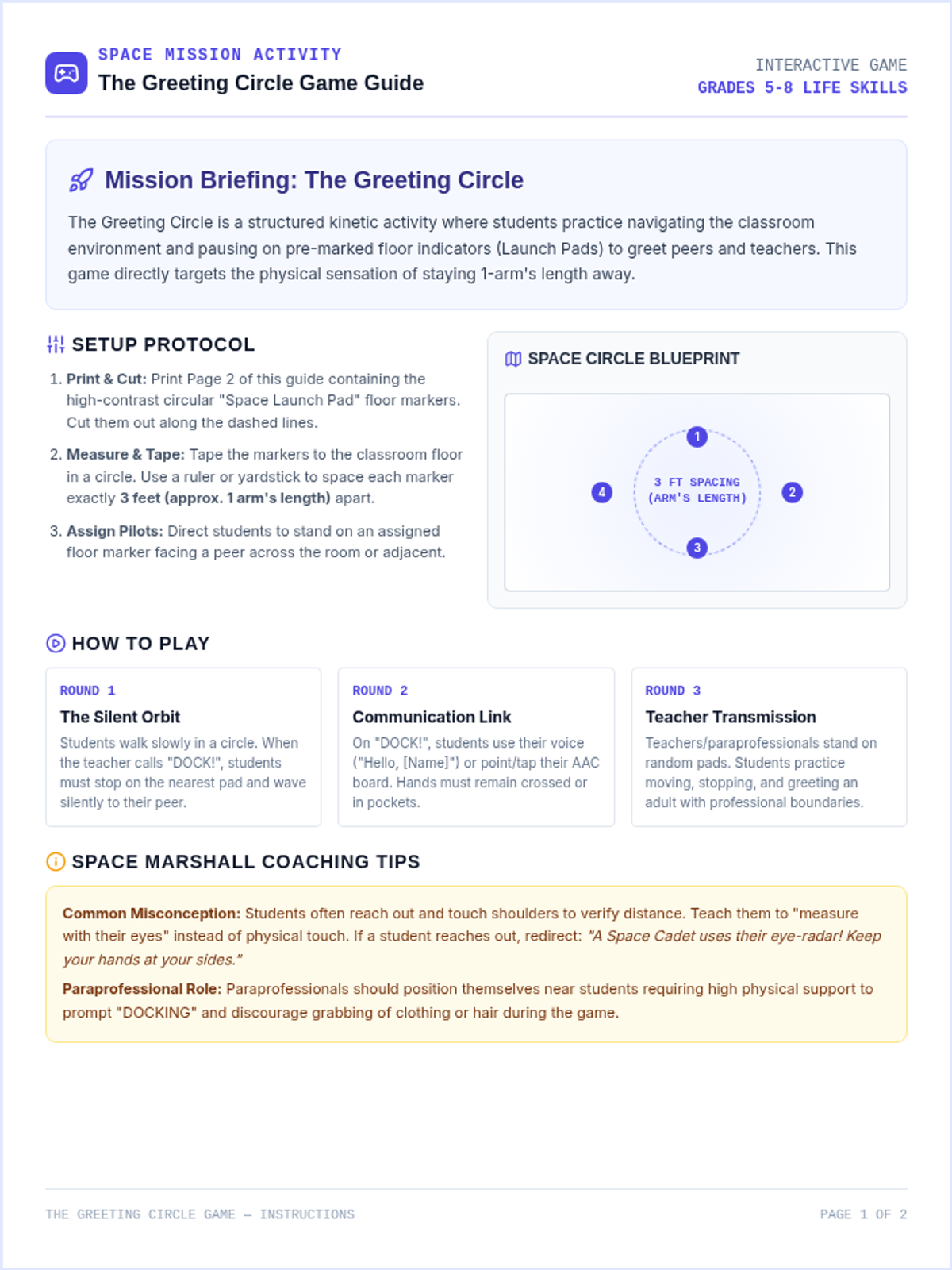
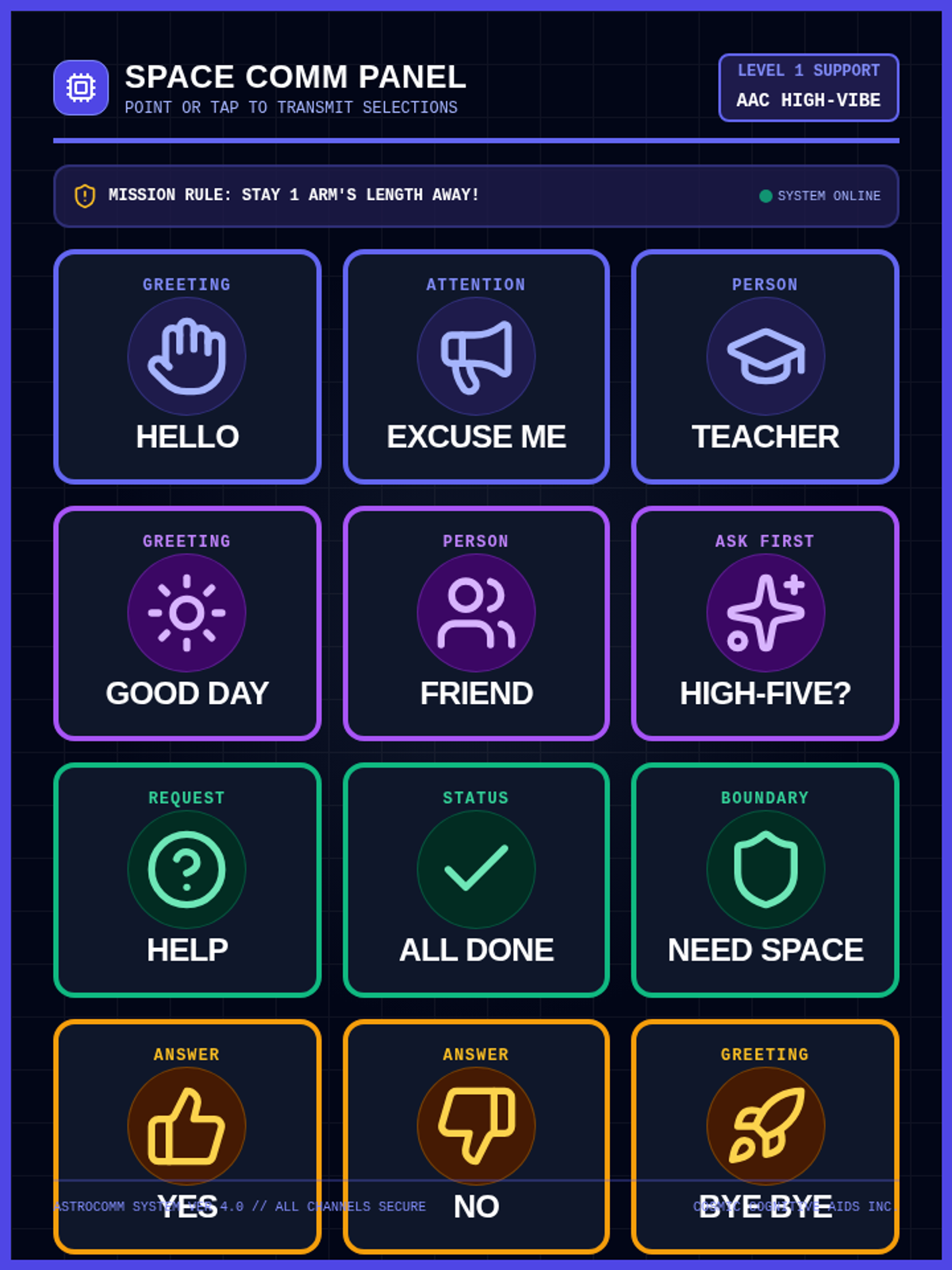
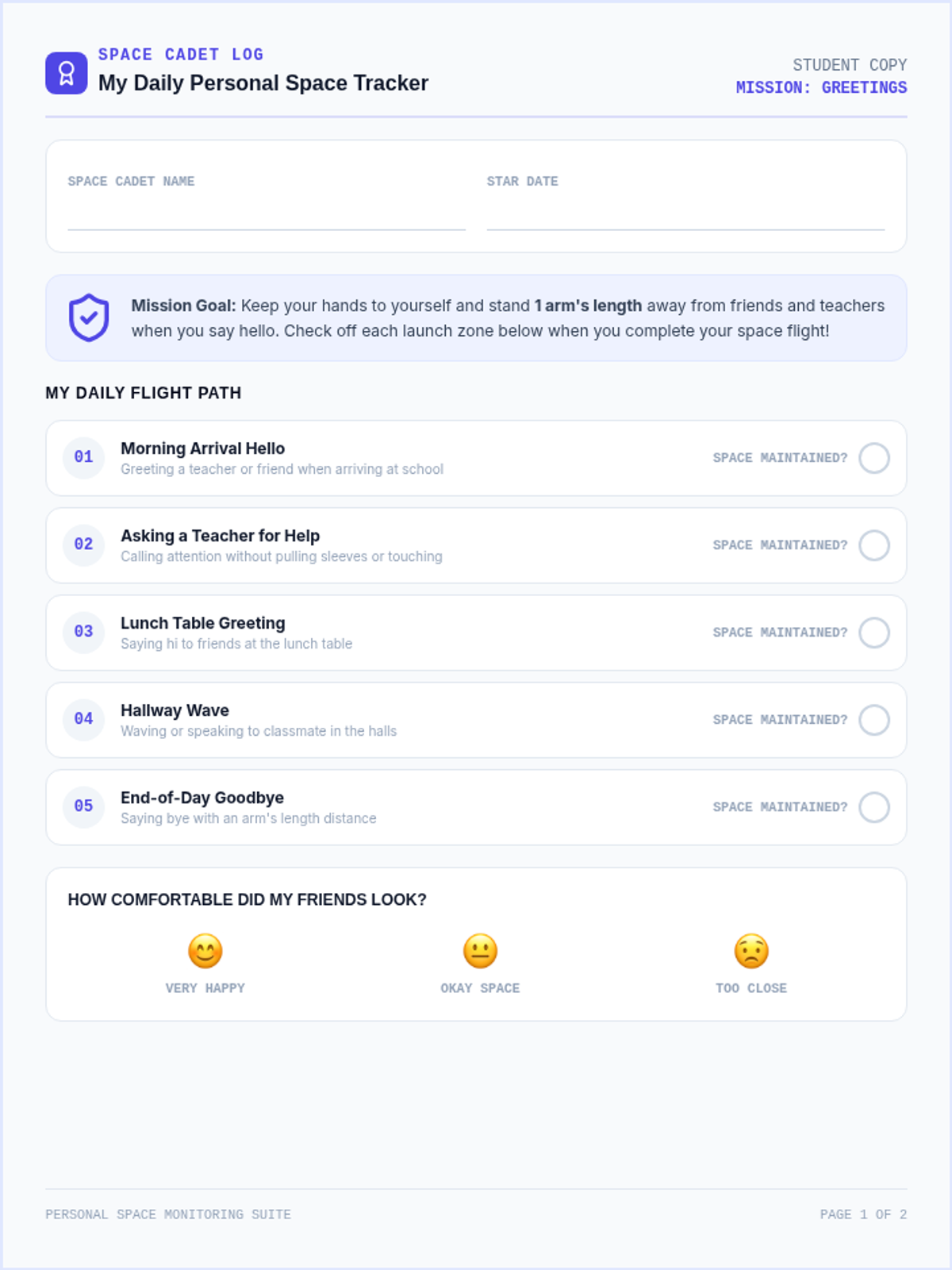
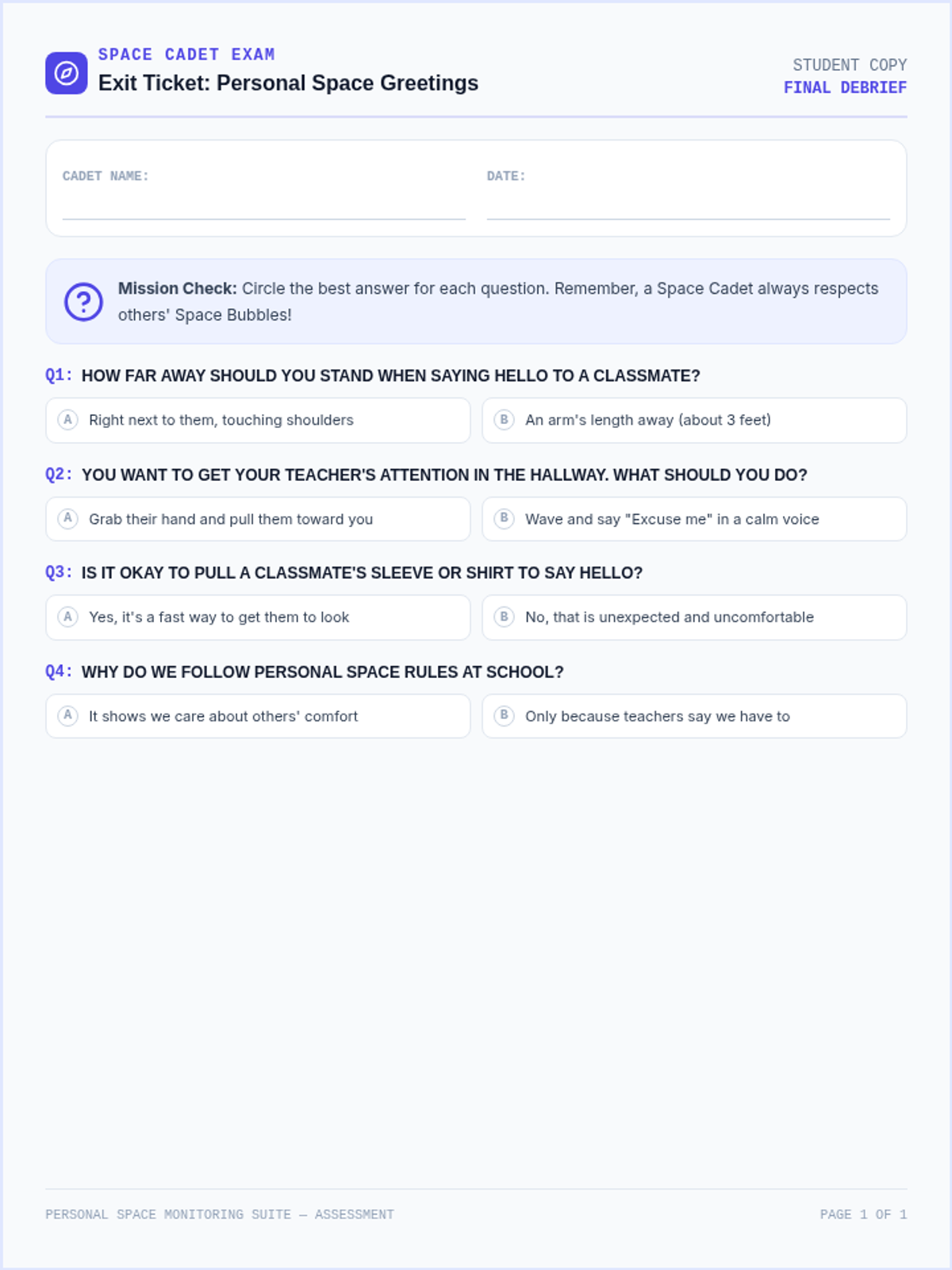
A Life Skills lesson for Grades 5-8 teaching personal space boundaries during school greetings. Students learn to maintain an arm's length distance, avoid unexpected touching, use respectful attention-seeking strategies, and practice greetings using AAC and visual supports.
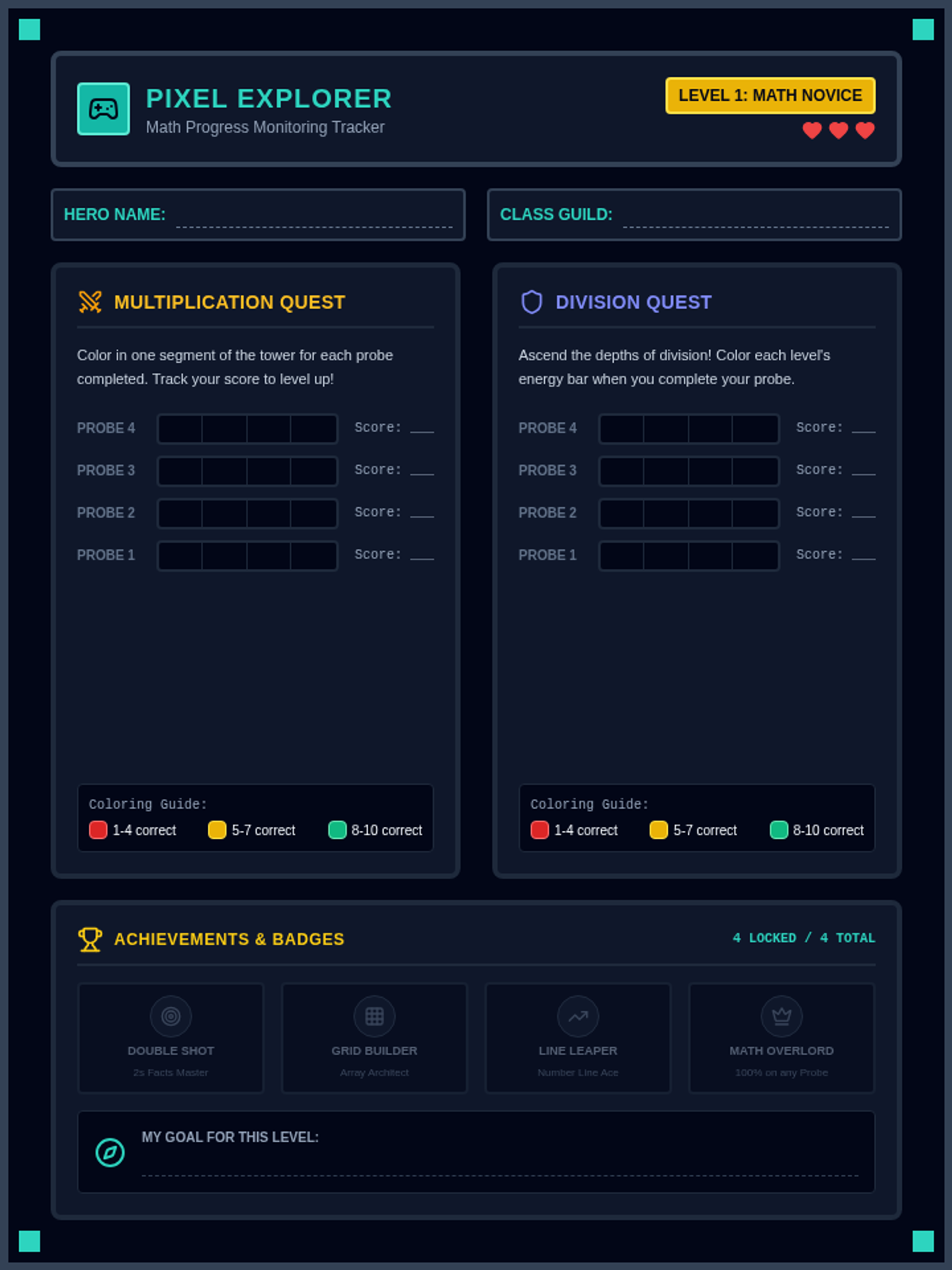
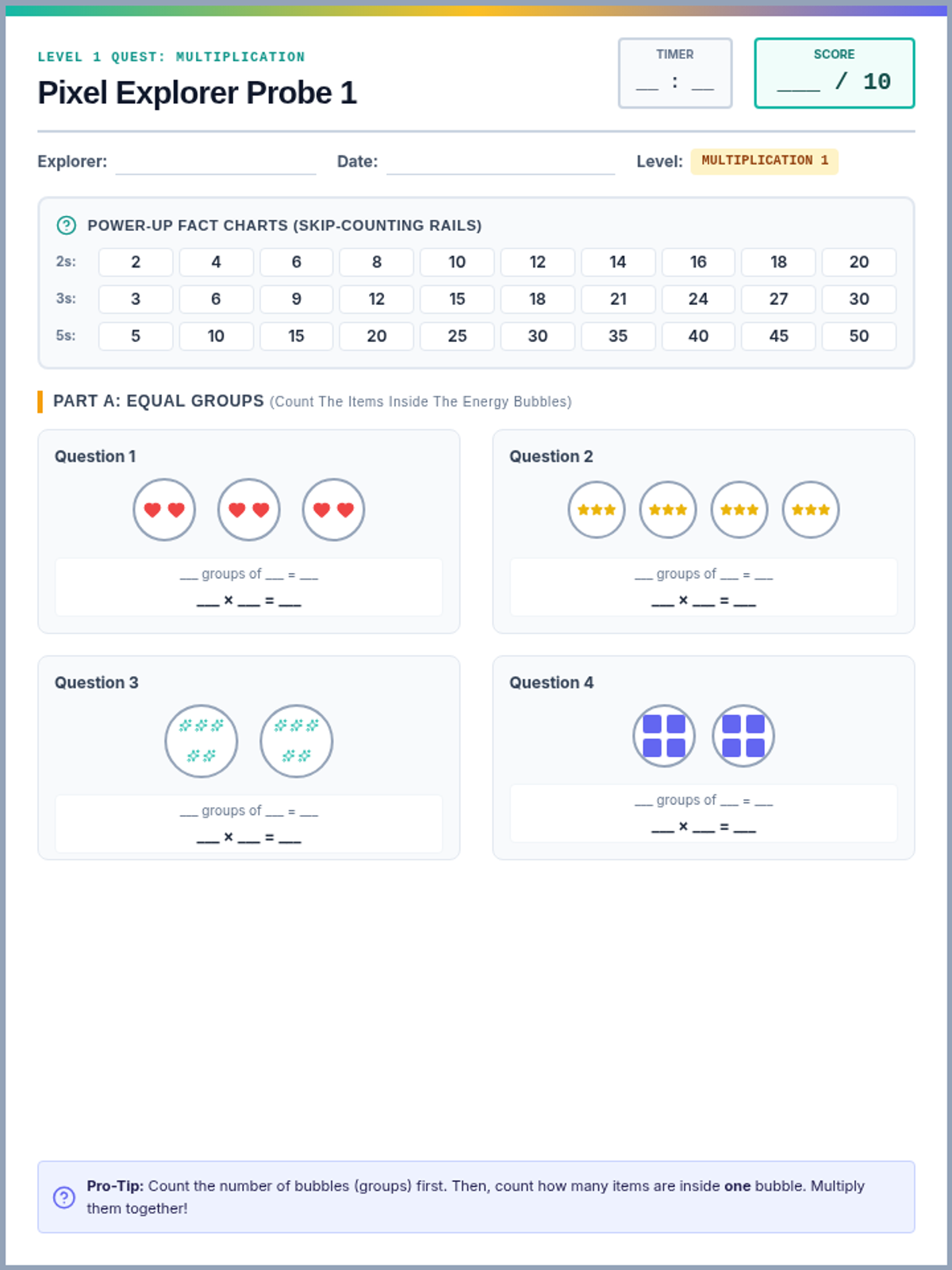
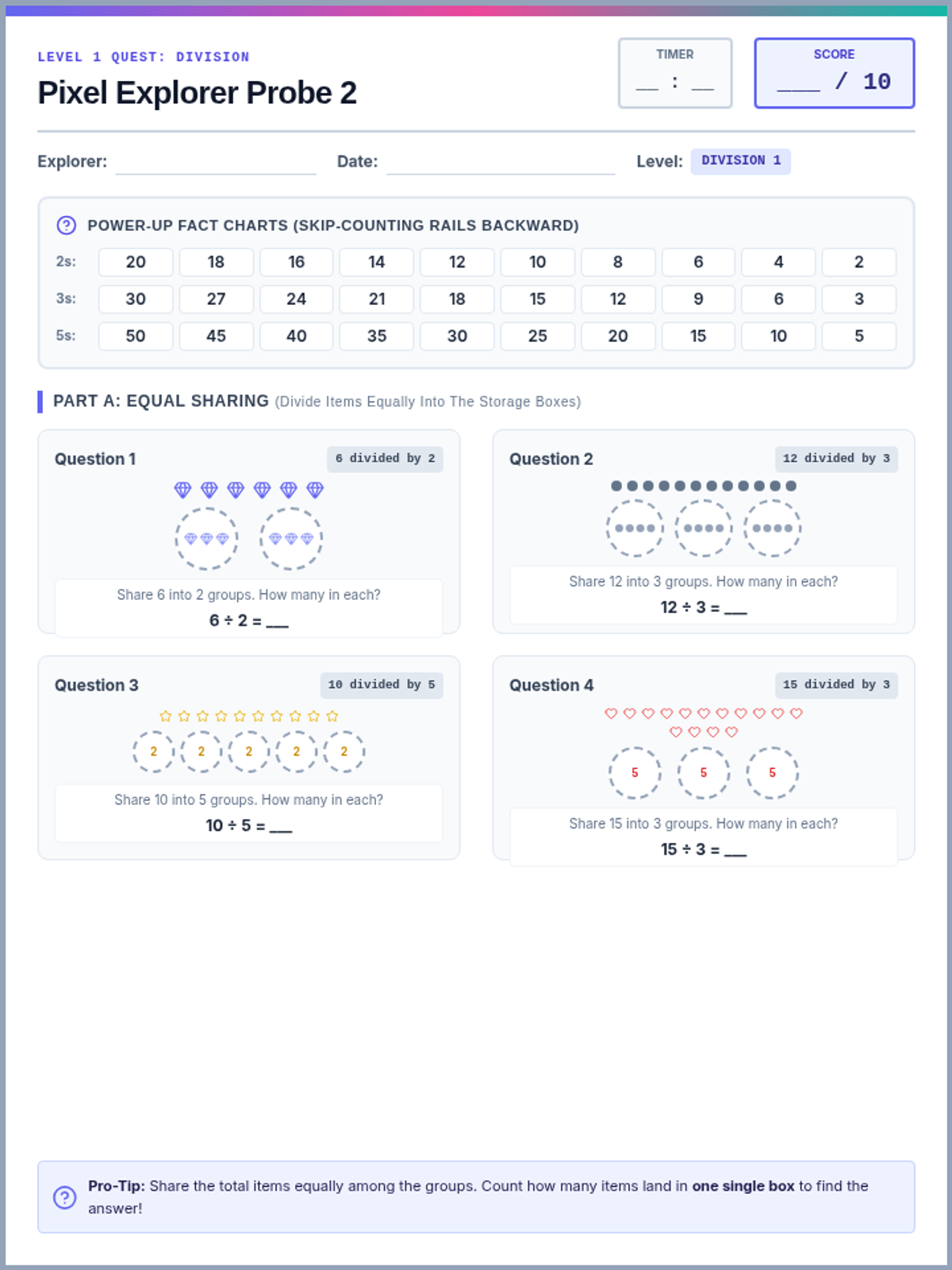
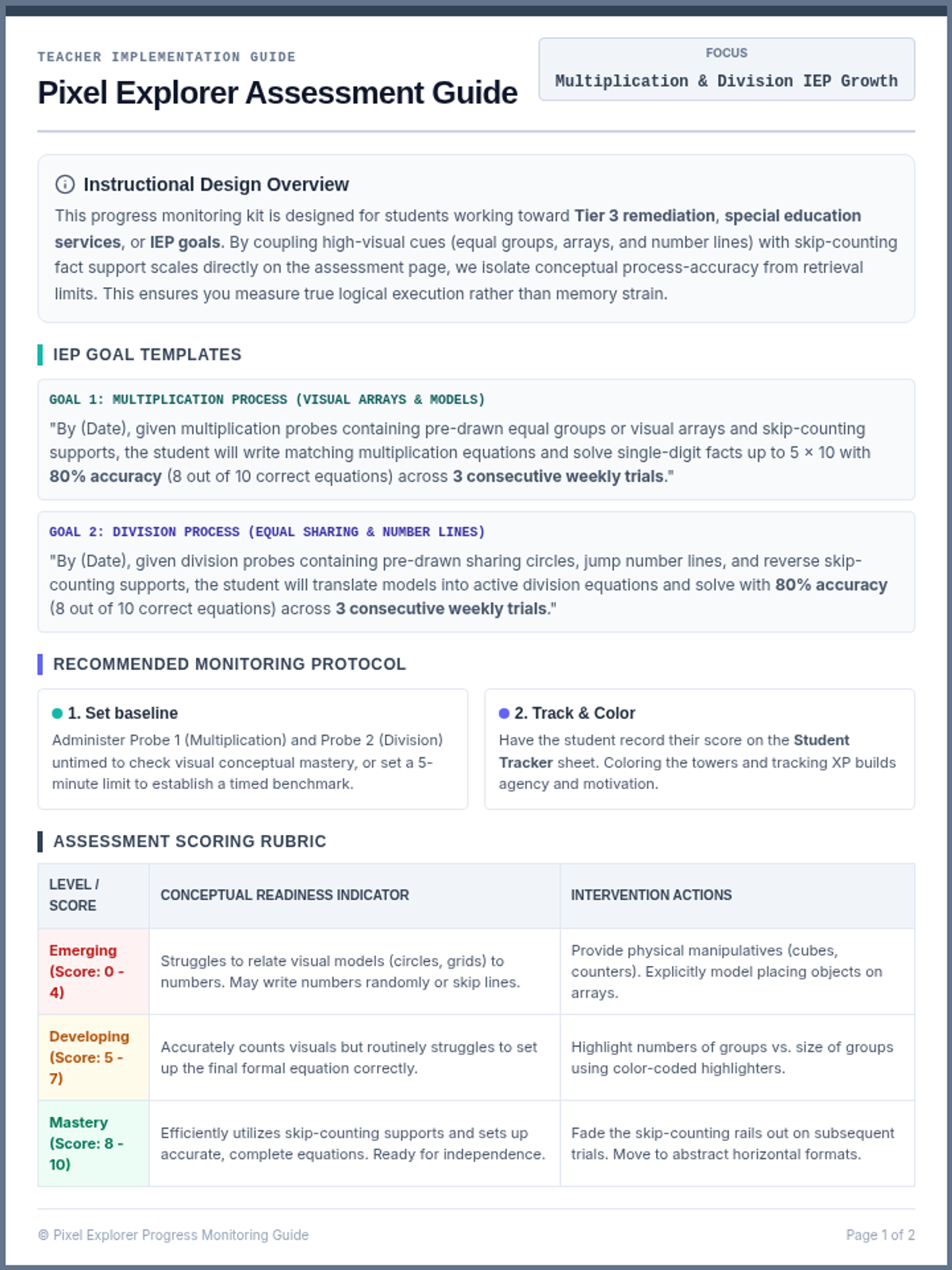
A structured progress monitoring kit for division and multiplication, designed with retro-game aesthetics. Includes two highly-scaffolded visual probes, an interactive student tracker, and a comprehensive teacher guide with IEP goals.
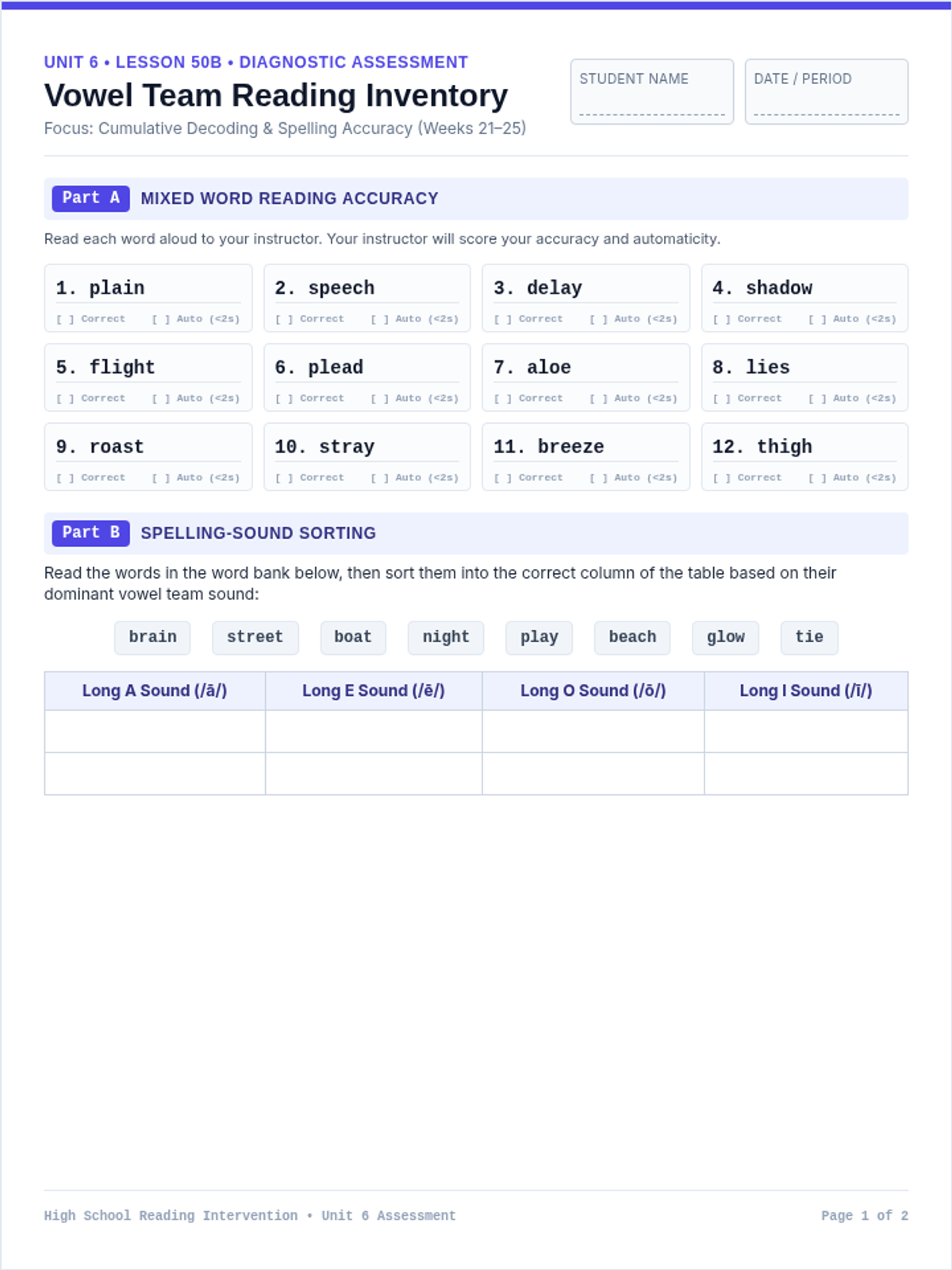
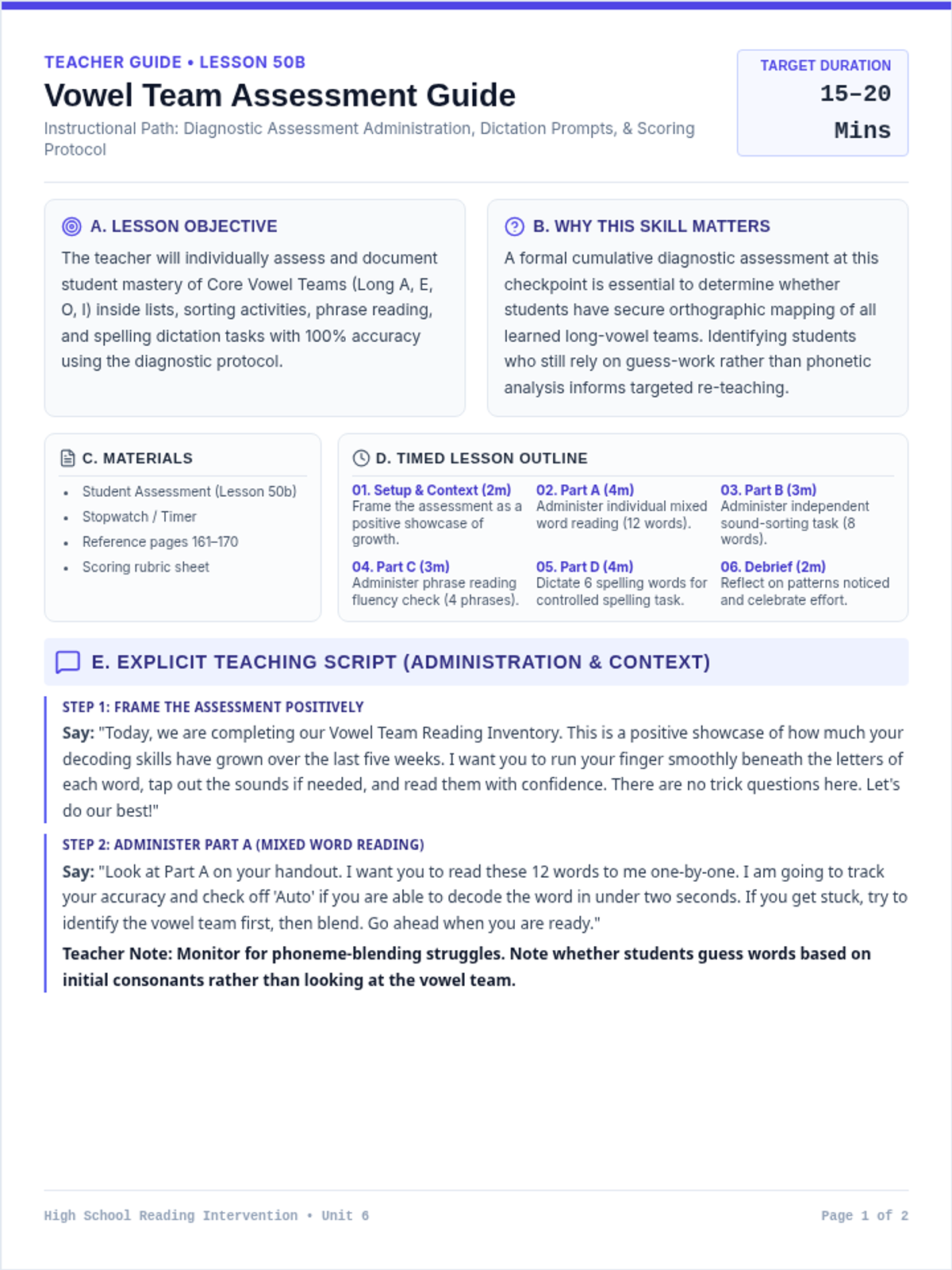
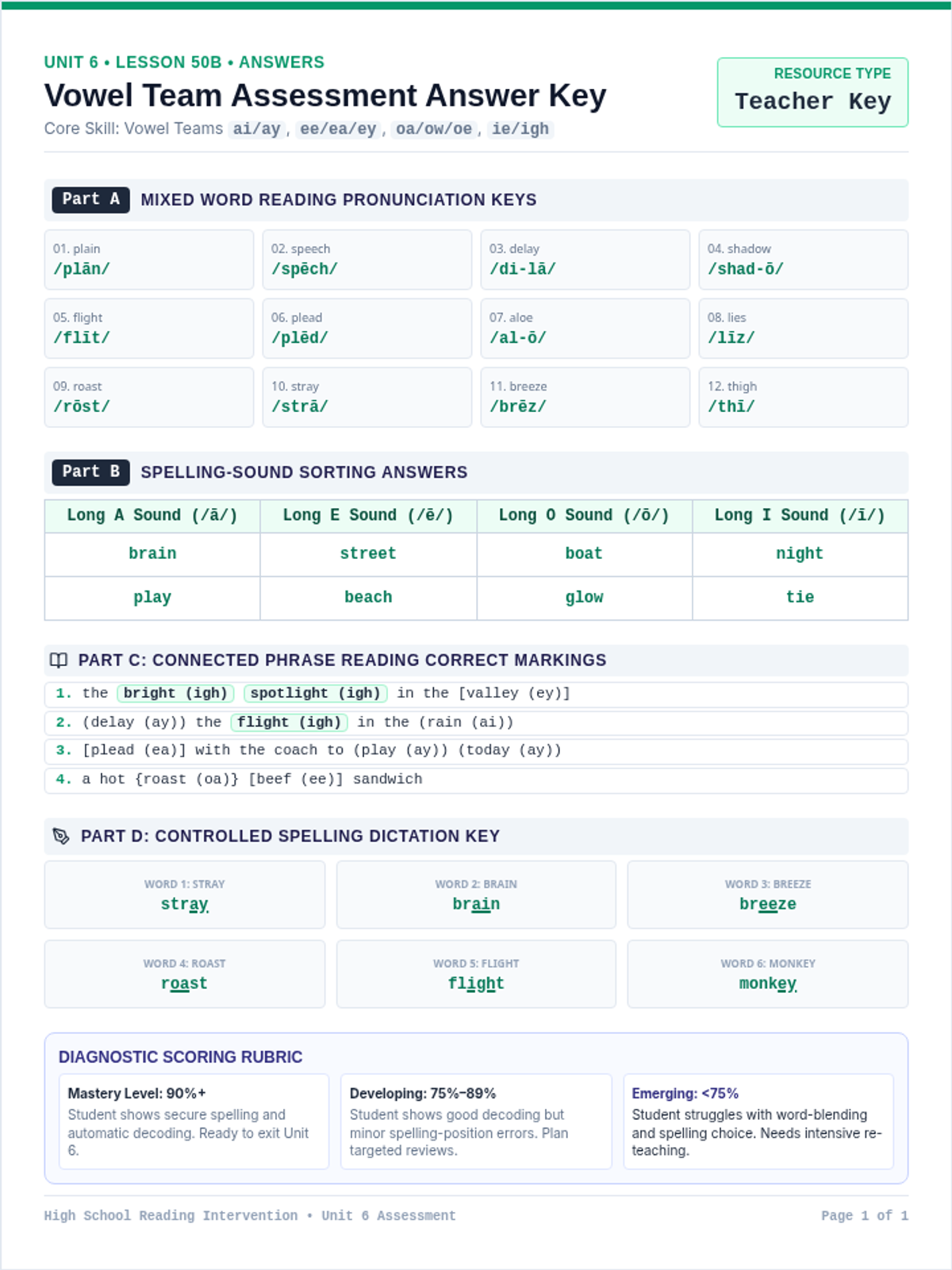
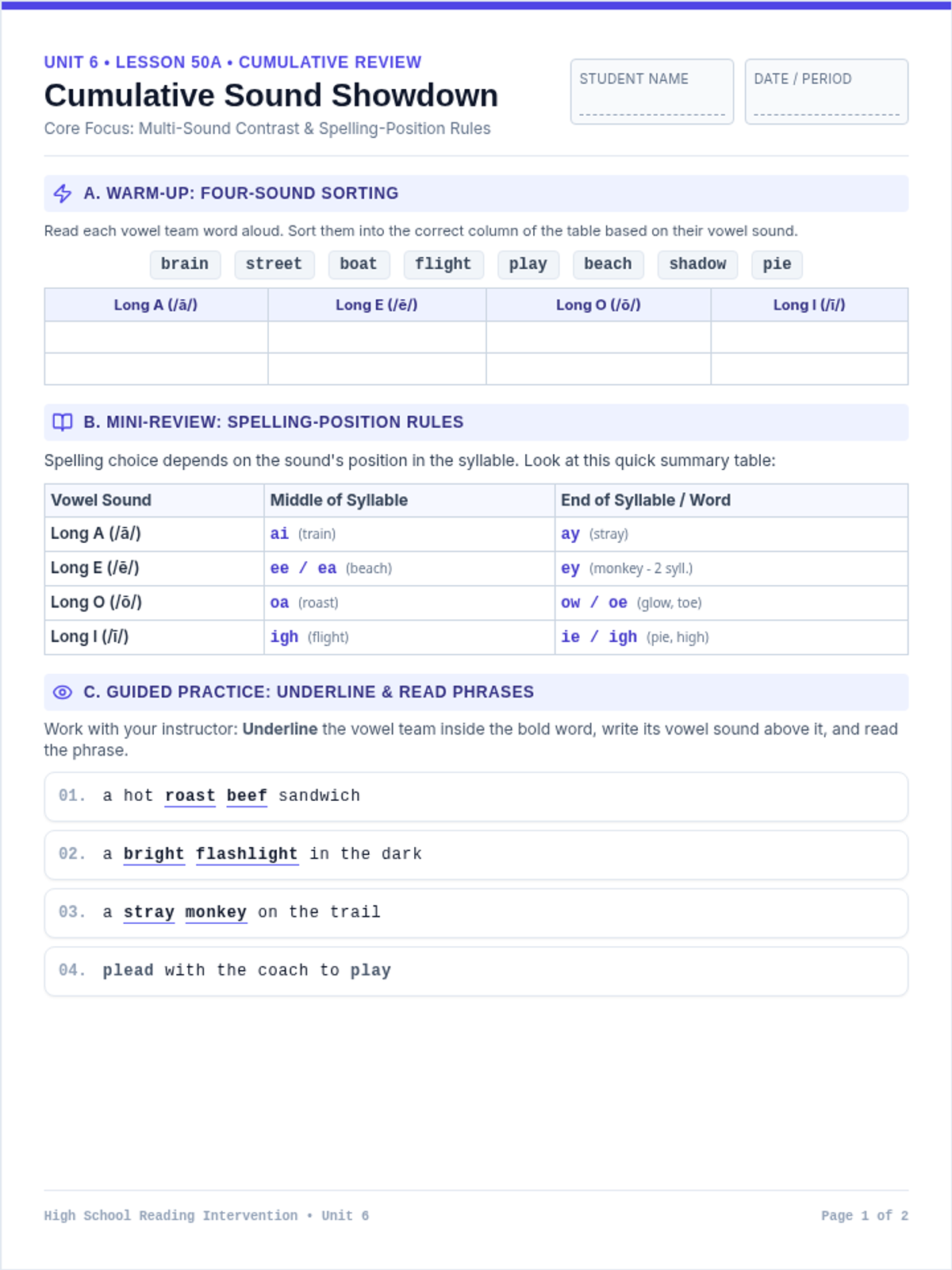
A formal cumulative diagnostic assessment taking place after Lesson 50a. It serves as the Unit 6 Vowel Team Reading Inventory, evaluating individual student spelling, reading accuracy, connected fluency, and positional sorting.
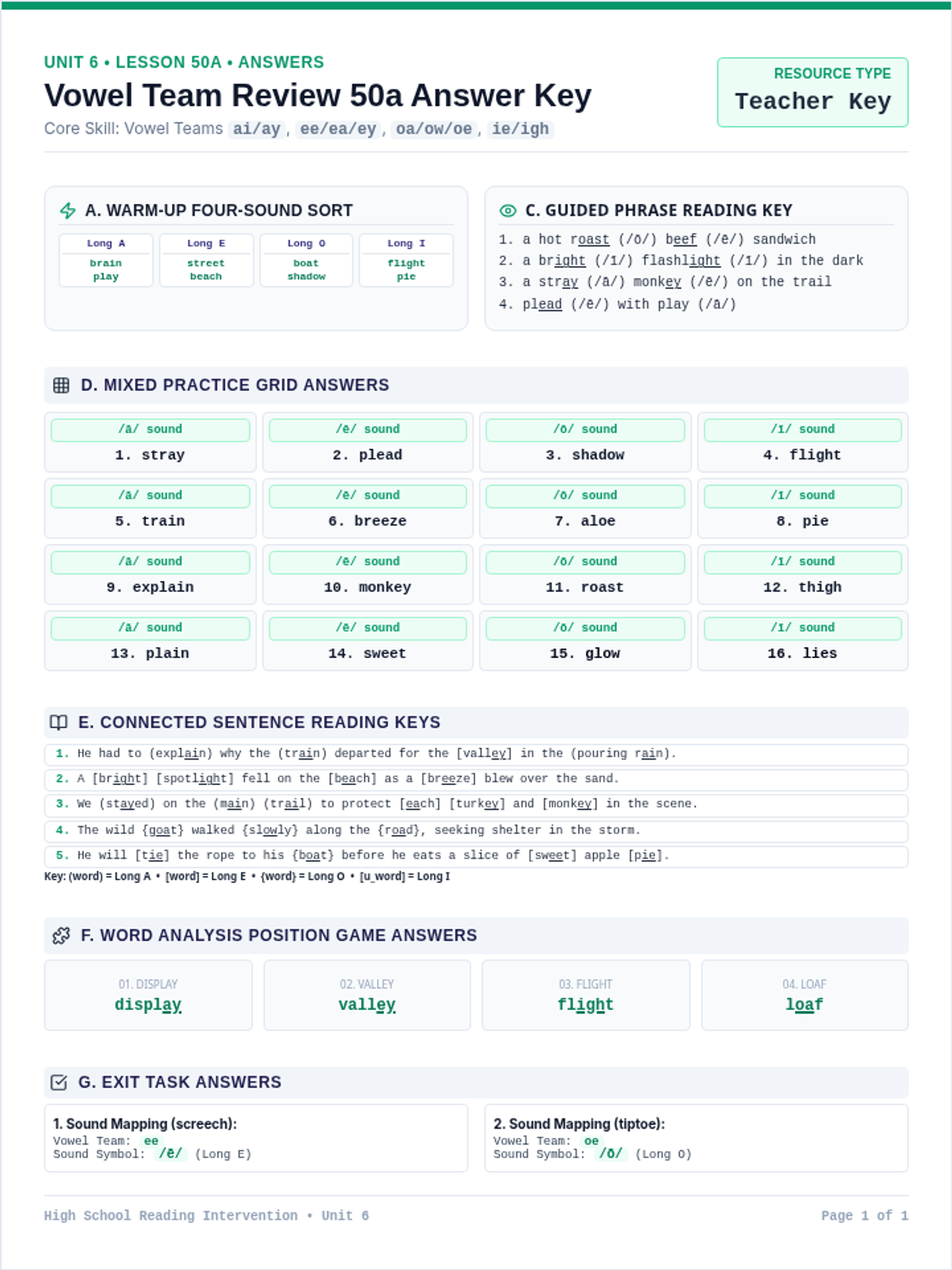
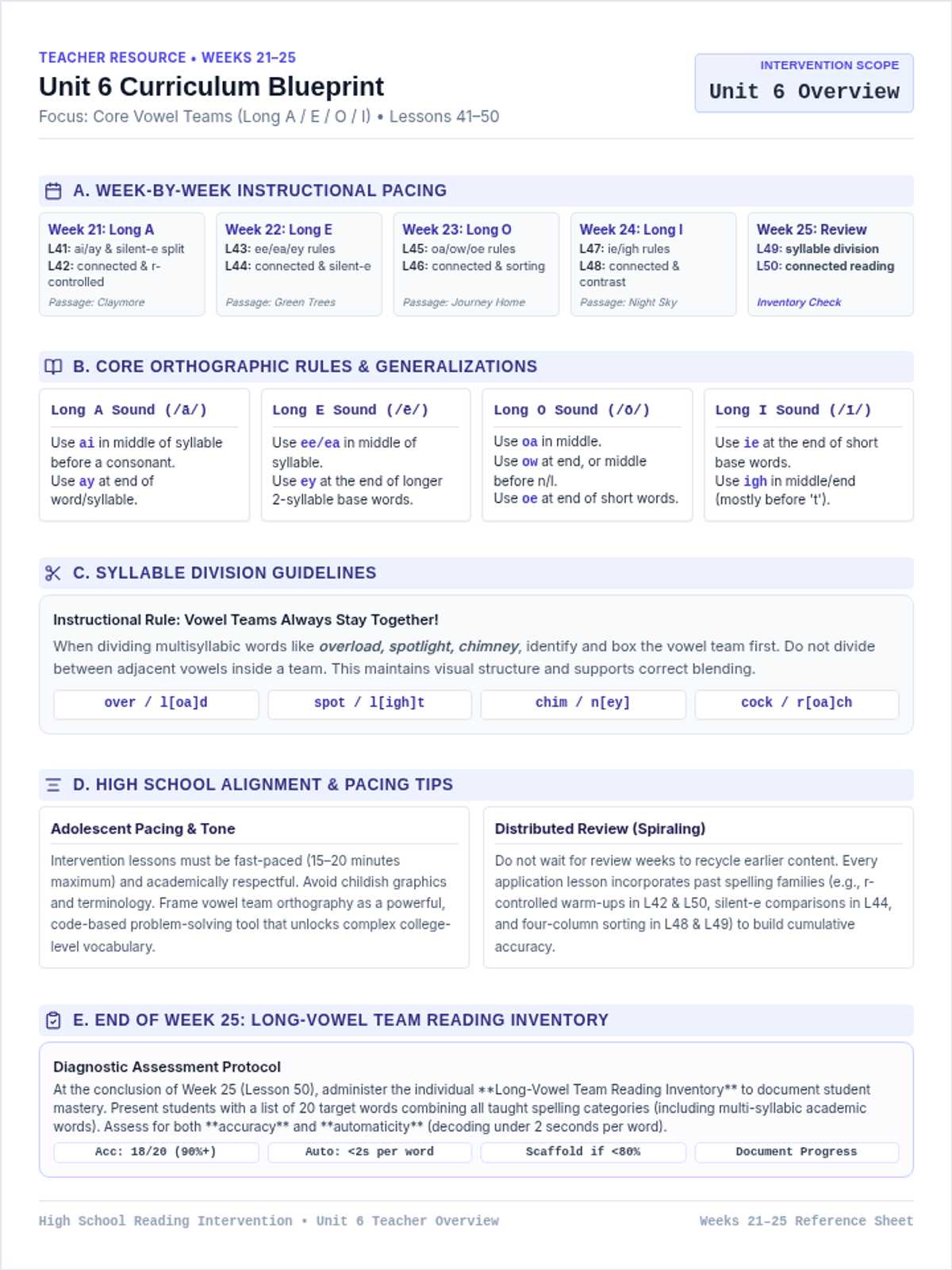
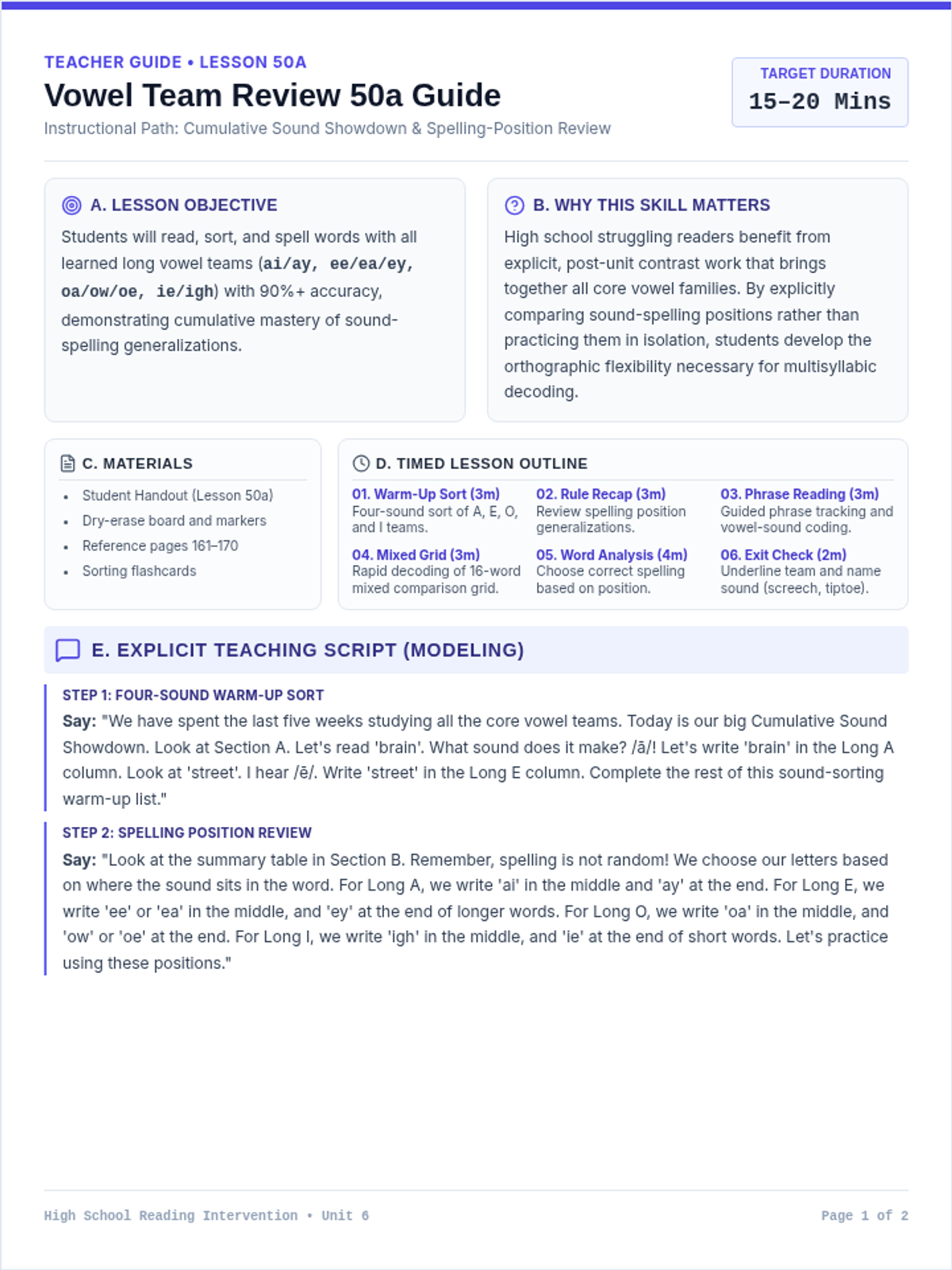
A rigorous, comprehensive cumulative review lesson taking place after Lesson 50. It provides heavy comparison across all learned Unit 6 vowel teams (ai/ay, ee/ea/ey, oa/ow/oe, ie/igh) through spelling-position games, phrase-level decoding, and rapid reading fluency drills.
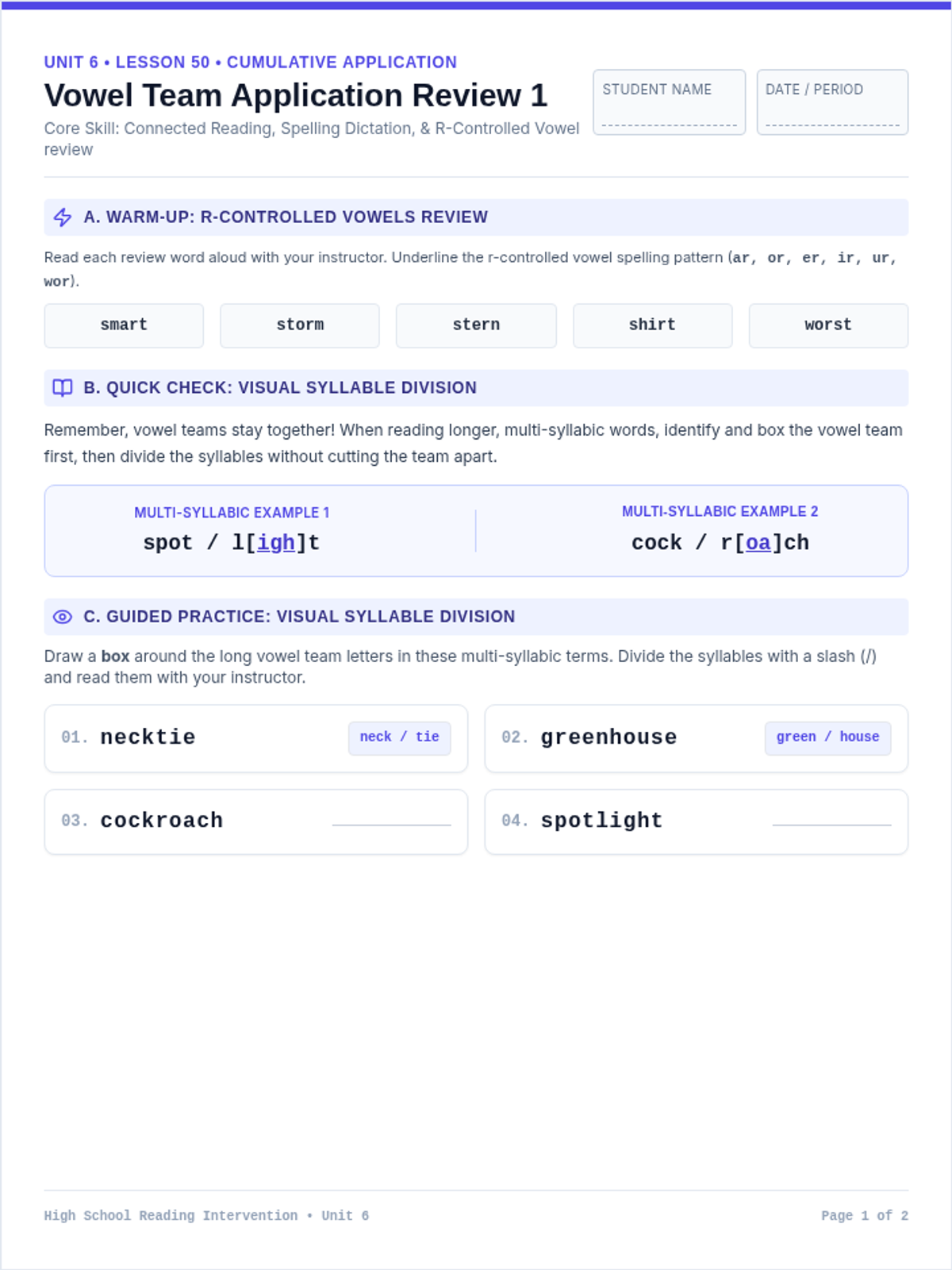
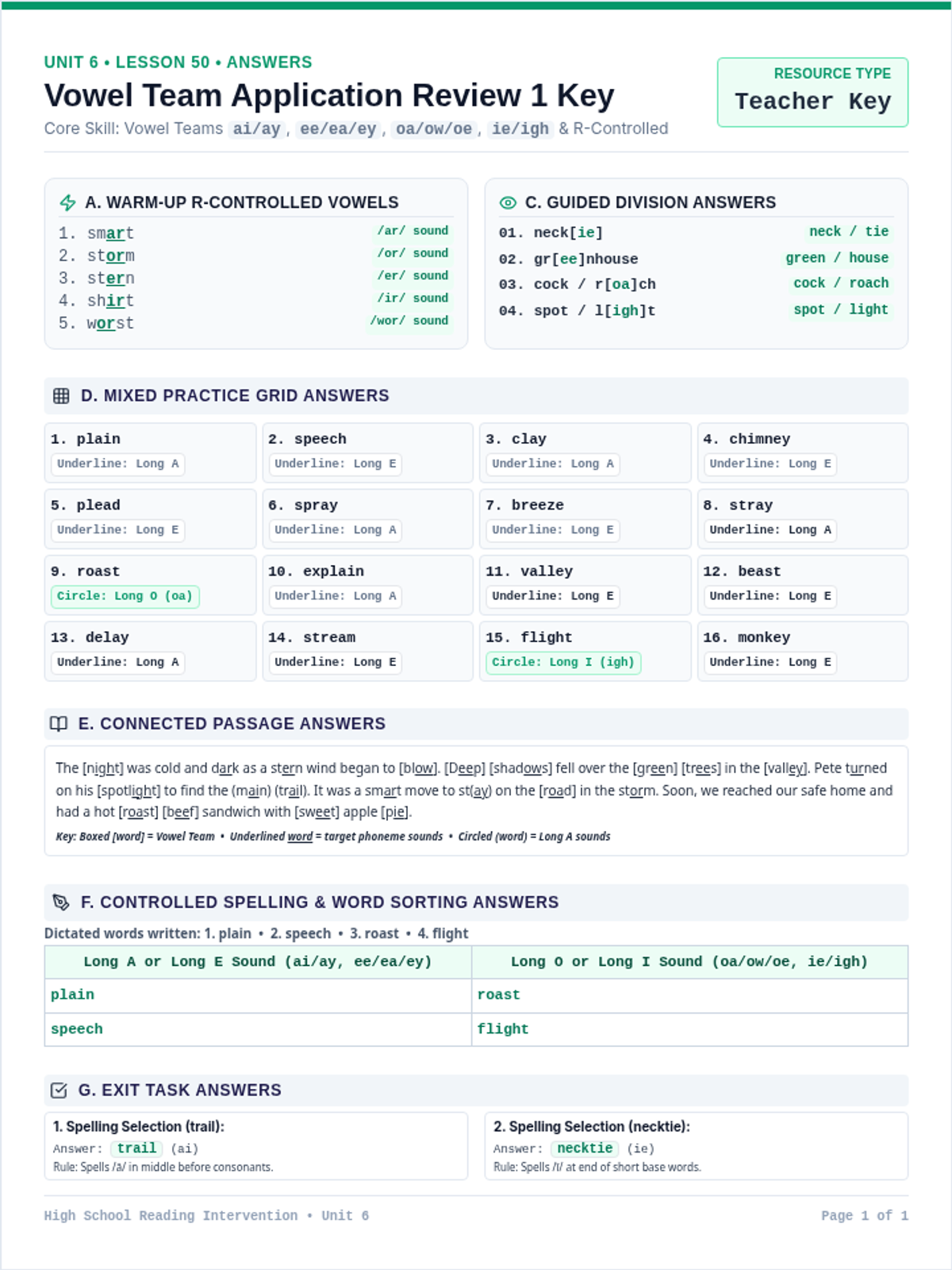
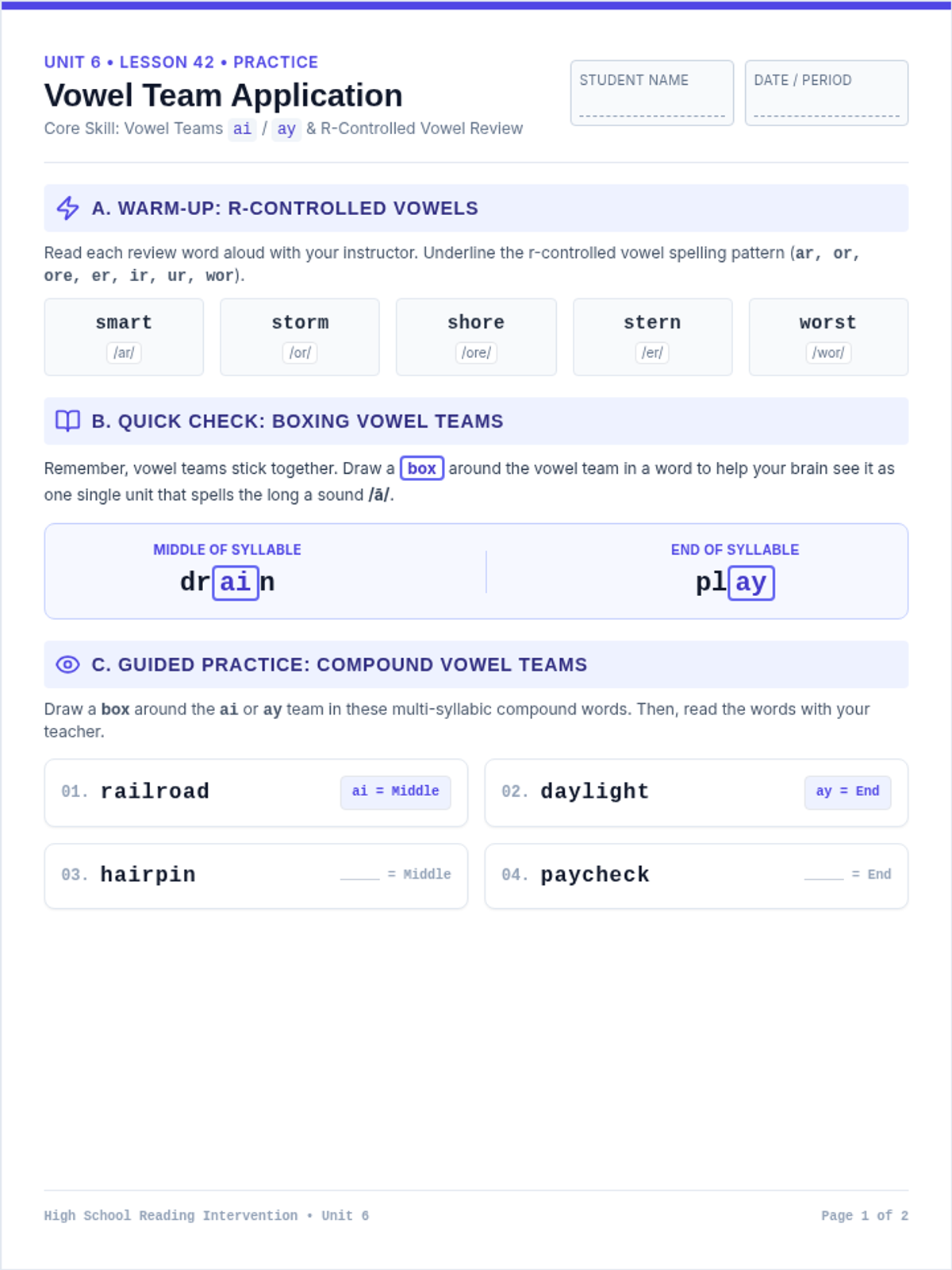
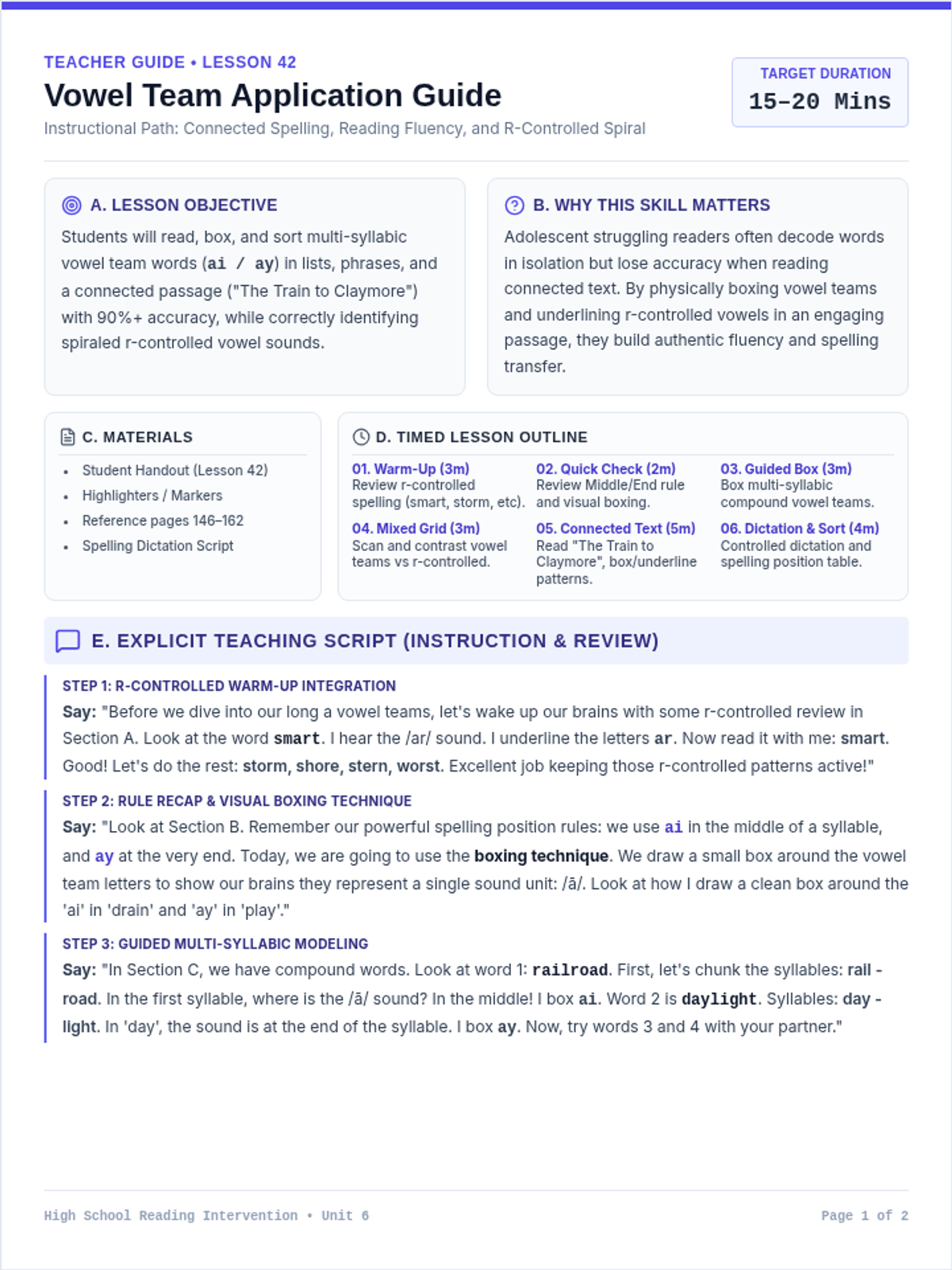
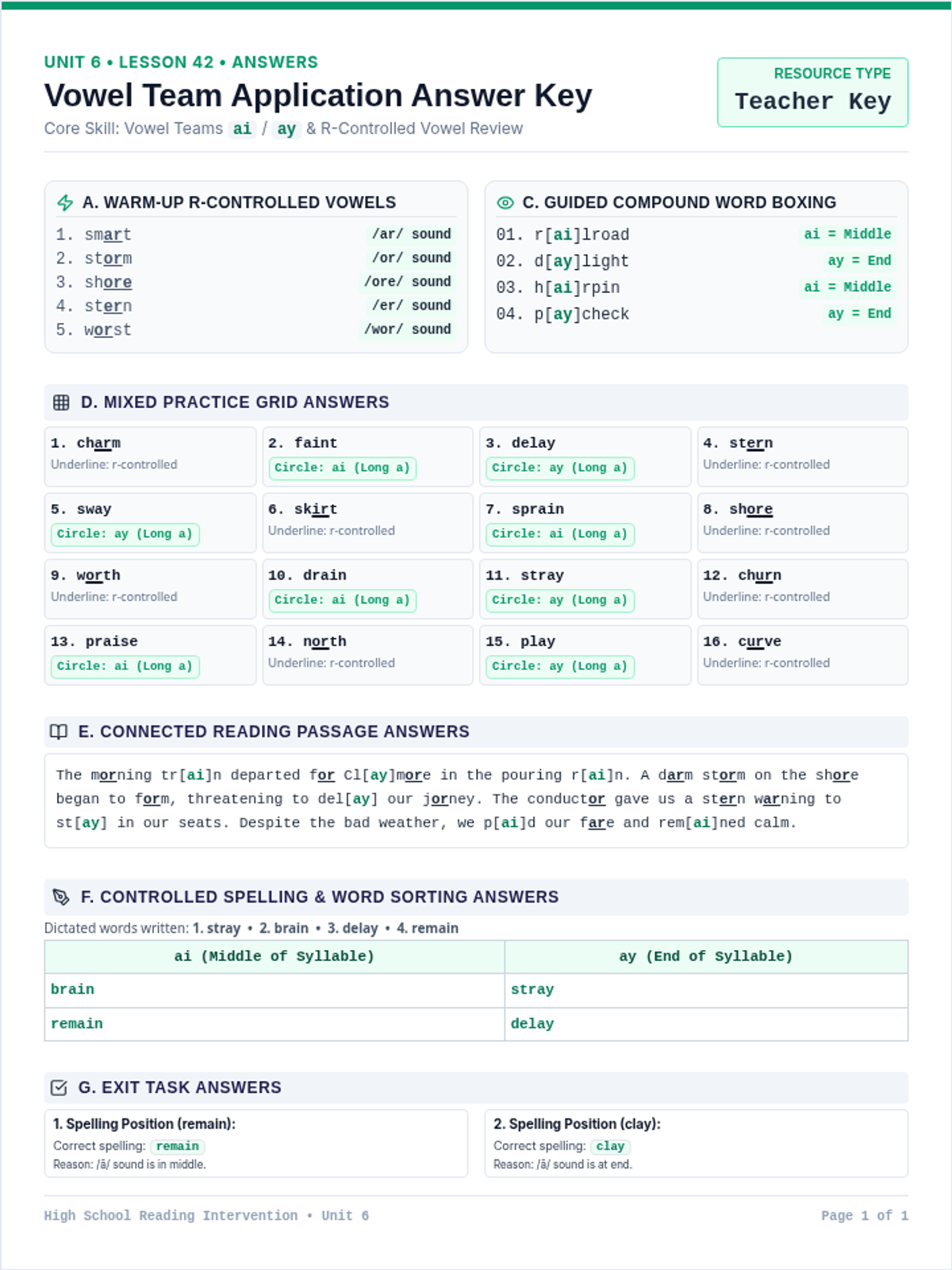
An application-focused reading intervention lesson reinforcing all learned long vowel teams (ai/ay, ee/ea/ey, oa/ow/oe, ie/igh) in connected reading and spelling. Designed for high school struggling readers, this lesson incorporates a robust r-controlled vowel warm-up and dictation tasks.
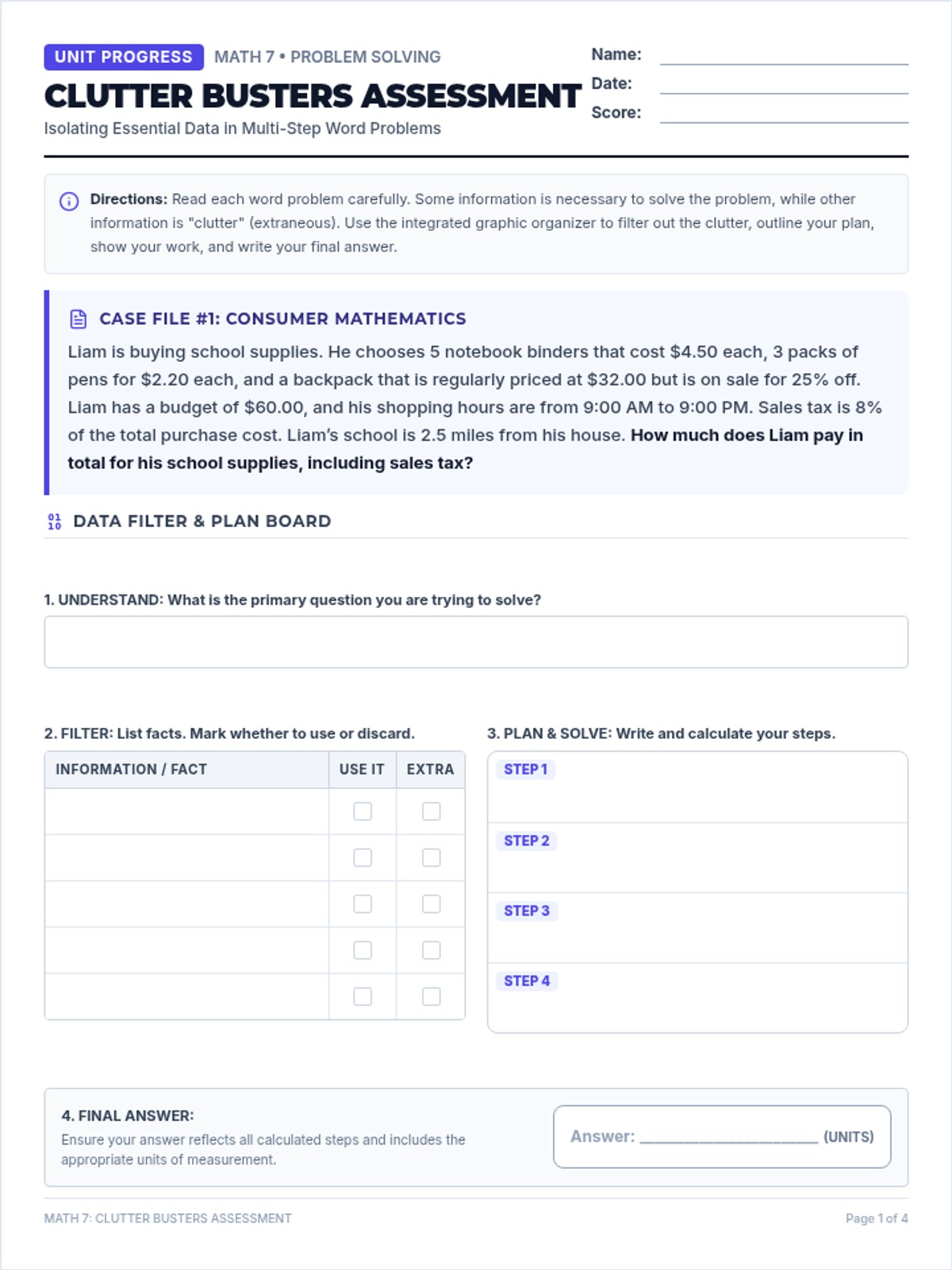
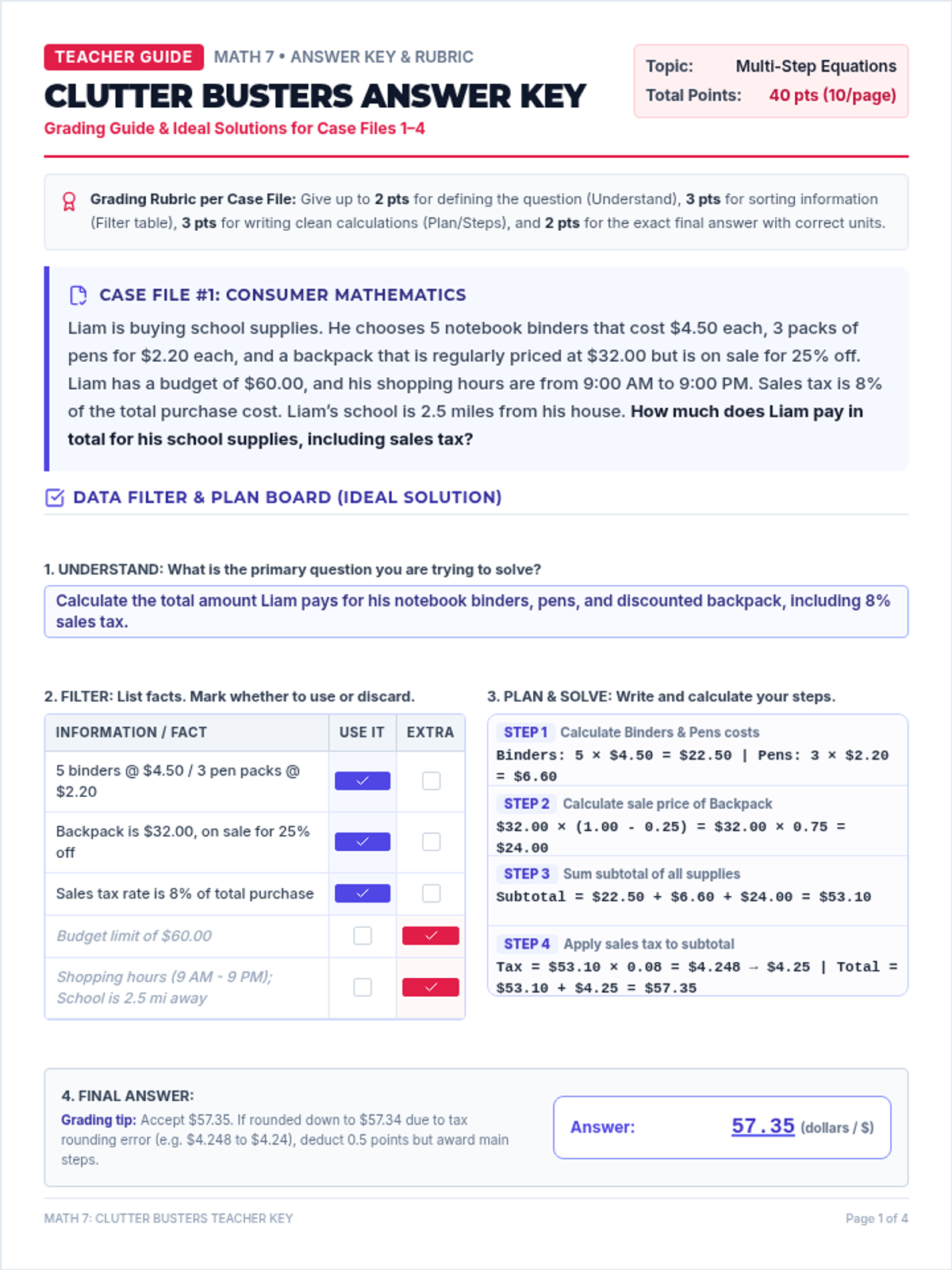
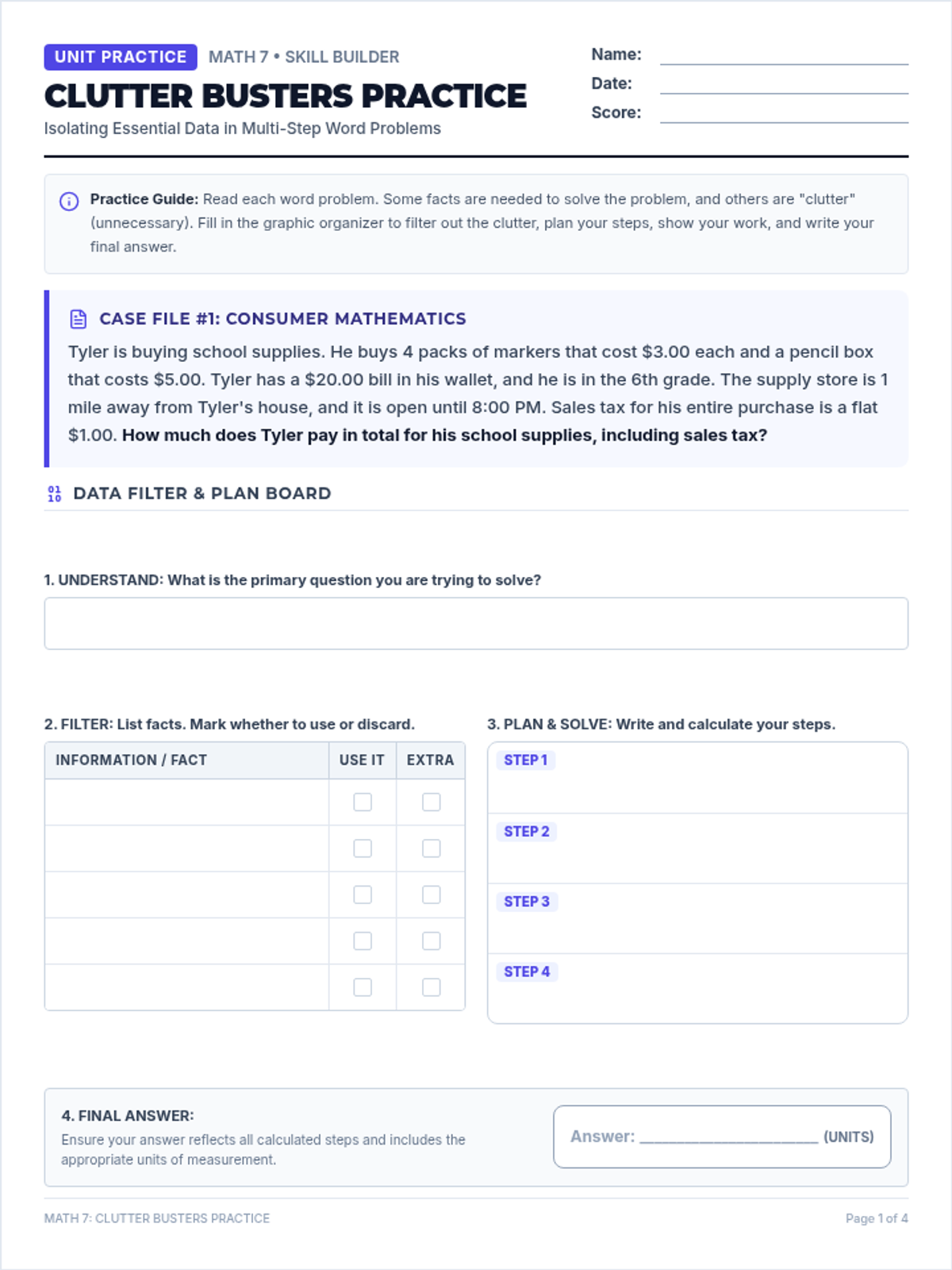
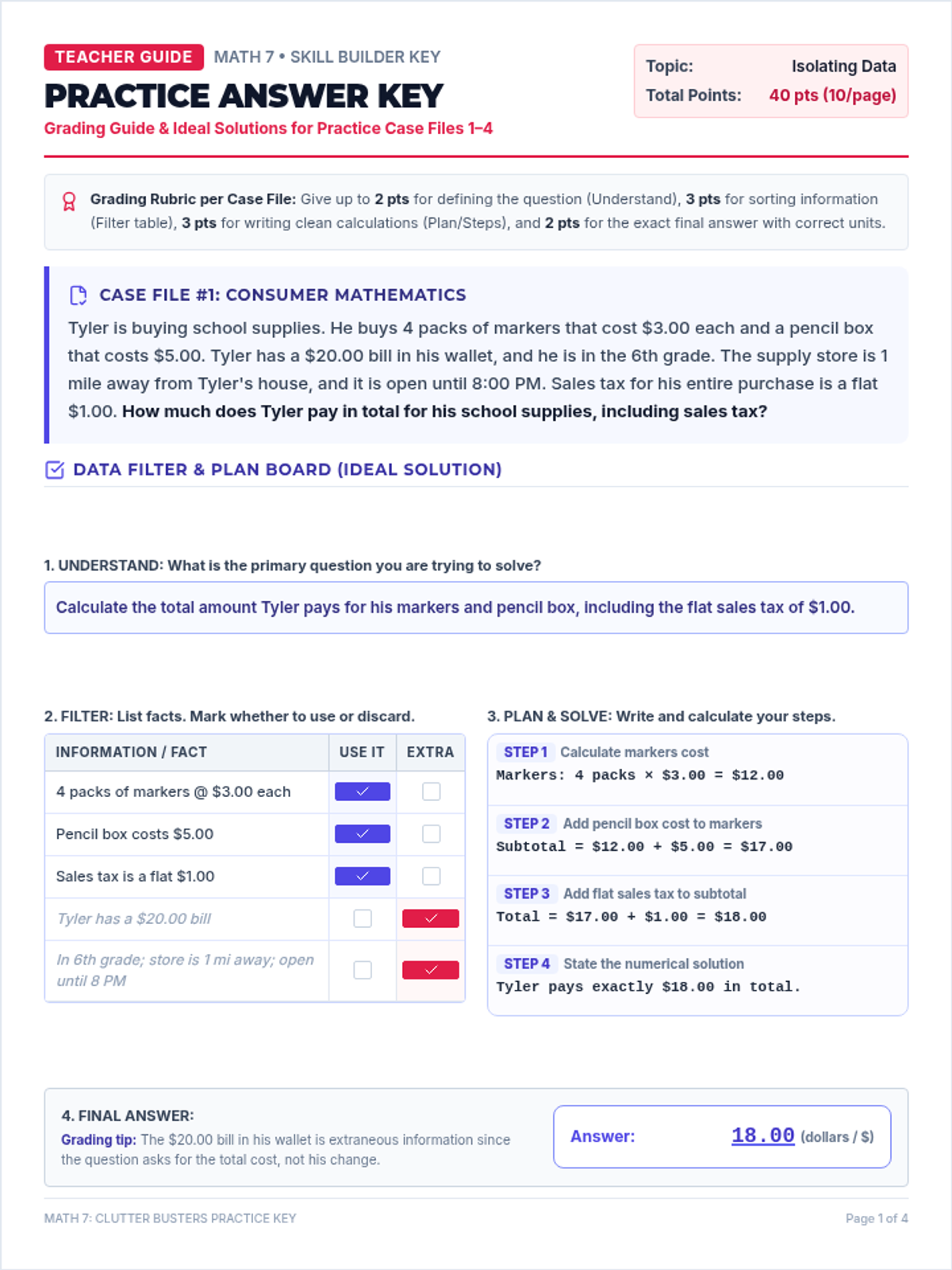
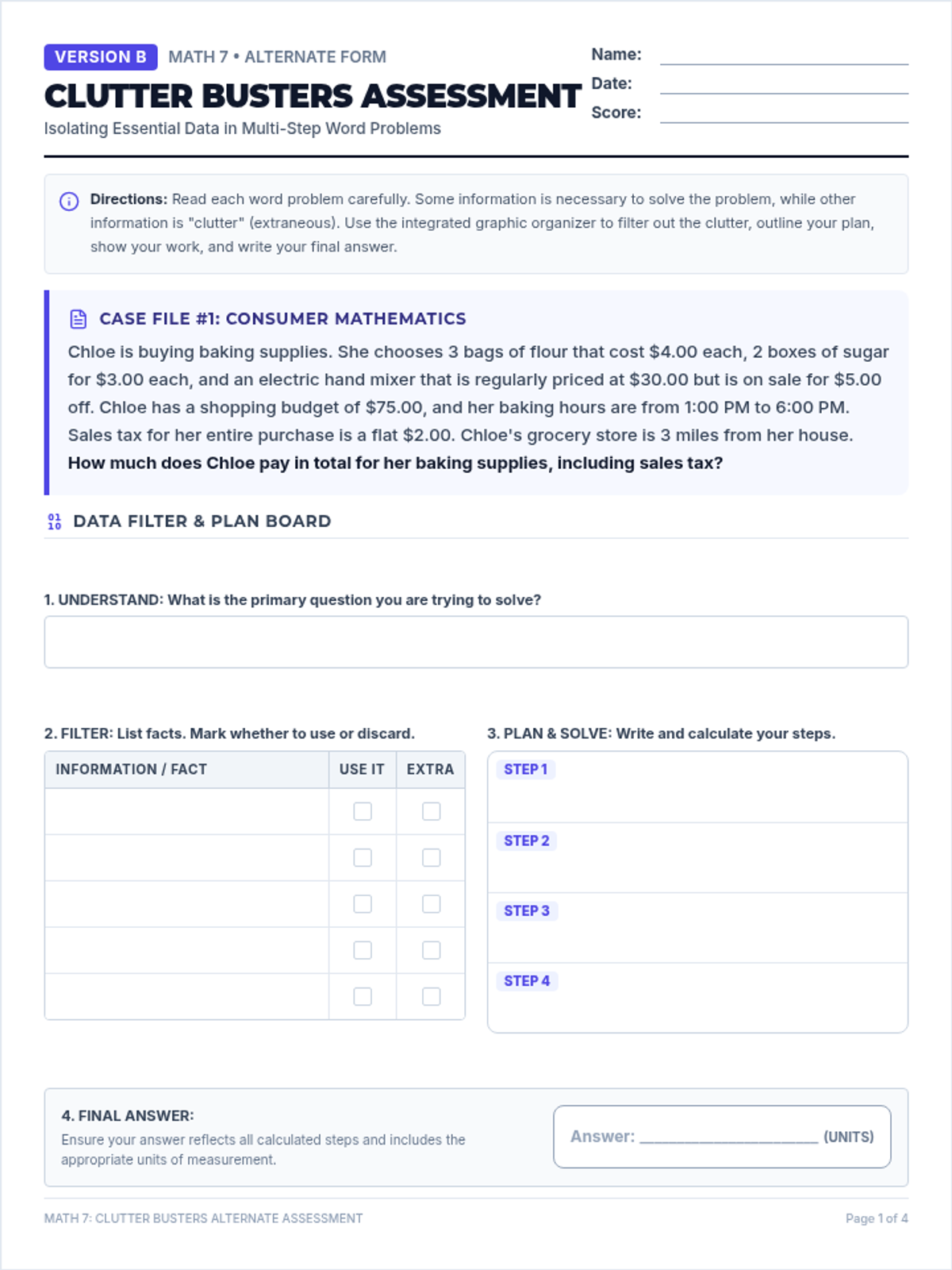
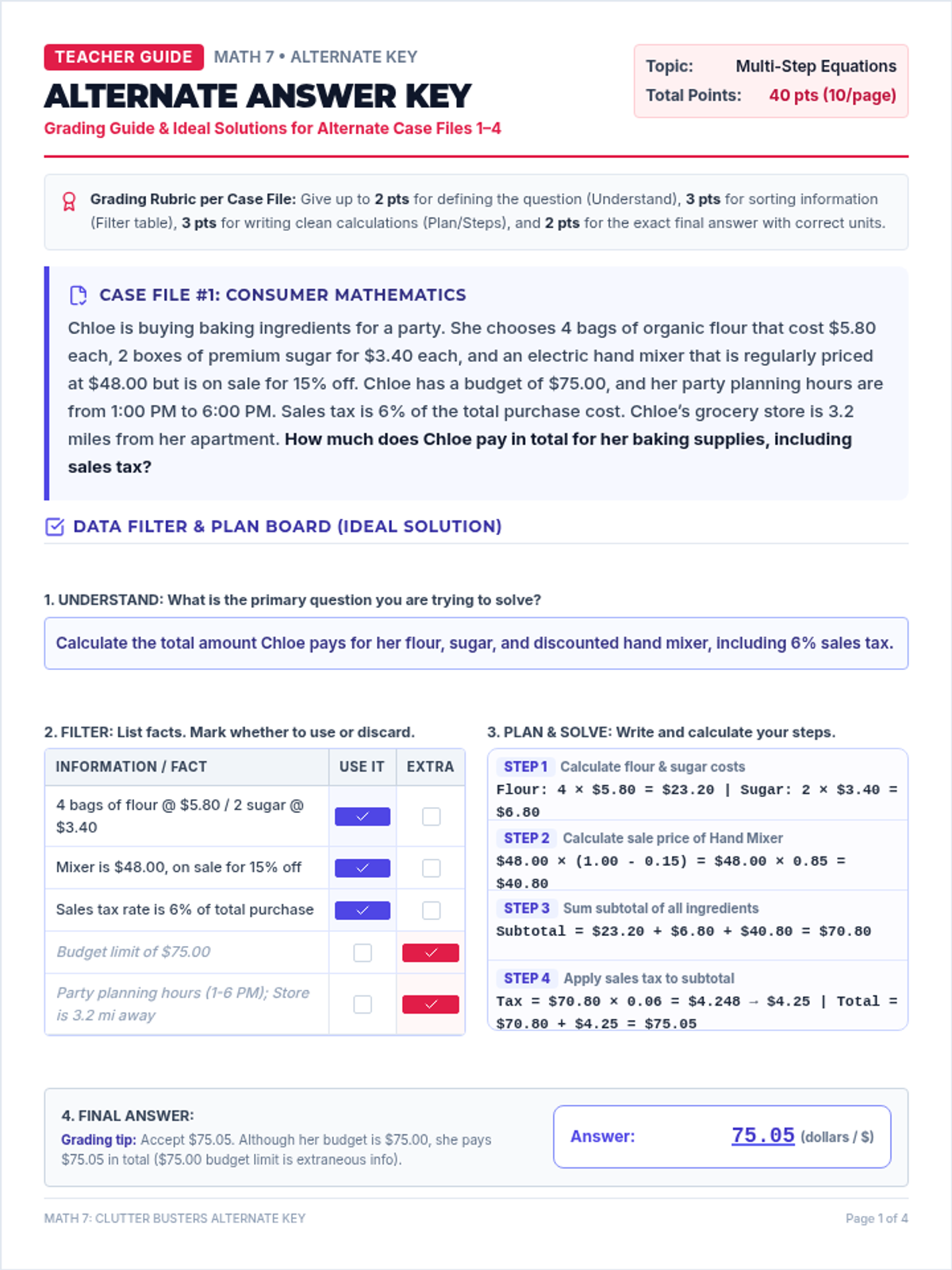
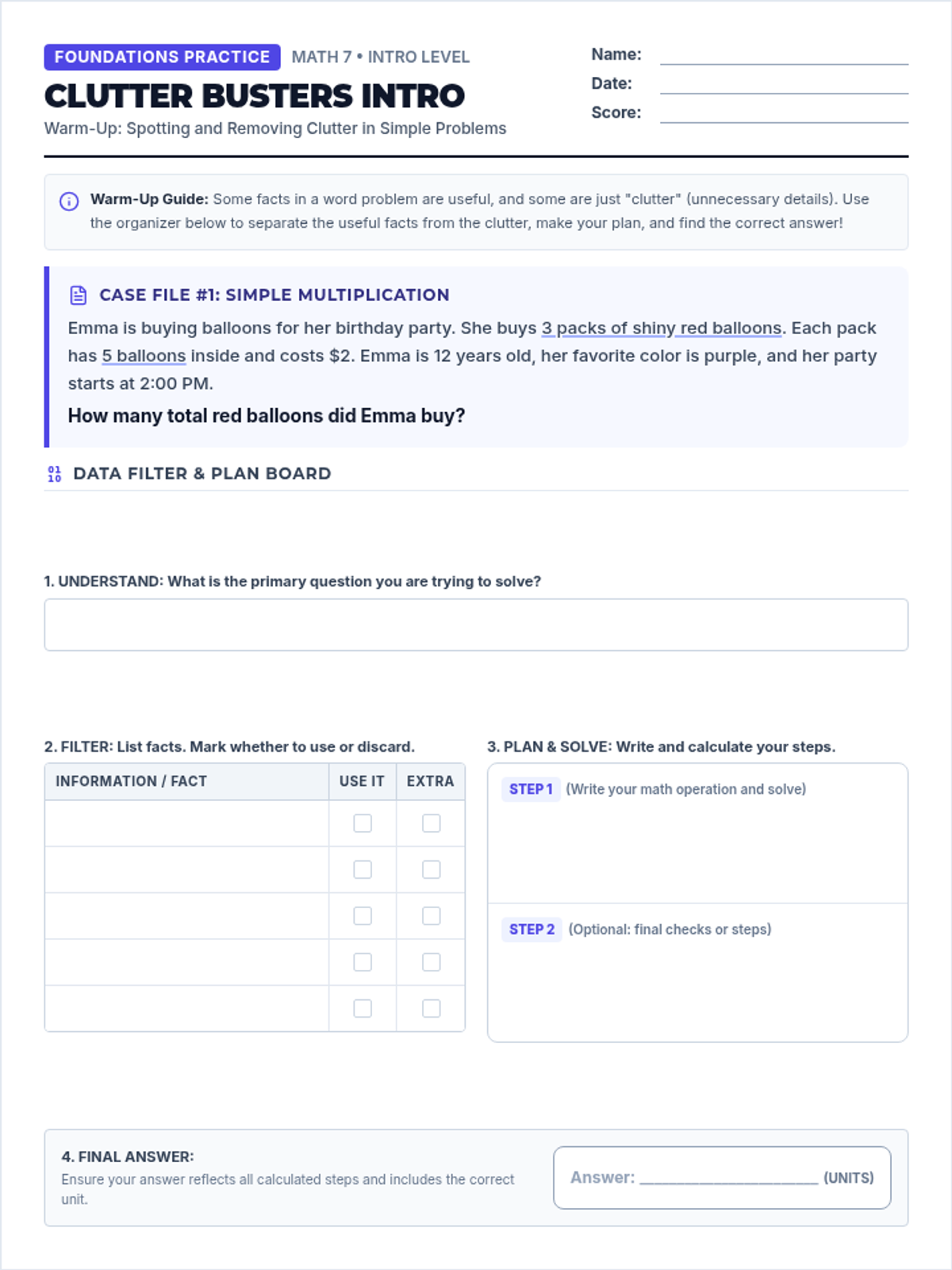
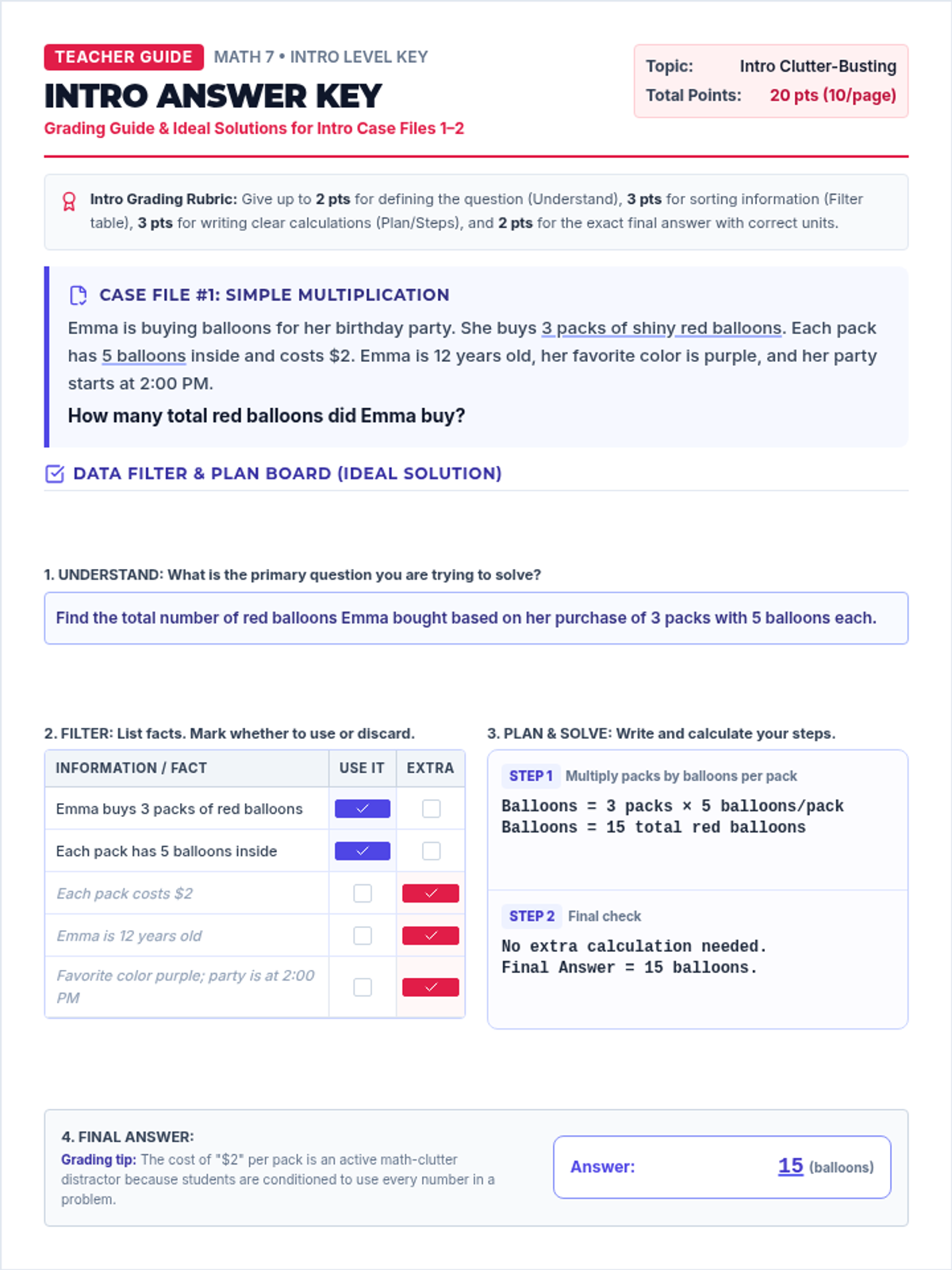
A middle-school math lesson focused on identifying and isolating extraneous information in multi-step word problems. It teaches students to separate relevant data from distracting context using an intuitive, column-based graphic organizer.
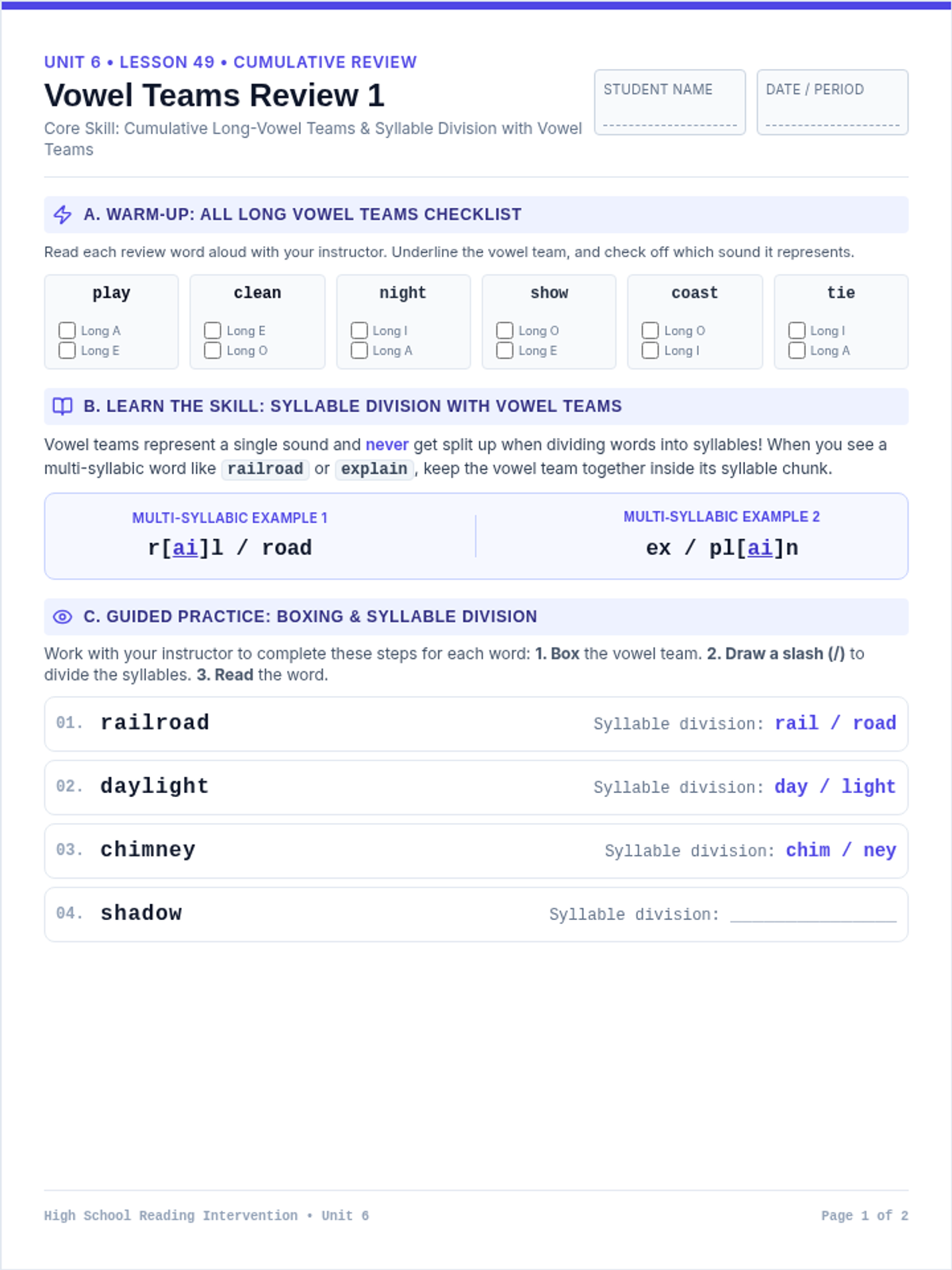
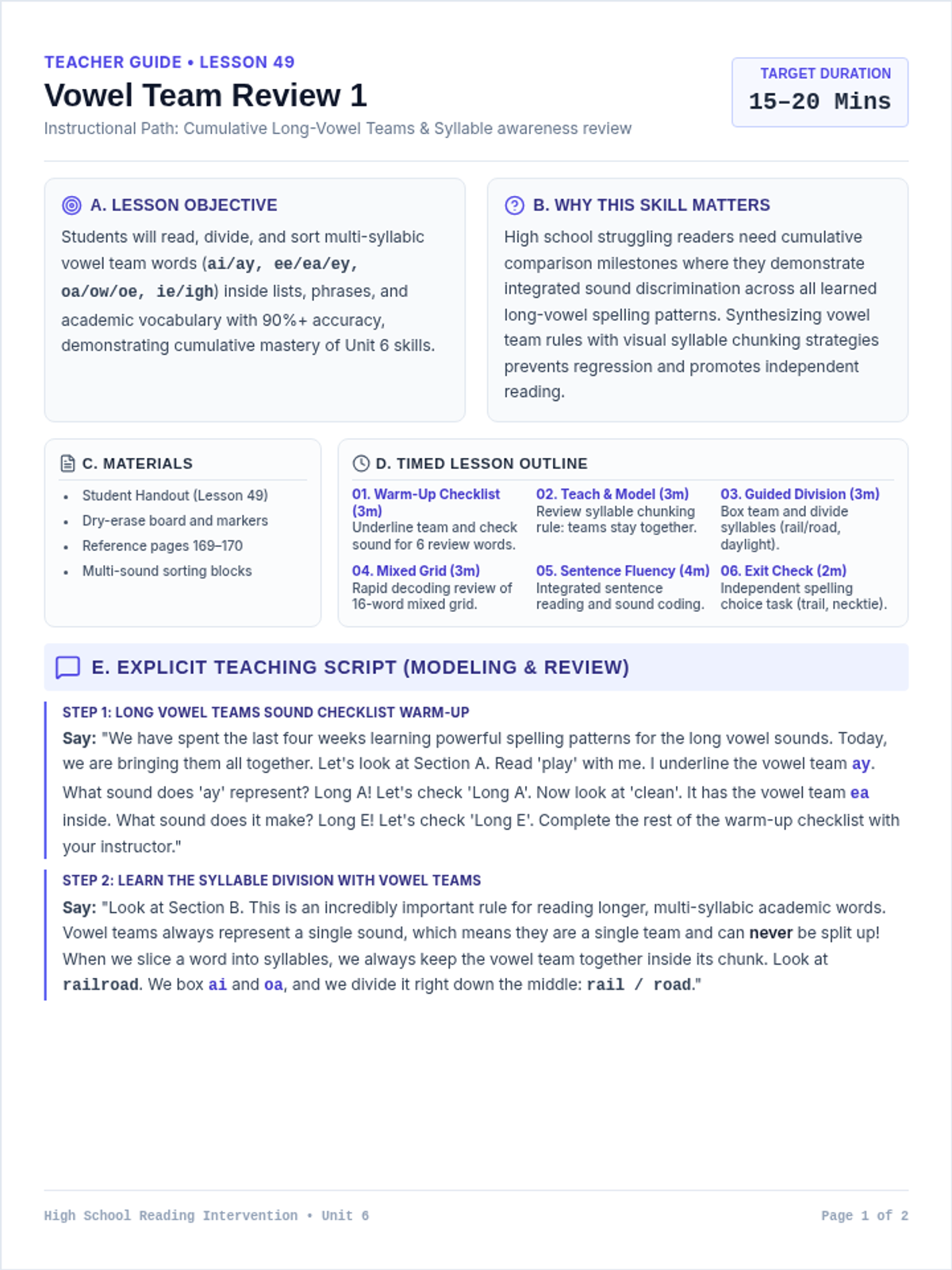
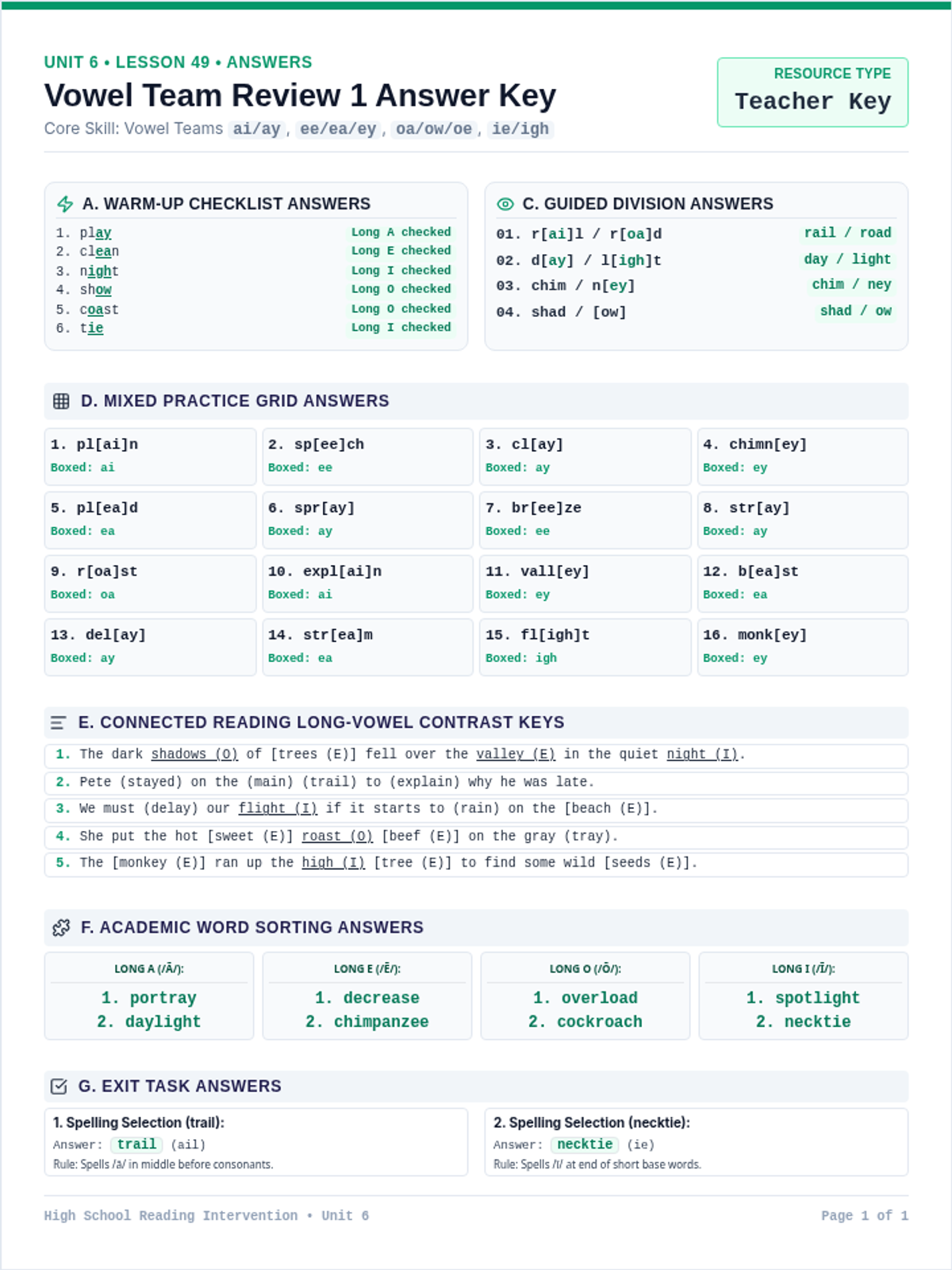
A cumulative review lesson integrating all learned long vowel teams (ai/ay, ee/ea/ey, oa/ow/oe, ie/igh) with multisyllabic syllable awareness and visual chunking tasks.
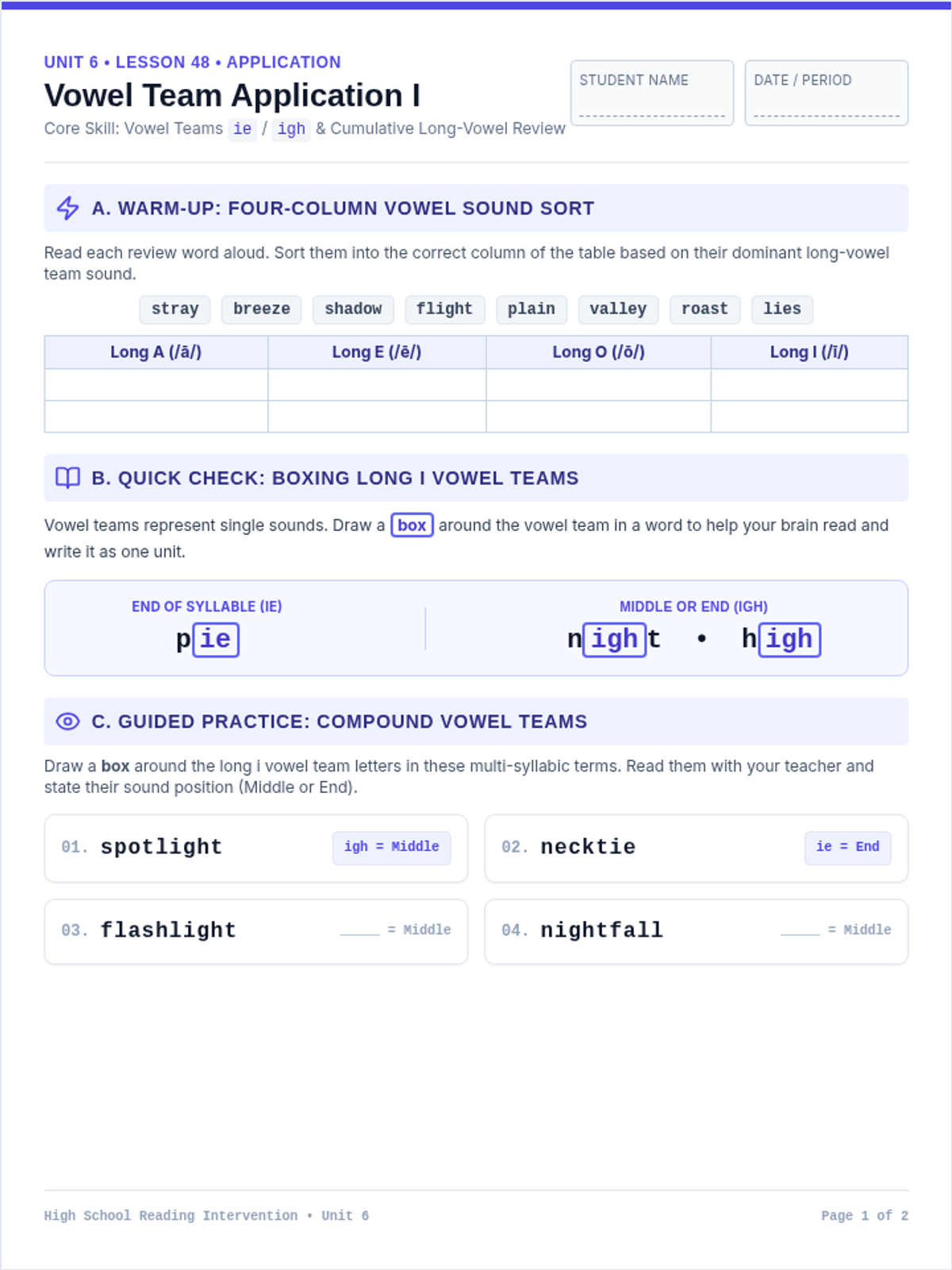
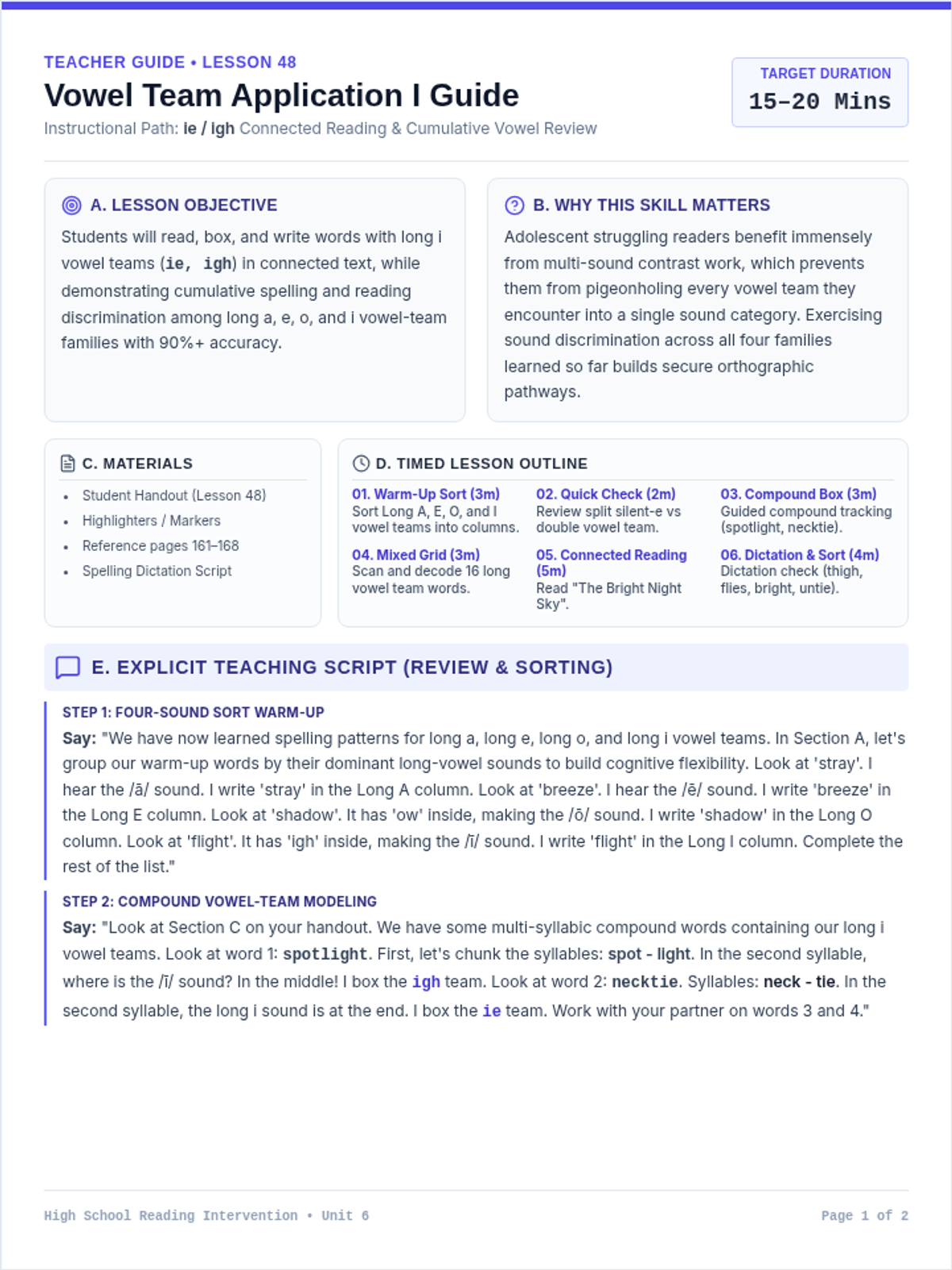
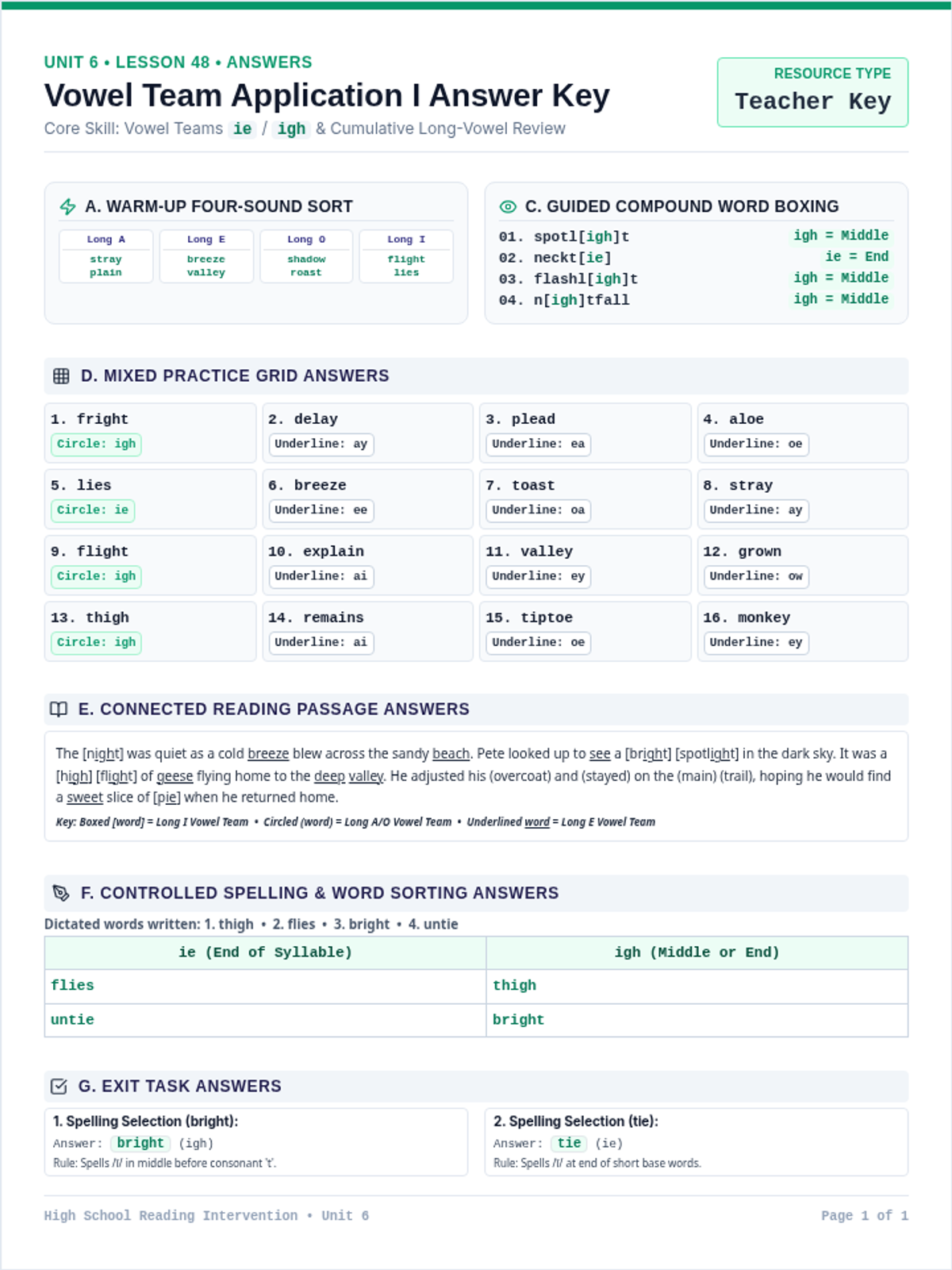
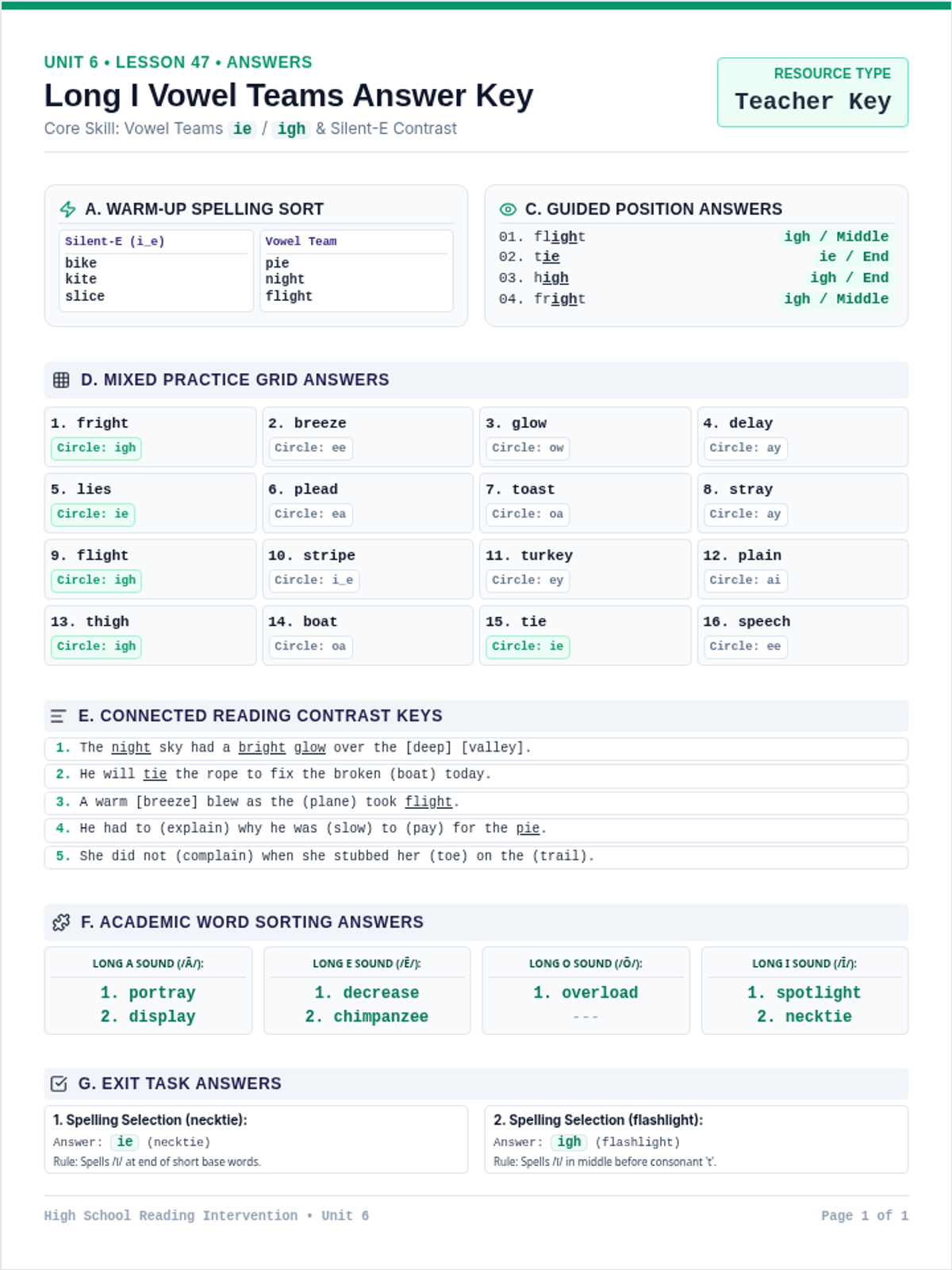
An application-focused reading intervention lesson reinforcing ie/igh vowel teams in connected reading and spelling. Designed for high school struggling readers, this lesson integrates a cumulative long-vowel team review (ai/ay, ee/ea/ey, oa/ow/oe) and dictation tasks.
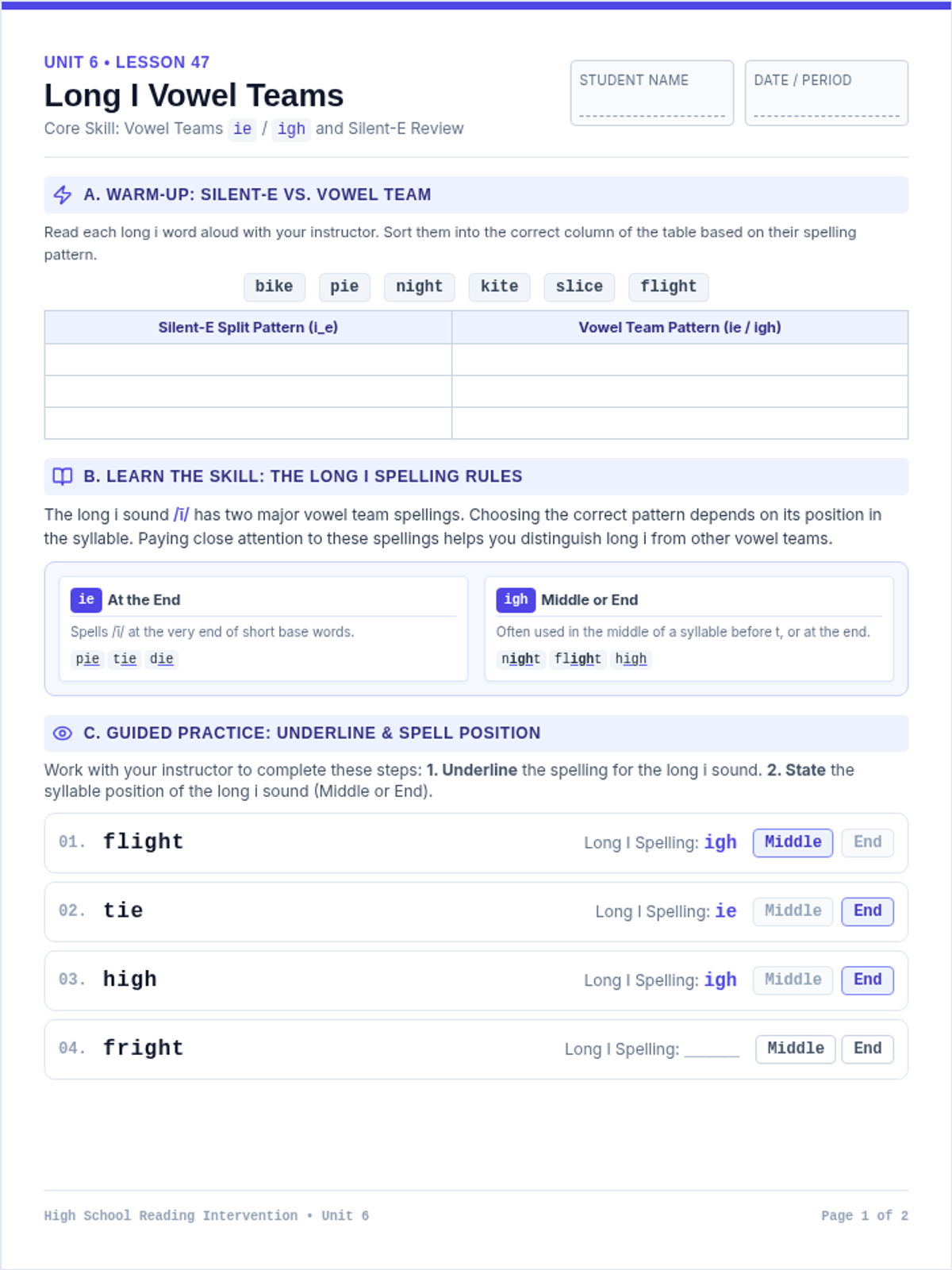
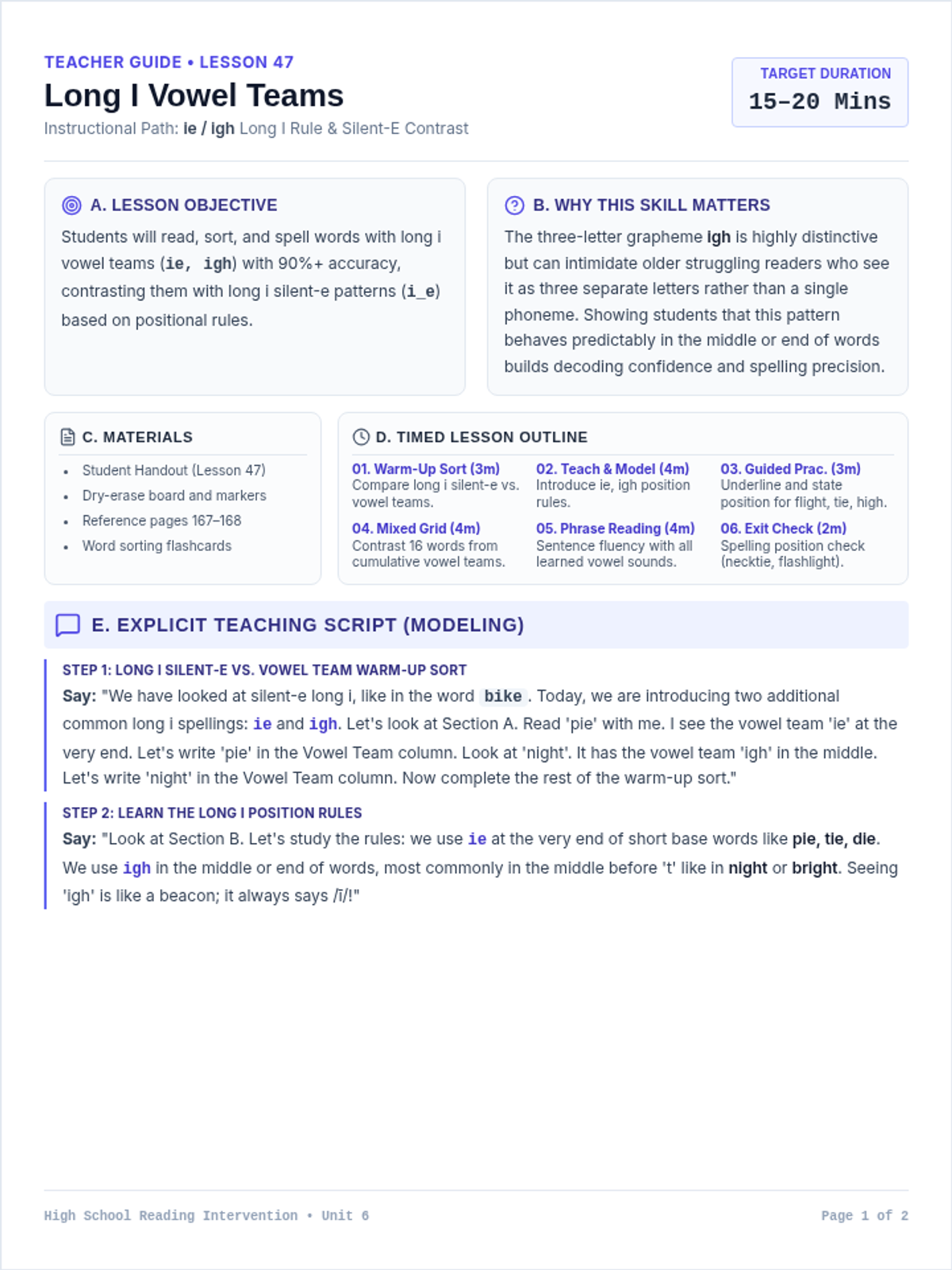
An explicit, highly scaffolded reading intervention lesson introducing long i vowel teams (ie, igh) while reviewing silent-e (i_e) through structured word sorting, guided spelling comparison, and phrase reading.
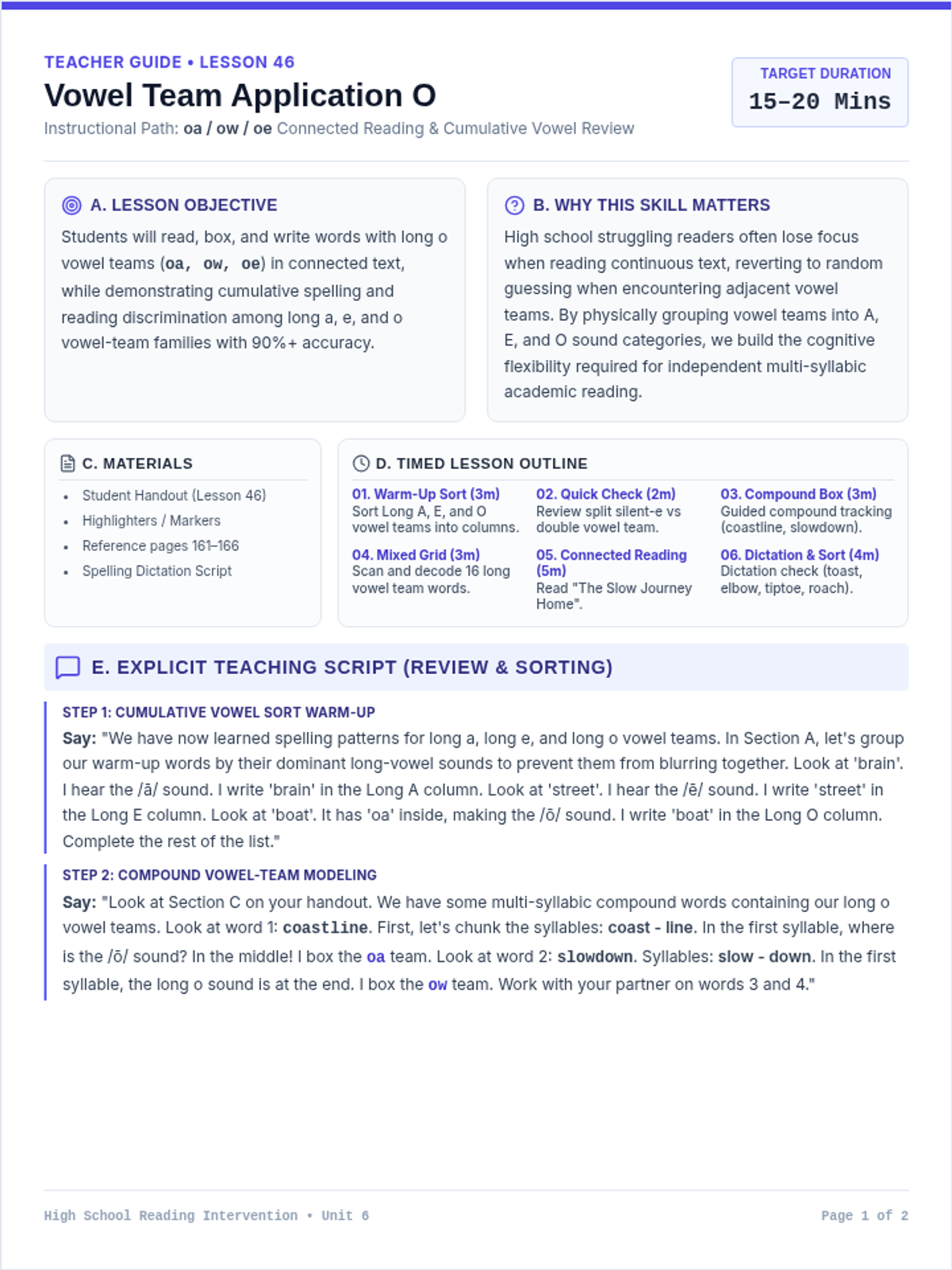
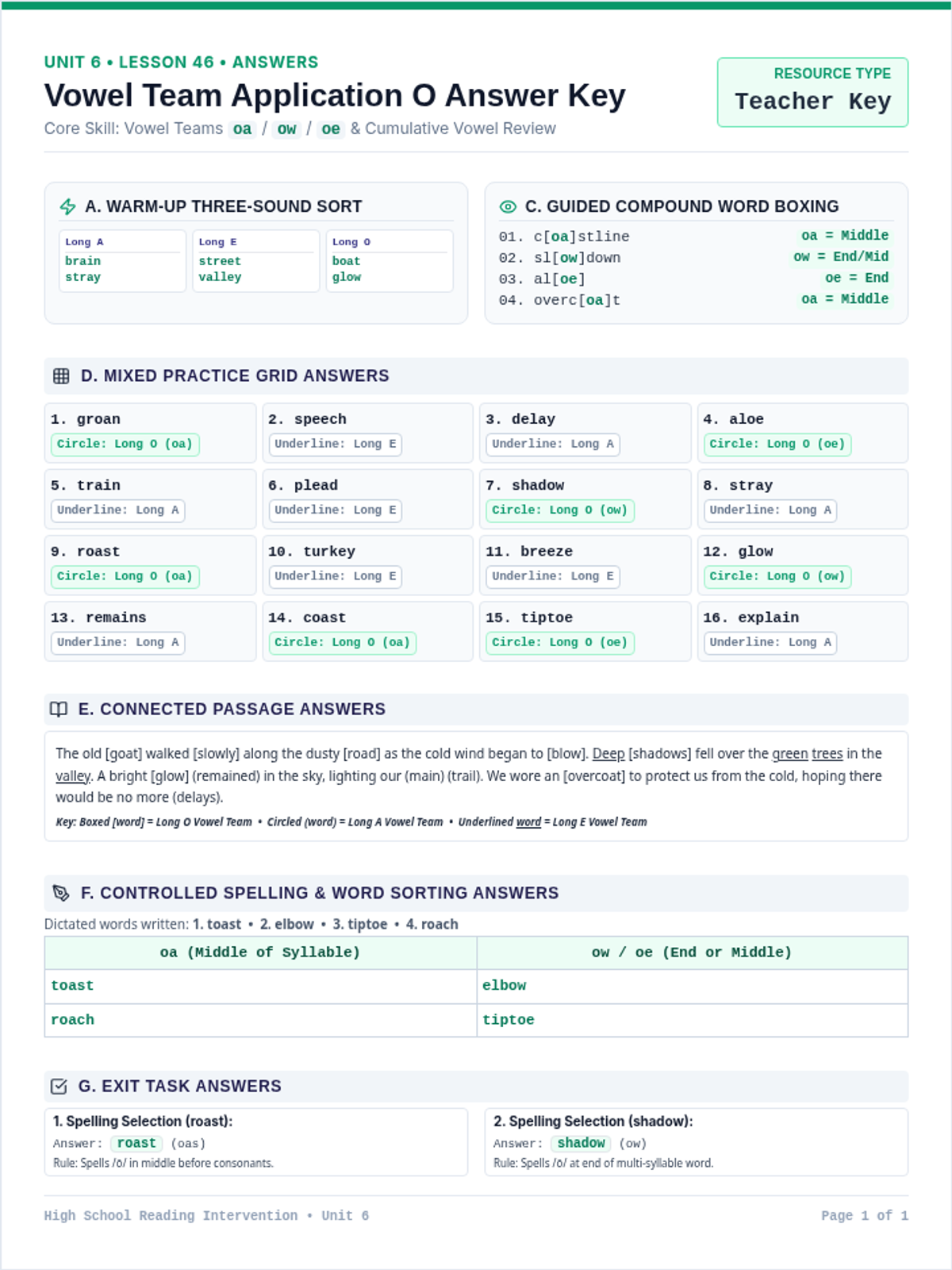
An application-focused reading intervention lesson reinforcing oa/ow/oe vowel teams in connected reading and spelling. Designed for high school struggling readers, this lesson integrates a cumulative long-vowel team review (ai/ay, ee/ea/ey) and dictation tasks.
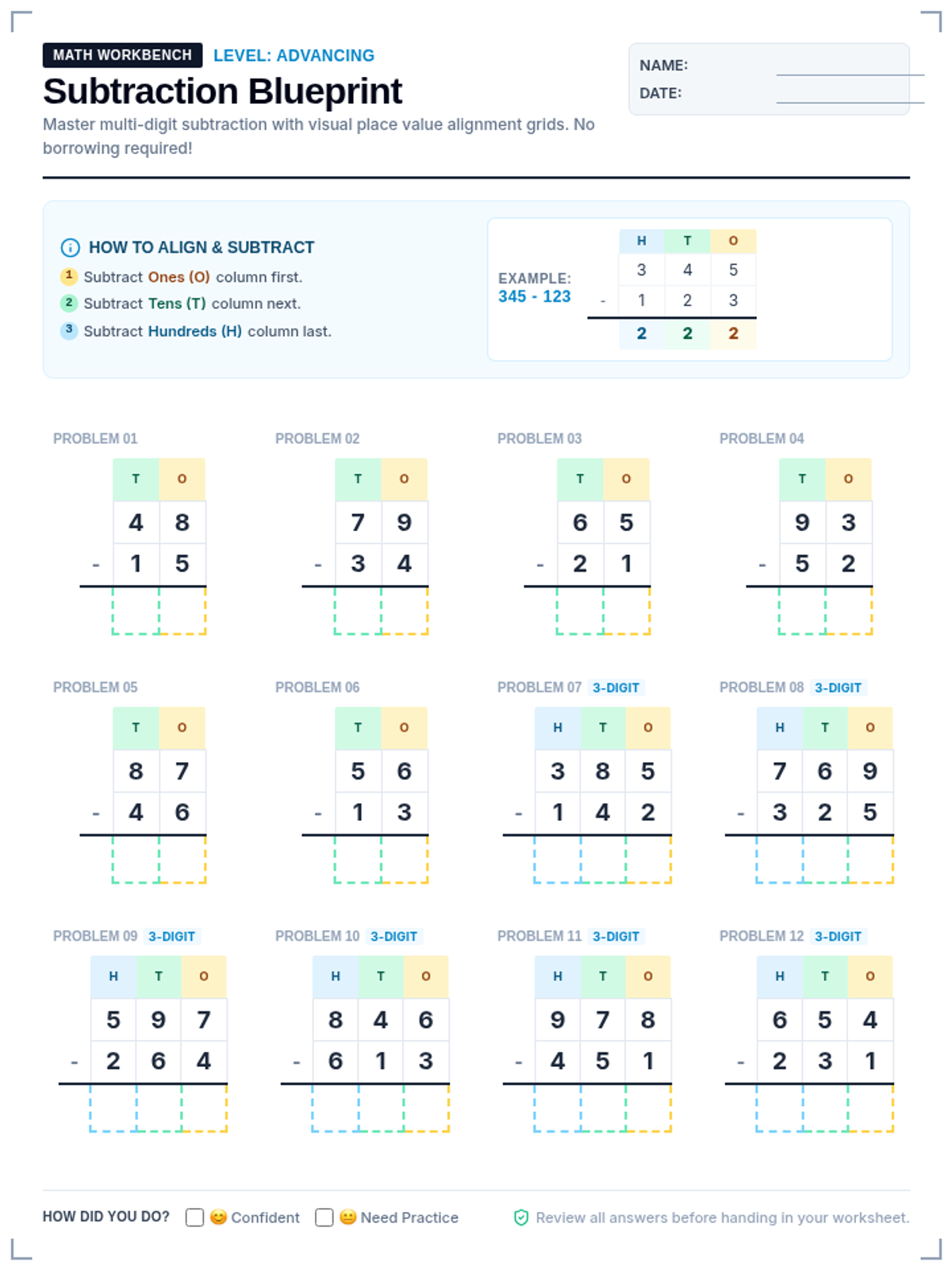
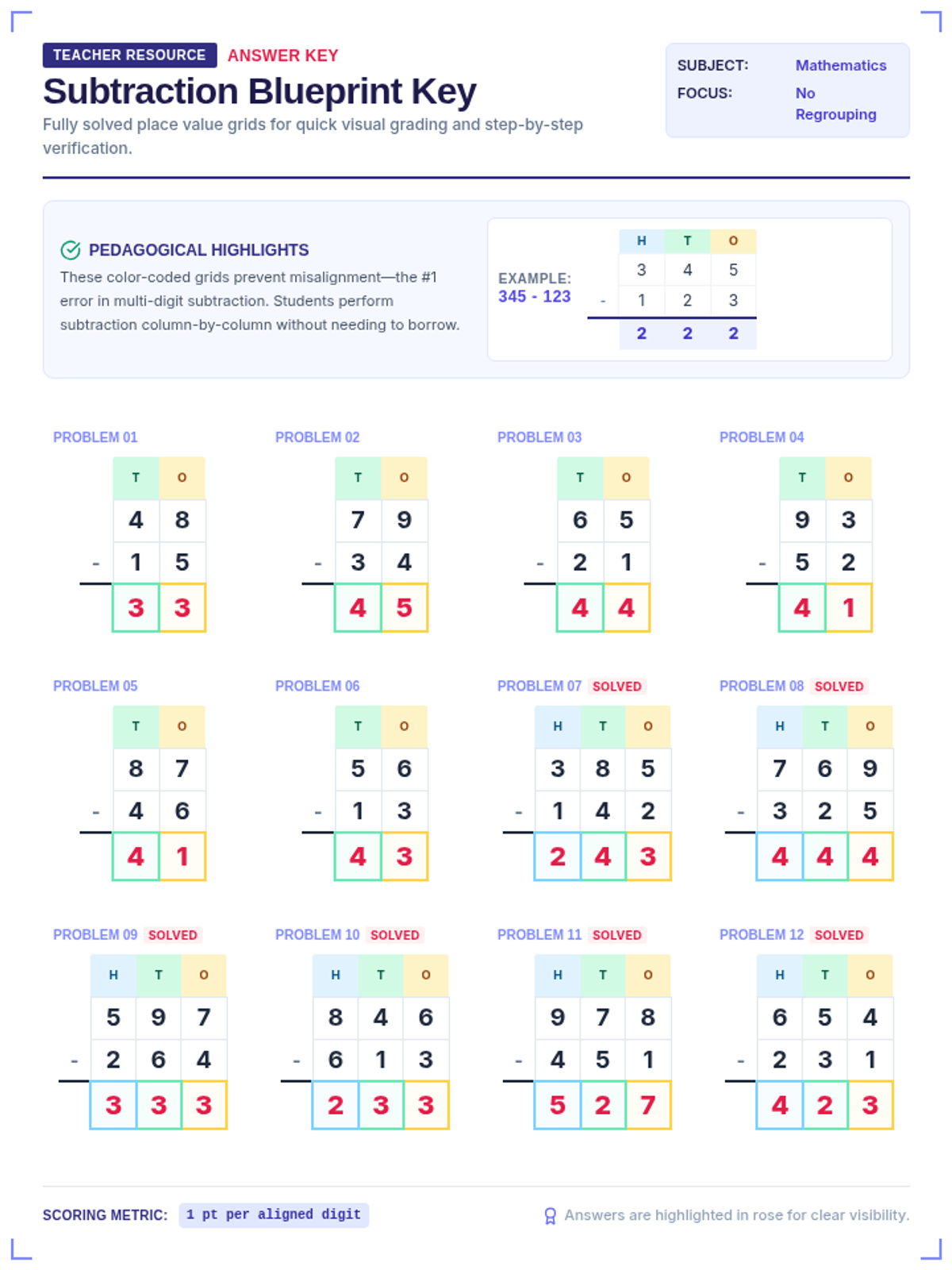
A lesson introducing subtraction without borrowing using color-coded grids and place value alignment. Students practice aligning digits in tens and ones columns before expanding to hundreds.
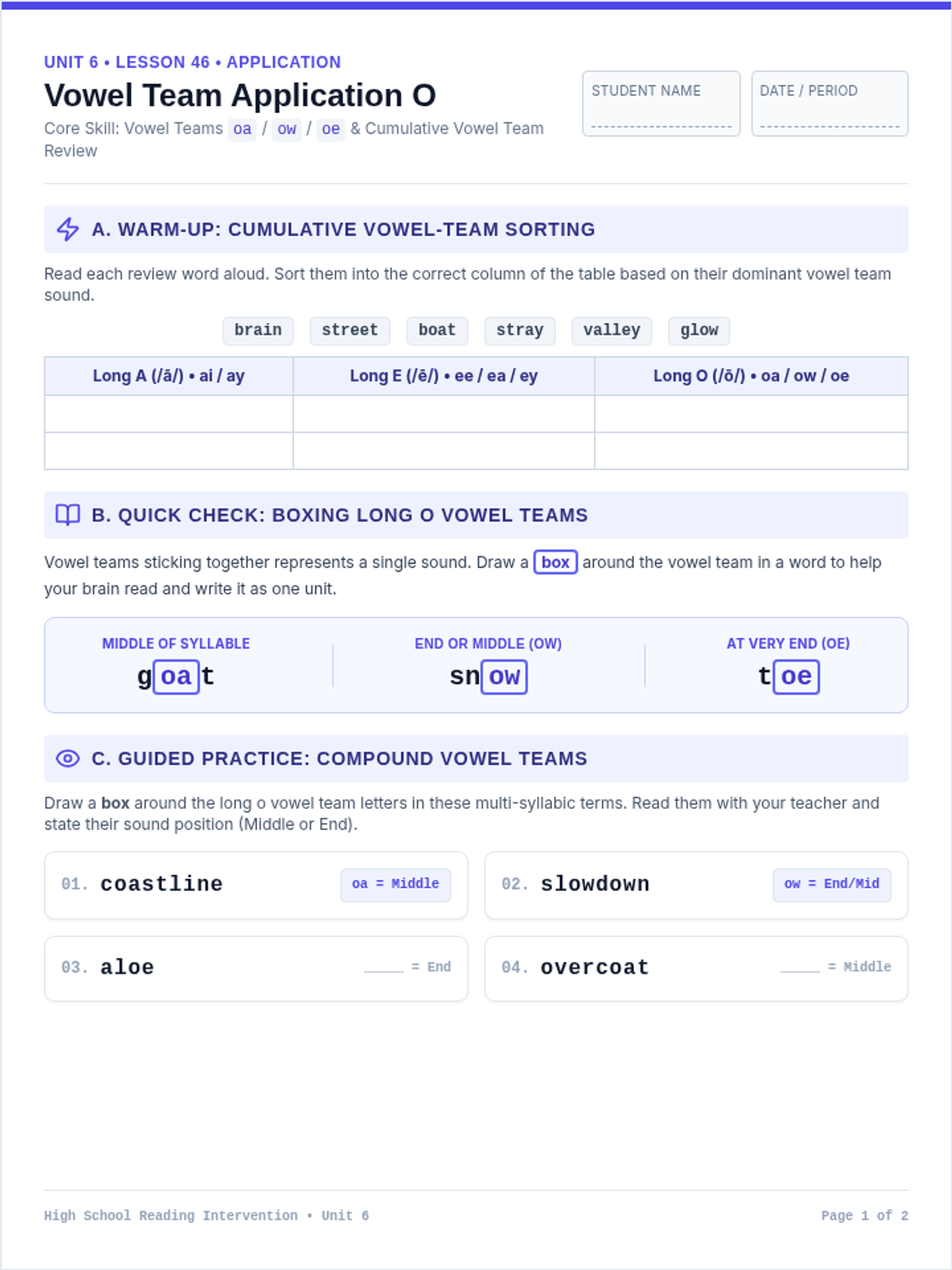
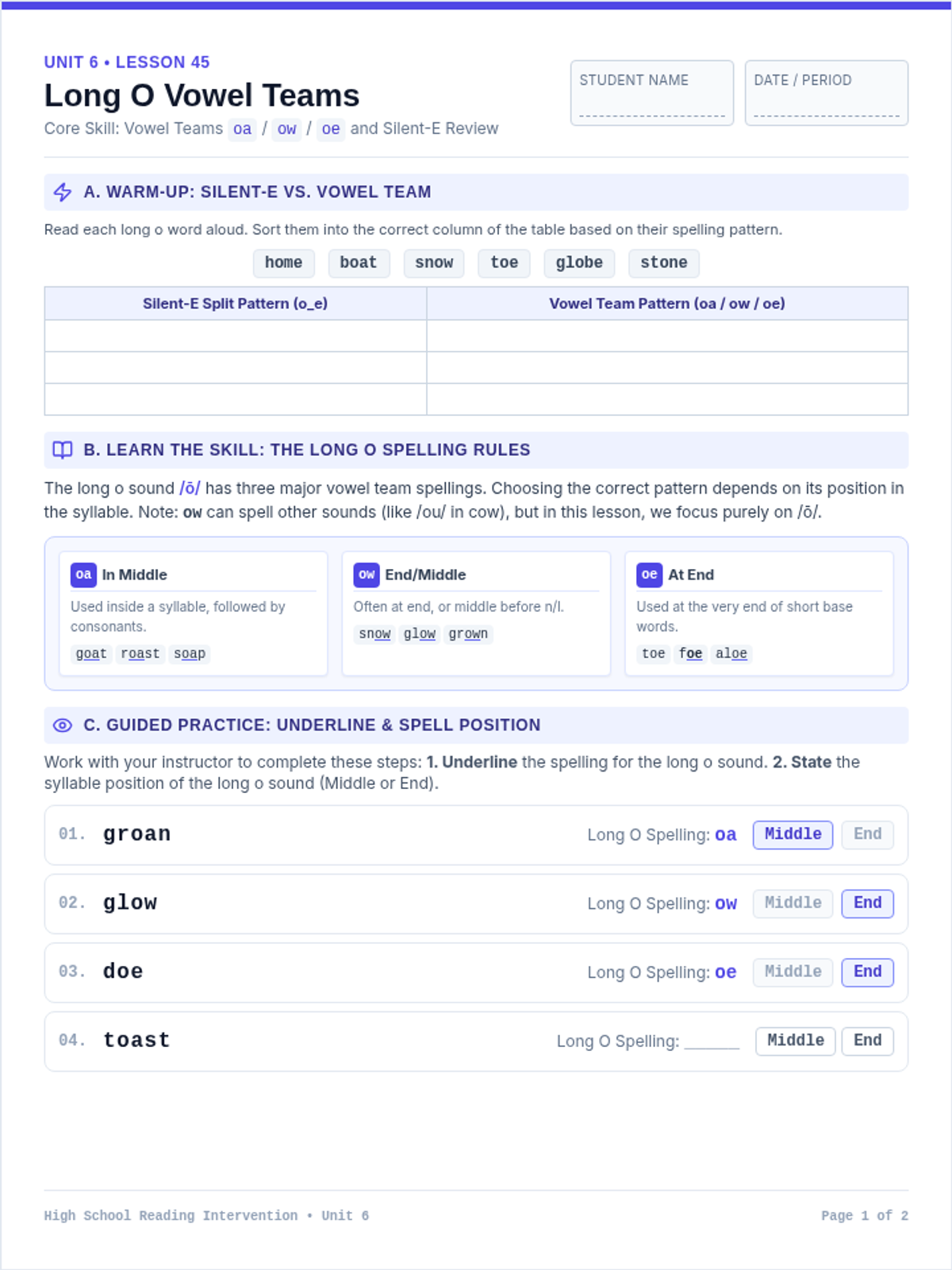
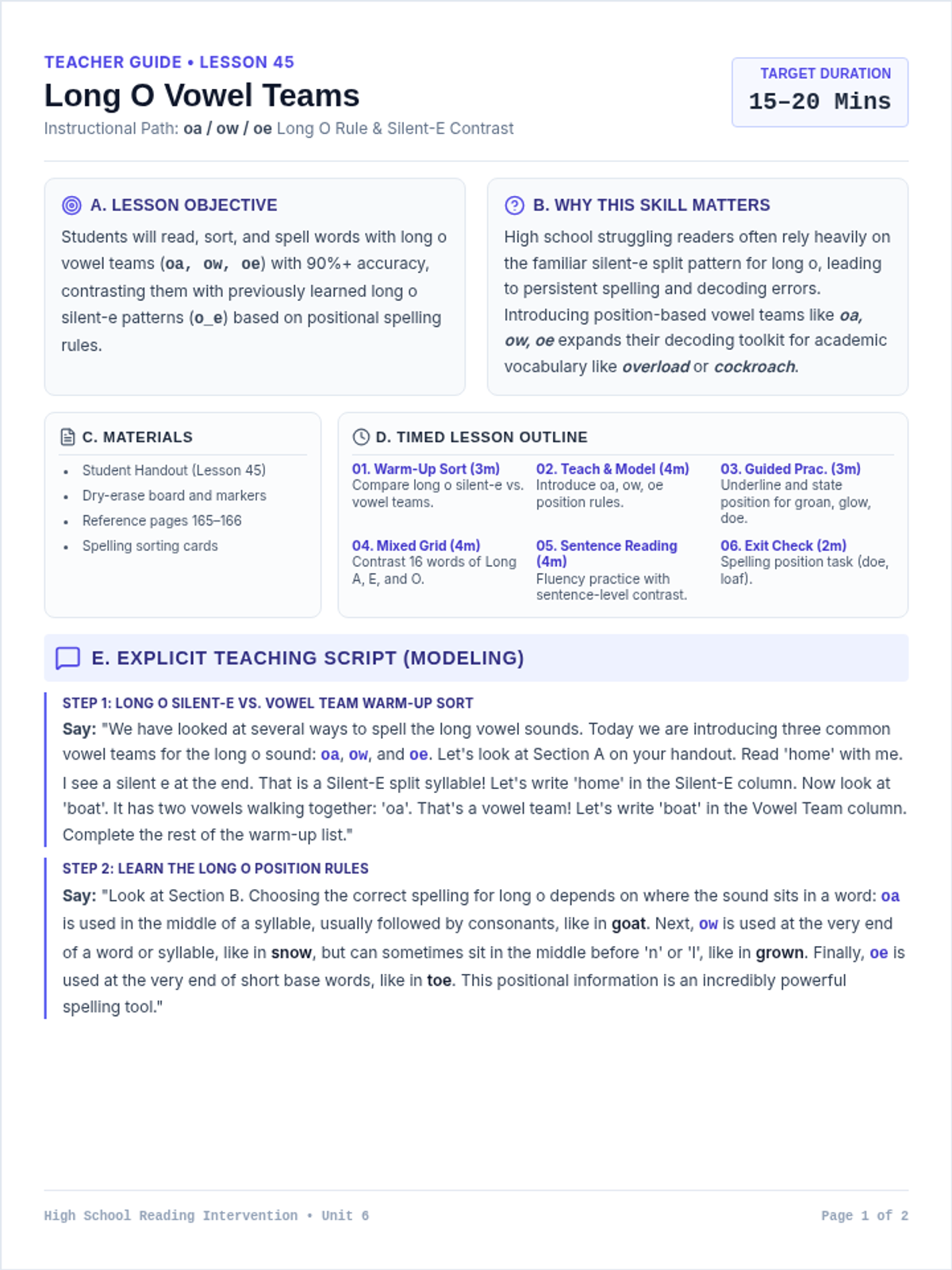
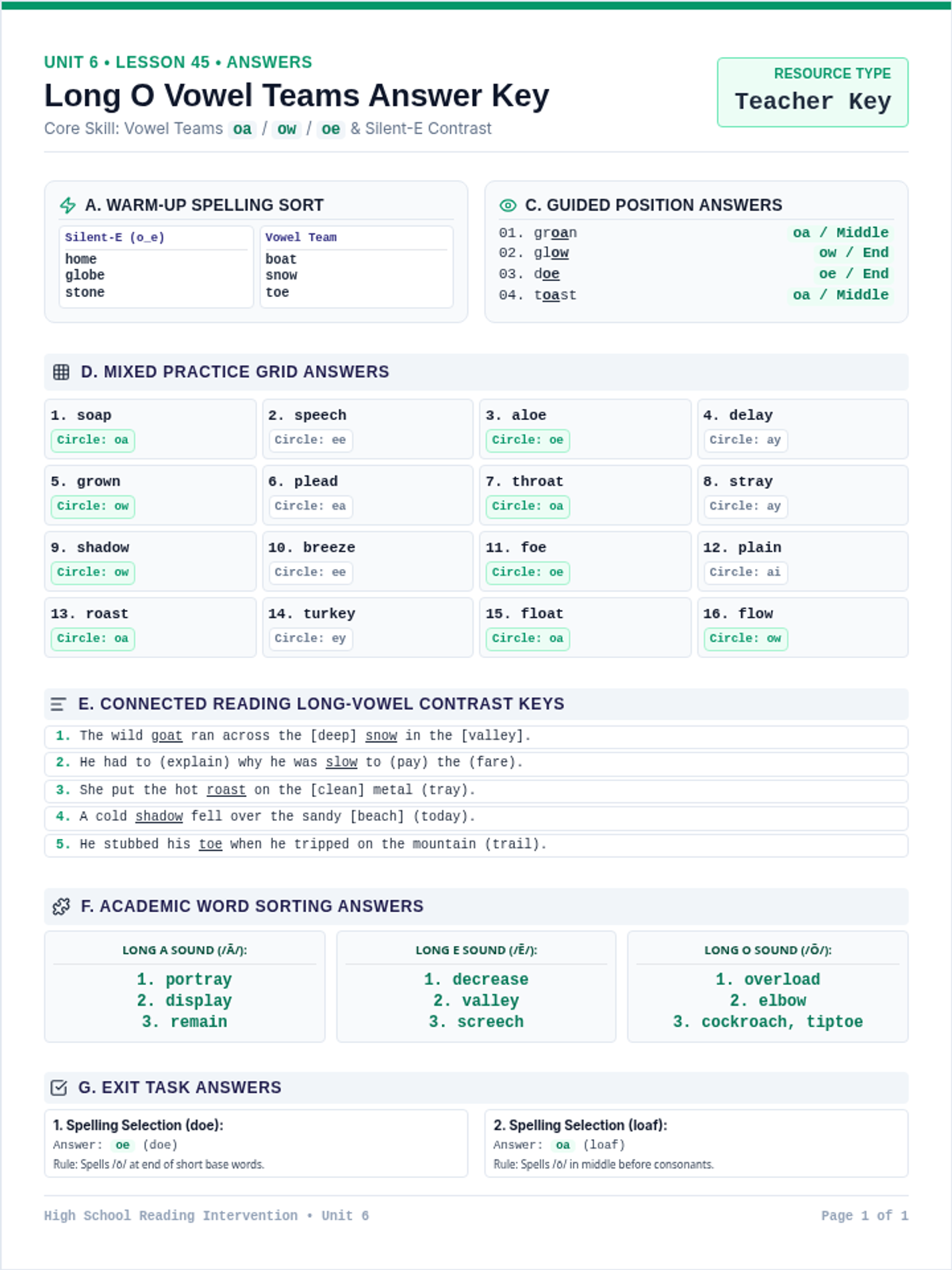
An explicit, highly scaffolded reading intervention lesson introducing long o vowel teams (oa, ow, oe) while reviewing silent-e (o_e) through structured word sorting, guided spelling comparison, and phrase reading.
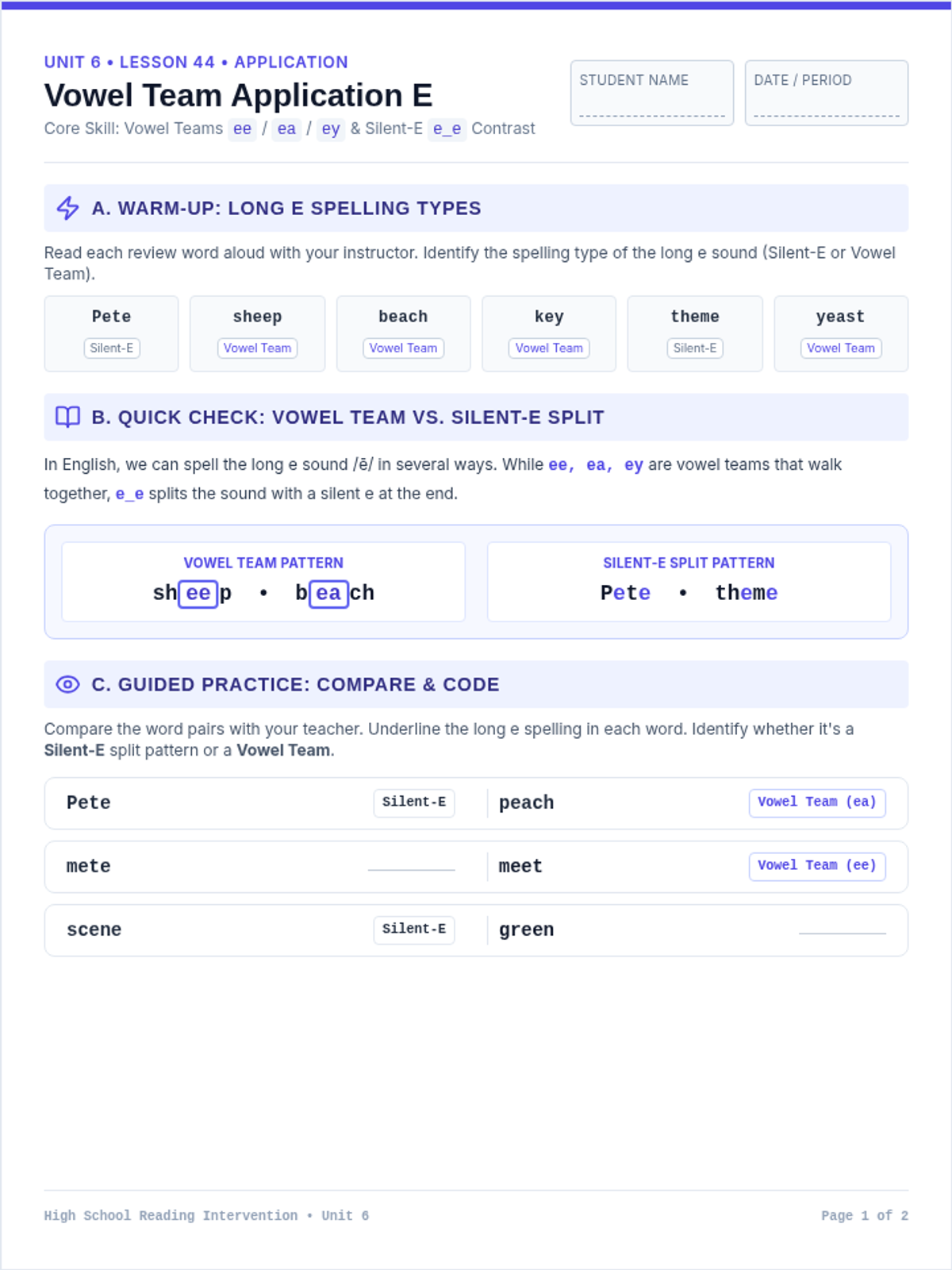
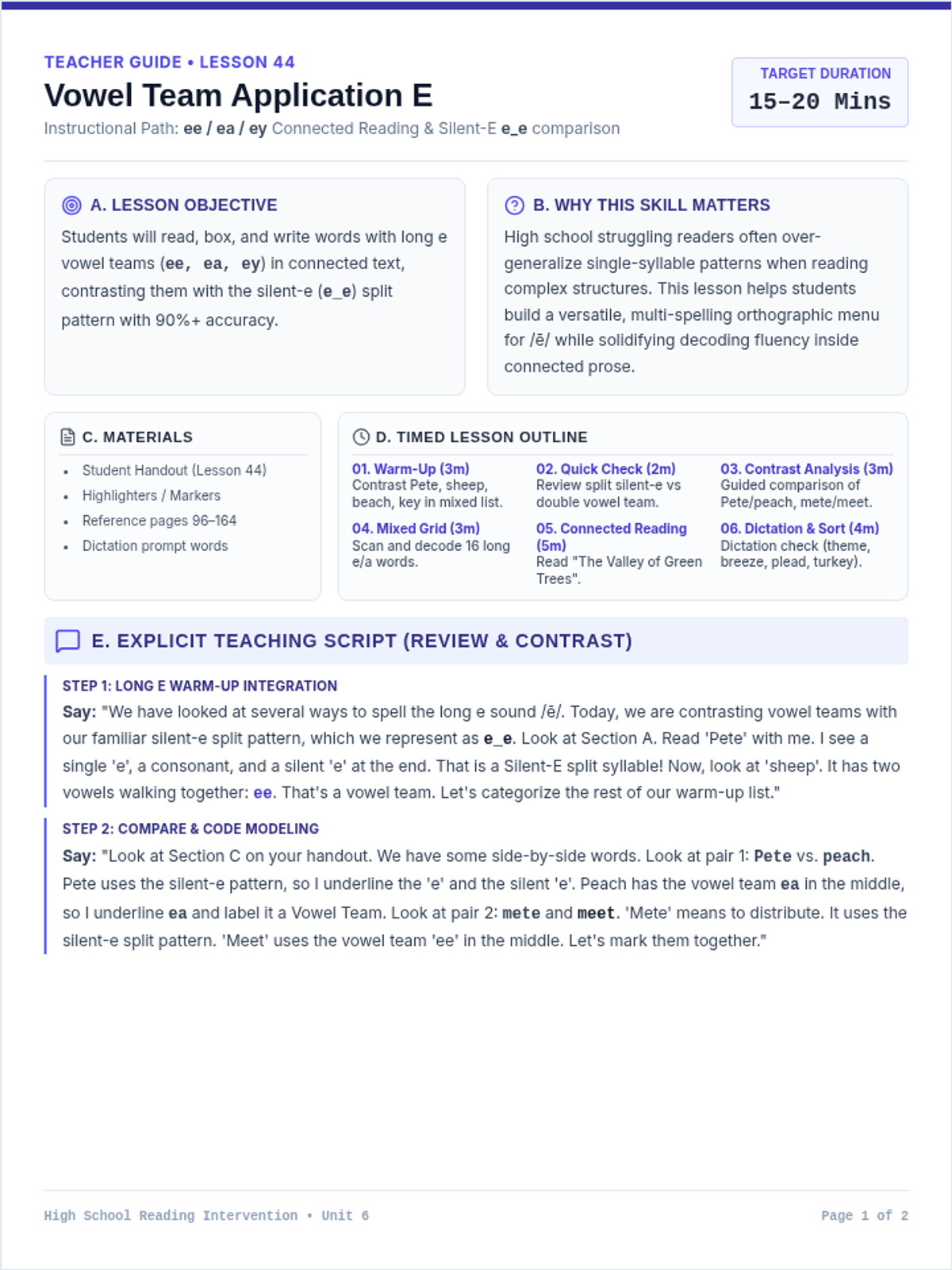
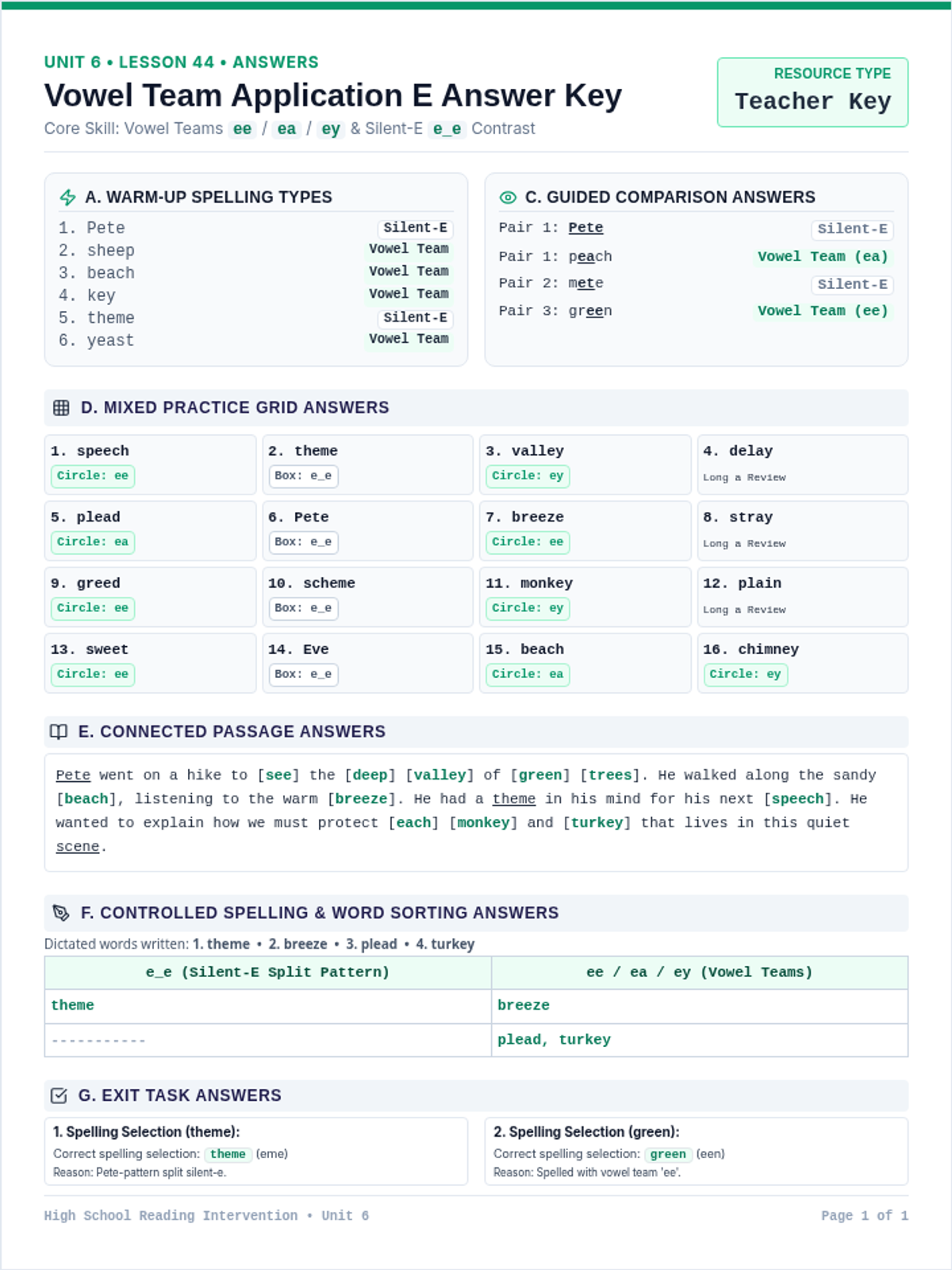
An application-focused reading intervention lesson reinforcing ee/ea/ey vowel teams in connected reading and spelling. Designed for high school struggling readers, this lesson contrasts vowel teams with the silent-e (e_e) pattern and reviews previous long a spellings.
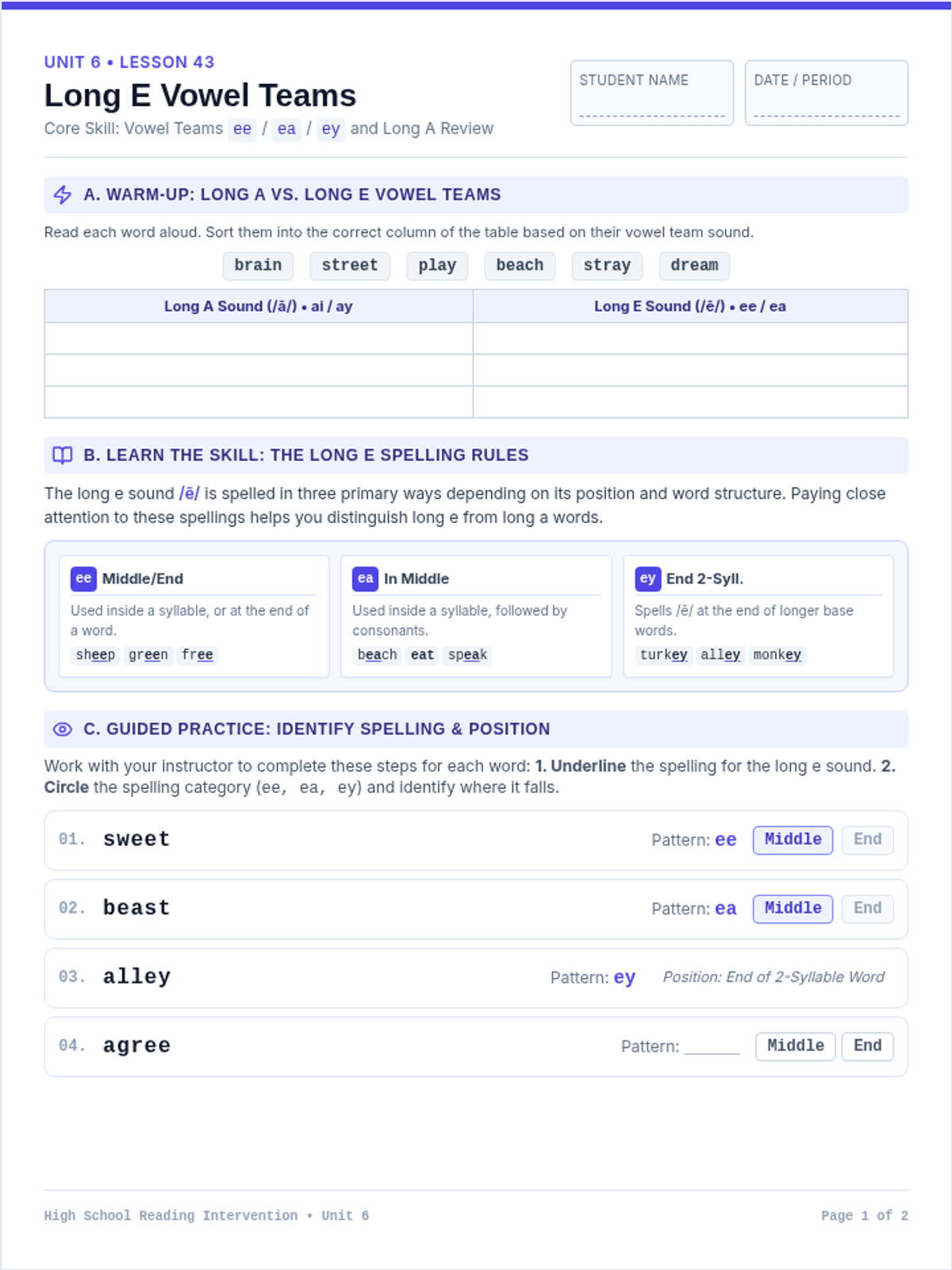
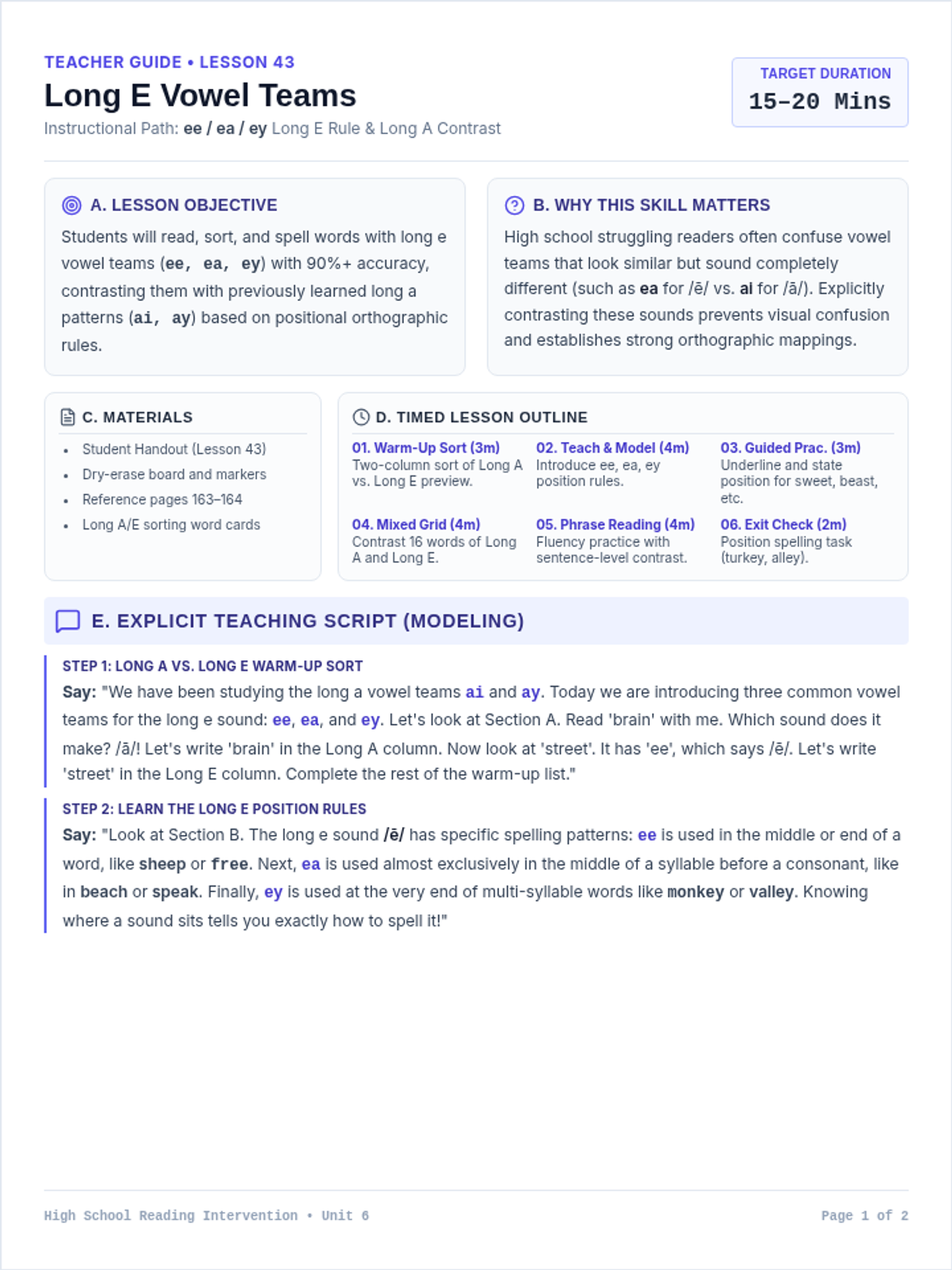
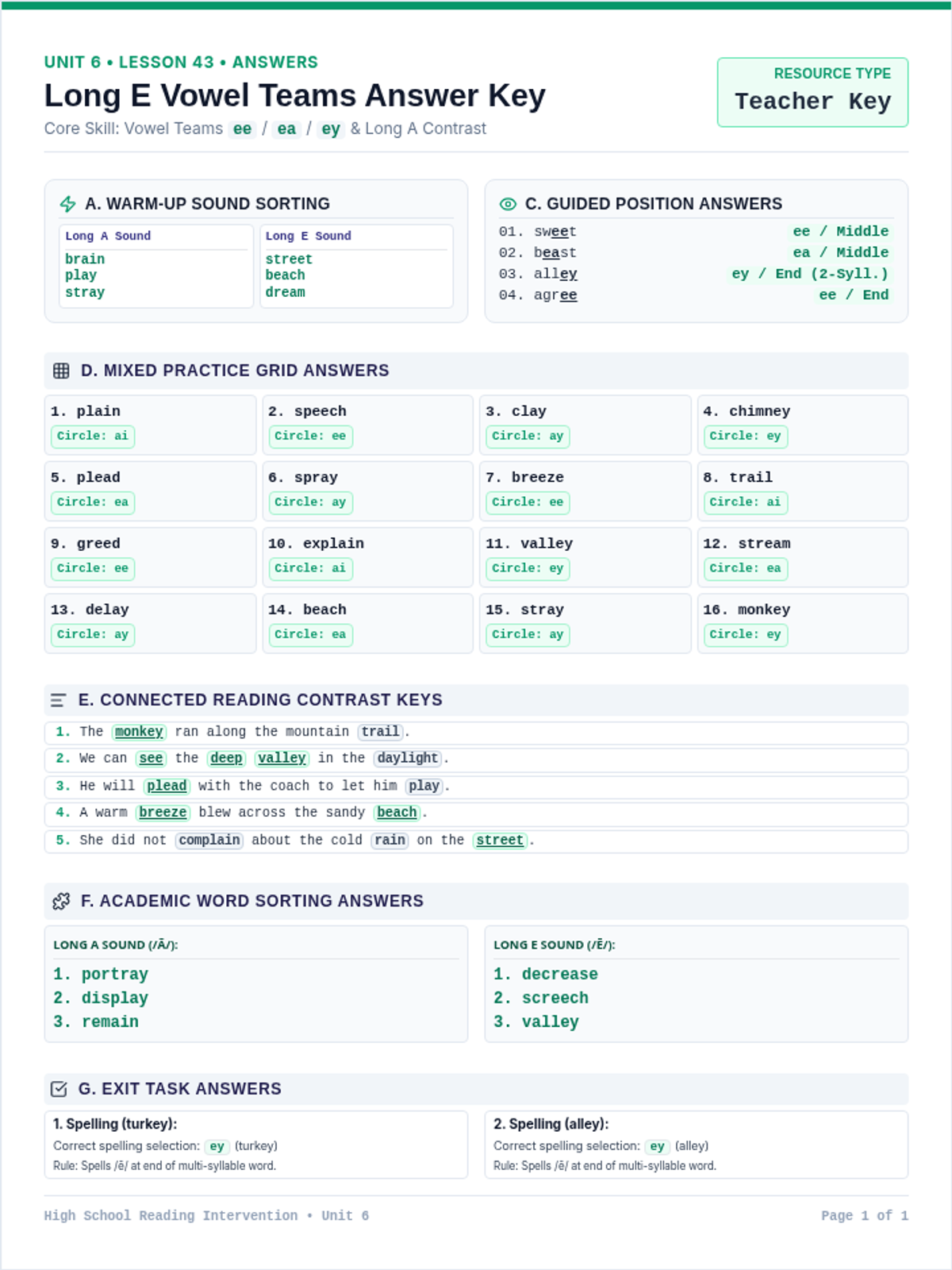
An explicit, highly scaffolded reading intervention lesson introducing long e vowel teams (ee, ea, ey) while reviewing long a vowel teams (ai, ay) through structured word sorting, guided reading, and spelling rules.
An application-focused reading intervention lesson reinforcing ai/ay vowel teams in connected reading and spelling. Designed for high school struggling readers, this lesson incorporates a robust r-controlled vowel review and advanced word sorting.
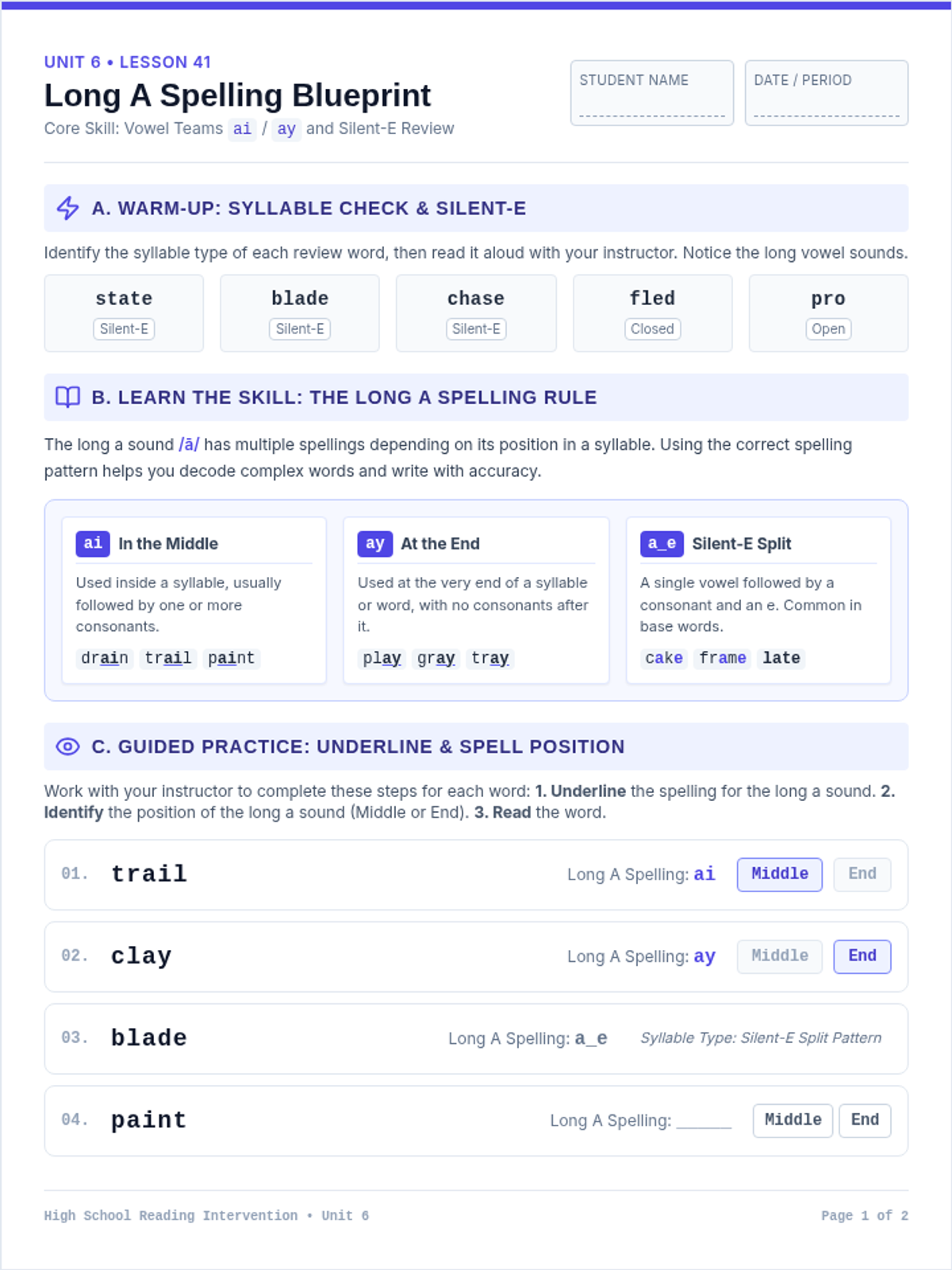
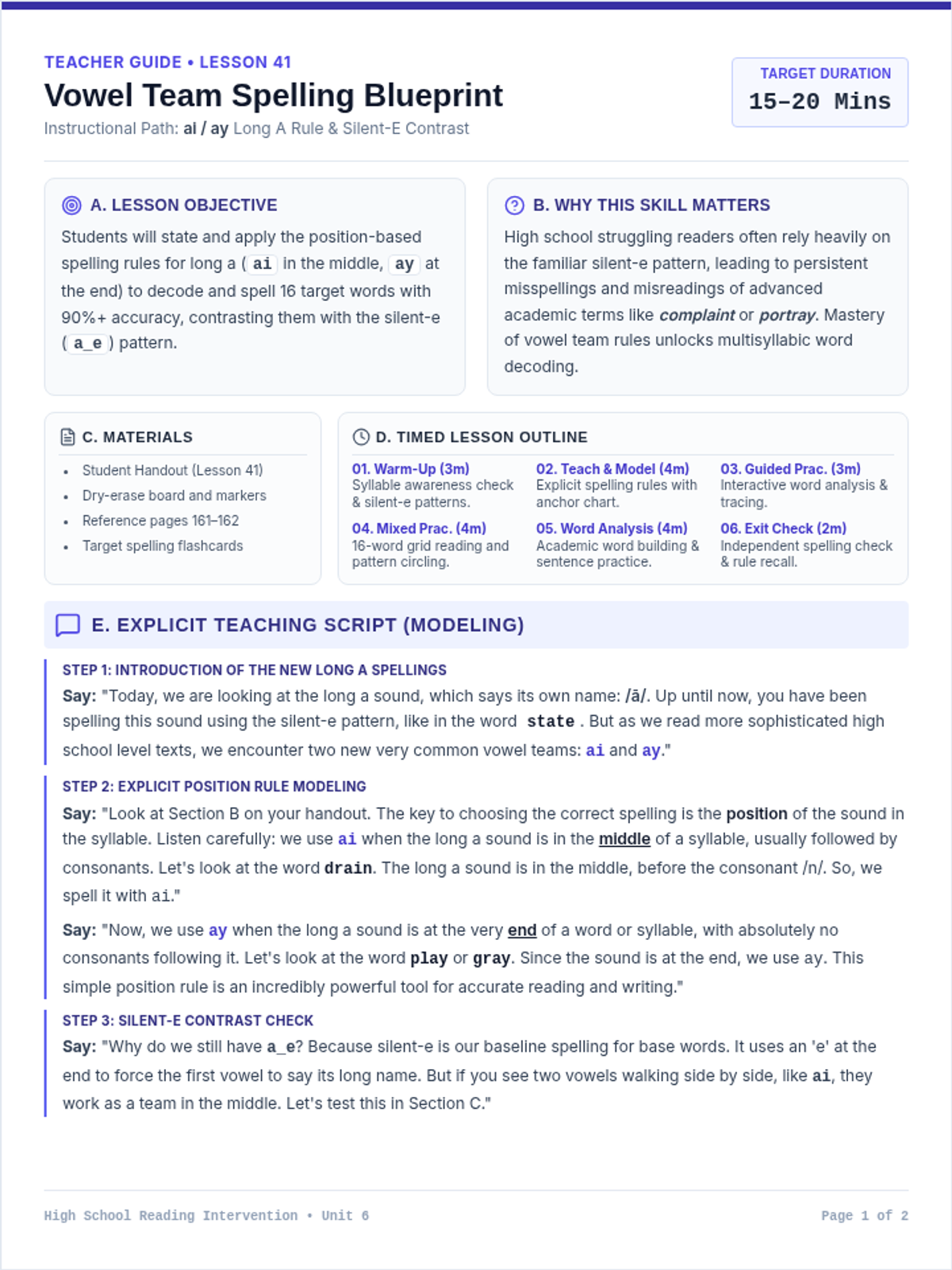
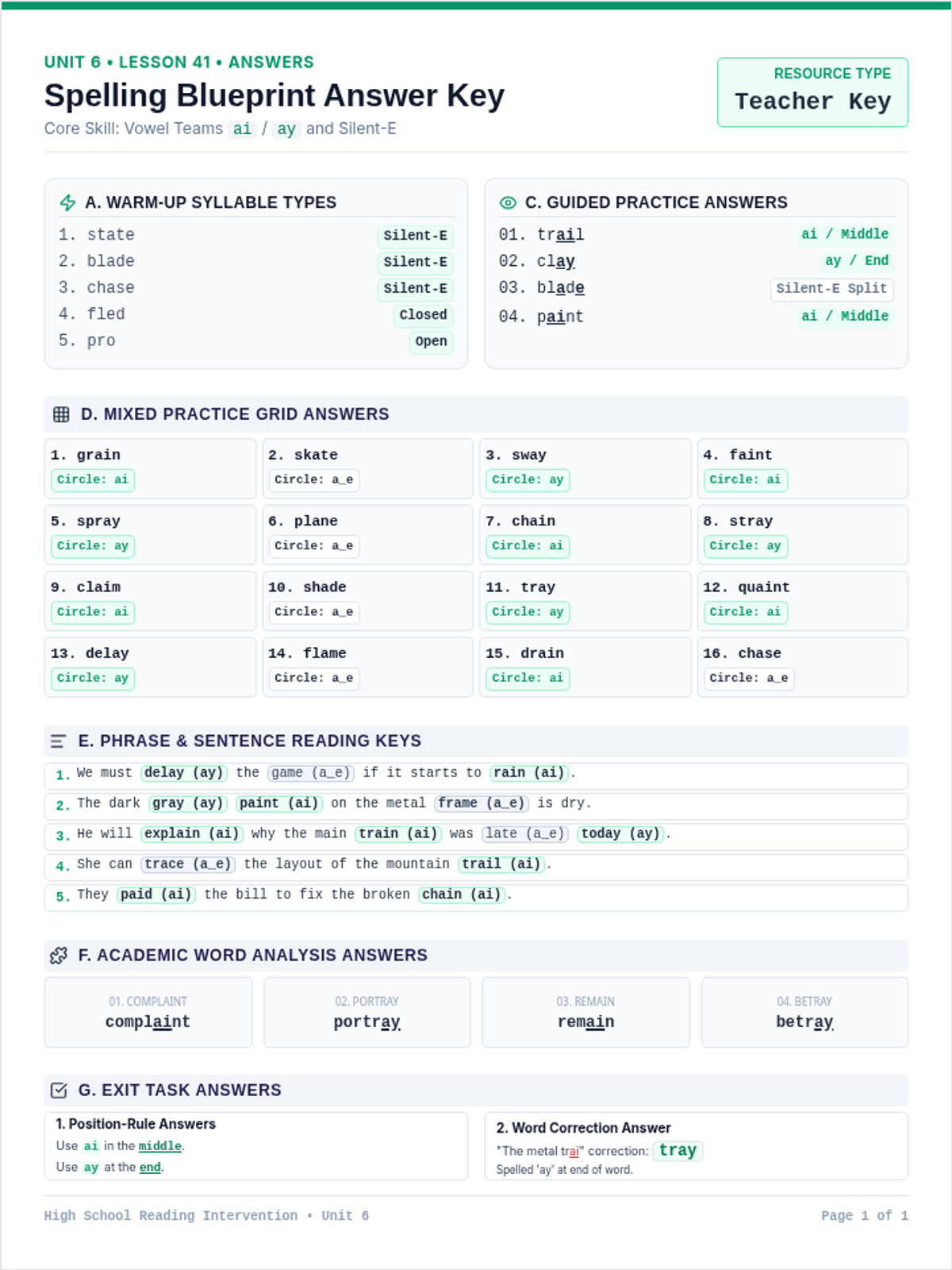
An explicit, highly scaffolded reading intervention lesson focusing on the long a spelling patterns ai and ay. Designed for high school struggling readers, this lesson contrasts these new vowel teams with the familiar silent-e (a_e) pattern through structured decoding, word analysis, and writing tasks.
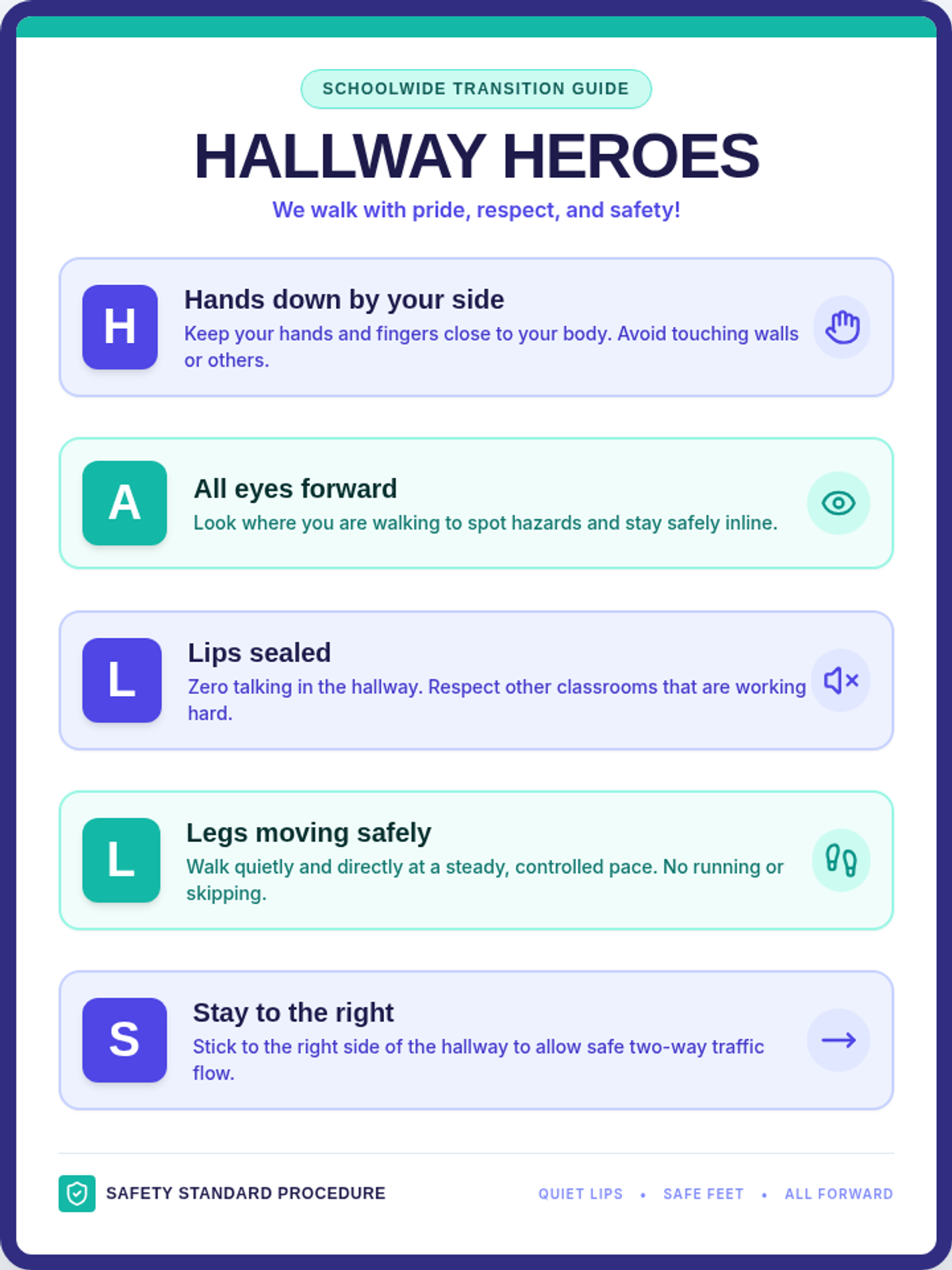
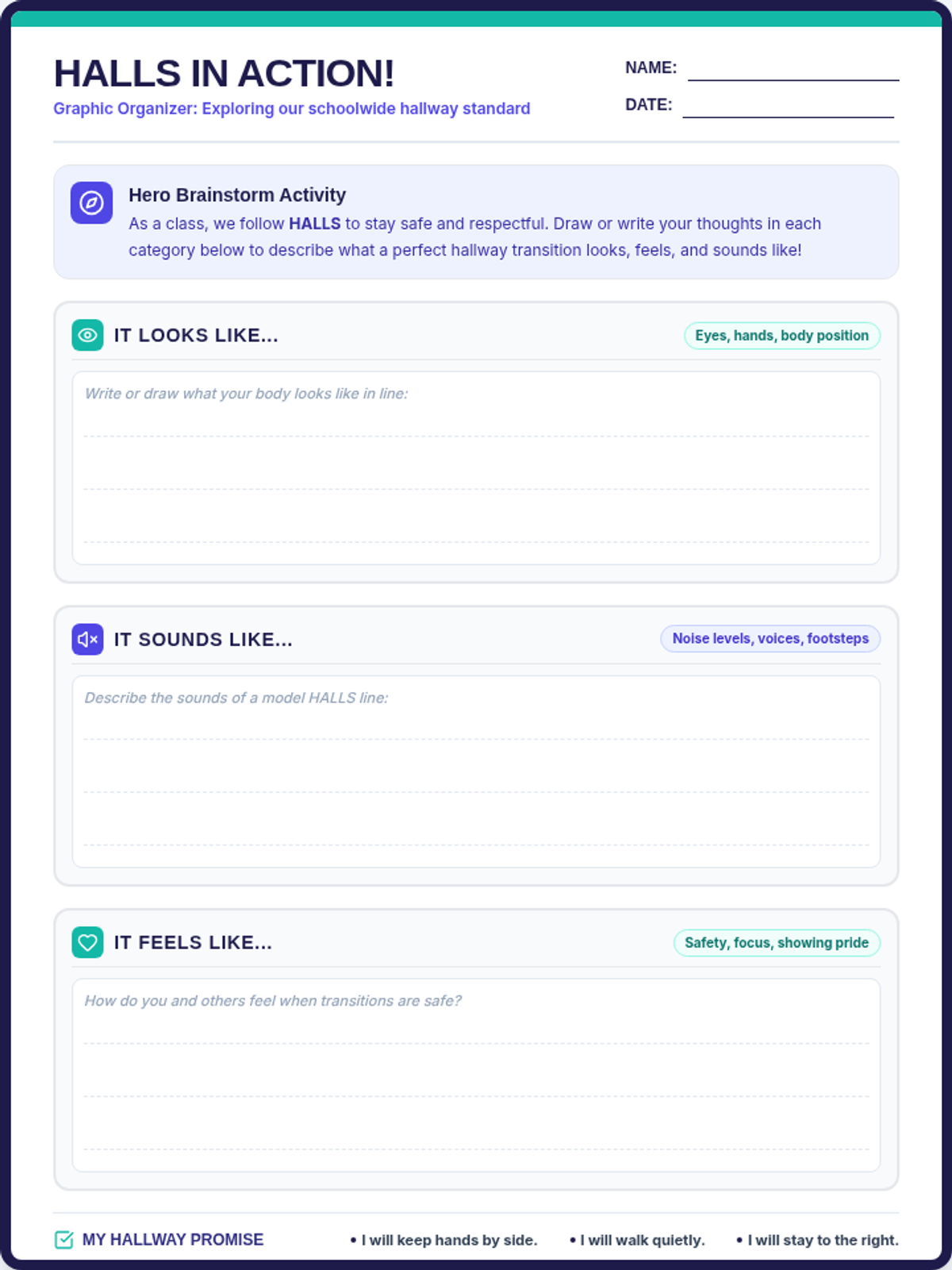
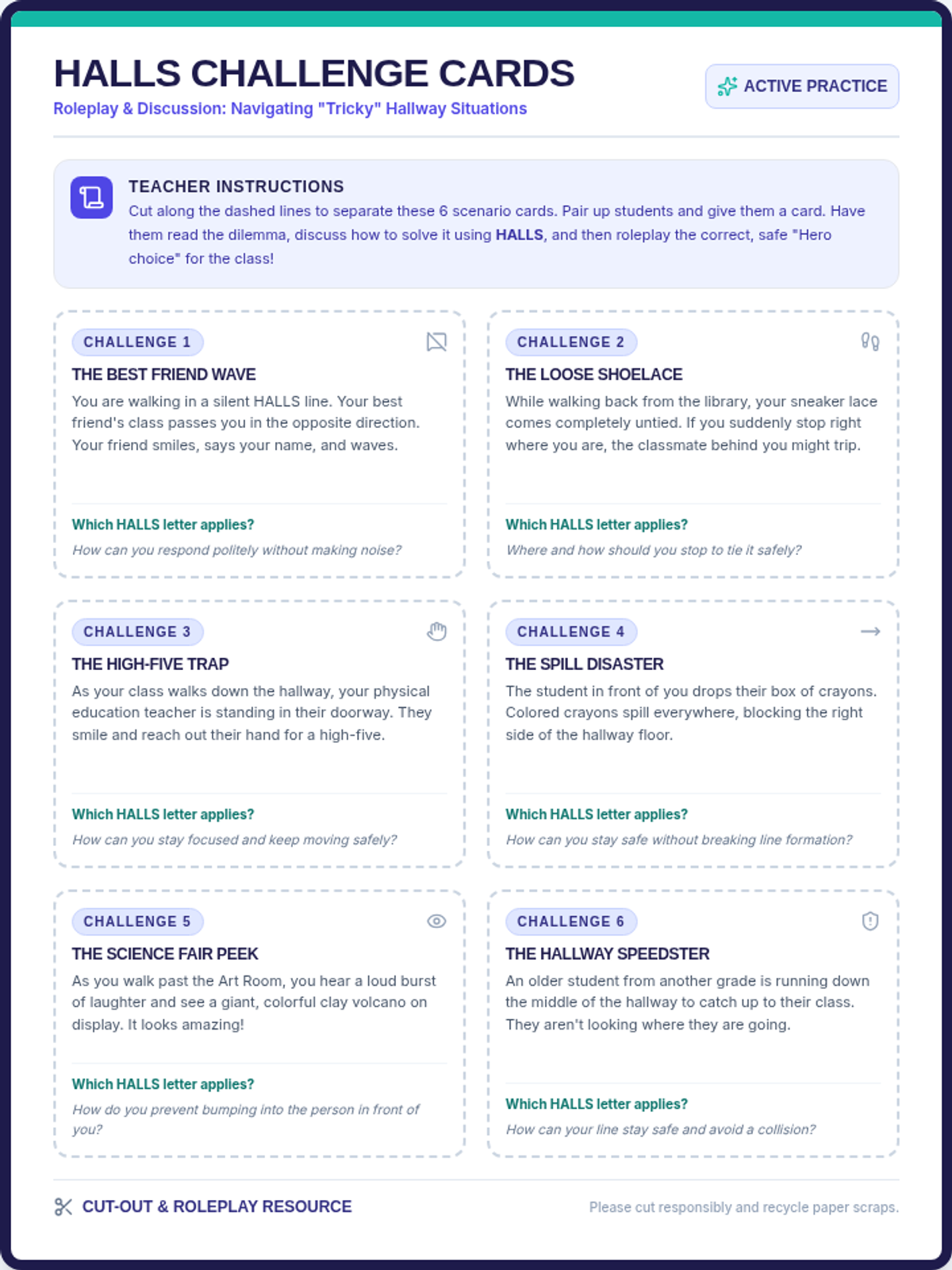
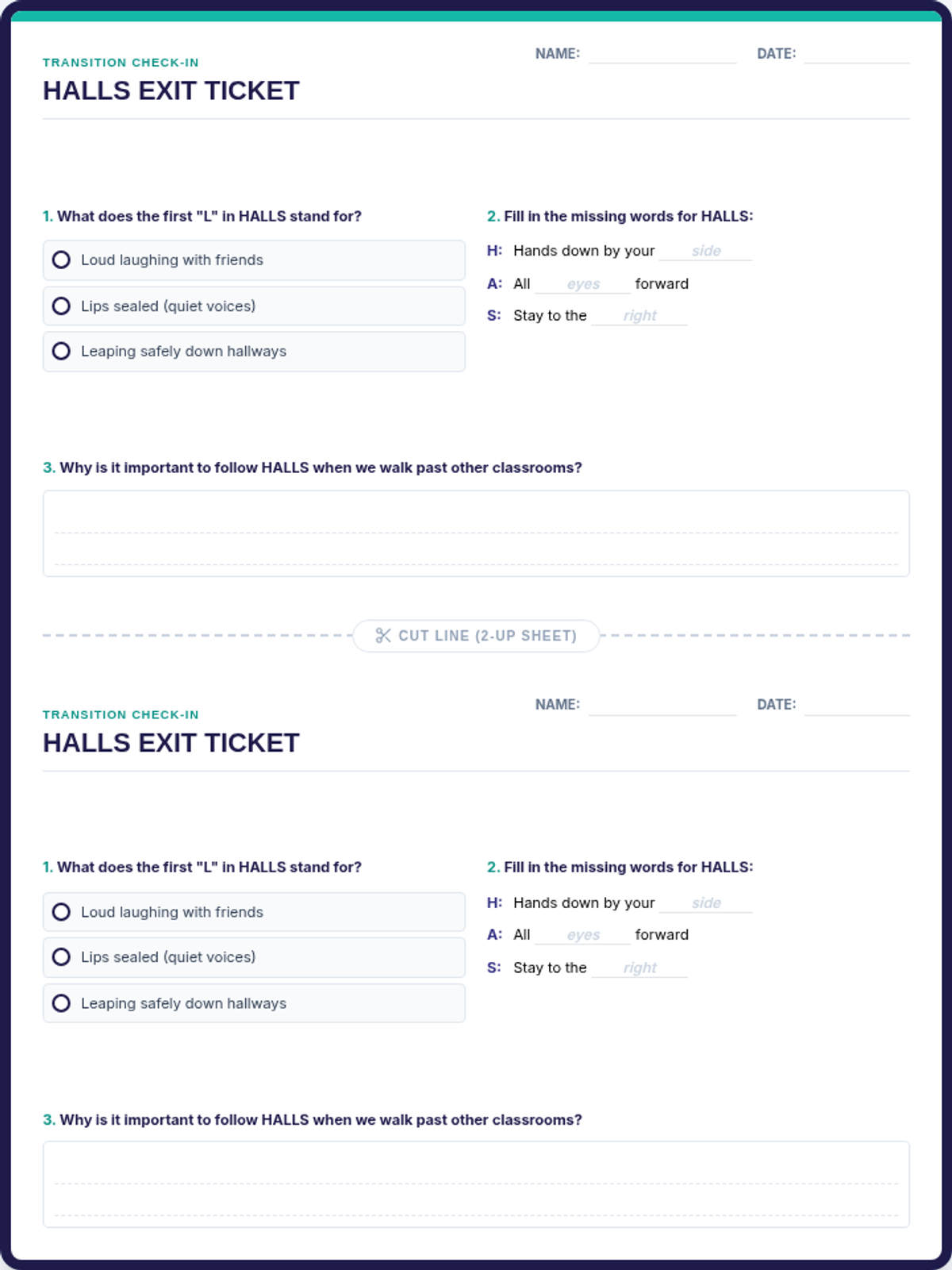
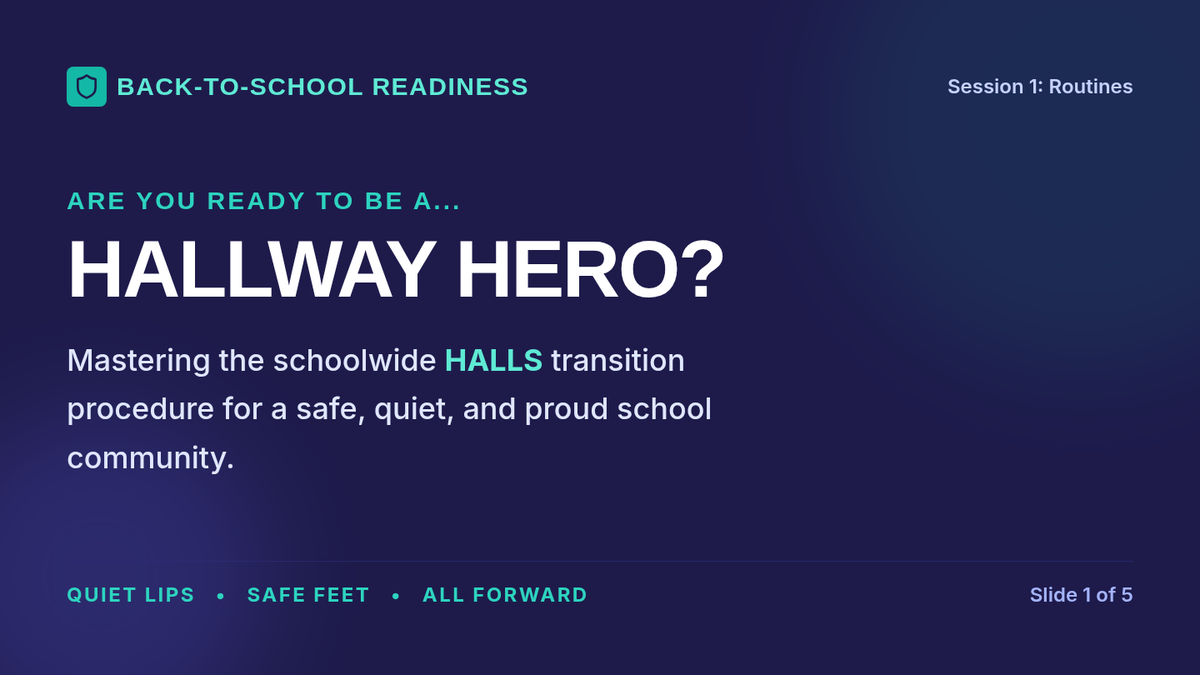
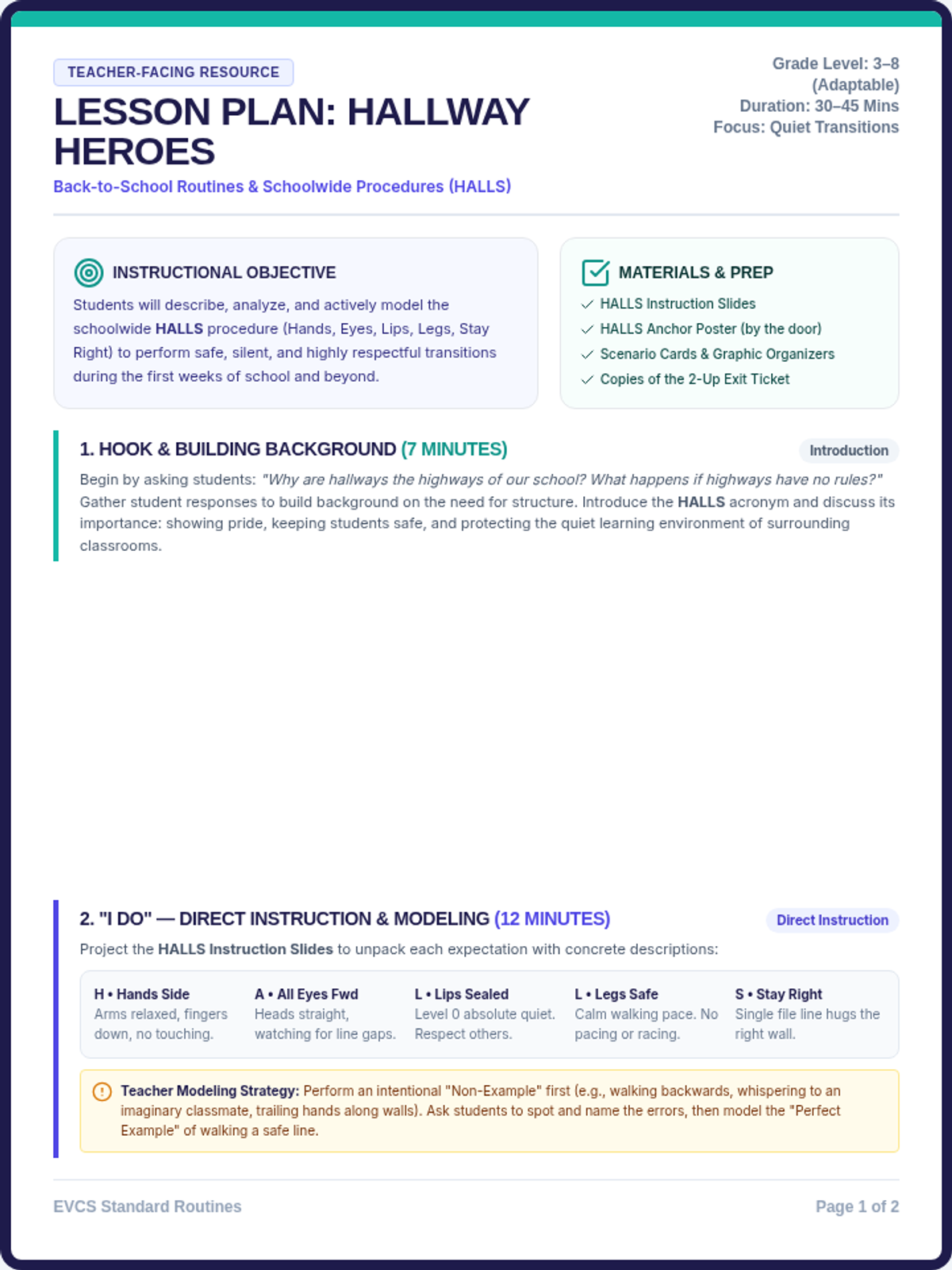
A beginning-of-the-year lesson teaching students the schoolwide HALLS procedure for safe and respectful hallway transitions. This lesson covers explicit teacher modeling, interactive student roleplay, and self-assessment of the HALLS expectations.
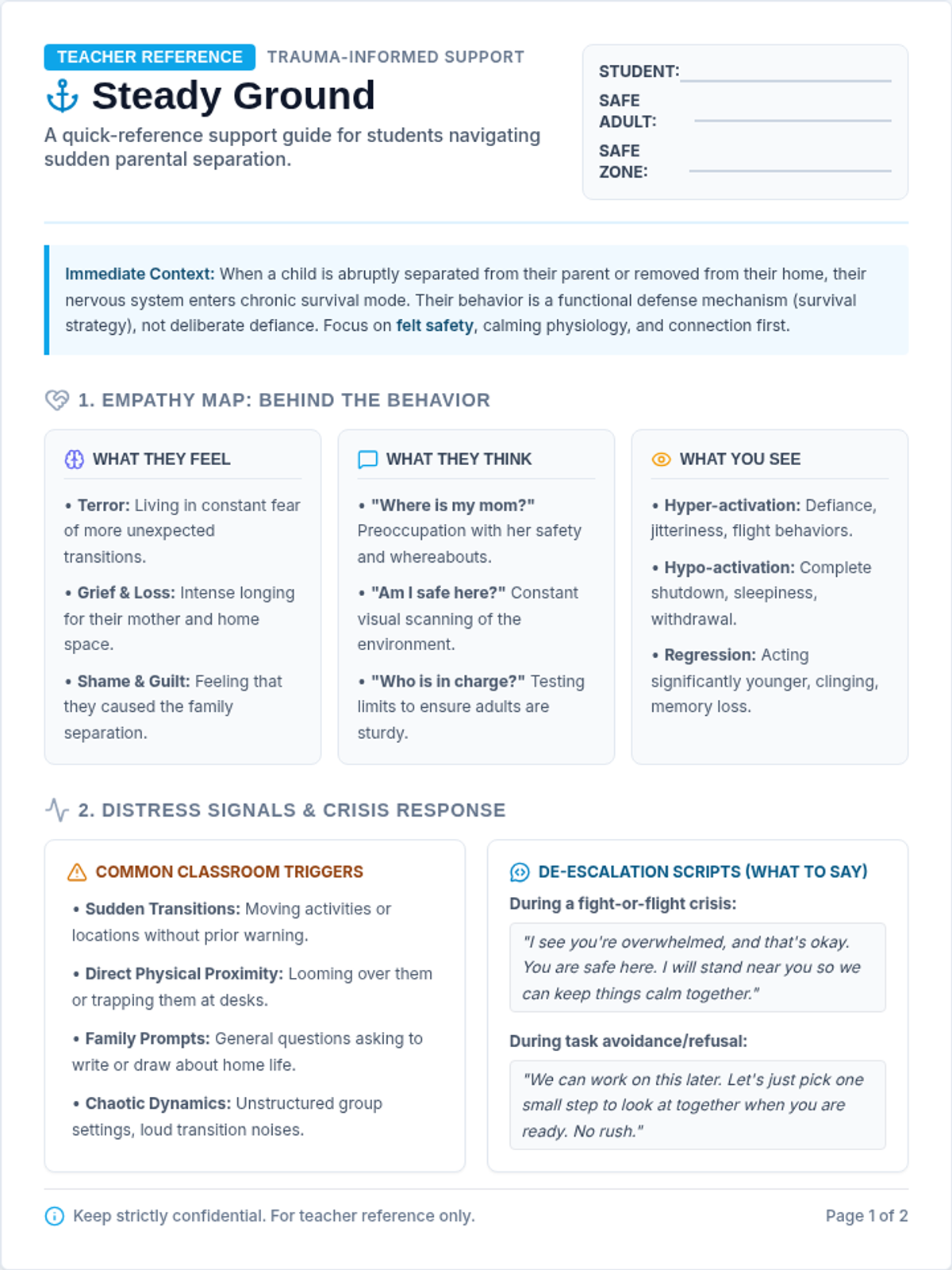
A resource hub designed to support teachers in managing classroom adjustments and implementing trauma-informed strategies for students experiencing acute family transitions.
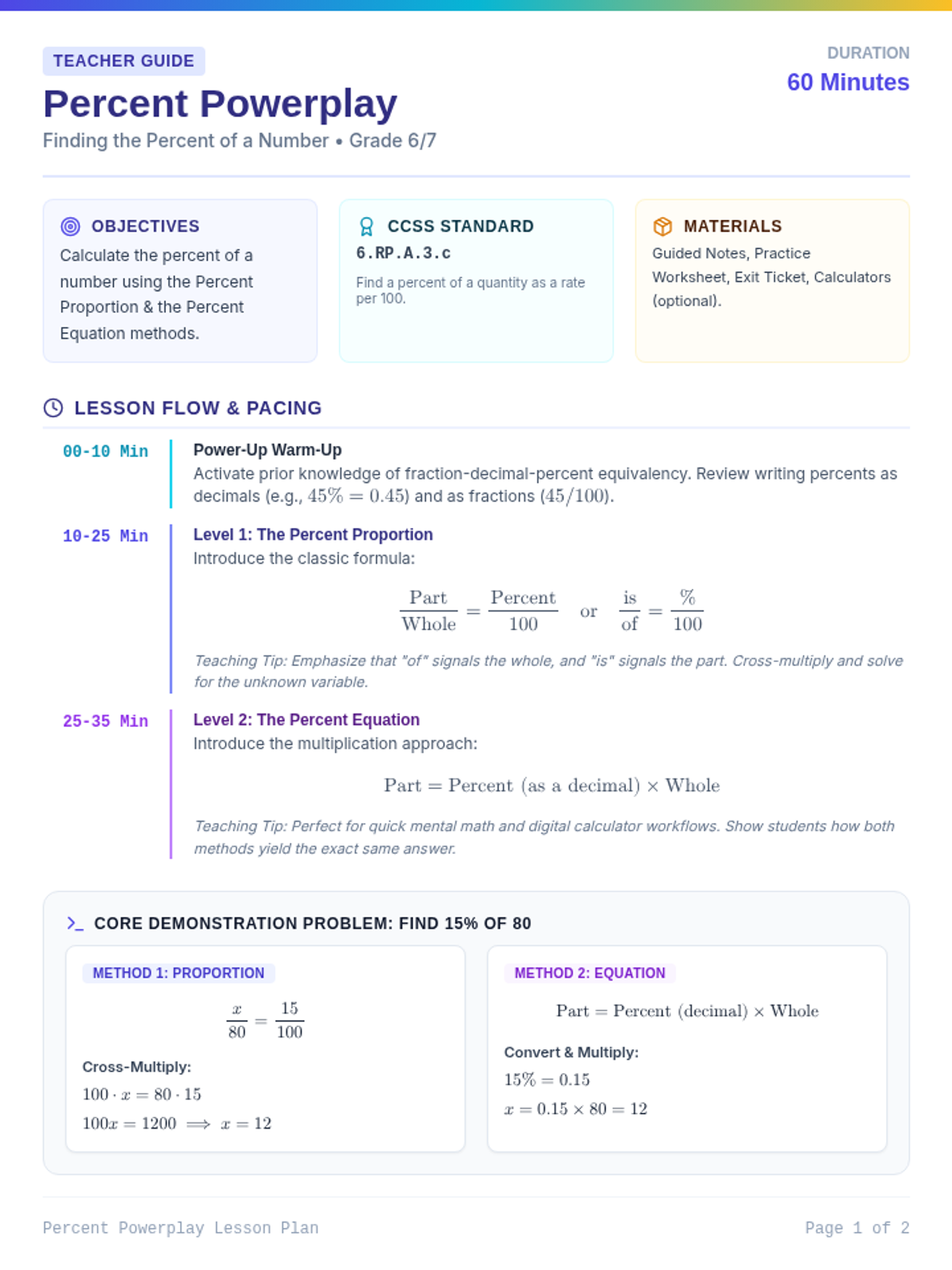
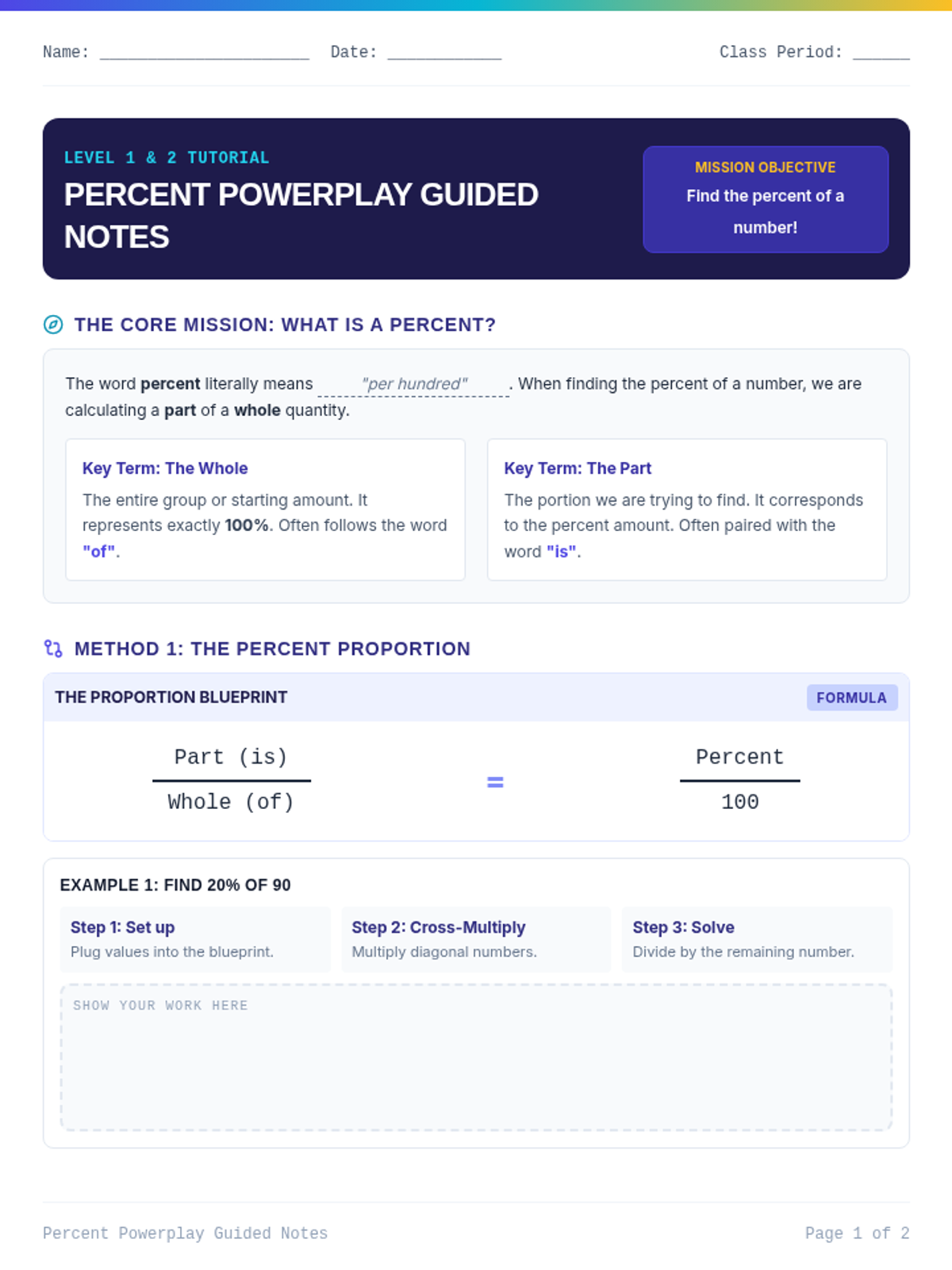
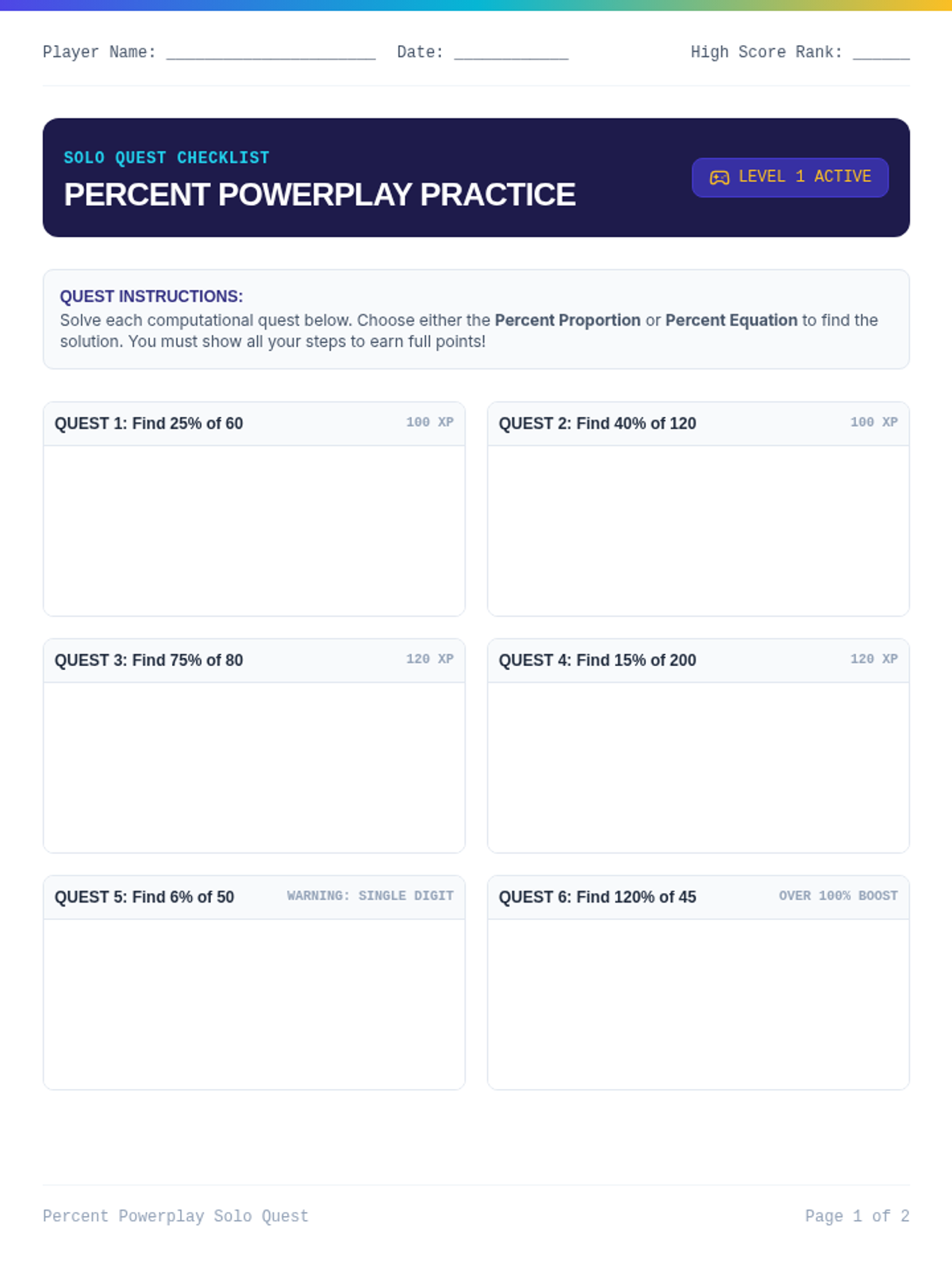
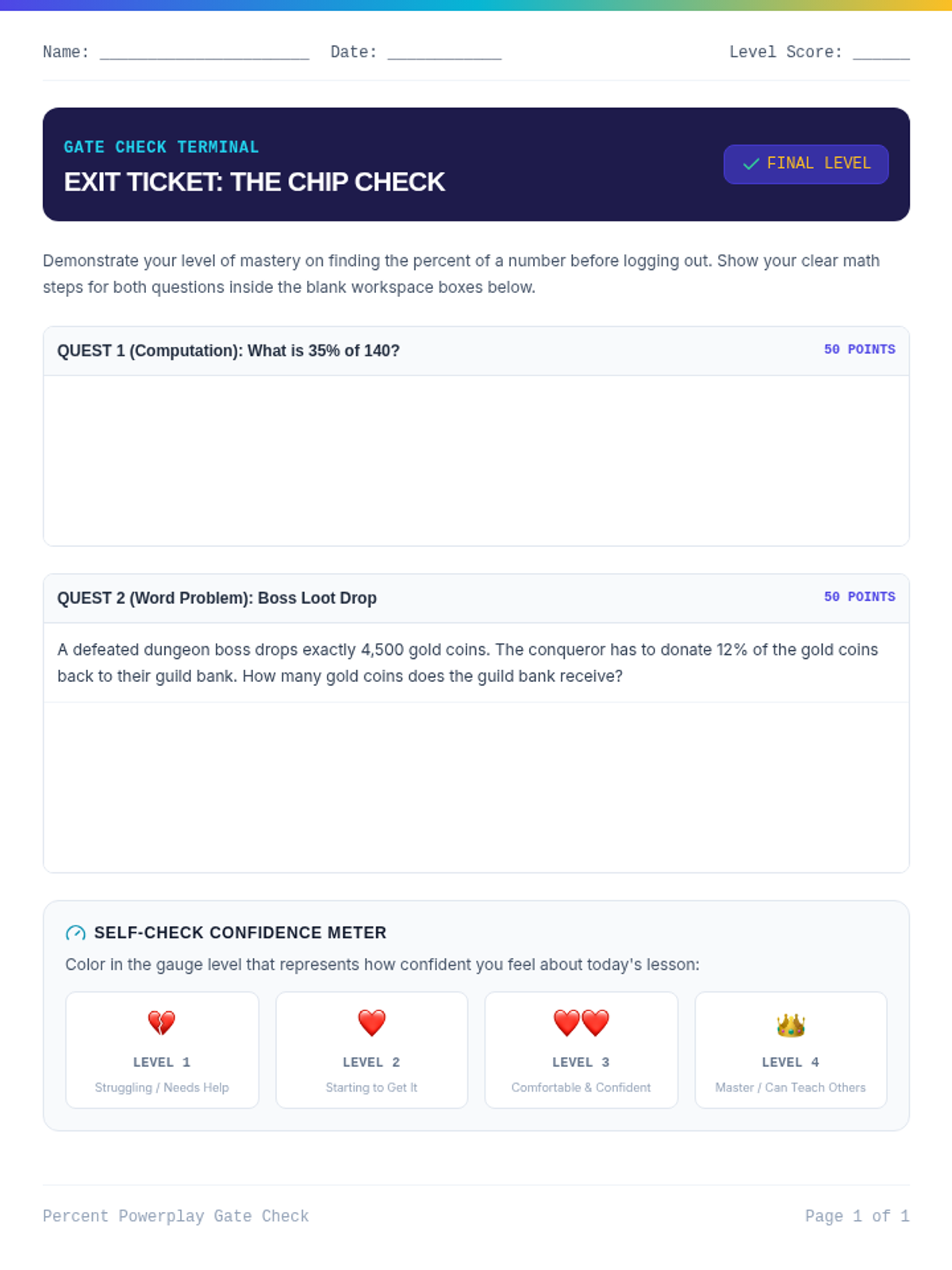
A complete lesson bundle designed to teach students how to calculate the percent of a number using the Percent Proportion and Percent Equation. Includes an instructional lesson plan, guided notes, a practice worksheet, and an exit ticket.
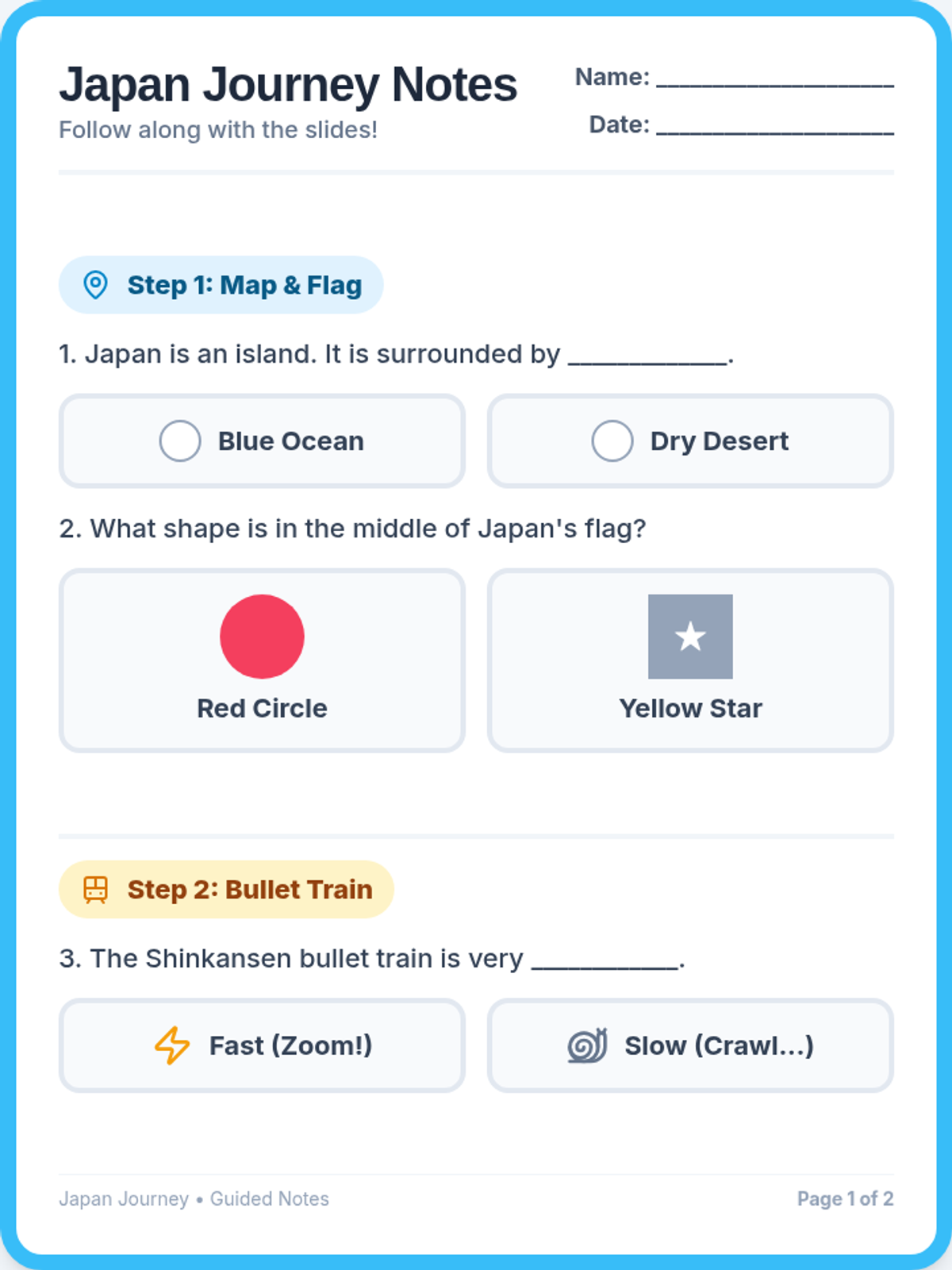
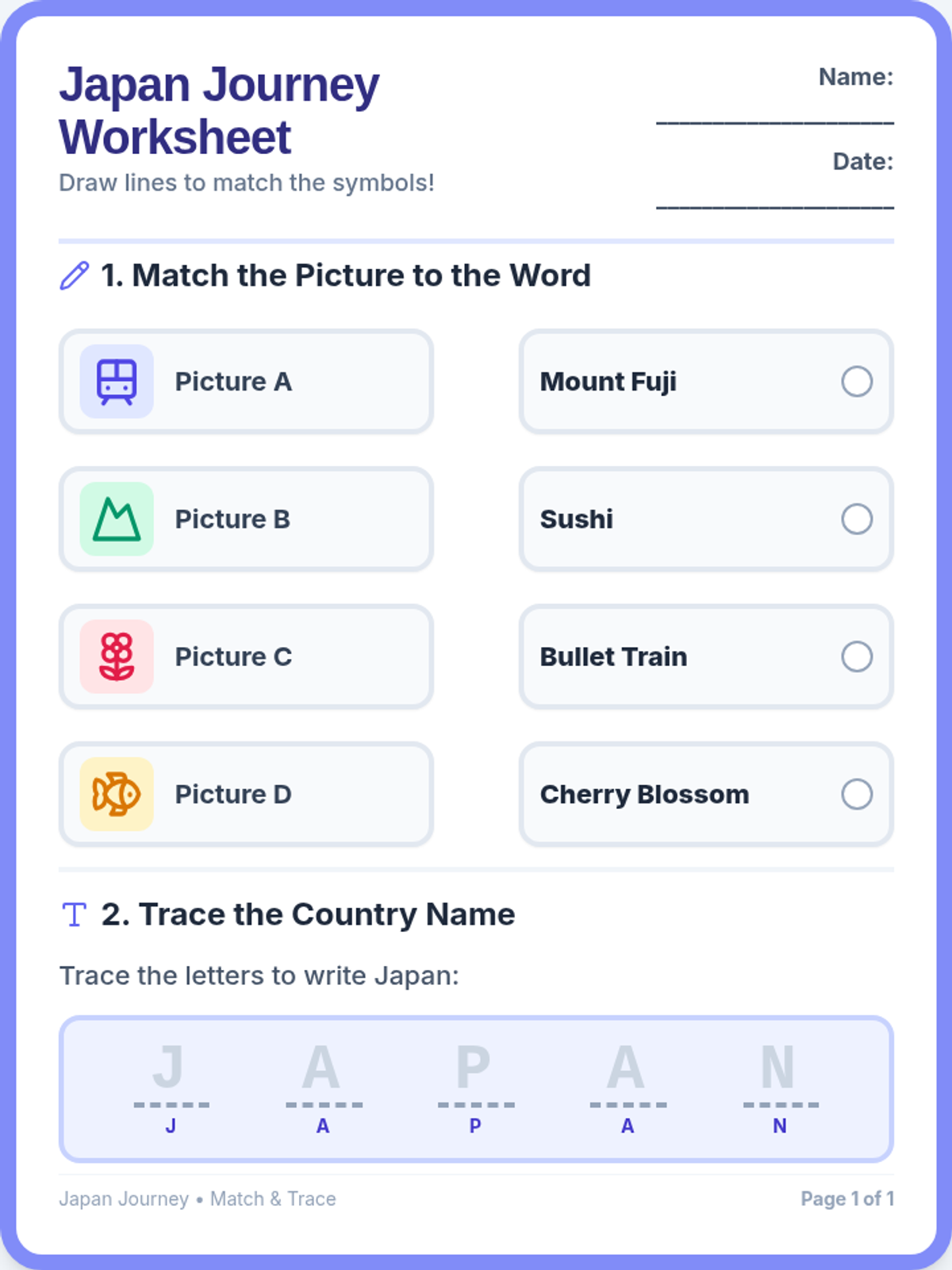
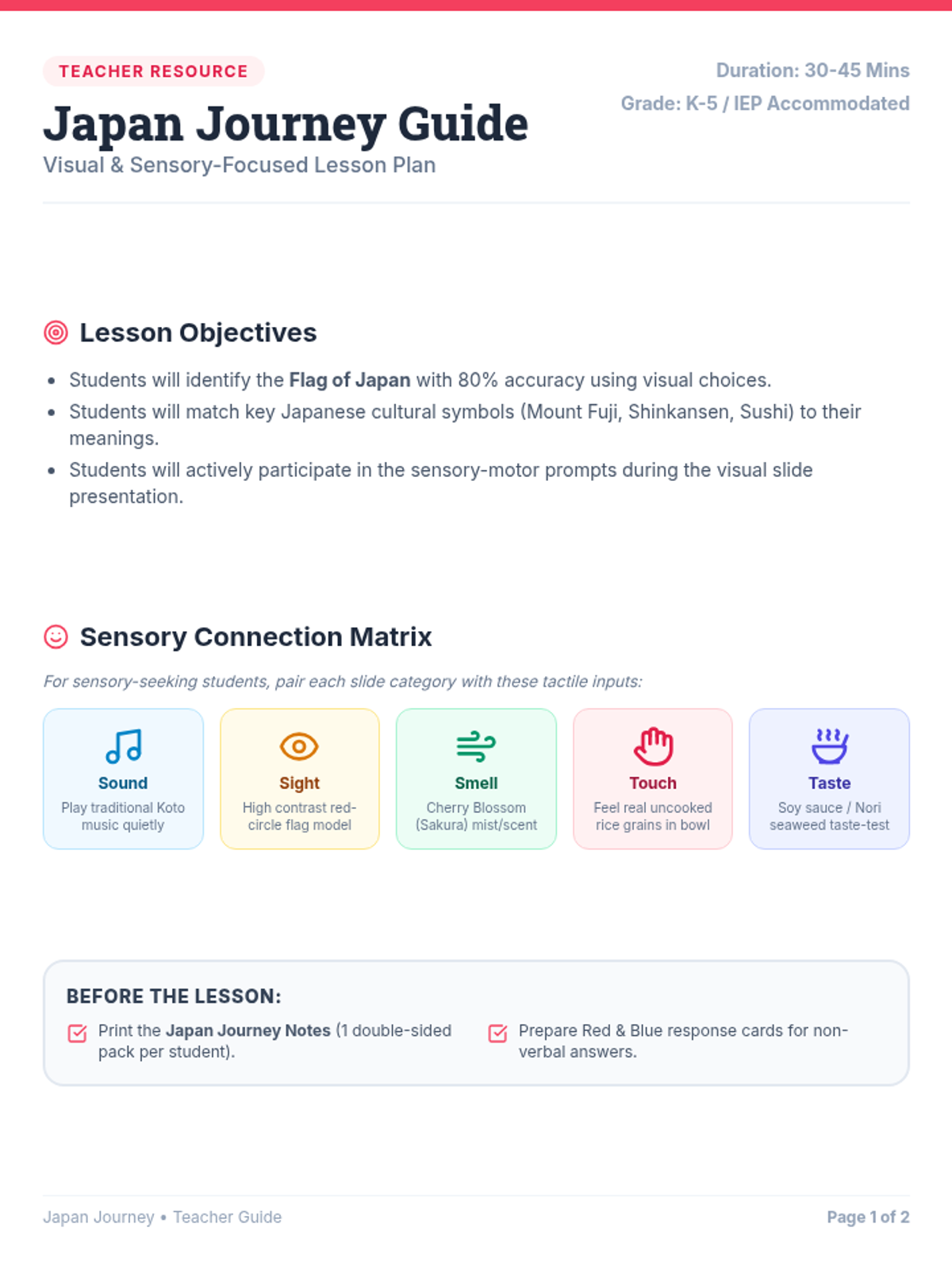
A complete lesson bundle about Japan designed specifically for IEP students using highly simplified text and visual communication symbols. The bundle includes an interactive slide deck, matching visual guided notes, a symbol-matching activity worksheet, and a teacher facilitation guide with sensory connections.
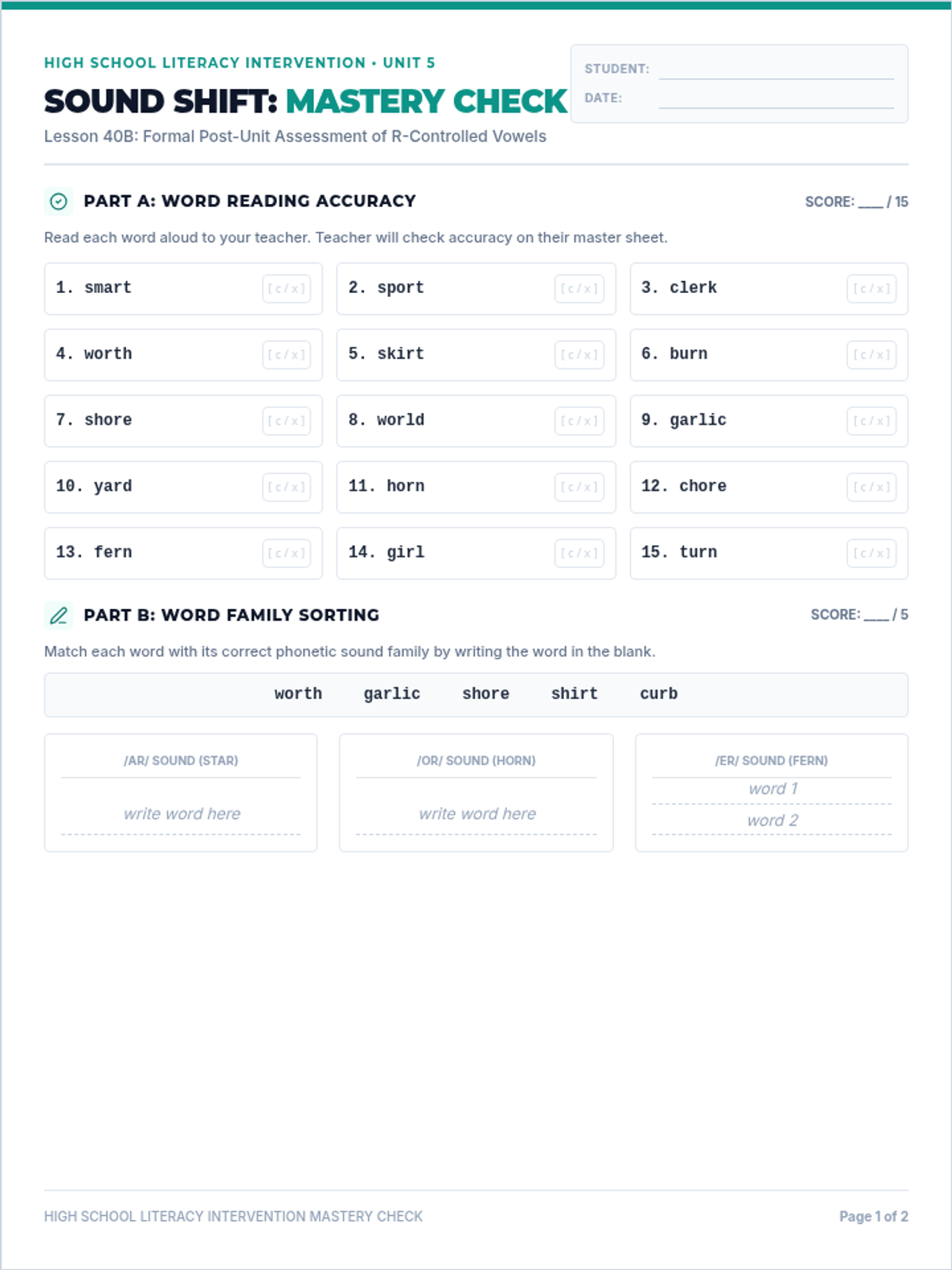
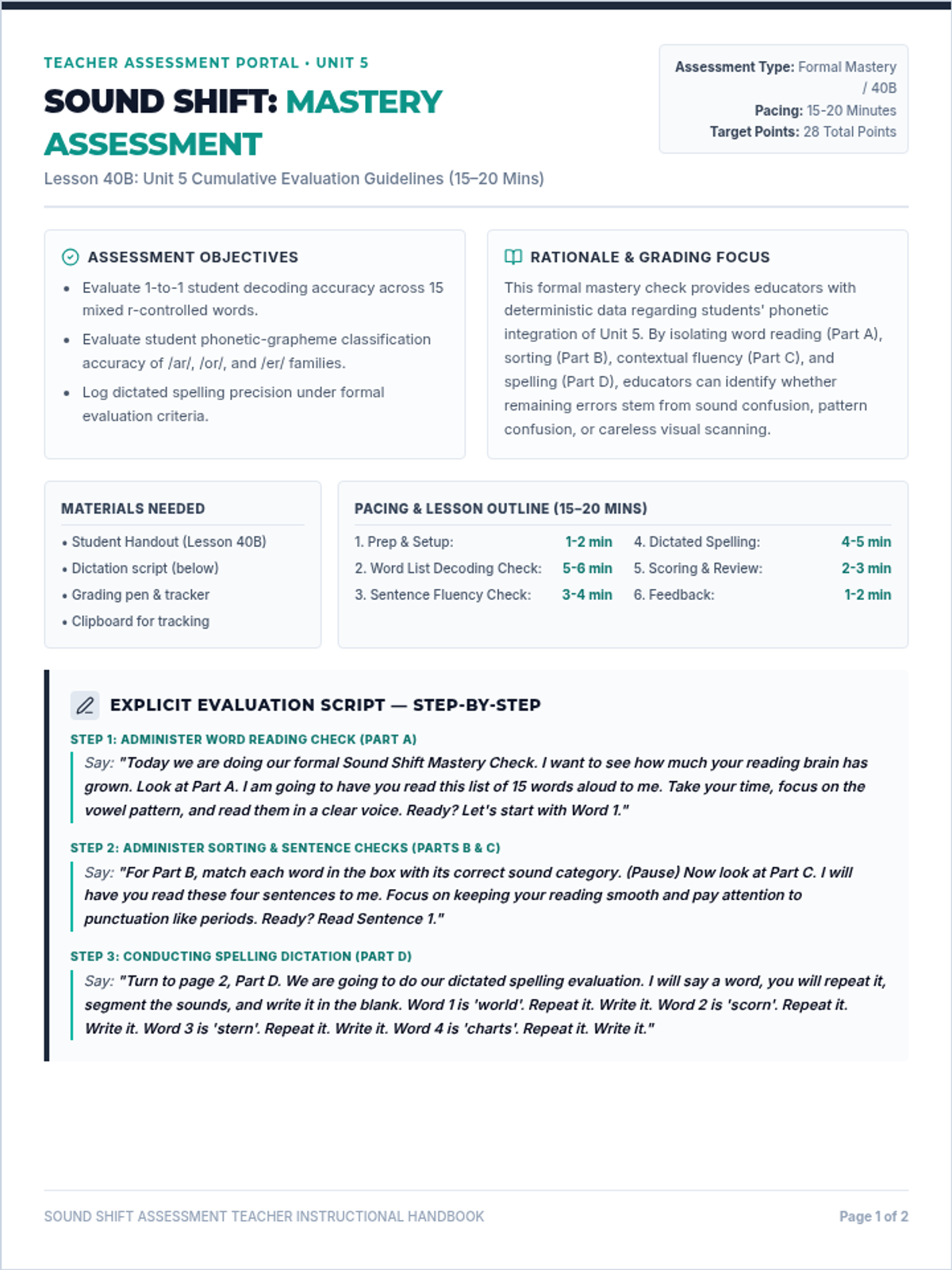
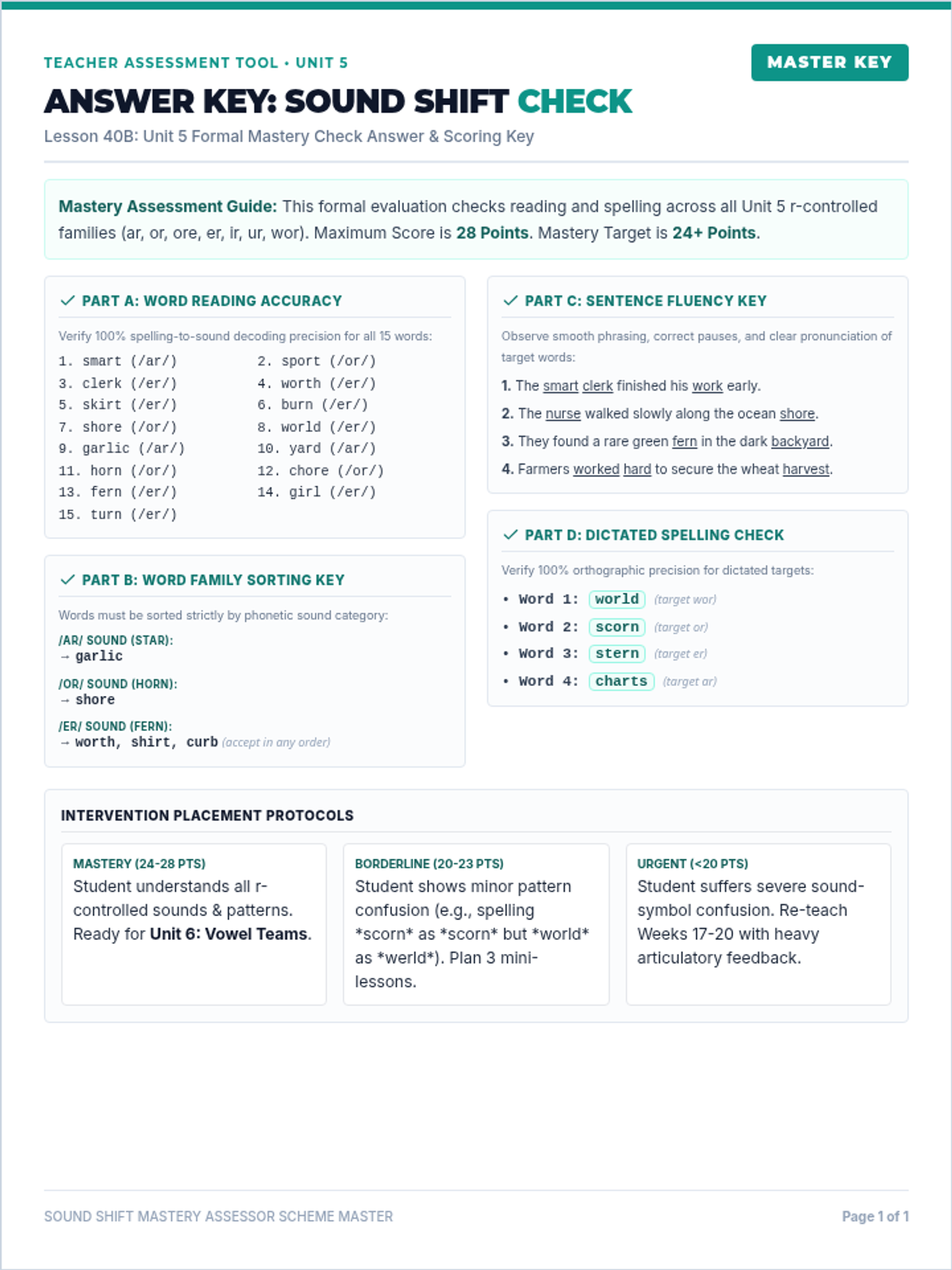
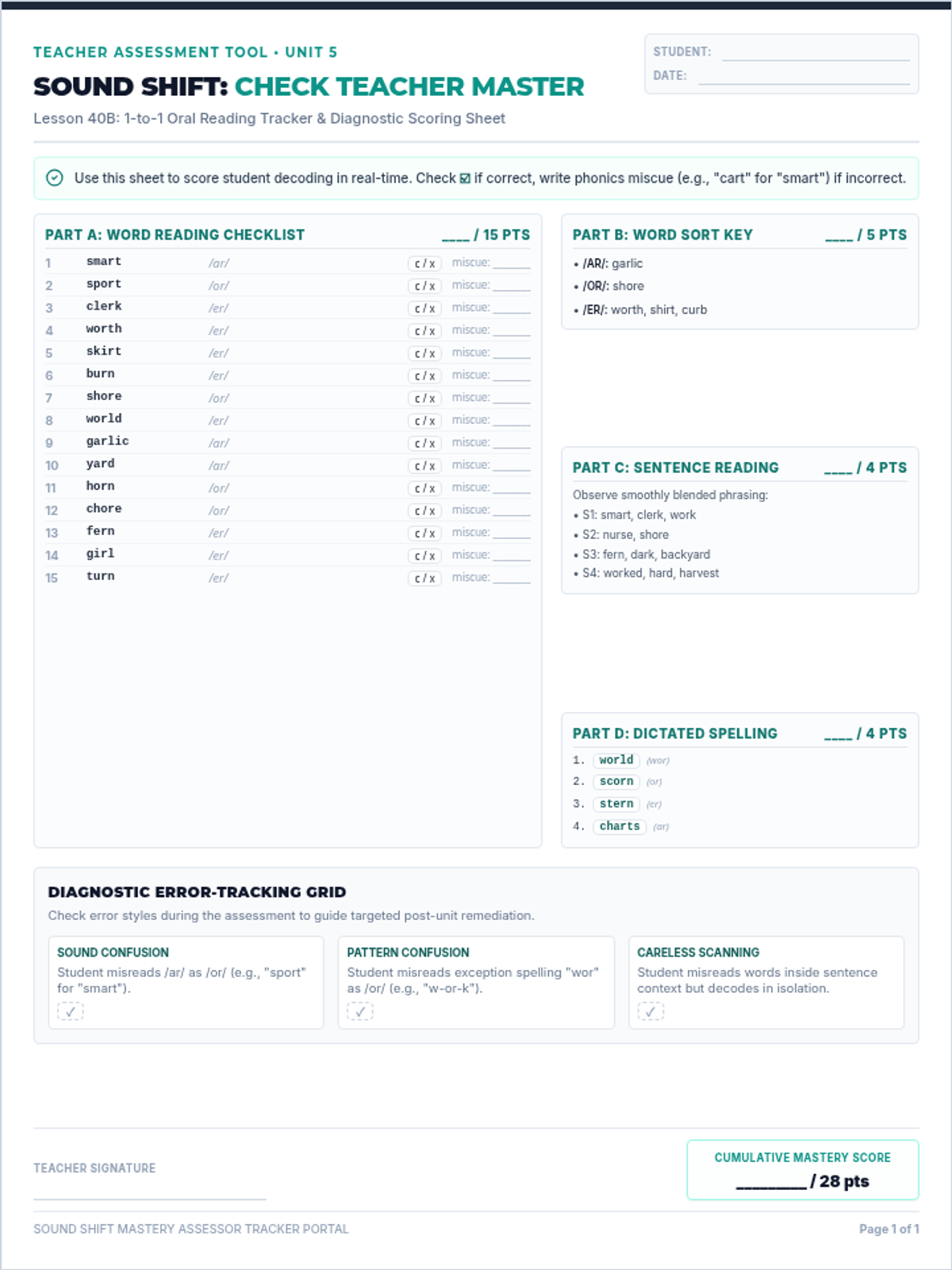
A formal mastery assessment designed to track high school students' decoding accuracy, spelling, and phonetic discrimination across all major r-controlled vowel families.
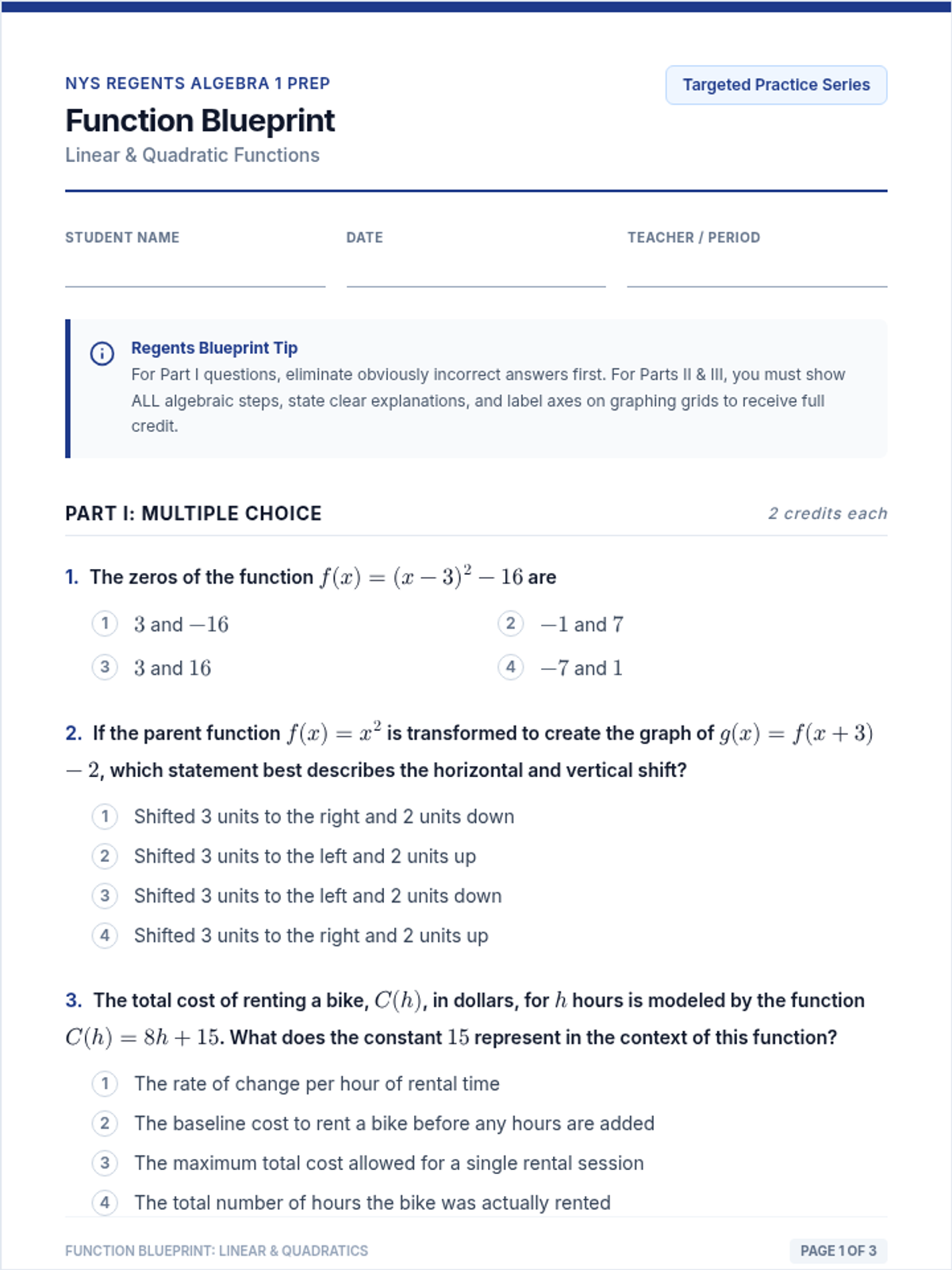
A targeted exam prep lesson focusing on NYS Regents Algebra 1 questions for linear and quadratic functions. Includes high-stakes graphing, transformations, modeling, and constructed-response practice with a detailed grading guide.
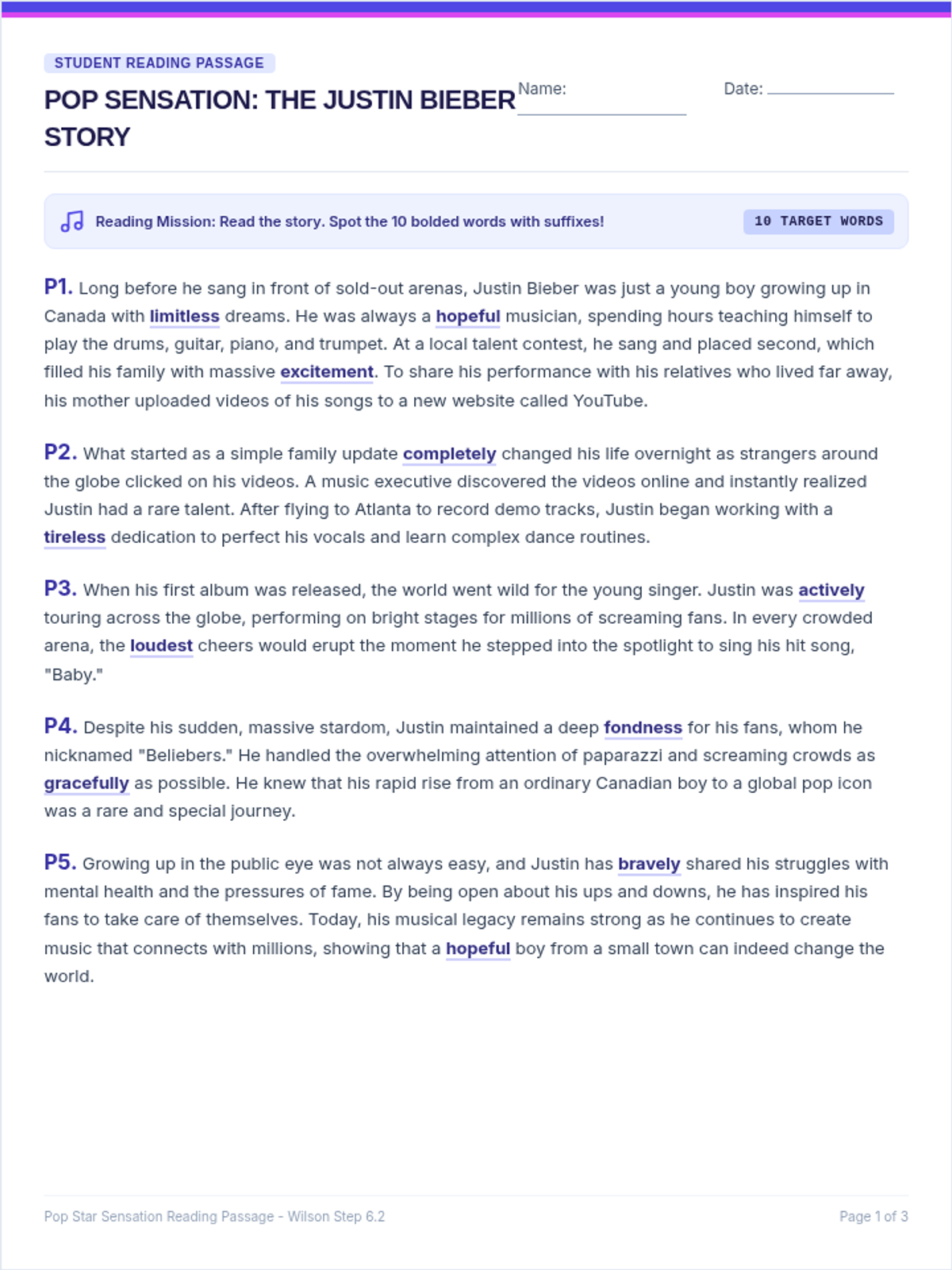
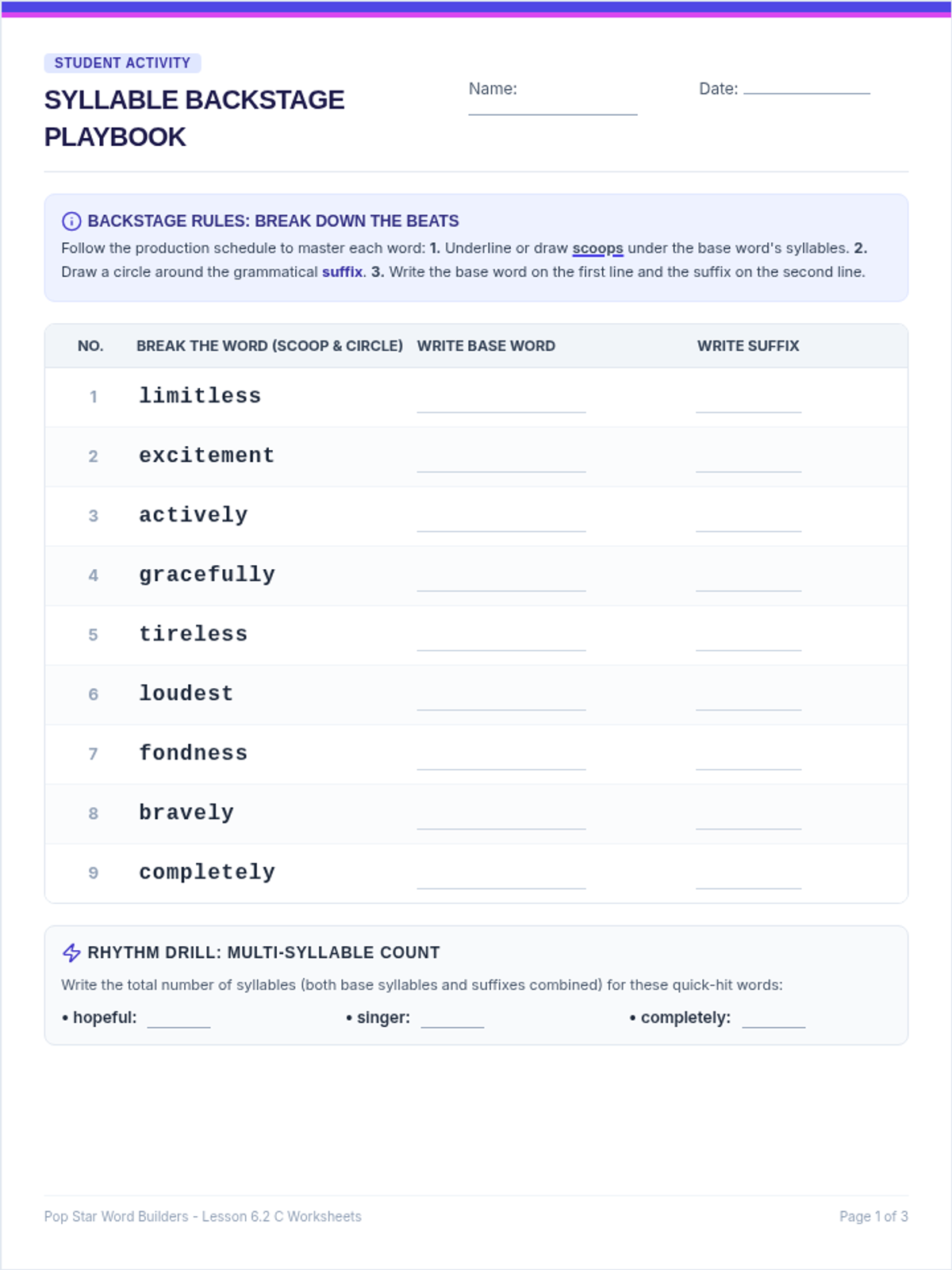
A structured literacy lesson aligned with Wilson Reading System Step 6.2, focusing on multi-syllabic words with suffixes. Students practice syllable division, spelling, and comprehension using an engaging reading passage about pop superstar Justin Bieber.
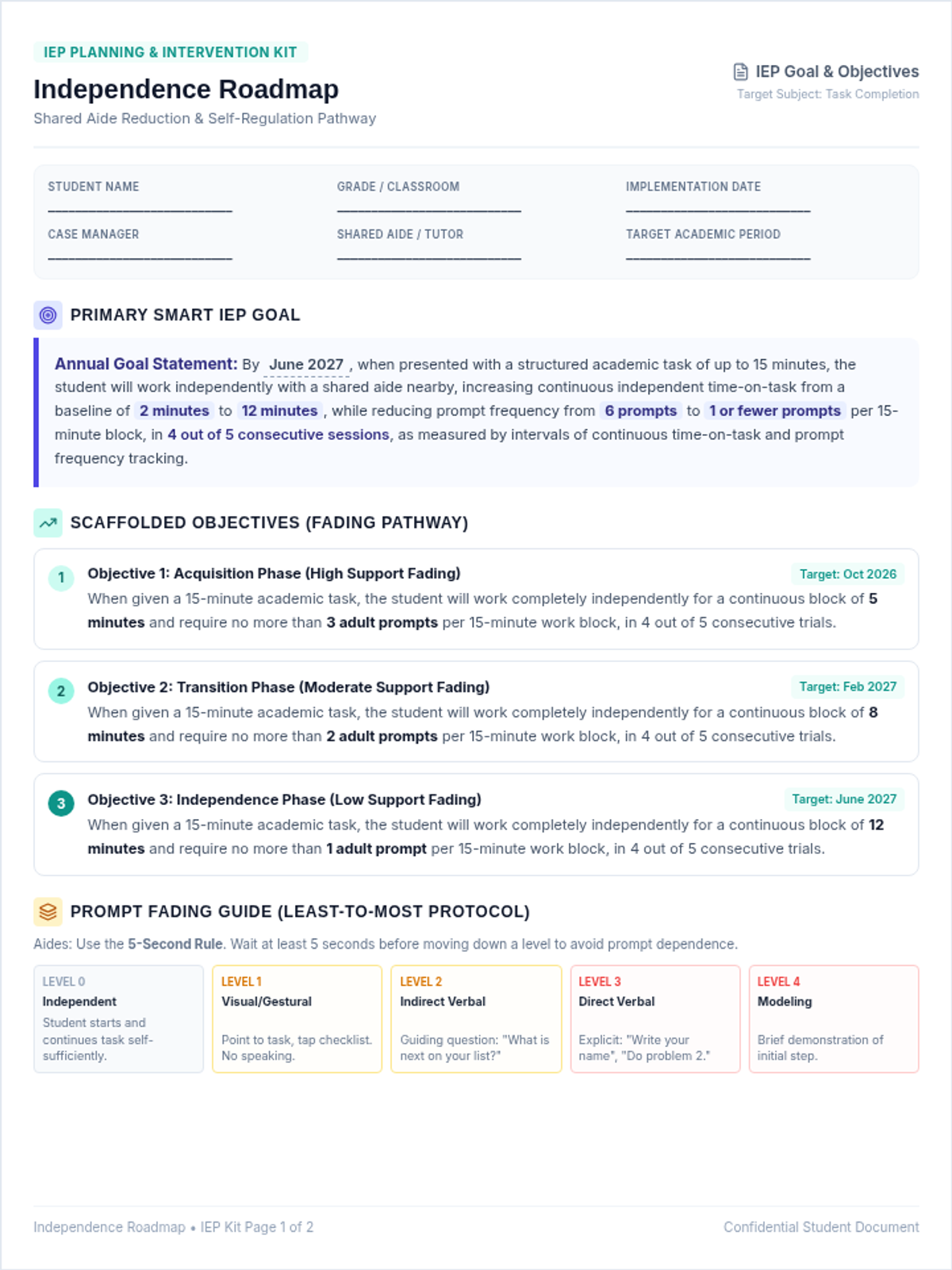
A comprehensive IEP goal planning and progress tracking system designed to transition a student from shared aide dependence to independent classroom work completion.
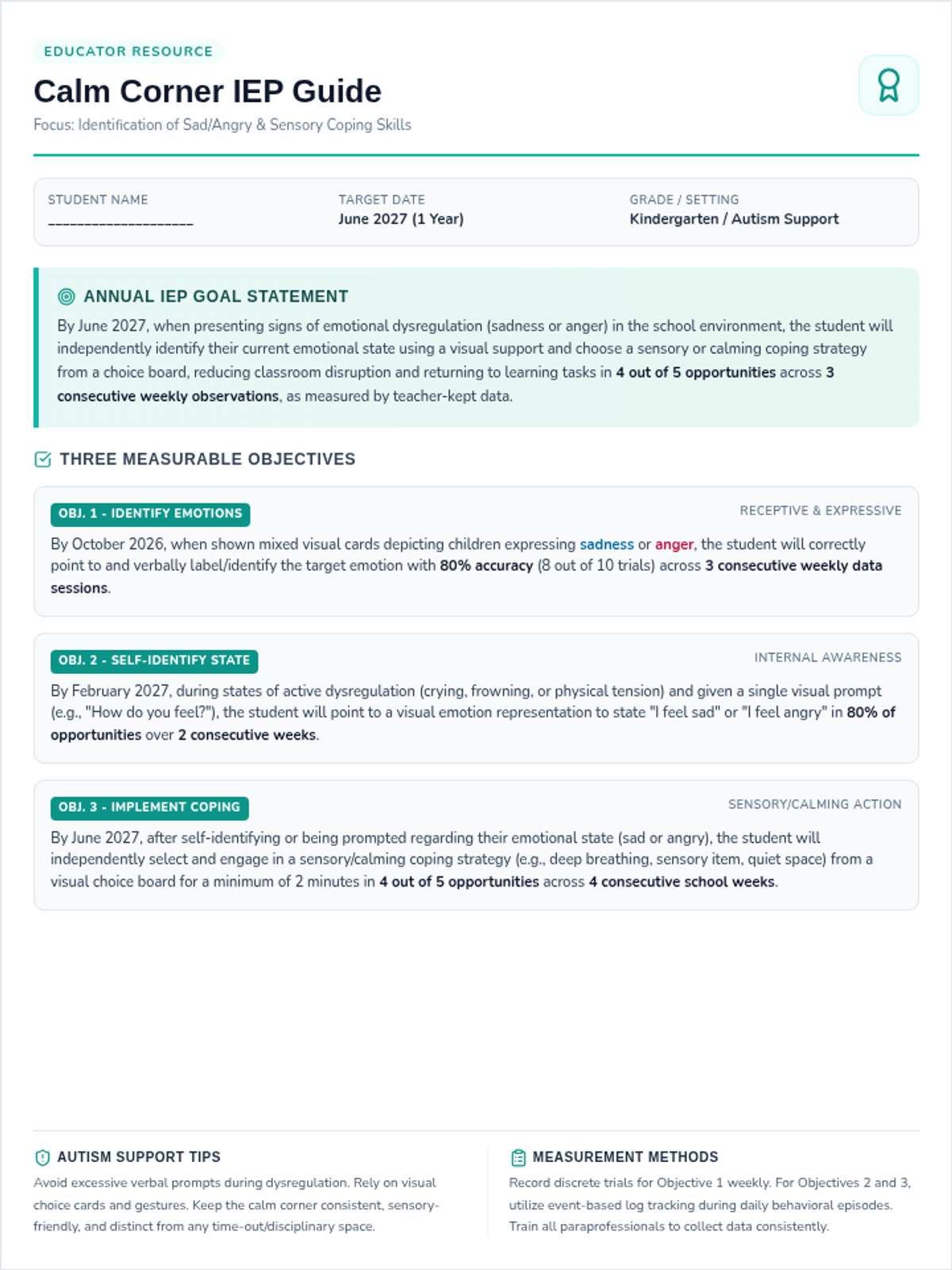
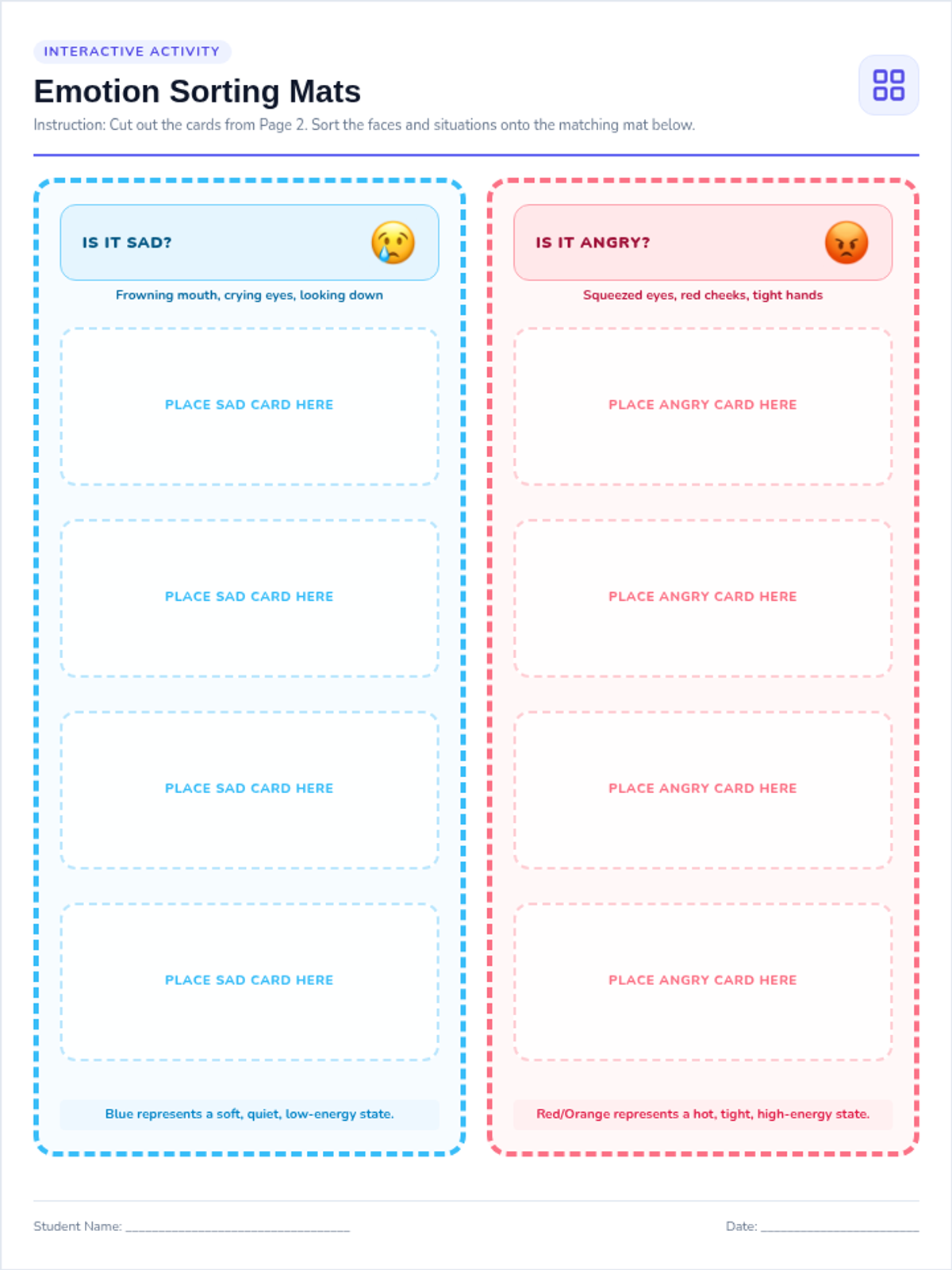
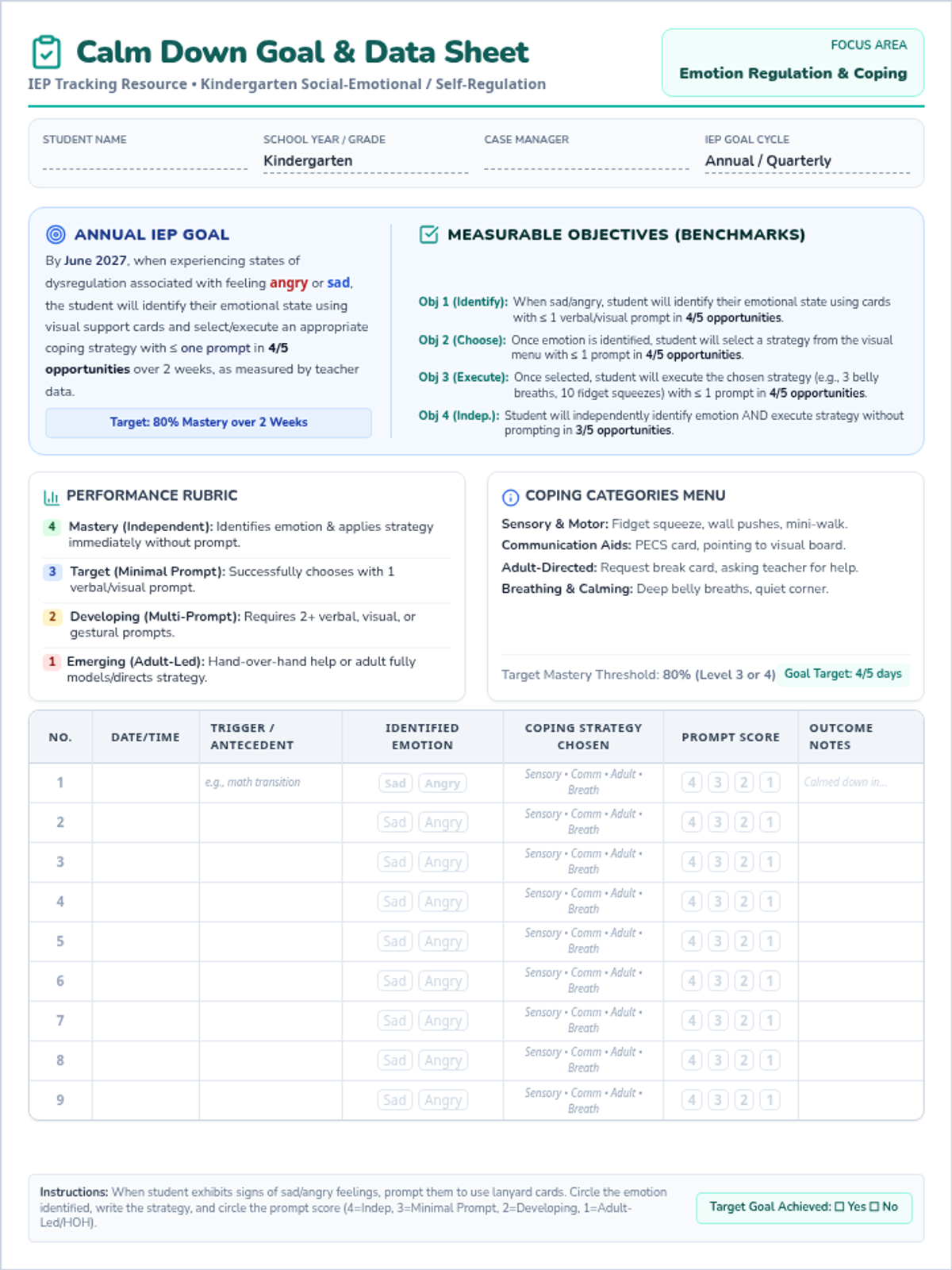
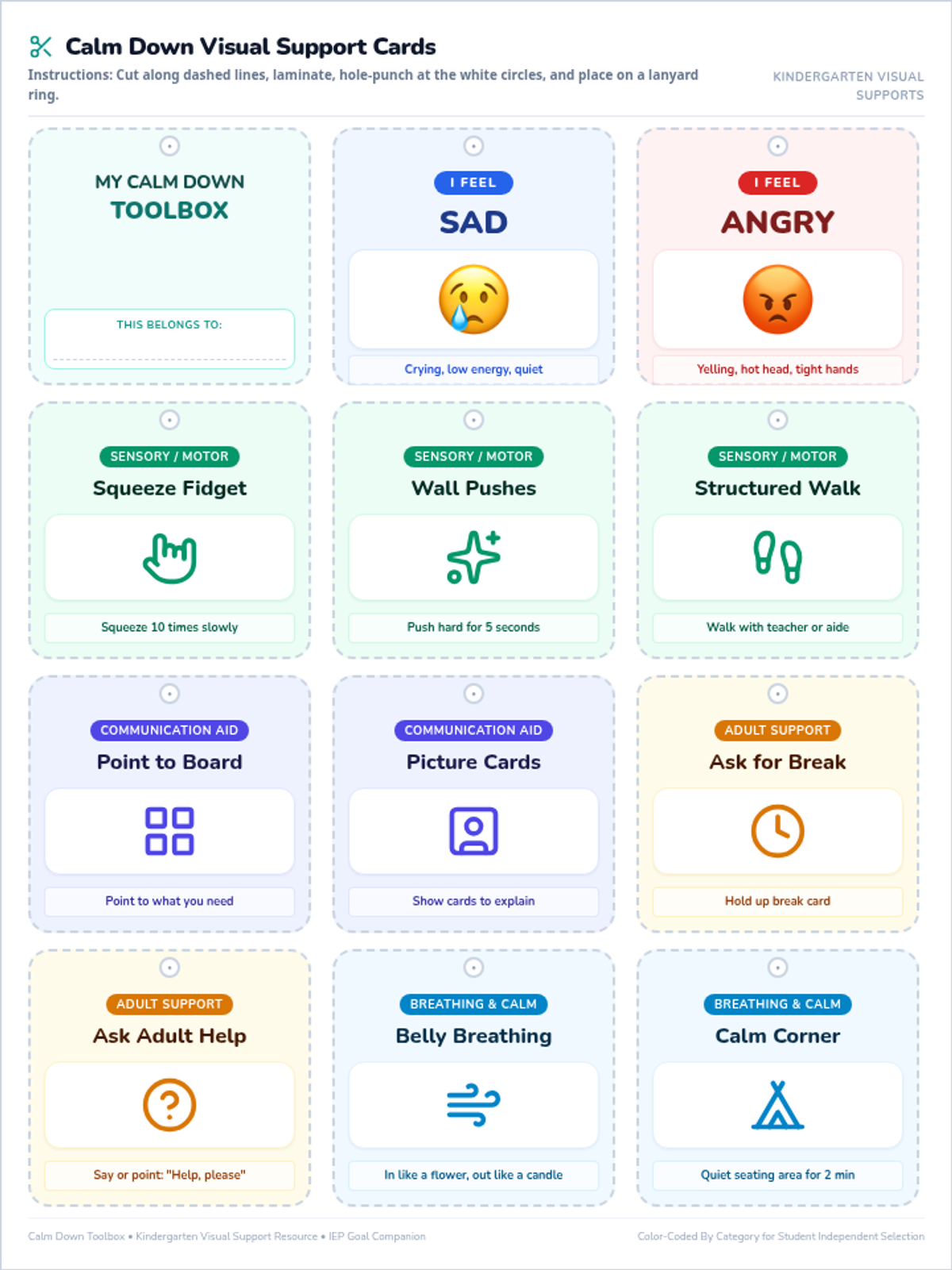
A structured support program designed for Kindergarten students with autism, focusing on identifying sad and angry emotions and utilizing sensory and calming coping strategies.
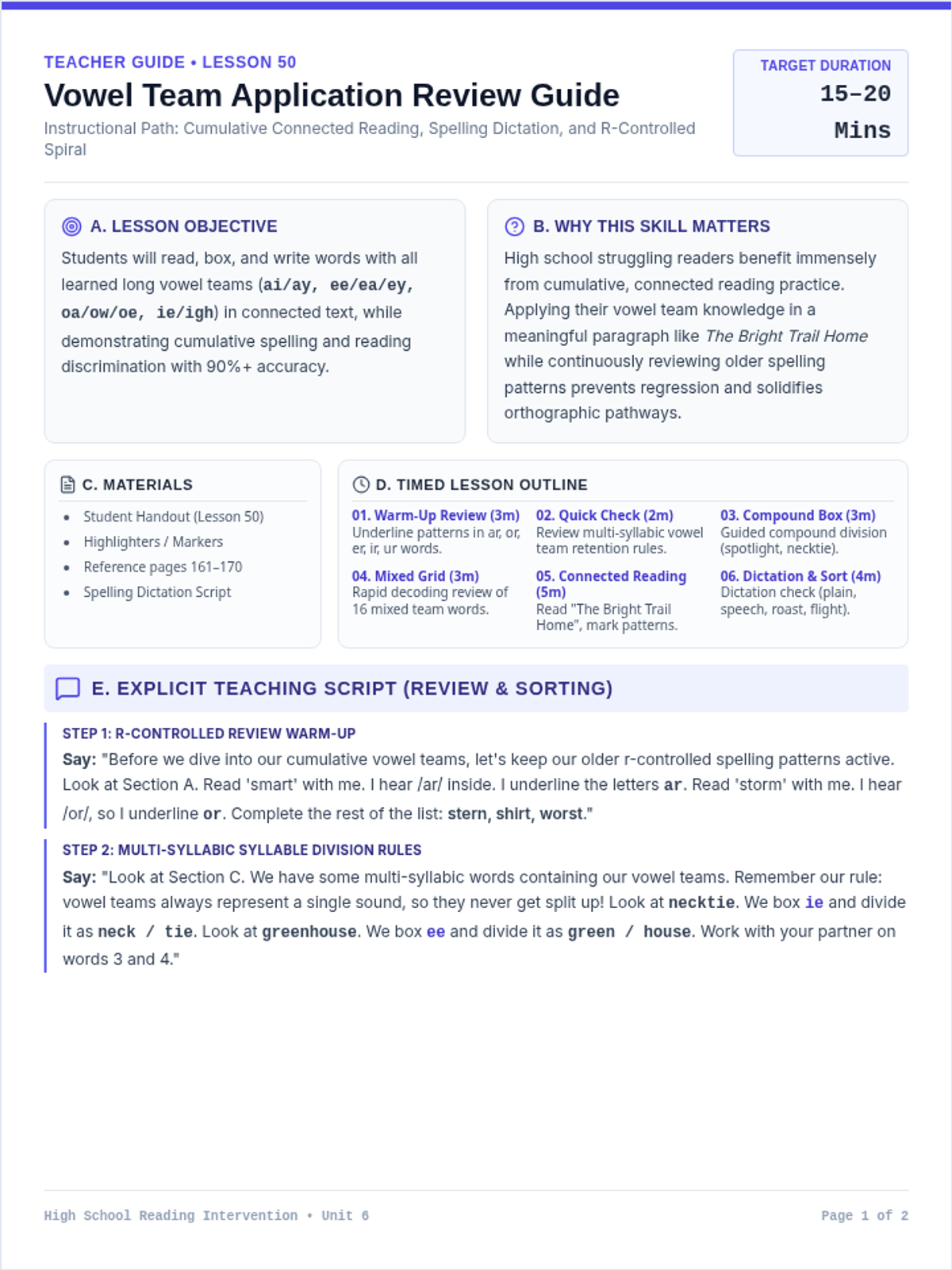
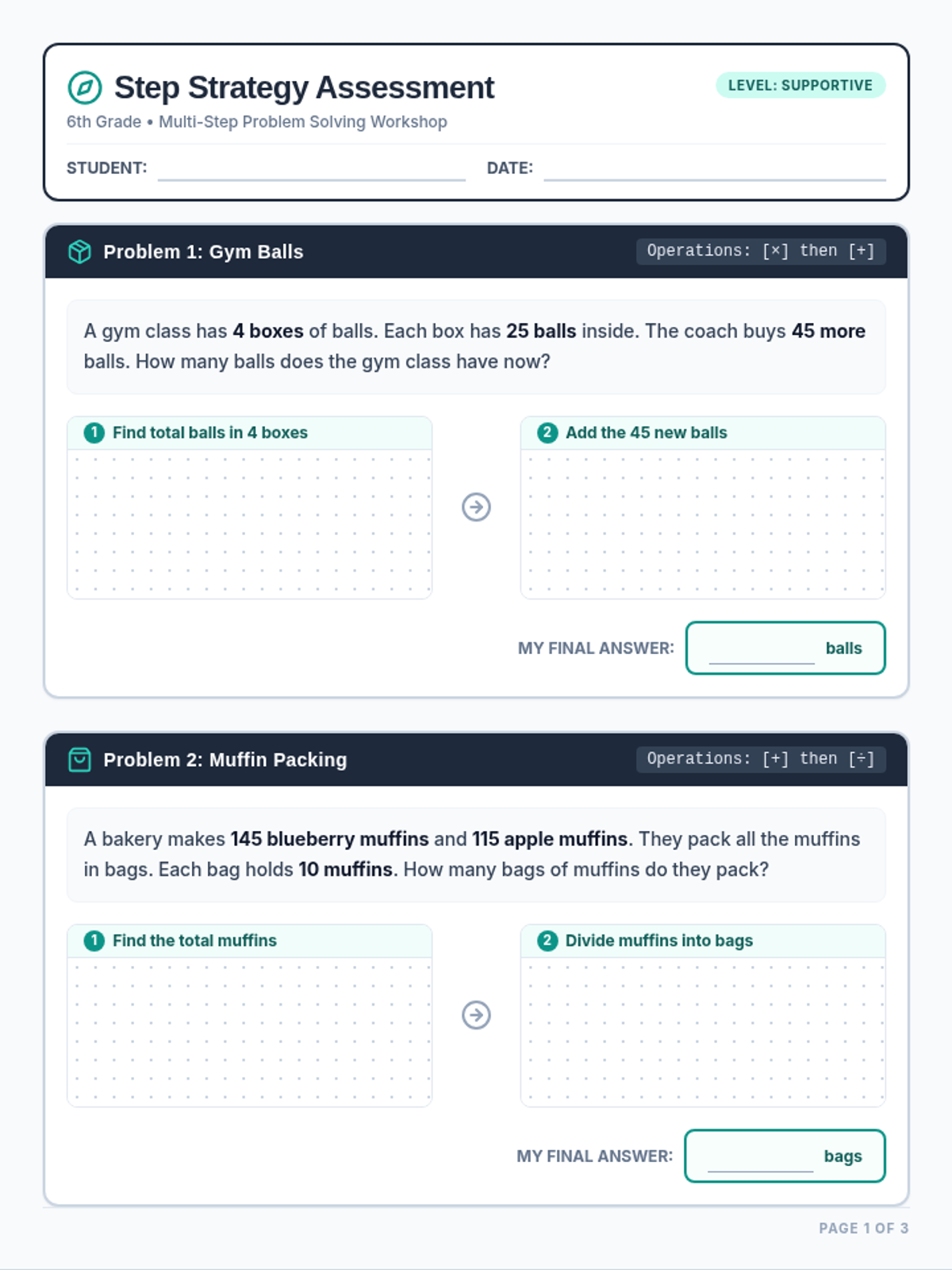
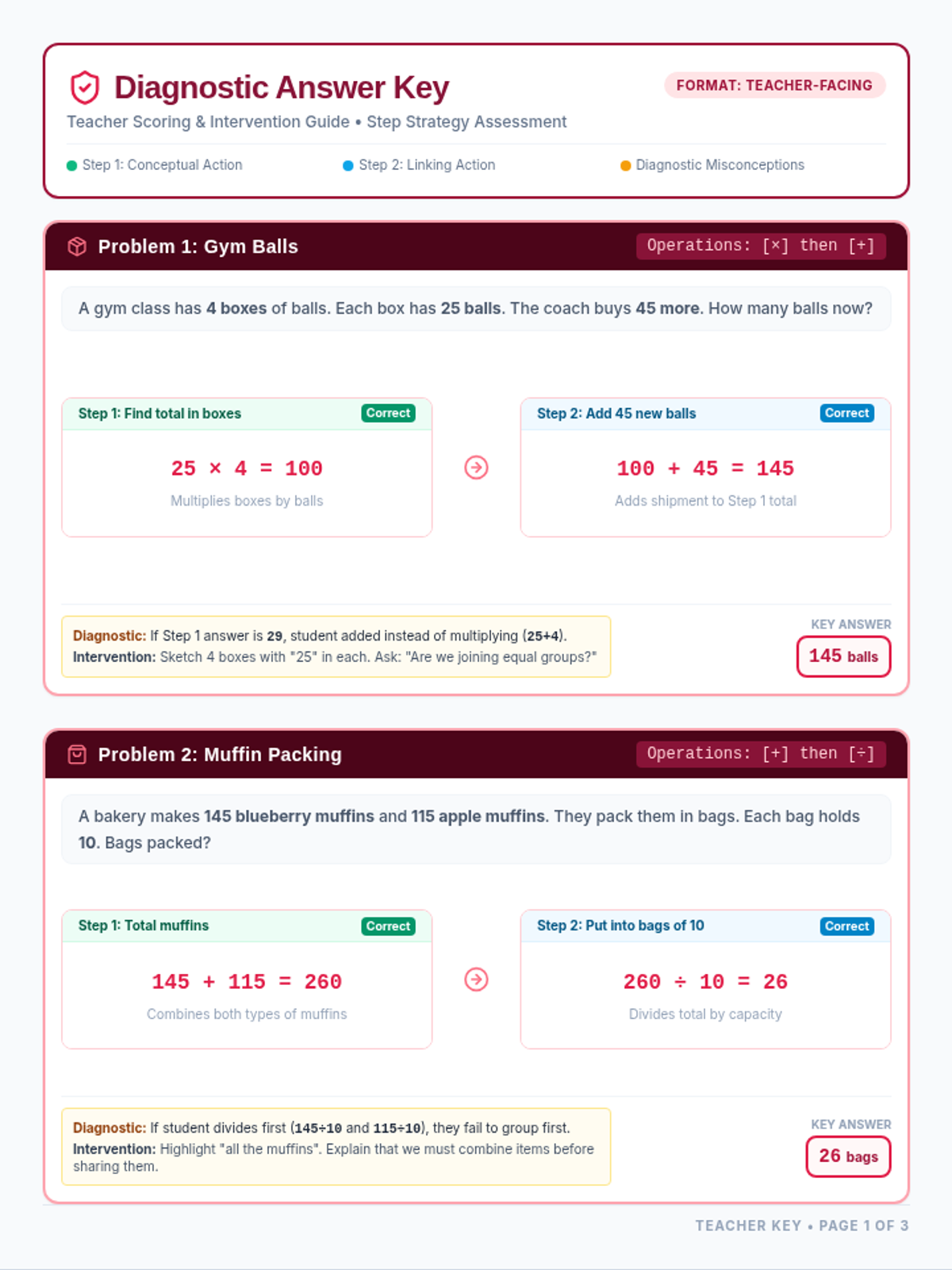
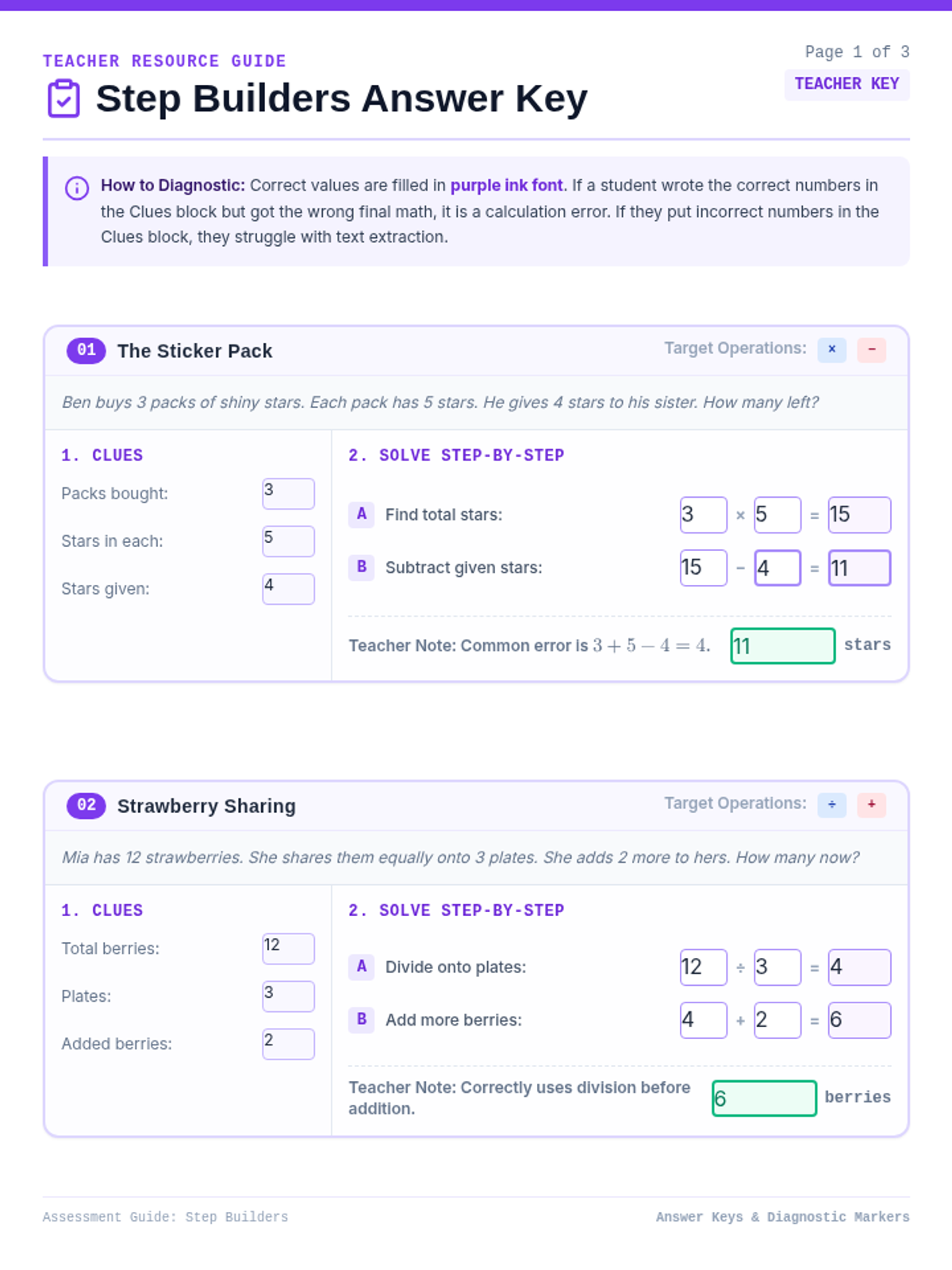
An assessment lesson designed specifically for 6th-grade students who struggle with multi-step word problems. It features a student-facing assessment with visual step-by-step graphic organizers and simplified language, alongside a teacher-facing diagnostic answer key.
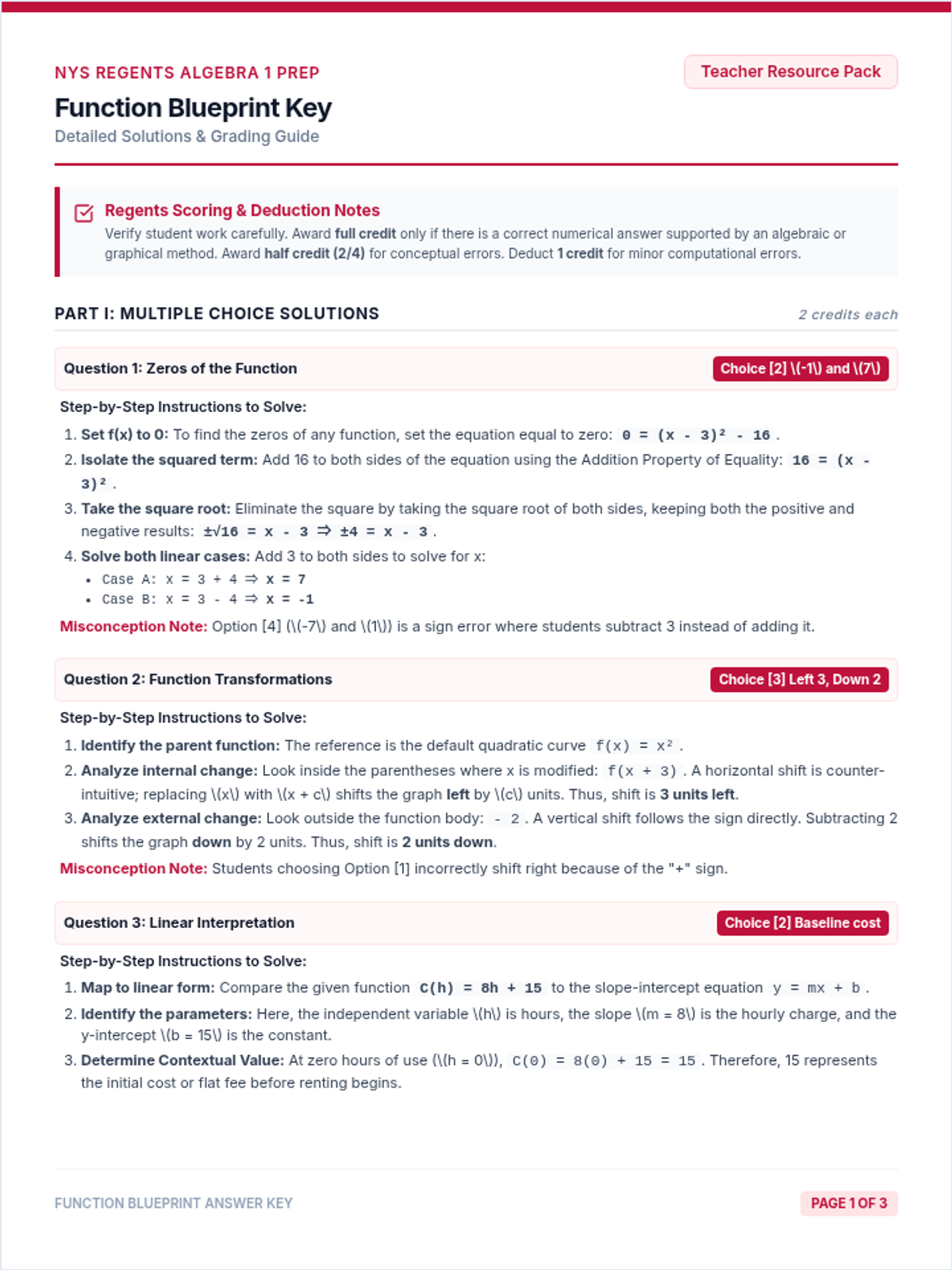
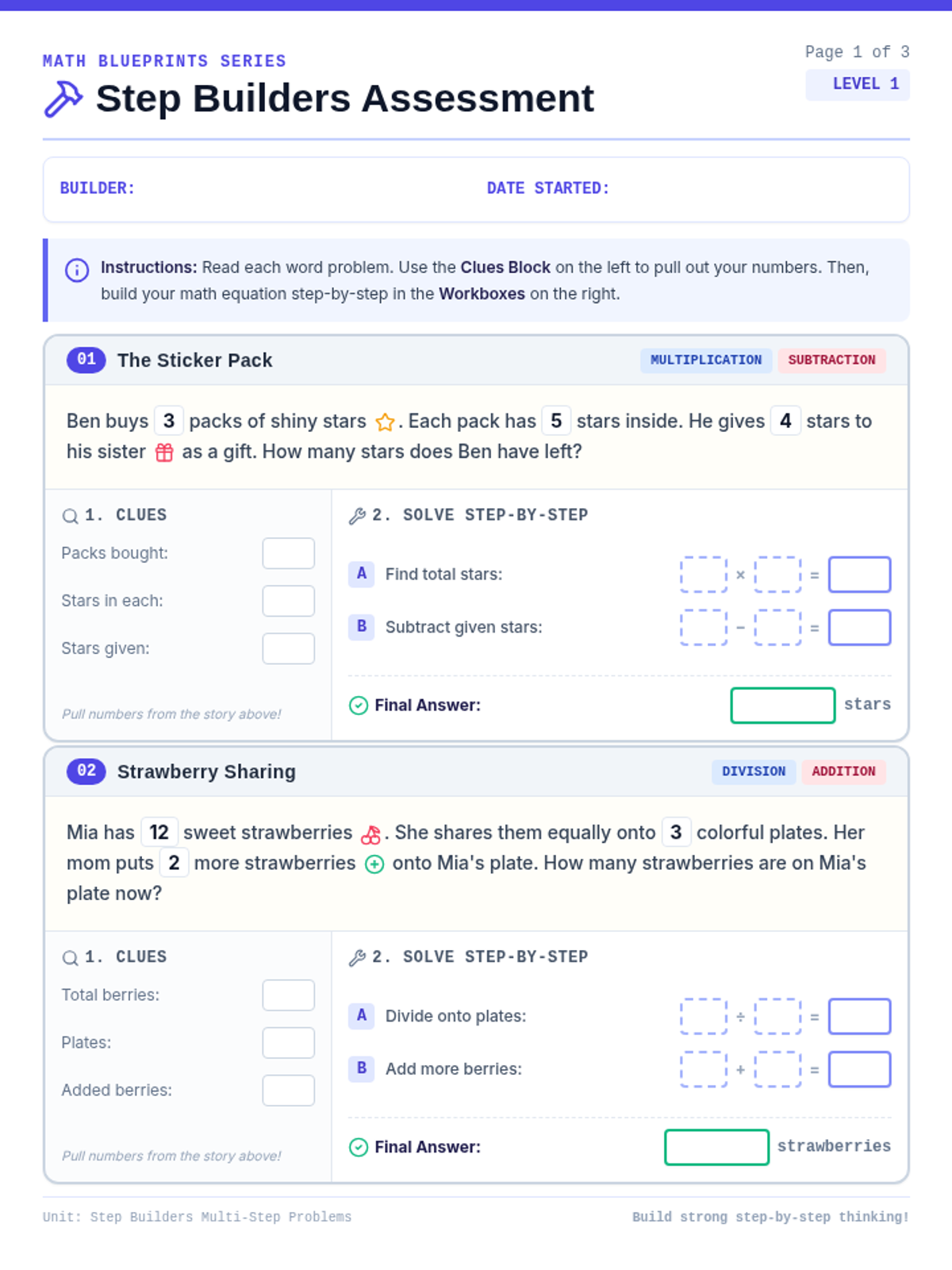
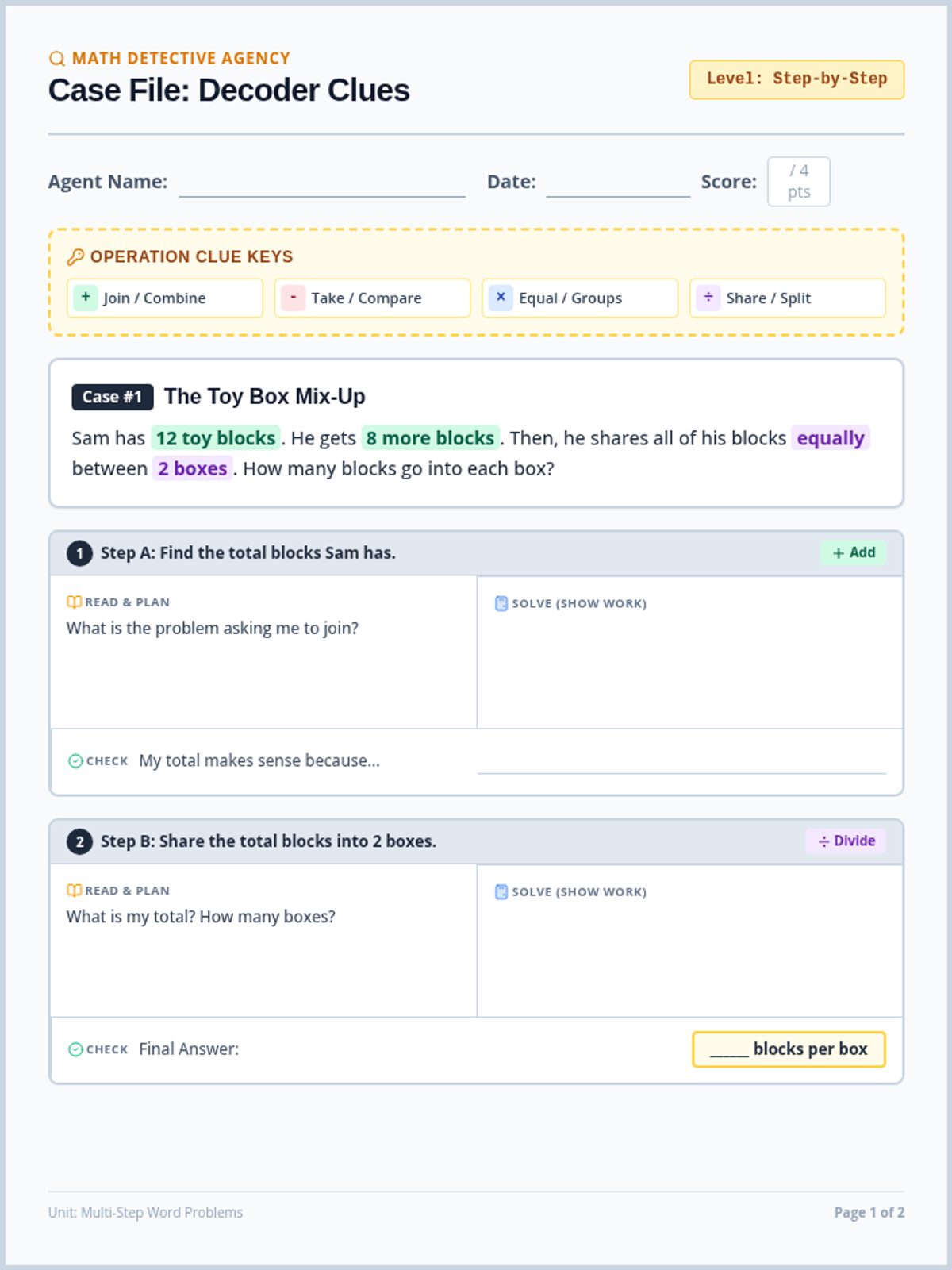
An assessment and supporting resources for students who struggle with multi-step word problems. It features simplified language, rebus-style icon clues, and a step-by-step graphic organizer workspace embedded in every problem.
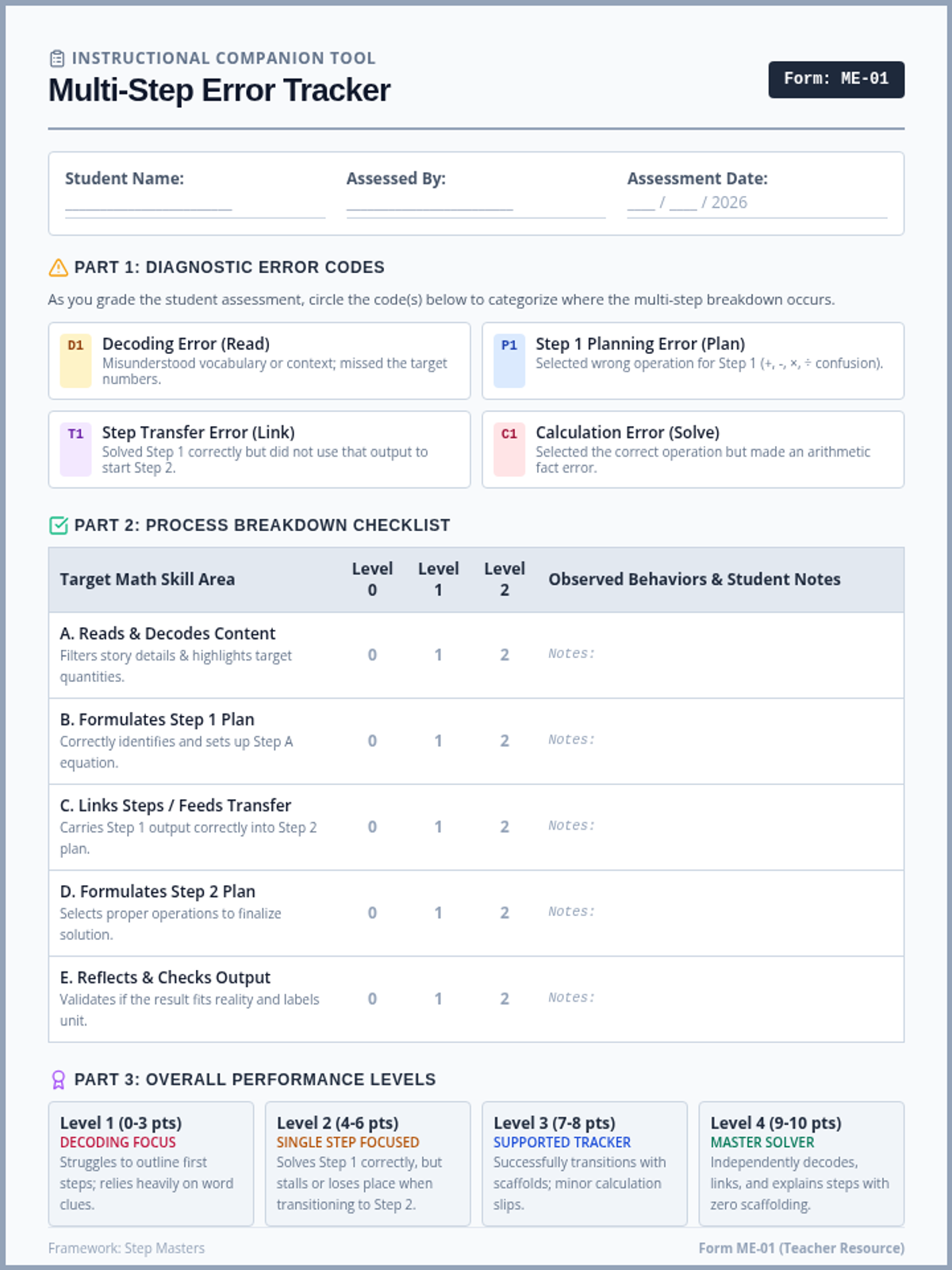
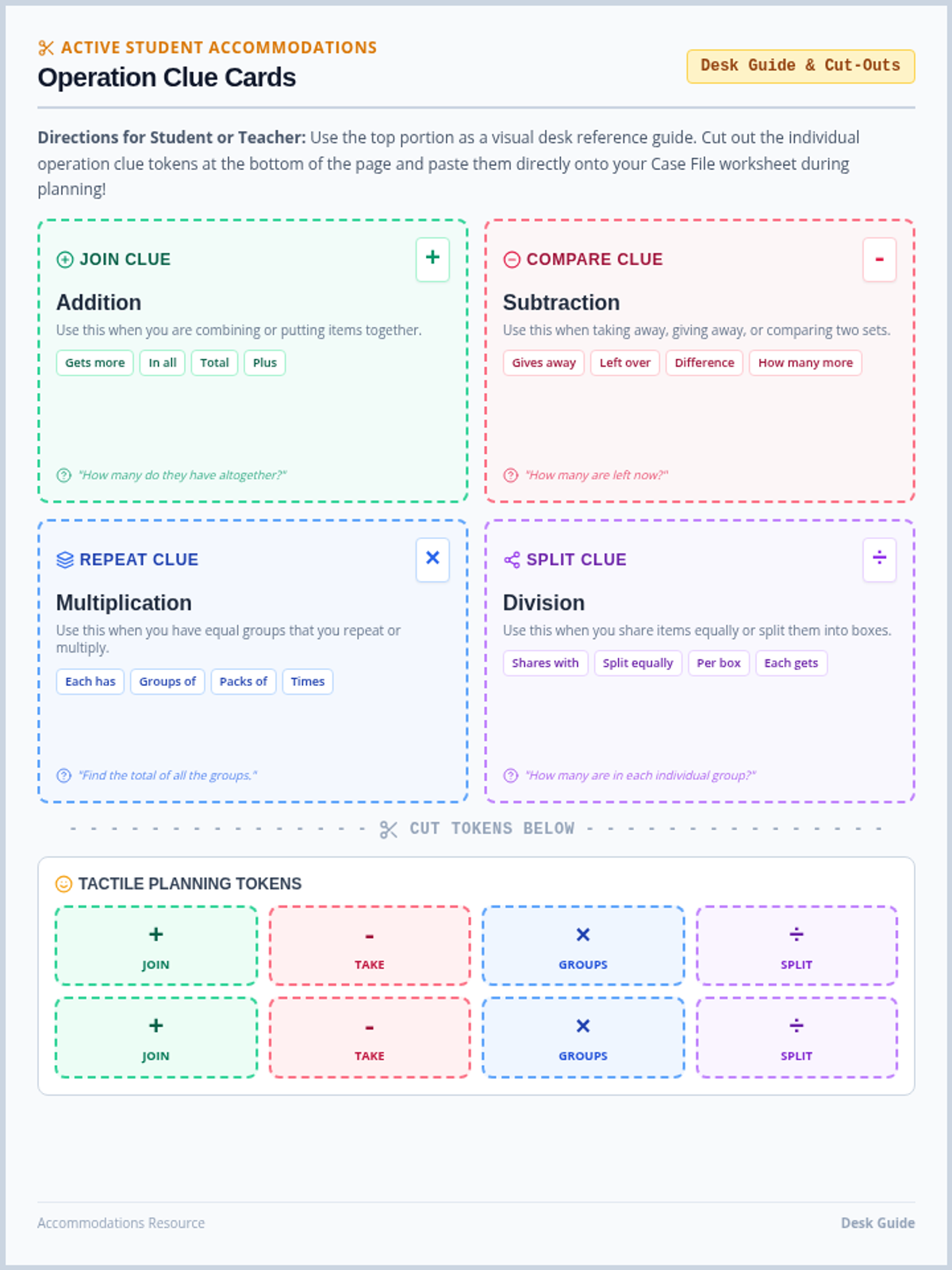
A scaffolded math toolkit designed to help students break down multi-step word problems using visual graphic organizers, reading accommodations, and a detailed teacher error-tracking framework.
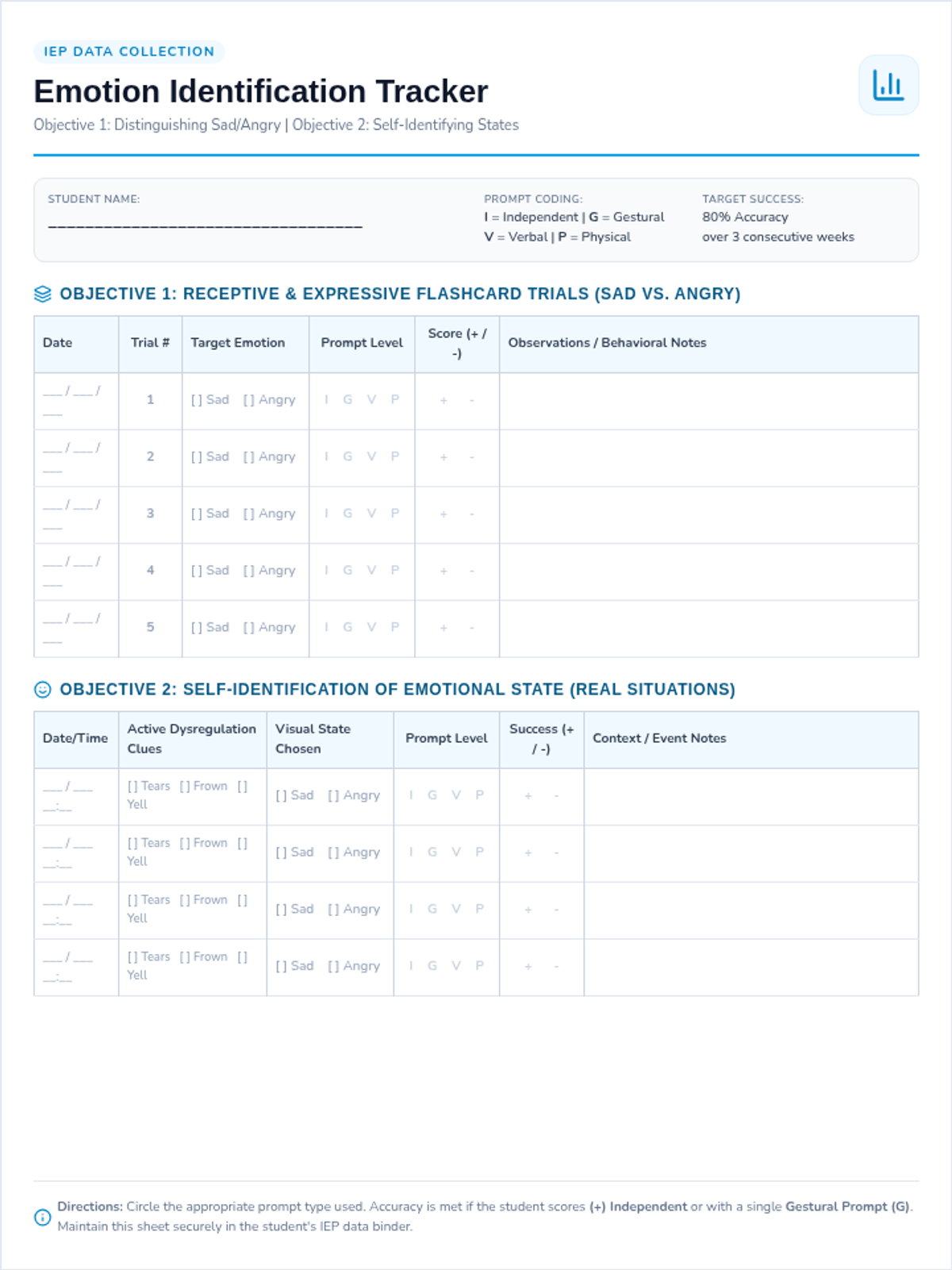
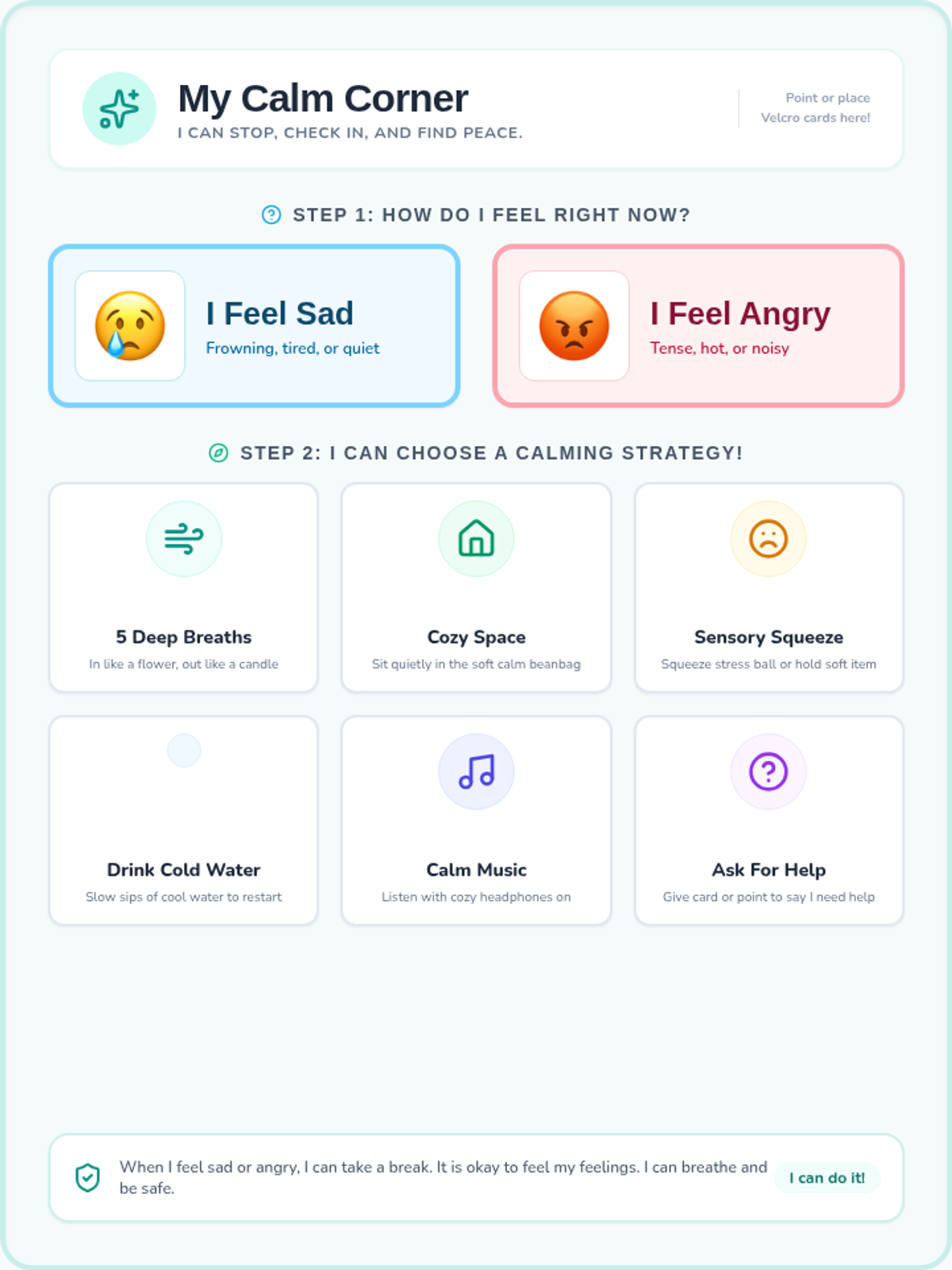
A specialized kit designed to support a Kindergarten student with autism in identifying emotions and practicing coping strategies. Includes a clear IEP goal and data collection sheet, along with printable visual support cards.
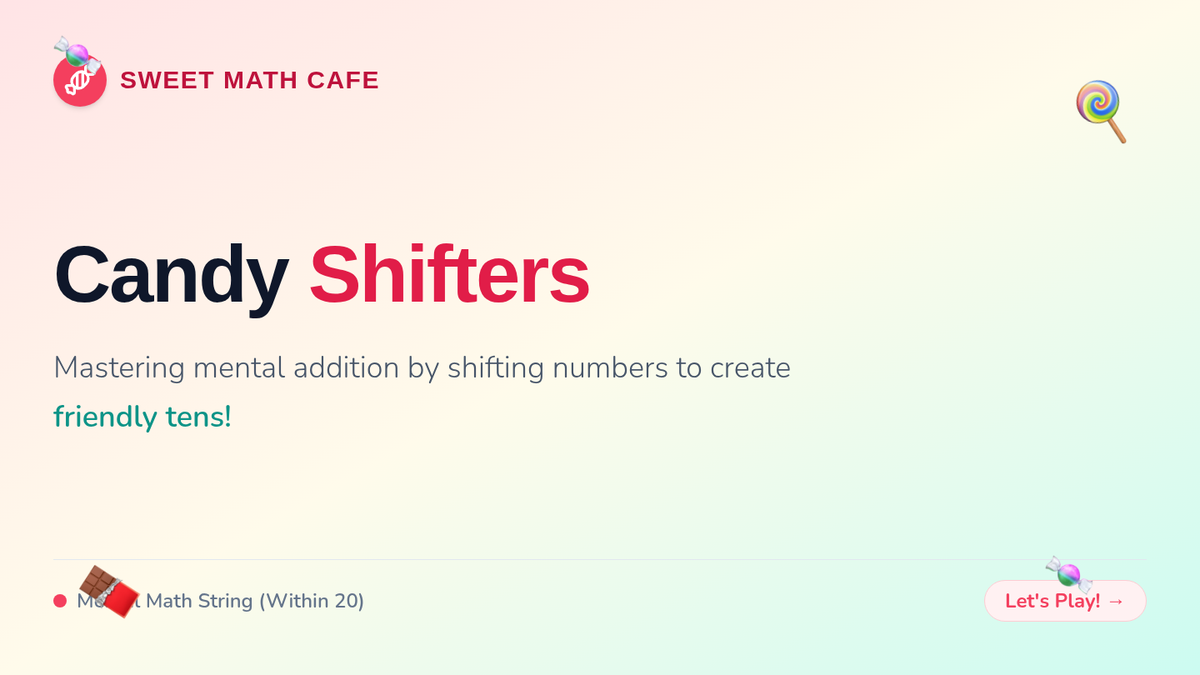
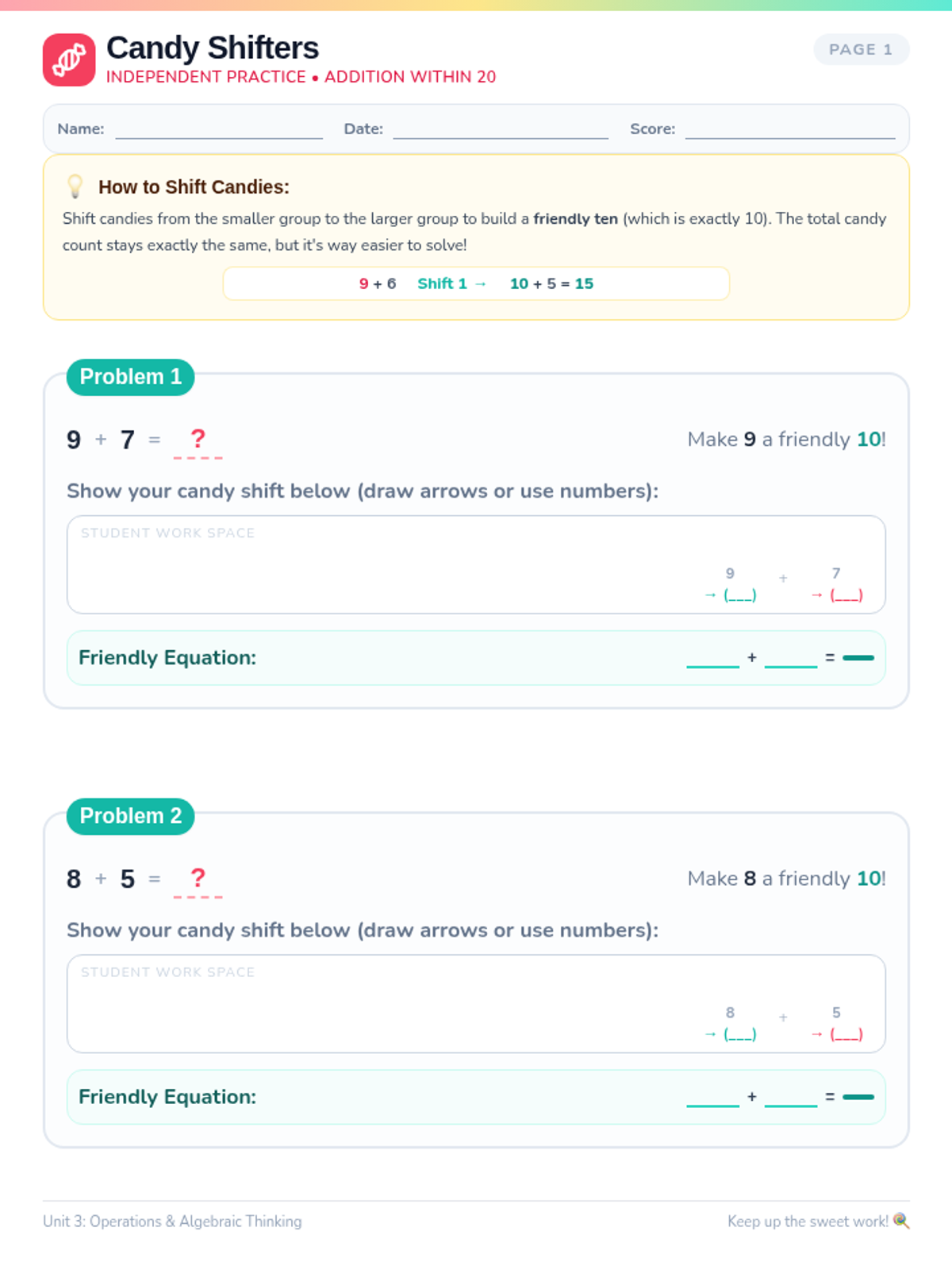
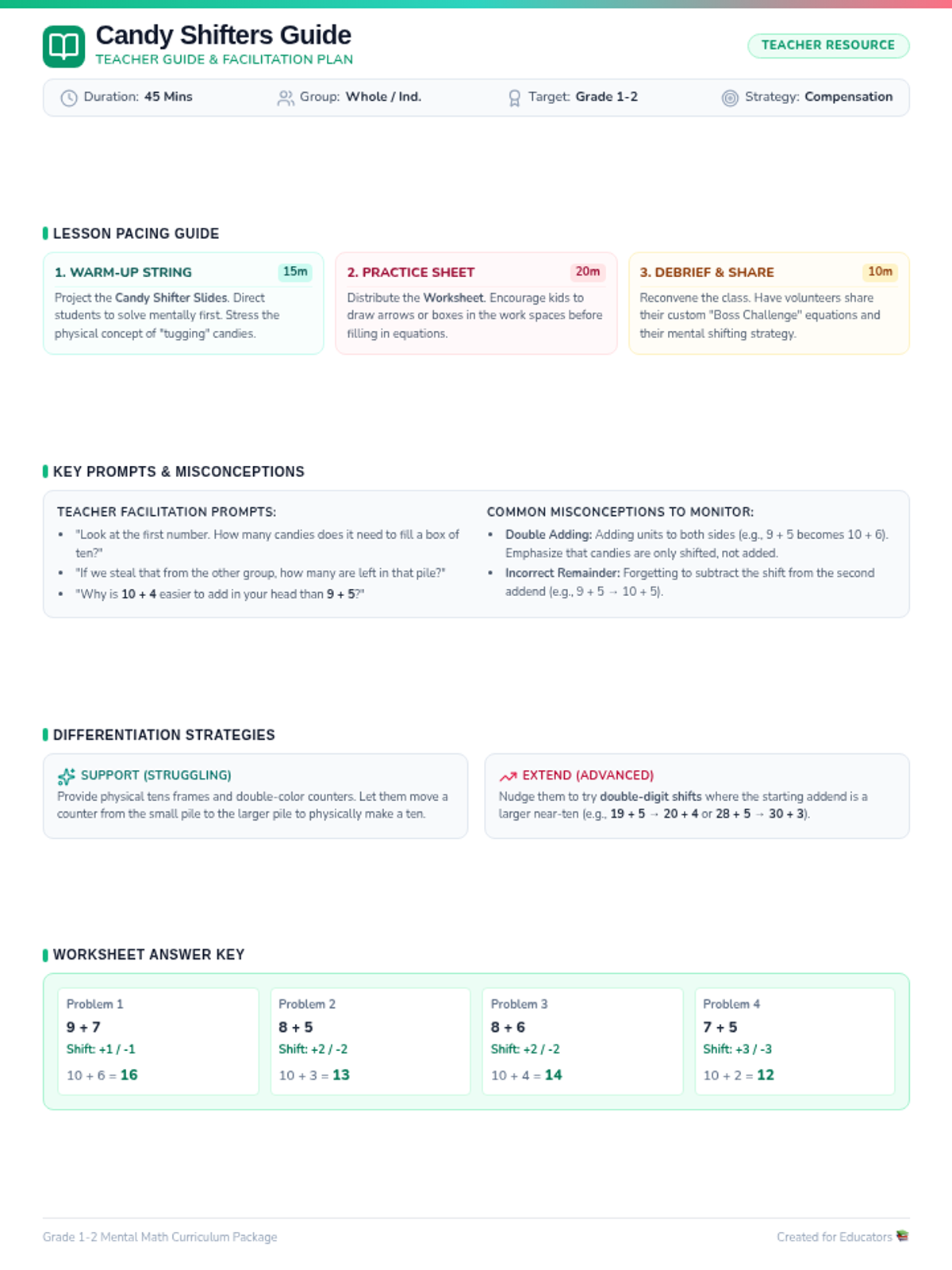
A mental math lesson introducing the compensation strategy for addition within 20 using a playful candy shop theme. Students shift amounts between addends to create 'friendly tens' (e.g., 9 + 5 becomes 10 + 4), practicing this mentally during a slide-guided warm-up and on paper with a themed student worksheet.