A rigorous undergraduate sequence exploring the theoretical construction of the real number system, focusing on the discovery, proof, and classification of irrational numbers from historical crises to Cantor's cardinality.
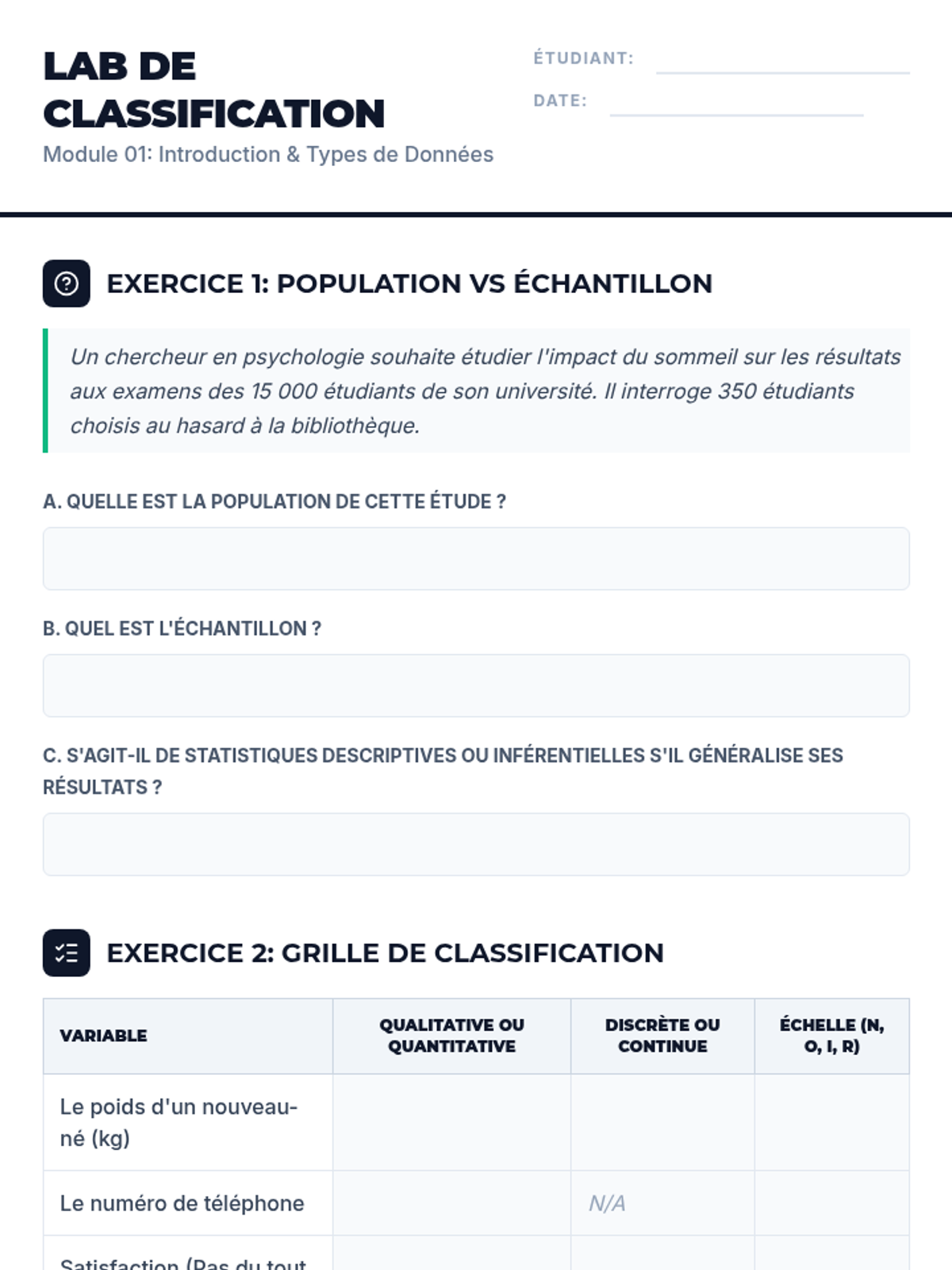
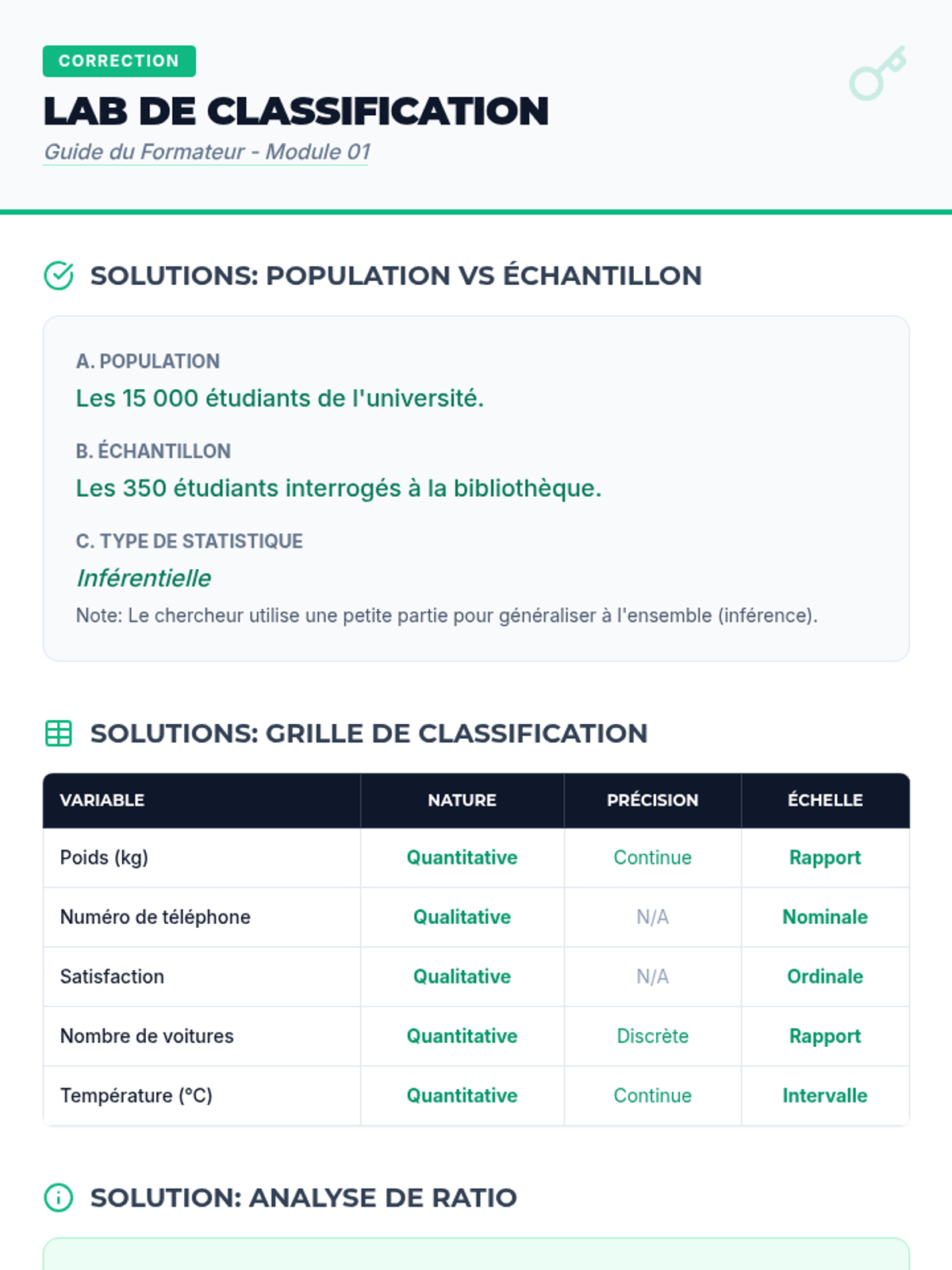
Une introduction complète aux statistiques universitaires, couvrant la classification des données, les mesures descriptives, la visualisation et les fondements de la loi normale. L'approche est axée sur l'analyse de données réelles et la compréhension conceptuelle.
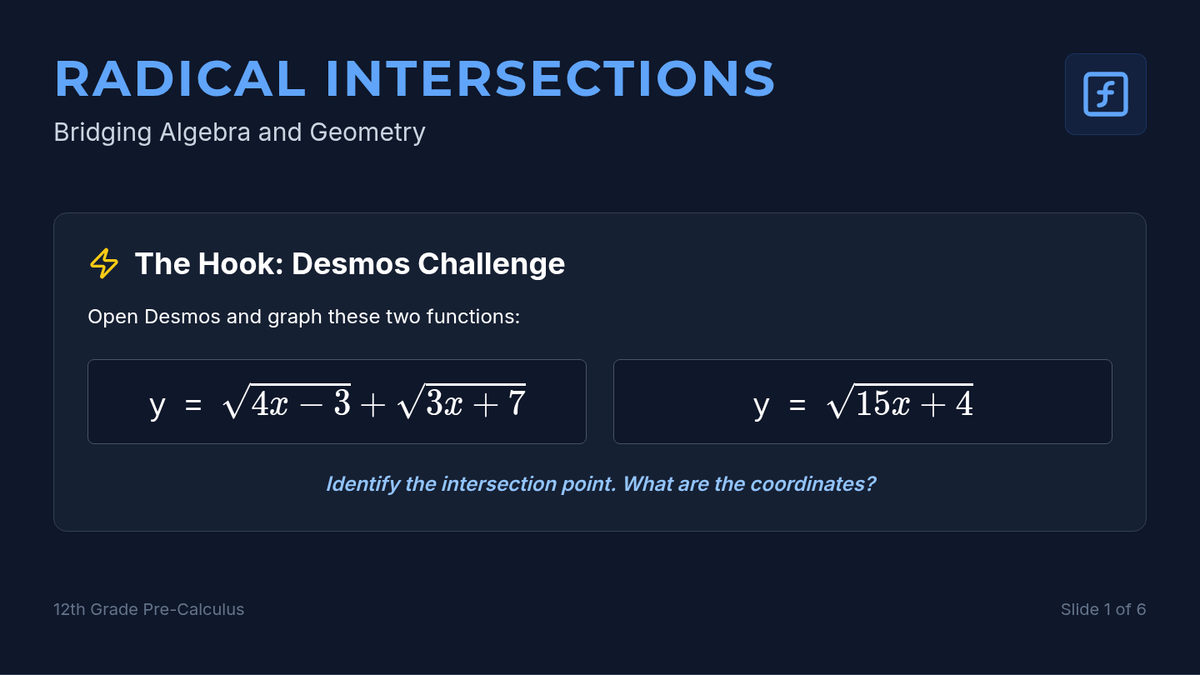
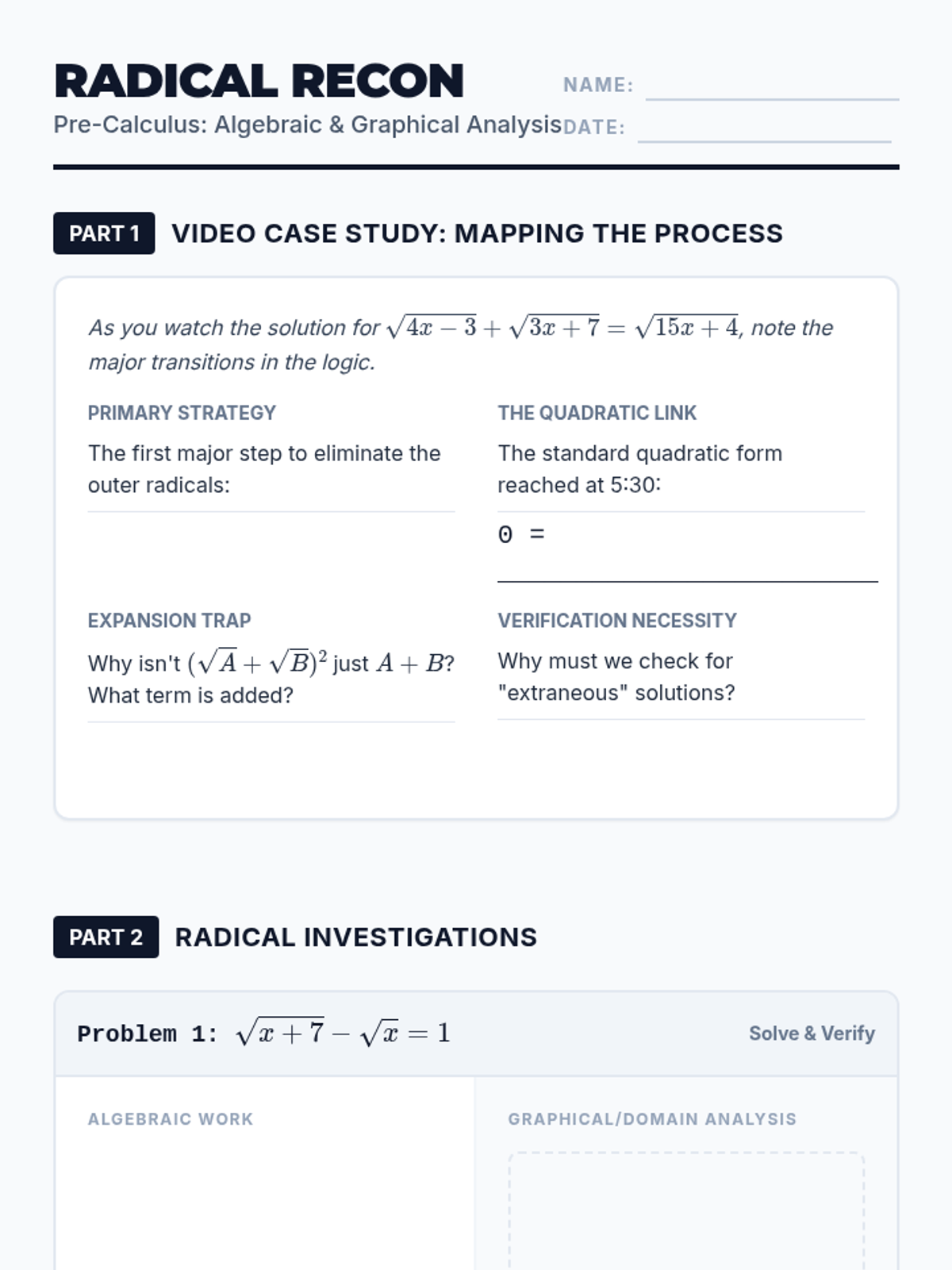
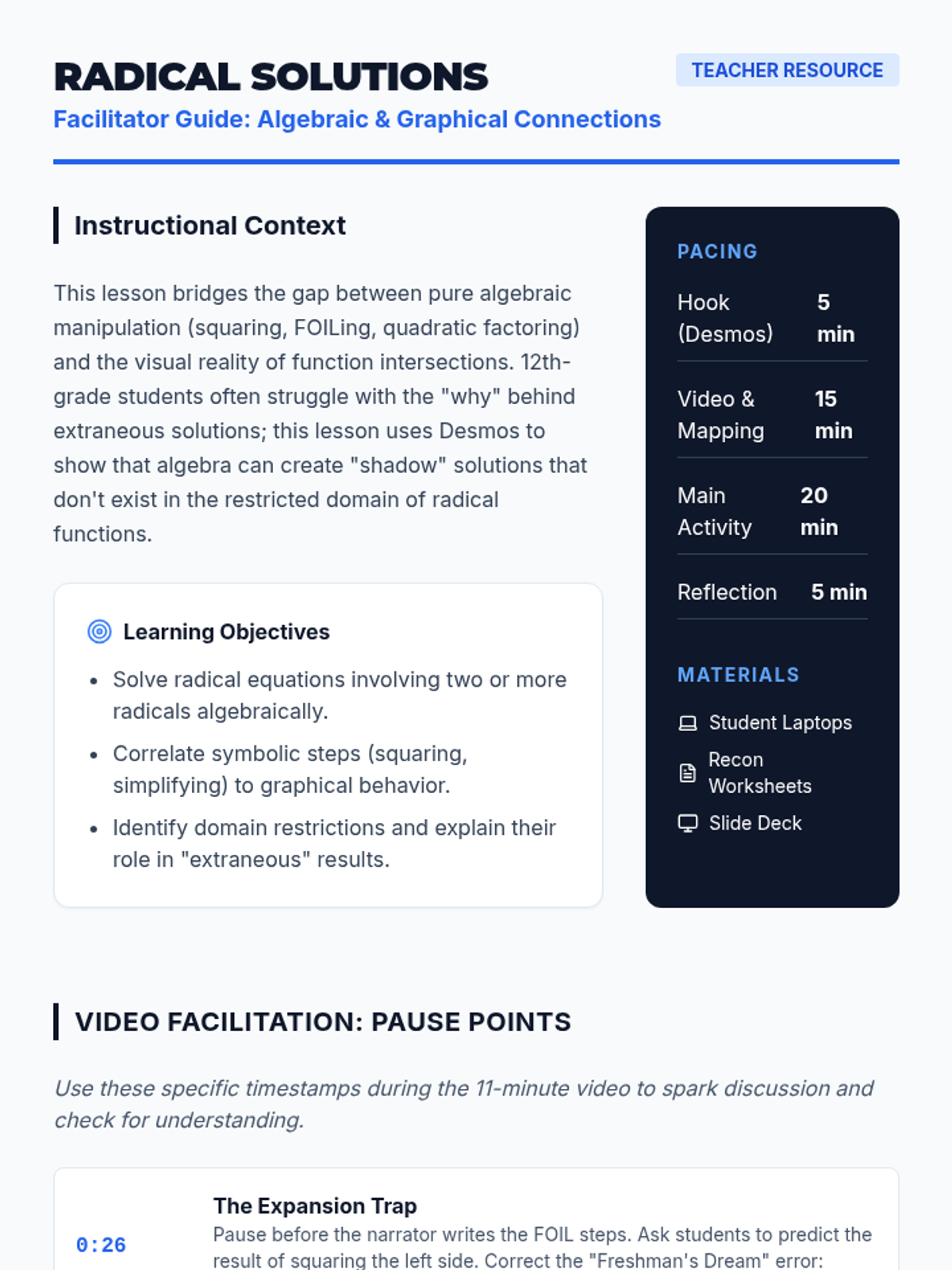
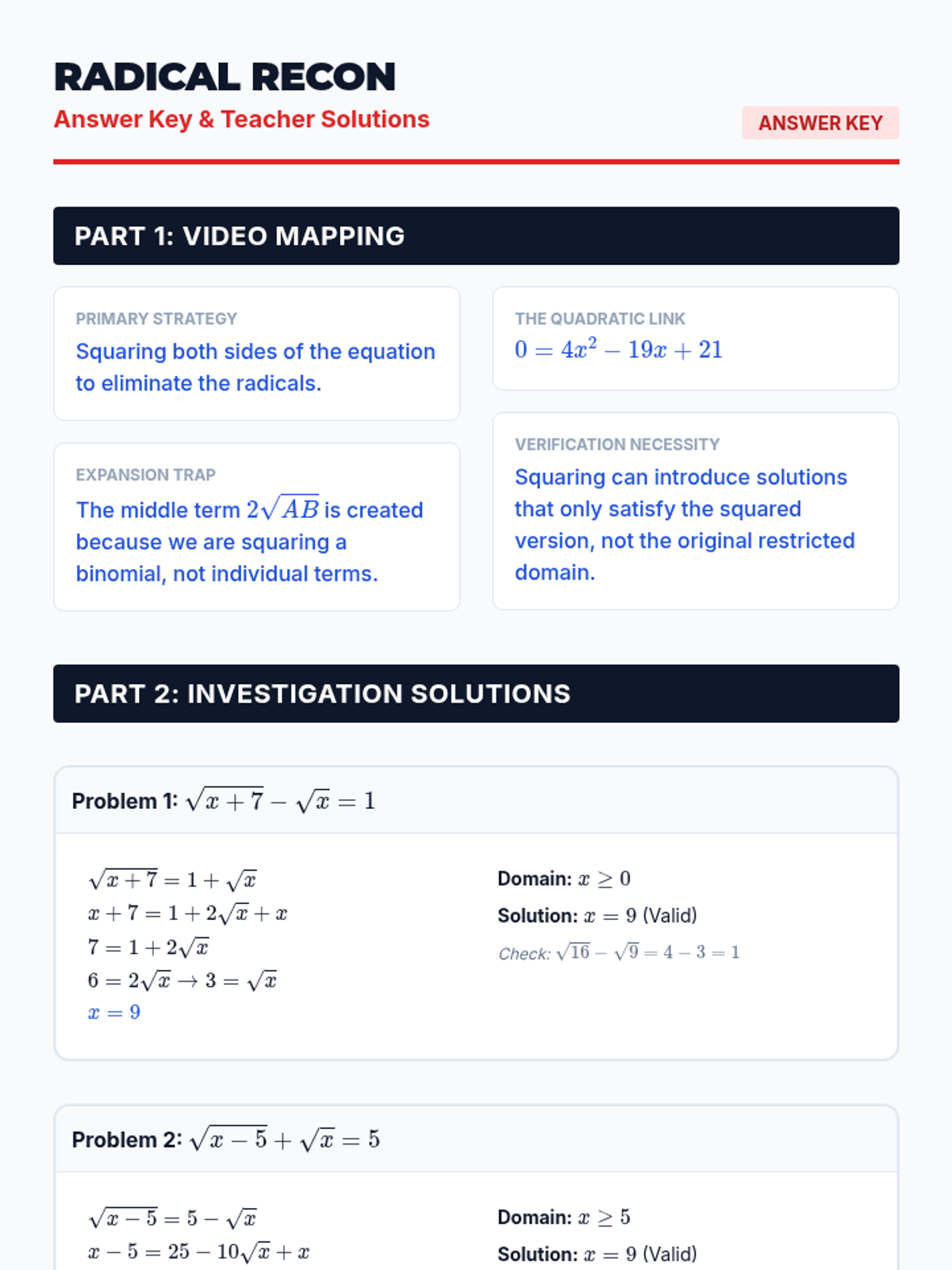
A lesson sequence focusing on the algebraic and graphical properties of radical equations, bridging the gap between symbolic manipulation and visual intersection points.
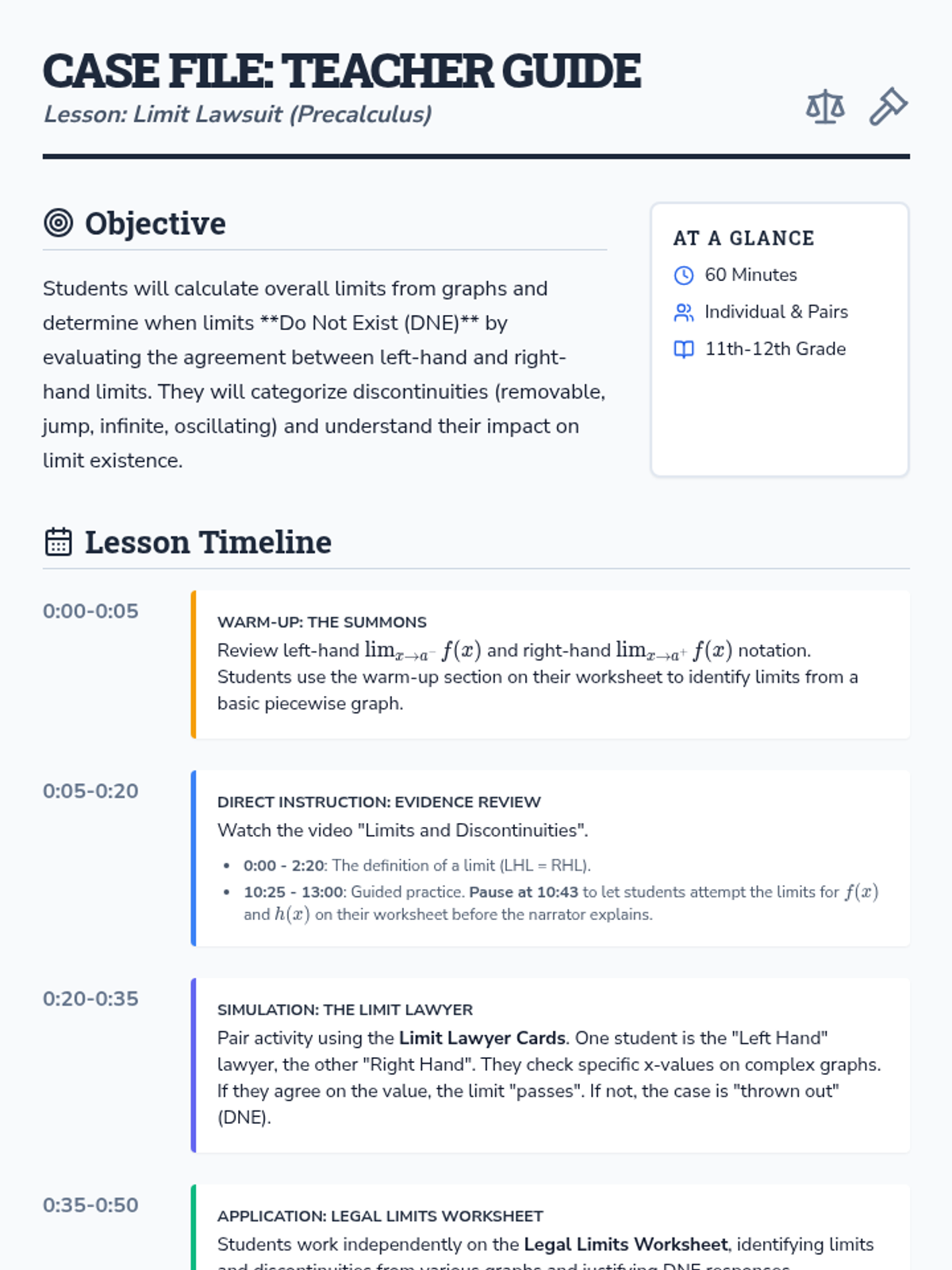
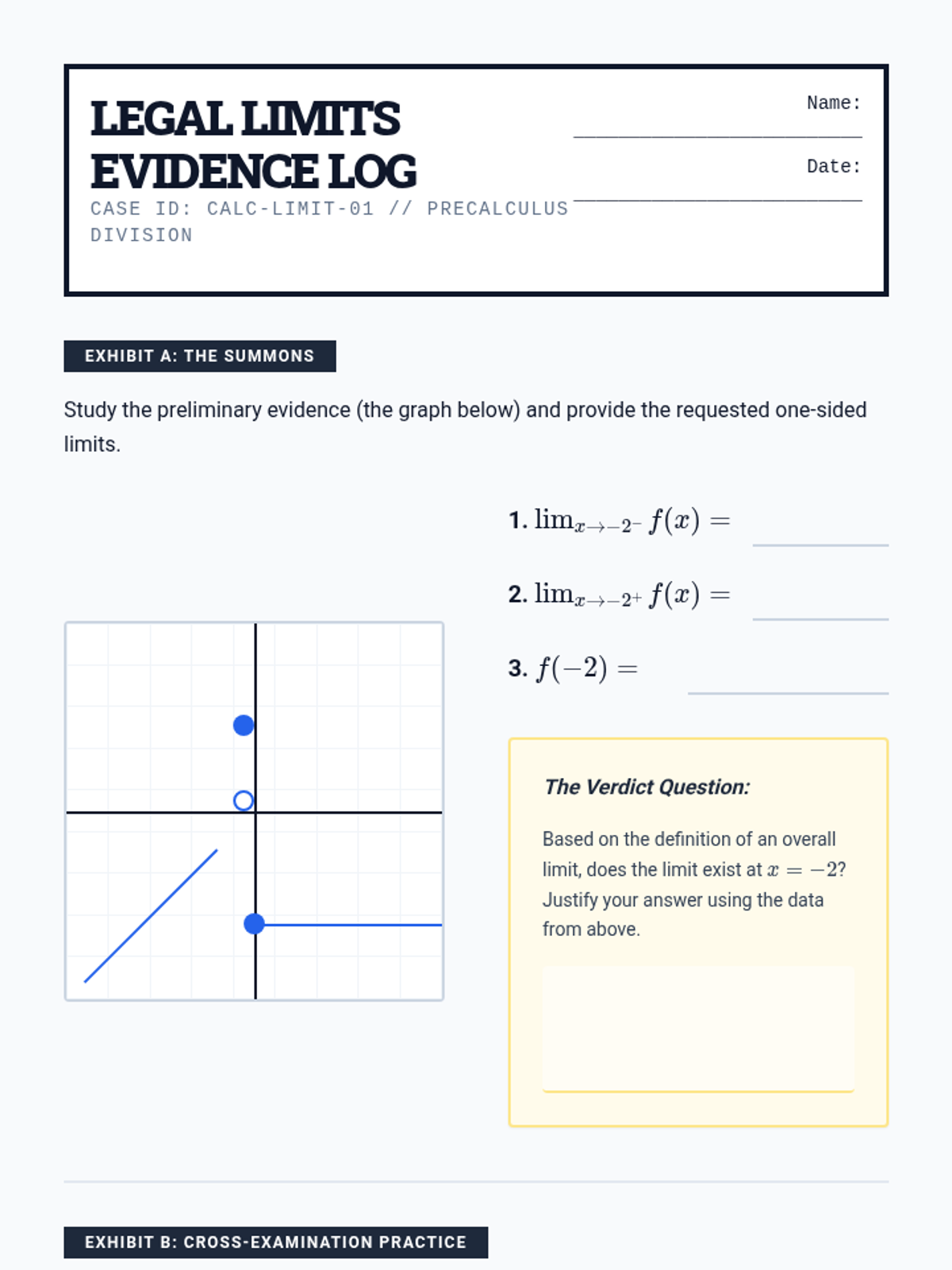
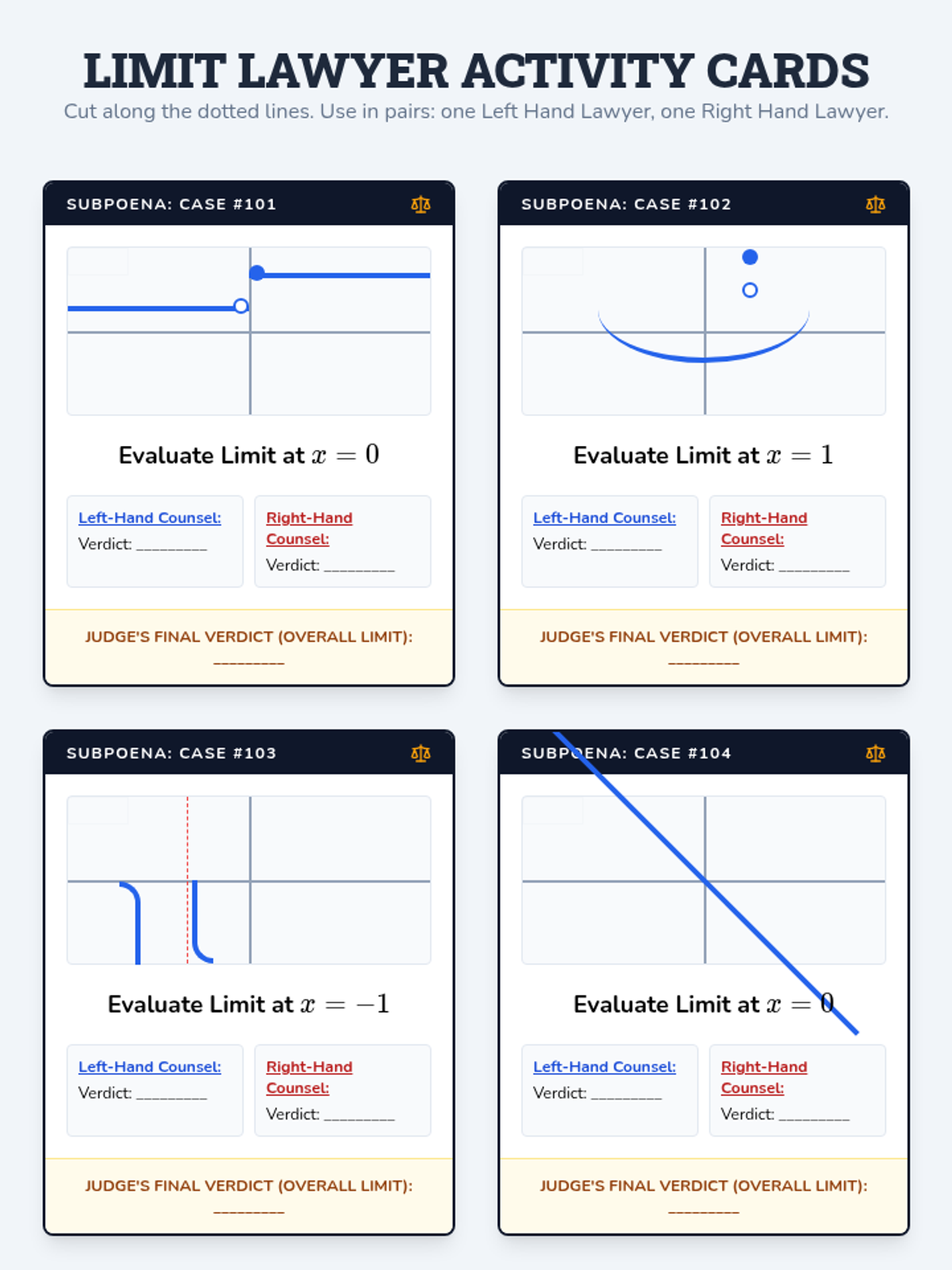
A series of higher-level mathematics lessons exploring calculus foundations through engaging, thematic activities and visual demonstrations.
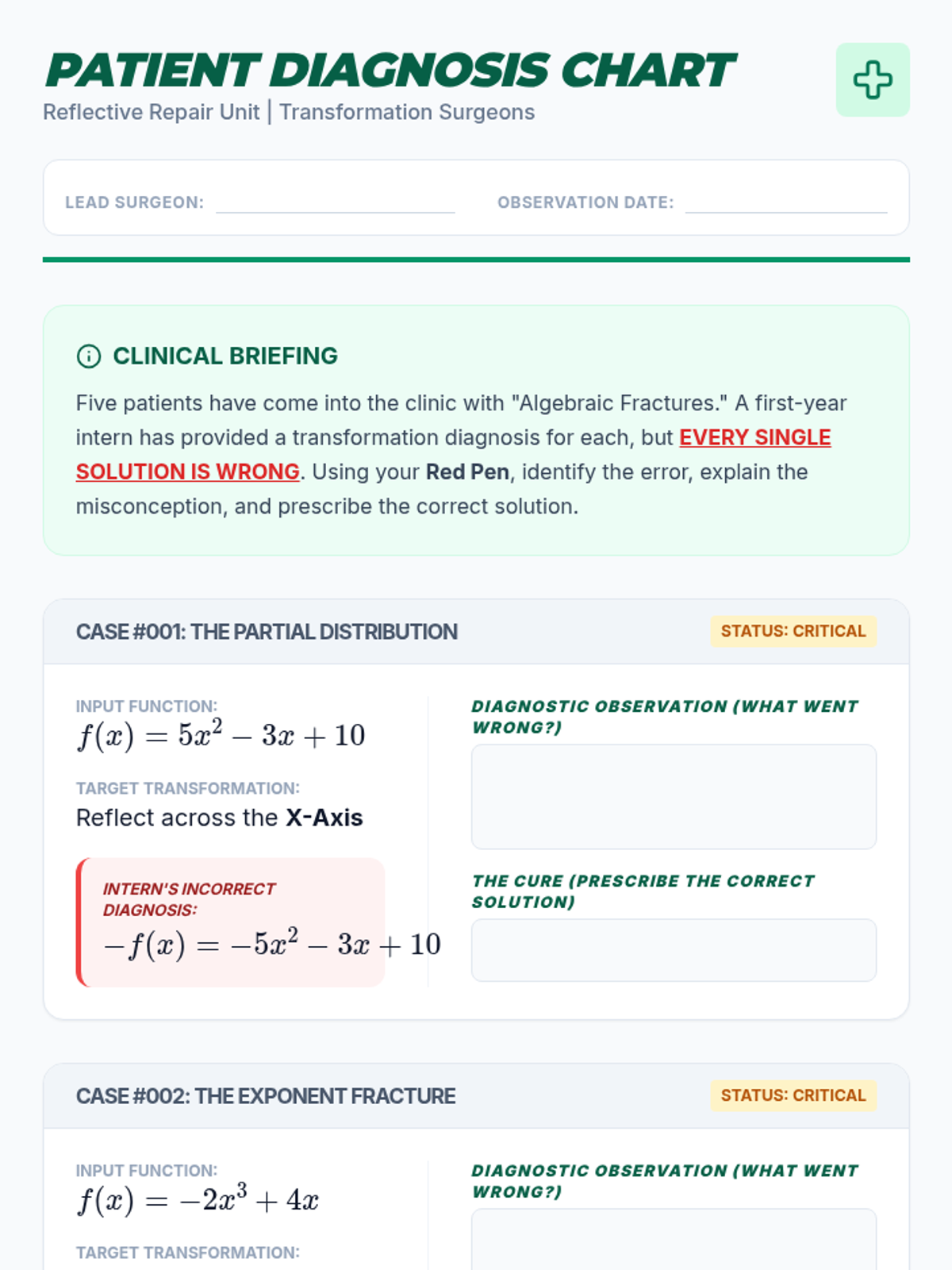
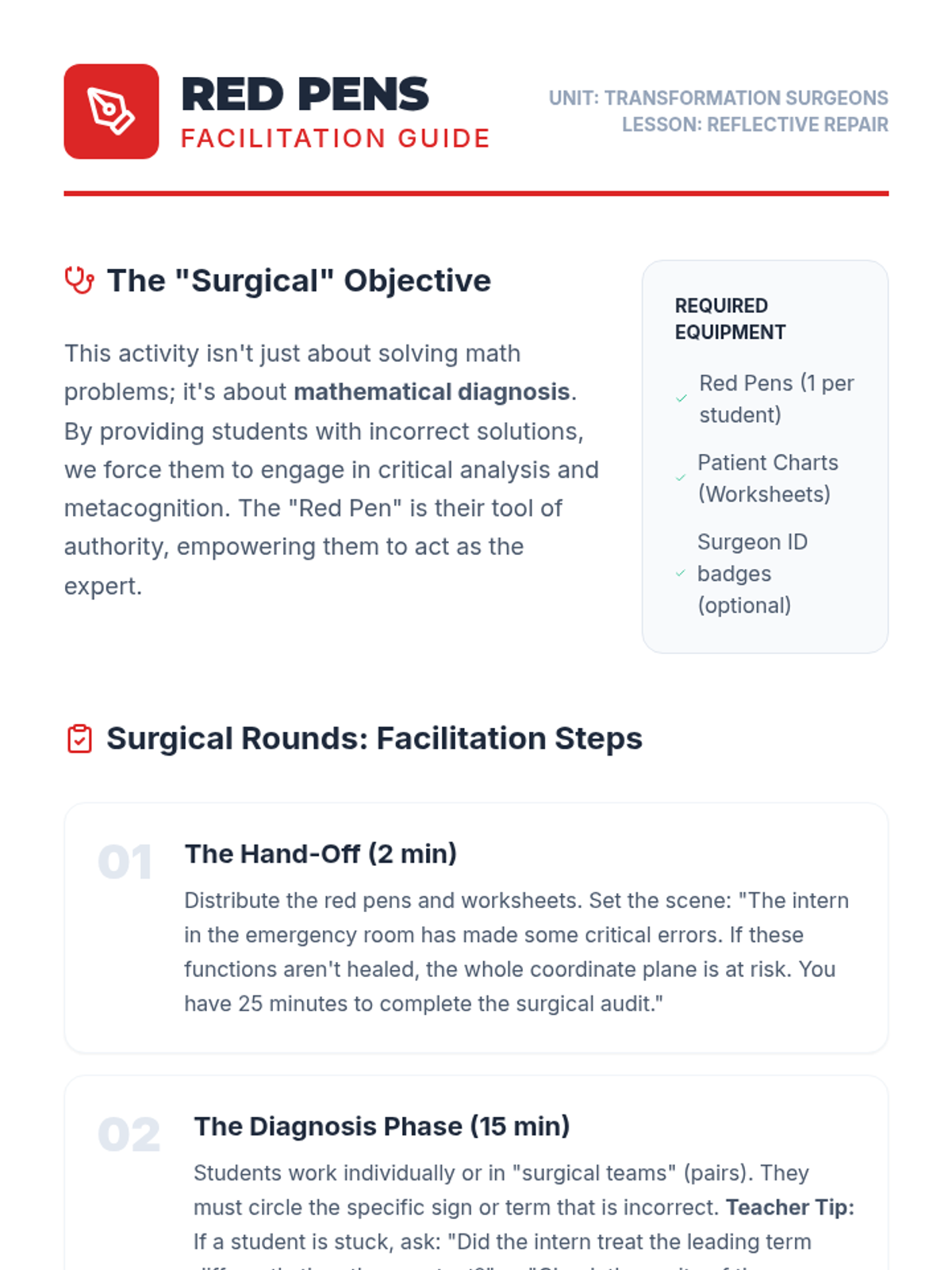
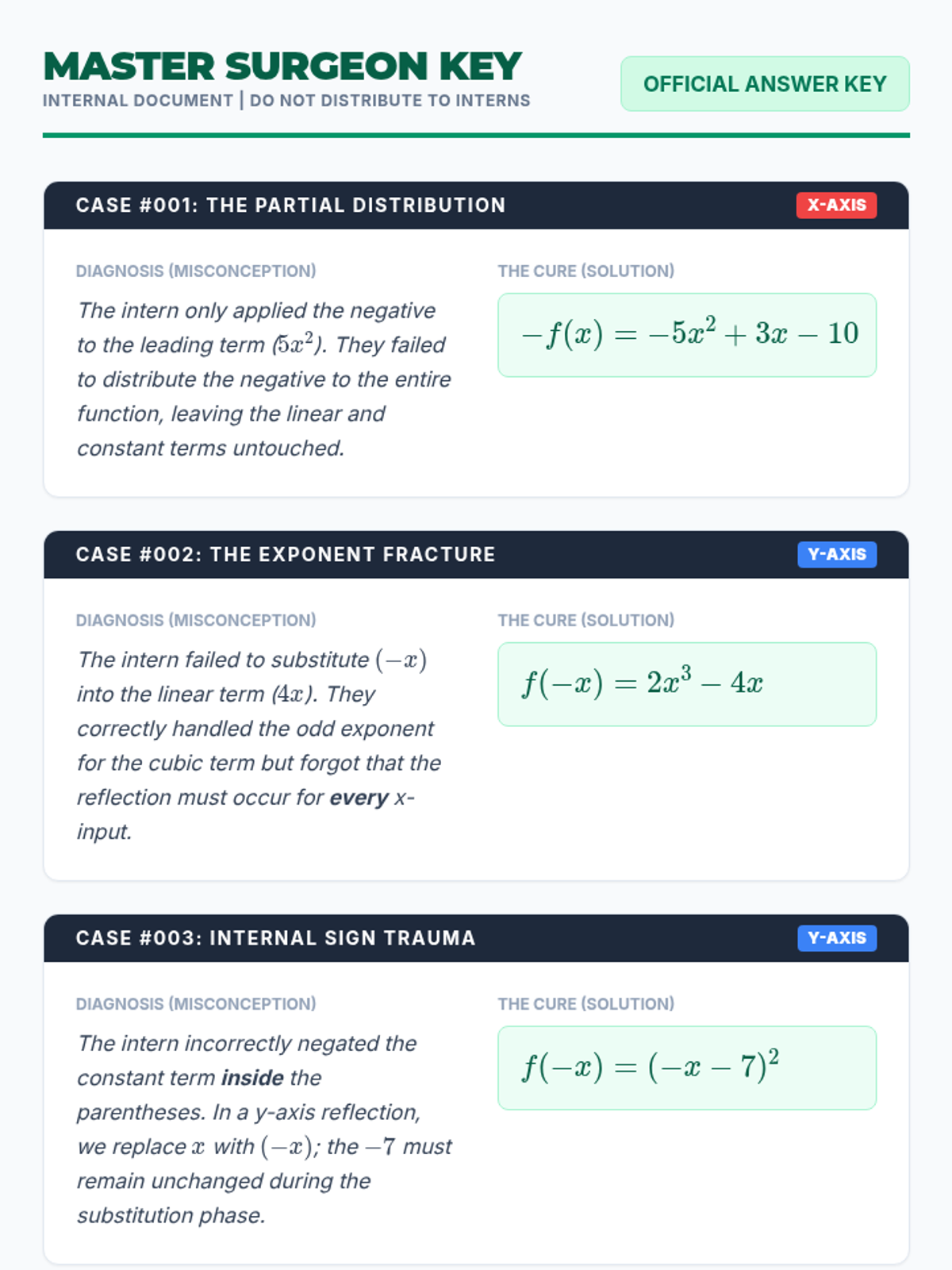
A specialized unit focused on identifying and correcting algebraic misconceptions in function transformations, specifically reflections. Students develop critical analysis skills by acting as "Error Doctors" to diagnose and treat common mathematical pitfalls.
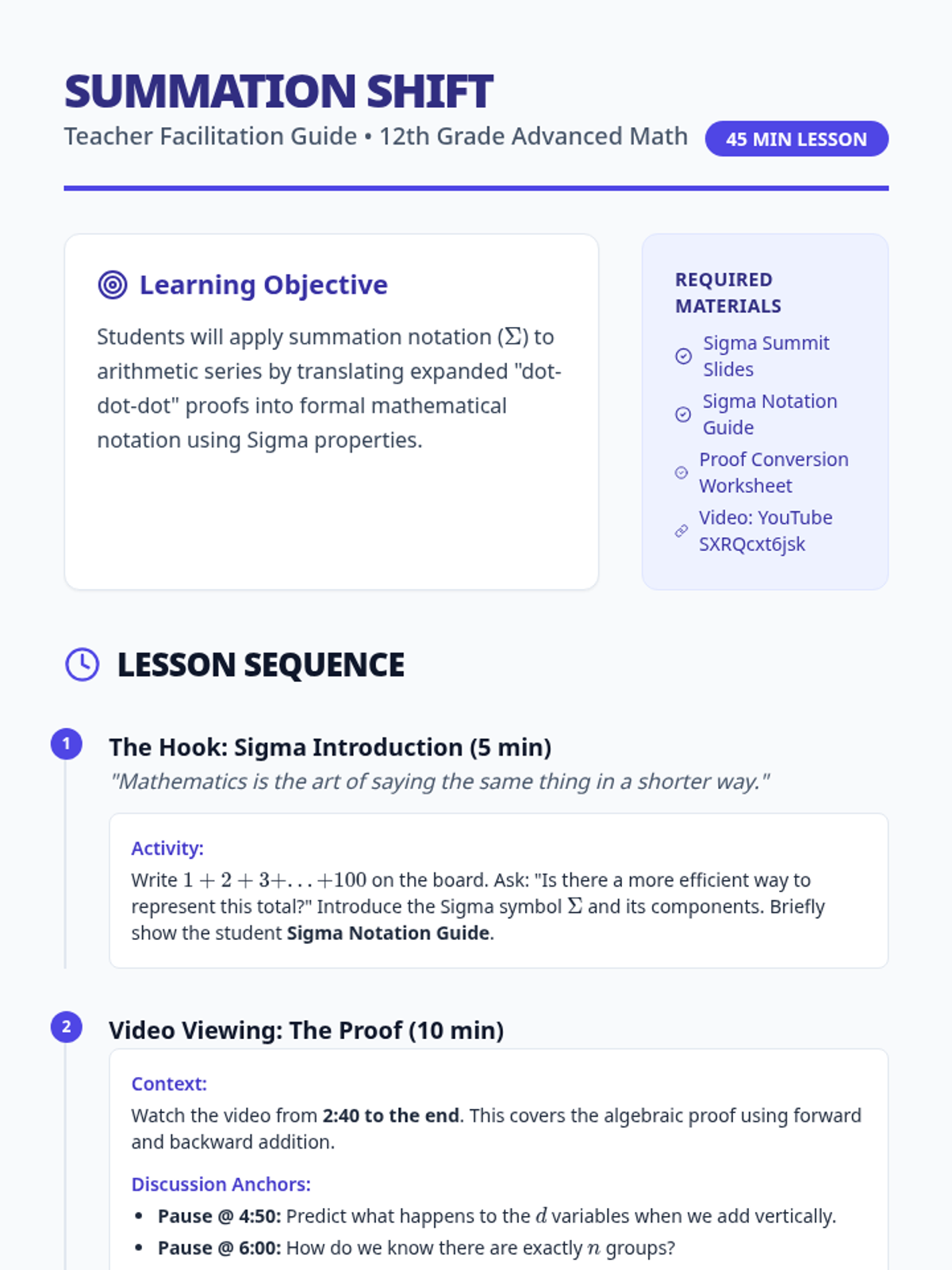
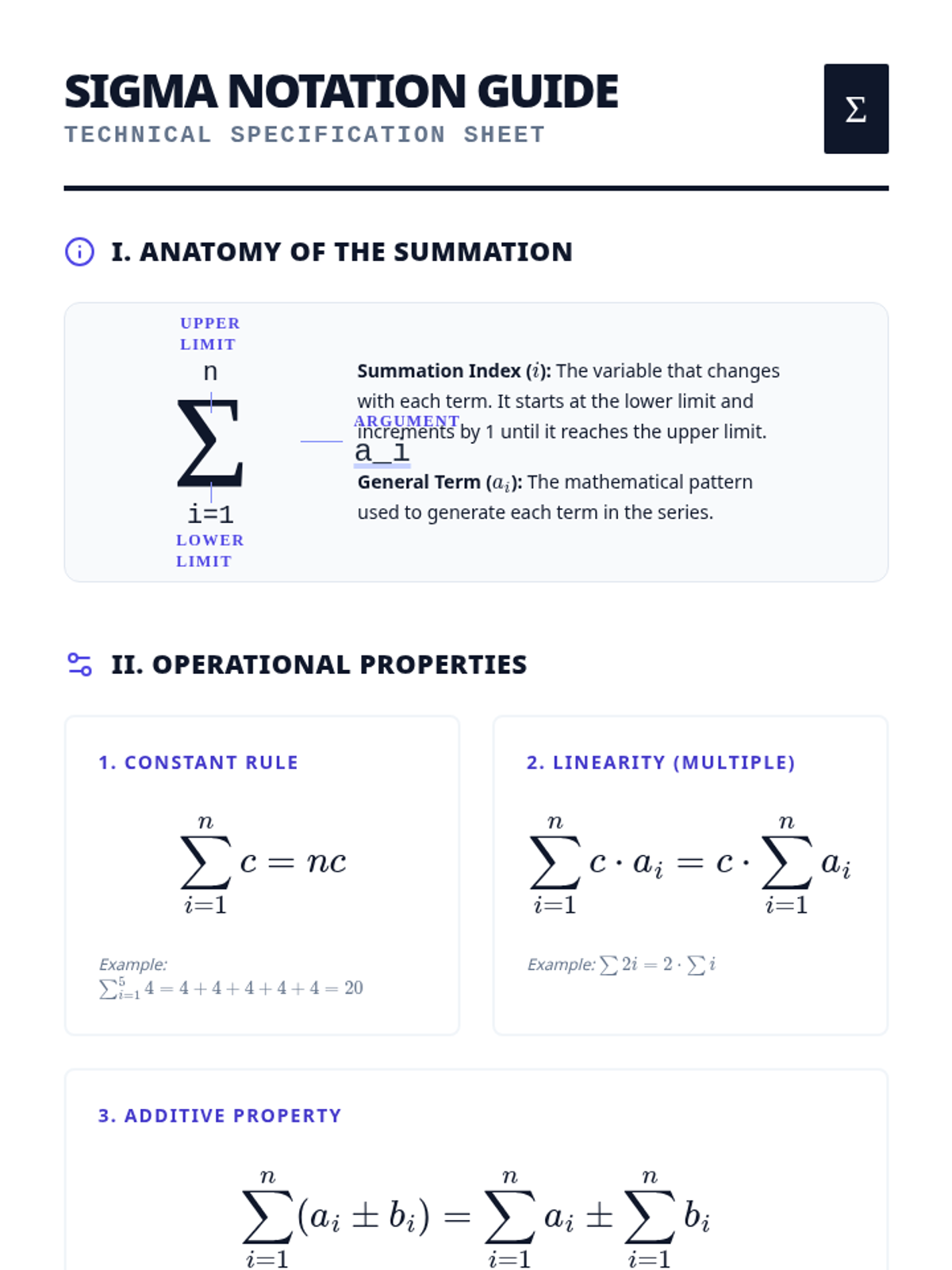
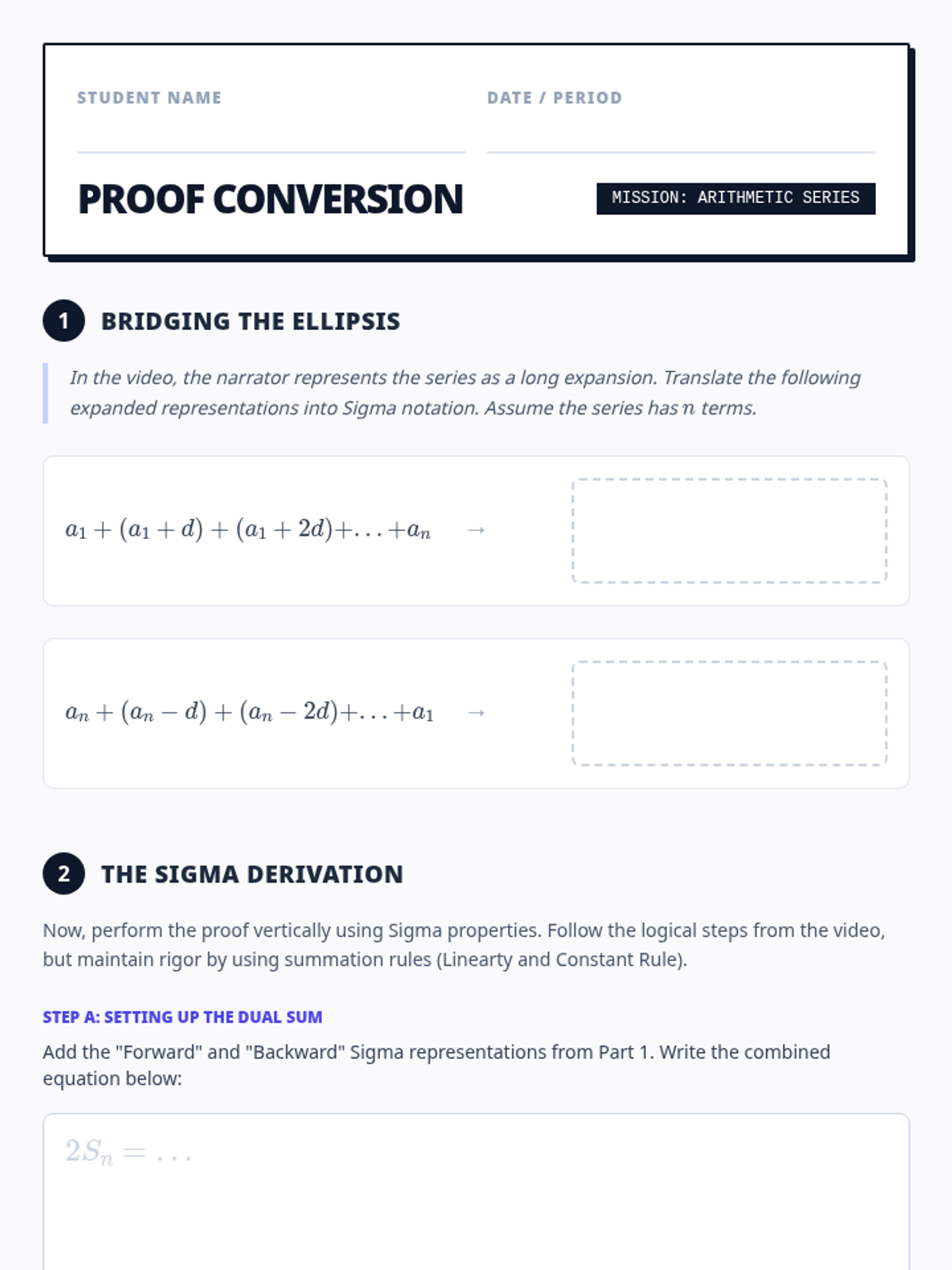
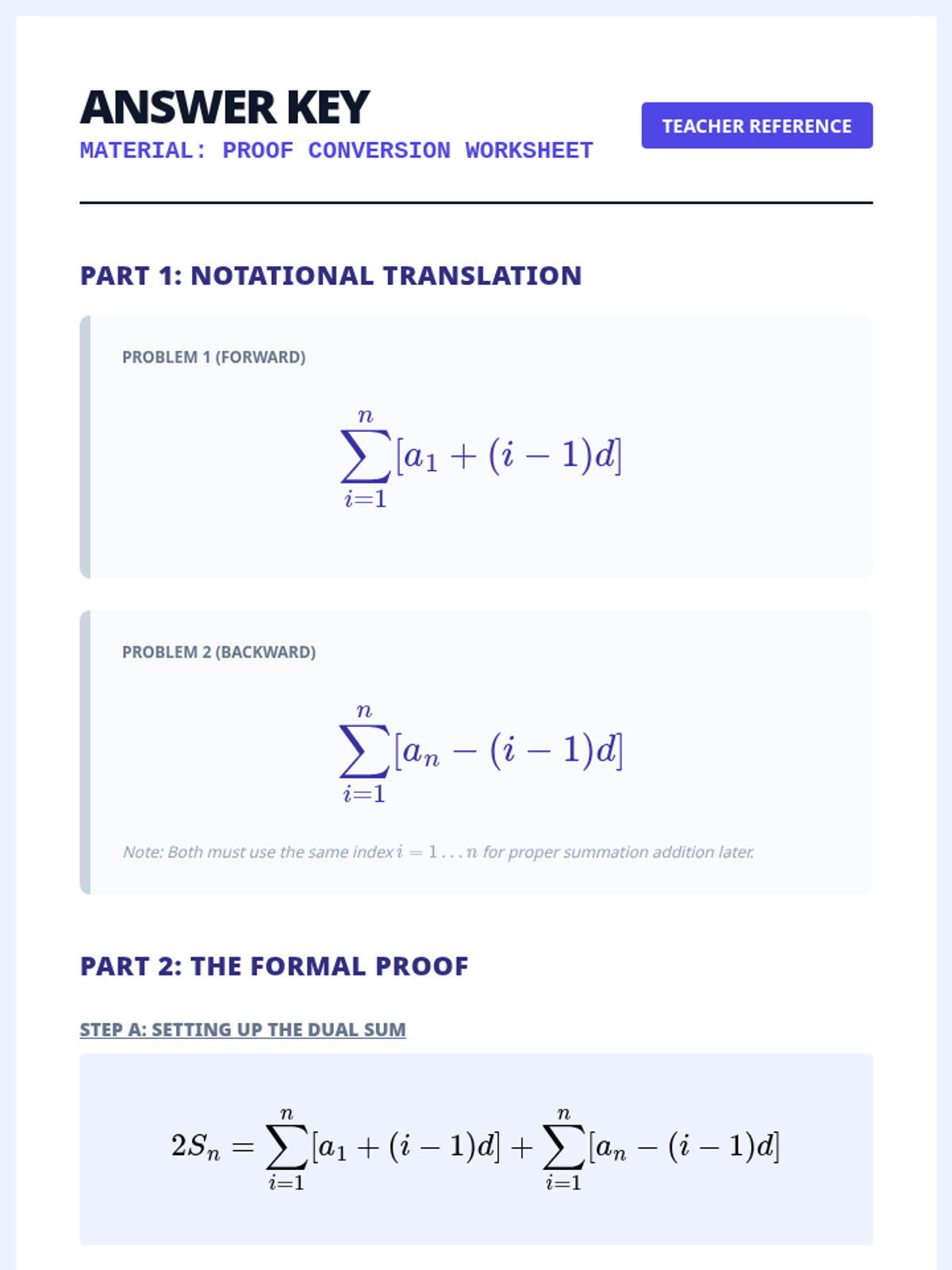
A lesson sequence focusing on the transition from expanded ellipsis notation to formal Sigma notation within the context of arithmetic series proofs. Students analyze a standard proof and reformulate it using summation properties.
A comprehensive lesson sequence for Undergraduate College Algebra focused on synthesizing and selecting the most efficient strategies for solving exponential equations, utilizing common bases, logarithms, and quadratic forms.
A scaffolded sequence for 10th-grade academic support, focusing on using two-color counters and algebra tiles to master integer operations and transition to algebraic reasoning. This sequence moves from concrete manipulation to representational drawing and finally to abstract procedural fluency.
A specialized math sequence for 11th-grade students focusing on practical fraction operations and ratios through the lens of construction and design. Students move from basic measurement precision to complex scaling tasks using physical manipulatives like tape measures and Cuisenaire rods.
A specialized math sequence for 9th-grade academic support, focusing on fraction mastery through concrete manipulatives and visual models. It follows the CRA framework to bridge gaps in foundational understanding for high school success.
This sequence explores the intersection of geometry and engineering, focusing on 3D visualization, technical drawing, and the optimization of physical forms. Students develop spatial reasoning skills through orthographic and isometric sketching and apply geometric modeling to solve real-world design constraints.
This mathematical physics sequence explores the coordinate systems necessary for solving problems involving complex shapes, moving beyond Cartesian coordinates to General Curvilinear systems. Students derive scale factors, volume elements, and differential operators, culminating in solving Laplace's equation and understanding metric tensors.