A lesson where students learn to identify and name prisms and pyramids by their bases. Includes a polygon warm-up, an interactive video viewing, and a hands-on solid-naming game.
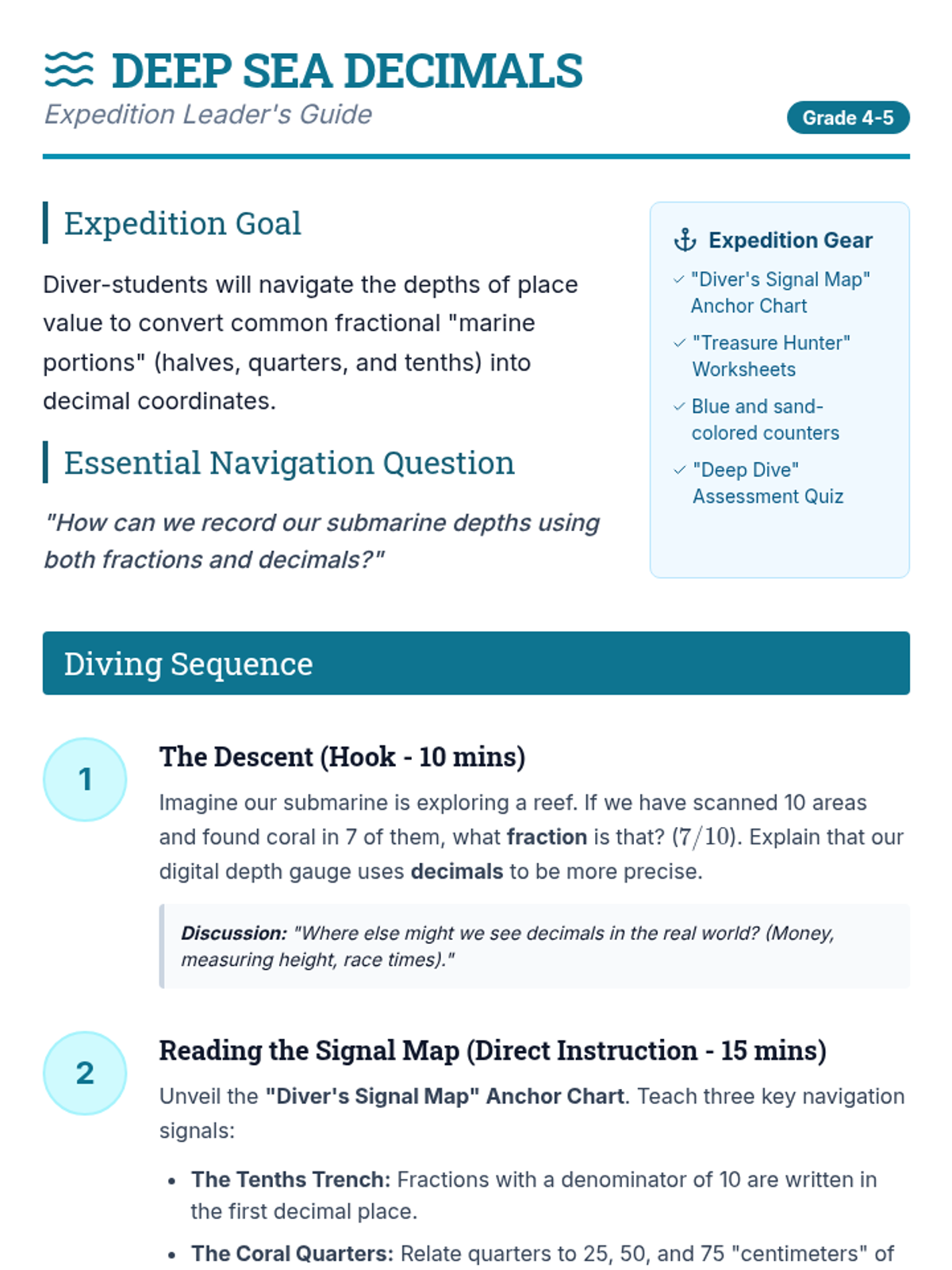
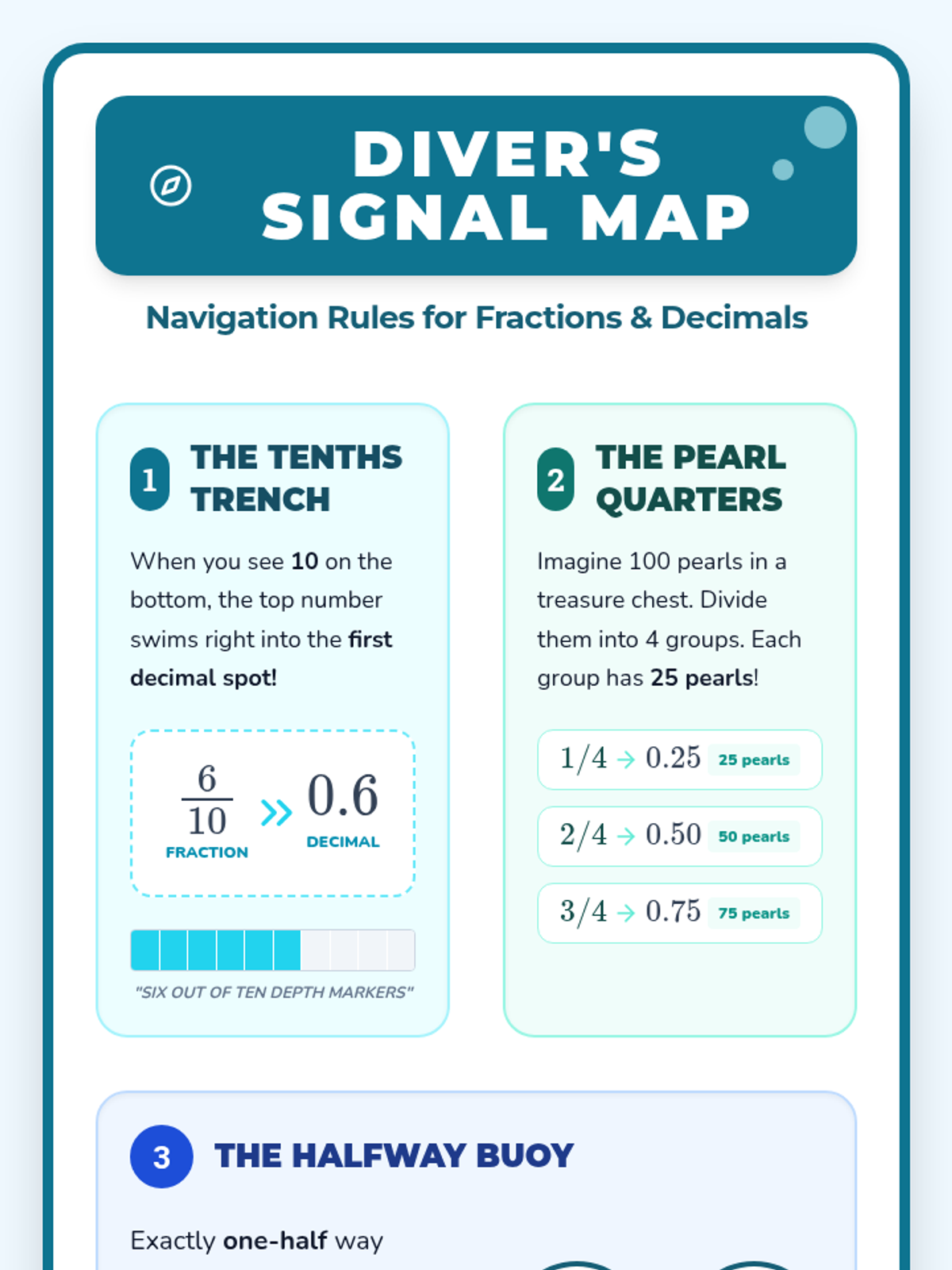
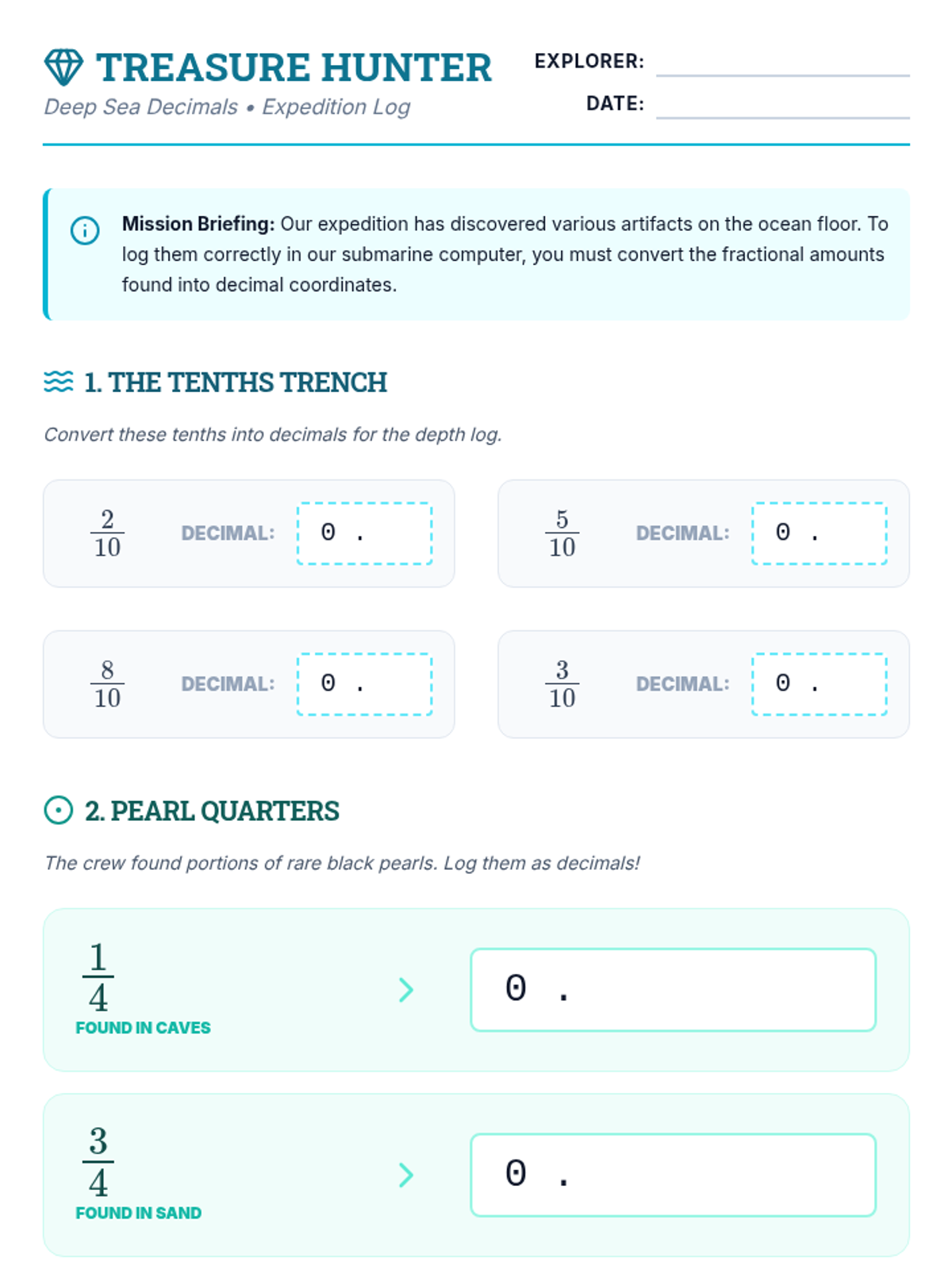
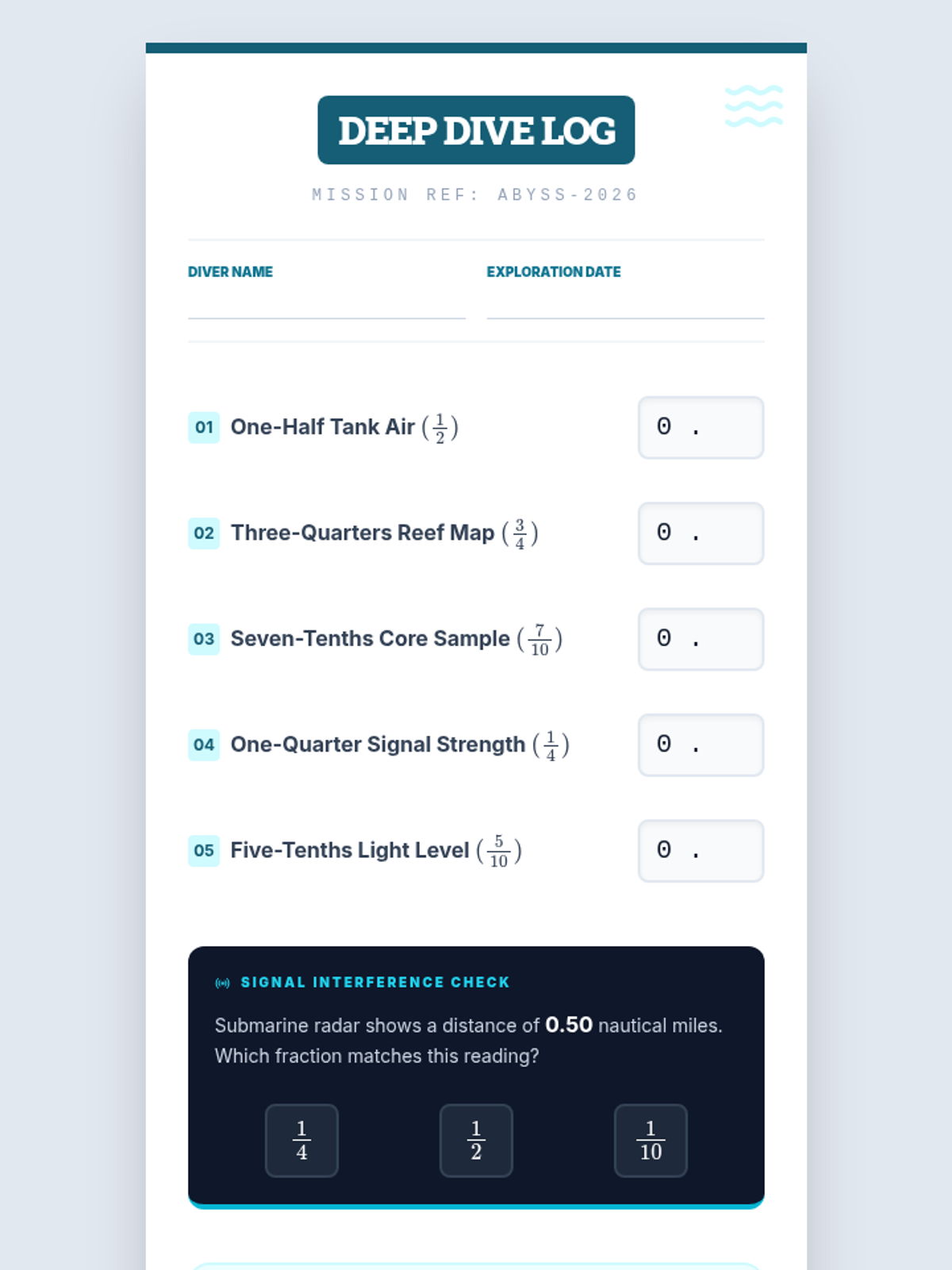
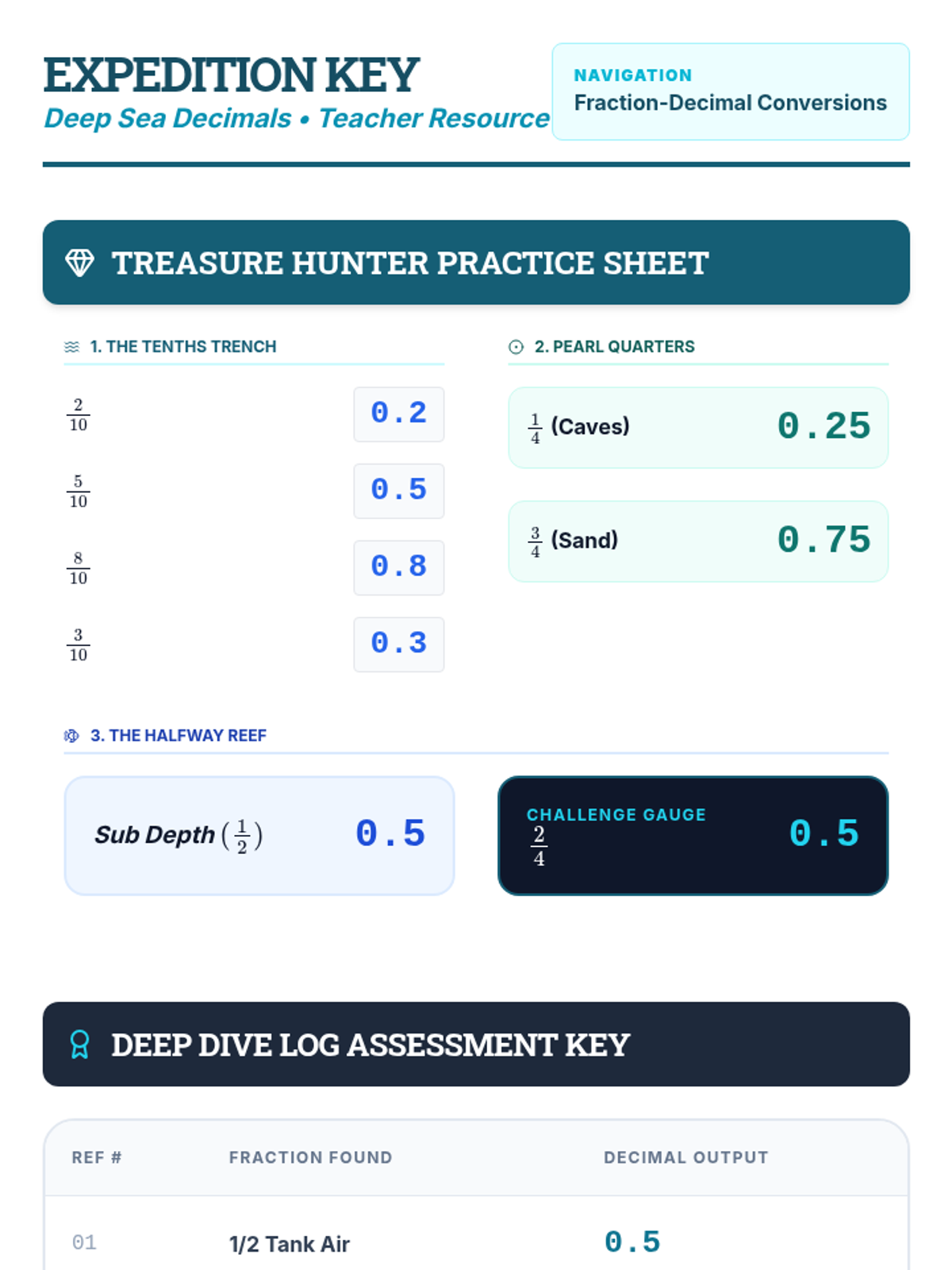
An immersive ocean-themed lesson for converting common fractions (halves, quarters, tenths) into decimals. Students dive into marine biology and treasure hunting while mastering decimal place value.
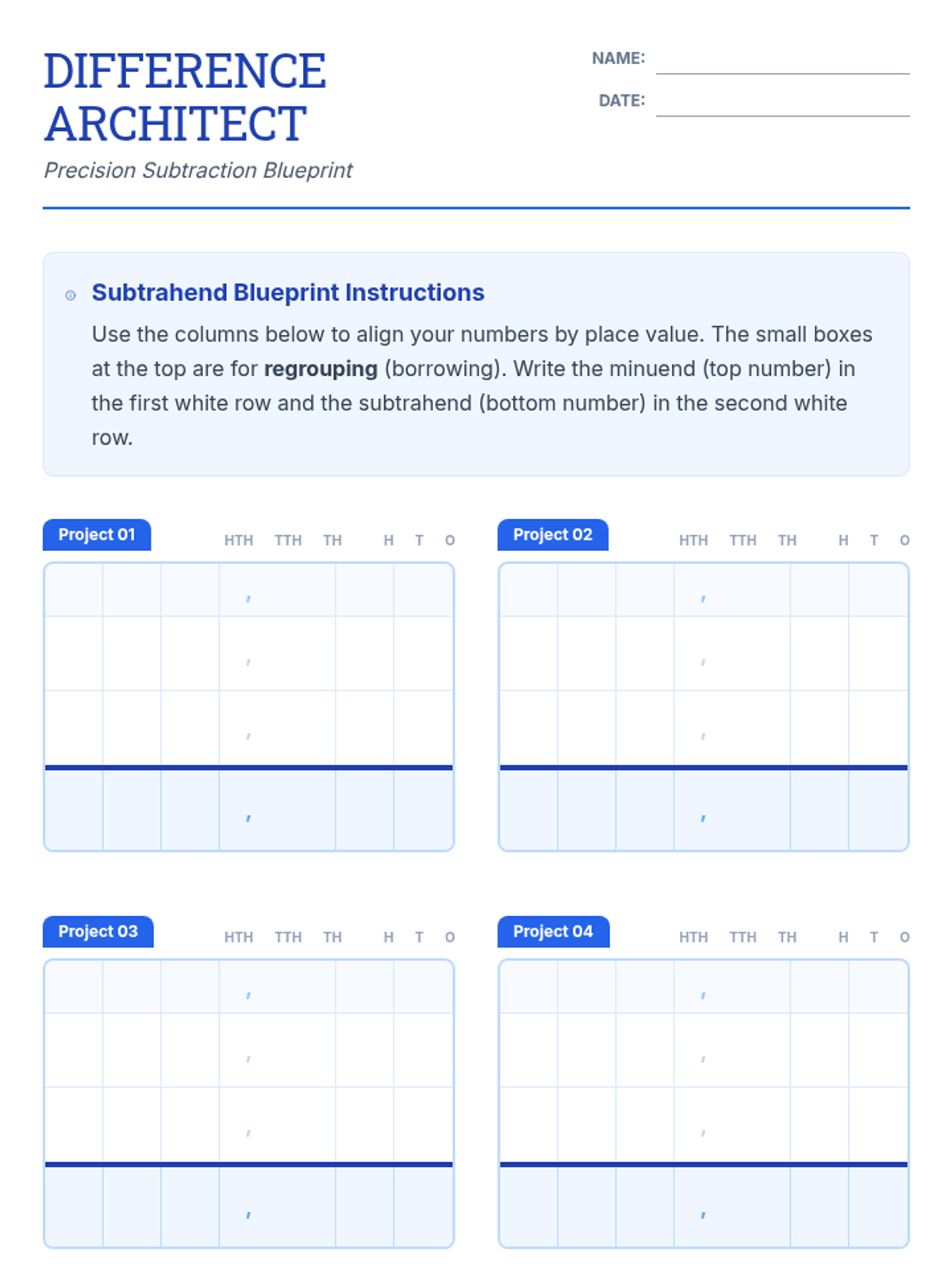
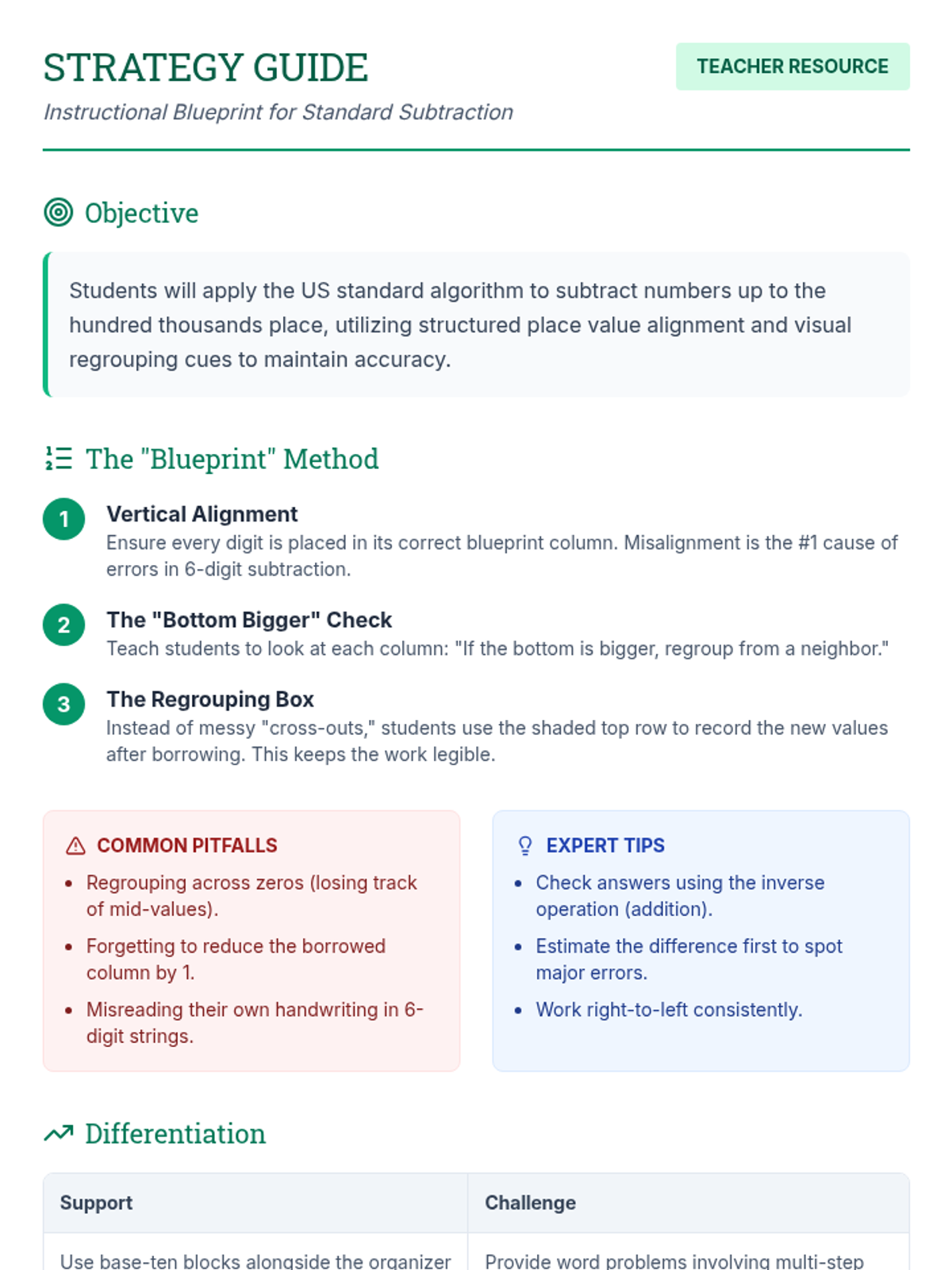
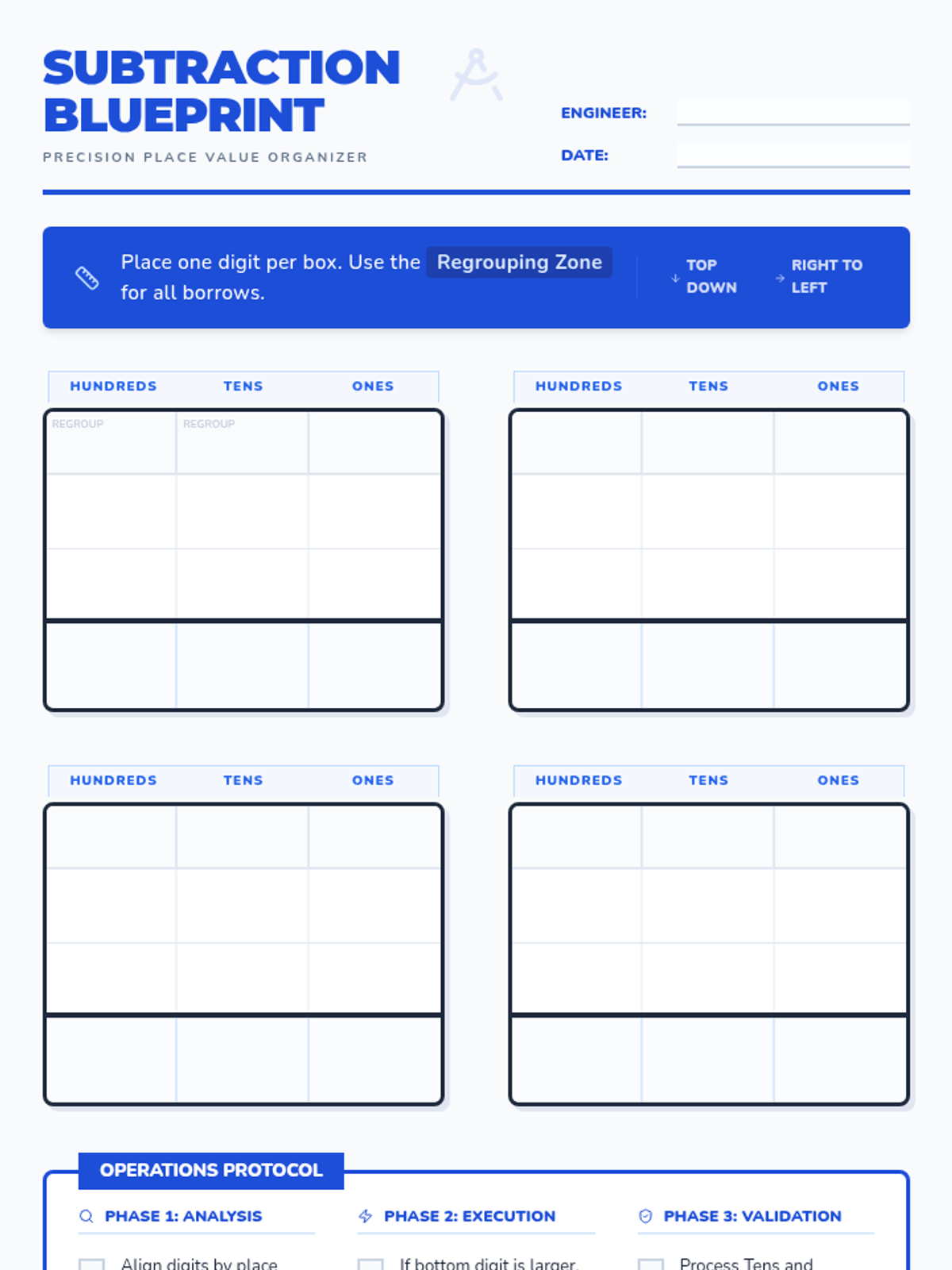
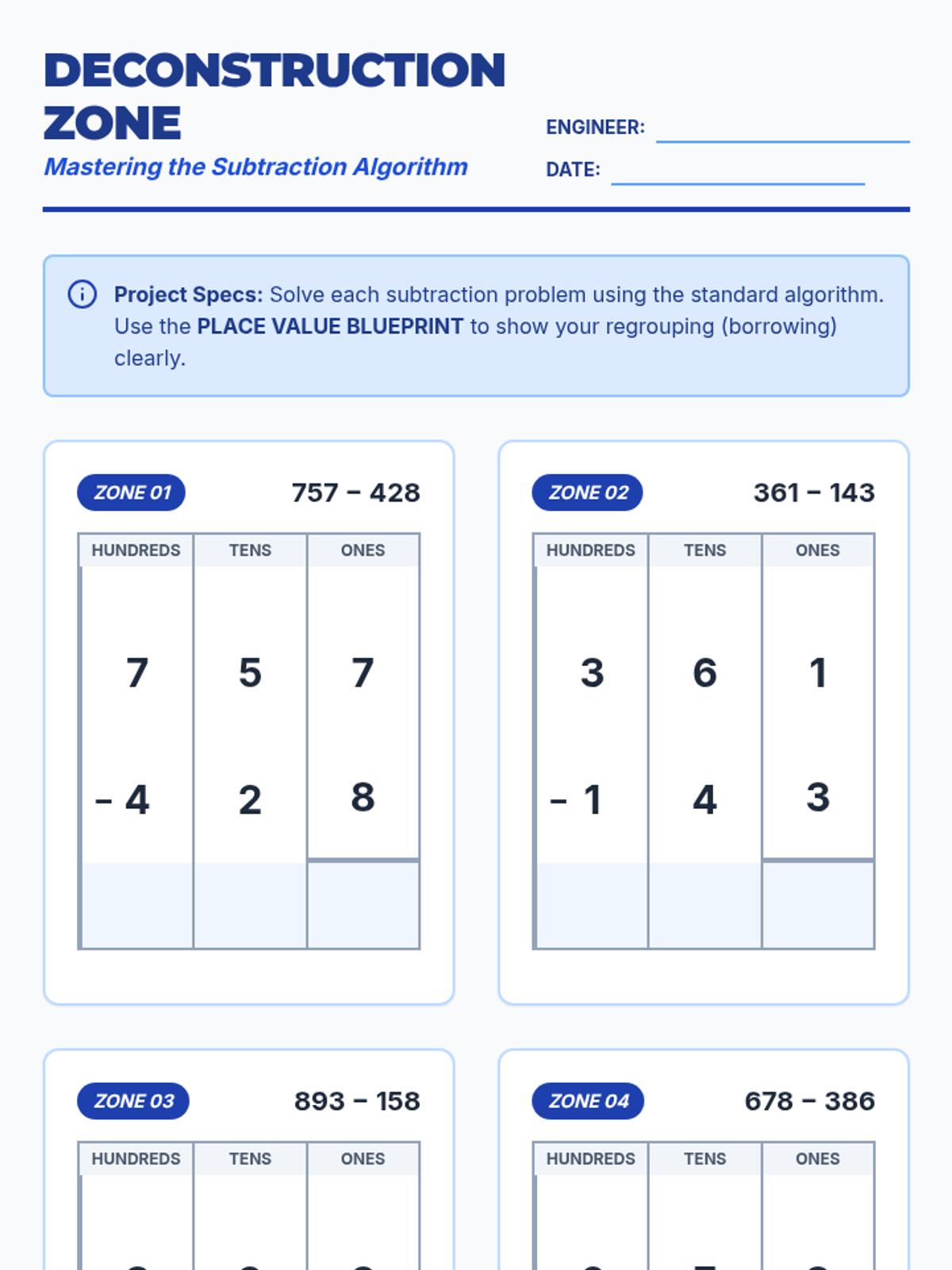
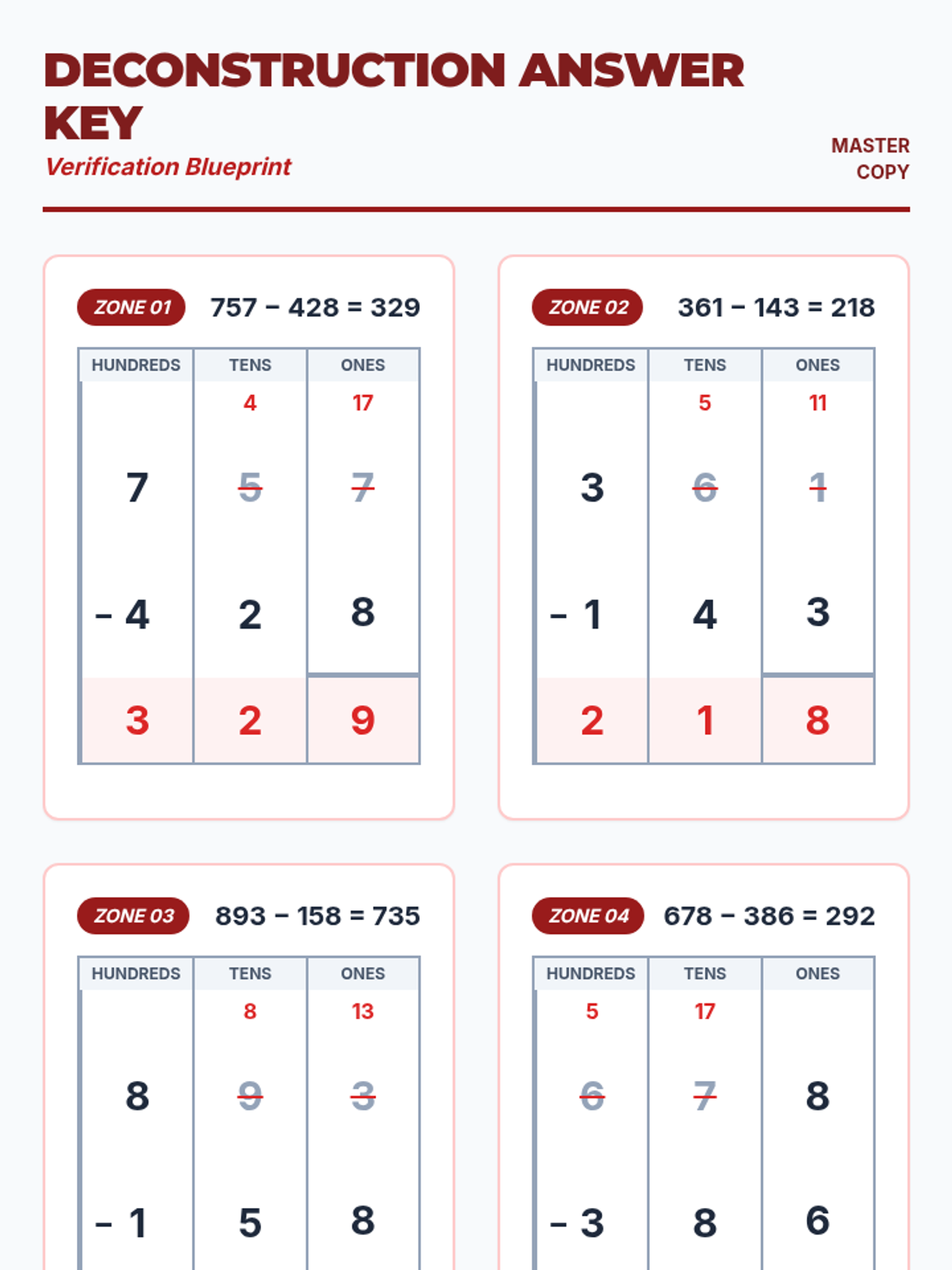
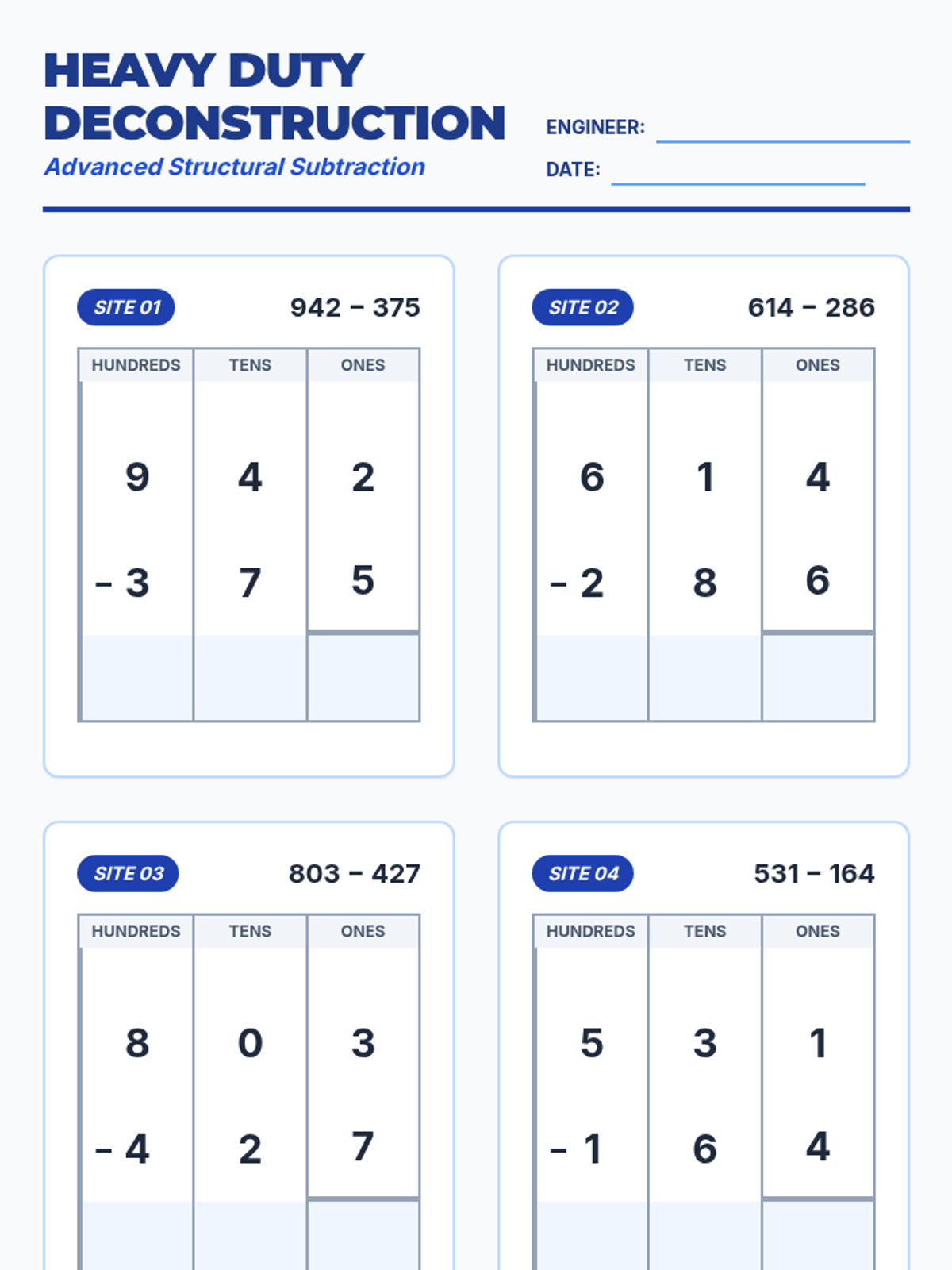
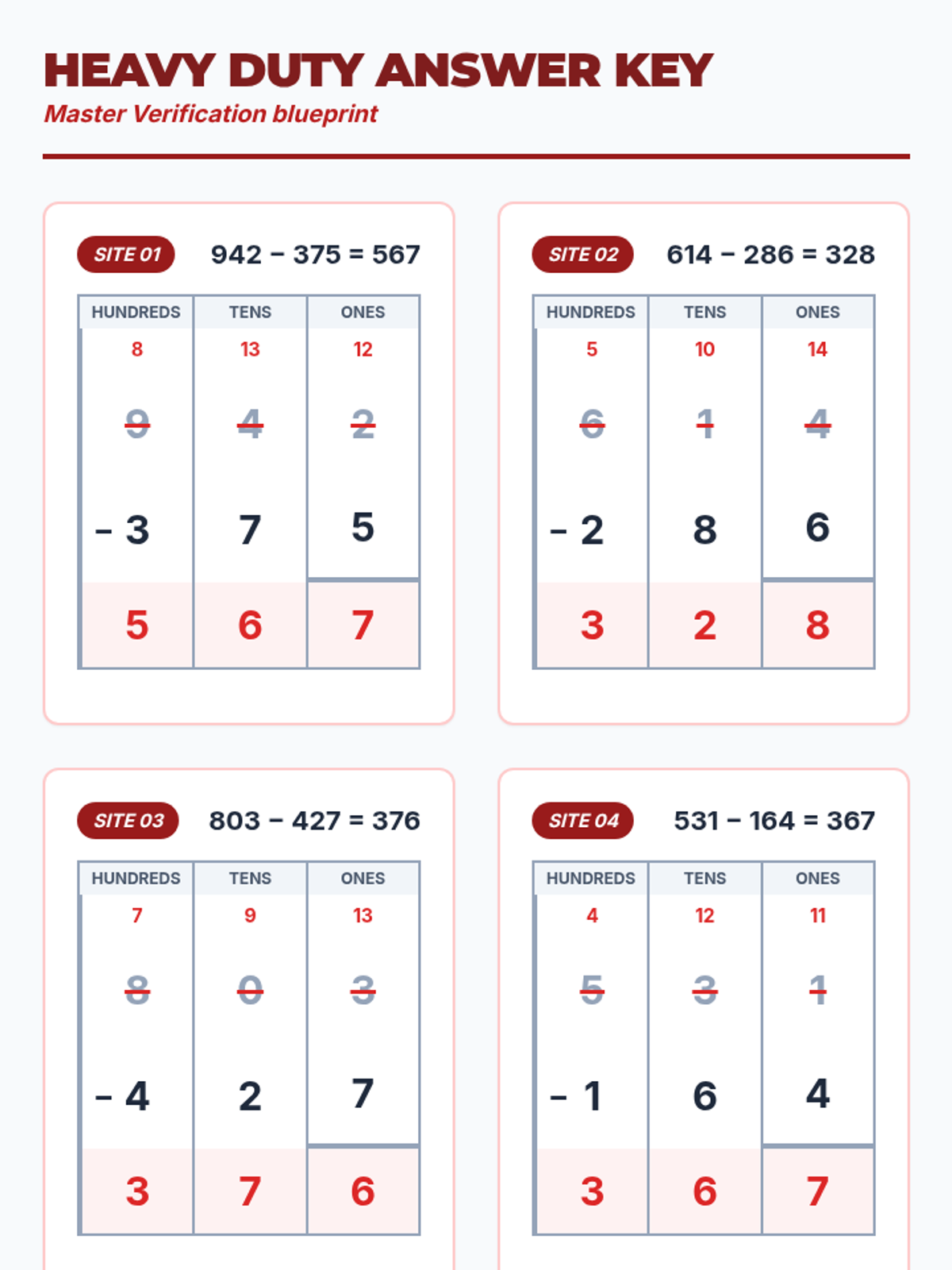
A lesson focused on mastering the US standard algorithm for subtraction up to the hundred thousands place using structured place value organizers. Students practice regrouping and maintaining alignment through visual grids.
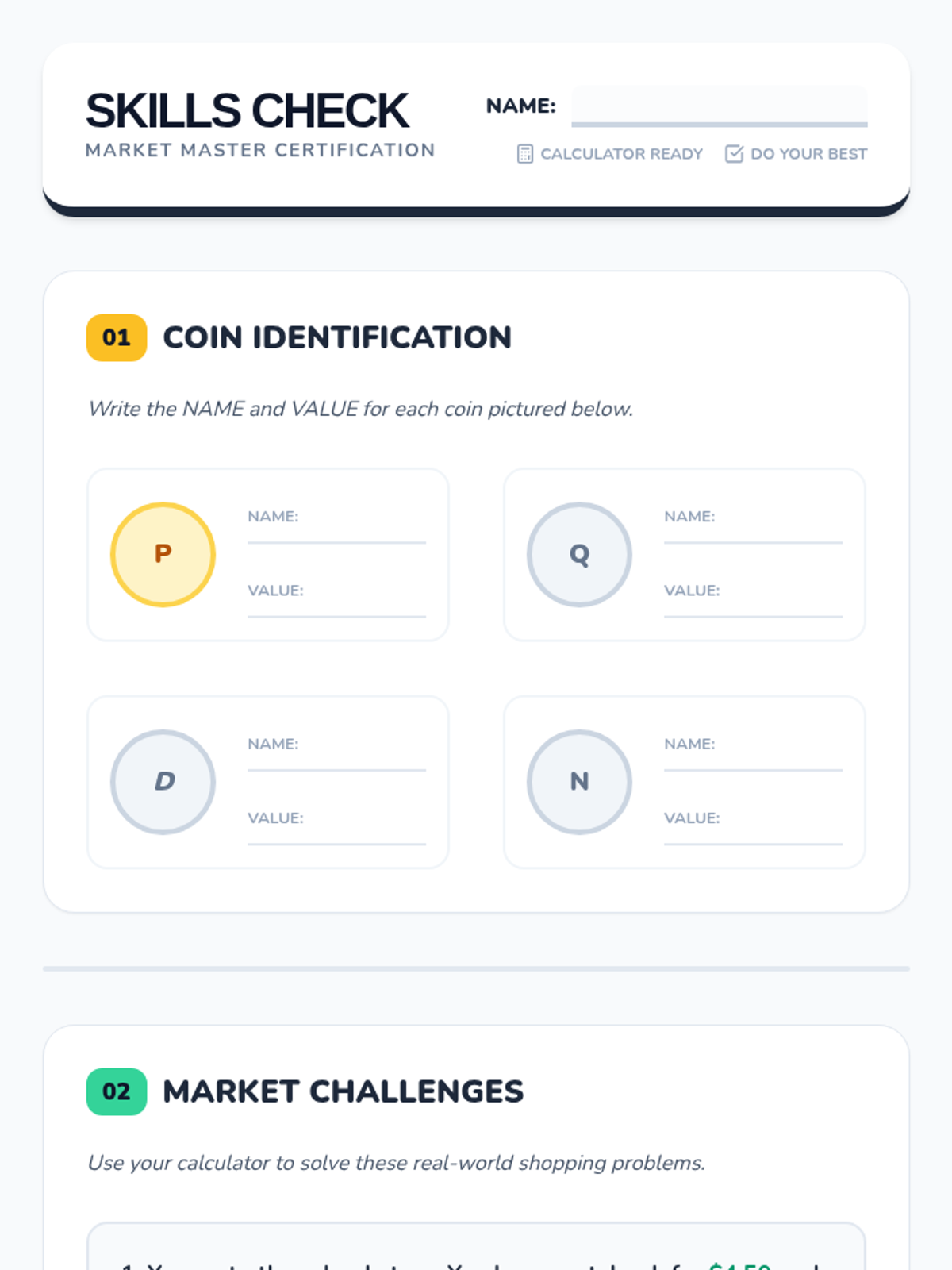
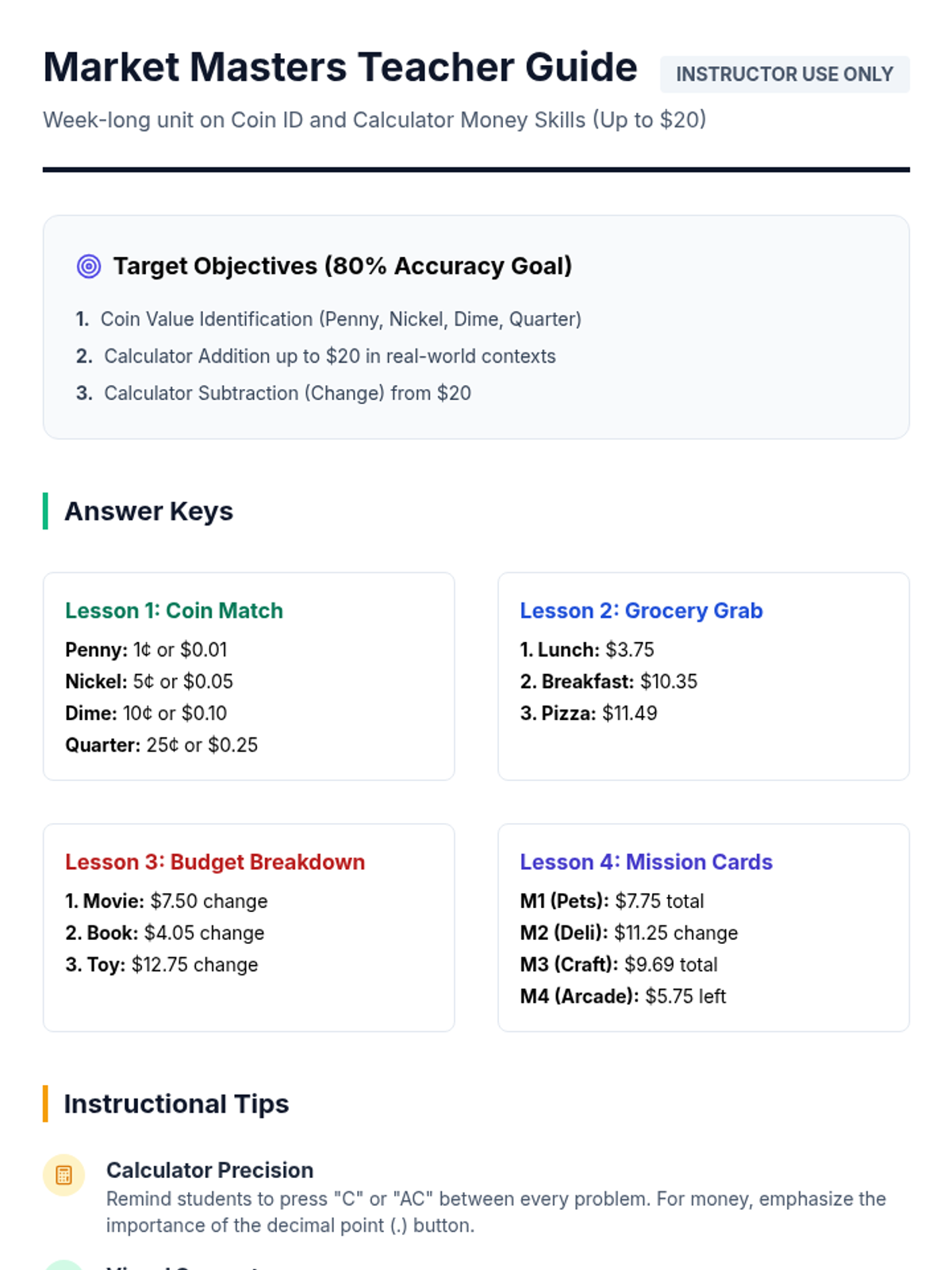
A final assessment and review day to track progress towards identifying coins and performing money calculations with 80% accuracy.
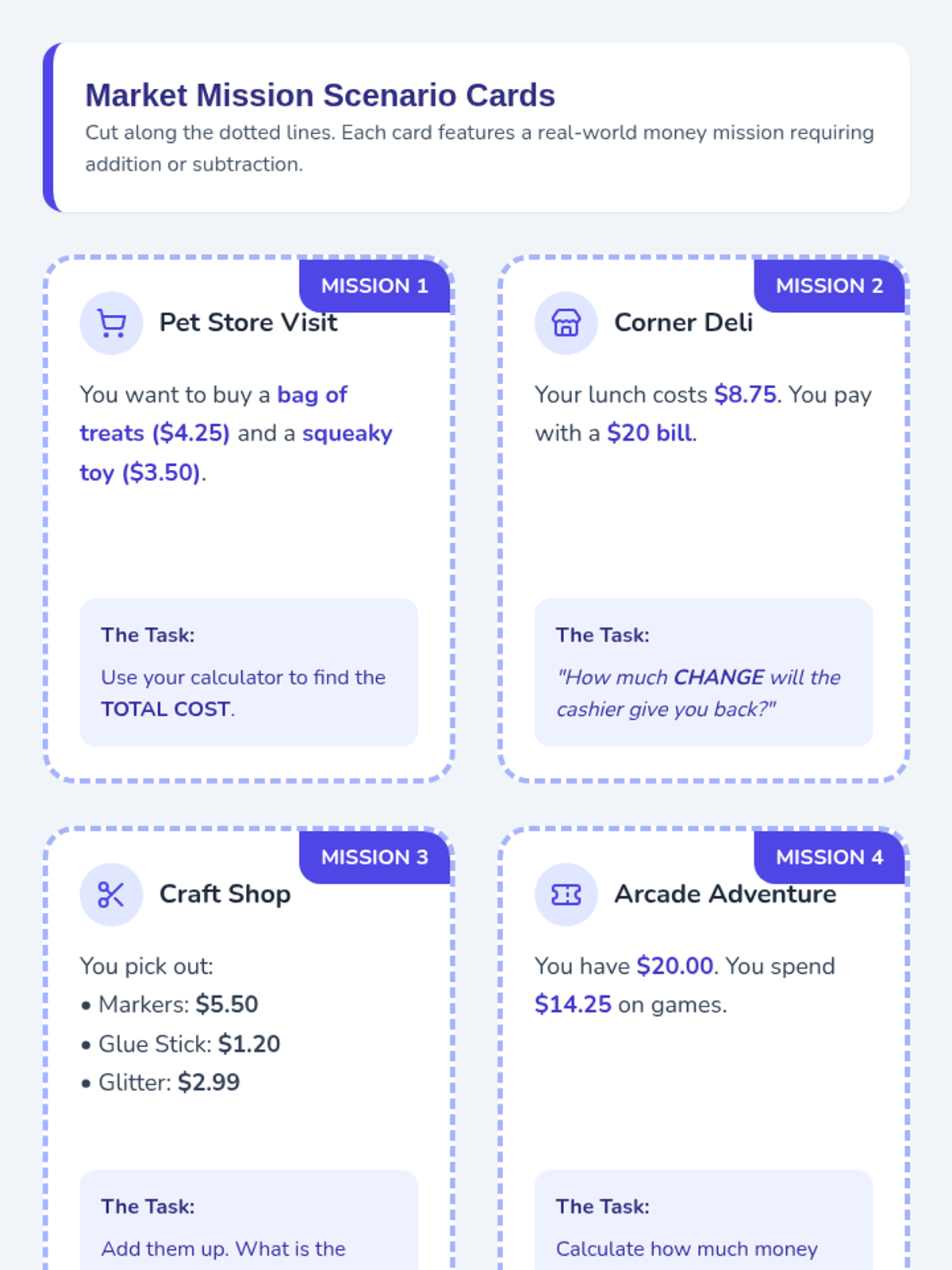
Applying both addition and subtraction to multi-step real-world scenarios using a set of interactive scenario cards.
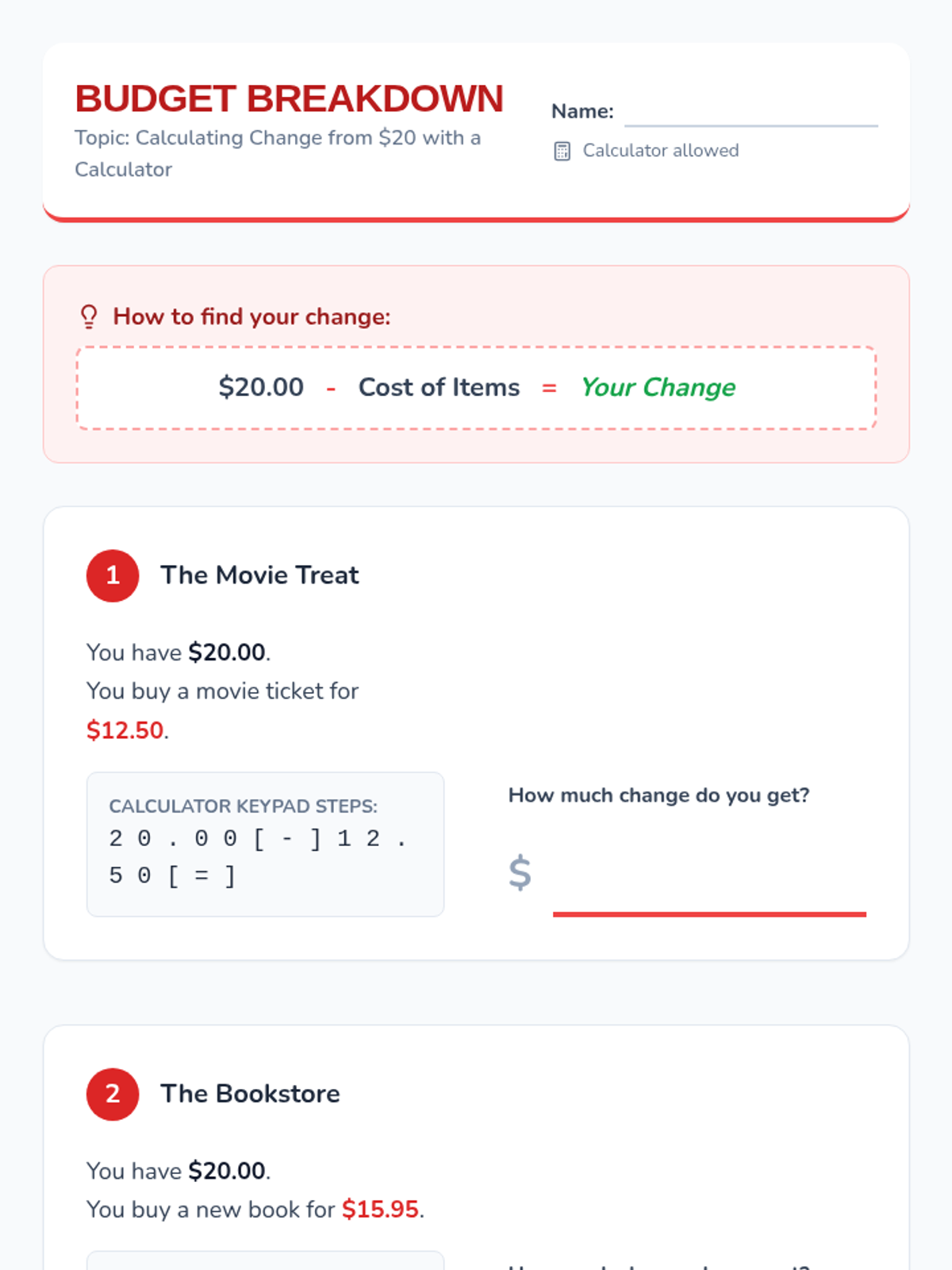
Practicing subtraction skills to calculate change and budget remaining money from a $20 limit.
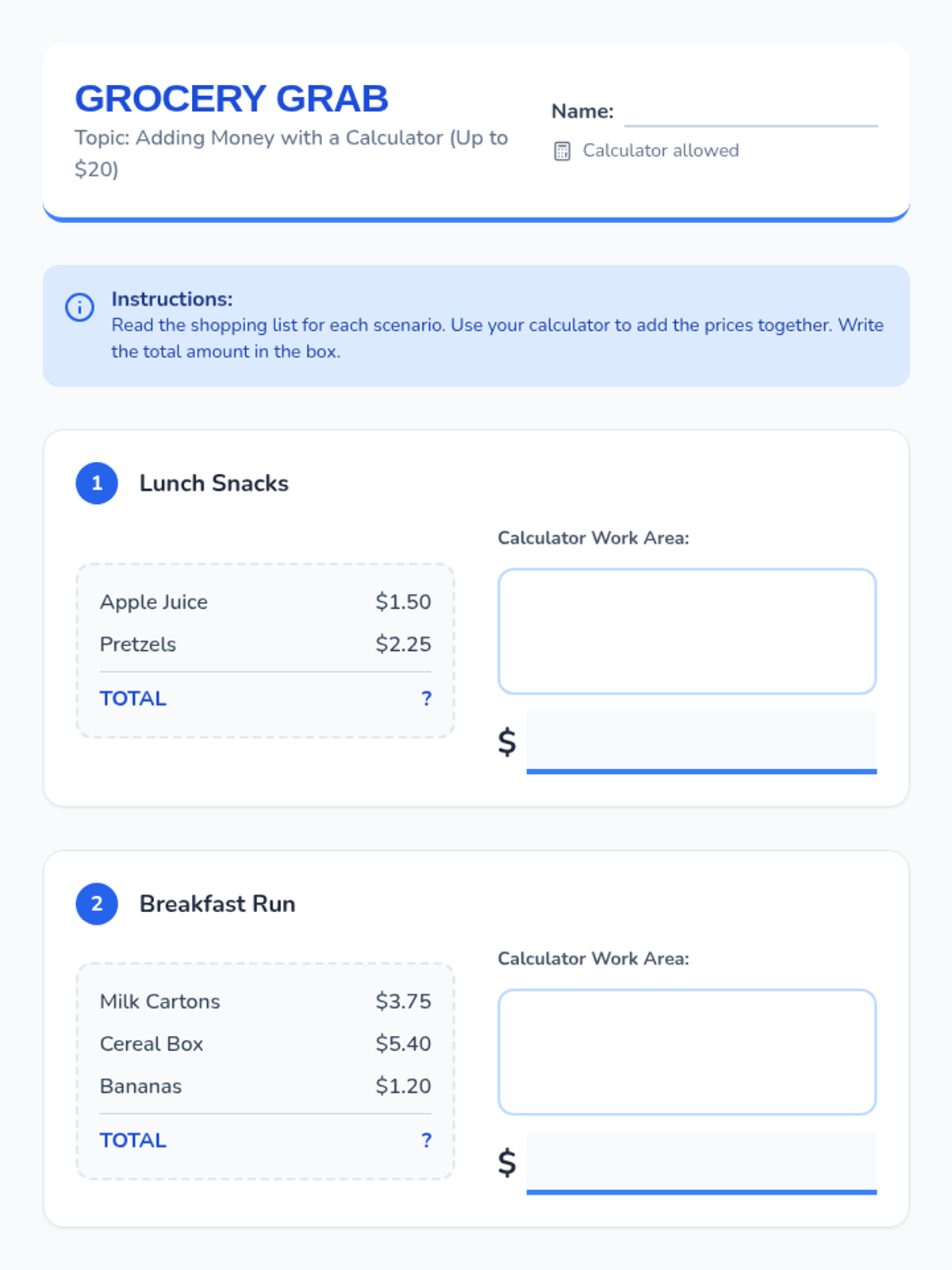
Introduction to adding money amounts up to $20 using a calculator based on shopping lists and grocery scenarios.
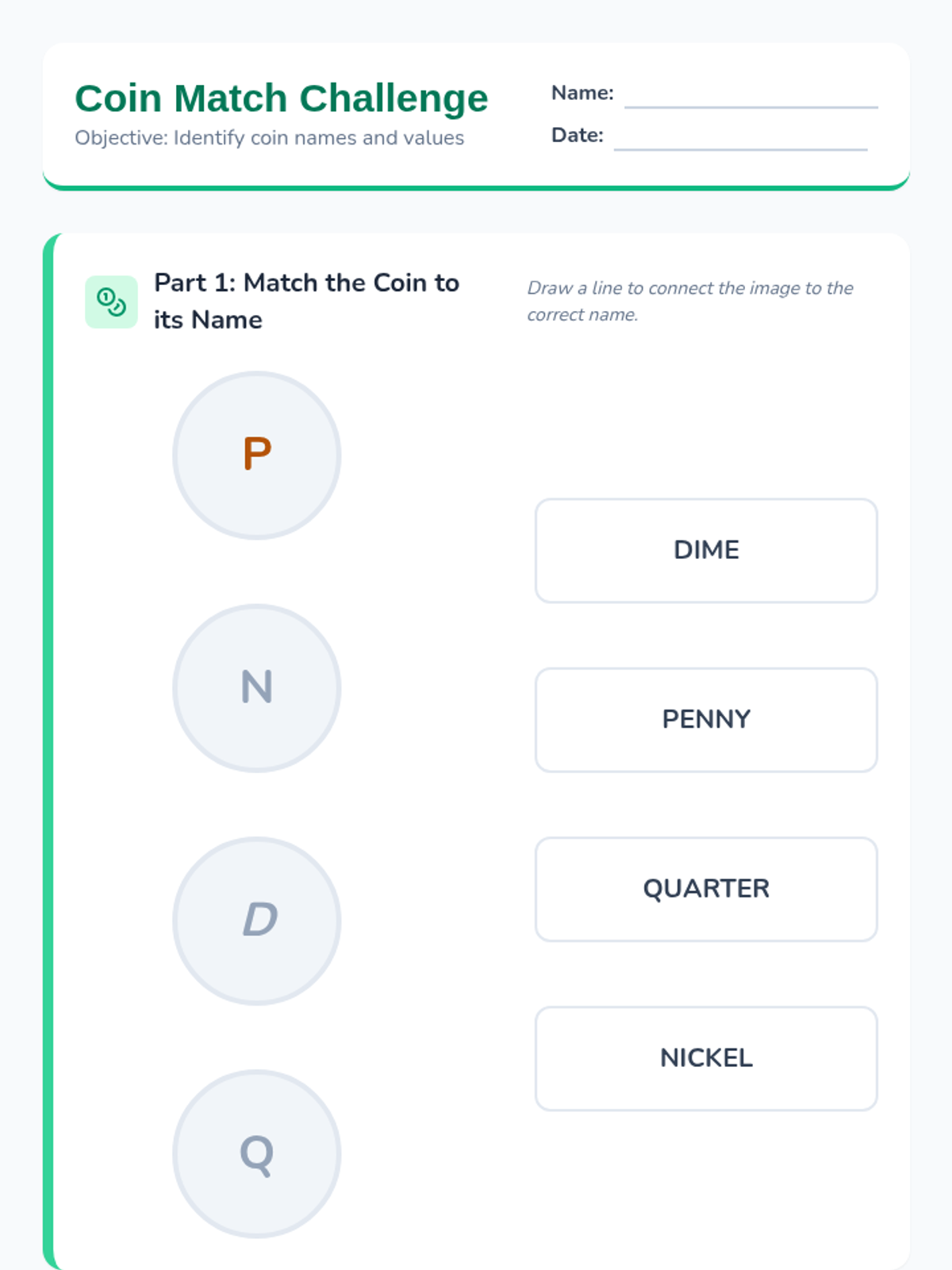
Focuses on identifying the names and values of pennies, nickels, dimes, and quarters through matching and visual aids.
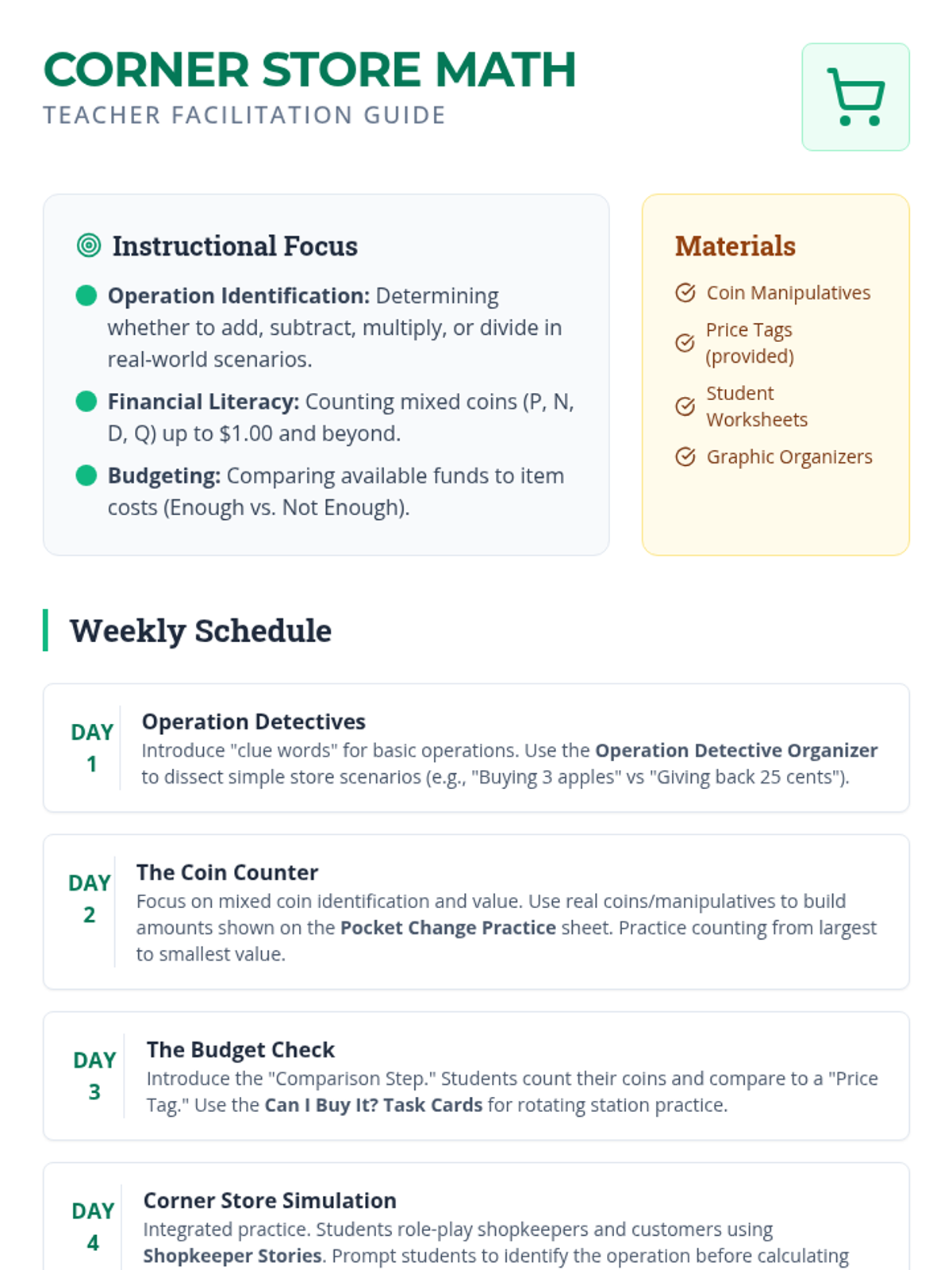
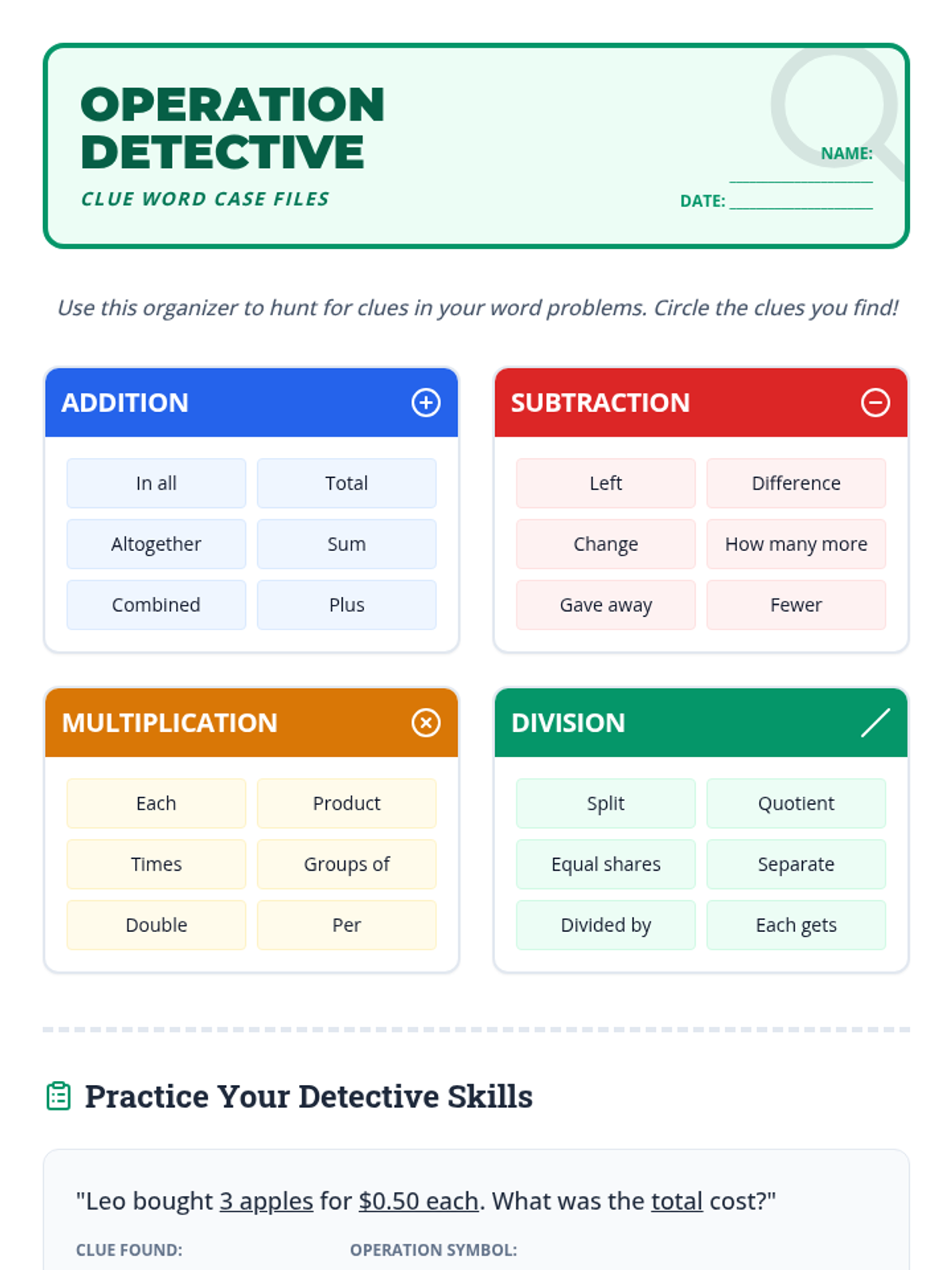
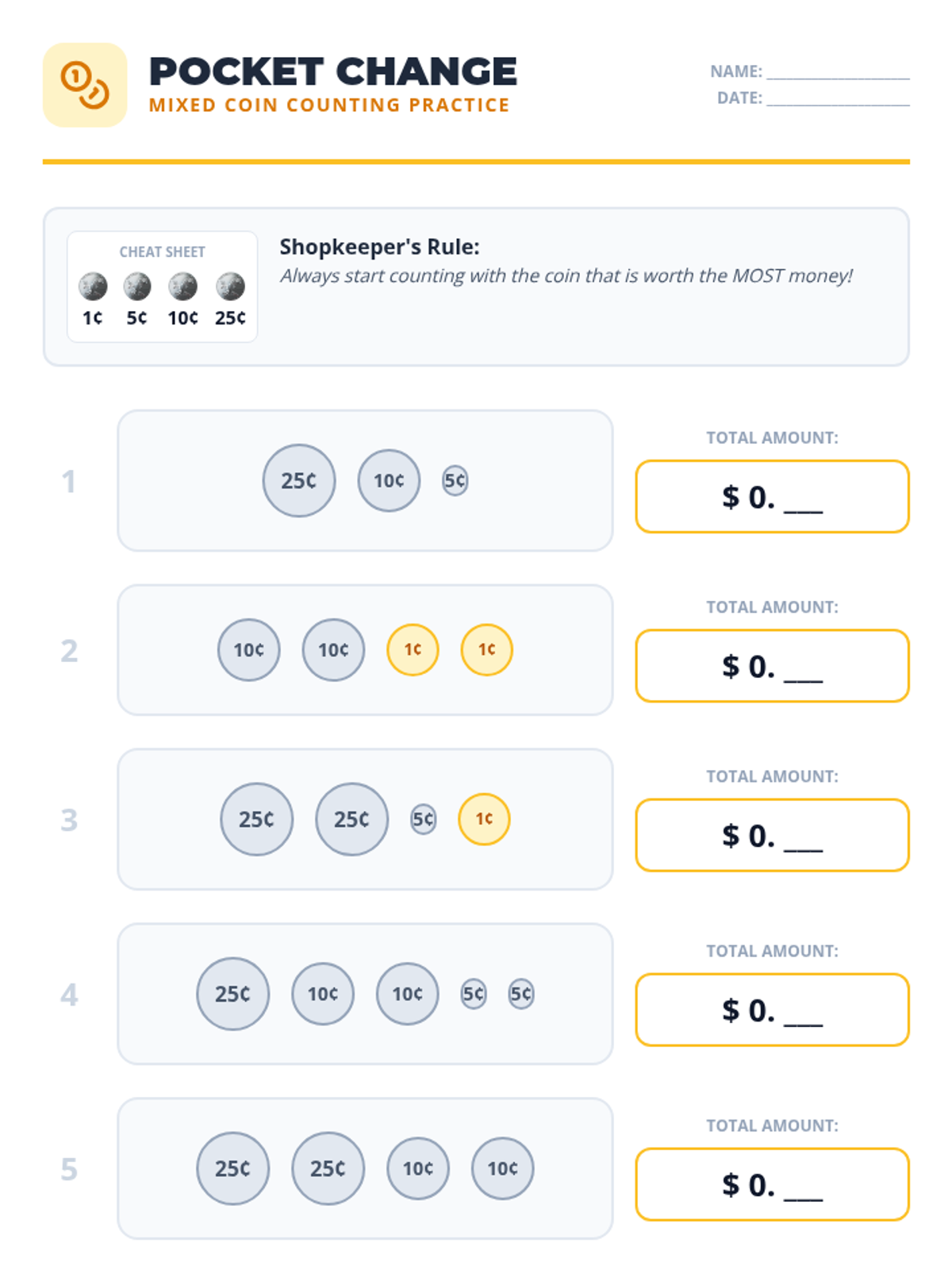
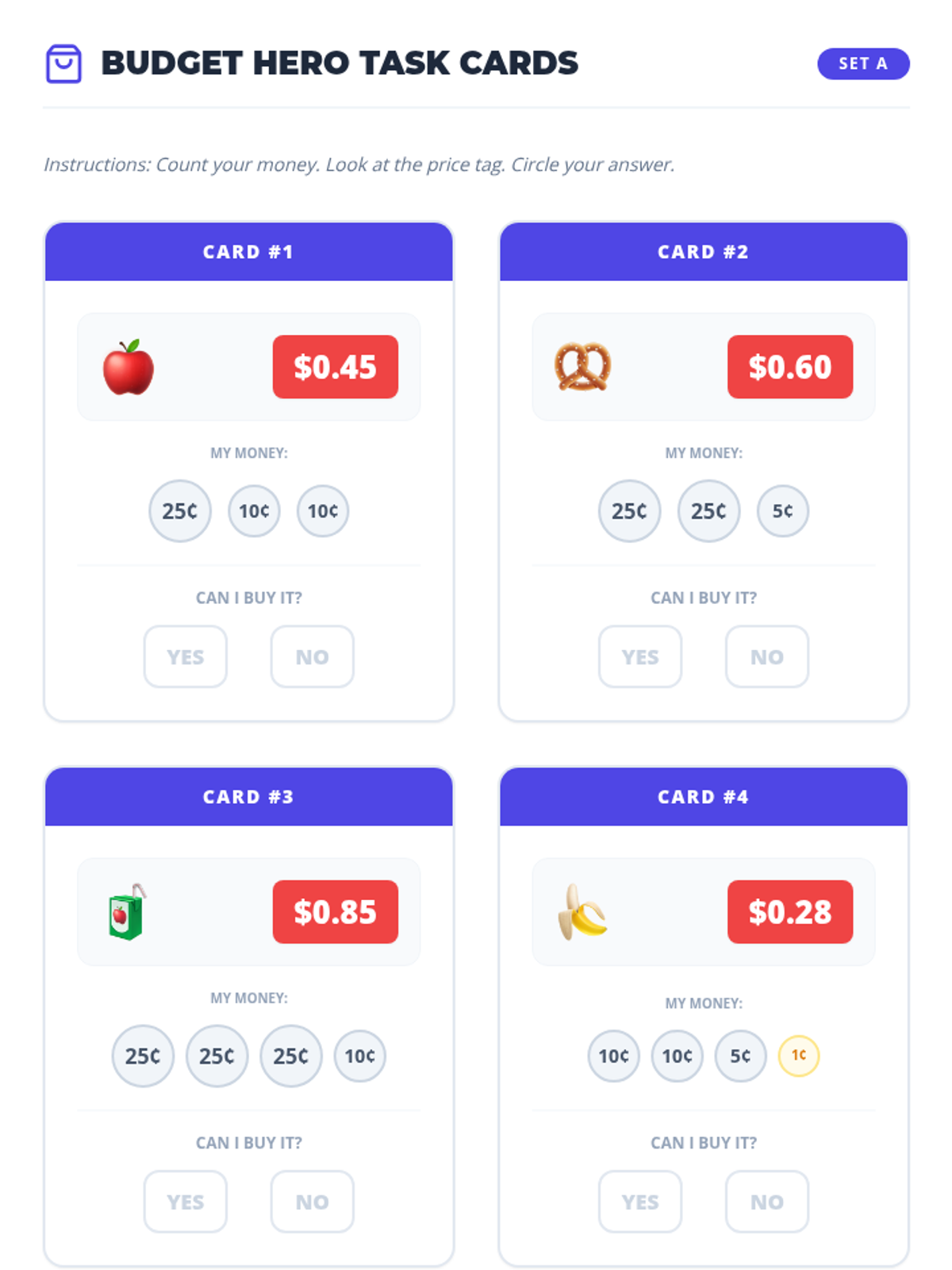
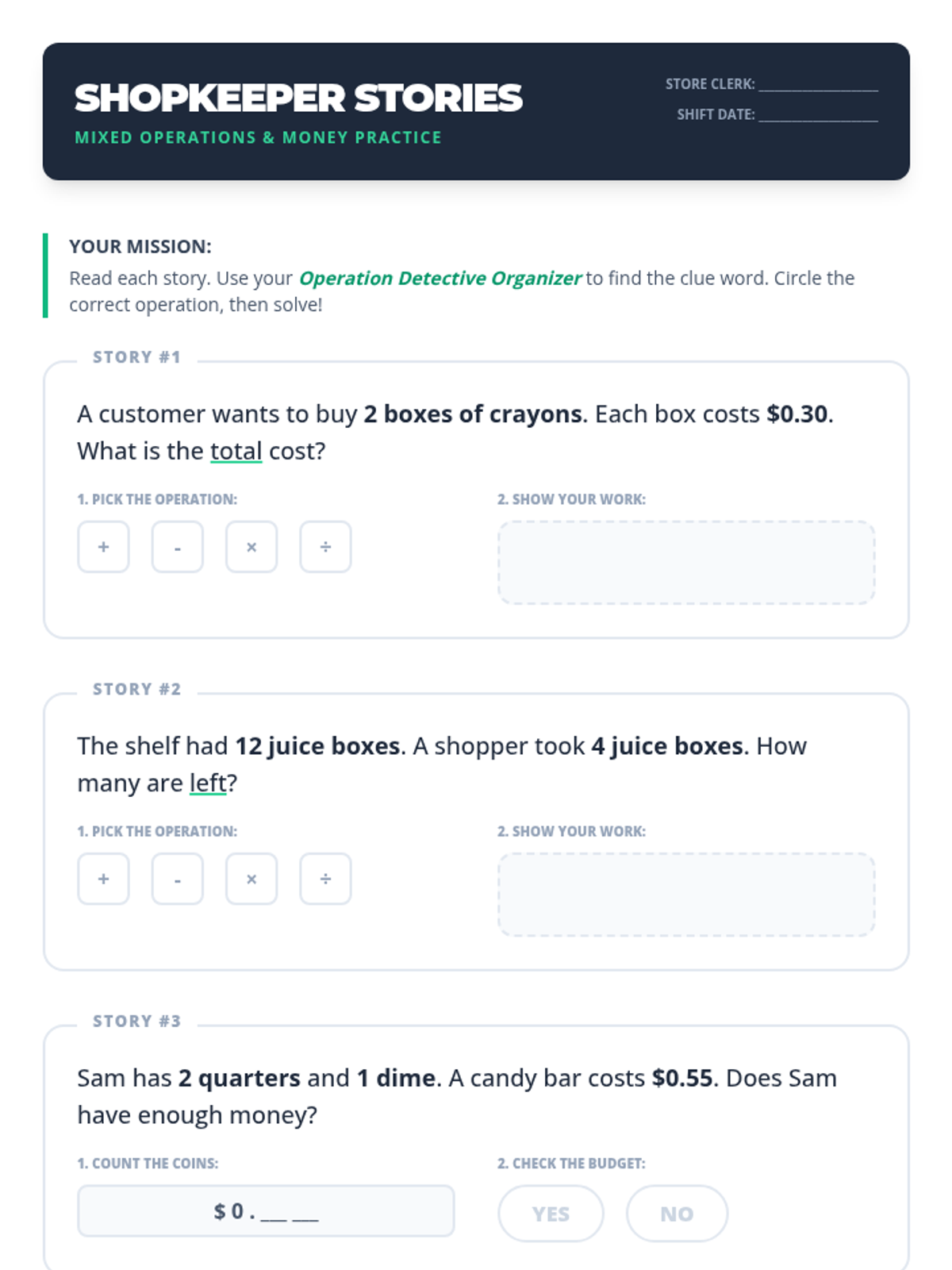
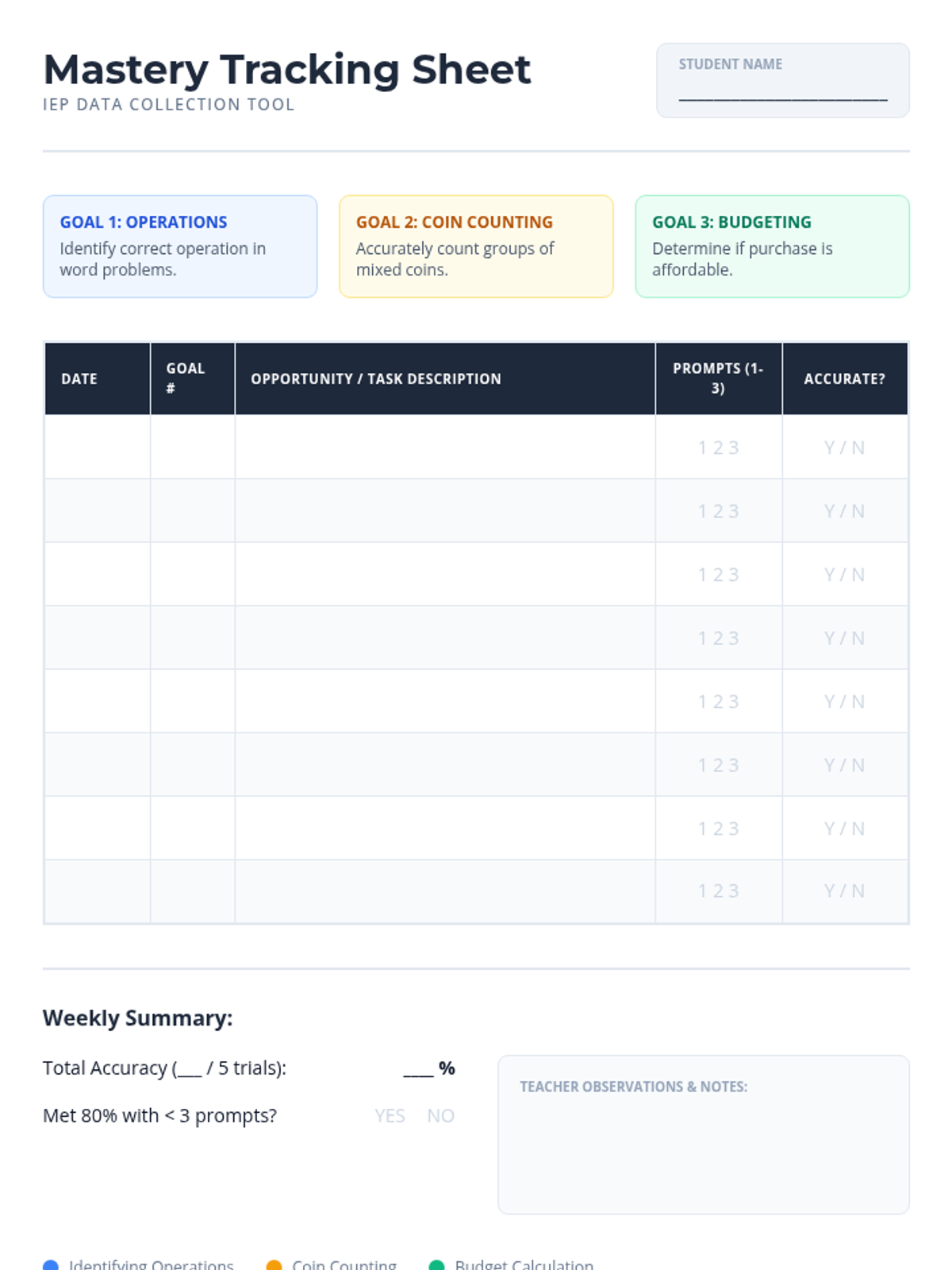
A week-long series of activities focused on identifying math operations in word problems, counting mixed coins, and determining if a purchase is affordable within a budget. Includes a teacher guide, graphic organizers, and practice worksheets themed around a neighborhood corner store.
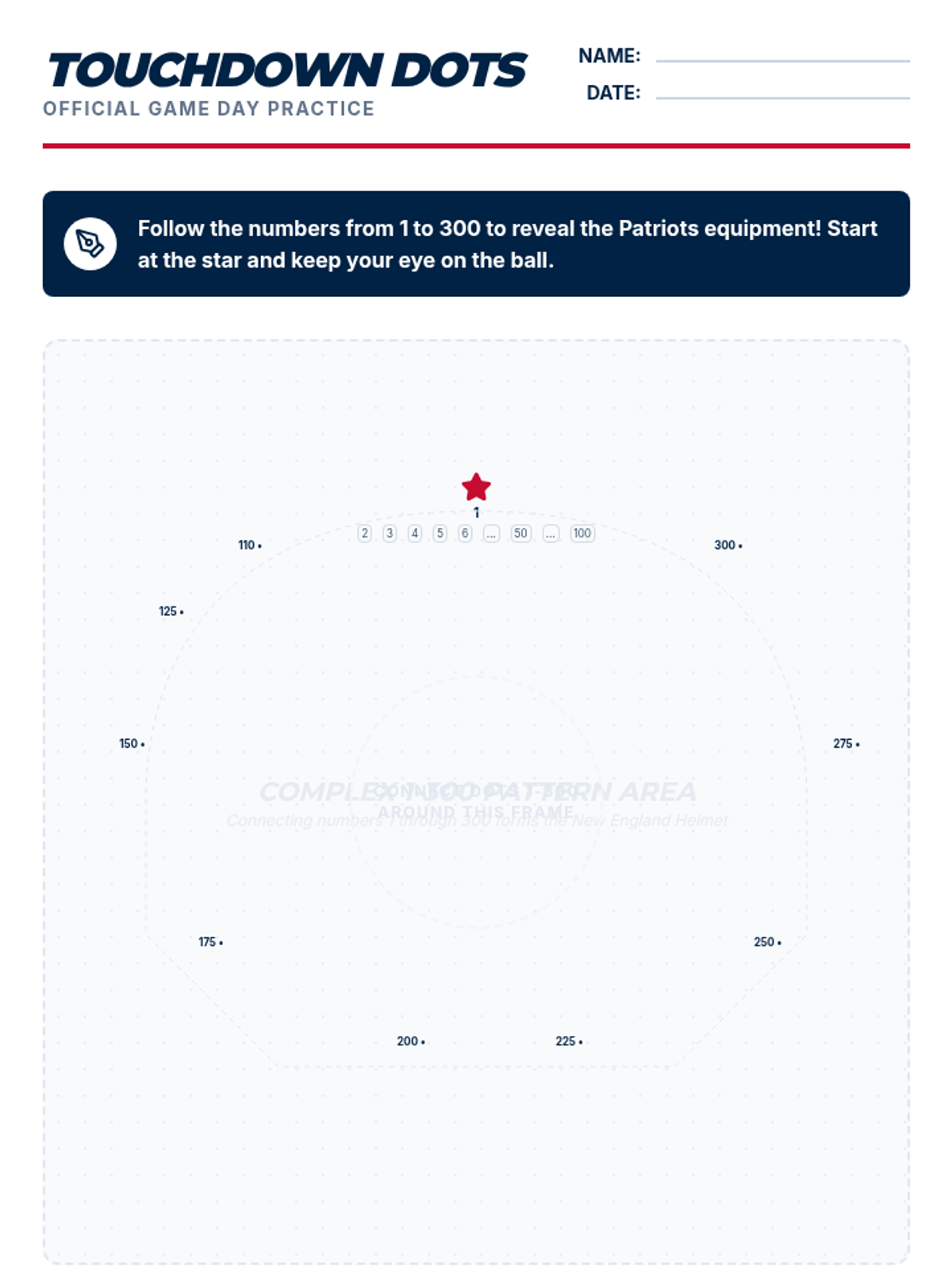
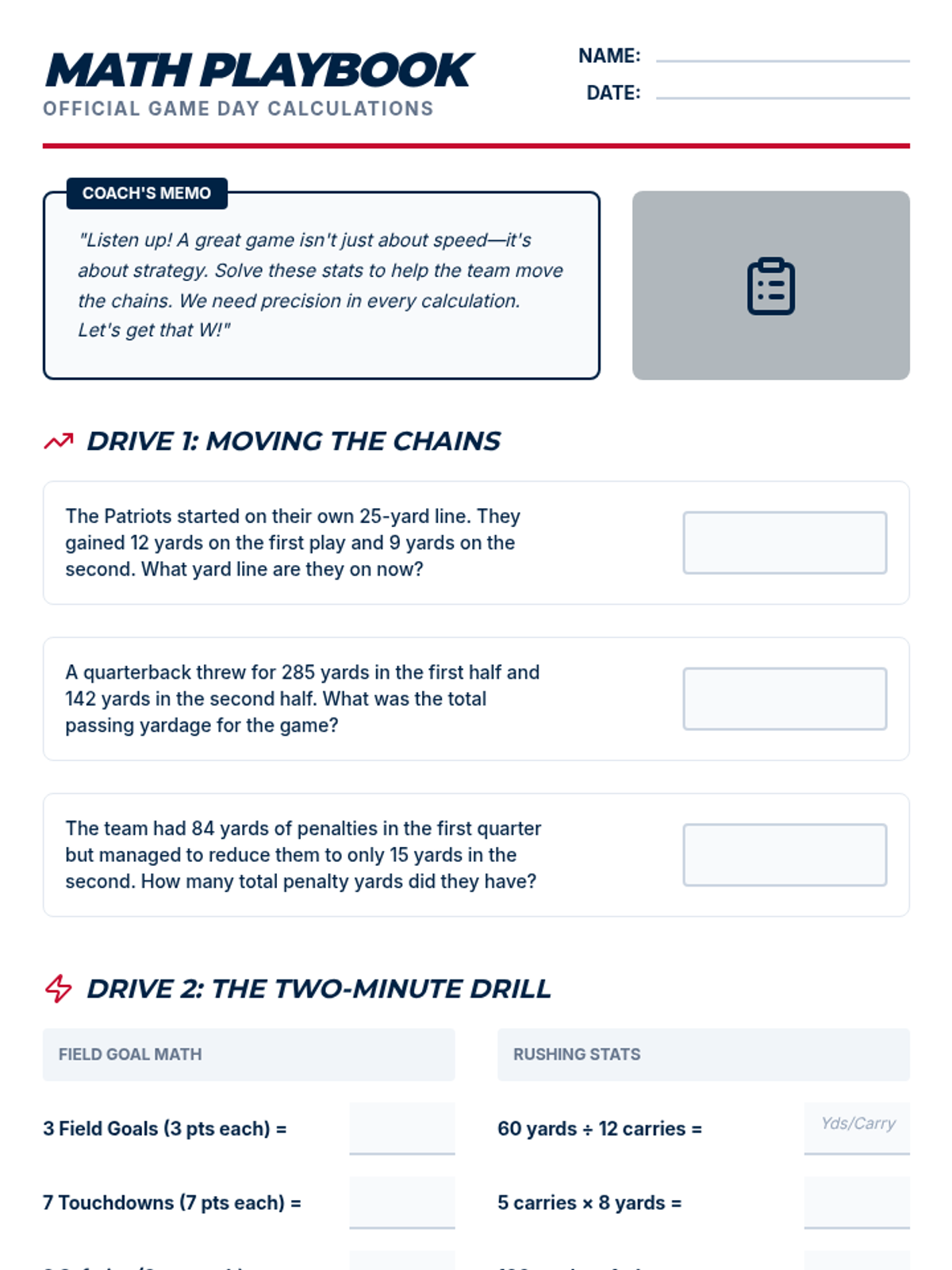
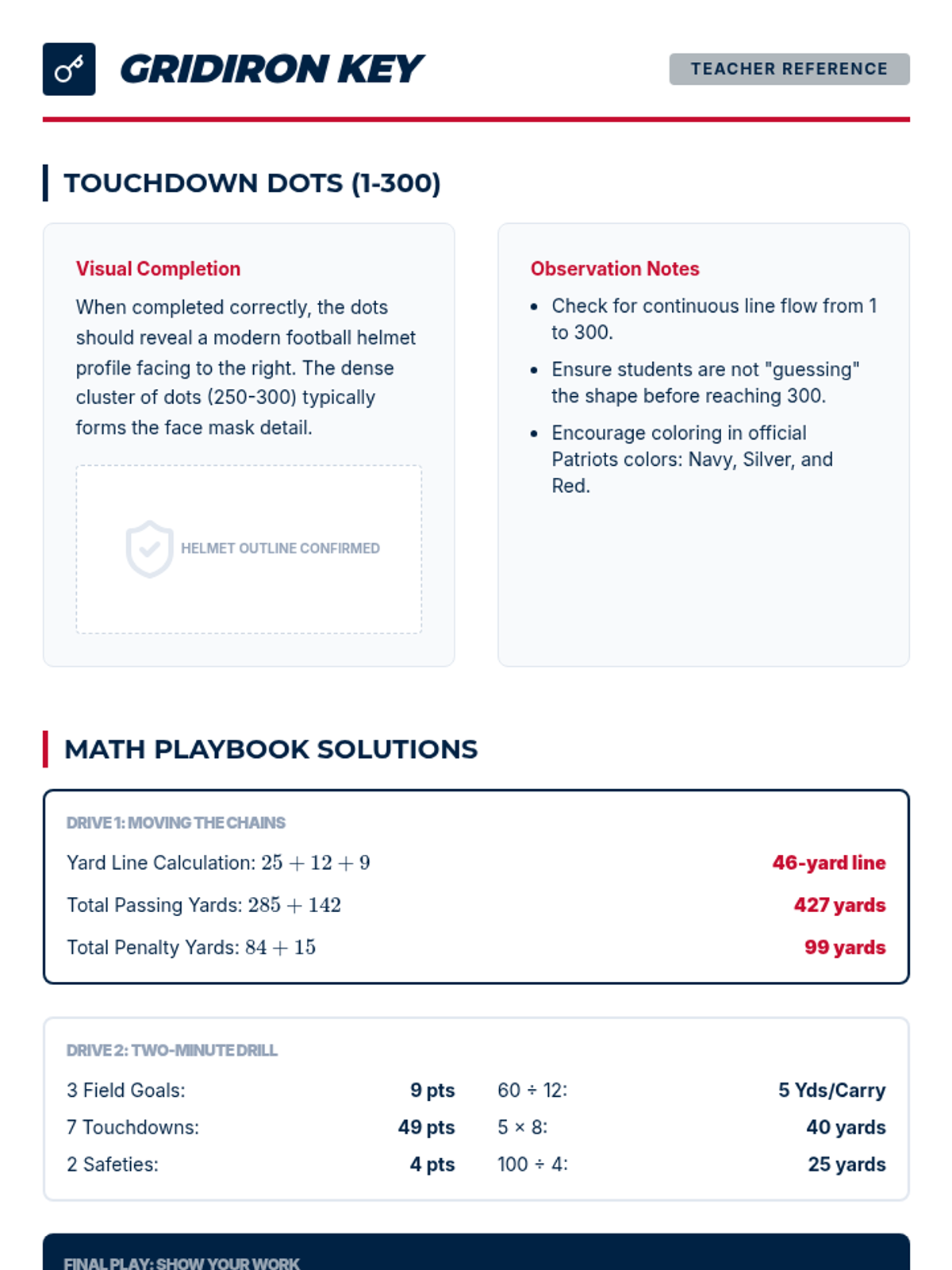
A football-themed lesson featuring a complex 1-300 dot-to-dot and a math review based on game stats and scoring.
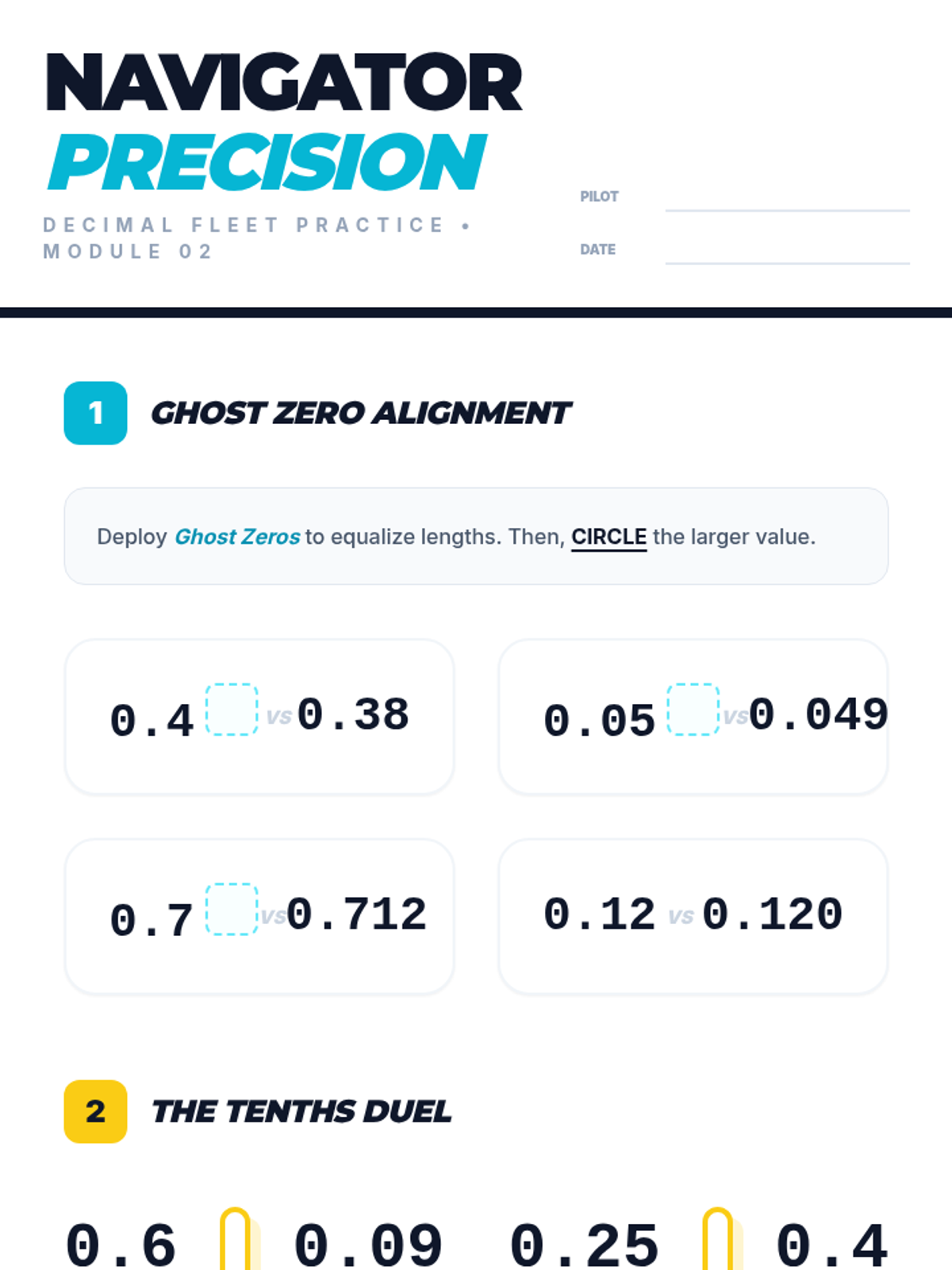
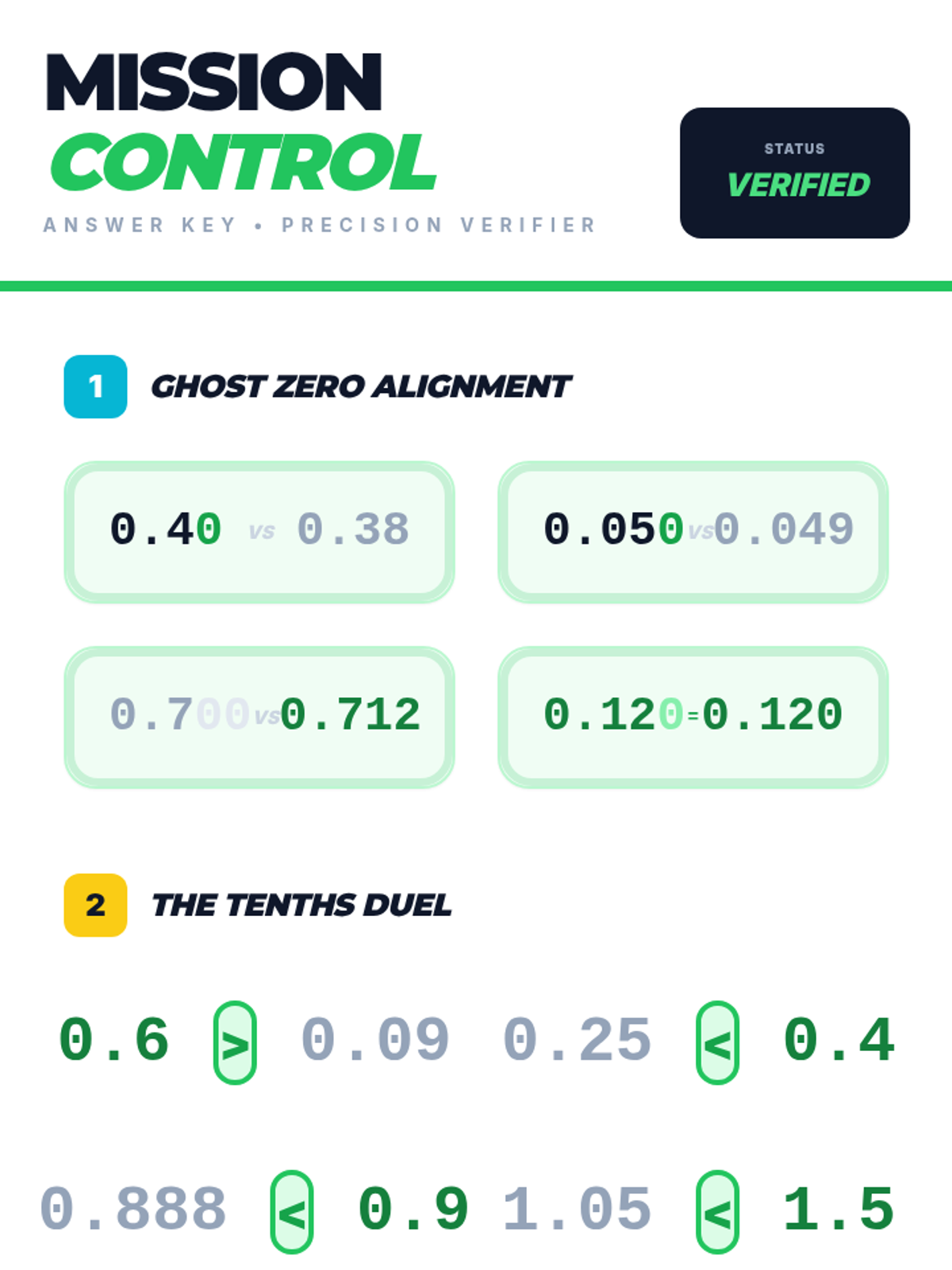
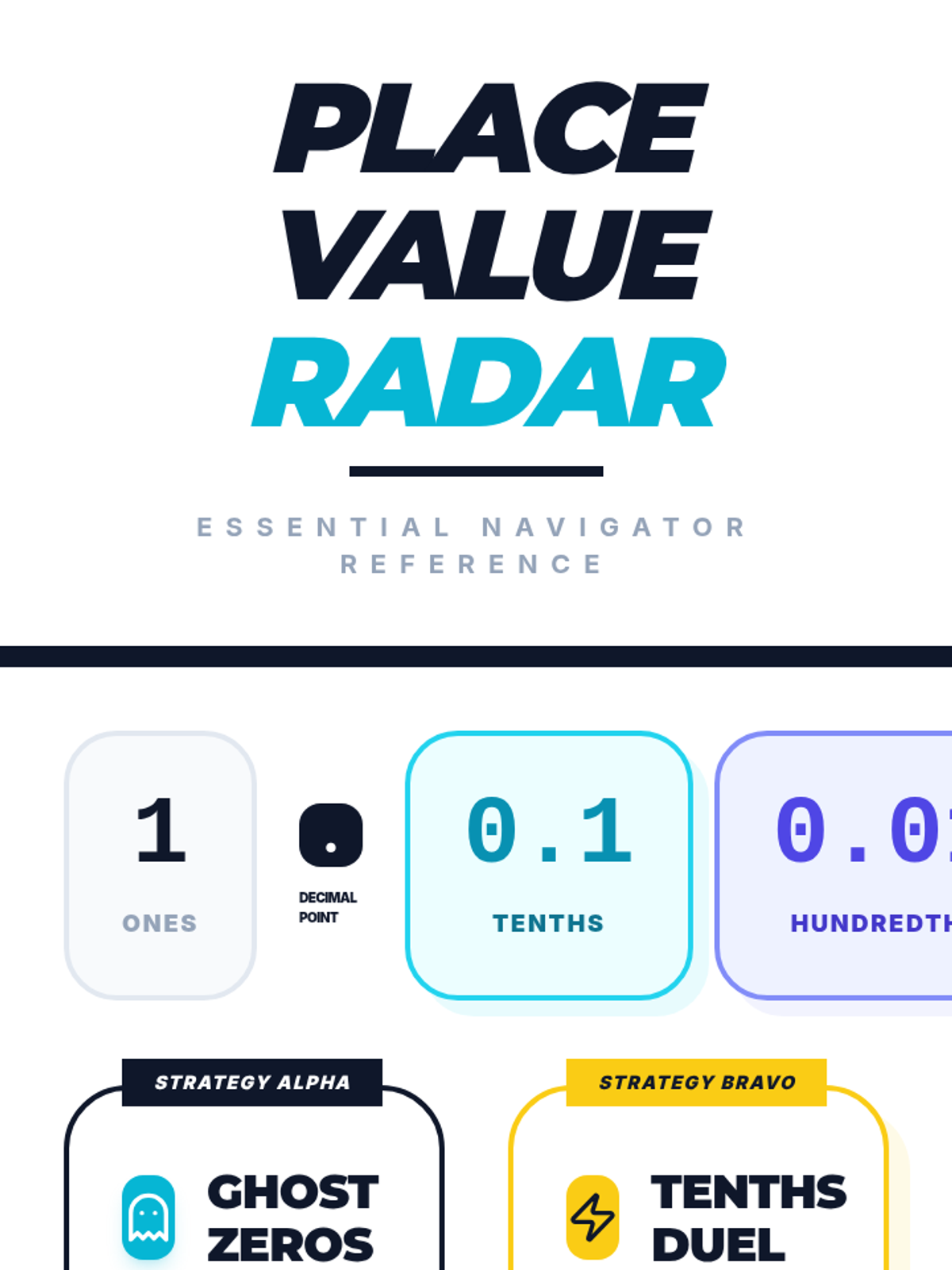
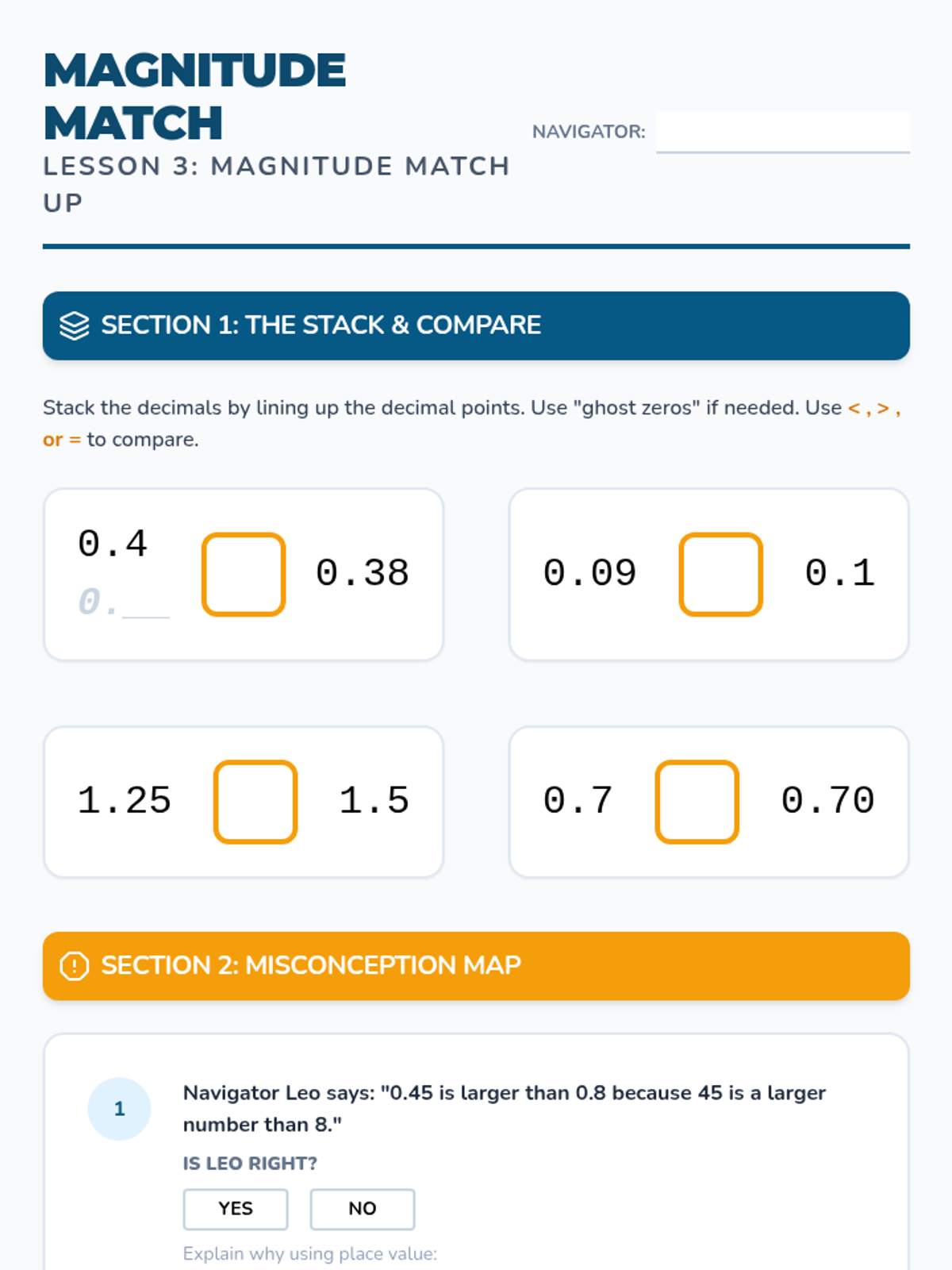
A visually-driven lesson focused on comparing and ordering decimals using the 'Ghost Zero' strategy and place value analysis within a galactic navigation theme.

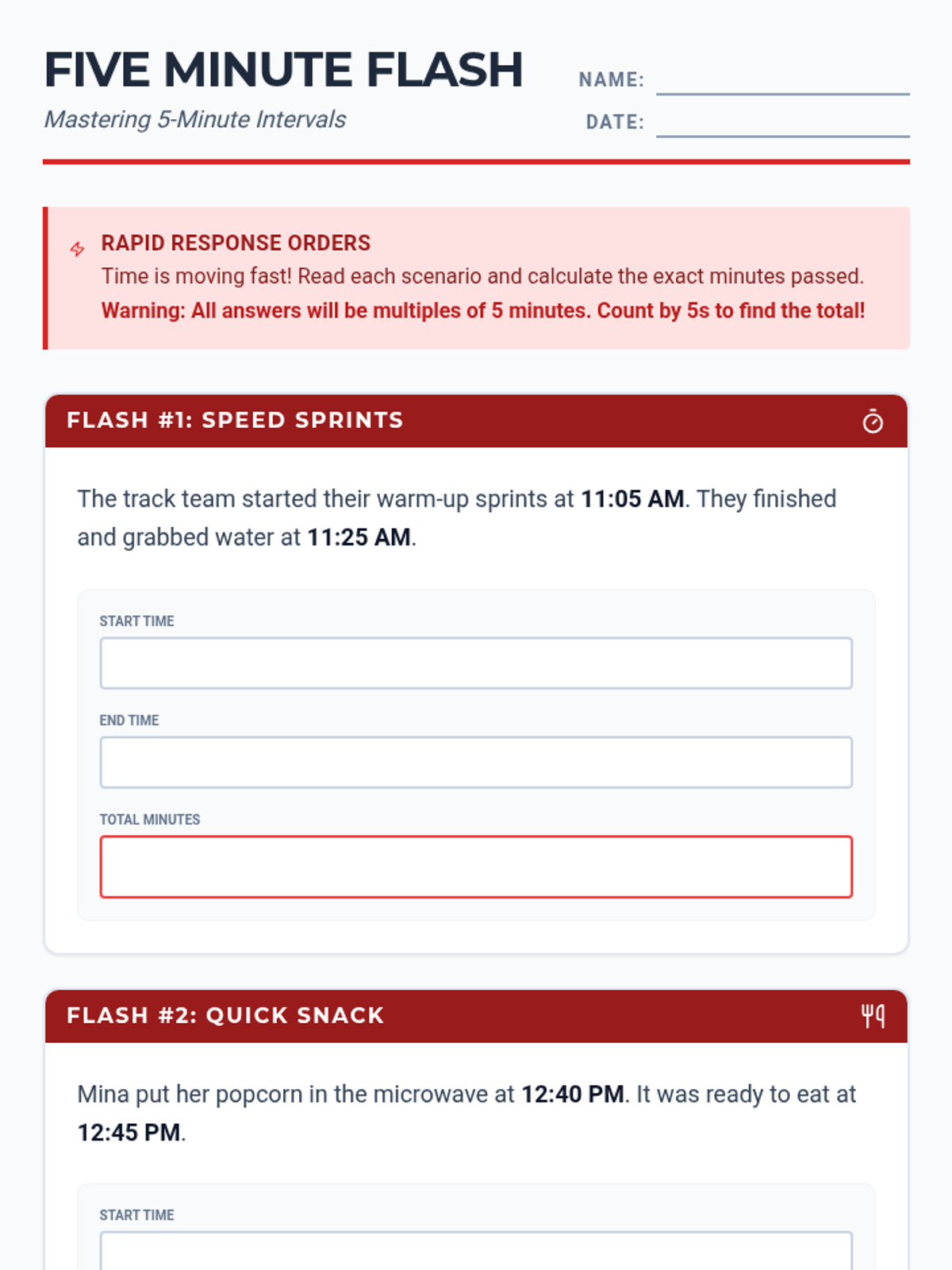
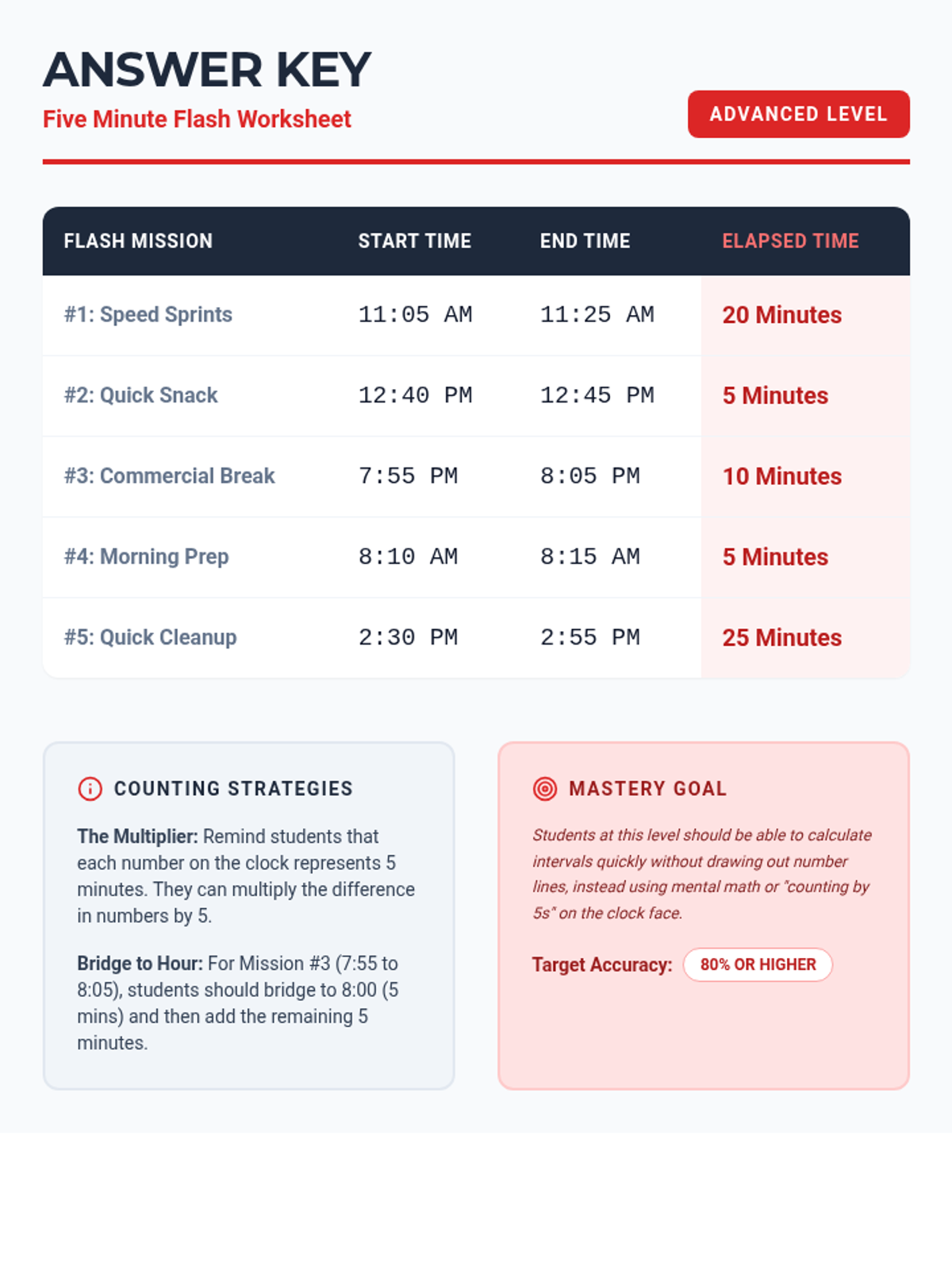
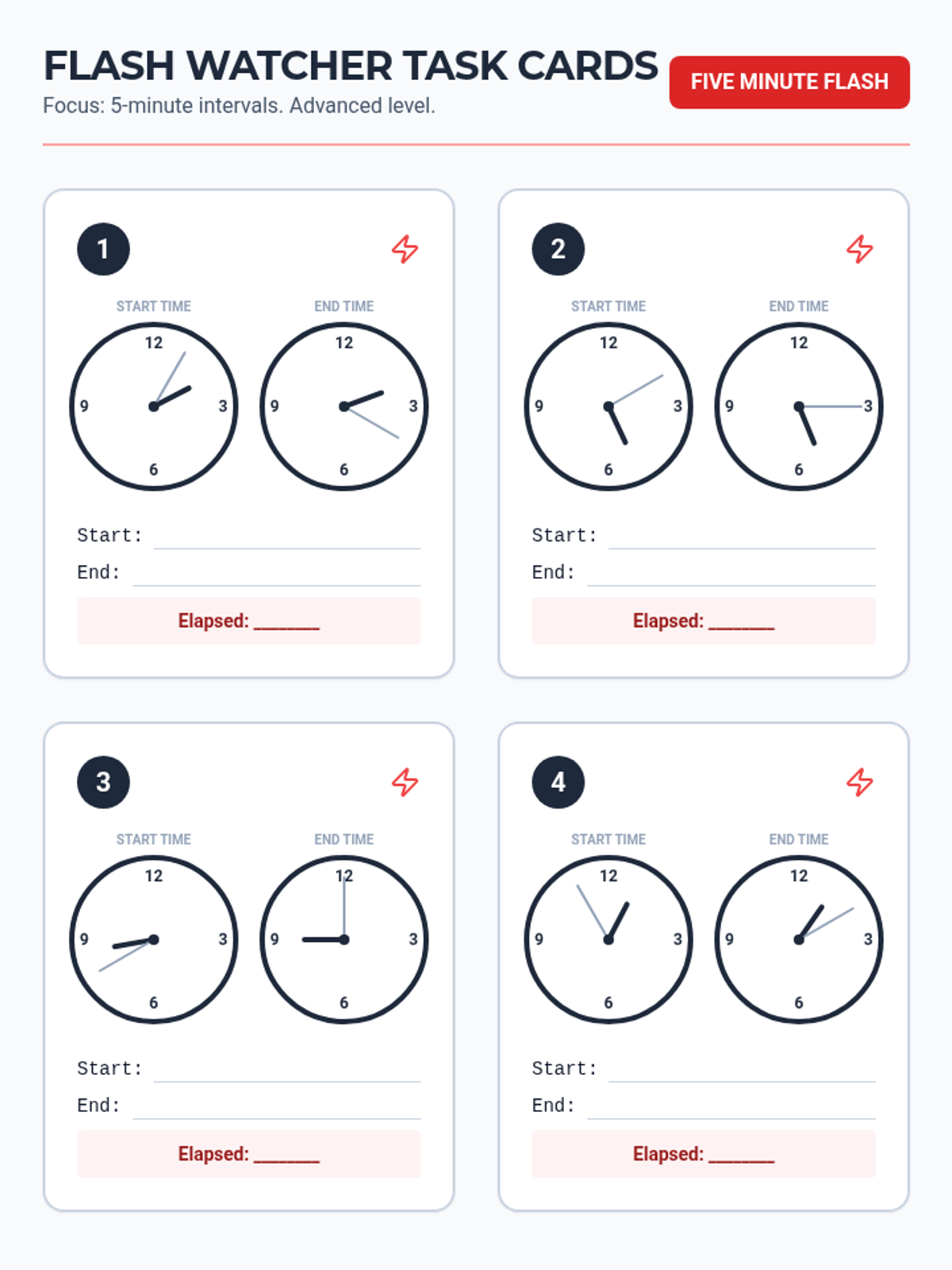
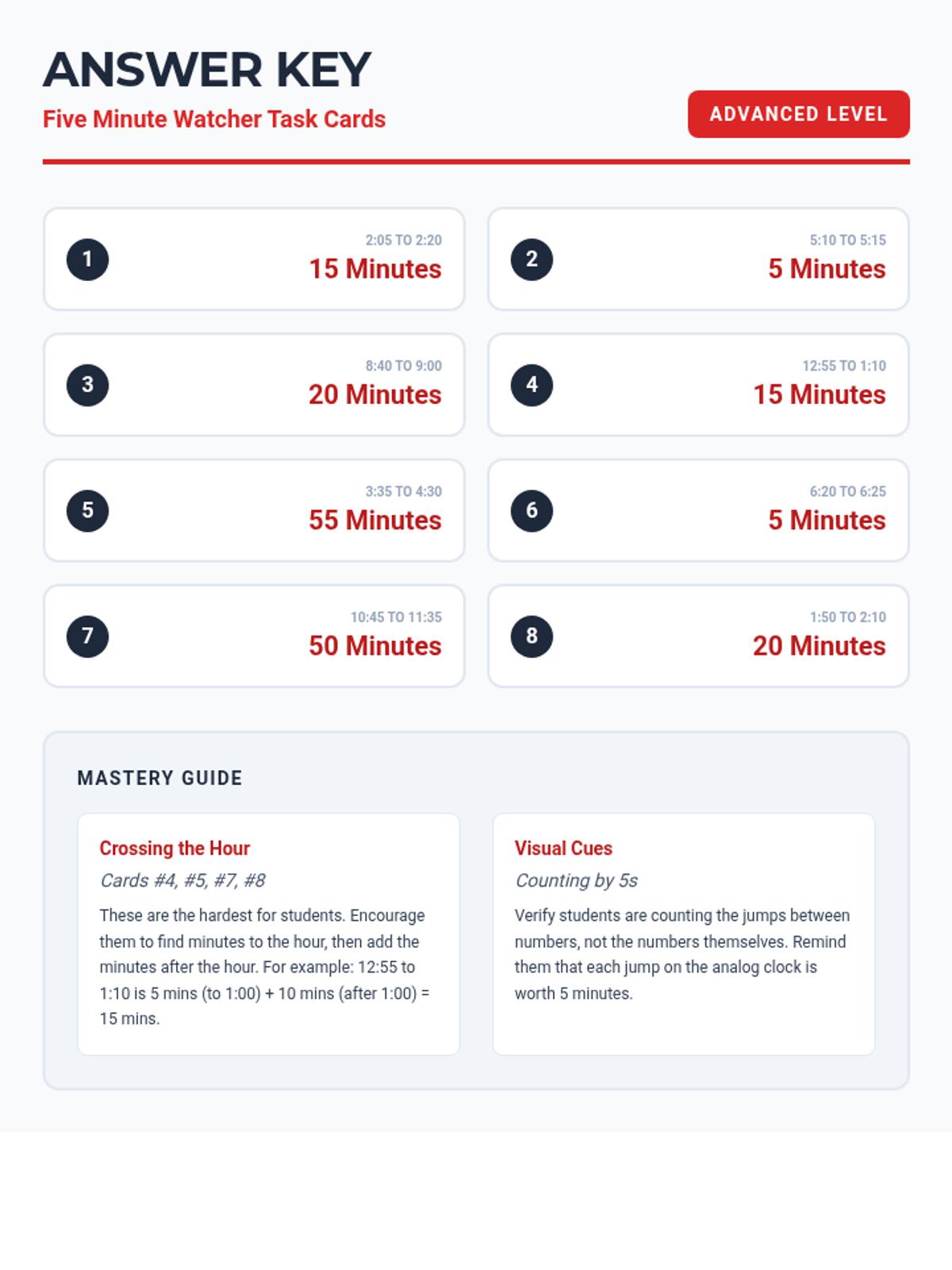
Advanced elapsed time practice focusing on five-minute intervals, providing the highest level of challenge in this unit.
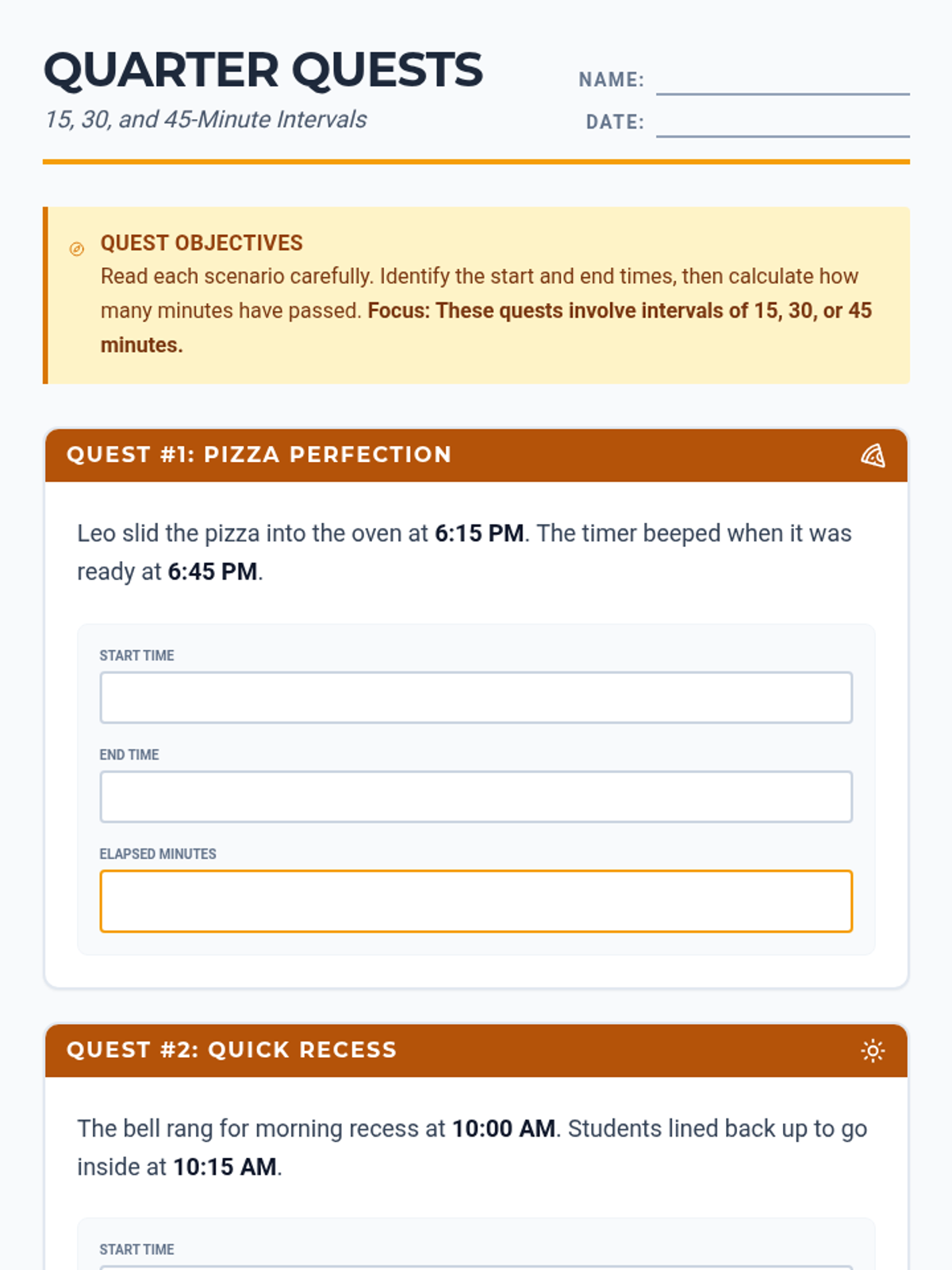
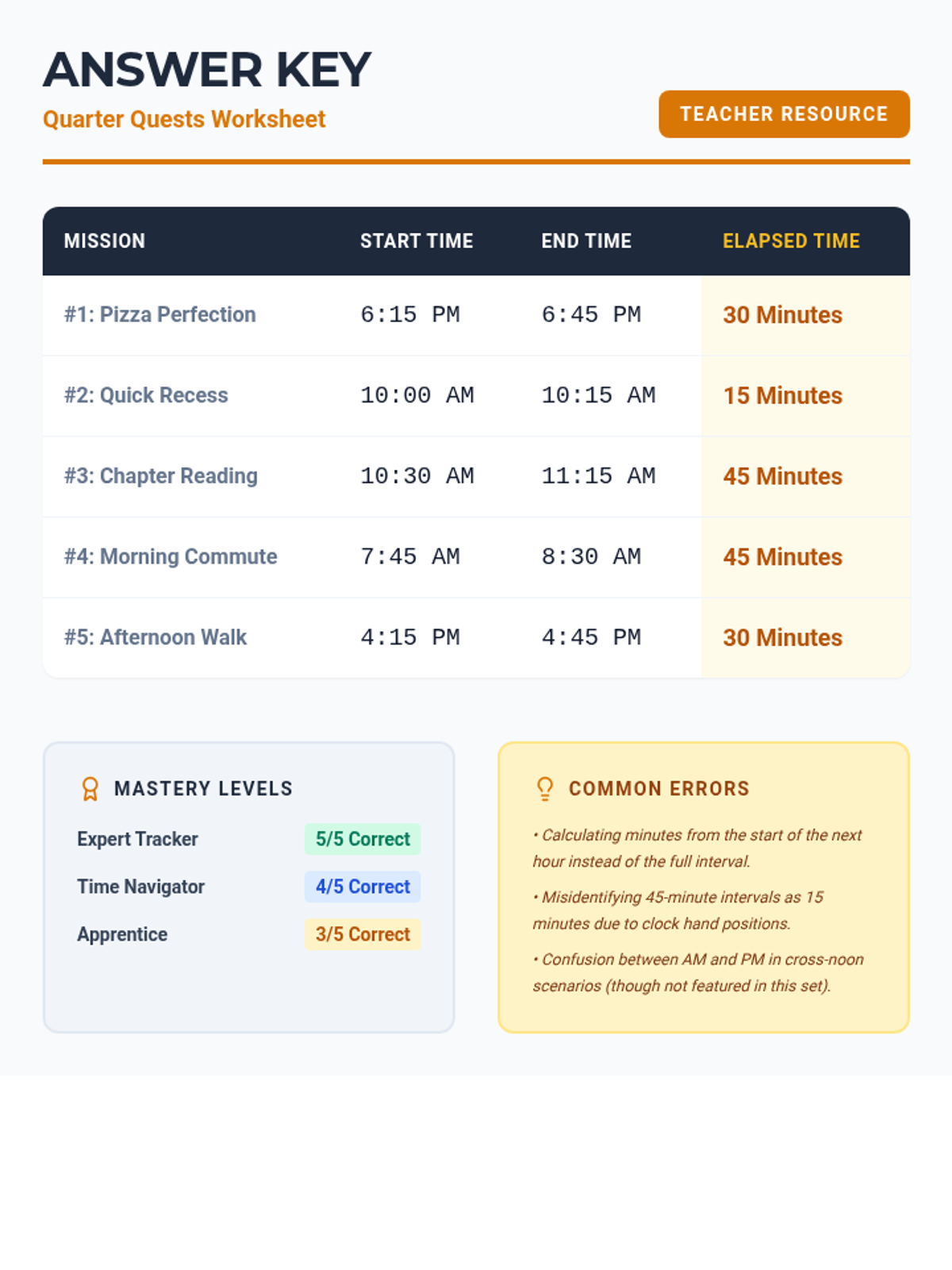
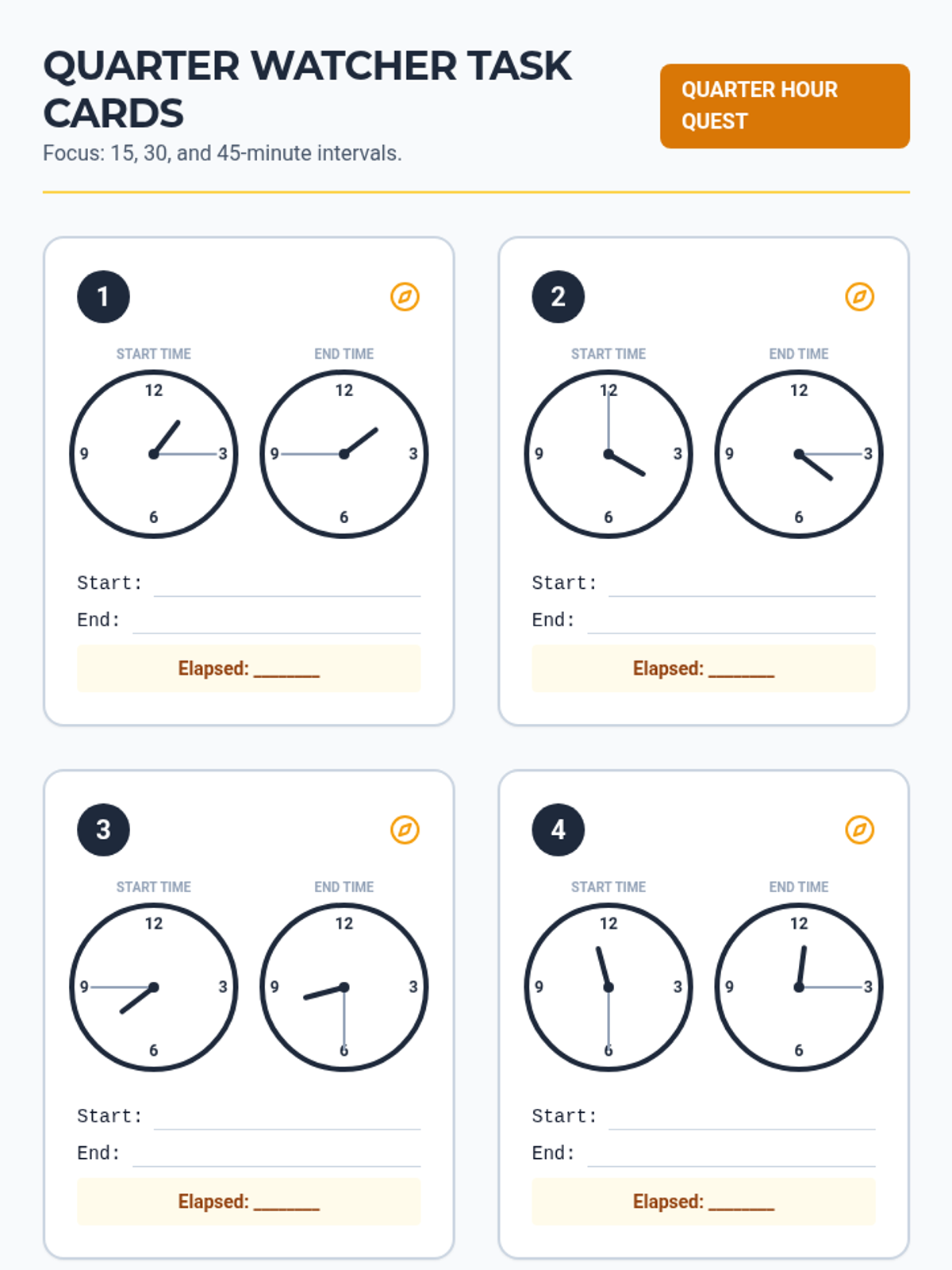
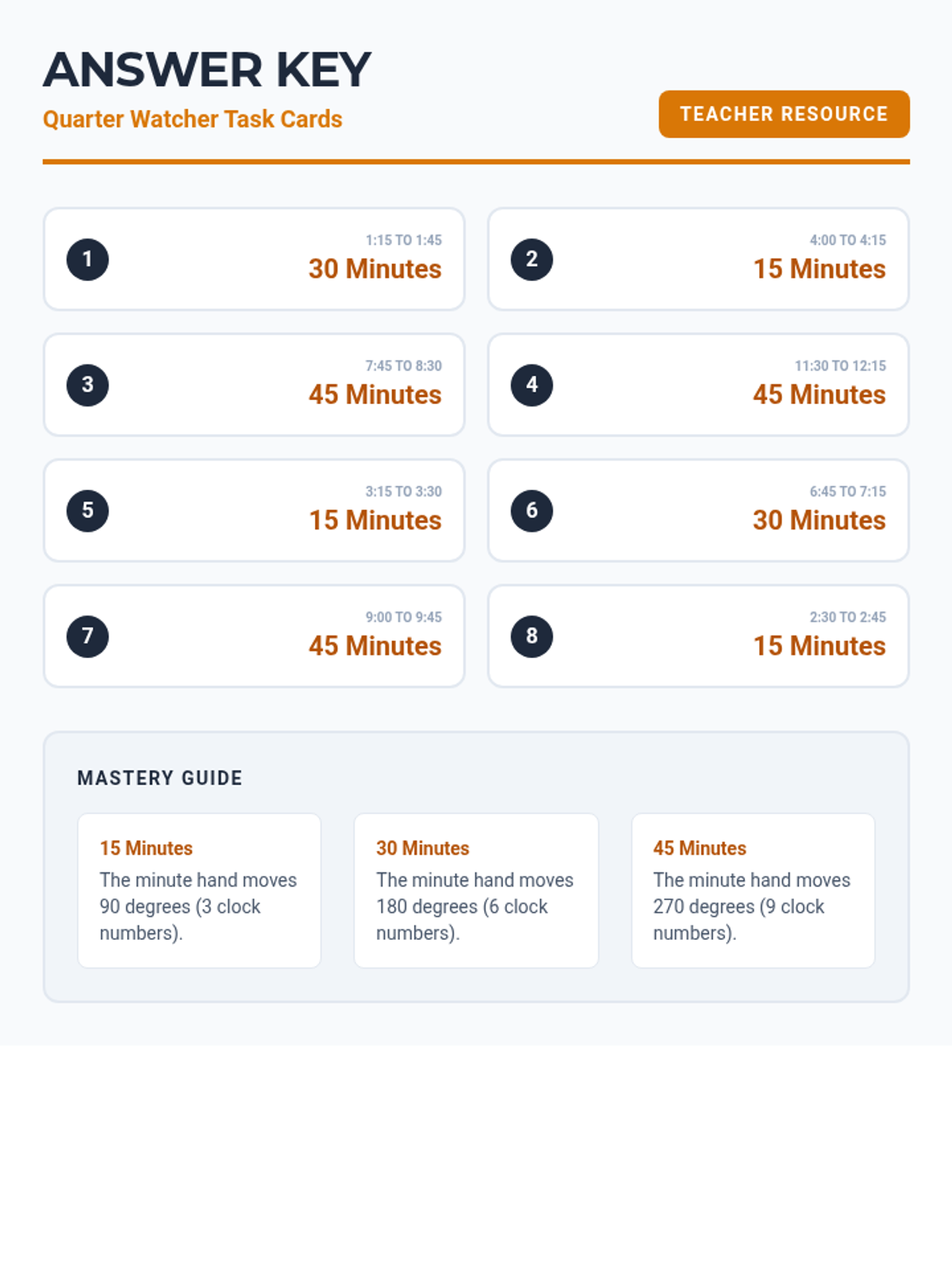
Materials for mastering elapsed time in 15, 30, and 45-minute increments using scenarios and analog clocks.
A lesson focused on mastering the US standard algorithm for subtraction using visual aids and place value organizers.
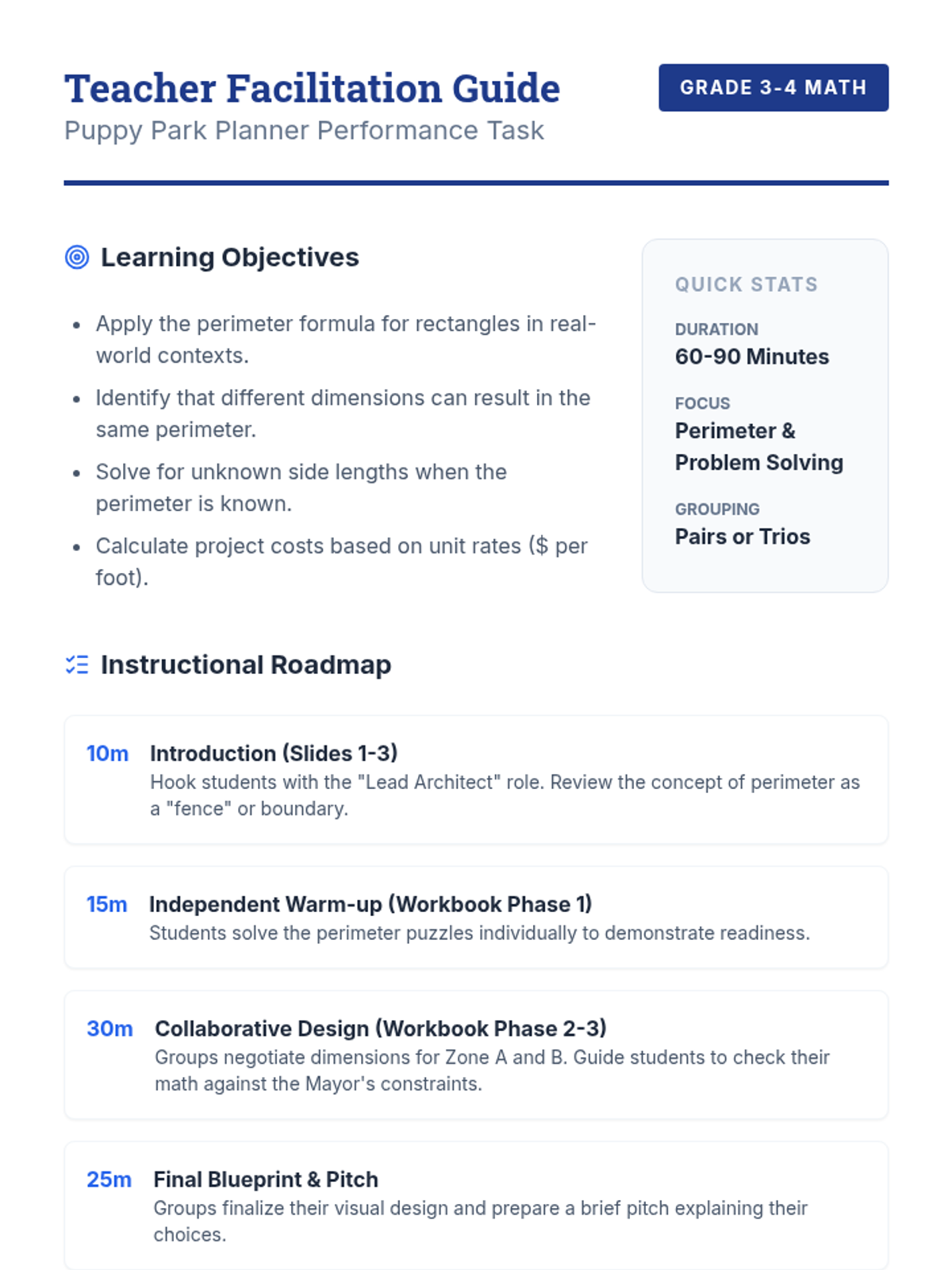
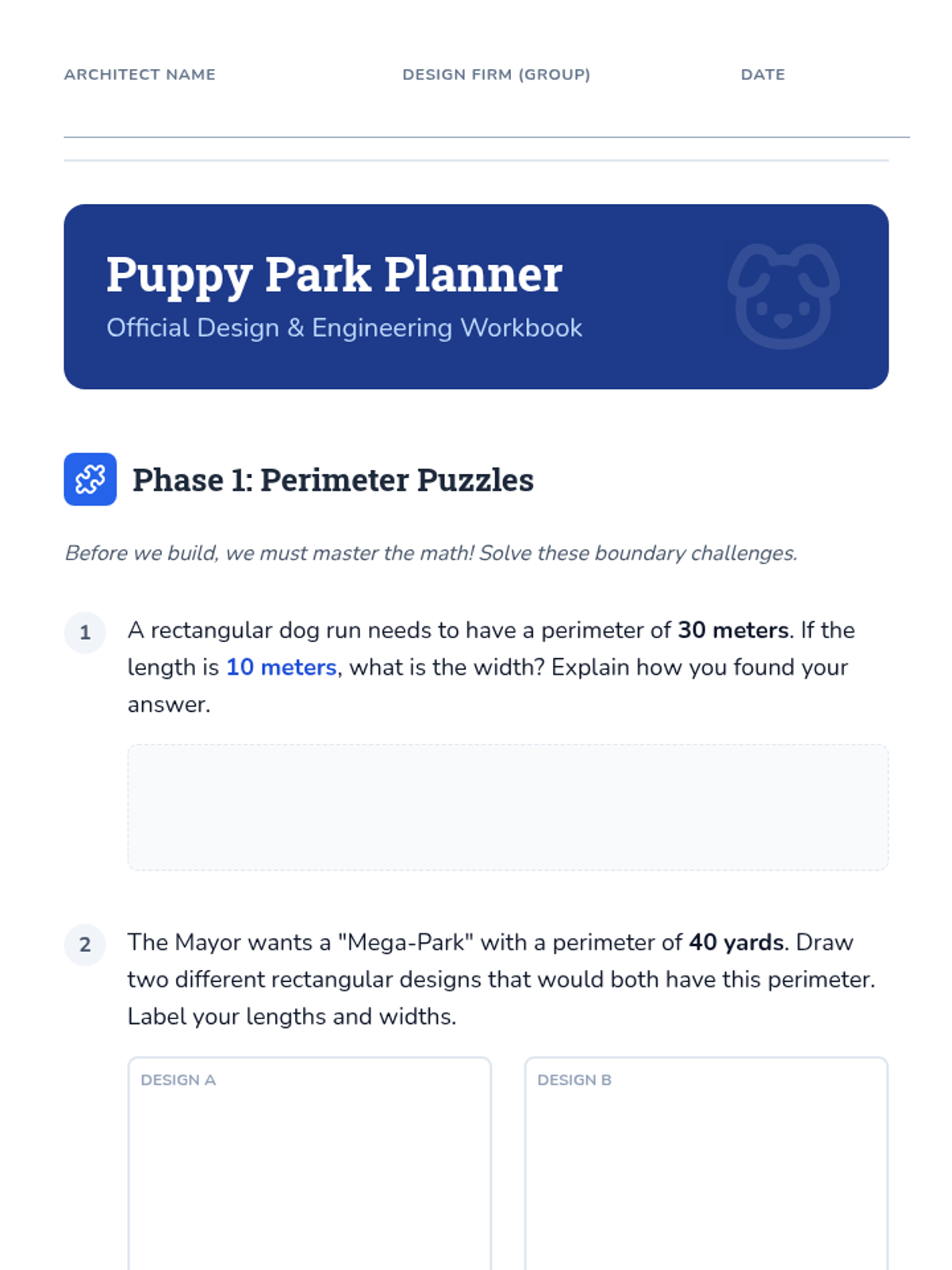
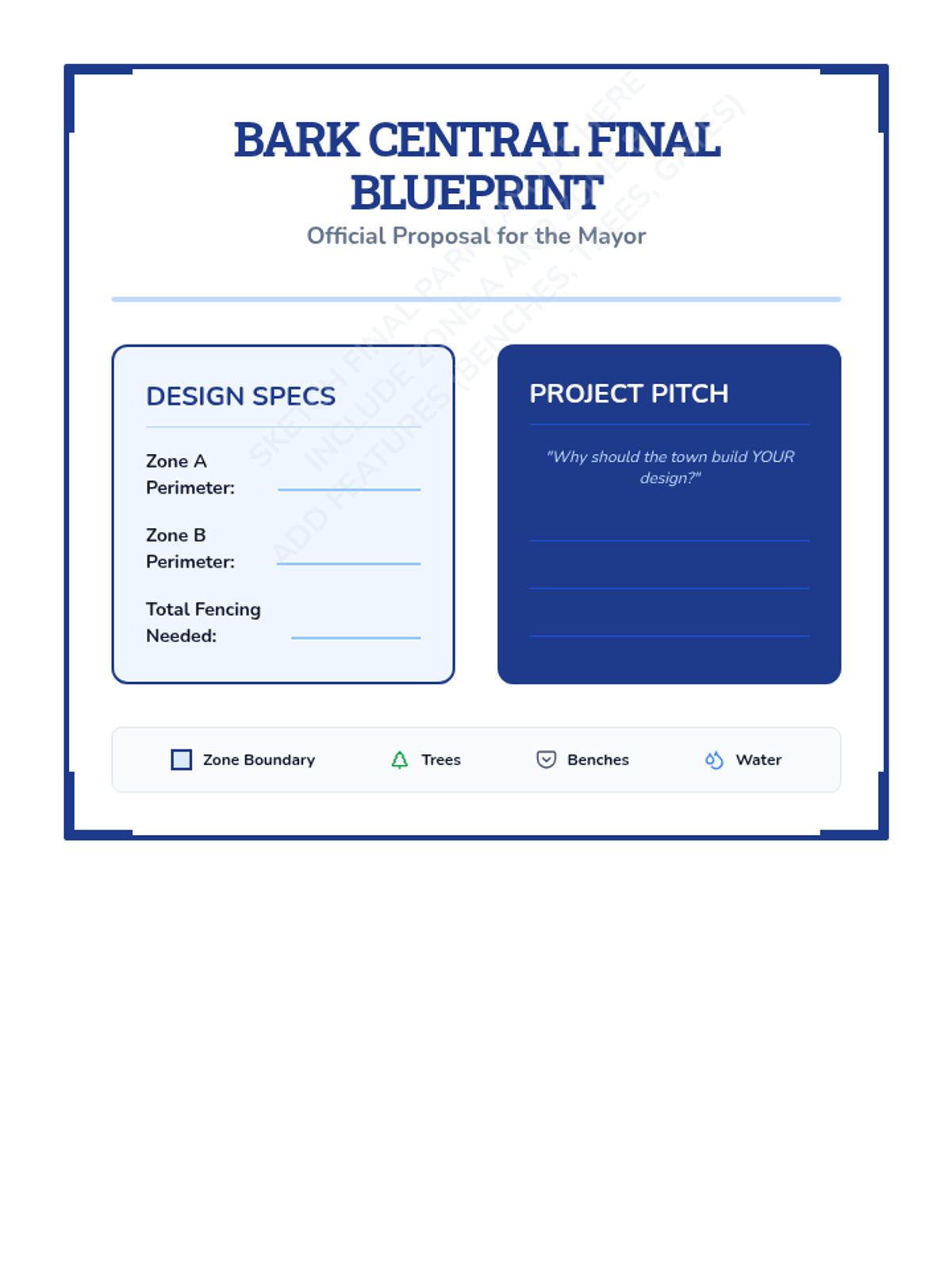
A comprehensive mathematics performance task focused on the perimeter of rectangles, where students act as architects designing a new community puppy park. The lesson includes a presentation, a student workbook with collaborative and real-world components, and a final project guide.
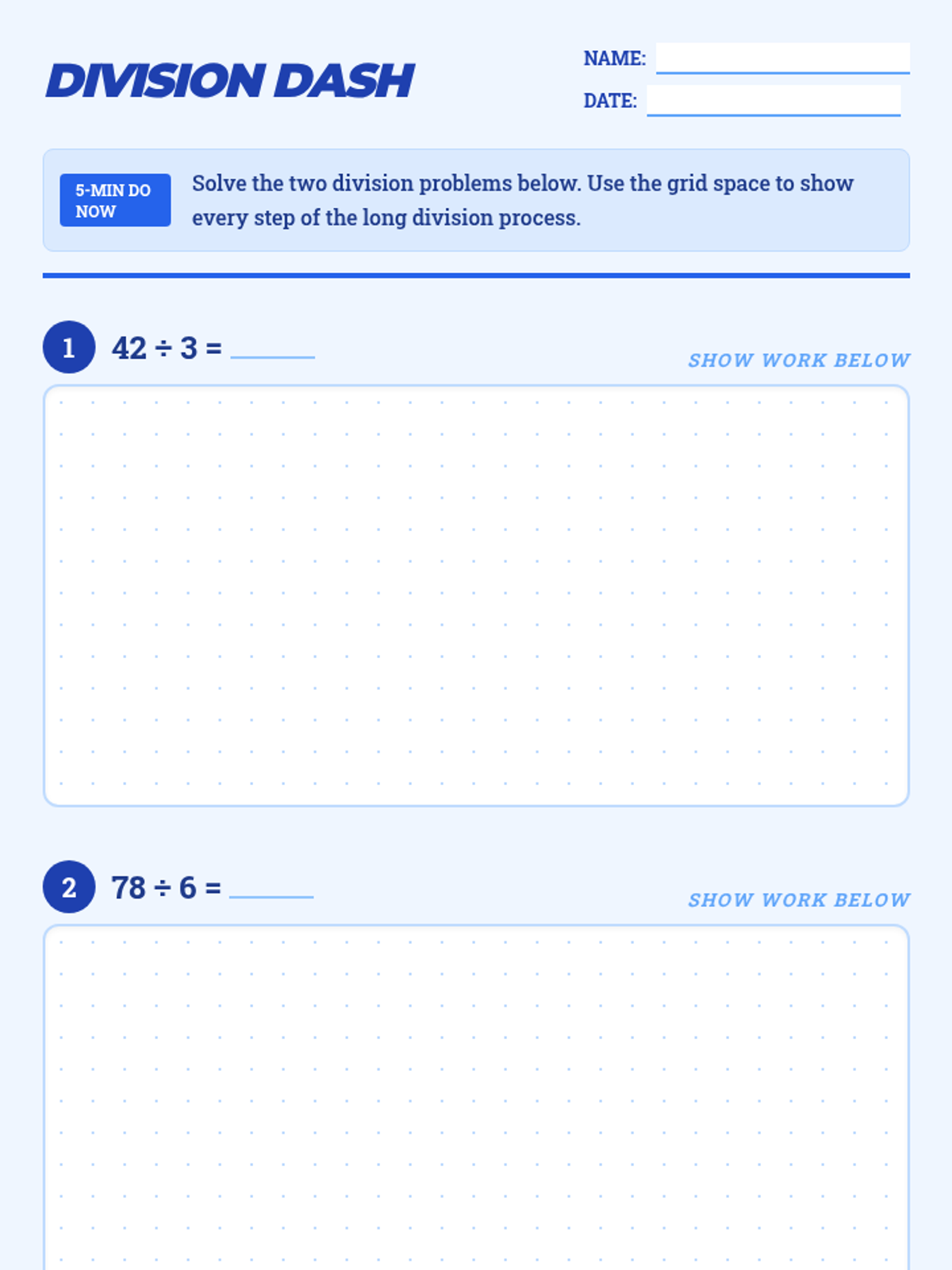
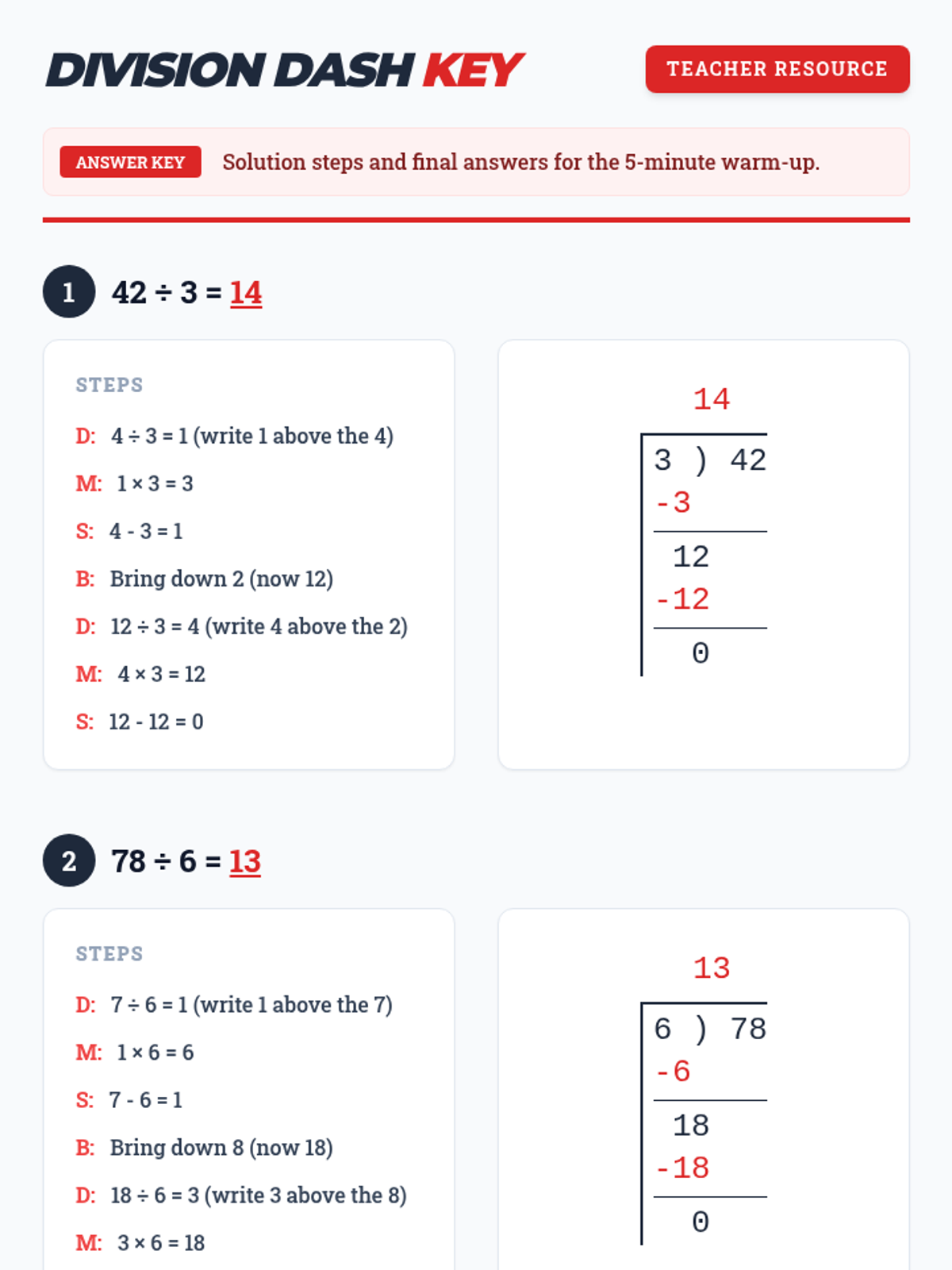
A quick 5-minute warm-up focusing on long division with single-digit divisors and two-digit dividends resulting in whole numbers.
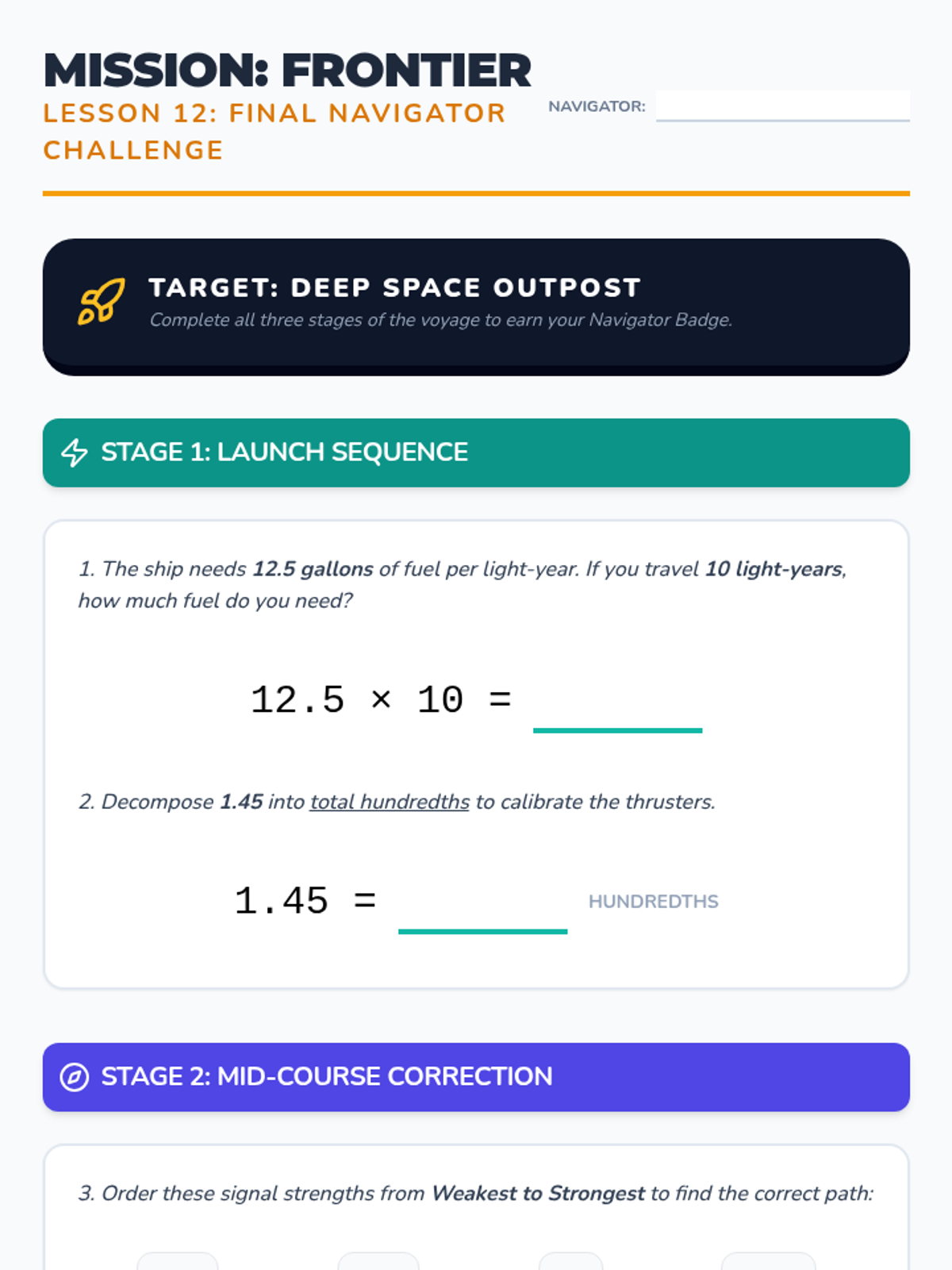
A culminating session where students apply flexible thinking to solve multi-step 'Navigator' challenges.
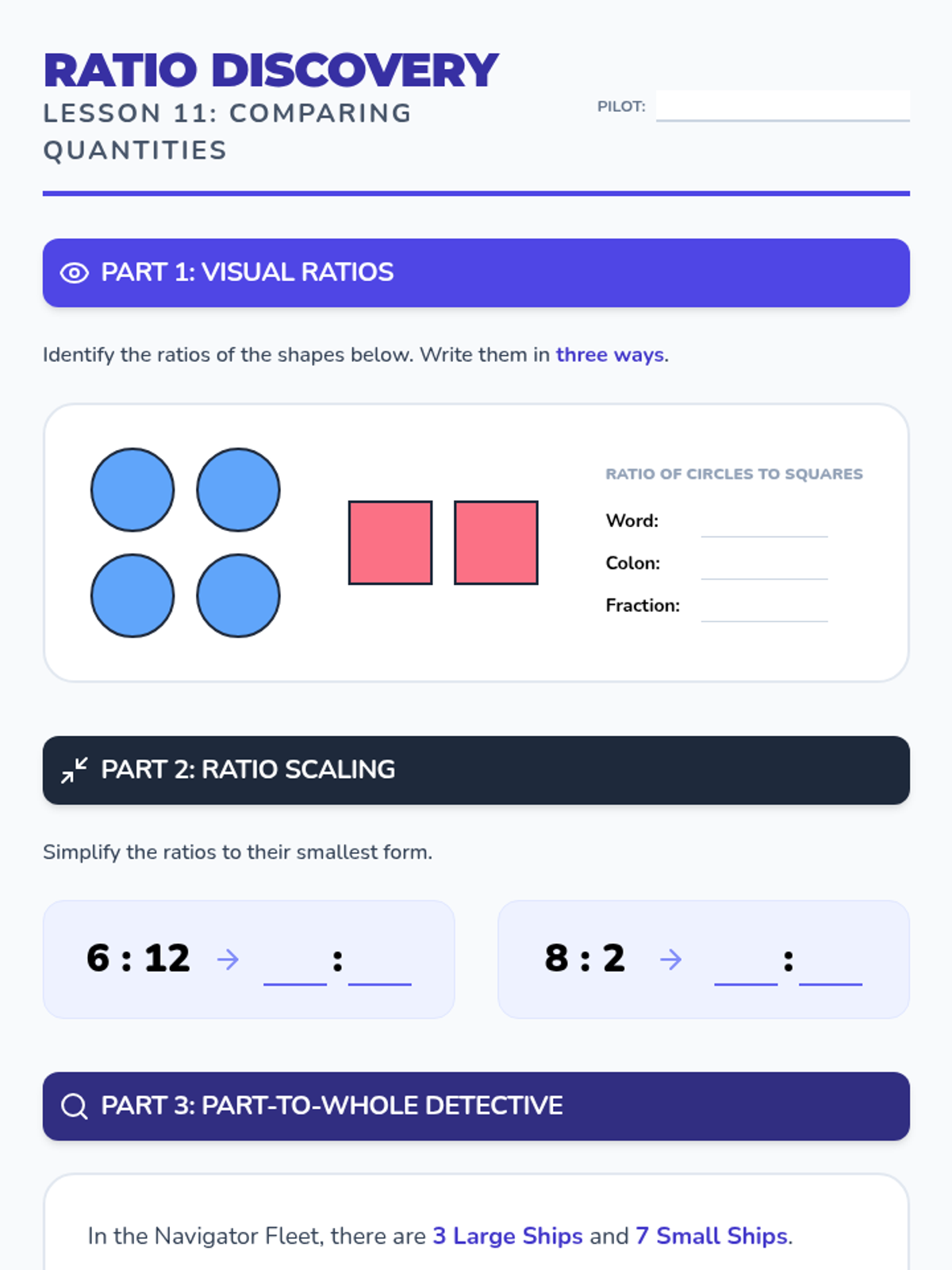
Introduce the concept of ratios as a comparison of two quantities, built on fractional foundations.
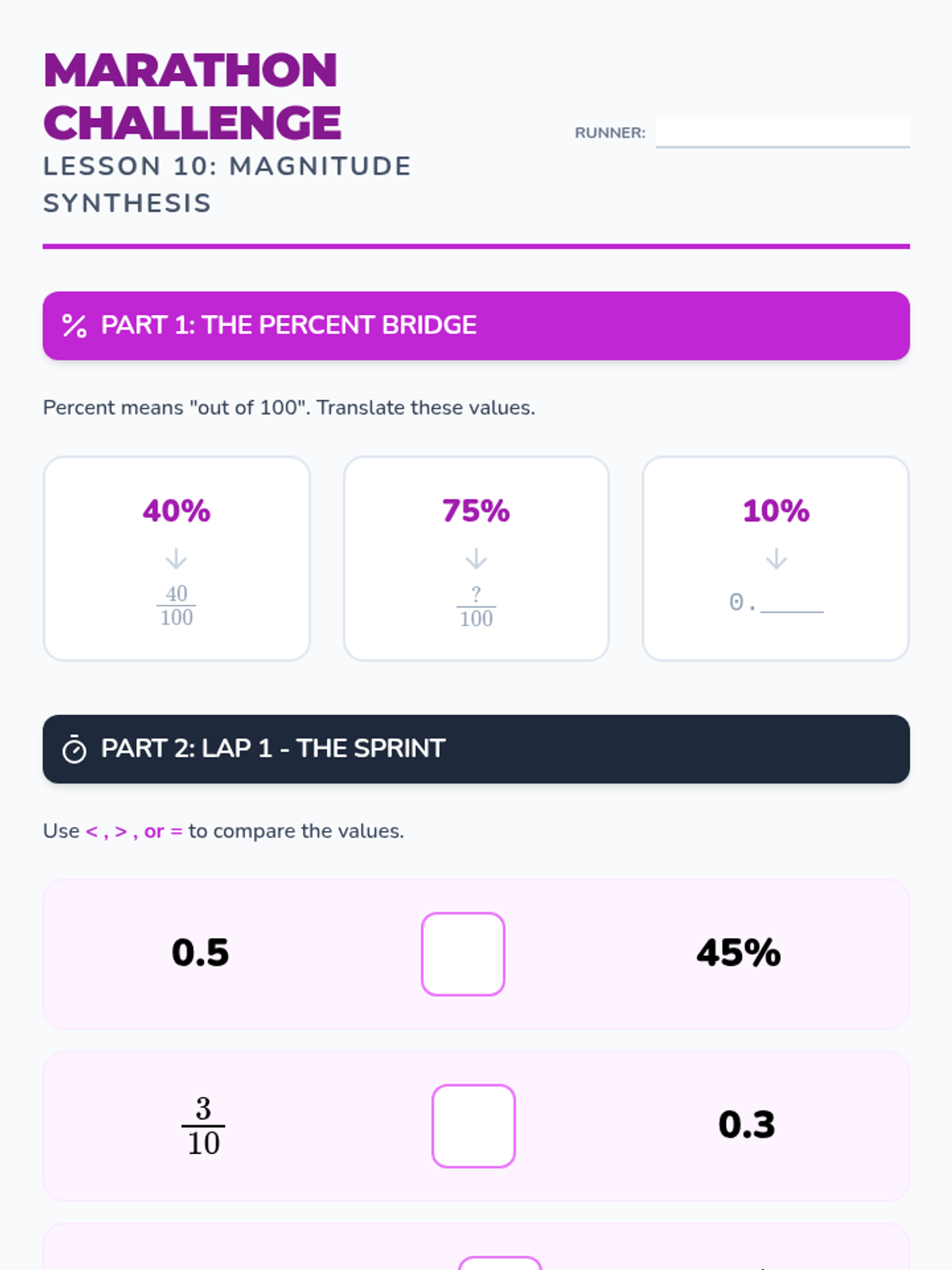
Synthesize understanding by comparing fractions, decimals, and percents in real-world contexts.
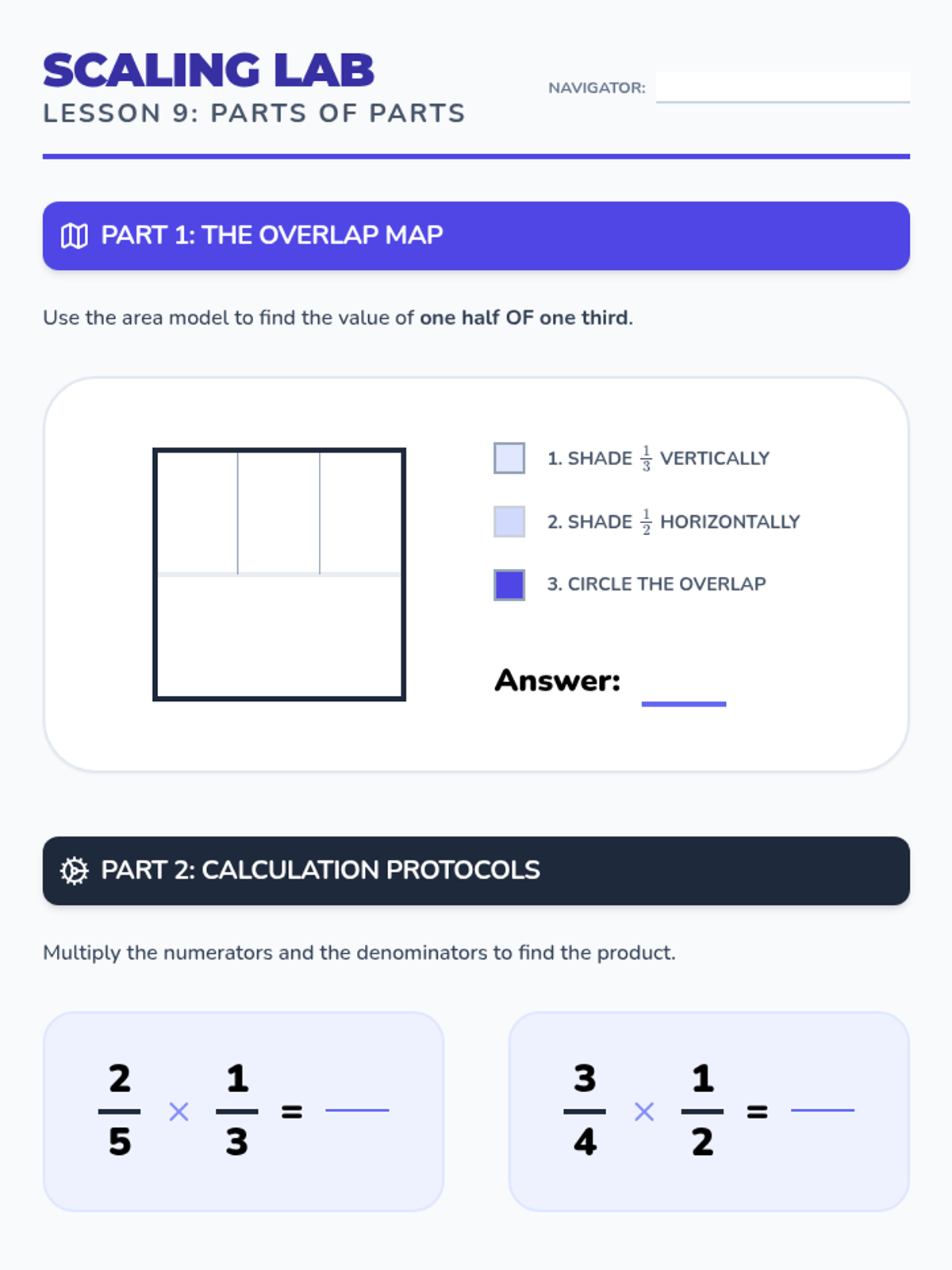
Understand fraction multiplication as 'taking a part of a part' through visual area models.
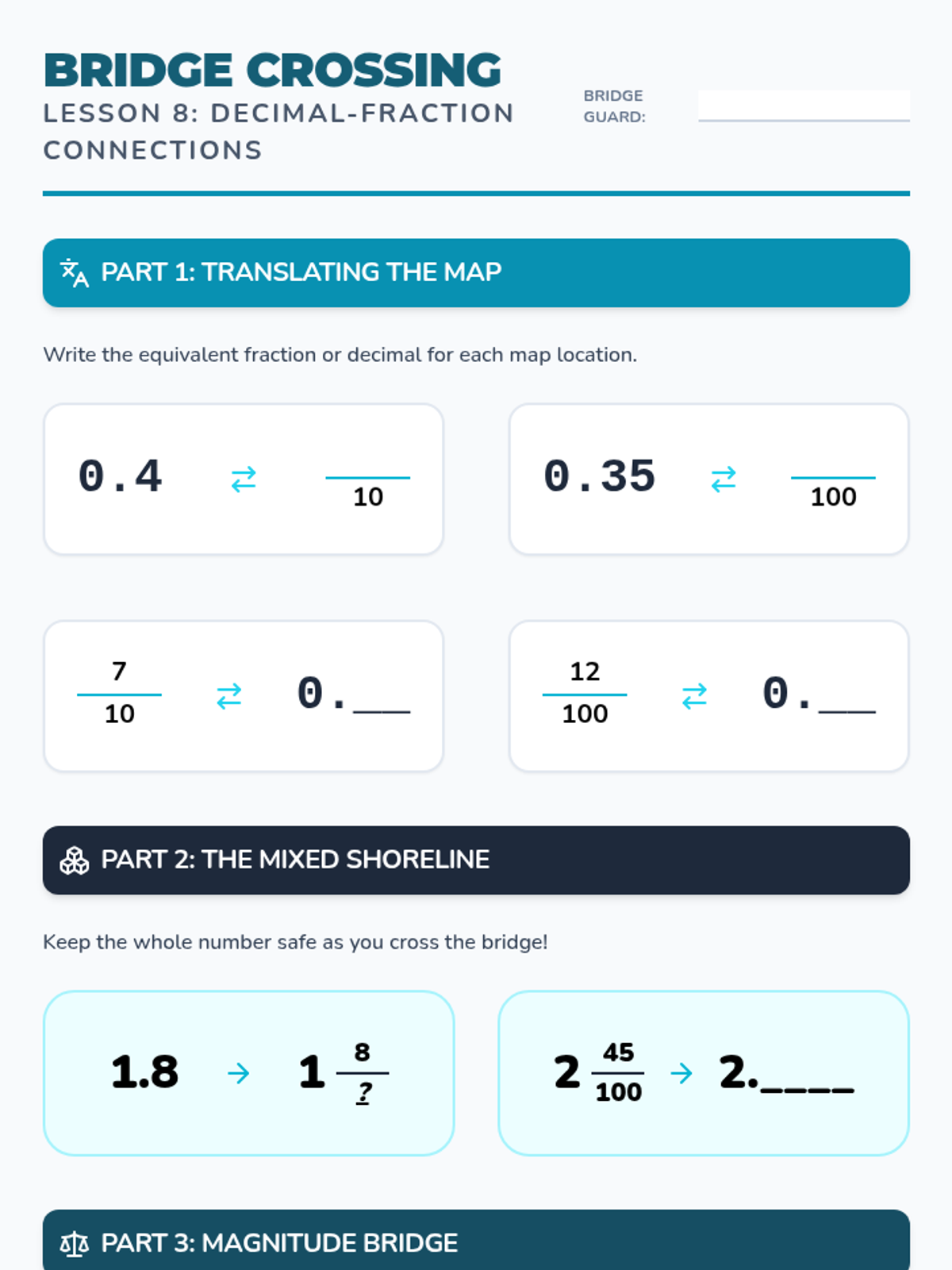
Bridge the gap between fractions and decimals by exploring 'Power of 10' denominators (1/10, 1/100).
Use benchmark fractions and visual models to add and subtract fractions with unlike denominators.
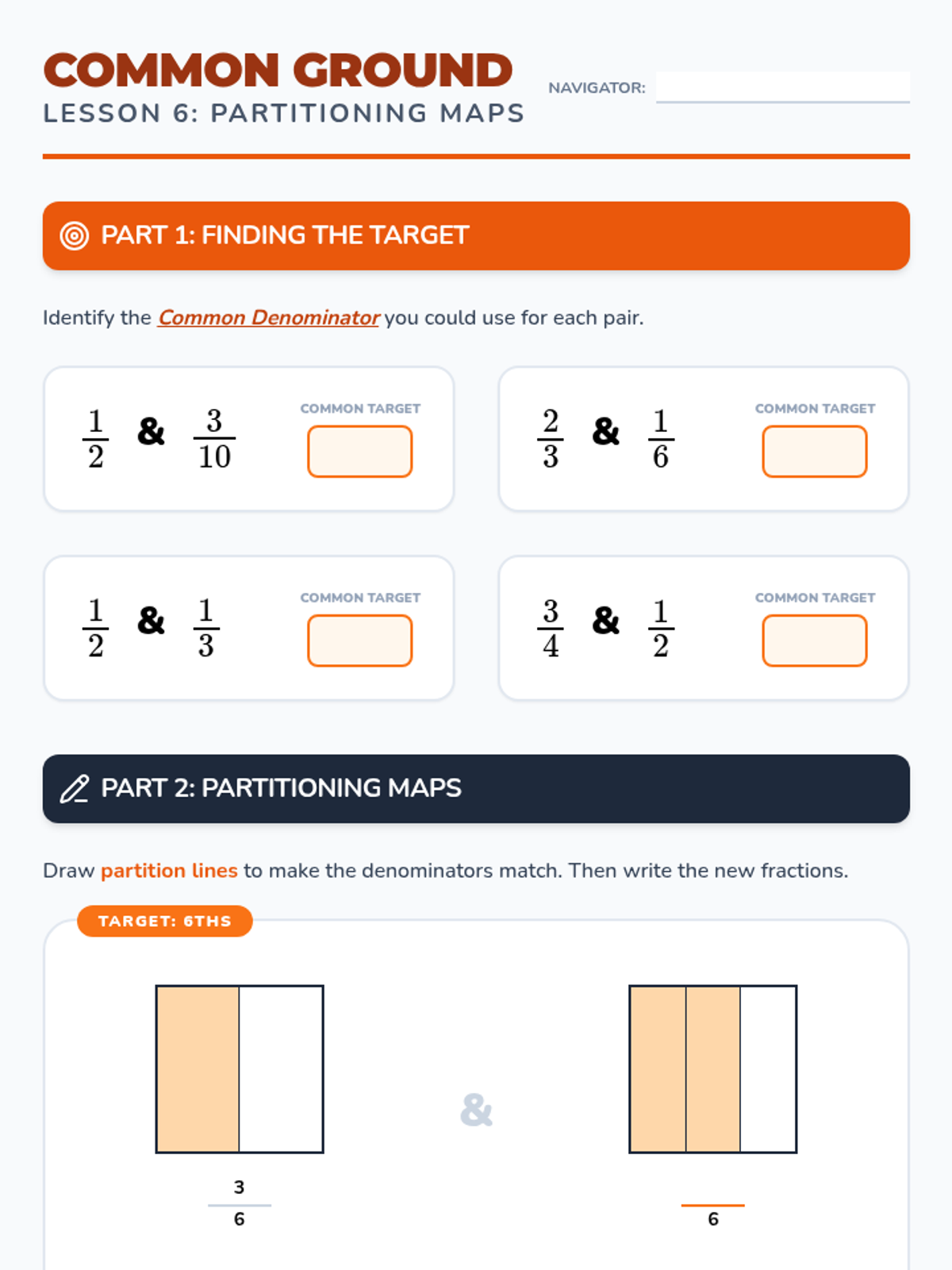
Learn to find common denominators by 'partitioning' visual models, moving from concrete to abstract.
Revisit fractional equivalence using visual area models and number lines to ensure a deep conceptual understanding.
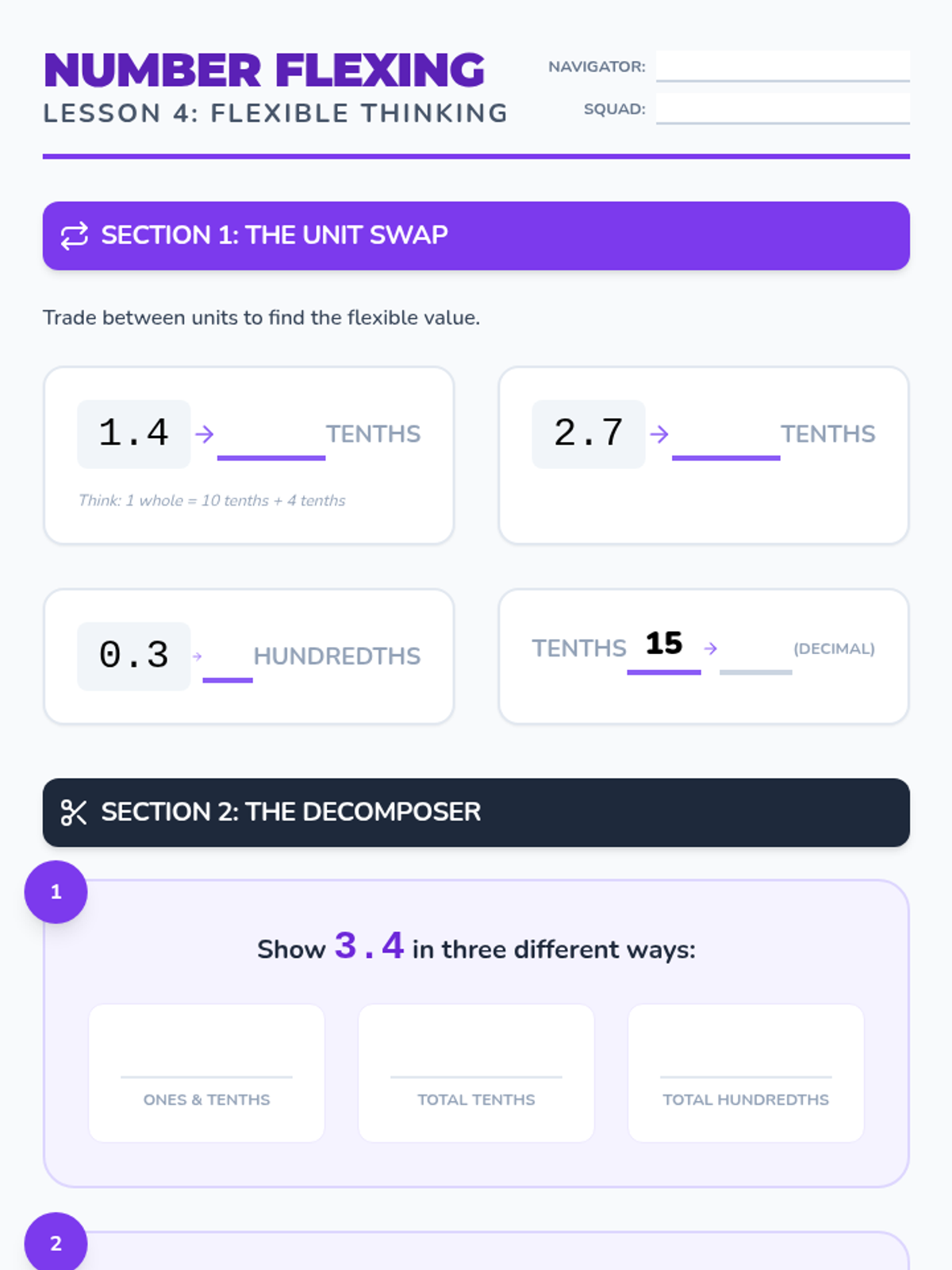
Practice flexible decomposition of numbers (e.g., 1.5 is 15 tenths) to build mental math agility.
Develop strategies for comparing and ordering decimals by analyzing place value rather than just 'number length.'
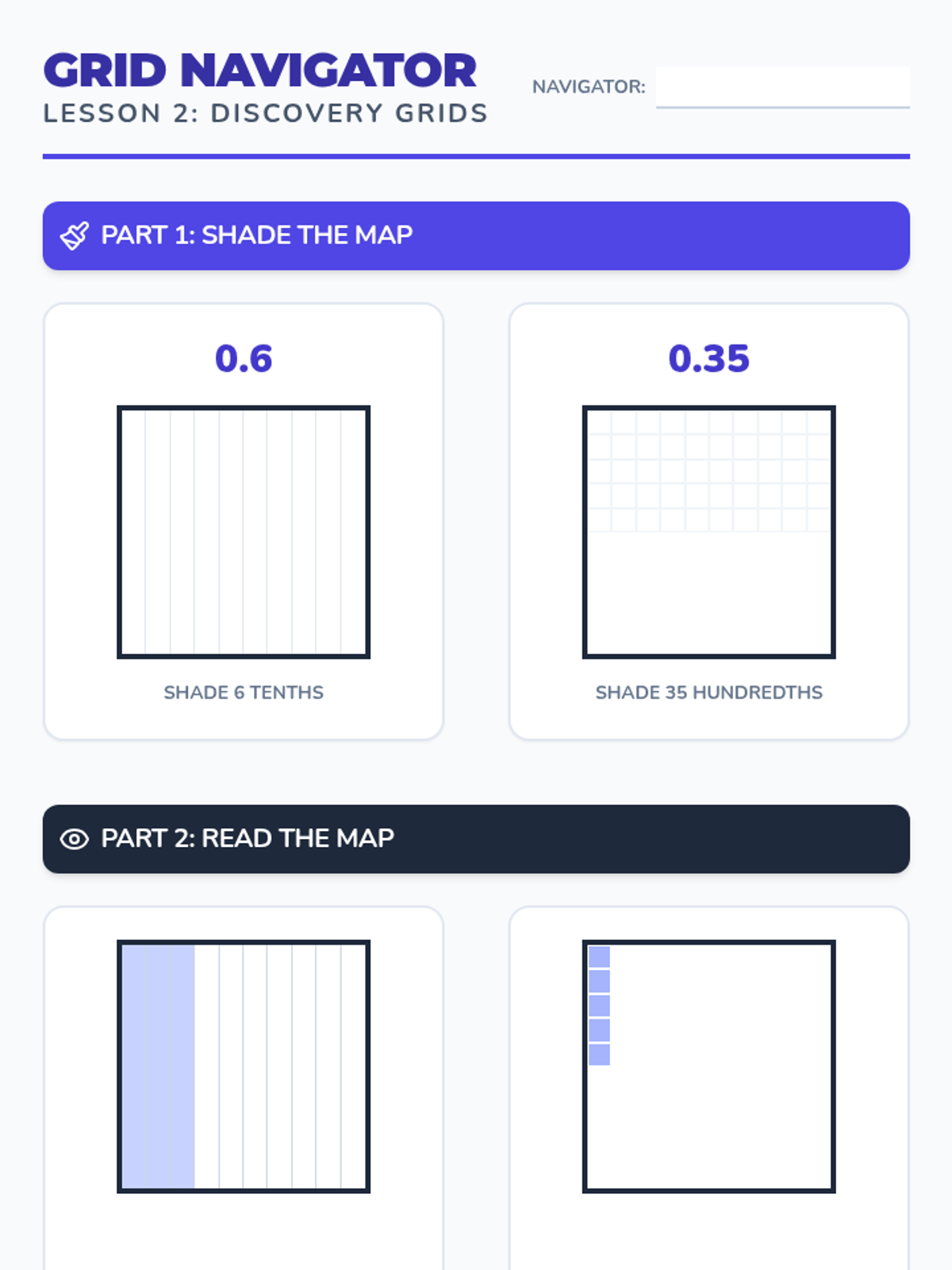
Visualize decimals as parts of a whole using grids and number lines, specifically focusing on tenths and hundredths.
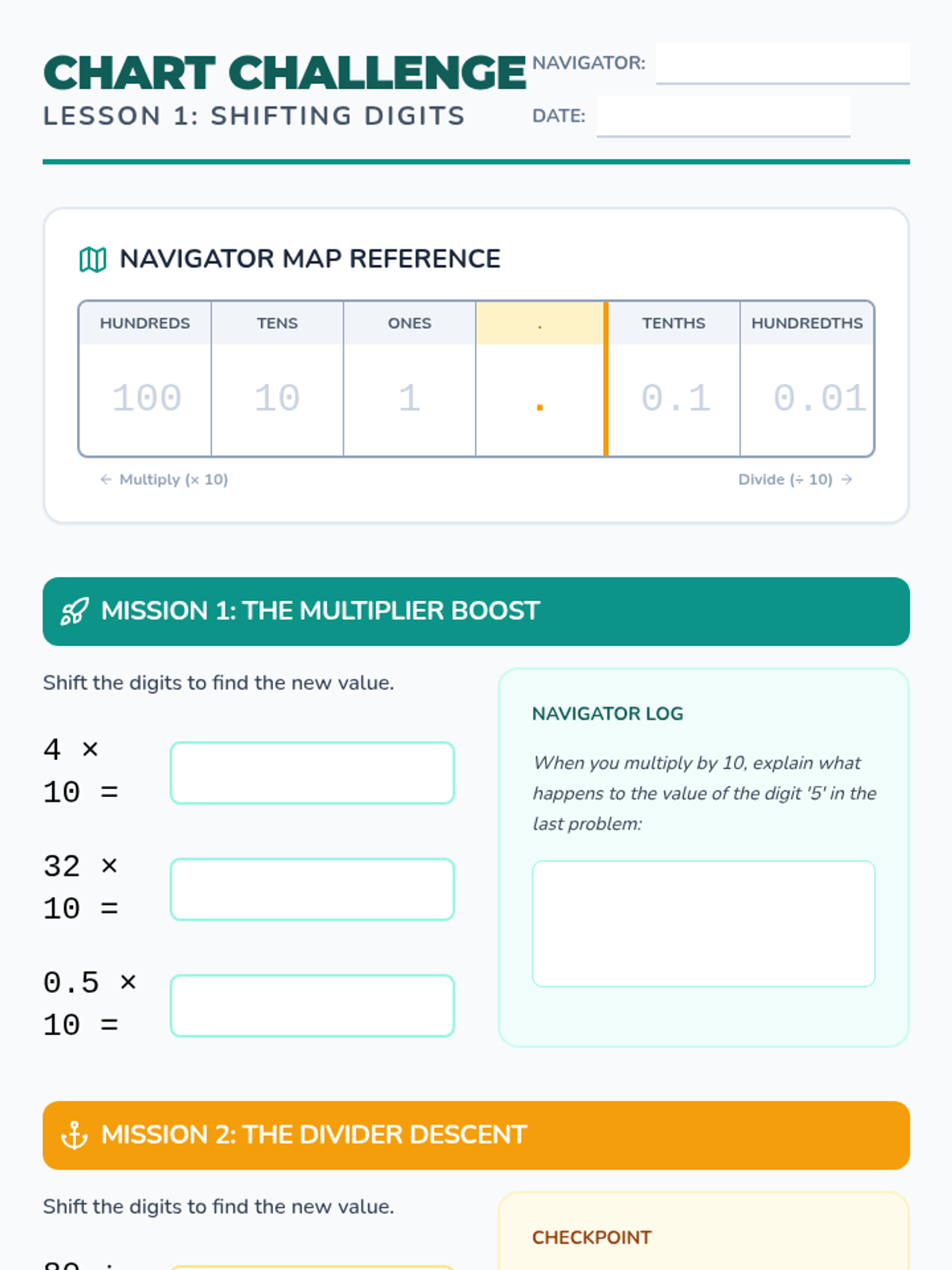
Explore how multiplying and dividing by 10, 100, and 1,000 shifts digits across the place value chart, building the foundation for decimal understanding.
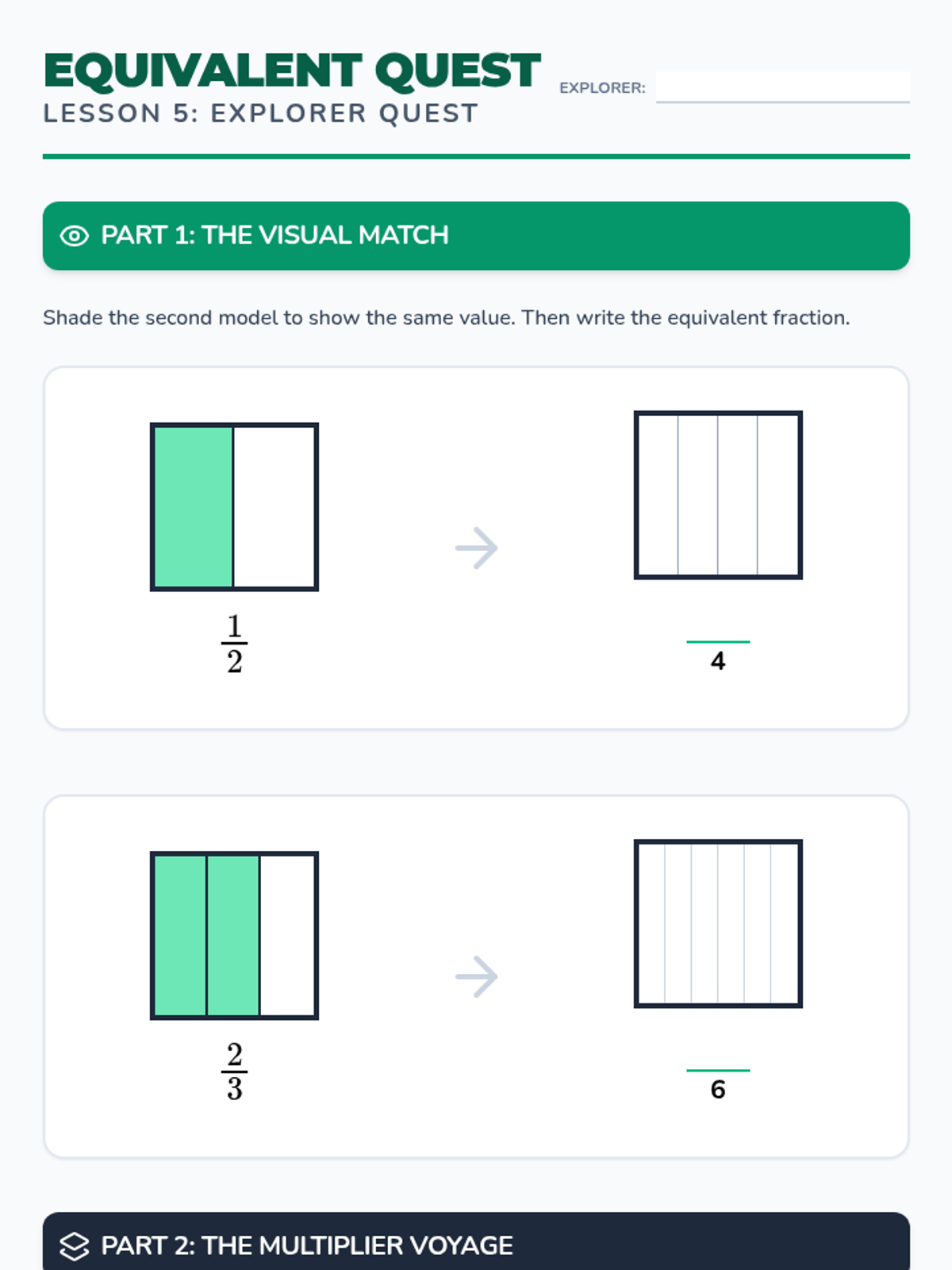
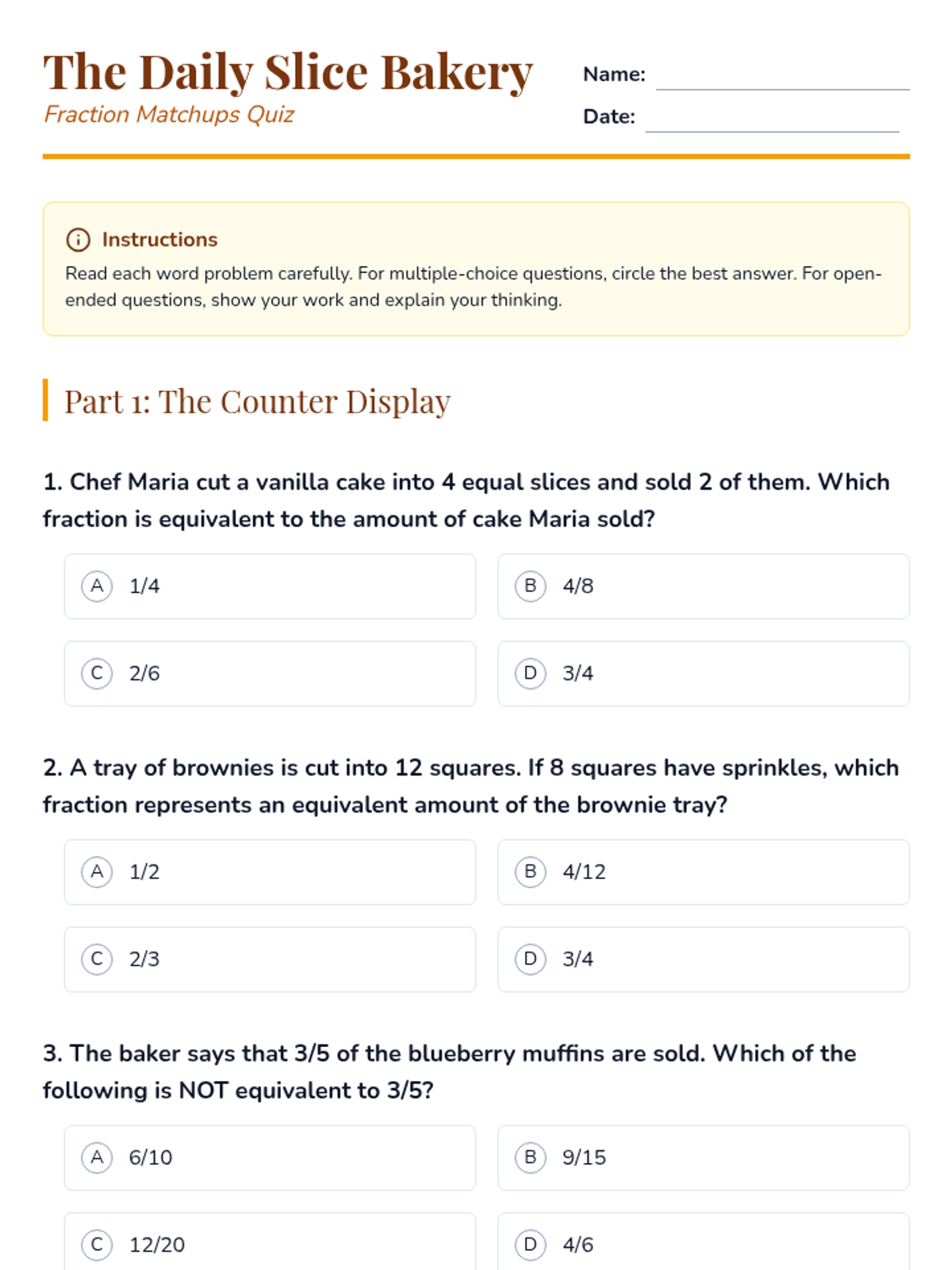
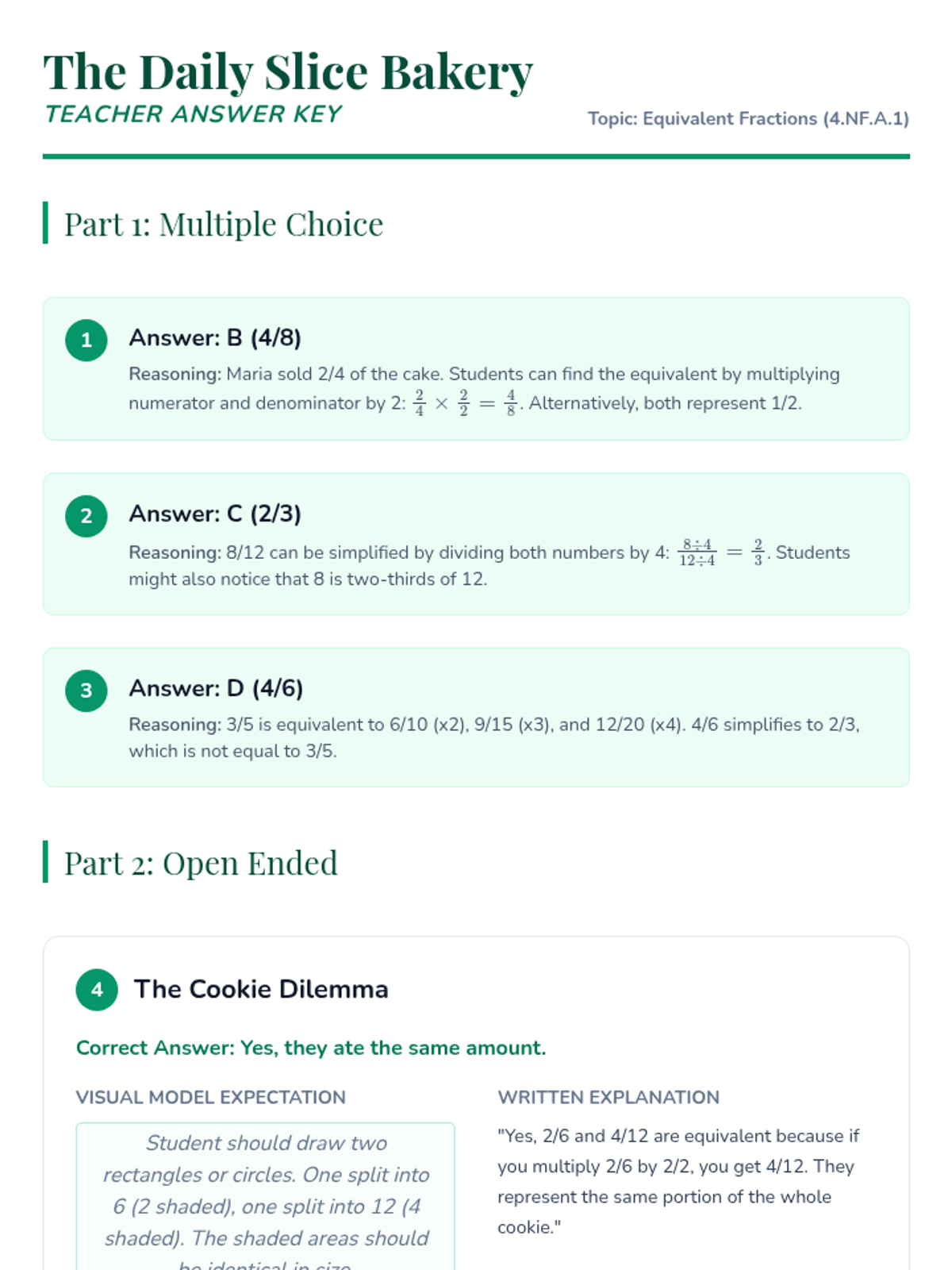
A lesson focused on identifying and creating equivalent fractions through real-world word problems and visual models. Students will apply their knowledge in a bakery-themed quiz.
A lesson focused on mastering the standard algorithm for subtraction with regrouping, utilizing place value organizers to visualize the process.
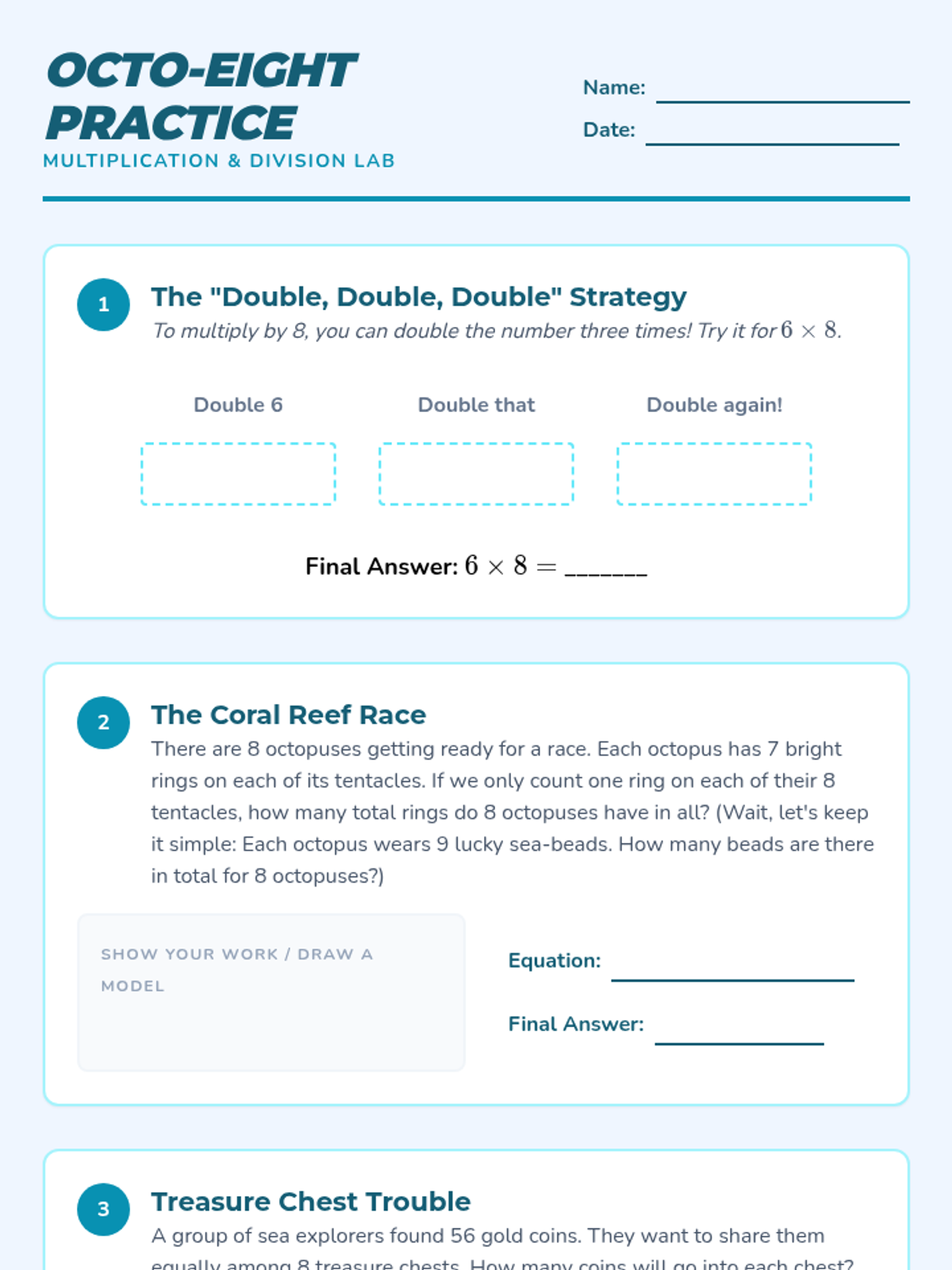
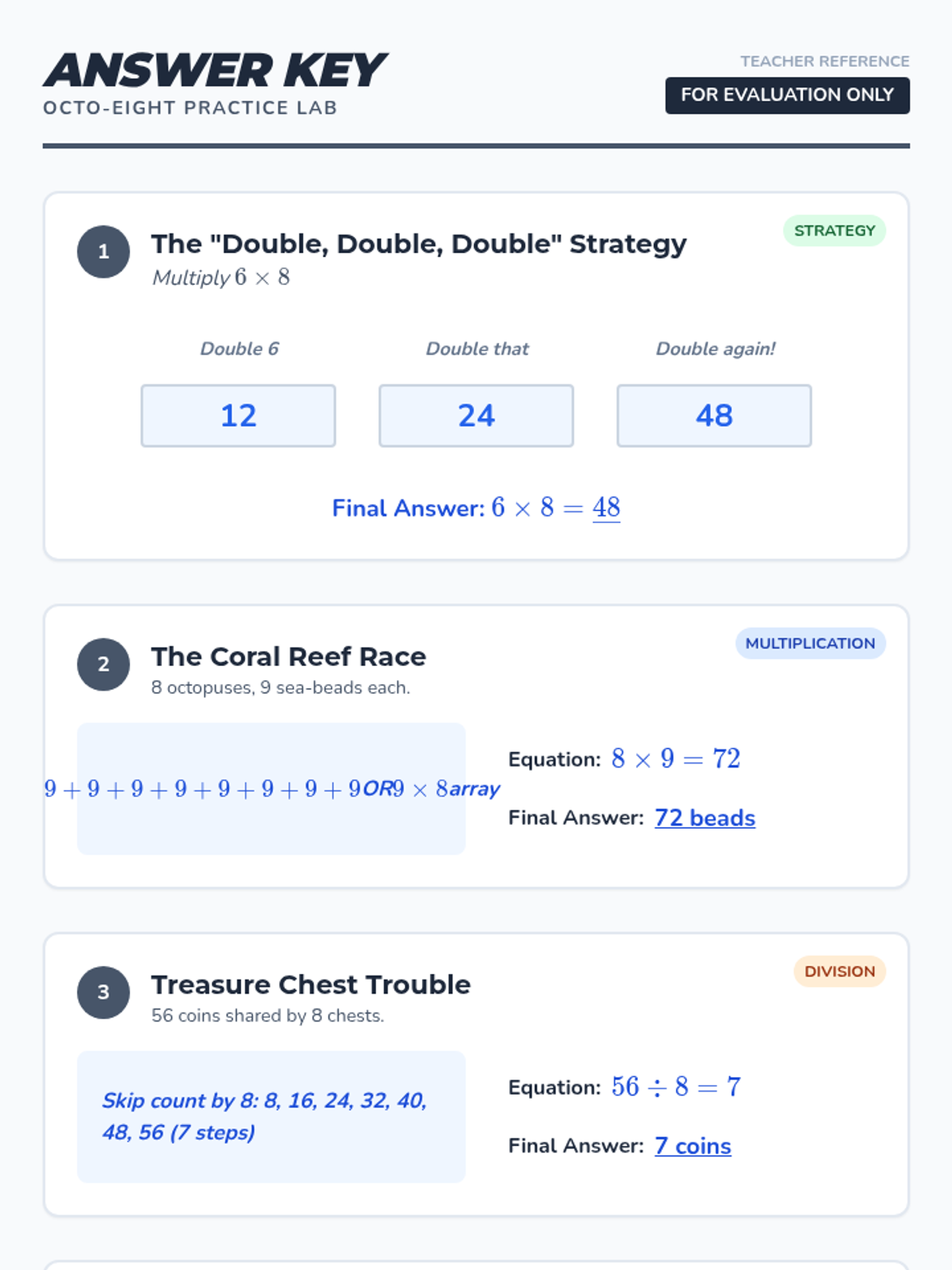
A lesson focused on mastering multiplication and division by 8 using the 'double-double-double' strategy and real-world word problems.
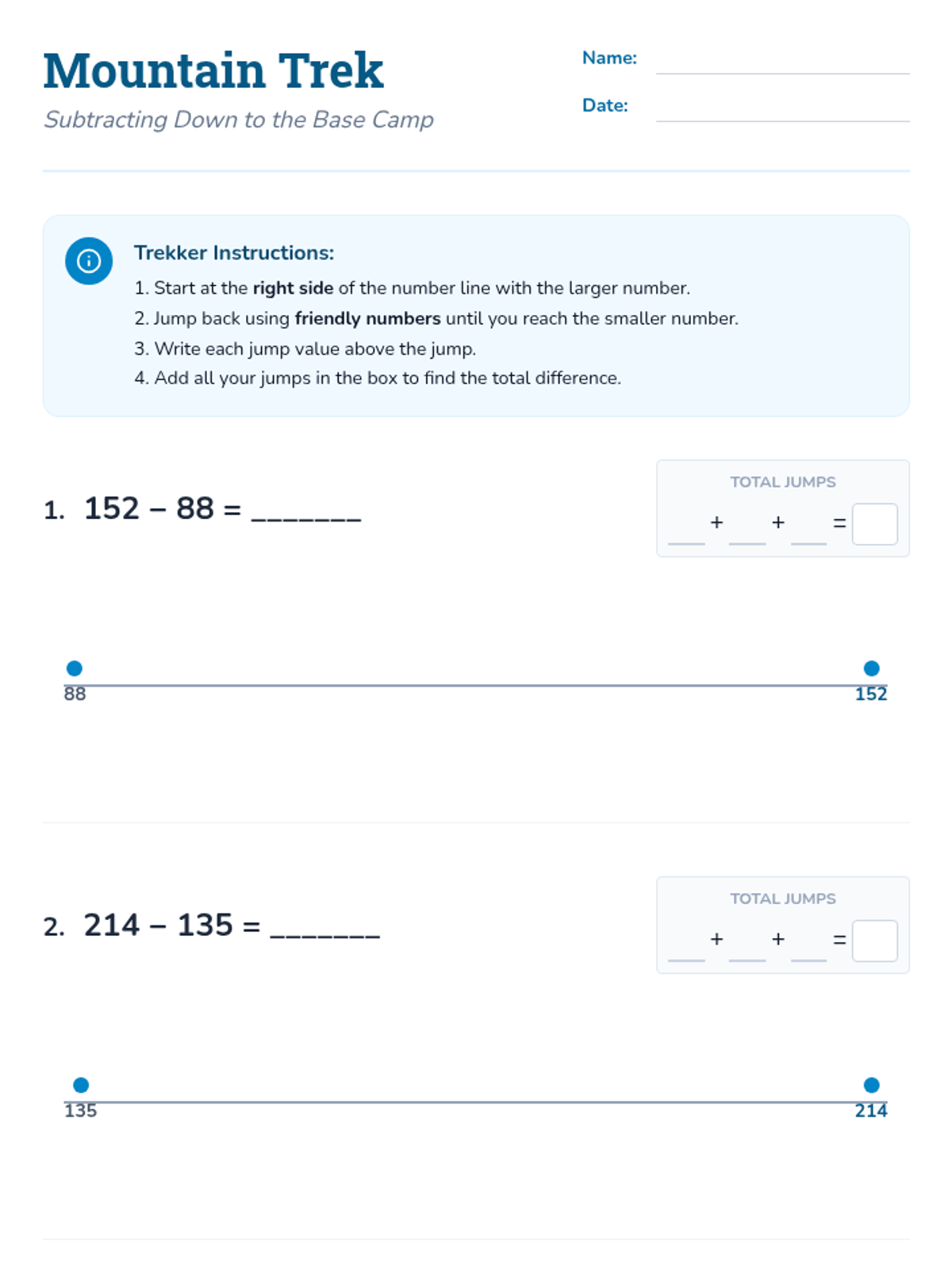
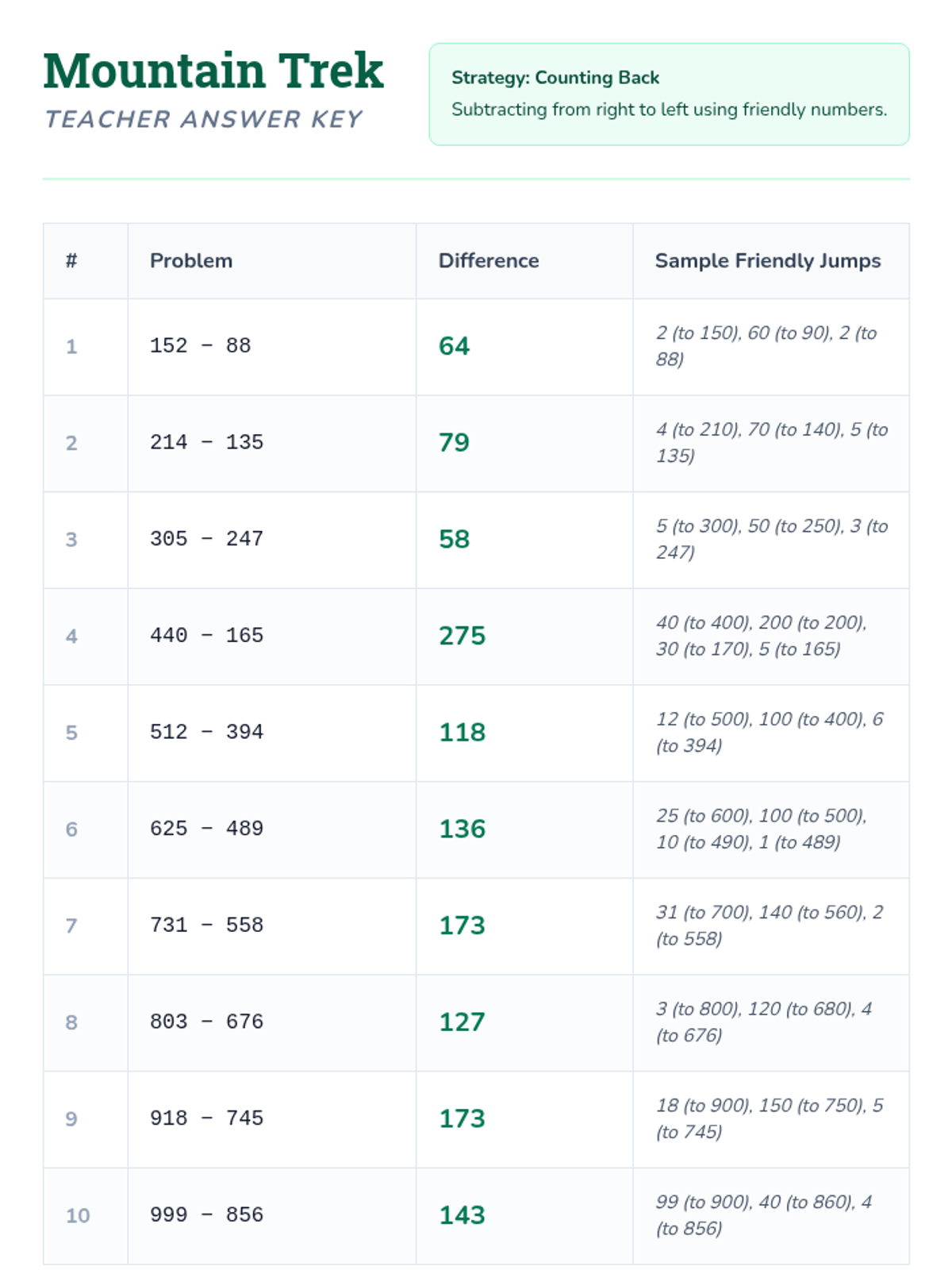
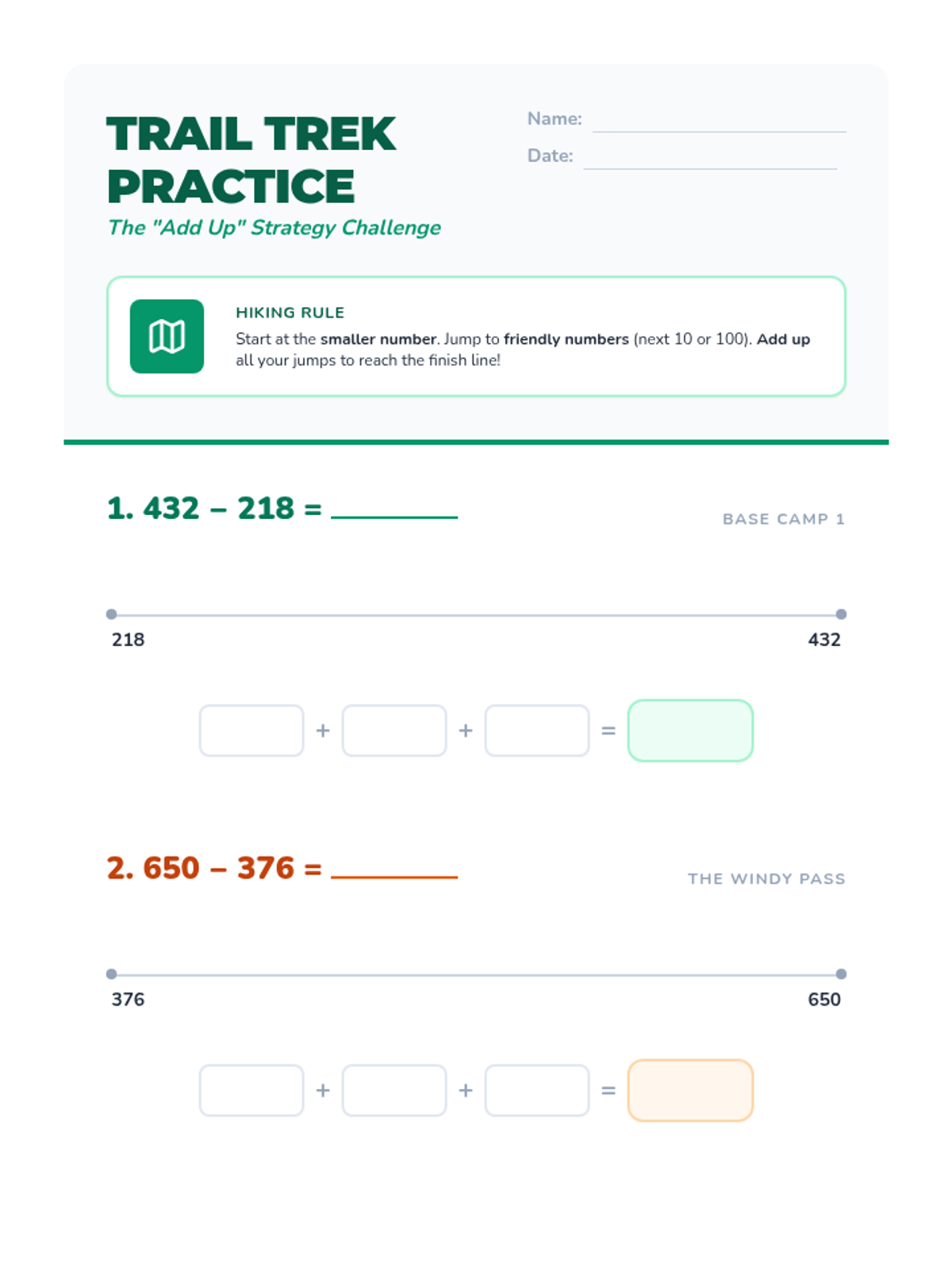
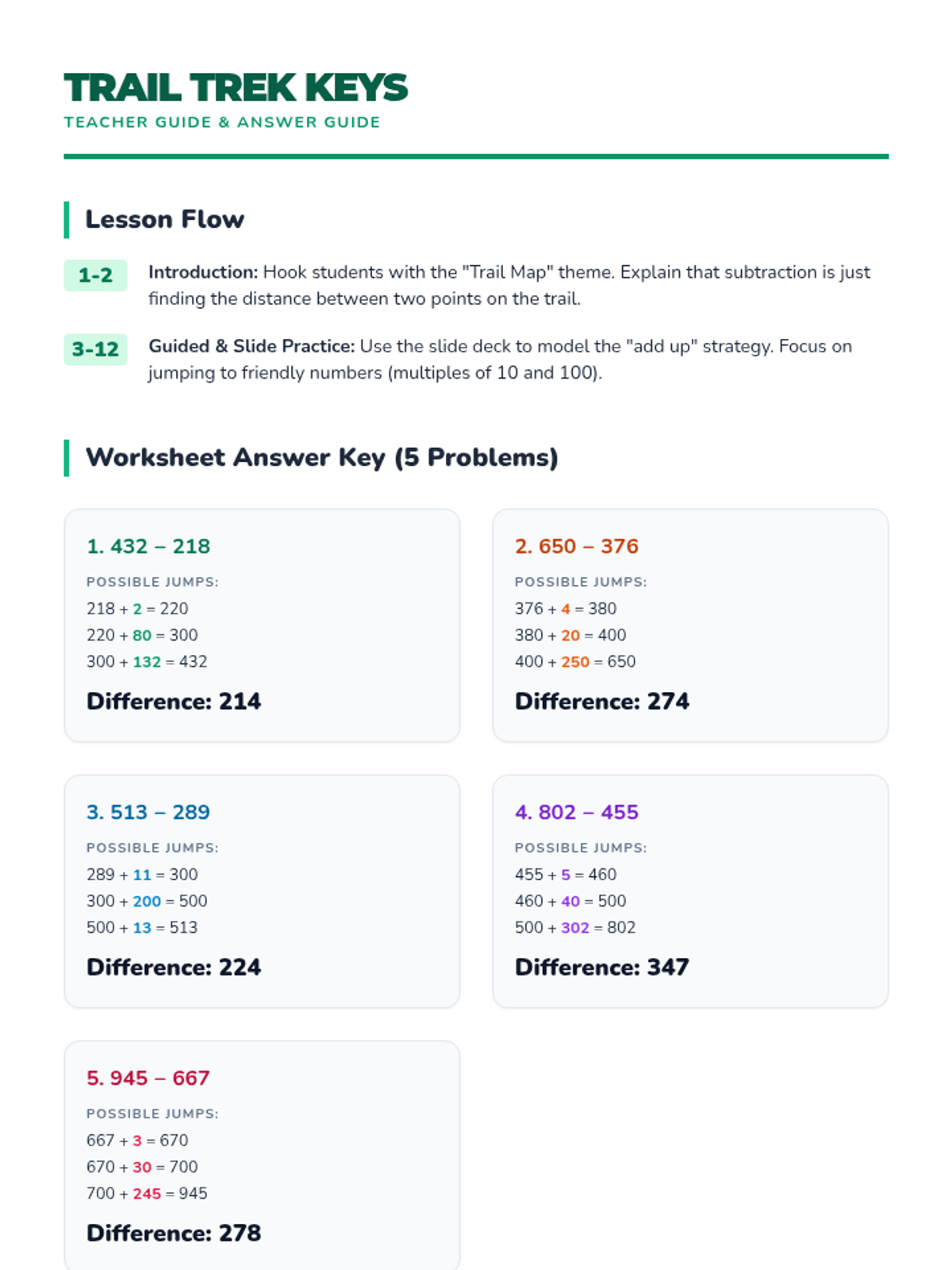
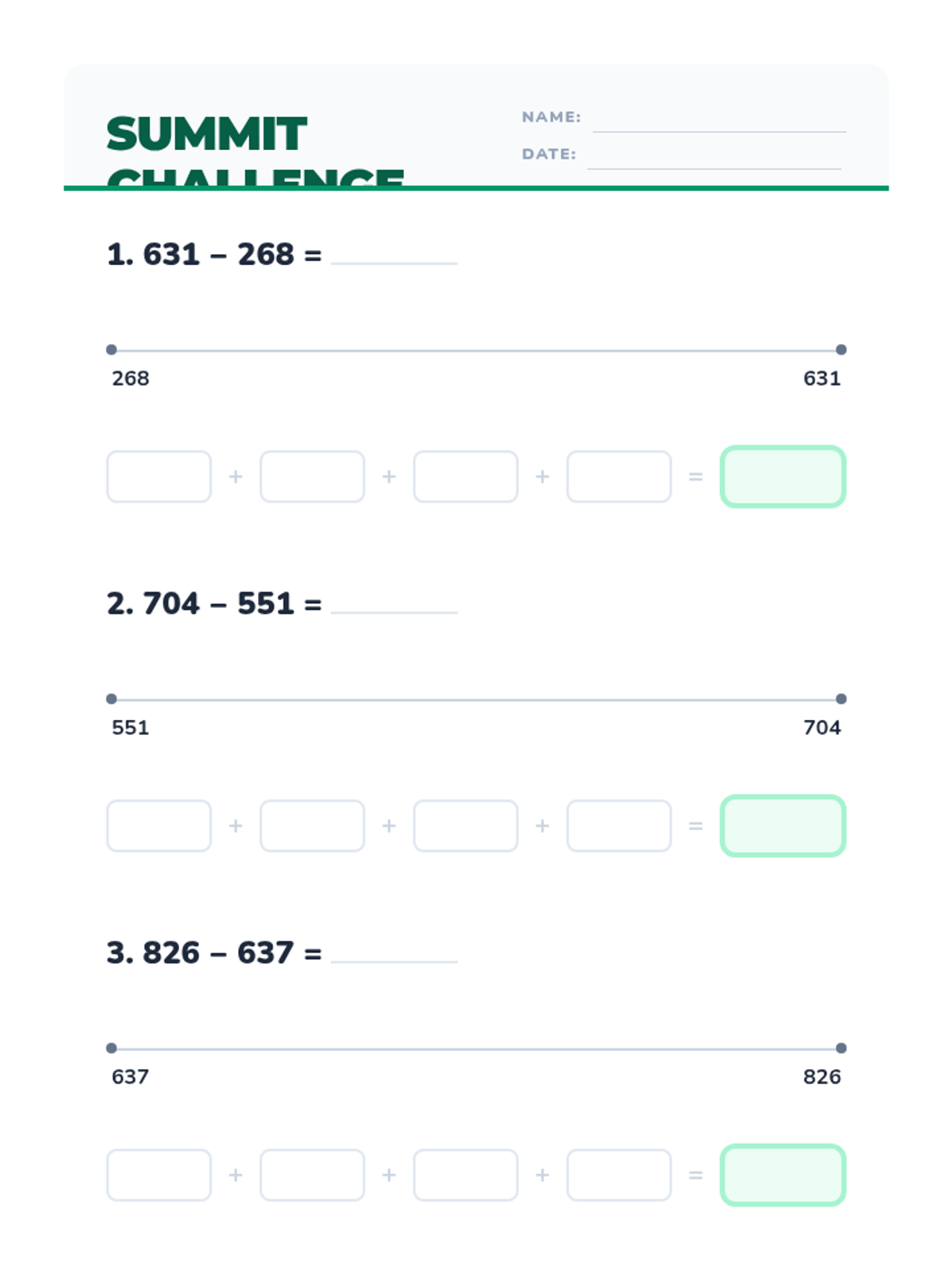
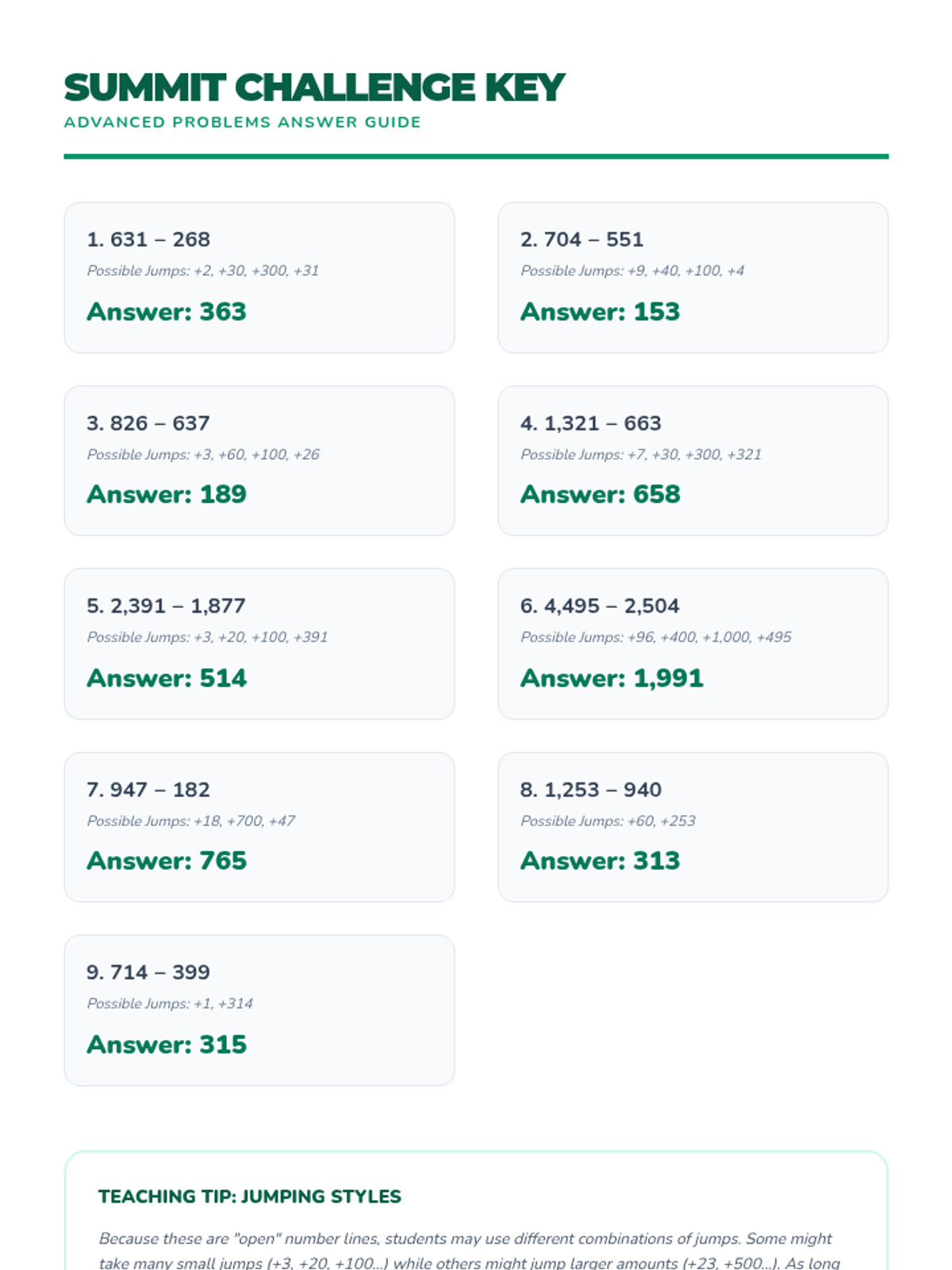
Students will master 3-digit subtraction by using the 'counting back' strategy on a number line, focusing on identifying and jumping to friendly numbers (multiples of 10 and 100).
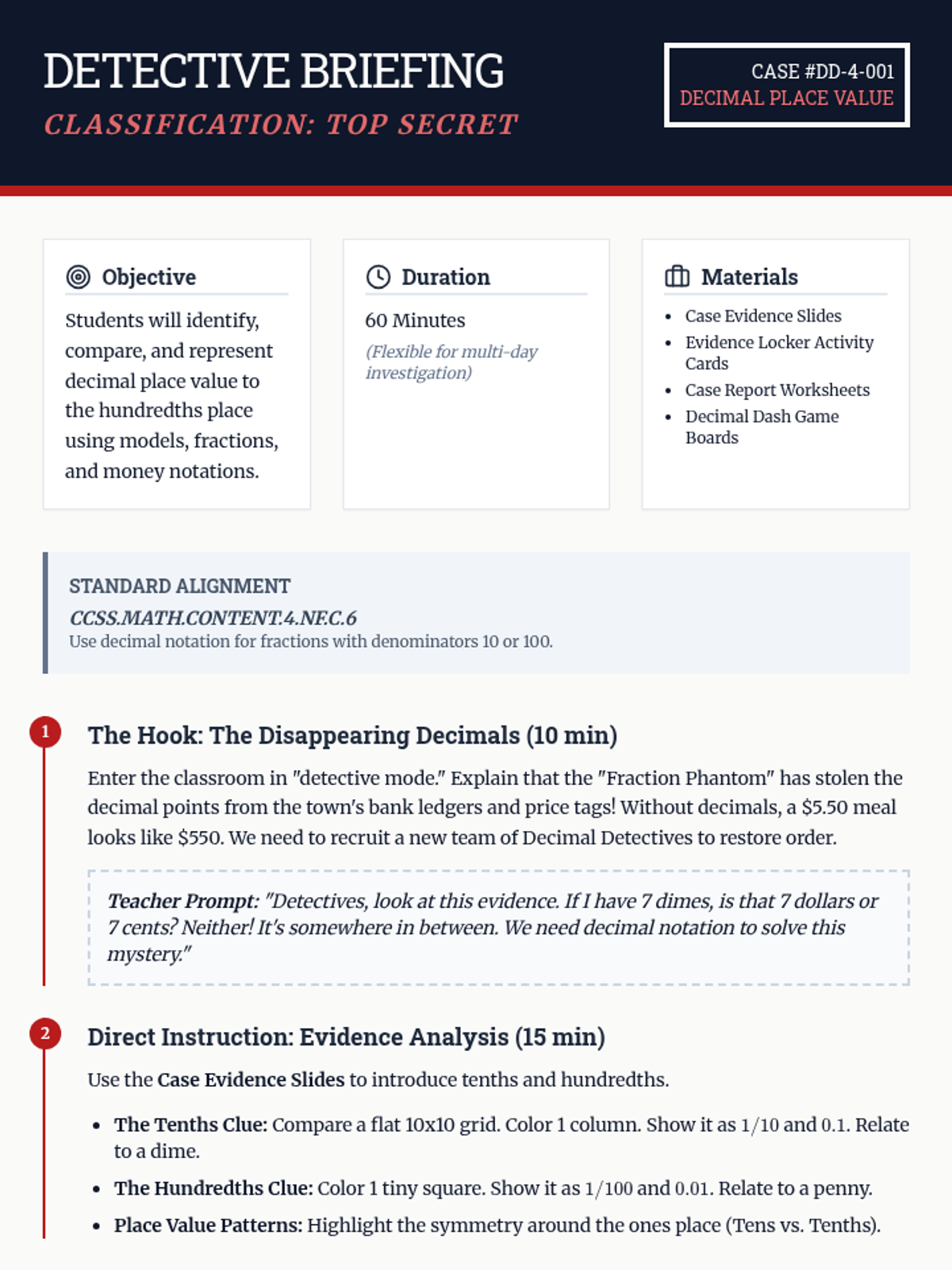
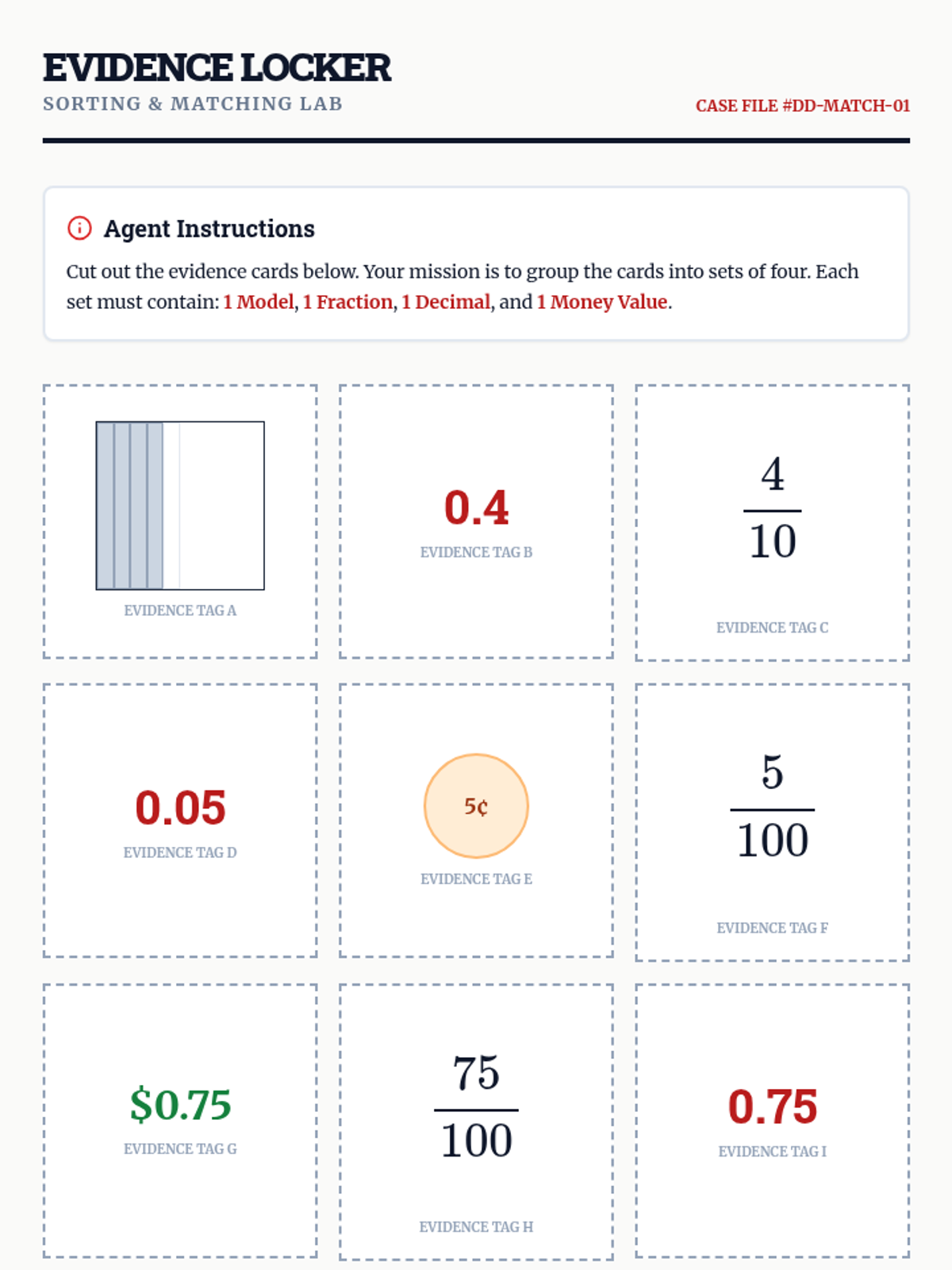
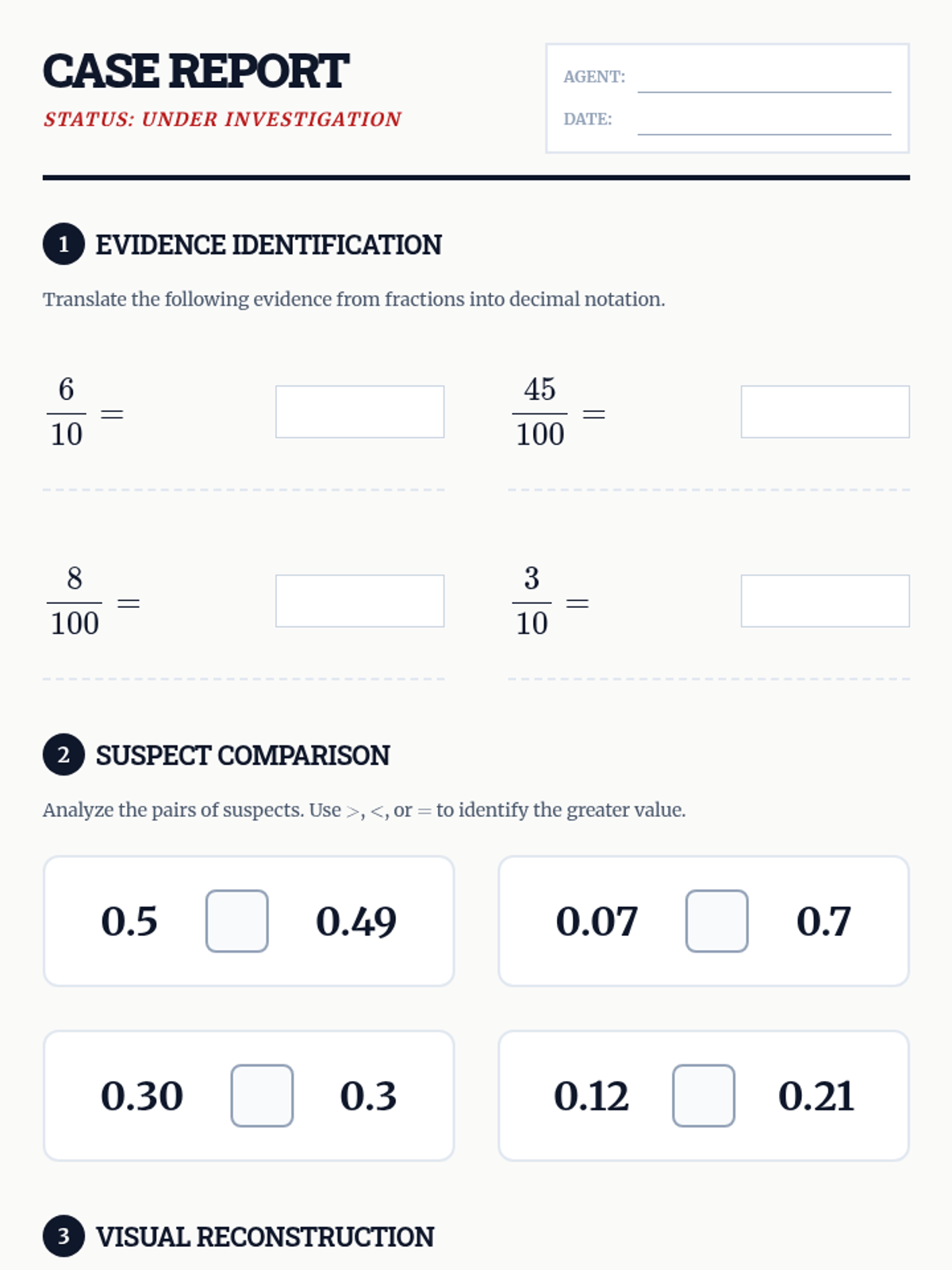
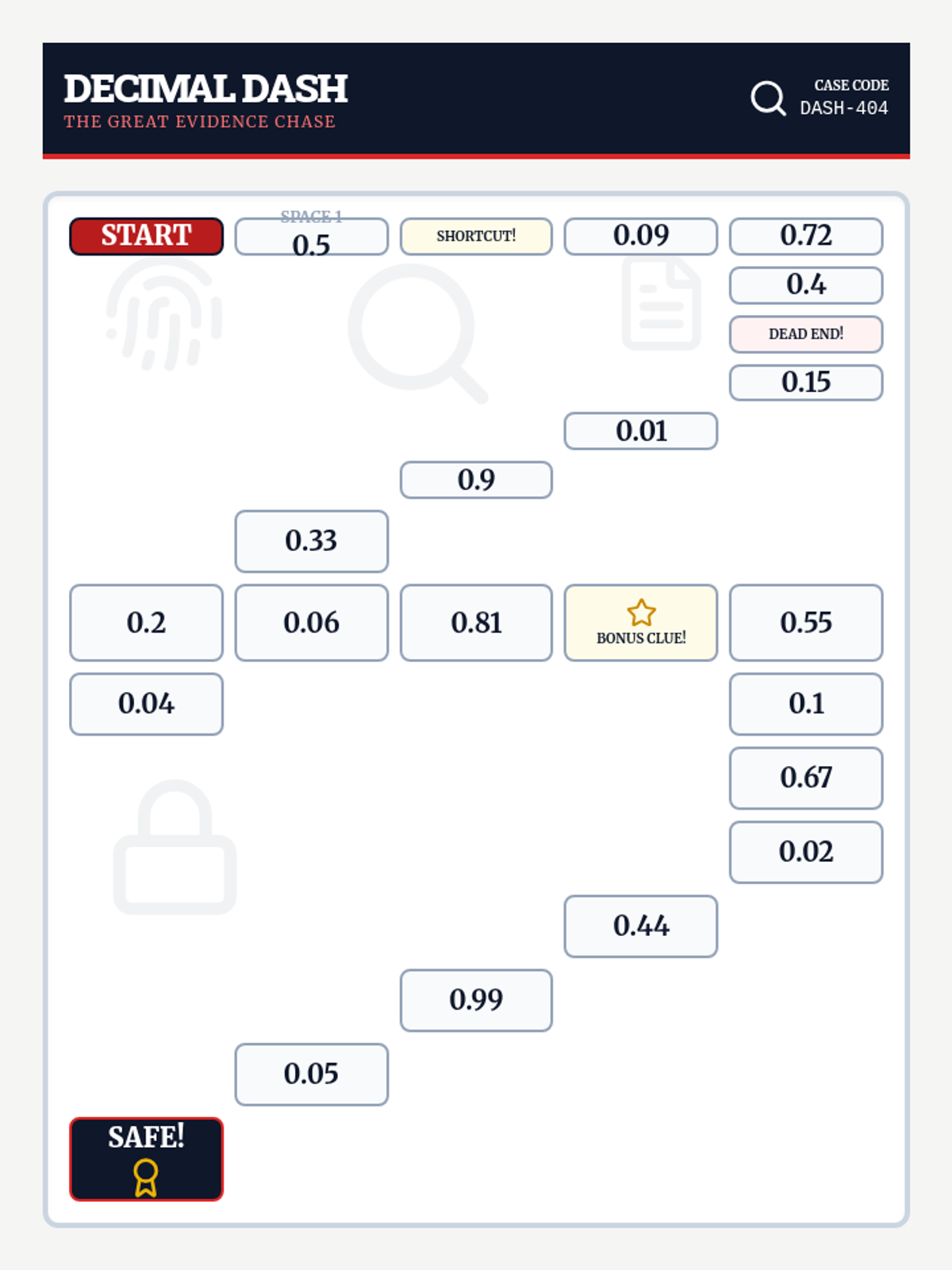
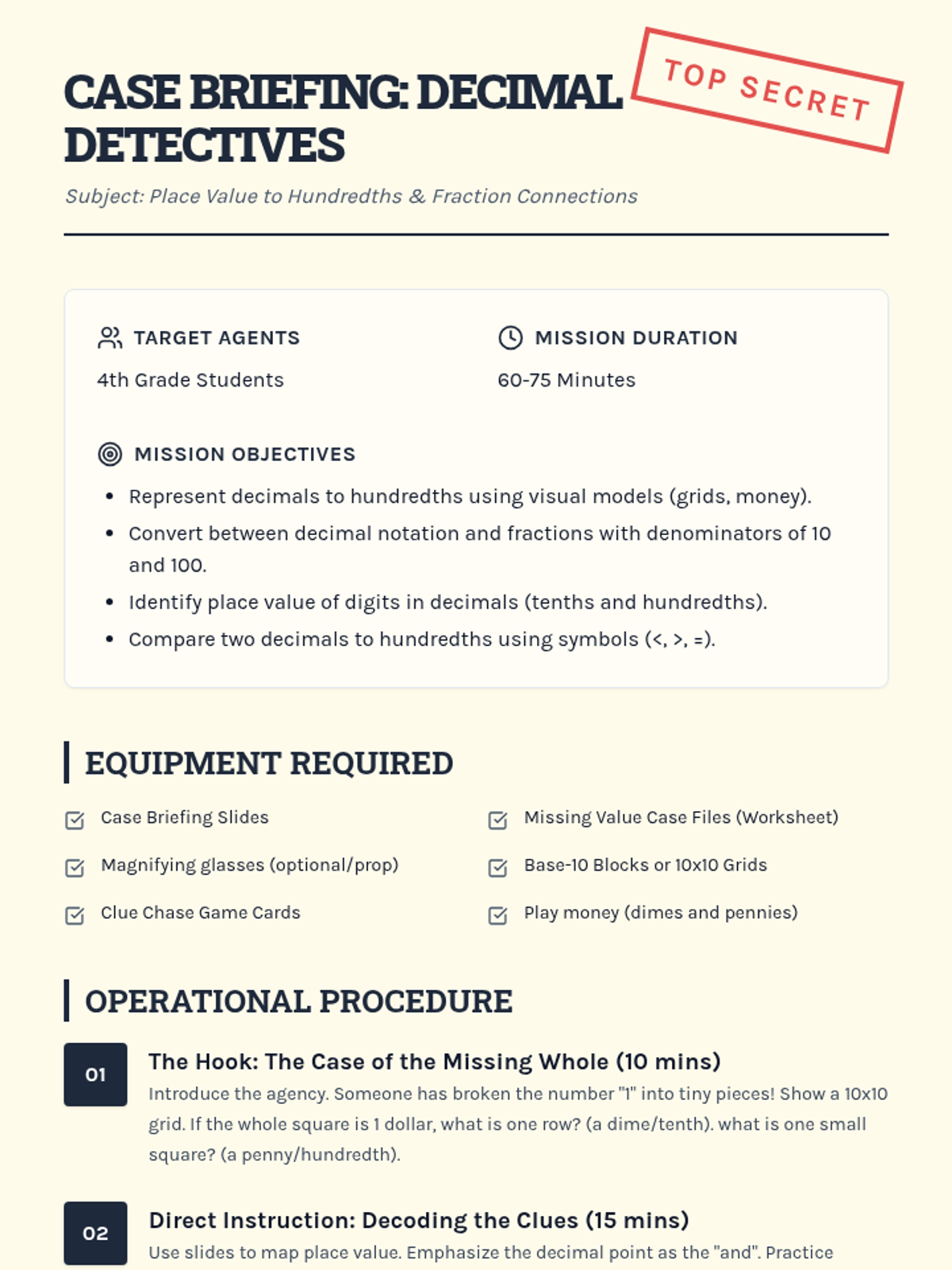
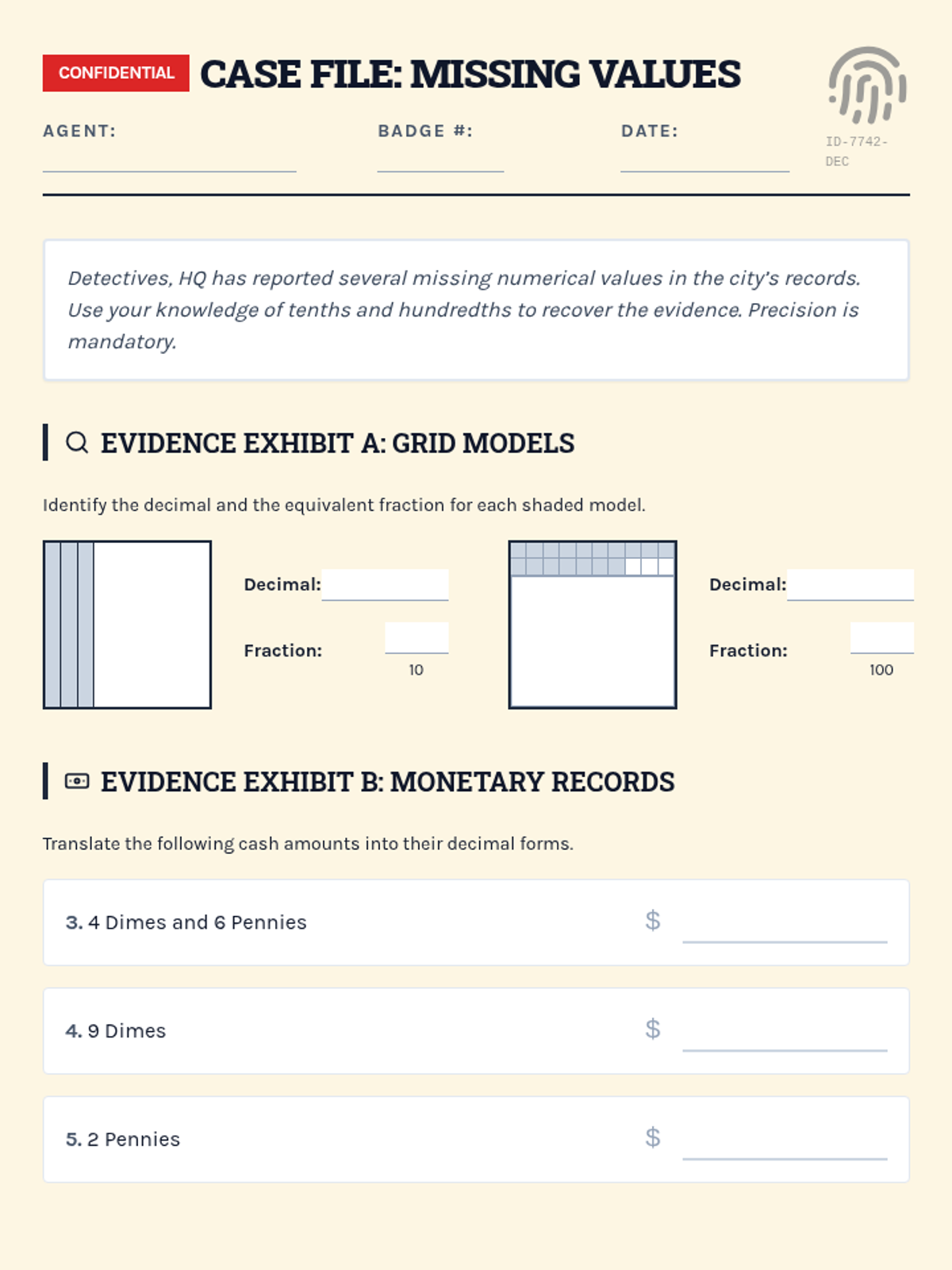
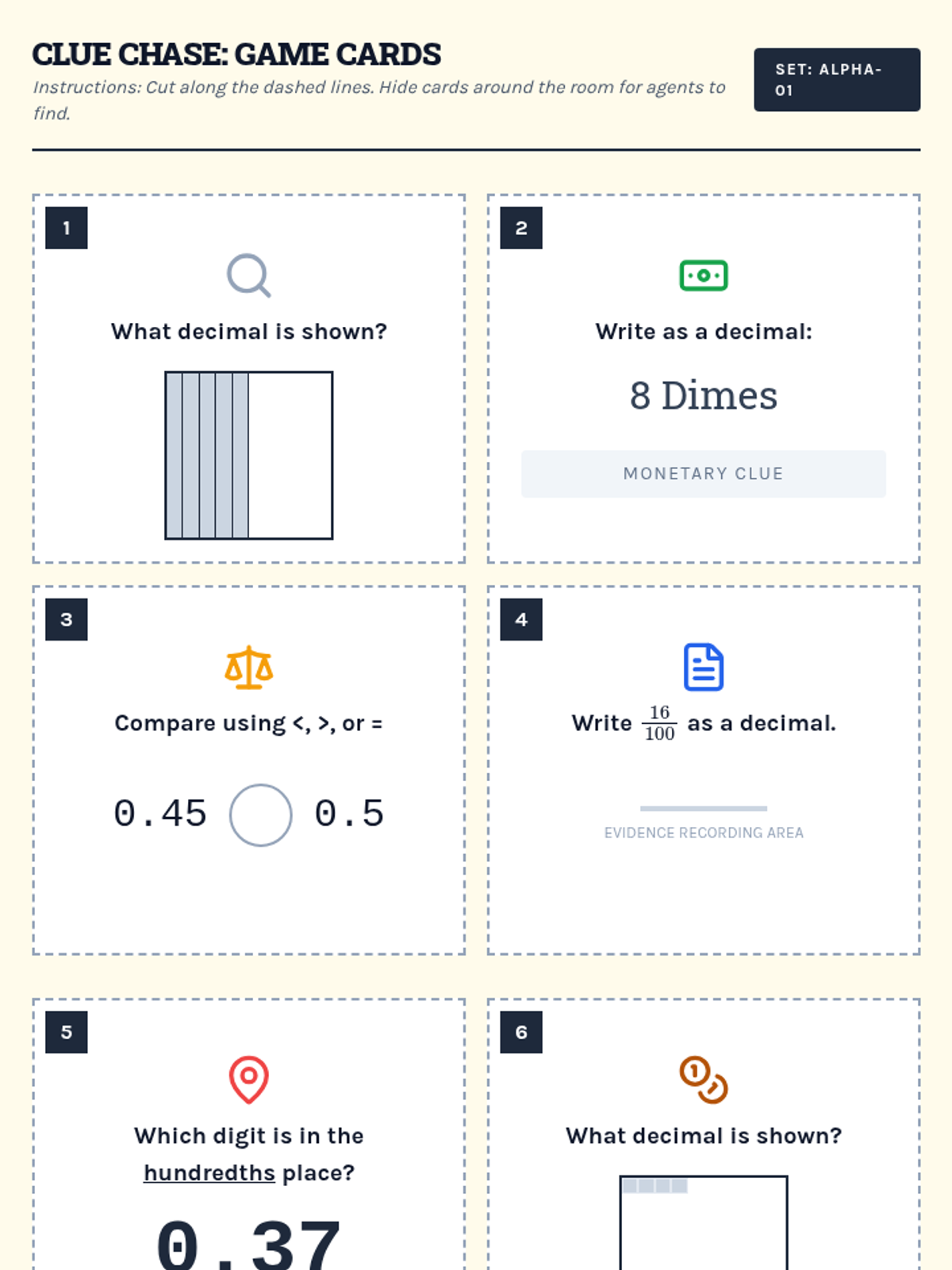
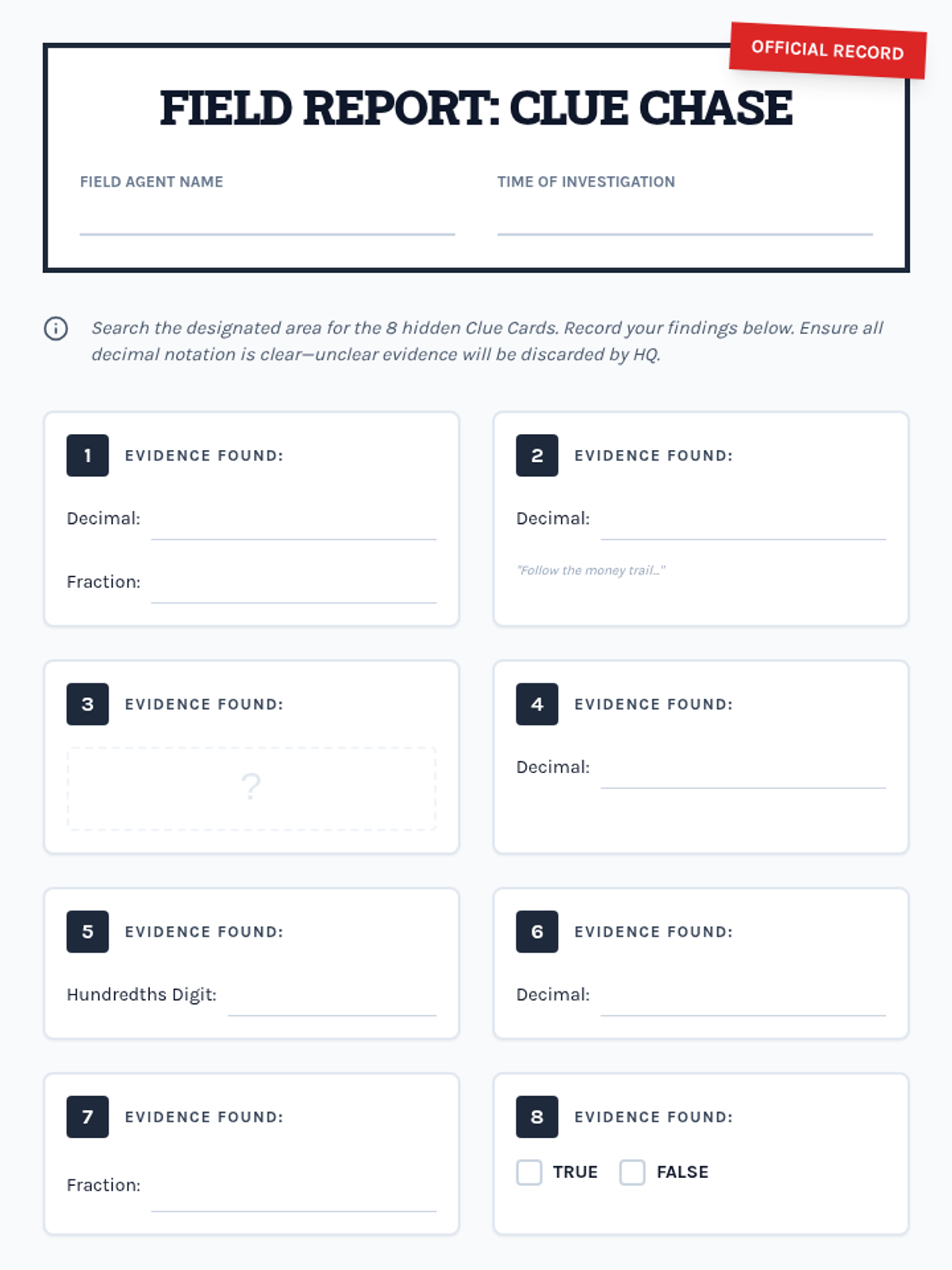
A 4th-grade investigation into decimal place value up to hundredths, connecting fractions and money through a detective-themed series of activities and challenges.
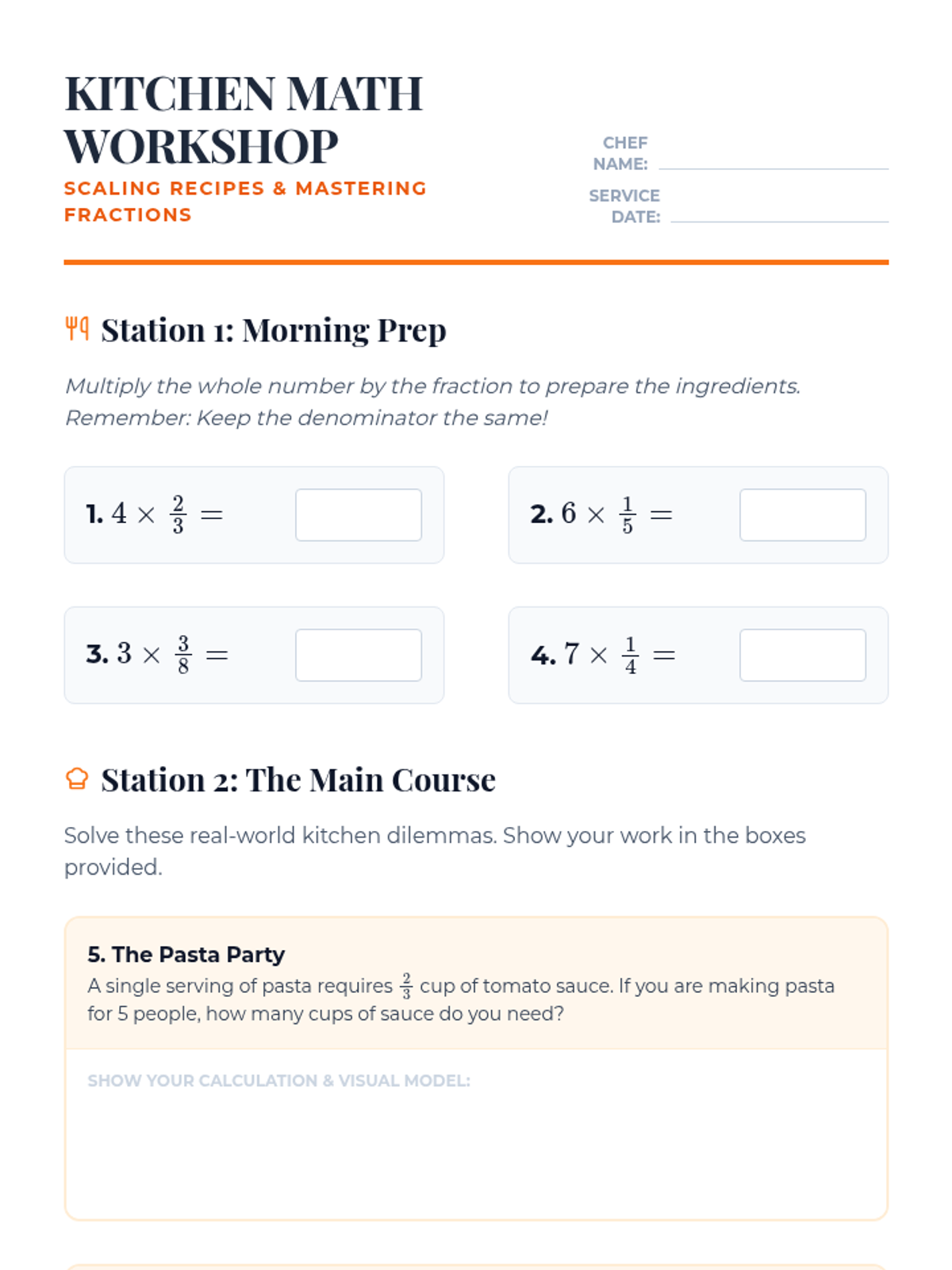
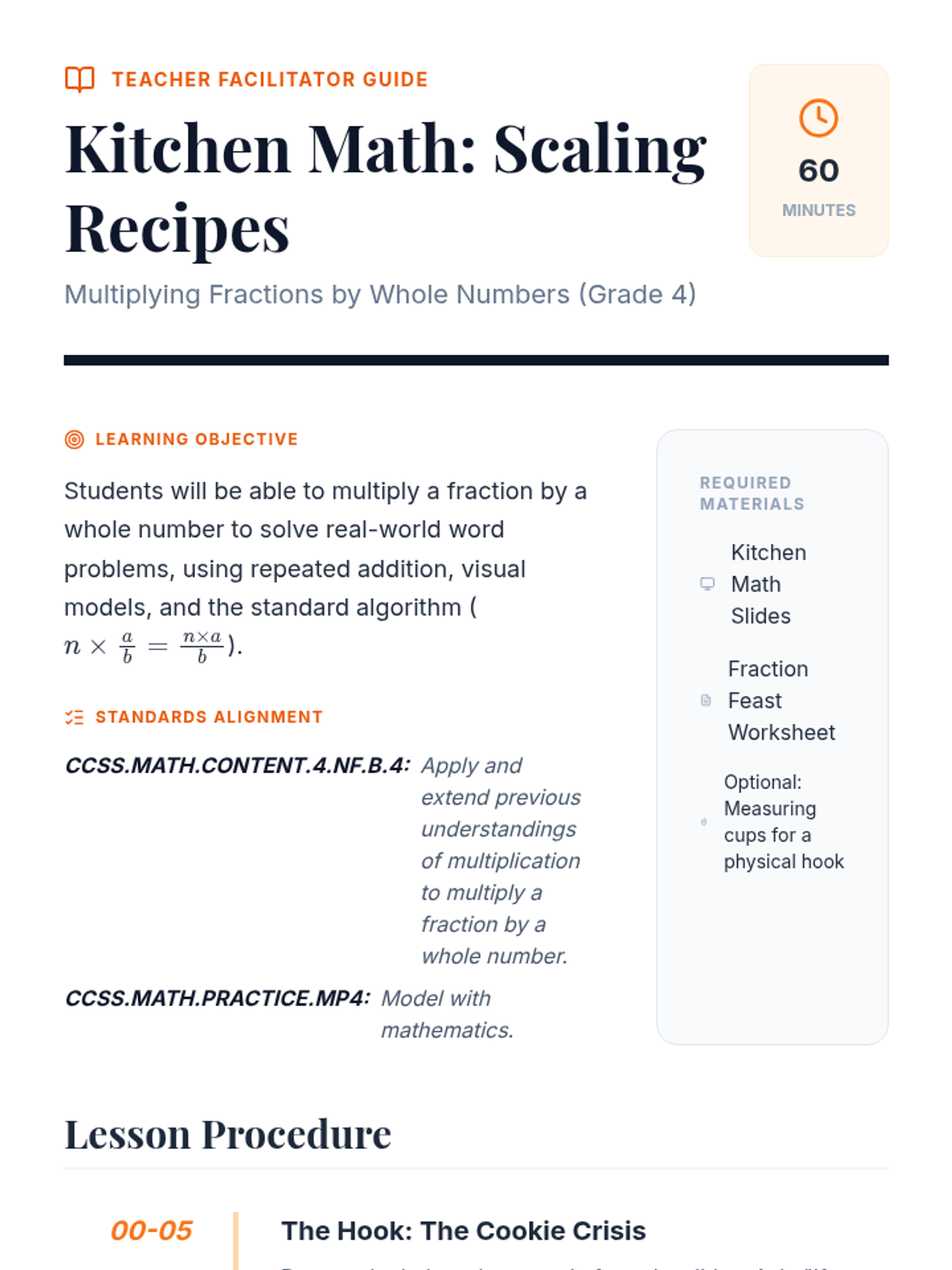
A culinary-themed lesson on multiplying fractions by whole numbers through real-world word problems and visual modeling. Students learn to scale recipes and solve common kitchen-based math challenges.
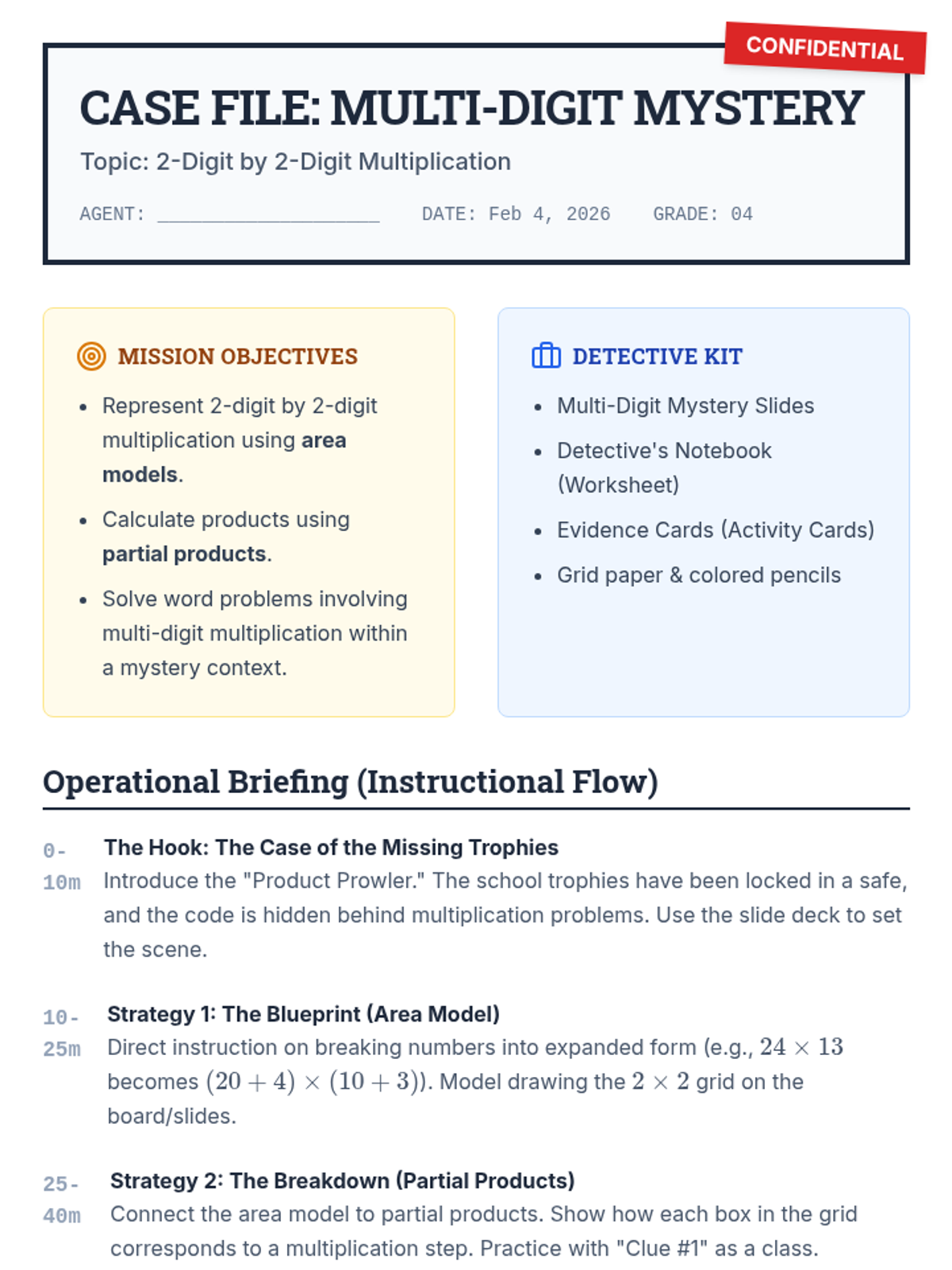
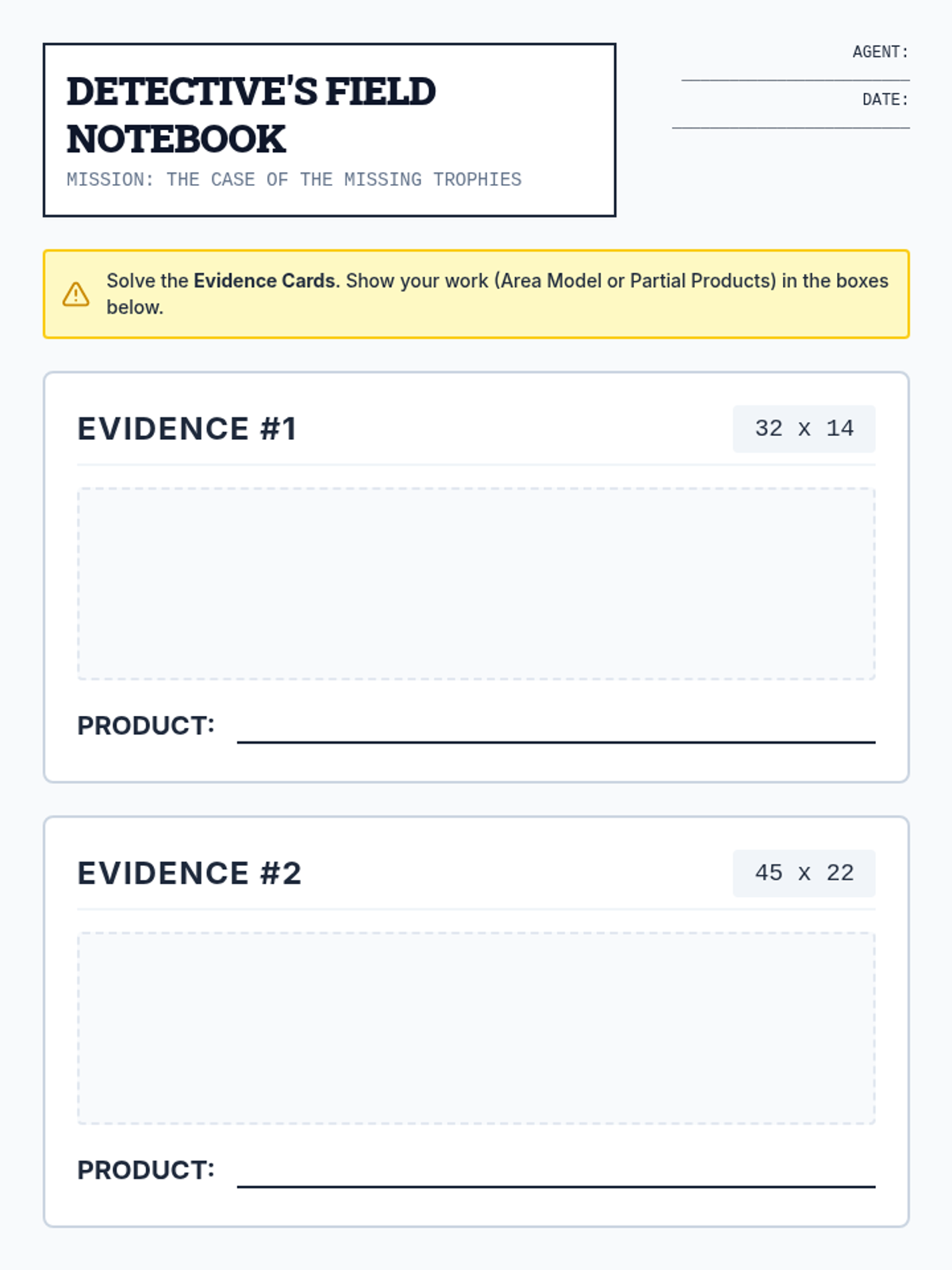
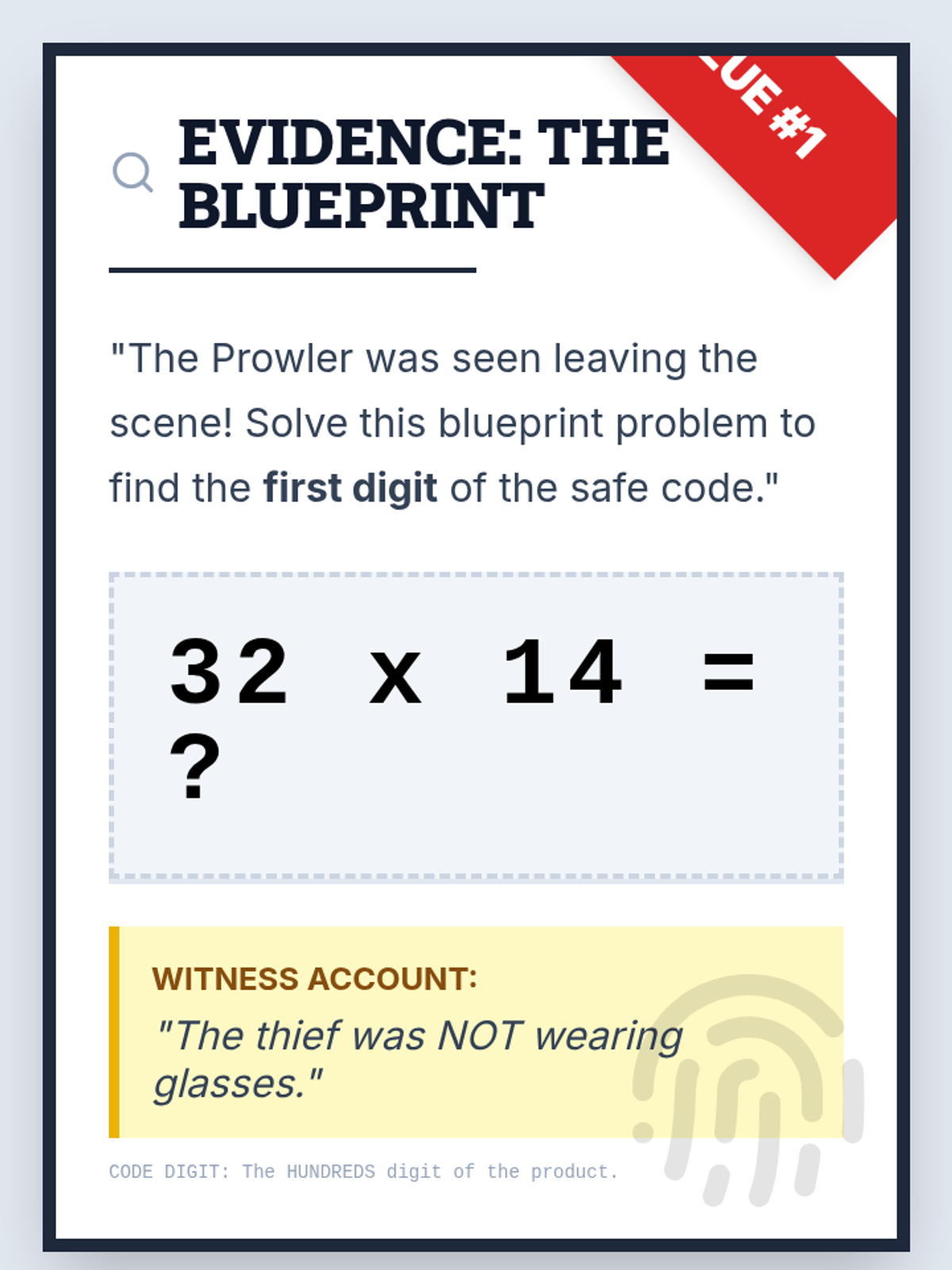
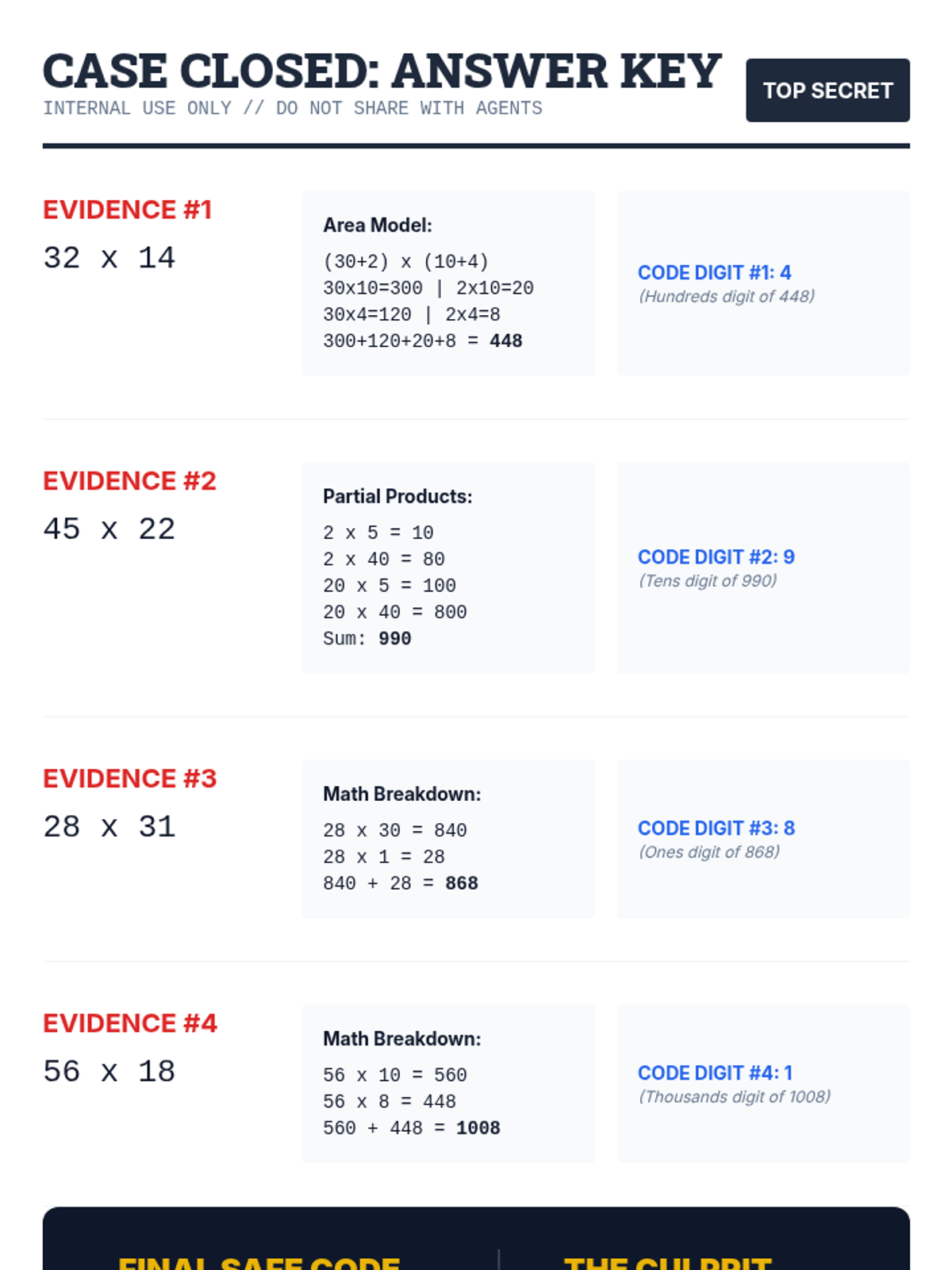
A 4th-grade math lesson that uses a detective mystery theme to teach 2-digit by 2-digit multiplication strategies, including area models and partial products. Students become 'Math Detectives' to solve a case by decoding multi-digit clues.
A 4th-grade lesson where students become 'Decimal Detectives' to explore place value to the hundredths, connecting decimals to fractions and money through interactive investigations and games.
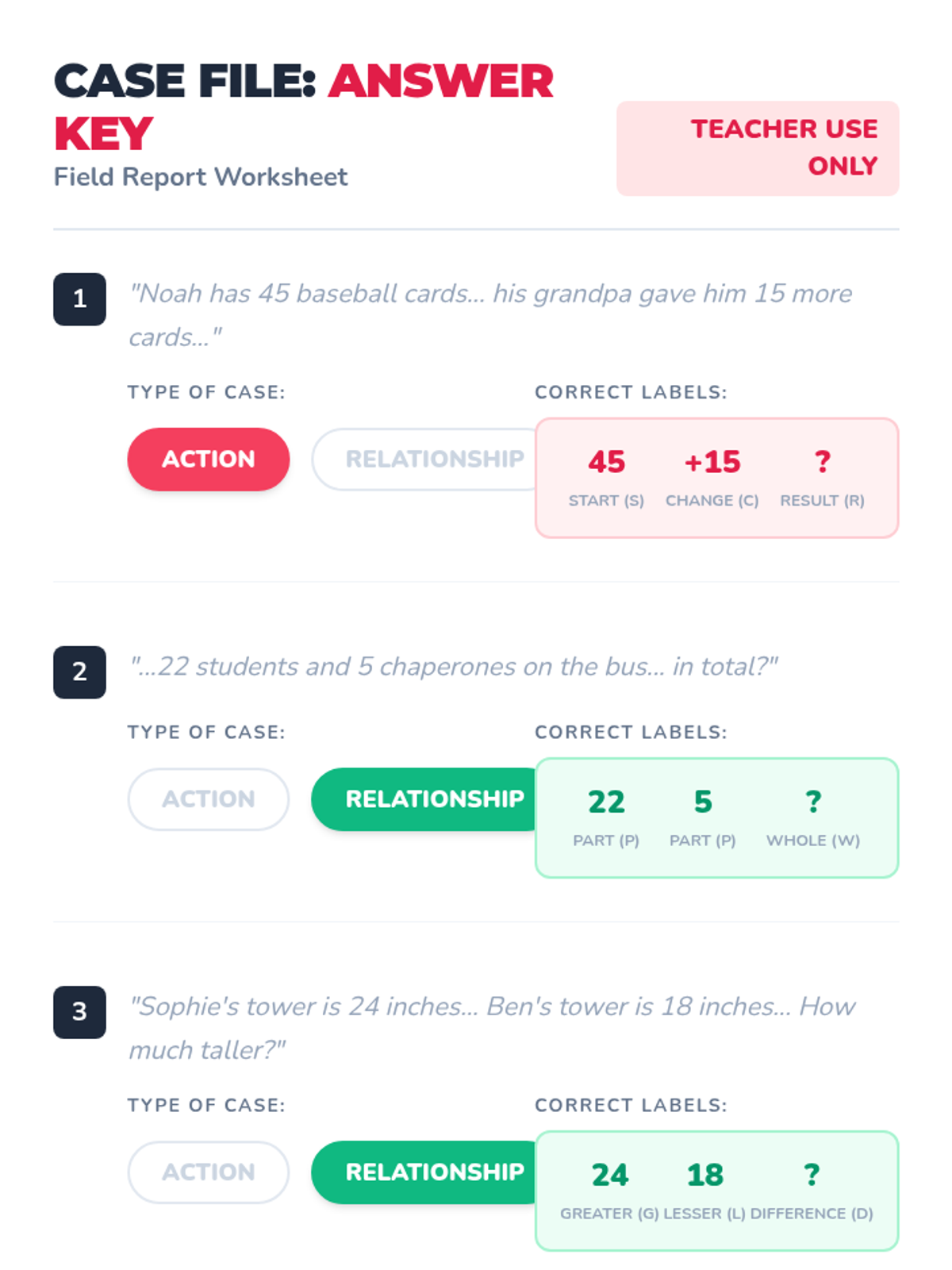
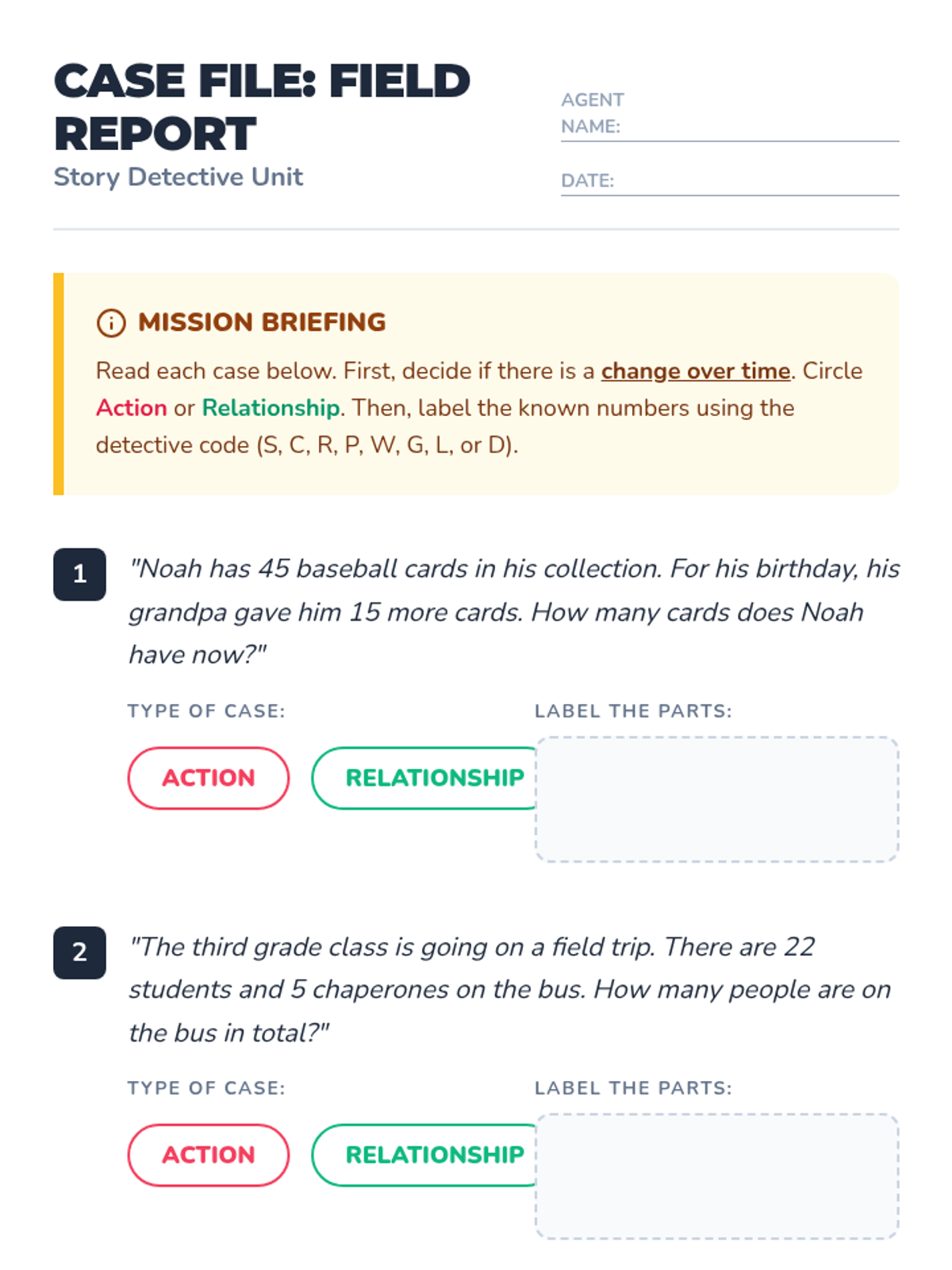
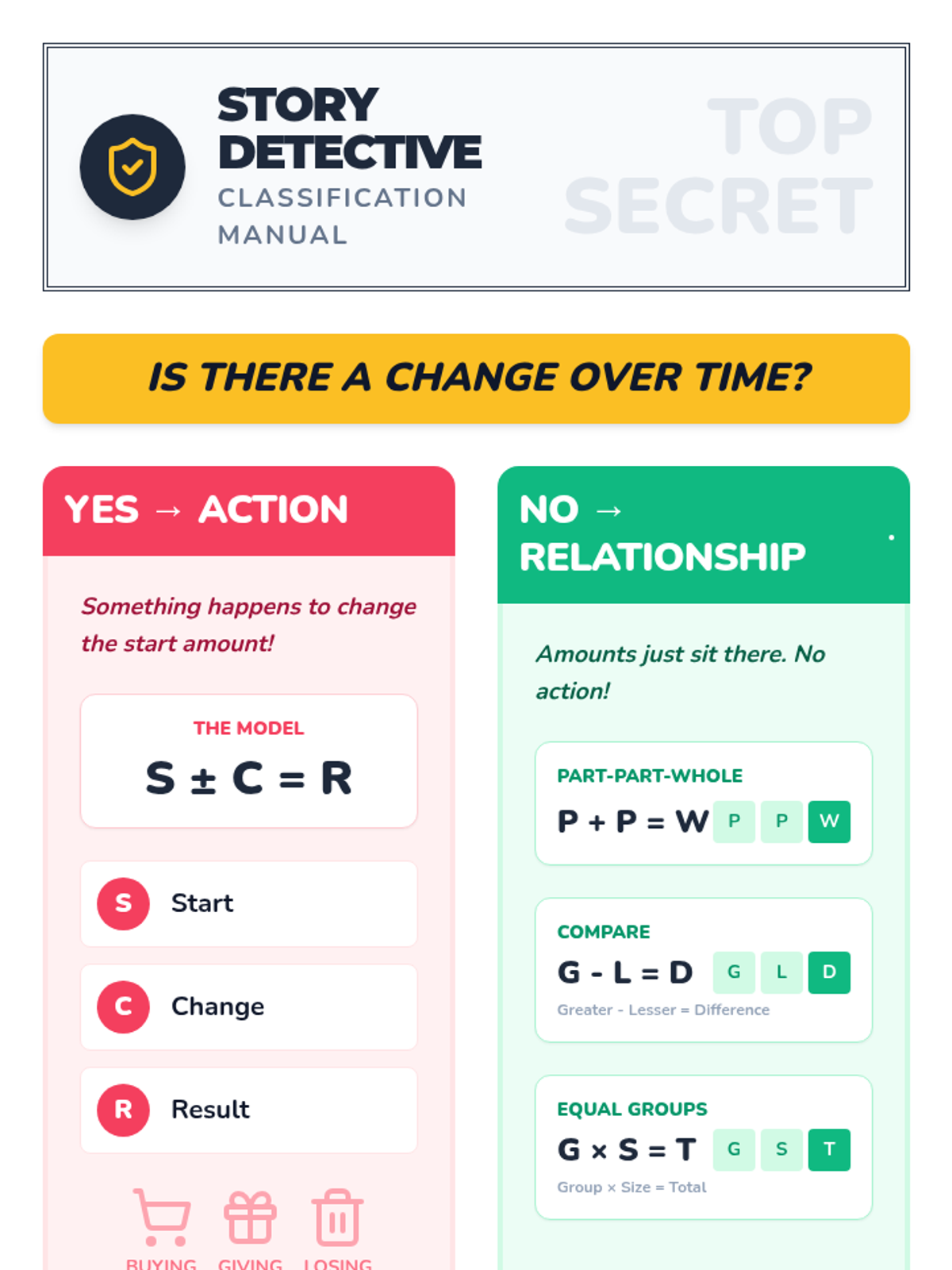
Students learn to classify word problems as Action (change over time) or Relationship (comparing or combining amounts). This distinction helps students choose the correct mathematical model and operation to solve problems effectively.
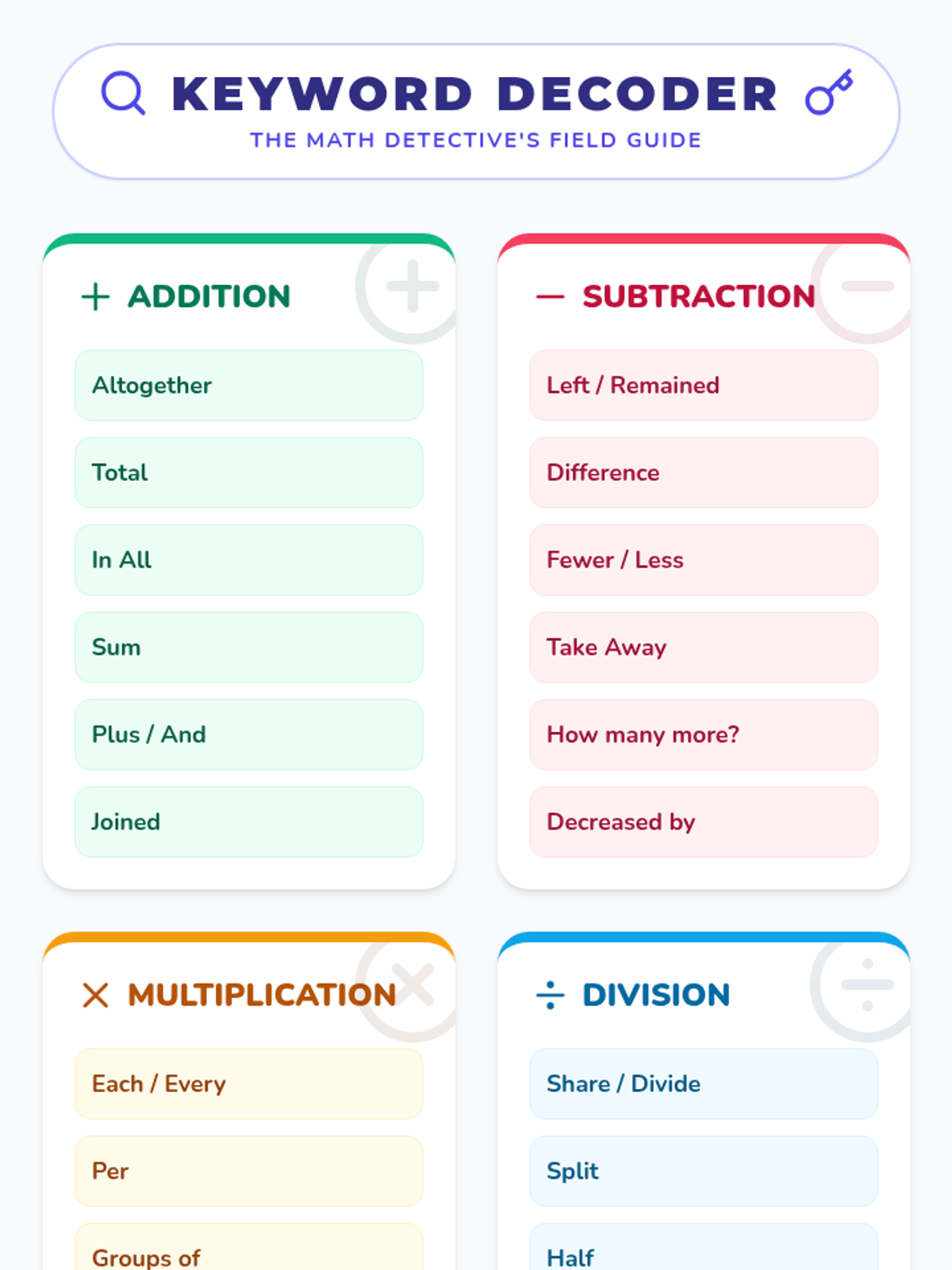
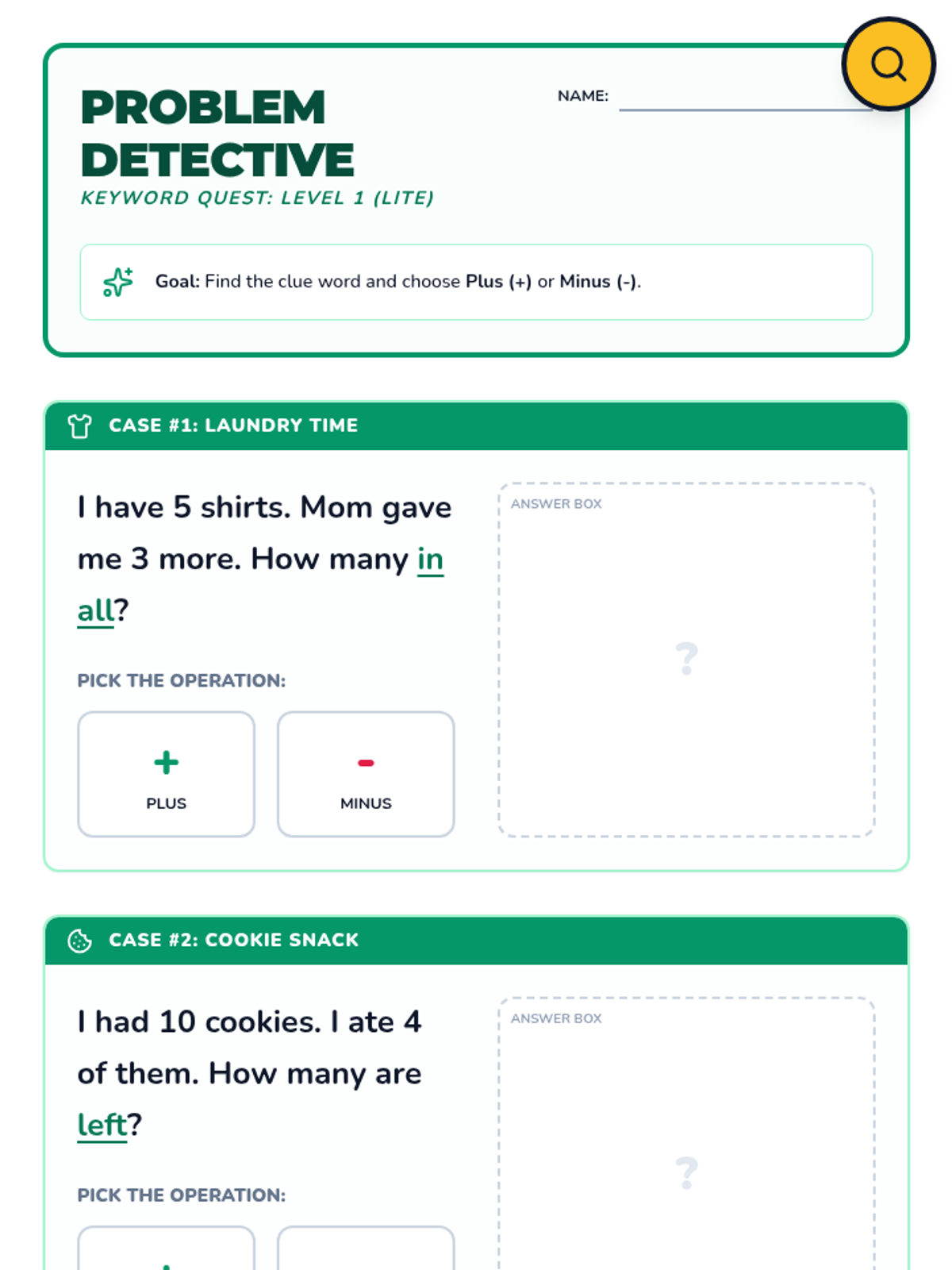
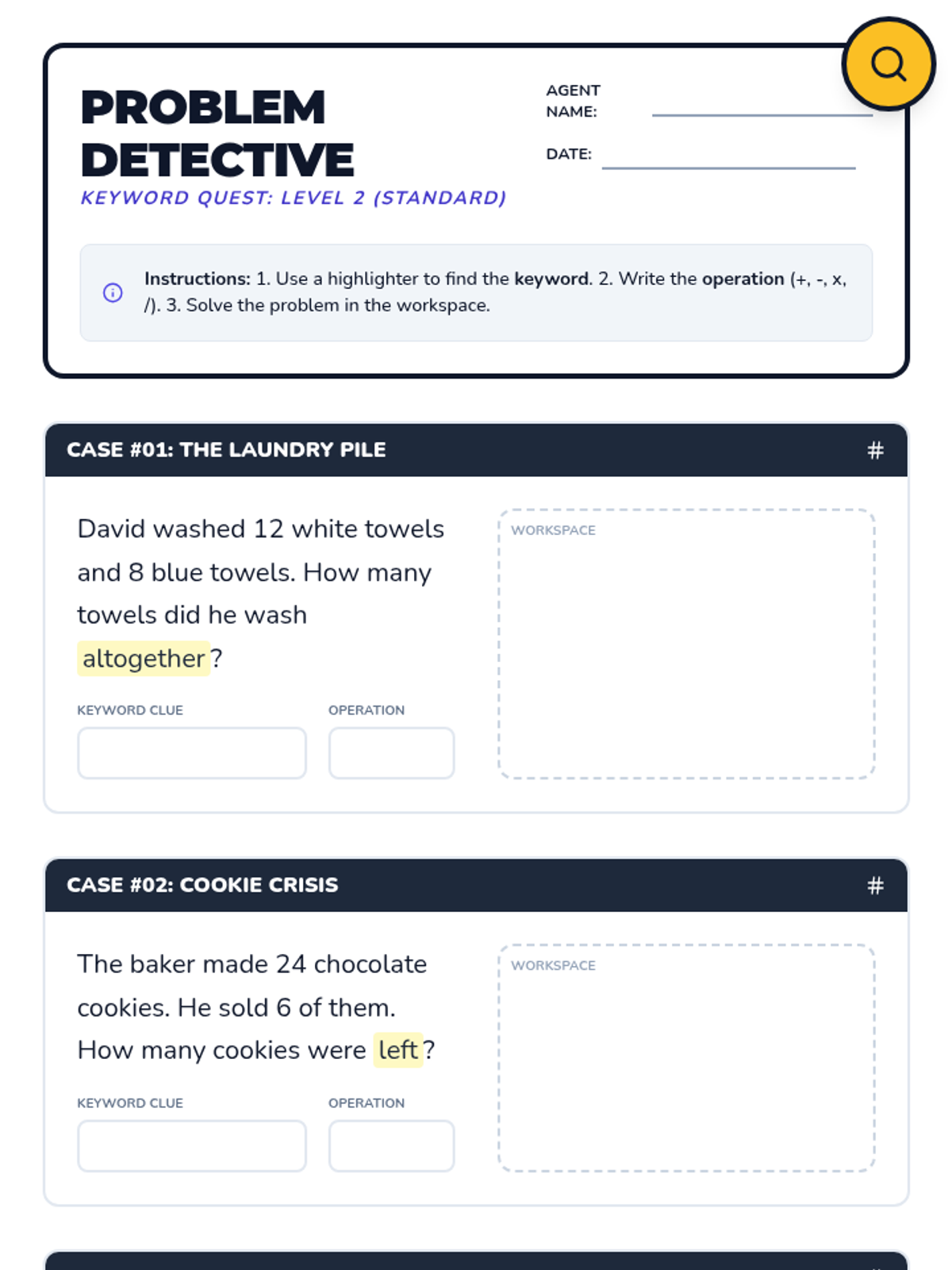
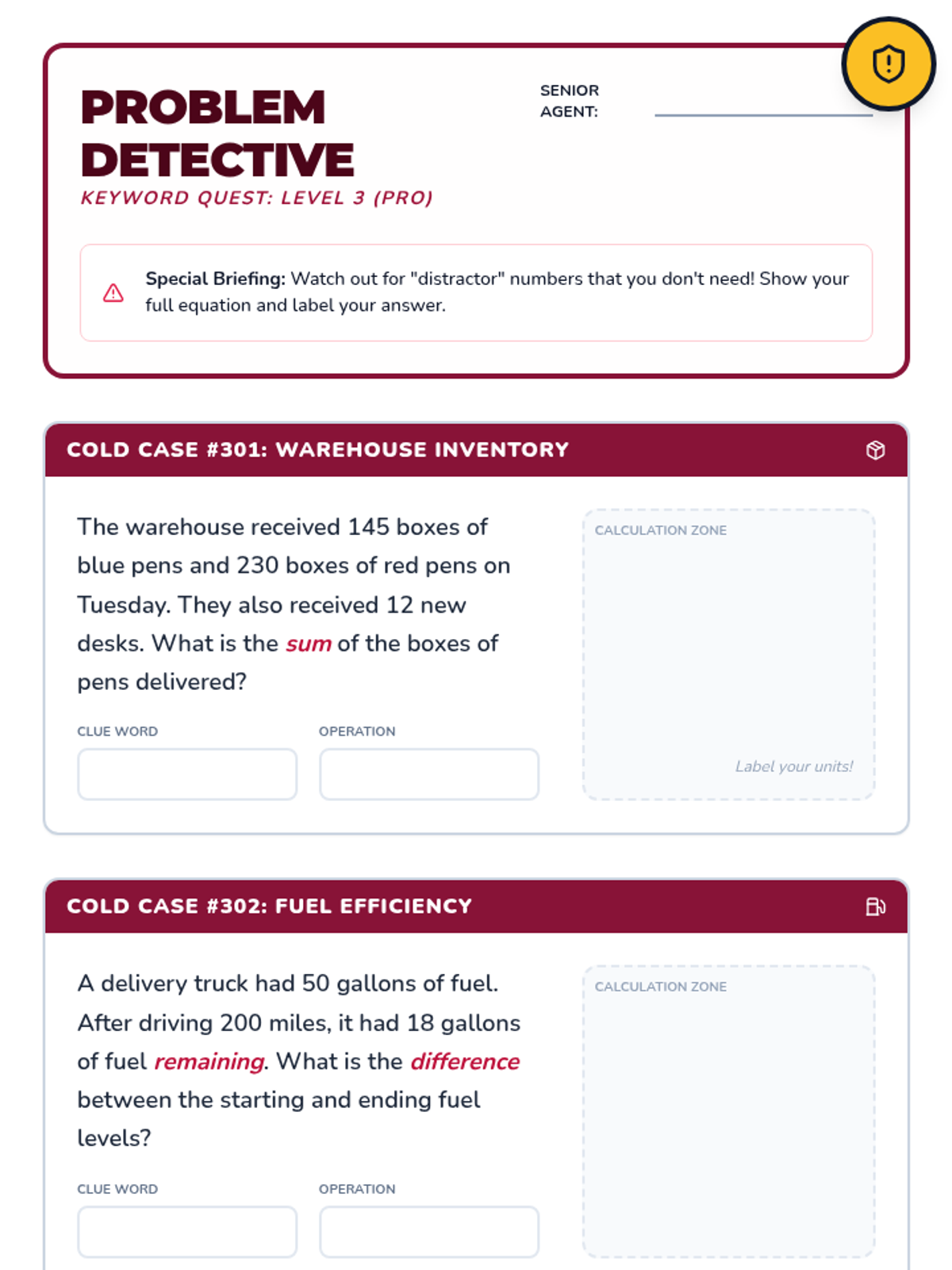
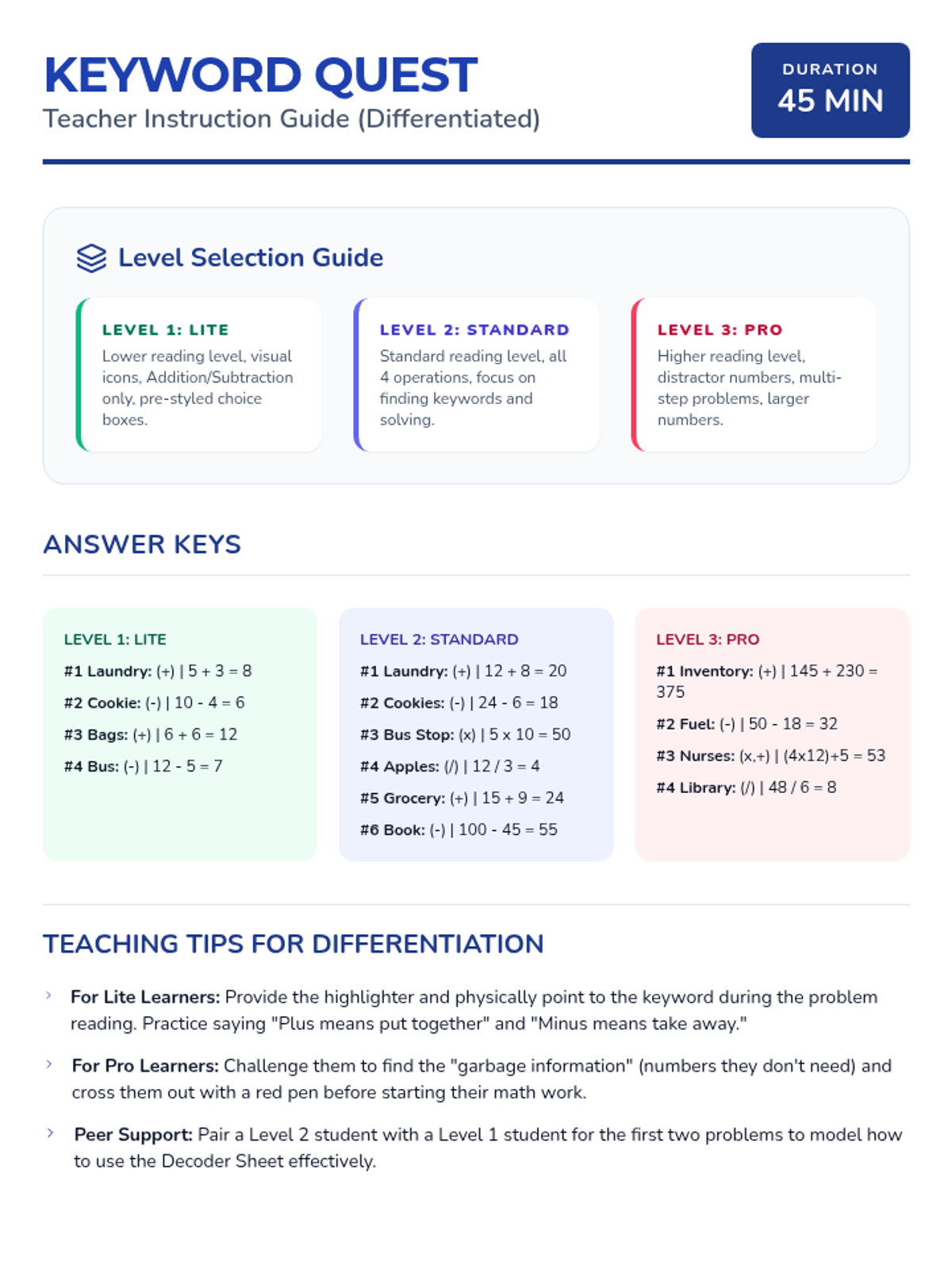
A lesson focused on identifying and using mathematical keywords to solve word problems in real-life scenarios. Students act as 'Math Detectives' to uncover clues that tell them which operation to use.
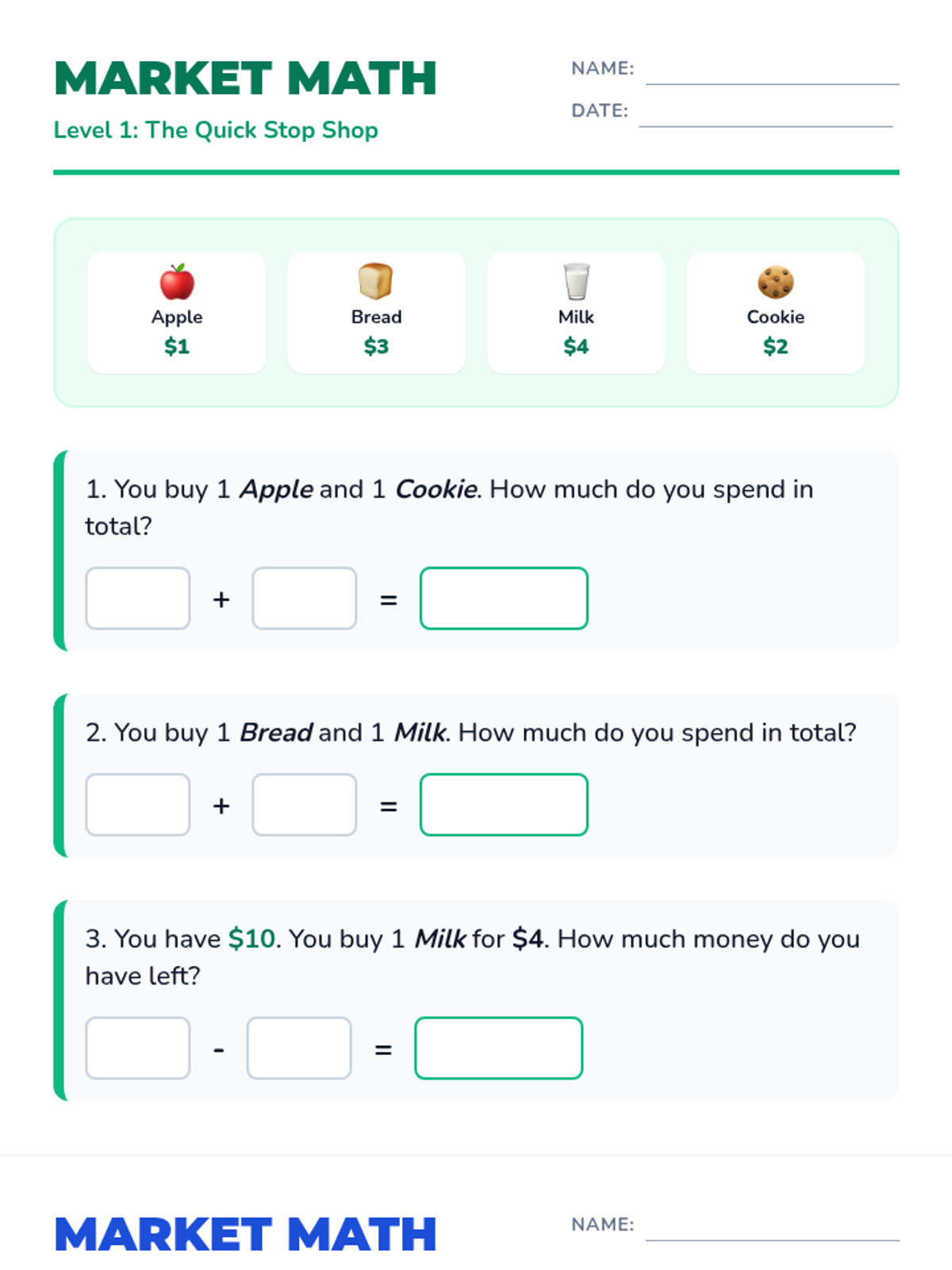
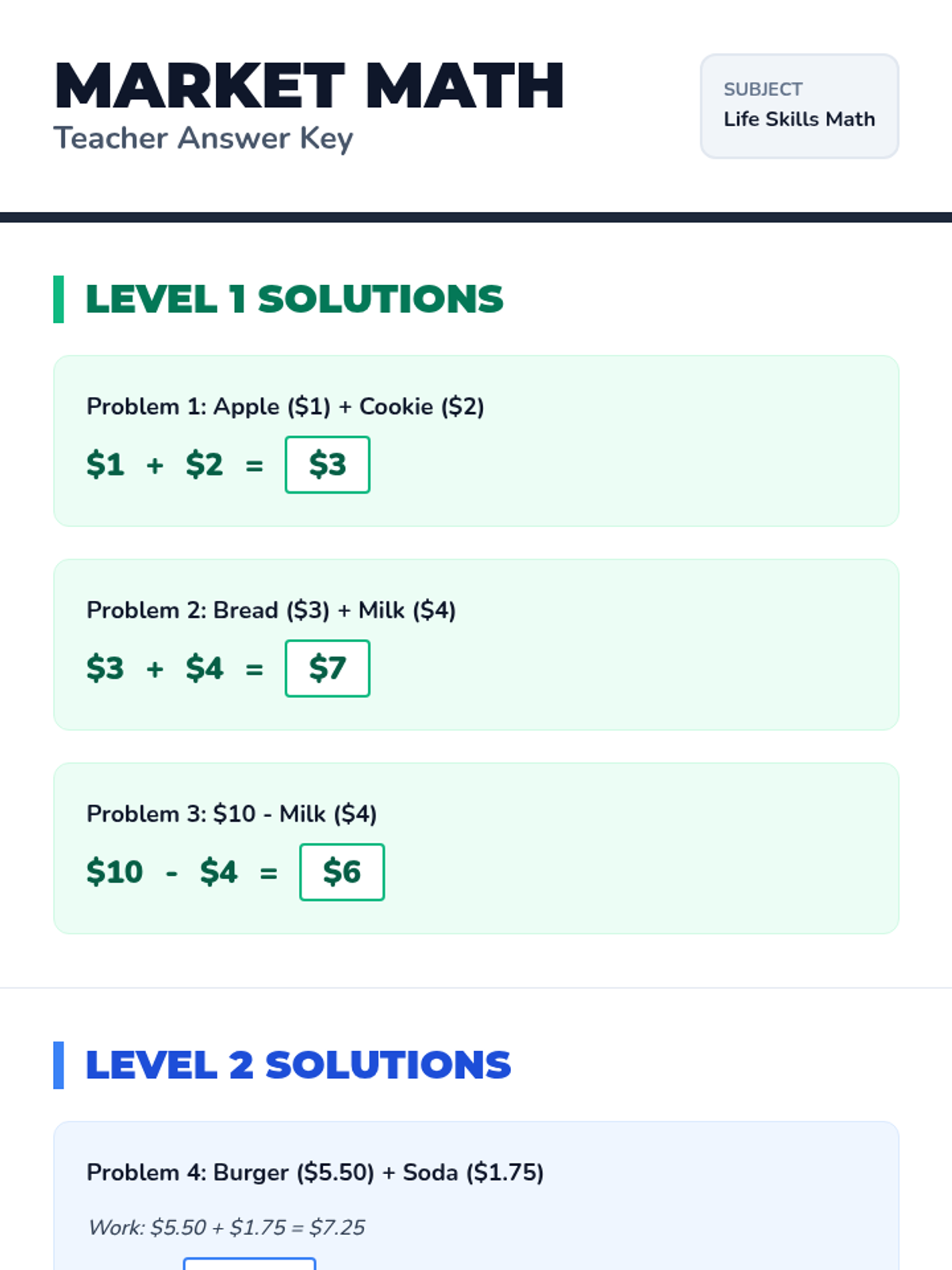
A comprehensive lesson on applying basic math skills to real-world shopping scenarios, featuring differentiated word problems for various ability levels.
This lesson teaches students how to subtract 3-digit numbers by using the 'add up' strategy on an open number line, visualizing the difference as distance between two points.
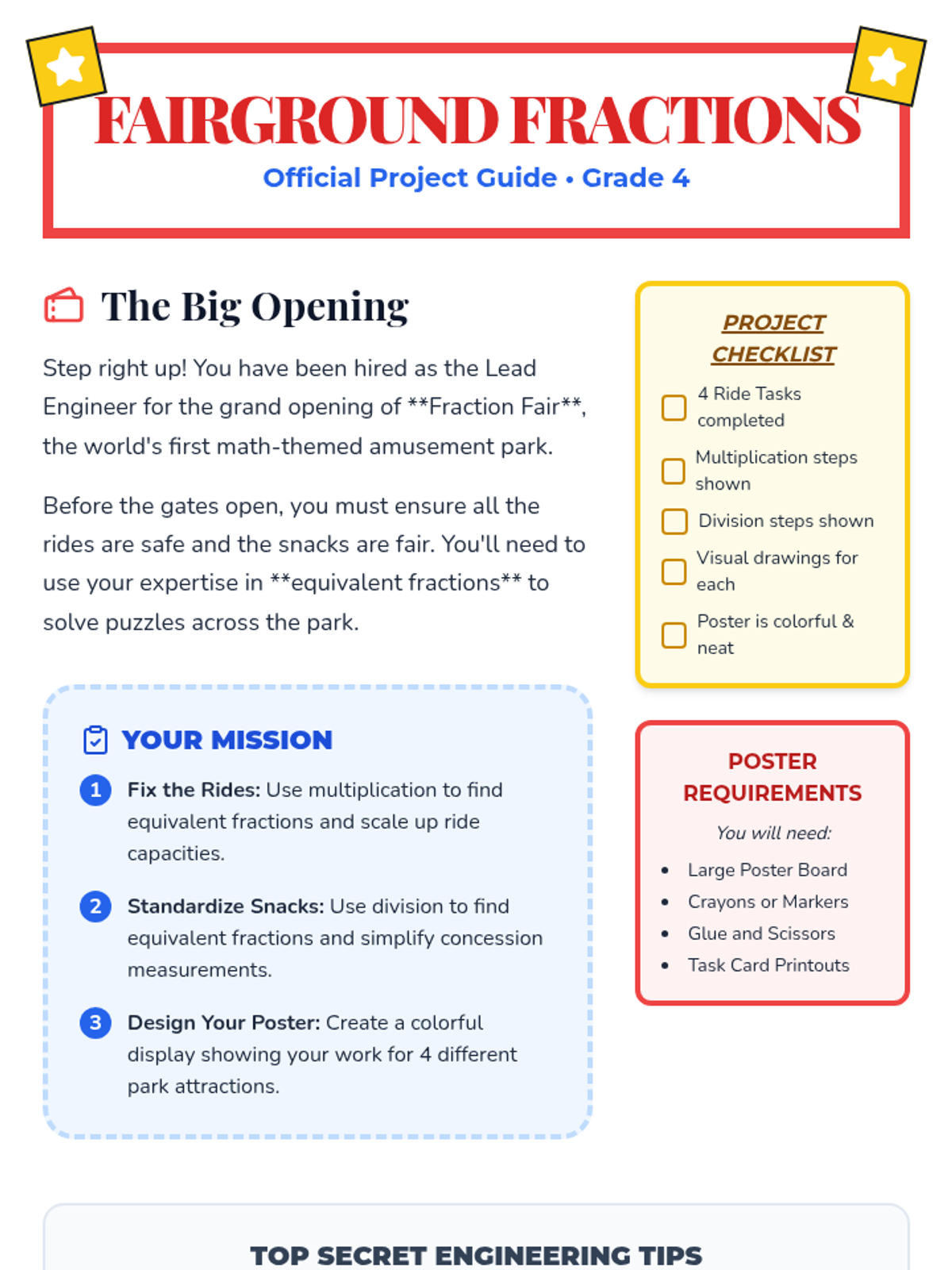
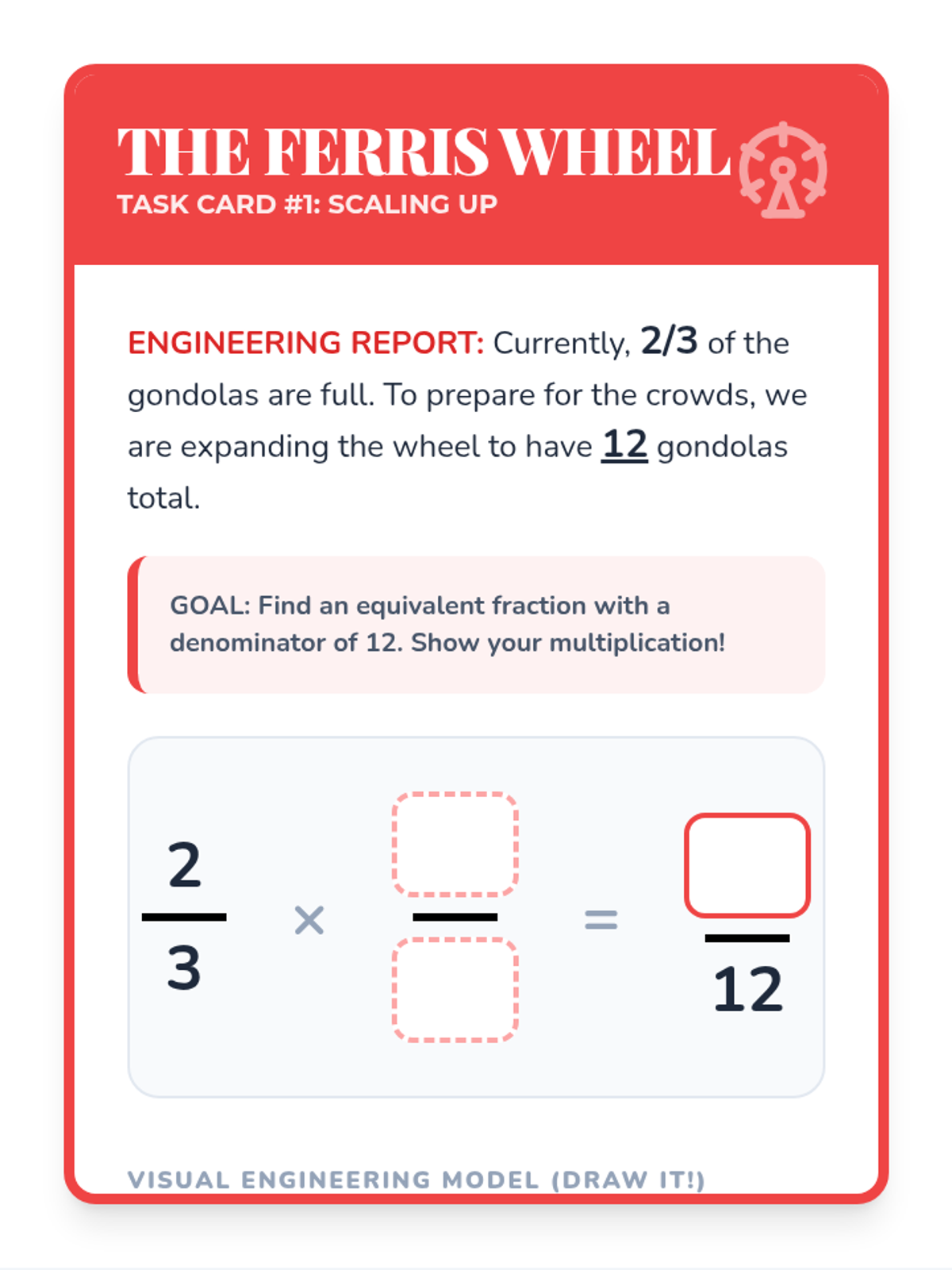
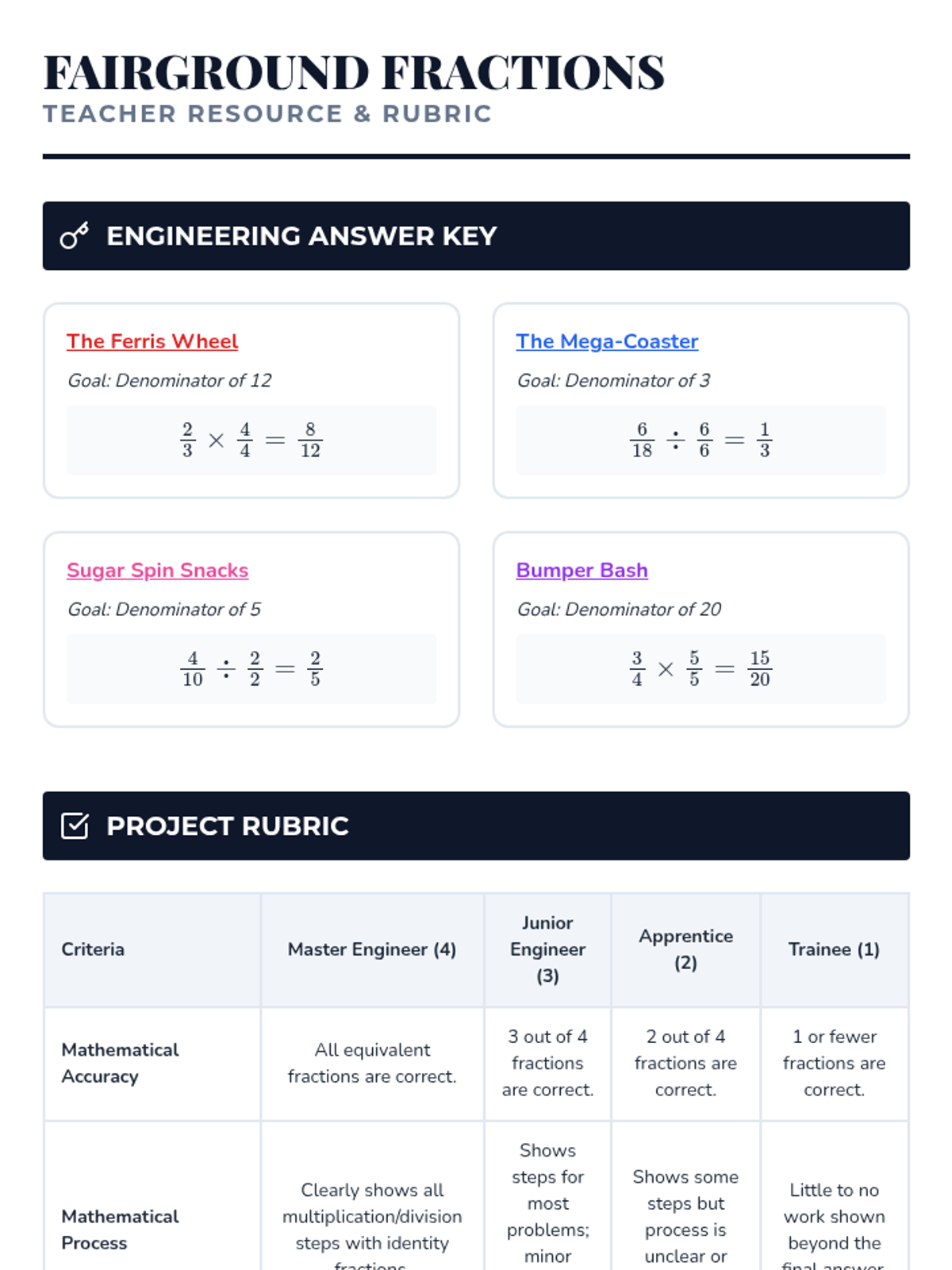
A math project where students apply their knowledge of equivalent fractions to design and manage a carnival. Students will use multiplication and division to scale ride capacities, ticket prices, and concession portions.
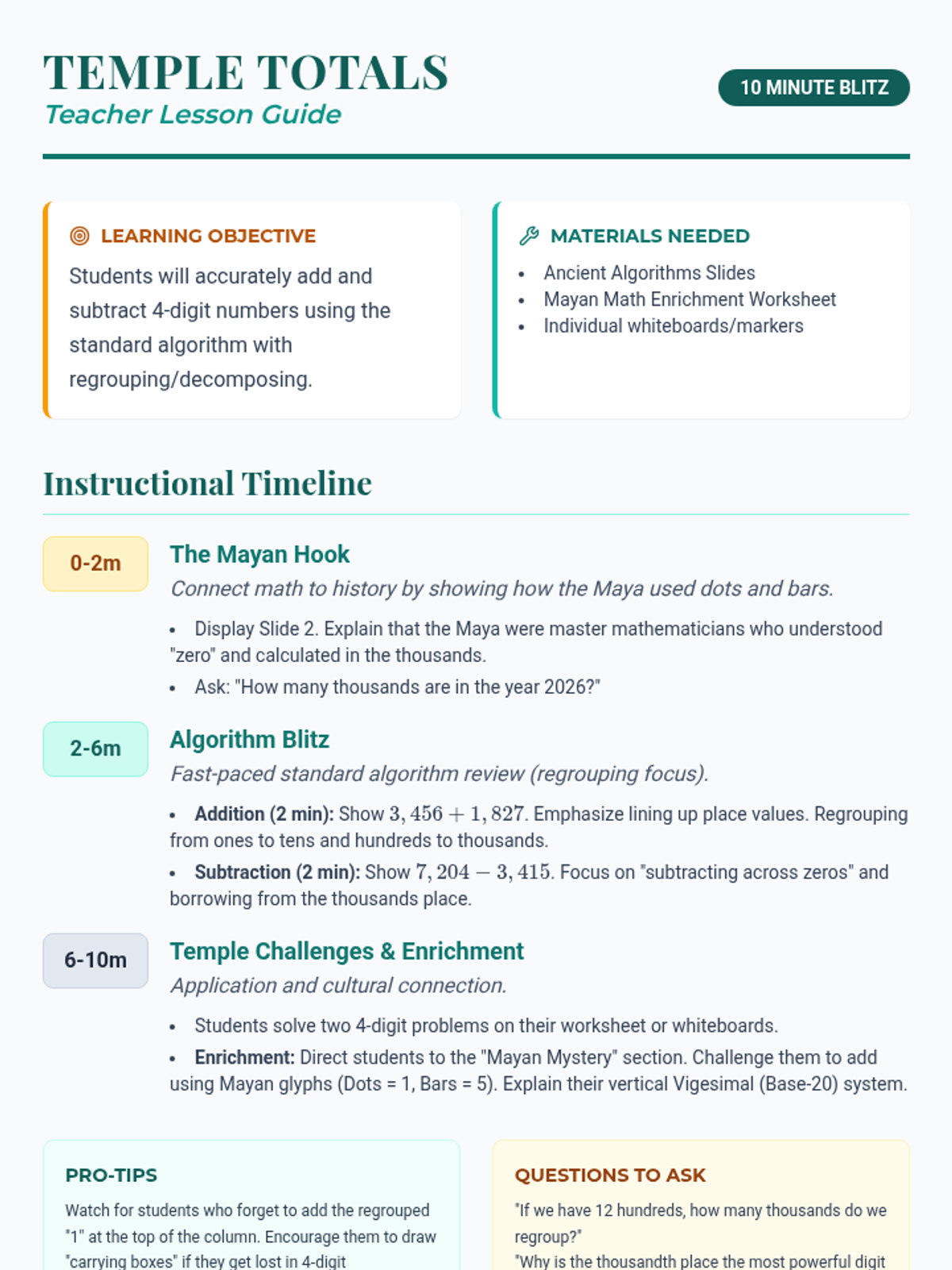
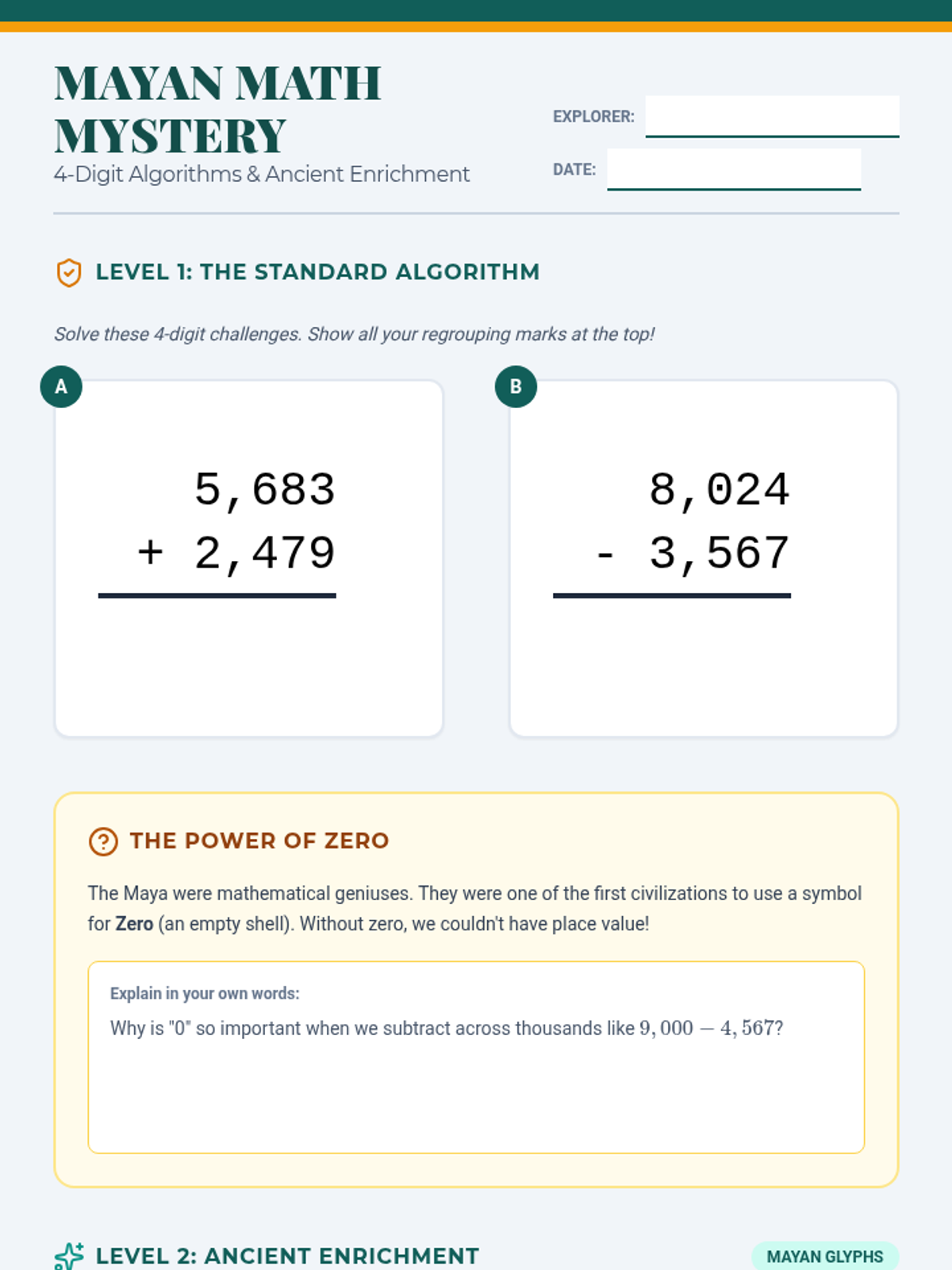
A fast-paced 10-minute review of 4-digit addition and subtraction using the standard algorithm, featuring an enrichment look at the Mayan base-20 system and large numbers.
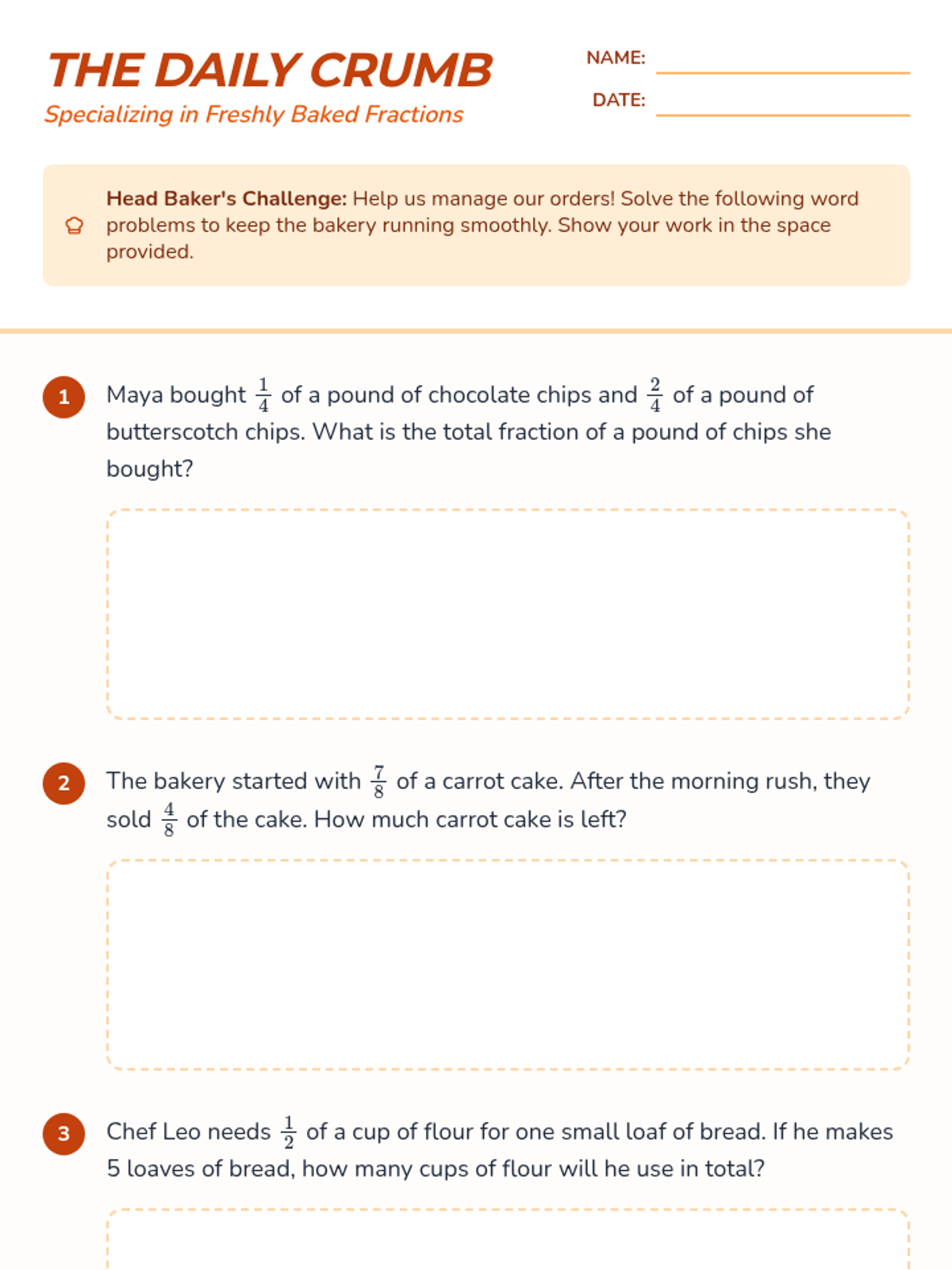
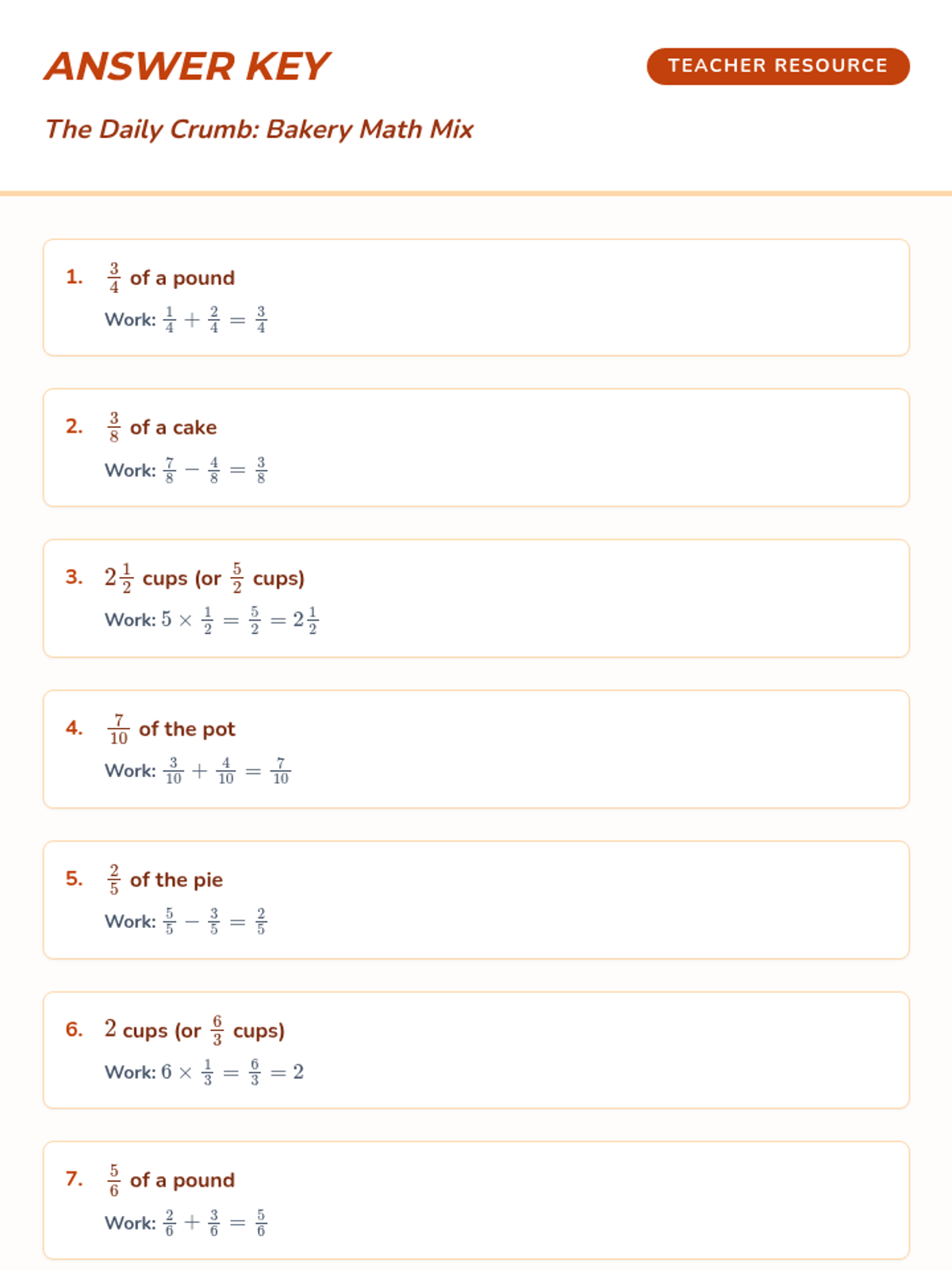
Students will solve 10 real-world word problems themed around a bakery, focusing on addition, subtraction, and multiplication of fractions by whole numbers.
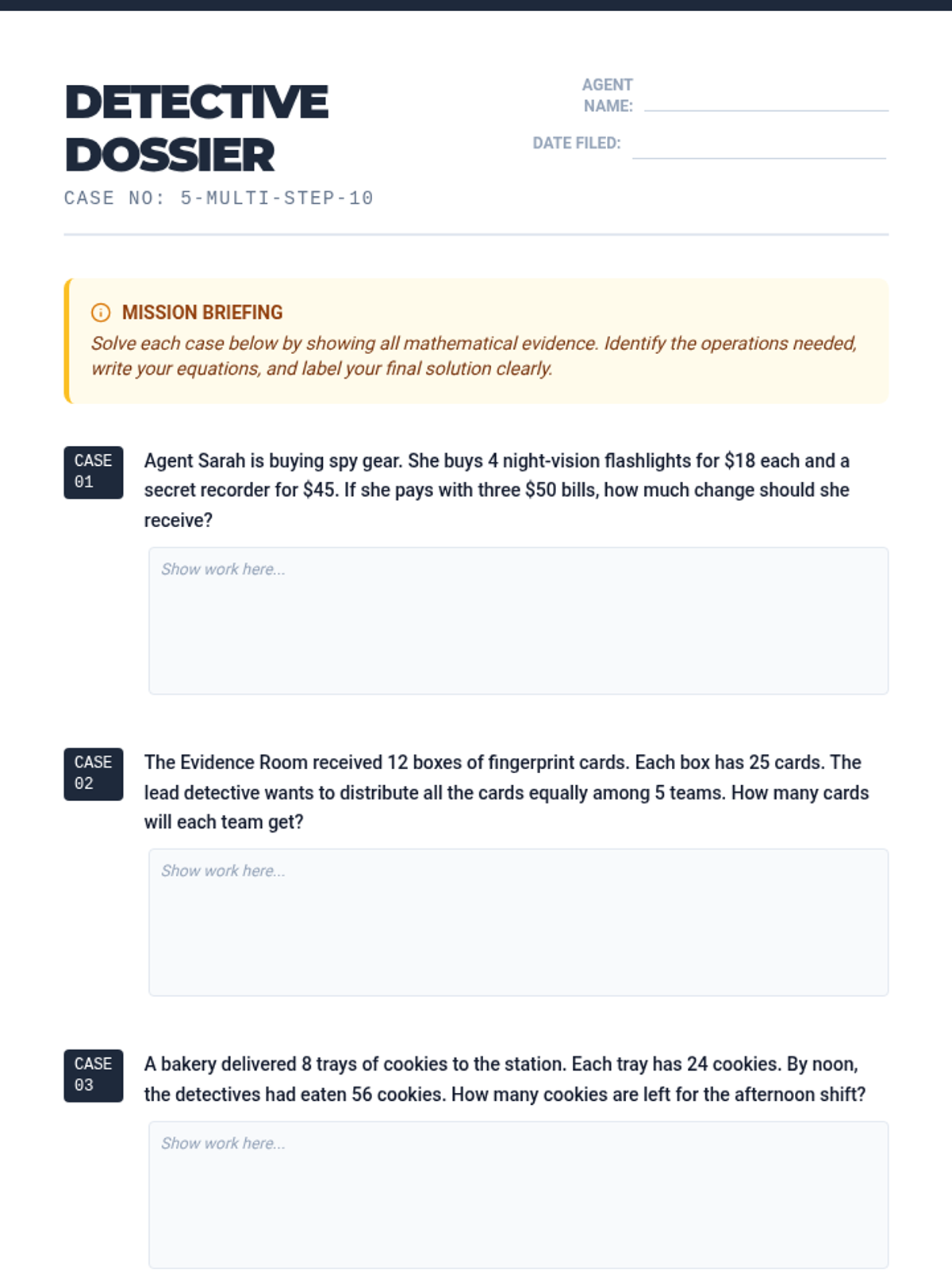
Students become math detectives to solve complex, multi-step word problems involving addition, subtraction, multiplication, and division. The lesson focuses on identifying operations, writing equations, and verifying solutions in real-world scenarios.
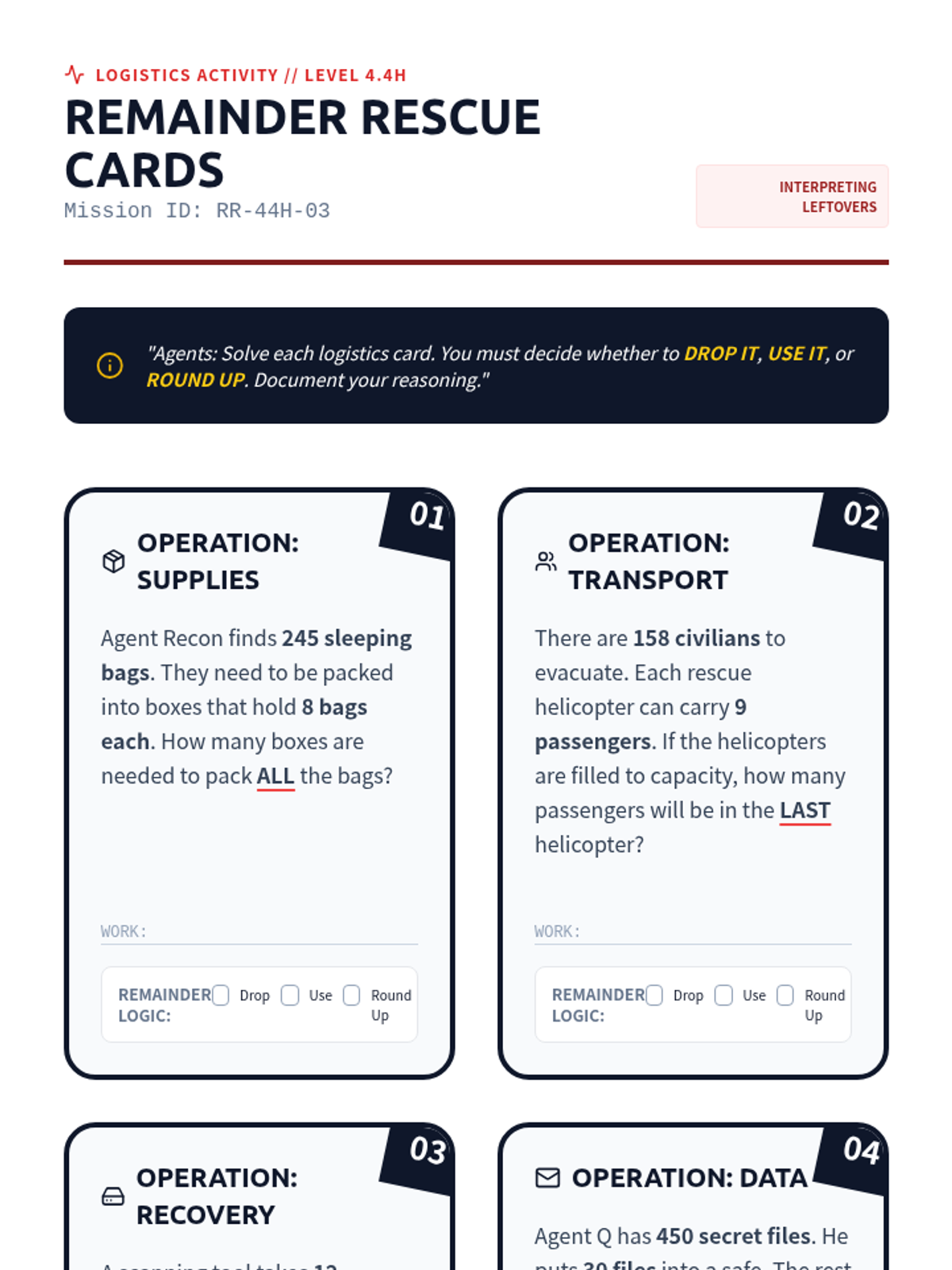
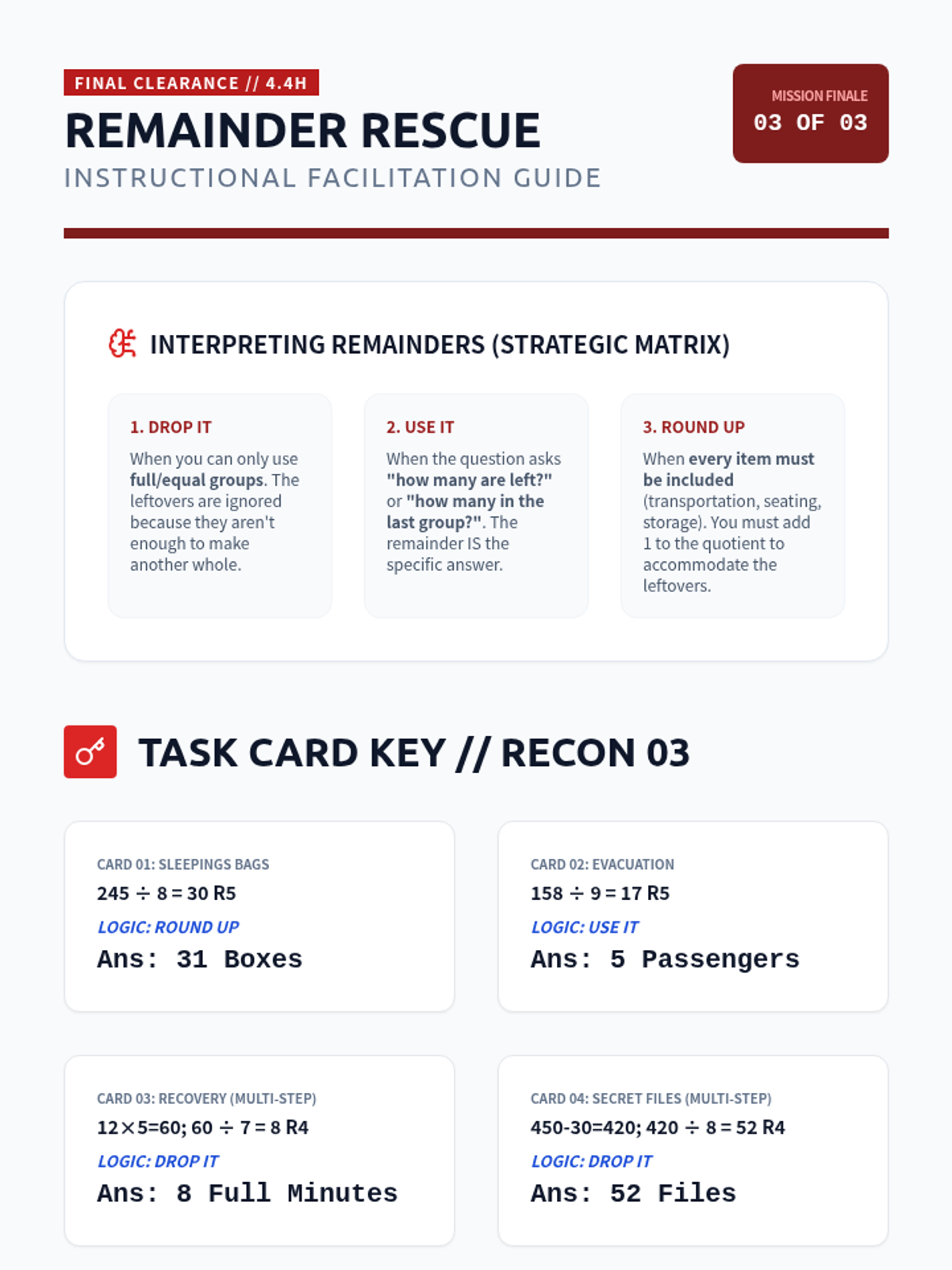
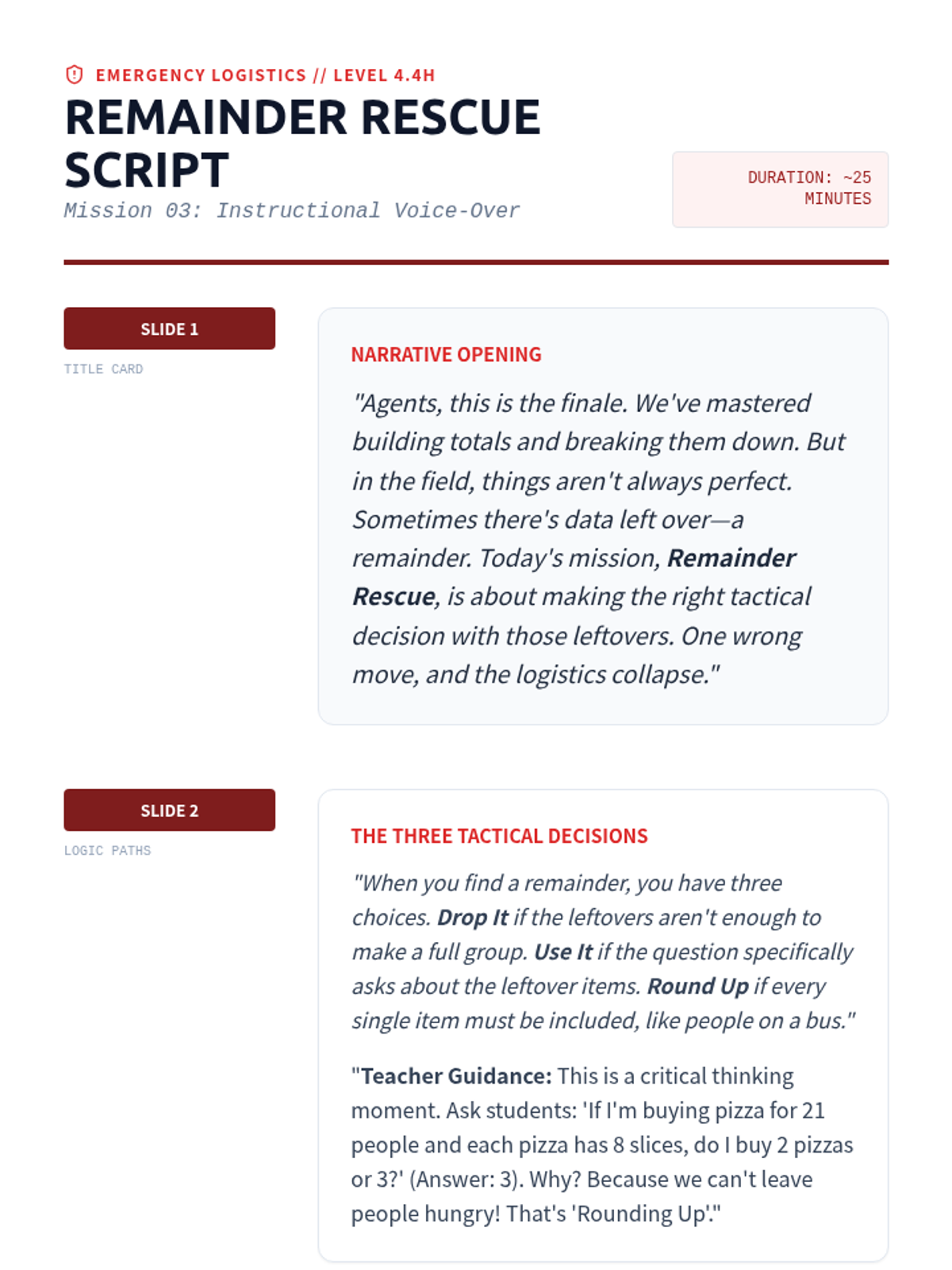
Students solve complex one- and two-step problems and learn to interpret remainders in various real-world contexts.
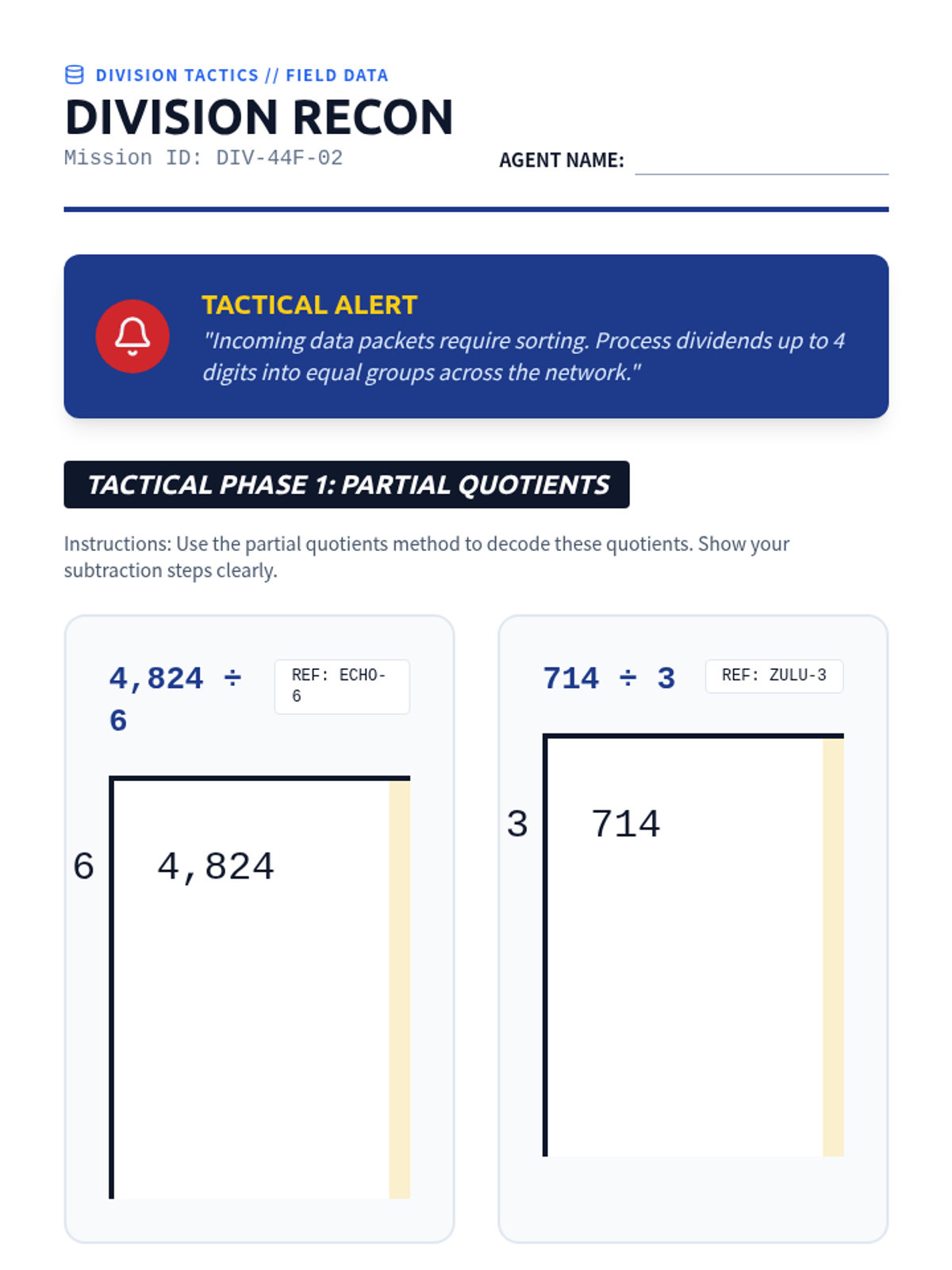
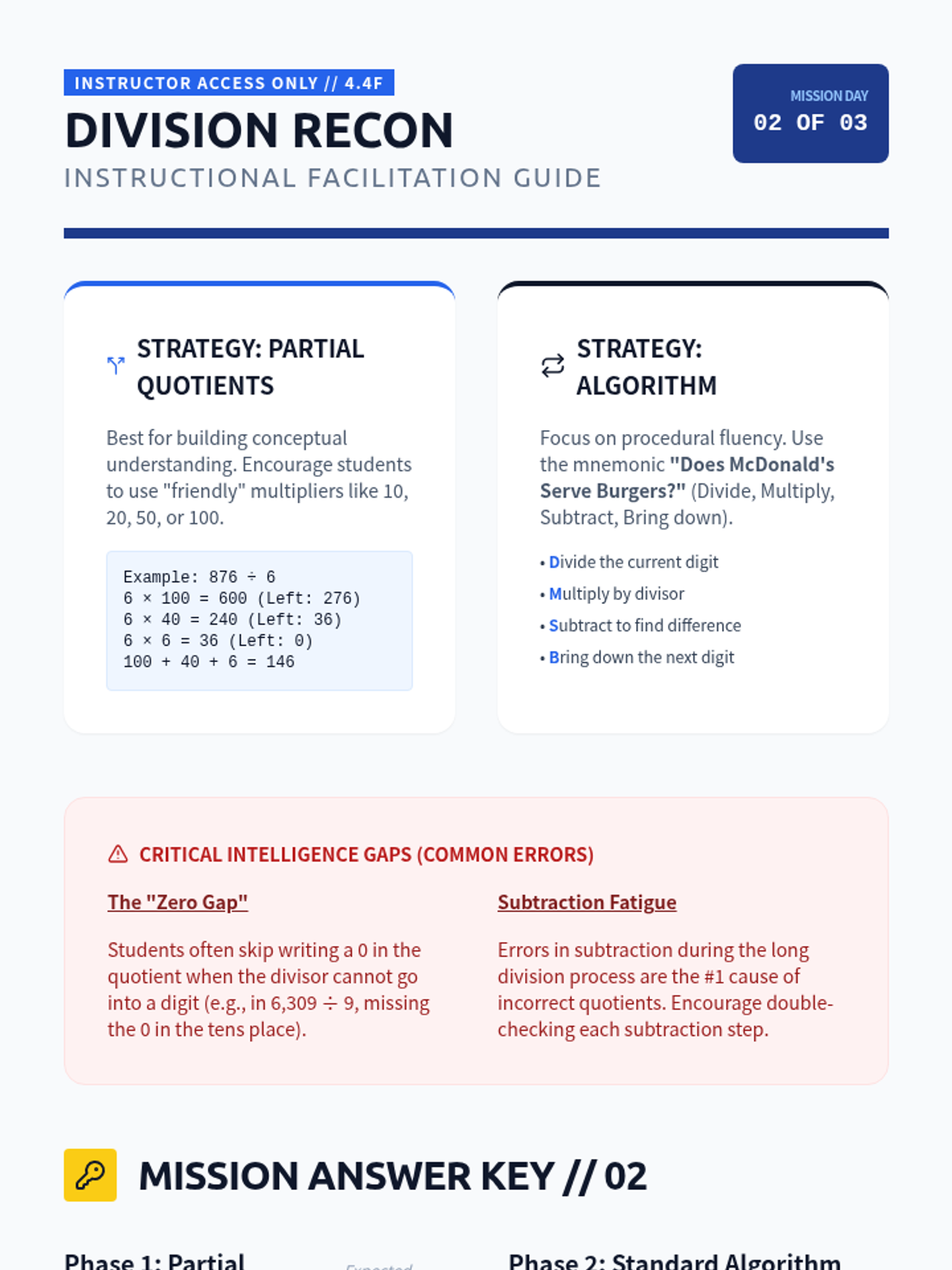
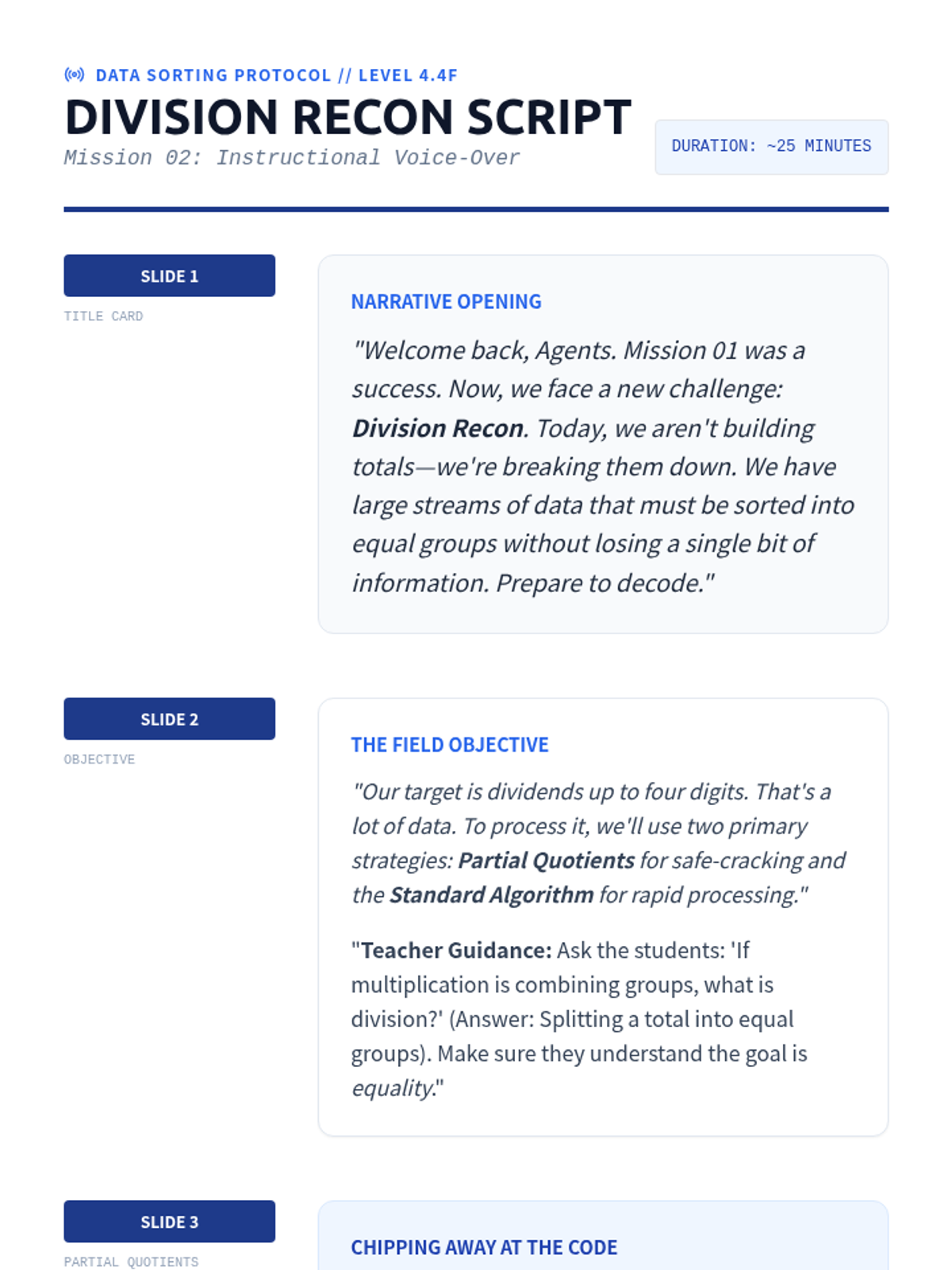
Students investigate division strategies for dividends up to four digits, focusing on partial quotients and the standard algorithm.
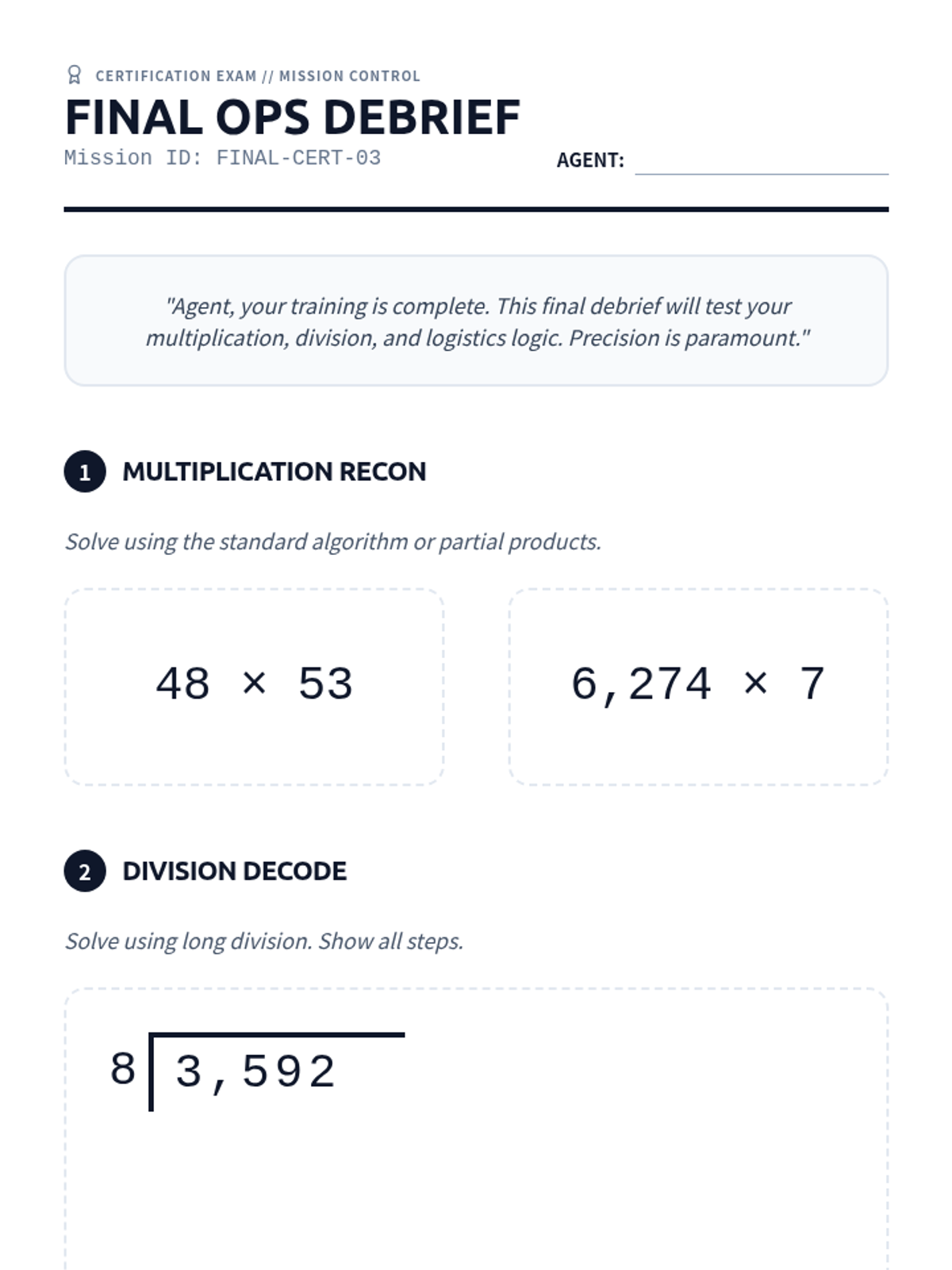
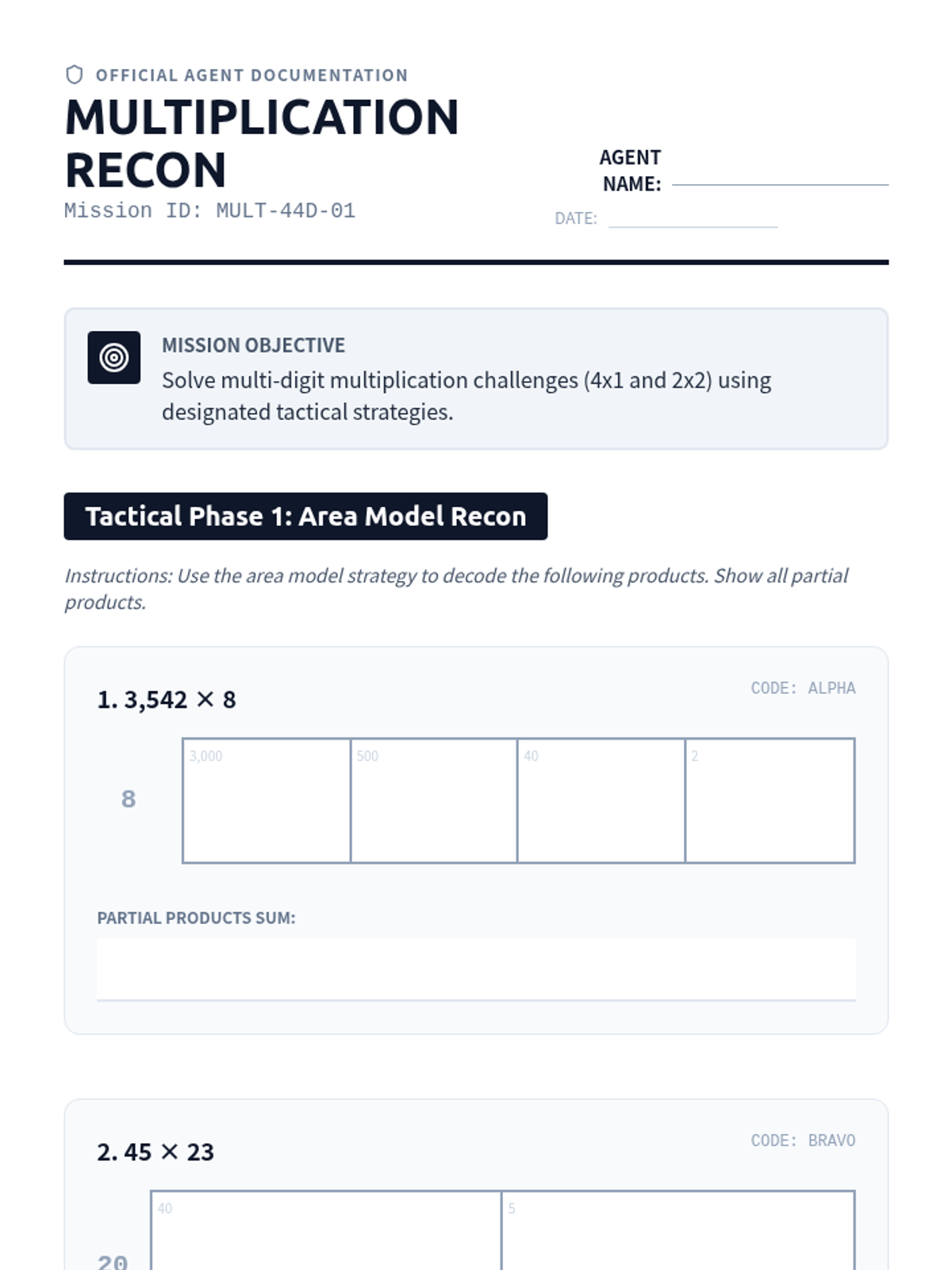
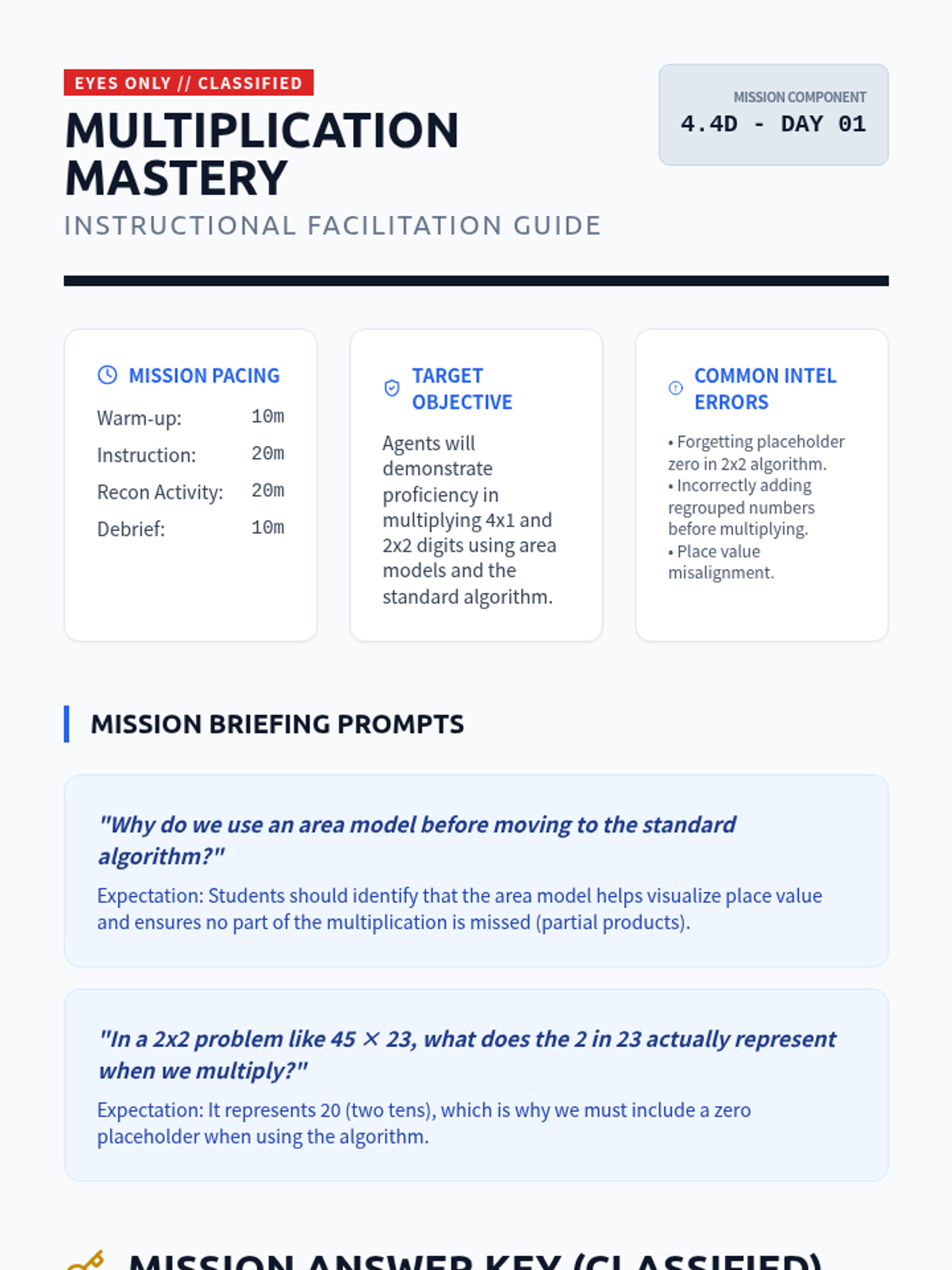
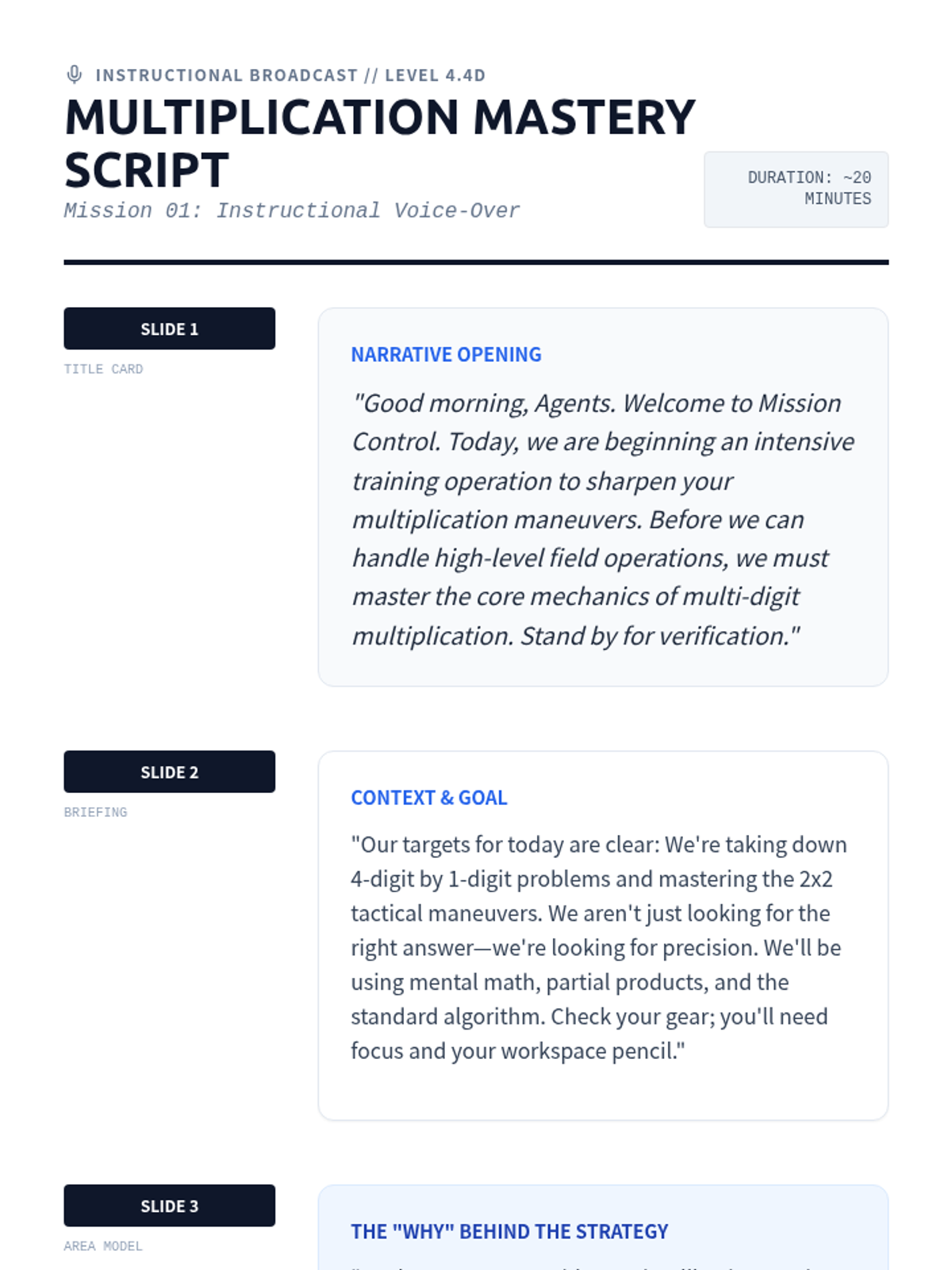
Students master multi-digit multiplication using area models, partial products, and the standard algorithm to solve 4x1 and 2x2 problems.
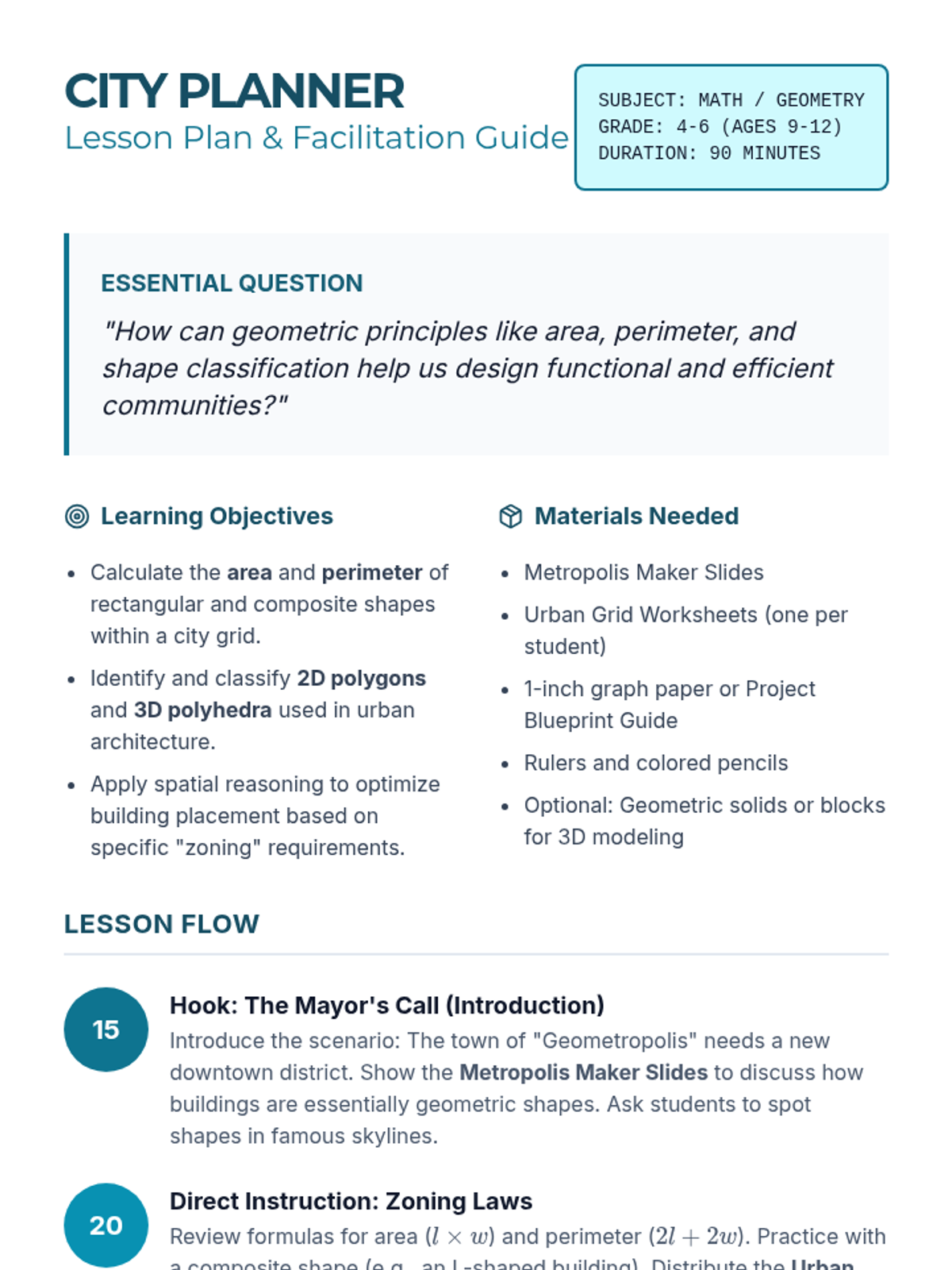
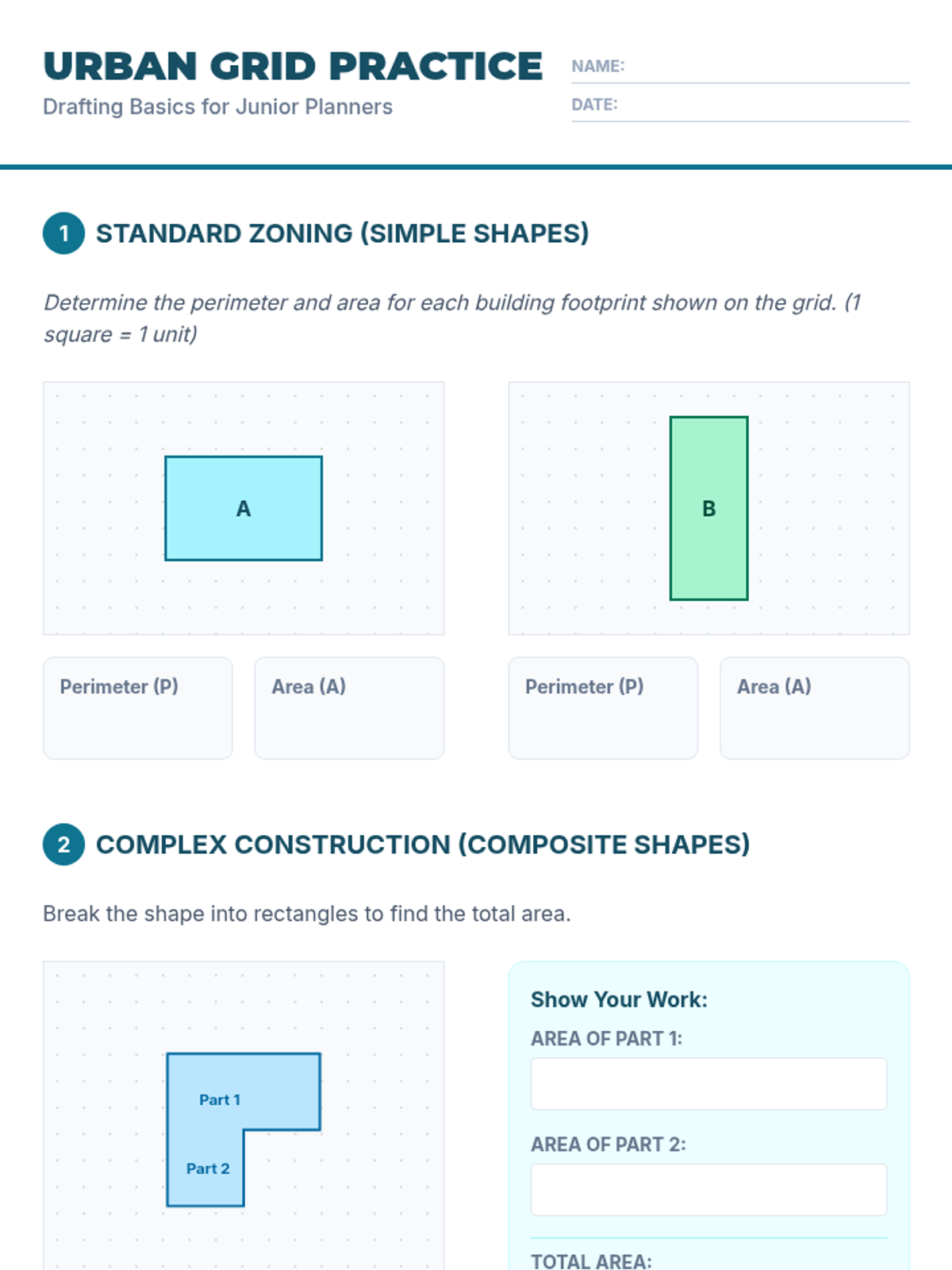
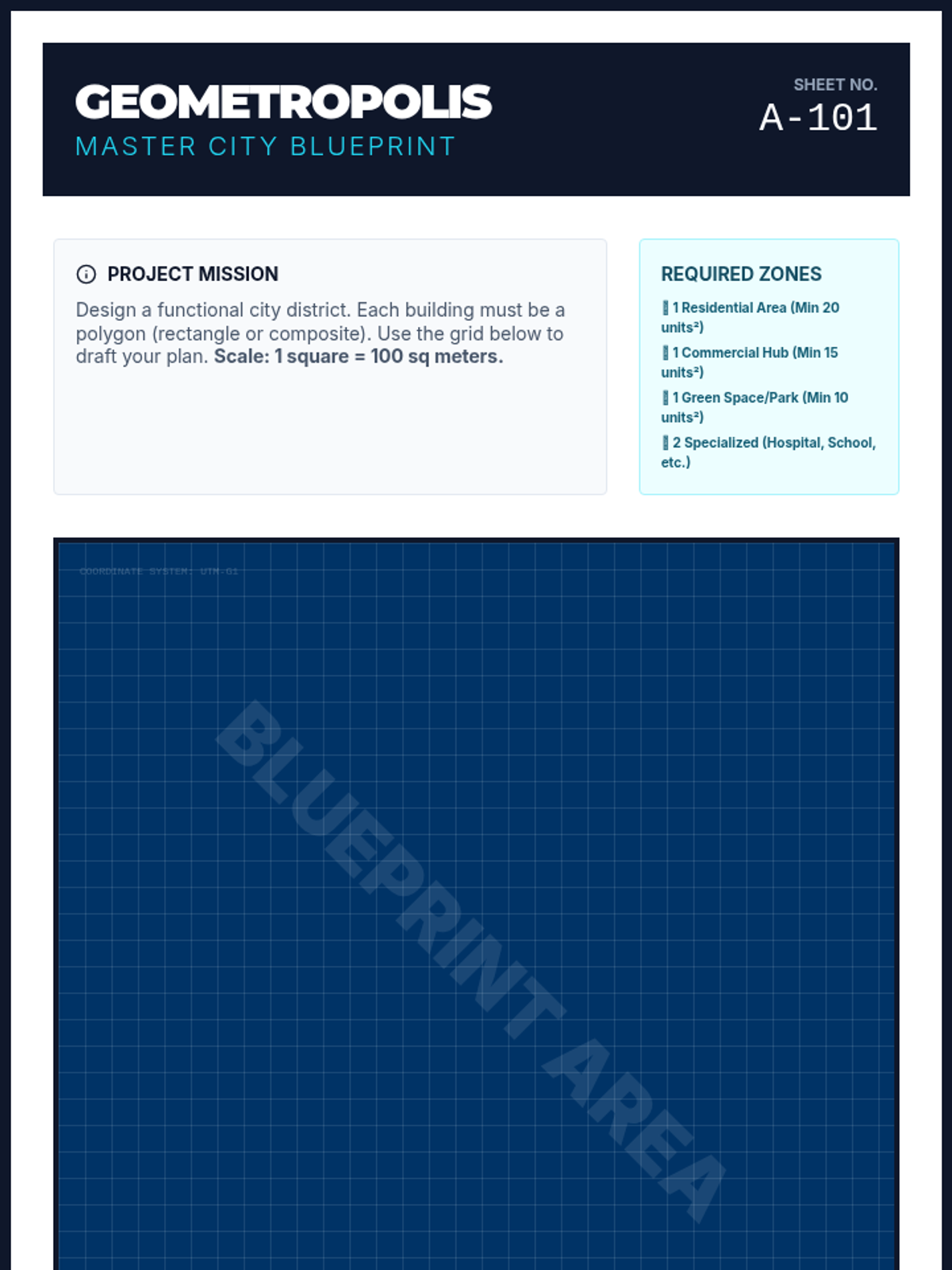
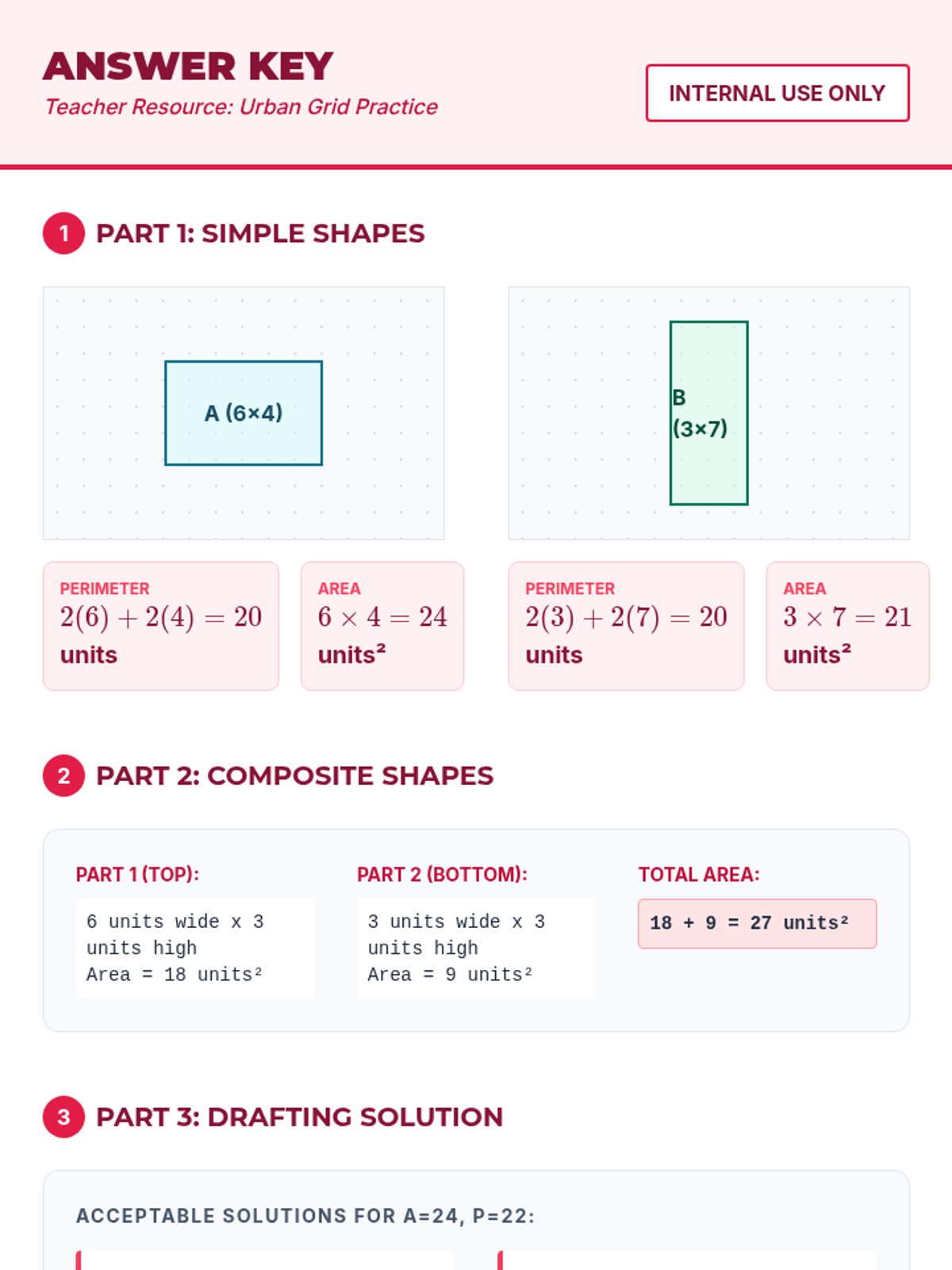
A hands-on geometry lesson where students act as urban planners, using 2D and 3D shapes to design a functional city while calculating area and perimeter.