Advanced elapsed time practice focusing on five-minute intervals, providing the highest level of challenge in this unit.
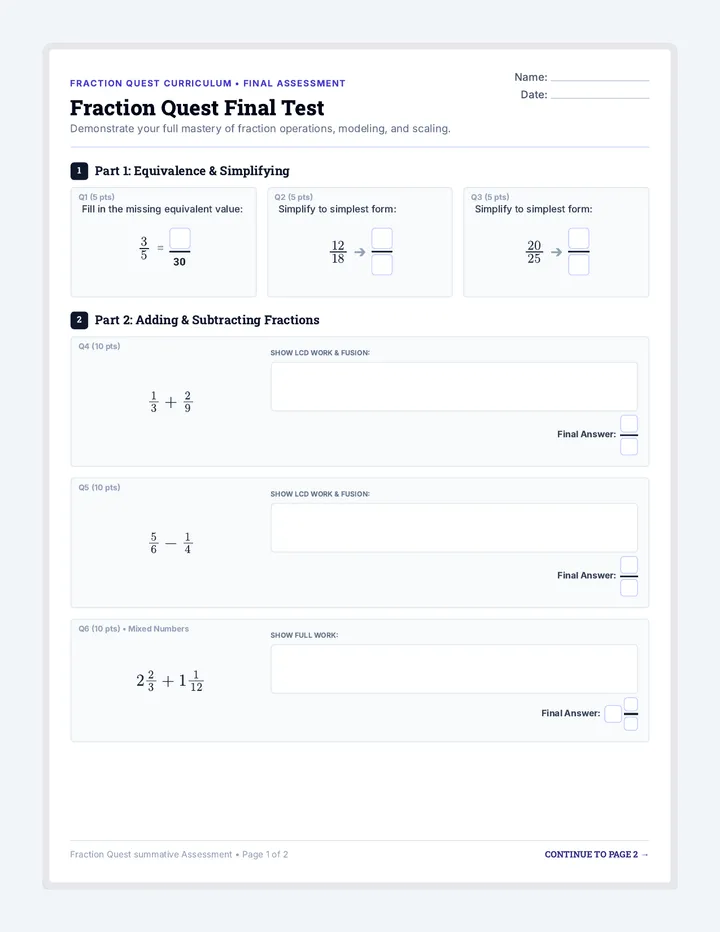
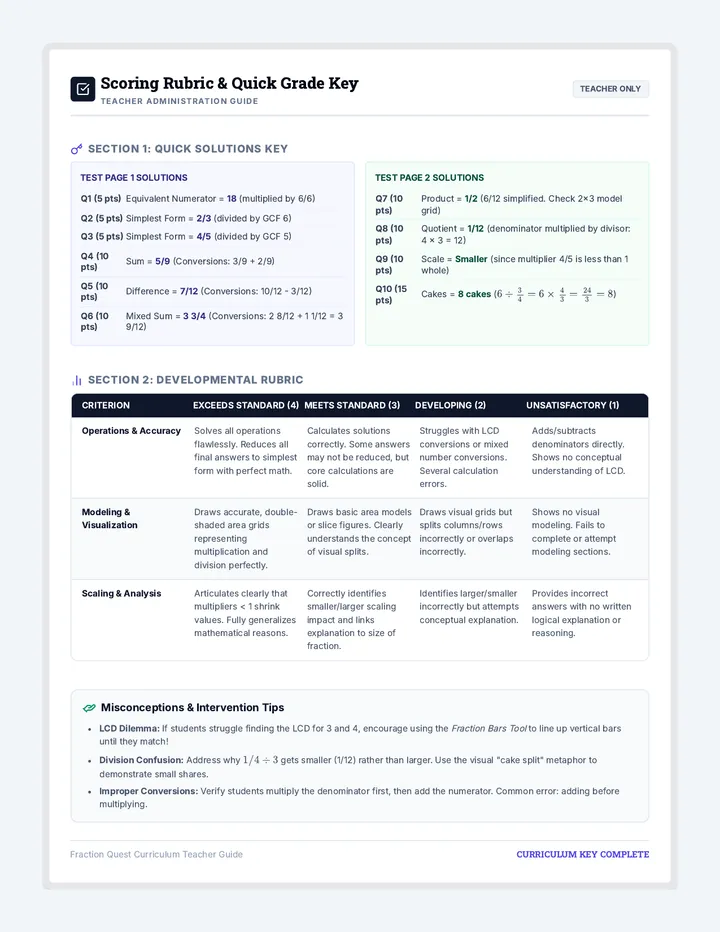
A comprehensive review and assessment of all four fraction operations. Students demonstrate their mastery through an interactive review, final unit assessment, and student reflection.
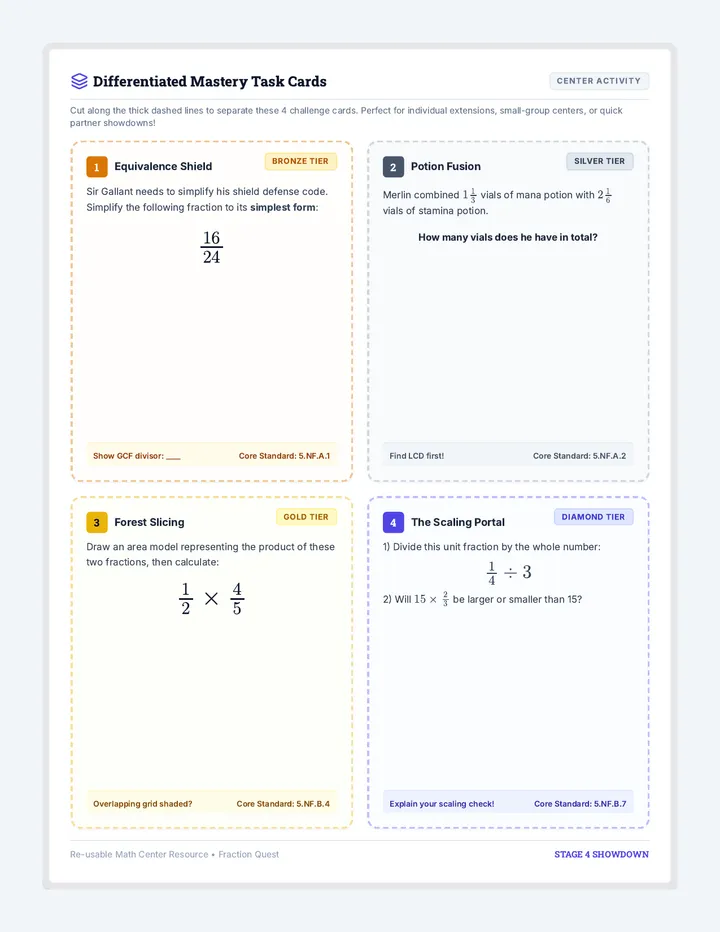
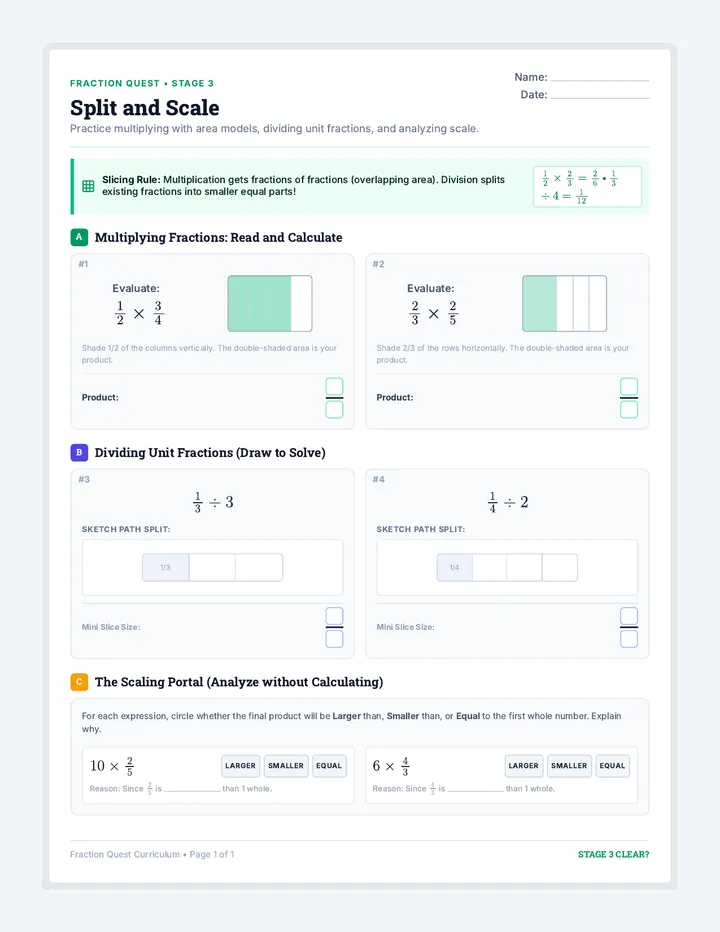
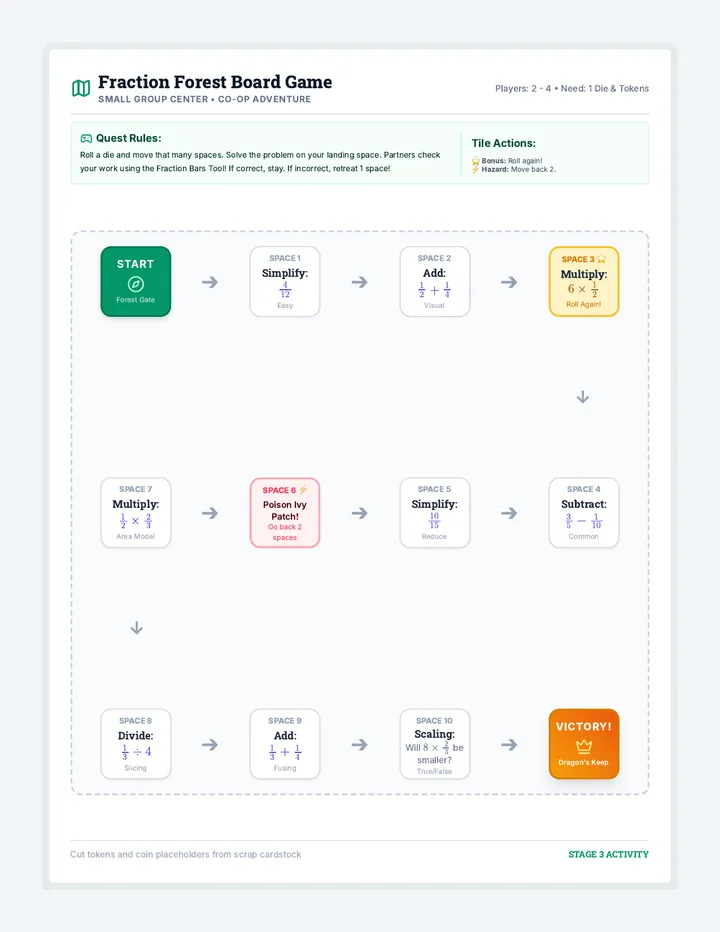
Multiplying and dividing fractions using area models, understanding scaling, and dividing unit fractions by whole numbers. Visual models help conceptualize these concepts.
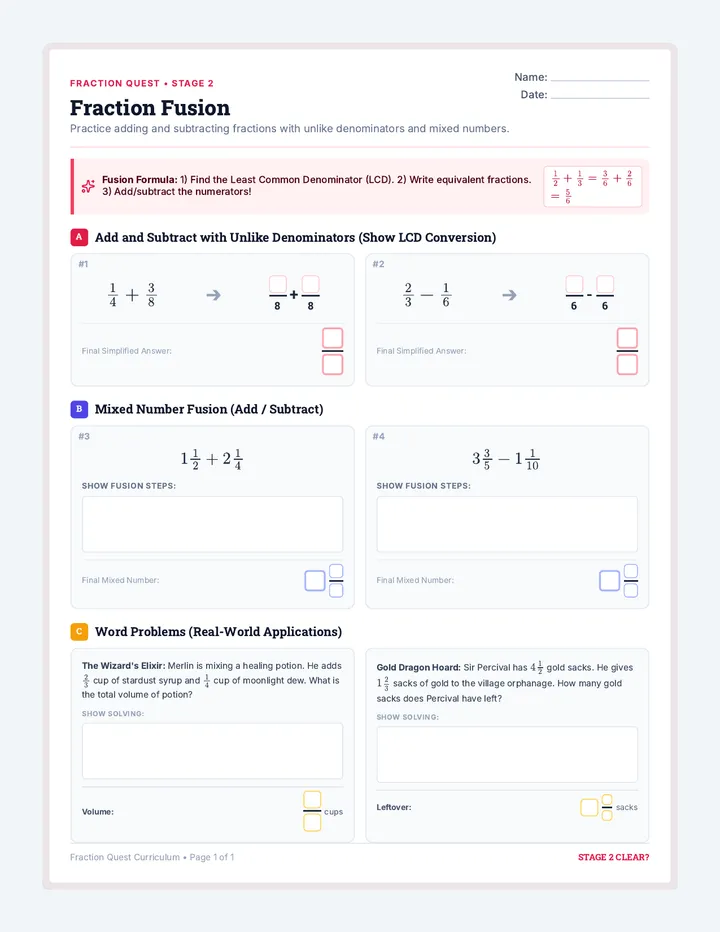
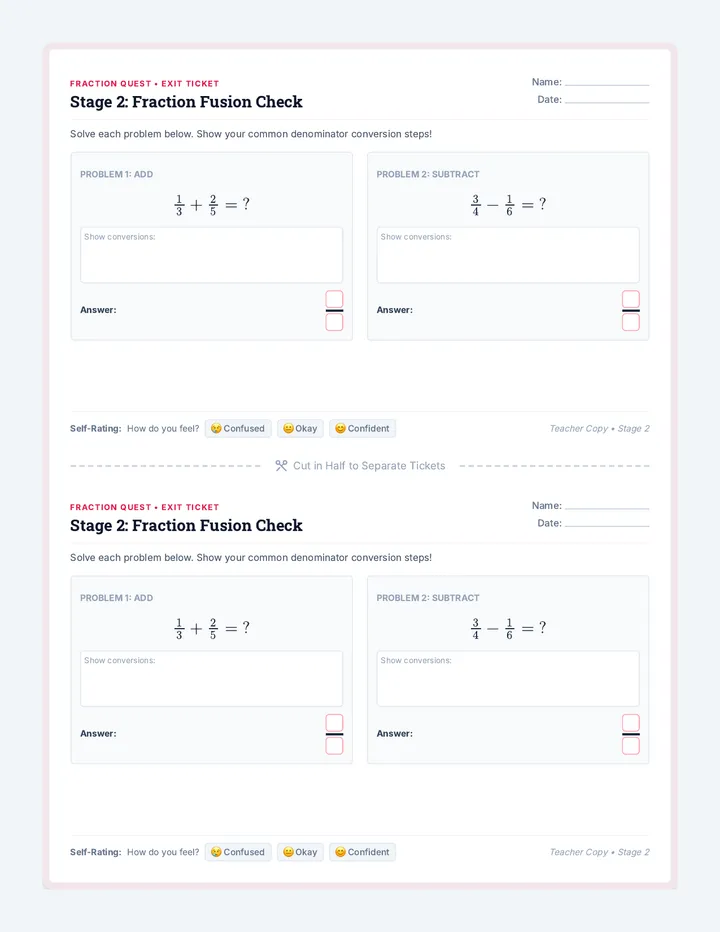
Adding and subtracting fractions with unlike denominators, including mixed numbers and standard real-world word problems. Students learn to find equivalent fractions with common denominators to add and subtract.
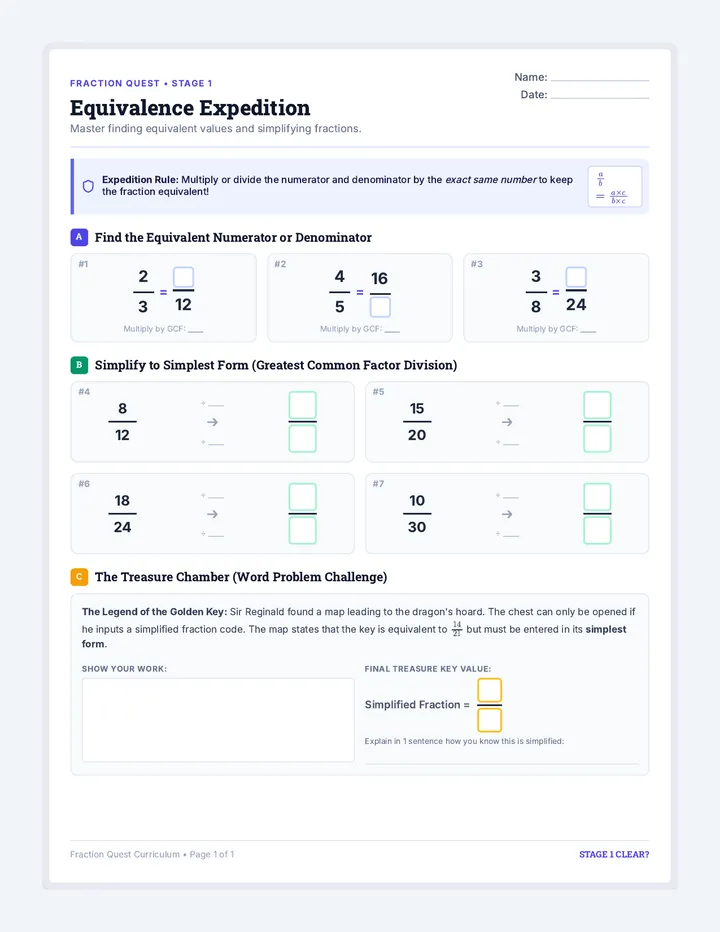
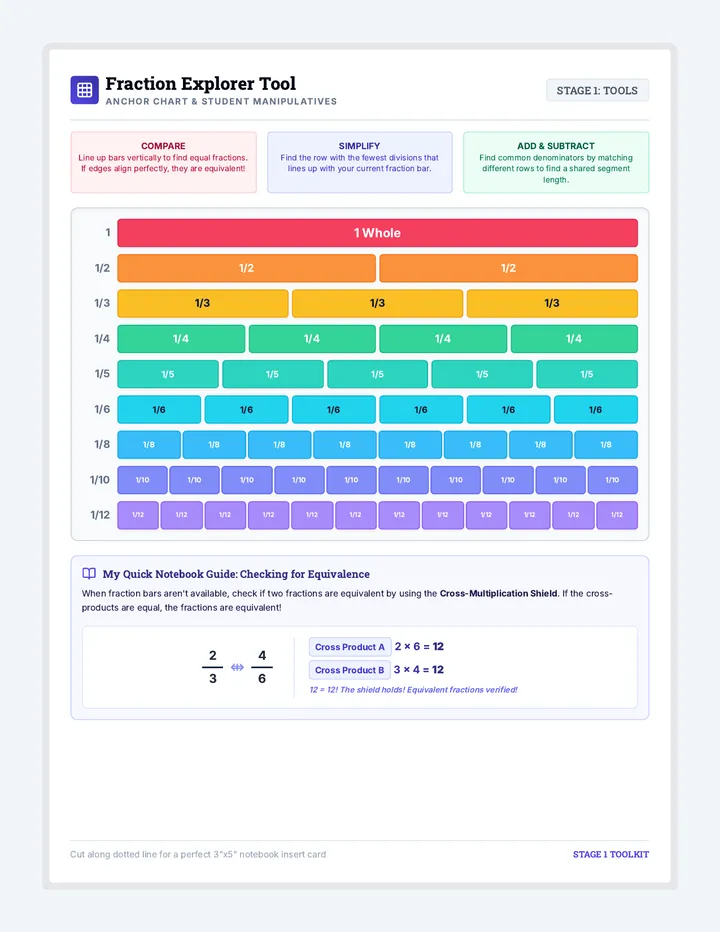
Mastering equivalent fractions and simplifying. Students discover visual equivalencies, identify common denominators, and reduce fractions to their simplest form using step-by-step mathematical reasoning.
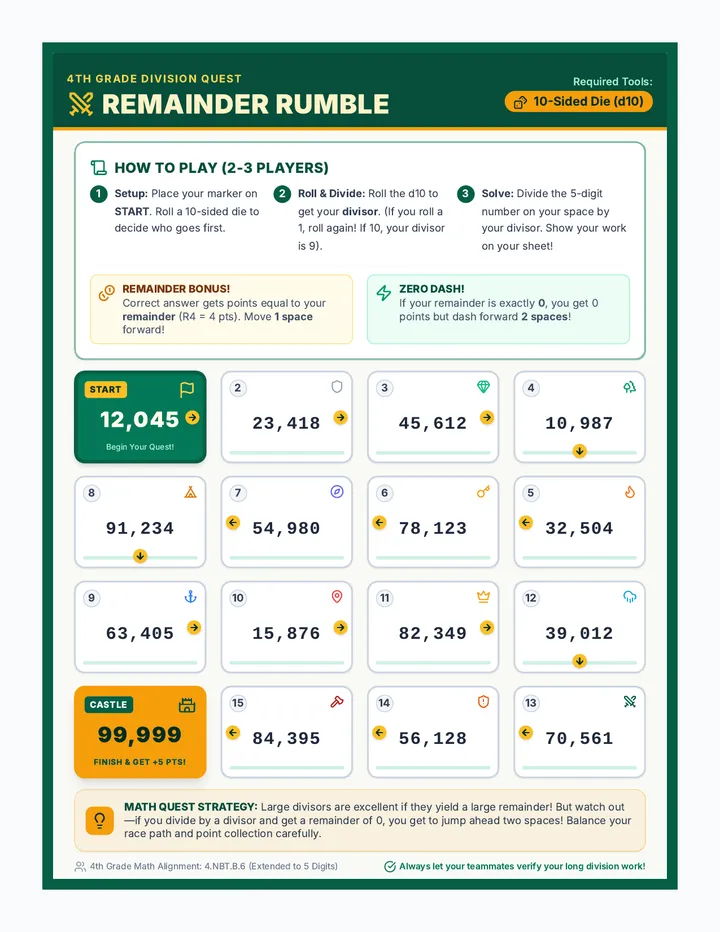
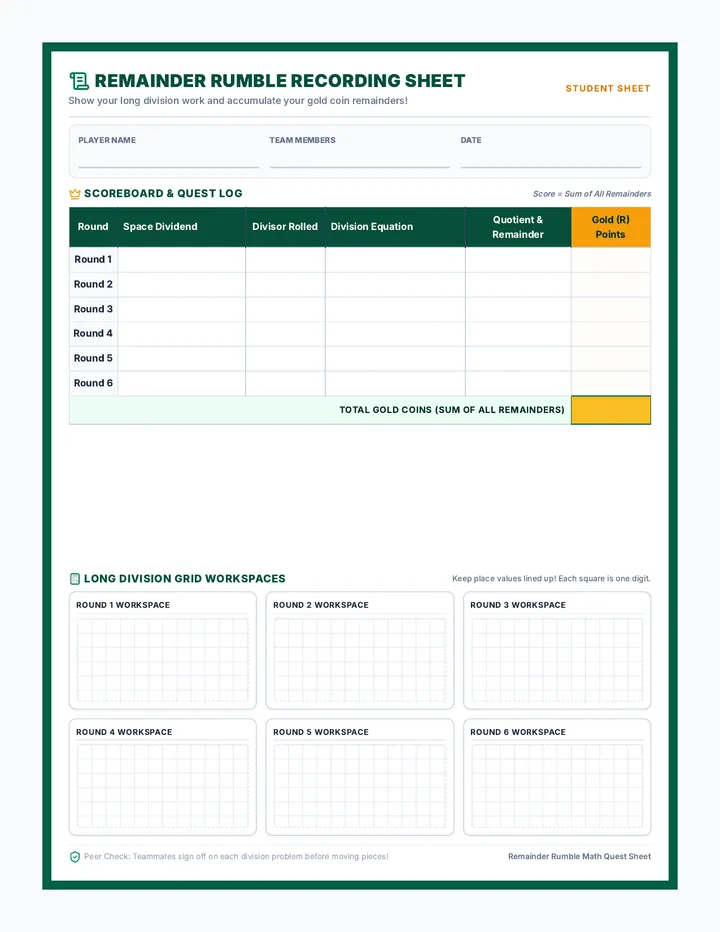
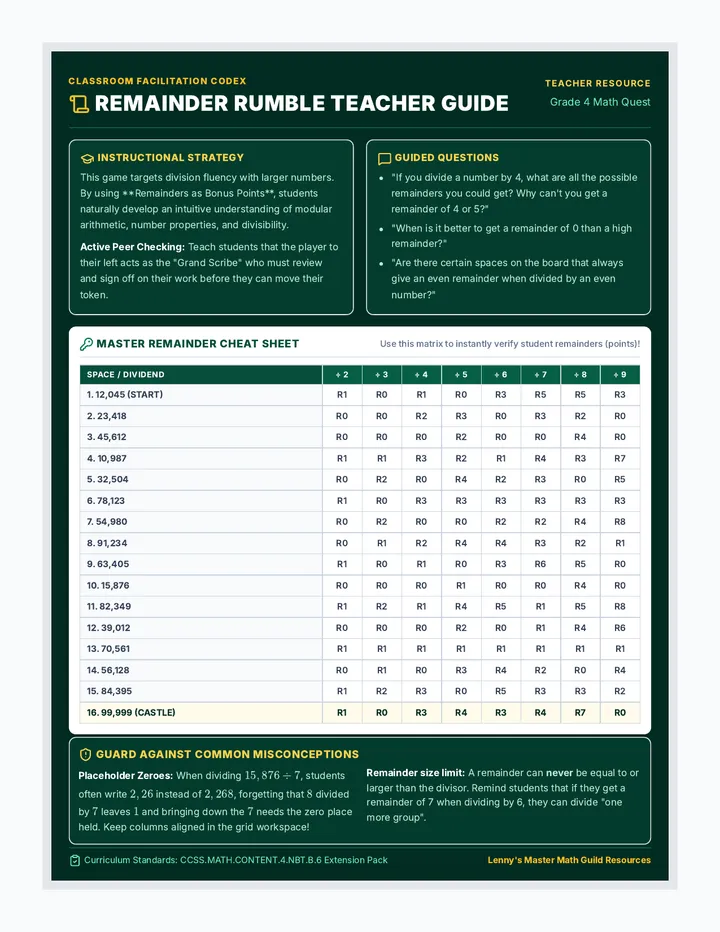
An exciting path-based board game where 4th graders practice dividing five-digit numbers by single-digit divisors. Students roll a 10-sided die to determine divisors or navigation, solve division problems, and accumulate remainders as bonus points to win the game.
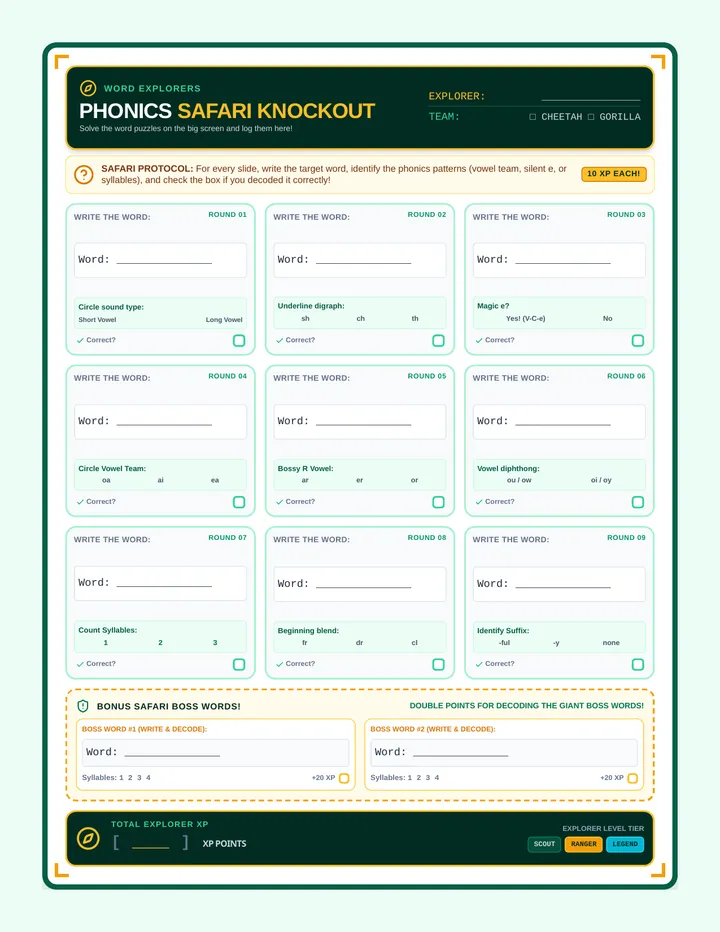
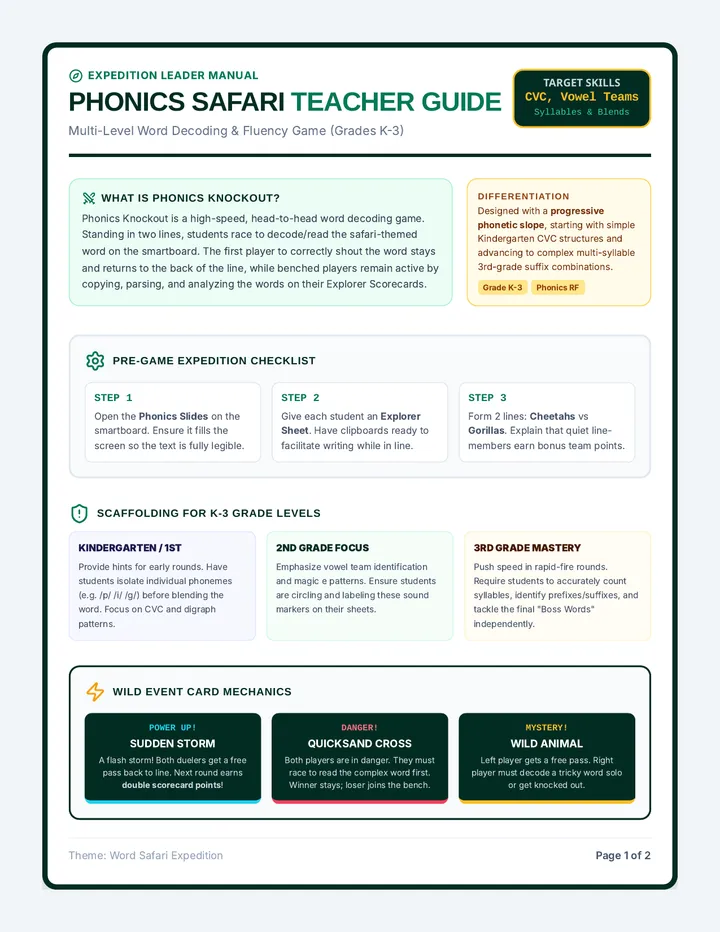
A high-energy, wild safari-themed classroom game for K-3 students focusing on key phonics skills including CVC words, silent 'e', vowel teams, and multi-syllable decoding. This lesson includes a widescreen smartboard presentation, a teacher facilitation guide with word keys, and an active-participation student tracker sheet.
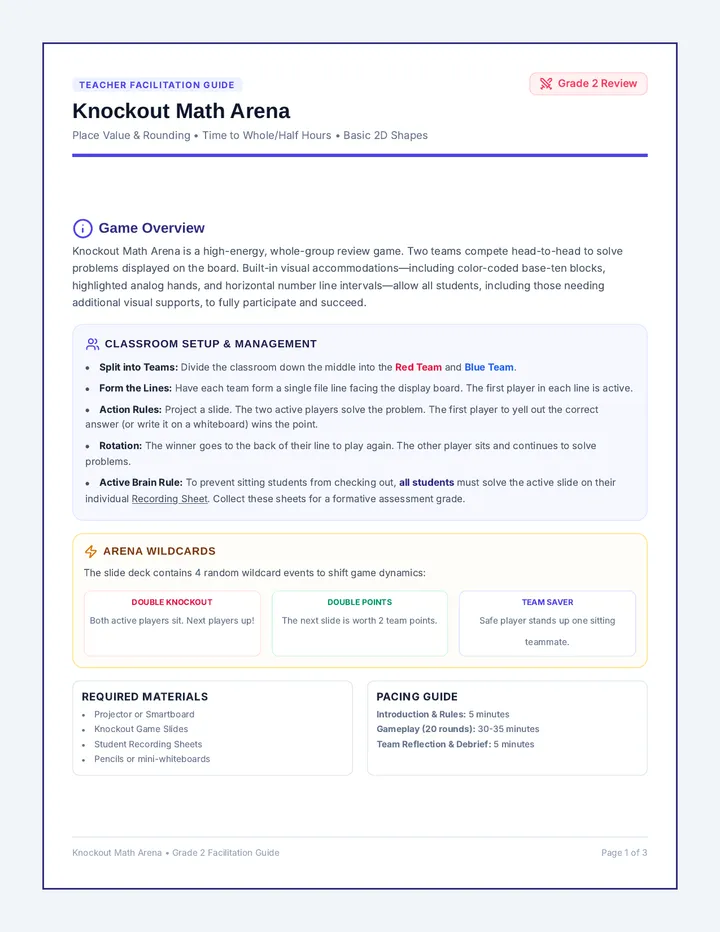
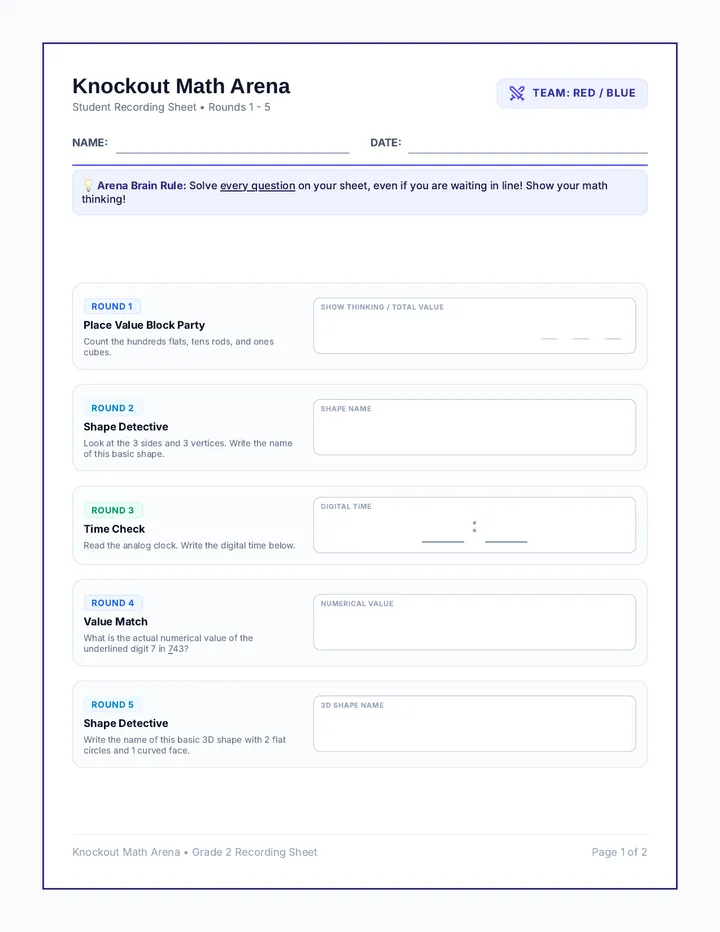
A high-energy, fast-paced review game targeting 2nd-grade place value, time, and geometric shape attributes. Includes a colorful slide deck, a comprehensive facilitation guide, and student recording sheets to keep the whole class engaged.
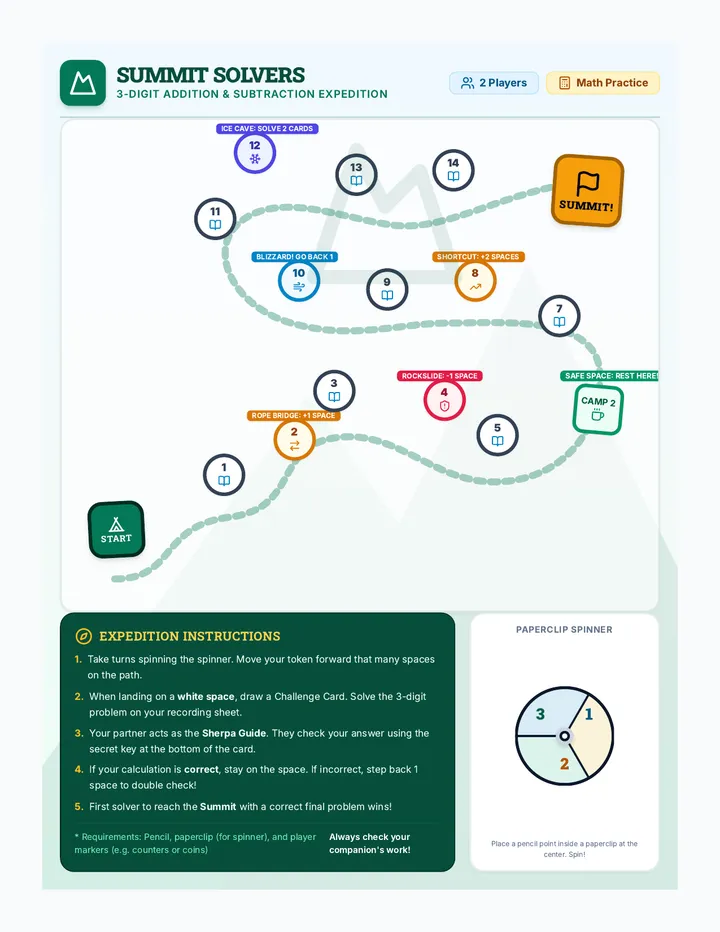
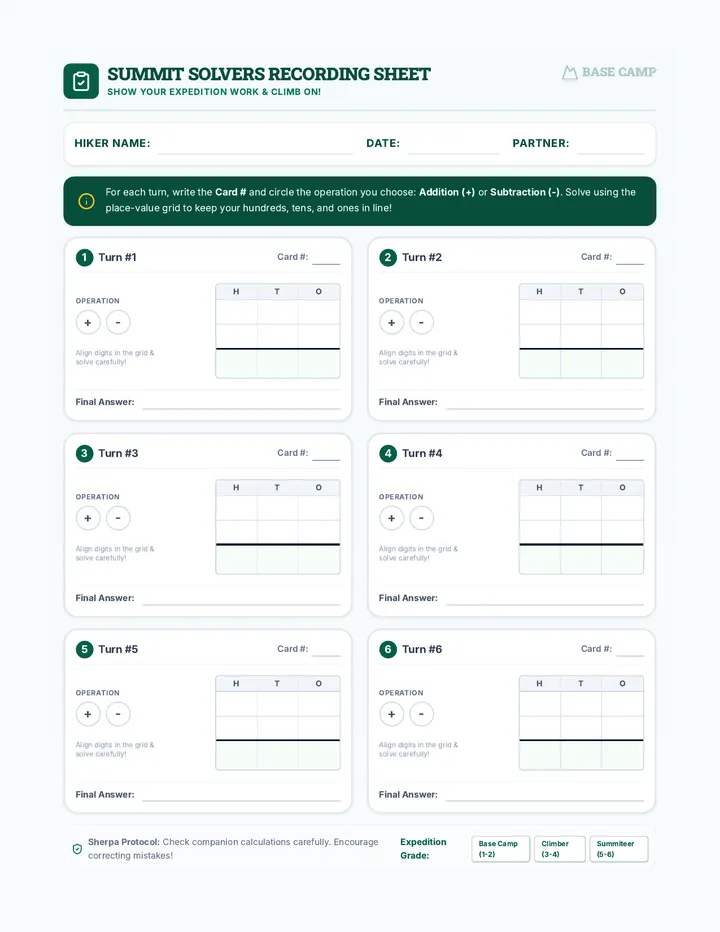
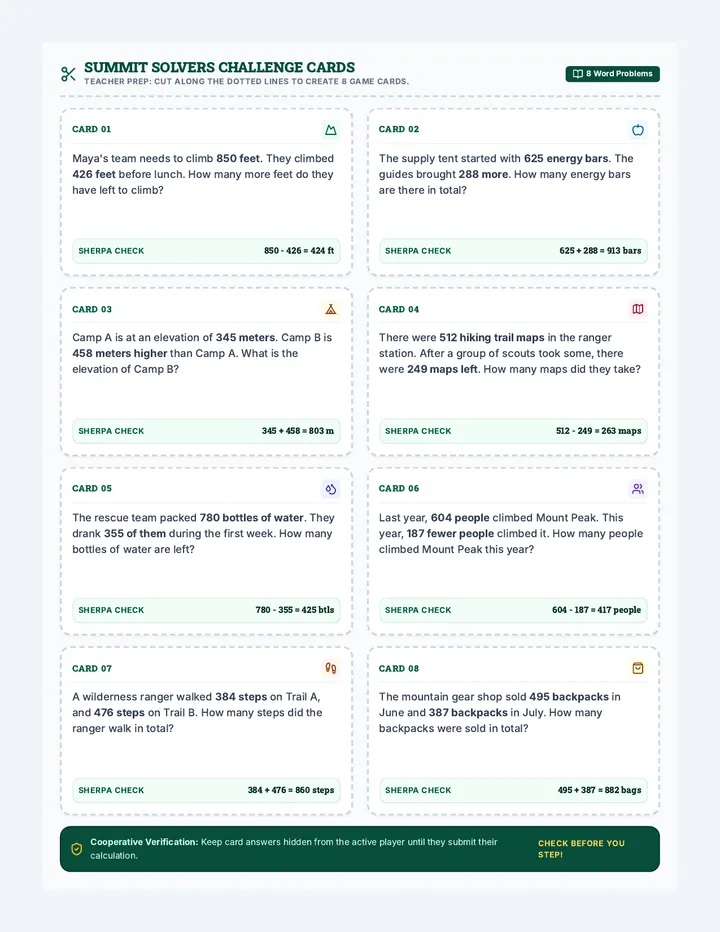
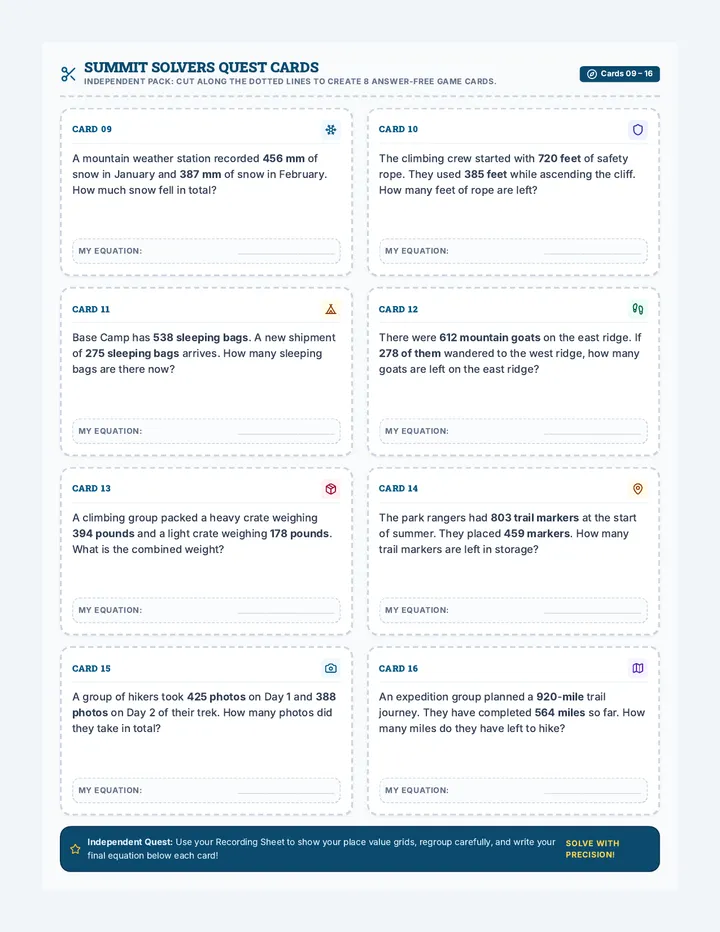
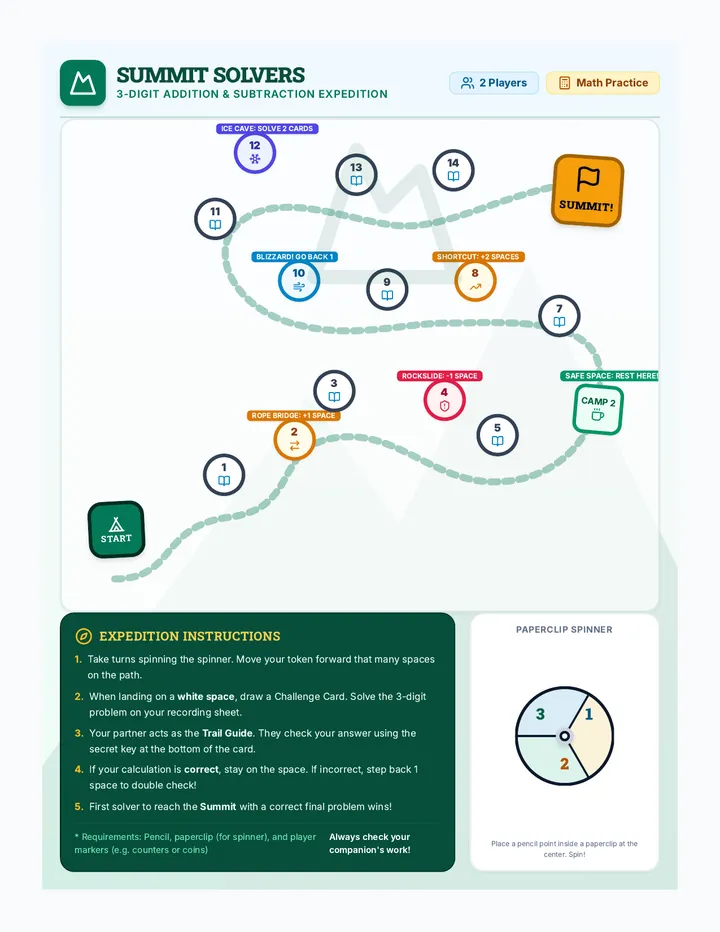
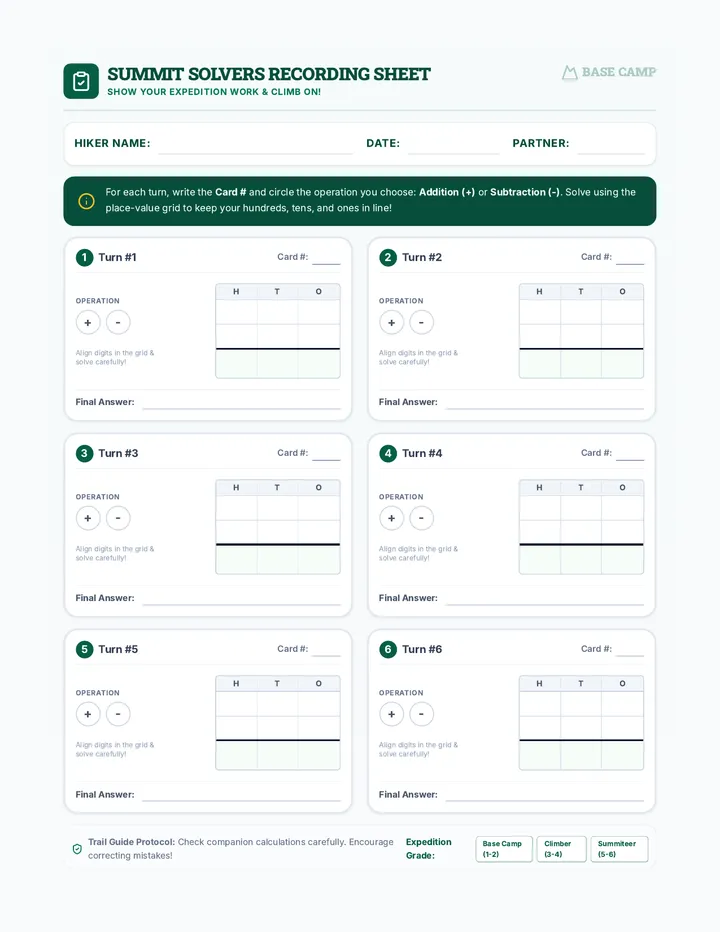
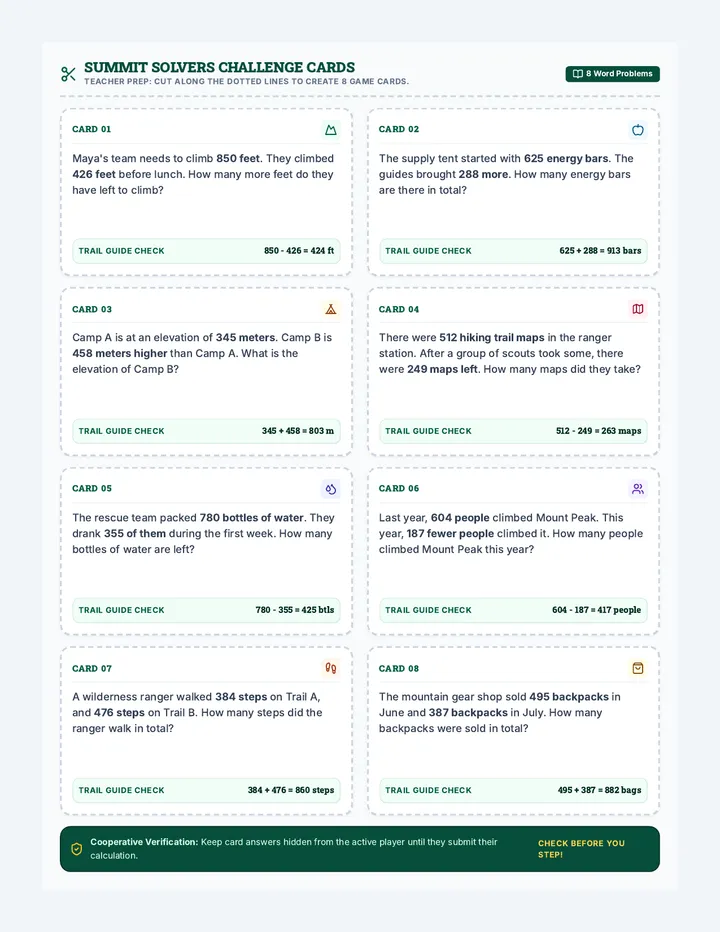
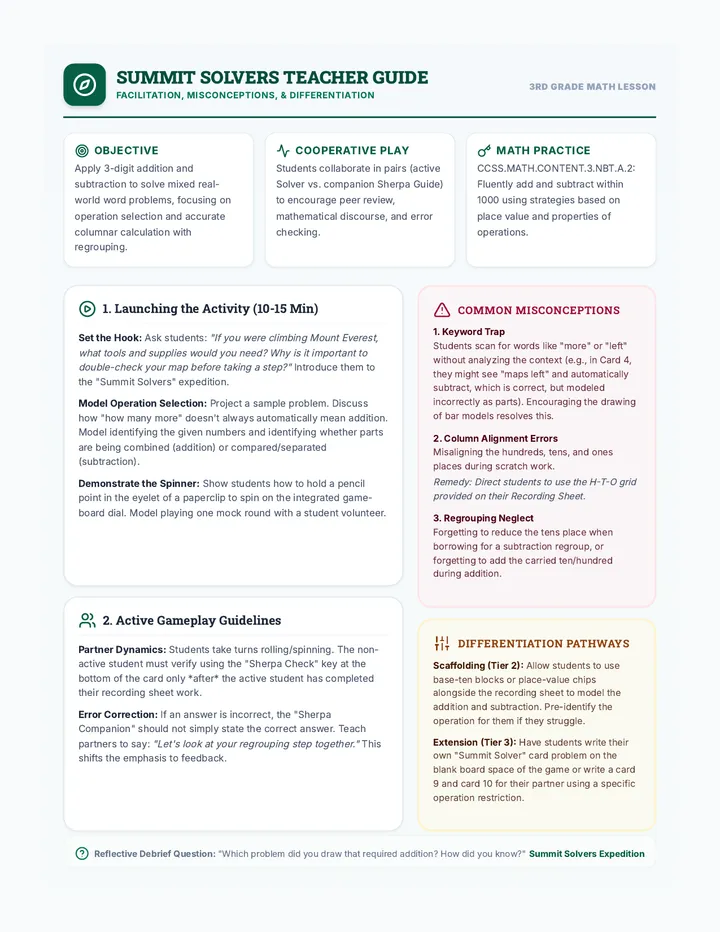
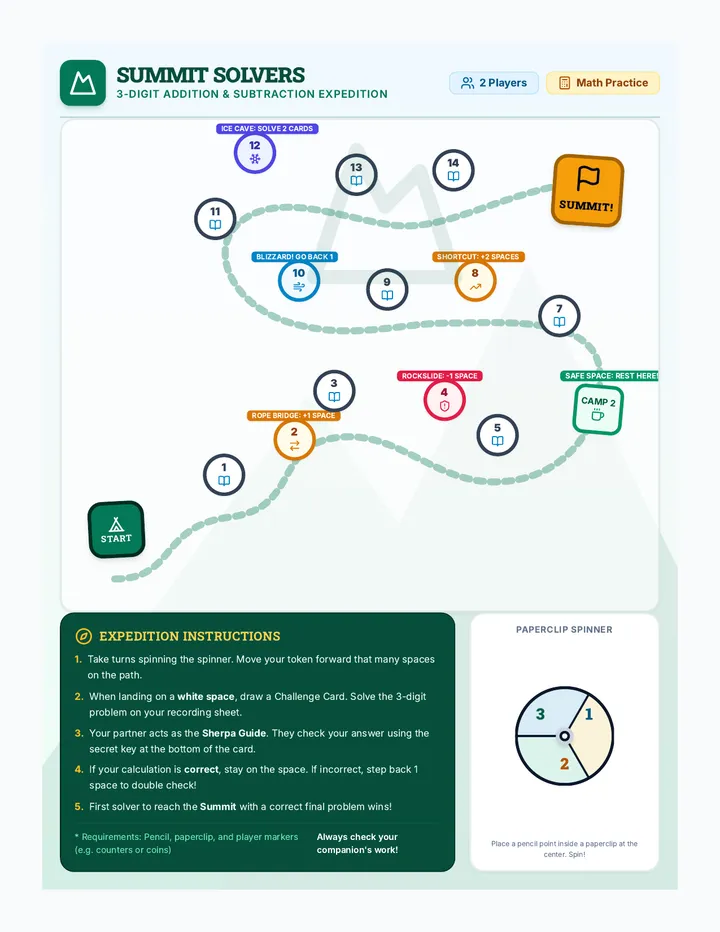
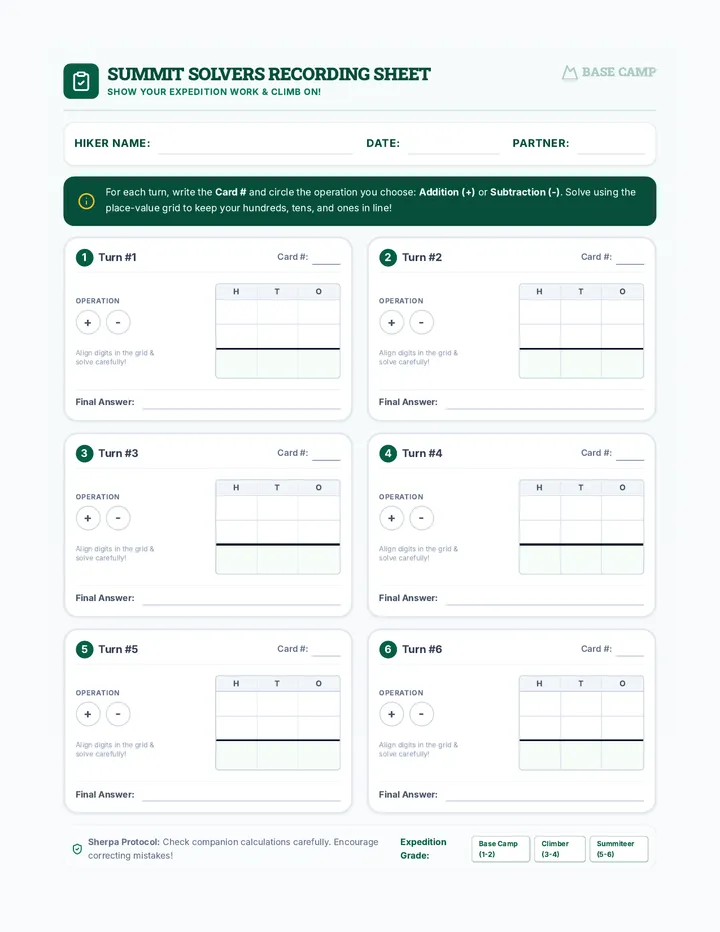
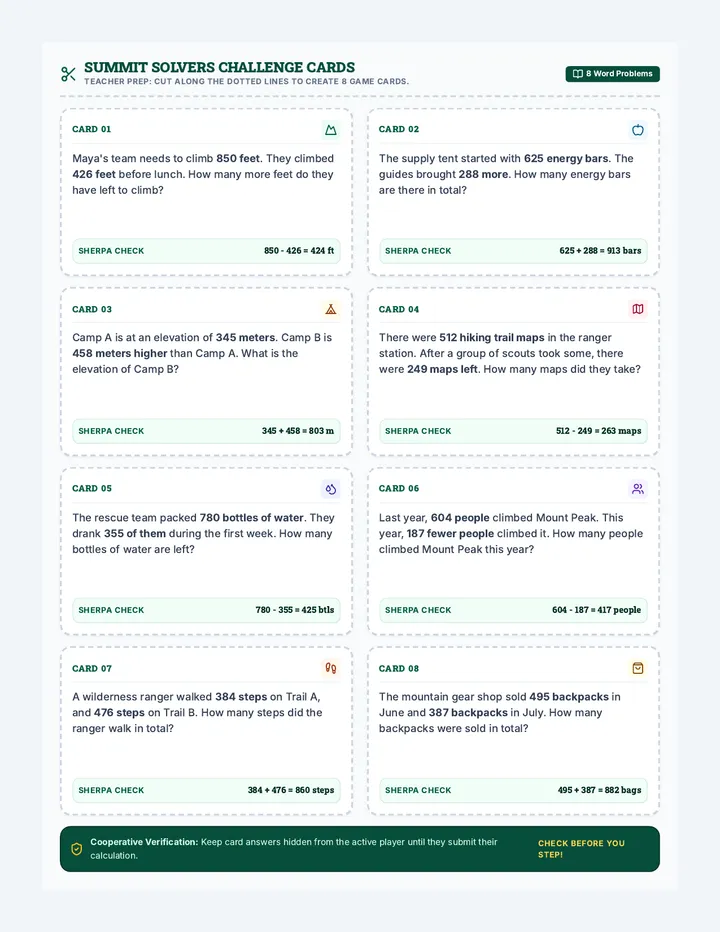
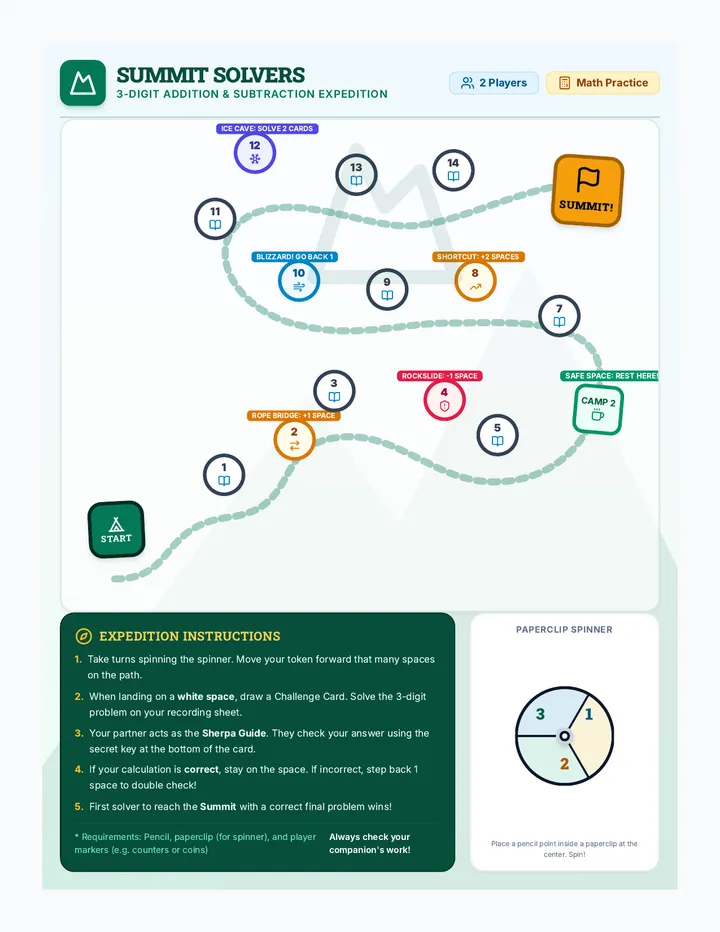
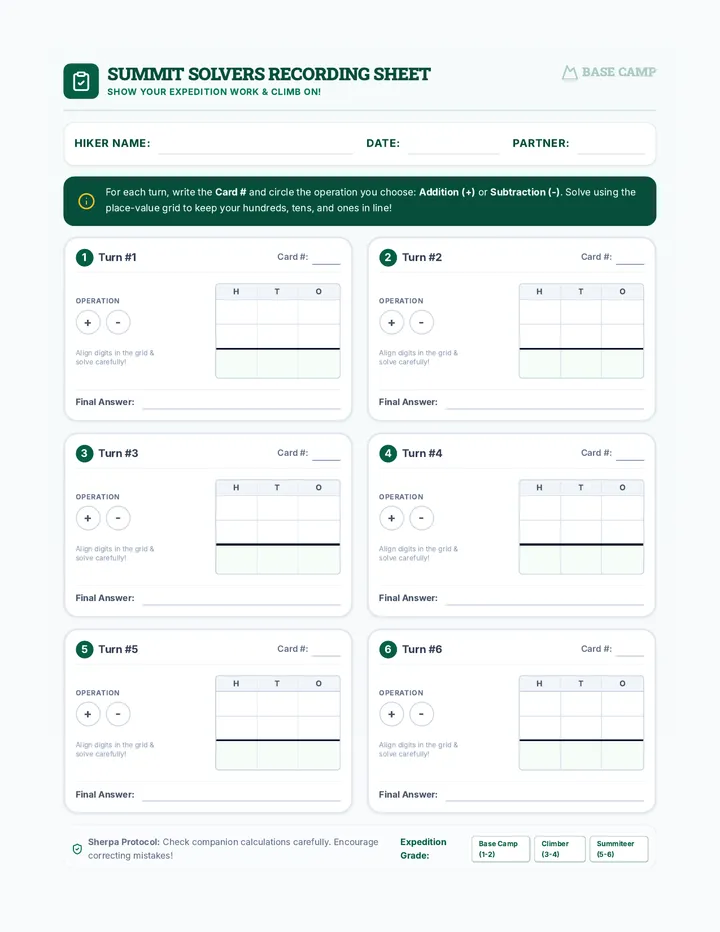
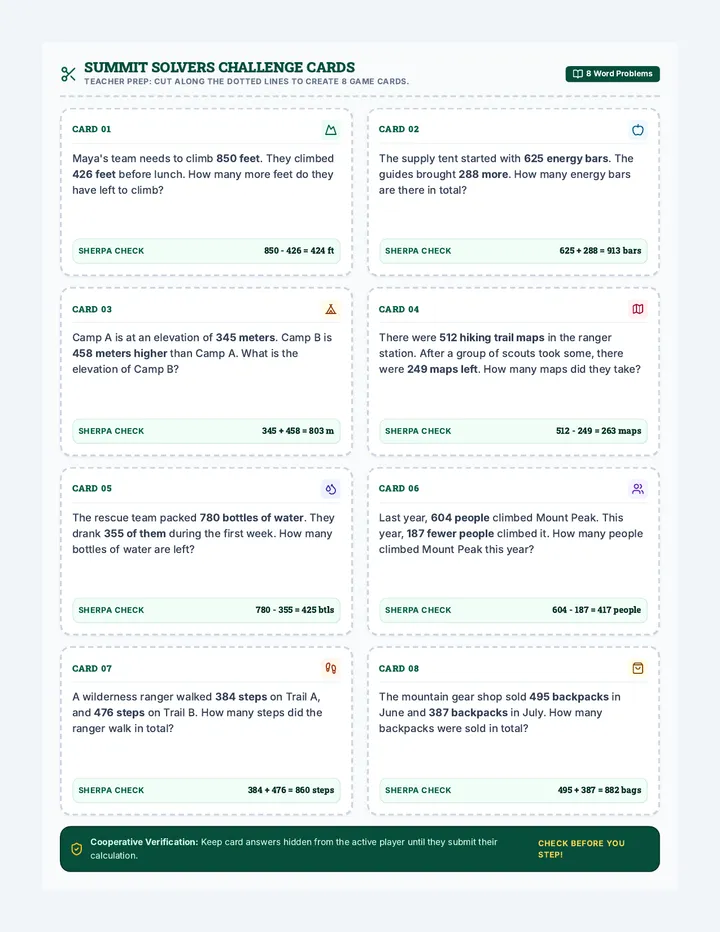
A collaborative third-grade board game focused on solving 3-digit addition and subtraction mixed word problems. Students climb a mountain by selecting correct operations, calculating precisely, and verifying answers with peer-checking challenge cards.
A collaborative third-grade board game focused on solving 3-digit addition and subtraction mixed word problems. Students climb a mountain by selecting correct operation, calculating precisely, and verifying answers with peer-checking challenge cards.
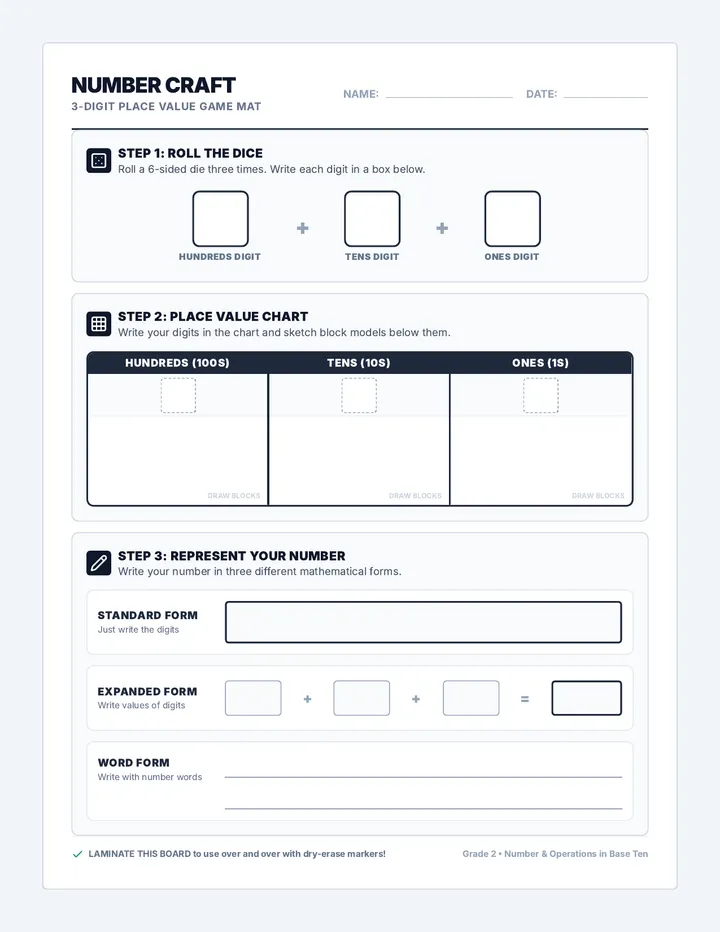
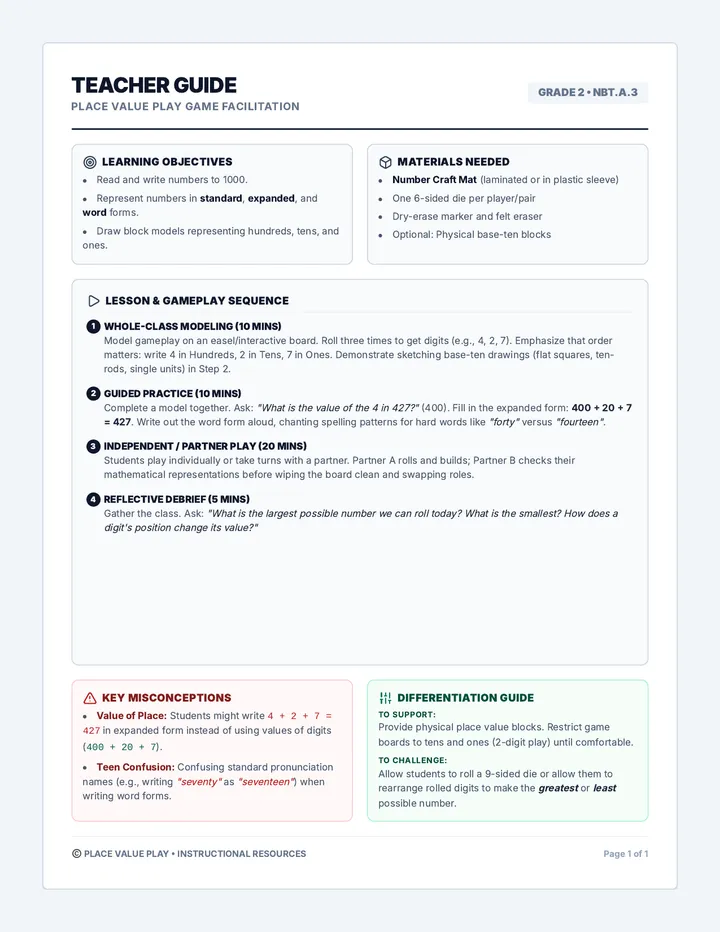
A hands-on, high-contrast lesson focusing on representing three-digit numbers. Students use dice to generate digits and practice writing numbers in standard, expanded, and word forms.
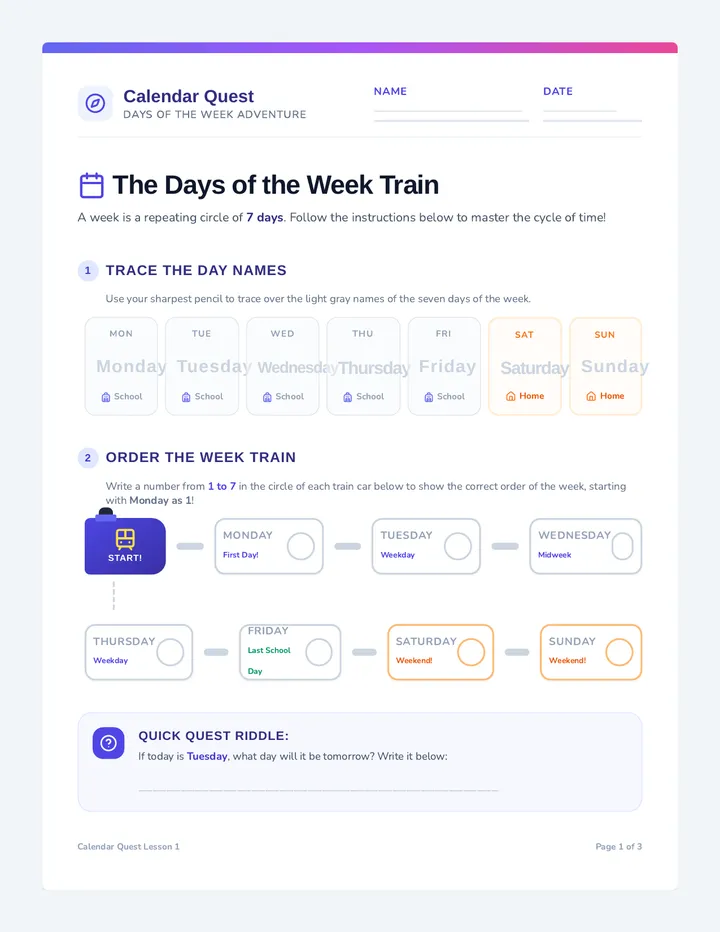
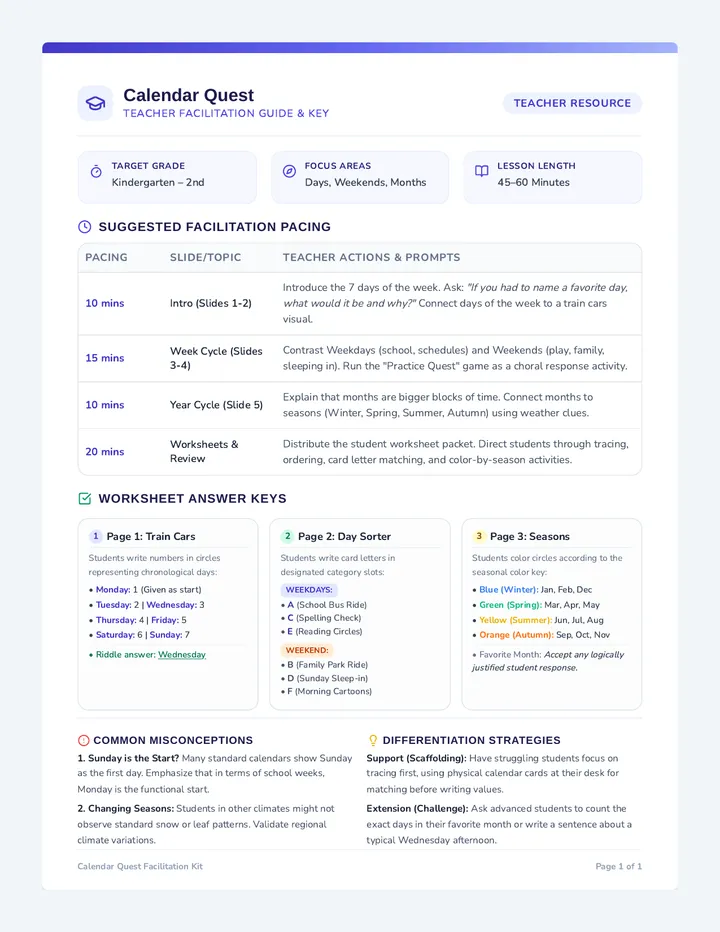
A foundational lesson introducing early elementary students to calendar concepts, including days of the week, weekdays versus weekends, and the twelve months of the year, contextualized with real-world school, home, and seasonal scenarios.
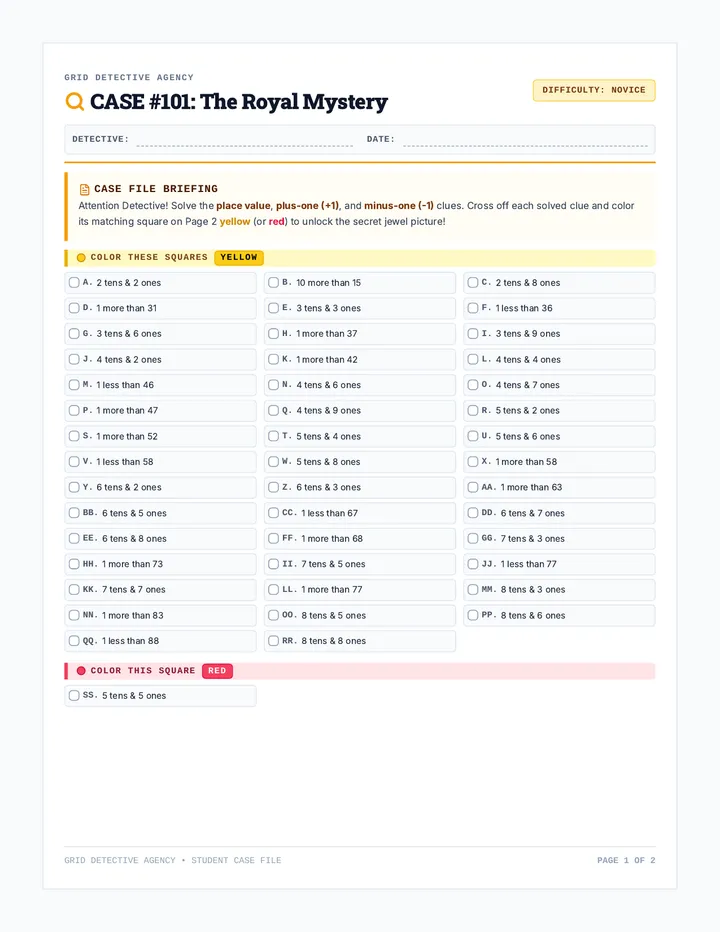
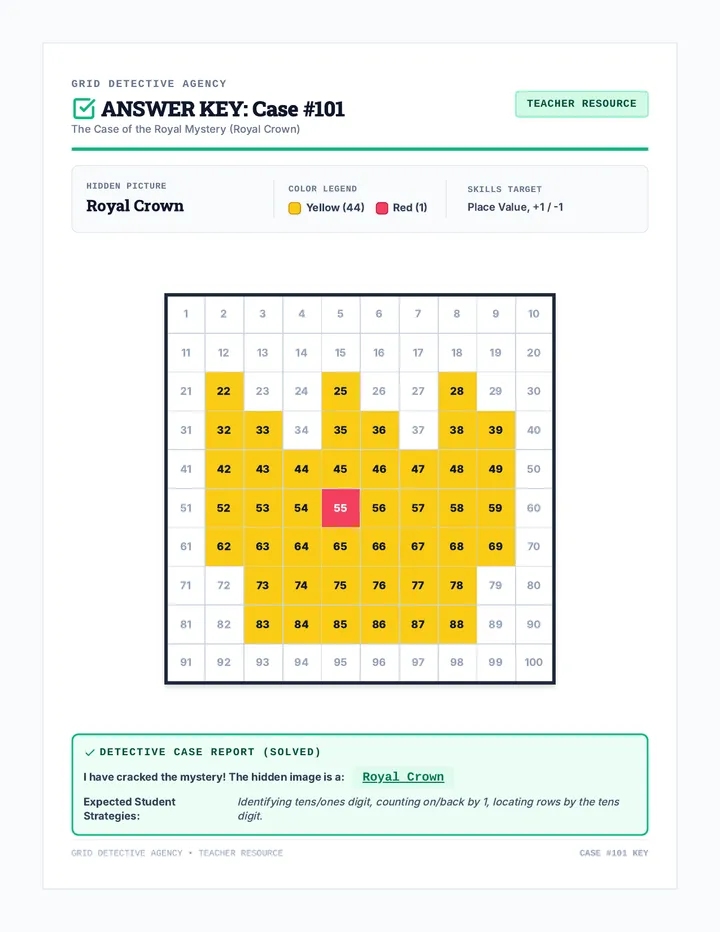
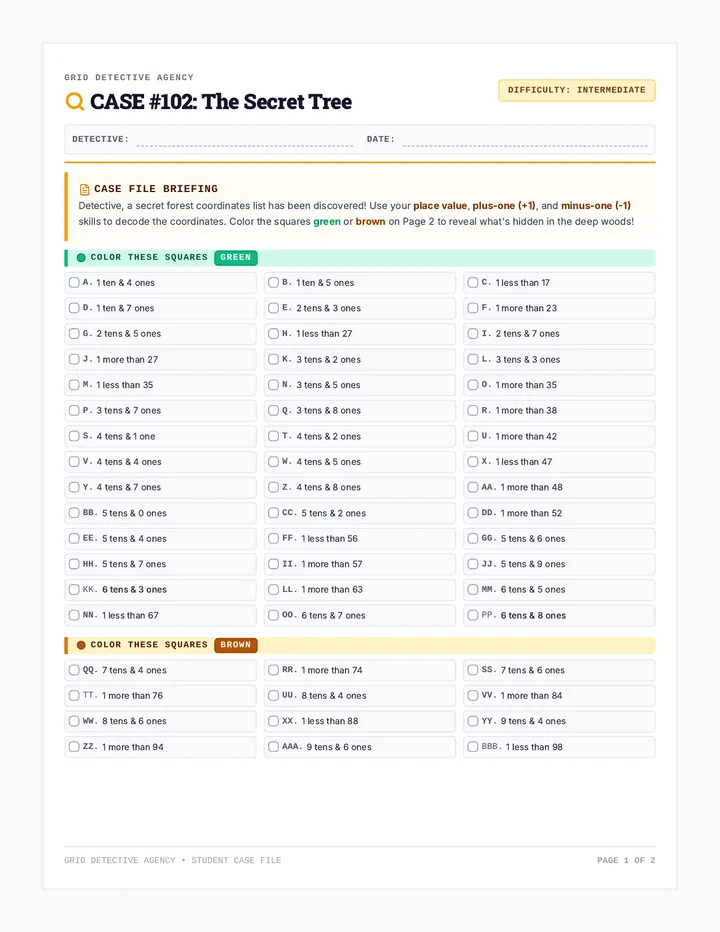
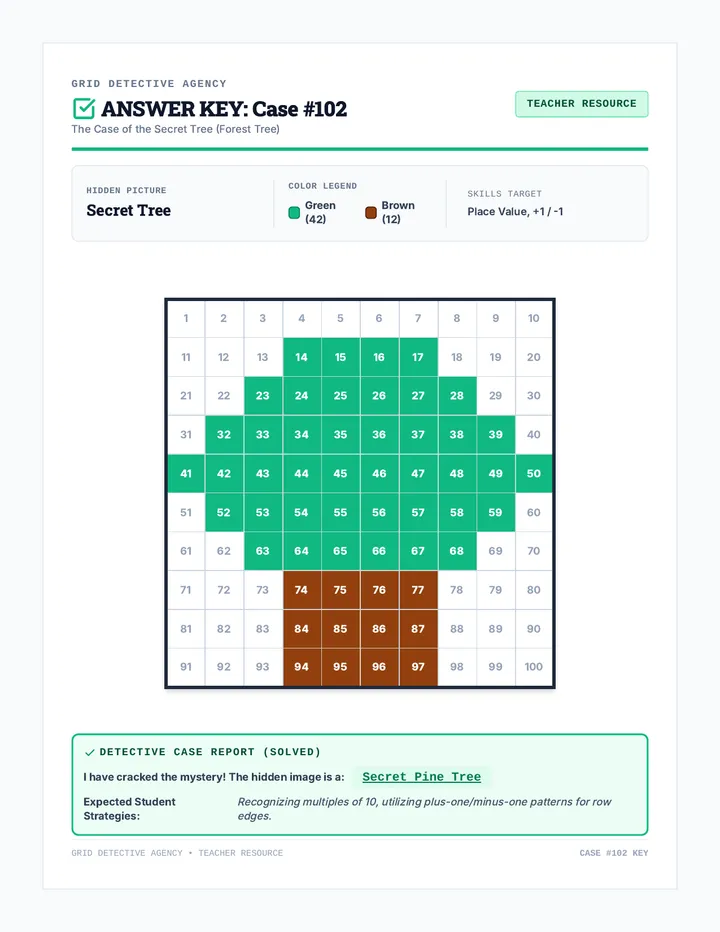
A fun, puzzle-packed math lesson where students become Grid Detectives, using place value clues (tens and ones, plus-one, minus-one) to solve 100-chart mystery pictures and unlock hidden pixel art drawings.
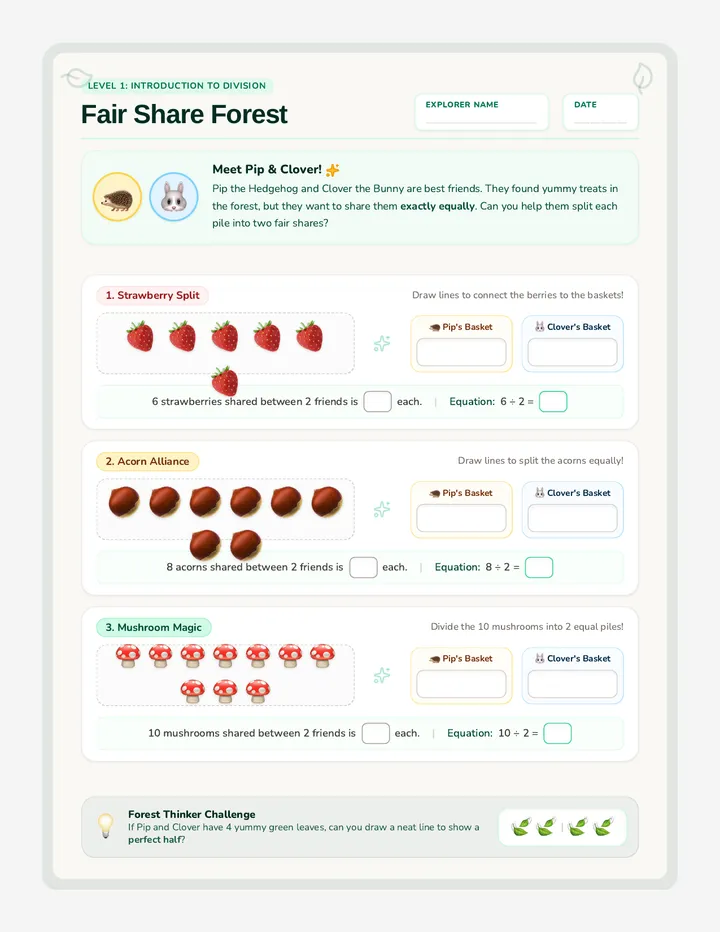
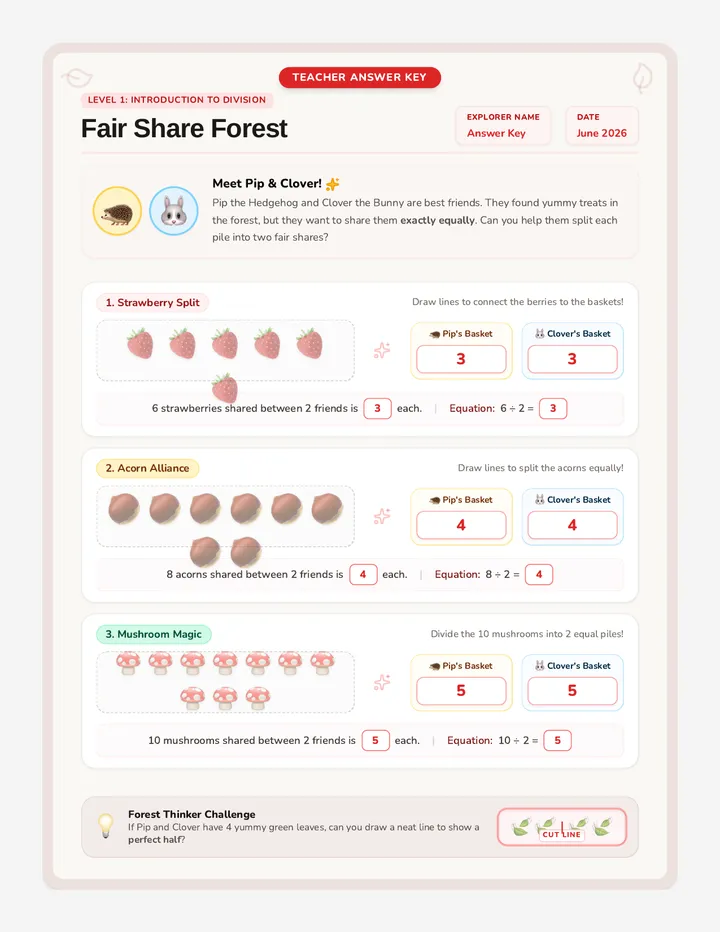
An introductory lesson on division as equal sharing. Students help two friendly woodland creatures share forest treasures equally between them.
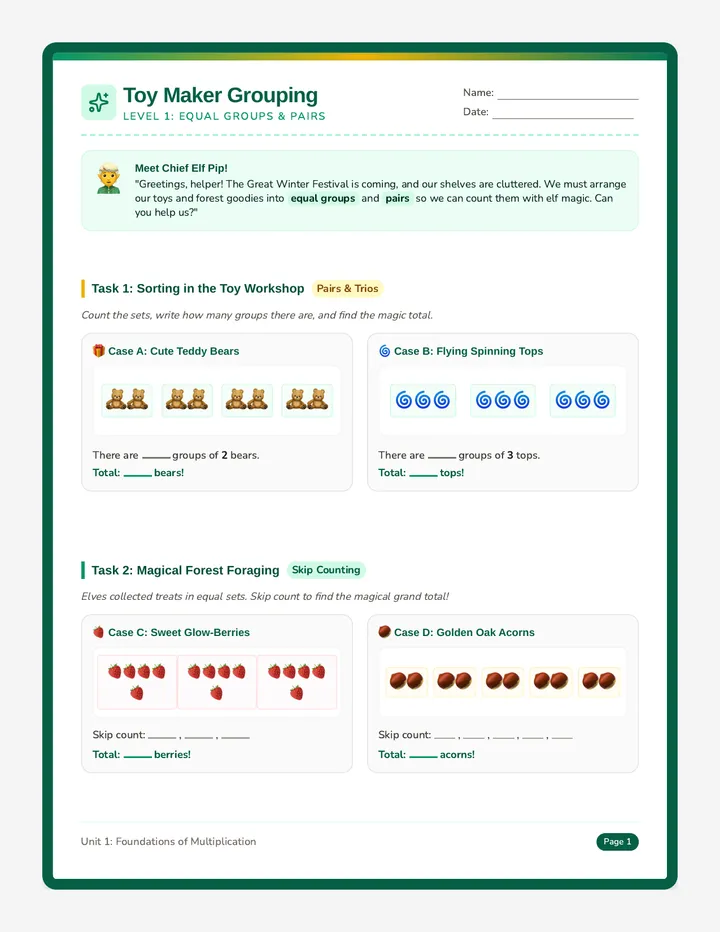
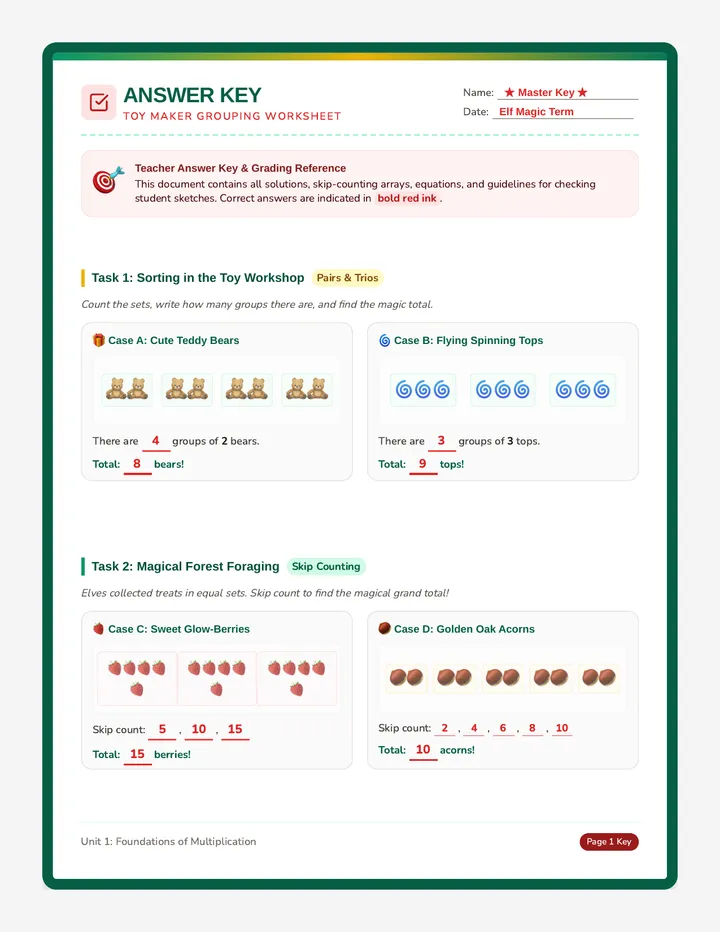
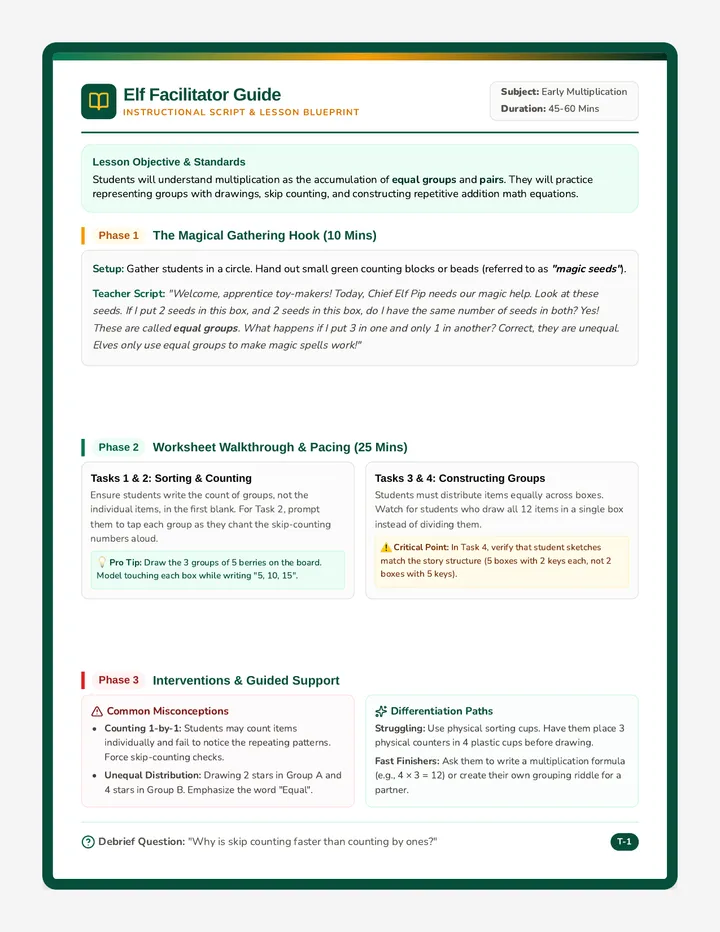
An introductory lesson on multiplication using equal groups and pairs, themed around magical elves making toys, foraging in the forest, and packing items. Students transition from concrete counting to skip counting and basic multiplication concepts.
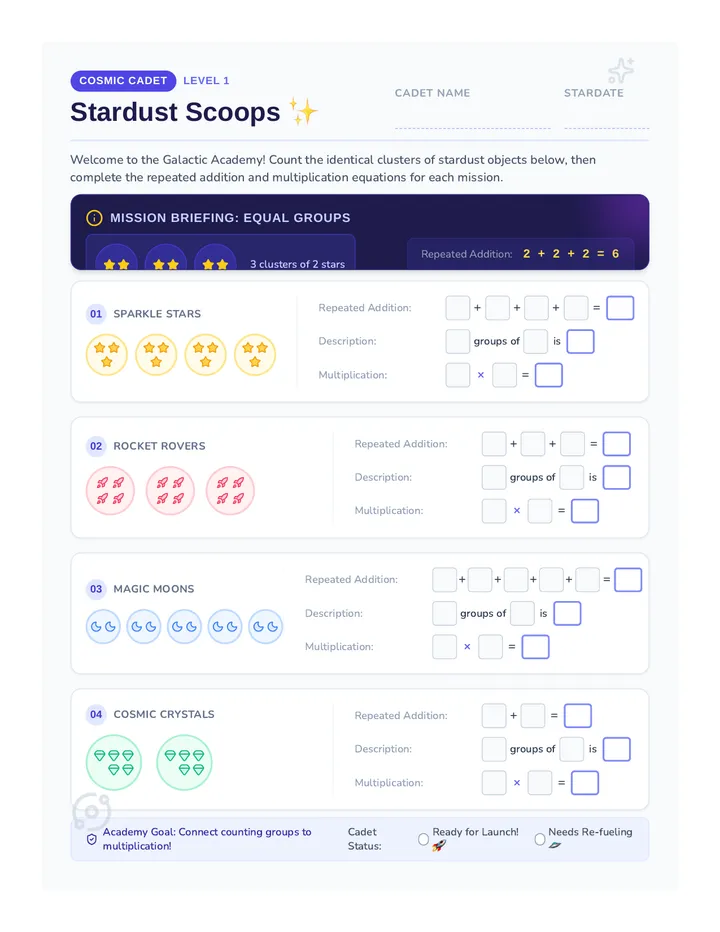
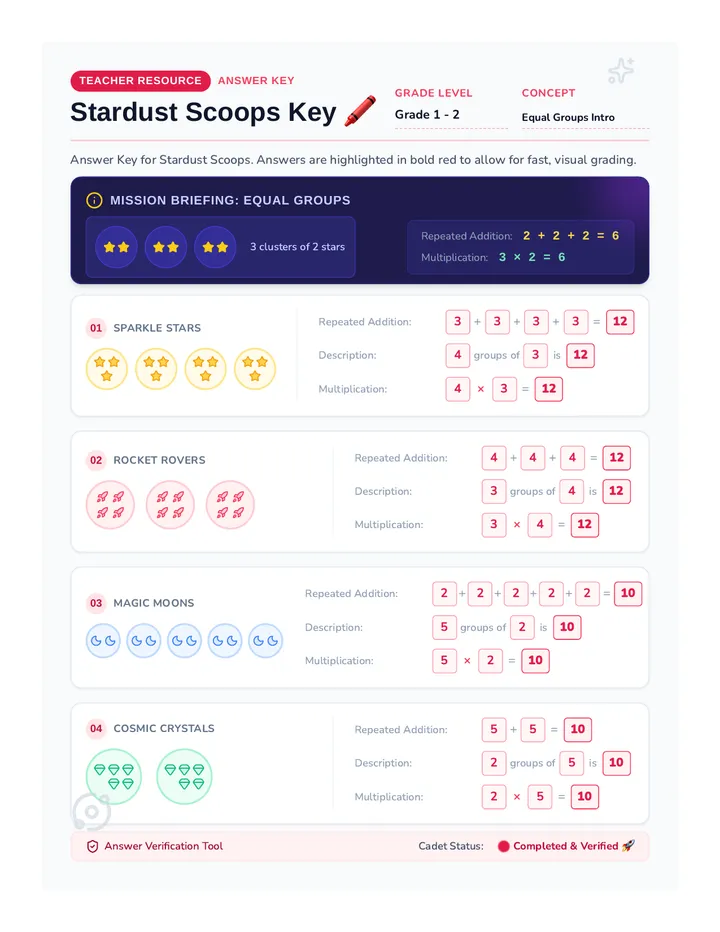
An introductory lesson to multiplication using equal groups and visual representations. Students learn to connect repeated addition to multiplication using starry-themed groups.
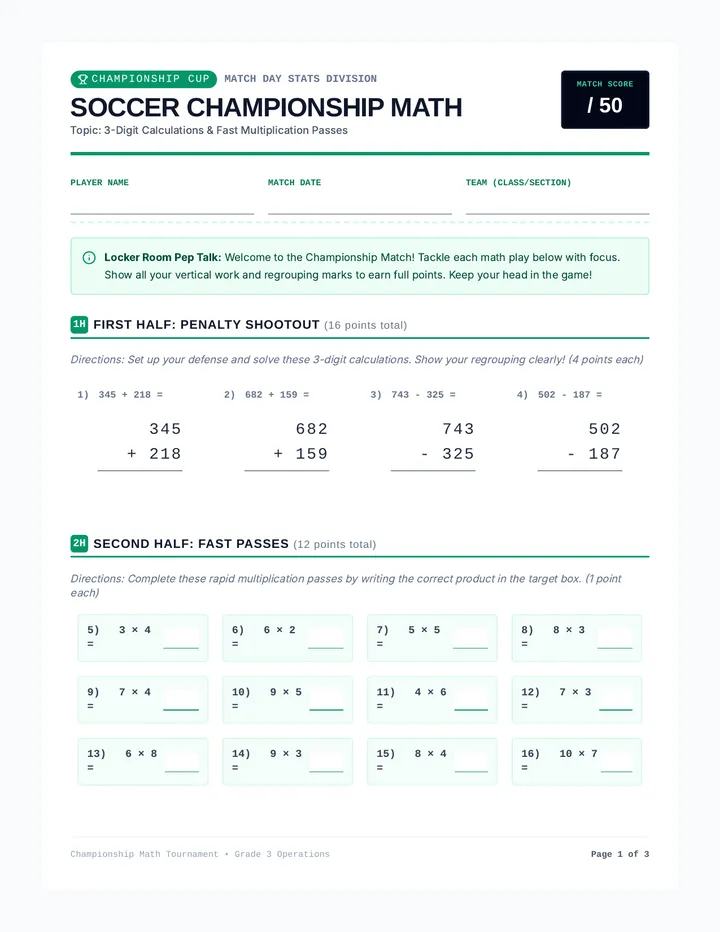
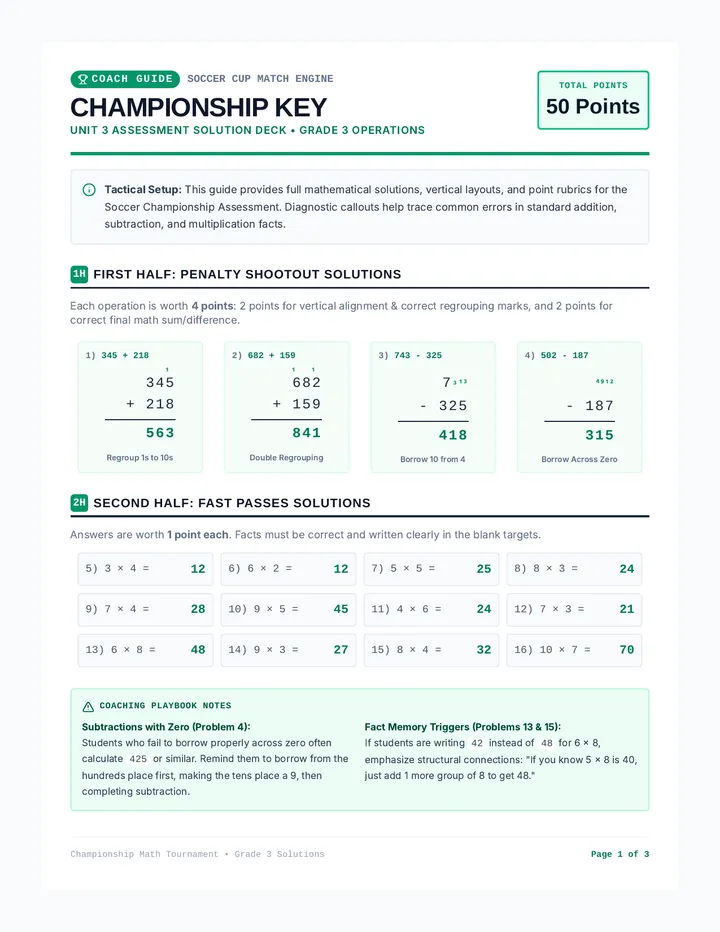
A summative assessment lesson designed for 3rd-grade students to demonstrate mastery of 3-digit operations and basic multiplication, themed around a thrilling soccer championship. Includes a student-facing test and a comprehensive teacher guide with solutions and grading rubrics.
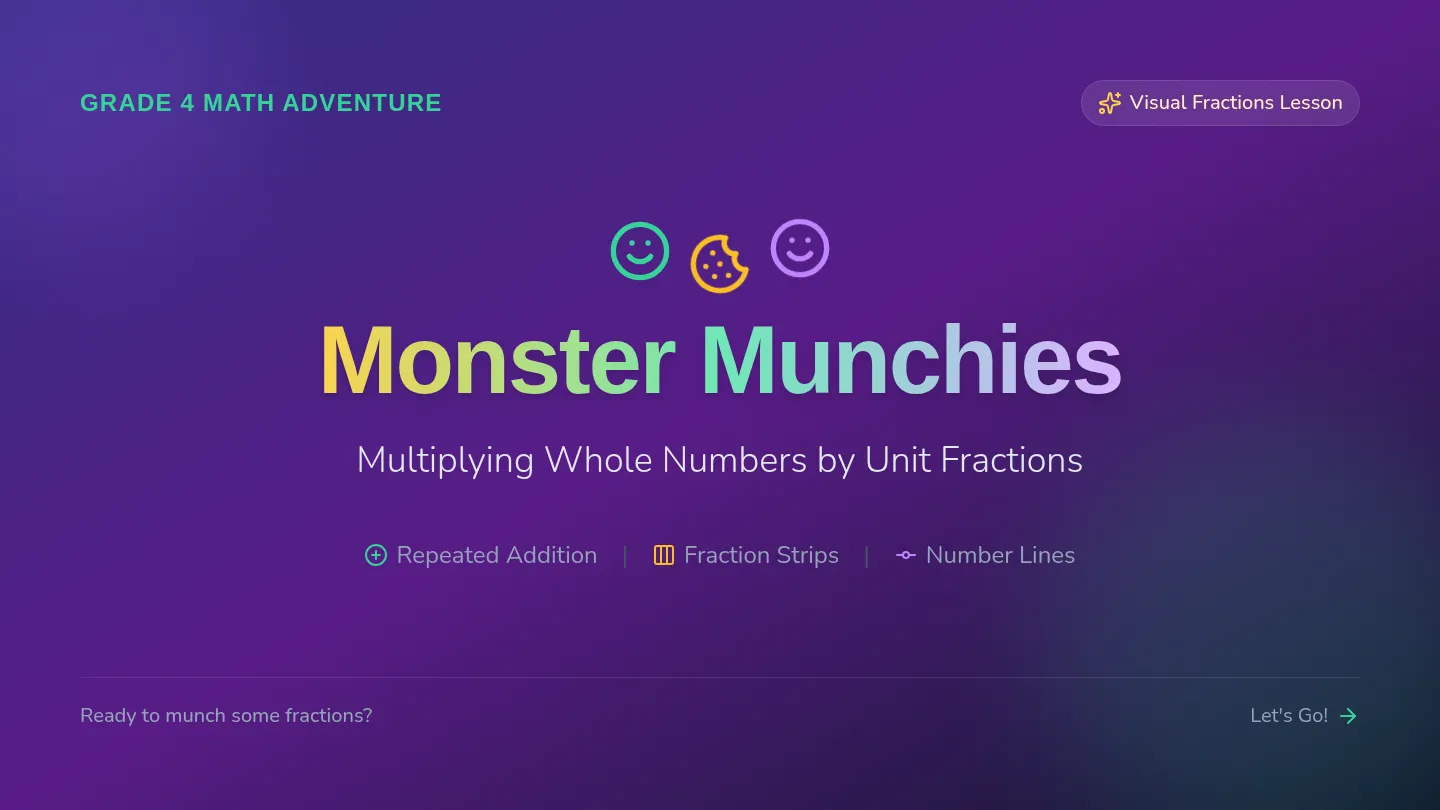
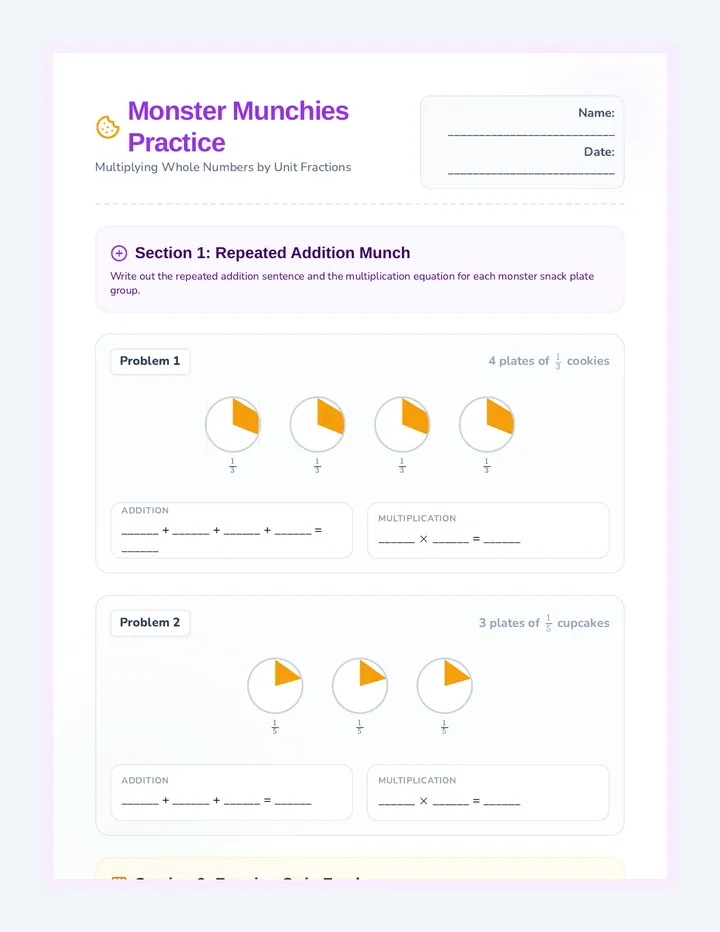
A Grade 4 math lesson introducing multiplication of a whole number by a unit fraction using visual models including repeated addition, fraction strips, and number lines.
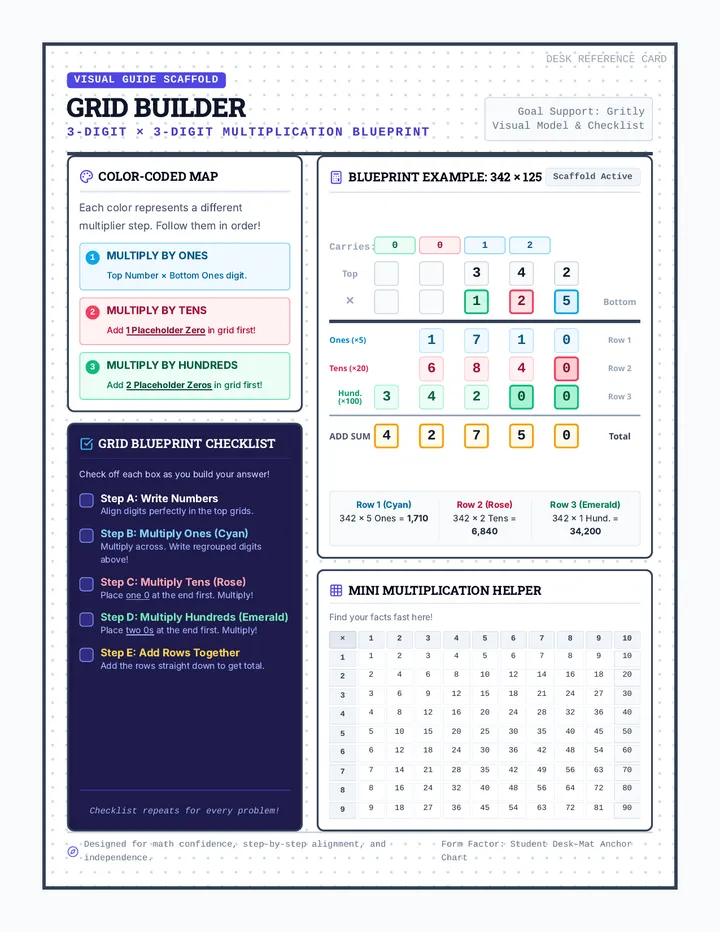
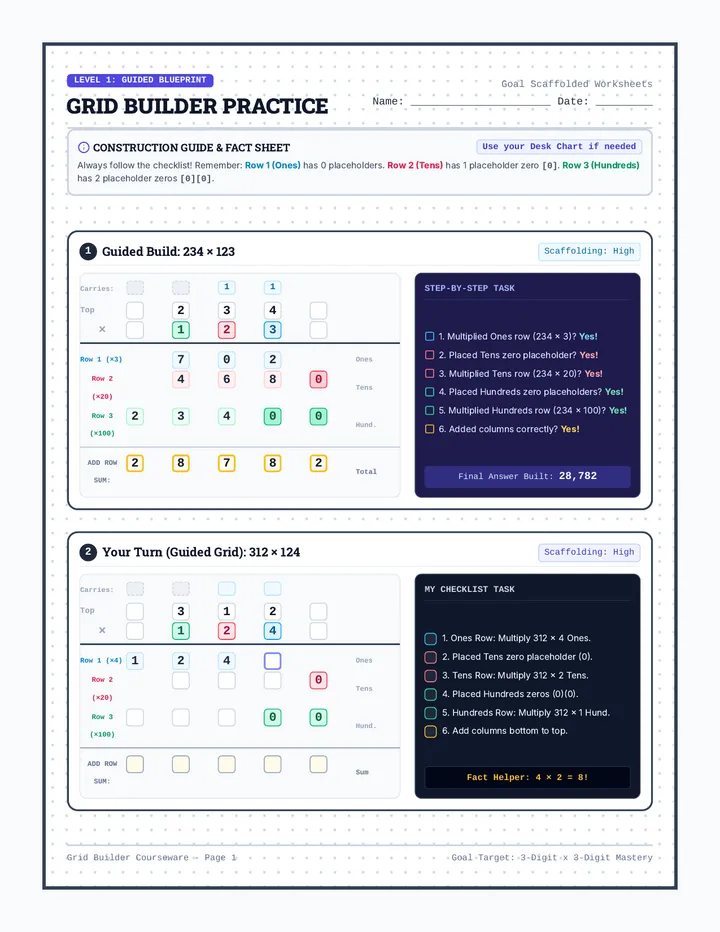
A highly structured, scaffolded lesson designed to help students master three-digit by three-digit multiplication using color-coded grids, a step-by-step task-analysis checklist, and sequential progress monitoring.
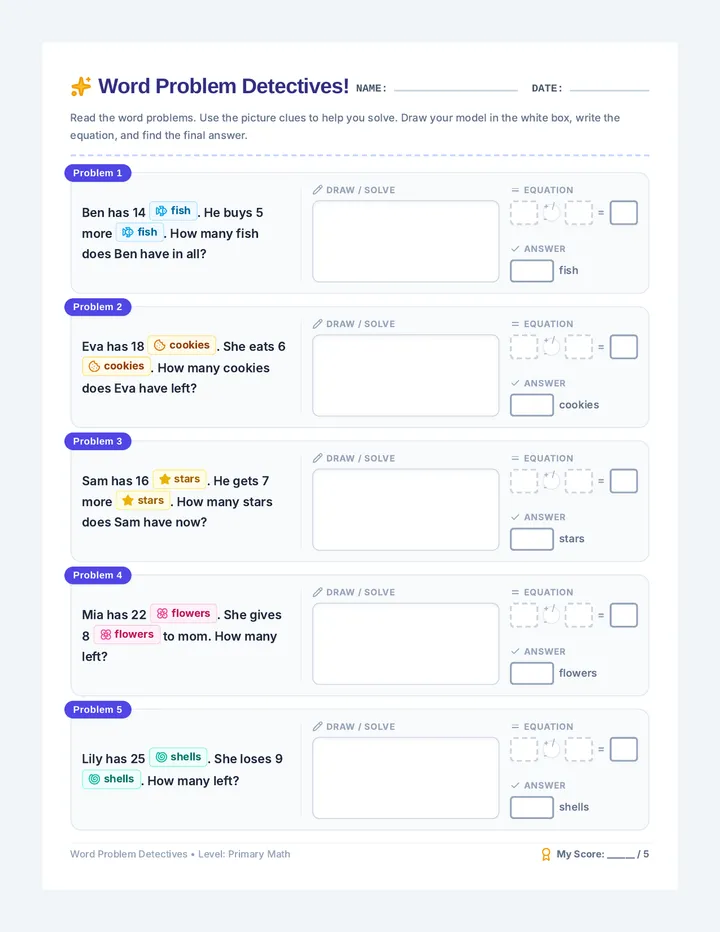
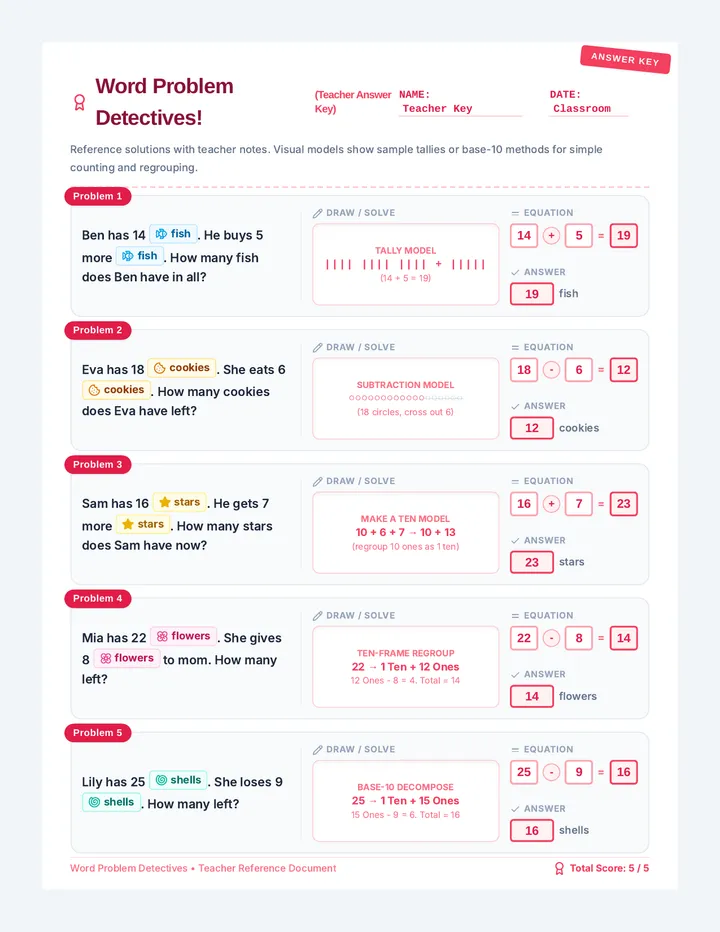
A lesson focused on solving one-step word problems involving addition and subtraction. Students practice recognizing active language cues, modeling their thinking, and writing equations.
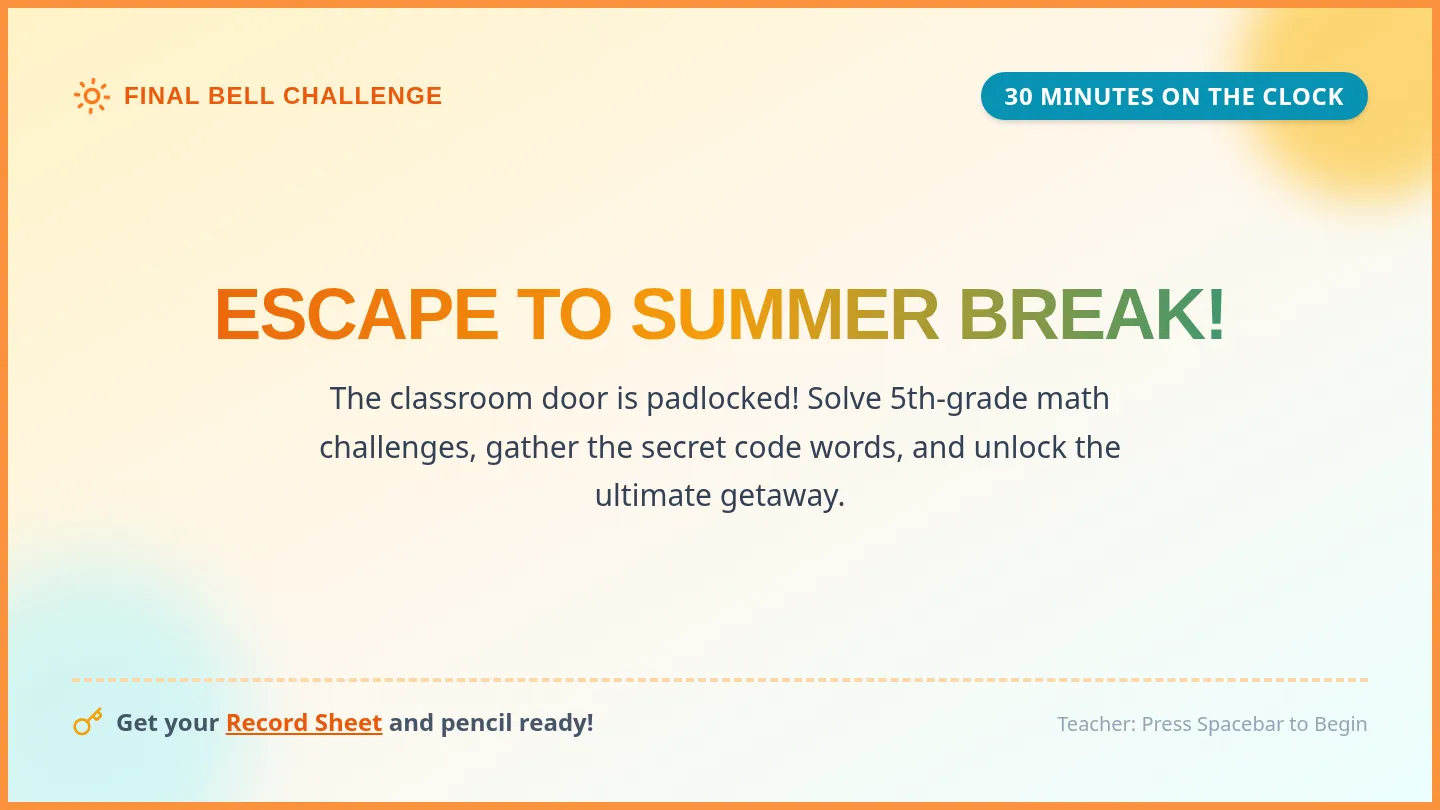
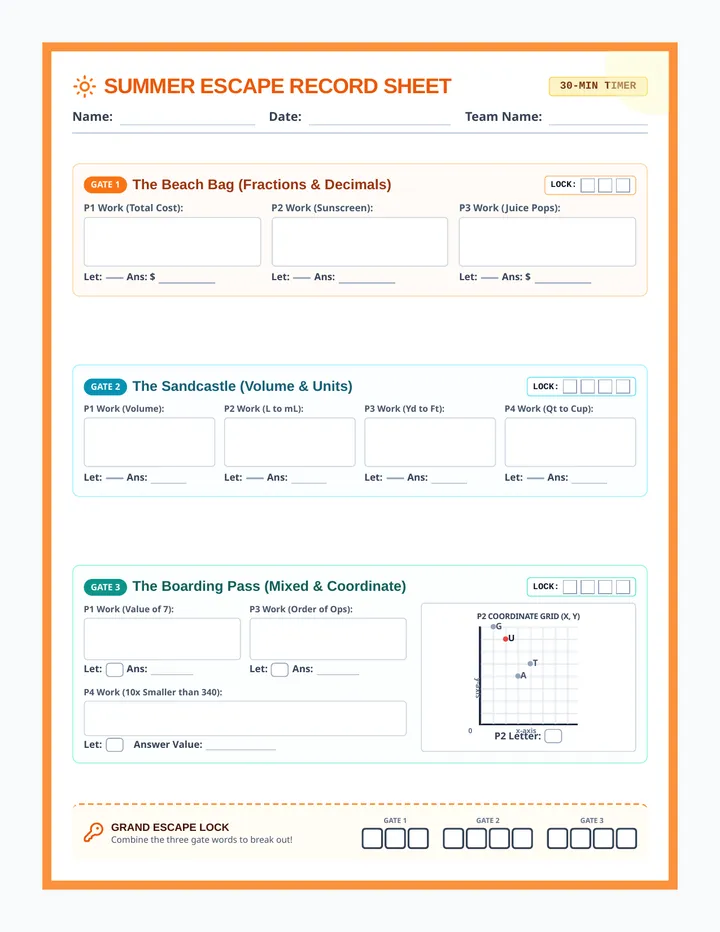
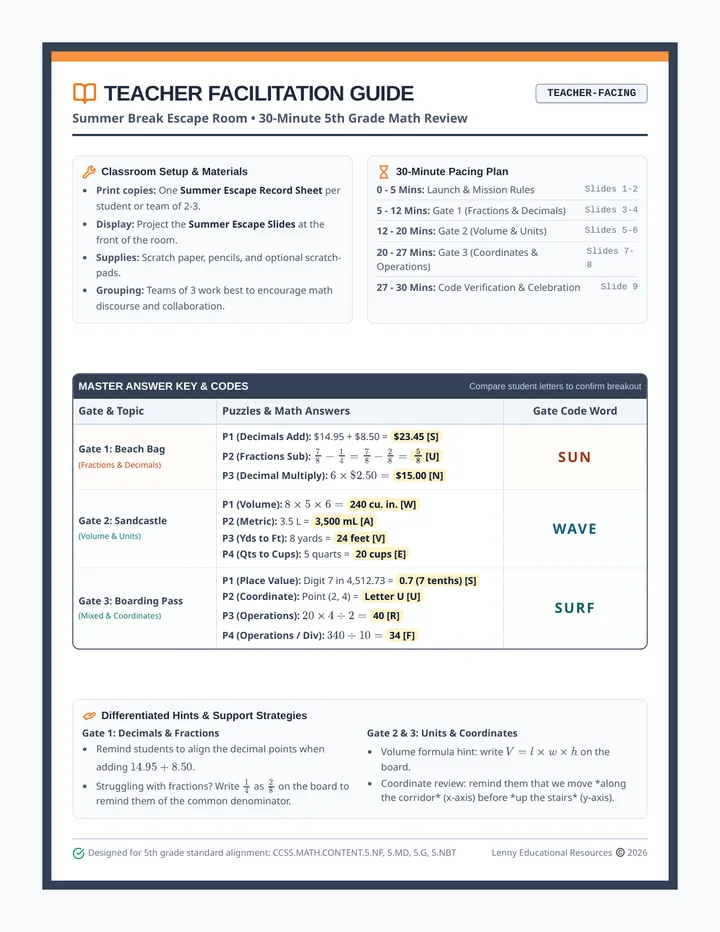
A 30-minute interactive math escape room lesson designed for 5th graders to review fractions, decimals, volume, measurement conversions, and coordinate graphing while racing against the clock to unlock 'Summer Break'.
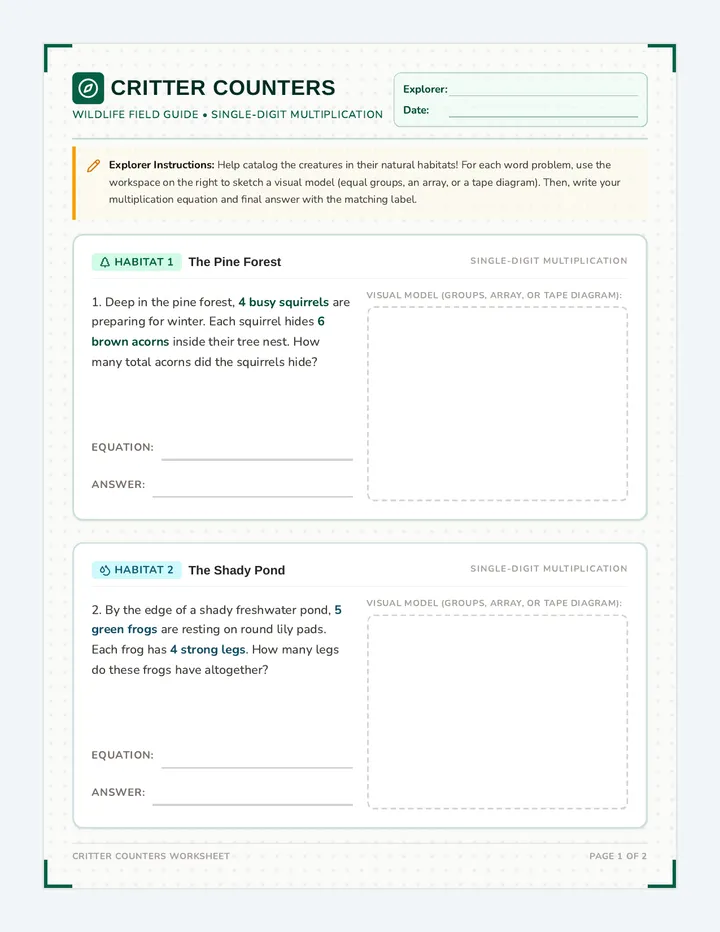
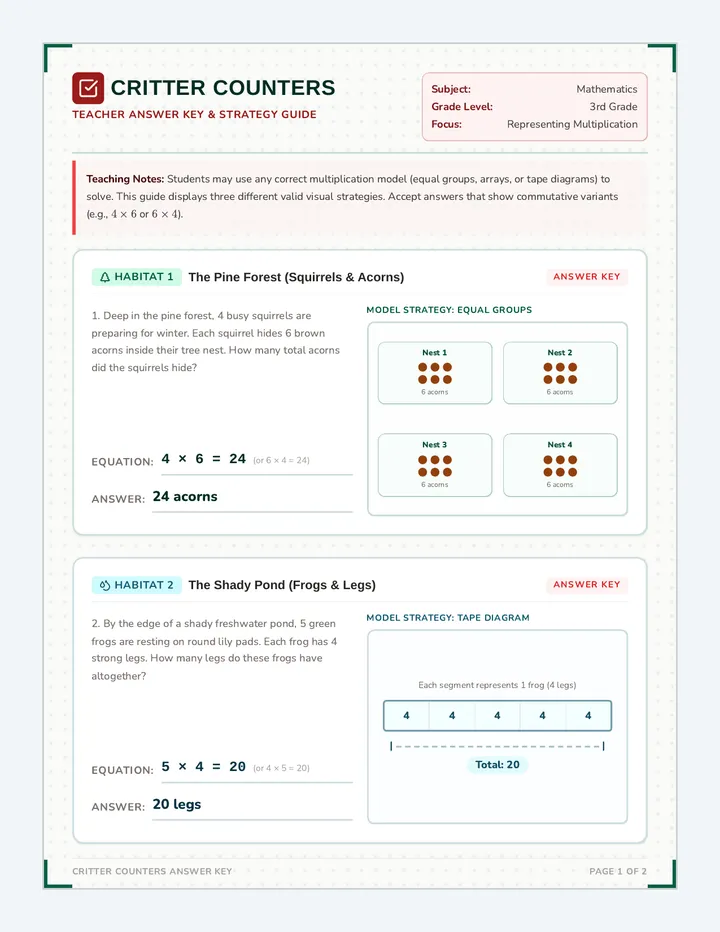
A single-digit multiplication lesson centered around animal counts and habitat scenarios. Students solve word problems using visual representations like arrays, equal groups, and tape diagrams.
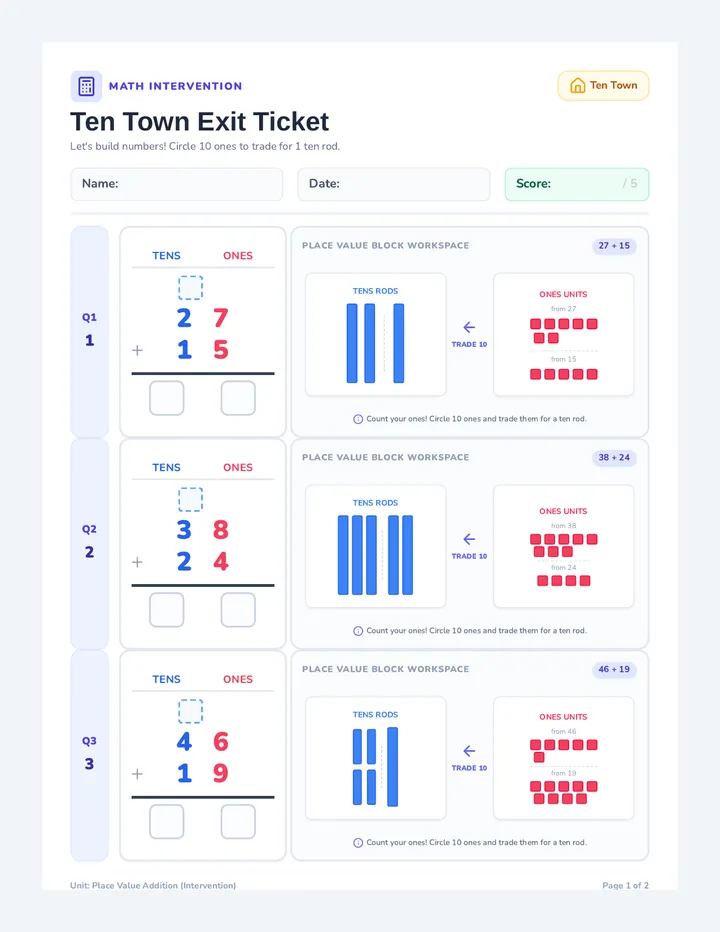
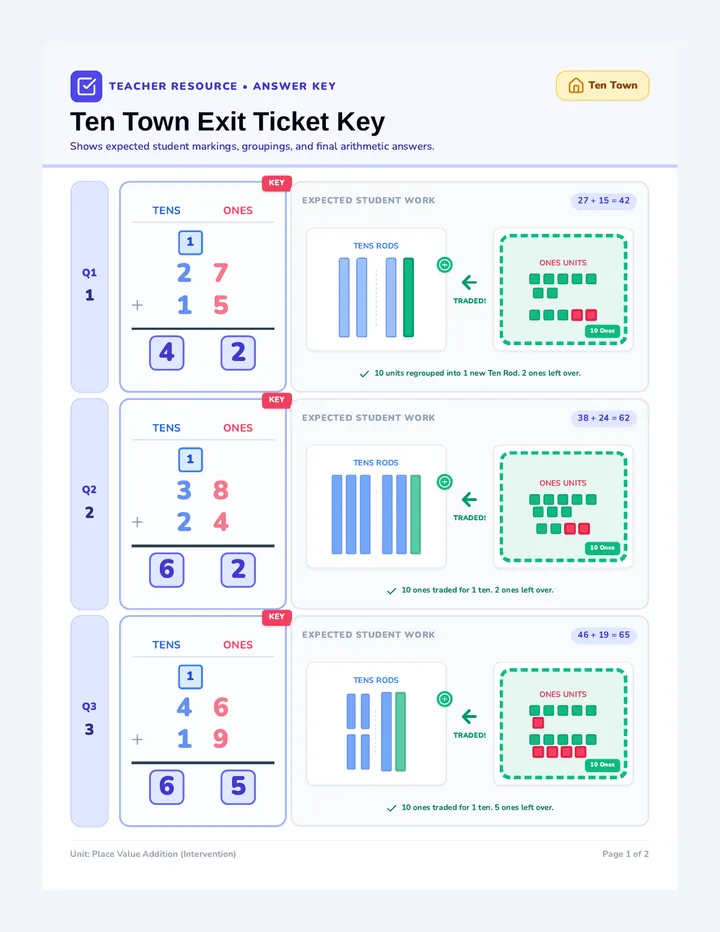
A targeted 2nd-grade intervention lesson focused on adding 2-digit numbers with regrouping. Students use place value block drawings, color-coded numbers, and T-charts to build conceptual understanding and solid arithmetic habits.
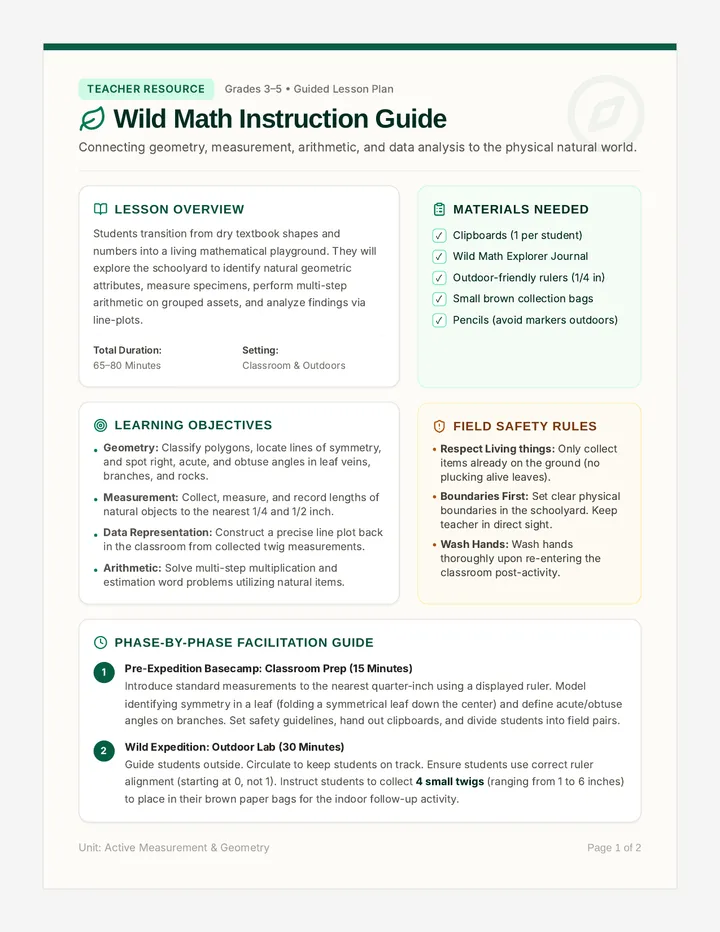
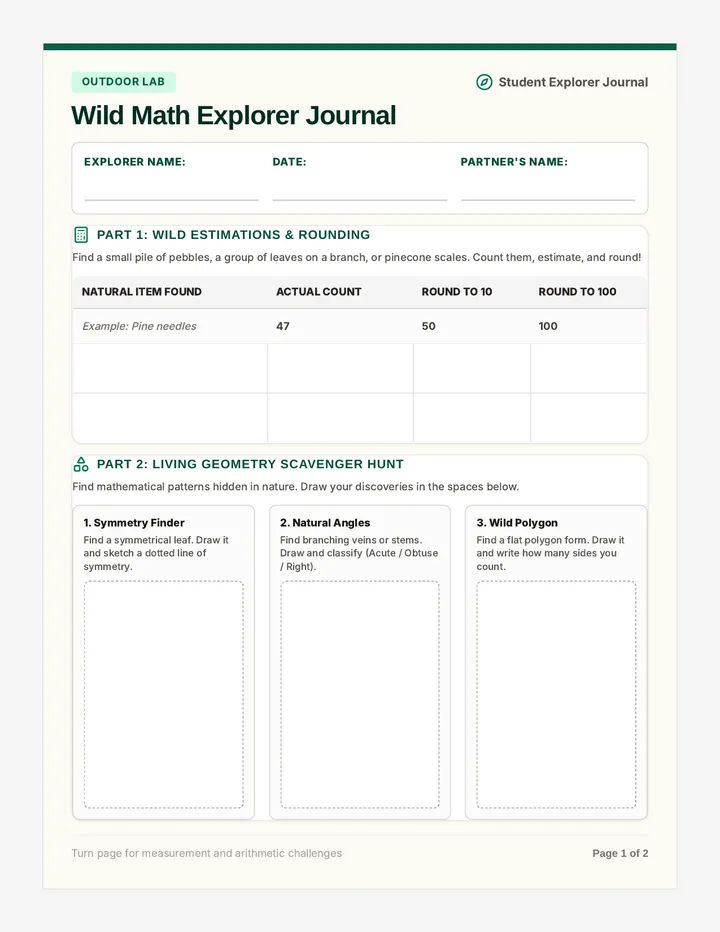
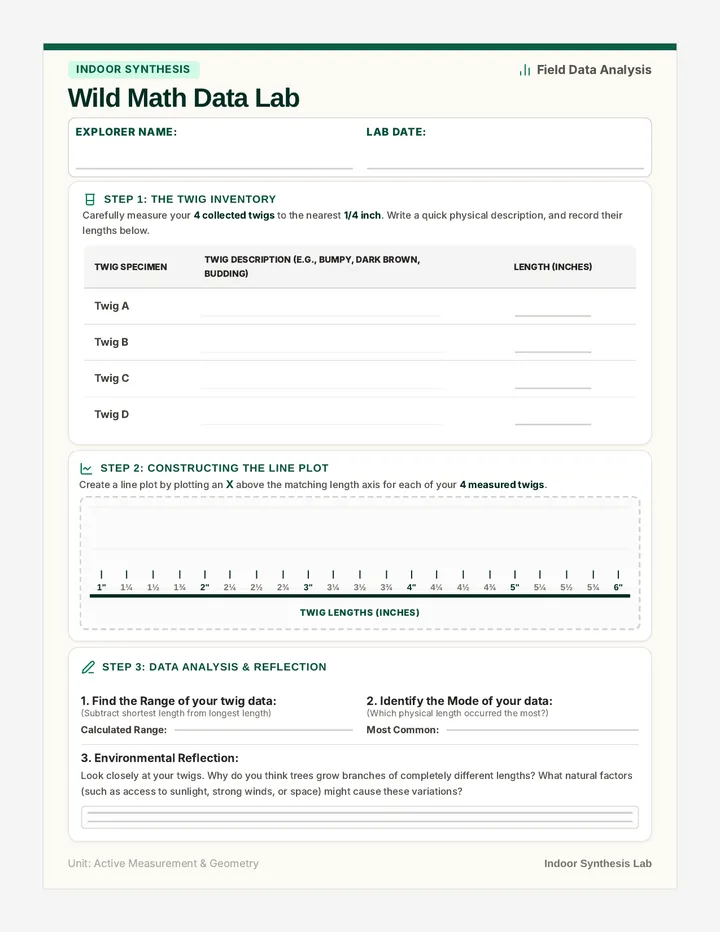
A complete outdoor learning experience where students explore mathematical concepts in the natural world. This lesson bundle connects geometry, measurement, estimation, and word problems directly to physical nature finds, followed by an indoor data-analysis session.
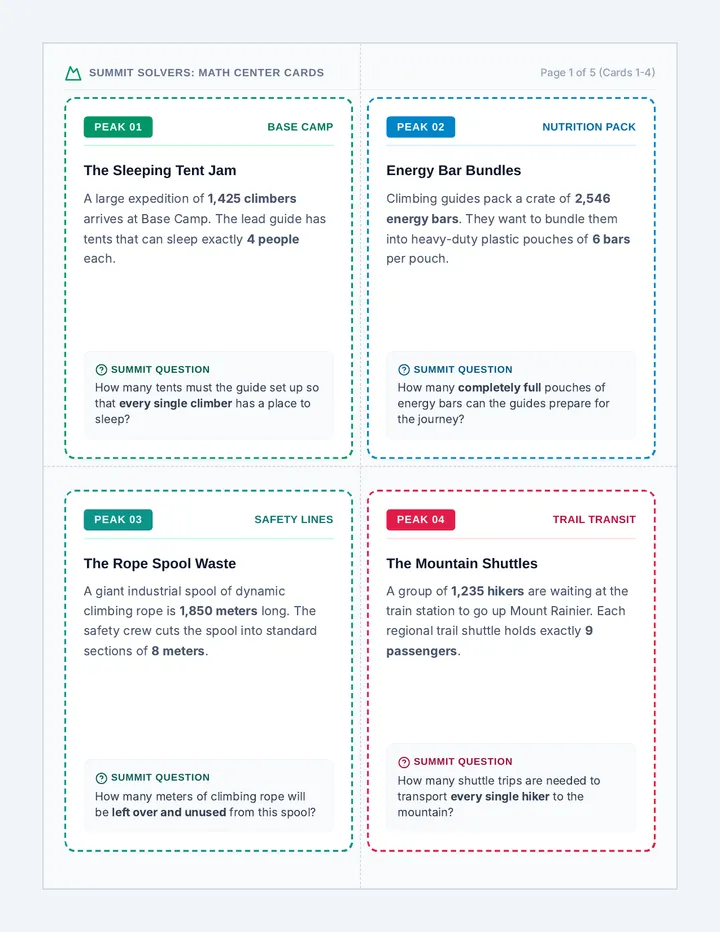
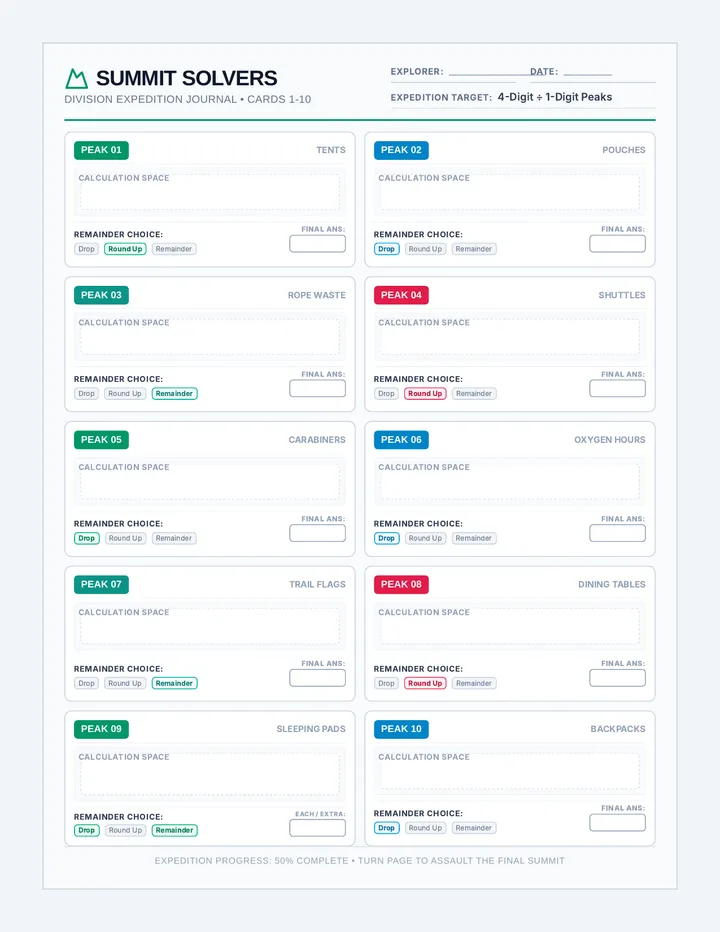
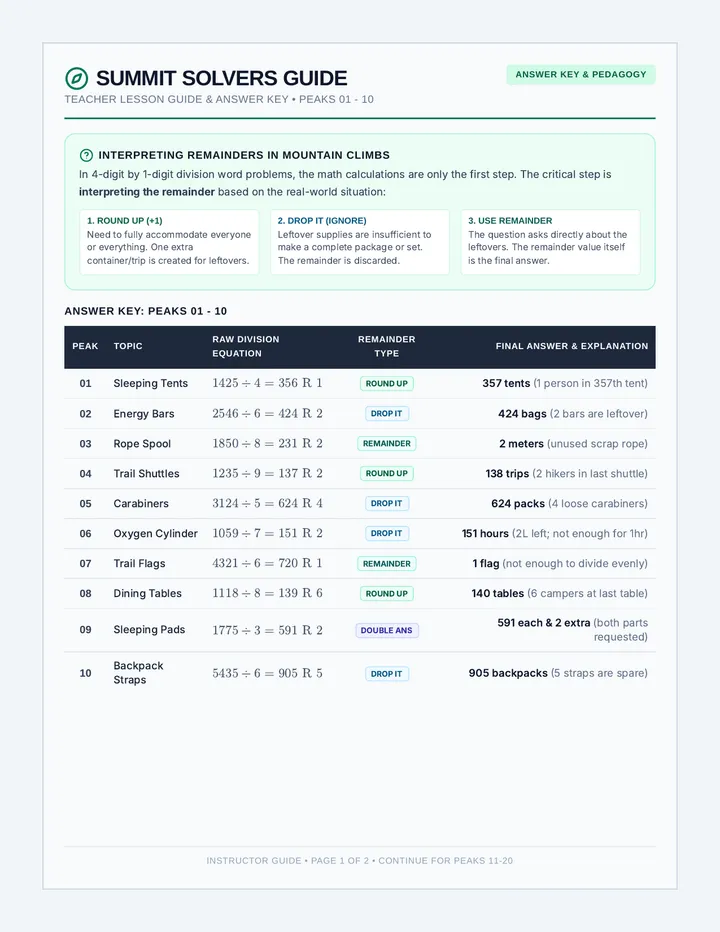
A math lesson focused on solving and interpreting 4-digit by 1-digit division word problems with remainders in a mountain climbing theme. Includes task cards, a recording sheet, and a detailed teacher answer guide.
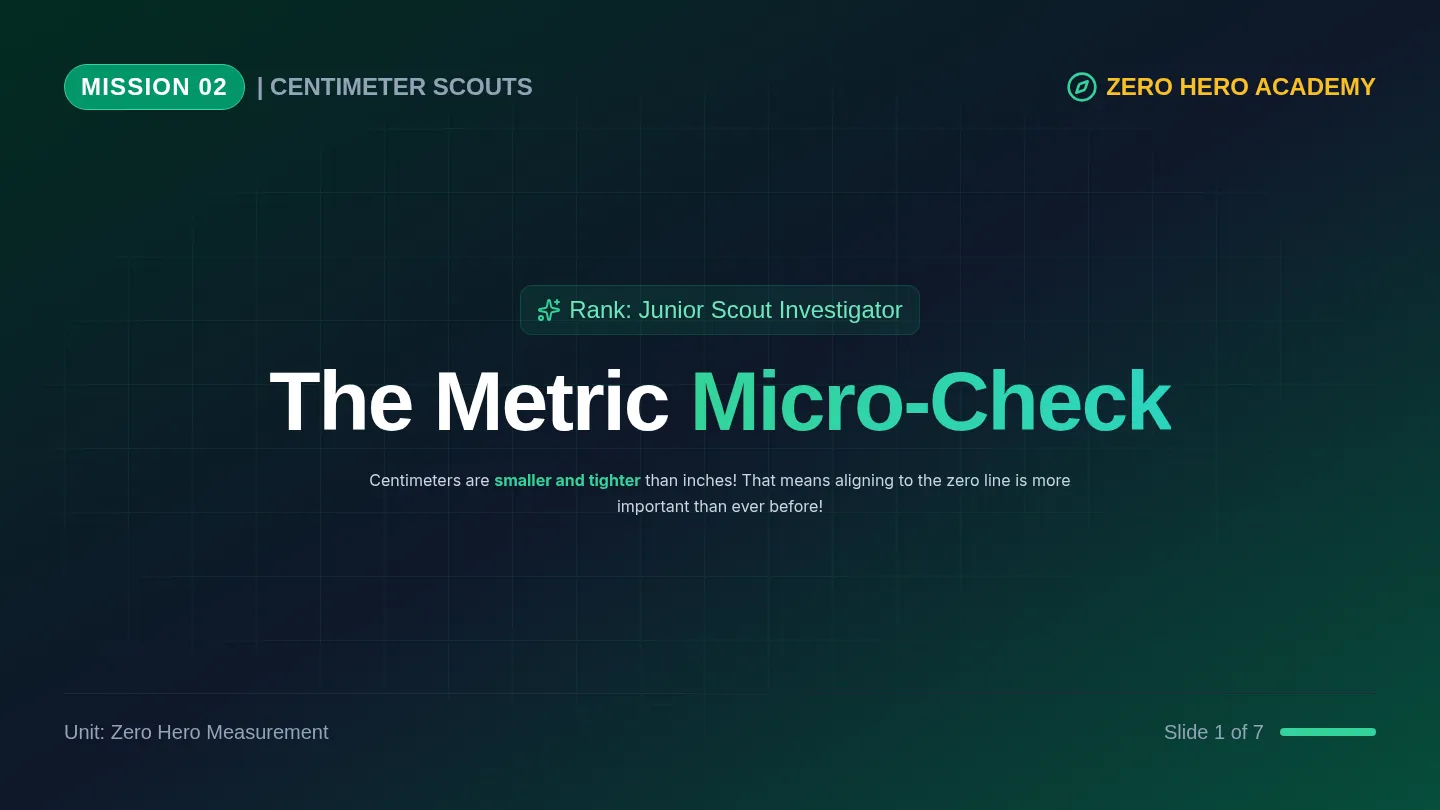
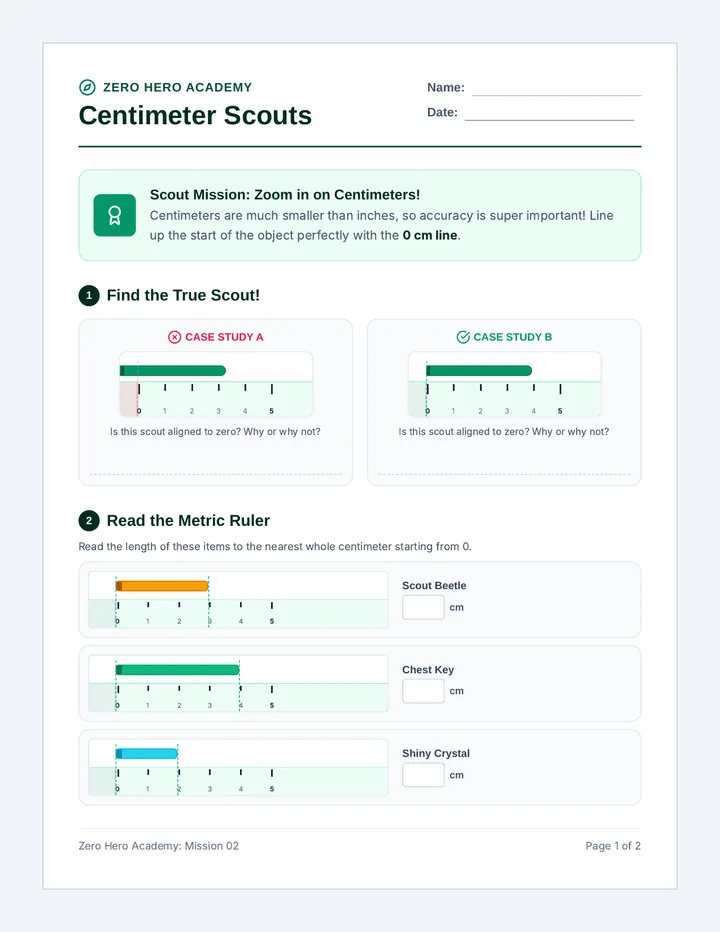
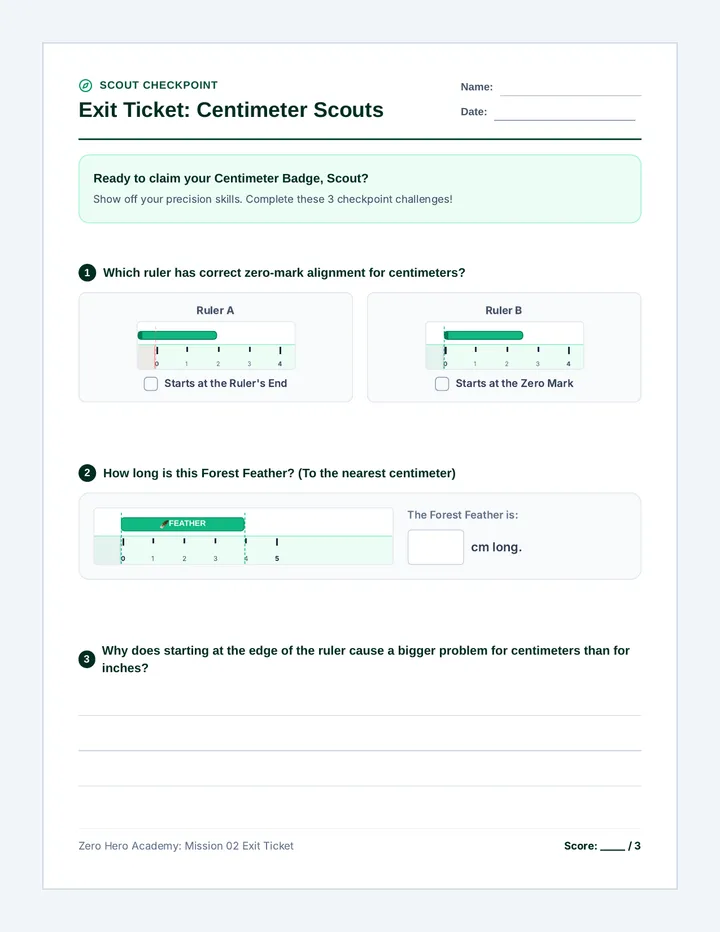
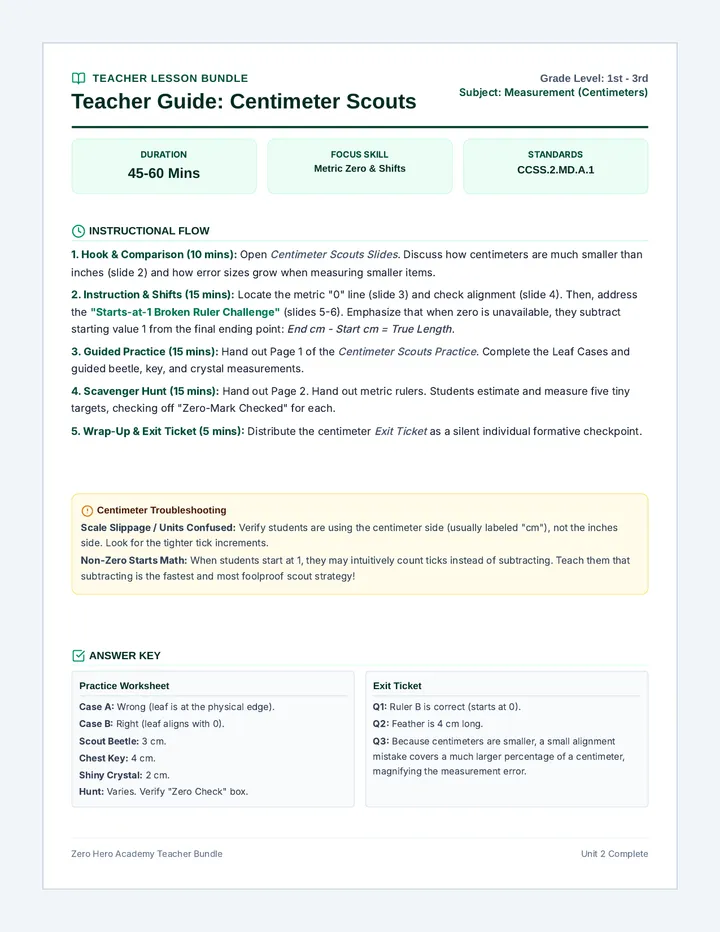
Students apply their measurement skills to the metric system, learning about centimeters and practicing precise measurement starting at the zero mark.
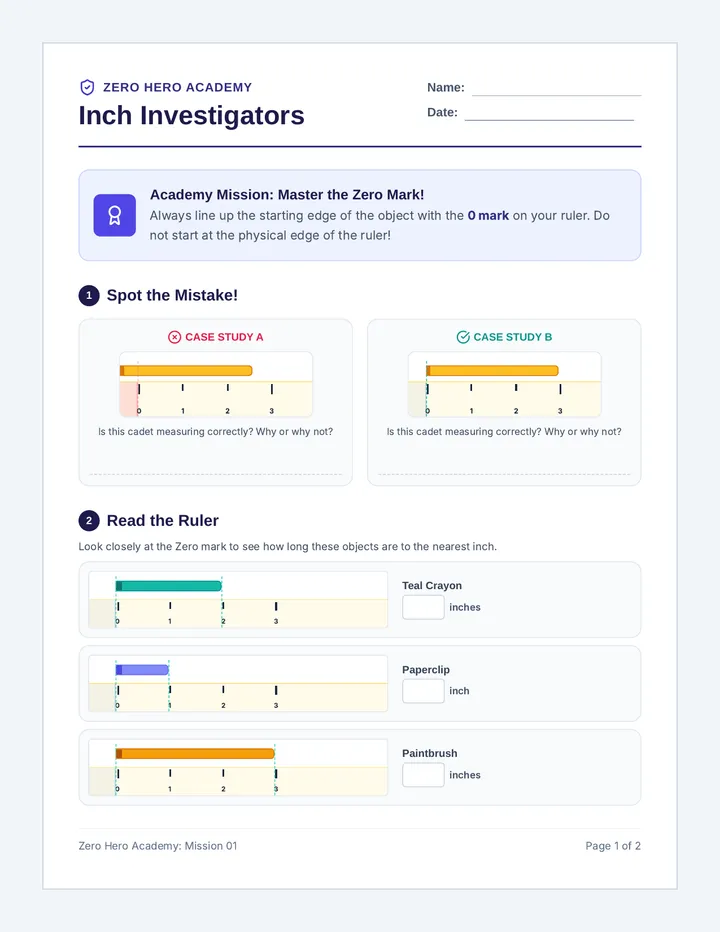
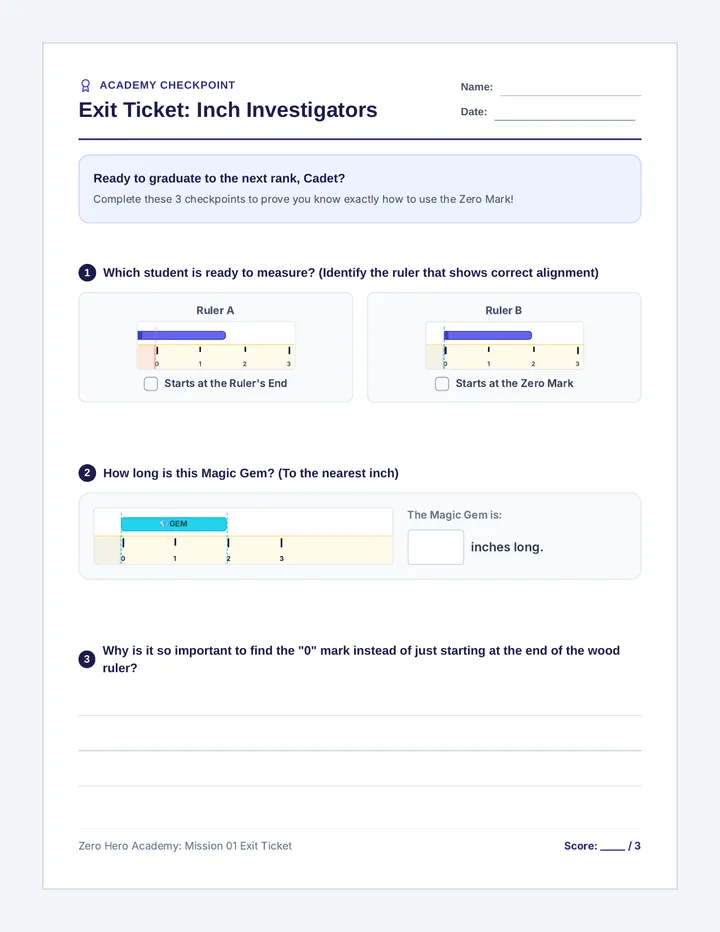
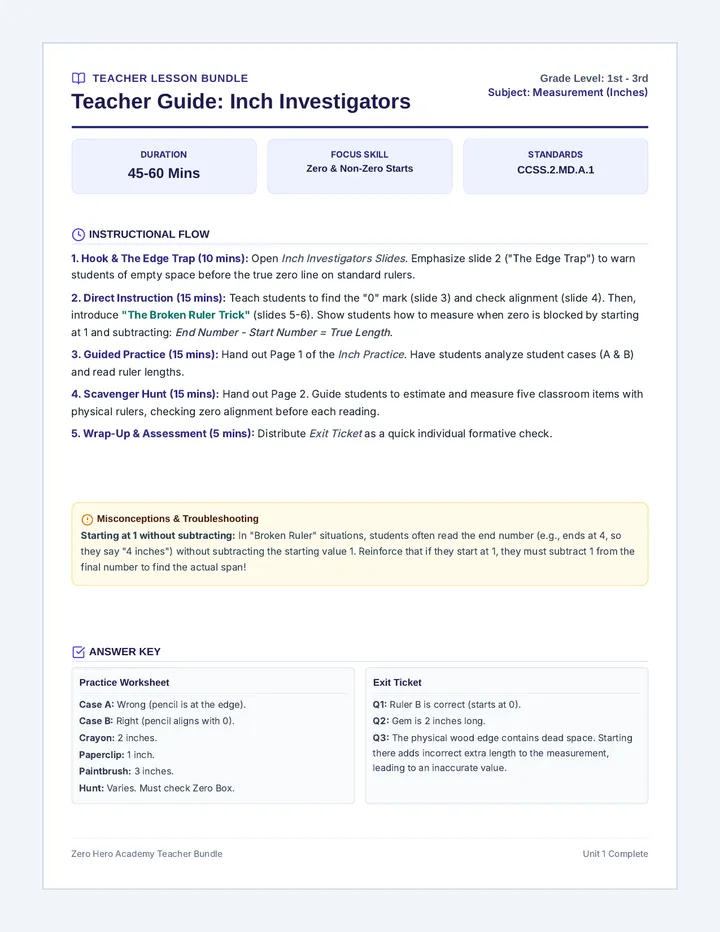
Students learn to measure to the nearest inch using custom visual rulers. The lesson emphasizes locating the true starting zero mark instead of starting at the physical edge of the ruler.
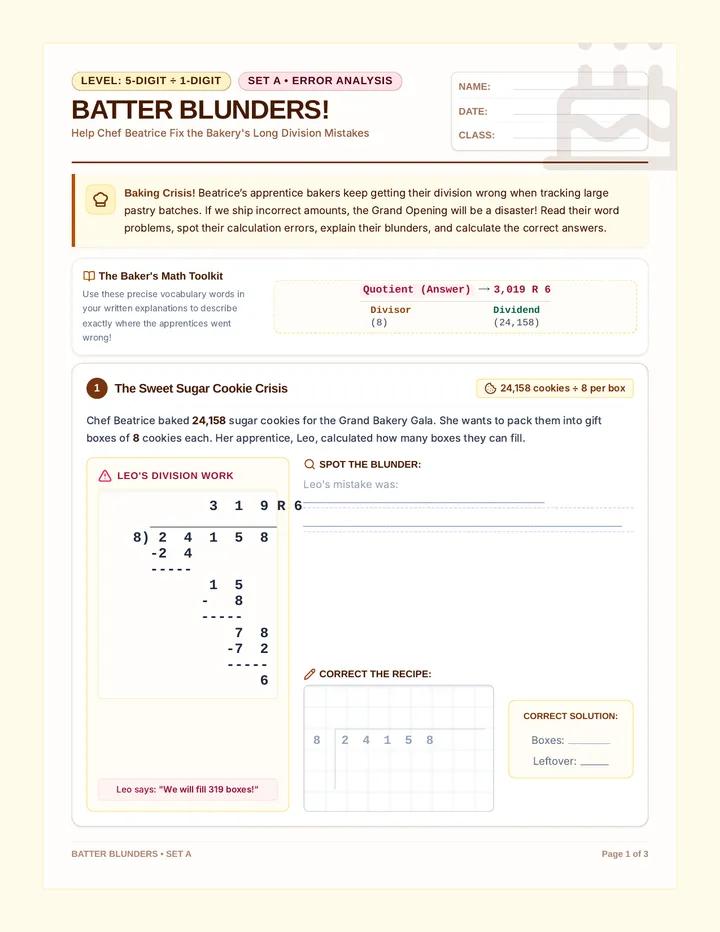
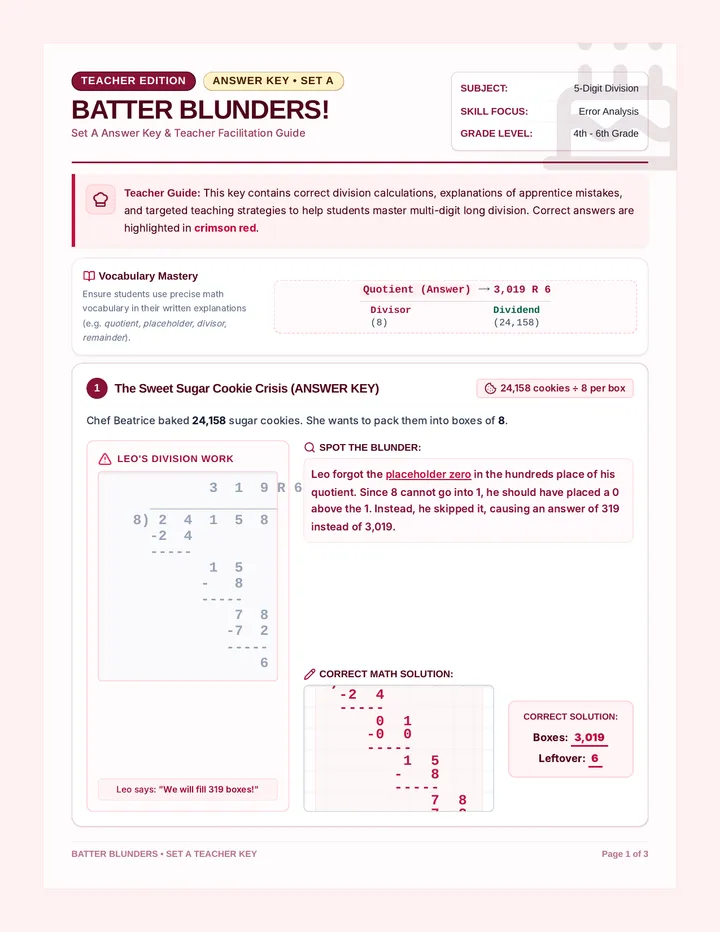
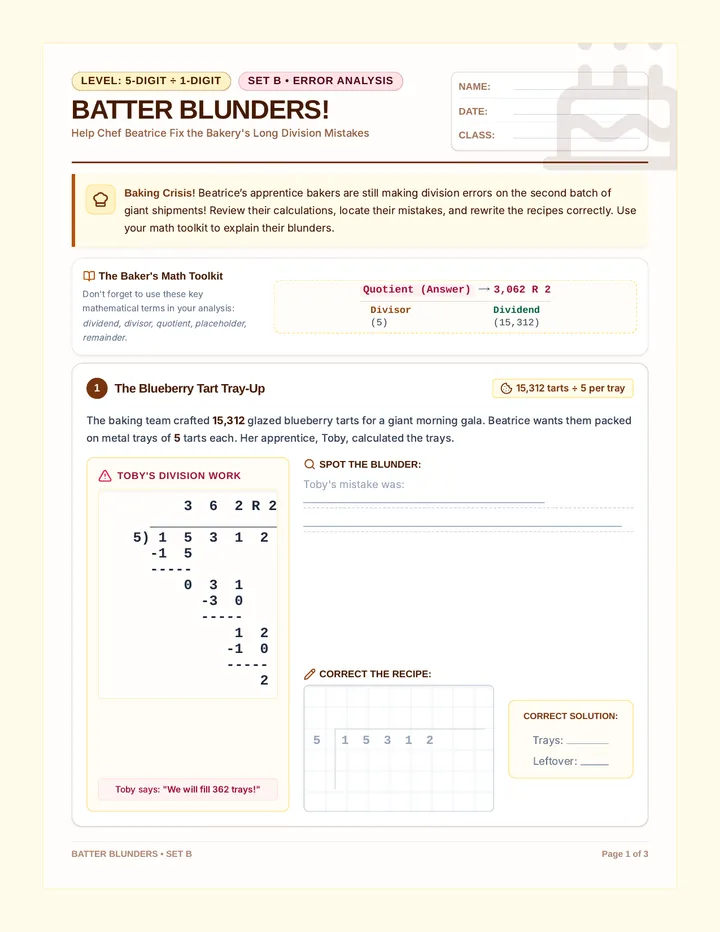
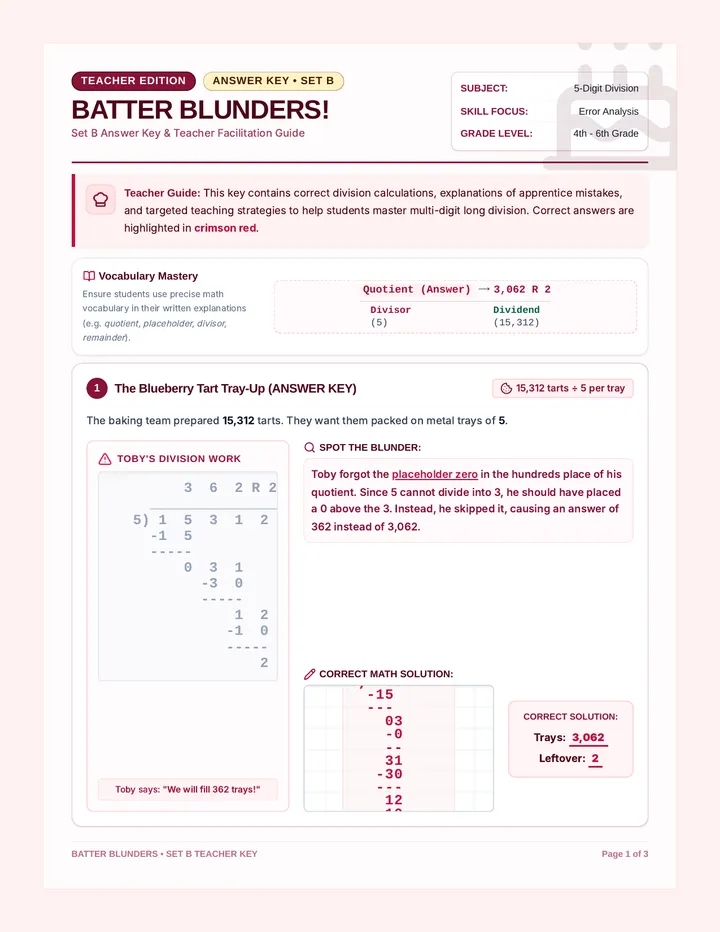
A sweet, bakery-themed math lesson where students analyze five-digit division problems to identify, explain, and correct common calculation mistakes.
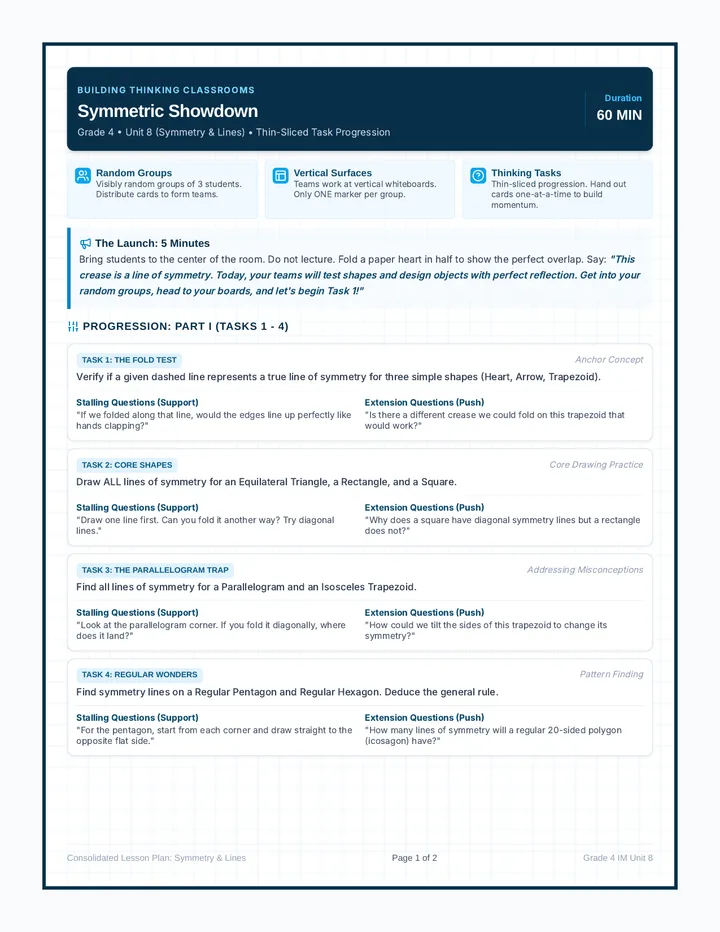
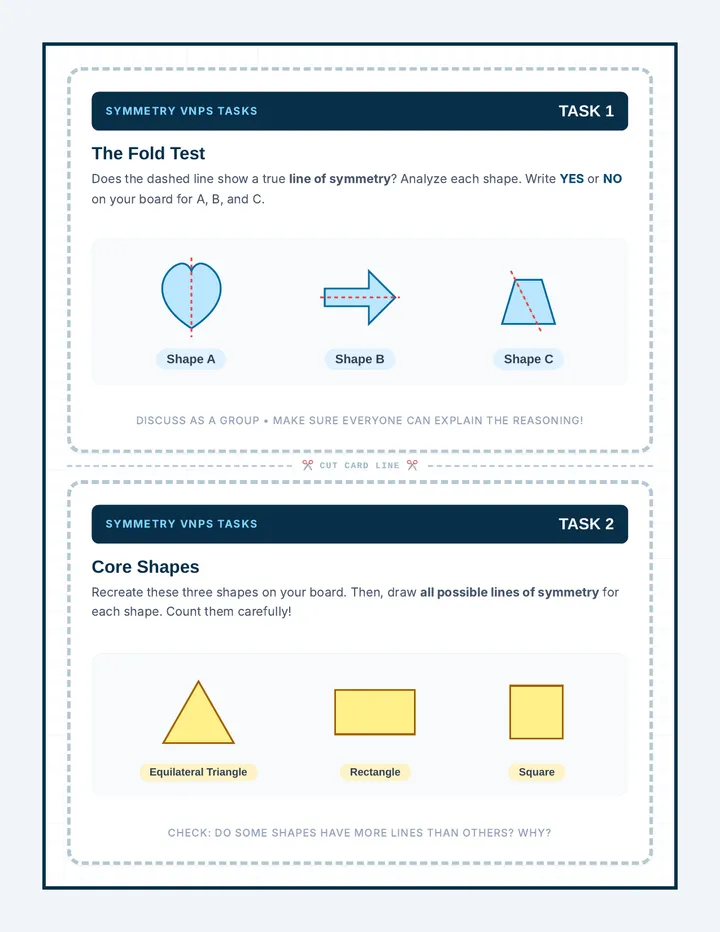
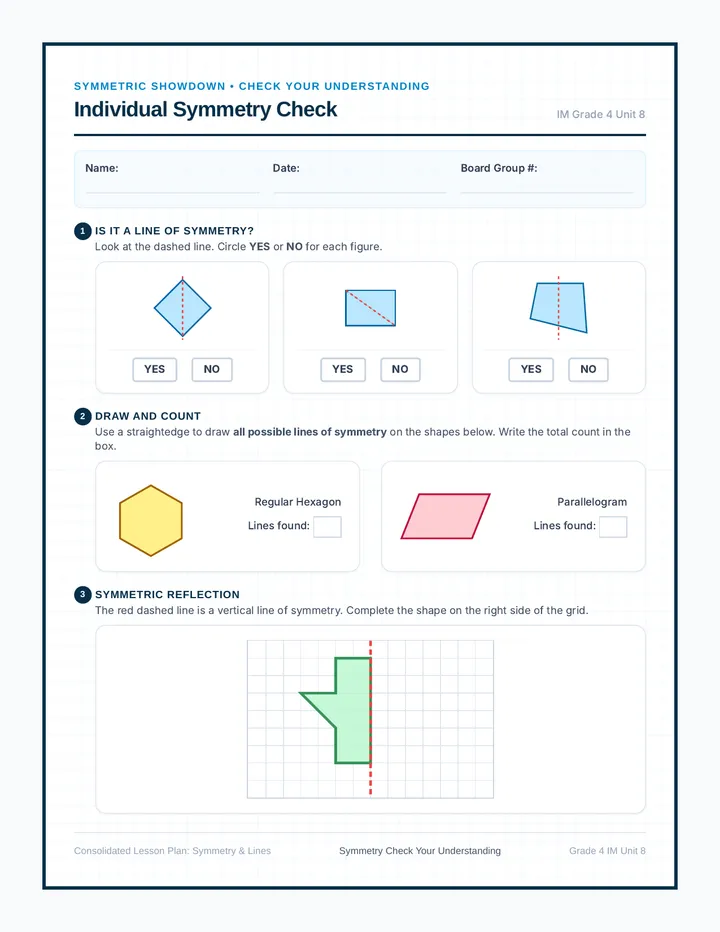
A Grade 4 math lesson built on Building Thinking Classrooms (BTC) principles and thin-slicing. Students use highly progressive tasks at vertical surfaces to discover, identify, and draw lines of symmetry in geometric figures.
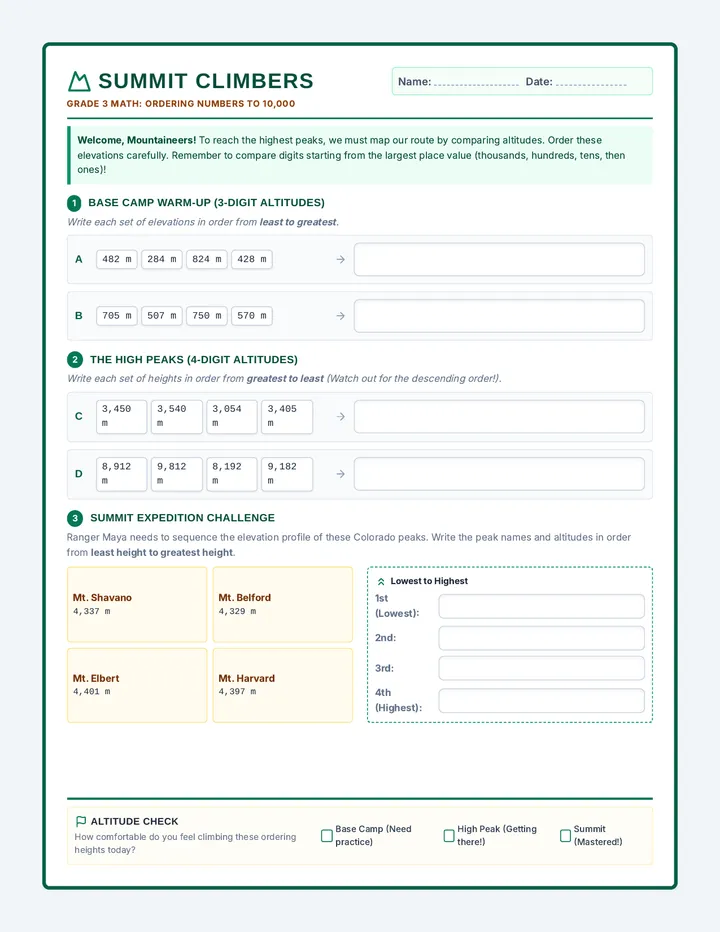
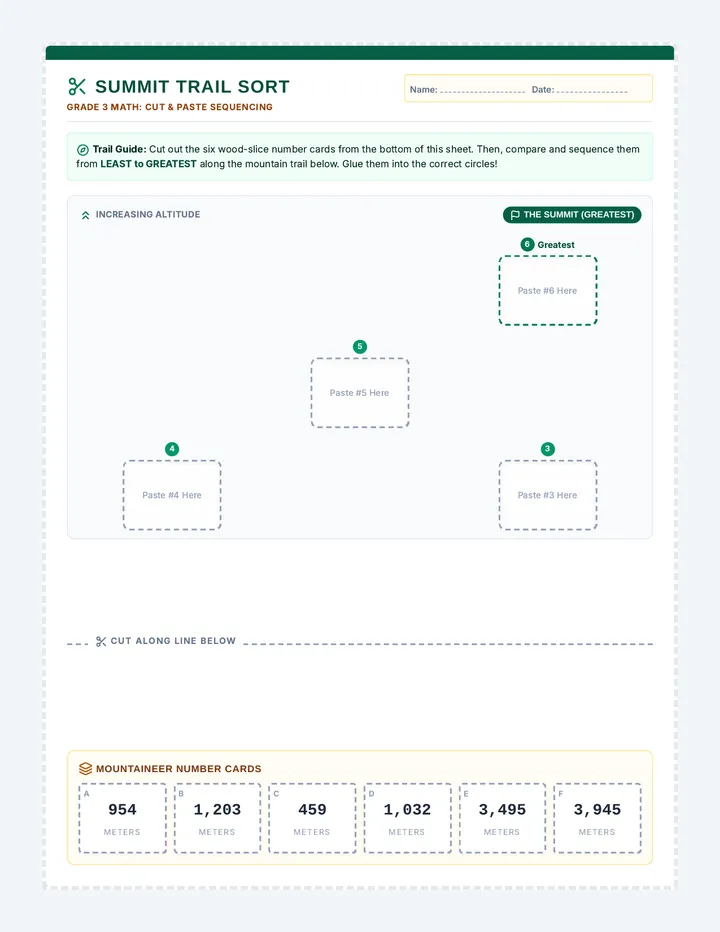
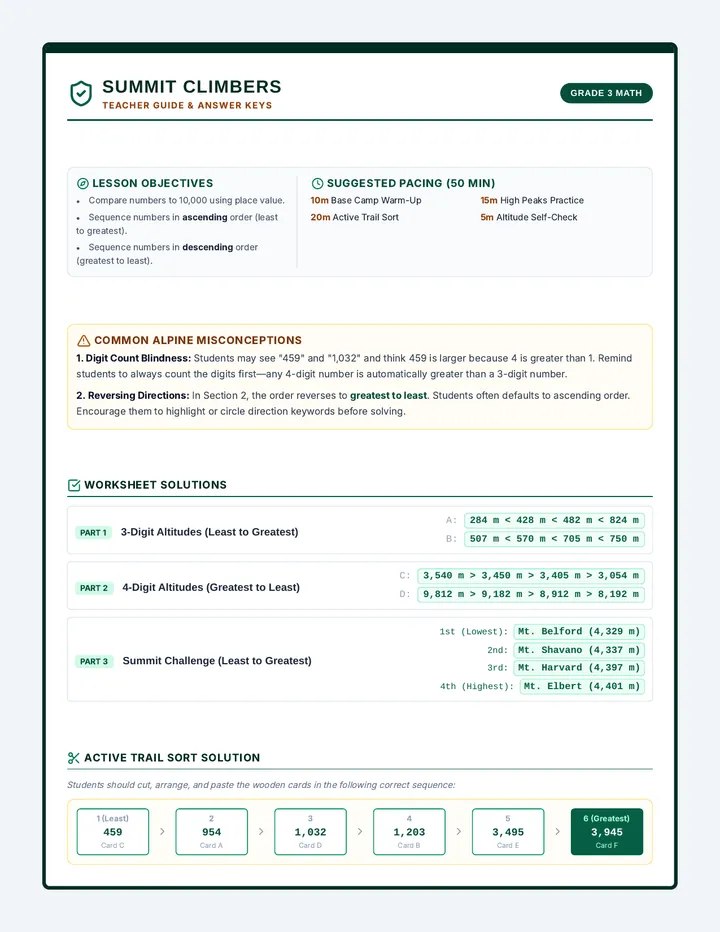
A high-elevation math lesson where Grade 3 students master ordering 3-digit and 4-digit numbers within 10,000. Through standard ordering lists, visual height challenges, and an interactive cut-and-paste sorting activity, students build strong place-value skills.
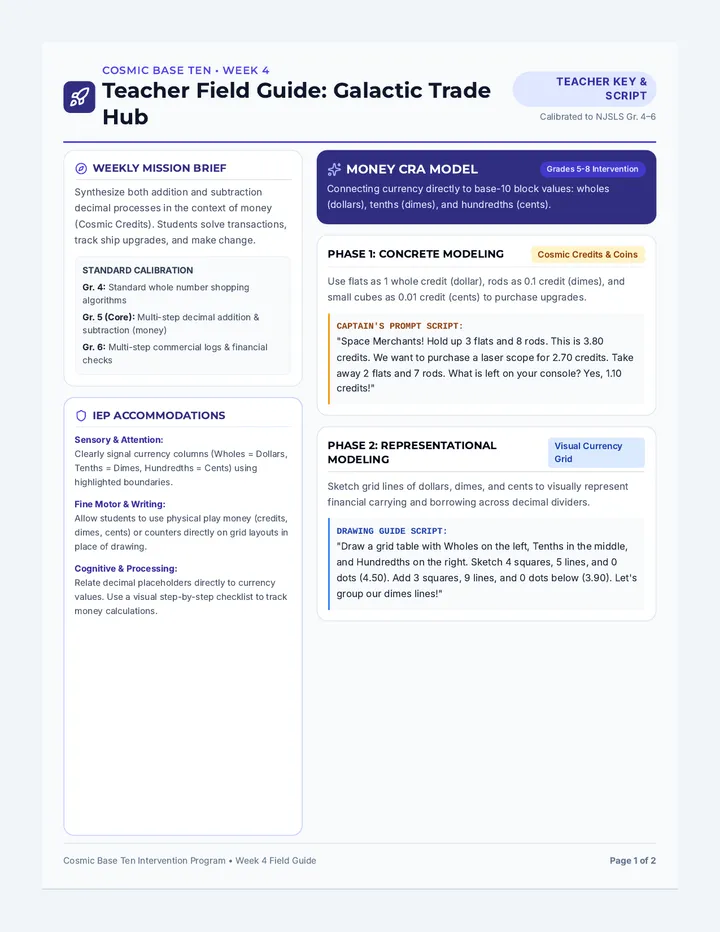
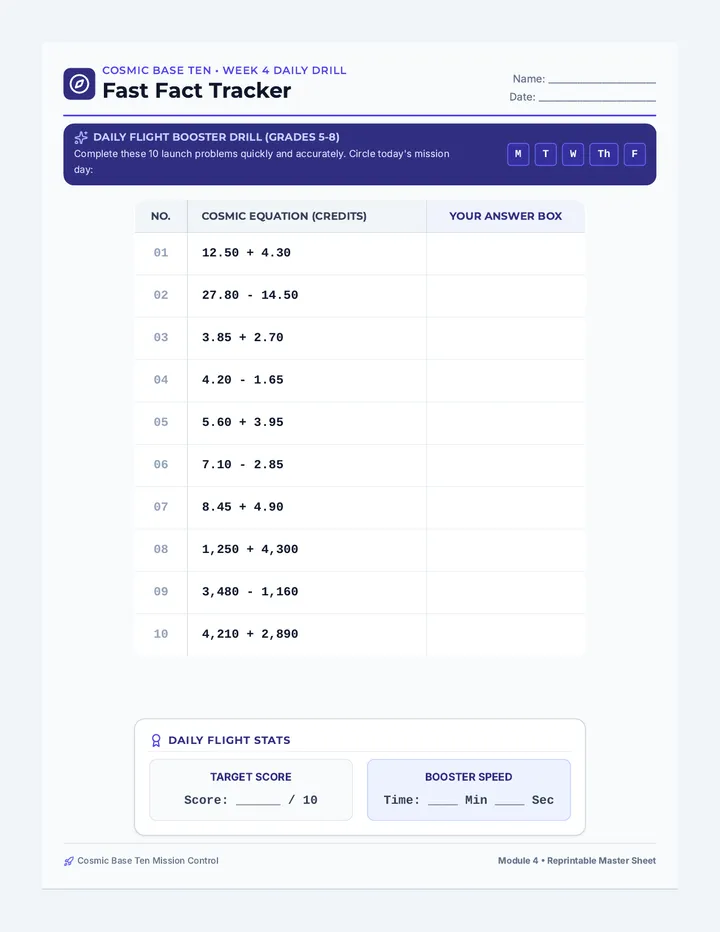
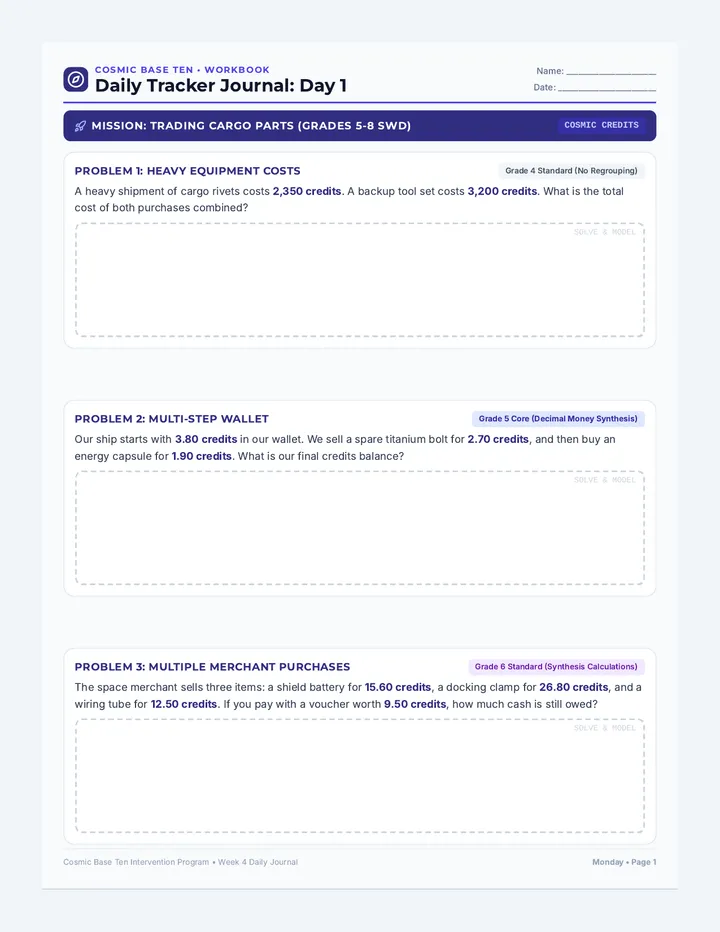
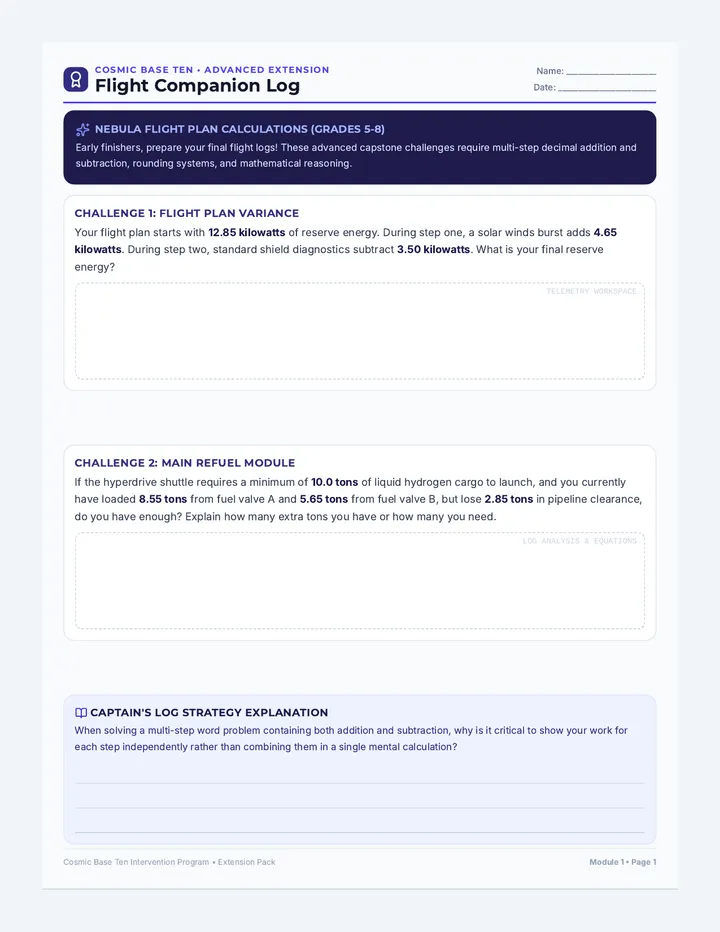
Week 4 is the capstone week where students synthesize their additive and subtractive decimal skills in the context of money. They solve multi-step commercial transactions, balance credit records, and purchase starship upgrades.
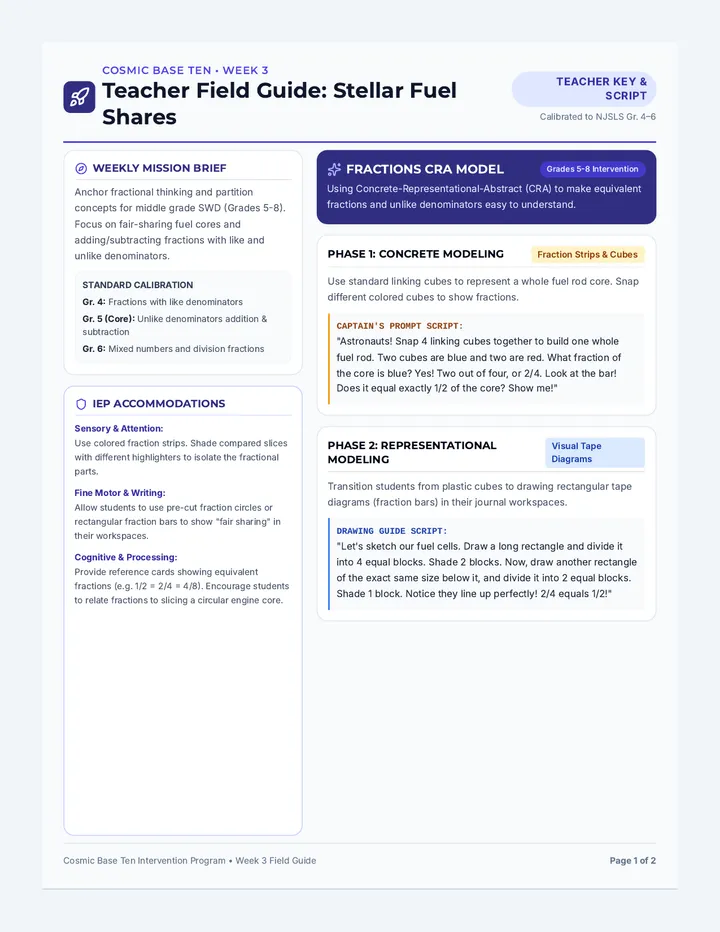
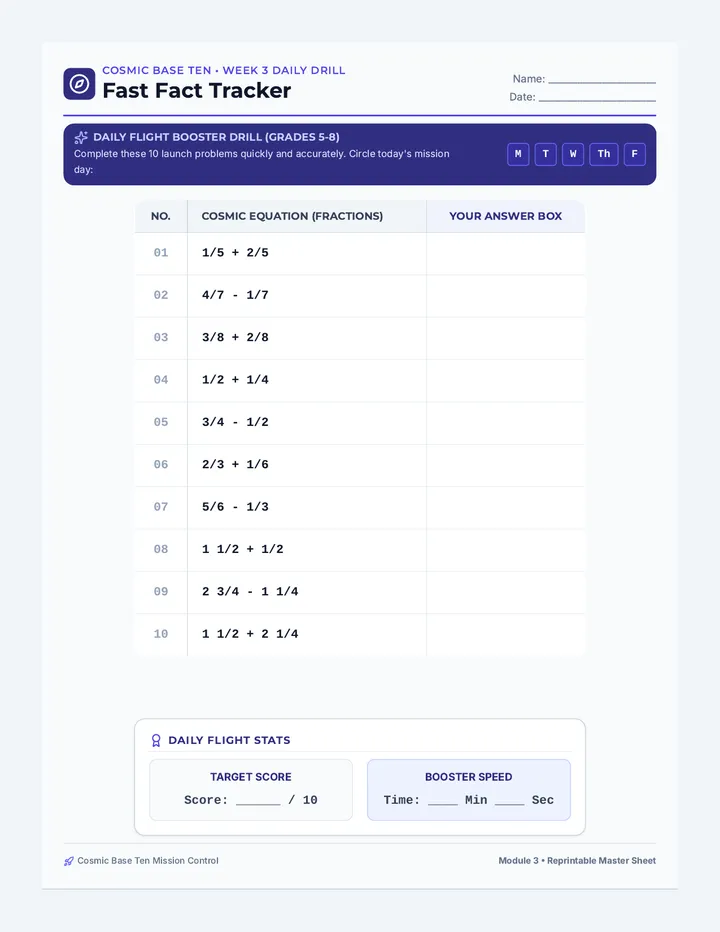
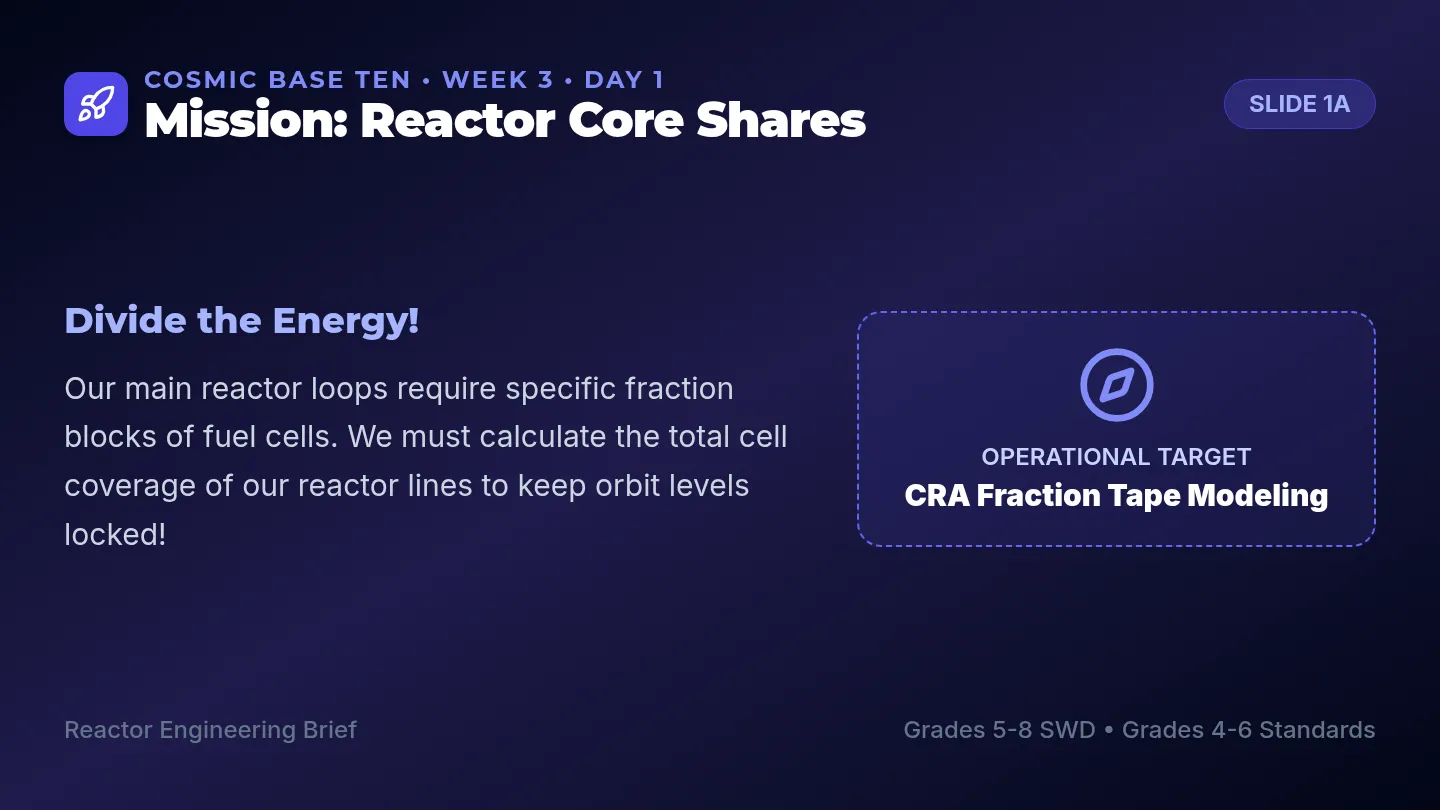
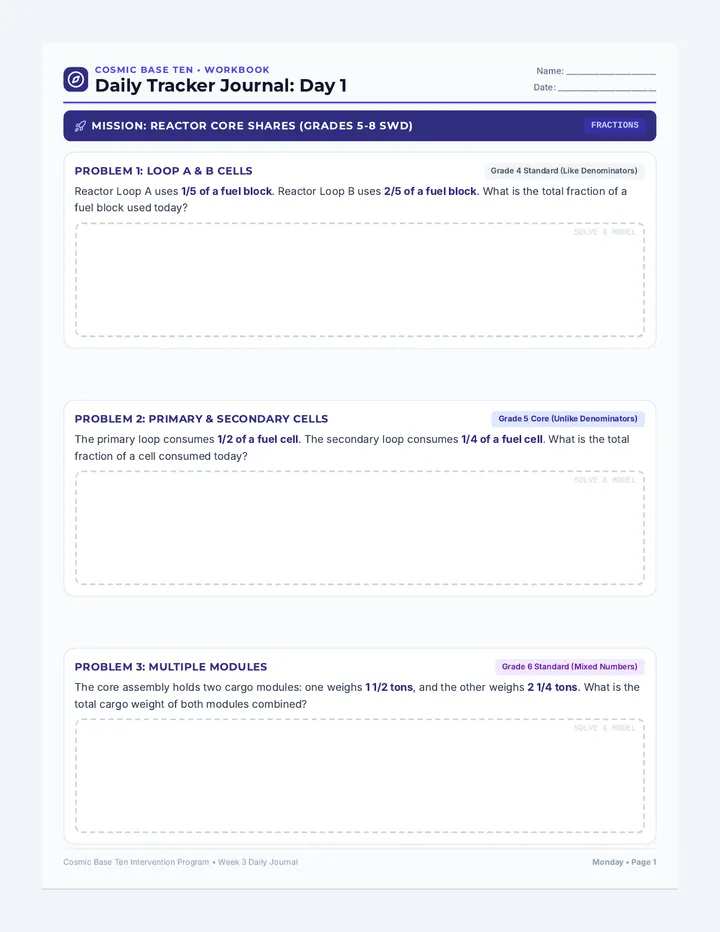
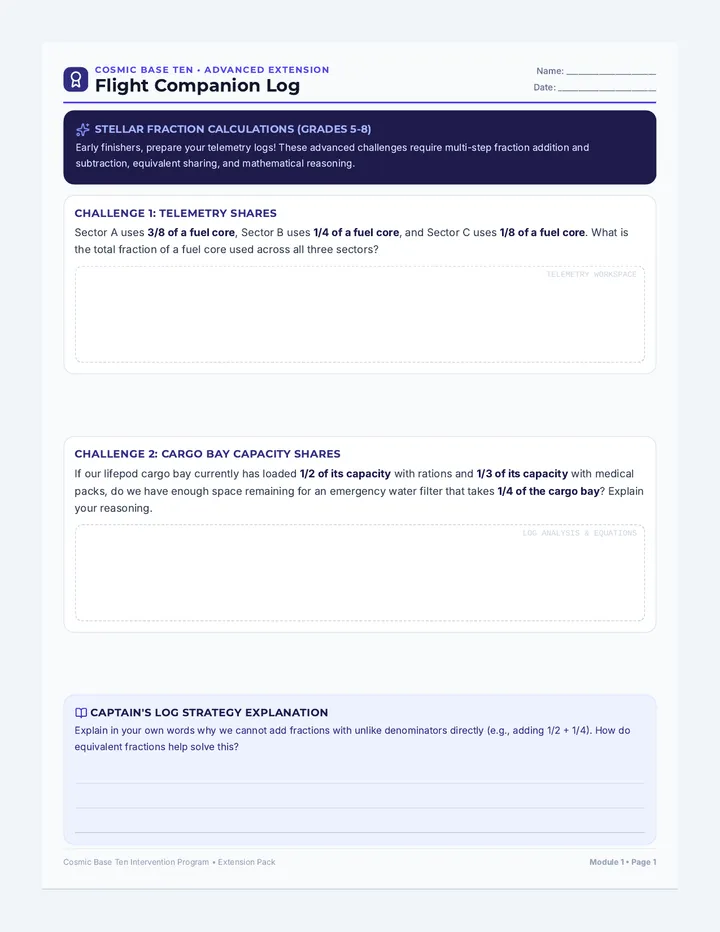
Week 3 focuses on partitioning, equivalent fractions, and adding or subtracting fractions with like and unlike denominators. Students practice fair-sharing reactor cores, dividing cargo weight, and mapping stellar orbits using fraction bars.
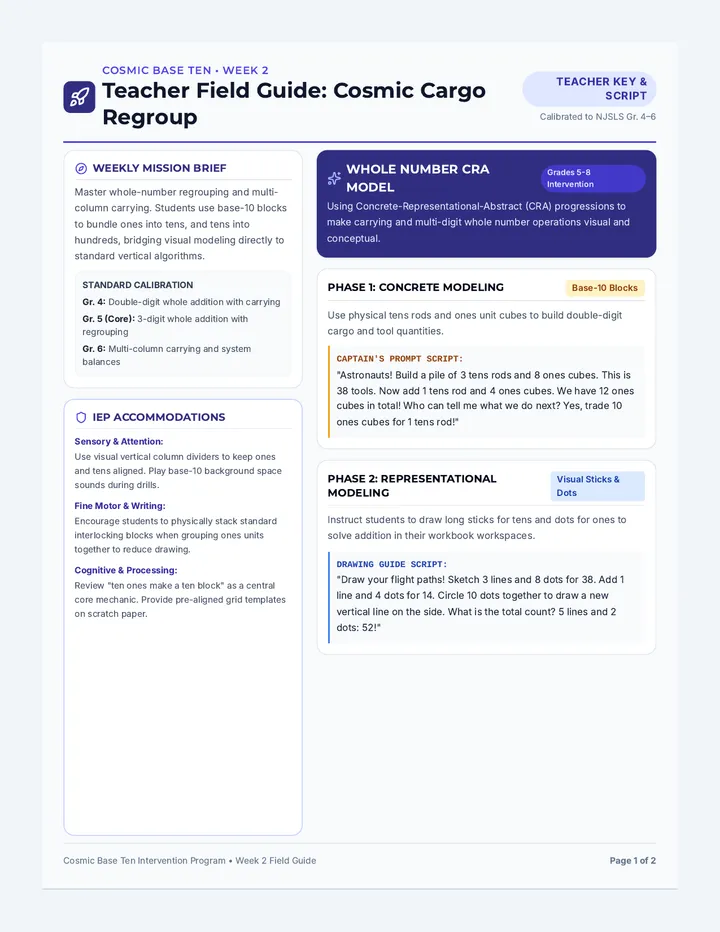
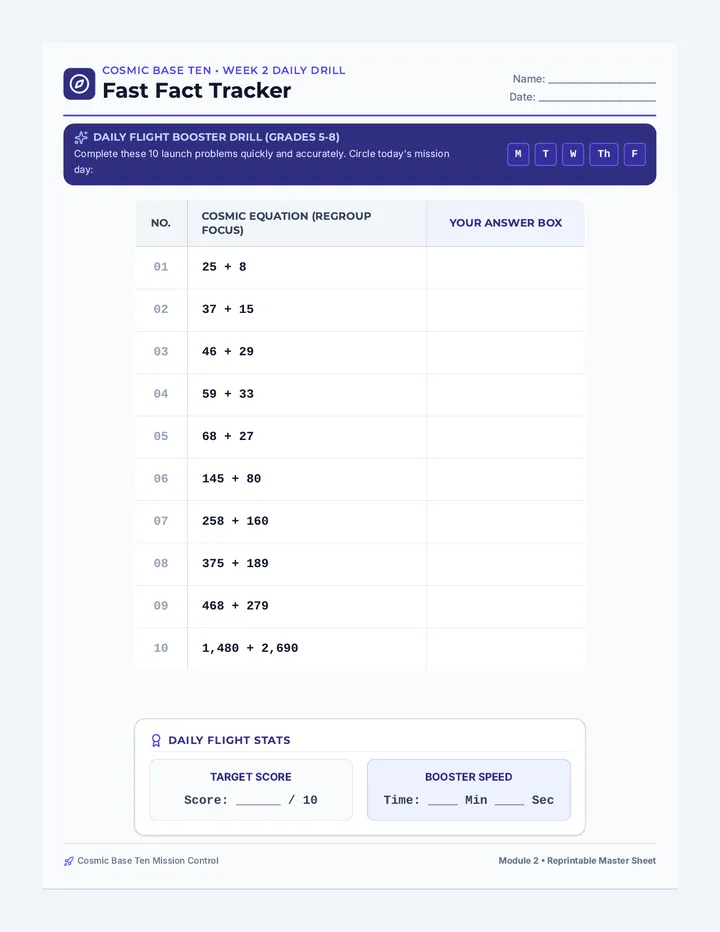
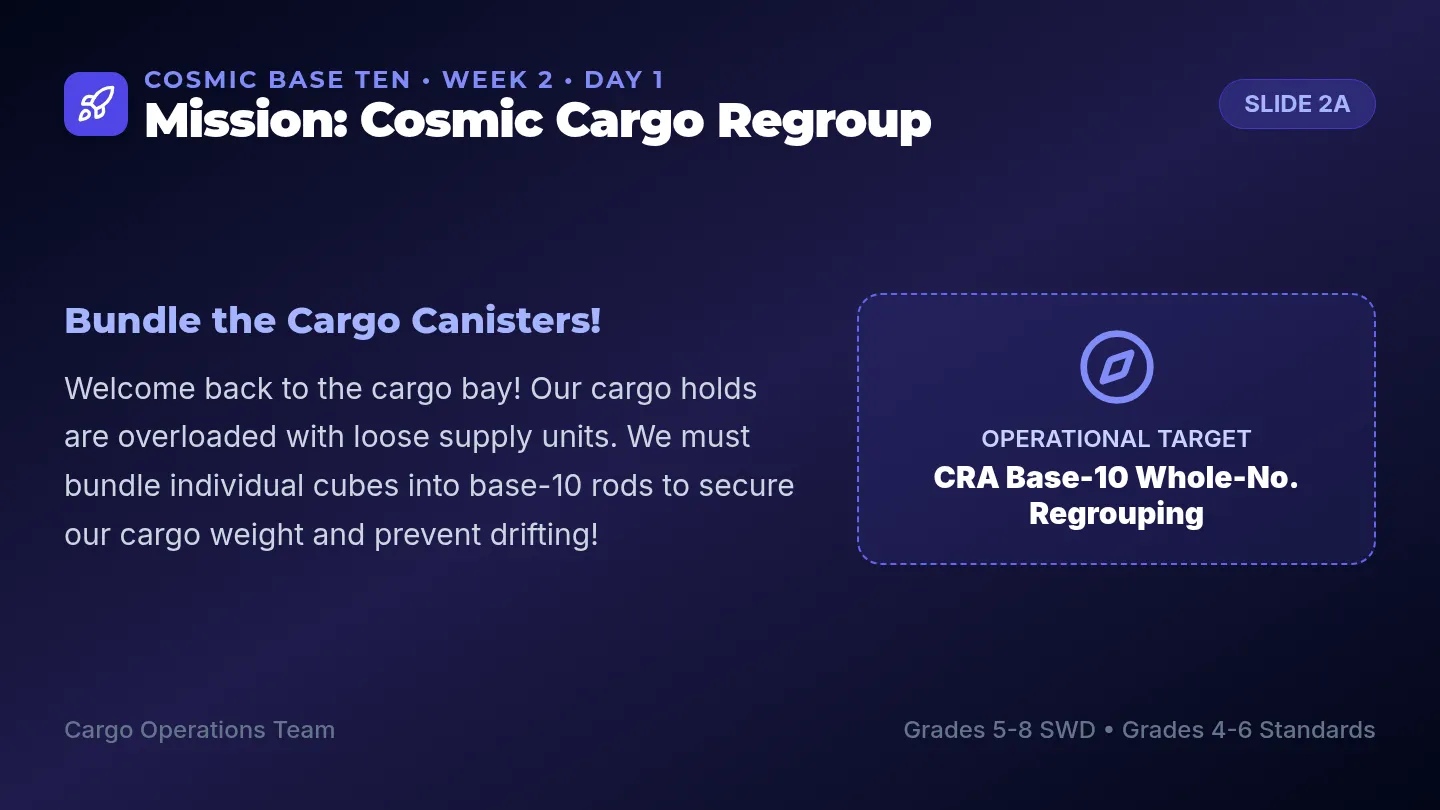
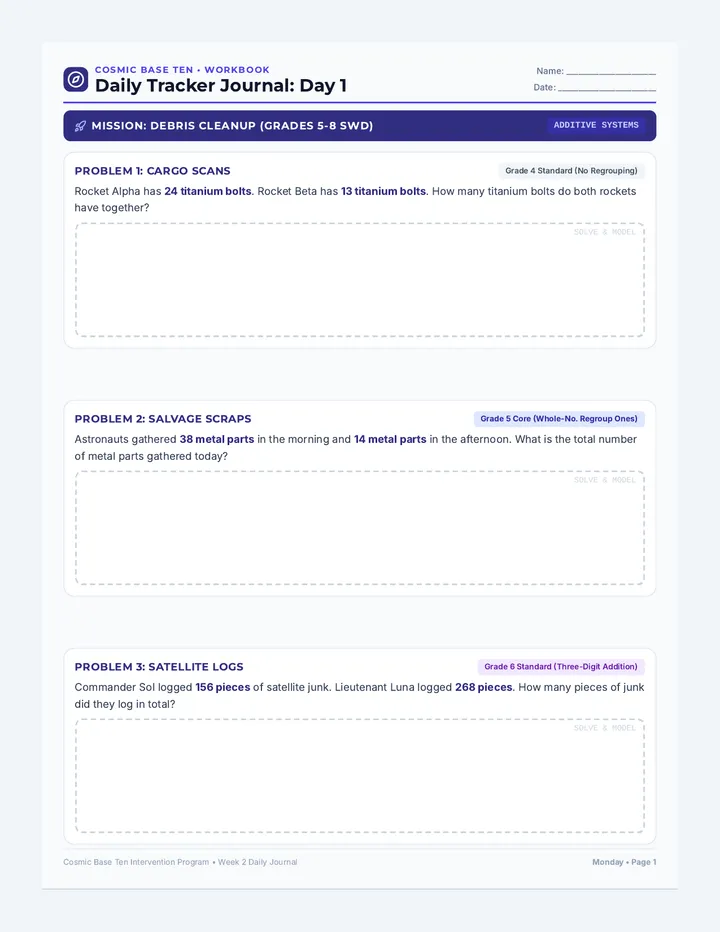
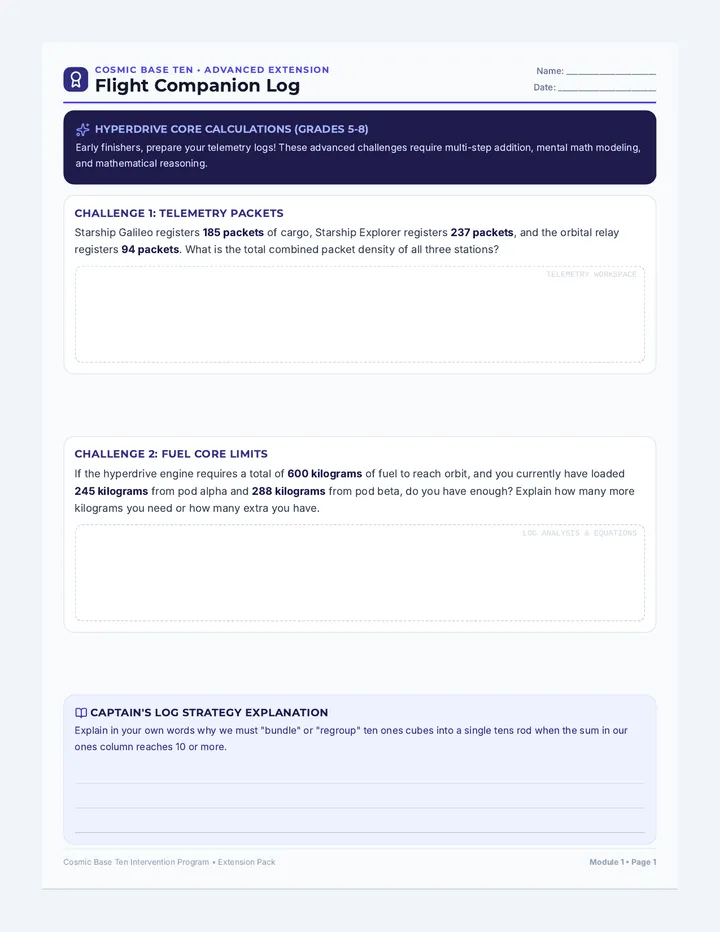
Week 2 focuses on mastering whole-number regrouping and multi-column carrying in the context of starship cargo inventories. Students use base-10 blocks to bundle ones into tens and tens into hundreds, bridging visual modeling directly to standard vertical algorithms.
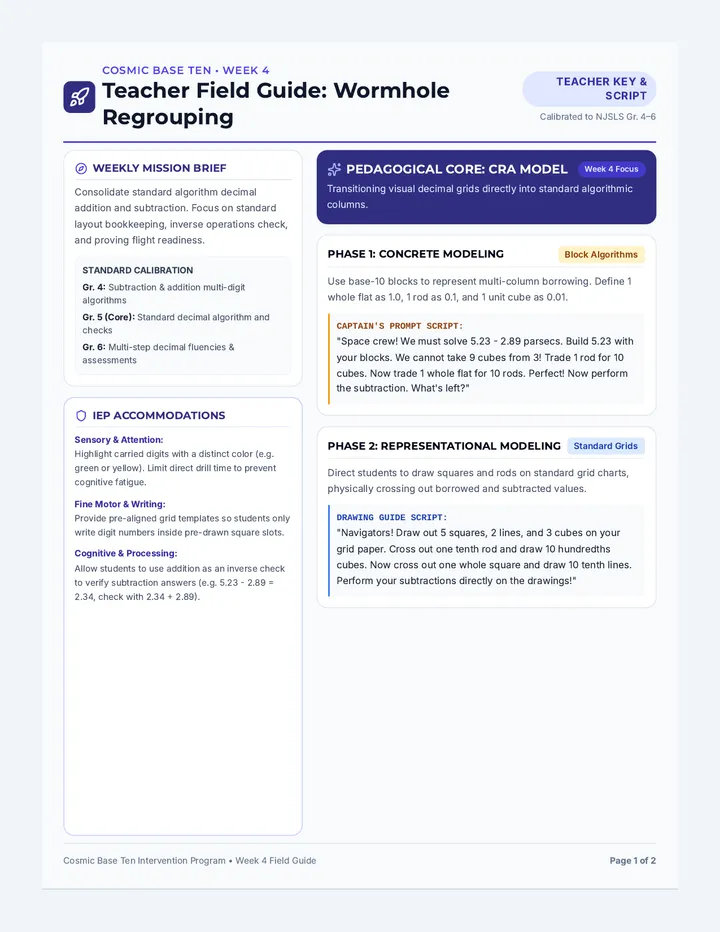
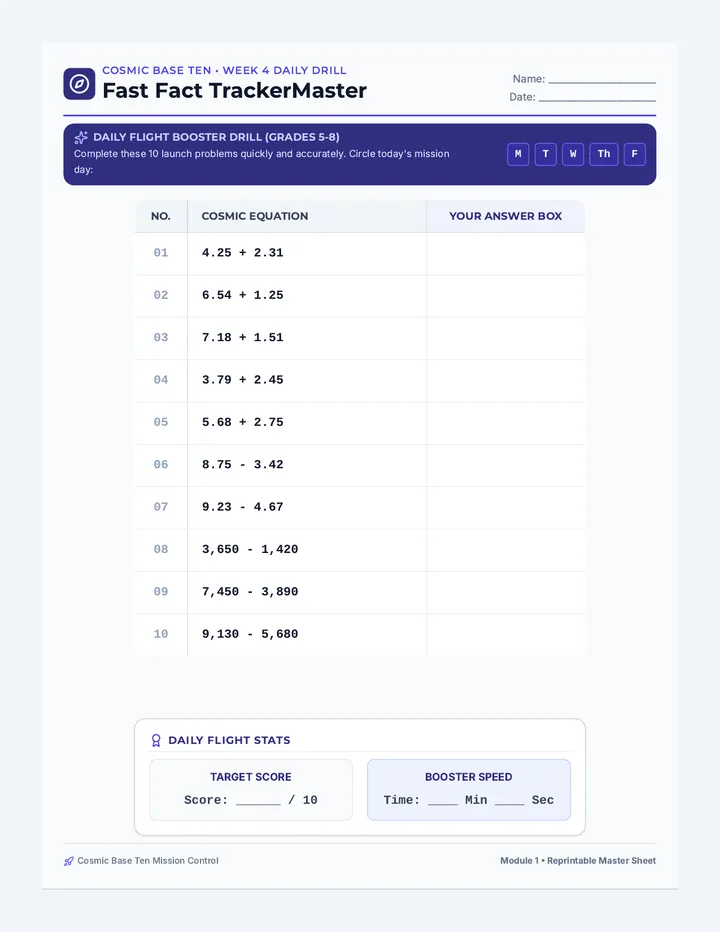
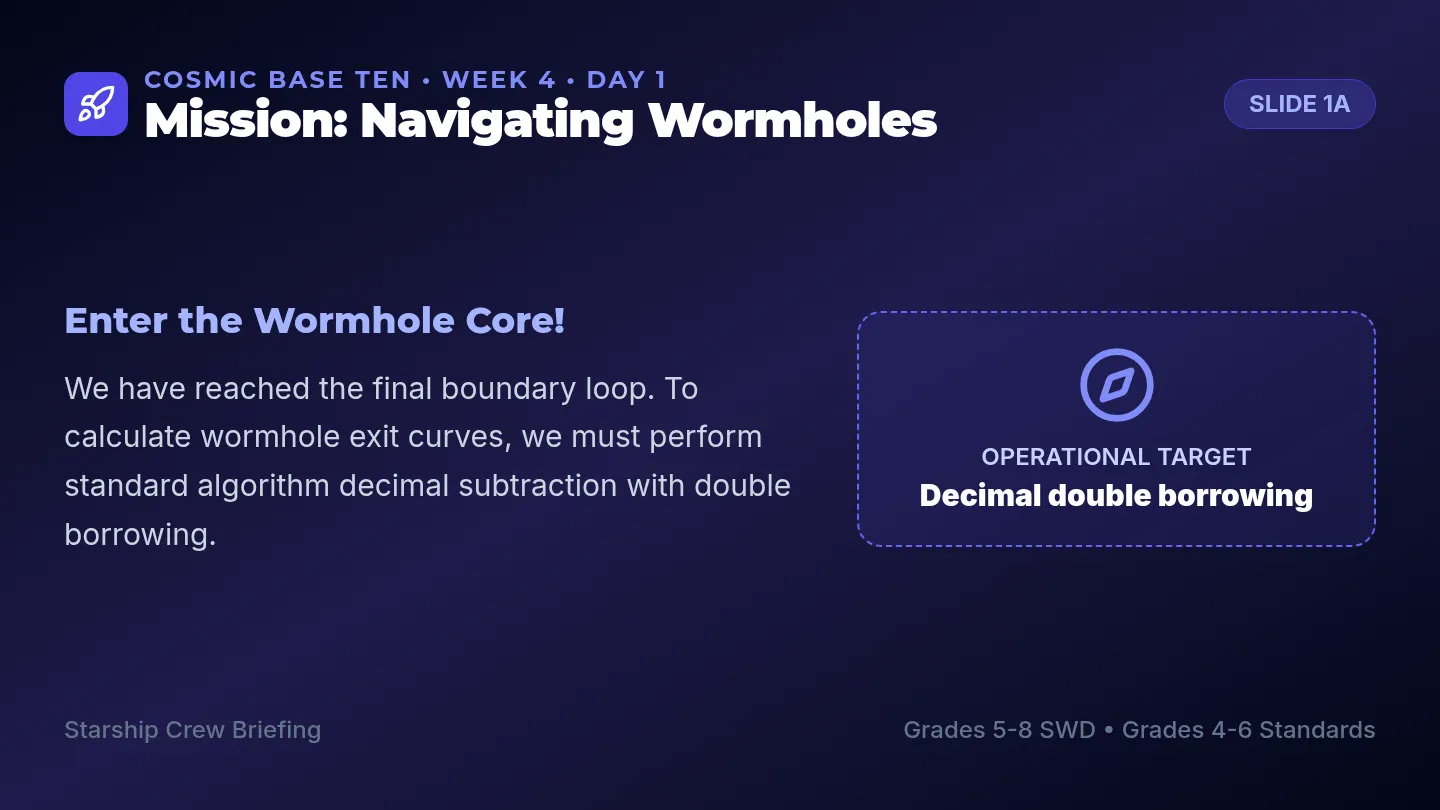
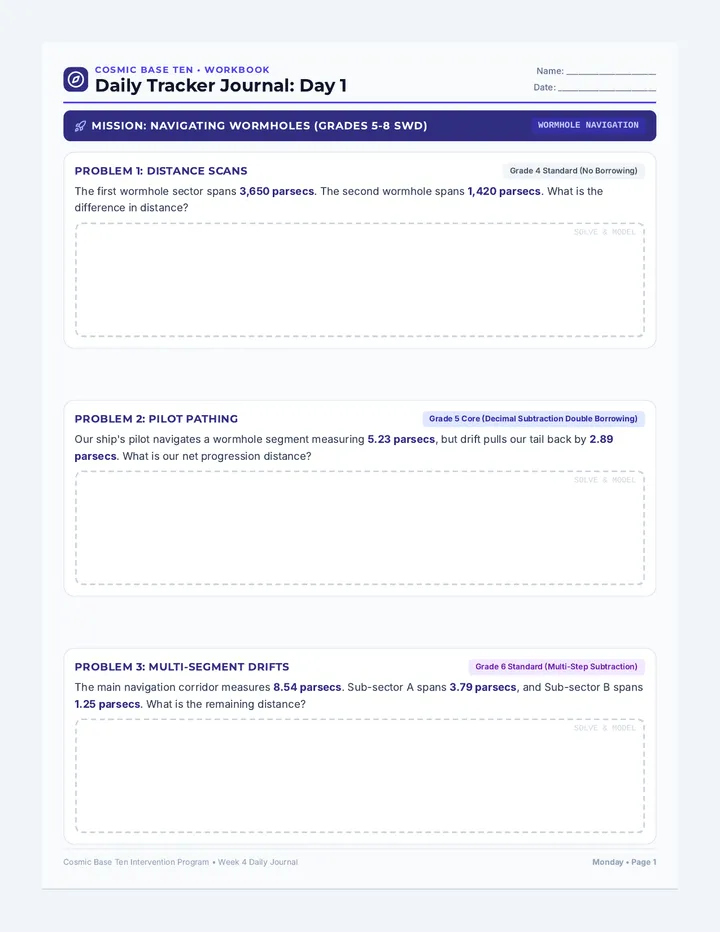
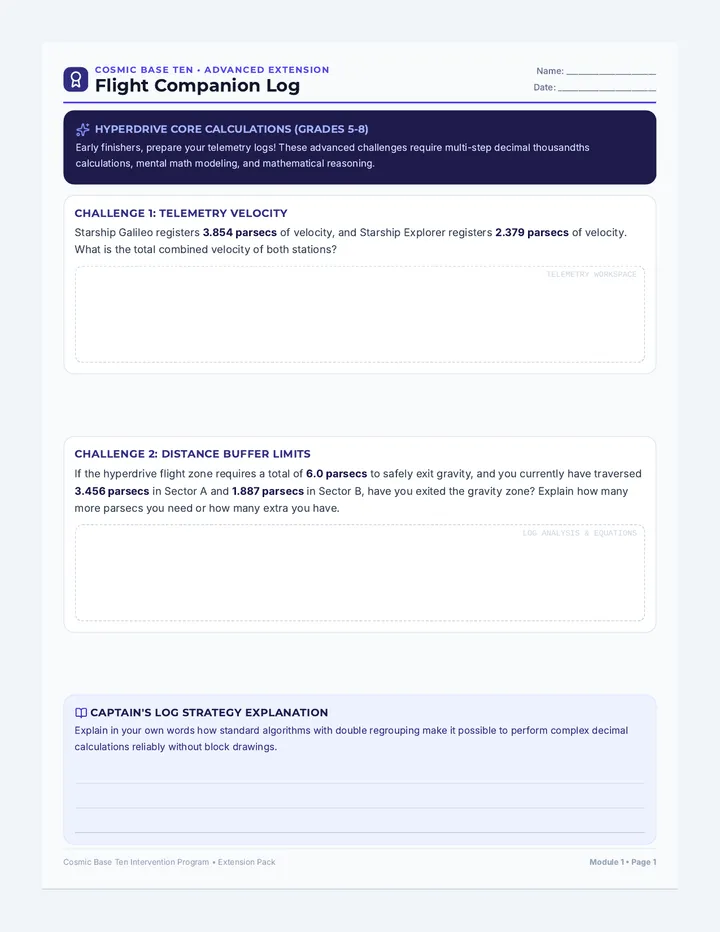
Week 4 focuses on standard algorithm decimal addition and subtraction, multi-step problem consolidation, and direct assessment of skills to confirm crew flight readiness.
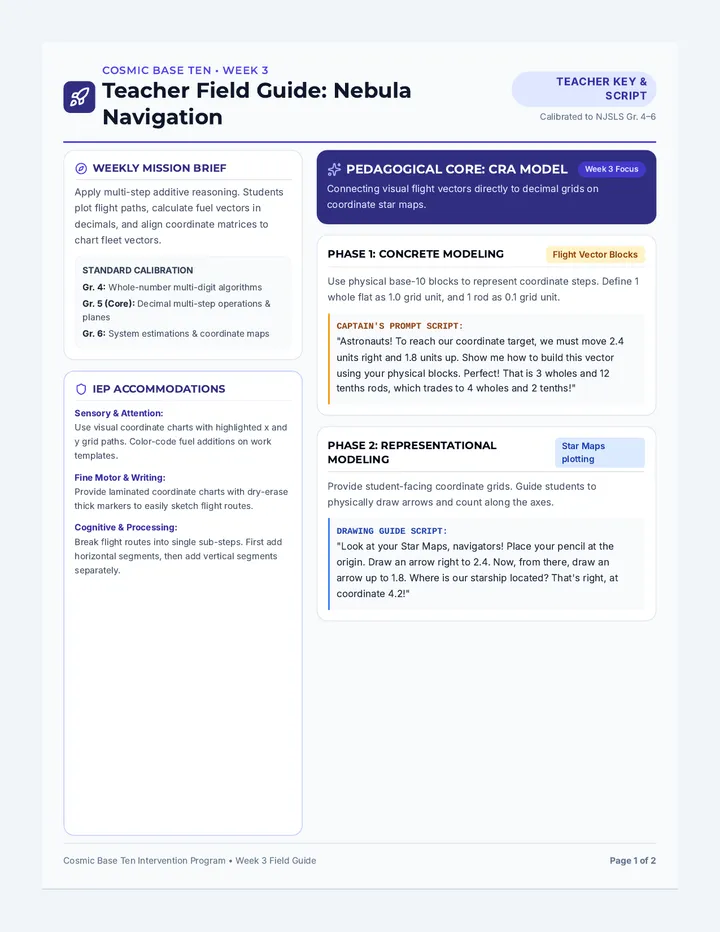
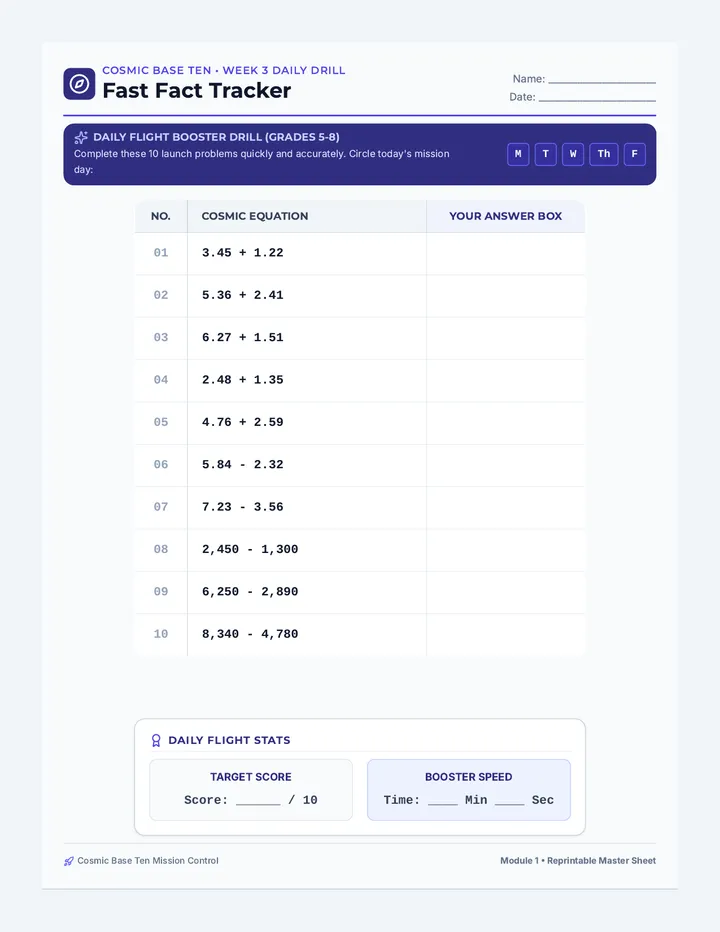
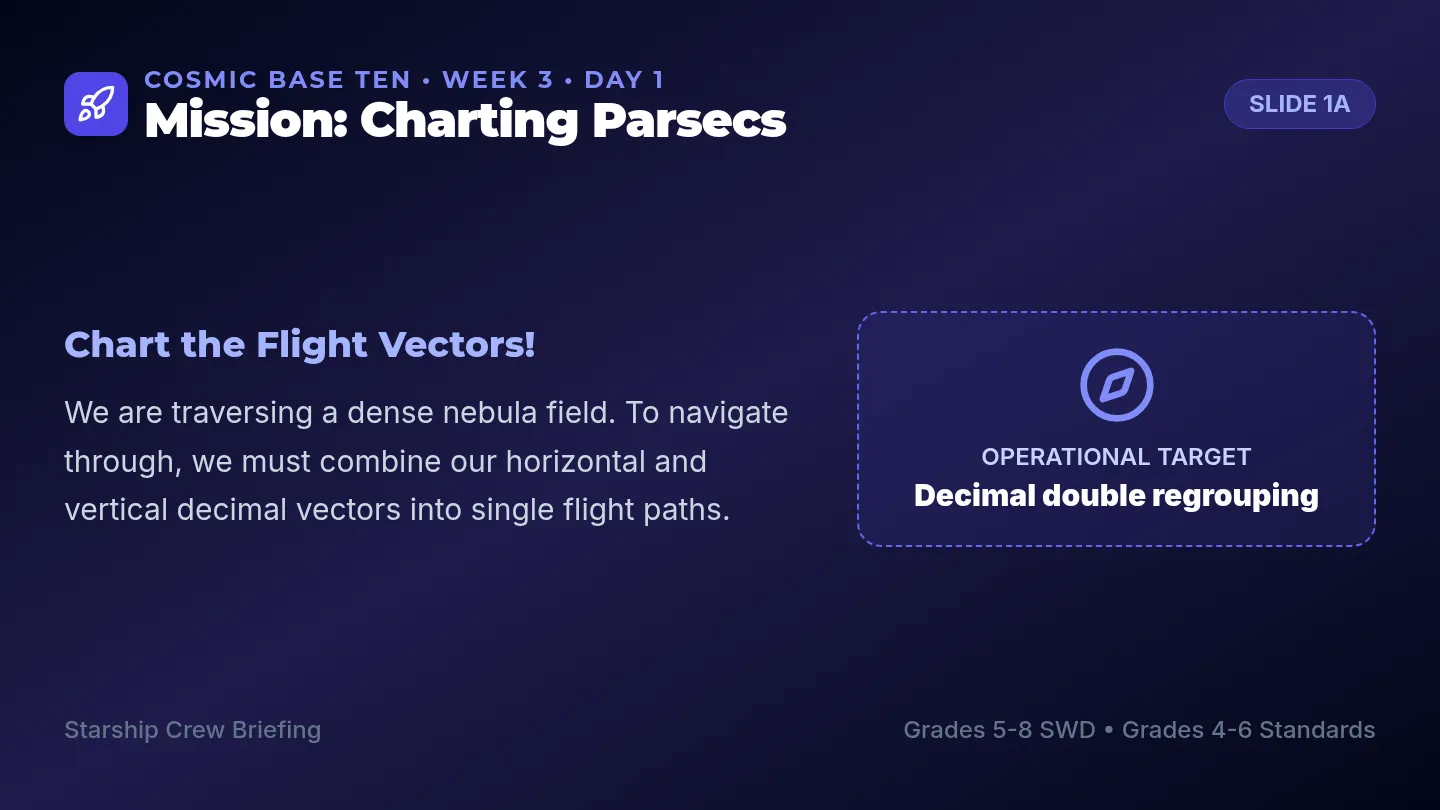
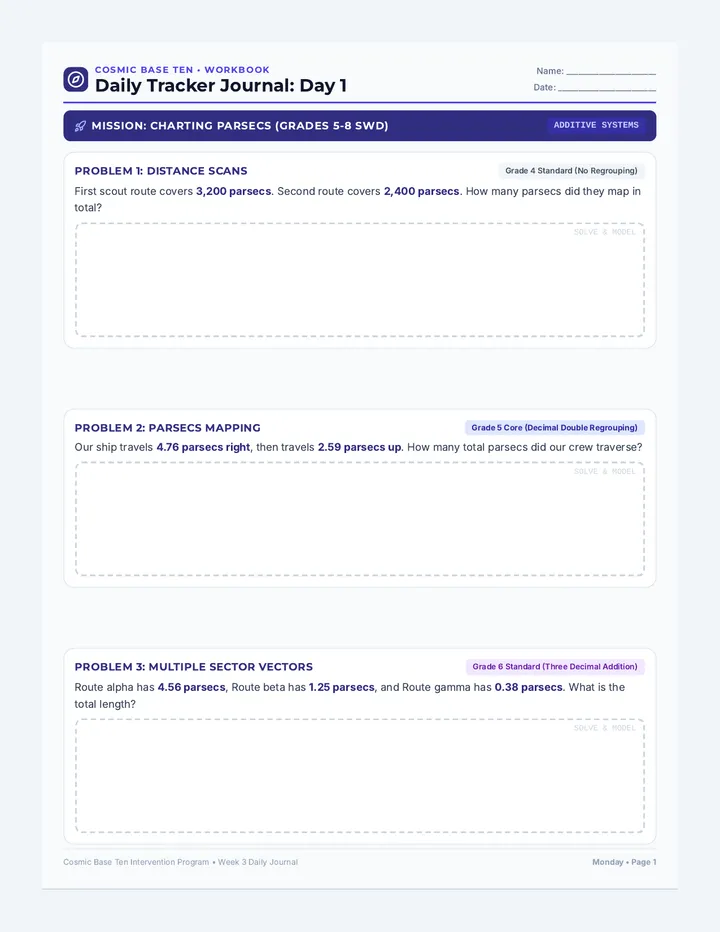
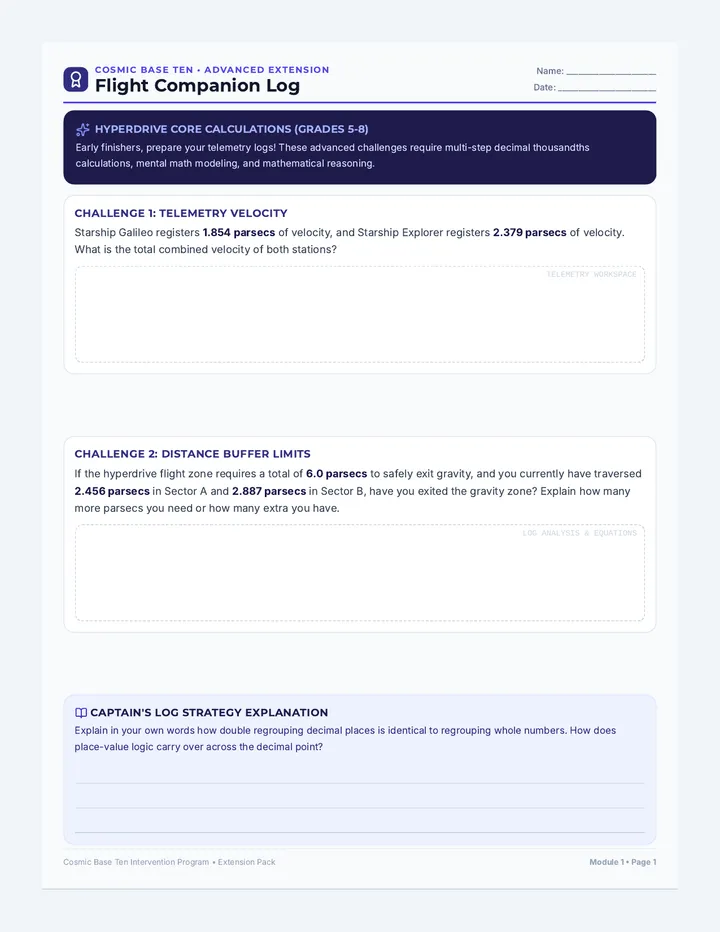
Week 3 focuses on multi-step additive reasoning, decimal subtraction, and aligning coordinates using star charts and compass tools to plan flight vectors for the fleet.
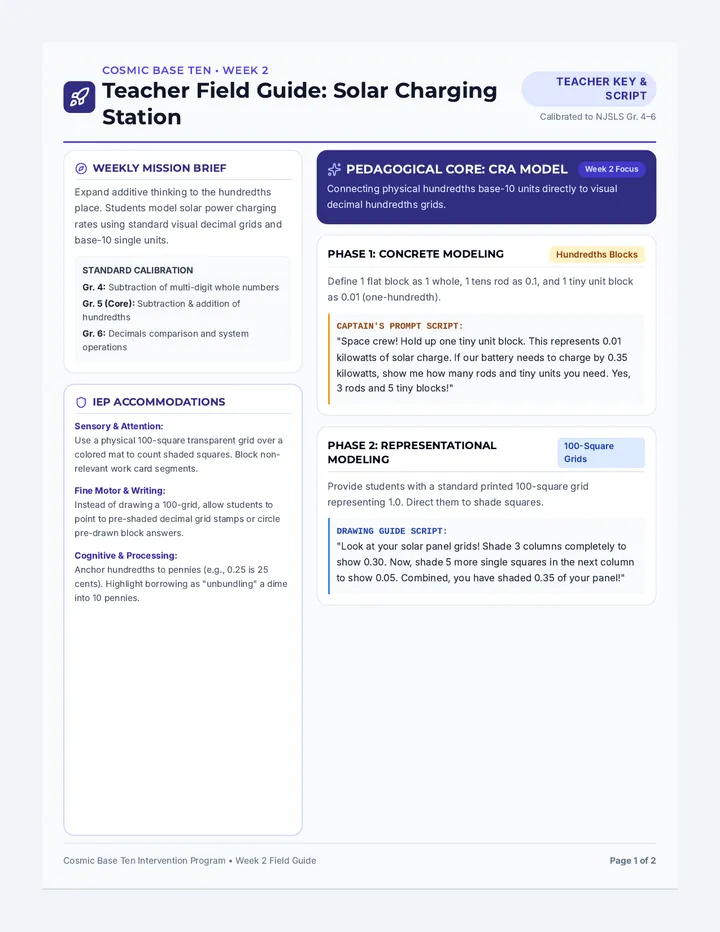
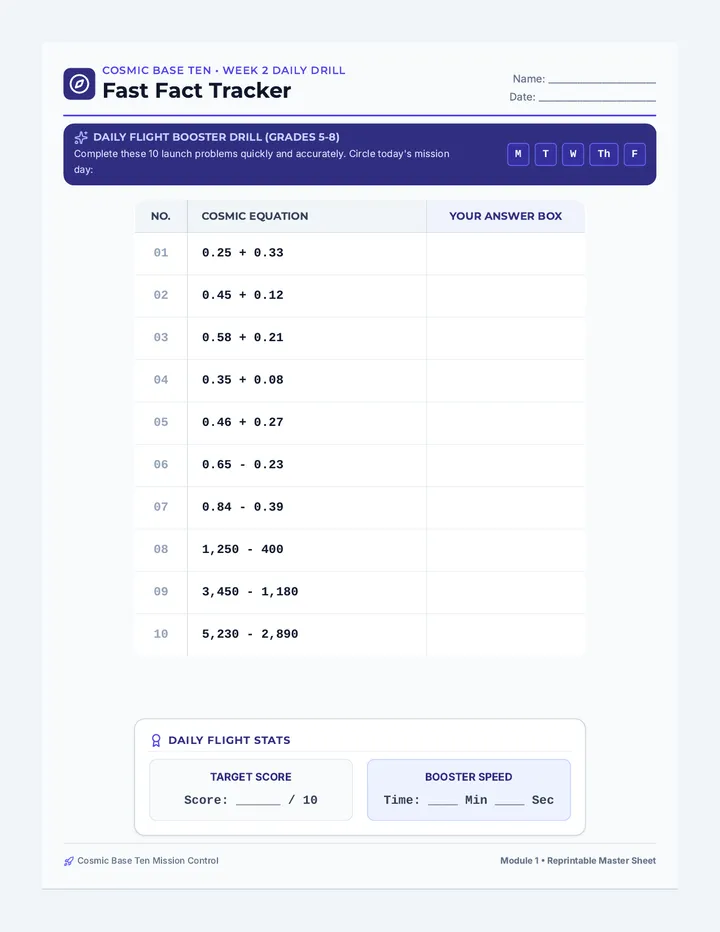
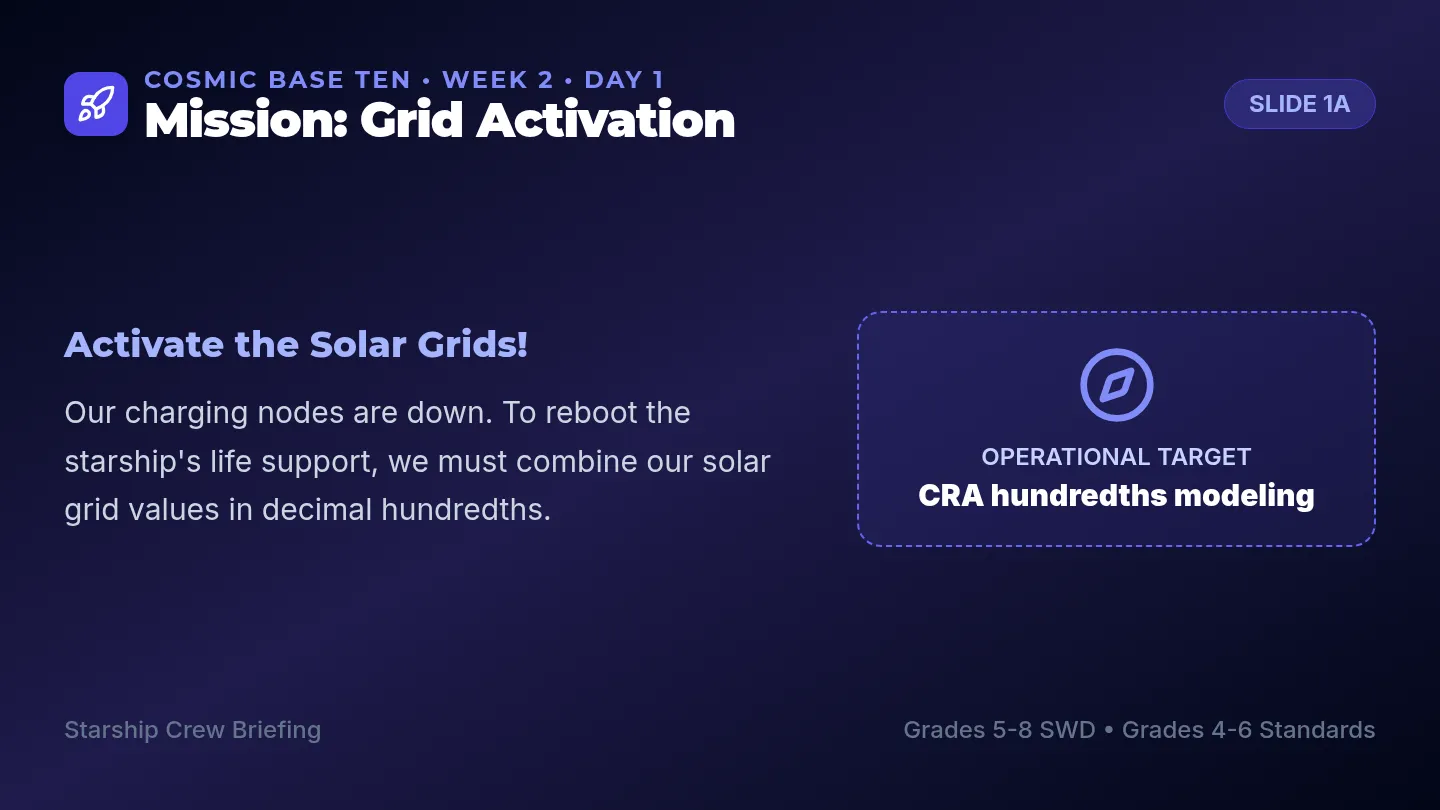
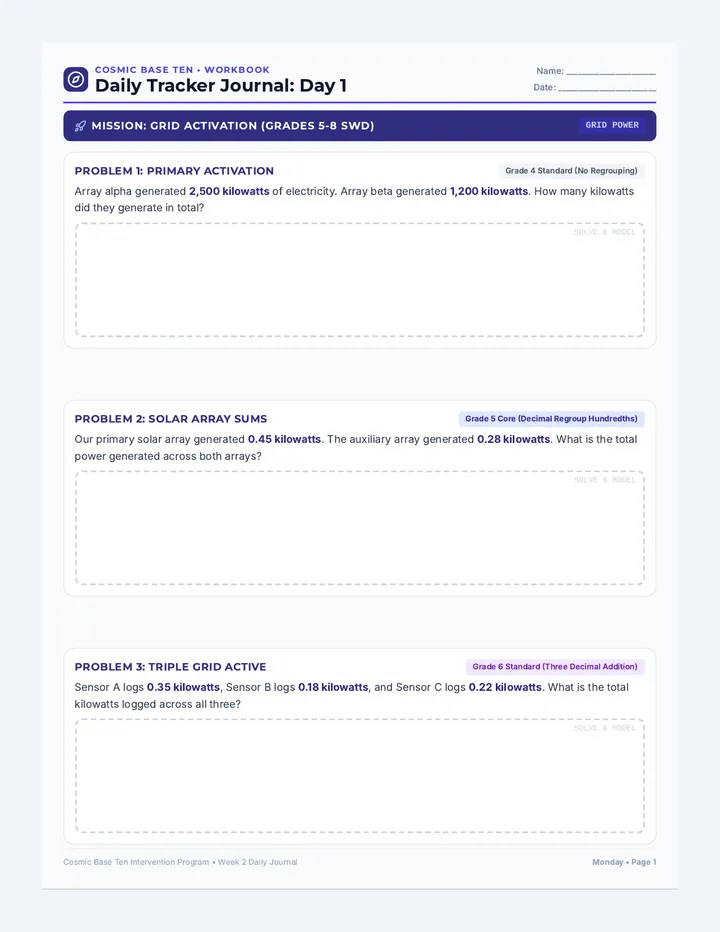
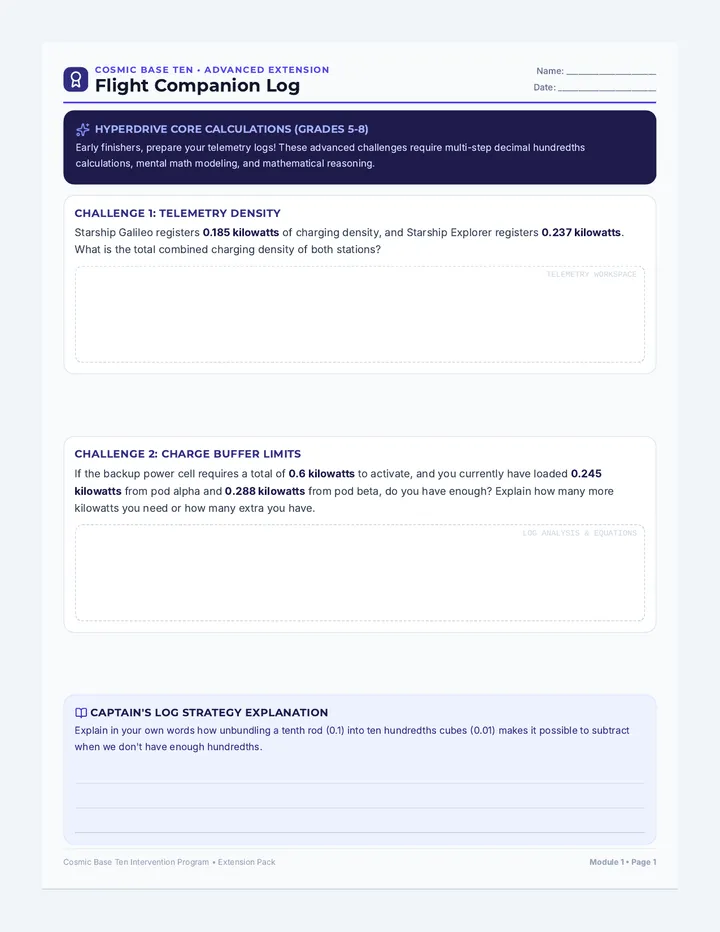
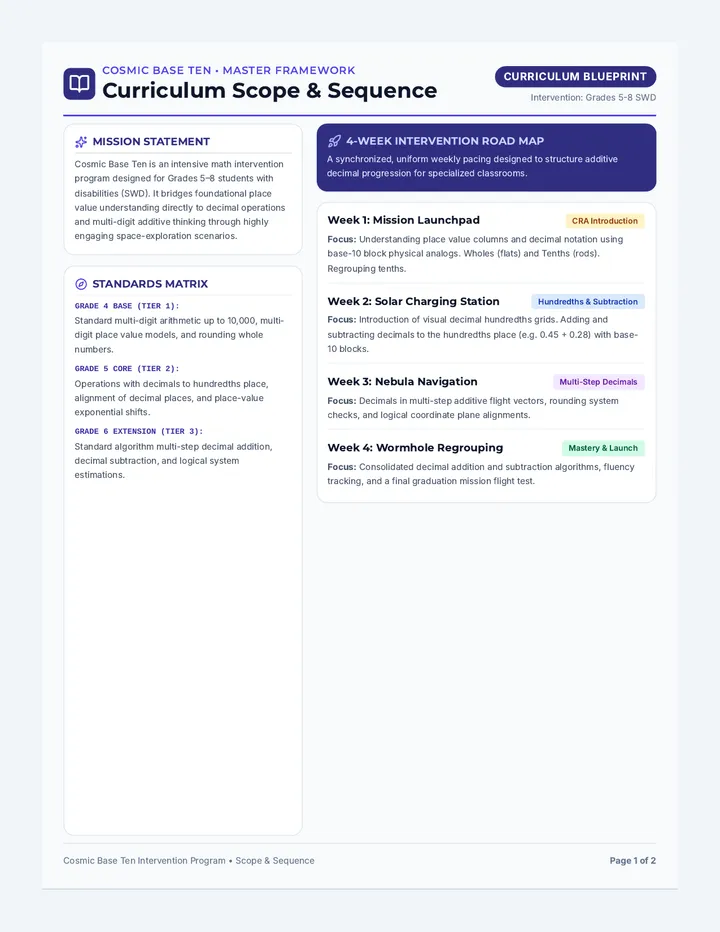
Week 2 focuses on decimal addition and subtraction with and without regrouping, using visual decimal grids and standard plastic base-10 blocks to represent tenths and hundredths in solar charging grid scenarios.
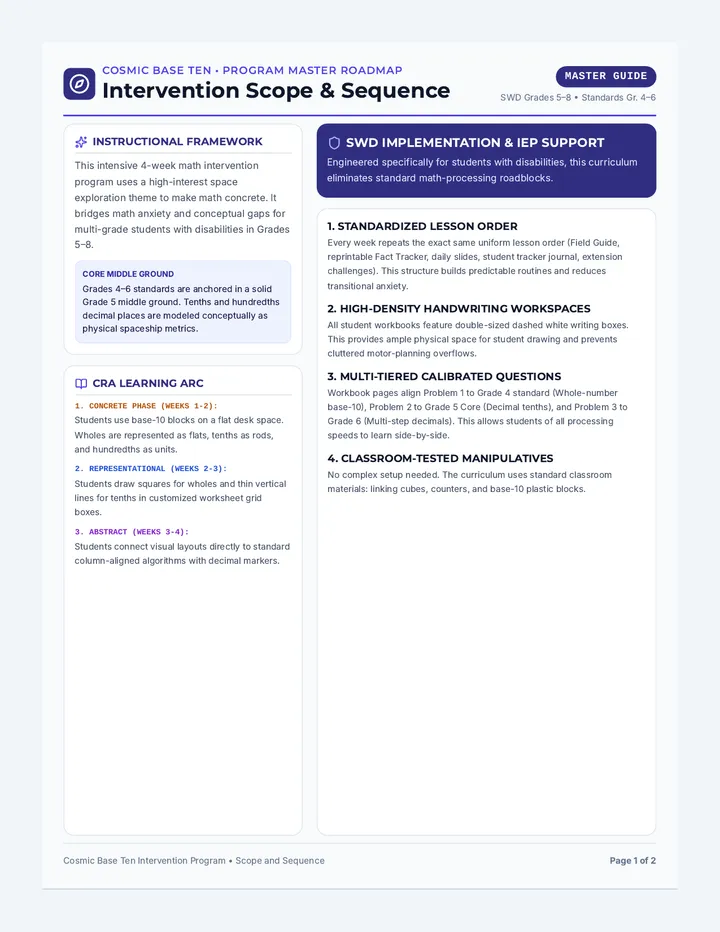
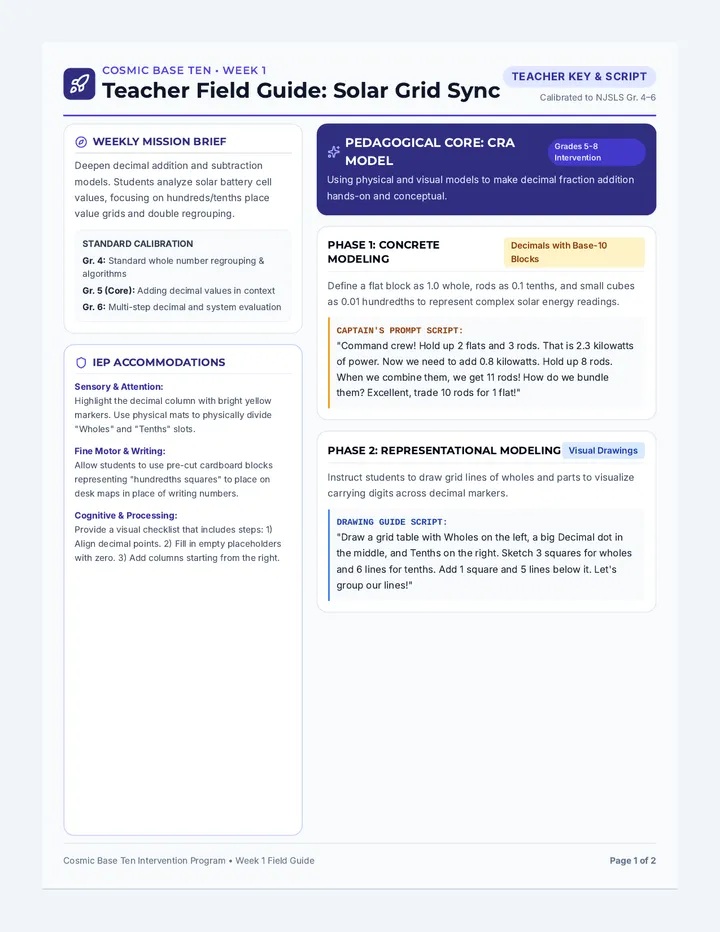
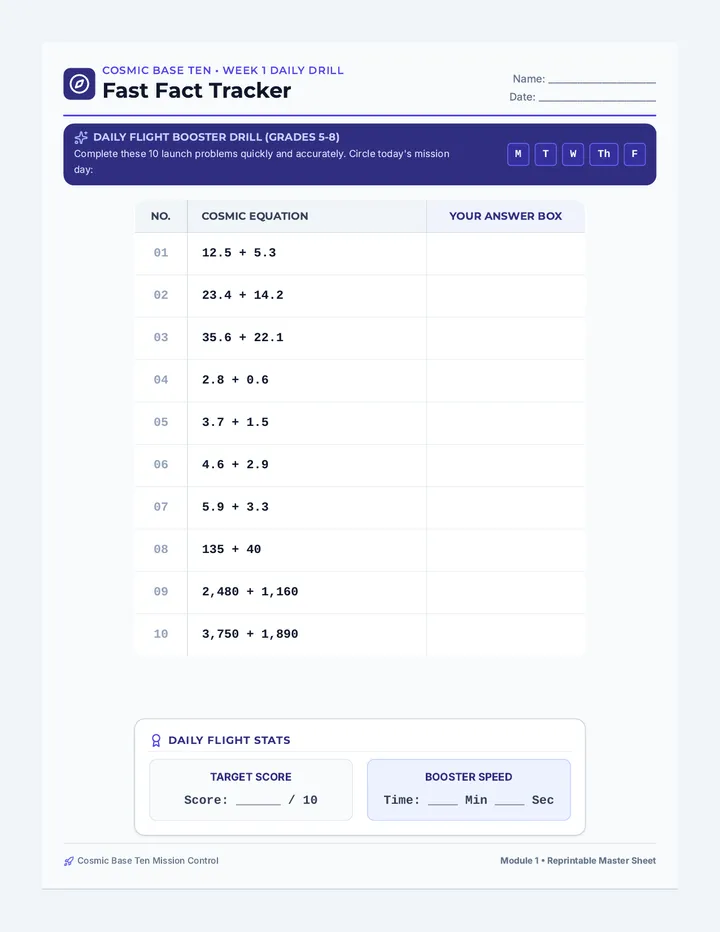
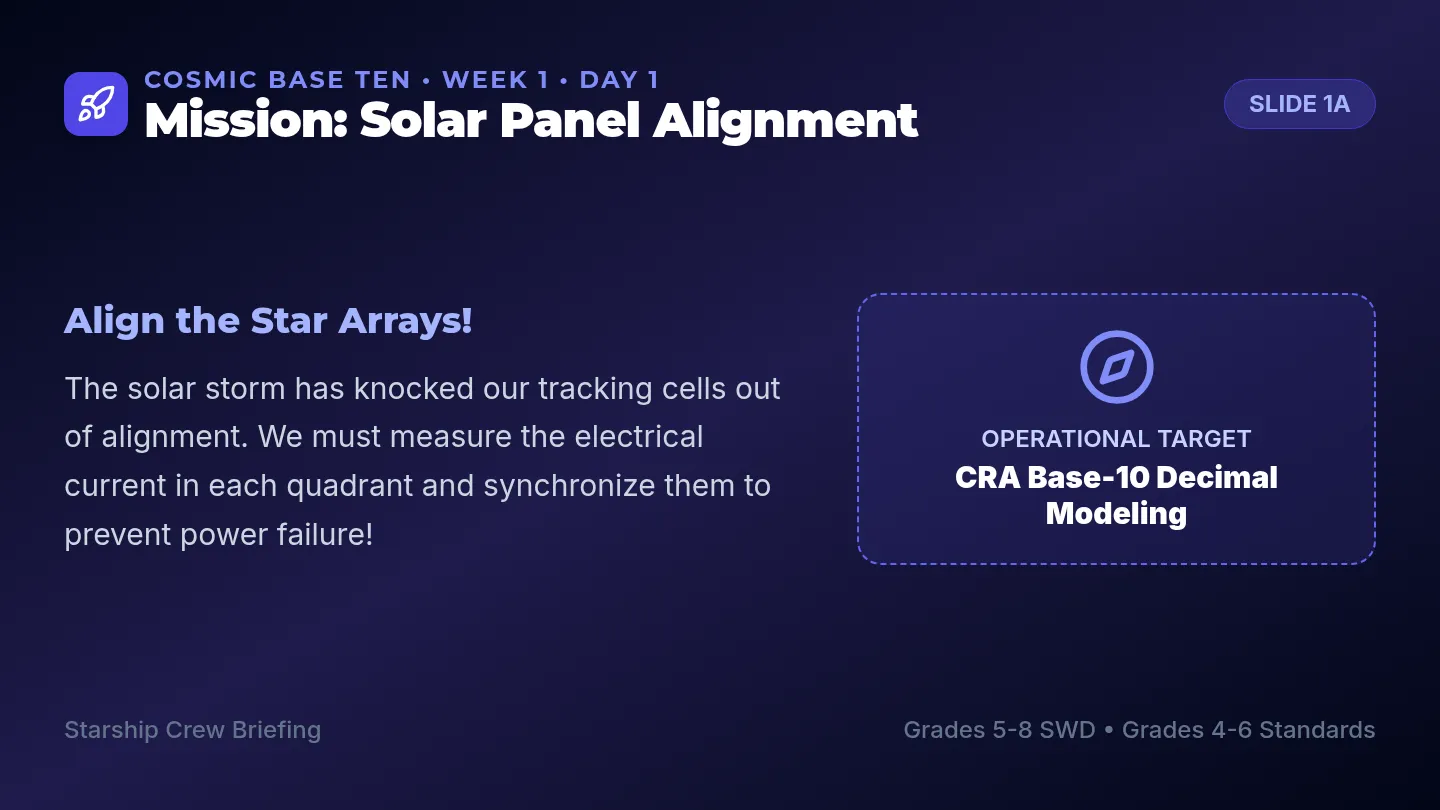
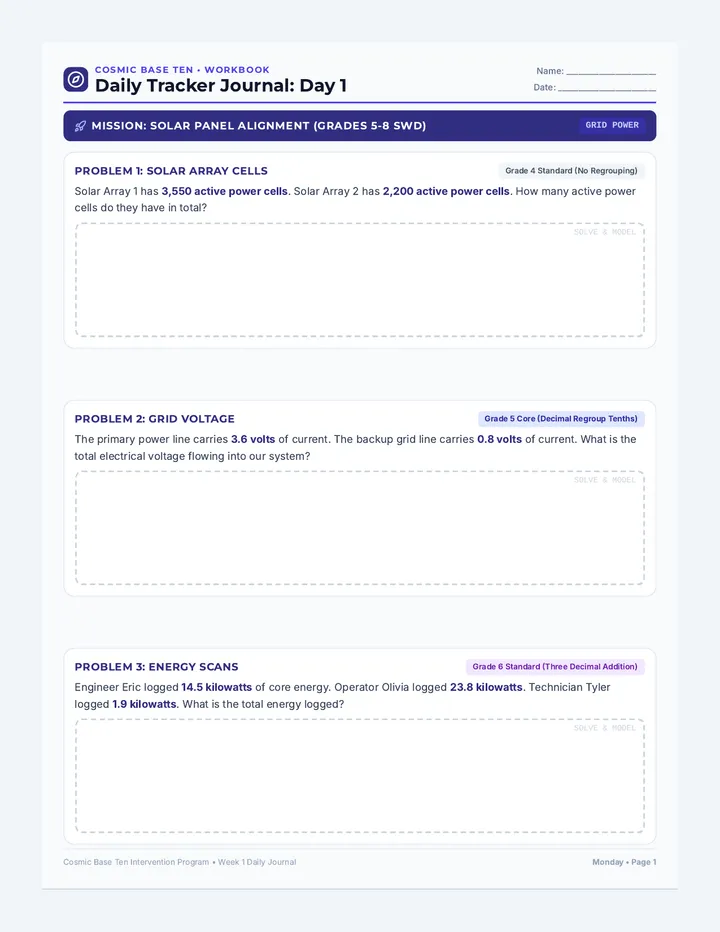
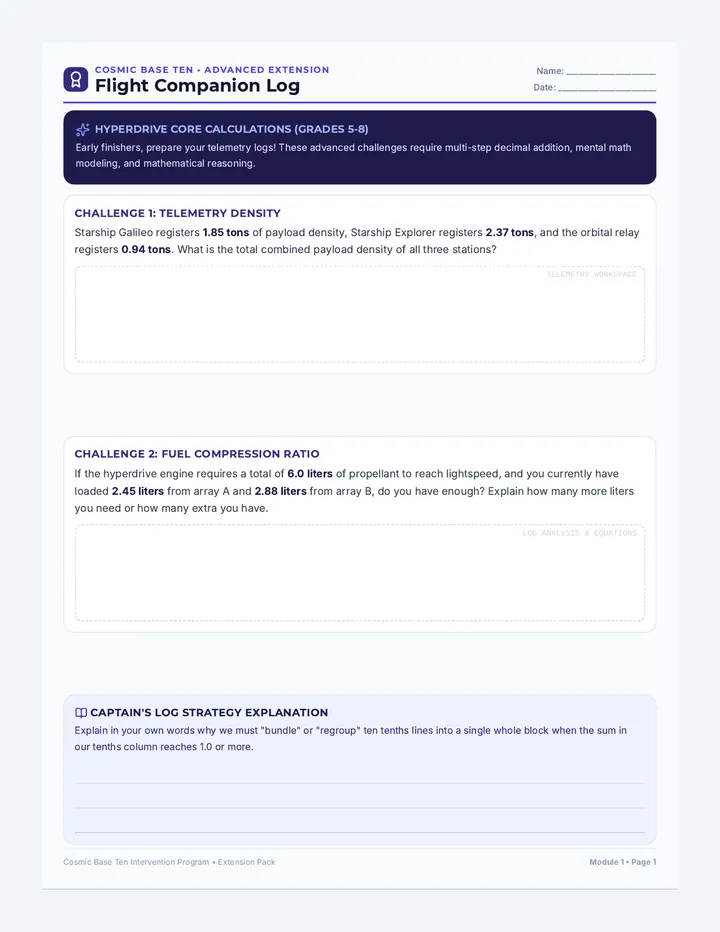
Week 1 focuses on deepening place value understanding and multi-step addition of decimals and whole numbers in space grid systems. Students practice regrouping tenths and wholes, balancing battery loads, and tracking fuel payload readings.
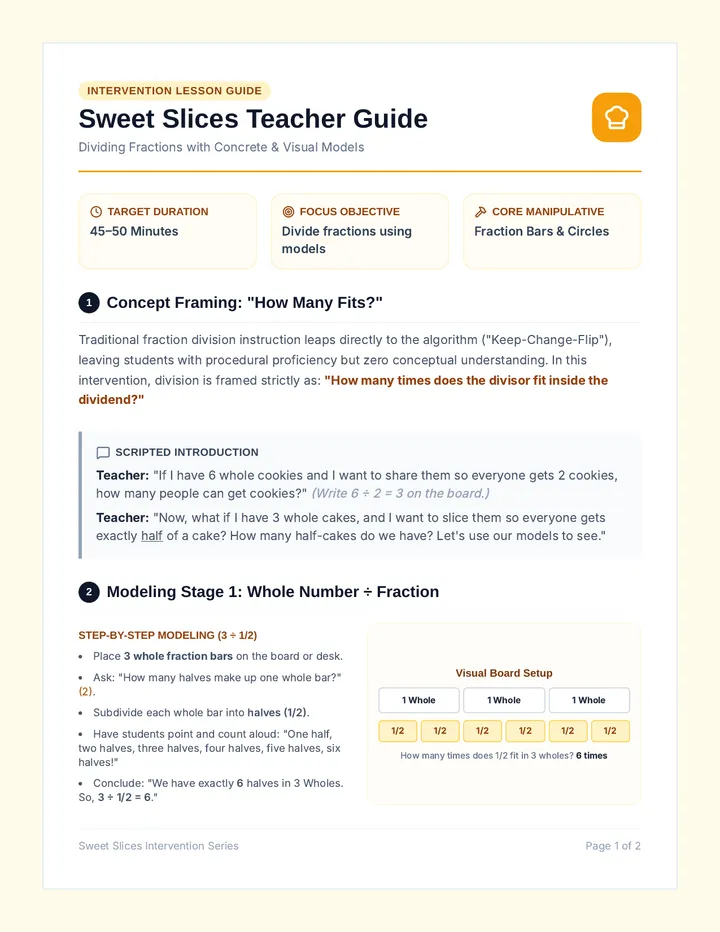
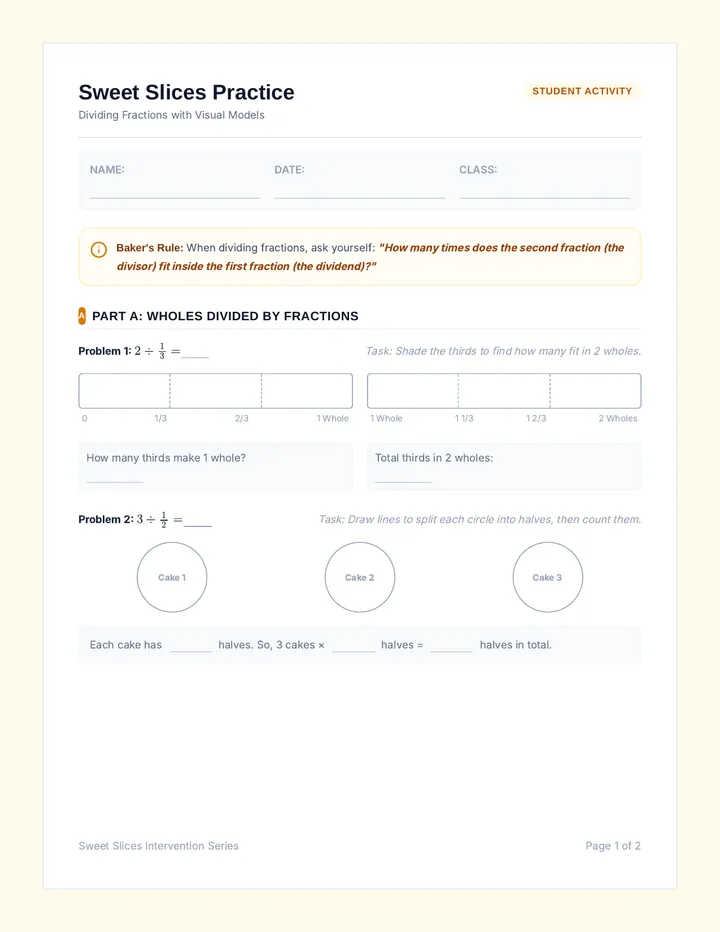
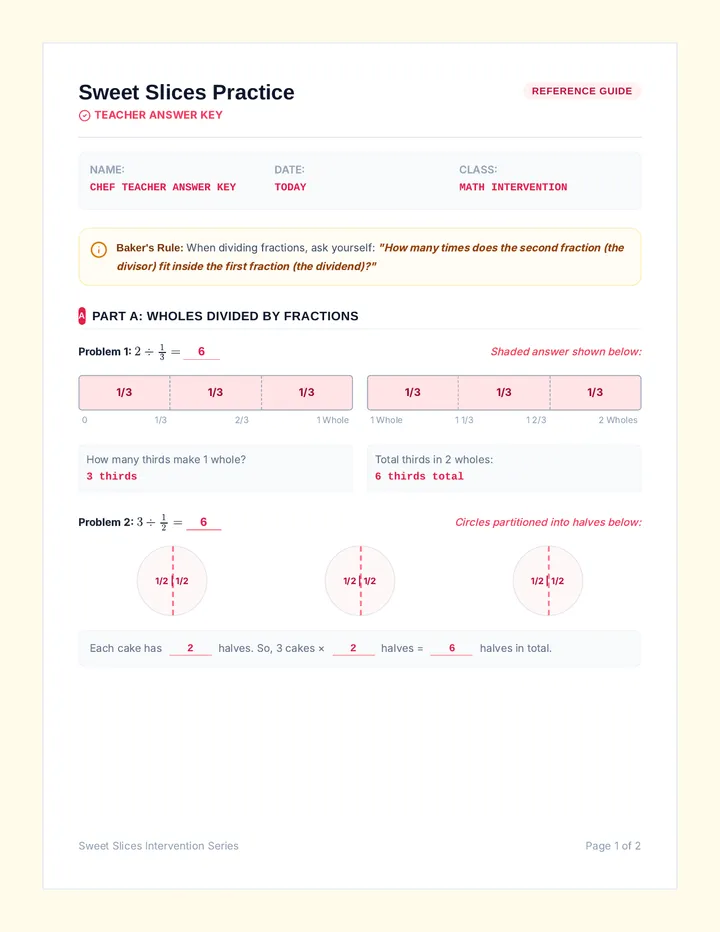
An intervention lesson on dividing fractions using concrete visual models (fraction bars and circles) to build conceptual understanding before moving to the standard algorithm.
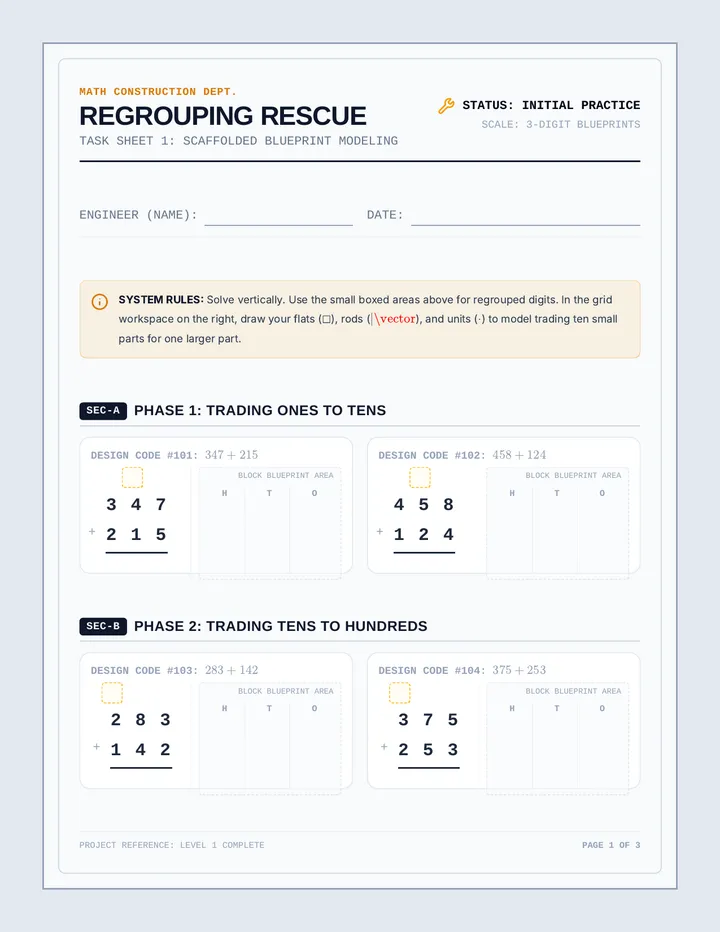
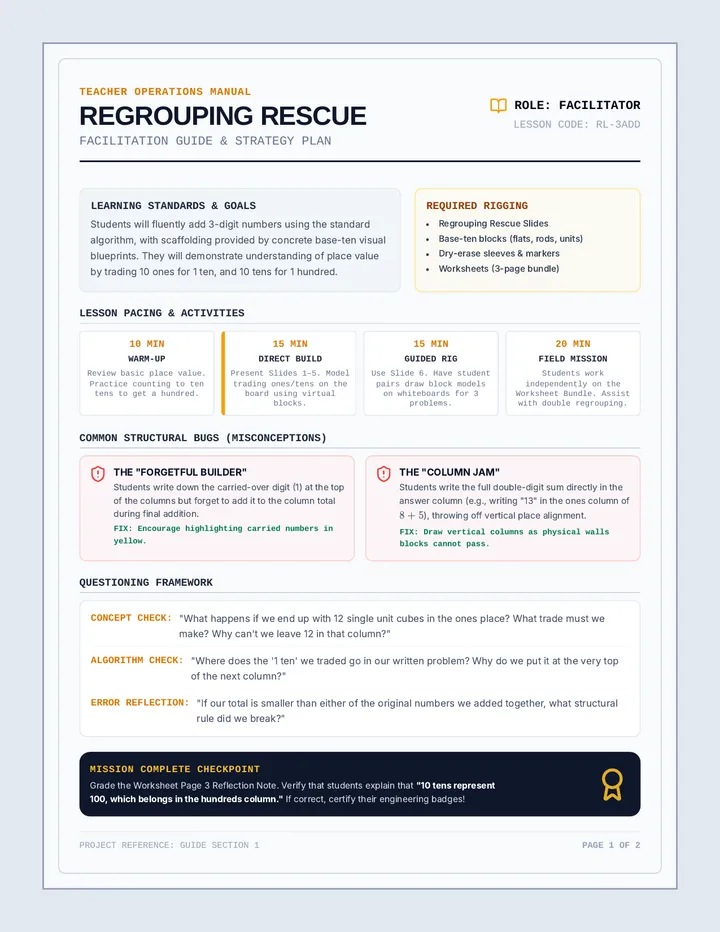
A comprehensive math lesson focused on 3-digit addition with regrouping, utilizing visual base-ten block models and place value charts to guide students from conceptual understanding to standard algorithm mastery.
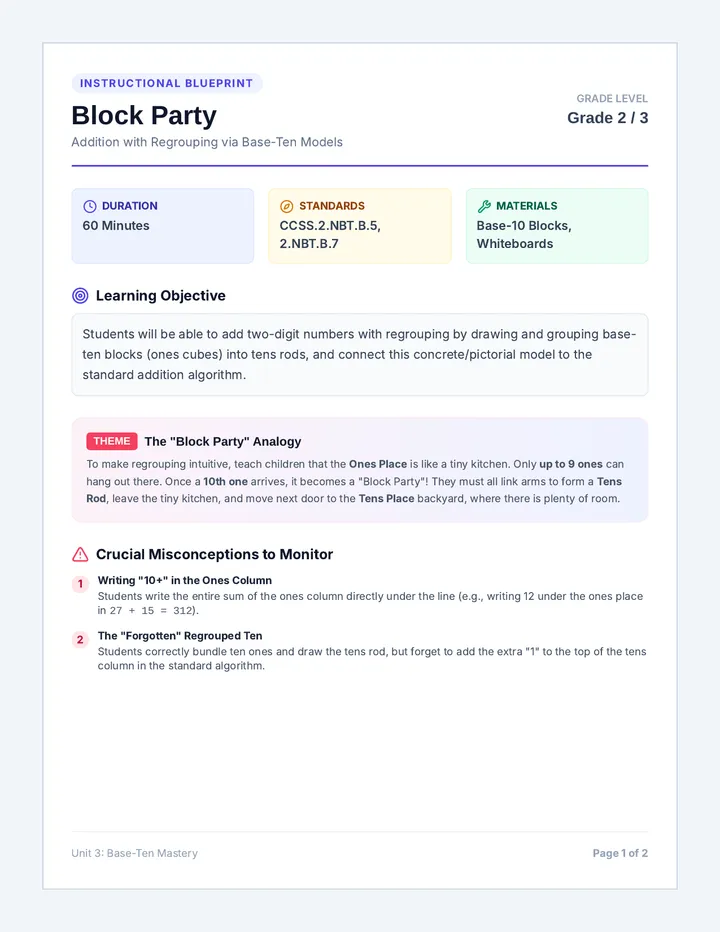
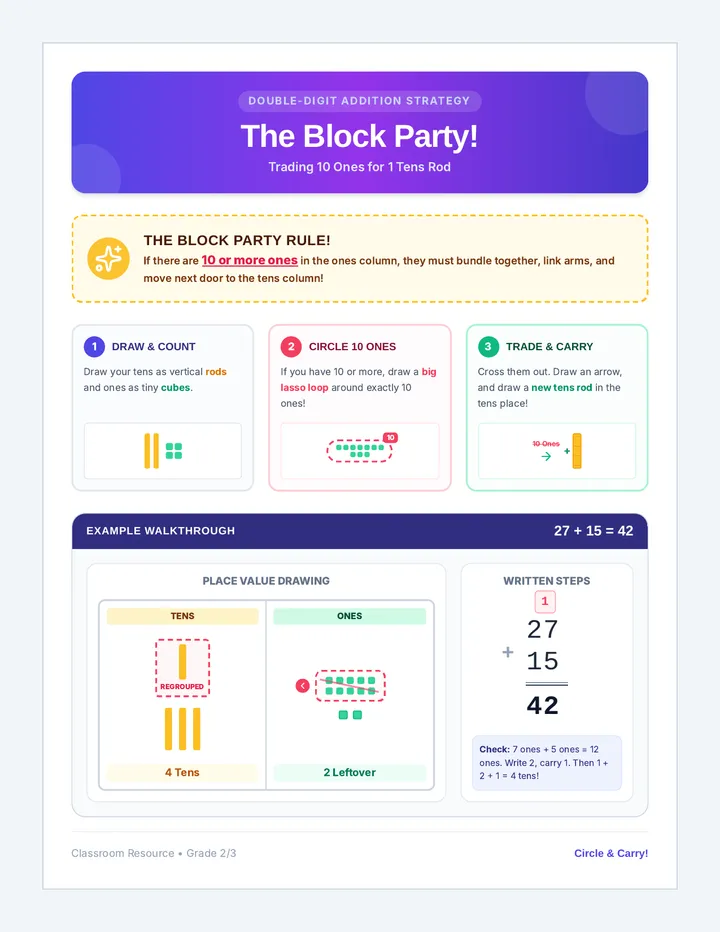
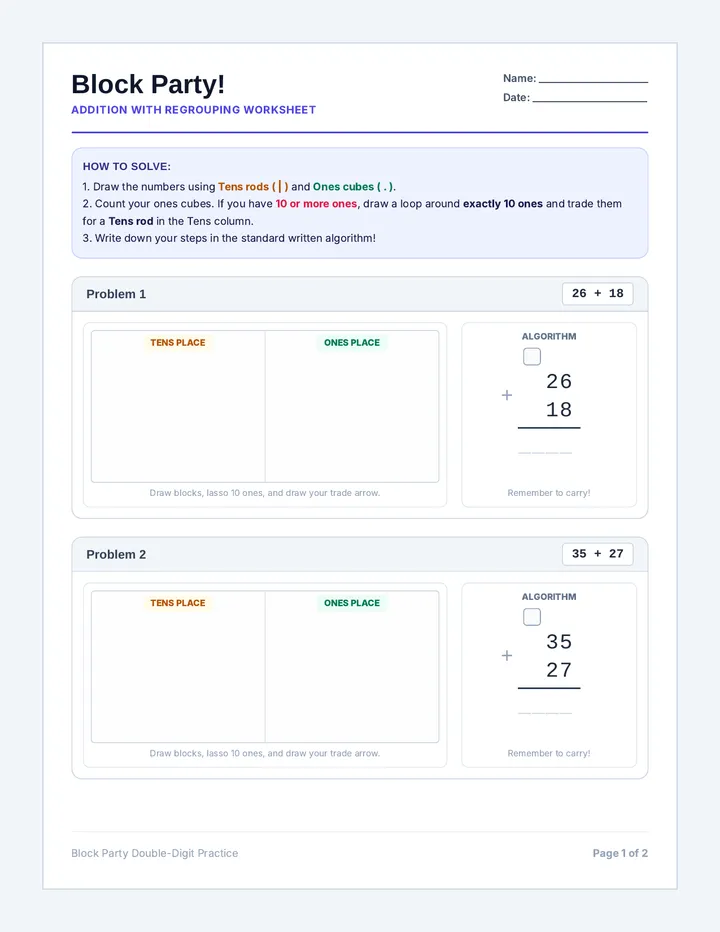
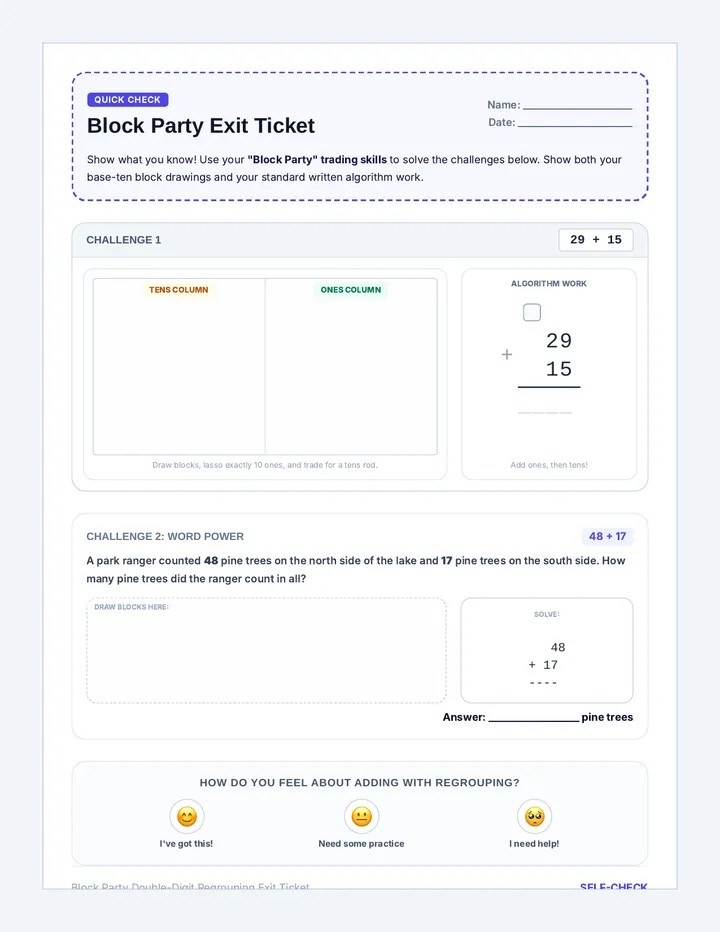
A highly visual, hands-on lesson that introduces double-digit addition with regrouping using base-ten blocks. Students learn to draw ones blocks, group ten of them together to trade for a tens rod, and record the regrouping process in the standard algorithm.