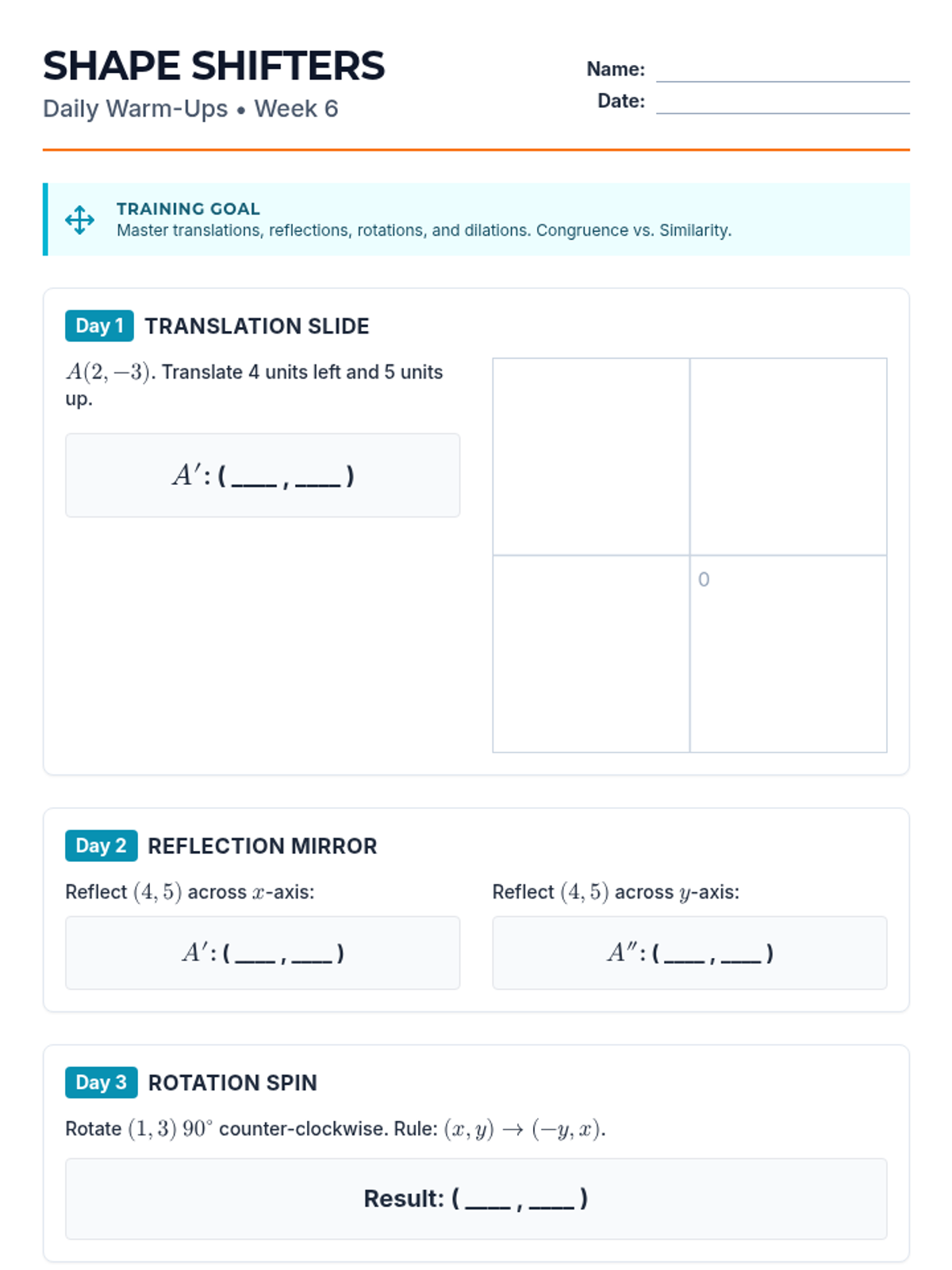
Students explore the definition of a radius by plotting circles on a coordinate plane, identifying key points, and discovering the constant distance from the center to the circumference.
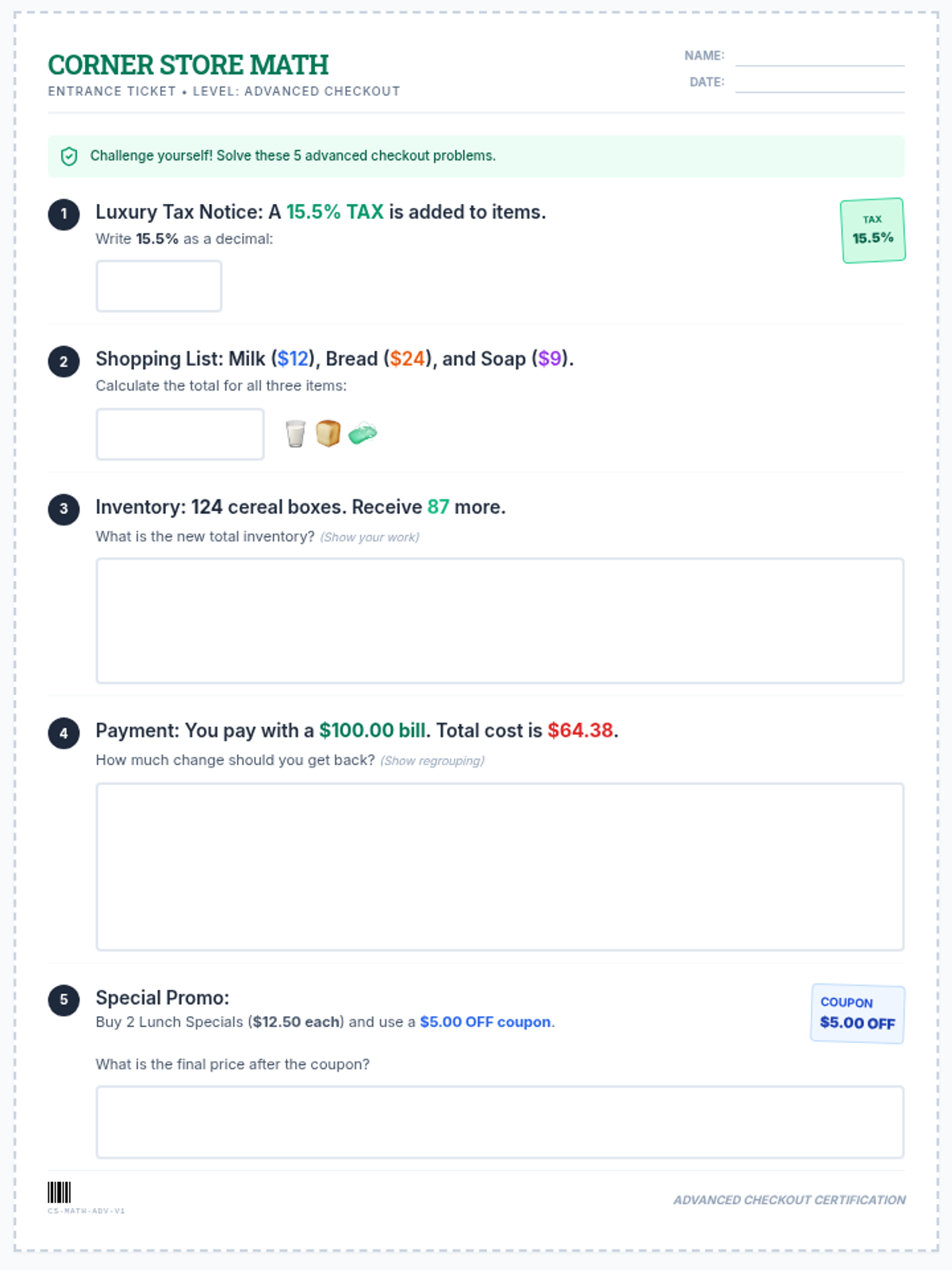
A comprehensive lesson on converting fractions to terminating decimals using long division and equivalent fractions with denominators of 10, 100, or 1,000. Students will act as 'Decimal Architects' to rebuild fractions into their decimal equivalents.
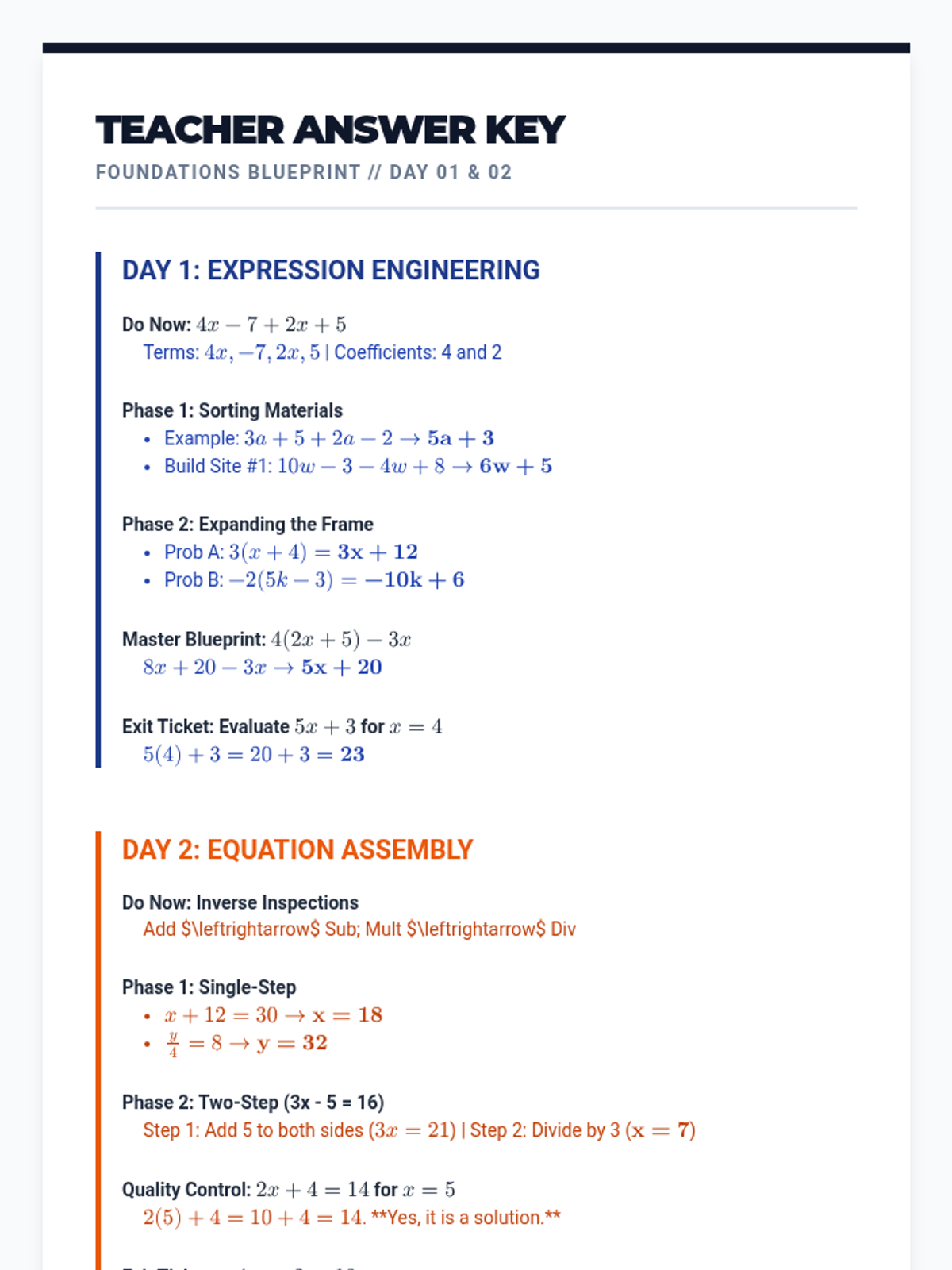
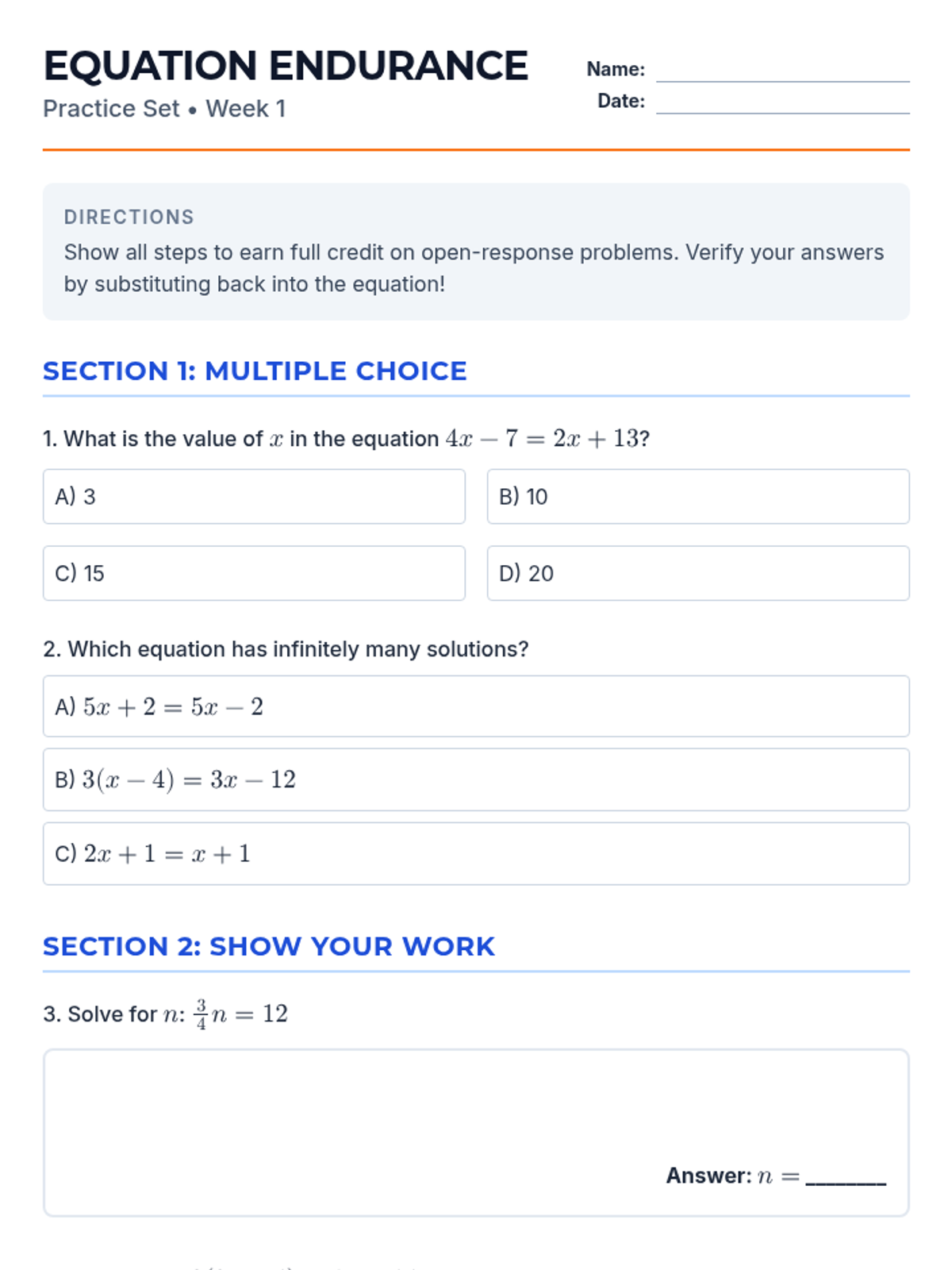
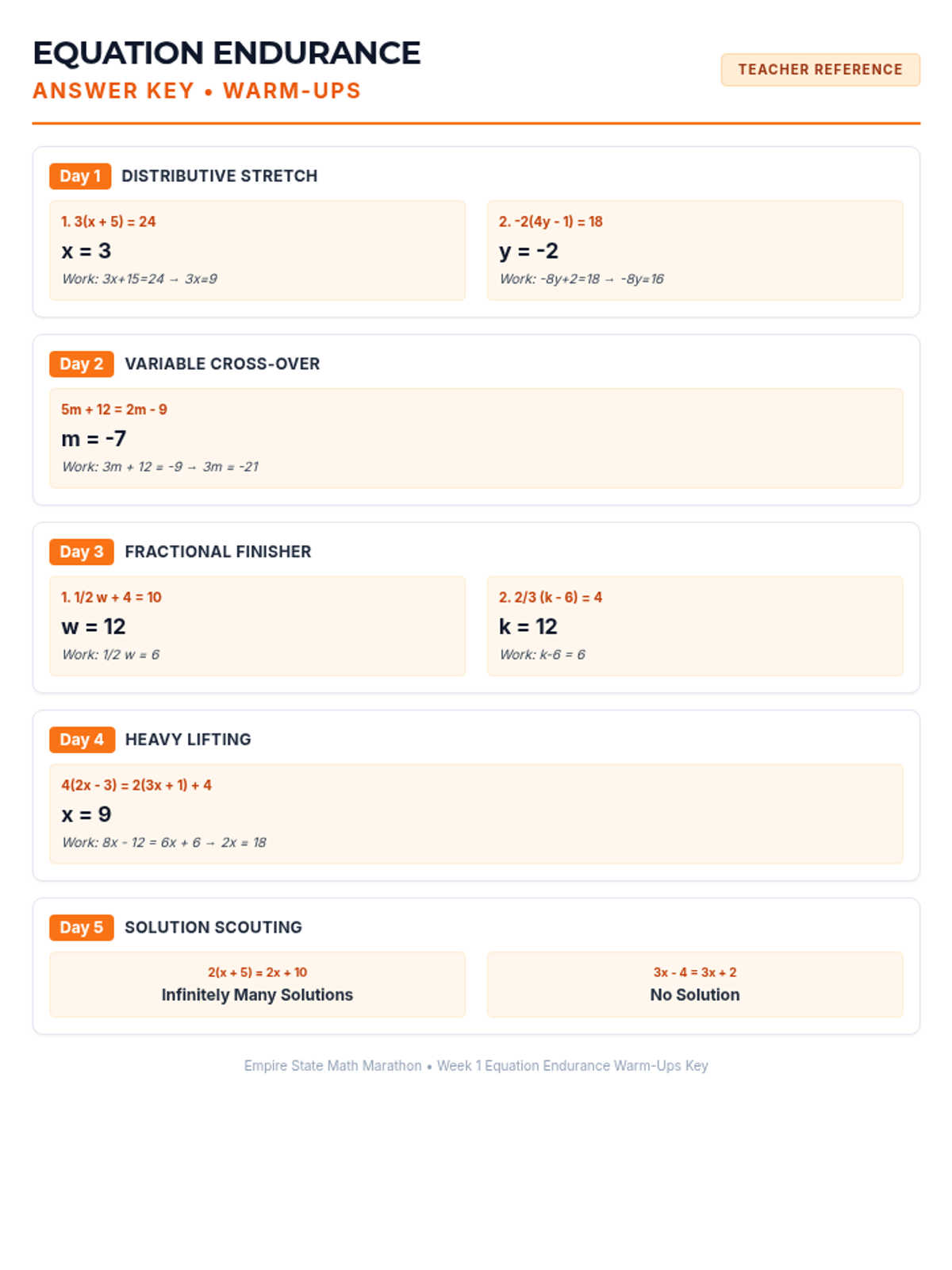
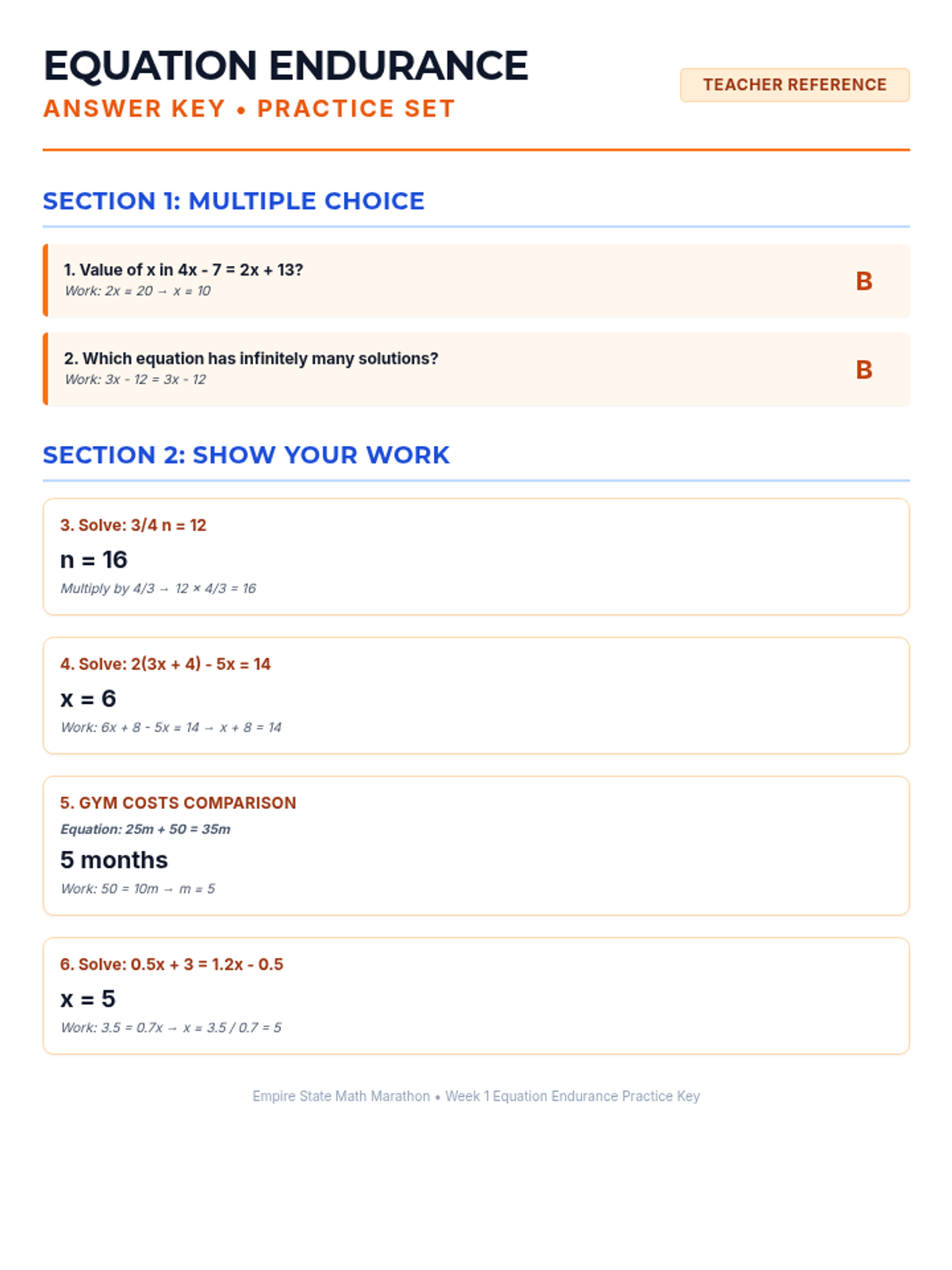
A culminating challenge where students use all their 'architect' skills to solve a mixed set of equation and inequality problems.
Students write inequalities to represent real-life limits like speed, budget, and capacity, connecting math to everyday constraints.
Students learn to represent inequalities on number lines, understanding the meaning of open vs. closed circles and 'infinitely many' solutions.
Introduces inequality symbols and the concept of constraints, helping students recognize that some problems have a range of solutions.
Students apply their equation-solving skills to complex multi-step real-world scenarios, selecting the appropriate operation to build their solution.
Explores division equations as finding the total when the size of parts is known, using visual models to bridge to the algebraic solution.
Students represent and solve px = q equations using tape diagrams, focusing on the relationship between multiplication and equal groups.
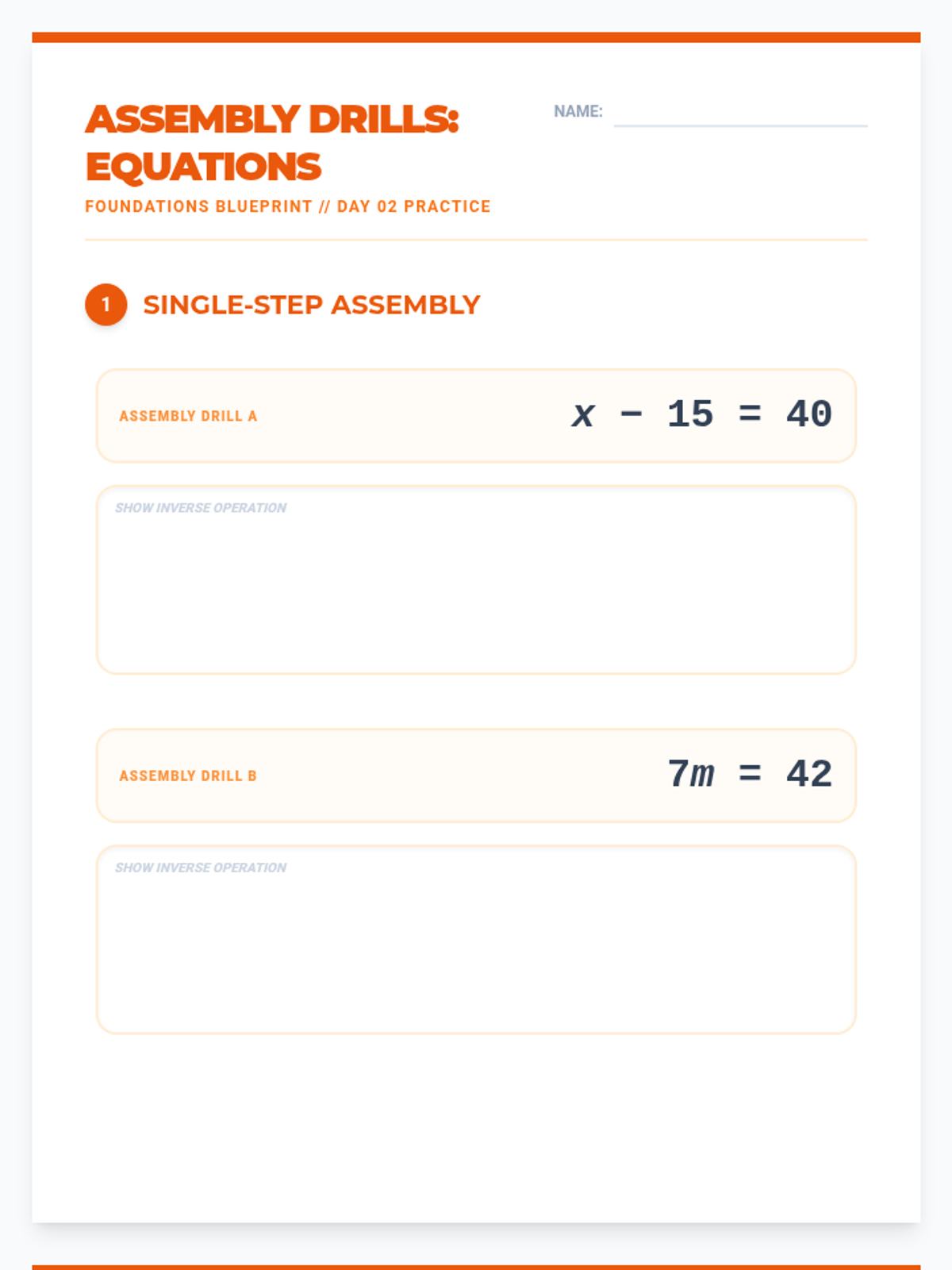
Students solve subtraction equations by 'undoing' the removal of a value, using number lines and balance models to justify their steps.
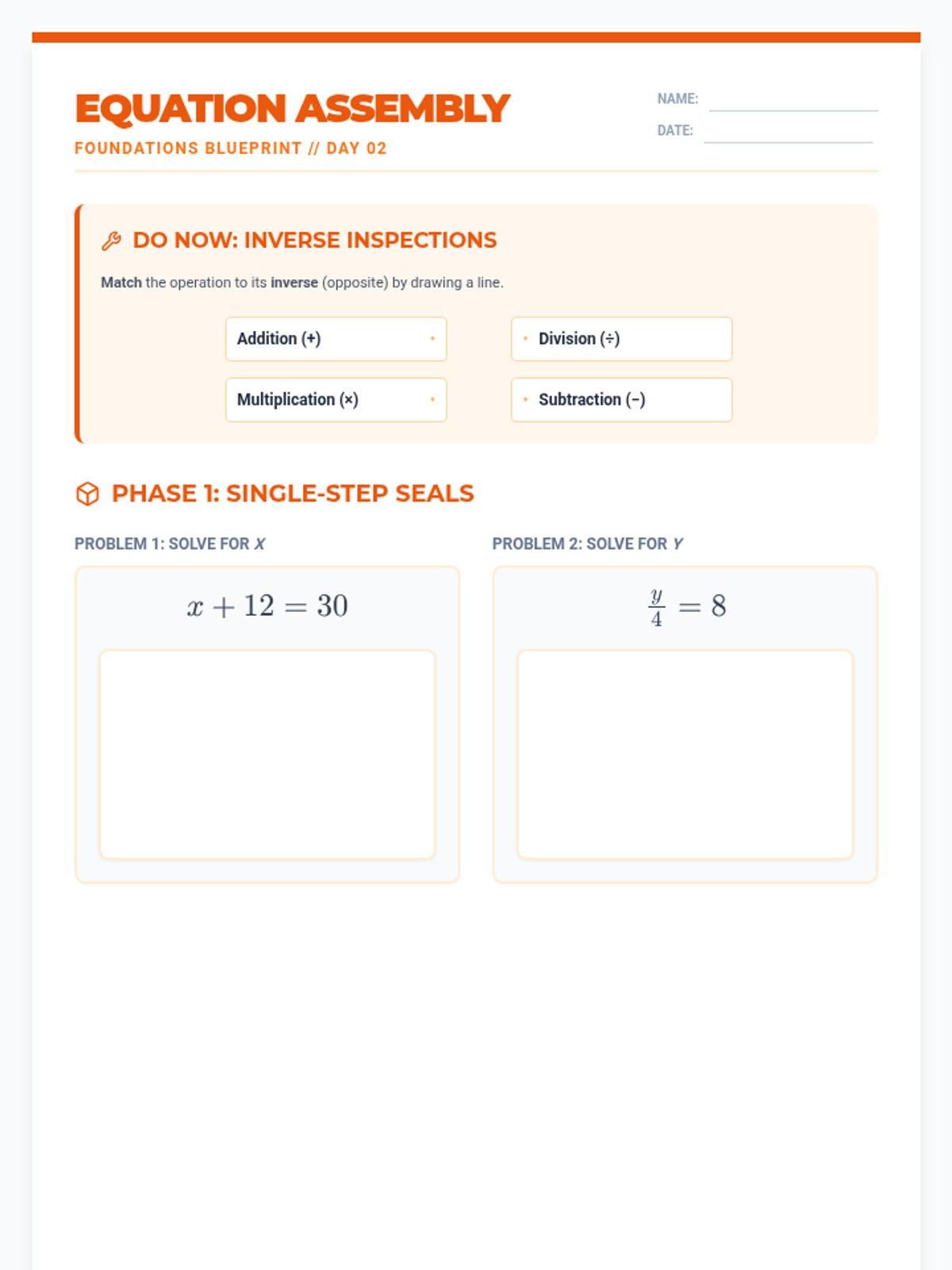
Focuses on solving equations of the form x + p = q using visual bar models and the concept of inverse operations to maintain balance.
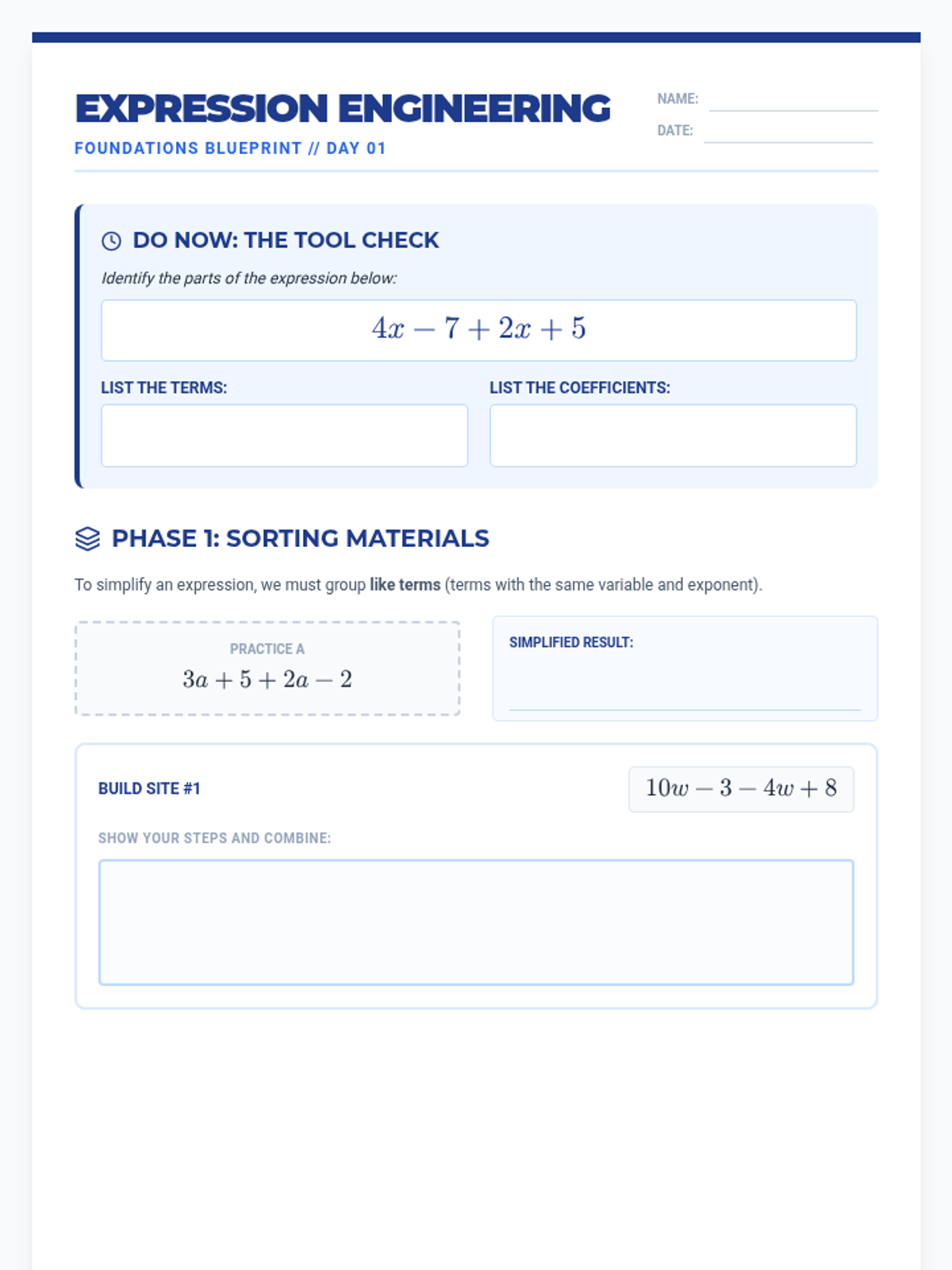
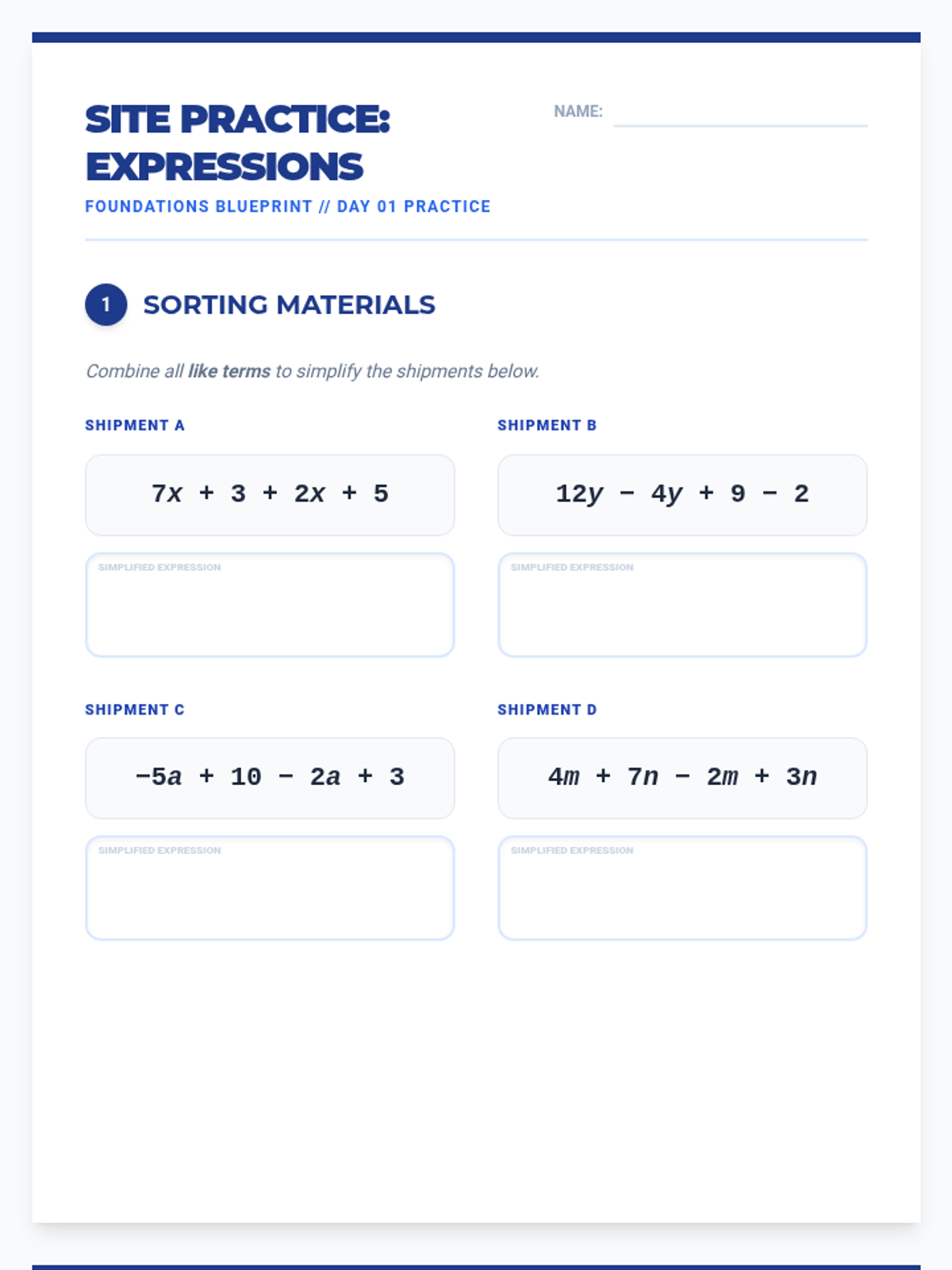
Students learn to translate real-world scenarios into algebraic expressions, identifying the variable as the unknown architect of the problem.
Students use substitution to determine which values from a given set make an equation true, shifting from 'calculating' to 'verifying' solutions.
Students explore the concept of equality using a balance scale model to understand that an equation is a statement of balance between two expressions.
A lesson focused on mastering the US standard algorithm for subtraction up to the hundred thousands place using structured place value organizers. Students practice regrouping and maintaining alignment through visual grids.
Cumulative review and a 'Division Derby' game to celebrate progress and demonstrate mastery.
Solving multi-step real-world problems that require multiple division or multiplication steps.
Dividing decimals by decimals by using powers of 10 to create equivalent expressions with whole-number divisors.
Extending division to decimals by dividing a decimal by a whole number using place value reasoning.
Analyzing word problems to determine how to interpret remainders: rounding up, dropping, or using as a fraction.
Applying the partial quotients method to division problems with two-digit divisors.
Using estimation and rounding to find reasonable starting points when dividing by two-digit numbers.
Refining the partial quotients method to handle larger three-digit dividends with one-digit divisors efficiently.
Using place value patterns to divide by multiples of 10, 100, and 1,000, focusing on the movement of digits.
Introduction to the partial quotients method (The Big 7) as a way to decompose dividends into friendly chunks.
Students connect division to multiplication by finding missing side lengths in area models, reinforcing division as the inverse of multiplication.
Students explore division through the lens of 'how many groups' and 'how many in each group' using area models and base-ten representations.
A comprehensive review and summative lab assessment of all multiplication and division properties covered in the unit.
Analyzing real-world scenarios to determine which property tool is best suited for solving specific multiplication and division problems.
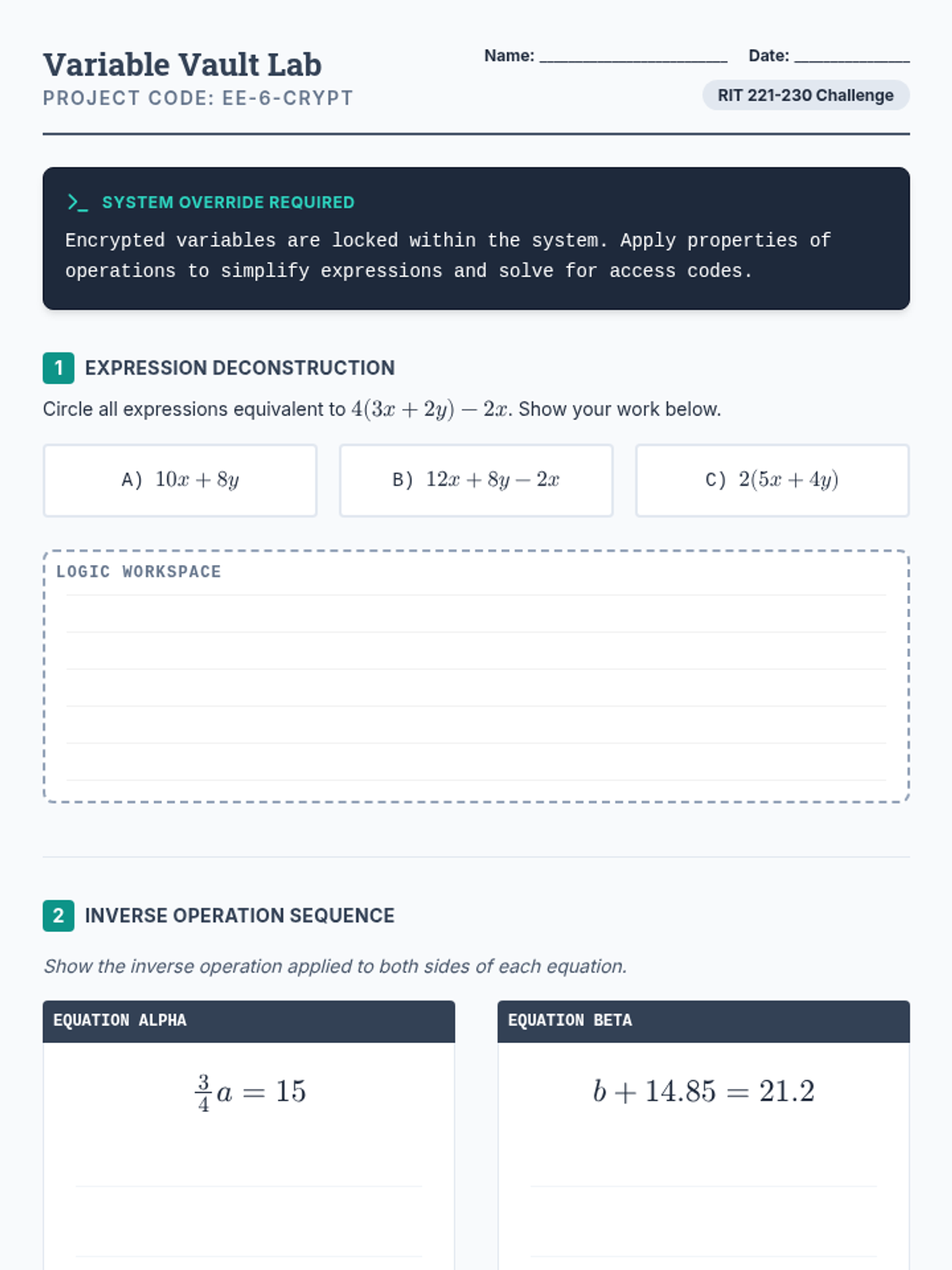
Applying property knowledge to solve for unknown variables and find missing factors in equations.
Exploring the 'Invisible Rules' of multiplication: the Identity Property (x1) and the Zero Property (x0).
Learning how to use the Commutative and Associative properties together to reorder and regroup factors for easier multiplication.
Applying the Distributive Property to solve multiplication problems mentally by splitting numbers into tens and ones.
Using area models to visualize the Distributive Property, showing how large rectangles can be broken into smaller ones for easier calculation.
Introduction to the Distributive Property as the 'Break-Apart Tool', focusing on splitting one factor into two smaller addends.
Strategically regrouping factors to find 'friendly numbers' (like multiples of 10) using the Associative Property.
Introducing the Associative Property of Multiplication as the 'Grouping Gear', focusing on how changing the grouping of factors doesn't change the product.
Using the Commutative Property to simplify expressions with larger numbers and identifying commutative patterns in multiplication and division.
Introduction to the Commutative Property of Multiplication as the 'Switch Tool', showing that the order of factors does not change the product.
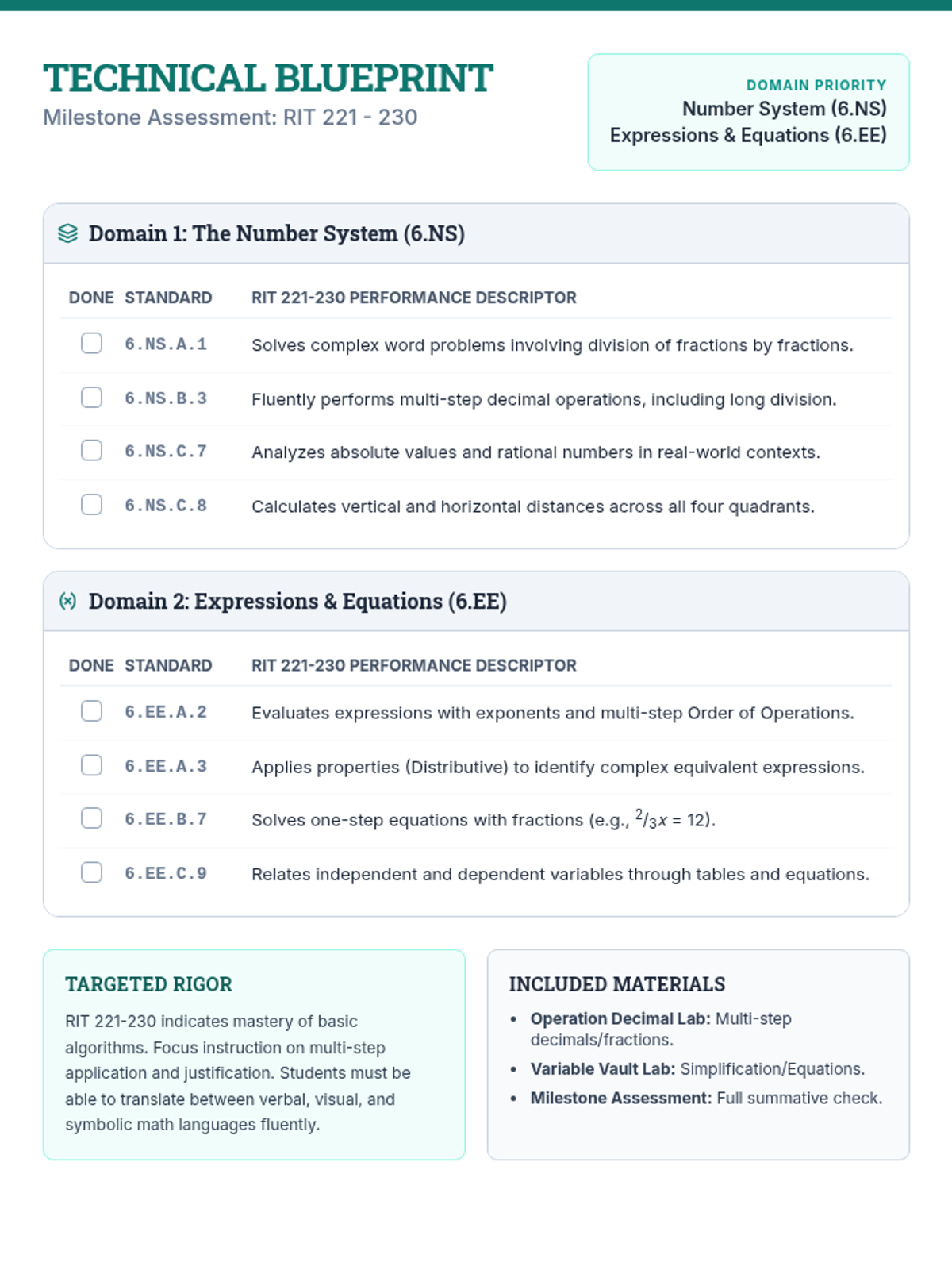
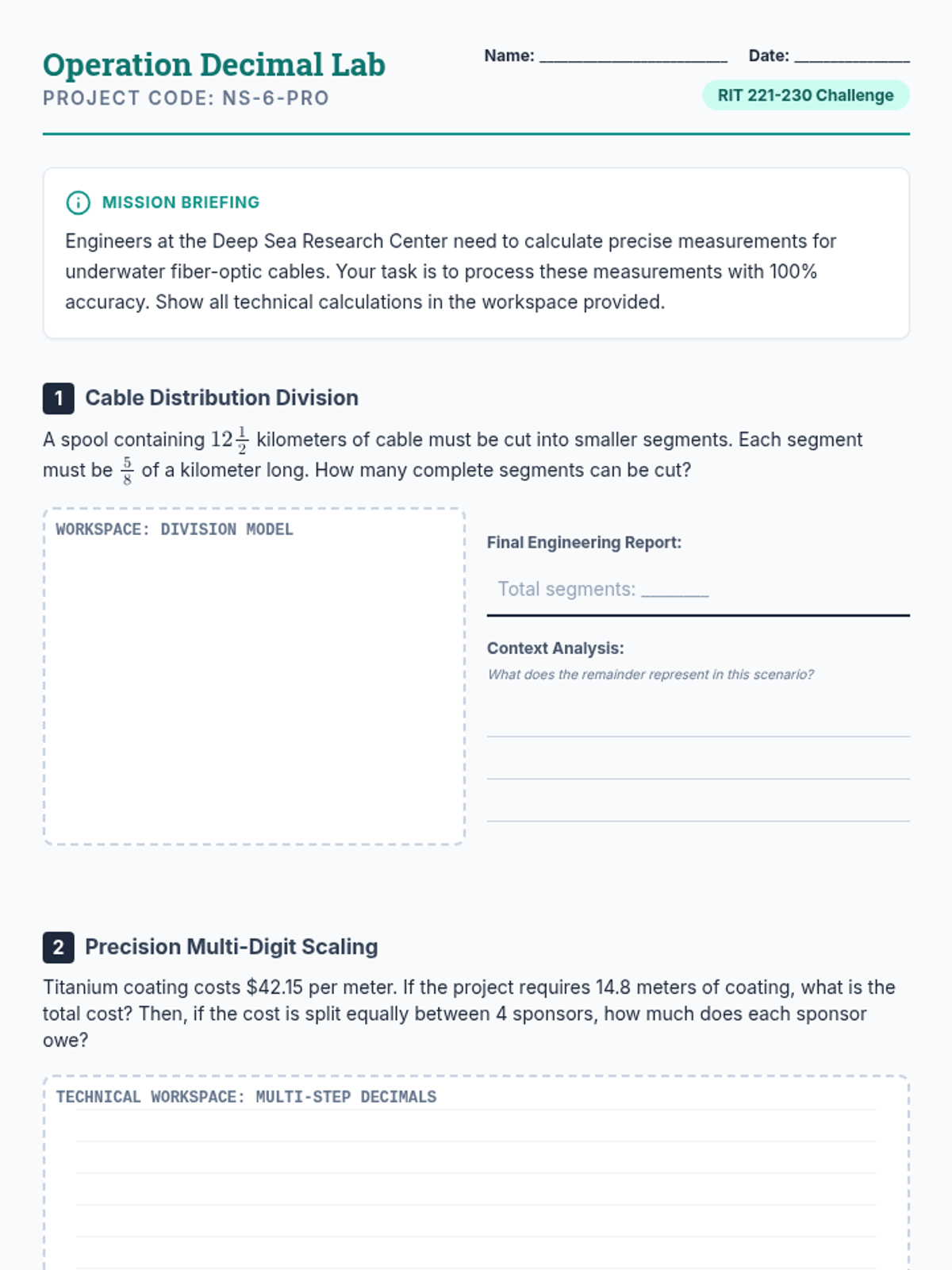
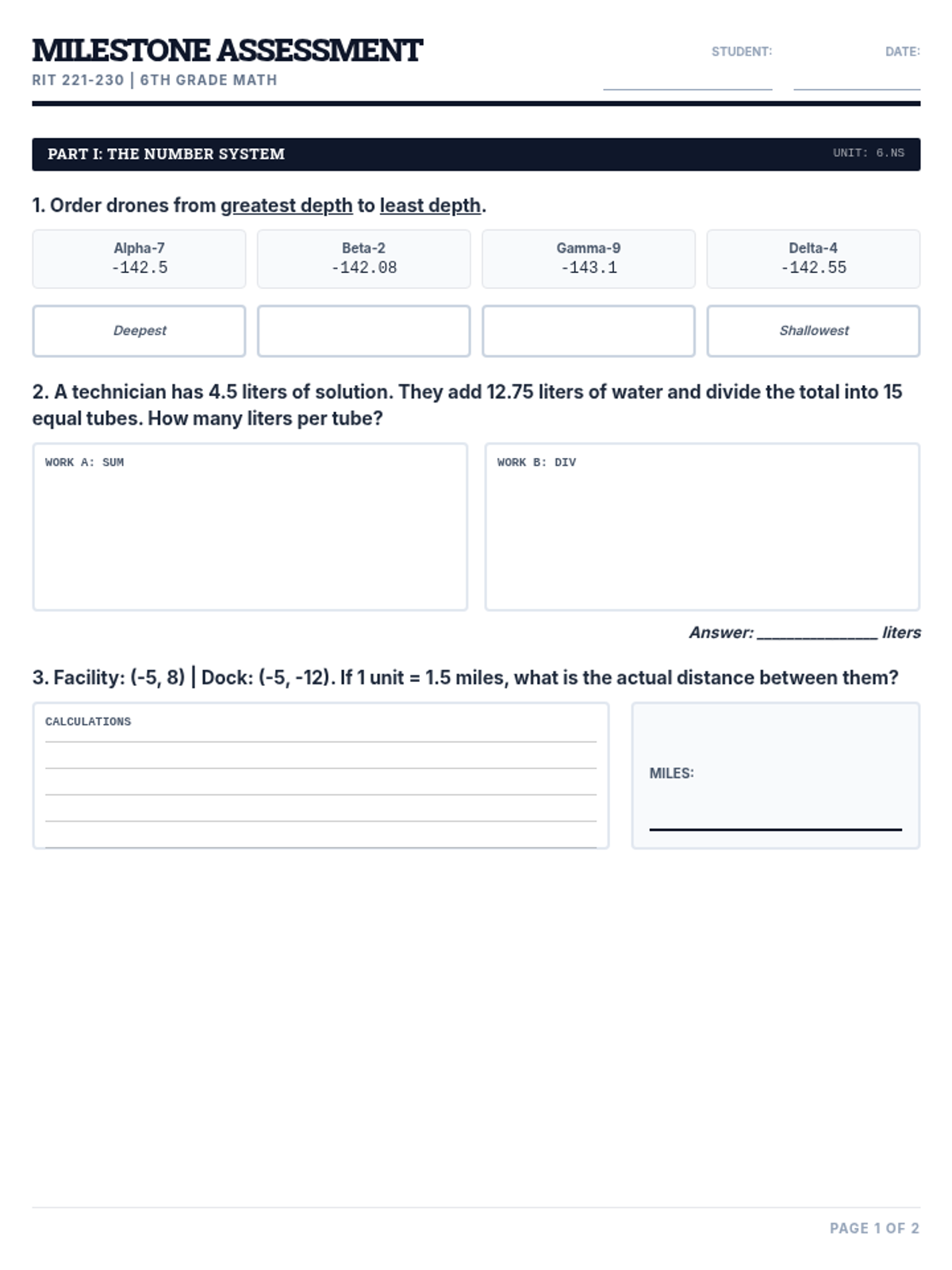
A comprehensive review of computational fluency with decimals and rational number concepts.
Applying coordinate plane skills to solve geometry problems and map-based tasks.
Understanding how signs change across axes and recognizing points as reflections of one another.
Identifying and plotting points in all four quadrants of the coordinate plane using ordered pairs.