Students learn to apply L'Hôpital's Rule to sequences by treating them as continuous functions. They analyze the growth rates of different function types—logarithmic, polynomial, and exponential—to determine convergence.
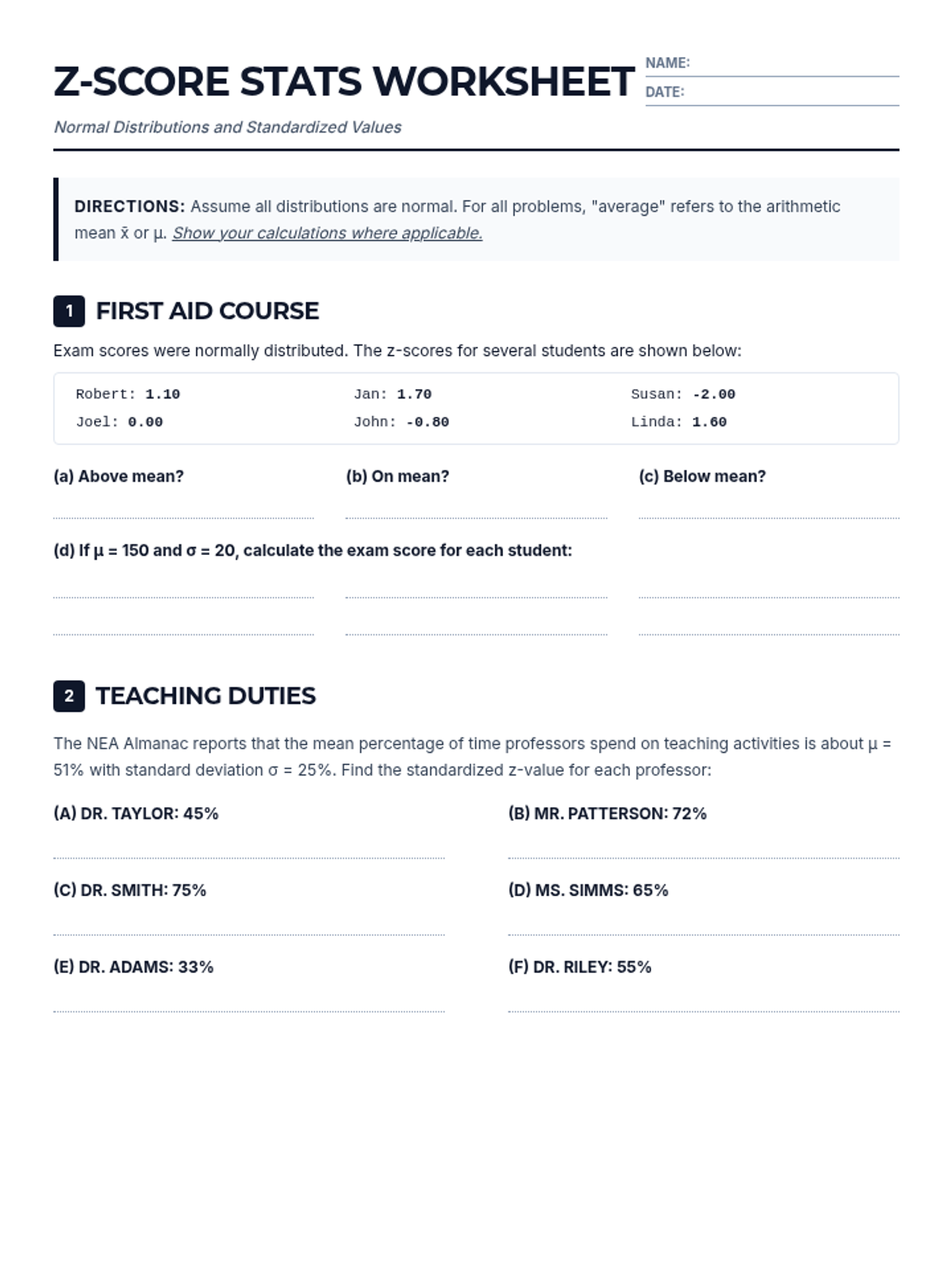
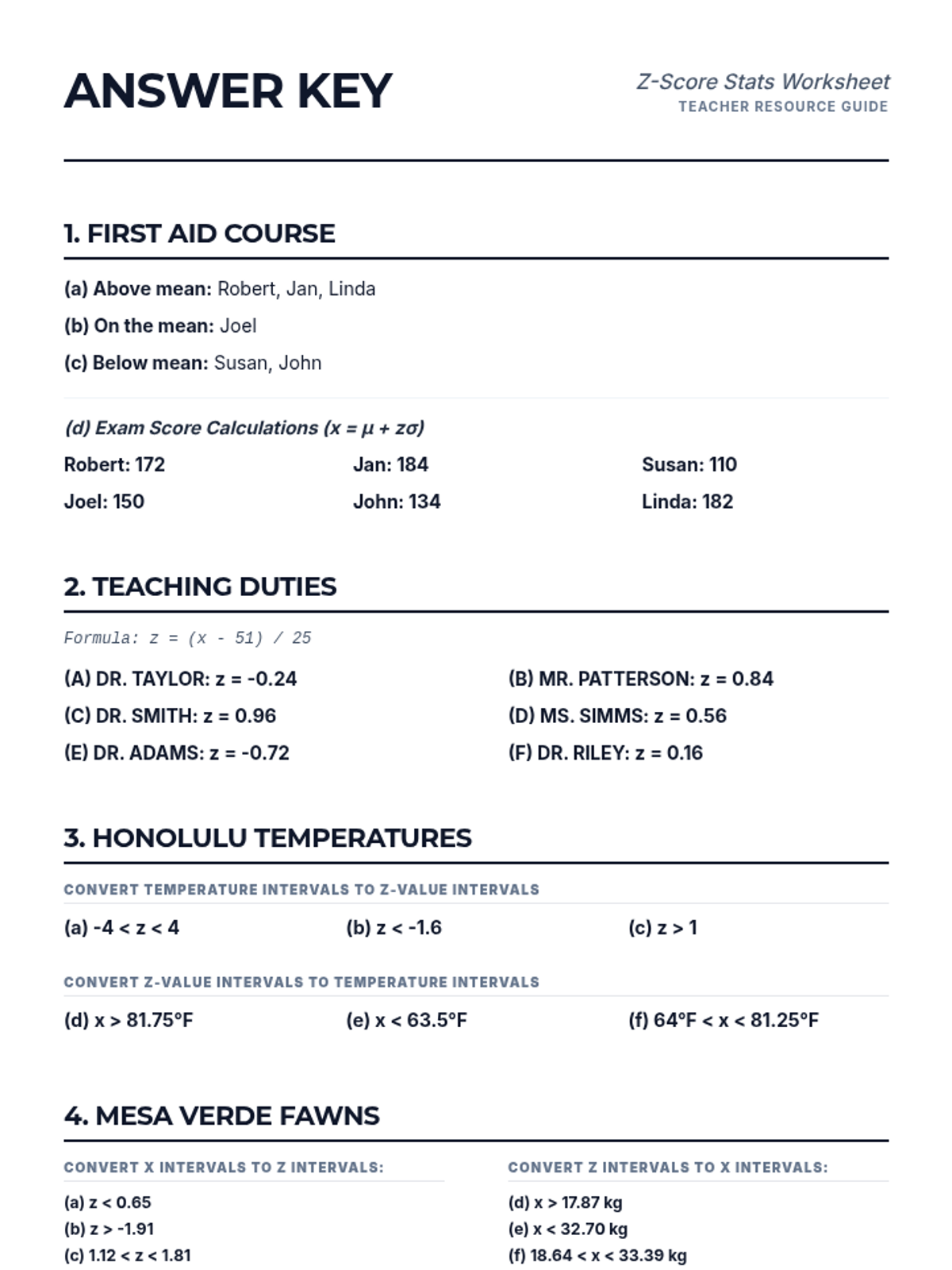
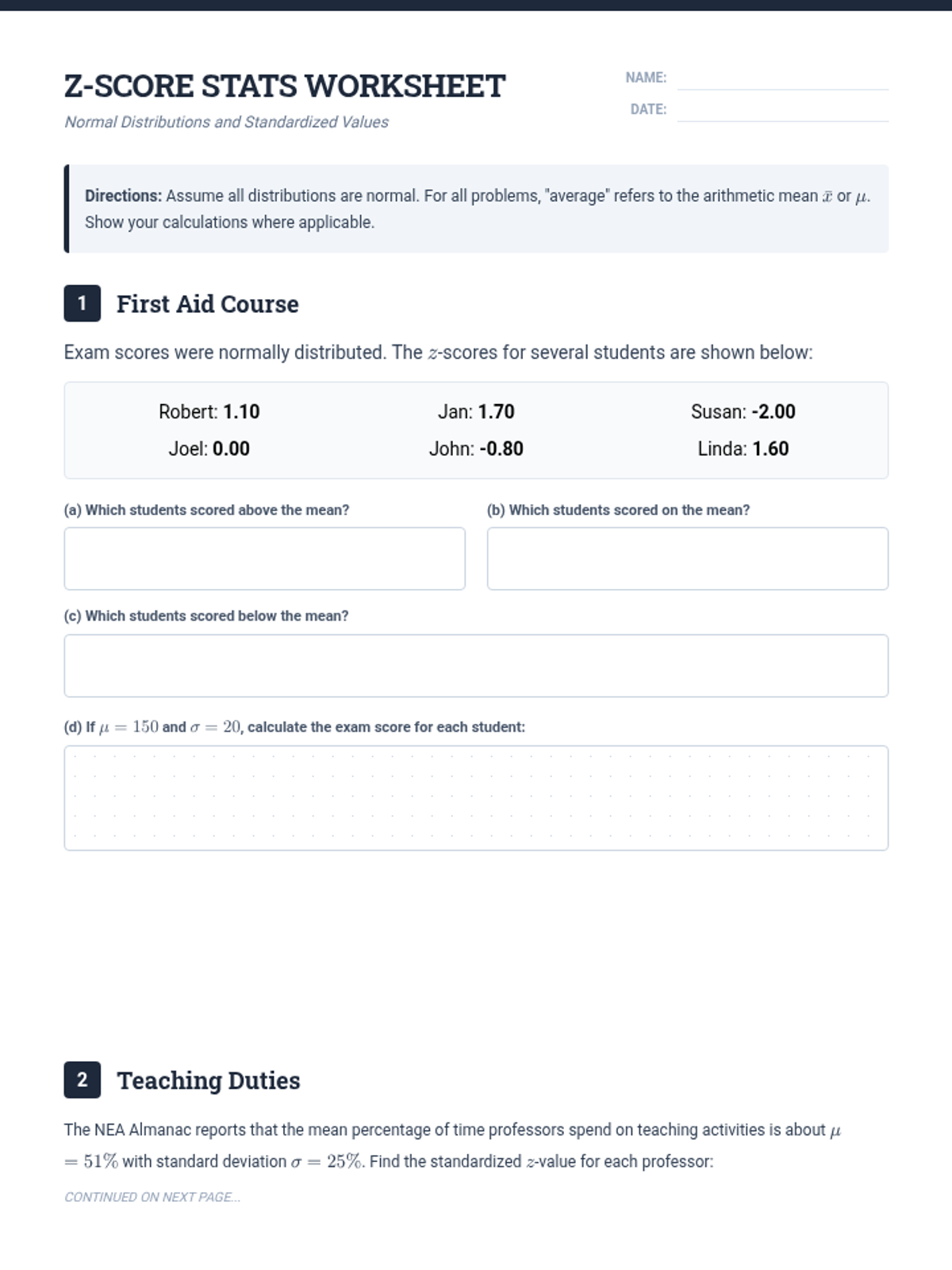
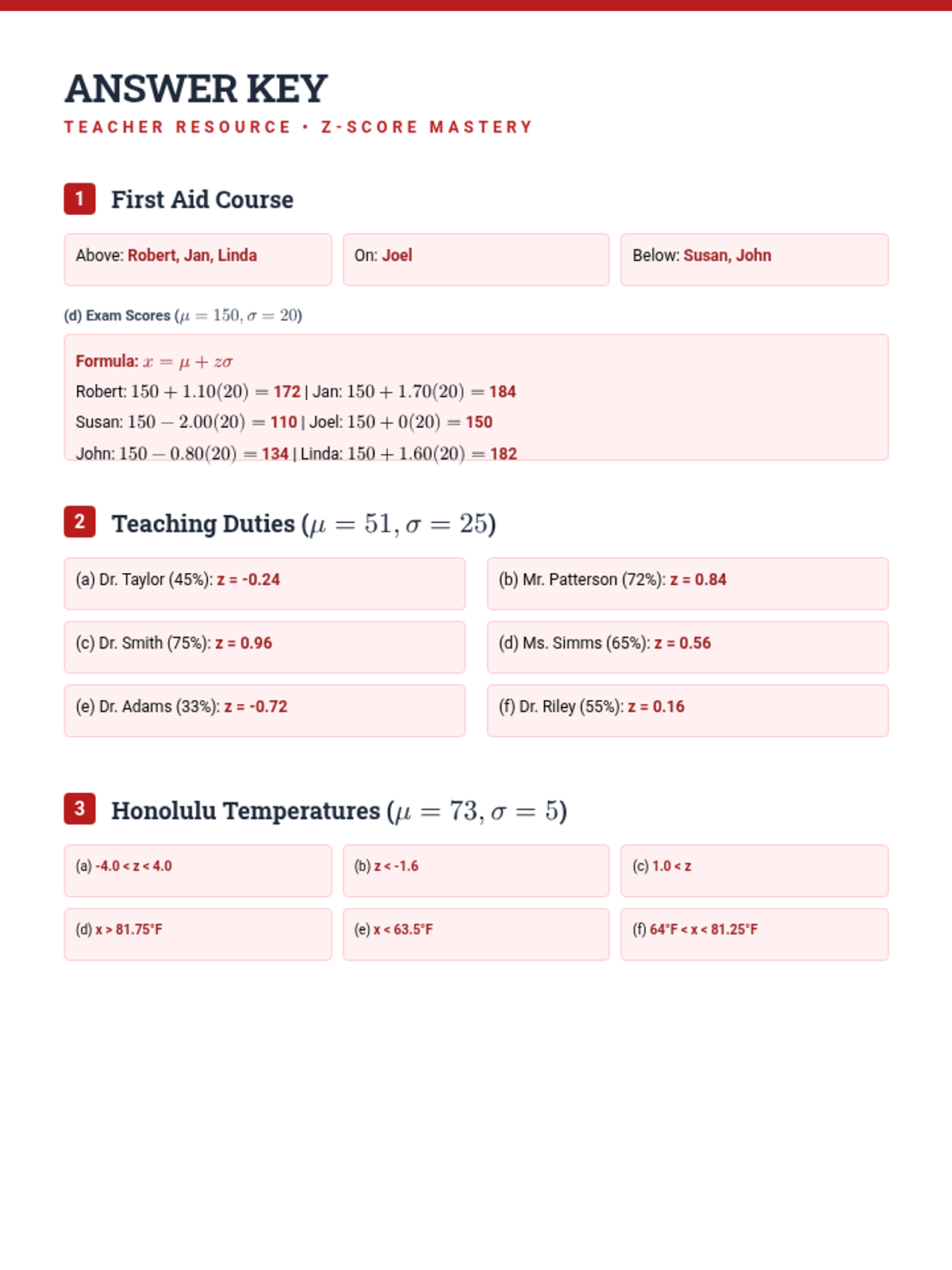
A lesson focused on understanding and applying z-scores to compare values from different normal distributions and interpret real-world statistical data.
A lesson focused on calculating and interpreting z-scores within the context of normal distributions, featuring real-world data from ecology to education.
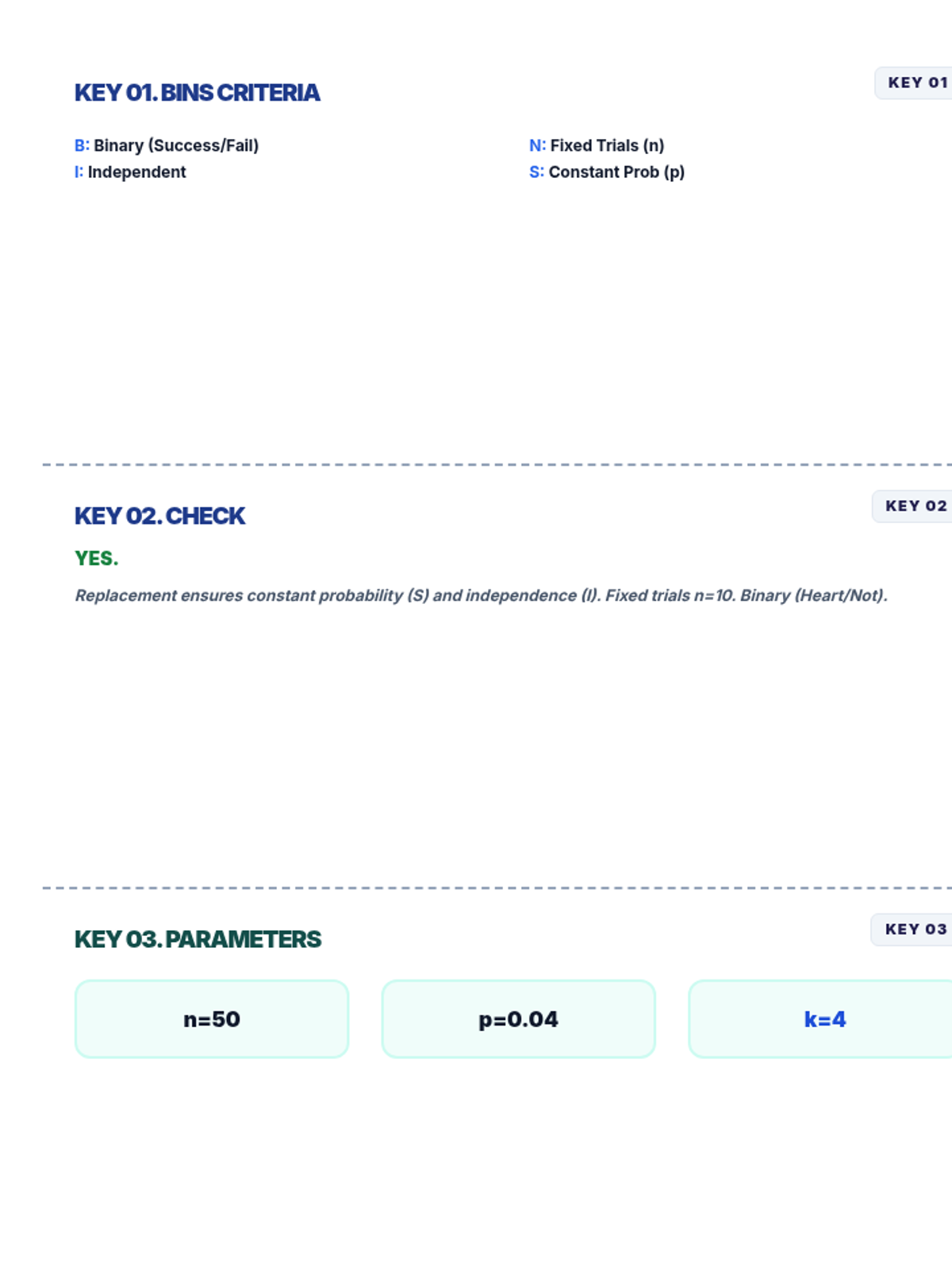
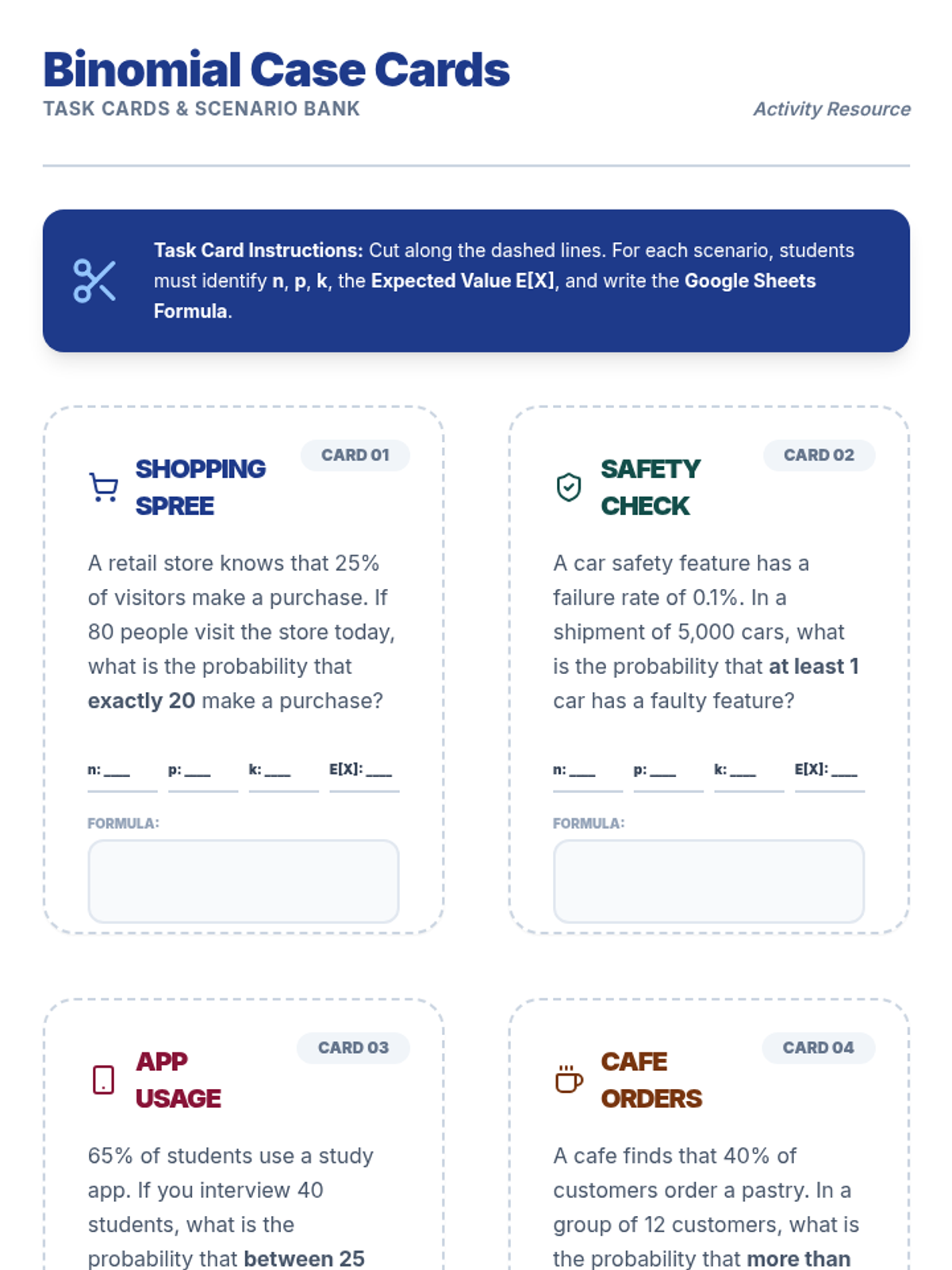
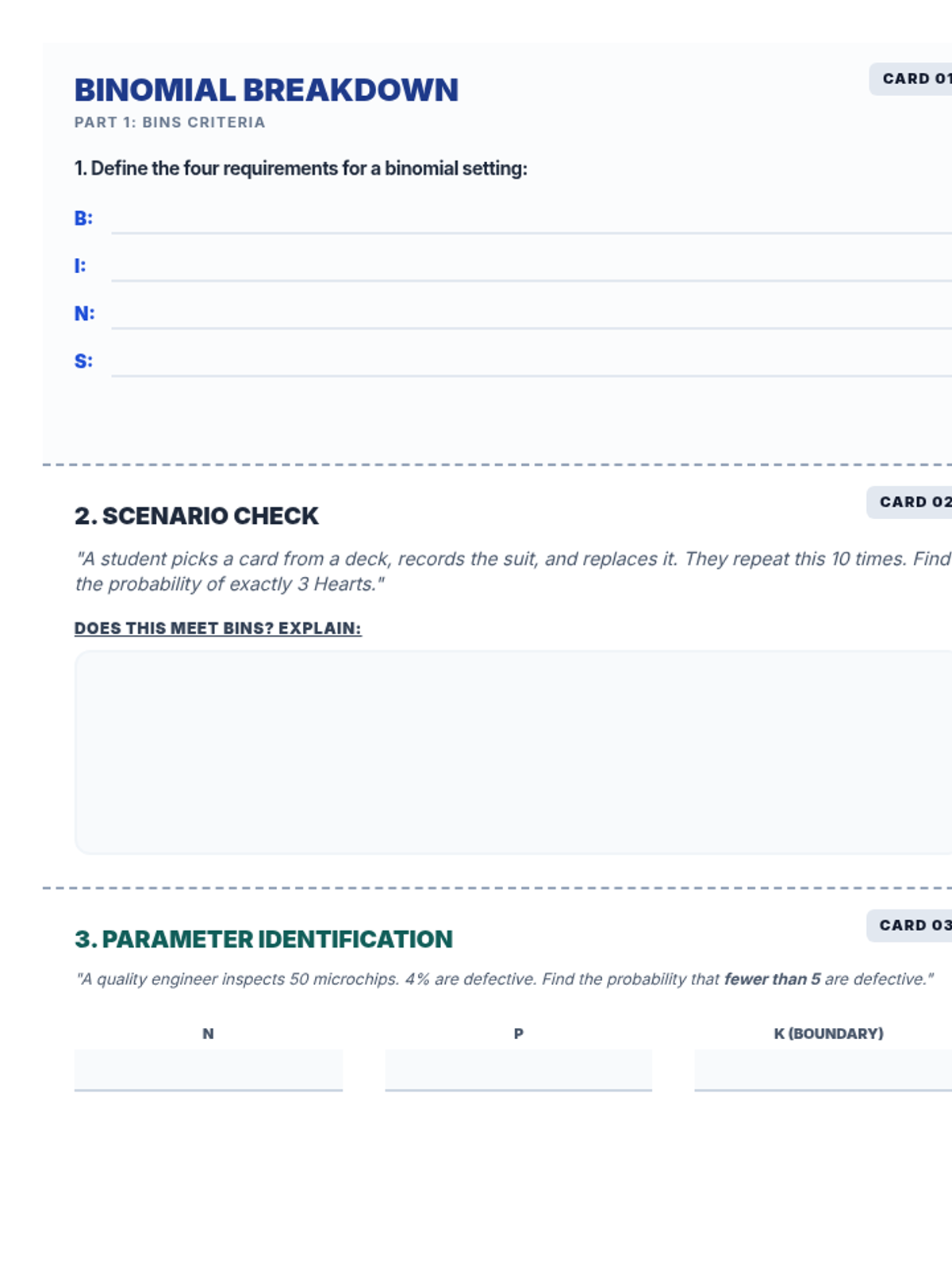
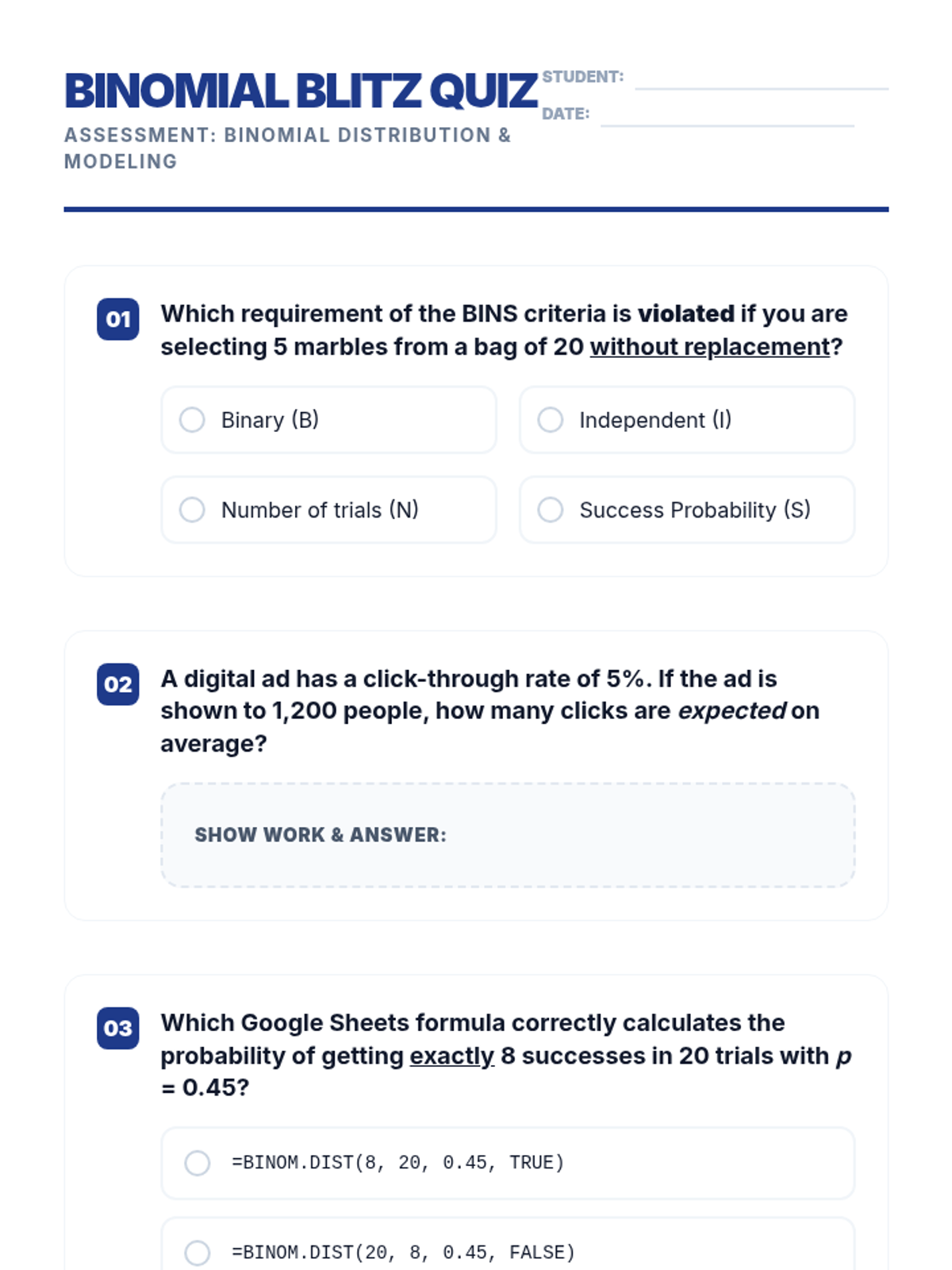
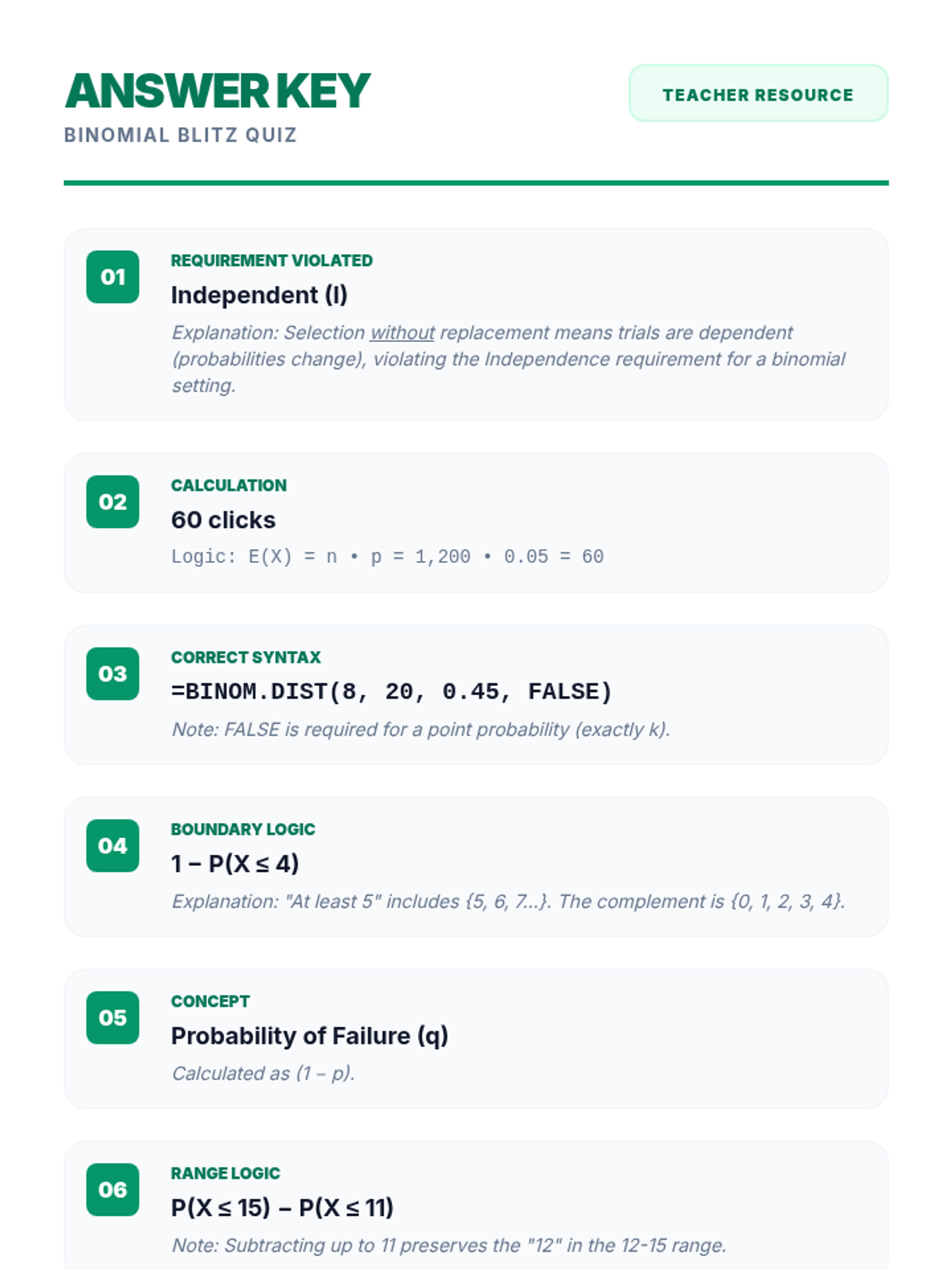
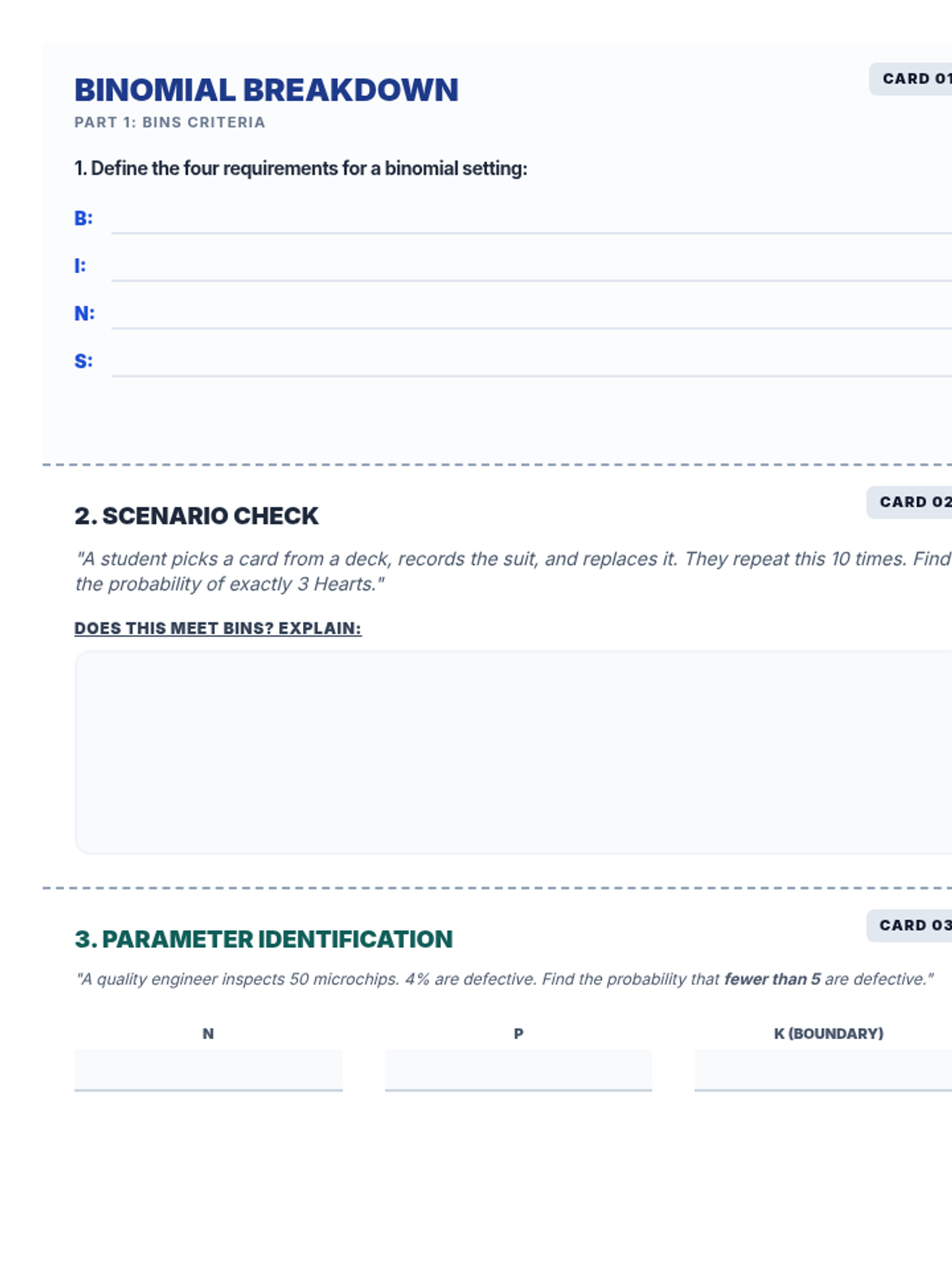
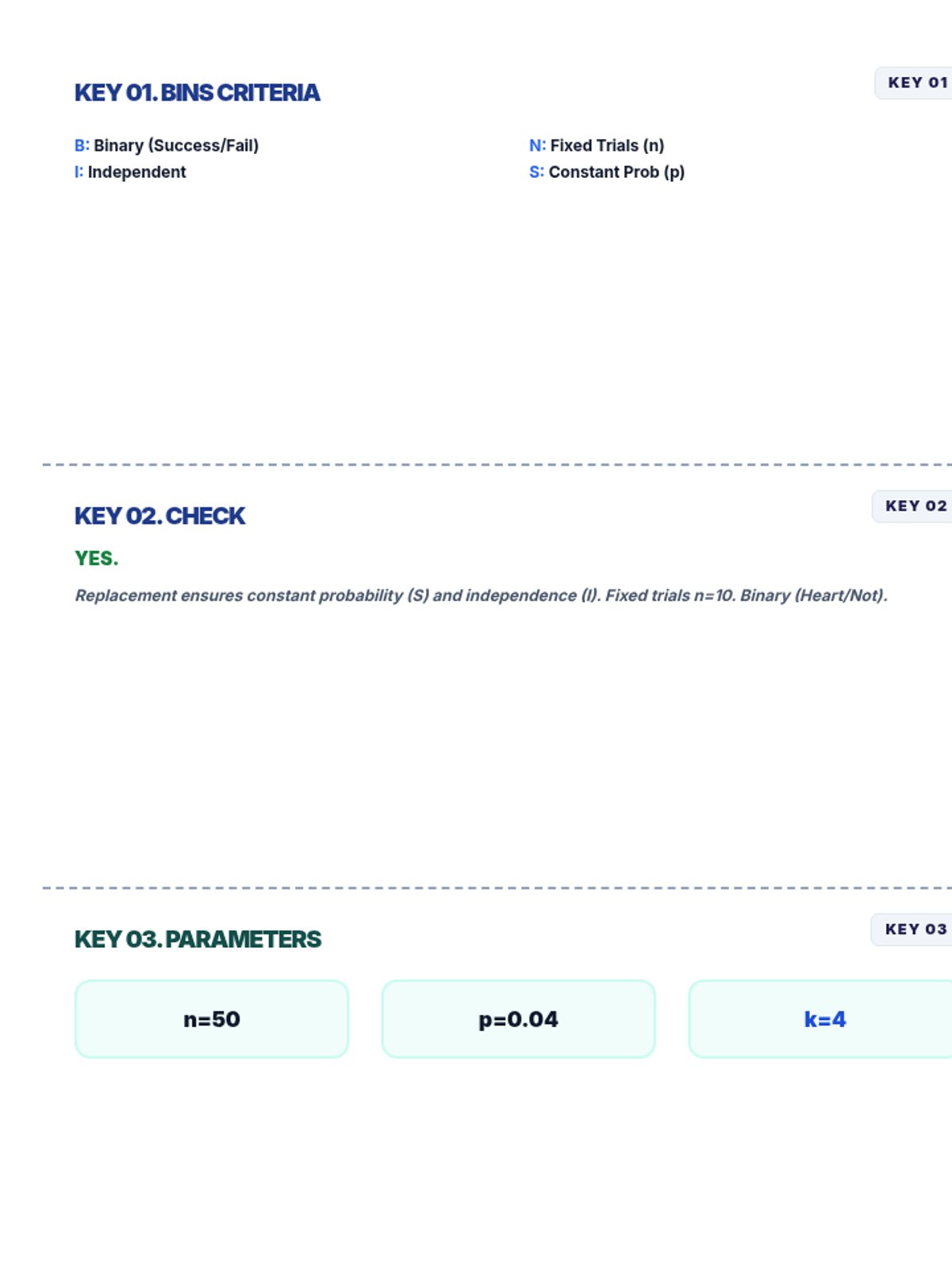
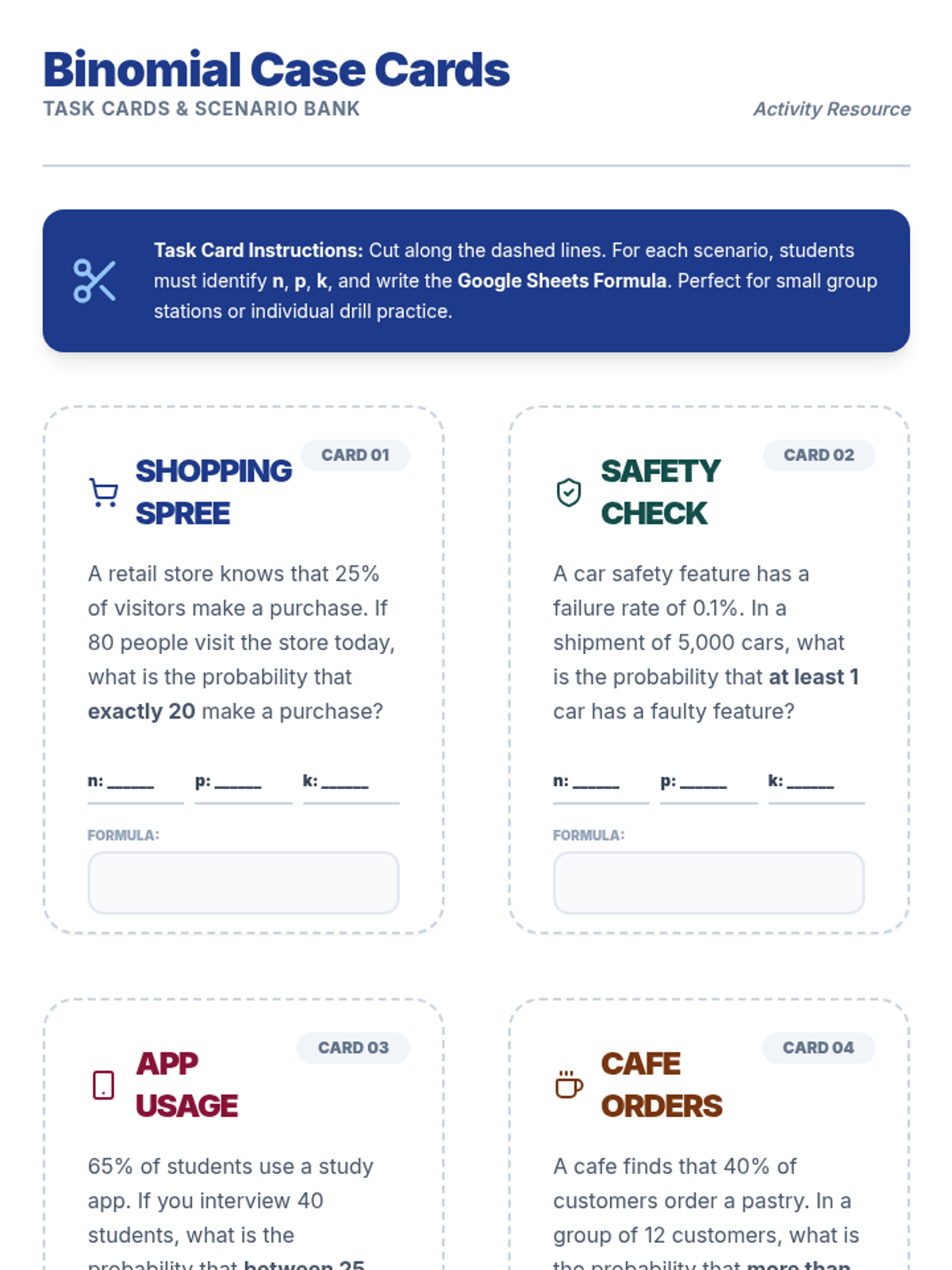
A focused lesson on the binomial distribution, covering the BINS criteria, identifying parameters, and calculating probabilities using digital spreadsheet tools.
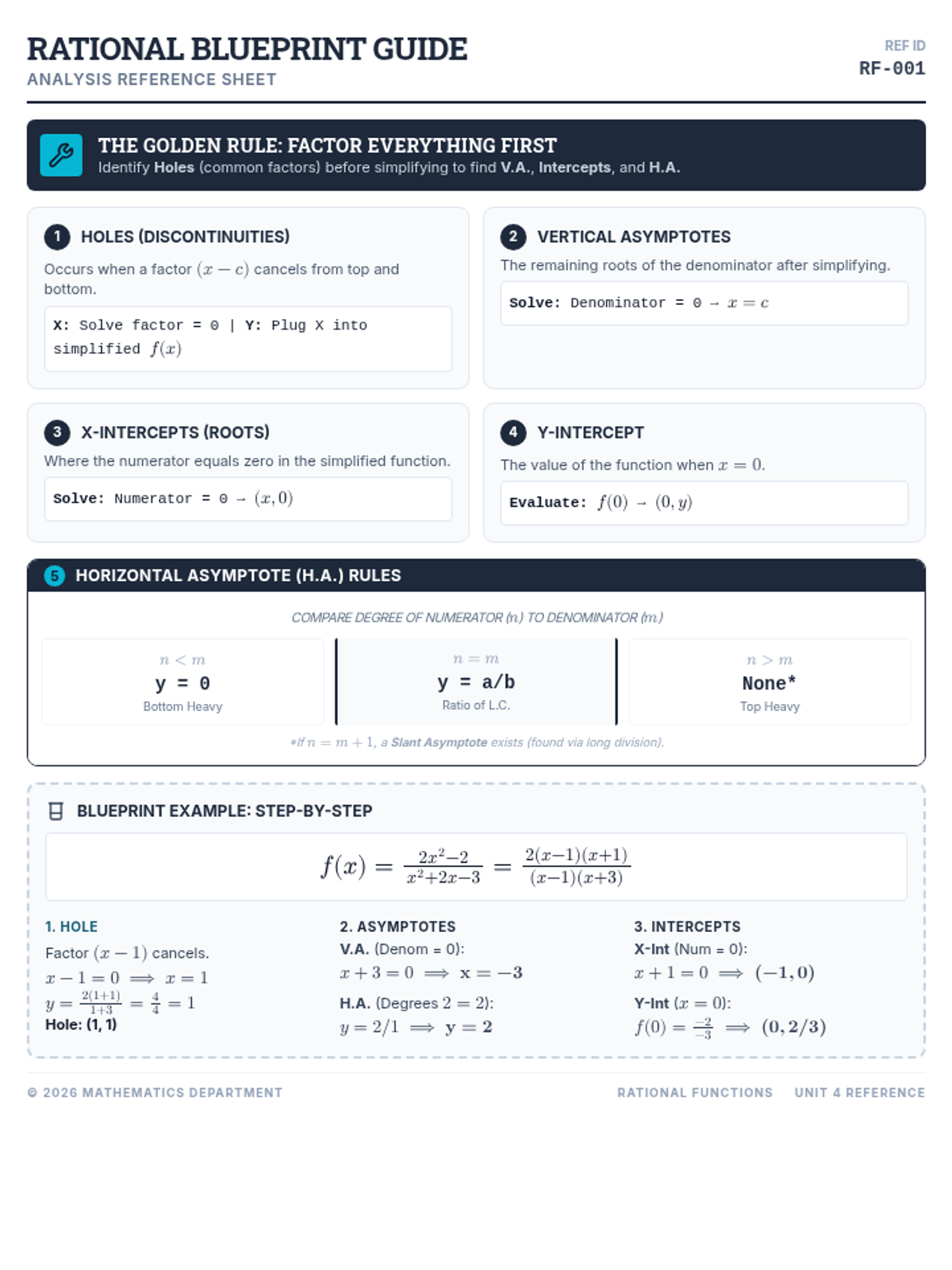
A comprehensive guide to analyzing and graphing rational functions, covering all key features from asymptotes to holes.
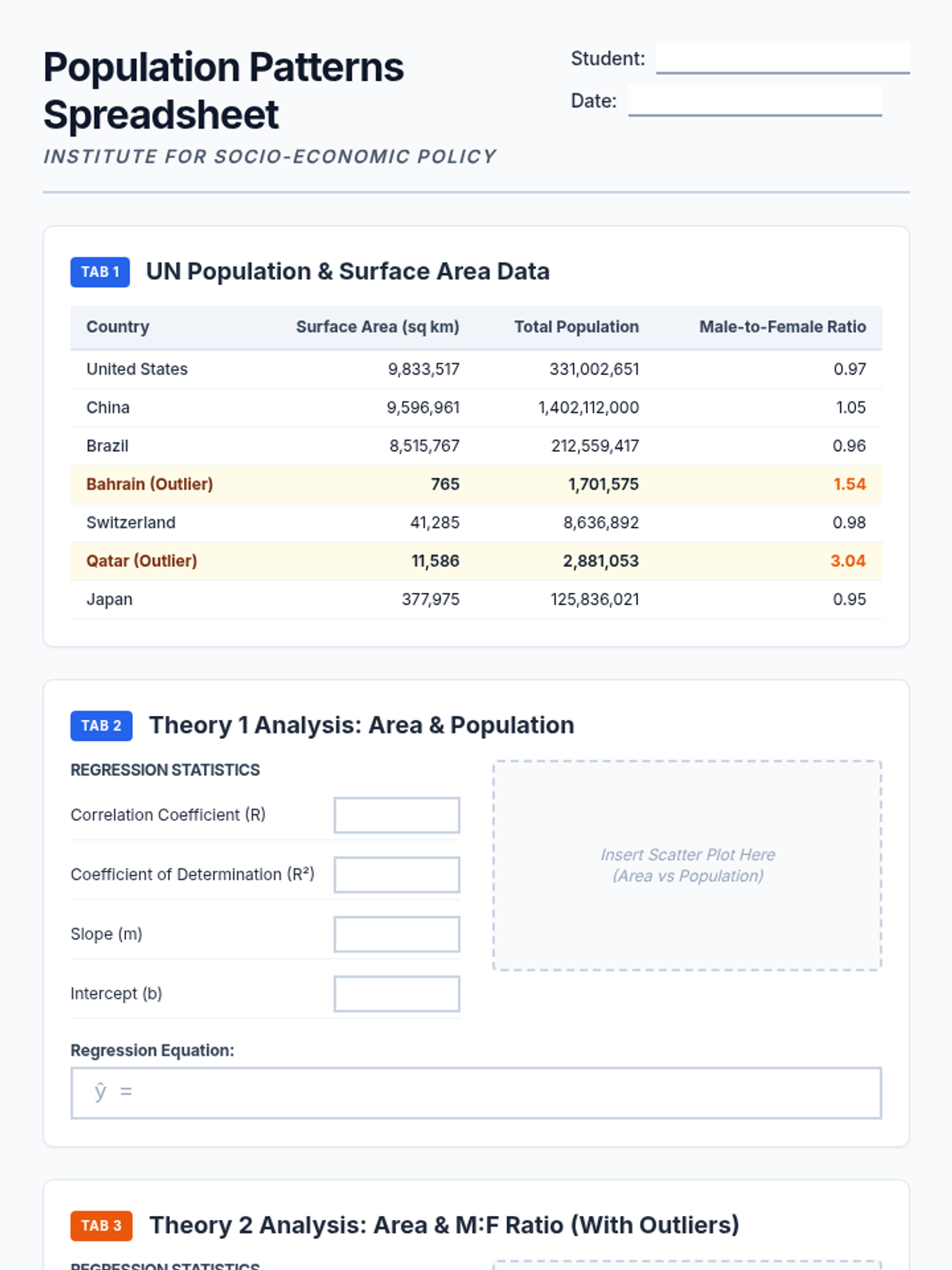
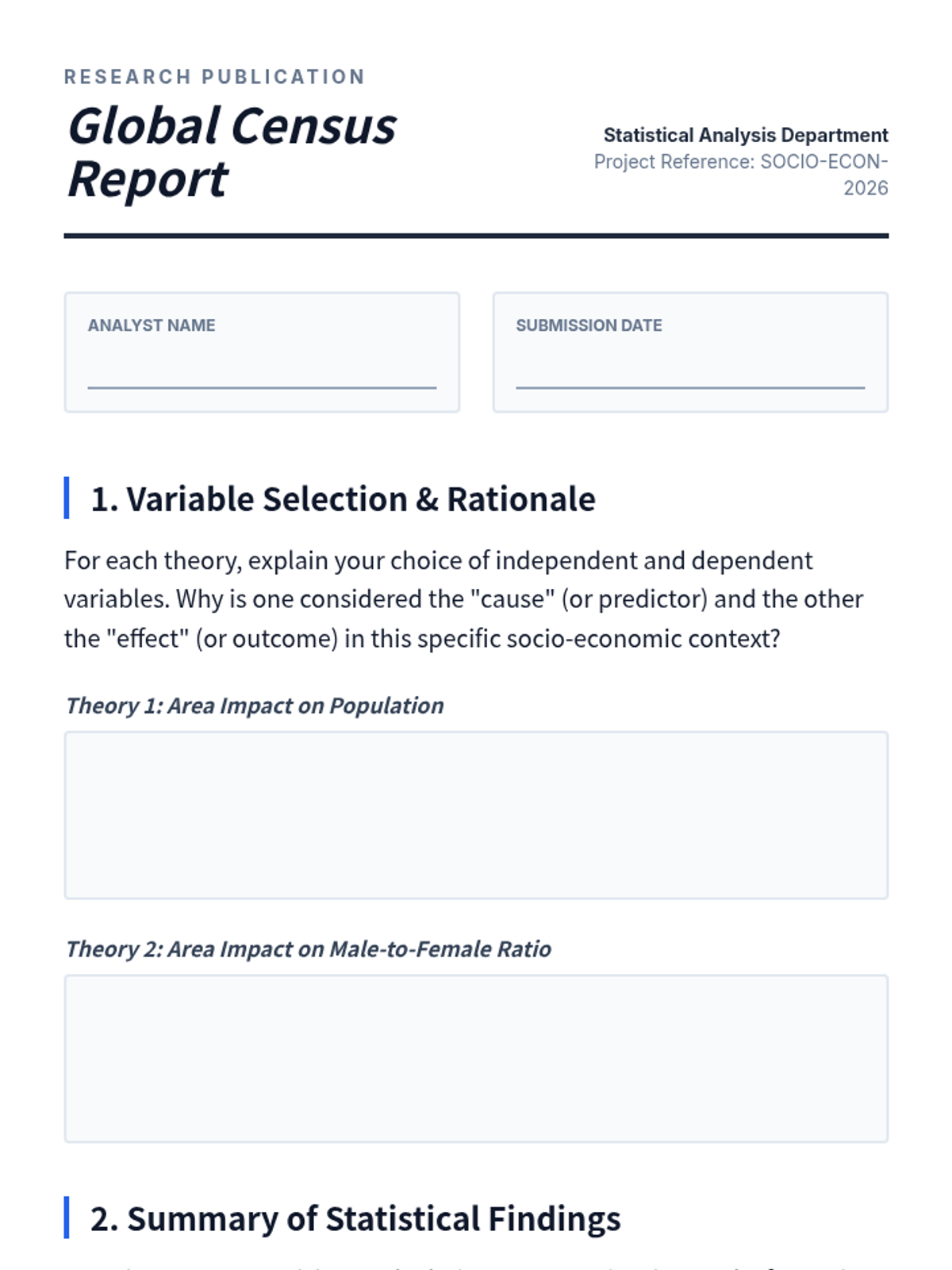
A project-based lesson on performing linear regression analysis using United Nations population and surface area data to test socio-economic theories.
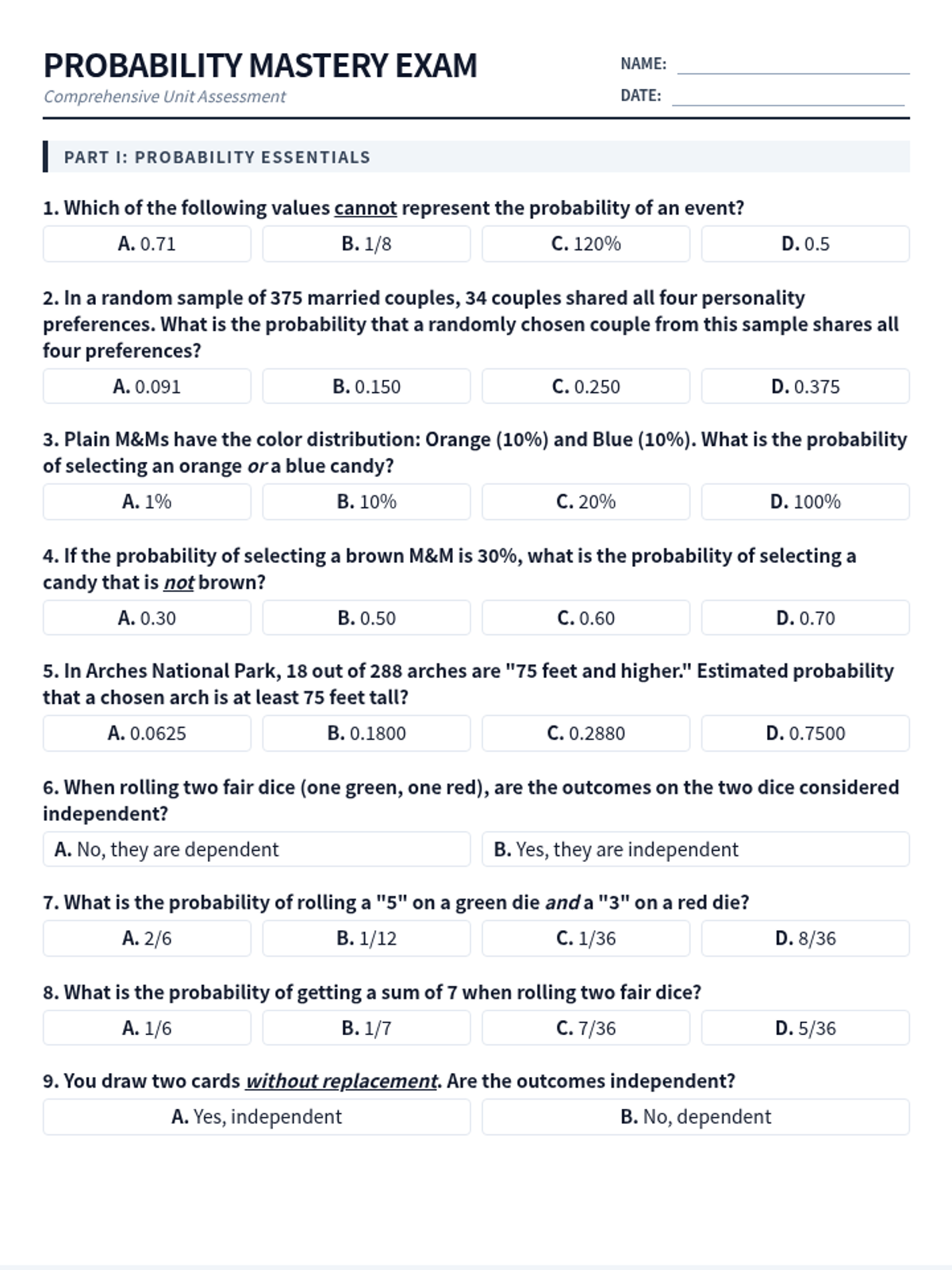
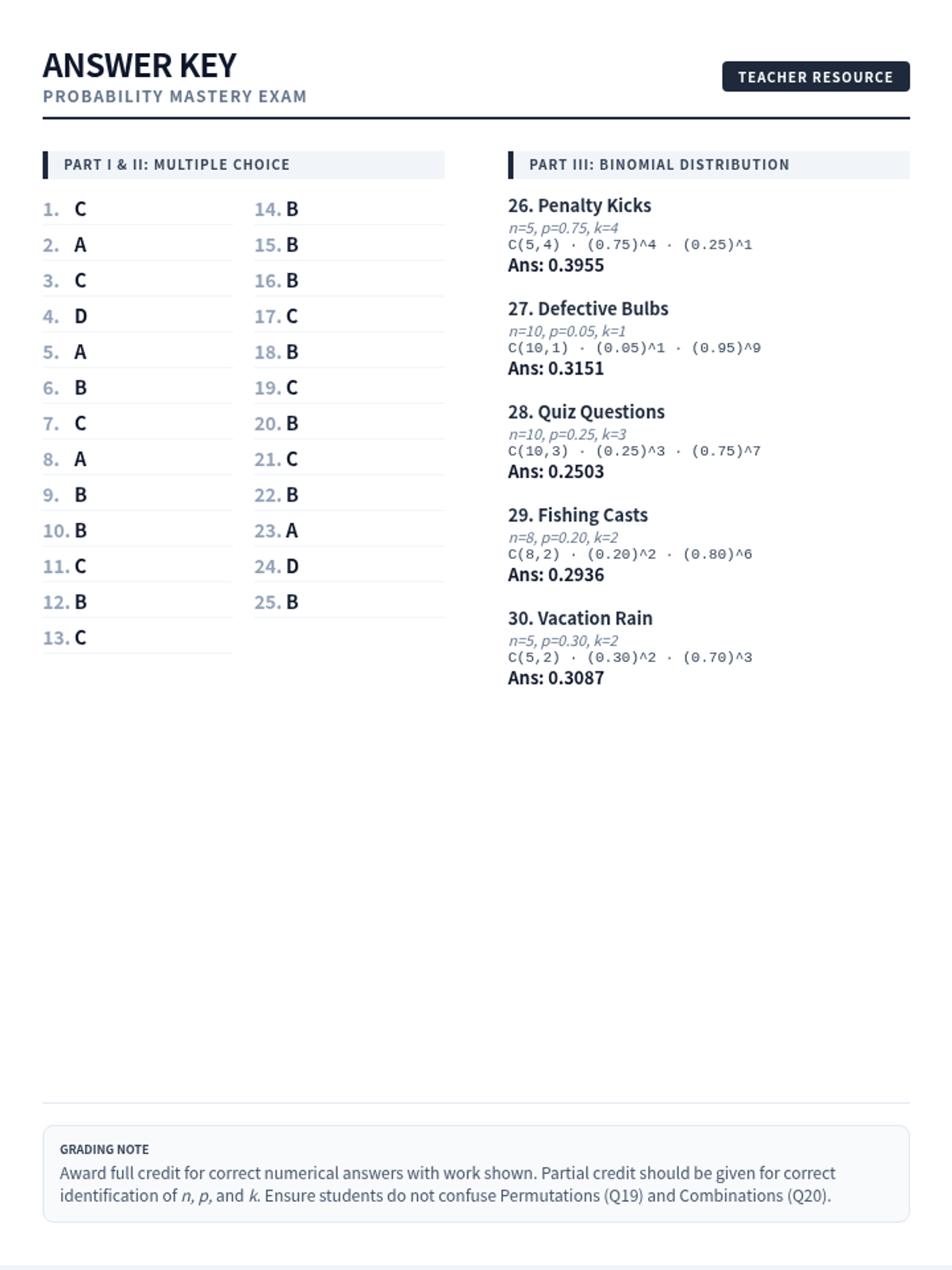
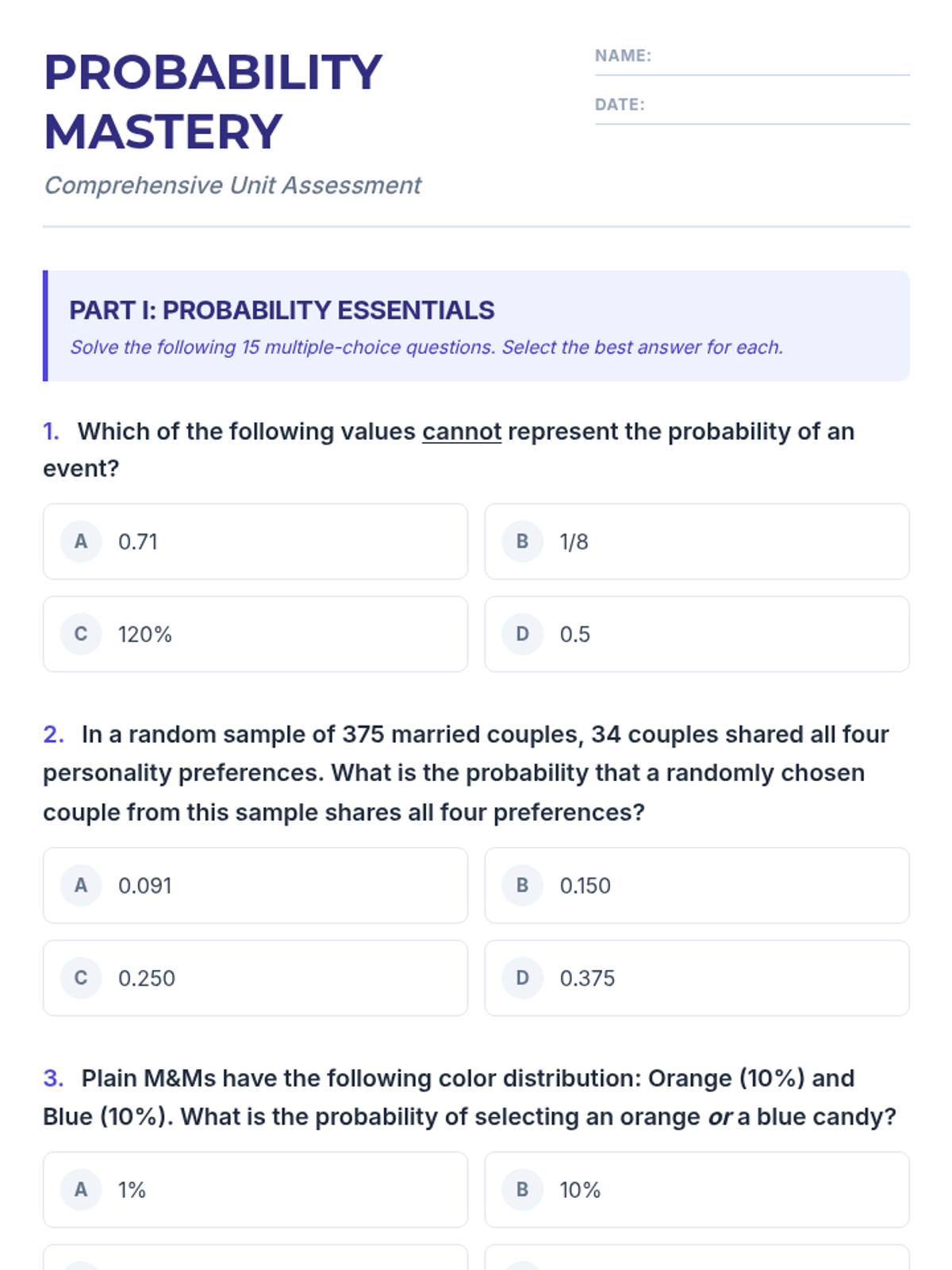
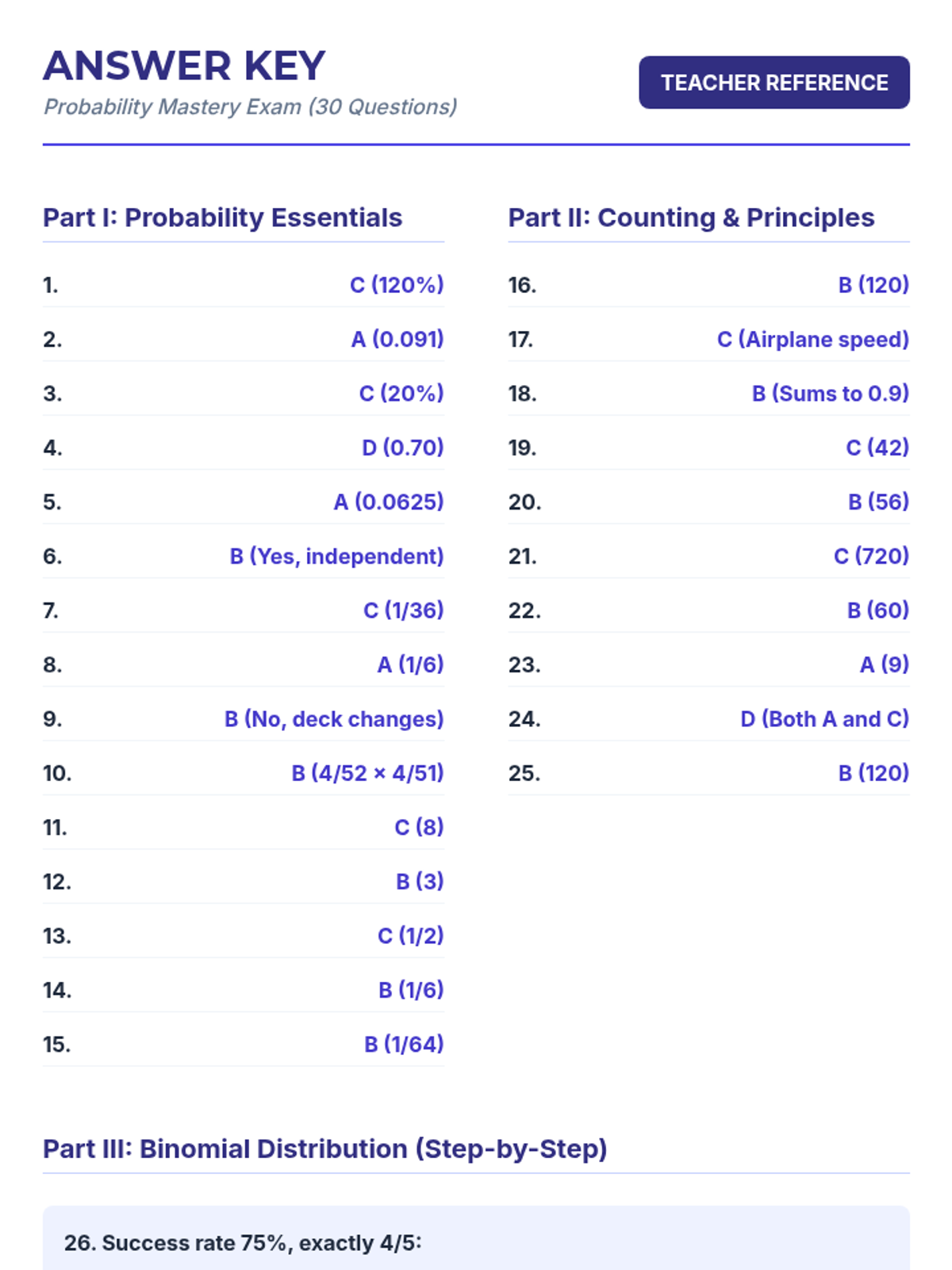
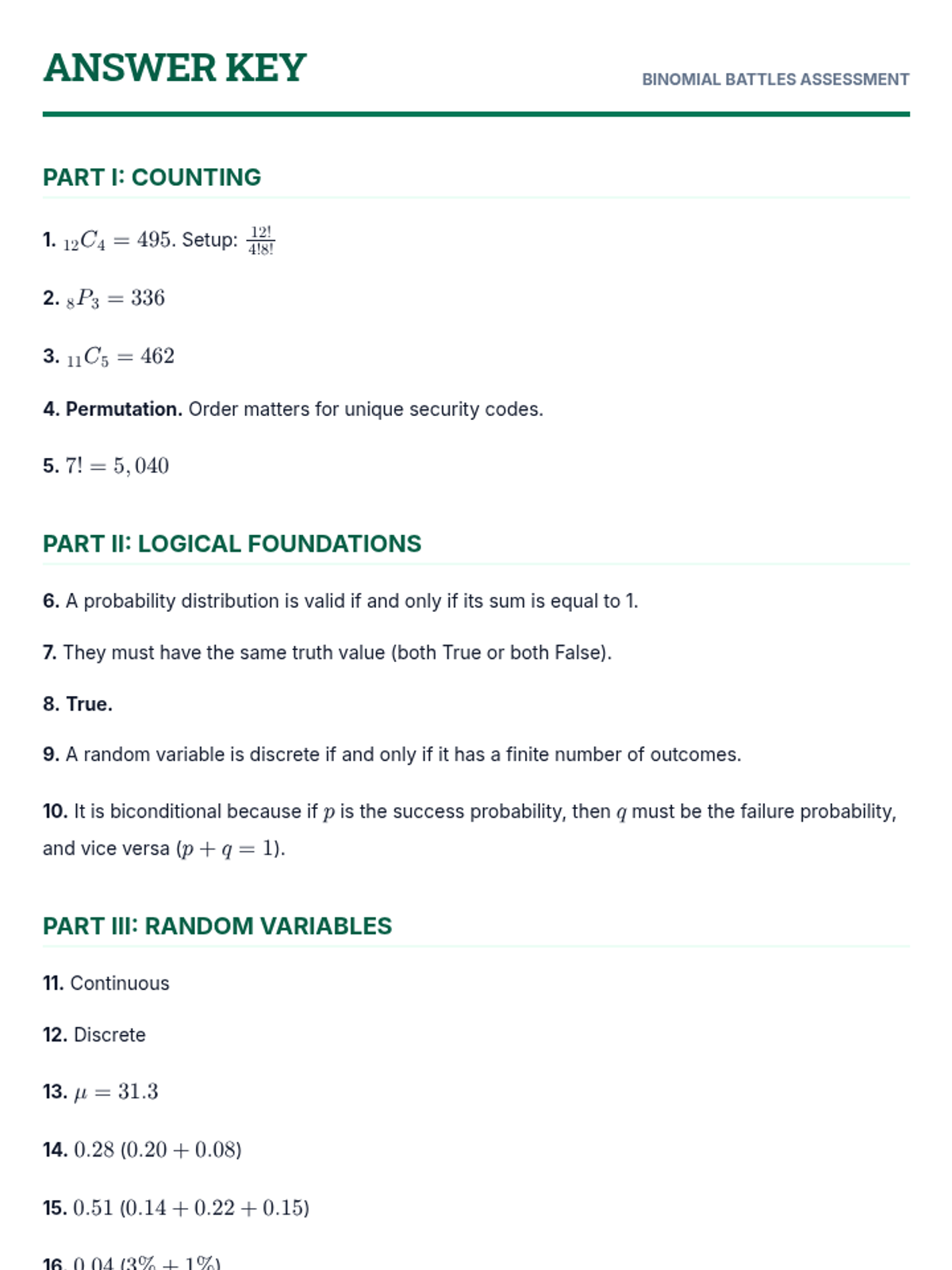
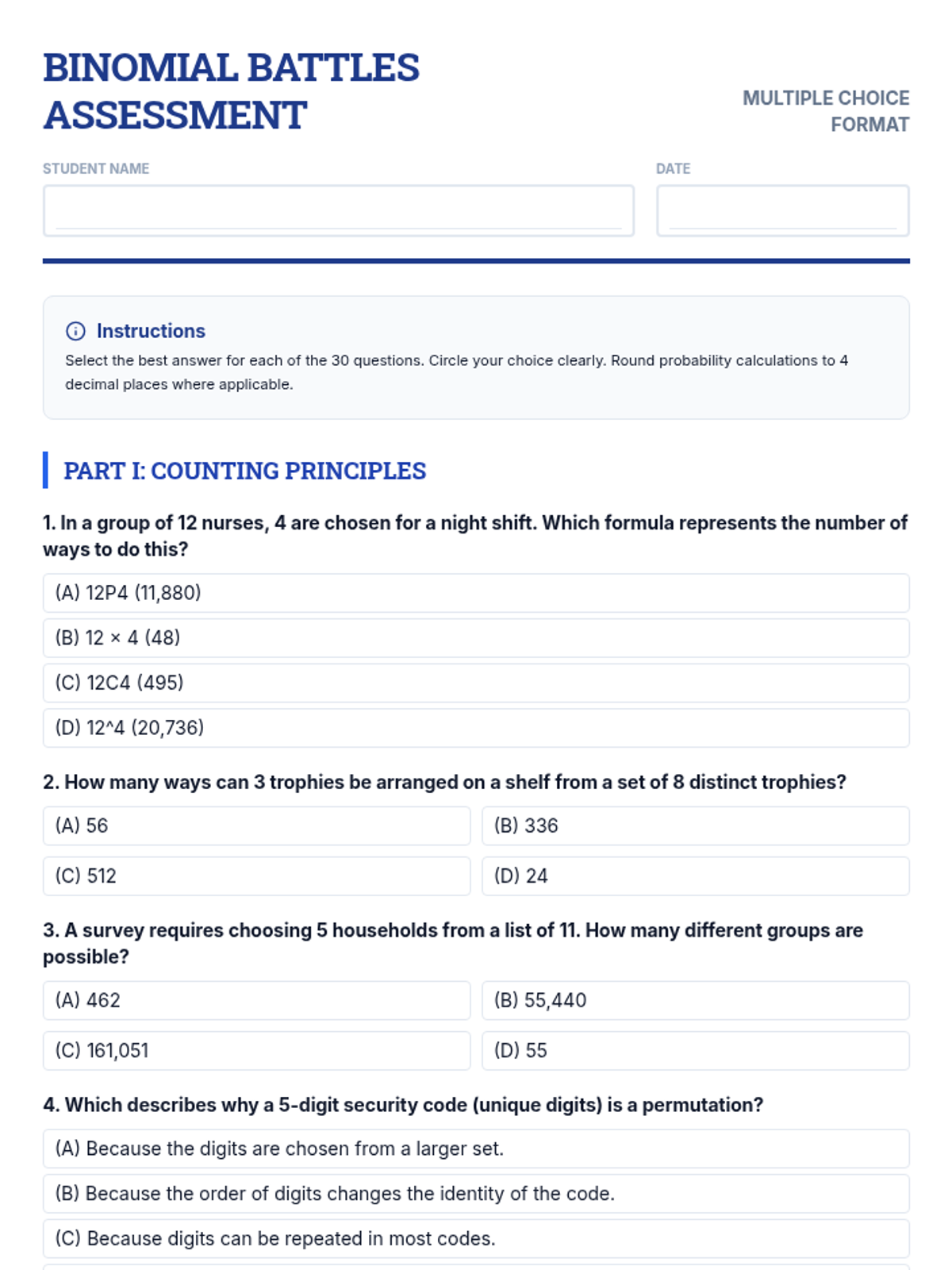
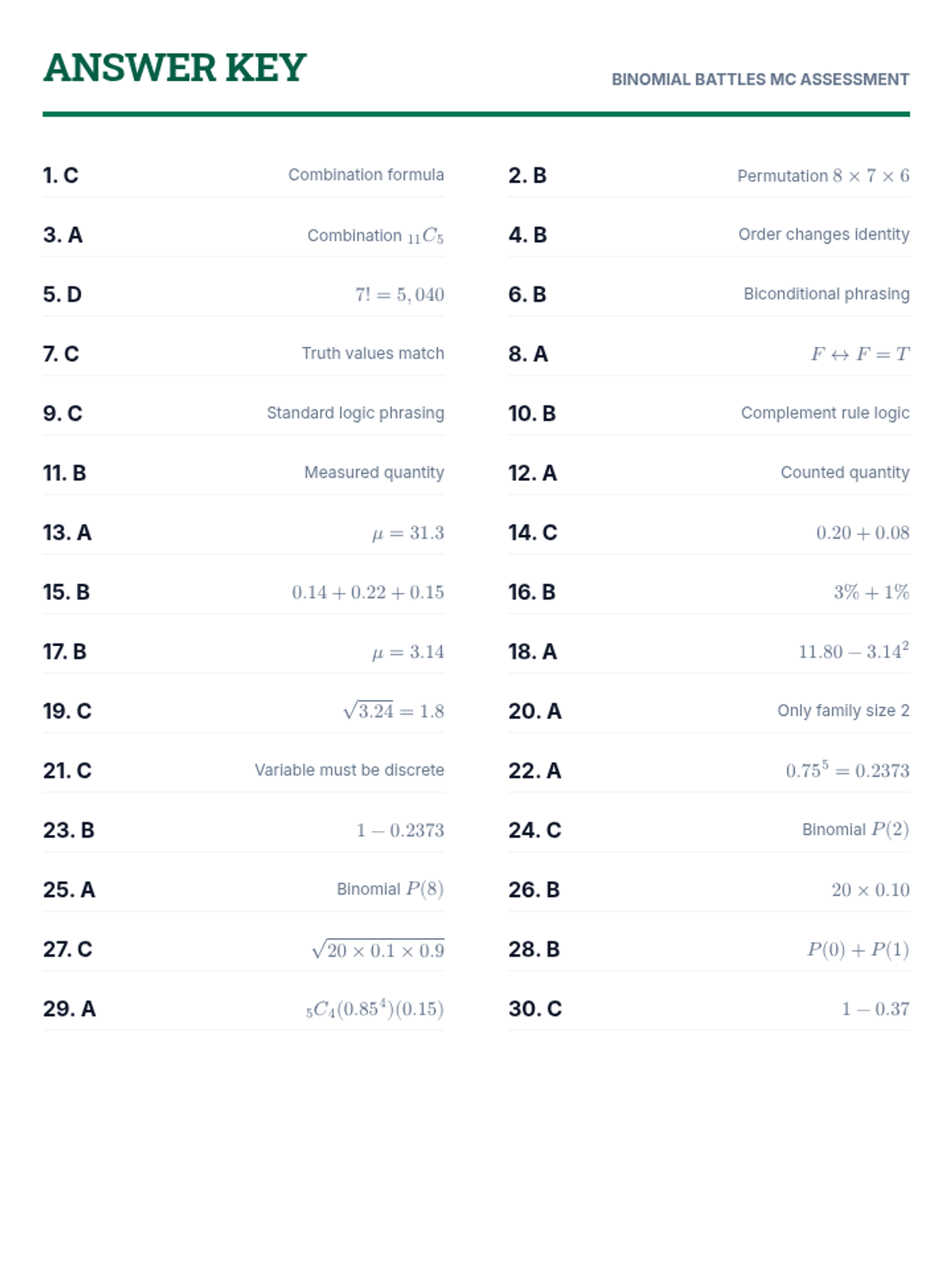
A comprehensive lesson covering probability basics, counting principles, and the binomial distribution, concluding with a summative 30-question mastery exam.
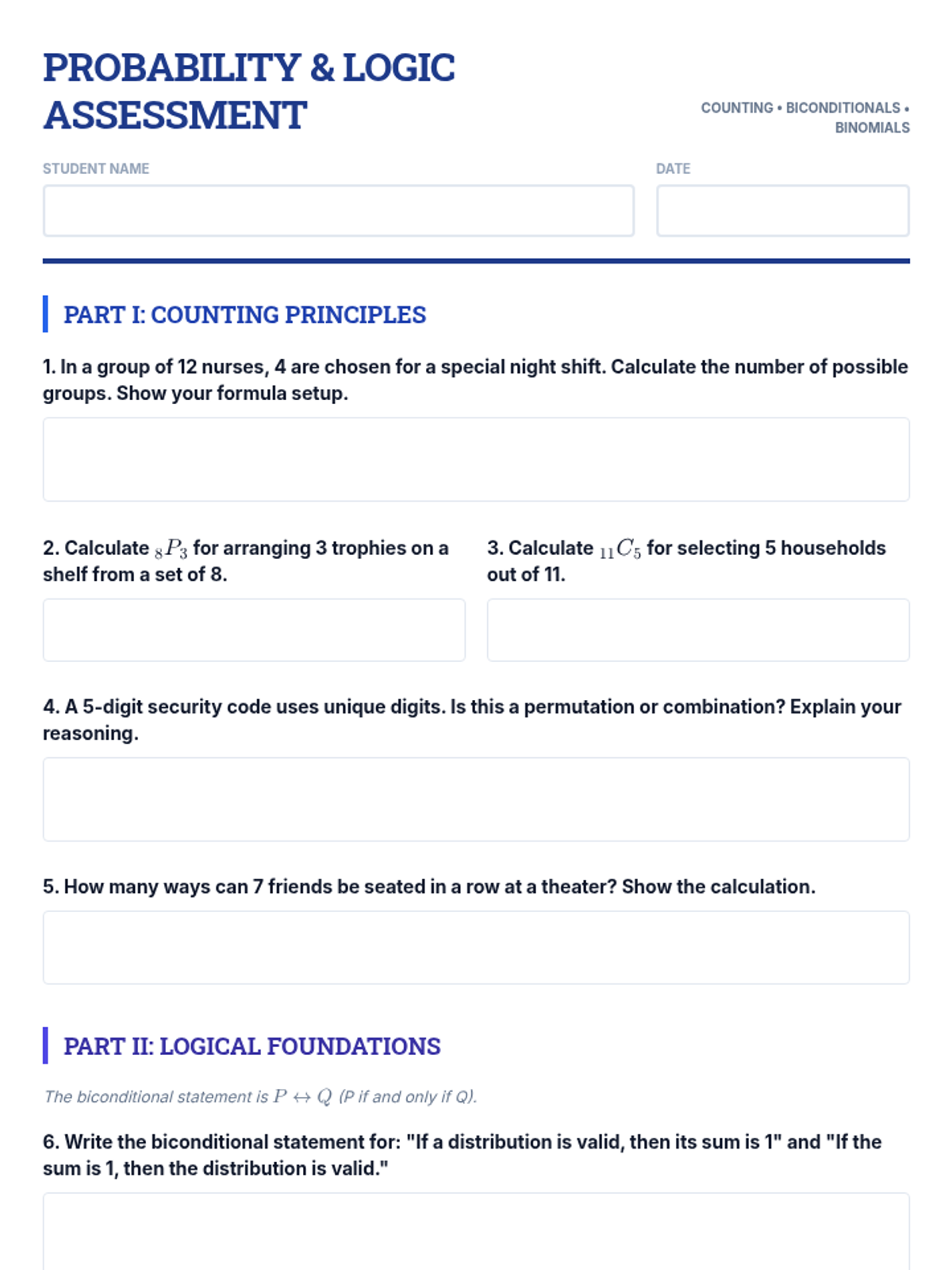
A comprehensive examination combining elementary probability theory, counting principles, and binomial distribution problems into a single rigorous assessment.
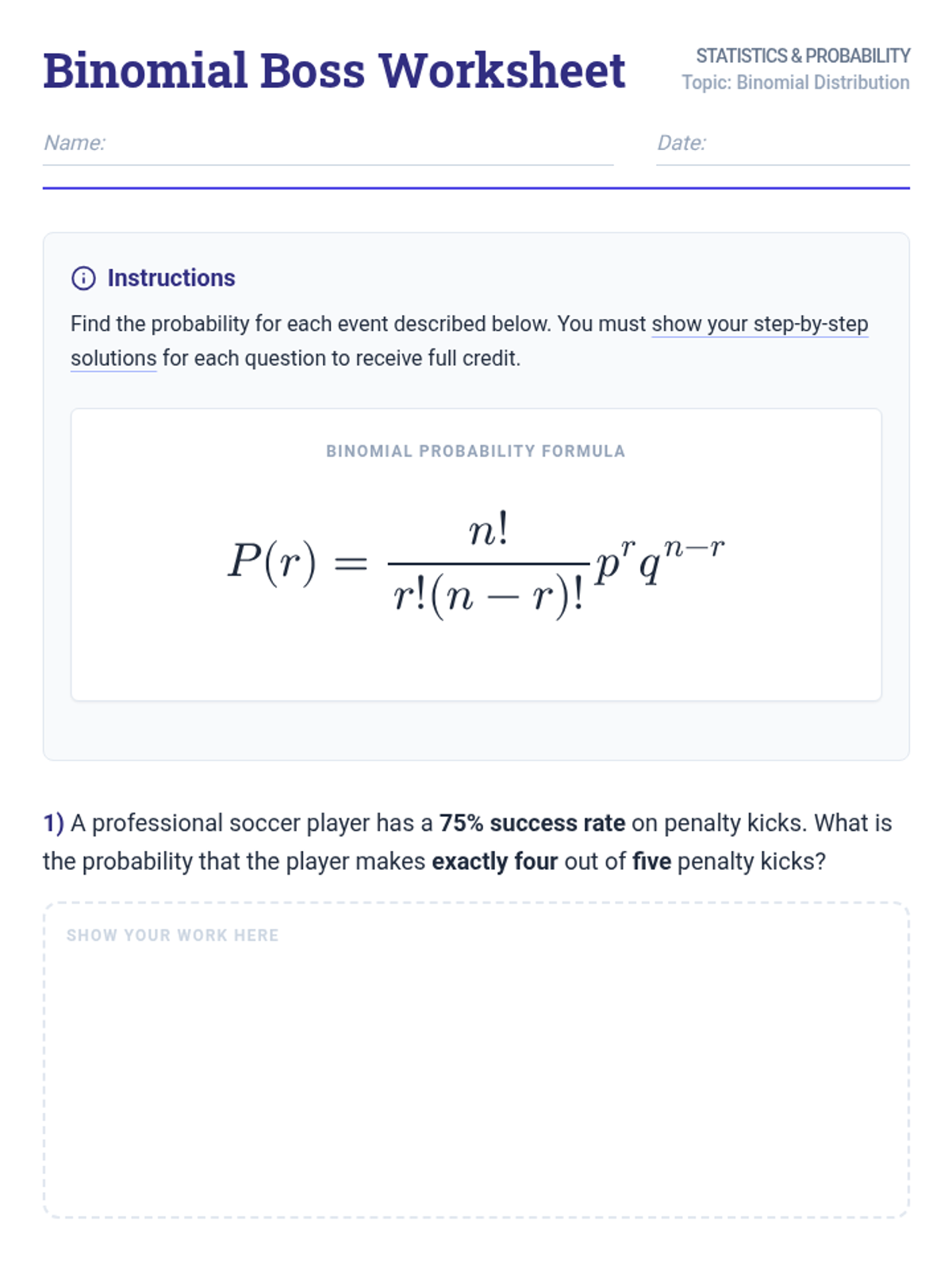
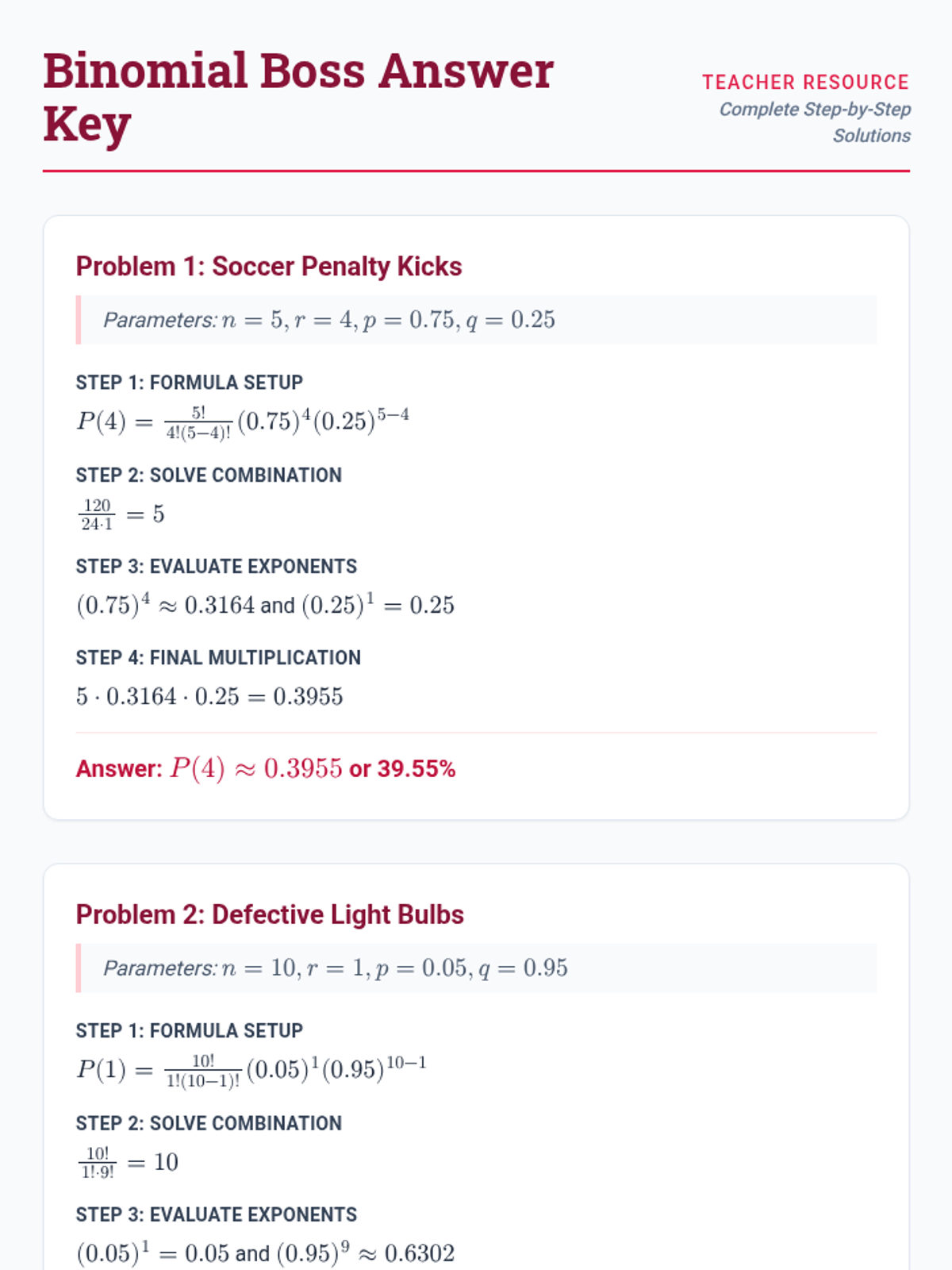
A lesson focused on solving word problems using the binomial probability distribution formula, featuring real-world scenarios and step-by-step calculations.
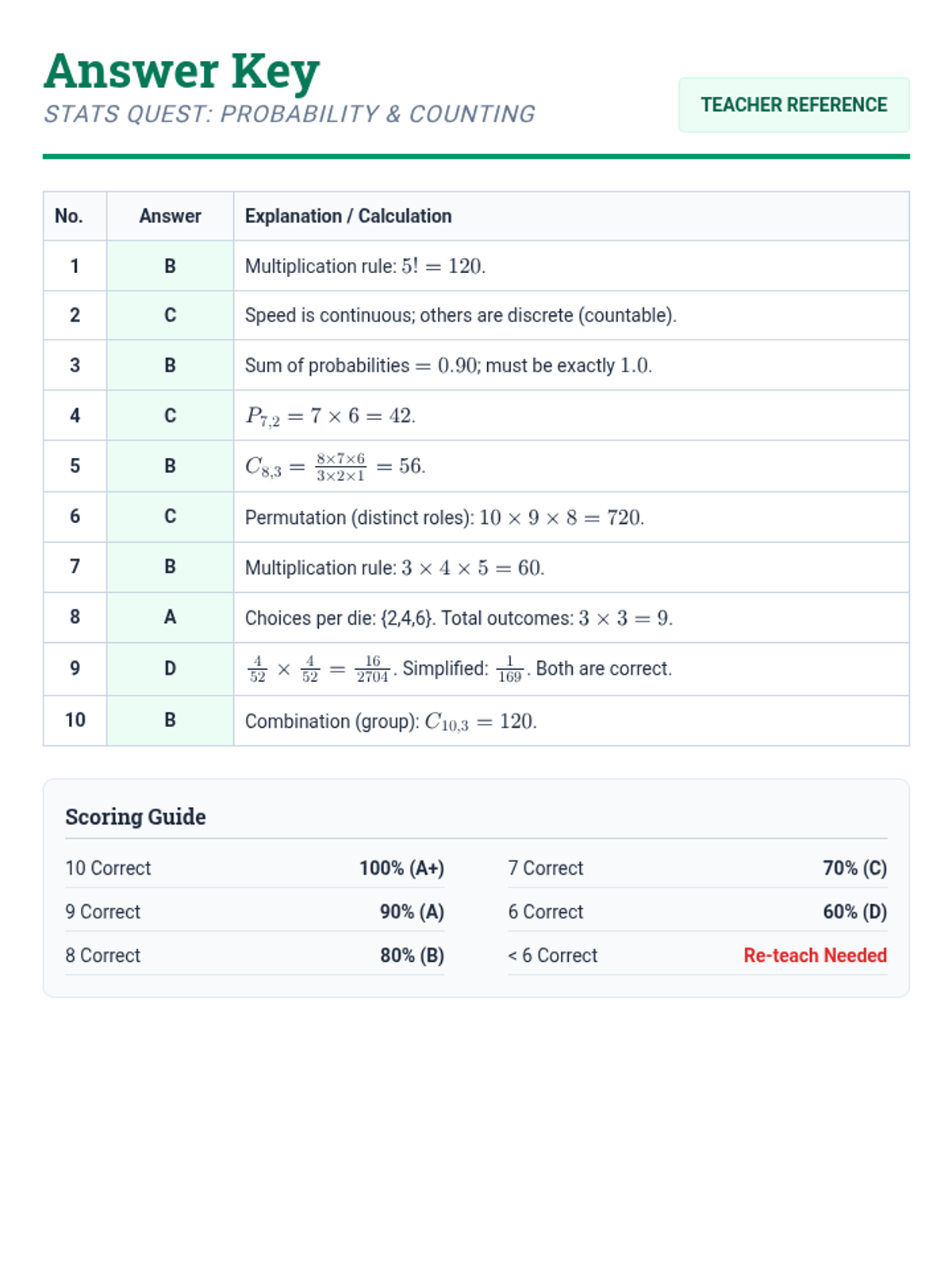
A comprehensive lesson covering counting techniques, permutations, combinations, and basic probability distributions based on statistical principles.
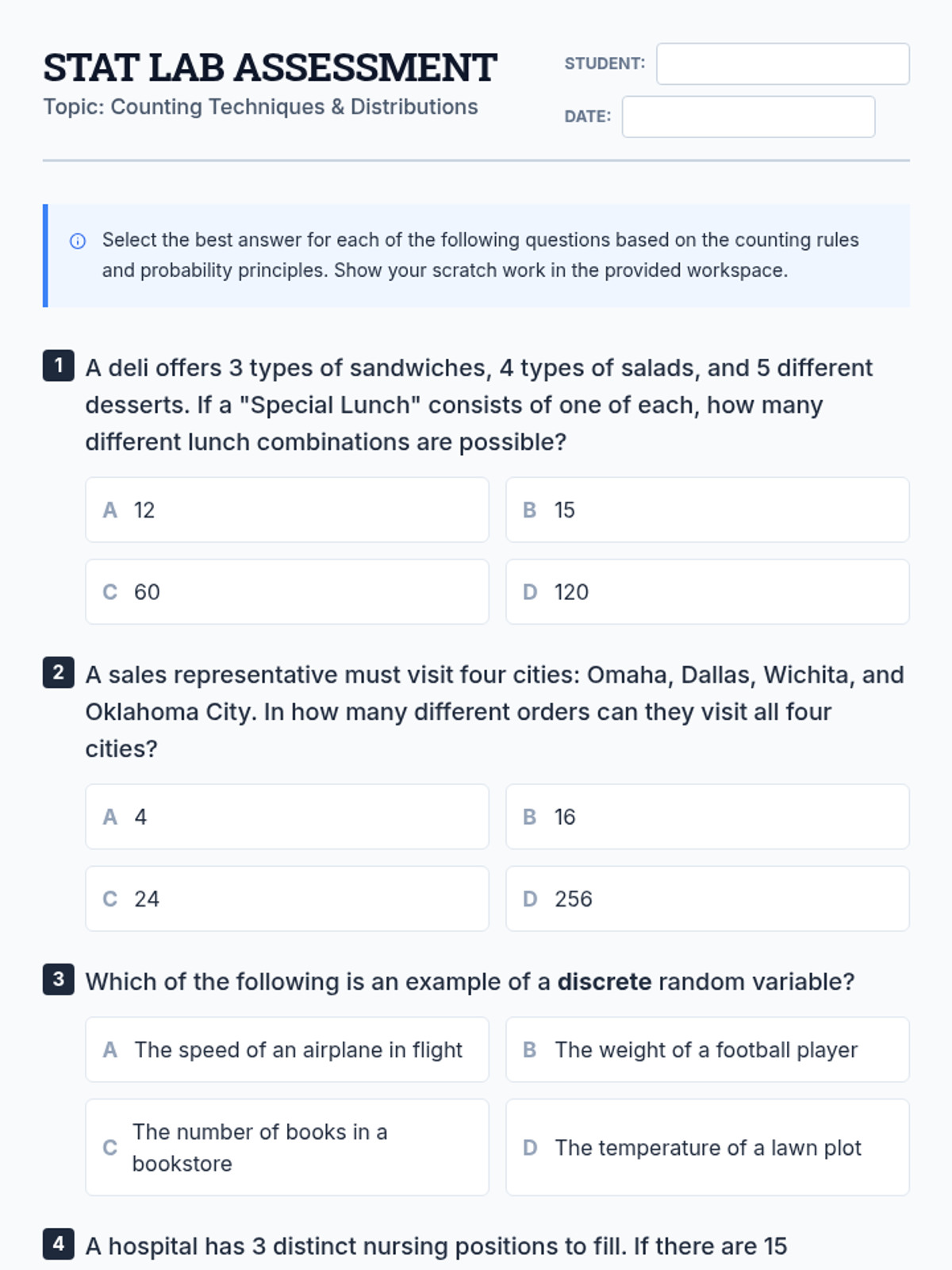
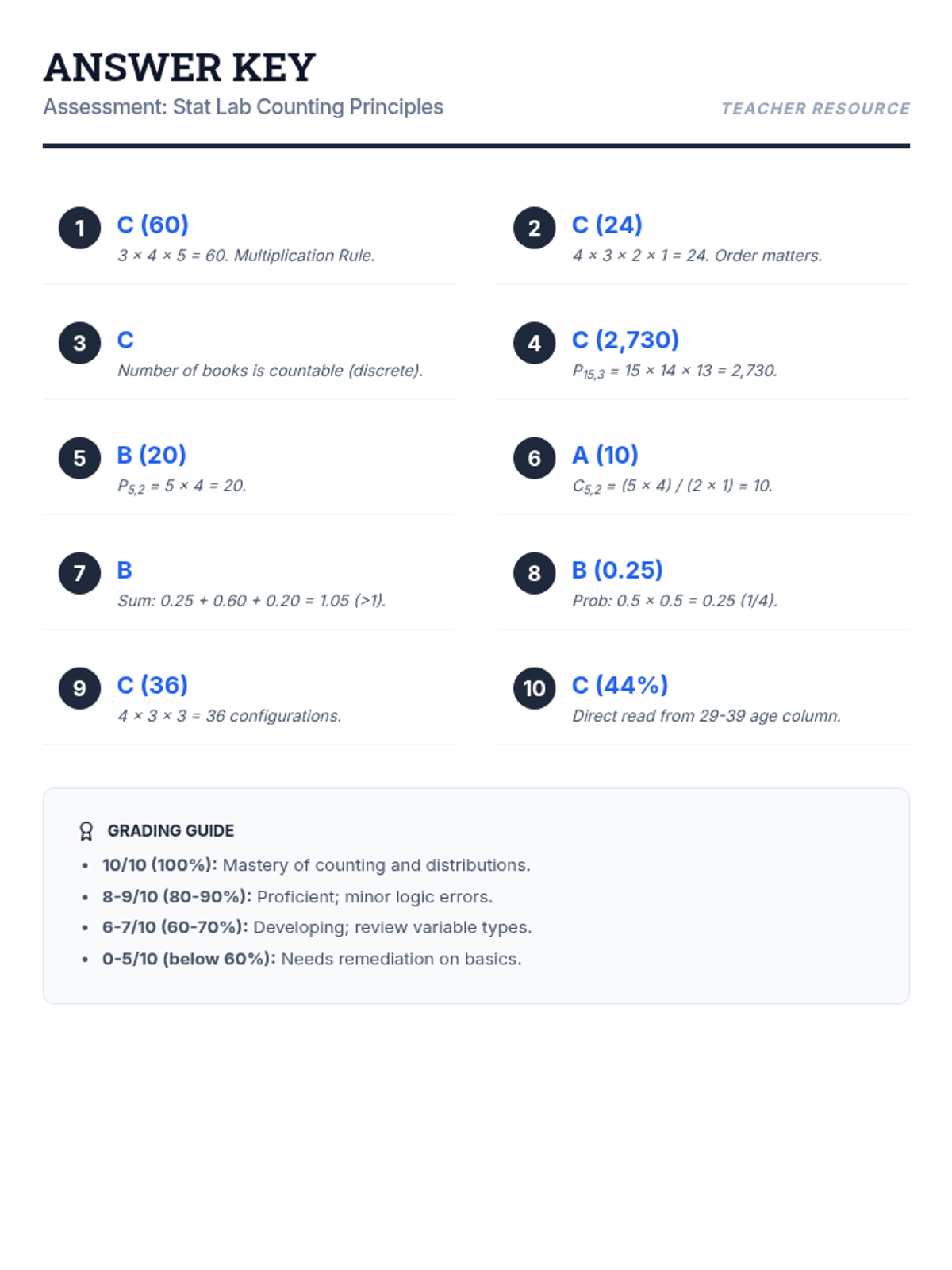
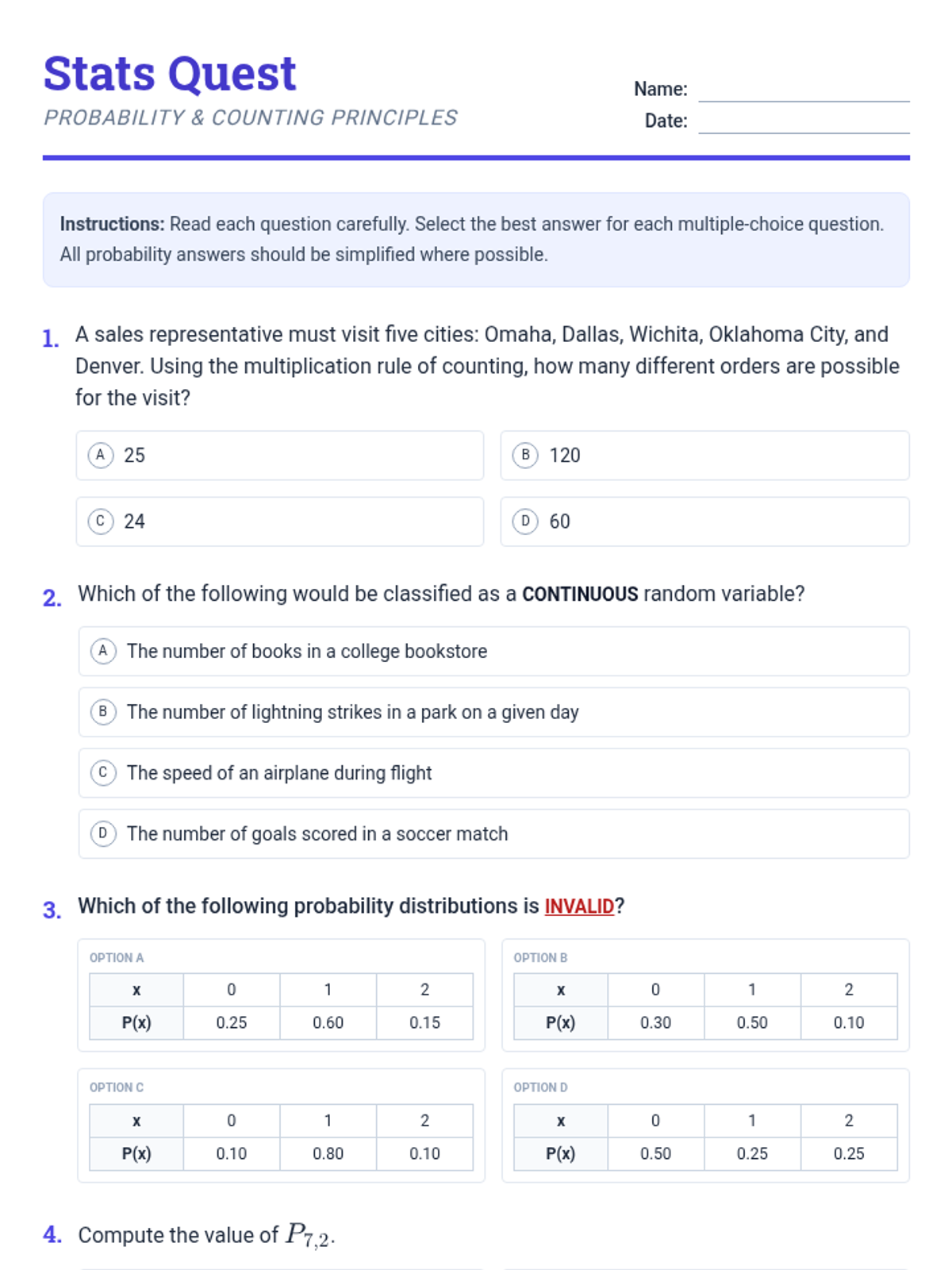
A lesson covering fundamental counting techniques, random variable classification, and probability distributions based on statistical principles.
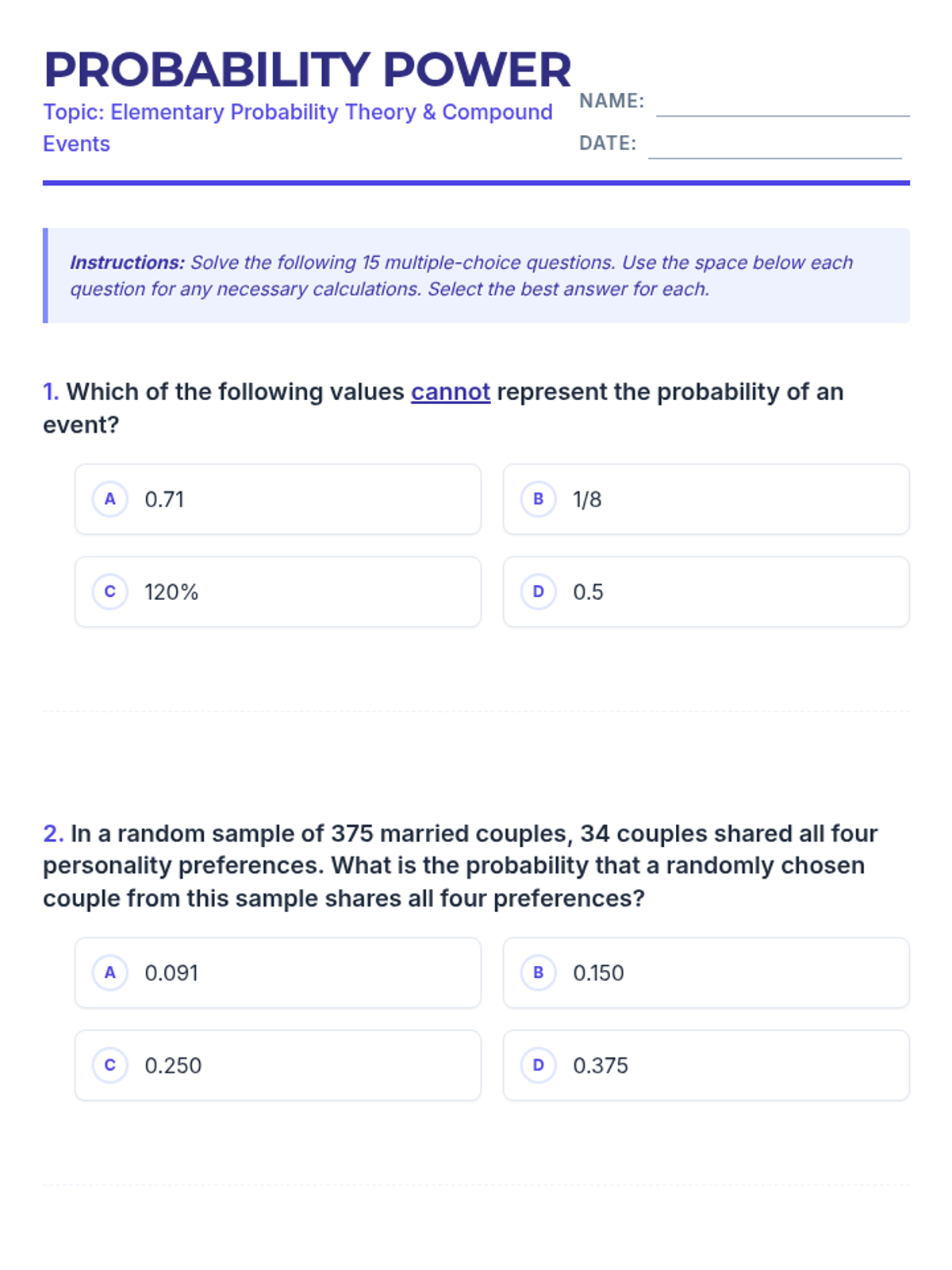
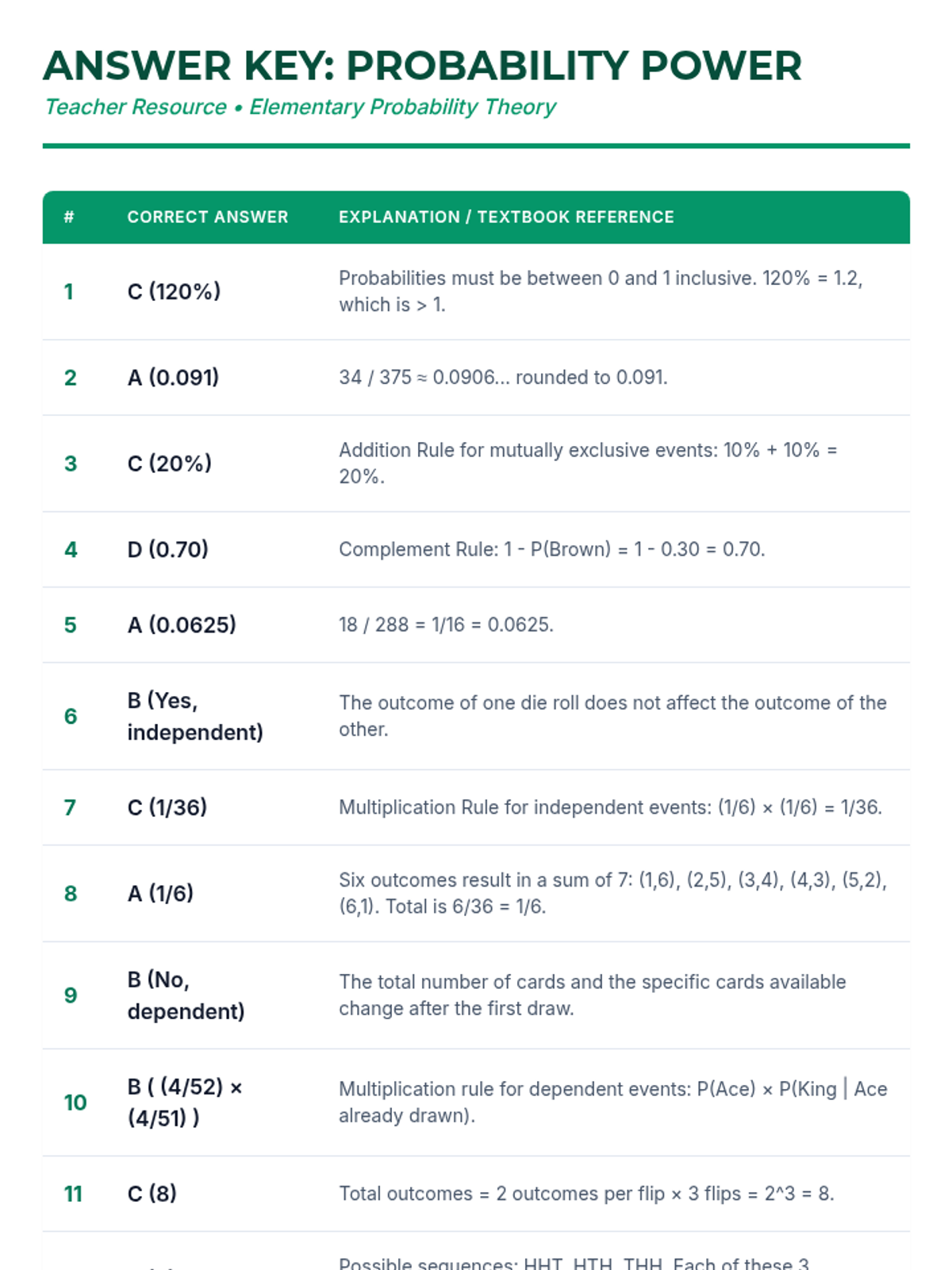
A comprehensive lesson on elementary probability theory covering valid probability ranges, compound events, independent and dependent outcomes, and tree diagrams based on textbook problems.
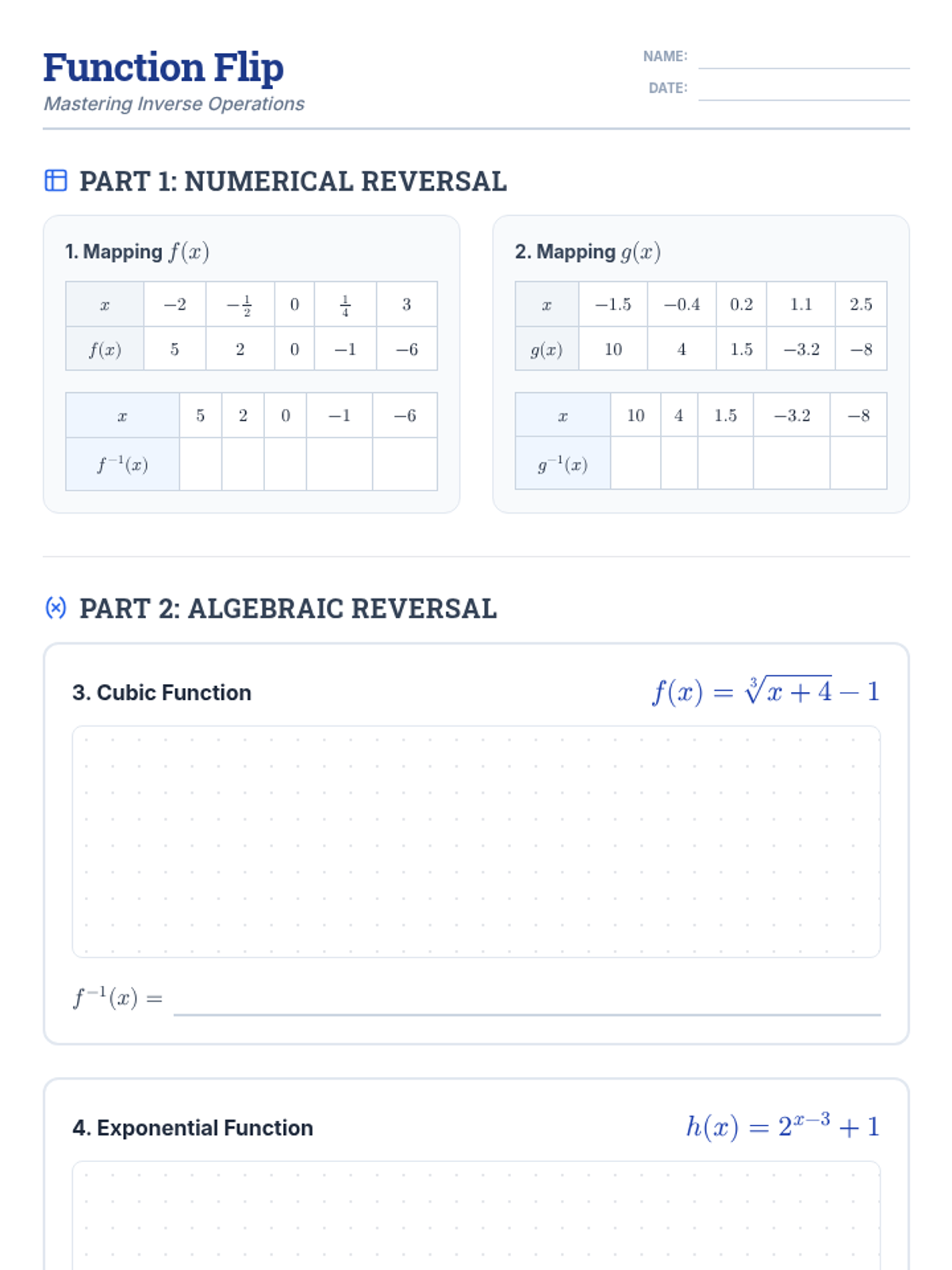
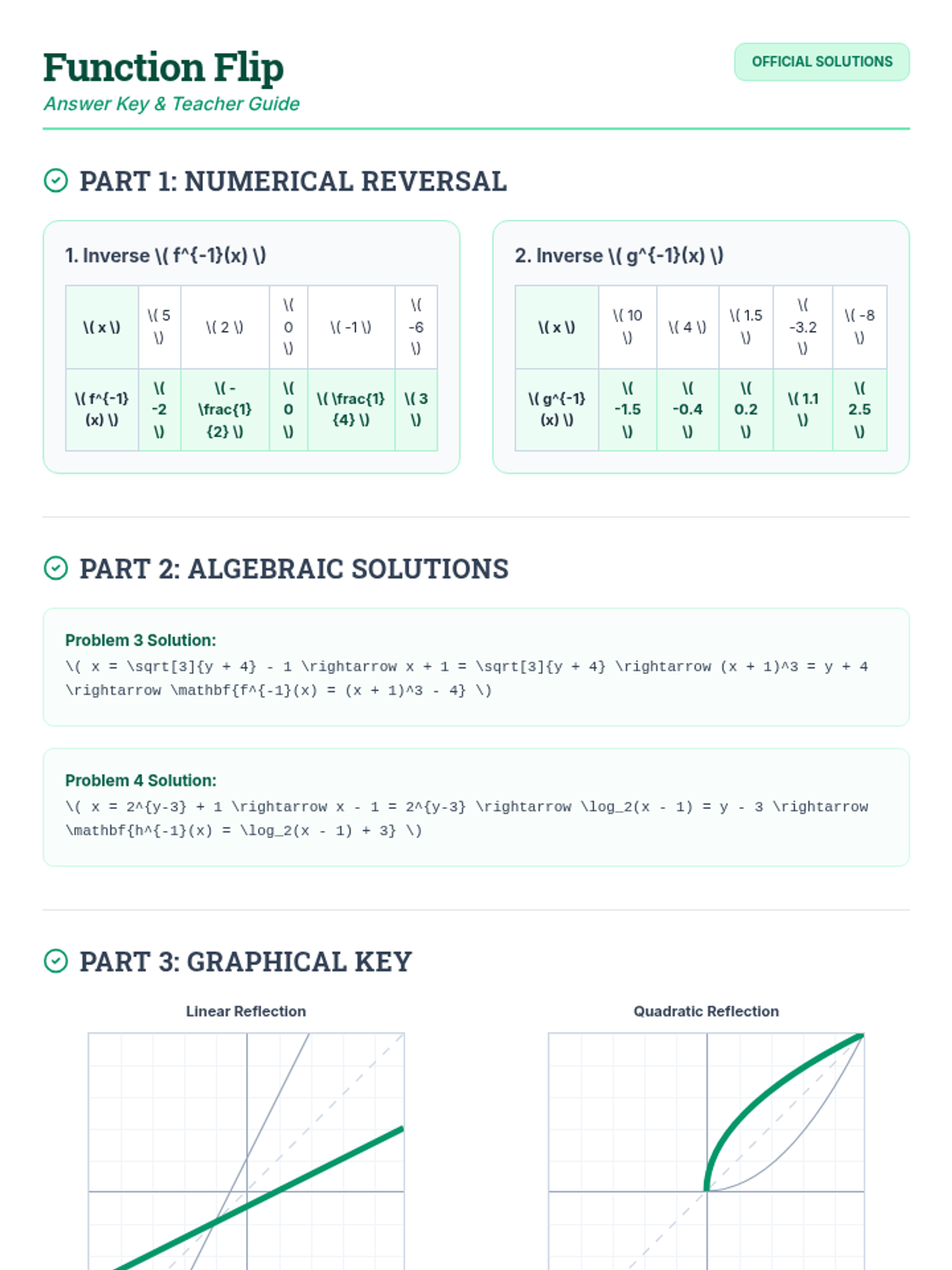
A lesson focused on understanding and calculating inverse functions through multiple representations: numerical tables, algebraic equations, and graphical reflections. Students will practice reversing operations and reflecting functions across the line y=x.
A comprehensive assessment covering discrete random variables, permutations, combinations, and the binomial probability distribution based on real-world statistical data.
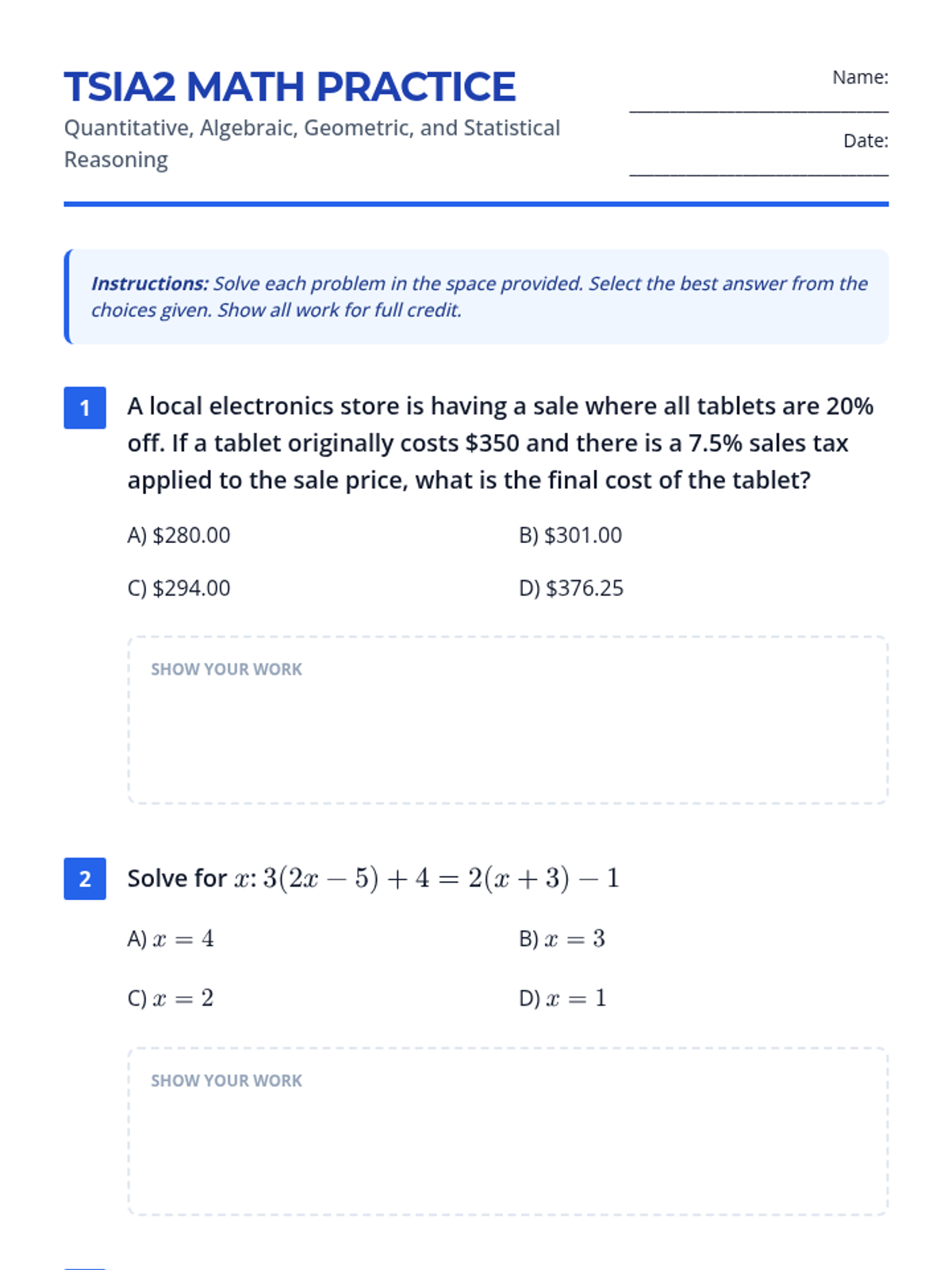
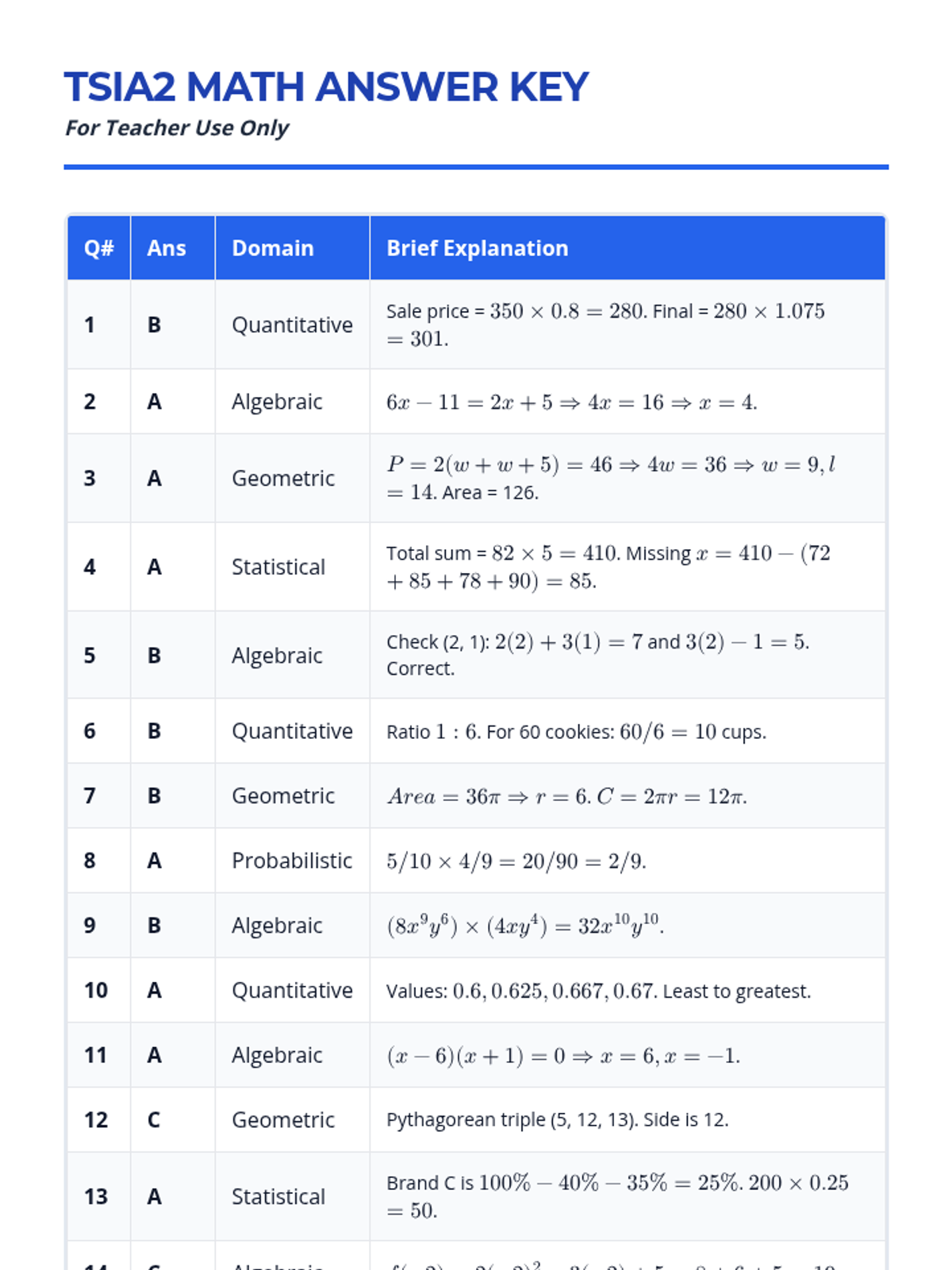
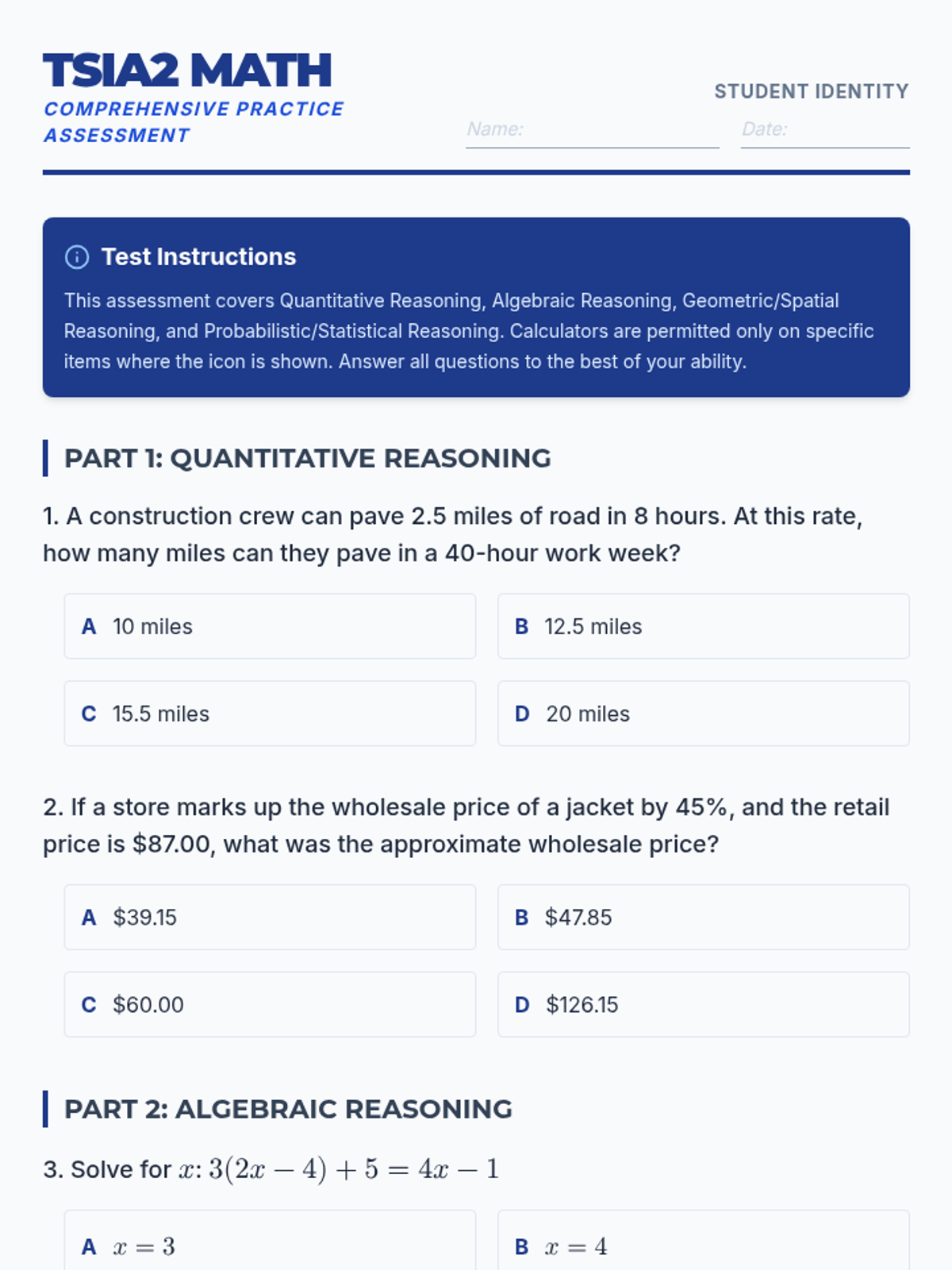
A comprehensive practice set and review presentation for the TSIA2 Math exam, covering Quantitative, Algebraic, Geometric, and Statistical reasoning.
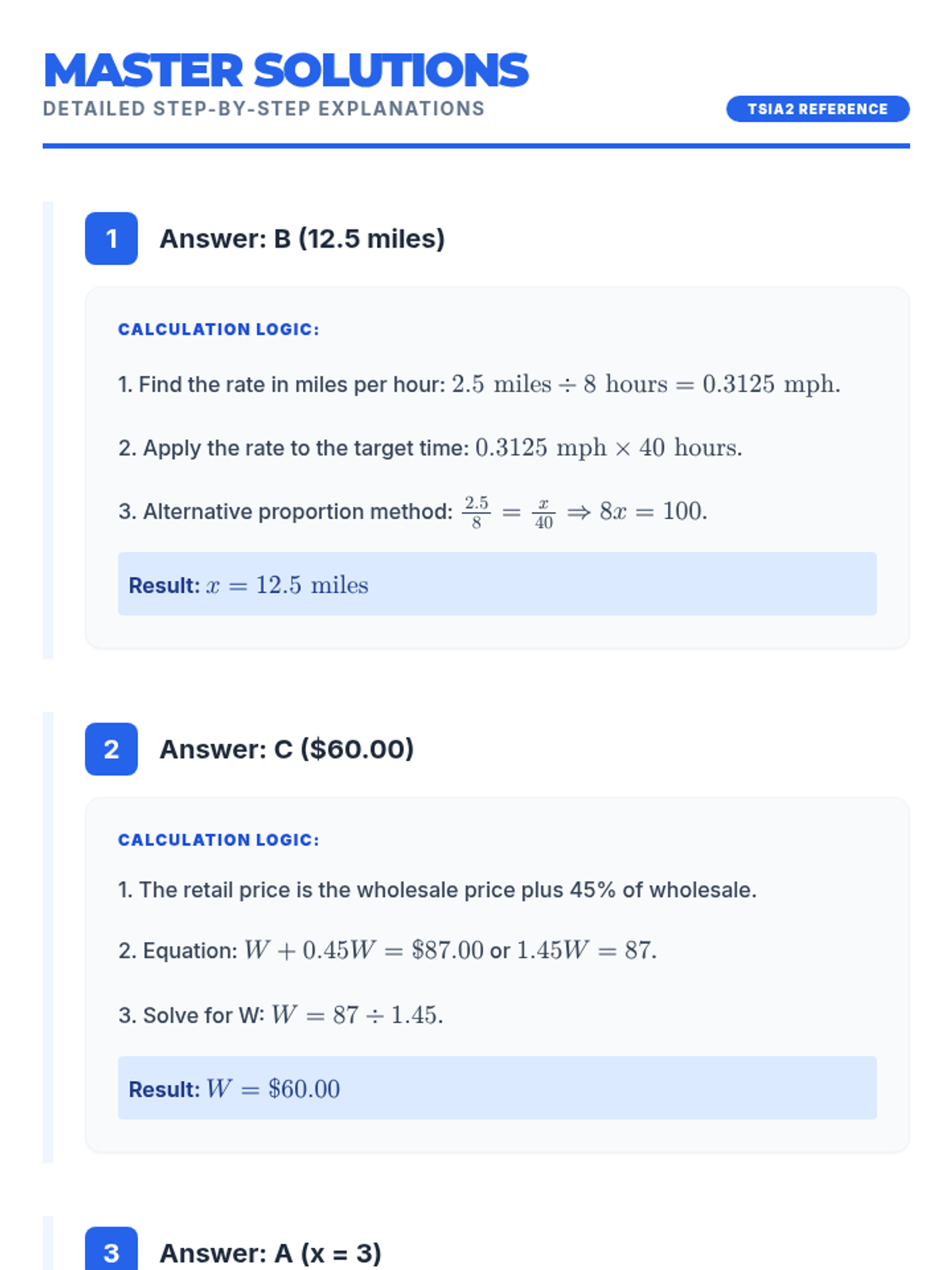
A comprehensive preparation set for the TSIA2 Mathematics assessment, featuring a full-length practice test, detailed step-by-step solutions, and a strategic review presentation.
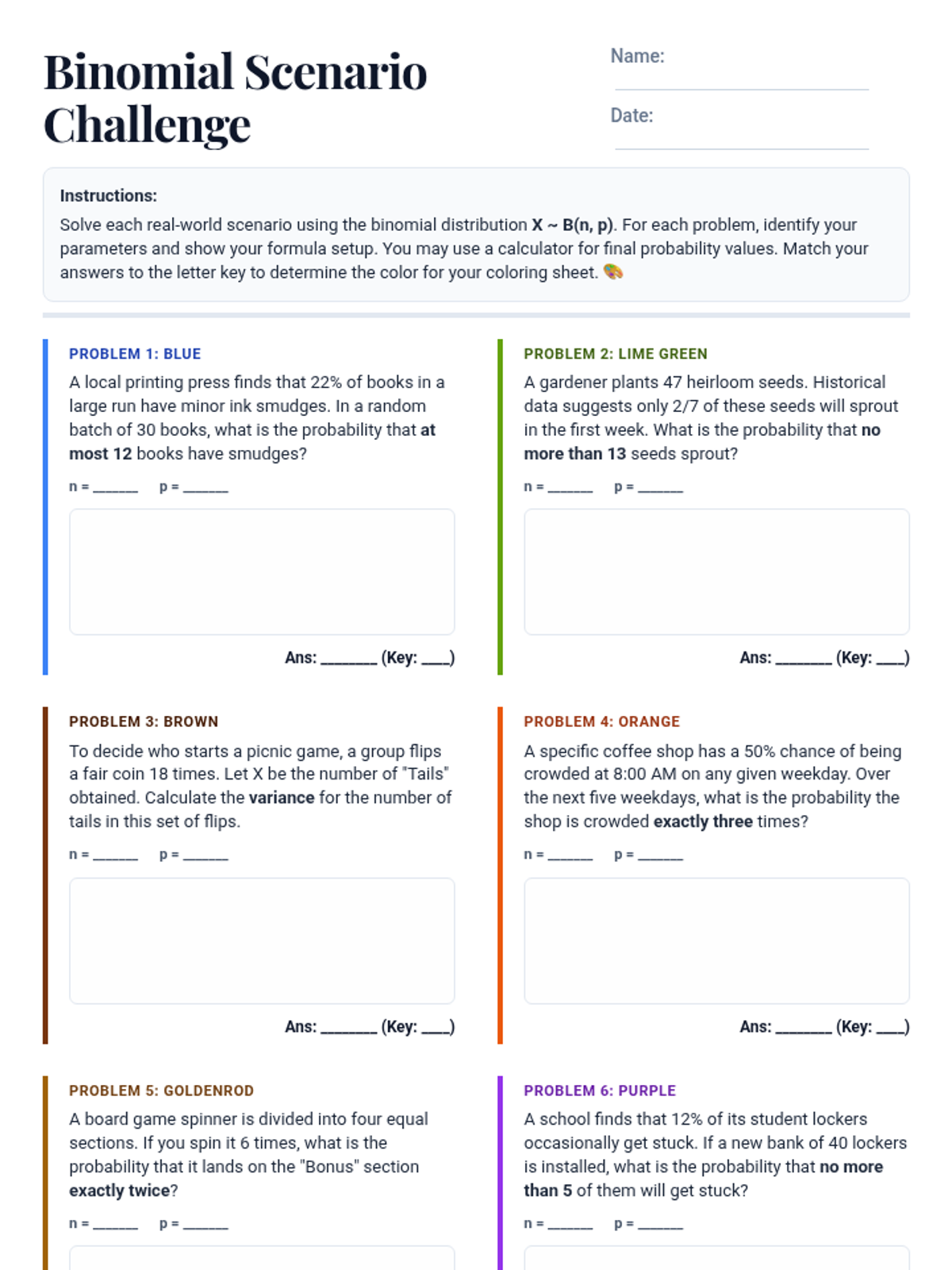
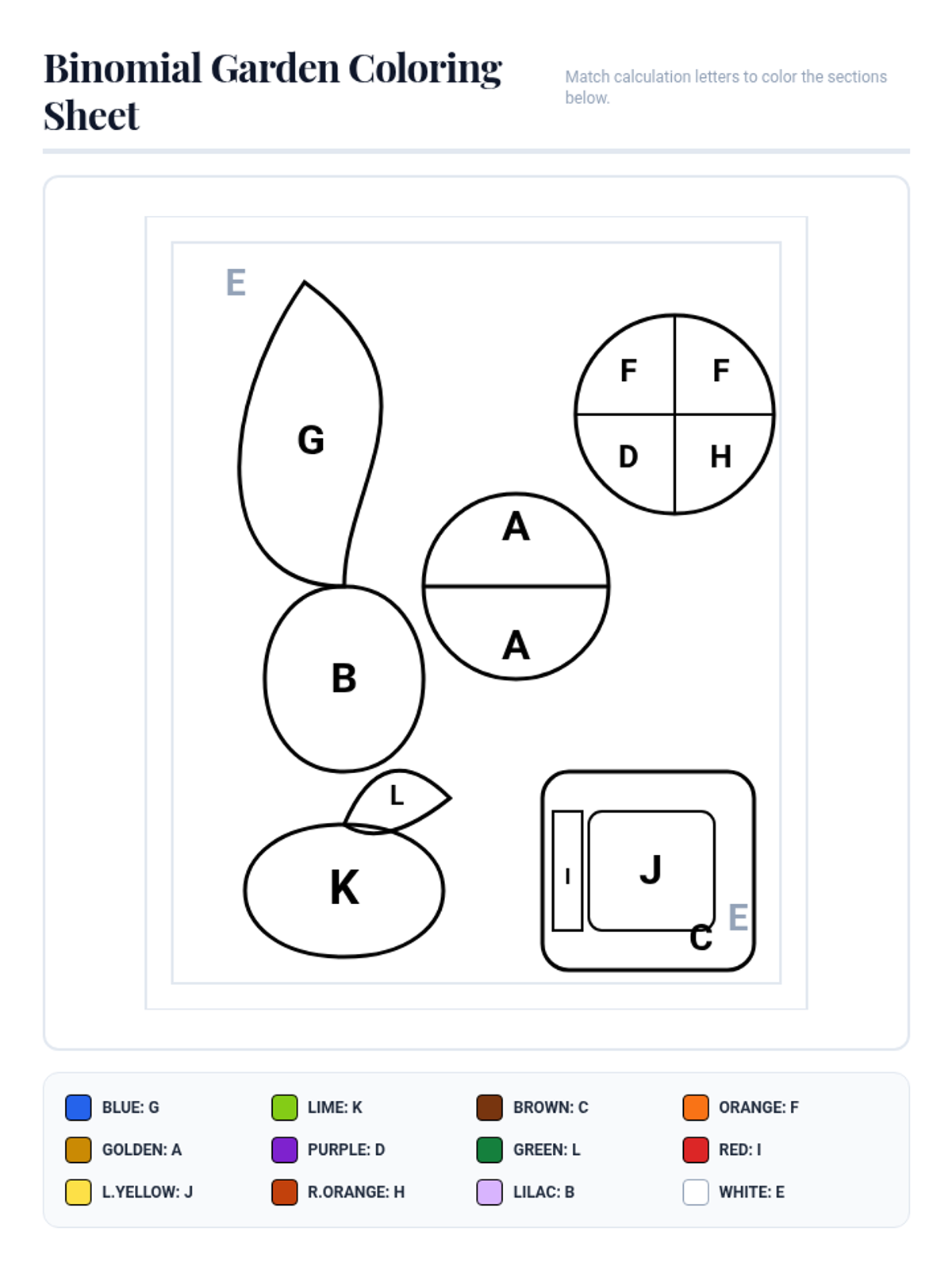
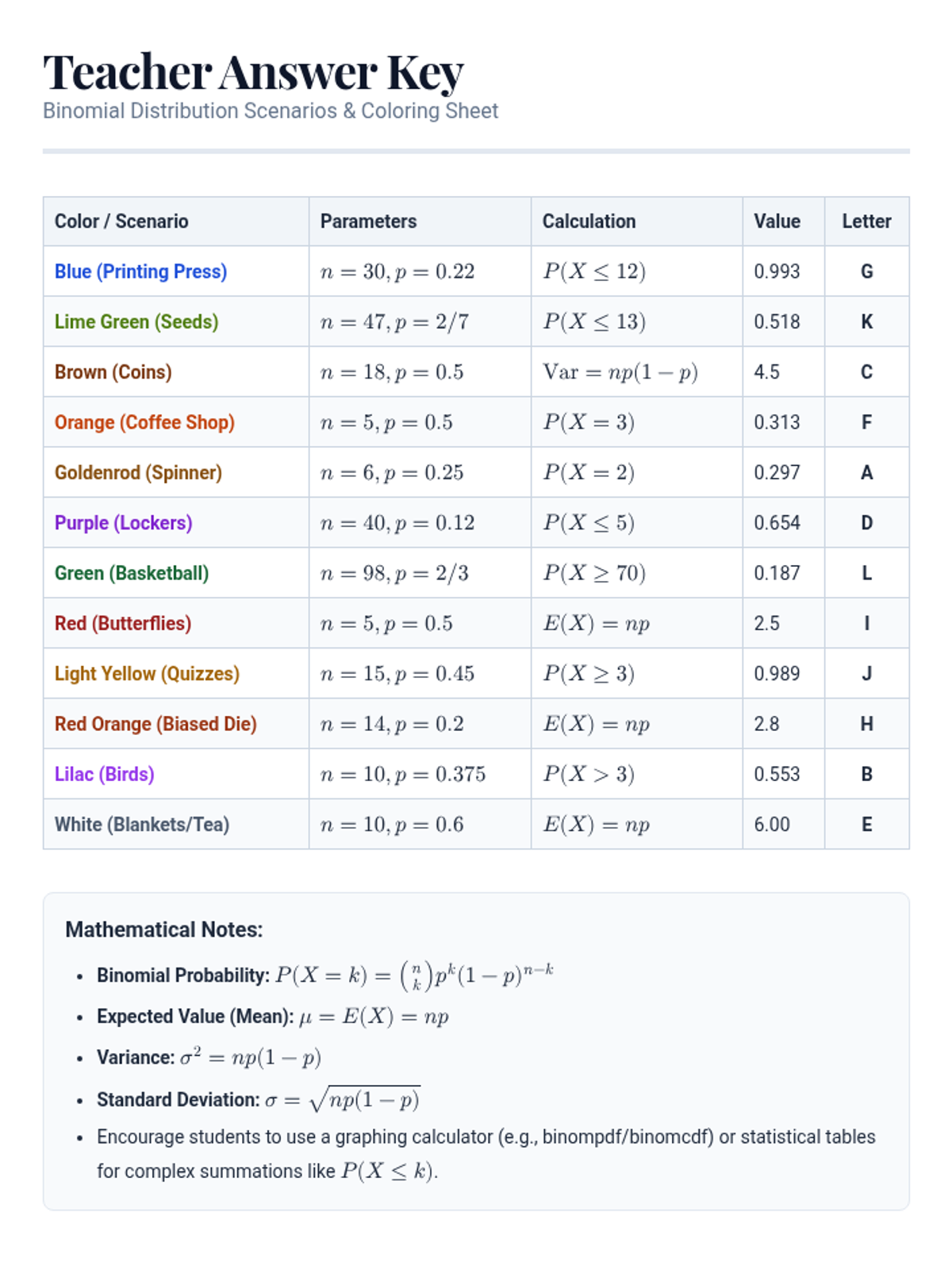
A lesson focused on applying binomial distribution concepts to real-world scenarios through a creative coloring activity. Students translate narrative word problems into mathematical models to calculate probabilities, means, and variances.
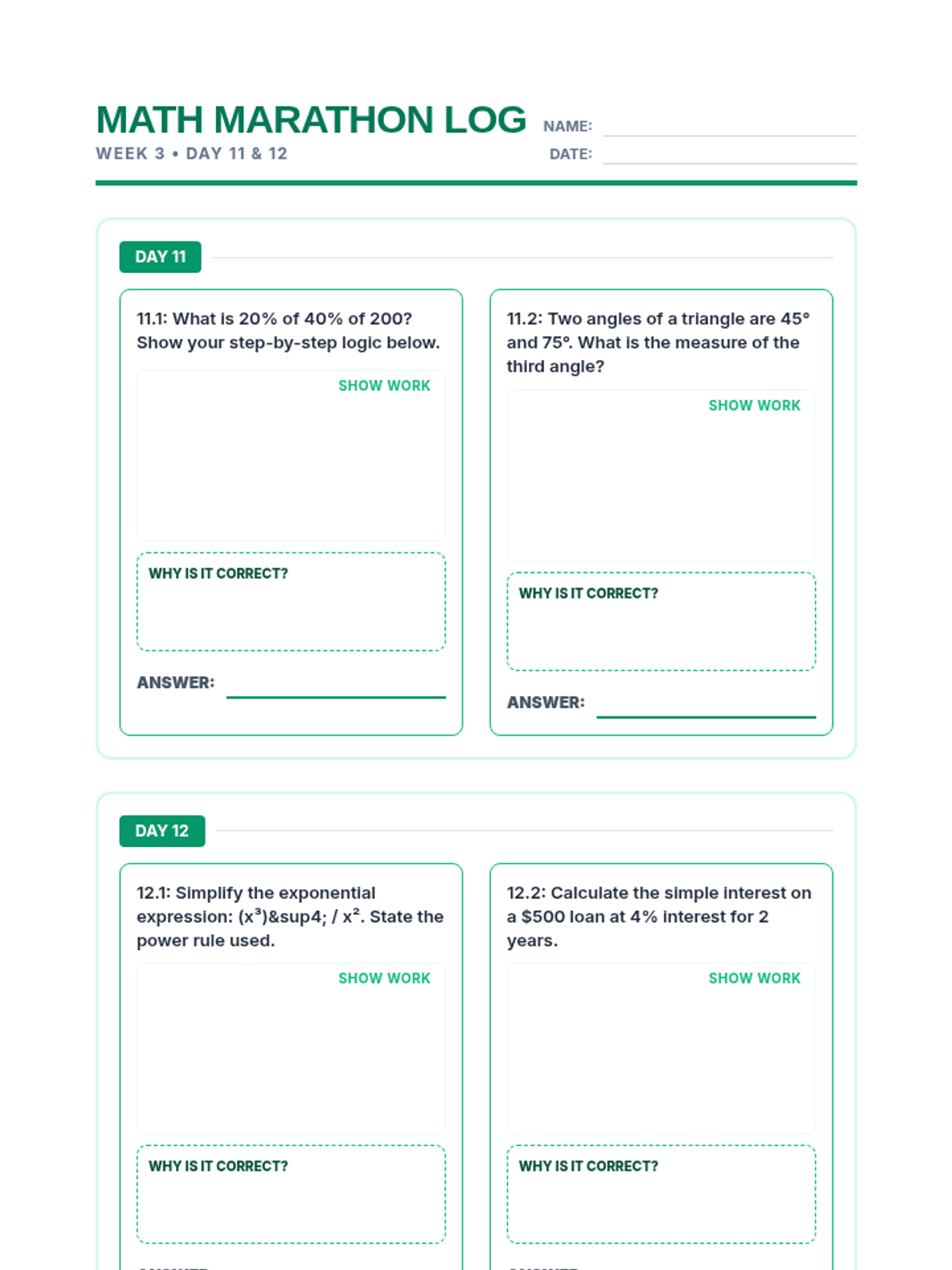
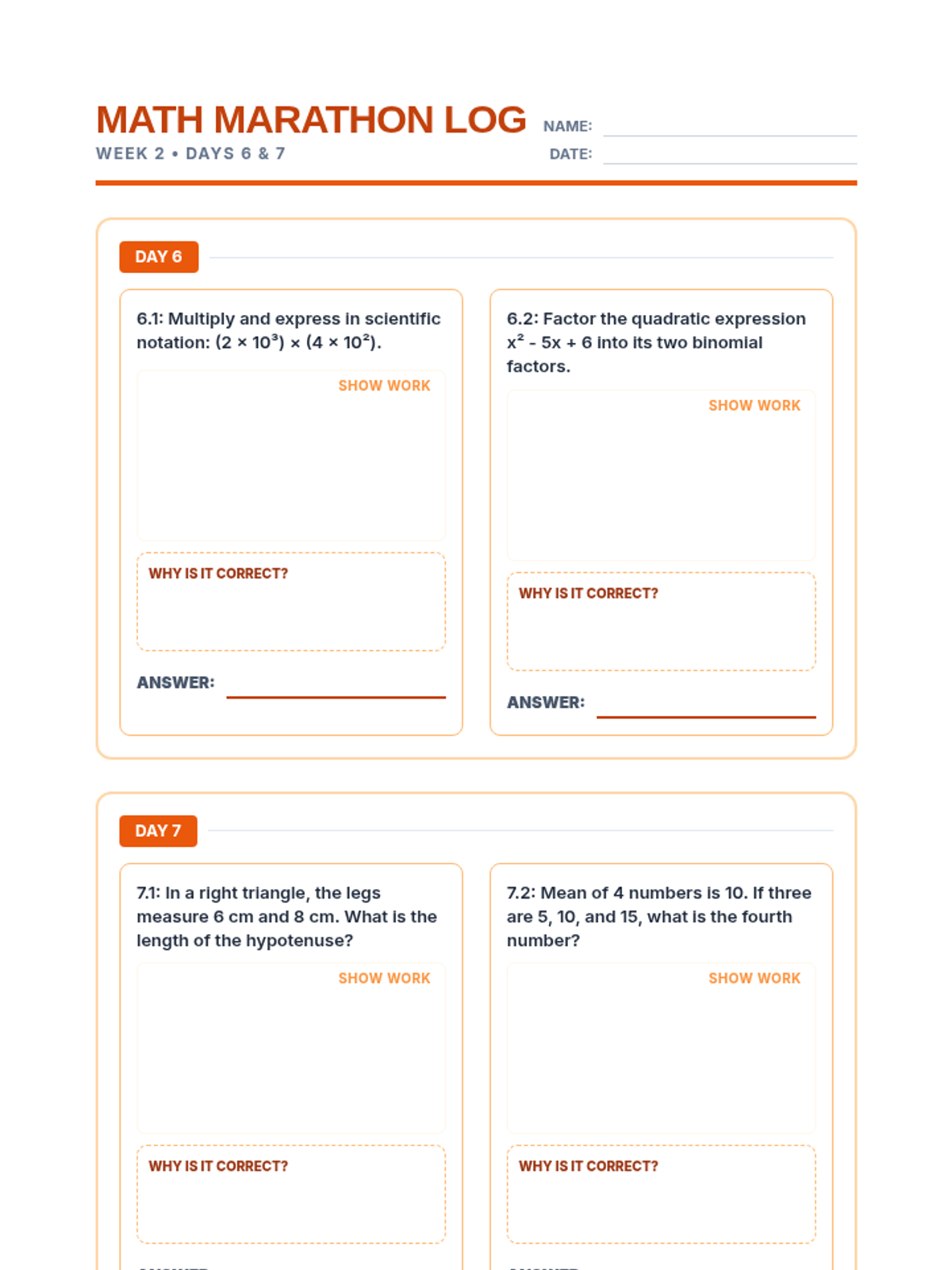
The final week of the TSIA2 Math Marathon, reviewing complex problems and multi-step reasoning.
The second week of the TSIA2 Math Marathon, expanding into geometric and statistical reasoning.
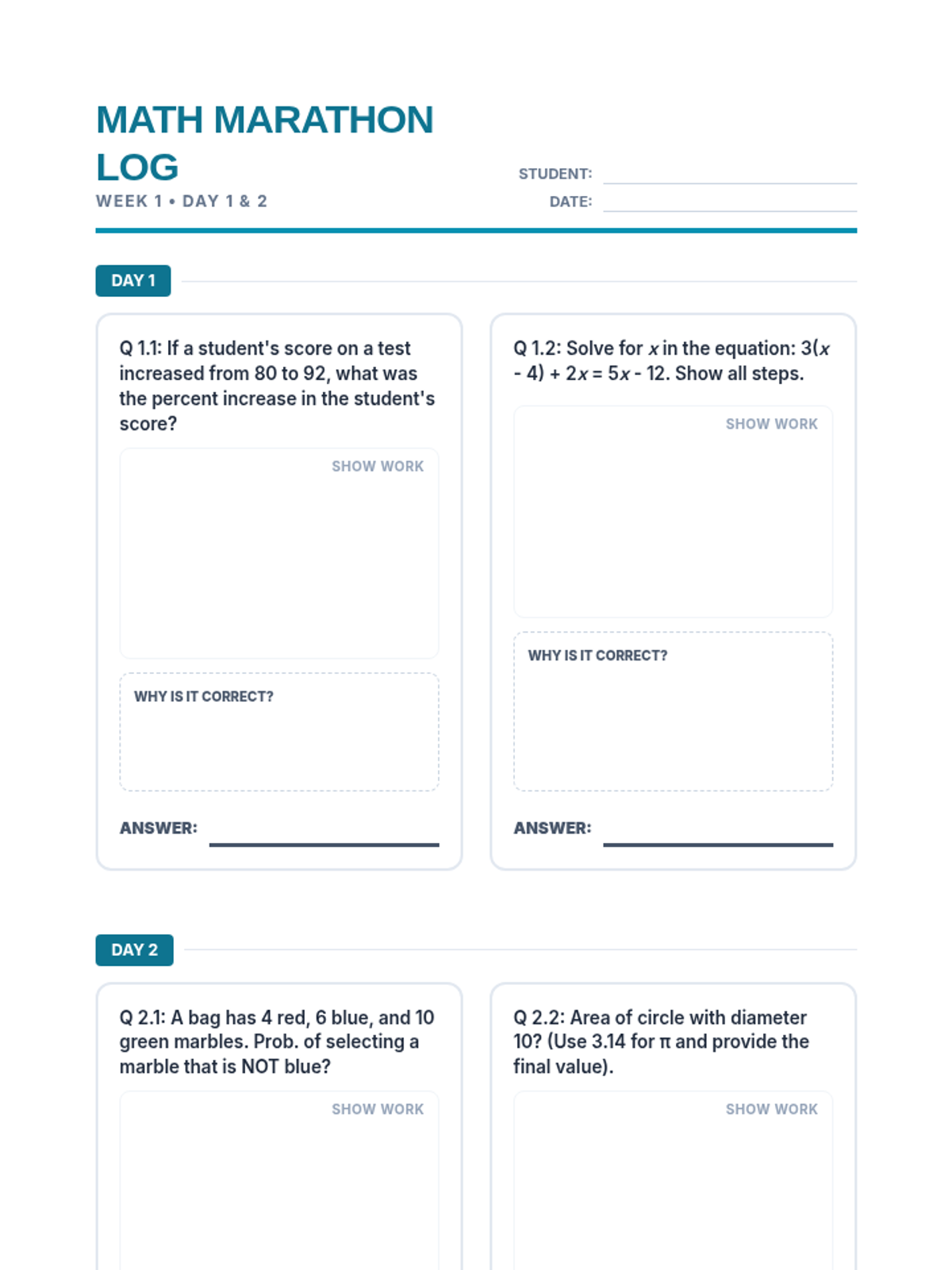
The first week of the TSIA2 Math Marathon, focusing on foundational algebraic and quantitative reasoning.
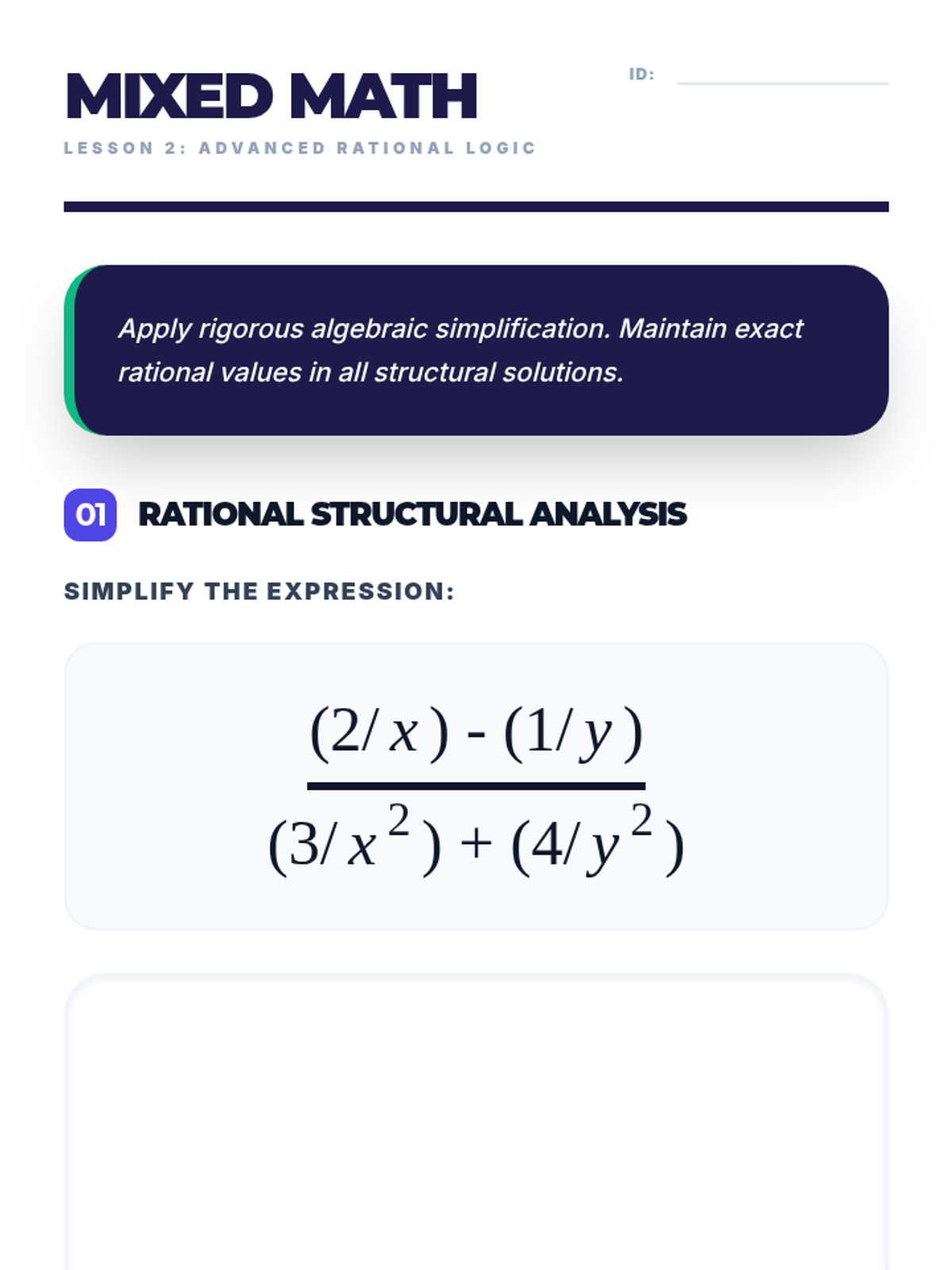
Master complex fractions and high-precision decimal operations through the lens of algebraic manipulation and real-world mathematical modeling.
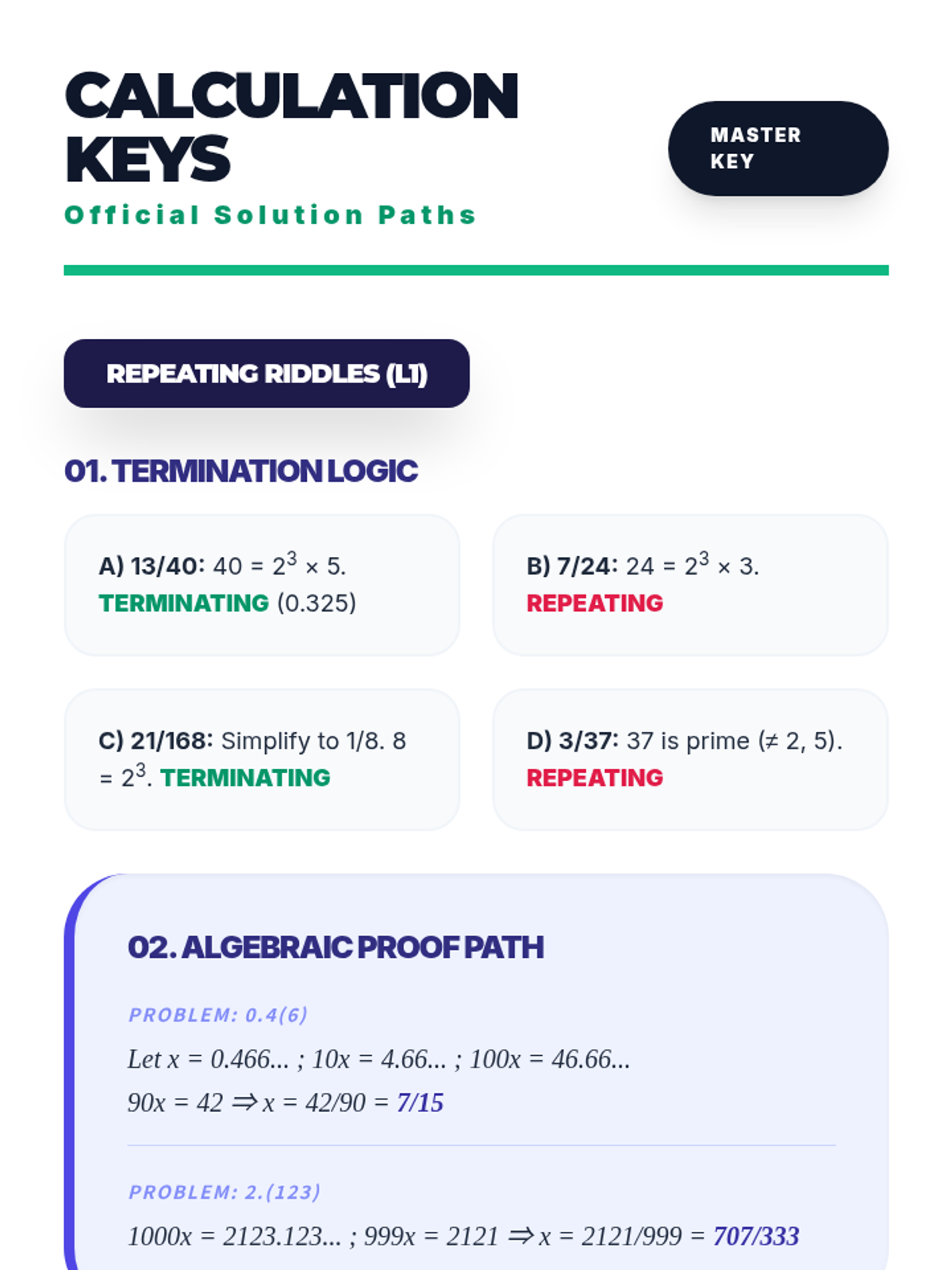
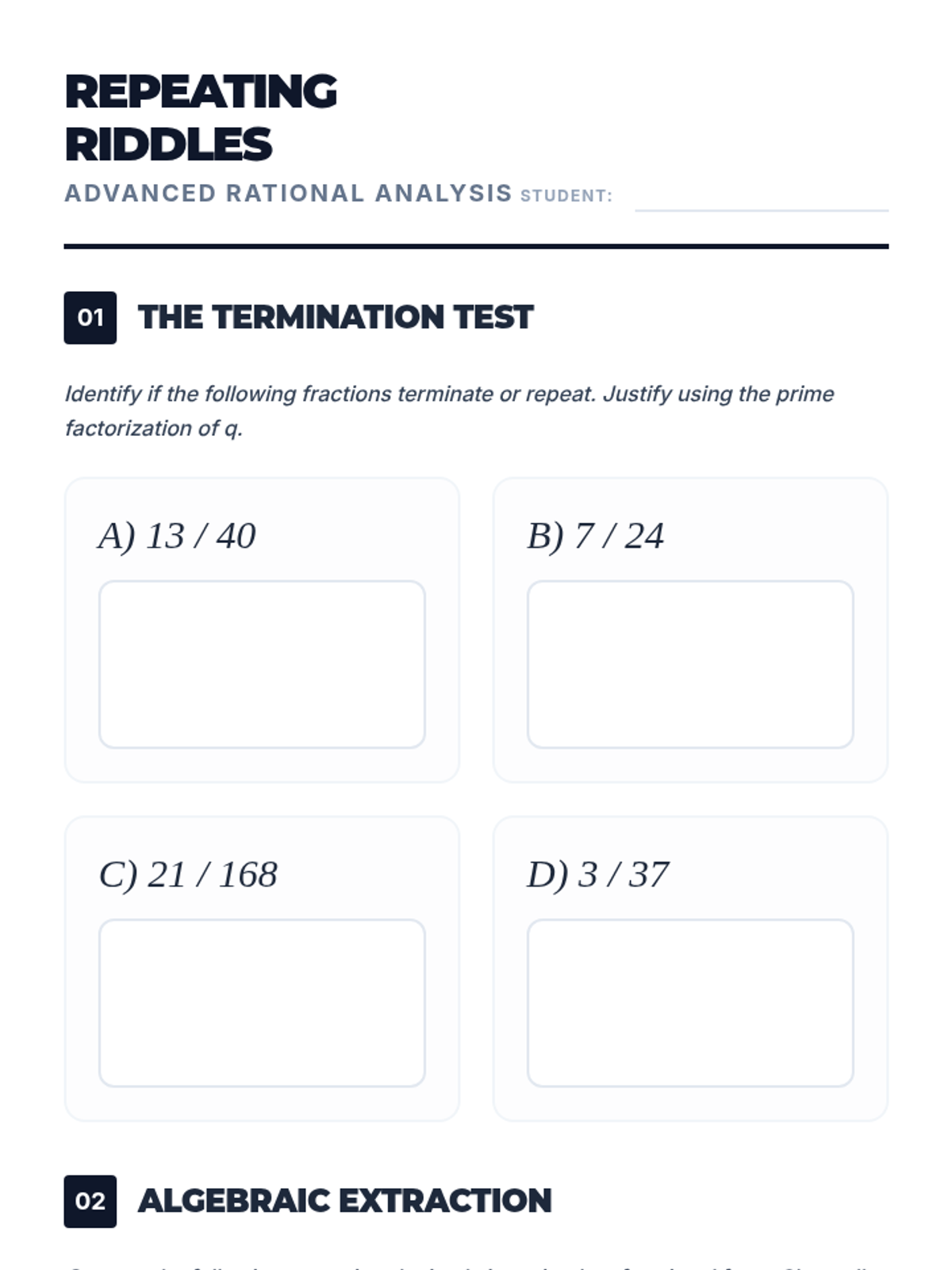
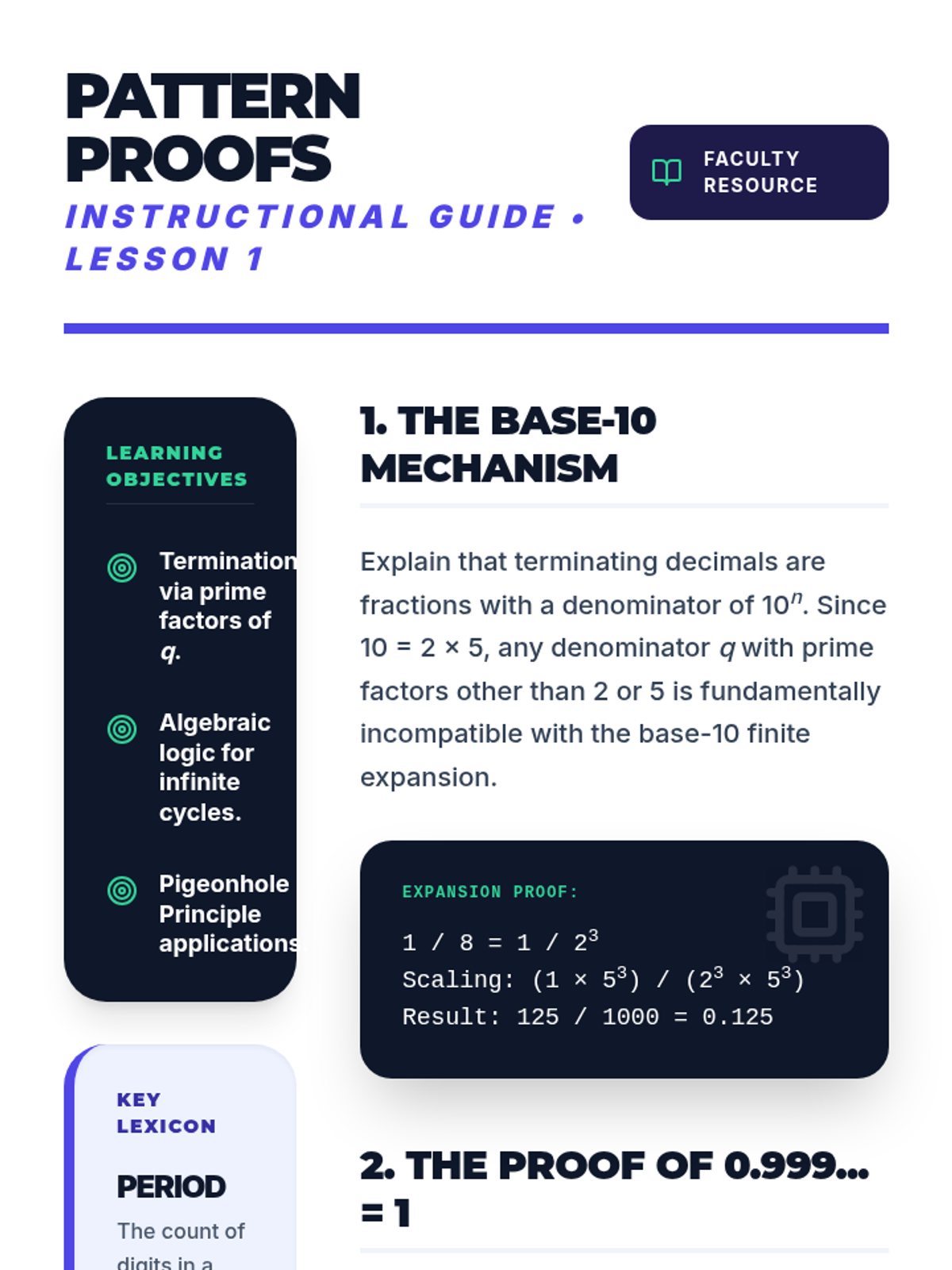
Explore the architecture of rational numbers, focusing on the rigorous conversion between fractions and decimals and the proof-based patterns of repeating digits.
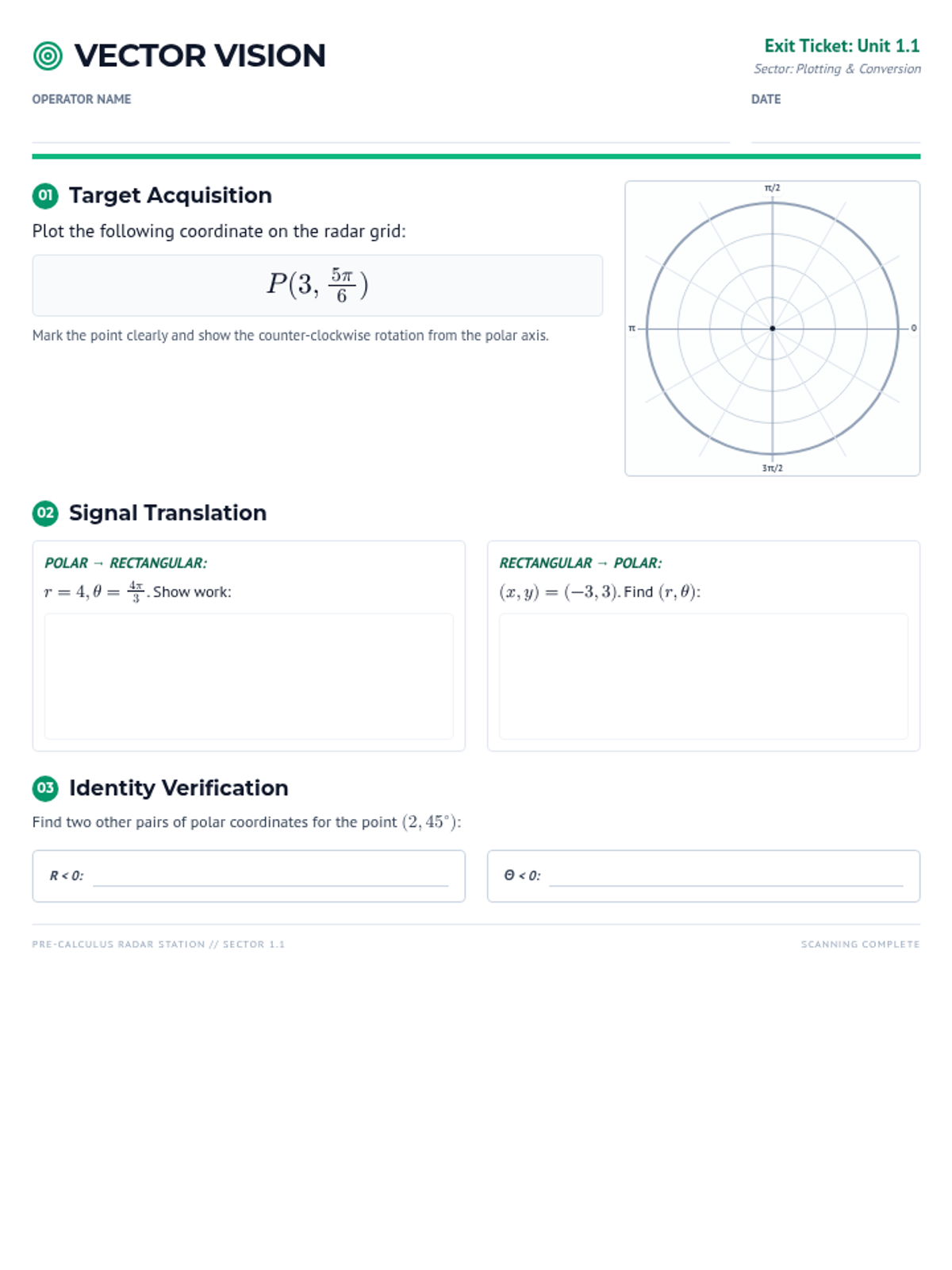
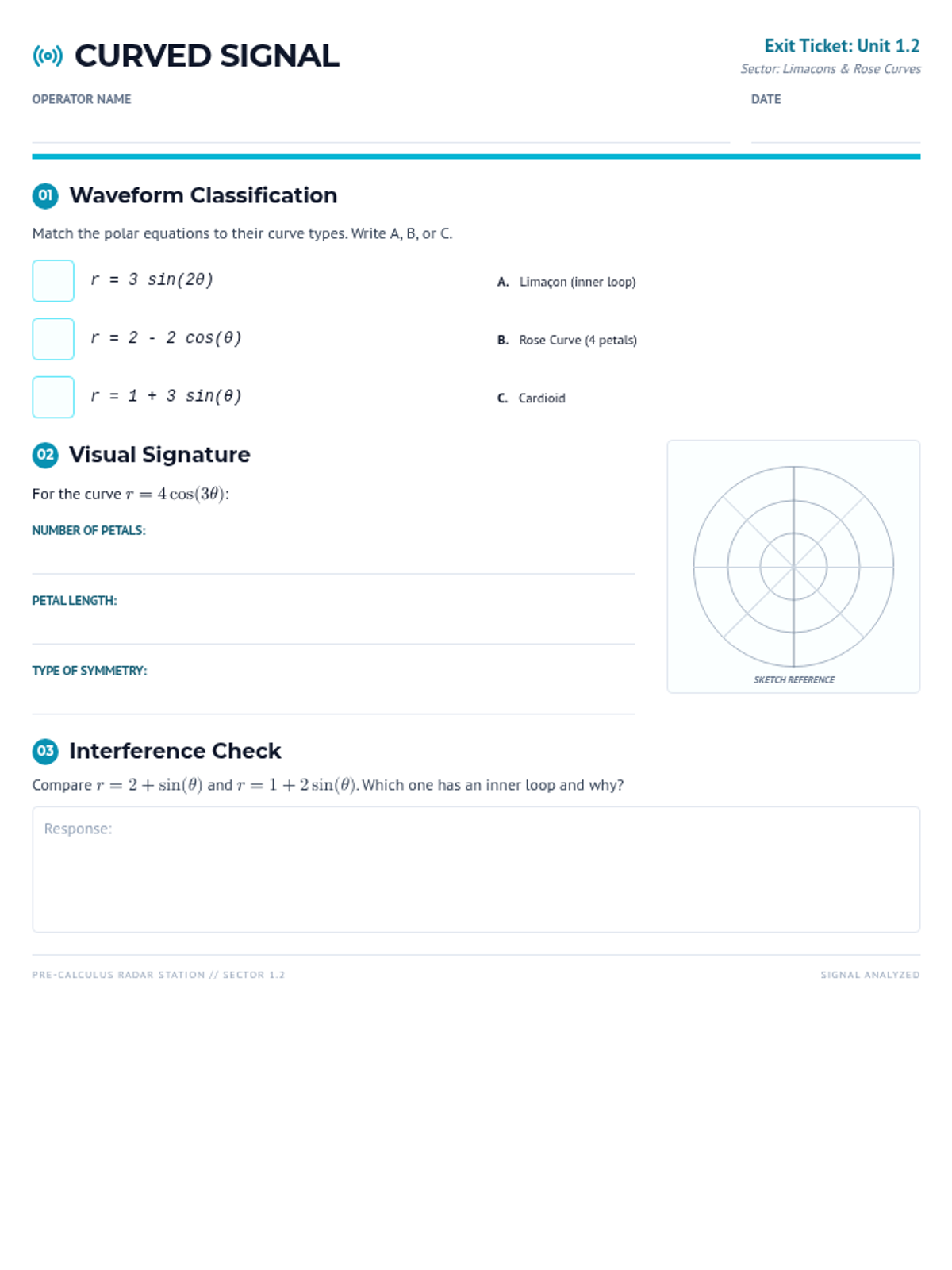
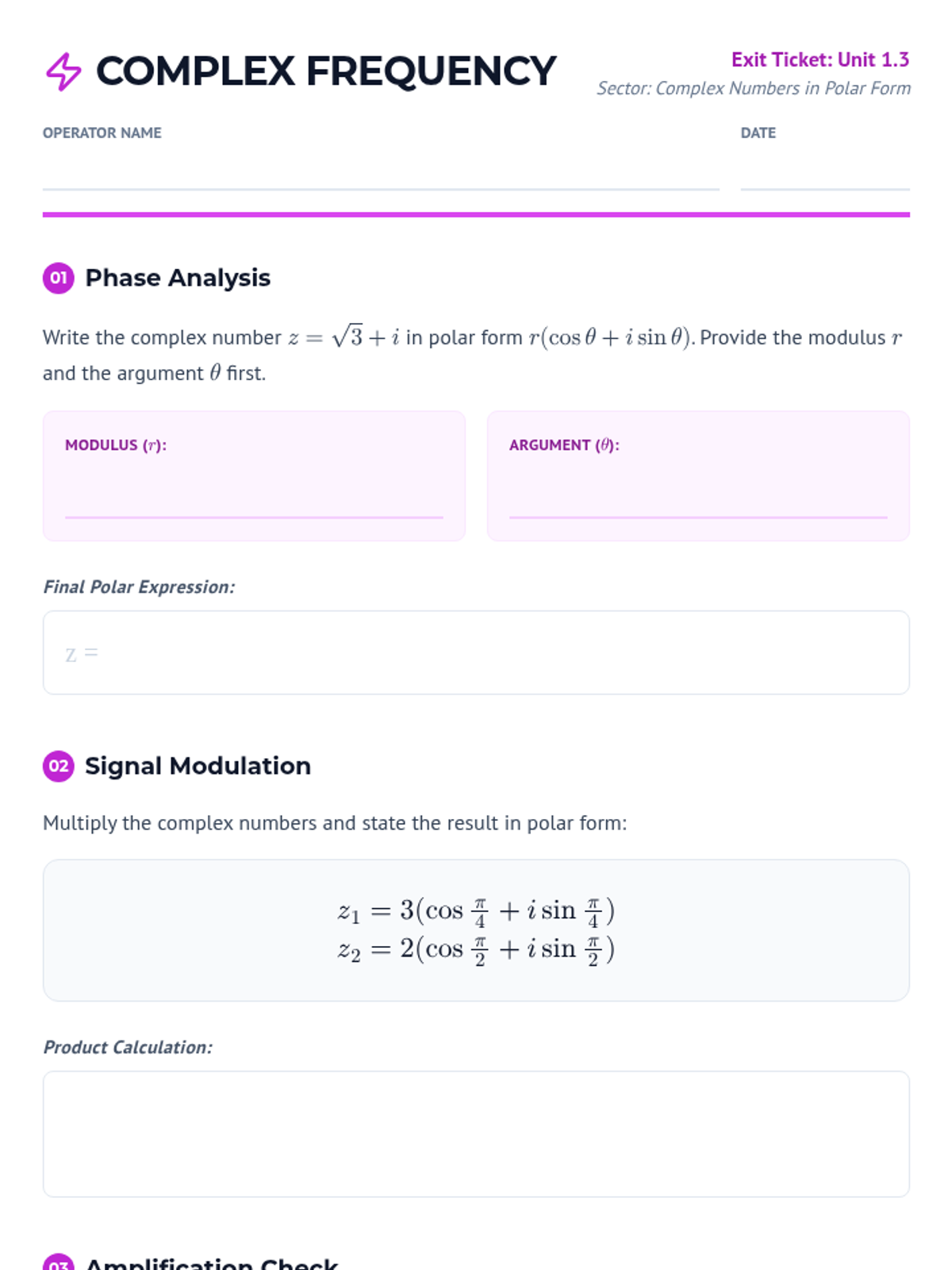
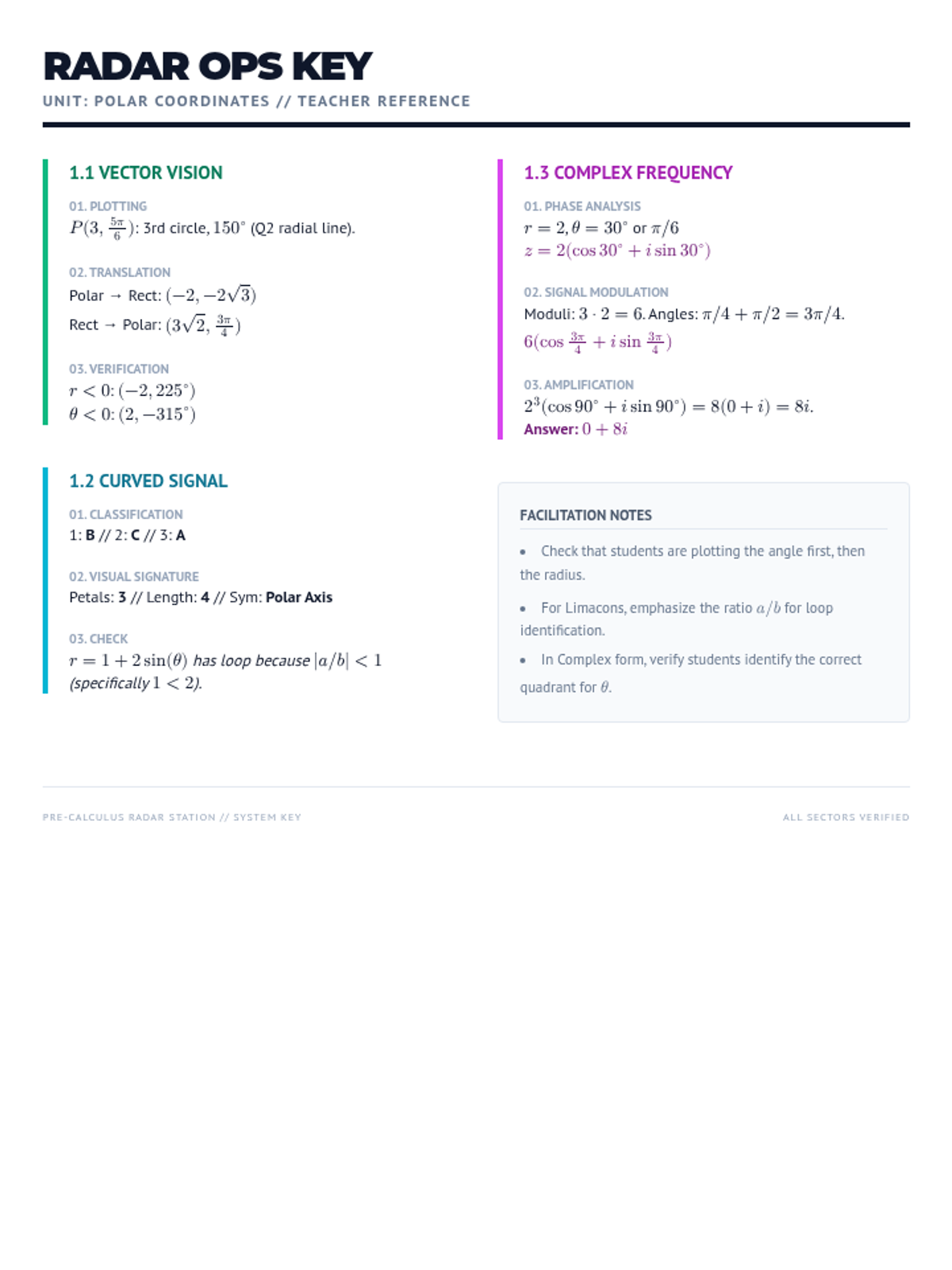
A series of focused assessments to verify student mastery of polar coordinate plotting, conversion, graphing special curves, and representing complex numbers in polar form.
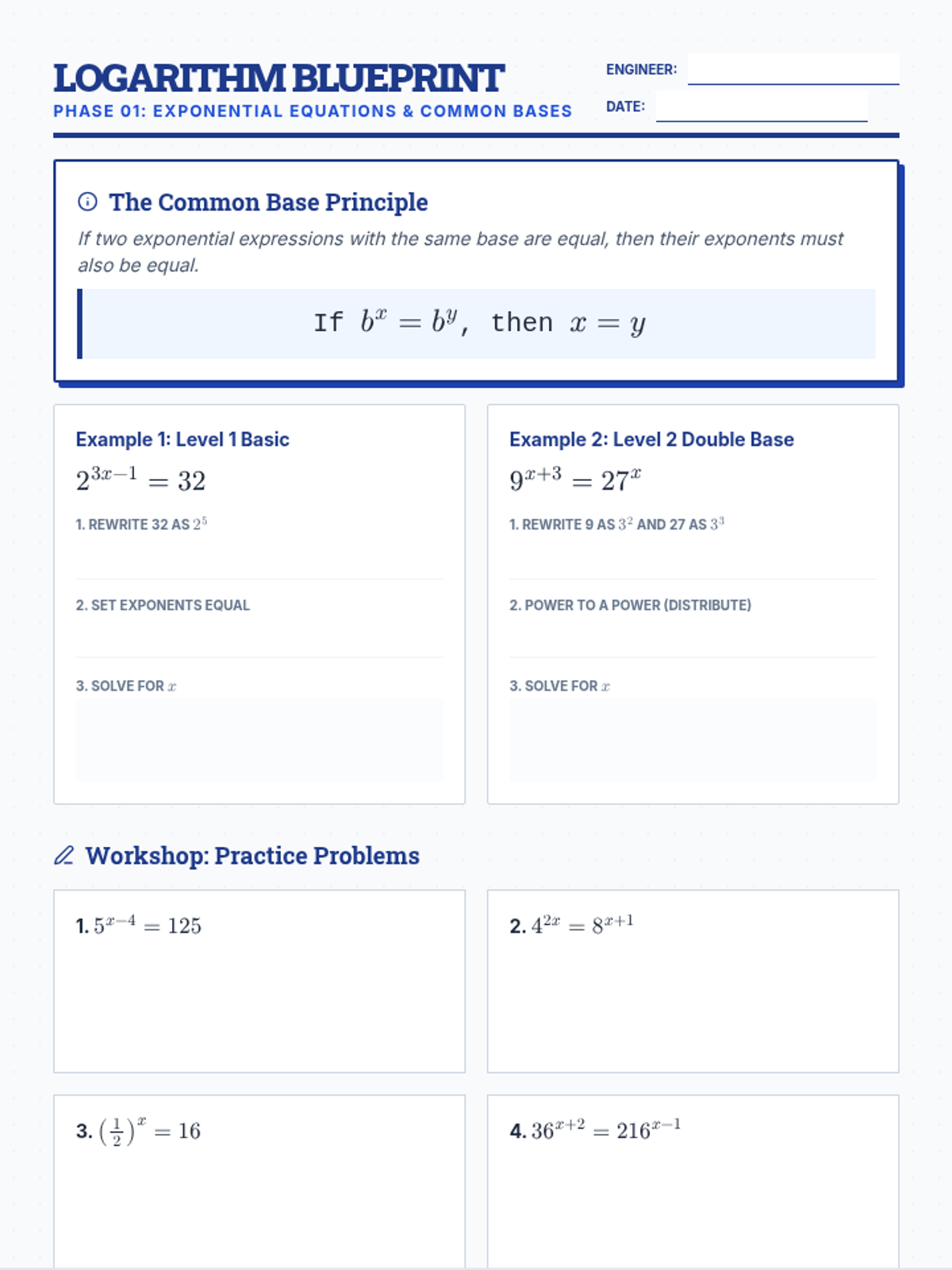
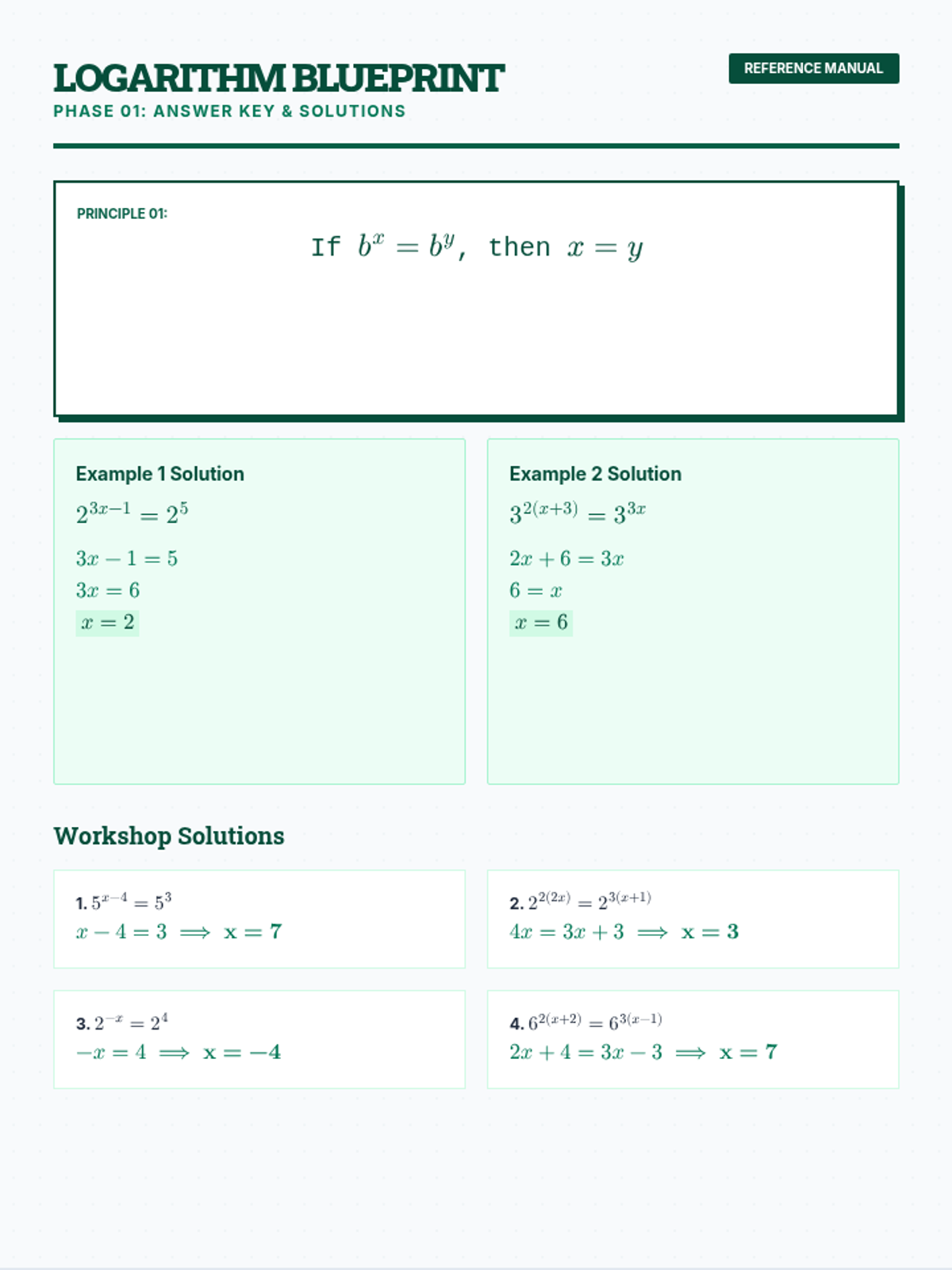
A comprehensive guide to solving exponential and logarithmic equations using common bases and property-based manipulation. Students will master converting between forms and applying product, quotient, and power rules.
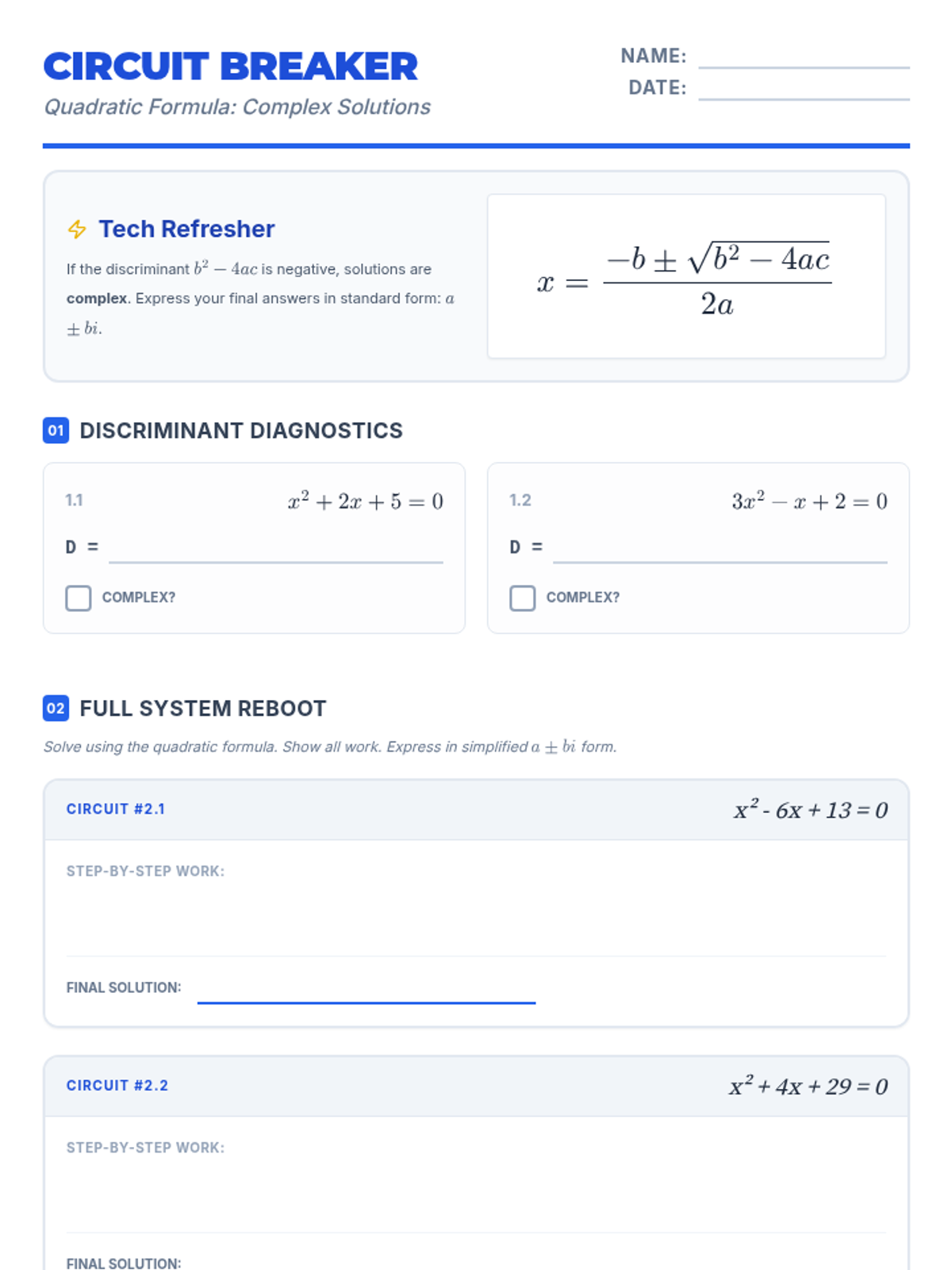
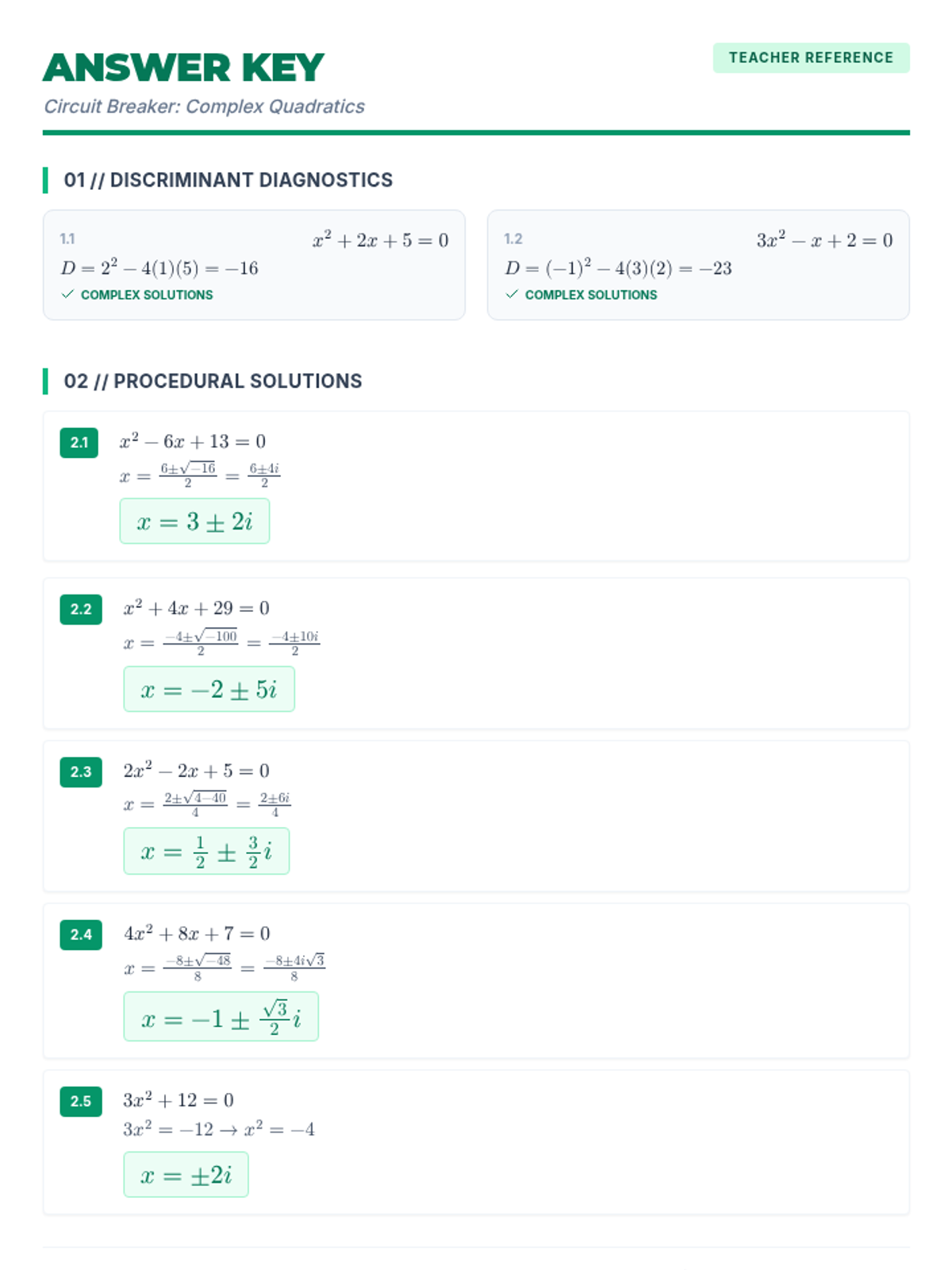
A procedural practice lesson focused on using the quadratic formula to solve equations with complex and imaginary solutions. Students will identify negative discriminants and simplify results into standard complex form.
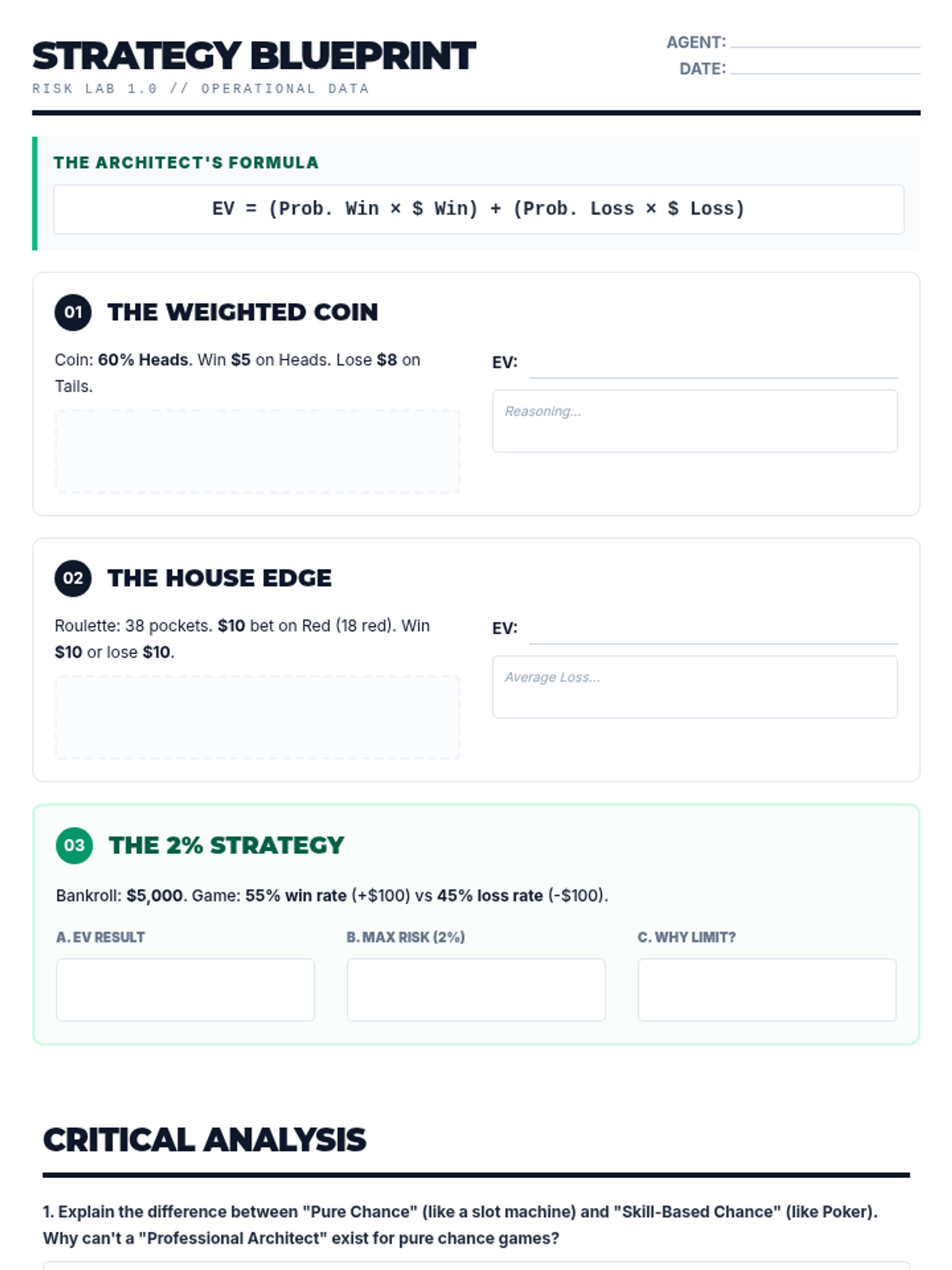
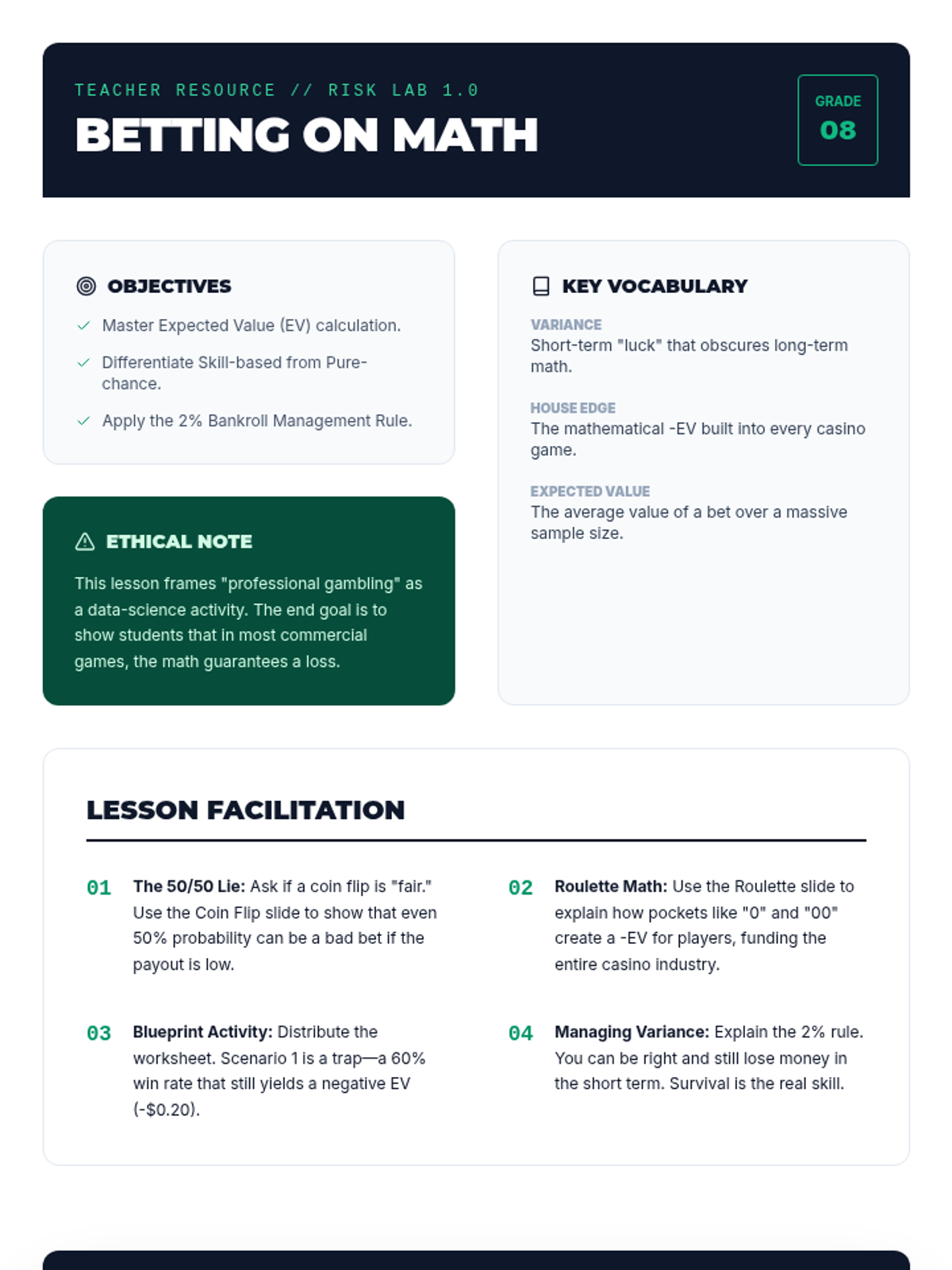
Students explore the concept of expected value and house edge to understand why certain strategies succeed while others are designed to fail.
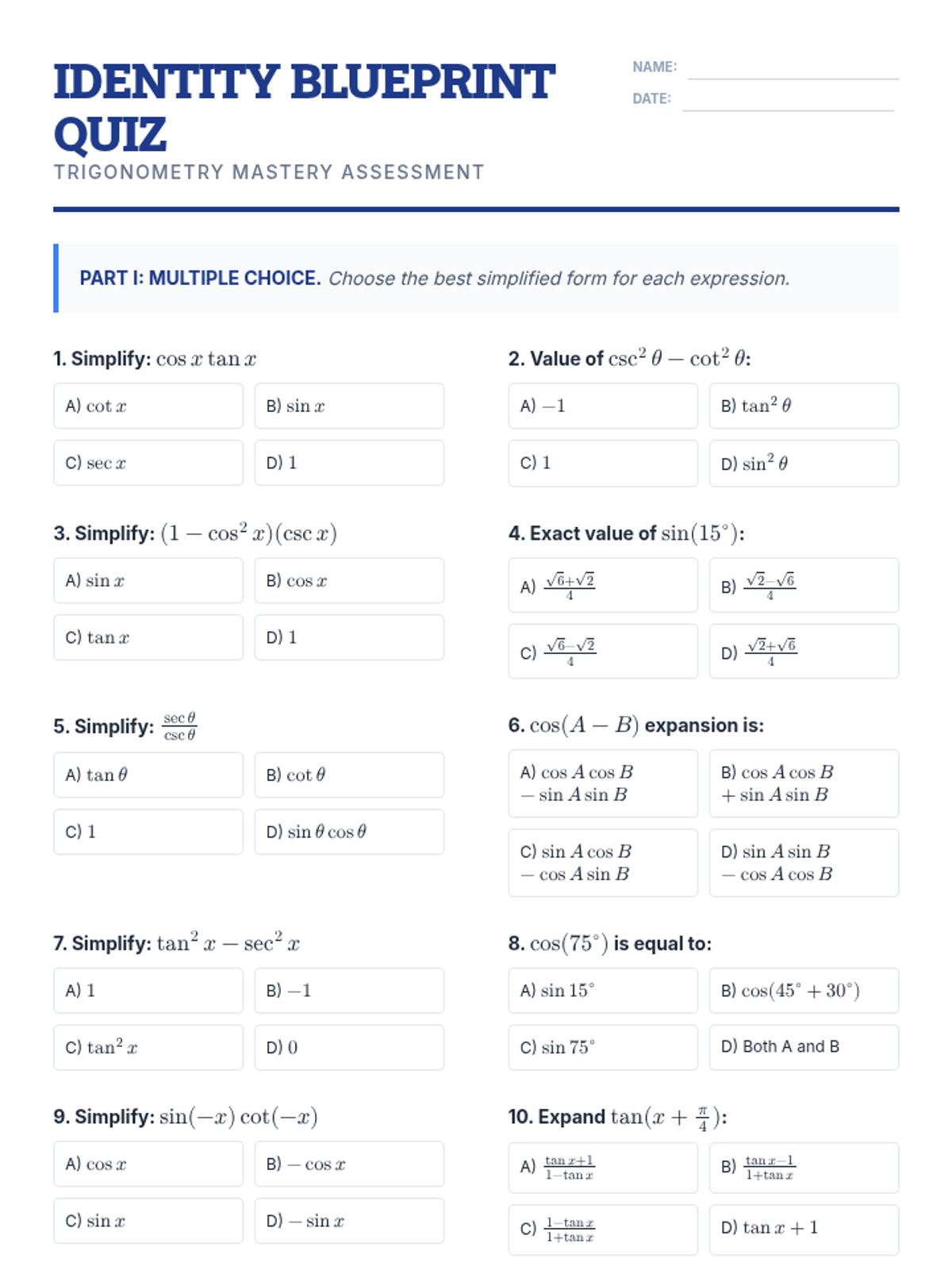
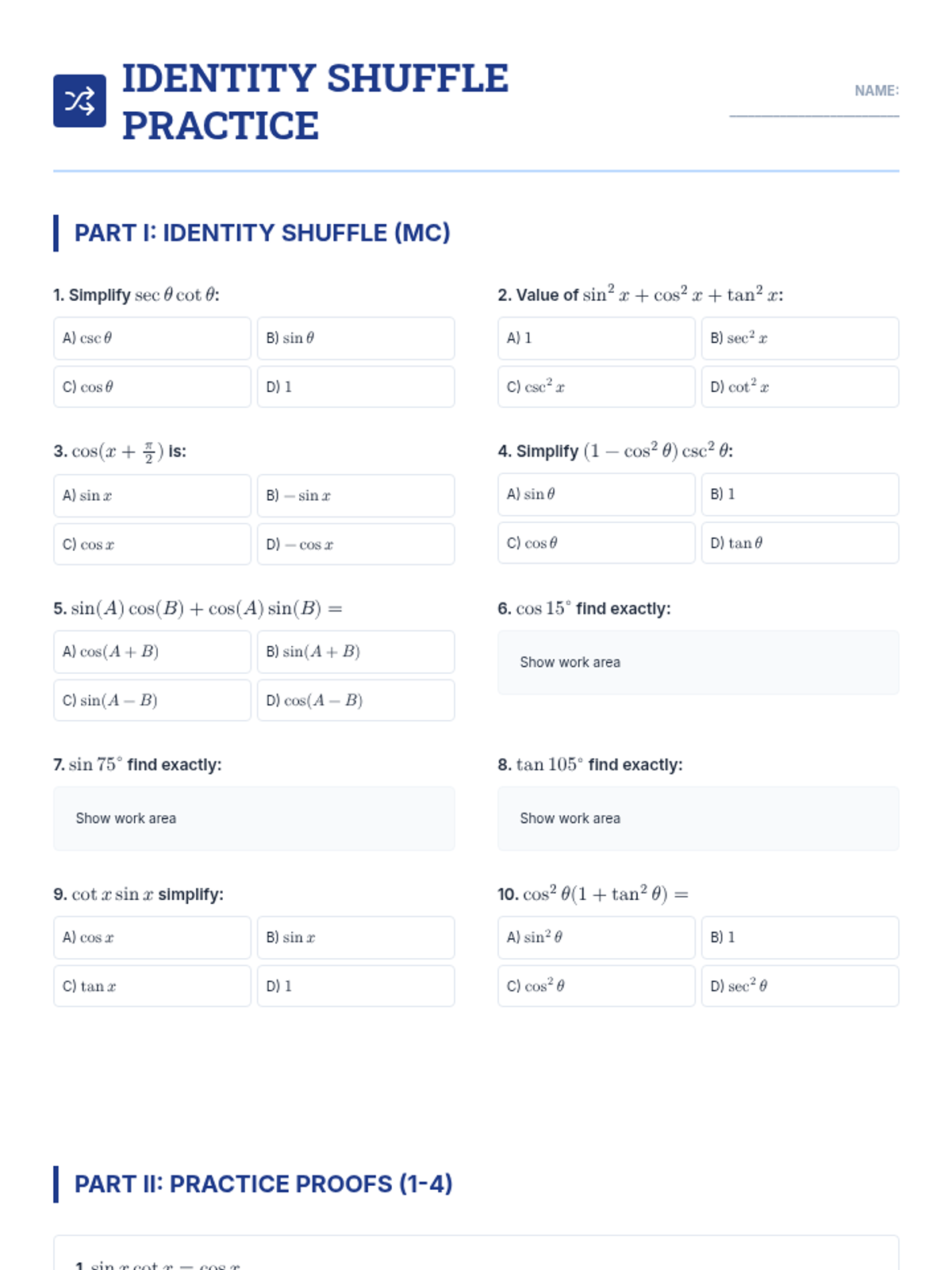
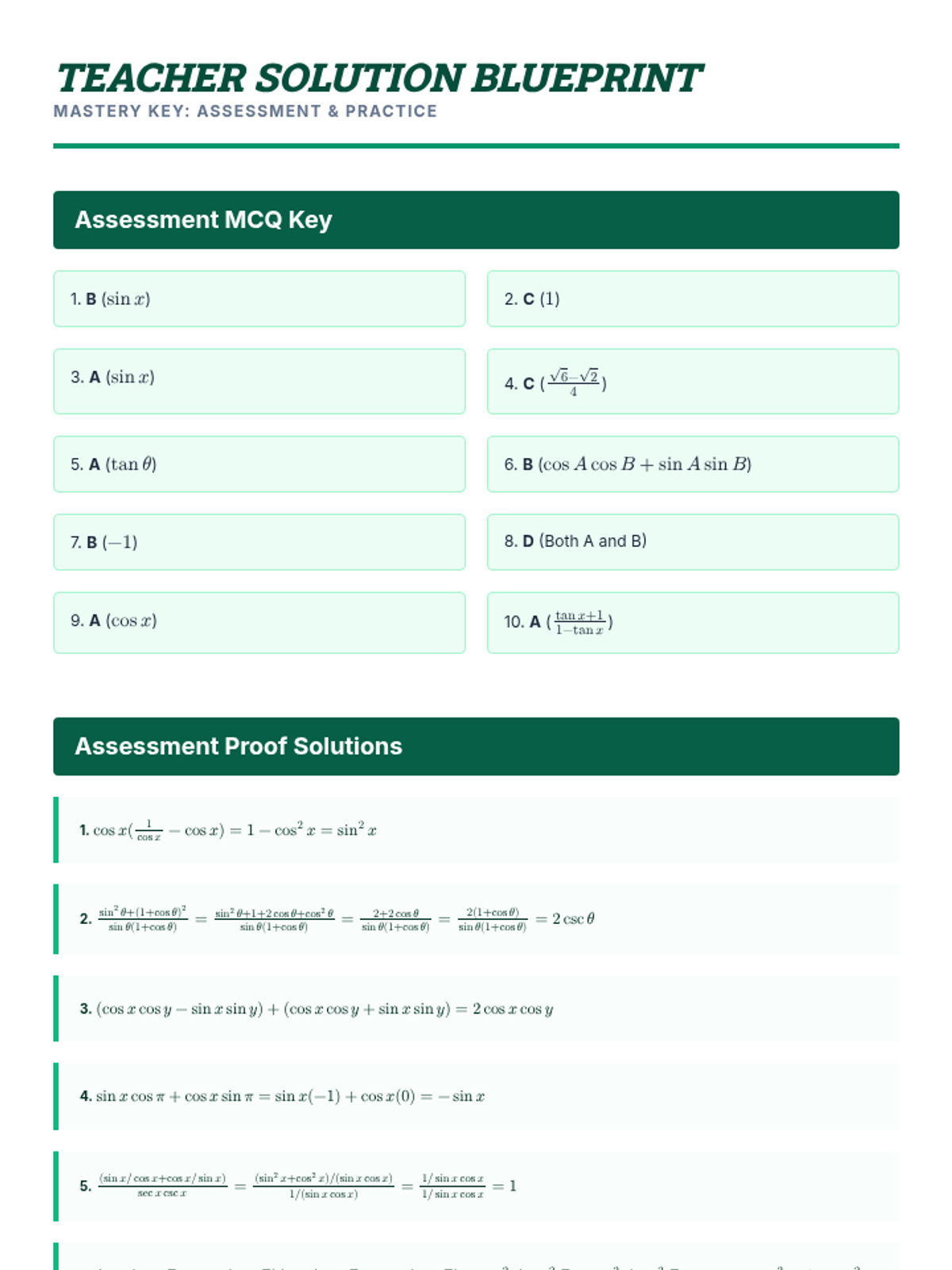
A comprehensive assessment and practice suite for mastering trigonometric identities, focusing on reciprocal, quotient, Pythagorean, and sum/difference formulas.
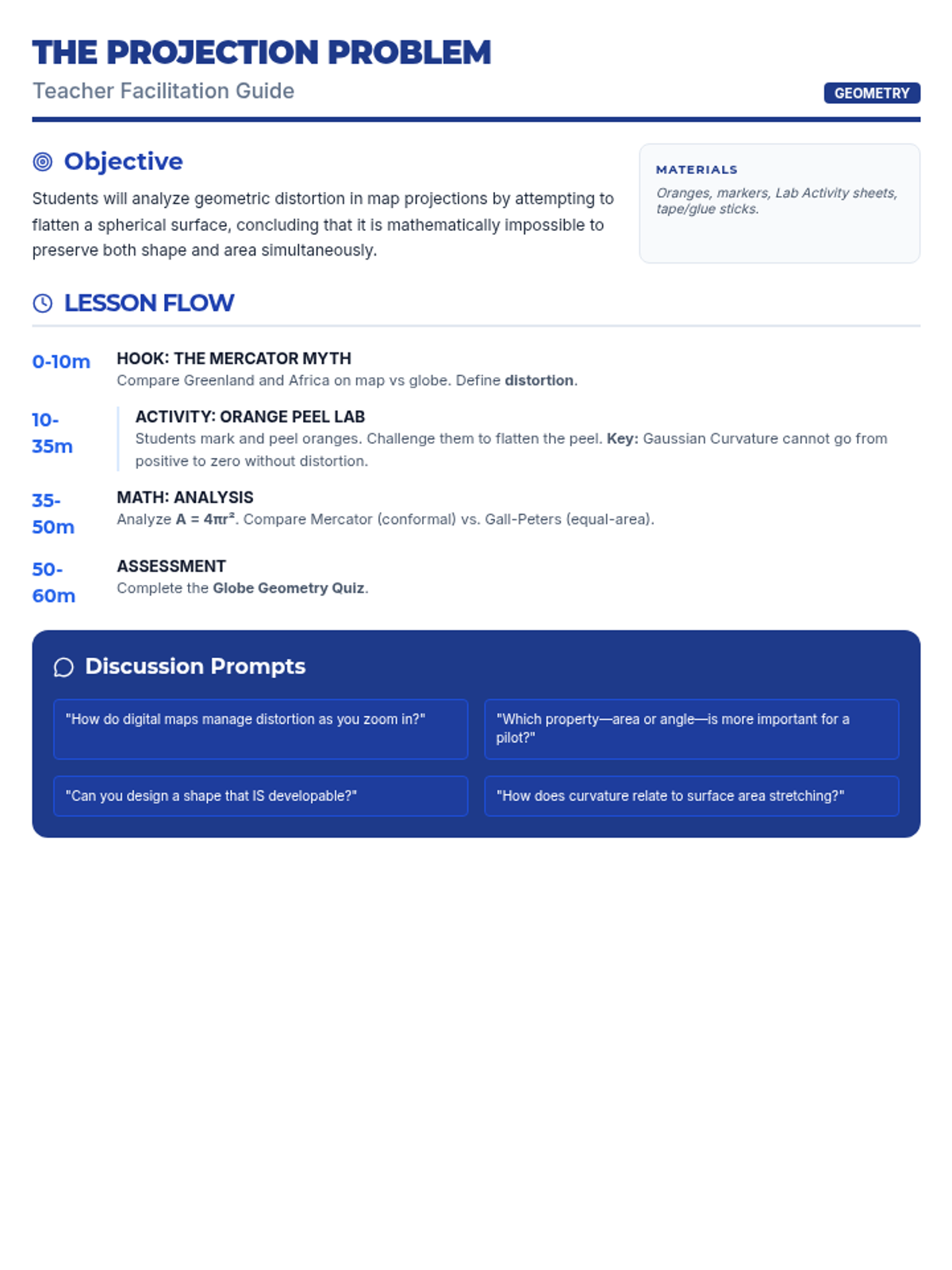
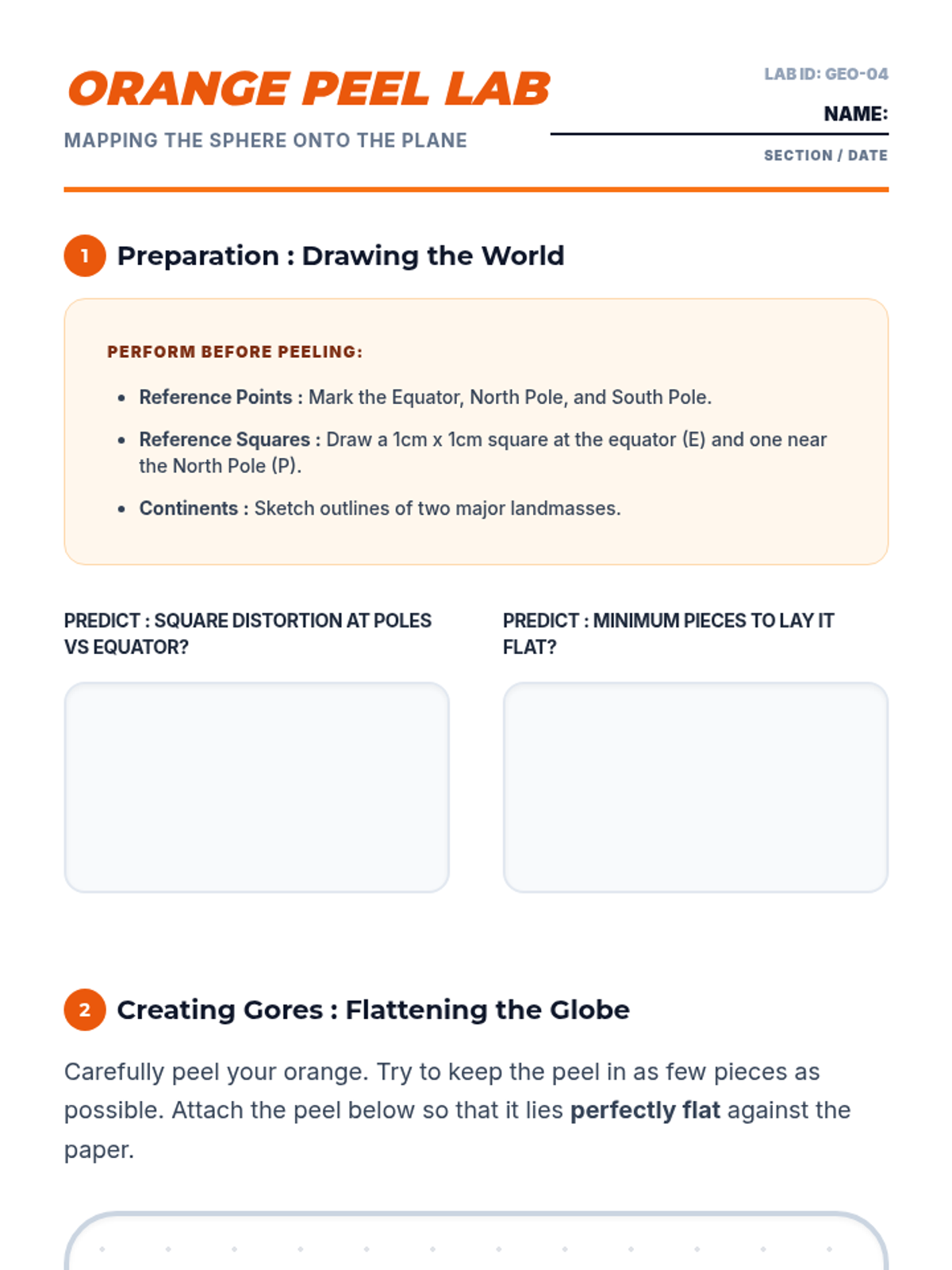
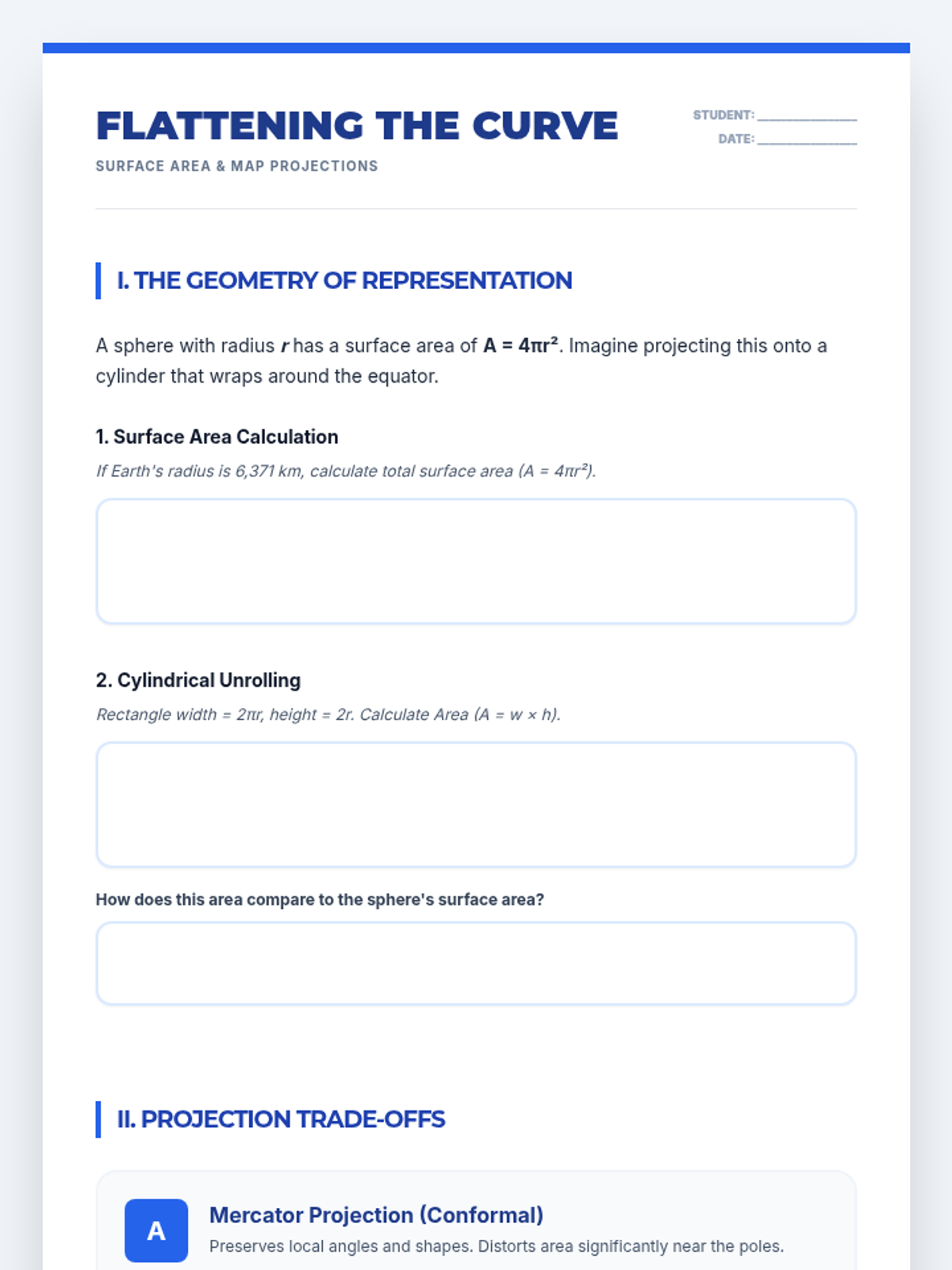
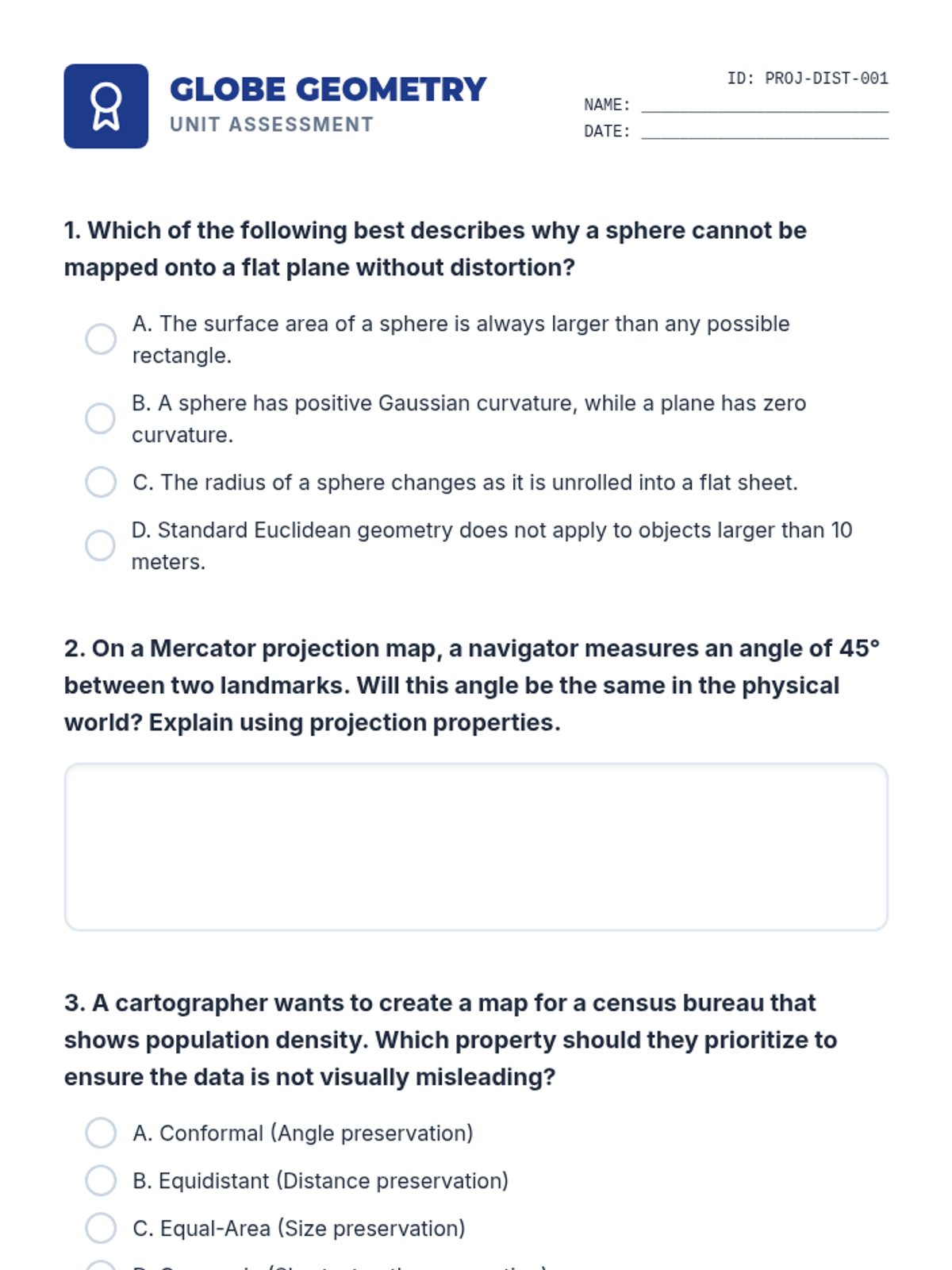
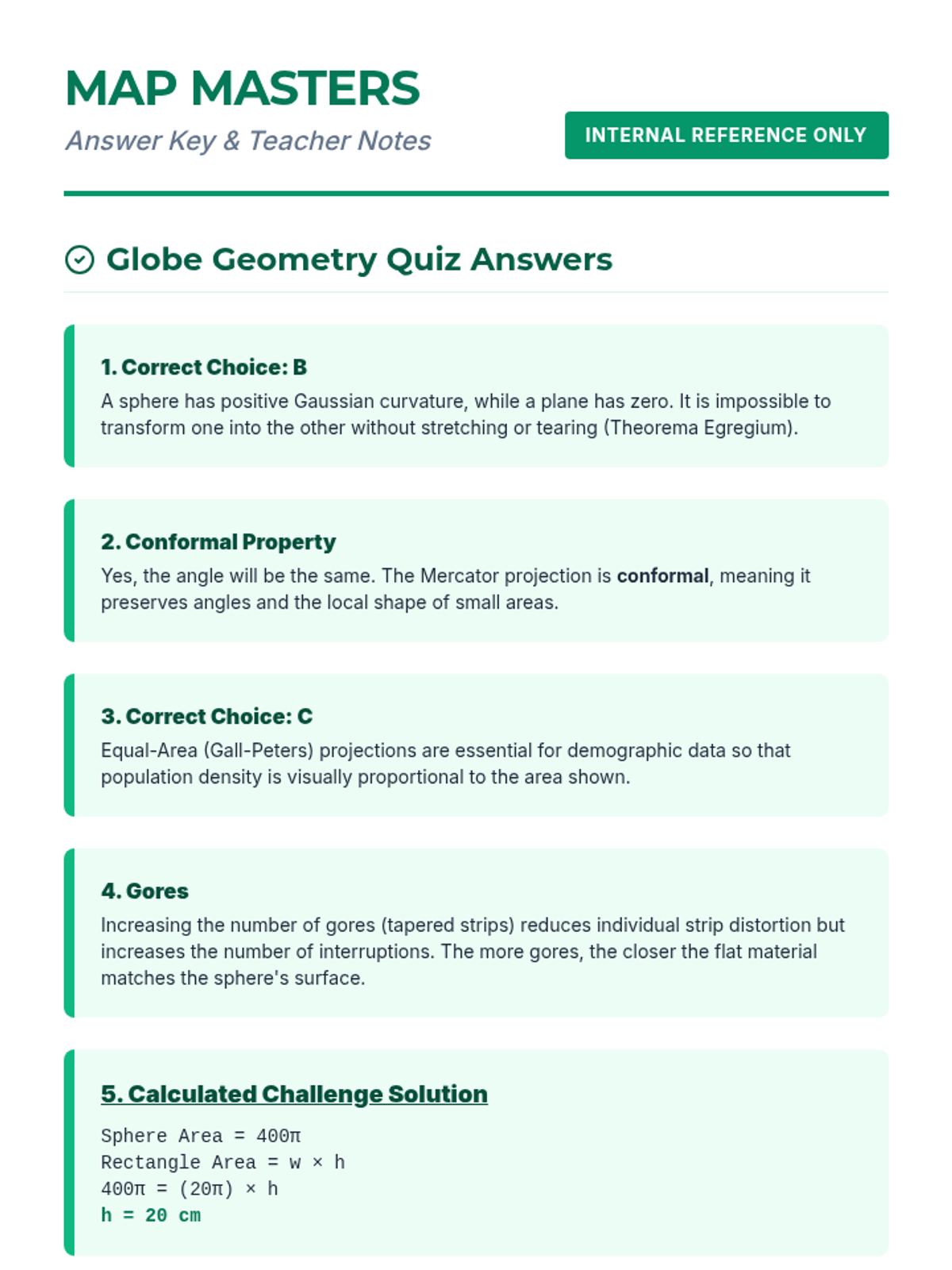
A geometry lesson exploring the mathematical challenges of representing a 3D sphere on a 2D plane through map projections, featuring a hands-on orange-peeling activity to demonstrate surface area distortion.
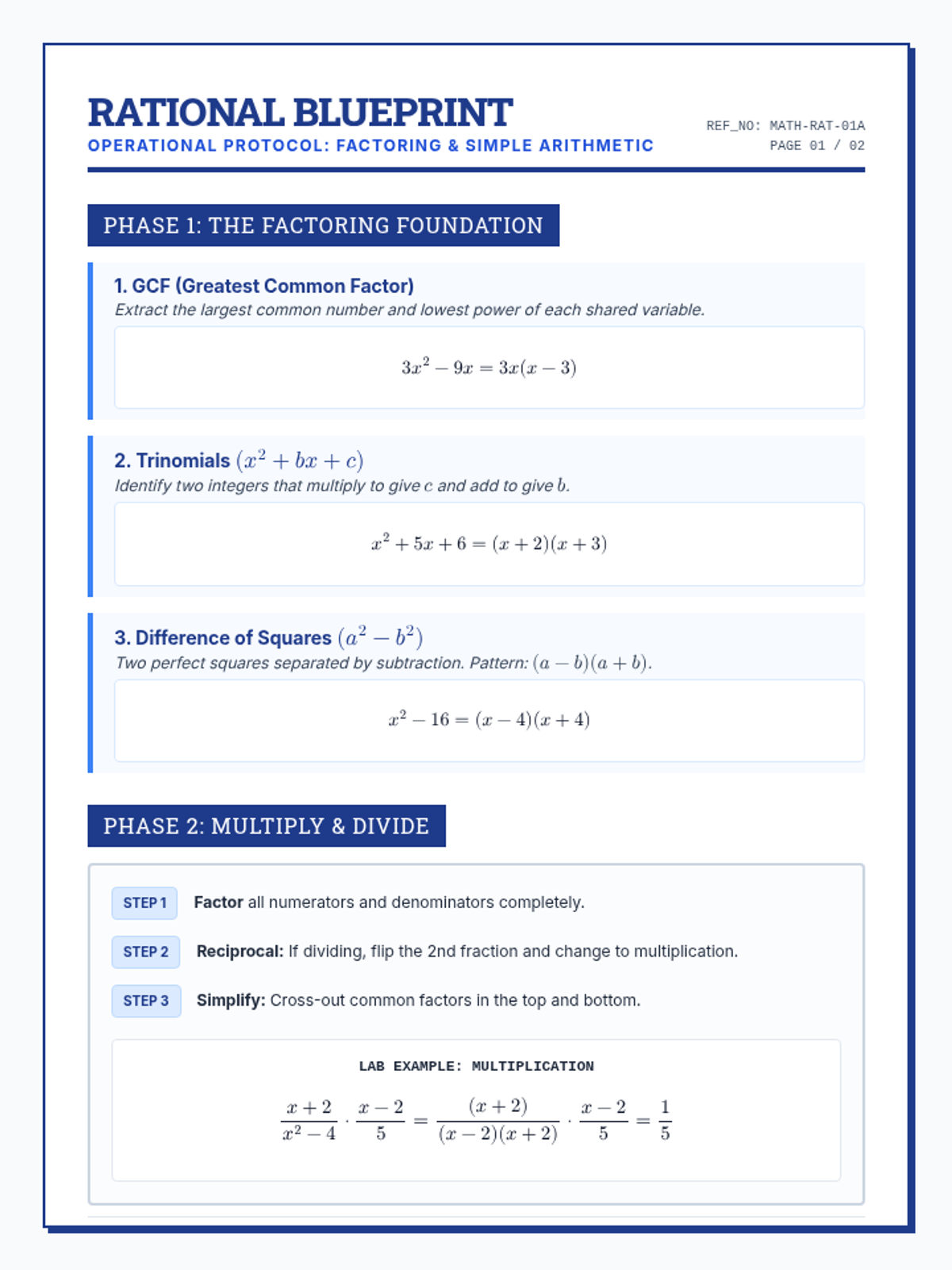
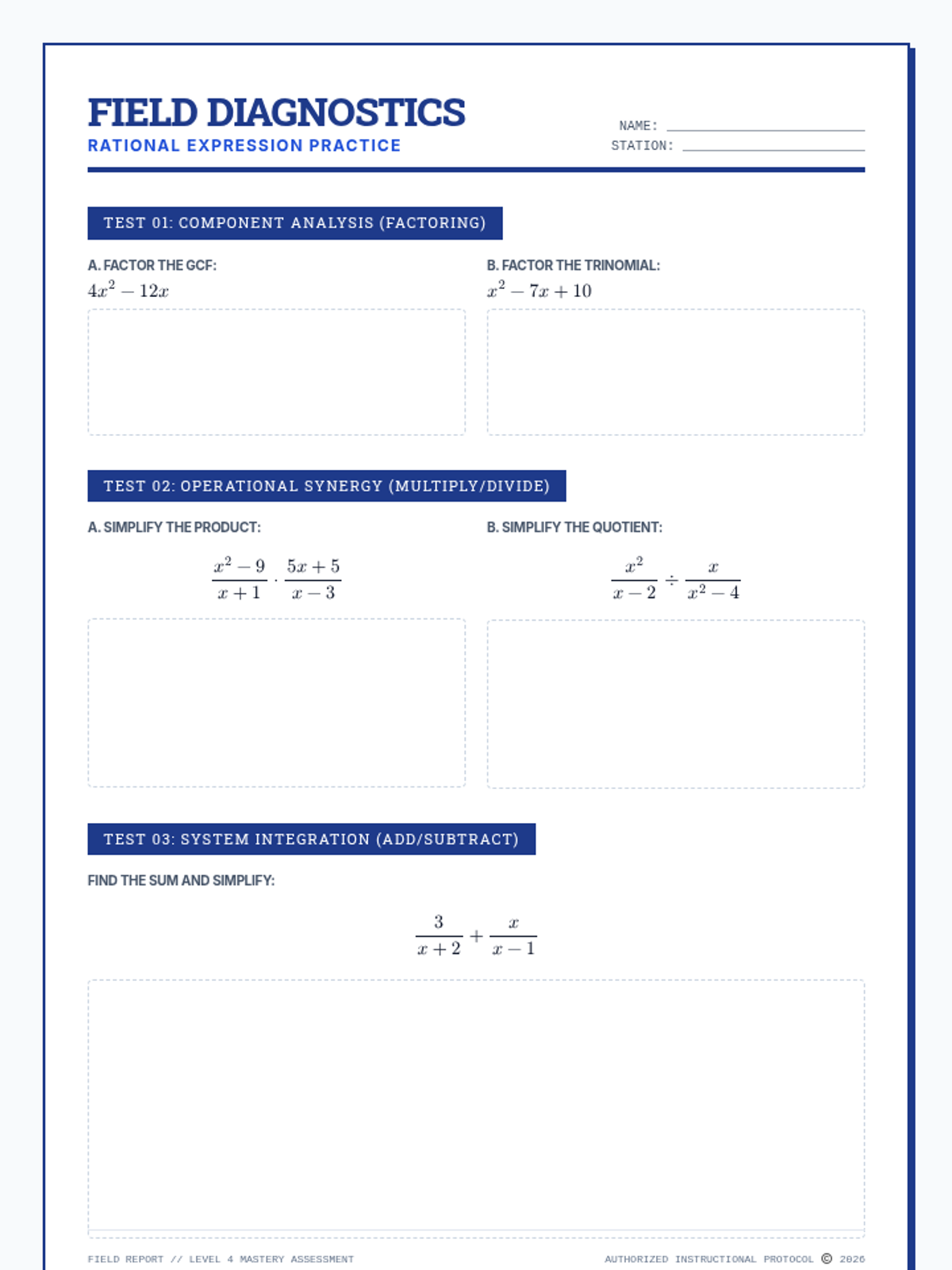
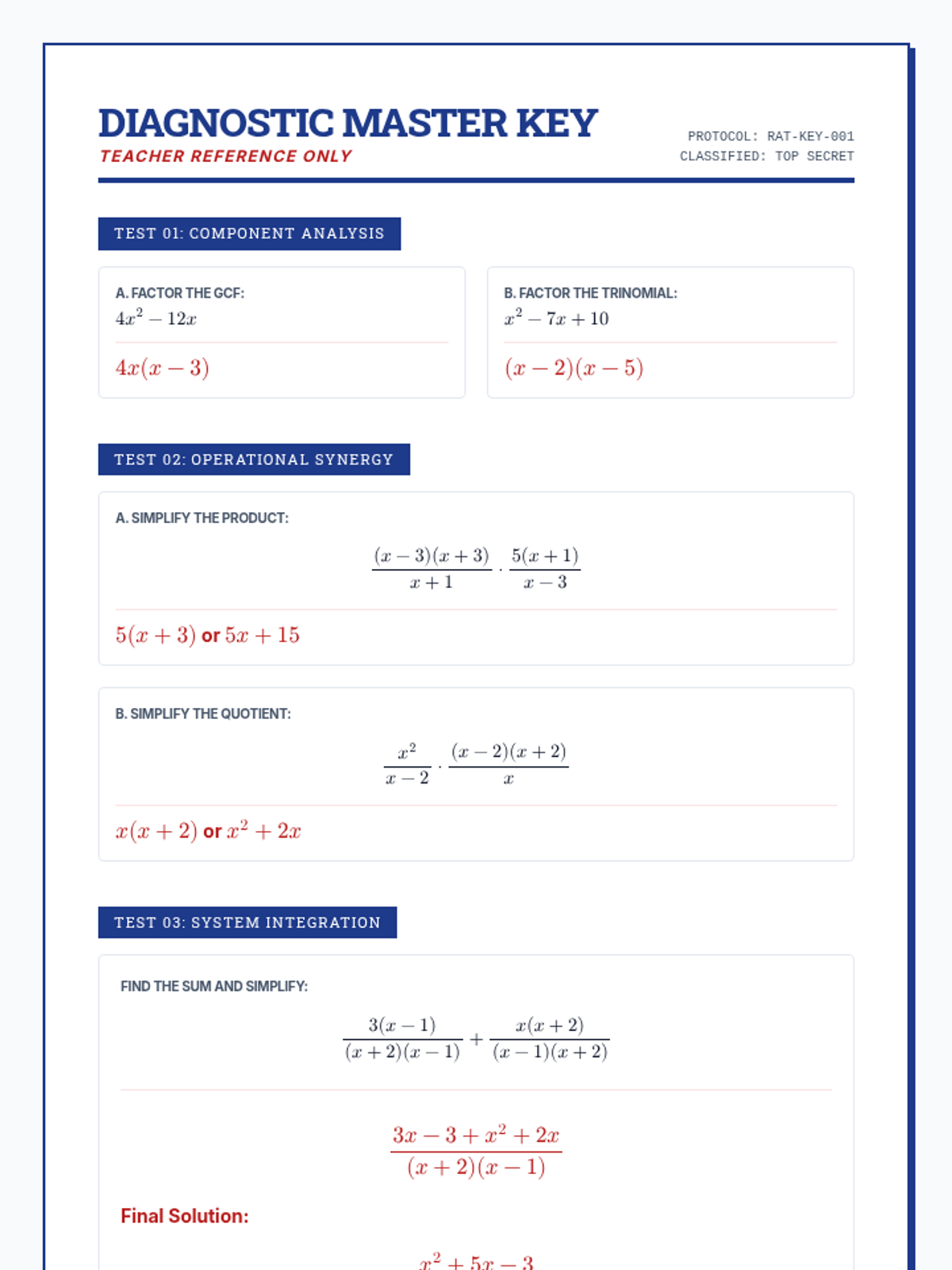
A comprehensive guide to mastering operations with rational expressions, including factoring foundations and step-by-step procedures for arithmetic operations.
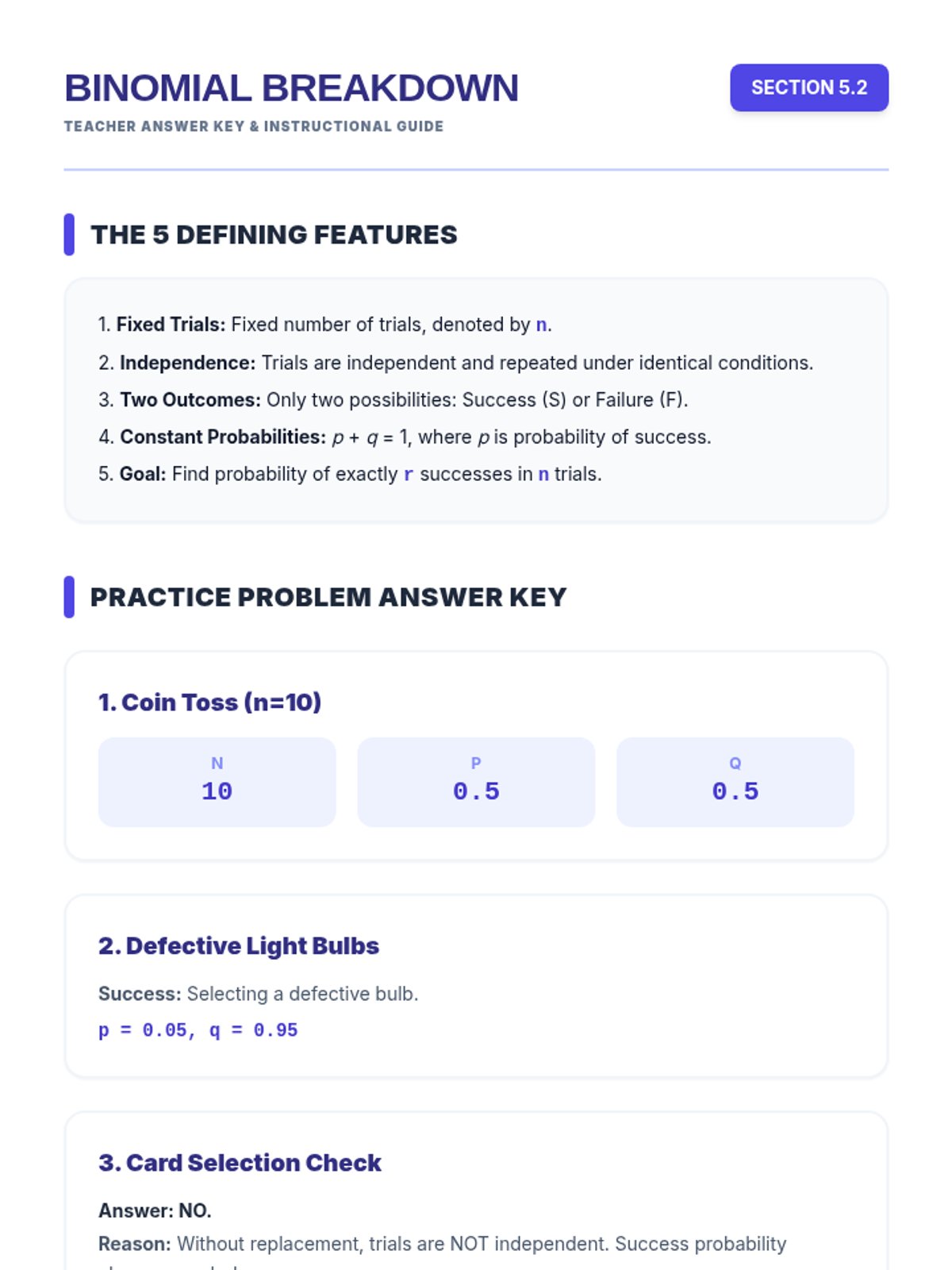
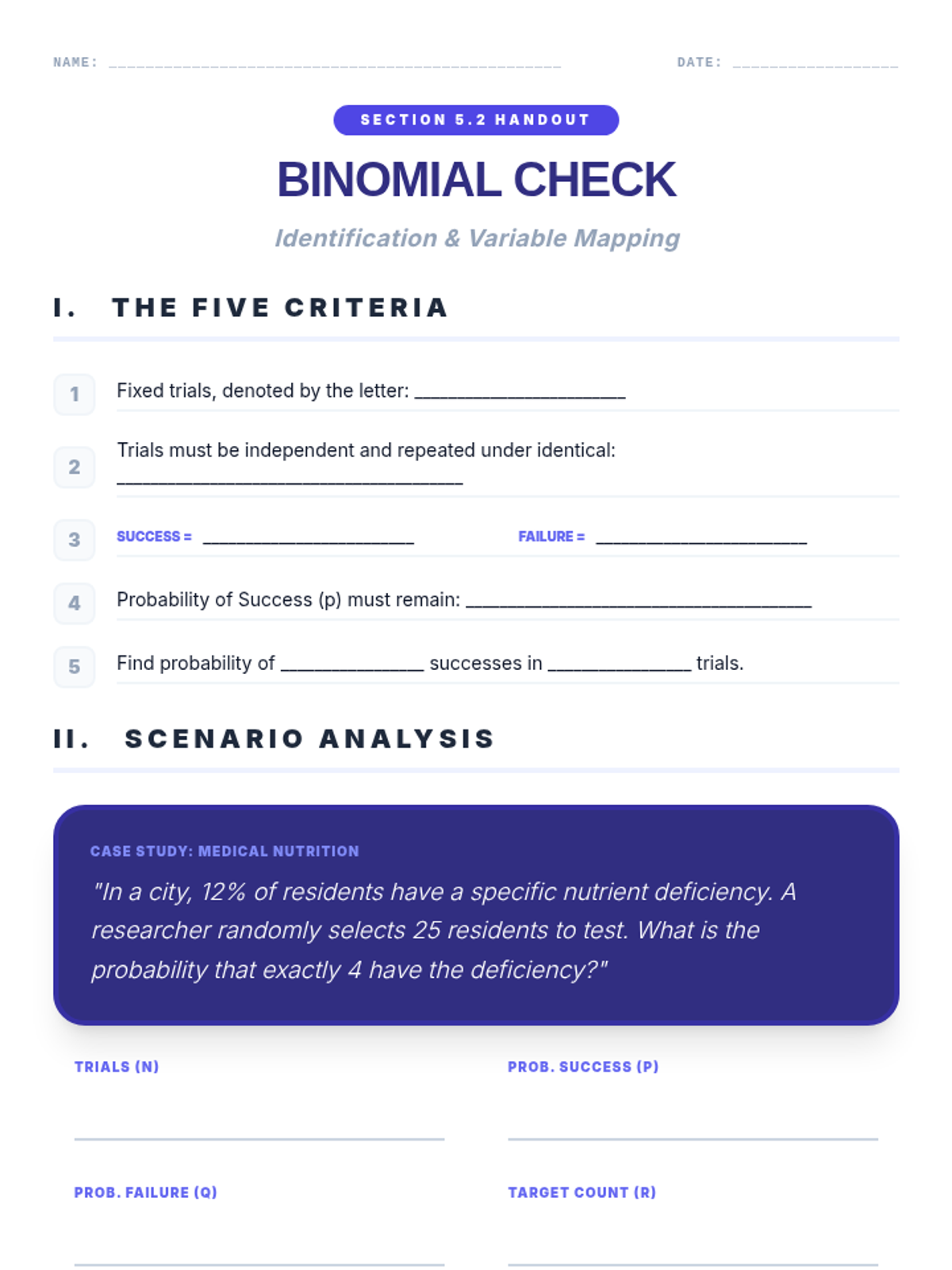
A comprehensive introduction to binomial experiments, covering the five core criteria, Bernoulli trials, and practical probability examples.
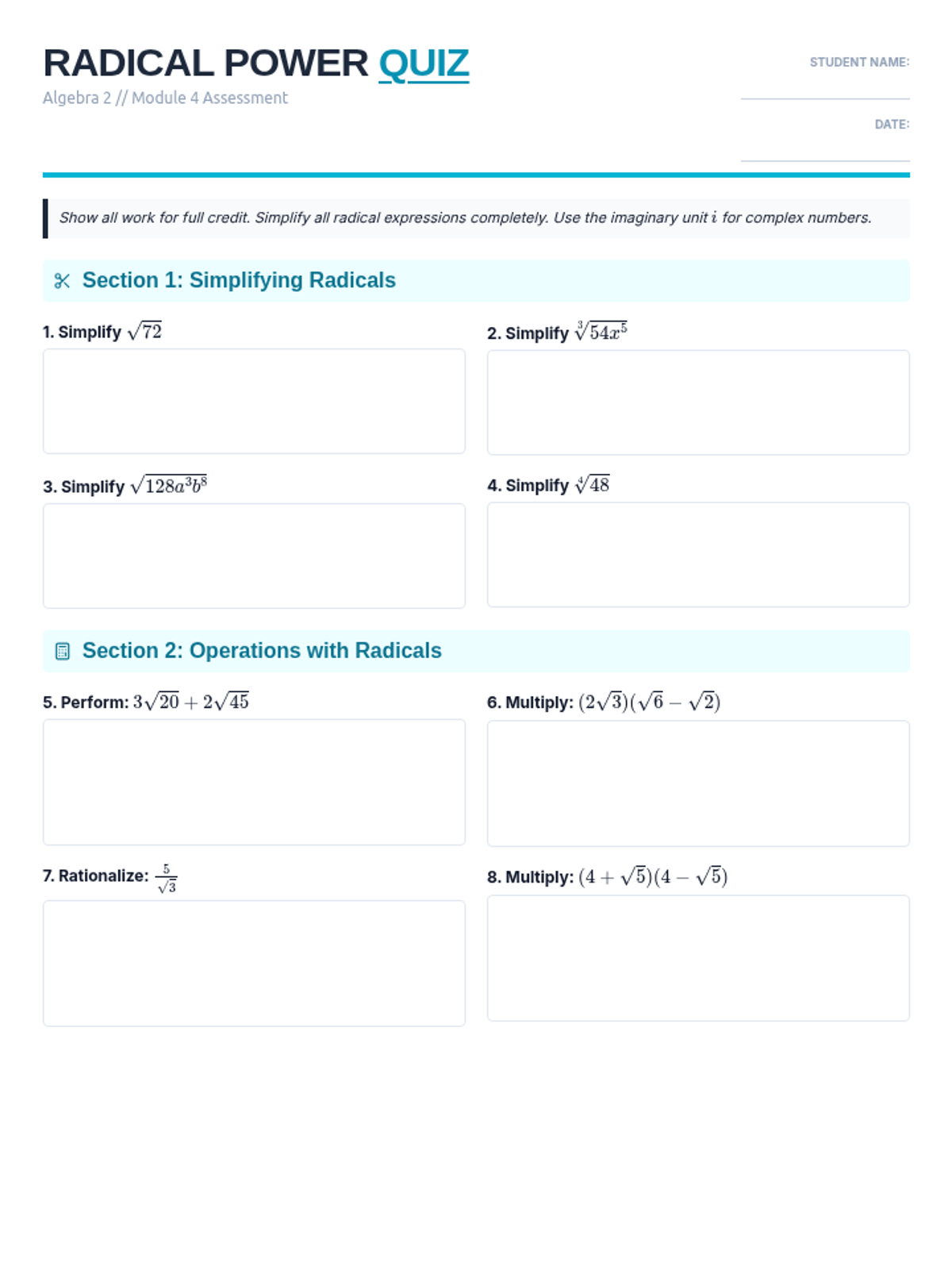
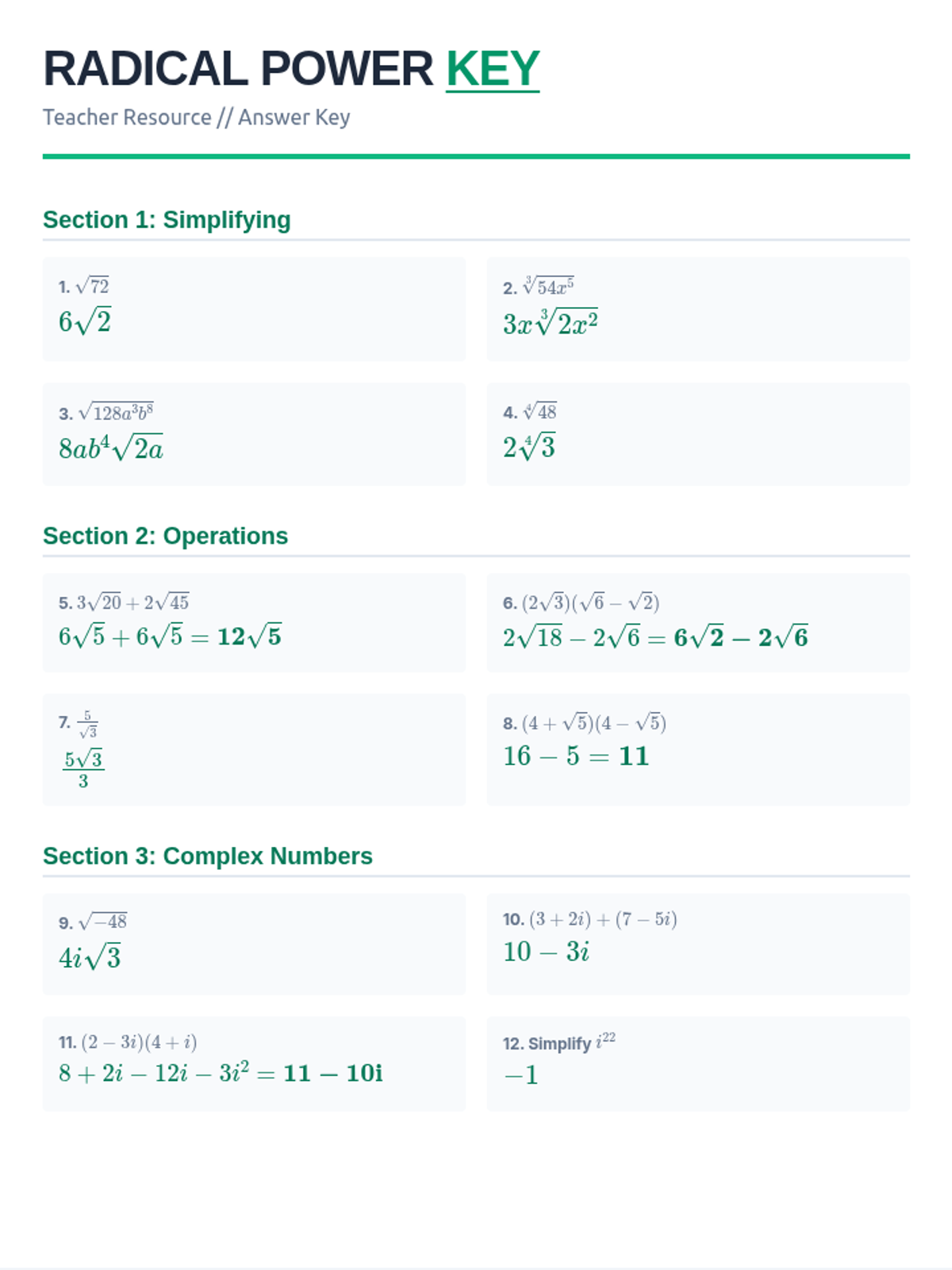
A comprehensive assessment on radical expressions, operations, complex numbers, and radical equations for Algebra 2 students.
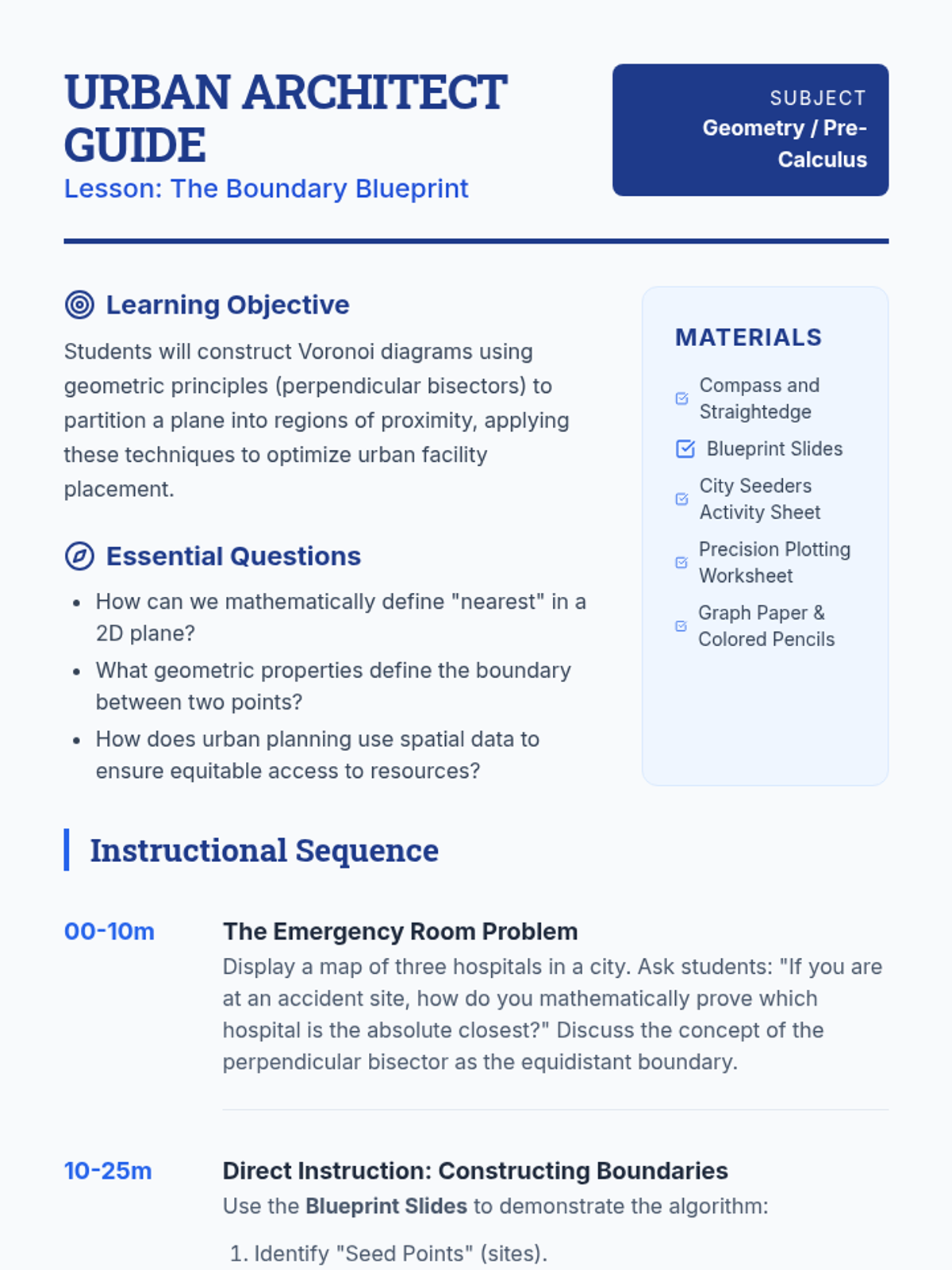
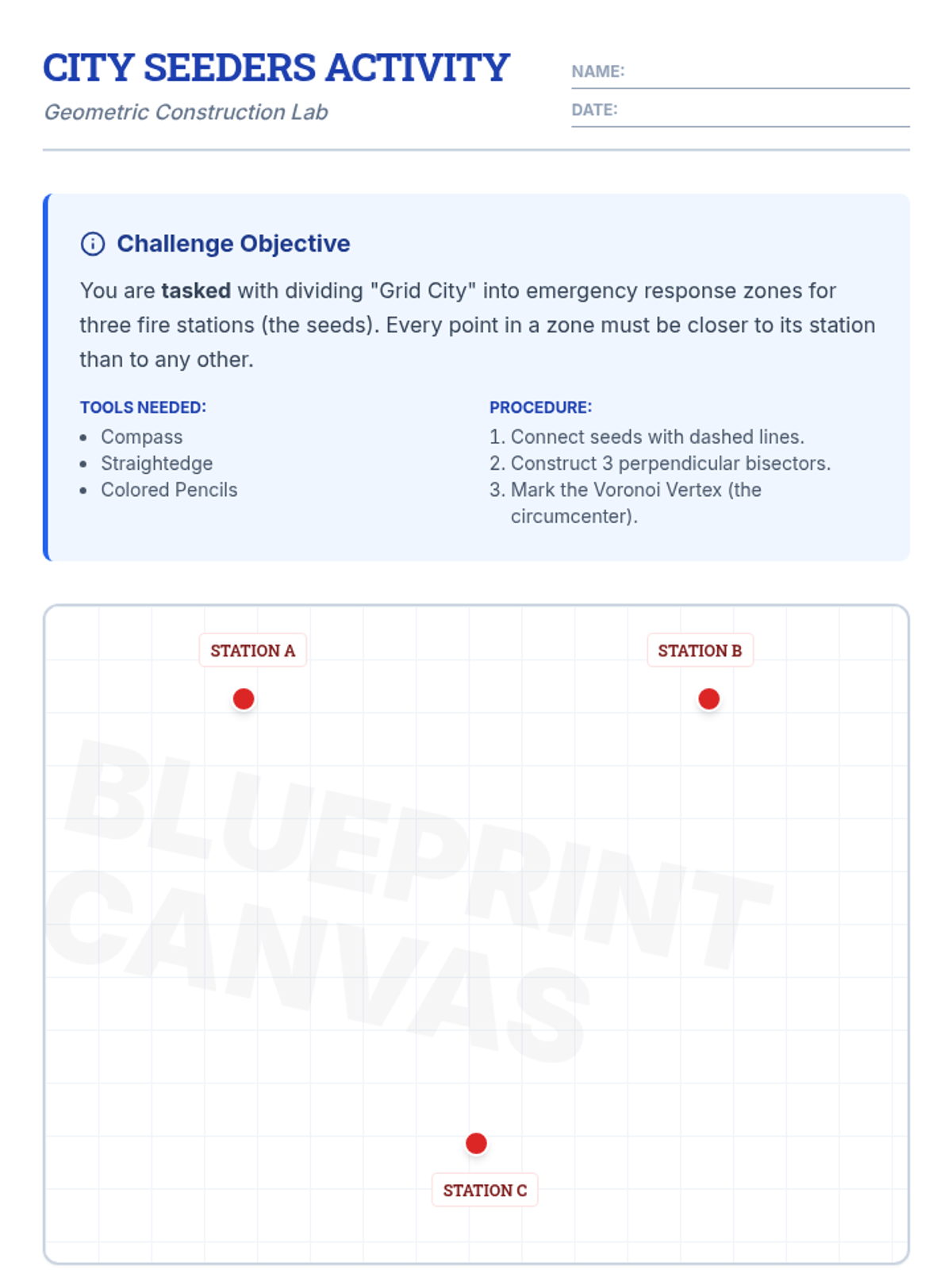
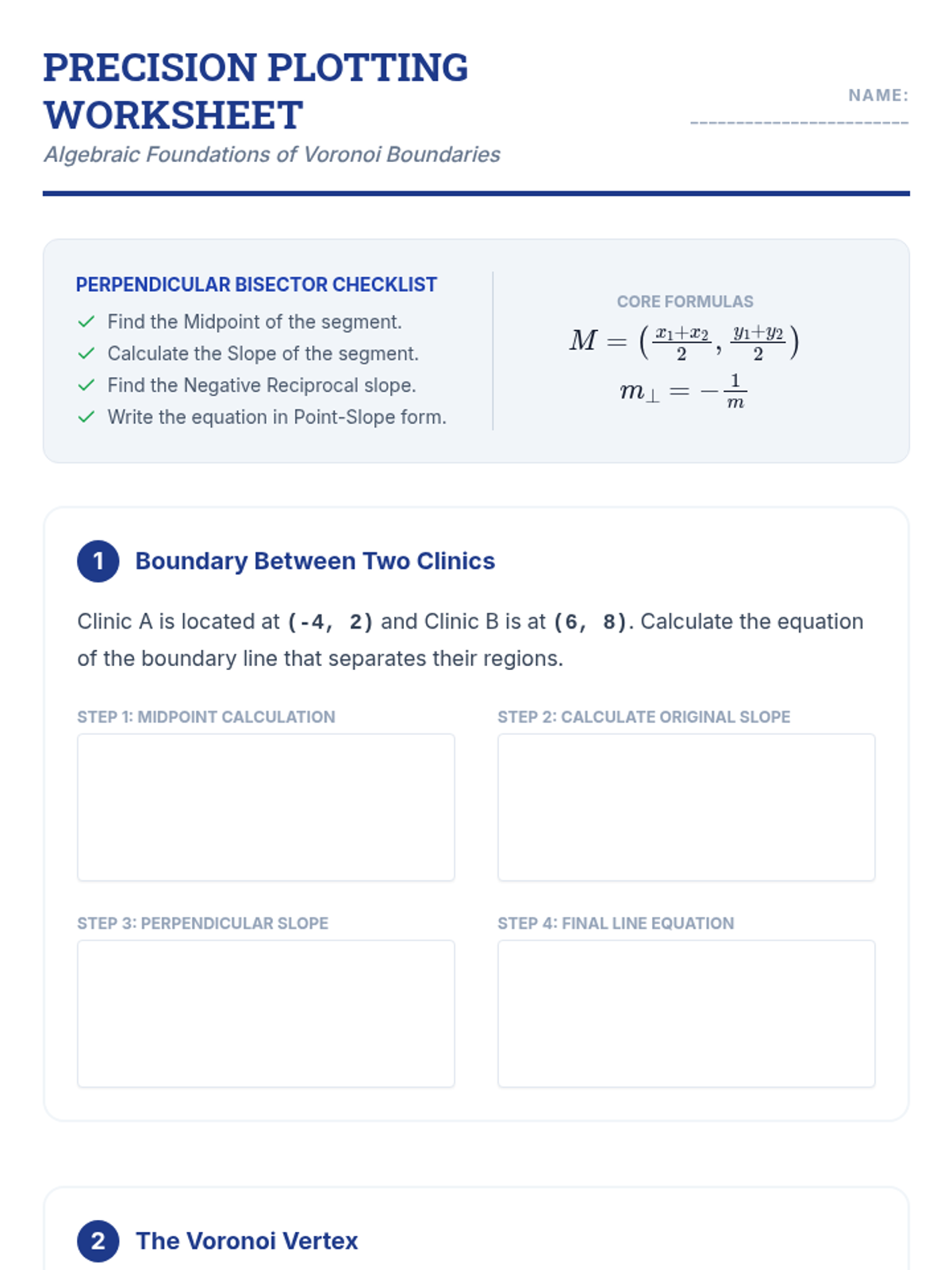
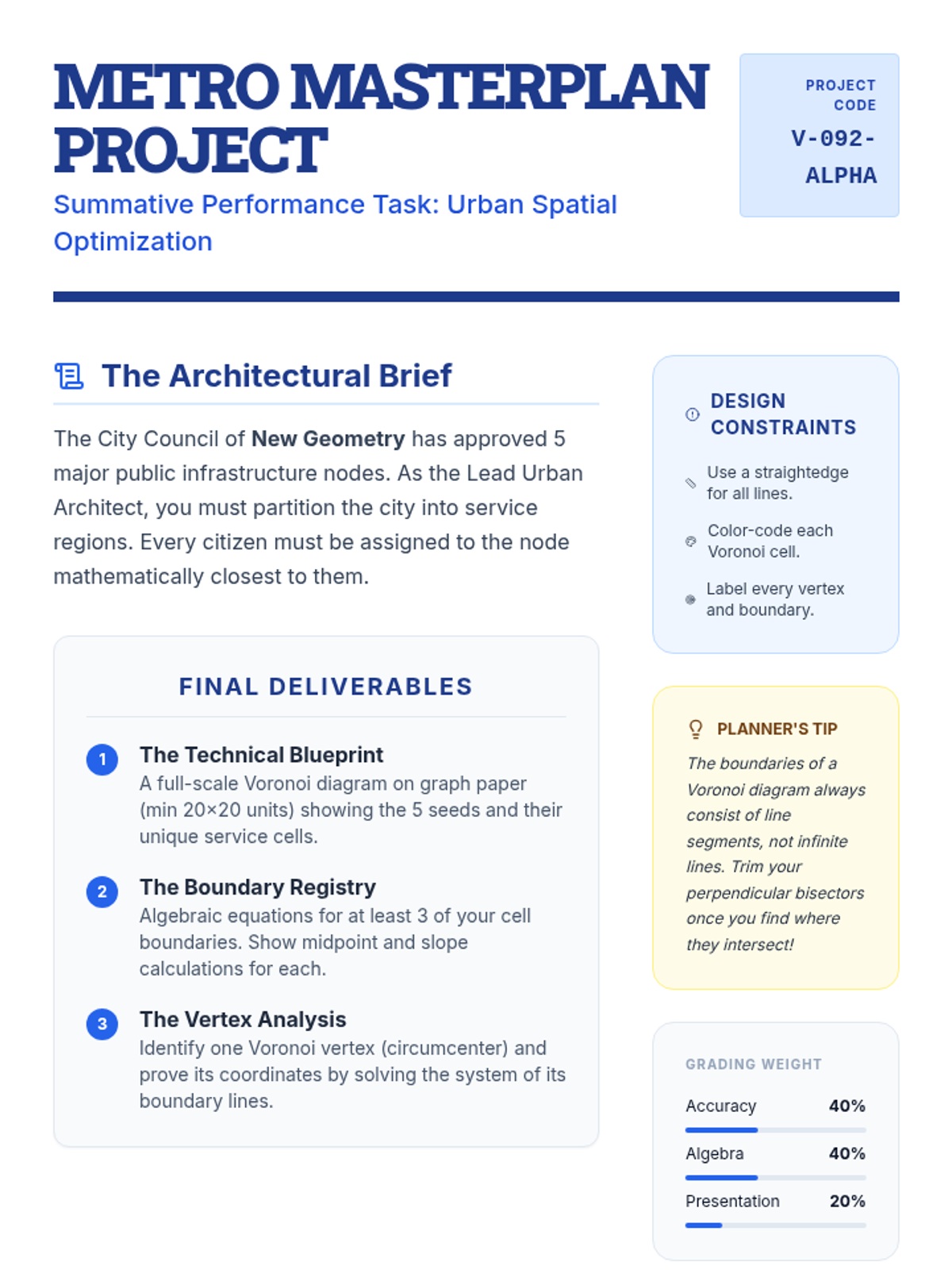
A high school geometry lesson where students learn to construct Voronoi diagrams using perpendicular bisectors to solve real-world spatial optimization problems in urban planning.
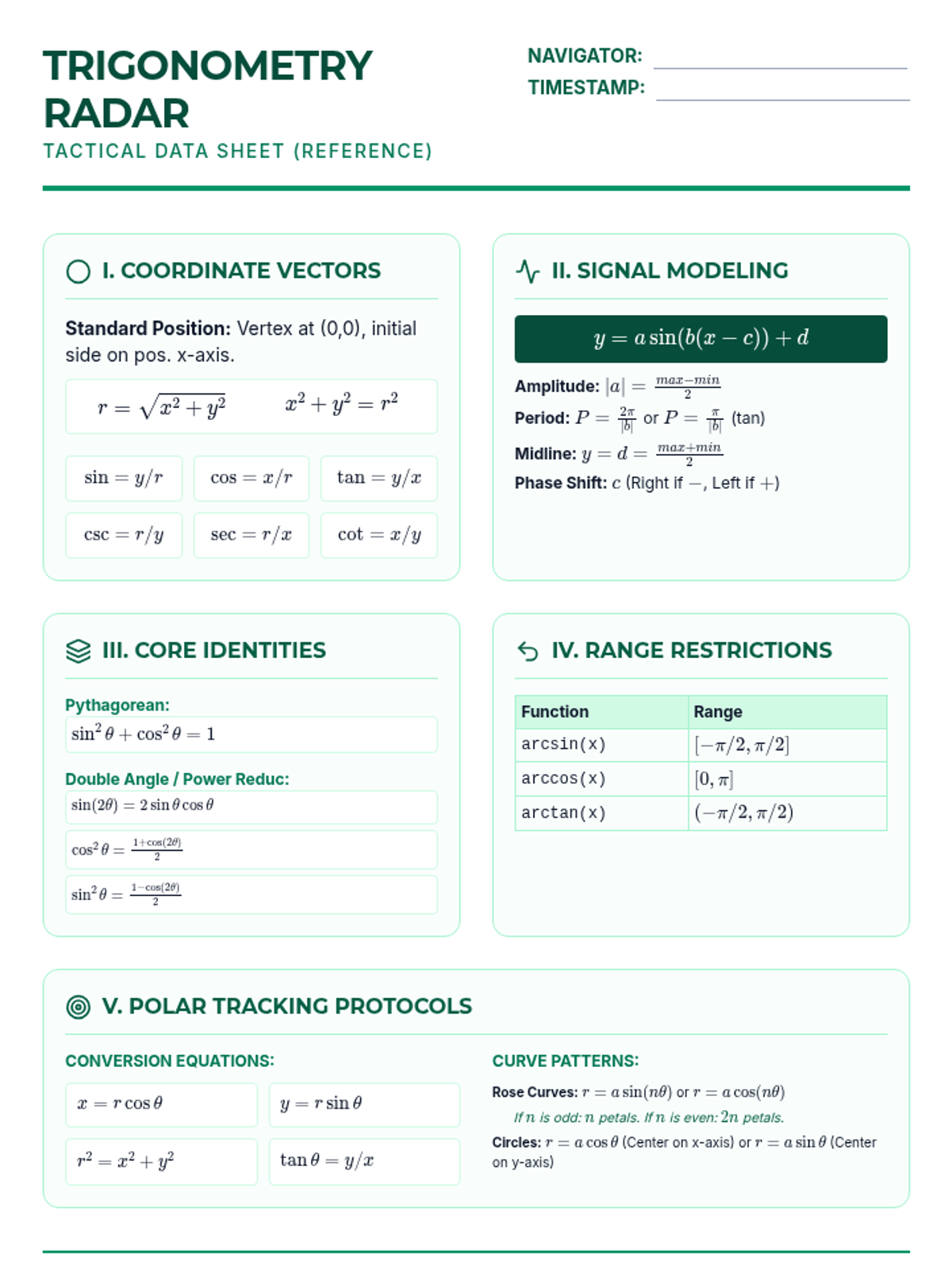
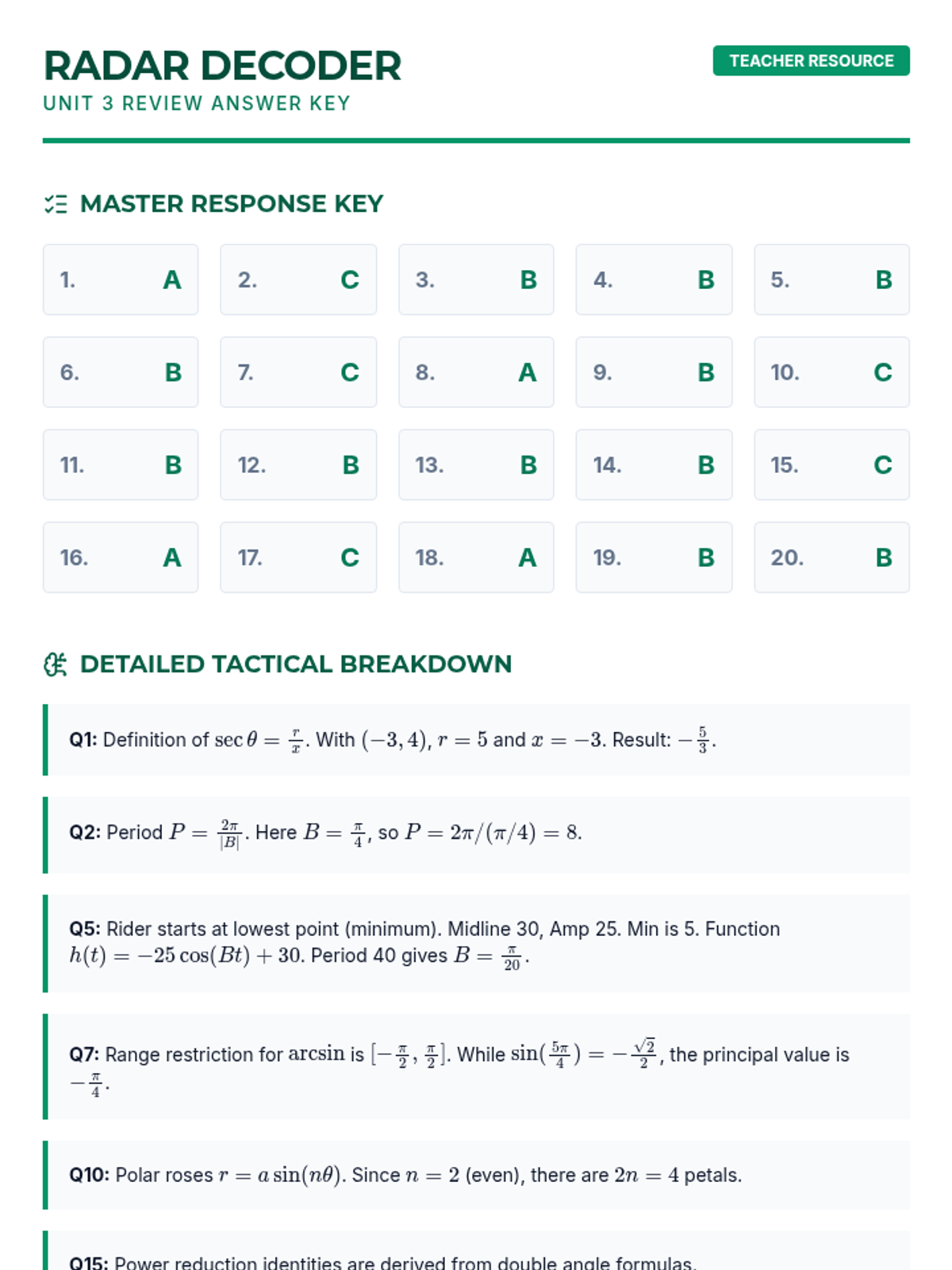
A high-intensity review session for AP Precalculus Unit 3, covering trigonometric functions, inverse functions, and polar coordinates through a "Radar Tech" thematic lens.
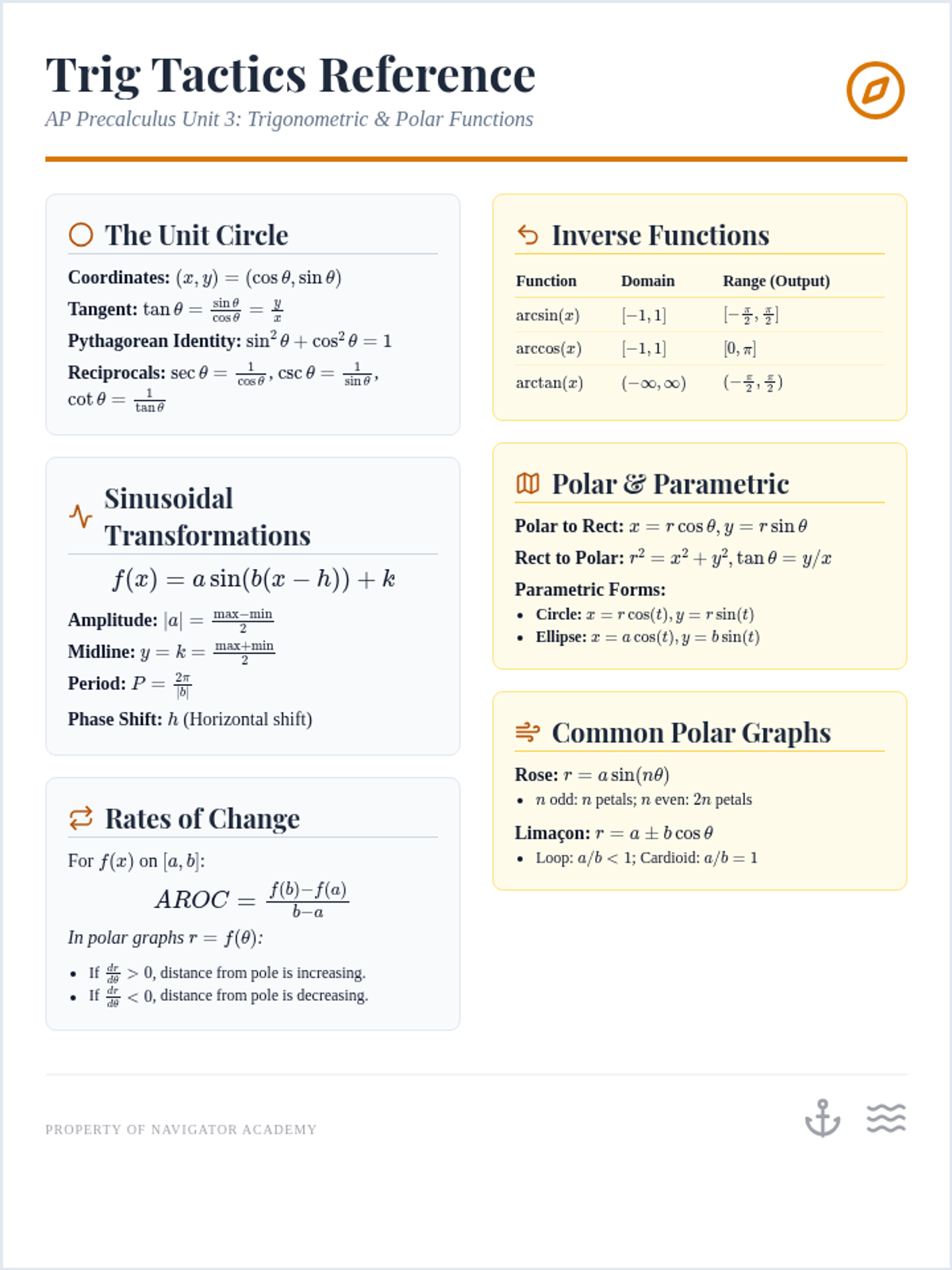
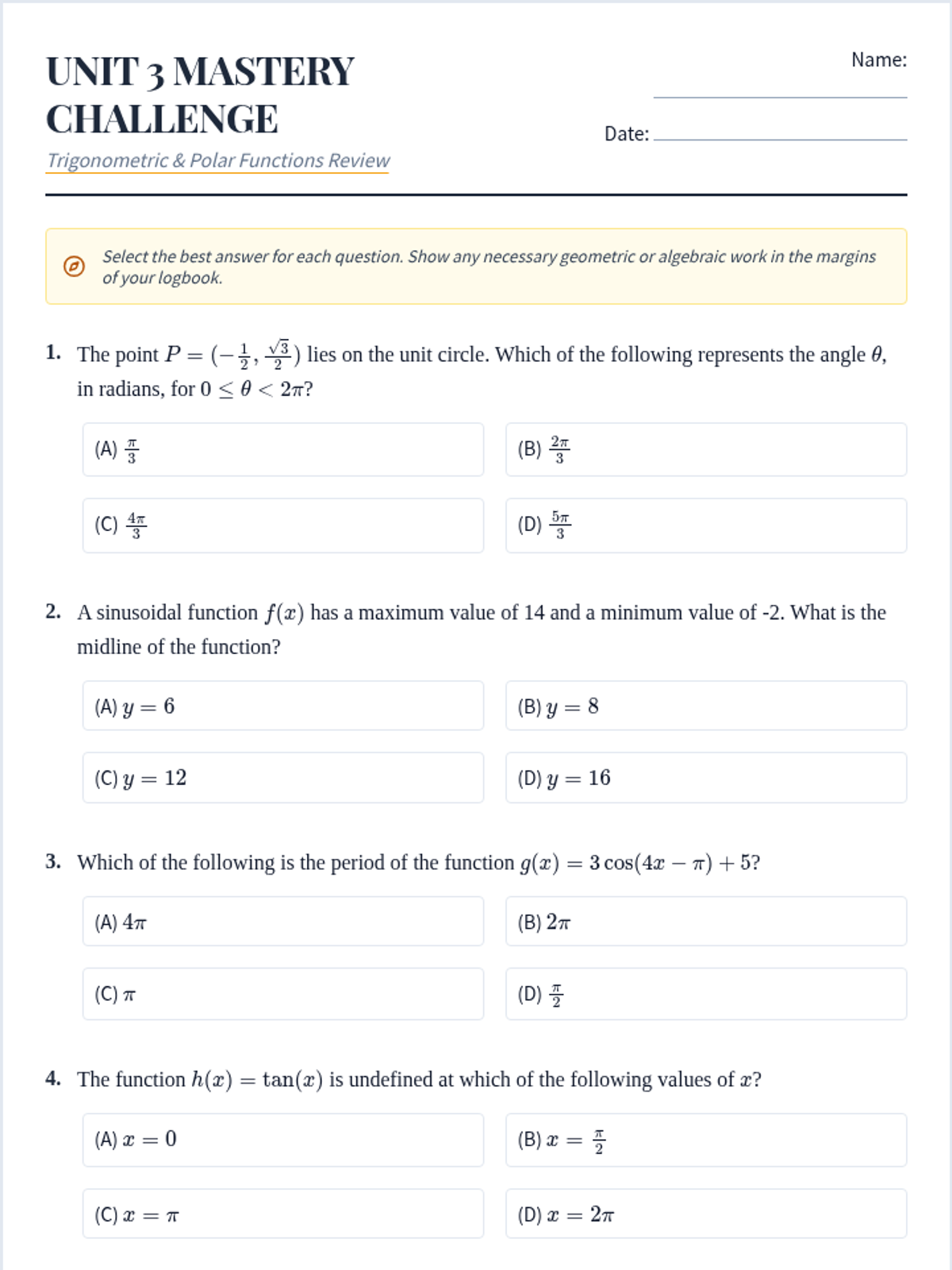
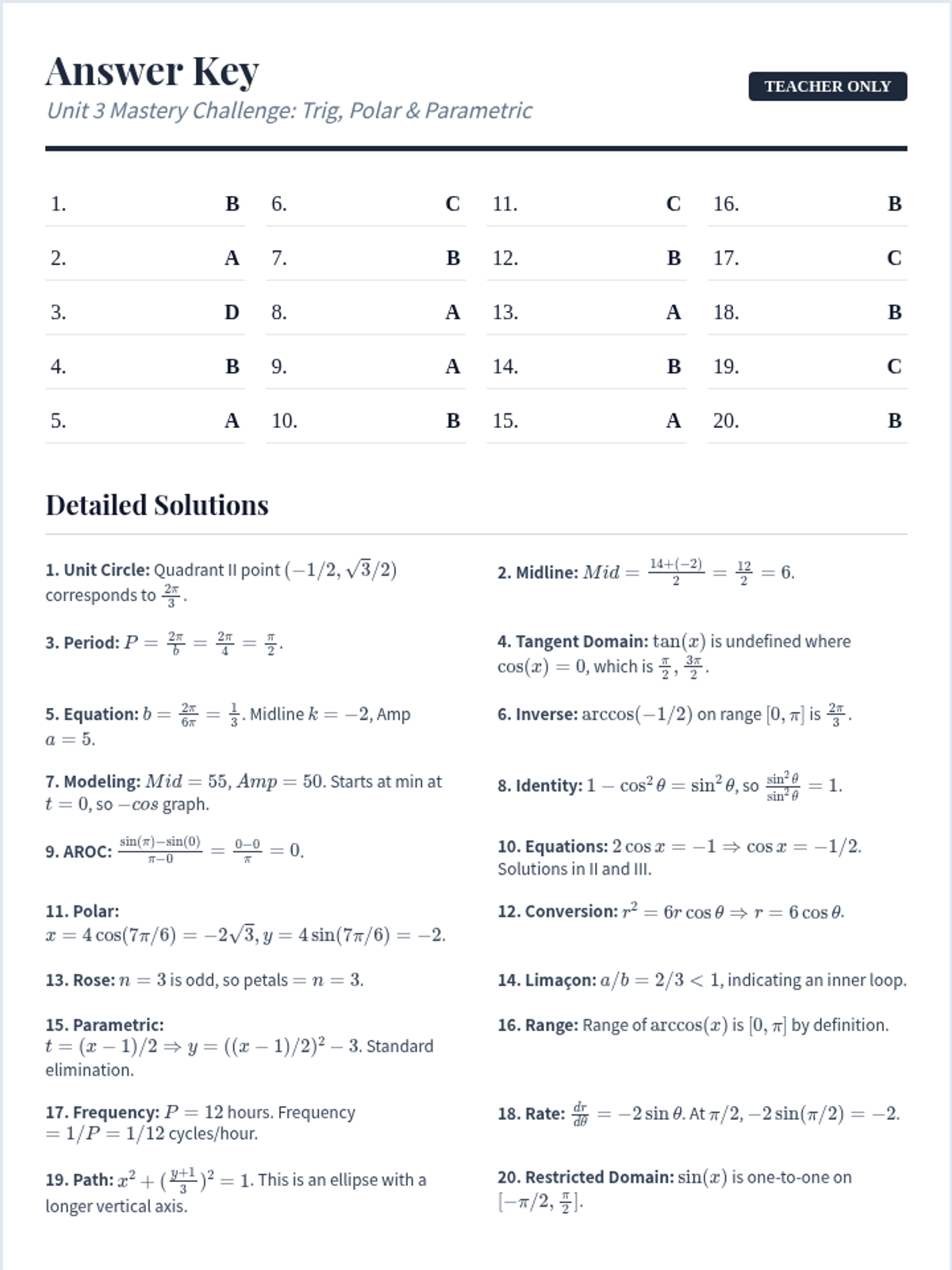
A comprehensive review for Unit 3 of AP Precalculus, focusing on trigonometric and polar functions through reference materials and practice assessments.
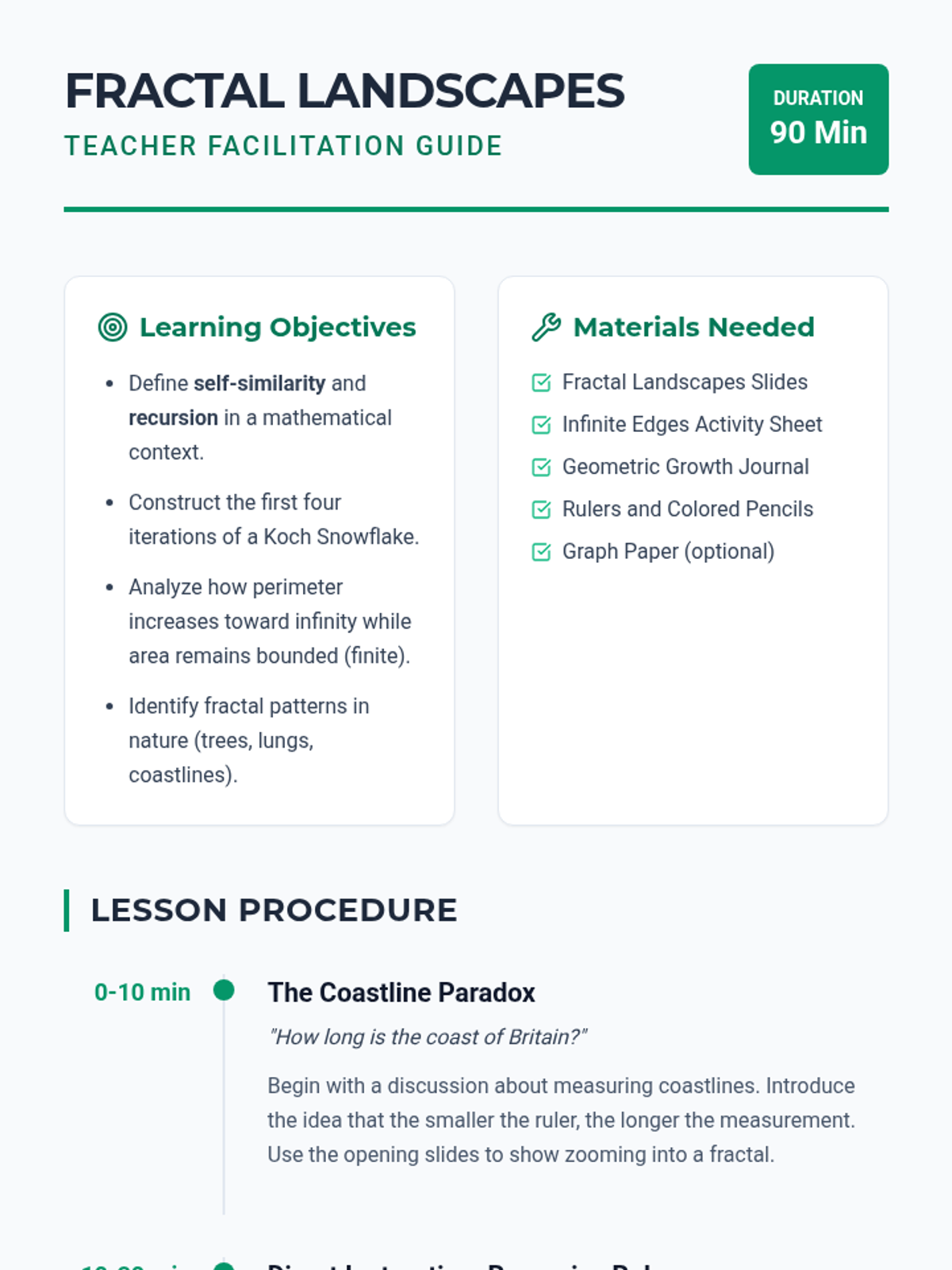
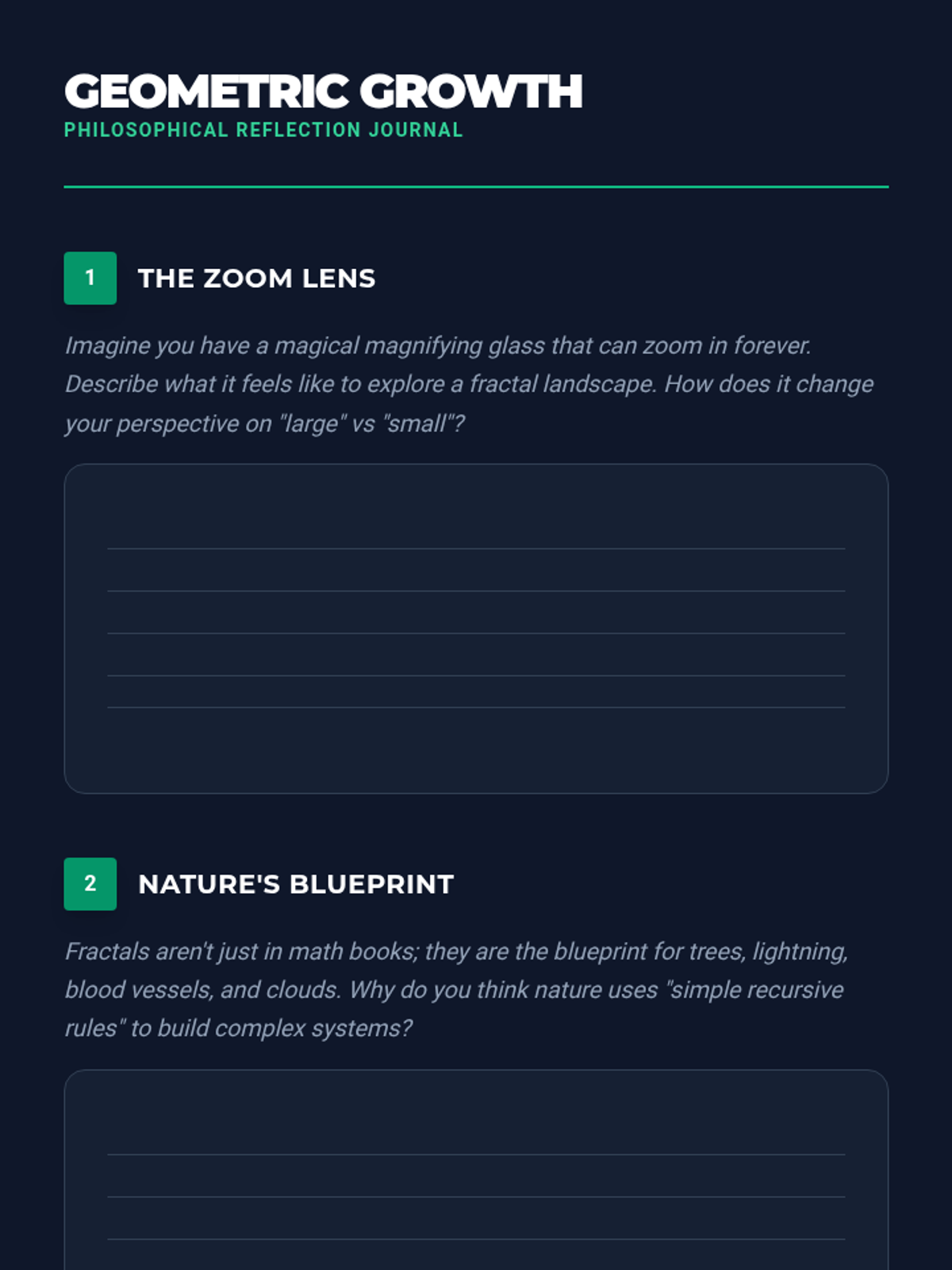
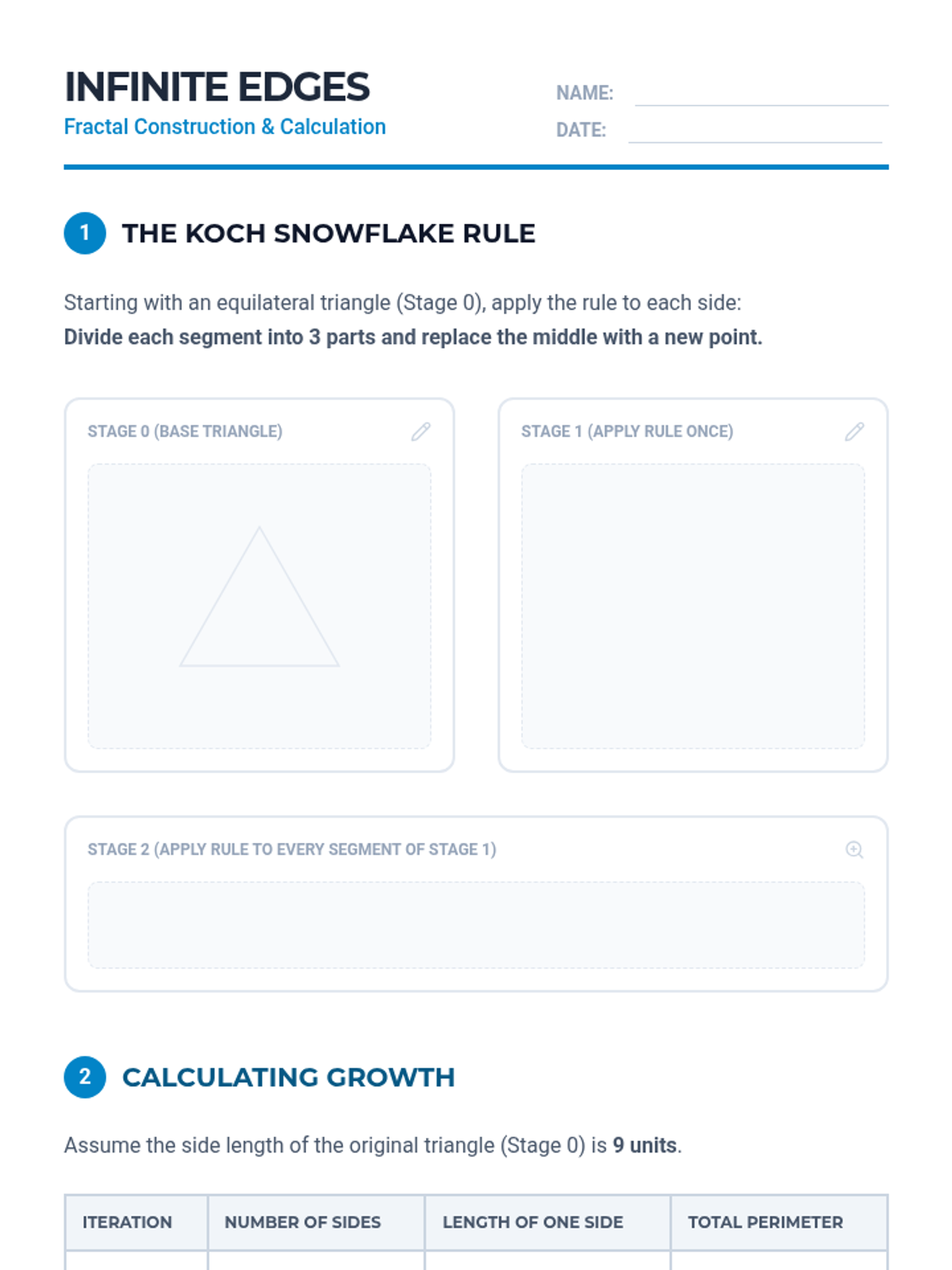
Explore the mesmerizing world of fractals where art meets mathematics. Students investigate recursive patterns, self-similarity, and the mind-bending paradox of infinite perimeters within finite spaces.
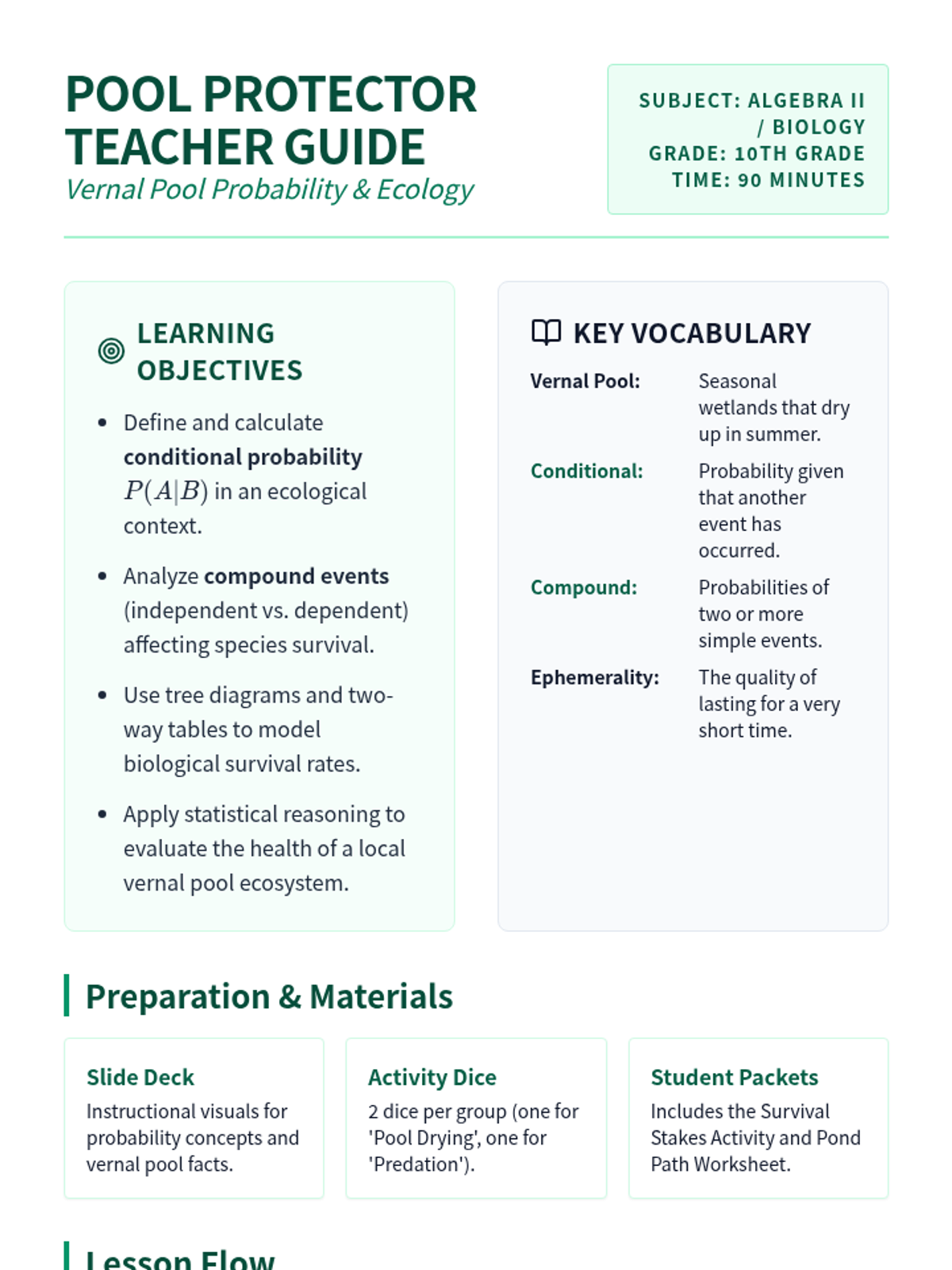
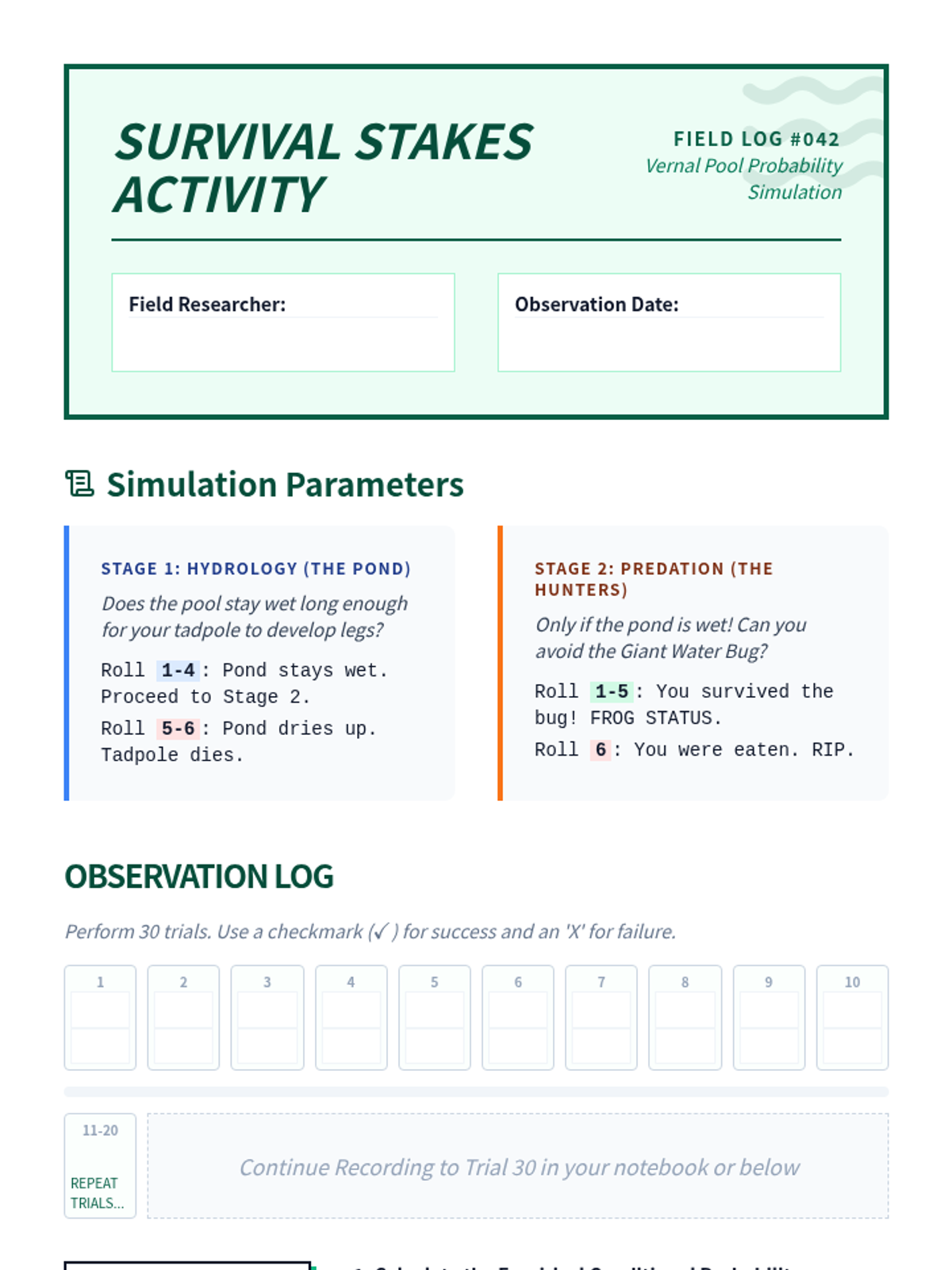
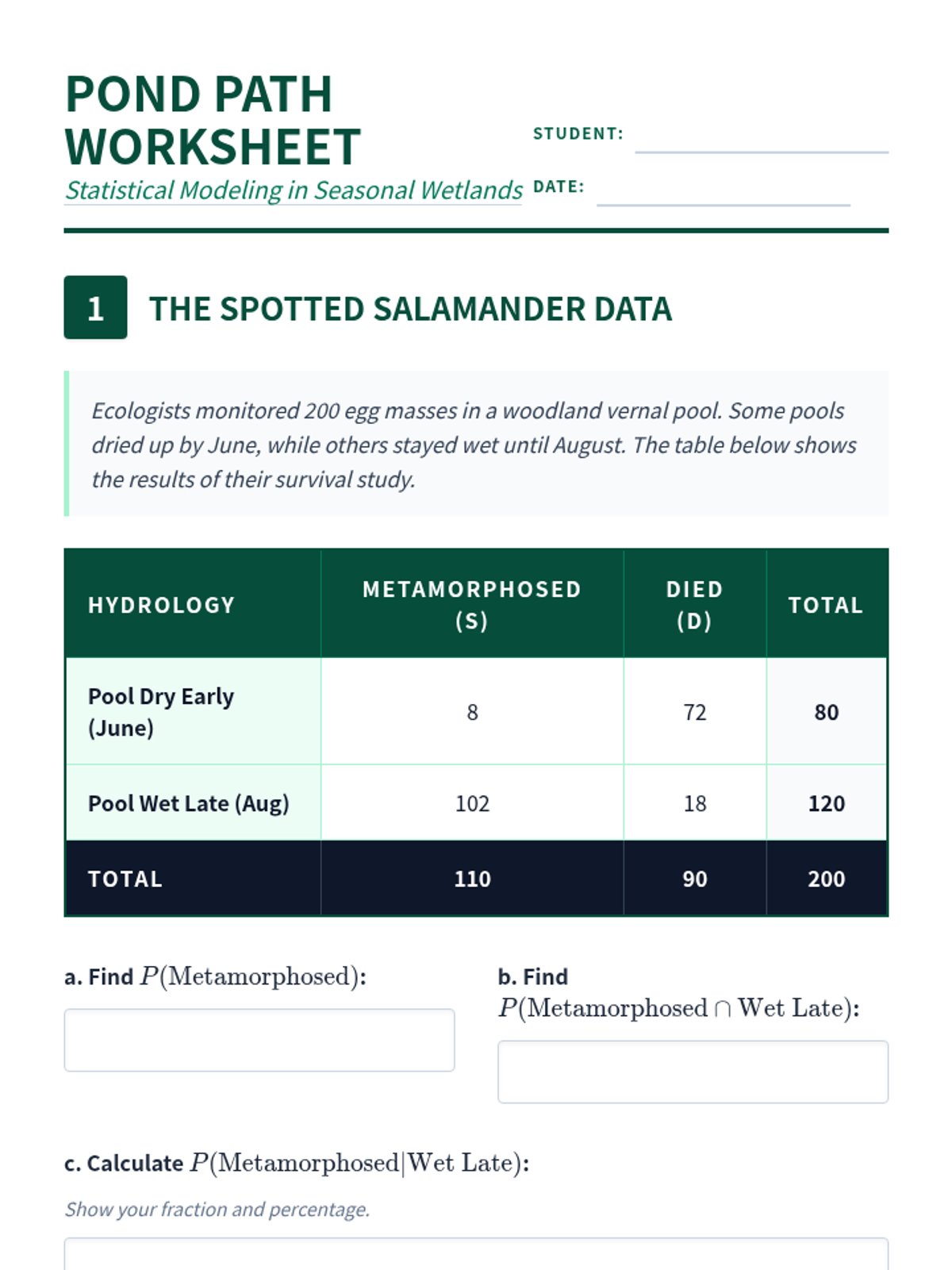
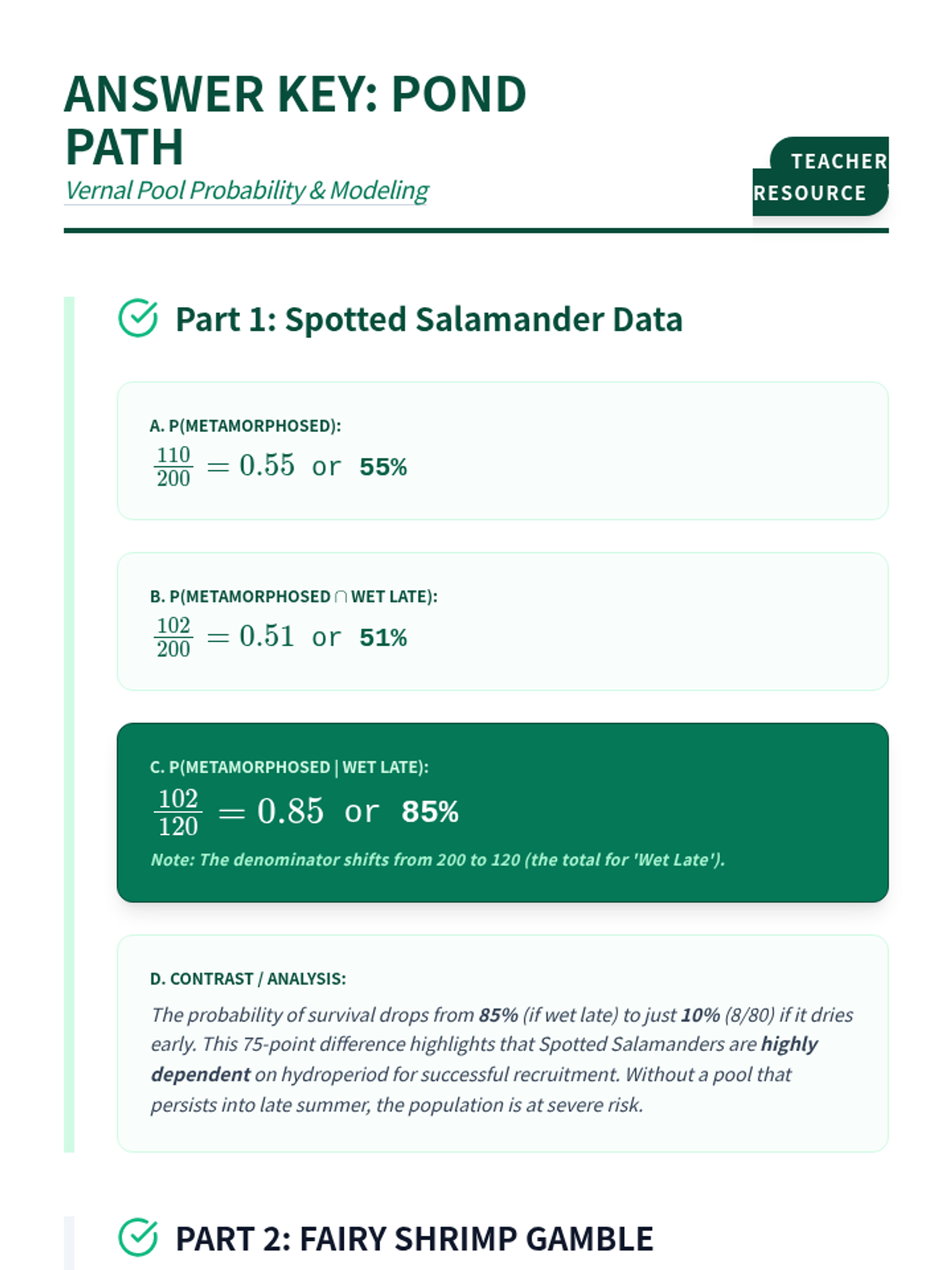
Students apply conditional probability and compound event analysis to understand the survival dynamics of species in vernal pools, bridging biology and statistical reasoning.
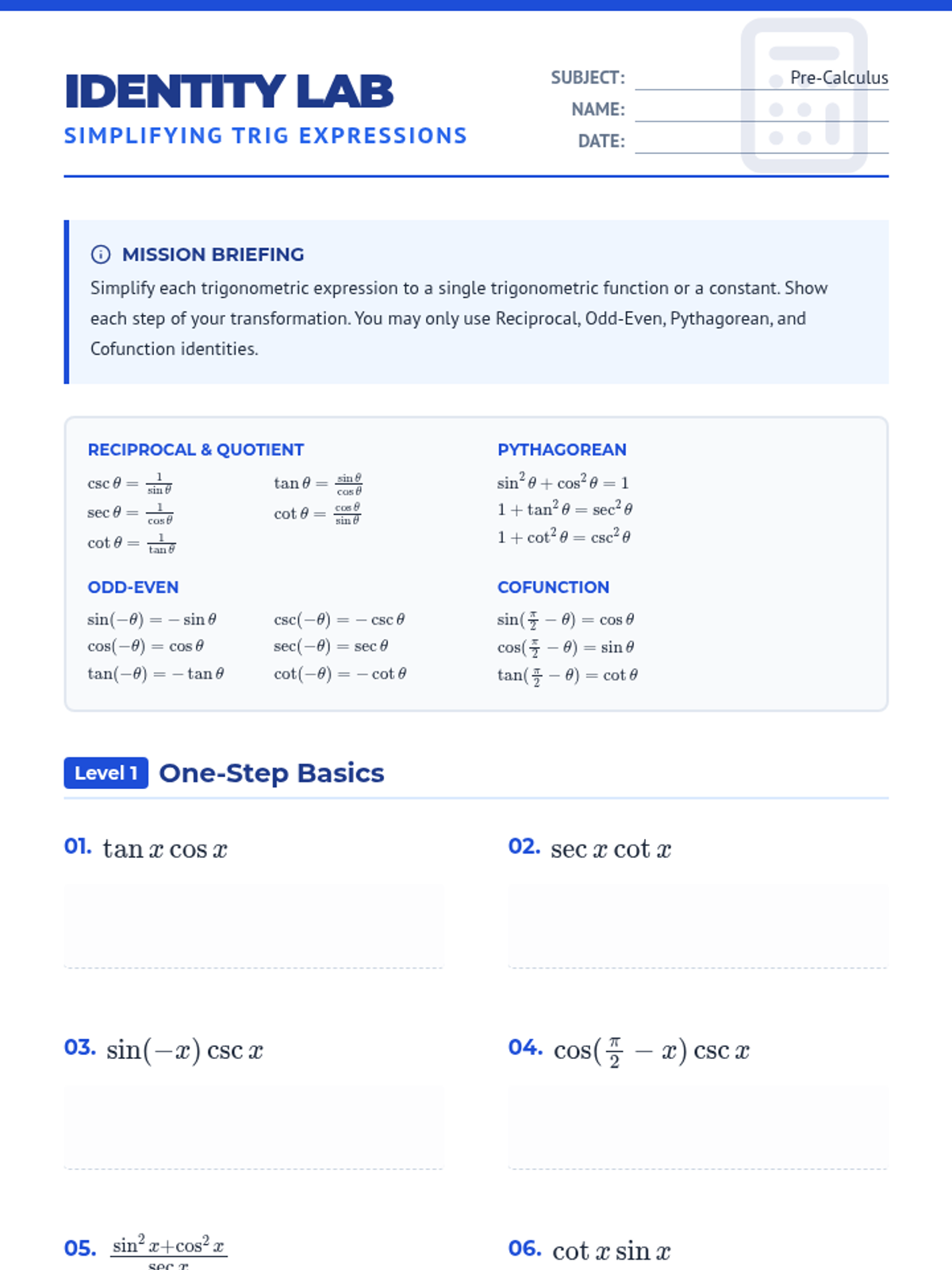
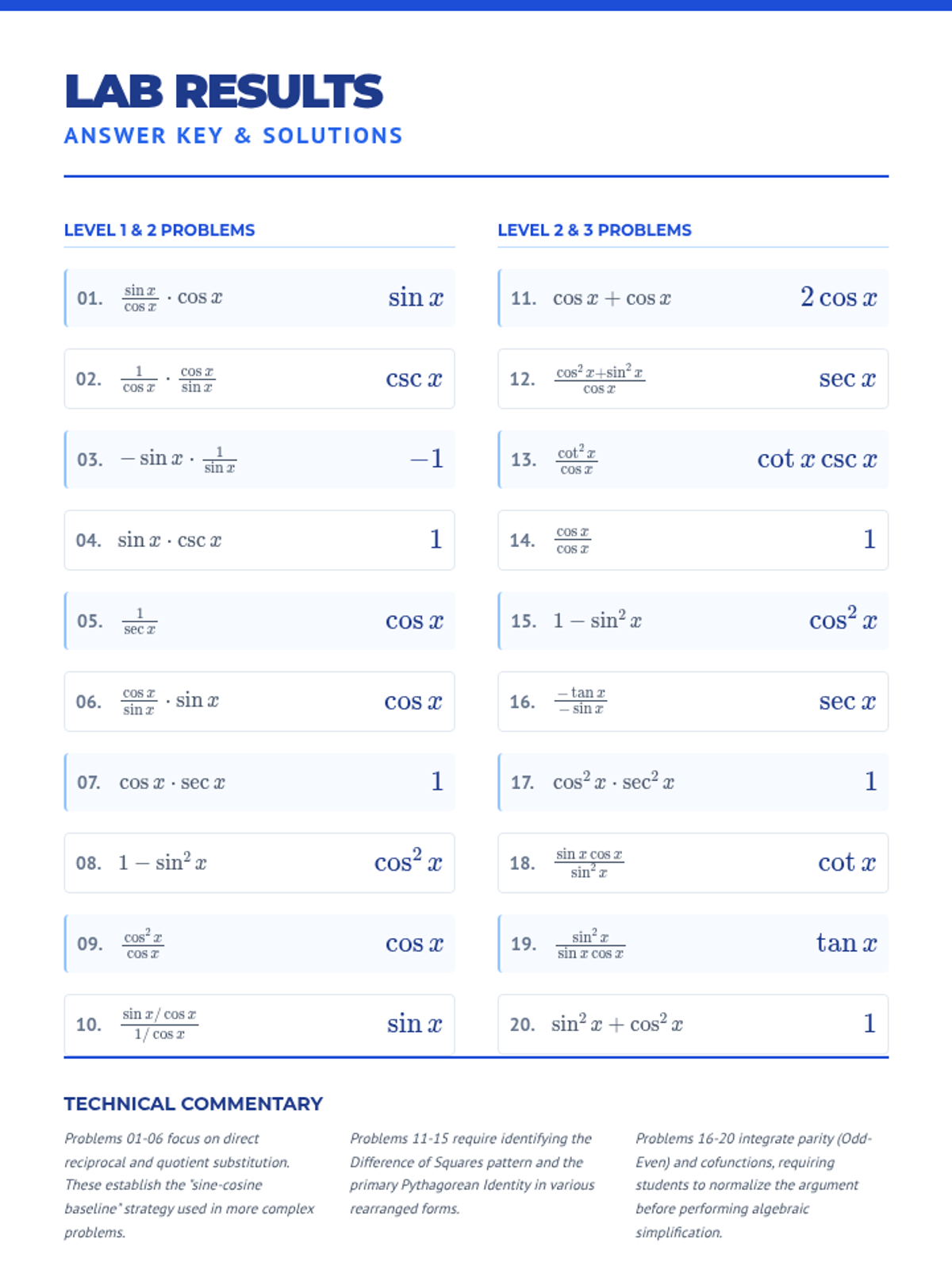
This lesson focuses on simplifying trigonometric expressions using fundamental identities: reciprocal, odd-even, Pythagorean, and cofunction. It provides scaffolded practice transitioning from basic one-step simplifications to more complex algebraic manipulations.
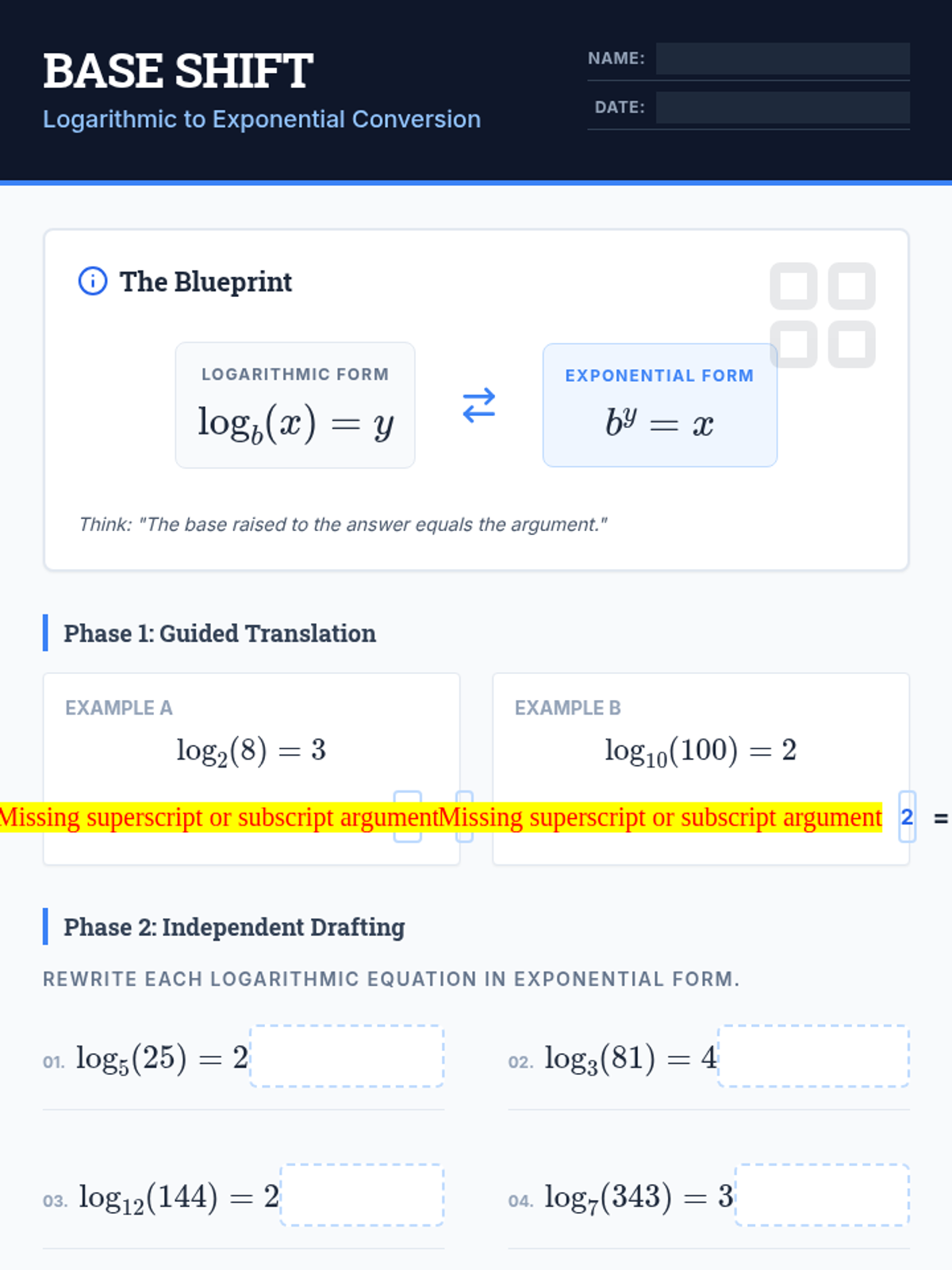
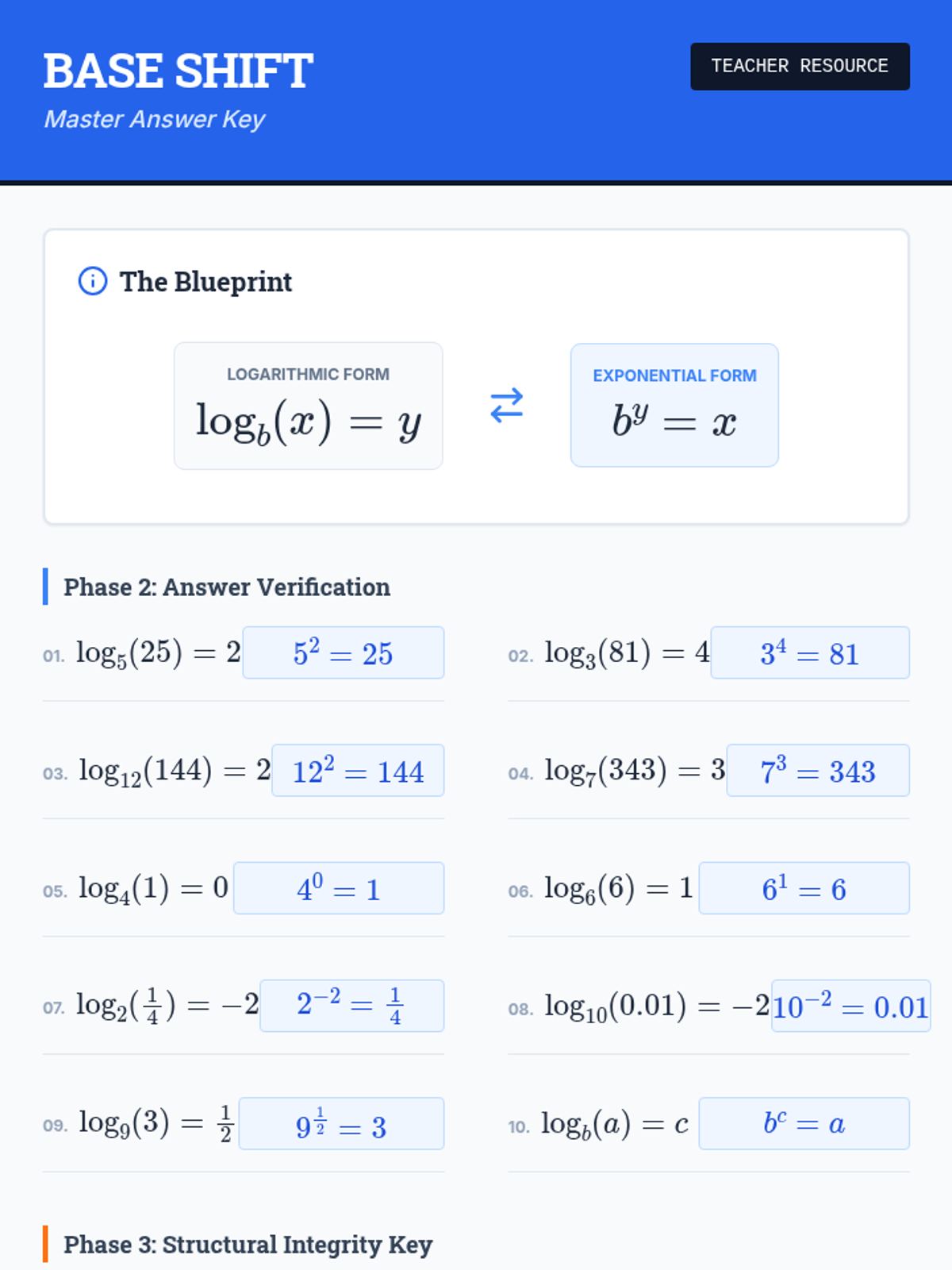
A focused practice session on converting logarithmic equations into their exponential equivalents using the definition of a logarithm.
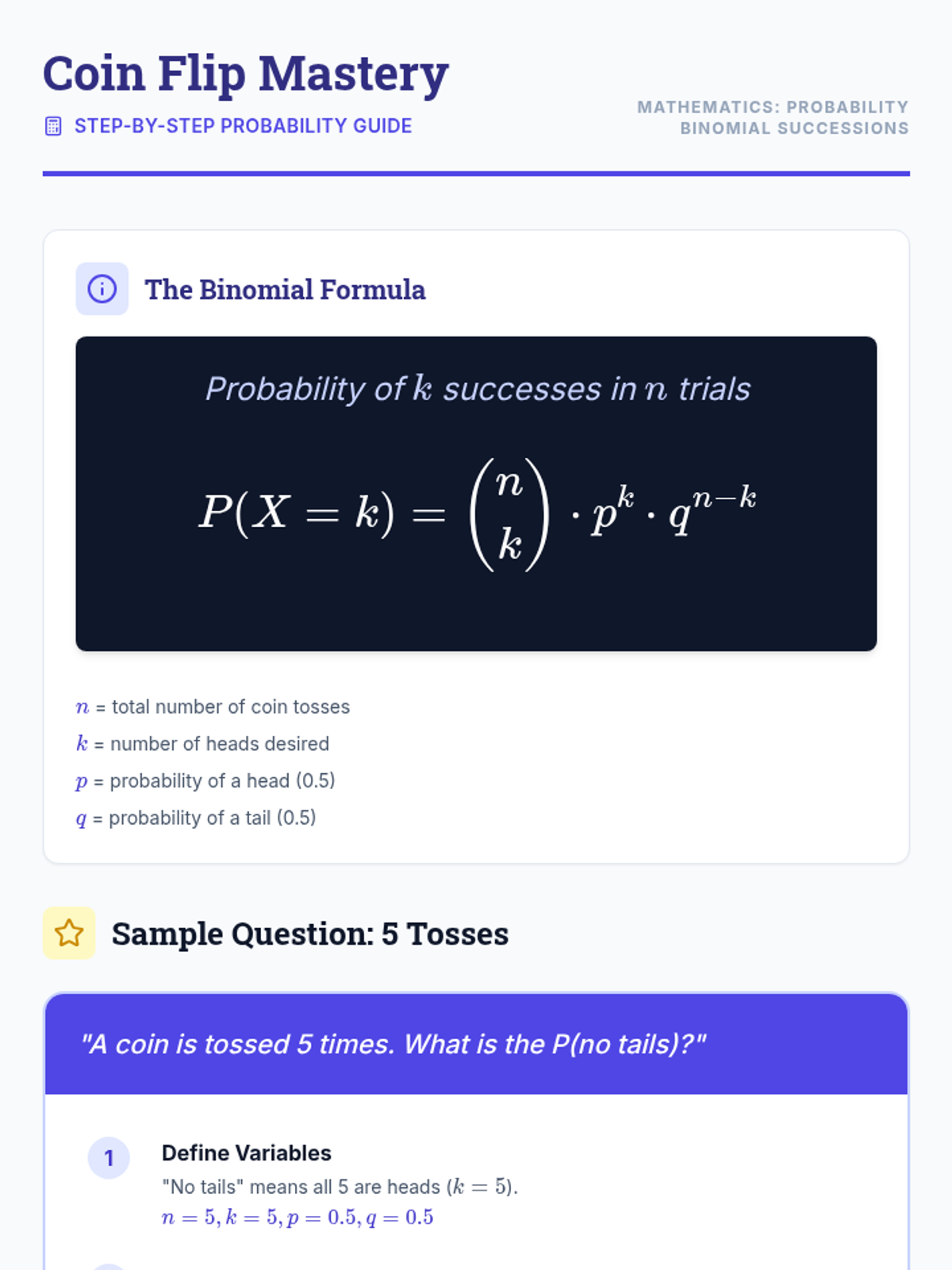
A focused lesson on calculating binomial probabilities for independent coin toss events, specifically focusing on 'all-or-nothing' outcomes.
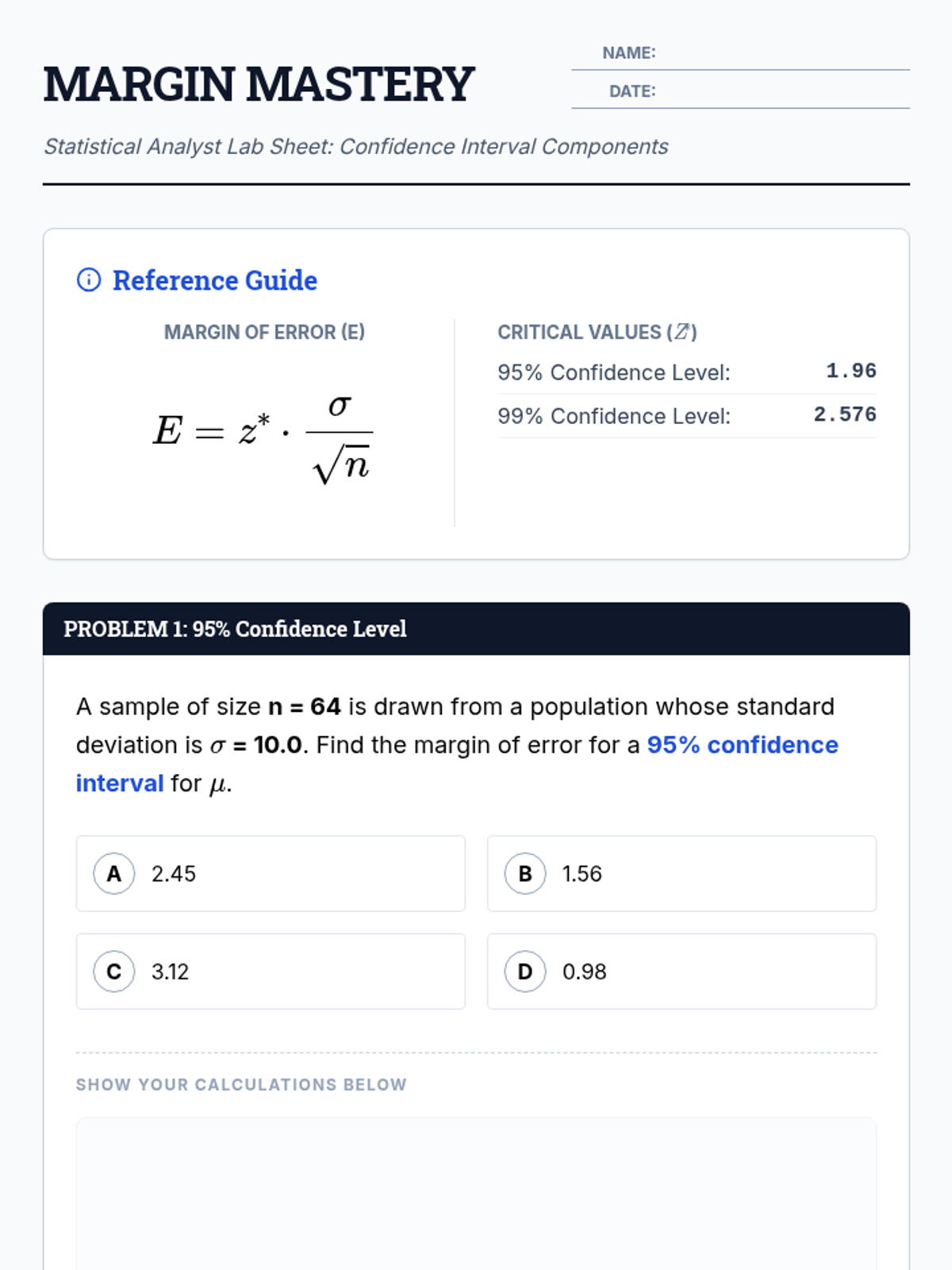
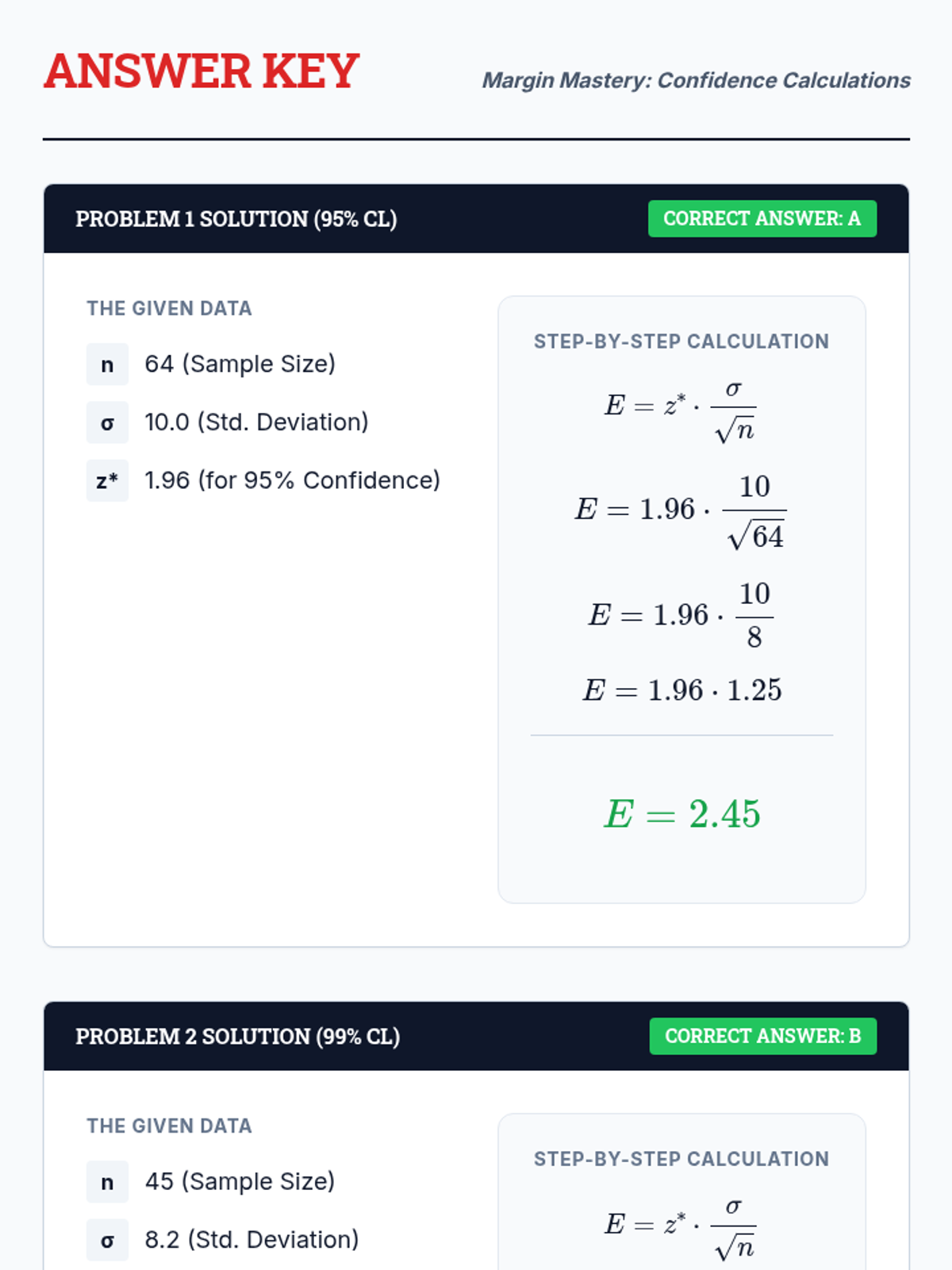
A lesson focused on calculating the margin of error for population means when the population standard deviation is known. Students practice using z-scores for different confidence levels.
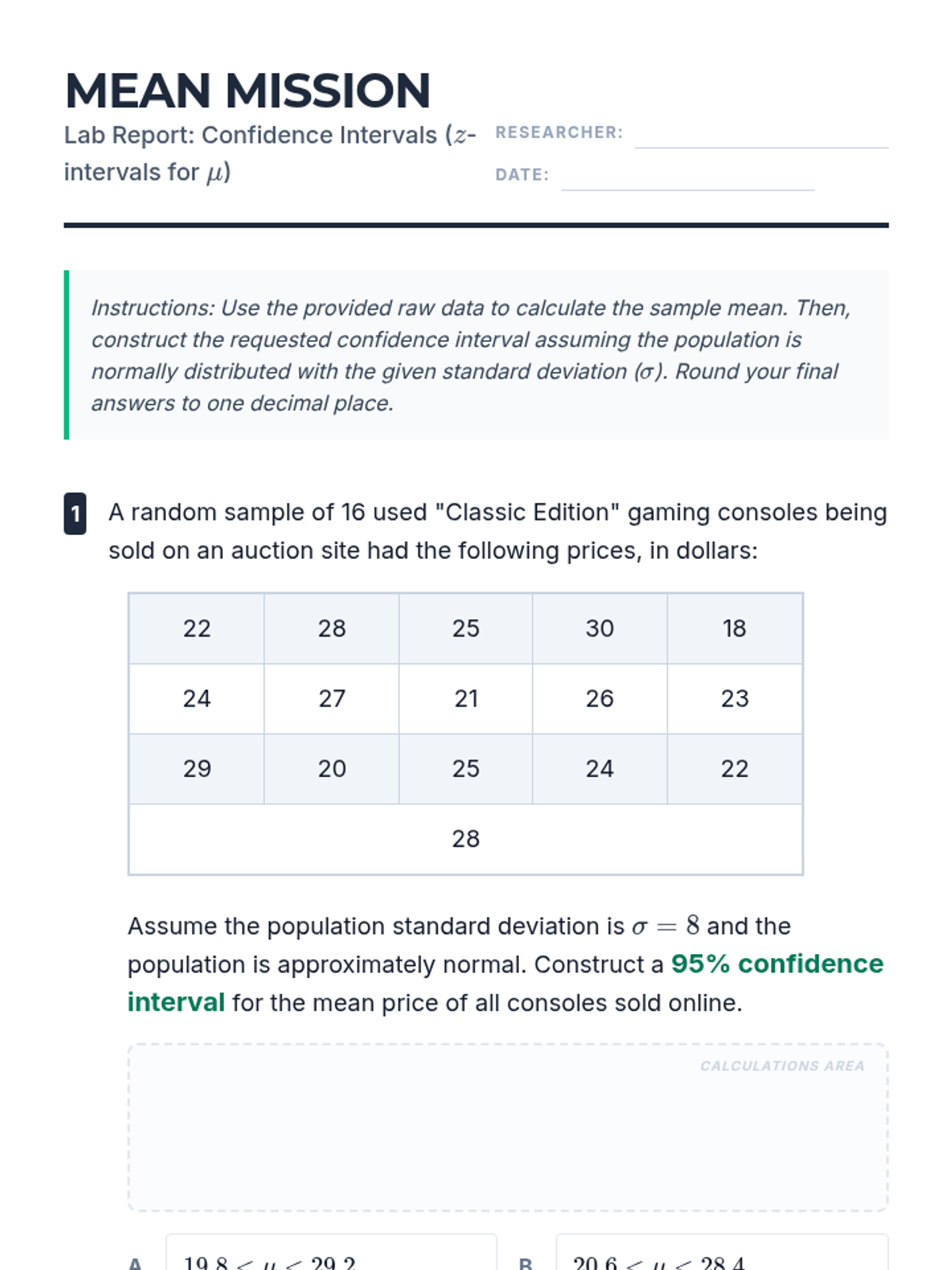
A focused practice session on constructing z-confidence intervals for the mean using raw data and known population standard deviations.
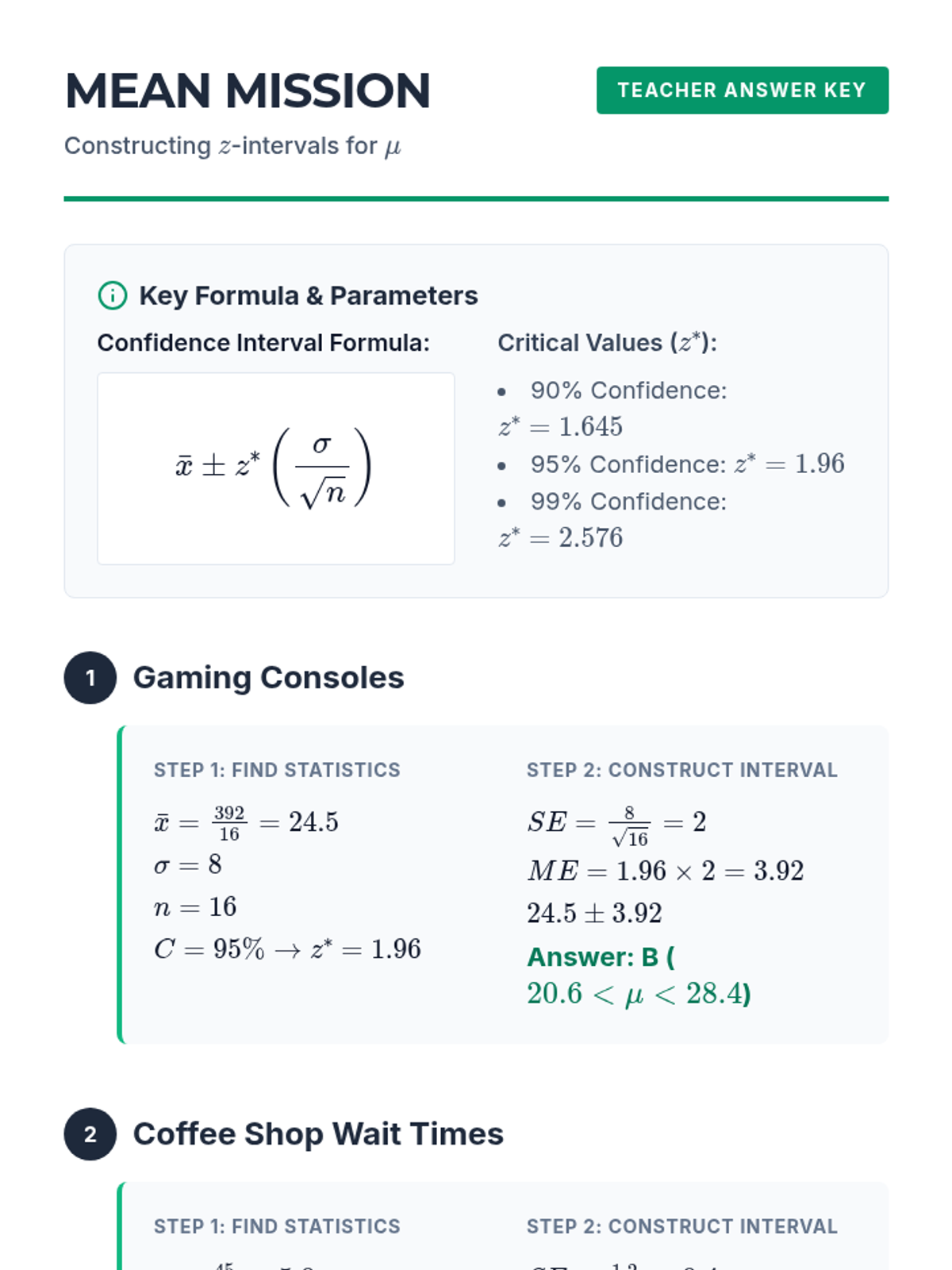
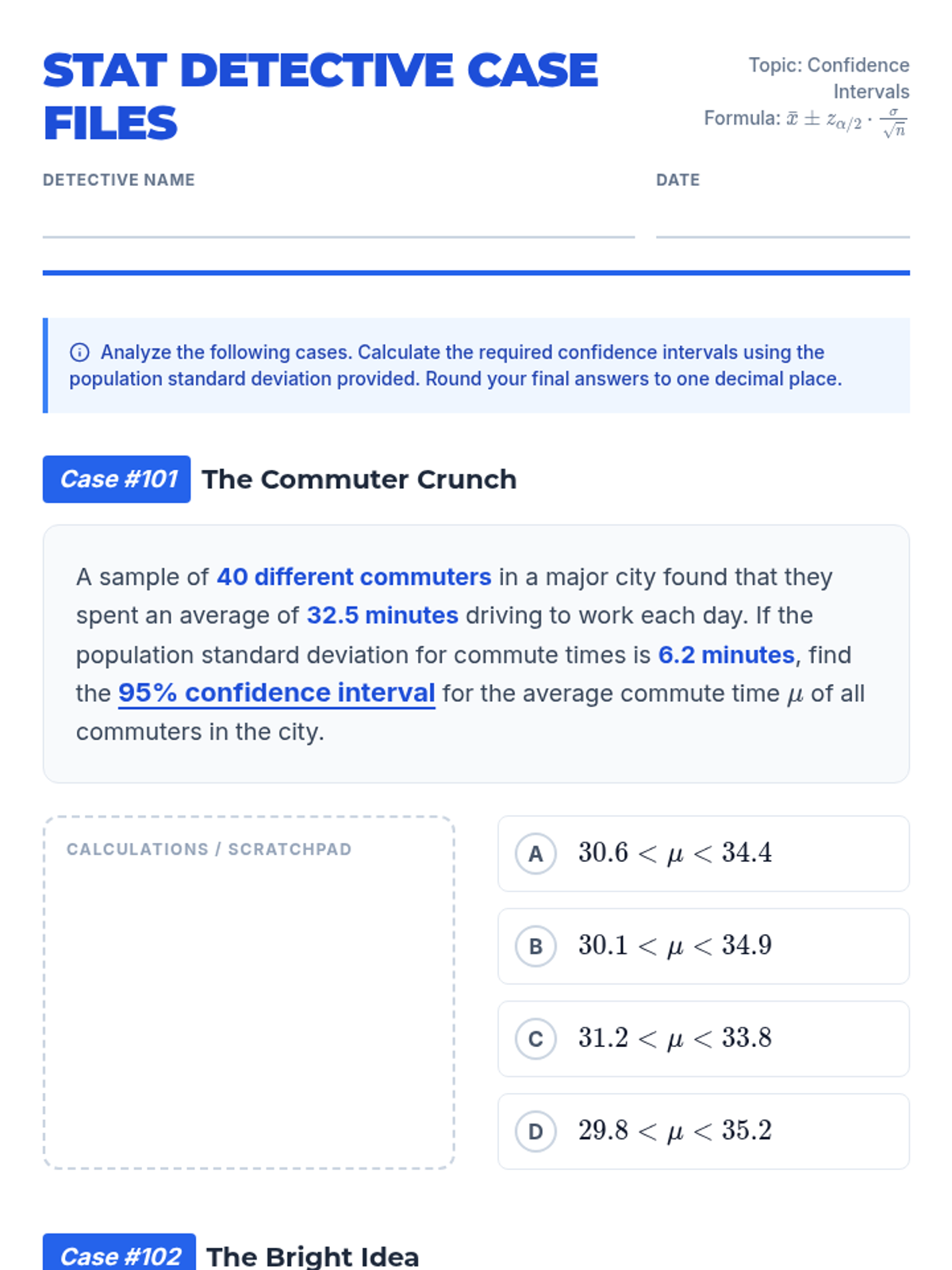
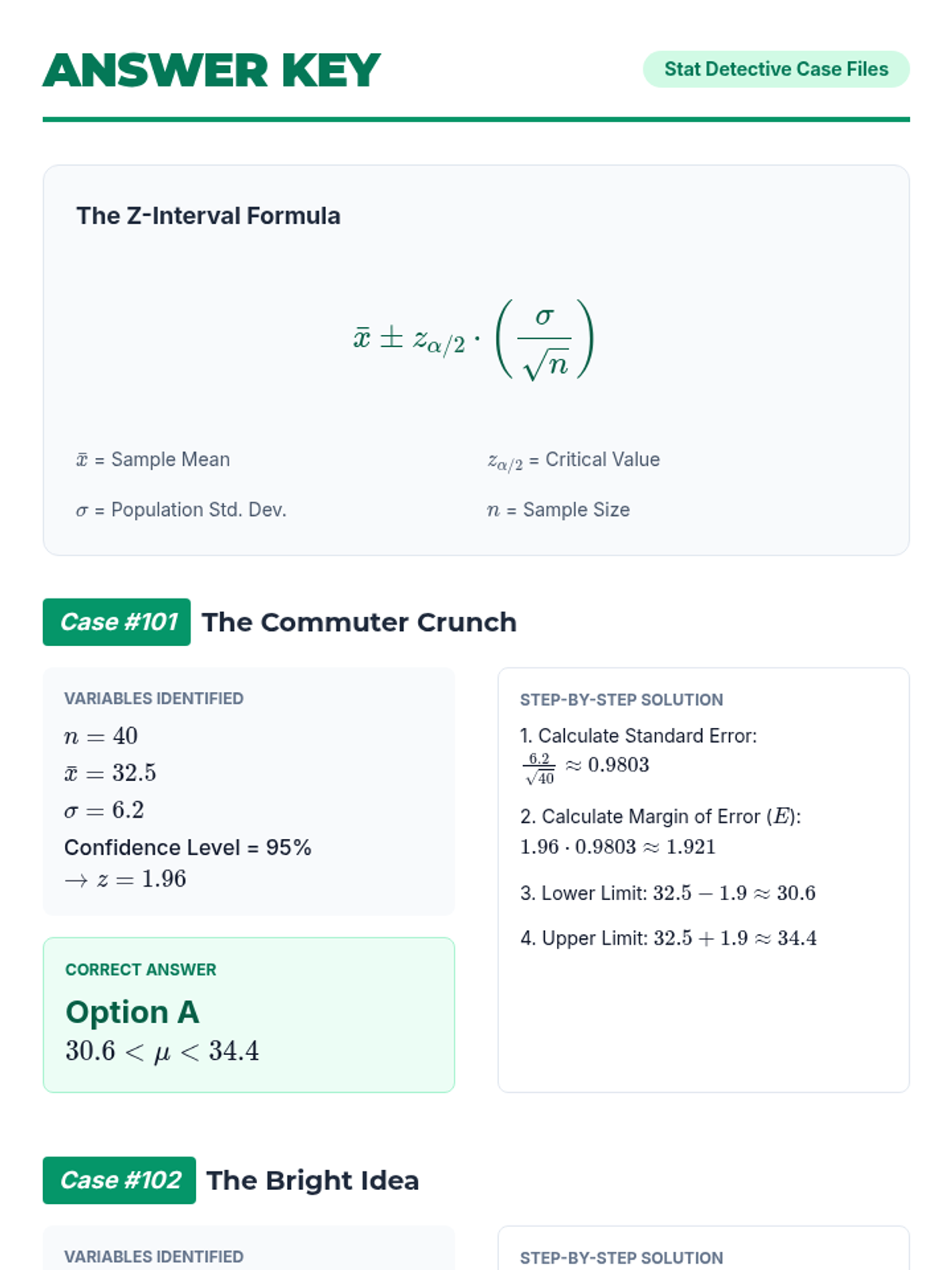
A lesson focused on calculating and interpreting confidence intervals for population means when the population standard deviation is known. Students practice identifying key statistics and applying the Z-interval formula to real-world scenarios.
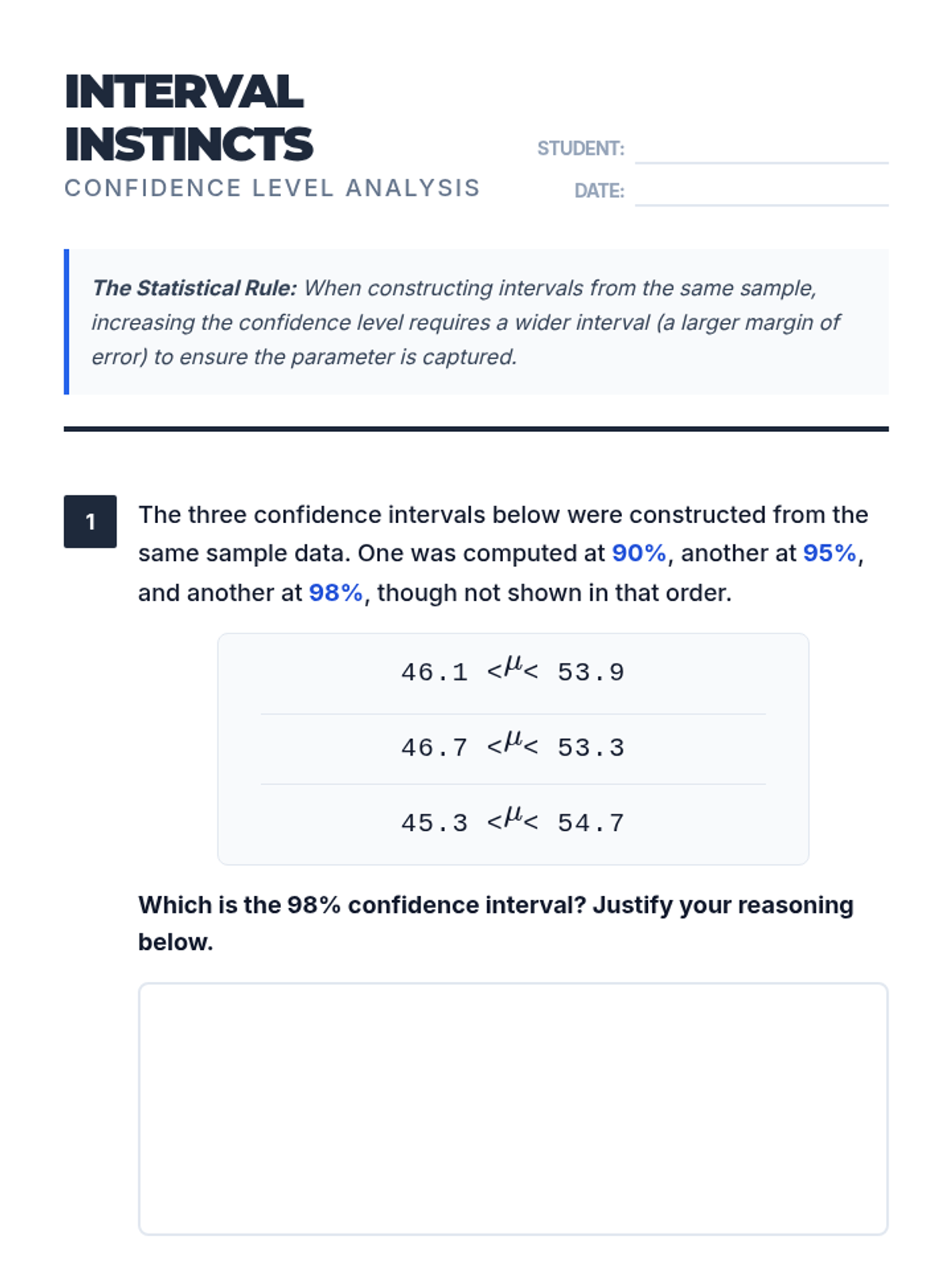
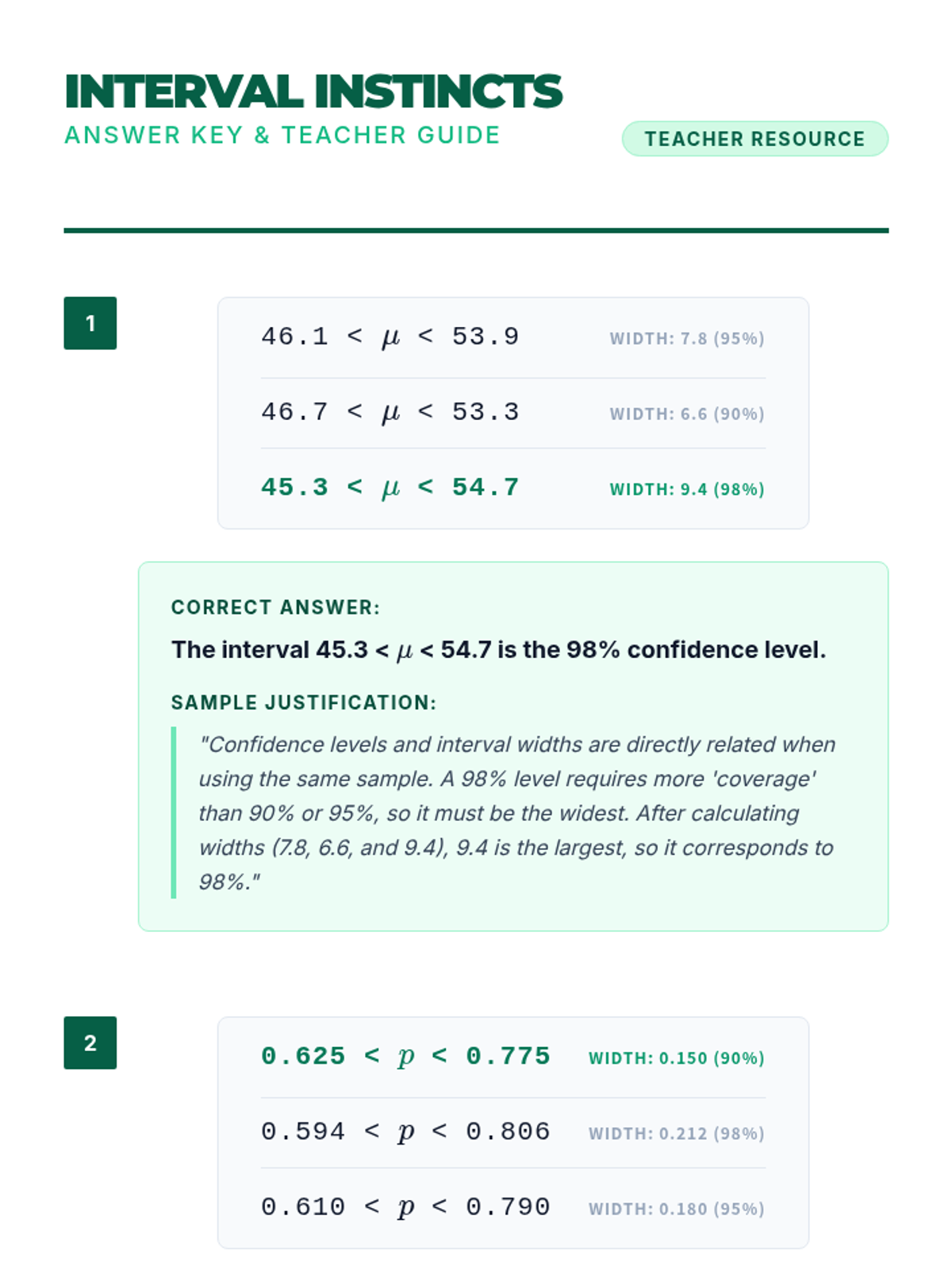
A practice lesson focusing on the relationship between confidence levels and interval width. Students analyze sets of intervals to identify specific confidence levels based on their precision.
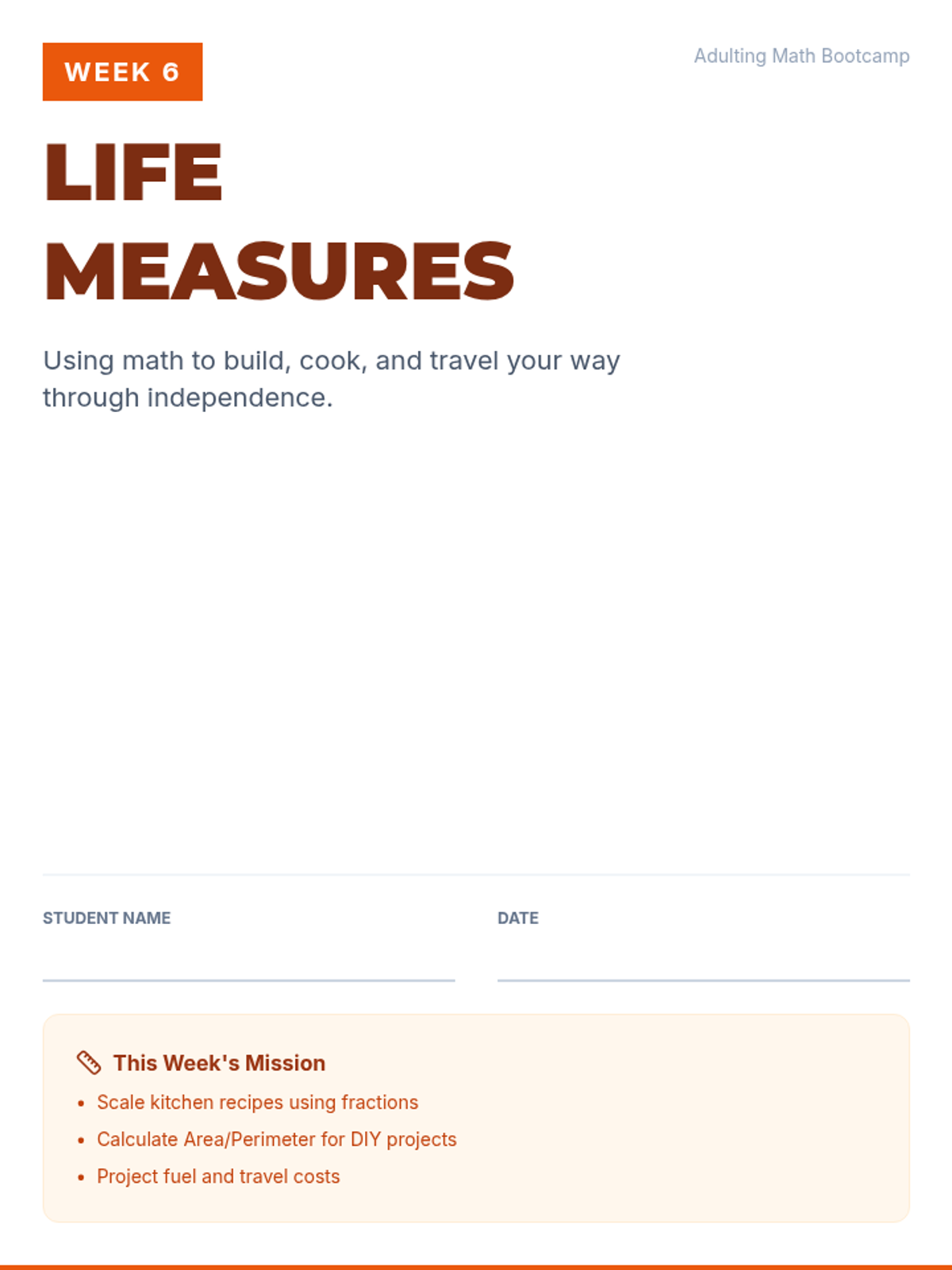
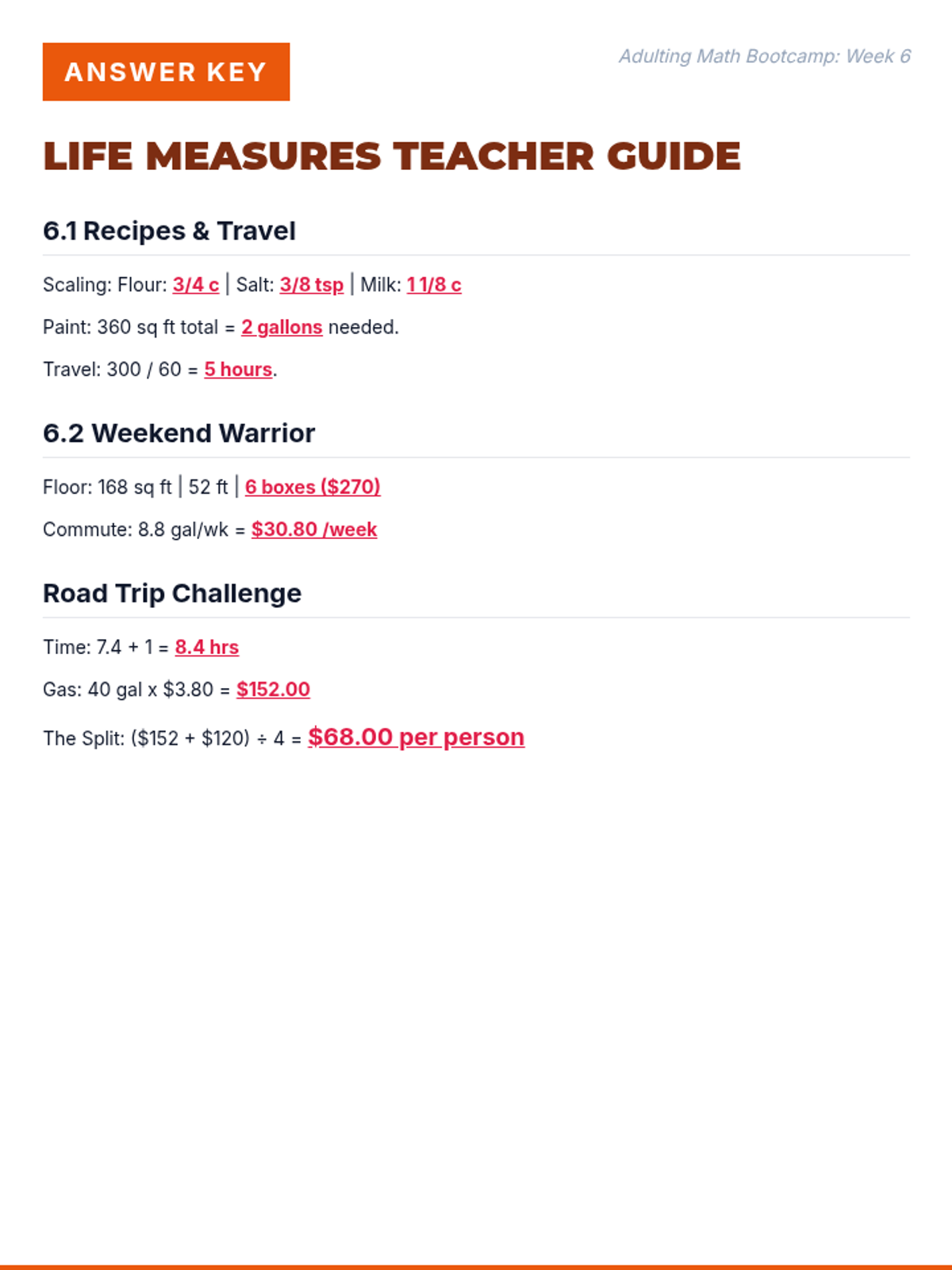
Applies geometry and arithmetic to everyday tasks like cooking measurements, home DIY projects, and travel planning.
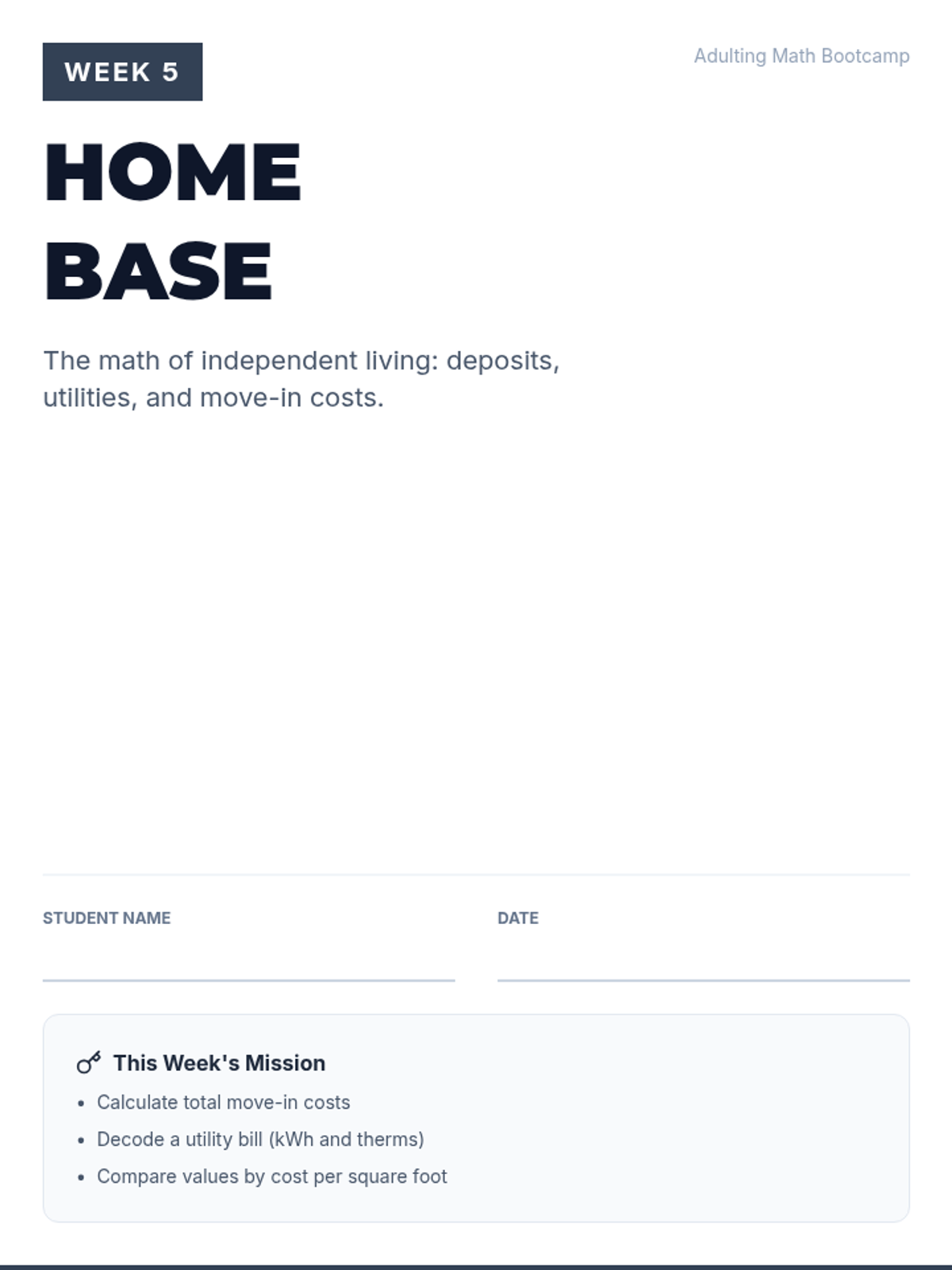
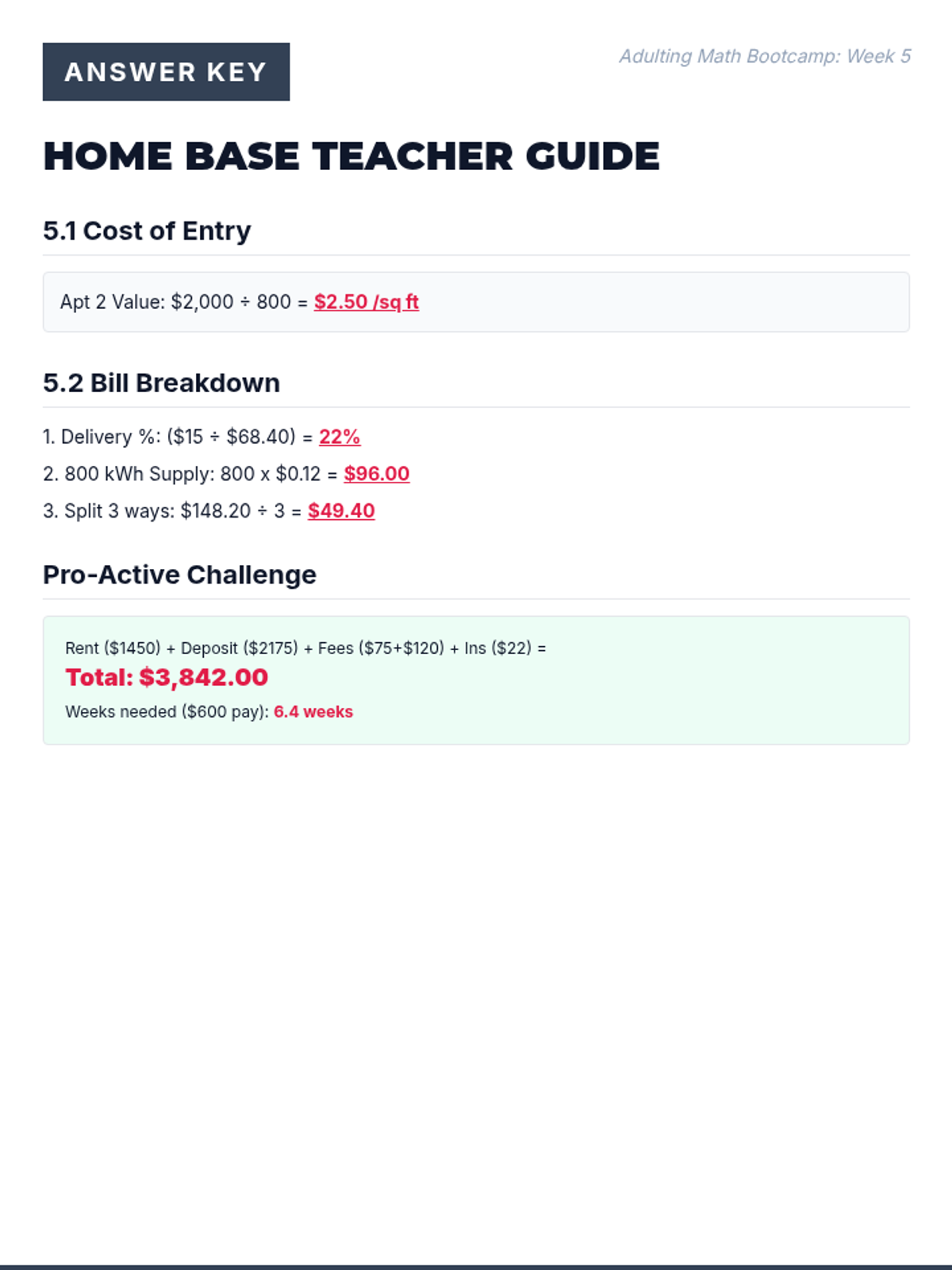
Covers the financial aspects of independent living, including renting, utility usage math, and basic insurance concepts.
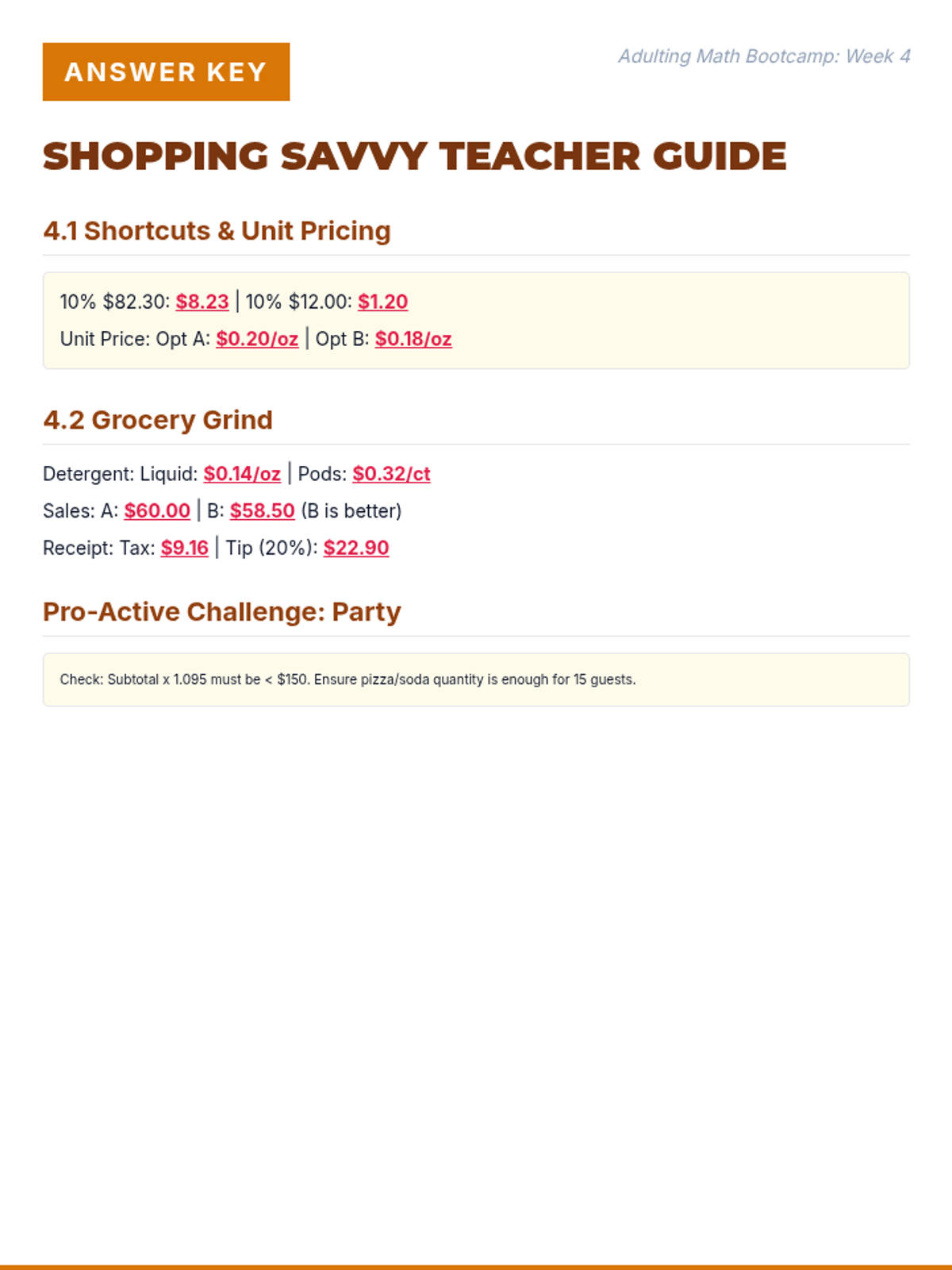
Practical applications of percentages and ratios in shopping, including sales tax, discounts, tips, and unit price comparisons.
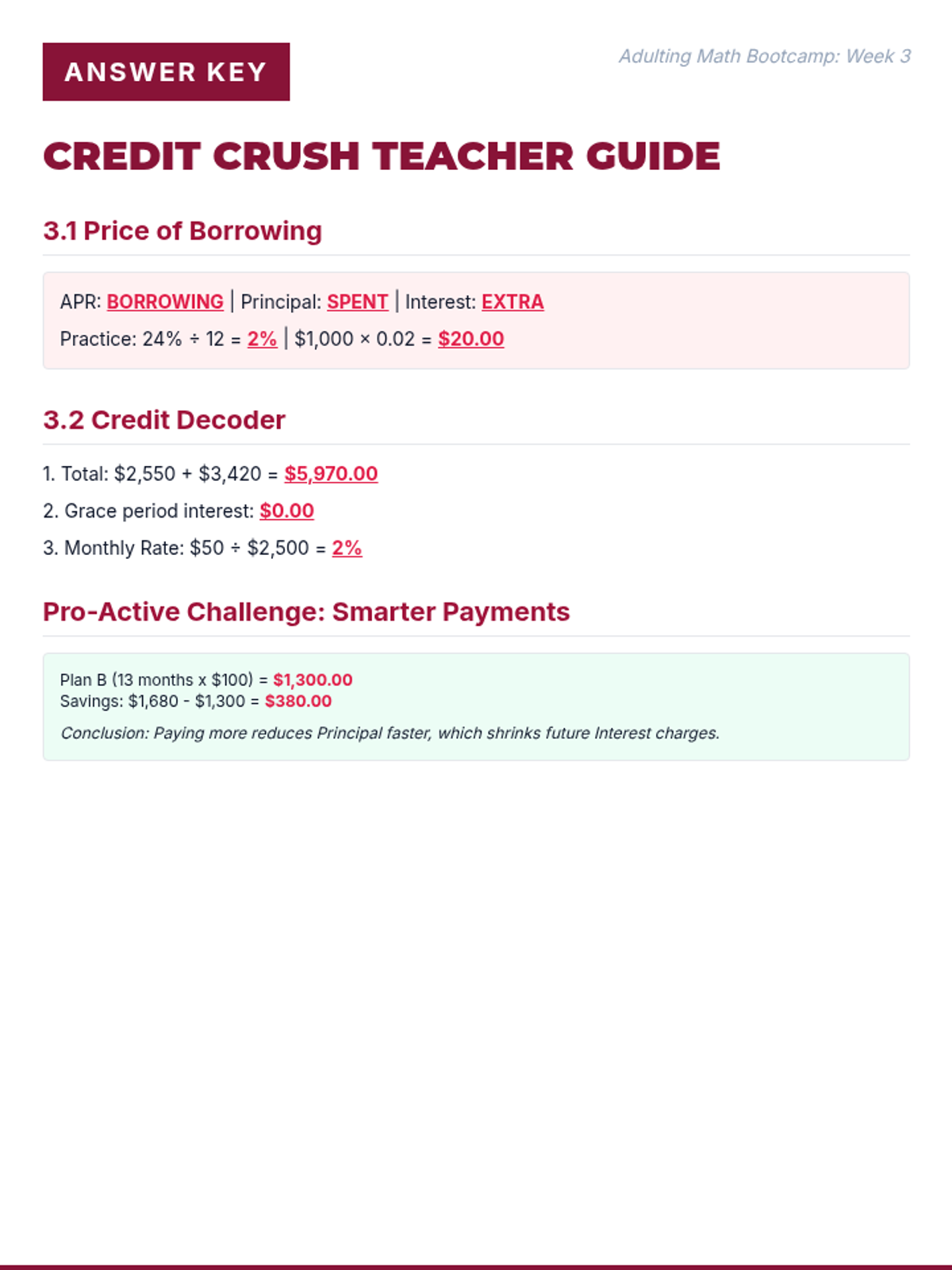
Explores the math behind interest rates (APR), credit card statements, and the long-term impact of debt.
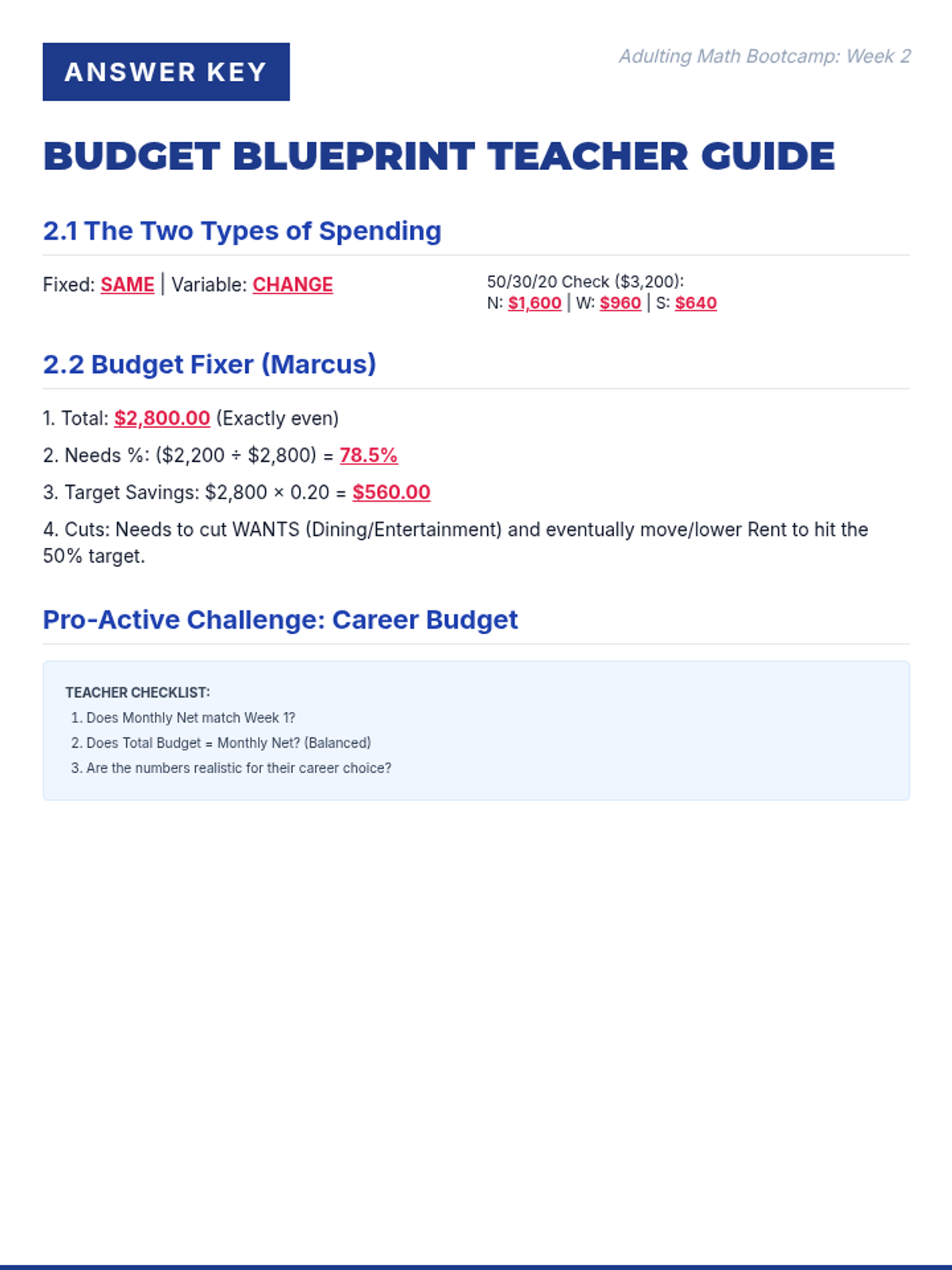
Teaches students how to categorize expenses, use the 50/30/20 rule, and build a sustainable monthly budget.
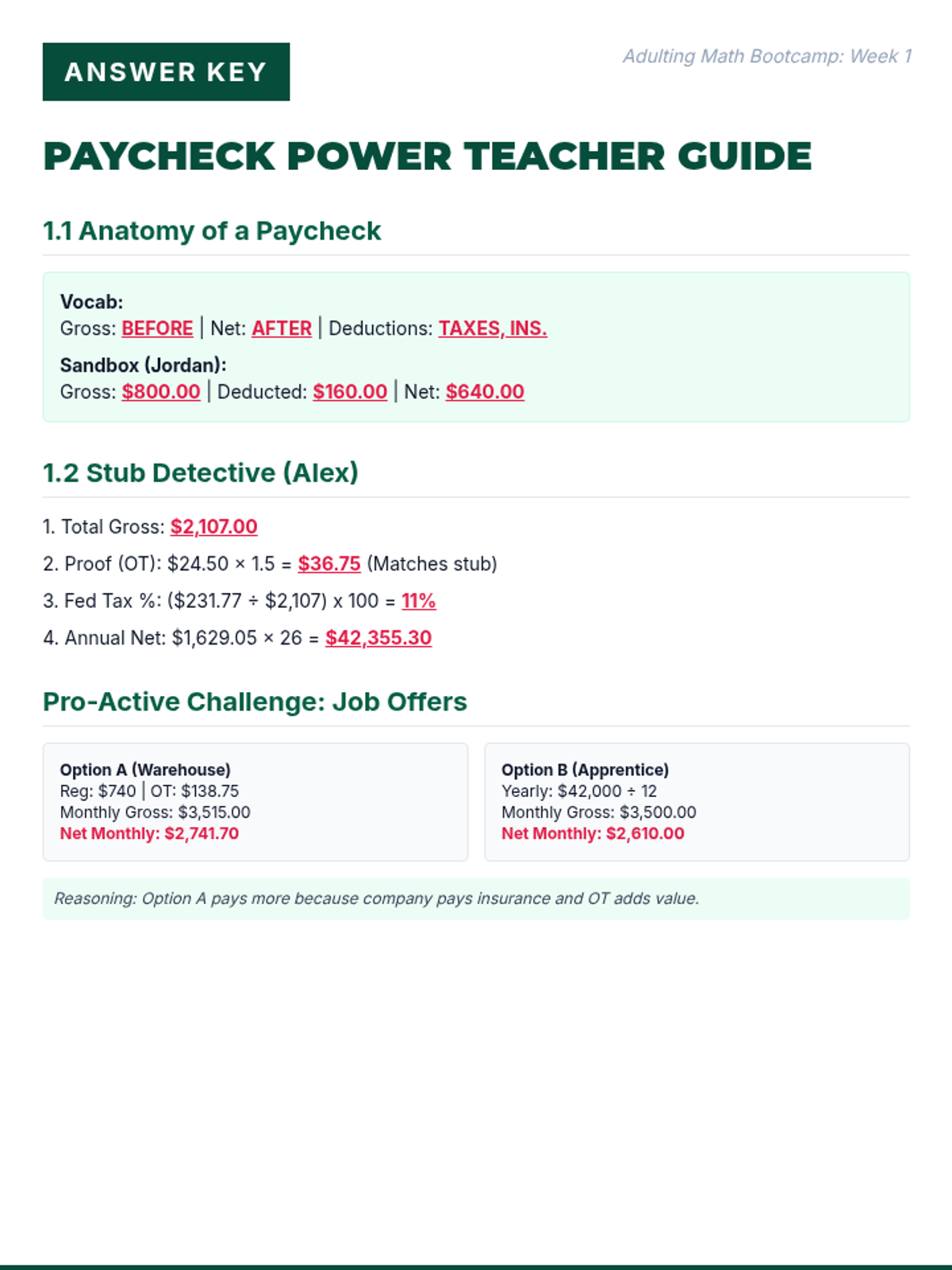
Focuses on understanding gross vs. net pay, reading paystubs, and calculating common tax deductions to prepare students for their first professional earnings.
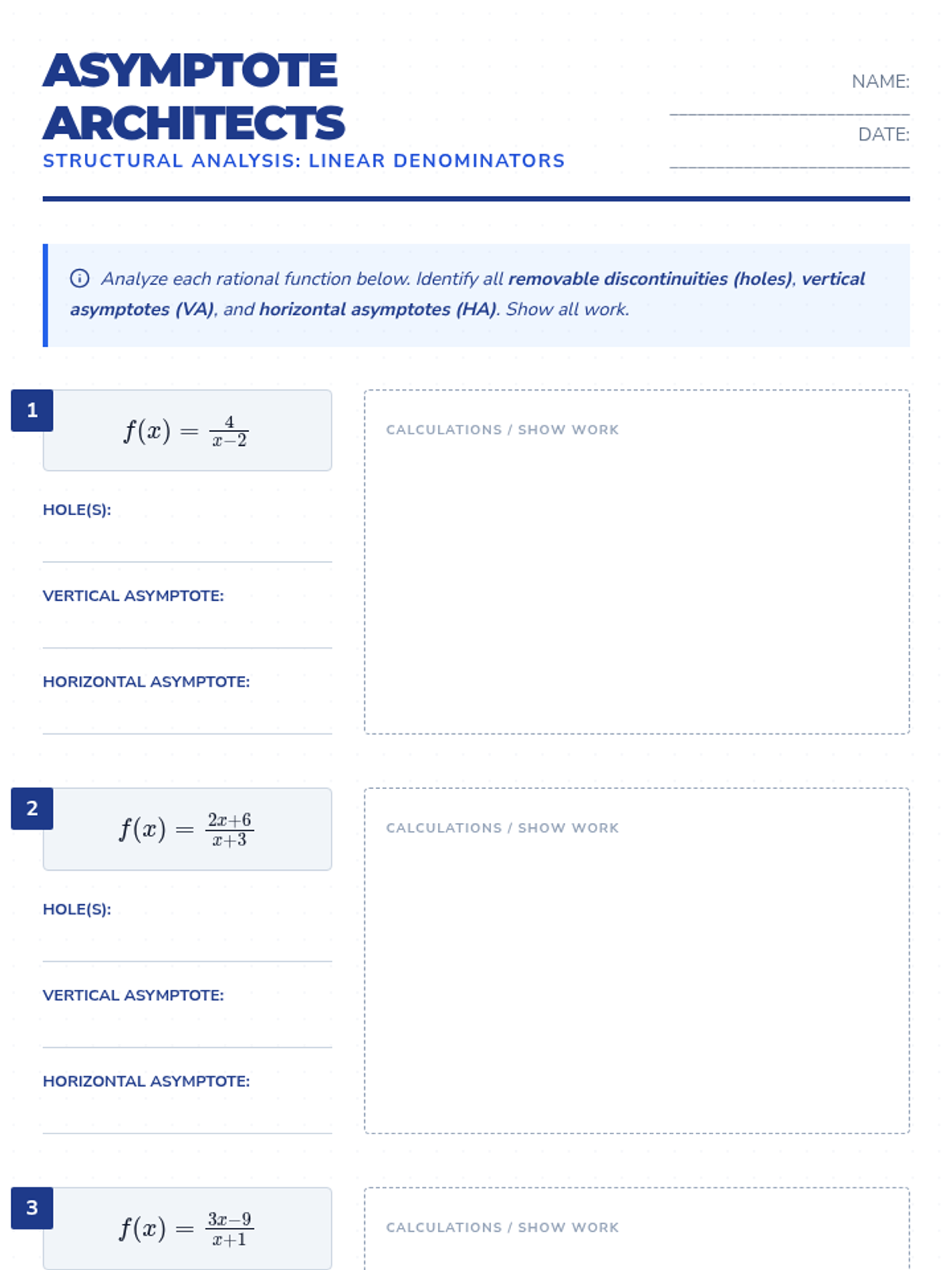
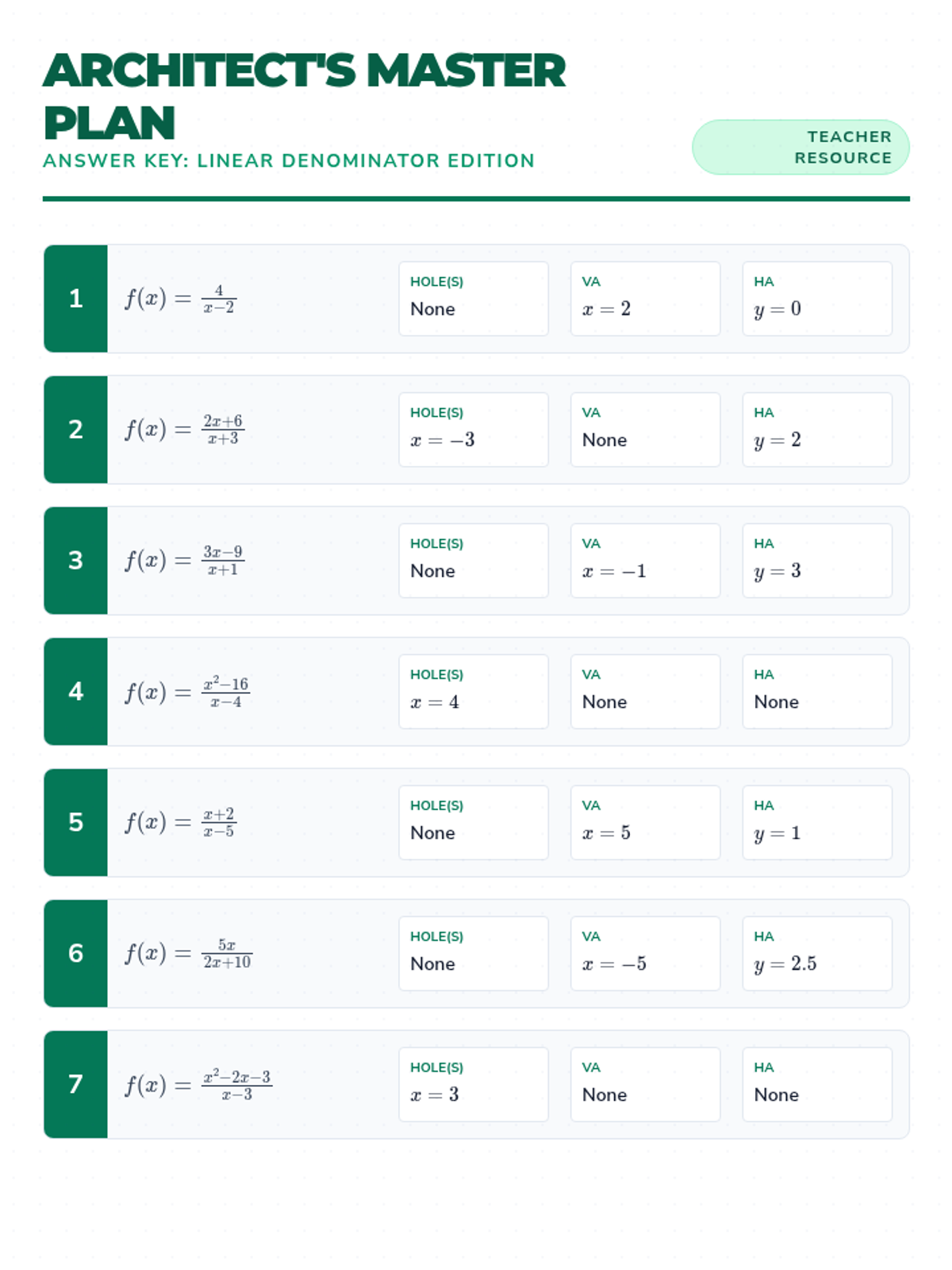
A comprehensive lesson on identifying and calculating vertical asymptotes, horizontal asymptotes, and removable discontinuities (holes) in rational functions. Students will practice factoring and simplifying functions to reveal their underlying structure.