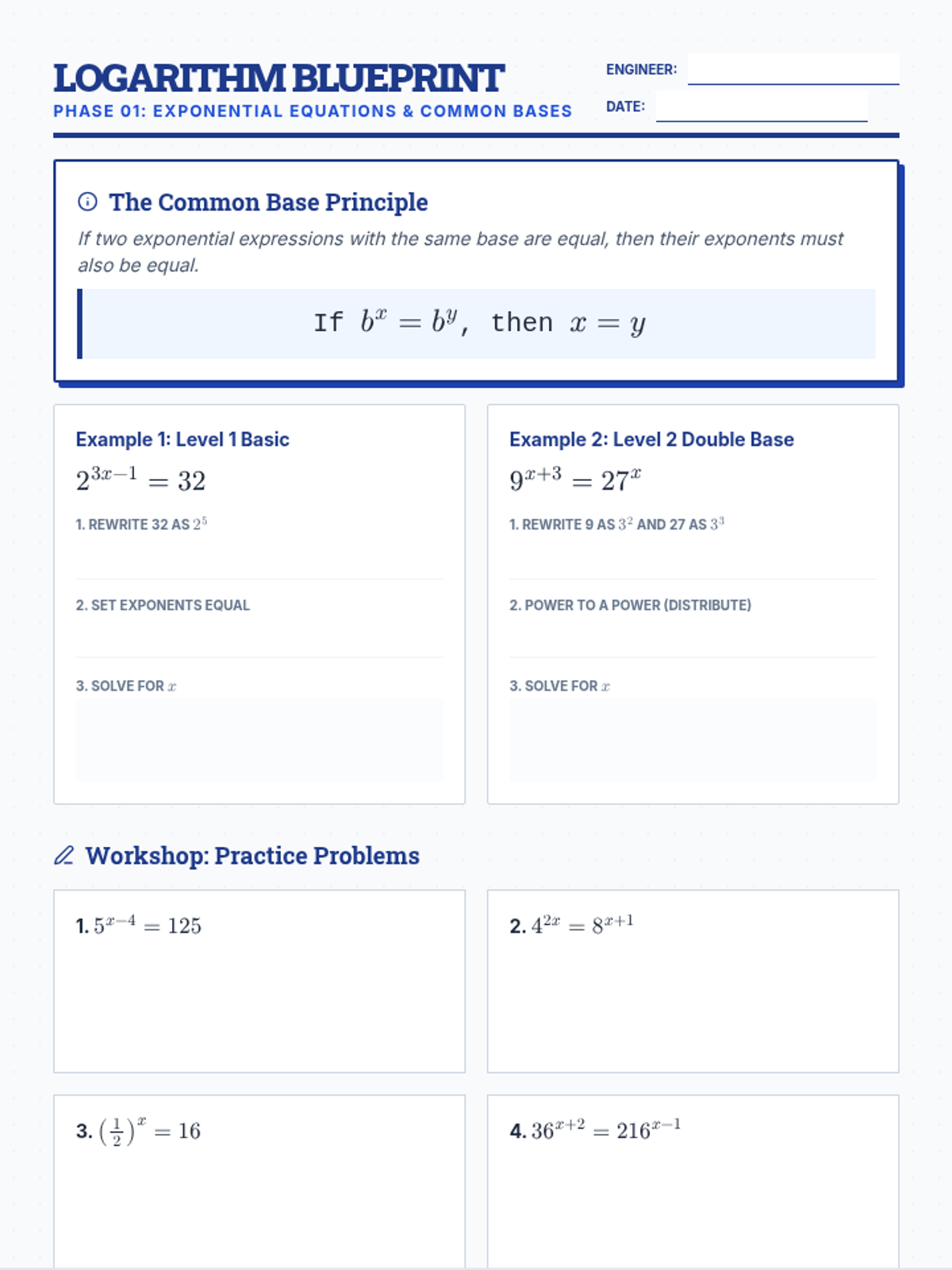
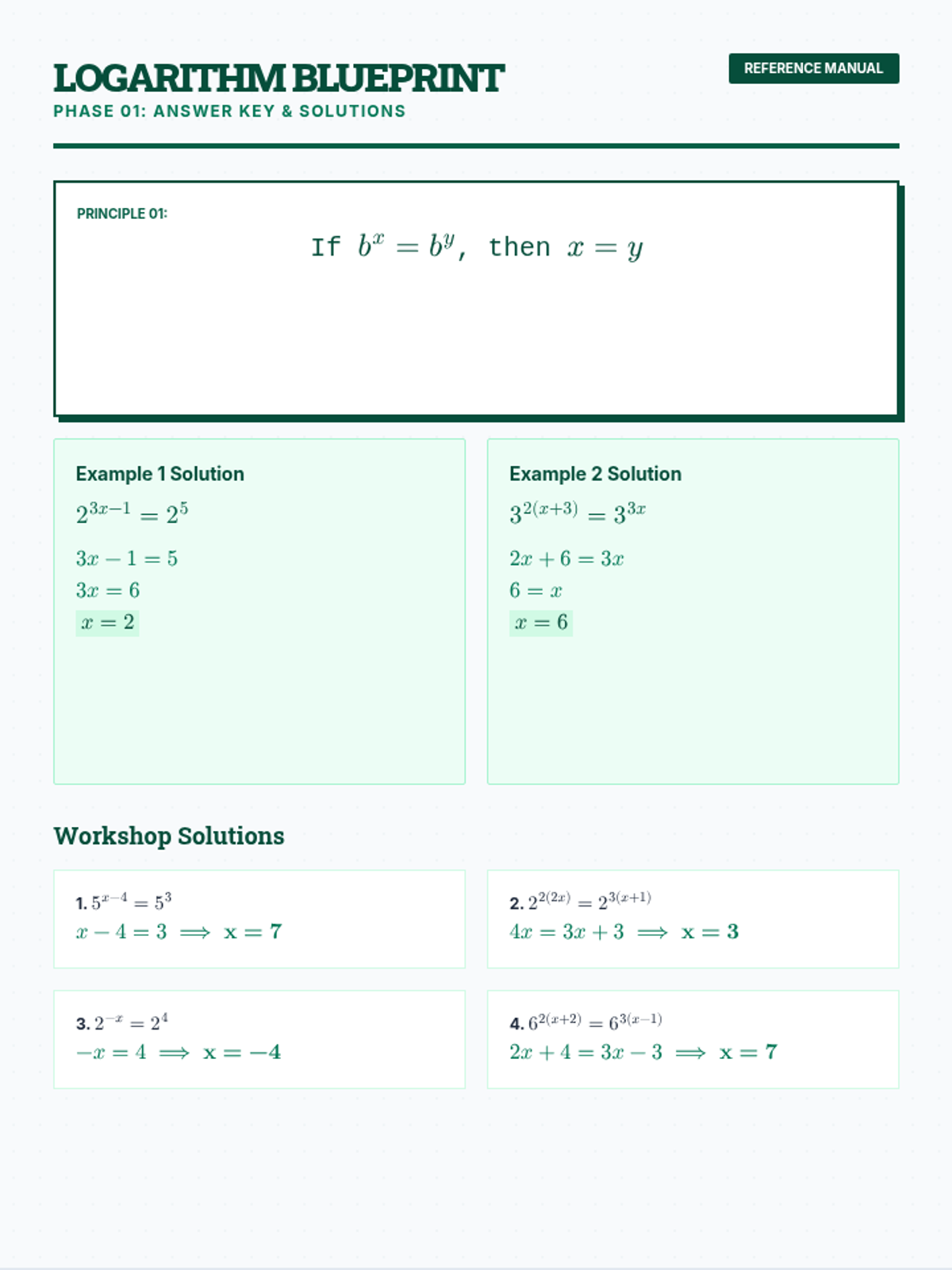
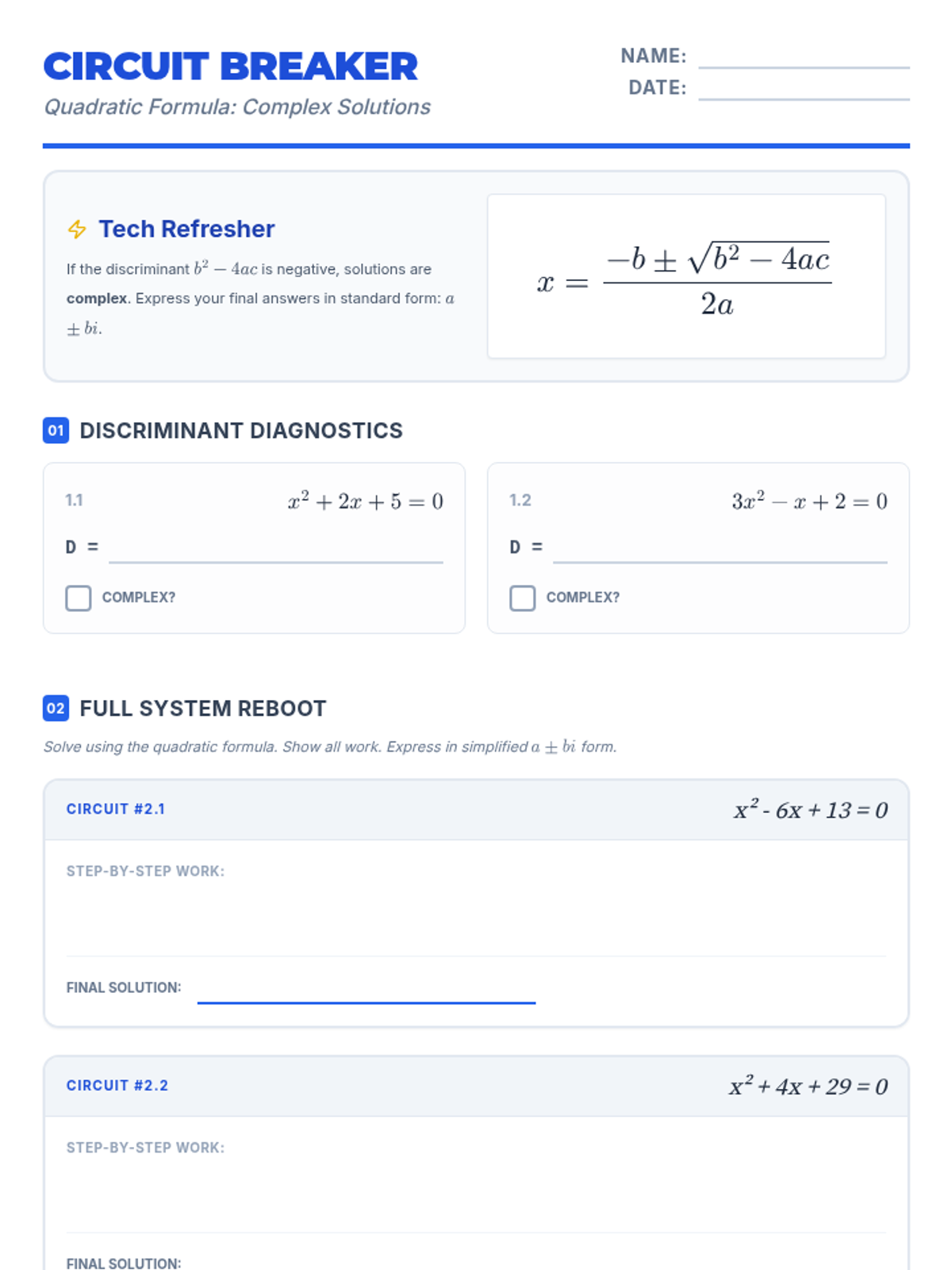
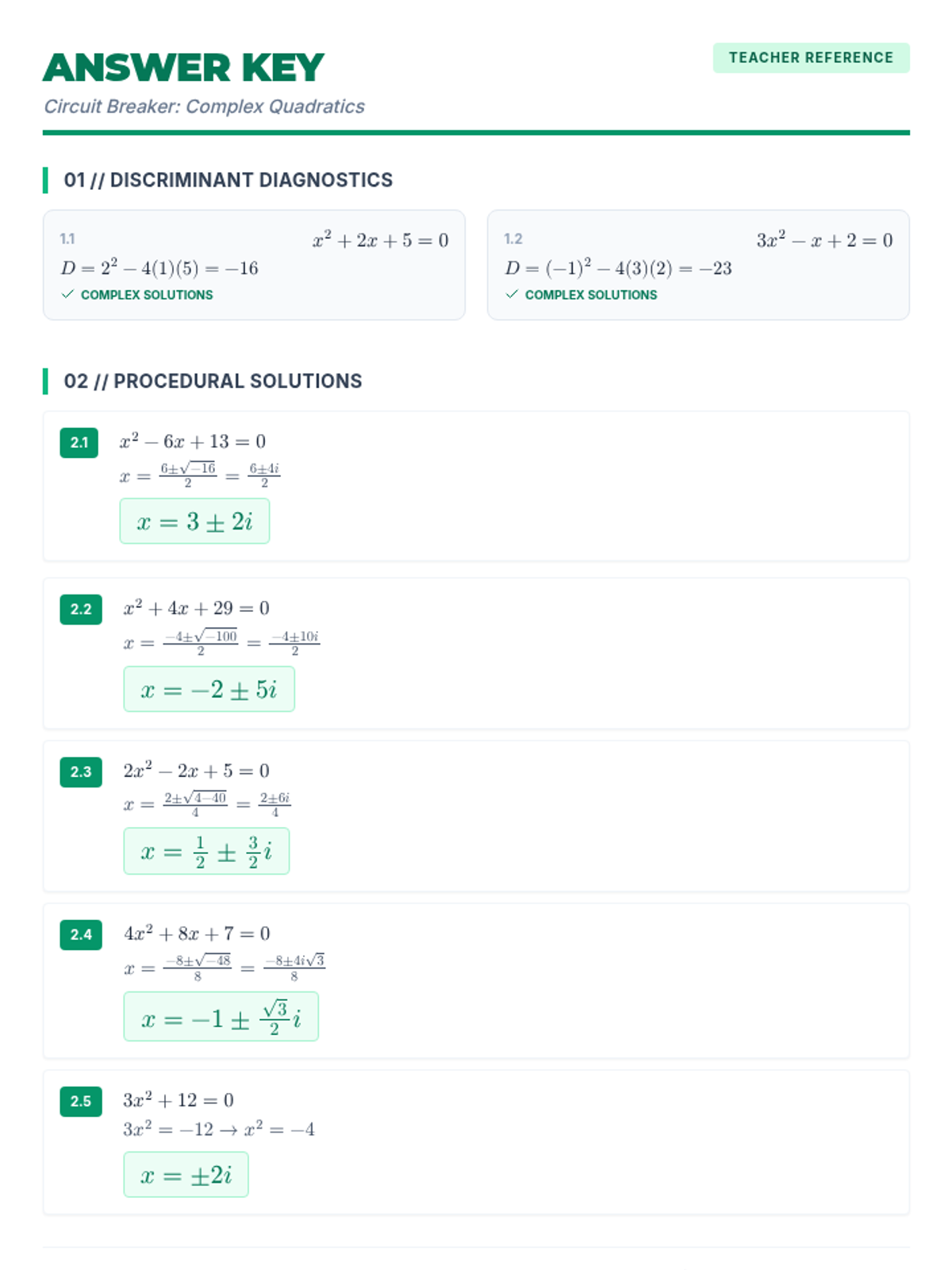
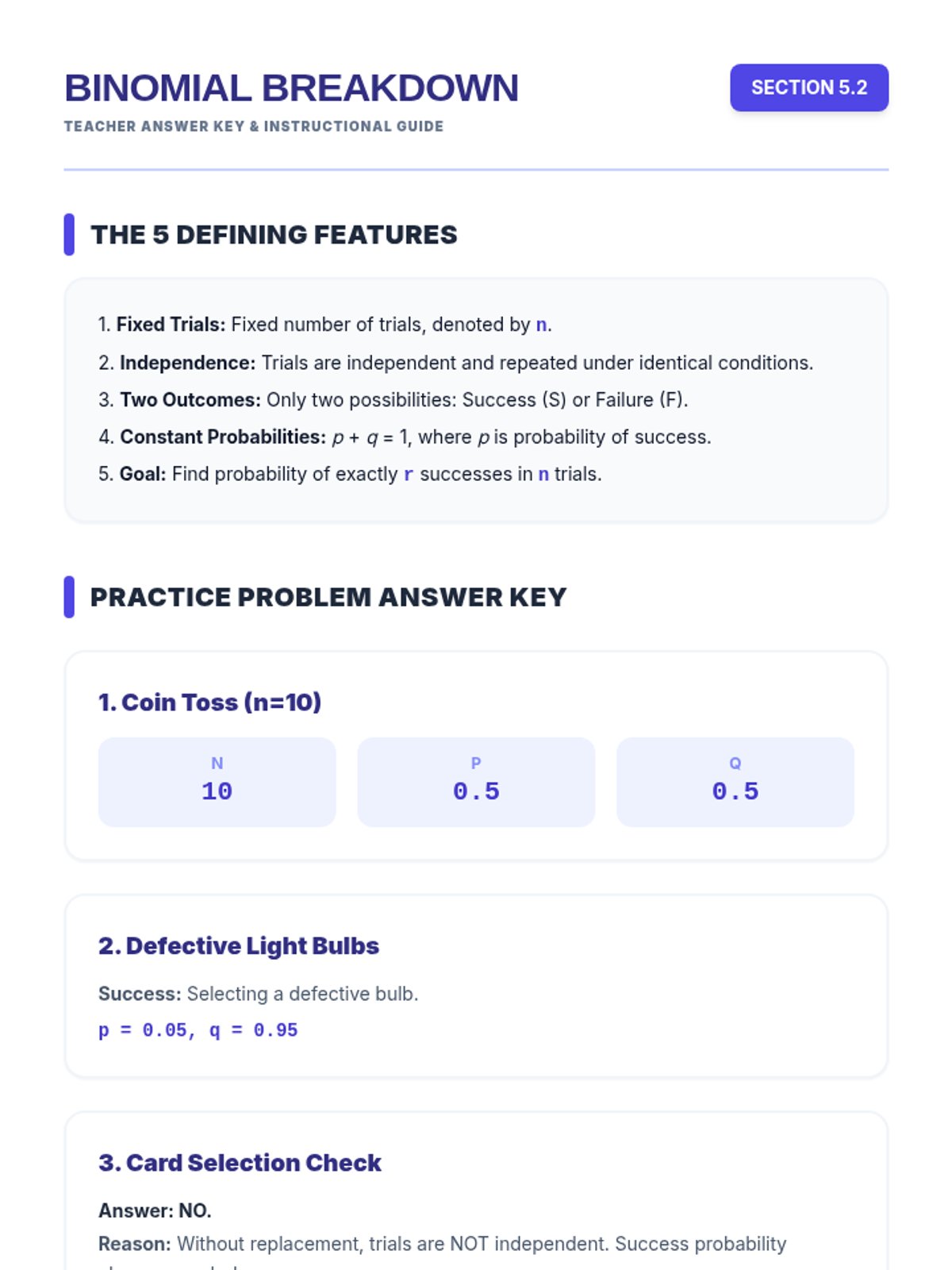
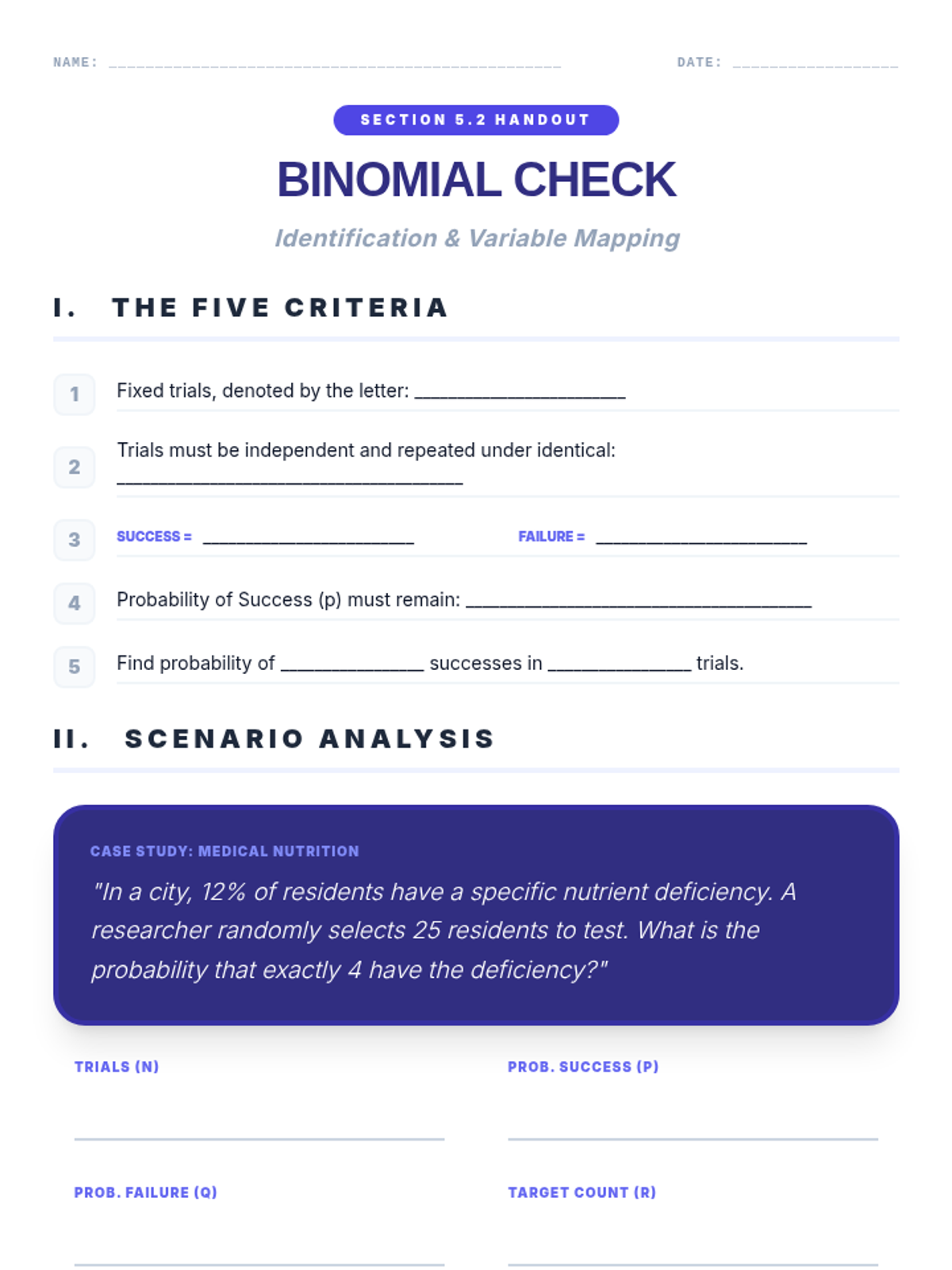
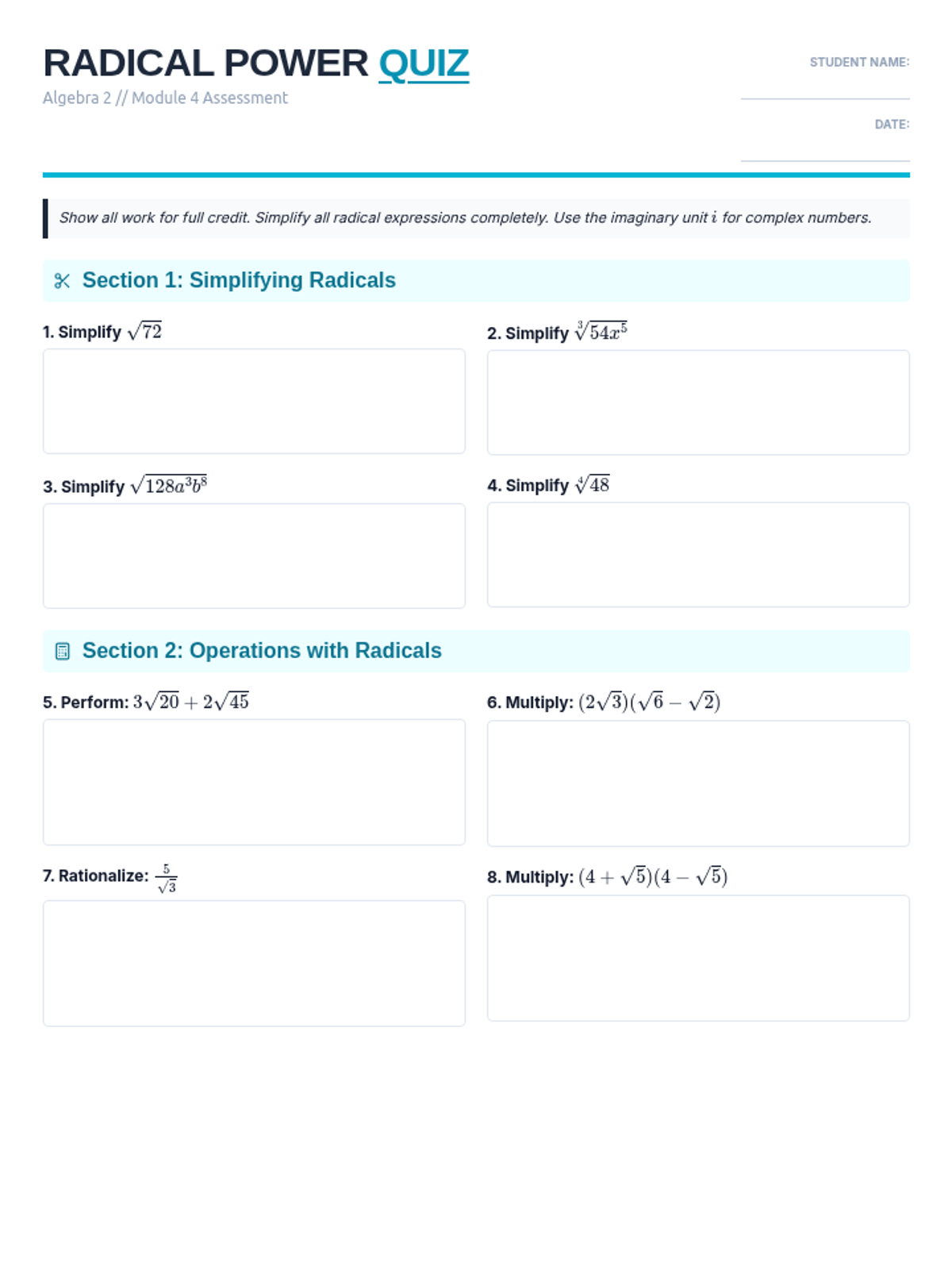
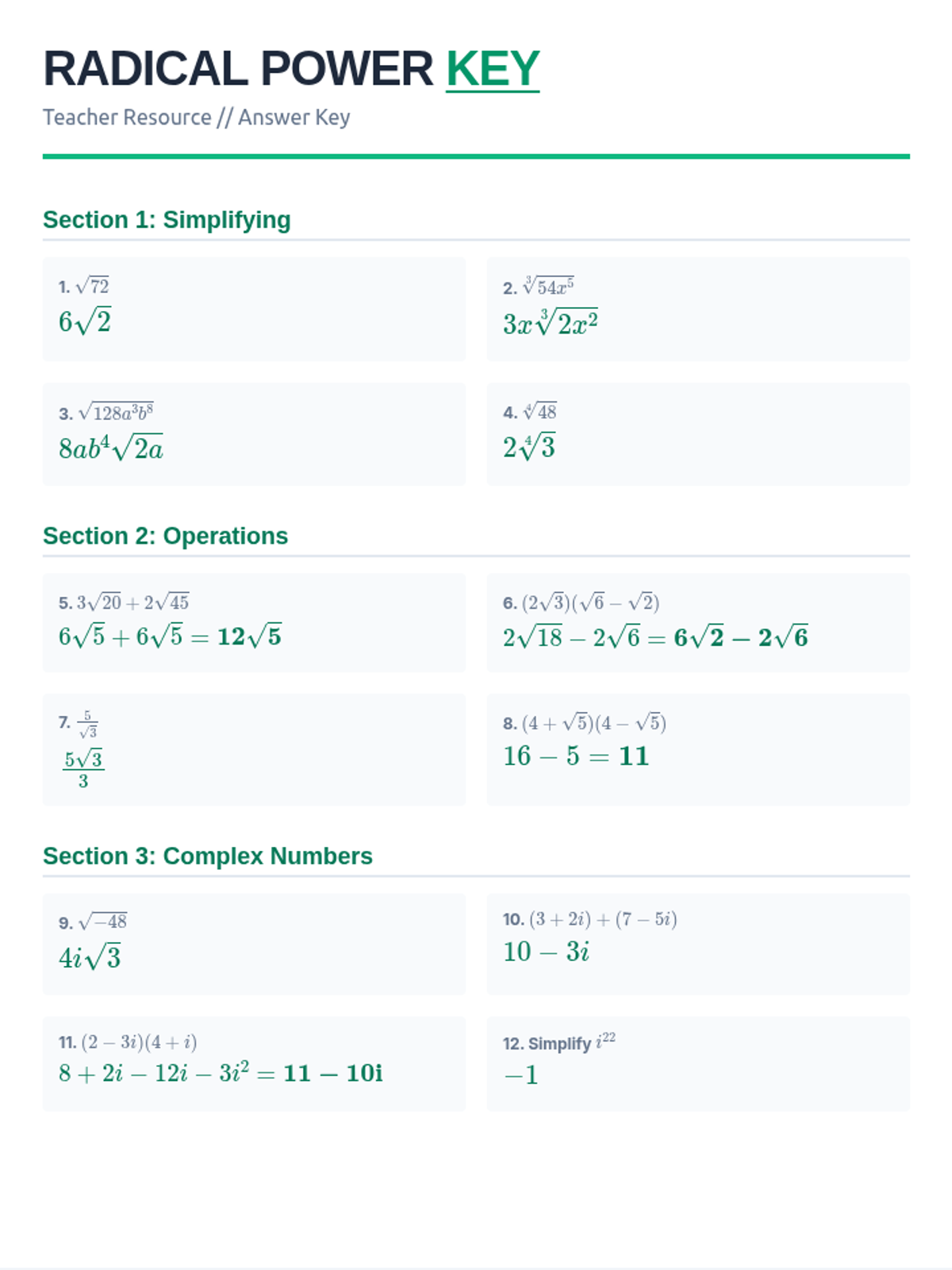
Students learn to evaluate limits of sequences that oscillate or cannot be solved algebraically by bounding them between two convergent sequences. This lesson emphasizes logical reasoning and the geometric intuition of 'squeezing'.
A high-energy, Valentine's-themed 'Price is Right' game designed to last up to 120 minutes, covering item pricing, logic, and estimation.
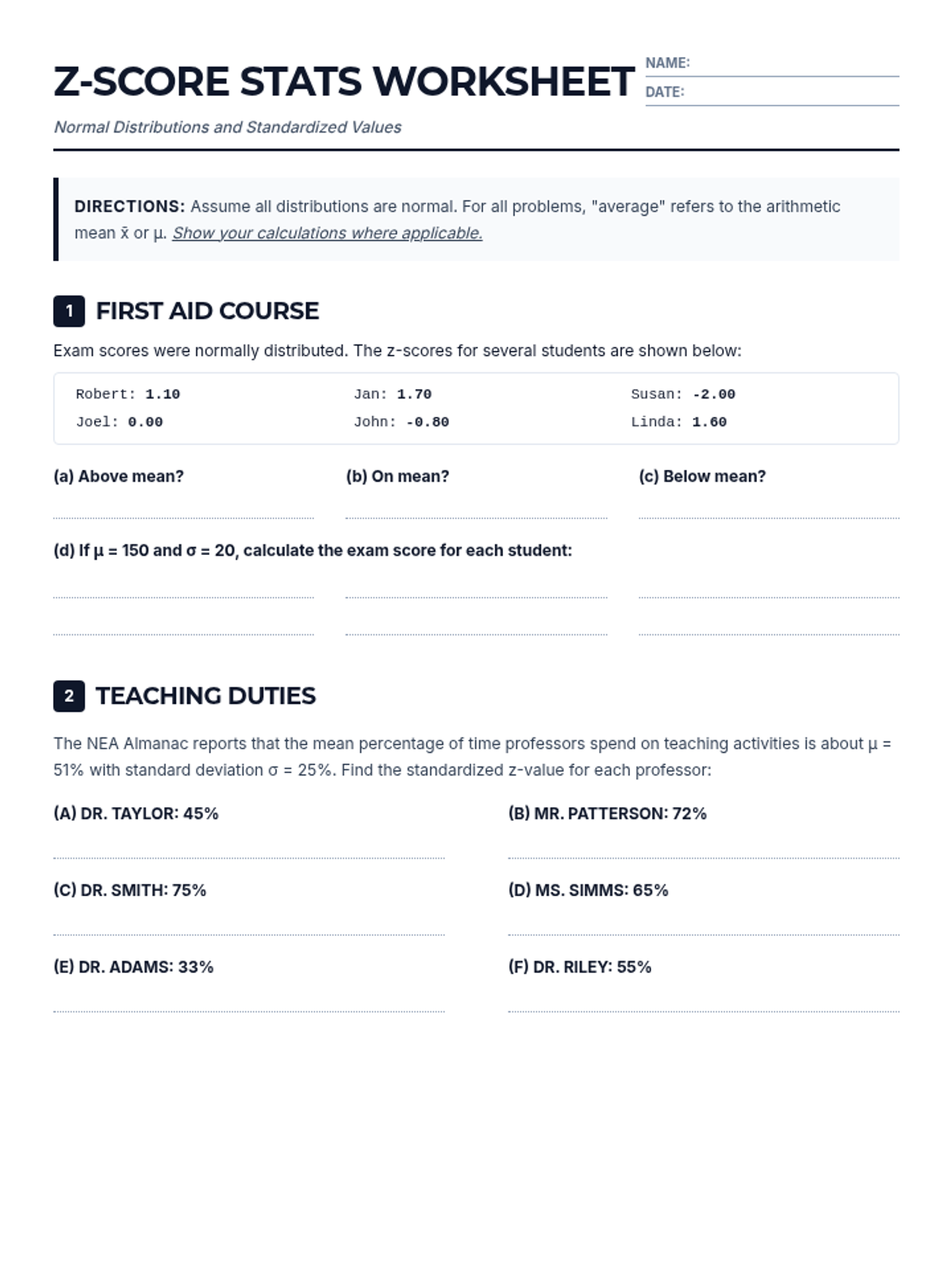
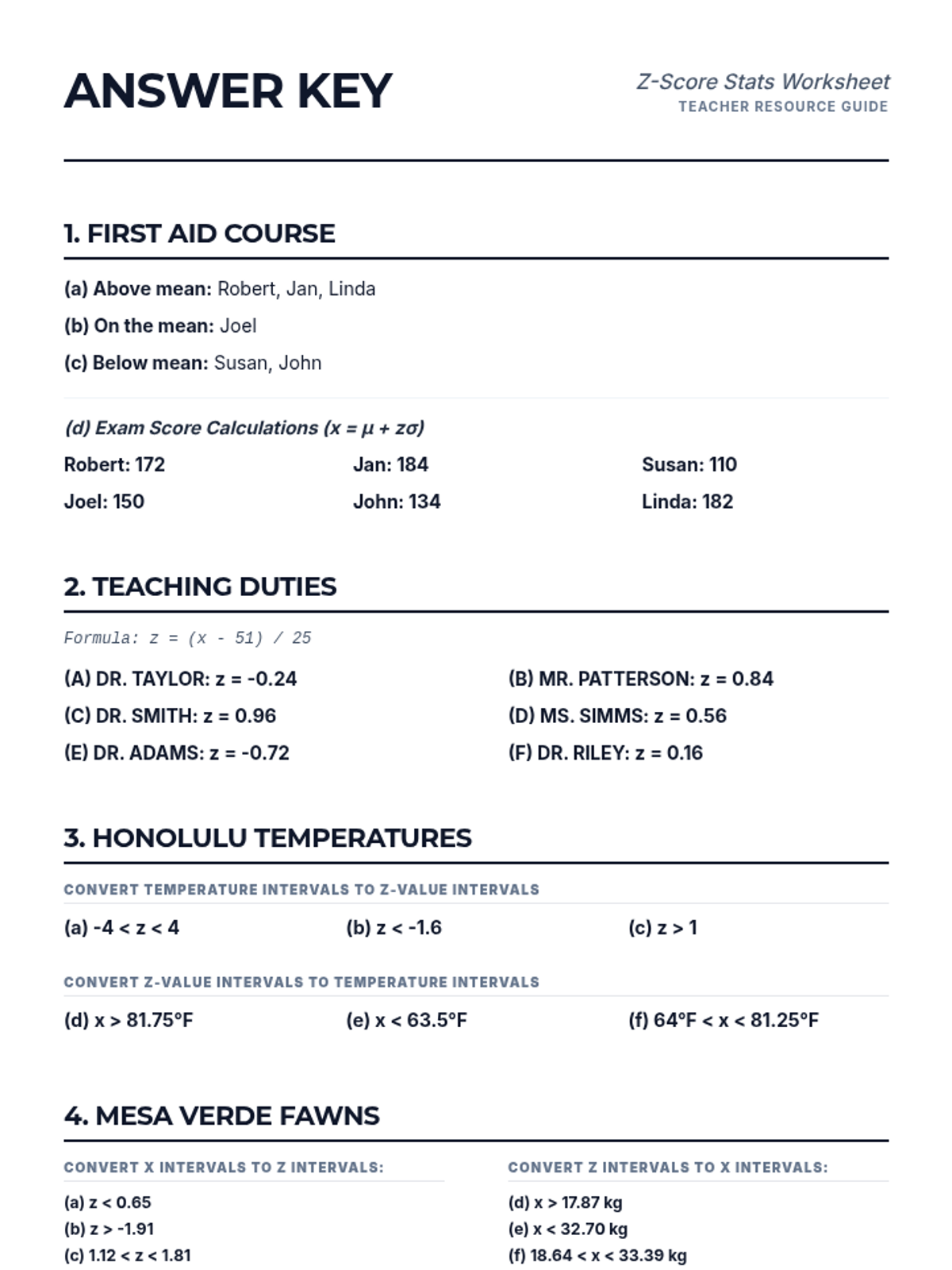
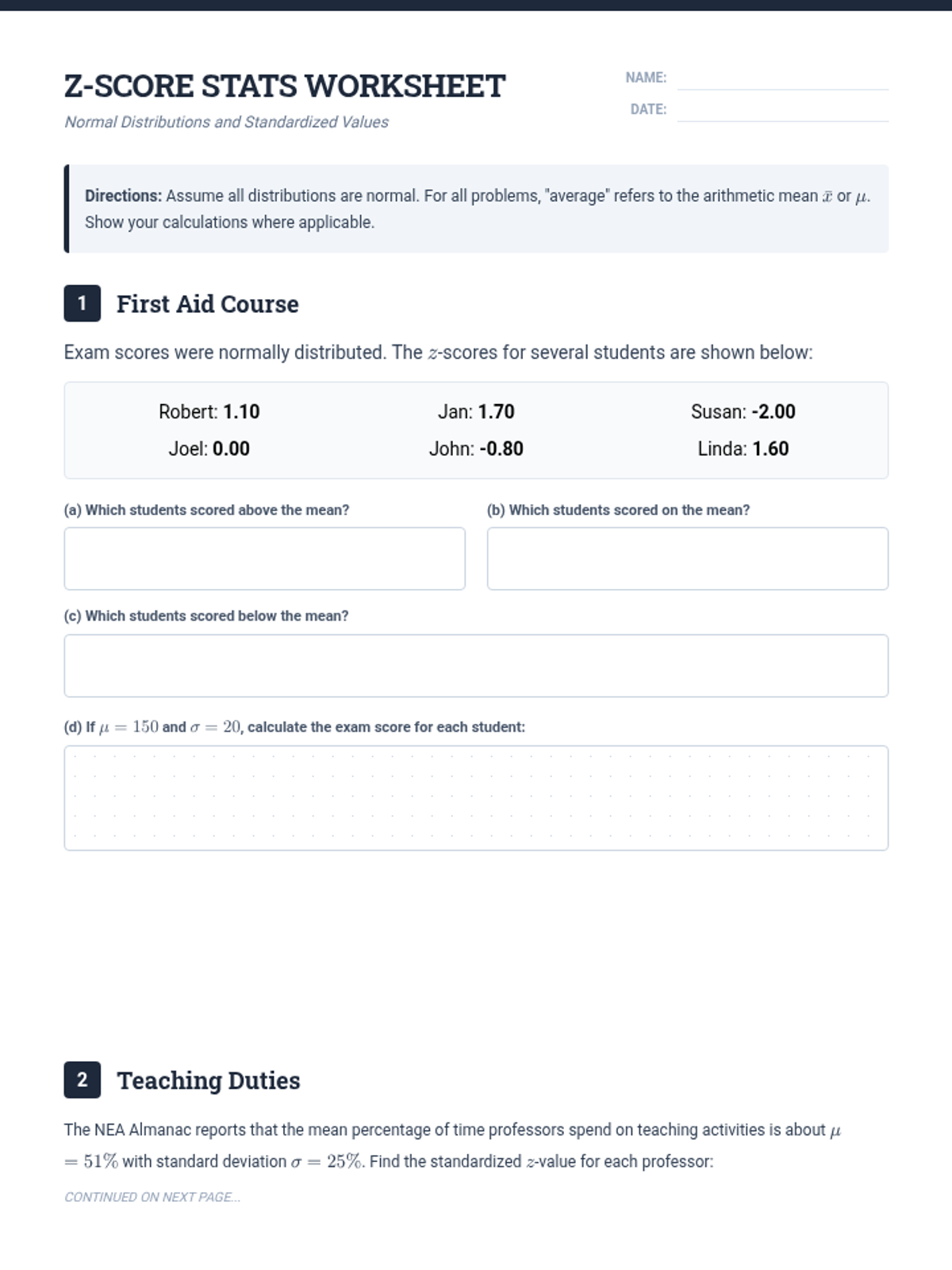
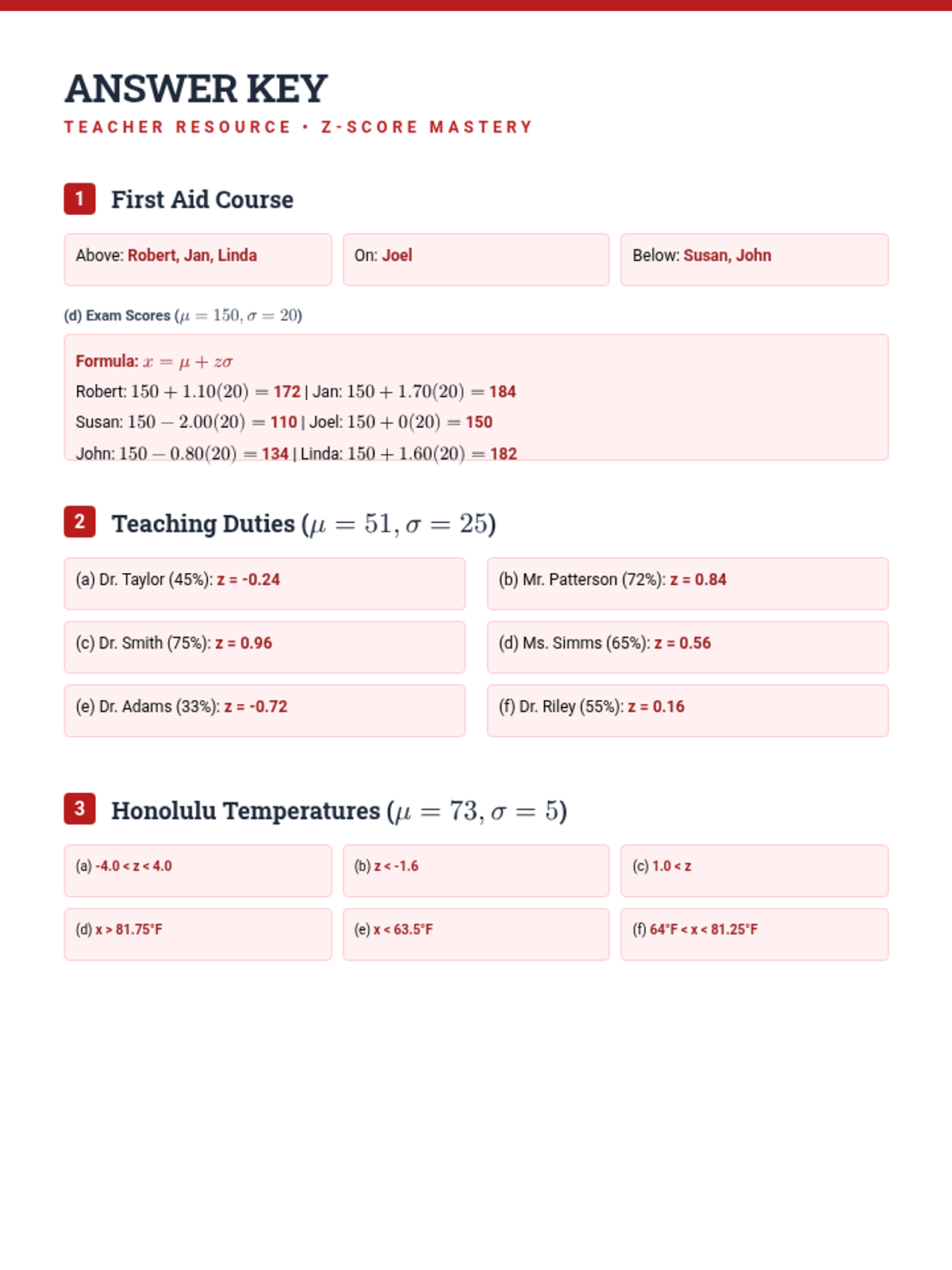
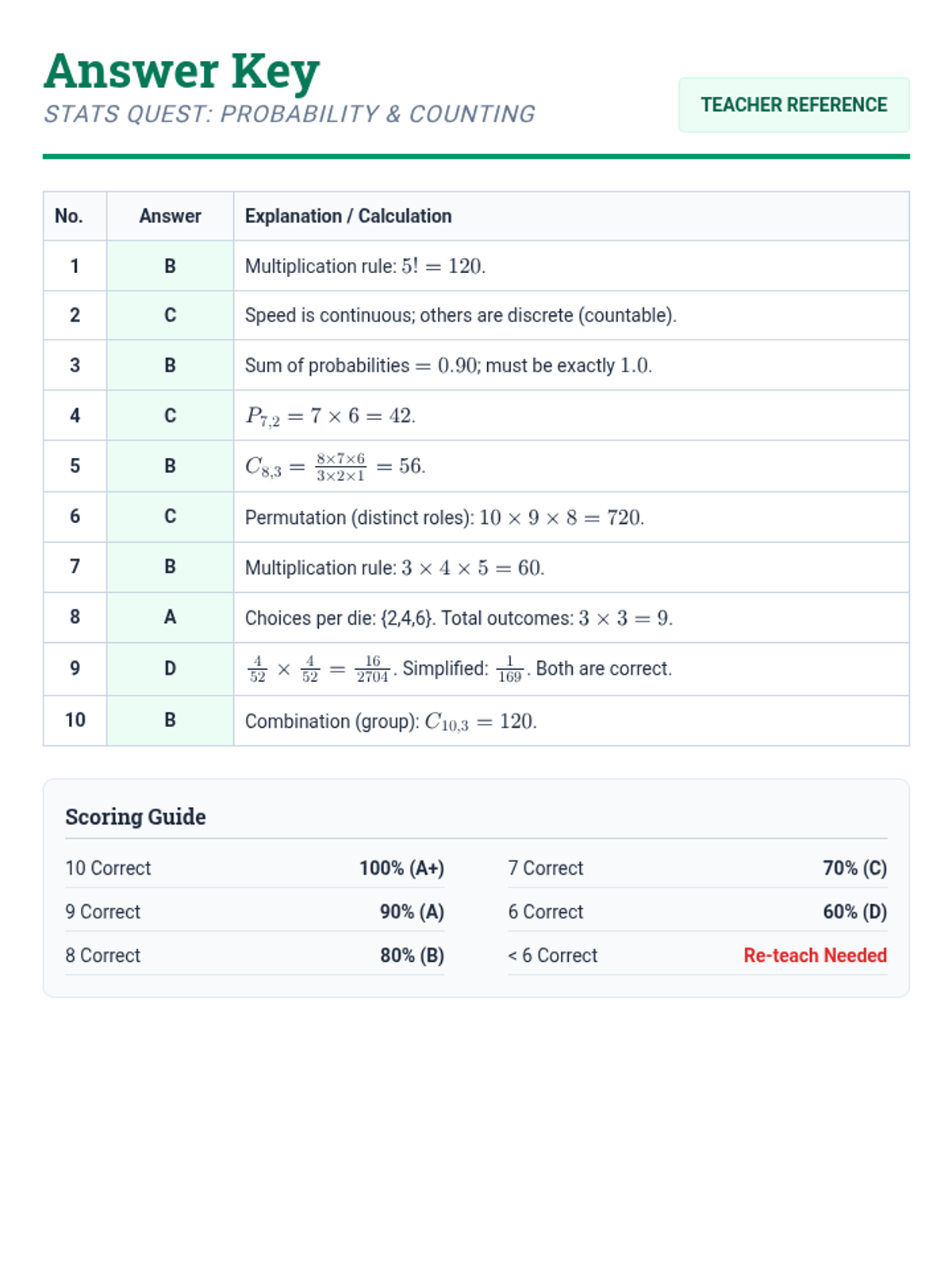
Introduction à la distribution normale, au calcul des scores Z et à l'utilisation de la table de probabilités pour l'inférence.
Apprendre à choisir le bon graphique pour le bon type de données : histogrammes, boîtes à moustaches et diagrammes de dispersion.
Calculer et interpréter la moyenne, la médiane et le mode, ainsi que la variance et l'écart-type pour décrire la forme d'une distribution.
Comprendre la nature des données : variables qualitatives vs quantitatives, échelles de mesure (nominale, ordinale, intervalle, rapport) et introduction à l'échantillonnage.
A comprehensive 60-minute introductory lesson on basic arithmetic operations (addition, subtraction, multiplication, and division) tailored for GED preparation, focusing on both computation and word problem translation.
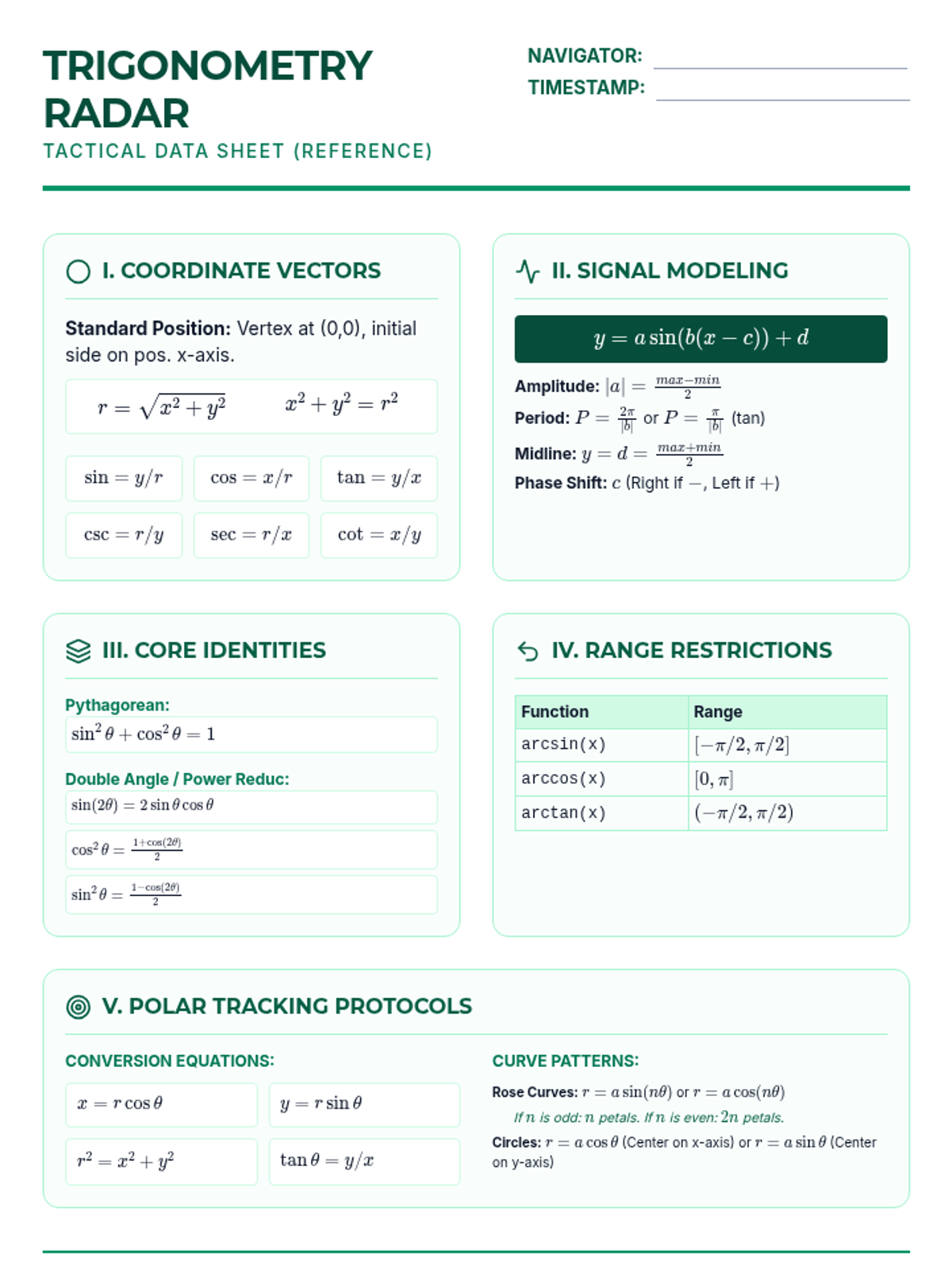
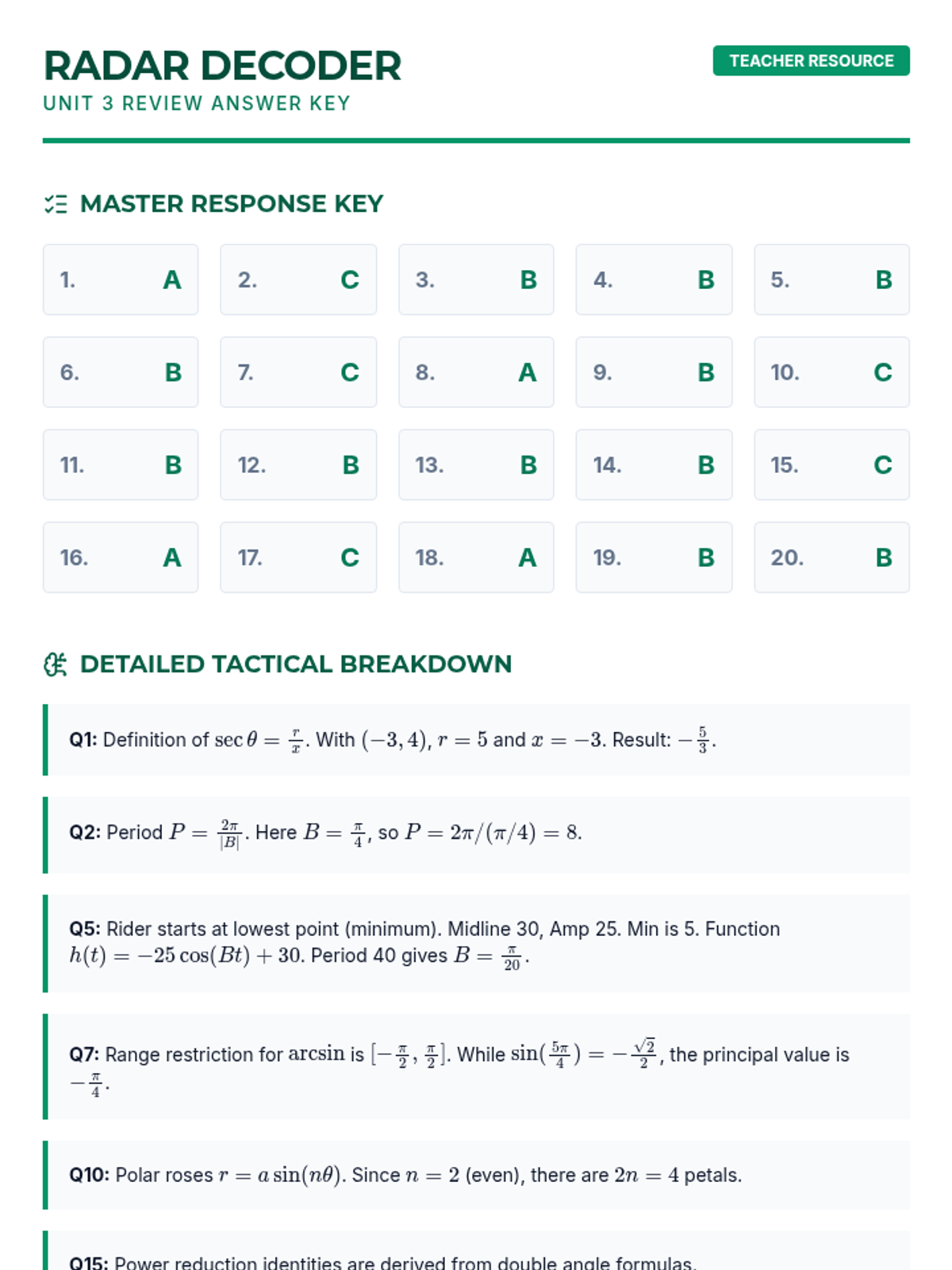
A comprehensive lesson on graphing Sine and Cosine functions, featuring guided notes, instructional slides, and a detailed answer key. Students will learn to identify amplitude, period, midline, and phase shifts to accurately sketch periodic graphs.
Master essential math conversions for everyday adult life. This lesson covers length, time, currency, and temperature transformations through practical reference tools and real-world exercises.
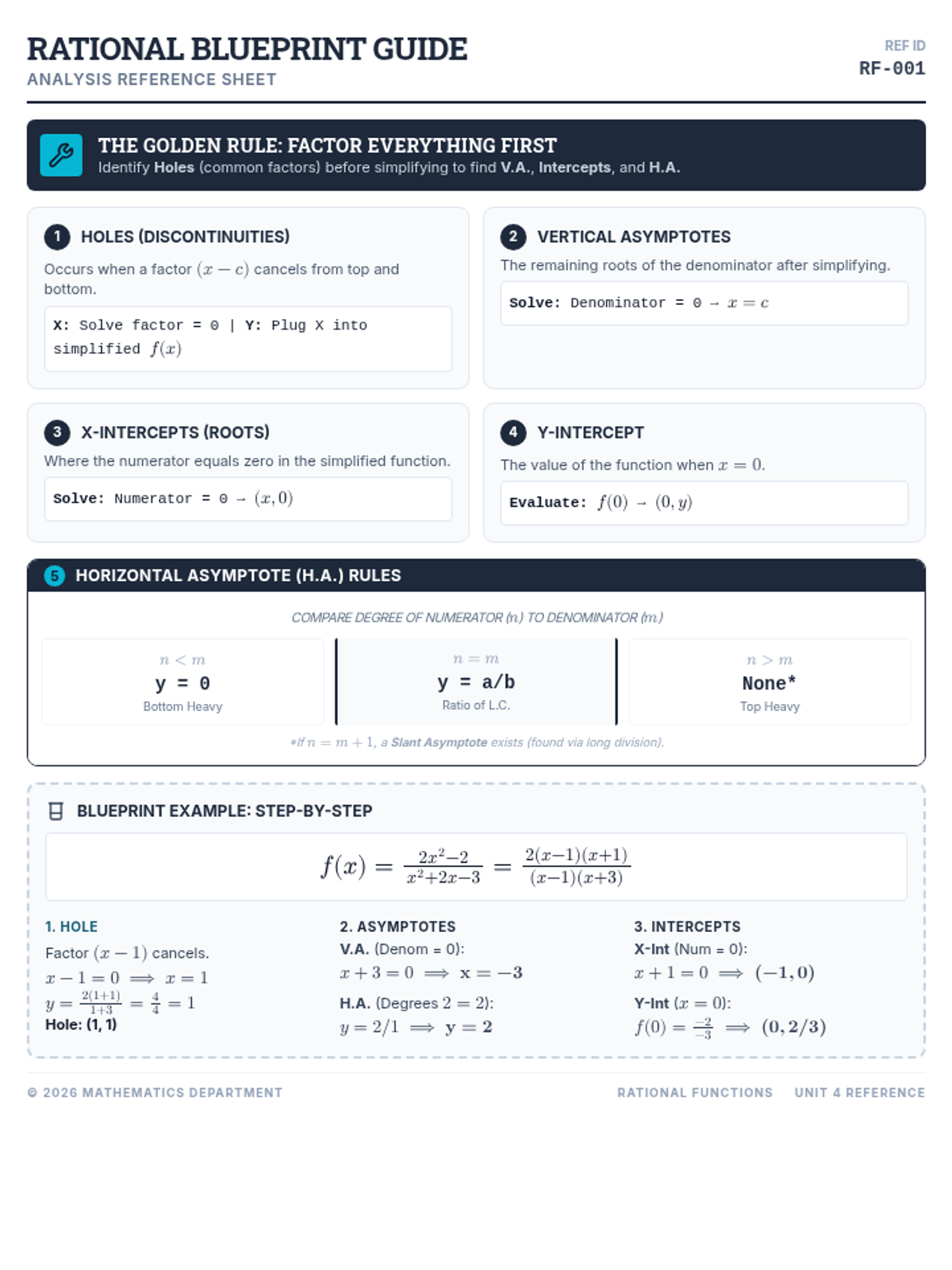
A lesson focused on finding the real and complex zeros of polynomial functions using various algebraic methods like factoring and synthetic division.
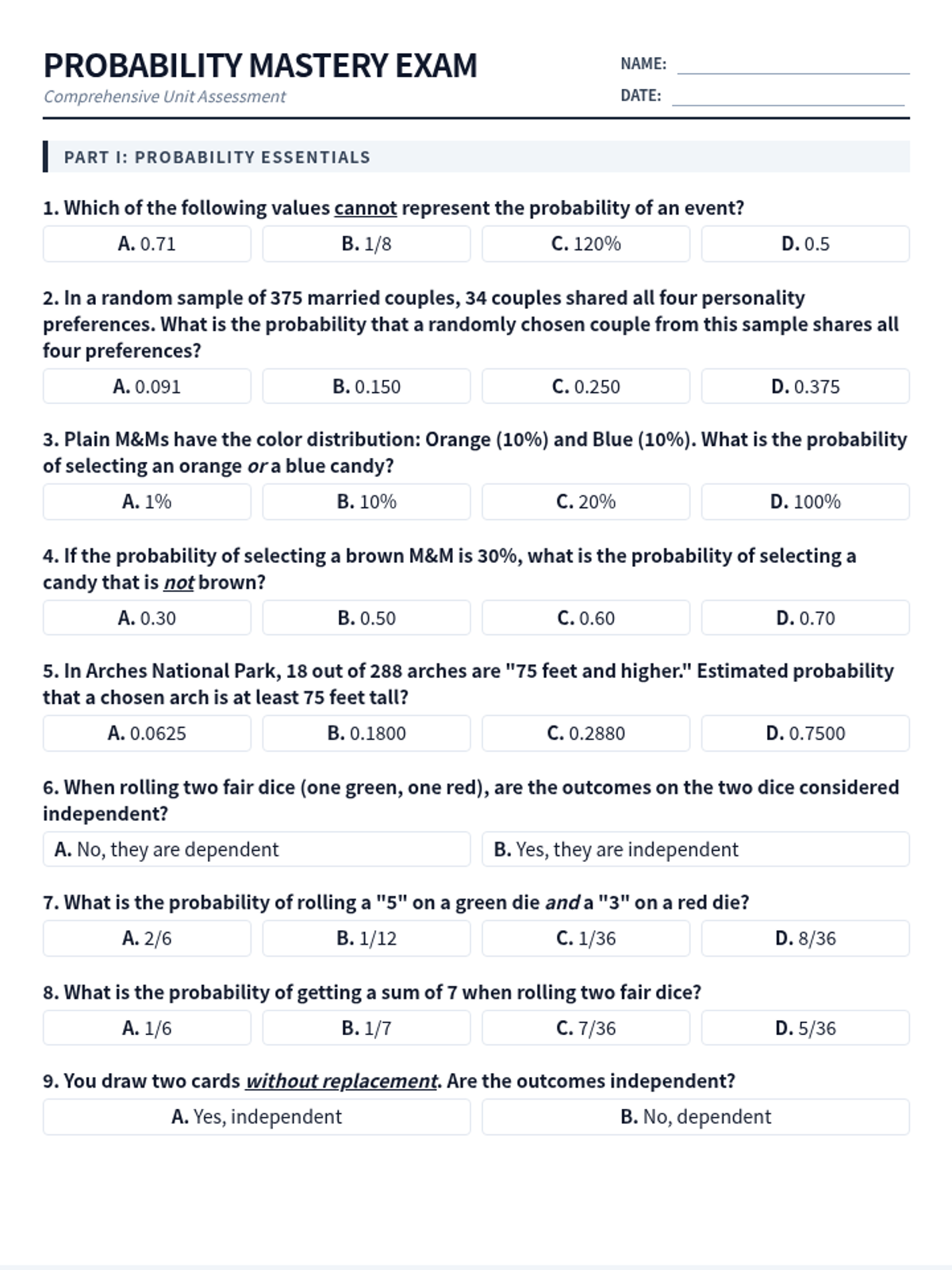
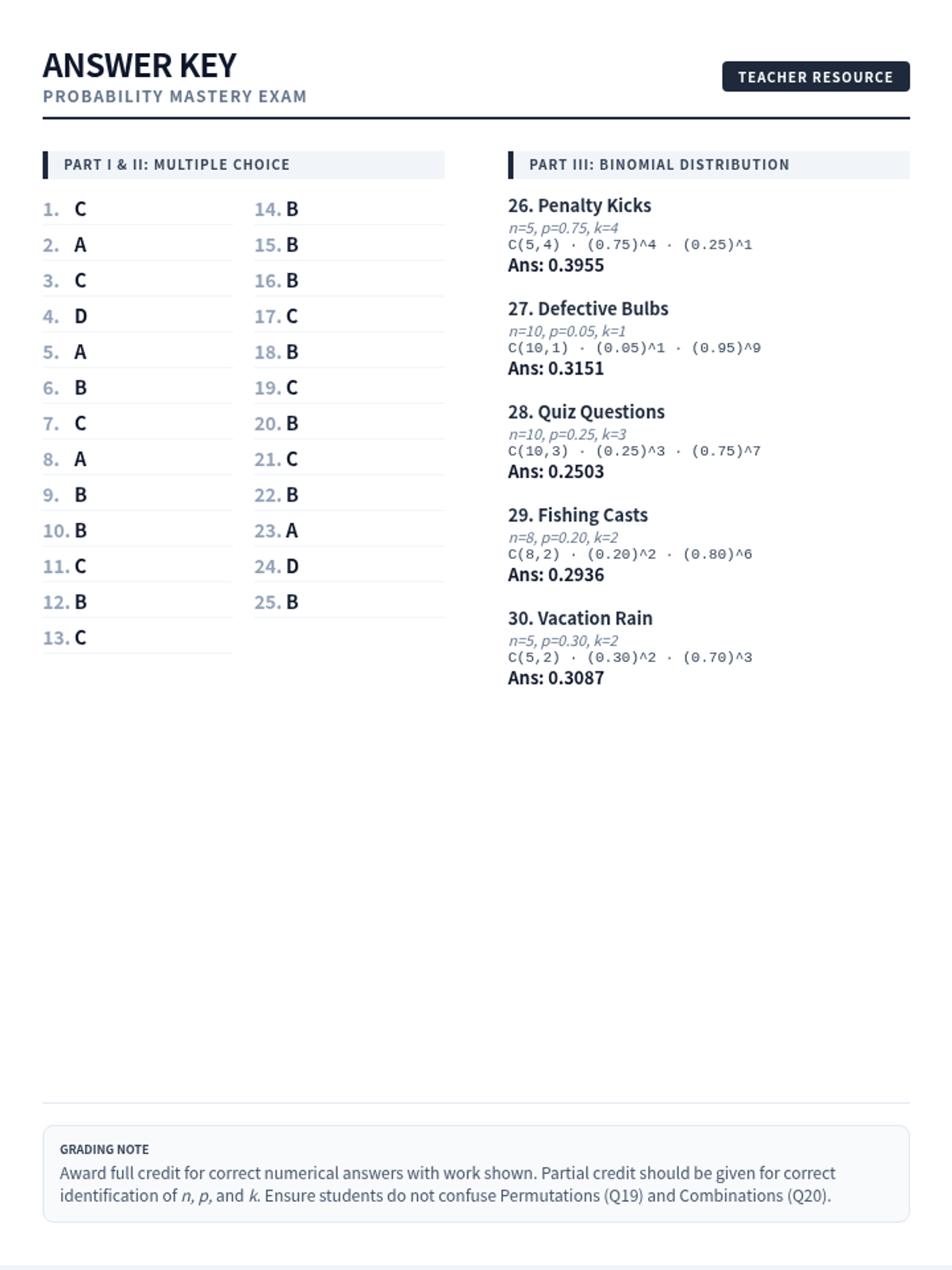
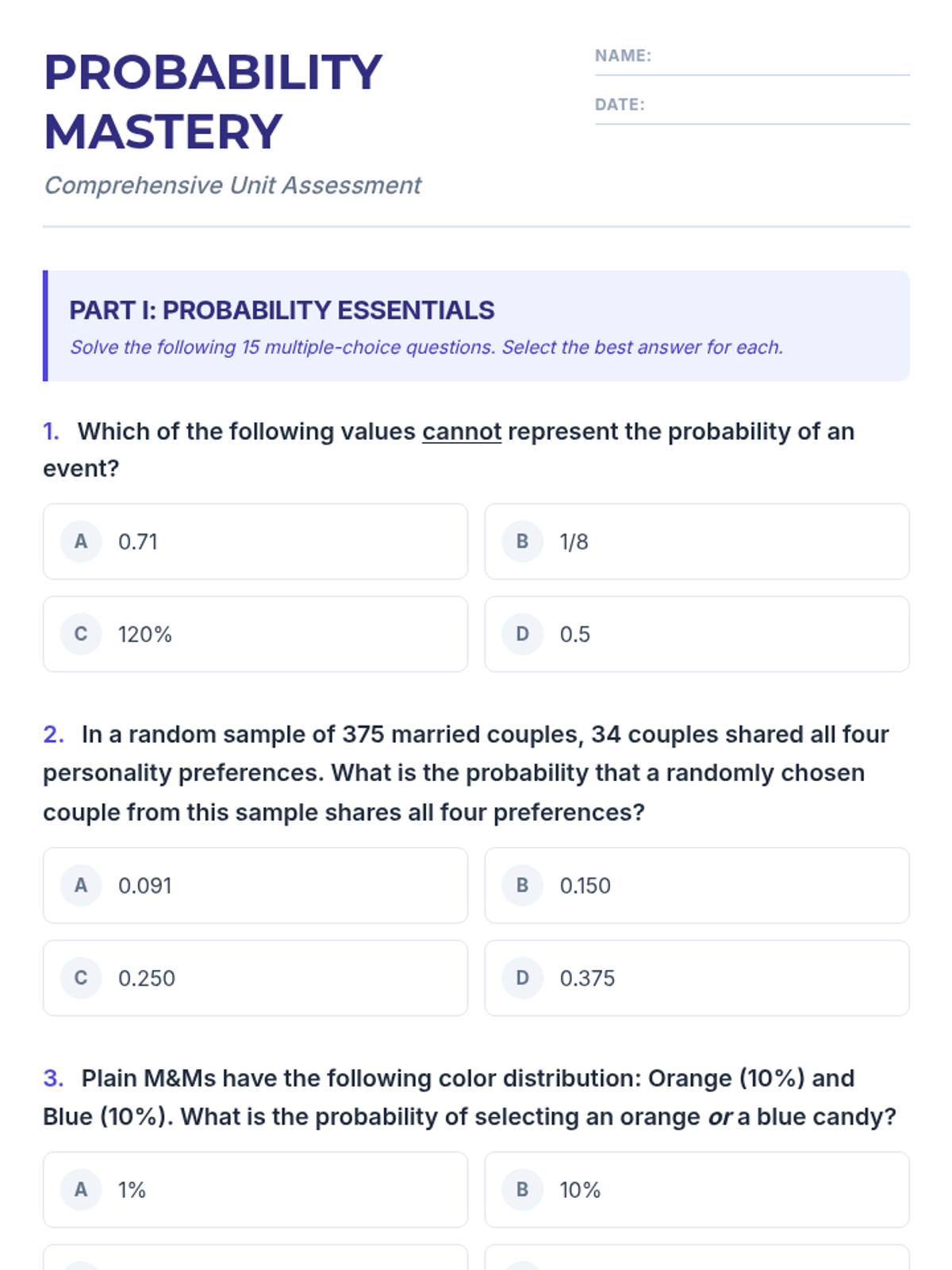
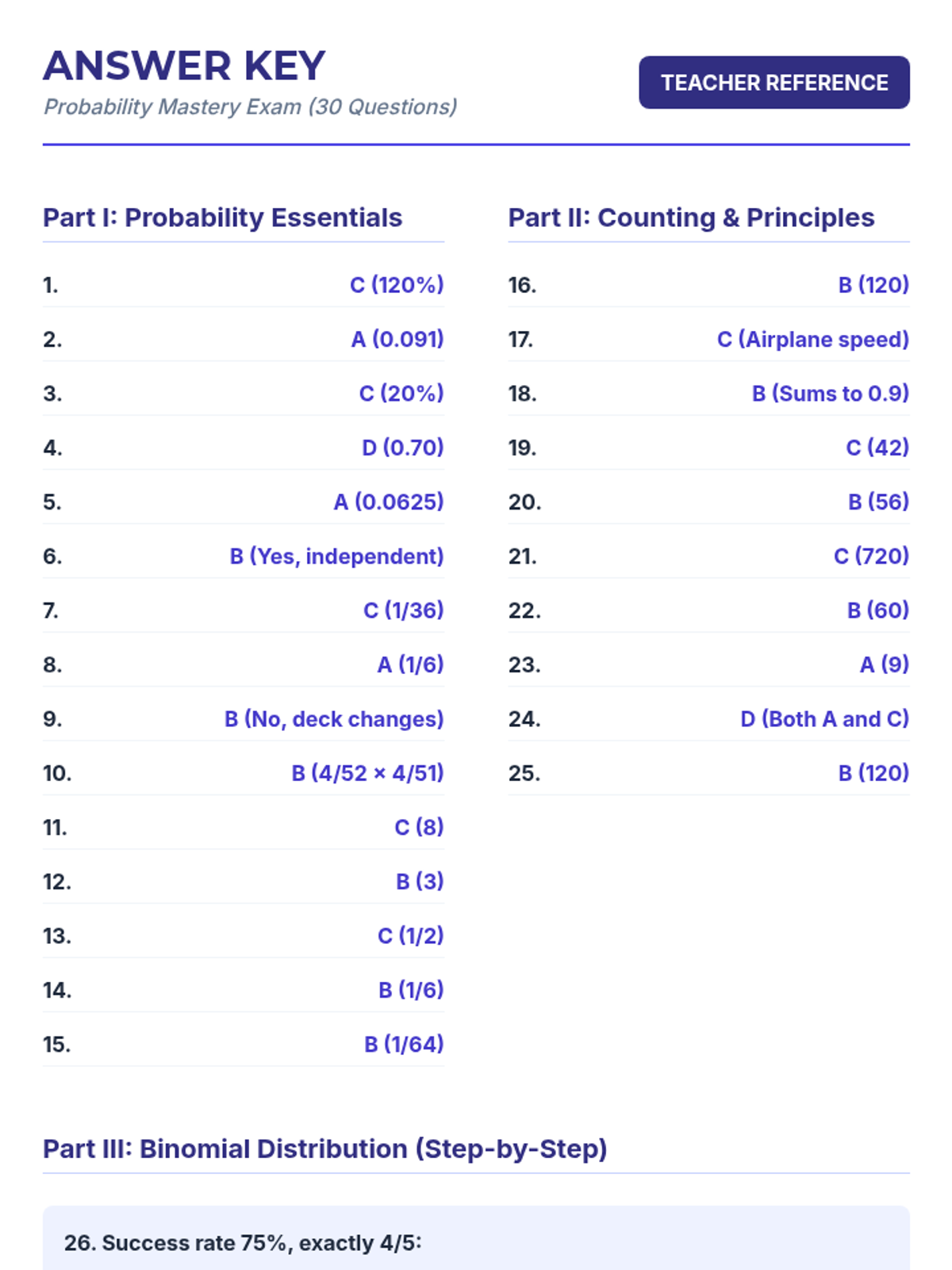
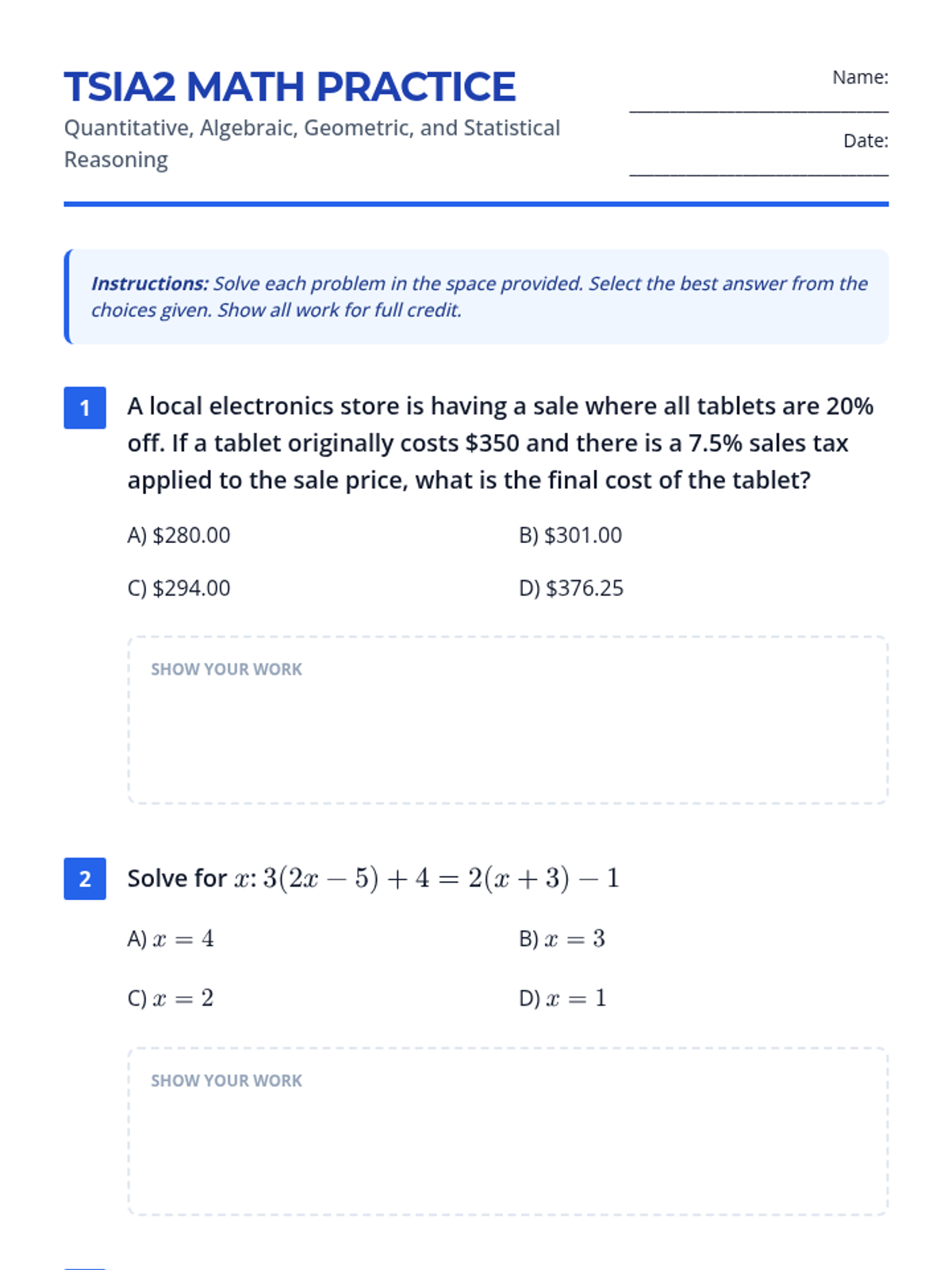
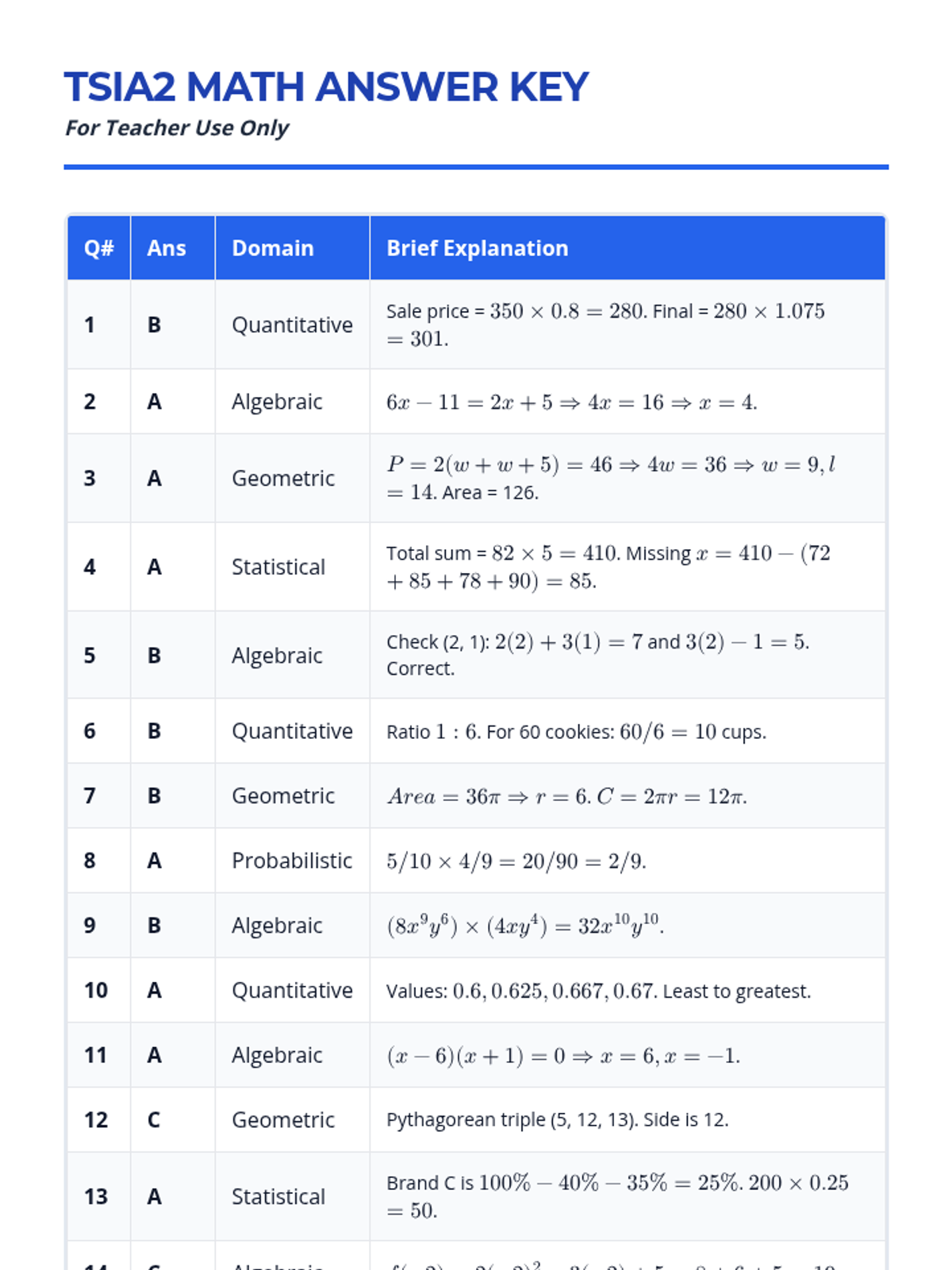
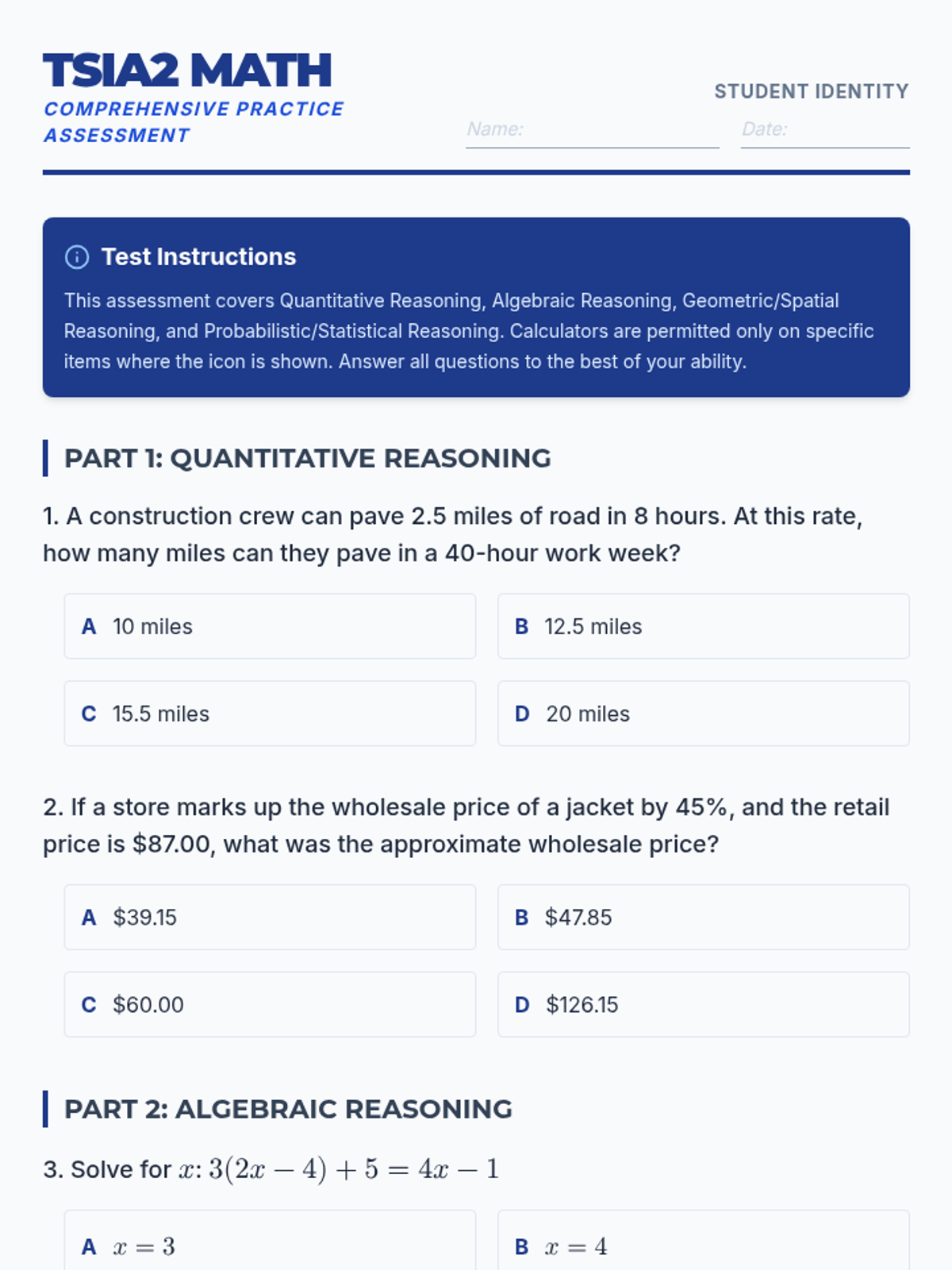
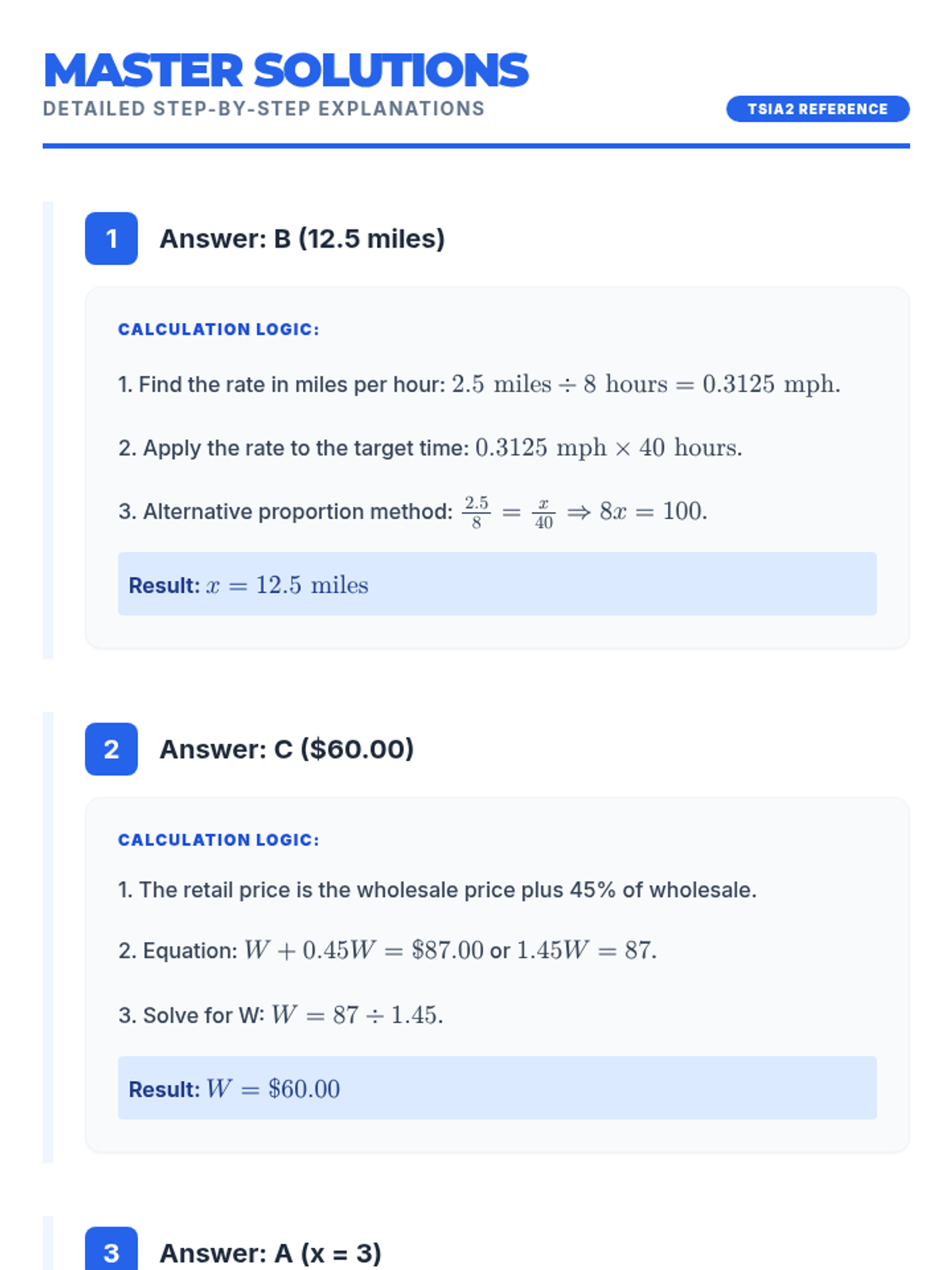
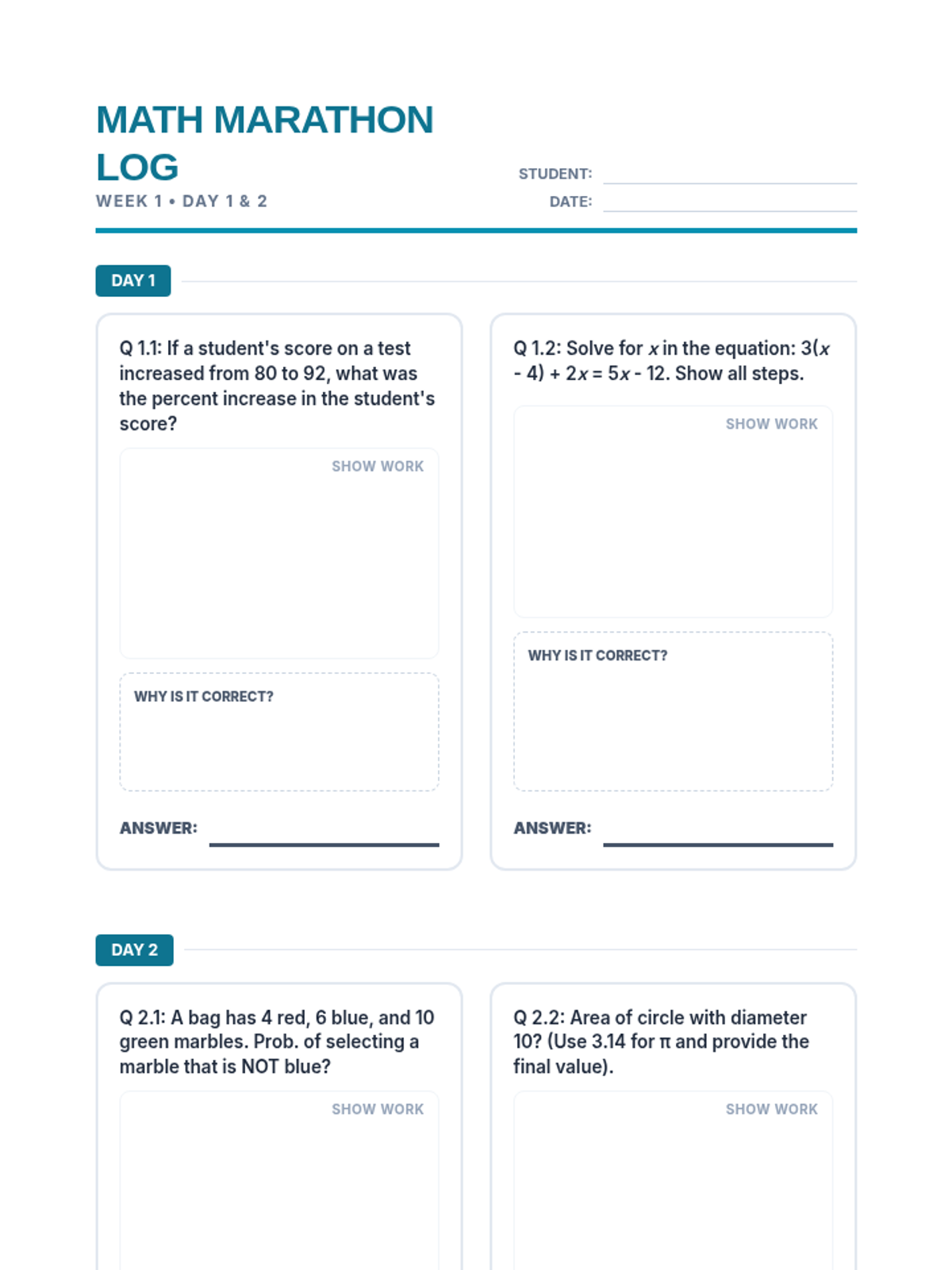
A comprehensive 20-question practice test and answer key designed to prepare students for the TSIA2 Mathematics assessment, focusing on algebraic, geometric, and statistical reasoning.
Students will learn to solve systems of linear equations by finding the equilibrium point between supply and demand curves. This lesson bridges algebra and economics through graphical and algebraic methods using the 'FrostBite' game console context.
Students will master projectile motion by applying the quadratic formula to solve for flight time. The lesson uses a volcano-themed scenario to bridge abstract algebra with physical kinematics, including a deep dive into interpreting mathematical results like negative time.
Students act as 'teachers' to identify, explain, and correct common misconceptions in exponent rules, focusing on the distribution of exponents to coefficients and variables.
A high-level mathematics lesson focused on distinguishing between sequences and series, determining convergence, and performing error analysis on complex geometric problems. Students will watch targeted practice segments and correct common mathematical misconceptions.
This lesson focuses on the skill of decomposing composite functions, a prerequisite for the Chain Rule in Calculus. Students will analyze the relationship between 'inner' and 'outer' functions through video observation, algebraic reverse engineering, and conceptual discussion.
A high-school algebra lesson focused on avoiding the 'power of a sum' error when expanding binomials within composite functions, featuring video-guided instruction and a hands-on expansion challenge.
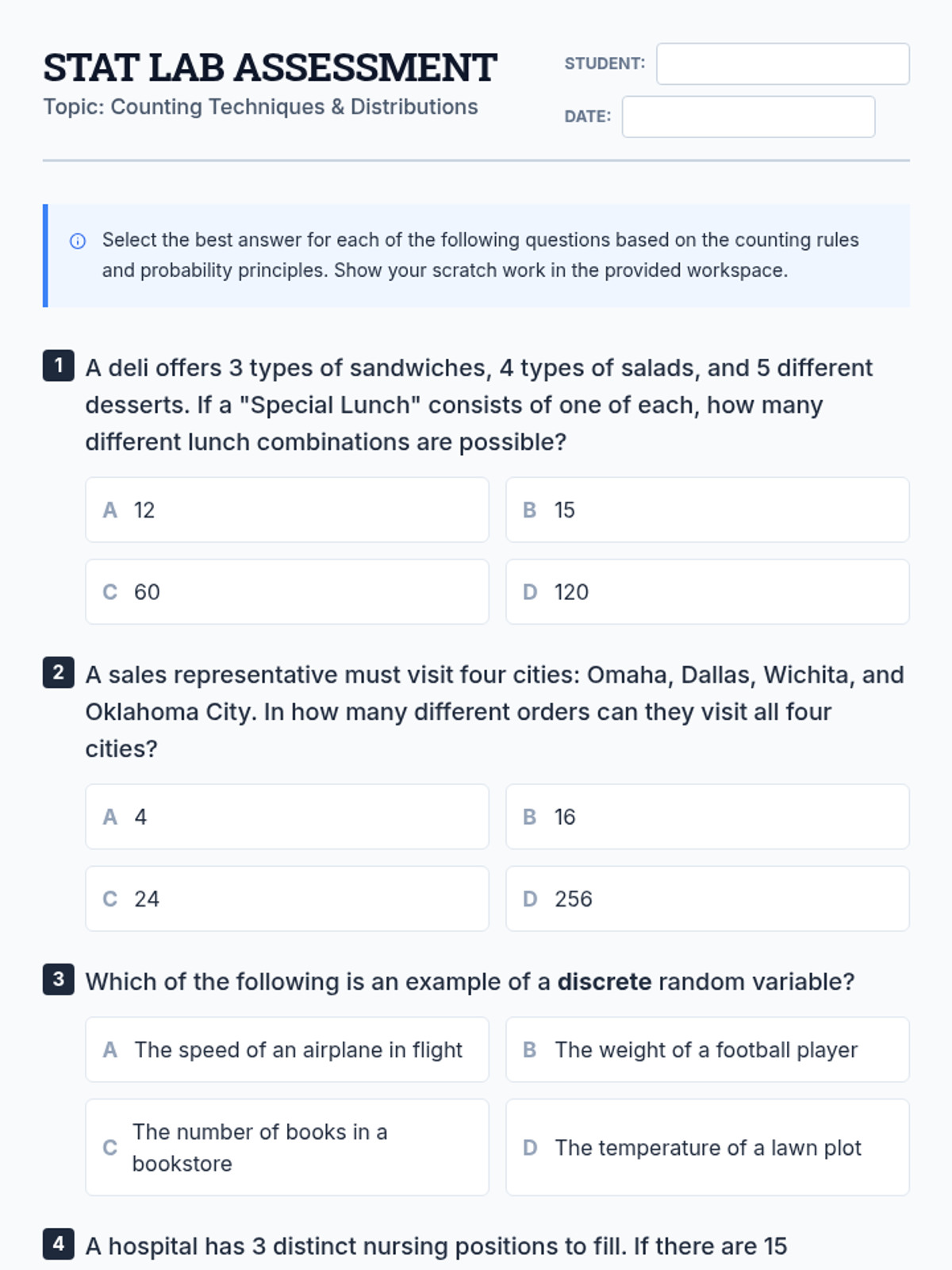
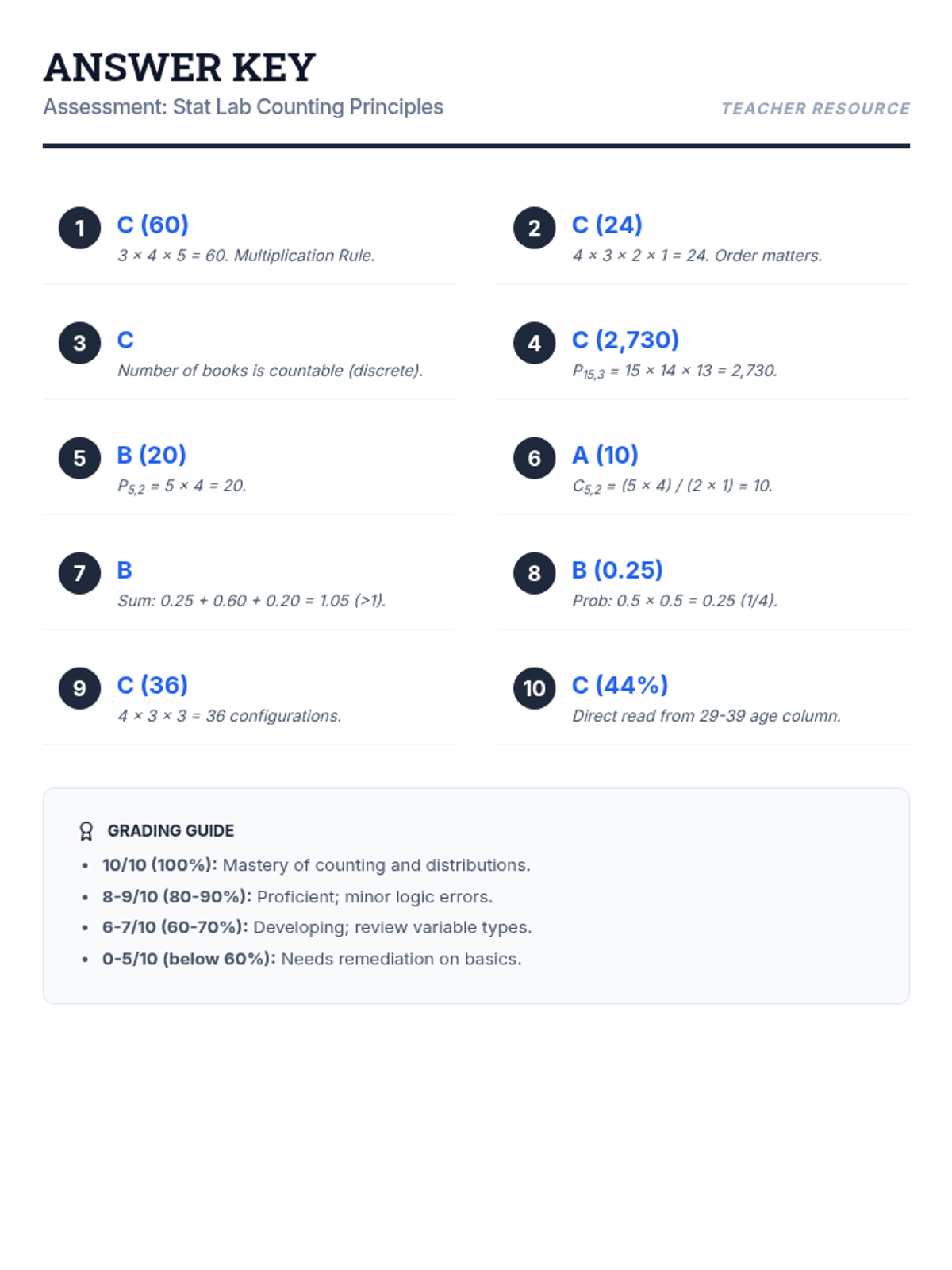
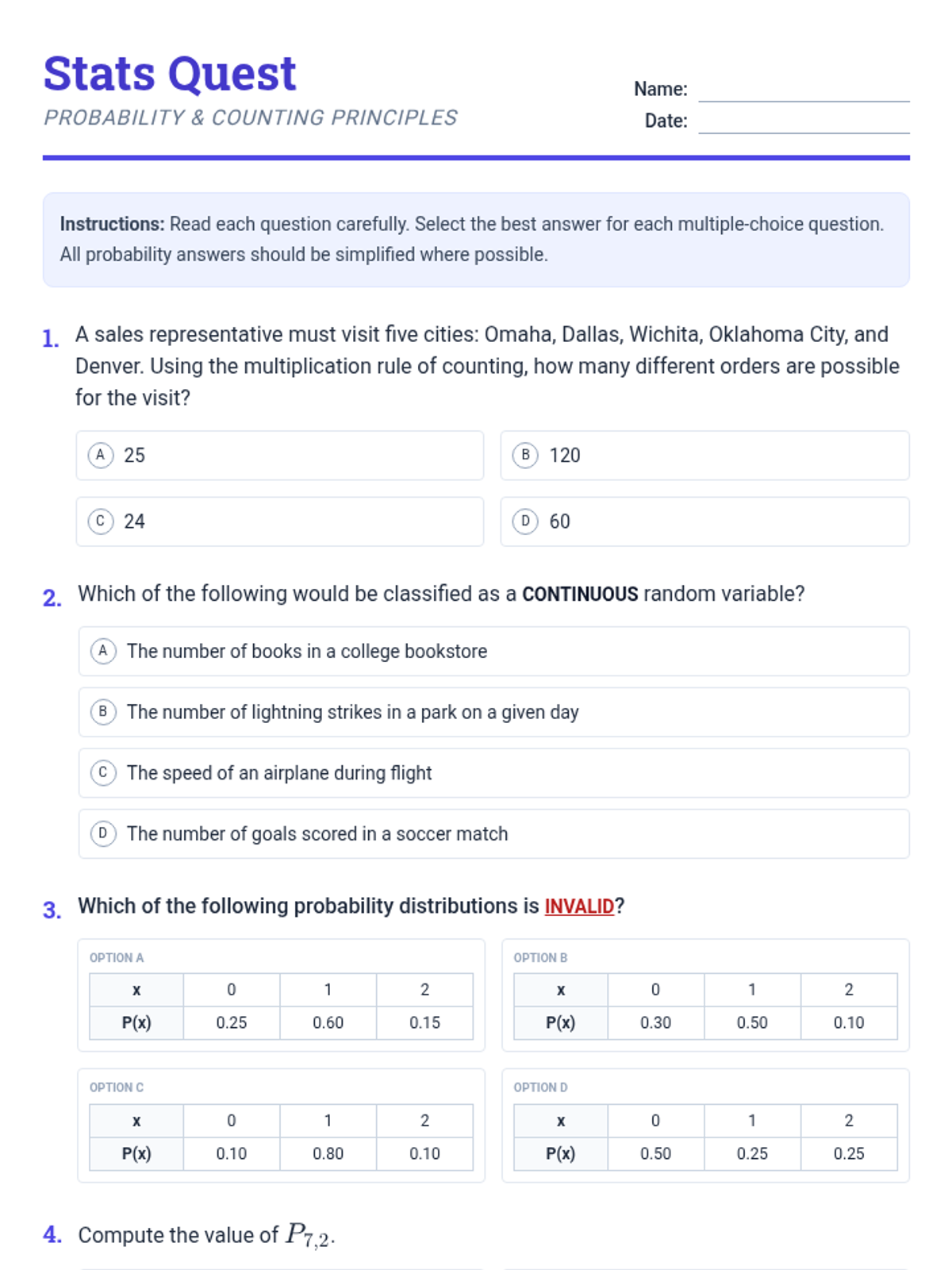
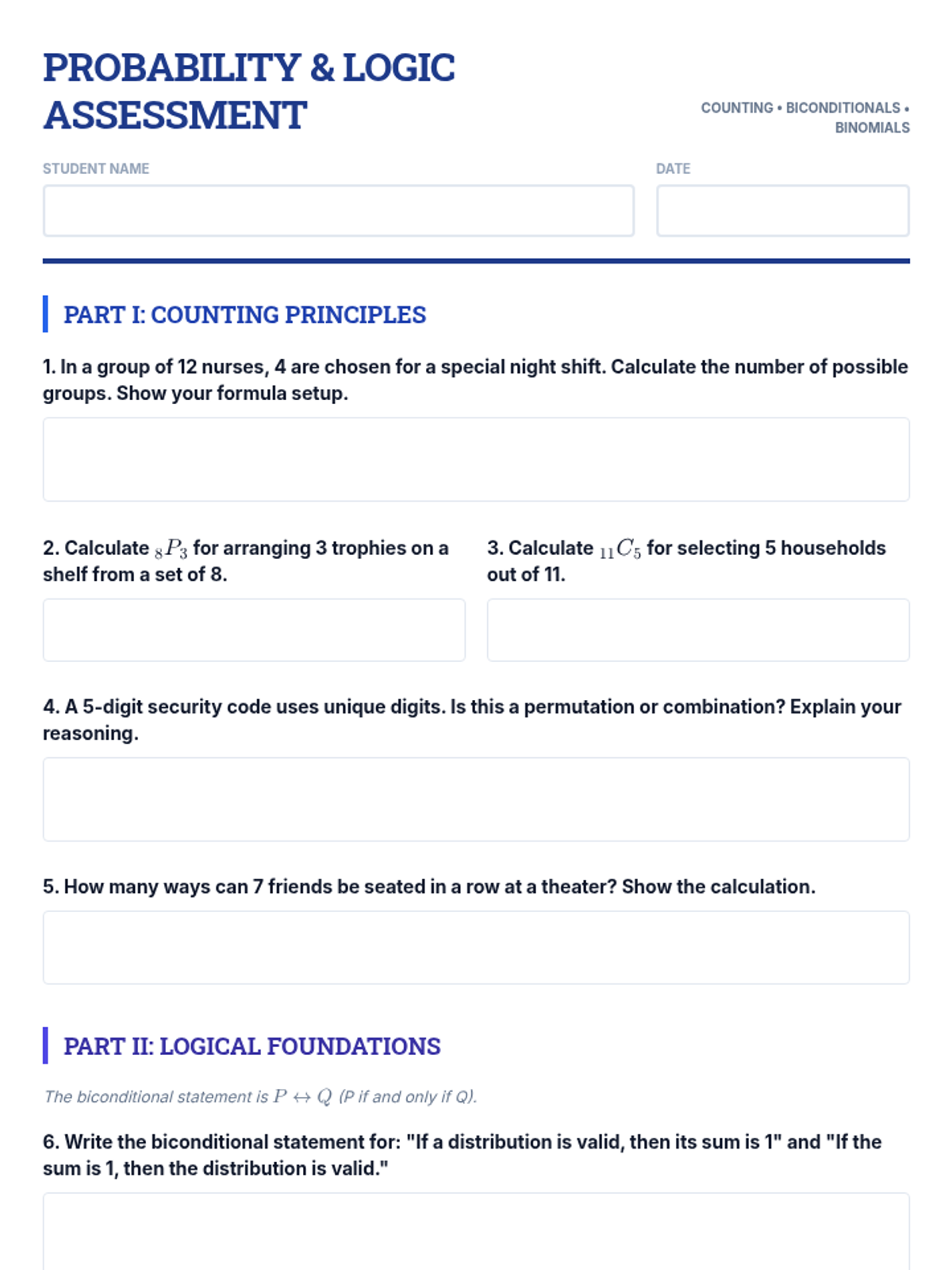
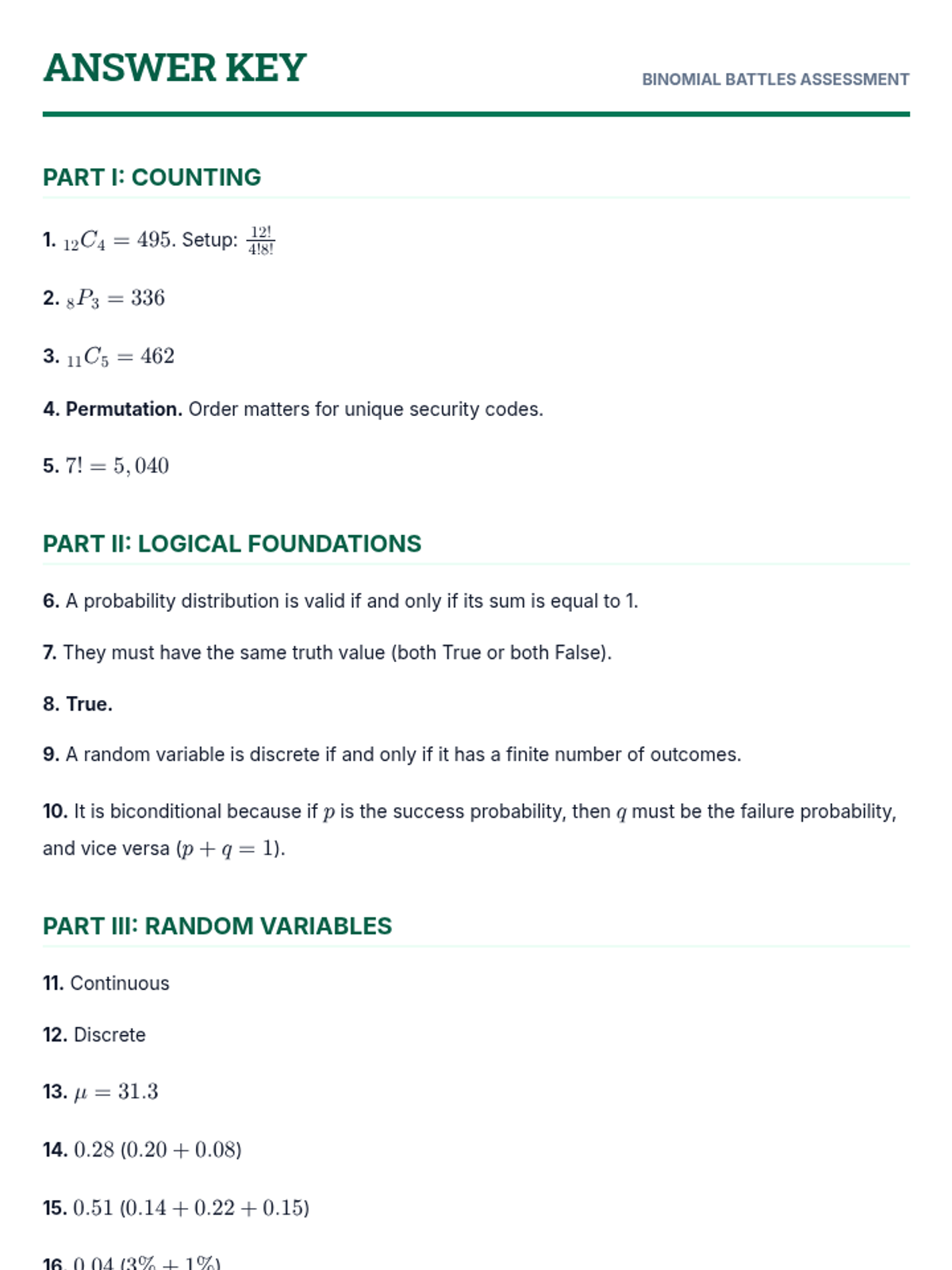
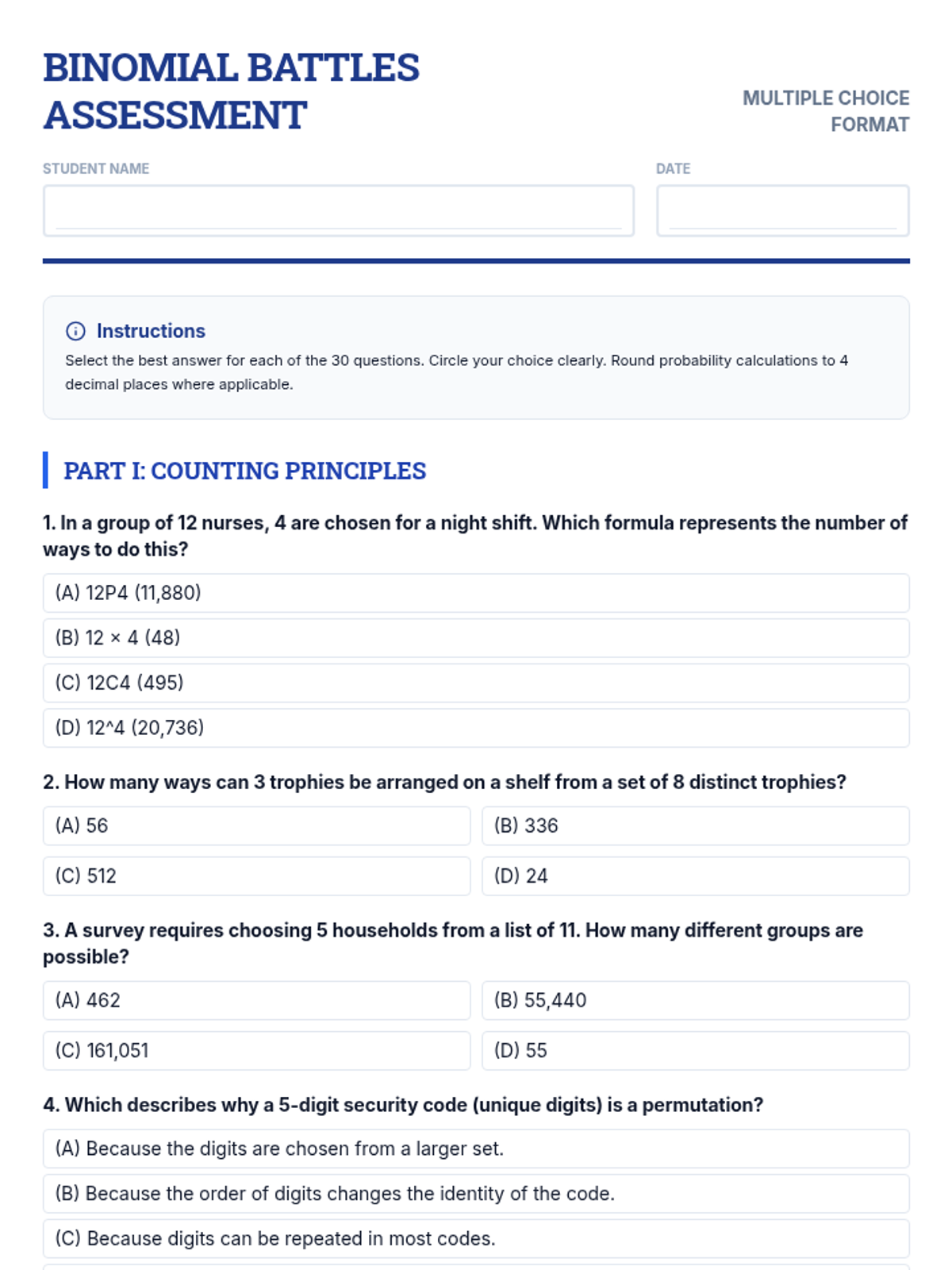
Students will learn to distinguish between permutations (order matters) and combinations (order doesn't matter) through a video-based discussion and a card-sorting activity.
A high-level honors algebra lesson focusing on the algebraic and graphical nature of extraneous solutions in radical equations, featuring a double-square problem and graphing calculator investigation.
Students will solve complex radical equations algebraically and verify their solutions using graphical intersections on Desmos, while considering domain restrictions.
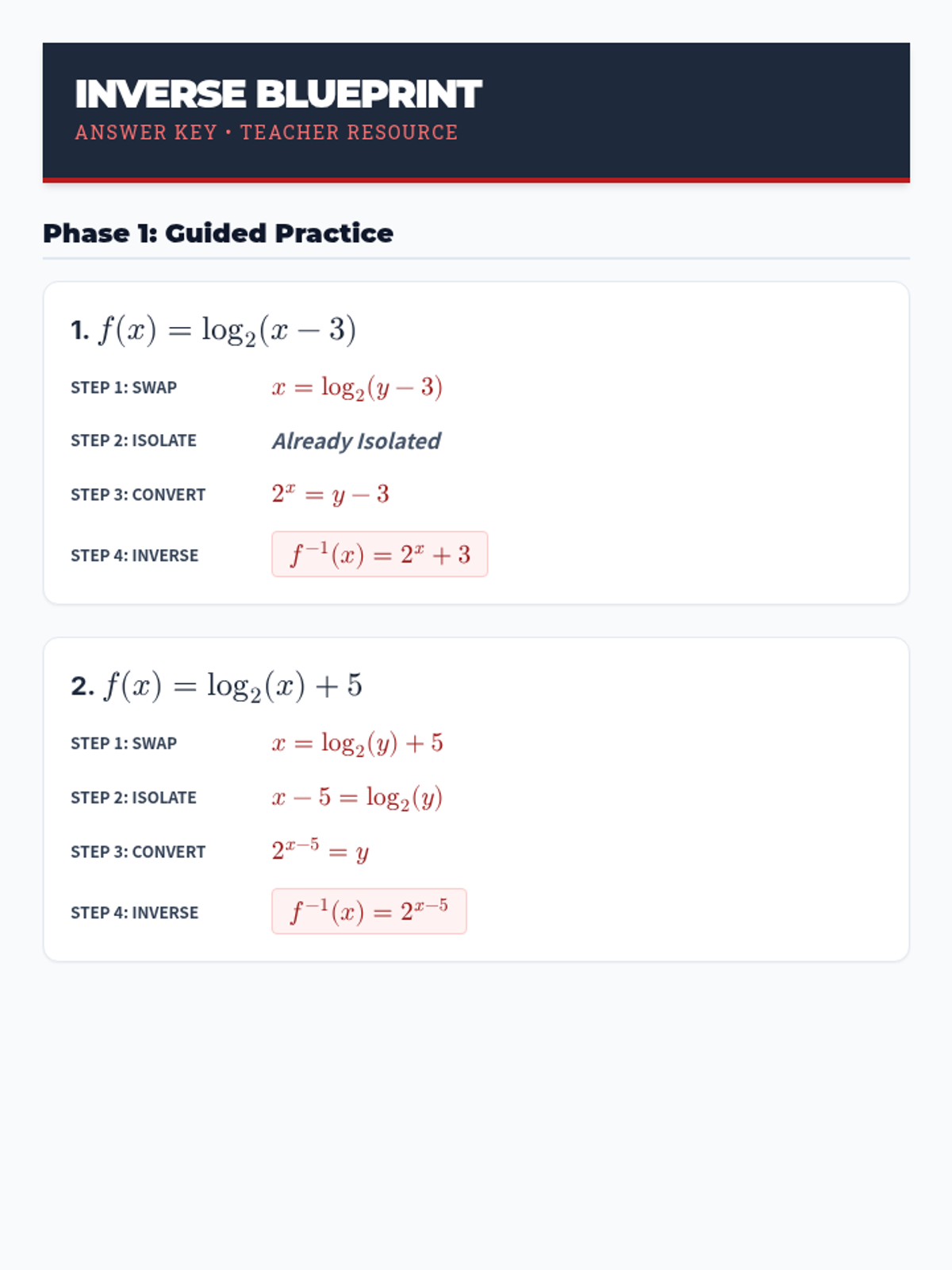
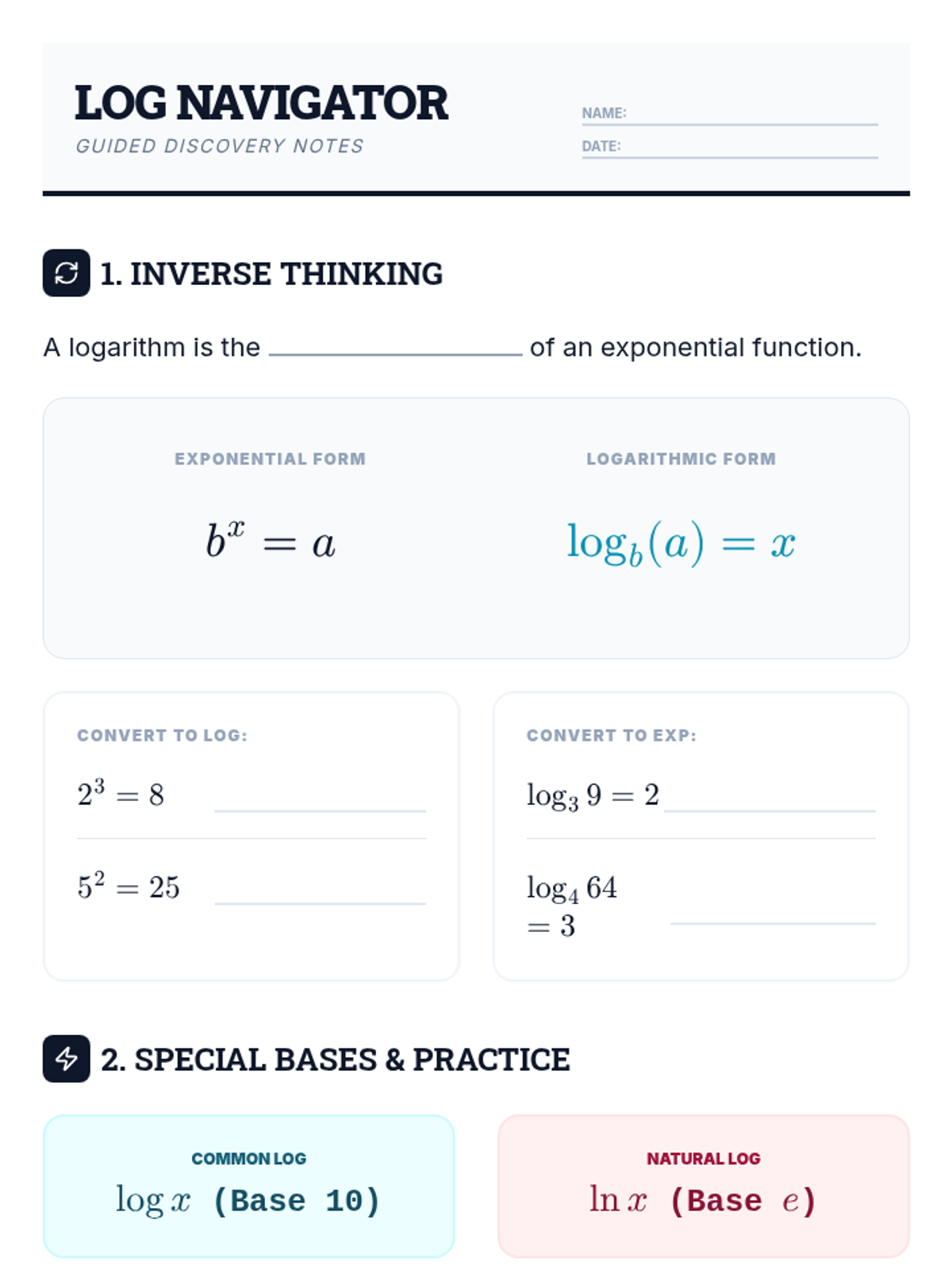
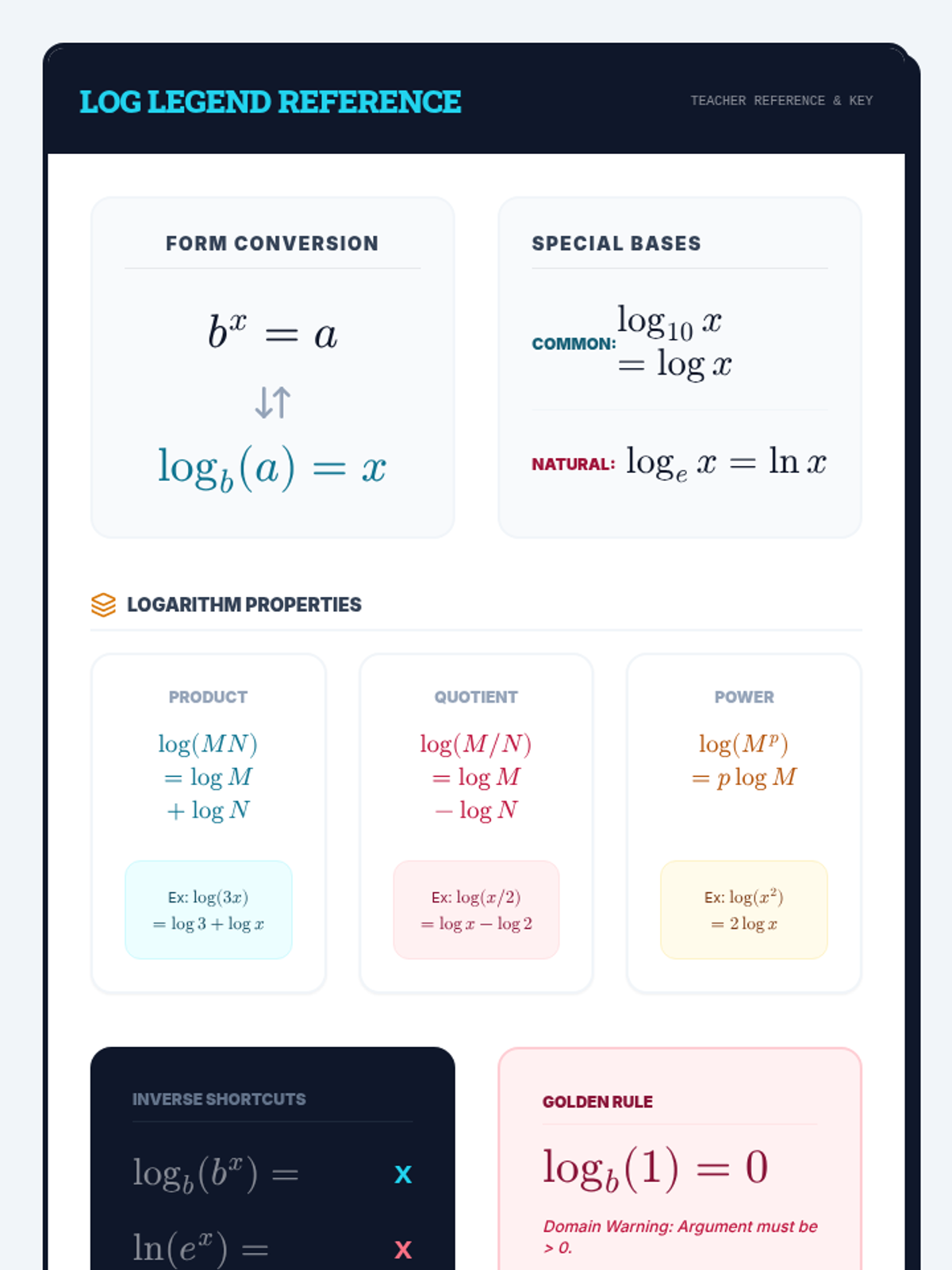
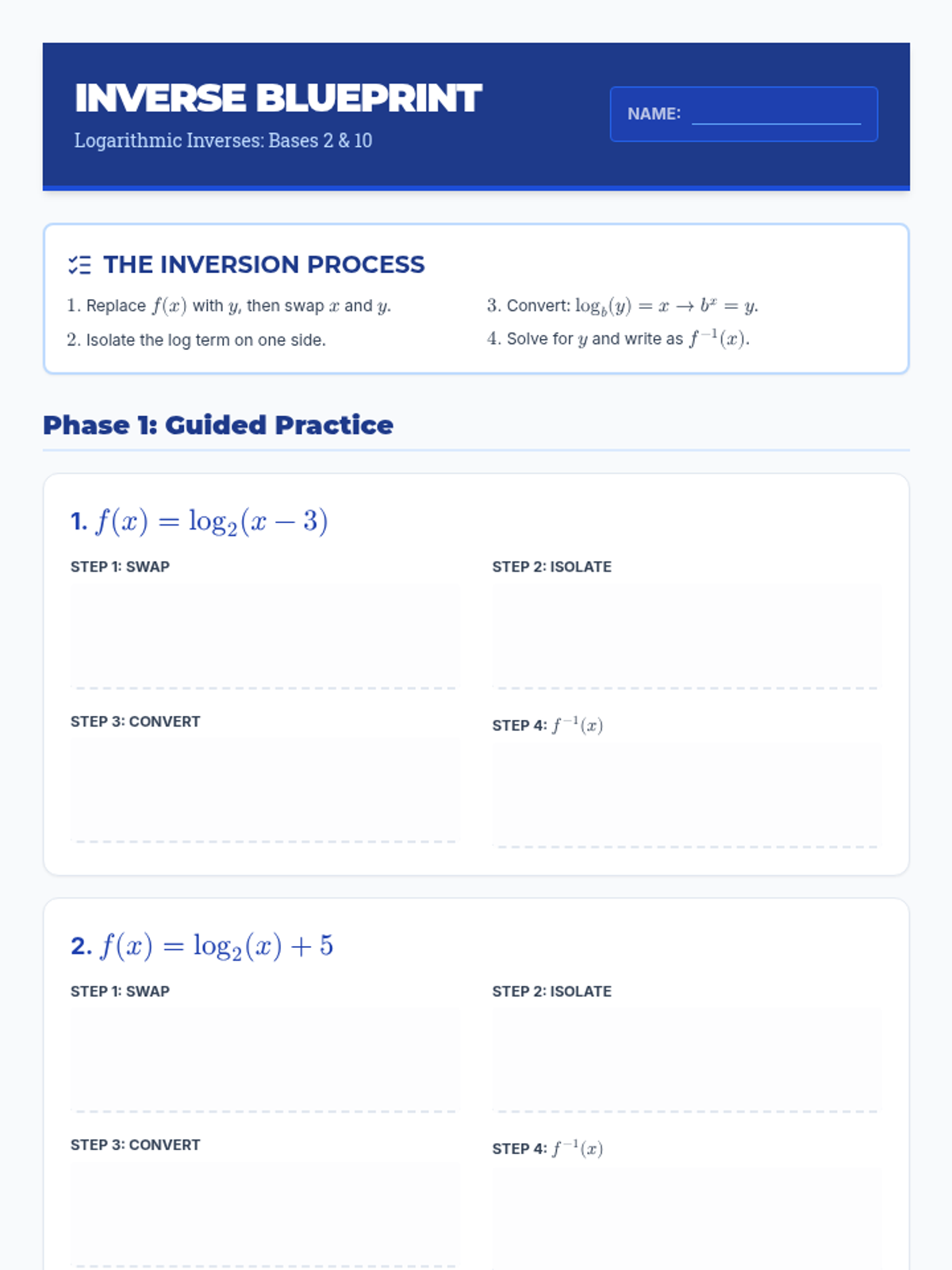
A Pre-Calculus lesson focused on the relationship between exponential and logarithmic functions through the lens of domain and range swapping. Students analyze transformations, identify key features like asymptotes, and verify inverse relationships graphically.
A comprehensive Algebra II / Pre-Calculus lesson on adding and subtracting real and complex numbers, featuring a card-matching activity and a deep dive into standard form (a + bi).
A focused Algebra II lesson on subtracting complex numbers, emphasizing the distribution of the negative sign through a 'Spot the Error' activity and instructional video analysis.
A Pre-Calculus lesson exploring the geometric relationship between exponential and natural logarithmic functions as inverses, featuring video analysis and side-by-side graphical comparisons.
Students will construct Pascal's Triangle and explore the mathematical logic of the symmetry of combinations ($nCr = nC(n-r)$) through visual patterns and algebraic reasoning.
A lesson focusing on the relationship between Pascal's Triangle and Binomial Expansion, moving from manual multiplication to efficient pattern-based expansion. Students will master expanding binomials of the form (a+b)^n and explore extensions with non-unit coefficients.
A 12th-grade mathematics lesson focused on solving complex number equations by equating real and imaginary parts. Includes a video-based demonstration, conceptual discussion, and algebraic practice ranging from linear to quadratic expressions.
A high-energy honors algebra lesson where students master interval notation through the lens of reciprocal functions, culminating in a fast-paced 'Interval Notation Relay' using transformed graphs.
Students explore the unique properties of even and odd reciprocal functions ($1/x$ and $1/x^2$) through graphical analysis, video observation, and comparative discussion.
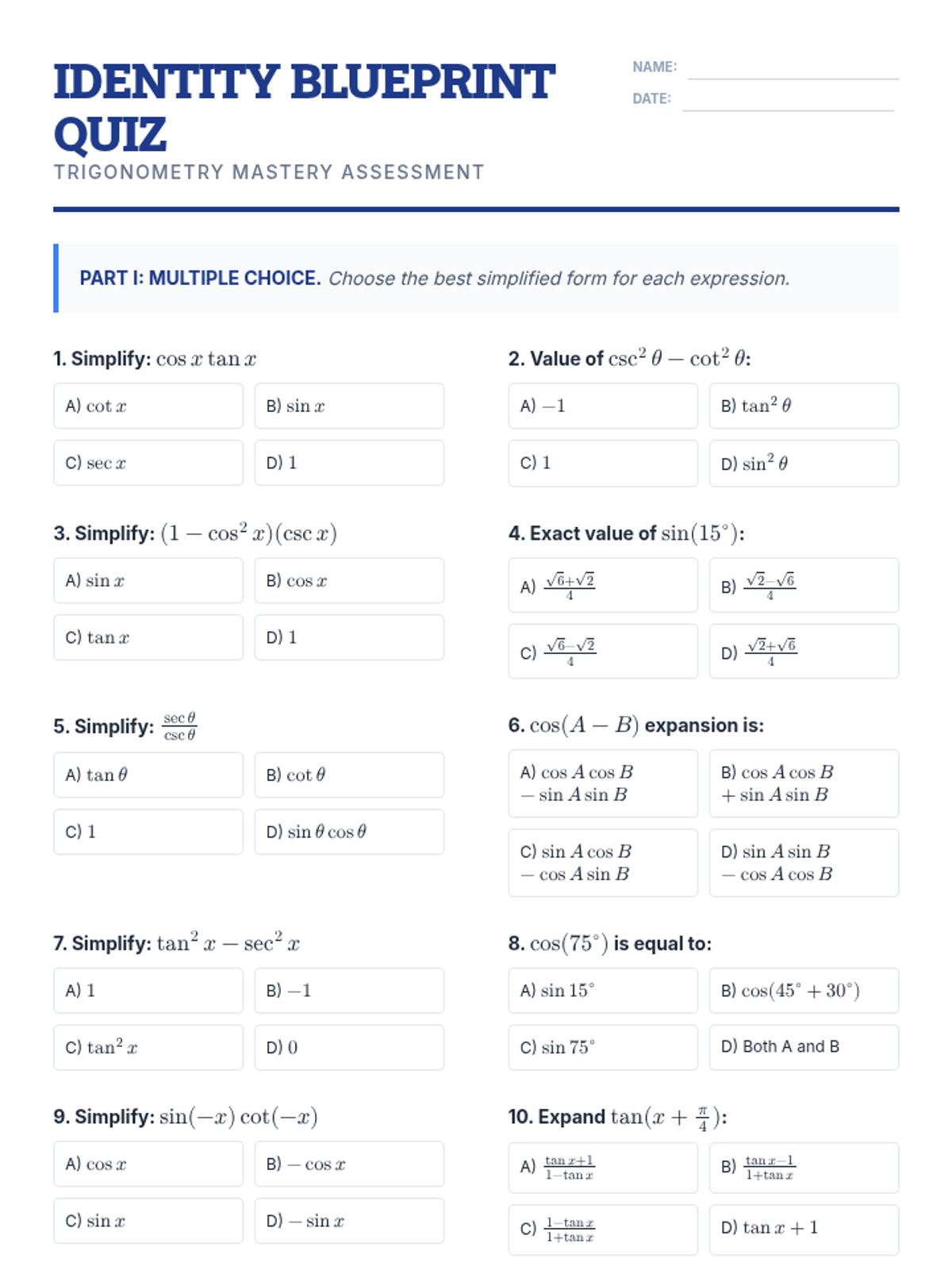
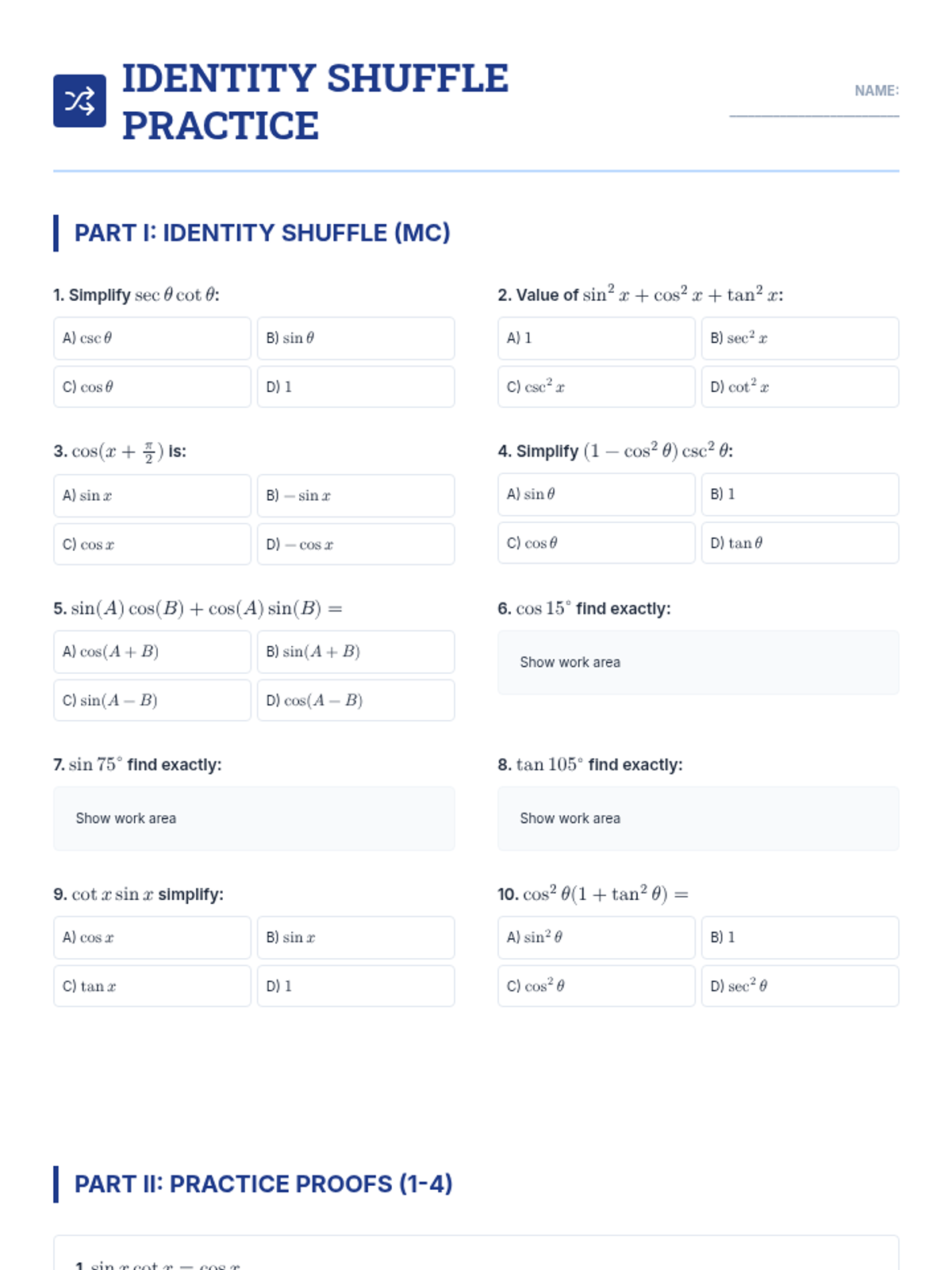
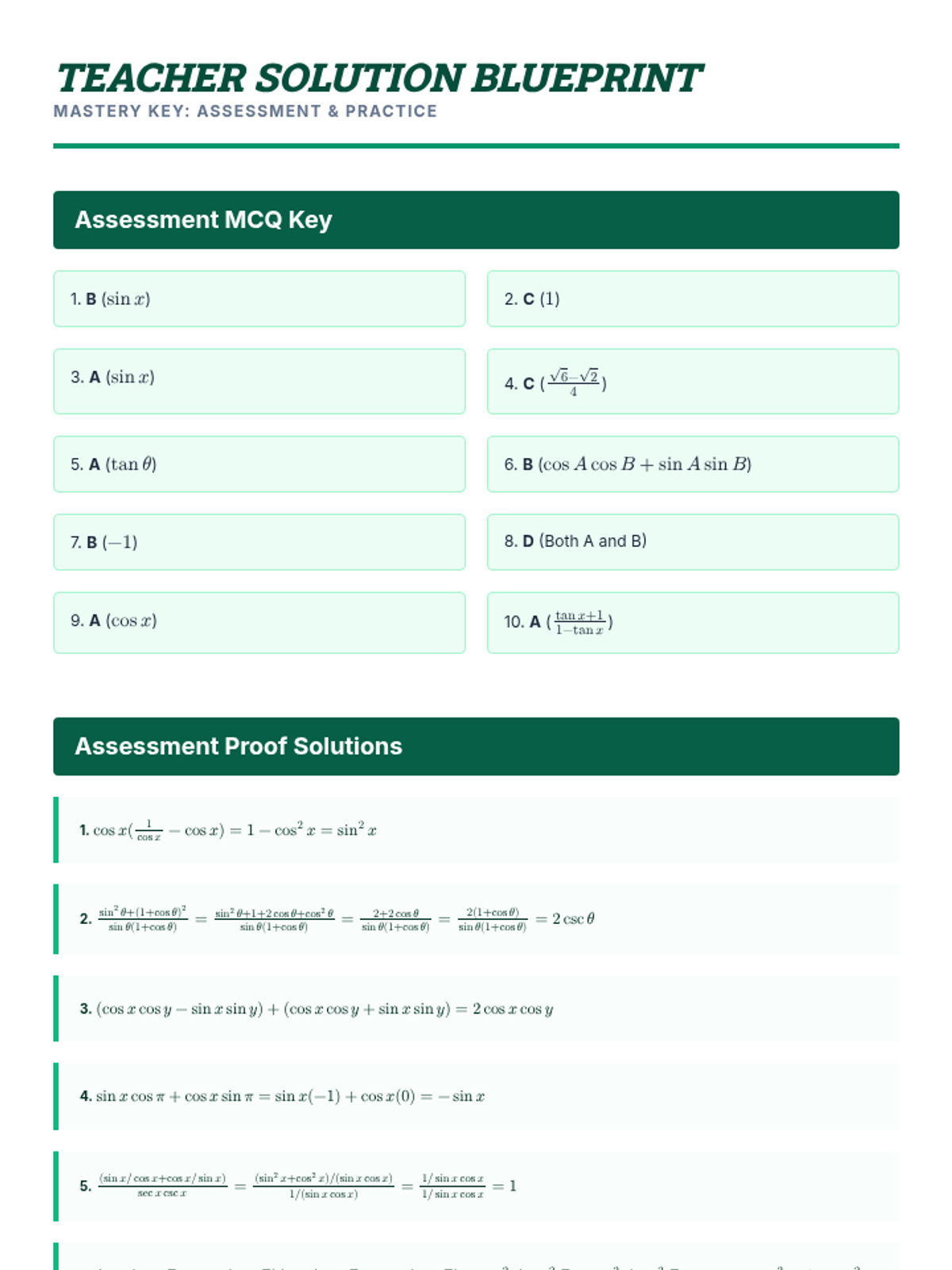
Students derive double-angle identities from sum formulas and use Pythagorean identities to prove alternate forms of the cosine double-angle identity.
Students will master the use of half-angle identities to determine exact trigonometric values for non-standard angles. The lesson includes a video-guided derivation and a collaborative challenge where students verify their exact radicals against decimal approximations.
A lesson on calculating permutations with indistinguishable objects, specifically focusing on repeating letters in words. Students will analyze the 'DAD' scramble, watch a tutorial on 'ALABAMA' and 'MISSISSIPPI', and calculate the permutations of their own names.
A Pre-Calculus lesson on infinite geometric series, focusing on determining convergence using the common ratio and calculating sums for convergent series. Includes a forensic-themed activity to engage students in mathematical analysis.
A high-school level lesson exploring arithmetic sequences, focusing on the transition from manual summation to the partial sum formula using Sigma notation.
A Pre-Calculus lesson focused on distinguishing between arithmetic and geometric sequences and applying the finite geometric sum formula through visual analysis and active sorting.
A deep dive into horizontal scaling in Pre-Calculus, focusing on the counterintuitive nature of 'inside' transformations and the algebraic logic of dividing inputs.
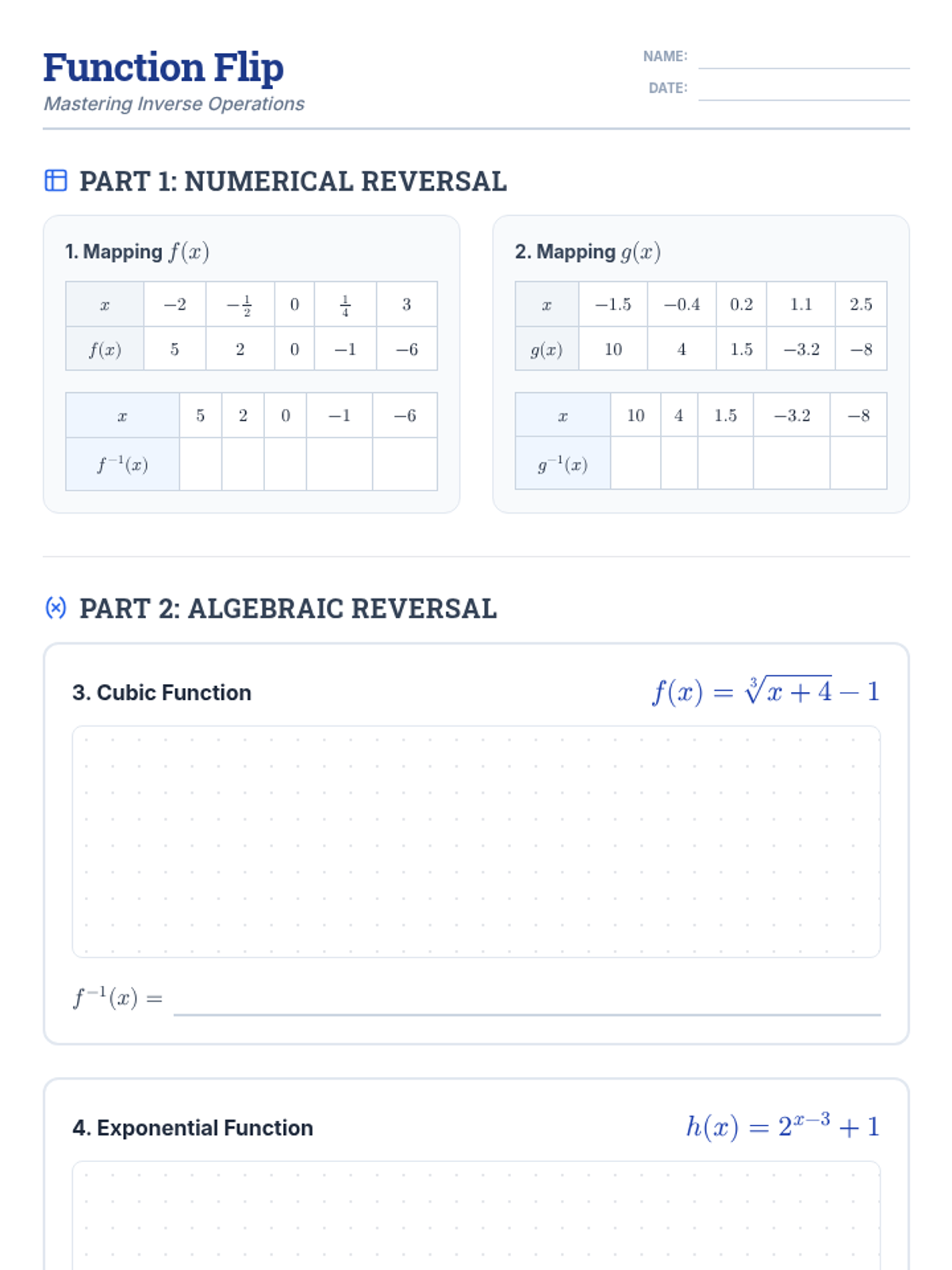
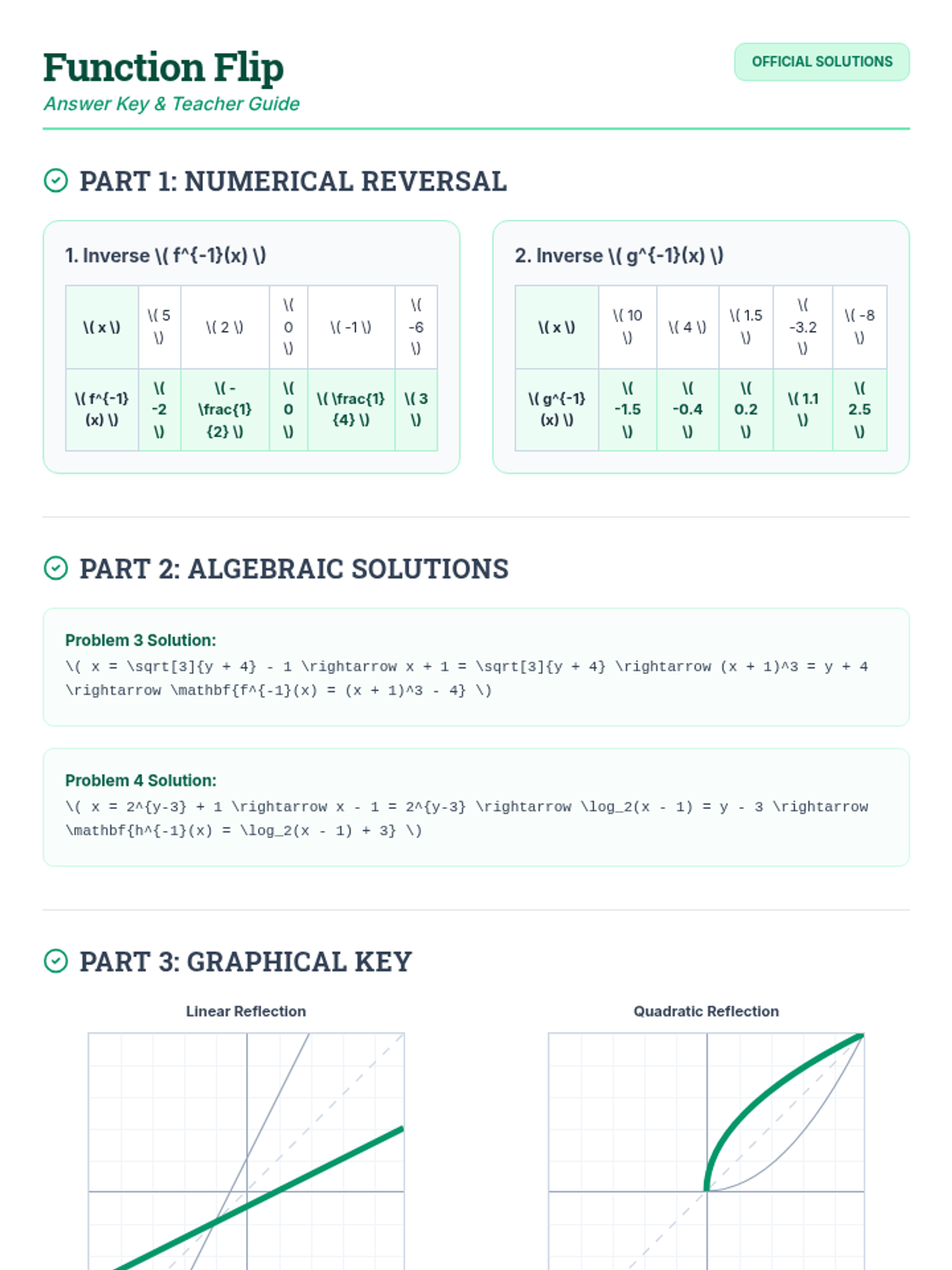
A hands-on exploration of inverse functions where students use folding and tracing to discover the visual relationship between a function and its inverse. The lesson emphasizes the reflection over the line y=x and the swapping of coordinate values.
A Precalculus lesson focused on calculating overall limits from graphs and identifying conditions for non-existence through a courtroom-themed simulation.
A Precalculus lesson focusing on the informal definition of continuity through the 'pencil test' and identifying the four main types of discontinuities: removable, jump, infinite, and oscillating. Students engage in a hands-on card sort to classify functions based on their graphical behavior.
A comprehensive calculus lesson focused on the critical distinction between the value of a function at a point and the limit as it approaches that point, featuring video analysis and a 'True/False/Fix' activity.
Students investigate the behavior of functions with oscillating discontinuities, specifically focusing on the limit of \(\sin(1/x)\) as \(x \to 0\) compared to bounded oscillating functions like \(x \cdot \sin(1/x)\). The lesson uses a combination of video analysis and digital graphing tools to explore the formal definition of limit failure due to oscillation.
A Precalculus lesson where students construct complex piecewise 'monster' functions using algebraic 'body parts' to satisfy specific limit and continuity requirements.