A lesson covering fundamental counting techniques, random variable classification, and probability distributions based on statistical principles.
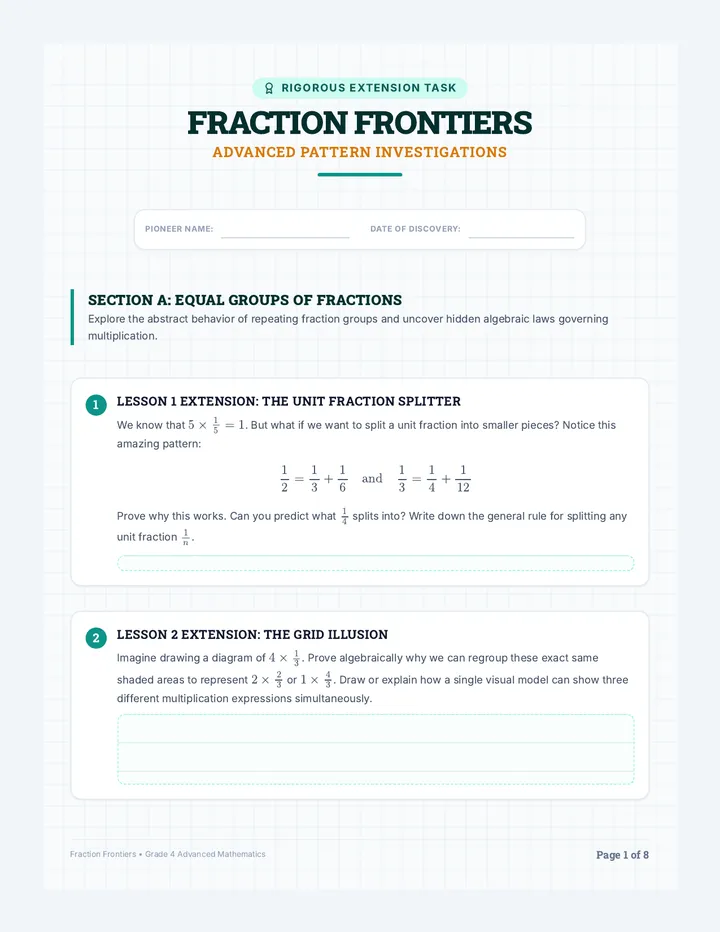
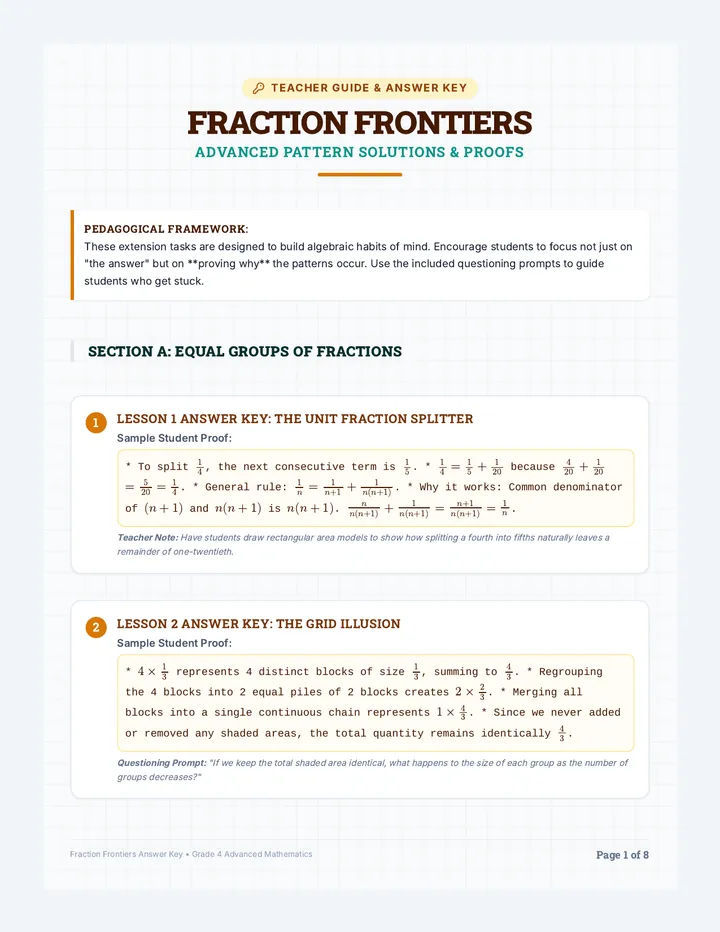
An advanced extension packet covering all 20 lessons of Unit 3, focused on abstract pattern exploration, number play, and algebraic relationships with fractions.
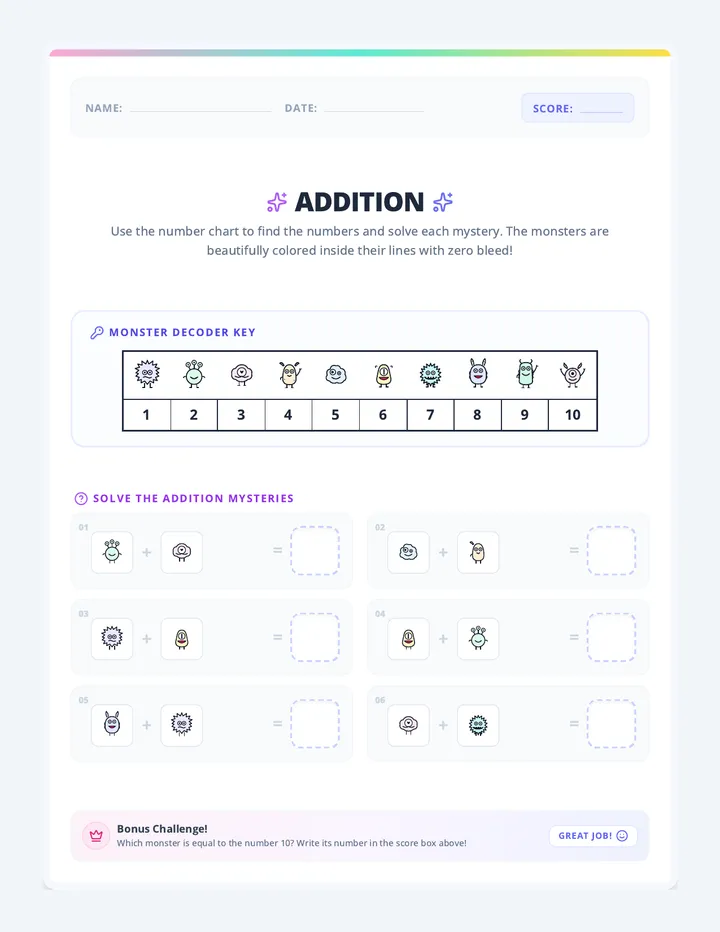
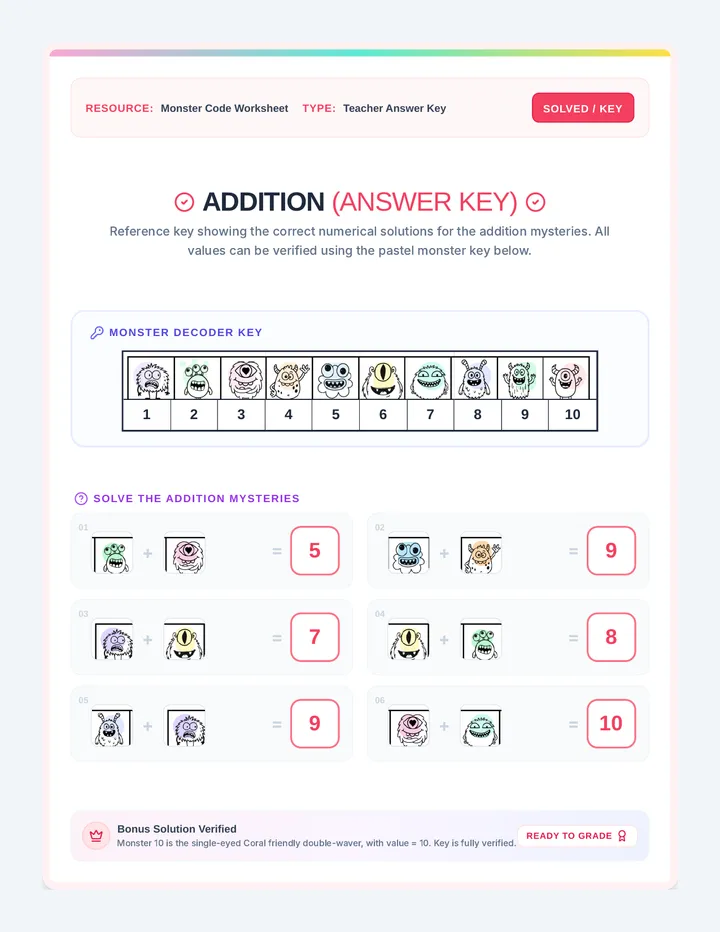
A playful elementary math lesson where students use a monster decoder chart to solve mystery addition equations. Includes a student-facing code-breaker worksheet and a corresponding teacher answer key.
The teacher's answer key for the Monster Code Worksheet, featuring all mystery values clearly solved with bold pink handwriting-style digits inside the decoder answers.
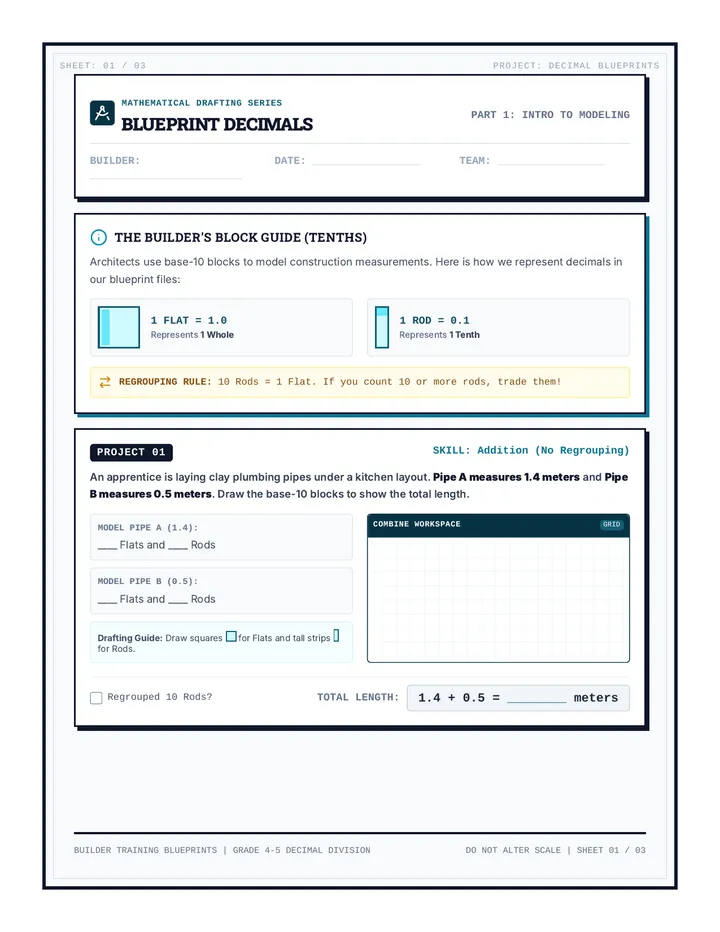
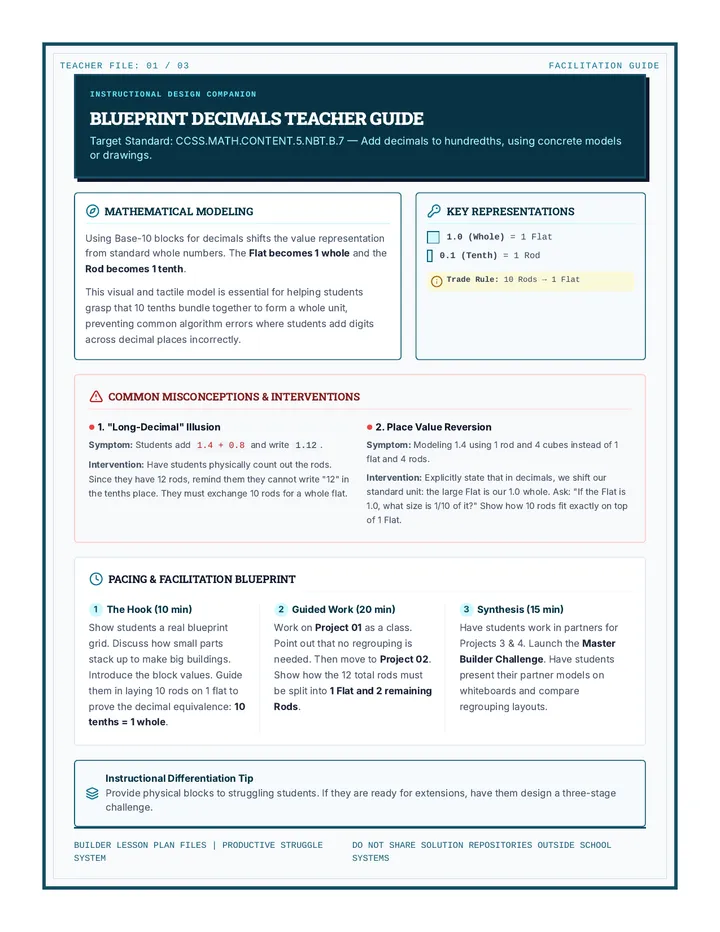
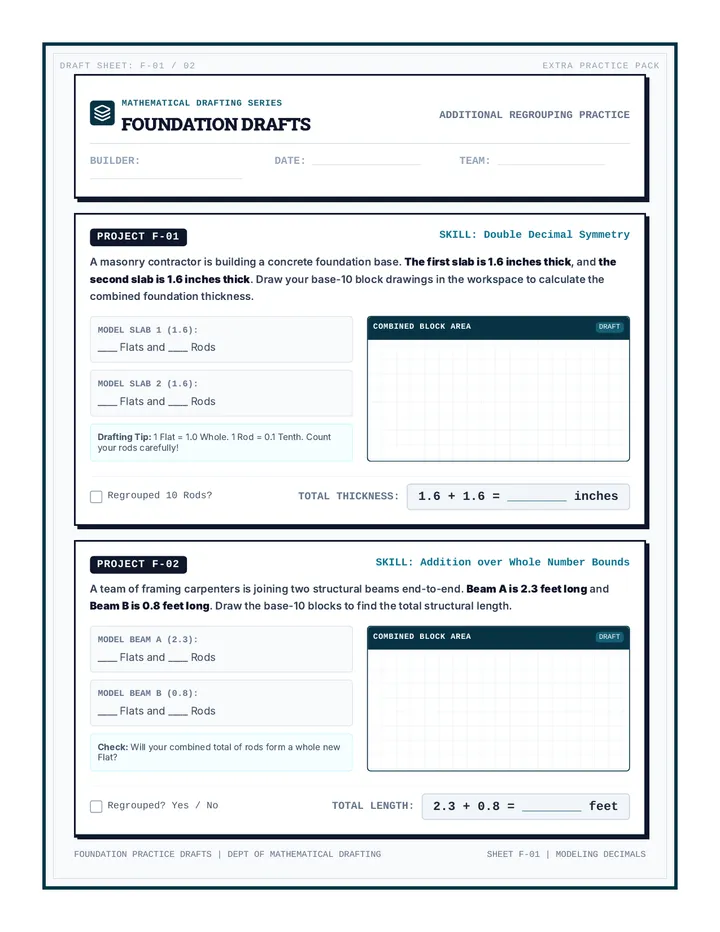
A complete sequence on decimal addition and regrouping. Students transition from modeling tenths with architectural blueprints to mastering computational algorithms through cosmic missions and space exploration calculations.
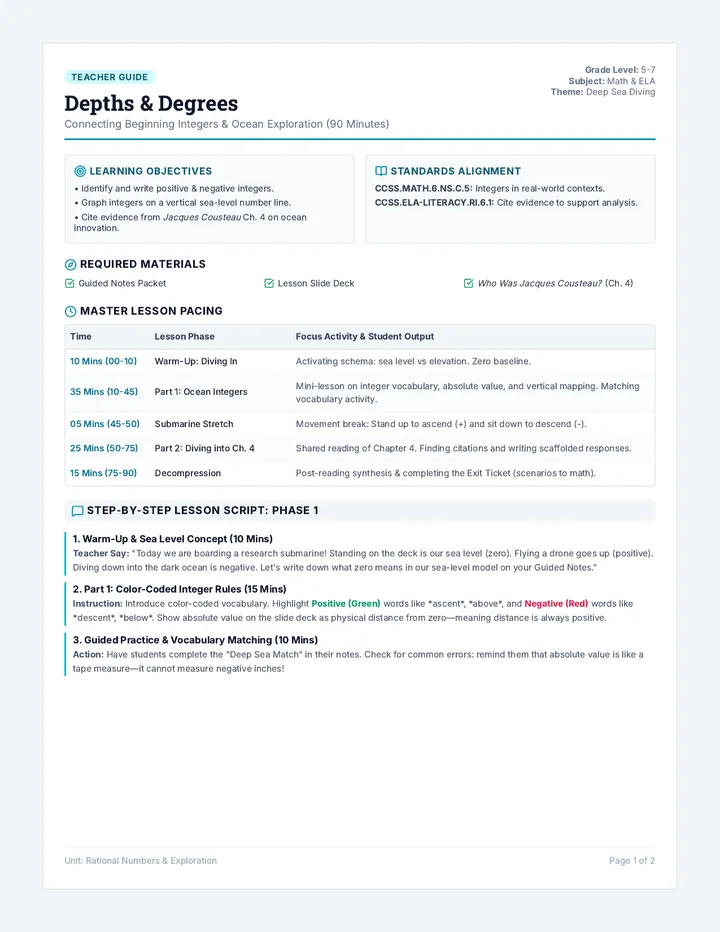
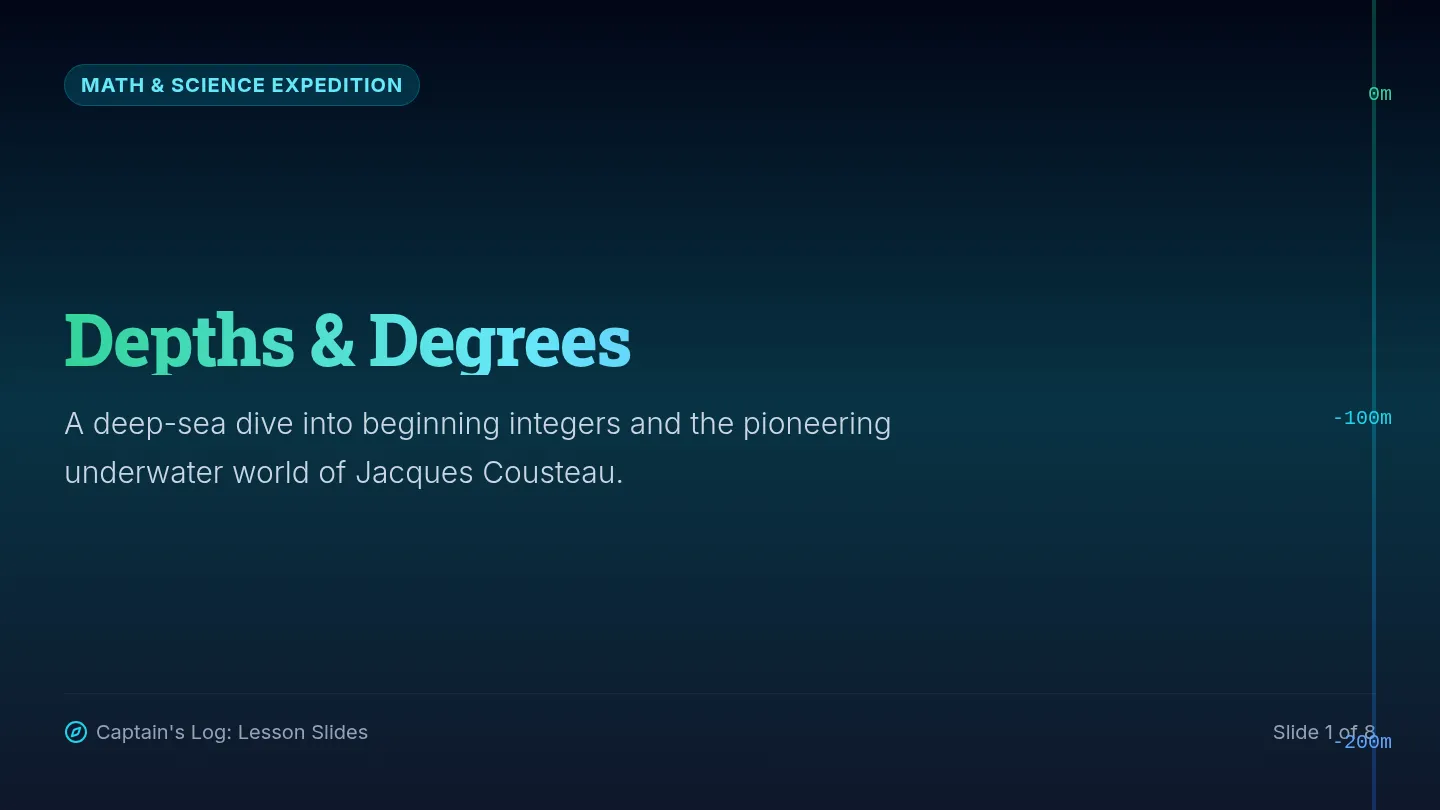
A highly visual 90-minute lesson connecting introductory integer rules with ocean exploration. Students use deep-sea diving concepts to understand negative and positive numbers, and dive into Chapter 4 of 'Who Was Jacques Cousteau?' to explore his underwater journeys with structured scaffolding.
A premium, student-facing math worksheet where children decode and solve addition mysteries by matching adorable pastel-colored monsters to their numerical values (1-10) using a visual key.
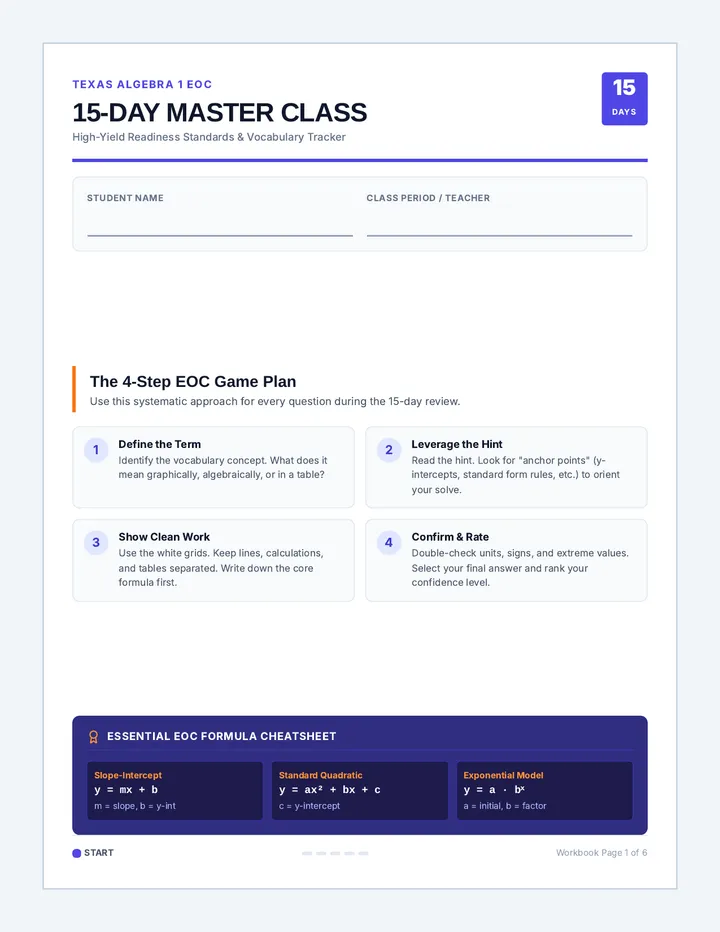
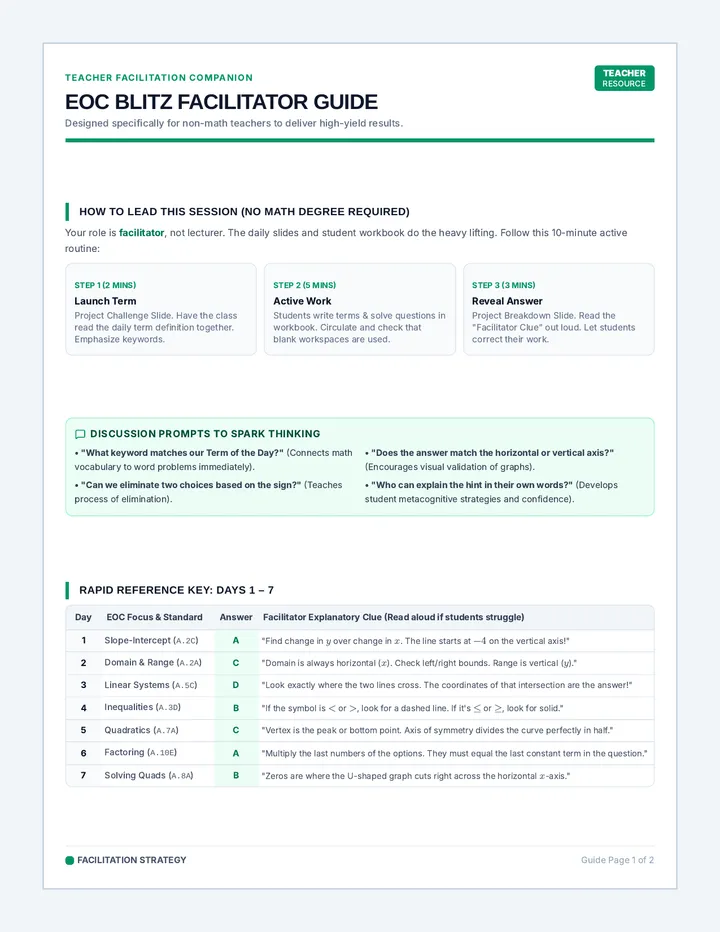
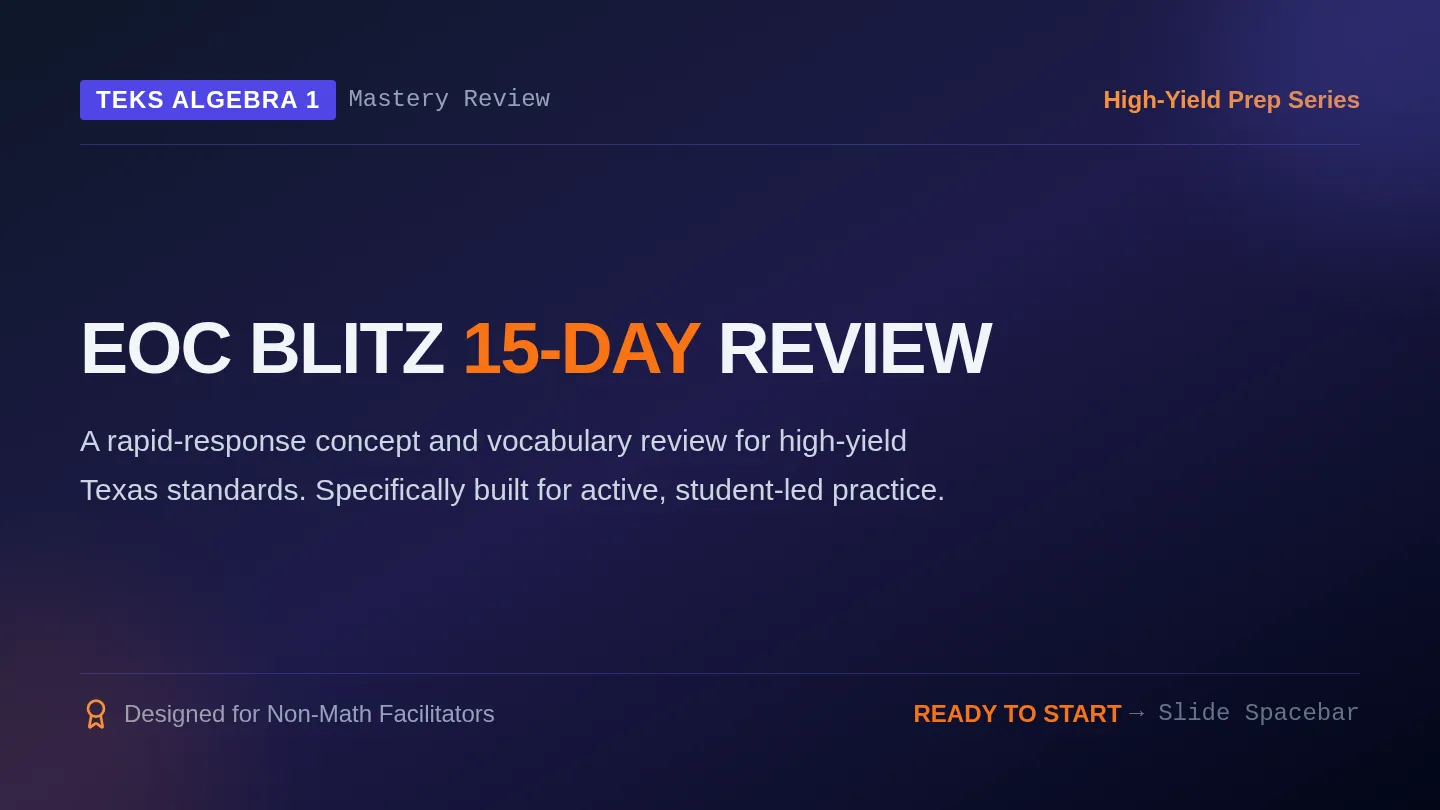
A 15-day Texas Algebra 1 EOC test preparation program designed for non-math teachers to facilitate vocabulary mastery and high-yield readiness standard practice.
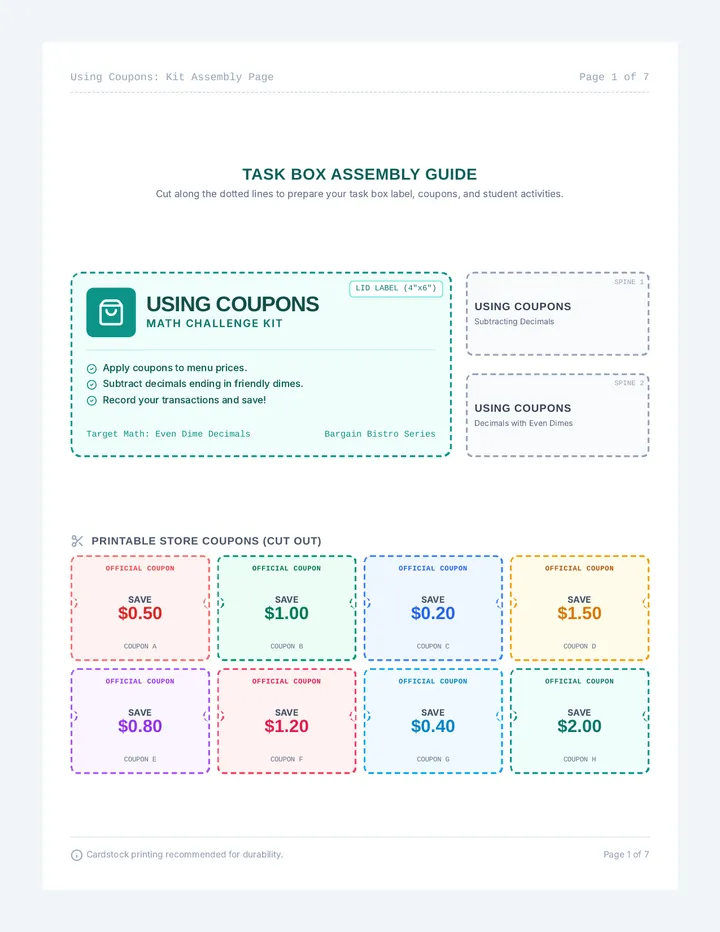
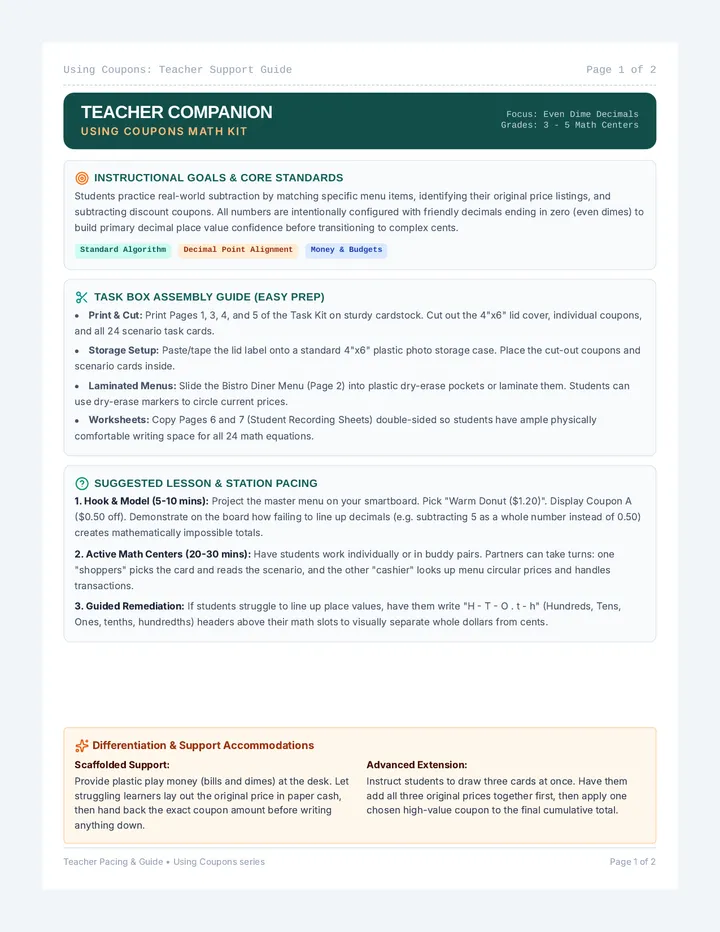
A comprehensive learning kit designed to teach real-world subtracting of decimals ending in even dimes. Students match market menu items with custom coupons to calculate final discounted prices.
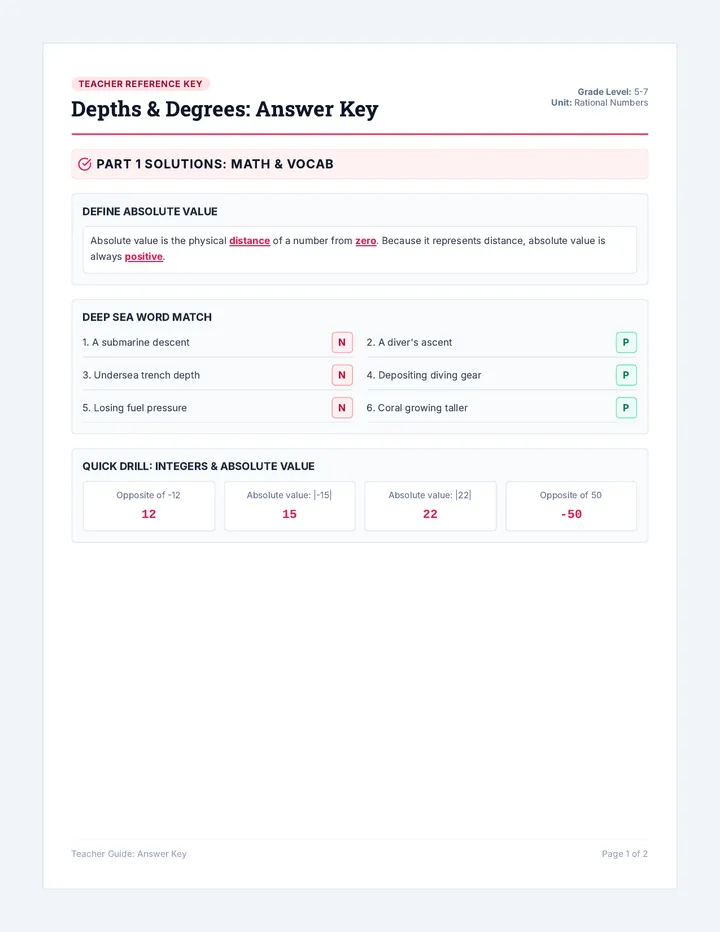
A teacher answer key containing complete exemplar answers for the Ocean Explorer Guided Notes and the Decompression Chamber exit ticket.
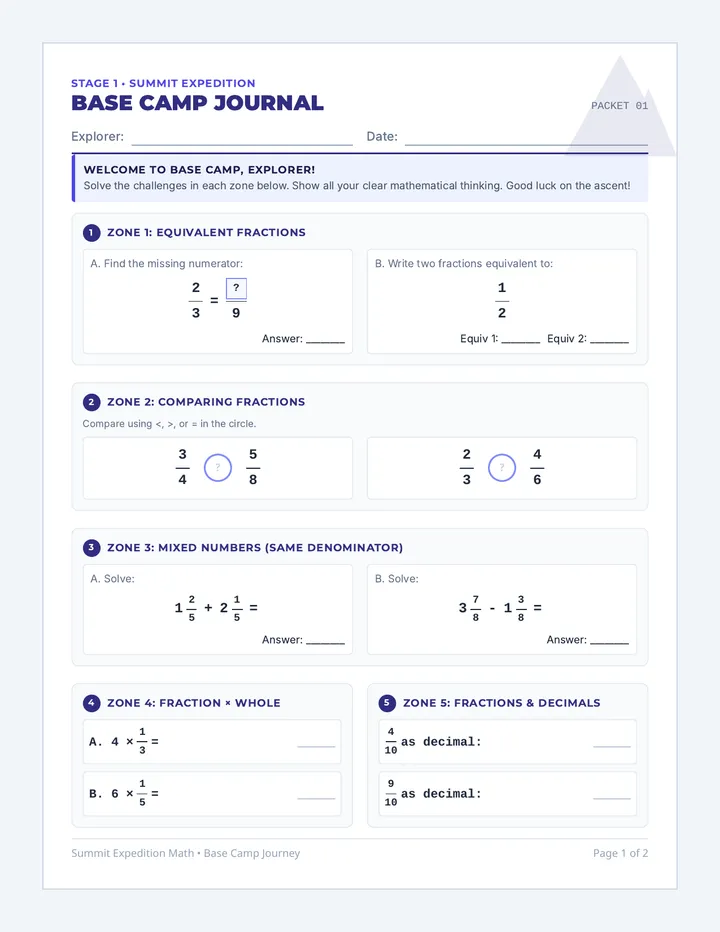
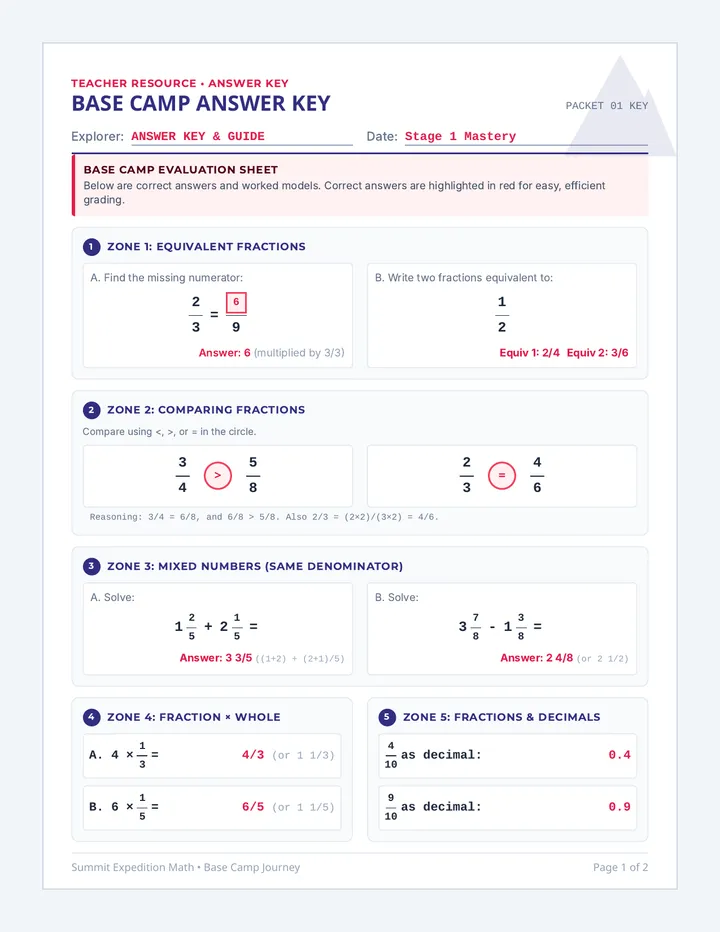
A rigorous 4-part math review sequence designed for rising 5th graders, moving progressively from foundational review to advanced 5th-grade preparation. Each packet is an 'Expedition Journal' featuring ten essential domains of fourth-grade math with mixed daily practice and comprehensive answer keys.
A complete lesson series of rigorous extension tasks designed to deepen fourth-grade students' understanding of fraction operations through abstract pattern exploration.
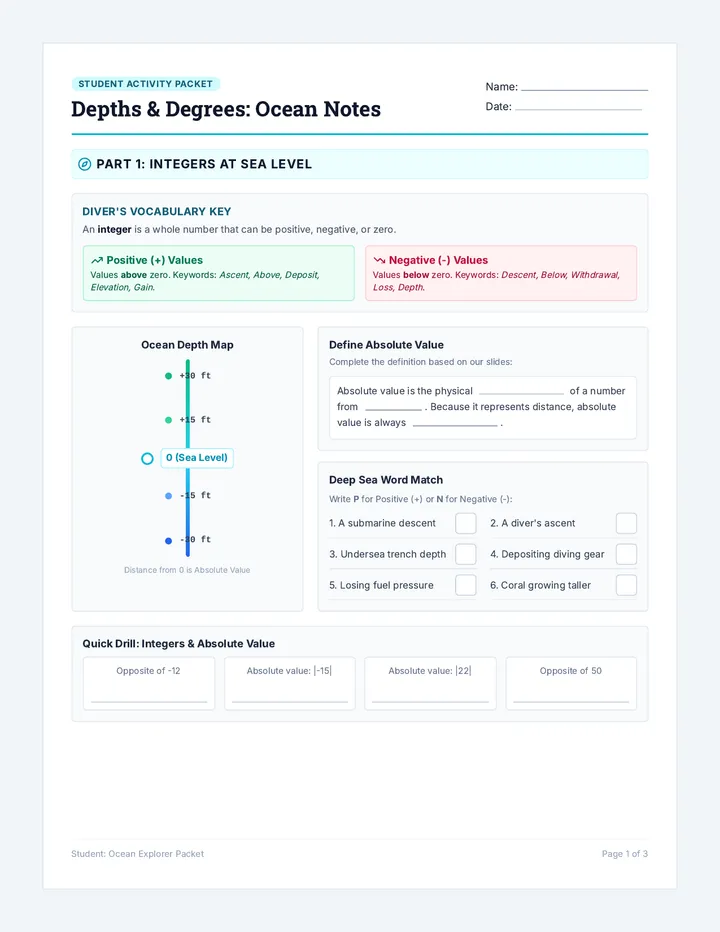
A student-facing 3-page guided notes and activity packet. Includes vertical ocean-depth mapping, an integer vocabulary matching activity, Chapter 4 scaffolded reading prompts with sentence starters, and the Decompression Chamber exit ticket.