Projection Problem Teacher Guide The Projection Problem
Teacher Facilitation Guide
Geometry
Objective
Students will analyze geometric distortion in map projections by attempting to flatten a spherical surface, concluding that it is mathematically impossible to preserve both shape and area simultaneously.
Materials
Oranges, markers, Lab Activity sheets, tape/glue sticks.
Lesson Flow
0-10m
Hook: The Mercator Myth
Compare Greenland and Africa on map vs globe. Define distortion .
10-35m
Activity: Orange Peel Lab
Students mark and peel oranges. Challenge them to flatten the peel. Key: Gaussian Curvature cannot go from positive to zero without distortion.
35-50m
Math: Analysis
Analyze A = 4πr² . Compare Mercator (conformal) vs. Gall-Peters (equal-area).
50-60m
Assessment
Complete the Globe Geometry Quiz .
Discussion Prompts
"How do digital maps manage distortion as you zoom in?"
"Which property—area or angle—is more important for a pilot?"
"Can you design a shape that IS developable?"
"How does curvature relate to surface area stretching?"
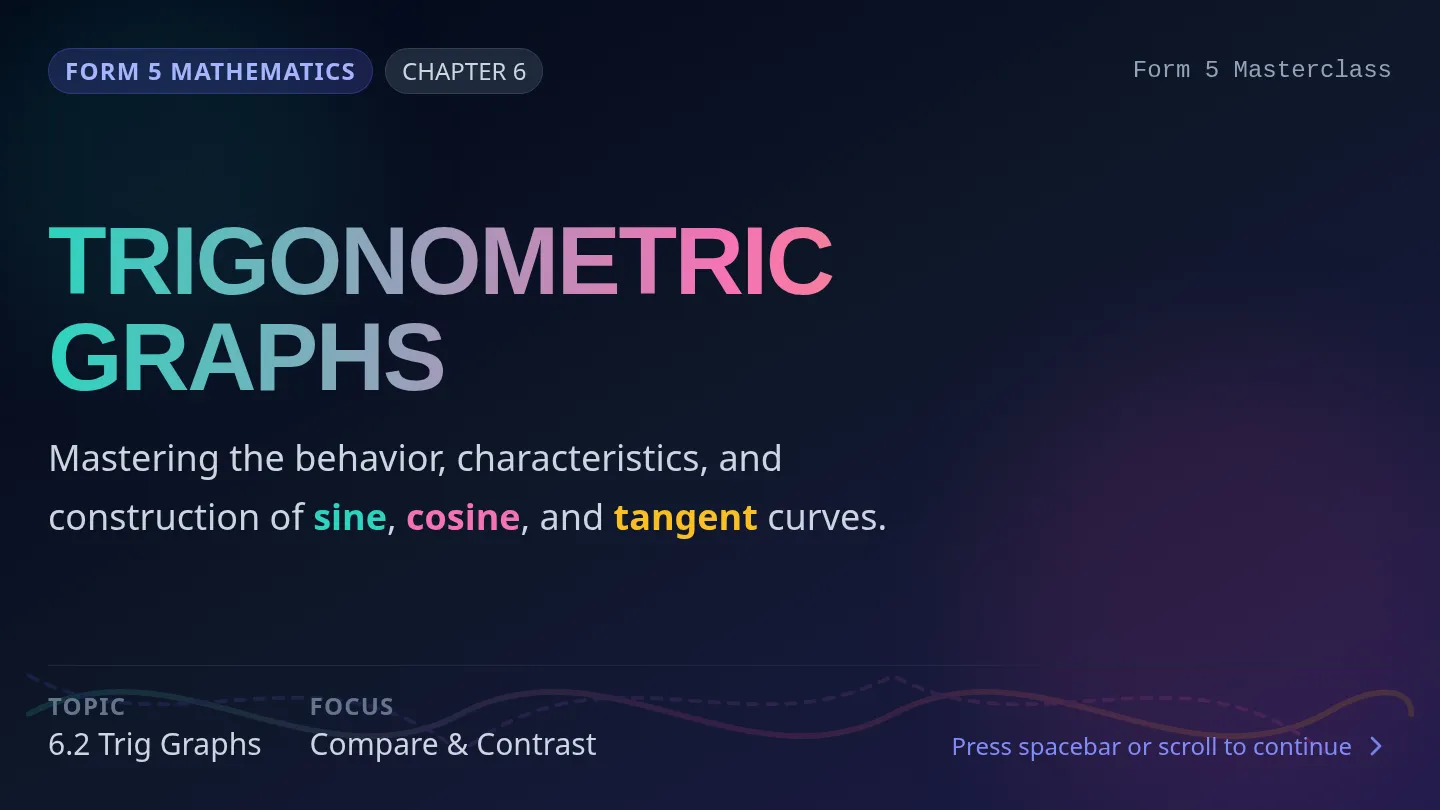
Mapping Earth Slides The Projection Problem
Why a flat map of a round world is mathematically impossible.
The Mercator Mystery
On a standard map, Greenland looks as large as Africa.
Reality Check:
AFRICA: 30.37M km²
GREENLAND: 2.16M km²
Africa
14x Bigger
Greenland
Distortion
Geometric Curvature
Sphere
A = 4πr²
Positive Curvature.
Non-developable.
Plane
A = l × w
Zero Curvature.
Euclidean flat space.
Cylinder
Curvature = 0
Developable.
Can be "unrolled".
The Orange Earth
1
Draw continents on your orange.
2
Mark 1x1cm squares at the equator and poles.
3
Peel and try to lay it perfectly flat.
Gores & Gaps
The peel must split or stretch to fill a rectangle. This physical gap is the mathematical "Projection Problem."
The Compromise
Size (Area)
Preserving area distorts shape. Important for population and climate data.
Shape (Angles)
Preserving angles distorts size. Crucial for navigation and pilots.
"All maps lie, but some are useful." — Mark Monmonier
Orange Peel Lab Activity Orange Peel Lab
Mapping the Sphere onto the Plane
Lab ID: GEO-04
Name:
Section / Date
1 Preparation : Drawing the World
Perform before peeling:
Reference Points : Mark the Equator, North Pole, and South Pole.
Reference Squares : Draw a 1cm x 1cm square at the equator (E) and one near the North Pole (P).
Continents : Sketch outlines of two major landmasses.
Predict : Square distortion at poles vs equator?
Predict : Minimum pieces to lay it flat?
2 Creating Gores : Flattening the Globe
Carefully peel your orange. Try to keep the peel in as few pieces as possible. Attach the peel below so that it lies perfectly flat against the paper.
Attach Peel Here
3 Post - Lab Analysis
1. When you tried to flatten the peel, what happened to the "empty space" between the pieces? How does this represent map distortion?
2. Measure your squares. Did Square E (Equator) or Square P (Pole) change more in shape or area? Explain using spherical geometry.
3. To preserve EXACT area, what must happen to the shapes on the map?
4. How many 'gores' (strips) did you use? How does this affect 'smoothness'?
© 2026 Geometry Laboratory Series • The Projection Problem • Session 04
Flattening the Curve Worksheet Flattening the Curve
Surface Area & Map Projections
Student: _________________
Date: _________________
I. The Geometry of Representation
A sphere with radius r has a surface area of A = 4πr². Imagine projecting this onto a cylinder that wraps around the equator.
1. Surface Area Calculation
If Earth's radius is 6,371 km, calculate total surface area (A = 4πr²).
2. Cylindrical Unrolling
Rectangle width = 2πr, height = 2r. Calculate Area (A = w × h).
How does this area compare to the sphere's surface area?
II. Projection Trade-offs
A
Mercator Projection (Conformal)
Preserves local angles and shapes. Distorts area significantly near the poles.
B
Gall-Peters Projection (Equal-Area)
Preserves relative area. Distorts shapes (elongates features near the equator).
3. Mathematically, why does the Mercator projection make poles look infinite? (Consider what happens as latitude approaches 90°).
III. Synthesis
4. Can a 2D map ever have zero distortion? Use "Gaussian Curvature" to justify your answer.
Globe Geometry Quiz Globe Geometry
Unit Assessment
ID: PROJ-DIST-001
NAME: __________________________
DATE: __________________________
1. Which of the following best describes why a sphere cannot be mapped onto a flat plane without distortion?
A. The surface area of a sphere is always larger than any possible rectangle.
B. A sphere has positive Gaussian curvature, while a plane has zero curvature.
C. The radius of a sphere changes as it is unrolled into a flat sheet.
D. Standard Euclidean geometry does not apply to objects larger than 10 meters.
2. On a Mercator projection map, a navigator measures an angle of 45° between two landmarks. Will this angle be the same in the physical world? Explain using projection properties.
3. A cartographer wants to create a map for a census bureau that shows population density. Which property should they prioritize to ensure the data is not visually misleading?
A. Conformal (Angle preservation)
B. Equidistant (Distance preservation)
C. Equal-Area (Size preservation)
D. Gnomonic (Shortest path preservation)
4. Explain the "Gore" method used in physical globe making. How does increasing the number of gores affect the overall distortion of the flat material?
5. Calculated Challenge
A map is drawn using a cylindrical projection. The original sphere has a surface area of 400π cm². The resulting flat rectangular map has a width of 20π cm. To keep the area of the flat map exactly the same as the sphere's surface area, what must the height of the rectangle be? Show all geometric steps and formulas used.
Assessment: Spherical Geometry & Projections
Total Points: /25
Map Masters Answer Key Map Masters
Answer Key & Teacher Notes
Internal Reference Only
Globe Geometry Quiz Answers
1. Correct Choice: B
A sphere has positive Gaussian curvature, while a plane has zero. It is impossible to transform one into the other without stretching or tearing (Theorema Egregium).
2. Conformal Property
Yes, the angle will be the same. The Mercator projection is conformal , meaning it preserves angles and the local shape of small areas.
3. Correct Choice: C
Equal-Area (Gall-Peters) projections are essential for demographic data so that population density is visually proportional to the area shown.
4. Gores
Increasing the number of gores (tapered strips) reduces individual strip distortion but increases the number of interruptions. The more gores, the closer the flat material matches the sphere's surface.
5. Calculated Challenge Solution
Sphere Area = 400π
Rectangle Area = w × h
400π = (20π) × h
h = 20 cm
Flattening the Curve Notes
Surface Area Calculation
A = 4 × π × (6371)²
A ≈ 510,064,472 km²
(Accept answers in terms of π: 162,357,844π)
Cylindrical Unrolling
Rectangle Area = 2πr × 2r
Area = 4πr²
Insight: The areas are mathematically equal in a simple projection, but distribution varies.
Misconception Alert
Students often think "distortion" means a map is "wrong." Emphasize that every 2D map must be wrong in some geometric way; the "right" map is simply the one that preserves the property relevant to the user's goal.