Students derive the compound interest formulas as geometric sequences, exploring the impact of compounding frequency and the limit as it approaches infinity (continuous compounding).
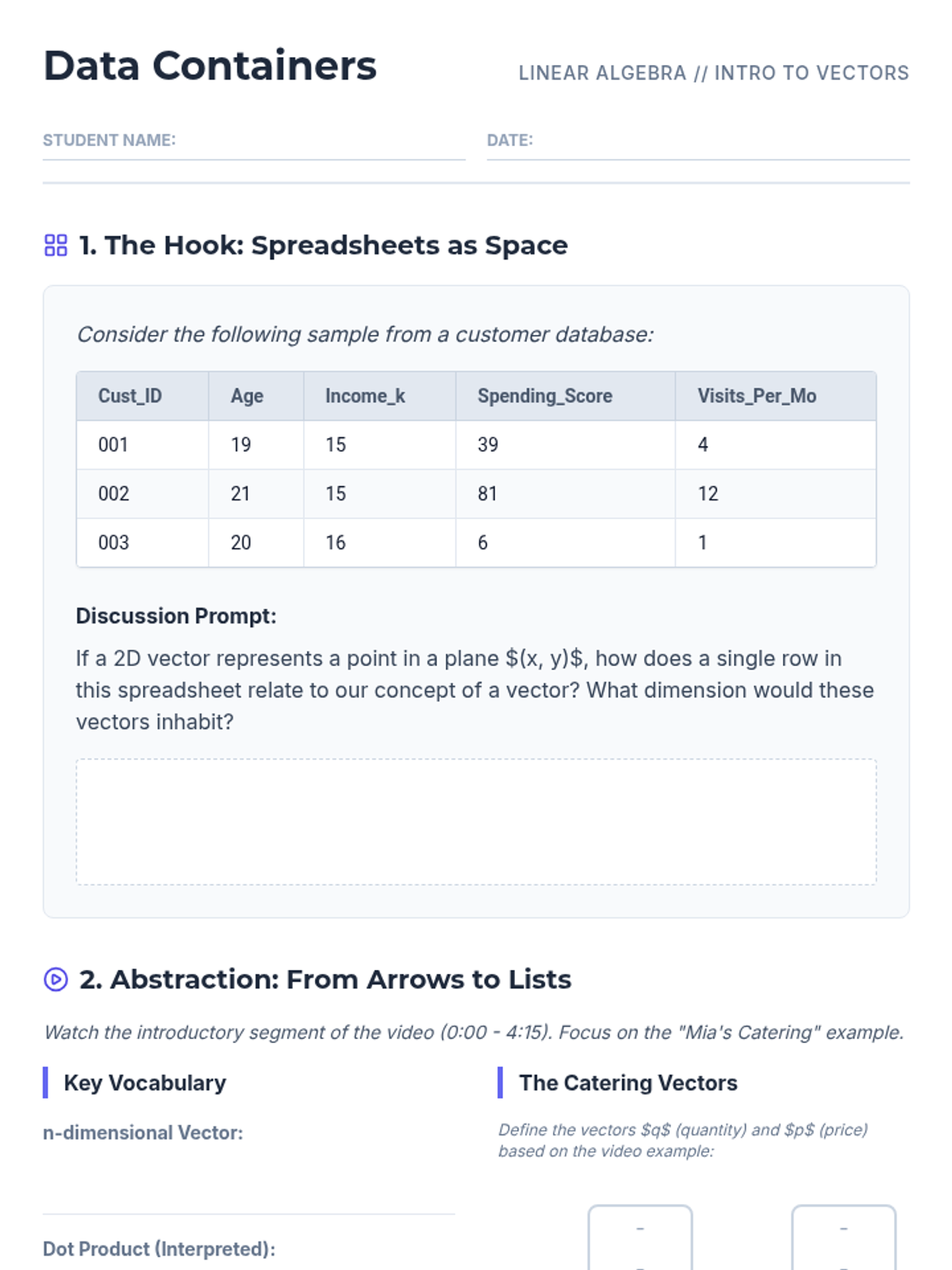
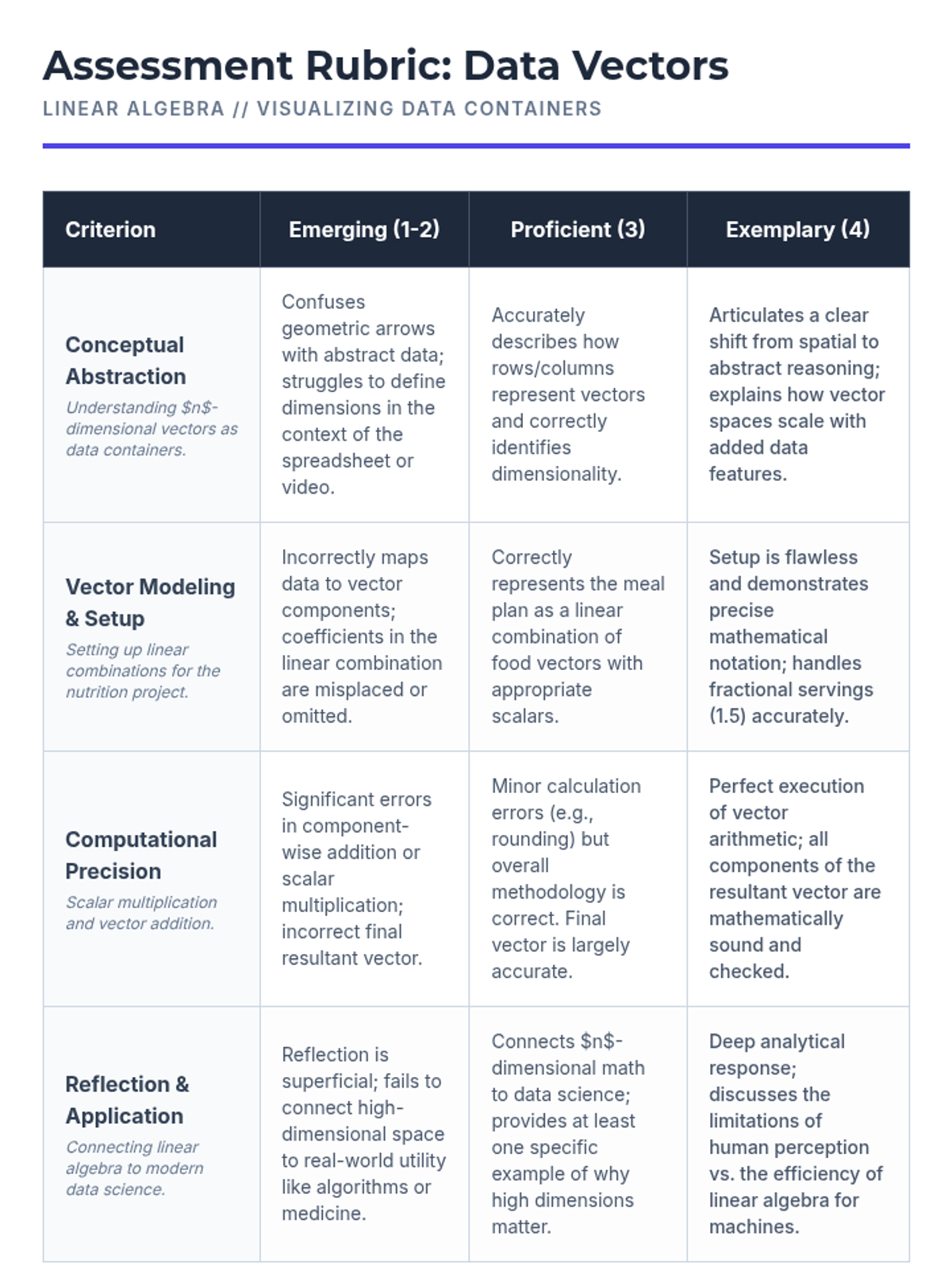
An undergraduate-level introduction to visualizing vectors as multi-dimensional data containers. Students explore real-world applications from catering costs to nutritional data, shifting the perspective of vectors from geometric arrows to abstract data structures.
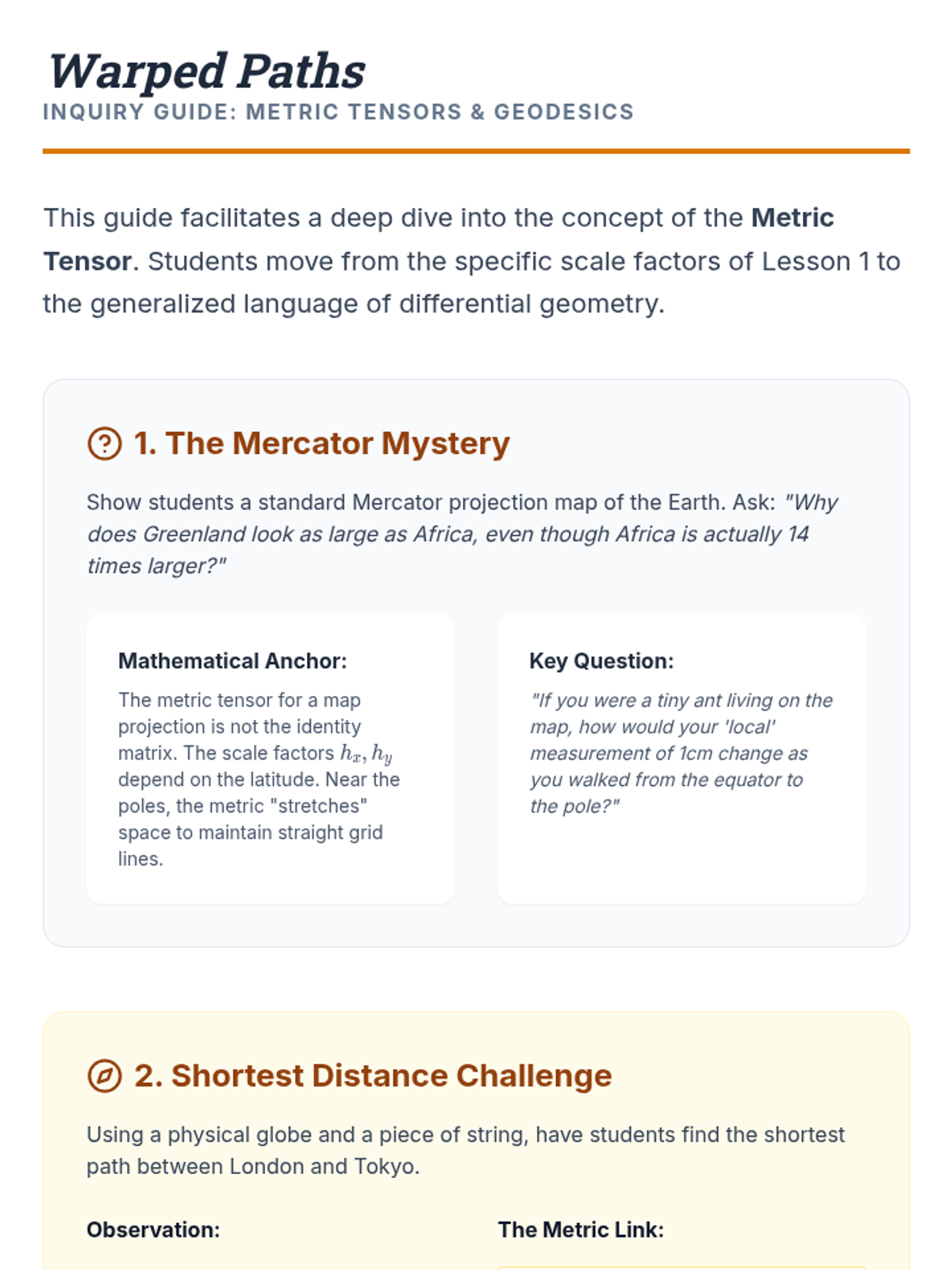
An advanced introduction to the metric tensor and non-Euclidean geometry, serving as a primer for General Relativity.
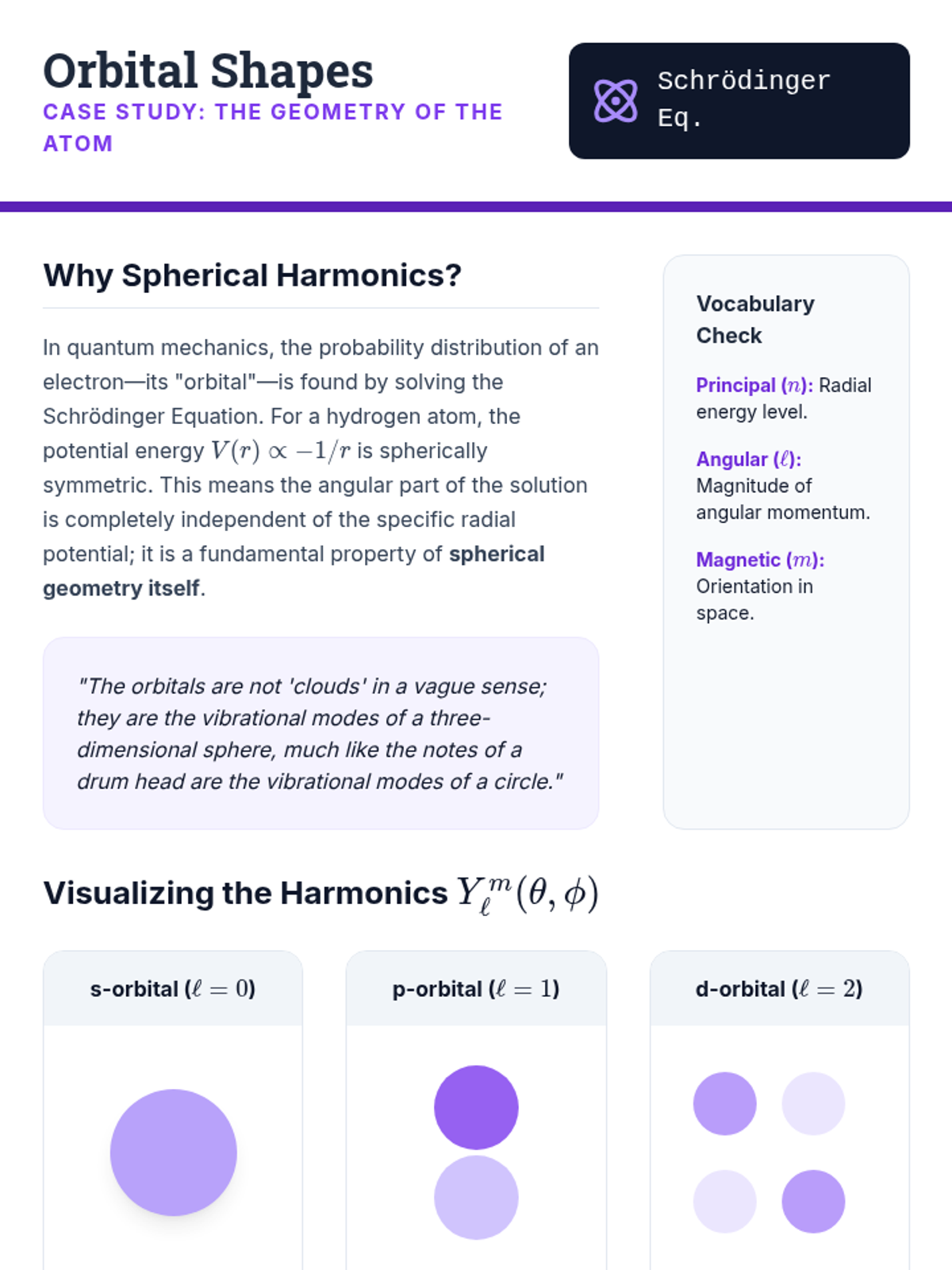
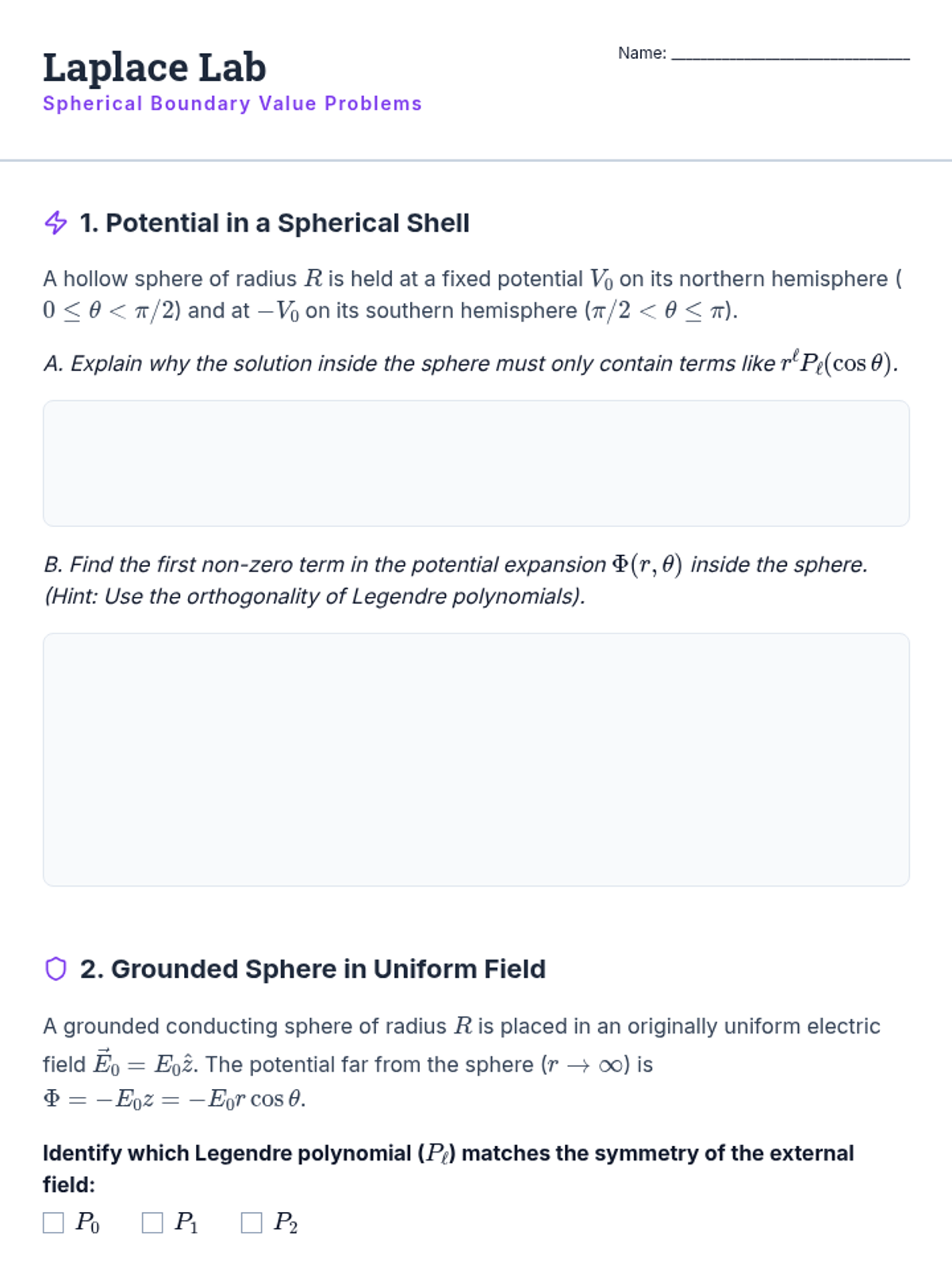
Students solve Laplace's equation for systems with spherical symmetry, introducing Legendre polynomials and Spherical Harmonics.
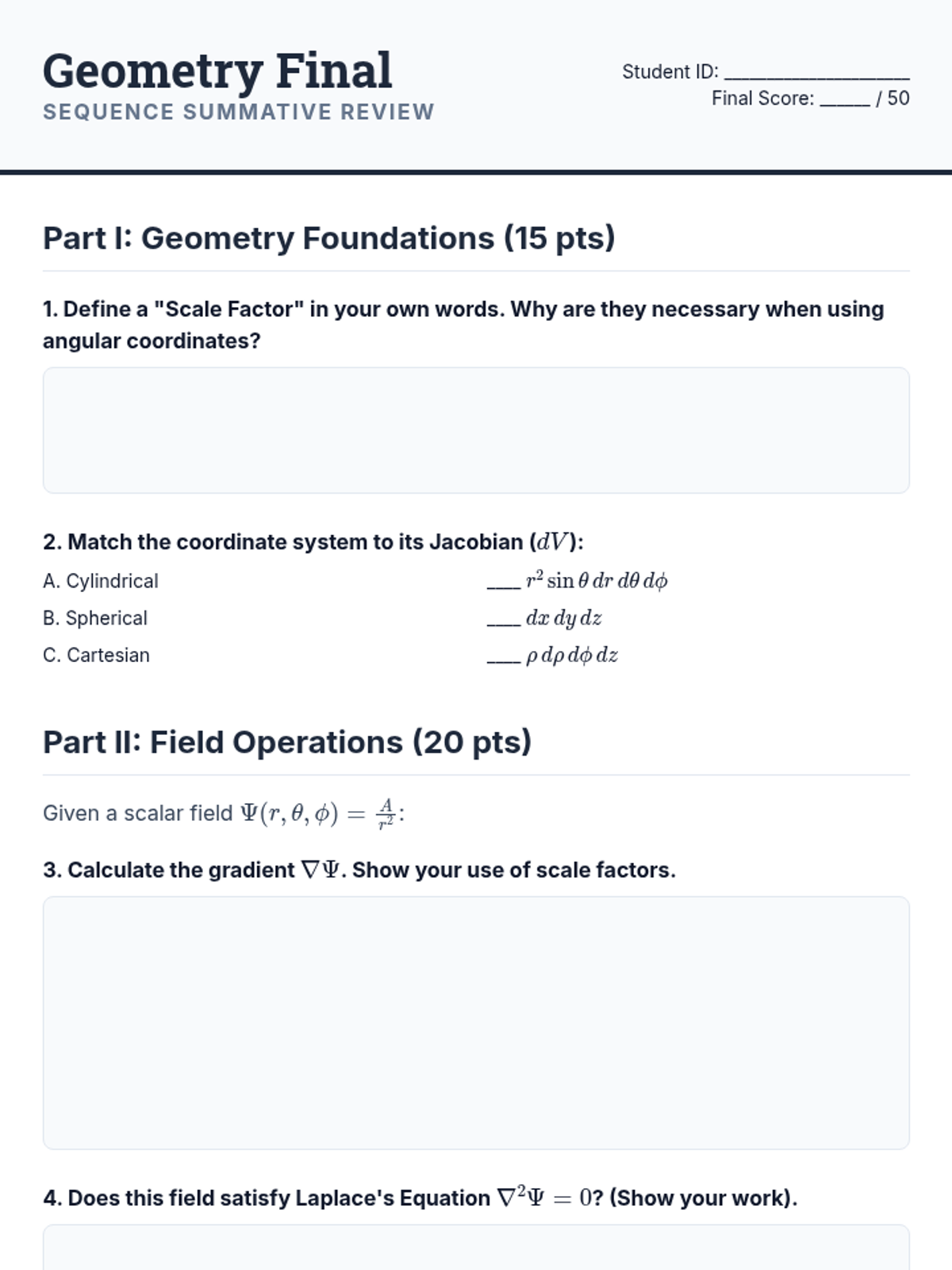
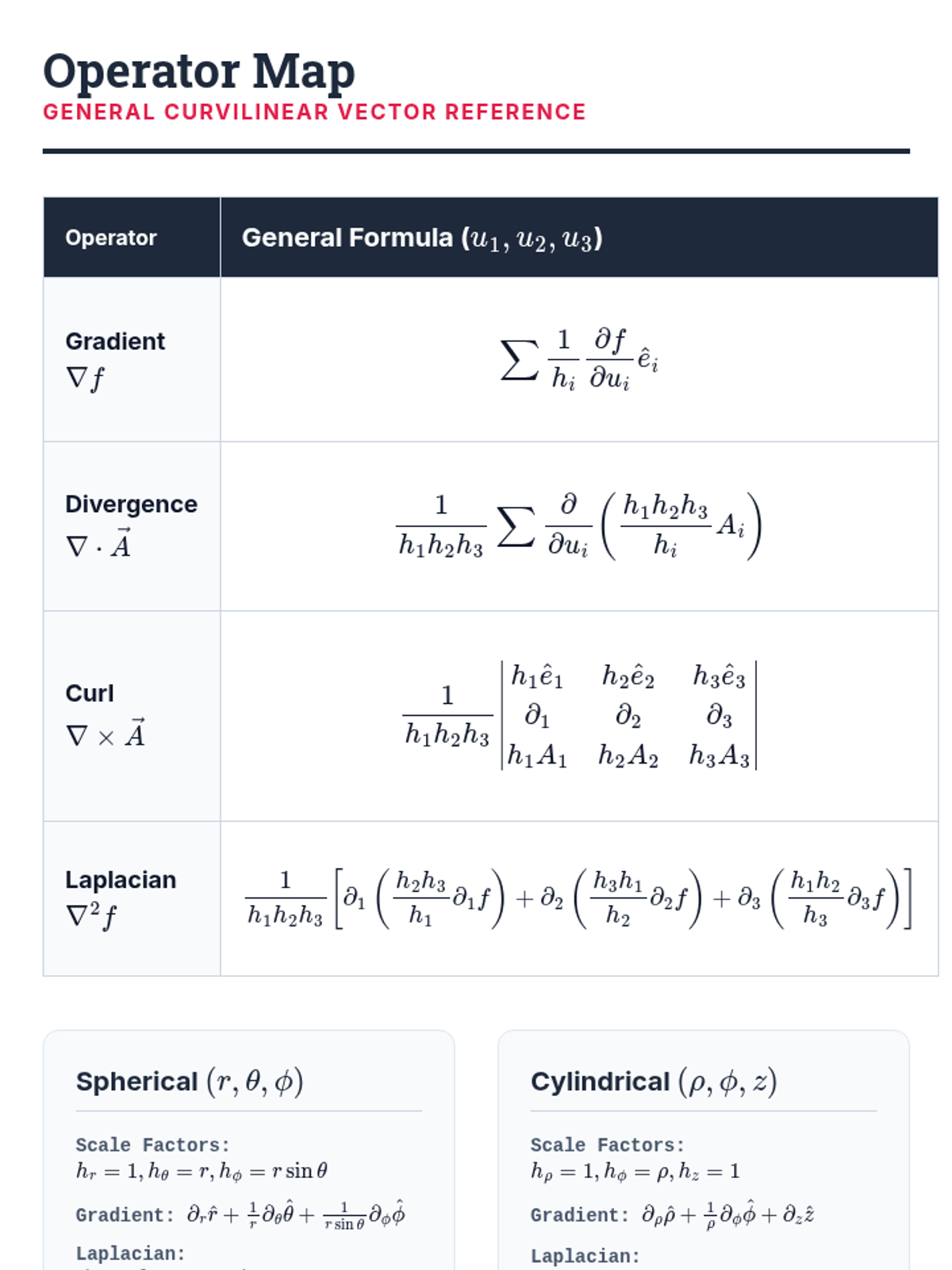
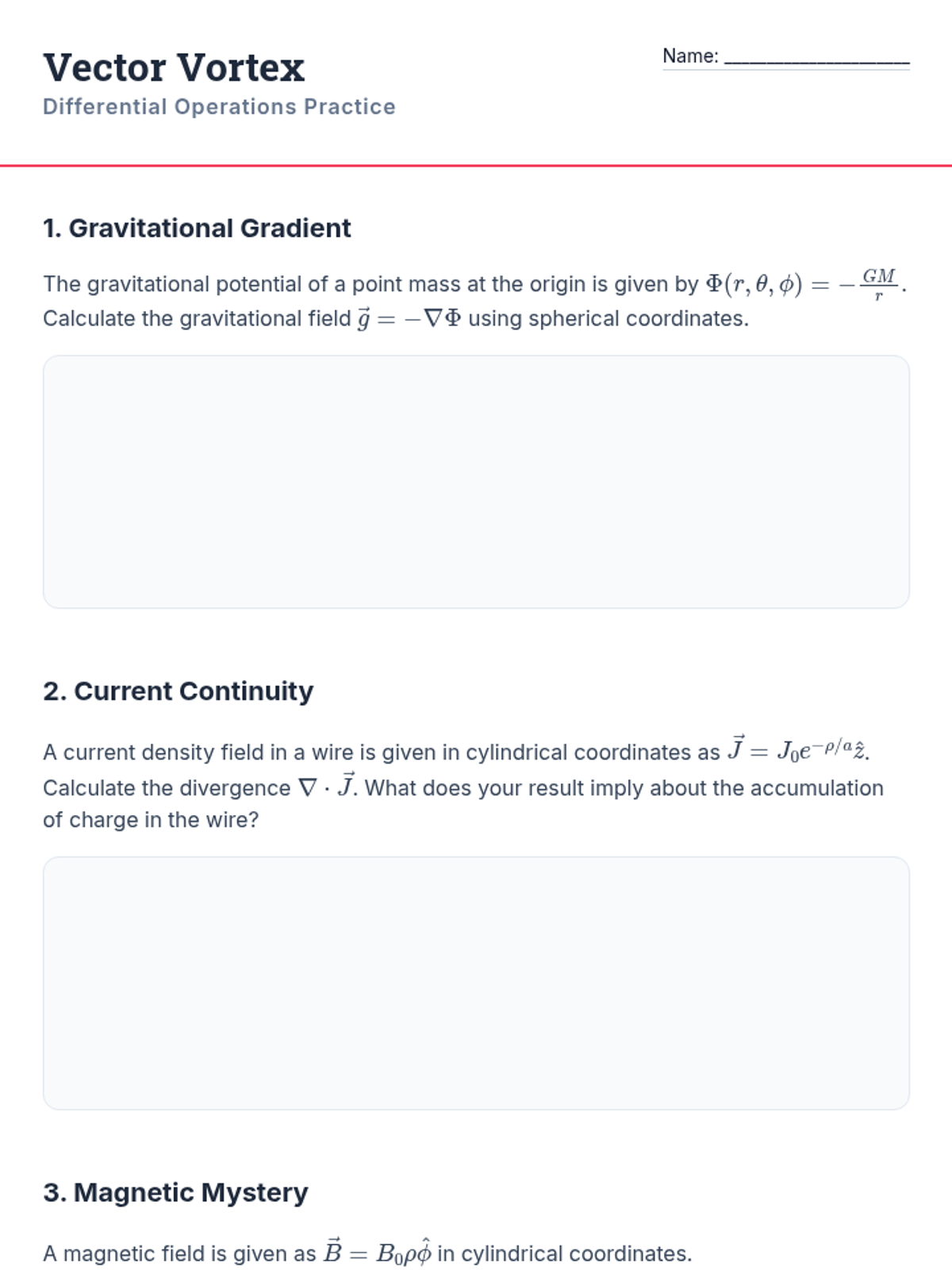
Students translate the Del operator into general curvilinear coordinates and apply these operators to physical vector fields.
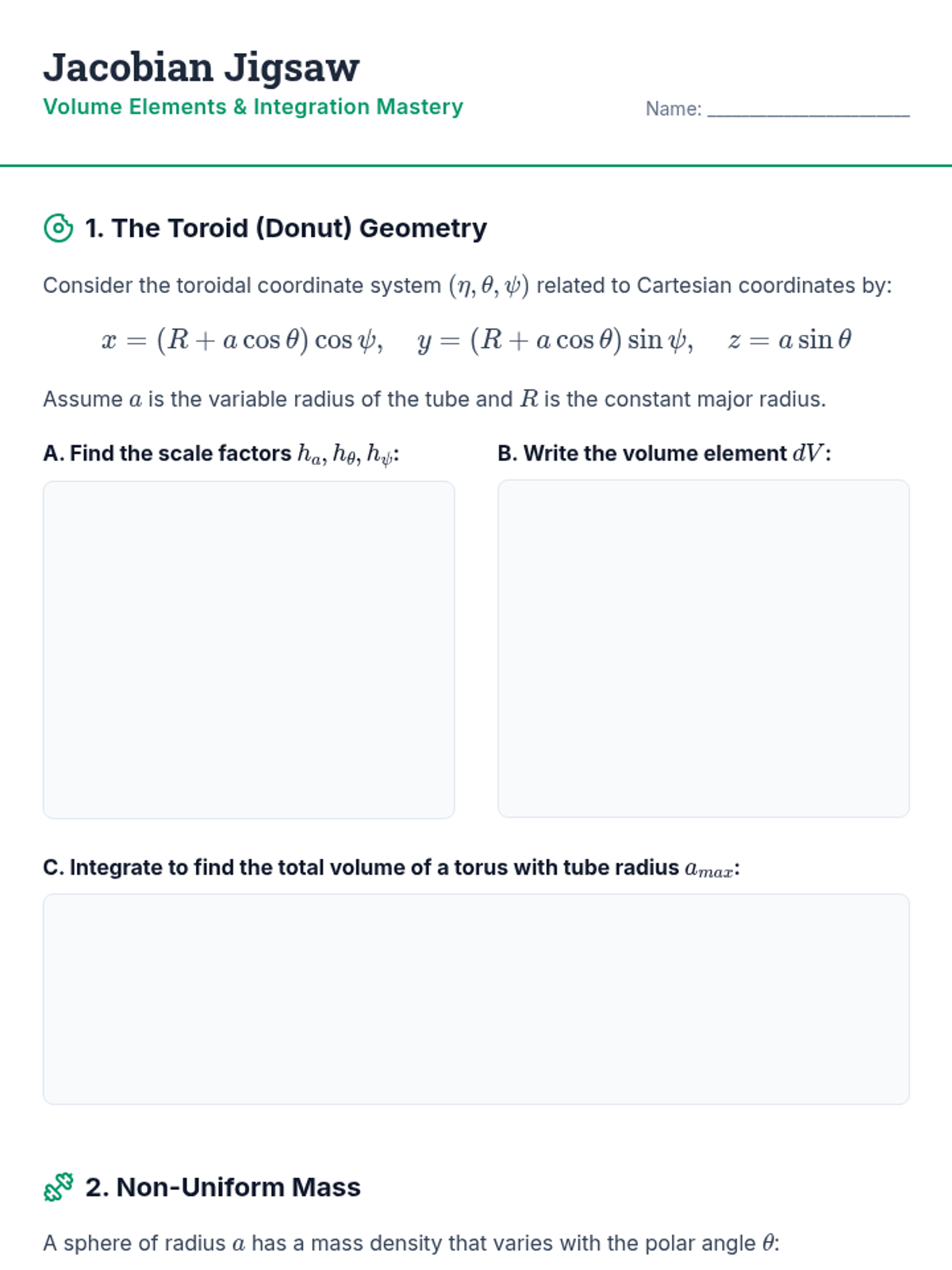
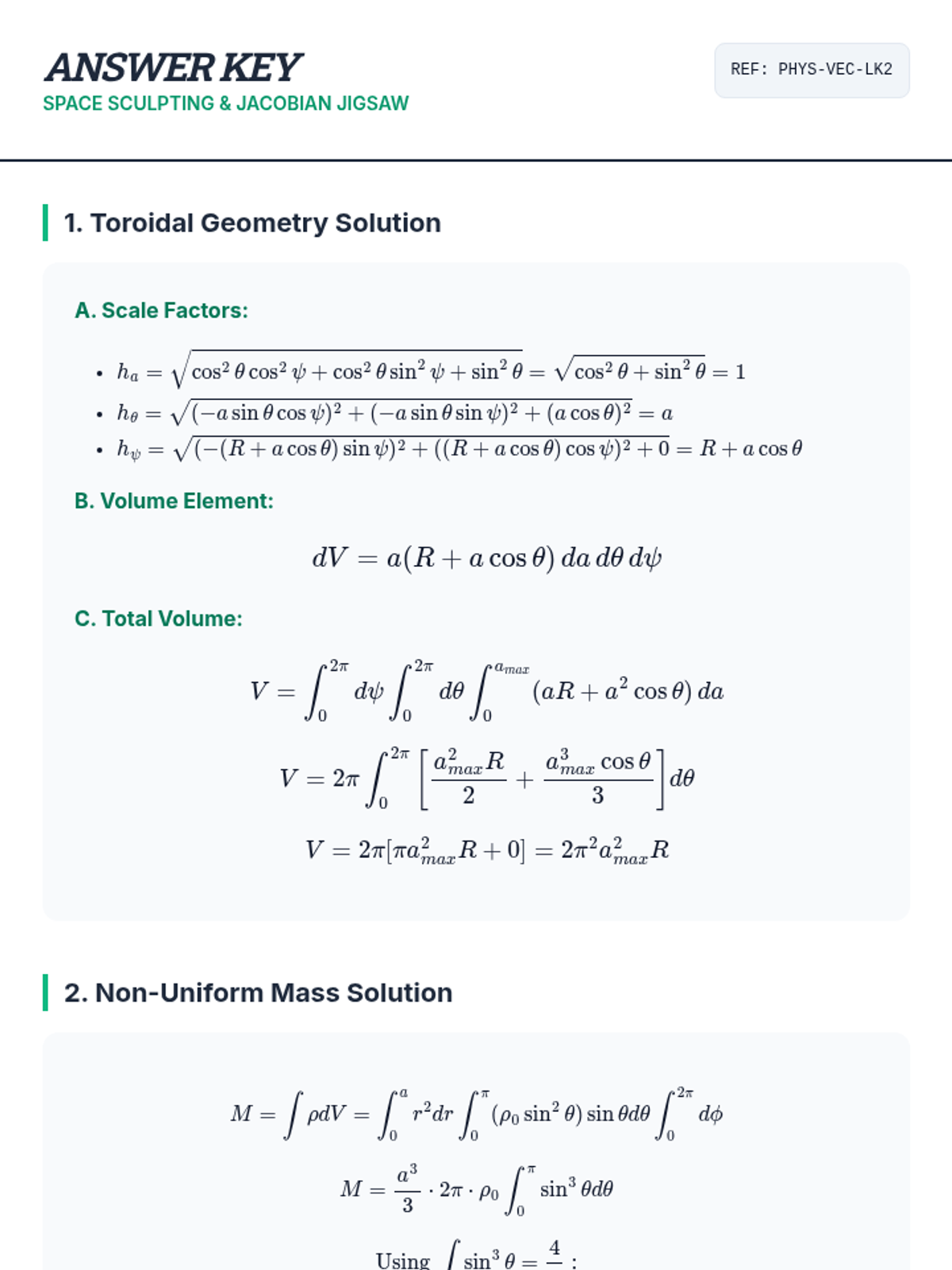
Focusing on integration, students construct volume and area elements (Jacobians) for spherical and cylindrical geometries and practice integrating scalar fields over complex 3D domains.
Students derive basis vectors and scale factors for general orthogonal curvilinear coordinates and learn how to define position vectors in non-Cartesian geometries.
In this capstone workshop, students synthesize all reasoning types to reconstruct complex arguments found in academic philosophy papers. They identify implicit premises (enthymemes) and evaluate the intended structure and validity of sophisticated arguments.
Students explore abductive reasoning as the process of forming hypotheses that best explain observation sets. Using medical and criminal investigation frameworks, students practice generating and ranking explanatory hypotheses based on simplicity and explanatory power.
Shifting from certainty to probability, students examine the standards for inductive reasoning. The class analyzes generalizations, statistical syllogisms, and samples to determine argument strength and distinguish between strong/weak and cogent/uncogent arguments.
This lesson introduces the basics of propositional logic, focusing on conditional statements (if-then), Modus Ponens, and Modus Tollens. Students analyze complex conditional chains to identify necessary and sufficient conditions in academic texts and identify breaks in logical reasoning.