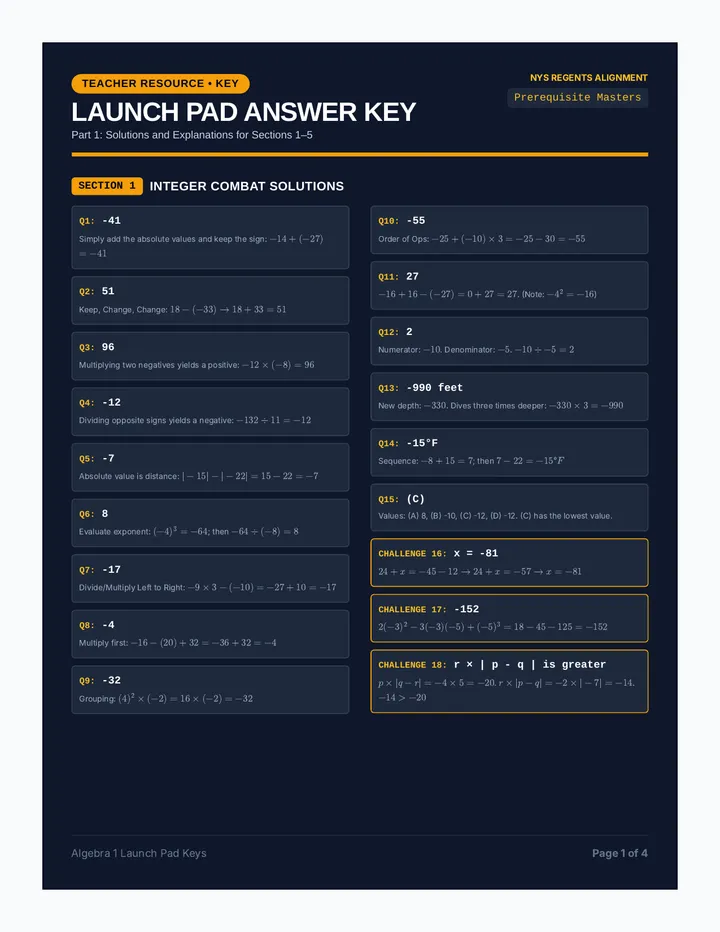
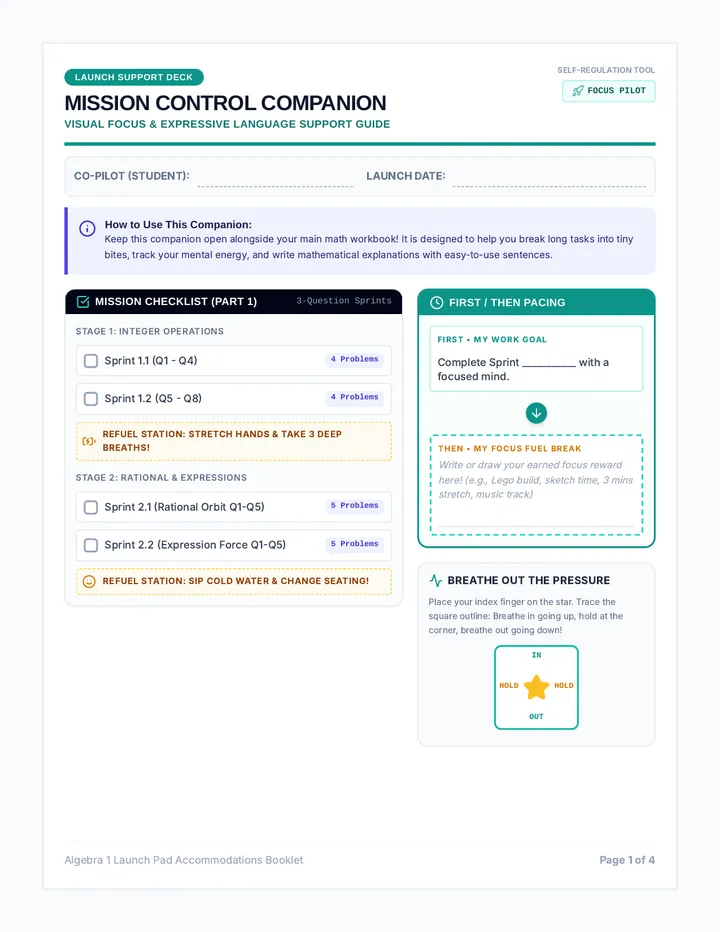
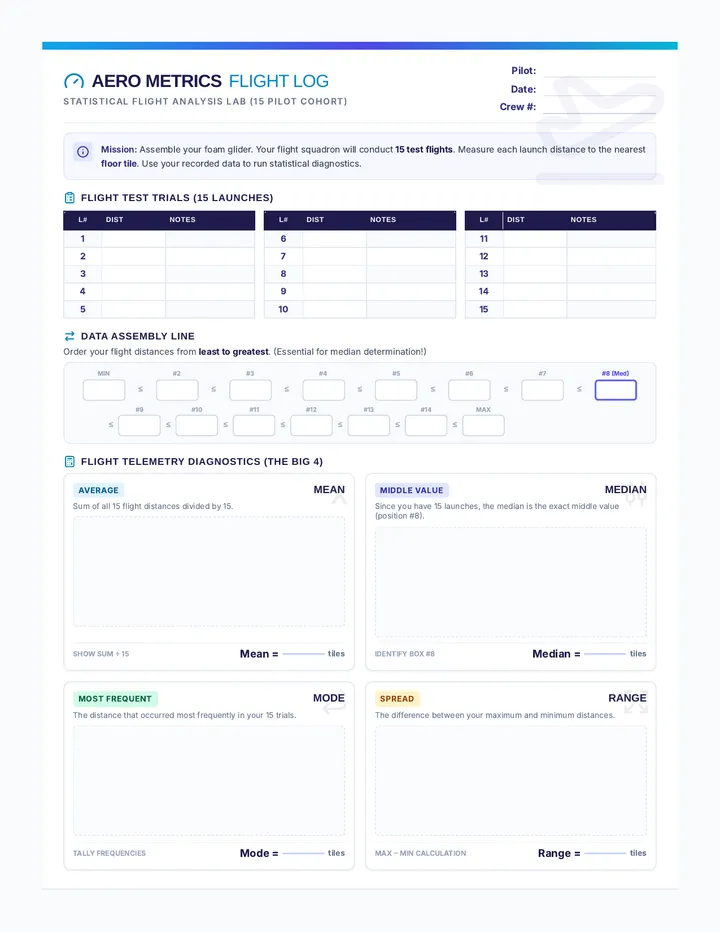
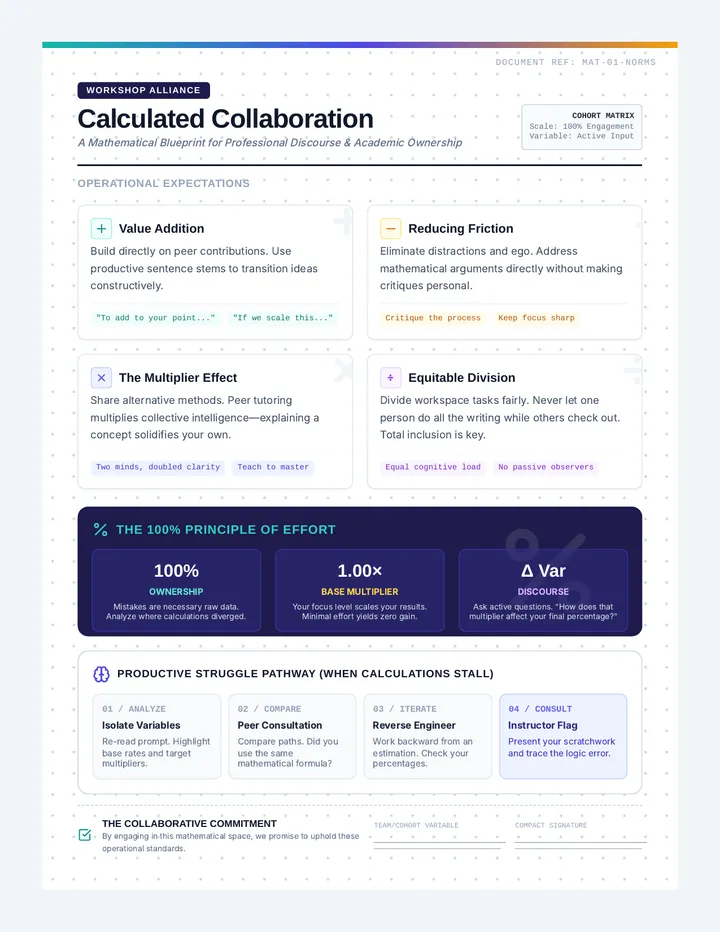
Behavior Command Teacher Guide End Behavior Command
Teacher Facilitation Guide • Pre-Calculus
50 MIN LESSON
Learning Objective
Students will master translating between graphical behavior (visual "starts/ends") and formal limit notation \(\lim_{x \to \pm\infty} f(x)\).
Materials Needed
End Behavior Slides
Notation Battleship Worksheet
Limit Launch Exit Ticket
Graphing Calculators (Optional)
1
Warm-up: "Translate This" (5 min)
Display the prompt: "Starts low, ends high".
Students must write this behavior using formal limit notation on their scrap paper or desks.
Expected Answer: \(\lim_{x \to -\infty} f(x) = -\infty\) and \(\lim_{x \to \infty} f(x) = \infty\).
2
Visual Anchors (10 min)
Watch the Polynomial End Behavior video. Use these specific timestamps for discussion:
1:20: Pause to examine the notation table. Ask: "Why does \(x \to -\infty\) mean 'start'?"
4:20: Look at Type 2. Contrast this with Type 1 notation.
6:00: Discuss the "Leading Term Dominance" rule. Why can we ignore lower terms?
3
Activity: Notation Battleship (25 min)
Hand out the Notation Battleship Worksheet. Students work in pairs.
Gameplay Mechanic:
Student A draws a "Secret Graph" (any polynomial end behavior). Student B asks "What's the limit as x goes to infinity?" and "What's the limit as x goes to negative infinity?" Student A must respond in notation only . Student B then tries to "sink" the graph by guessing the degree parity (Even/Odd) and leading coefficient sign.
4
Exit Ticket (5 min)
Students complete the Limit Launch Exit Ticket to demonstrate individual mastery before leaving.
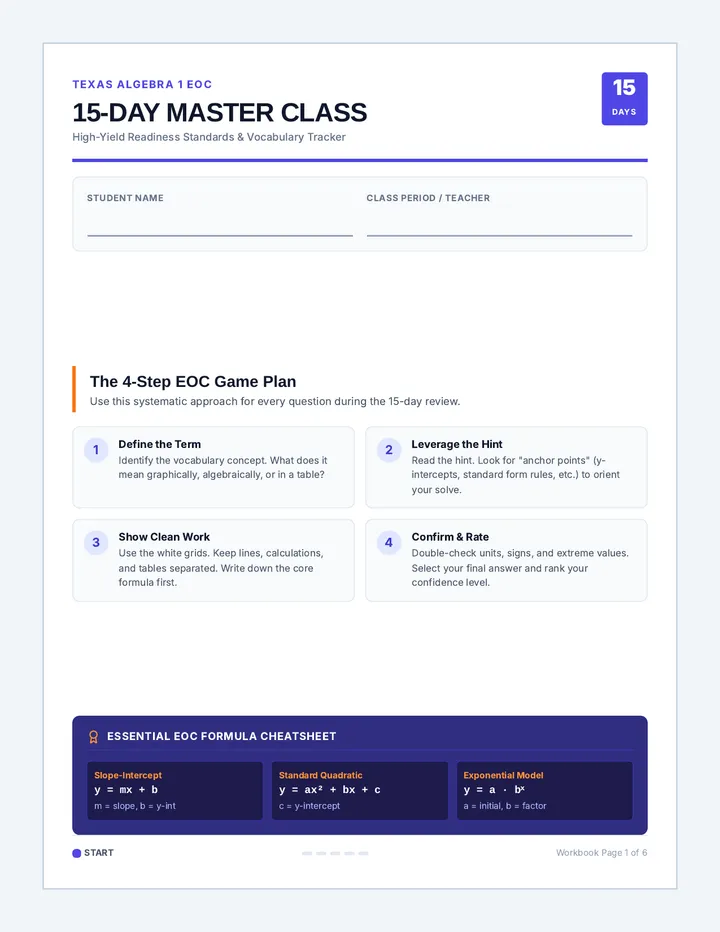
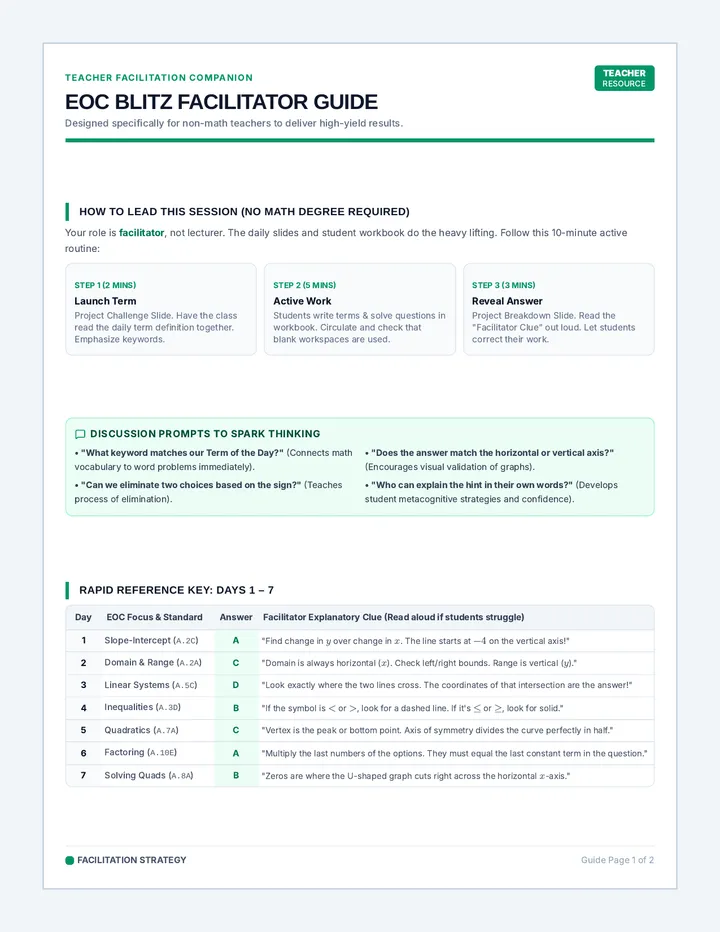
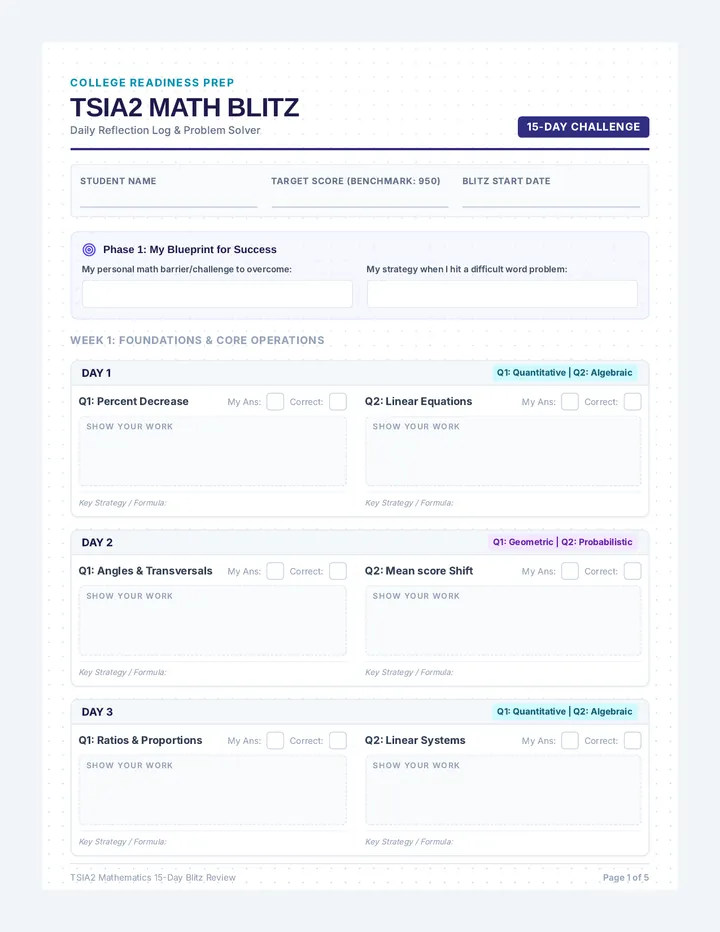
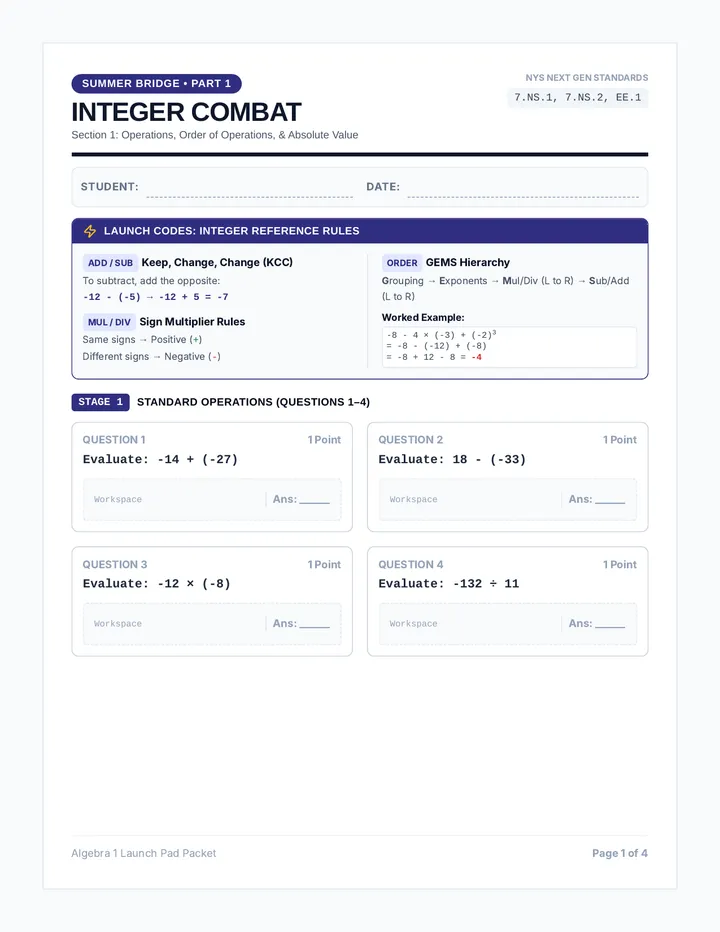
Teacher Reference Key
Behavior Name Limit Notation (\(x \to \infty\)) Limit Notation (\(x \to -\infty\)) Equation Rule Start Low, End High \(+\infty\) \(-\infty\) Odd Degree, Pos Coeff Start High, End Low \(-\infty\) \(+\infty\) Odd Degree, Neg Coeff Start Low, End Low \(-\infty\) \(-\infty\) Even Degree, Neg Coeff Start High, End High \(+\infty\) \(+\infty\) Even Degree, Pos Coeff
Common Misconceptions
The "Start" Confusion: Students often think "start" means \(x=0\). Emphasize that in end behavior, "start" refers to the leftmost part of the graph (\(x \to -\infty\)).
Leading vs. Highest: Students may just look at the first term written. Remind them to check for standard form (highest degree term matters most).
Infinity Signs: Watch for students mixing up the signs of \(x\) and \(f(x)\). A visual "four-quadrant" check helps: (Right/Up), (Left/Down), etc.
Exit Ticket Key
Q1: \(\lim_{x \to \infty} f(x) = -\infty, \lim_{x \to -\infty} f(x) = -\infty\)
Answer: Even Degree, Negative Leading Coefficient.
Q2: Which term determines end behavior for \(f(x) = -3x^5 + 2x^2 - 10\)?
Answer: \(-3x^5\) (Leading term).
End Behavior Slides End Behavior Command
Translating Graphs to Limit Notation
Pre-Calculus • Limits • Polynomials
Warm Up: Translate This
"Starts low, ends high"
Write this using Formal Limit Notation.
(Think: What is x approaching? What is f(x) approaching?)
Visual Analysis
Embedded media
Watch For:
1:20: The Notation Table
4:20: Opposite Behavior
6:00: Dominant Terms
Decoding the Symbols
"As x approaches..."
\(x \to \infty\)
"To the far right of the graph"
\(x \to -\infty\)
"To the far left of the graph"
"f(x) goes to..."
\(\to \infty\)
"The y-values go UP (High)"
\(\to -\infty\)
"The y-values go DOWN (Low)"
The Polynomial Rules
Visual Description Degree Type Leading Coeff. Both Ends Direction Start Low, End High Odd Positive (+) Opposite Start High, End Low Odd Negative (-) Opposite Start Low, End Low Even Negative (-) Same (Down) Start High, End High Even Positive (+) Same (Up)
Notation Battleship
1. Deploy Your Fleet
Secretly draw a polynomial graph with specific end behavior. Don't let your partner see!
2. Fire Notation Missiles
Ask: "What is the limit as x approaches positive/negative infinity?"
3. Intercept & Code
Respond ONLY using formal limit notation. Example: "\(\lim_{x \to \infty} f(x) = \dots\)"
4. SINK IT
Guess the Degree Parity (Even/Odd) and Leading Coefficient Sign (+/-) to sink the graph!
Notation Battleship Worksheet Notation Battleship
Polynomial End Behavior Training
Student Name
Date
How to Play
1. SECRET DEPLOYMENT: On your "Command Map" below, draw a polynomial graph with a specific end behavior. Keep it hidden!
2. NOTATION SCAN: Your partner will ask for the limits as \(x \to \infty\) and \(x \to -\infty\). You respond with the answer in limit notation .
3. THE STRIKE: Use your partner's limit notation answers to guess their graph's Degree Parity (Even/Odd) and Leading Coefficient Sign (+/-).
4. WINNING: A correct guess of both properties "Sinks" the graph!
SECRET MAP
Your Secret Graph
Graph Properties:
Degree: ________ L.C. Sign: ________
RADAR TRACKING
Target Intel
Partner's Answers (Notation)
\(\lim_{x \to \infty} f(x) = \)
\(\lim_{x \to -\infty} f(x) = \)
Your Strikes (Guesses)
Degree:
Even
Odd
L.C. Sign:
Pos (+)
Neg (-)
SINK IT
Notation Reference Bank
\(x \to \infty\) = Right \(x \to -\infty\) = Left \(f(x) \to \infty\) = High \(f(x) \to -\infty\) = Low
Limit Launch Exit Ticket Limit Launch
Exit Ticket • Pre-Calculus
Name:
Date:
1
The Identification Challenge
Consider a function \(f(x)\) with the following end behavior:
\(\lim_{x \to \infty} f(x) = -\infty\)
\(\lim_{x \to -\infty} f(x) = -\infty\)
Based on this notation, describe the polynomial:
Degree Parity
Even
Odd
Leading Coefficient
Positive (+)
Negative (-)
2
The Leading Dominance Rule
For the polynomial function below, circle the term that dominates and determines the end behavior:
\(f(x) = 2x^2 - 3x^5 + 10x - 1\)
Now, write the limit notation for this specific function:
Limit as \(x \to \infty\)
Limit as \(x \to -\infty\)
"One term to rule them all, and in the notation find them."