A 12th-grade calculus unit focusing on advanced integration techniques, including improper integrals, partial fractions, and trigonometric substitution, applied to real-world modeling scenarios like population growth and physics.
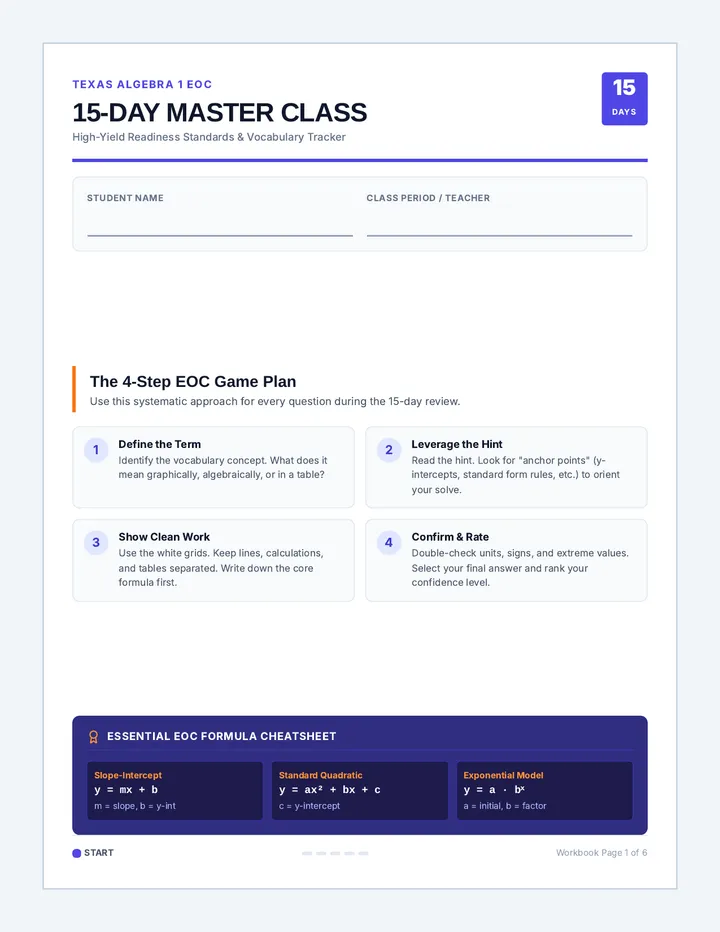
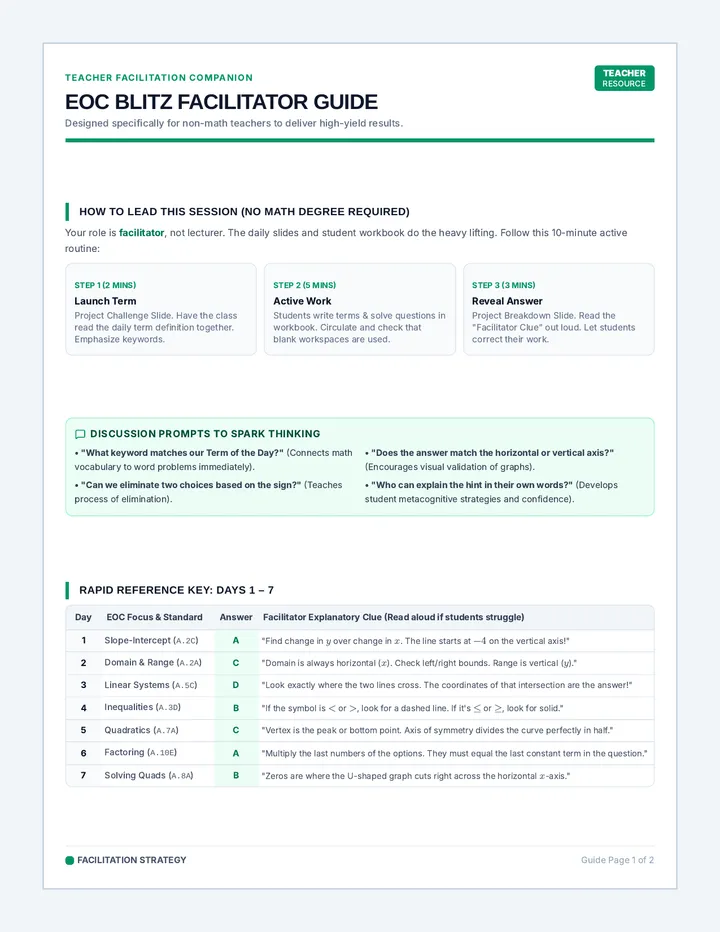
A 15-day Texas Algebra 1 EOC test preparation program designed for non-math teachers to facilitate vocabulary mastery and high-yield readiness standard practice.
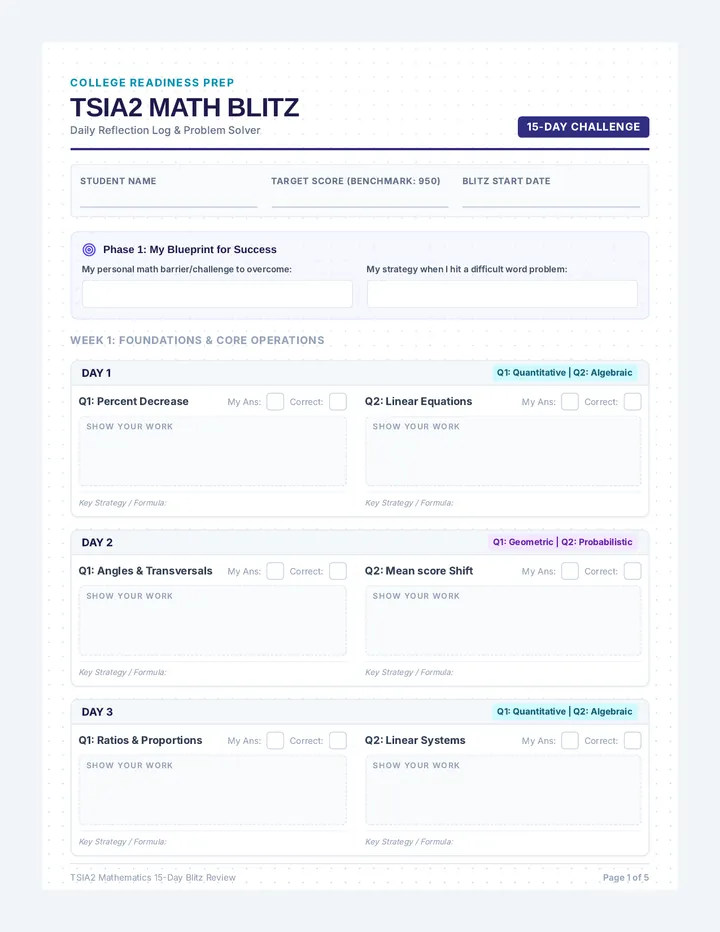
A comprehensive 15-day review program for the TSIA2 mathematics assessment, featuring daily high-yield questions covering all four core areas (Quantitative, Algebraic, Geometric, and Probabilistic reasoning) alongside a structured student tracking and reflection log.
A 32-slide presentation containing a 15-day TSIA2 Math Blitz. Each day features two high-yield exam-style questions spanning Algebraic, Quantitative, Geometric, and Probabilistic reasoning, with corresponding blueprint-style hint, key, and step-by-step solutions slides.
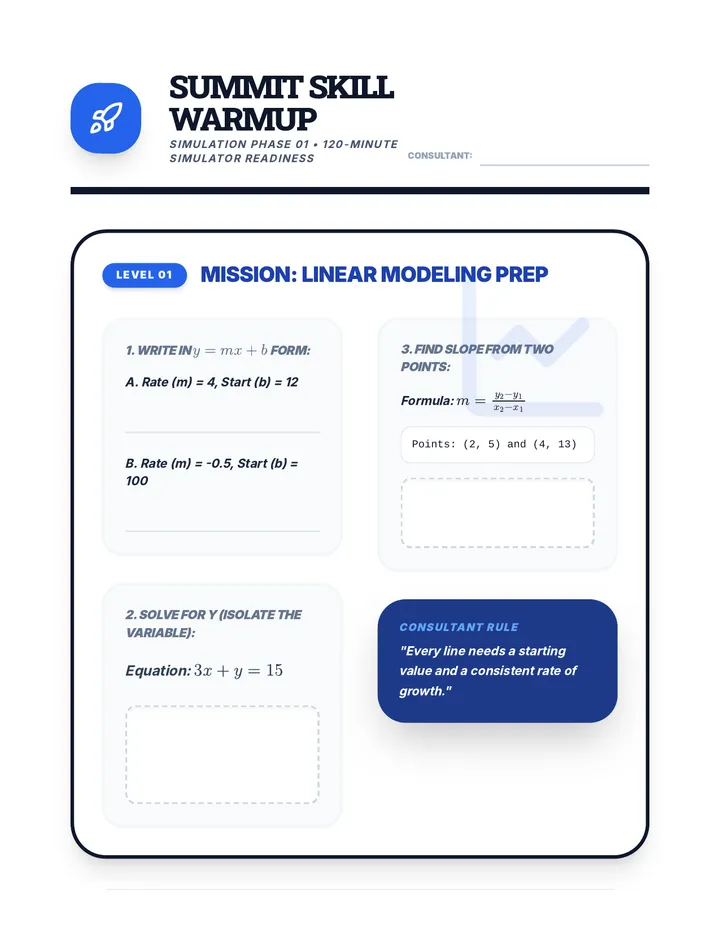
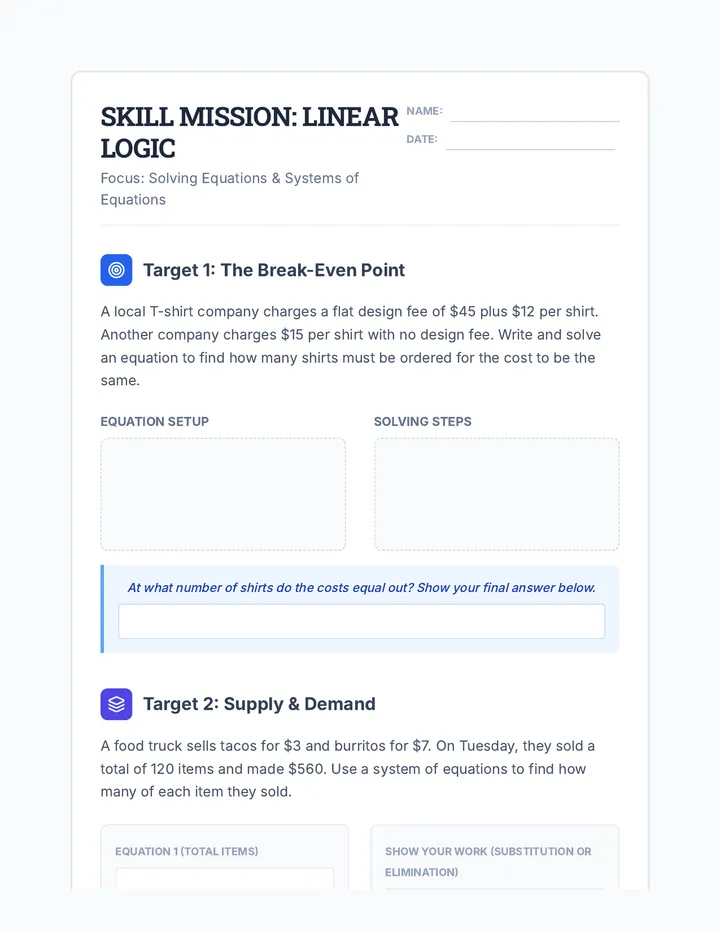
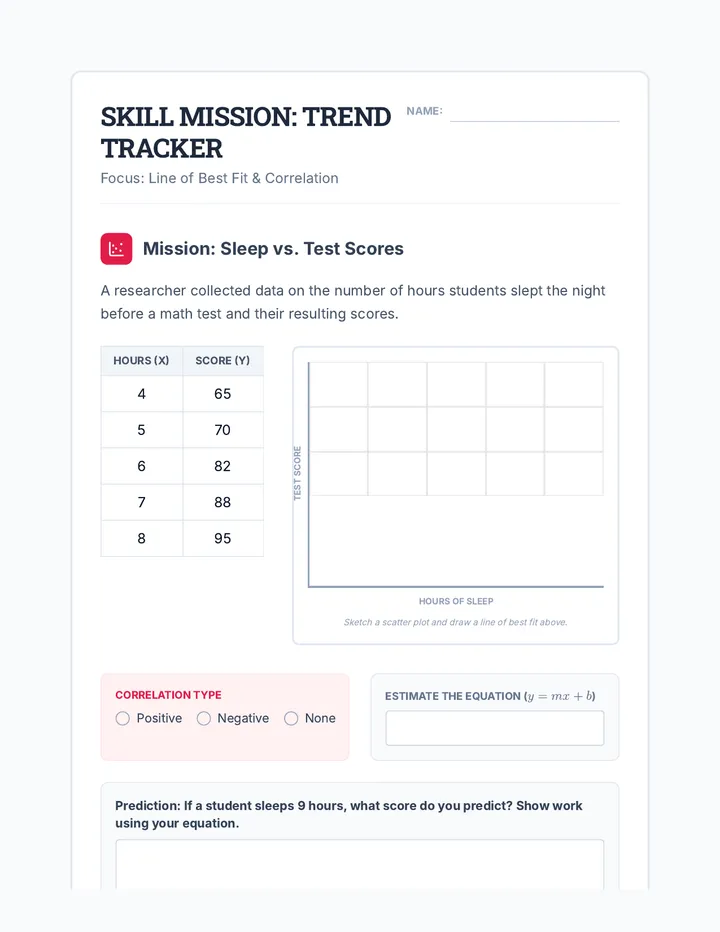
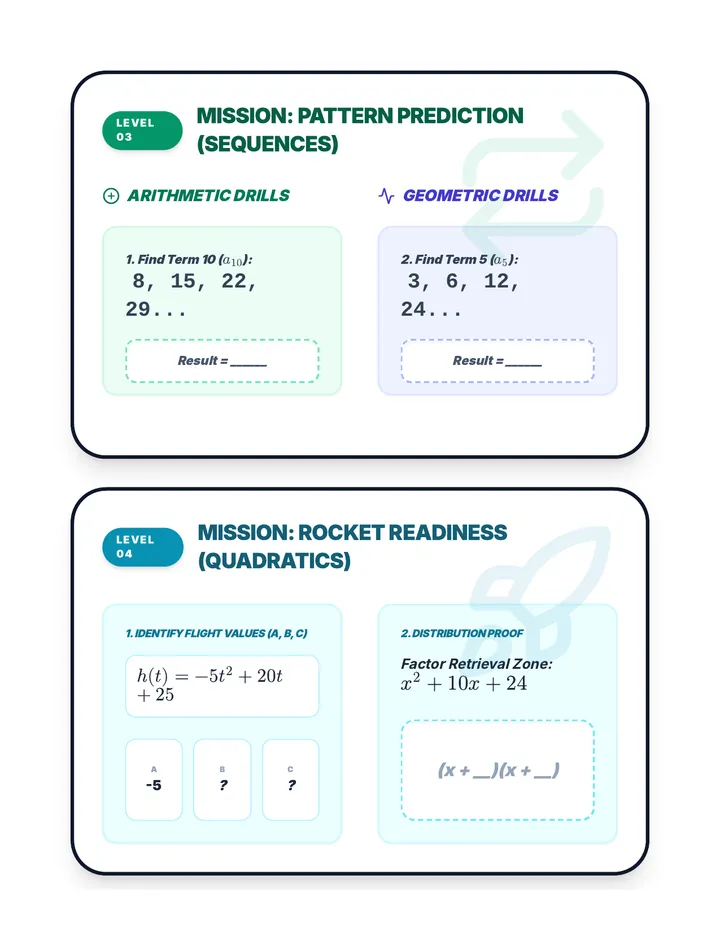
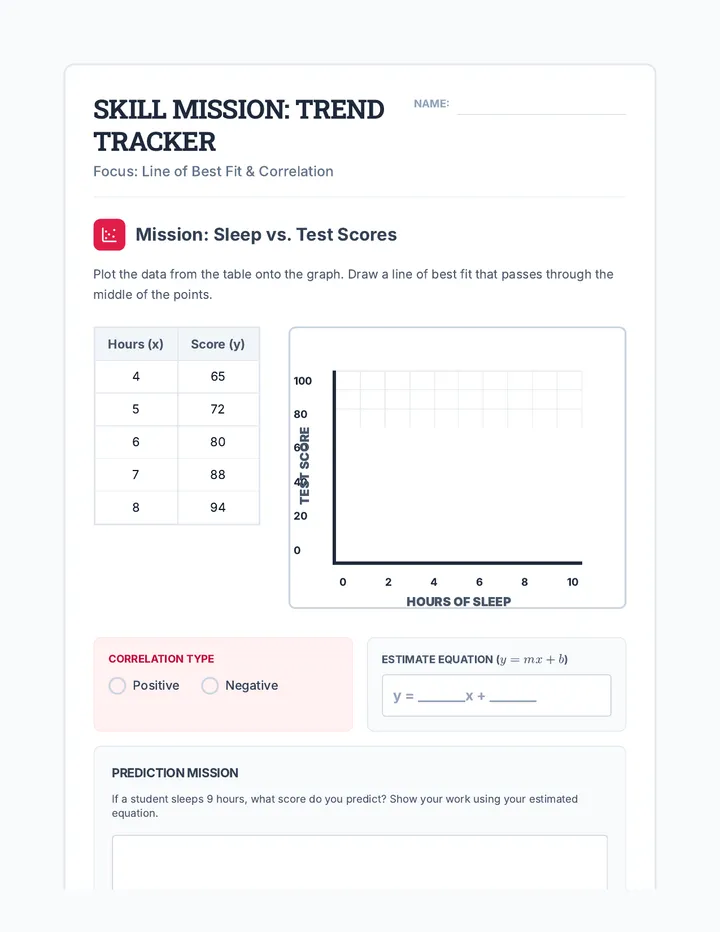
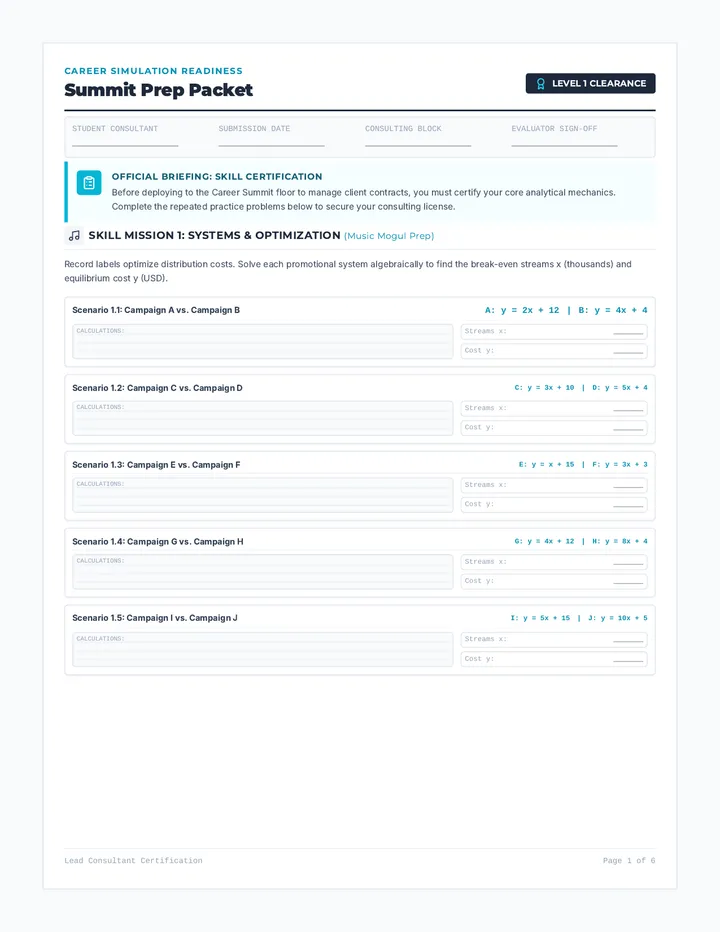
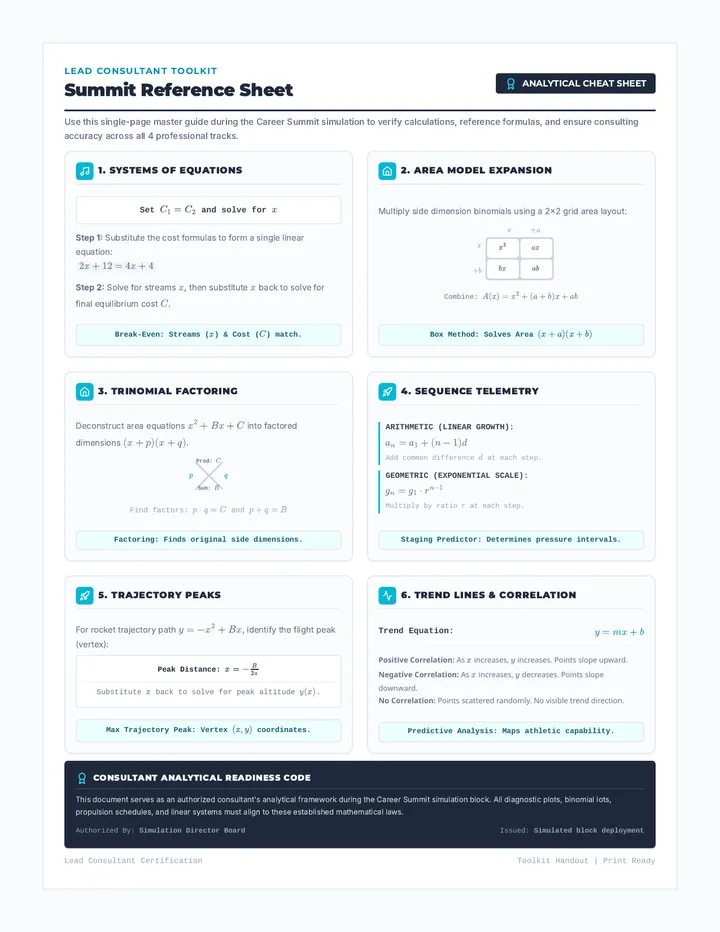
A high-intensity, 120-minute math simulation. Students act as lead consultants, completing a high-speed skill warmup before selecting a professional sector (Music, Urban Planning, Rocket Science, or Sports Analytics) to solve a series of complex work orders.
The core 15-day test prep lesson consisting of highly visual, self-contained slides, a comprehensive student work-packet, and an easy-to-use teacher facilitation guide designed for non-math specialists.
A 5-page daily student reflection and worksheet log for tracking TSIA2 mathematics questions, strategies, and progress. Features targeted entry fields for the 15-day blitz, dedicated visual workspace grids for student handwriting, personal goal-setting, and a final readiness checklist.