Students will learn to define empathy and identify various emotions by observing non-verbal cues. This lesson helps students develop crucial social-emotional skills, fostering understanding and positive interactions.
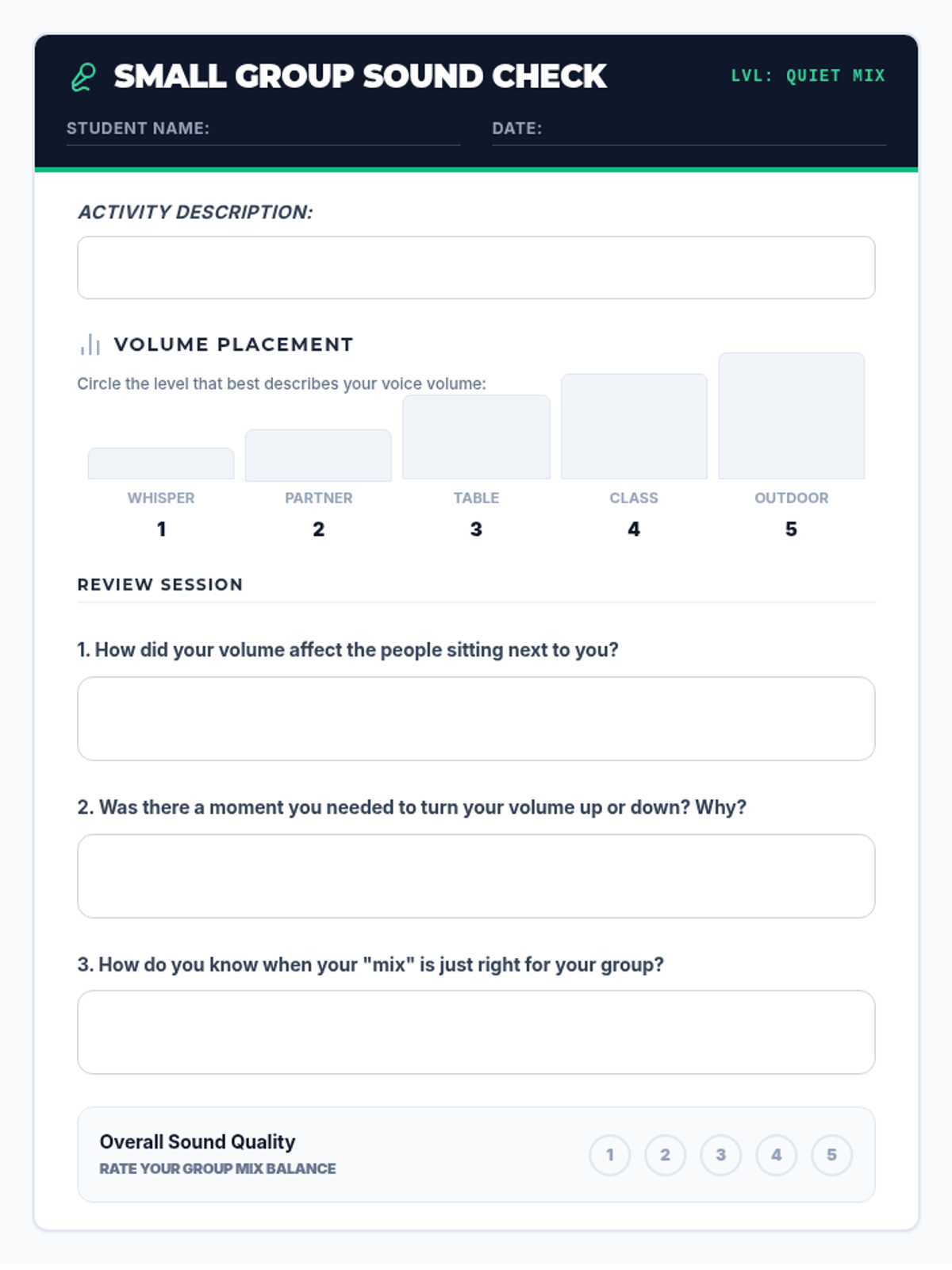
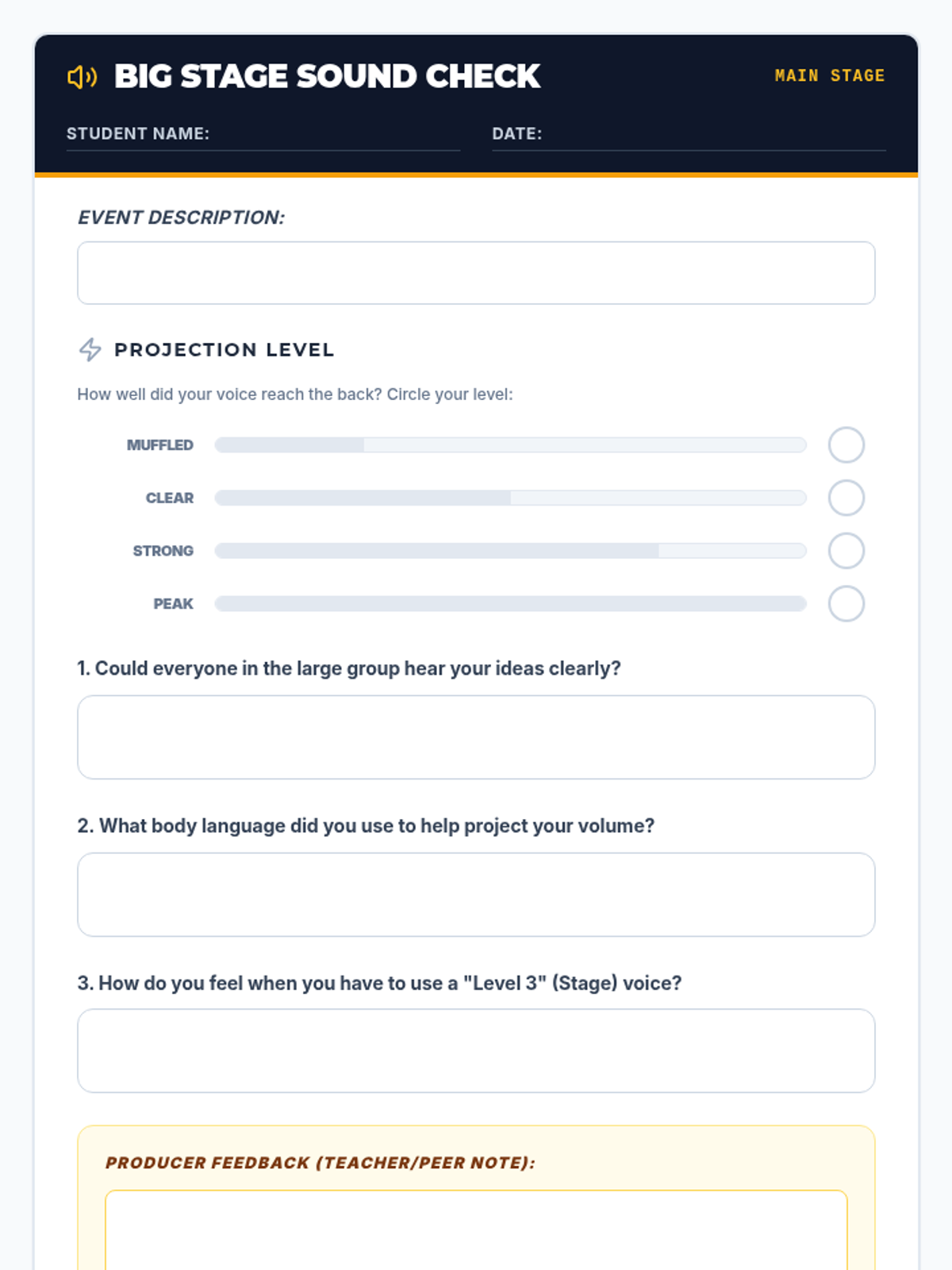
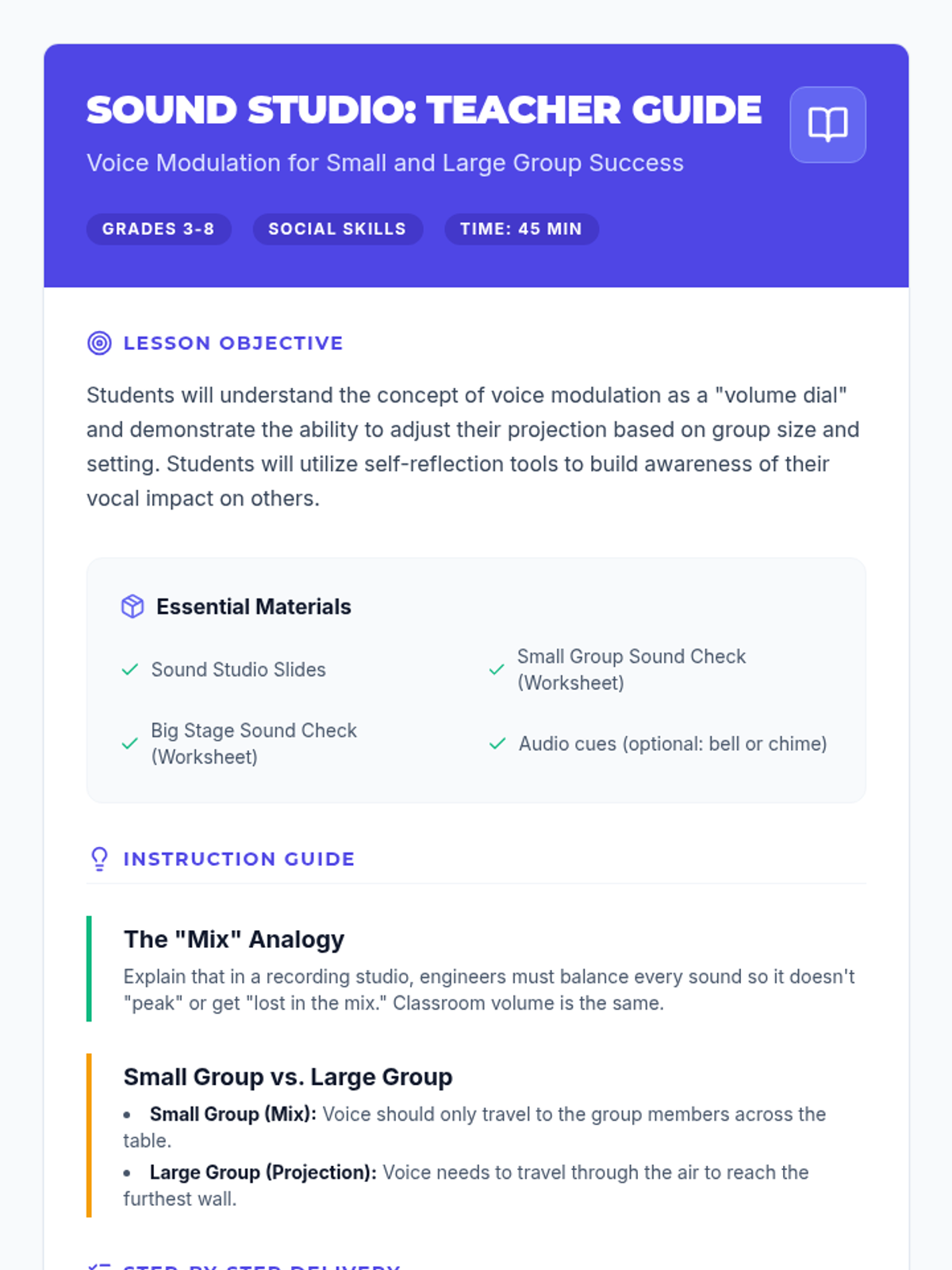
Students learn to adjust their voice volume like a sound engineer, mastering the 'volume dial' for small group collaboration and large group participation. Includes interactive slides and targeted self-reflection tools to build social-emotional awareness.
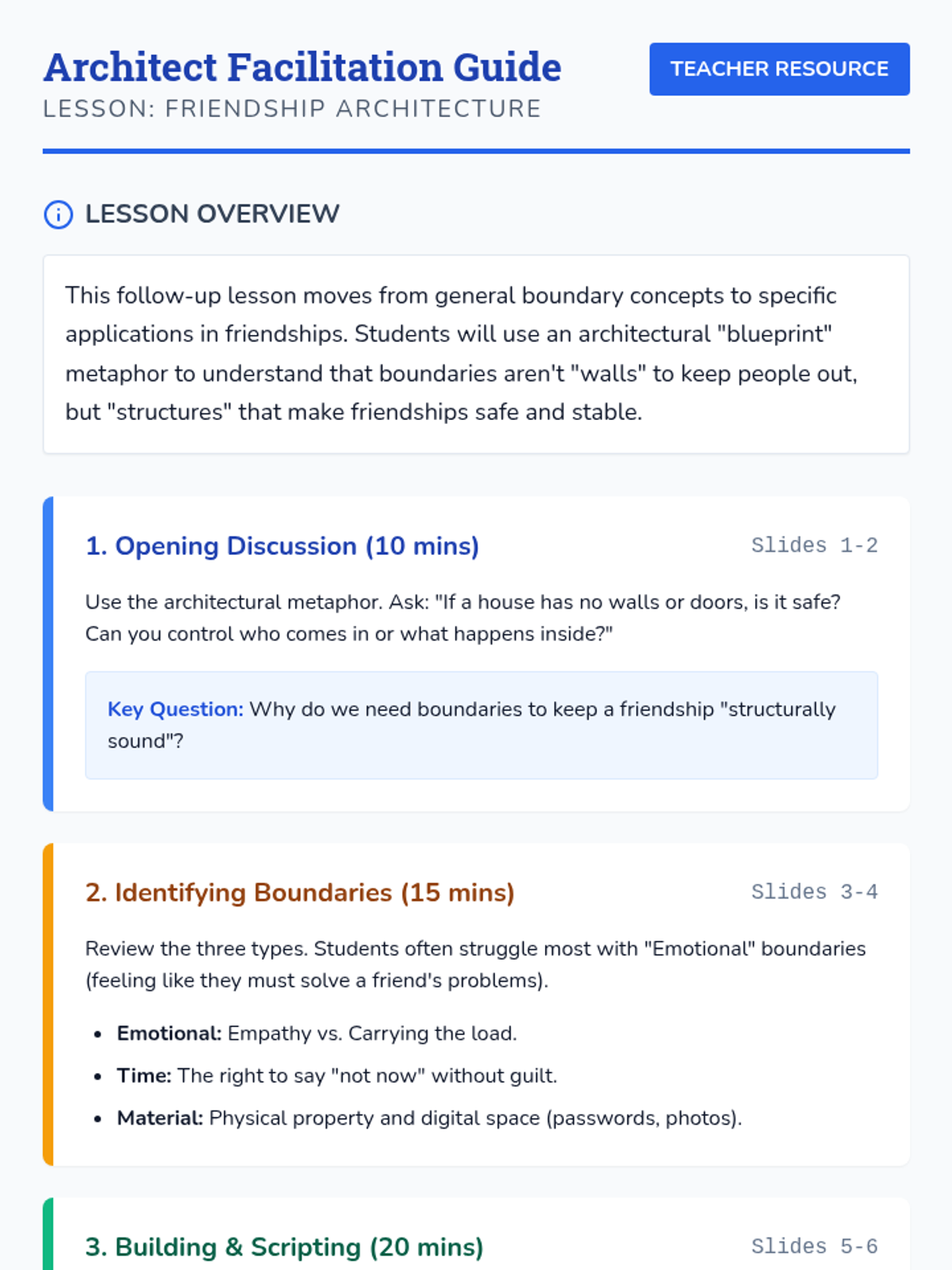
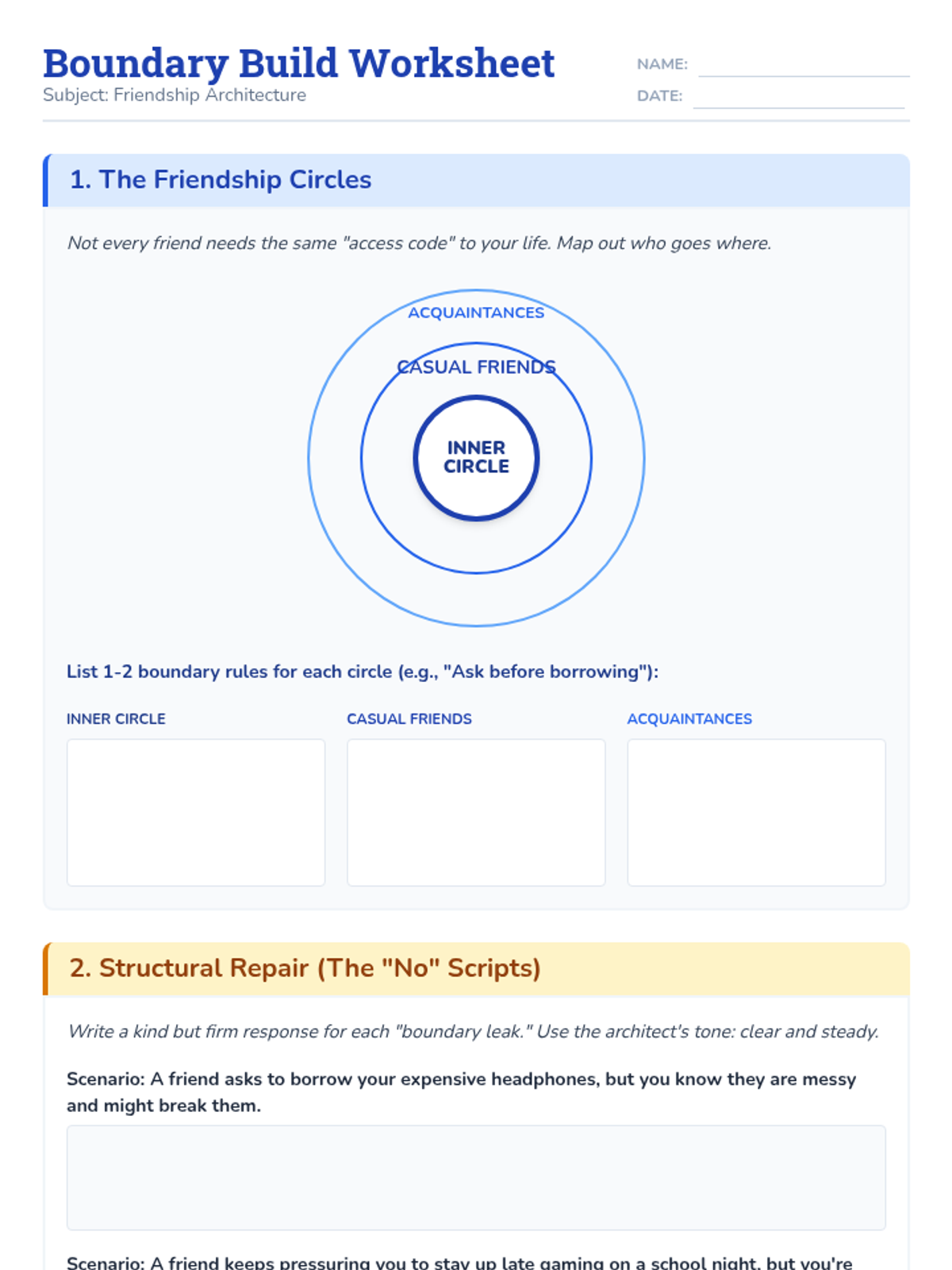
A follow-up lesson focused on identifying and maintaining healthy boundaries within friendships using an architectural metaphor for building strong social structures.
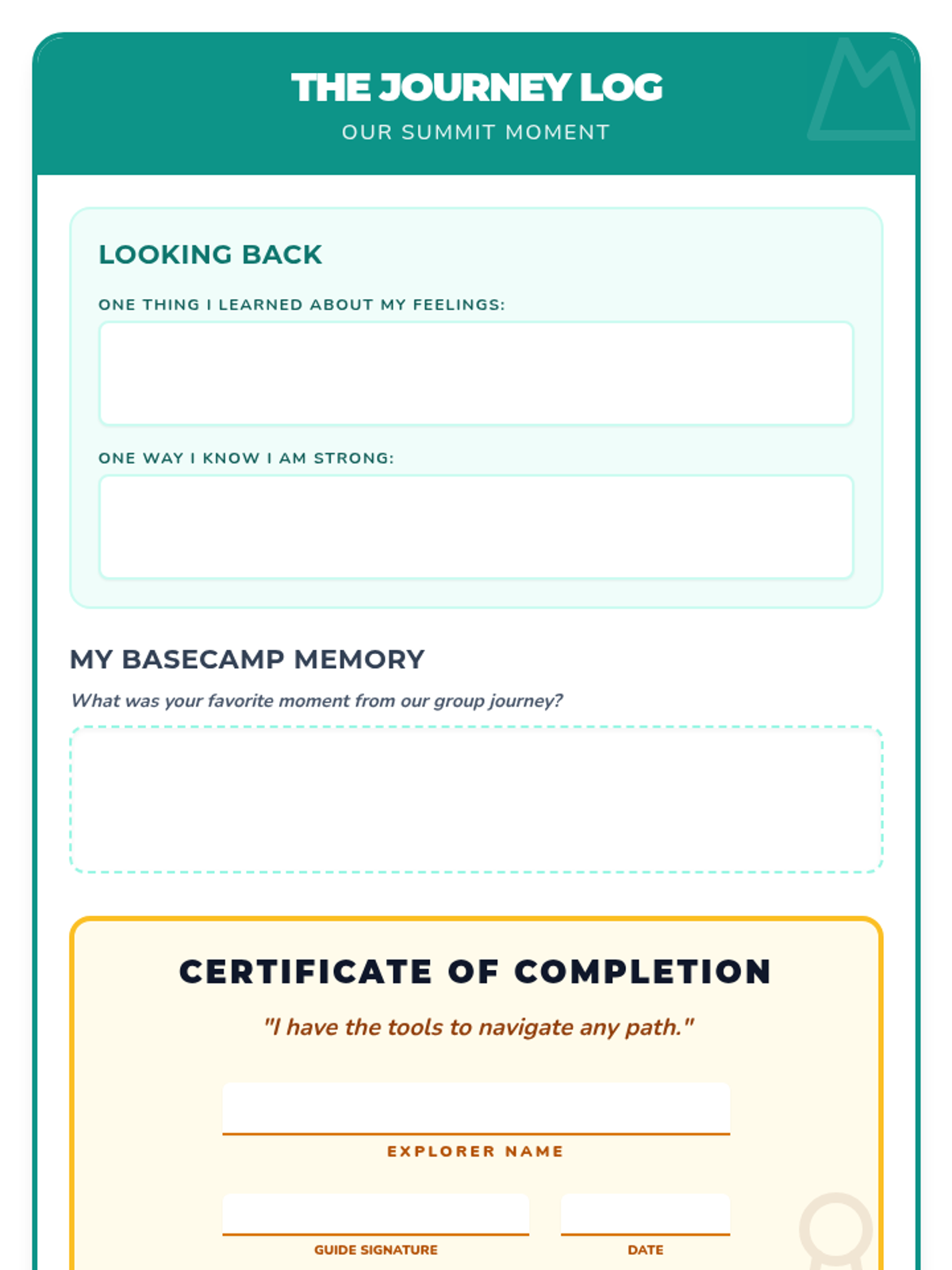
Celebrating growth, reviewing learned skills, and saying goodbye to the group while looking forward.
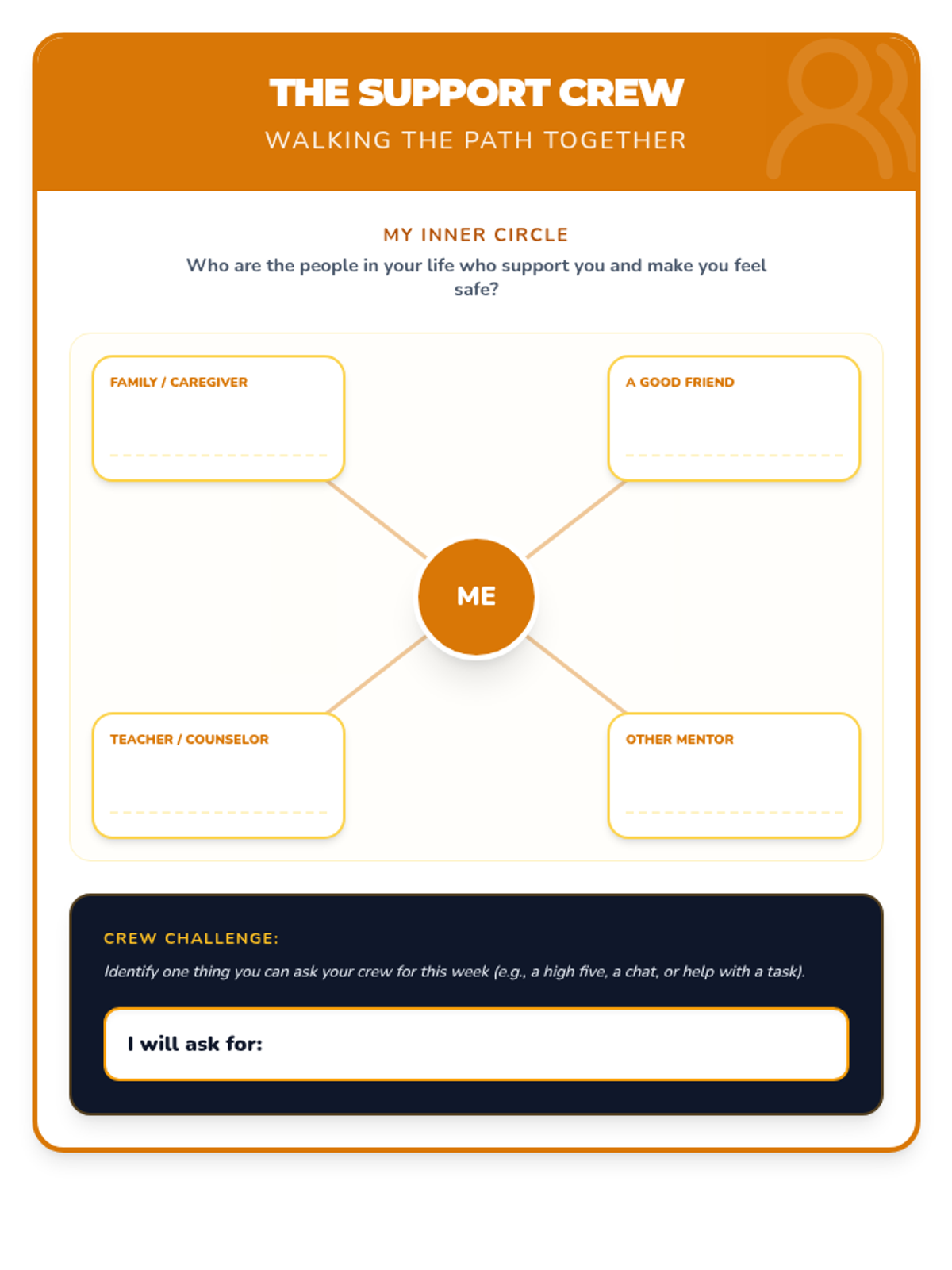
Identifying and strengthening the network of supportive adults and peers in the student's life.
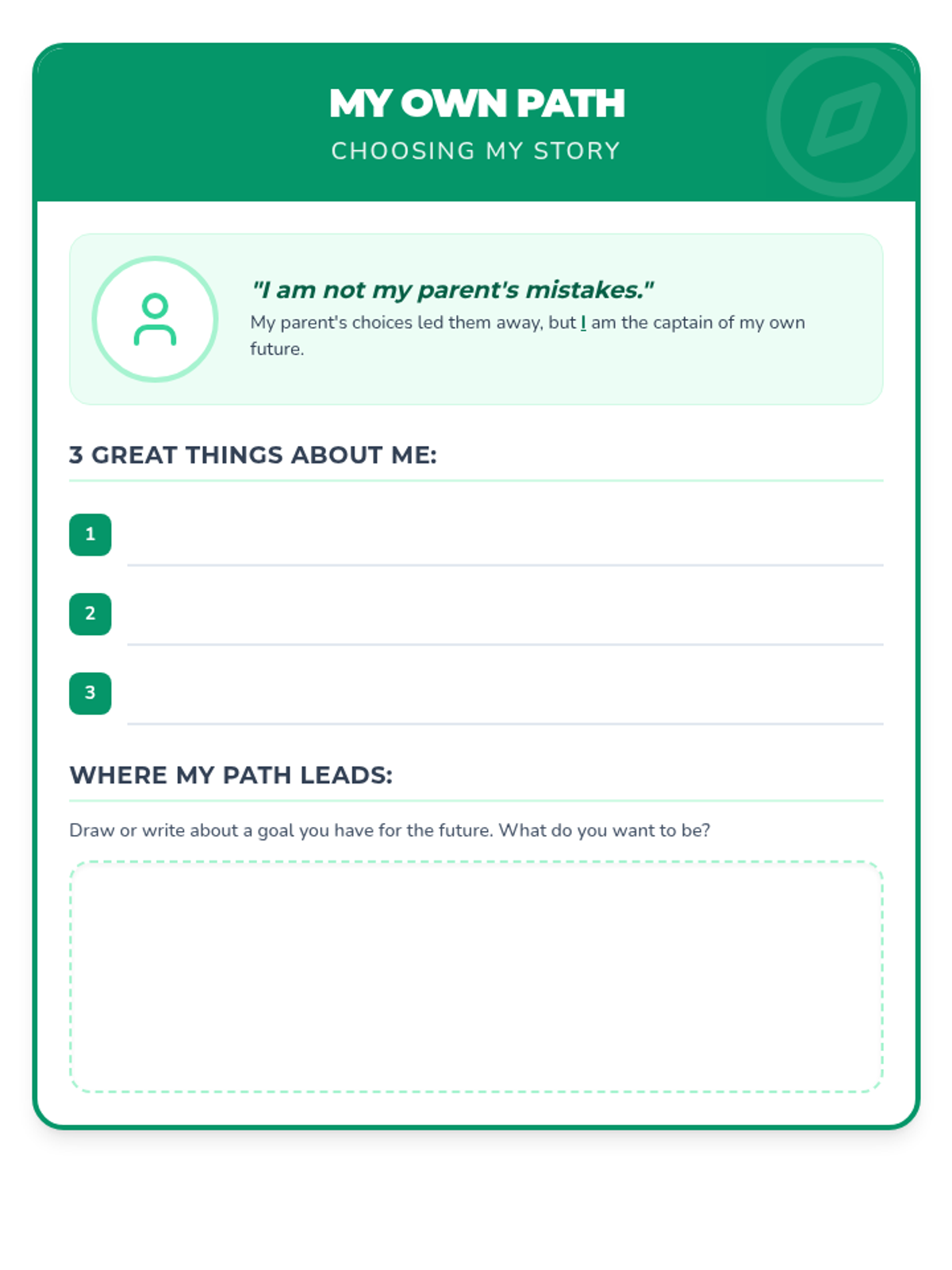
Differentiating personal identity from a parent's actions and focusing on individual strengths and future goals.
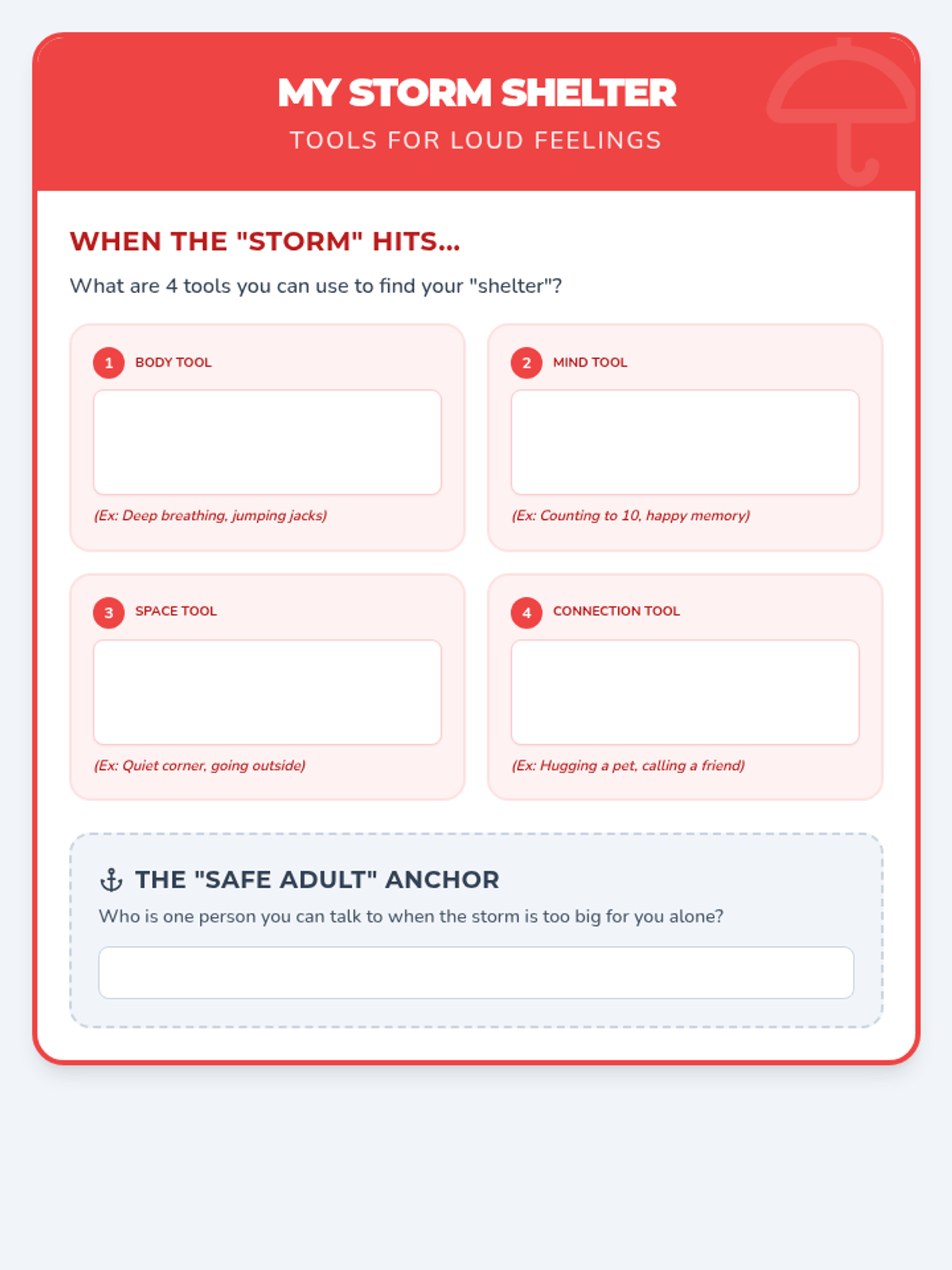
Developing personalized coping strategies and self-regulation techniques for handling difficult feelings and stressful situations.
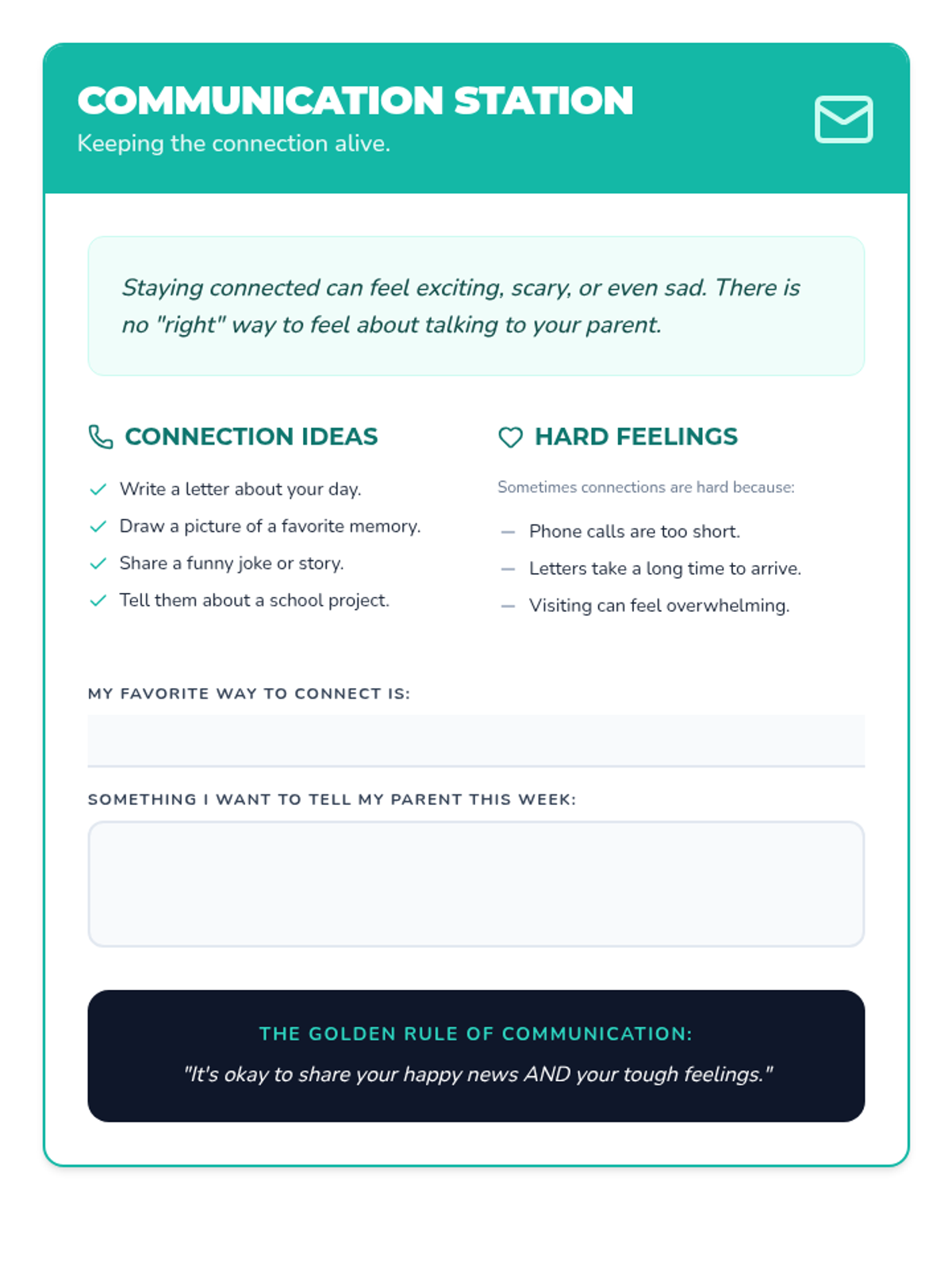
Exploring the challenges and feelings surrounding communication with an incarcerated parent, including letters, visits, and phone calls.
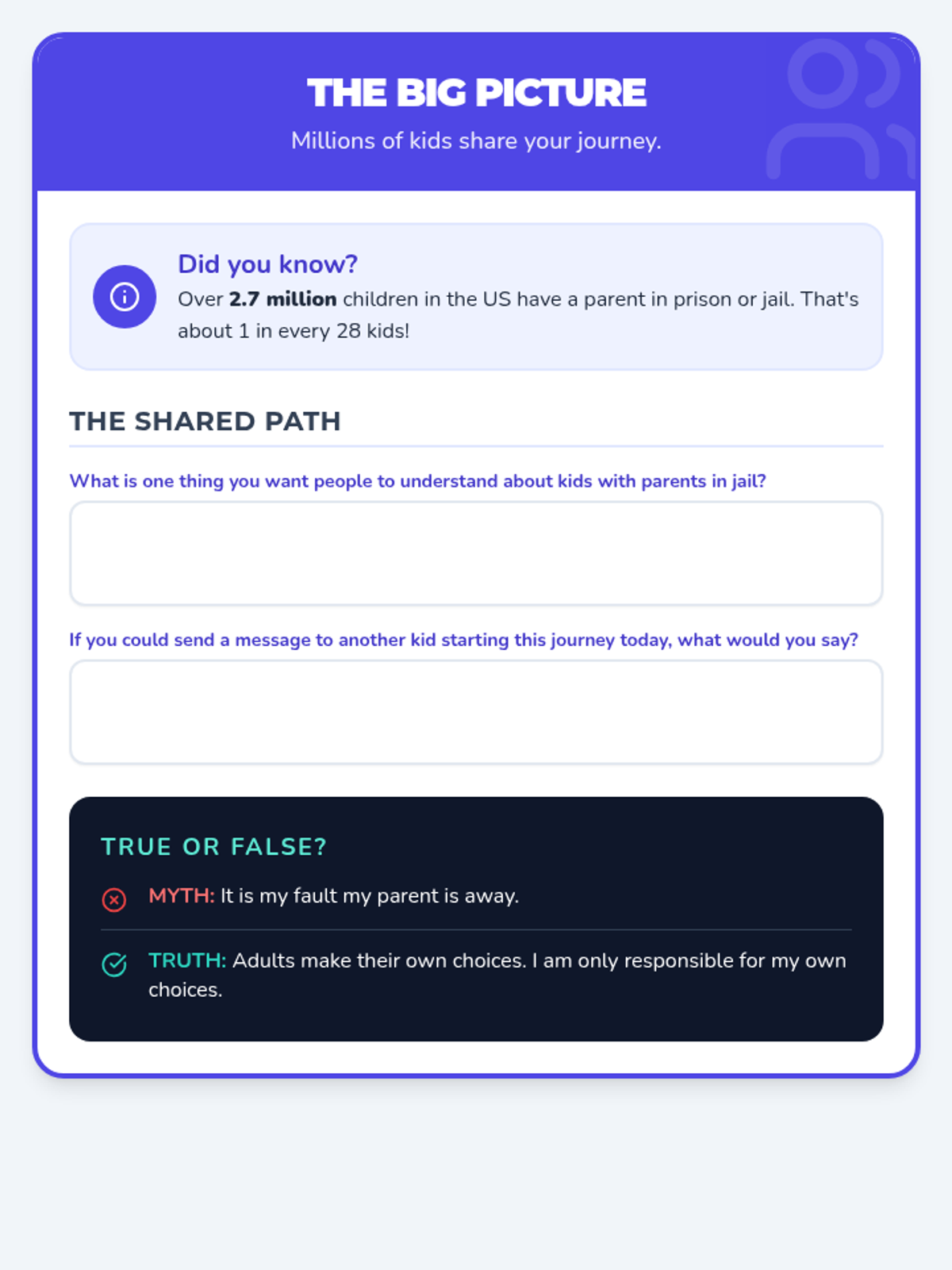
Normalizing the experience of having an incarcerated parent through shared stories and statistics to reduce shame and isolation.
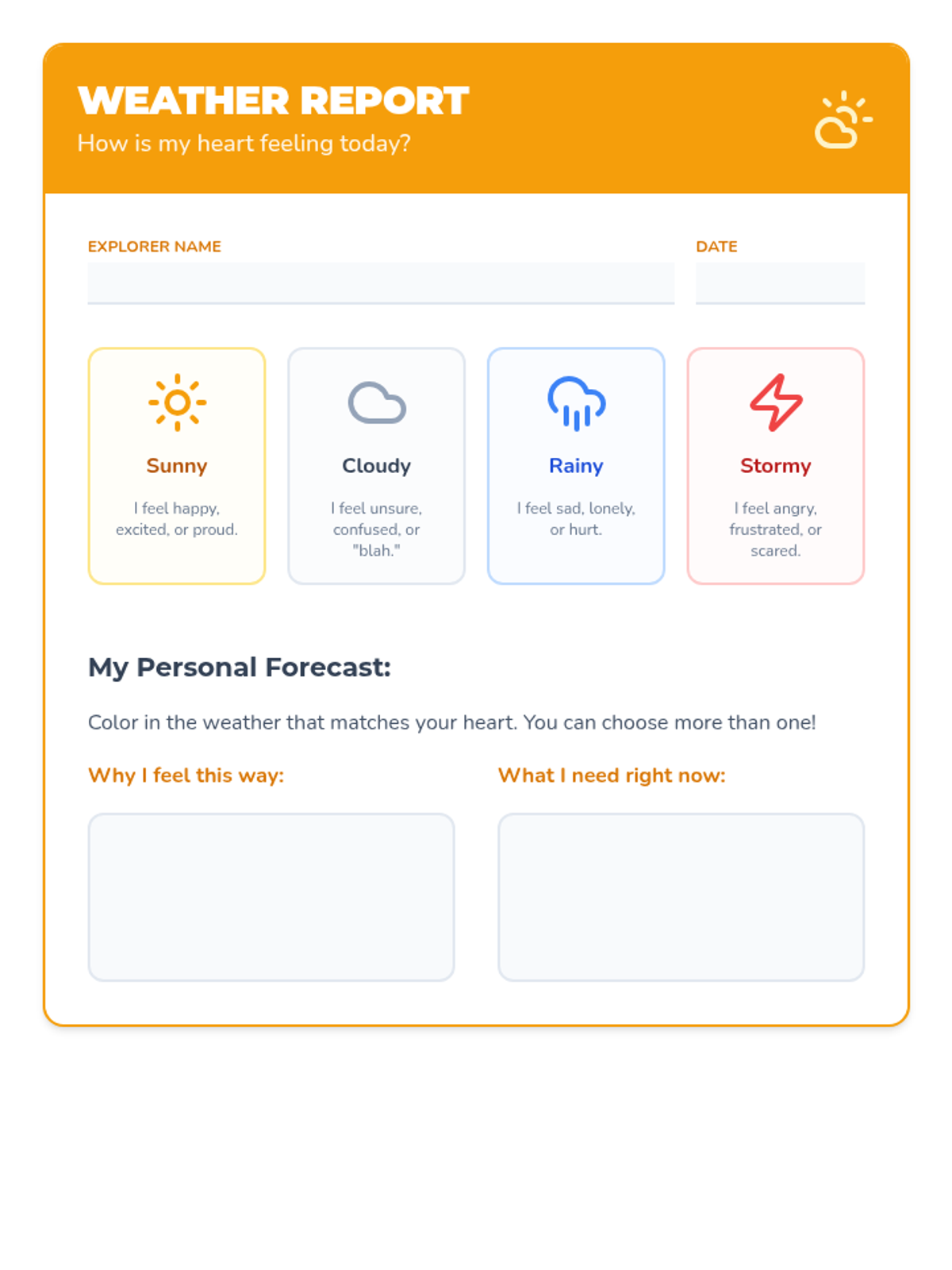
Identifying and naming complex emotions using a weather-themed framework and introducing personal emotion charts.
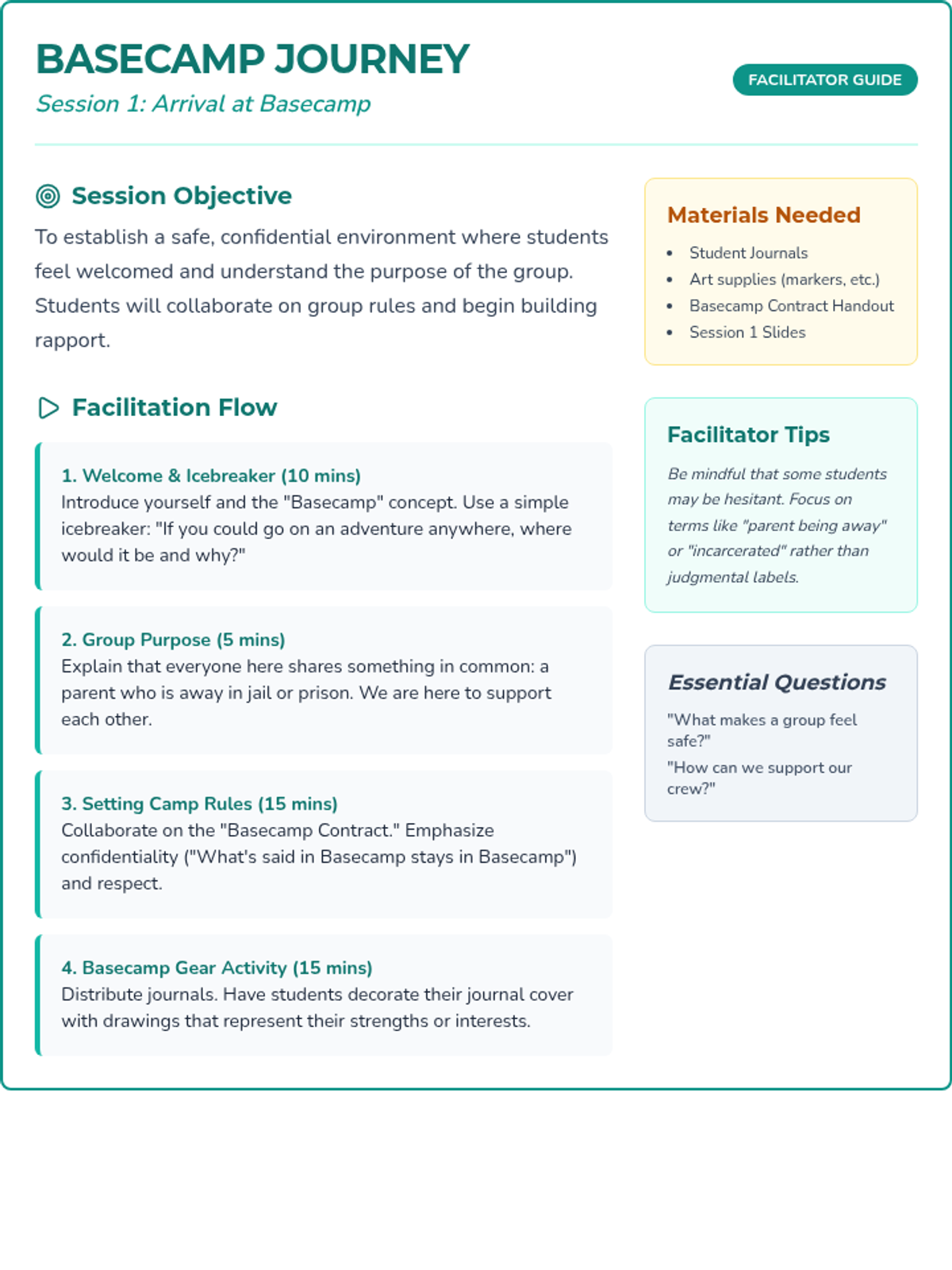
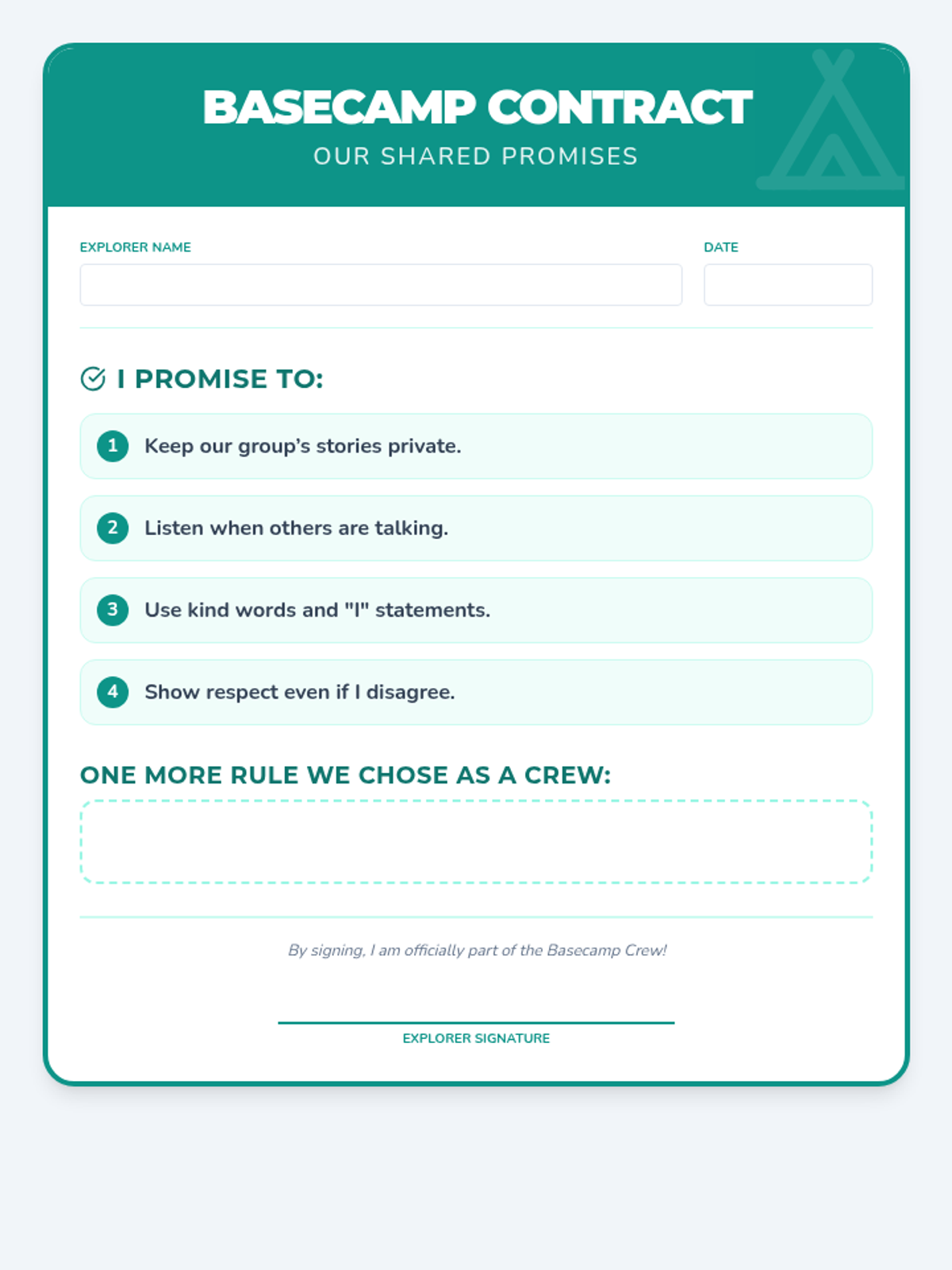
Introduction to the group, establishing safety and trust, and creating shared group agreements.
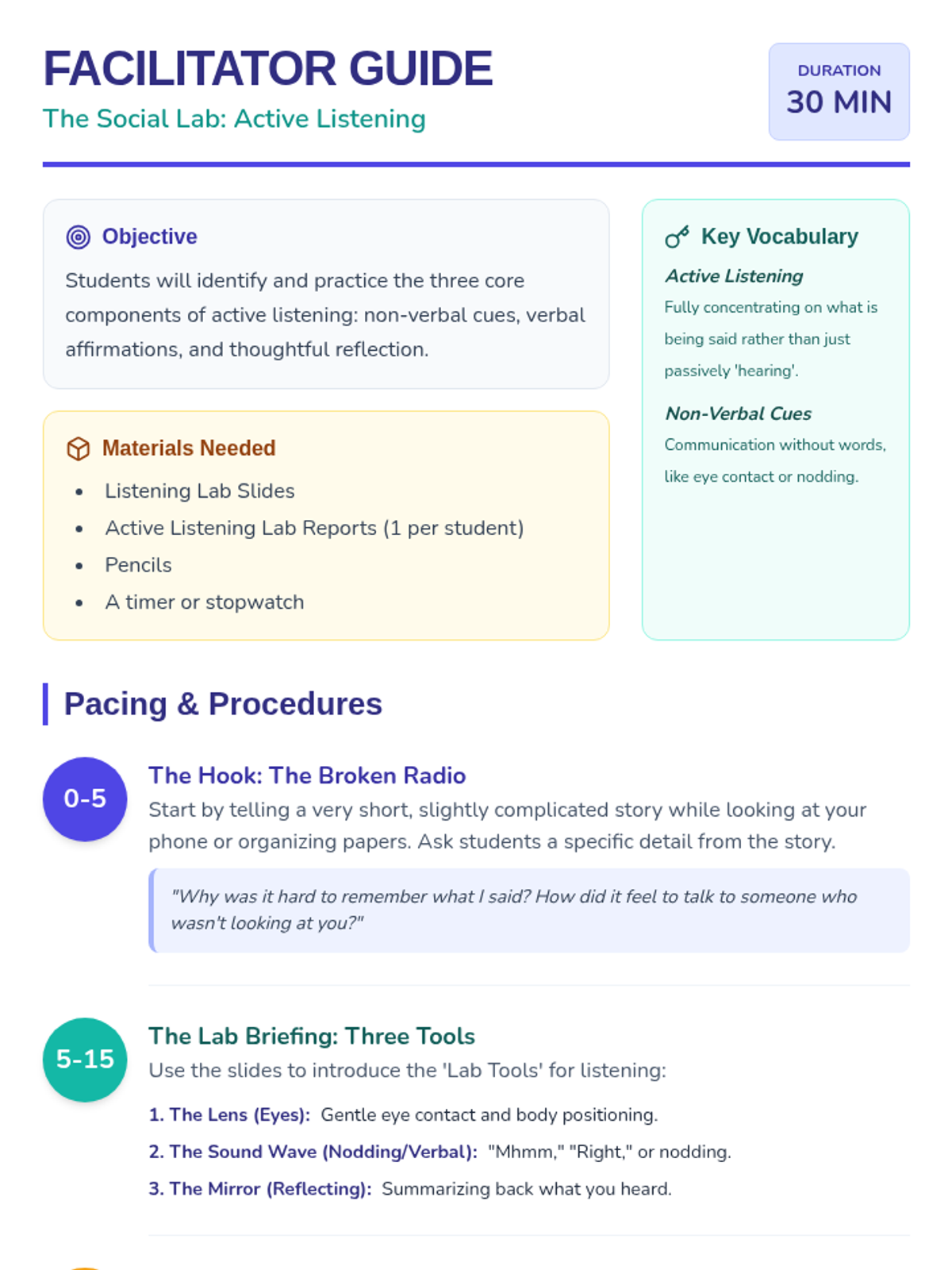
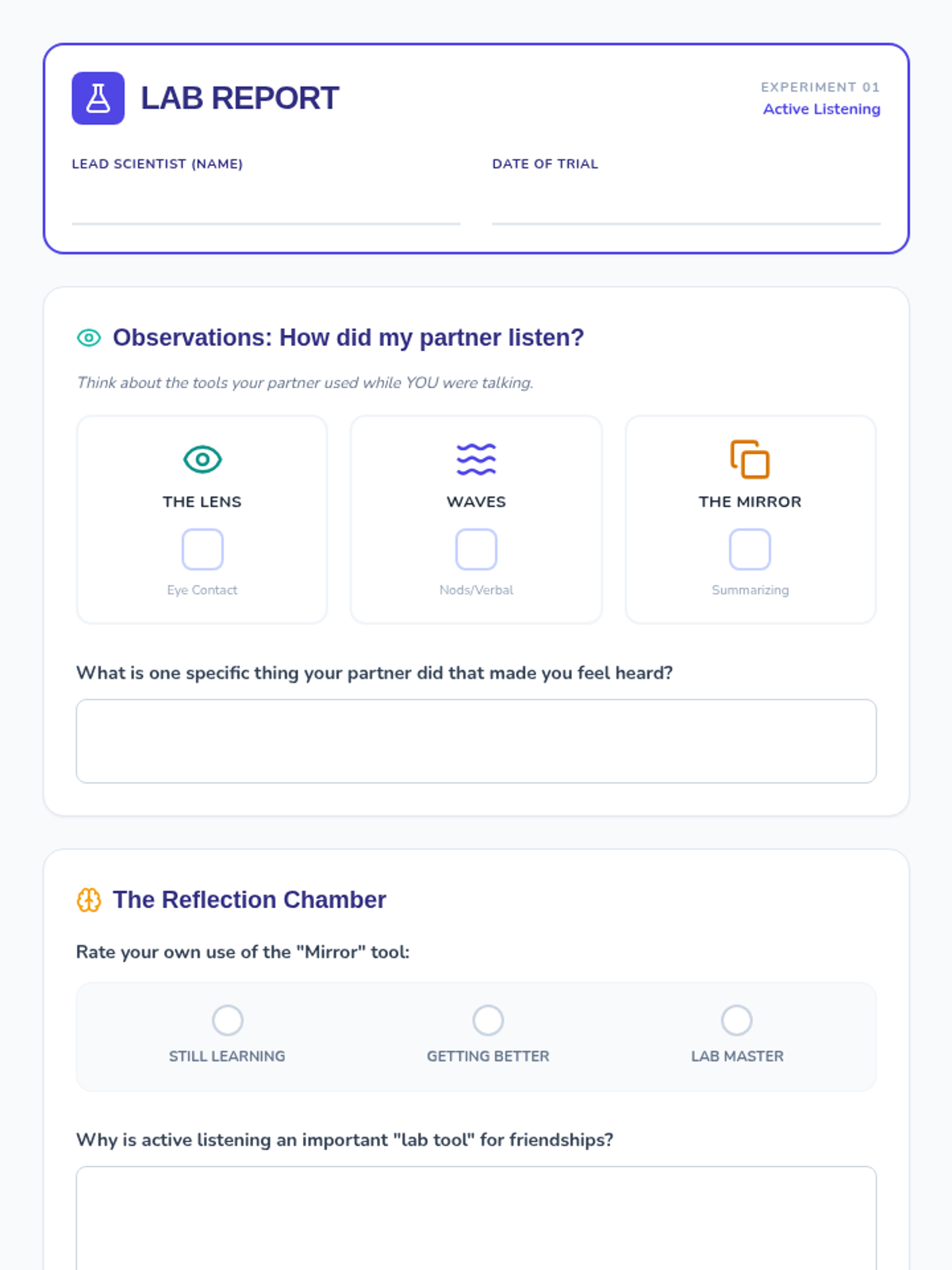
A focused 30-minute introductory lesson on active listening skills, featuring a lab-themed facilitator guide, instructional slides, and a student practice report.
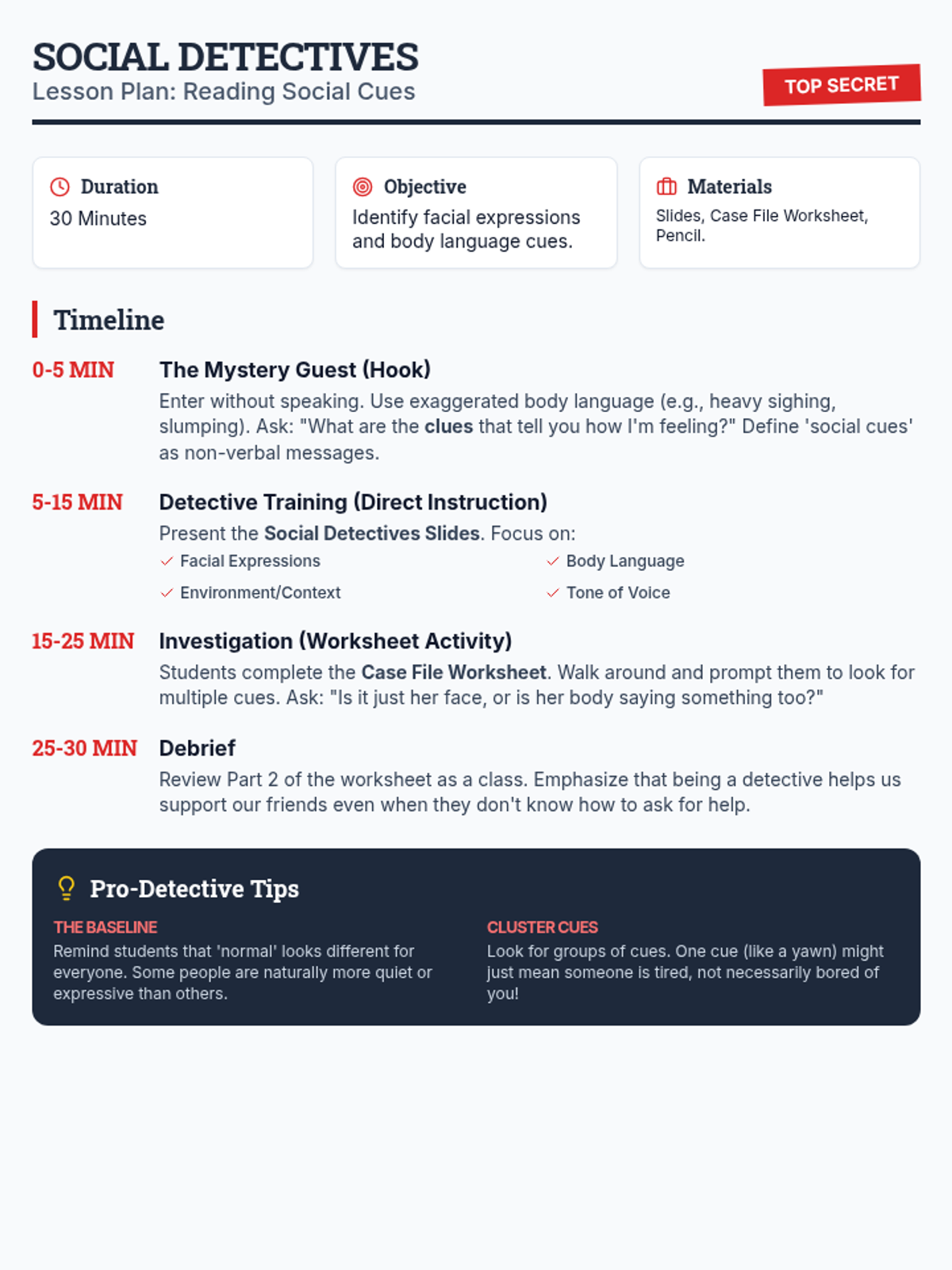
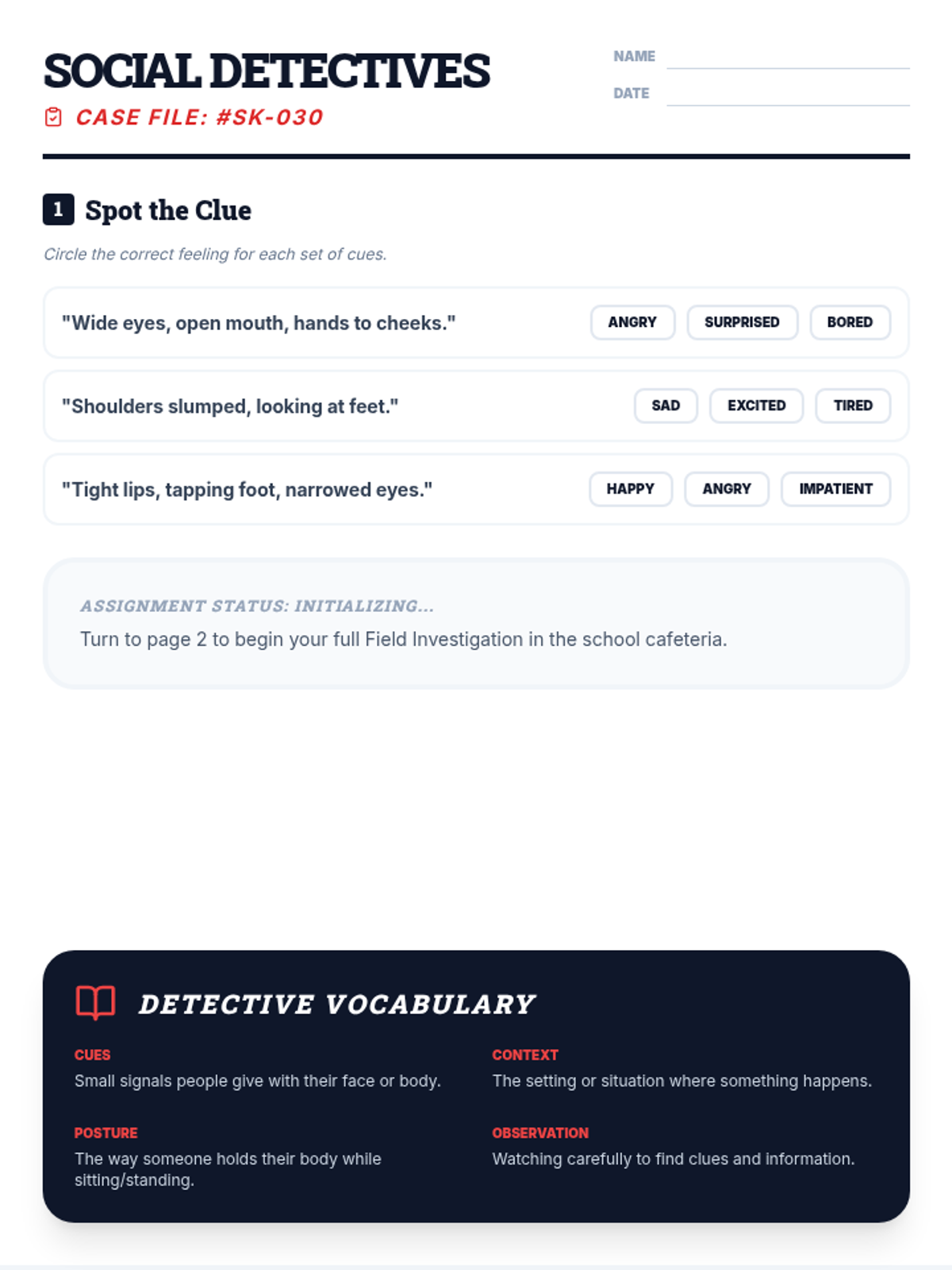
A fast-paced, interactive lesson focused on identifying non-verbal social cues like body language and facial expressions. Students act as 'Social Detectives' to decode how others are feeling in various scenarios.
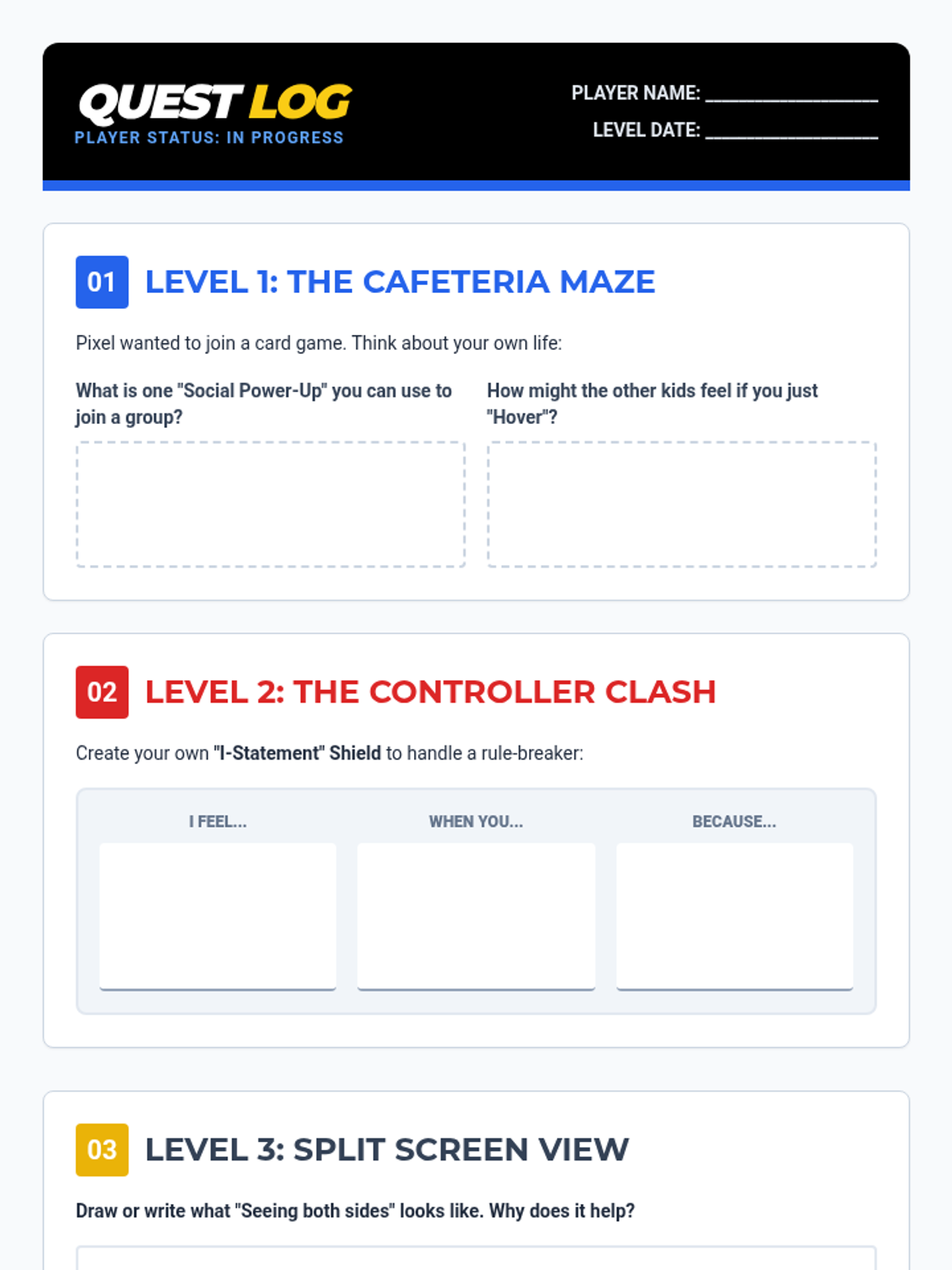
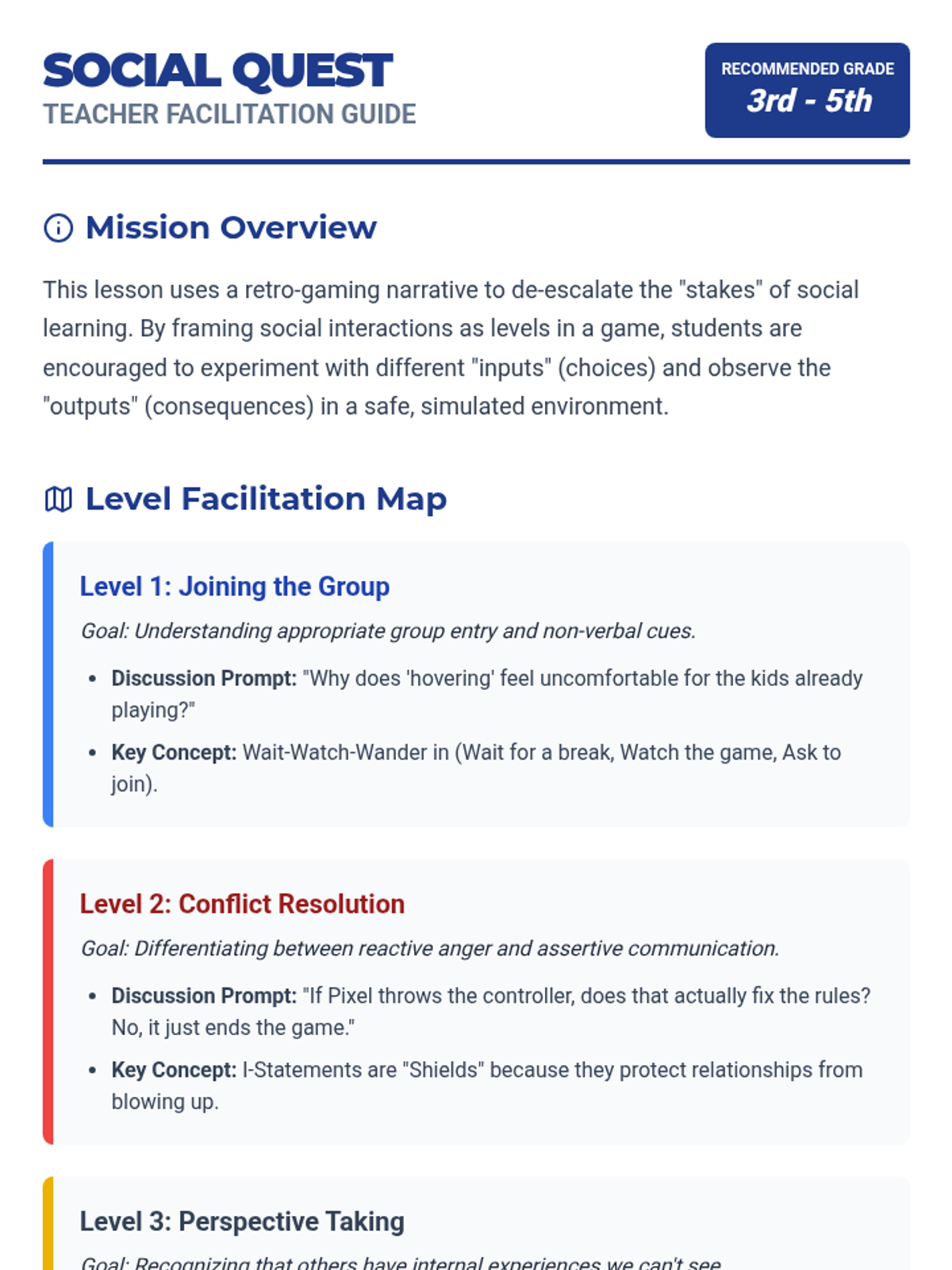
A retro-themed social skills adventure where students navigate 'social mazes' to practice conflict resolution, group entry, perspective taking, and identifying the size of problems. Students act as players making choices for the character 'Pixel' to achieve a High Score in social navigation.
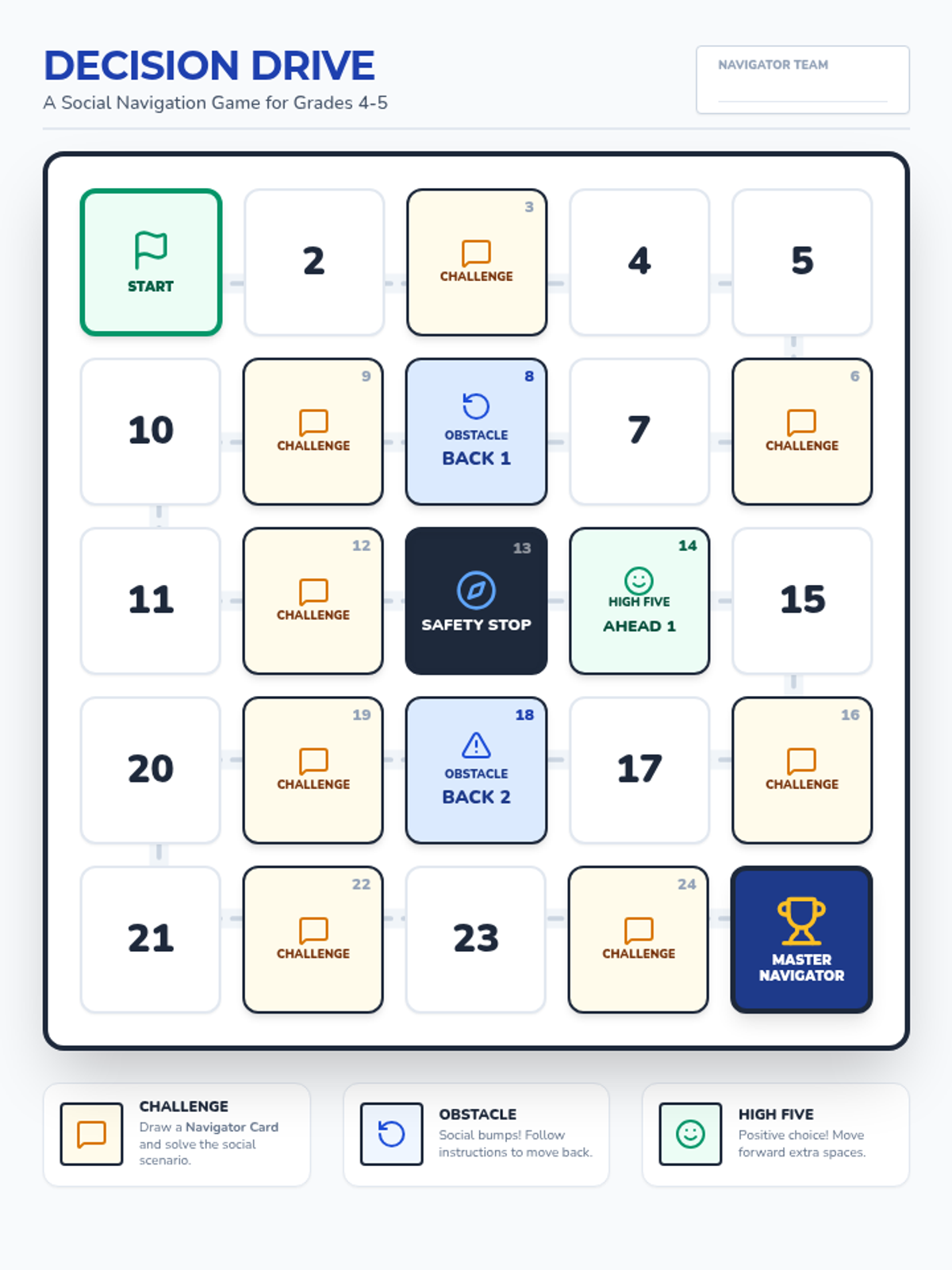
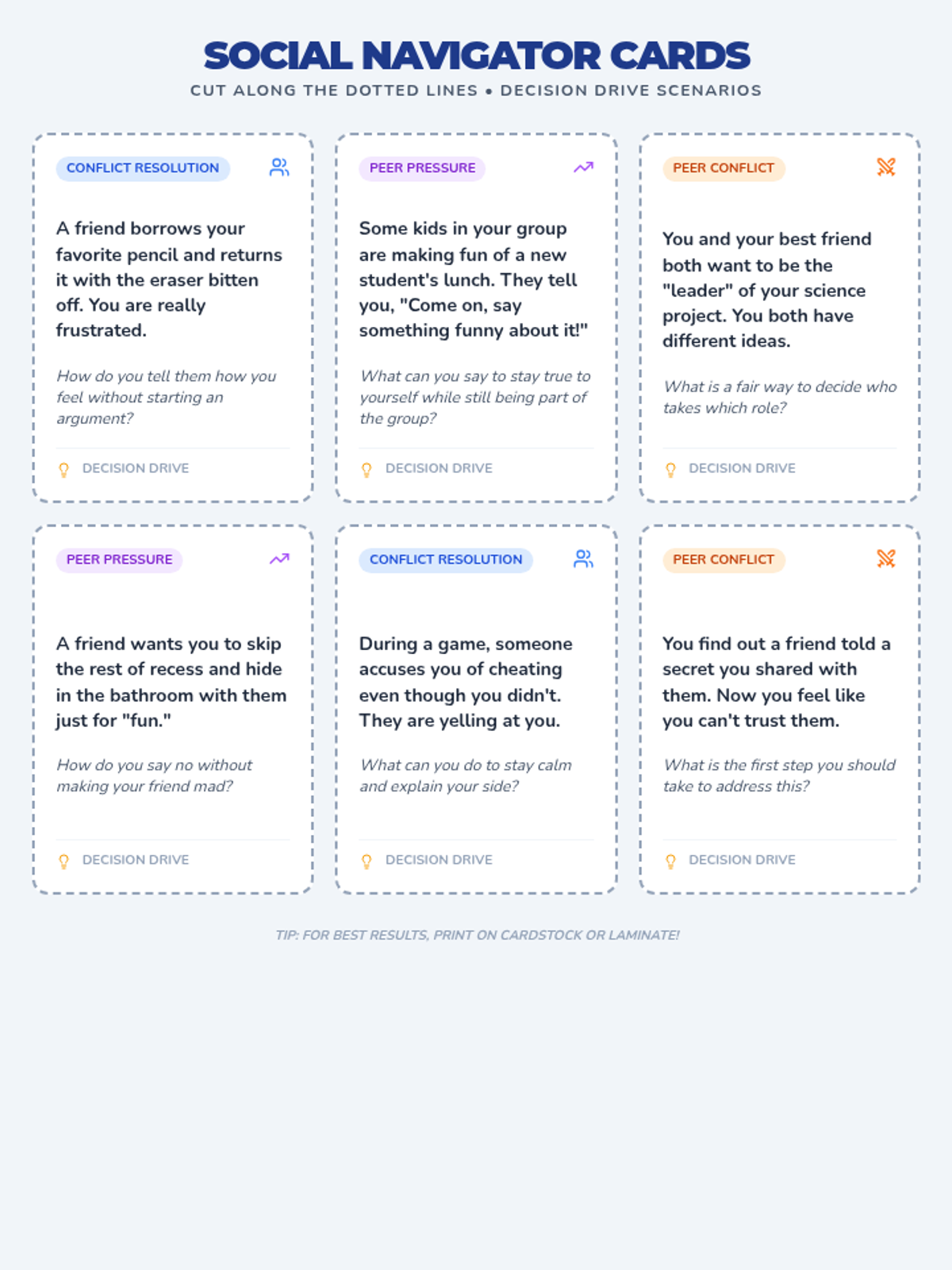
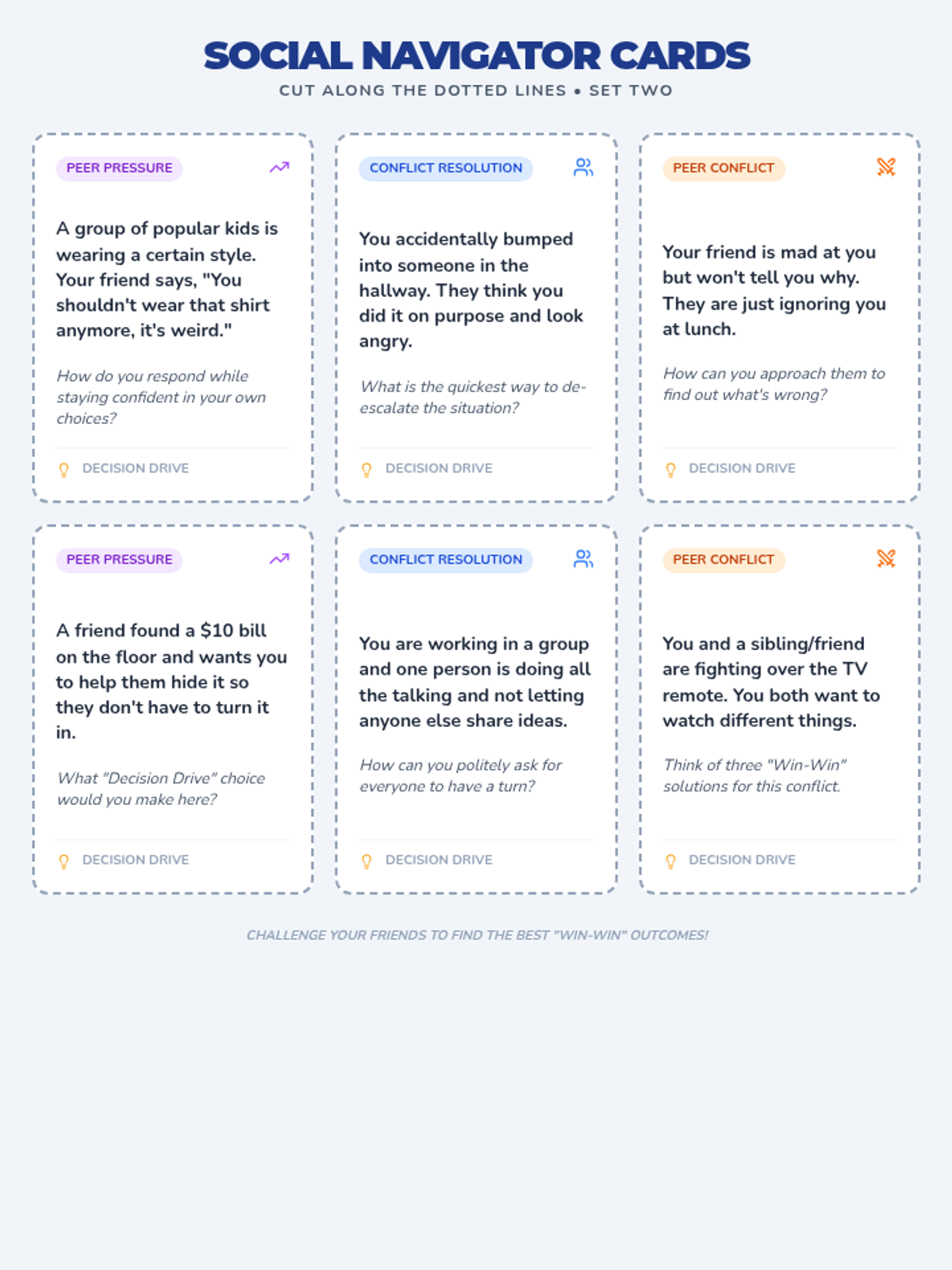
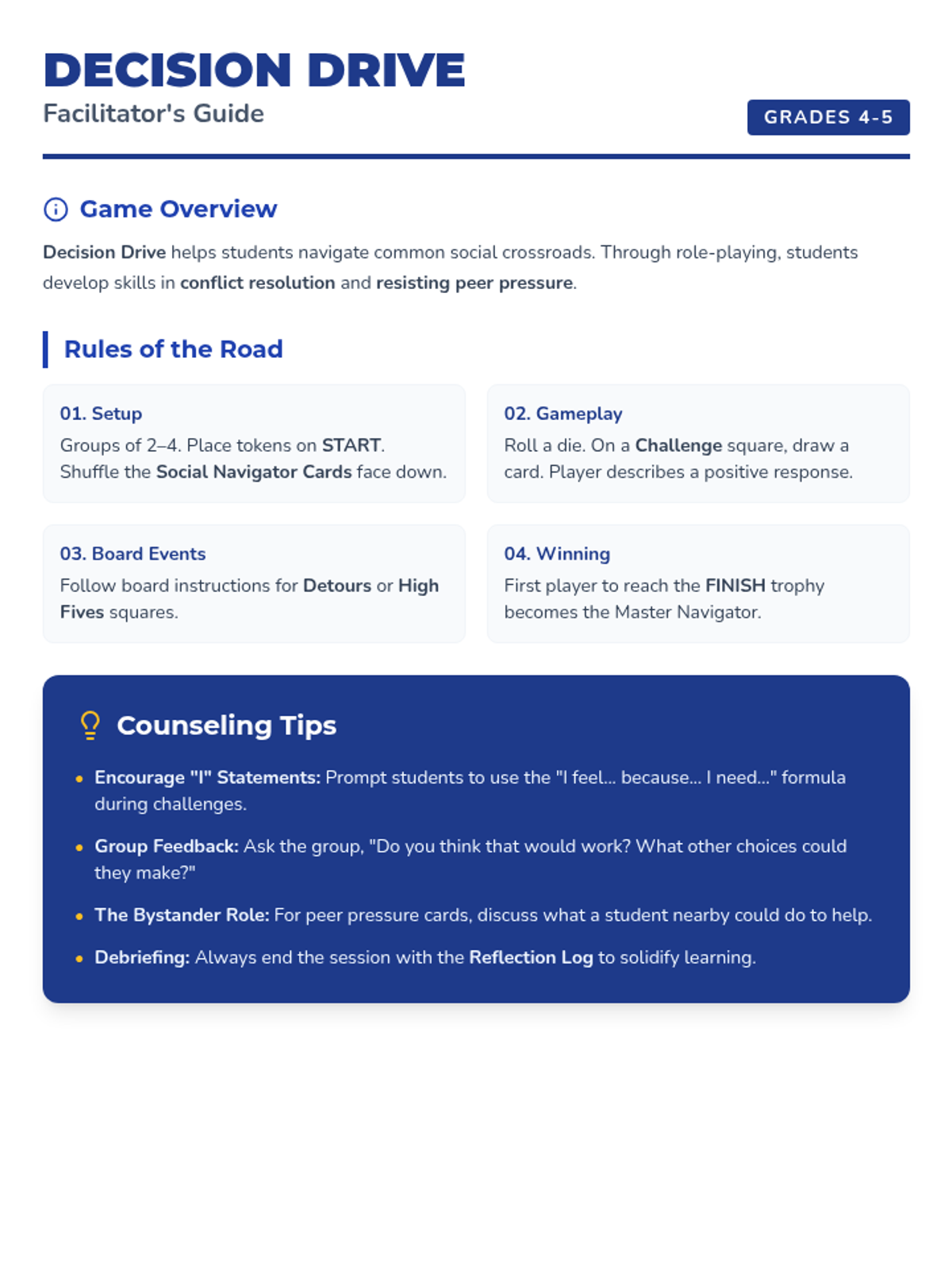
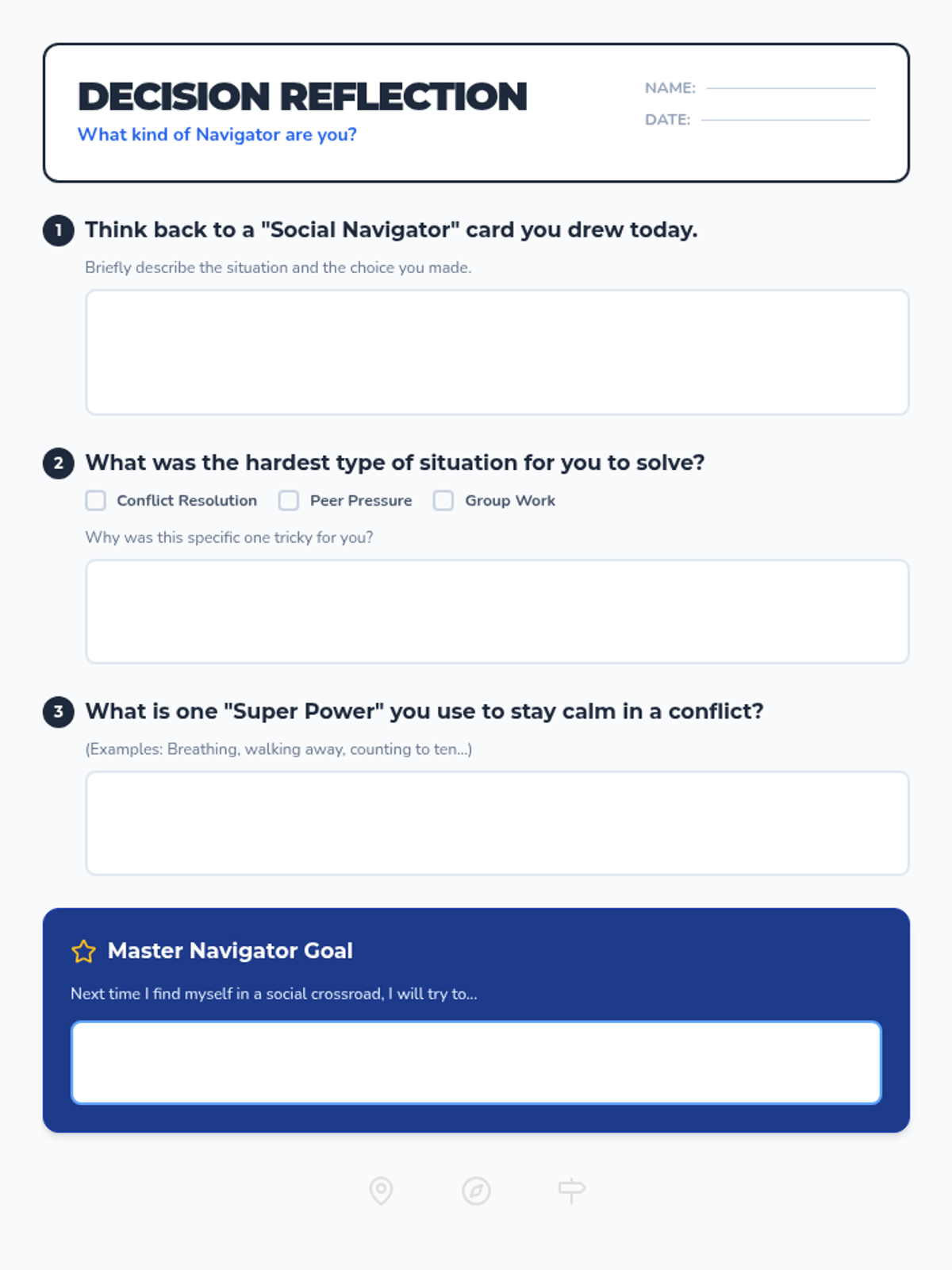
A board-game based counseling lesson where students practice navigating social challenges, conflict resolution, and peer pressure through interactive scenarios.
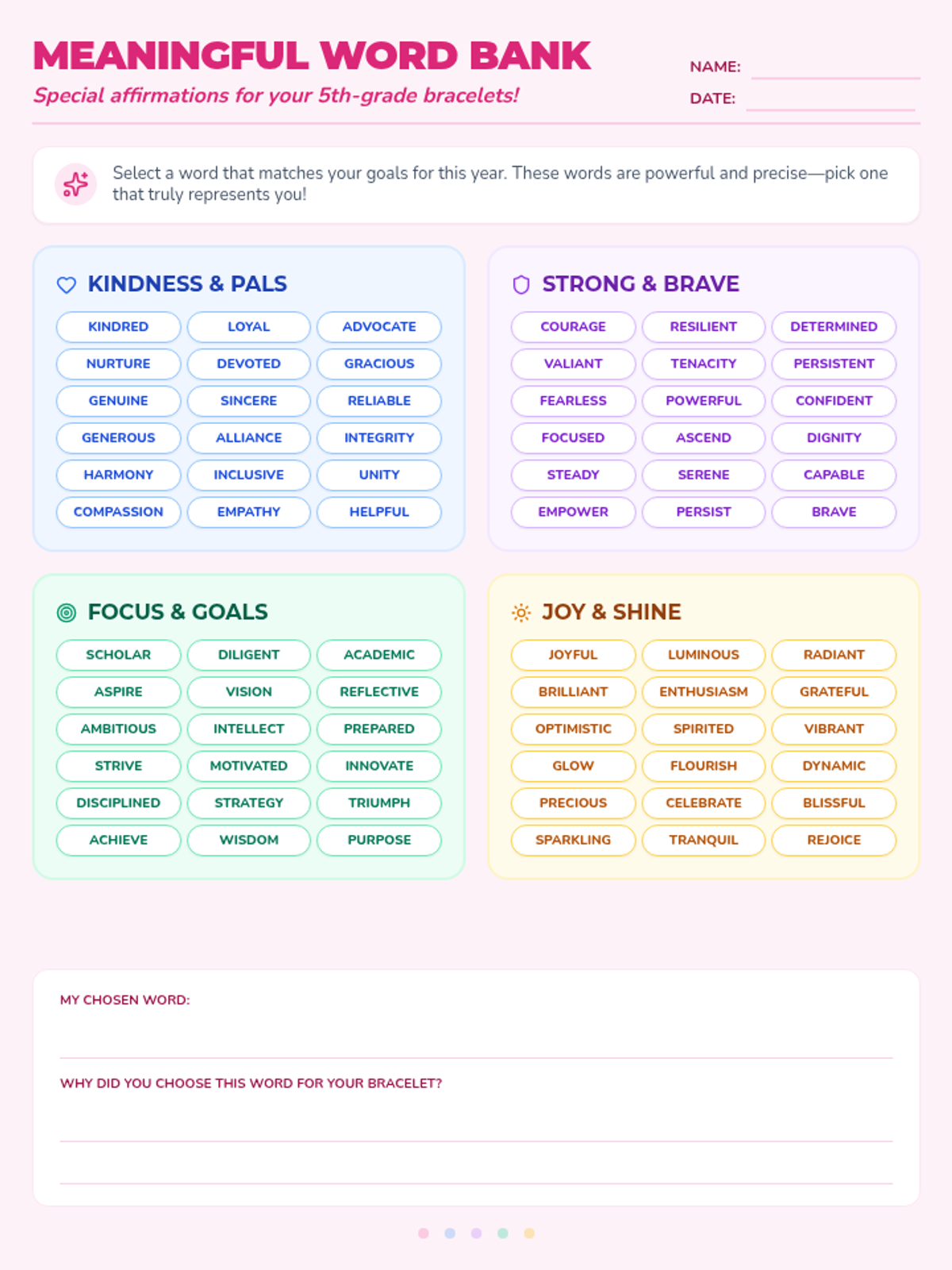
A collection of resources for a friendship bracelet-making activity, focusing on positive affirmations and social-emotional growth for upper elementary students.
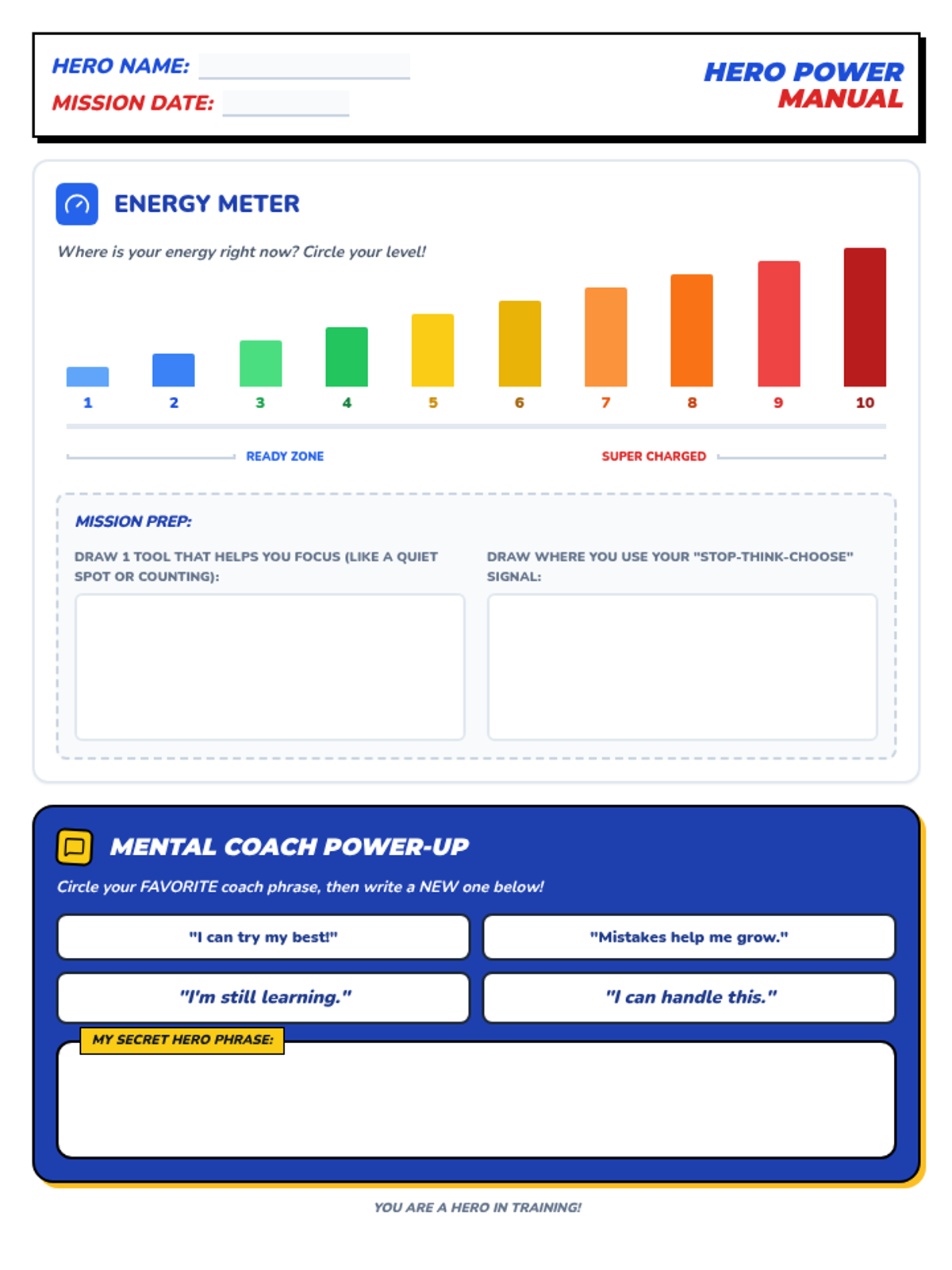
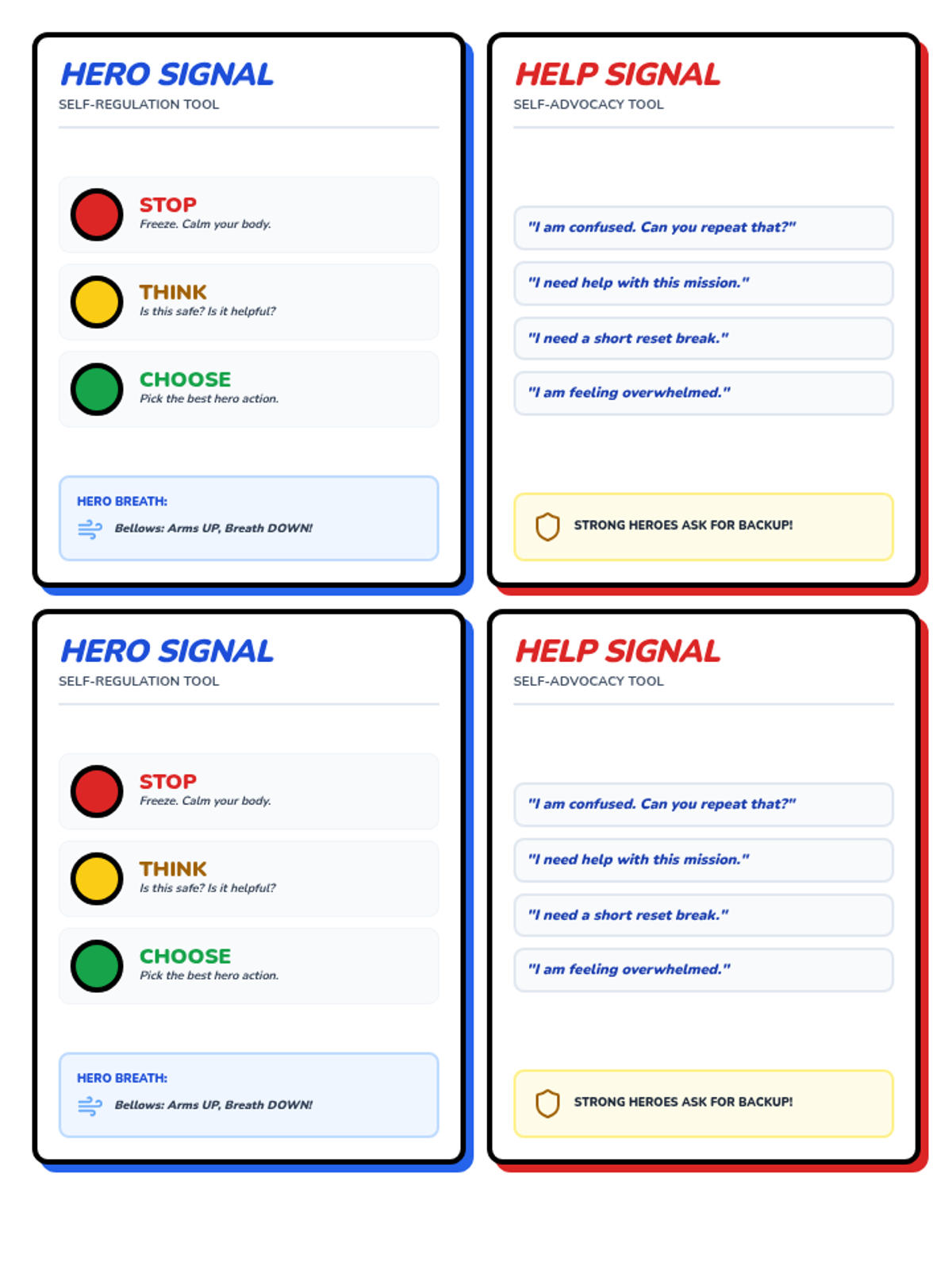
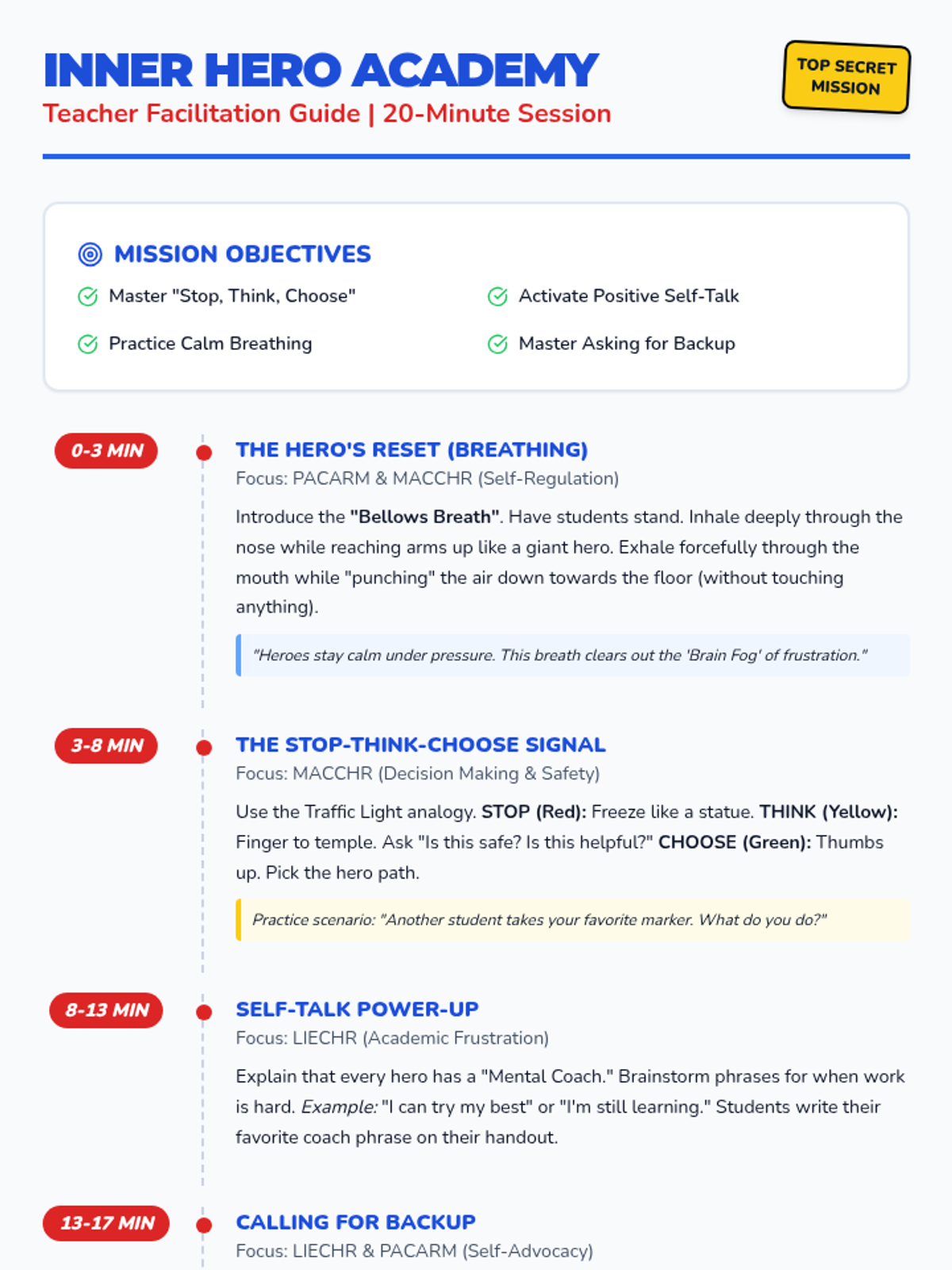
A 20-minute small group social-emotional learning lesson focusing on self-regulation, positive self-talk, and self-advocacy using the 'Inner Hero' theme. Designed for a mixed-grade group (2nd and 4th) to address IEP goals related to the Stop-Think-Choose method and asking for help.
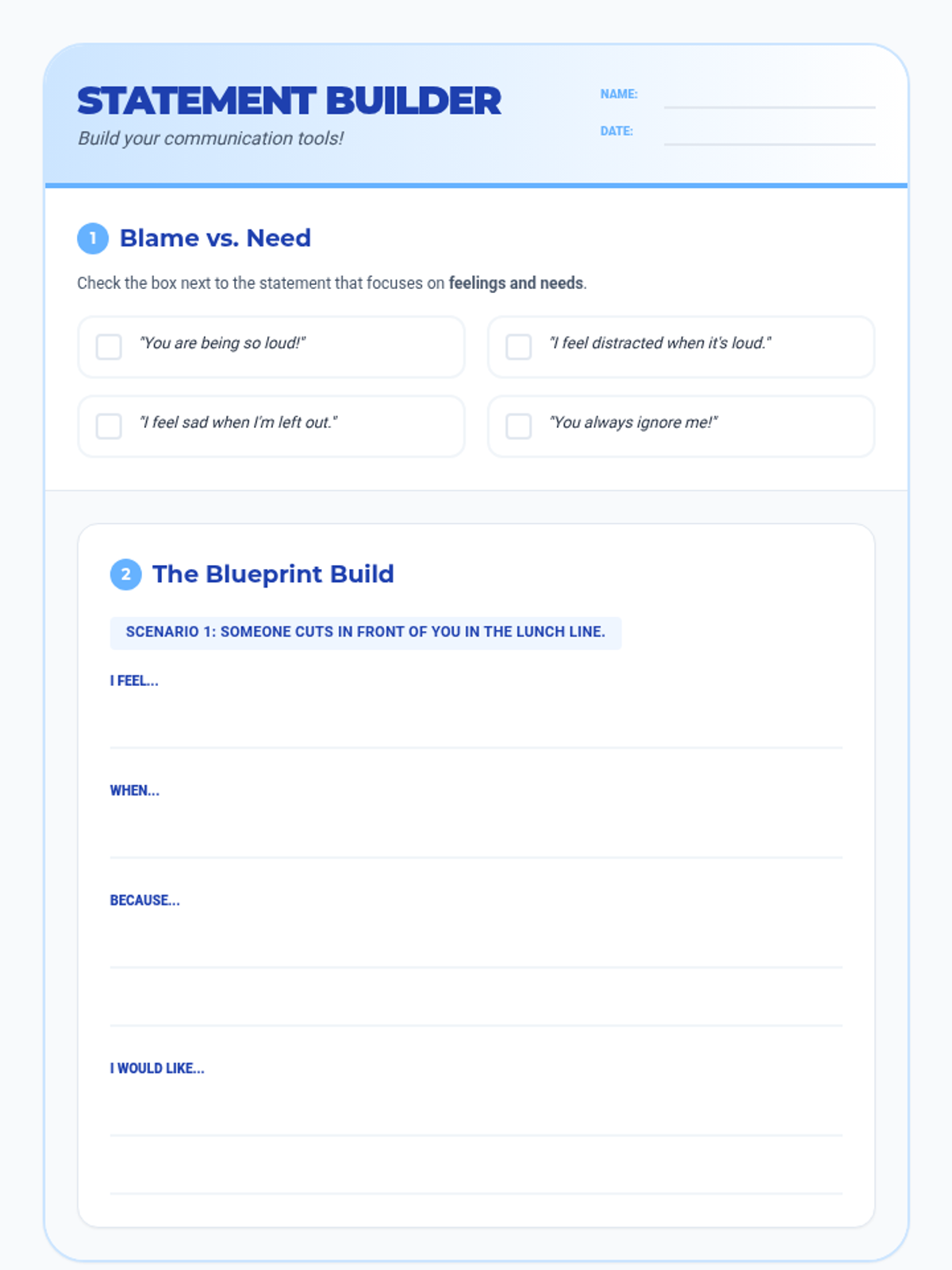
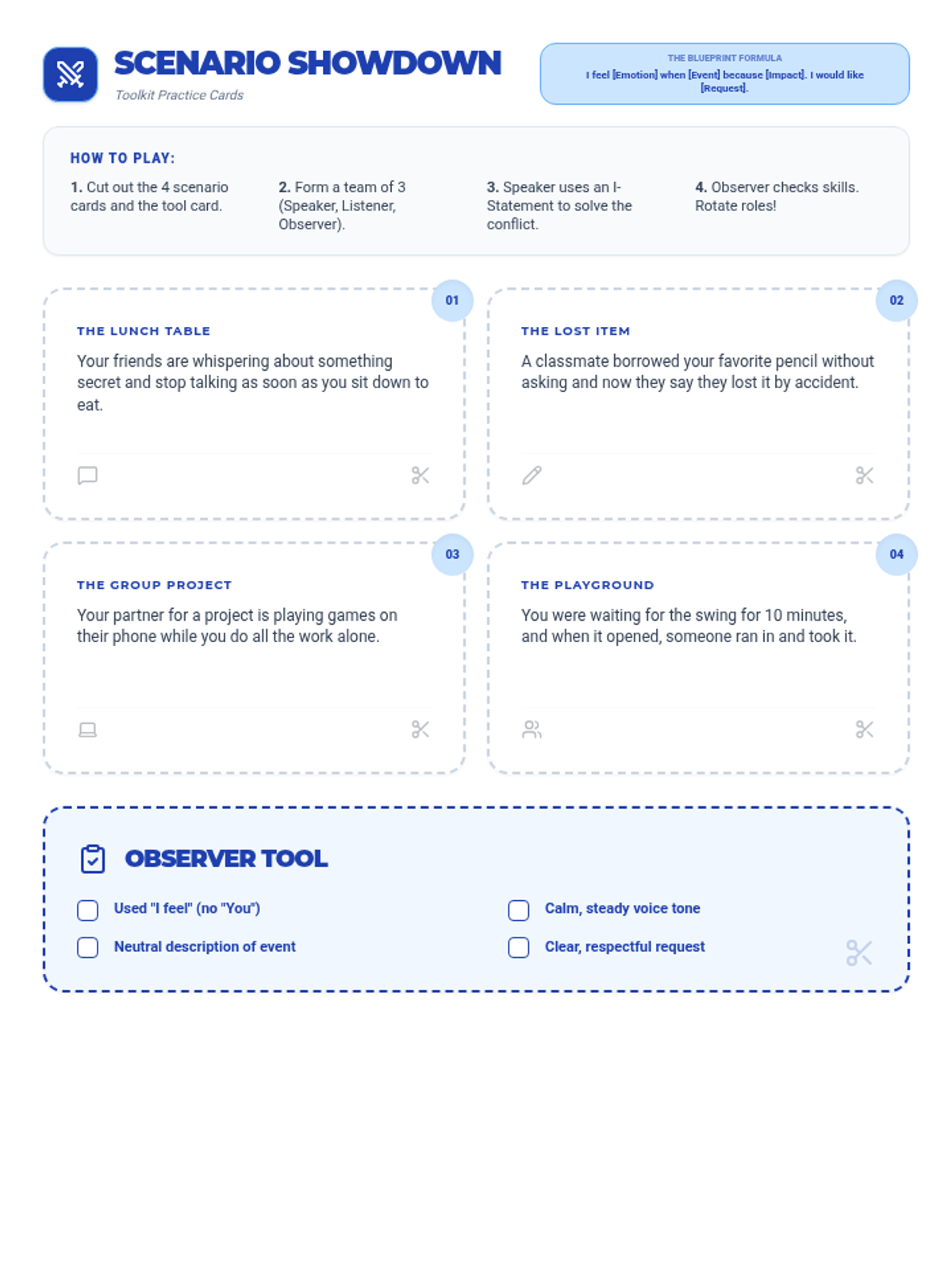
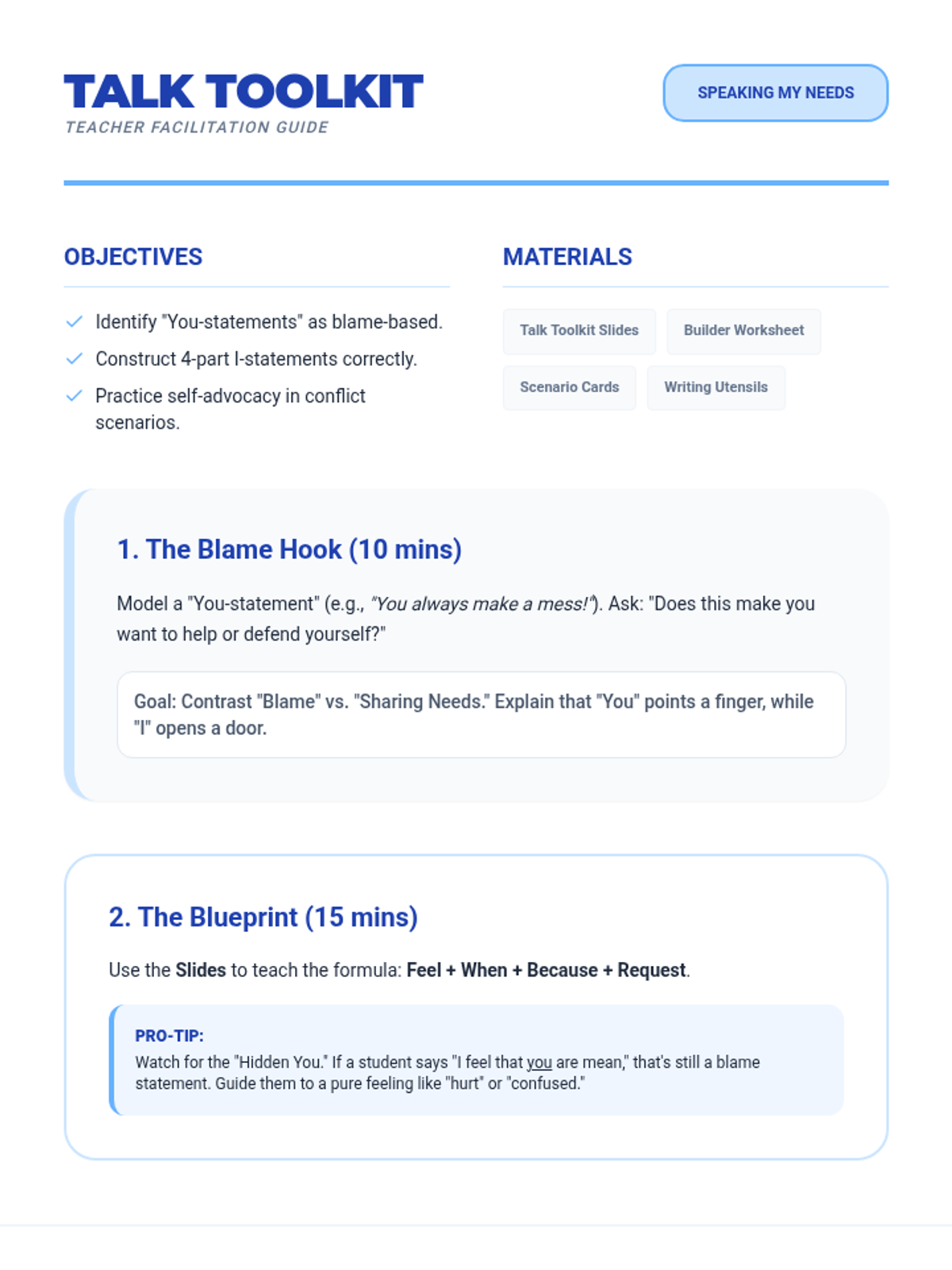
This lesson equips students with the power of 'I-Statements' to express their feelings and needs clearly and respectfully, fostering effective communication without blame. Through guided practice and scenario role-playing, students learn to articulate their experiences, enhancing self-advocacy and reducing misunderstandings.