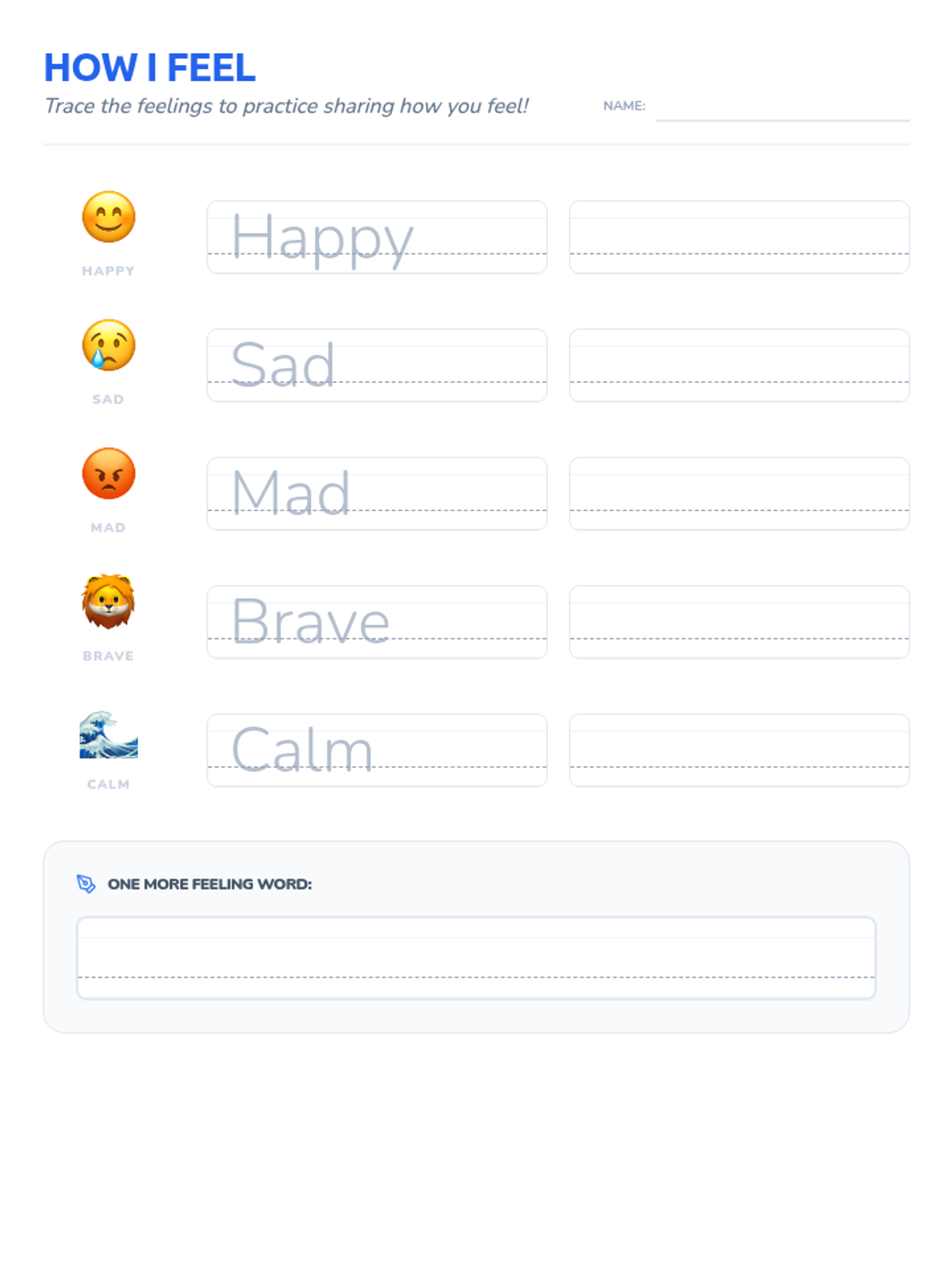
A comprehensive emotional literacy lesson designed to help elementary students identify, name, and manage eight key emotions through creative journaling and guided reflection.
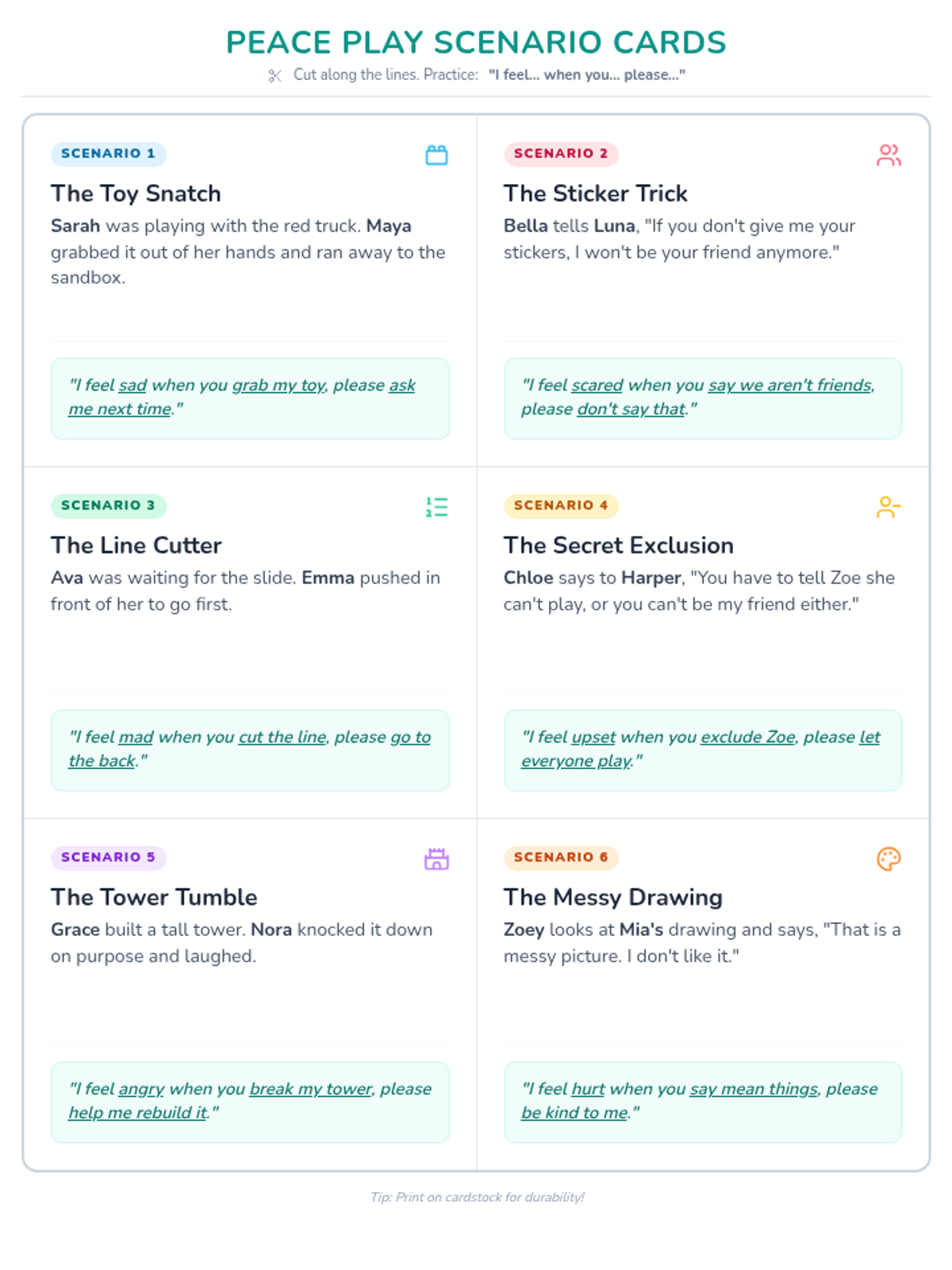
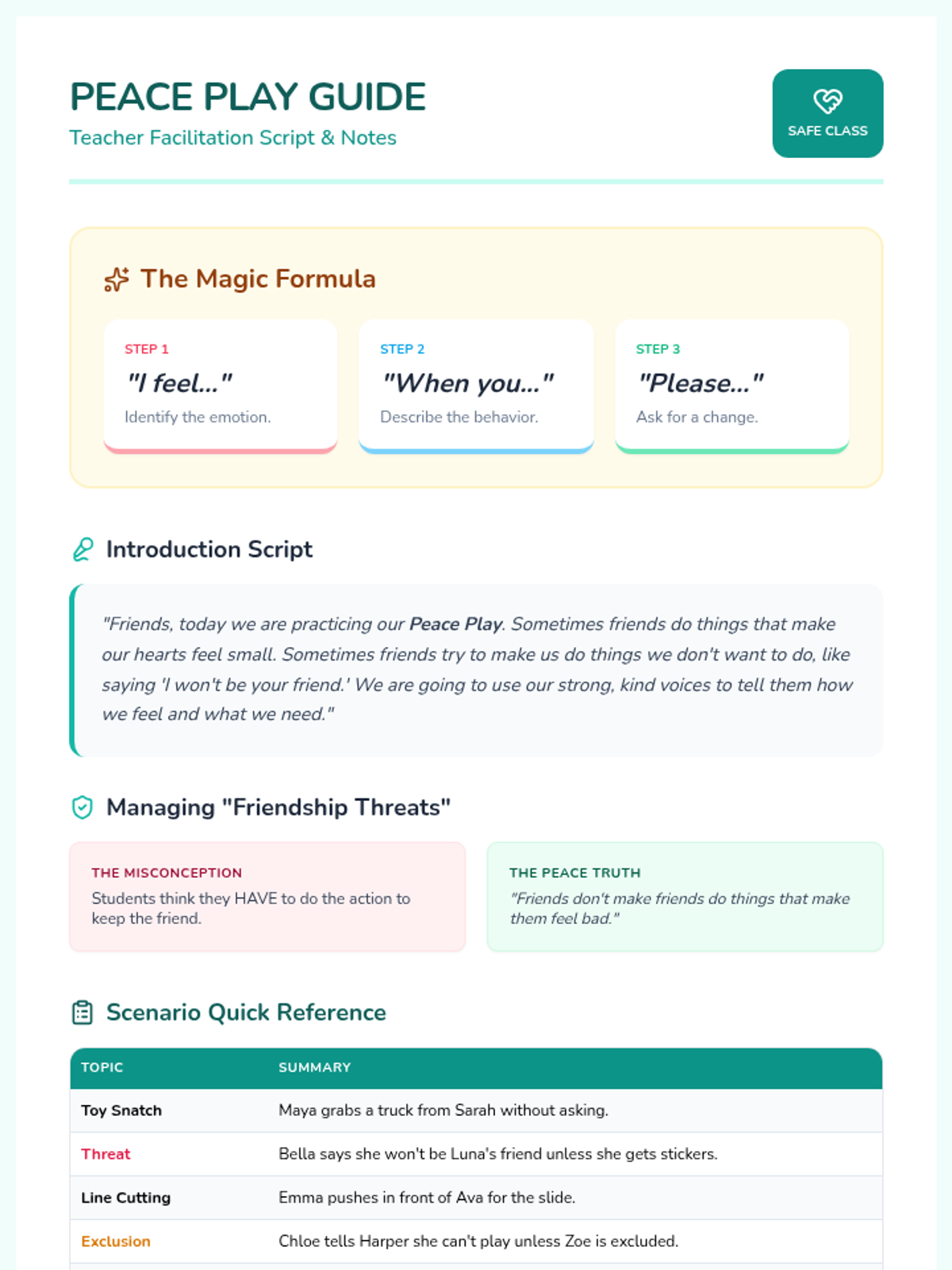
A collection of role-play scenarios and teacher guidance designed to help kindergarten students practice conflict resolution using 'I-statements' and navigate peer pressure.
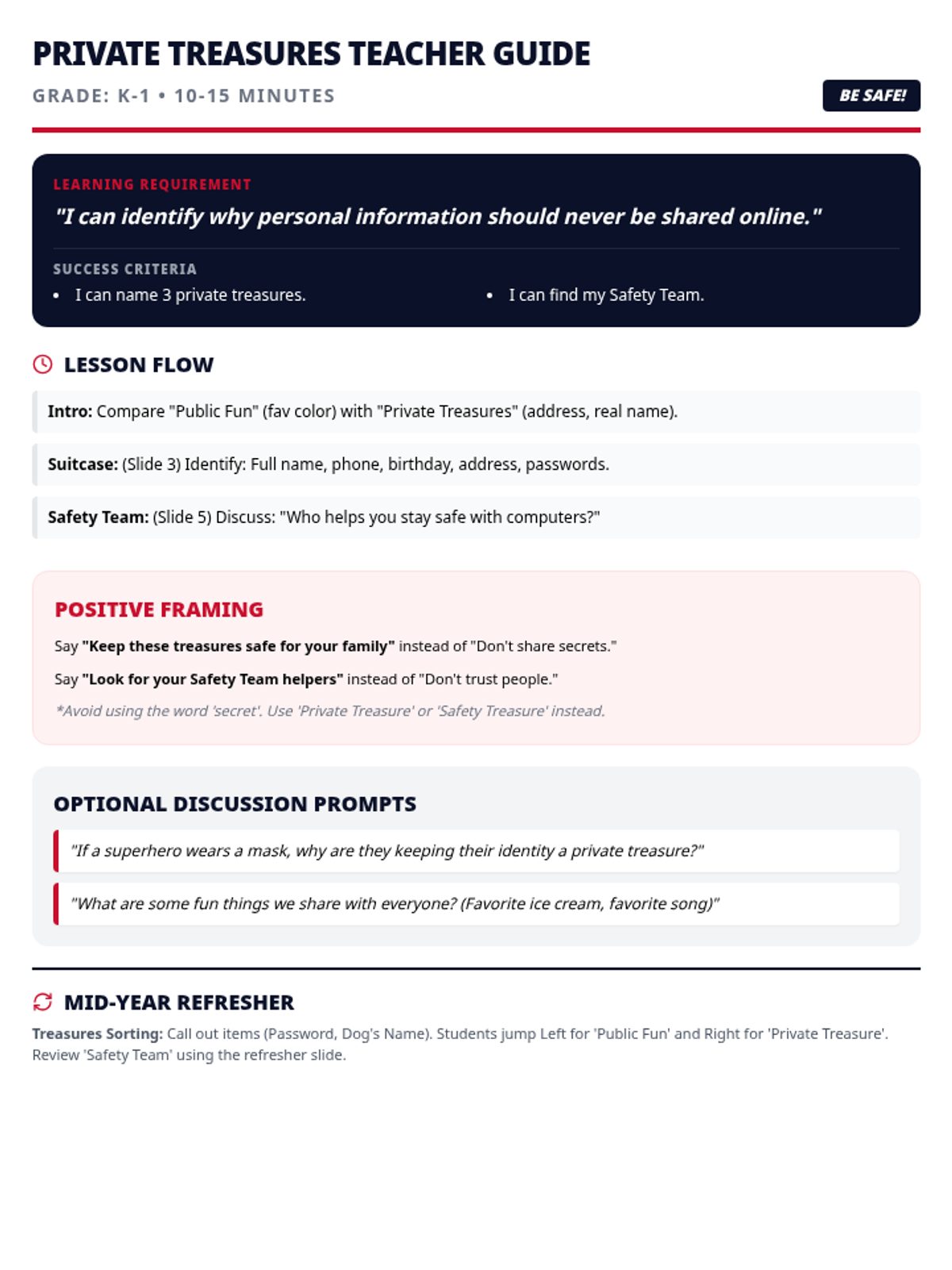
A 10-15 minute introductory lesson for K-1 students on identifying and protecting private information using the JHawk Way of being safe. Includes partner activities and positive framing for early learners.
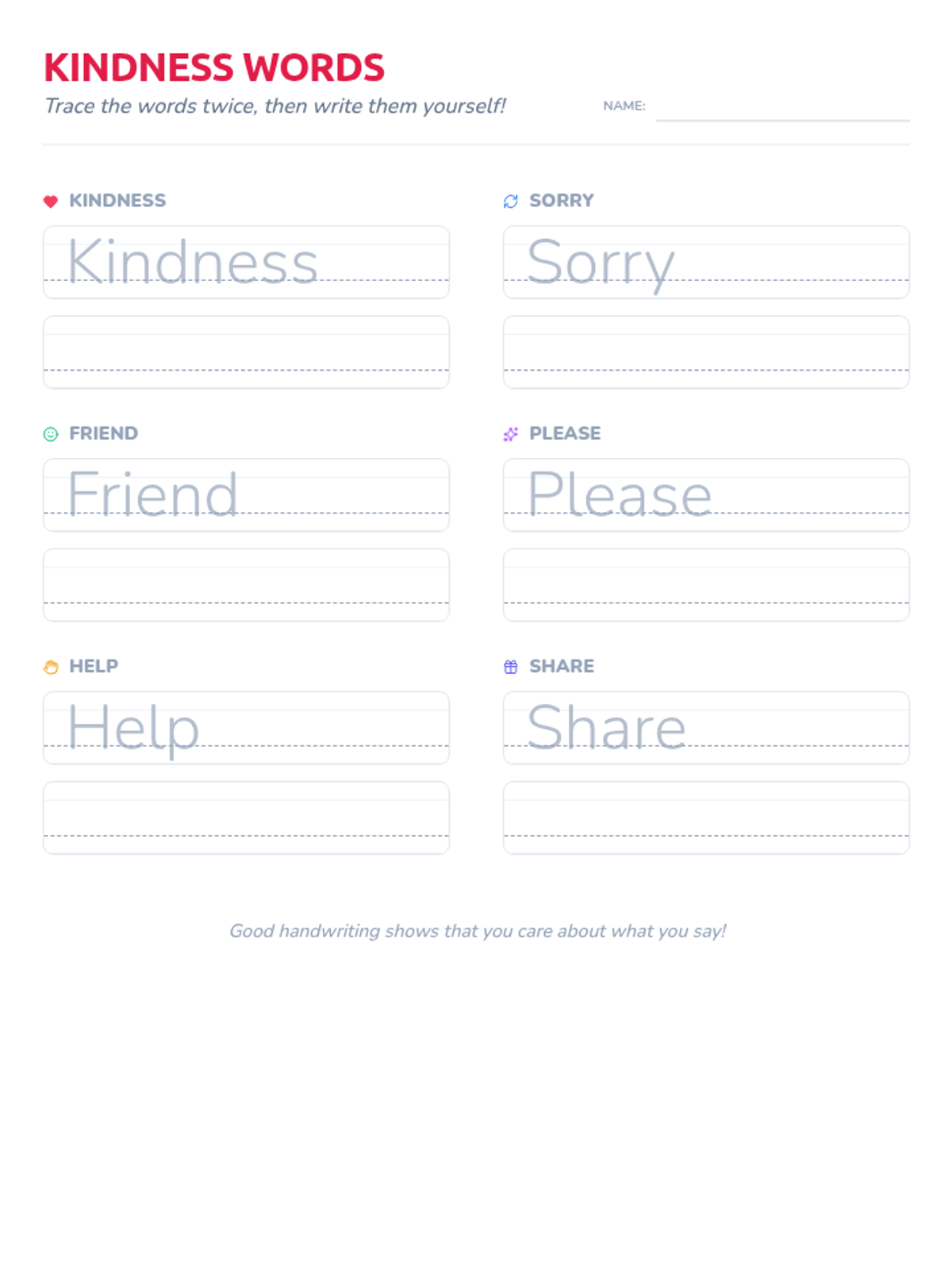
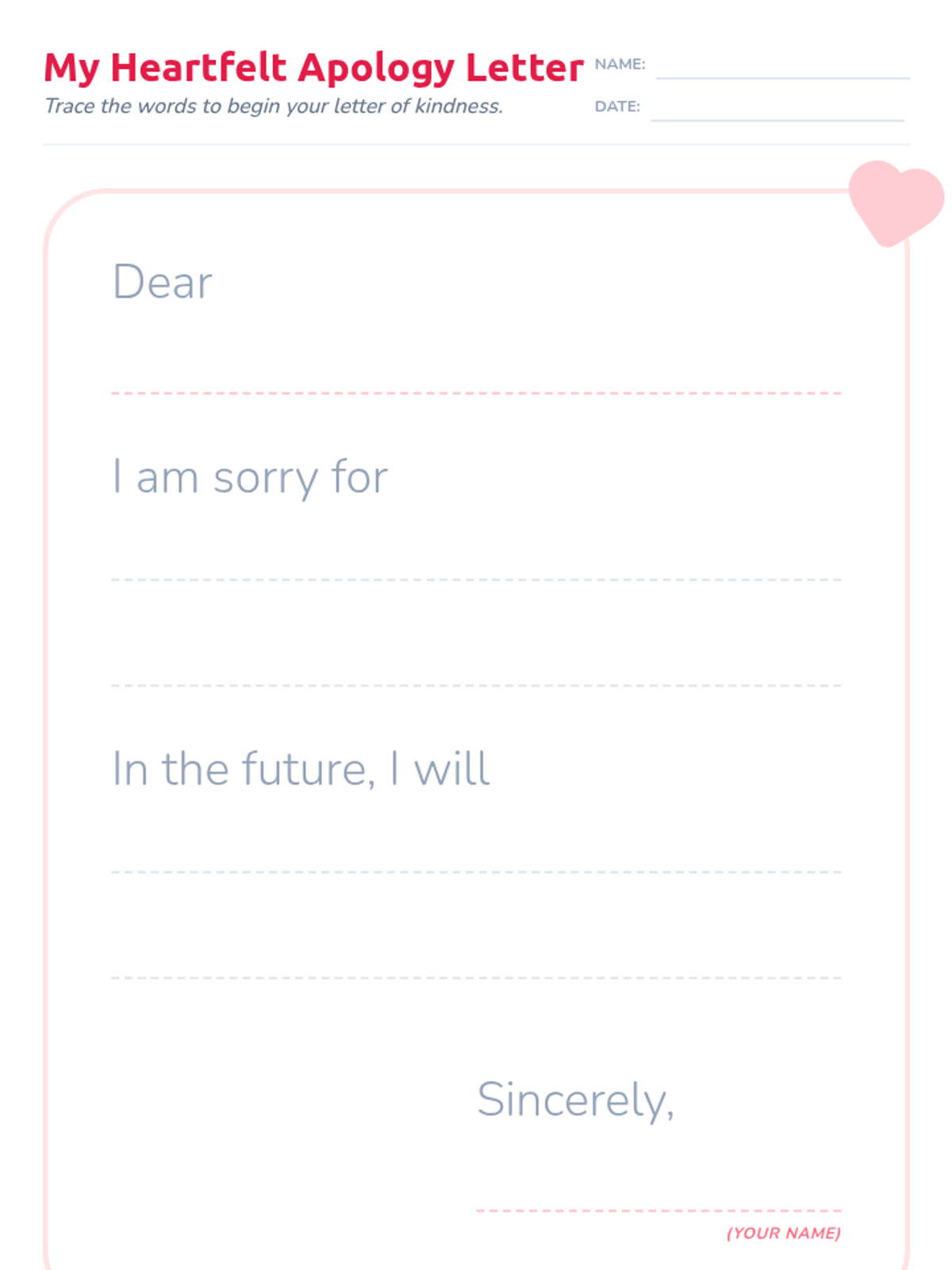
A handwriting and social-emotional learning lesson focusing on kind words and sincere apologies through tracing and writing practice.
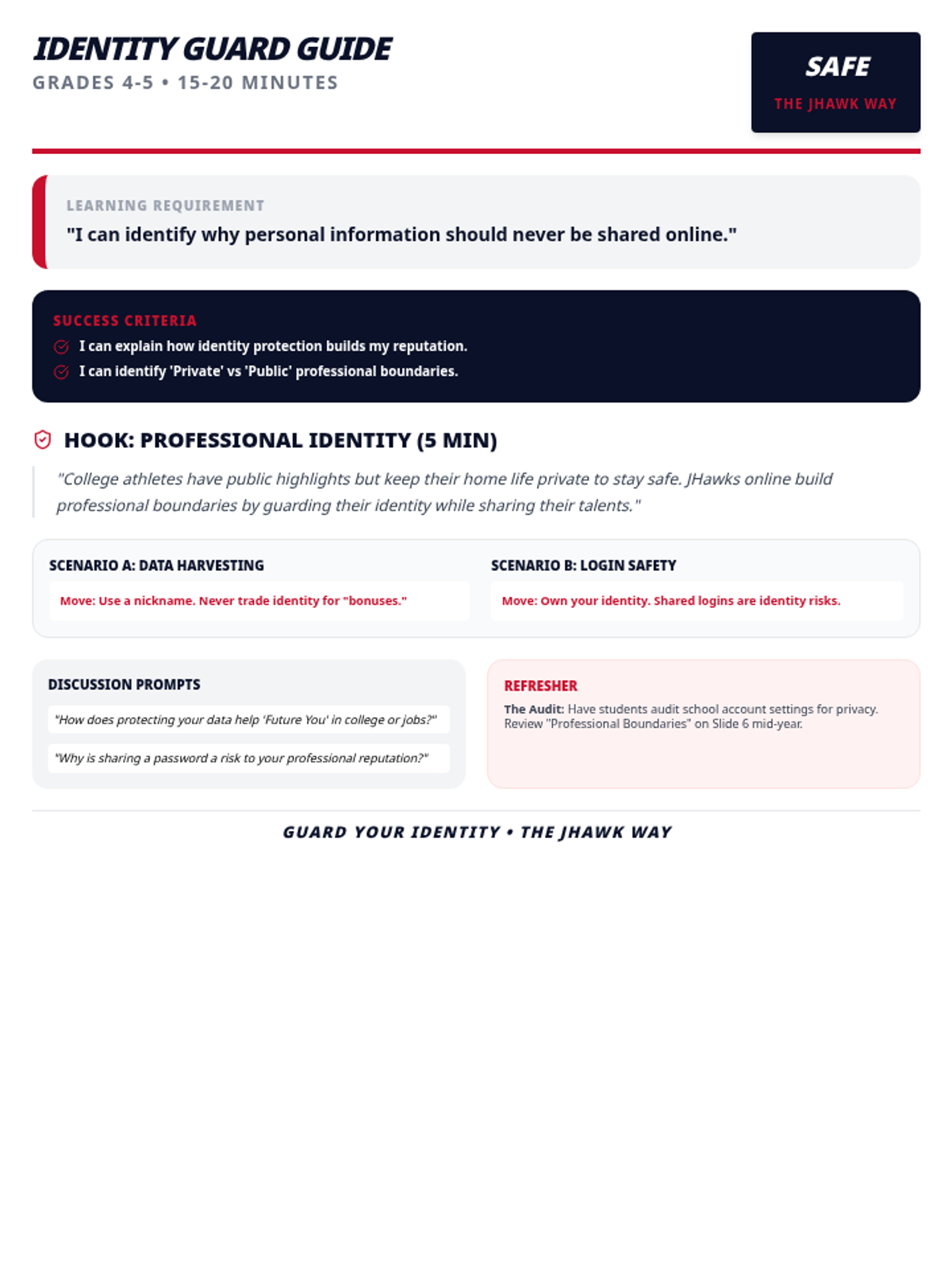
A 15-20 minute lesson for 4-5 students on identity protection and the importance of a secure digital footprint. Students analyze scenarios to practice being safe and professional online.
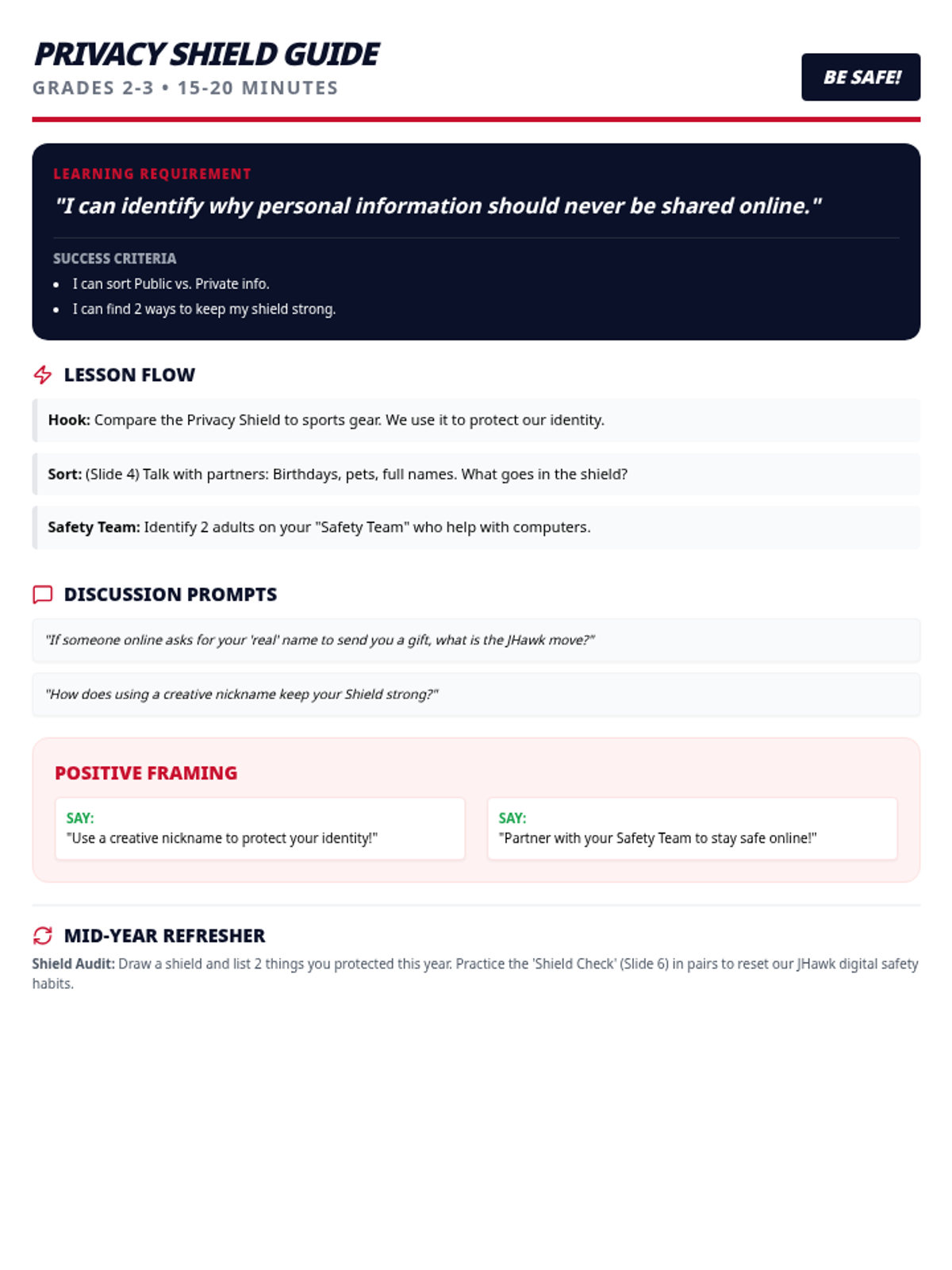
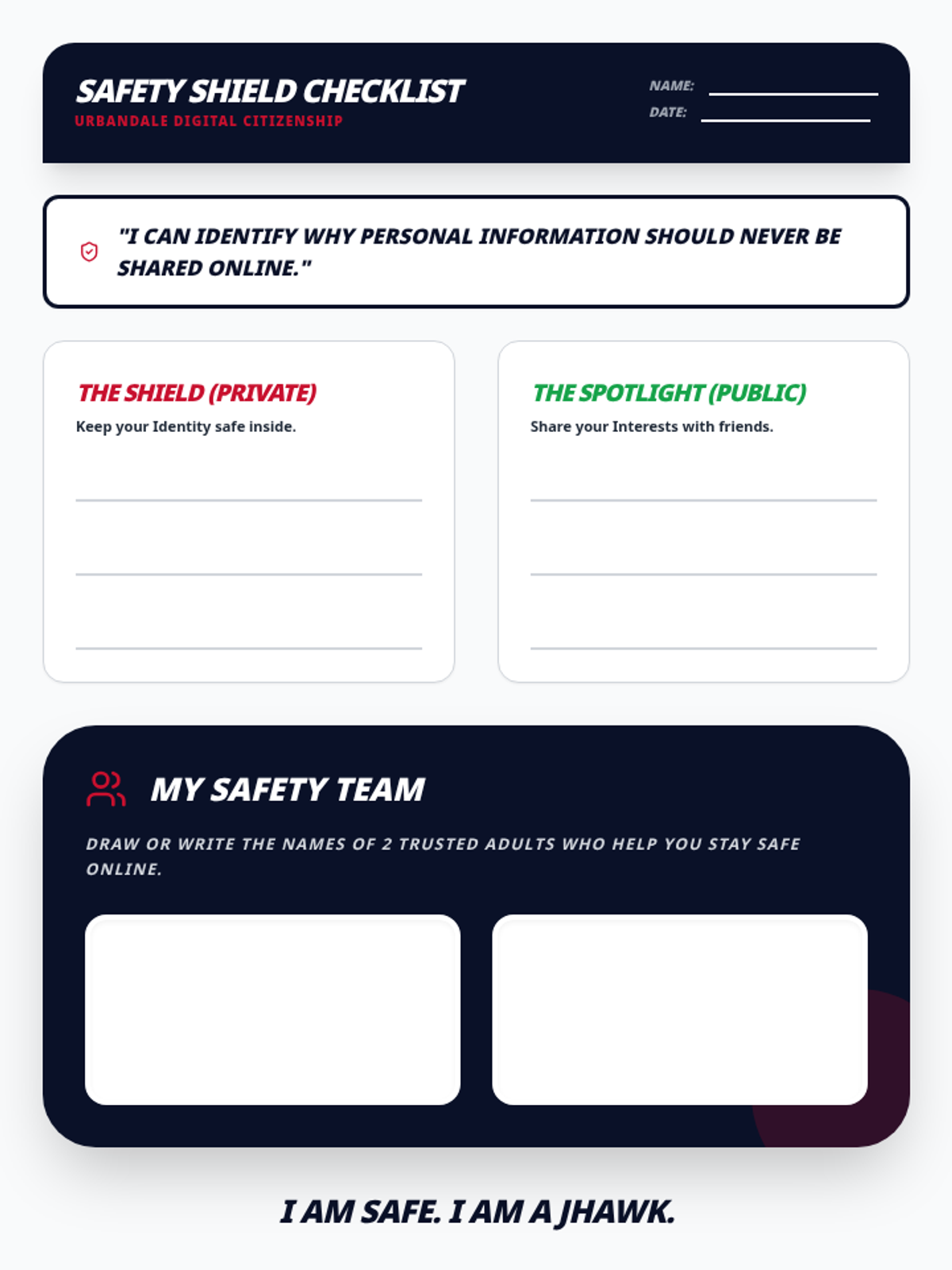
A 15-20 minute lesson for 2-3 students on building a 'Privacy Shield' to protect their identity online while staying safe and responsible. Features collaborative sorting activities and JHawk Way connections.
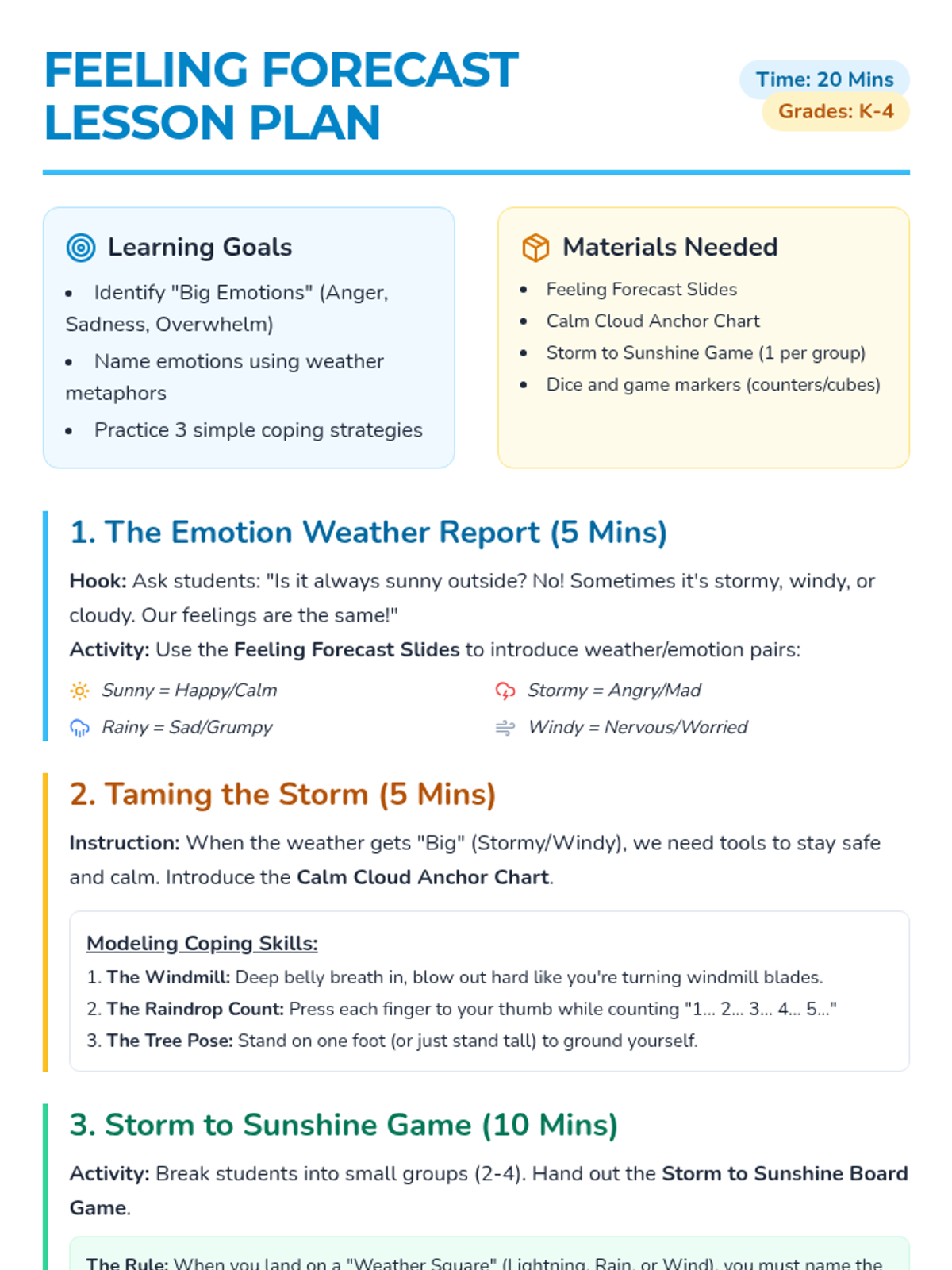
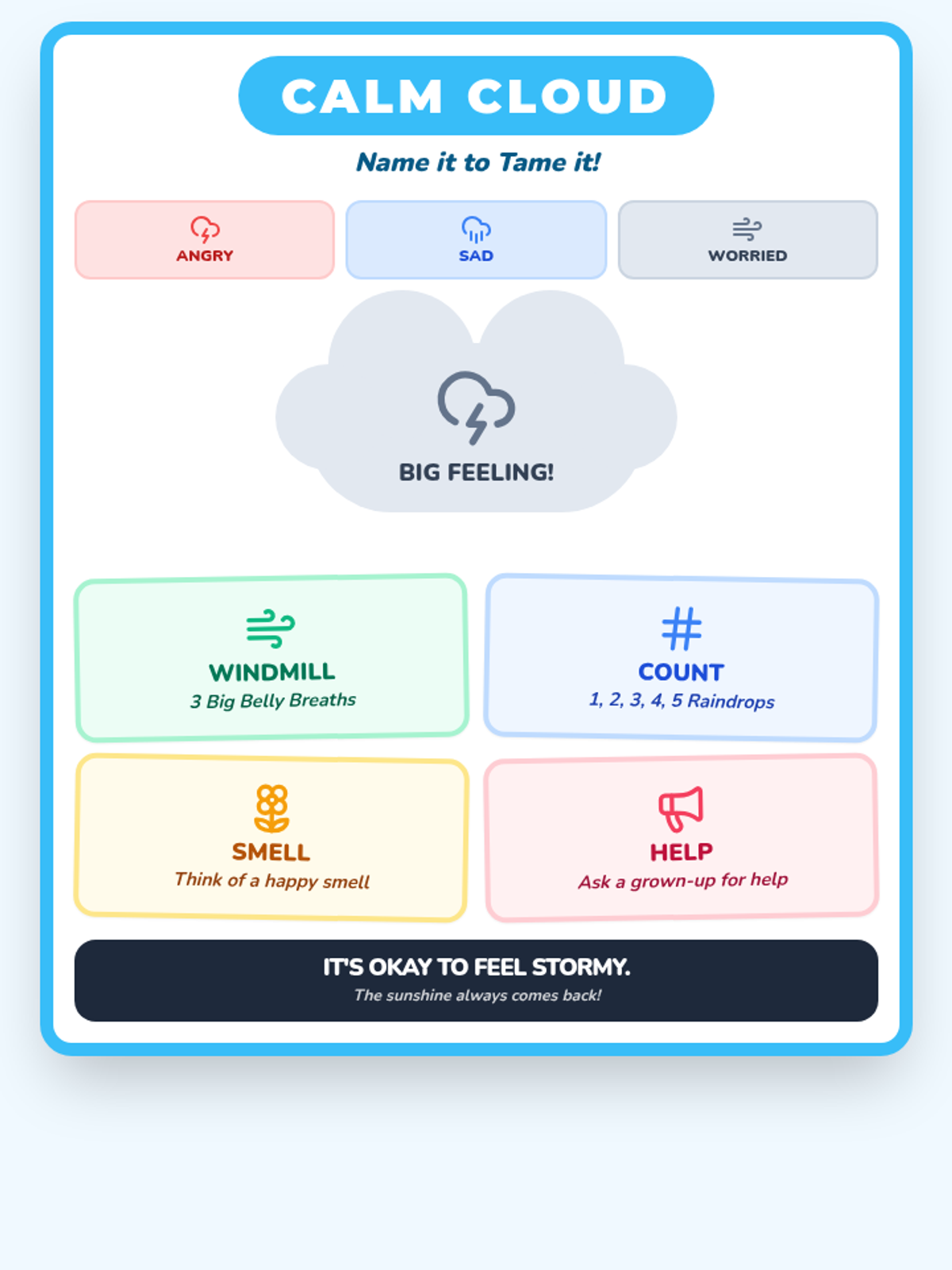
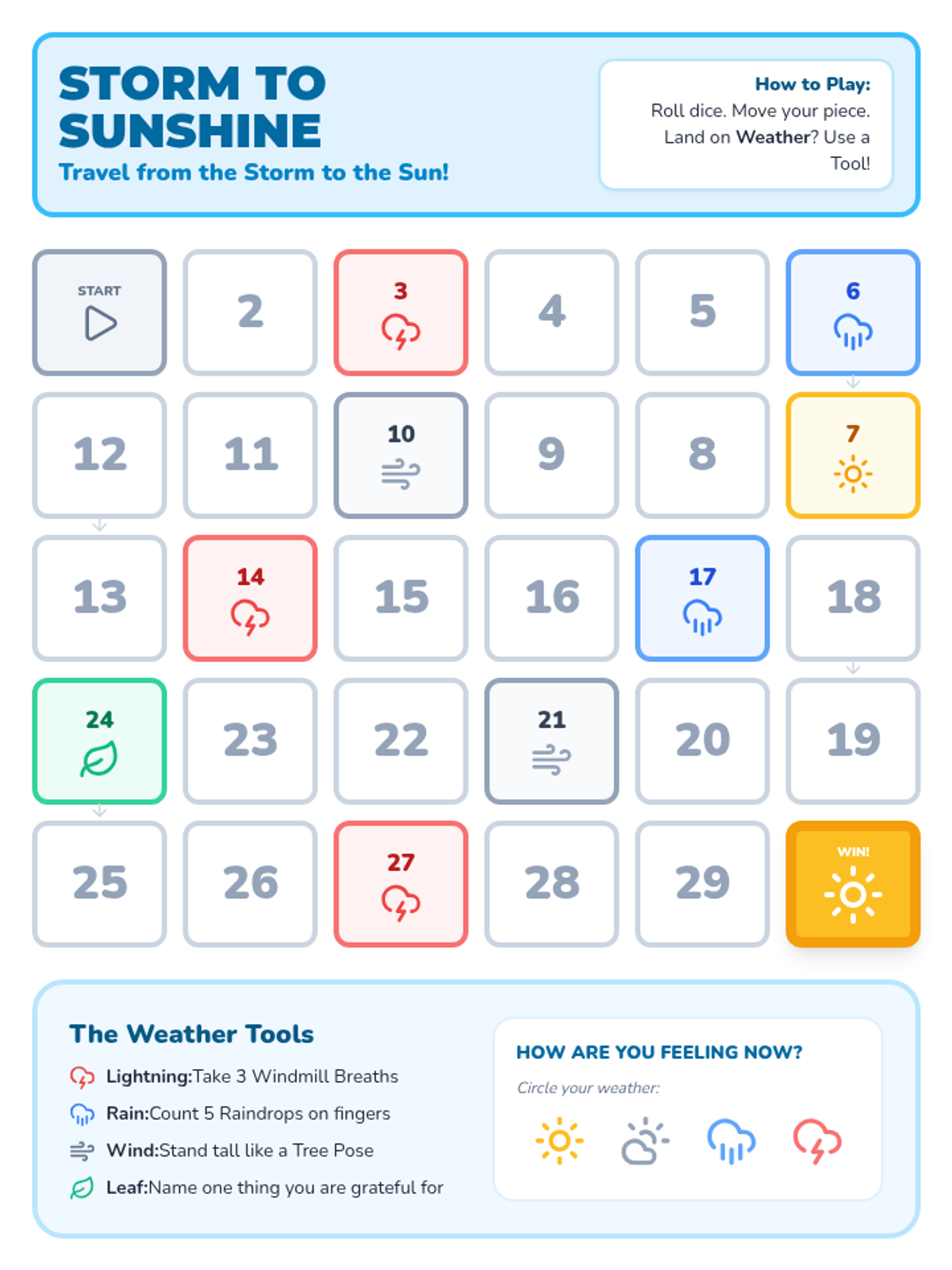
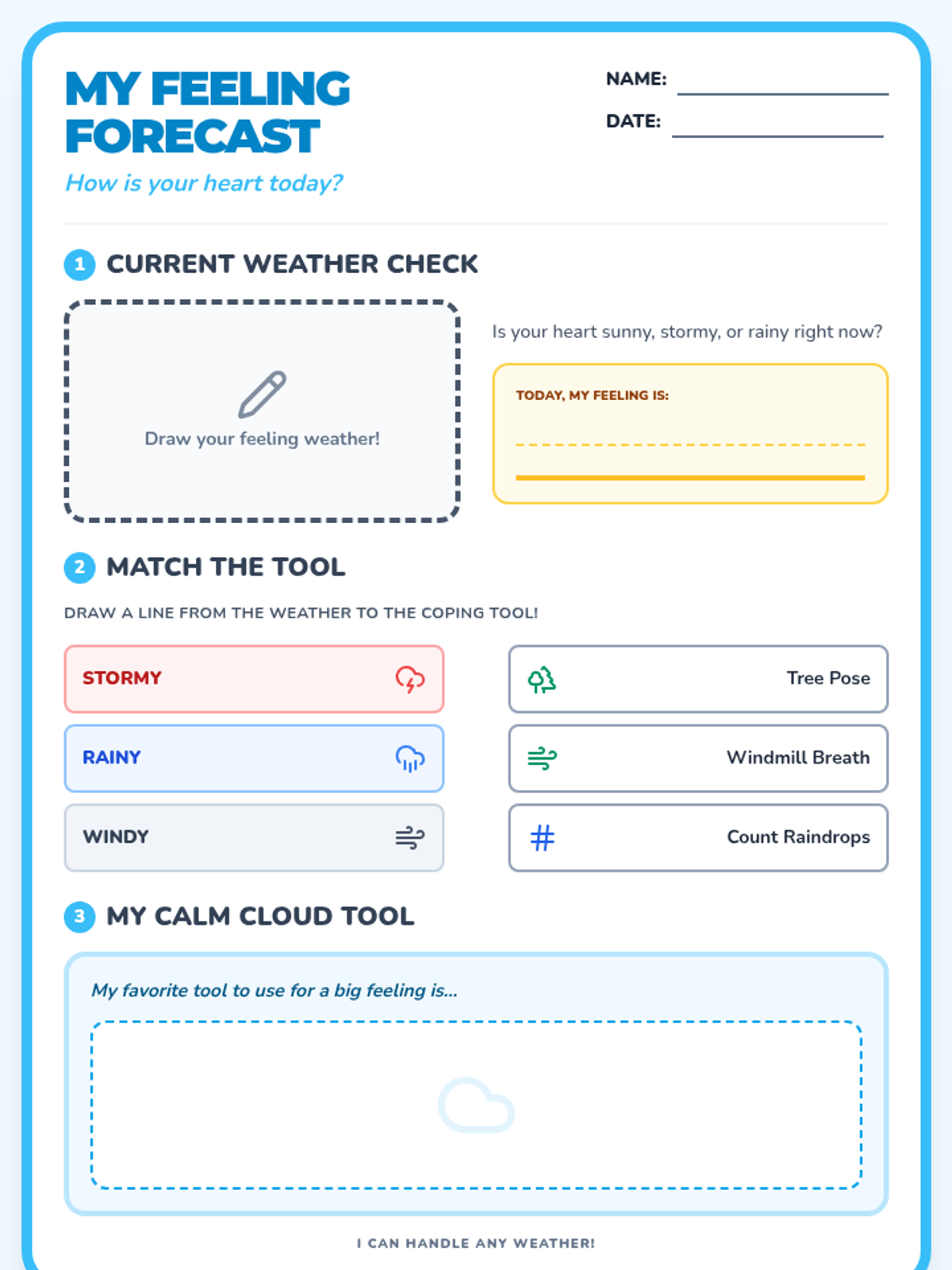
A 20-minute interactive lesson for grades K-4 focused on identifying 'big' emotions and practicing simple coping strategies using a weather-themed metaphor.
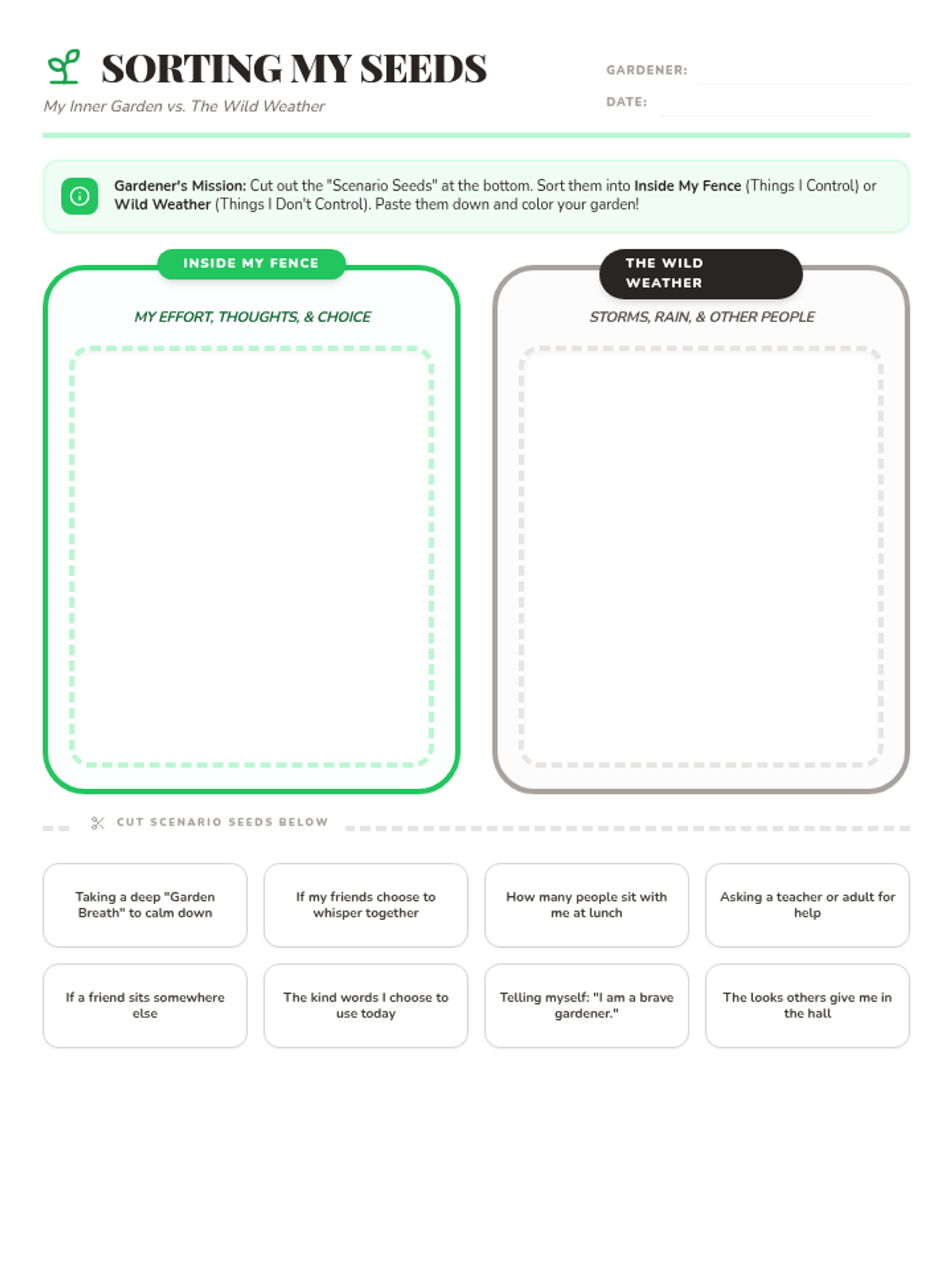
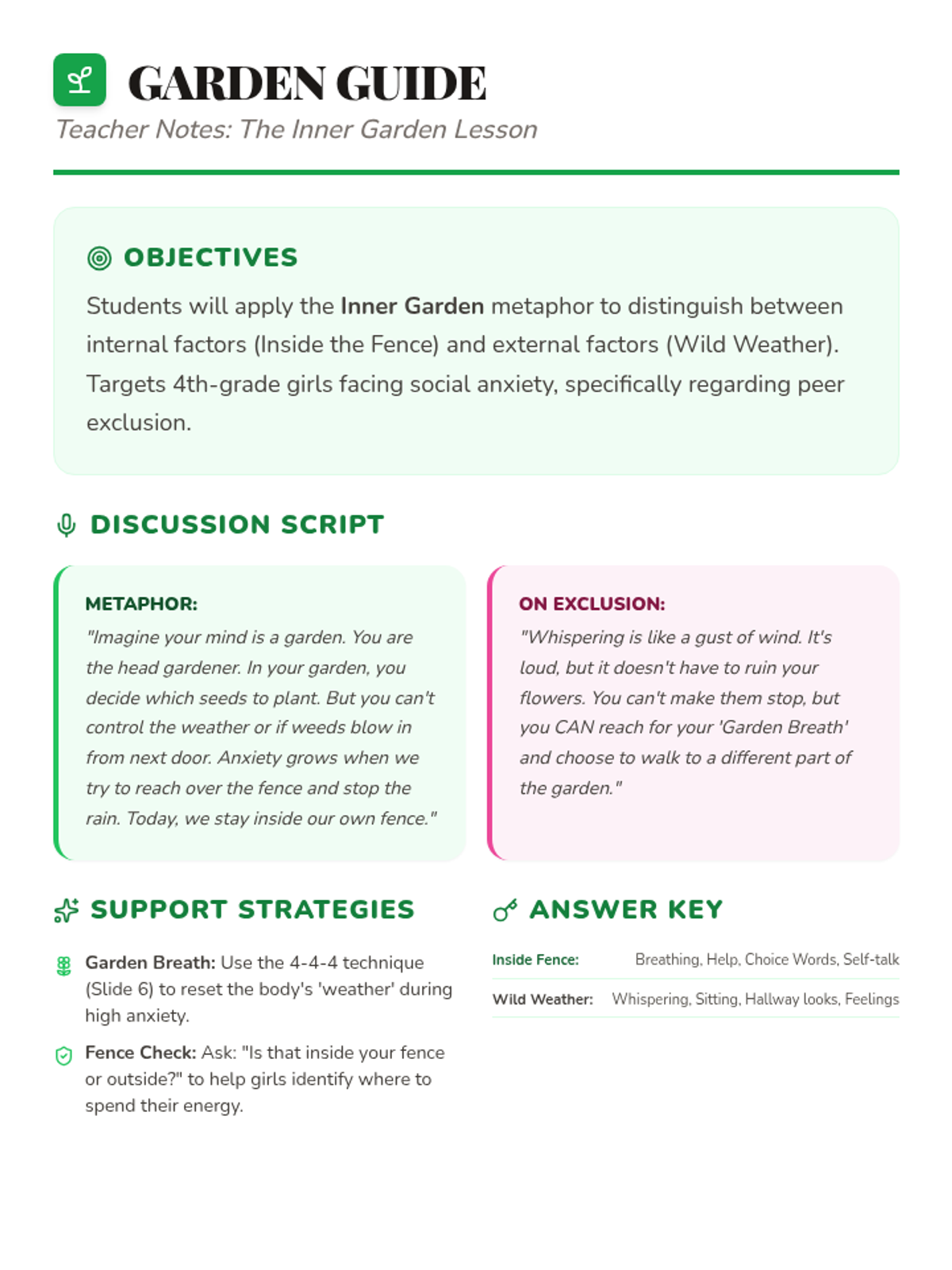
A social-emotional learning lesson for 4th-grade girls focusing on identifying what is within their control during friendship conflicts using a garden metaphor.
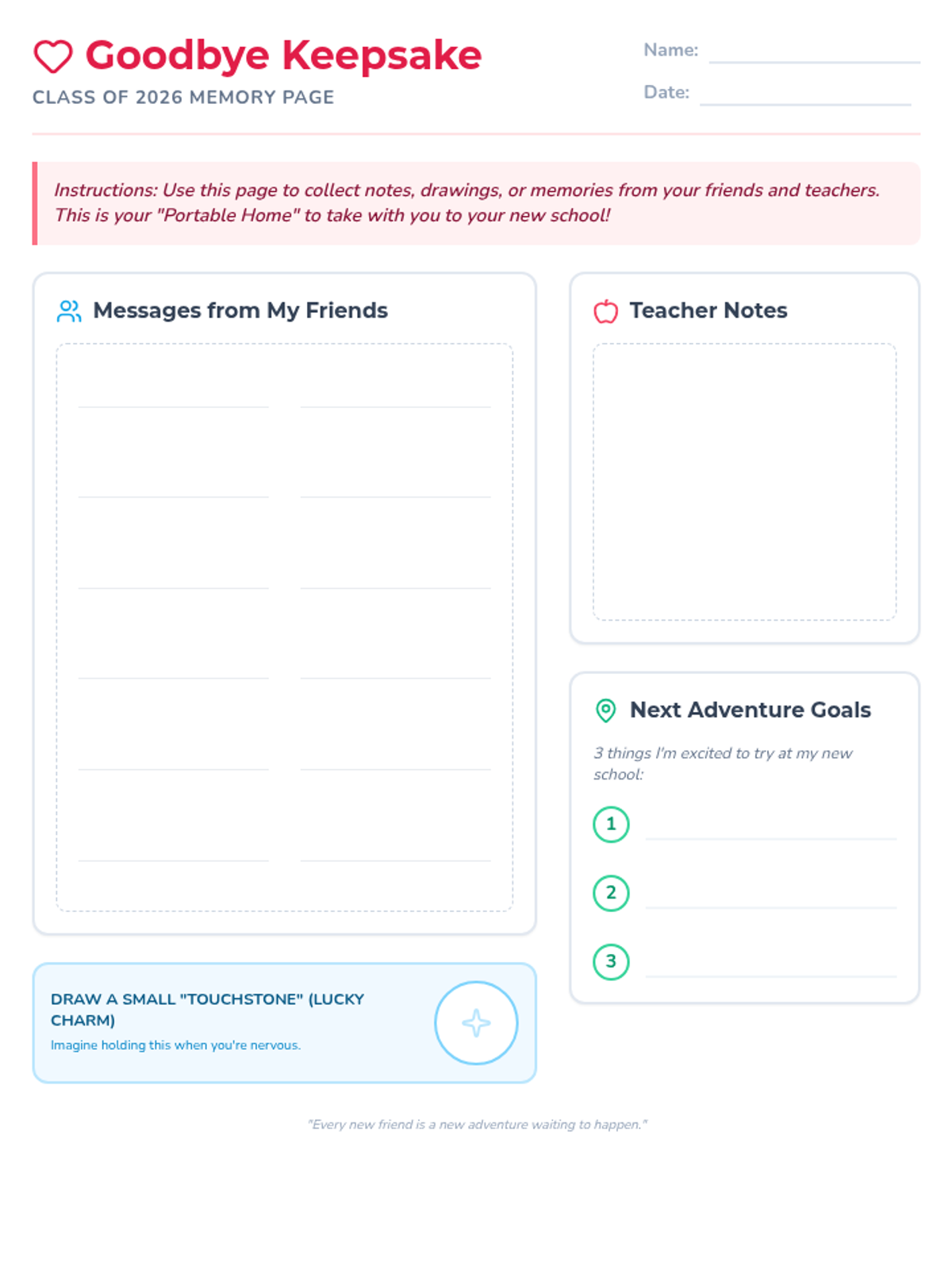
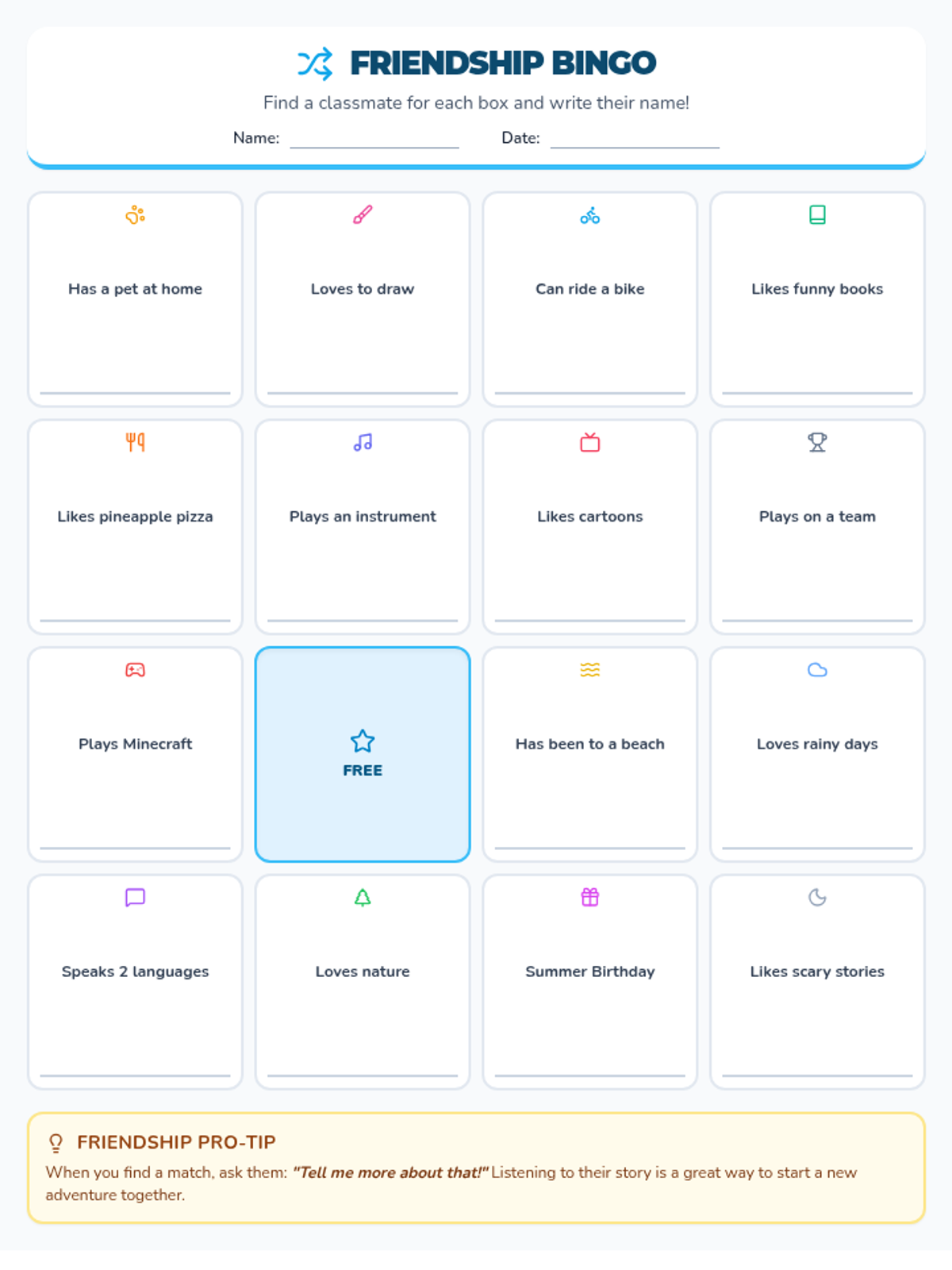
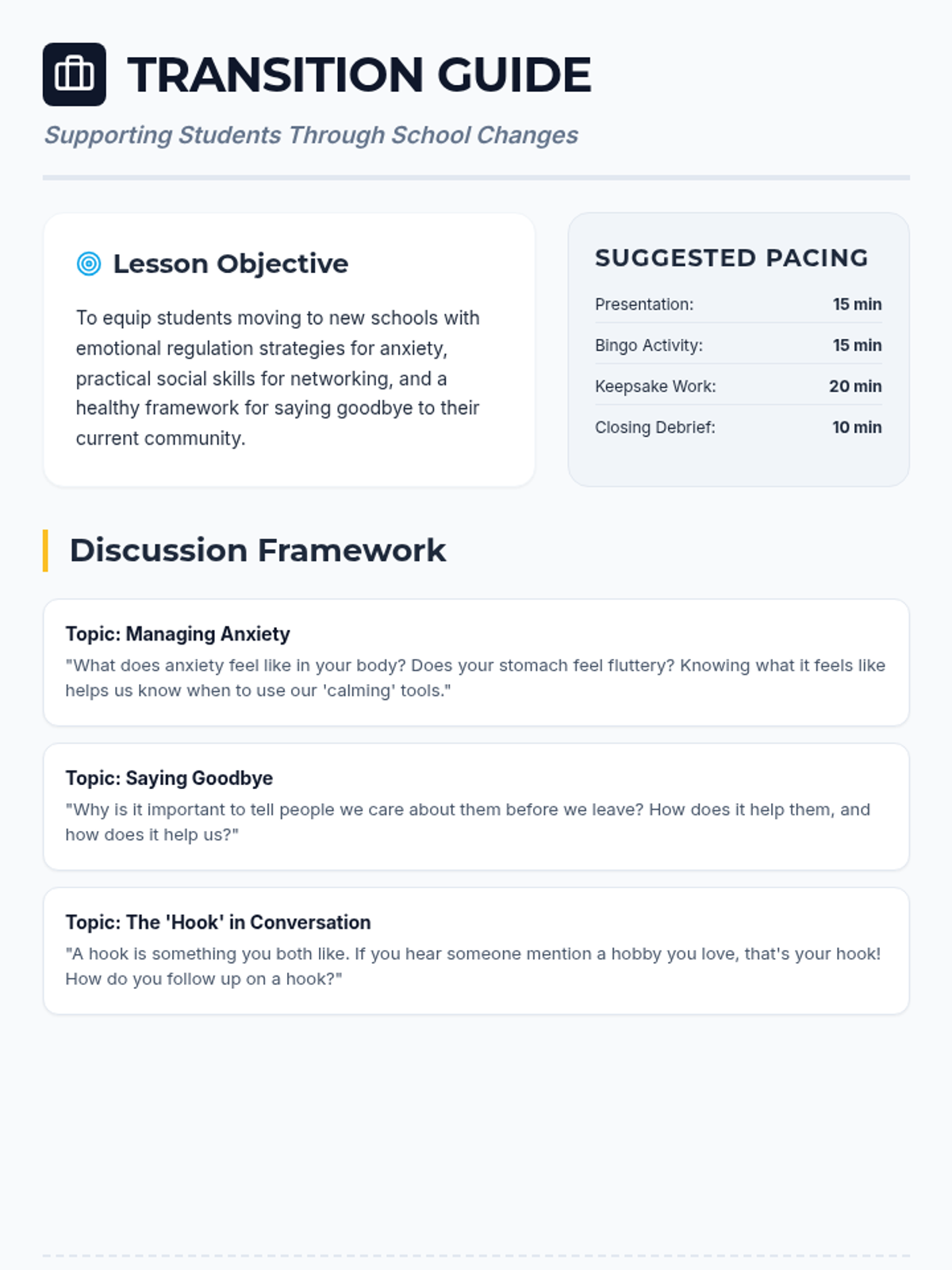
A supportive lesson designed to help 3rd graders transition to a new elementary school by managing anxiety, learning how to say goodbye, and practicing social skills for meeting new people.
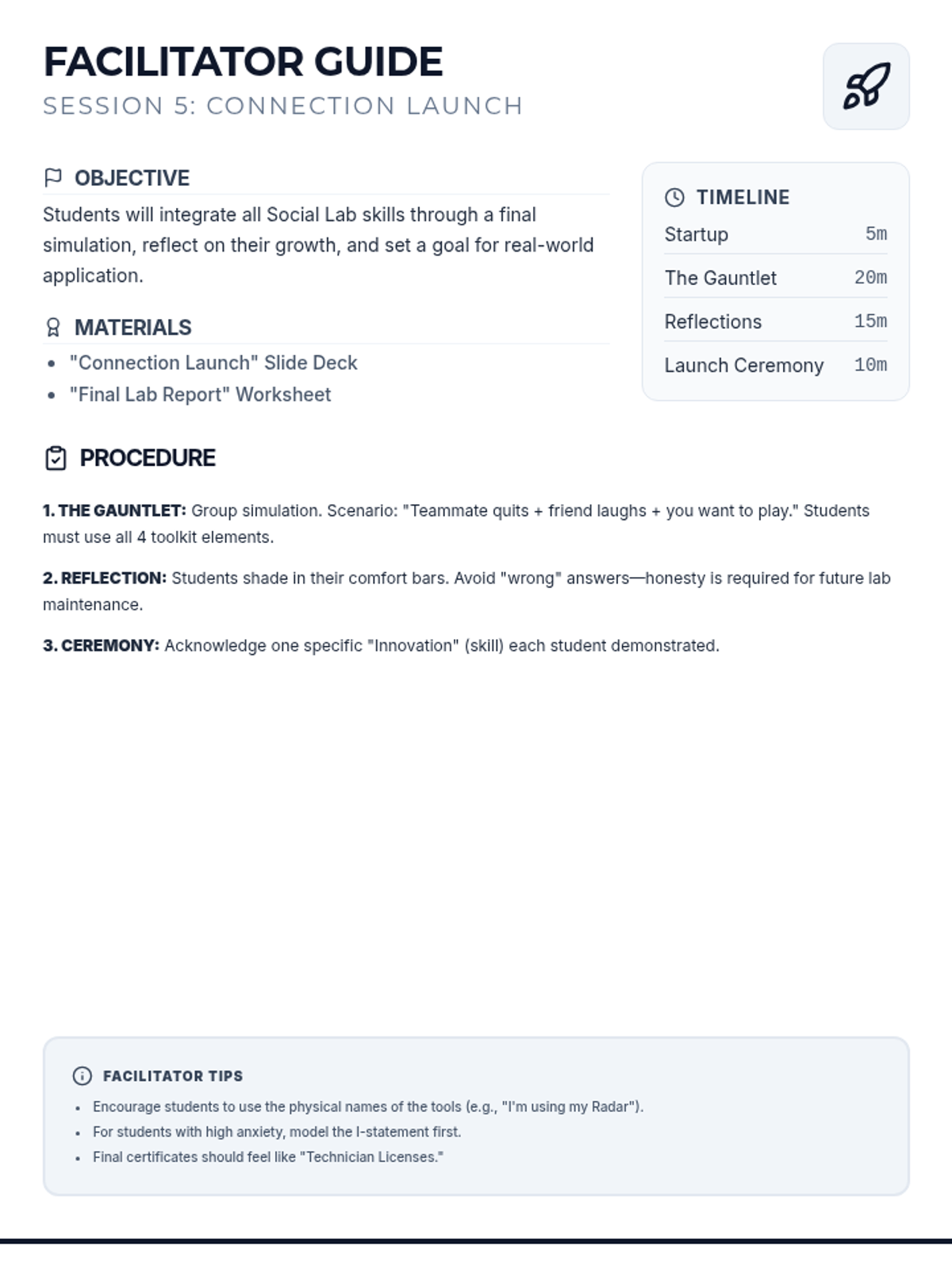
Consolidating skills through real-world application and reflecting on growth within the 'Social Lab'.
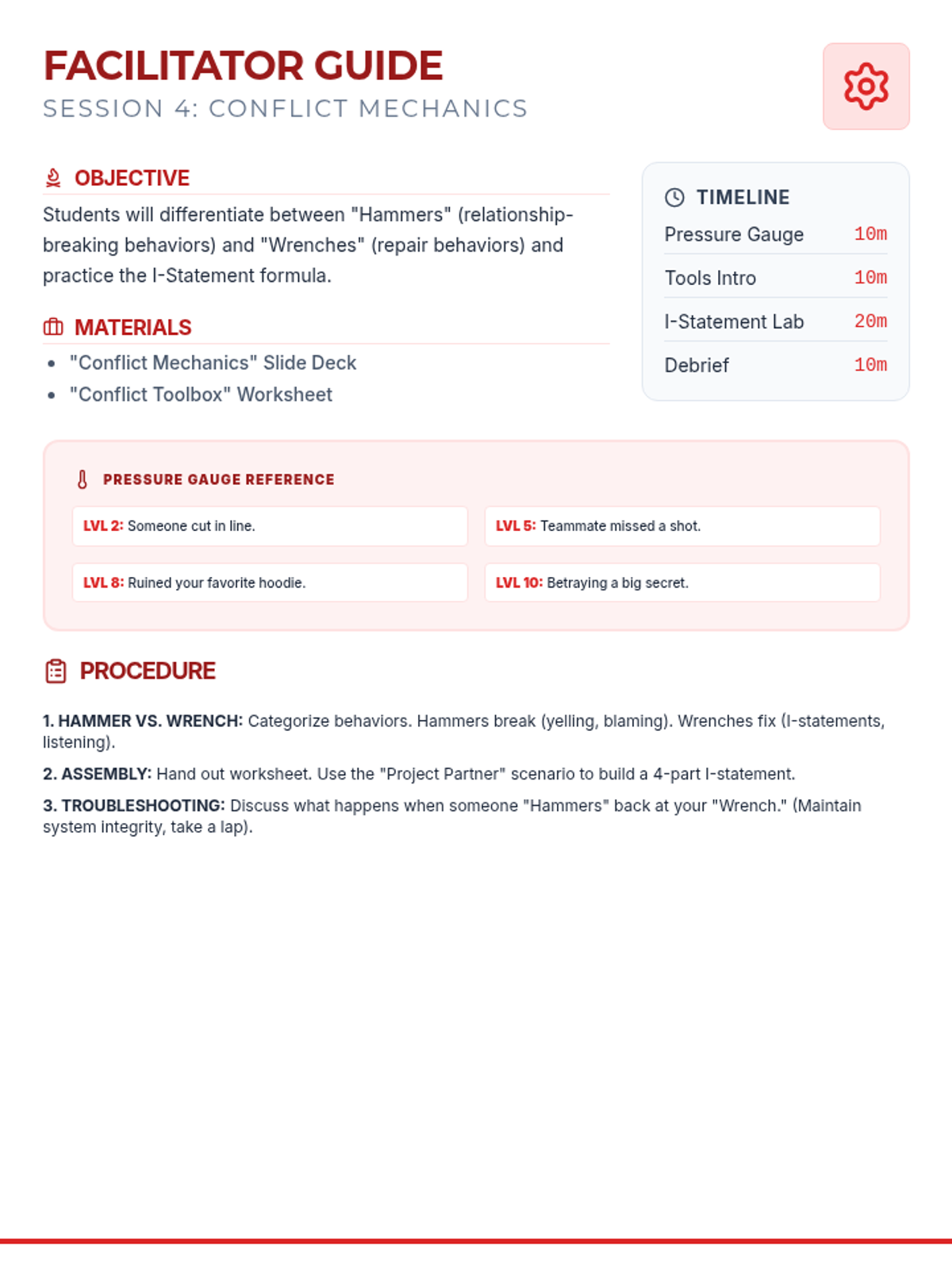
Equipping students with 'tools' for conflict resolution, including I-statements and compromise strategies.
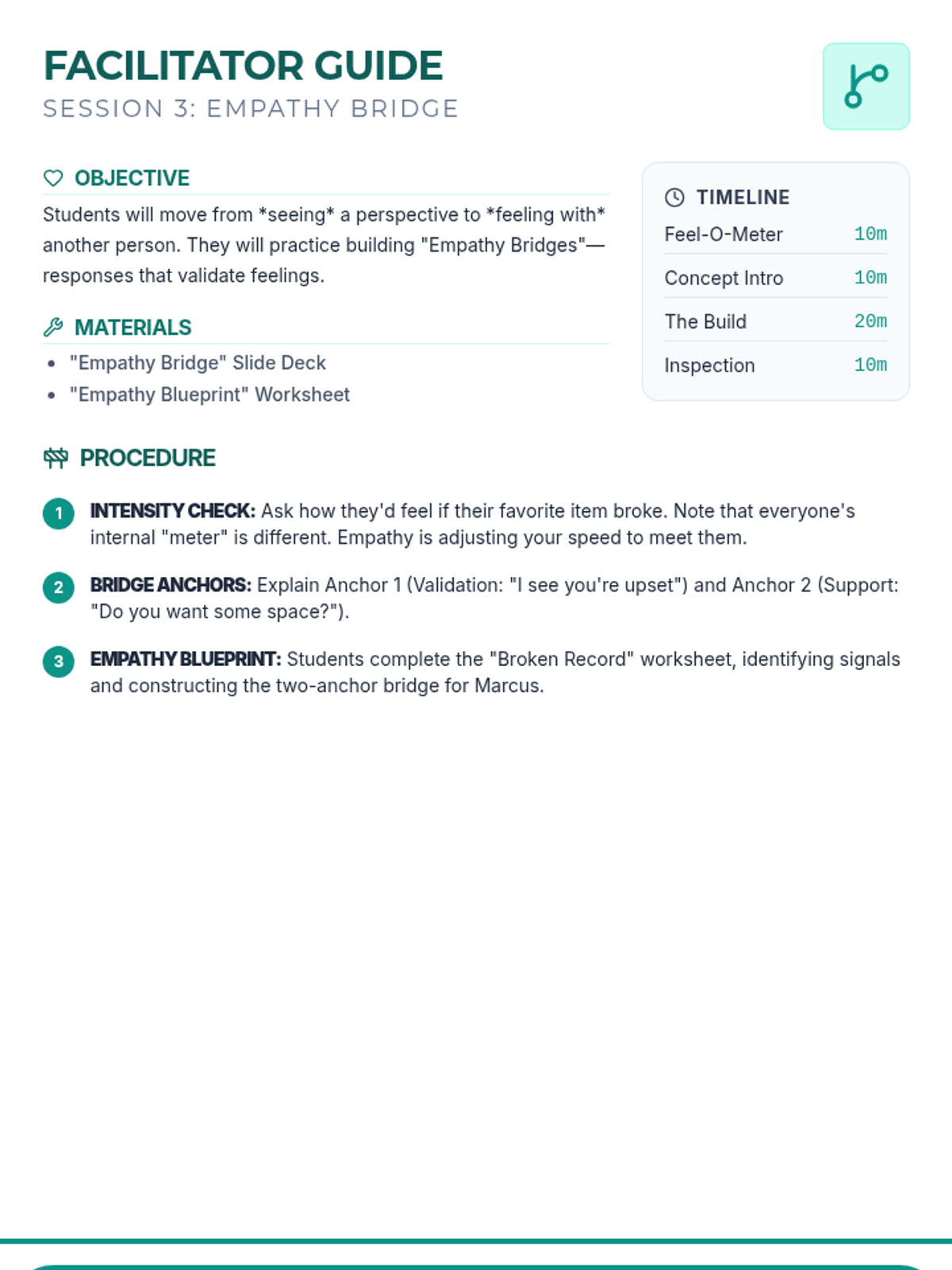
Building empathy by identifying emotions in others and learning how to bridge the gap between different feelings.
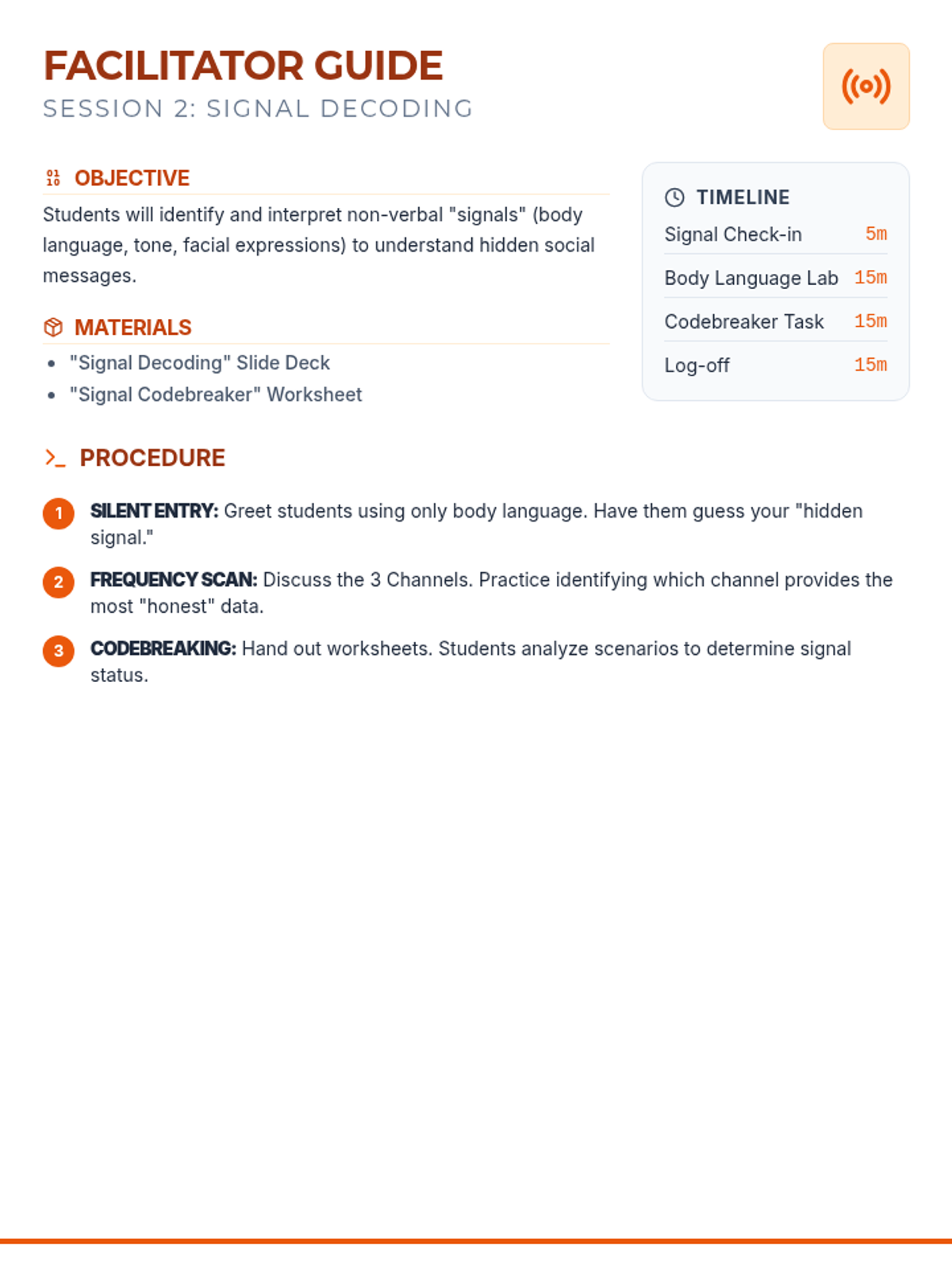
Focusing on decoding non-verbal signals and social cues to better understand peer interactions.
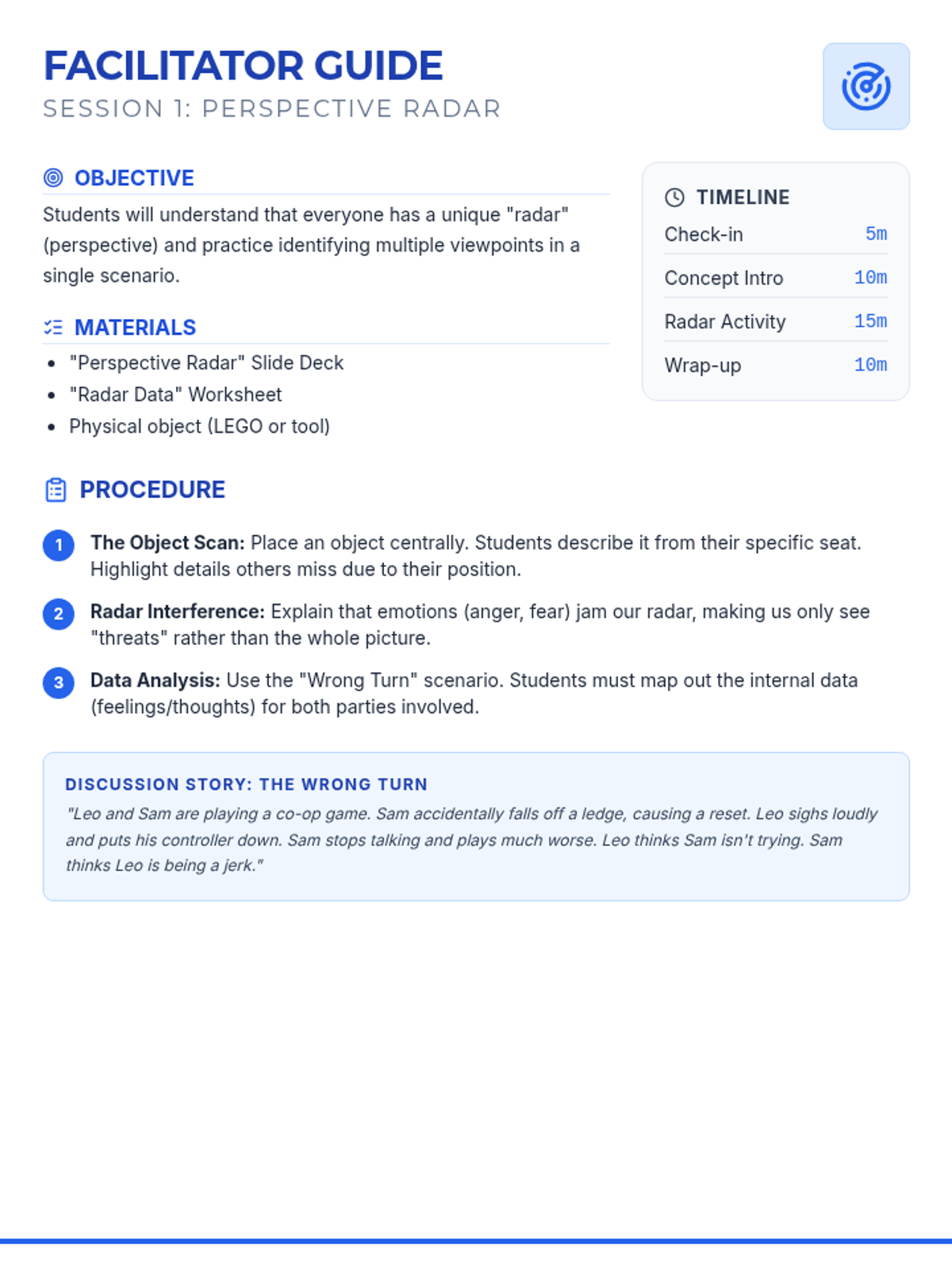
Introducing the concept of 'Perspective Radar' to help students understand that different people can have different viewpoints on the same situation.