Students are taught discrete physical interventions like palm presses, finger pulls, and the 'butterfly hug.' These strategies are framed as 'secret powers' they can use while sitting on the carpet or at a desk.
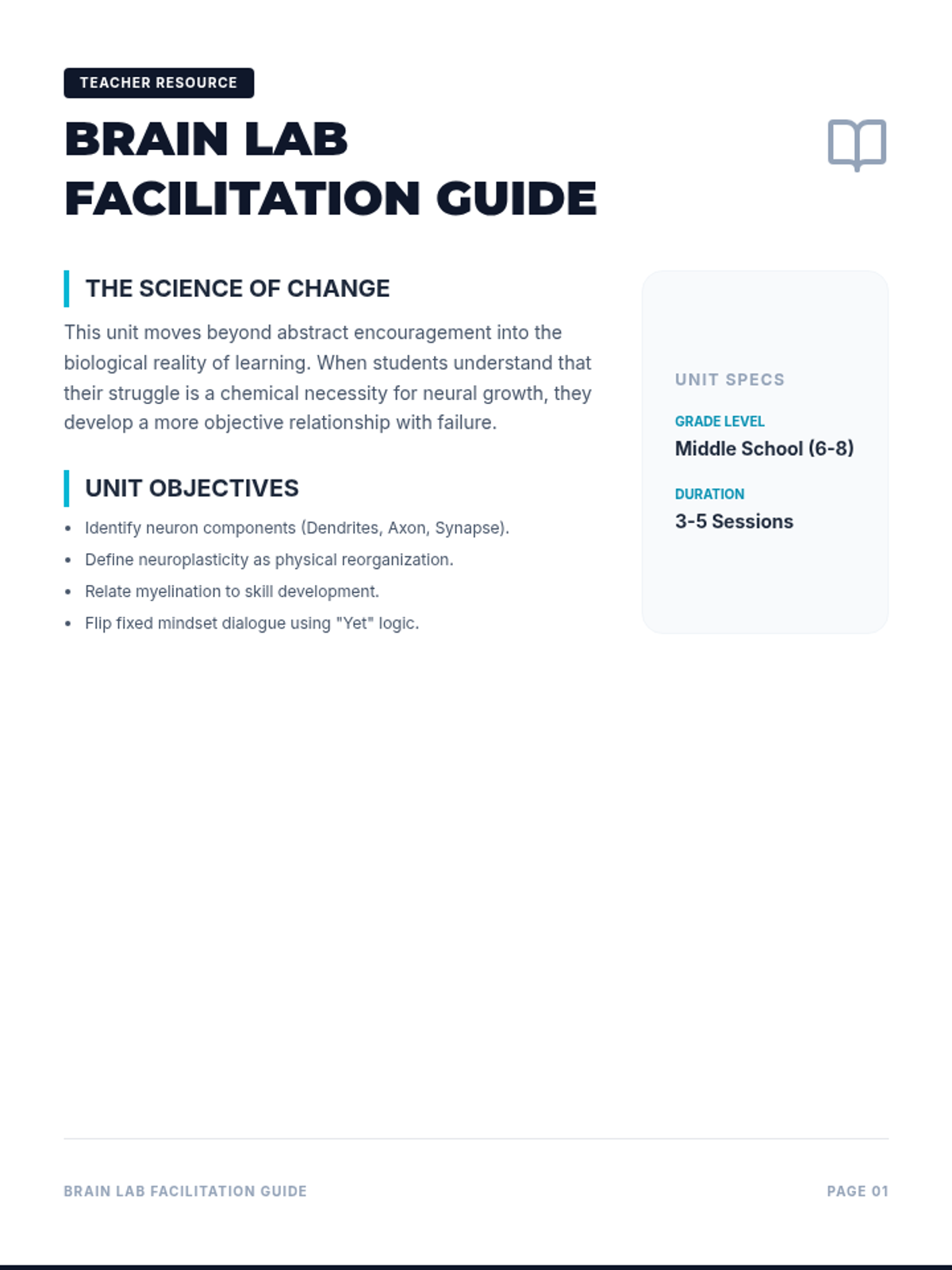
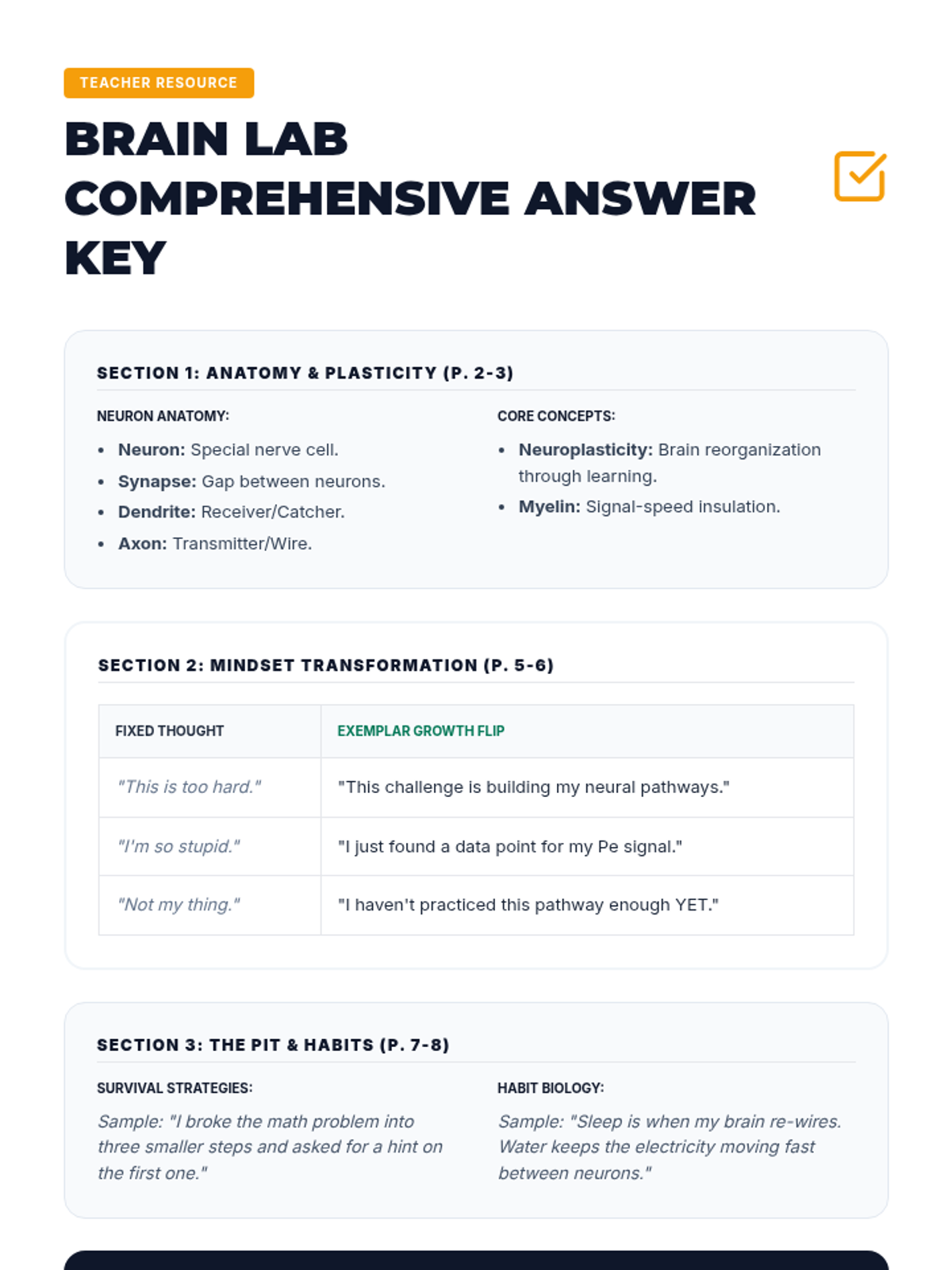
A comprehensive exploration of neuroplasticity and growth mindset designed for middle schoolers. Students will learn the biological basis of learning and how to apply brain science to overcome challenges.
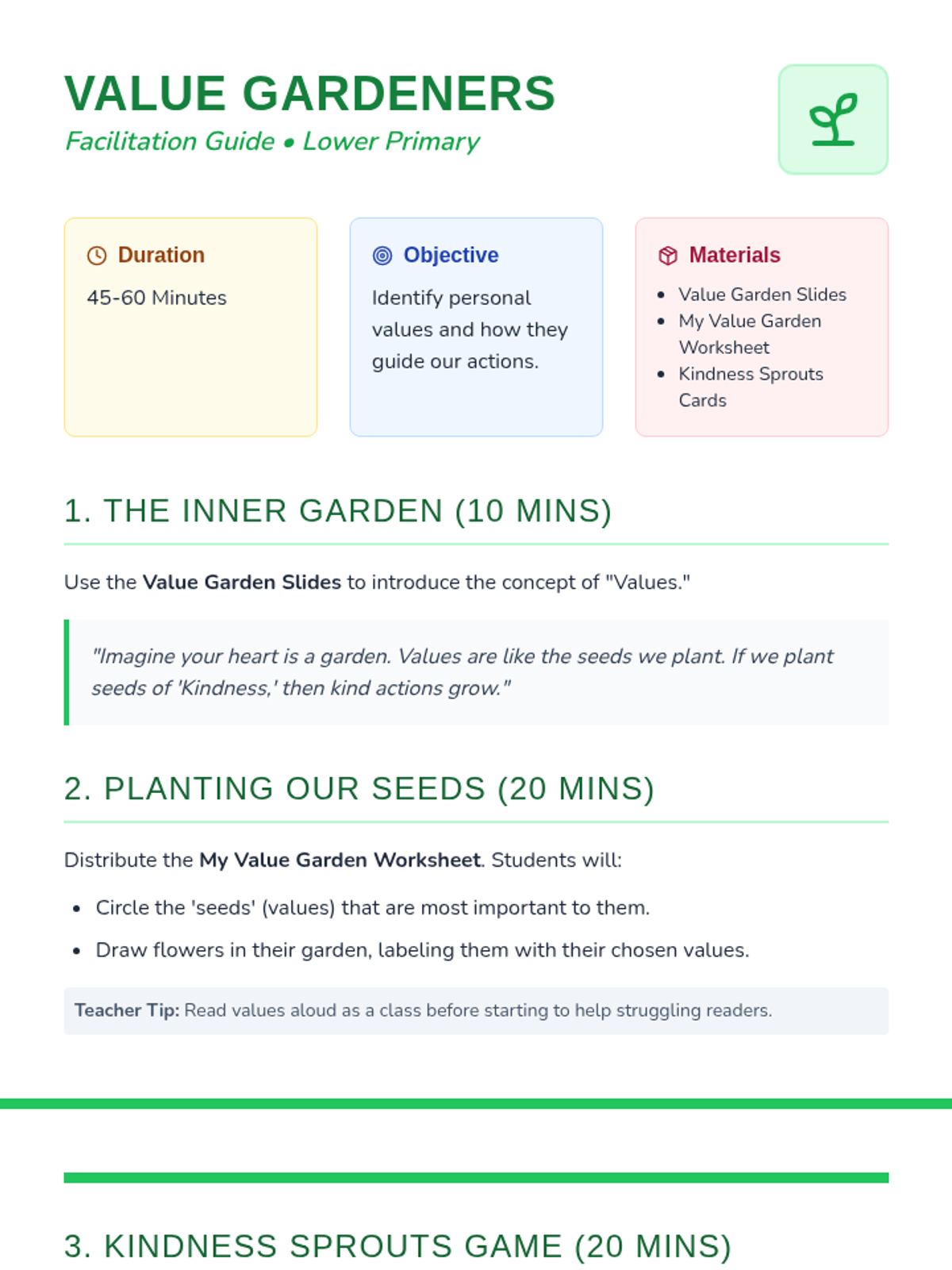
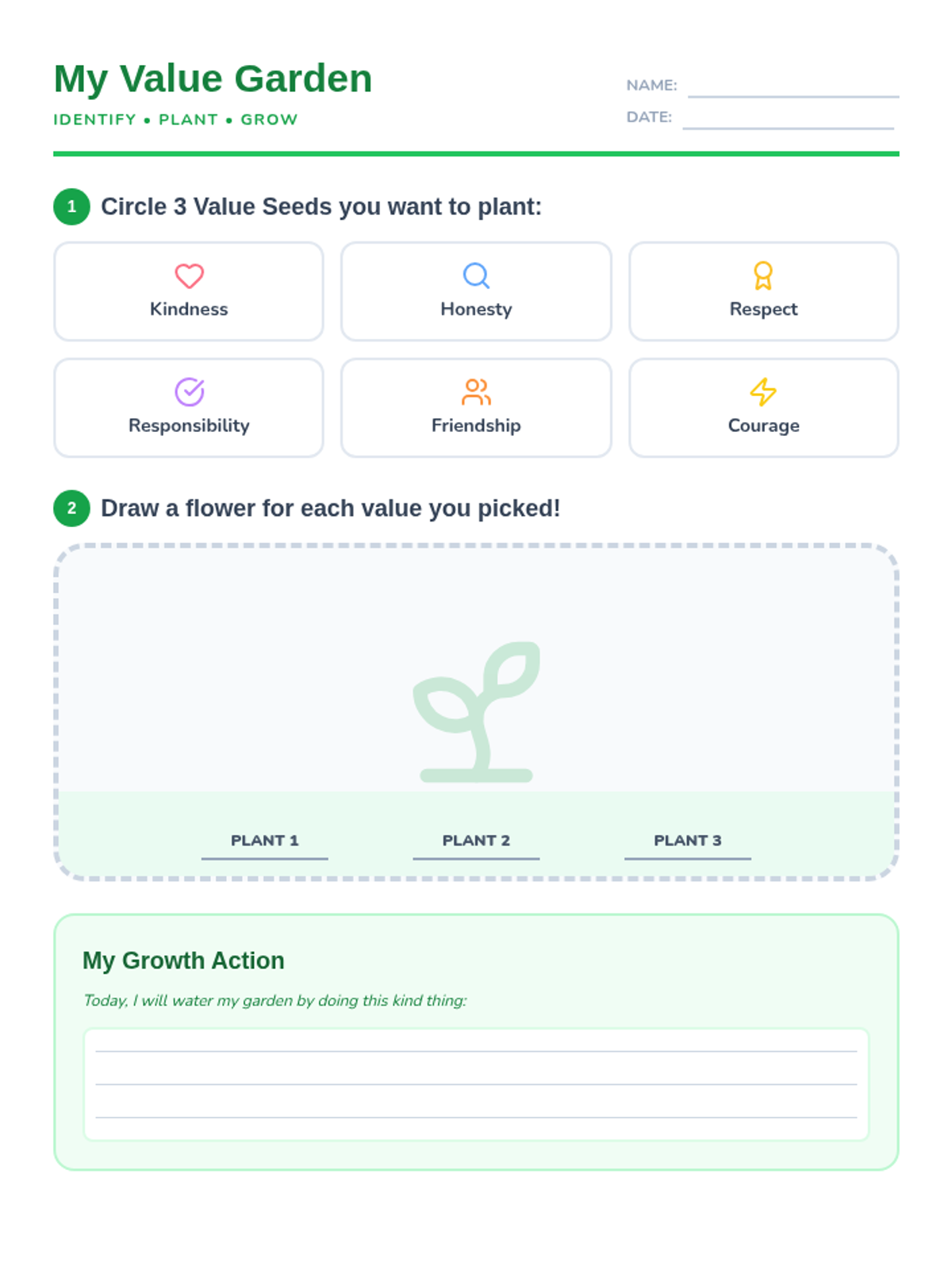
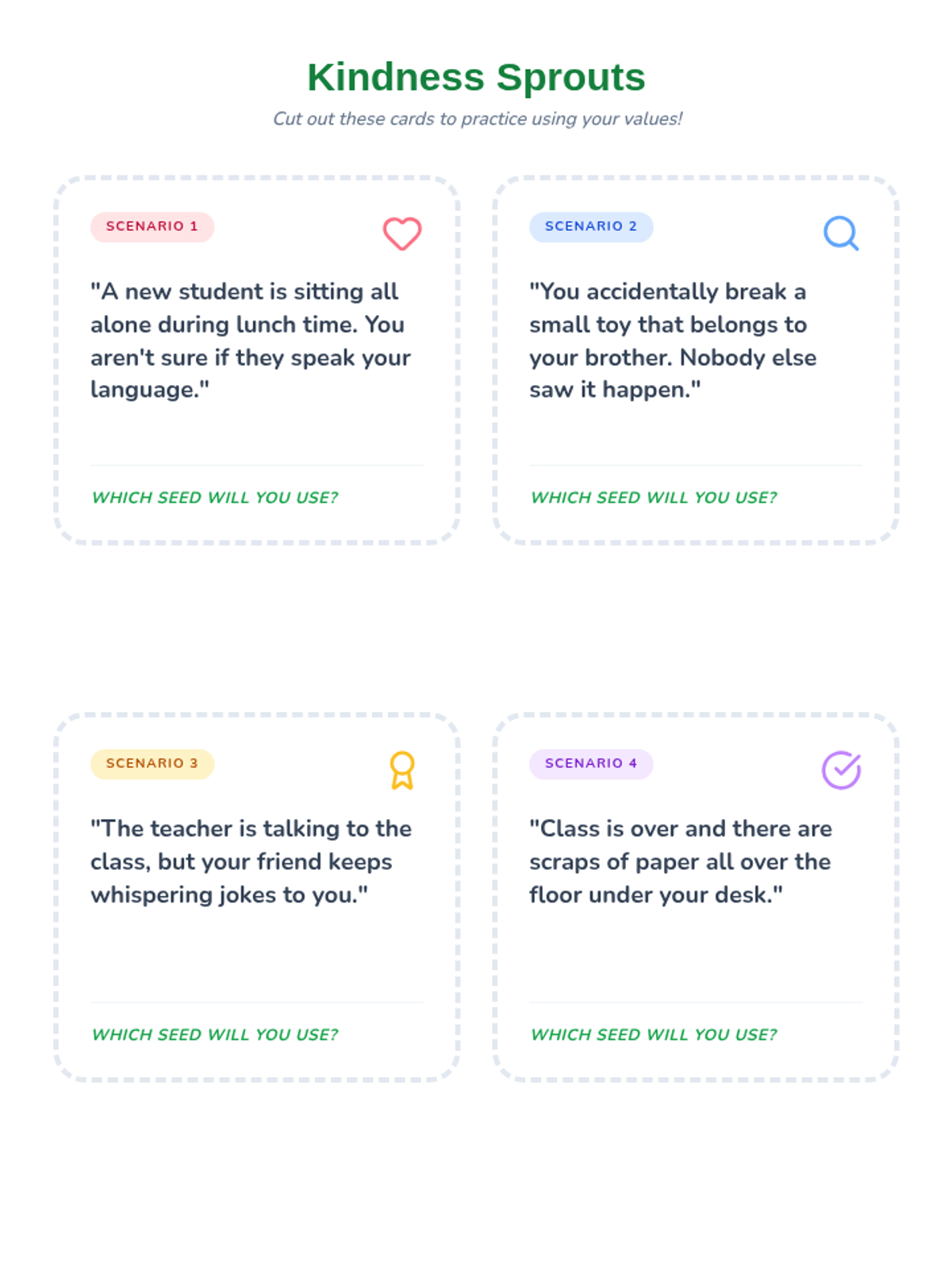
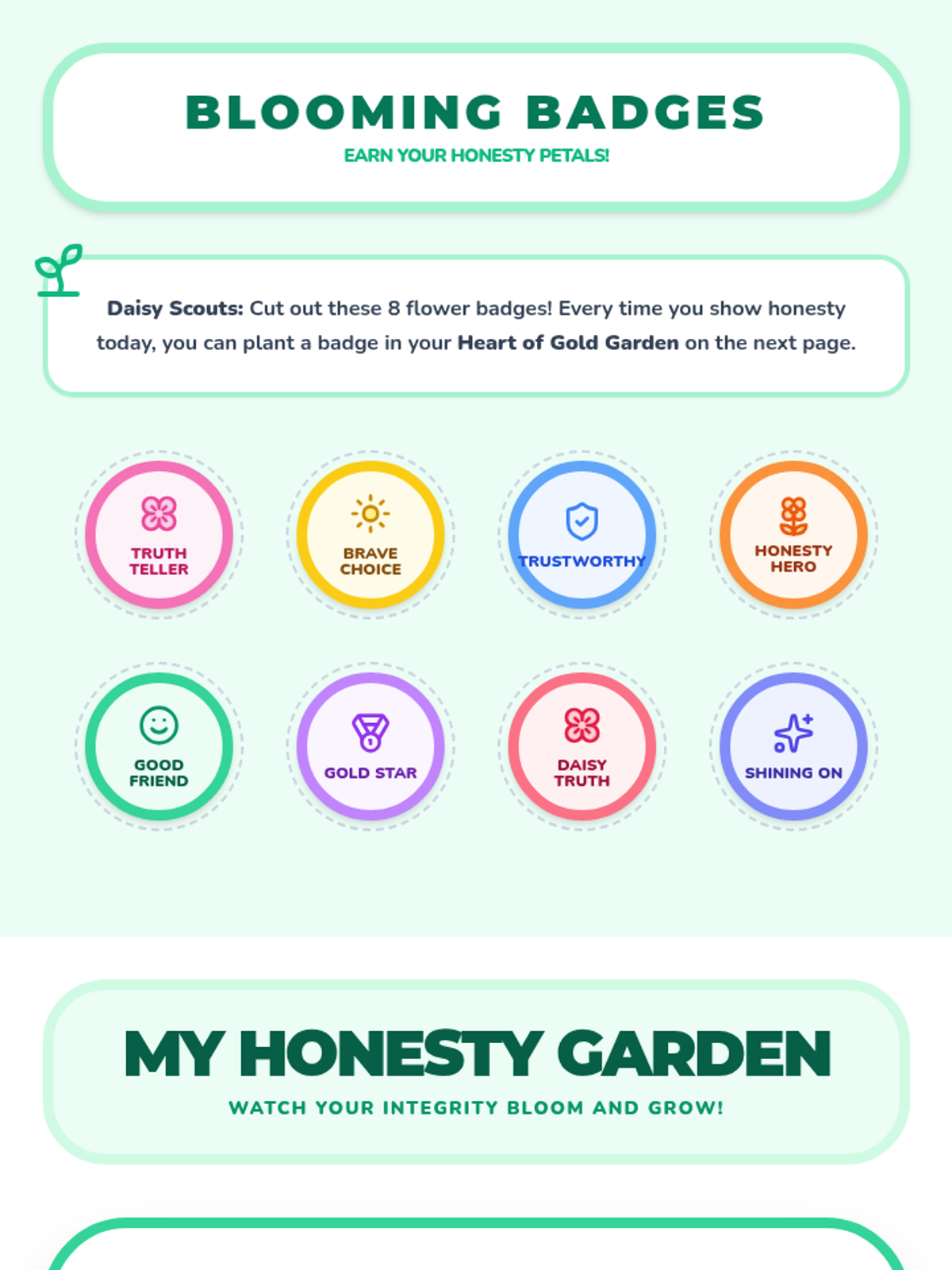
A foundational lesson for lower primary students to explore personal values like kindness, honesty, and respect through the metaphor of a growing garden. Students will identify core values and practice applying them to daily life scenarios.
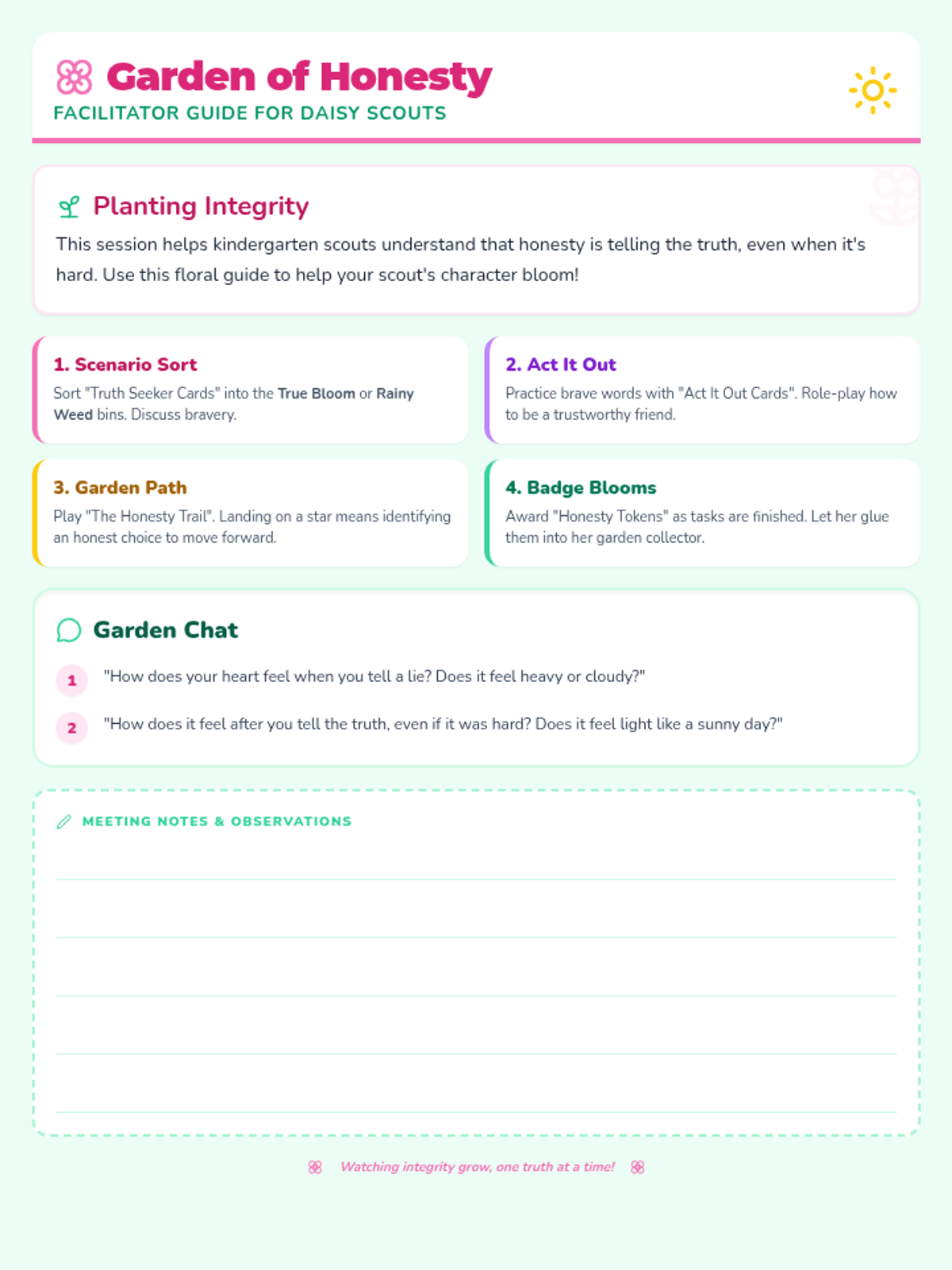
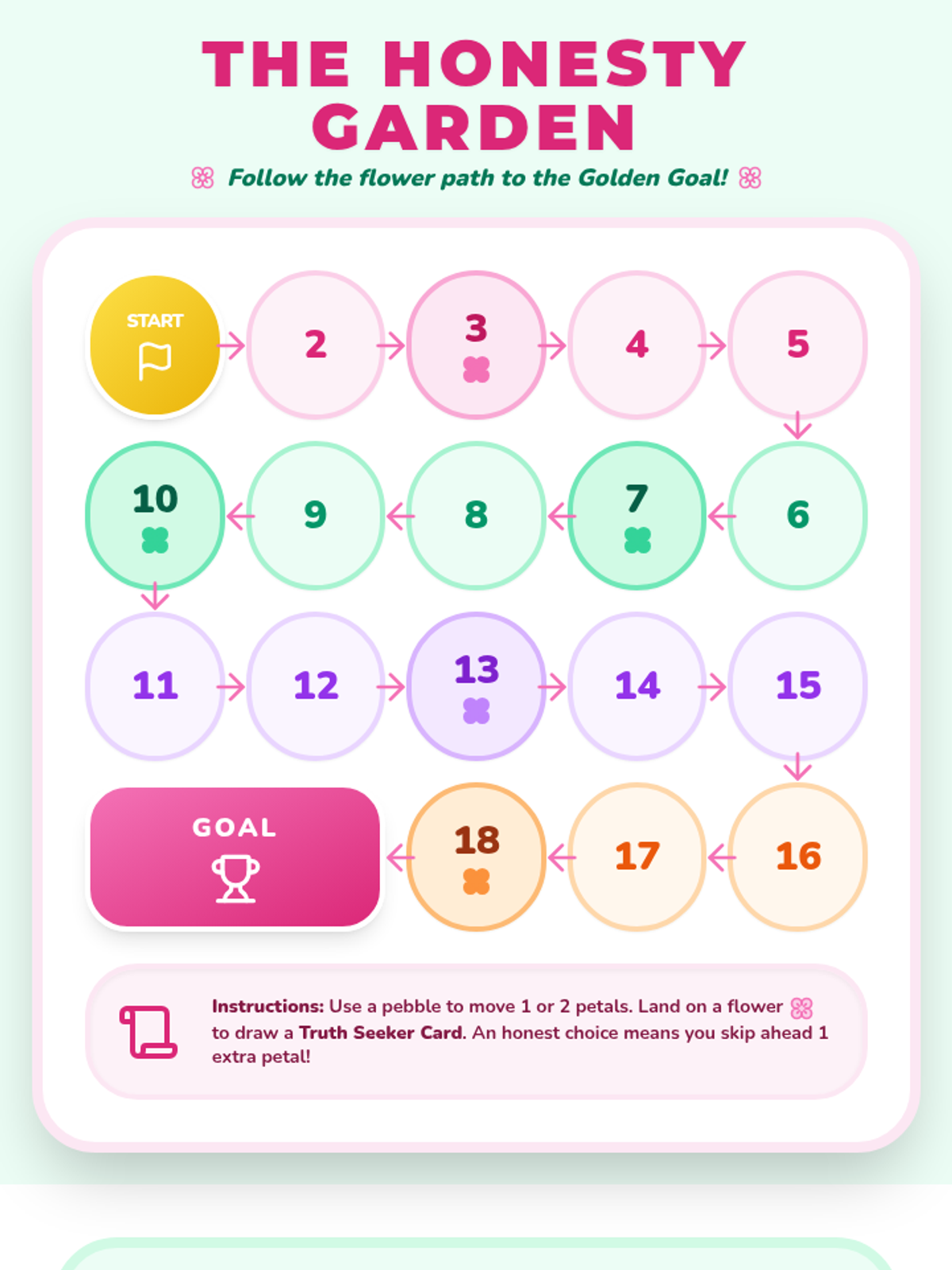
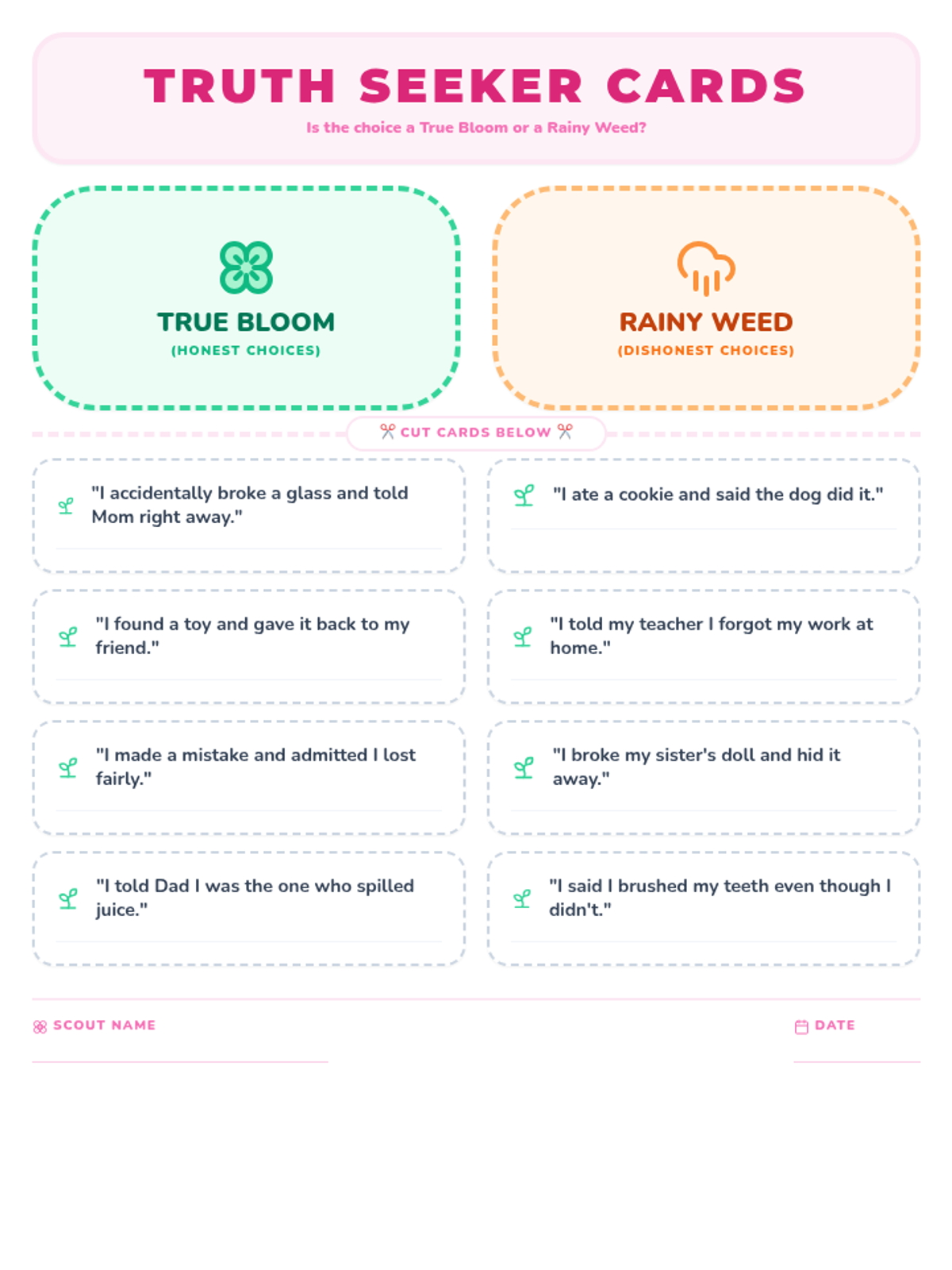
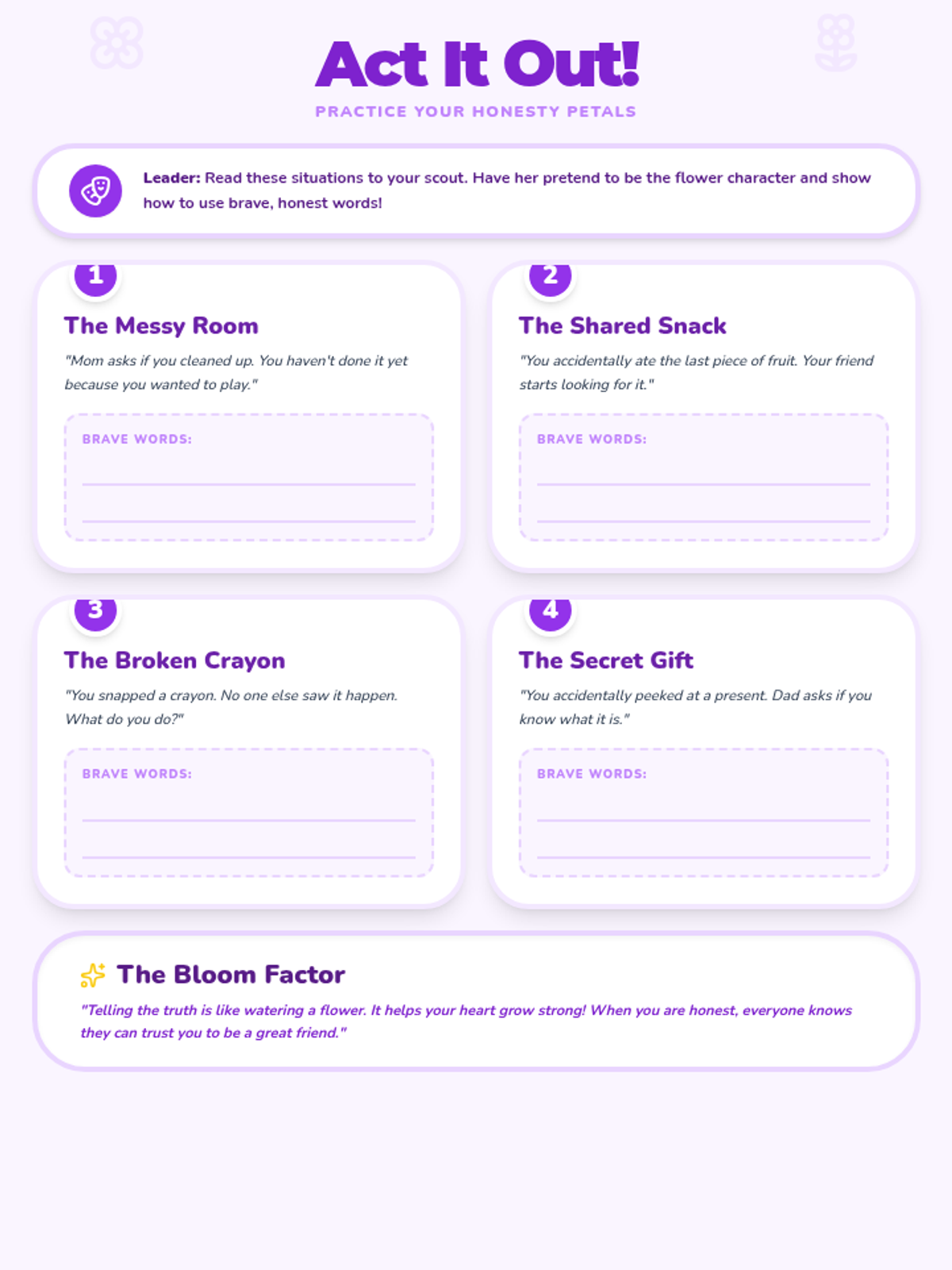
An interactive session where students learn to distinguish between honest and dishonest choices through a board game, scenario sorting, and role-play.
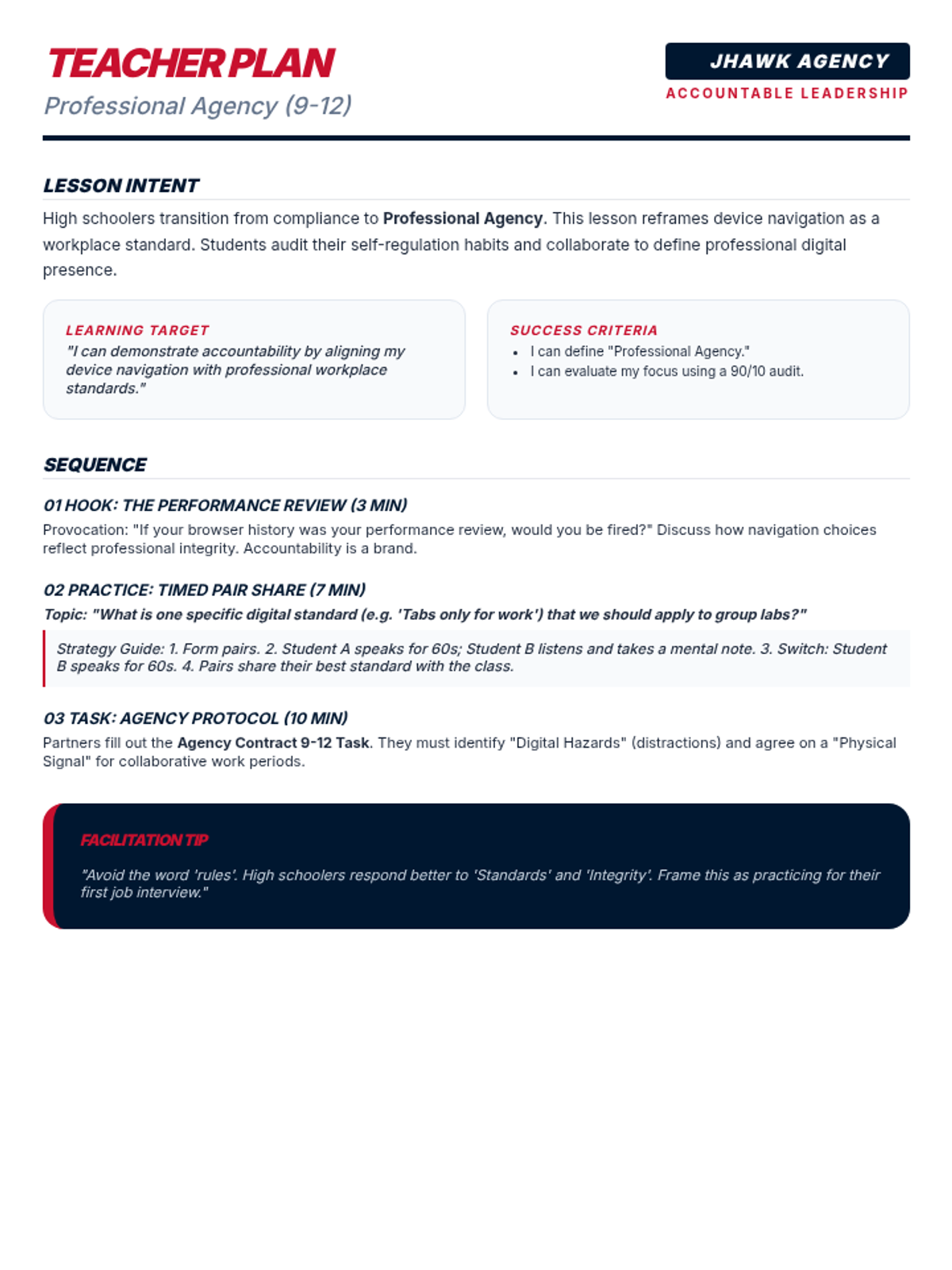
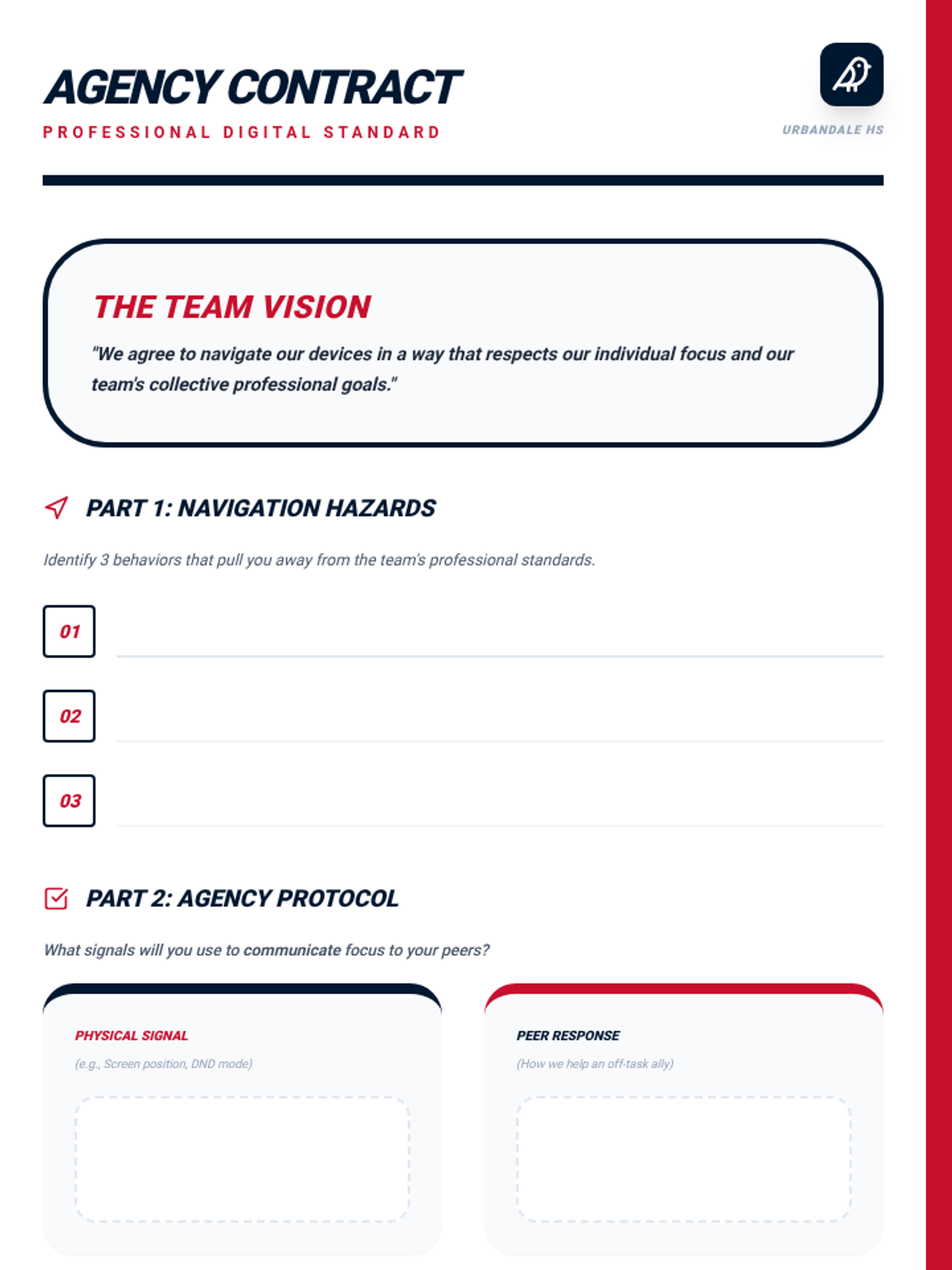
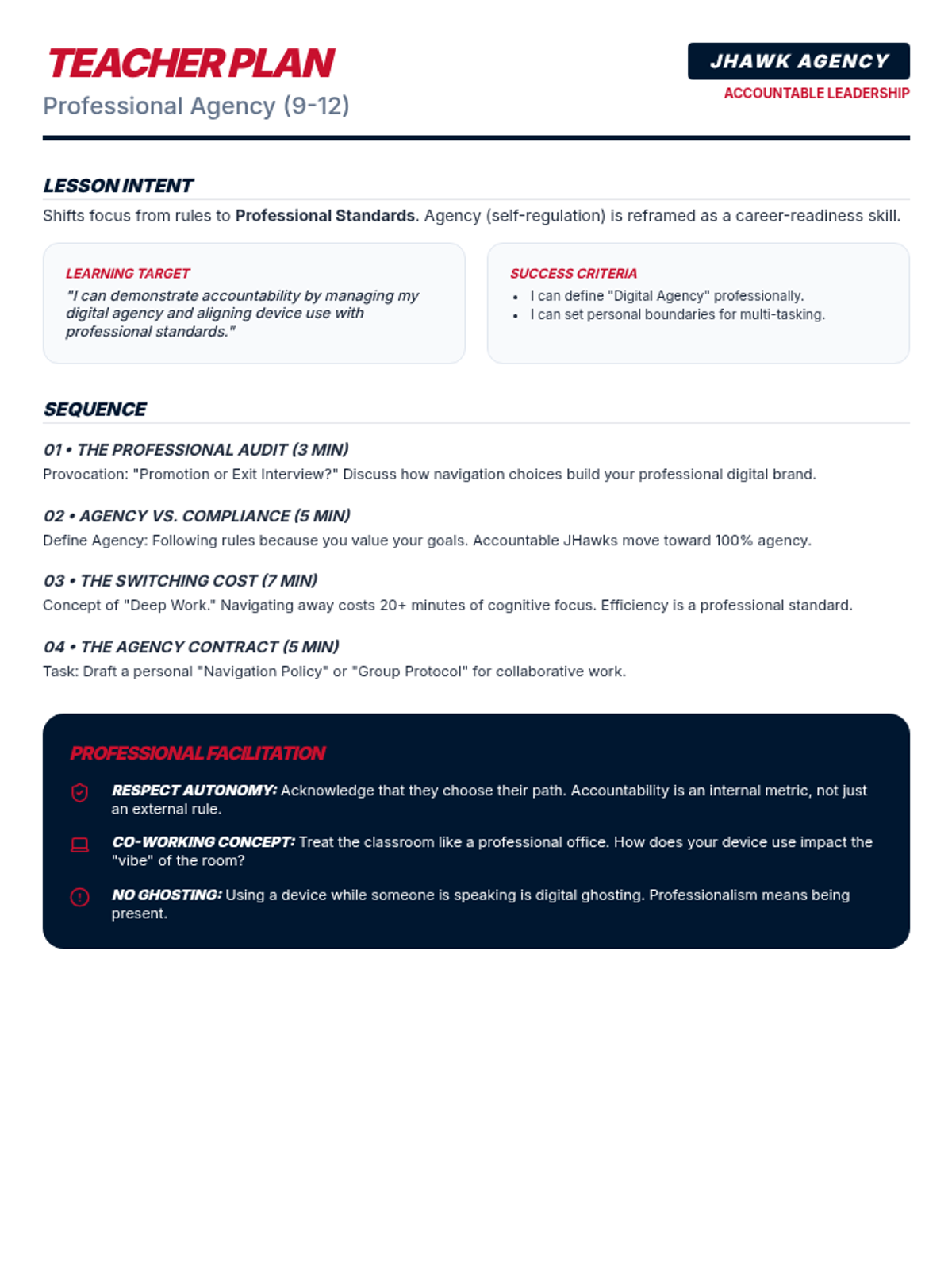
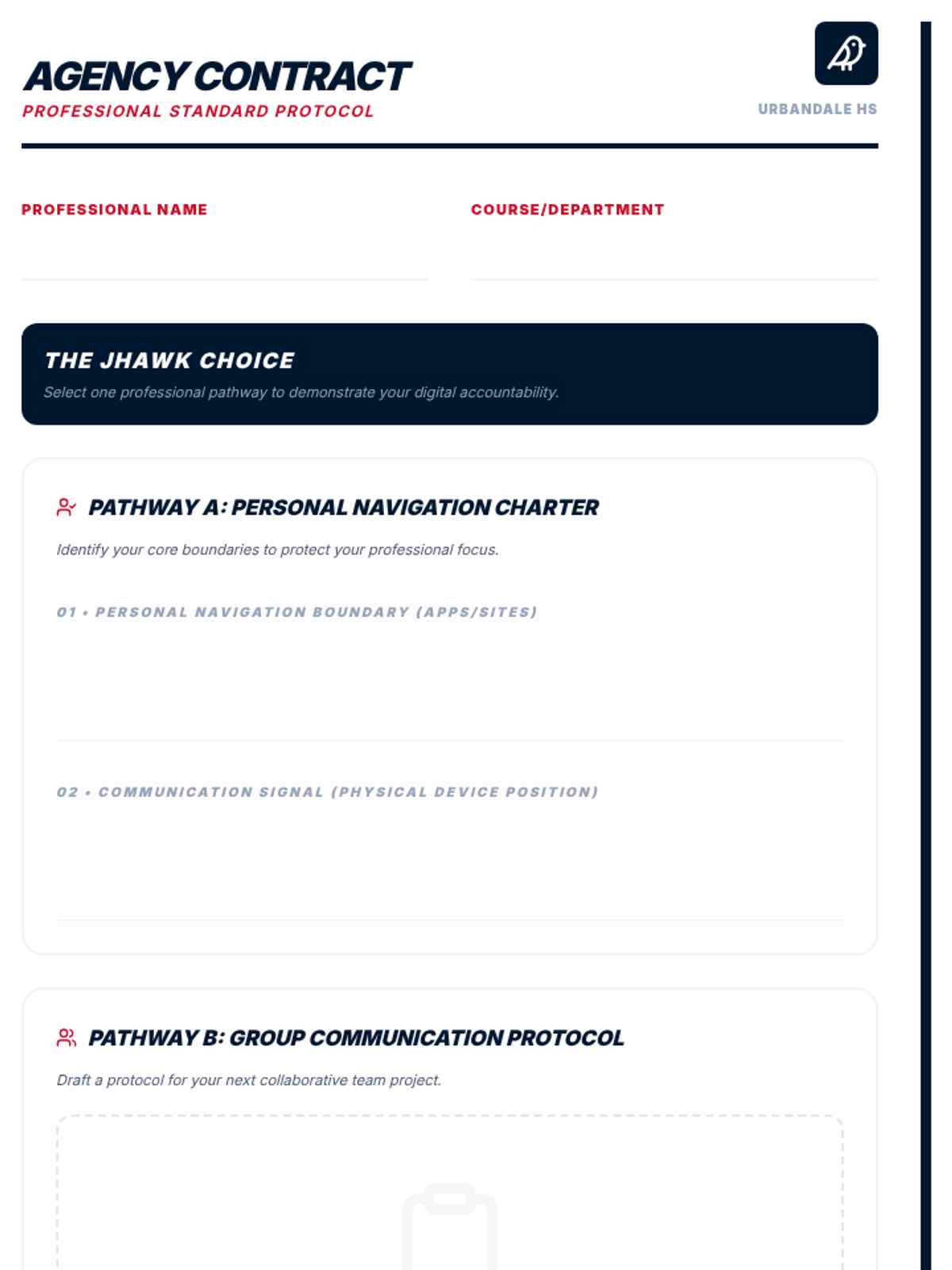
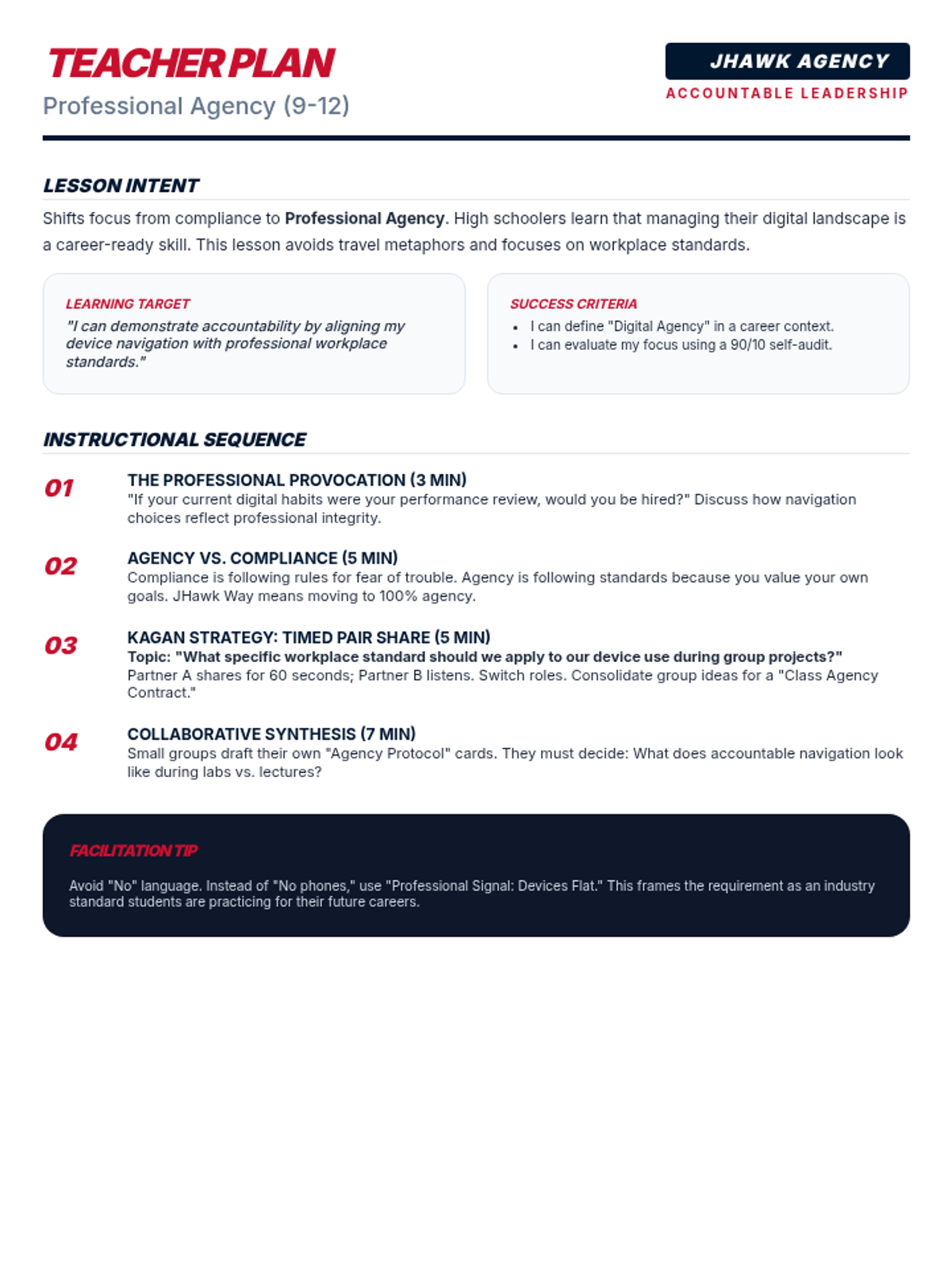
High schoolers align their device habits with professional workplace standards, focusing on agency and self-regulation.
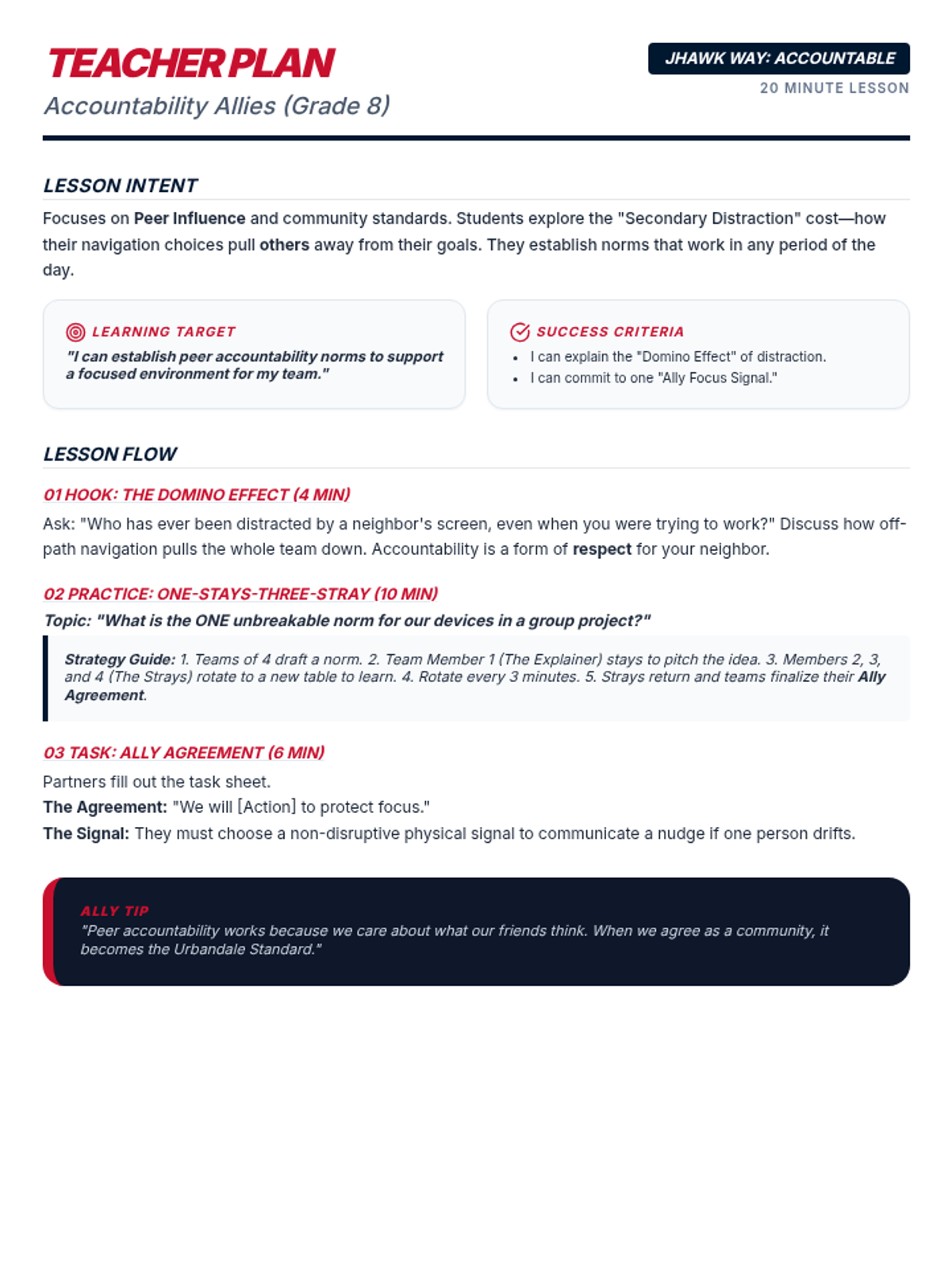
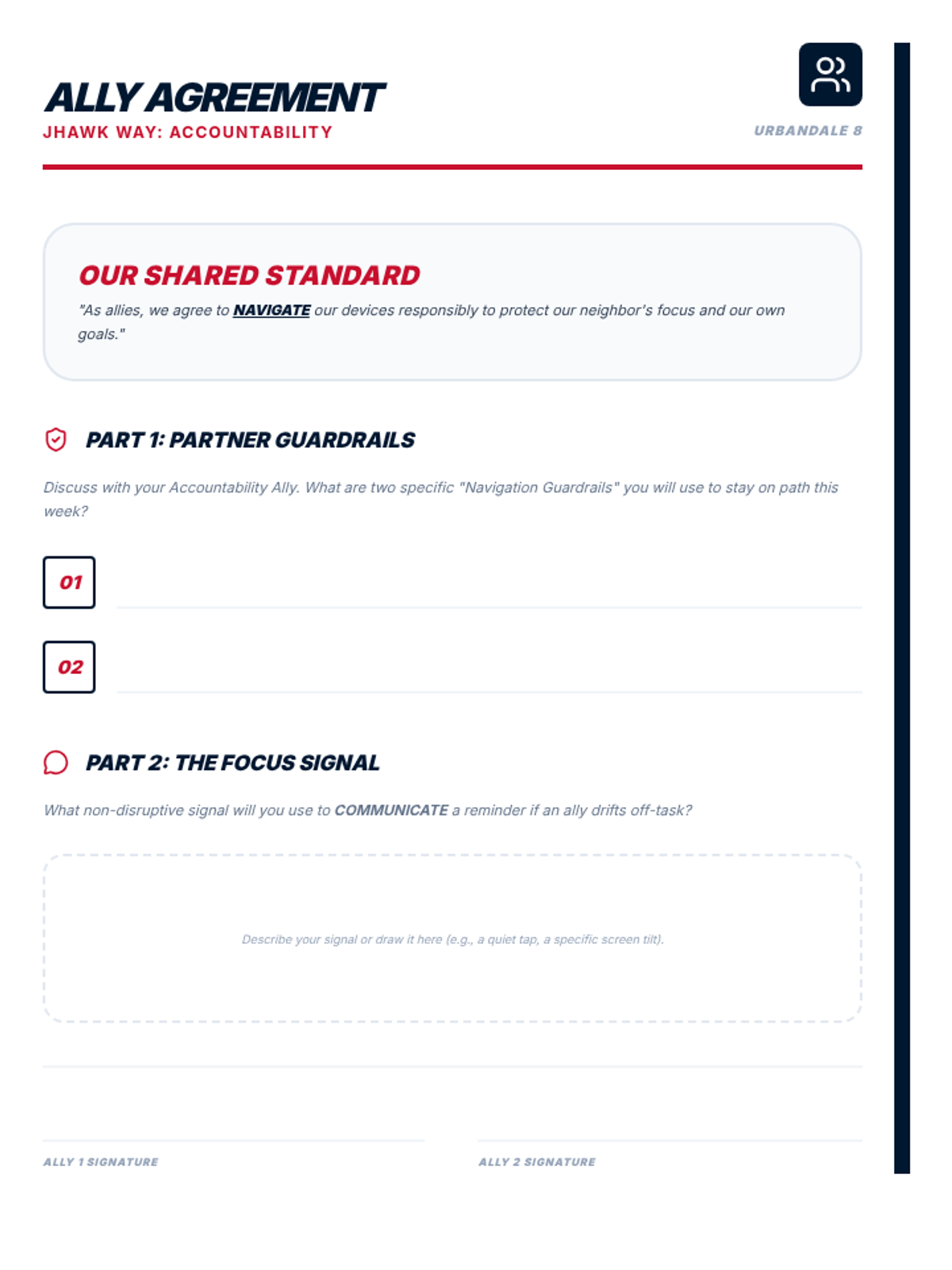
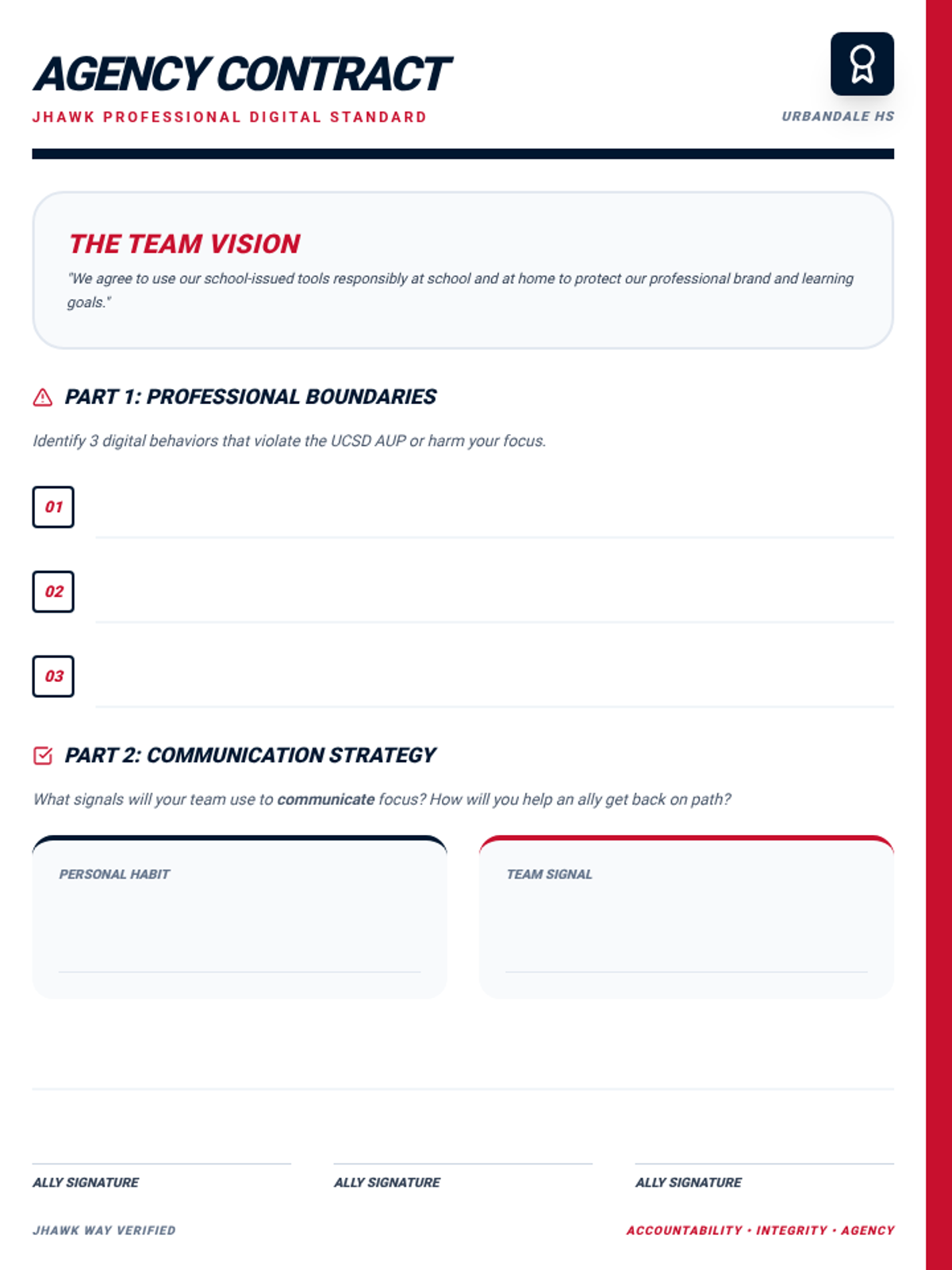
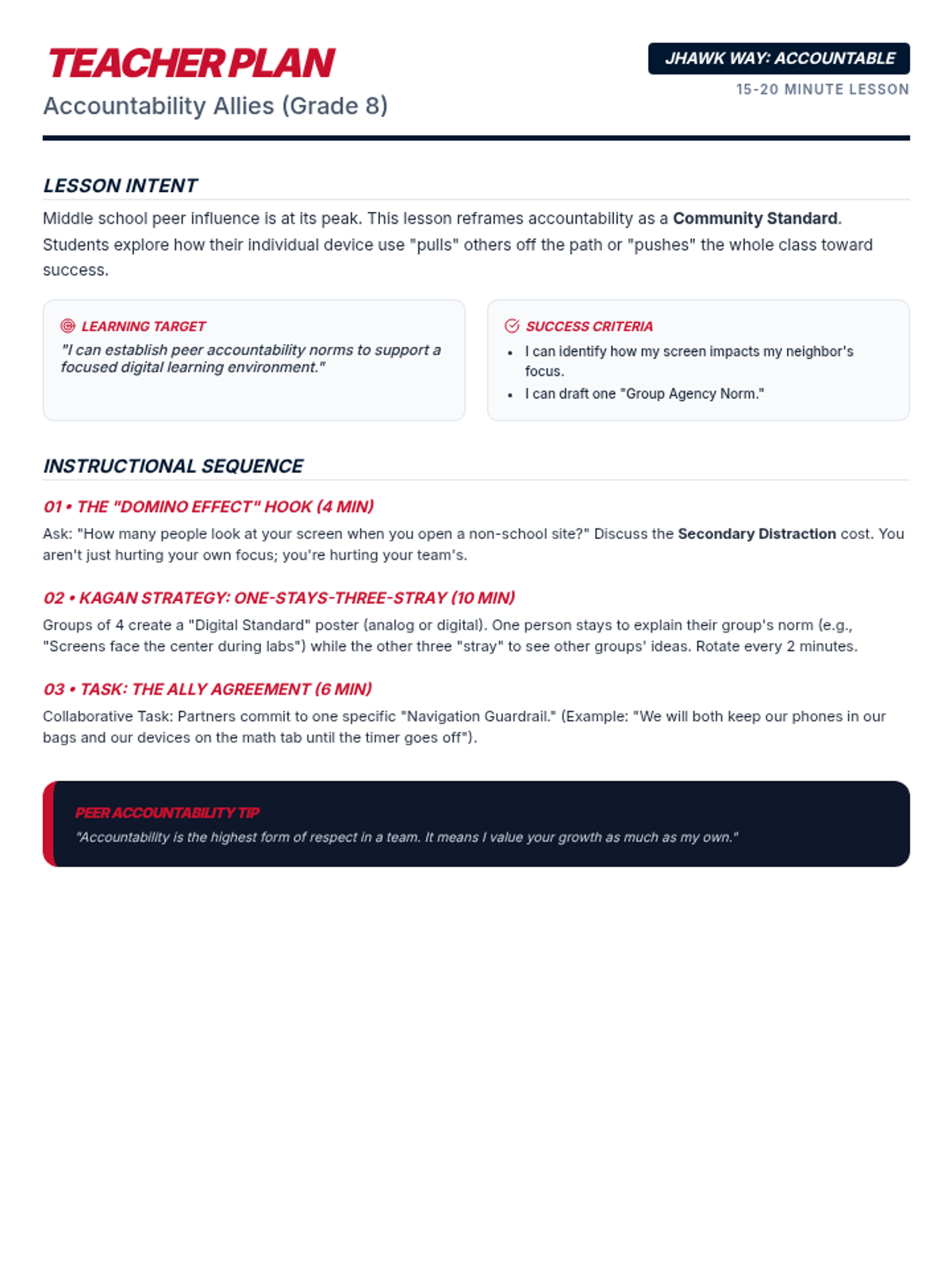
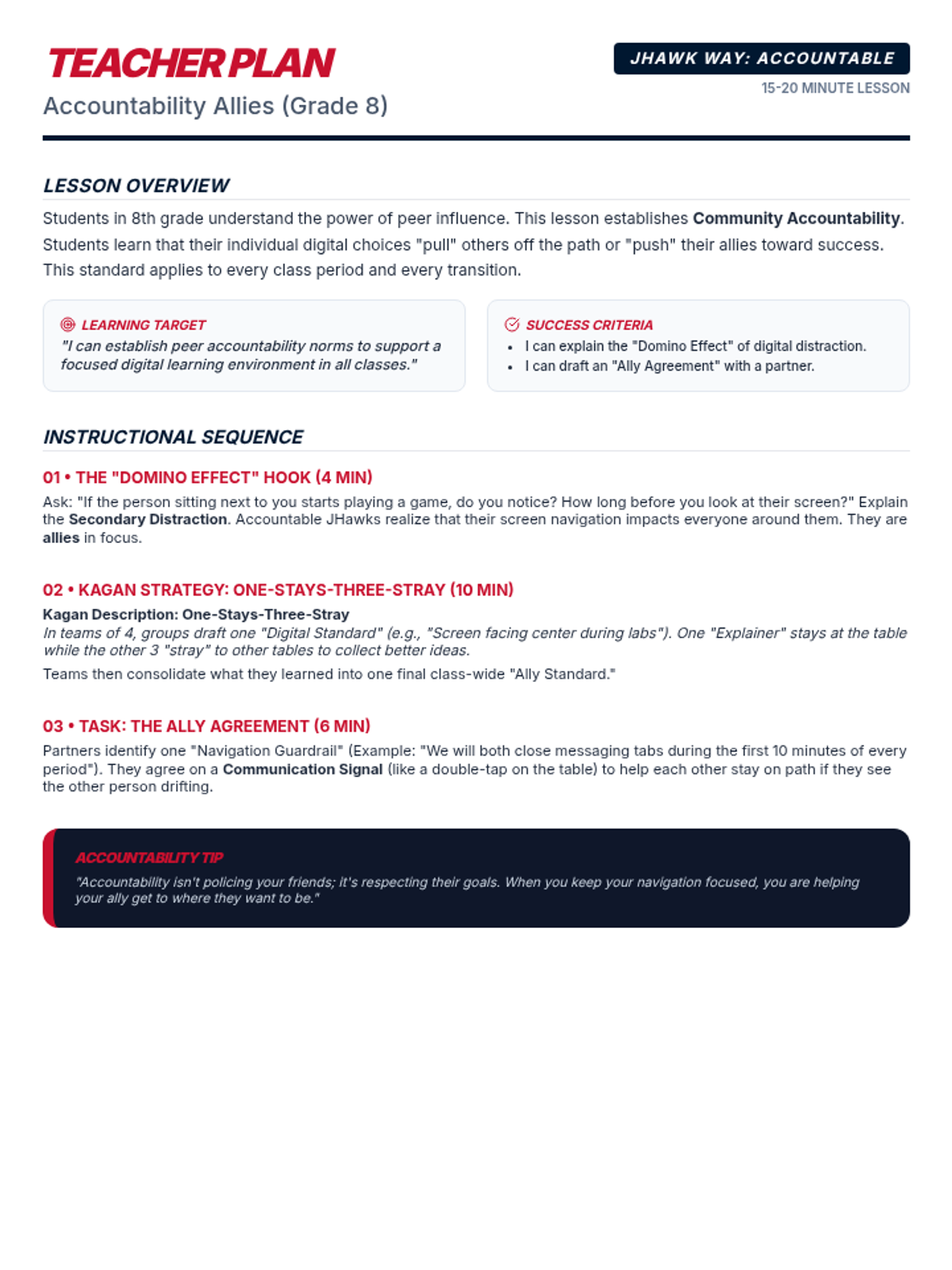
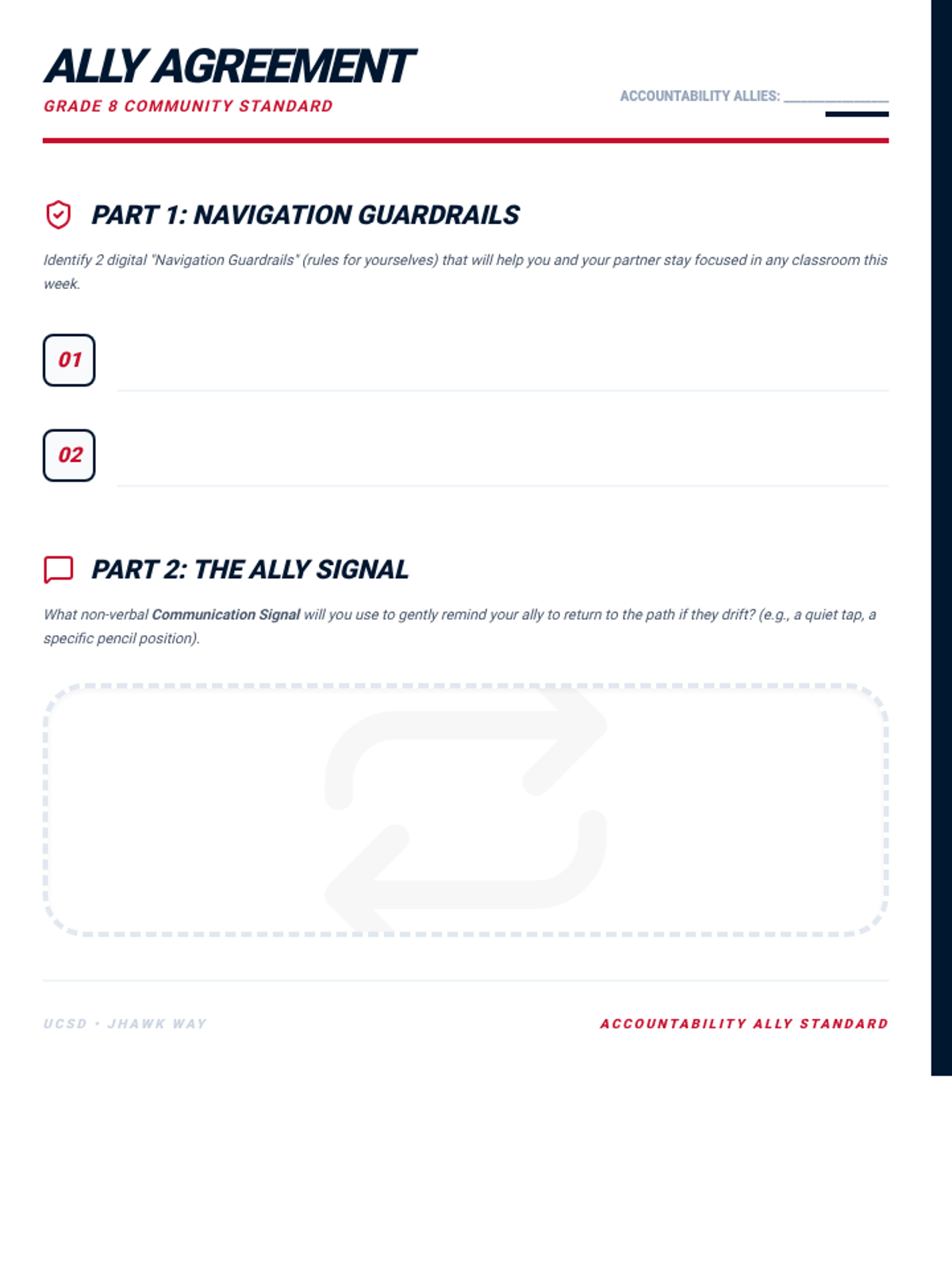
Eighth graders develop peer accountability allies and set community standards for focused digital collaborative work.
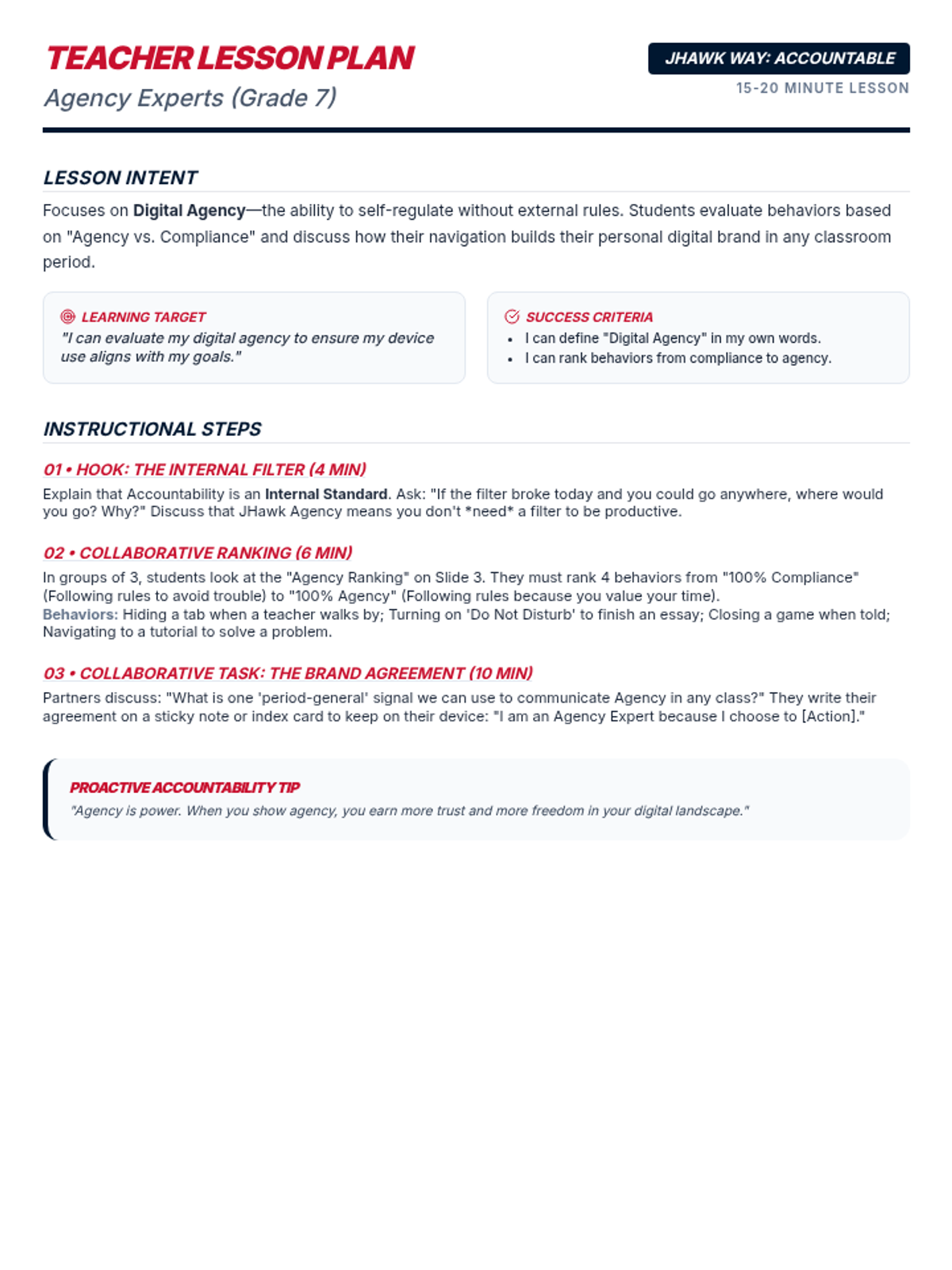
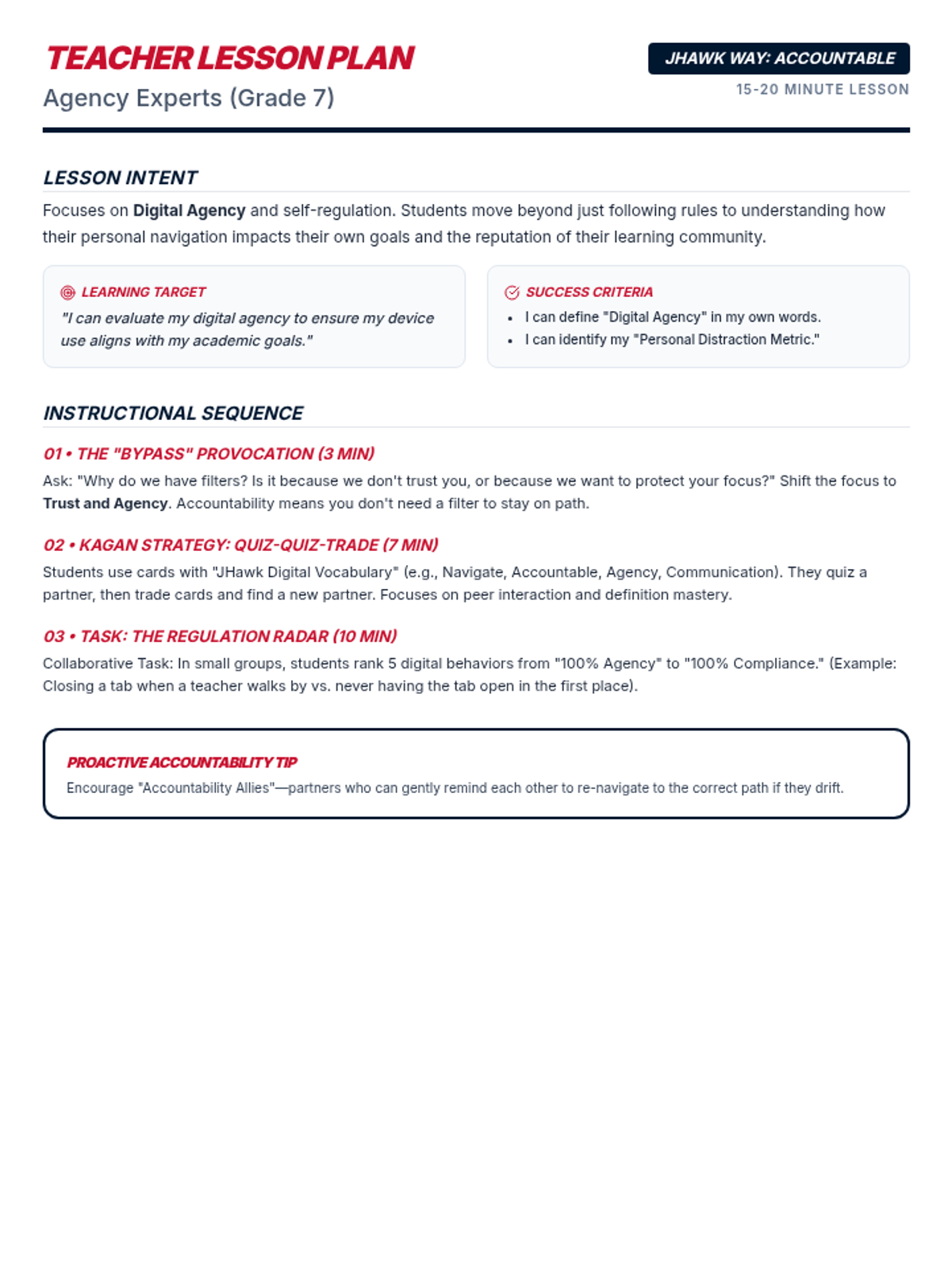
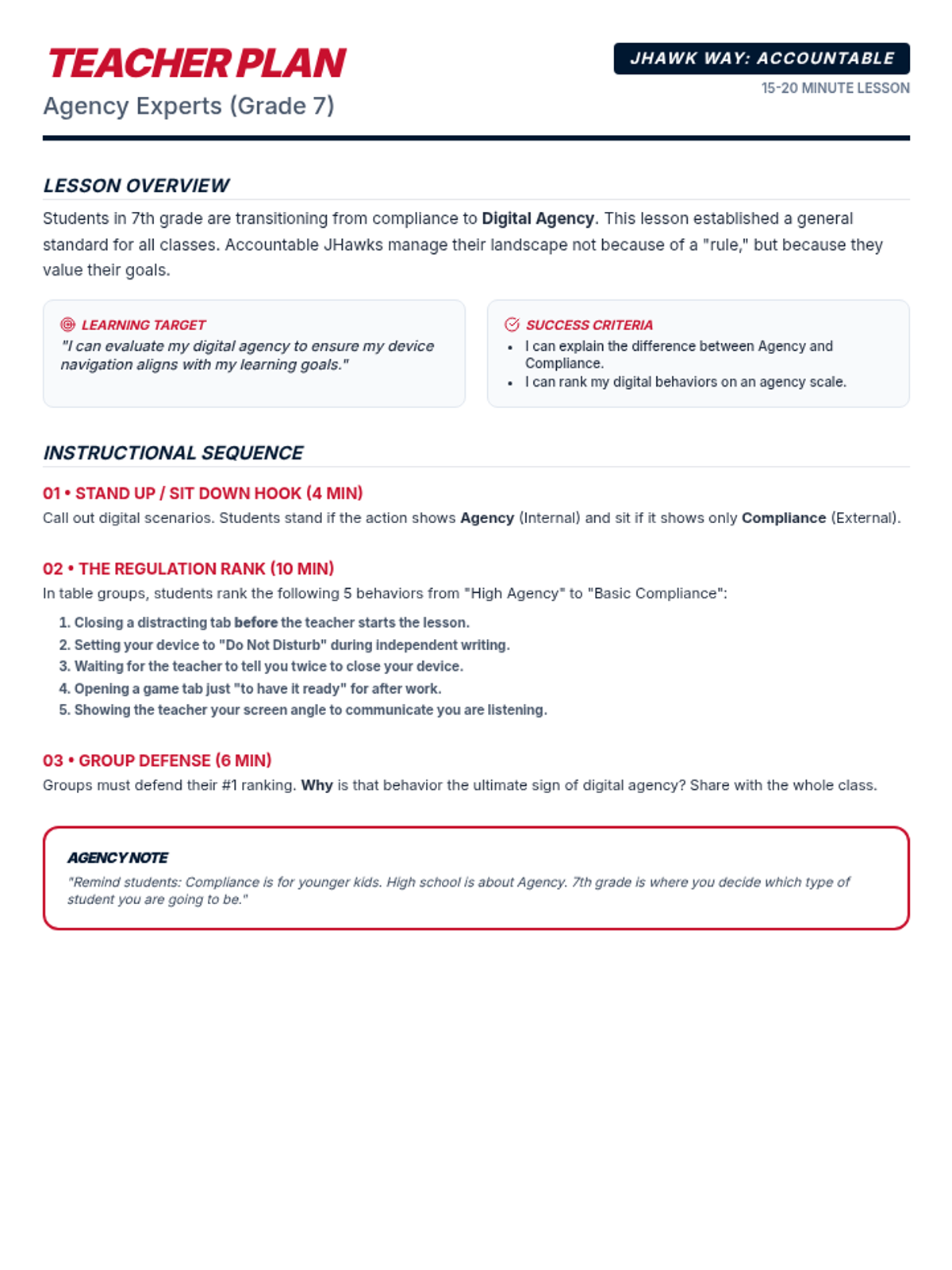
Seventh graders explore the difference between compliance and agency, evaluating how their digital navigation builds their personal brand.
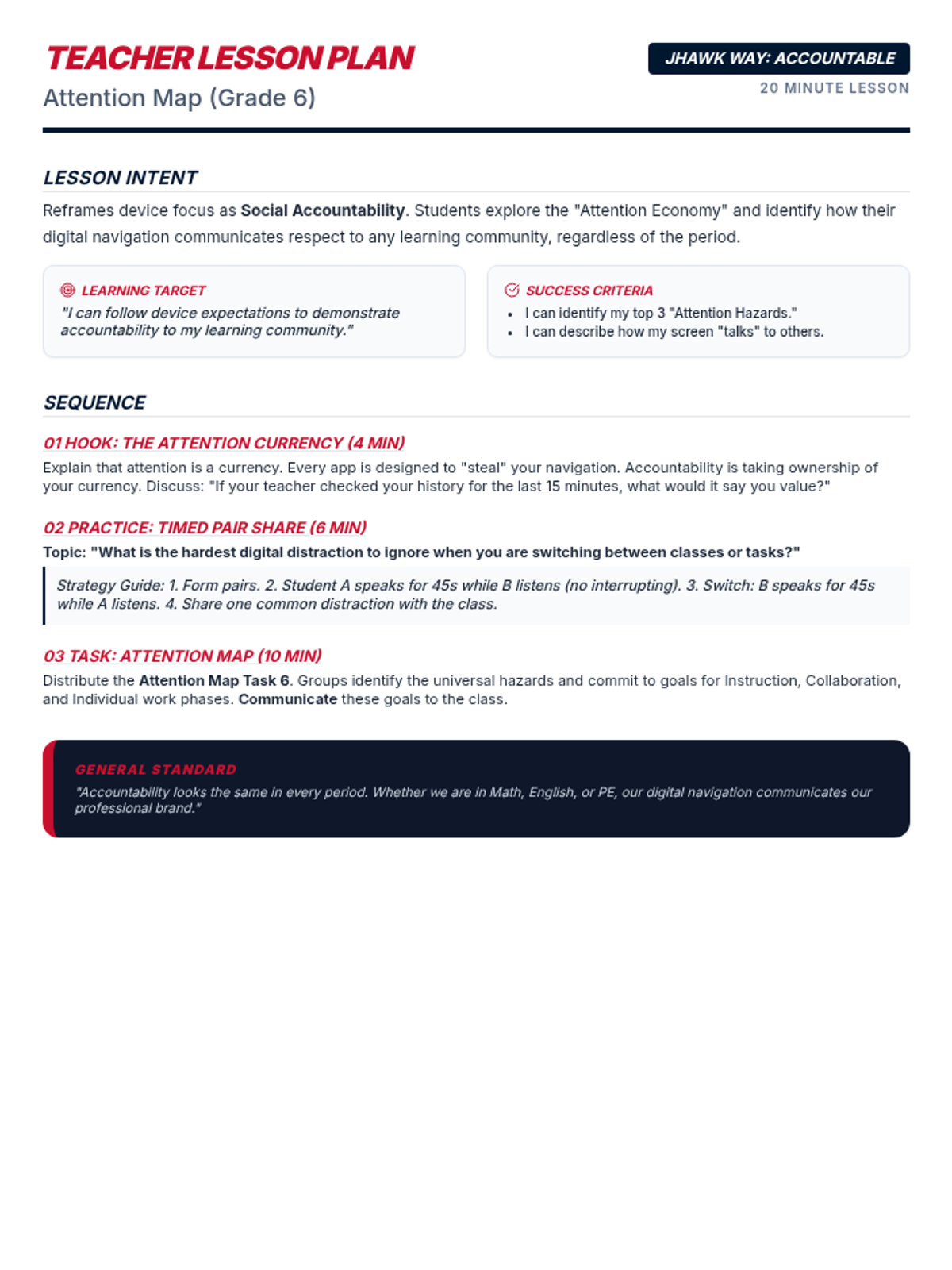
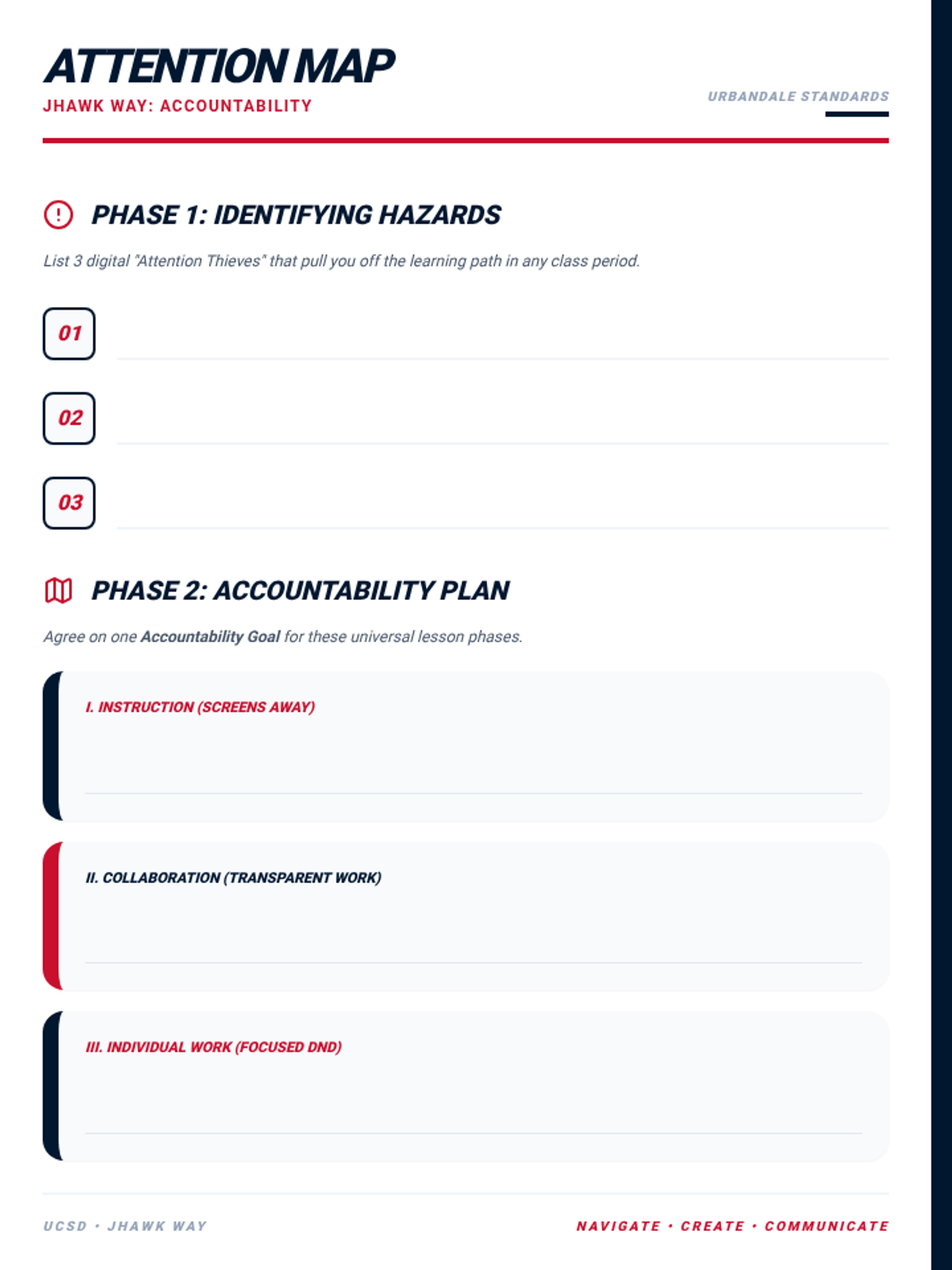
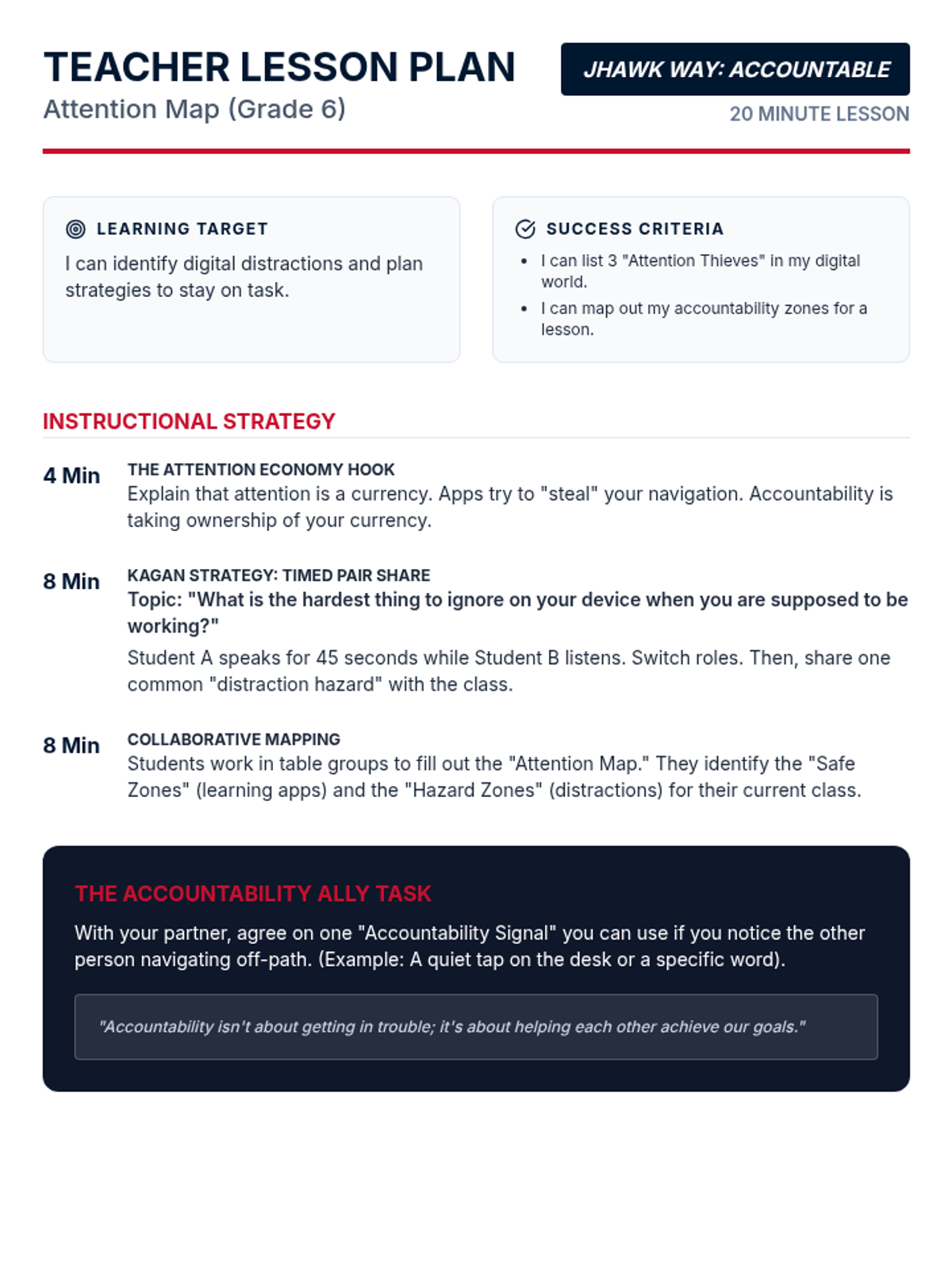
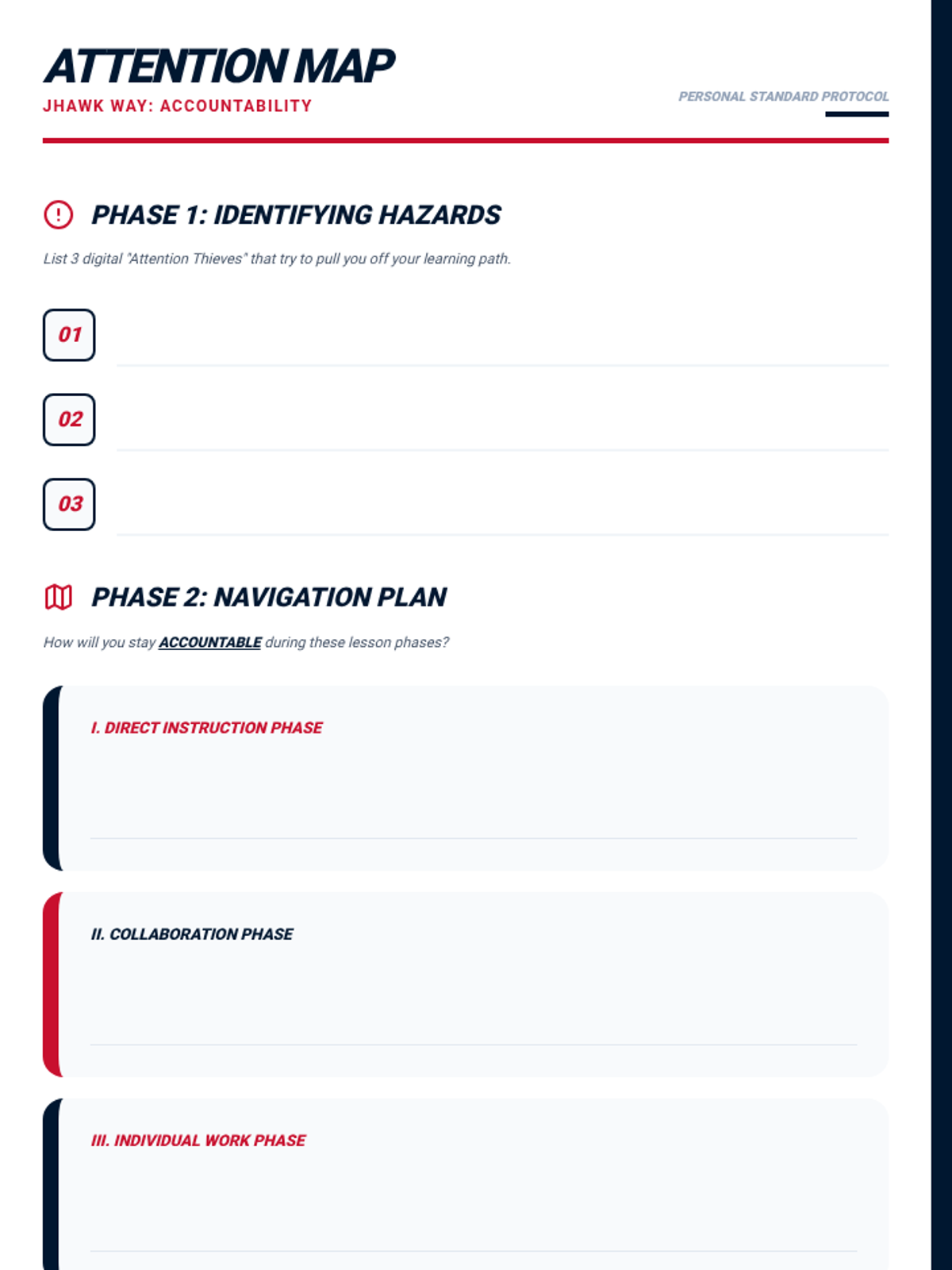
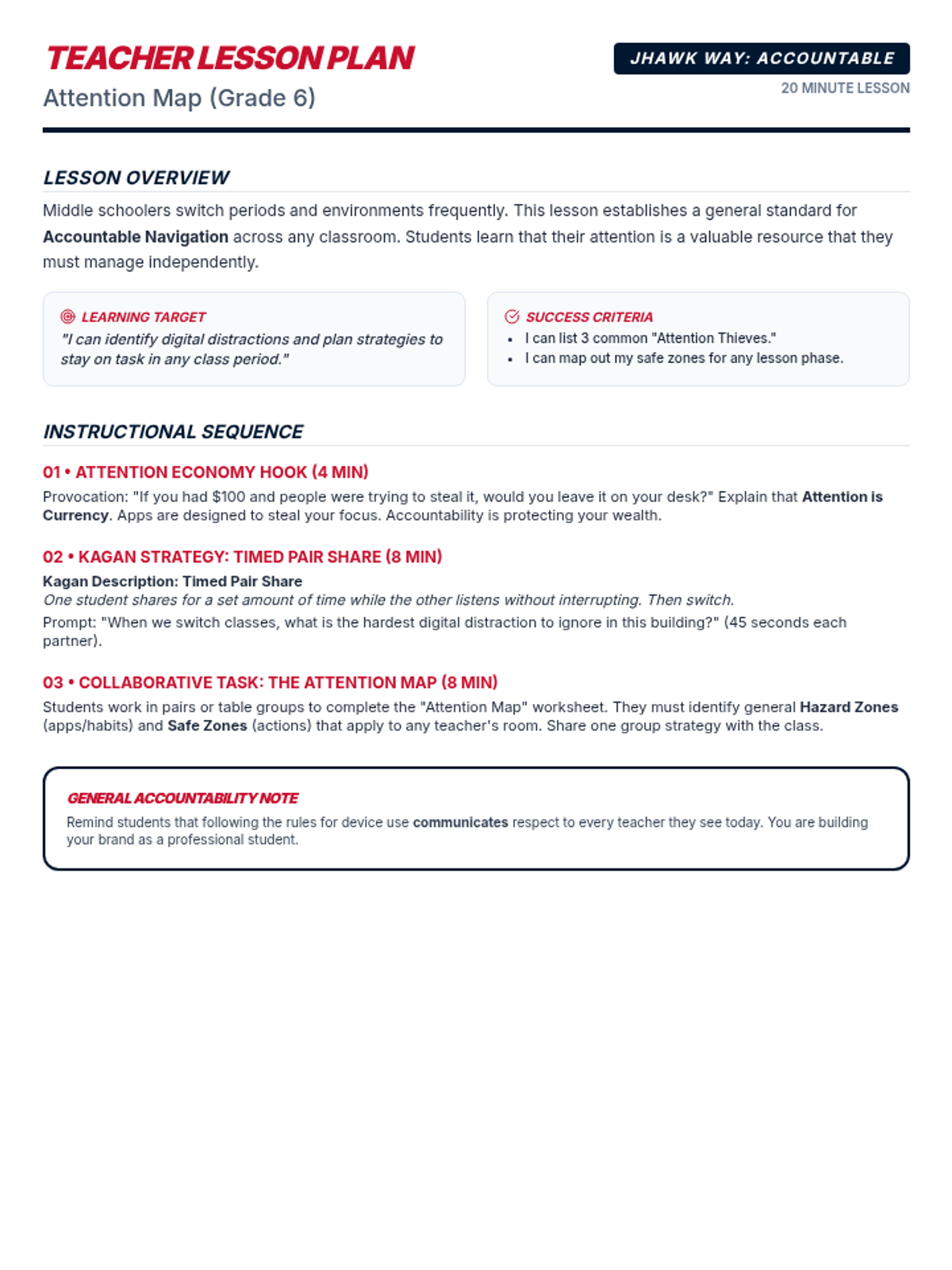
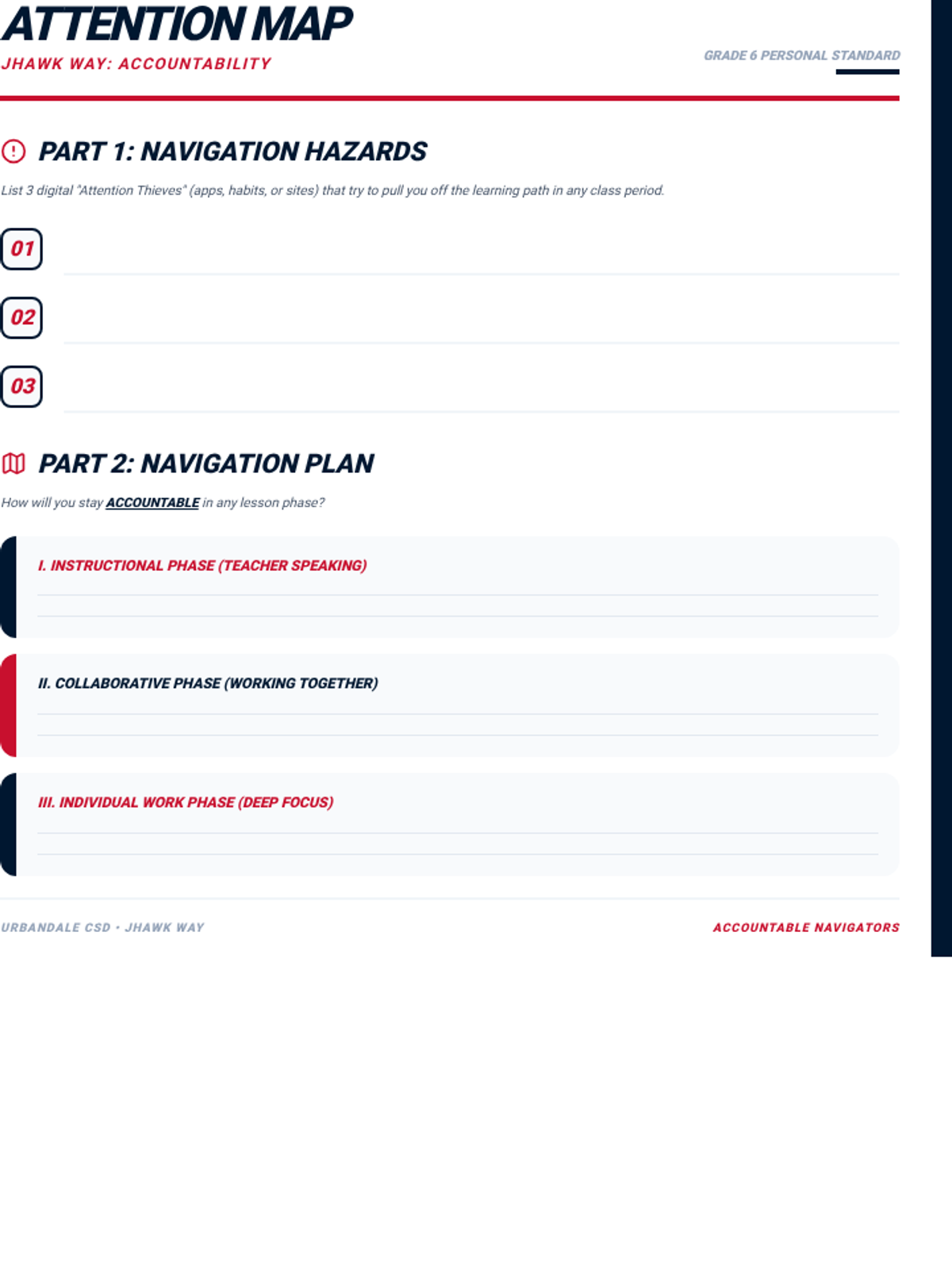
Sixth graders analyze the attention economy and map out personal accountability safe-zones for any classroom environment.
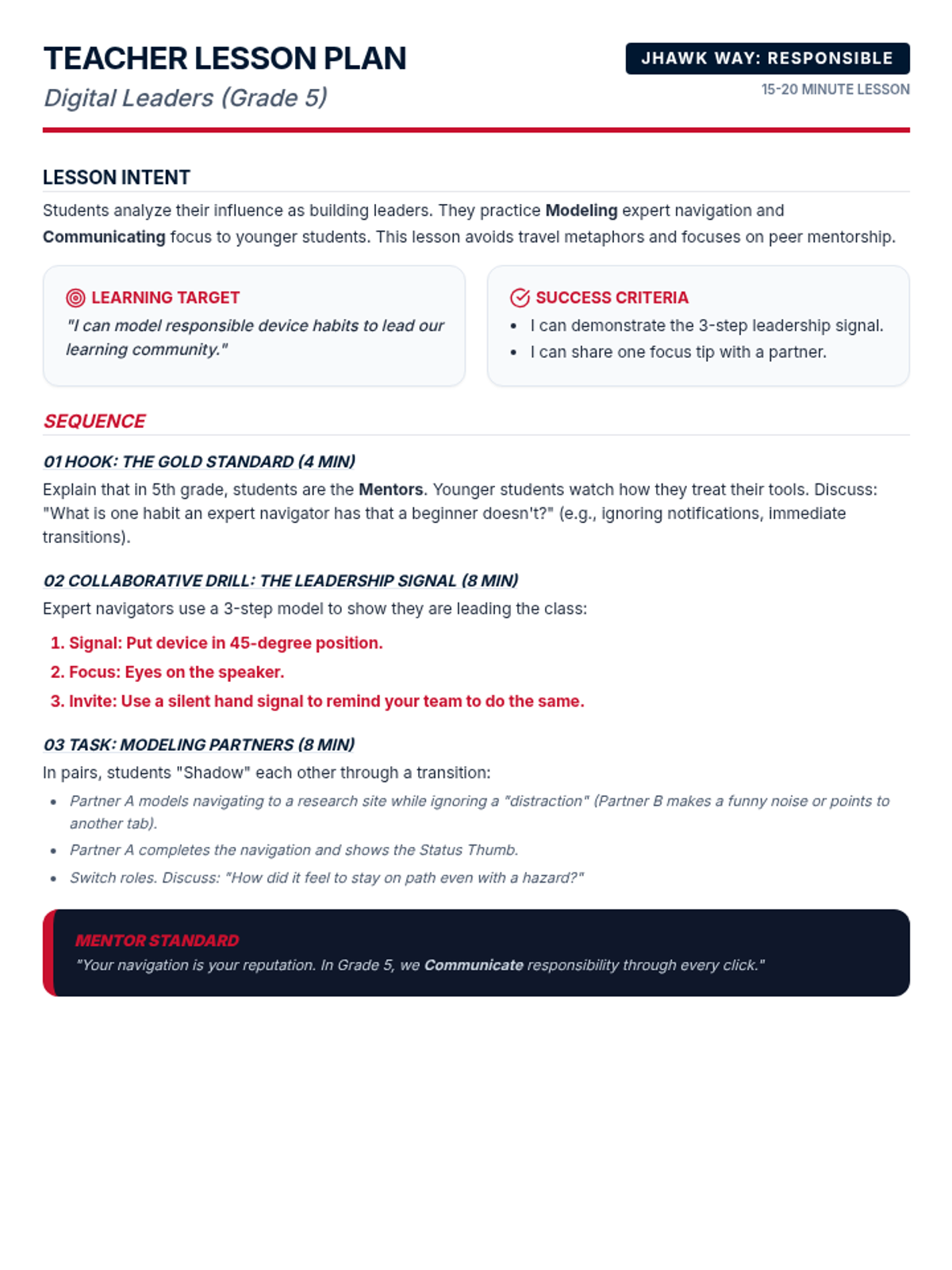
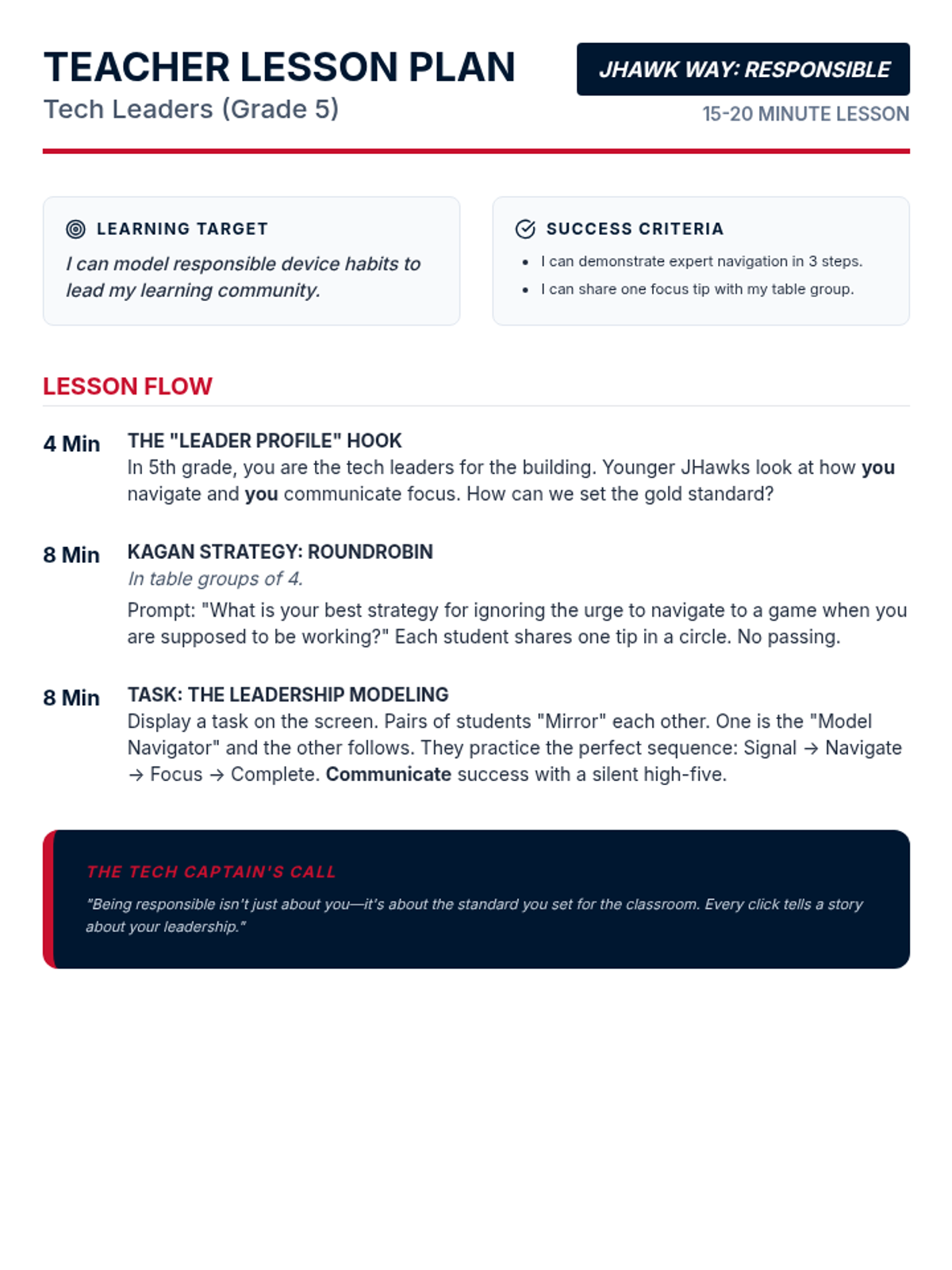
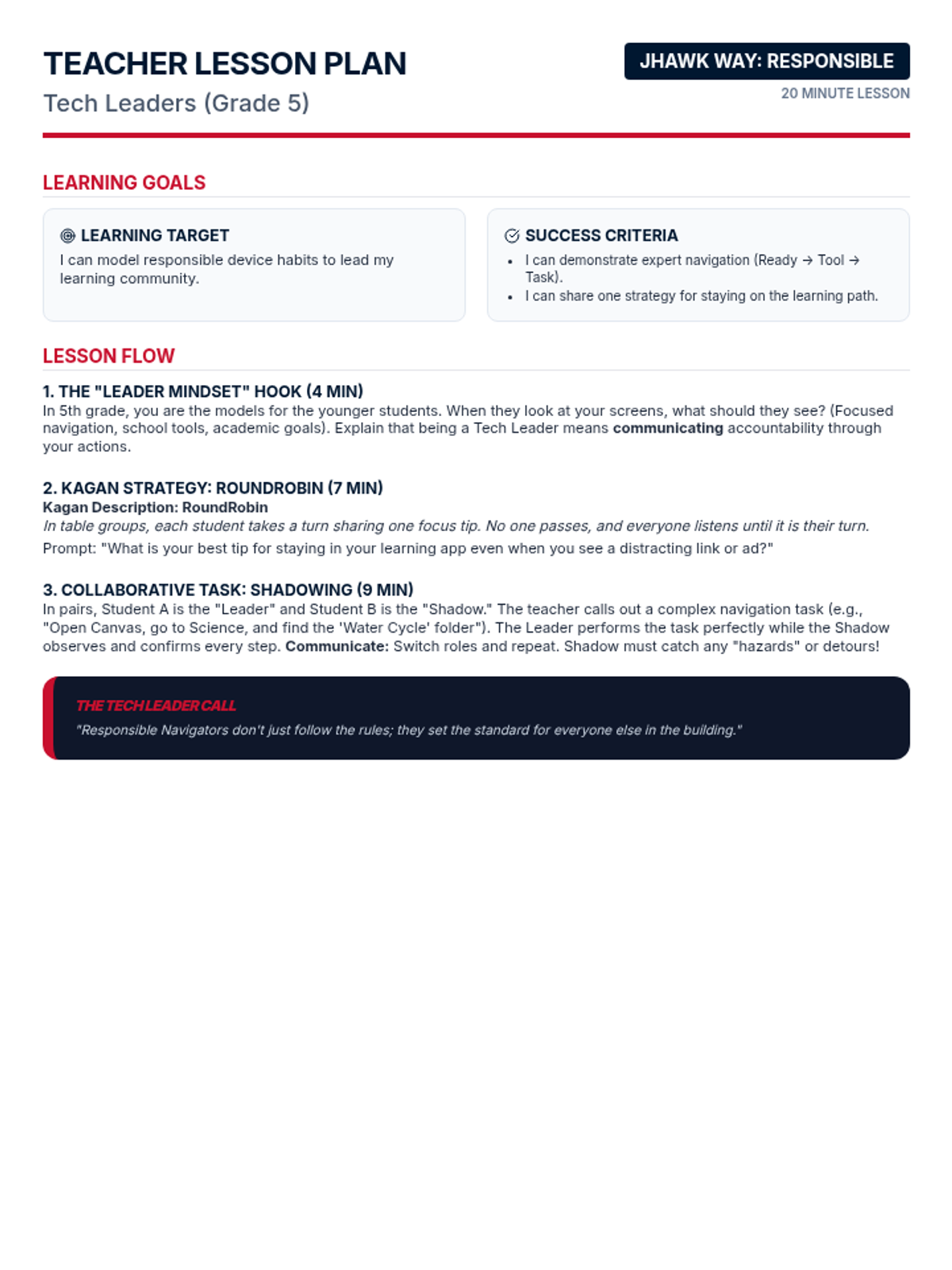
Fifth graders model digital leadership by sharing navigation strategies and mentoring peers in responsible device use.
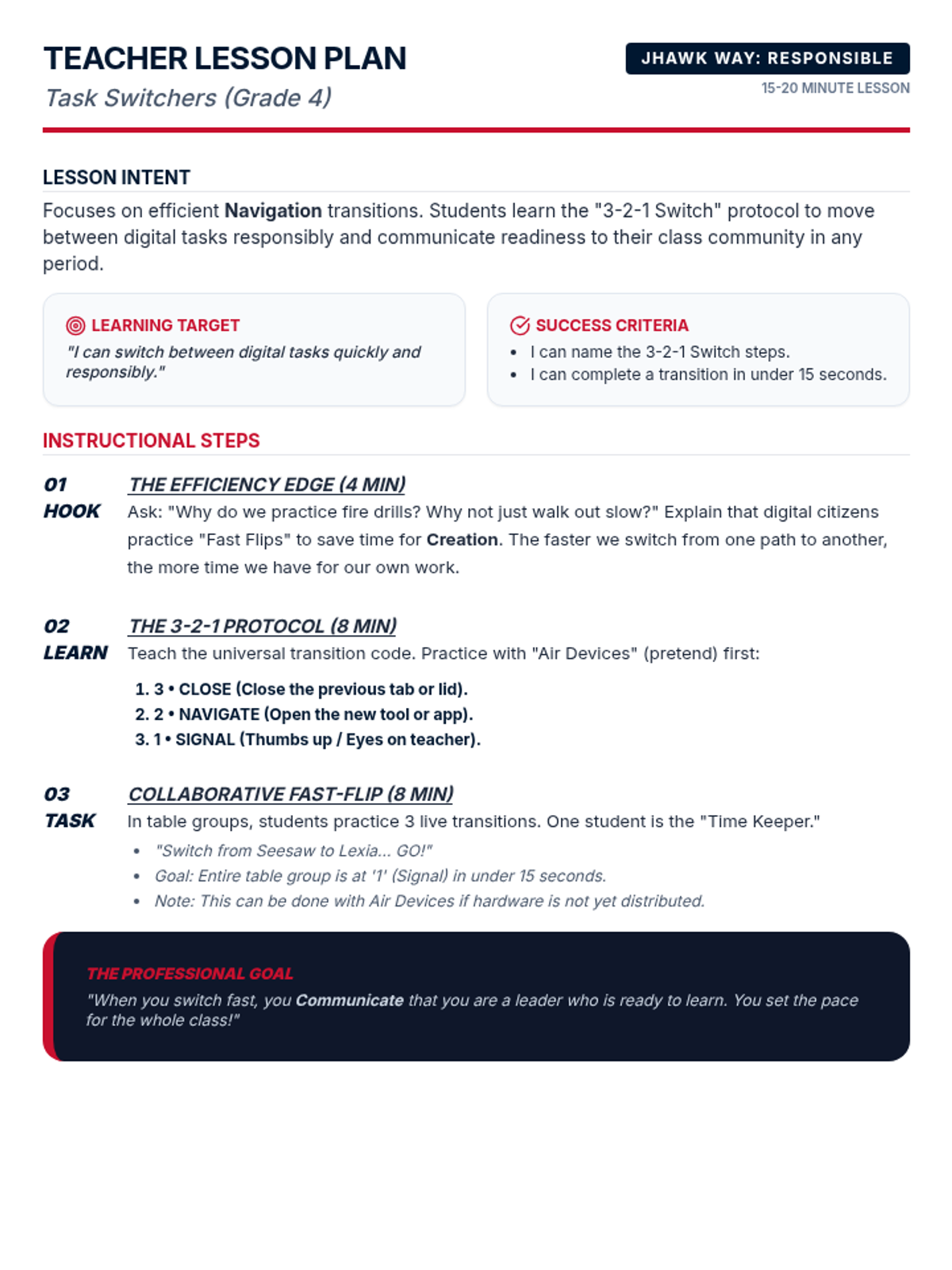
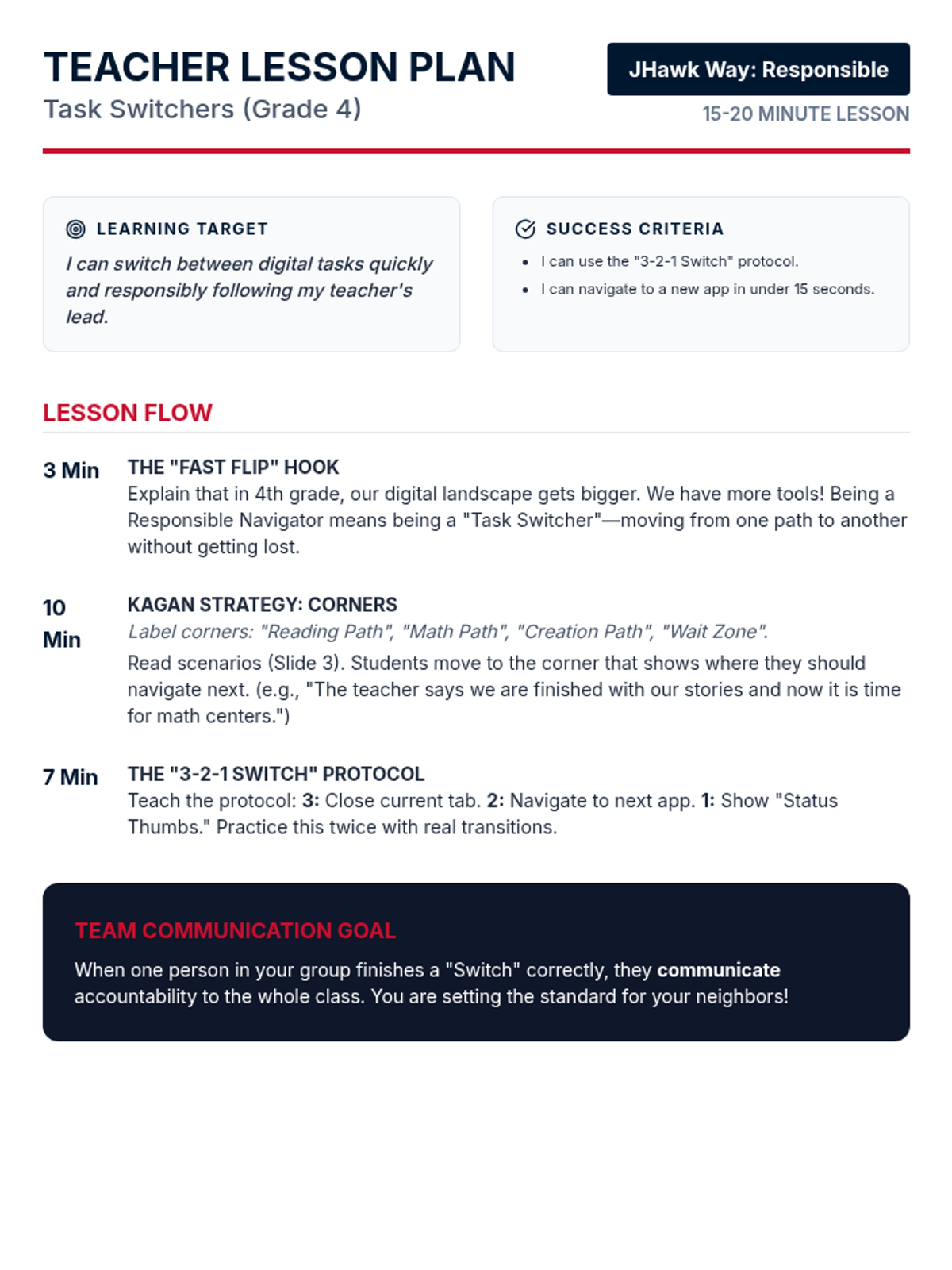
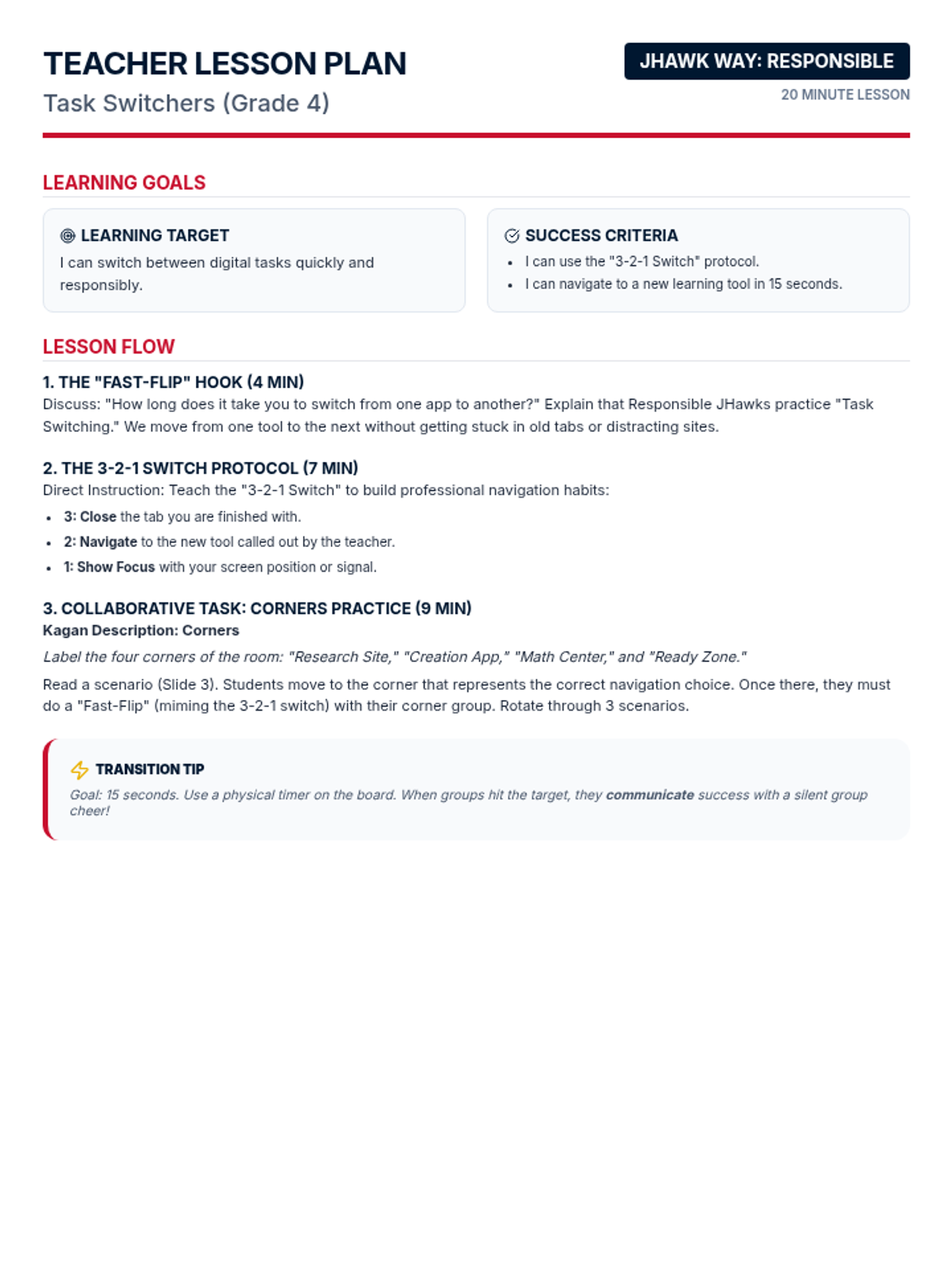
Fourth graders master the art of switching between digital tasks efficiently using the '3-2-1 Switch' protocol.
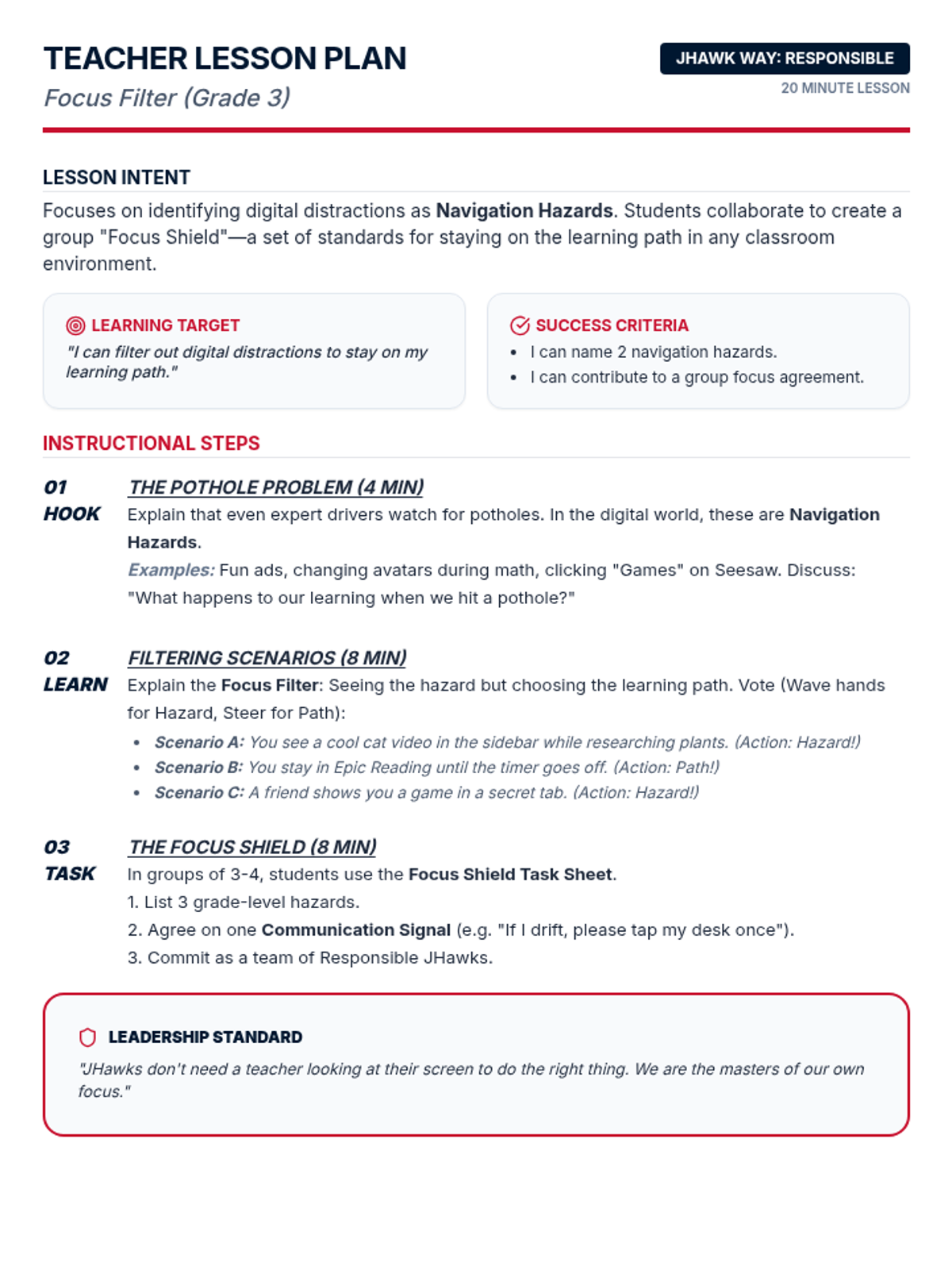
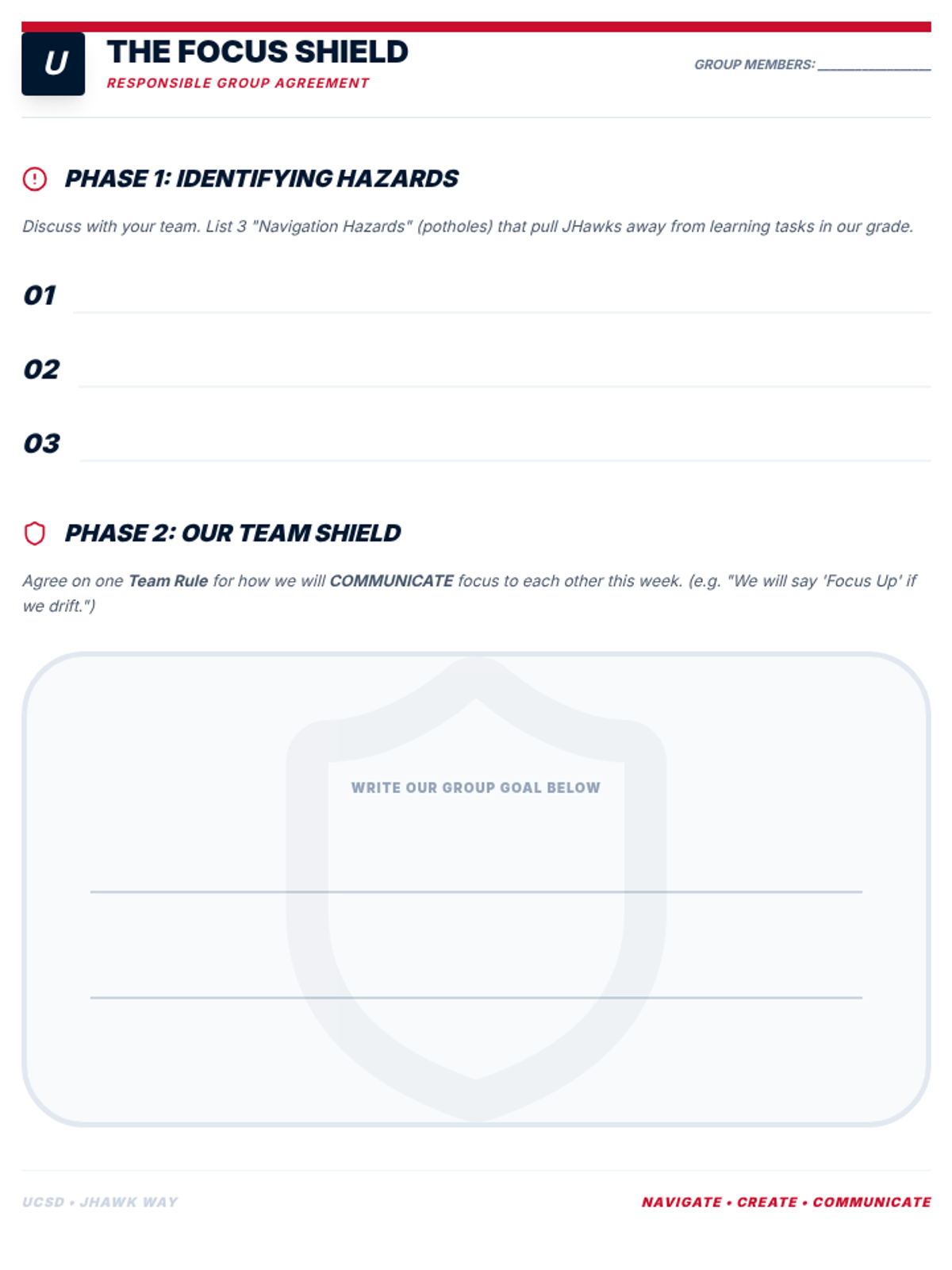
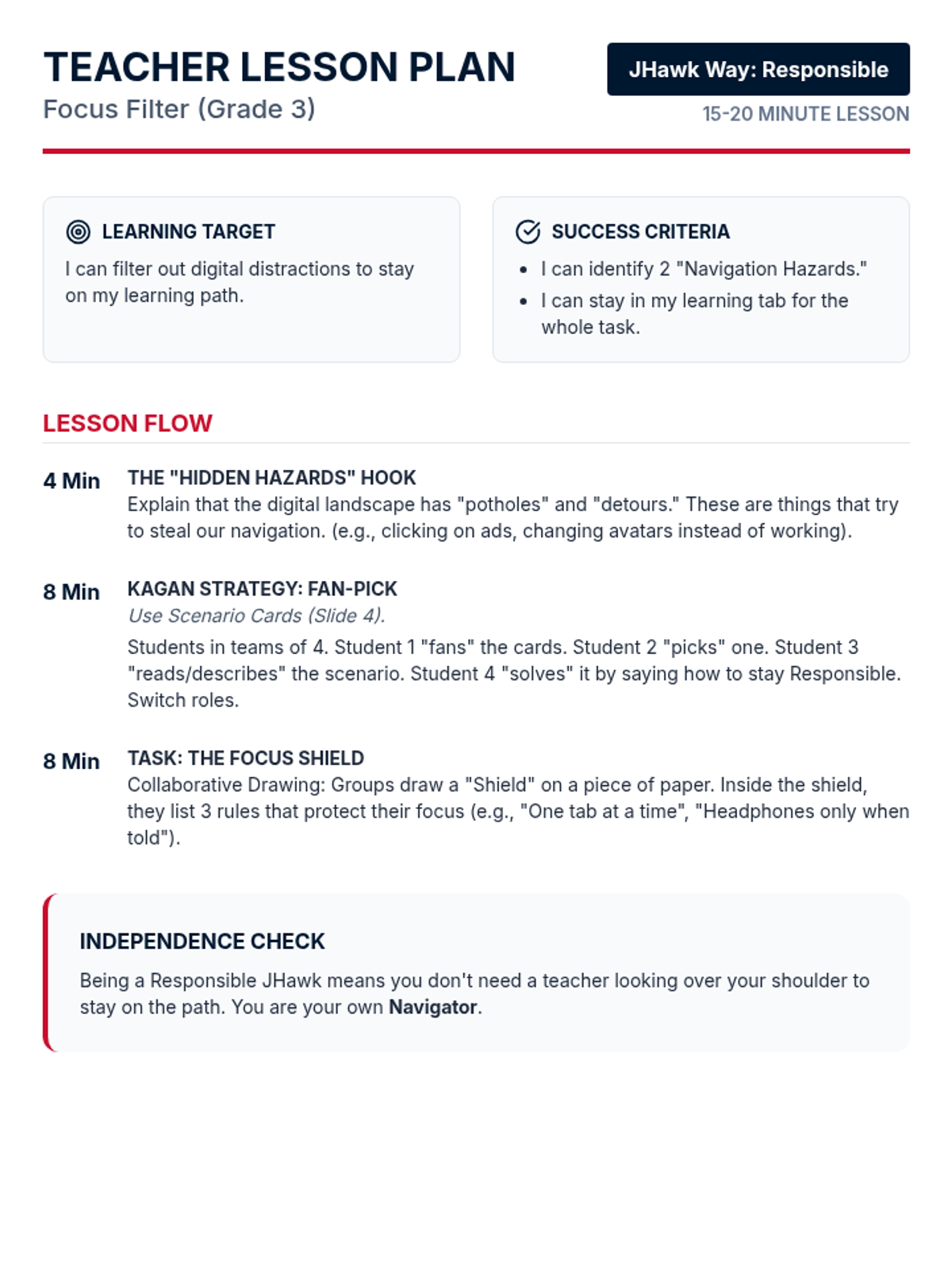
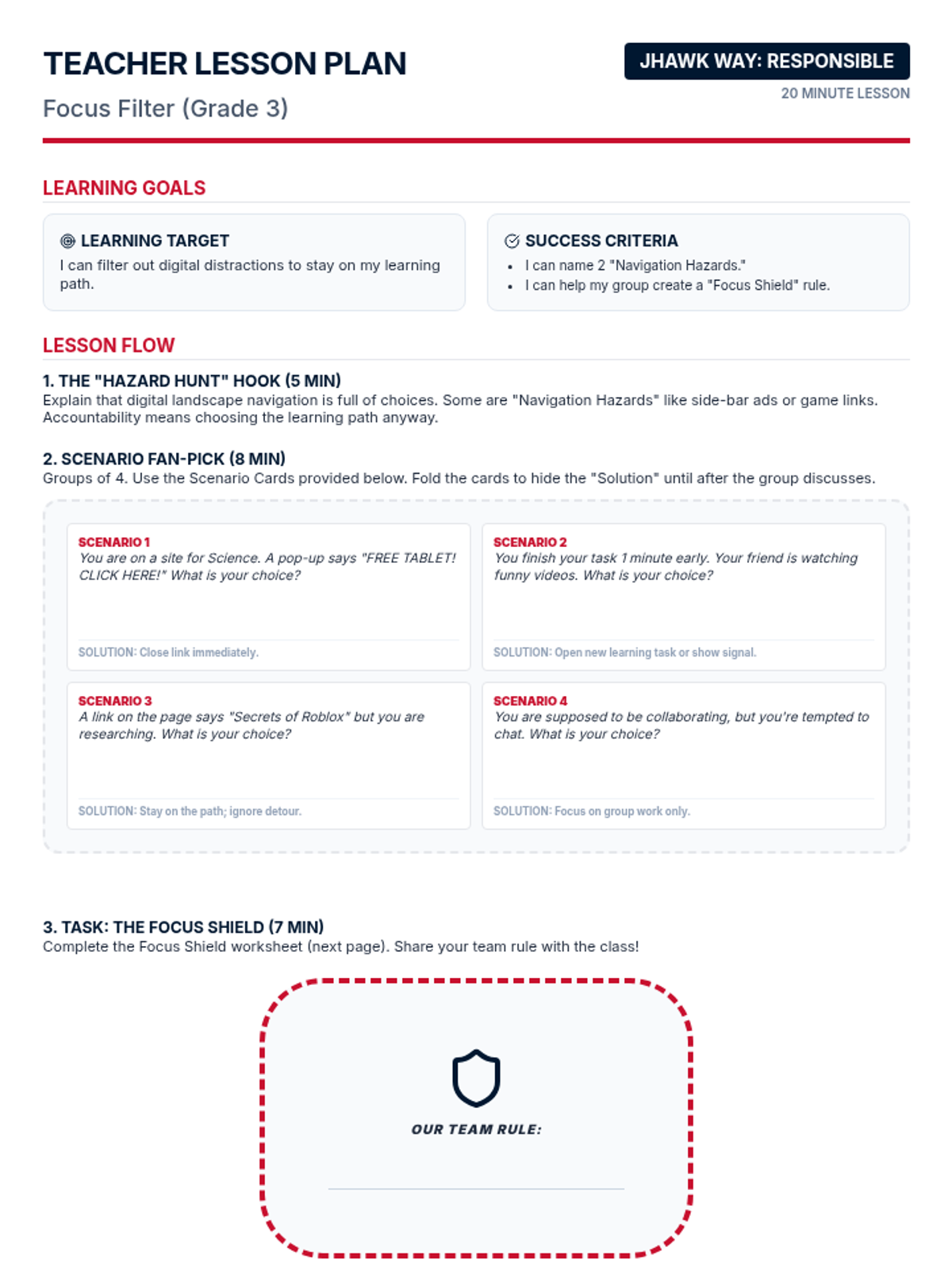
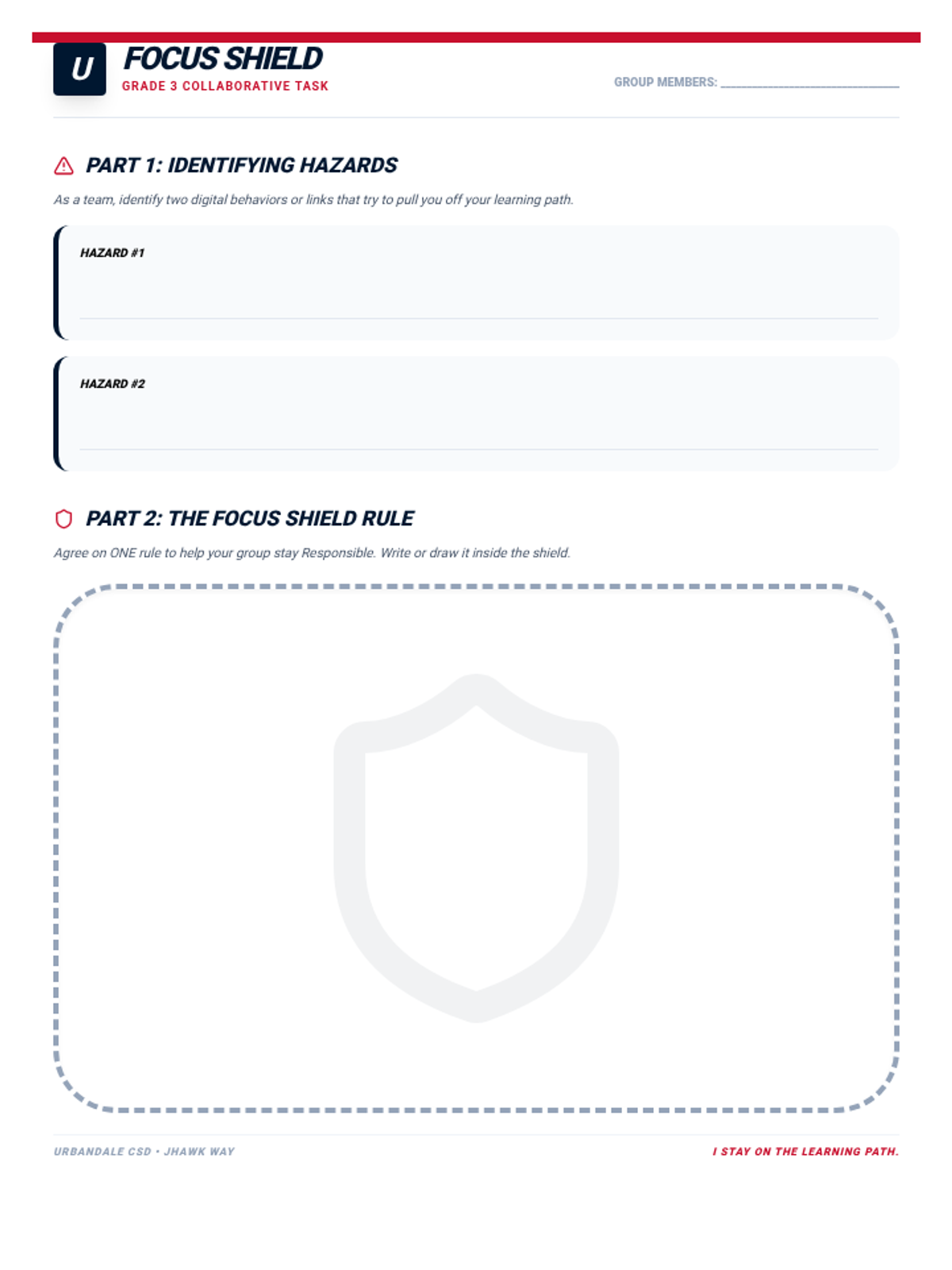
Third graders identify 'navigation hazards' and use a collaborative 'Focus Shield' to stay on their learning path.
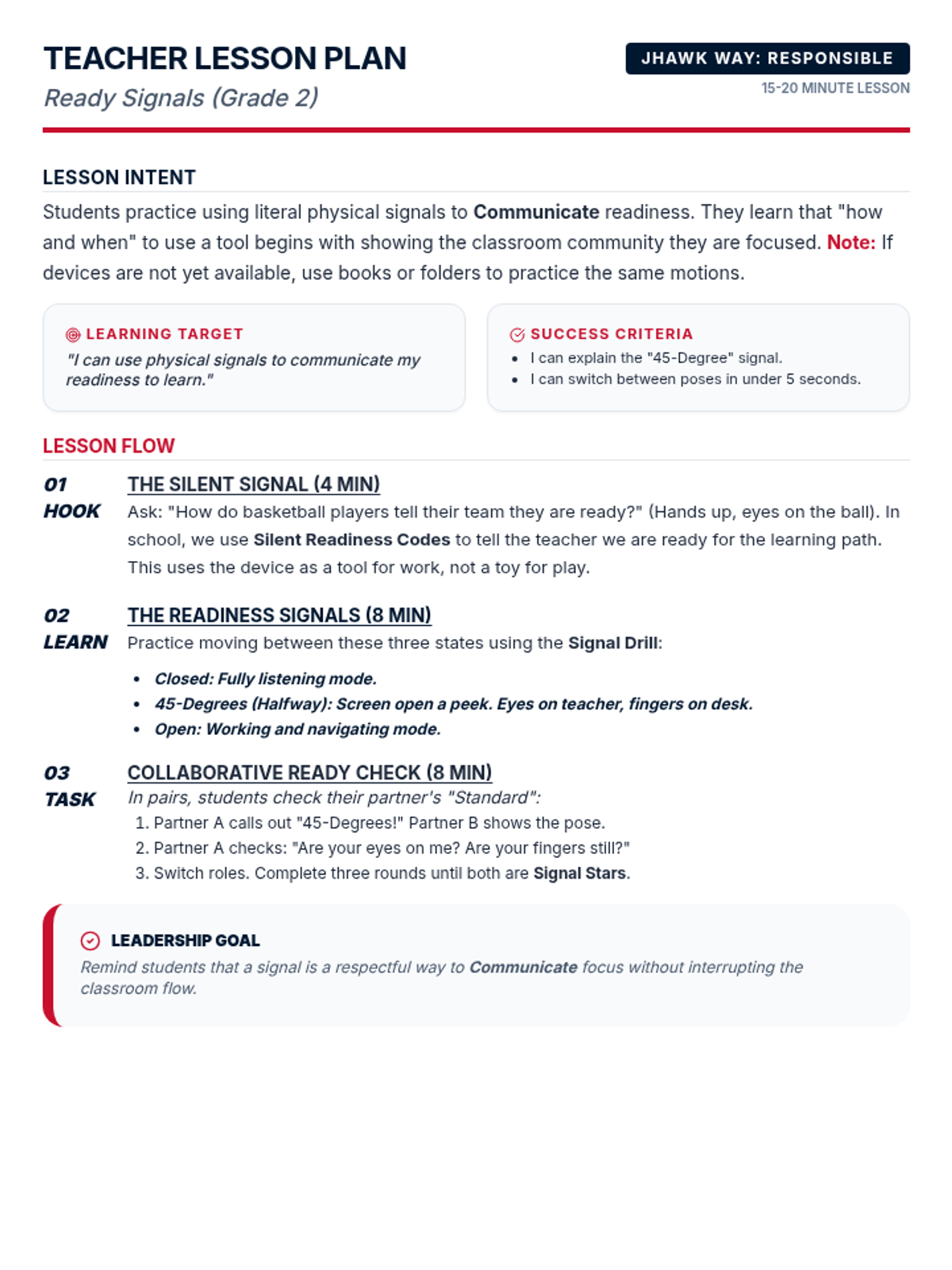
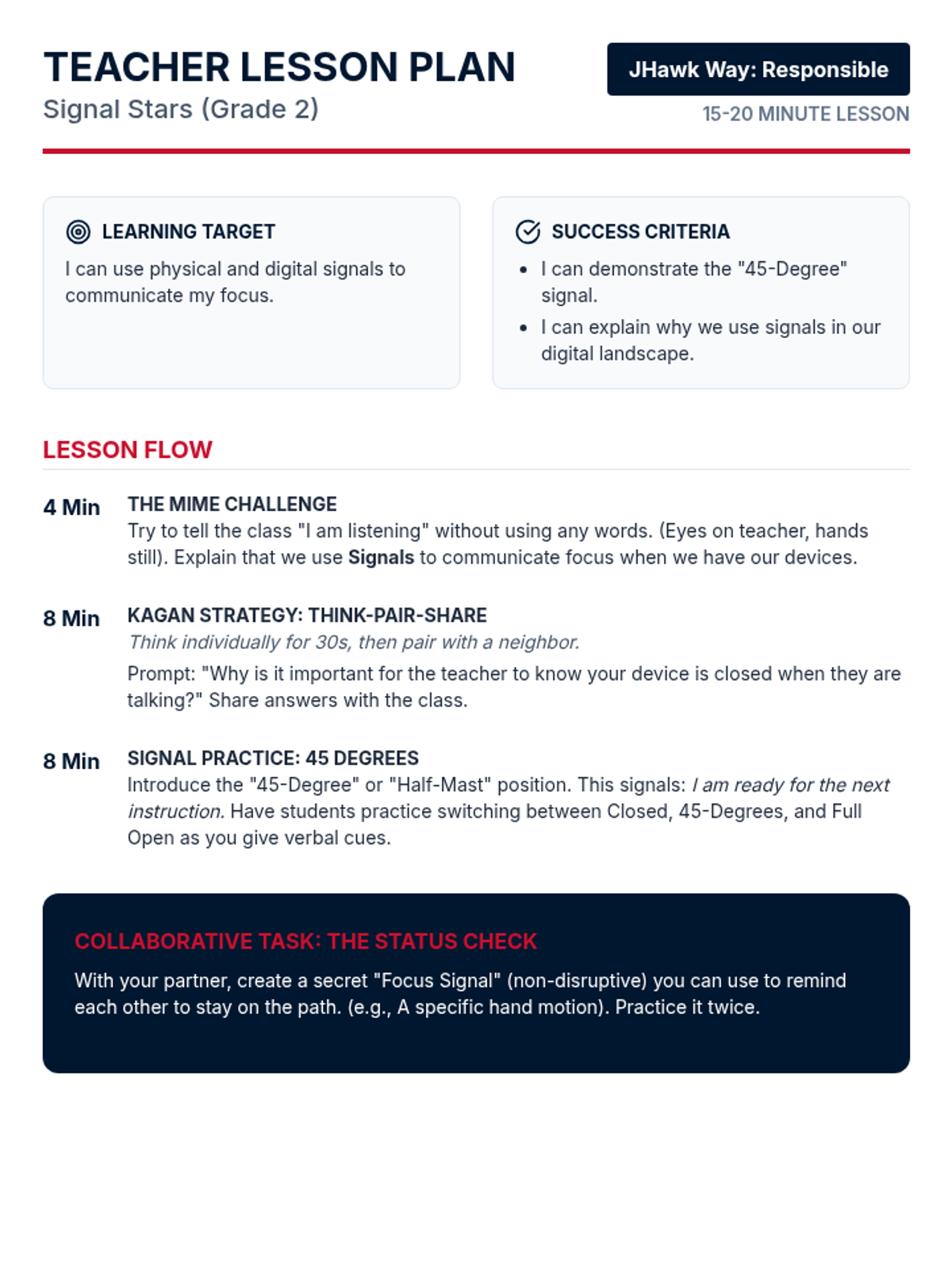
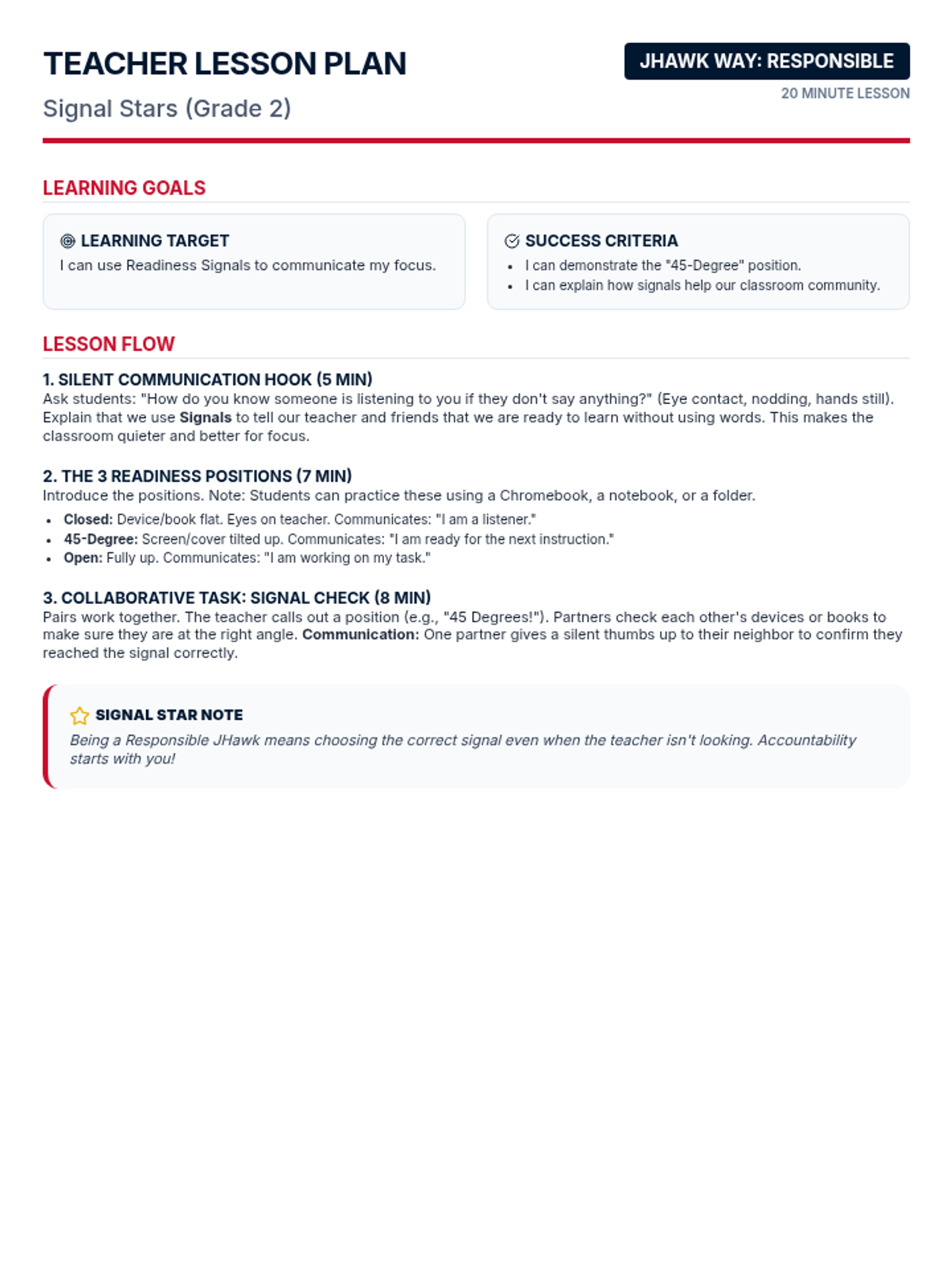
Second graders practice communicating their focus through physical 'Readiness Signals' to show they are prepared for the digital landscape.
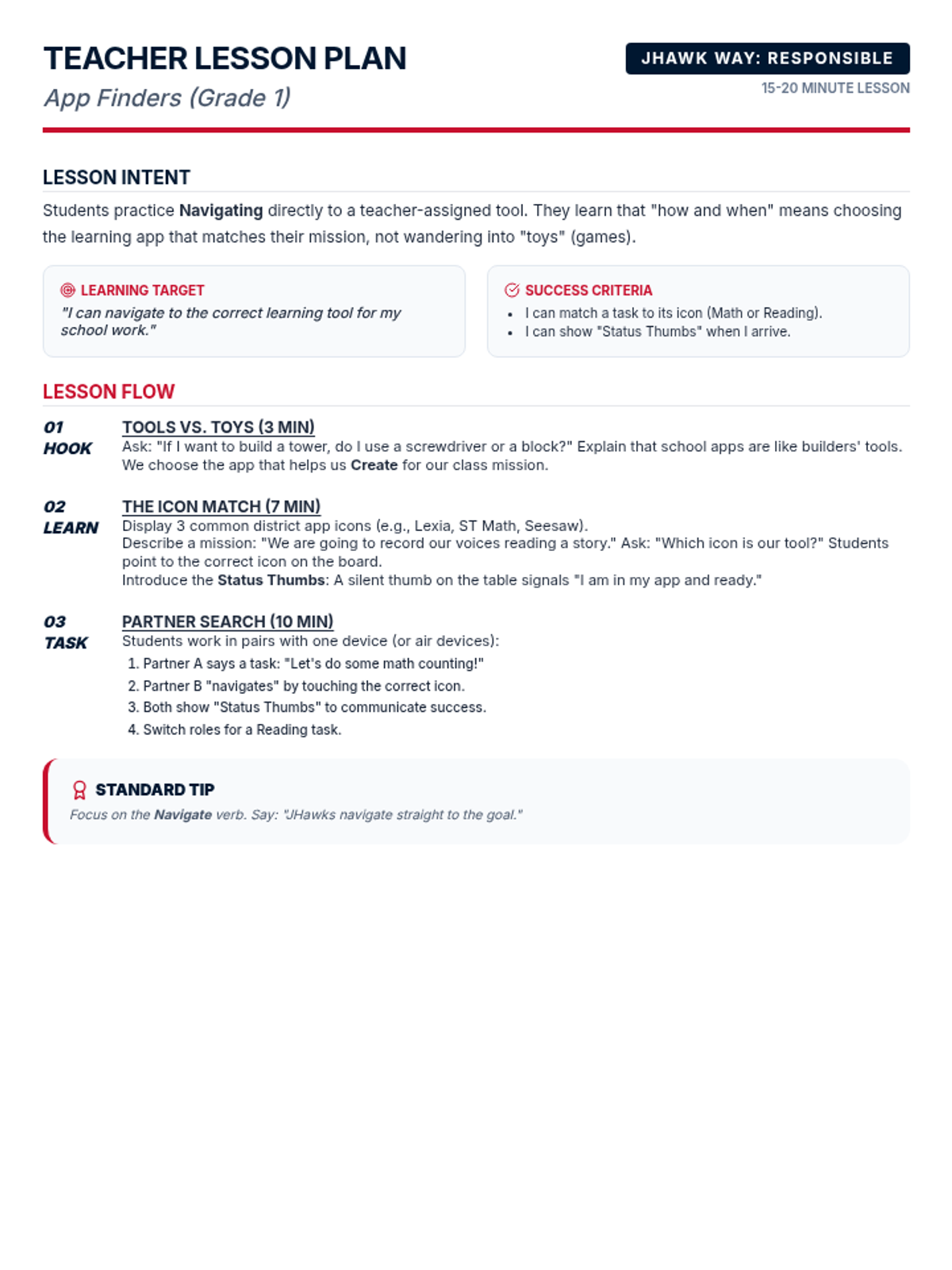
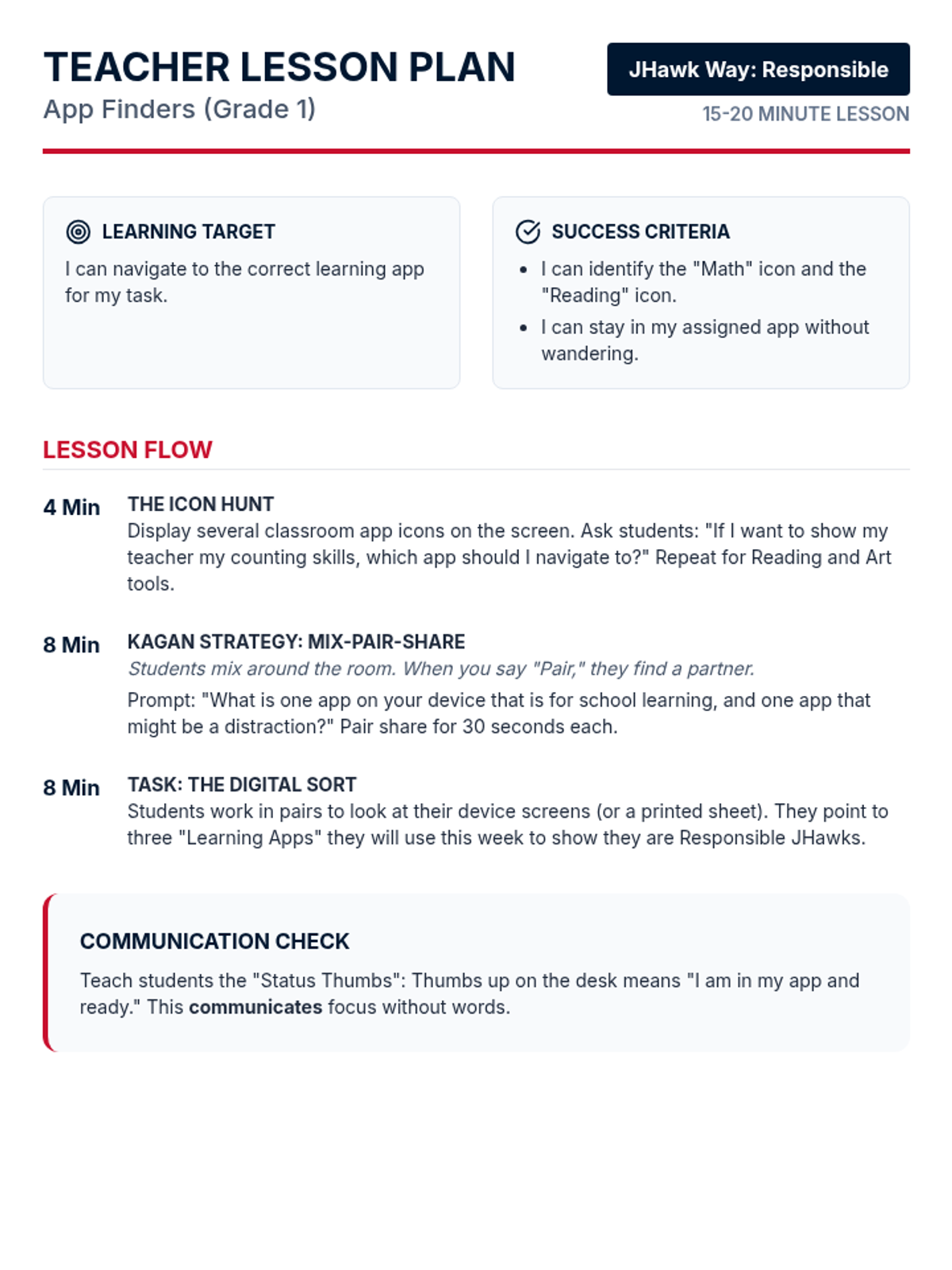
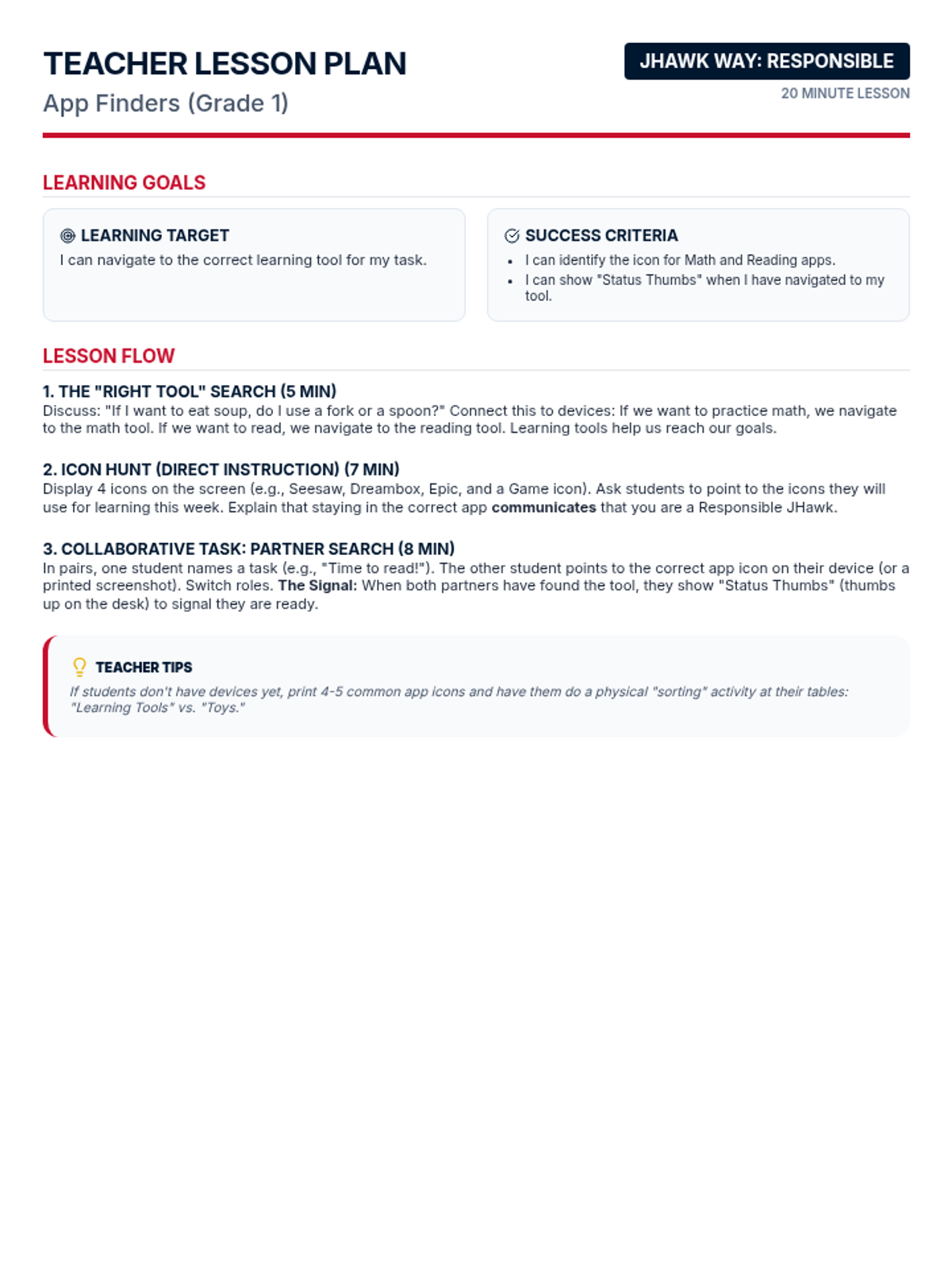
First graders distinguish between 'Learning Tools' and 'Toys' and practice navigating only to the path shown by the teacher.
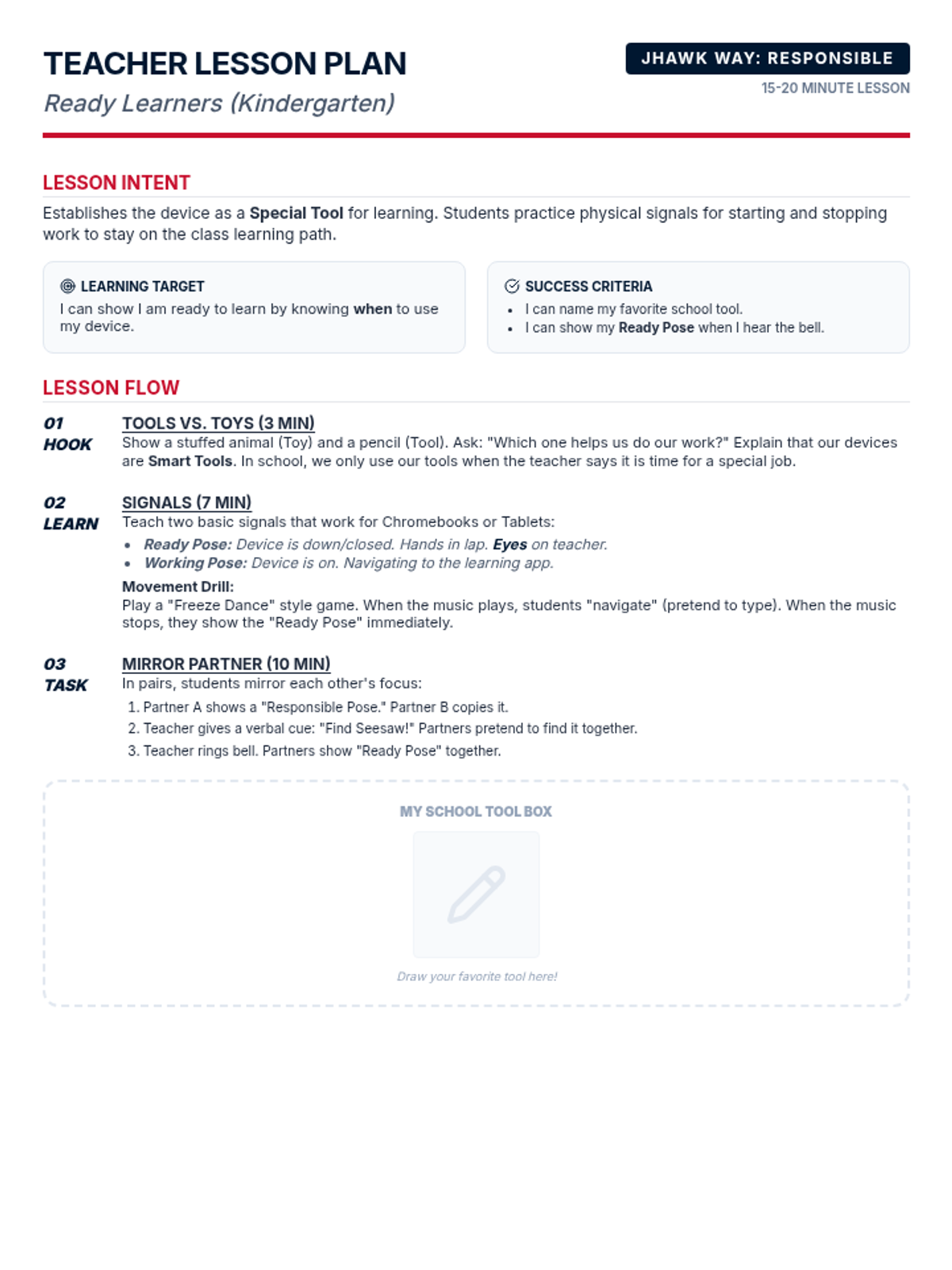
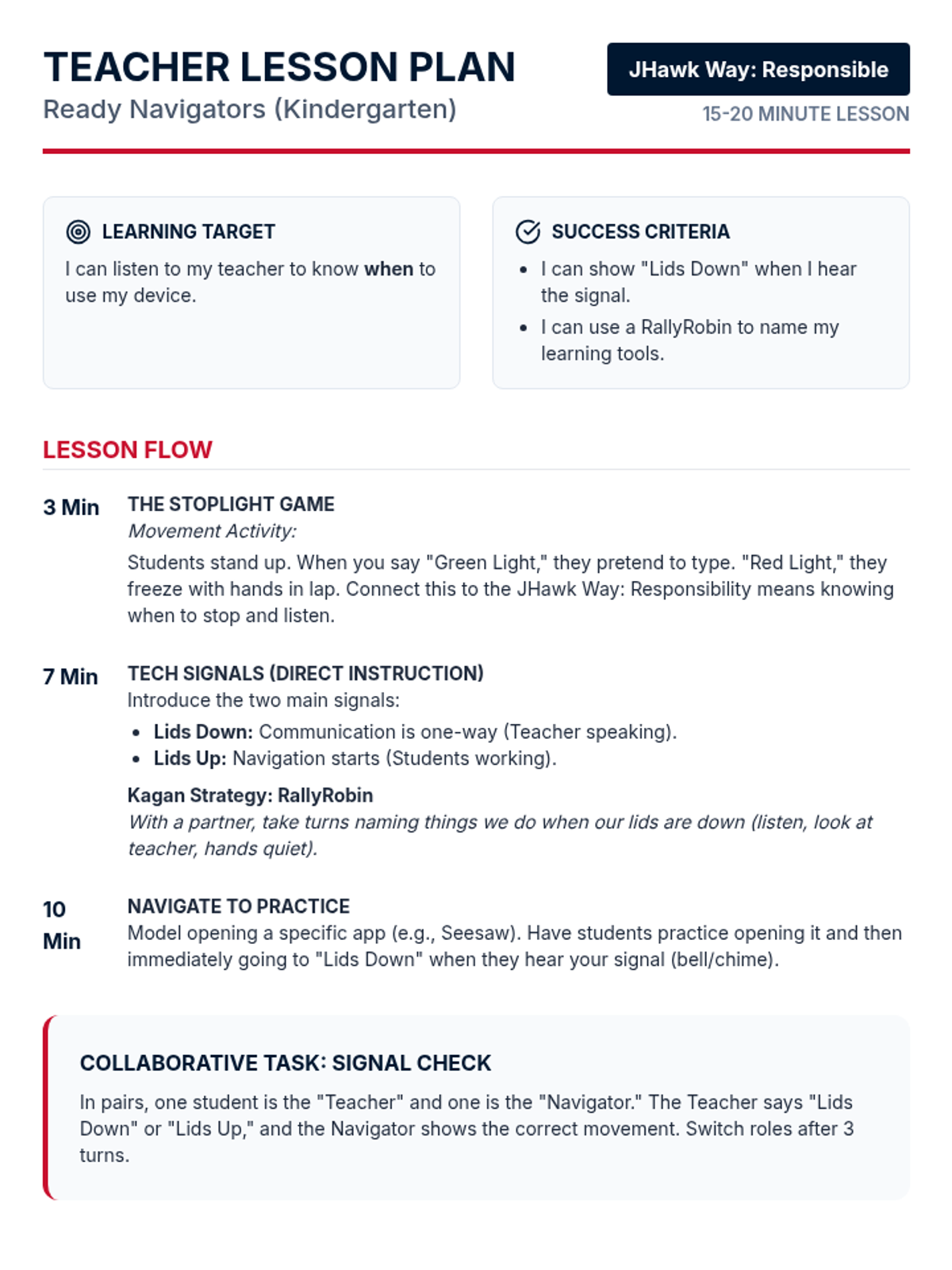
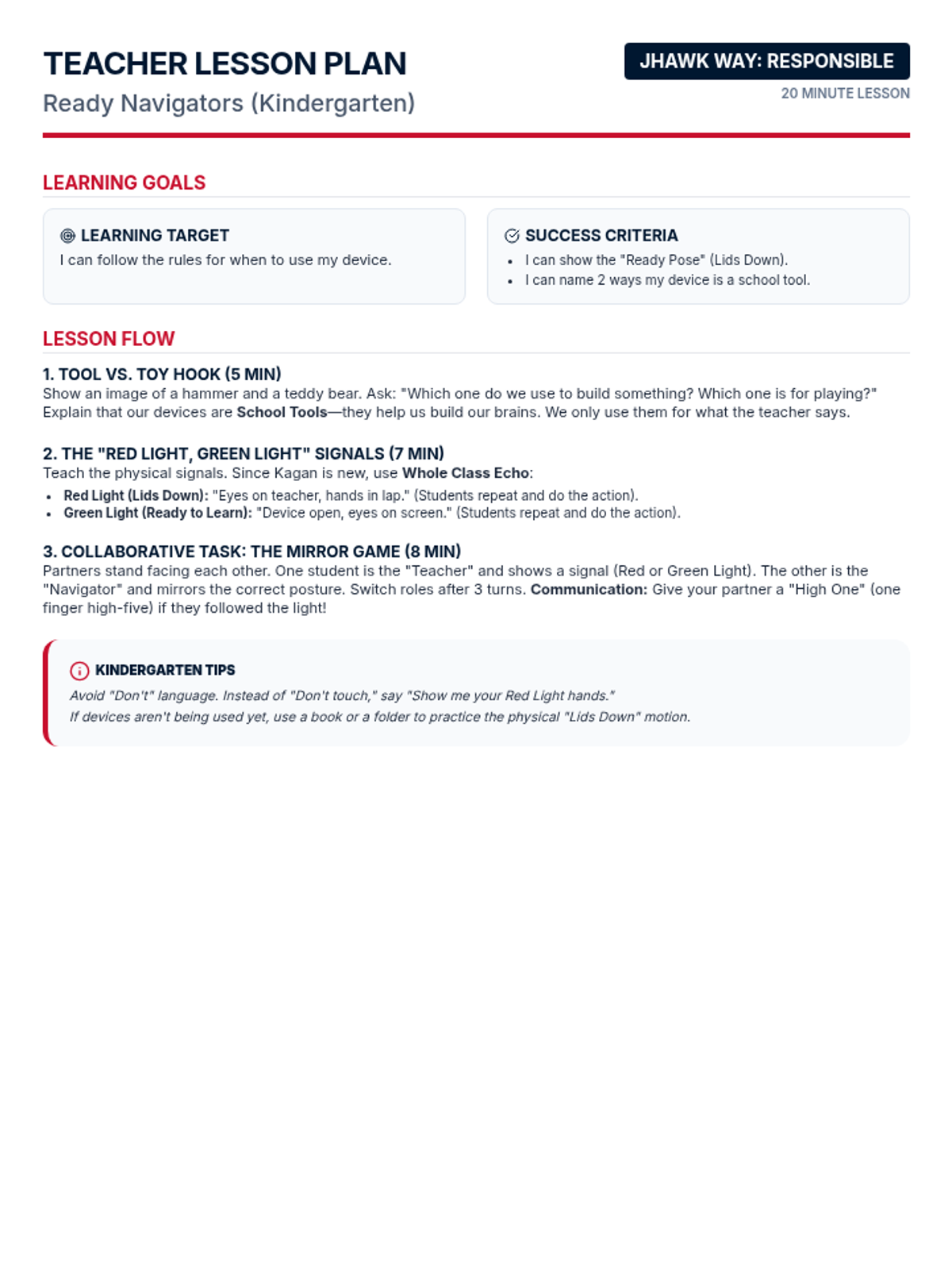
Kindergarten students learn that their device is a special tool for learning and practice listening for 'Red Light/Green Light' signals to know when to navigate.
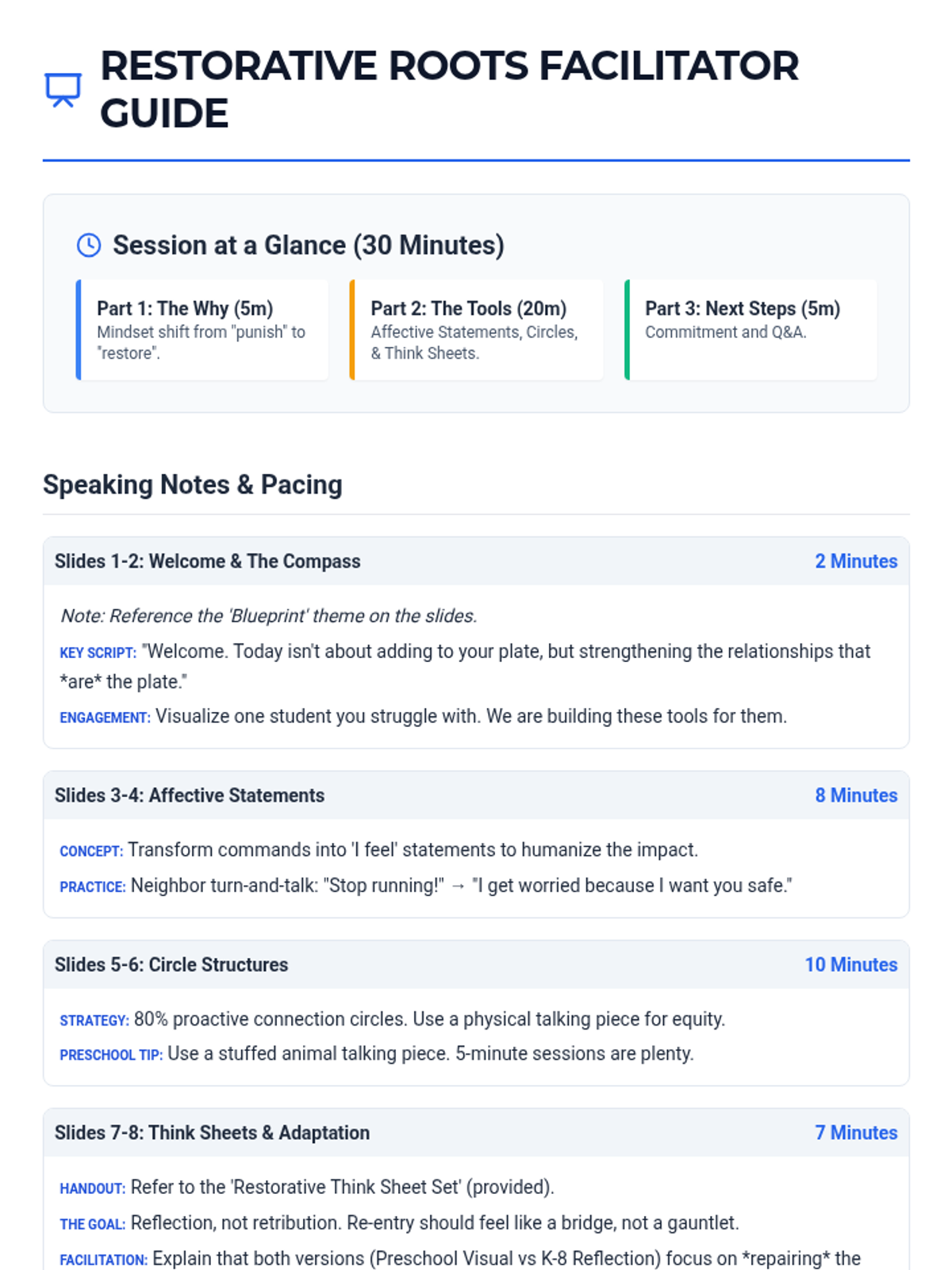
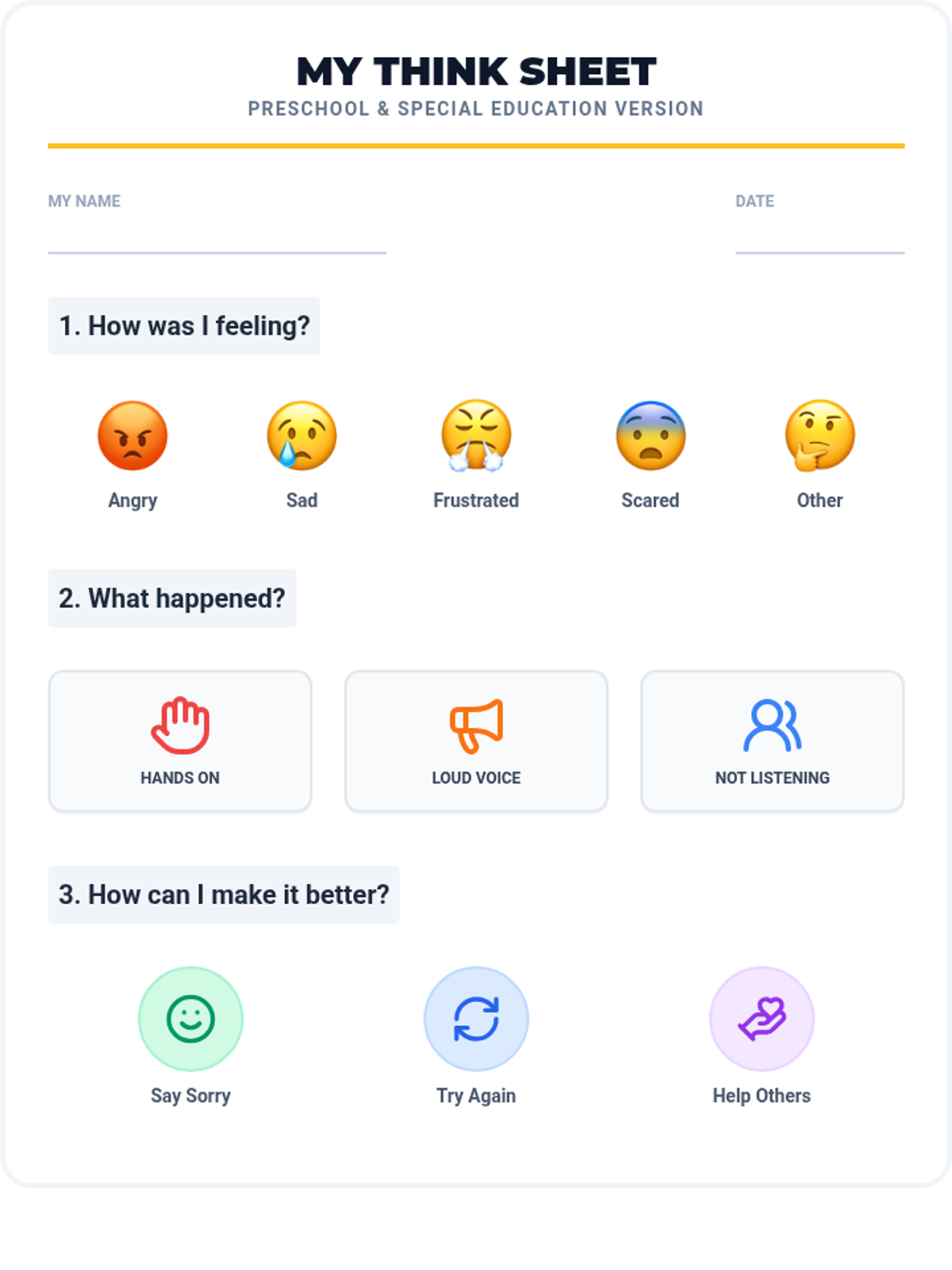
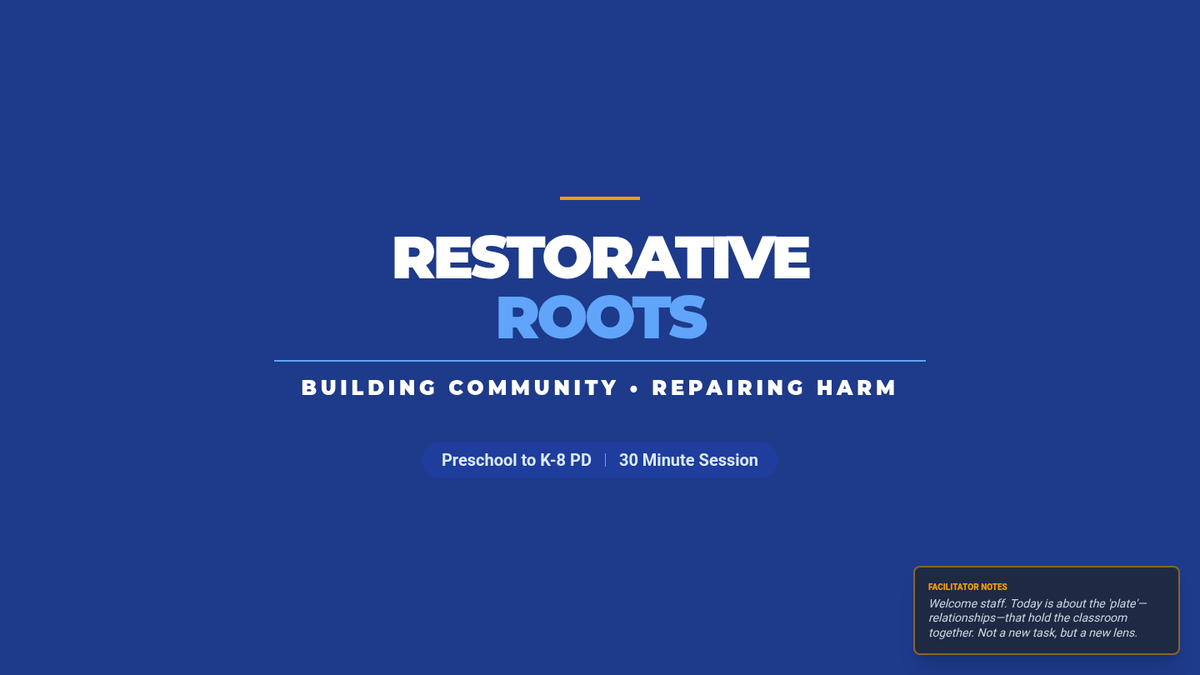
A 30-minute professional development session for preschool and K-8 staff focusing on restorative circles, affective statements, and re-entry reflection tools.
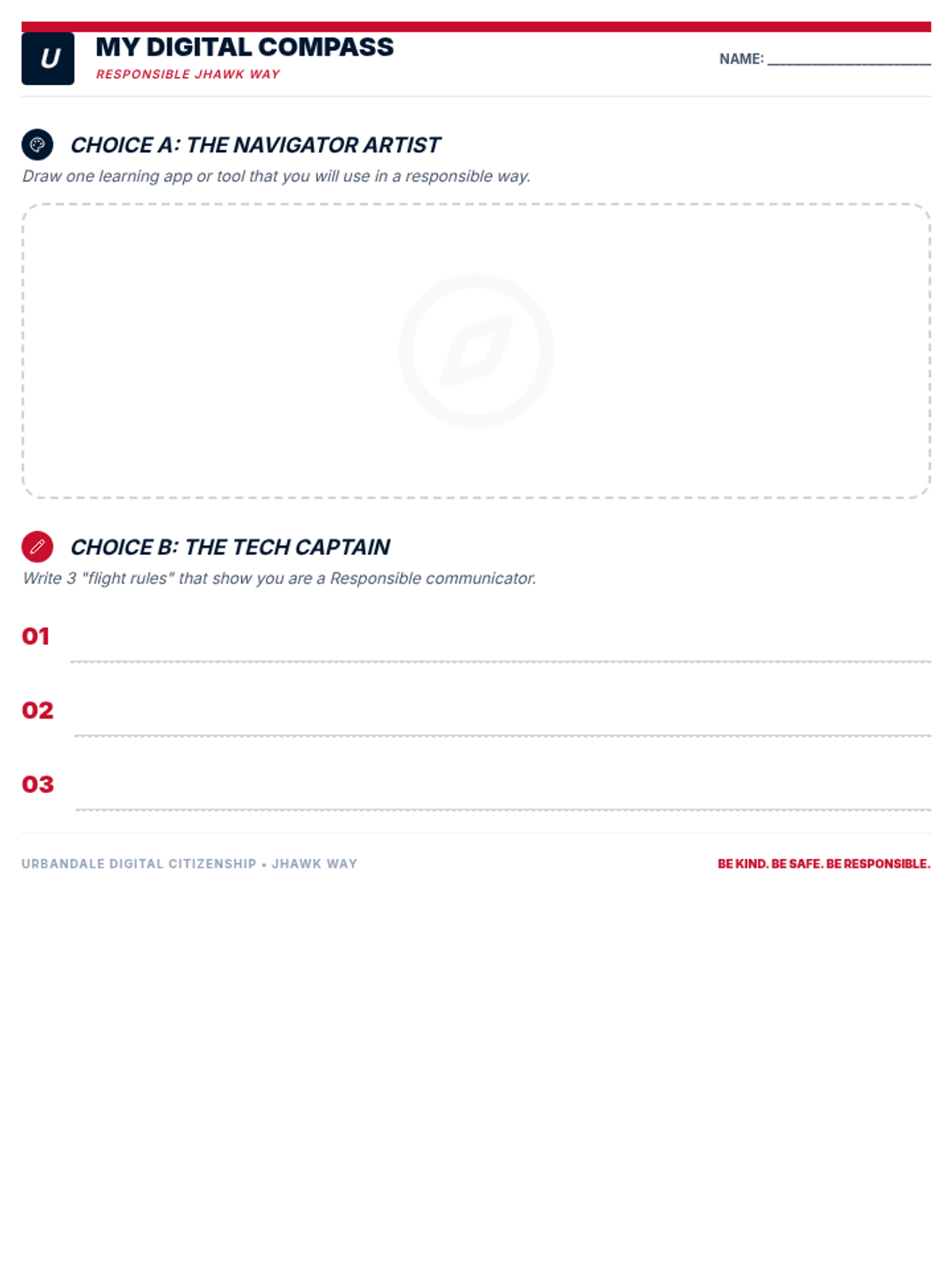
High school students develop agency and professional digital habits, demonstrating Accountability by aligning their device use with academic goals and professional communication.
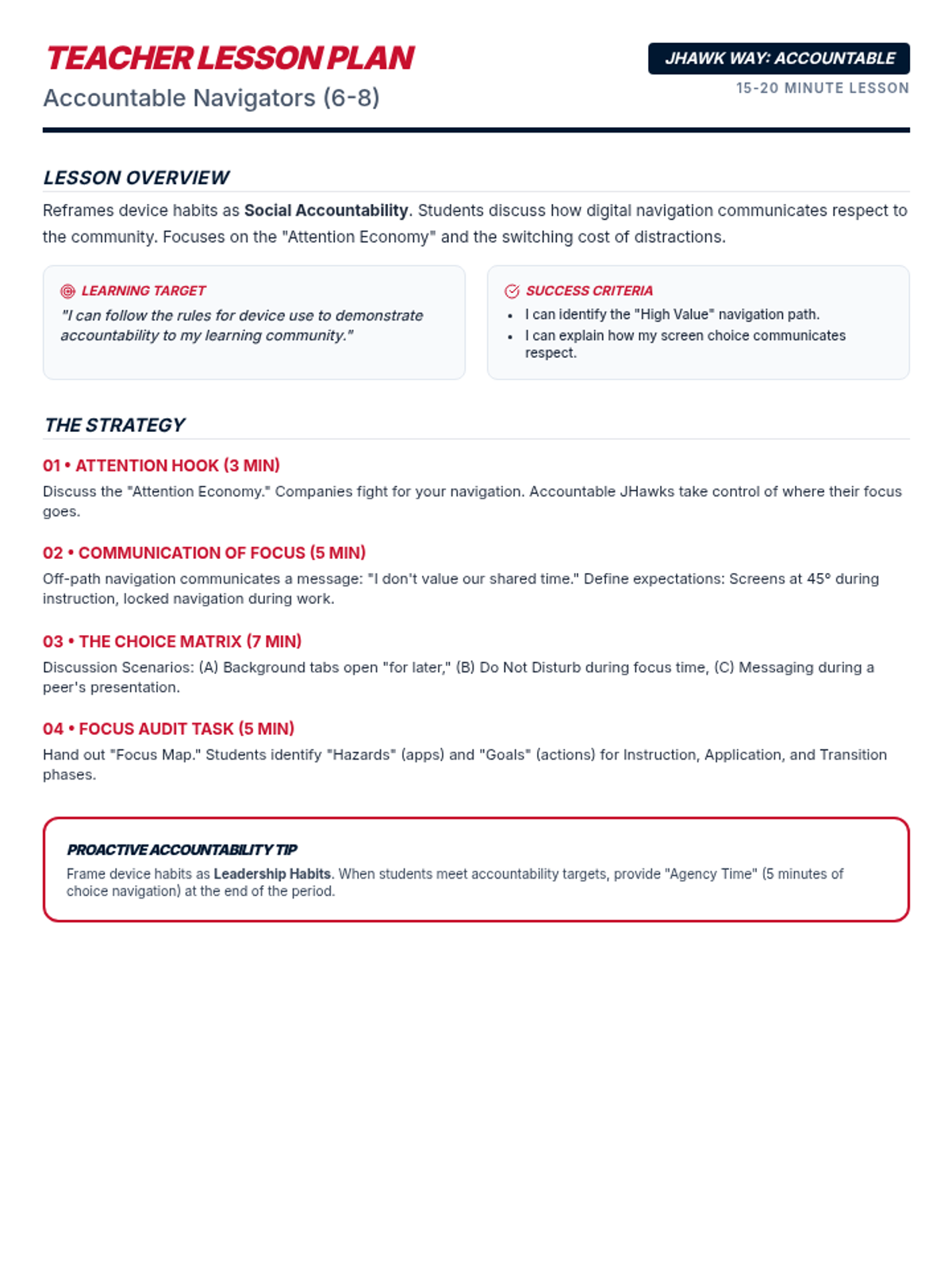
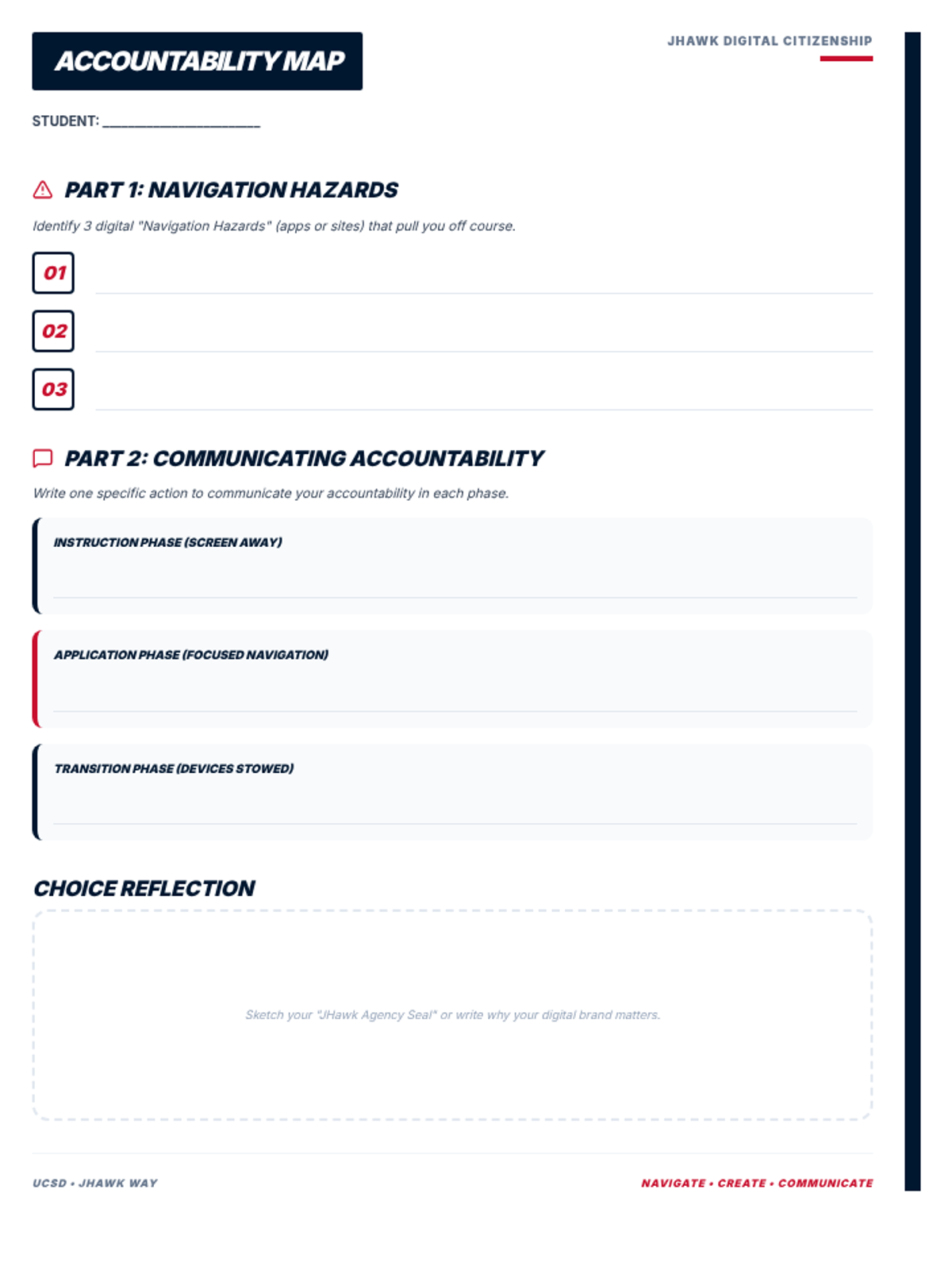
Middle school students focus on the JHawk Way value of Accountability by managing their digital attention and communicating respect through focused device use.
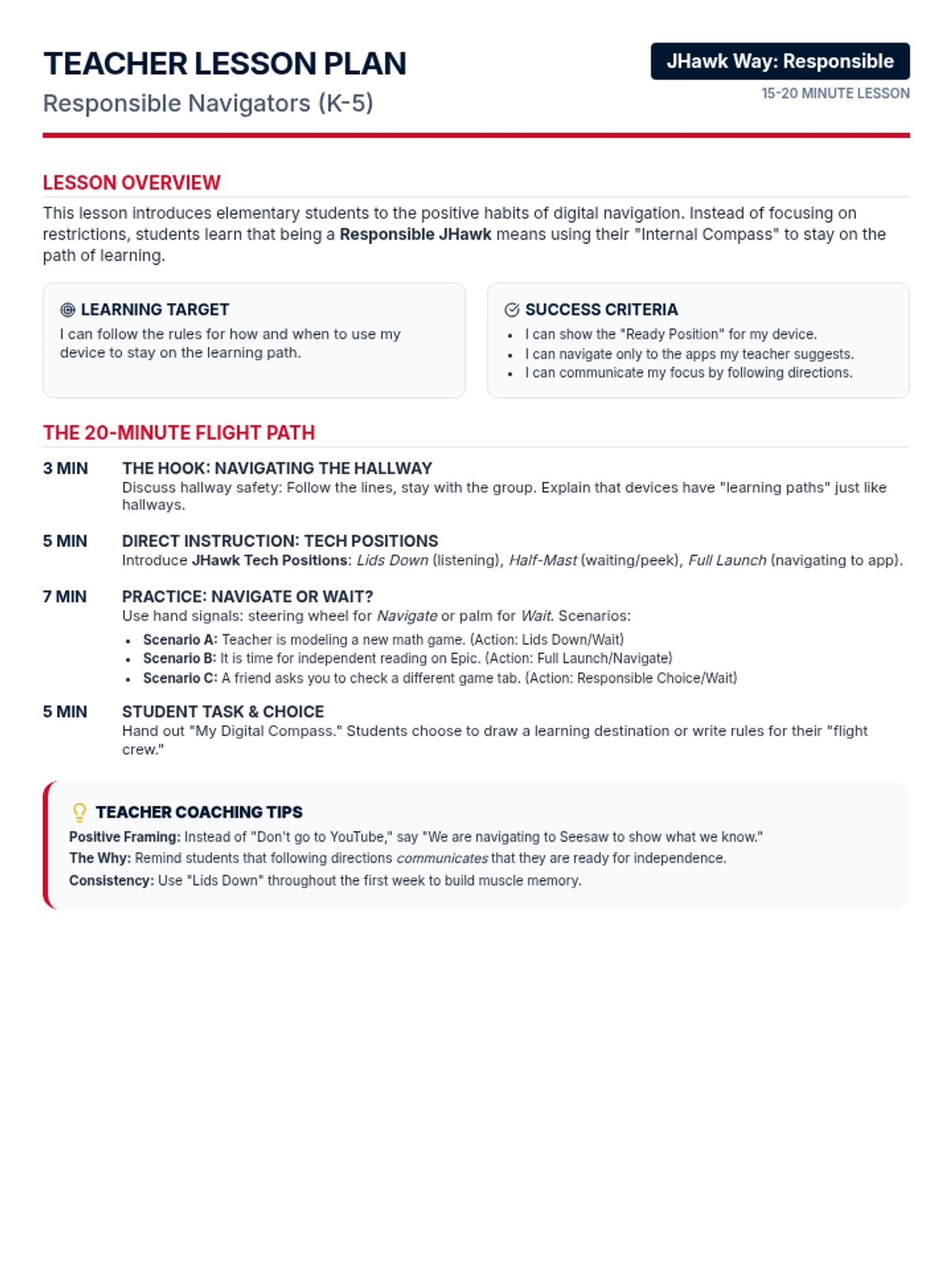
Elementary students explore how to be Responsible JHawks by navigating to the right learning tools at the right time and communicating their readiness to learn.
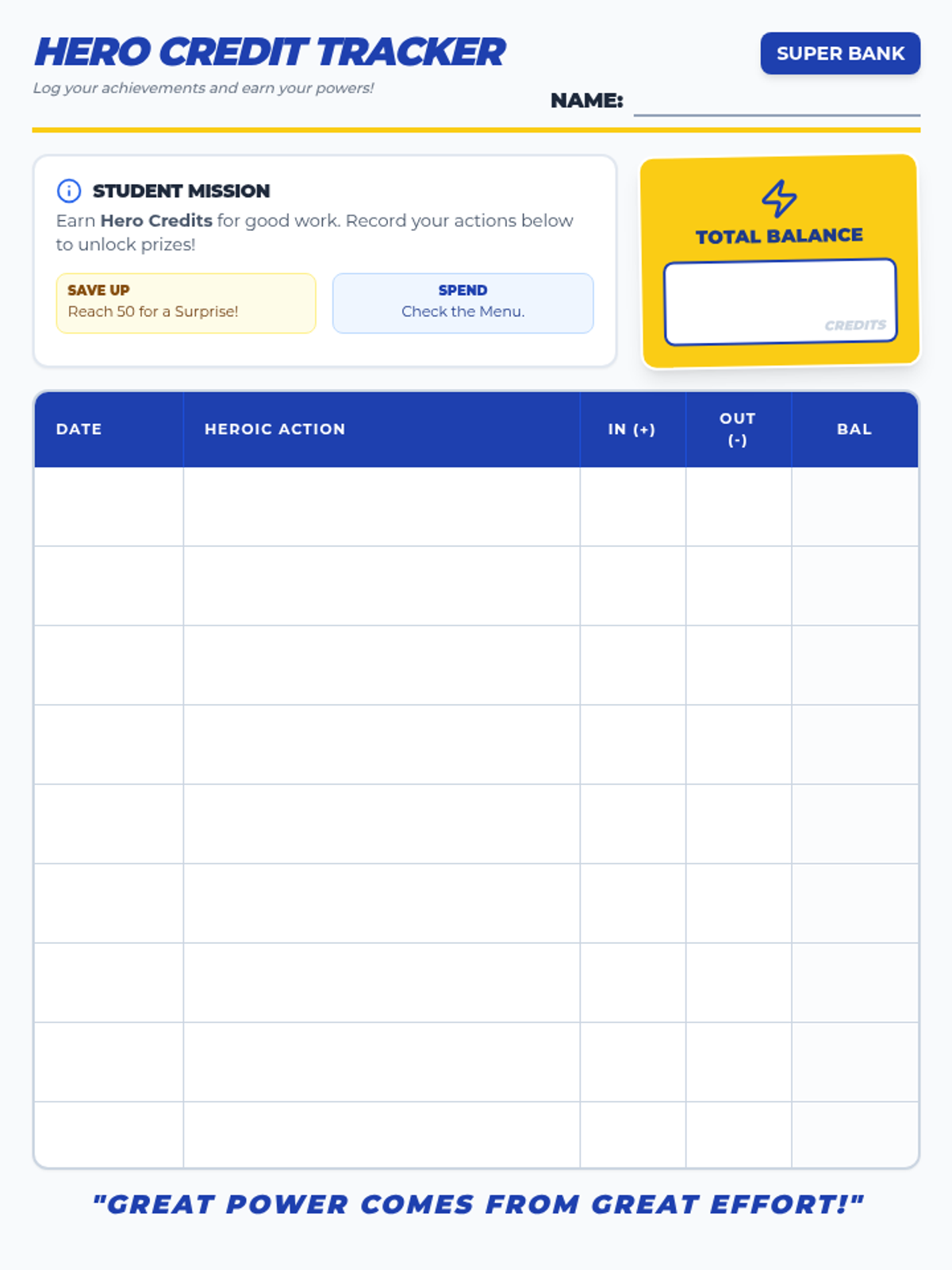
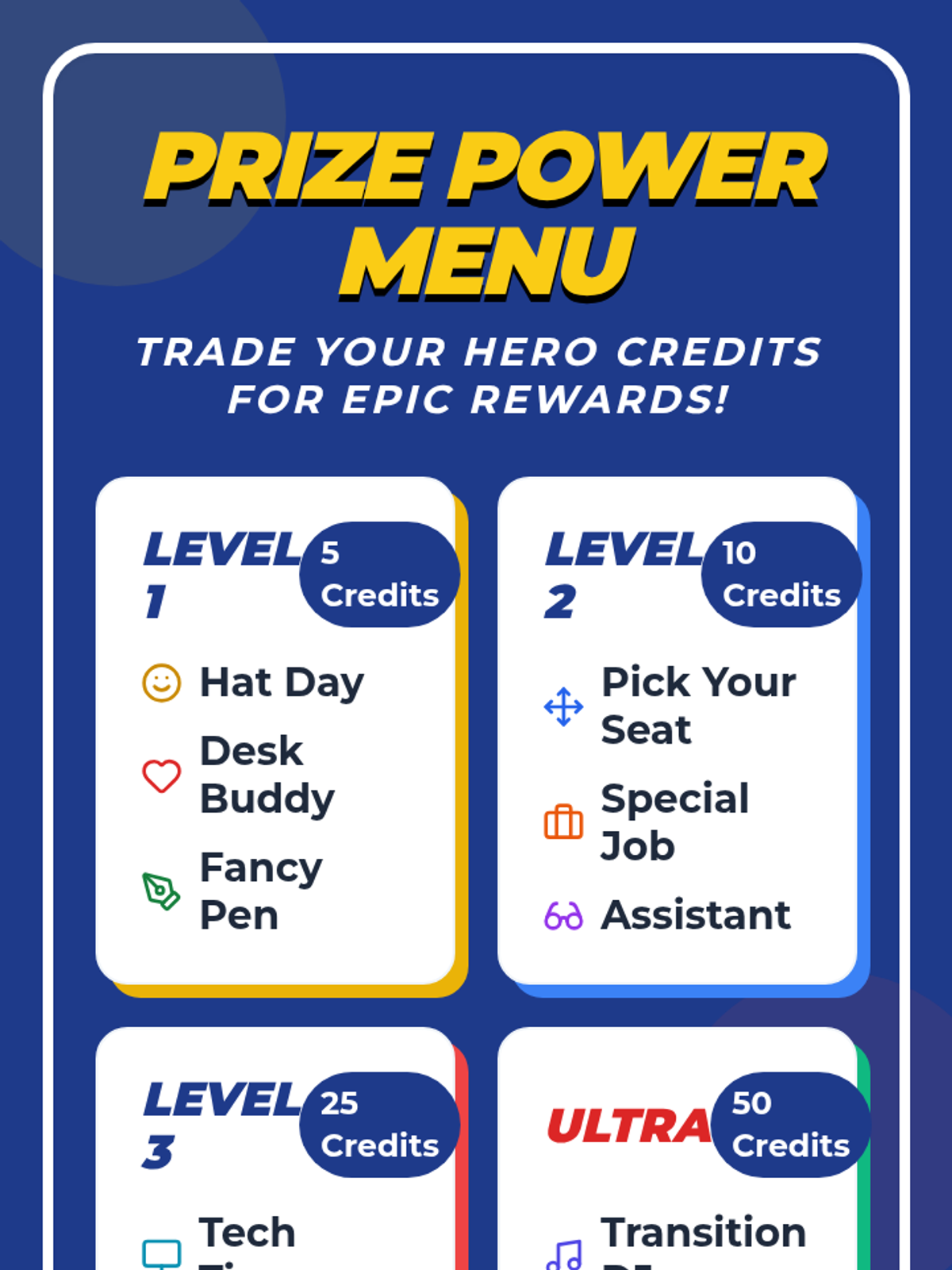
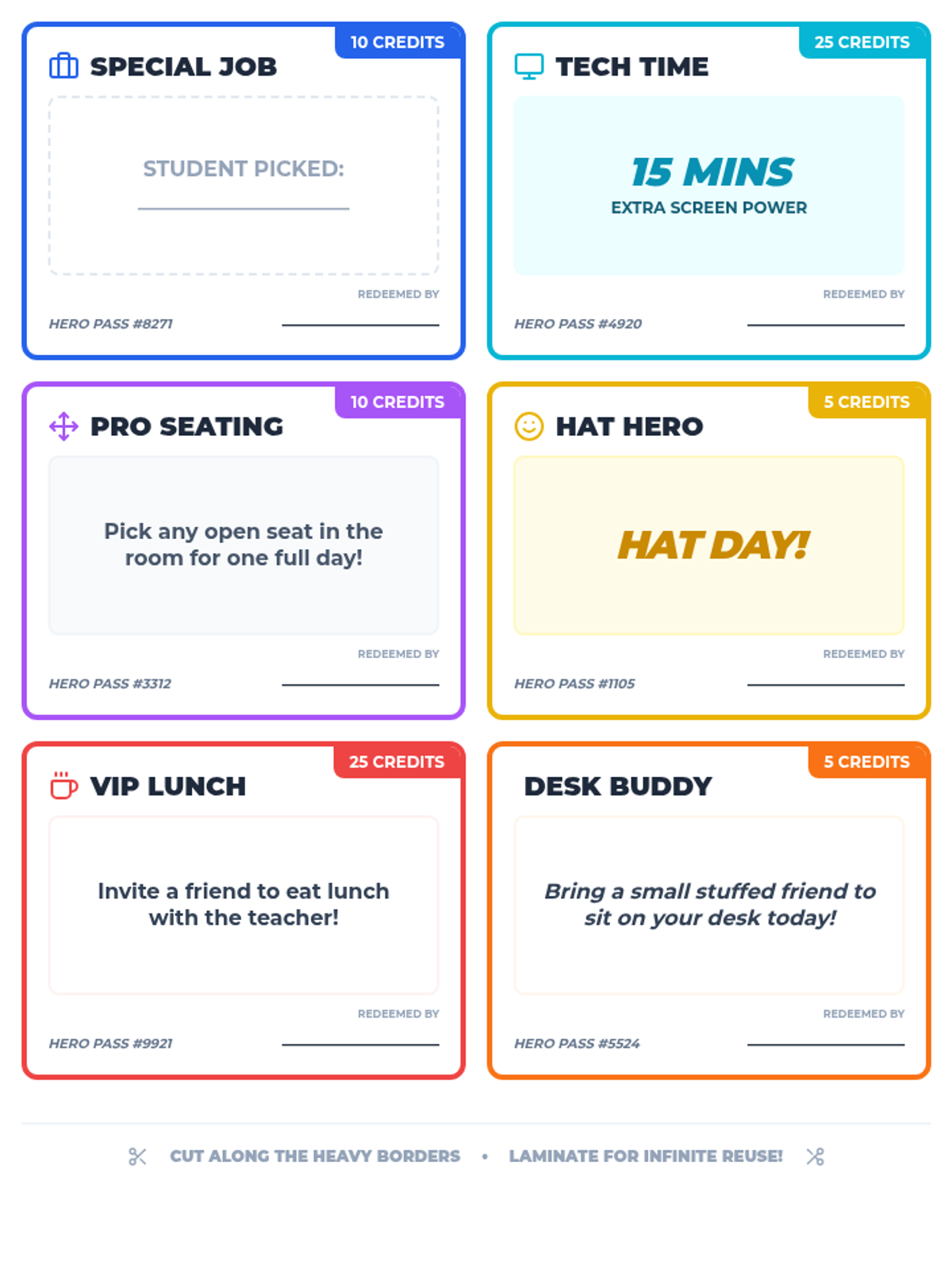
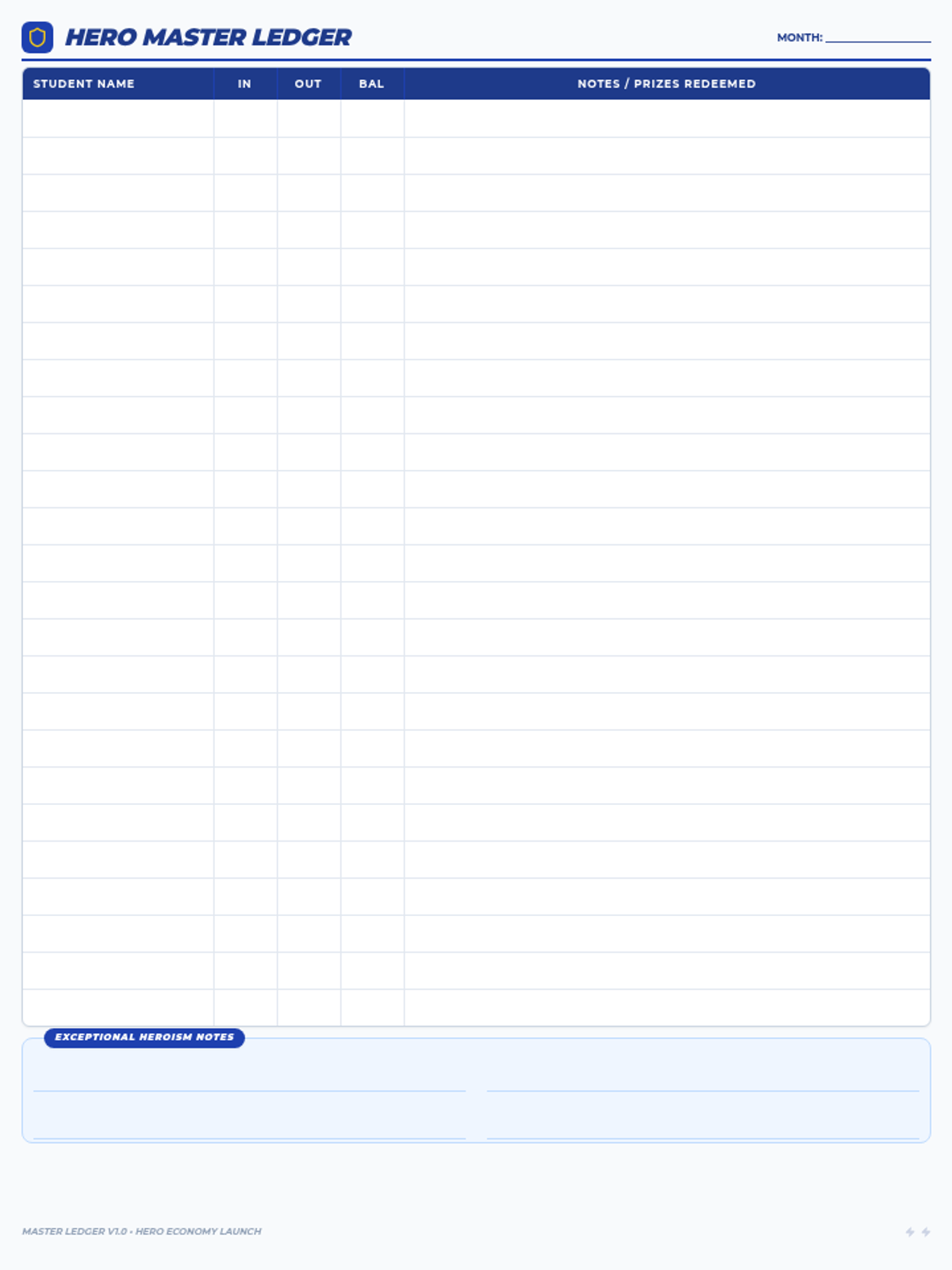
A classroom management system focused on positive reinforcement through a token economy, featuring non-tangible rewards.
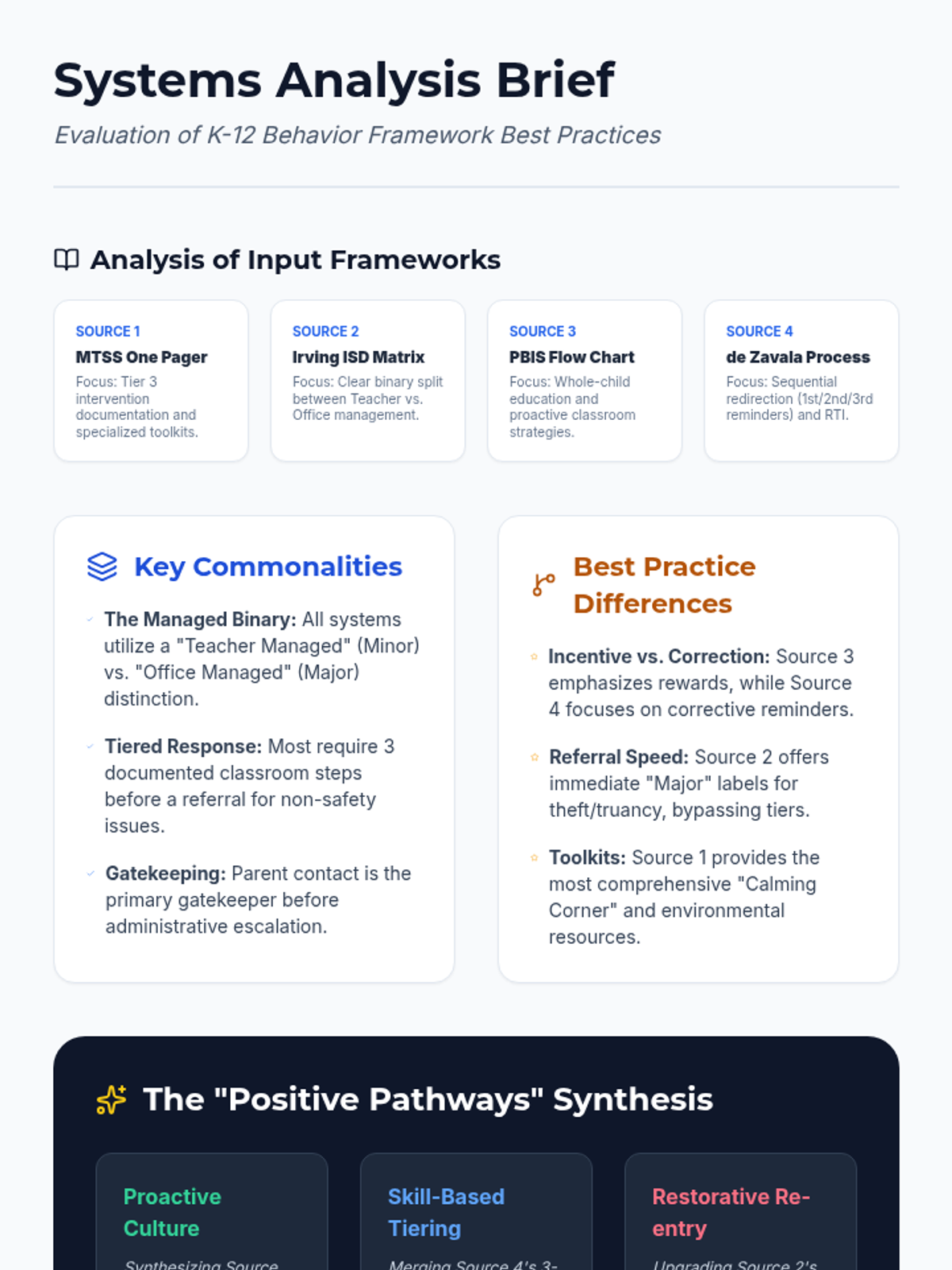
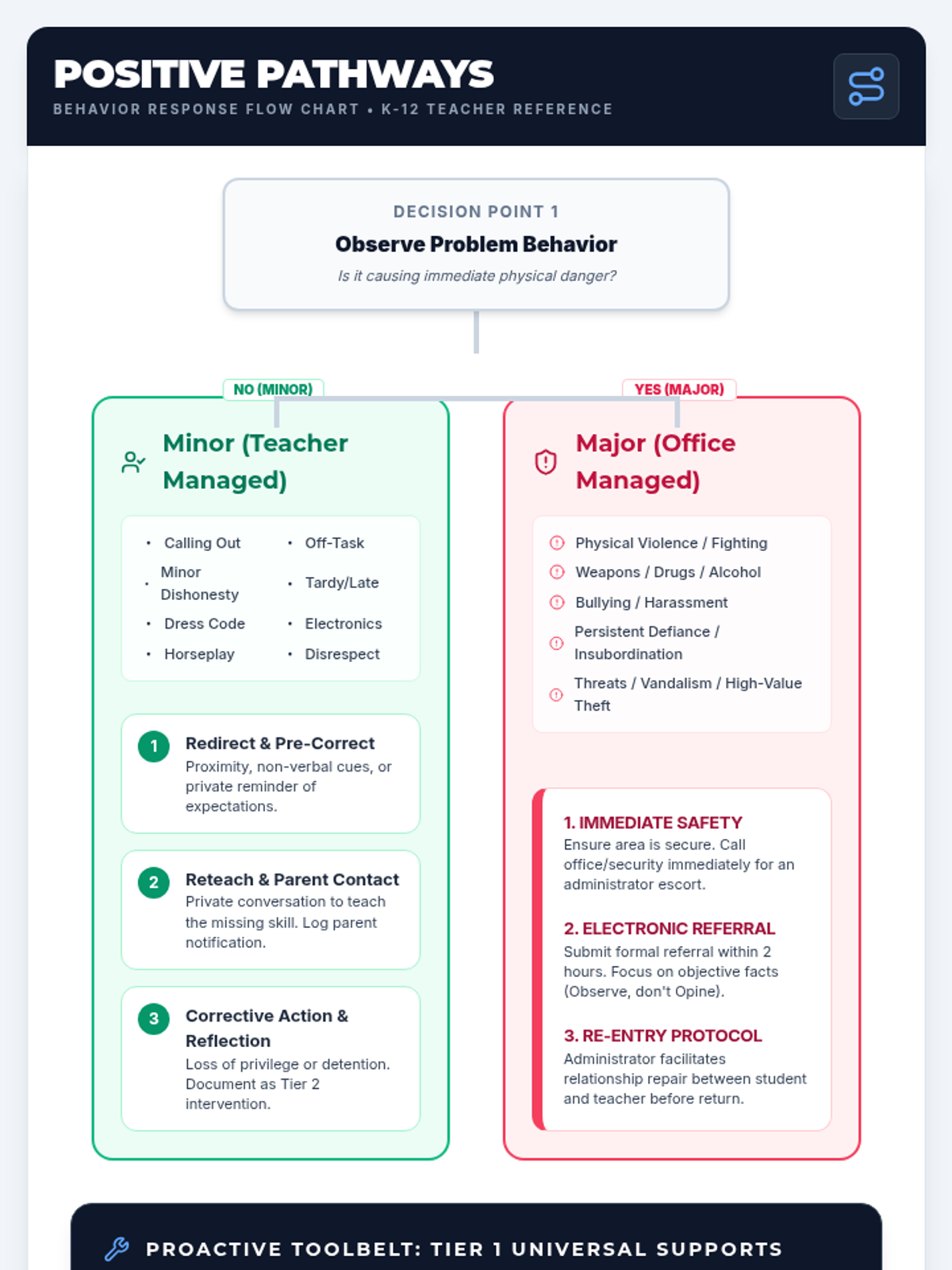
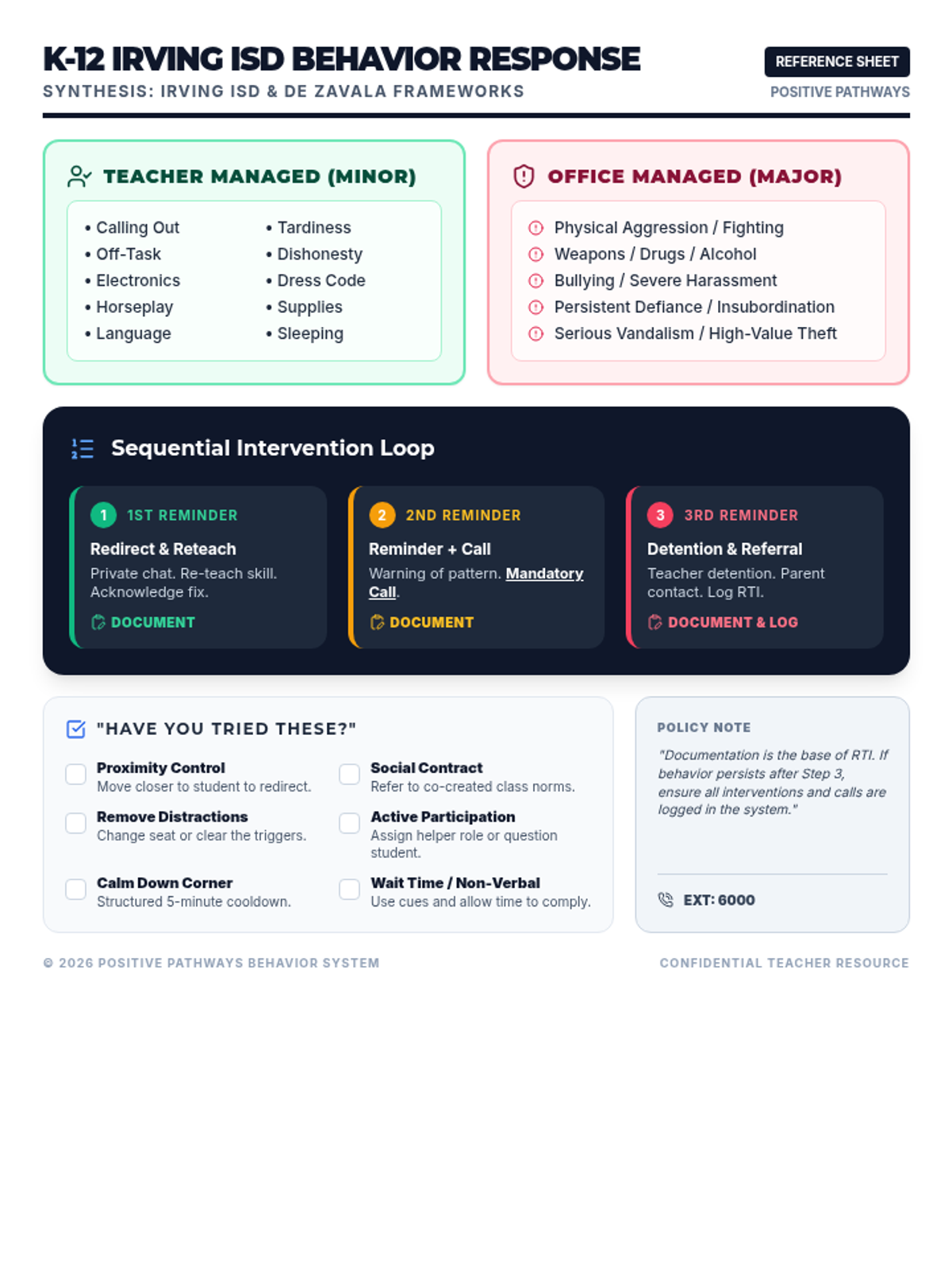
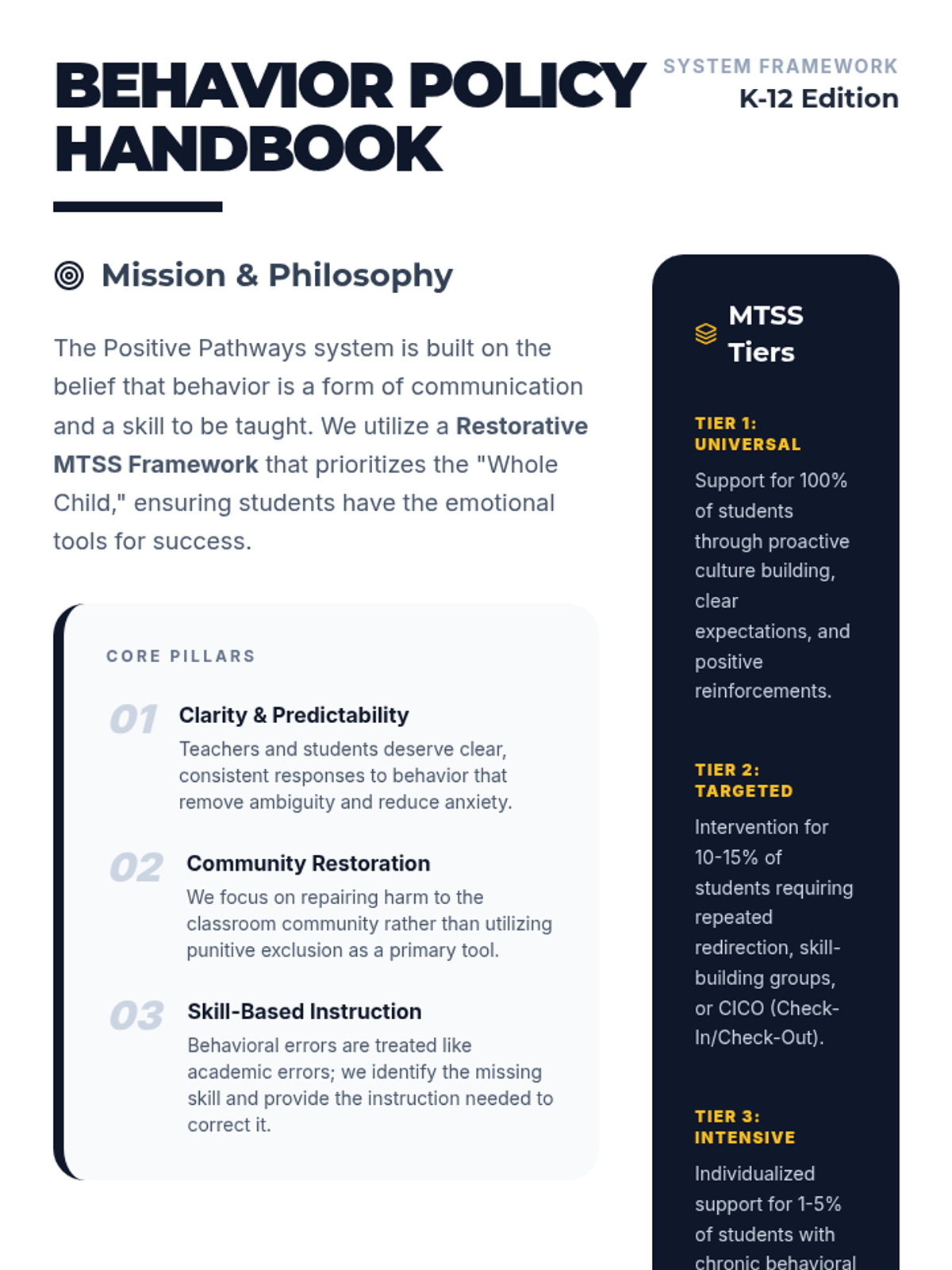
A comprehensive K-12 behavior management system that synthesizes best practices from MTSS, PBIS, and restorative justice frameworks. This lesson provides teachers with a clear decision-making flow and a detailed policy handbook for maintaining a positive school culture.
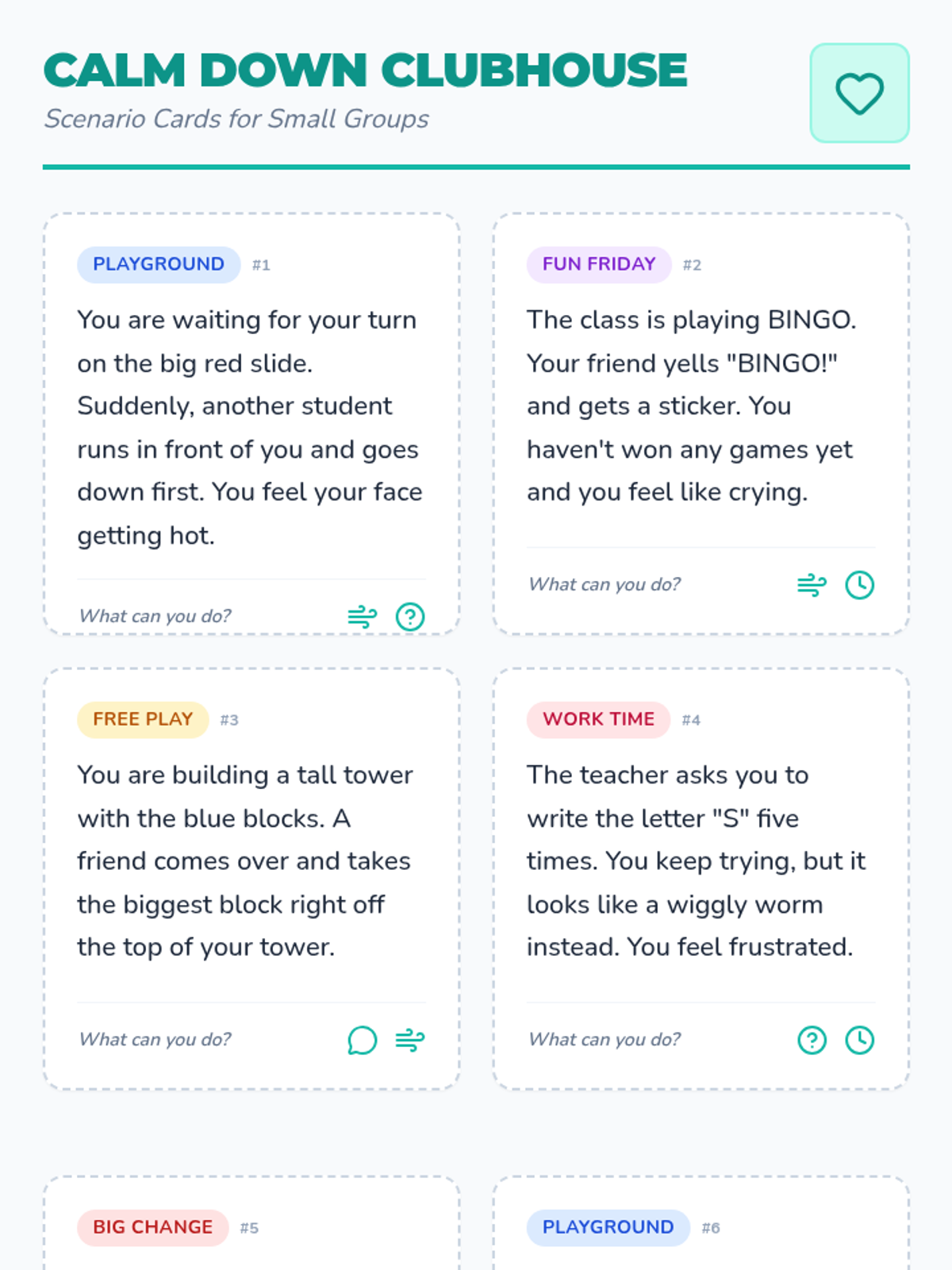
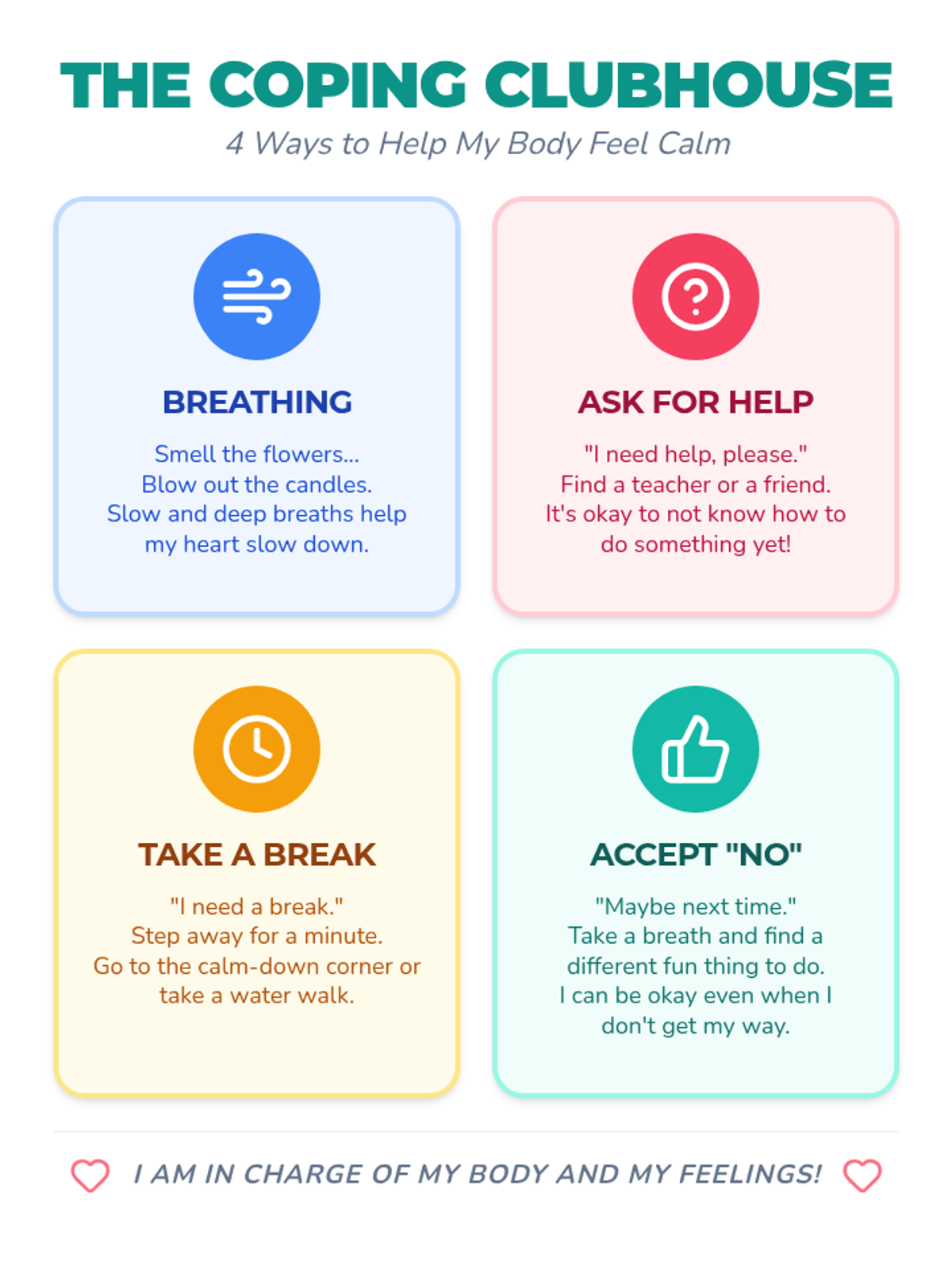
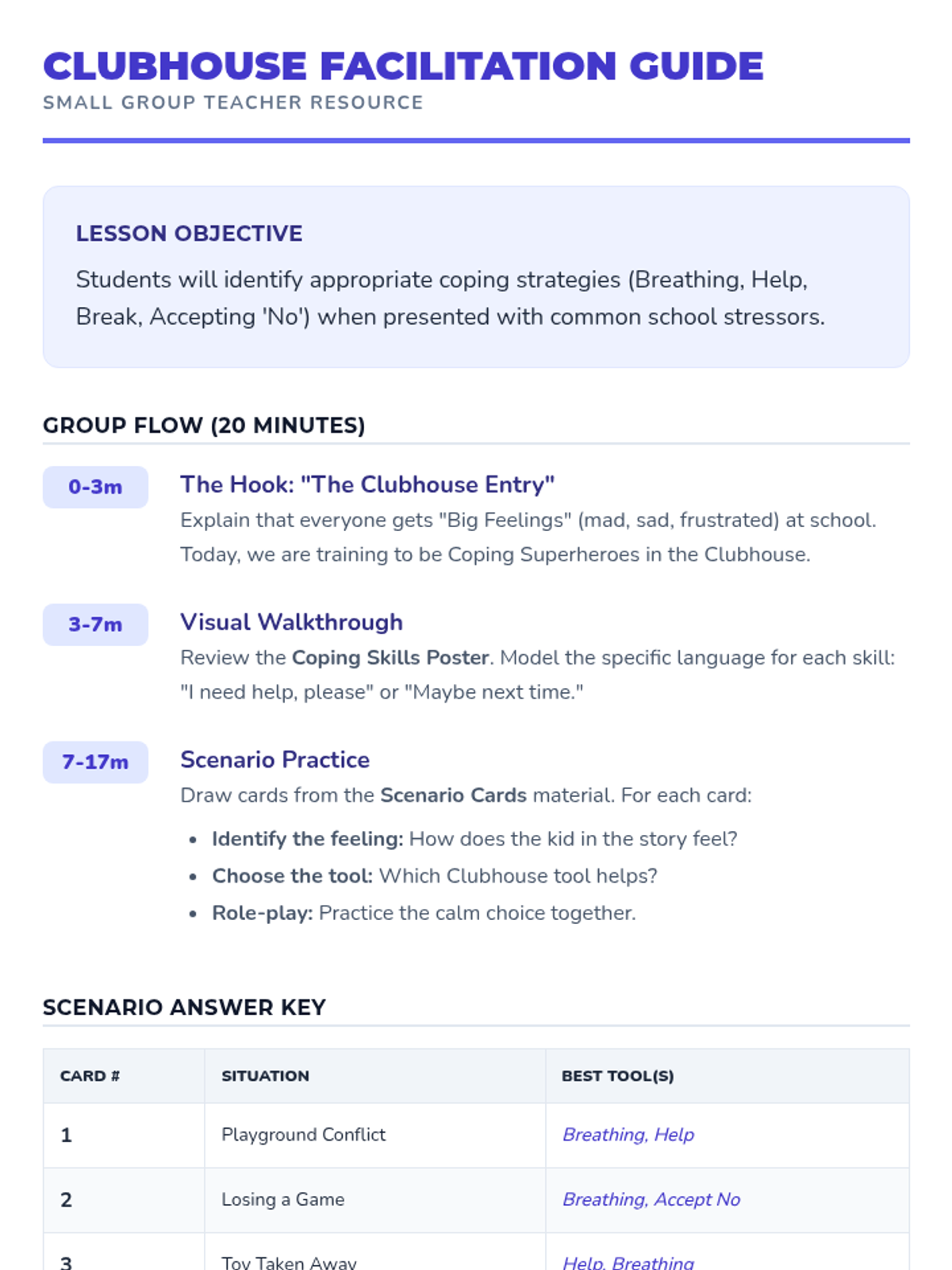
A small group social-emotional learning lesson focused on identifying and applying coping skills to common school-based stressors. Kindergarteners will practice choosing between breathing, asking for help, taking a break, and accepting "no".
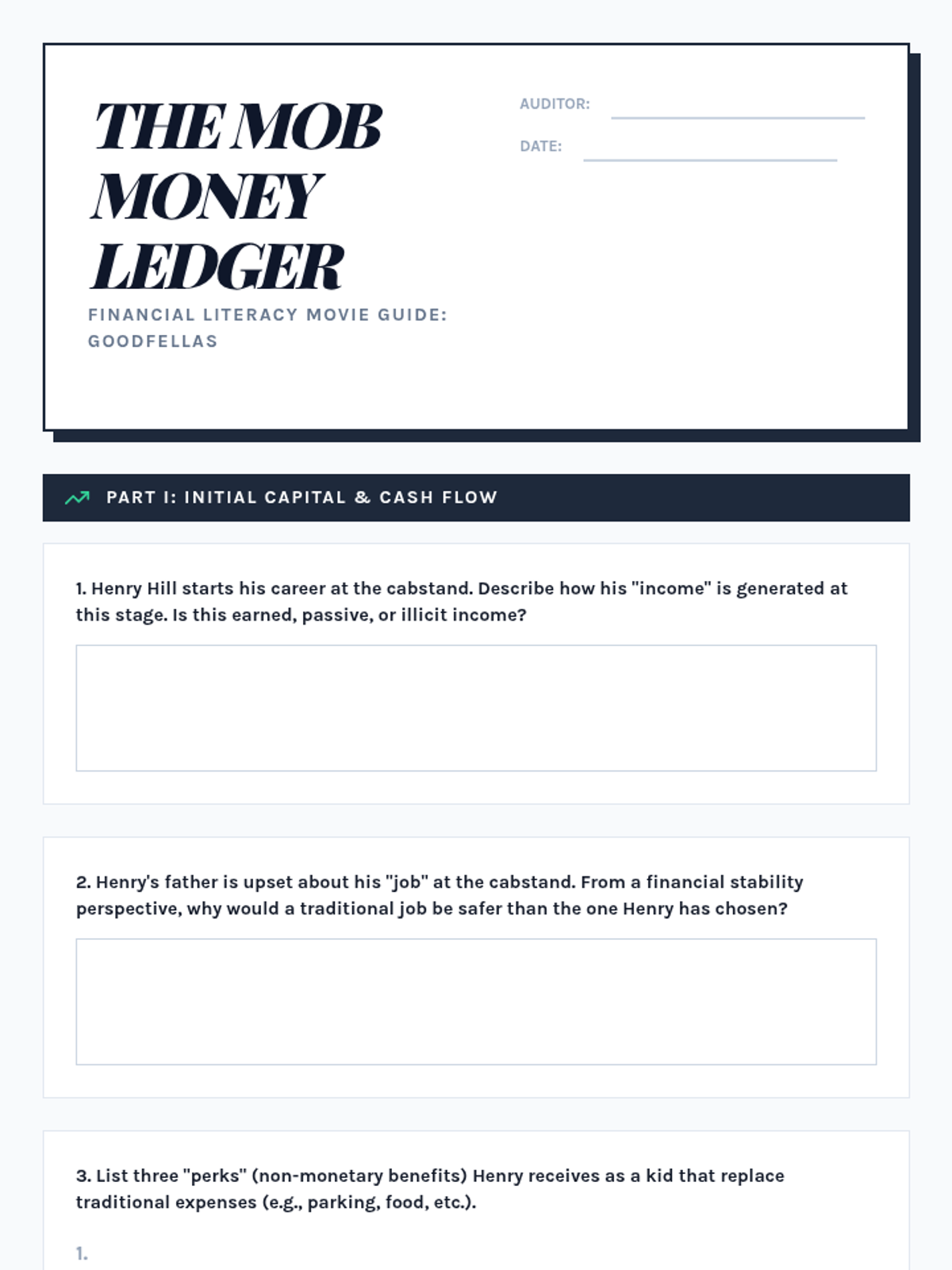
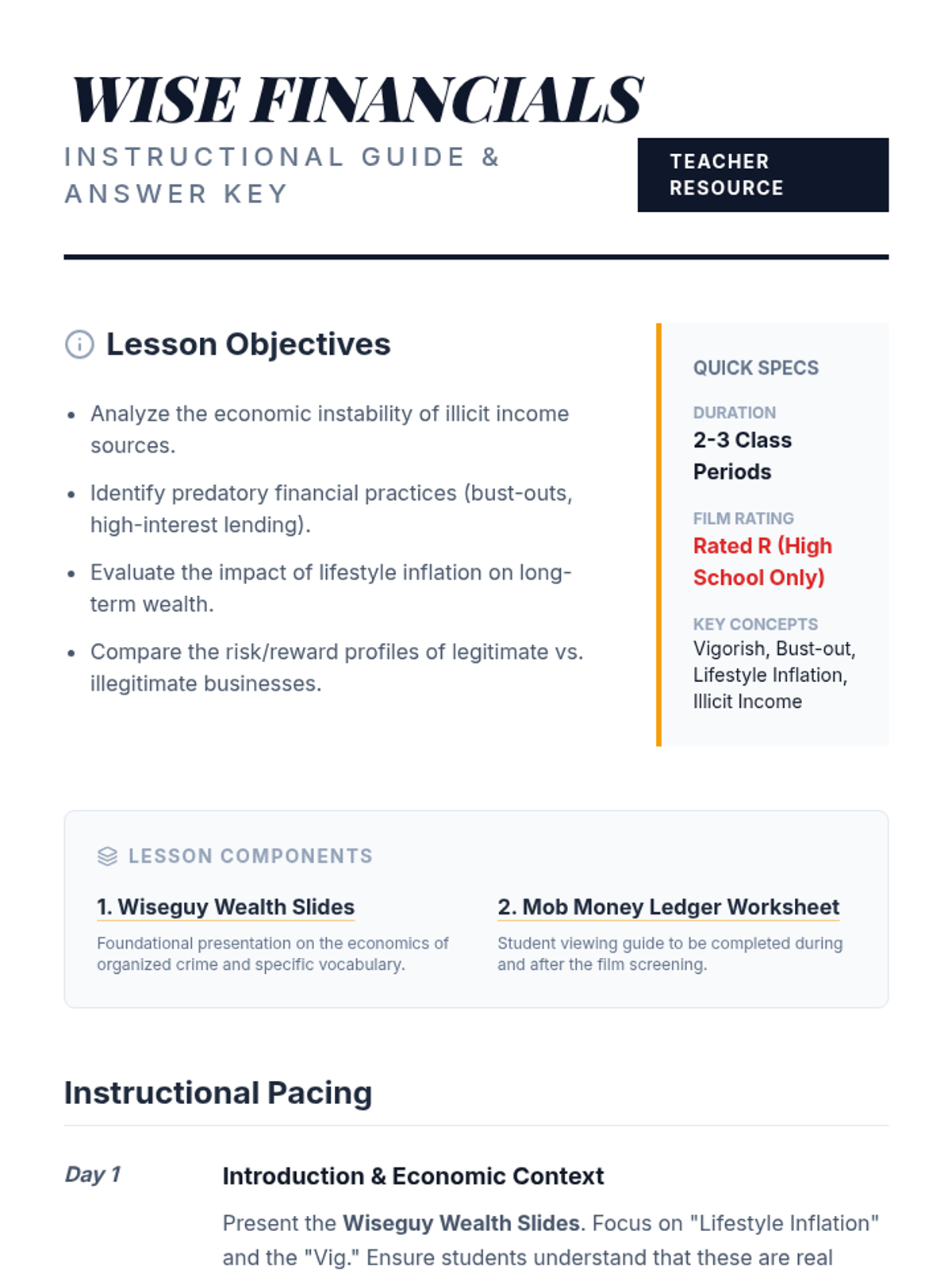
An analysis of the financial decisions made in the film Goodfellas, focusing on high-risk income, the "bust-out" business model, and the long-term costs of illicit wealth.
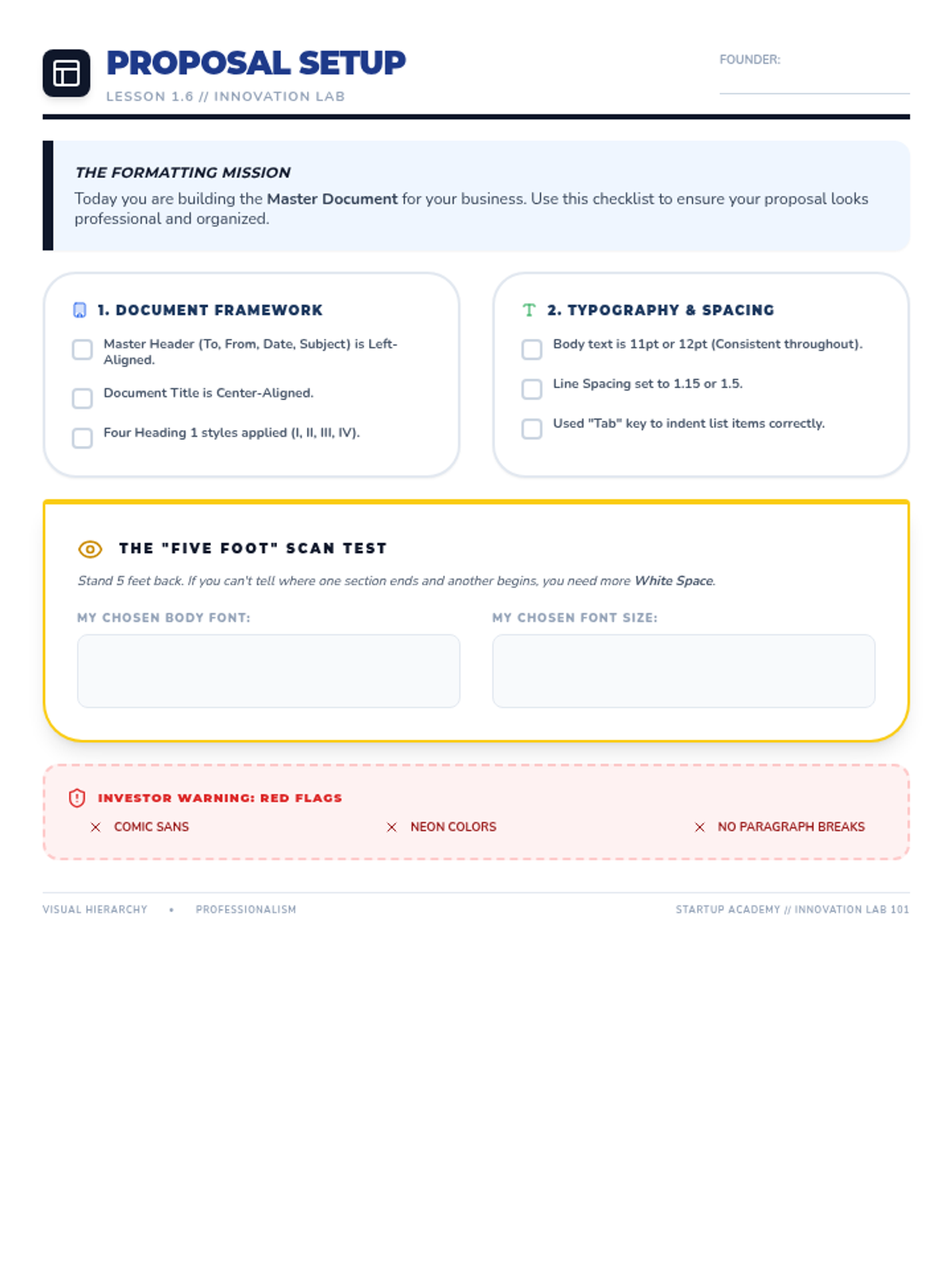
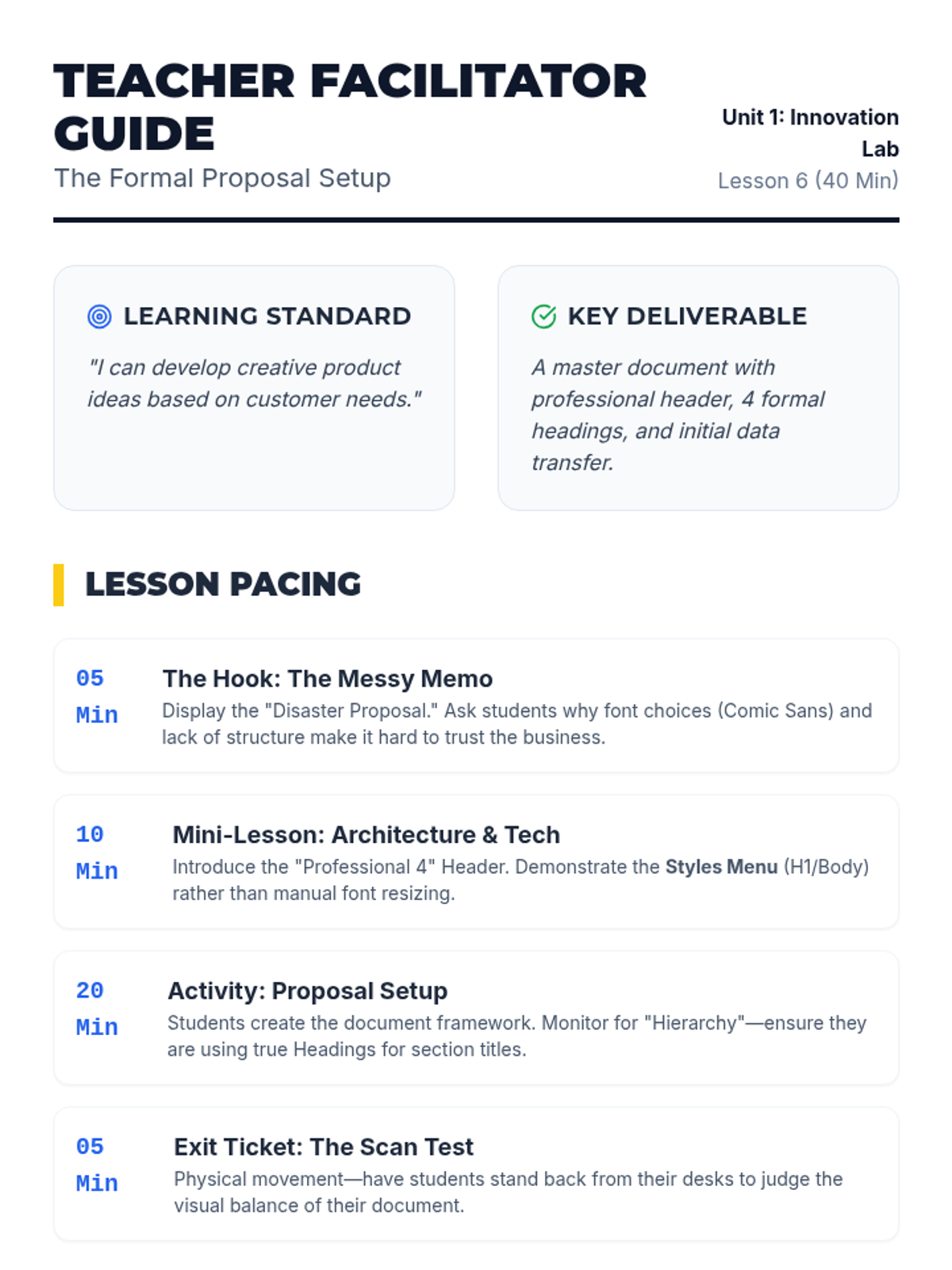
Students learn the importance of professional document formatting and hierarchy, setting up a formal business proposal template with structured headings and standardized typography.
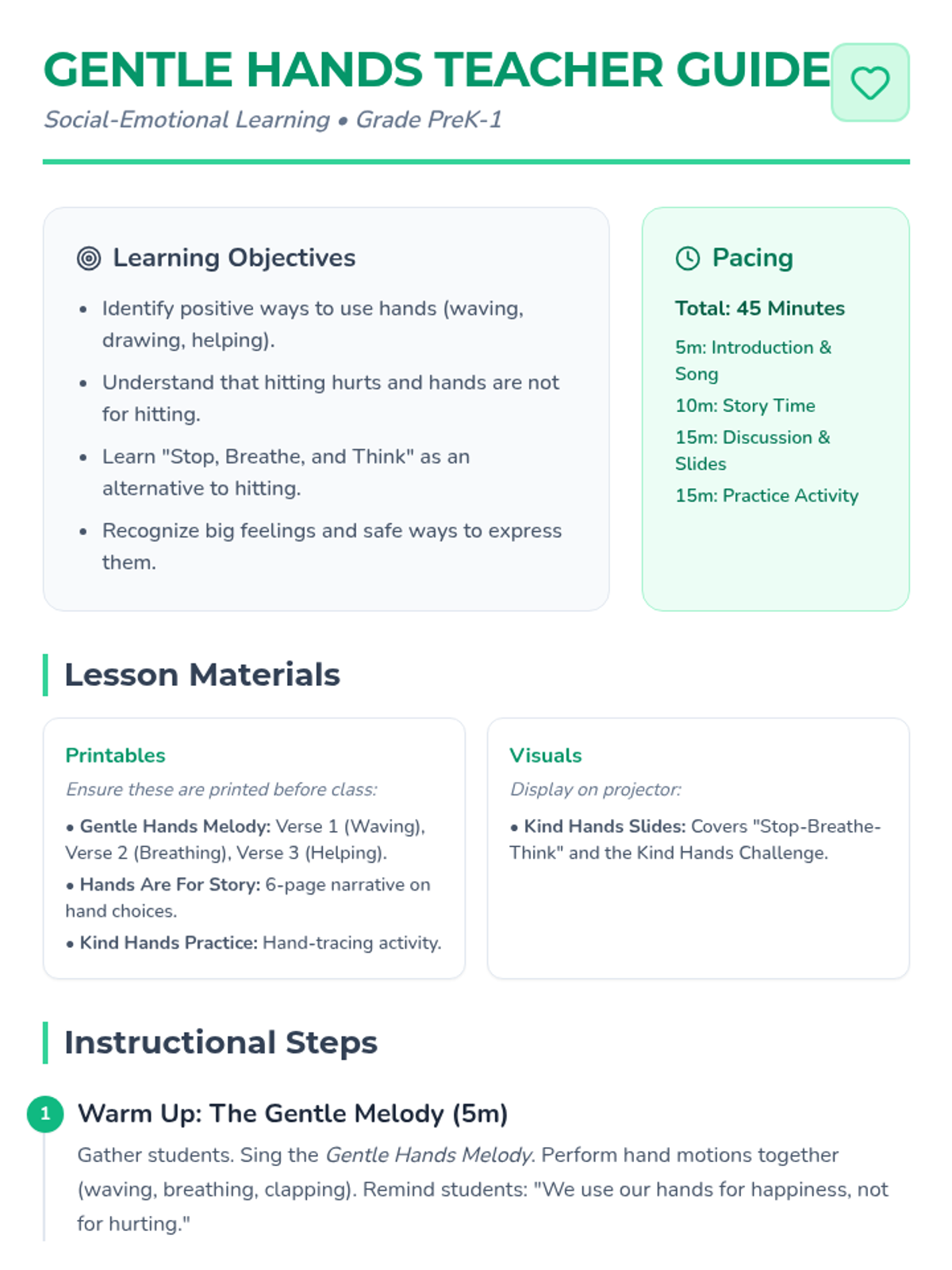
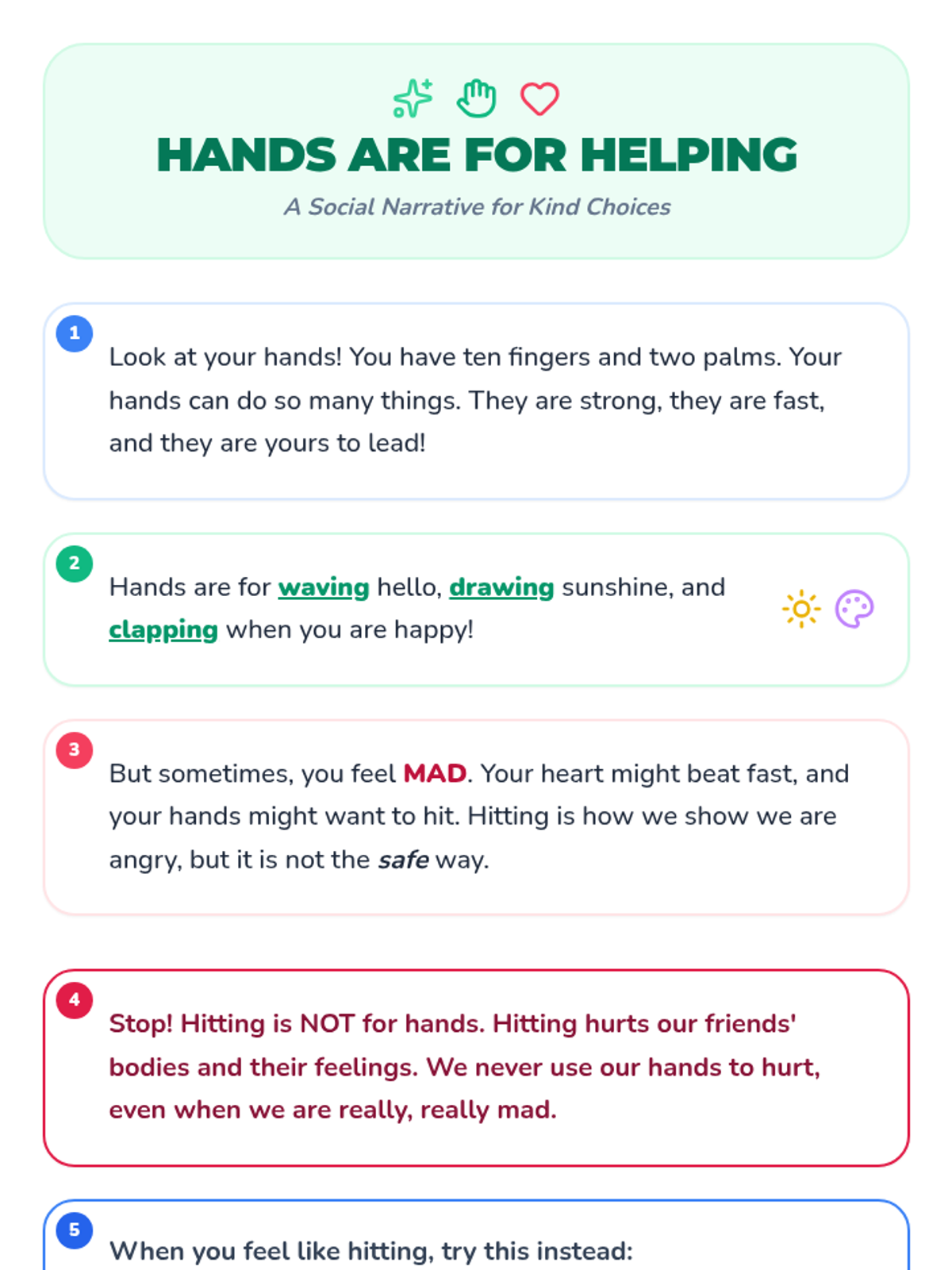
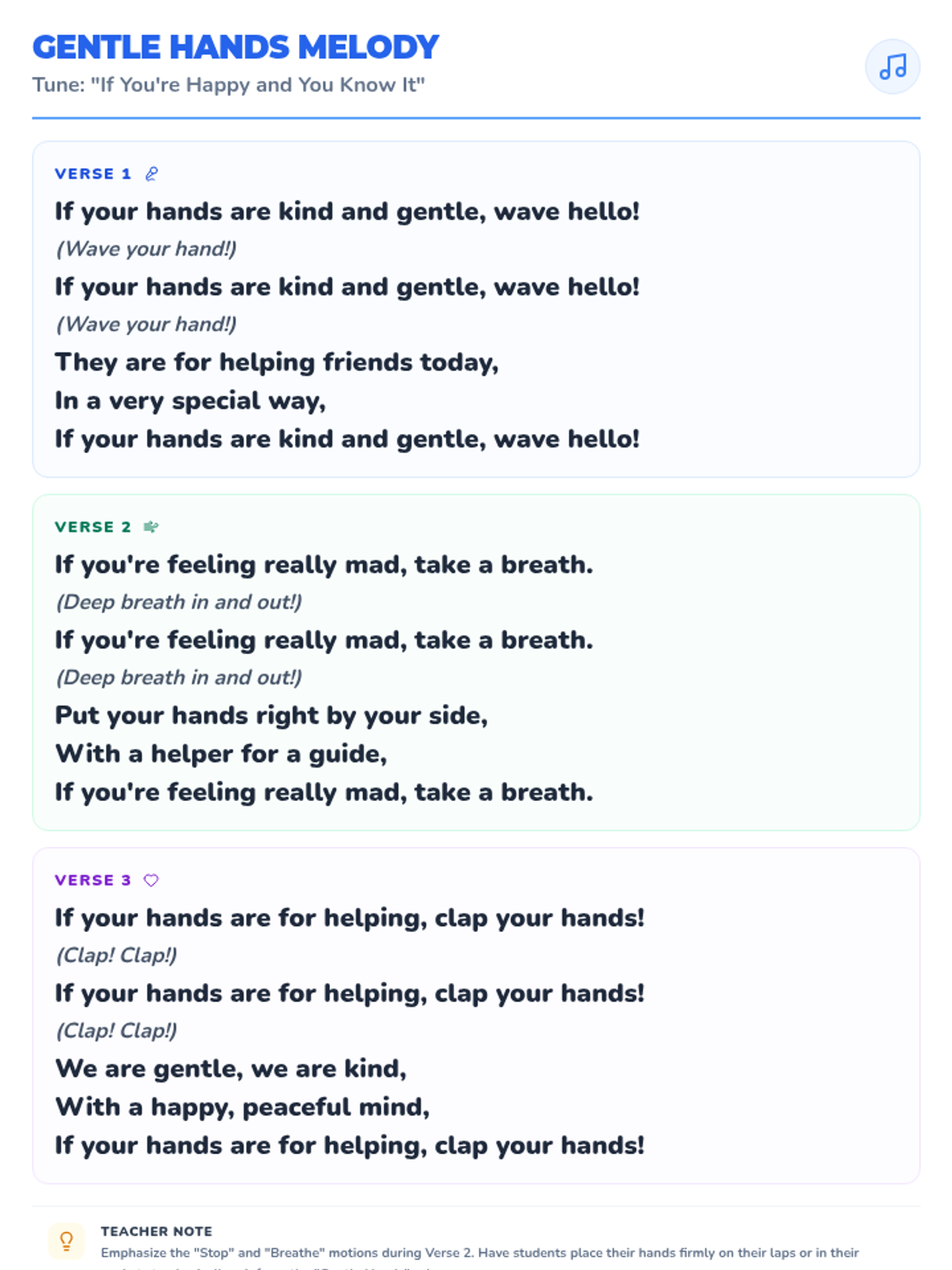
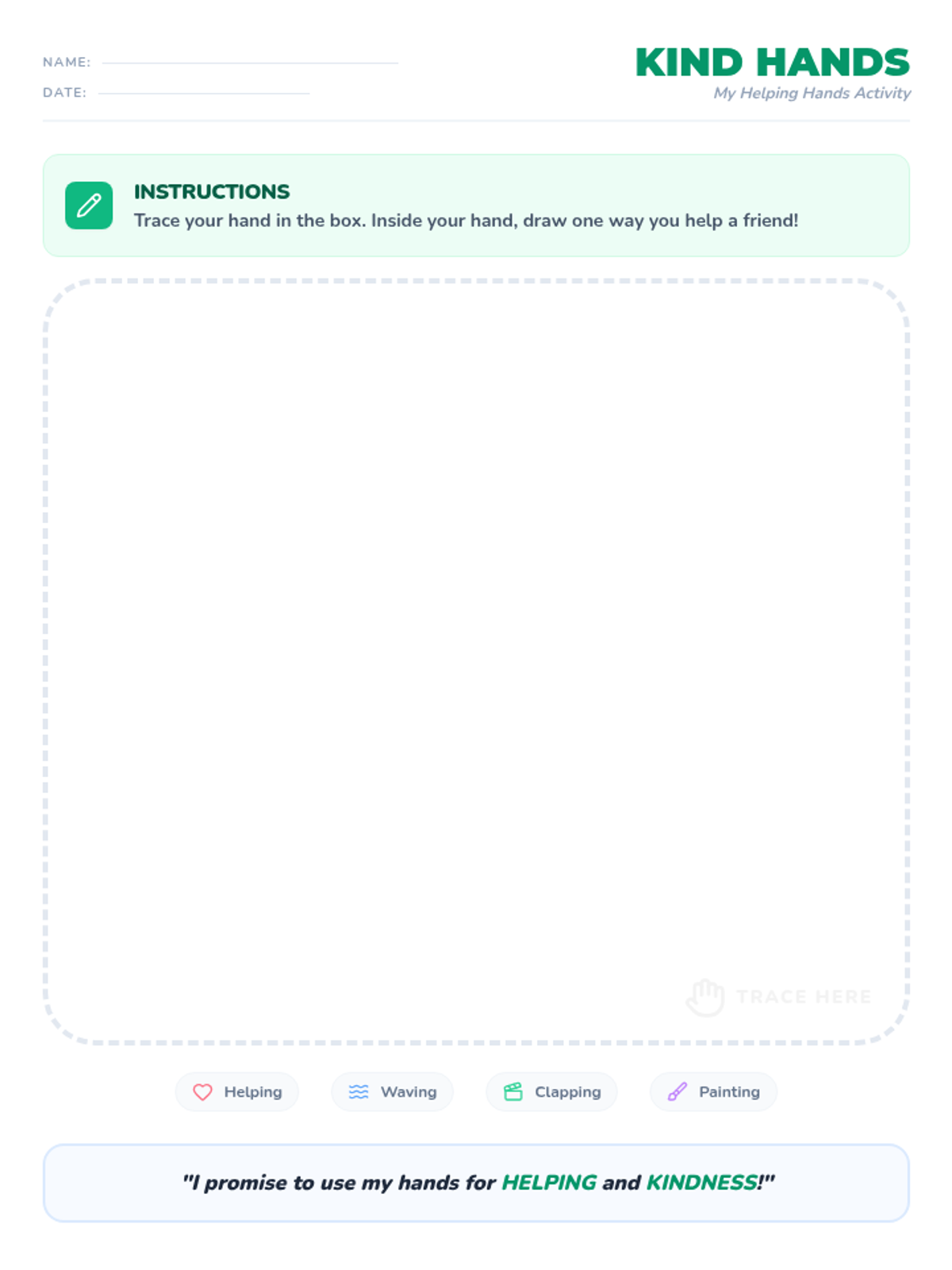
A social-emotional lesson for young learners focused on positive ways to use our hands and managing big emotions without hitting. Includes a story, song, and interactive slides to reinforce gentle behavior.
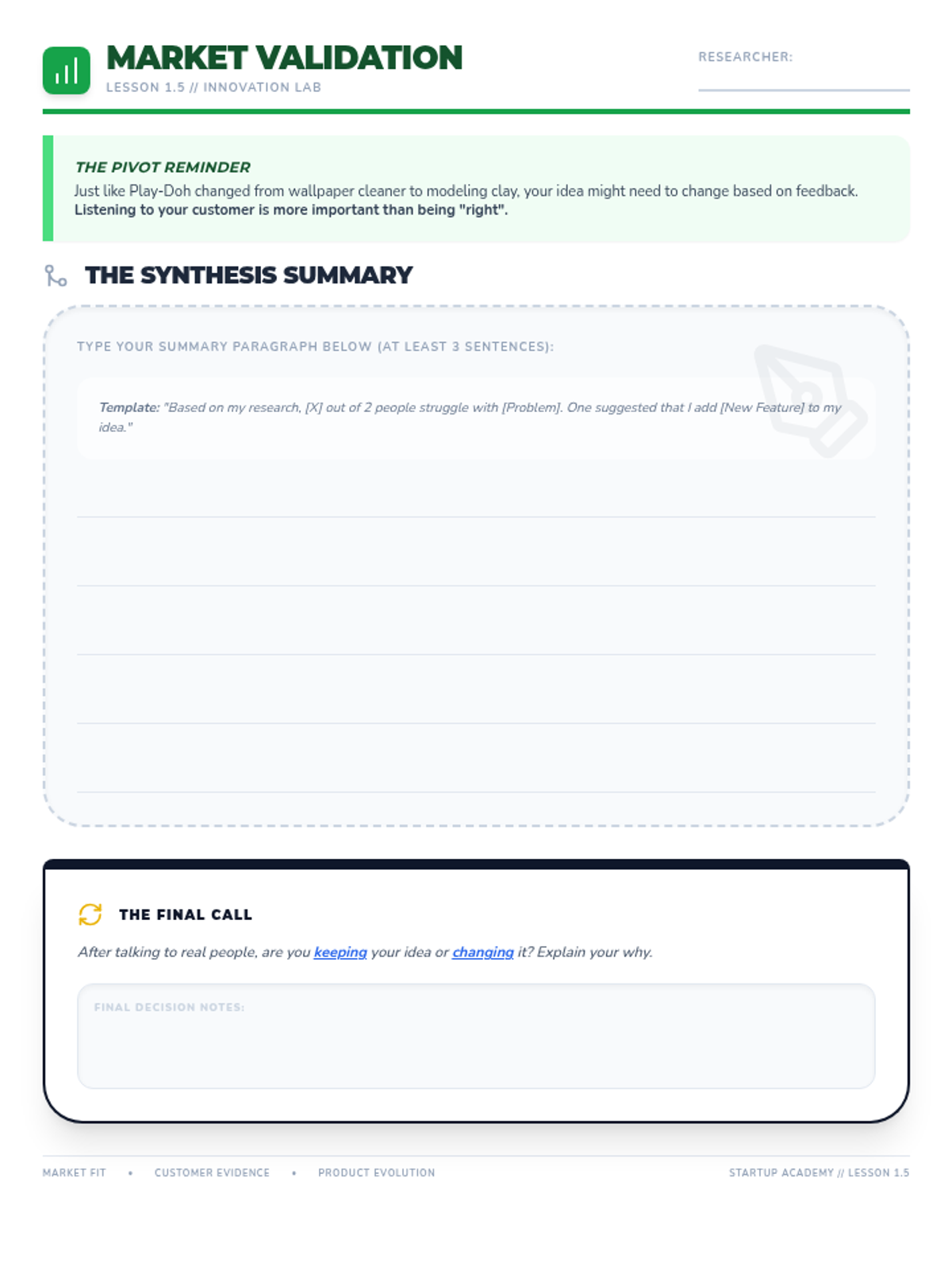
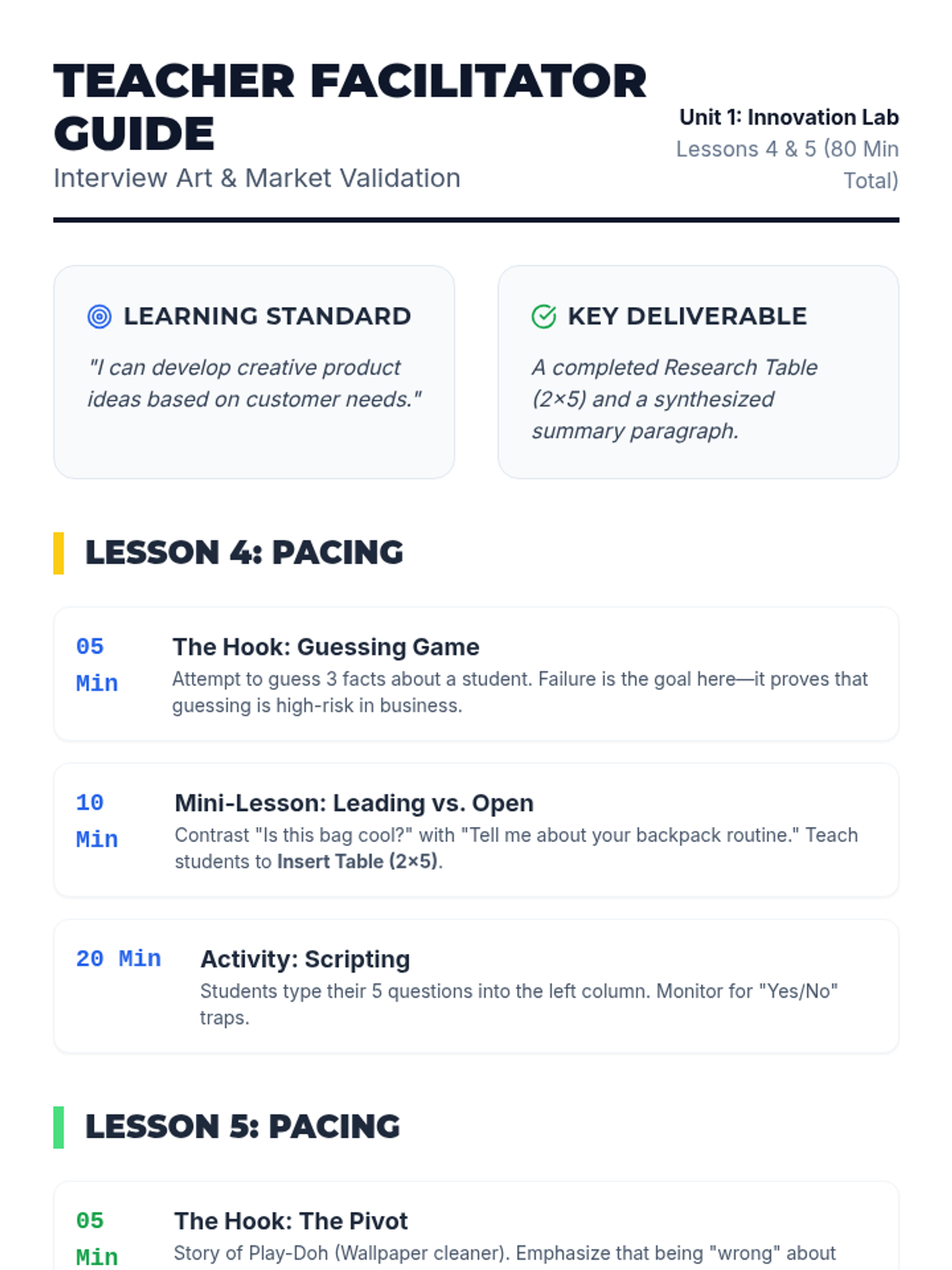
Students conduct a market research sprint, interviewing classmates to validate their product ideas and learning to 'pivot' based on real user feedback and data synthesis.
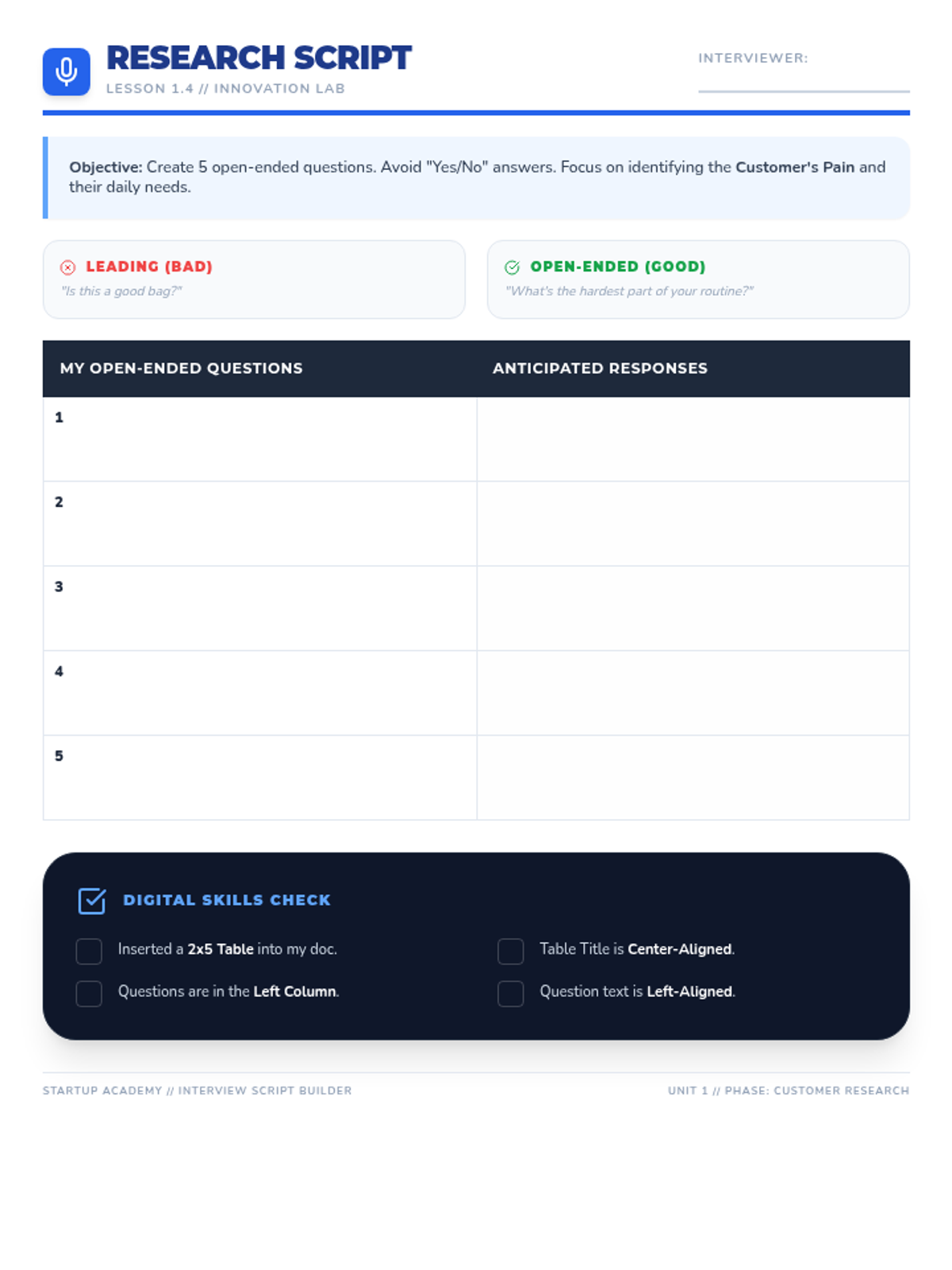
Students learn the difference between leading and open-ended questions, developing a research table and interview script to gather unbiased feedback from potential customers.
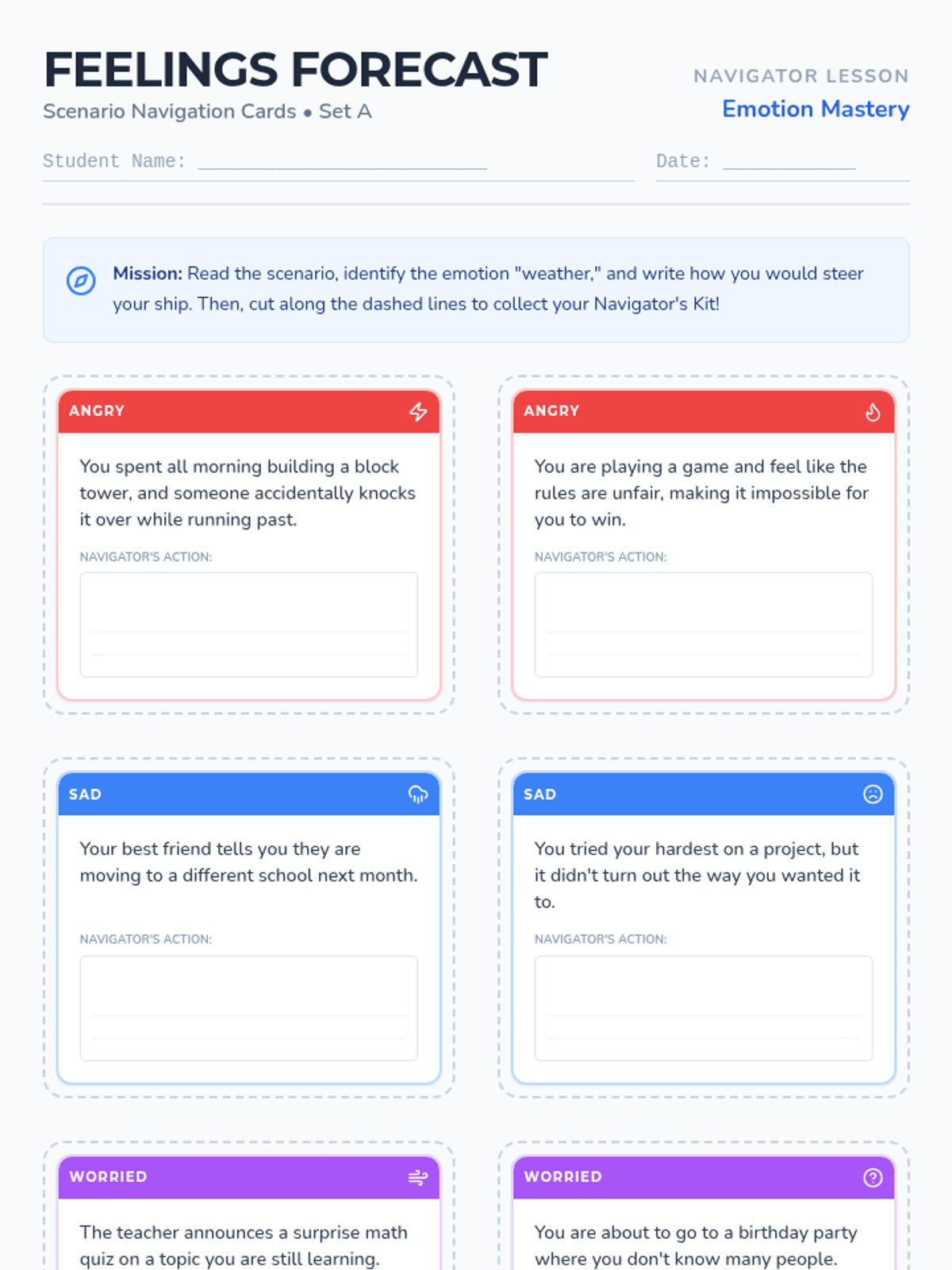
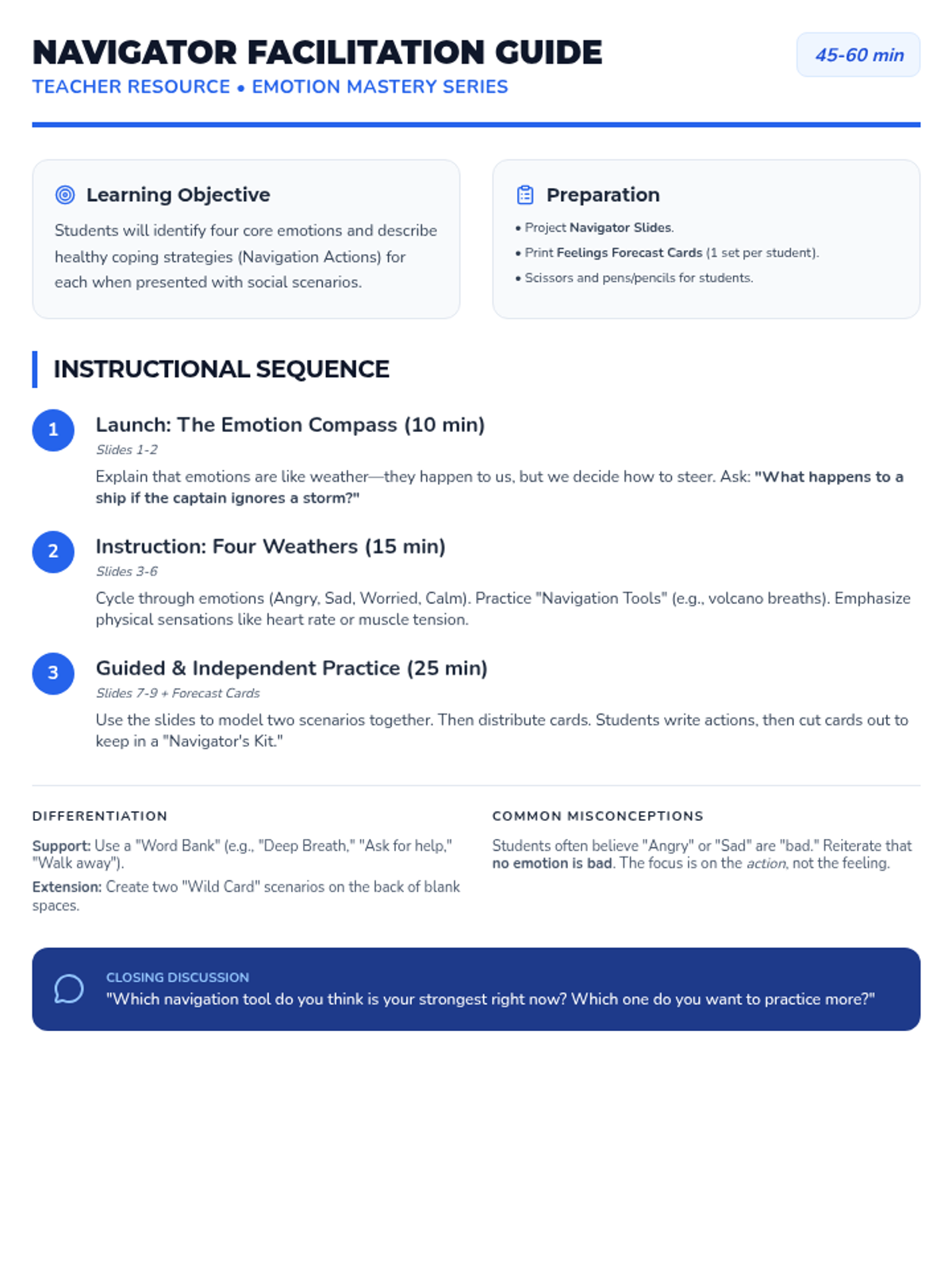
A lesson focused on identifying and navigating core emotions through real-world scenarios and guided reflection.
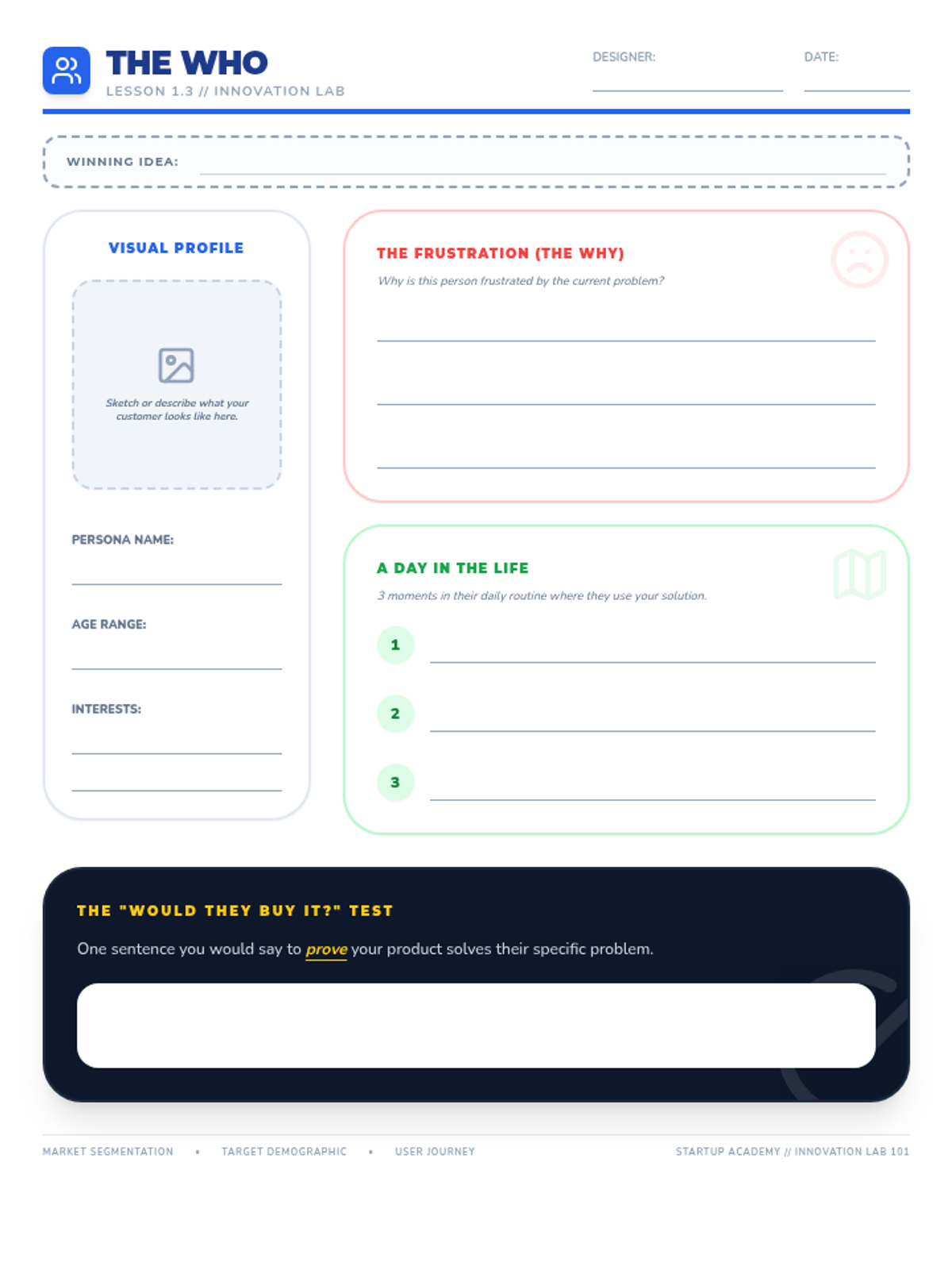
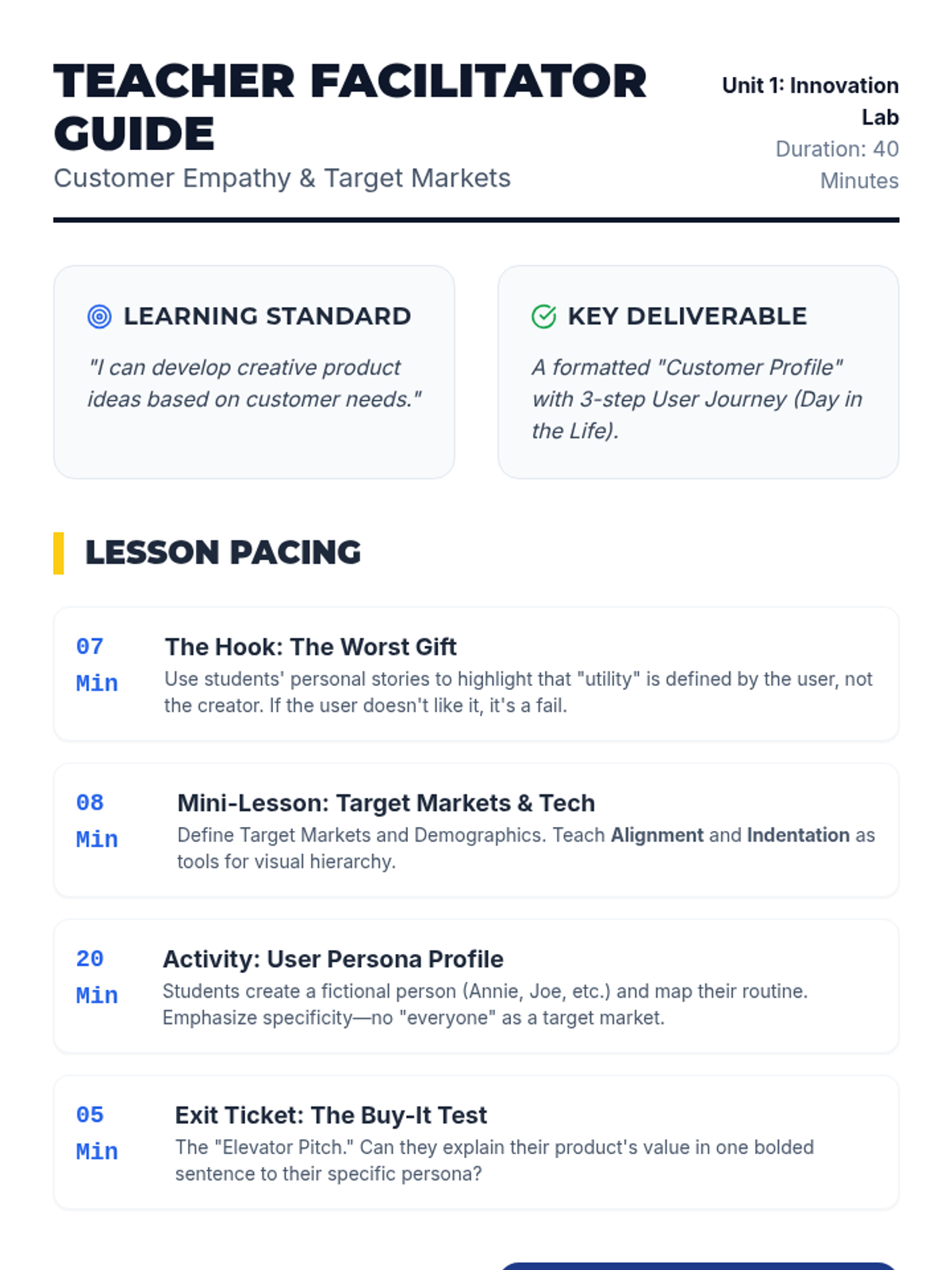
Students explore the concepts of target markets and customer empathy, moving from personal preferences to identifying specific user needs and mapping out a "Day in the Life" for their ideal customer.
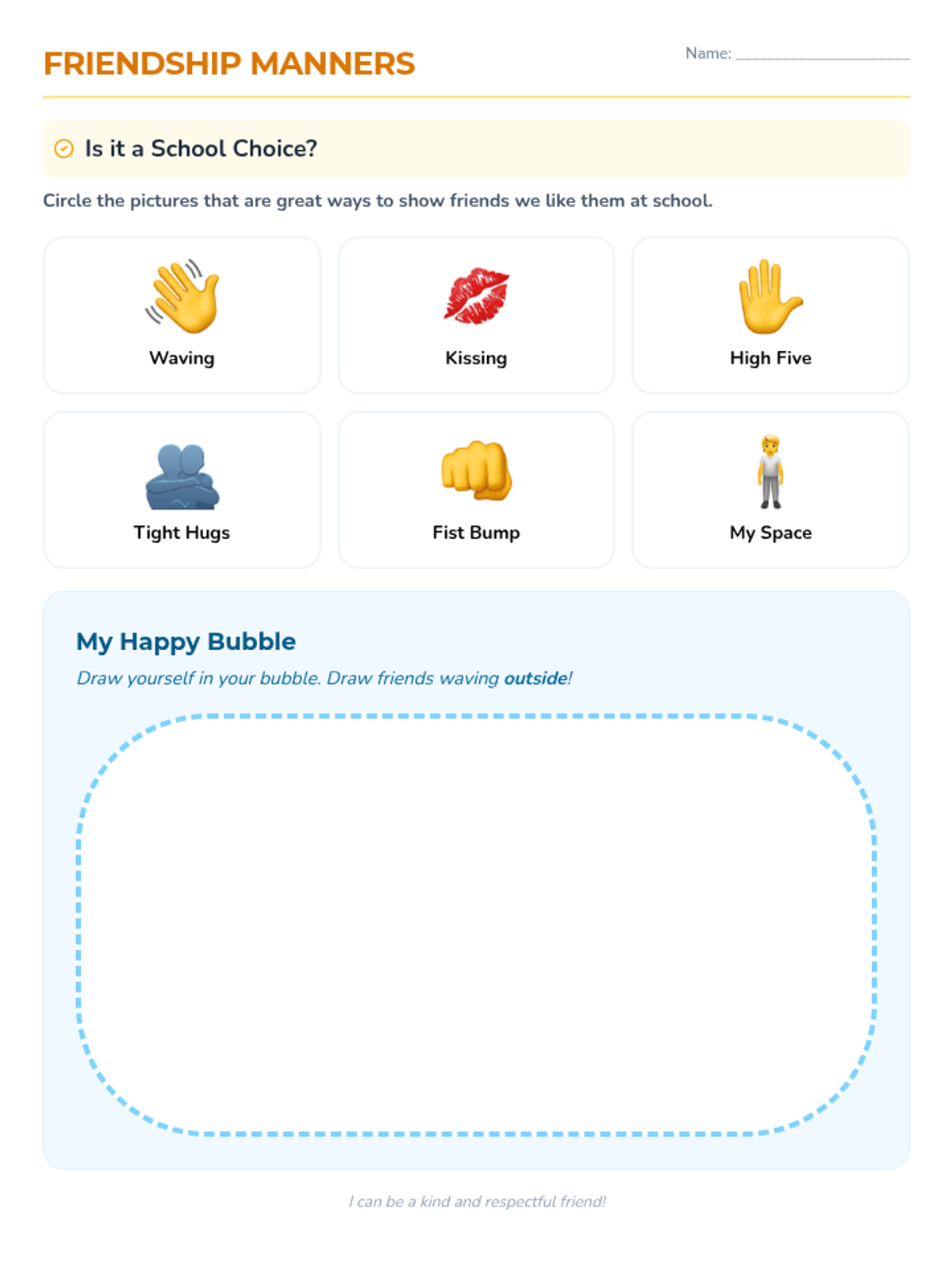
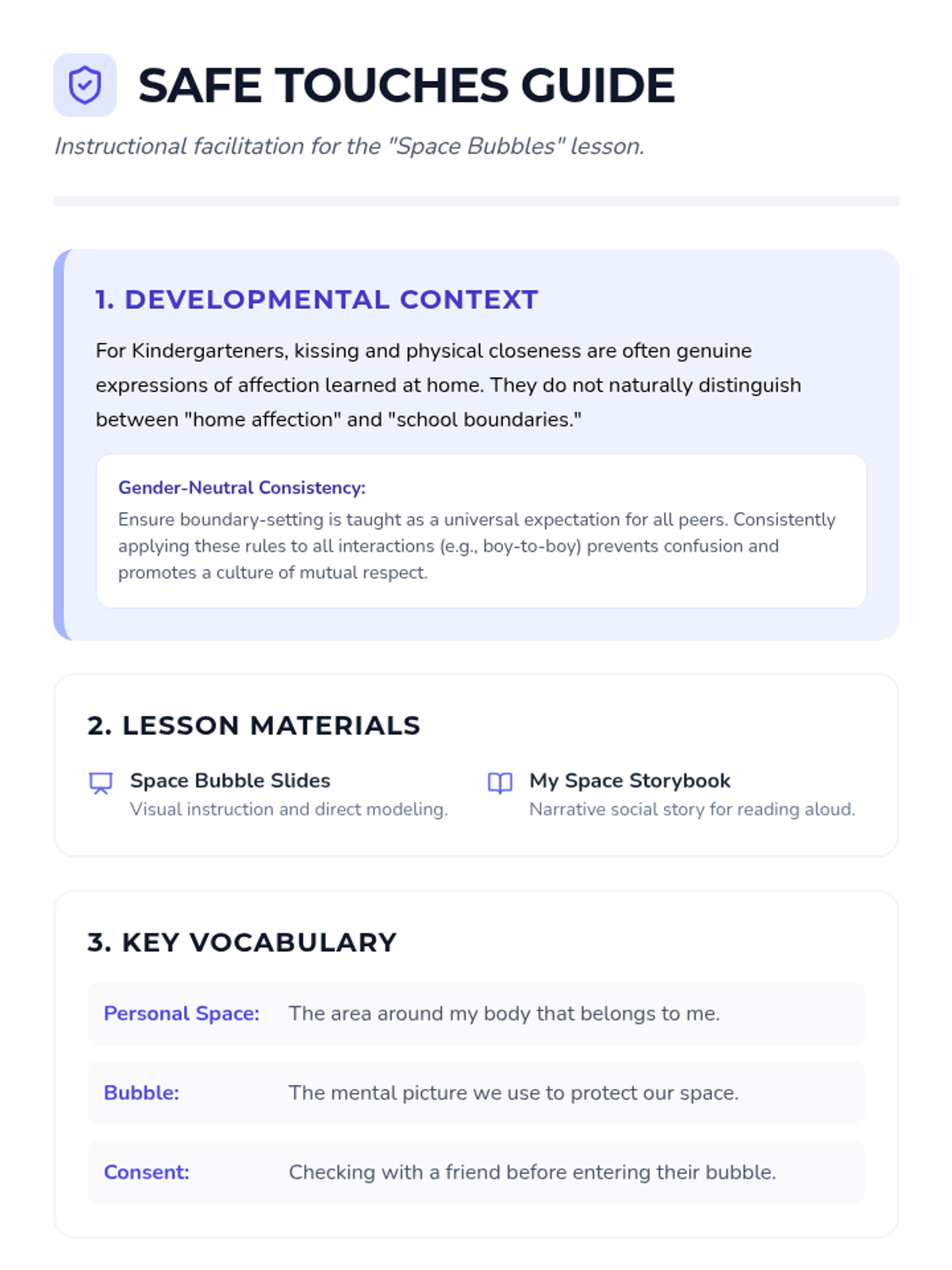
A gentle lesson for Kindergarteners focusing on personal space, body boundaries, and appropriate ways to show affection to friends.
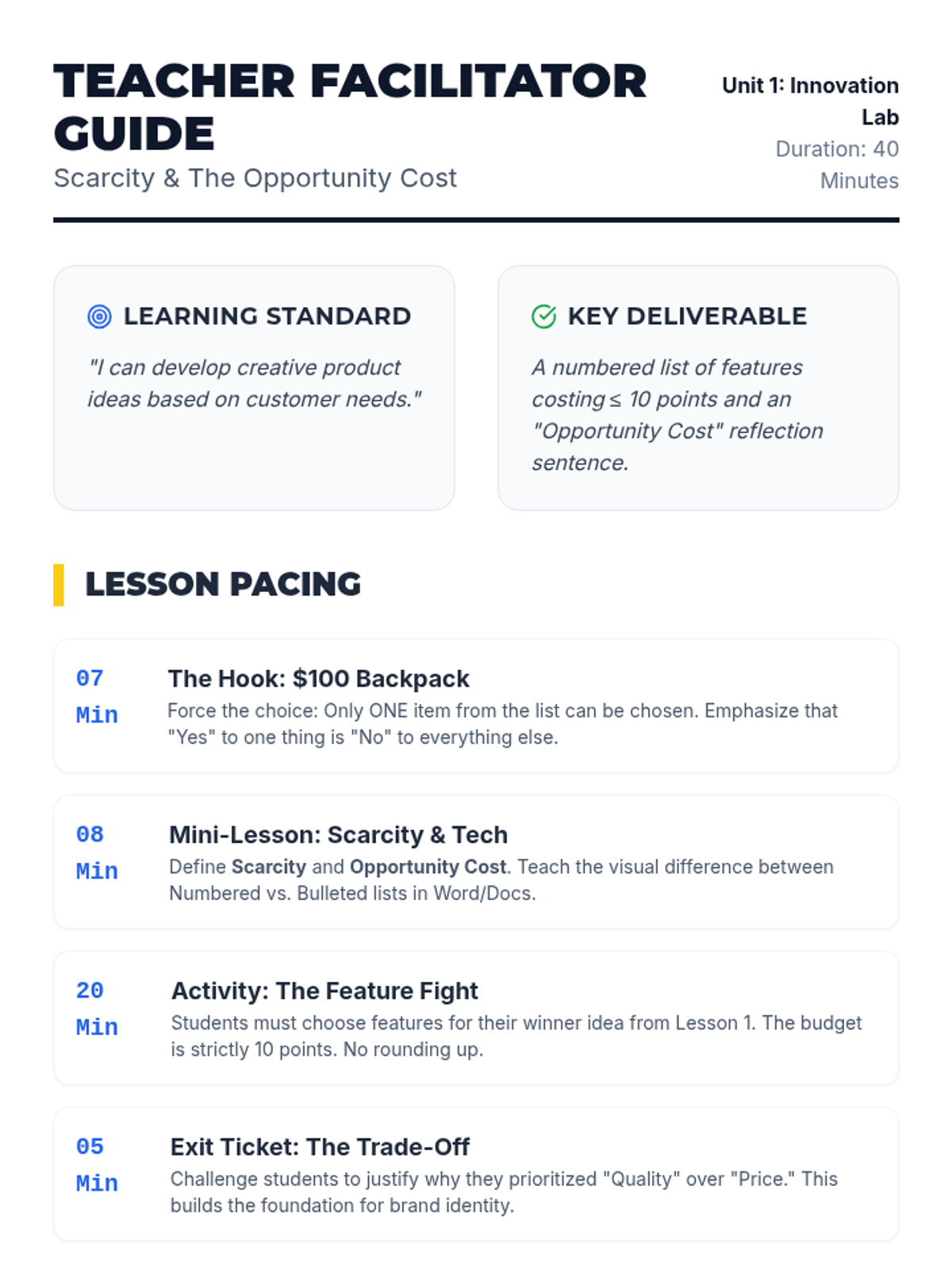
Students explore the fundamental economic concepts of scarcity and opportunity cost, applying them to product development by making difficult trade-offs between competing features within a limited resource budget.
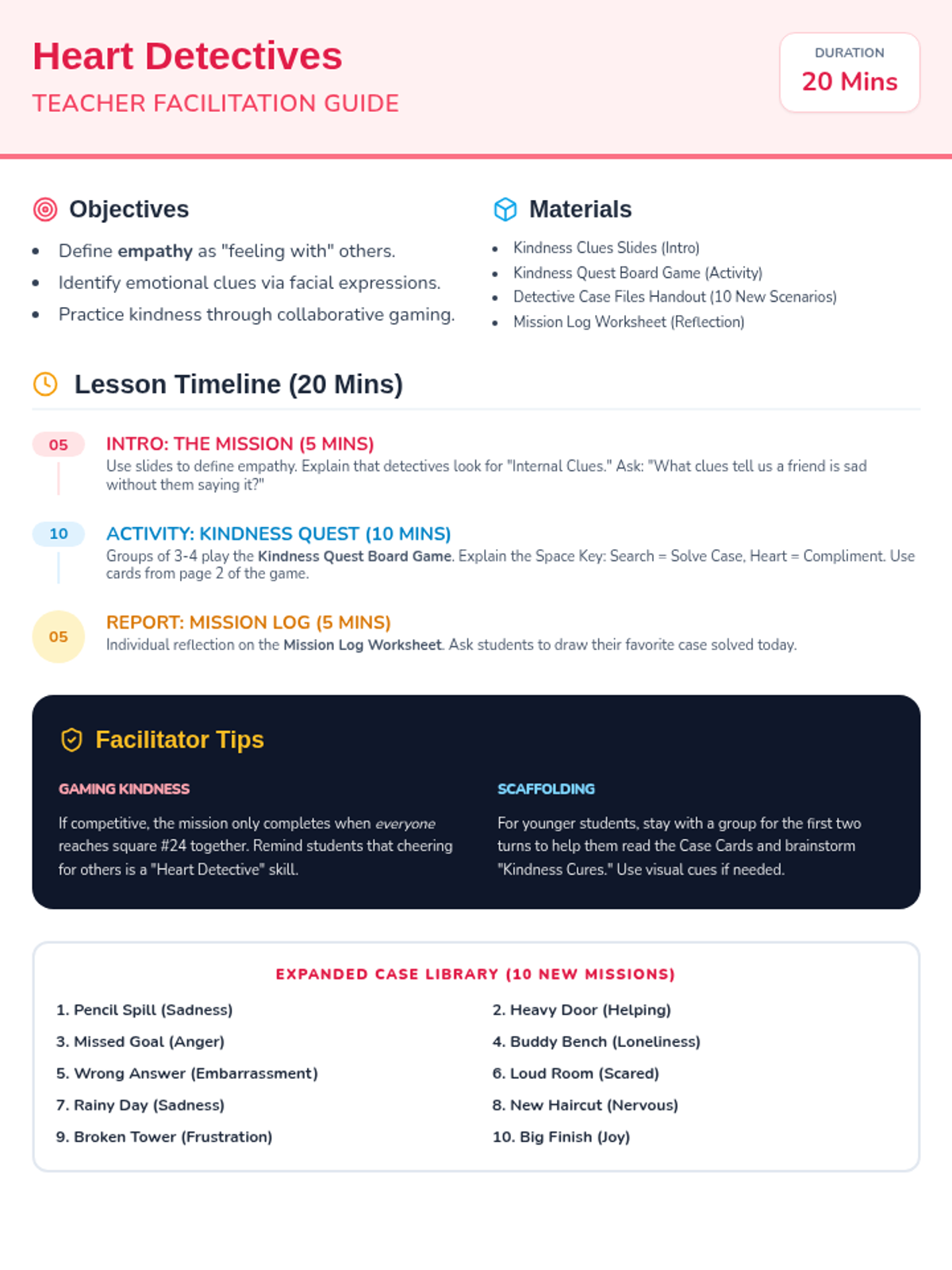
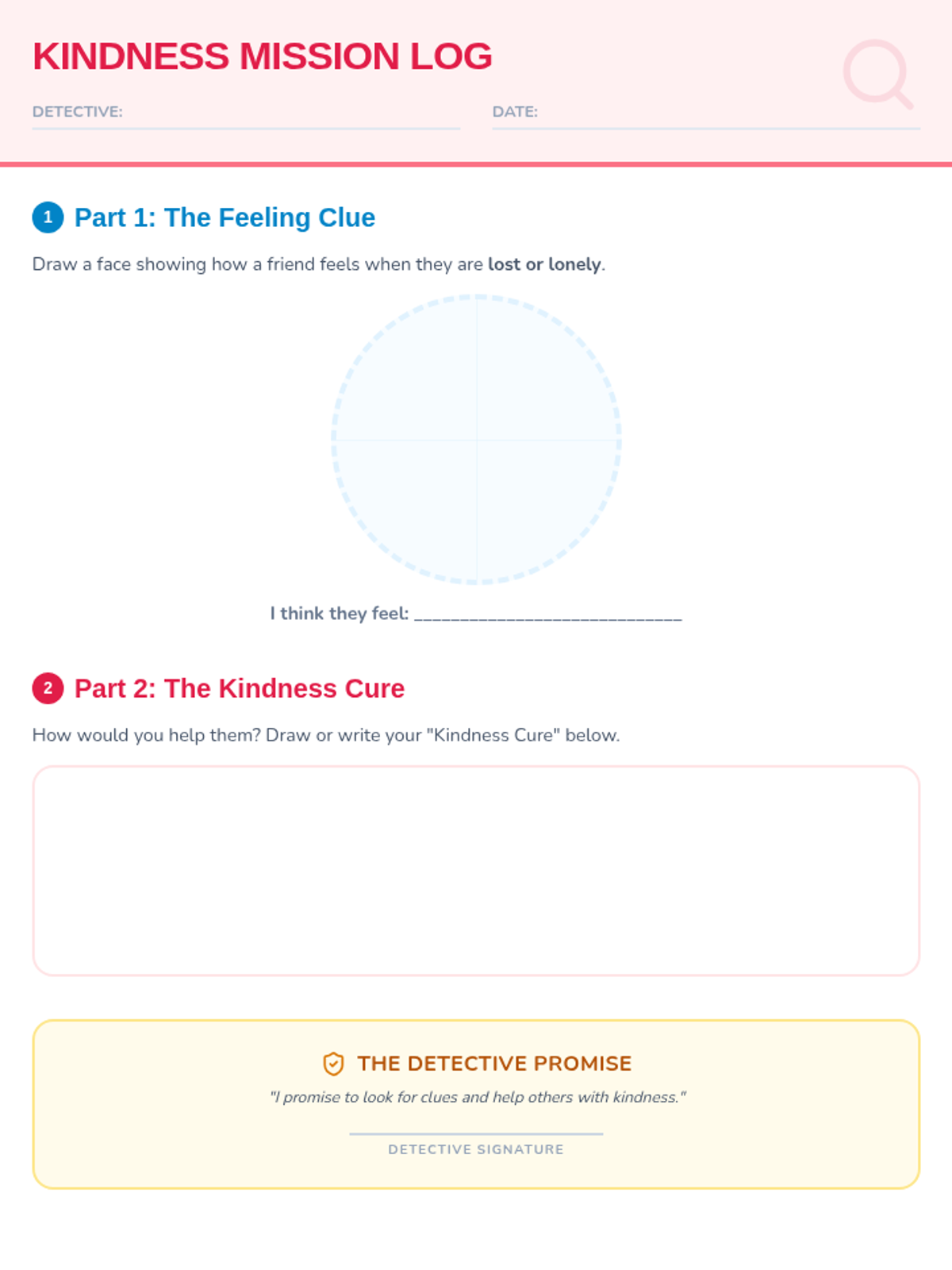
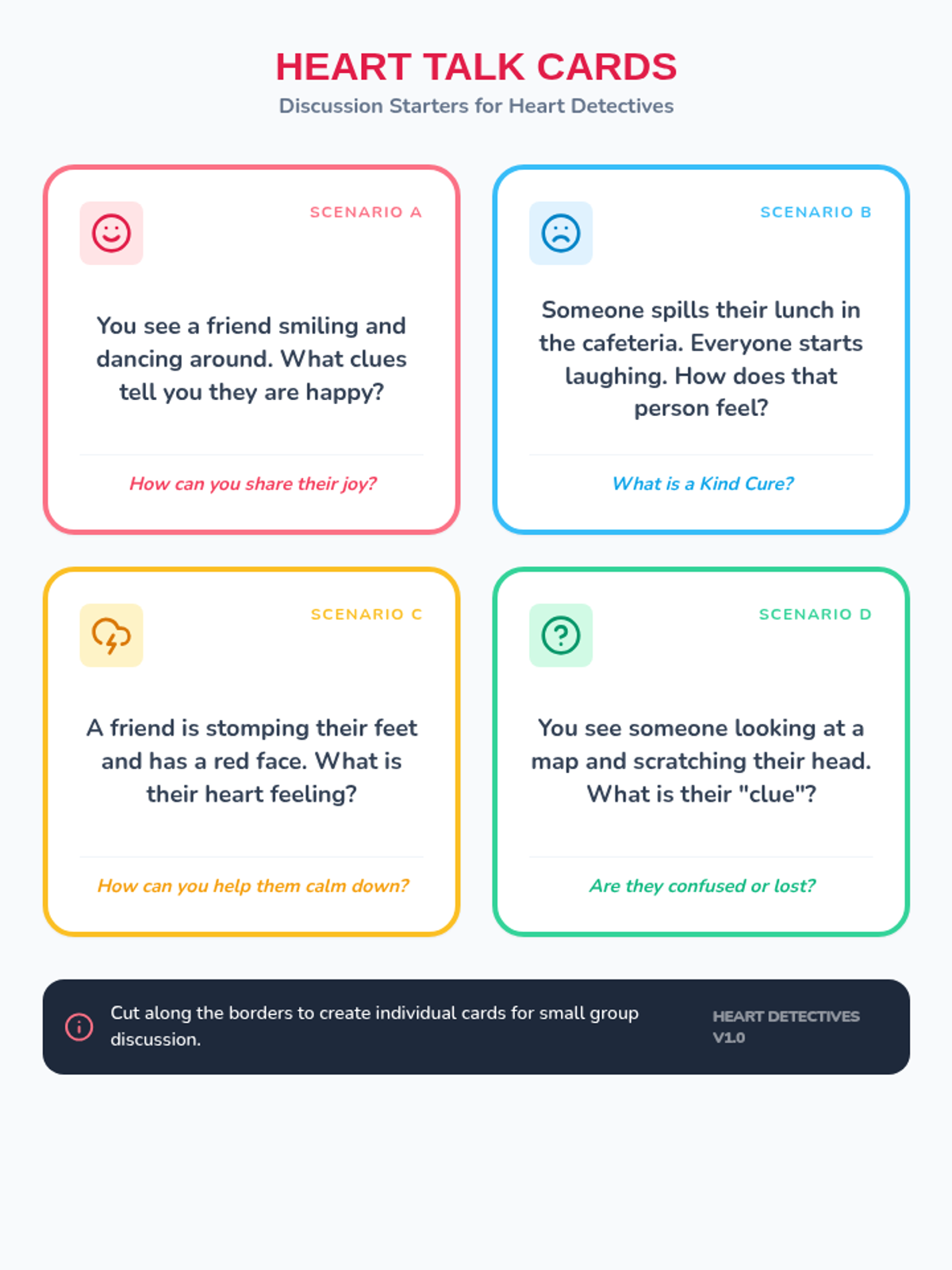
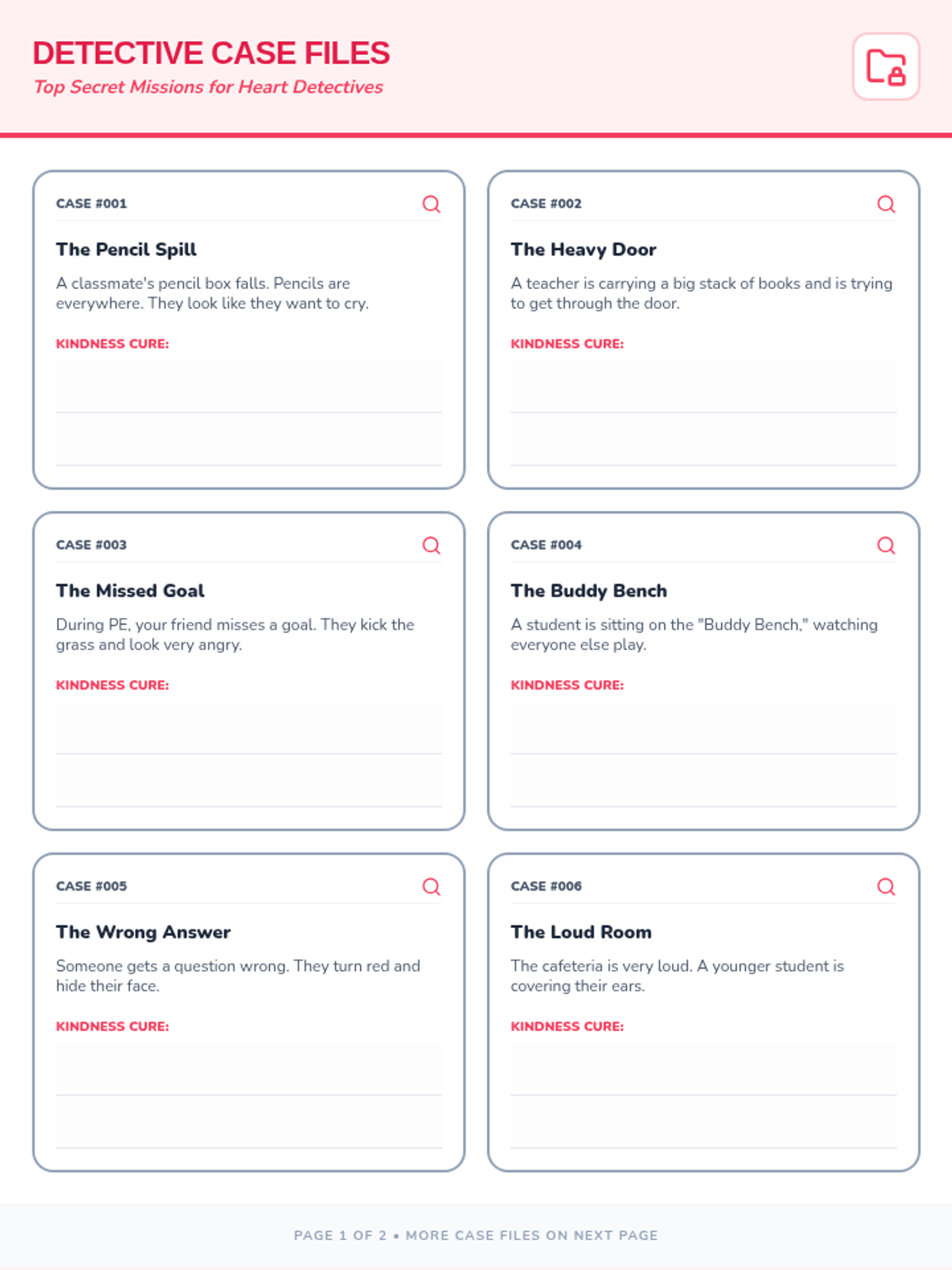
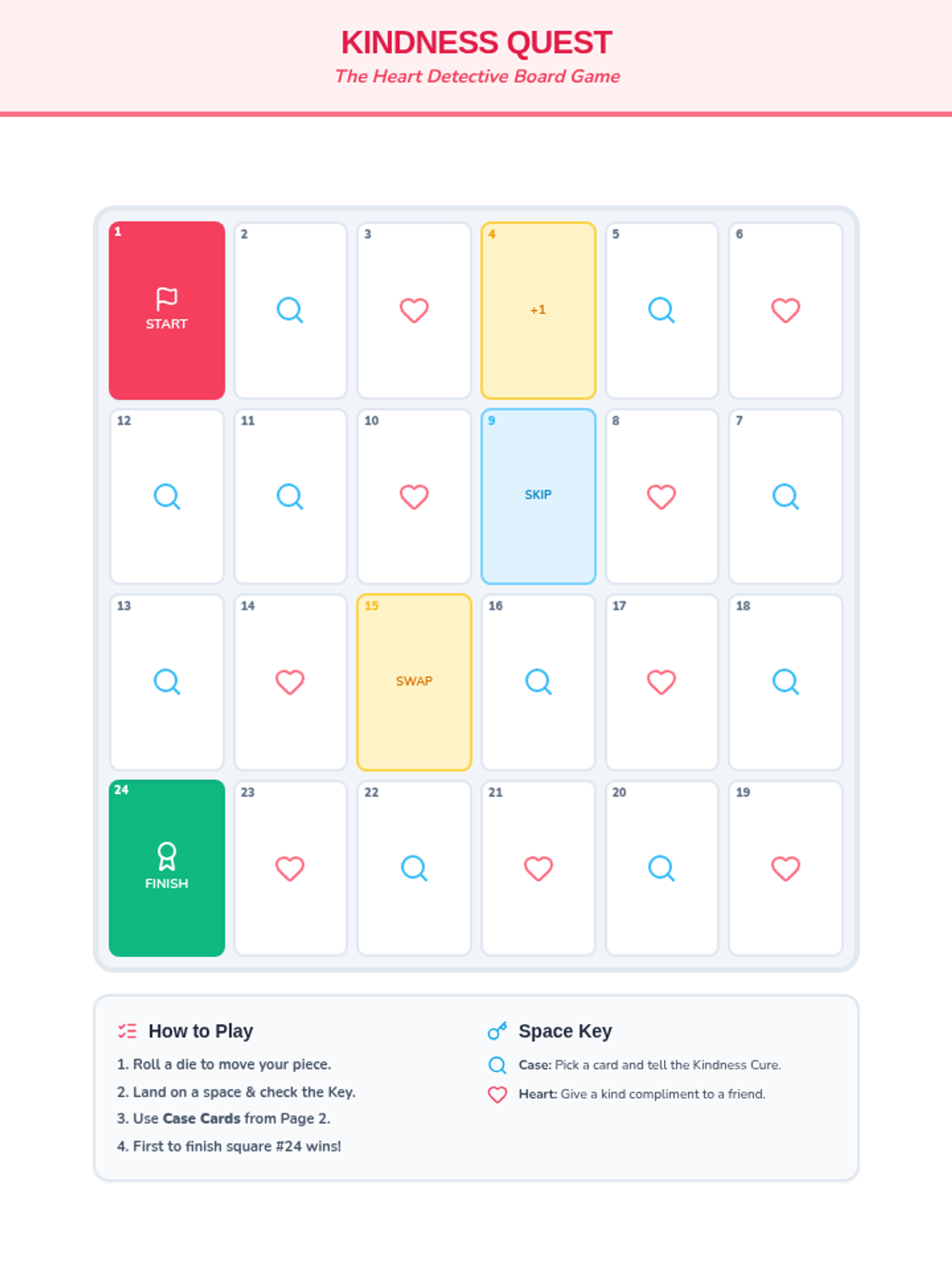
A 20-minute introductory lesson for grades K-4 on empathy and kindness, using a 'Heart Detectives' theme to help students identify feelings and respond with care.
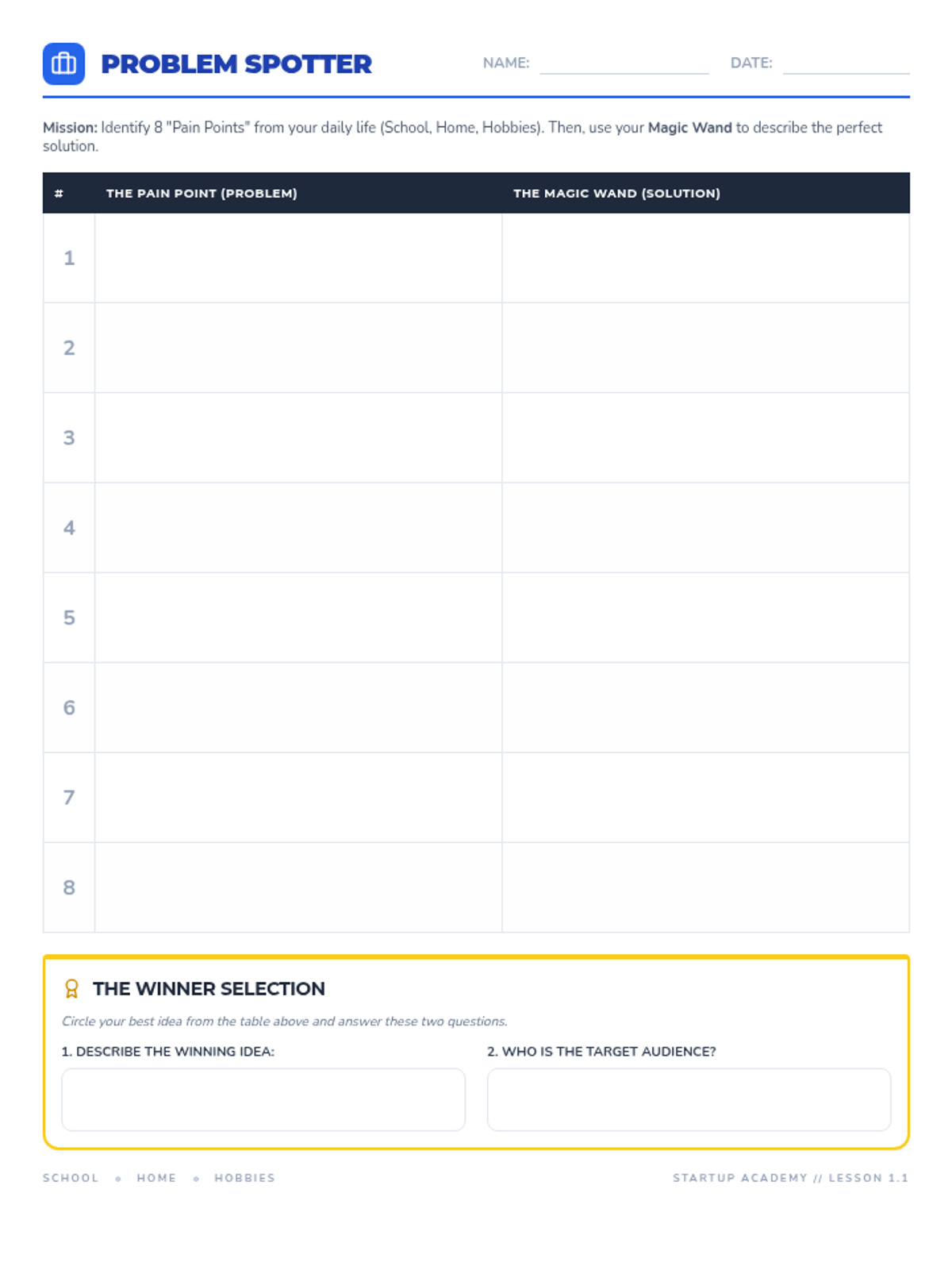
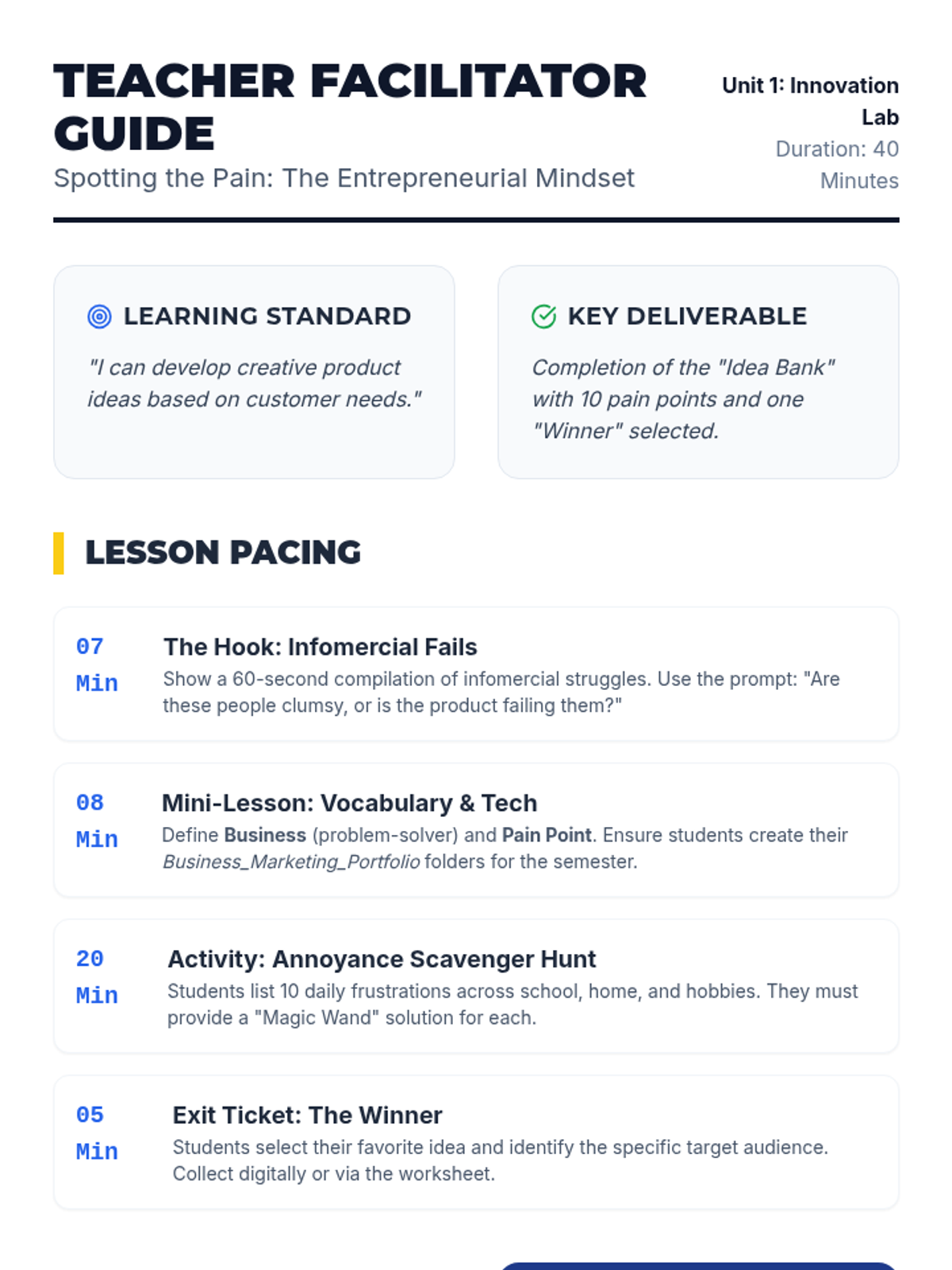
Students learn to identify consumer "pain points" as opportunities for innovation, moving from recognizing everyday frustrations to conceptualizing business solutions.
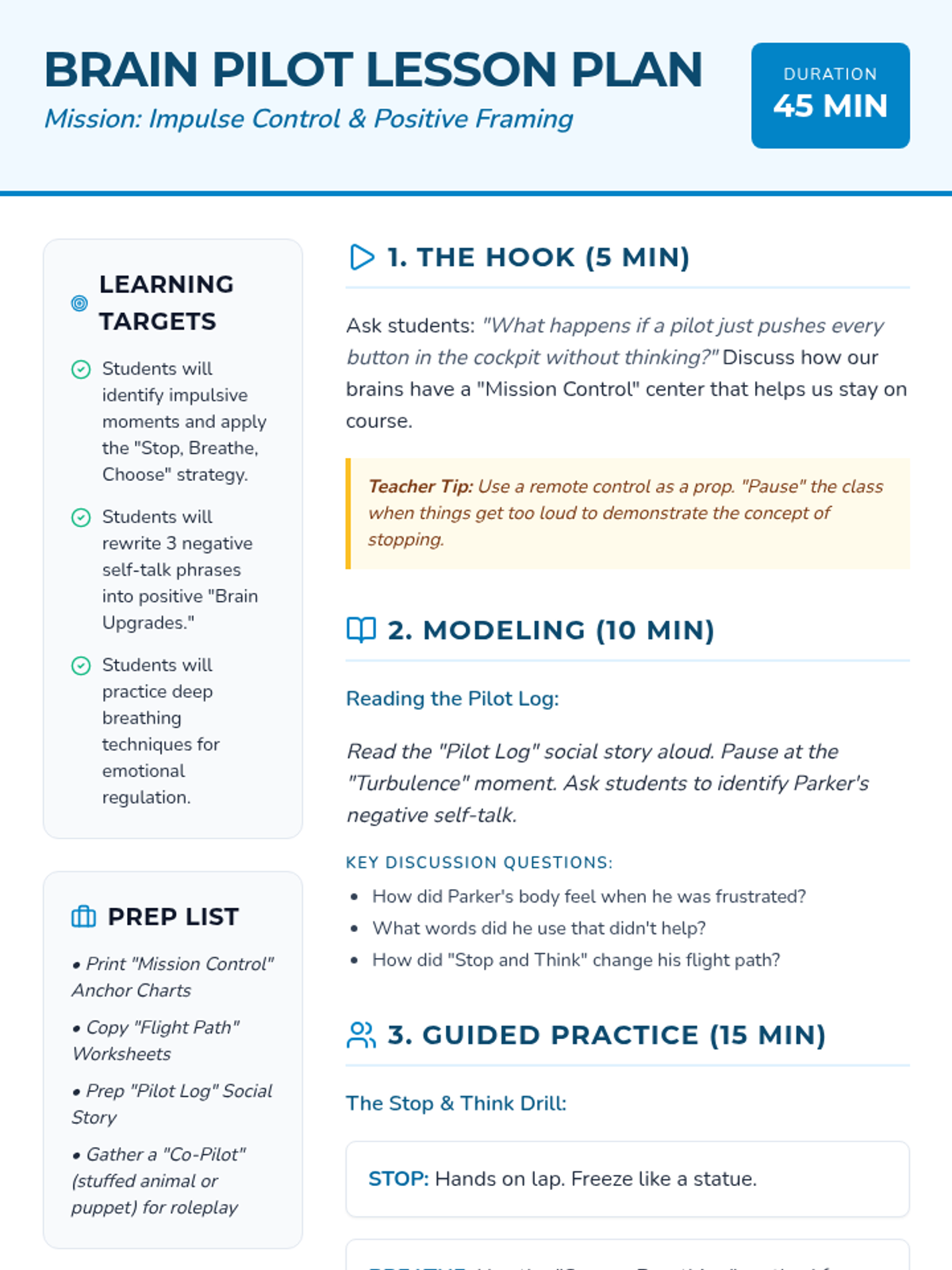
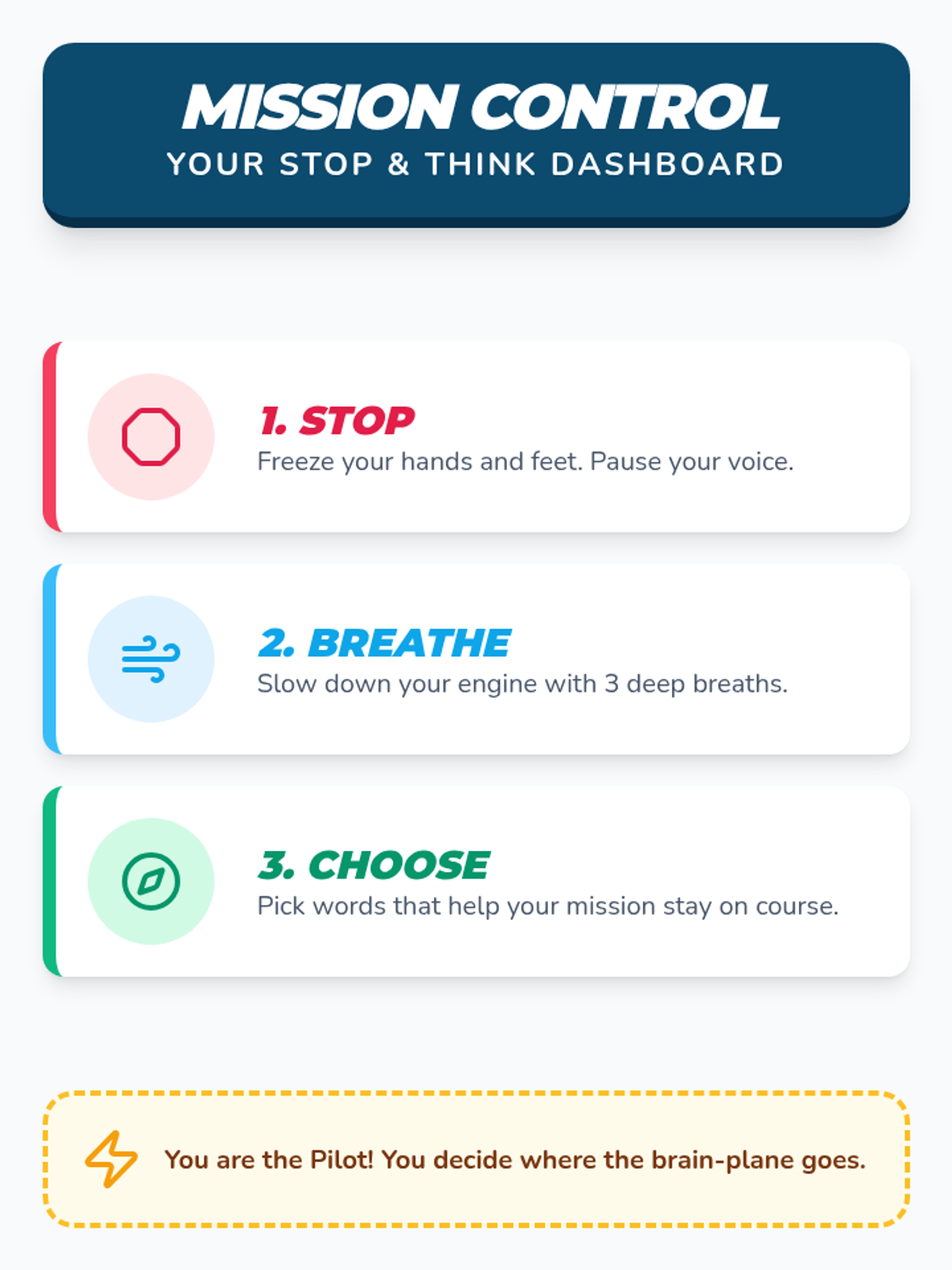
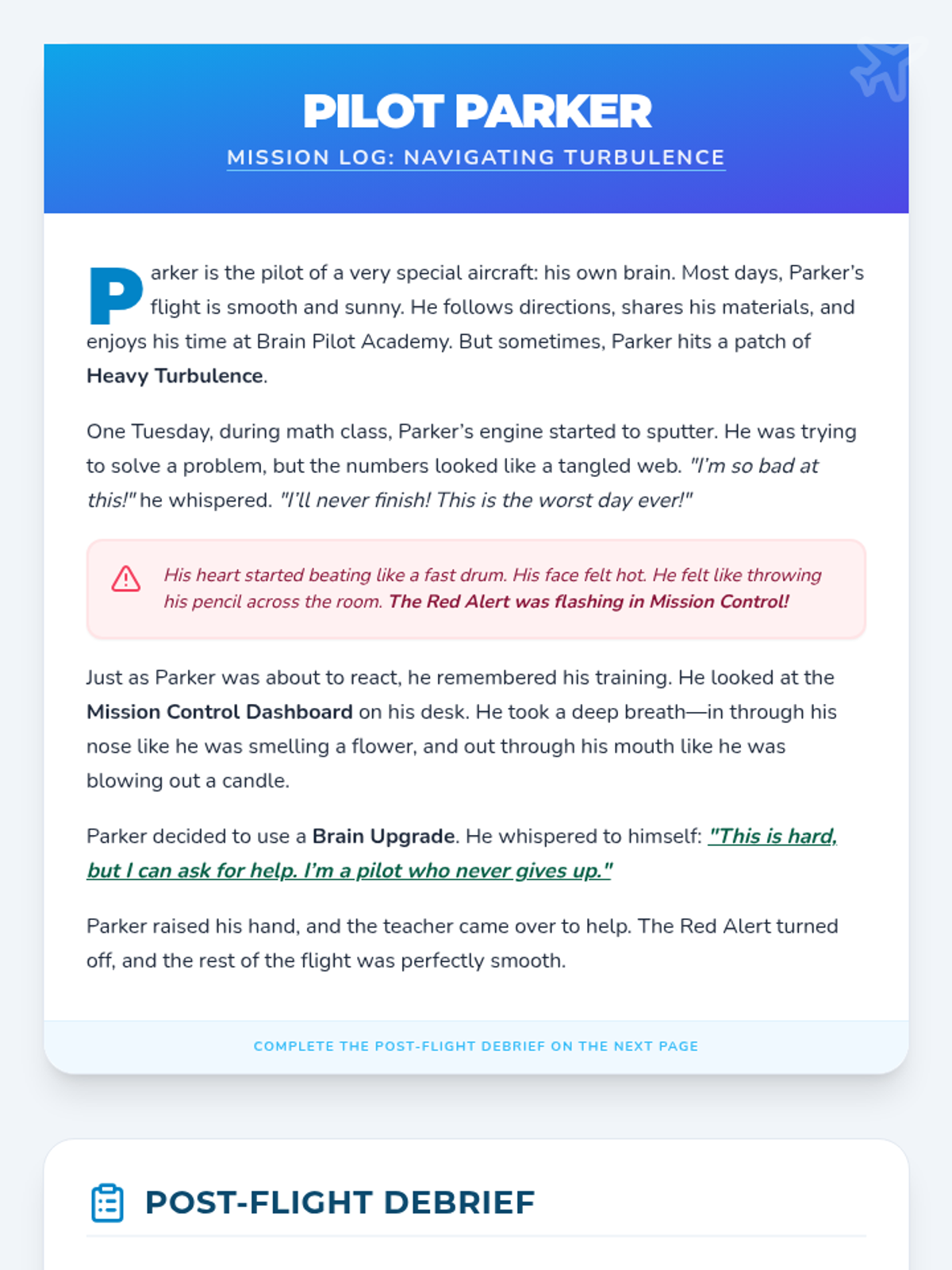
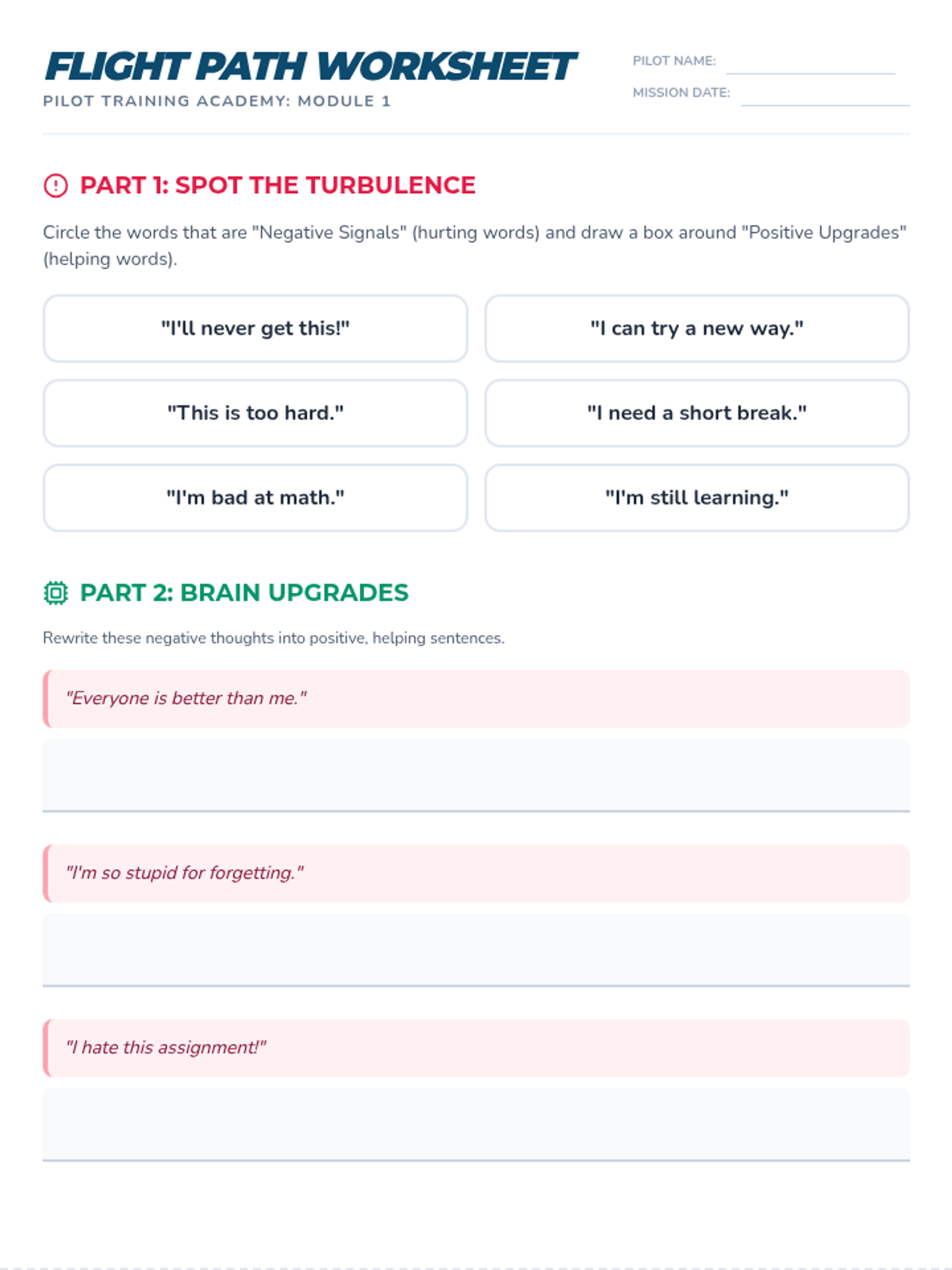
A social-emotional learning lesson focused on managing impulsivity, practicing deep breathing, and shifting from negative to positive self-talk to navigate classroom challenges successfully.