A lesson for 2nd graders on cognitive flexibility, teaching students how to adapt to changes, accept play ideas, and transition between tasks using the 'Flexible vs. Stuck Brain' framework.
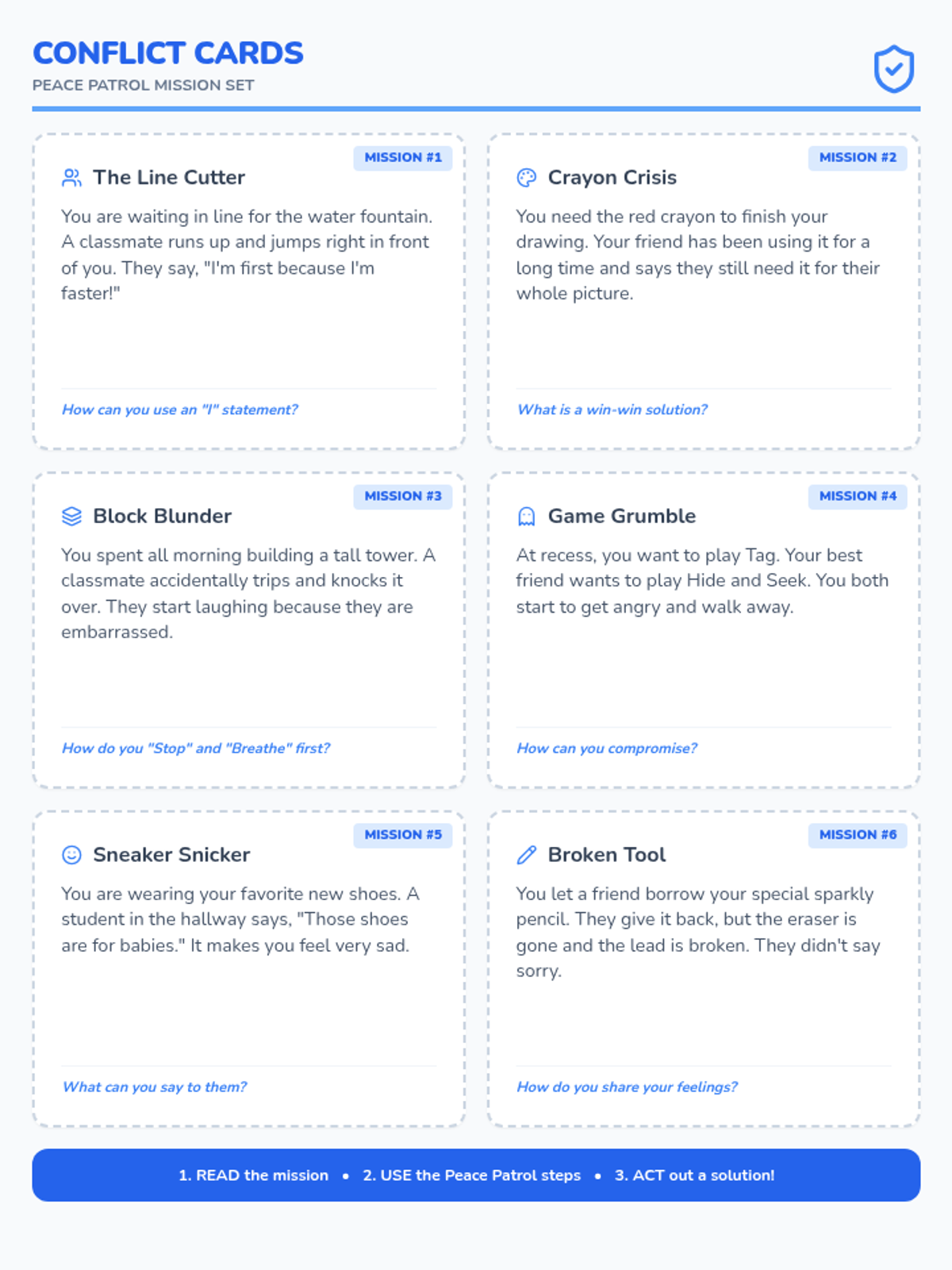
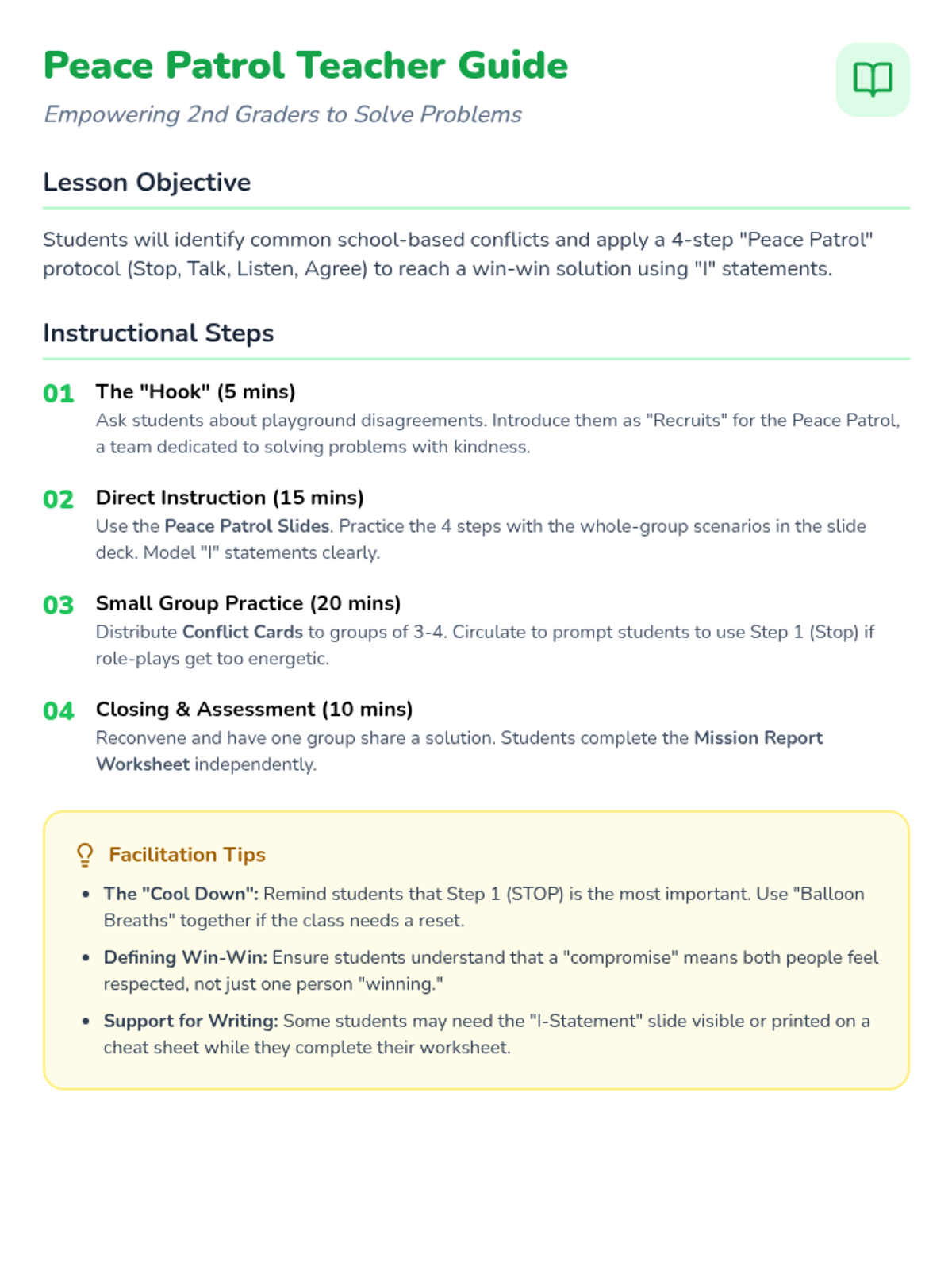
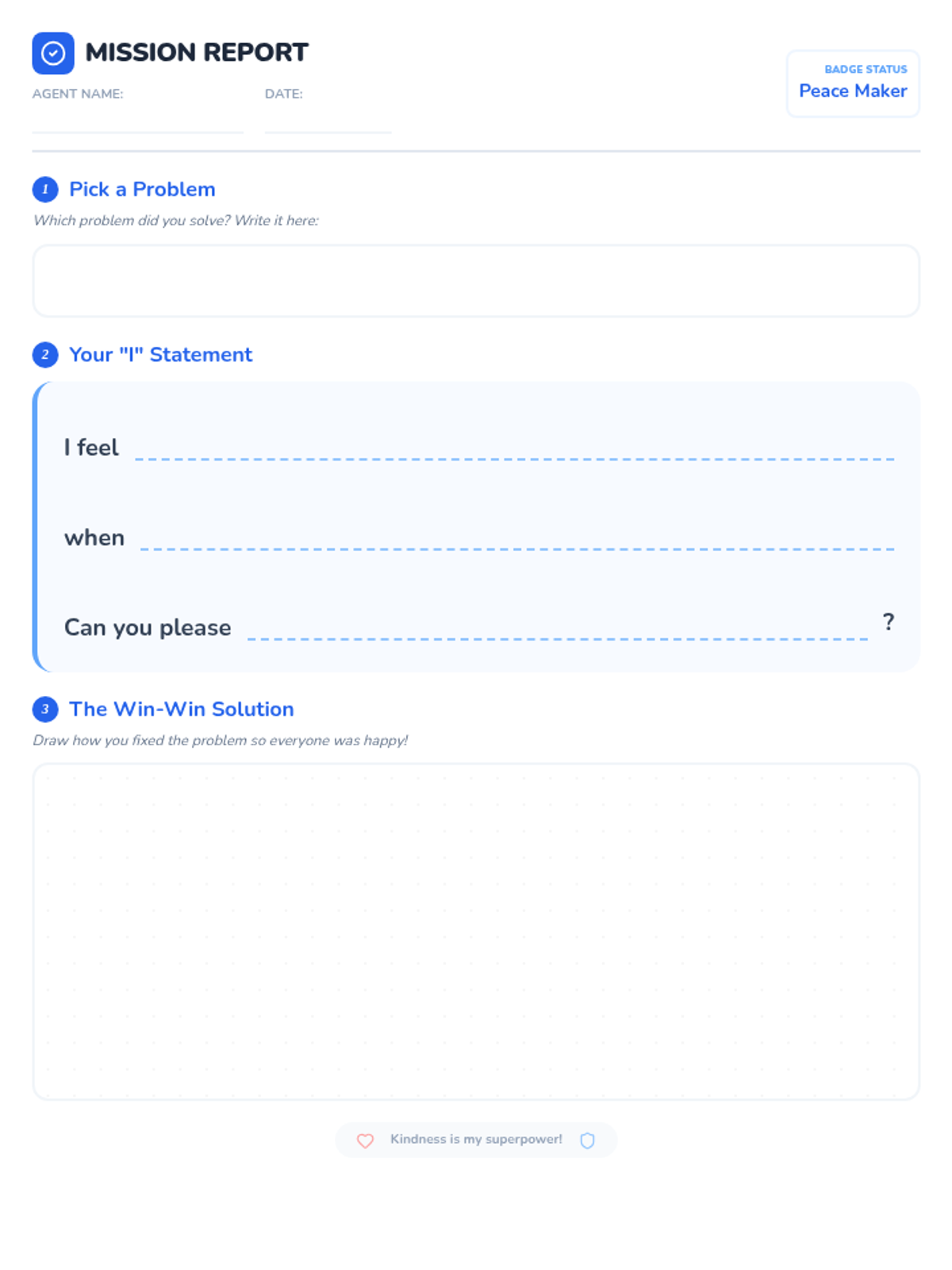
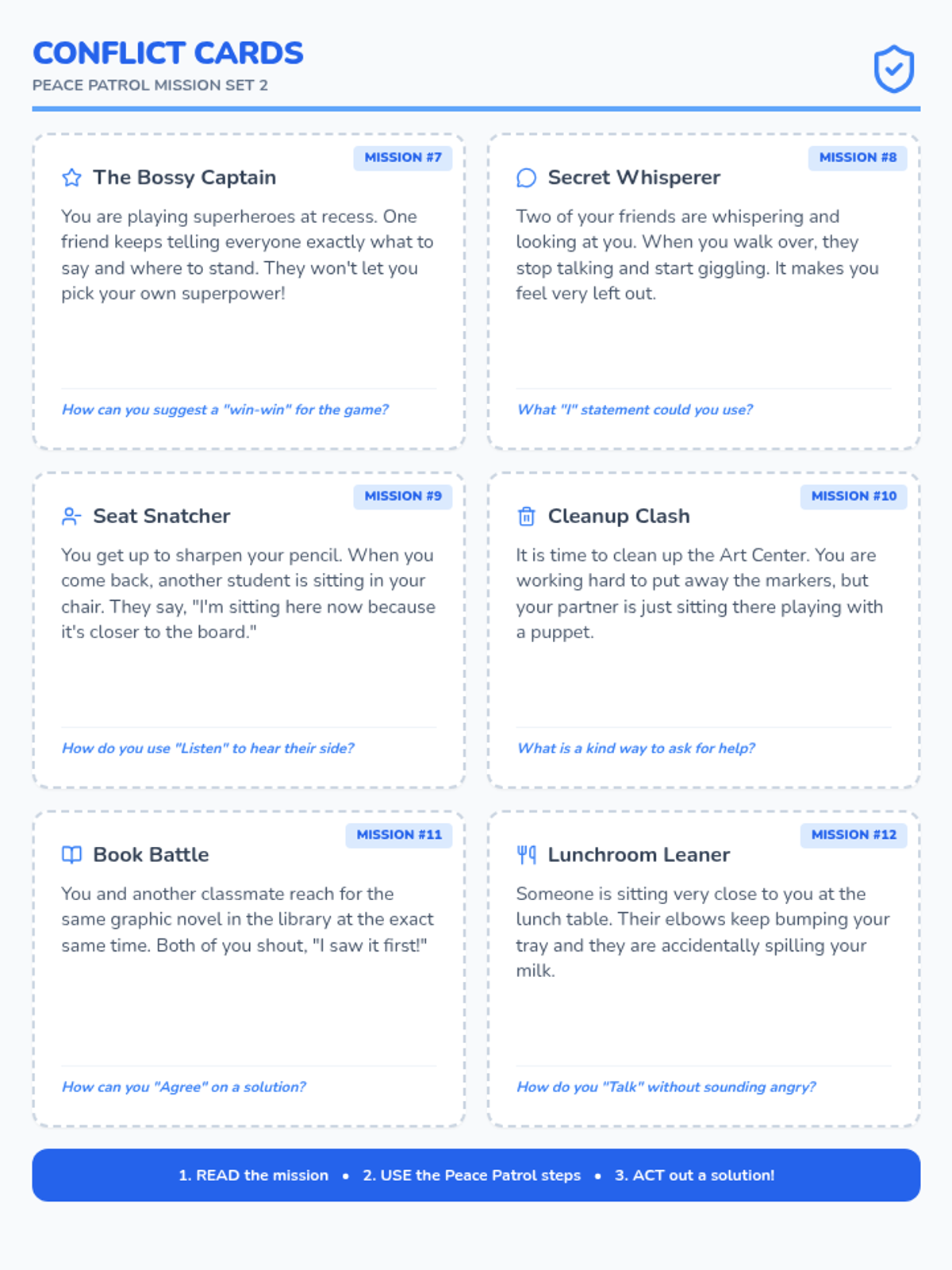
A lesson designed for 2nd graders to learn and practice essential conflict resolution and problem-solving skills through modeling and group discussion.
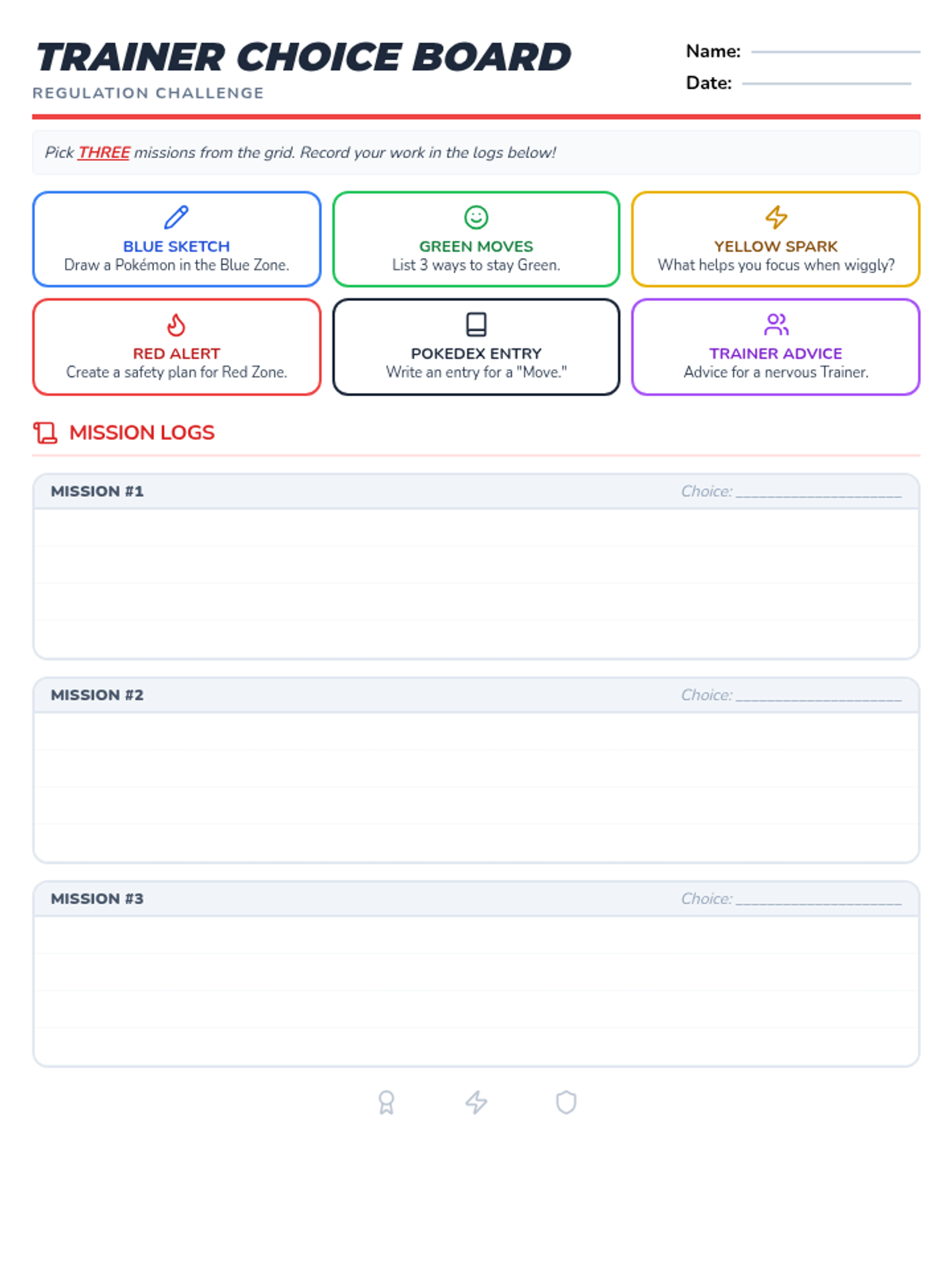
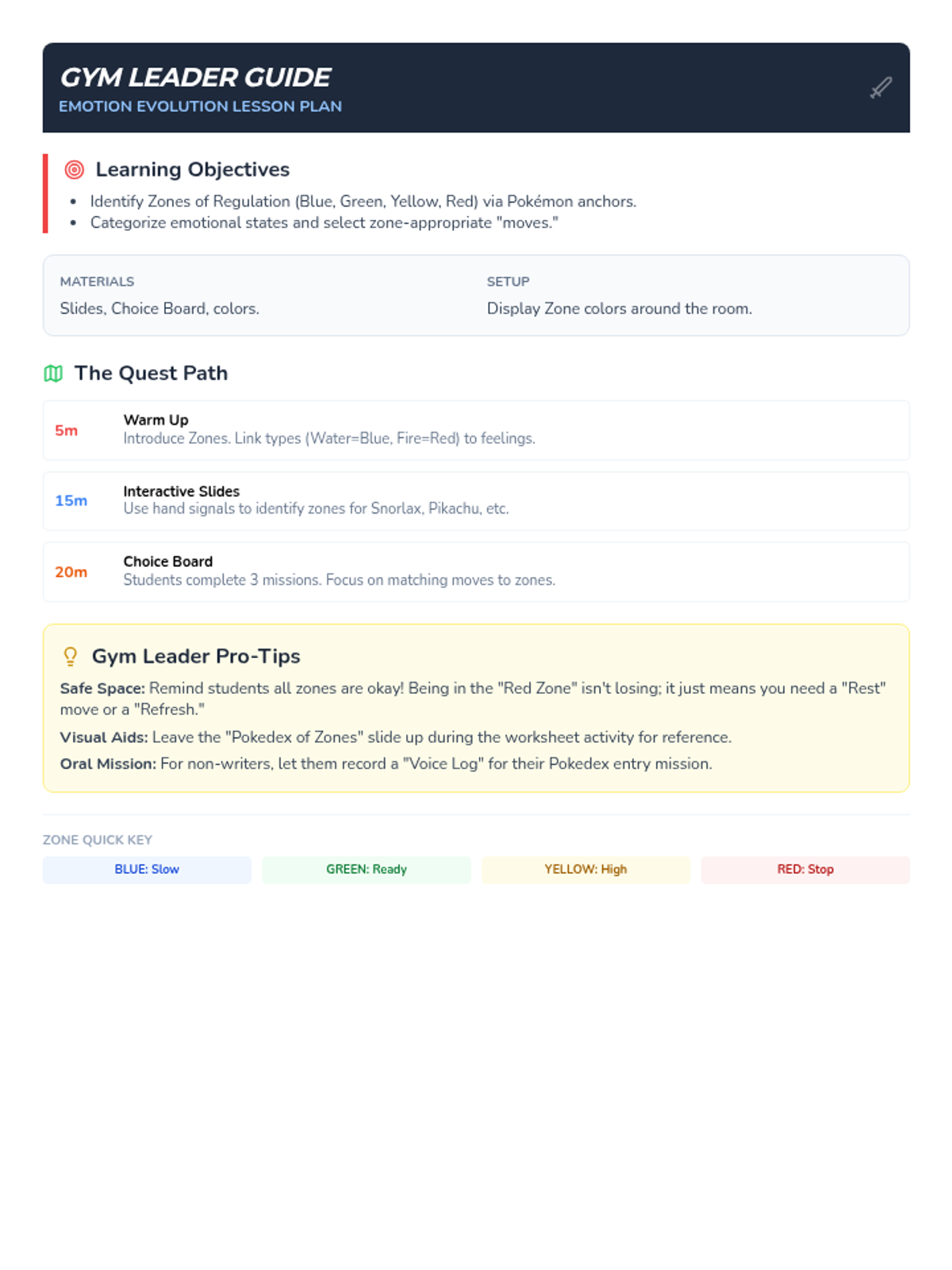
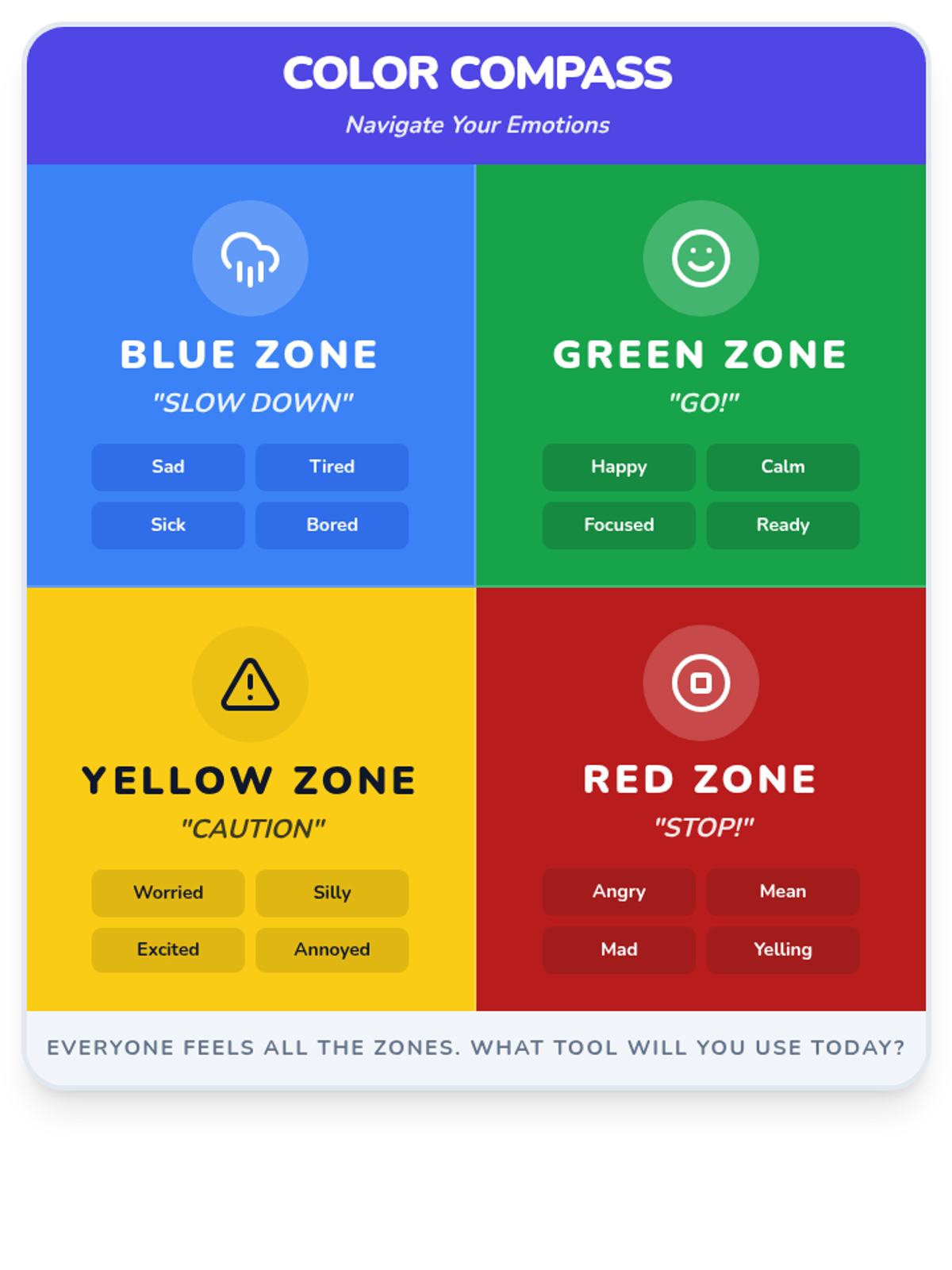
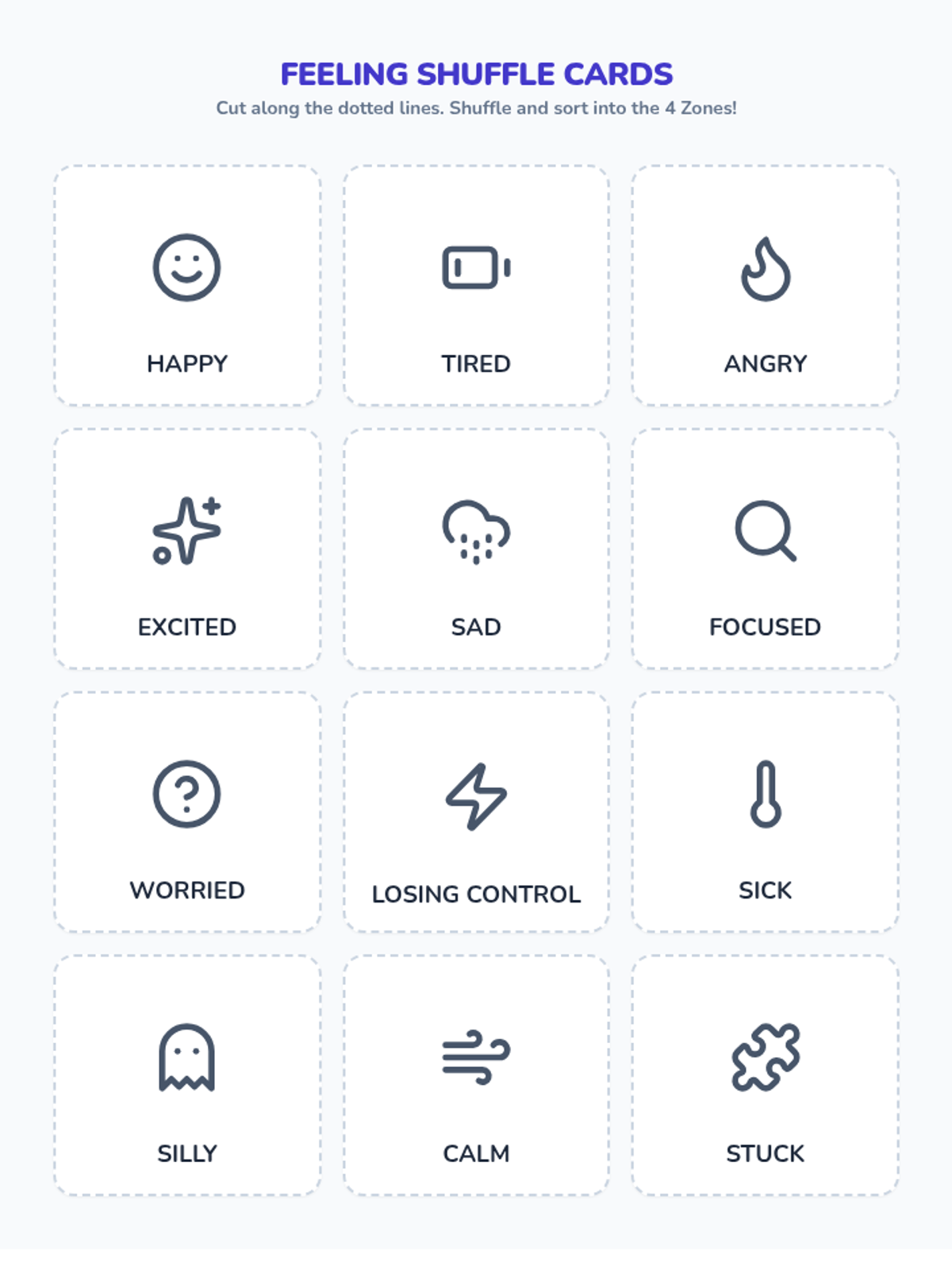
A Pokémon-themed lesson where students identify the four Zones of Regulation through interactive scenarios and choice-based activities. Students learn to recognize emotional states and select appropriate regulation 'moves'.
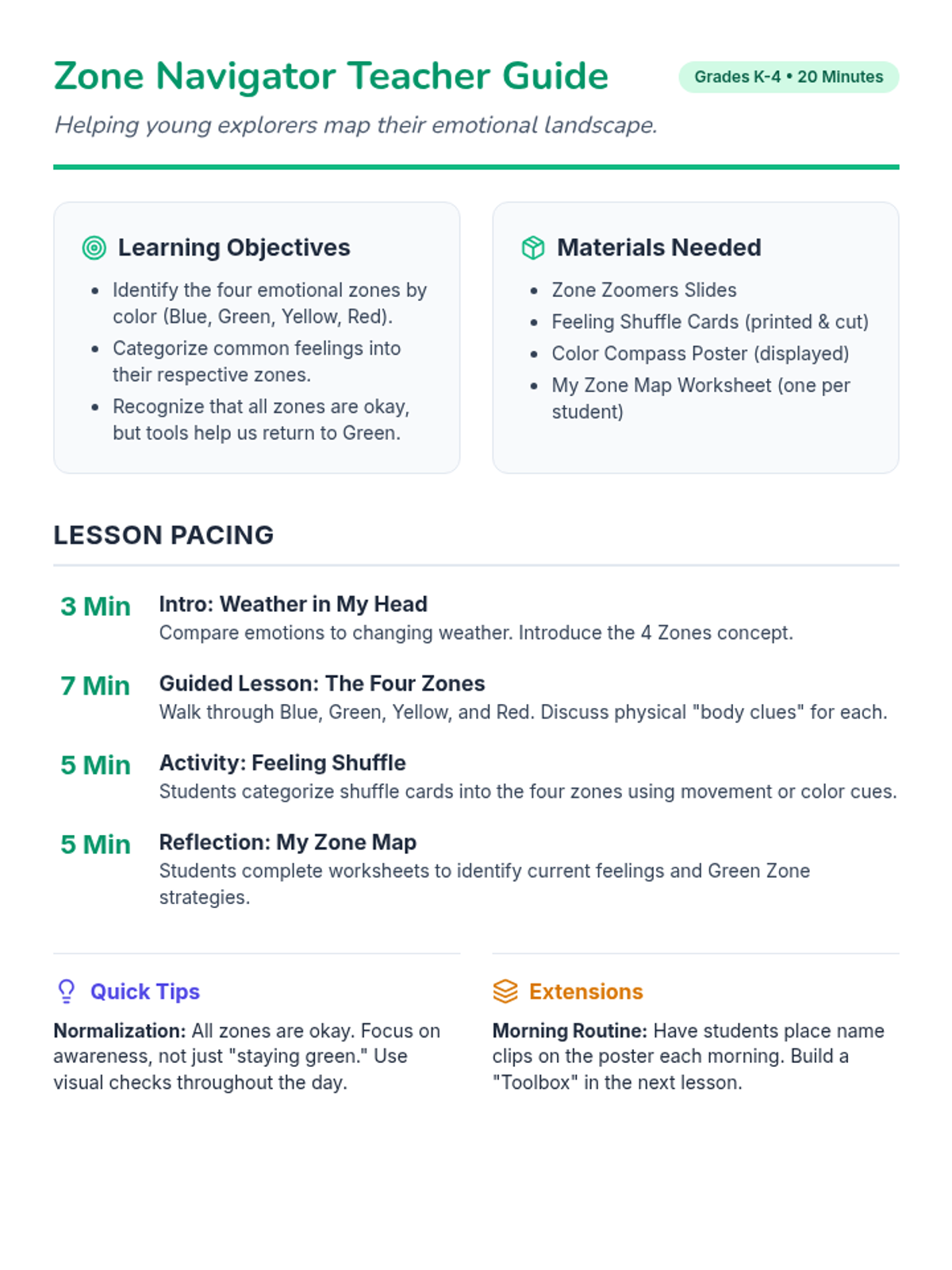
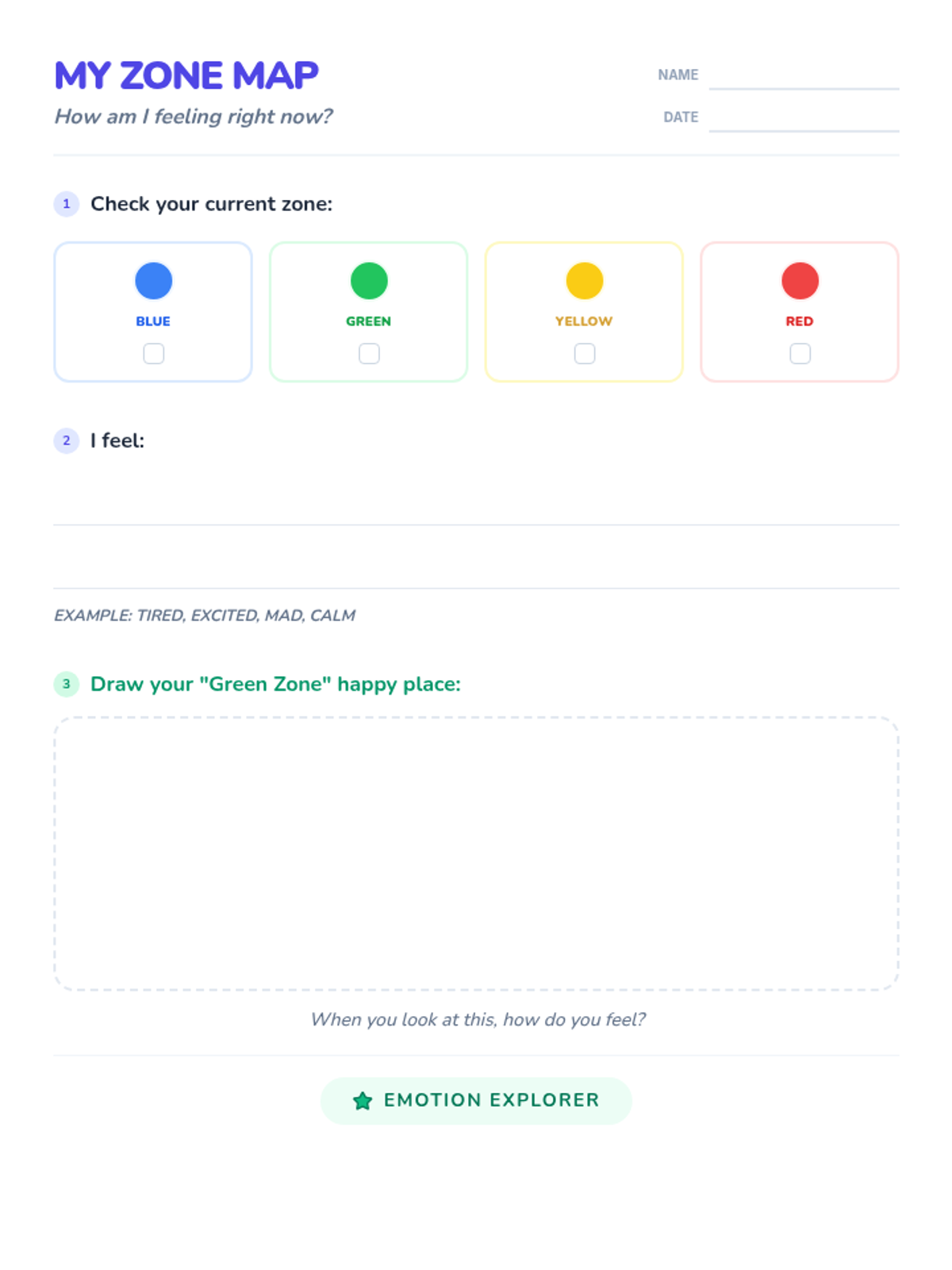
Students will learn to identify the four emotional zones (Blue, Green, Yellow, Red) and recognize their own physical and emotional cues for each.
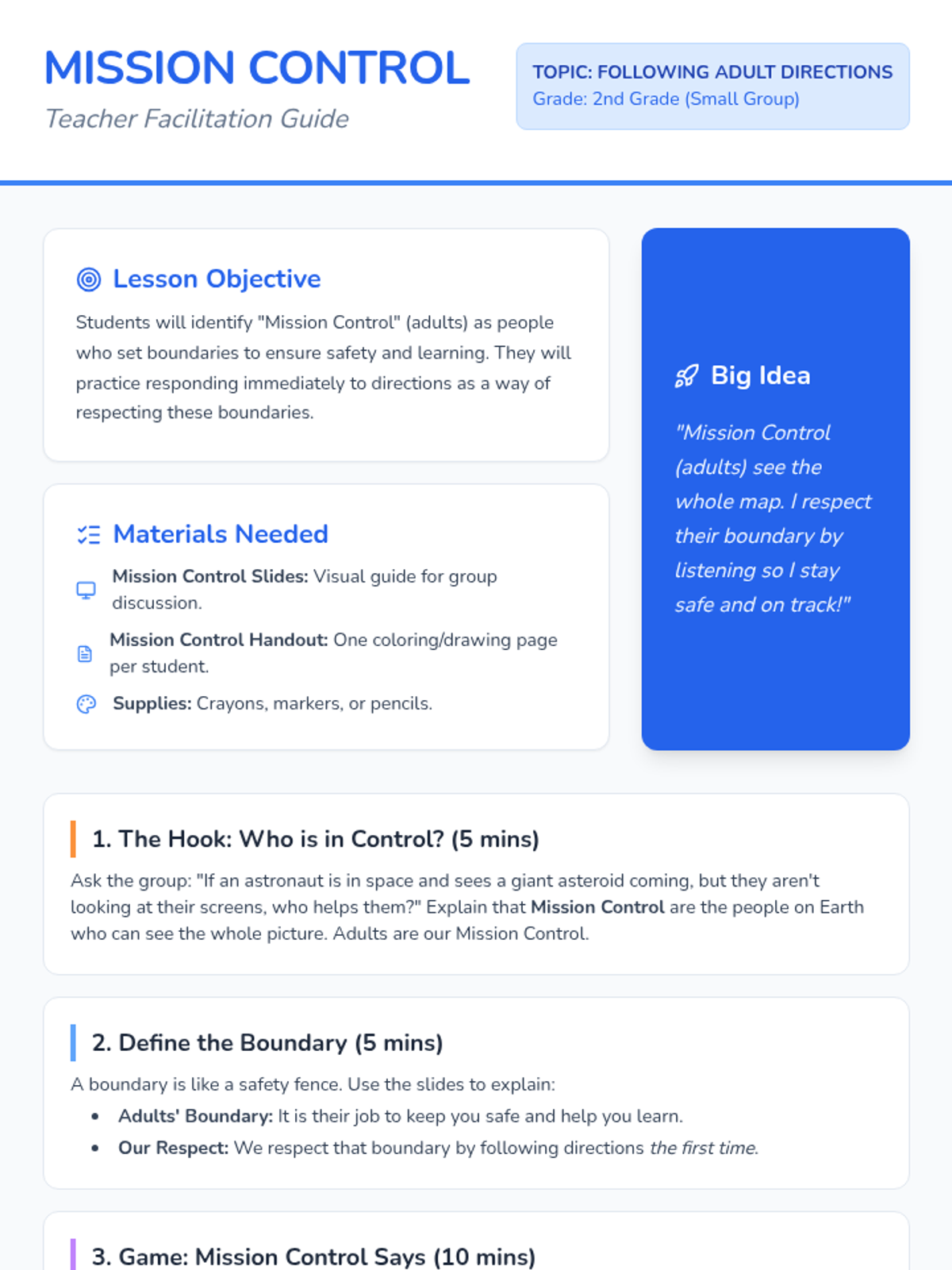
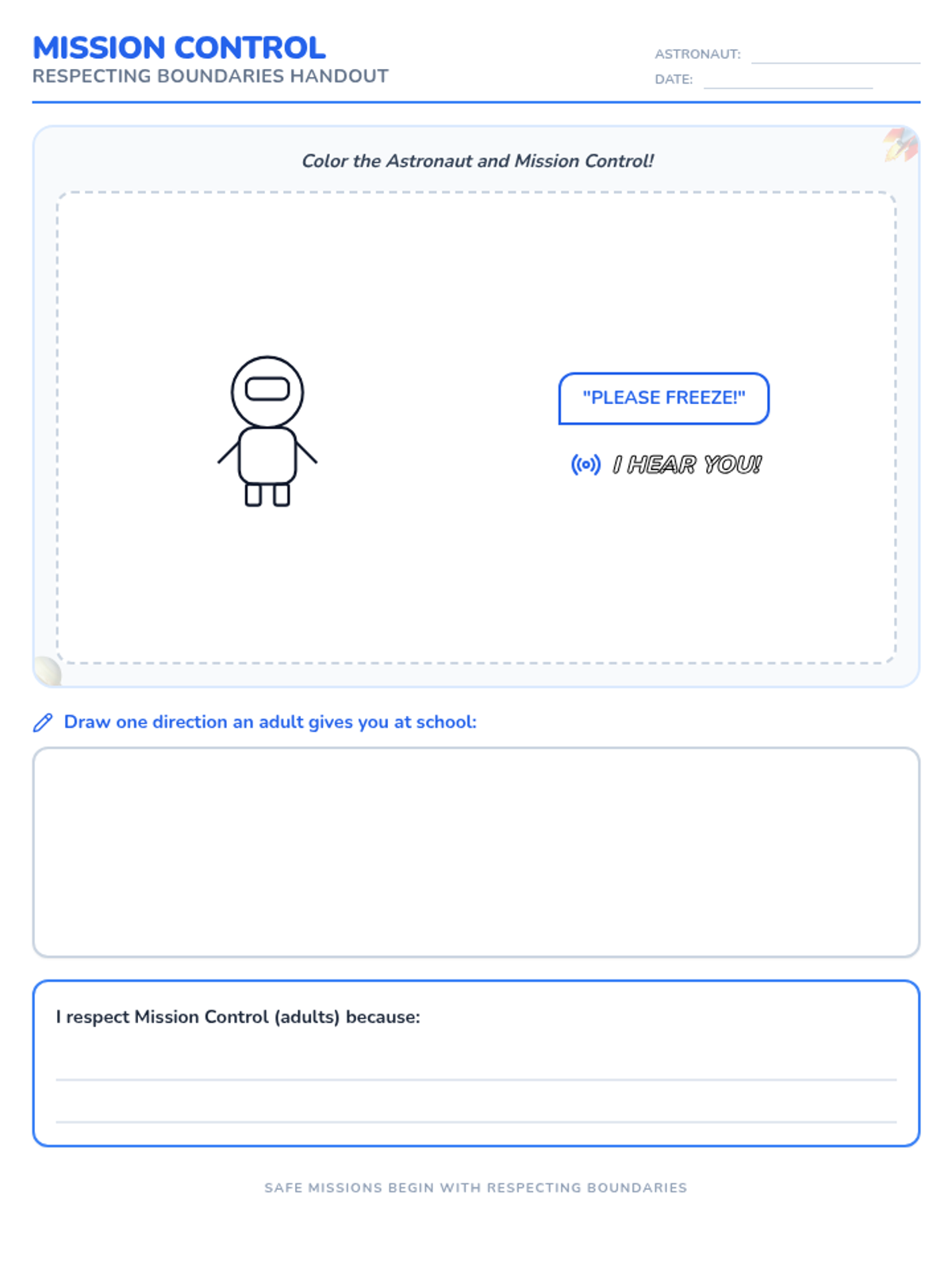
A small-group social-emotional learning lesson for 2nd graders focused on following adult directions as a way to respect boundaries and ensure safety. Students explore the 'Mission Control' metaphor where adults provide guidance to help 'astronauts' succeed.
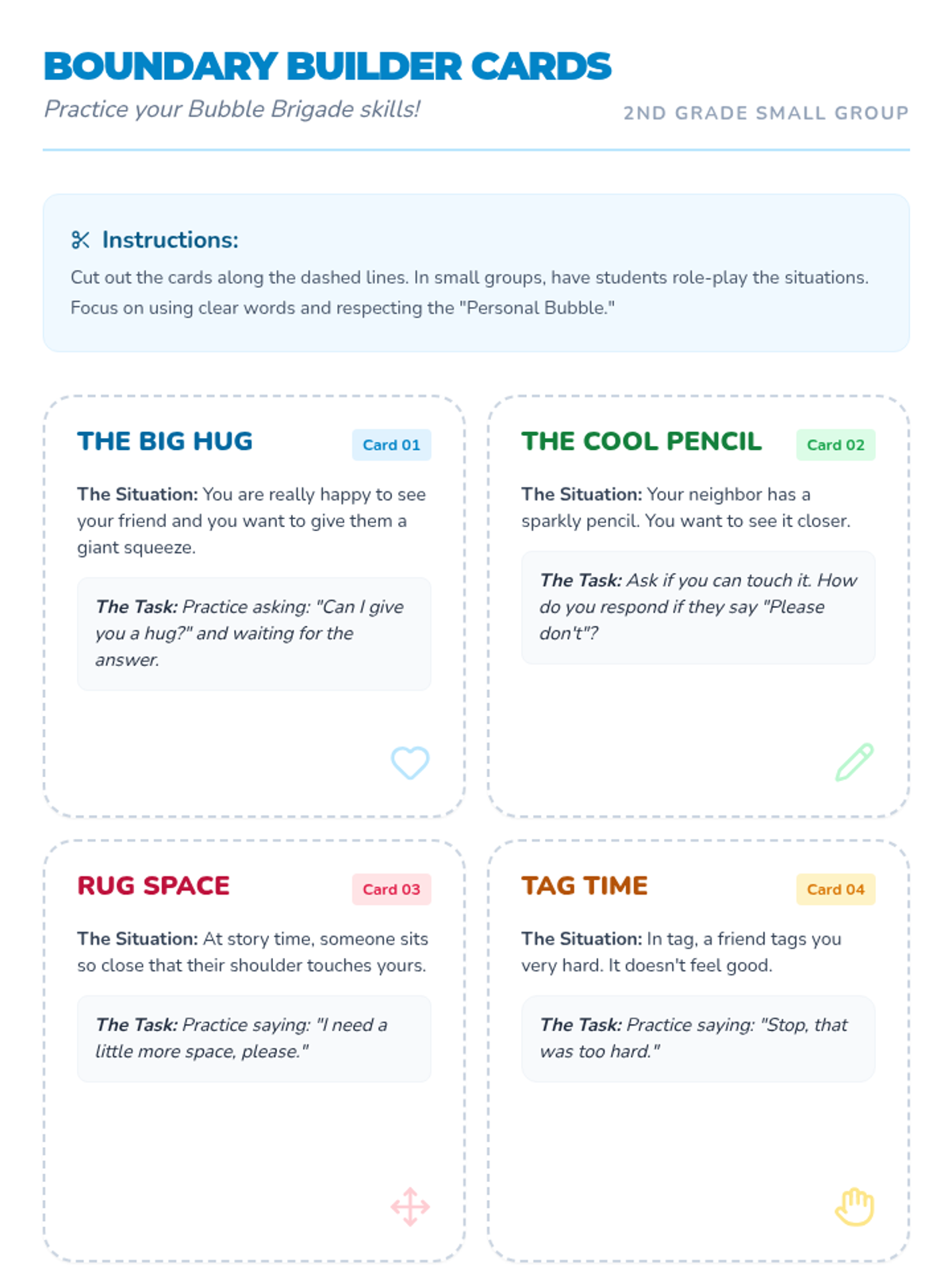
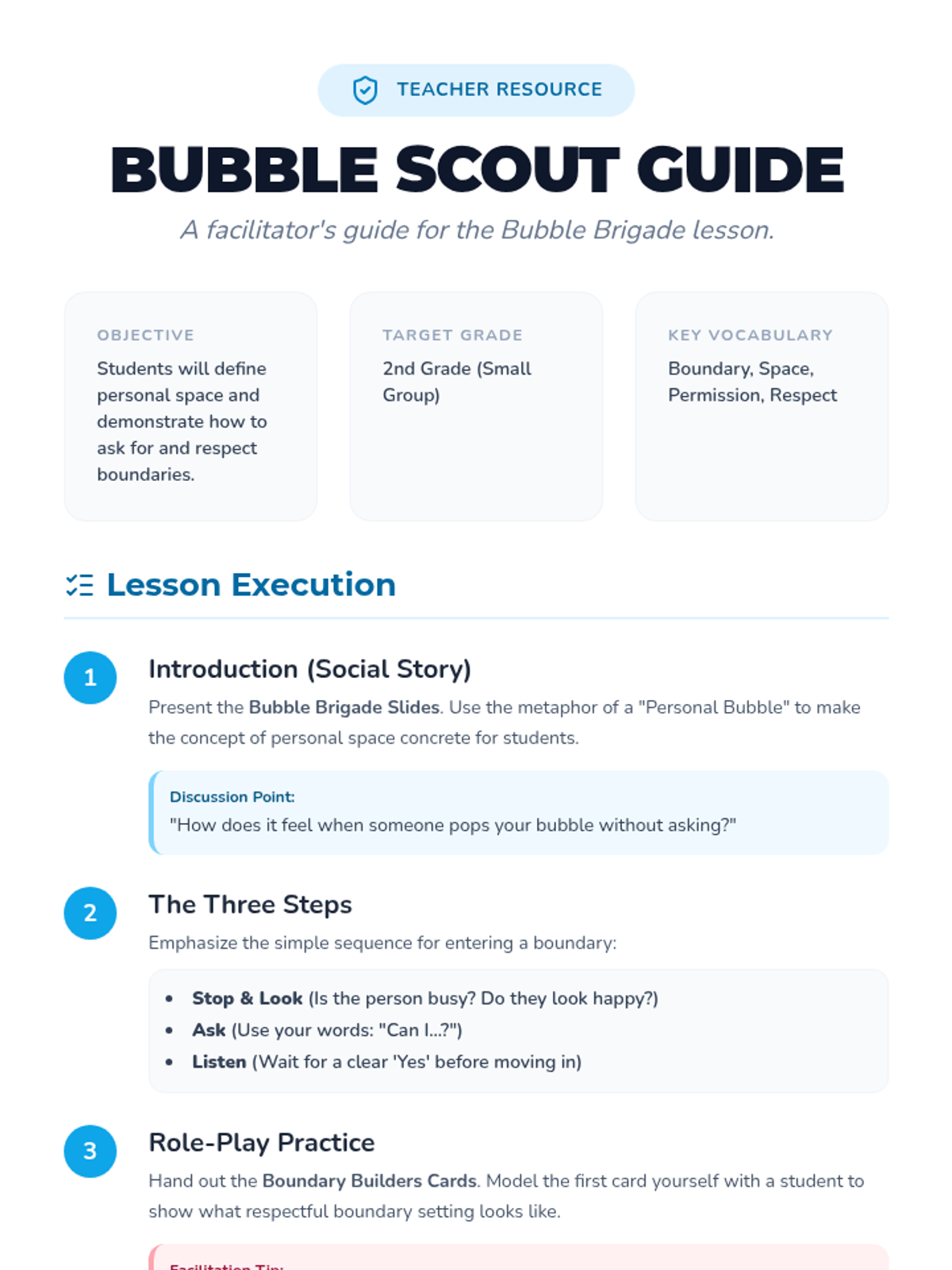
A social-emotional learning lesson for 2nd graders focused on understanding and respecting personal boundaries and personal space through the concept of a 'Personal Bubble'.
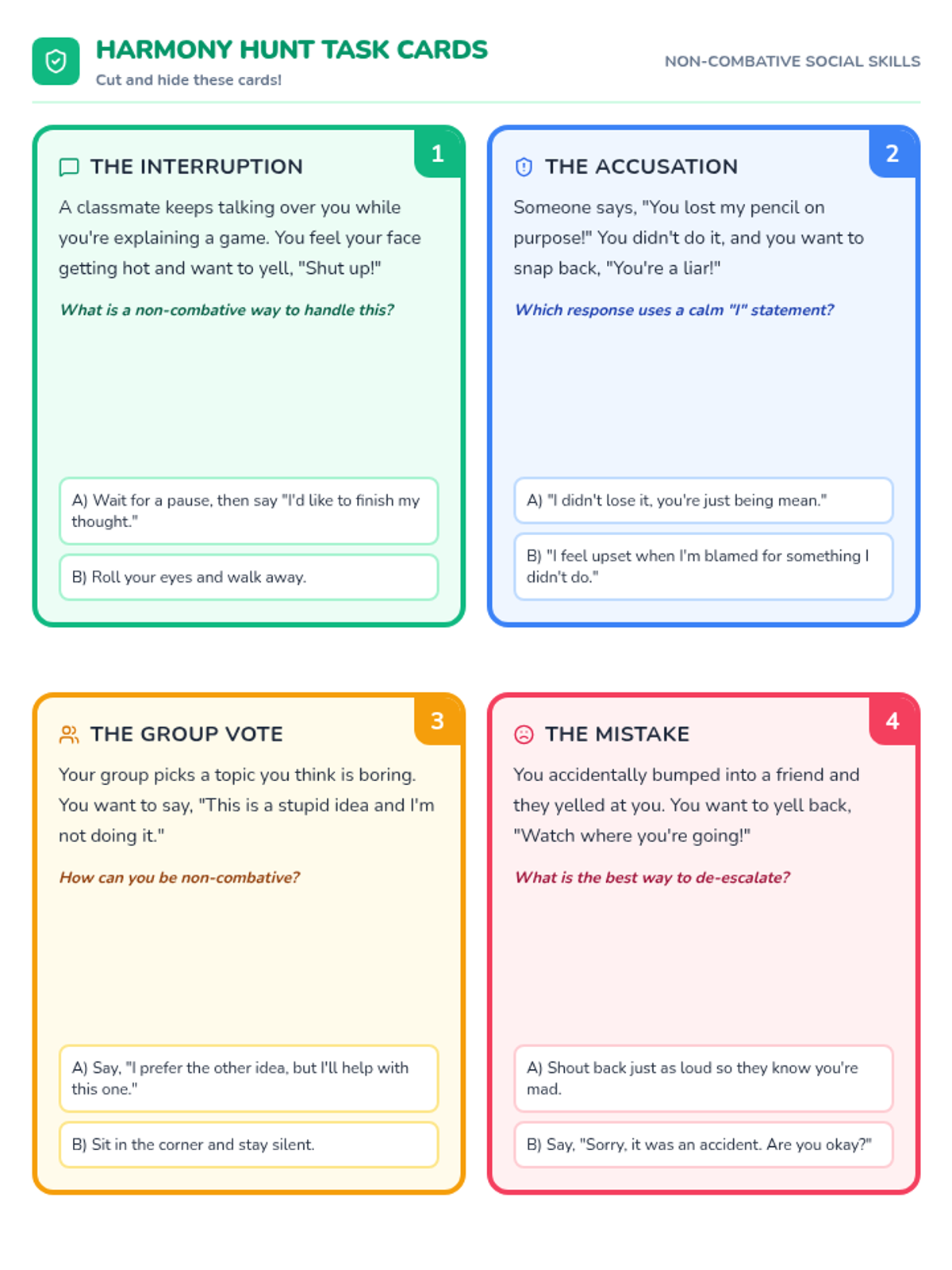
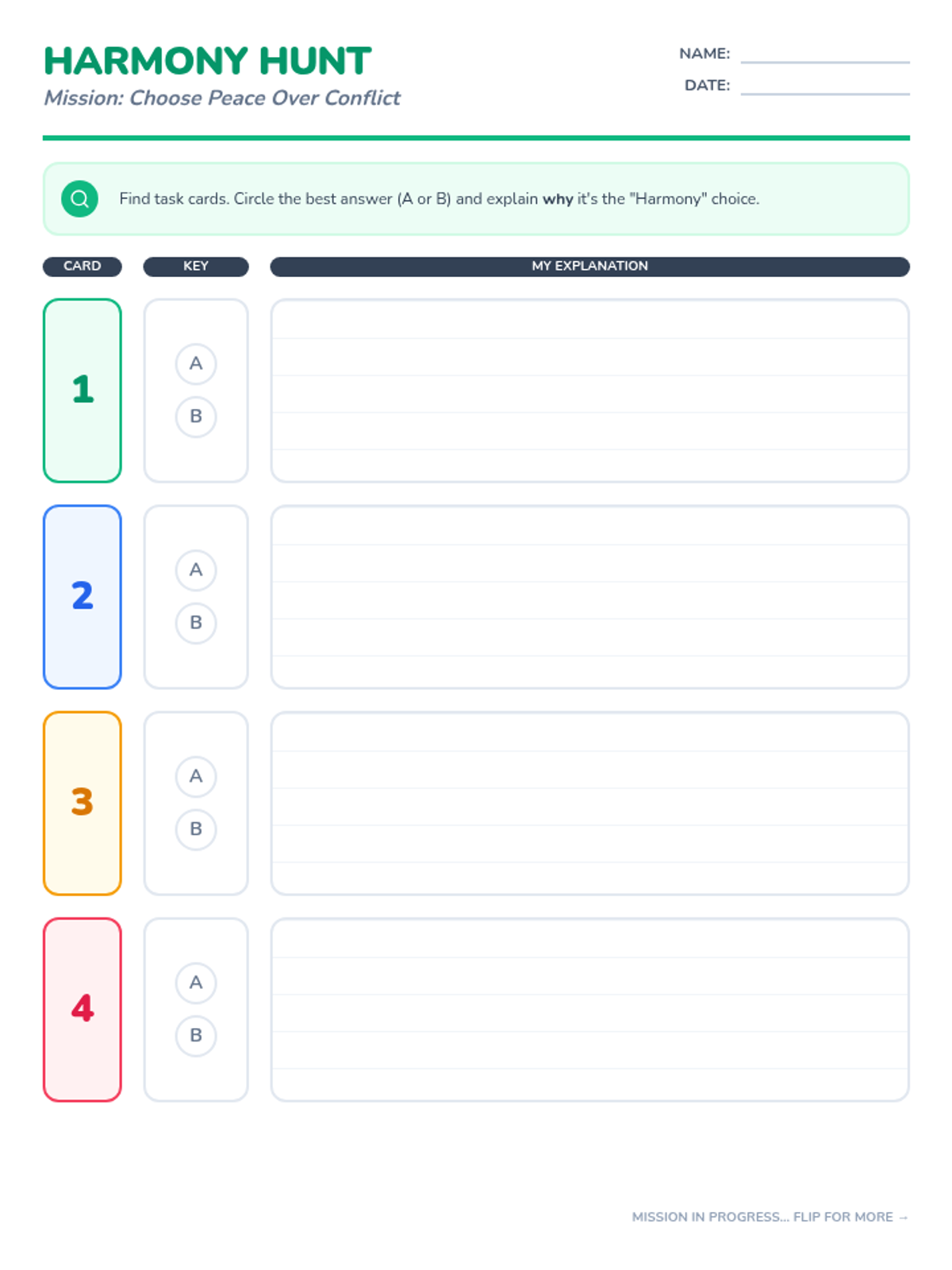
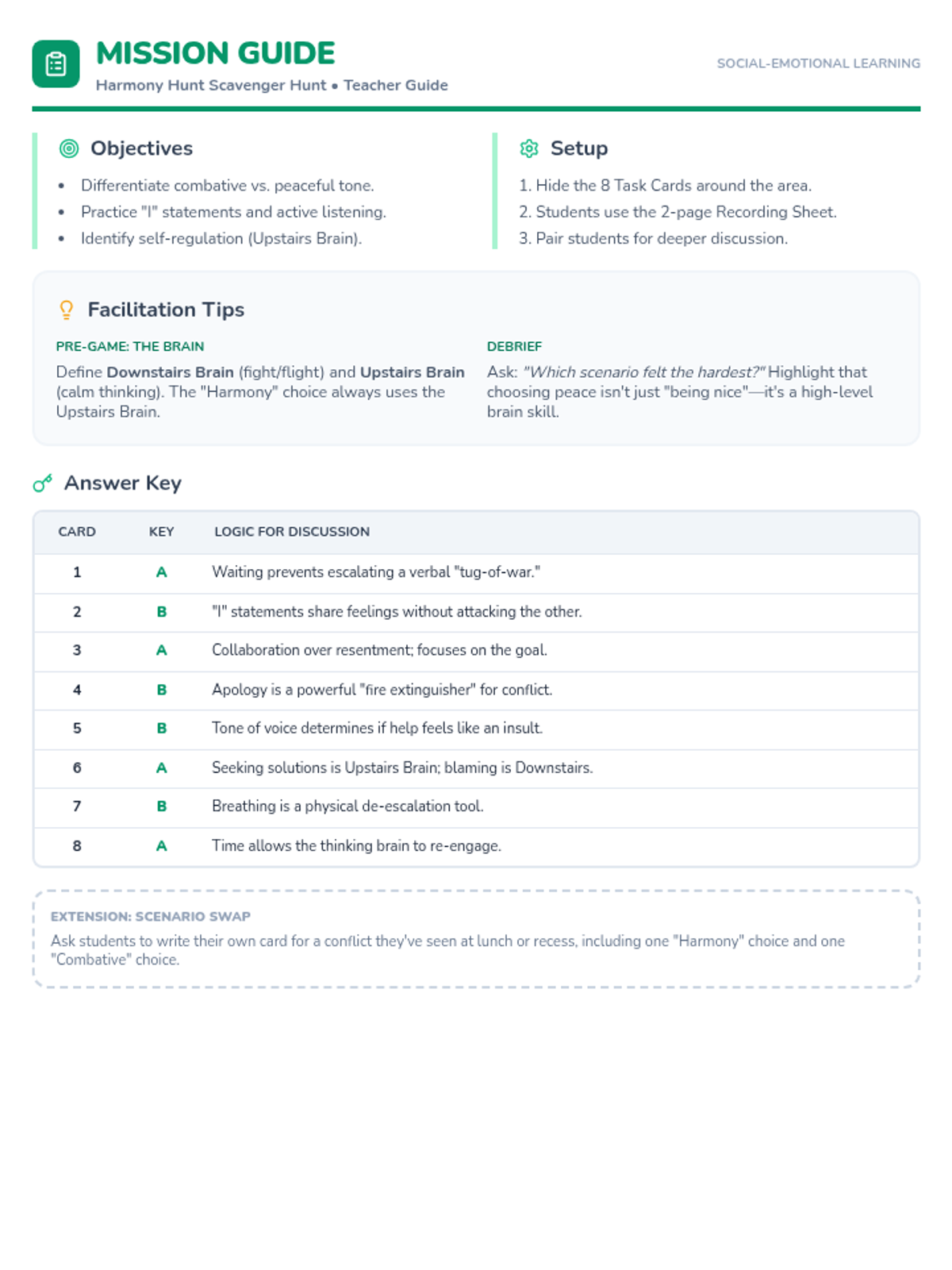
A collaborative scavenger hunt focused on identifying and practicing non-combative communication and conflict resolution strategies.
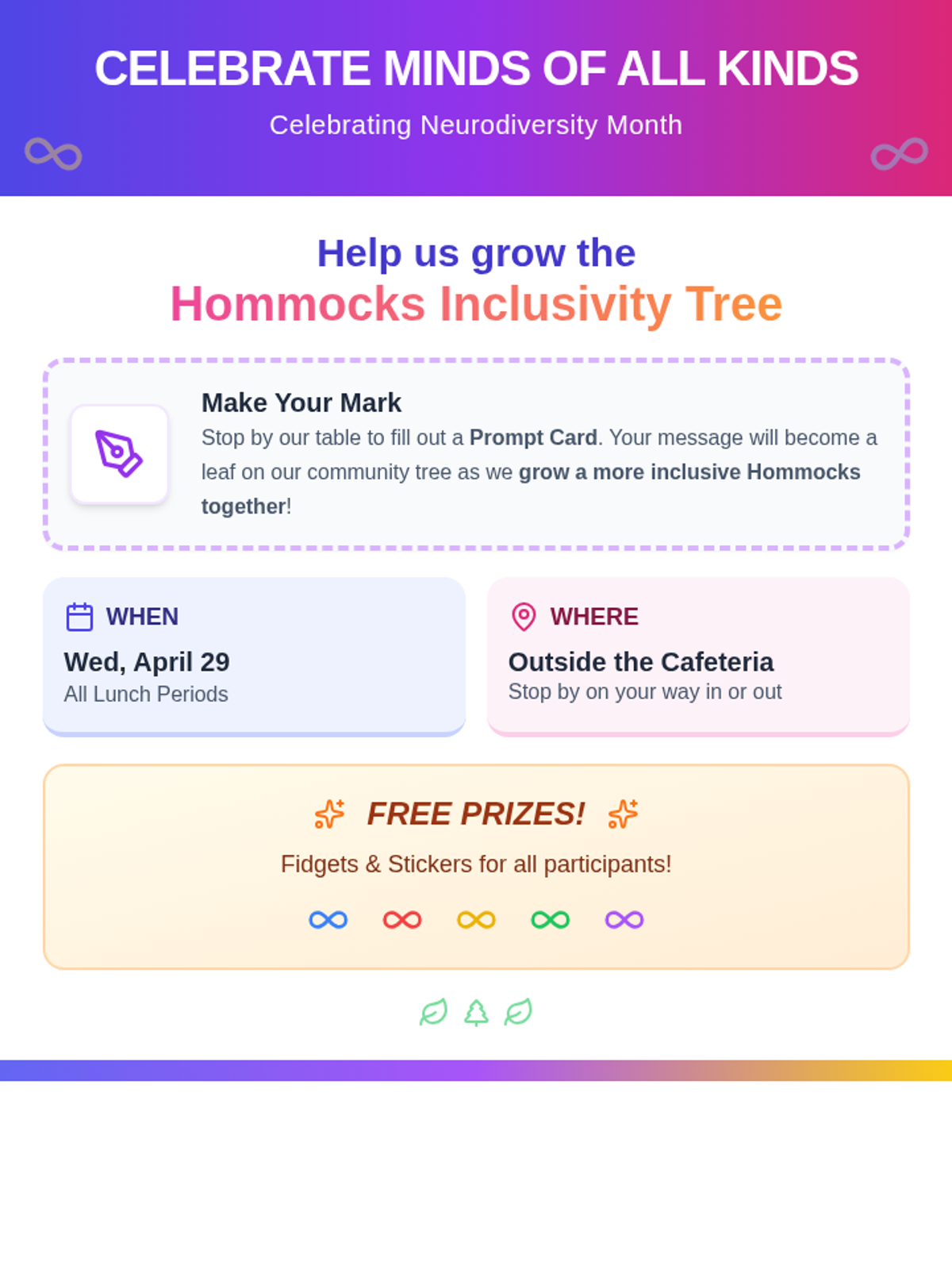
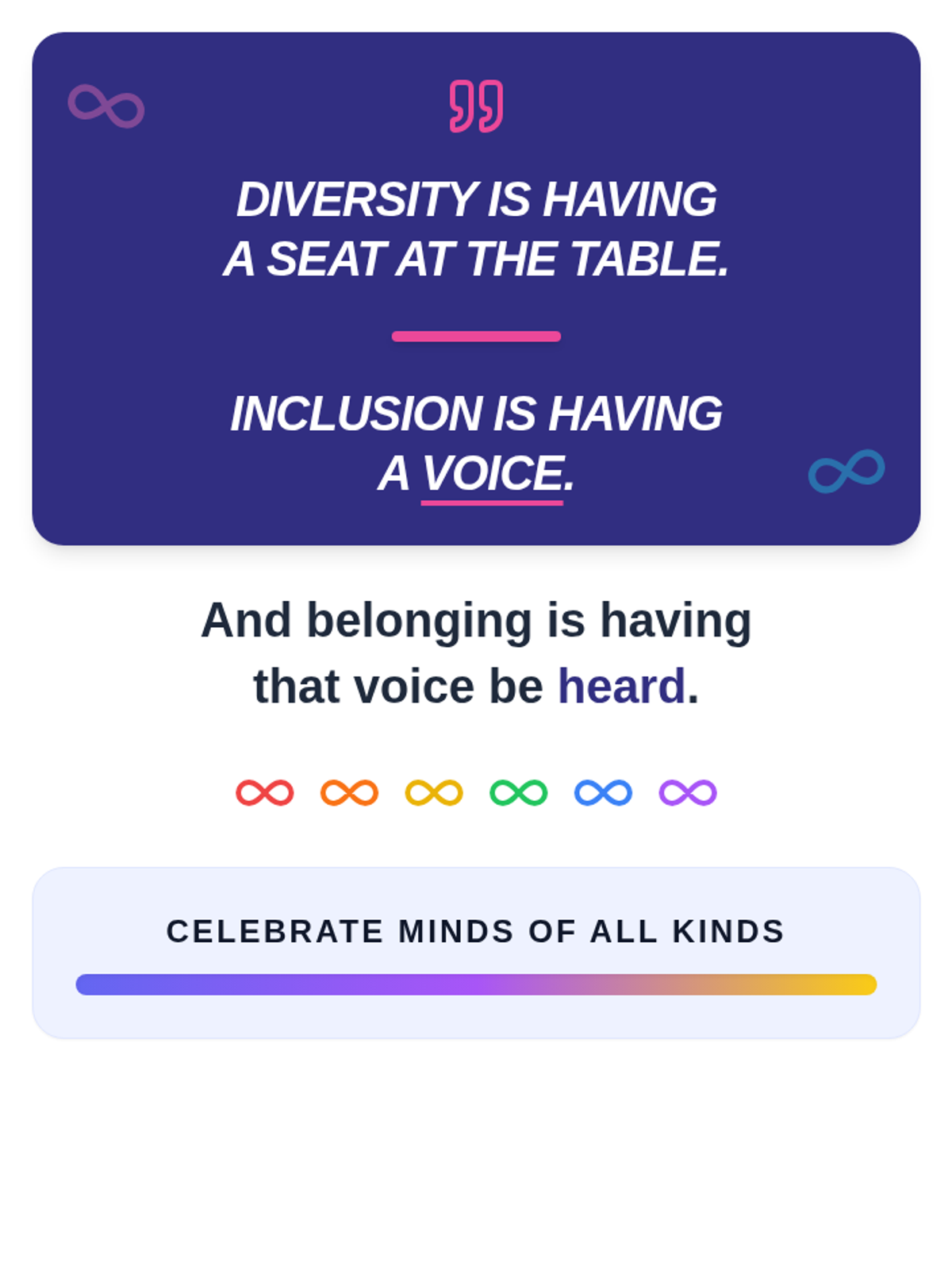
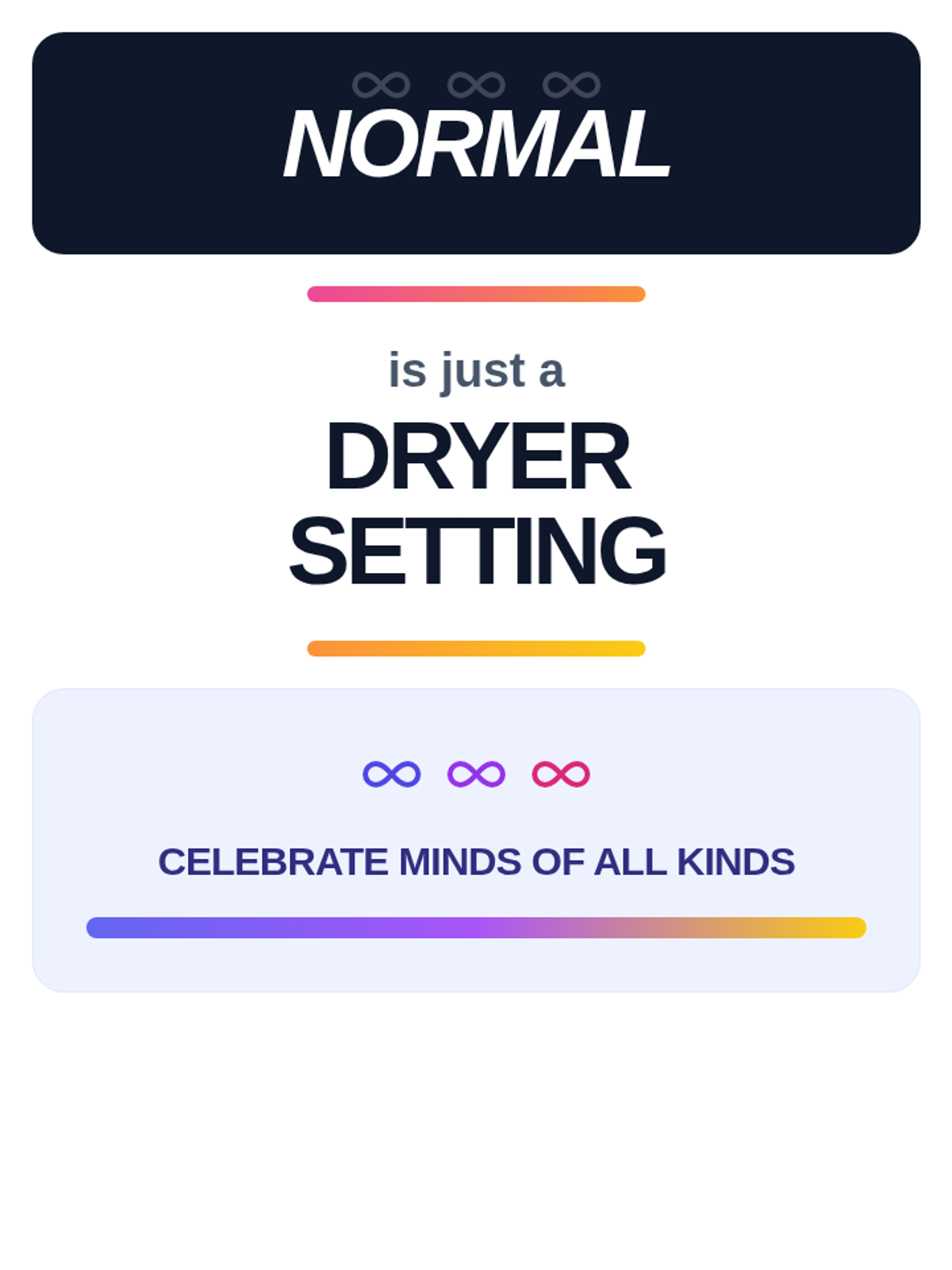
A collection of materials for a school-wide neurodiversity month celebration, including event flyers and inspirational posters.
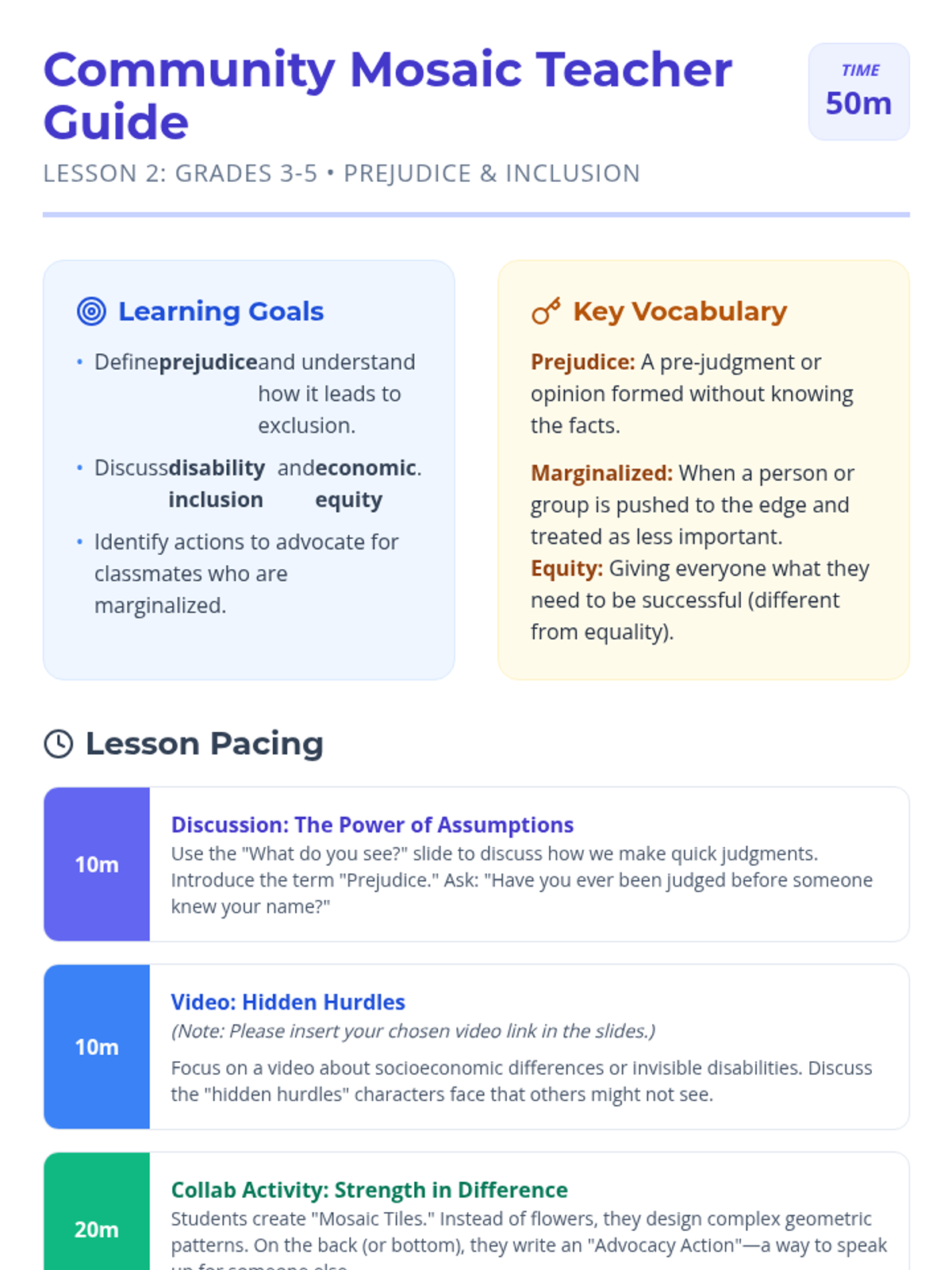
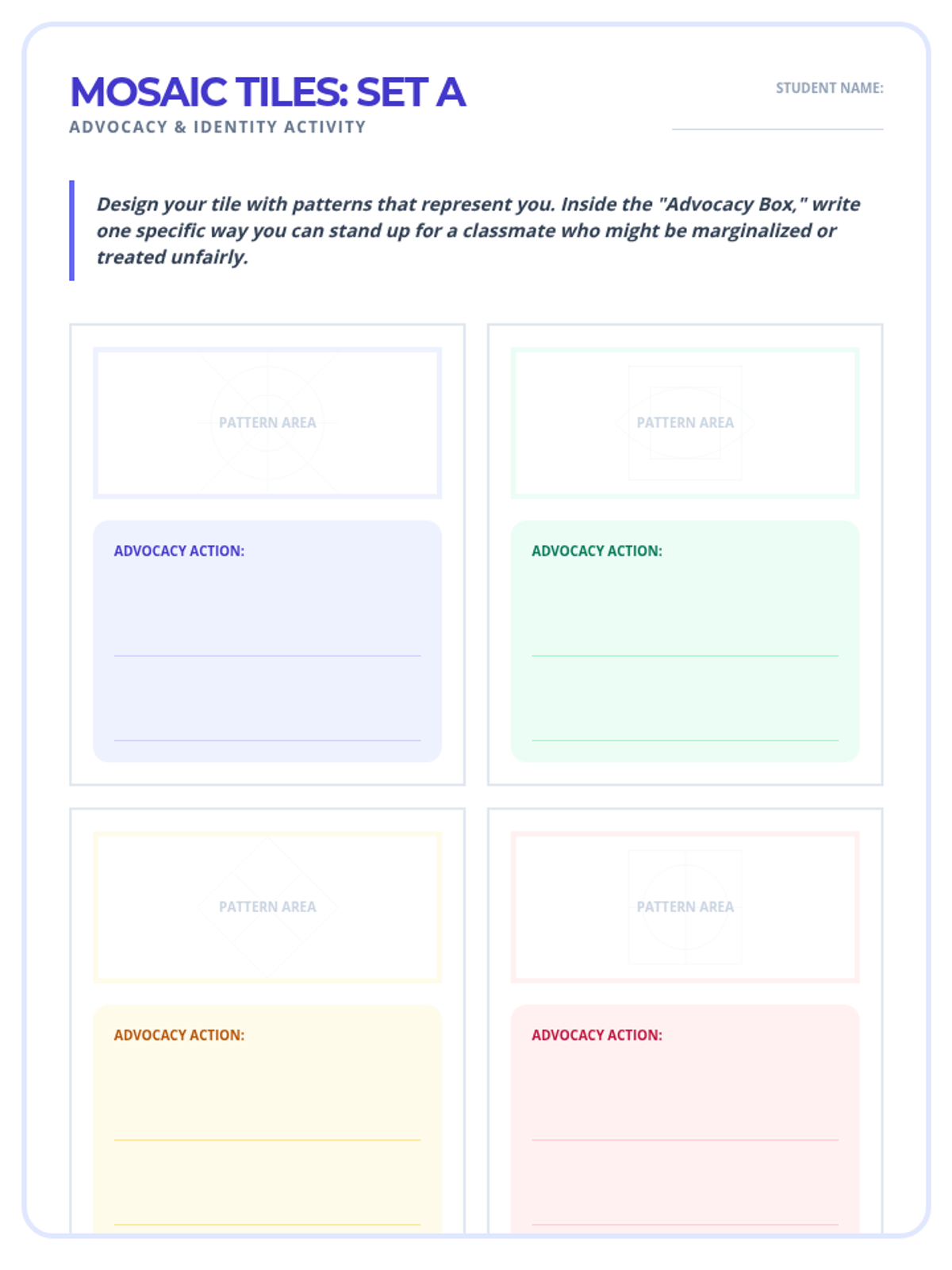
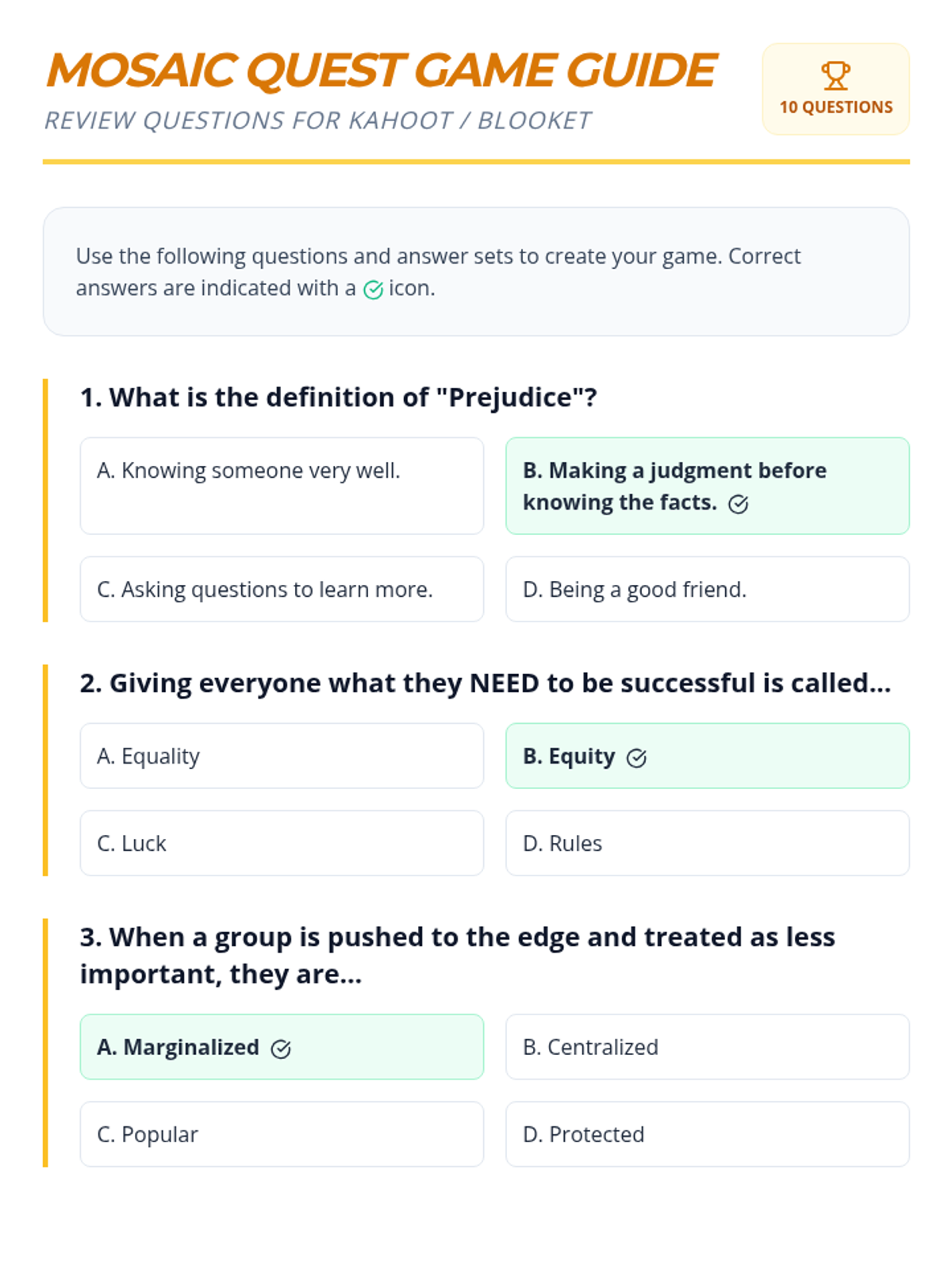
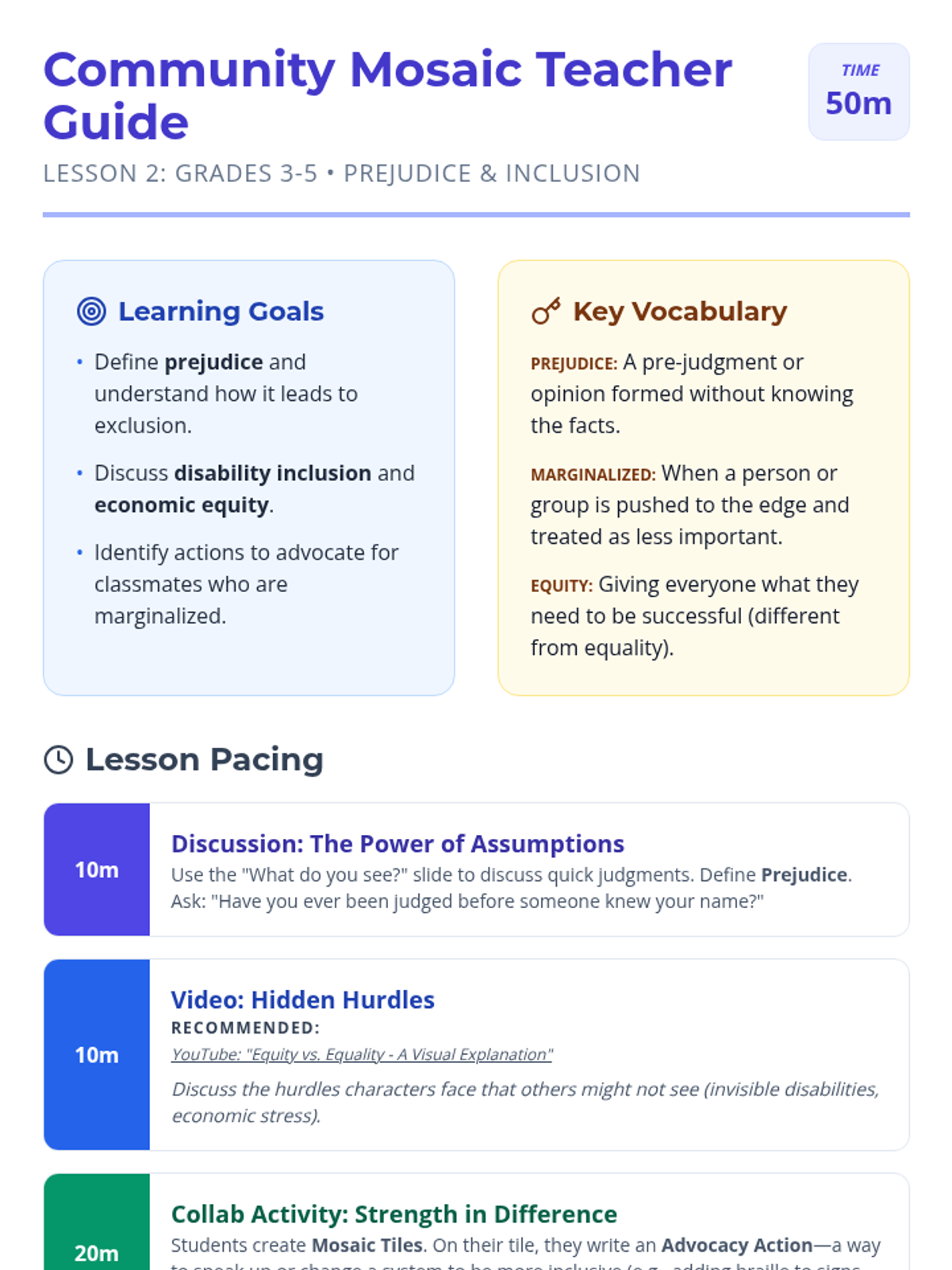
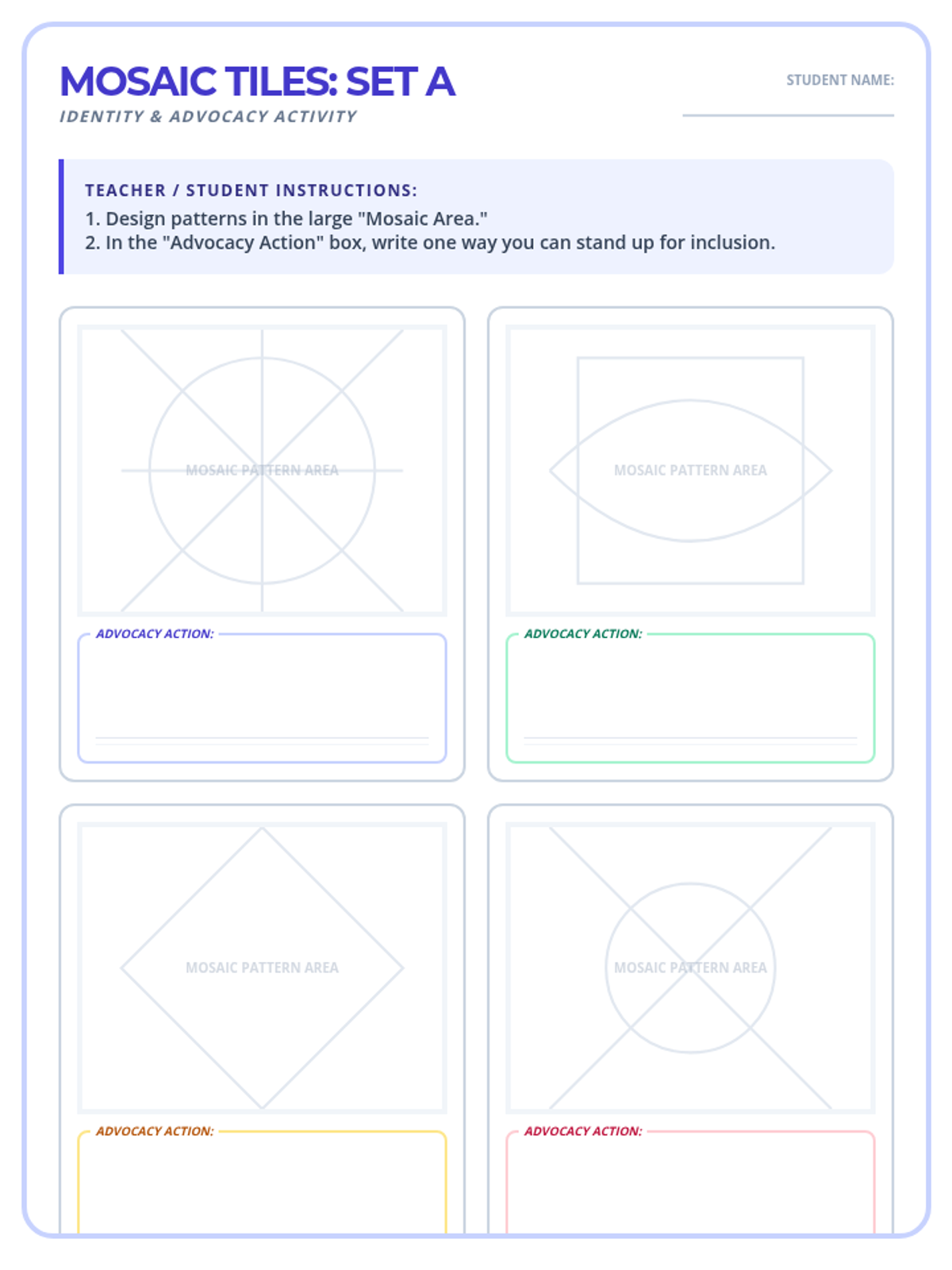
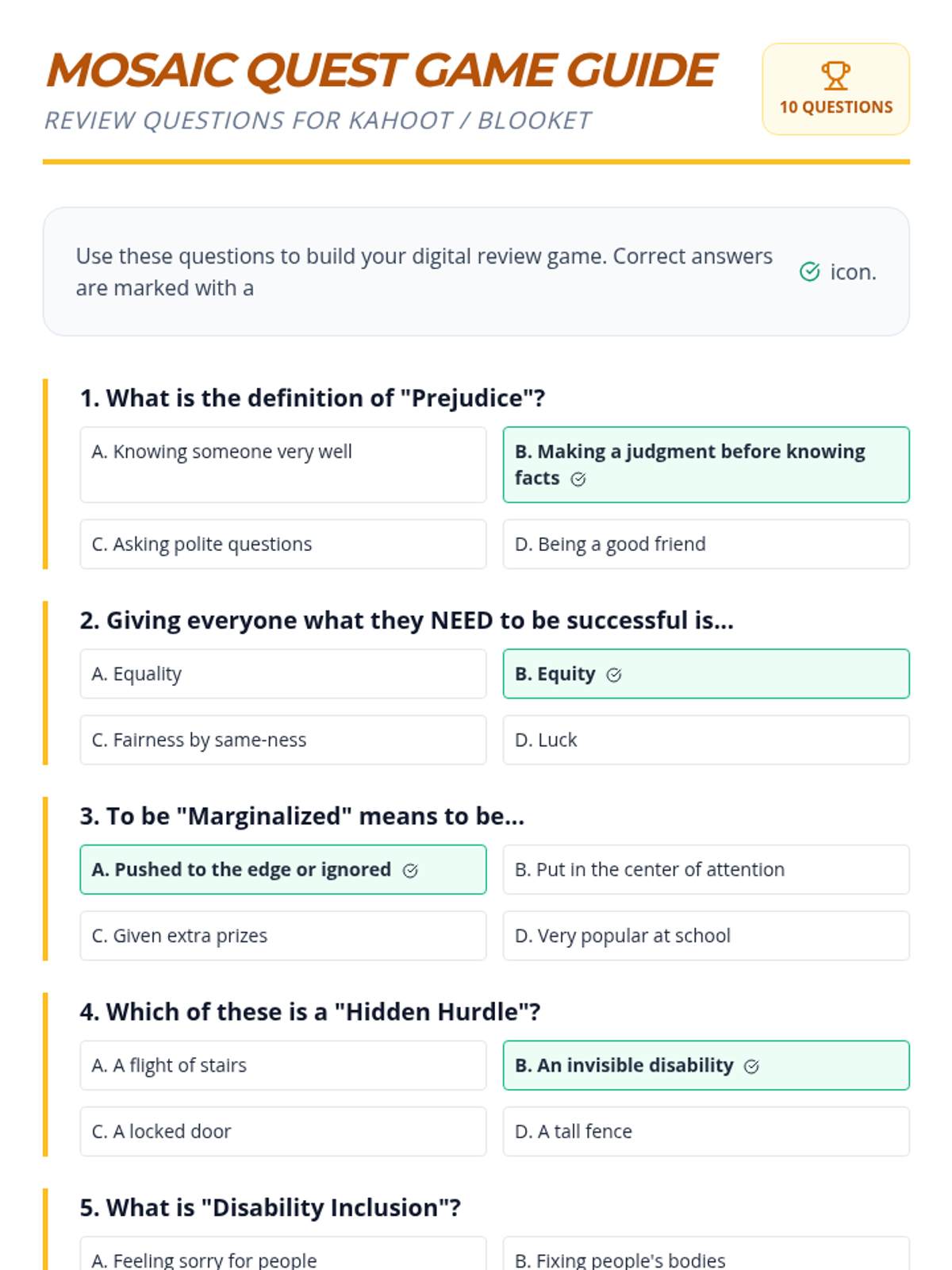
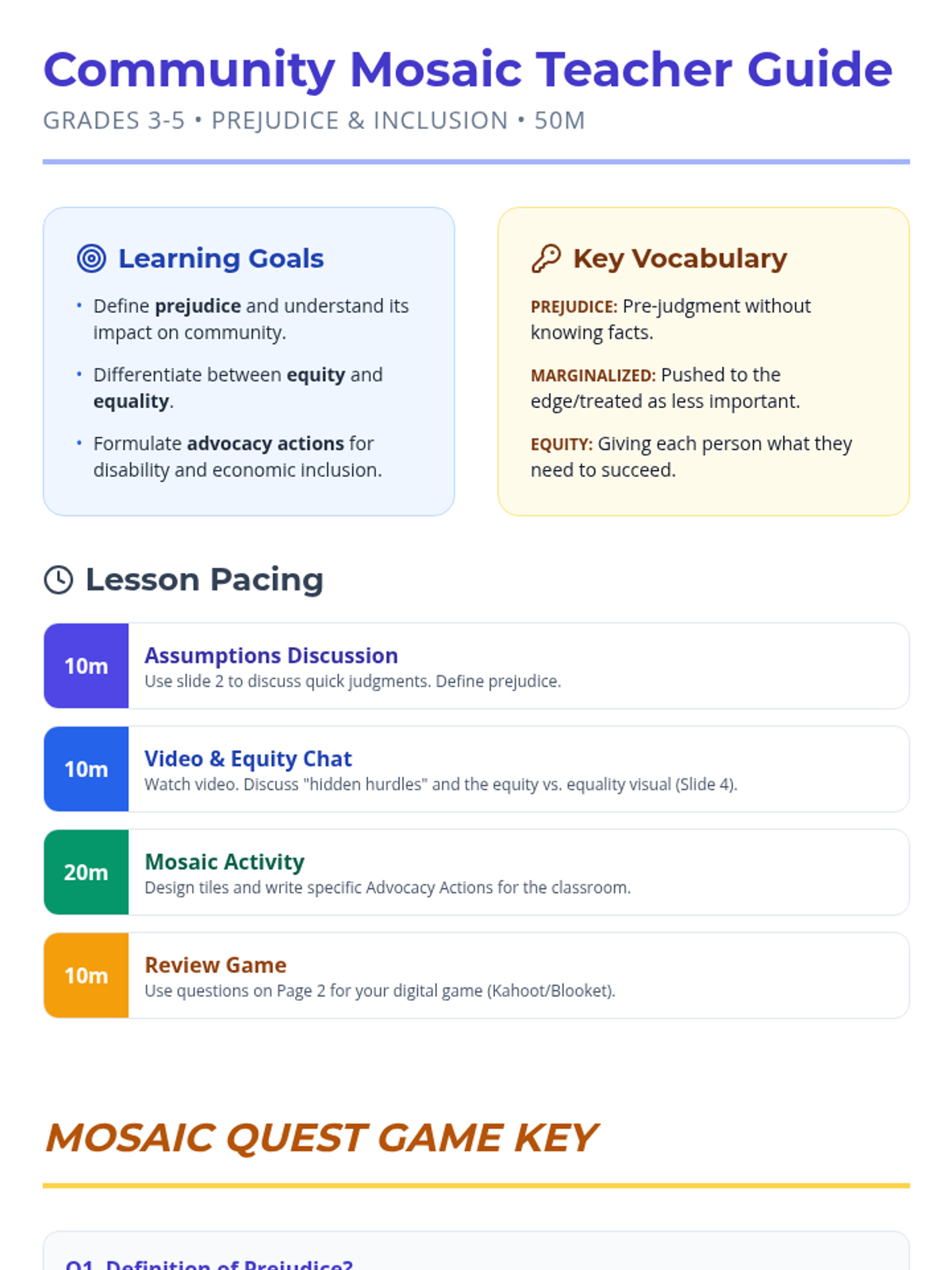
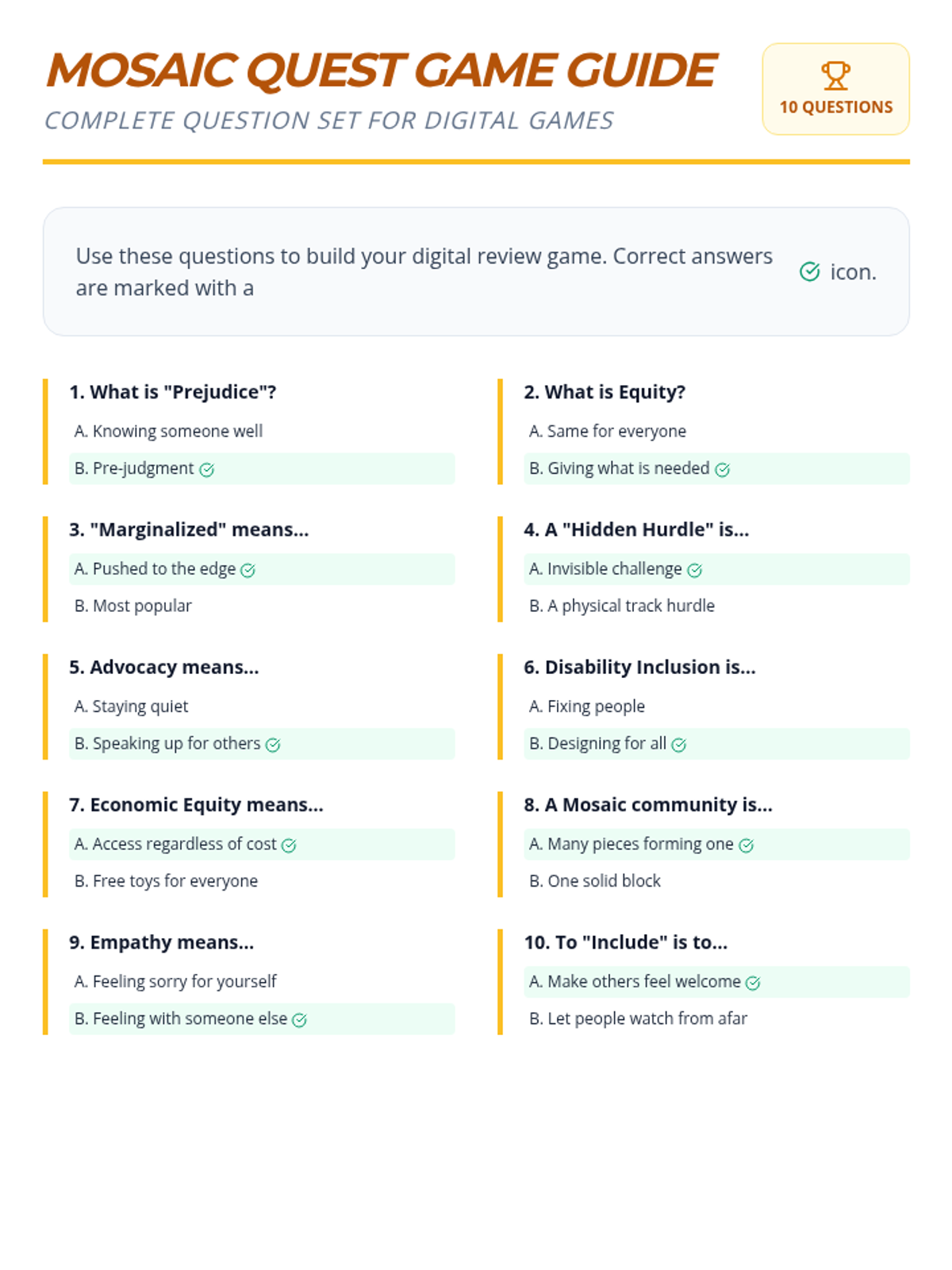
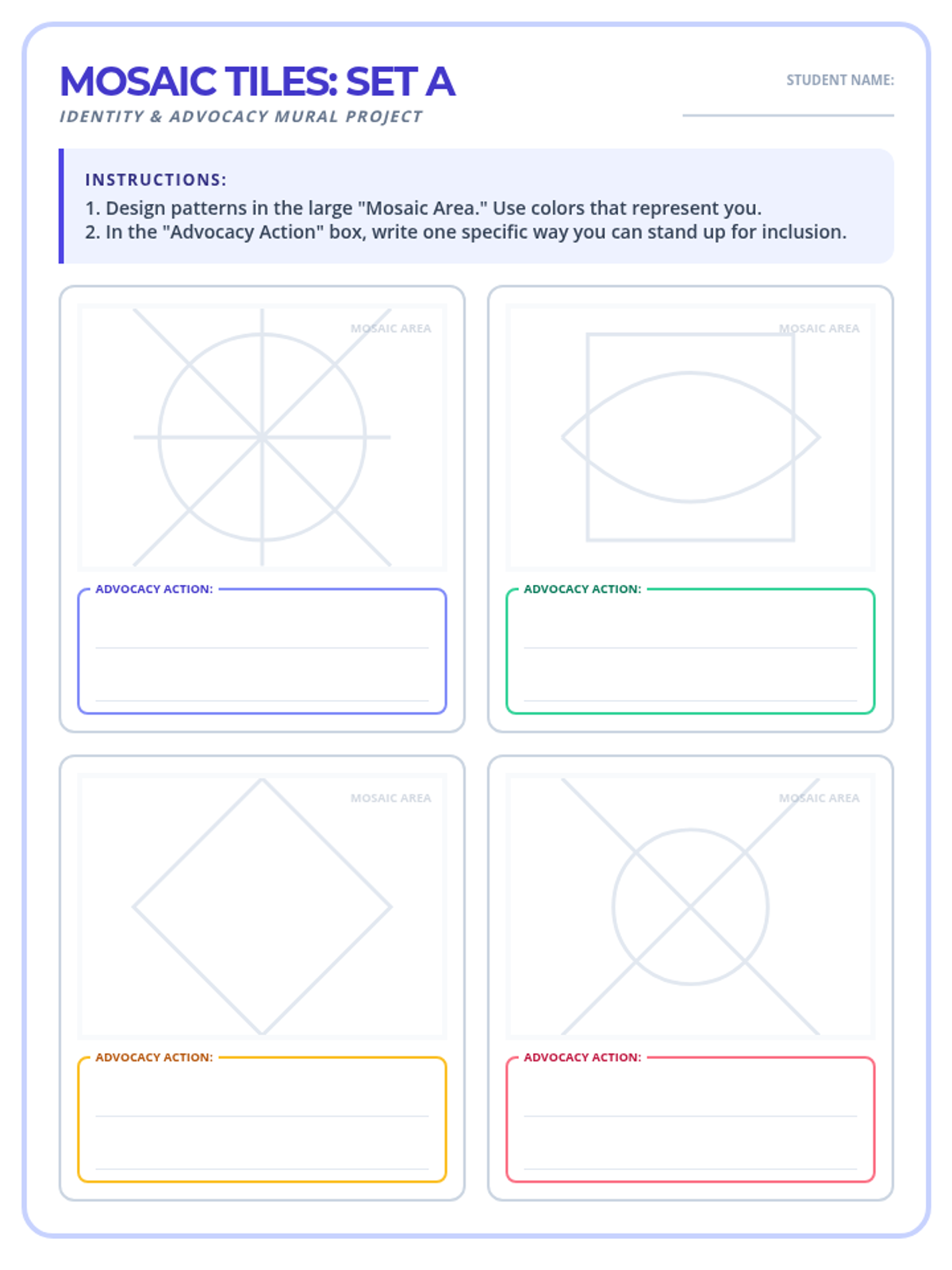
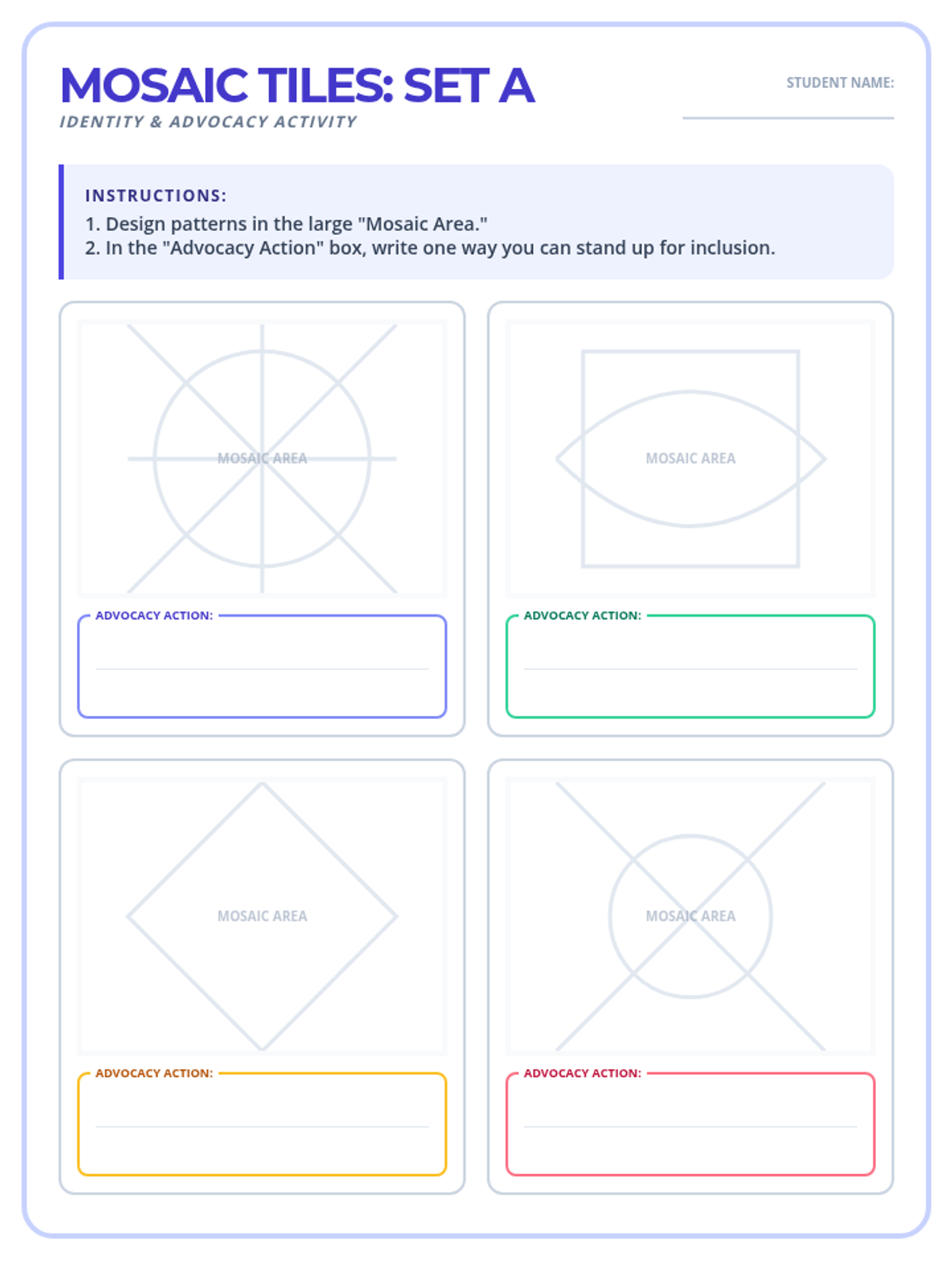
A deeper dive for grades 3-5 into empathy, prejudice, and inclusion. Students discuss systemic differences and disability awareness, concluding with a collaborative mosaic and a review game.
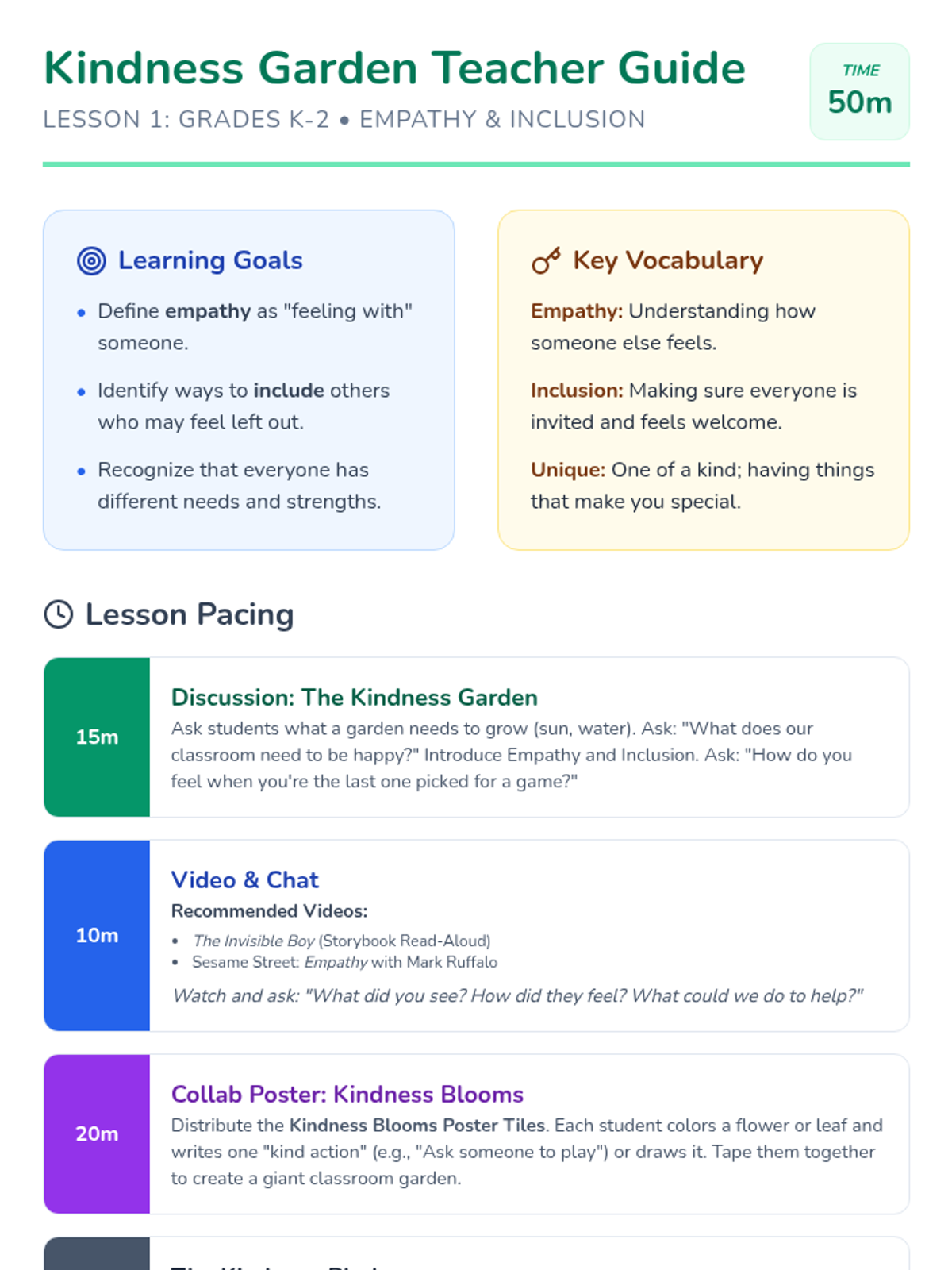
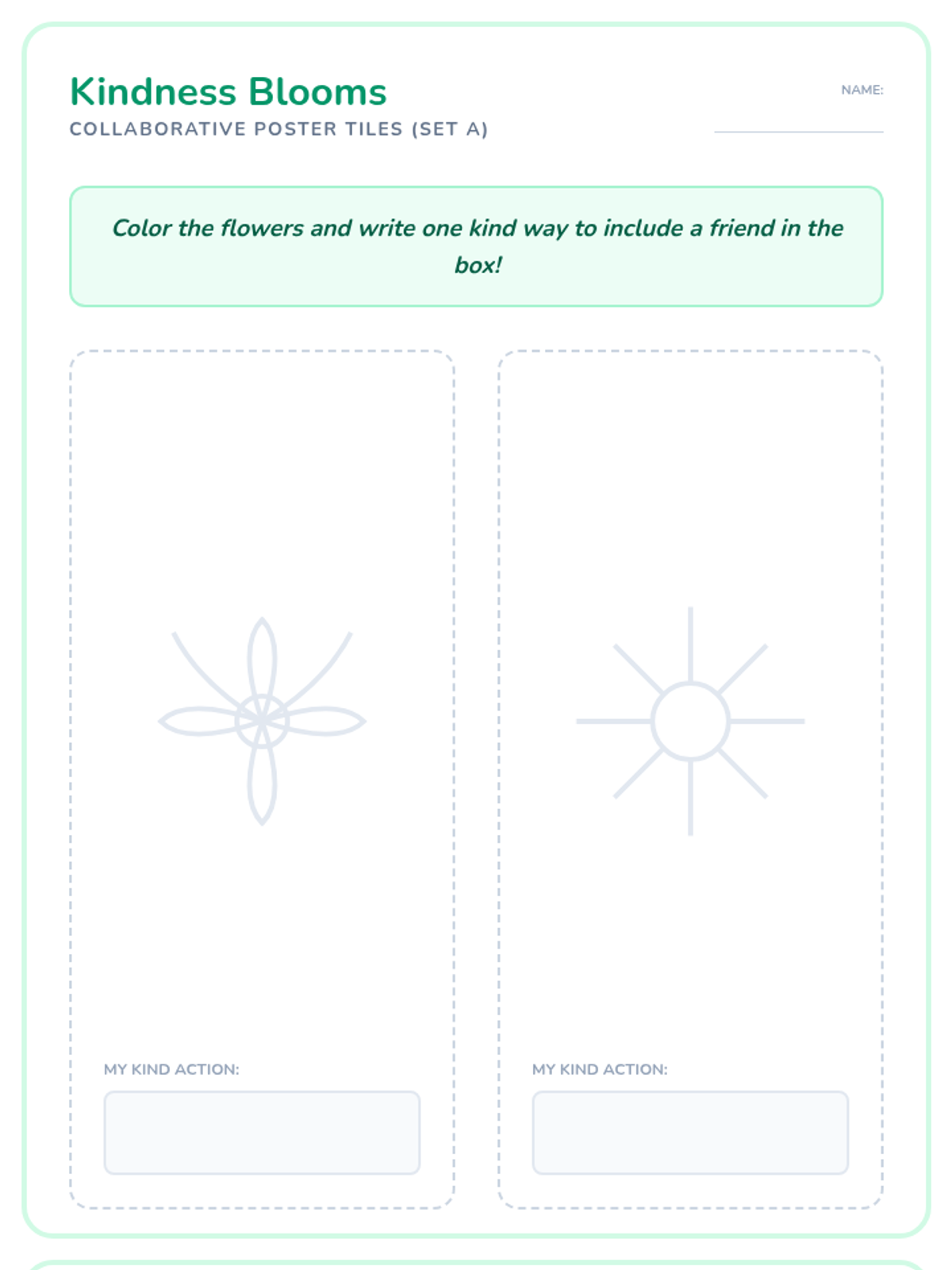
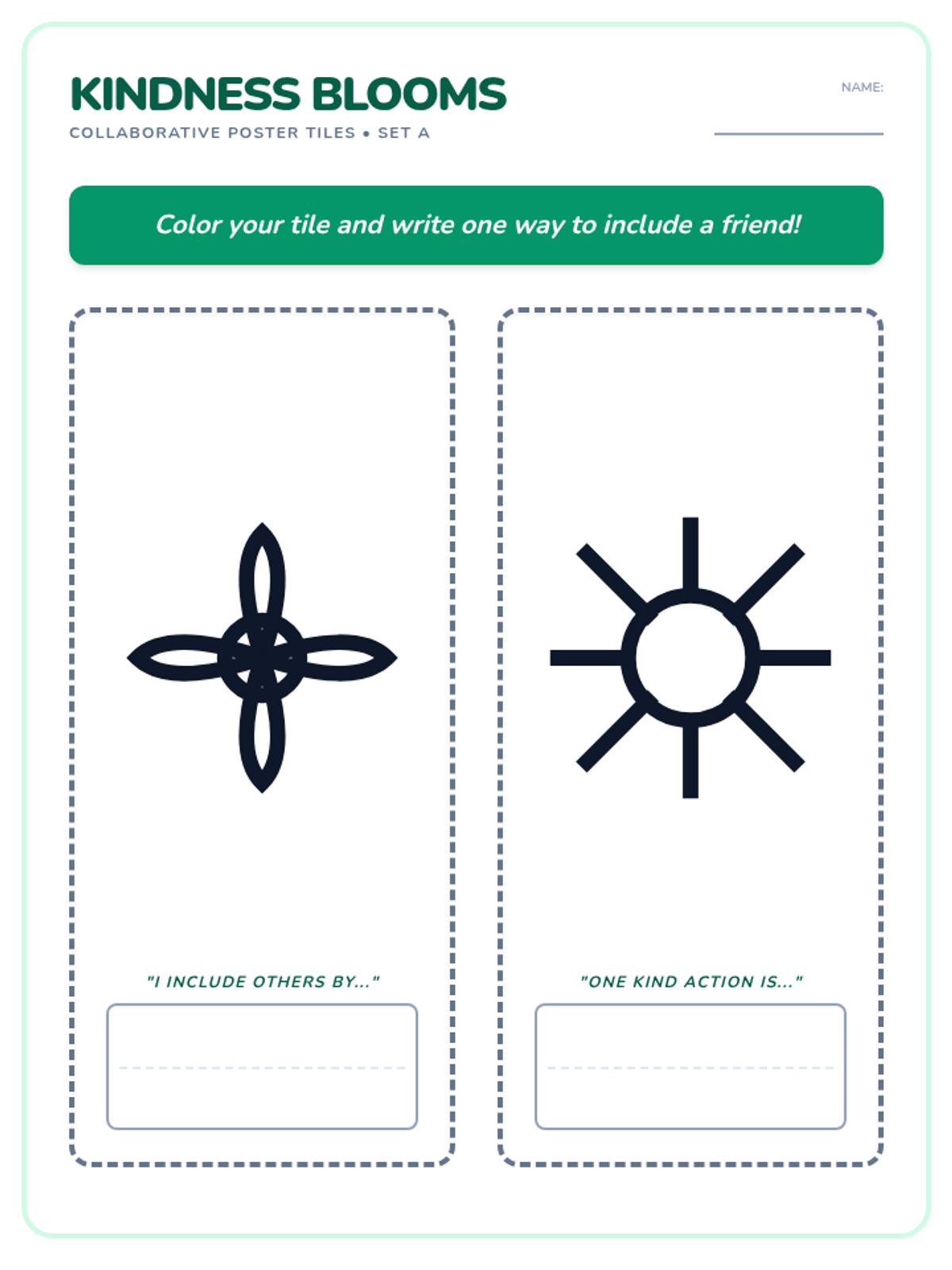
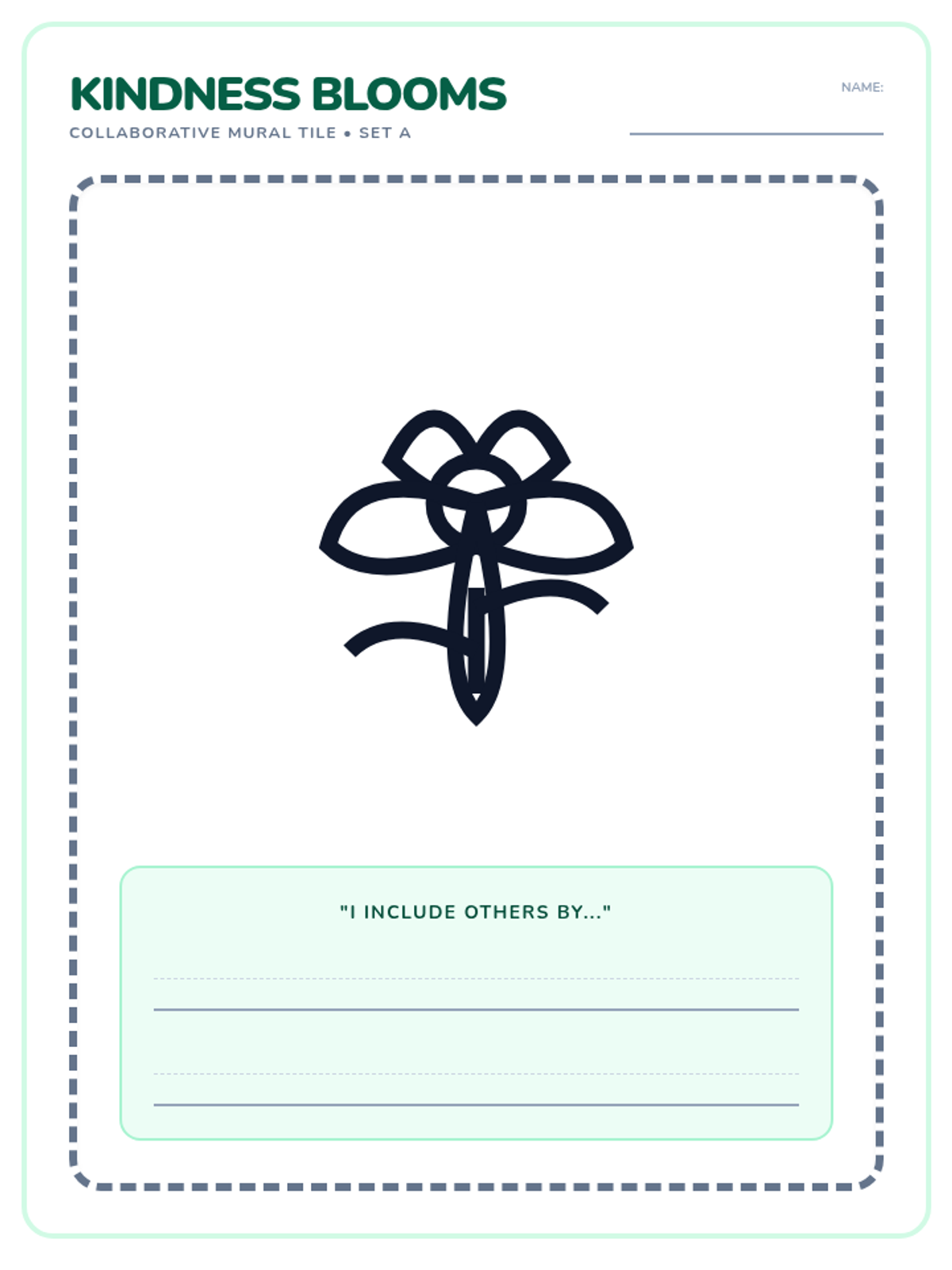
A foundational lesson for K-2 students focusing on empathy and inclusion. Students explore what it means to be a kind friend and how to include everyone in their "Kindness Garden."
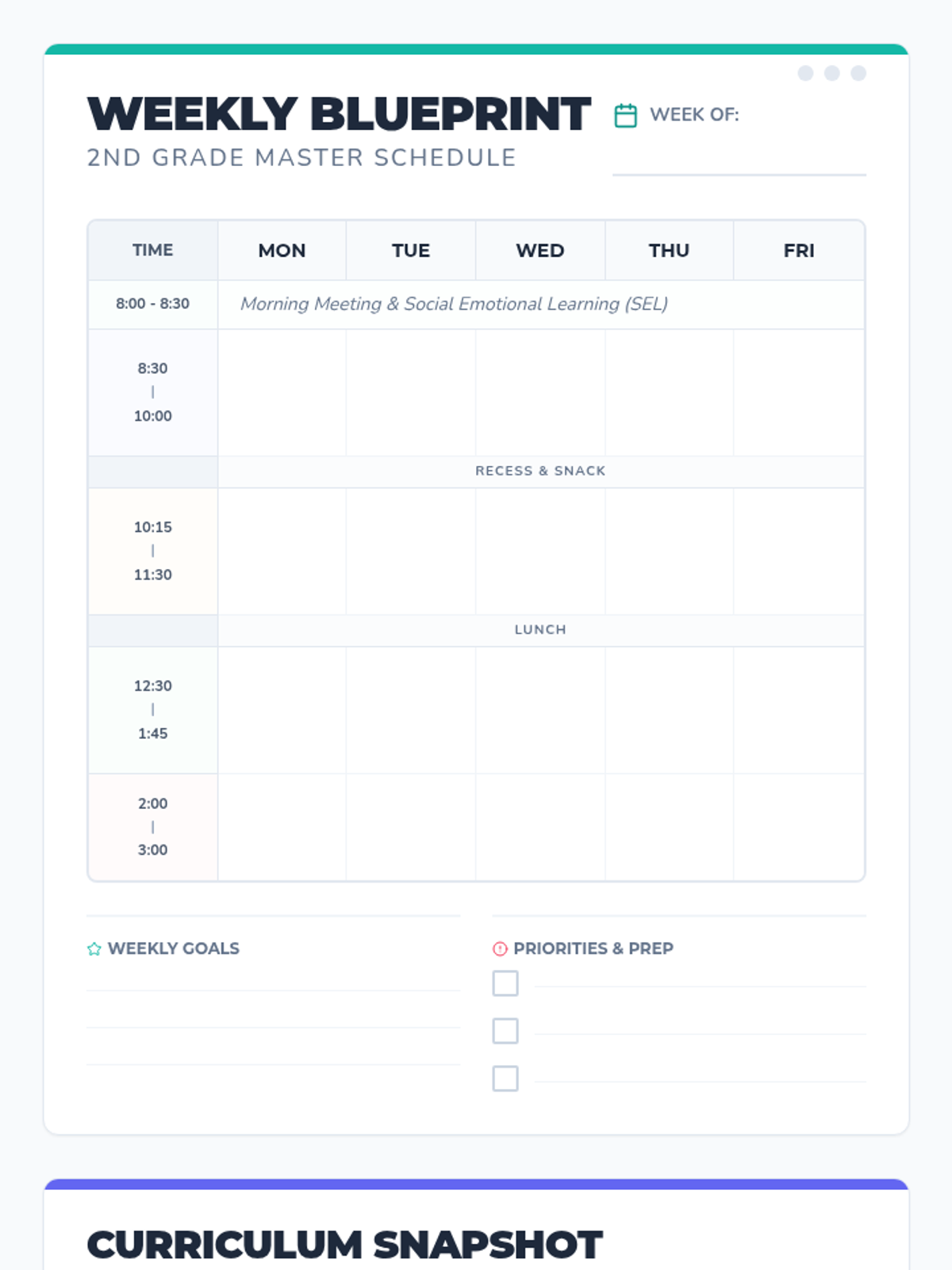
A comprehensive planning suite for 2nd-grade teachers to organize their weekly schedule, curriculum goals, and subject-area focus.
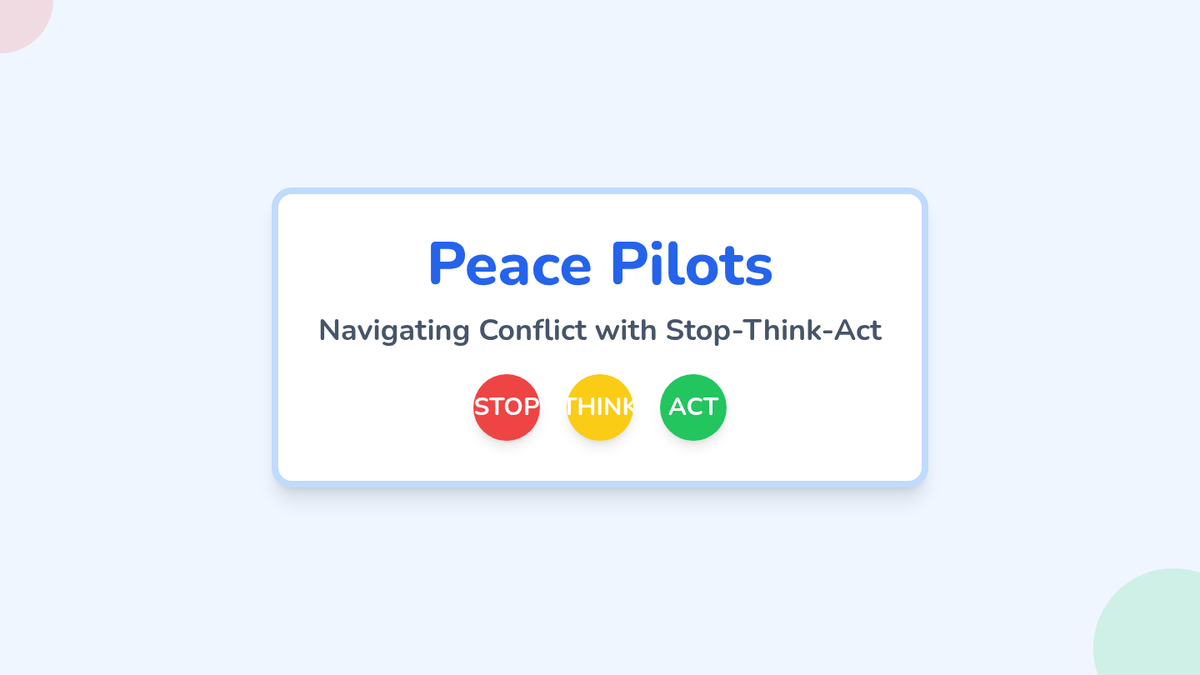
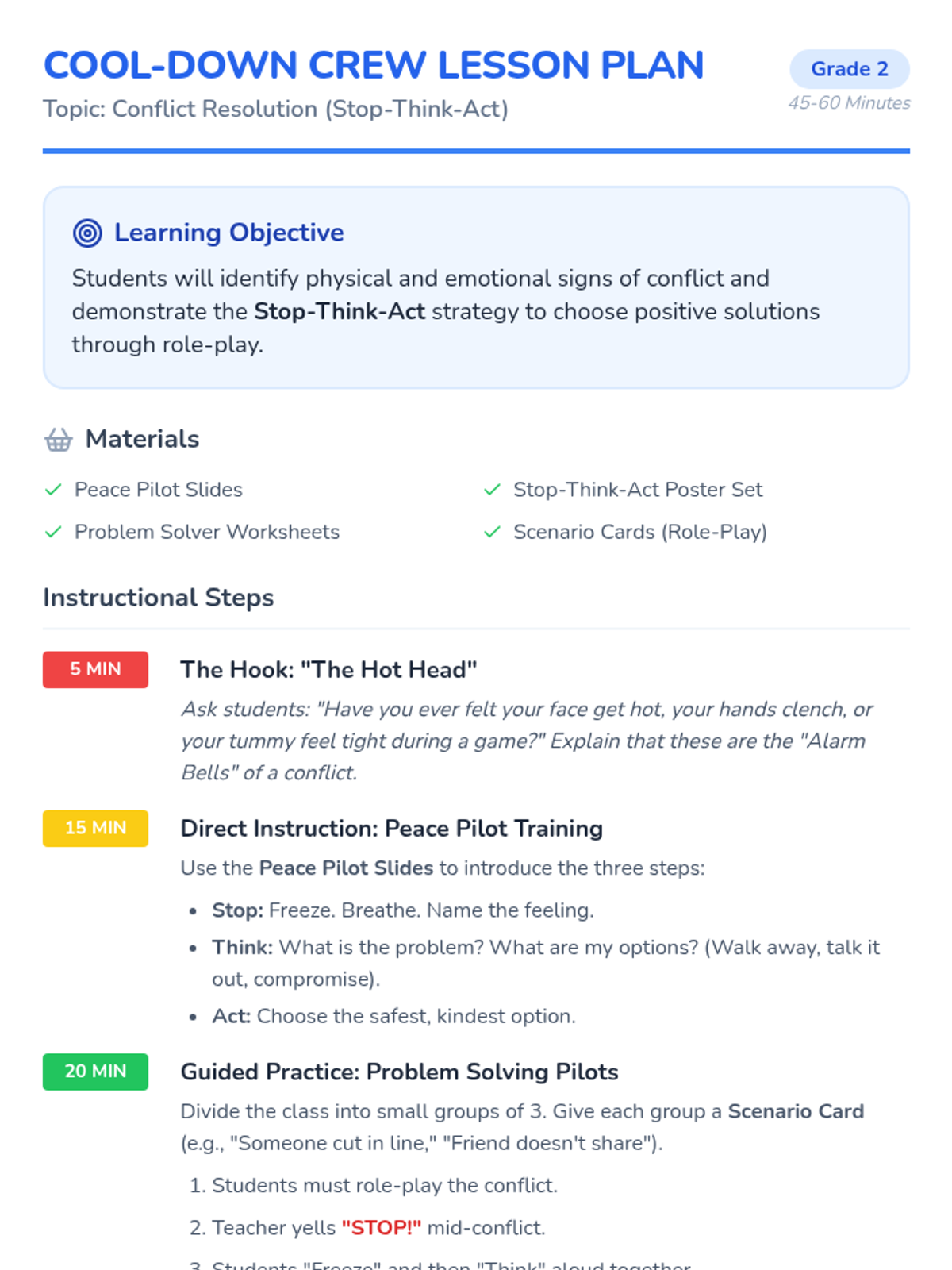
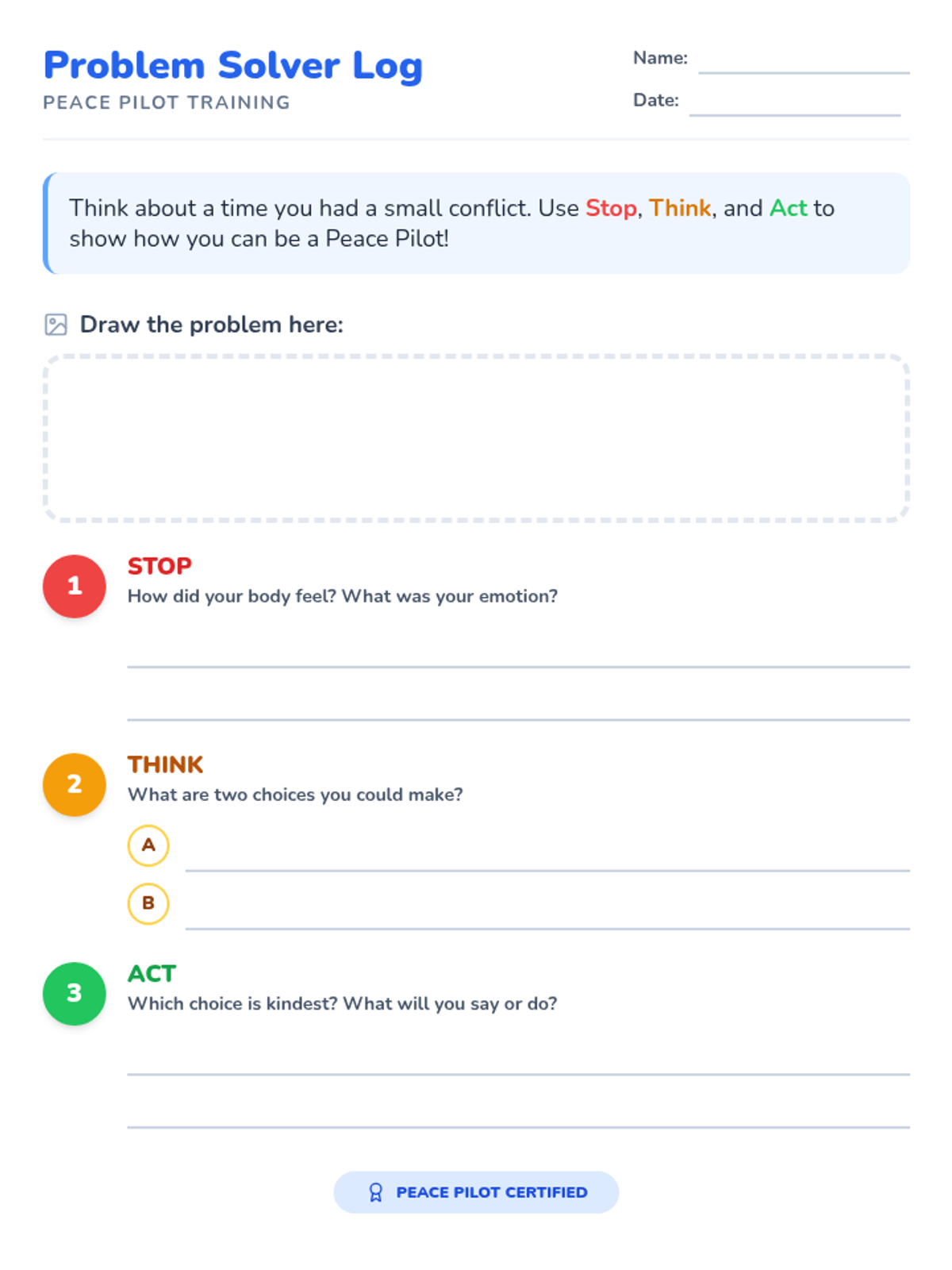
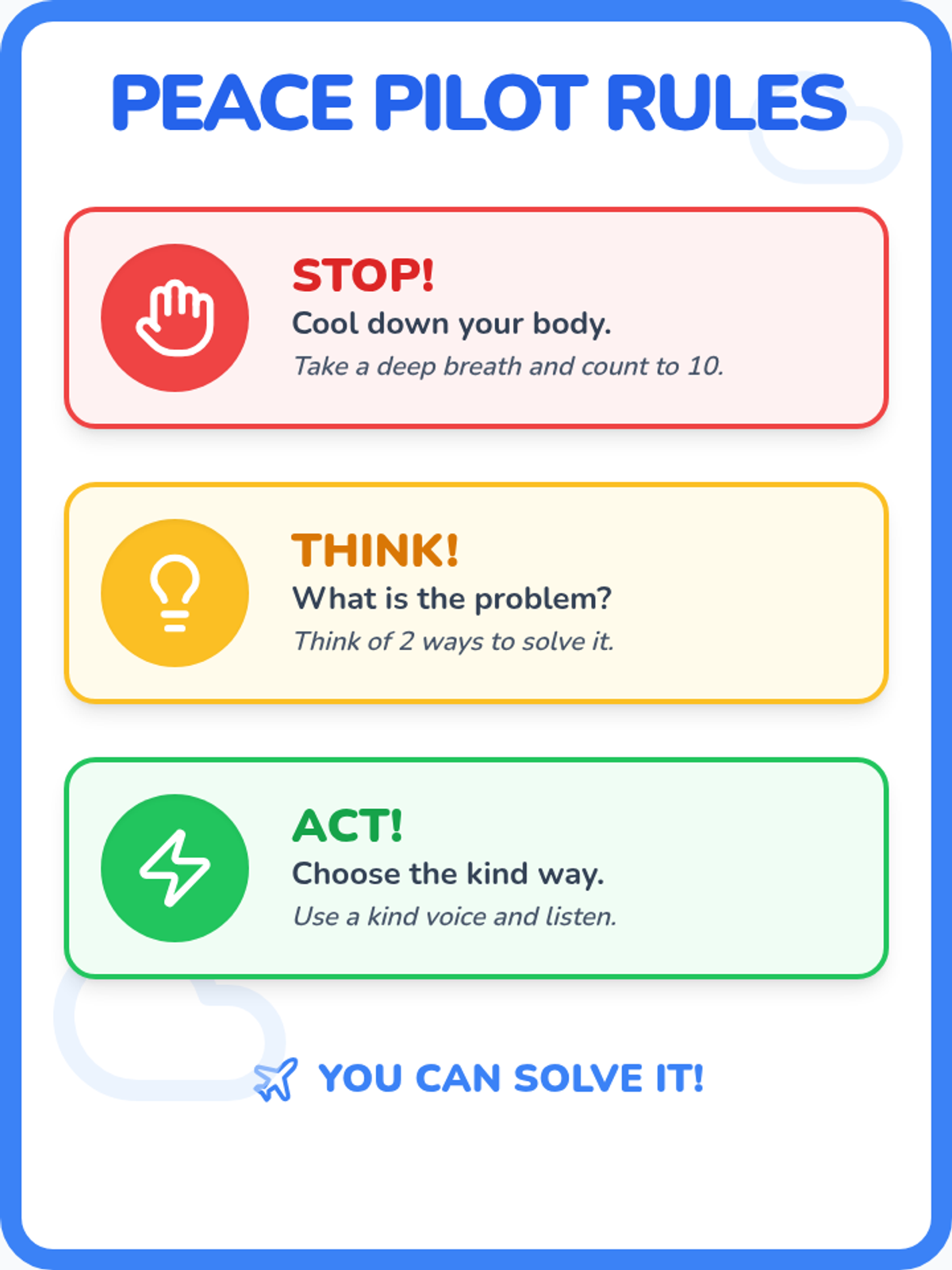
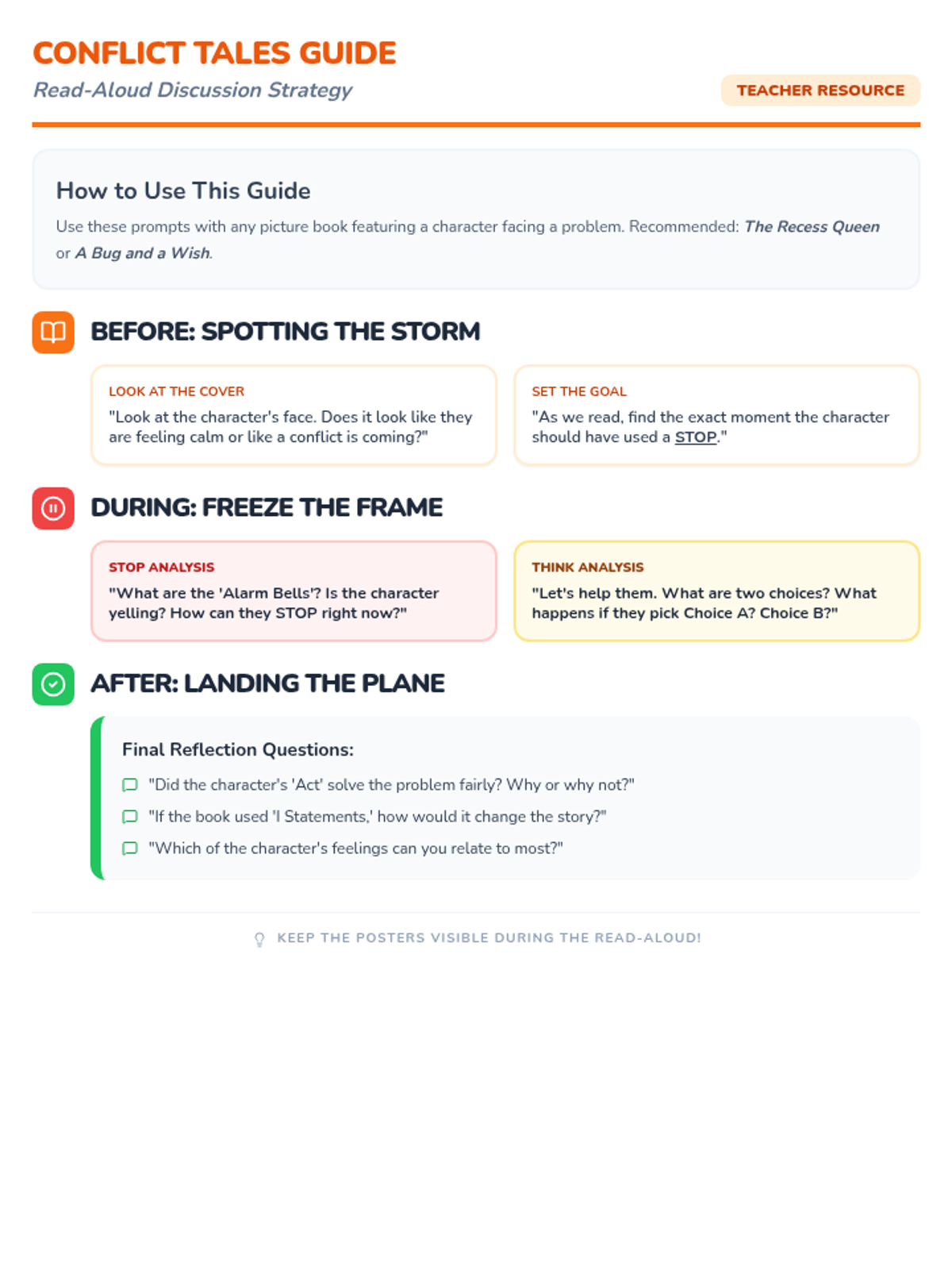
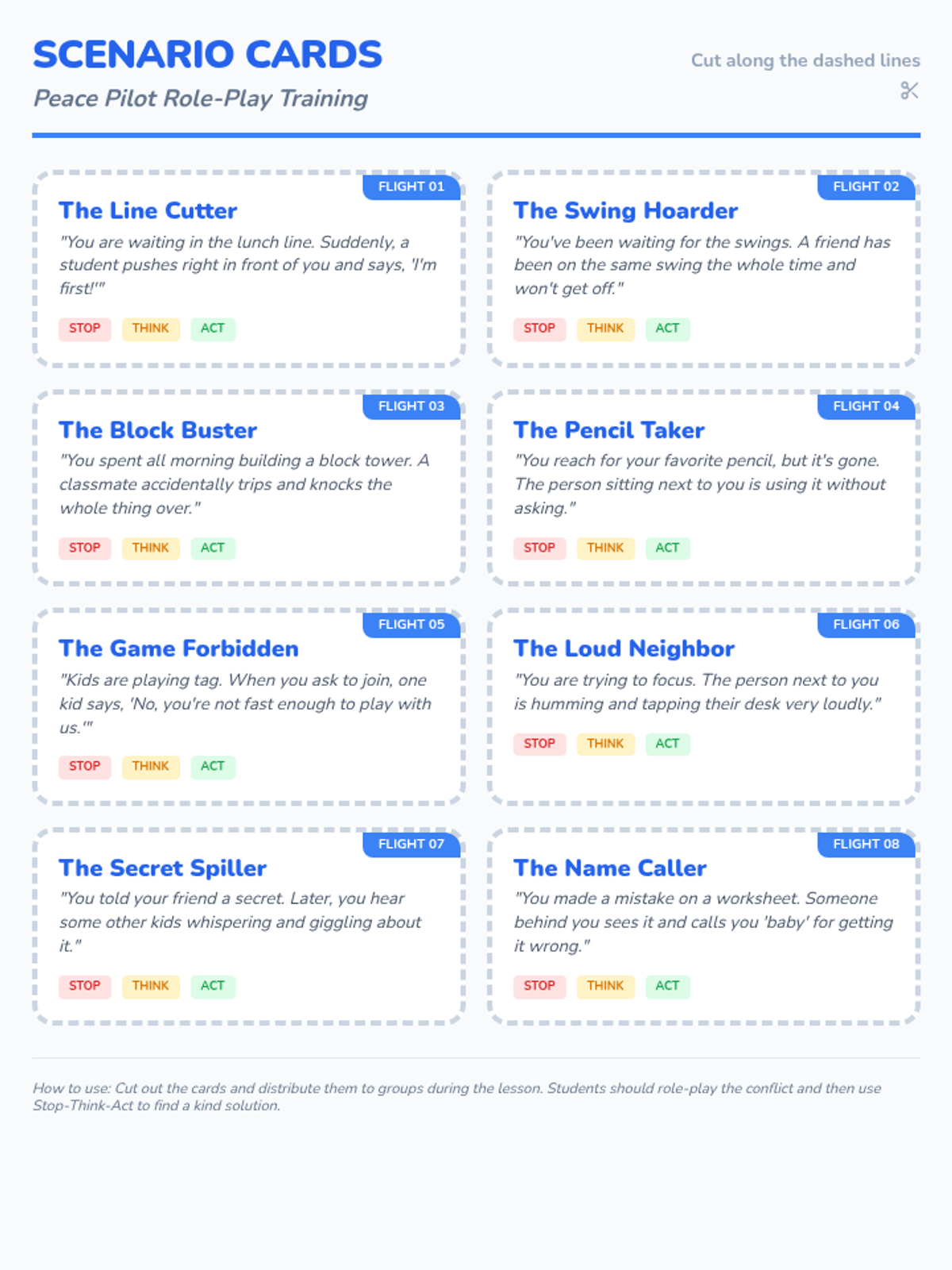
A social-emotional learning lesson for 2nd graders focusing on the Stop-Think-Act strategy to resolve everyday conflicts. Students will learn to pause, evaluate their options, and choose a positive solution through slides, role-play, and reflective practice.