A 45-minute social-emotional learning lesson for 3rd-grade students focused on boundaries, healthy friendships, impulse control, and positive self-image.
A 20-minute interactive lesson for grades K-4 teaching students to identify what is within their control versus what is not using the 'Command Center' theme.
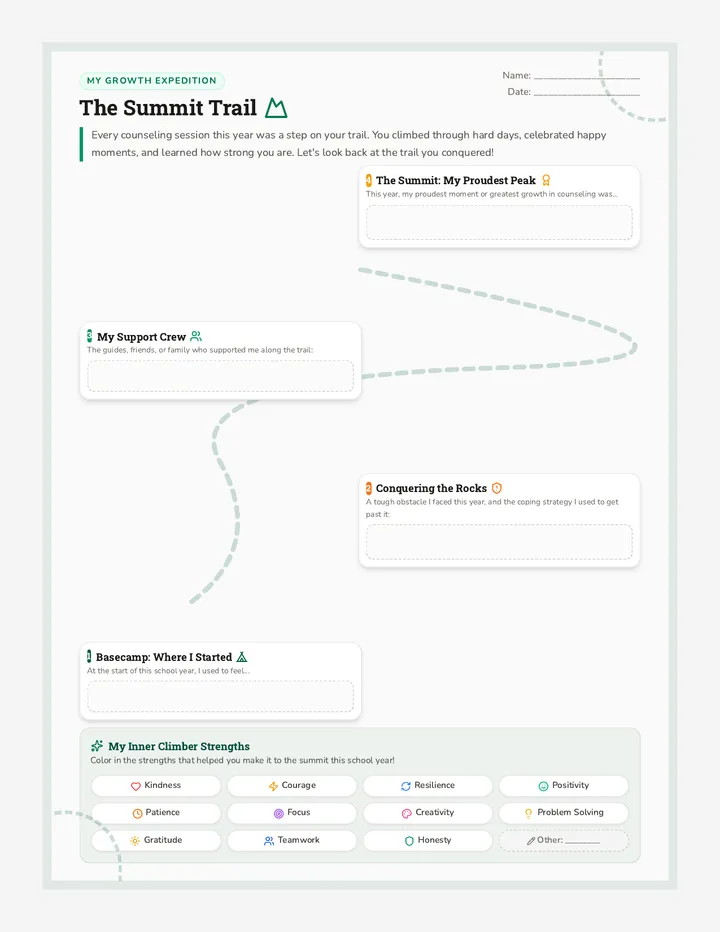
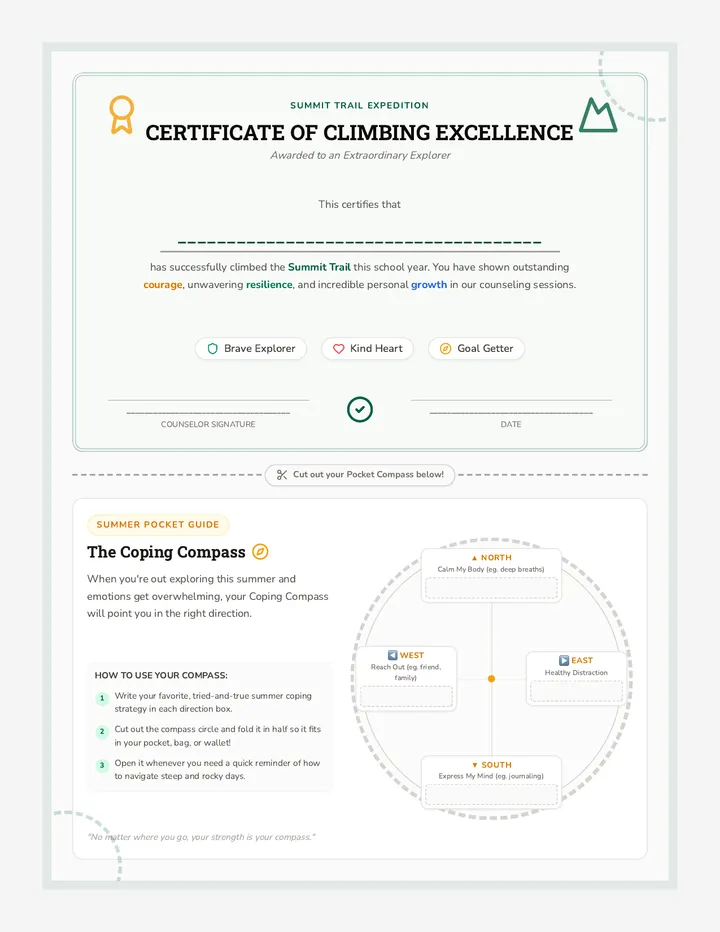
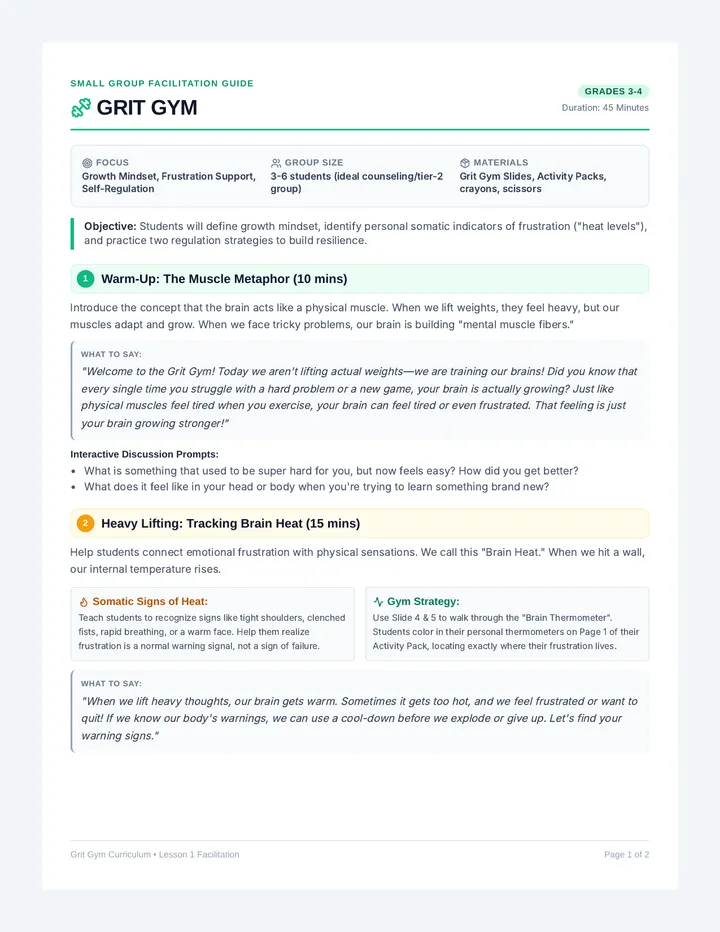
A synthesis lesson where students reflect on their growth and create a 'Grit Kit' for future challenges.
Applying grit to hobbies and new skills, focusing on the 'learning pit' and the value of practice.
Focusing on social perseverance and the grit required to build and maintain healthy friendships.
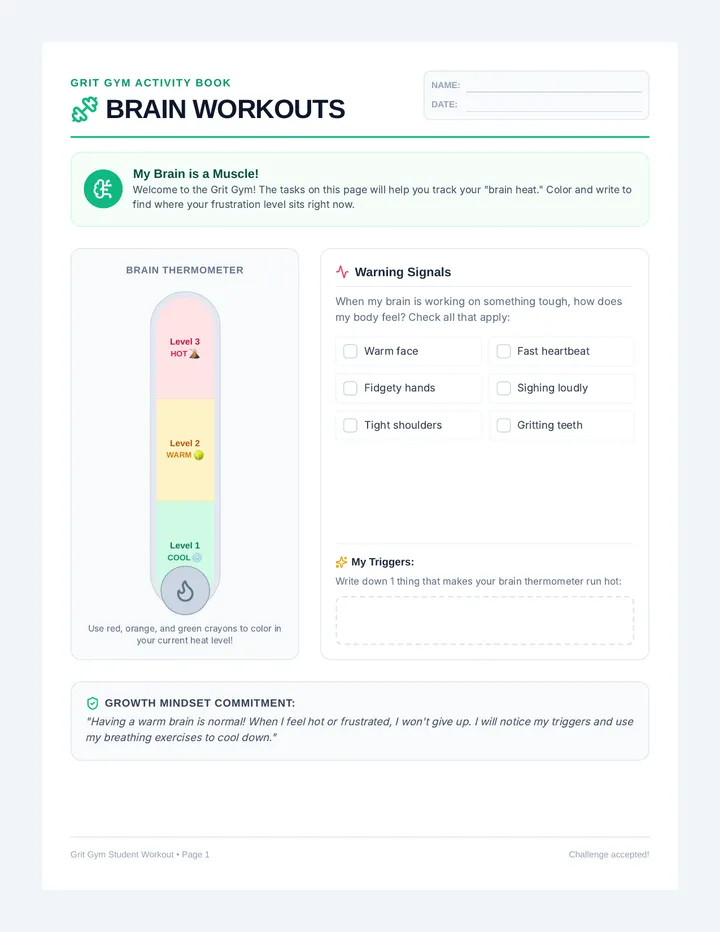
Exploring the science of brain growth and how mistakes are like exercise for our neural pathways.
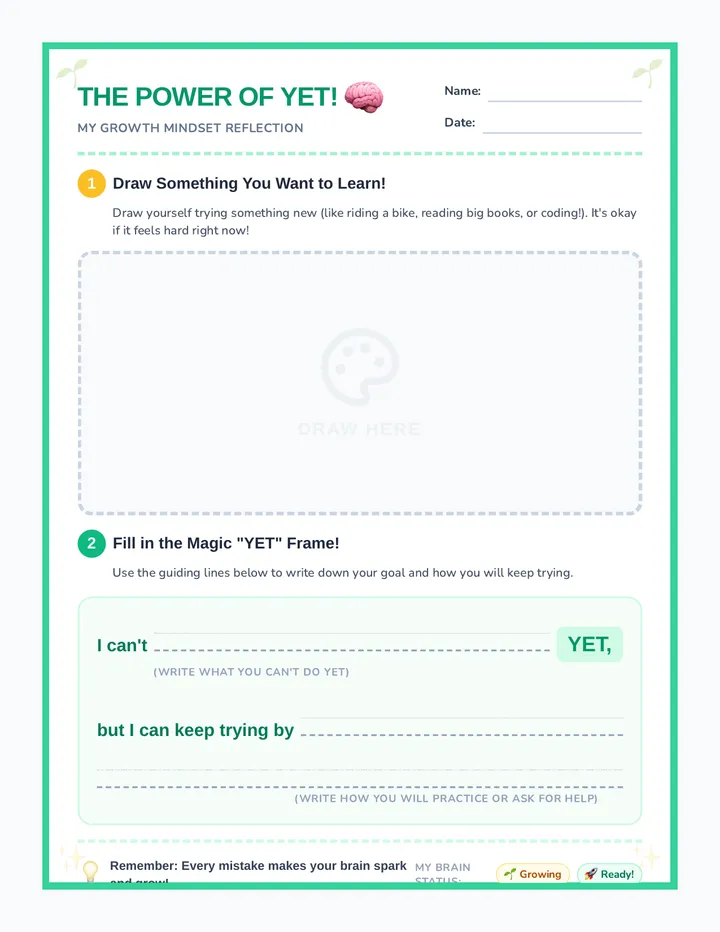
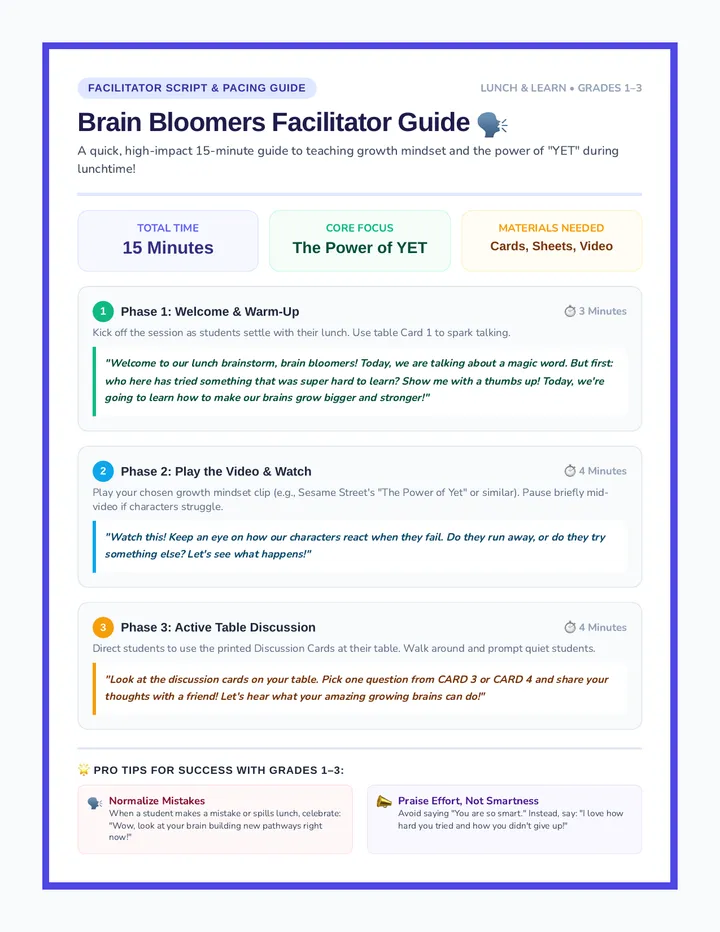
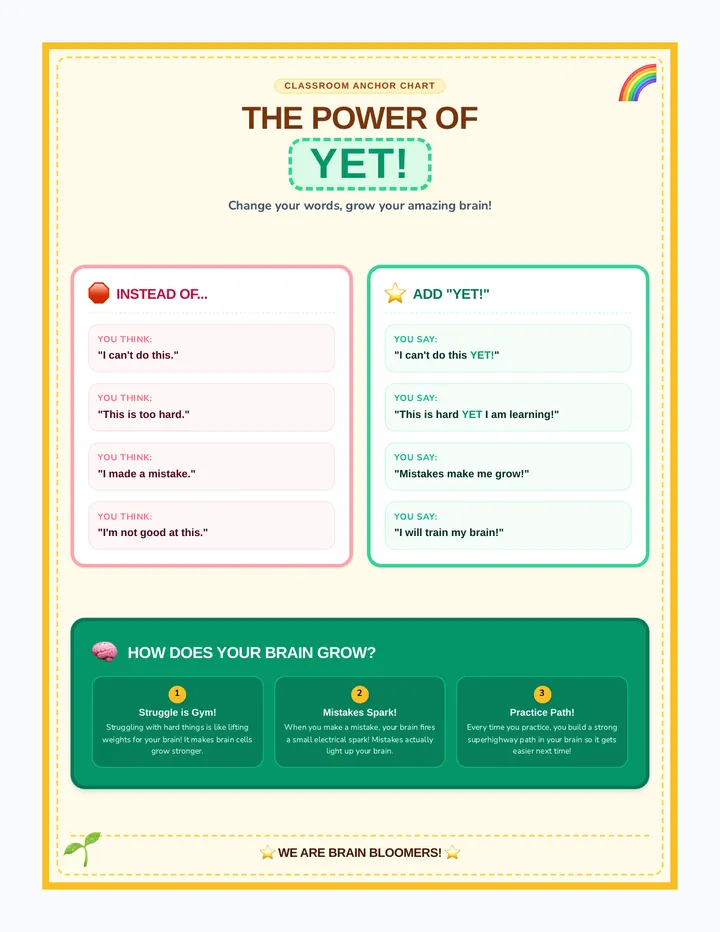
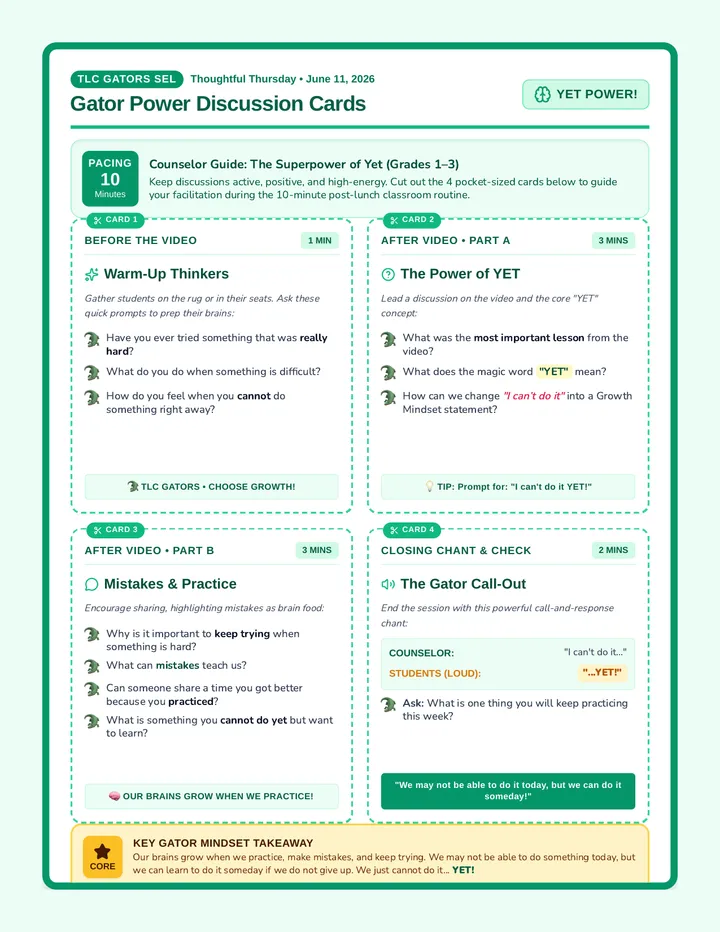
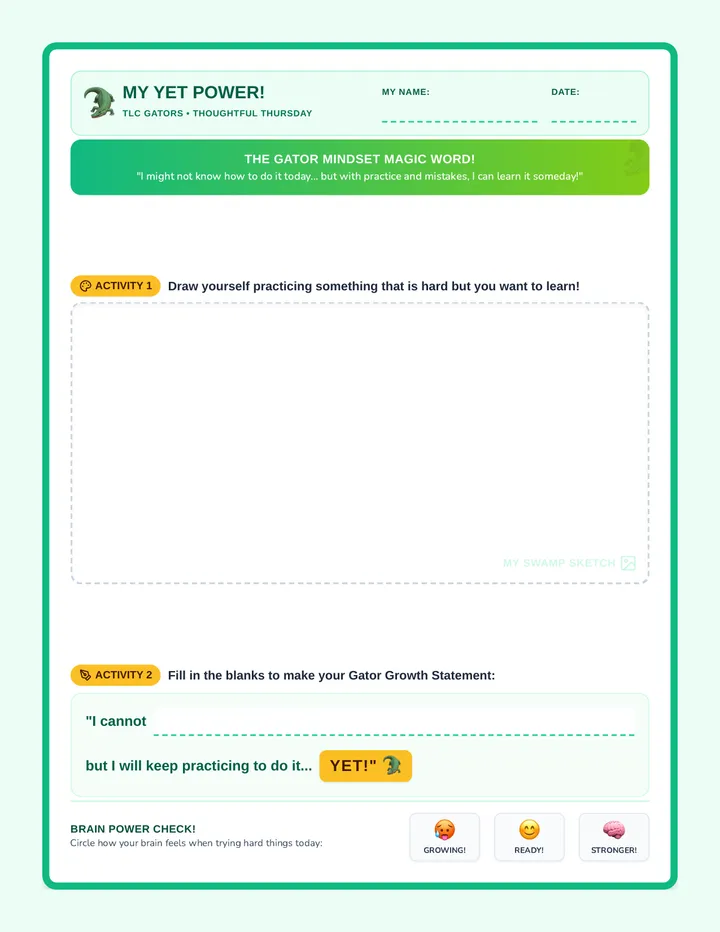
Introduction to the 'Power of Yet' focusing on academic perseverance and reframing 'I can't' into 'I can't yet.'
This lesson helps students navigate the social complexities of humor within a school setting. It focuses on identifying appropriate times for jokes, recognizing social cues from teachers, and understanding how timing affects classroom dynamics and respect.
A creative 30-minute SEL lesson where students illustrate empathy through art and participate in a classroom gallery walk. Students define empathy, create 'Artist Statements', and practice giving positive feedback to peers.
A fast-paced, interactive lesson for grades K-4 focused on the dual skills of active listening and respectful turn-taking in conversations. Students learn through visual 'Traffic Light' cues and role-playing scenarios.
A social-emotional learning lesson focused on identifying negative 'Red' thoughts and reframing them into positive 'Green' thoughts using scenarios and visual self-talk strategies.
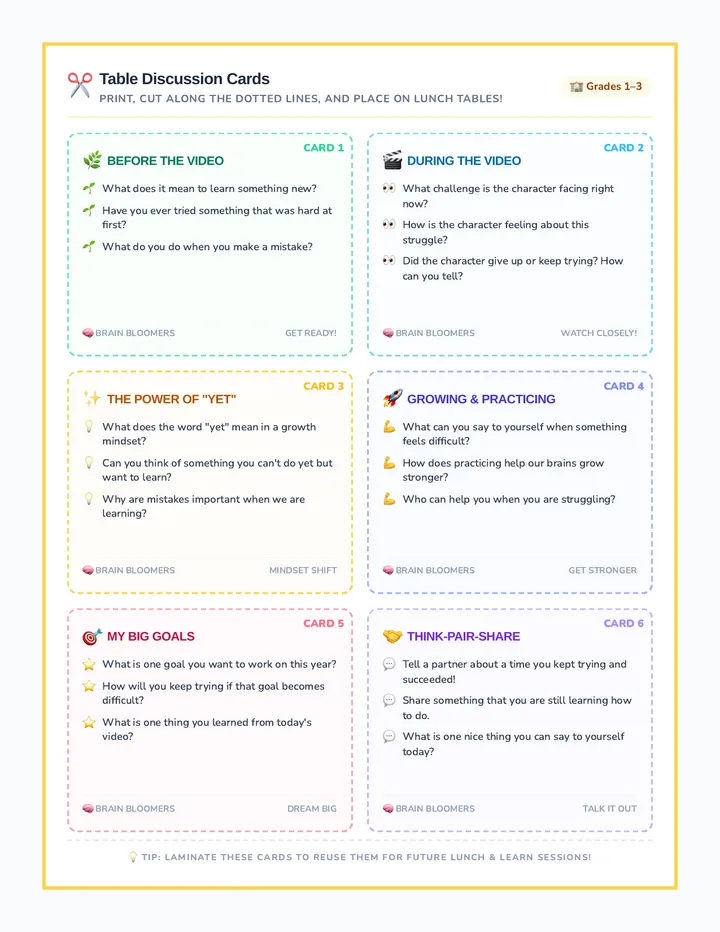
A comprehensive lesson for 3rd-5th graders on developing a growth mindset through positive affirmations and reframing negative thoughts. Students learn to 'garden' their brains by replacing 'weedy' negative self-talk with 'blooming' positive perspectives.
A fast-paced social-emotional learning lesson focused on identifying social cues and building stronger friendships through active observation and empathy. Students learn to read 'social clues' like body language and tone of voice to better understand their peers.