Students learn to distinguish between formal and informal social environments, categorizing language and behaviors into specific protocols.
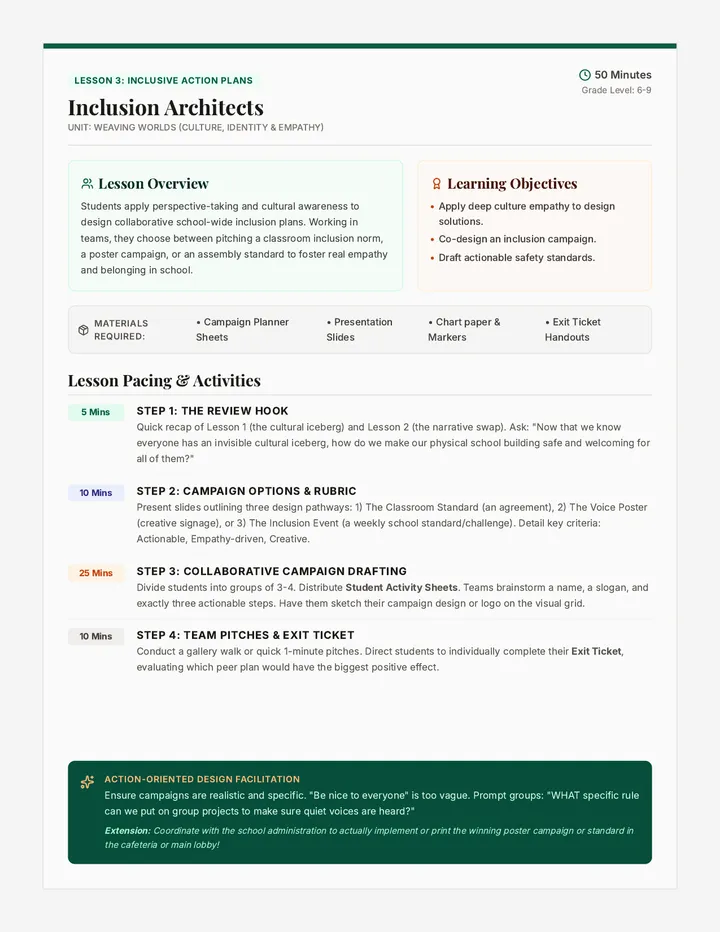
Students learn the importance of professional document formatting and hierarchy, setting up a formal business proposal template with structured headings and standardized typography.
Students conduct a market research sprint, interviewing classmates to validate their product ideas and learning to 'pivot' based on real user feedback and data synthesis.
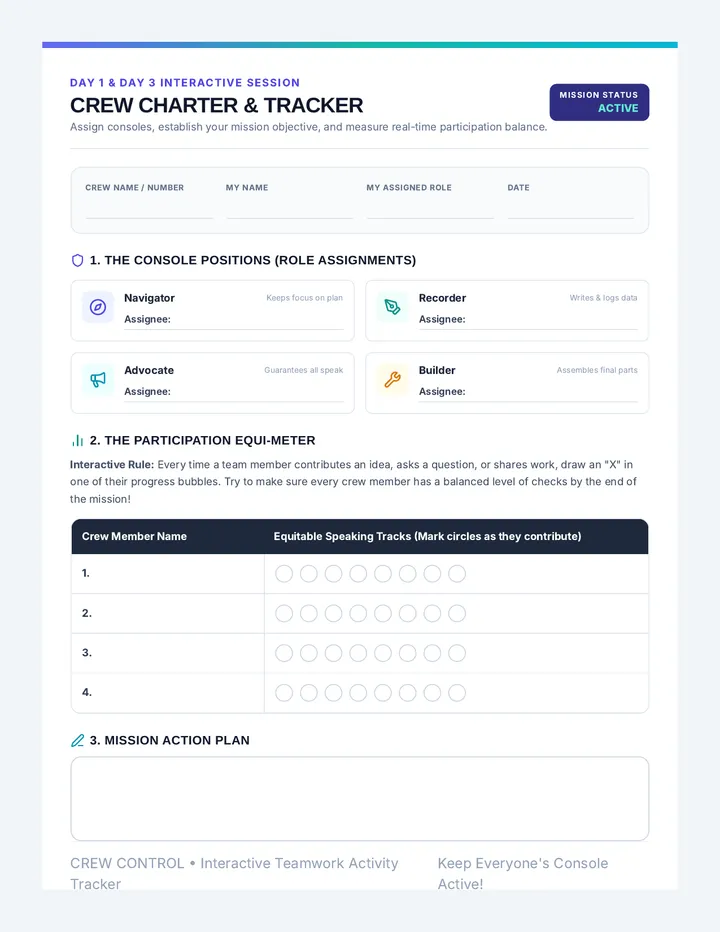
Students learn the difference between leading and open-ended questions, developing a research table and interview script to gather unbiased feedback from potential customers.
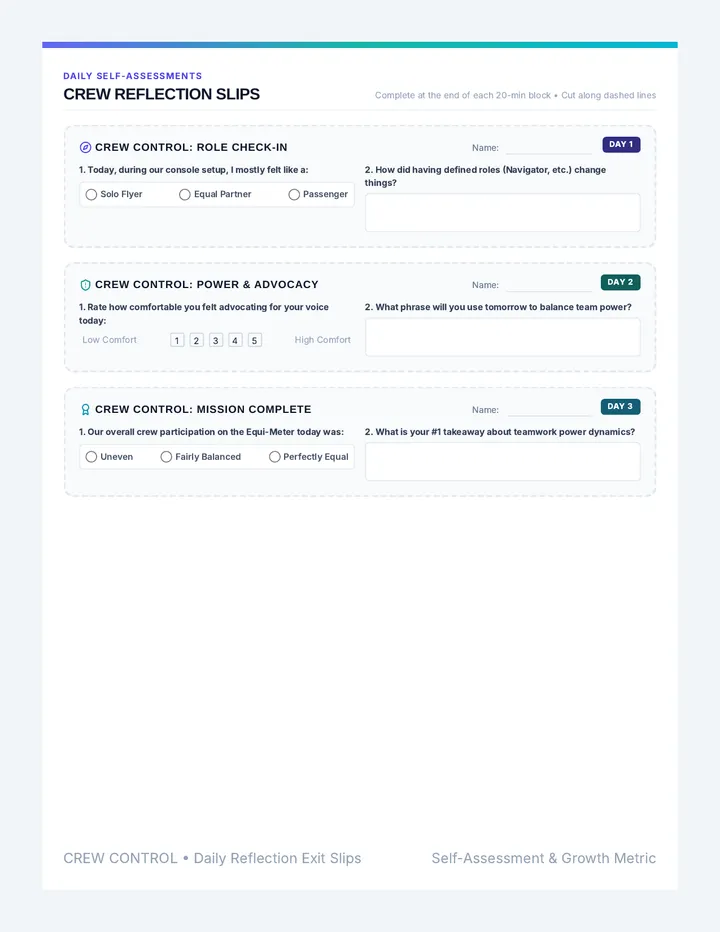
Students explore the concepts of target markets and customer empathy, moving from personal preferences to identifying specific user needs and mapping out a "Day in the Life" for their ideal customer.
Students explore the fundamental economic concepts of scarcity and opportunity cost, applying them to product development by making difficult trade-offs between competing features within a limited resource budget.
Students learn to identify consumer "pain points" as opportunities for innovation, moving from recognizing everyday frustrations to conceptualizing business solutions.
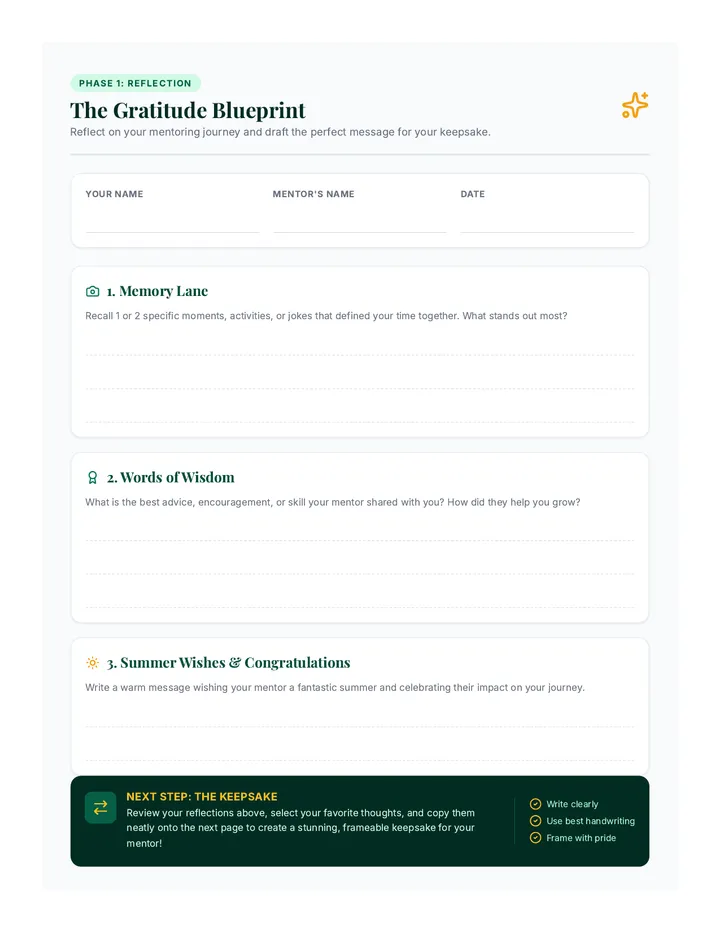
A comprehensive lesson on navigating the termination phase of the student-counselor relationship, focusing on celebrating growth, managing emotions, and planning for the future.
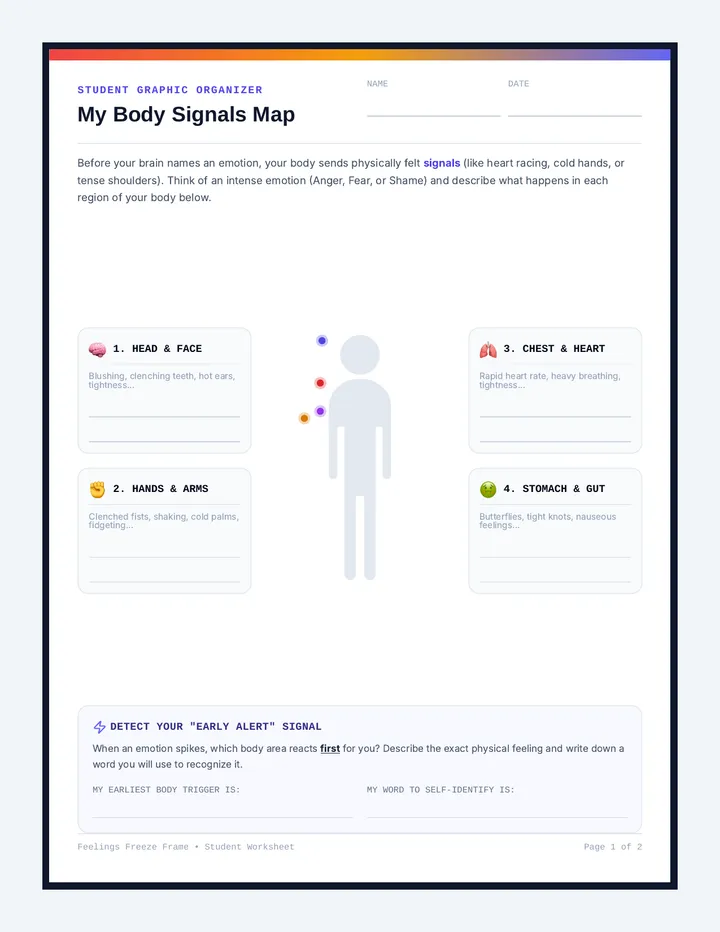
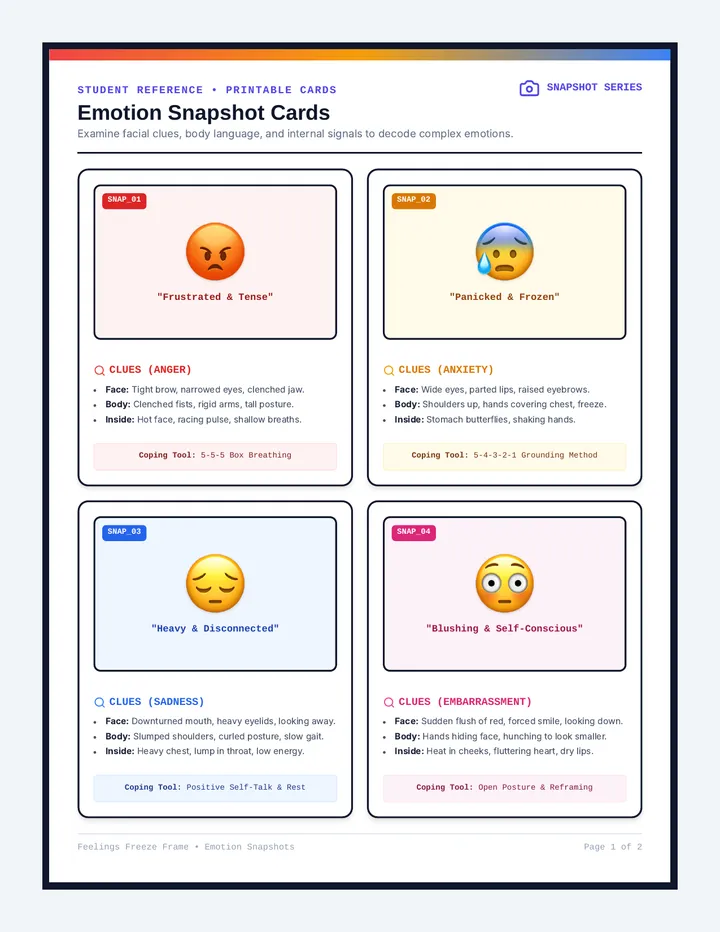
A calm, nature-themed 60-minute psychoeducation session for teens focused on the normative and adaptive nature of emotions, featuring interactive slides and discussion prompts.
This lesson helps students with ADHD master self-control using the 'Inner Remote' metaphor. It focuses on filtering thoughts through the THINK acronym and provides practical tools for managing impulses during difficult transitions and social interactions.