A practical, student-centered lesson designed to help students in grades 3-8 recognize loss of focus and apply self-regulation strategies like body breaks, chunking, and stamina-building to improve academic performance.
A 30-minute social-emotional learning session for 6th graders focused on reflecting on their personal journey and setting a targeted SMART goal for growth.
A 45-minute interactive lesson for middle schoolers to understand the psychology of procrastination and learn practical strategies to overcome it, featuring a movement-based icebreaker.
Week 2 of the EF module focuses on identifying common organizational 'glitches' and matching them to systems like color-coding, planners, and visual schedules. Students create a personal 'Organization Blueprint' for their physical and digital spaces.
A series of 6 reflective worksheets designed for a 12-year-old girl to build self-awareness regarding lying, swearing, and class avoidance, focusing on emotional regulation and accountability.
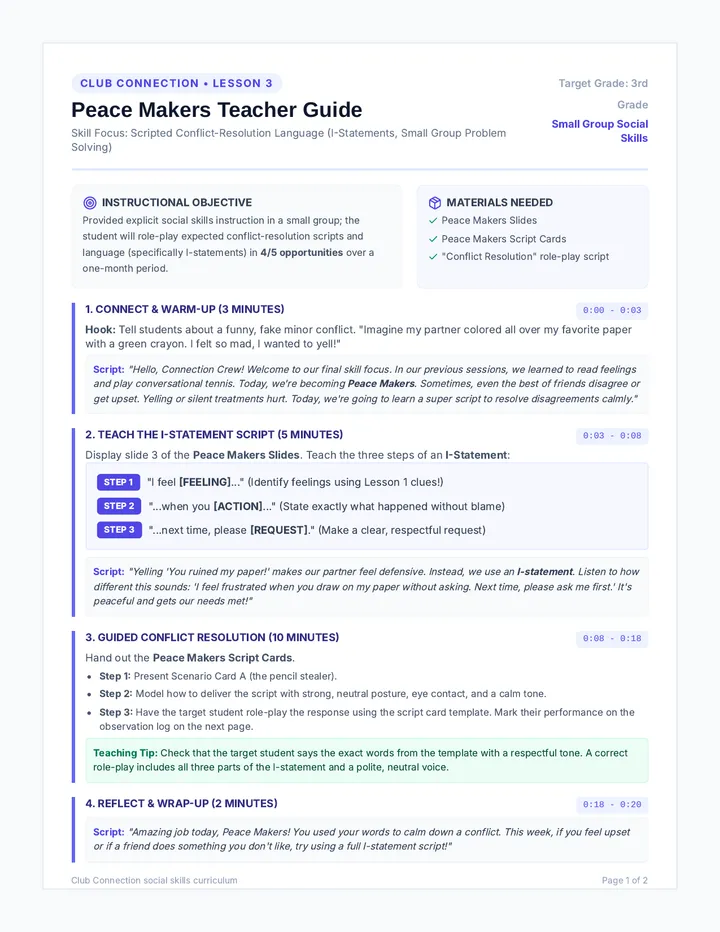
A set of resources designed to help parents and students distinguish between peer conflict and bullying, providing clear action plans for resolution and support.
A comprehensive lesson on building executive functioning skills through organizational systems, including brainstorming challenges and creating personal blueprints for school and home.
A lesson focused on developing prosocial behaviors, including respecting personal space, managing social rejection, and practicing cooperative play. Students will explore what makes a good friend and how to navigate common social hurdles.
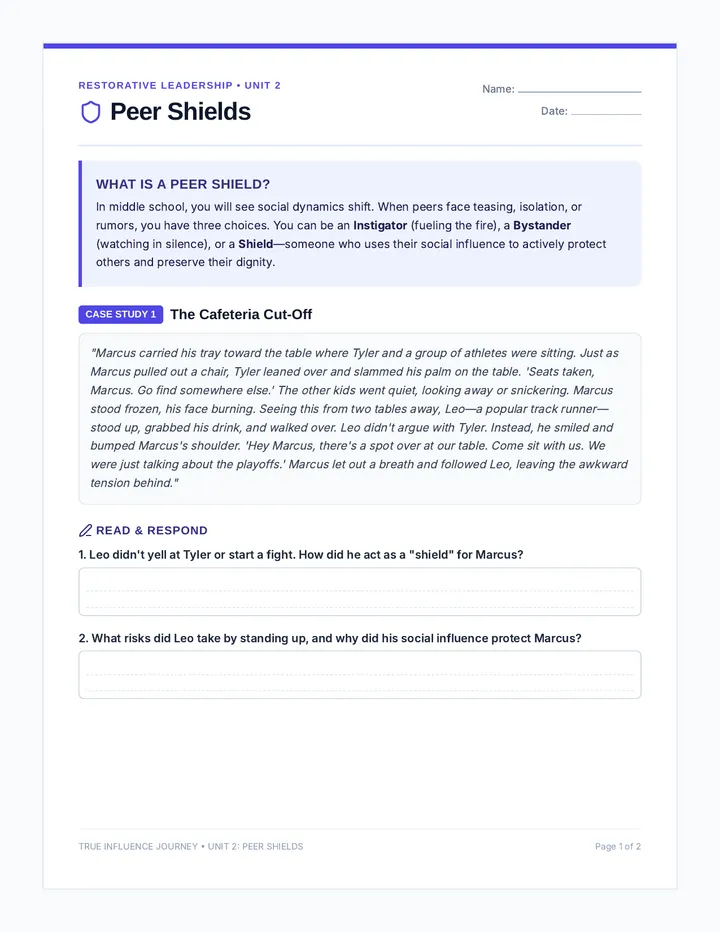
A high-impact, 20-minute session for 8th-grade boys focused on building trustworthiness, maintaining confidentiality, and understanding the social consequences of gossip.
A 45-minute social-emotional learning lesson focusing on identifying big emotions, practicing self-regulation techniques, and applying a step-by-step 'BUG' (Breathe, Understand, Go-Solve) approach to friendship conflicts.
A collection of evidence-based strategies for students with ADHD to manage impulses, boredom, medication, and social reputation through a "blueprint" for self-regulation.
Week 7 of the Executive Functioning module, focusing on Working Memory. Students learn strategies to hold and manipulate 'data streams' using chunking, visualization, and external systems.
A comprehensive lesson focused on developing self-control, using respectful language, and understanding how to support the brain's focus, including the role of medication in managing ADHD.
Students apply decision-making matrices to complex social scenarios to practice managing impulses and owning outcomes.
Students define maturity beyond age, focusing on taking responsibility for their thoughts and actions even when they are unhelpful.