A high-energy 15-minute lesson designed to re-engage 8th graders after Spring Break, focusing on goal setting, academic habits, and the transition to high school requirements.
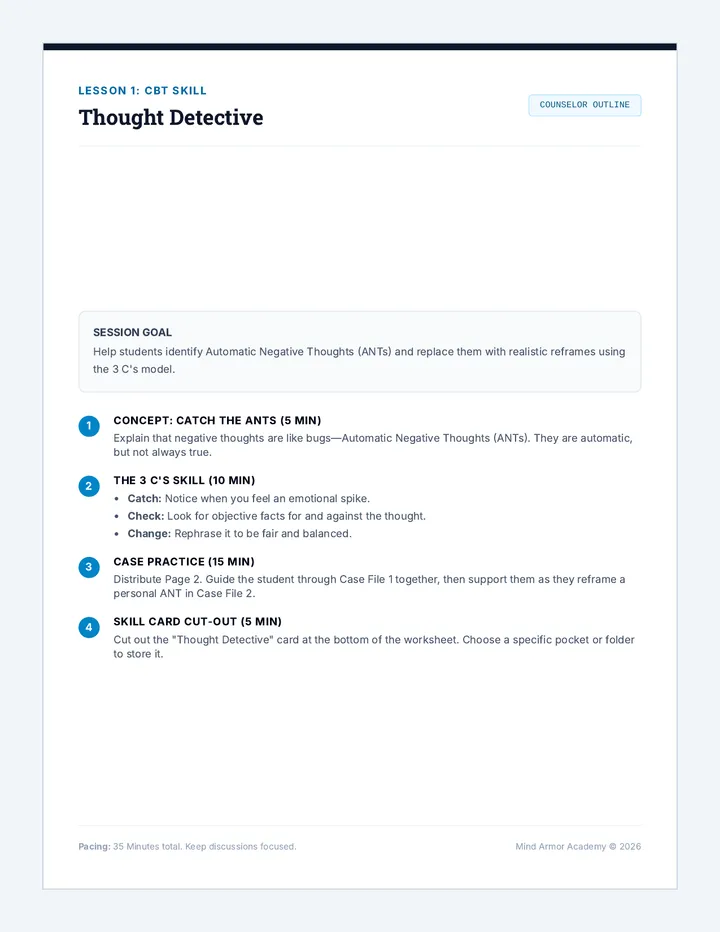
A comprehensive intervention designed to help students identify and challenge cognitive distortions during high-stakes testing seasons, focusing on cognitive reframing techniques to build resilience.
A mentor-facilitated program designed to build student confidence through positive self-talk, growth mindset exercises, and practical coping strategies. The materials provide a structured but flexible framework for meaningful 1-on-1 sessions.
A session focused on the 'how' of school, teaching students to manage their time through backwards planning and organizing their physical and digital learning spaces. Activities include a 'Time Thief' movement game and backpack/folder audits.
A foundation-building session focused on establishing psychological safety, group norms, and the shared purpose of the Academic Rebound program. Students participate in movement-based activities to build connection and define what they need from each other to succeed.
The final session celebrating growth. Students reflect on their progress, set long-term SMART goals with a growth mindset, and participate in a final 'Launchpad' celebration.
Focused on communication skills, students learn how to advocate for their needs with teachers. Includes role-playing scenarios for asking for help and practicing professional email etiquette.
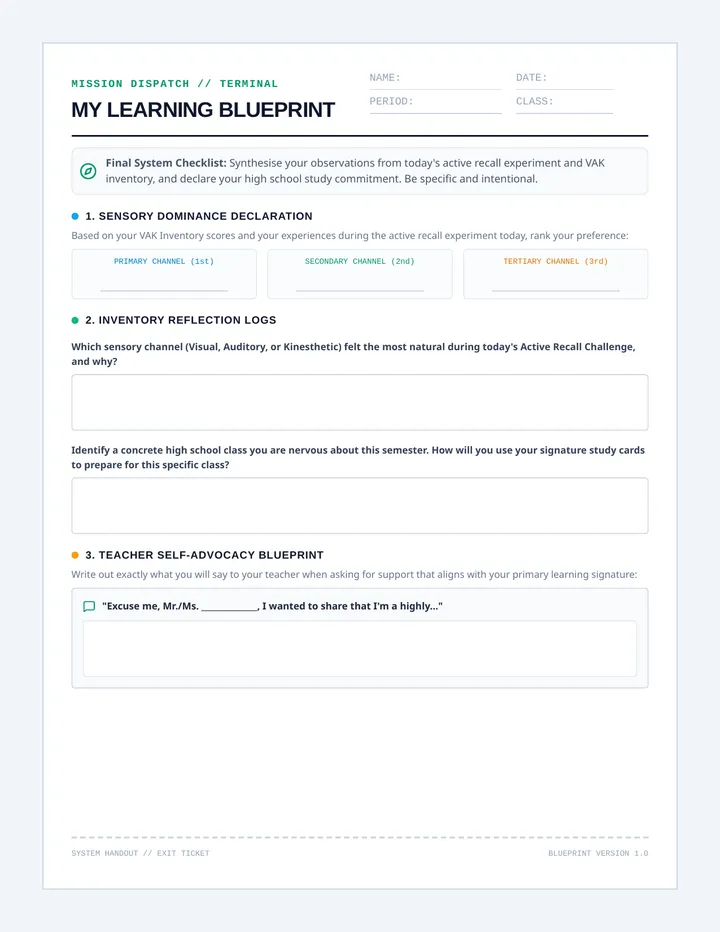
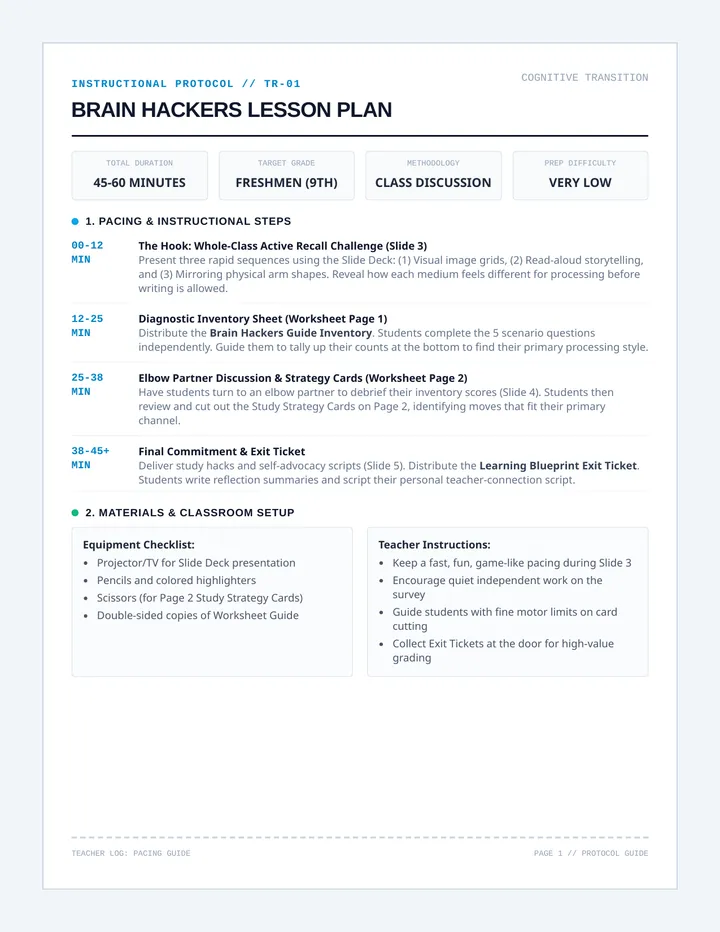
Instruction on active note-taking systems and evidence-based study strategies like active recall and spaced repetition. Students engage in a 'Study Hack' station rotation to test different methods.
A session focused on the 'why' of attendance. Students explore how being present is the baseline for all academic success and participate in a movement activity that visualizes the 'Attendance Gap' and how missed days snowball into missed opportunities.
Final review of all strategies and the creation of a personalized "Brain Manual" for future success.
Practical strategies for staying focused and organized in the classroom environment.
Applying impulse control and task initiation skills to home-based responsibilities like chores and routines.
Strategies to overcome procrastination and "get the engine started" for difficult or boring tasks.
Techniques for identifying internal and external distractions to maintain focus on high-priority tasks.
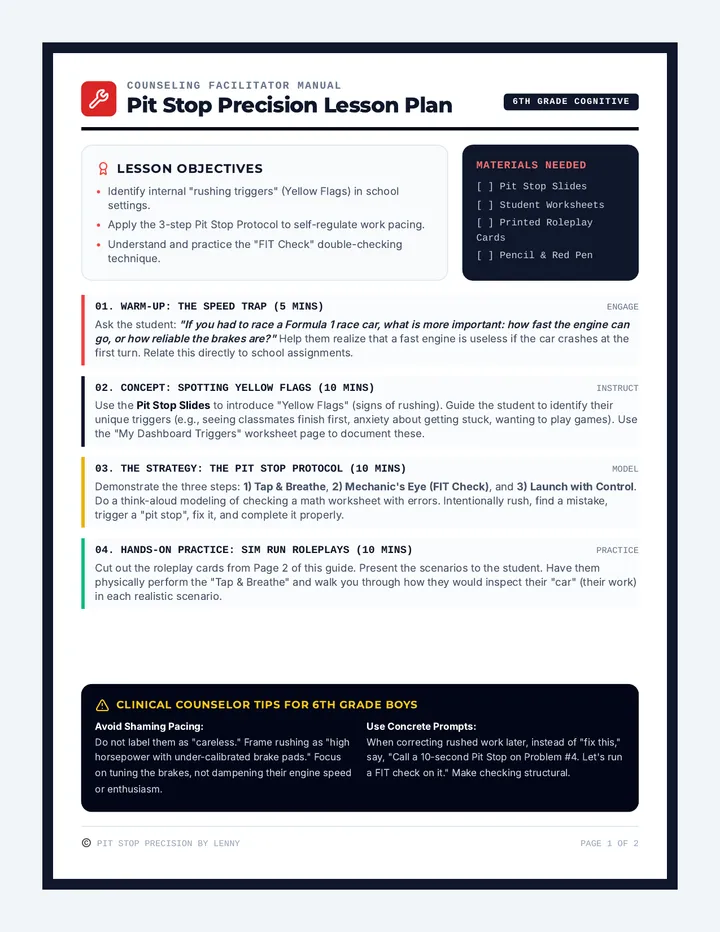
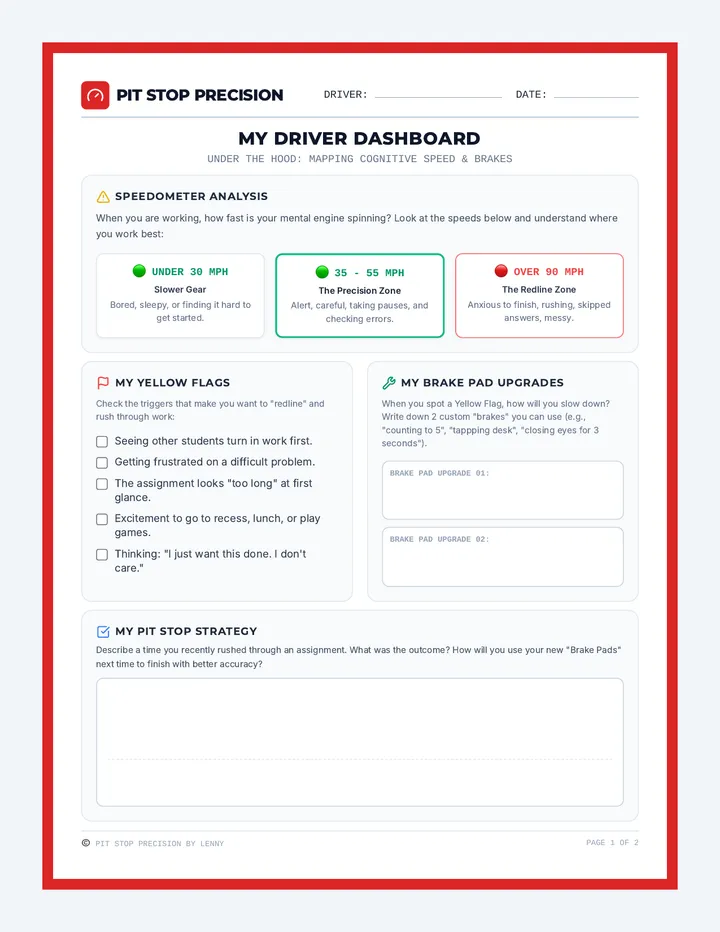
Introduction to executive functioning and the "Stop and Think" system for managing impulses in the heat of the moment.
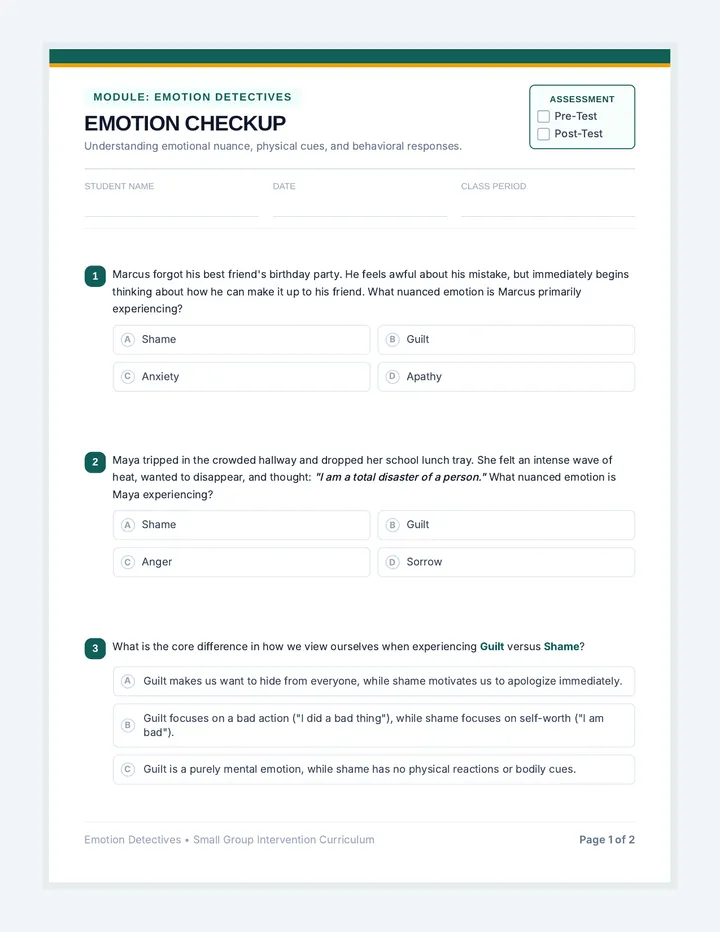
A collection of tools to help students in residential settings prepare for their school day through social-emotional reflection.
Establishing a weekly planning routine and reflecting on personal executive function tools for long-term success.
Developing time estimation skills and learning how to break large projects into manageable chunks.
Transitioning to digital organization using Google Calendar, reminders, and managing digital clutter.