A 25-minute lesson focused on real-life emotional problem-solving, featuring a 'Feelings Fixer Workshop' theme where students learn to distinguish between what they can control and how to build a plan for tough emotions.

A lesson for 5th-9th graders on processing corrective feedback, managing defensive reactions, and using scripts to accept criticism gracefully. Students learn to distinguish between constructive and destructive feedback while mastering the 'physiological sting' of being corrected.
Students will learn to identify unspoken classroom expectations and peer body language through the lens of a 'Social Decoder.' The lesson focuses on situational awareness, interpreting environmental cues, and adjusting behavior to match the 'vibe' of different settings.
A reflection and tracking lesson where students set personal goals for self-control and monitor their progress.
A dedicated session for practicing responses through a variety of classroom scenarios in a worksheet packet format.
Provides concrete steps for responding appropriately to redirection: Stop, Listen, and Adjust.
Explains the role of teacher redirection as helpful 'course correction' rather than criticism, establishing the 'Roger That' mindset.
Introduces the concept of self-control as 'piloting' one's own brain and body, identifying internal signals of losing control.
A dinosaur-themed lesson for 1st and 2nd graders that reframes mistakes as 'brain food' and replaces 'stinkin' thinkin' with growth mindset language.
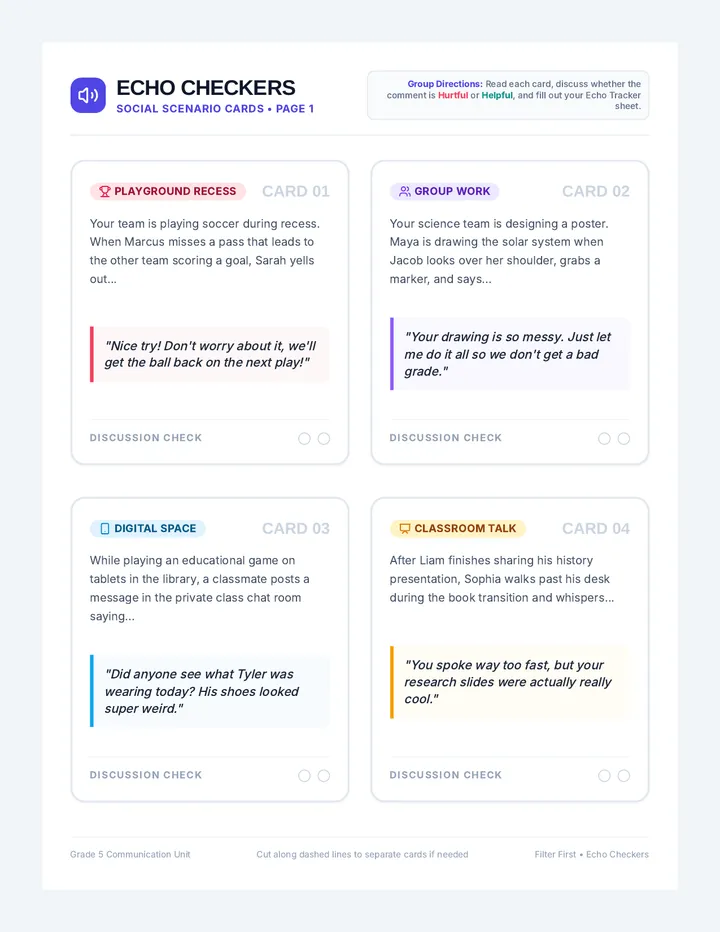
An independent accountability project designed for students to reflect on their communication choices and develop empathy through a series of self-paced investigation activities.
A foundational lesson for 5th graders to expand their emotional vocabulary and develop self-awareness through scenario analysis and coping strategy identification.
A sensitive and supportive lesson designed to help 2nd-grade students, including those with social-emotional needs, navigate the transition of their teacher going on maternity leave. The lesson focuses on identifying feelings, understanding new routines, and building a 'bridge' to the guest teacher.