An introductory lesson to help students identify and differentiate between various emotions through interactive activities, discussions, and reflections.
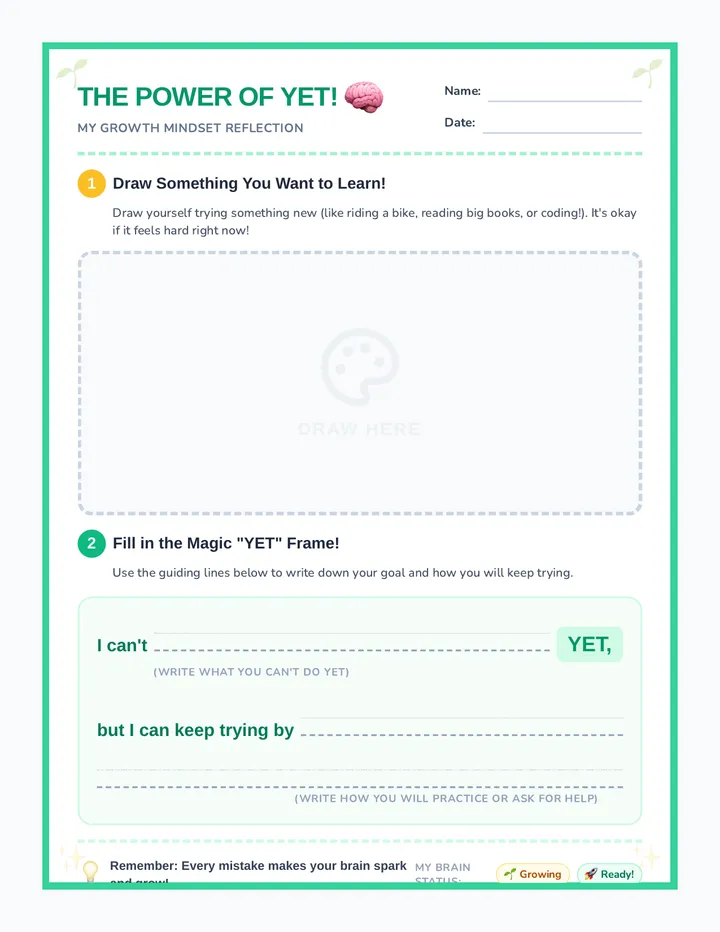
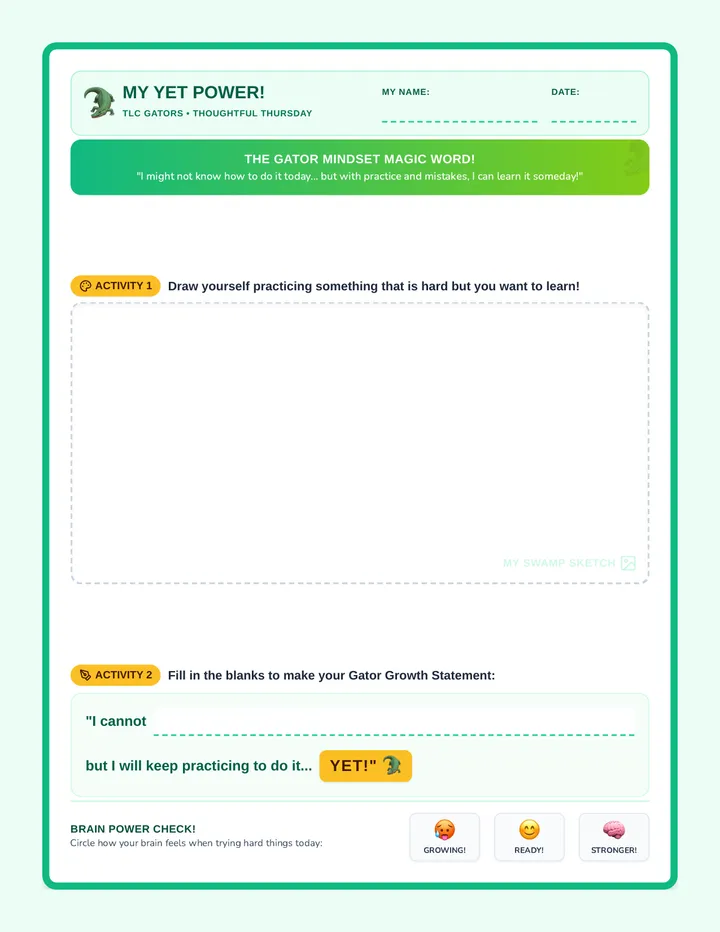
A spring-themed group counseling session focused on growth mindset and resilience. Students use garden metaphors to understand how challenges help them grow and learn strategies to bounce back from setbacks.
A fast-paced 10-minute lesson teaching 3rd graders the pillars of trustworthiness through honesty, reliability, and punctuality. Students will learn practical strategies to build character and make responsible decisions for their community.
A social-emotional learning lesson introducing the concept of personal space through the 'bubble' metaphor. Parents and children explore who and what belongs in their personal space to build healthy boundaries.
A hands-on dramatic play lesson for preschoolers (ages 2-4) focused on exploring home mealtime routines and comparing them to school meals. Kids will engage in role-play using a play kitchen and dining area to build social and language skills.
A lesson on impulse control using mechanical and automotive metaphors to teach identifying triggers, consequences, and self-regulation.
A quick, impactful lesson for 5th graders transitioning to middle school. Students explore their internal locus of control through the 'Circle of Control' concept and celebrate their elementary achievements through goal-setting and reflection.
This lesson teaches students how to calculate total costs of multiple items and make spending decisions based on a fixed budget.
This lesson focuses on identifying US coins (penny, nickel, dime, quarter) and their respective values through visual recognition and matching.
A foundational lesson for Transitional Kindergarten students focused on identifying basic emotions and the physical sensation of being 'wiggly' (stressed) vs. 'still' (calm). Introduces 'Turtle Breathing' as a primary regulation tool.
Reviewing all strategies, celebrating progress, and creating a personalized self-control plan for future use.
Developing impulse control by 'fast-forwarding' to see the potential consequences of different choices.
Managing the intensity of emotions and reactions using the 'Volume Control' strategy for self-regulation in social situations.
Addressing social frustrations by 'rewinding' to understand what happened and how to troubleshoot social bugs with peers.
Focusing on the 'Pause' button to build a gap between impulse and action, featuring strategies for stopping in the moment.
Introduction to the concept of self-control using the remote control metaphor and identifying personal 'impulses' that need managing.