Inner Climate Guide Teacher Plan Inner Climate Guide
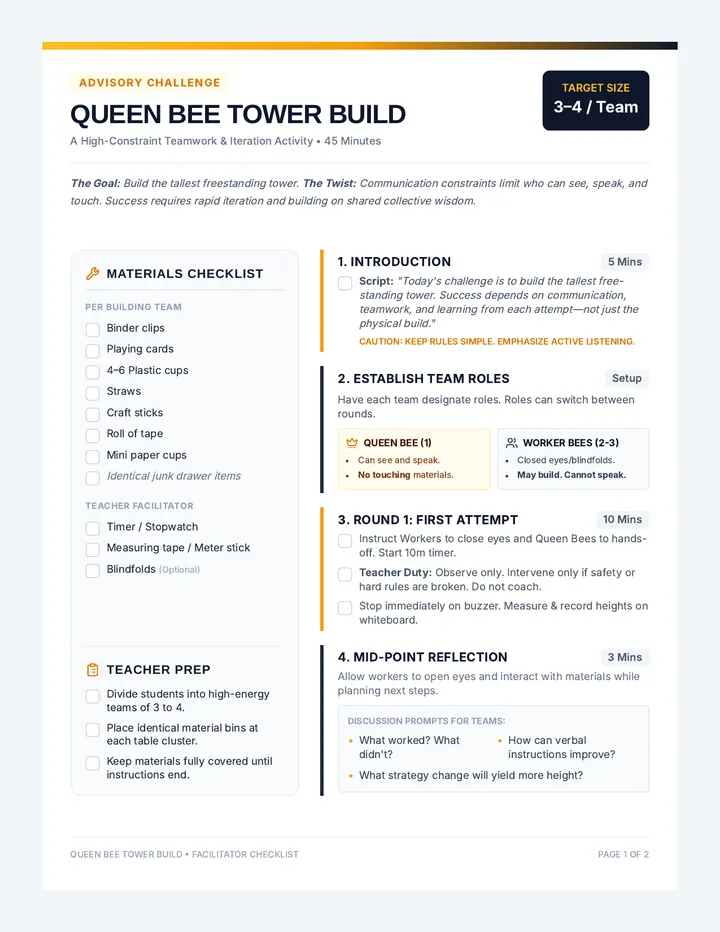
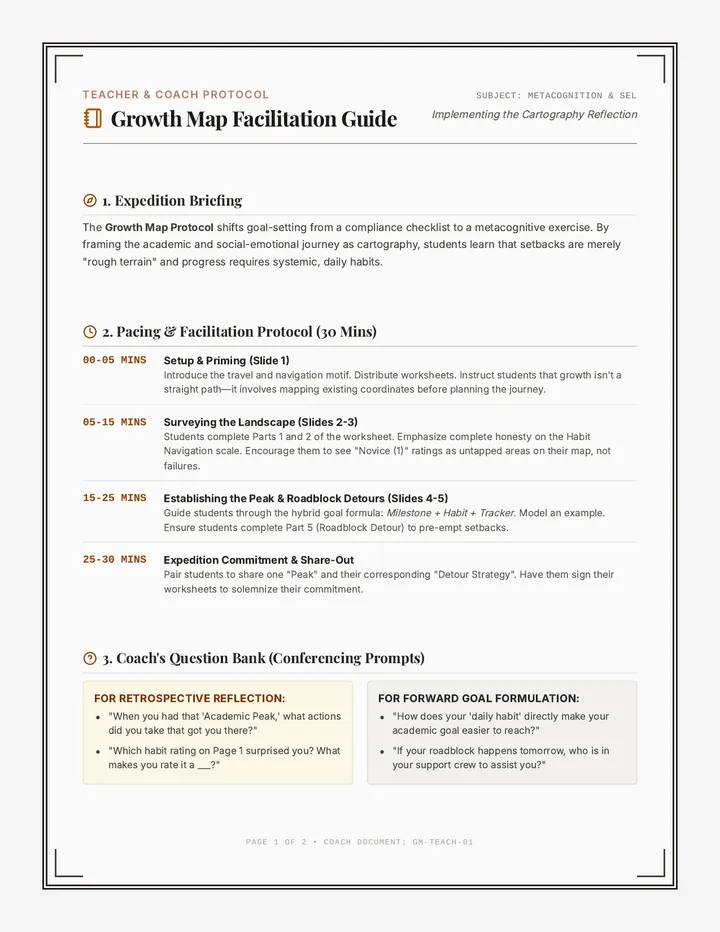
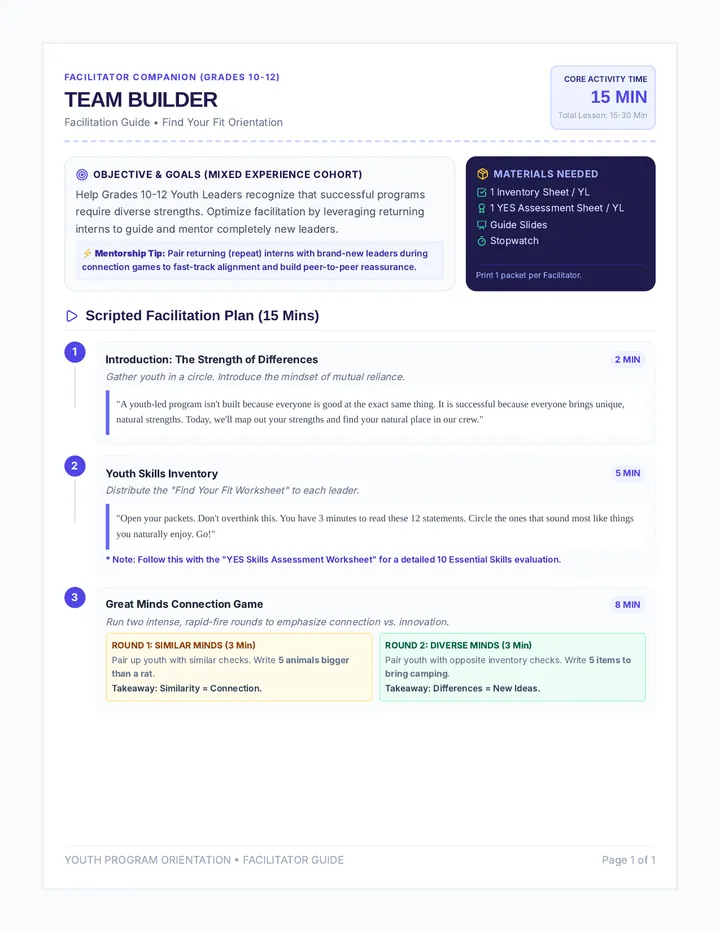
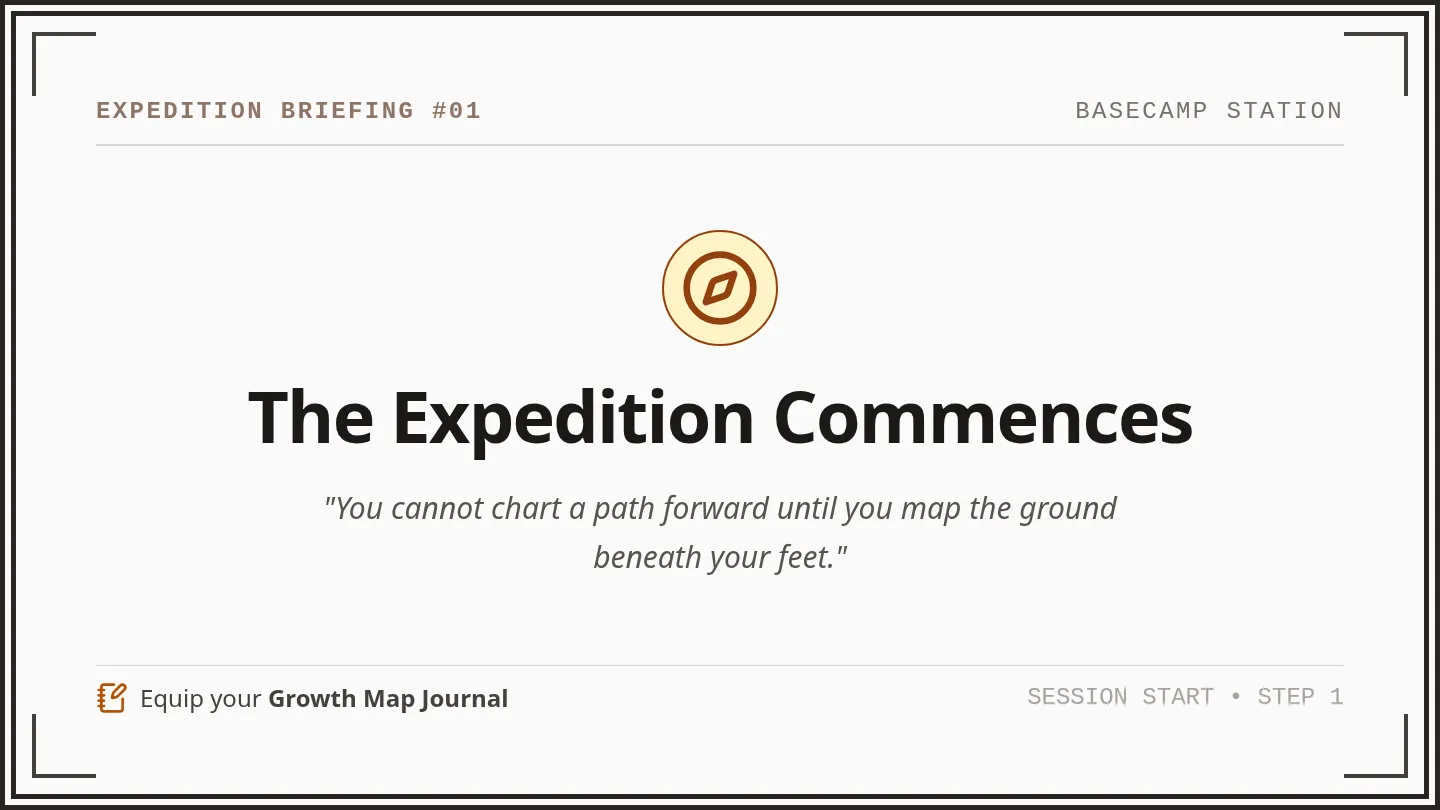
Lesson Plan: Emotional Regulation
GRADE LEVEL
10th Grade
Duration
60-90 Minutes
LEARNING OBJECTIVES
Define "emotional regulation" and the "thermostat" metaphor.
Identify physiological and cognitive early warning signs of emotional shifts.
Select and practice diverse coping strategies for different "climates."
Develop a personalized toolkit for long-term emotional balance.
REQUIRED MATERIALS
Thermostat Tech Slides
Weather Station Worksheet
Toolkit Blueprint Activity
Climate Log Journal
Colored pencils/markers
Essential Questions
"How can I recognize when my 'emotional temperature' is starting to rise or fall?"
"What tools do I already possess to adjust my internal climate?"
"Why is regulation different from suppression or avoidance?"
CASEL Focus
Self-Management: The ability to manage one's emotions, thoughts, and behaviors effectively in different situations.
Instructional Sequence
1
The Forecast (Hook)
10 MIN
Display the "Inner Climate" slide. Ask students: "If your mood right now was a weather pattern, what would it be? Sunny? Foggy? A looming thunderstorm?"
Discussion Prompt: Is it easier to handle a storm if you see the clouds coming, or if it just hits you suddenly?
2
Thermostat vs. Thermometer
15 MIN
Explain the metaphor: A thermometer just reads the temperature (awareness). A thermostat *sets* and *regulates* the temperature (action). Regulation isn't about ignoring the cold; it's about turning up the heat when needed.
3
Weather Station Work
15 MIN
Distribute the Weather Station Worksheet . Students identify "Early Warning Signs" (Physical, Mental, Behavioral) that their thermostat is starting to shift away from their "Comfort Zone."
4
Building the Toolkit
15 MIN
Using the Toolkit Blueprint Activity , students categorize coping strategies into "Cooling Down" (for anger/anxiety), "Warming Up" (for sadness/apathy), and "Maintenance" (daily habits).
5
Climate Log Reflection
5 MIN
End with the Climate Log Journal prompt. Encourage students to set a "Regulation Goal" for the upcoming week.
TEACHER TIPS
Be vulnerable! Share a time your "thermostat" failed and what you did to fix it. This normalizes the fact that everyone struggles with regulation. Avoid calling emotions "bad"—instead, refer to them as "intense" or "uncomfortable."
DIFFERENTIATION
Support: Provide a "Menu of Strategies" for students who struggle to brainstorm their own.
Challenge: Ask students to analyze how social media acts as an external "environment" that affects their internal climate.
Thermostat Tech Slides System 10.0
Emotional
Thermostat
Regulating Your Inner Climate
The Forecast
"If your mood right now was a weather pattern, what would it be?"
Clear Skies
Heavy Fog
High Winds
Storm Cell
🌡️
AWARENESS VS. ACTION
Thermometer
Simply reads the temperature. It tells you what is happening, but cannot change it.
Self-Awareness
Thermostat
Actively adjusts the climate. It takes conscious action to maintain a set point.
Self-Regulation
Early Warning Signs
Before the "storm" hits, your body sends signals.
Physical
Rapid Heartbeat
Tight Chest
Clenched Jaw
Mental
Racing Thoughts
Tunnel Vision
"Shutting Down"
Behavioral
Snapping at Others
Pacing / Fidgeting
Avoiding Eye Contact
ADJUSTING THE SETTINGS
Cooling Down
For when feelings are too intense, loud, or fast (Anger, Anxiety, Frustration).
Key Strategy: Grounding and slowing down.
Warming Up
For when feelings are too heavy, cold, or slow (Sadness, Loneliness, Boredom).
Key Strategy: Activation and connection.
Time to Build
You are the engineer of your own internal climate. Let's design a toolkit that works for you.
Initializing Activity
Weather Station Worksheet Weather Station
Station Operator
Mission Date
Mission Objective: Identify the physiological and cognitive markers that signal a shift in your internal climate. Use this dashboard to map your "Comfort Zone" and your "Early Warning Signs."
COMFORT ZONE
What does it feel like when your "thermostat" is at its ideal setting?
Internal Climate Sensors
STATUS: SCANNING...
Physical Markers
01
02
Mental Markers
01
02
Early Warning Detection
The Body
Muscle tension, heart rate, temperature changes...
The Mind
"Sticky" thoughts, racing ideas, focus shifts...
The Actions
Snapping, withdrawing, pacing, fidgeting...
Environmental Factors (Triggers)
What external events usually push your thermostat out of its comfort zone? (e.g., social media, tests, certain rooms, specific comments)
Toolkit Blueprint Activity Toolkit Blueprint
Emotional Regulation Engineering
Engineer:
Version: 1.0_STABLE
System: Cooling
For when thoughts are racing, the heart is pounding, or you're feeling "too much" (Anger, Anxiety, Overwhelm).
Immediate Action (1-minute fix)
Physical Grounding Strategy
Social Boundary / Space
System: Warming
For when you feel heavy, disconnected, bored, or have "too little" energy (Sadness, Apathy, Loneliness).
Activation Strategy (Get Moving)
Cognitive Shift (New Perspective)
Connection / Outreach
Maintenance Routine
SCHEDULE: DAILY_CHECK_IN
Regulating your thermostat is easier when the system is well-maintained. List 3 daily habits that keep your internal climate stable before an "event" happens.
1 Morning Habit
2 Evening Habit
3 Emergency Override
Remember: Regulation is not suppression. It's management.
Climate Log Journal Climate
Log
"The first step to managing the storm is noticing the clouds."
01 Initial Scan
Think back to a time this week when your "emotional temperature" spiked or dropped suddenly. Describe what happened and how you felt in that moment.
02 System Check
Looking at your Toolkit Blueprint , which strategy do you think would have been most effective in that situation? Why?
Regulation Goal
Set one specific goal for how you will use your "Emotional Thermostat" this week. (e.g., "I will take three deep breaths when I feel my chest tighten during math class.")
End of Session Log
Archived to Mental Health Core
Operator Name
Weekly Environment Scan
Check in with your thermostat at the end of each day.
Day
Peak Temp
Warning Signs Noticed?
Strategy Used?
Outcome
MON
TUE
WED
THU
FRI
Weekly Calibration Summary