This lesson engages Grade 8 students in role-playing scenarios to develop their emotional intelligence (EQ) by exploring how different emotions affect their actions and how to manage them effectively.
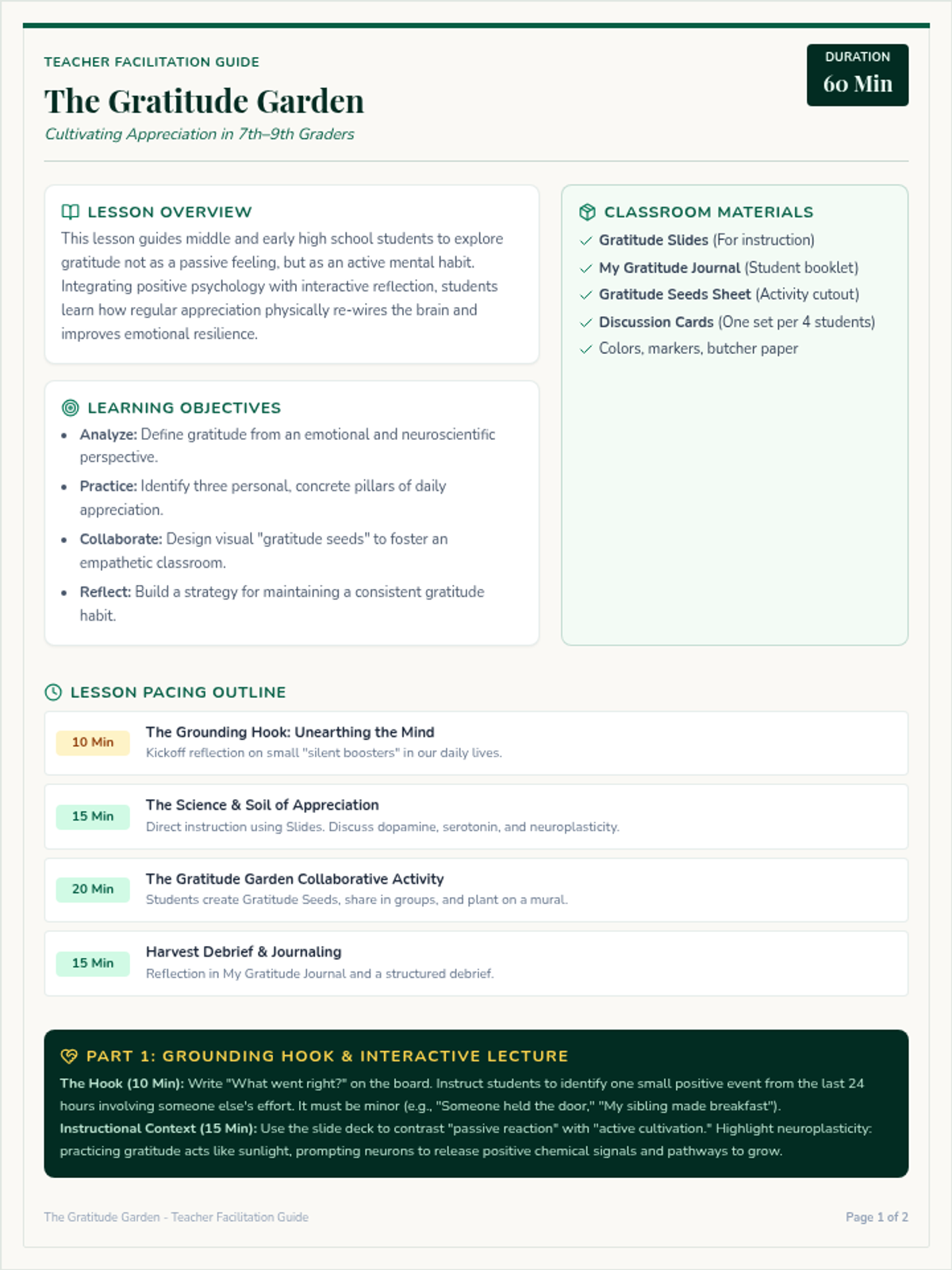
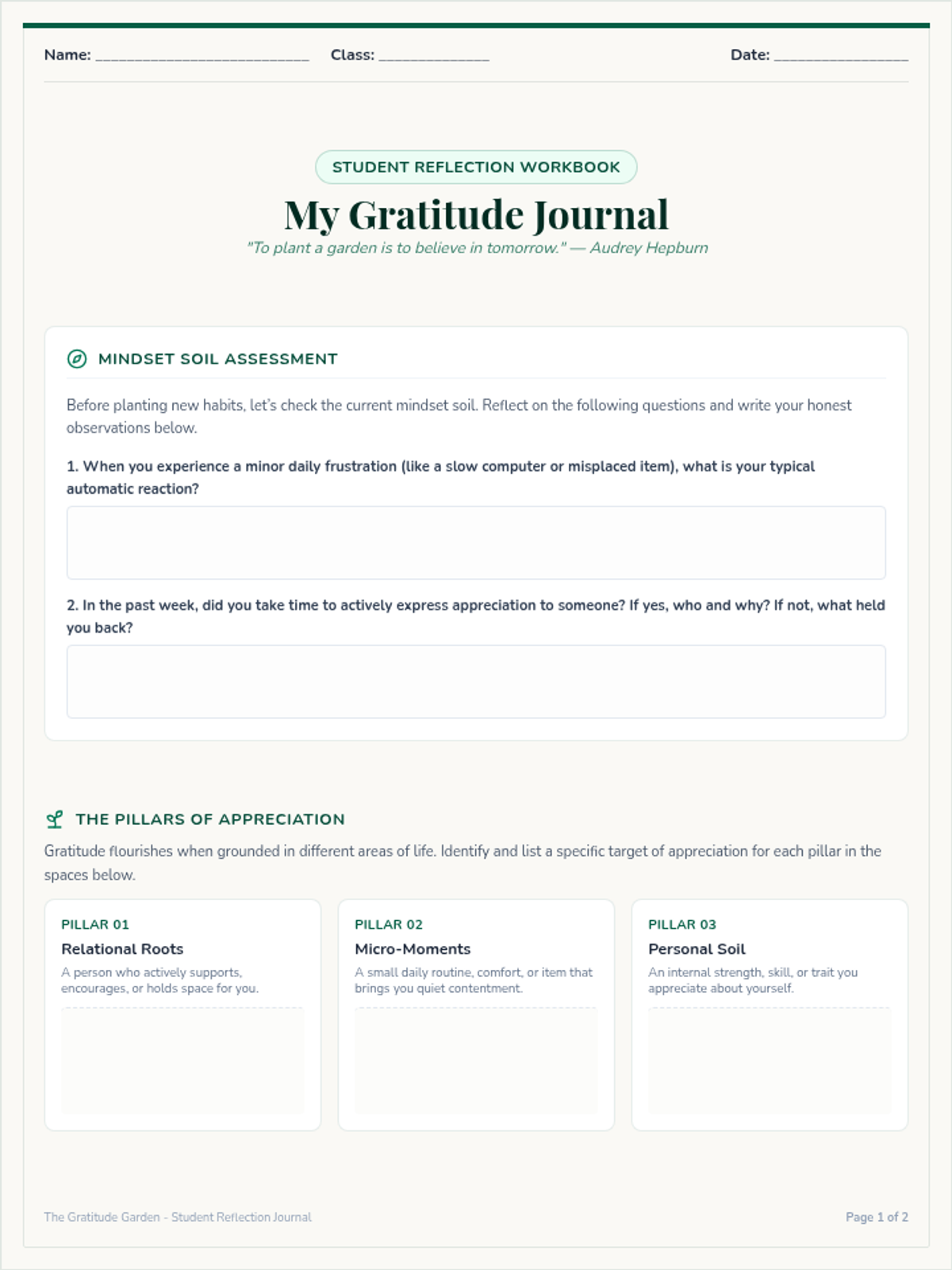
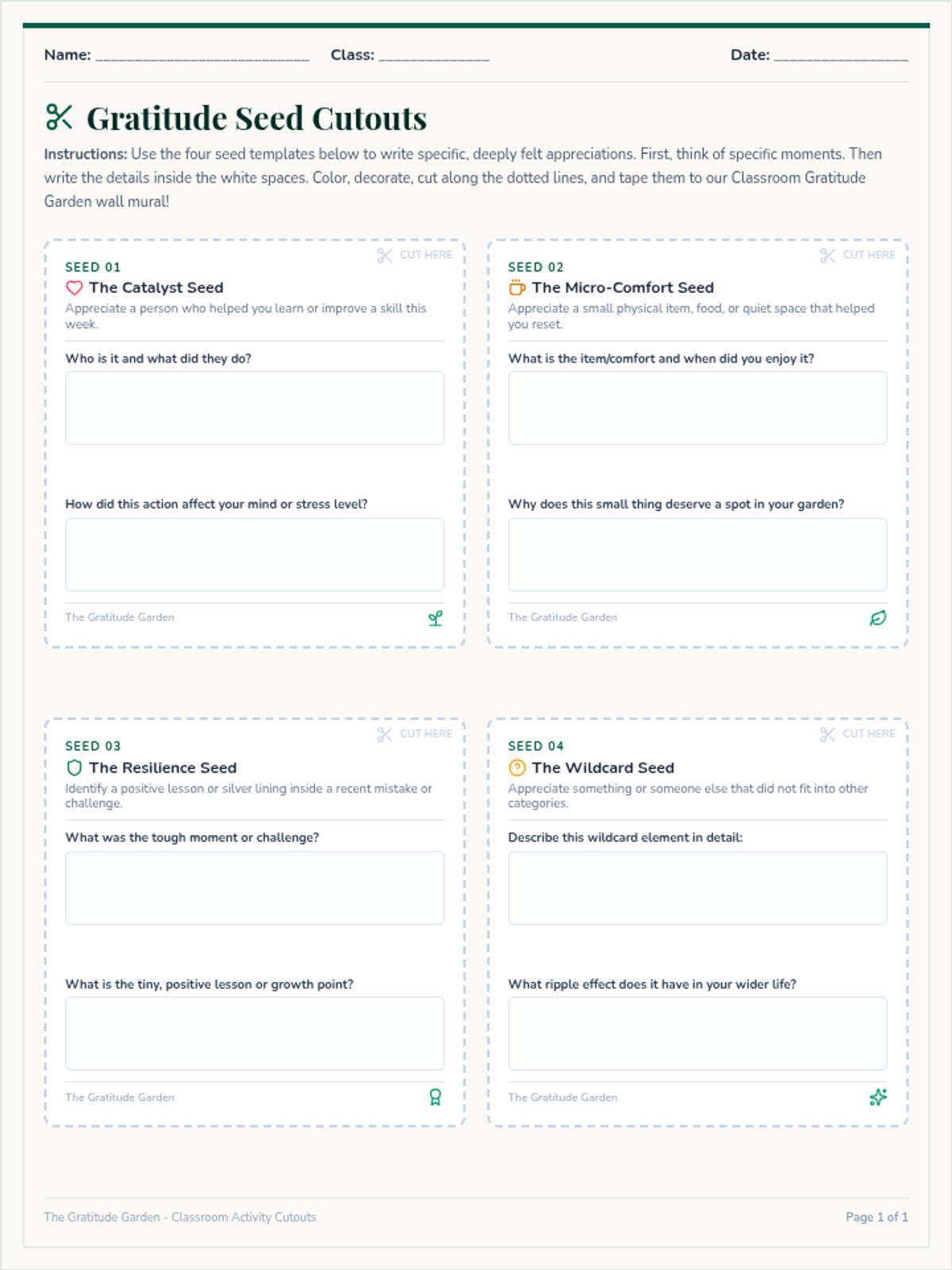
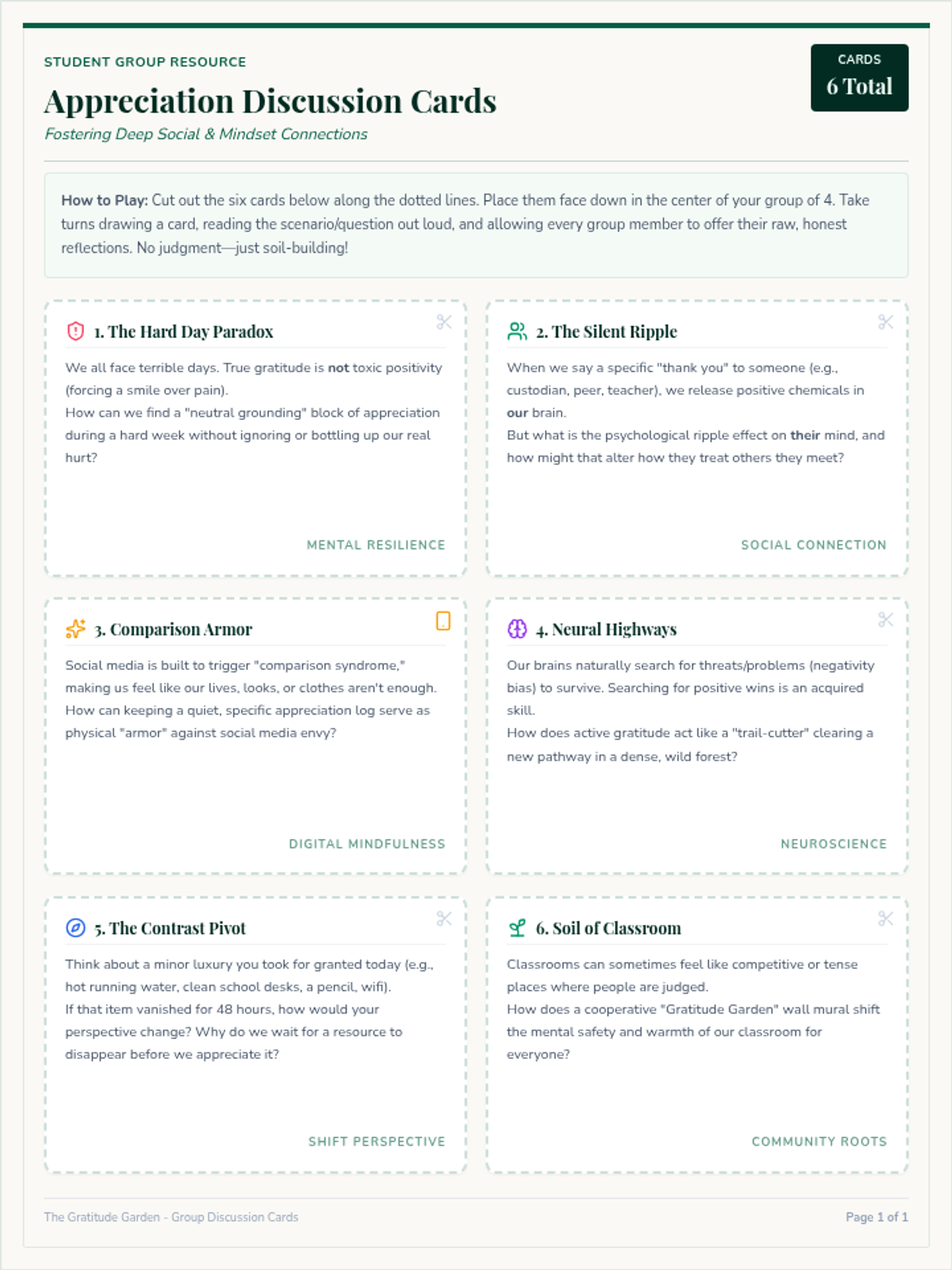
A reflective and collaborative lesson for 7th-9th graders exploring the science and practice of gratitude. Students will discover how cultivating appreciation improves emotional well-being and strengthens relationships through journaling and interactive activities.
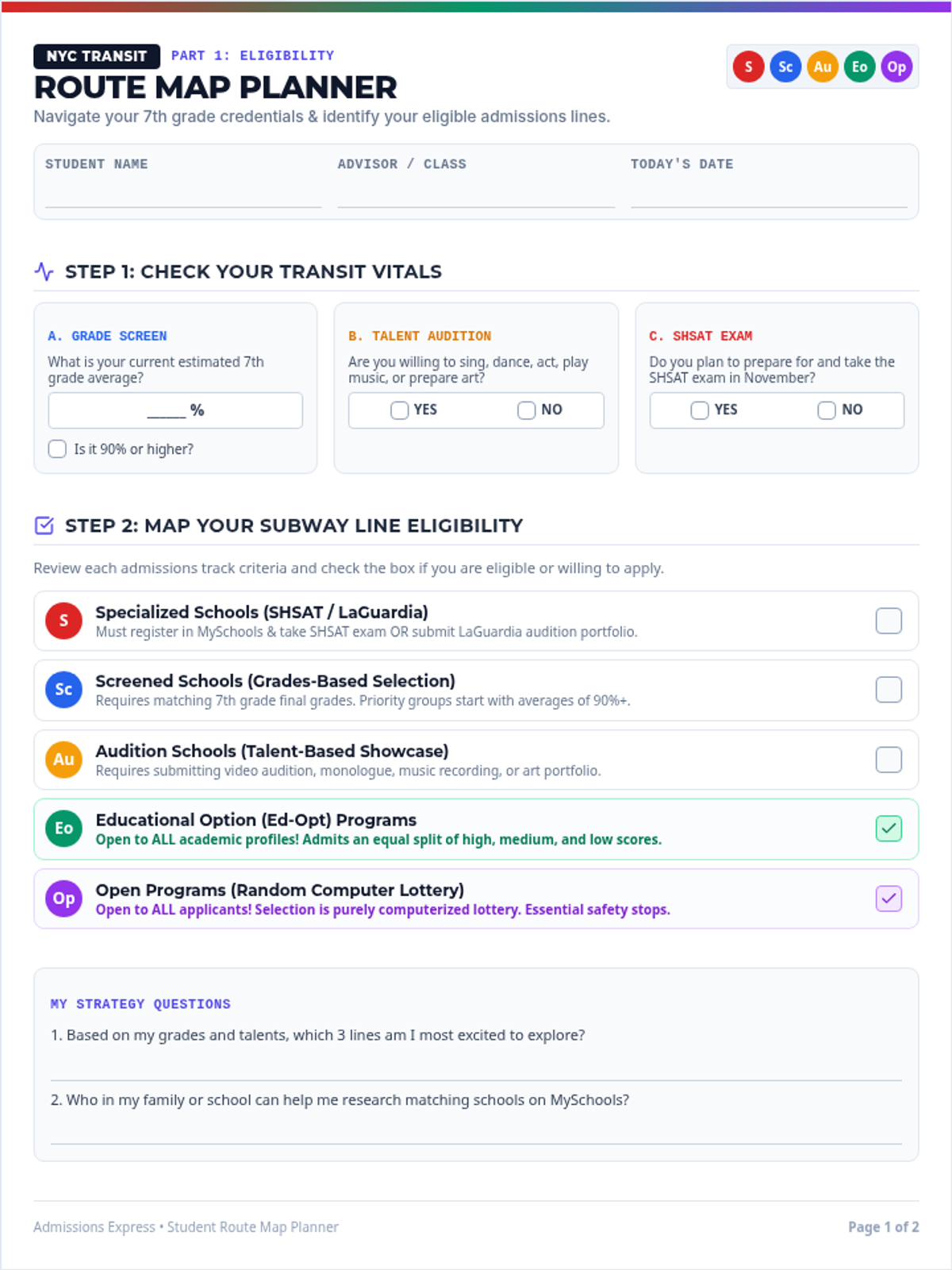
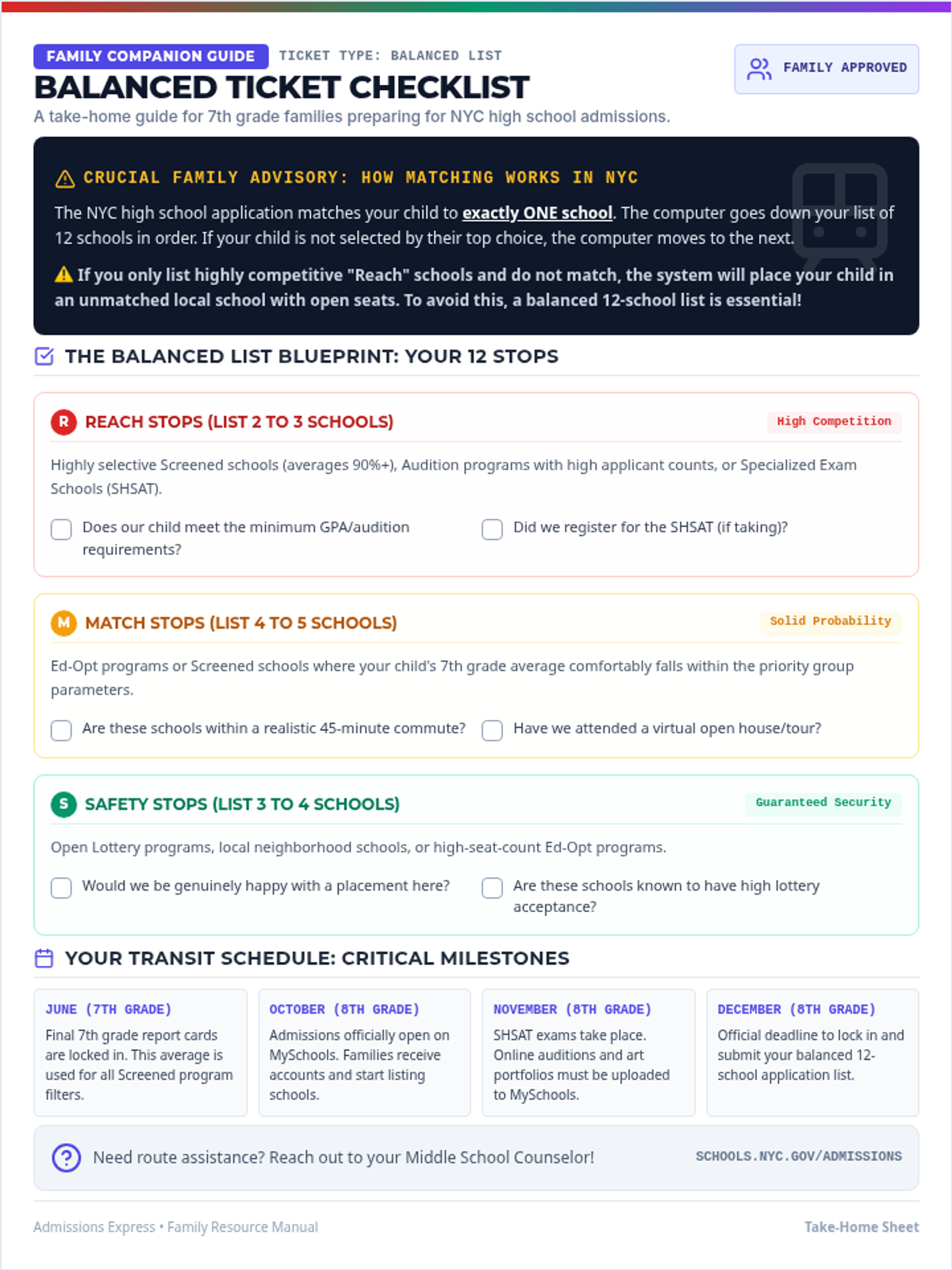
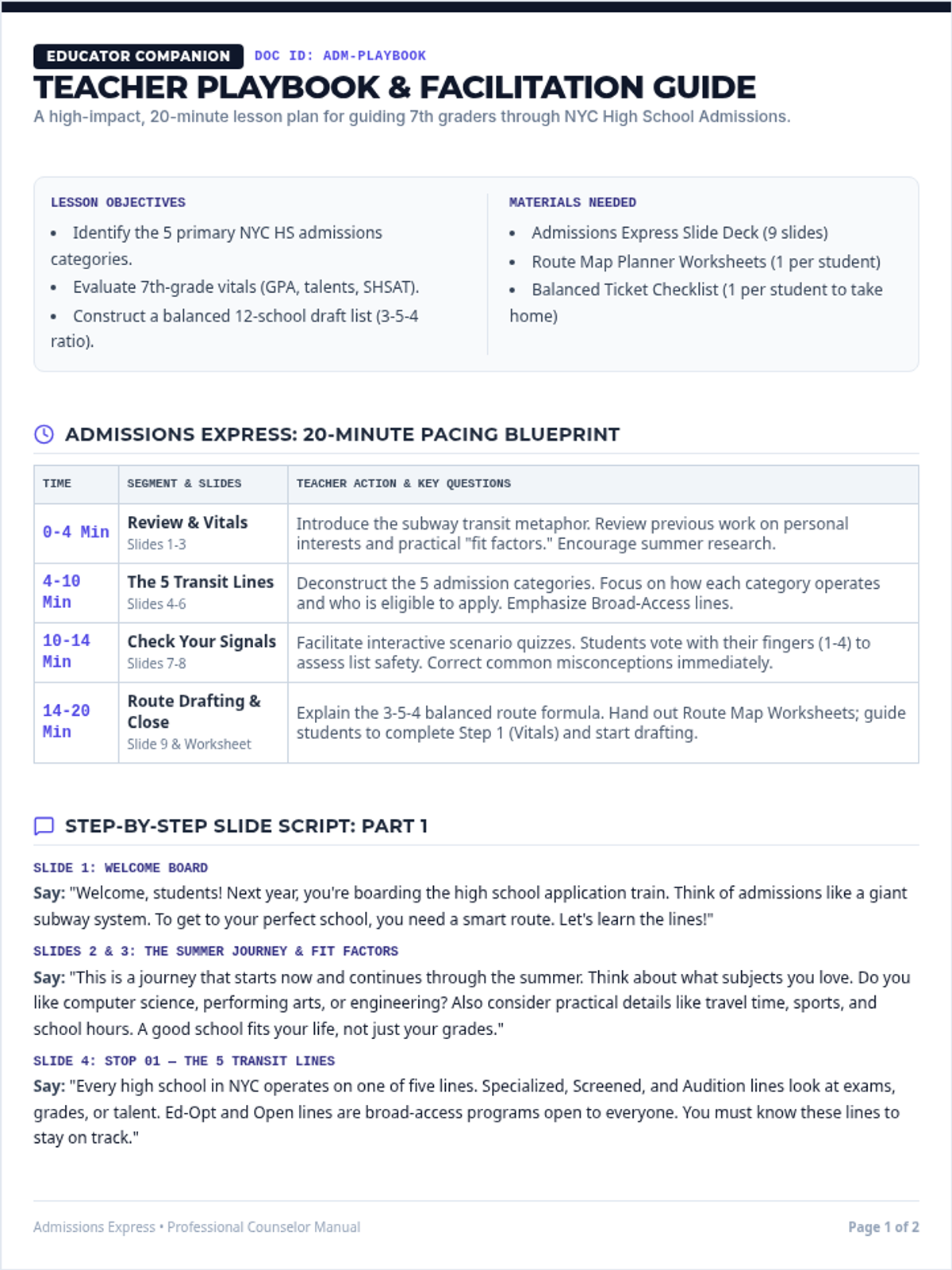
A high-impact, 20-minute lesson designed to guide 7th-grade students through the NYC high school admissions process. Students explore the five primary admission categories and learn how to construct a balanced list of schools using an interactive mountain-themed adventure planner.
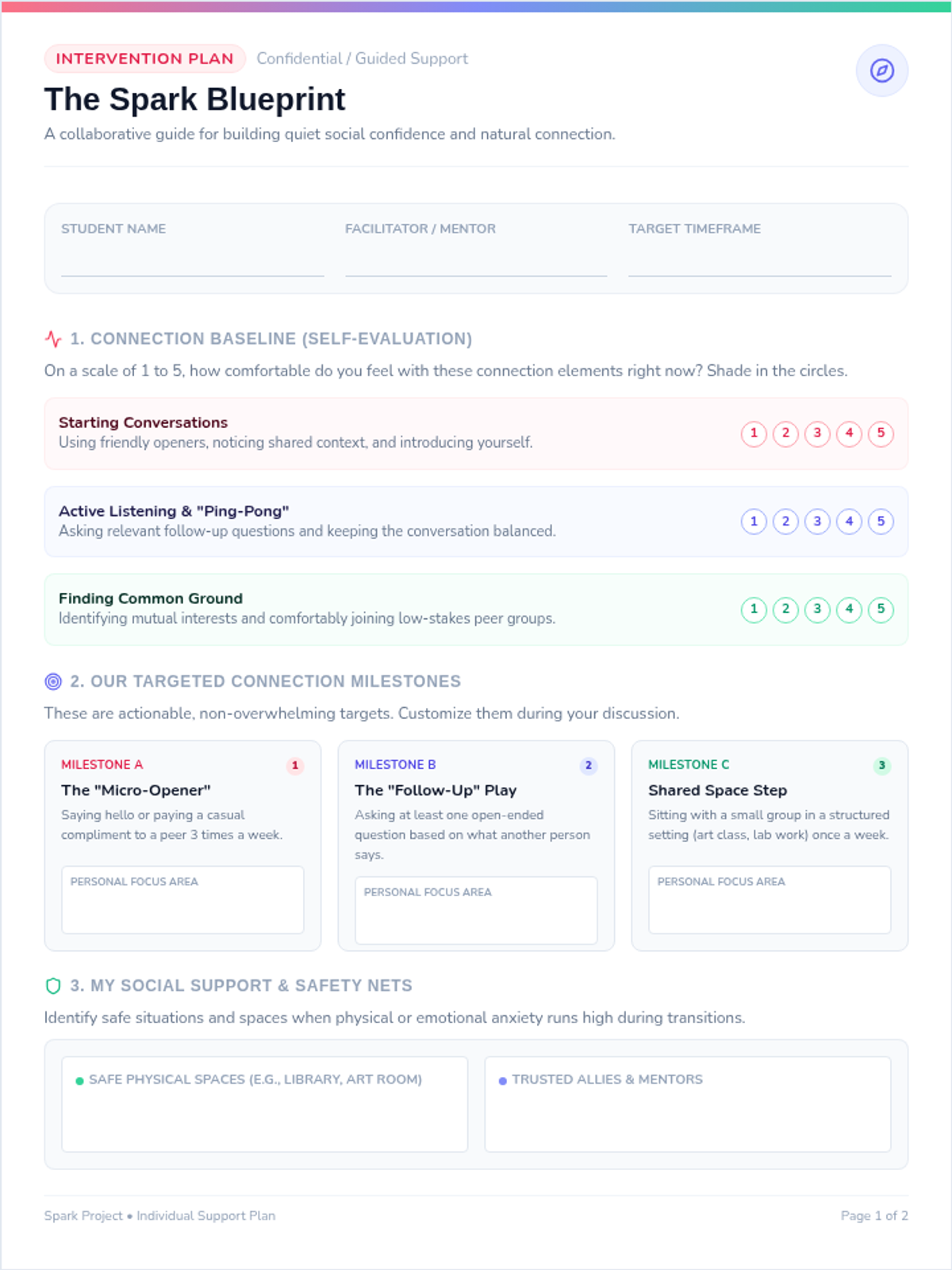
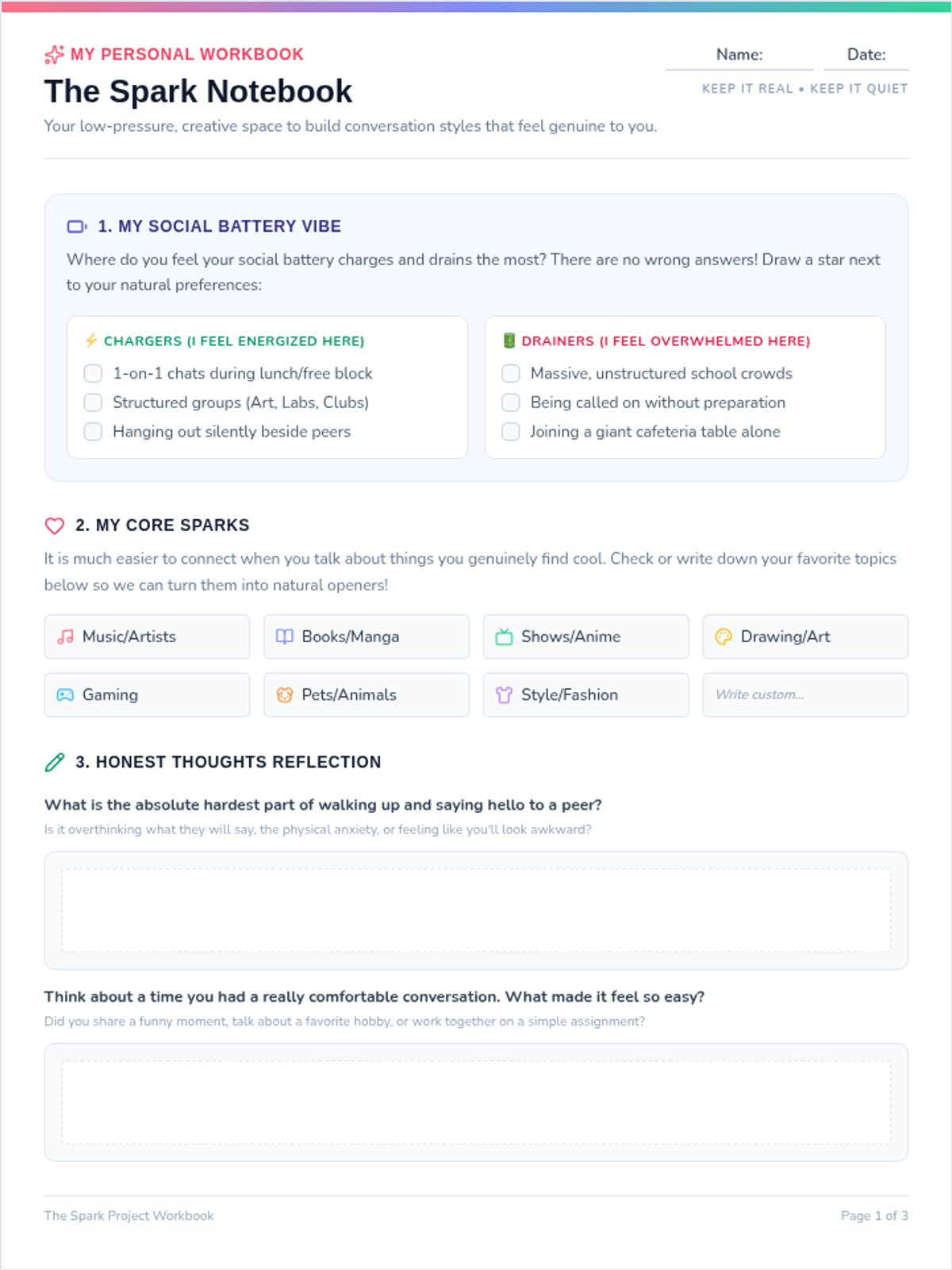
A targeted intervention and student workbook sequence focused on helping middle school students, particularly 8th-grade girls, master starting conversations, active listening, and building quiet social confidence through low-stakes challenges.
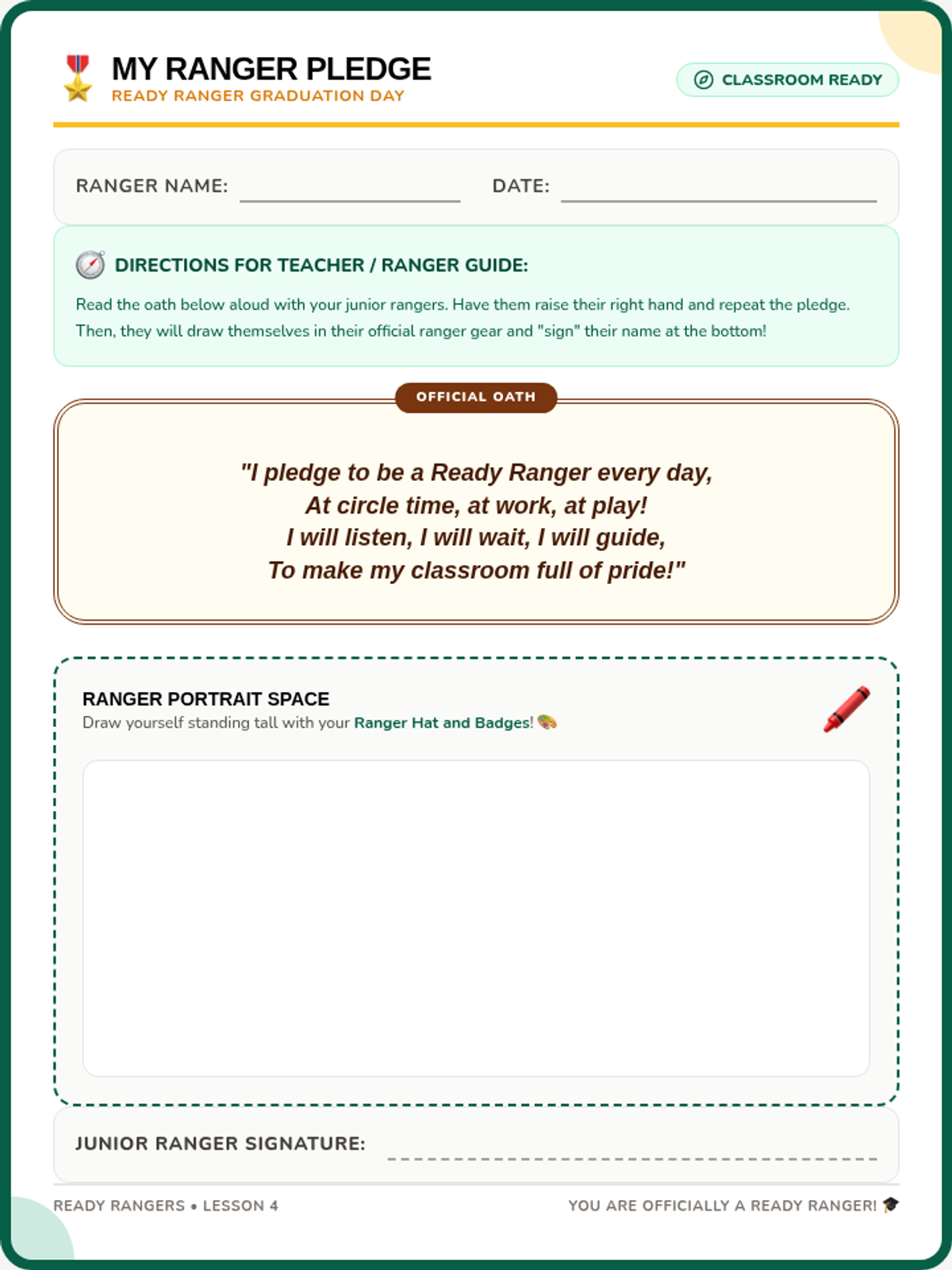
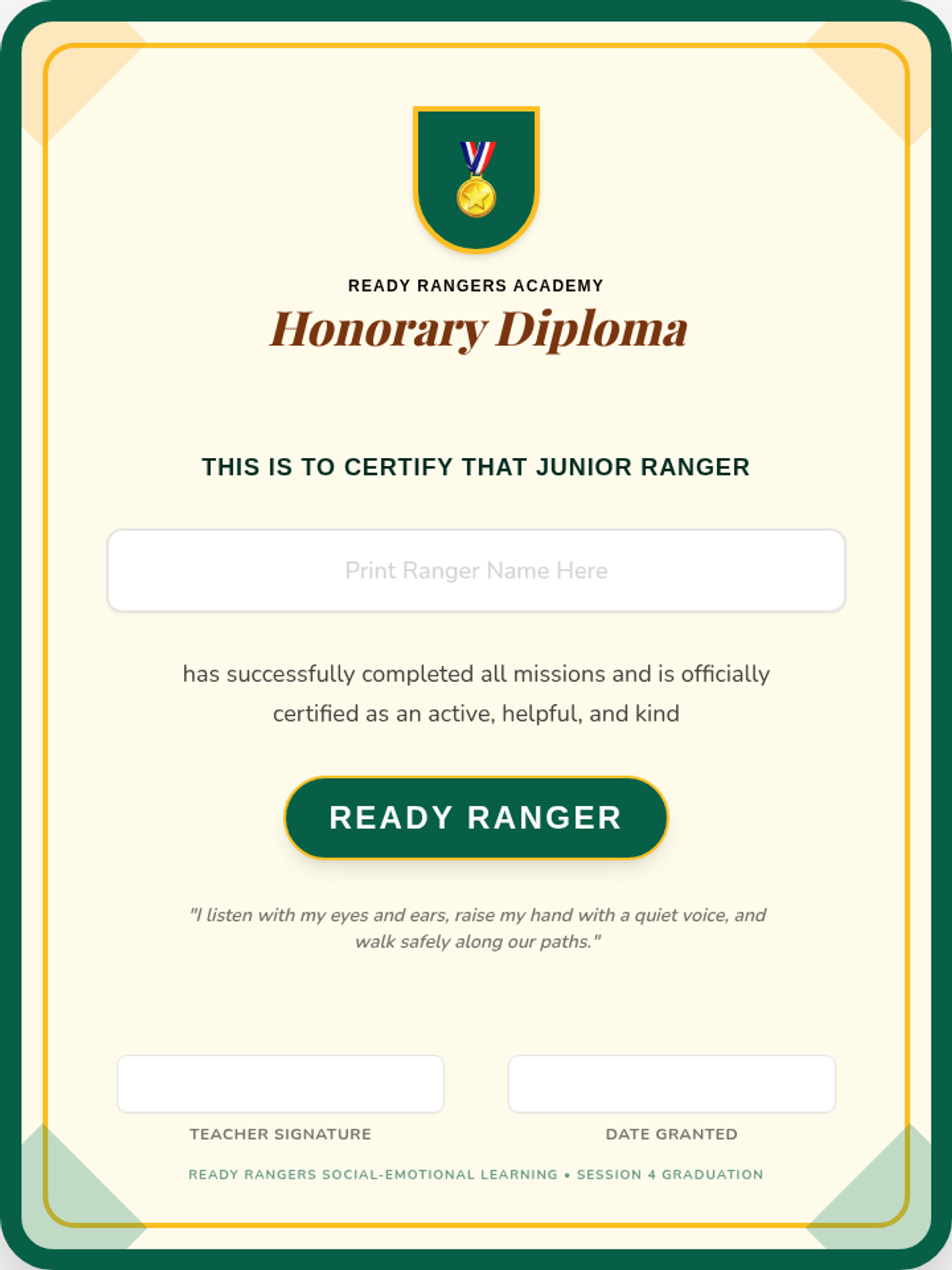
A celebratory final session where students review all three ranger skills, sign a Ranger Pledge, and receive their graduation certificates.
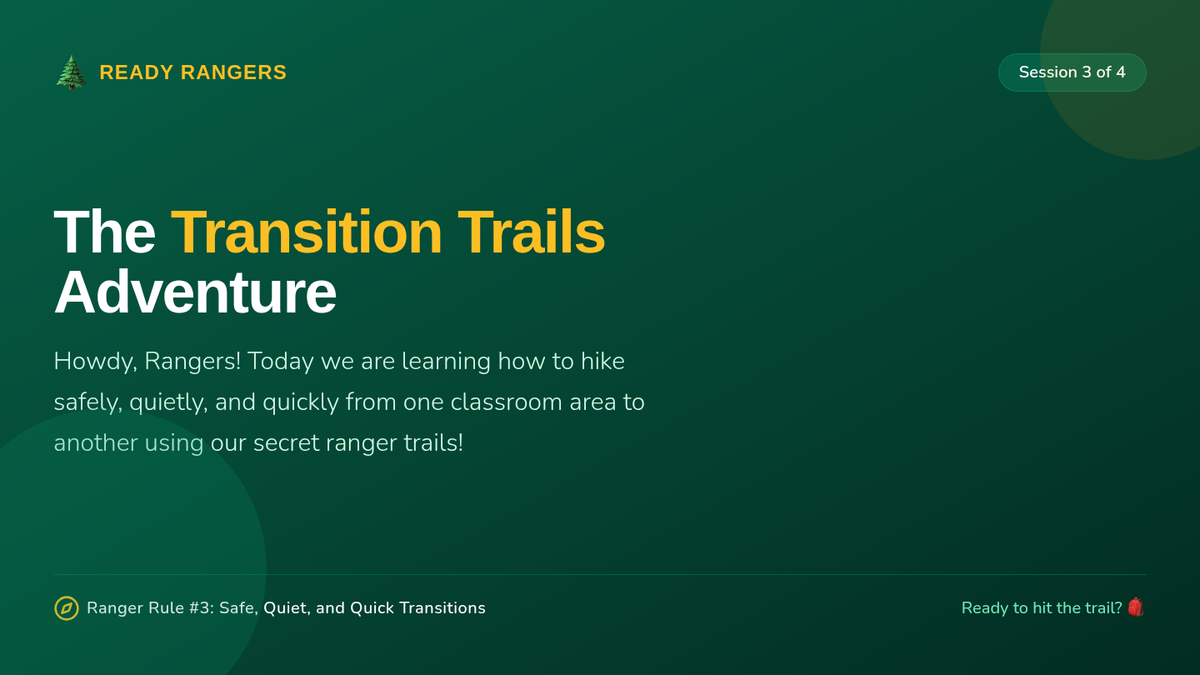
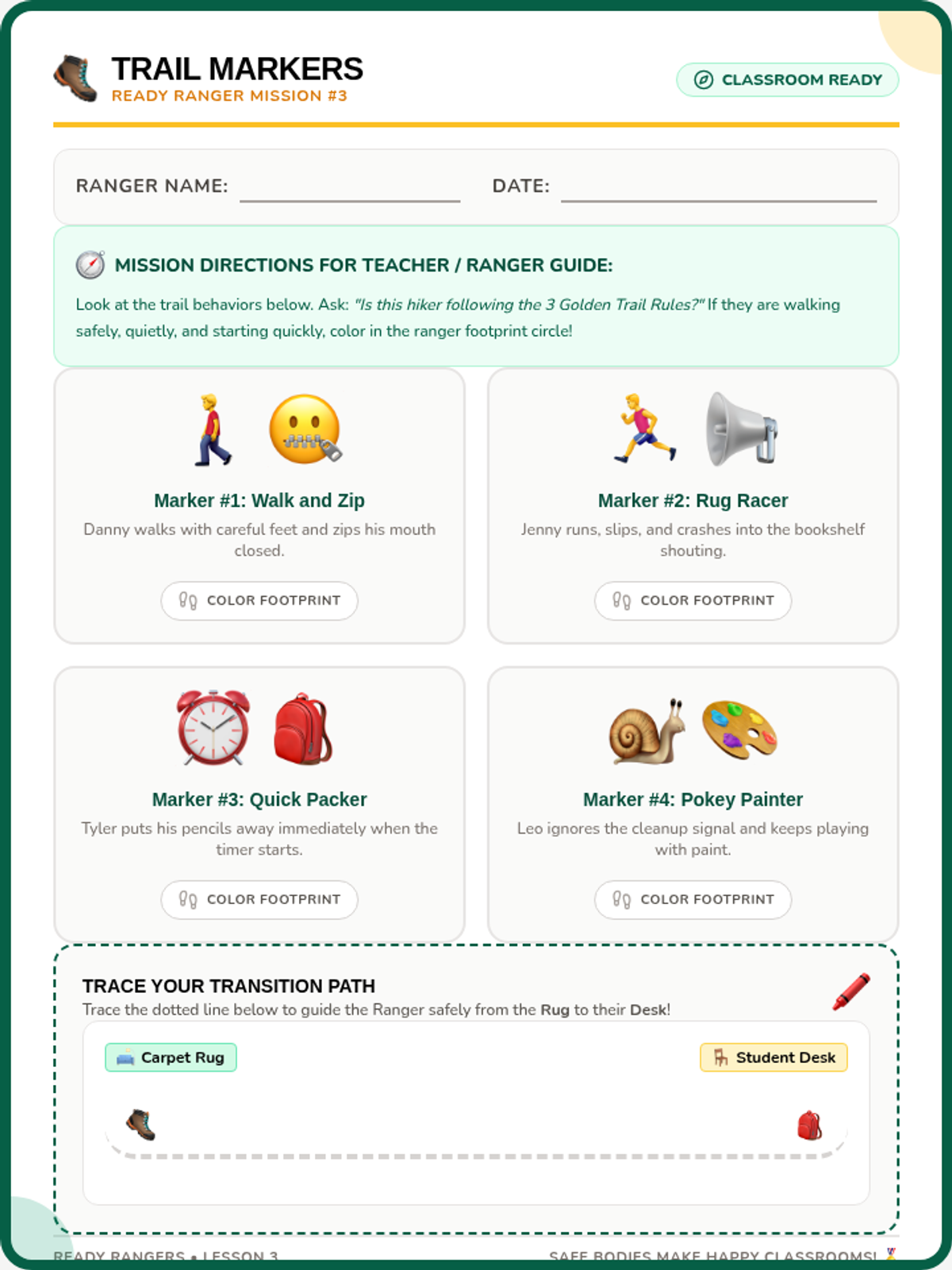
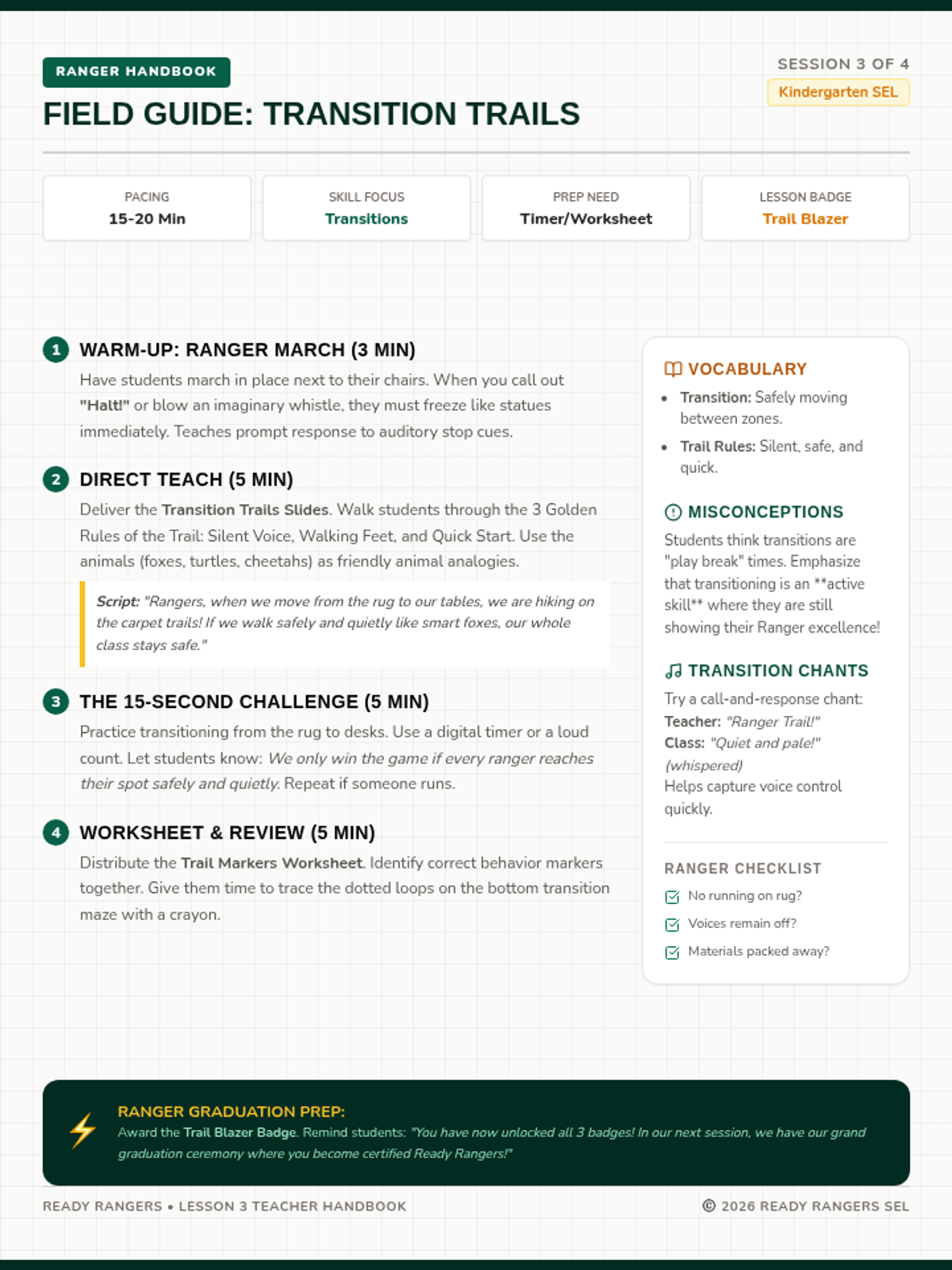
Students practice moving safely, quickly, and quietly between activities using the concept of classroom ranger trails.
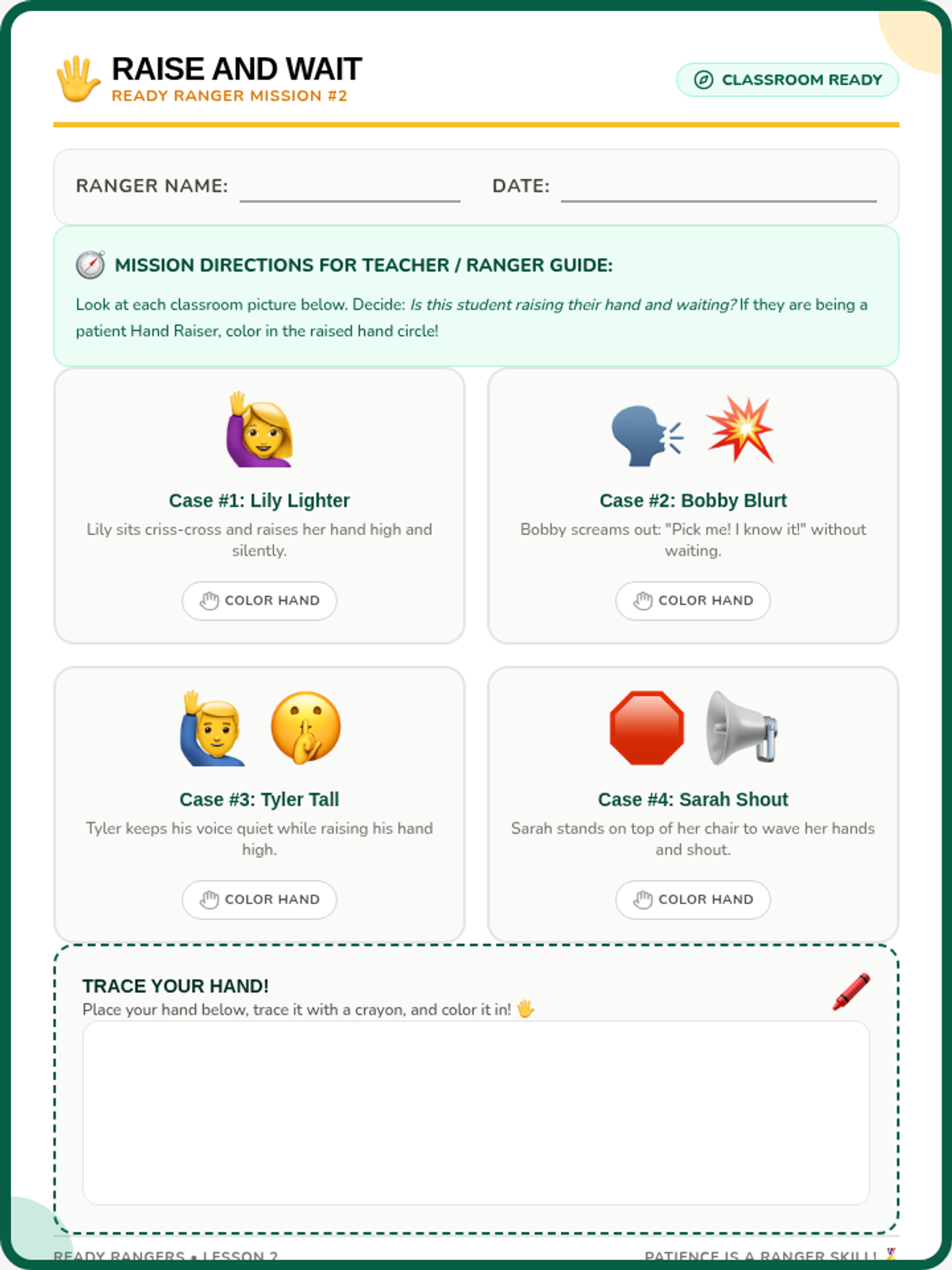
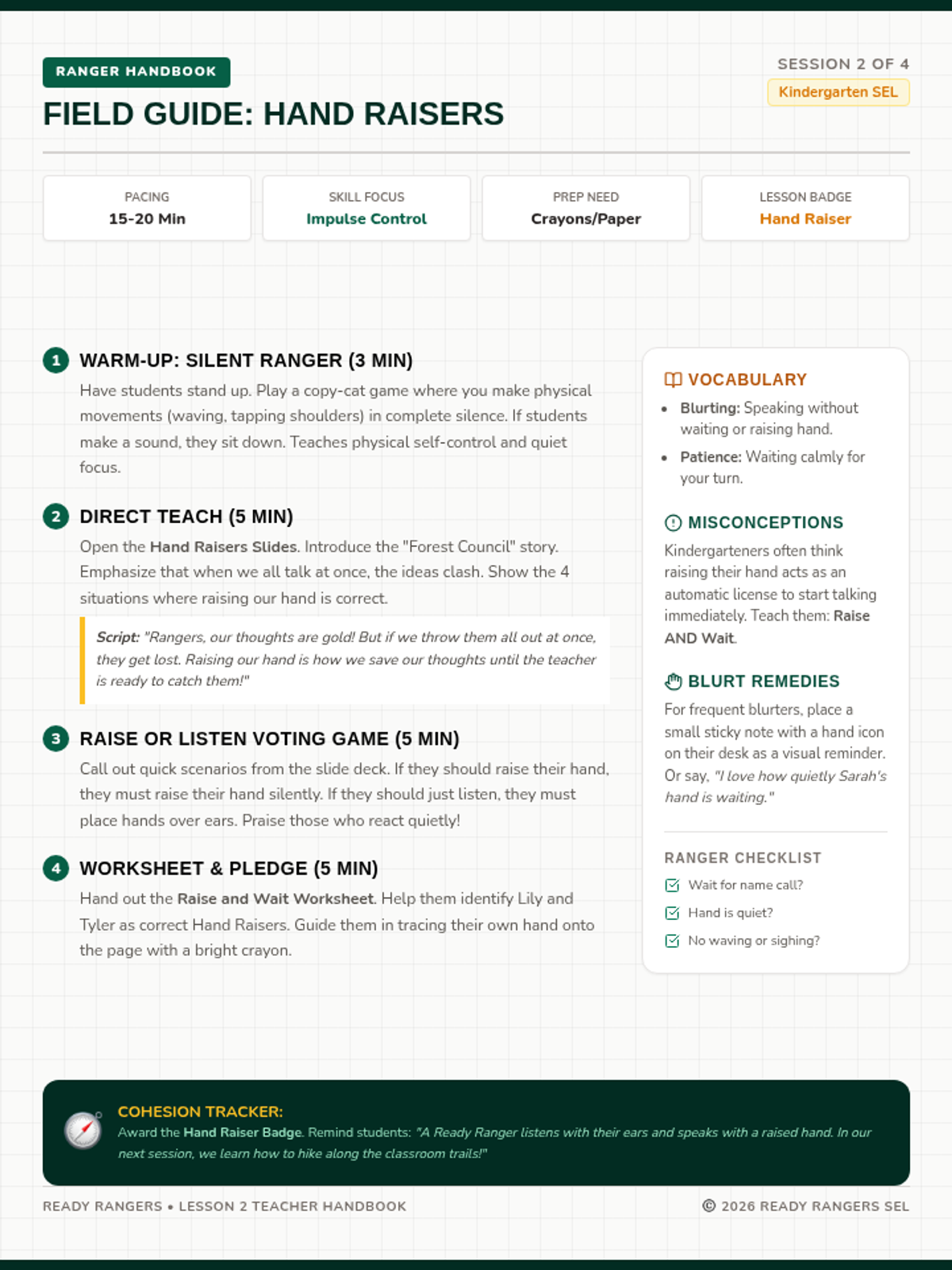
Students learn when and how to raise their hands to speak or ask for help, practicing impulse control and patience.
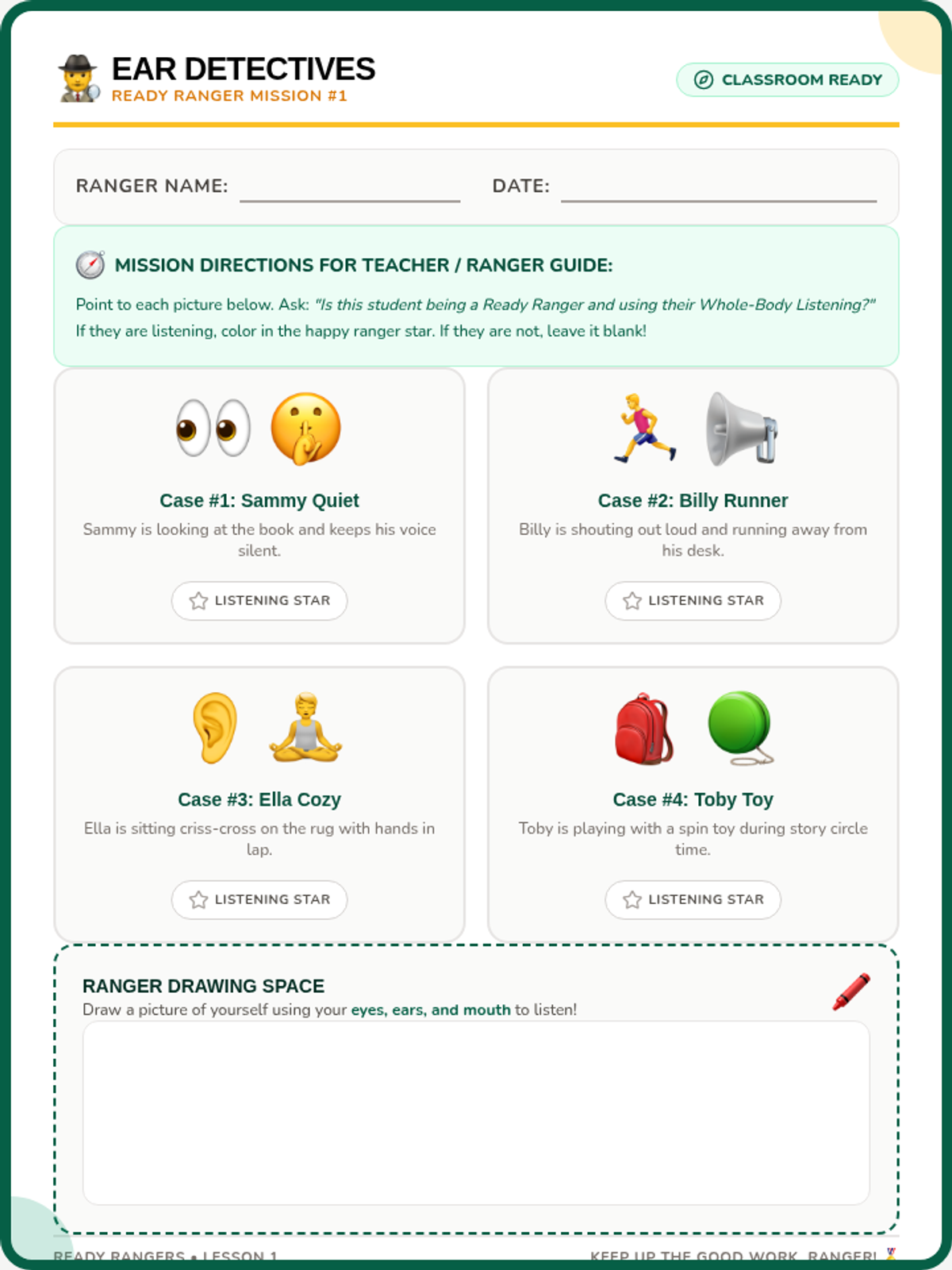
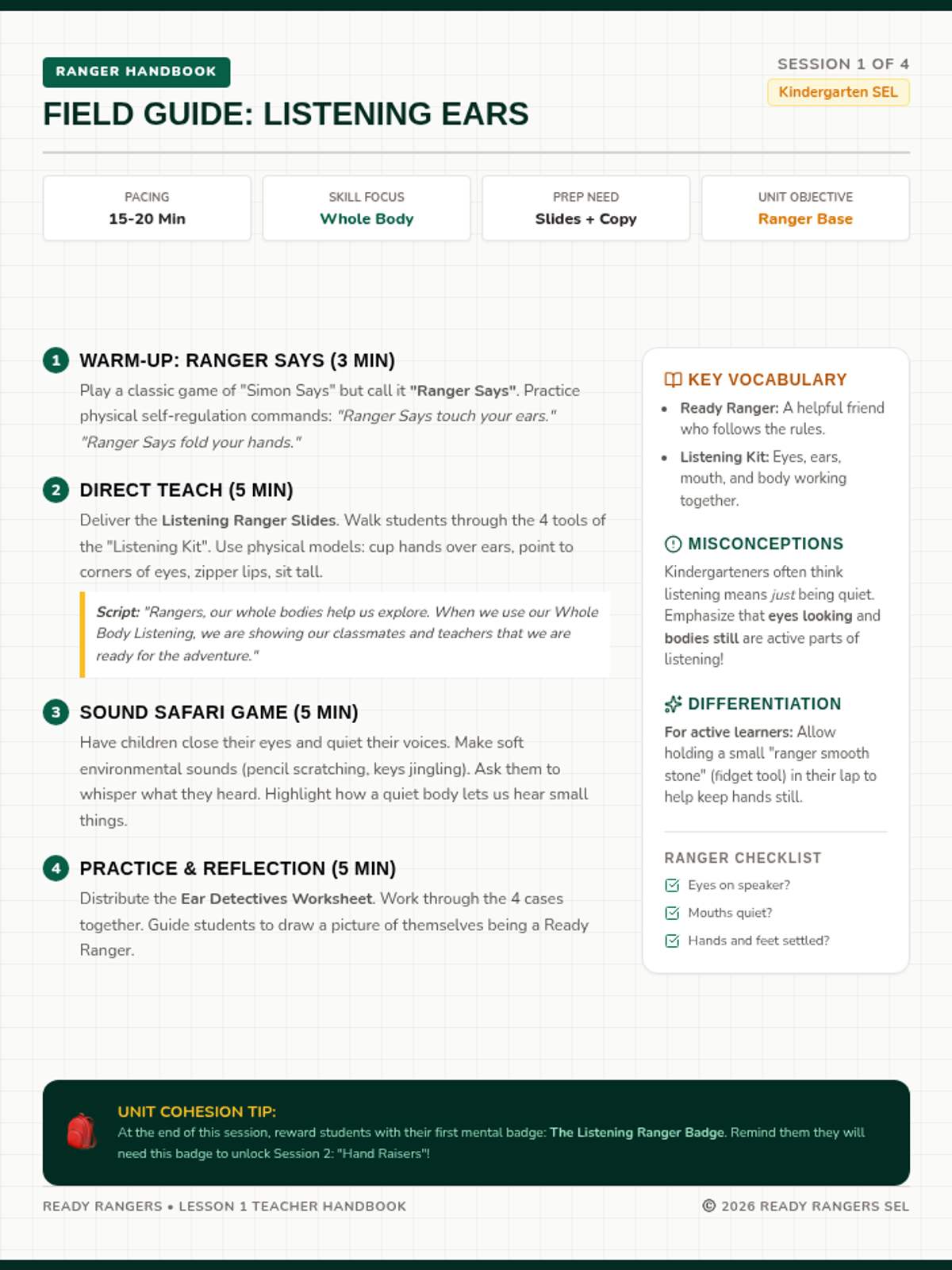
Students learn the concept of whole-body listening (eyes watching, ears listening, mouth quiet, body still) through a ranger-themed adventure.
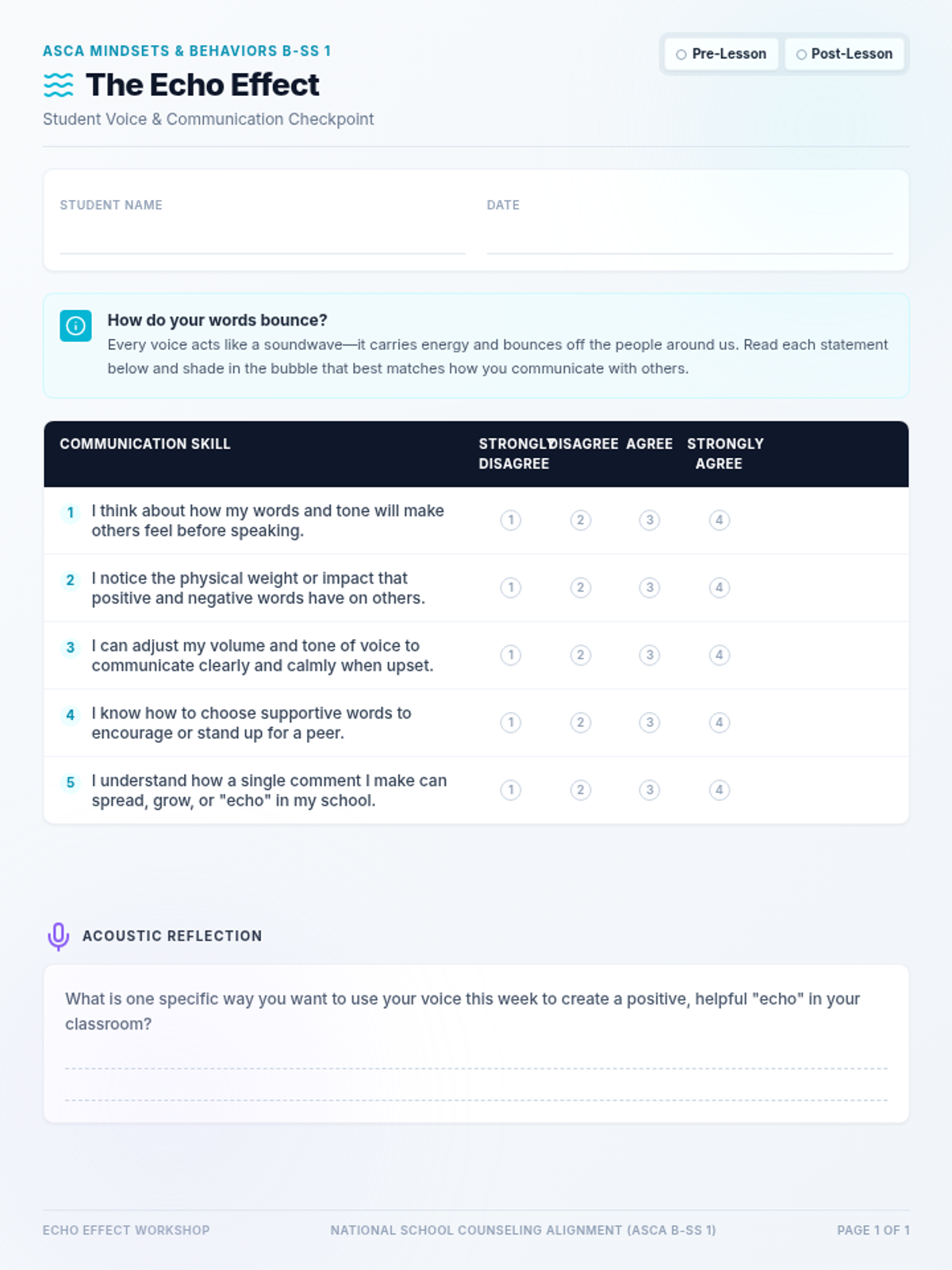
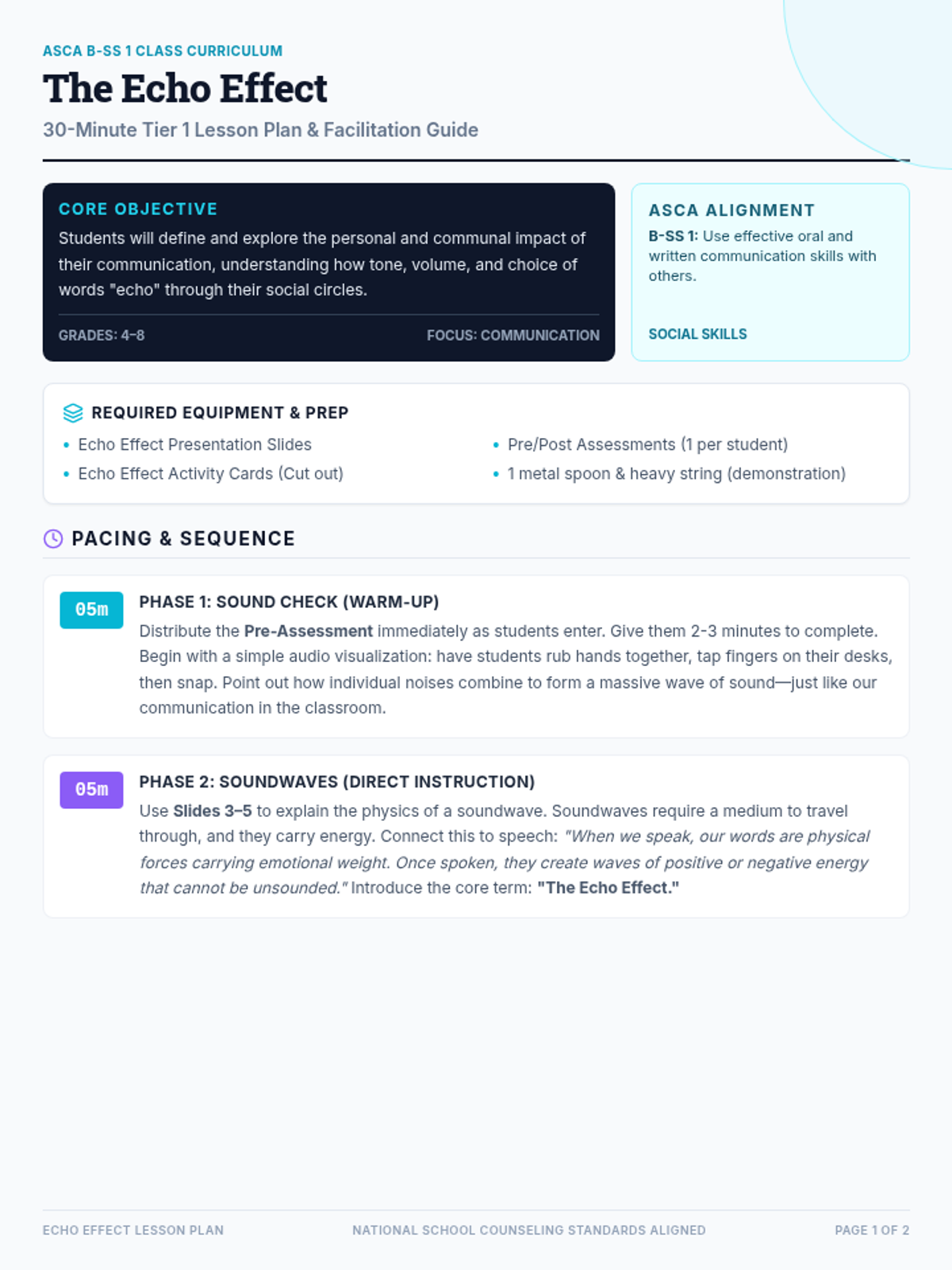
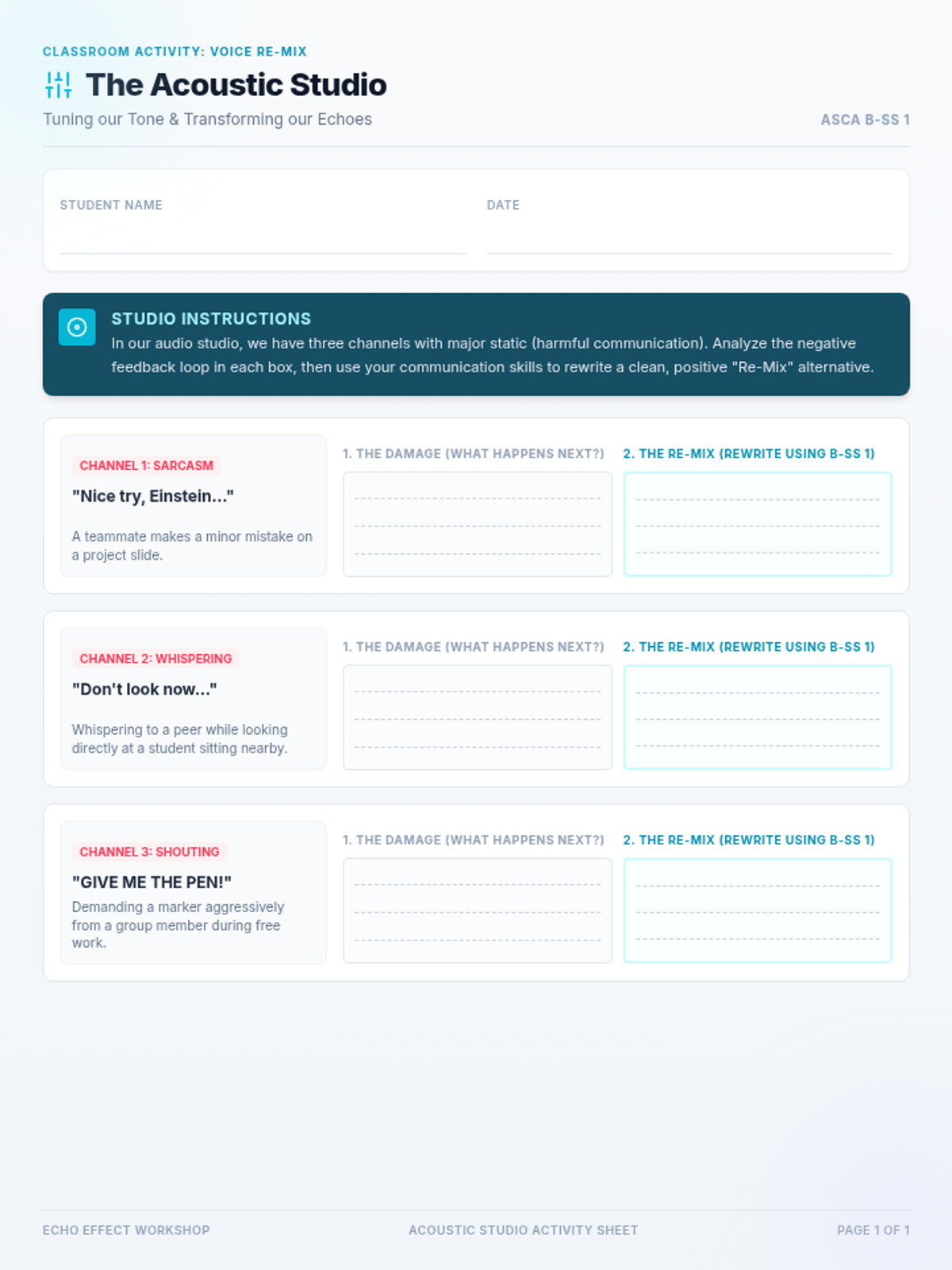
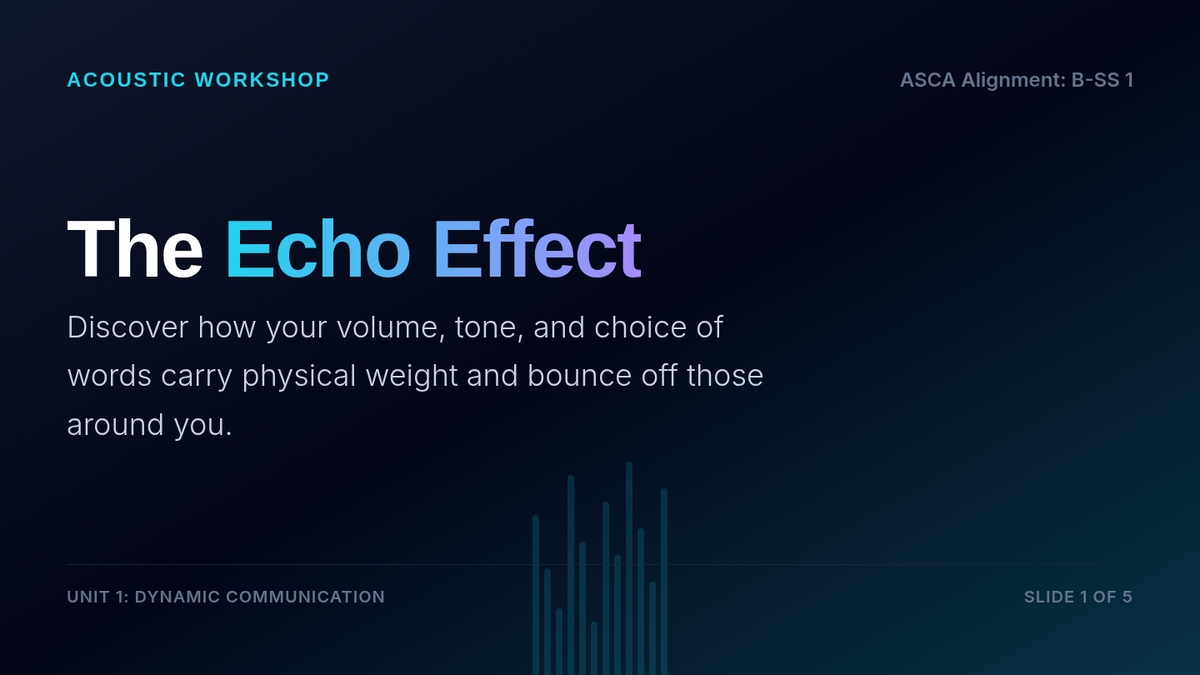
A Tier 1 classroom lesson designed to teach students how their words and voice carry weight, impact others, and echo through their social environments. Aligned with ASCA Mindsets & Behaviors B-SS 1 (effective oral and written communication).
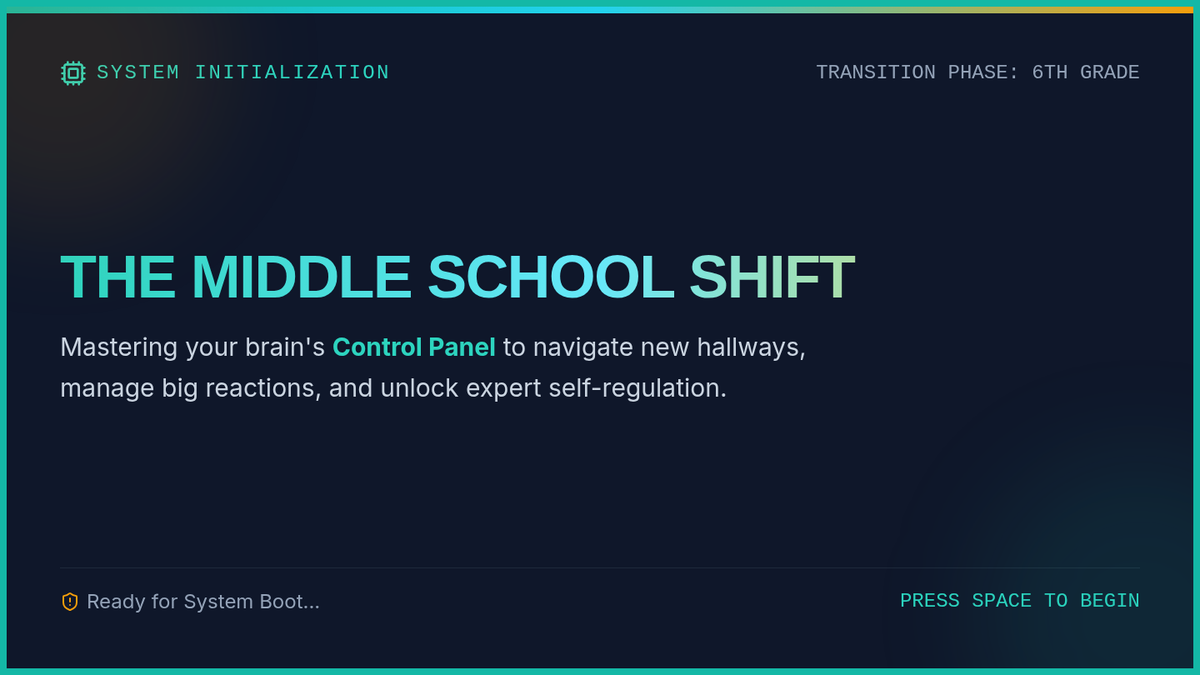
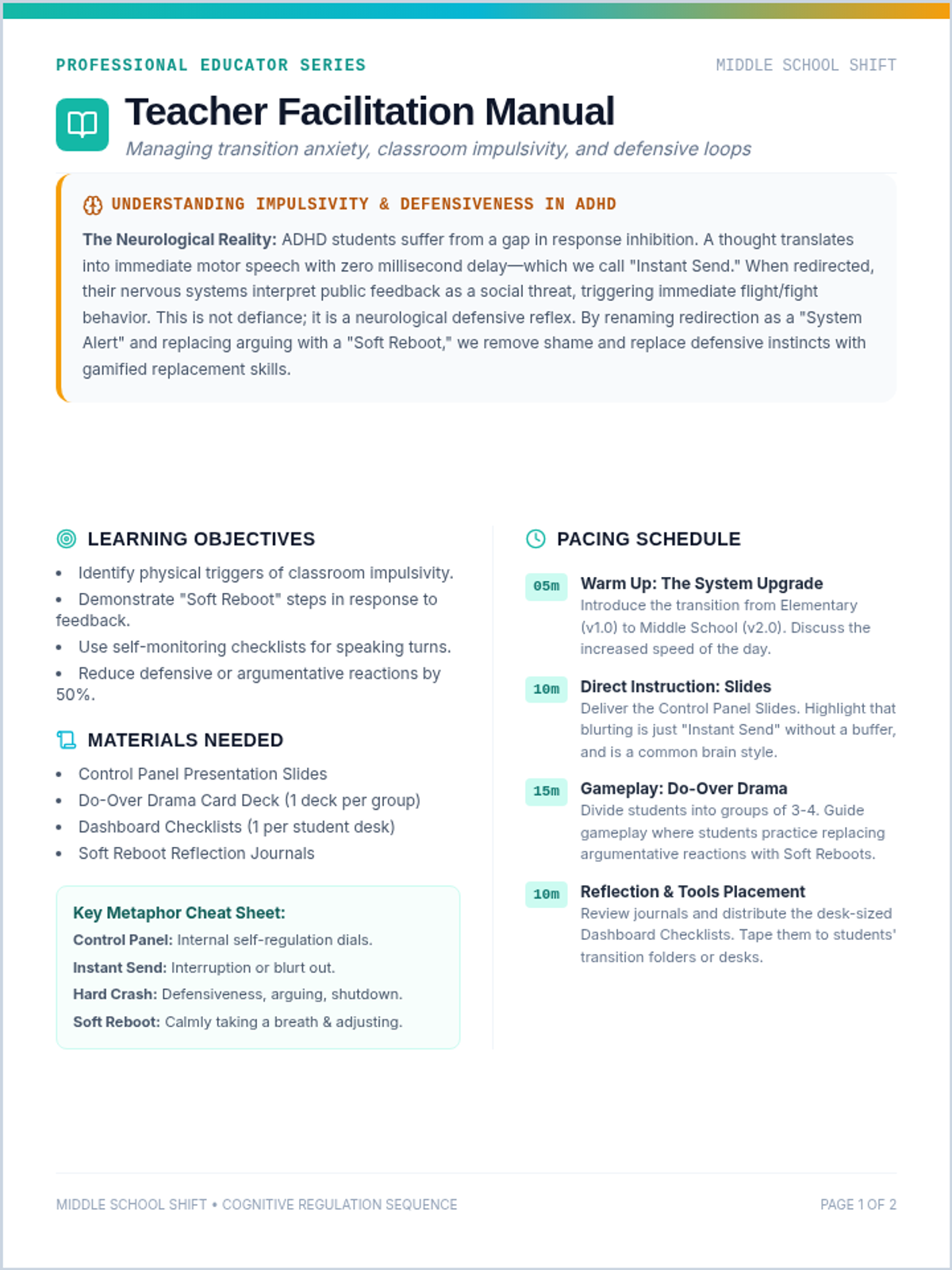
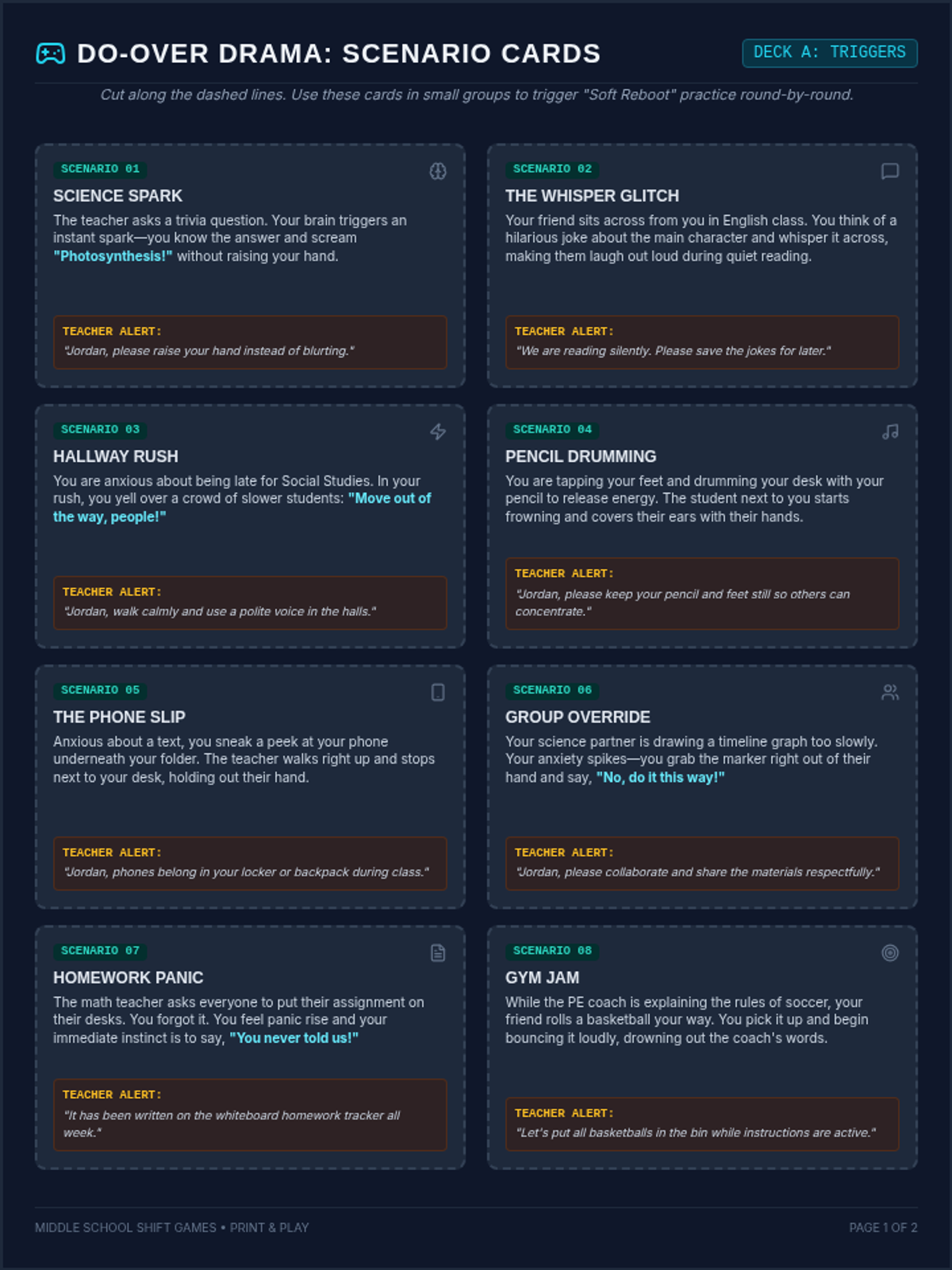
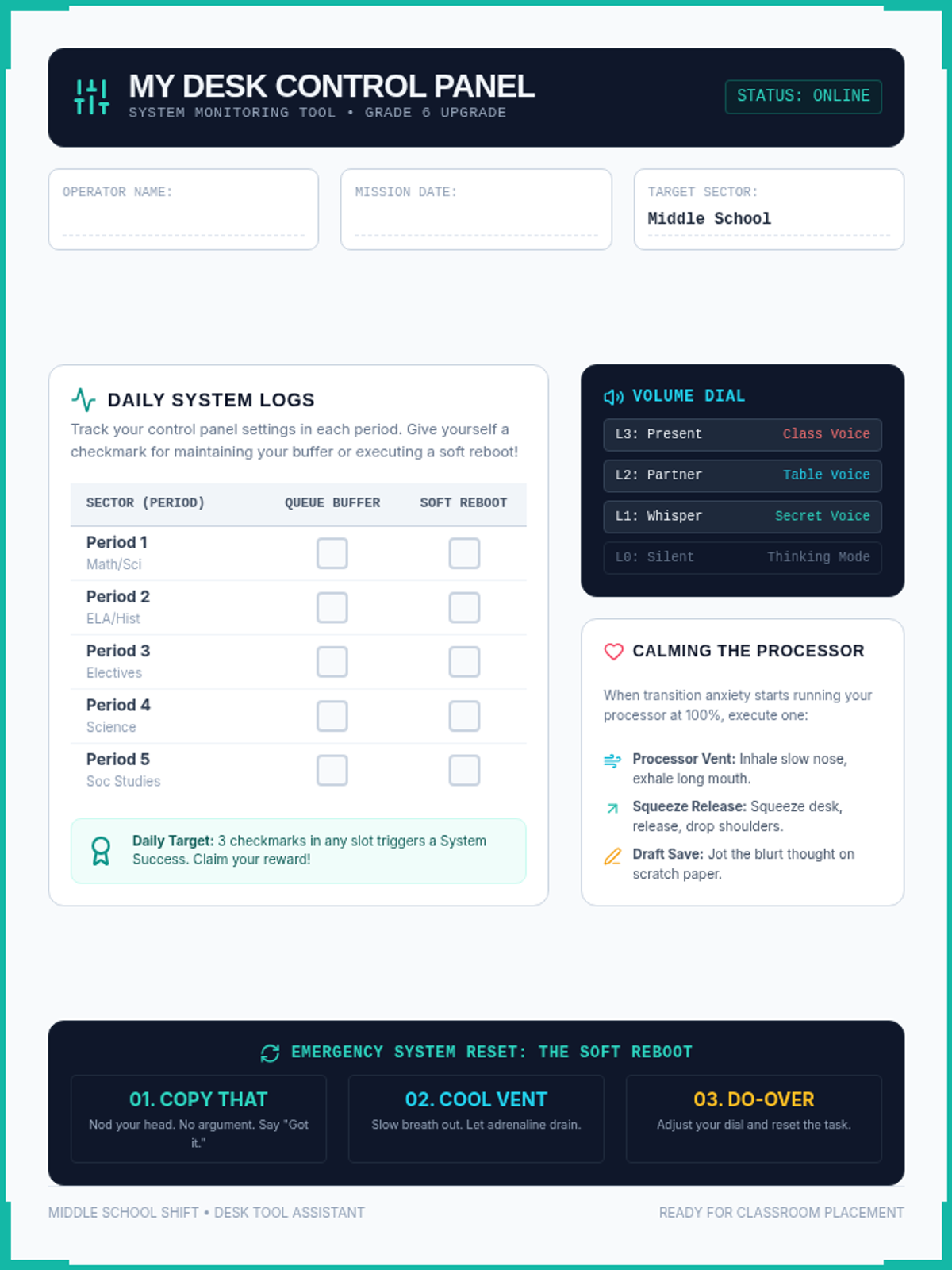
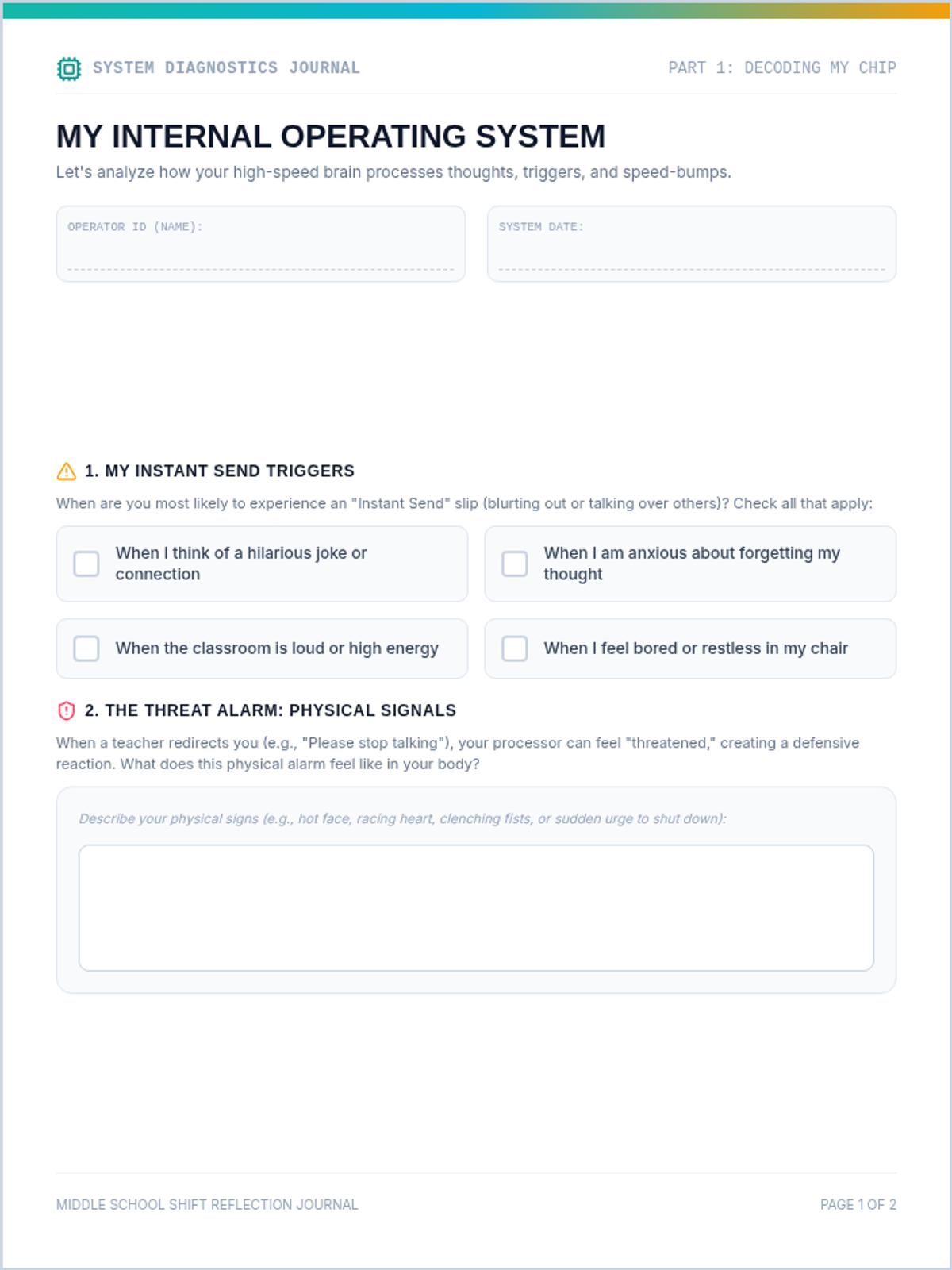
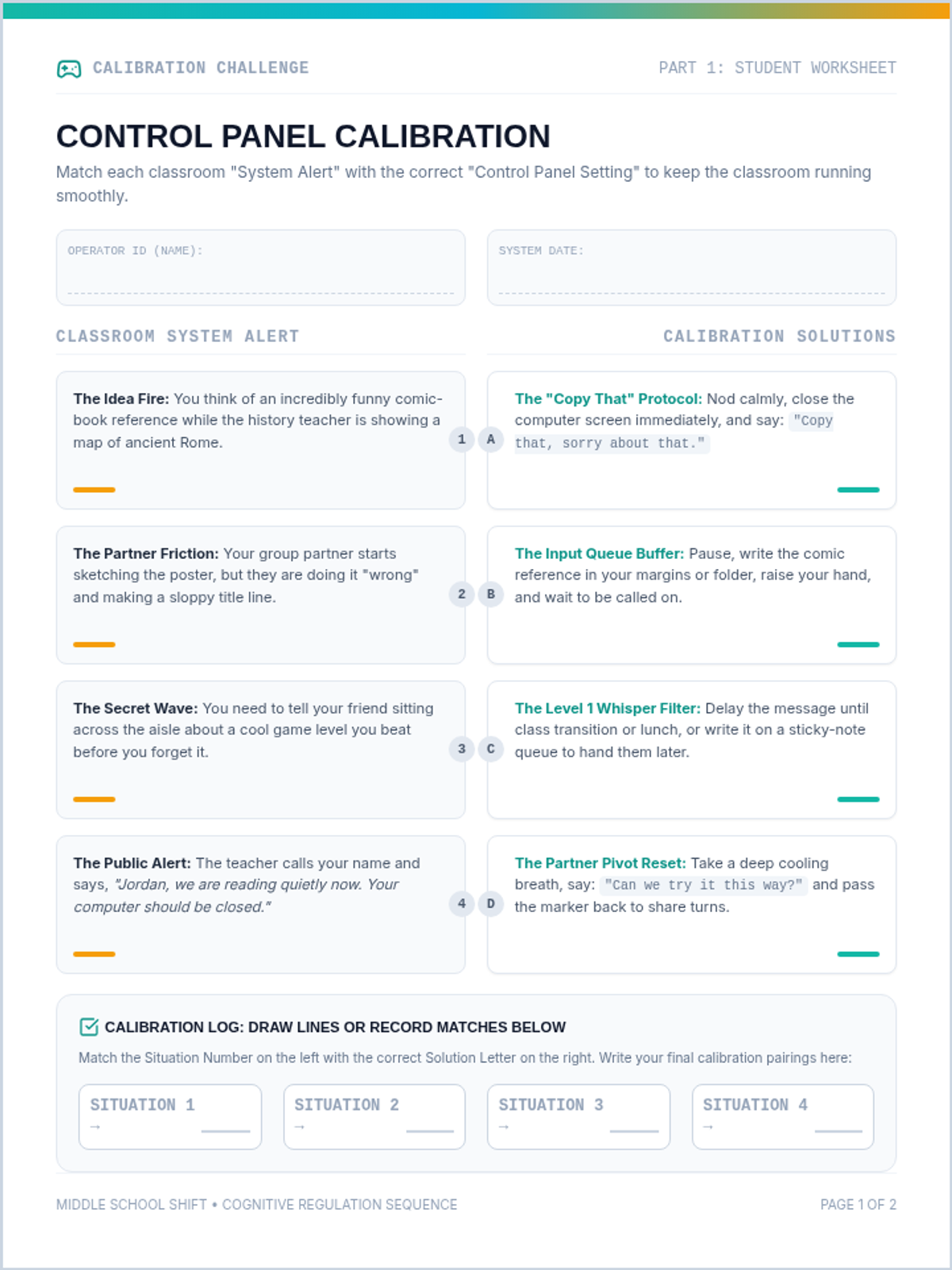
A high-impact social-emotional learning lesson designed for anxious and ADHD students transitioning to middle school. It introduces the 'Control Panel' metaphor to manage the impulse to blurt, talk over others, and react defensively, replacing shame with actionable self-regulation strategies, visual aids, and low-stakes role-play games.
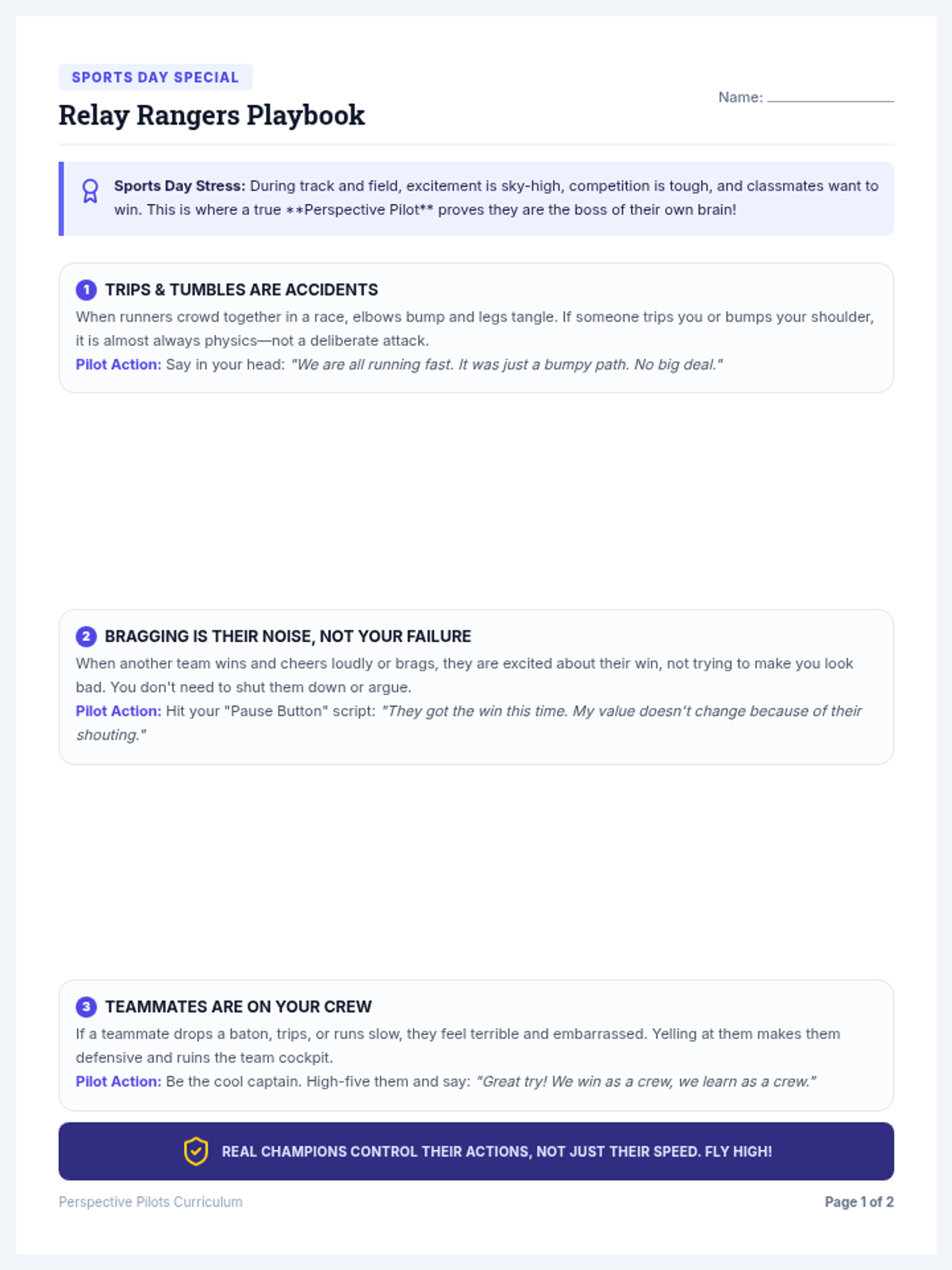
Navigating team competition, sportsmanship, and unexpected outcomes during a Track and Field Sports Day.
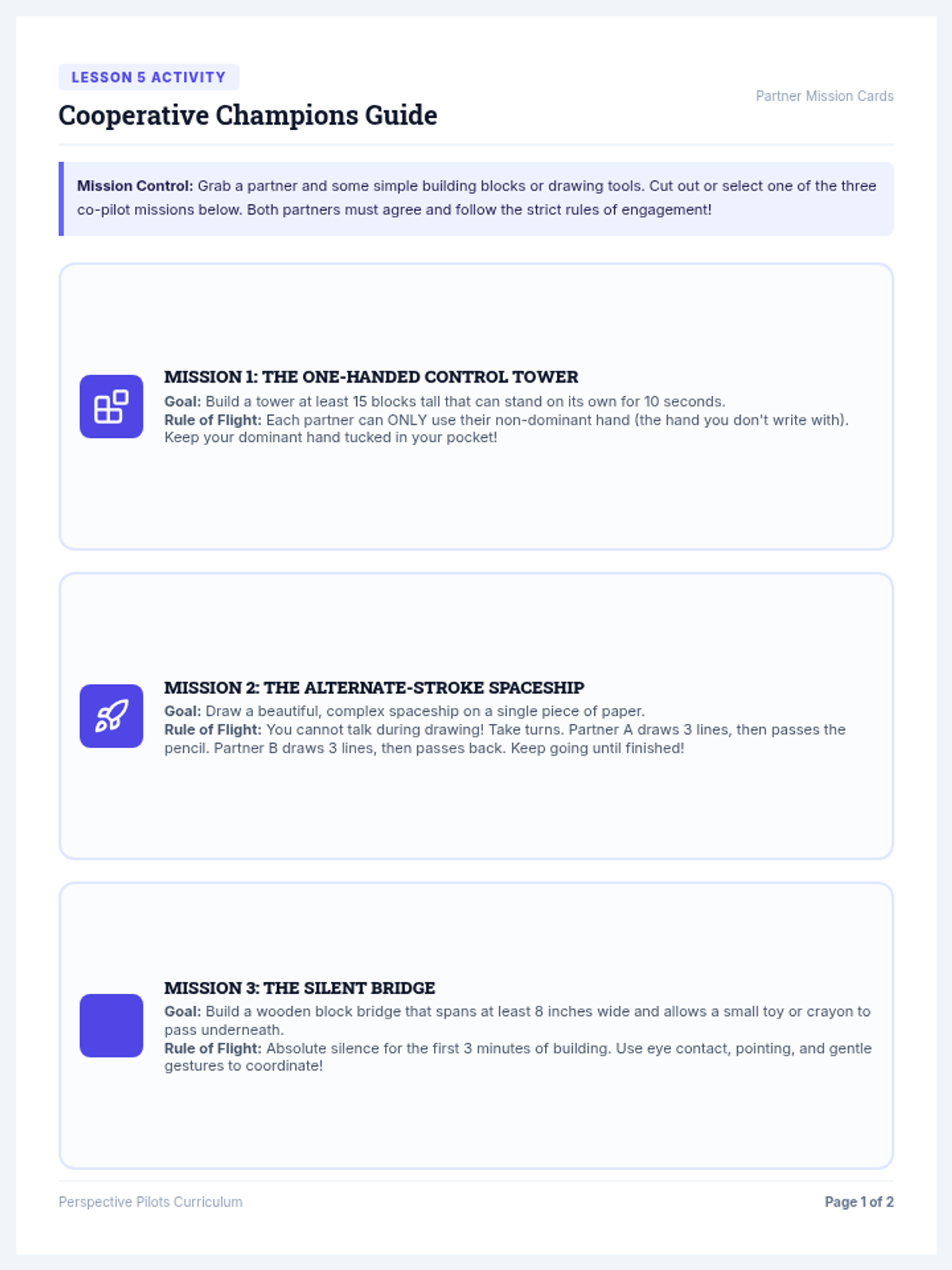
Applying emotional regulation and perspective-taking through cooperative building challenges, self-reflection, and a final assessment.
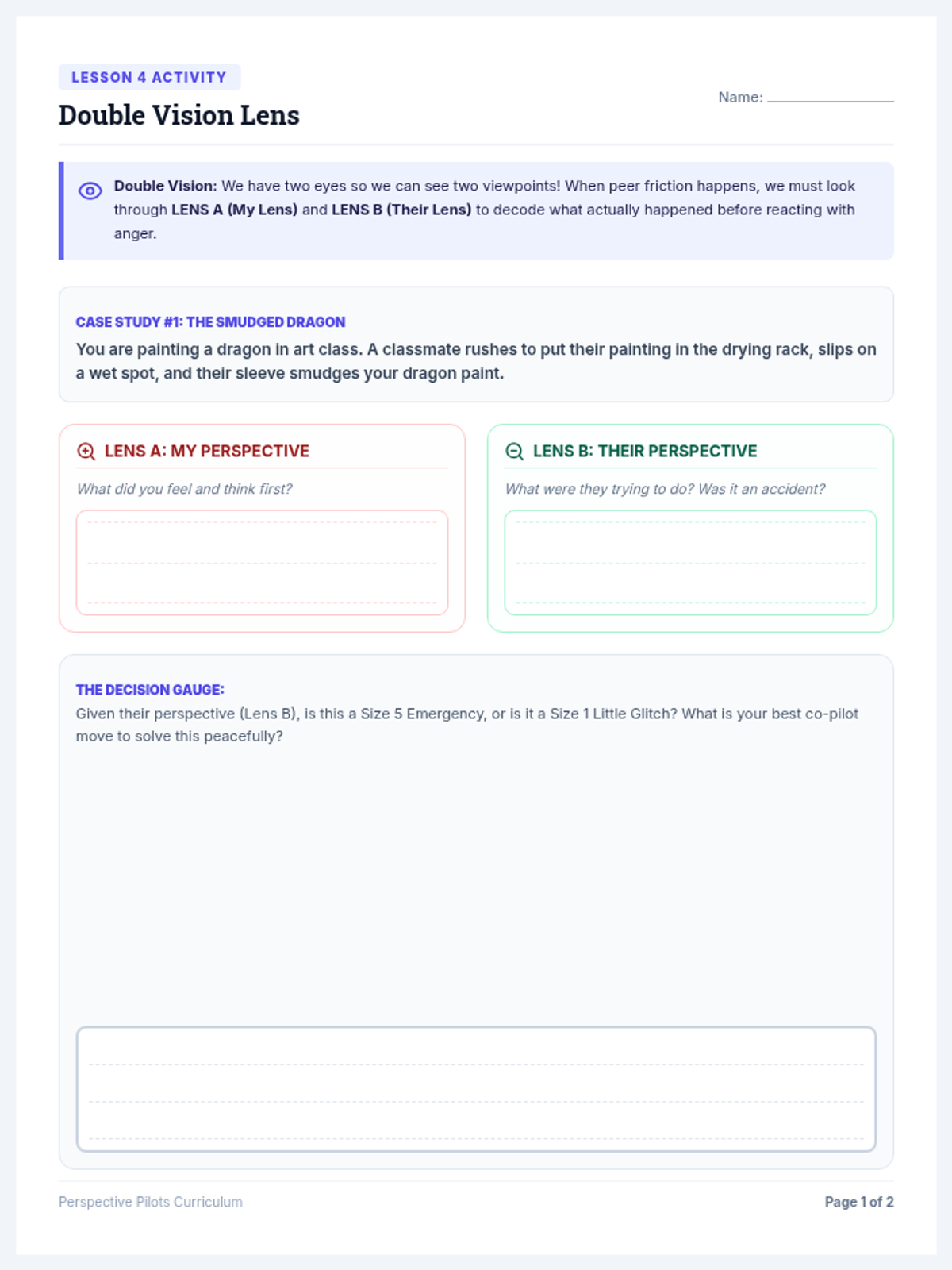
Developing perspective-taking skills to understand peers' perspectives and motivations during conflicts.
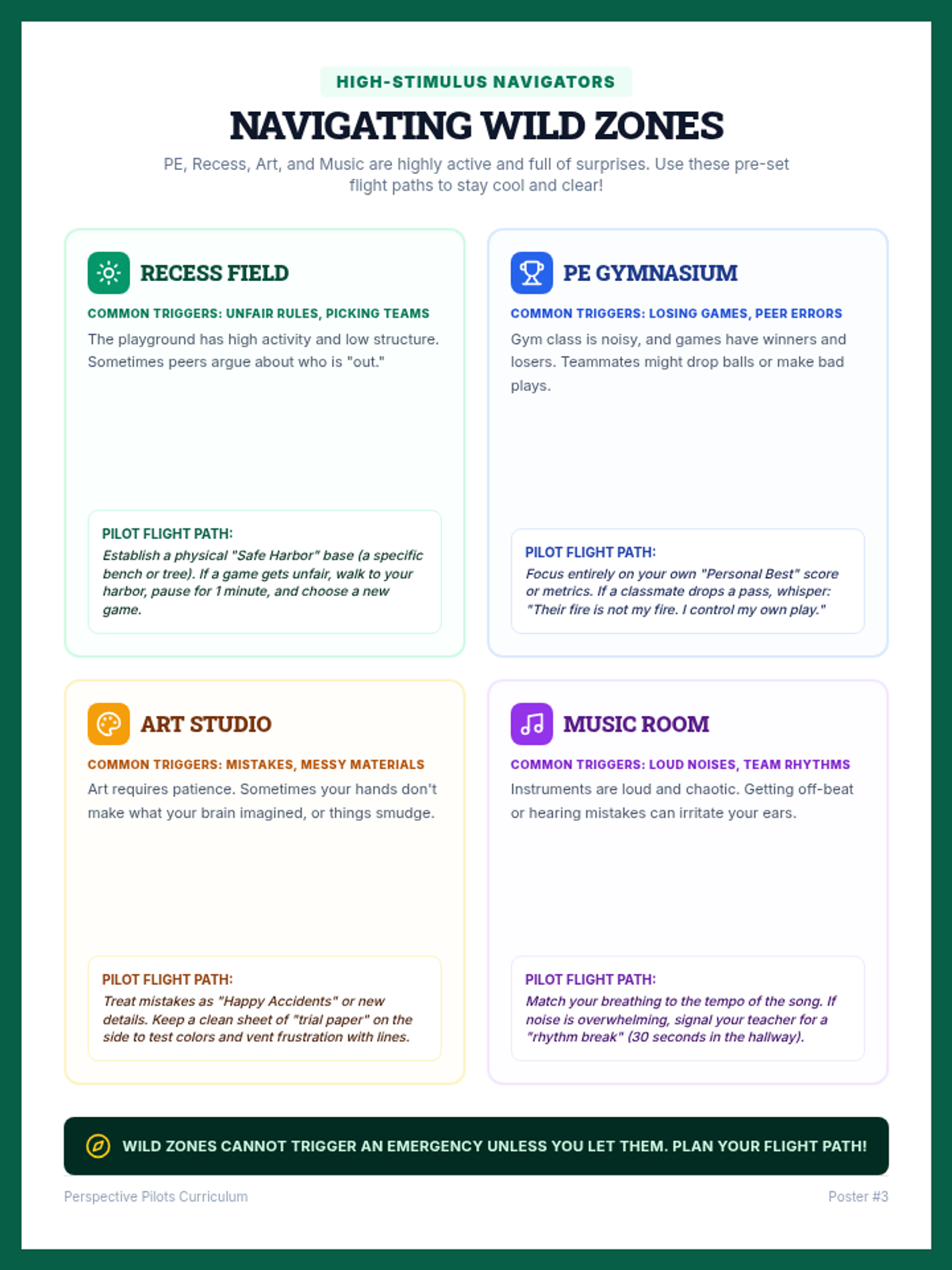
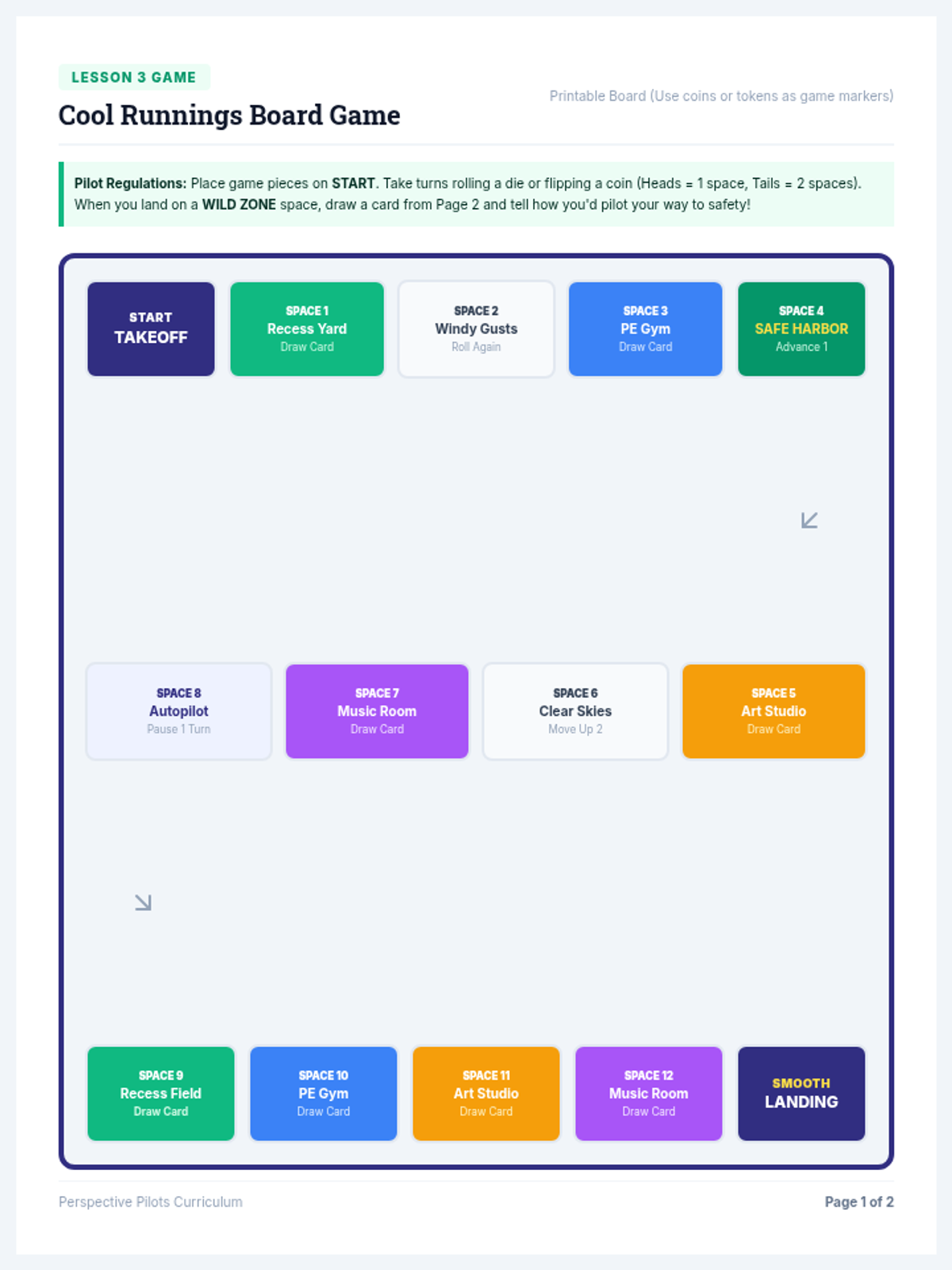
Navigating unstructured settings like recess, PE, art, and music using targeted emotional regulation strategies and a board game.