Students participate in a Socratic seminar exploring the cultural narratives surrounding 'grit' and 'resilience' versus help-seeking. They critique the 'ideal worker' norm and discuss the long-term professional costs of burnout.
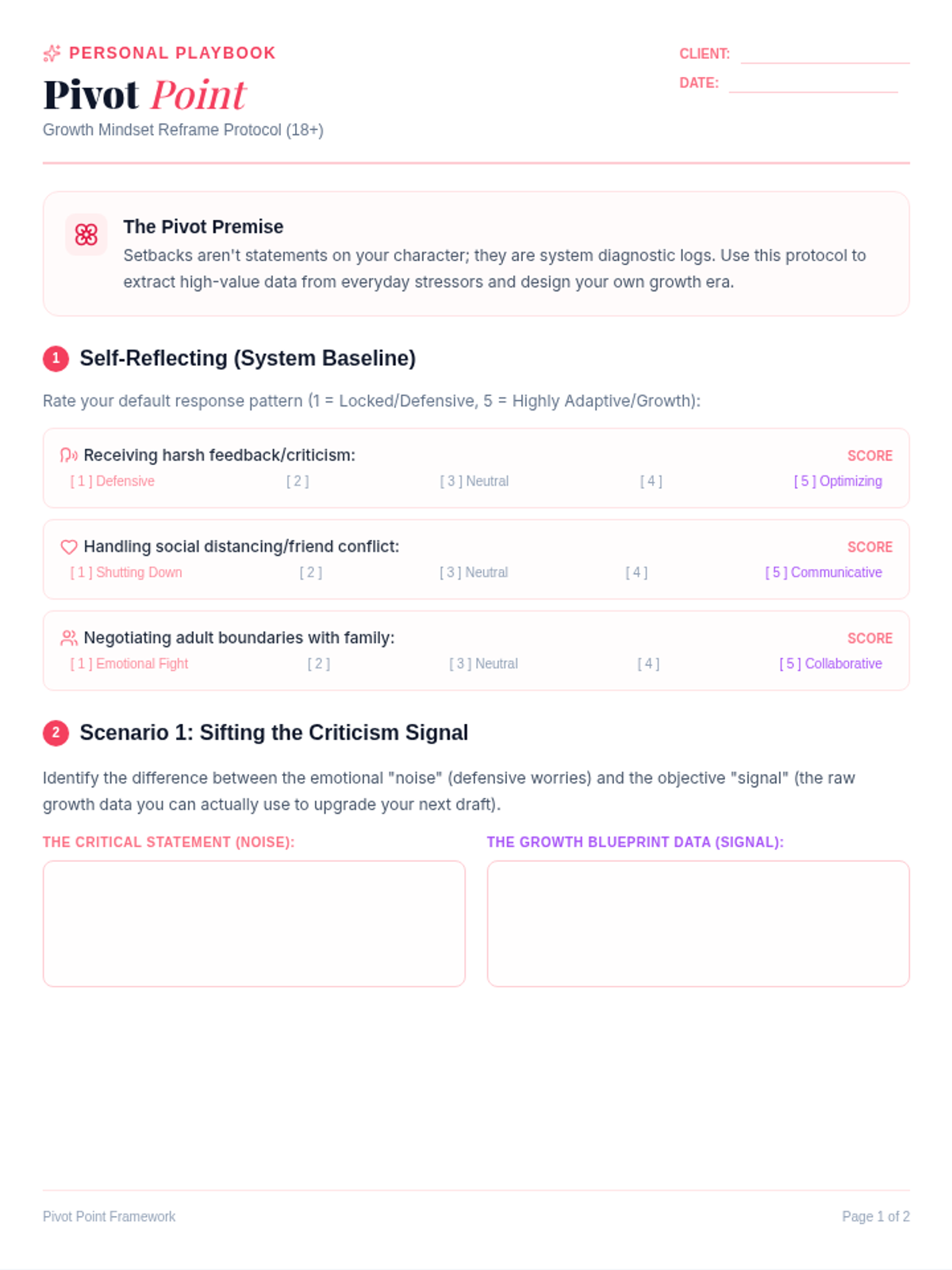
A growth-mindset coaching framework designed specifically for young adults (18+) navigating transition. Focuses on actionable cognitive reframing, emotional regulation, and interactive role-play scenarios covering work/academic feedback, roommate/friendship friction, and emerging adult family boundaries.
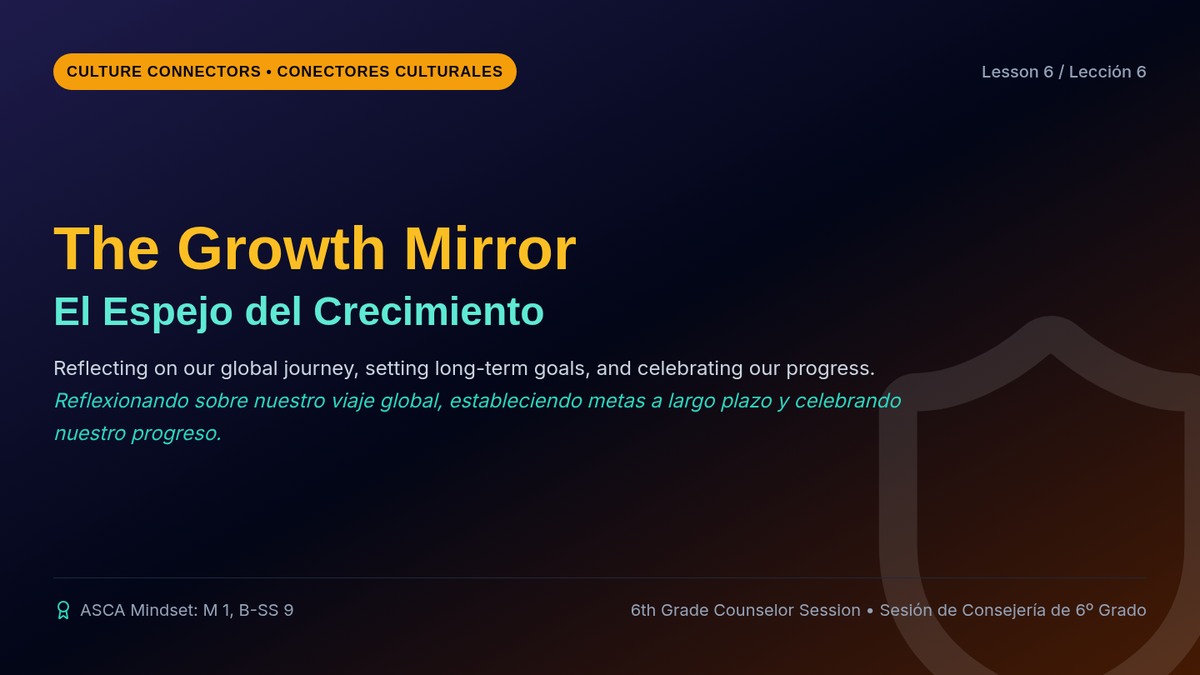
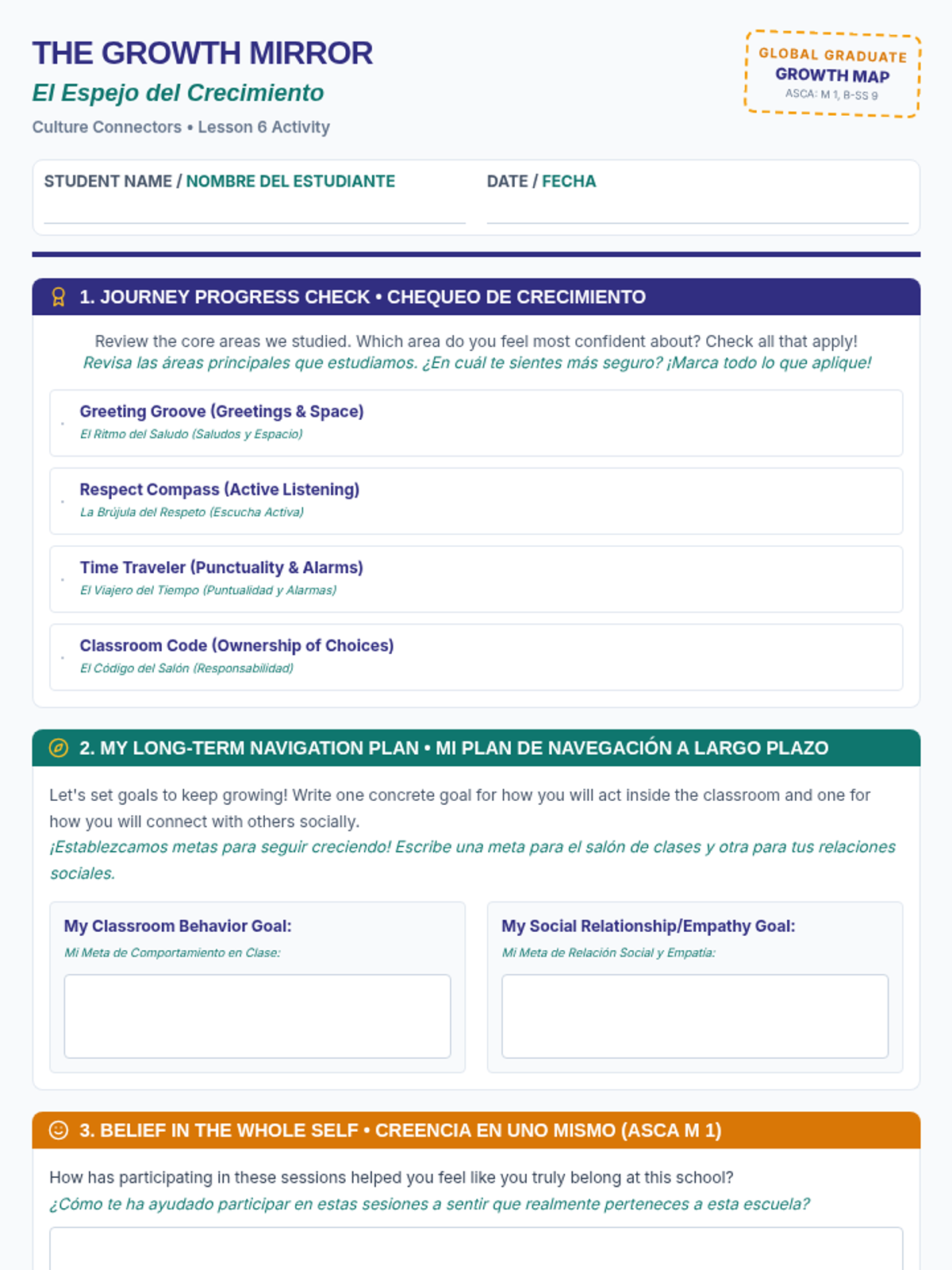
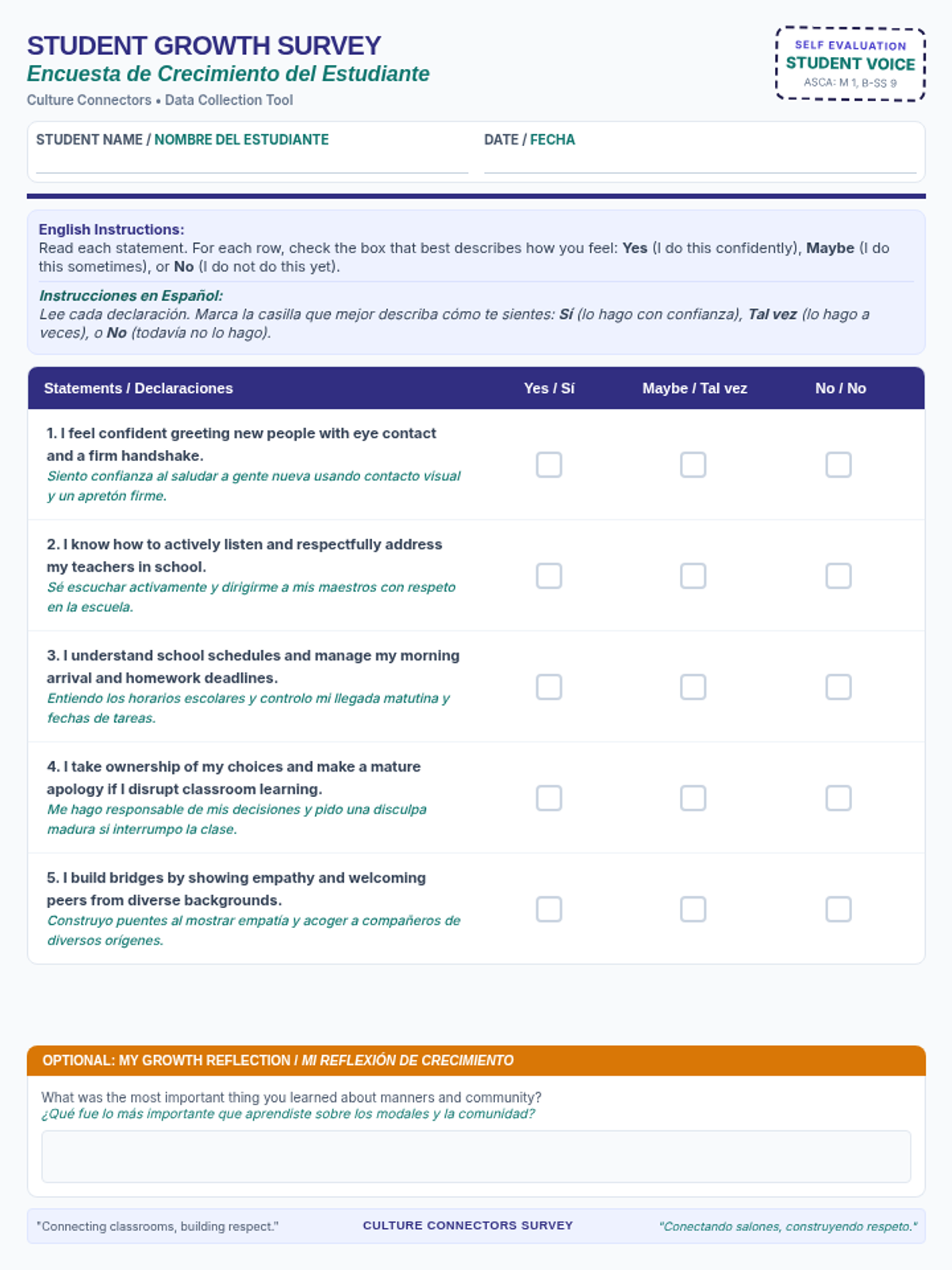
Encourages self-reflection and belief in the development of the whole self. Students reflect on their growth throughout the curriculum and complete personal goal-setting plans. Includes bilingual Likert scales for data collection.
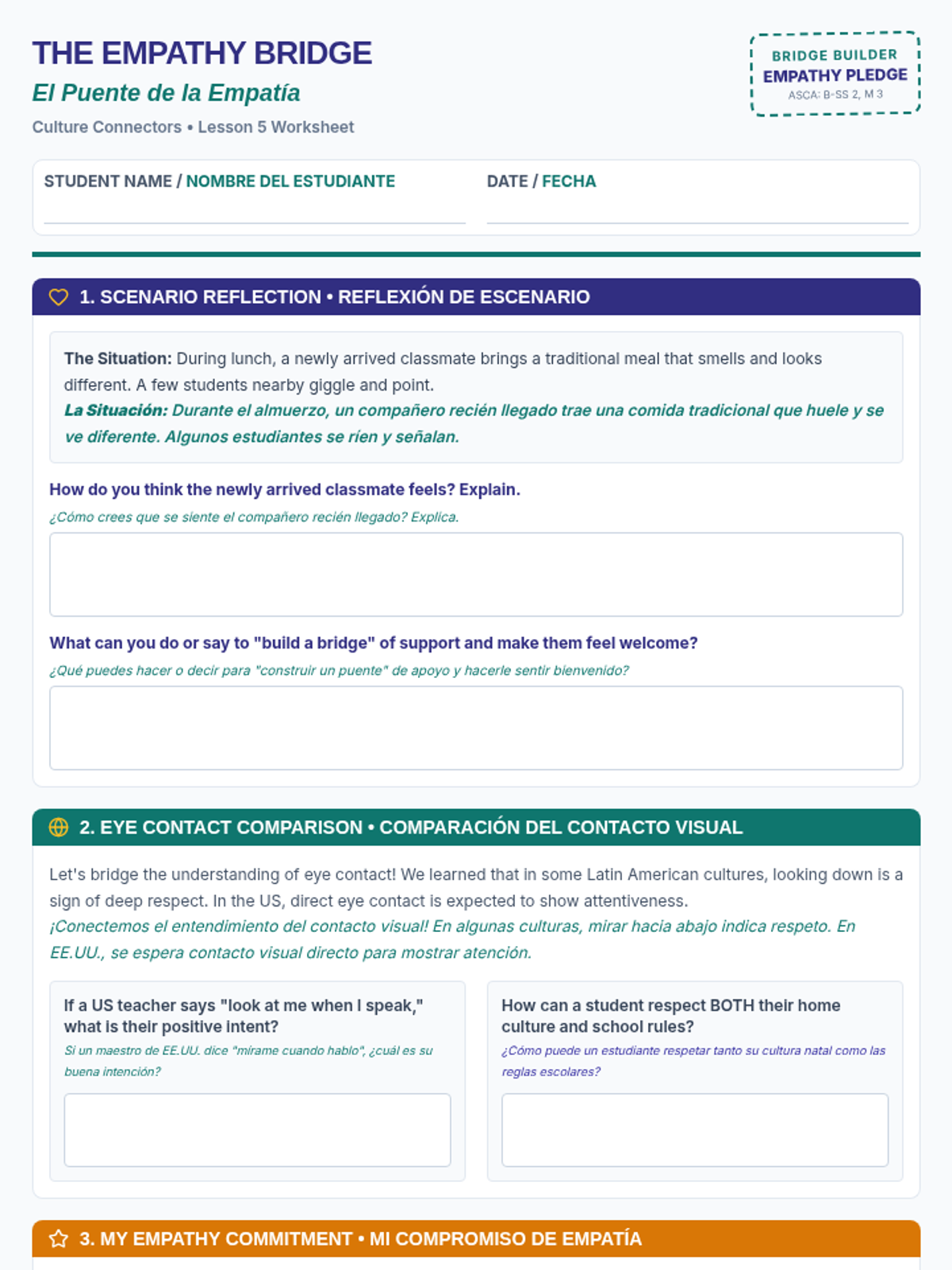
Explores perspective-taking, diversity, understanding cultural differences in expectations, and resolving social conflicts respectfully. Helps students find common ground while celebrating unique cultural identities.
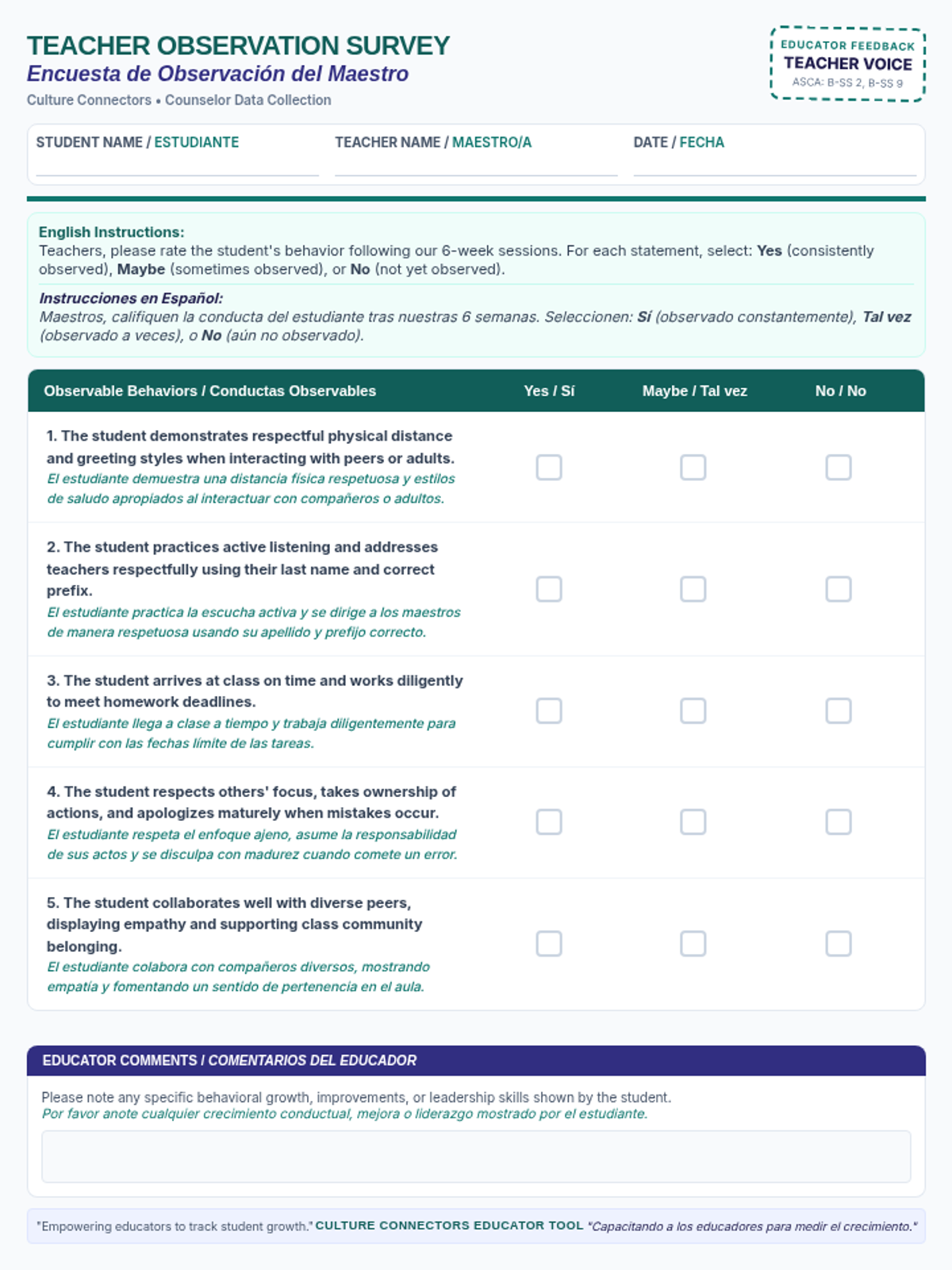
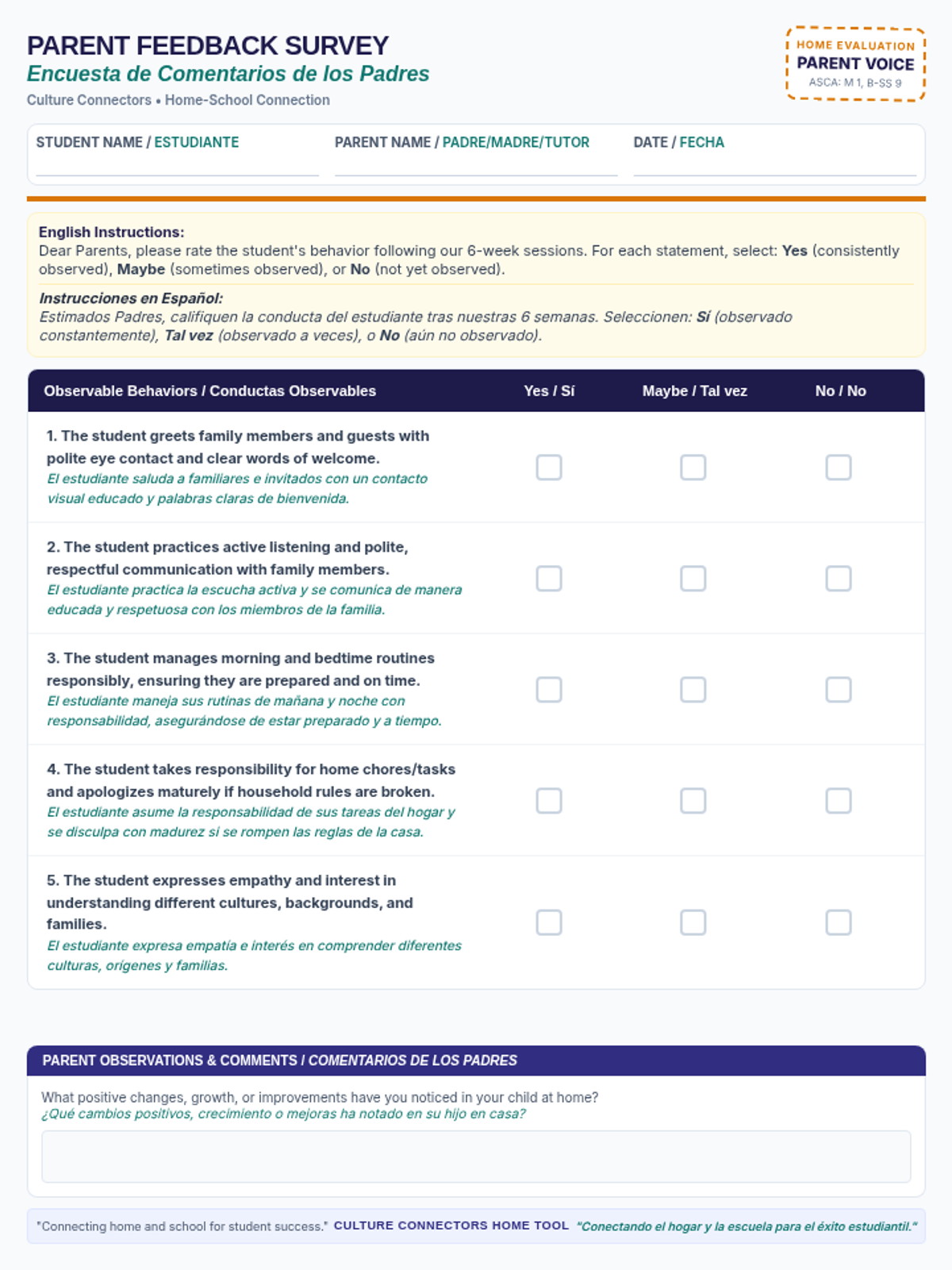
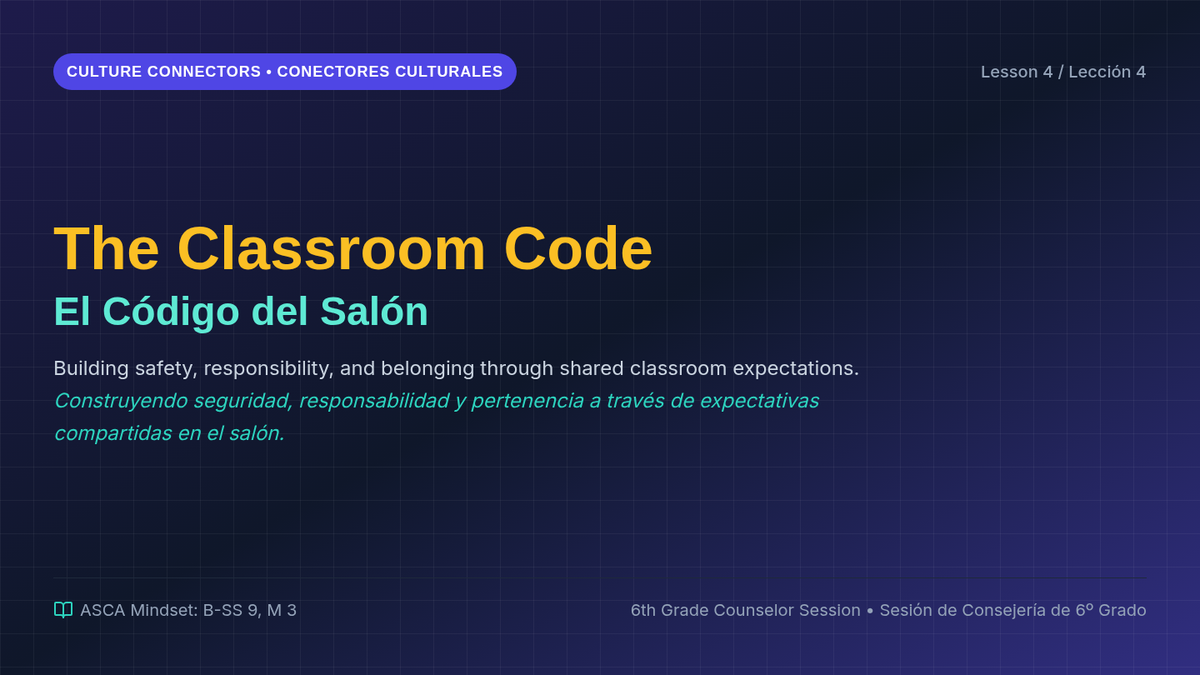
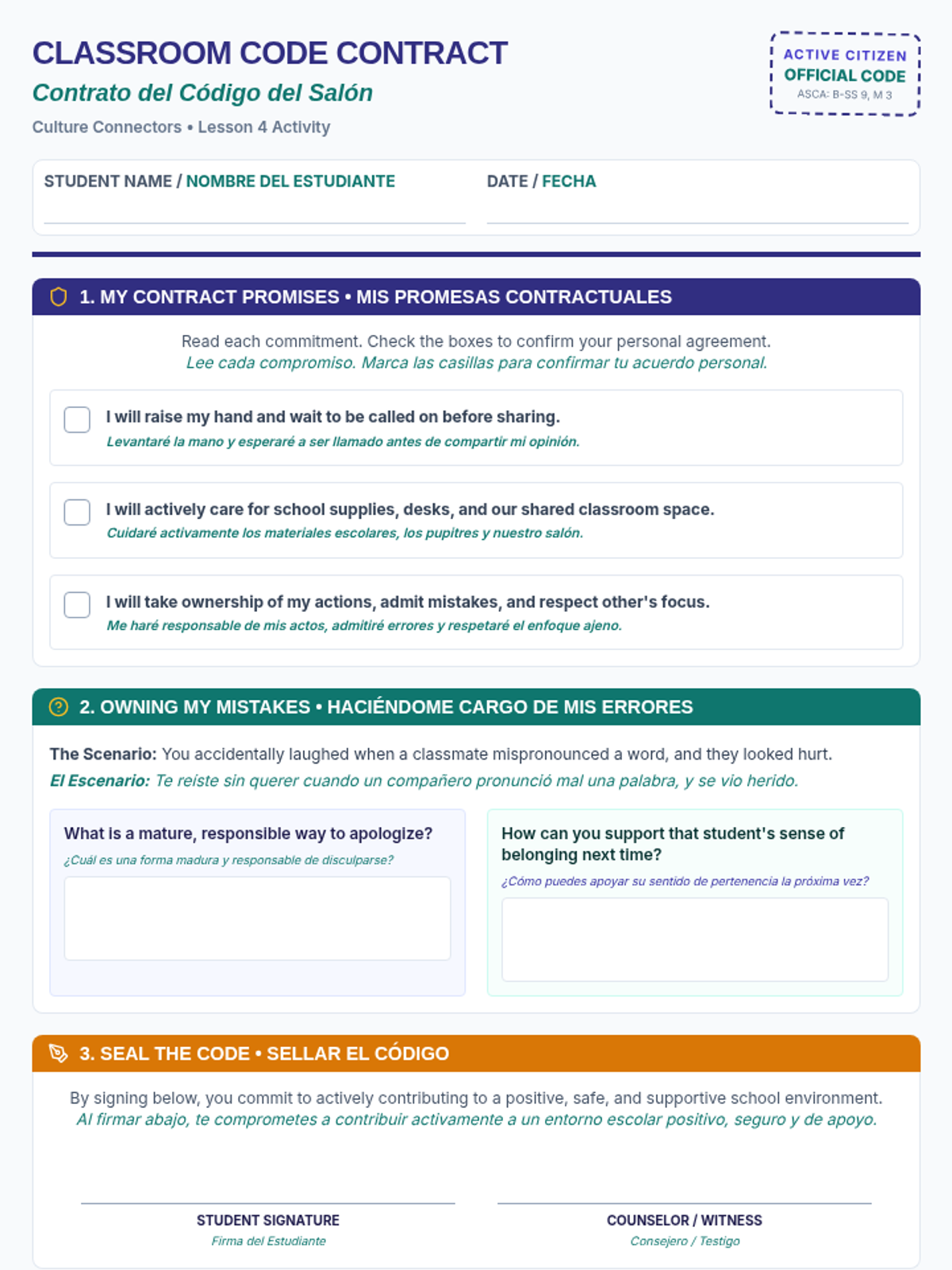
Guides students through classroom behavior expectations, raising hands, active participation, and taking ownership of school behavior to foster a strong sense of school community belonging.
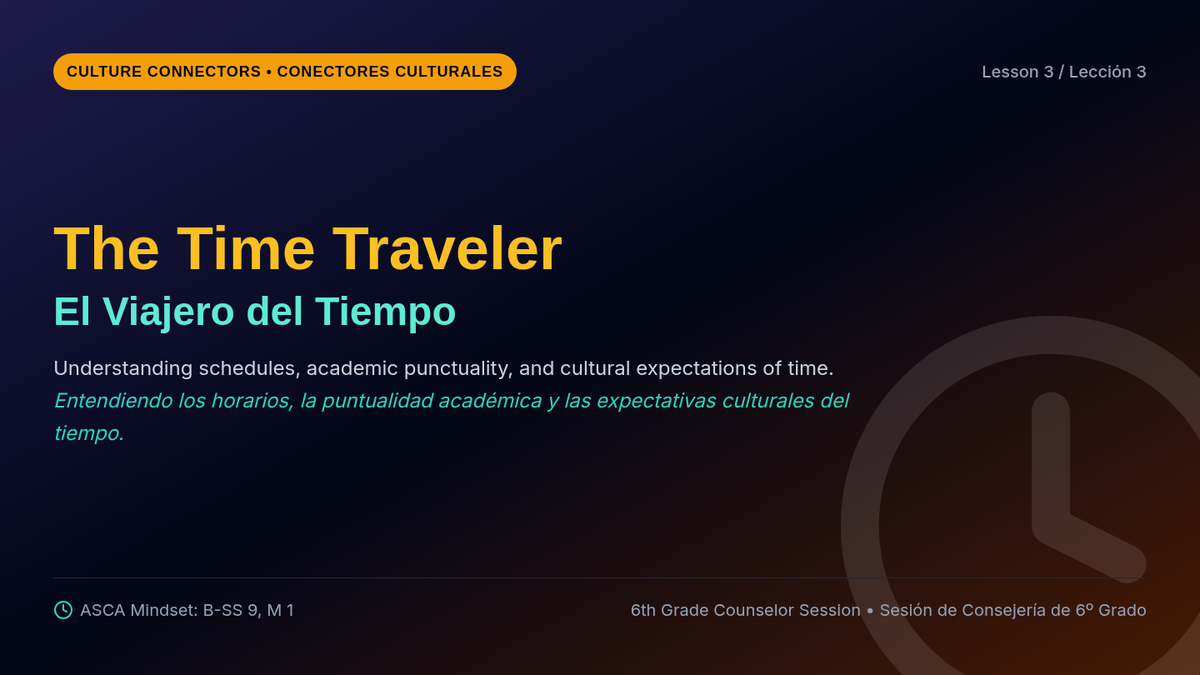
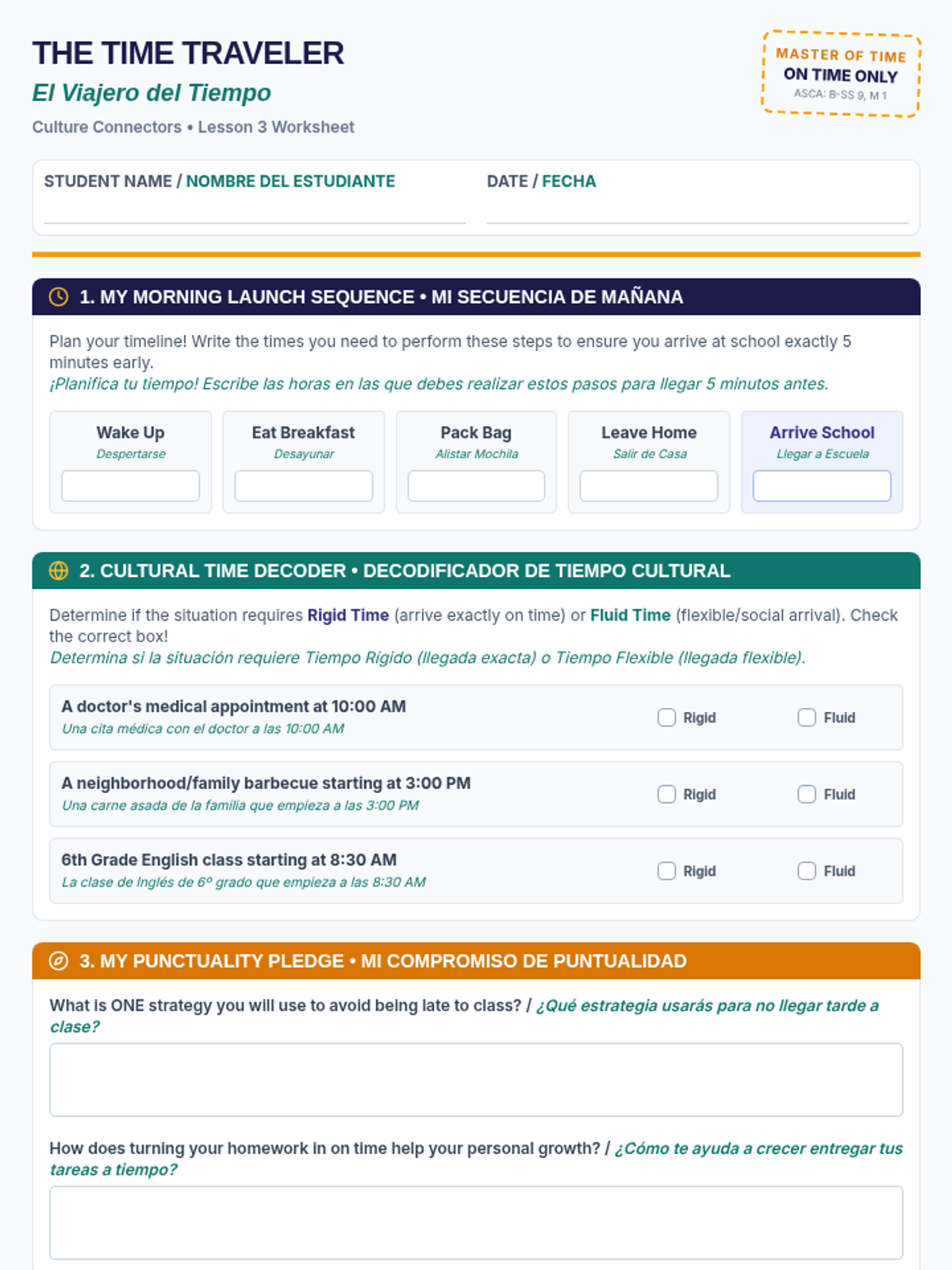
Covers punctuality, deadlines, and time expectations in academic and social settings. Helps students understand the cultural differences in time concepts while developing school success habits.
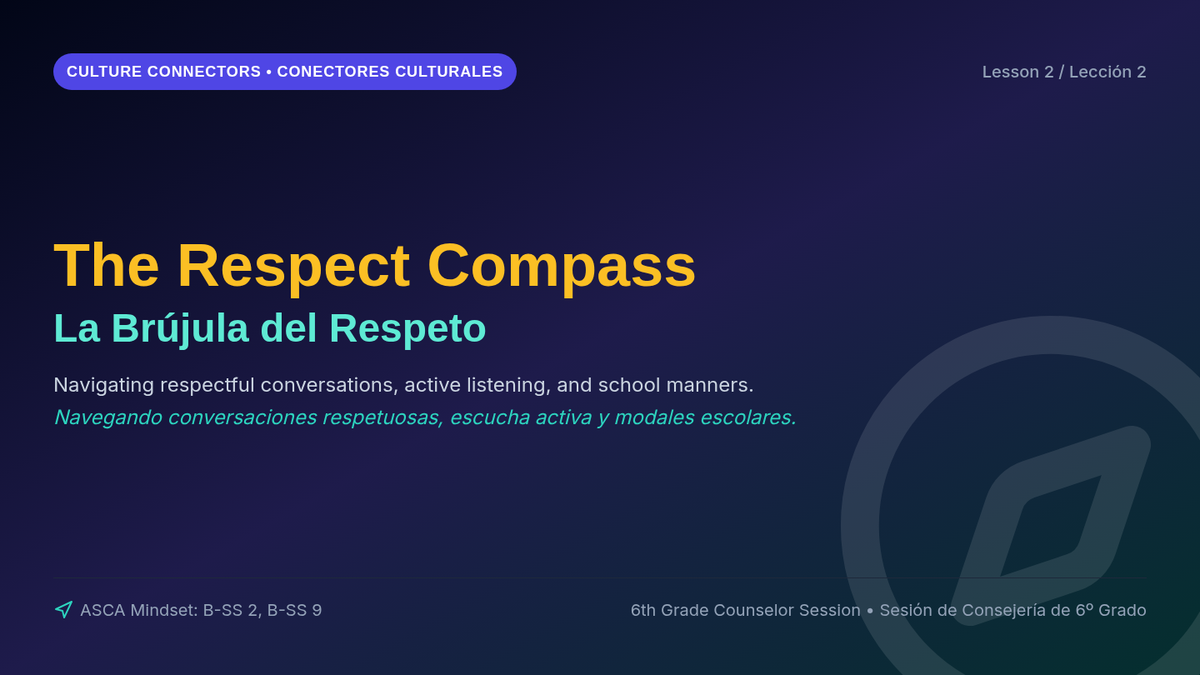
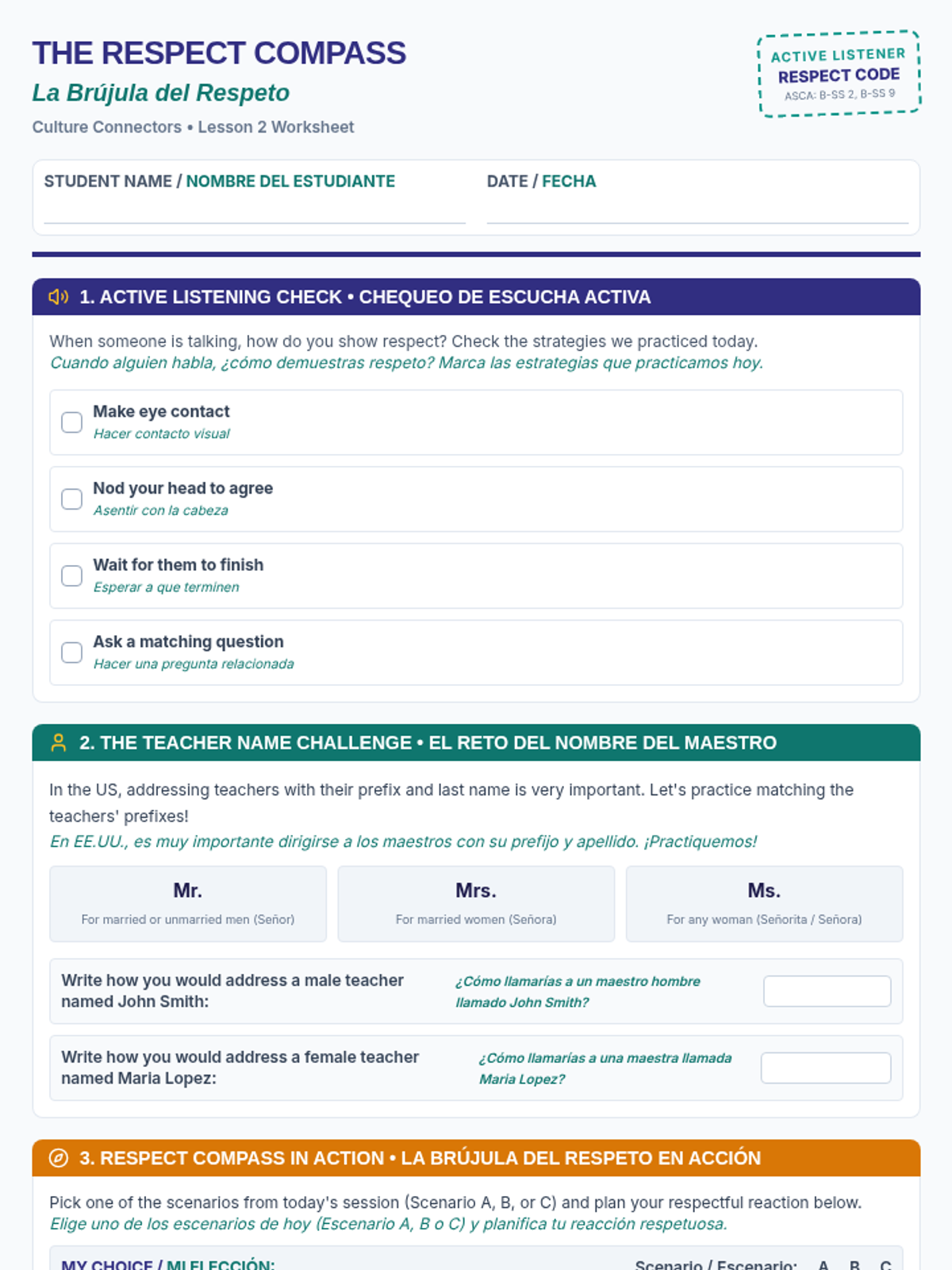
Explores active listening, manners, and showing respect to teachers, peers, and authority figures. Students practice bilingual courtesy terms and cross-cultural respectful communication.
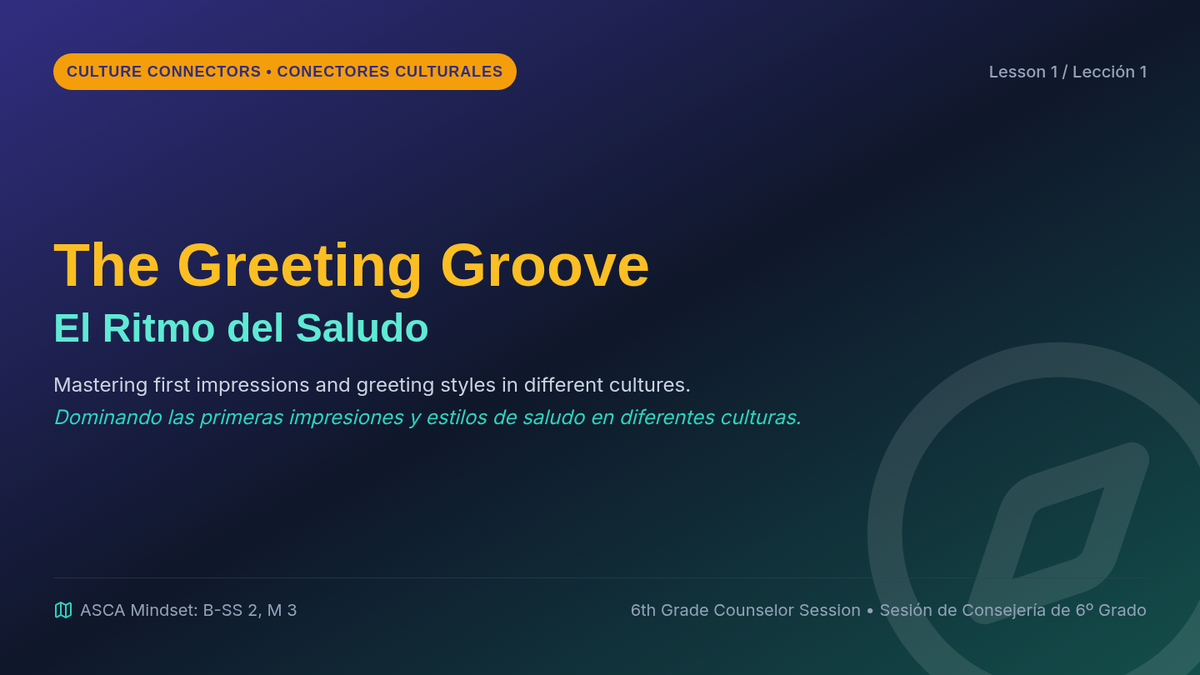
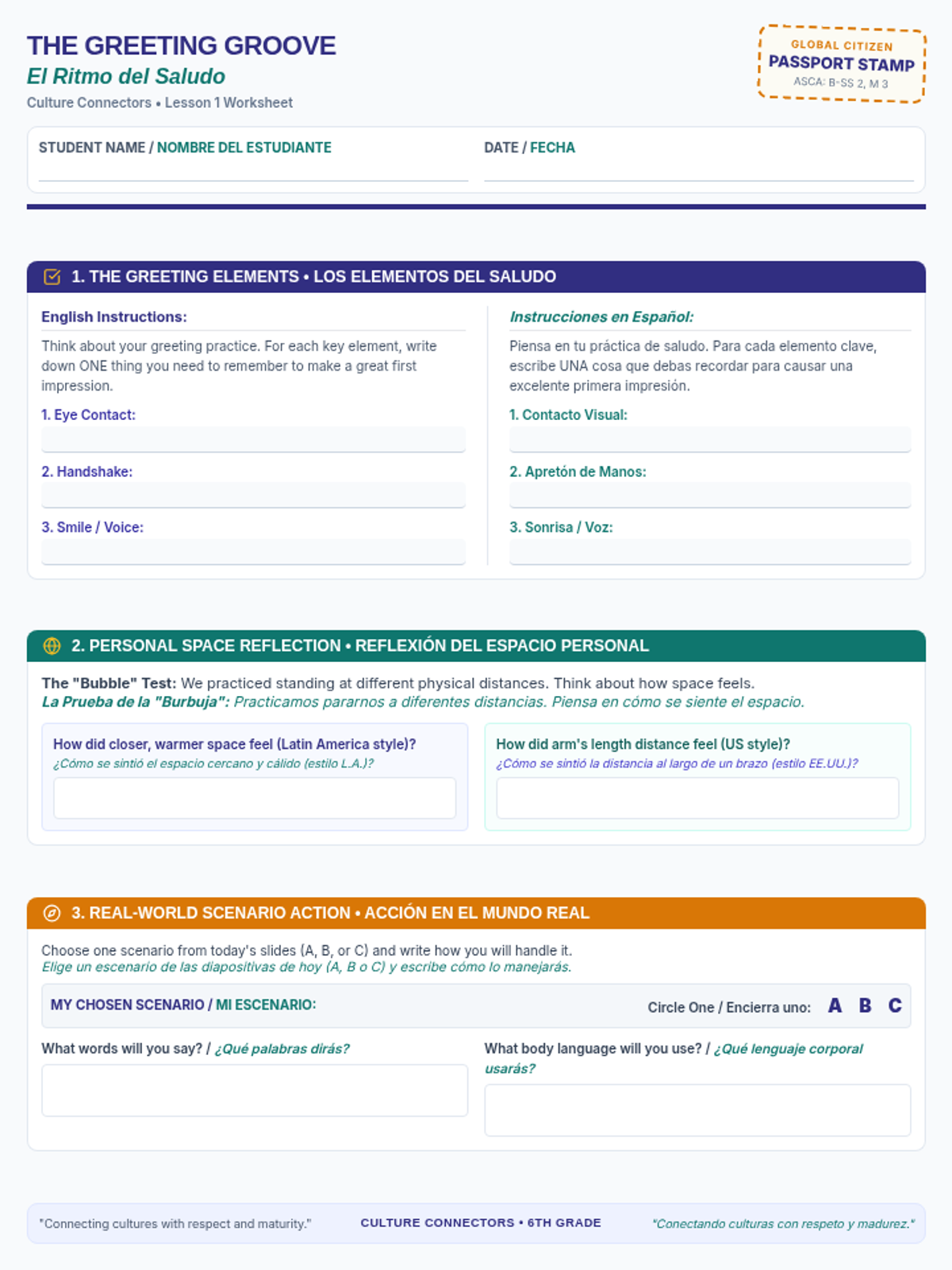
Focuses on greetings, eye contact, handshakes, and physical space in the US vs. Latin America. Students learn the mechanics of a positive first impression in various cultural contexts.
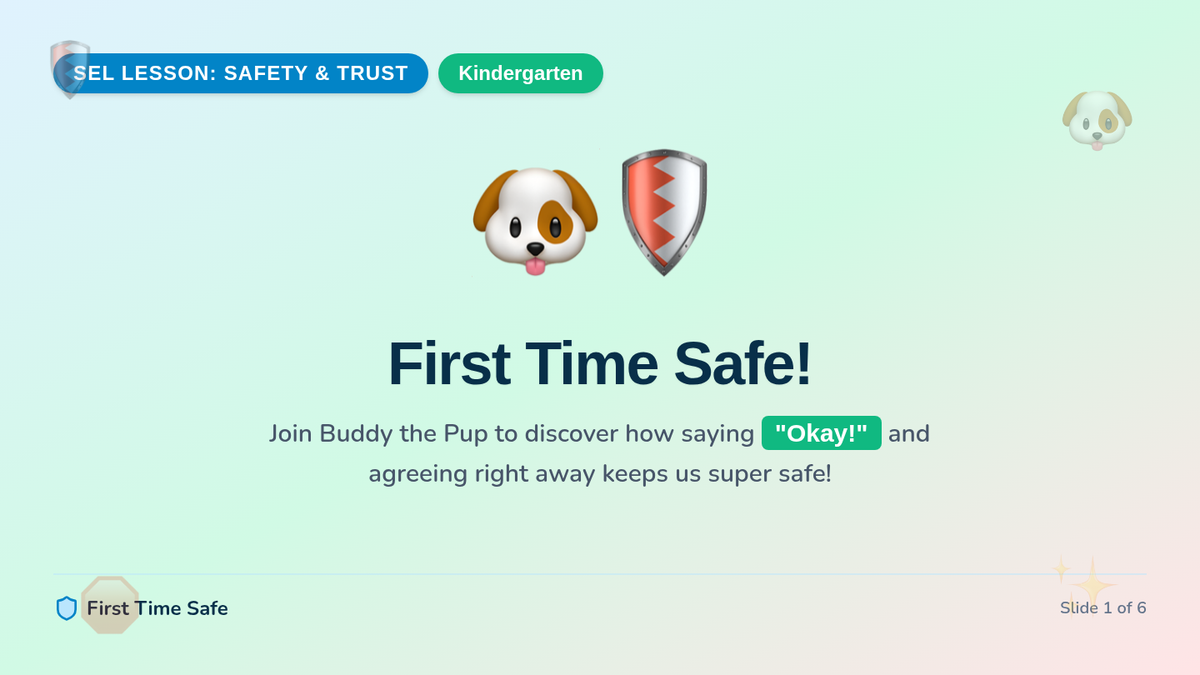
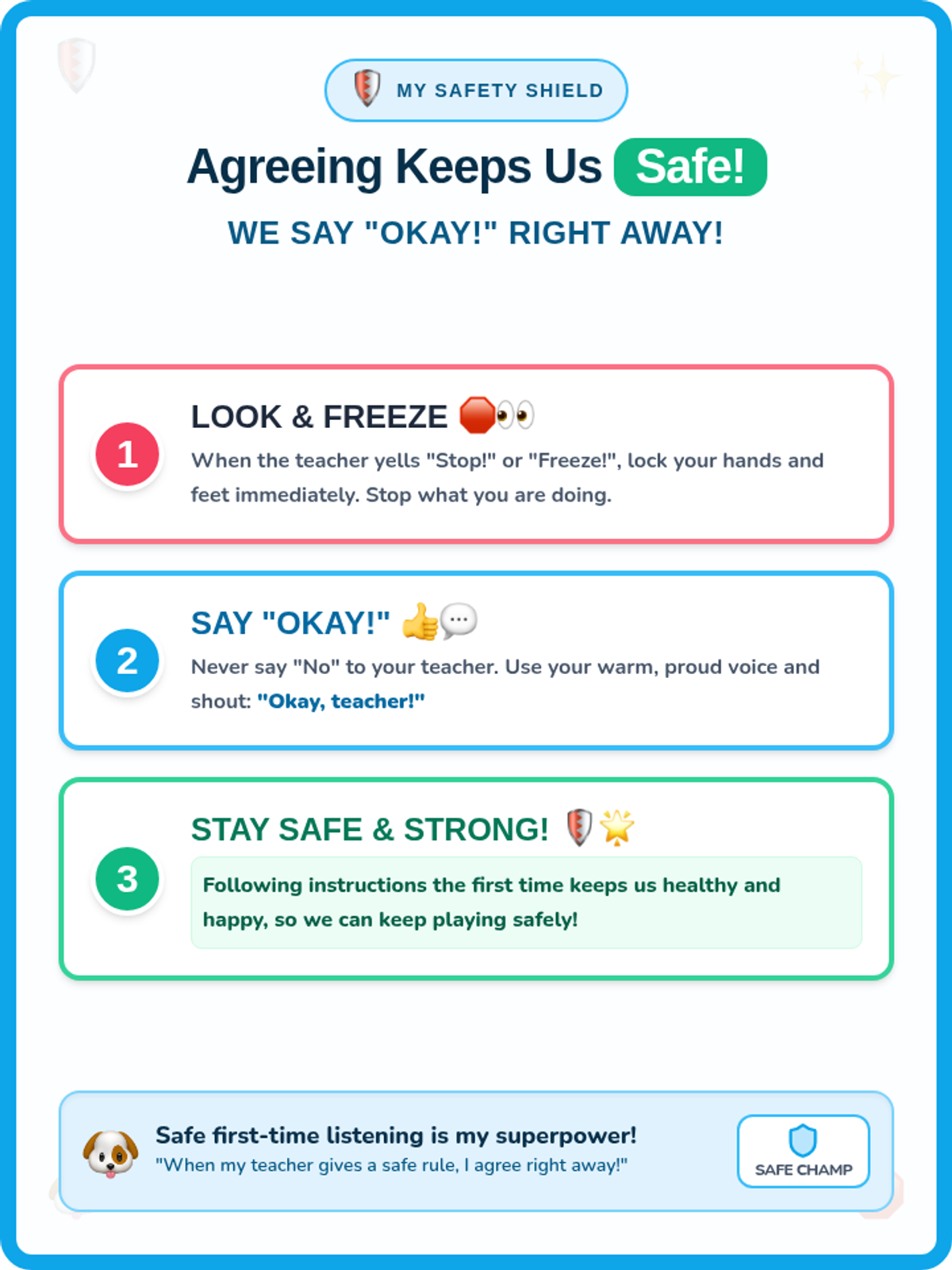
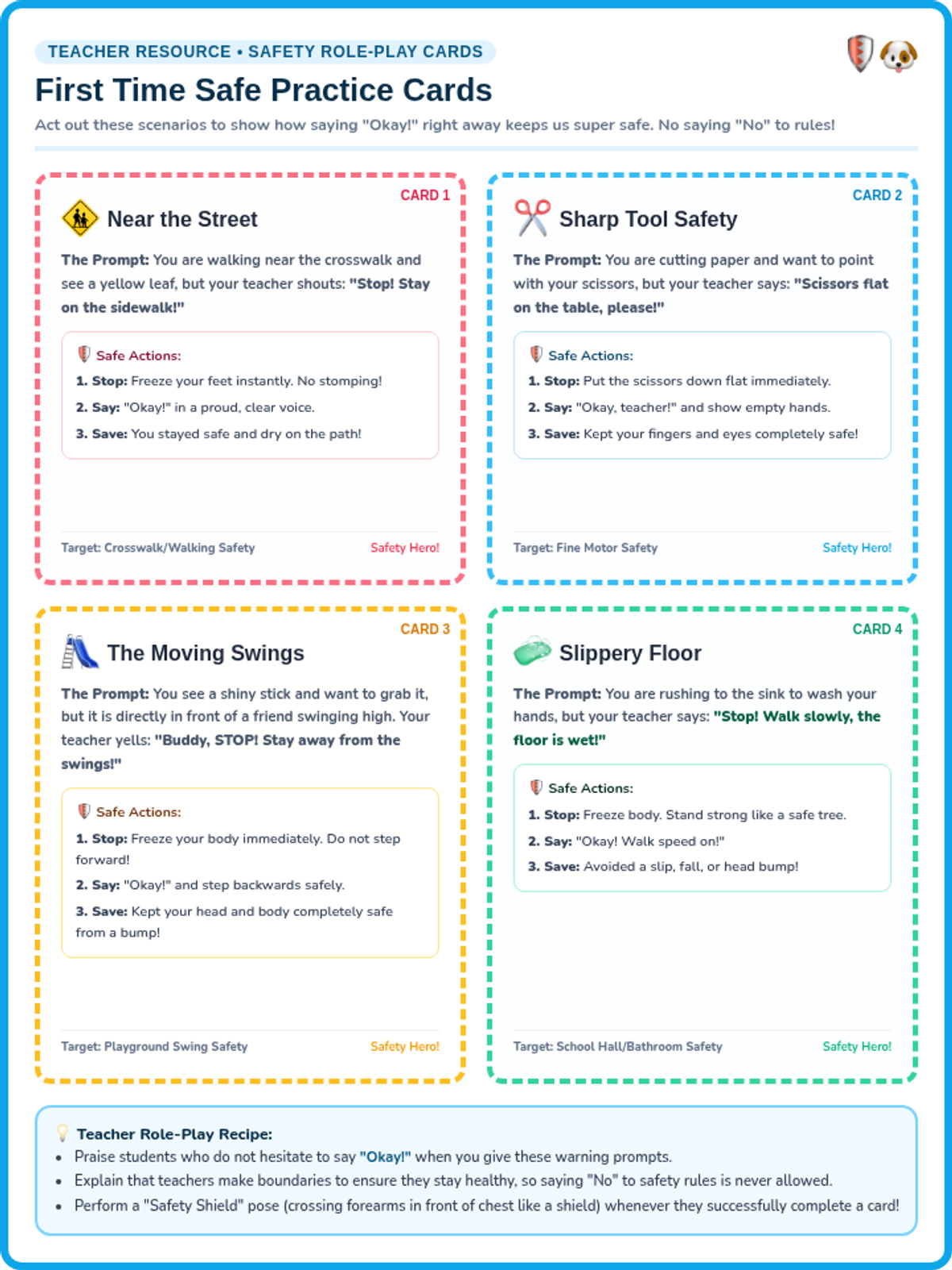
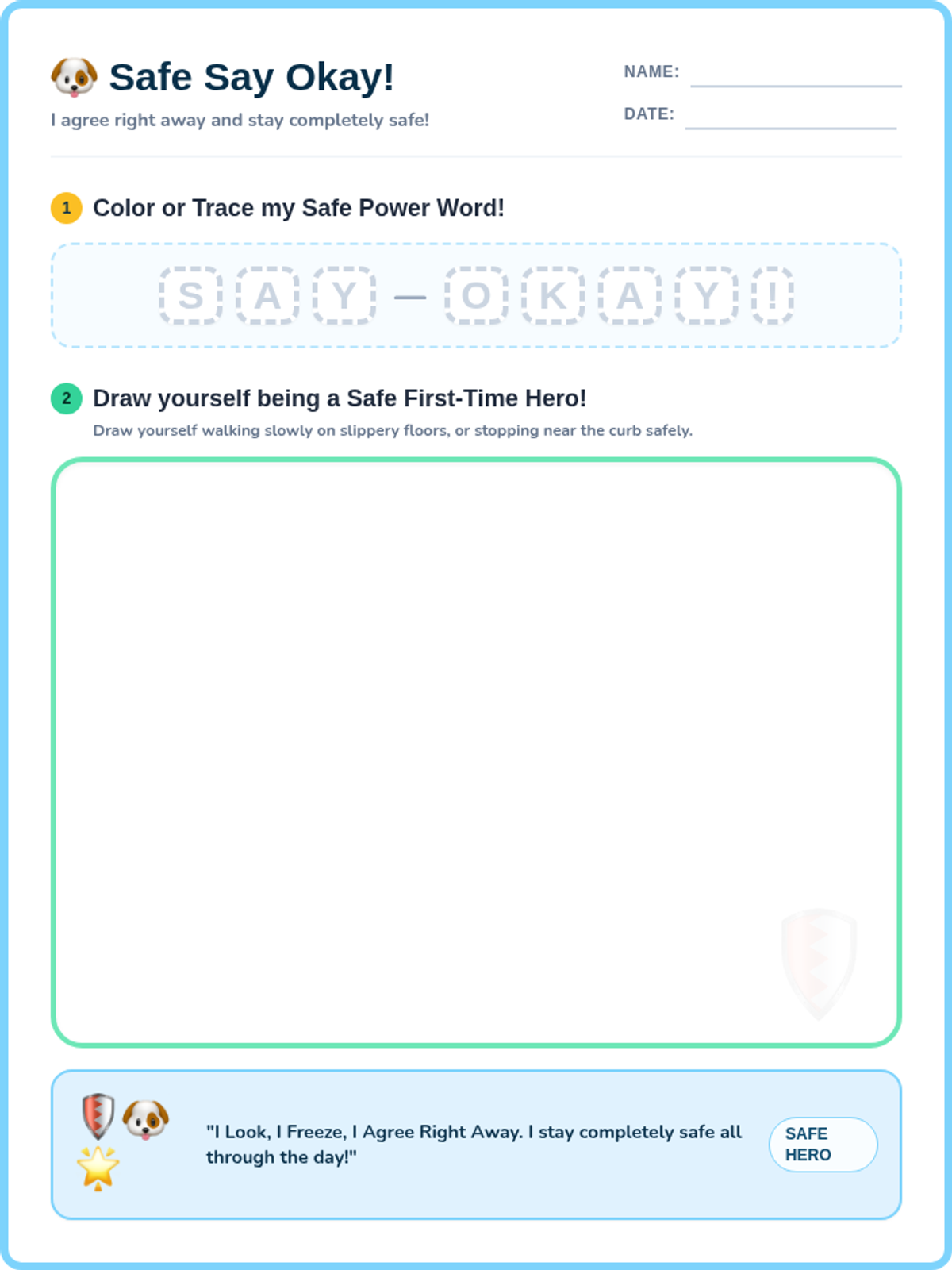
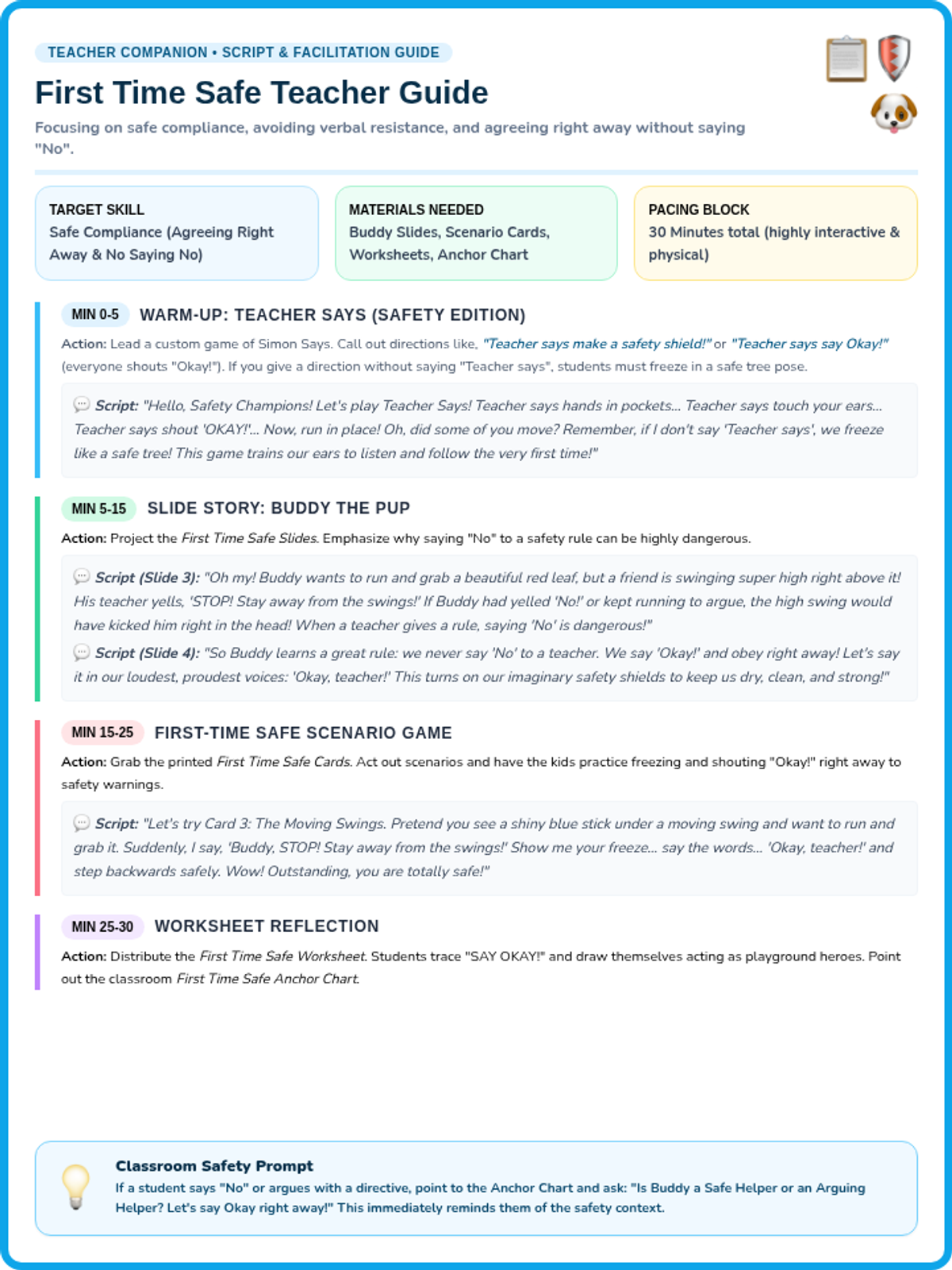
A 30-minute social-emotional learning lesson focusing on the safety and importance of following a teacher's directions right away without saying 'No'. Includes a slide story about Buddy the Pup, a visual safety anchor chart, printable role-play cards, a student tracing sheet, and a teacher guide.
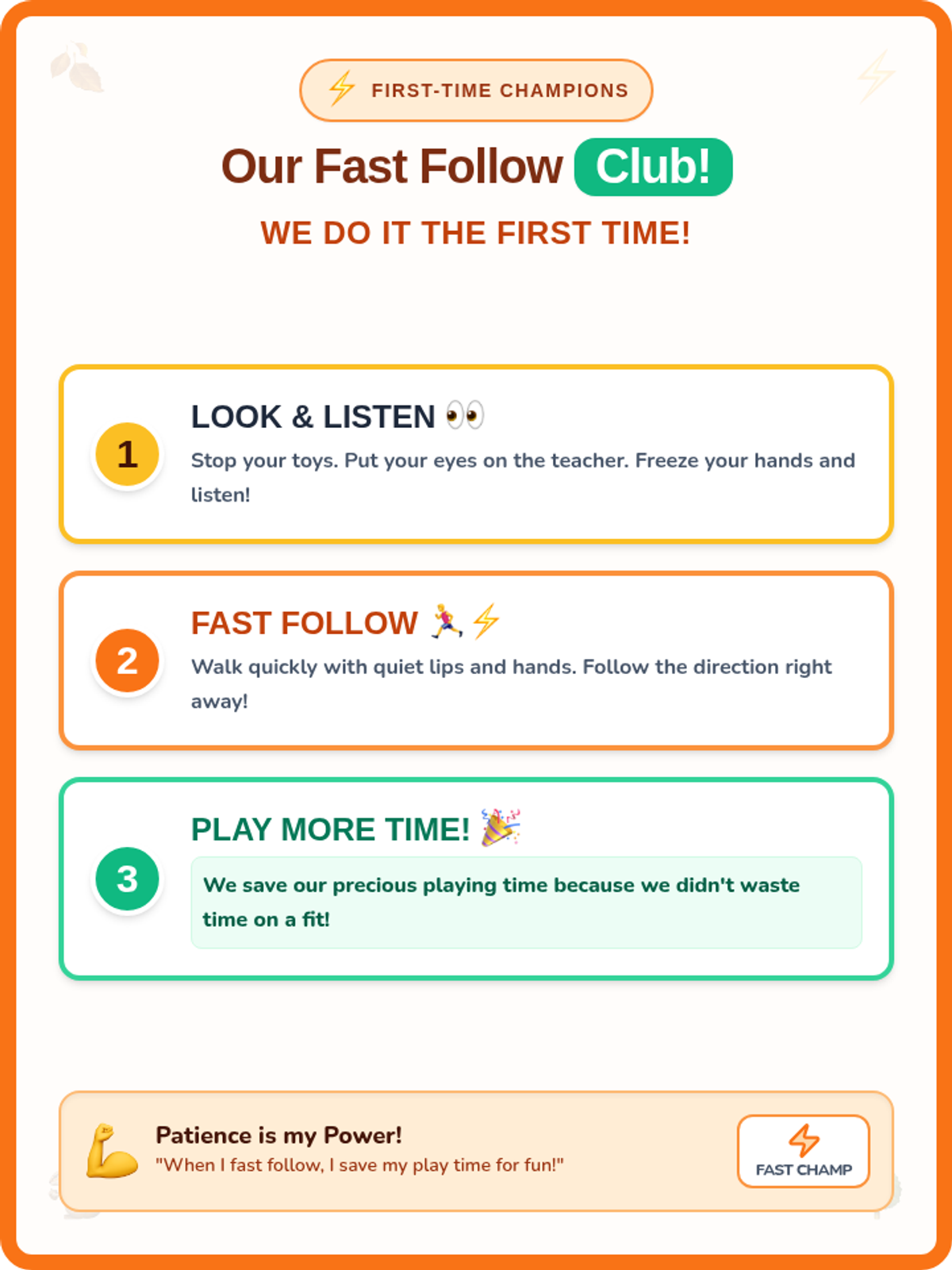
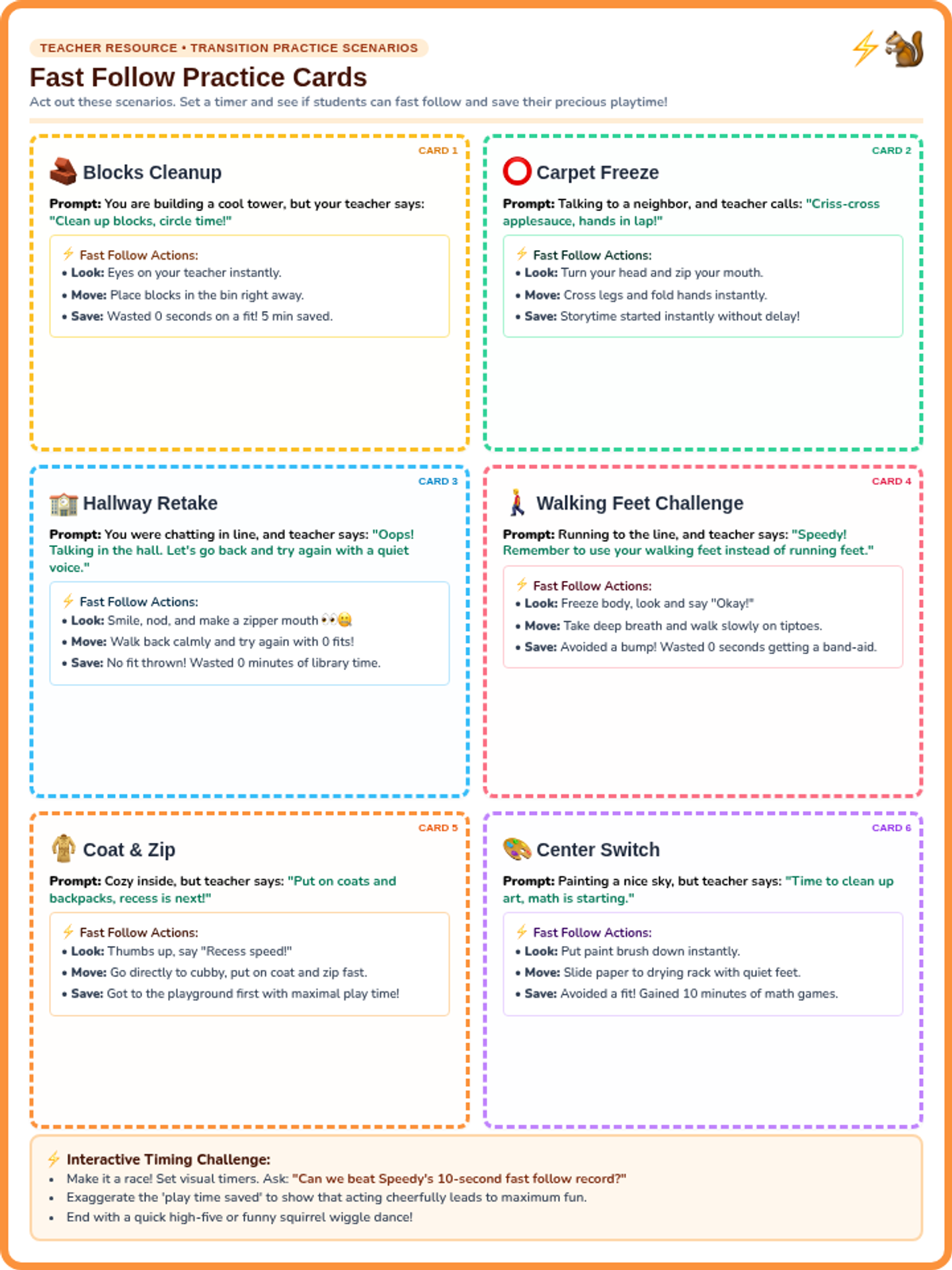
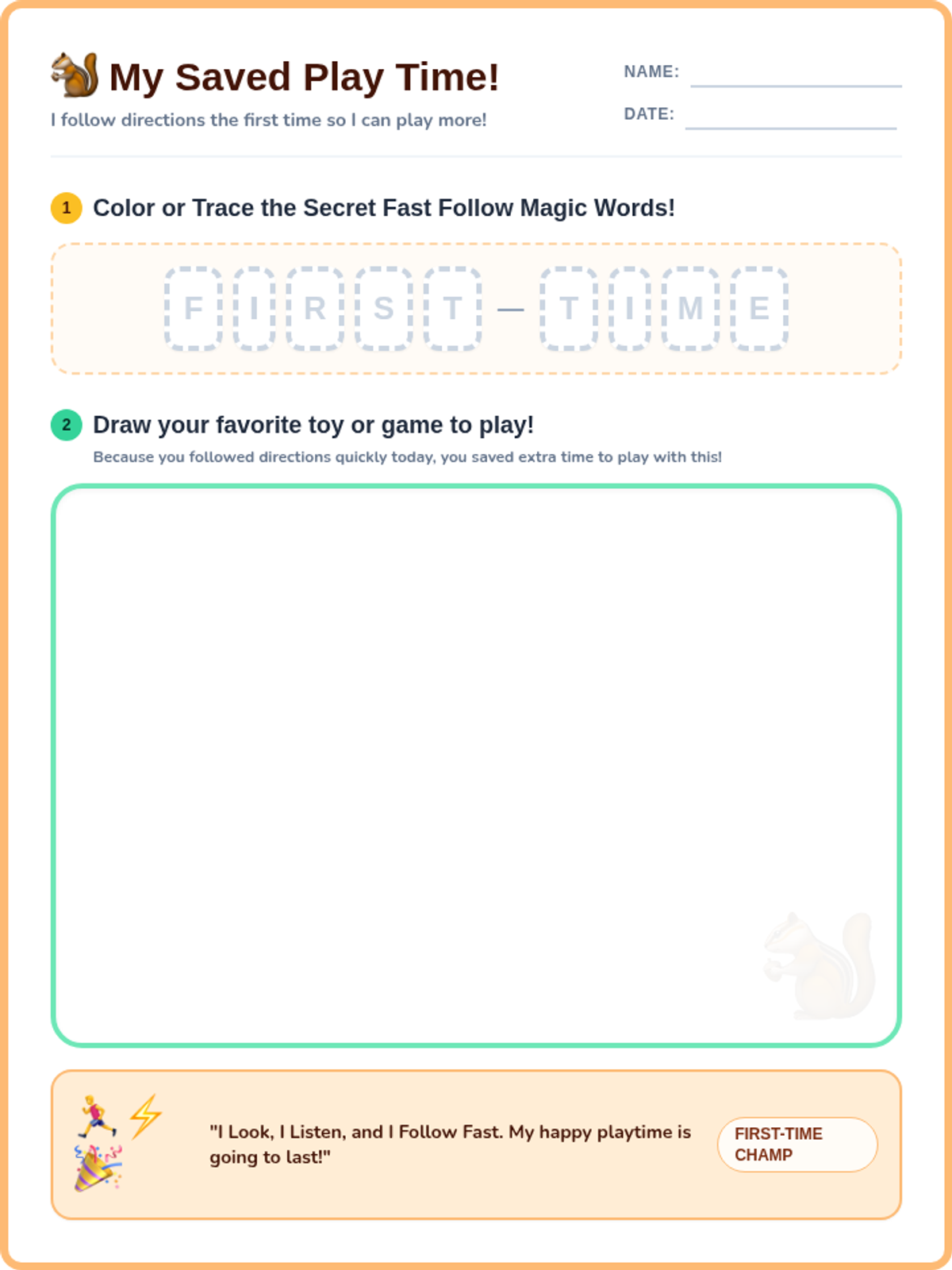
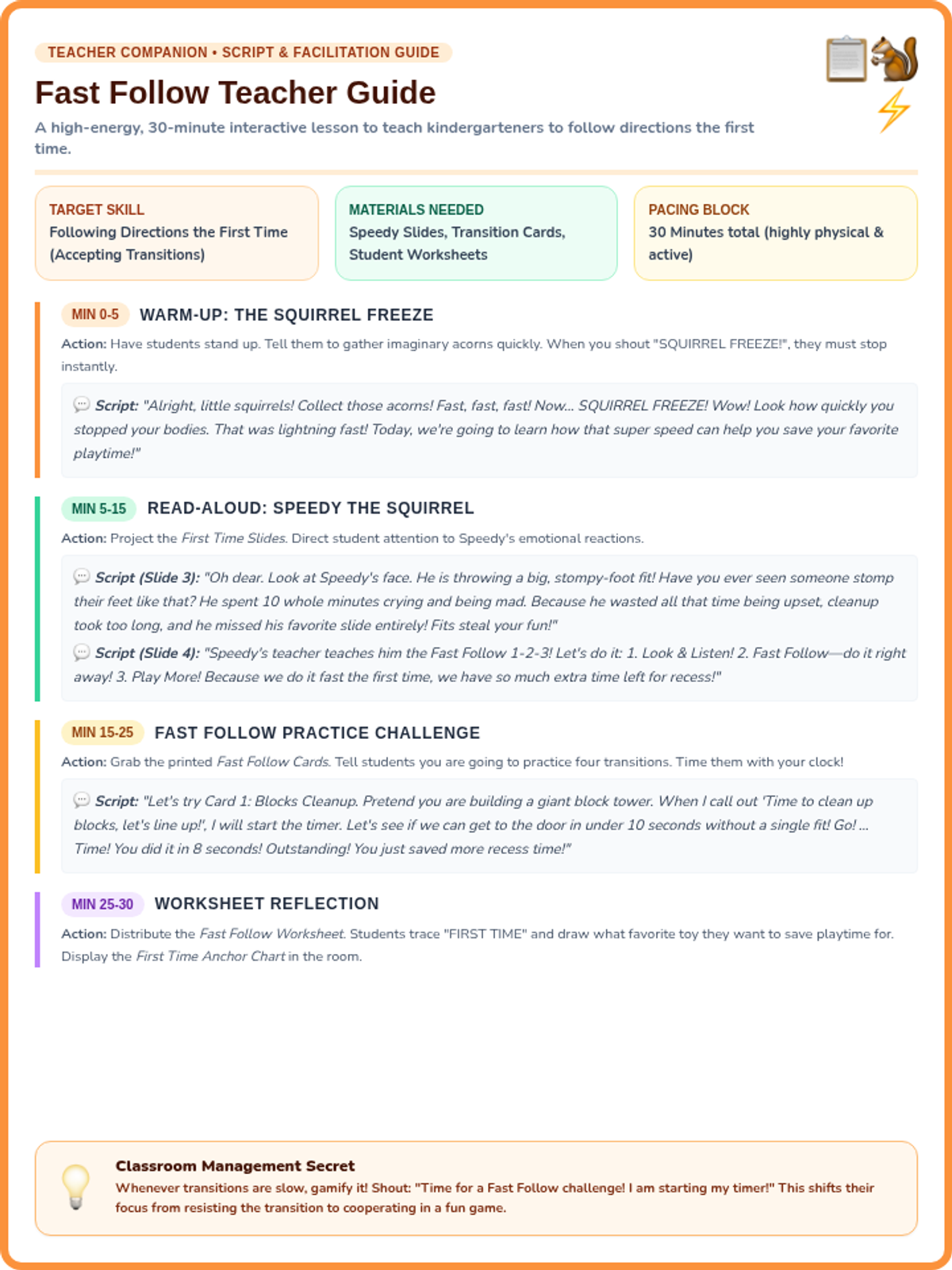
A 30-minute social-emotional learning lesson teaching kindergarteners how to follow directions the first time. It teaches them that following instructions quickly means they have more time for play and fun, rather than wasting time on big fits. Includes slides, games, an anchor chart, a worksheet, and a teacher guide.
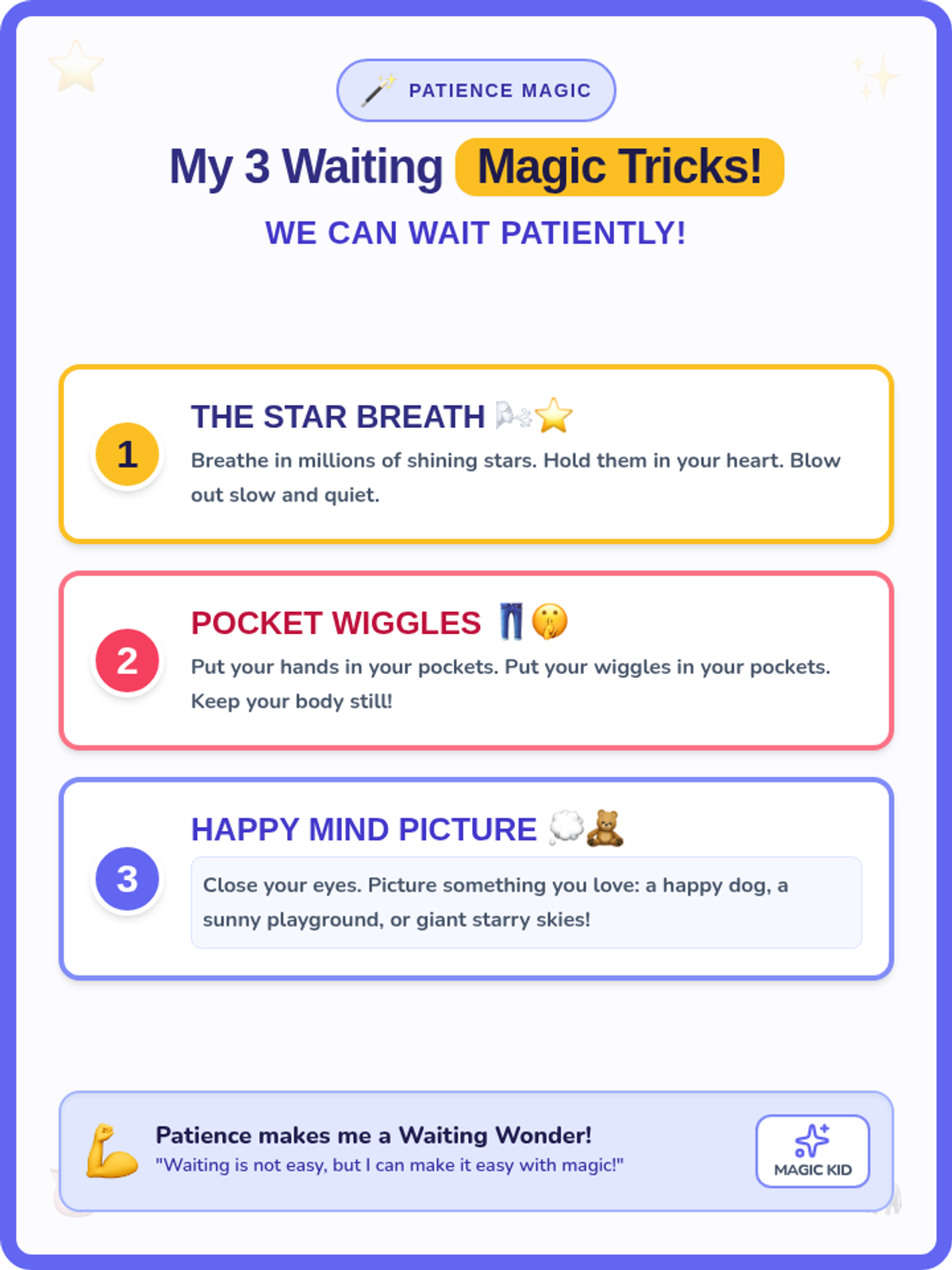
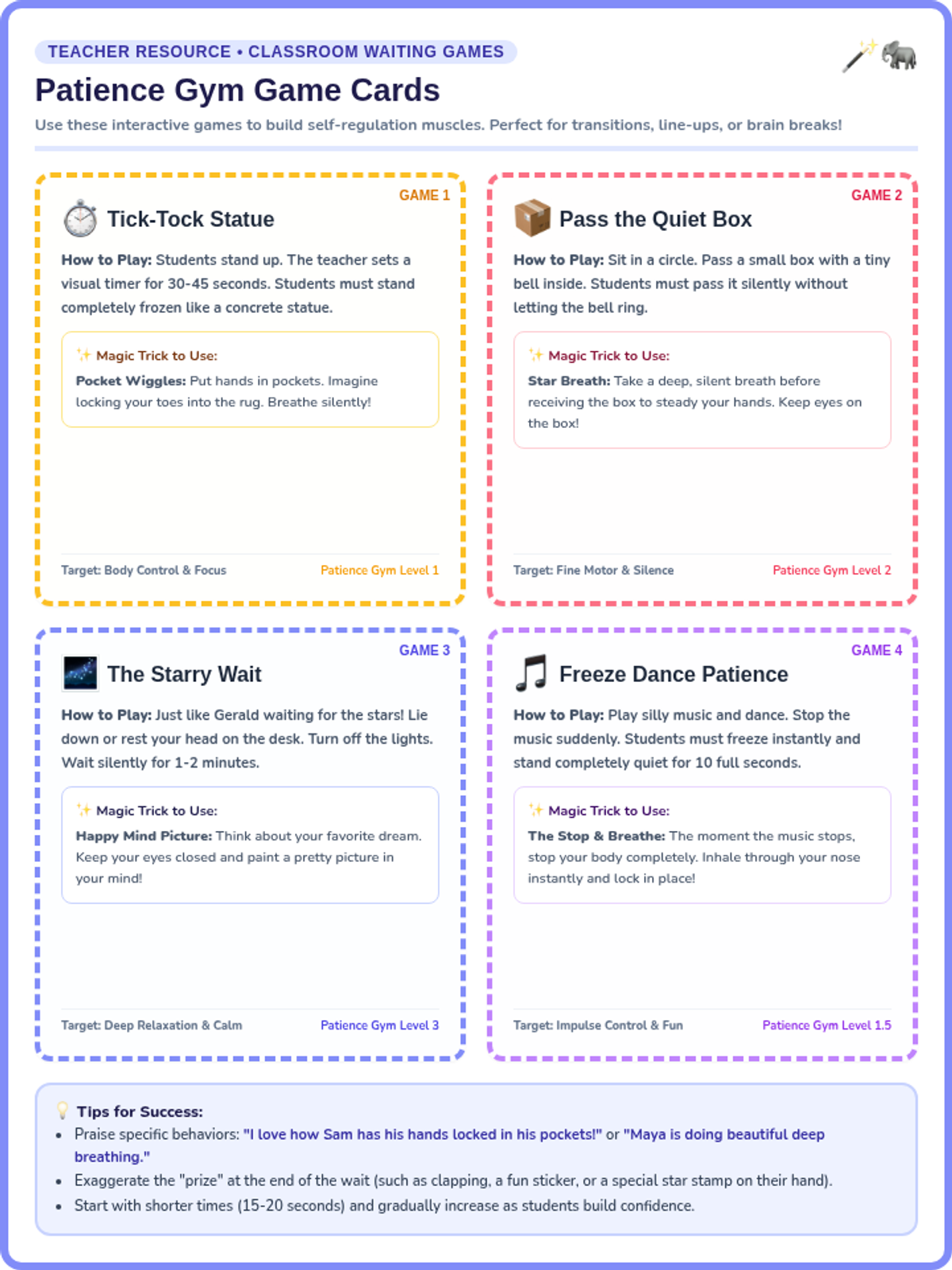
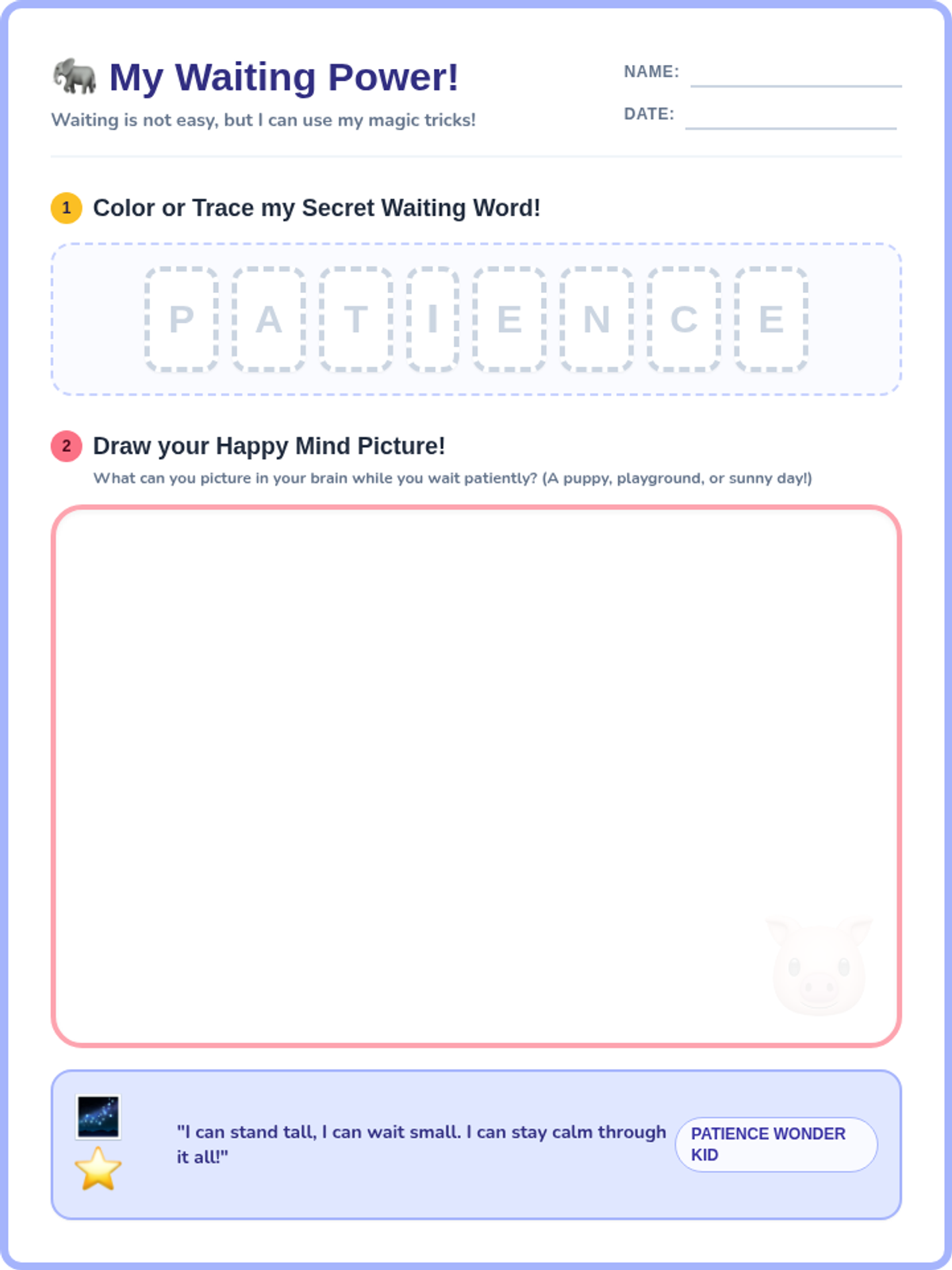
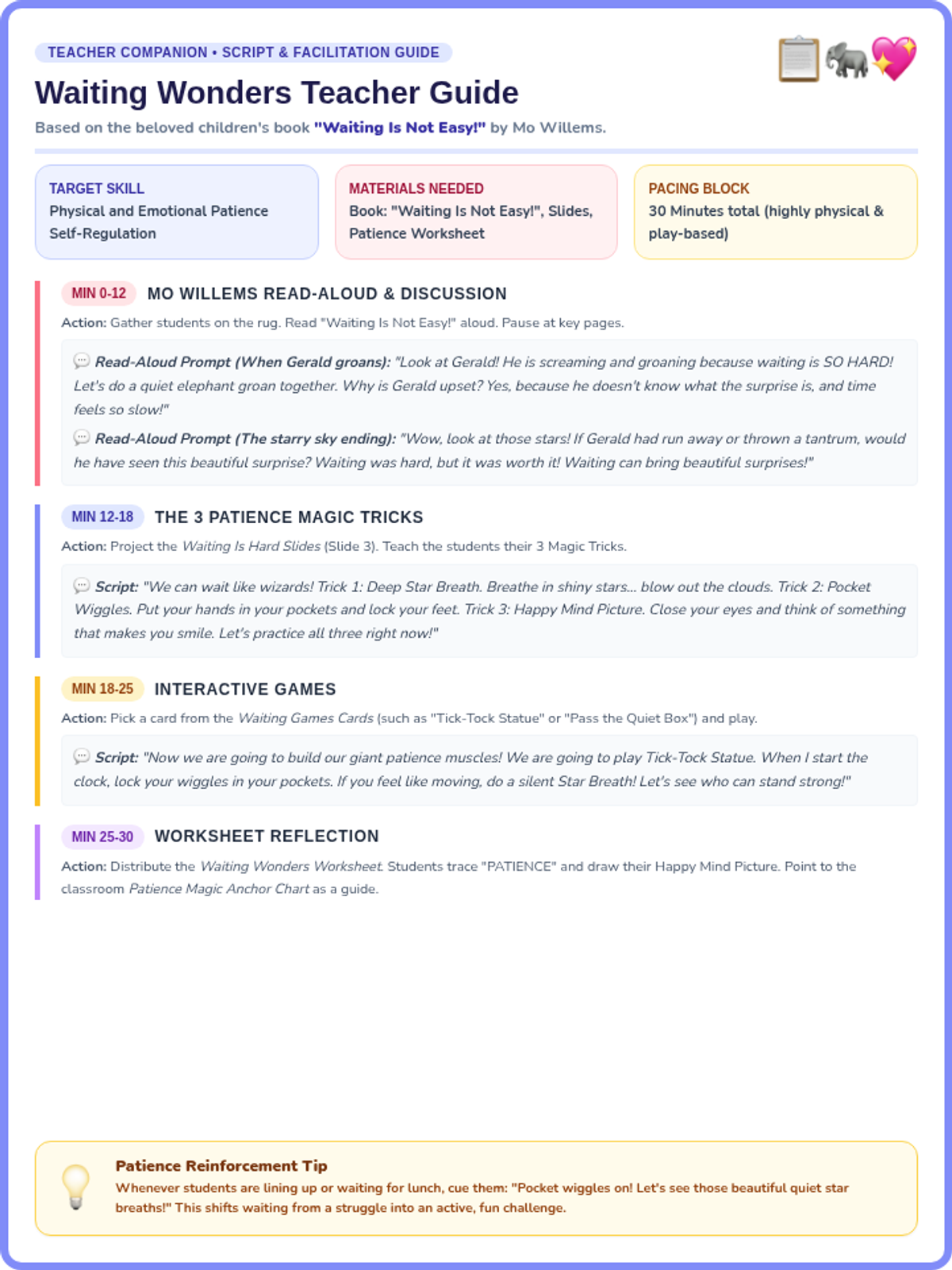
A 30-minute social-emotional learning lesson focusing on teaching kindergarteners how to wait patiently using self-regulation strategies inspired by the popular children's book 'Waiting Is Not Easy!' by Mo Willems. Includes a slide presentation, interactive waiting games, a classroom anchor chart, a teacher guide, and a student activity sheet.
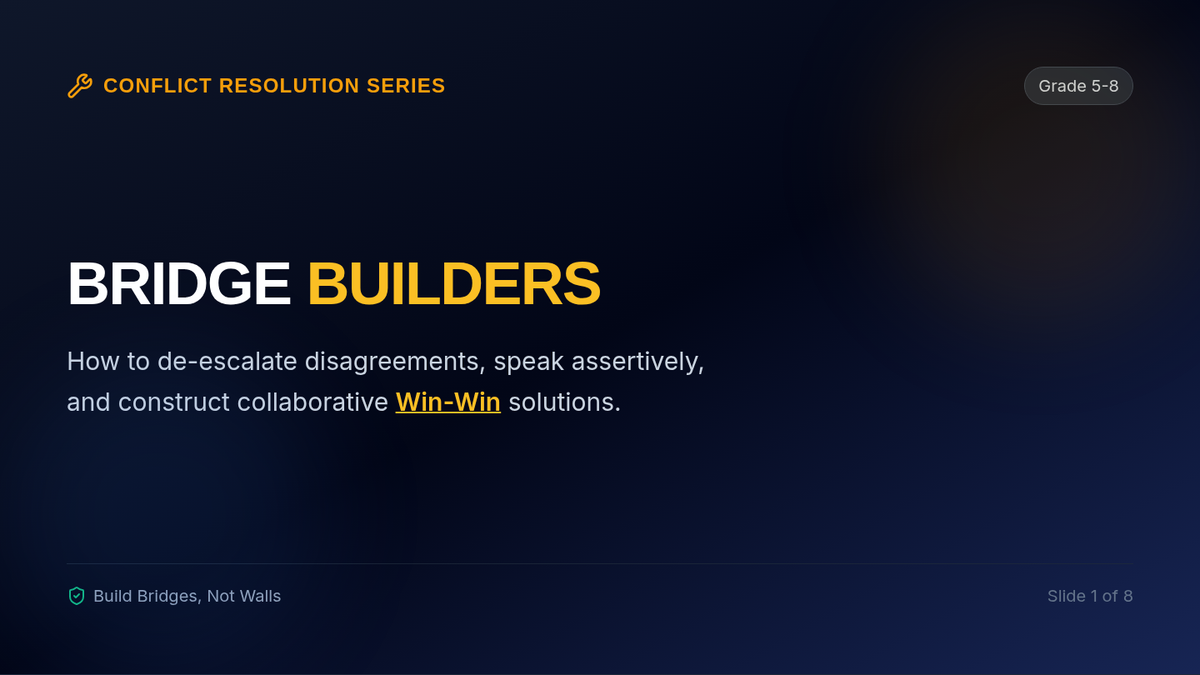
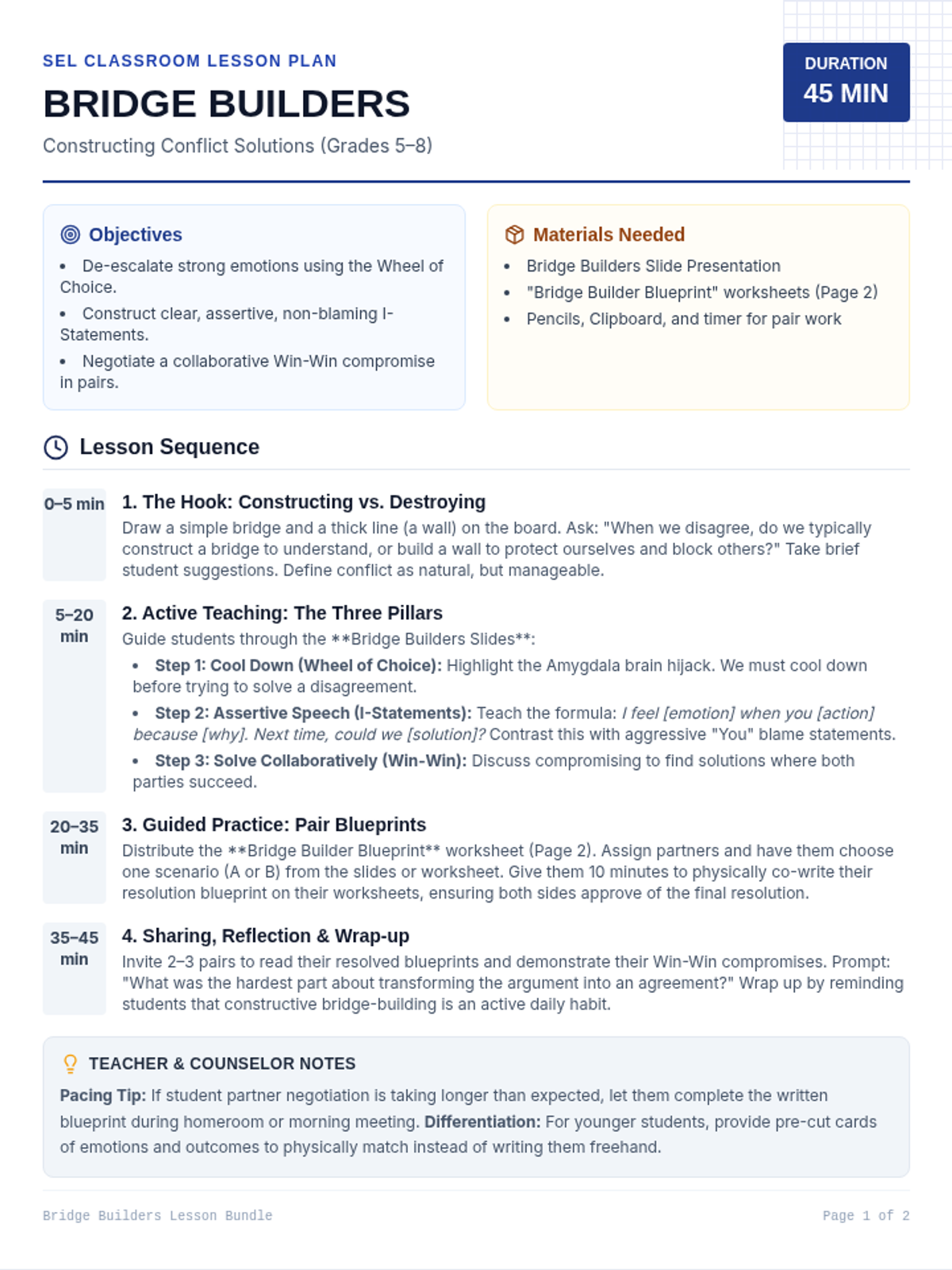
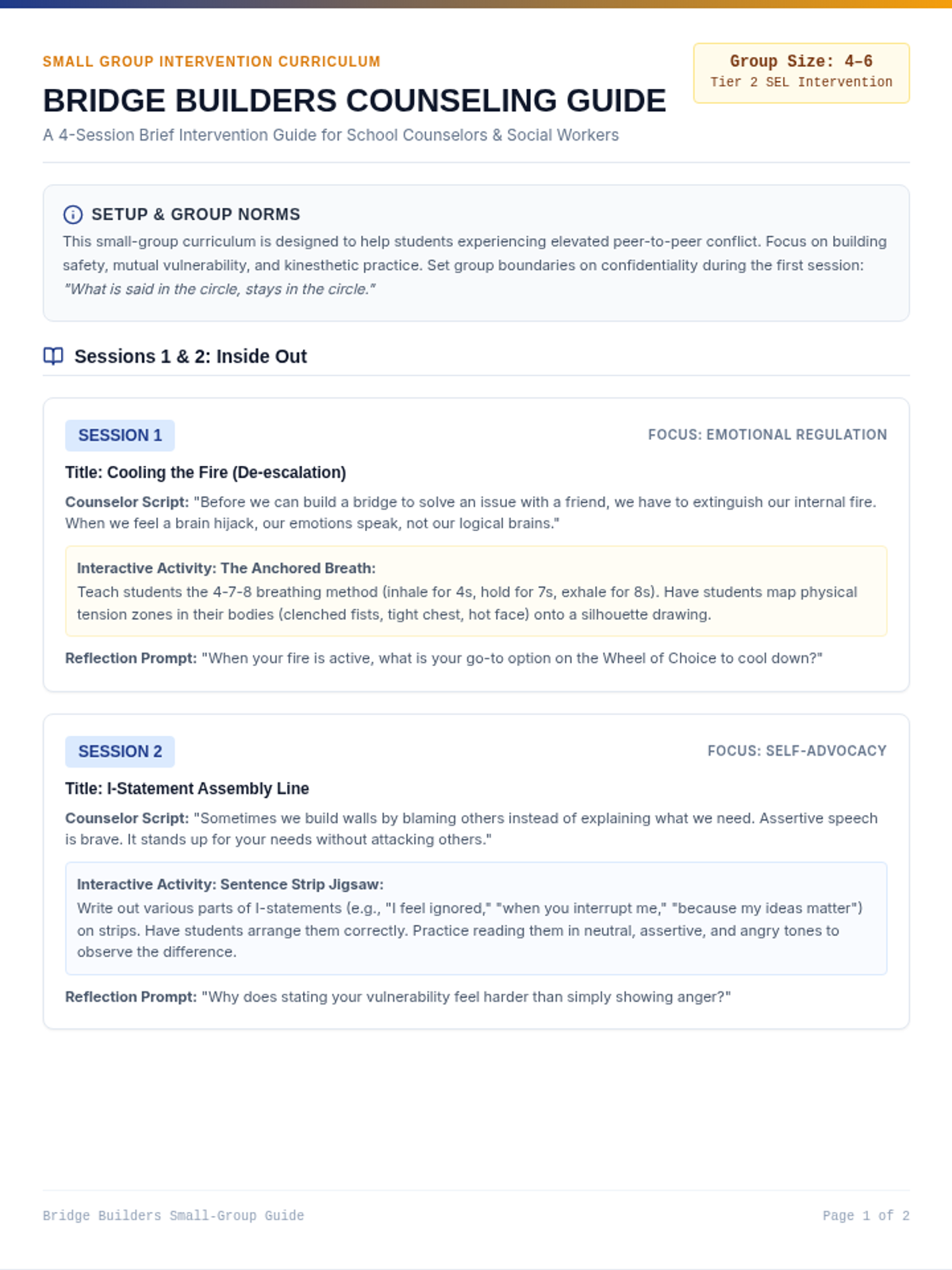
A comprehensive social-emotional learning lesson package designed to teach middle-grade students how to de-escalate conflicts, communicate assertively using I-Statements and Active Listening, and negotiate collaborative Win-Win solutions. Includes visual presentation slides, a complete 45-minute classroom lesson plan with an integrated student activity sheet, and a specialized small-group counseling guide.
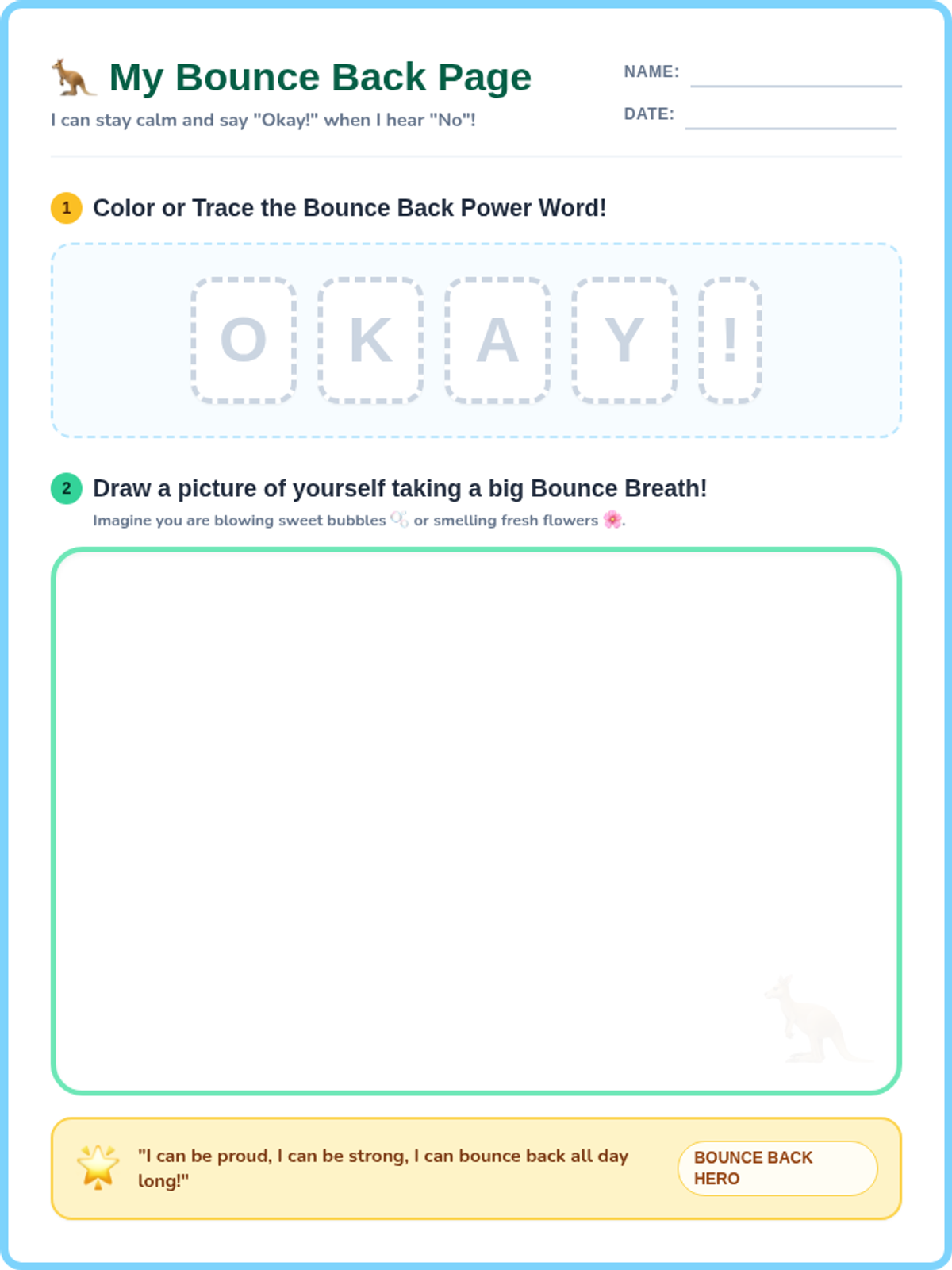
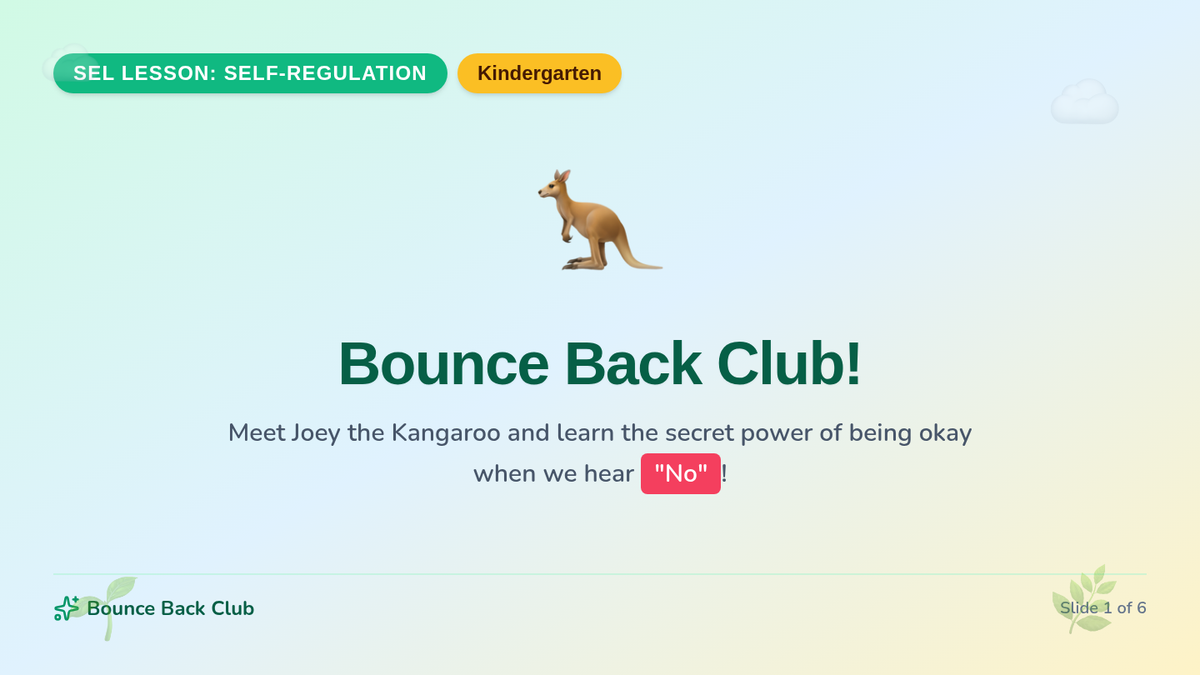
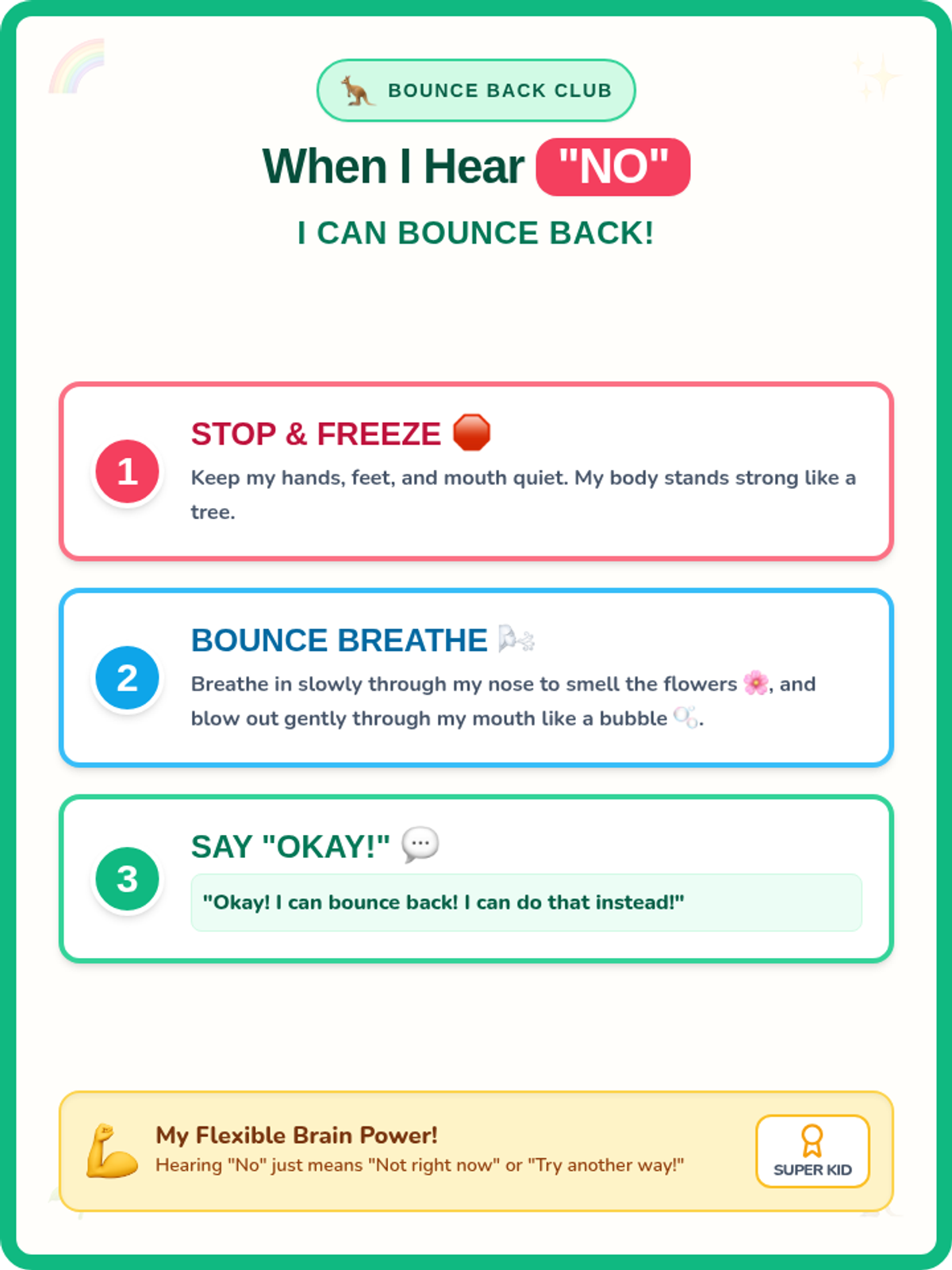
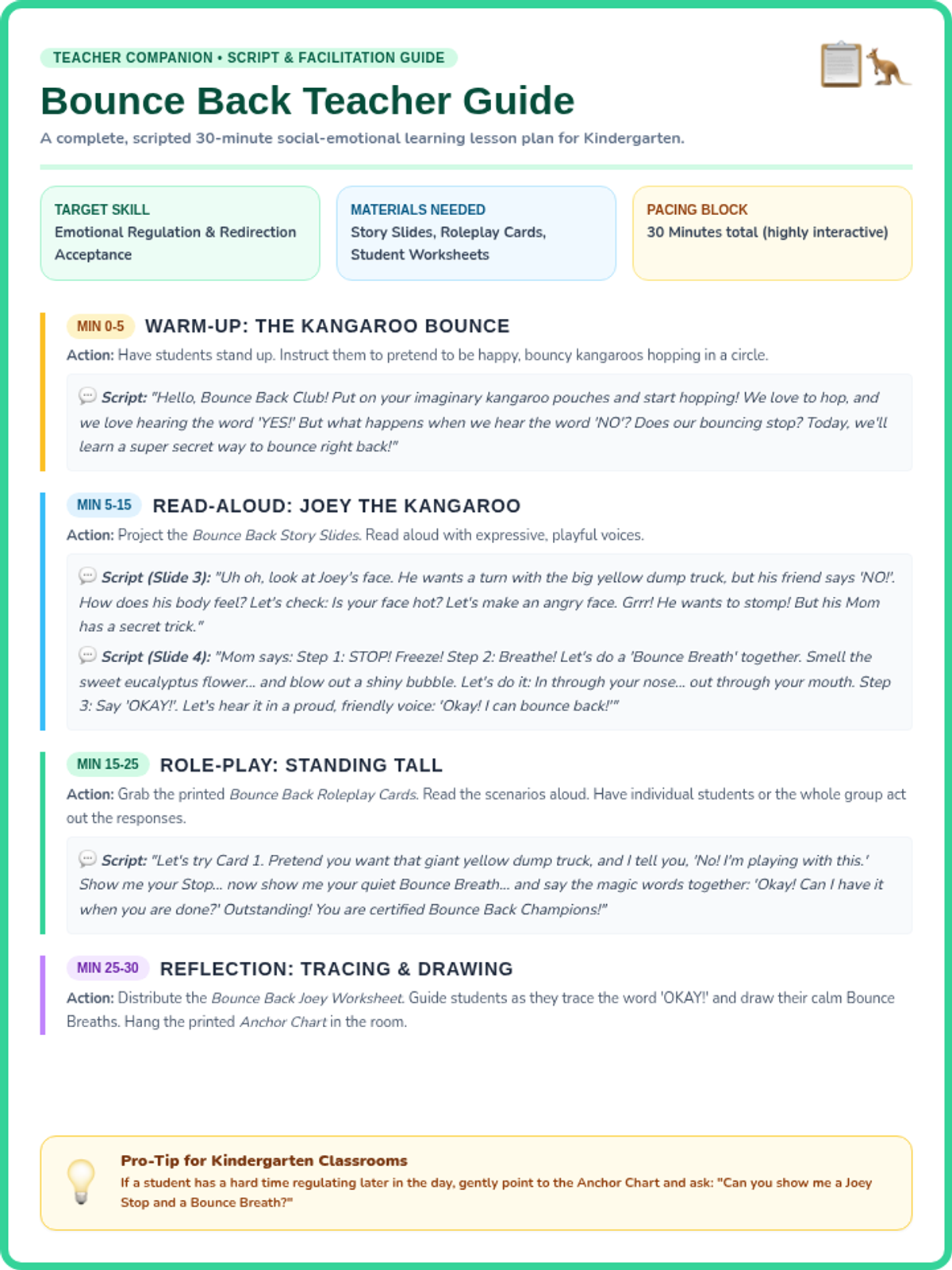
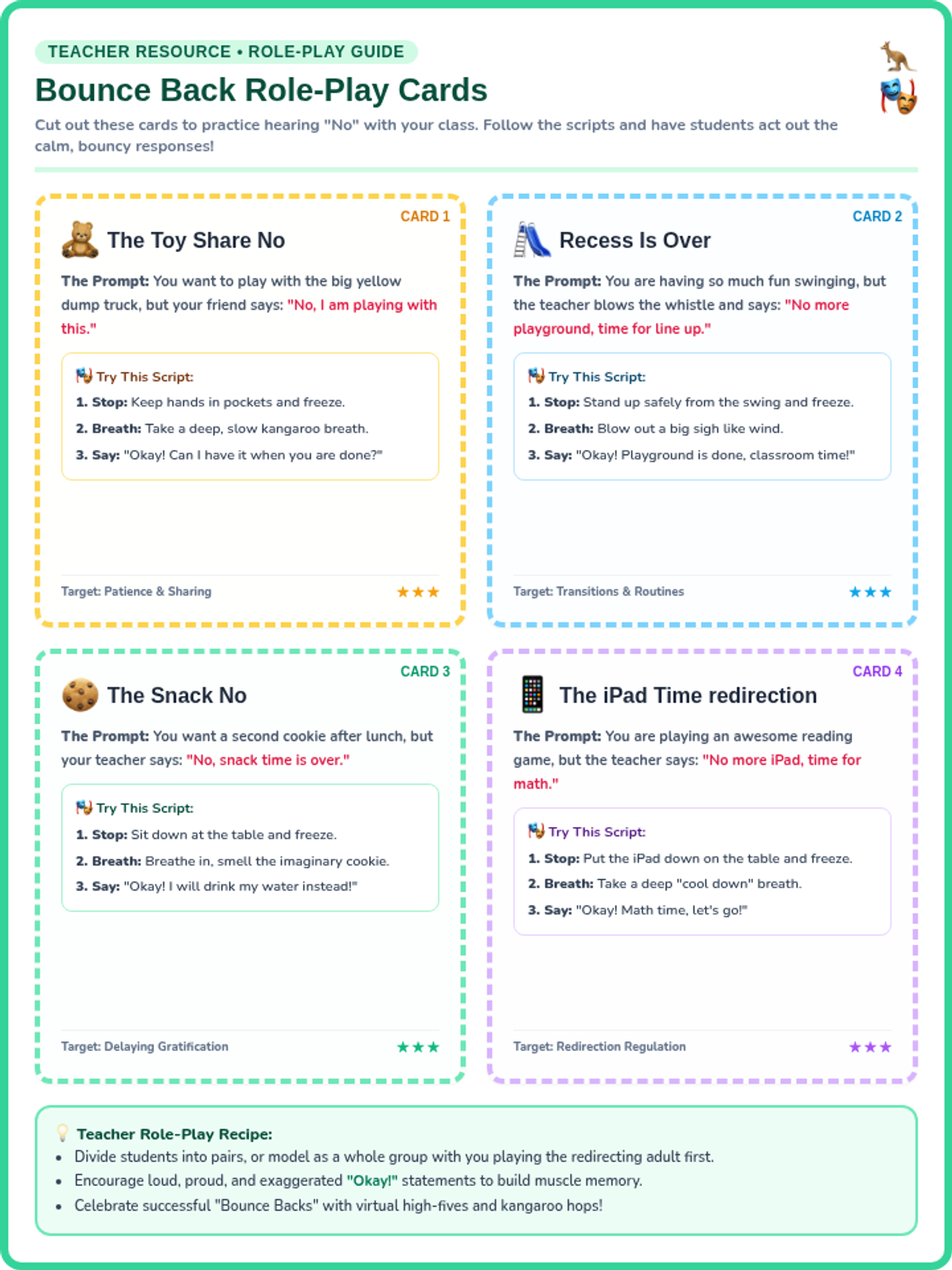
A 30-minute social-emotional learning lesson designed for kindergarteners to help them regulate and stay calm when hearing 'no' or receiving redirections. The lesson includes an interactive story about a bouncing kangaroo, role-playing practice, and a colorful classroom anchor chart.
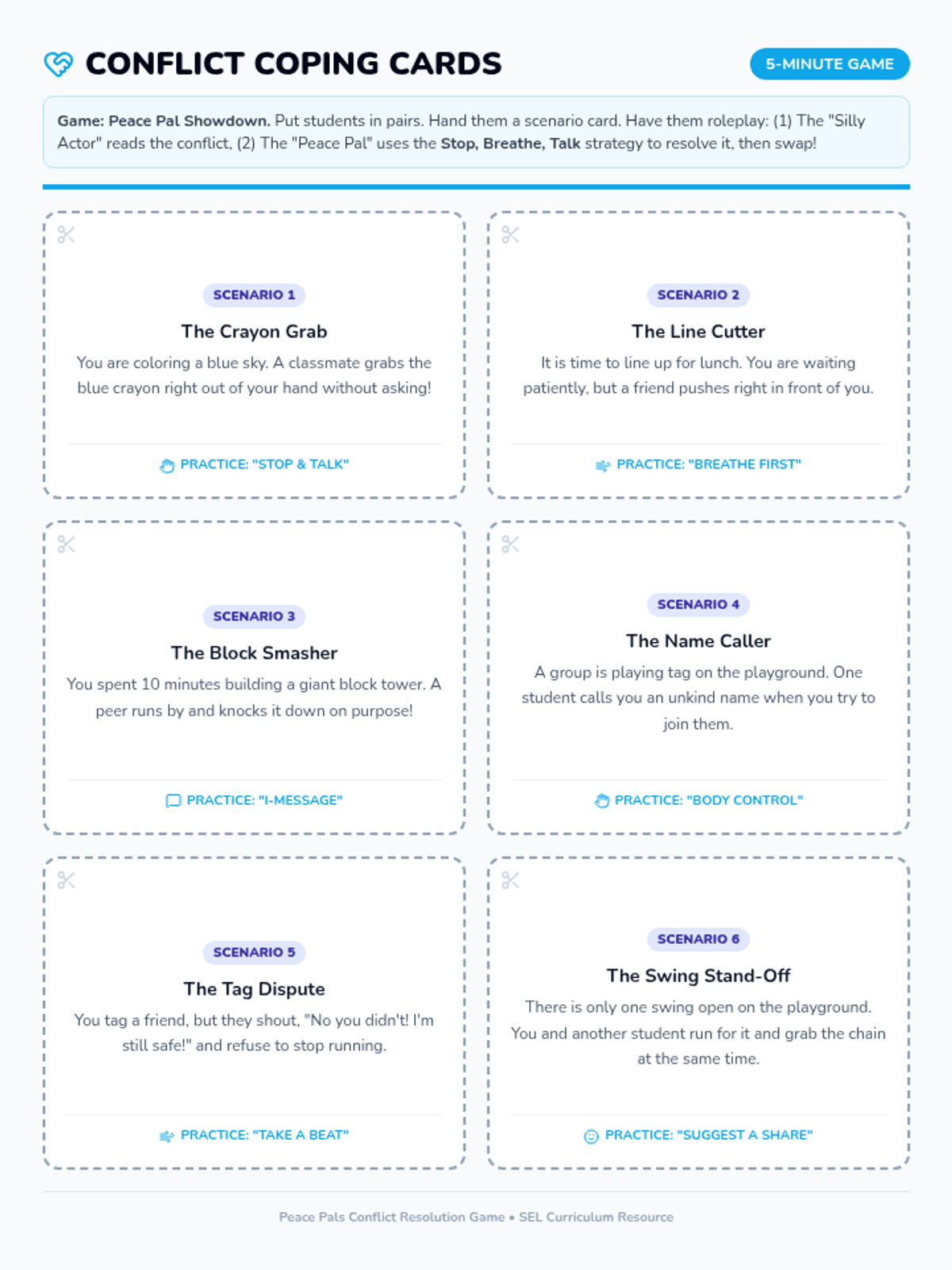
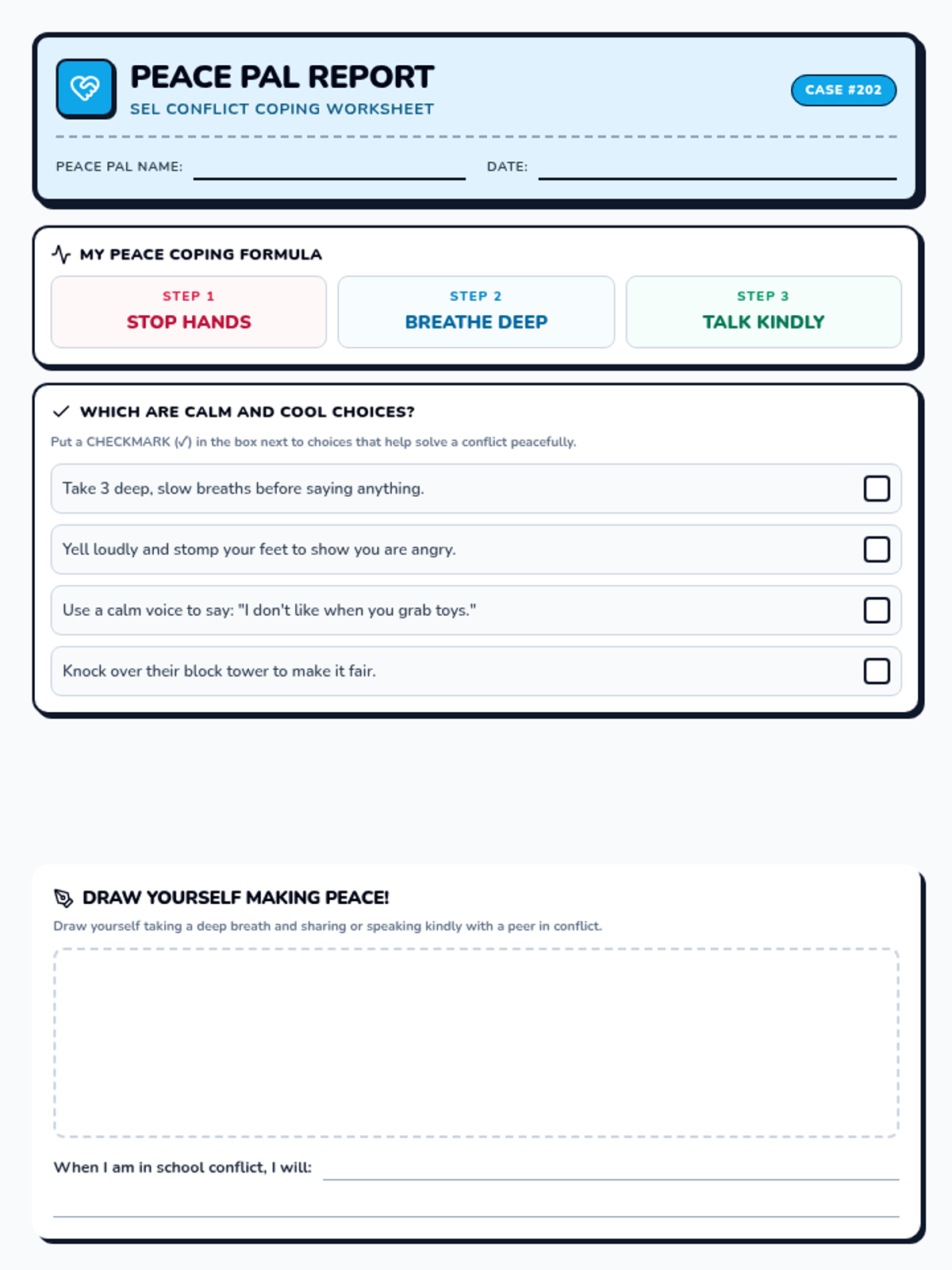
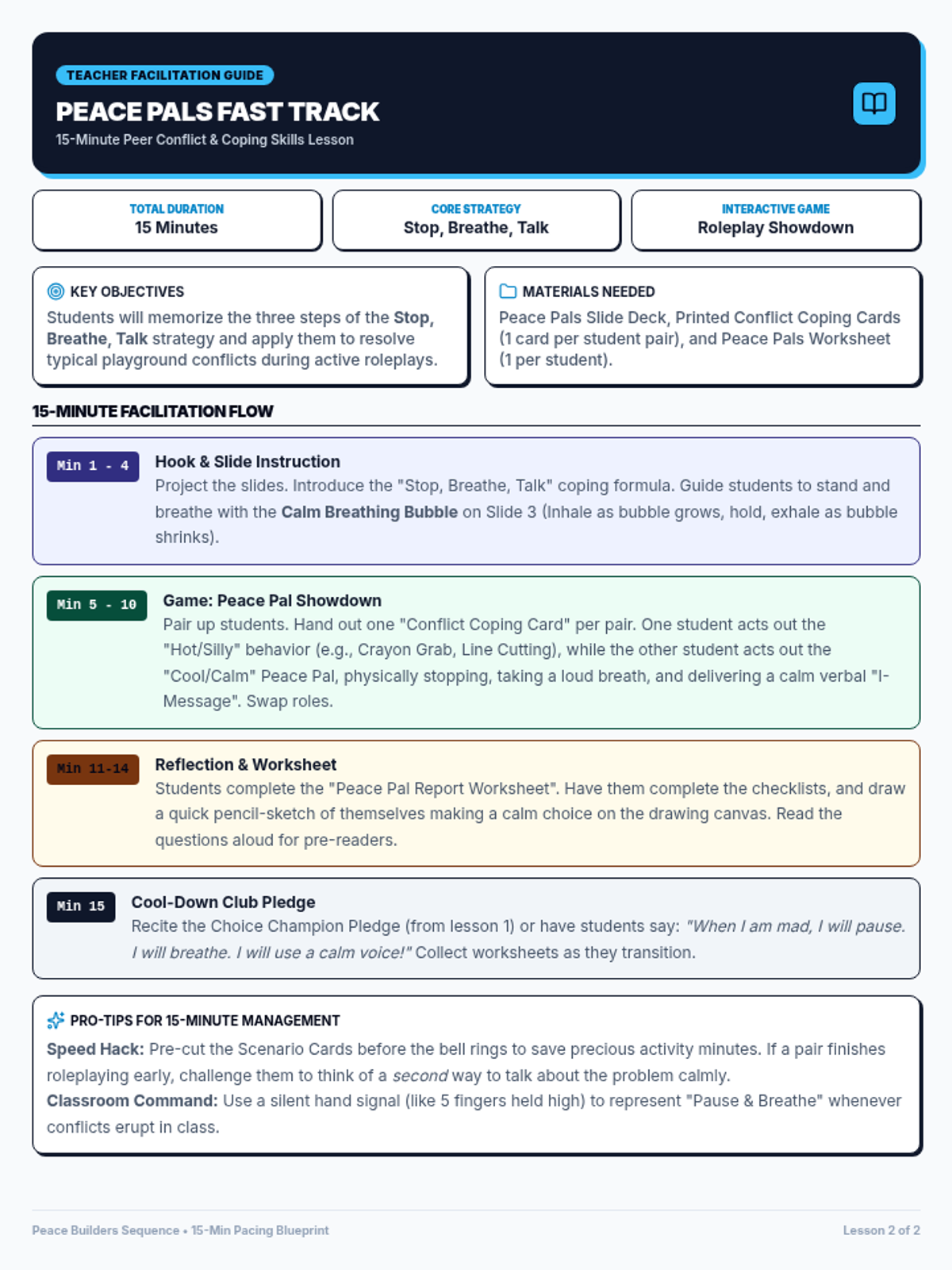
A fast-paced, 15-minute SEL lesson targeting early elementary students to resolve peer conflict and practice emotional regulation. It introduces the "Stop, Breathe, Talk" coping strategy with interactive slides, role-playing scenario cards, and a reflection worksheet.
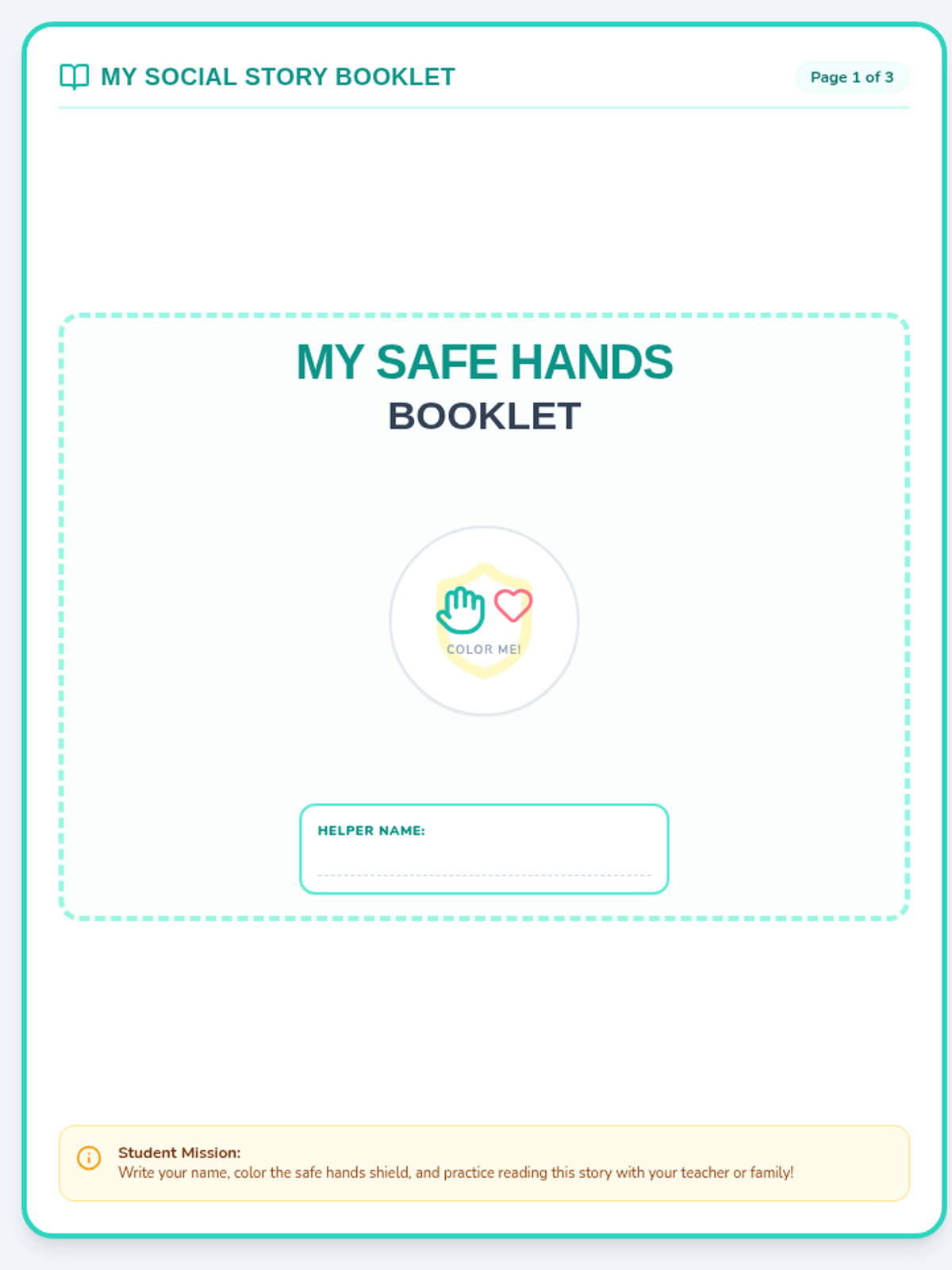
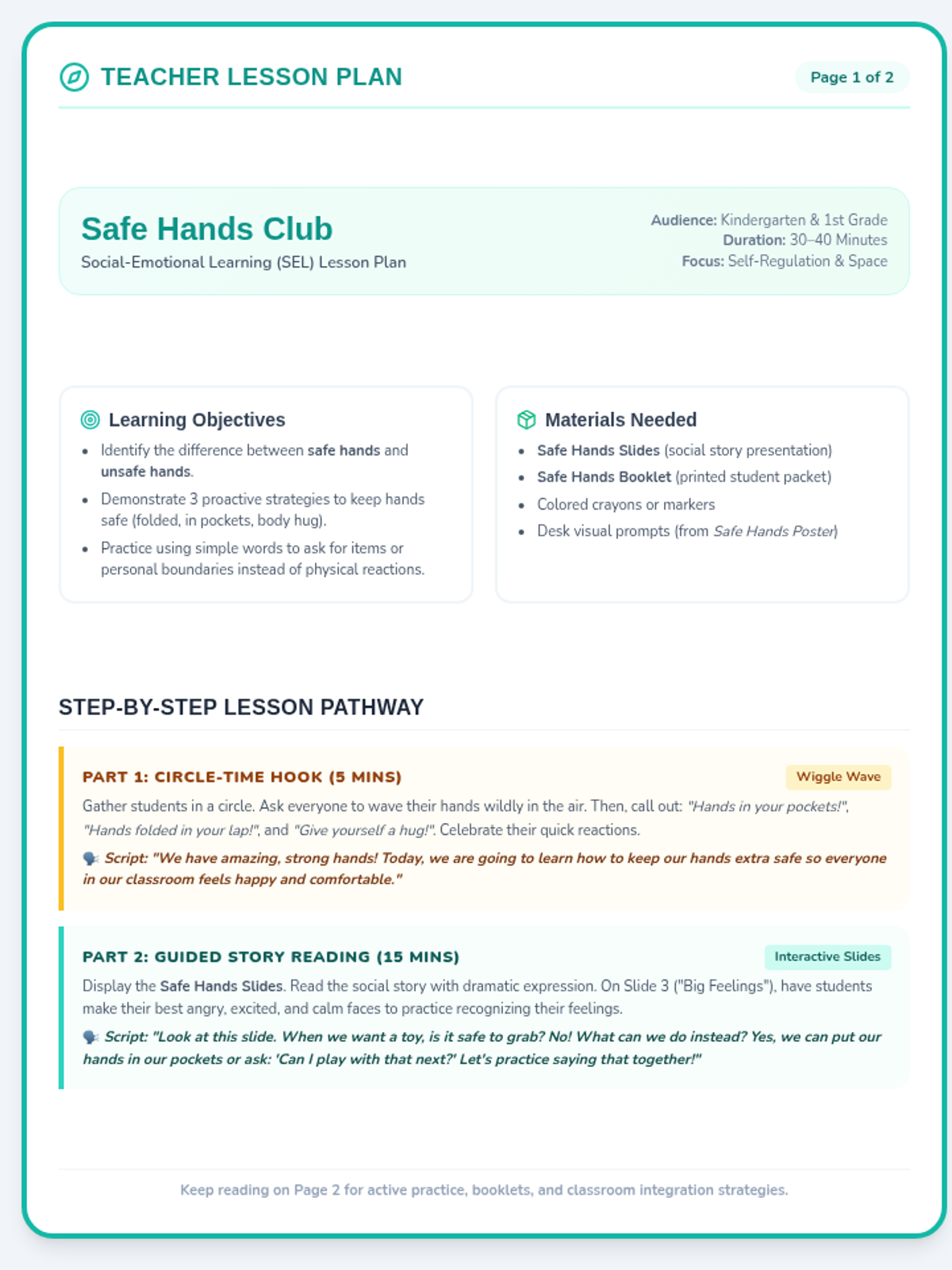
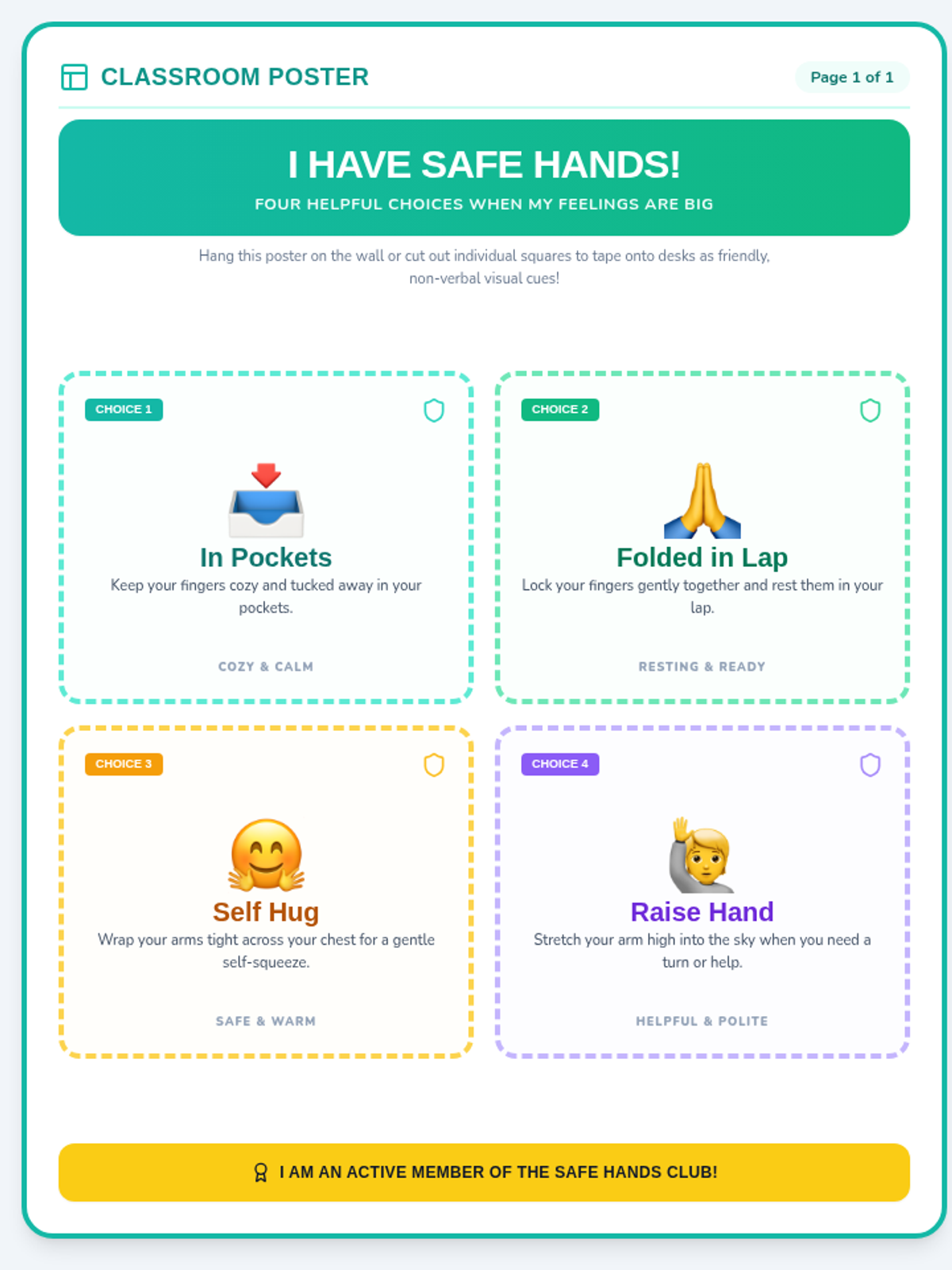
A complete social-emotional learning lesson for Kindergarten and 1st Grade students on keeping hands to themselves. This lesson features a colorful, visual social story slide deck, a printable take-home mini-book, a structured teacher guide with circle-time activities, and a visual anchor chart poster for classroom desks or walls.
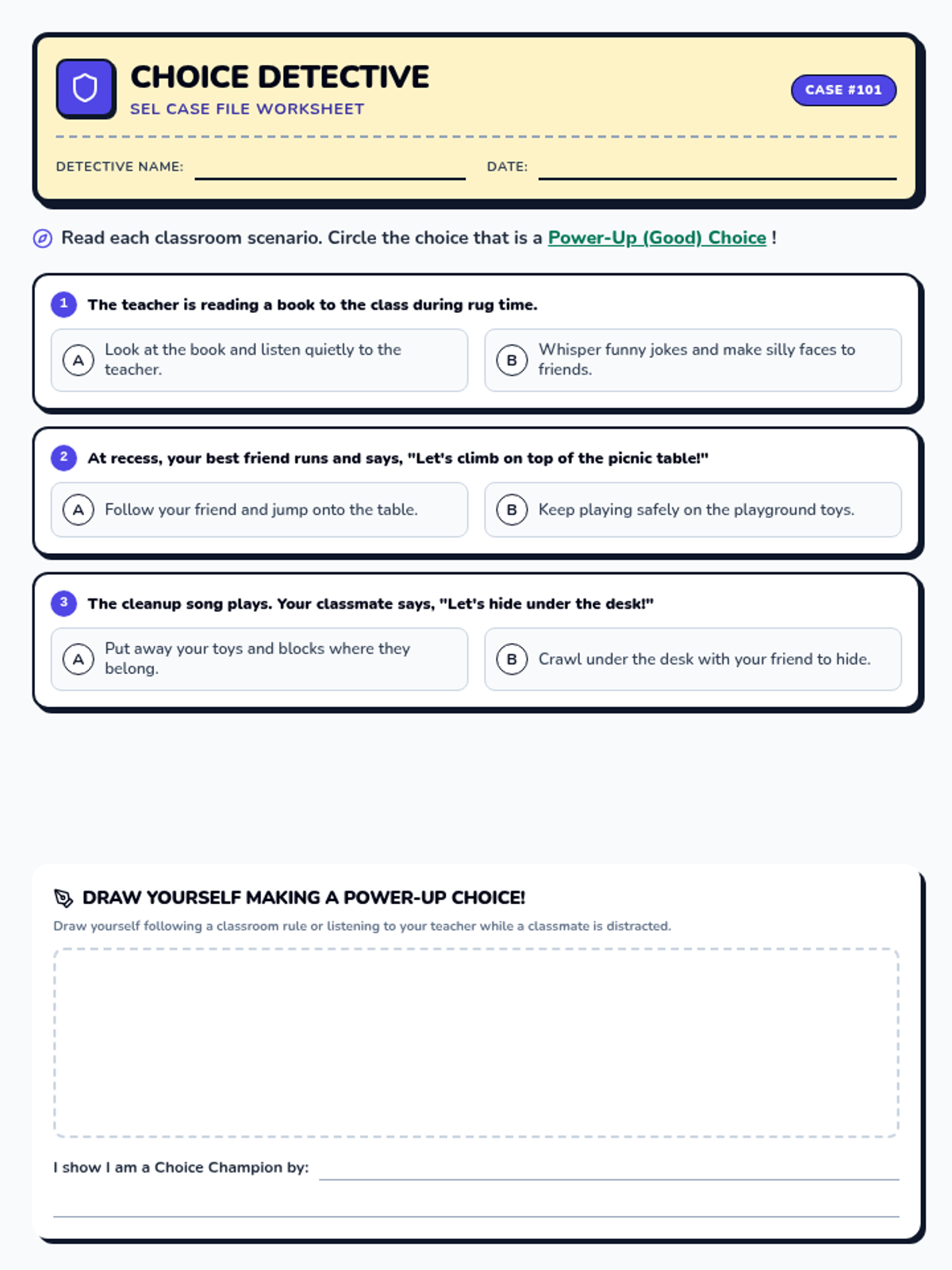
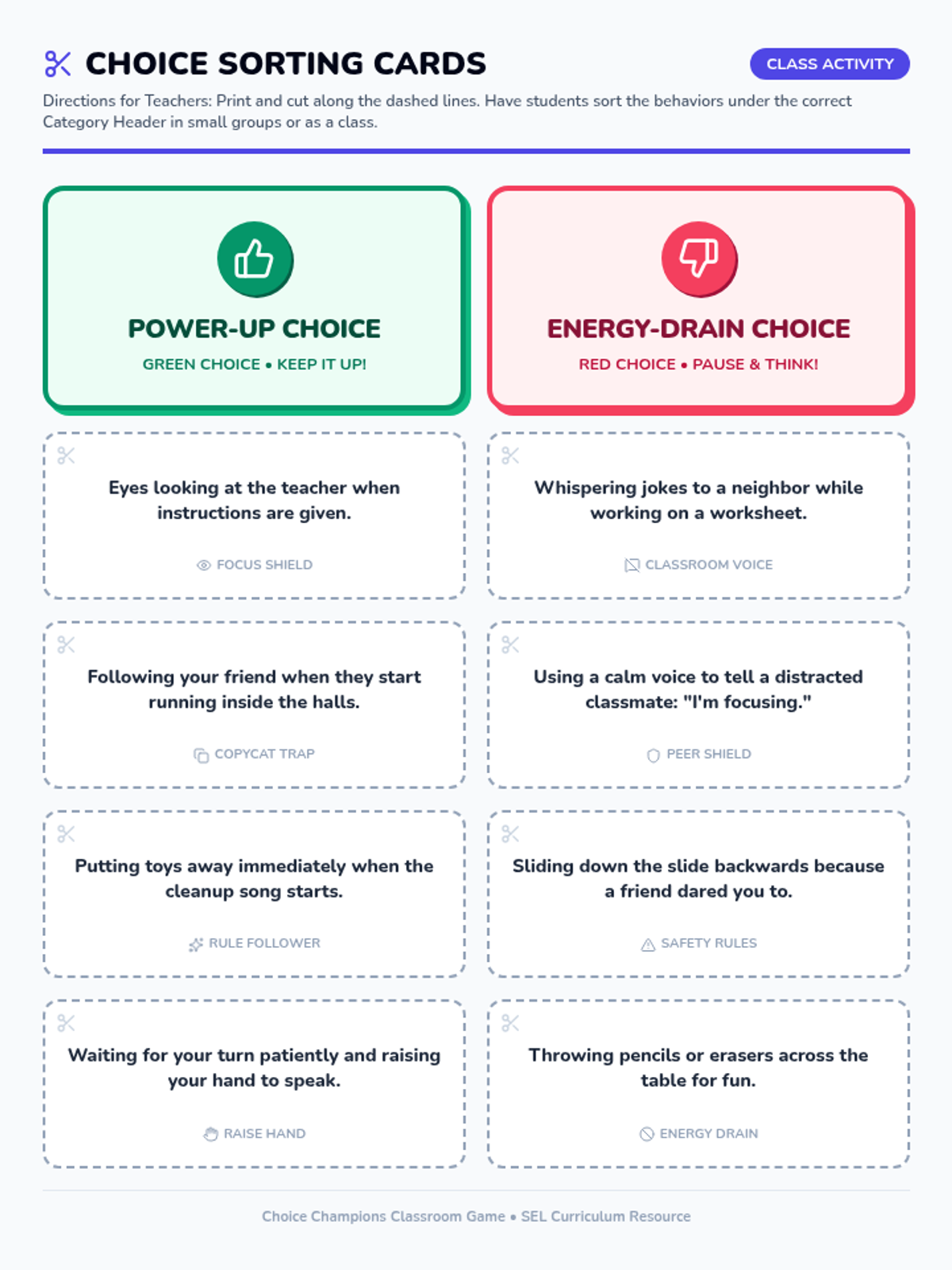
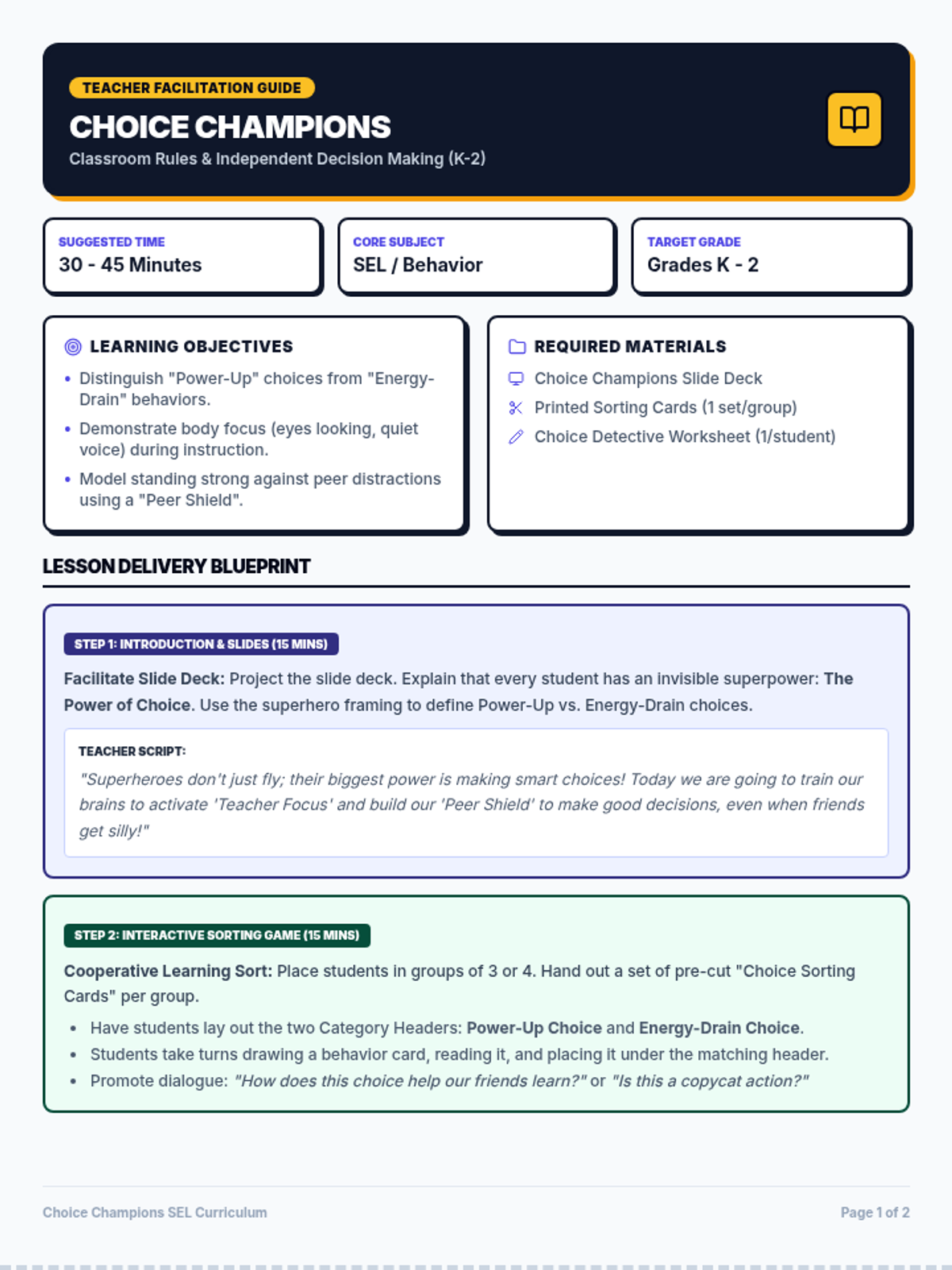
A social-emotional learning lesson designed for early elementary students (K-2) to teach the difference between good and bad classroom choices. It focuses on listening to the teacher, following rules, and maintaining independent positive behavior despite peer distractions.
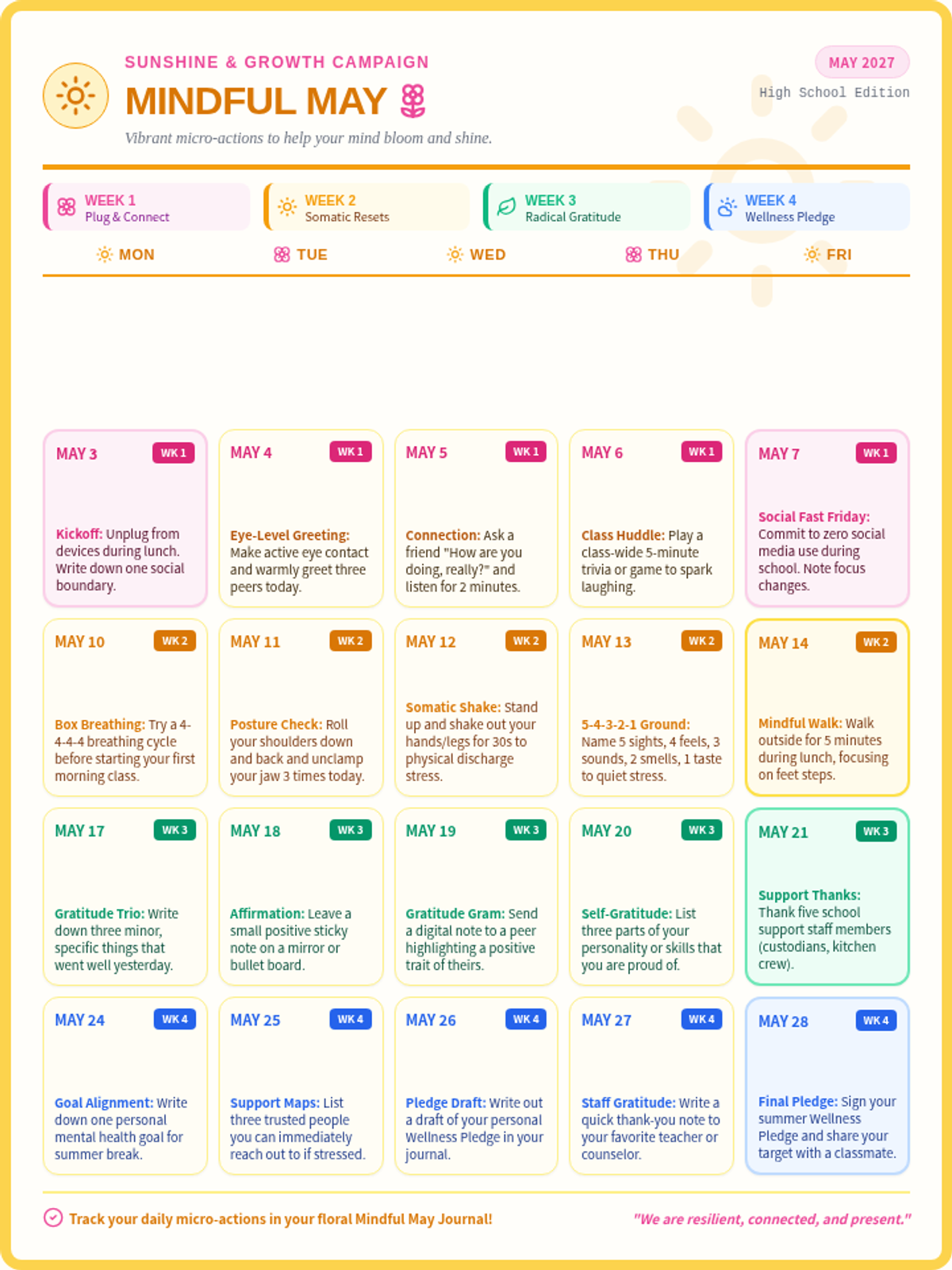
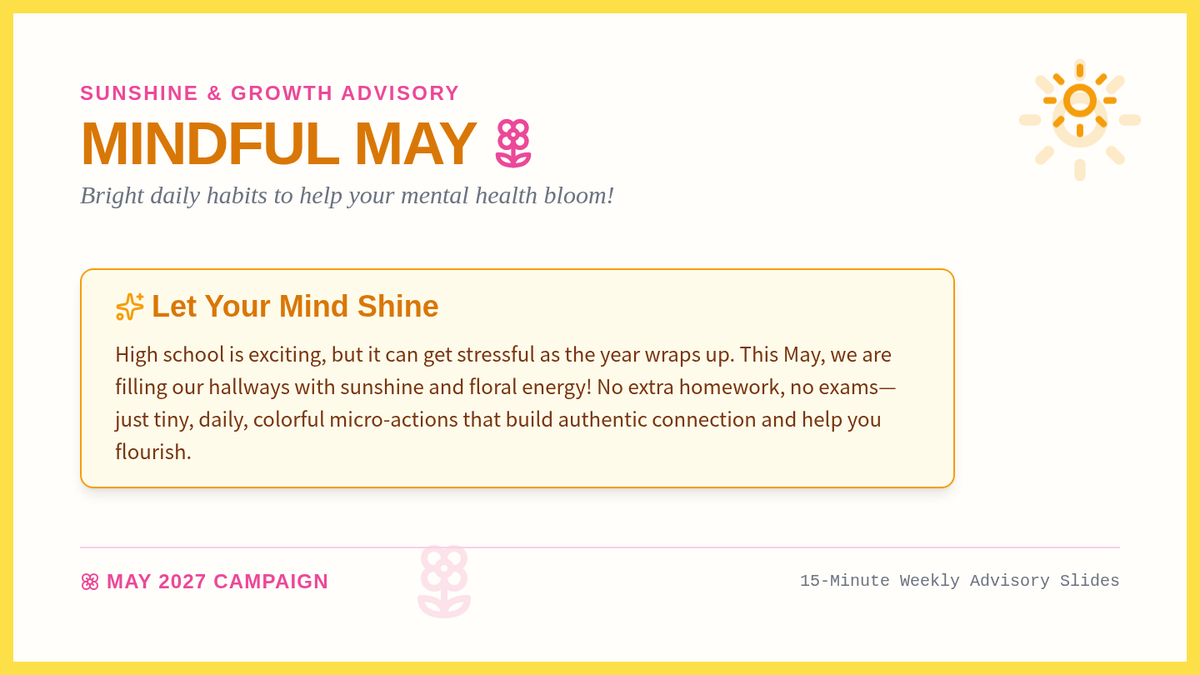
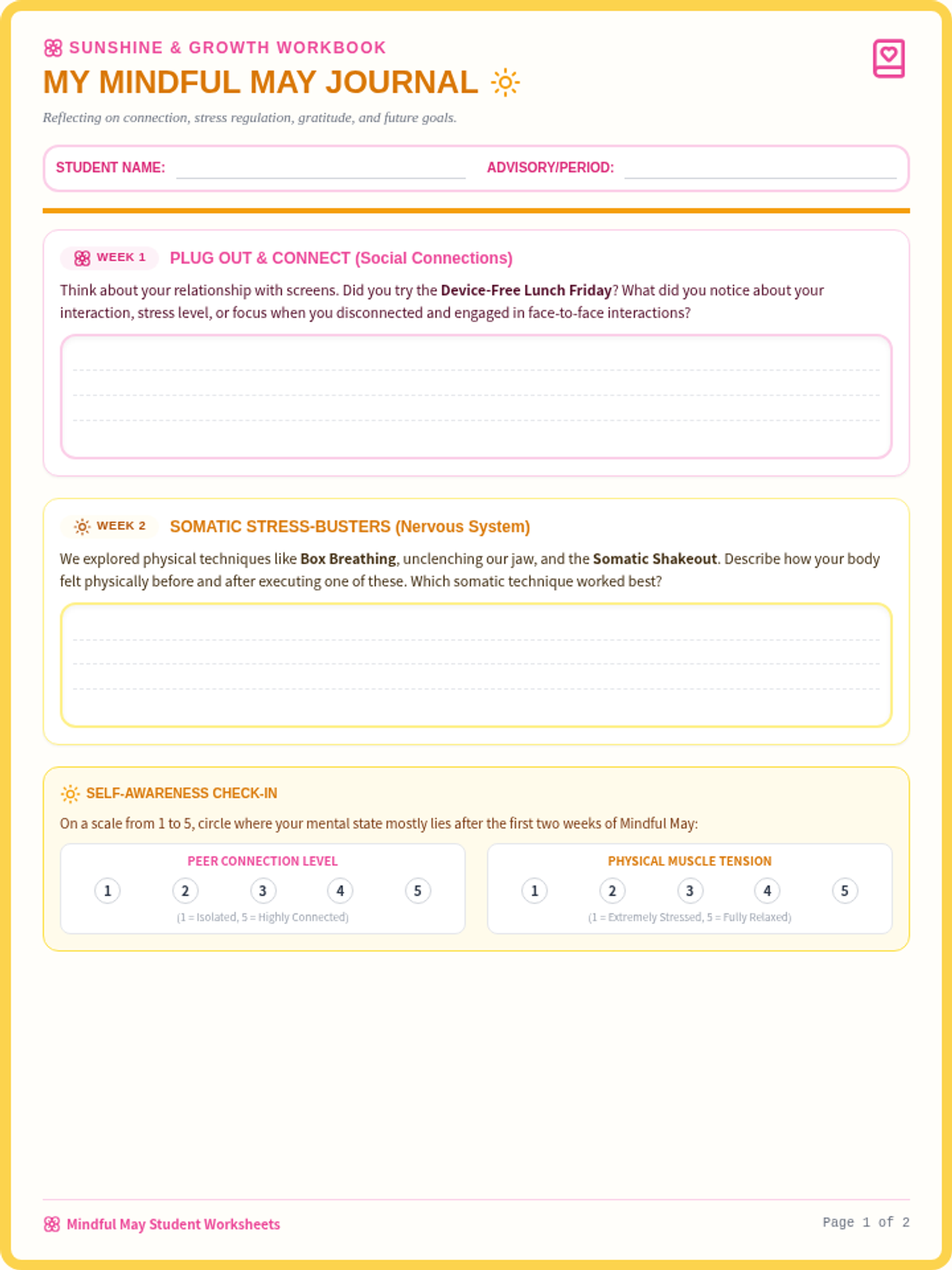
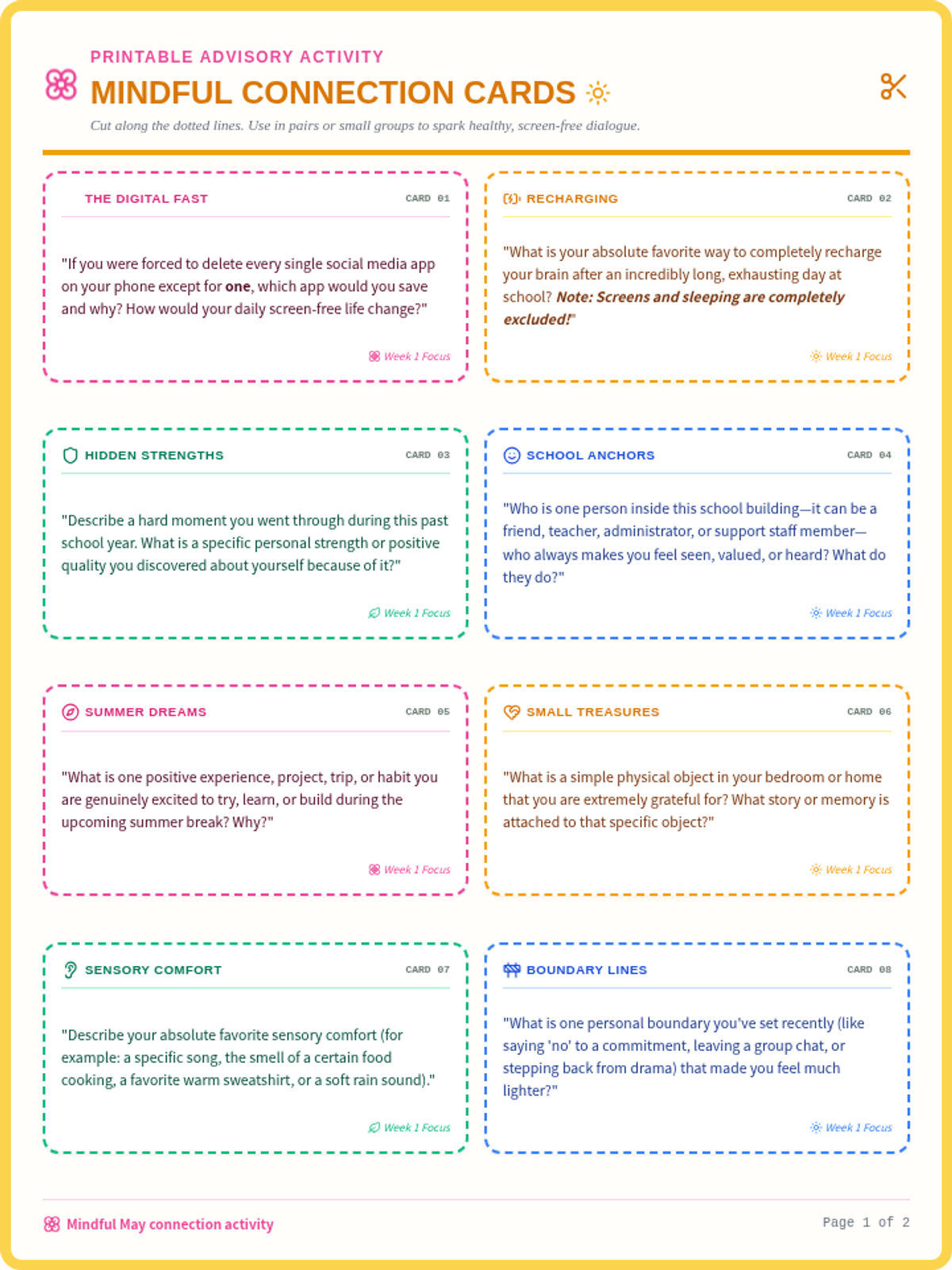
A complete, high-school-focused mental health awareness program for May. Includes a master daily calendar, weekly advisory lesson outlines, kickoff slides, a personal reflection journal, and collaborative connection cards.
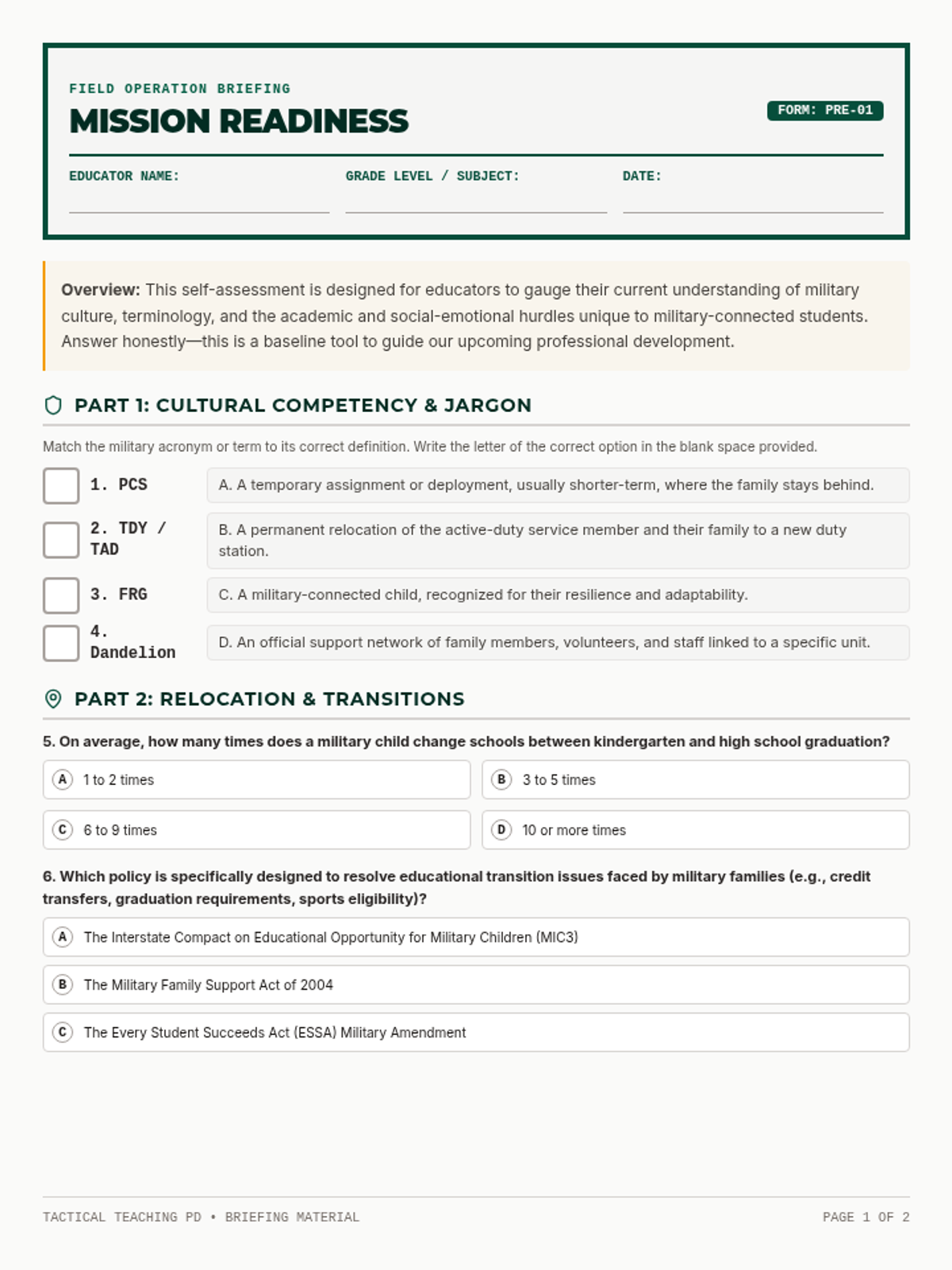
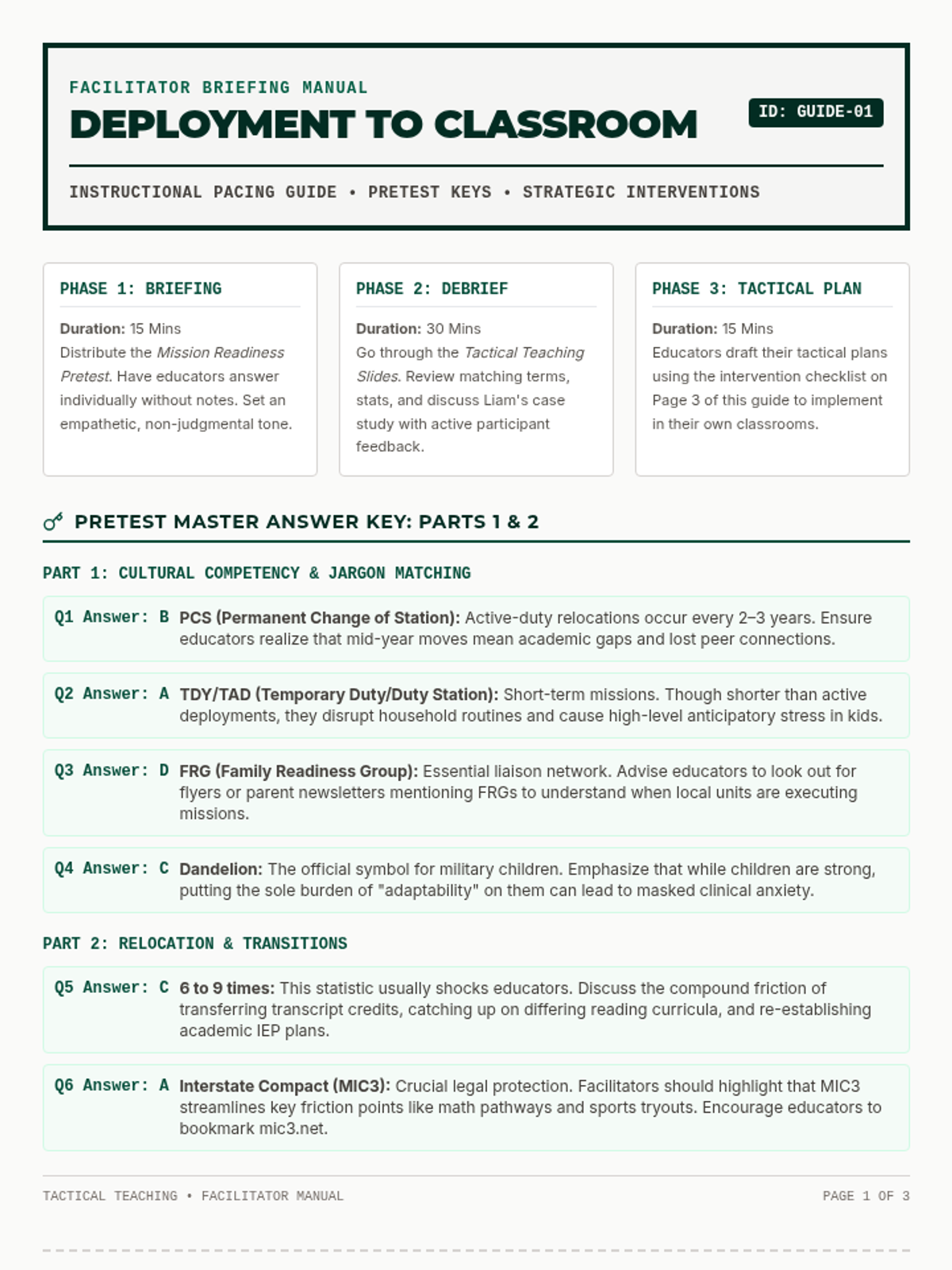
A professional development workshop designed to equip educators with the cultural competency, empathy, and practical strategies needed to support military-connected students facing deployment, frequent moves, and peer isolation.
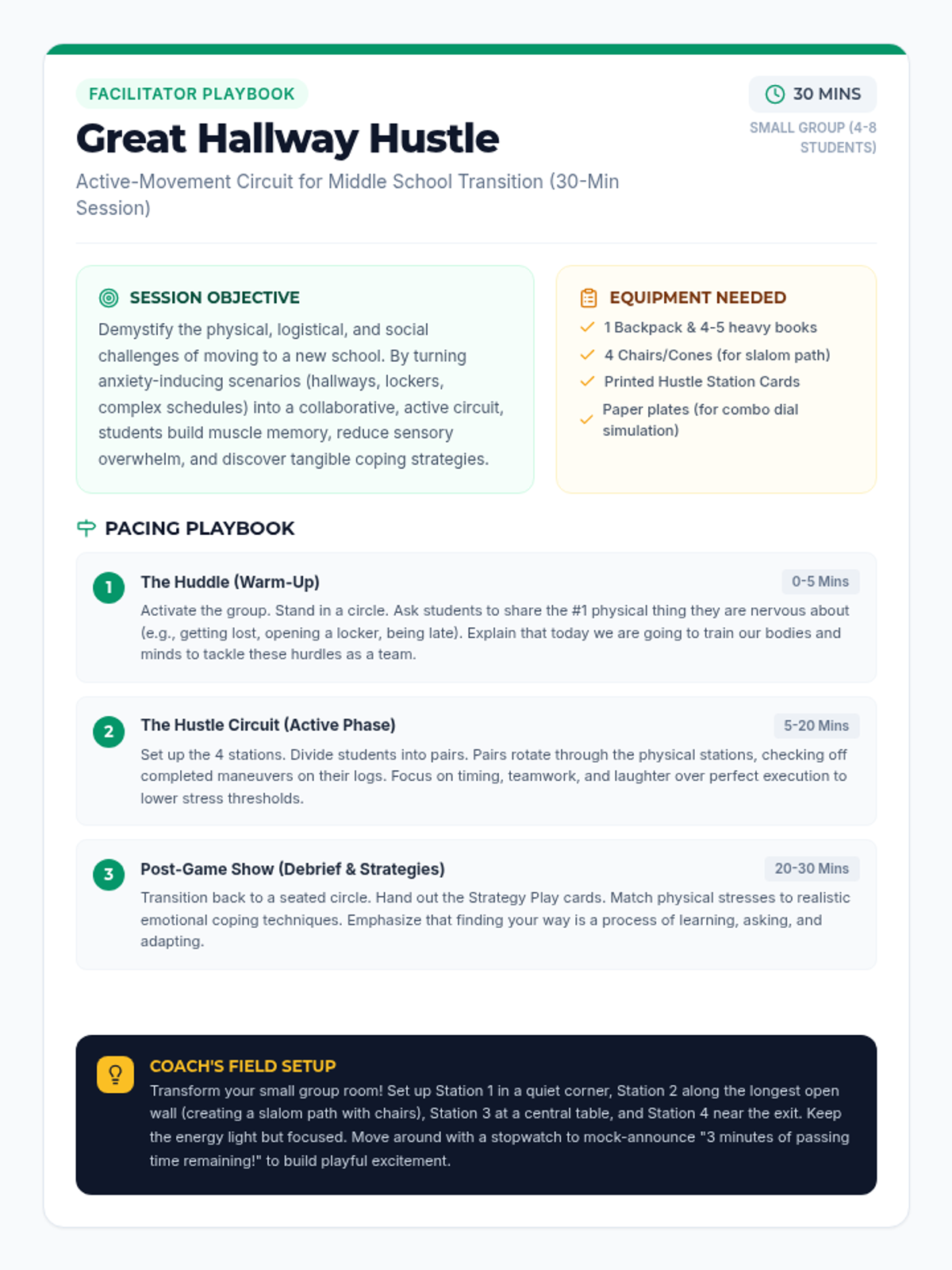
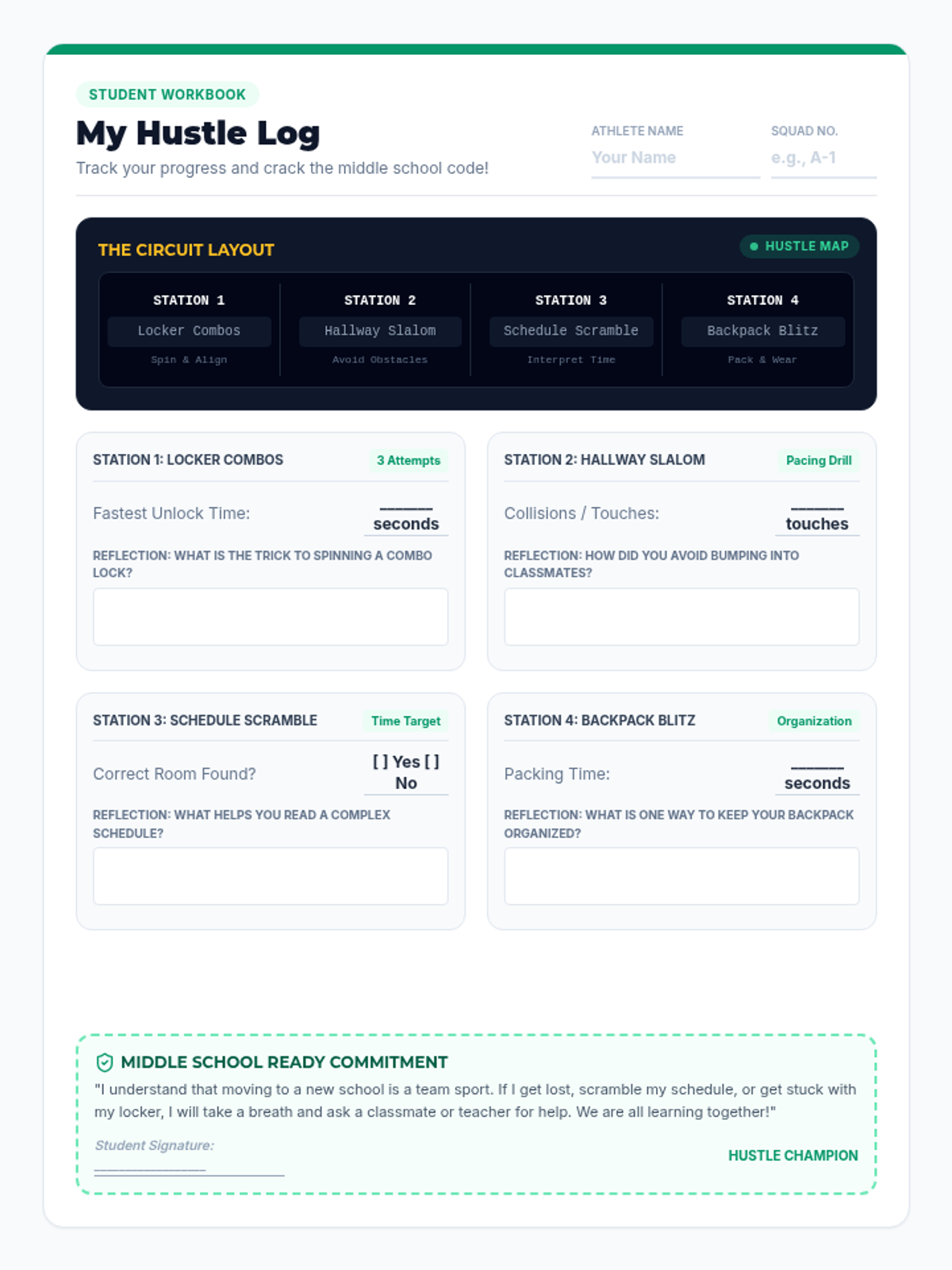
A 30-minute small group session that uses a high-energy movement circuit to address the transition concerns of moving to a new middle school, simulating lockers, hallways, backpacks, and schedules.
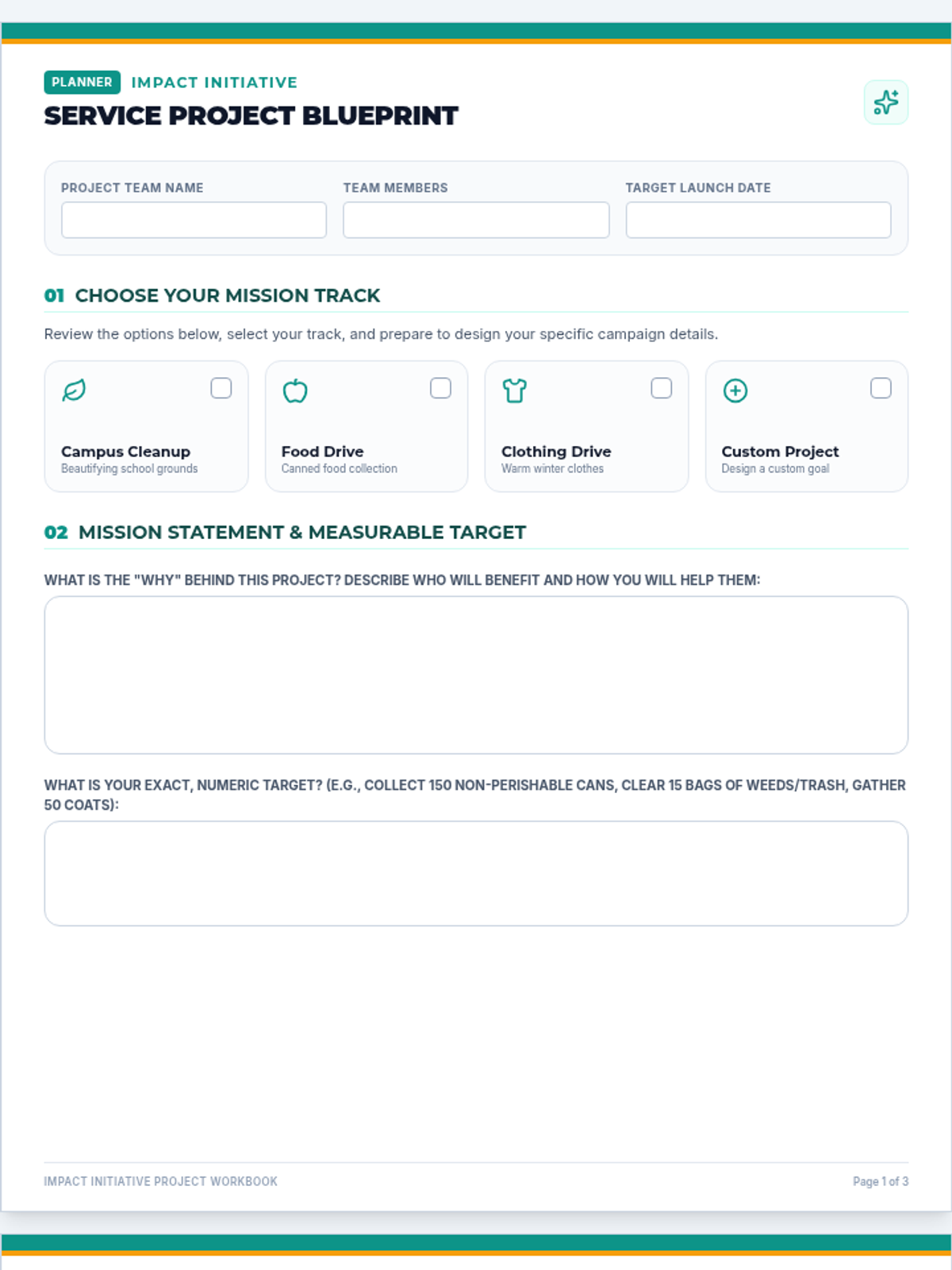
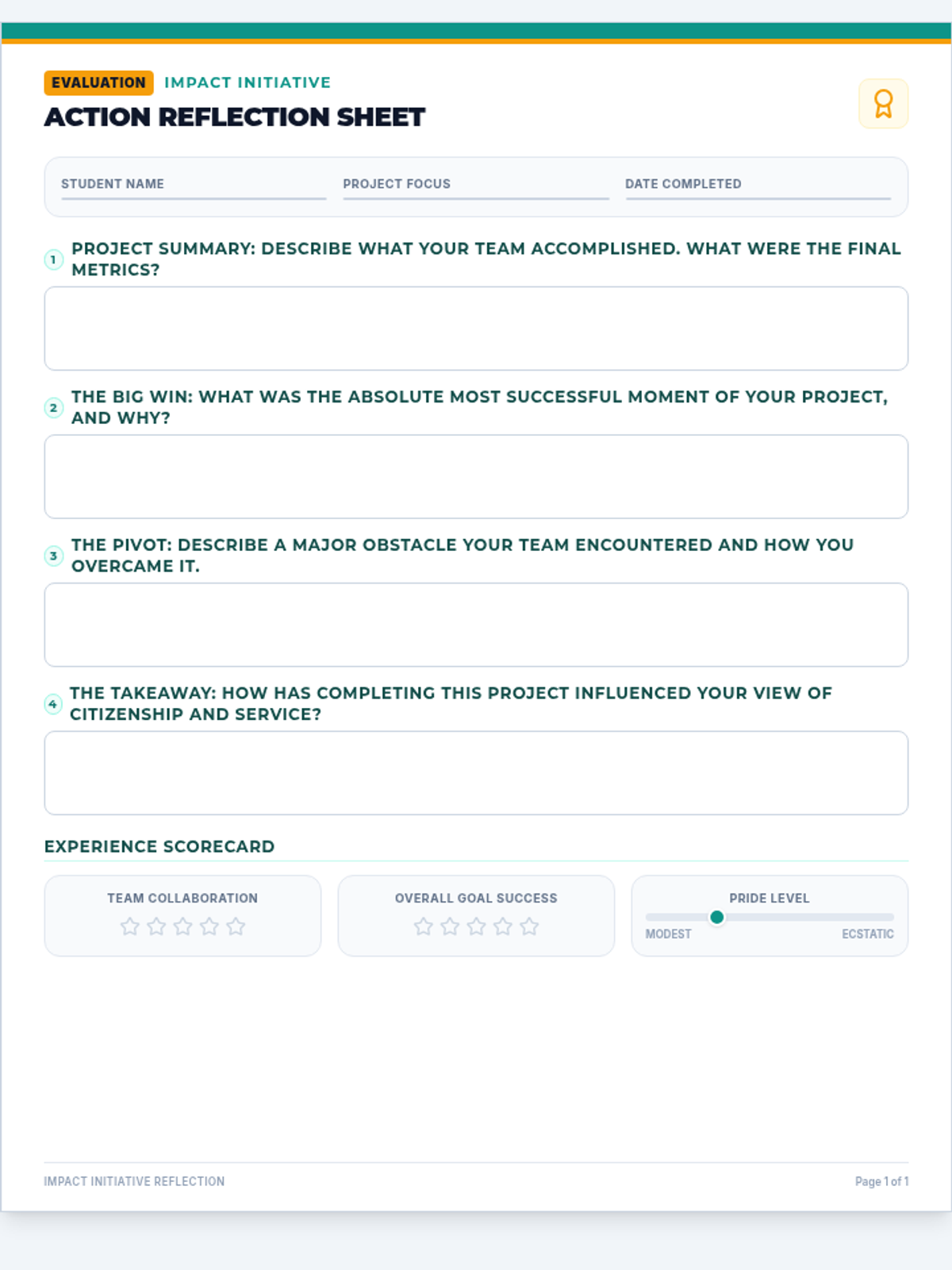
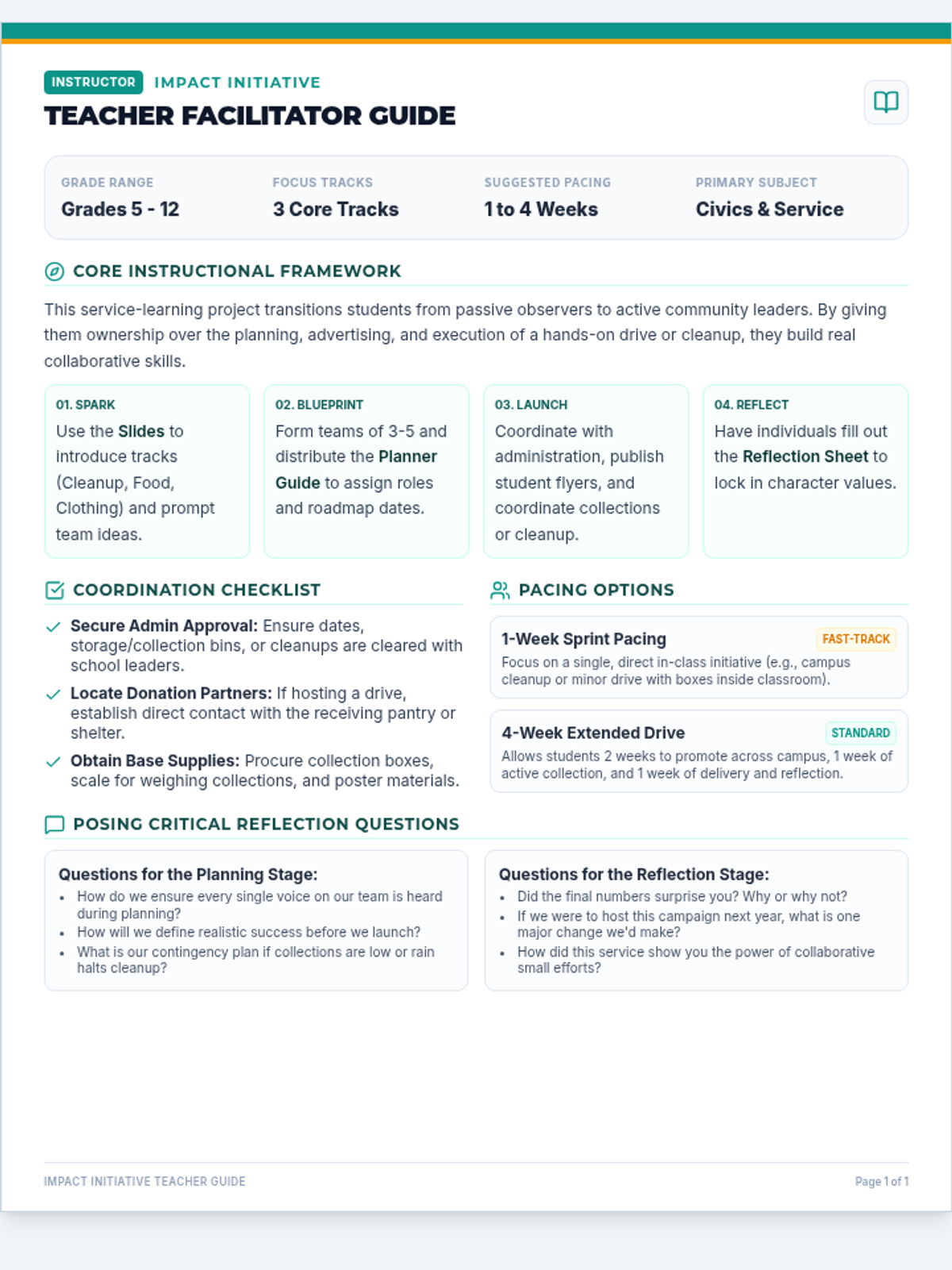
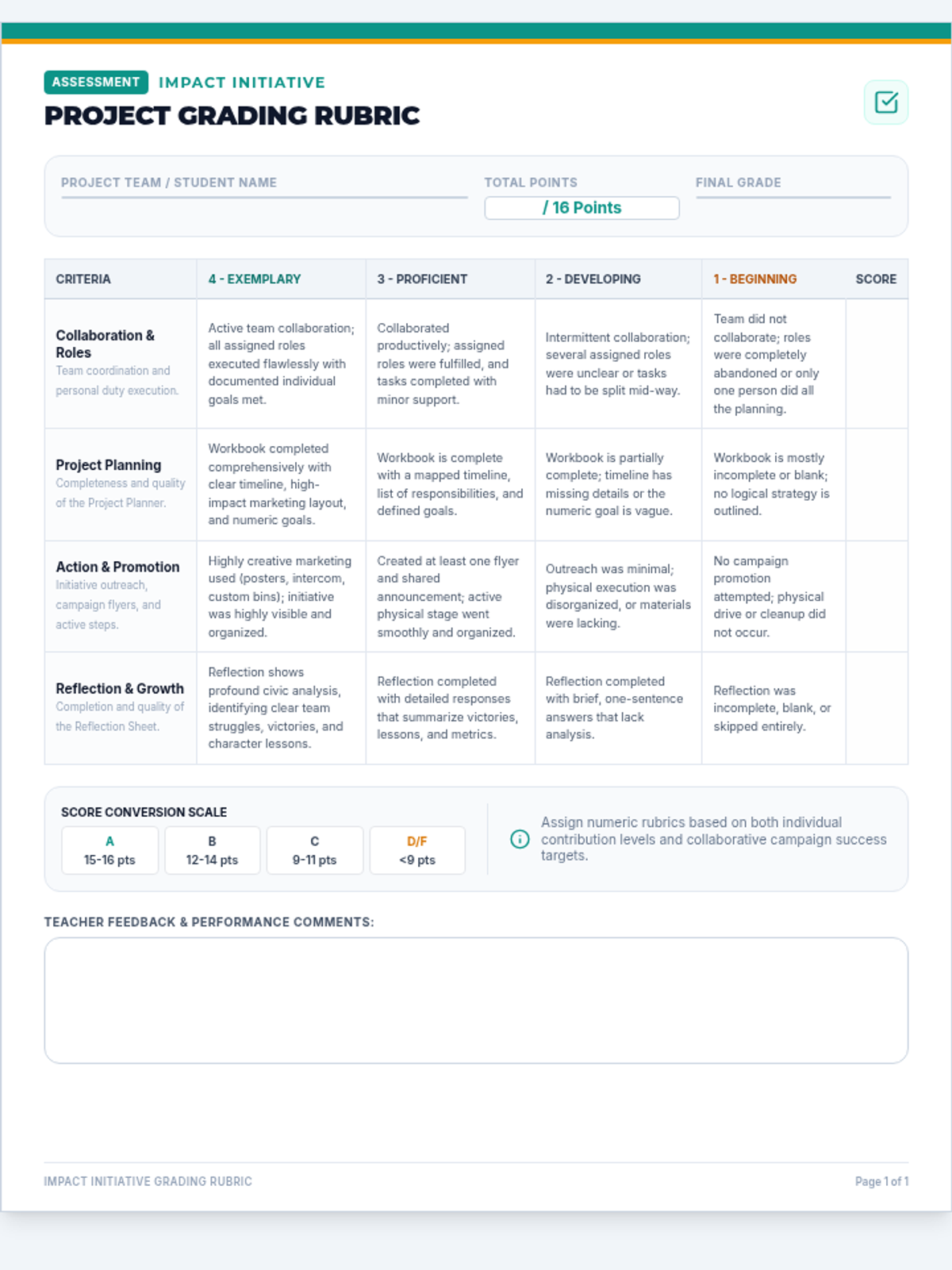
A service-learning lesson where students plan, execute, and reflect on a community service project of their choice (school campus cleanup, food drive, or clothing drive). It includes interactive presentation slides, a step-by-step project planning guide, a simplified reflection worksheet, and a teacher facilitation guide.