Cultivating gratitude and reflecting on the camp journey to foster emotional well-being.
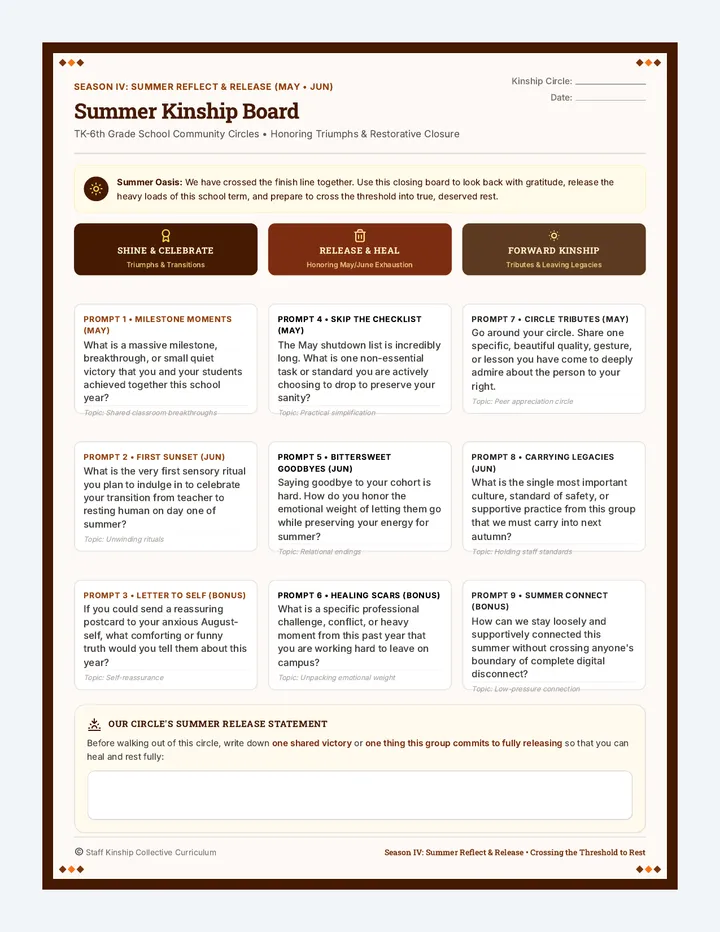
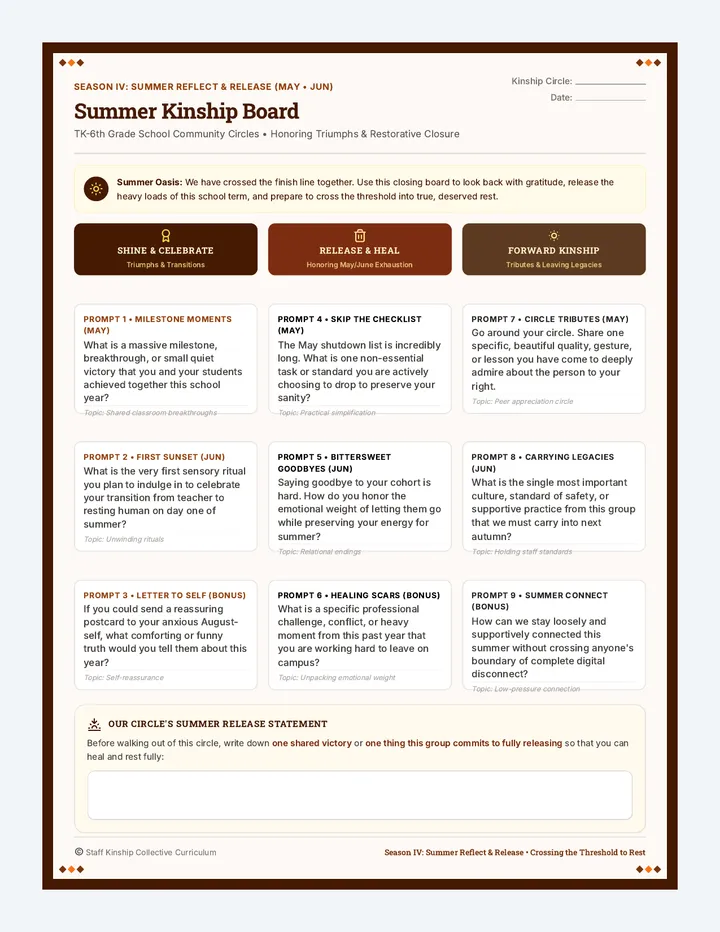
Celebrates collective triumphs, reflective learning, and restorative closure as the school year draws to an end (May, June).
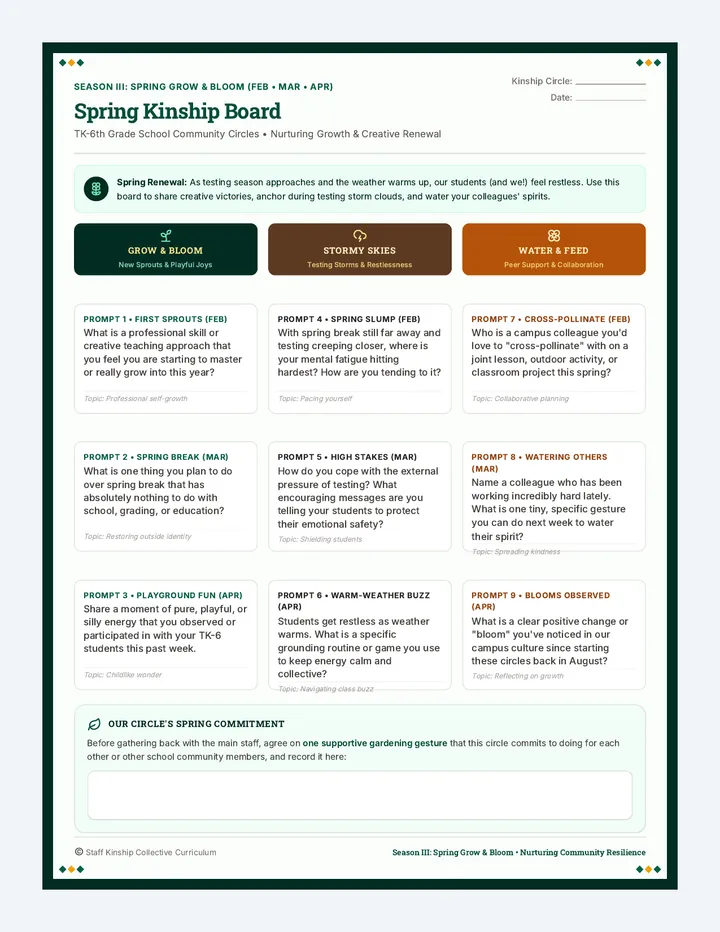
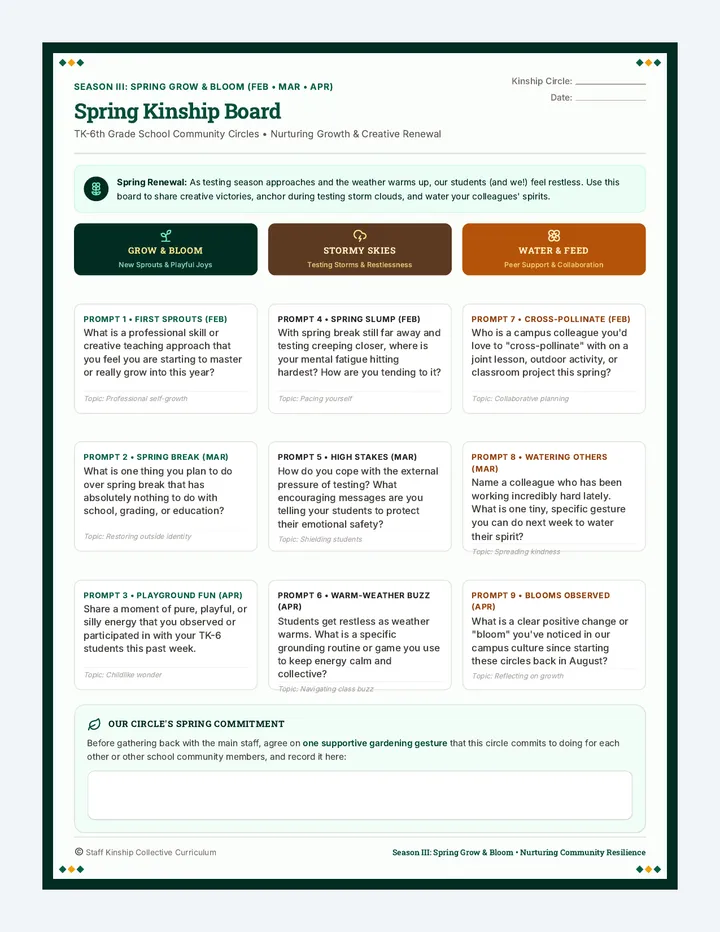
Fosters professional empathy, creative renewal, and navigating high-stakes testing season with collaborative support and grace (February, March, April).
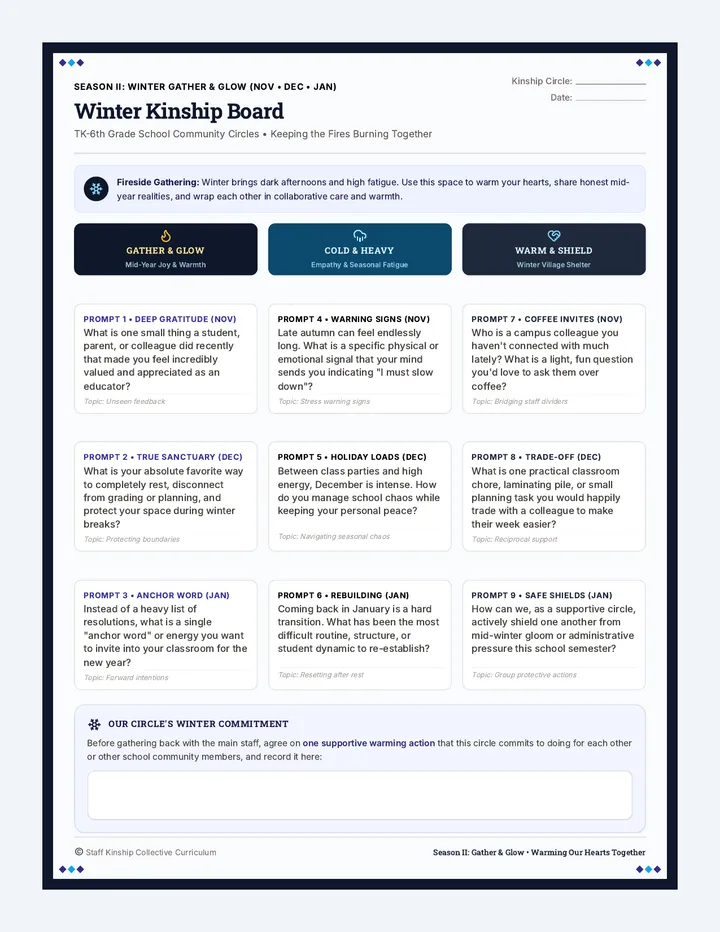
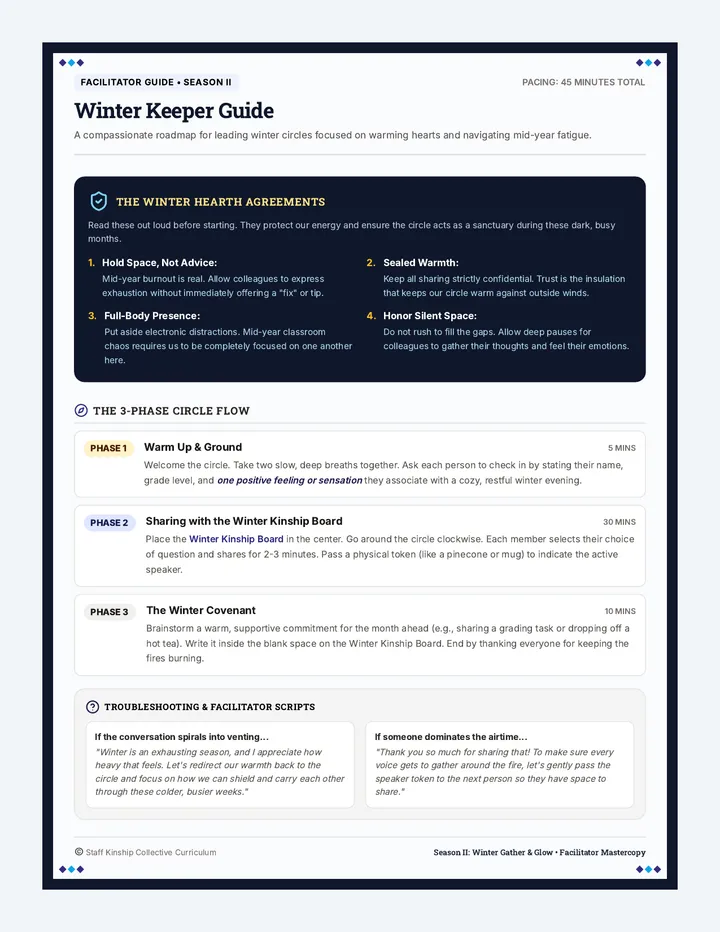
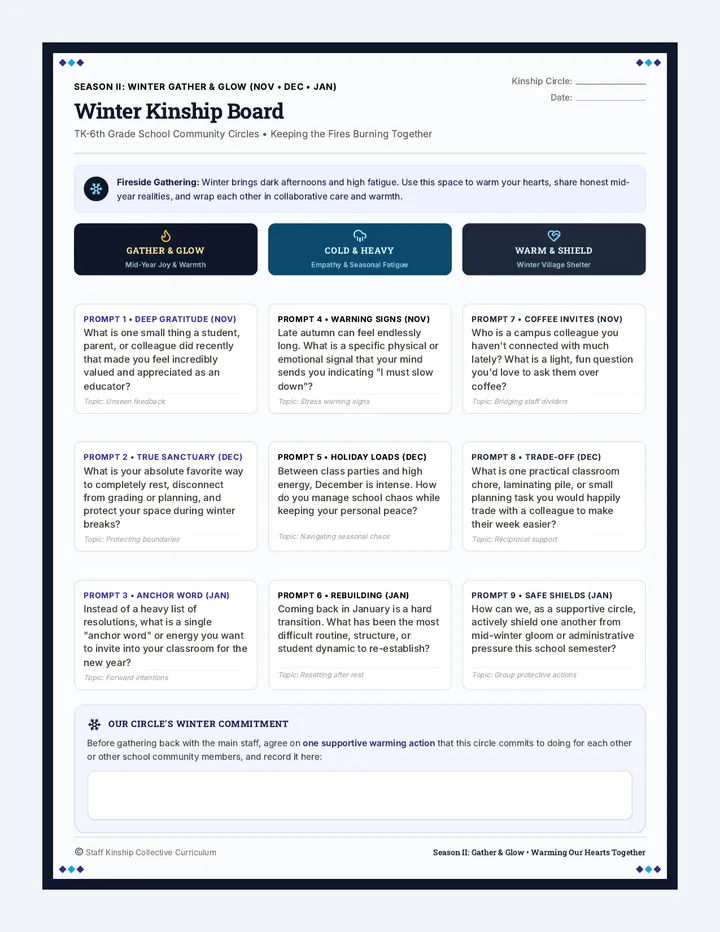
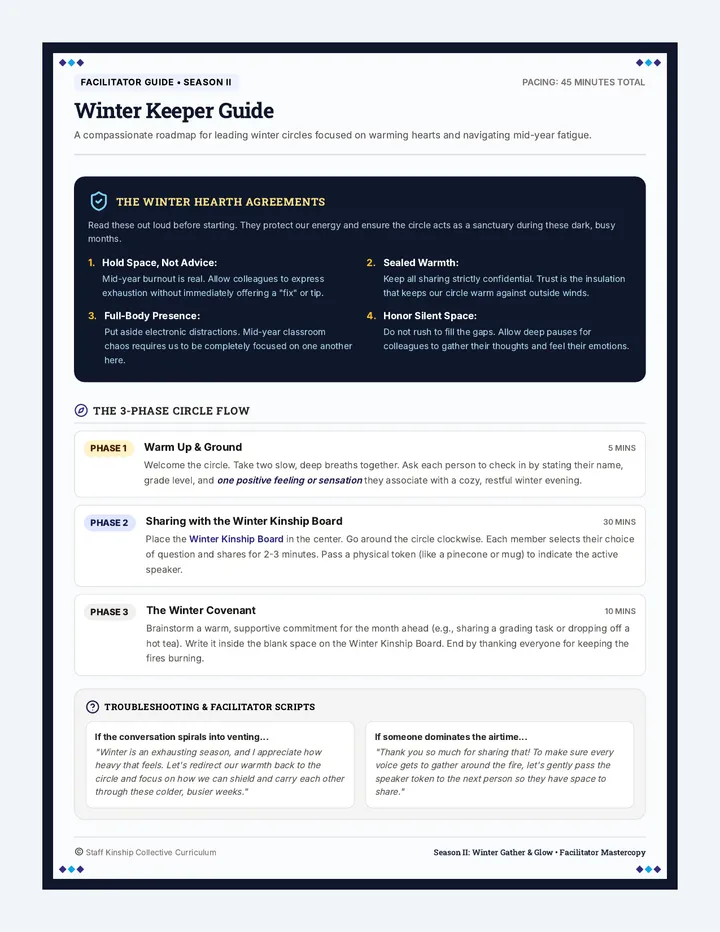
Explores themes of collective healing, mid-year fatigue management, peer-to-peer gratitude, and warming up school culture during the winter months (November, December, January).
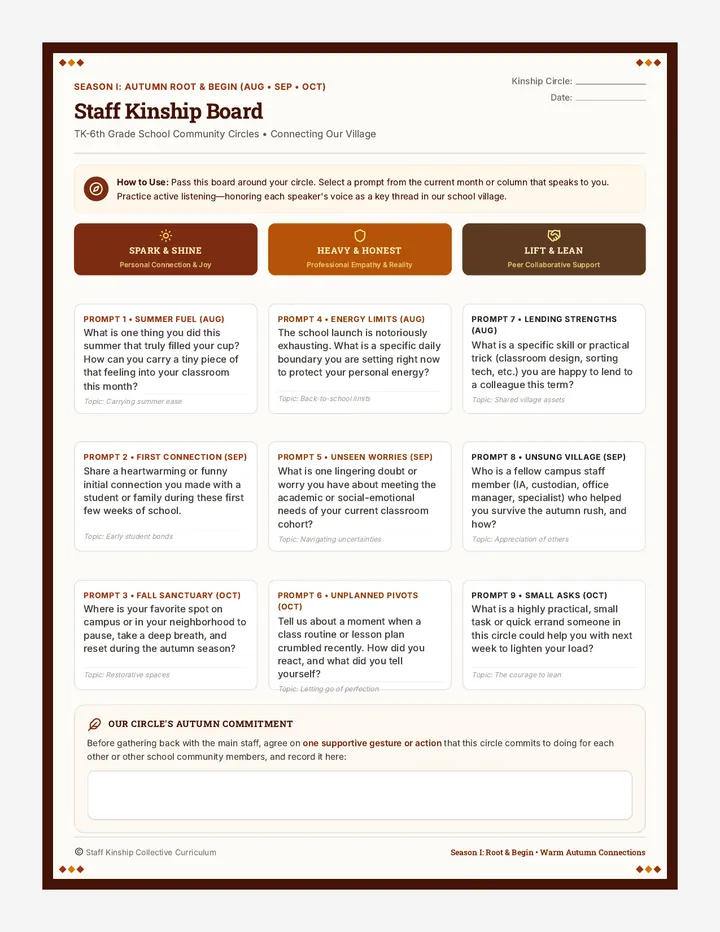
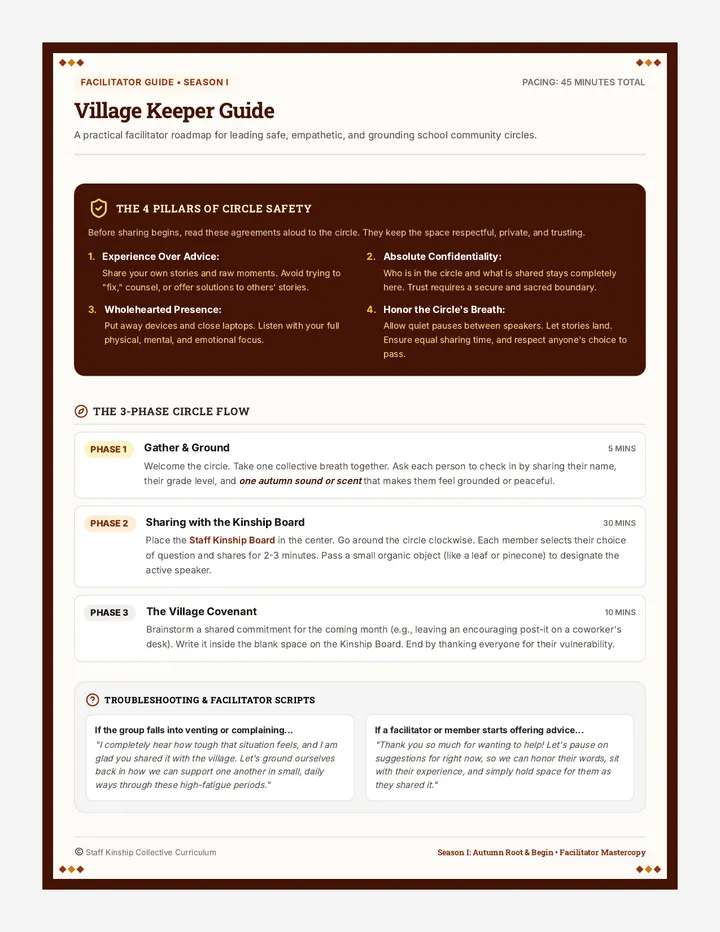
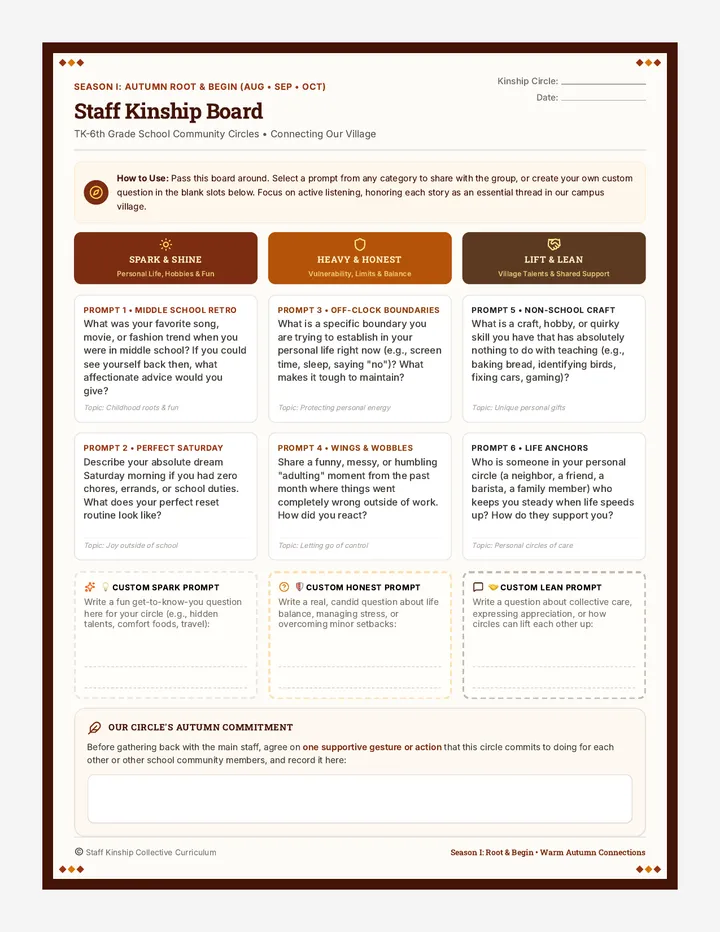
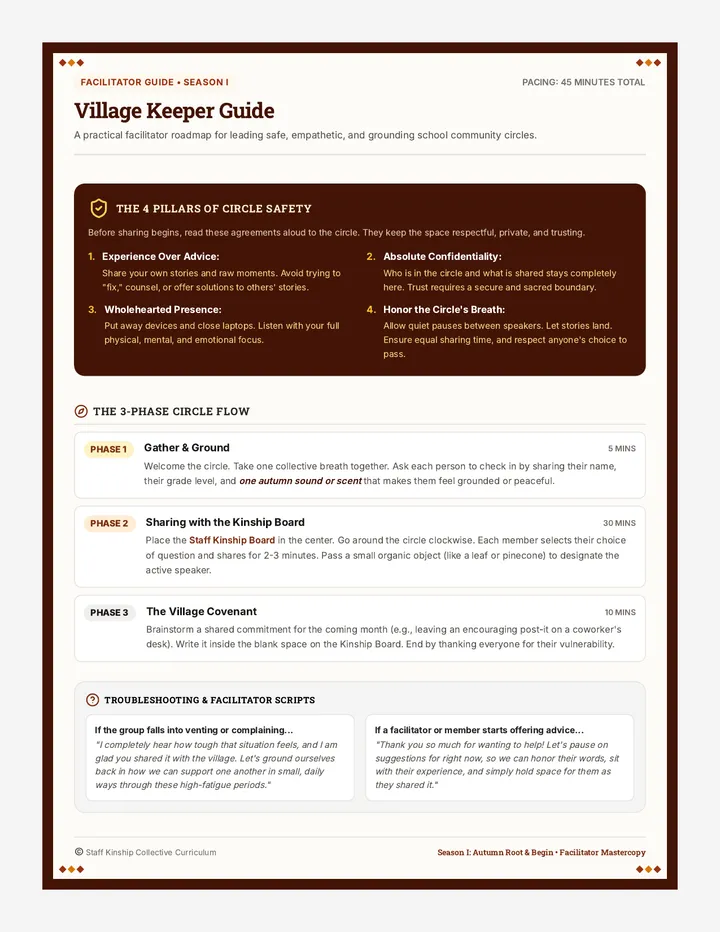
Focuses on establishing group trust, sharing summer transitions, and setting supportive baseline agreements for the start of the school year (August, September, October).
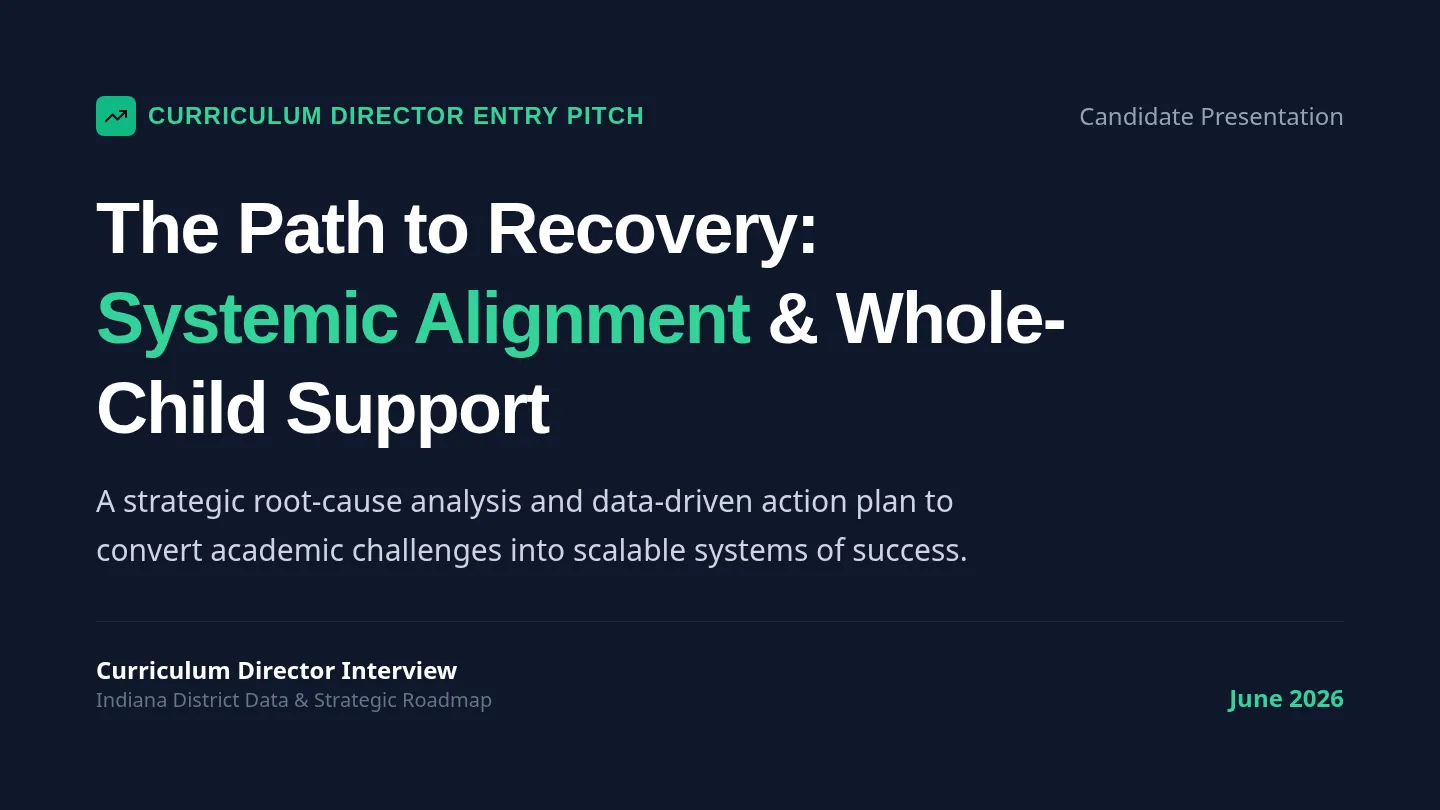
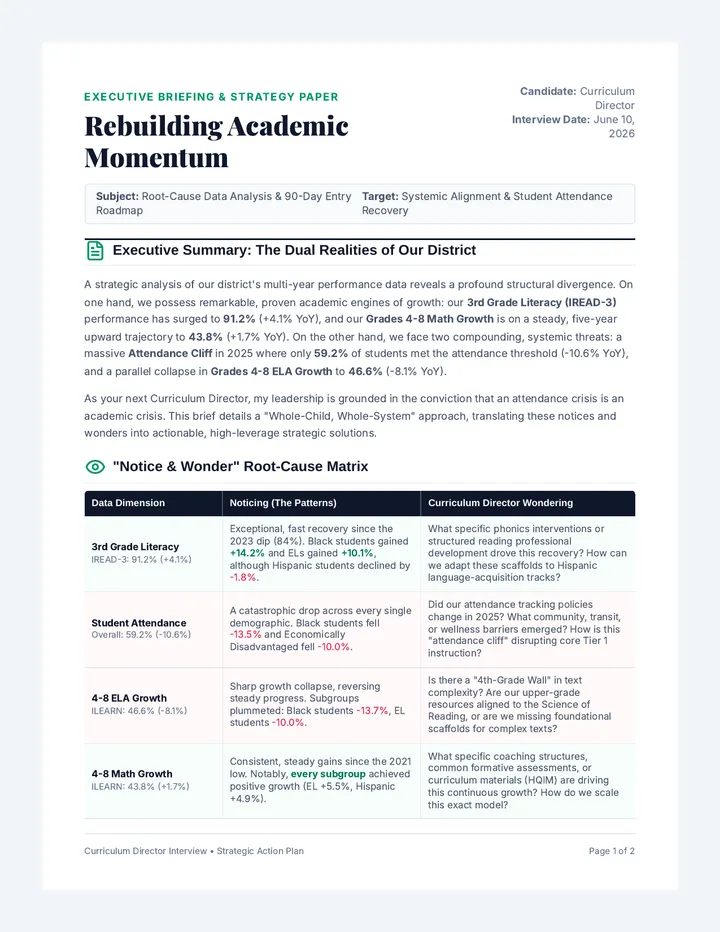
A comprehensive interview package featuring a slide deck and an executive briefing handout, detailing a data-driven action plan and 90-day entry roadmap for curriculum leadership.
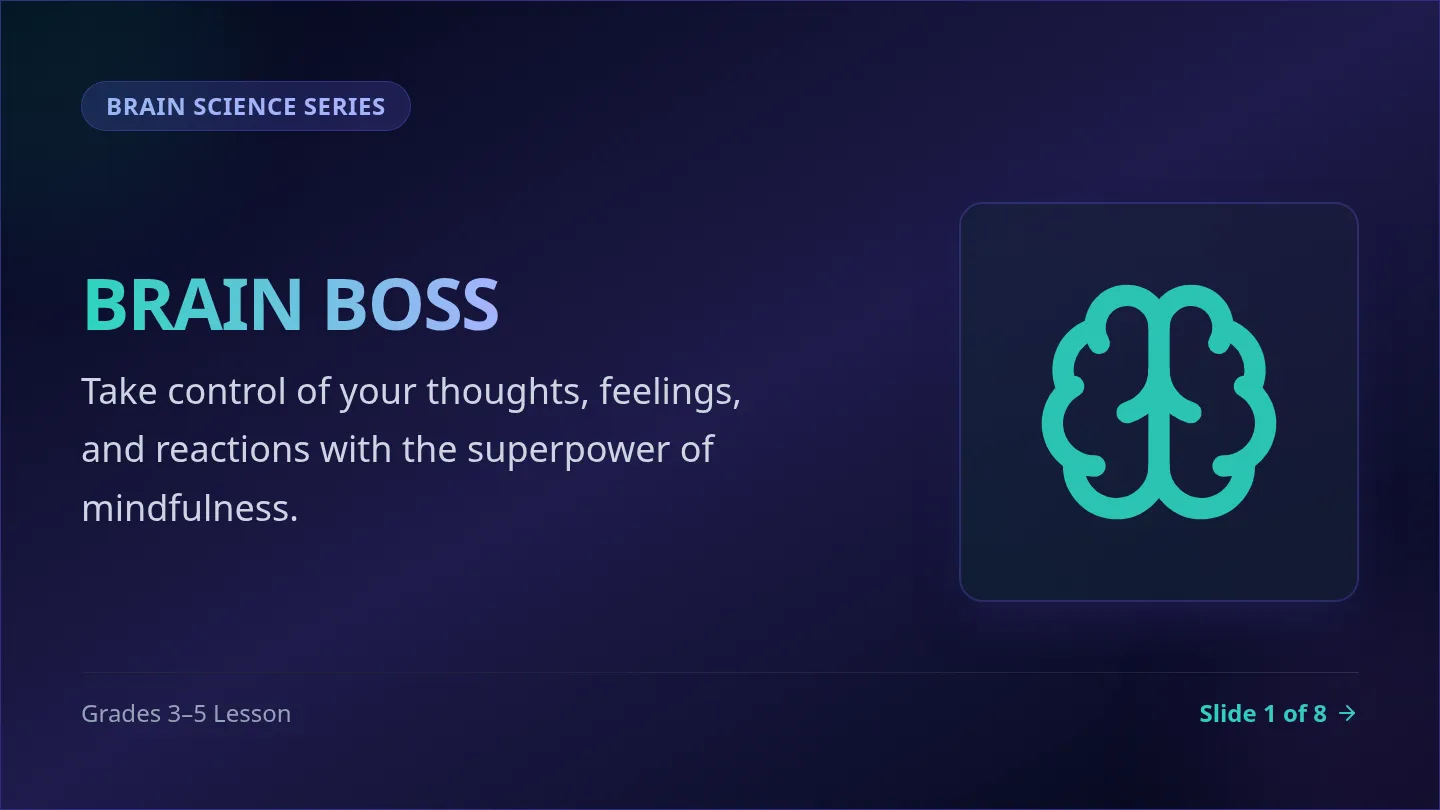
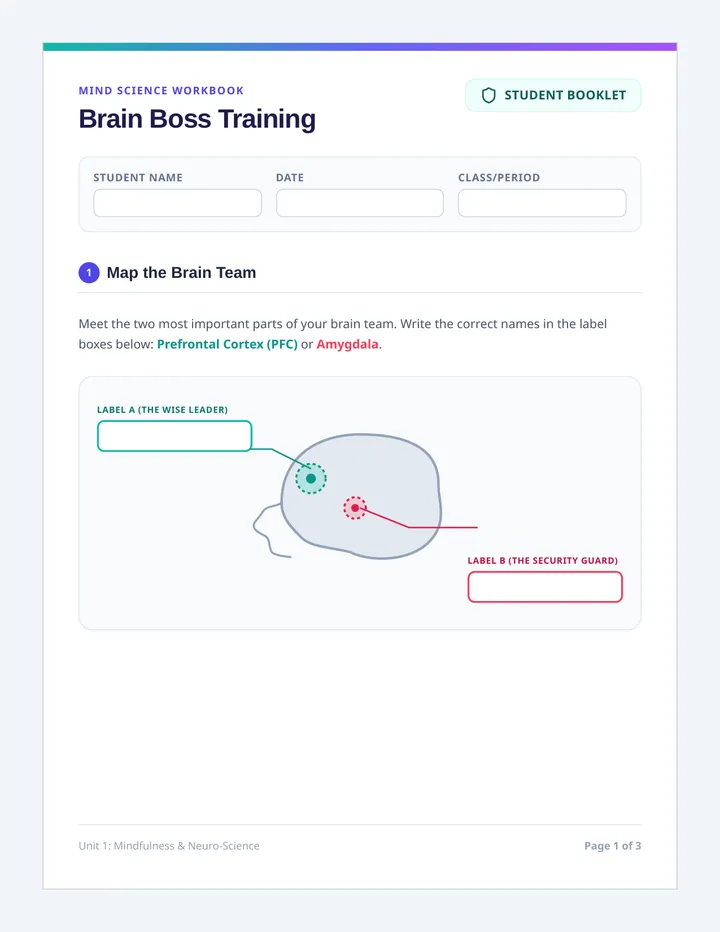
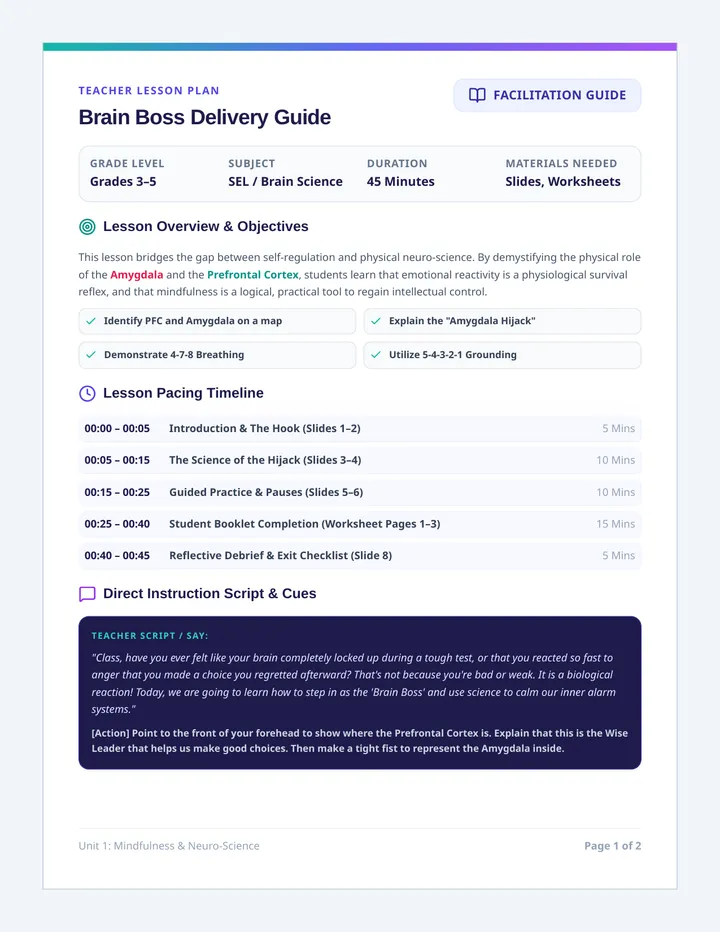
An explicit teaching lesson for Upper Elementary (grades 3-5) that introduces mindfulness through brain science, explaining the roles of the amygdala and prefrontal cortex, and provides concrete self-regulation strategies.
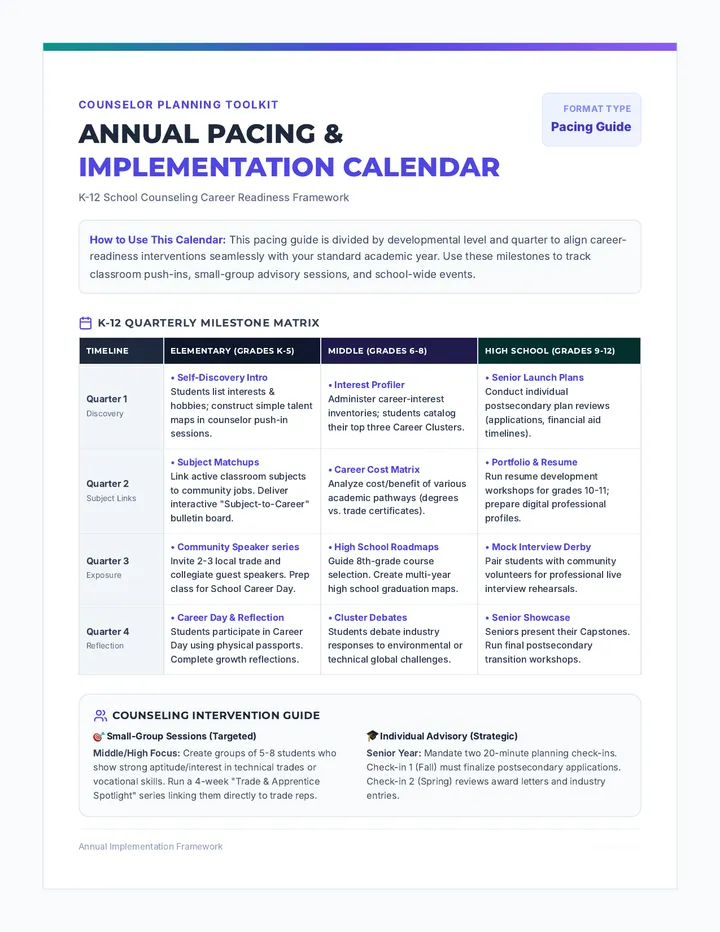
Actionable planning resources, school-wide career day guides, and implementation templates for school counselors to deploy career readiness curricula.
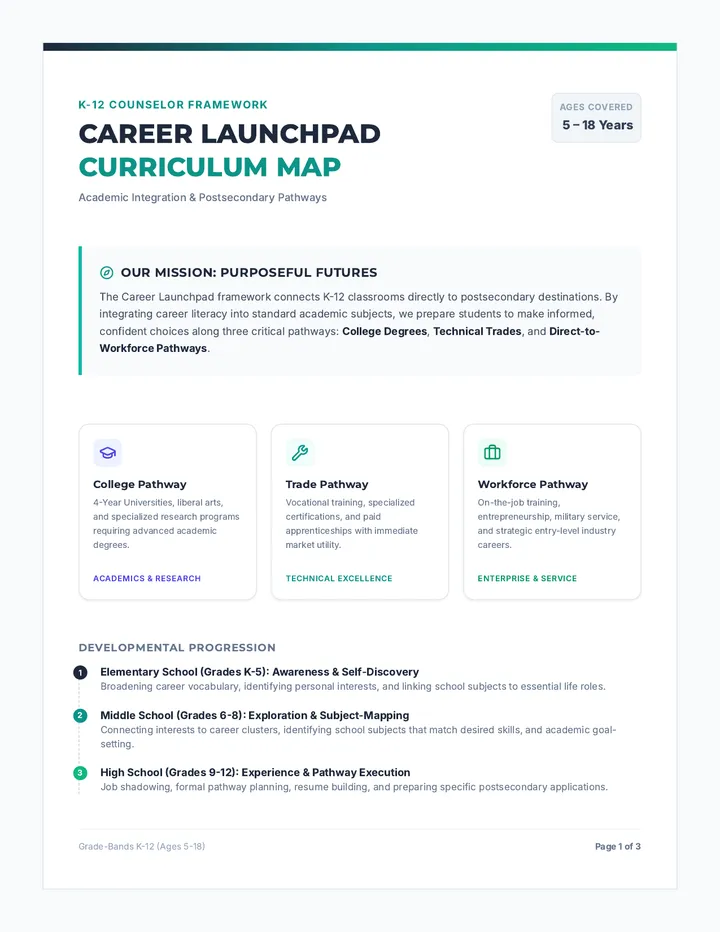
High-level scope, sequence, and developmental milestones for elementary, middle, and high school career exploration. This framework links classroom subjects to real-world college, trade, and workforce pathways.
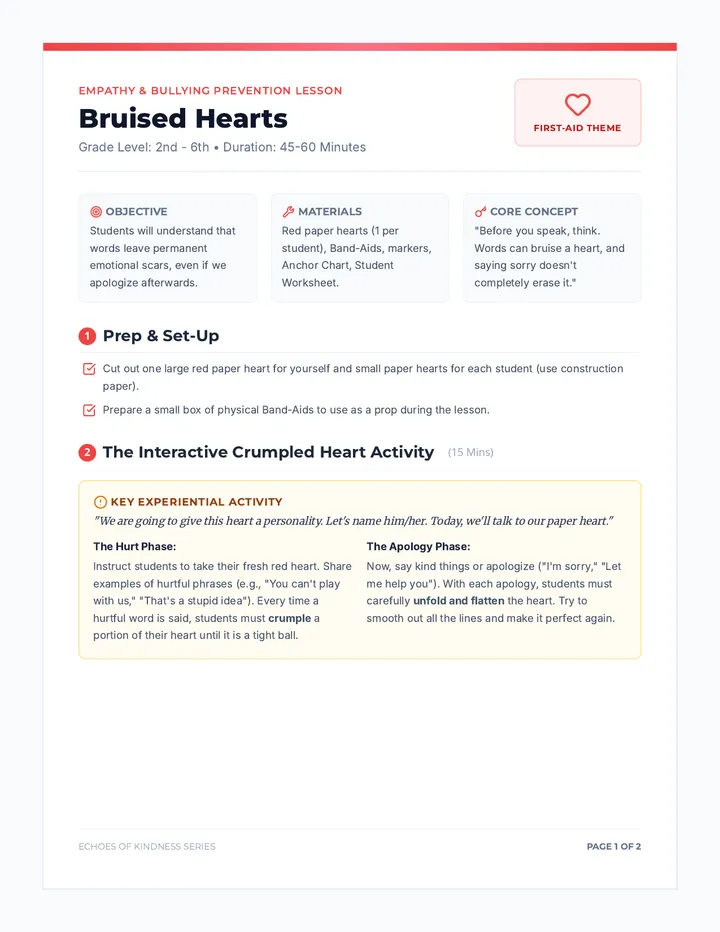
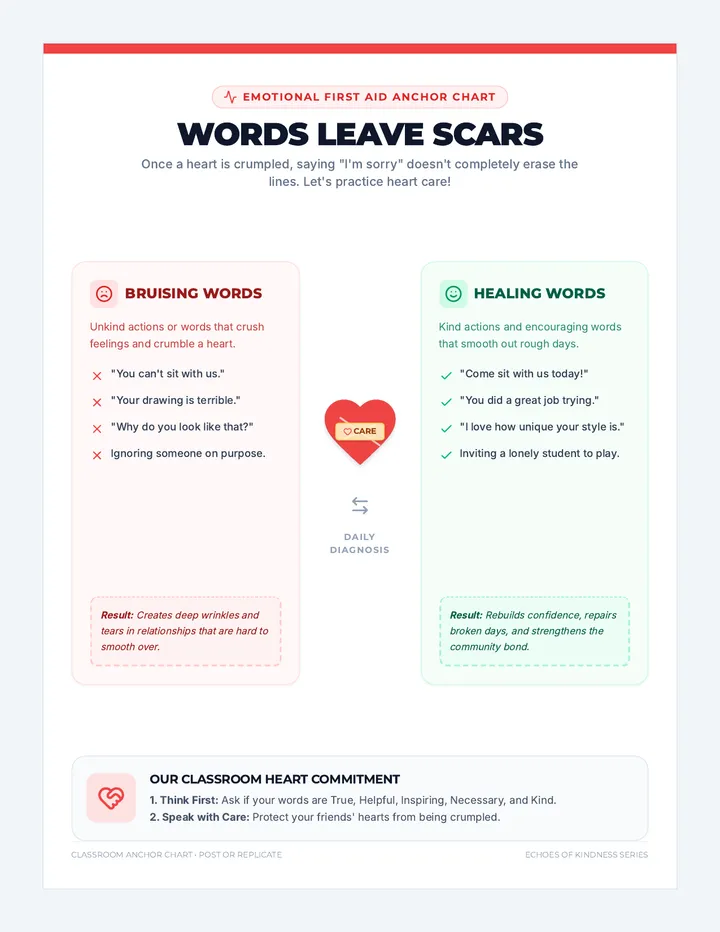
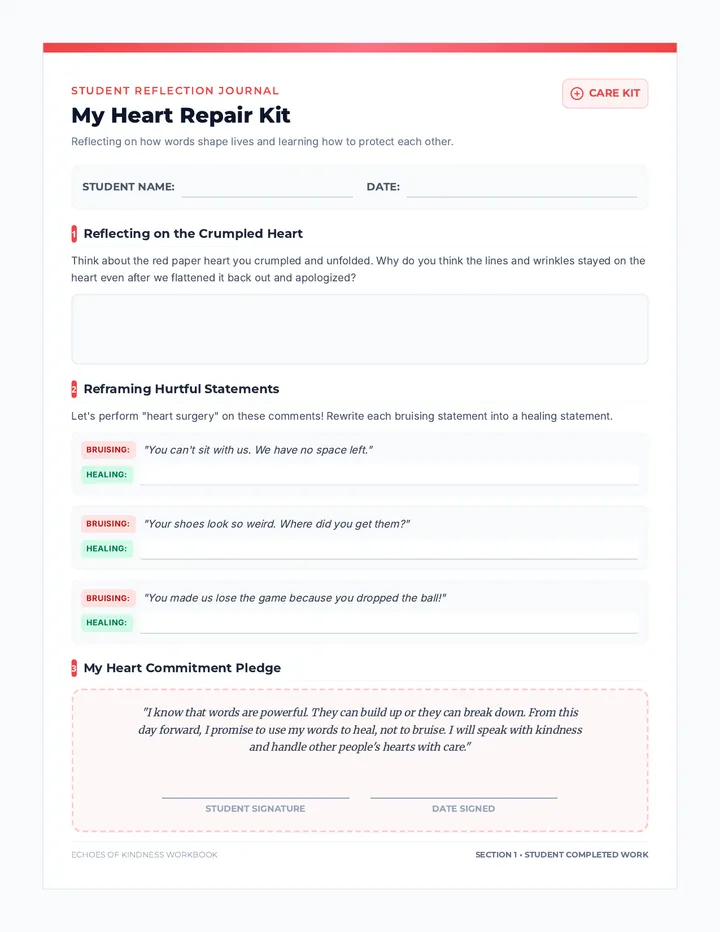
A powerful kindness and bullying prevention lesson exploring how hurtful words affect others and how we can repair hearts. Students engage in a paper-heart crumbling activity to visually understand the lasting impact of unkindness.
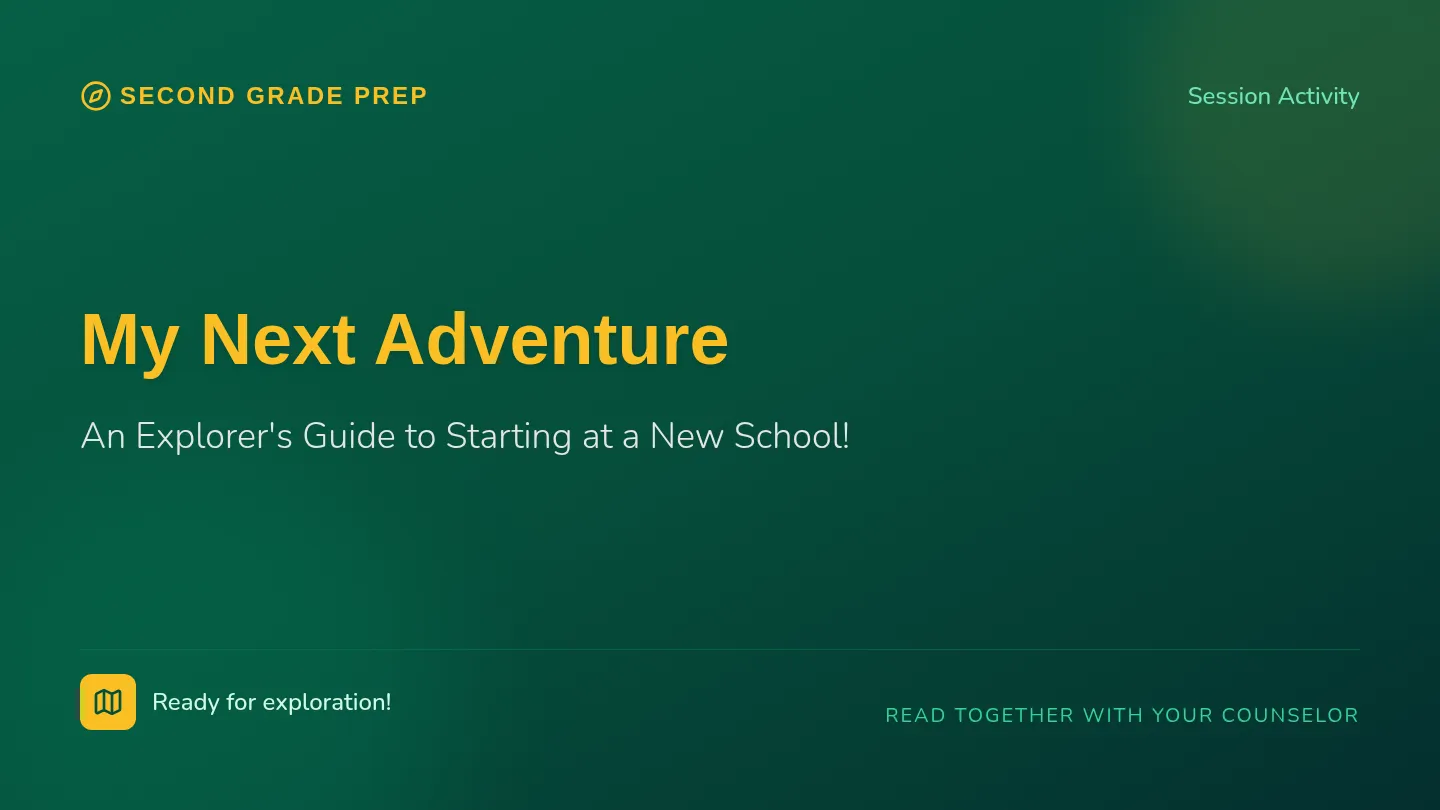
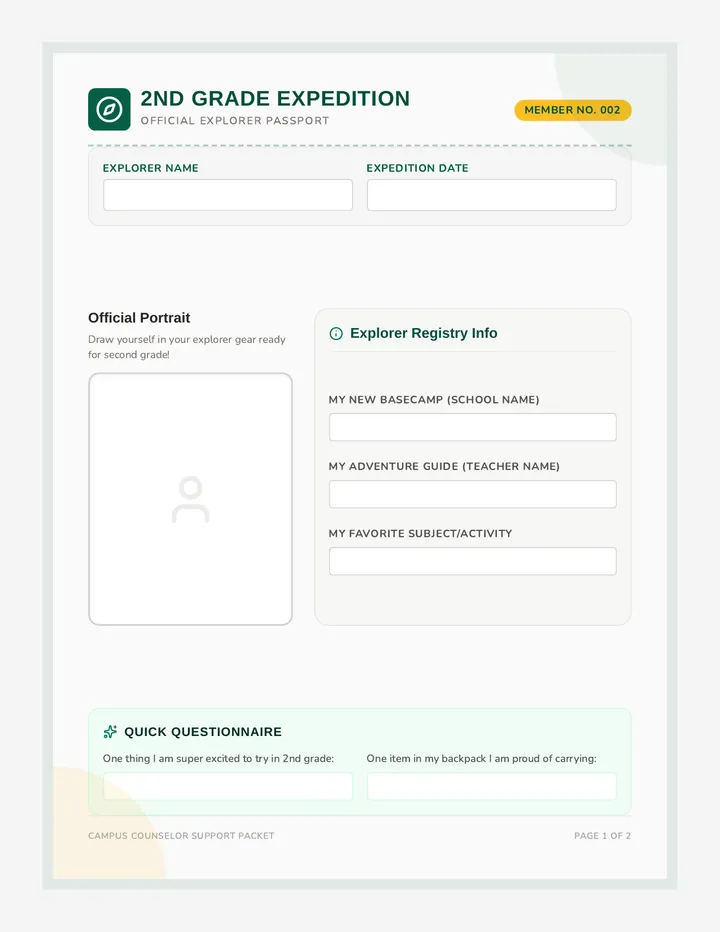
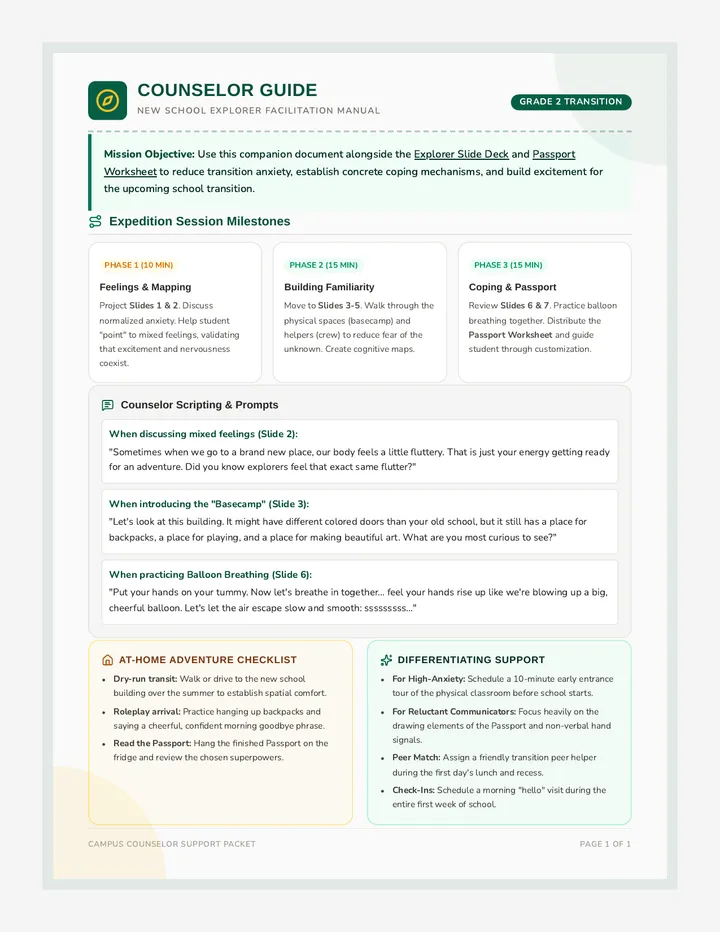
A transition support unit designed for rising 2nd graders entering a new school. Includes a social story presentation, a personal passport worksheet, and a counselor guidance document.
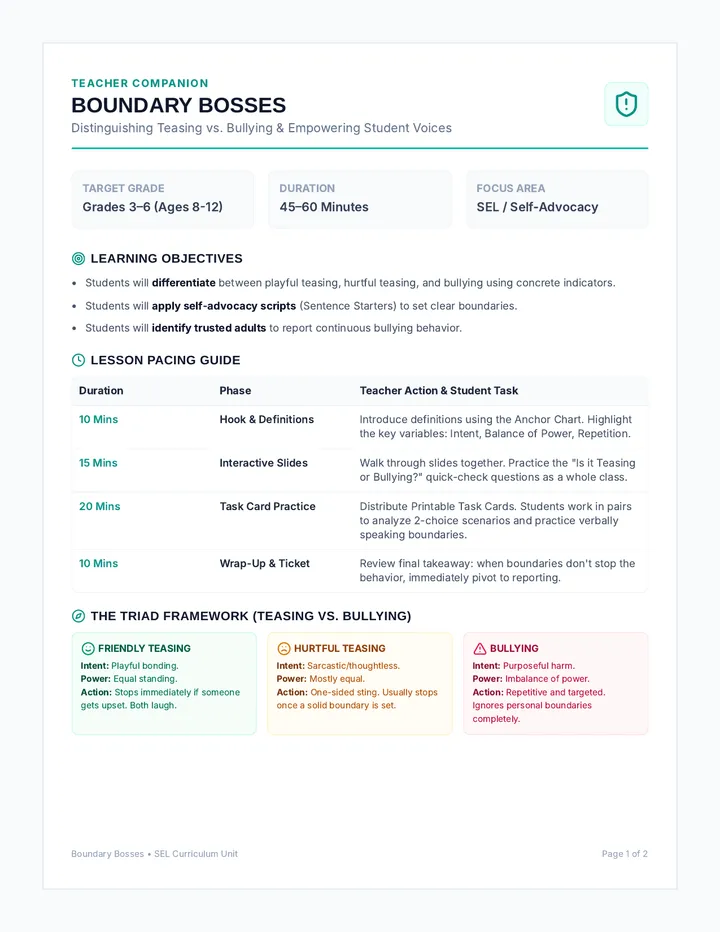
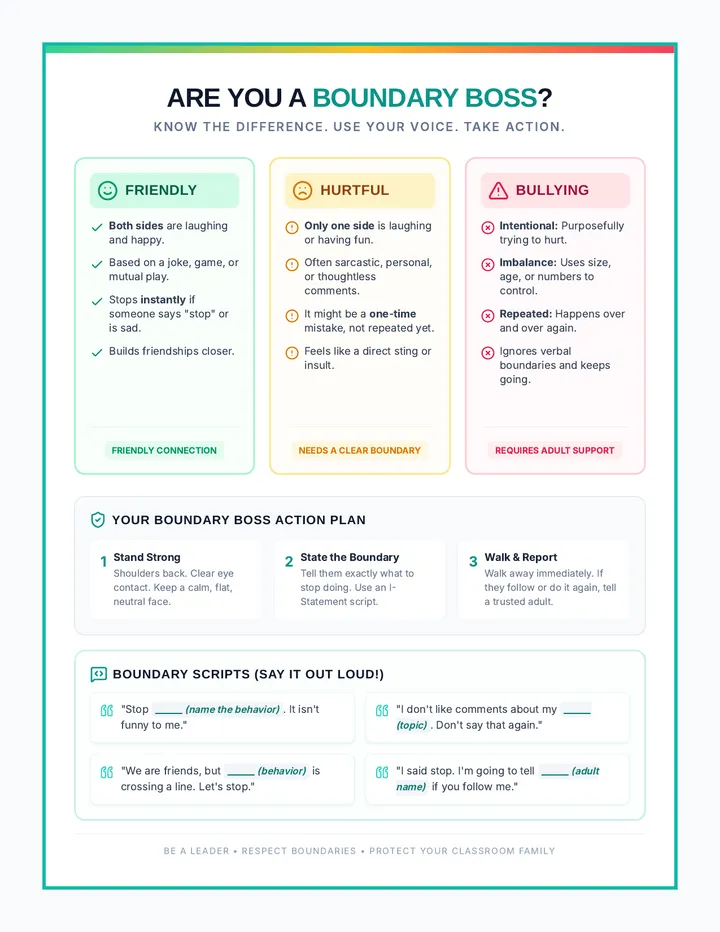
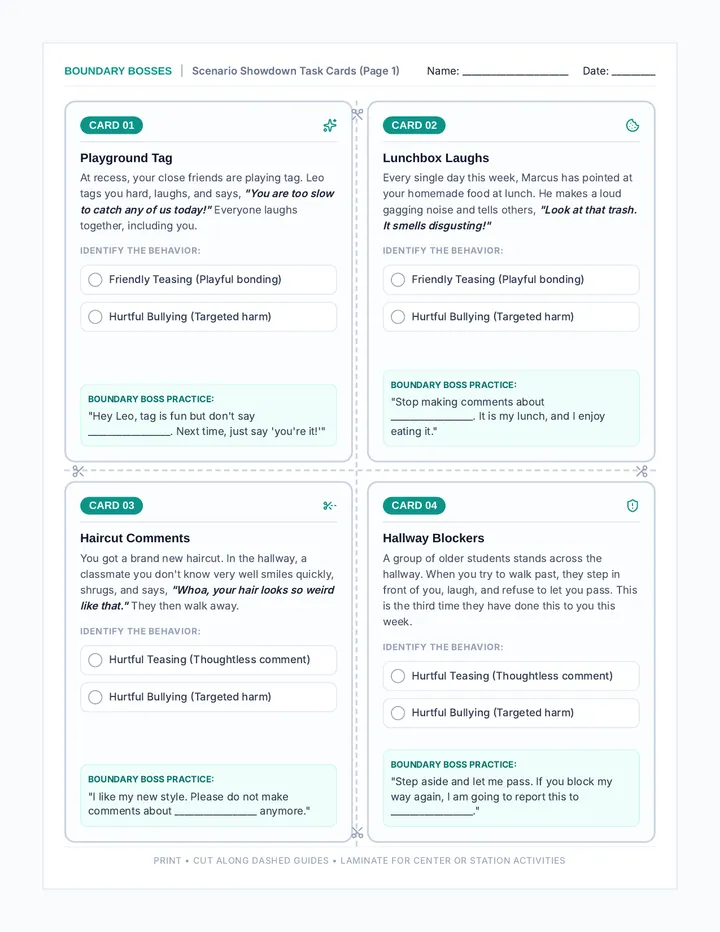
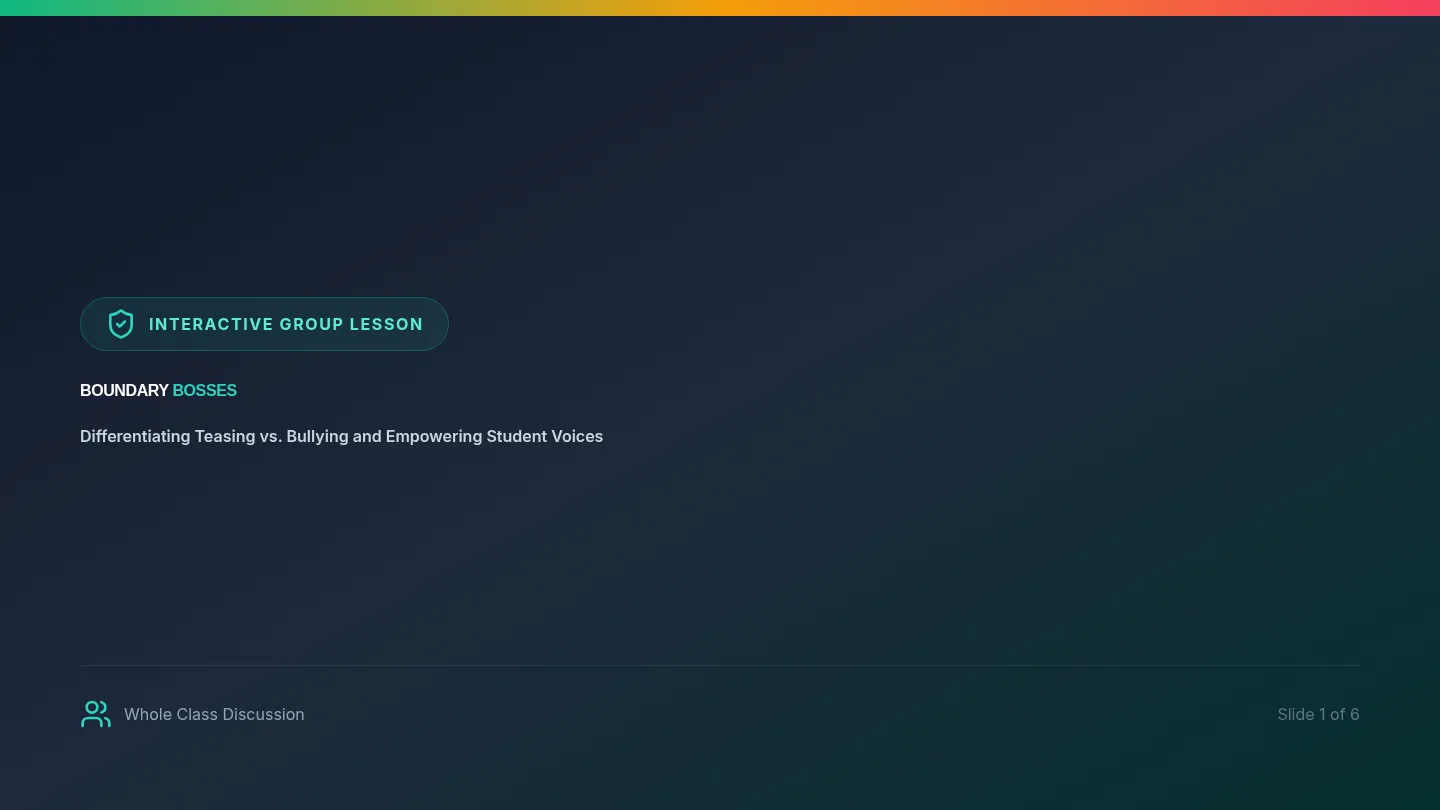
A comprehensive lesson helping students distinguish between friendly teasing, hurtful teasing, and bullying, while teaching concrete self-advocacy strategies and verbal boundary setting.
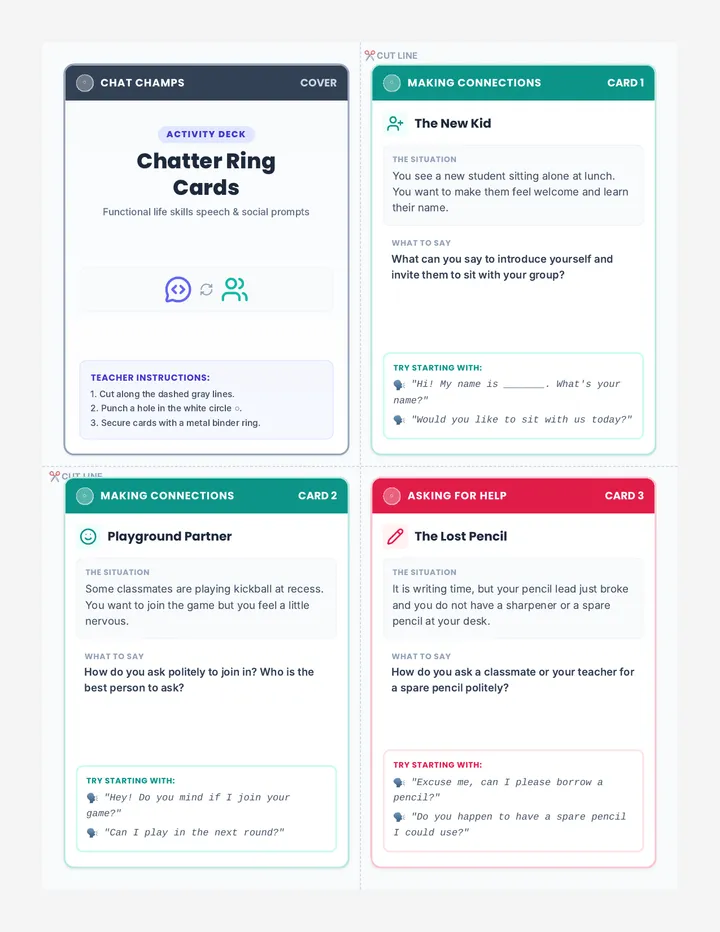
A lesson focused on equipping elementary students with functional verbal communication skills for everyday real-world interactions. Students practice through guided peer discussions, roleplays, and task cards.
Consolidates learning with a collaborative micro-build challenge, group self-reflection, and administration of the identical post-test.