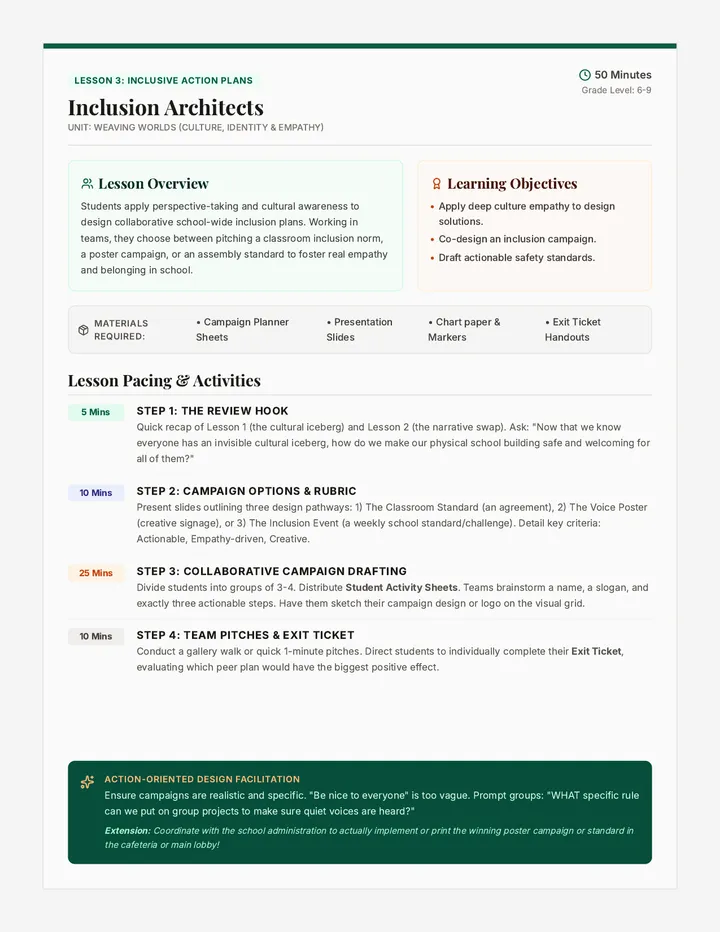
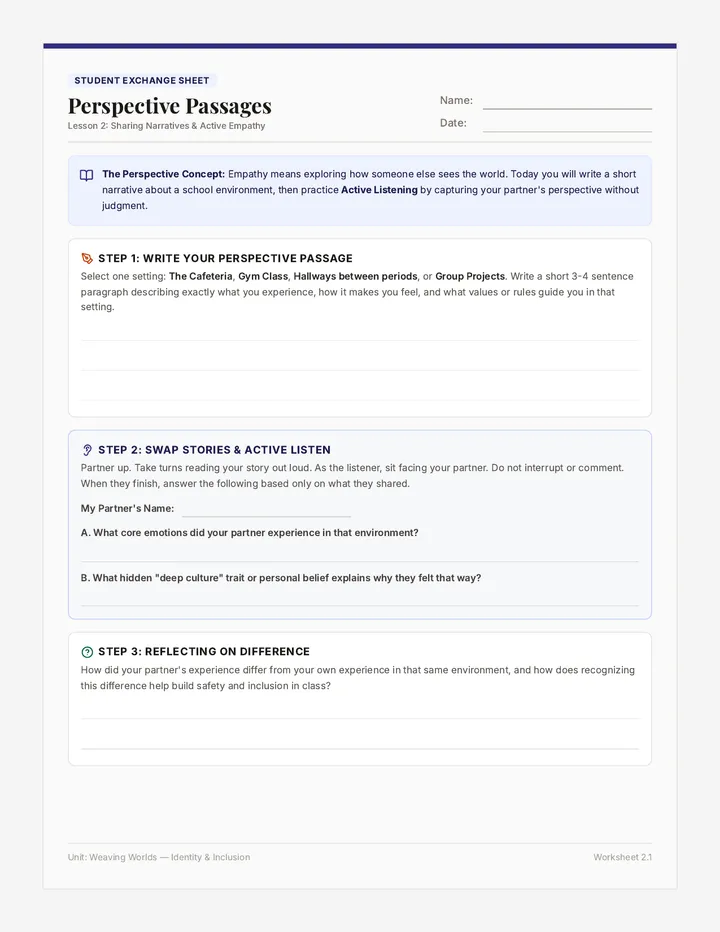
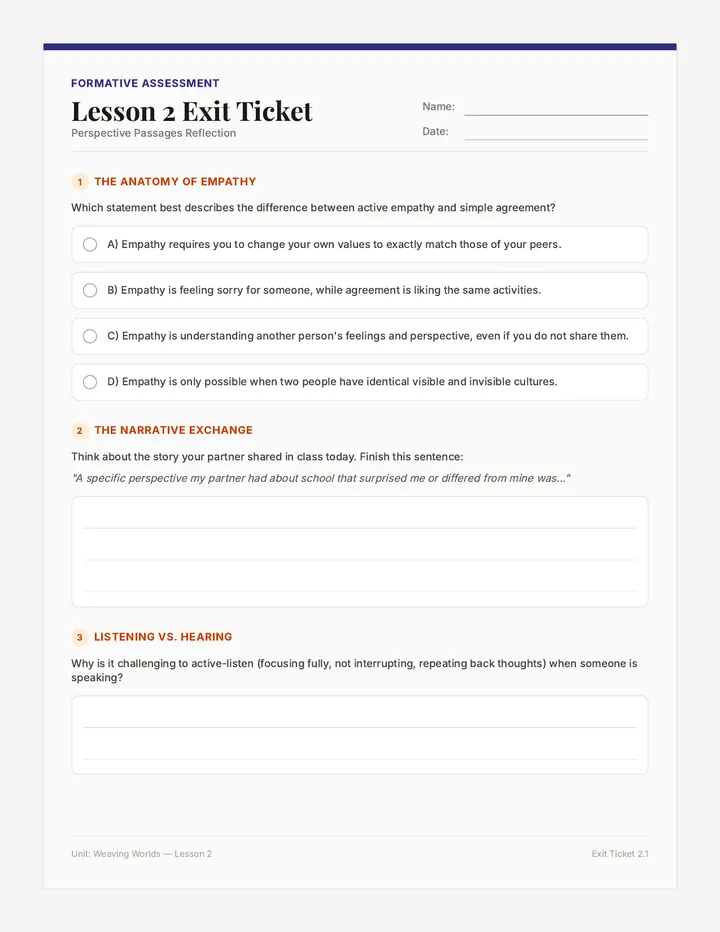
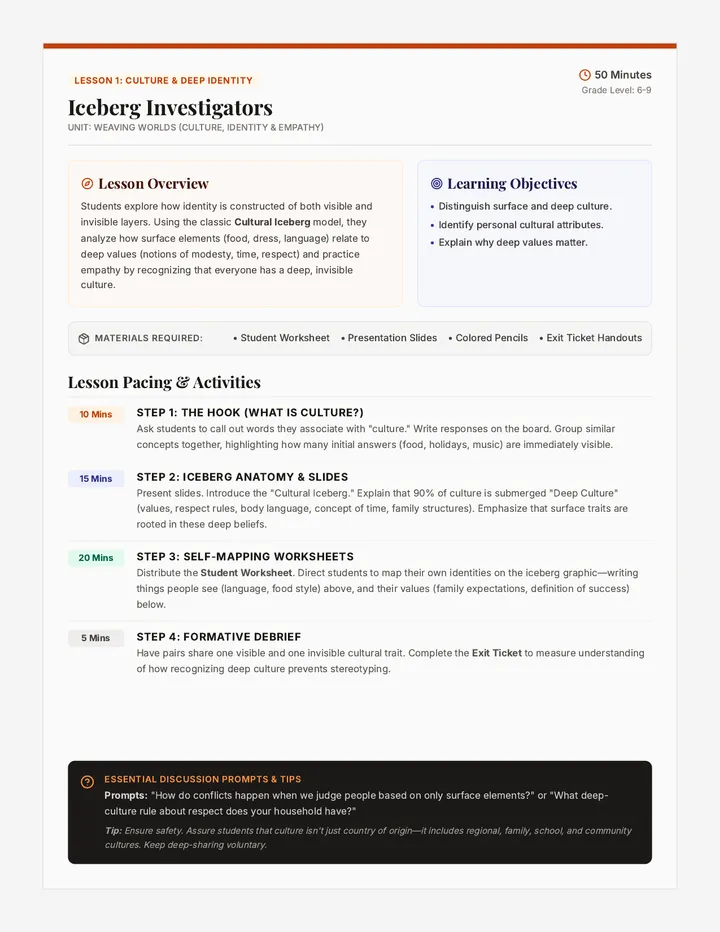
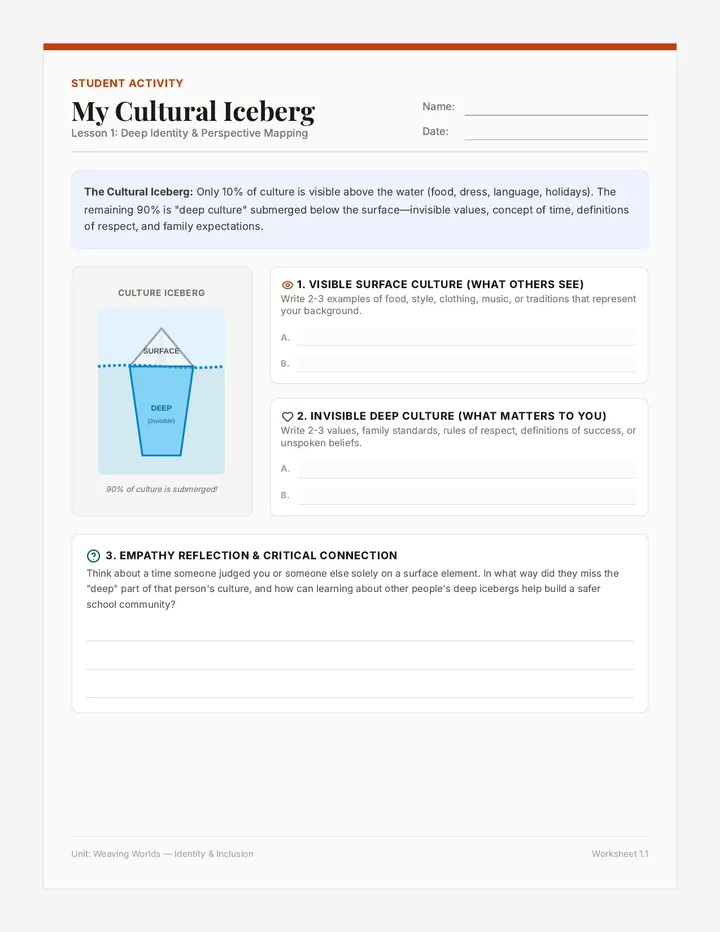
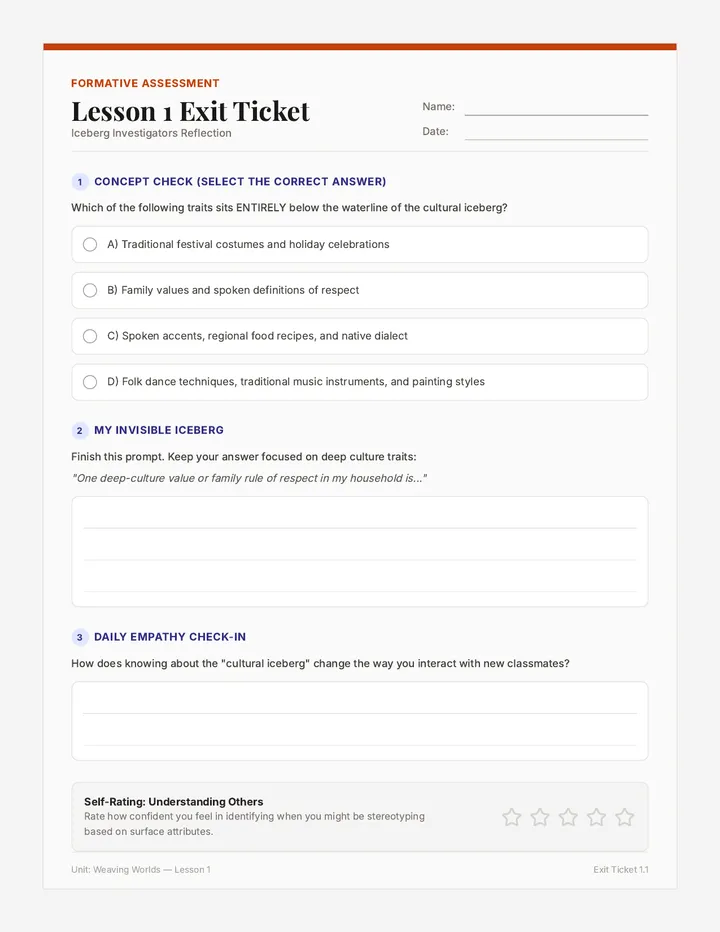
Students explore the anthropology of emotion, discussing how different cultures value high-arousal vs. low-arousal states and critiquing Western biases in clinical diagnostics.
This lesson introduces the fundamentals of somatic tracking, a technique used to re-train the brain's response to physical sensations by observing them through a lens of safety and curiosity. Students will learn the four-step process of anchoring, noticing, describing, and reassuring to build foundational body awareness.
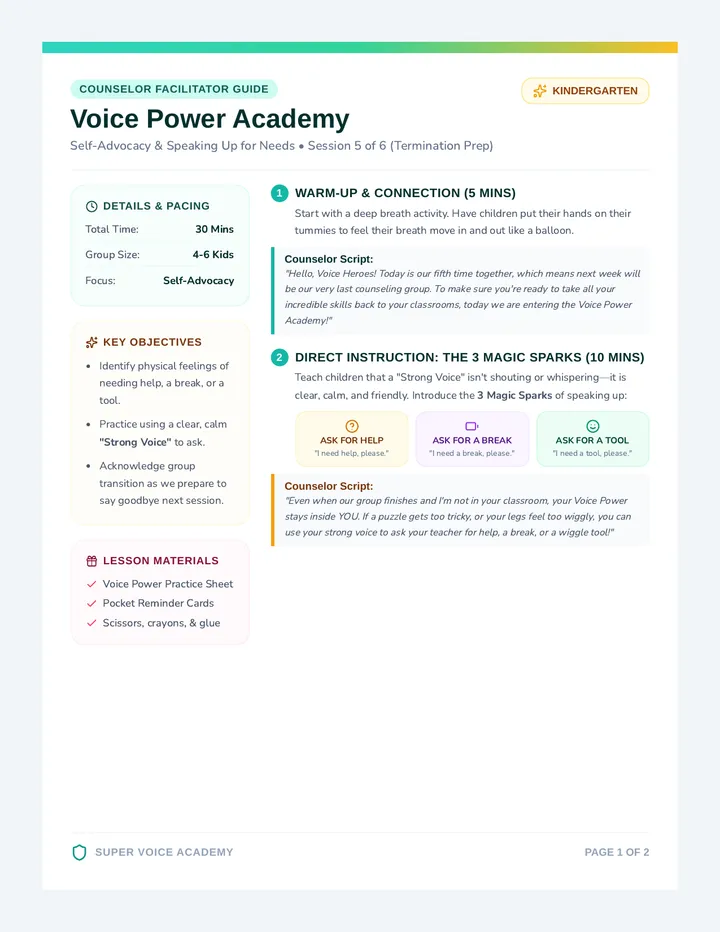
A high-energy, 30-minute coaching session focused on five critical self-advocacy scenarios. Includes role-play, visual aids, and practical toolkits for immediate application in real-world settings.
High schoolers align their device habits with professional workplace standards, focusing on agency and self-regulation.
Eighth graders develop peer accountability allies and set community standards for focused digital collaborative work.
Seventh graders explore the difference between compliance and agency, evaluating how their digital navigation builds their personal brand.
Sixth graders analyze the attention economy and map out personal accountability safe-zones for any classroom environment.
Fifth graders model digital leadership by sharing navigation strategies and mentoring peers in responsible device use.
Fourth graders master the art of switching between digital tasks efficiently using the '3-2-1 Switch' protocol.
Third graders identify 'navigation hazards' and use a collaborative 'Focus Shield' to stay on their learning path.
Second graders practice communicating their focus through physical 'Readiness Signals' to show they are prepared for the digital landscape.
First graders distinguish between 'Learning Tools' and 'Toys' and practice navigating only to the path shown by the teacher.
Kindergarten students learn that their device is a special tool for learning and practice listening for 'Red Light/Green Light' signals to know when to navigate.
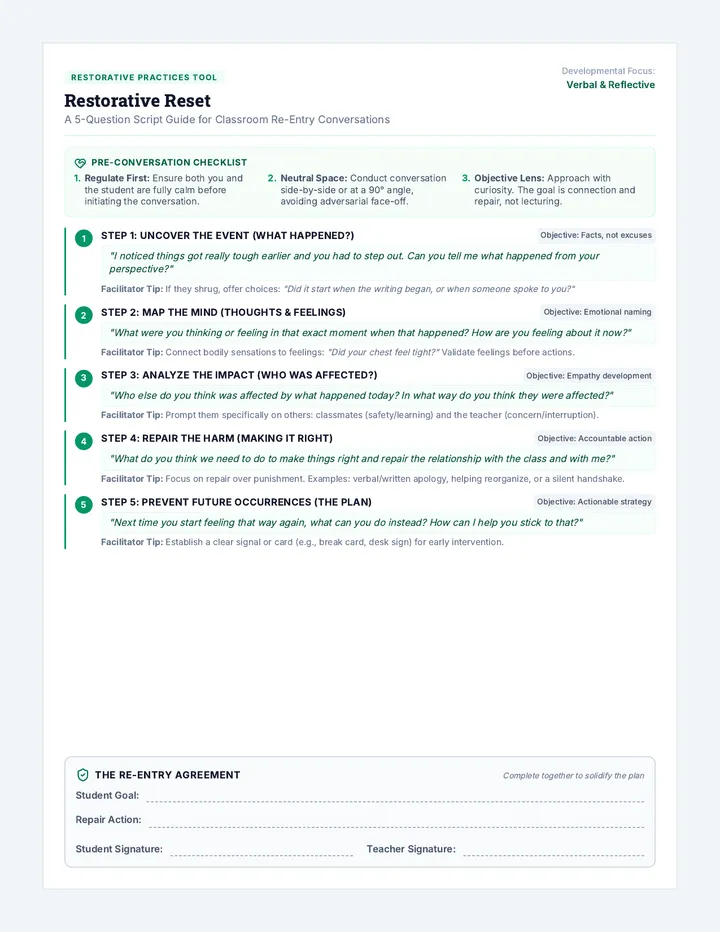
A 30-minute professional development session for preschool and K-8 staff focusing on restorative circles, affective statements, and re-entry reflection tools.