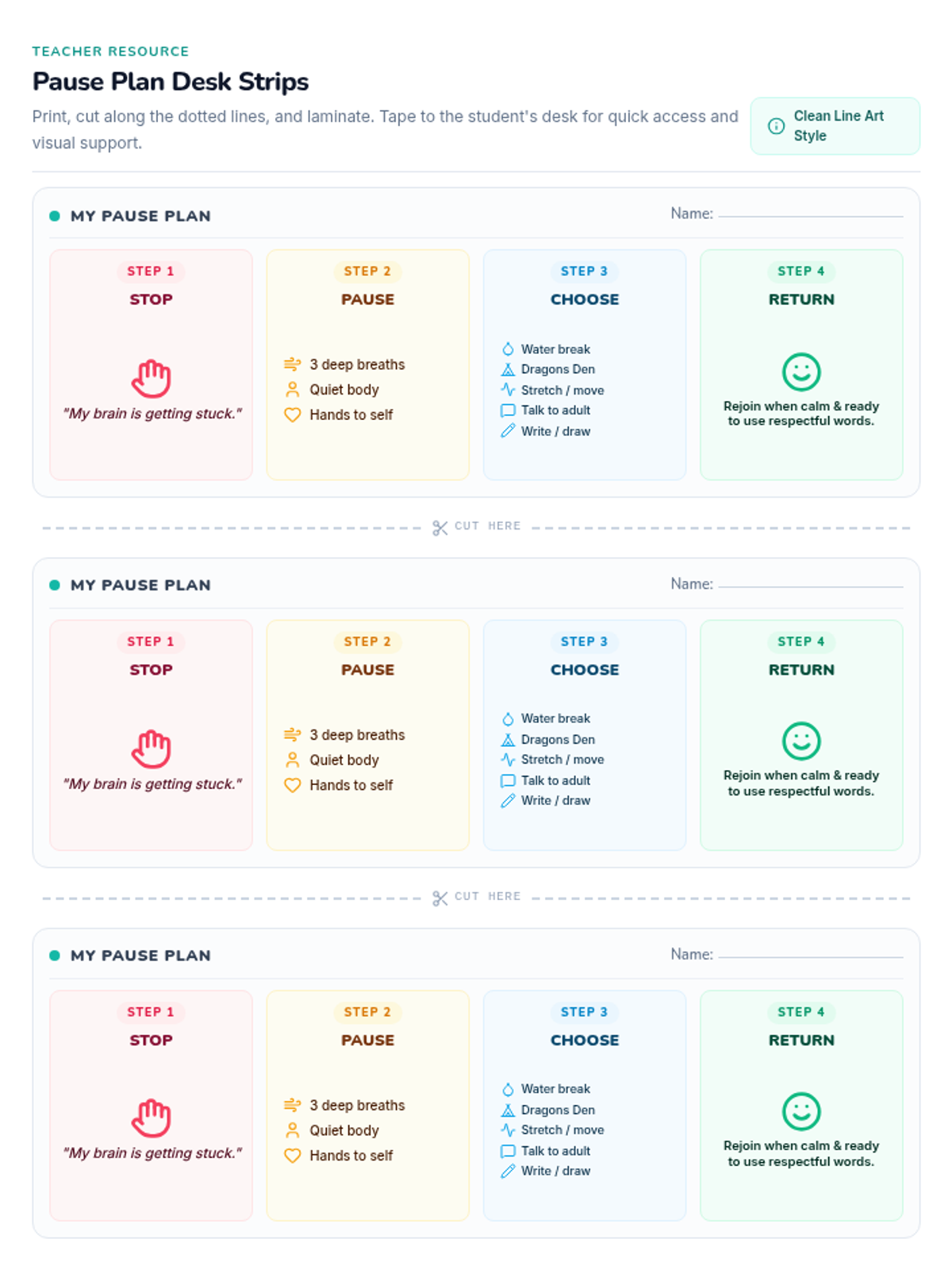
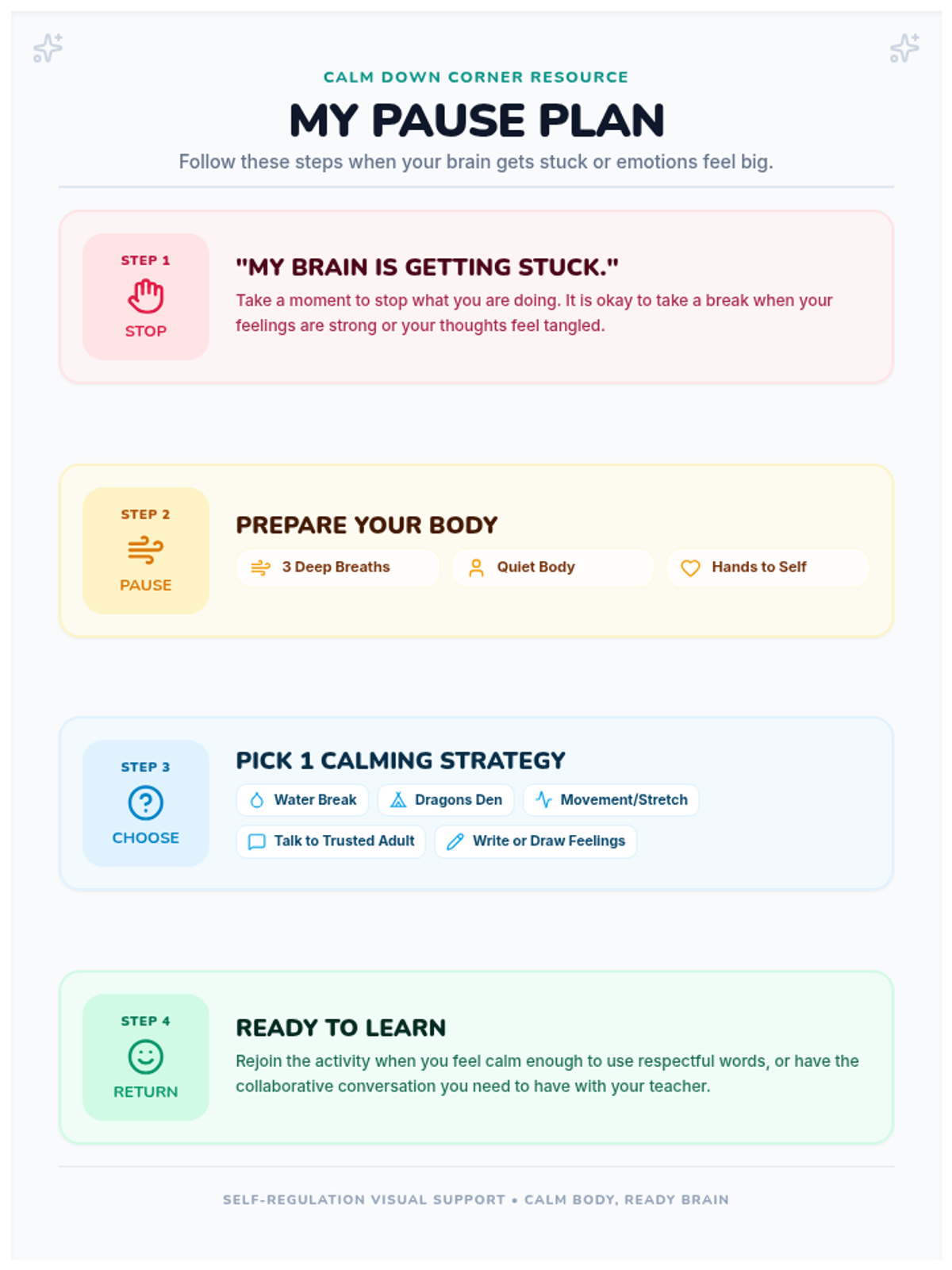
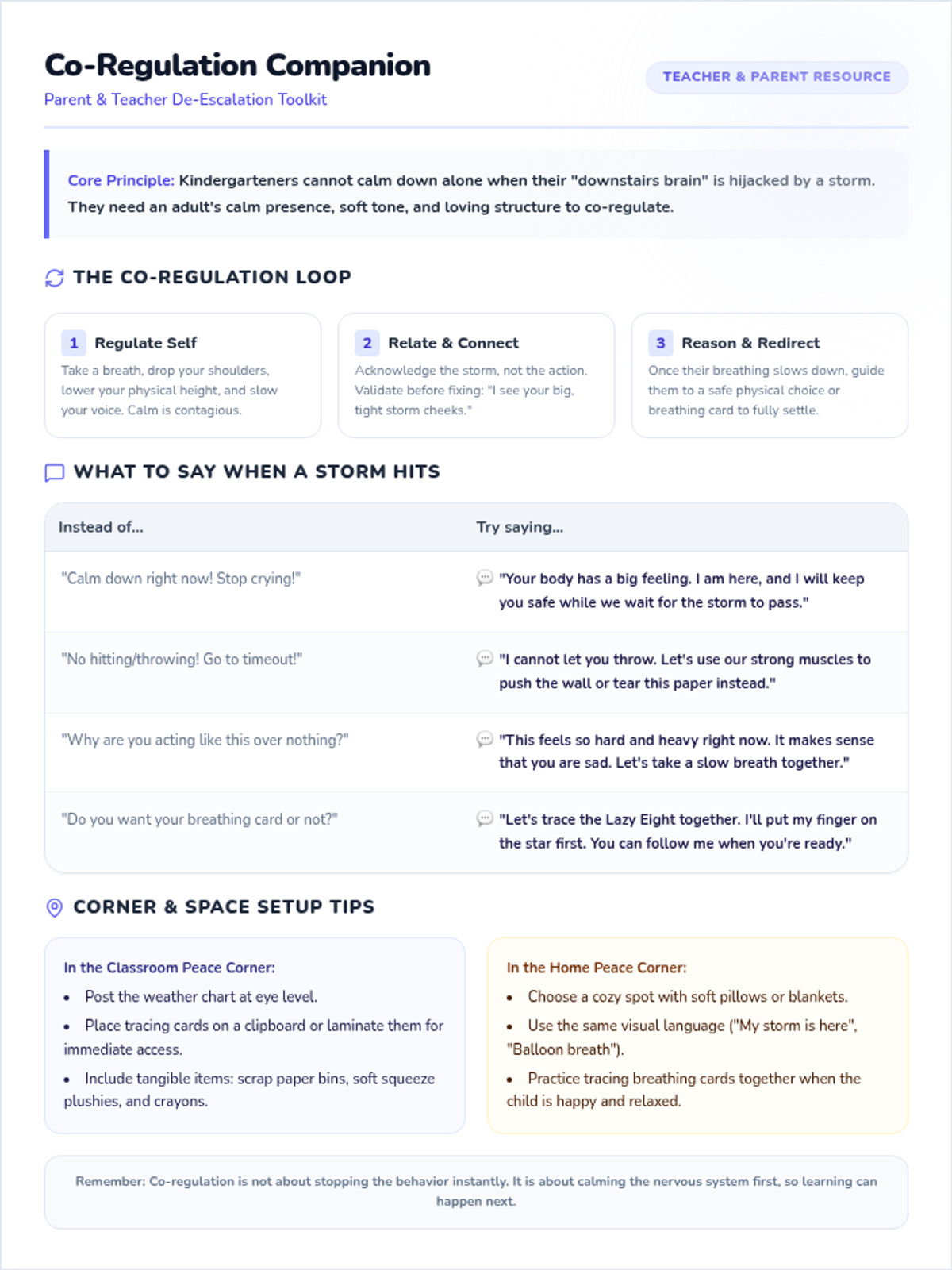
Students are introduced to the classroom's quiet corner and learn how to use sensory tools like bottles and squishies to regulate their emotions.
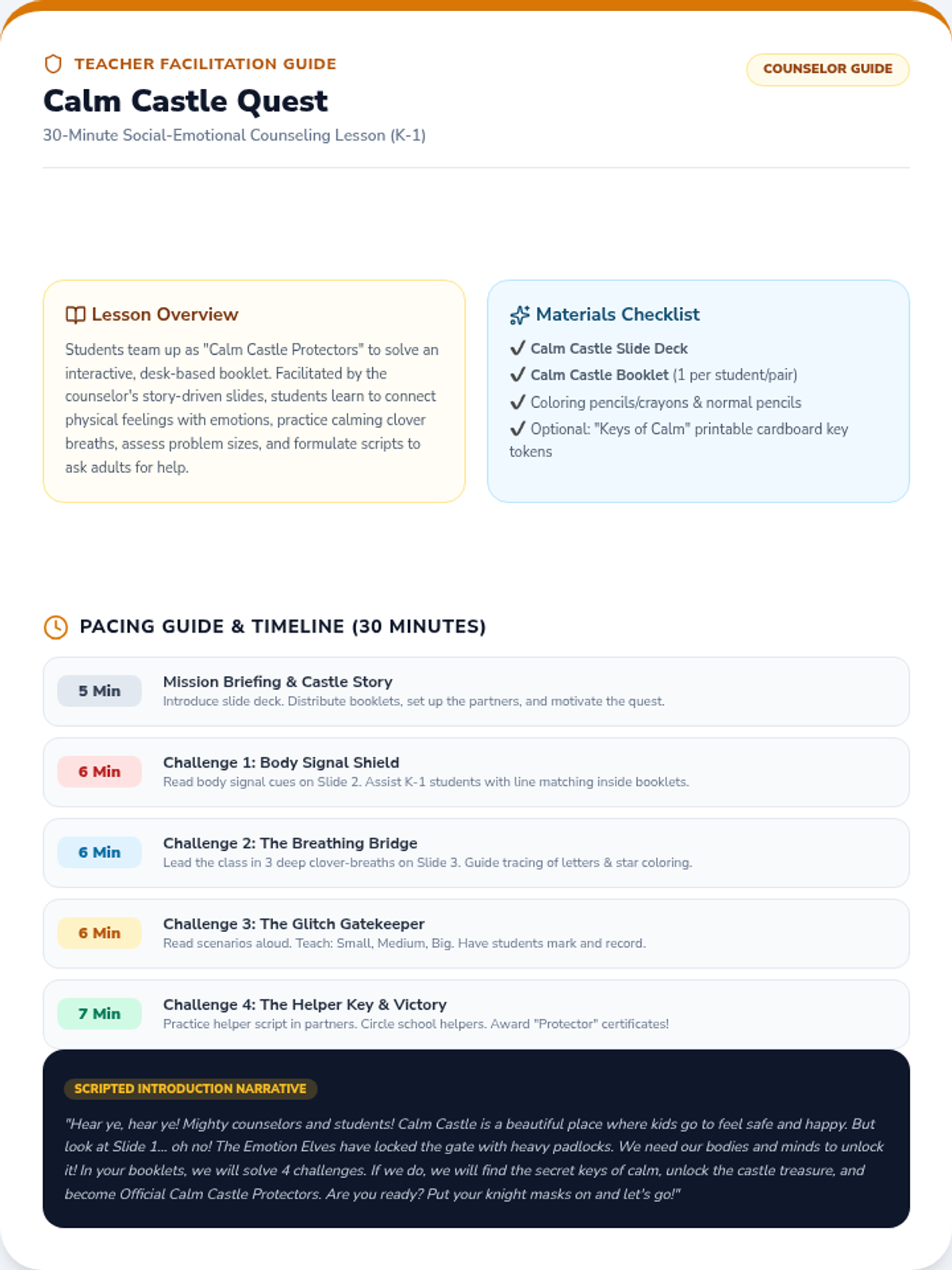
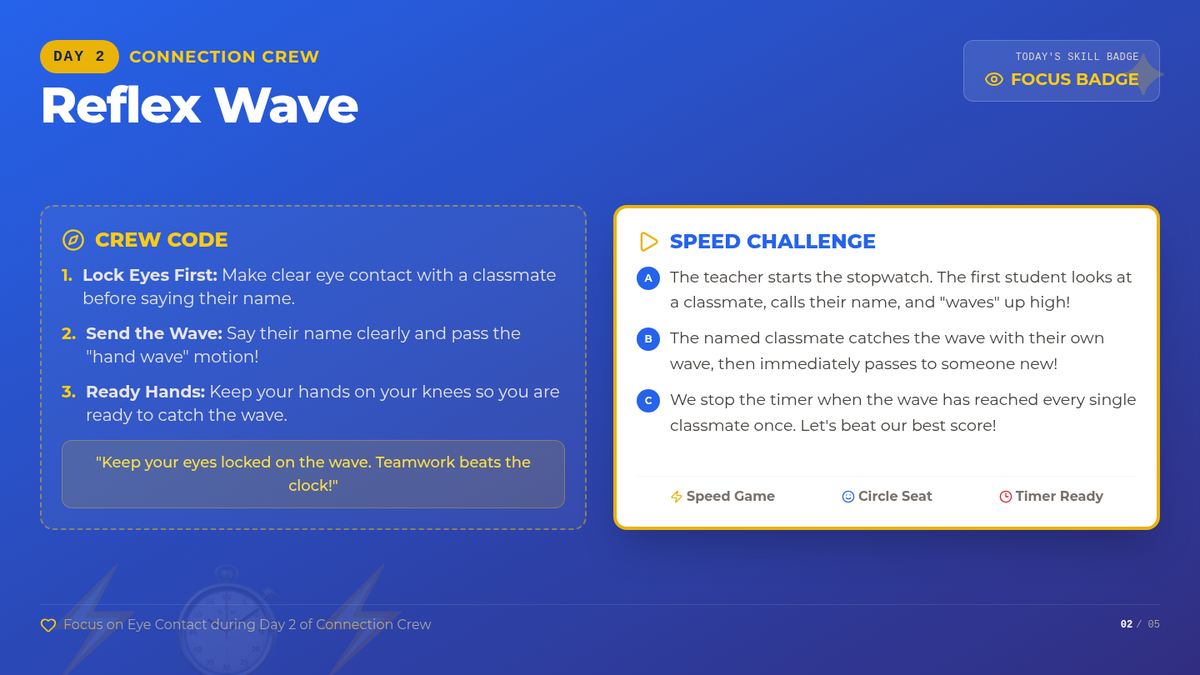
A comprehensive lesson introducing students to various coping strategies through interactive stations and a group bingo game. students will explore problem-solving, movement, art, and breathing techniques to manage their emotions.
A review and celebration of problem-solving skills with mixed practice scenarios.
Learning how to handle accidental bumps, spills, or broken items using the five steps.
Understanding personal space boundaries and how to solve problems when space is invaded.
Using problem-solving skills to successfully join a group of friends who are already playing.
Applying the problem-solving steps to sharing toys and materials with friends.
Introduction to the five problem-solving steps: Stop/Think, Say Feelings, Brainstorm, Try, and Reflect.
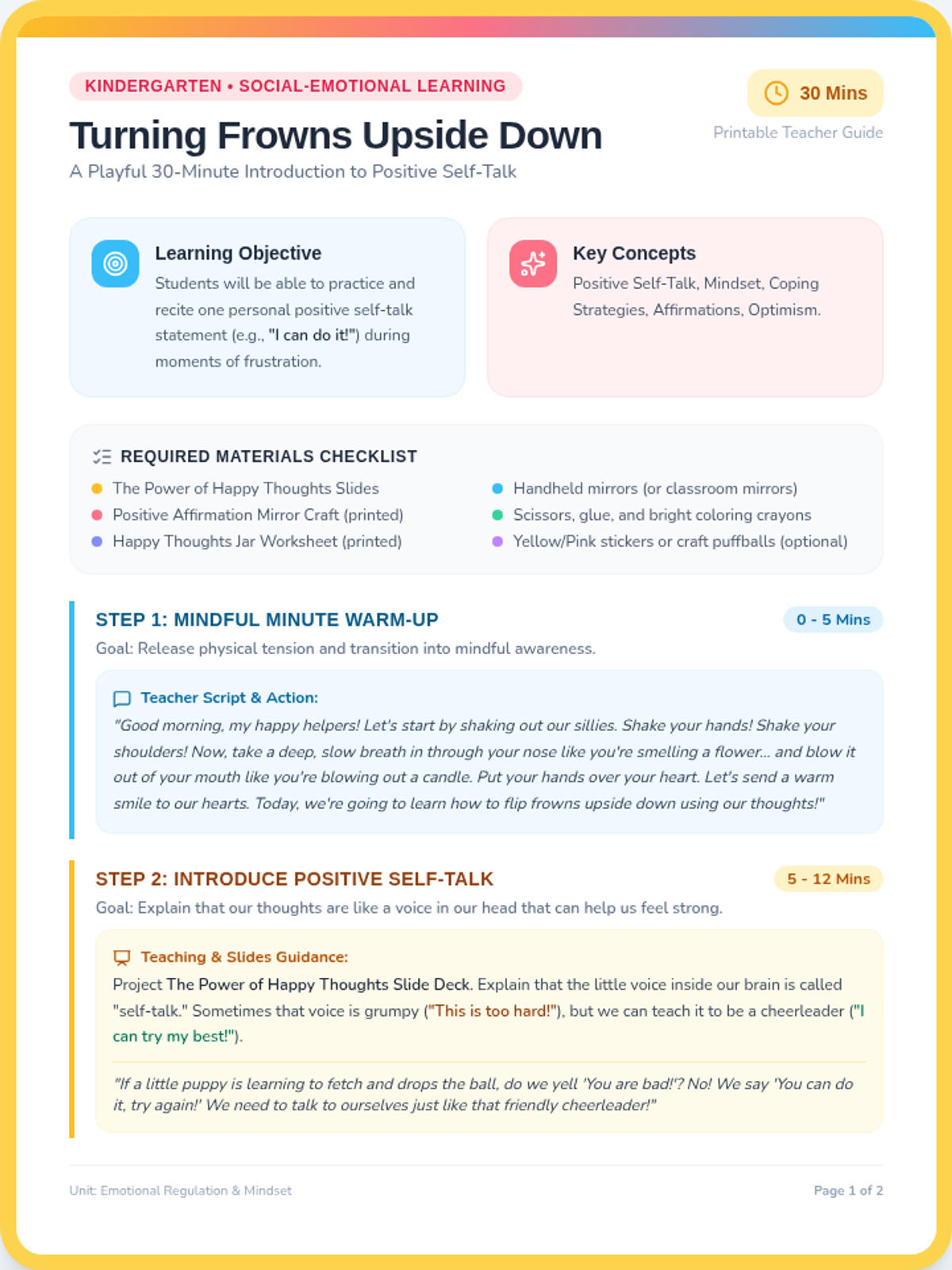
A comprehensive 30-minute lesson designed for grades K-4 to help students understand the nature of worries, recognize physical signs of anxiety, and learn to distinguish between what they can and cannot control. Students will explore practical coping strategies and build a personal 'Coping Toolbox'.
The final lesson introduces Step 5 (Reflection) and reviews the entire process. Students celebrate becoming 'Master Problem Solvers' through a series of review challenges.
Teaches students how to enter a play group effectively using the problem-solving steps. Students learn to watch, wait, and ask to join while applying the solution squad techniques.