A 30-minute counseling session focused on replacing profanity with 'I' statements and clean replacement words during moments of frustration. Students learn to identify triggers and practice self-regulation through structured communication.
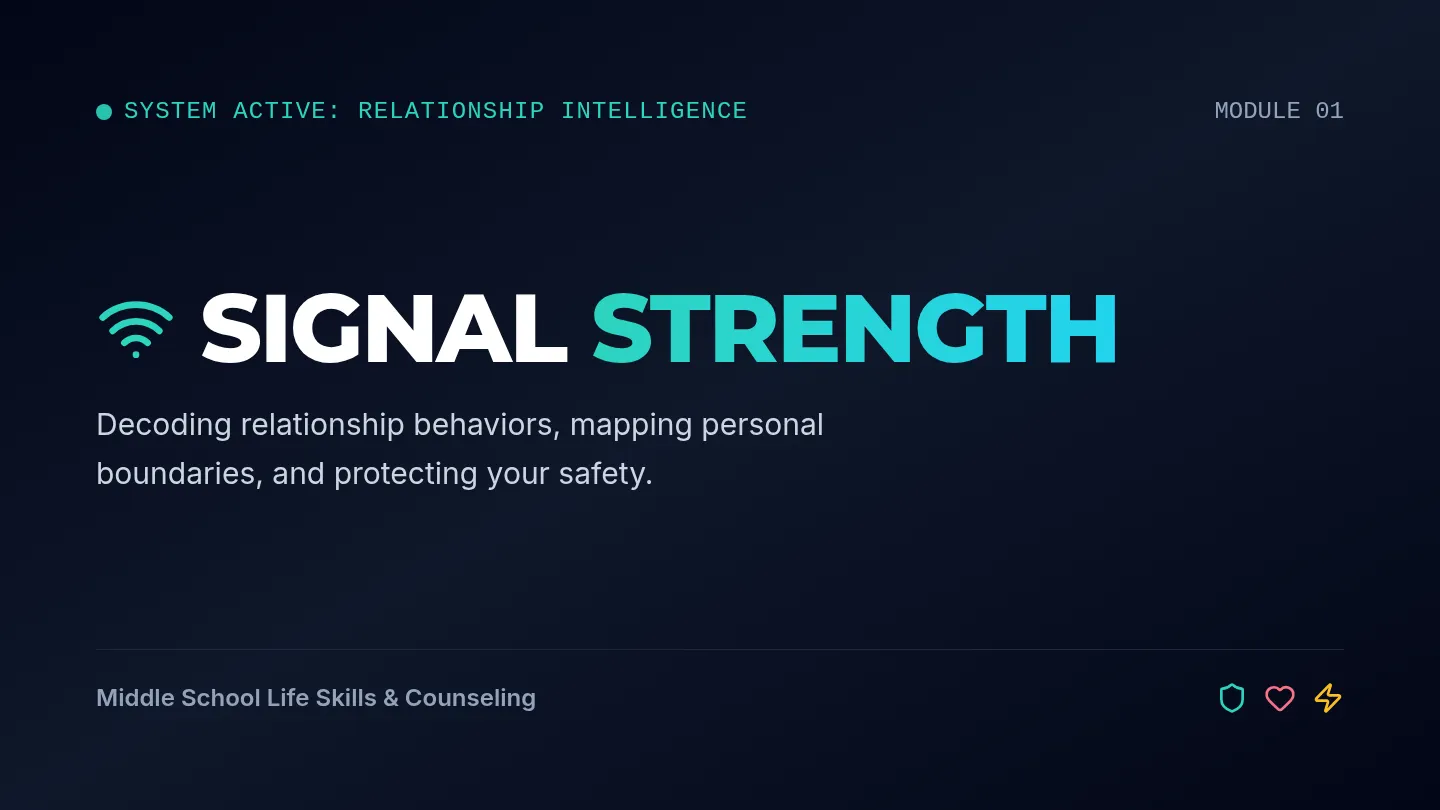
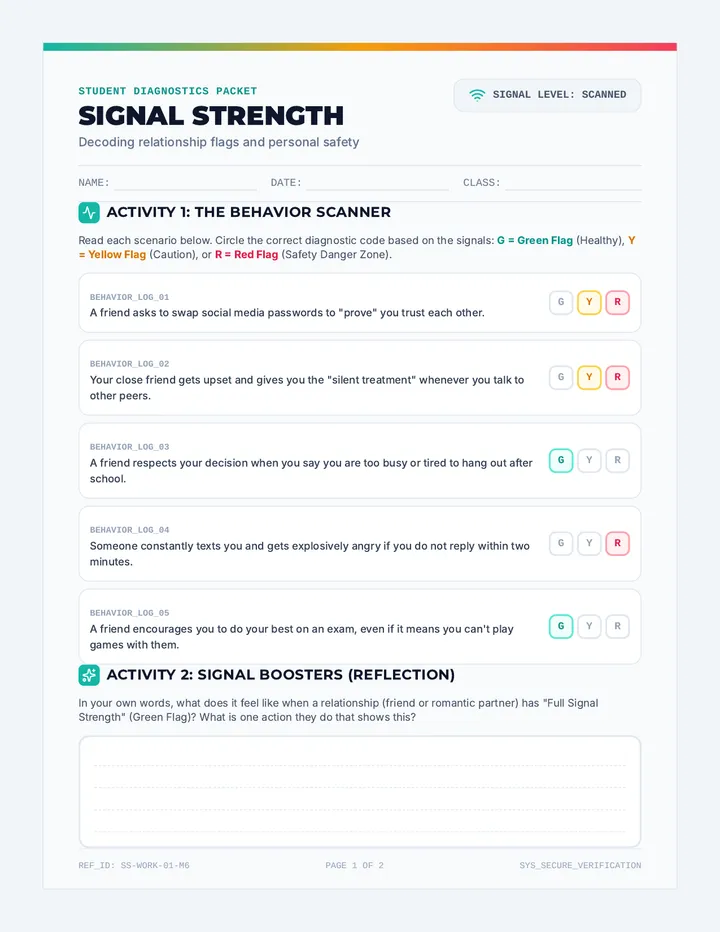
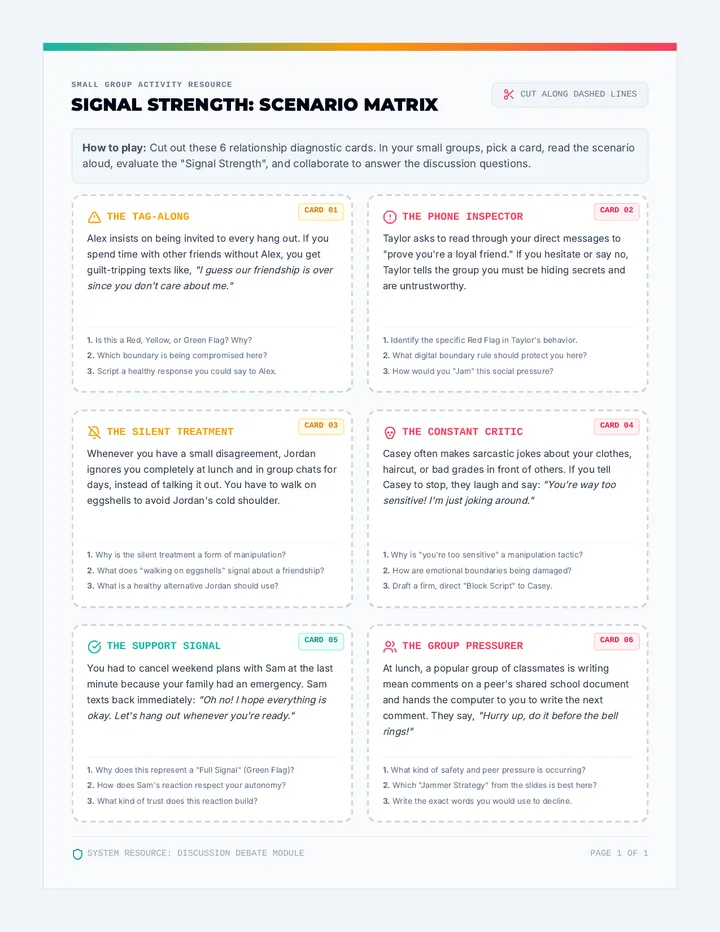
A middle school counseling lesson on healthy relationships and personal safety. Students learn to decode relationship signals, identify red and yellow flags, map their personal boundaries, and practice navigating peer pressure through interactive discussions and guided reflections.
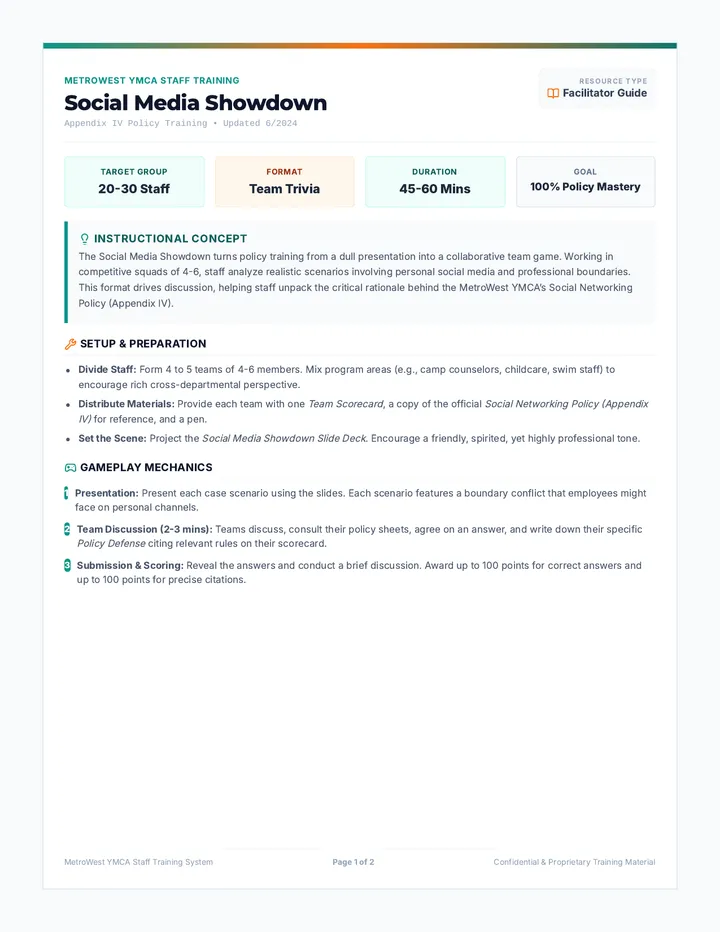
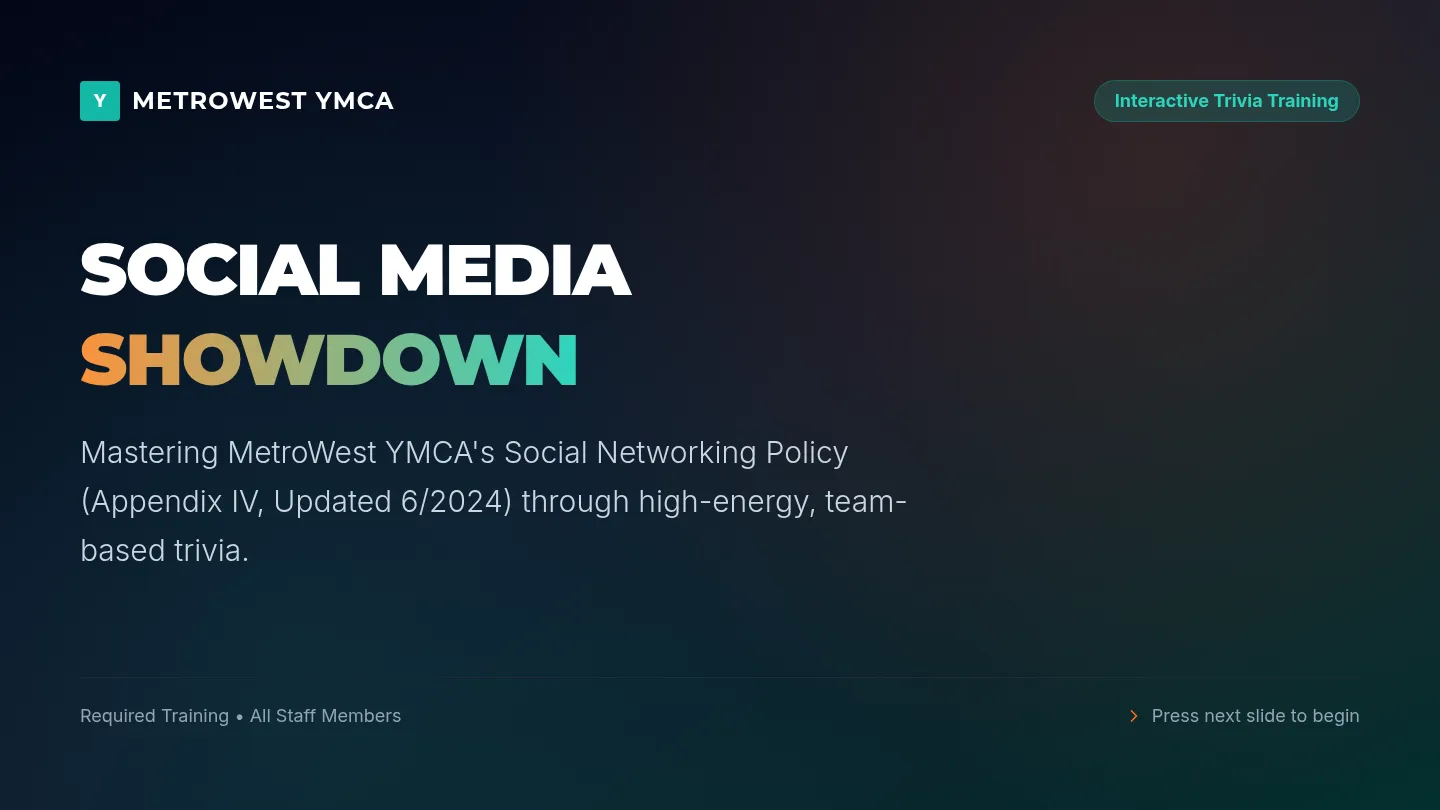
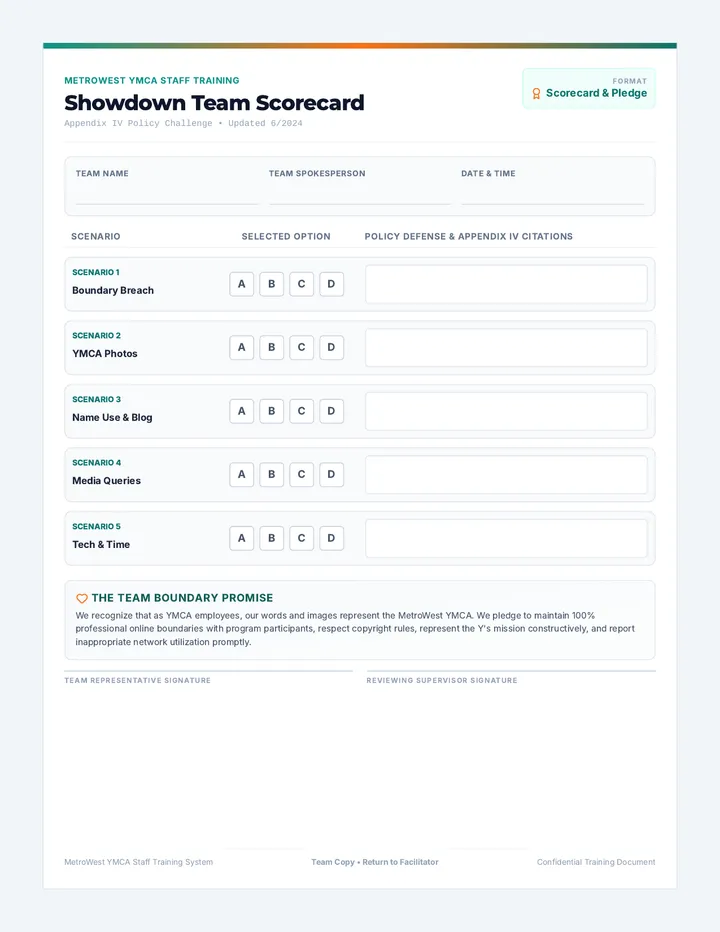
A high-energy, collaborative staff training session built around a competitive trivia game. Staff work in teams to analyze realistic scenarios and master MetroWest YMCA's Social Networking Policy (Appendix IV, Updated 6/2024), emphasizing child safety, professional boundaries, and brand protection.
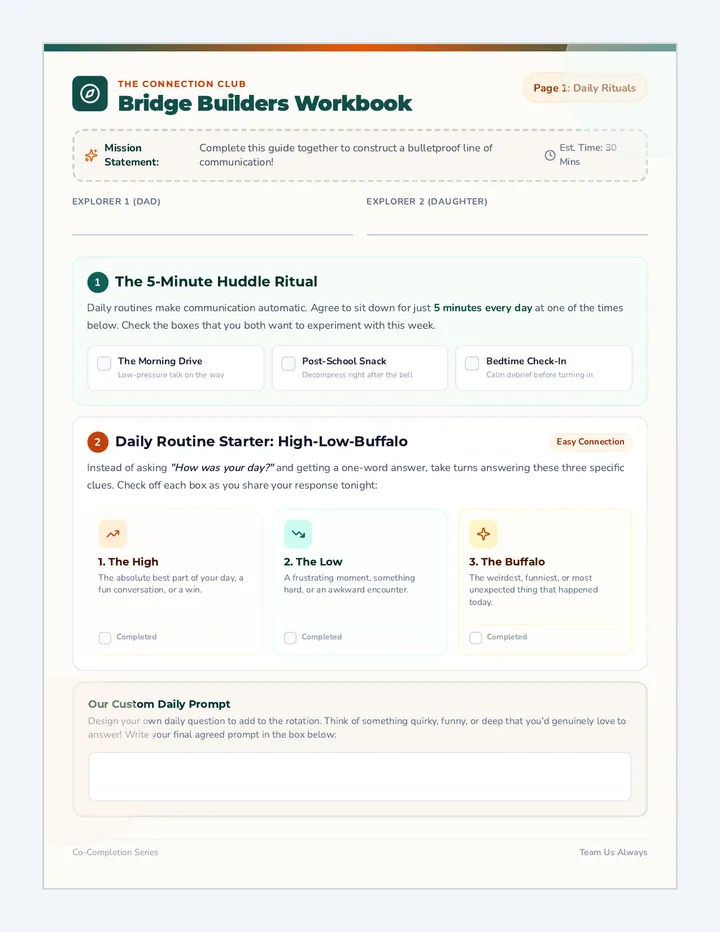
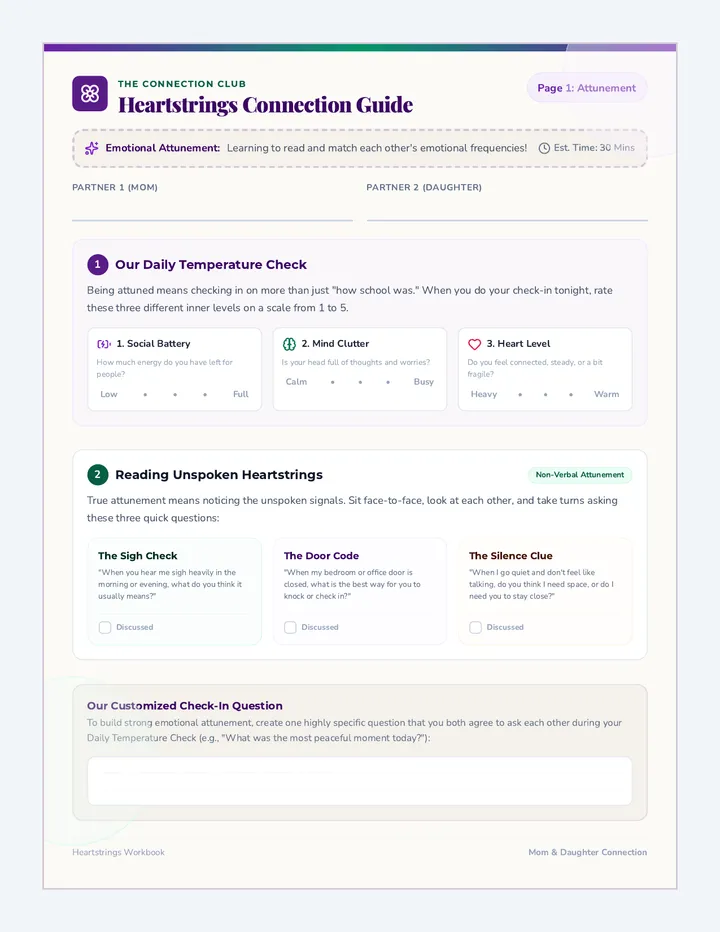
A high-quality co-completion toolkit for parents and 11-year-old pre-teens. Focuses on active listening, emotional attunement, conflict de-escalation, and establishing daily connection rituals.
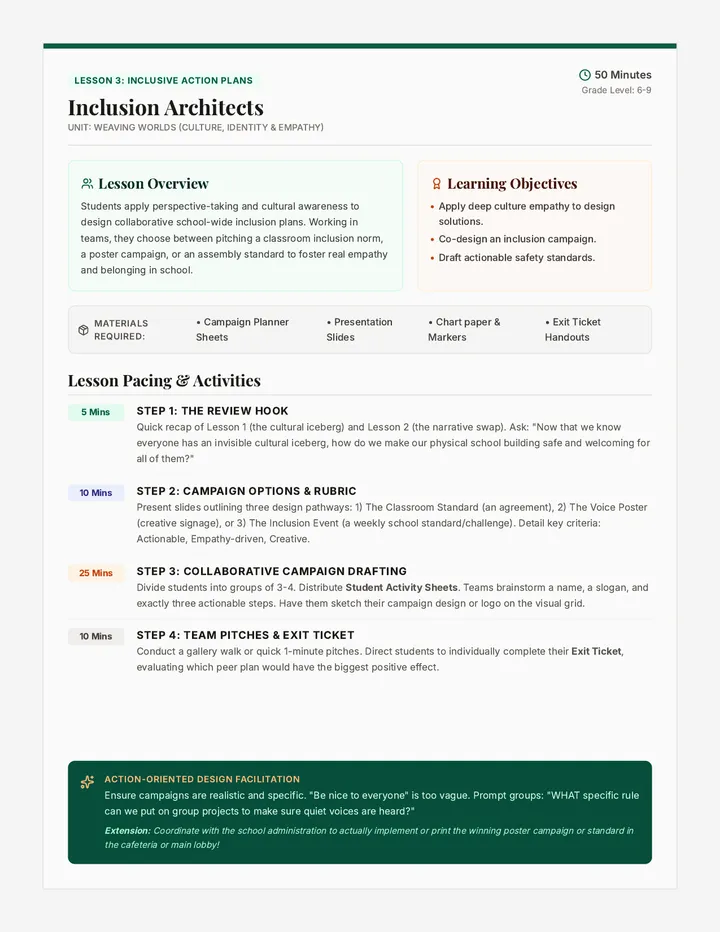
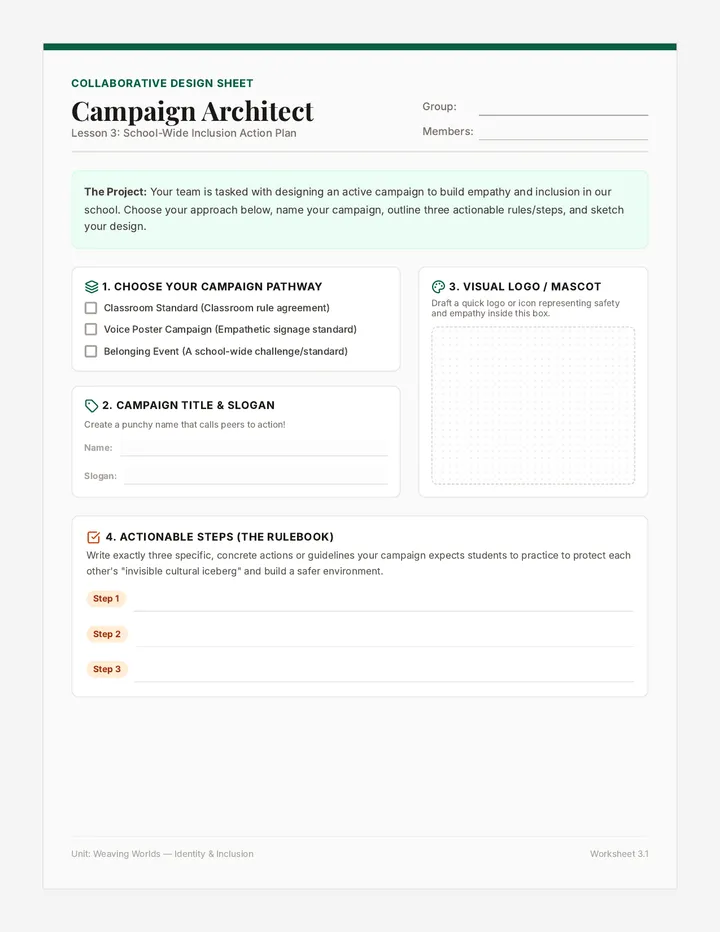
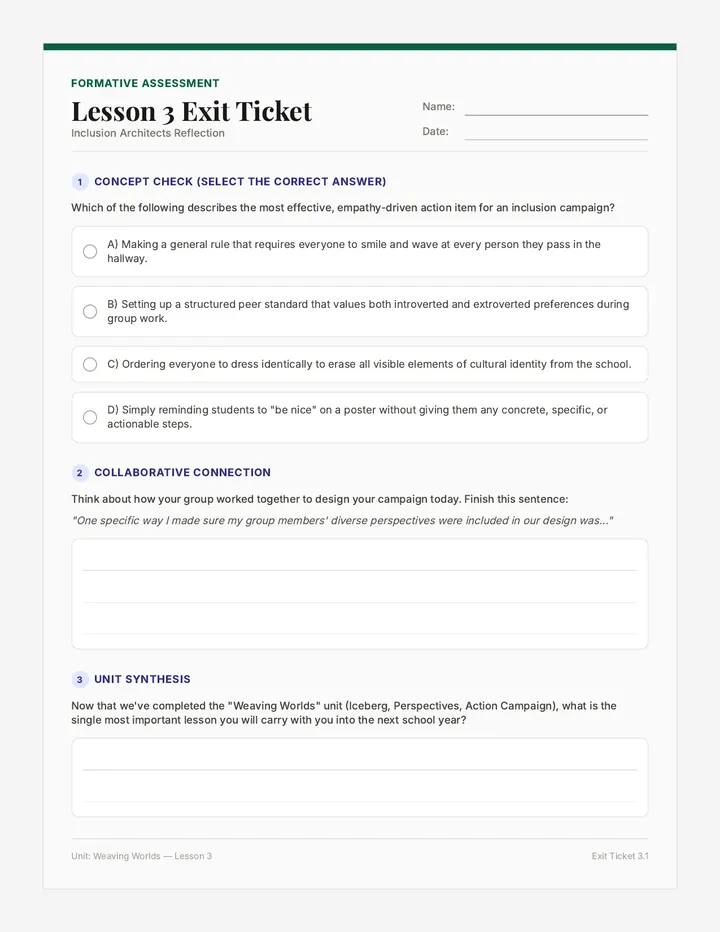
Students apply their deep listening and empathy skills to design a school-wide inclusion campaign or classroom standard, designing collaborative action items.
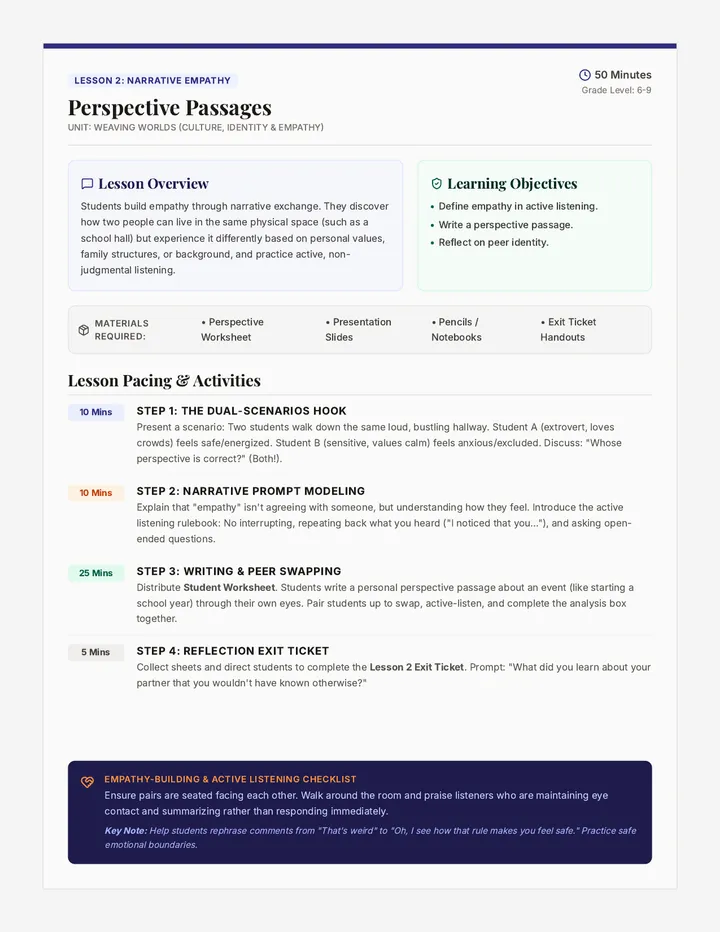
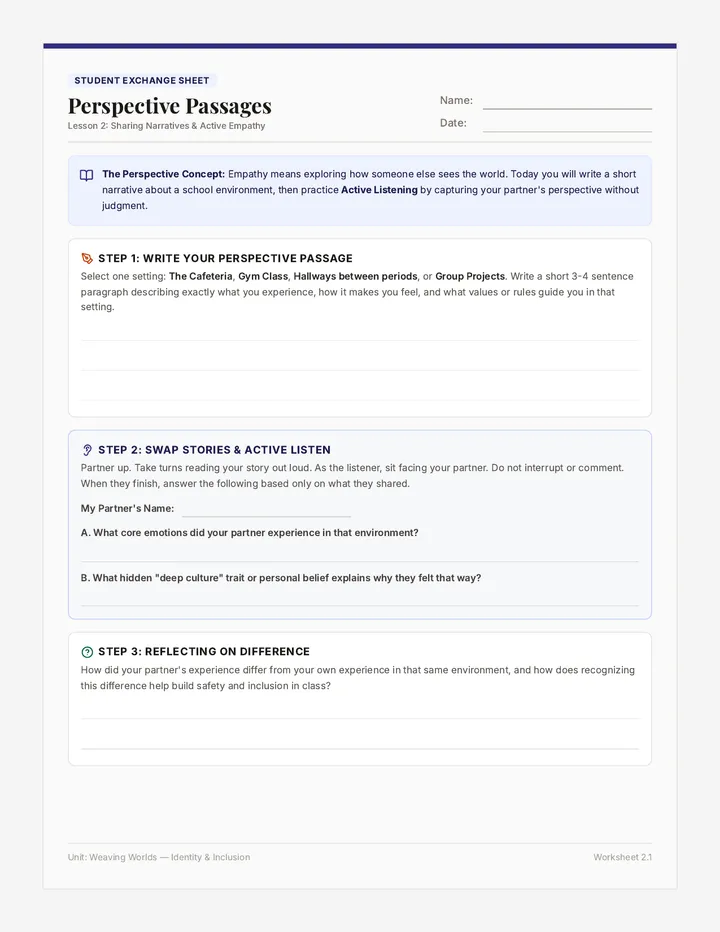
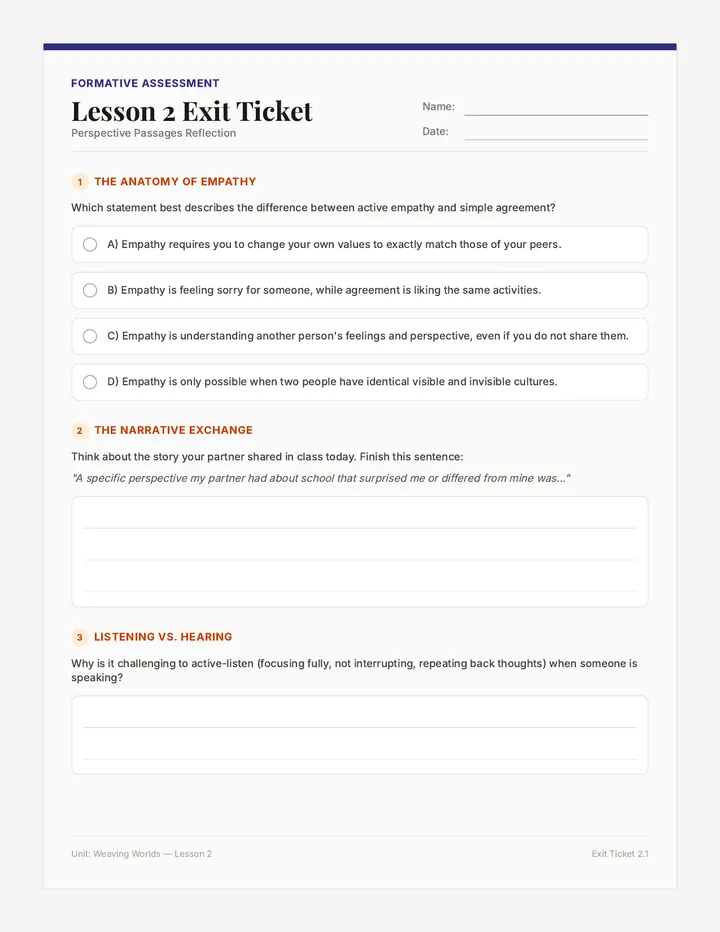
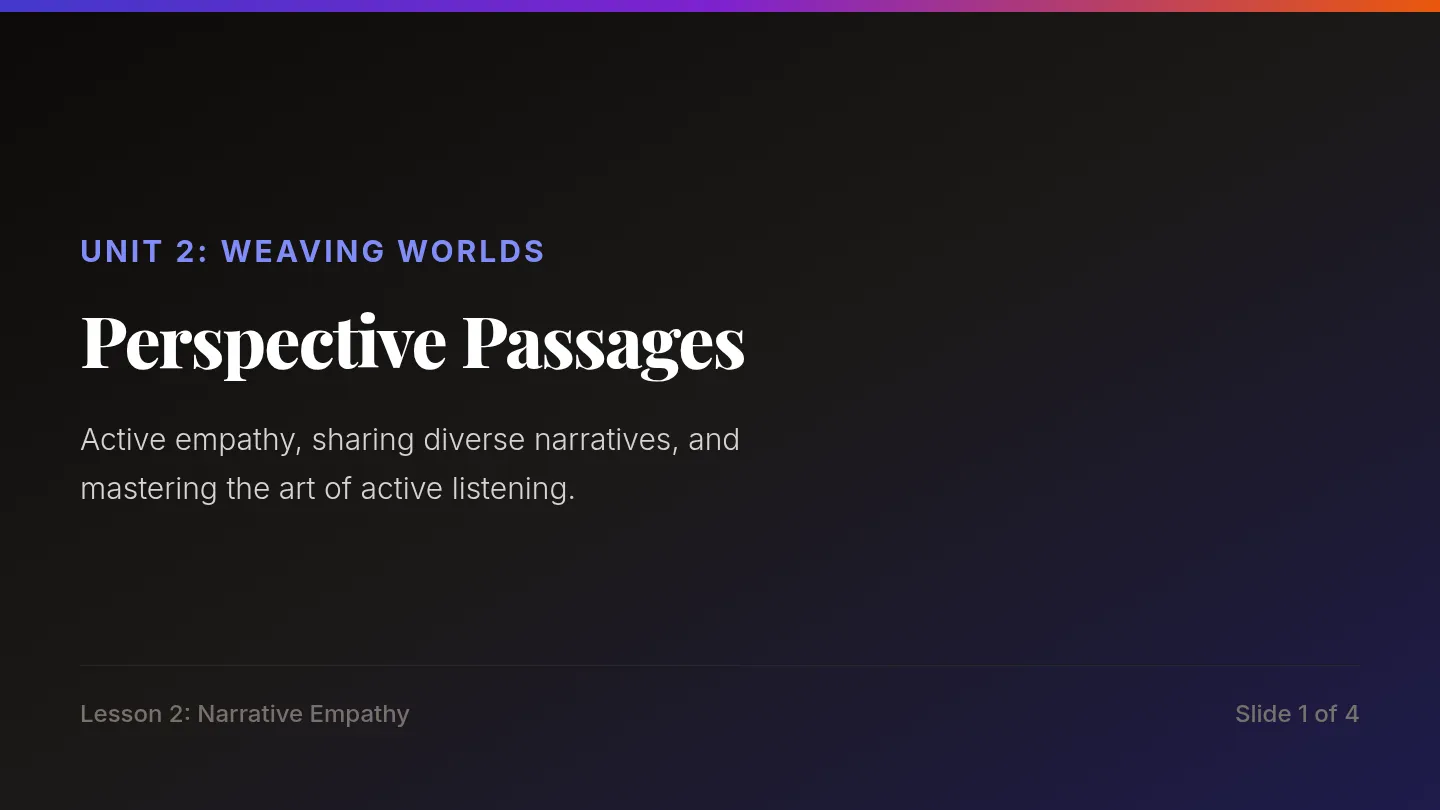
Students engage in active empathy and narrative exchange, analyzing how personal experiences and cultural backgrounds shape our perspectives of shared environments.
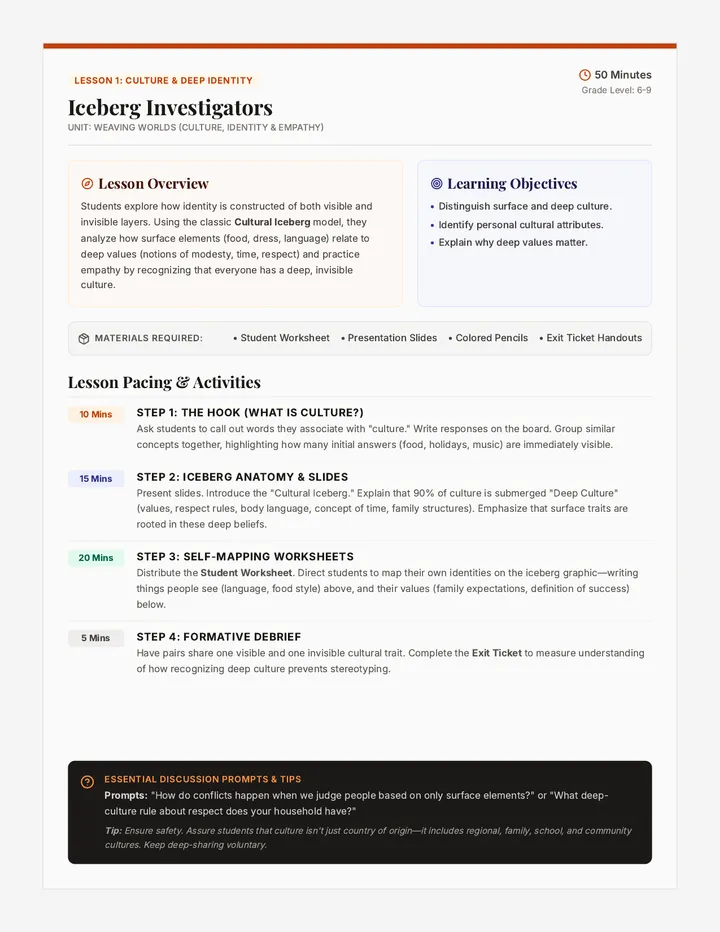
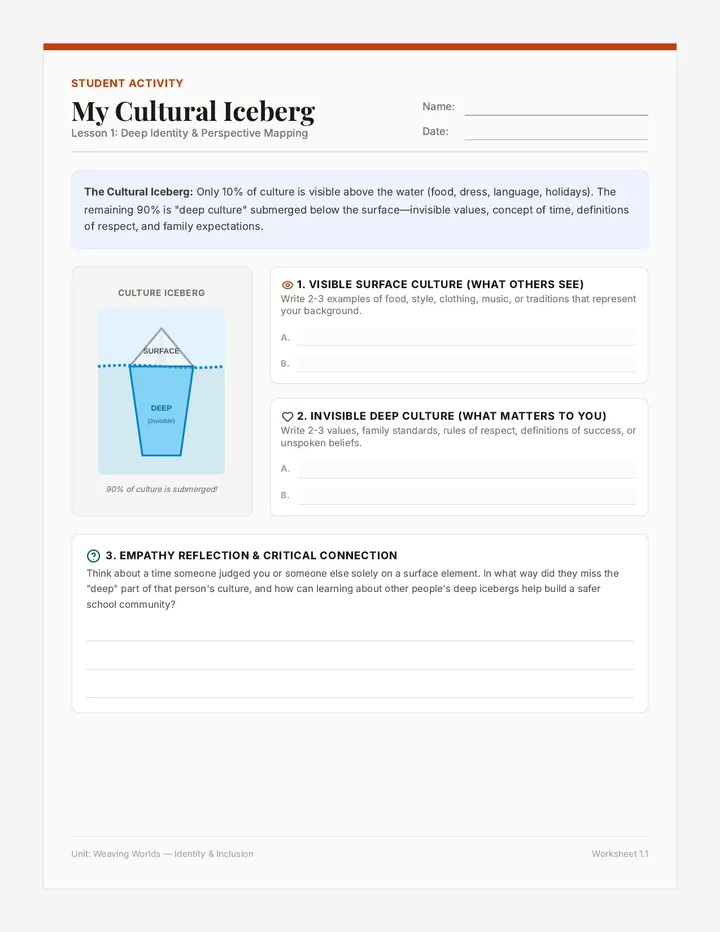
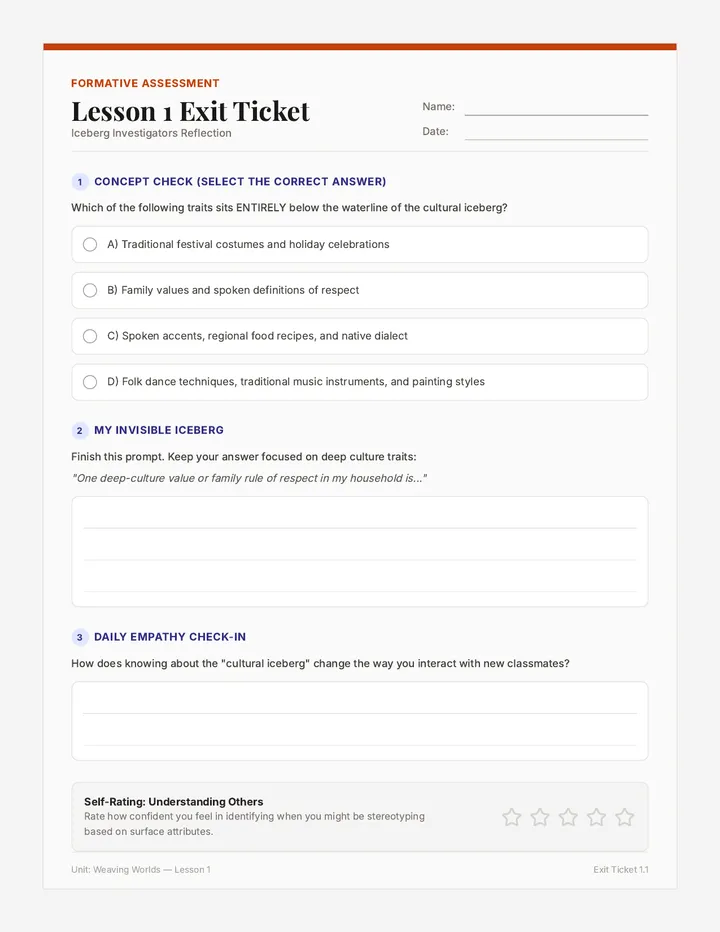
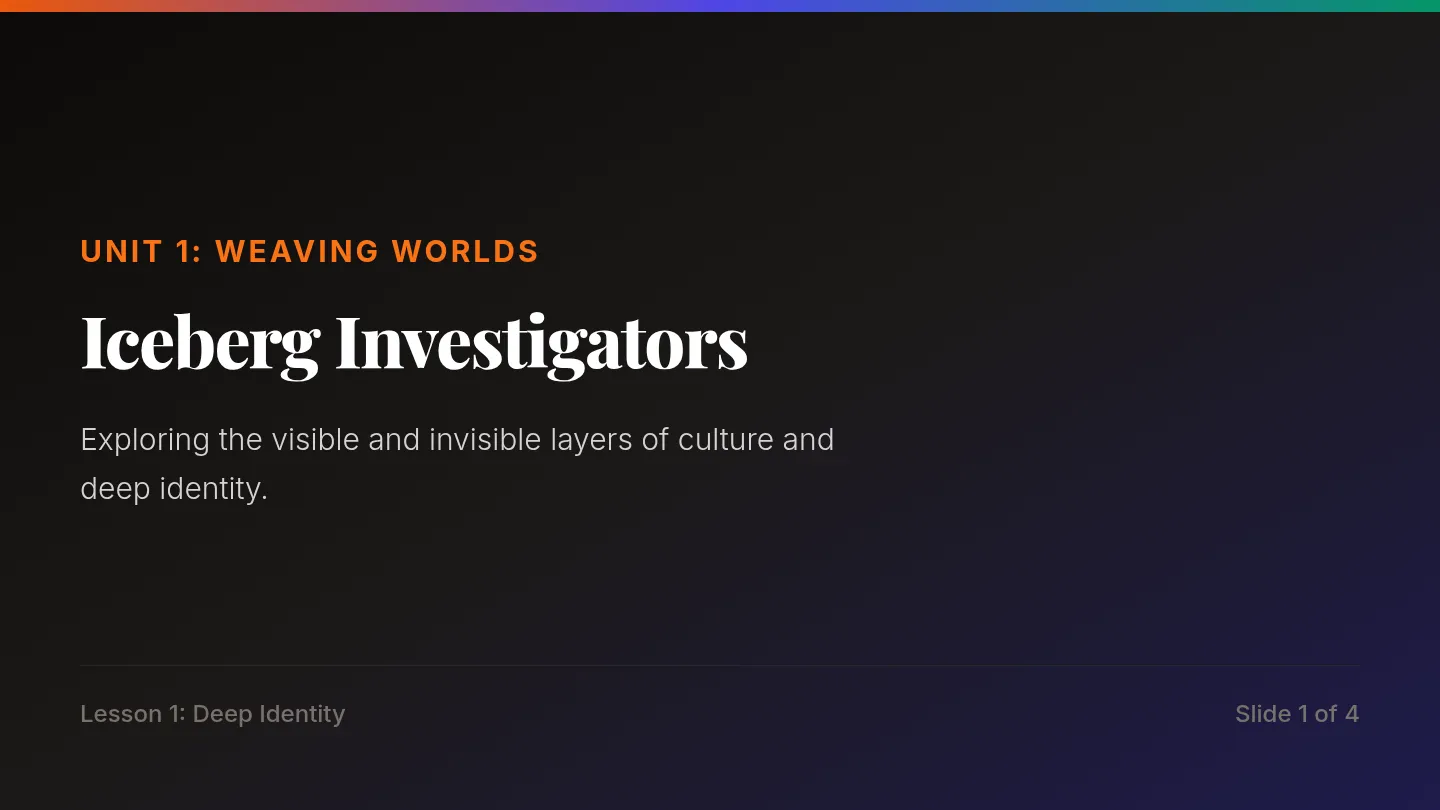
Students explore the concept of the cultural iceberg, distinguishing between visible elements of culture and deep, invisible values, to recognize the richness of identity.
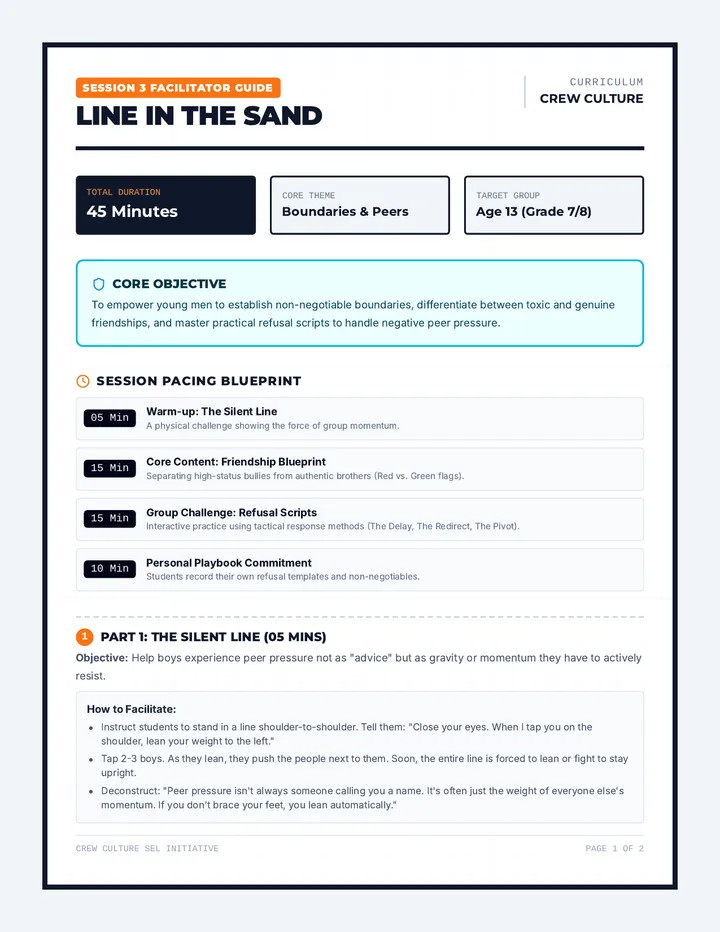
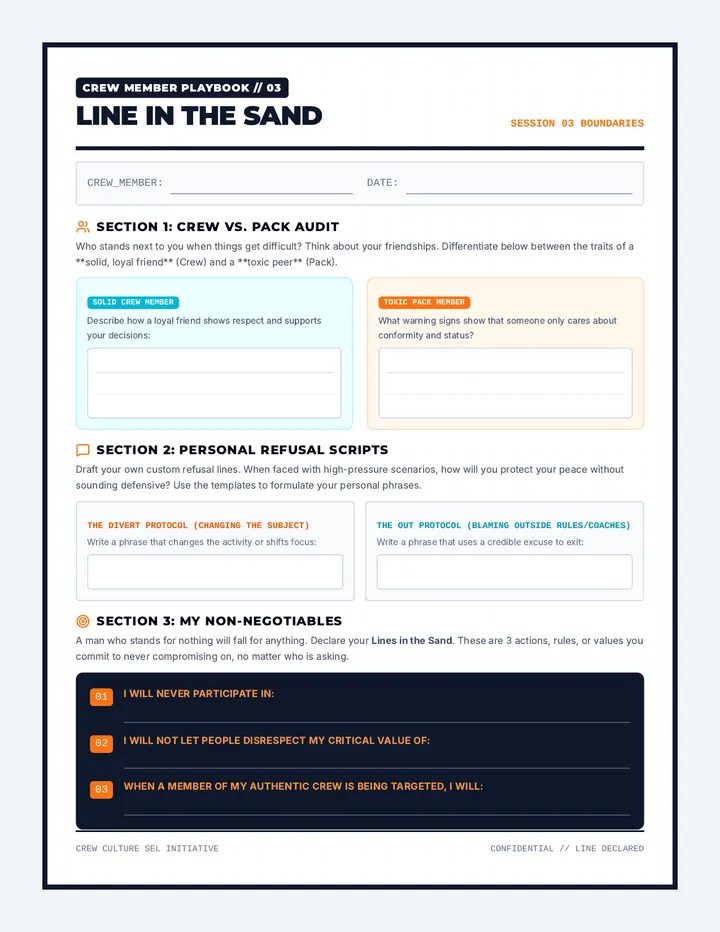
Students learn to set healthy boundaries, navigate peer pressure, and establish what authentic trust looks like in real-world friendships.
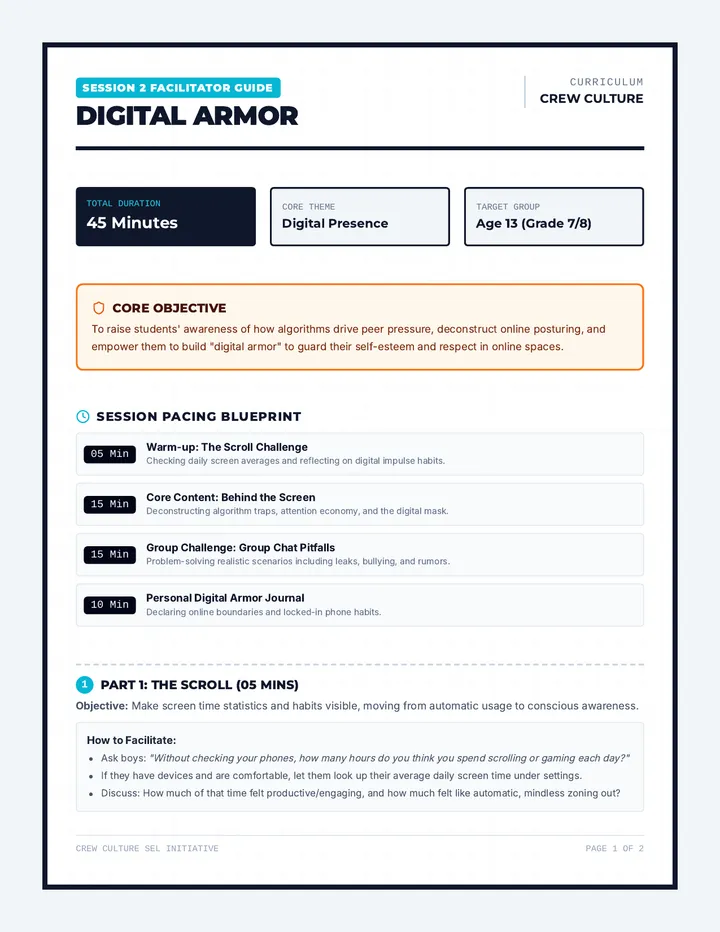
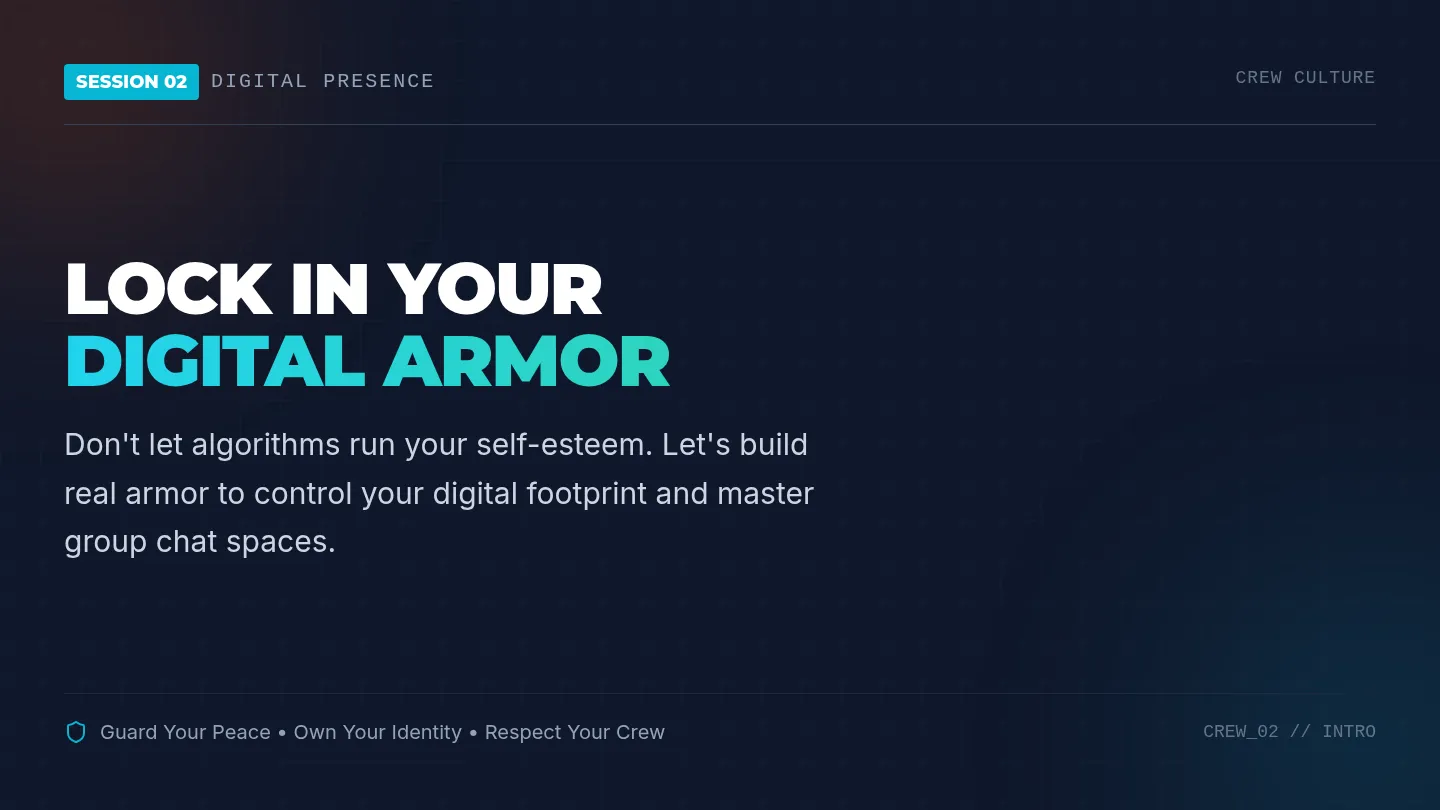
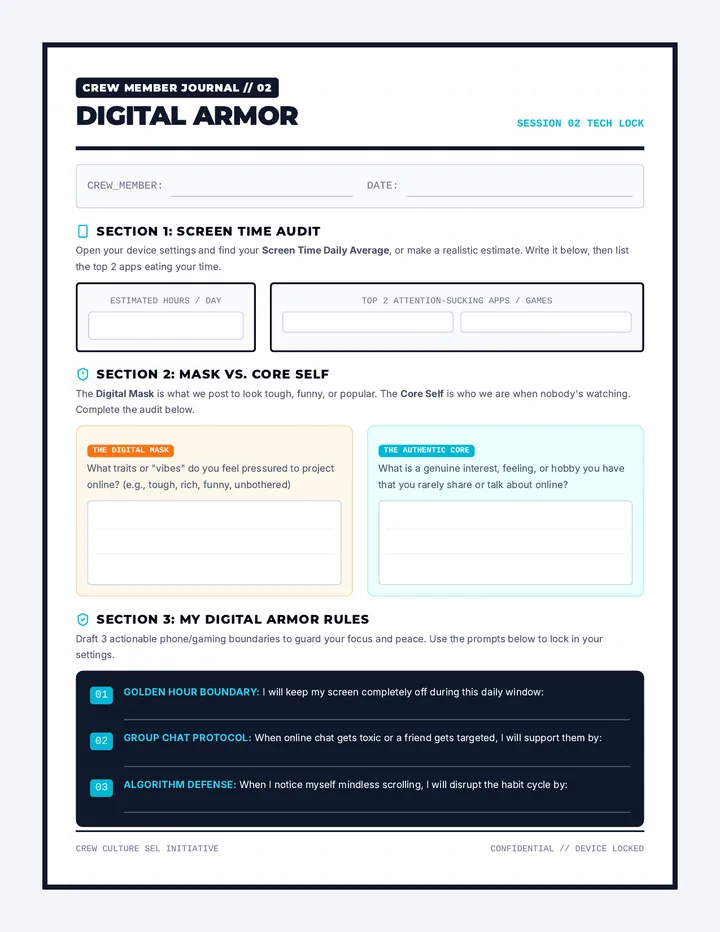
Students analyze their digital footprint, discuss modern social media pressures, and learn how to align their online actions with their offline values.
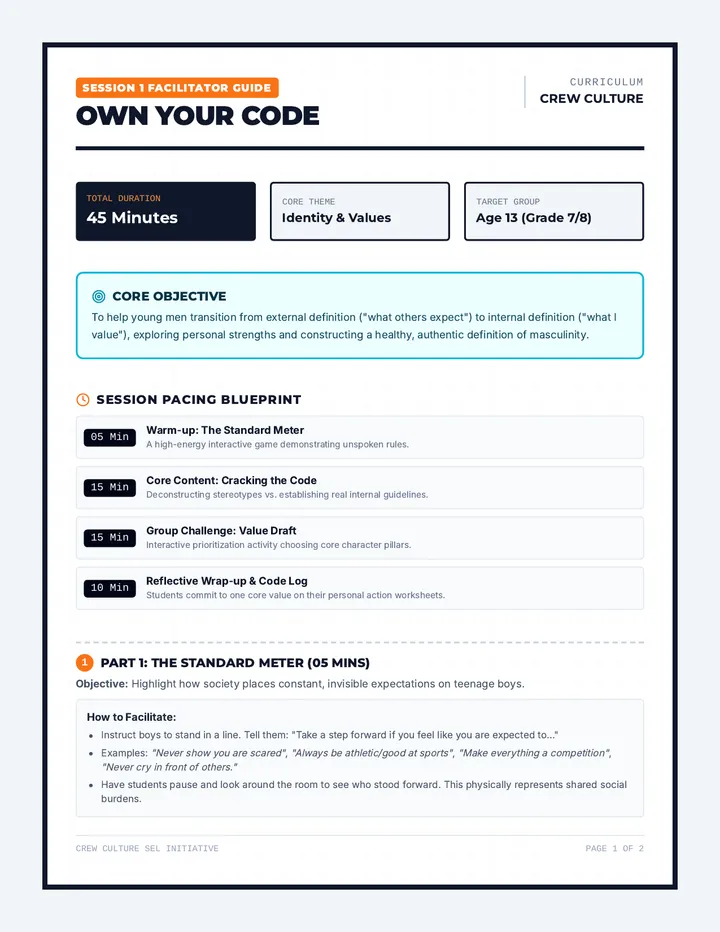
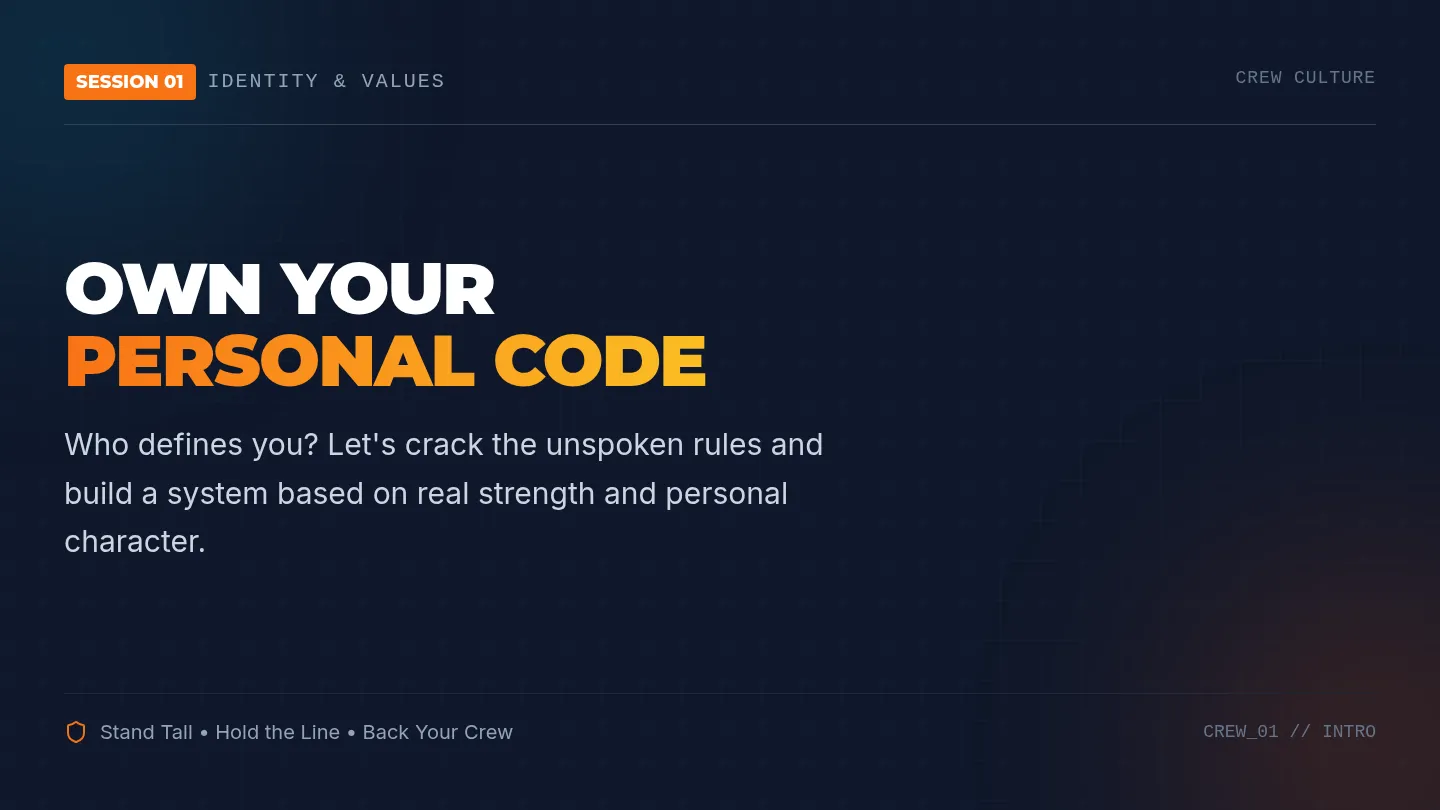
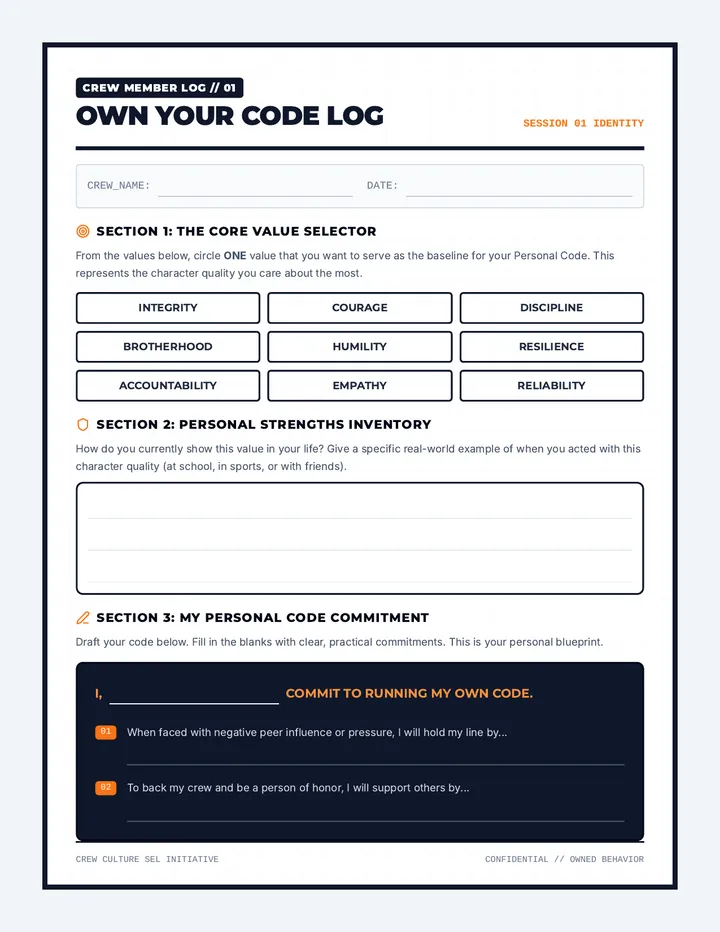
Students explore their personal identity, core values, and what healthy masculinity looks like in their daily lives.
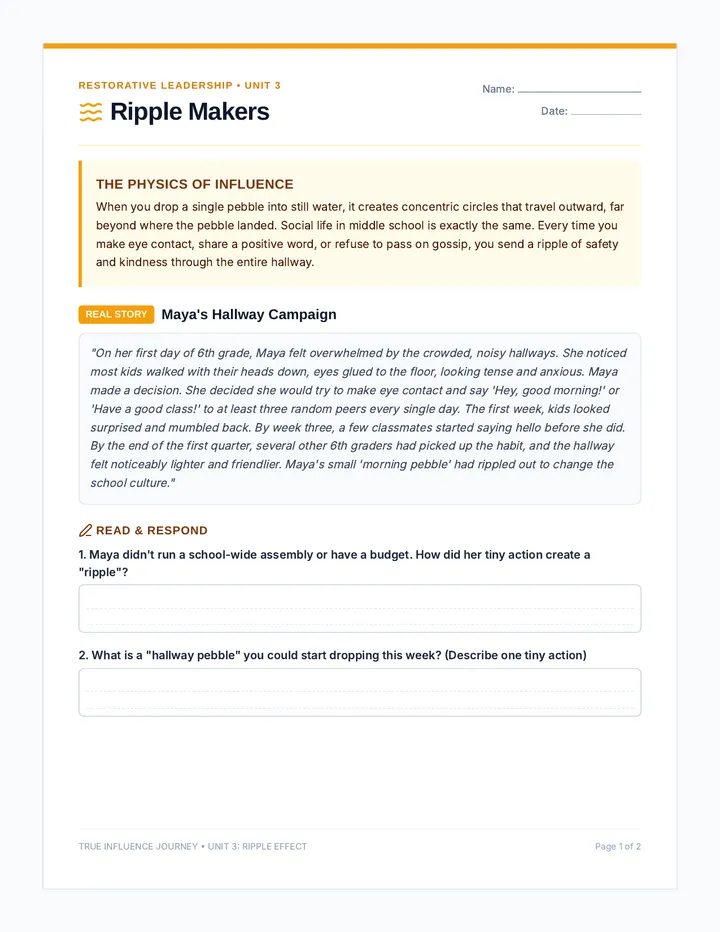
Focuses on creating a sustainable positive culture through daily small actions, prompting students to track their leadership and reflect on how positive behavior spreads. Features read-and-respond profiles of real student leaders.
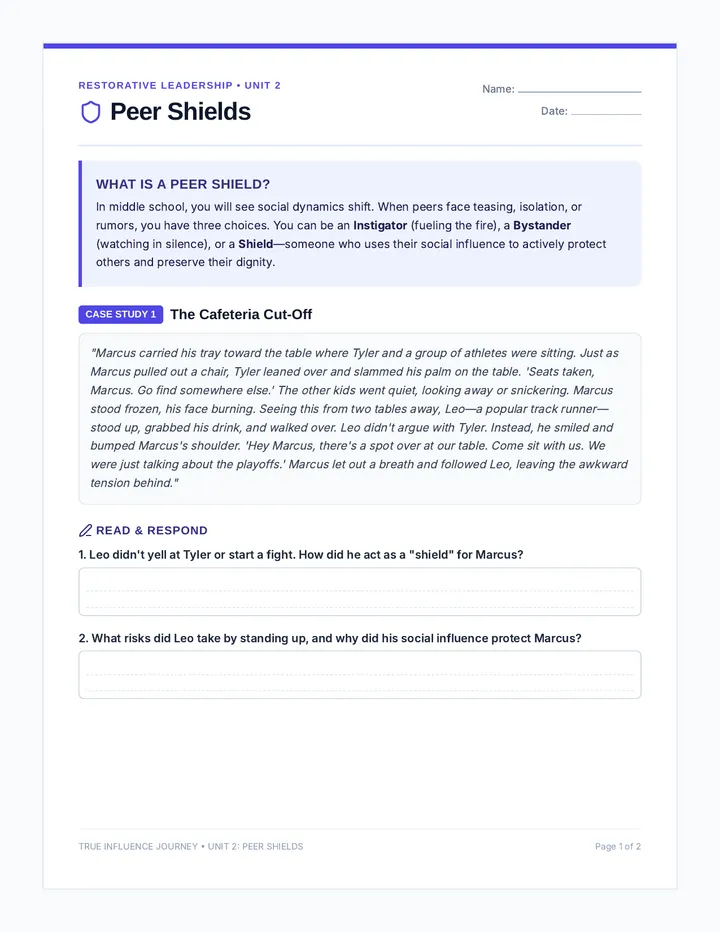
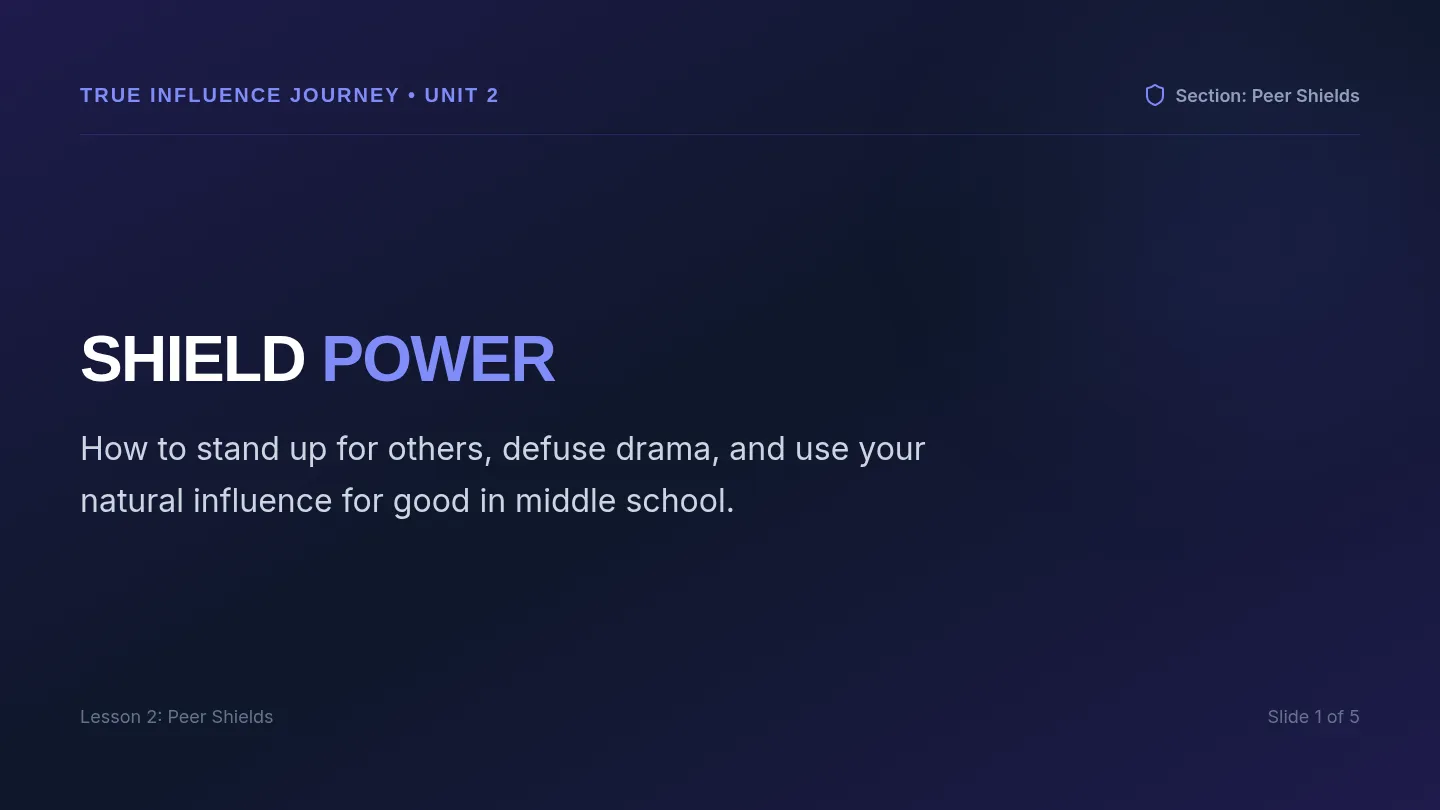
Students explore what it means to be a 'shield' for peers in middle school rather than a passive bystander or an instigator. Features narrative read-and-respond case studies on standing up to social exclusion and rumors.
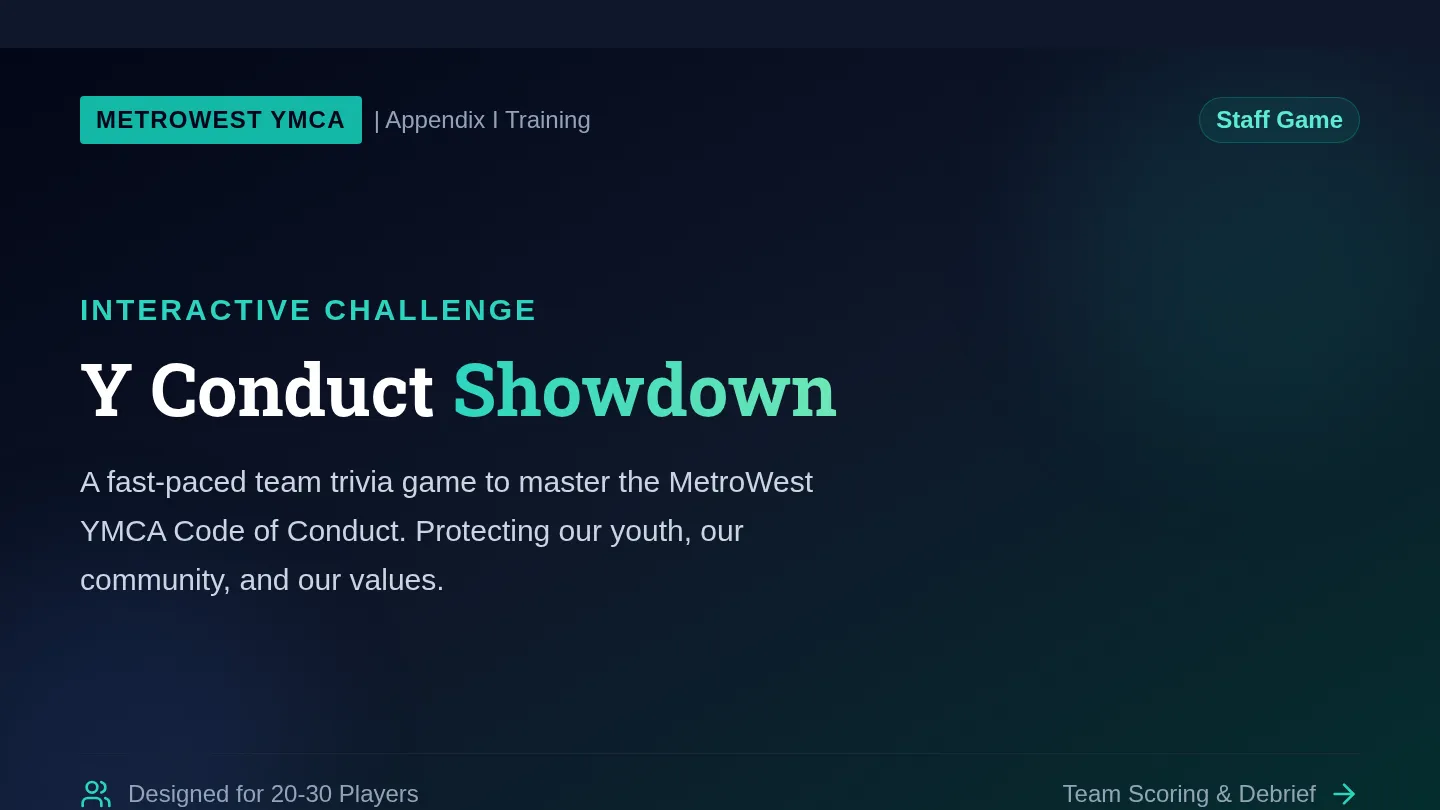
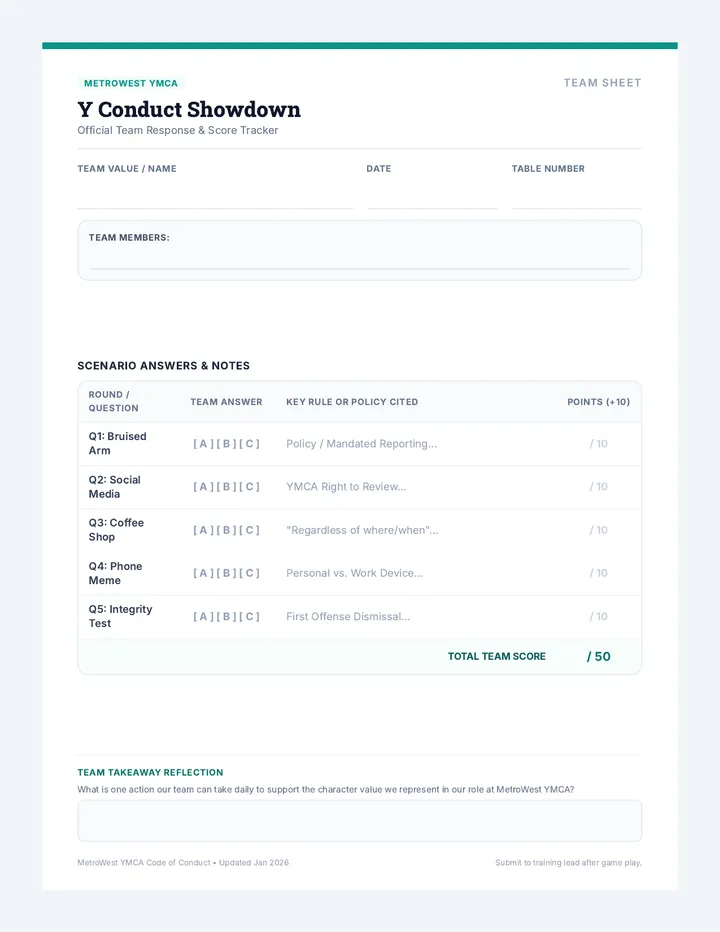
A interactive, high-energy staff training lesson designed to review the MetroWest YMCA Code of Conduct (Appendix I) through active team play and situational analysis.
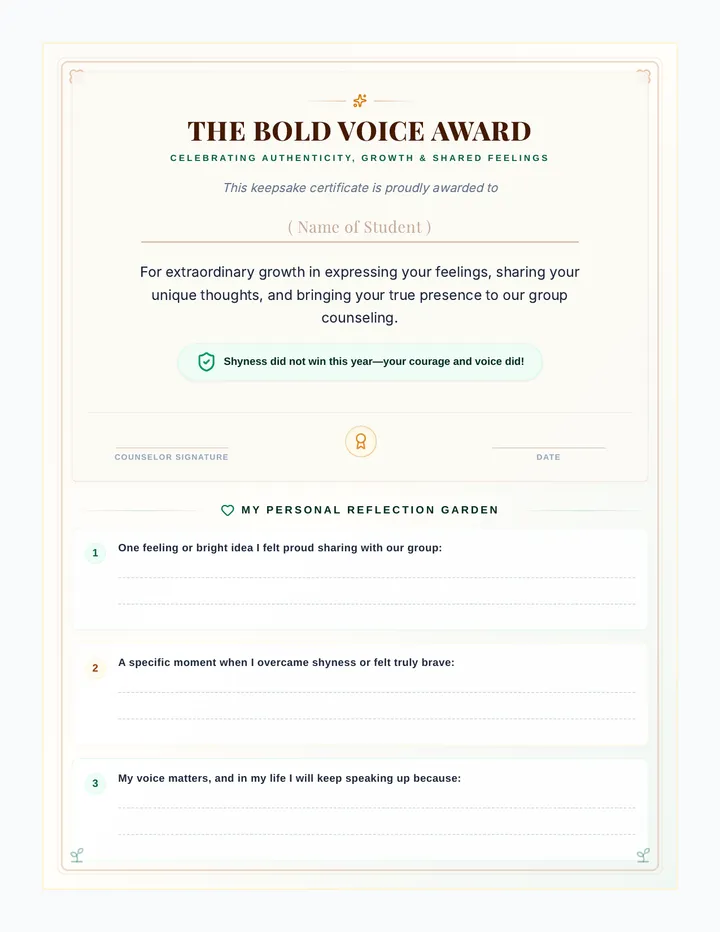
A reflective counseling lesson celebrating emotional expression, triumph over shyness, and setting intentions for speaking up with confidence in group settings.
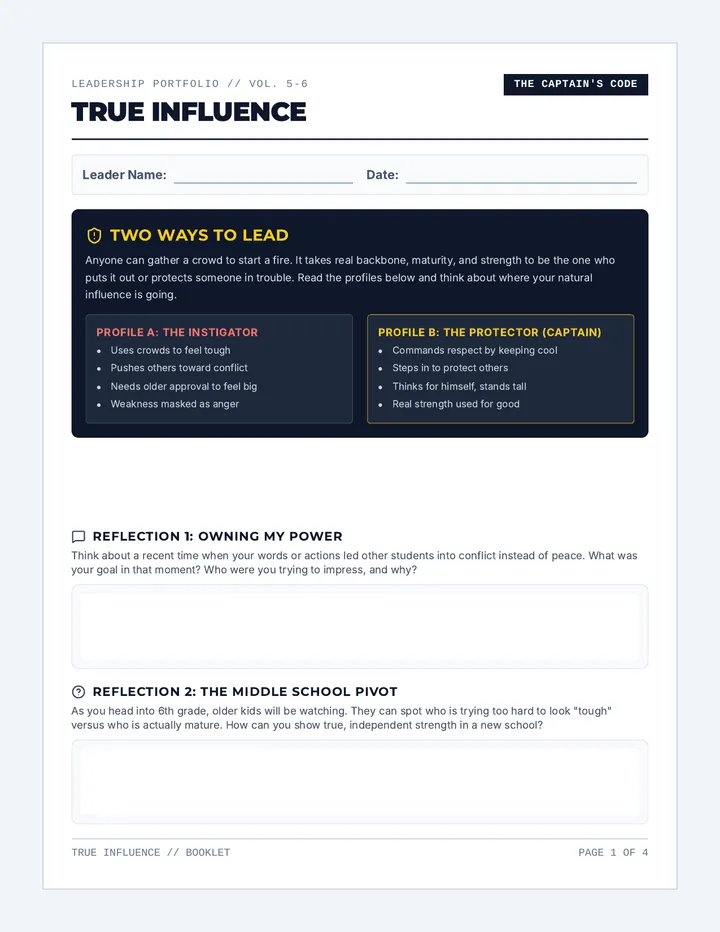
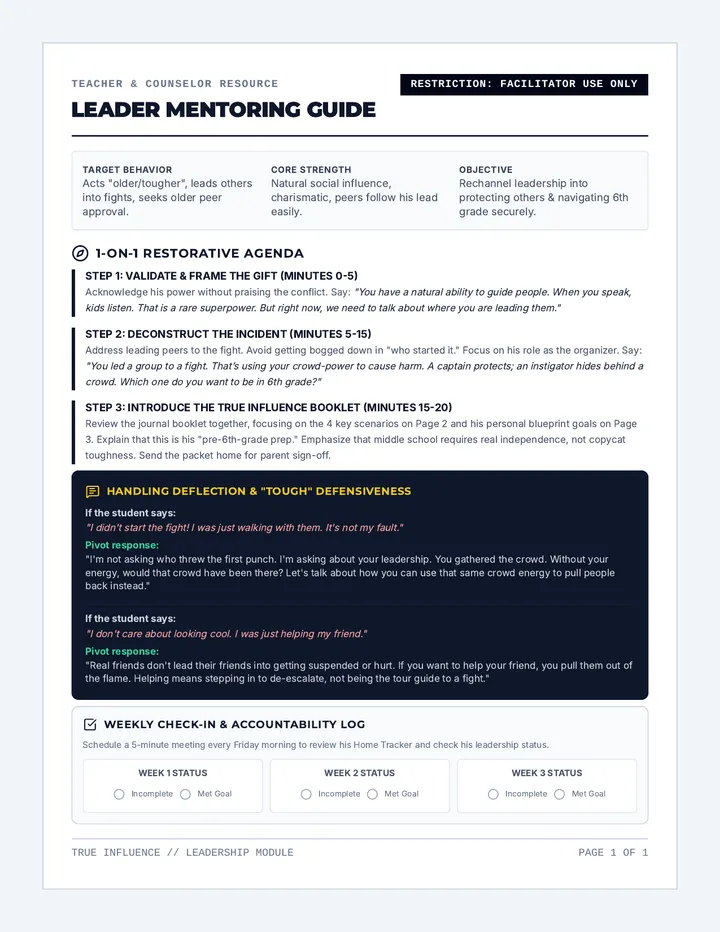
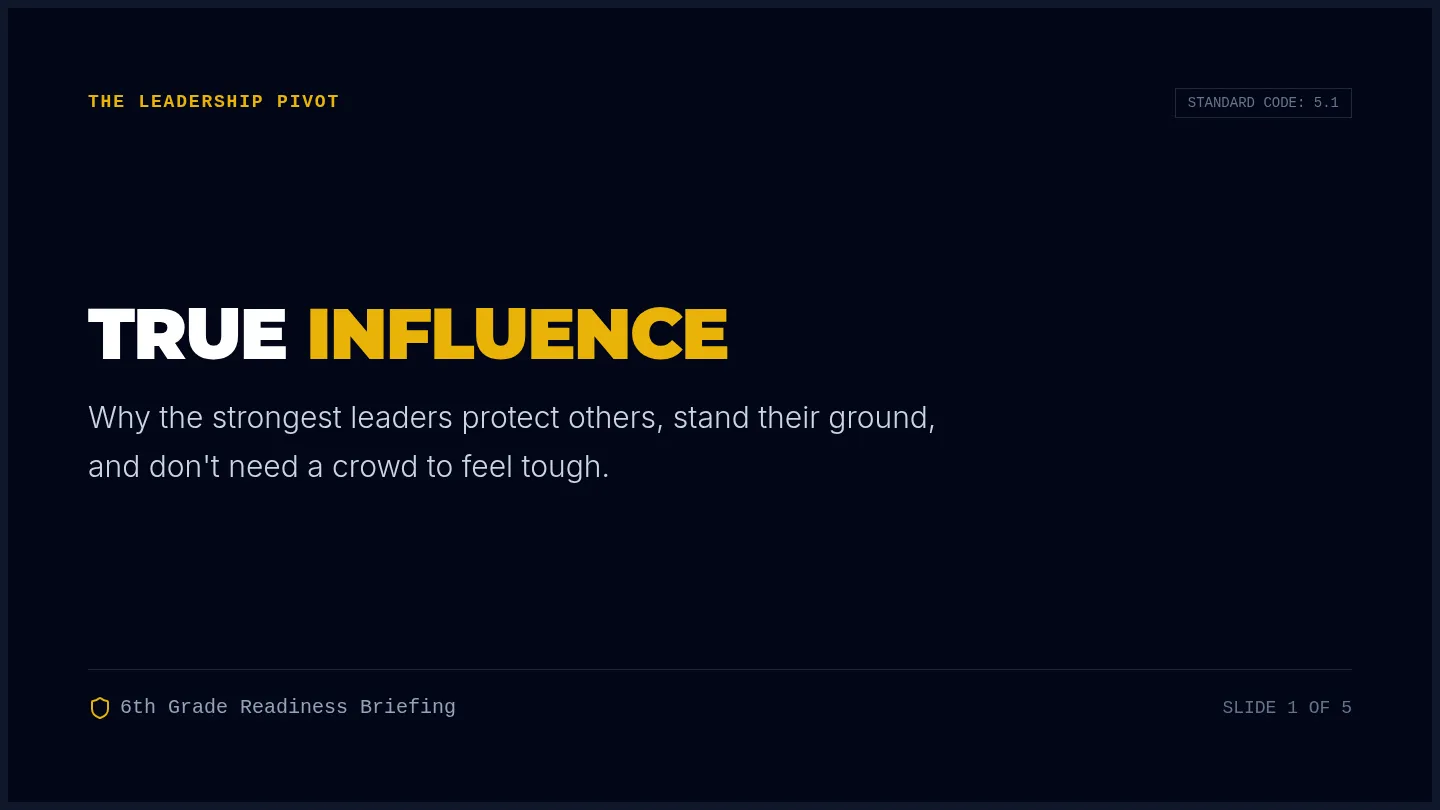
A restorative leadership module designed for a 5th-grade student transitioning to middle school. Focuses on channeling natural social influence into positive leadership, specifically protecting and looking out for others, rather than leading peers into conflict.