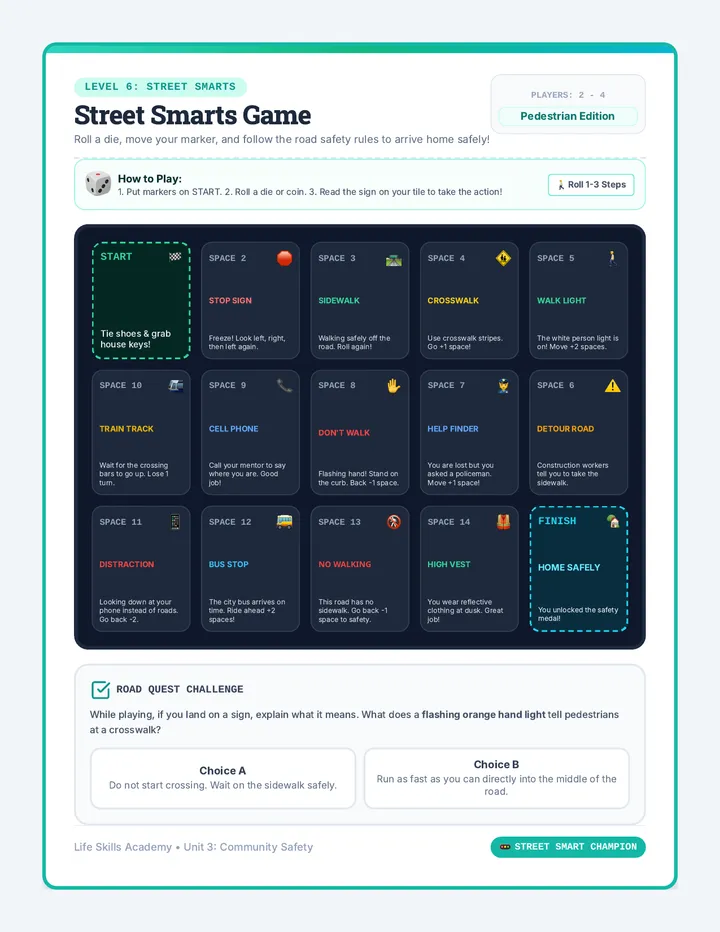
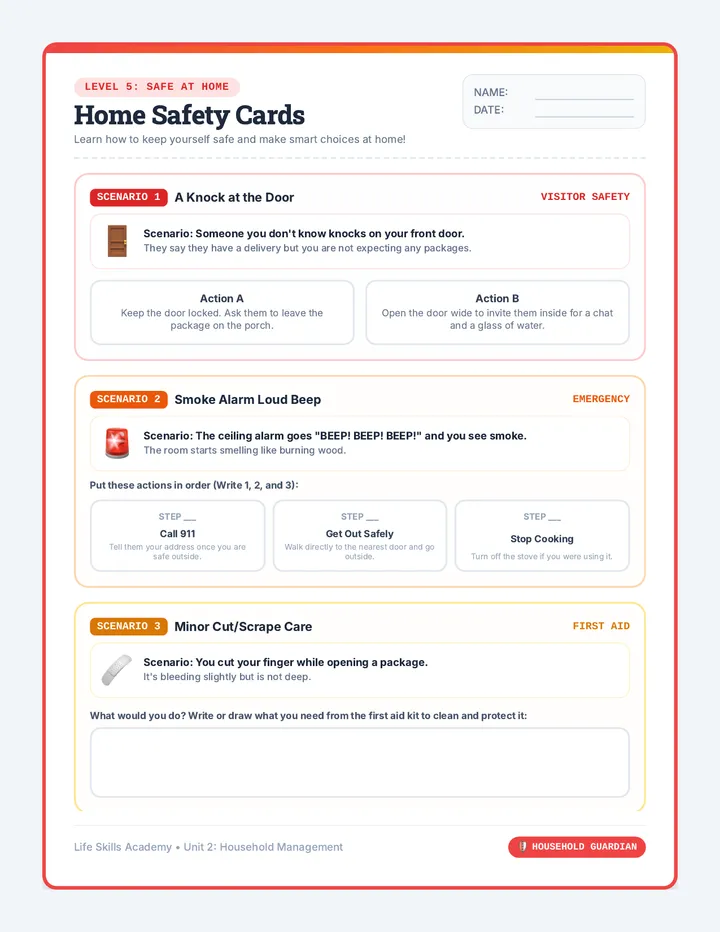
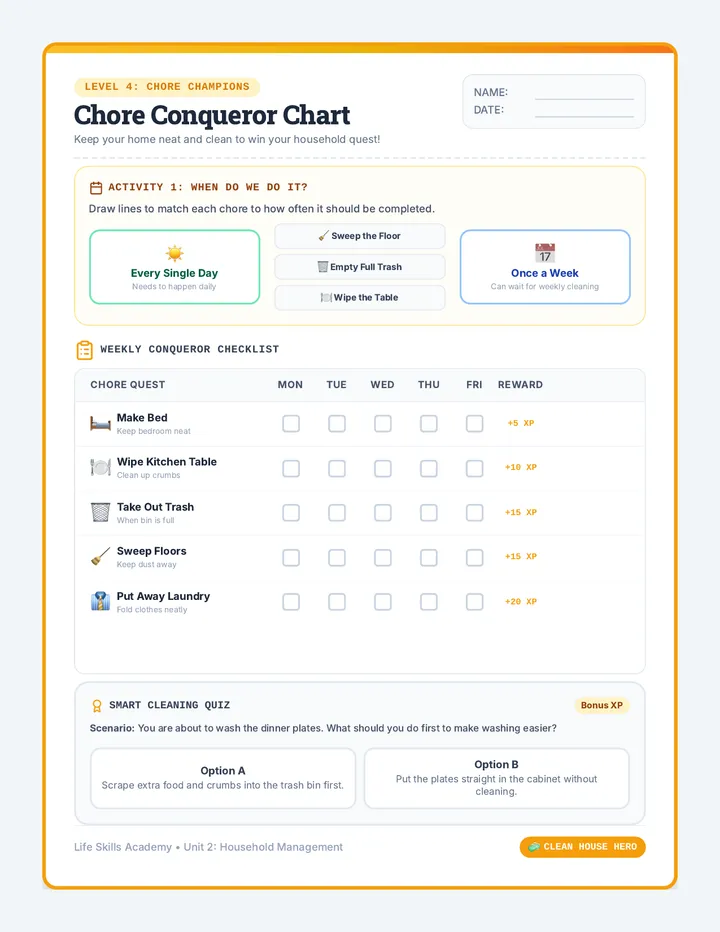
A hands-on lesson guiding 9th grade special education students through kitchen basics and meal planning via a smoothie-making activity to foster independence and healthy habits.
This lesson provides ENL and SPED parents with the knowledge and confidence to participate in their child's Committee on Special Education (CSE) meeting. It includes a comprehensive presentation on the meeting process and a preparation checklist for home use.
A lesson focused on shifting the narrative from autism awareness to acceptance by celebrating cognitive and personal strengths. Includes teacher resources and student-facing materials for classrooms and community spaces.
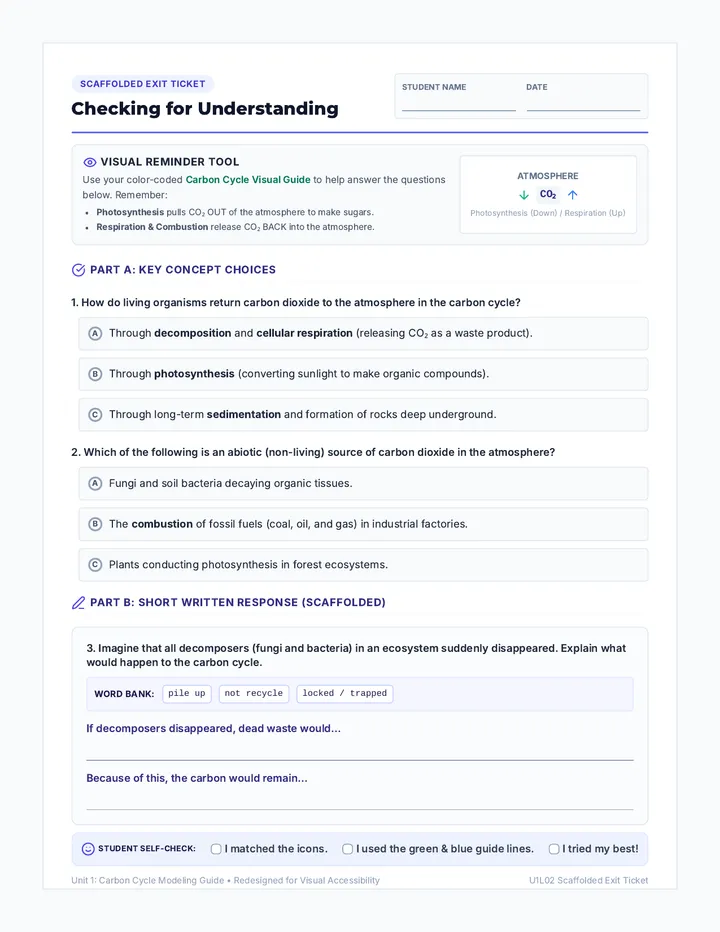
A collection of visual supports and implementation guides to help students with IEPs independently navigate the start of their class period.
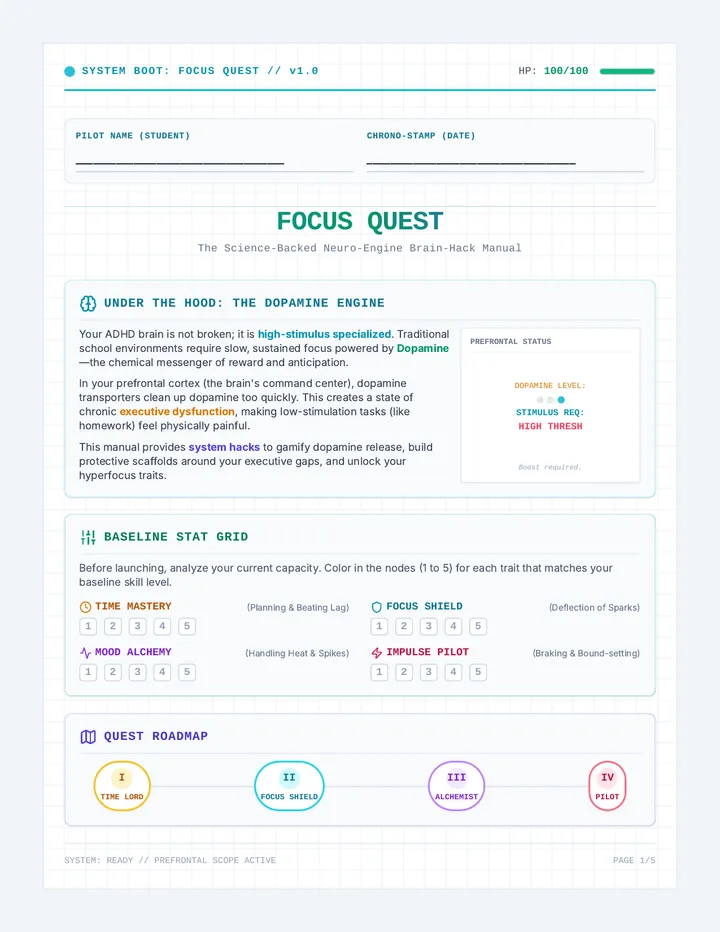
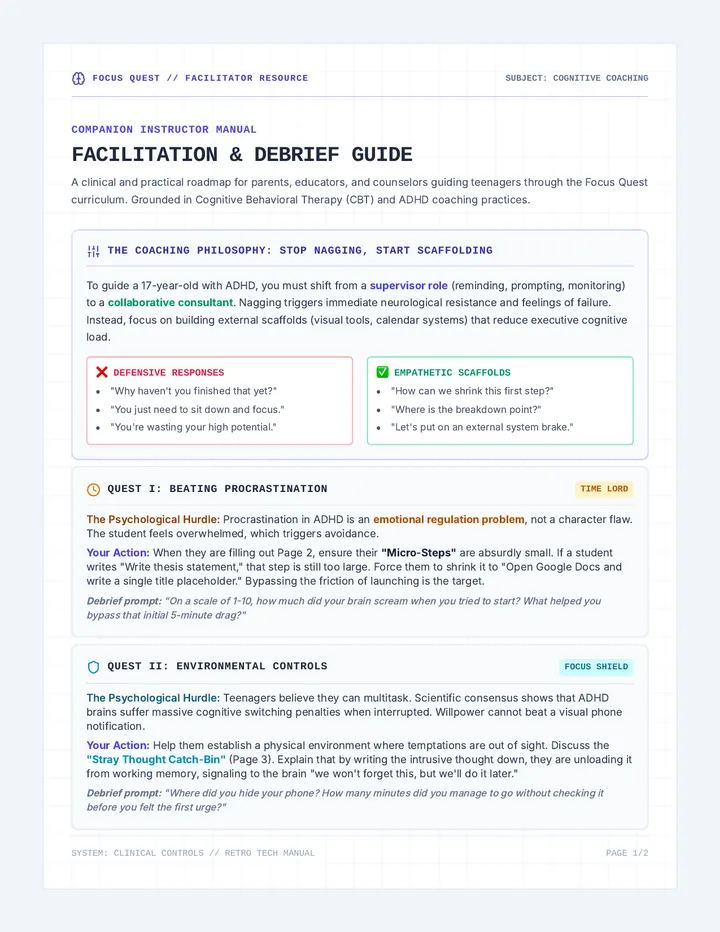
A set of tools designed to help students with ADHD improve their organization, planning, focus, and task initiation through structured self-monitoring.
A comprehensive system for tracking student behavior and progress throughout the day, featuring a block-by-block narrative tracker and a guide for effective parent communication.
A behavior management system centered around a weekly check-in/check-out (CICO) sheet to help students track homework and behavior goals across seven class periods.
A reflective lesson for high school students who stutter to analyze their emotional connection to speech, evaluate their usage of fluency strategies, and practice self-advocacy.
A comprehensive set of activities for students to master functional communication and fluency strategies through a mechanical workshop theme. Students learn to use 'tools' for smooth speech and navigate real-world communication scenarios.
A collection of resources to support a student with test-related anxiety through Section 504 accommodations, including a formal plan, a student guide, and a teacher tracking log.
A comprehensive behavior support system for students needing Tier 1 and Tier 2 PBIS interventions, specifically designed for students with ADHD, anxiety, and high-intensity behavioral needs.
A lesson focused on teaching and tracking specific academic habits such as workspace organization, planner usage, and text annotation to increase student independence in the general education setting.
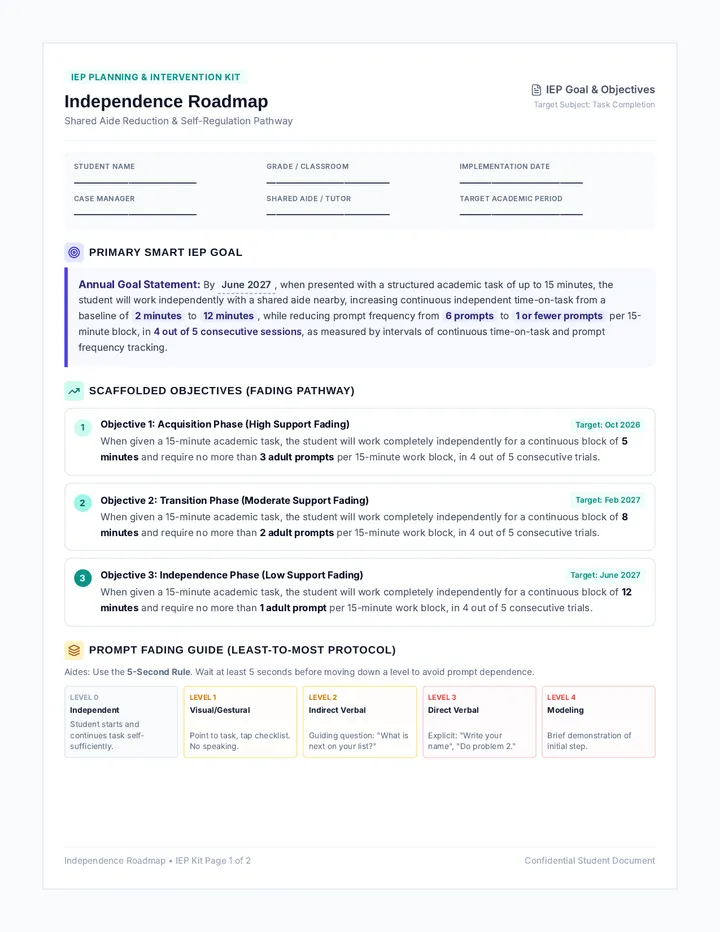
A comprehensive suite of tools designed to support a student and paraprofessional in achieving on-task work completion goals in a general education setting. Includes implementation strategies, task organizers, and data tracking systems.
A practical reading comprehension lesson for high school students with special needs, focusing on identifying the 'Who, When, Where, and Why' of a standard work contract using visual supports and guided practice.
A comprehensive set of visual supports and tracking tools designed for special education students to manage their daily schedule in 15-minute increments. Includes a visual schedule, First-Then board, and data collection log.
A comprehensive lesson for high school students with diverse special needs focusing on the social dynamics of trust, how to earn it, and the impact of broken trust. Includes a detailed facilitator guide, a visual social story, and a scenario-based worksheet.
A comprehensive lesson for high school students with special needs focused on building and maintaining trust with peers and authority figures, exploring the consequences of broken trust through visual scenarios and role-play.
A quick-screening tool designed for teachers and parents to identify handwriting red flags in under five minutes. This lesson provides the initial screening material needed to determine if further occupational therapy assessment is required.
A comprehensive toolkit designed to help students with ADHD master executive function skills, including task initiation, classroom focus, and organizational systems. Includes a slide deck for small-group instruction, a student self-monitoring checklist, and a teacher support guide.
A social story and supporting resources designed to help a high school student with cognitive impairments understand and follow appropriate restroom etiquette, focusing on privacy and personal space.
A collection of visual and interactive resources designed to help students with moderate intellectual disabilities understand personal boundaries, appropriate school conversation, and social consent.
A comprehensive toolkit designed to help students master task initiation and working memory through structured routines and cognitive exercises. These resources provide practical strategies for overcoming procrastination and improving information retention.
A focused lesson on differentiating quarters and nickels using visual and tactile cues, specifically designed for students with severe intellectual disabilities.
A set of high-impact, low-disruption tools for high schoolers to manage verbal impulses, framed through a 'Mission Control' tech aesthetic to engage students who seek social status/attention.
A 30-minute lesson for high schoolers discussing the social model of disability, identity-first language, and self-advocacy using 'Look Me in the Eye'.
A 30-minute lesson for middle schoolers exploring the internal experience of autism and masking using the novel 'Can You See Me?'.
A 30-minute lesson for upper elementary students focusing on empathy, communication differences, and friendship using 'My Brother Charlie'.
A 30-minute introductory lesson for early learners focusing on individual differences and unique ways of thinking using 'The Girl Who Thought in Pictures'.
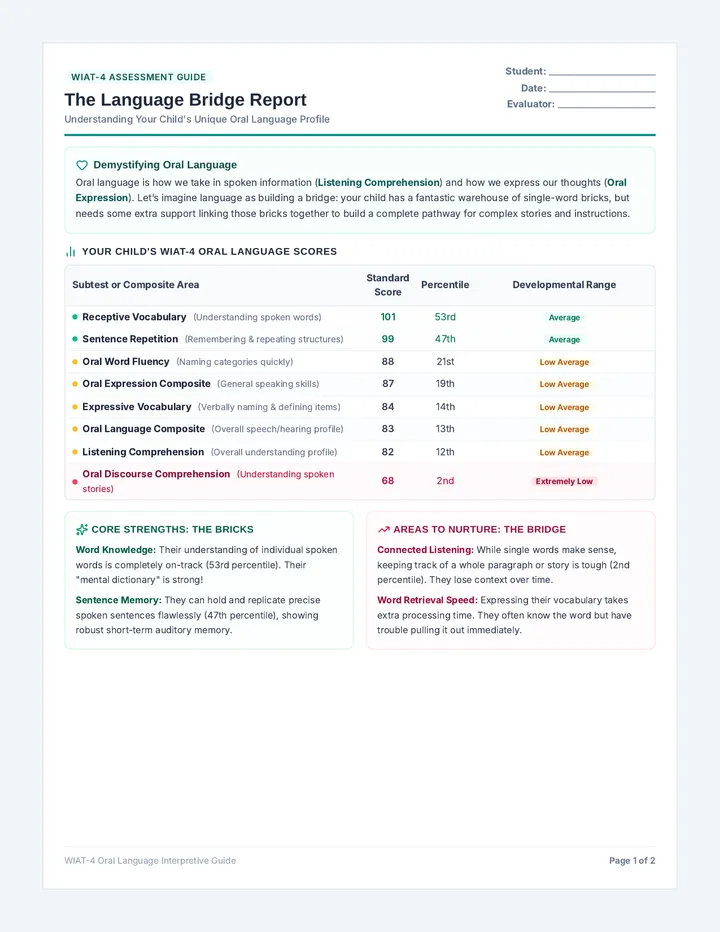
A comprehensive set of quick-reference strategies and monitoring tools for supporting students with low processing speed and oral language challenges in general education and small group settings.
A collection of actionable IEP modifications and implementation strategies for students with Specific Learning Disabilities in listening and writing.
A comprehensive guide for North Carolina educators to identify and support 'bubble students' in the final weeks before EOG testing, focusing on NC Check-In 2.0 data and targeted small-group interventions.
A comprehensive toolkit for school leaders and teachers to identify and support 'bubble' students in the weeks leading up to NC EOG testing, focusing on NC Check-In 2.0 data analysis and targeted intervention.
An exploration of the history, mechanics, and fairness of standardized testing through the lens of a neurodivergent student's experience. This lesson uses a retro-style comic to illustrate the disconnect between traditional testing and real-world intelligence.
Guides the student through the construction of a Claim-Evidence-Reasoning paragraph using a highly scaffolded template and word bank.
Teaches the student how to identify 'evidence' by selecting images and simple phrases that show family tension and responsibility.
Introduces the abstract concept of guilt using visual metaphors and simple emotion words to describe Gregor's internal state.
Explores the concept of responsibility through the lens of money and work, contrasting Gregor's role before and after his transformation.
Introduces Gregor and his family members through high-frequency vocabulary and visual matching to establish the premise of the story.
A series of hands-on, unplugged activities designed to teach Python data types and variables through tactile sorting, logic puzzles, and matching games. Focused on accessibility and clarity for students with diverse learning needs.
A structured, high-engagement lesson on Galatians focusing on the Fruit of the Spirit, Freedom vs. Law, and Living by the Spirit, designed specifically for high school boys with AU and attentional needs.
An investigation into Christian freedom based on Galatians 5:1 and 5:13. This lesson breaks down the difference between "doing whatever I want" and "freedom to do what is right," providing concrete examples for students with AU/ADHD to distinguish between selfish and selfless choices.
A focused exploration of Galatians 5:22-23, designed for high school boys with attentional and sensory needs. This lesson uses literal definitions and concrete scenarios to help students identify and apply the Fruit of the Spirit in their daily lives.
Finalizing a long-term regulation plan for independent classroom success and leadership.
Simulating classroom challenges to practice the full reset protocol under various environmental stressors.
Using data-driven tracking to monitor regulation success and earn autonomy-based performance incentives.
Developing a structured re-entry protocol to minimize cognitive friction when transitioning back to academic tasks.
Establishing a personalized repertoire of evidence-based regulation techniques to use during a reset.
Mastering the art of professional advocacy through discrete, effective communication cues for requesting a reset.
Defining the strategic reset as a high-performance tool for cognitive recovery rather than a leisure activity.
Developing self-awareness to recognize physiological and cognitive triggers of shutdown or avoidance before they escalate.
A collection of resources to support students using symbol-based communication systems to express needs and engage in learning.