A structured program to help high school students with special needs verbally express opinions and support them with logical reasons. Includes engaging debate topics, connection word scaffolds, and an integrated teacher data tracker.
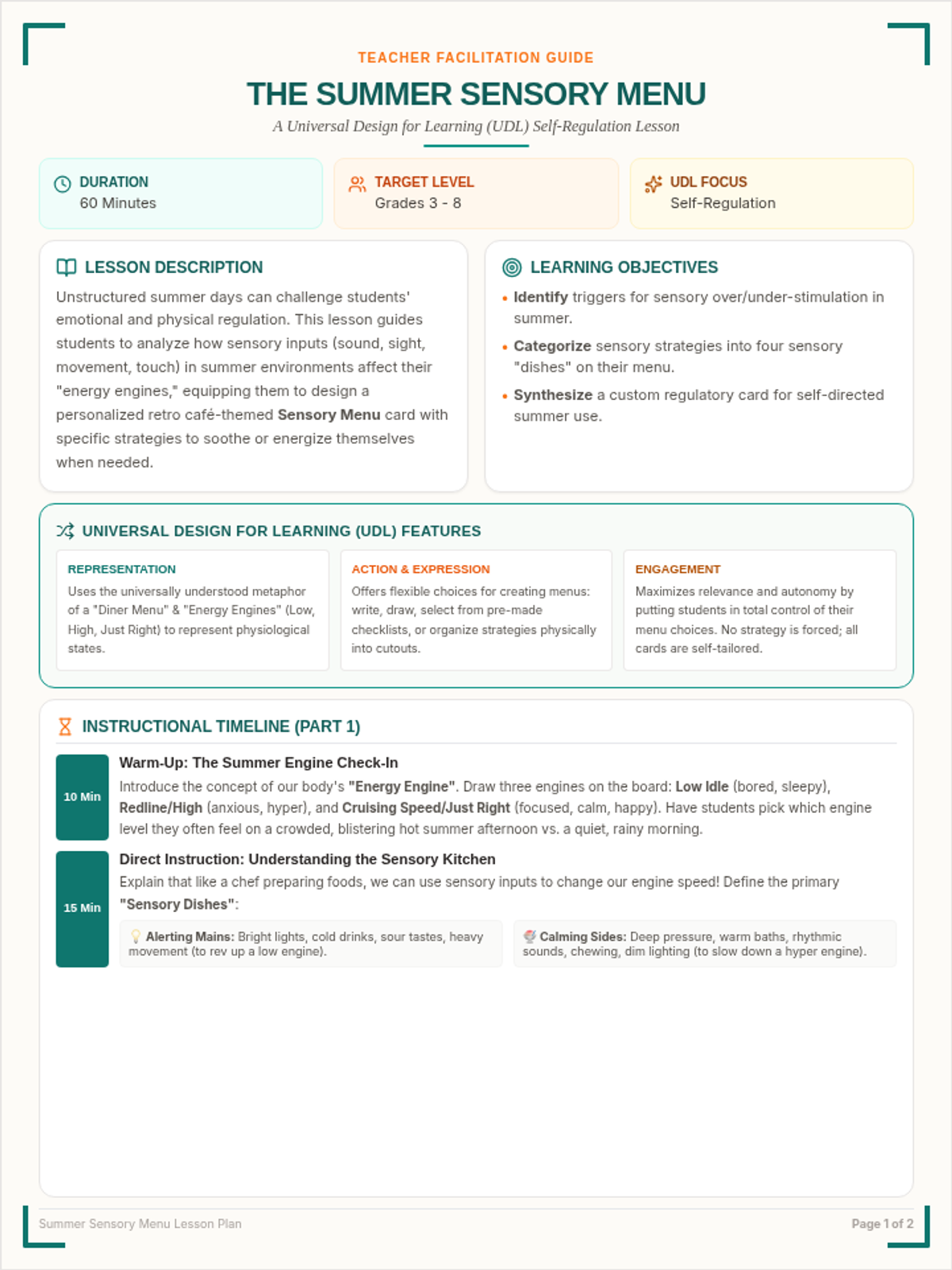
A self-regulation lesson based on Universal Design for Learning (UDL). Students explore how sensory stimuli and summer environments affect their energy levels and design a personalized 'sensory menu' card filled with tailored coping strategies to maintain emotional balance during unstructured summer months.
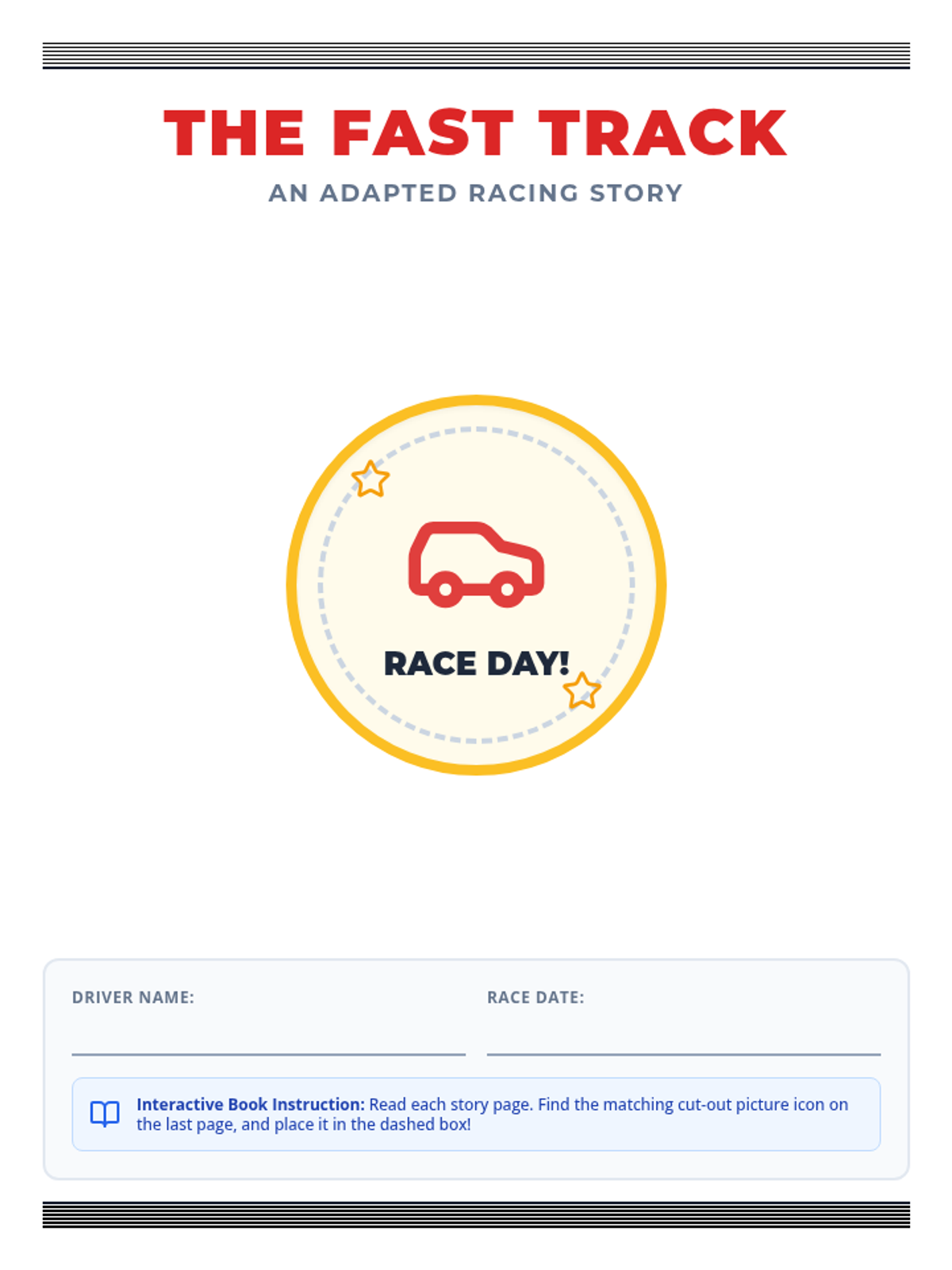
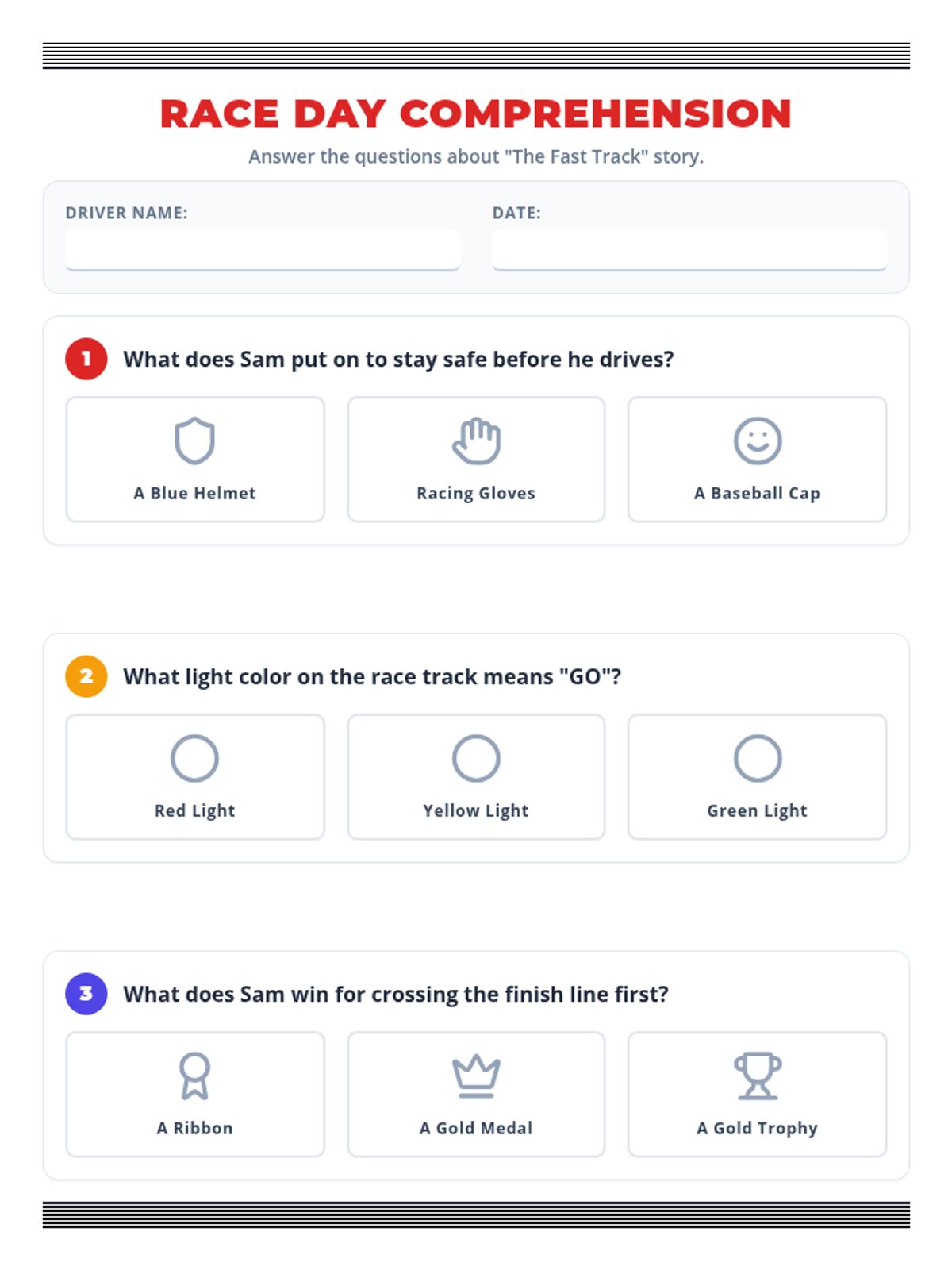
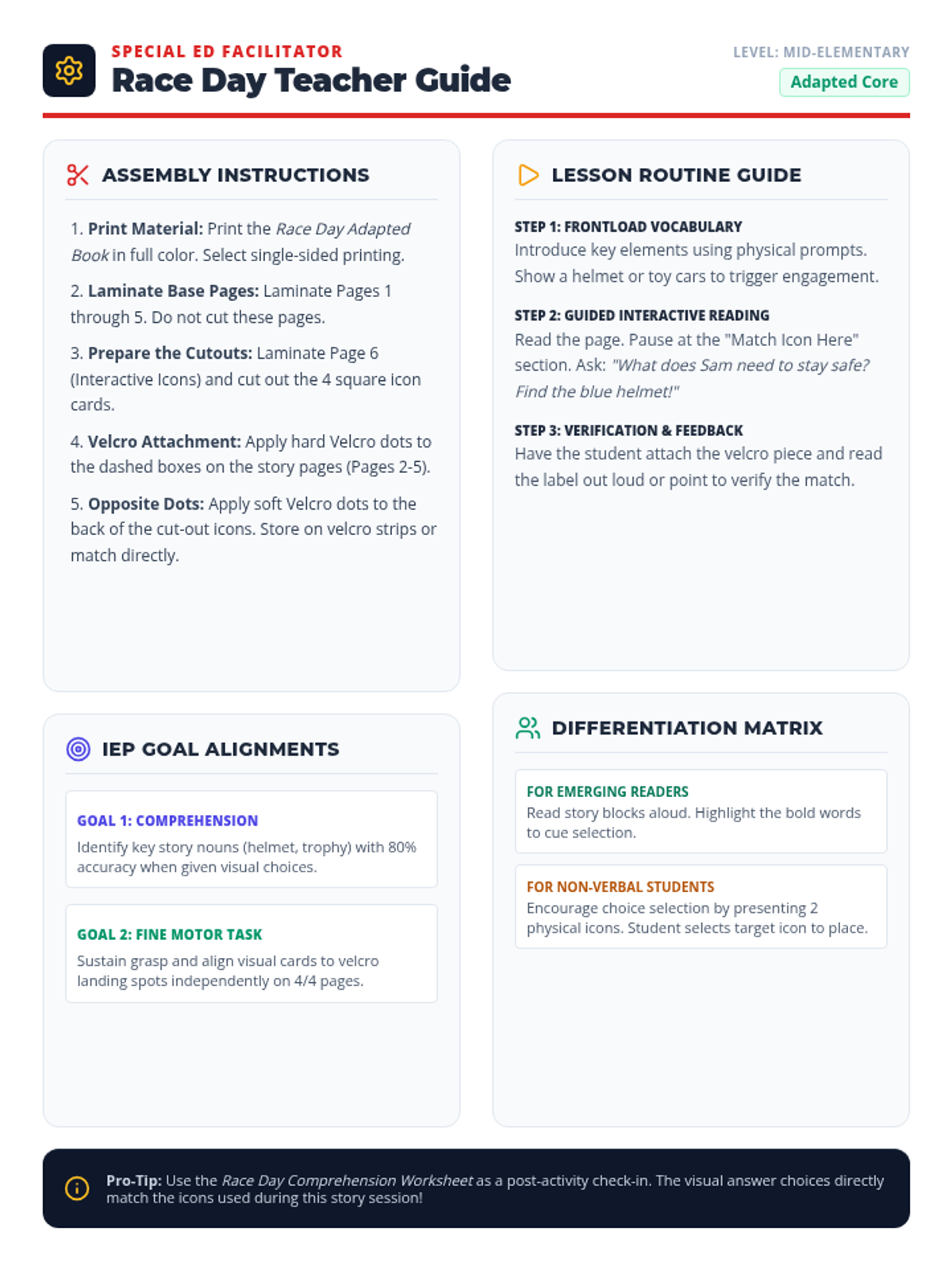
An adapted reading lesson centered around a simplified, highly visual story about car racing. Ideal for 6th-grade special education students needing mid-elementary comprehension supports and interactive matching tasks.
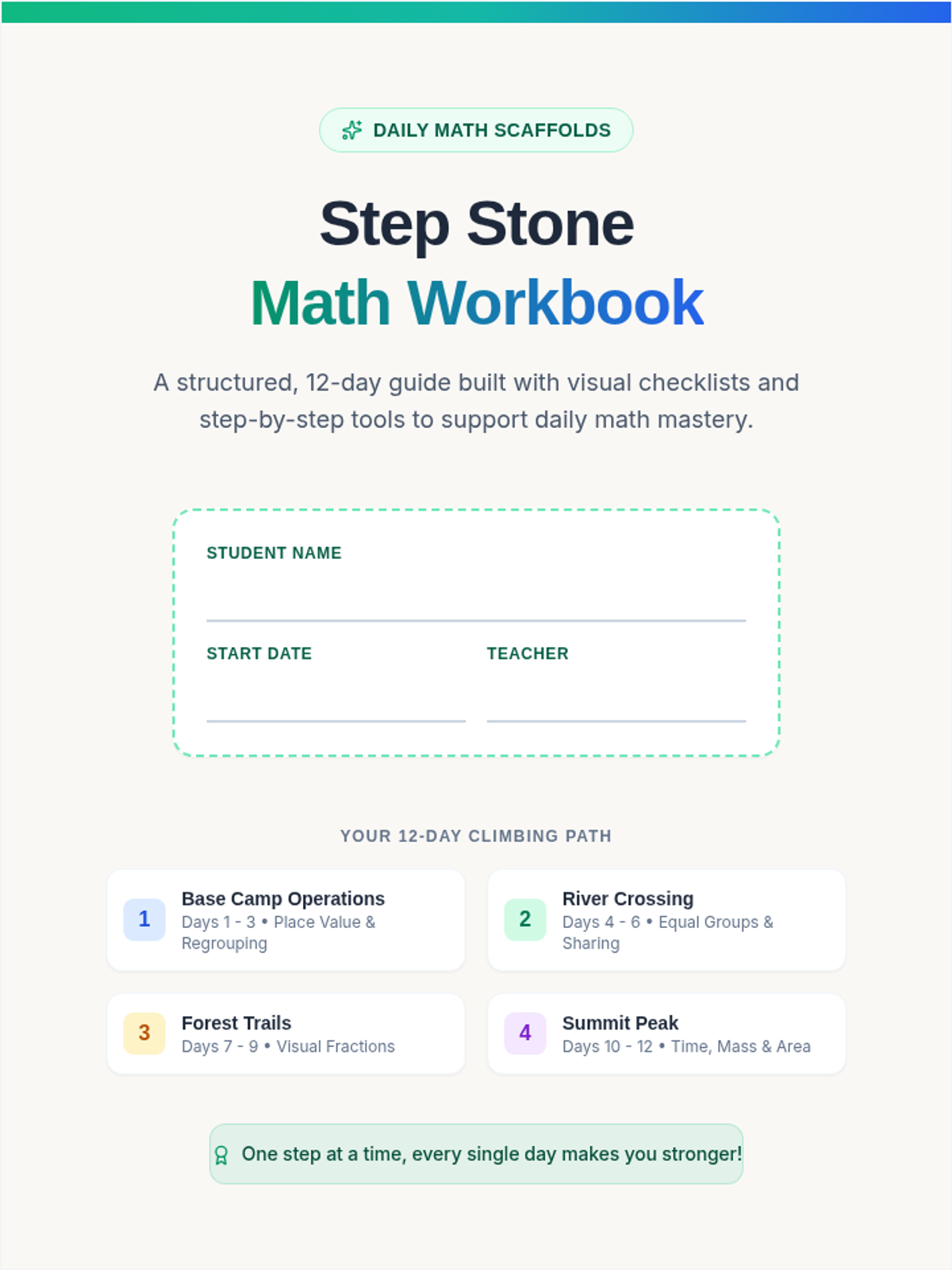
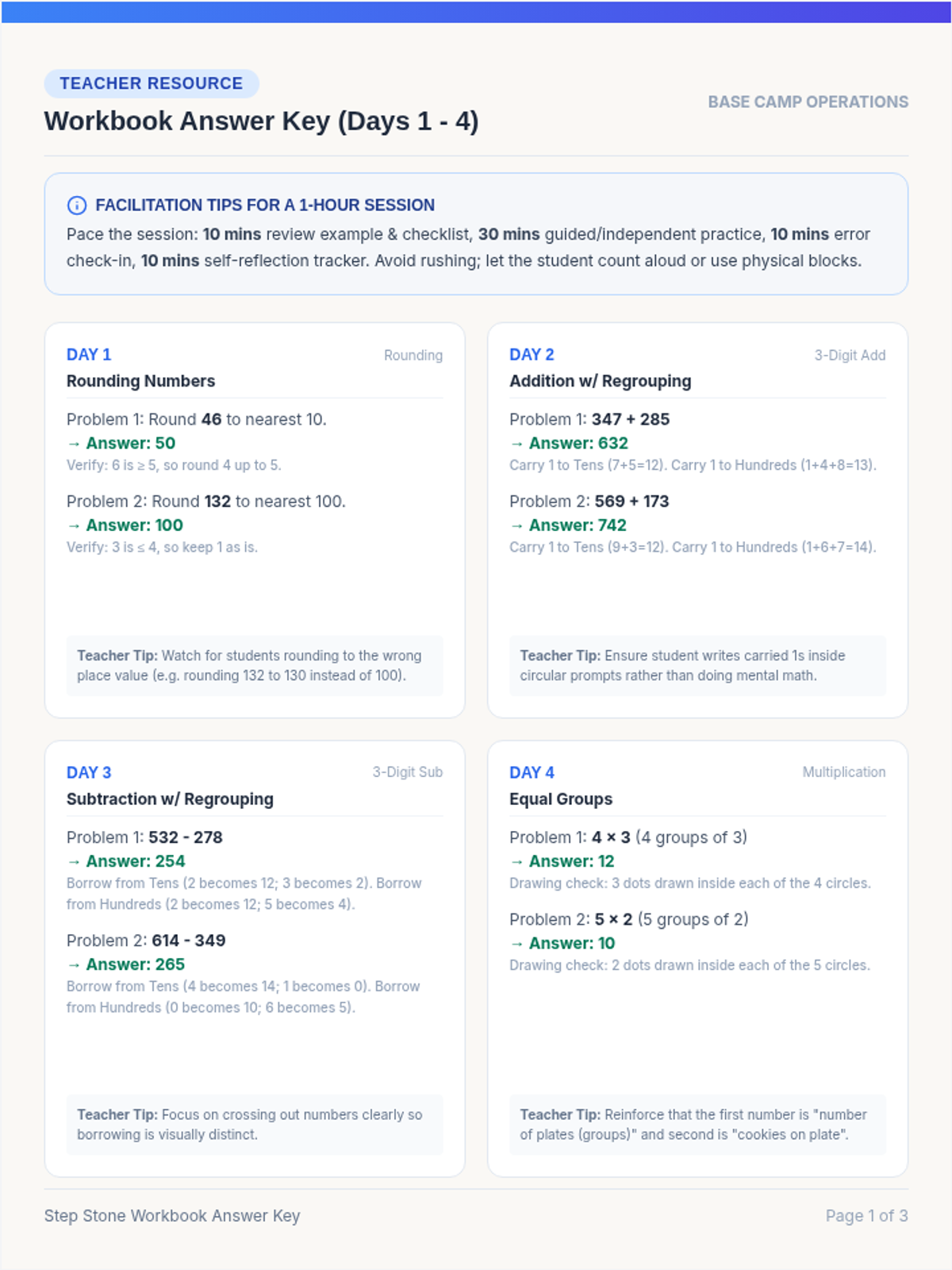
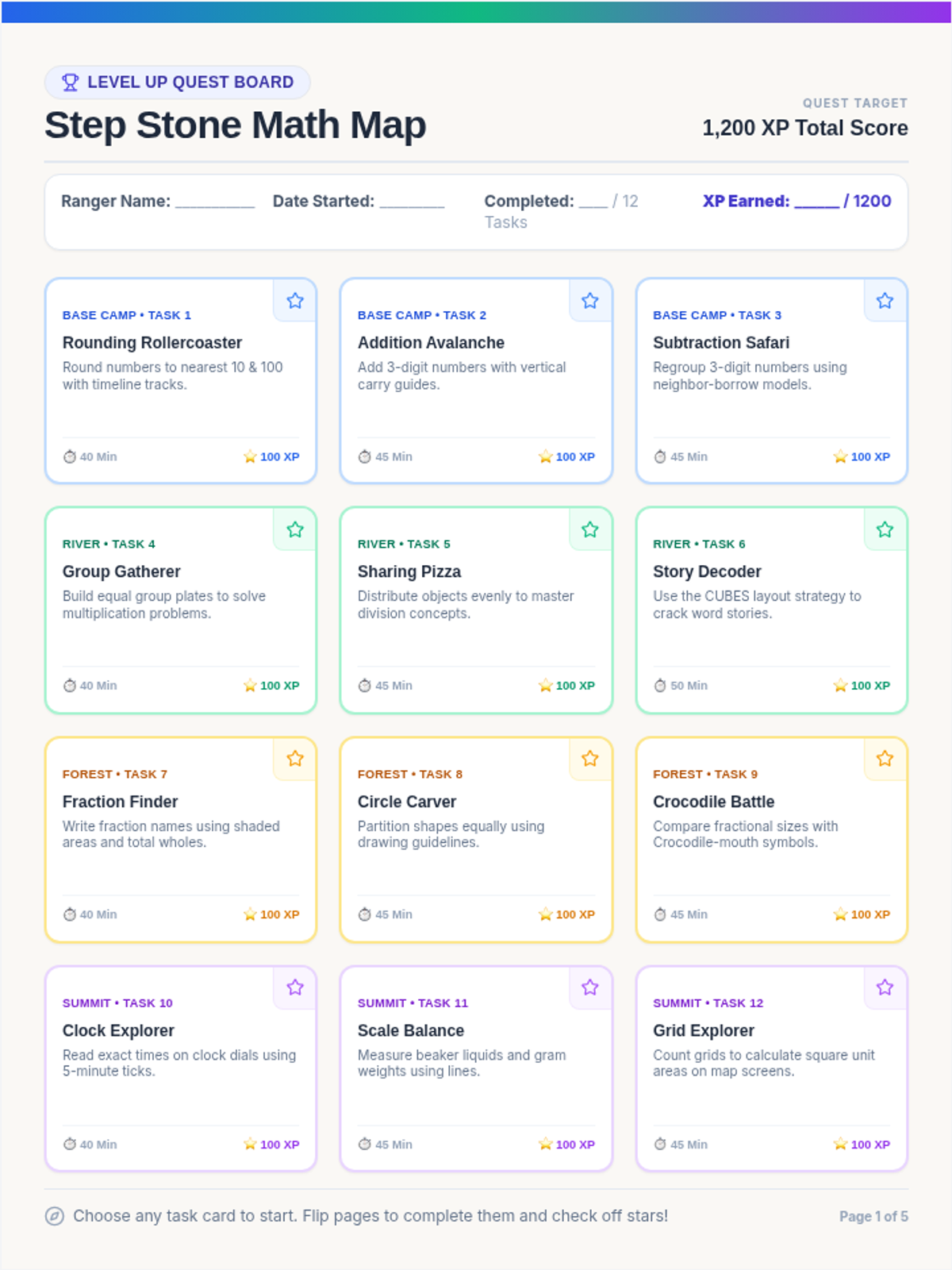
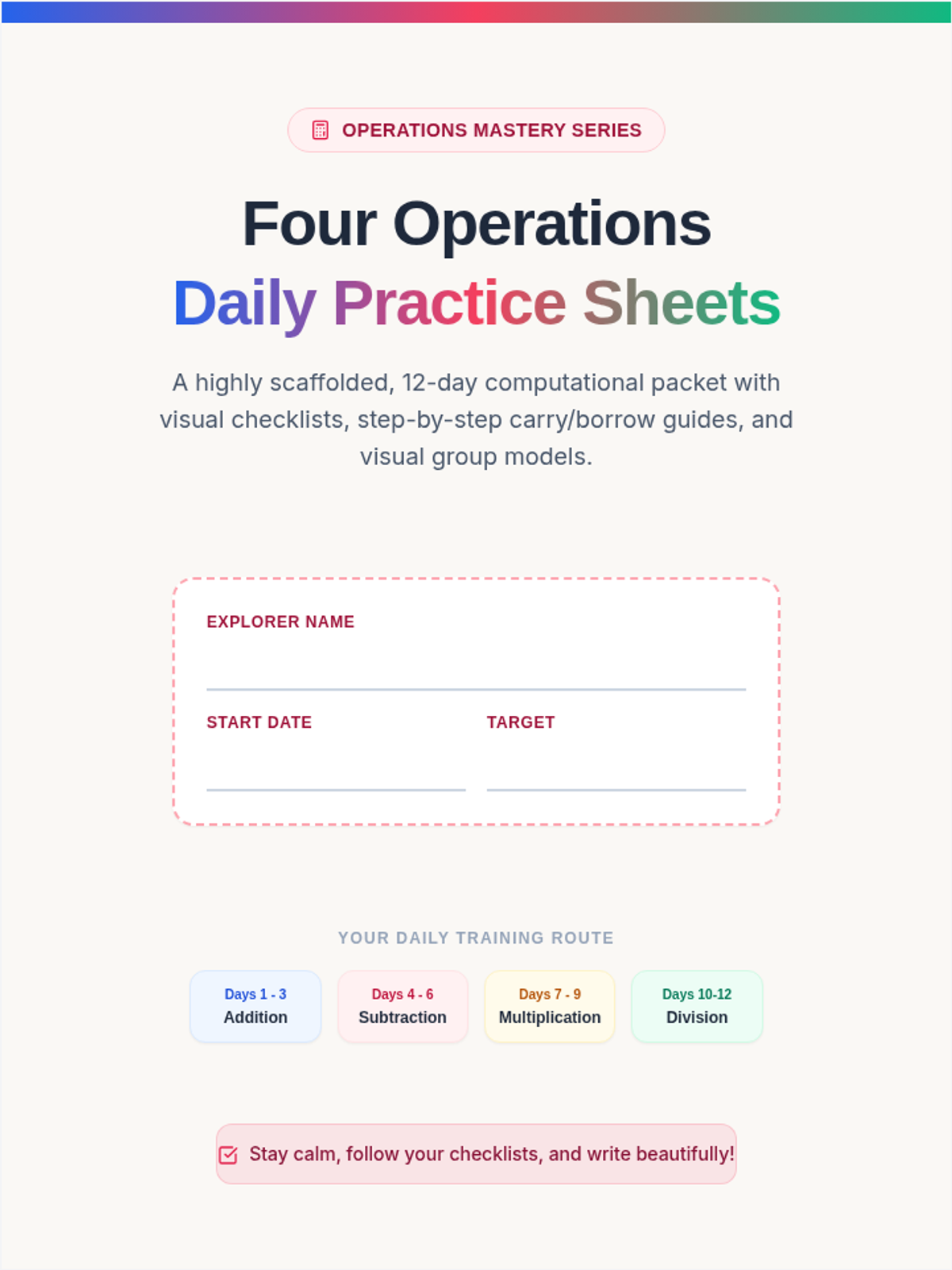
A collection of highly scaffolded daily math worksheets and guides designed for 7th-grade students with Specific Learning Disabilities (SLD) working at a foundational 3rd-grade level. Each day provides targeted skill practice, clear visual checklists, step-by-step scaffolds, and sensory-friendly layout.
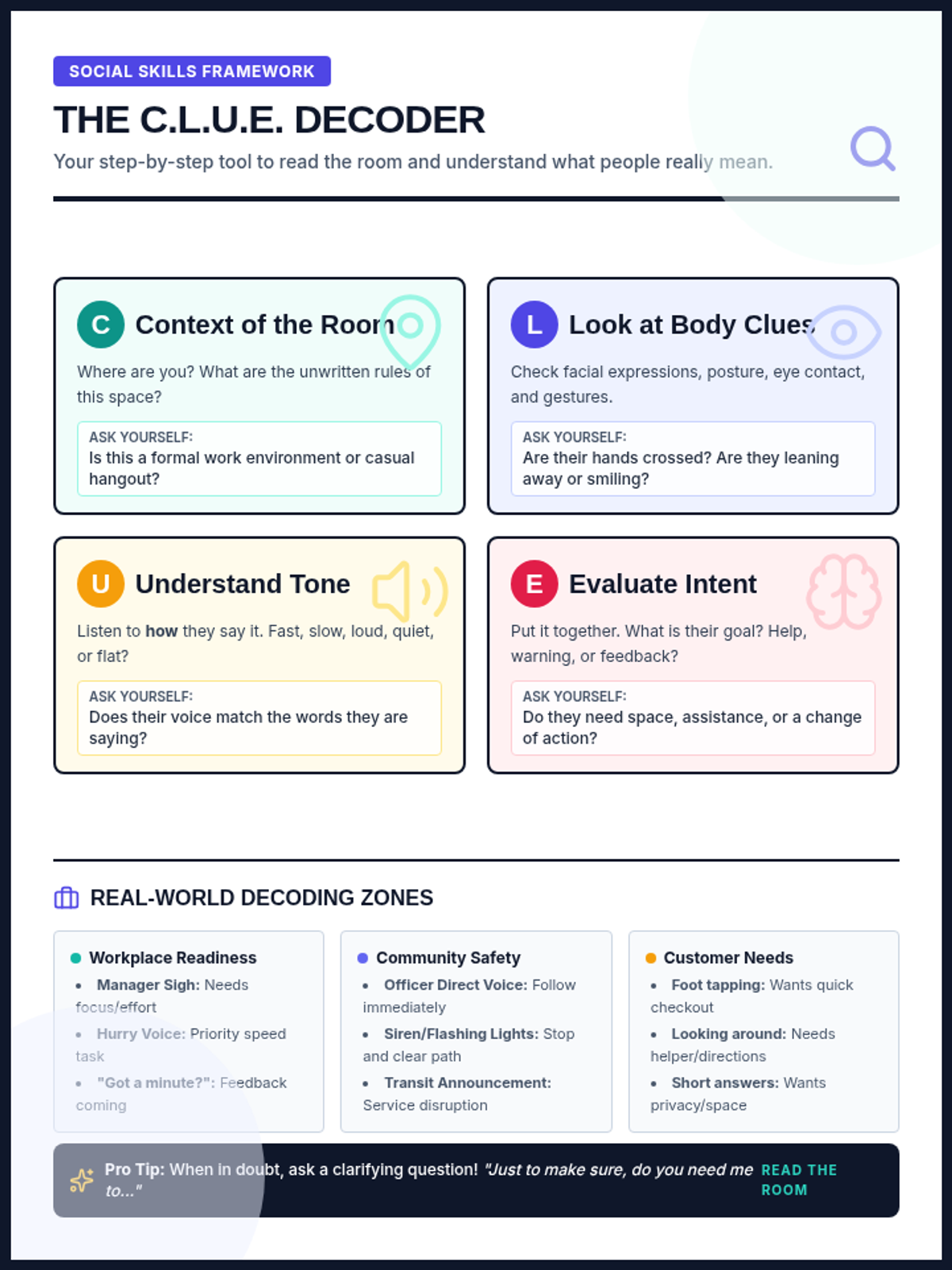
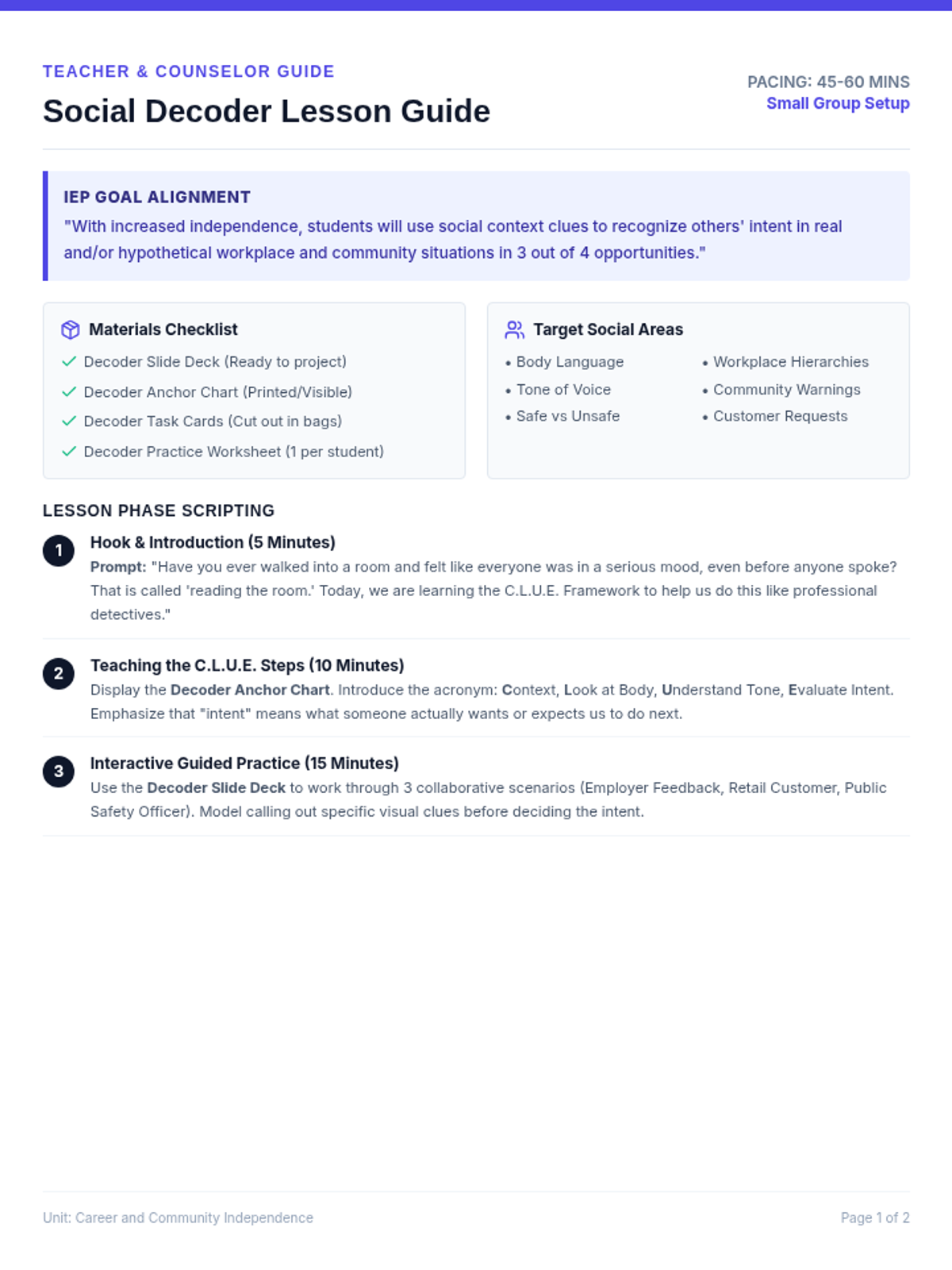
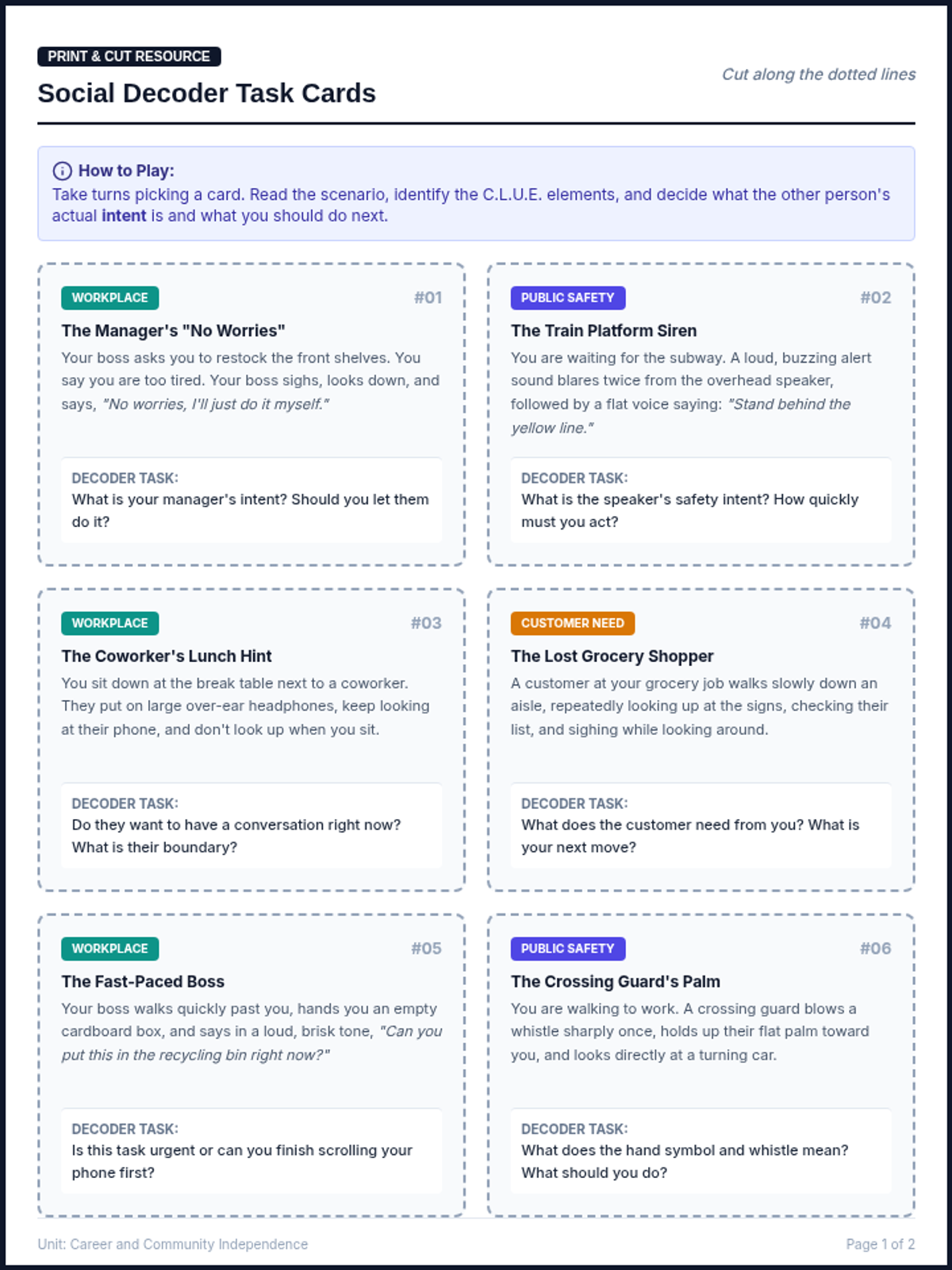
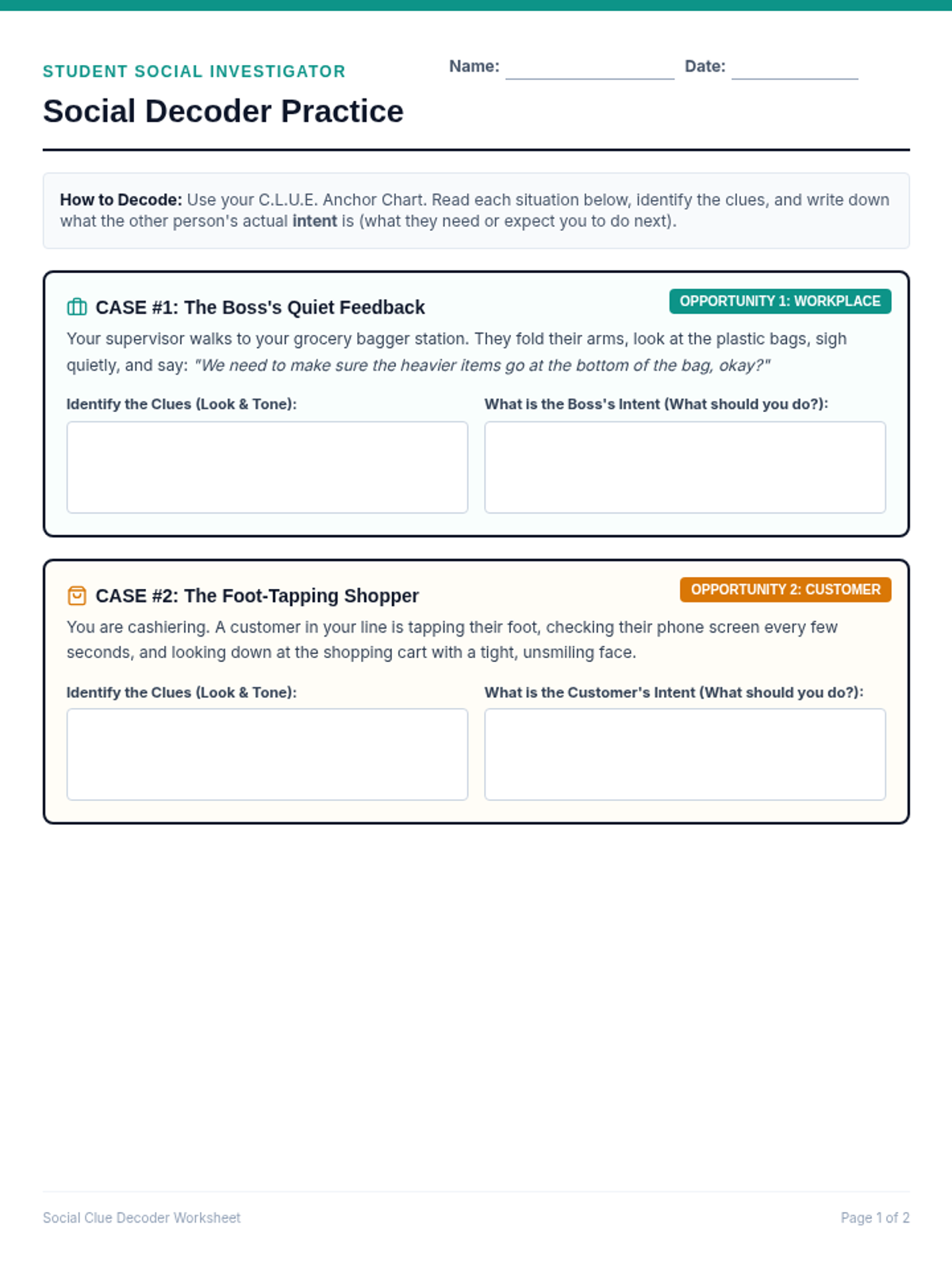
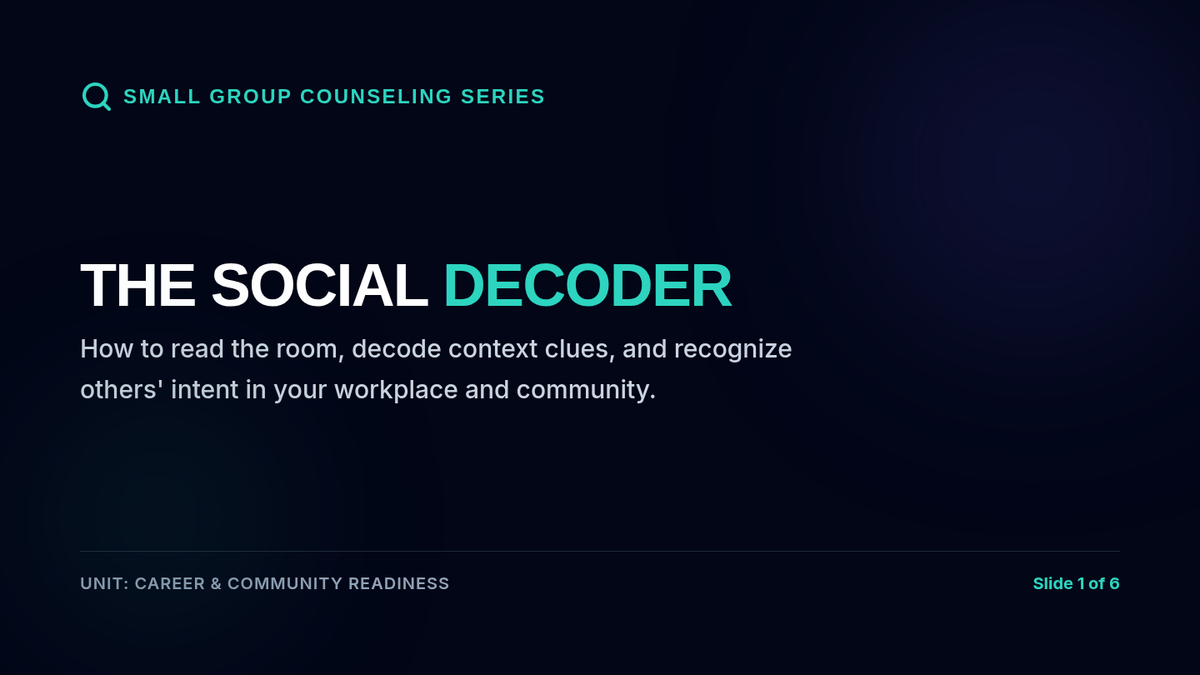
A comprehensive small-group counseling lesson designed to help high school special needs students use context clues to decode social intent in workplace, community, and safety situations.
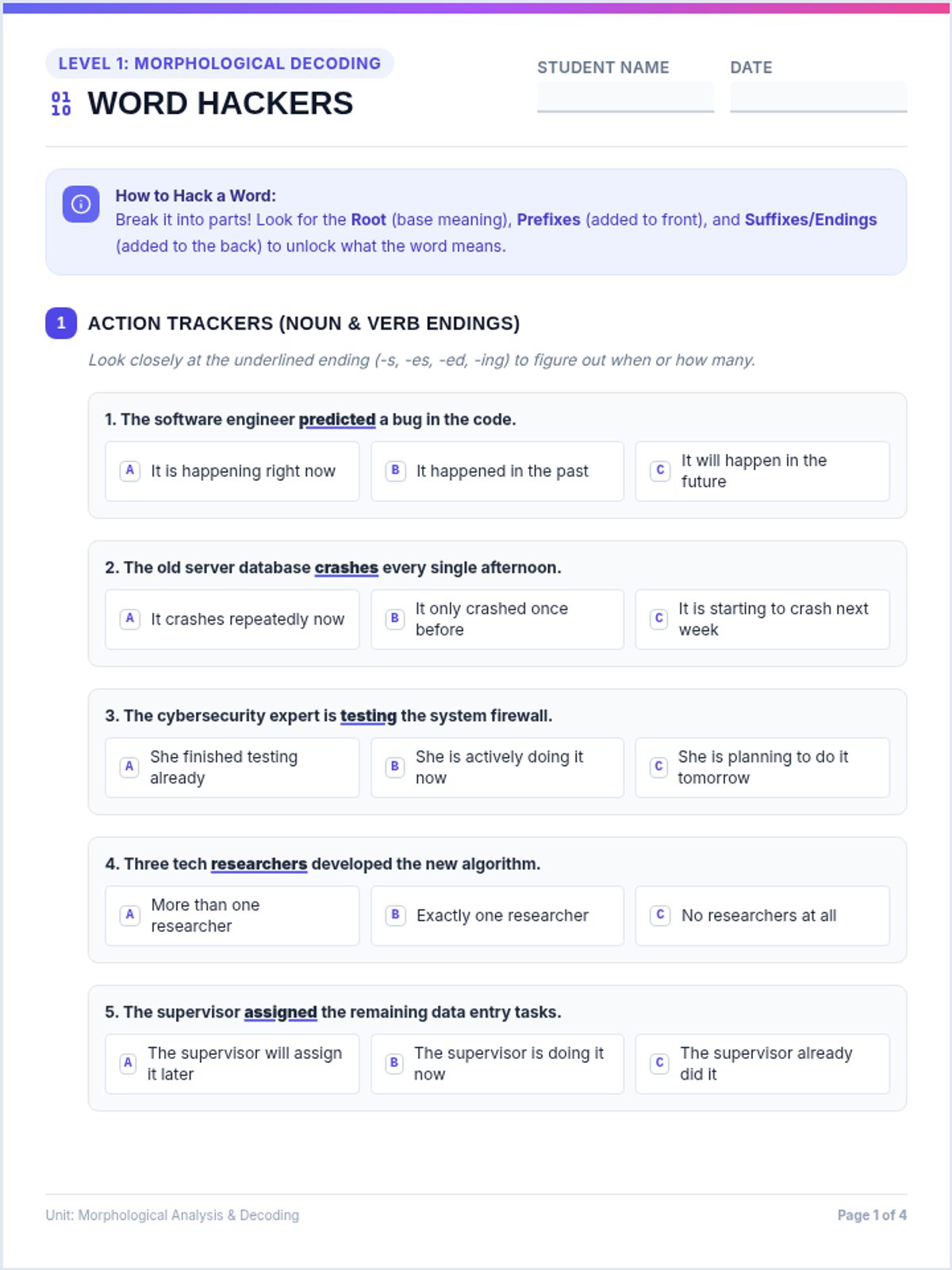
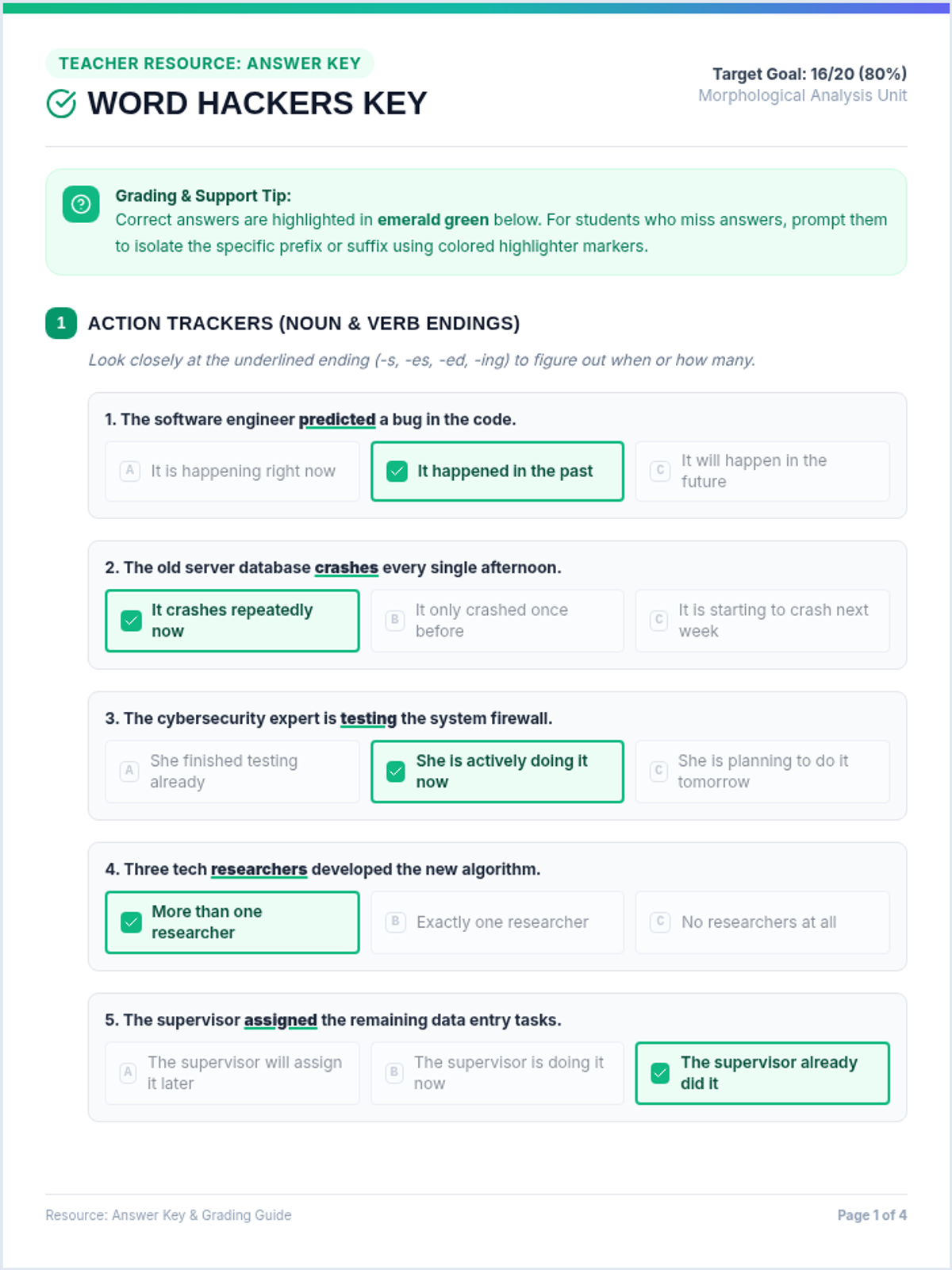
A structured morphological analysis lesson designed for high school students with special needs. Students decode word meanings using roots, prefixes, suffixes, and inflectional endings.
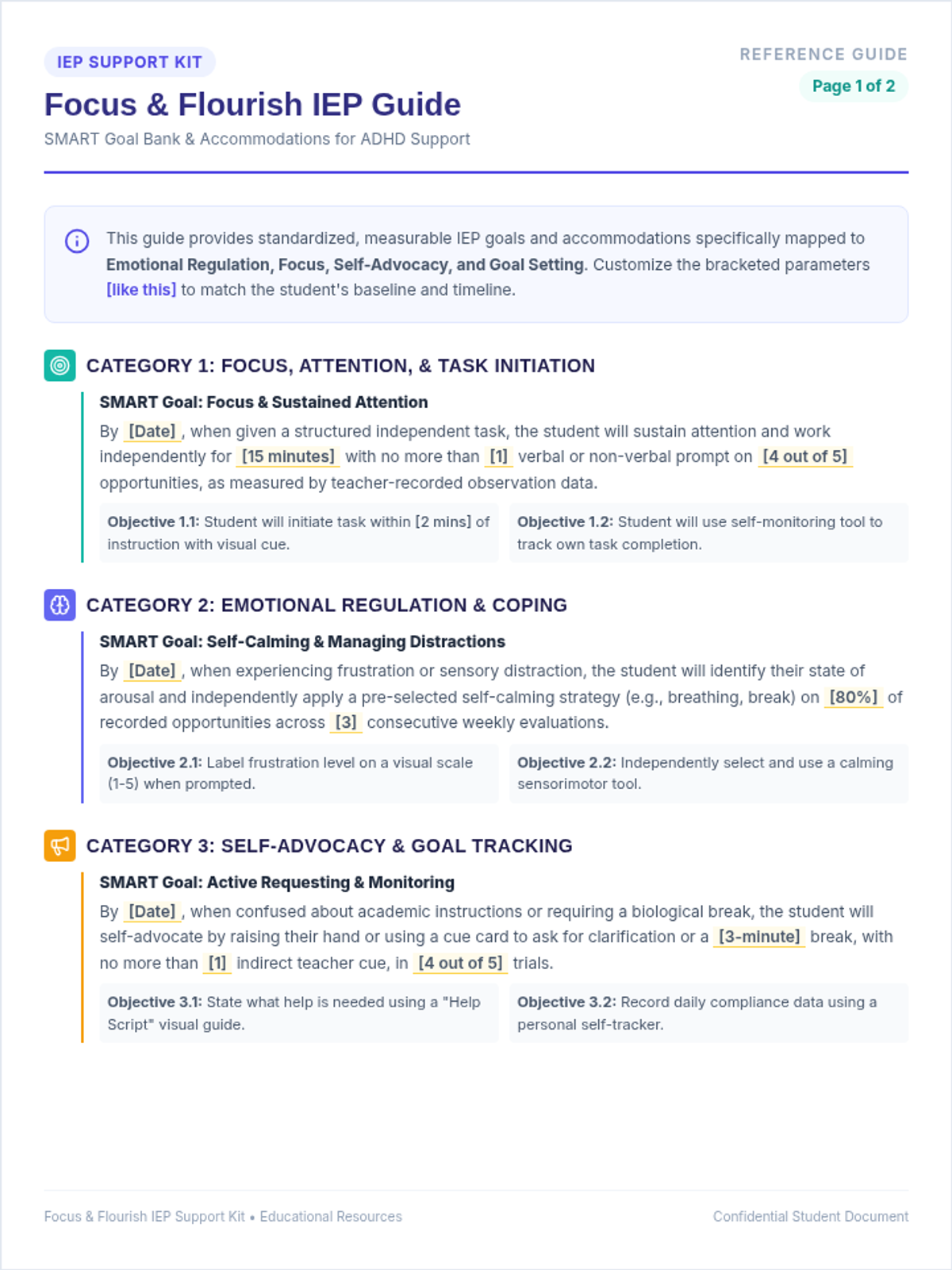
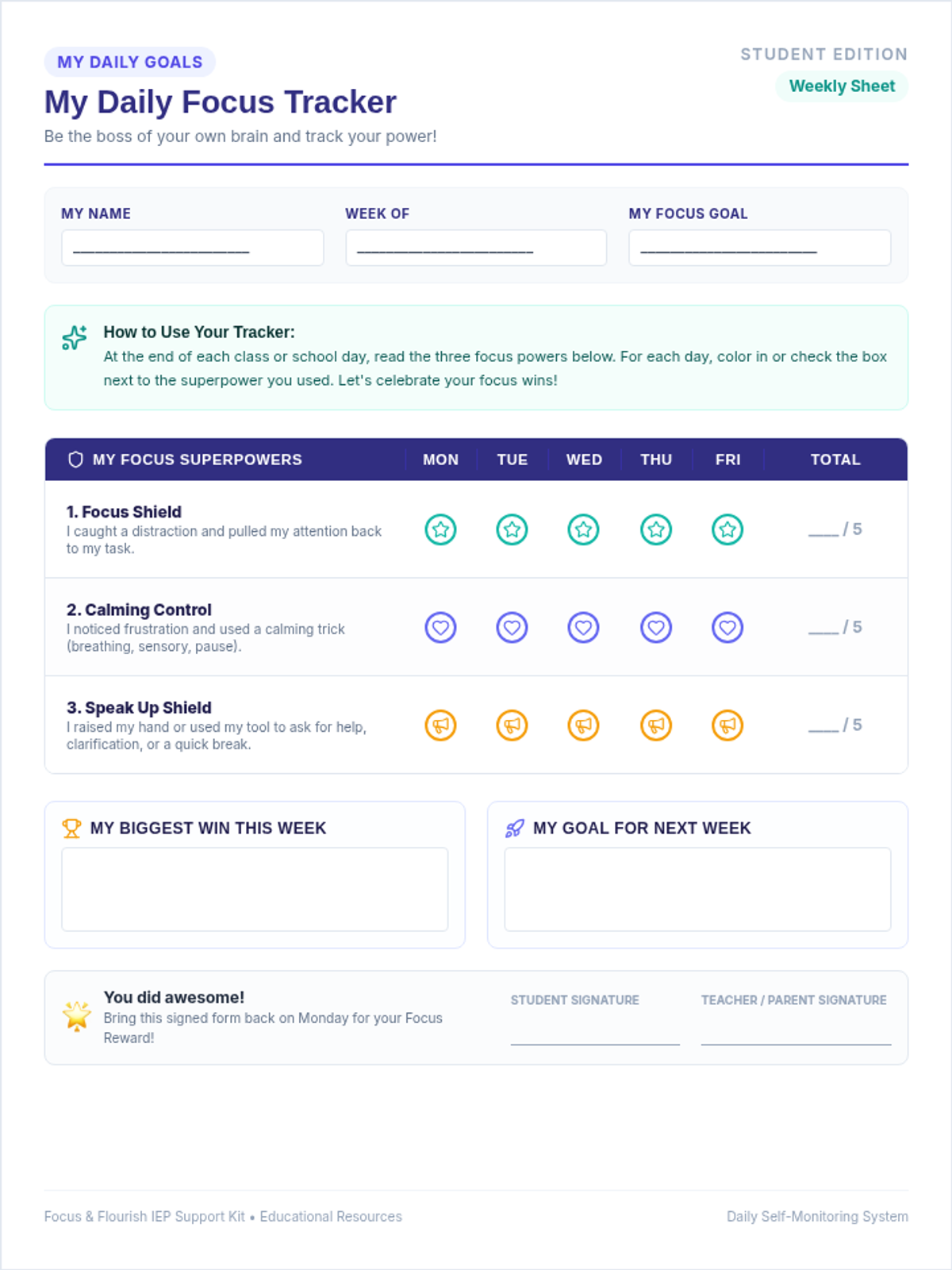
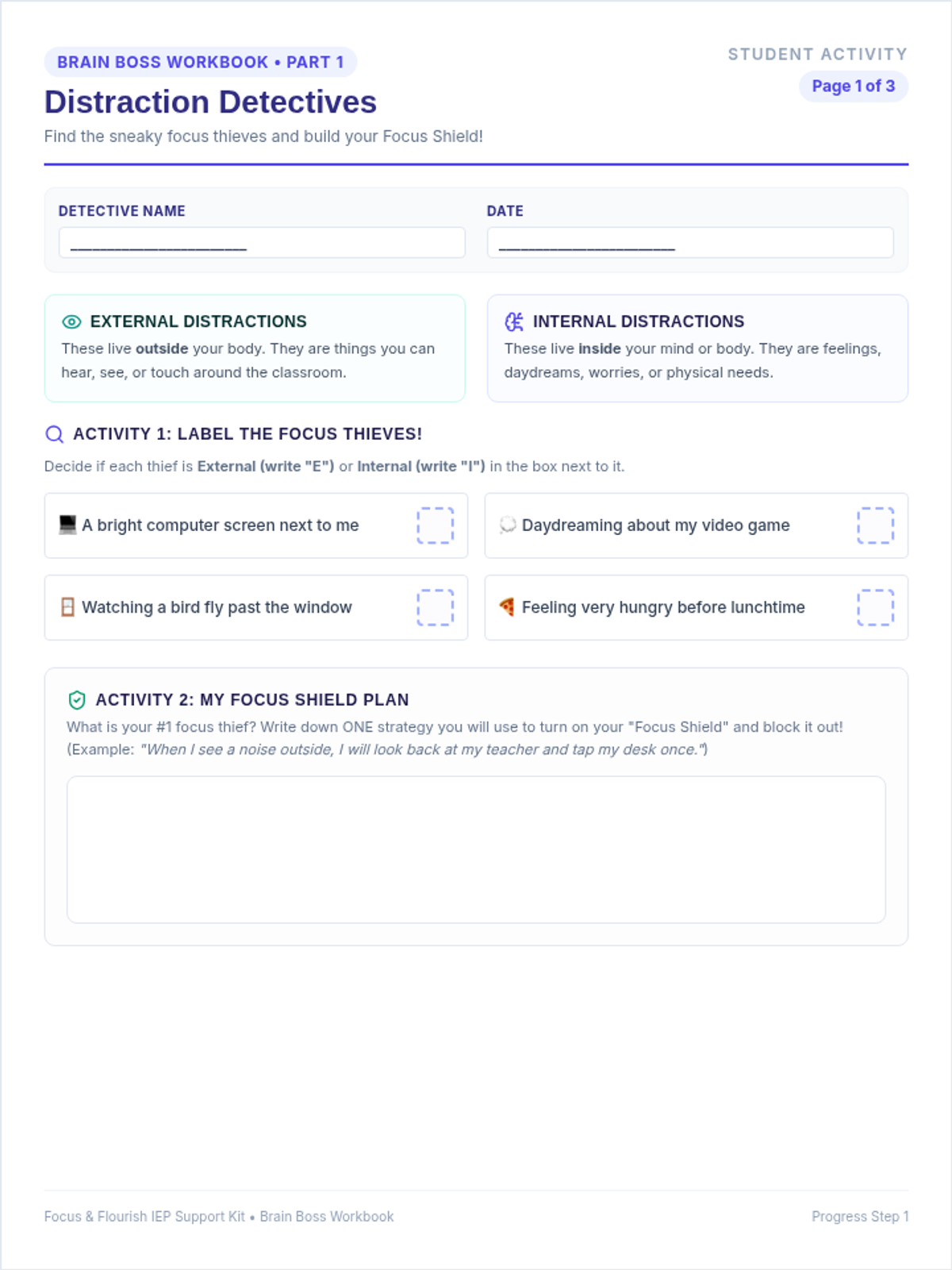
A comprehensive suite of materials designed to support students with ADHD in emotional regulation, focus, self-advocacy, and goal setting. Includes a SMART IEP Goal Bank & Accommodations Guide, a printable Student Progress Tracker, and a 3-page guided Executive Functioning Workbook.
A lesson focused on supporting students with disabilities as they transition into the workplace, utilizing resources from the Ontario Transition Resource Guide.
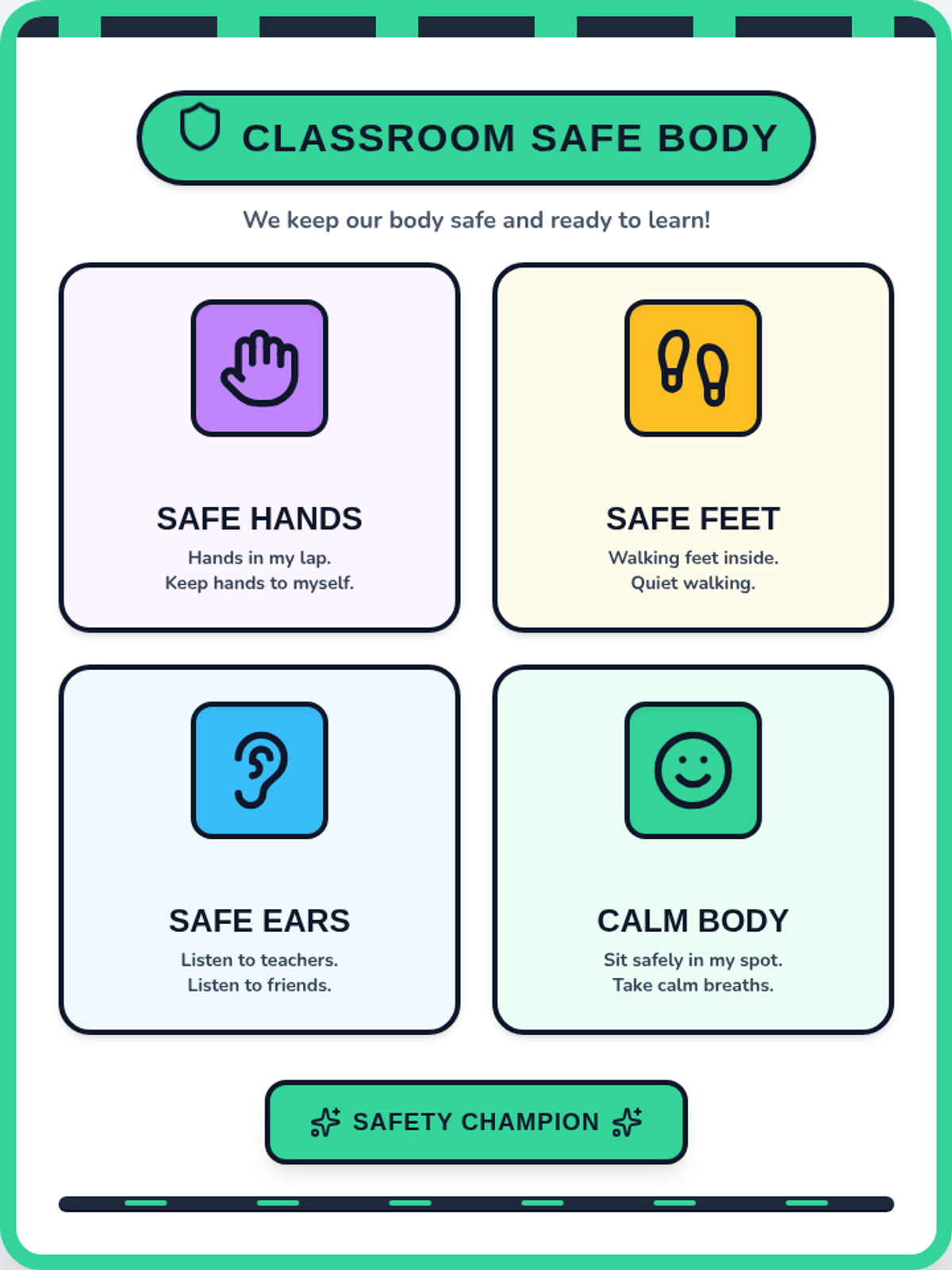
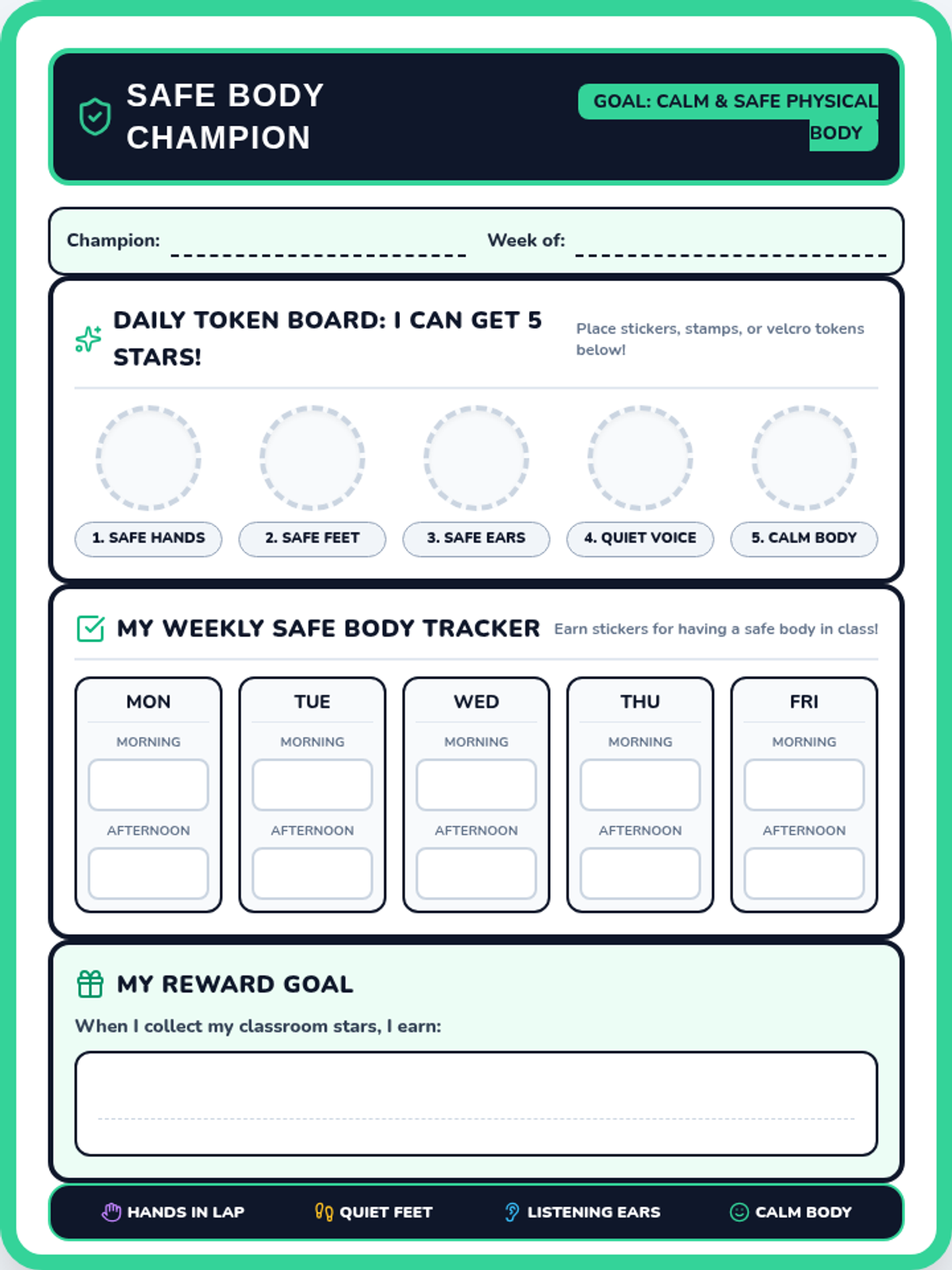
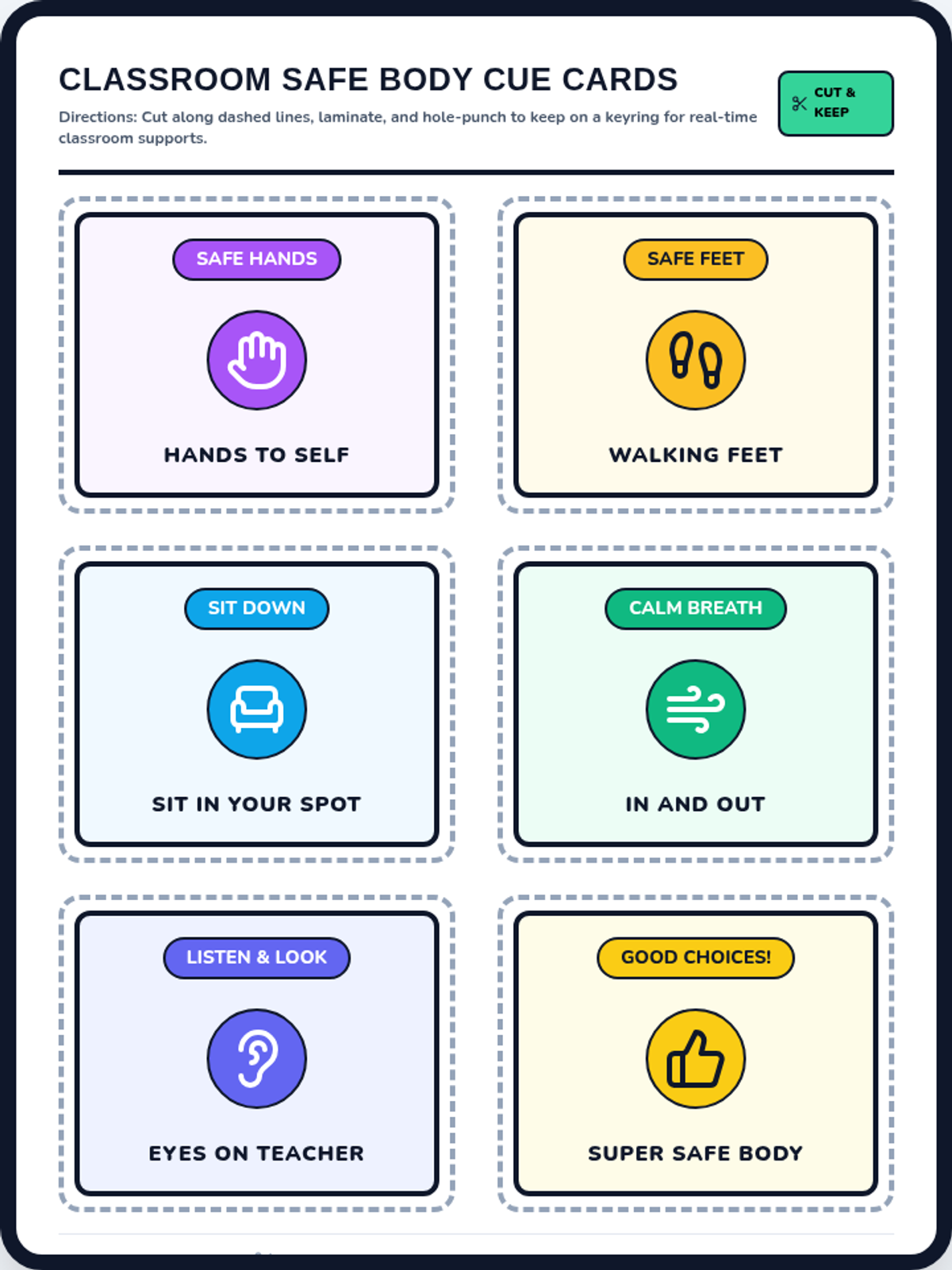
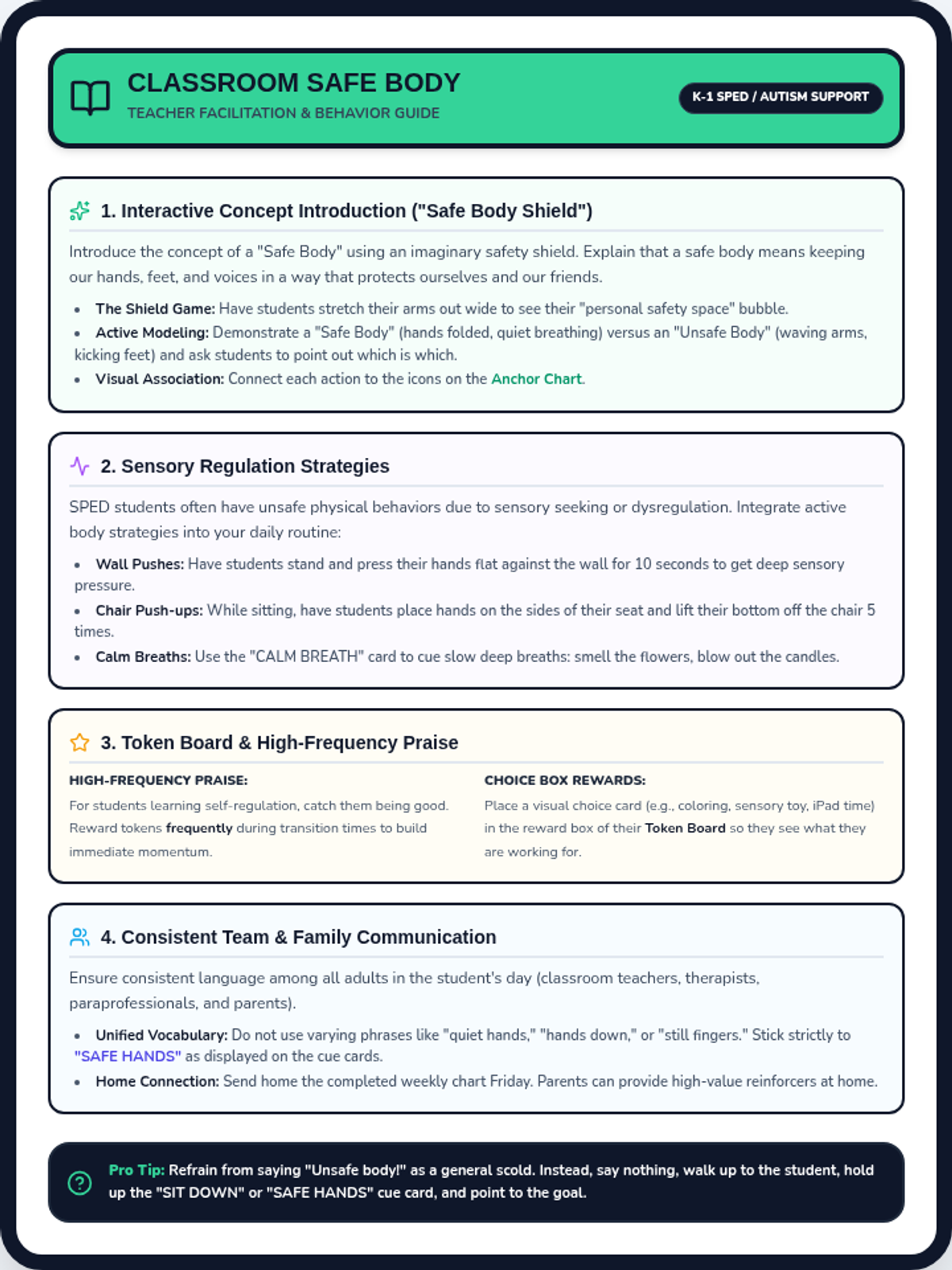
A visual support and behavior management lesson designed for Kindergarten and 1st Grade SPED students to teach, model, and reinforce physical boundaries and self-regulation in the classroom environment.
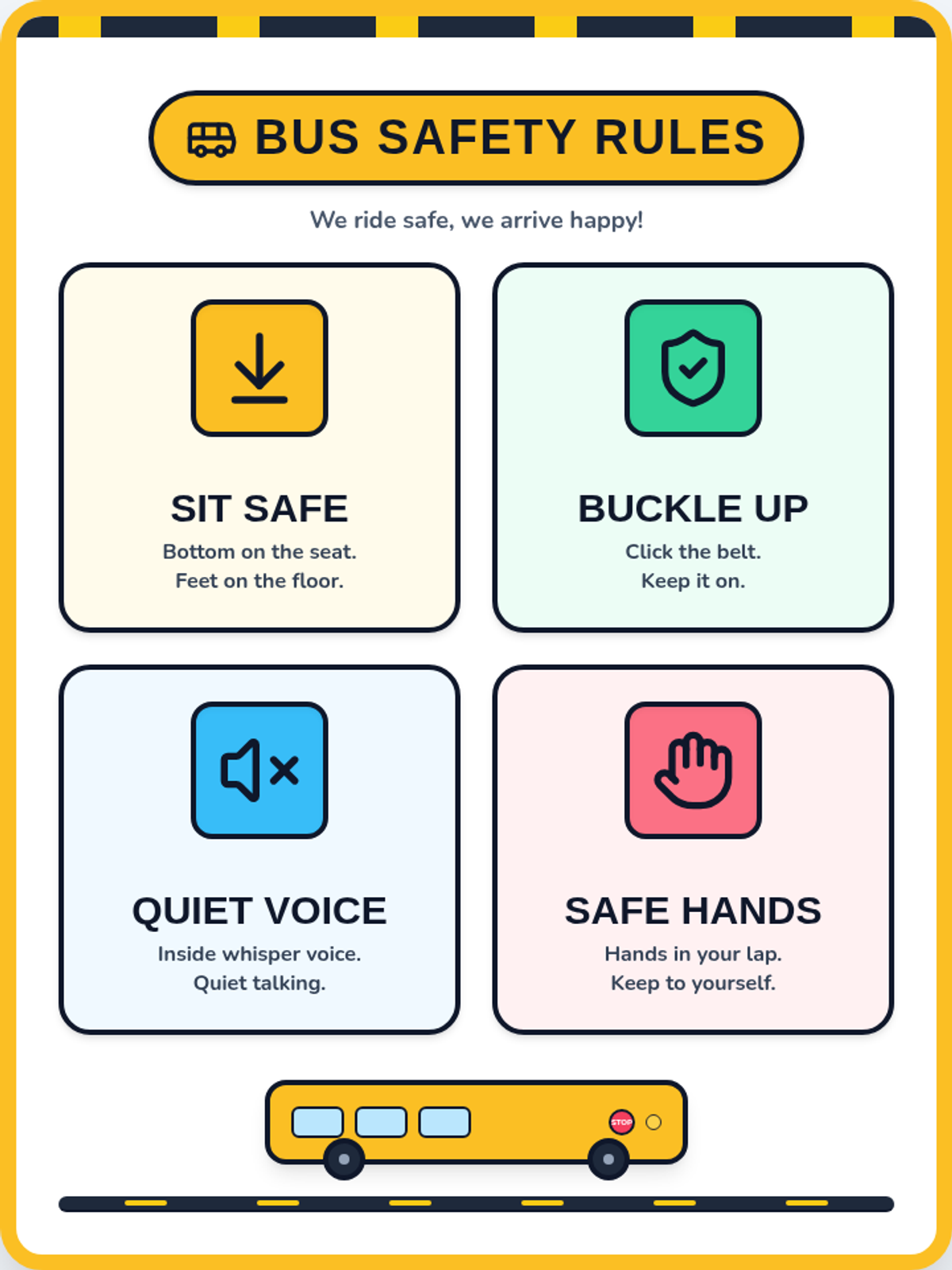
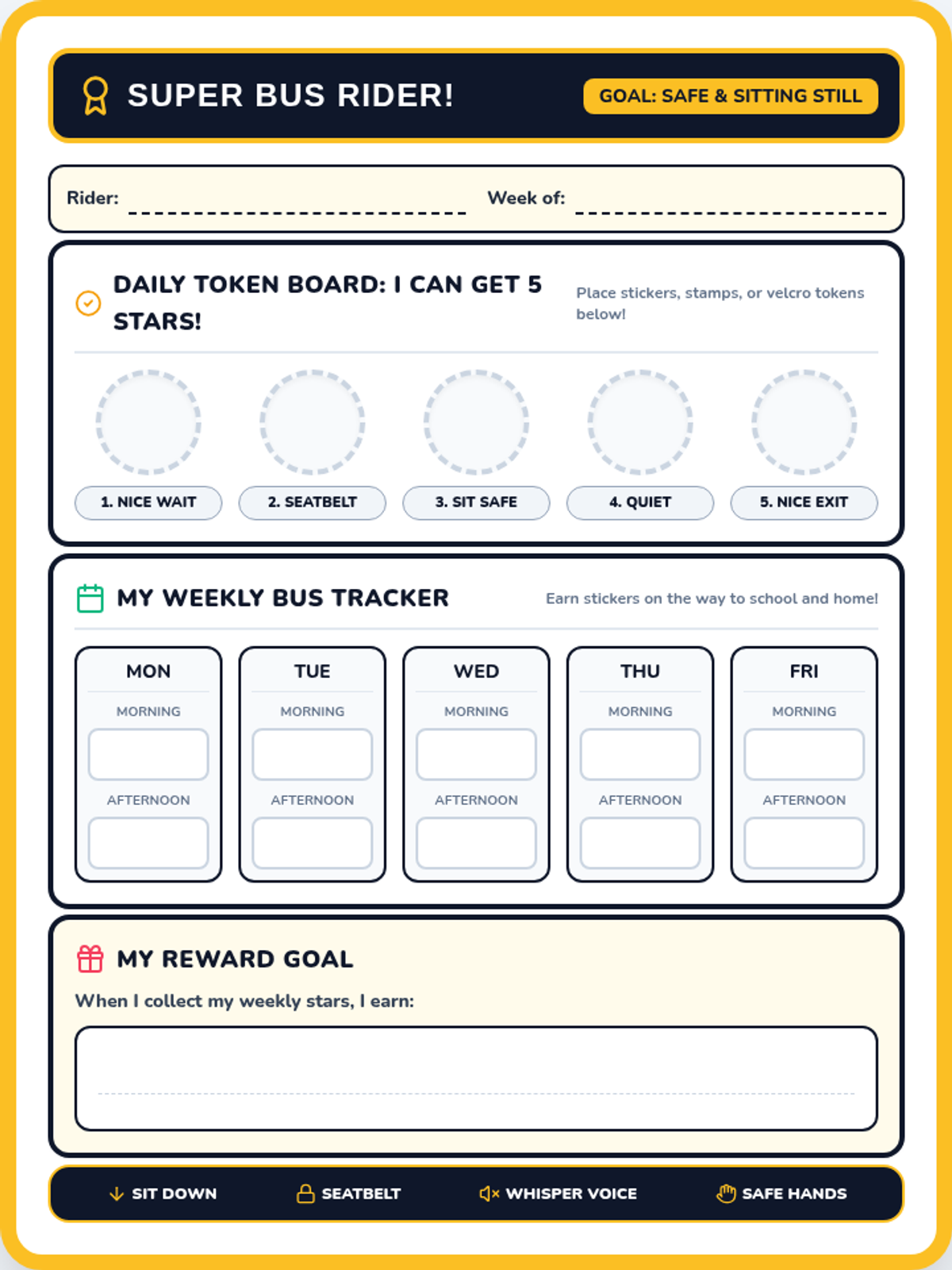
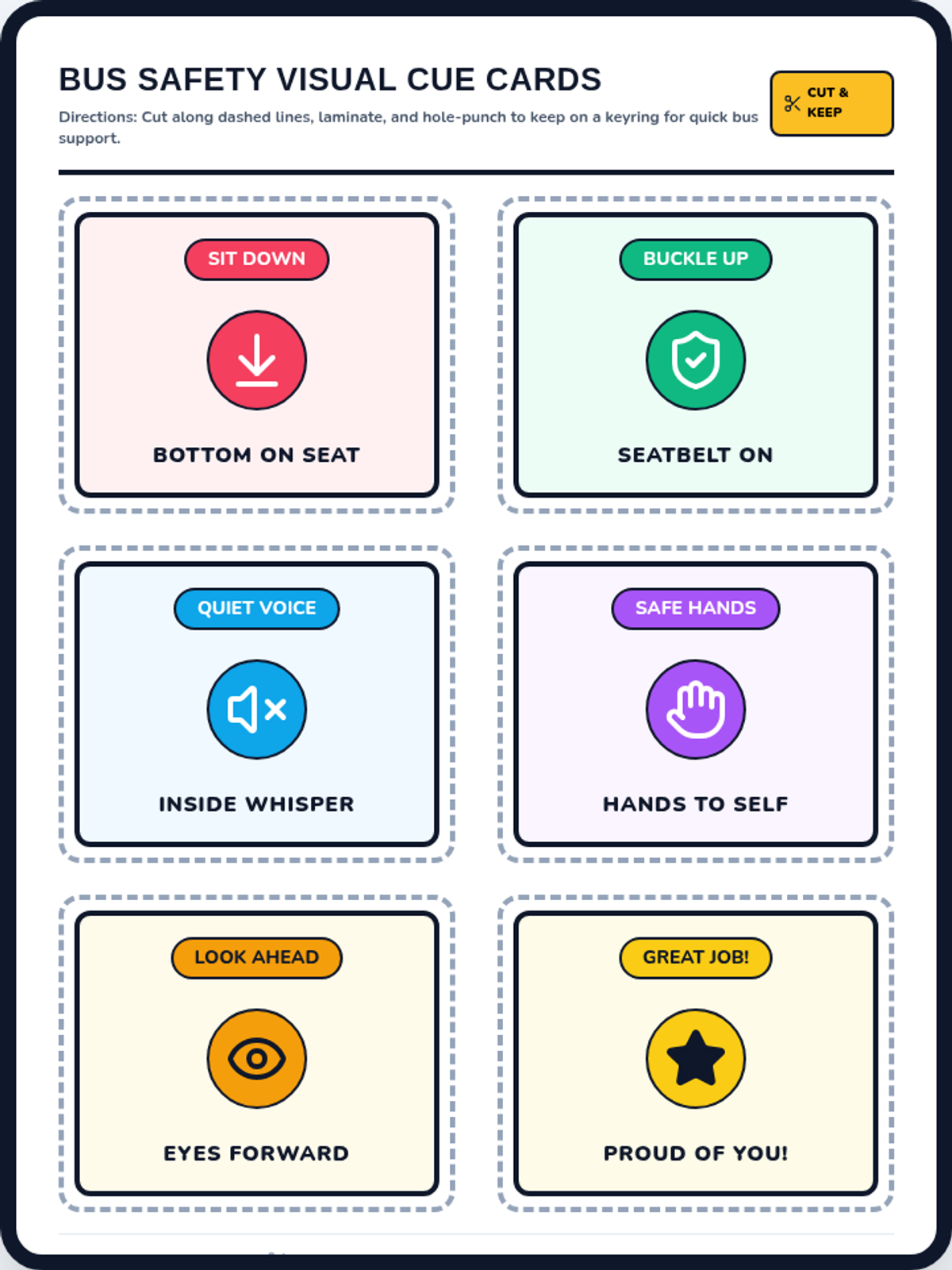
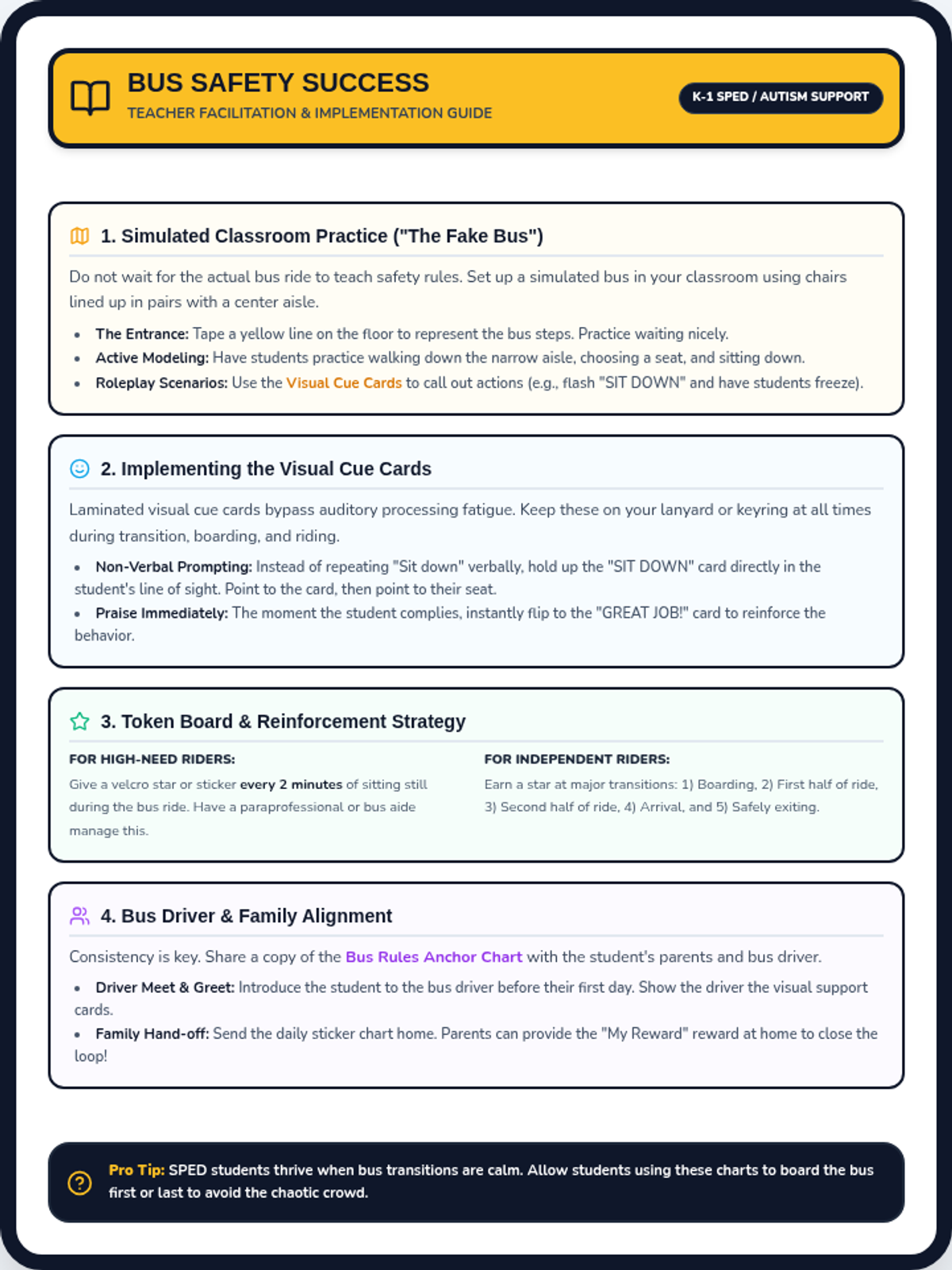
A visual support and behavior management lesson designed for Kindergarten and 1st Grade SPED students, focusing on essential bus safety rules, active modeling, and positive reinforcement tracking.
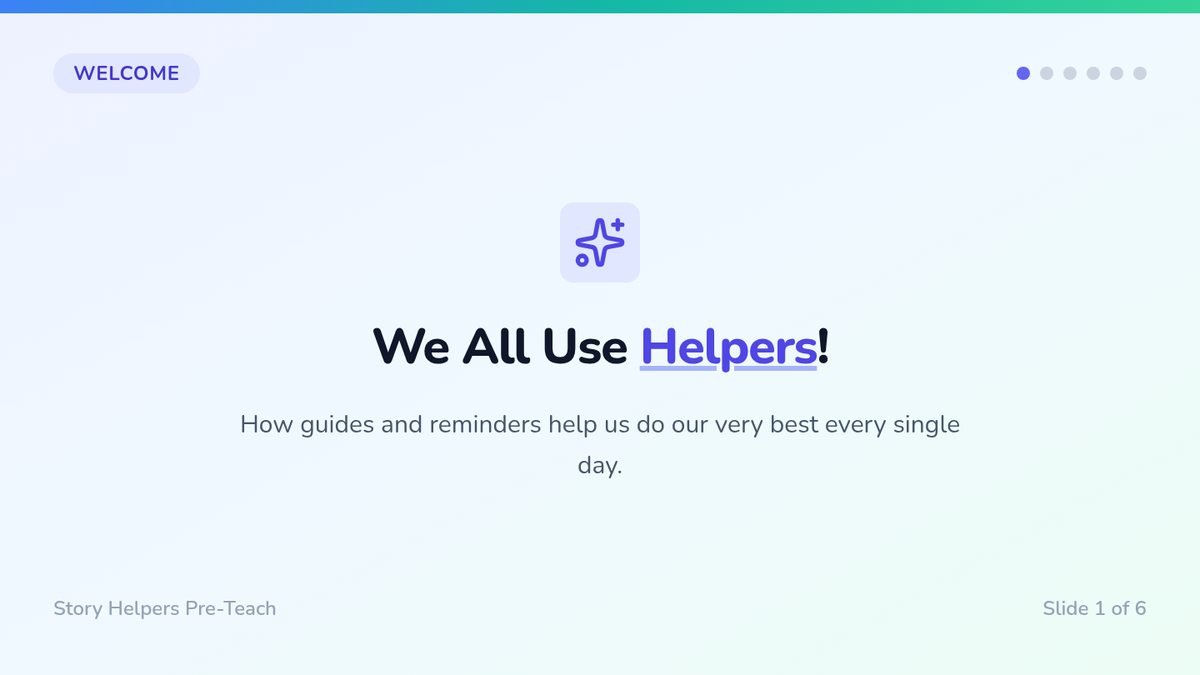
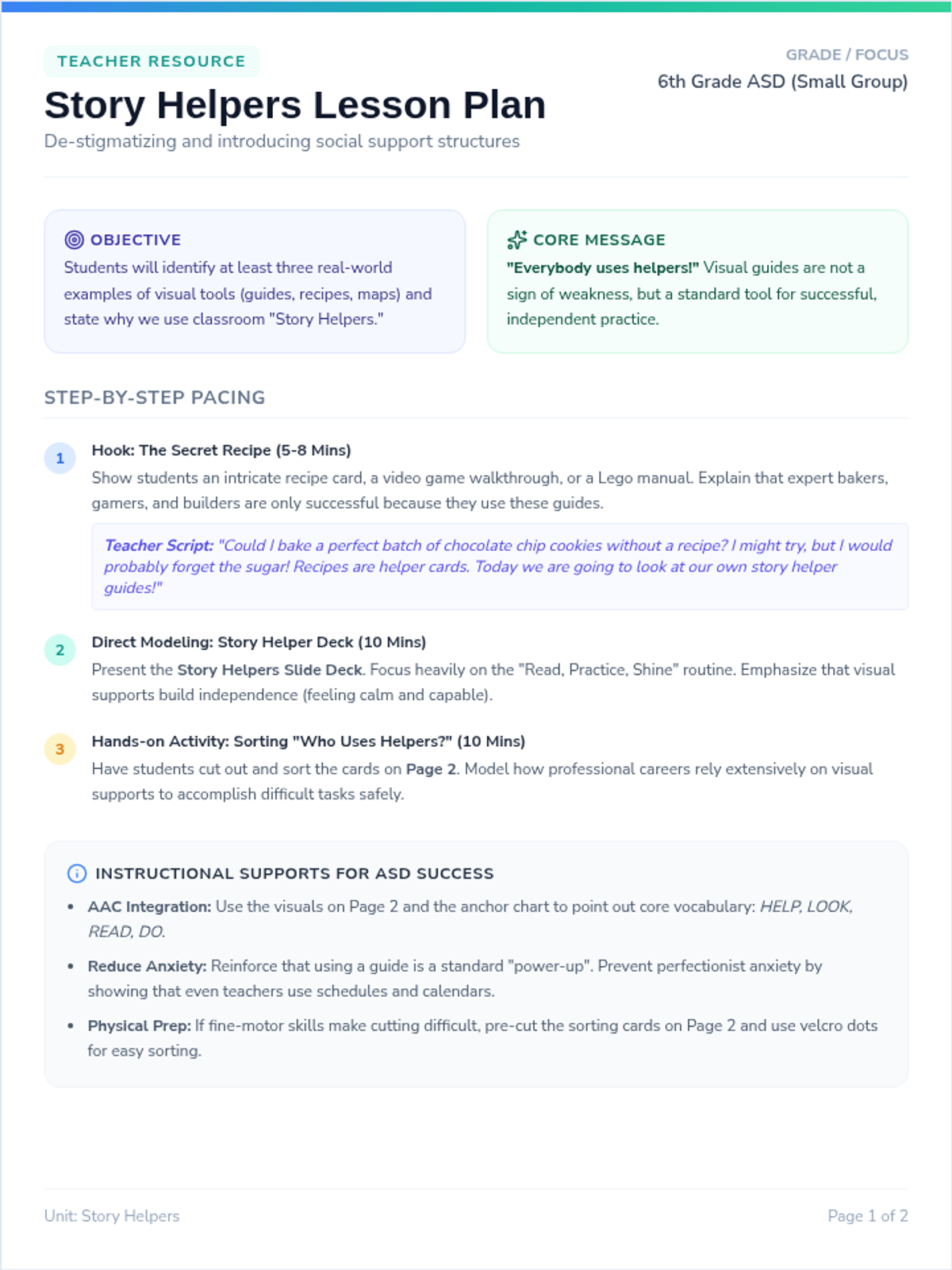
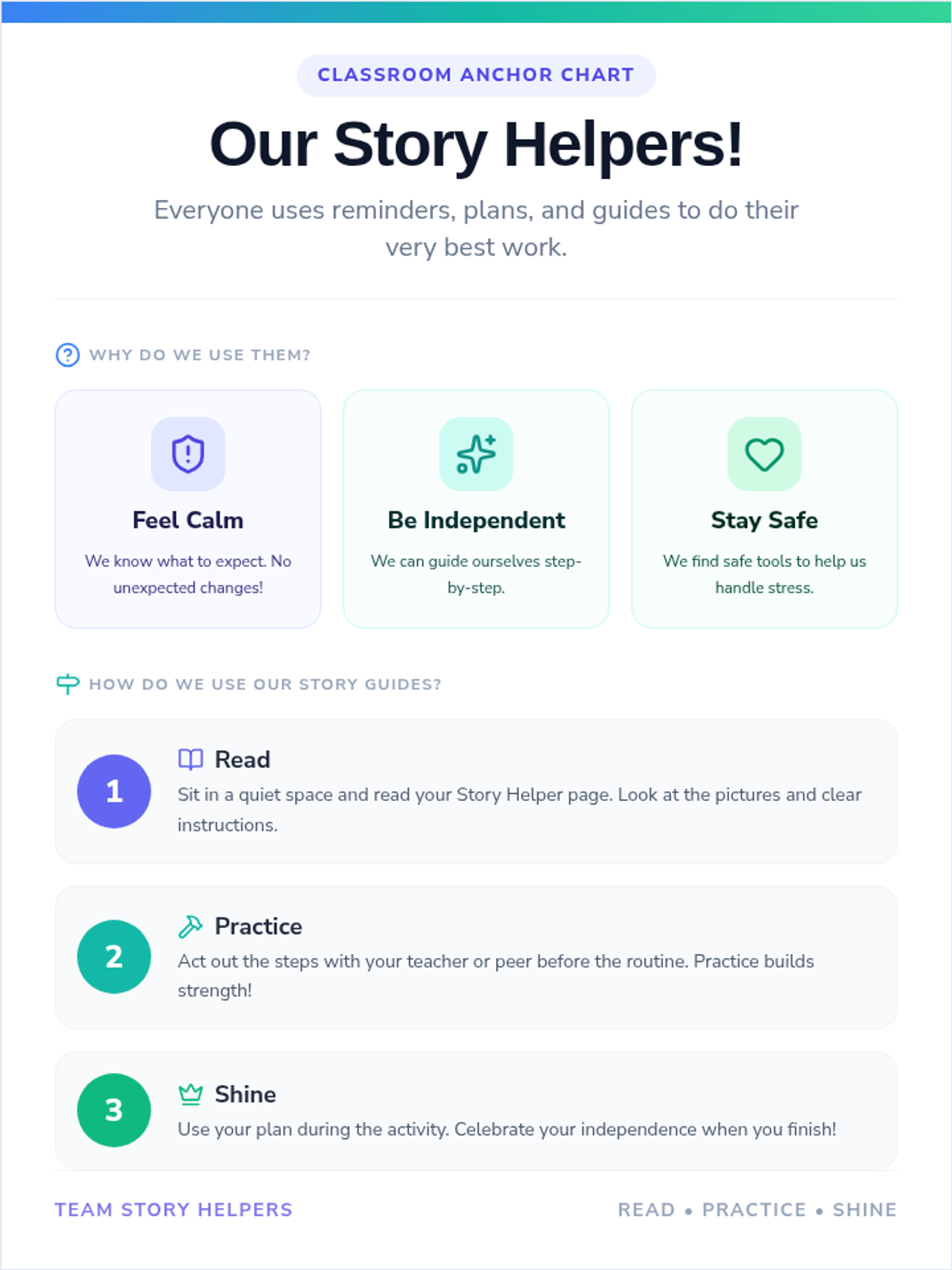
An introductory lesson designed for a small 6th-grade classroom of students with ASD to de-stigmatize and explain the purpose of social stories (referred to as Story Helpers), demonstrating that helpers are used by everyone to succeed.
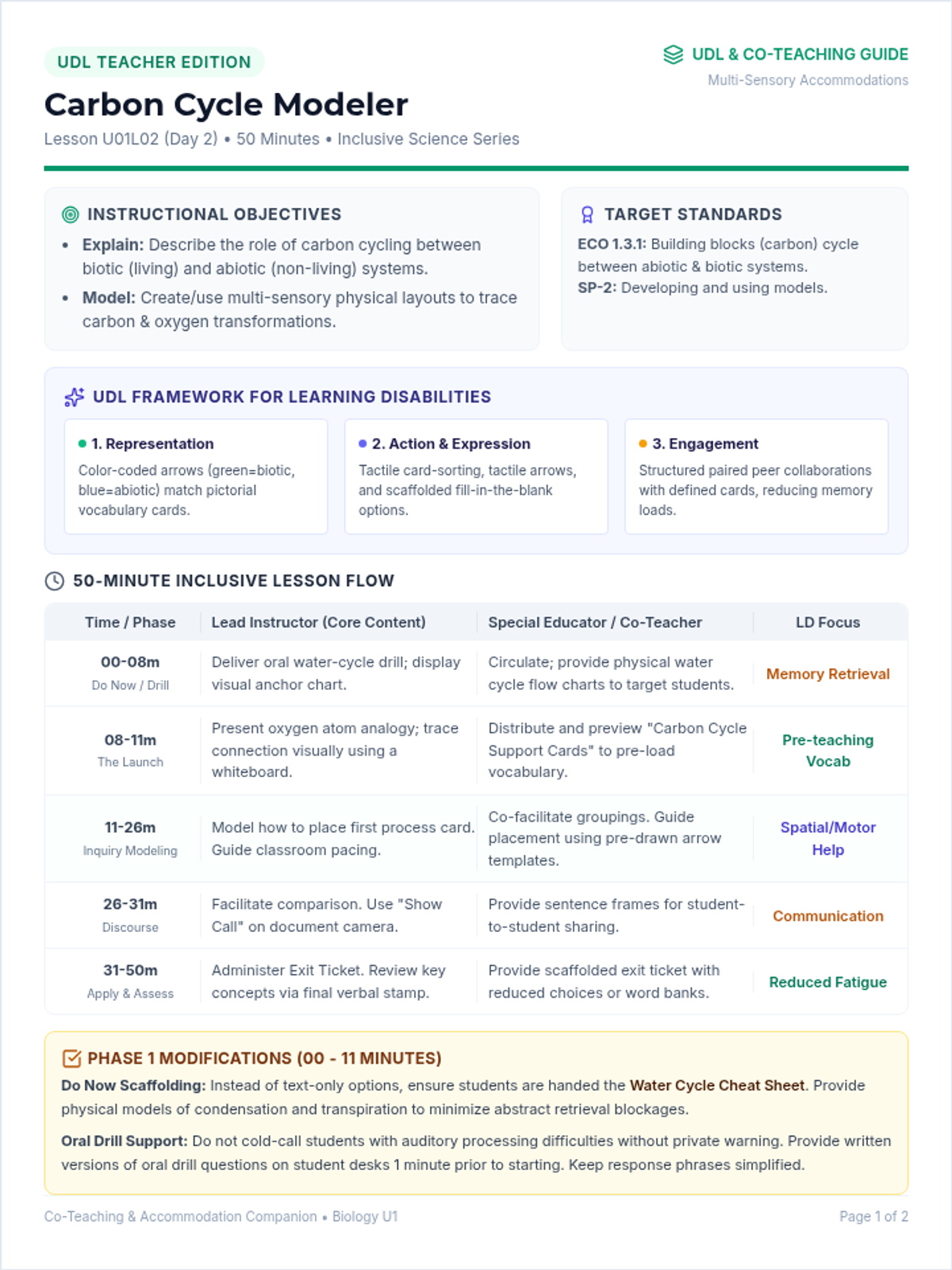
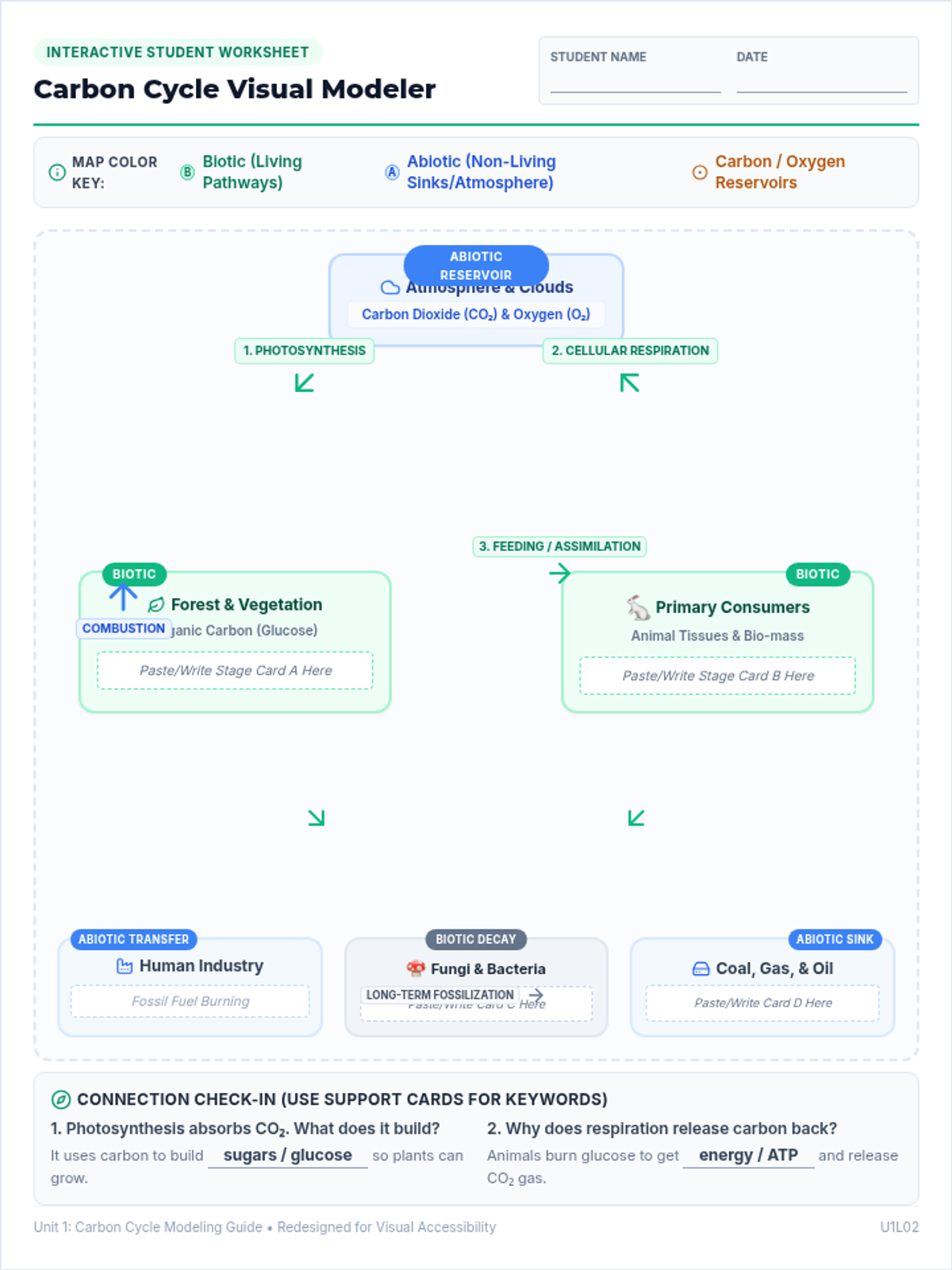
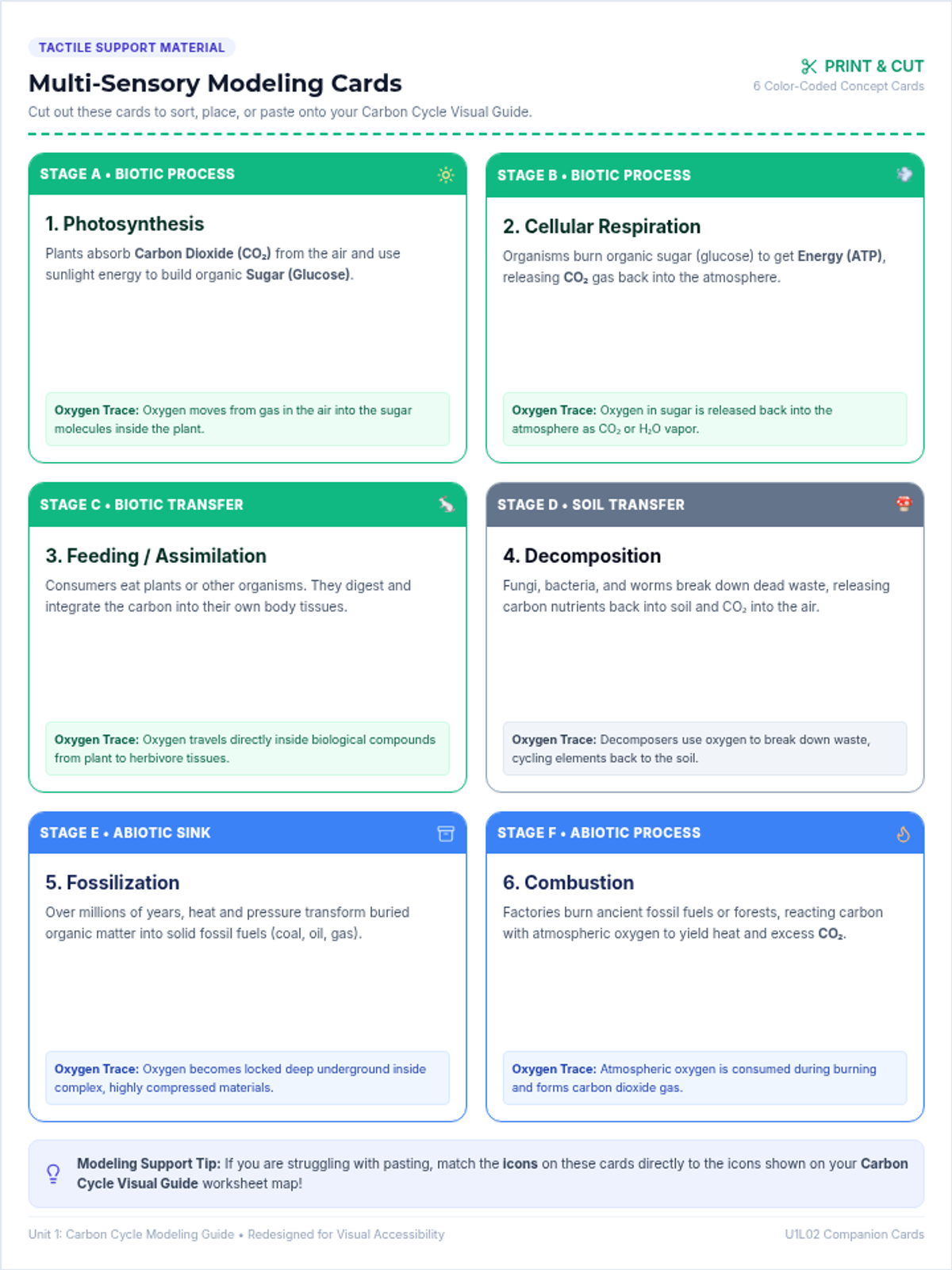
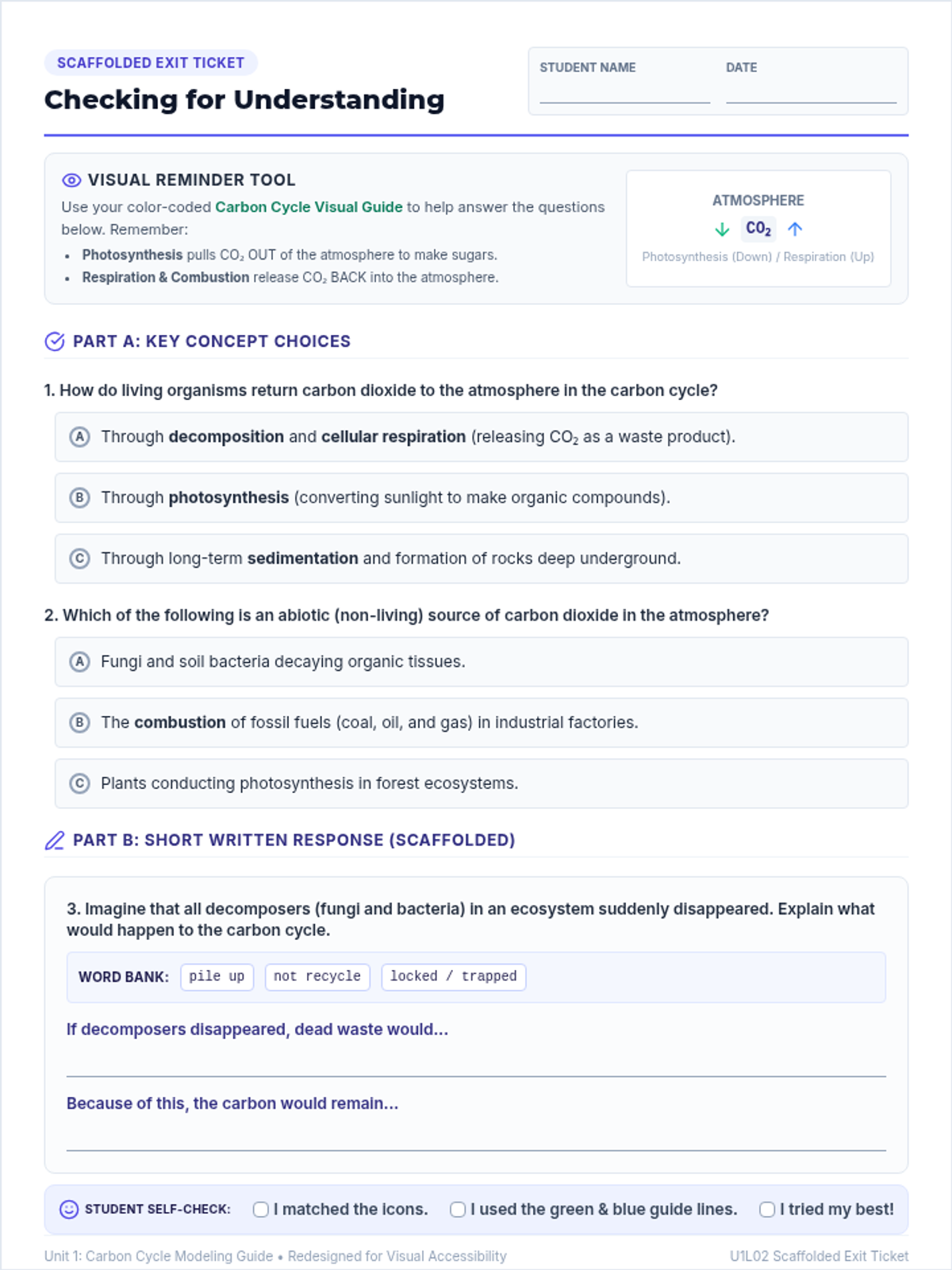
A biology lesson on modeling the carbon cycle, redesigned from a Universal Design for Learning (UDL) lens to support students with learning disabilities using multi-sensory strategies, color-coded visual organizers, and scaffolded vocabulary cards.
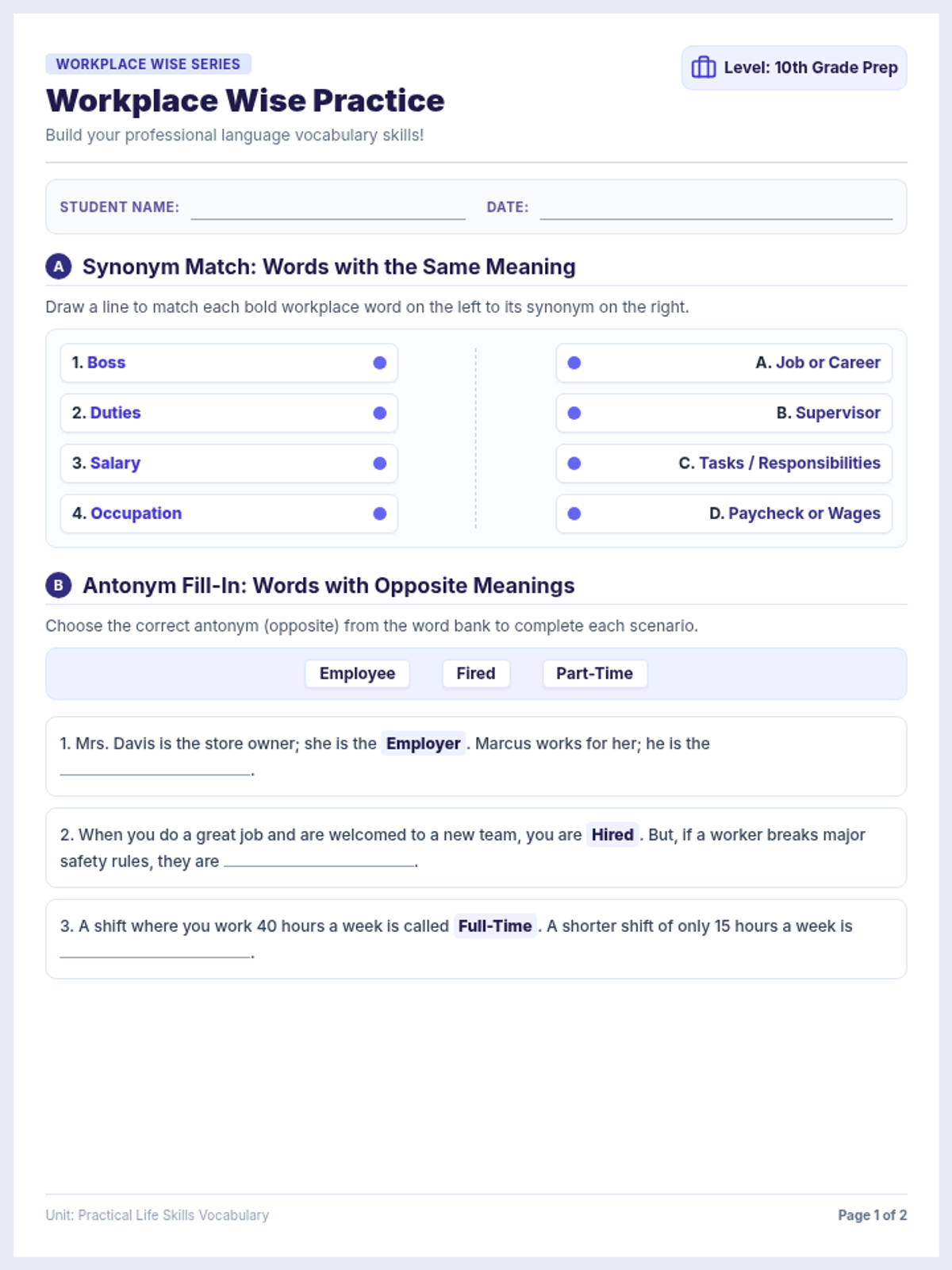
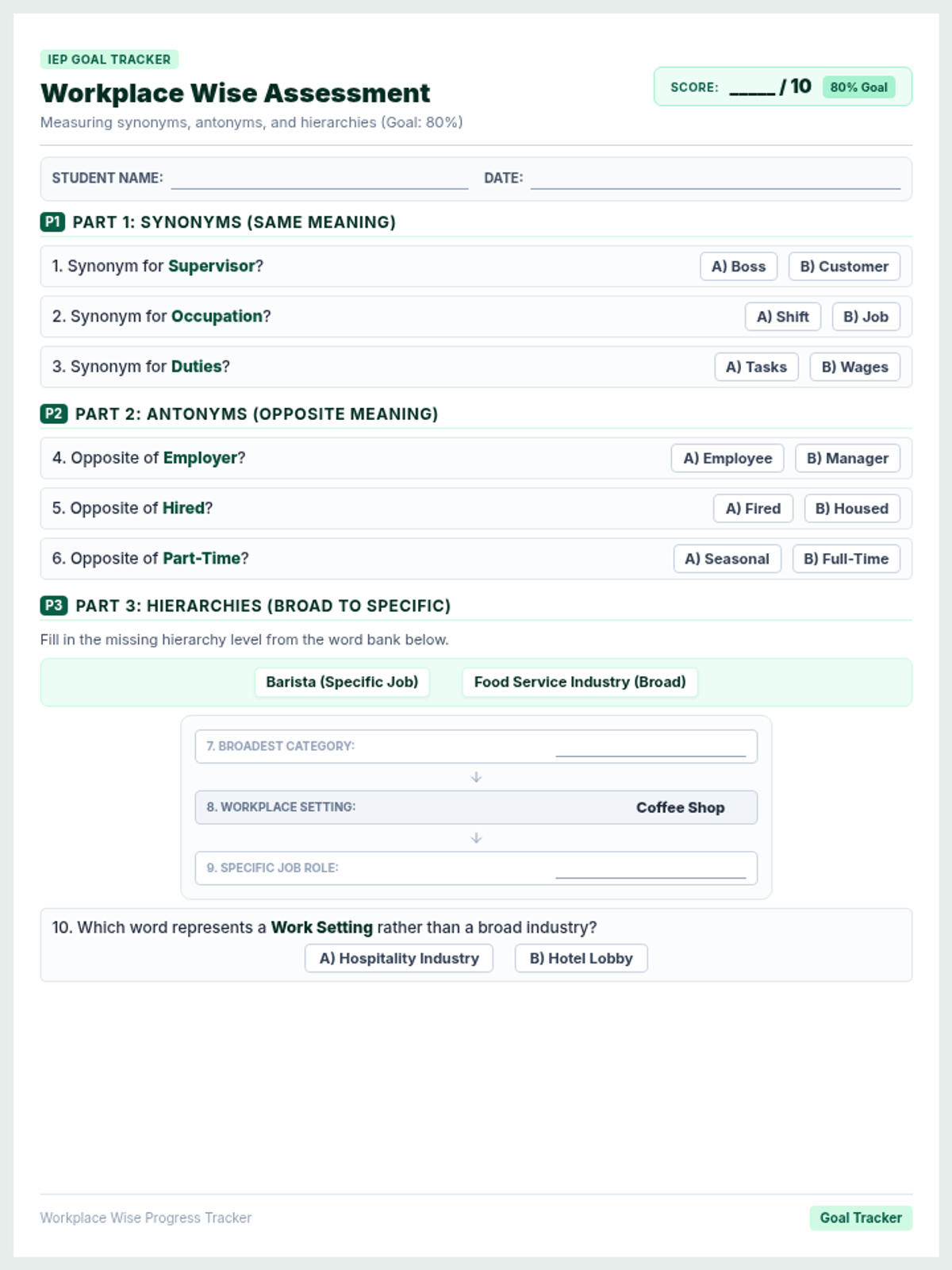
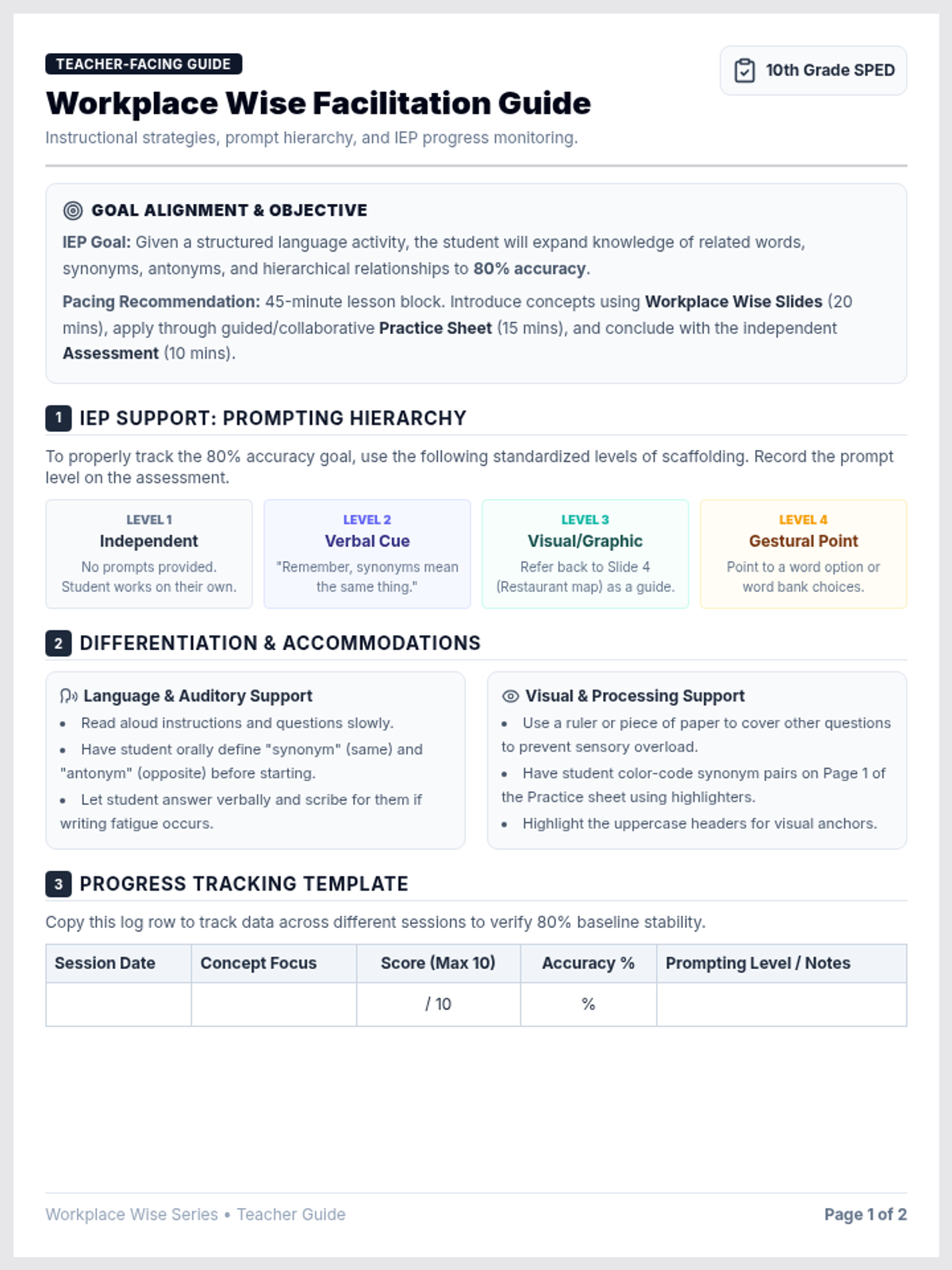
A structured language lesson bundle for 10th-grade special education students focusing on functional workplace vocabulary. Students will learn and practice identifying synonyms, antonyms, related words, and hierarchical relationships (e.g., job roles and work settings) to build independence.
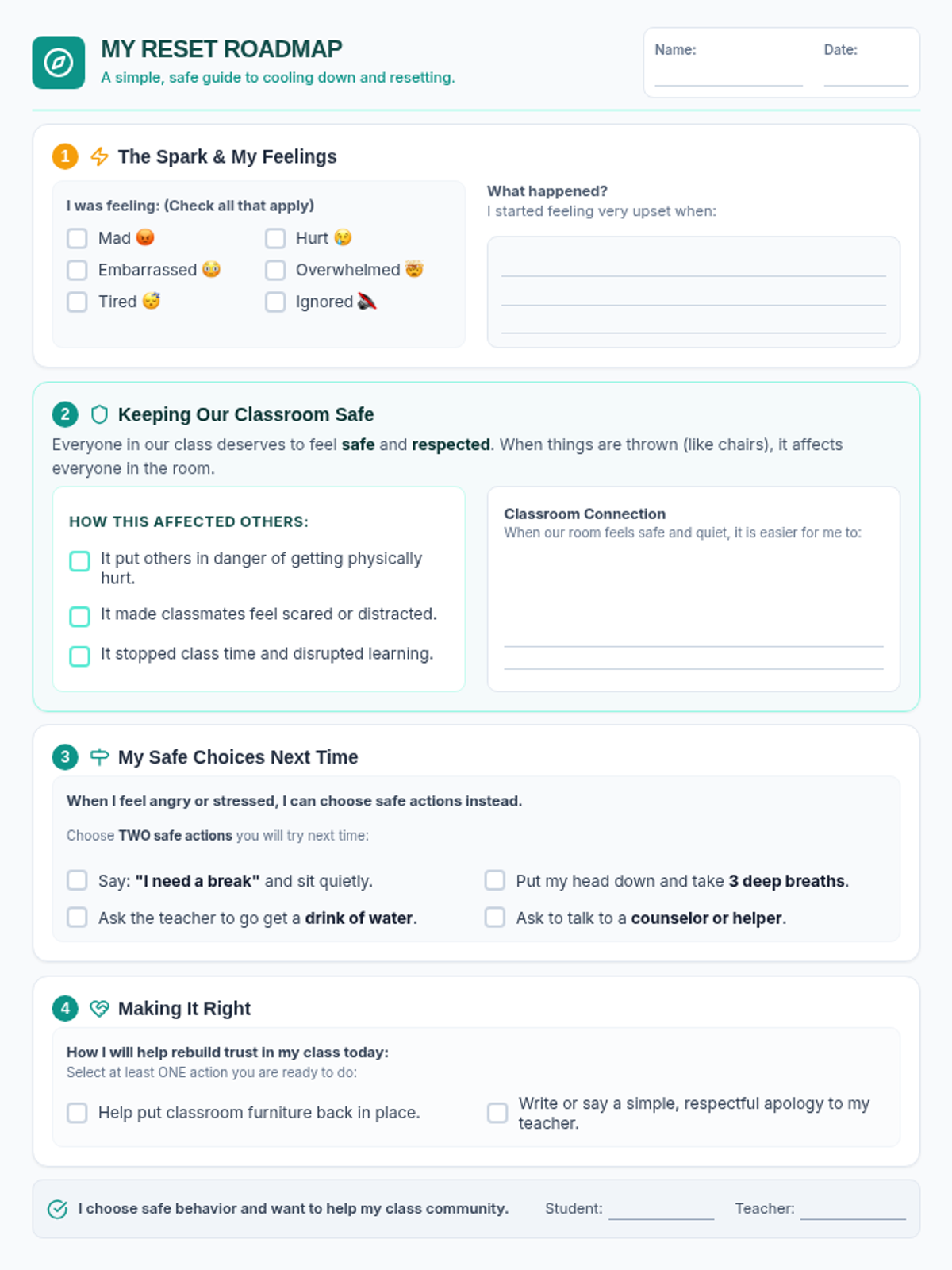
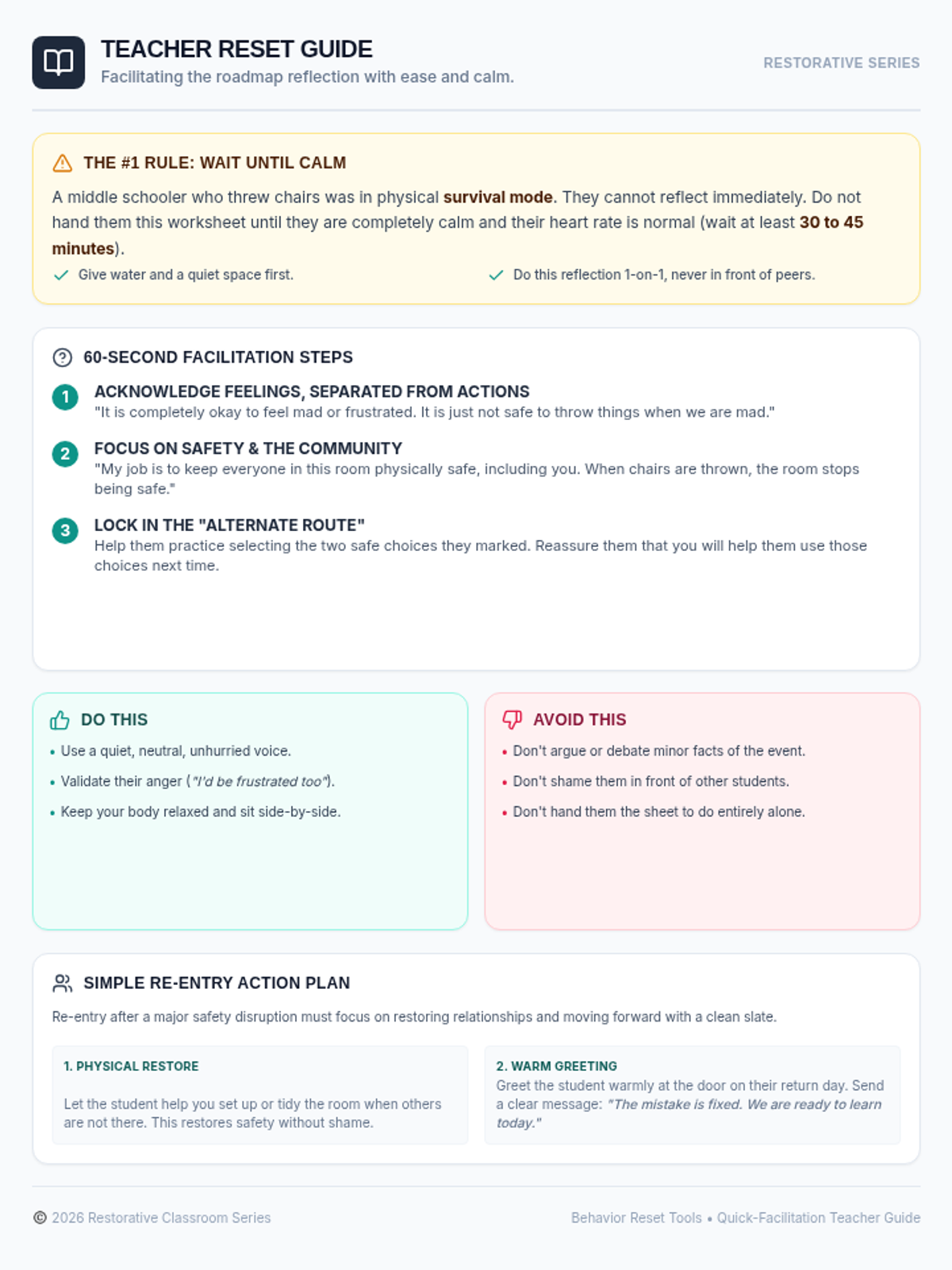
A collection of restorative and reflective tools to help middle school students process behavioral incidents, understand classroom community impact, and map out alternative, safe coping strategies.
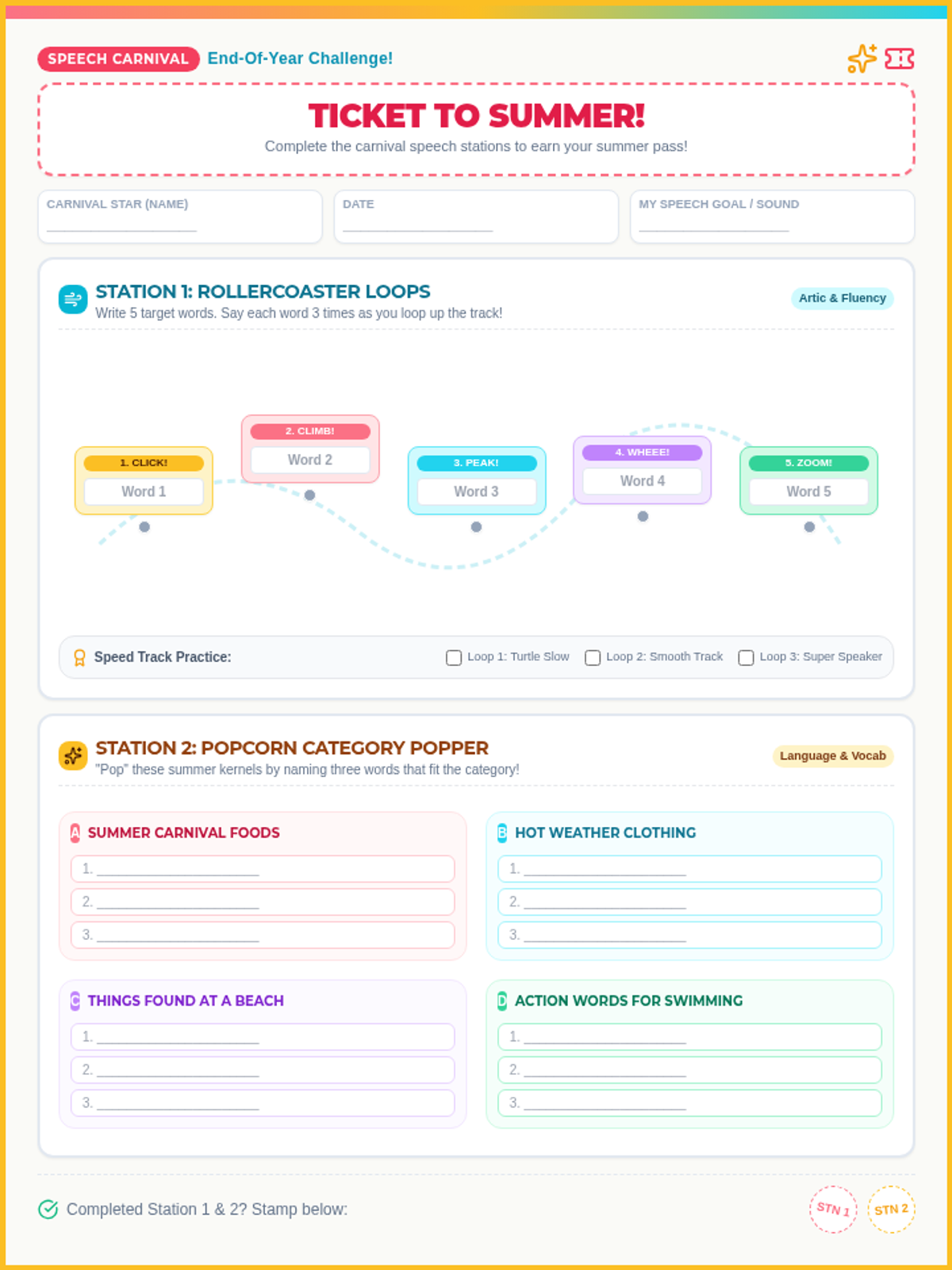
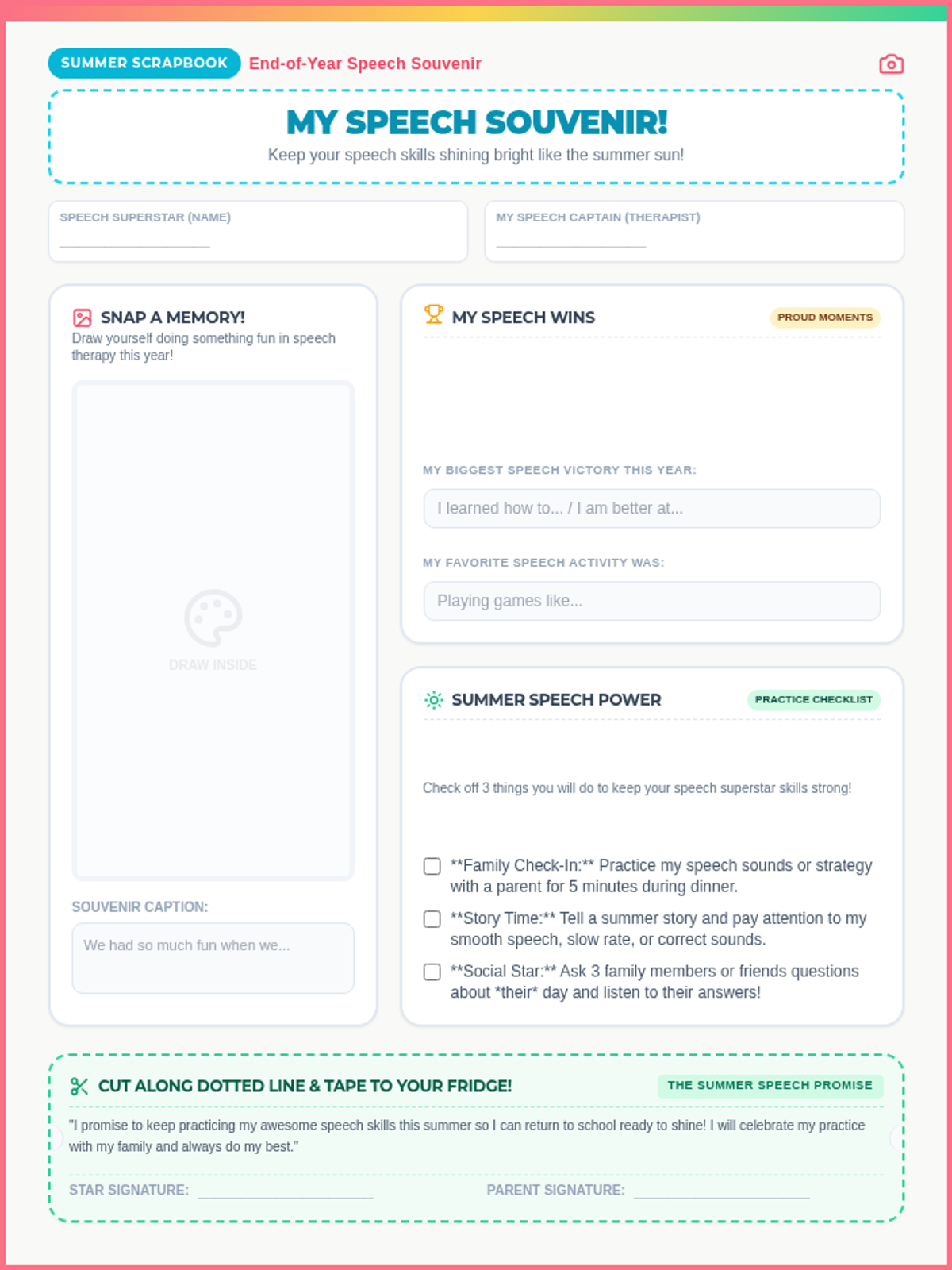
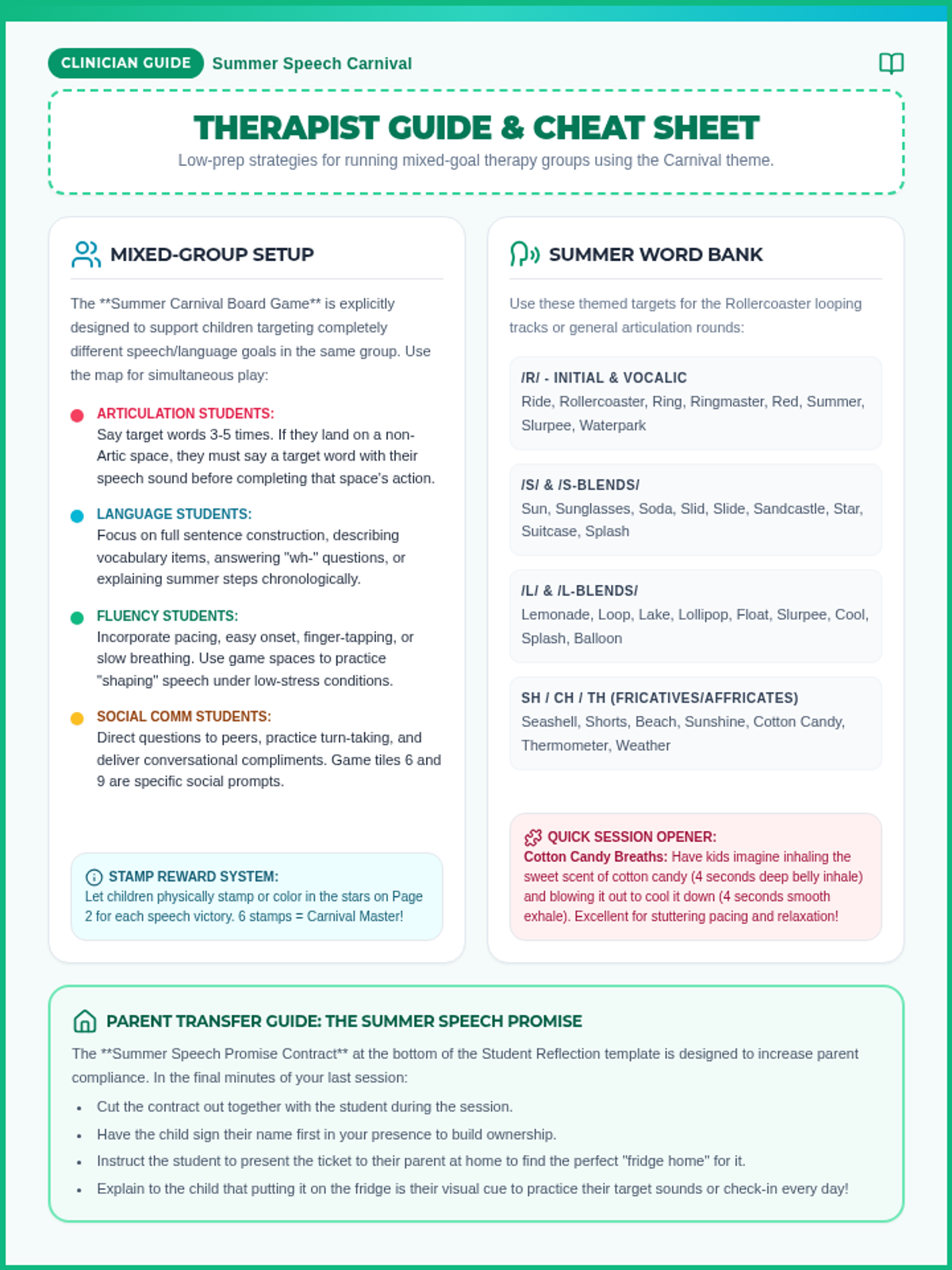
An engaging end-of-year speech therapy resource pack featuring low-prep, printable worksheets, reflection templates, and a therapist guide designed for mixed-goal therapy groups with a fun summer carnival theme.
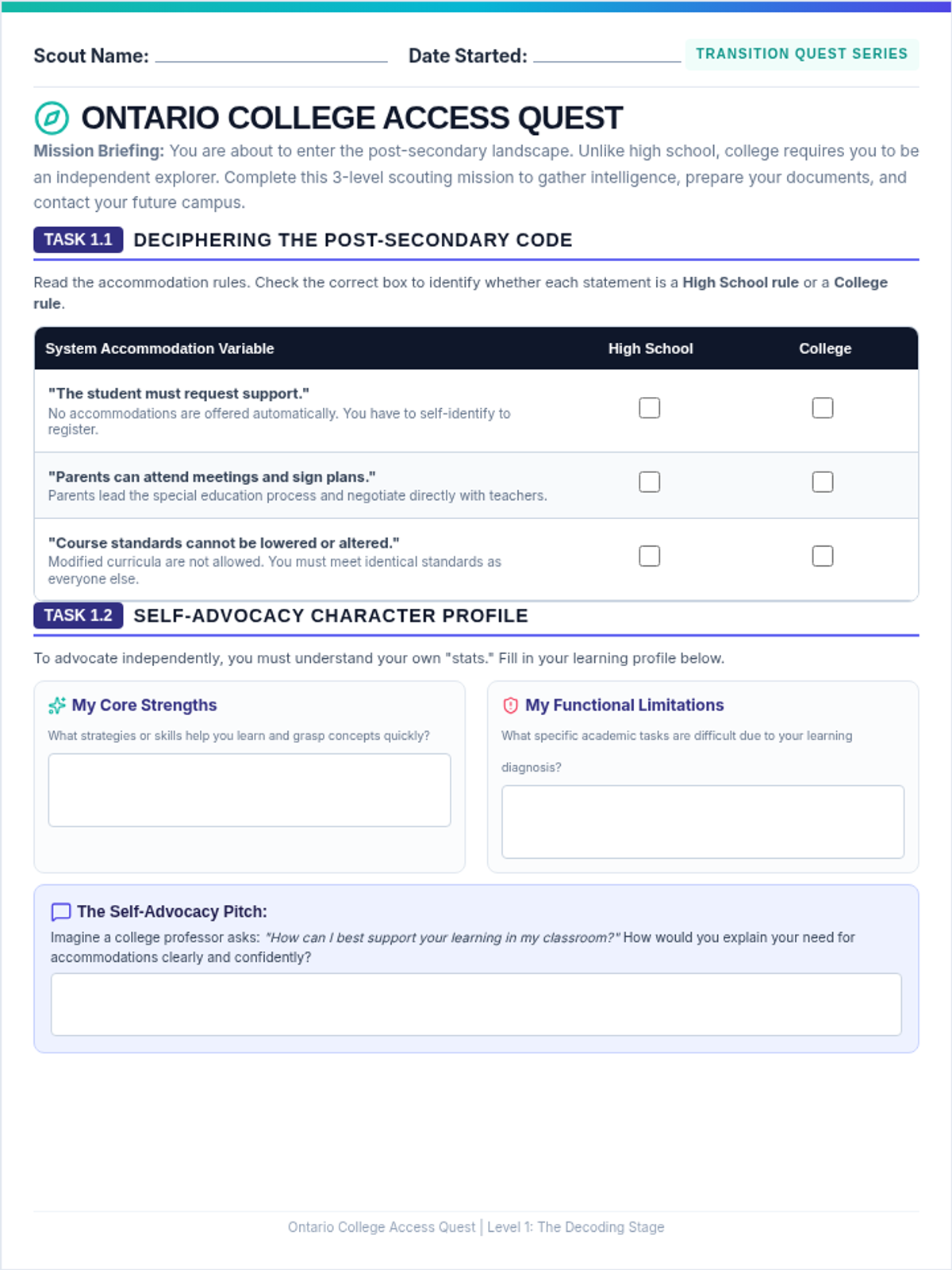
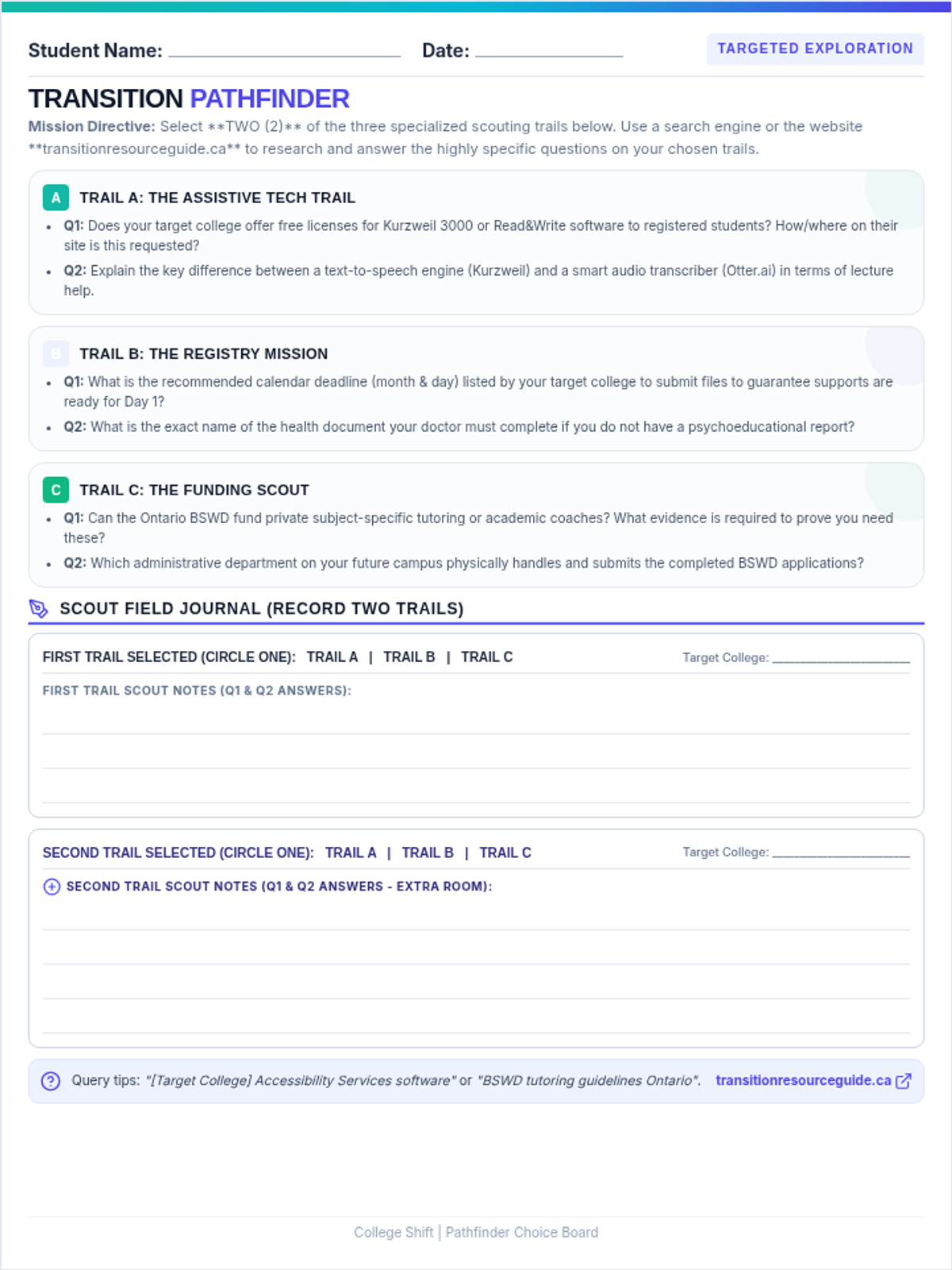
A comprehensive transition planning lesson designed to help high school students with disabilities successfully navigate the shift to Ontario colleges. Students learn the differences between high school and college accommodations, explore documentation requirements, and research specific college accessibility services.
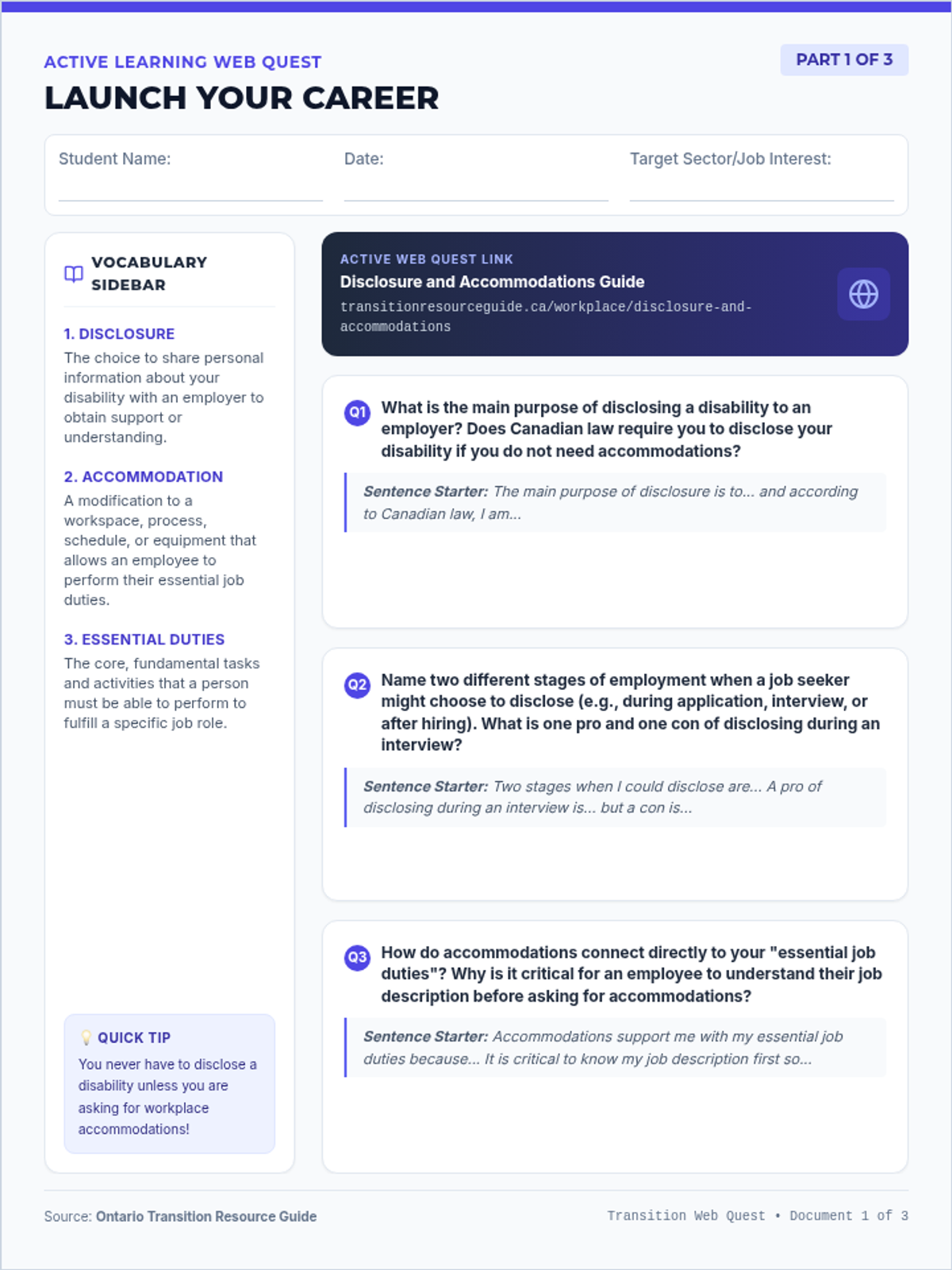
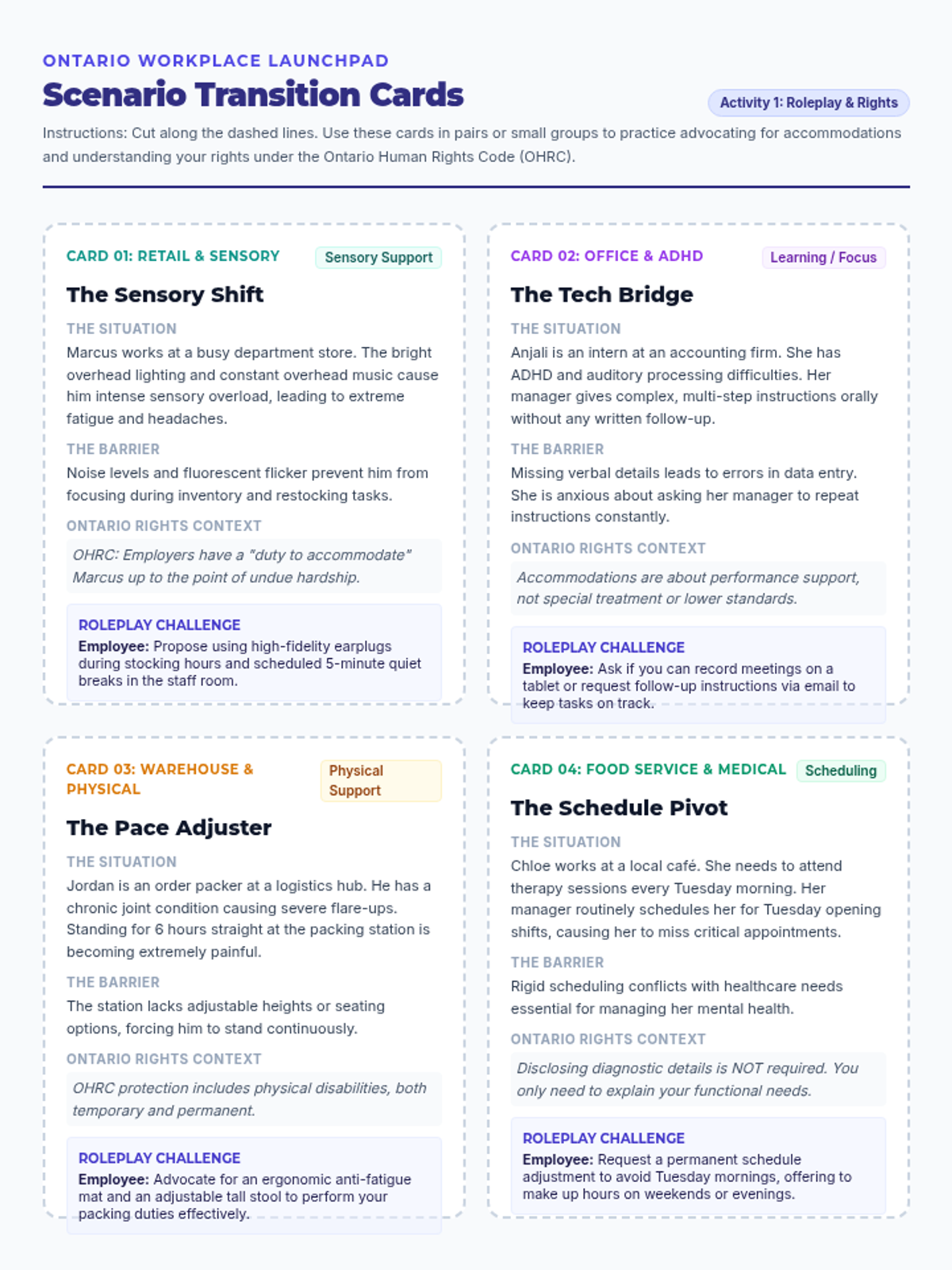
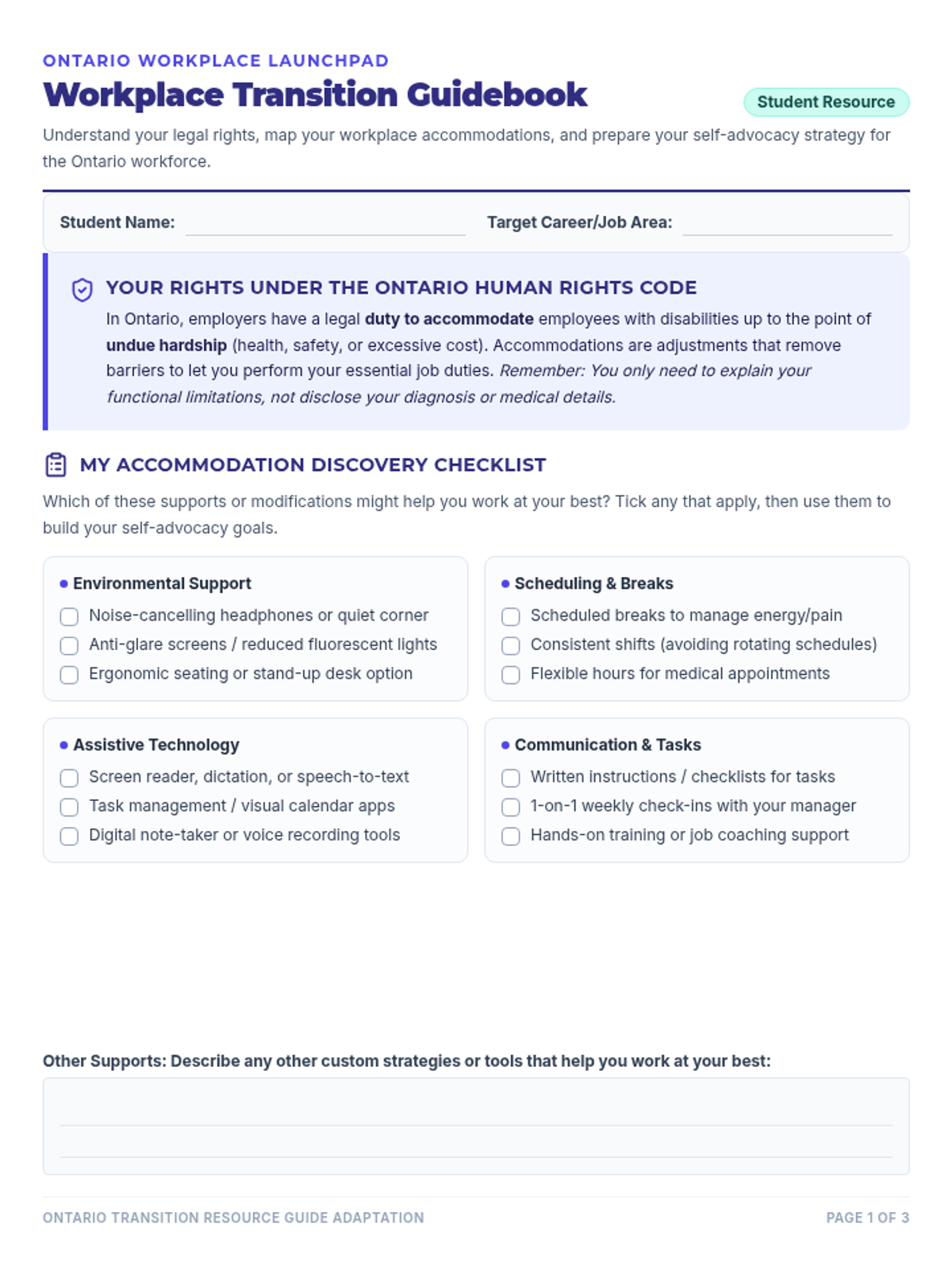
An empowering, Ontario-specific transition unit helping students with disabilities navigate workplace accommodations, disclosure choices under the Ontario Human Rights Code, and self-advocacy strategies.
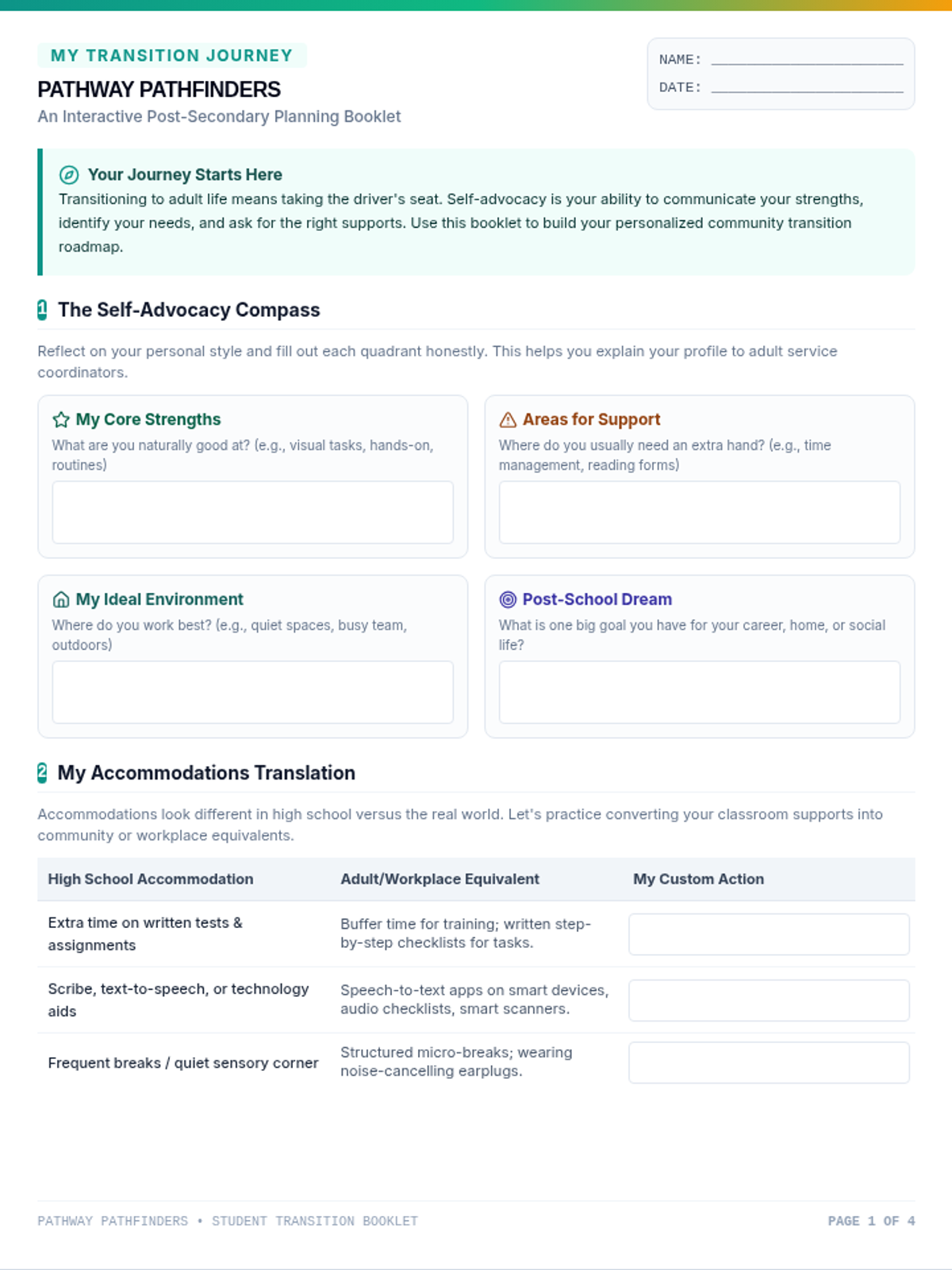
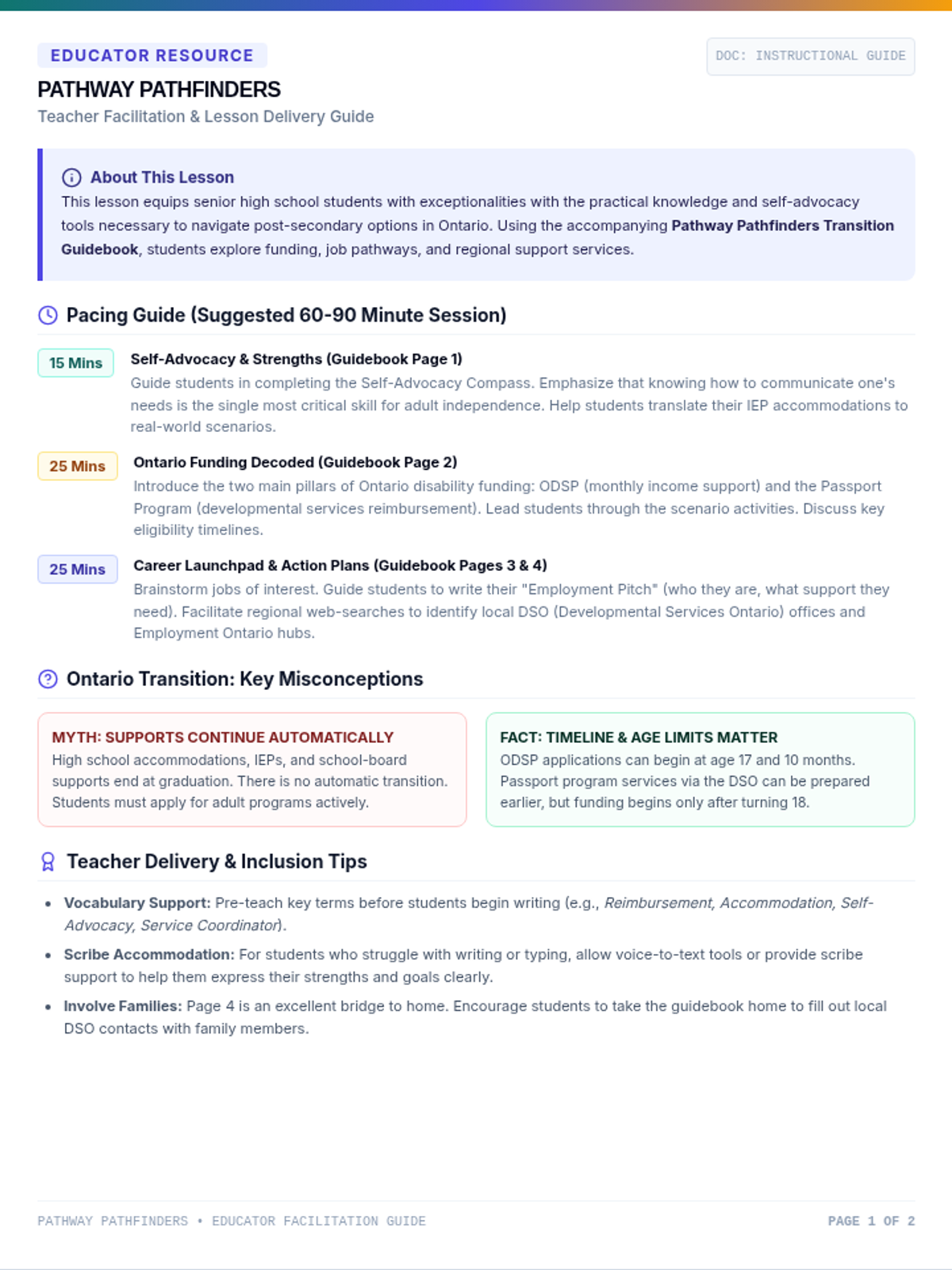
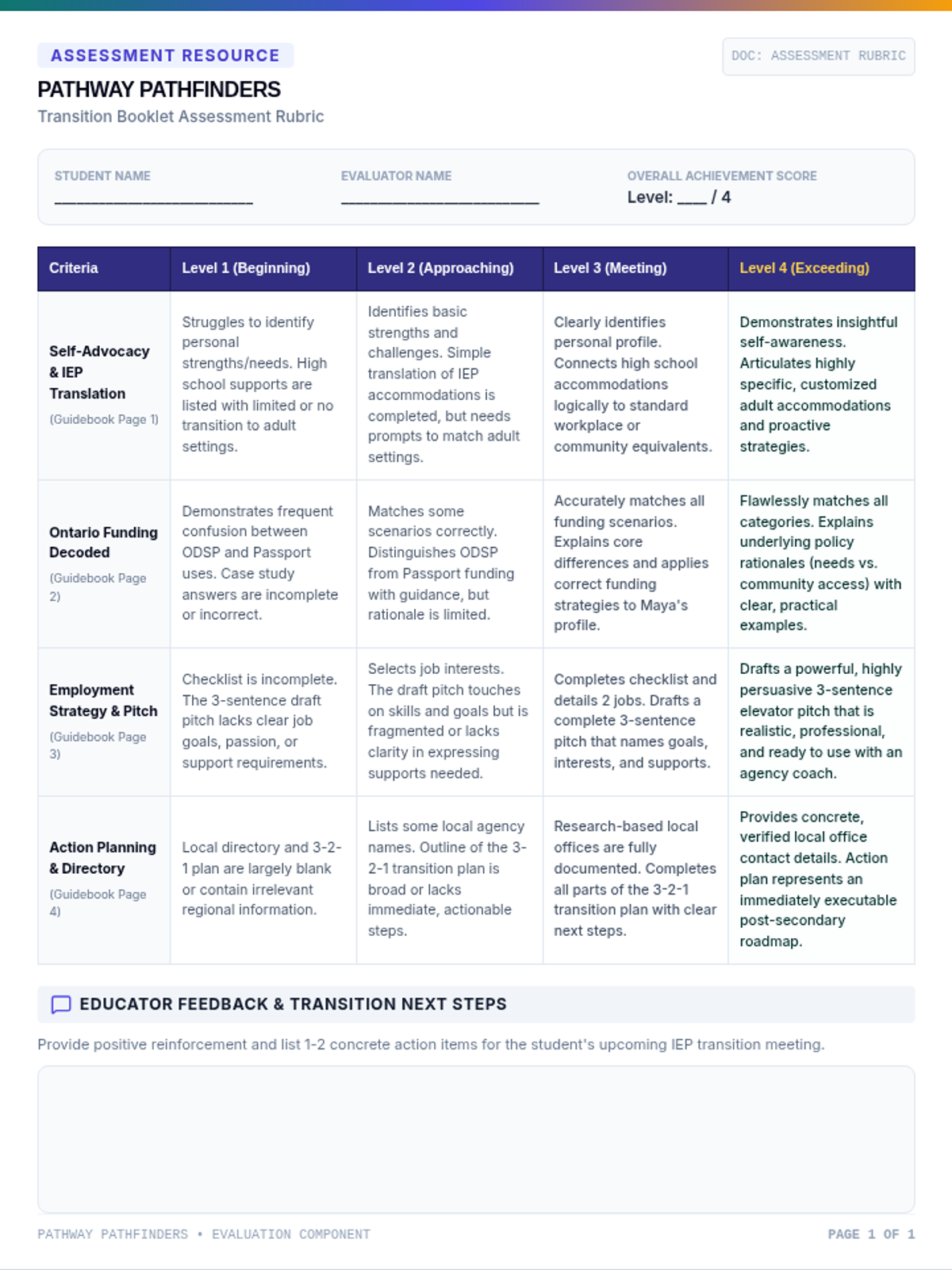
A student-focused lesson introducing adult community services, self-advocacy, and financial funding in Ontario. Includes an interactive transition booklet and a comprehensive facilitation guide for teachers.
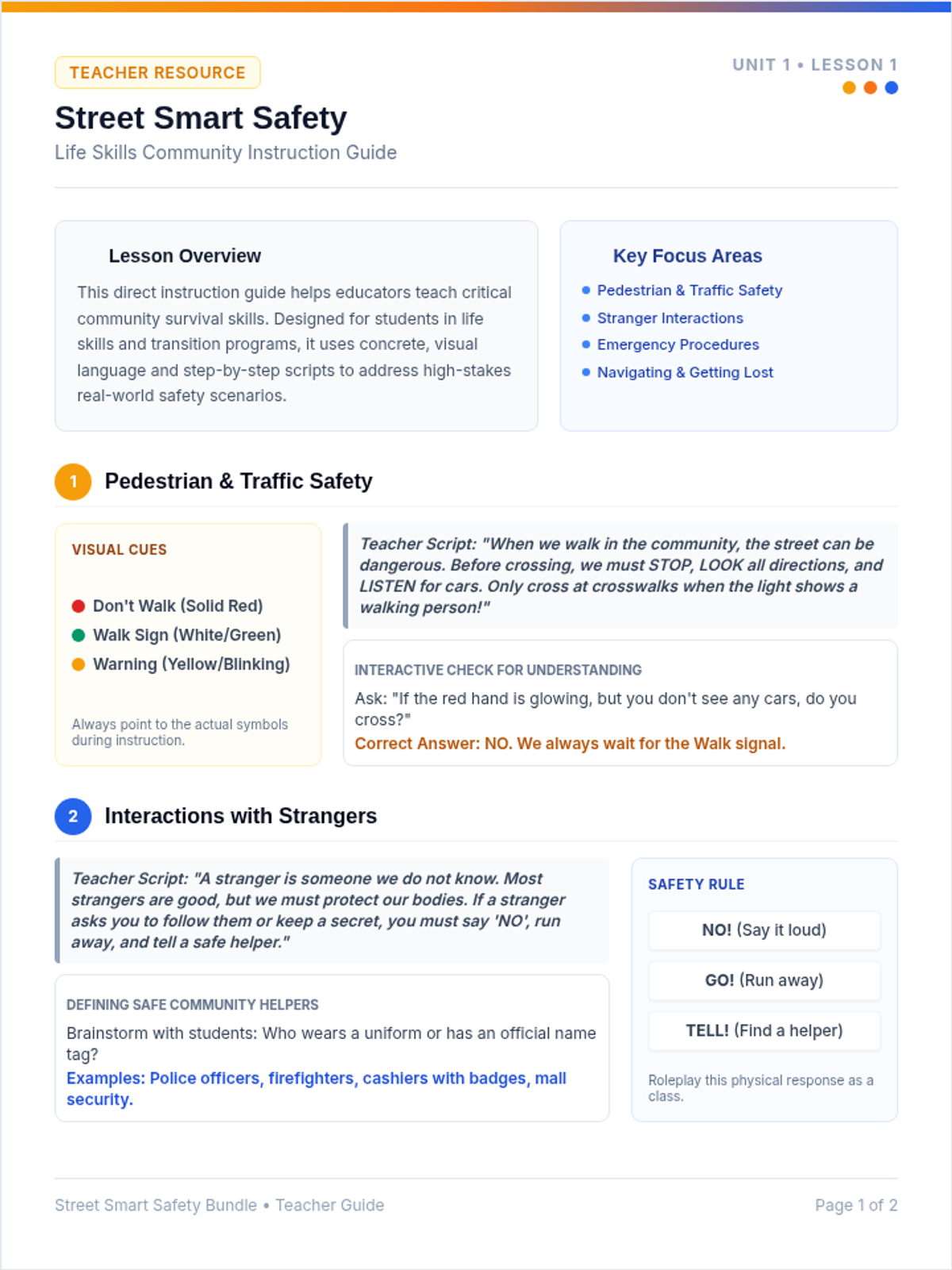
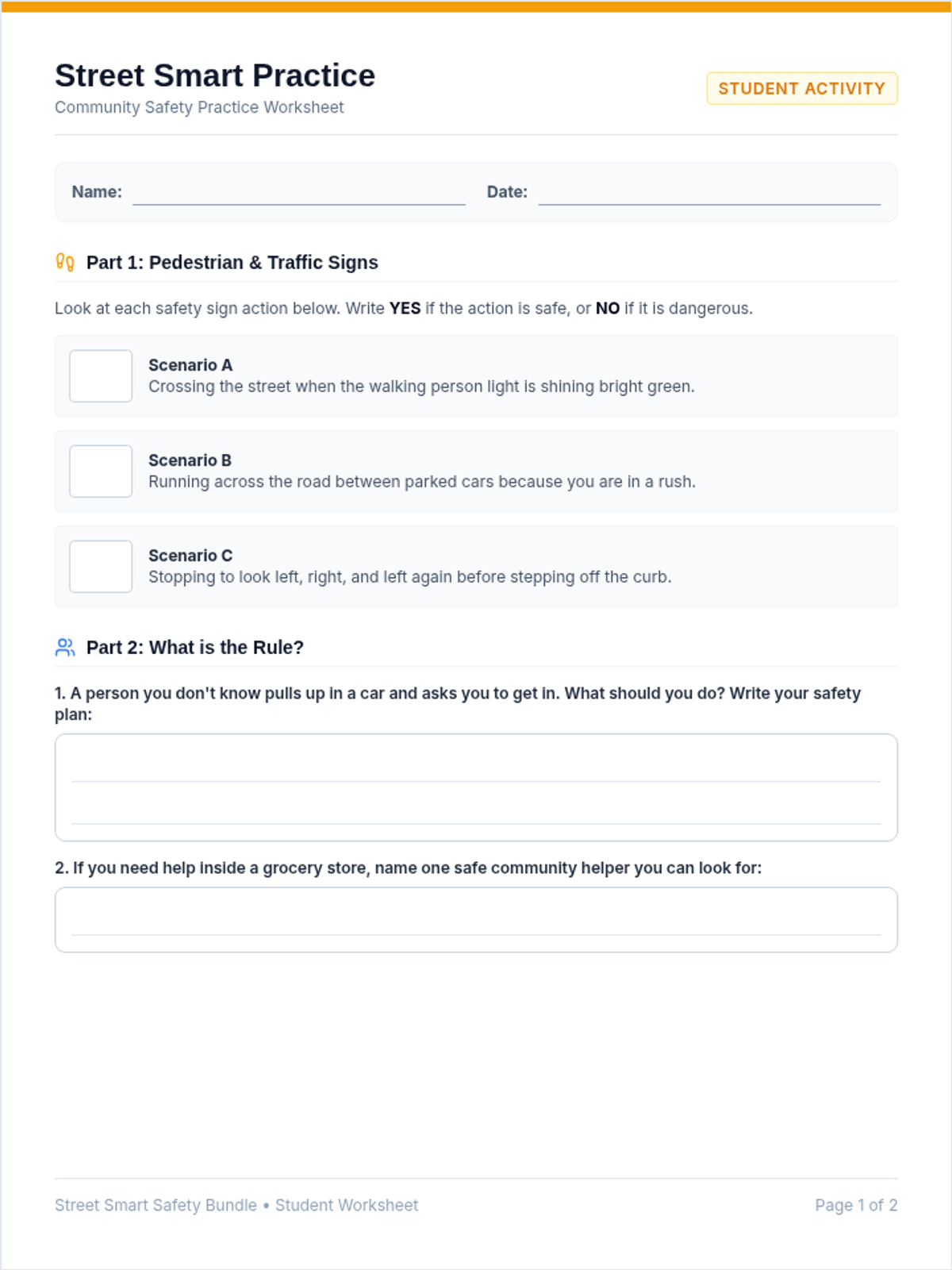
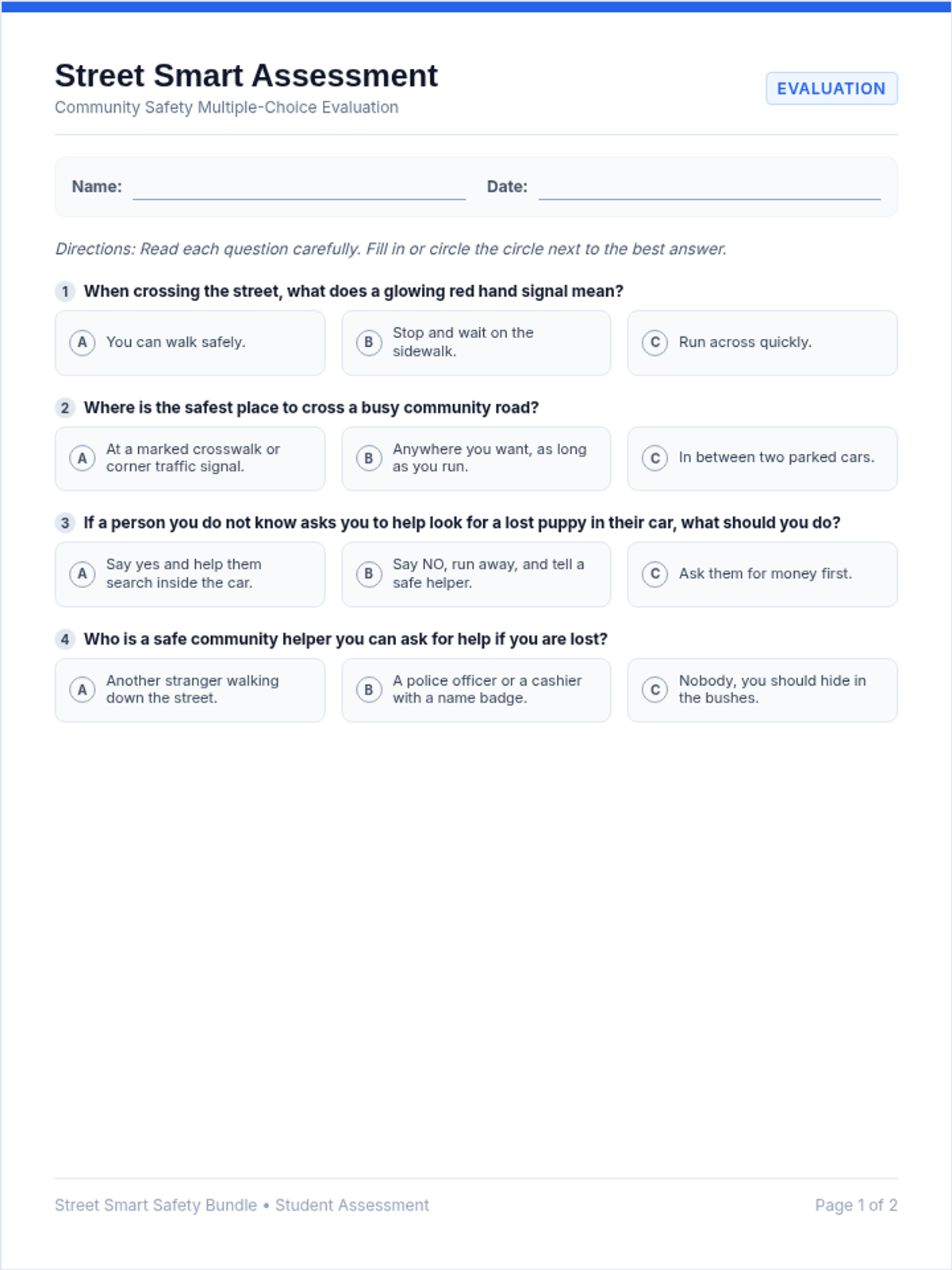
A comprehensive life skills lesson focused on community safety, covering traffic, emergencies, strangers, and navigating the neighborhood safely. It includes a teacher instruction guide, a practical practice worksheet, and a visual community safety assessment.
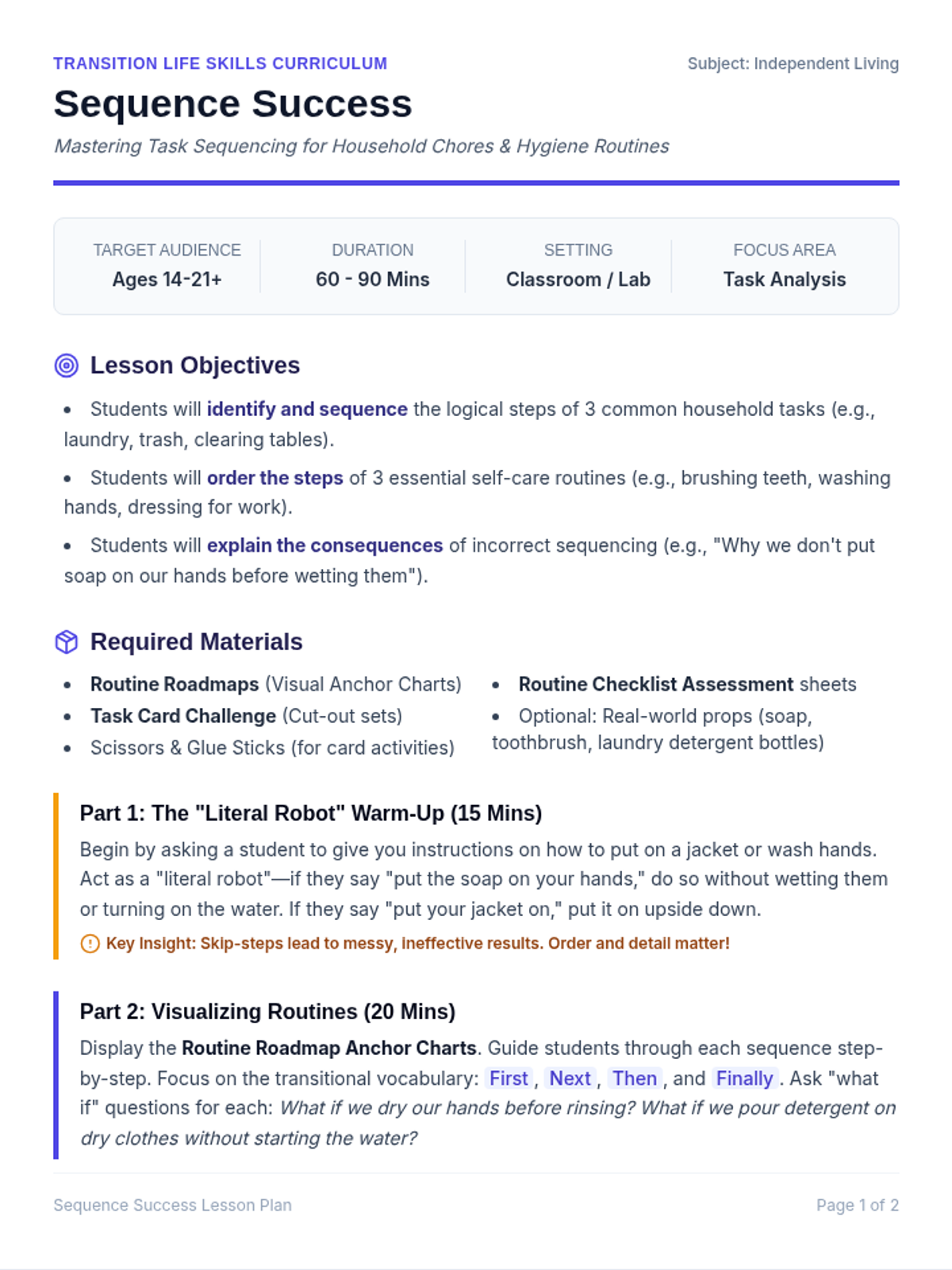
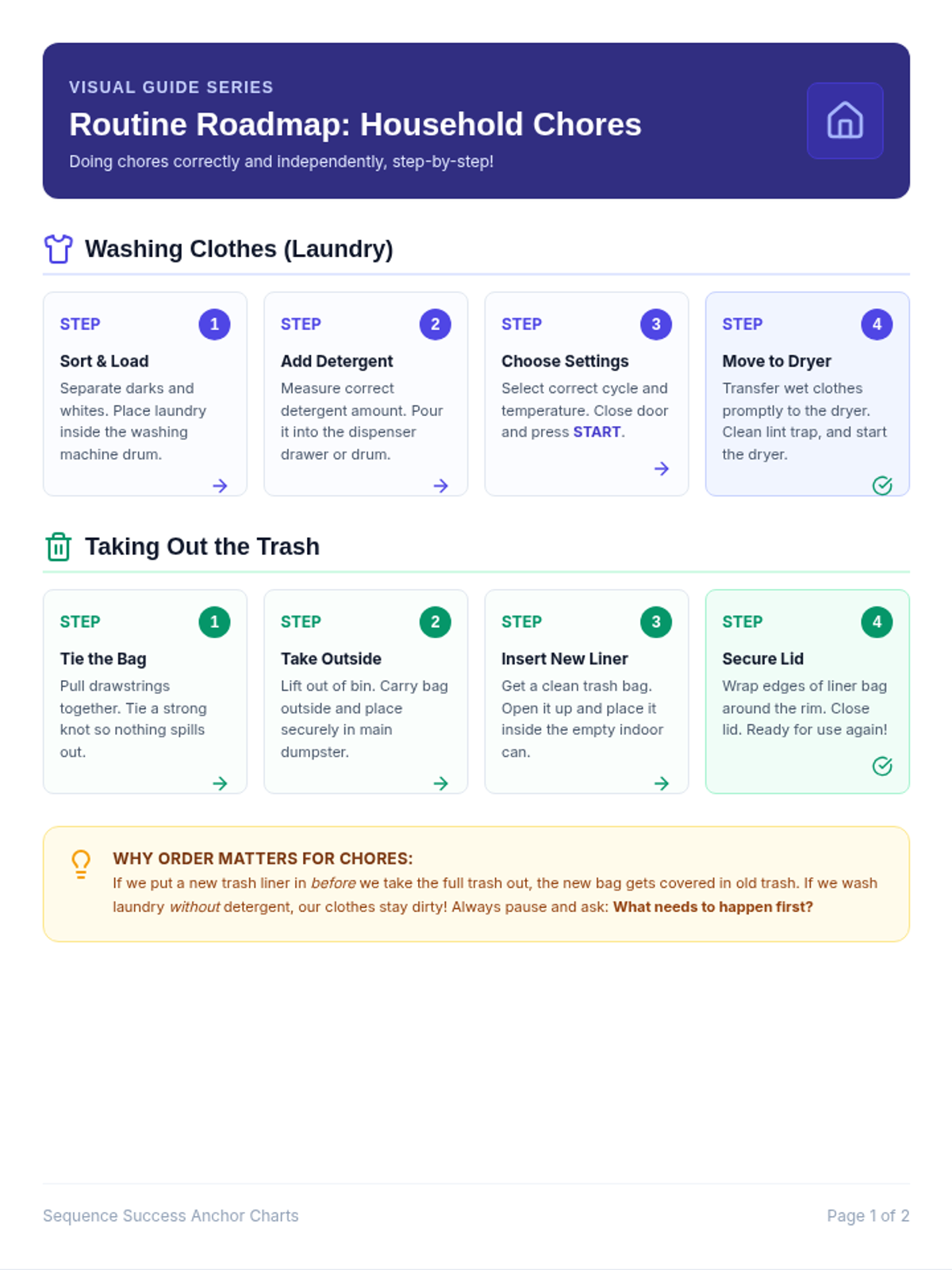
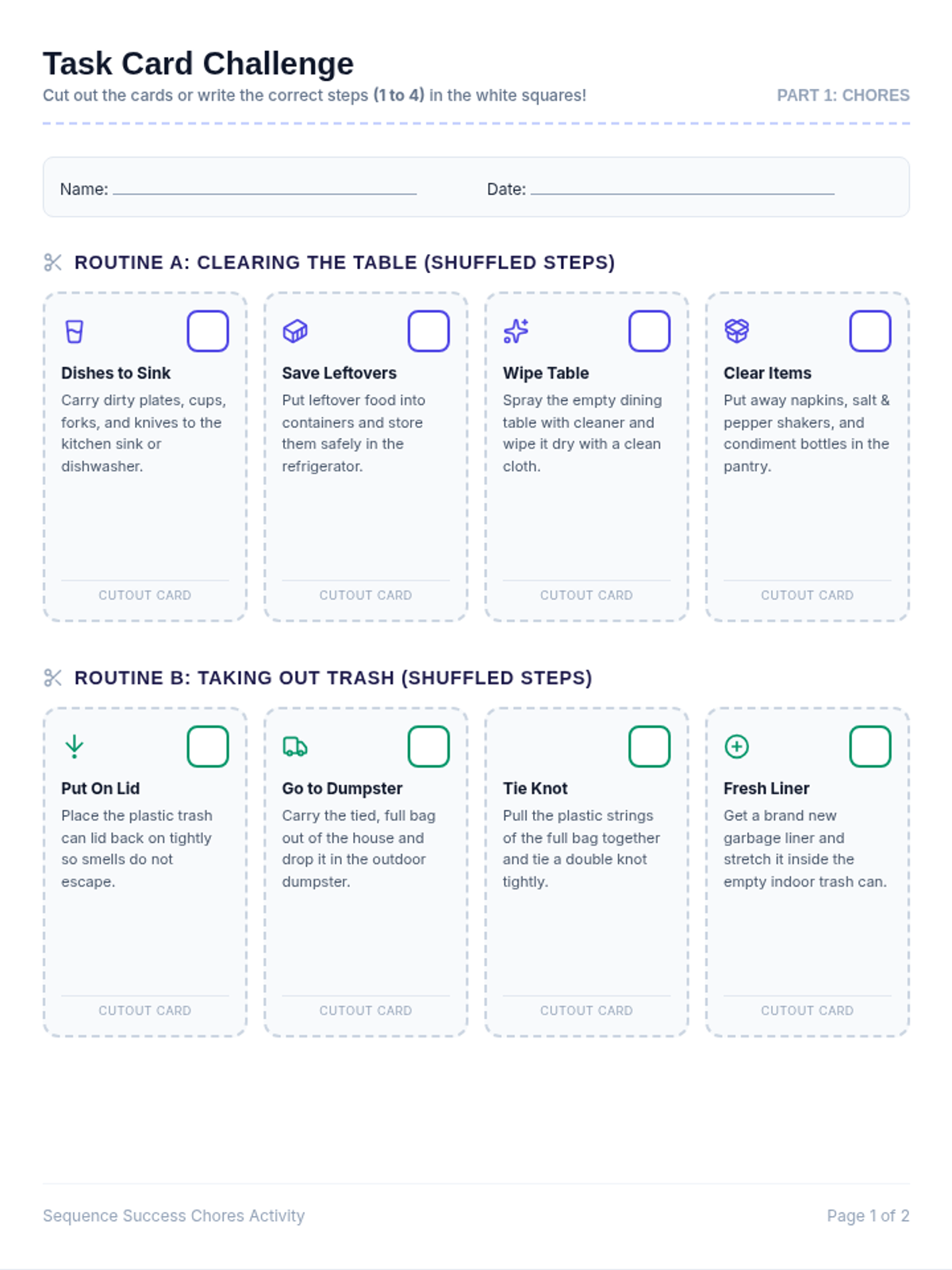
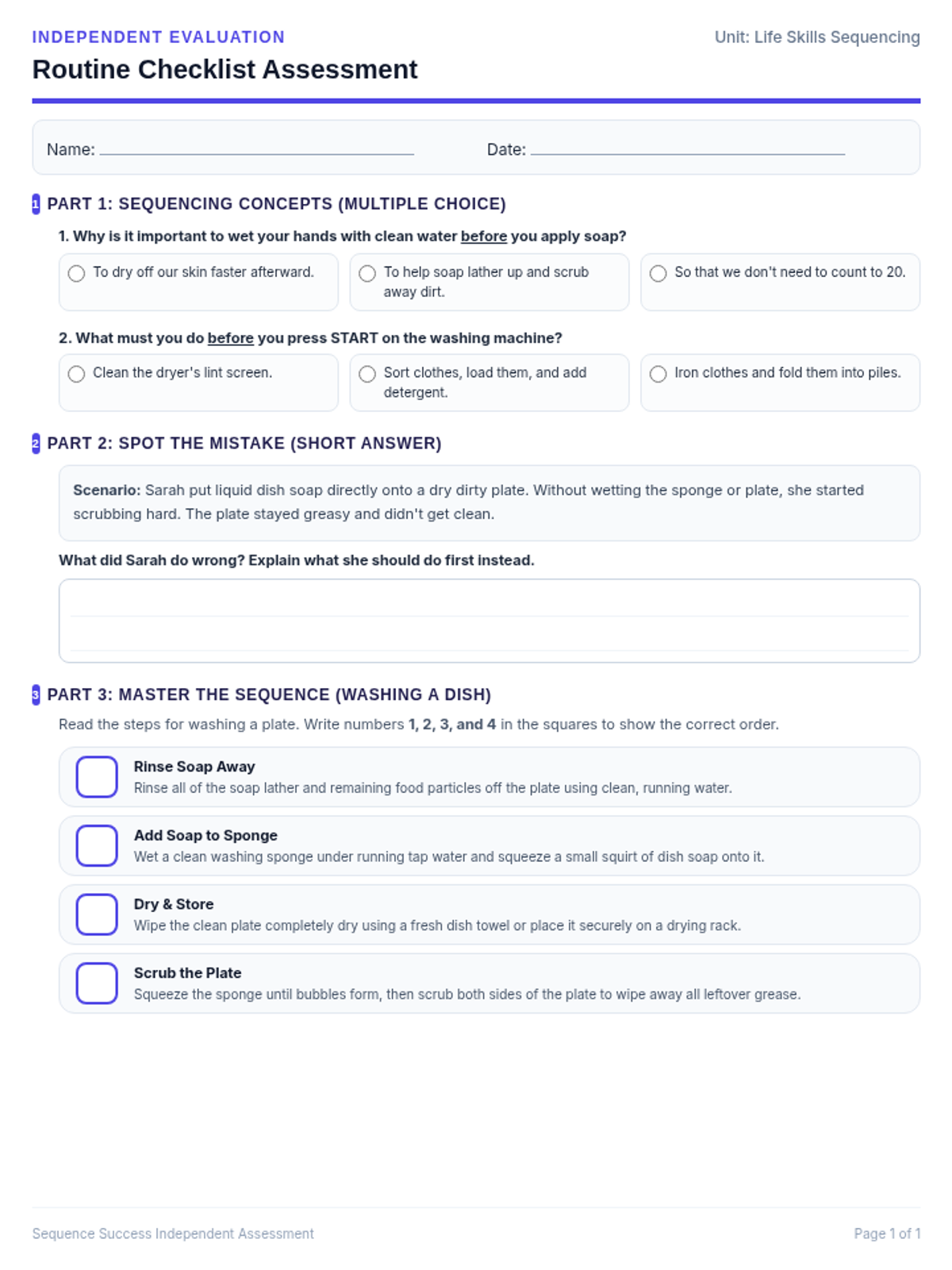
A comprehensive lesson bundle designed for transition-aged students to master the critical life skill of task sequencing. This lesson breaks down essential household chores and self-care routines into logical, sequential steps, providing educators with a structured facilitation guide, visual anchor charts, hands-on task cards, and an assessment tool.
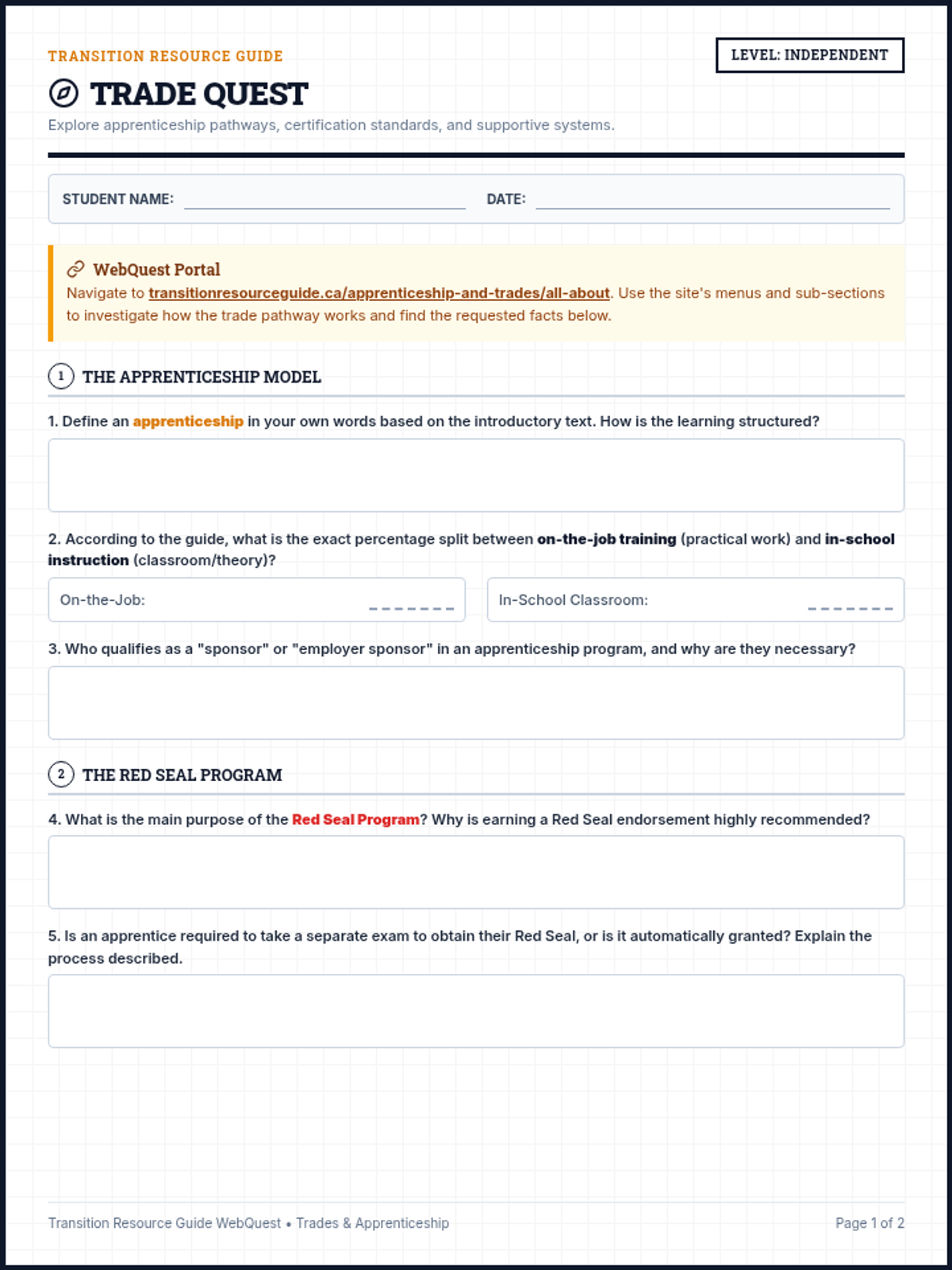
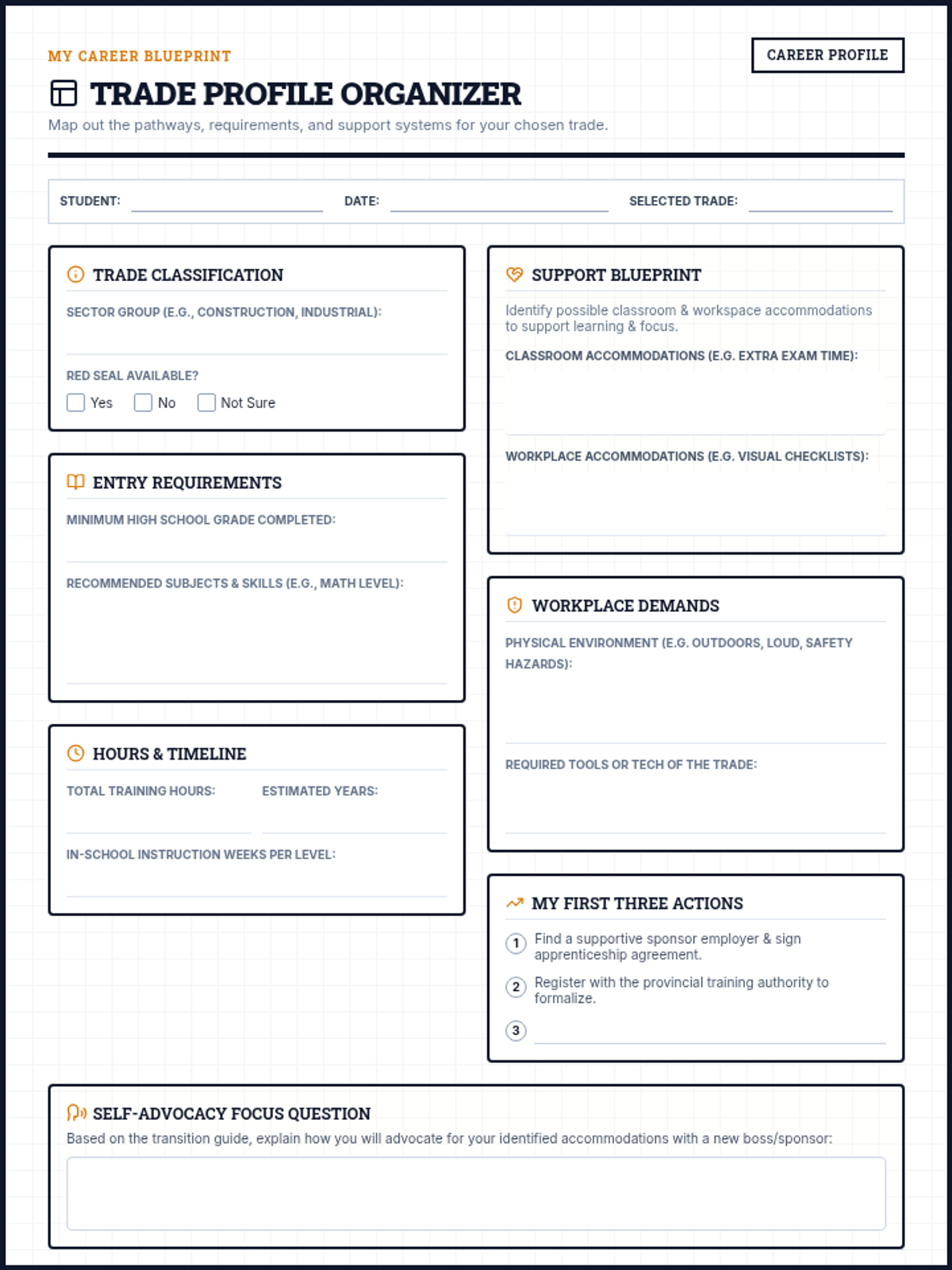
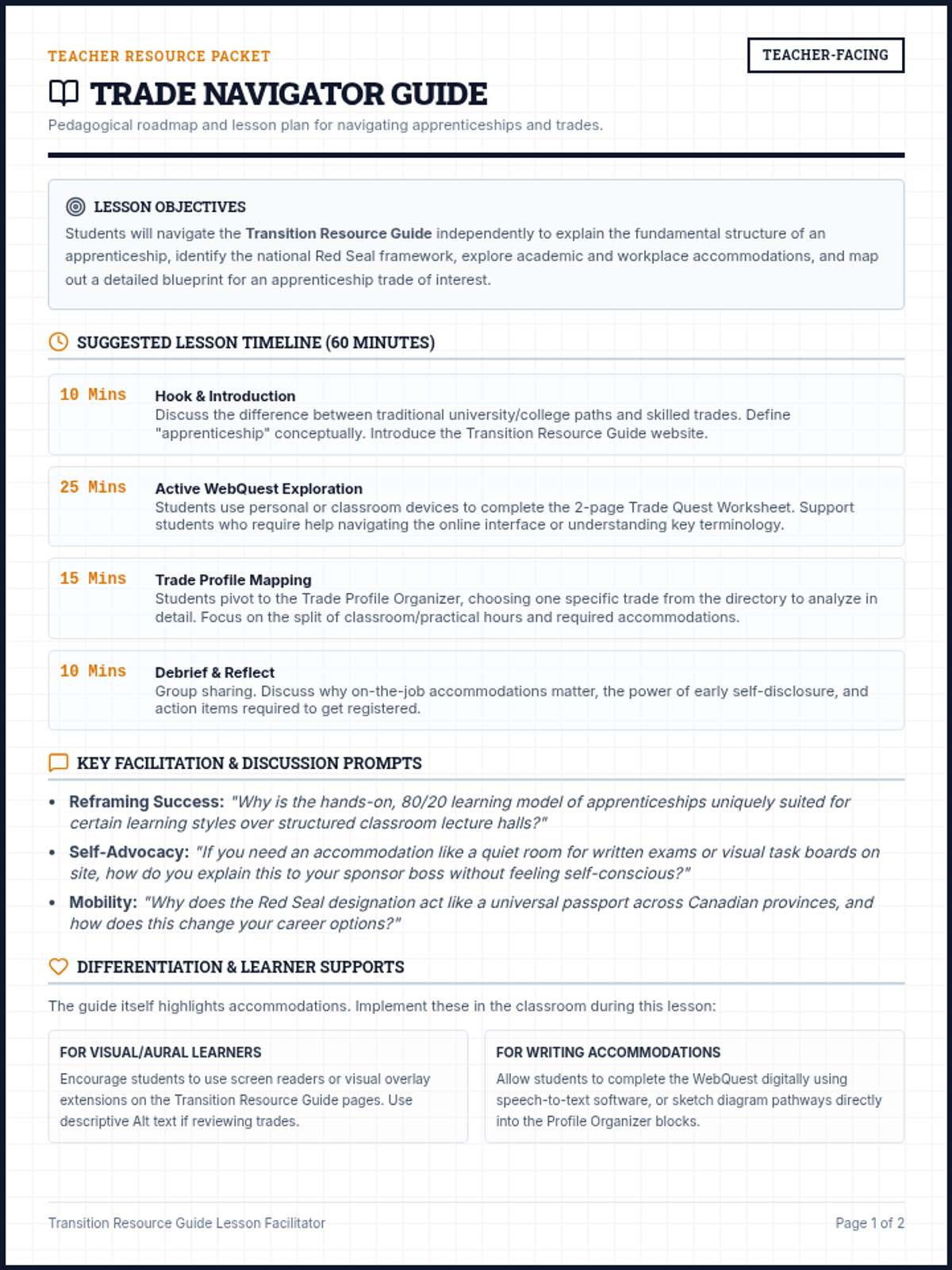
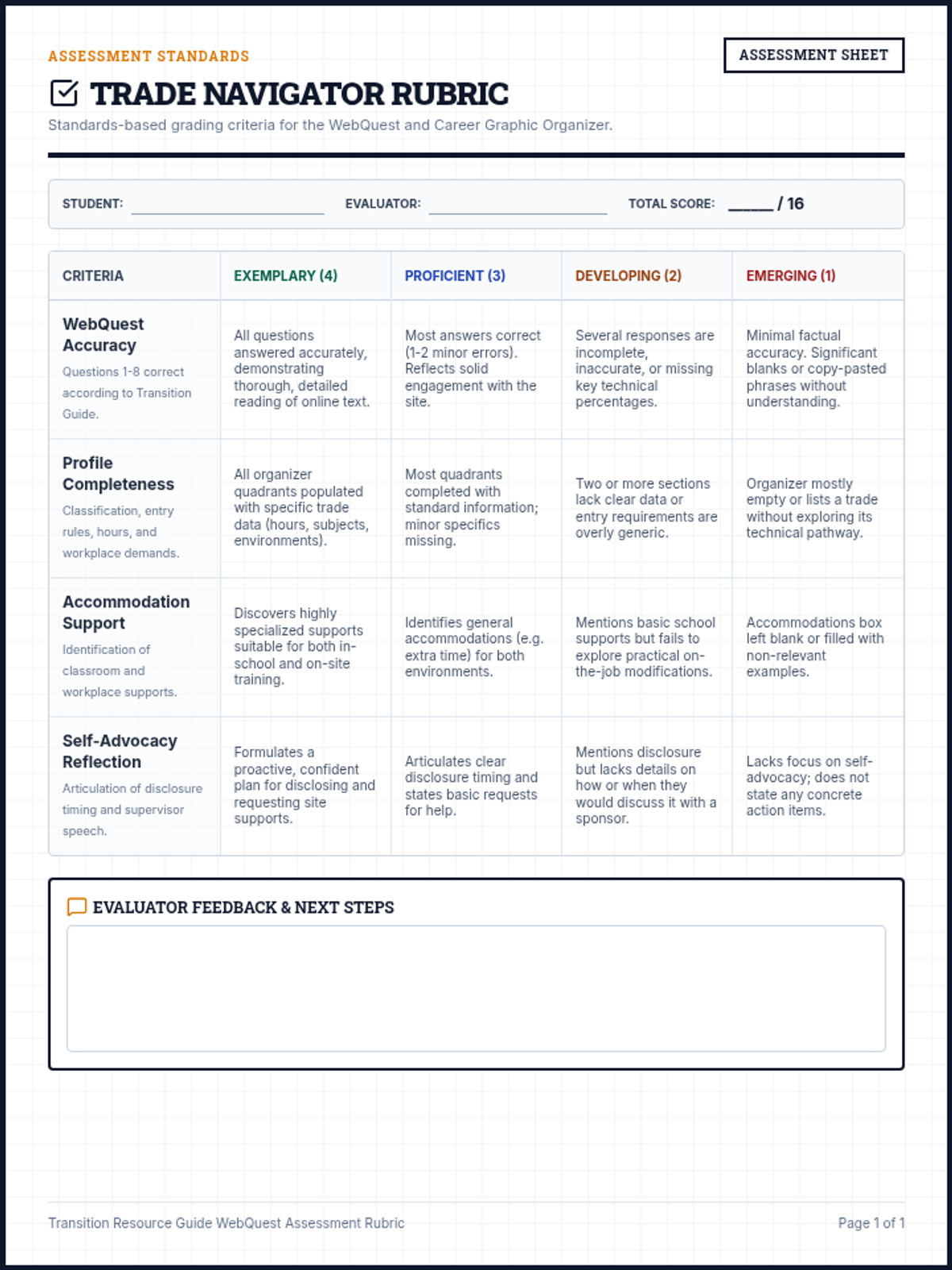
A career-focused lesson where students explore apprenticeships and trades using the Transition Resource Guide. Students complete a WebQuest to understand the apprenticeship path and use a Graphic Organizer to map out their chosen trade.
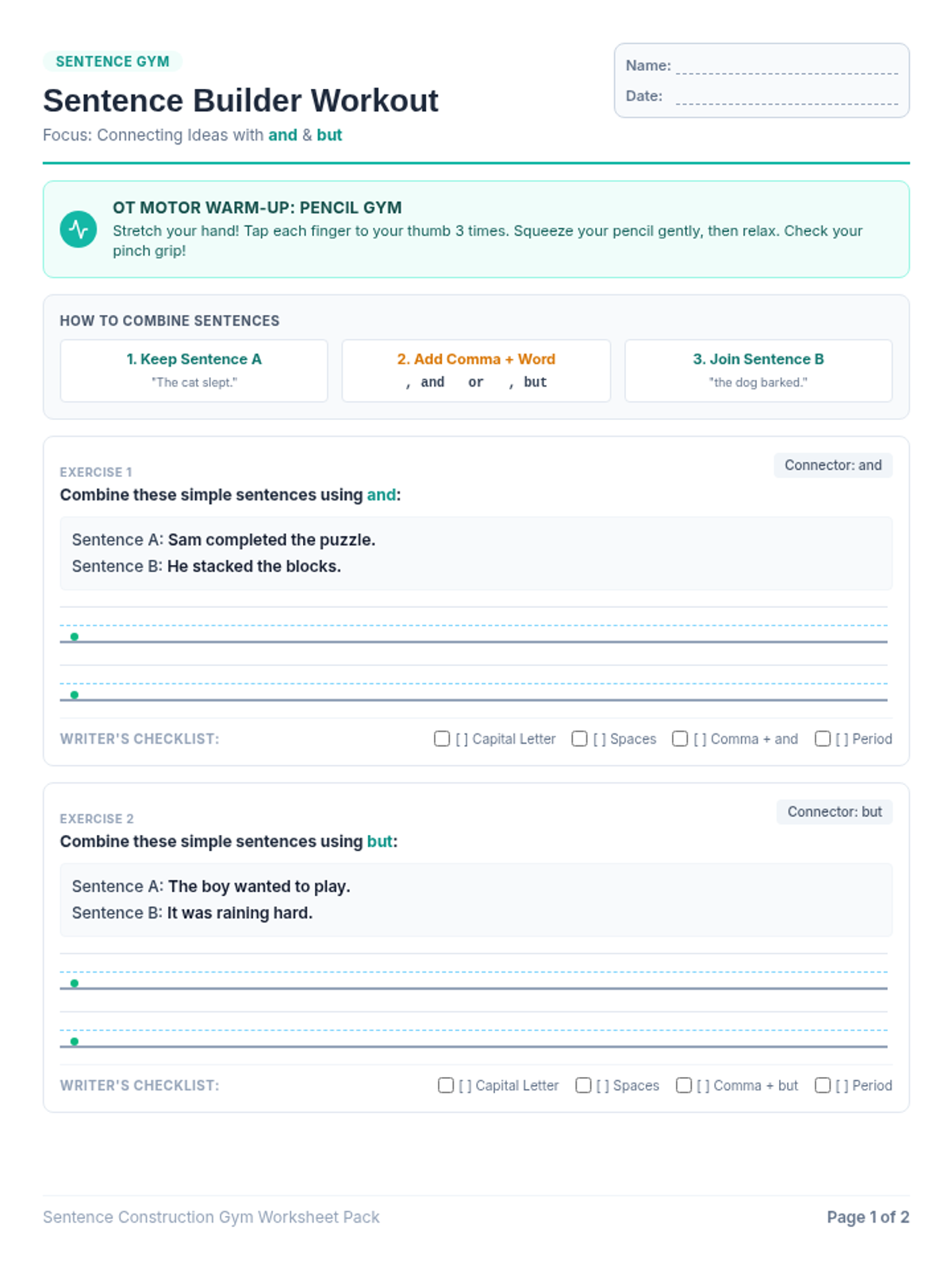
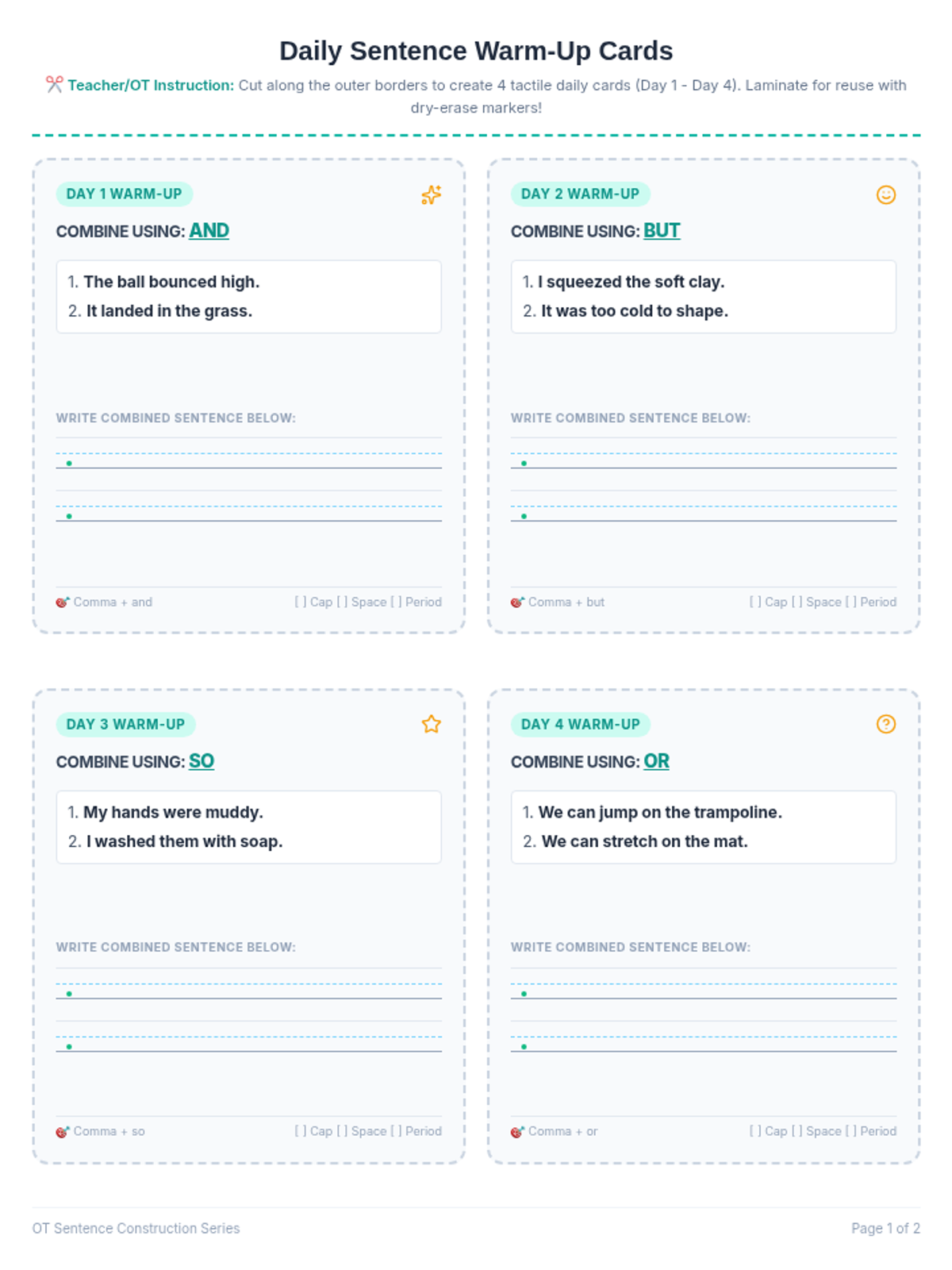
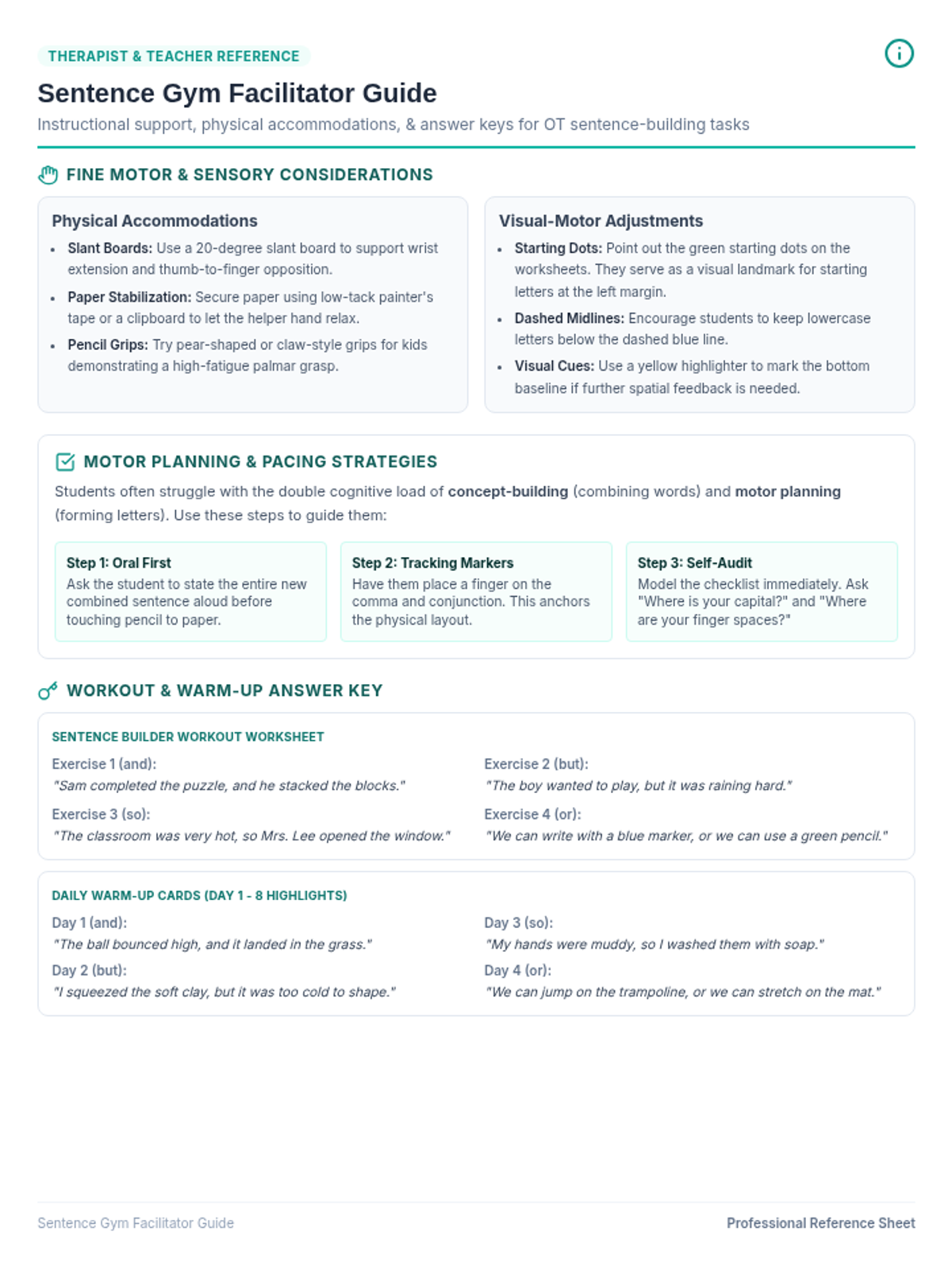
A lesson focused on sentence construction using coordinating conjunctions, designed with sensory-friendly visual guides and executive function checklists for occupational therapy (OT) and handwriting support.
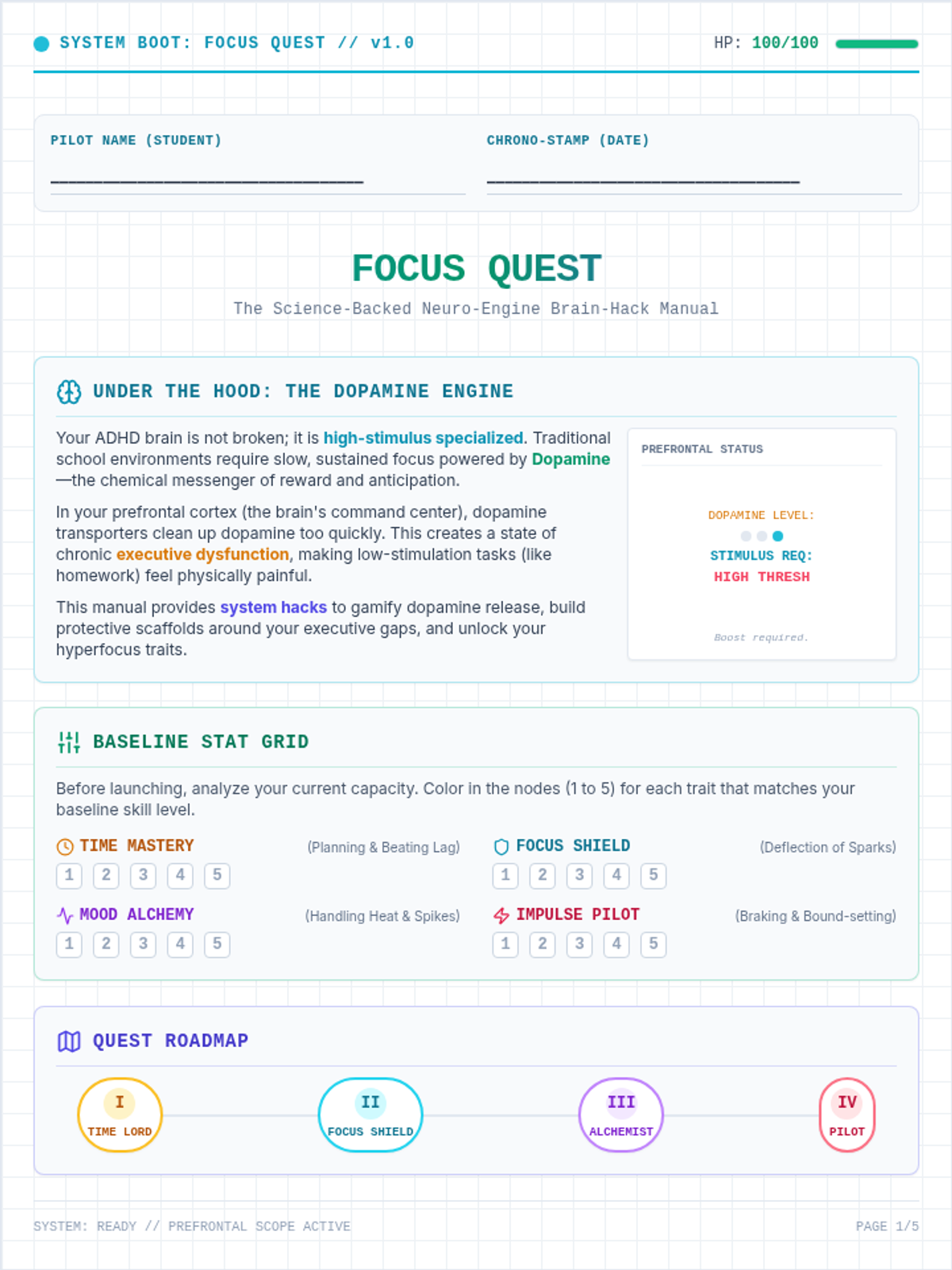
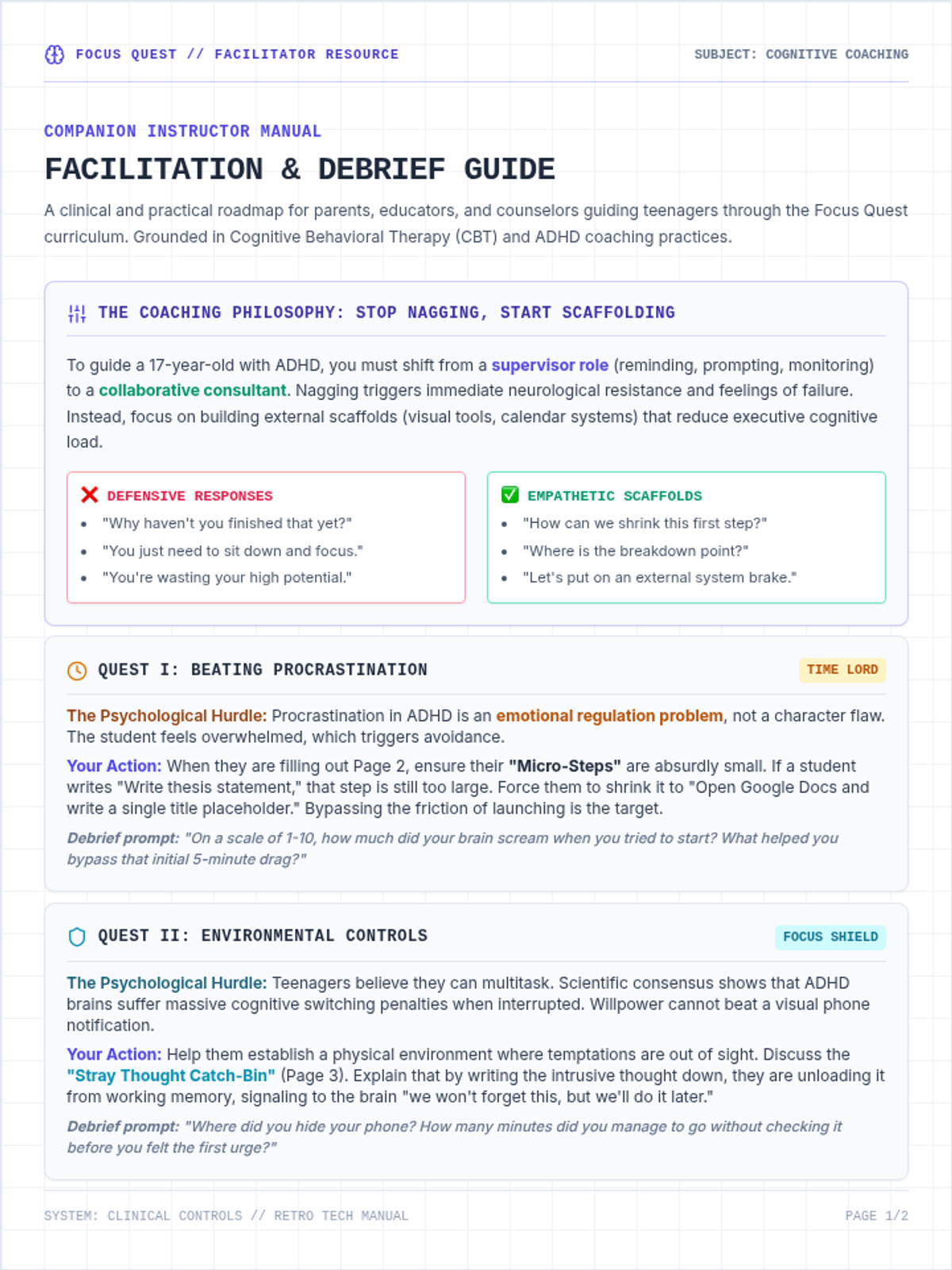
A gamified, science-backed cognitive-behavioral curriculum designed to help high school students with ADHD build executive function, emotional regulation, and focus strategies through actionable real-world challenges.
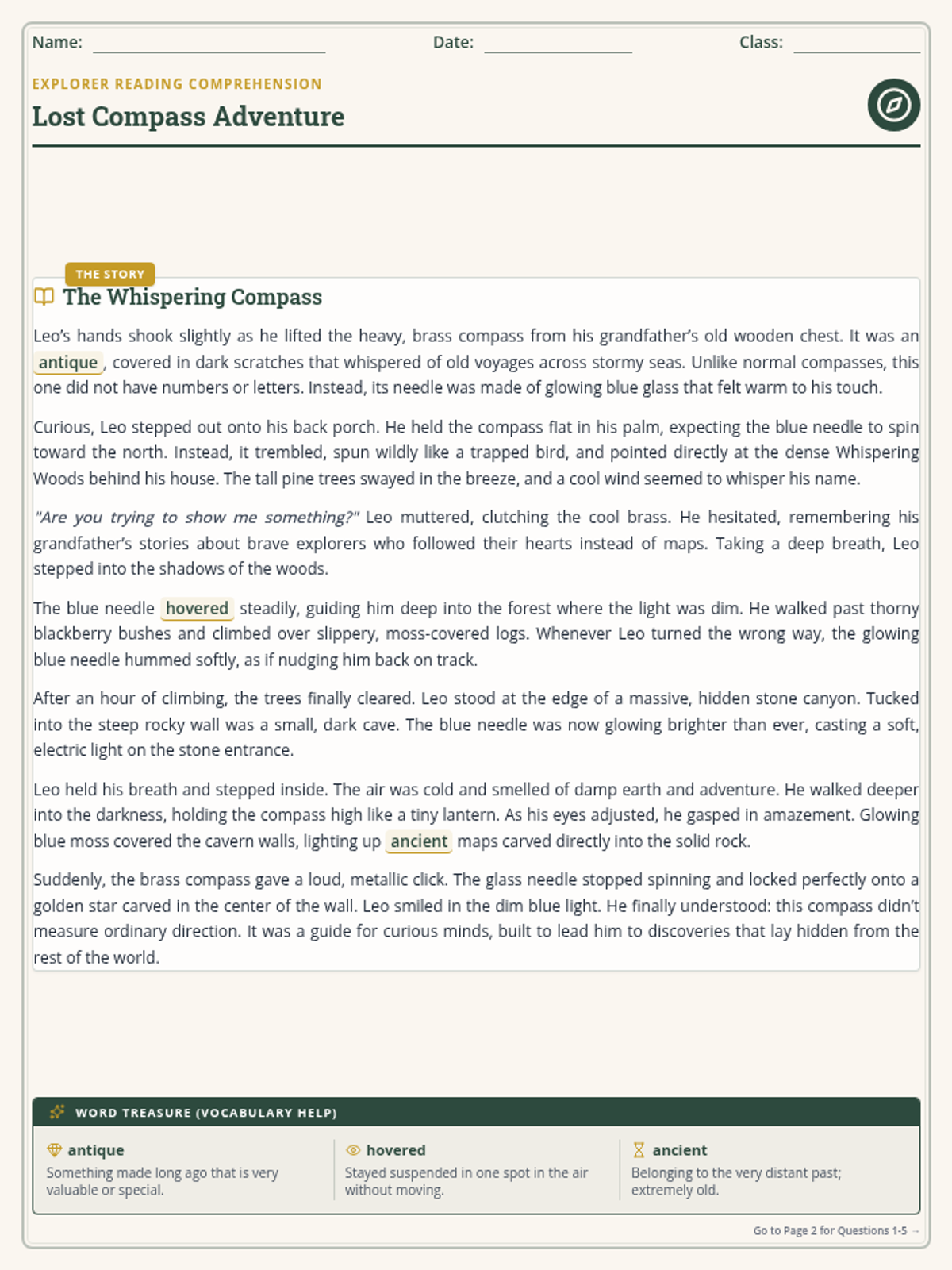
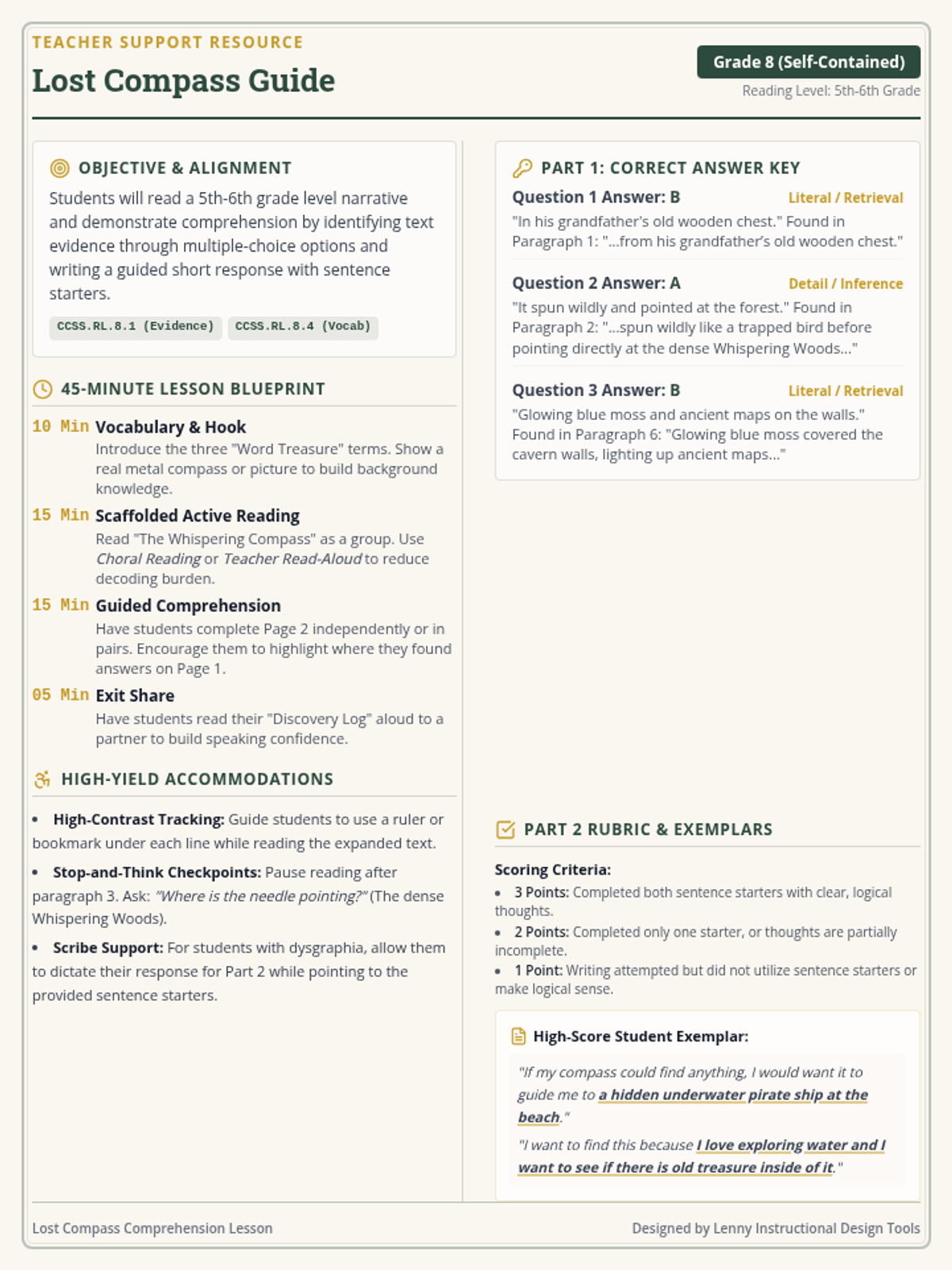
A reading comprehension lesson designed for 8th-grade self-contained ELA students reading at a 5th-6th grade level. It includes a scaffolded student worksheet with visual multiple-choice options and a teacher guide with pacing and strategies.
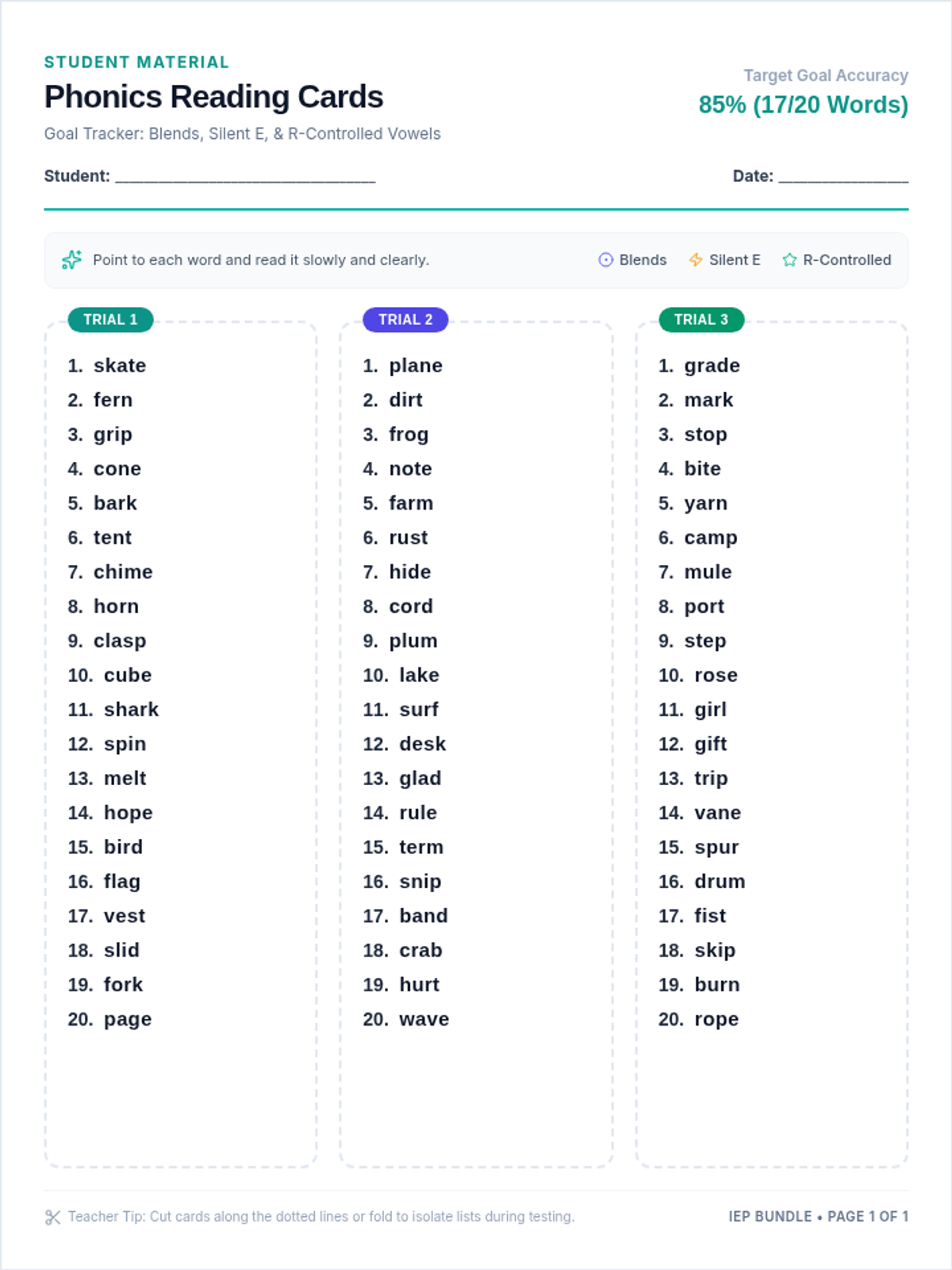
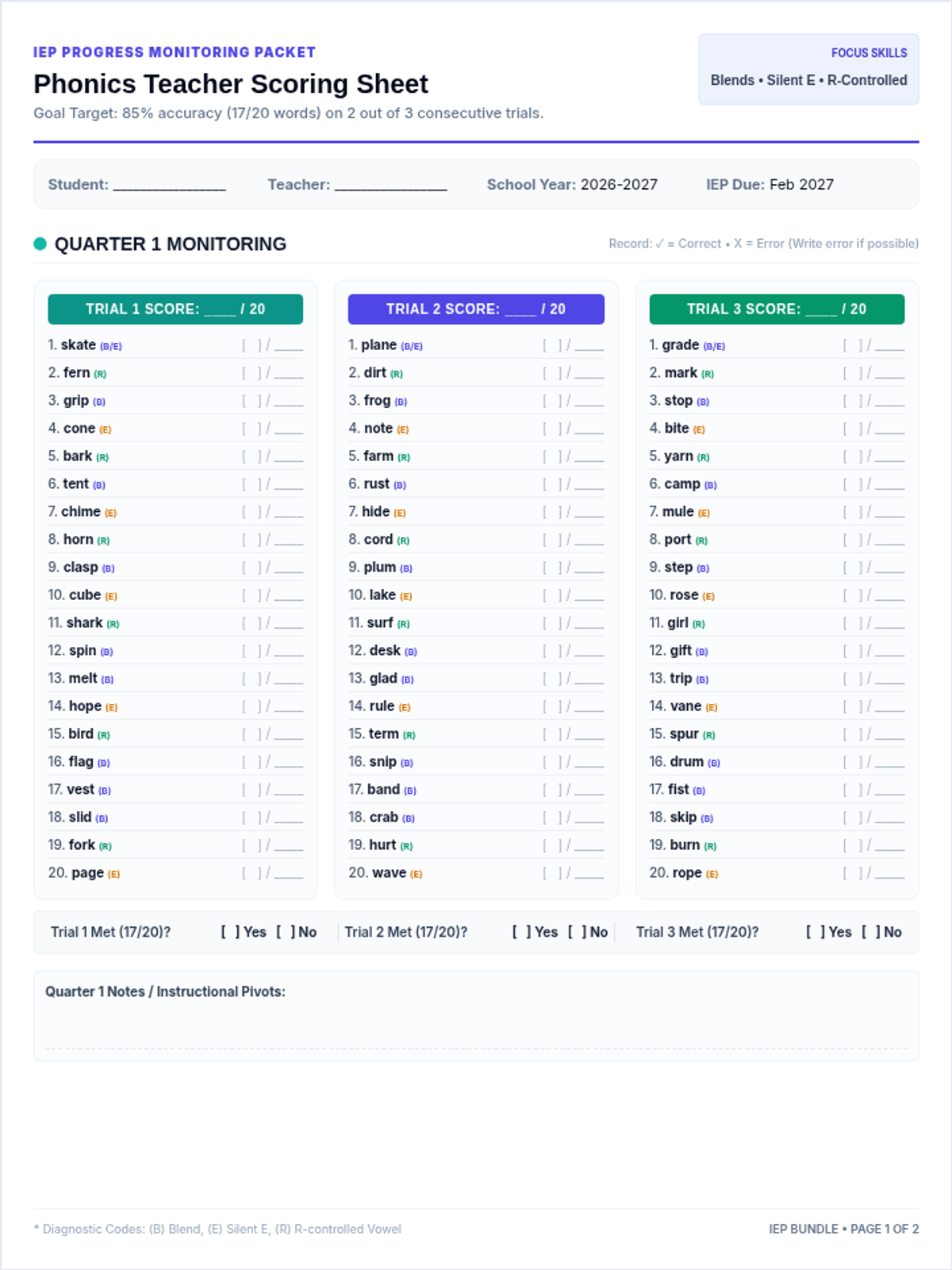
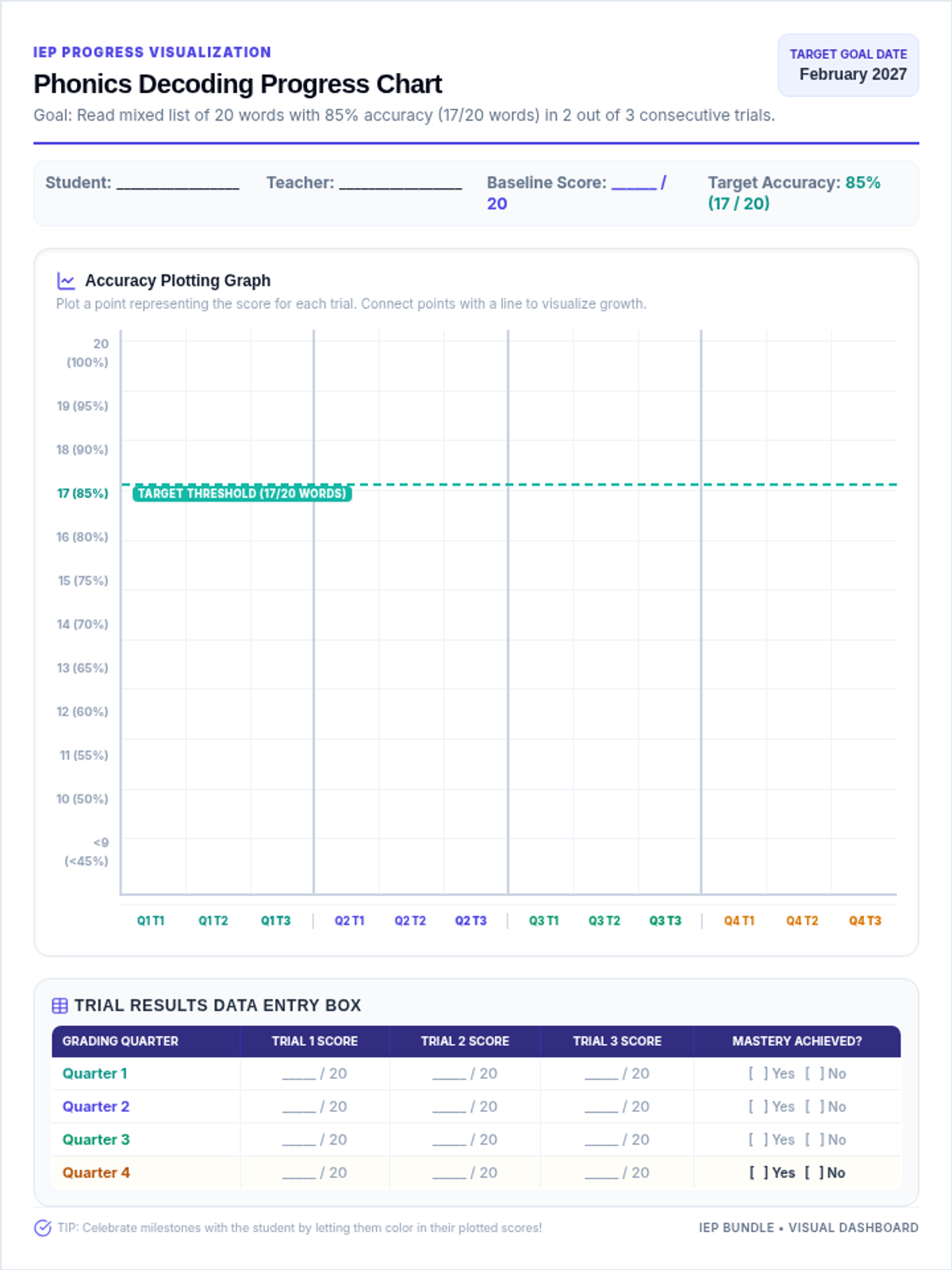
A comprehensive progress monitoring bundle designed to track IEP mastery of decoding one-syllable words with blends, silent e, and r-controlled vowels. Includes student reading lists, teacher data collection sheets, and visual progress charts.
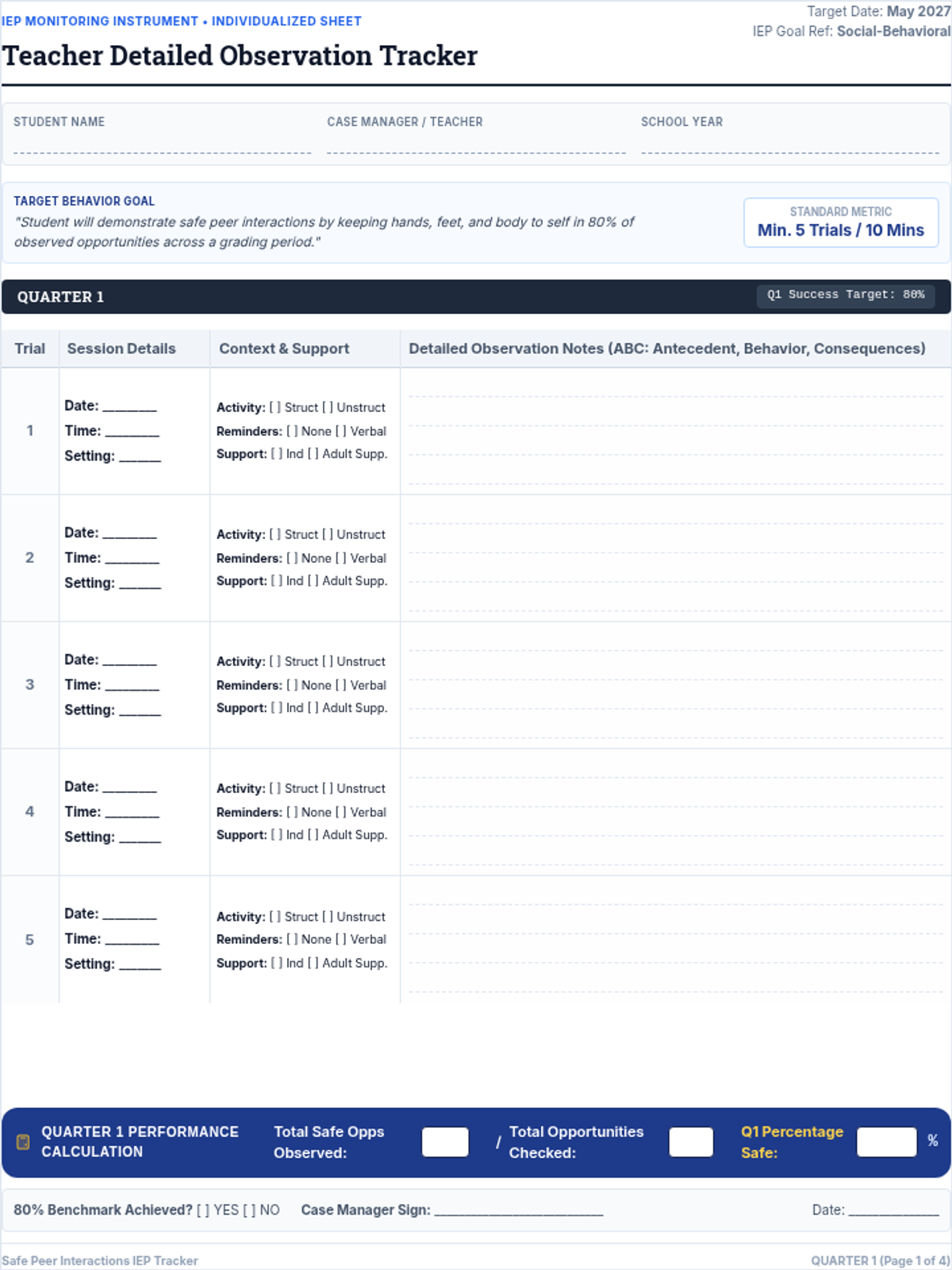
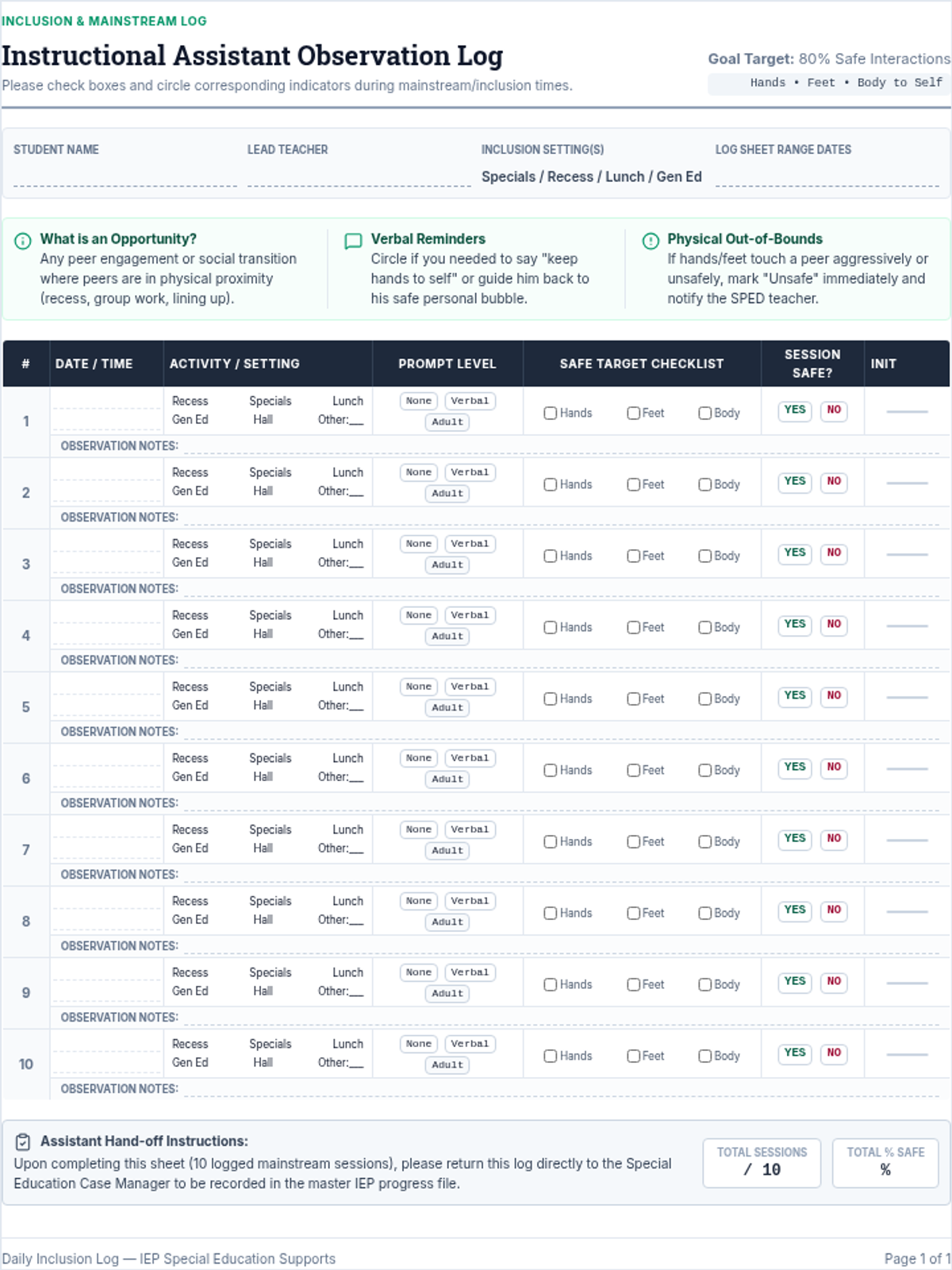
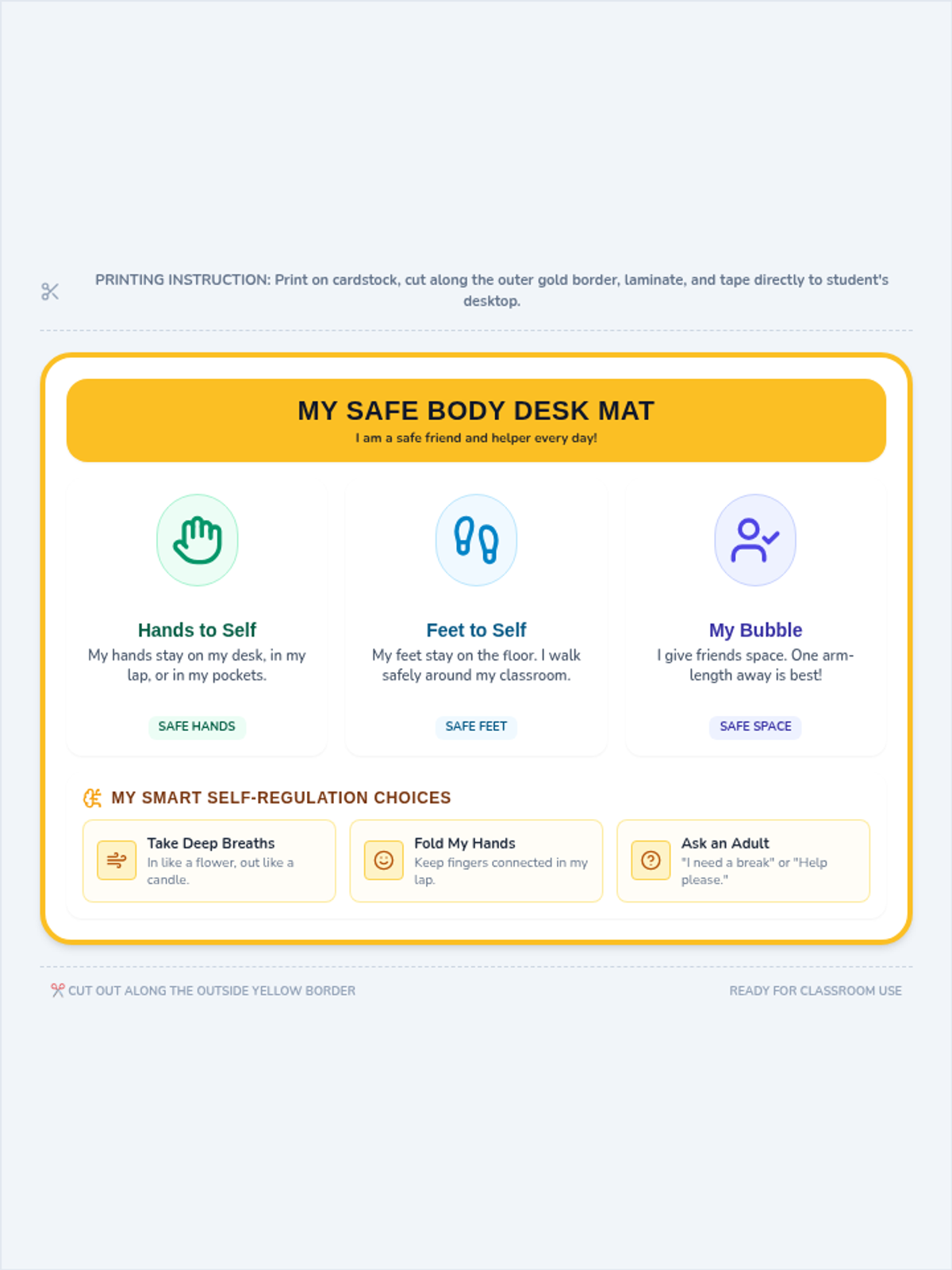
A comprehensive tracking and visual support system designed to monitor and reinforce safe peer interactions (keeping hands, feet, and body to self) in compliance with an IEP goal. Includes a teacher-led detailed observation packet, an easy-to-use assistant log for inclusion times, and a student-facing desktop visual regulation mat.
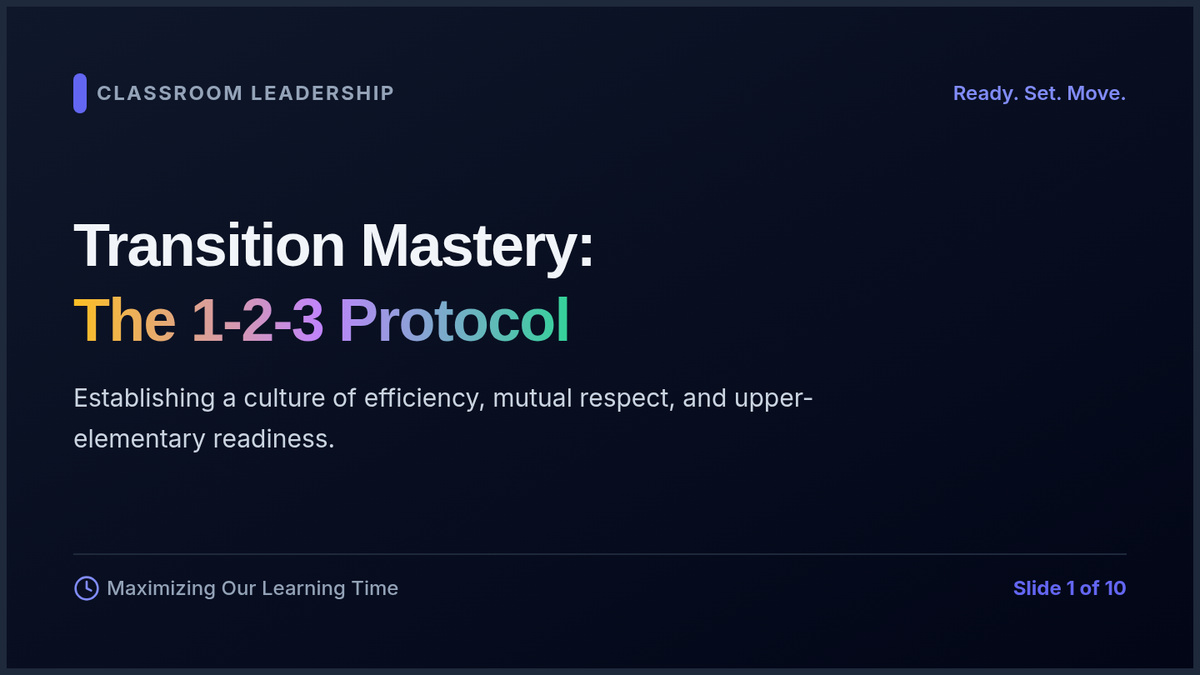
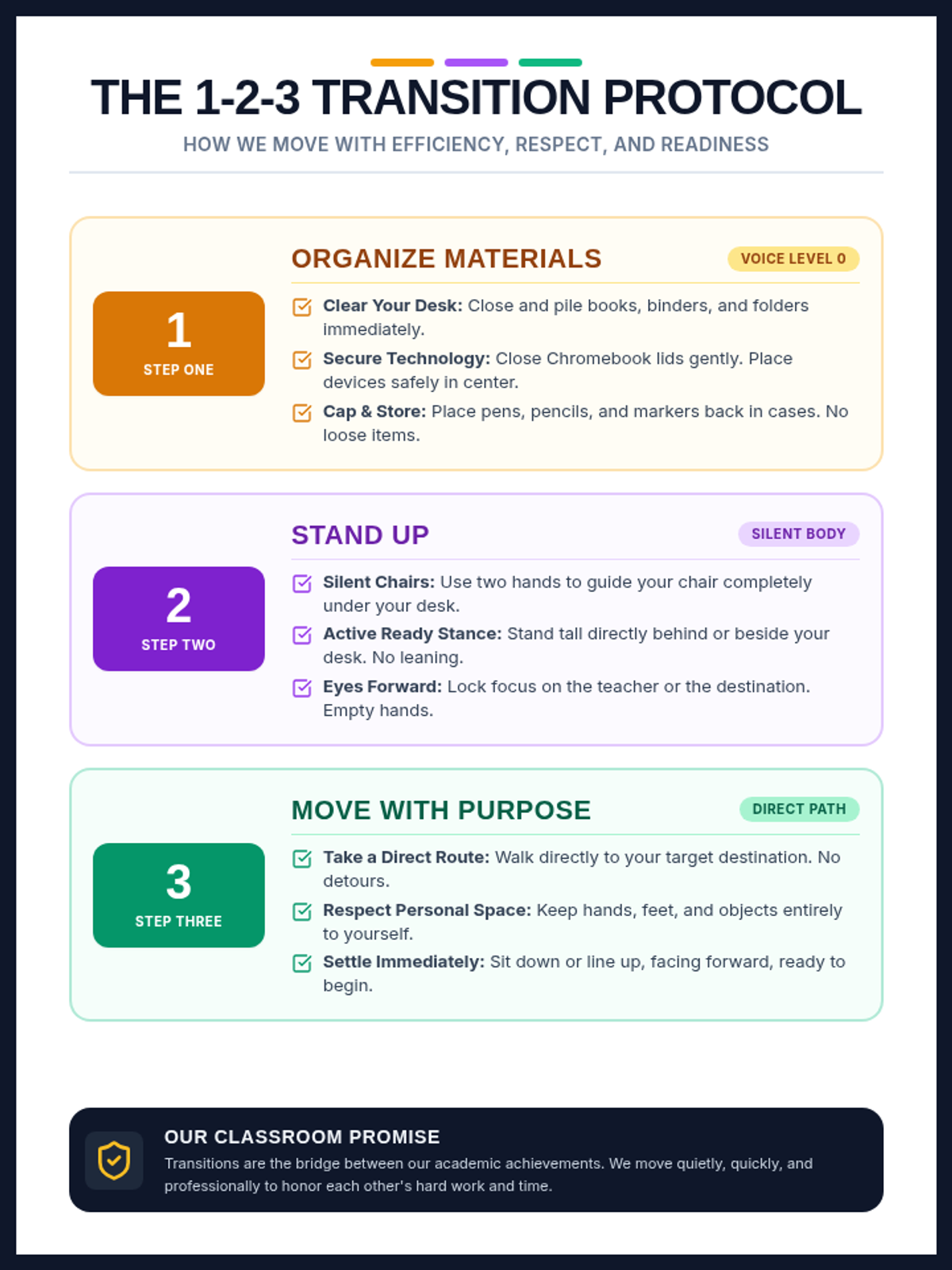
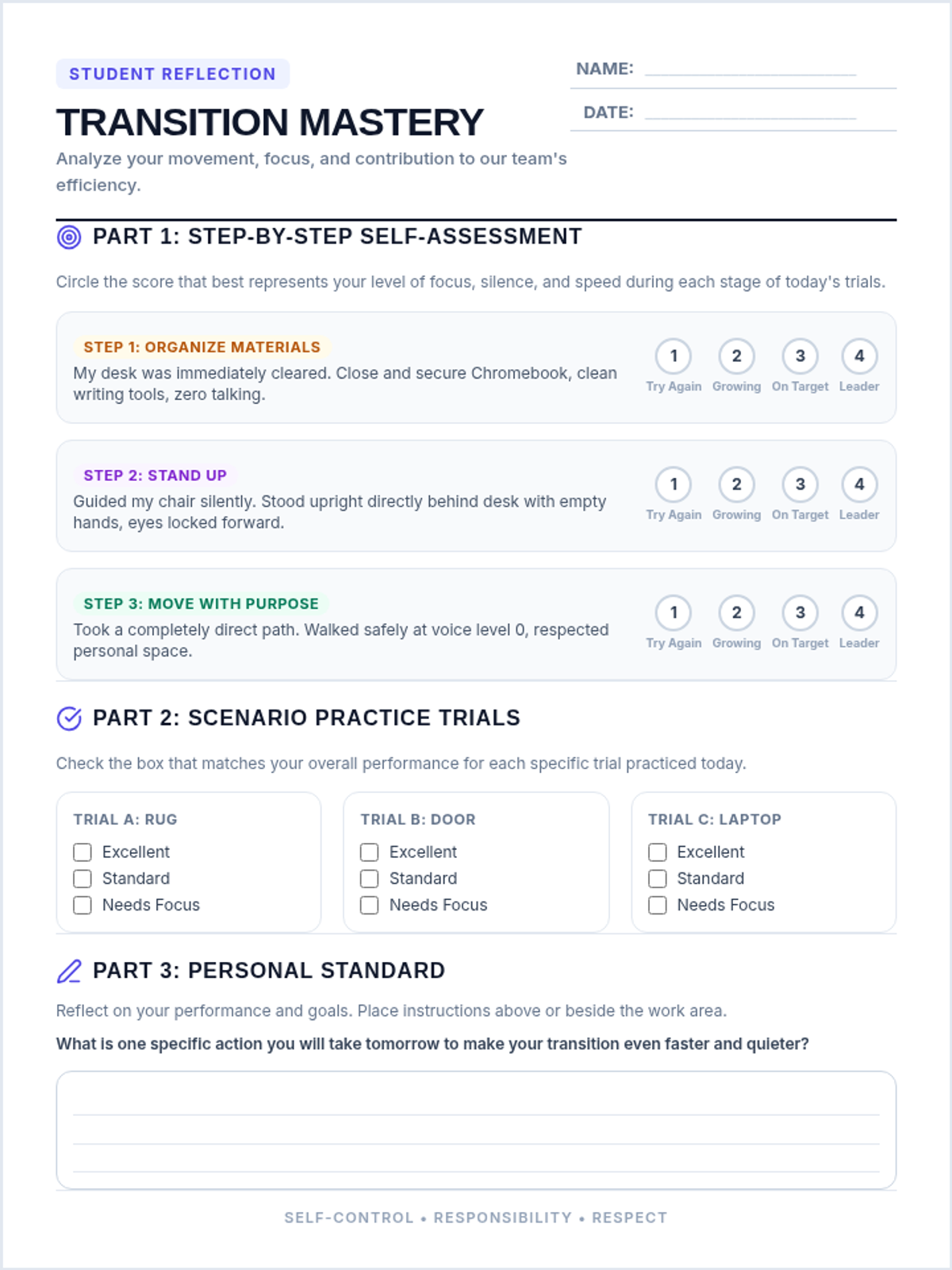
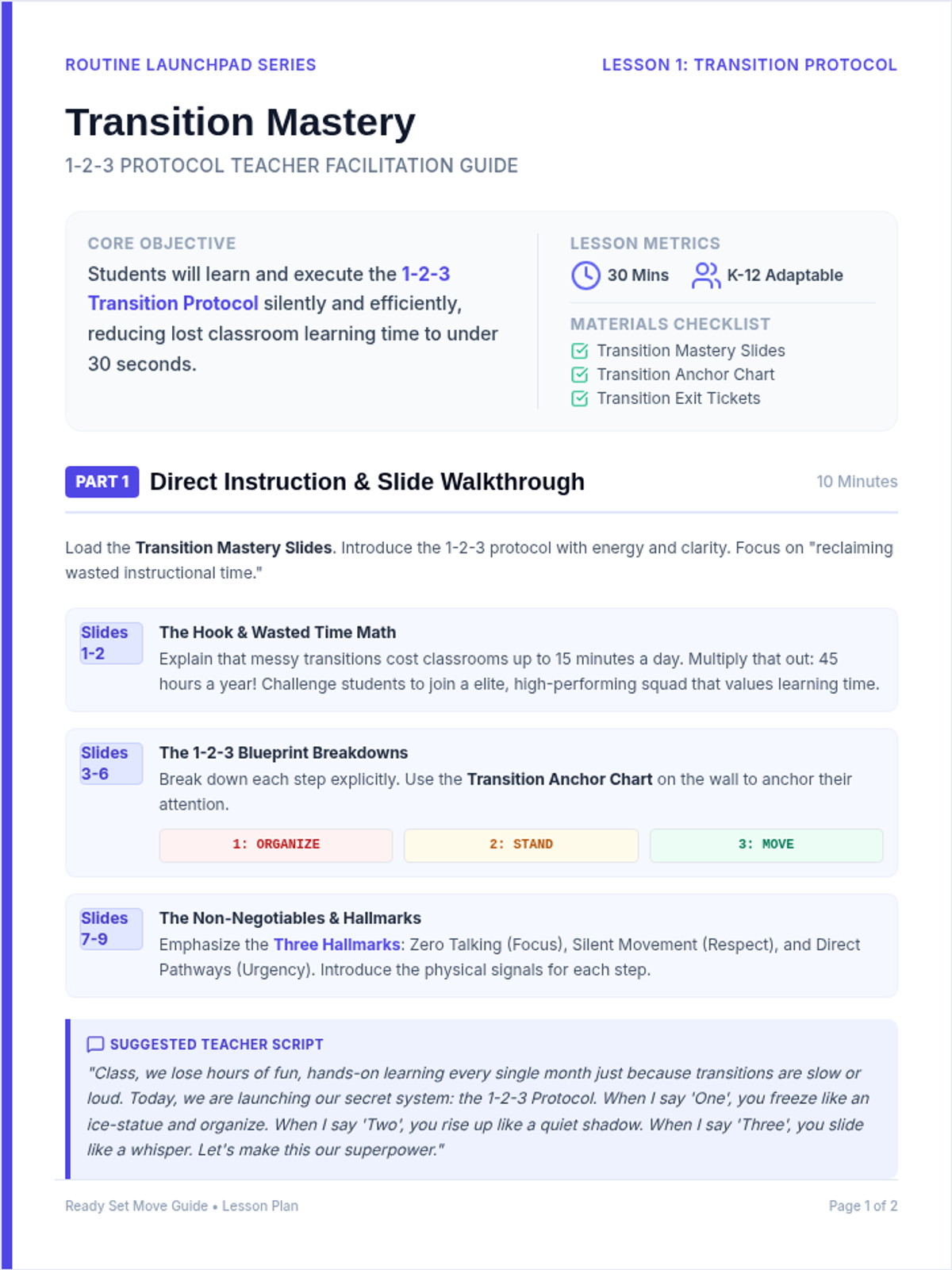
This lesson introduces and structures the '1, 2, 3' transition protocol (1: Organize, 2: Stand, 3: Move) to establish class-wide efficiency. Through modeling, guided practice, and independent application, students master essential classroom routines.
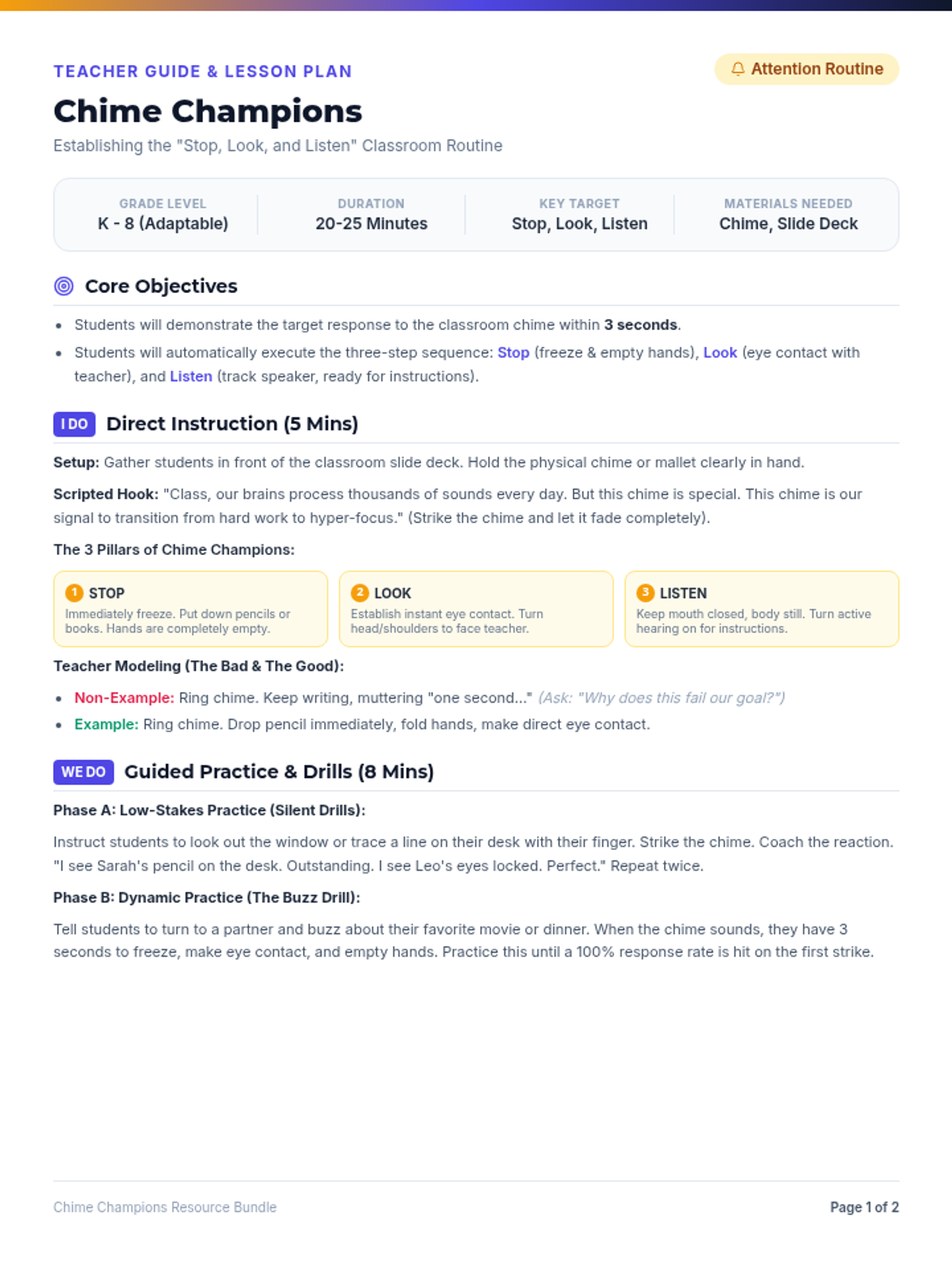
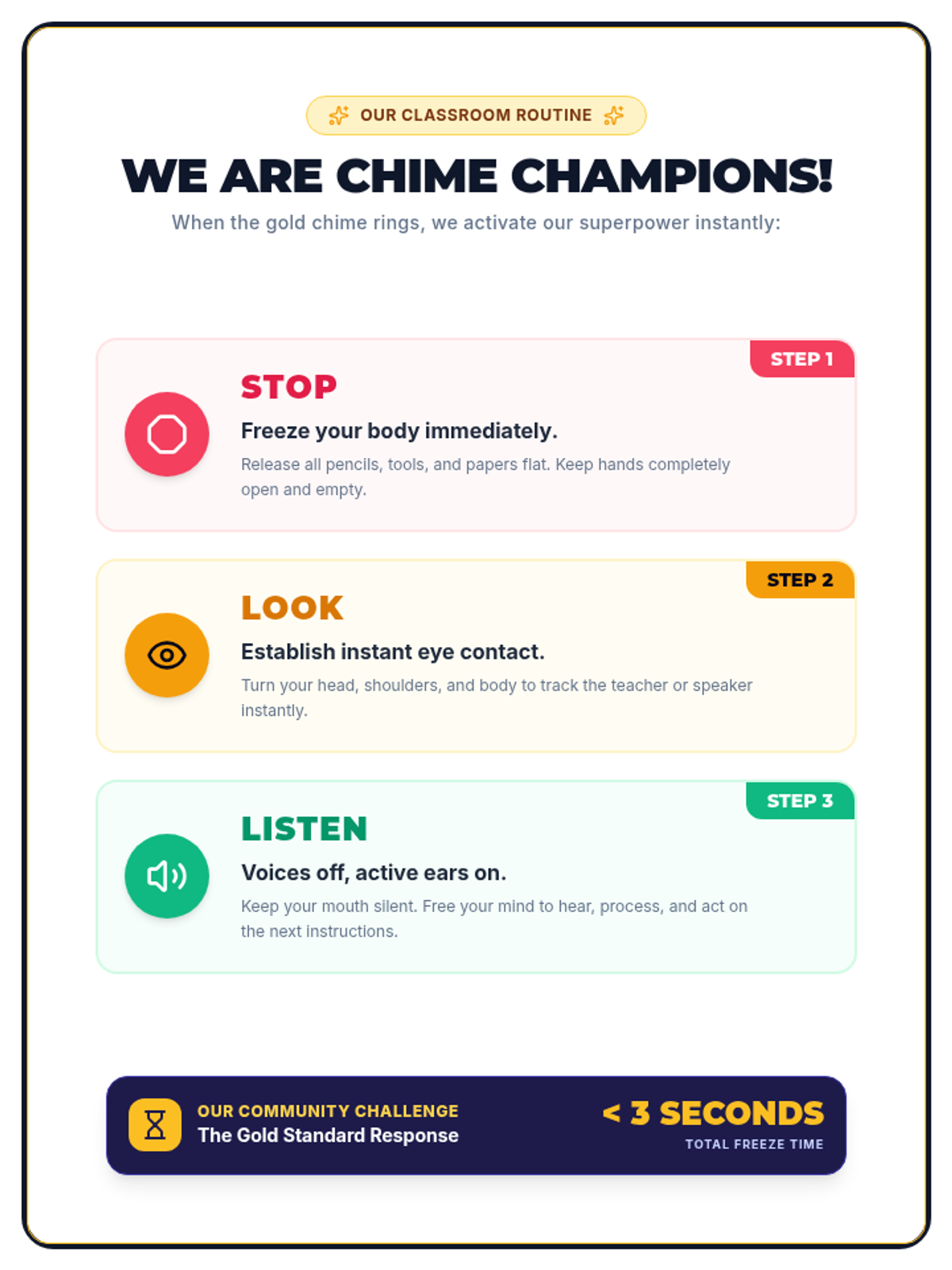
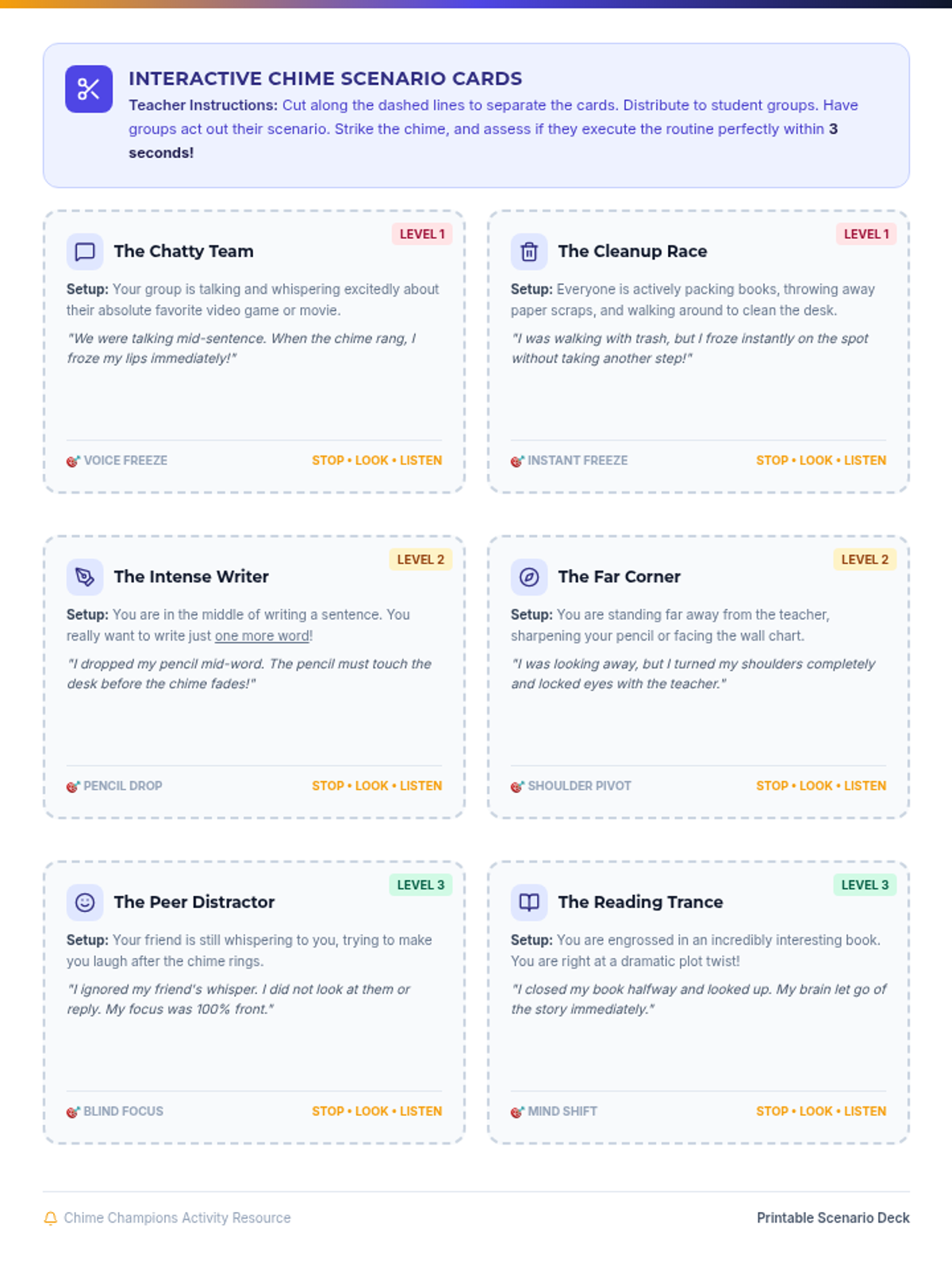
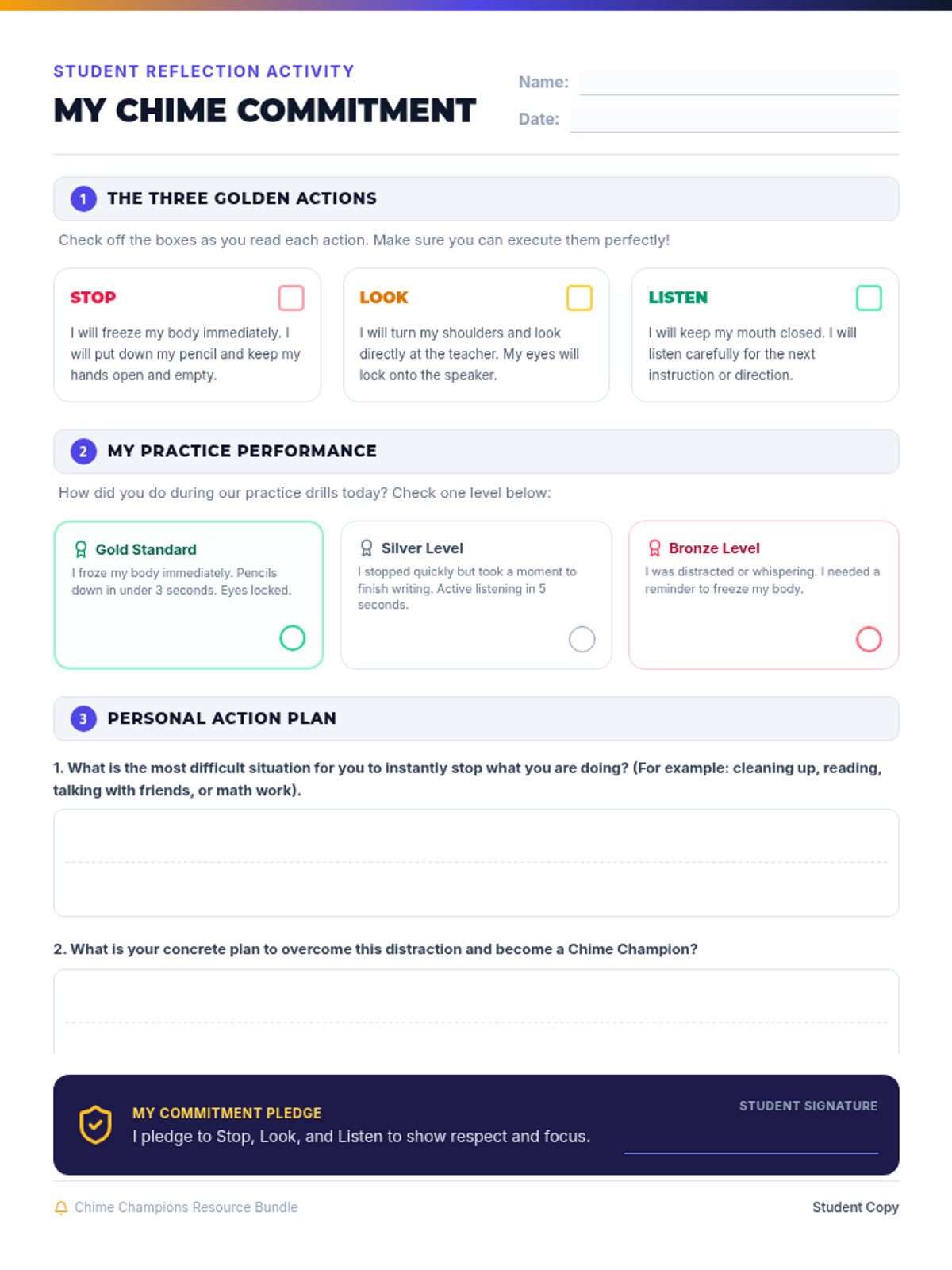
A structured mini-lesson and resource bundle to teach, practice, and master the classroom chime routine. Features a clear 'I Do, We Do, You Do' progression to establish the immediate 'Stop, Look, and Listen' behavior.
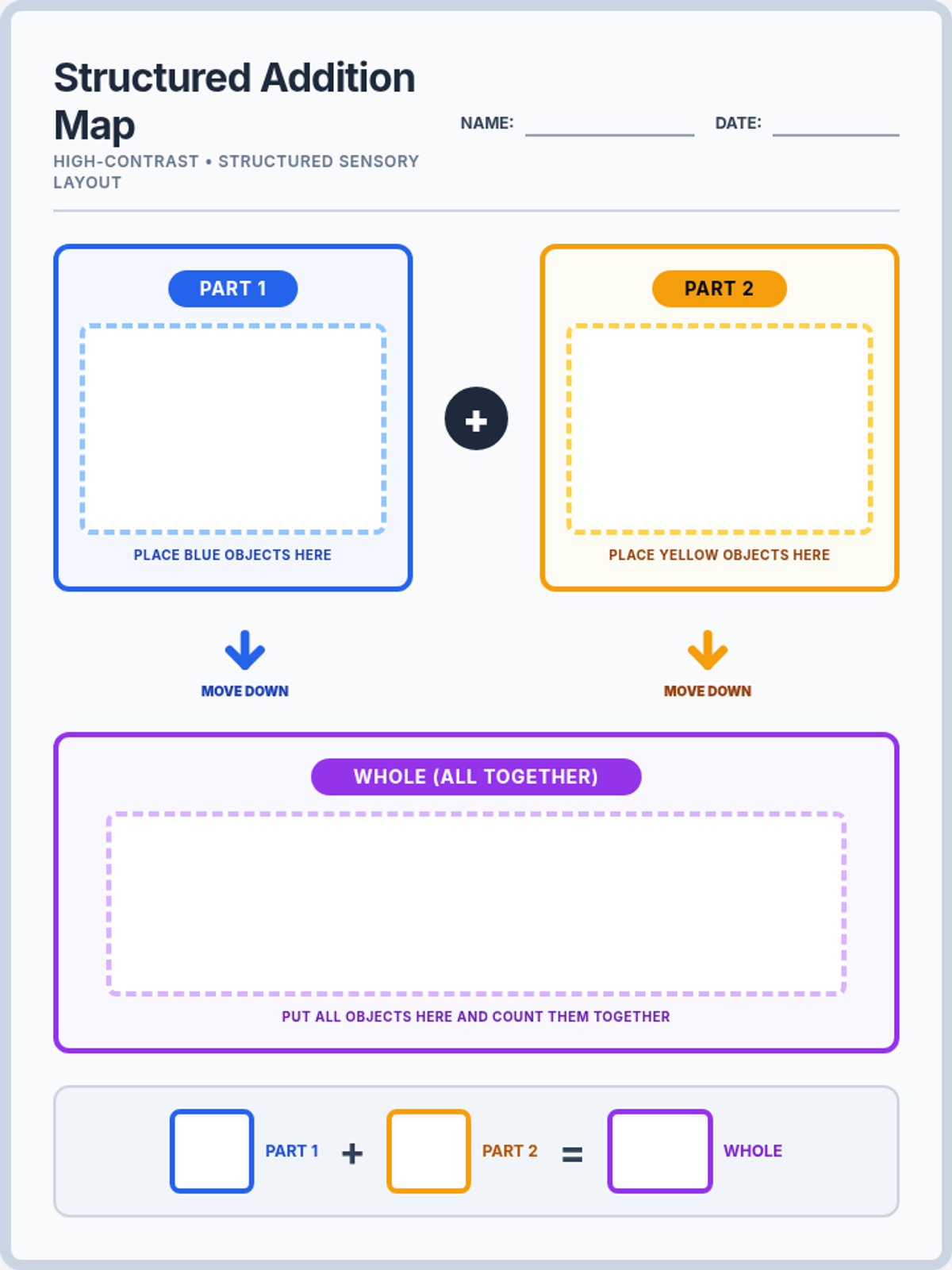
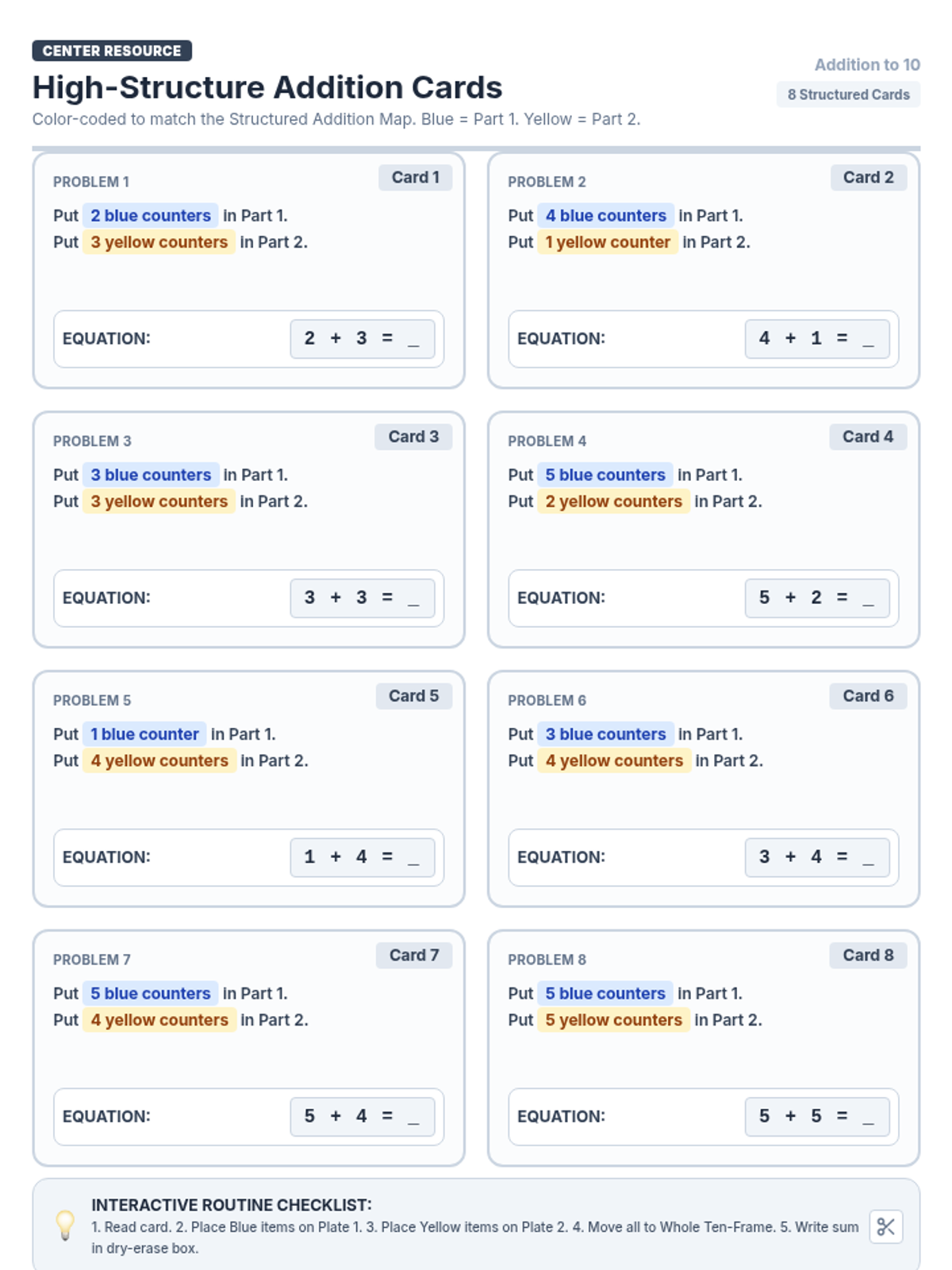
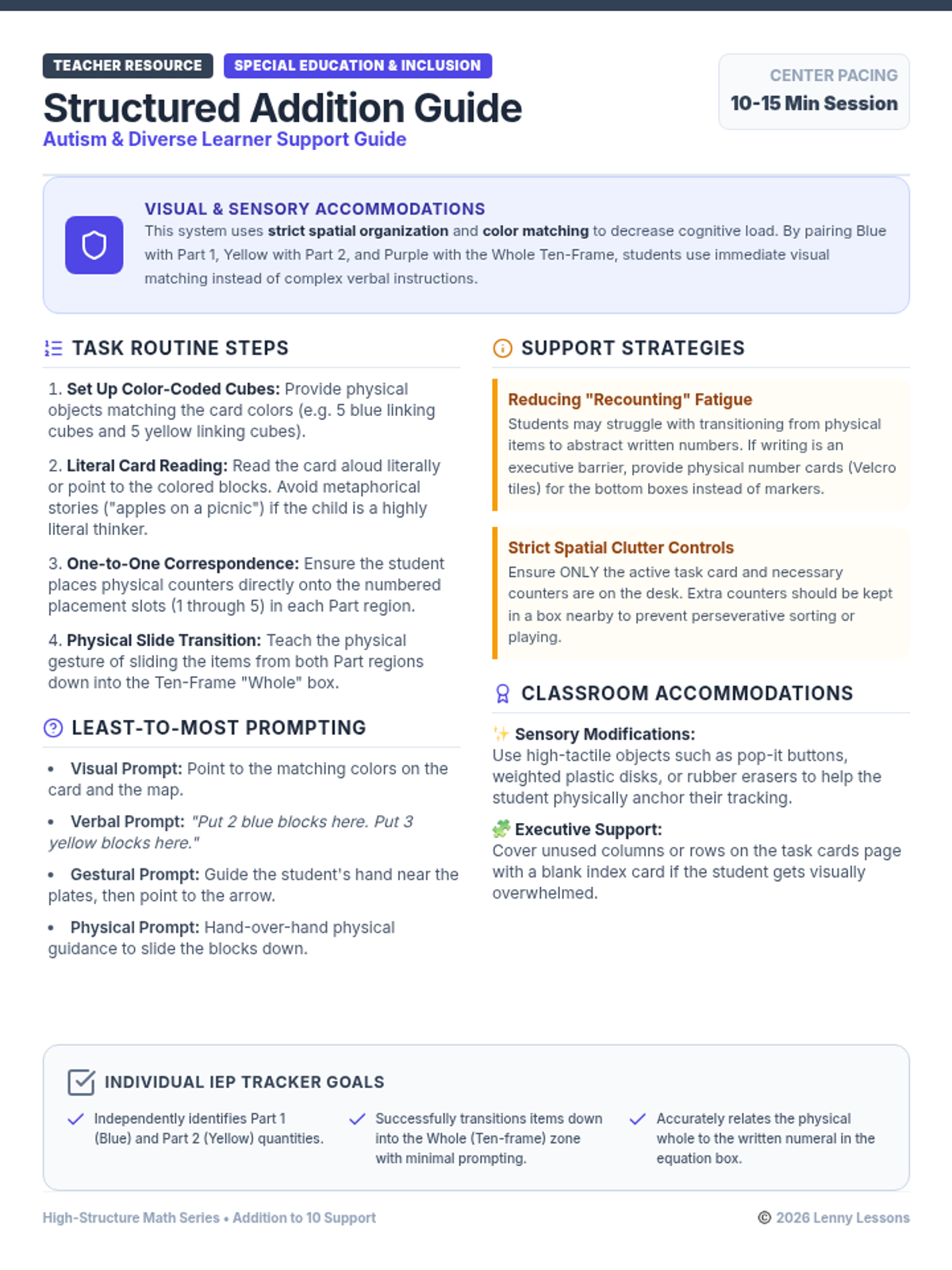
An autism-friendly, high-structure math center featuring a distraction-free Part-Part-Whole Mat with solid, clean workspaces and color-coded task cards for structured physical addition.
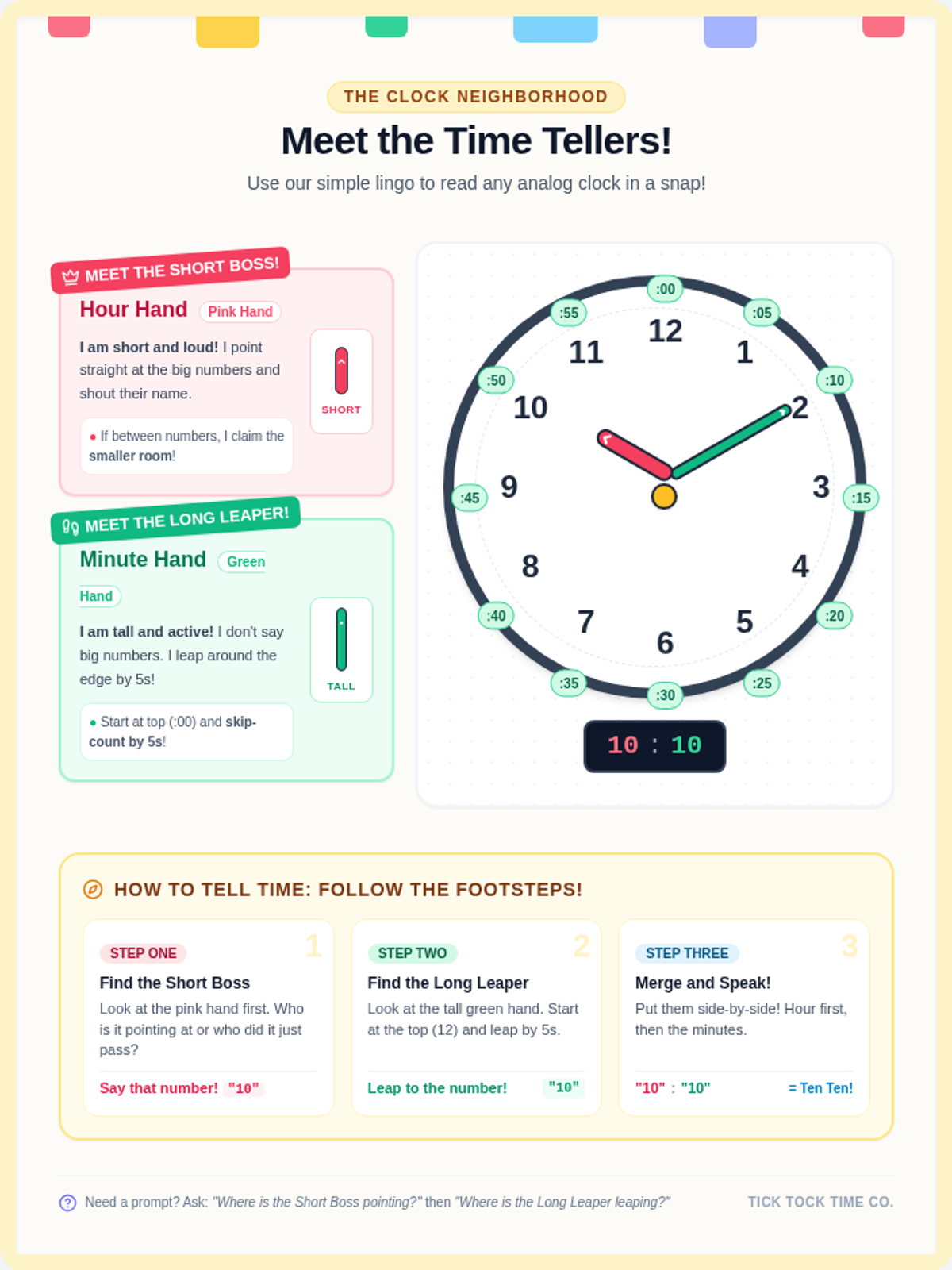
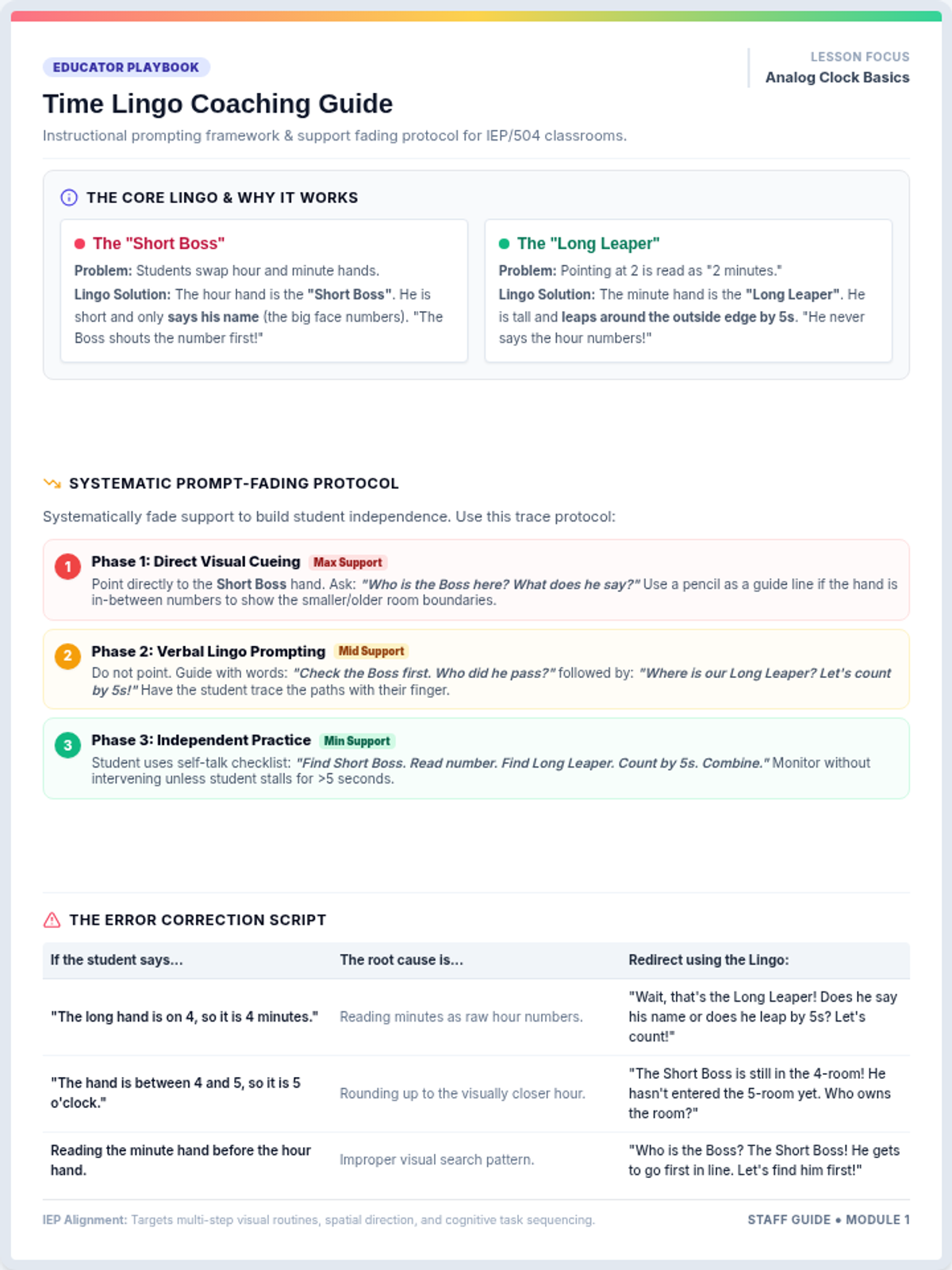
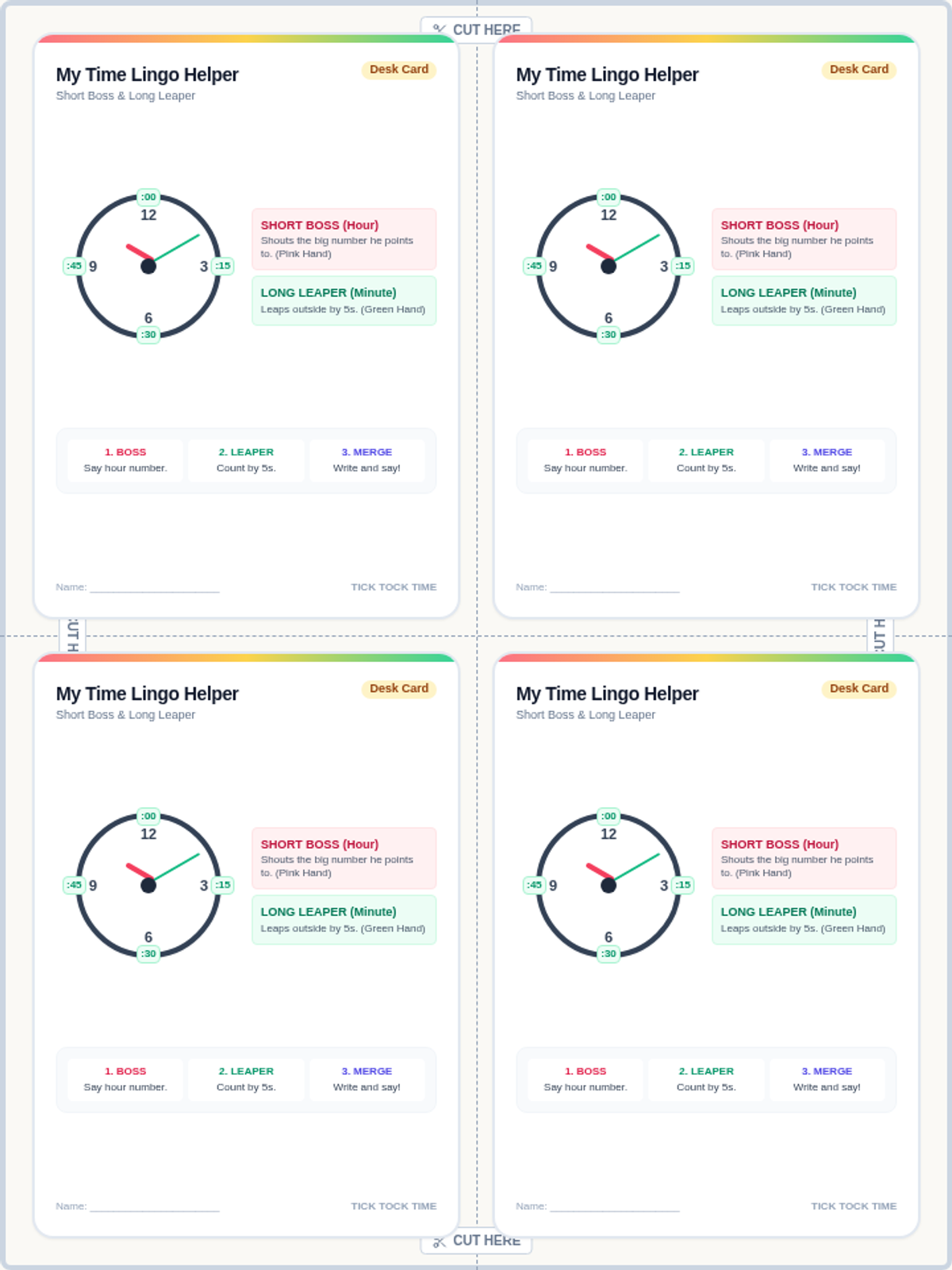
A specialized learning resource pack for teaching analog time using friendly, memorable lingo designed for students with IEP goals and general classroom support. Includes a high-impact visual poster, desktop reference mini-cards, and an educator coaching guide.
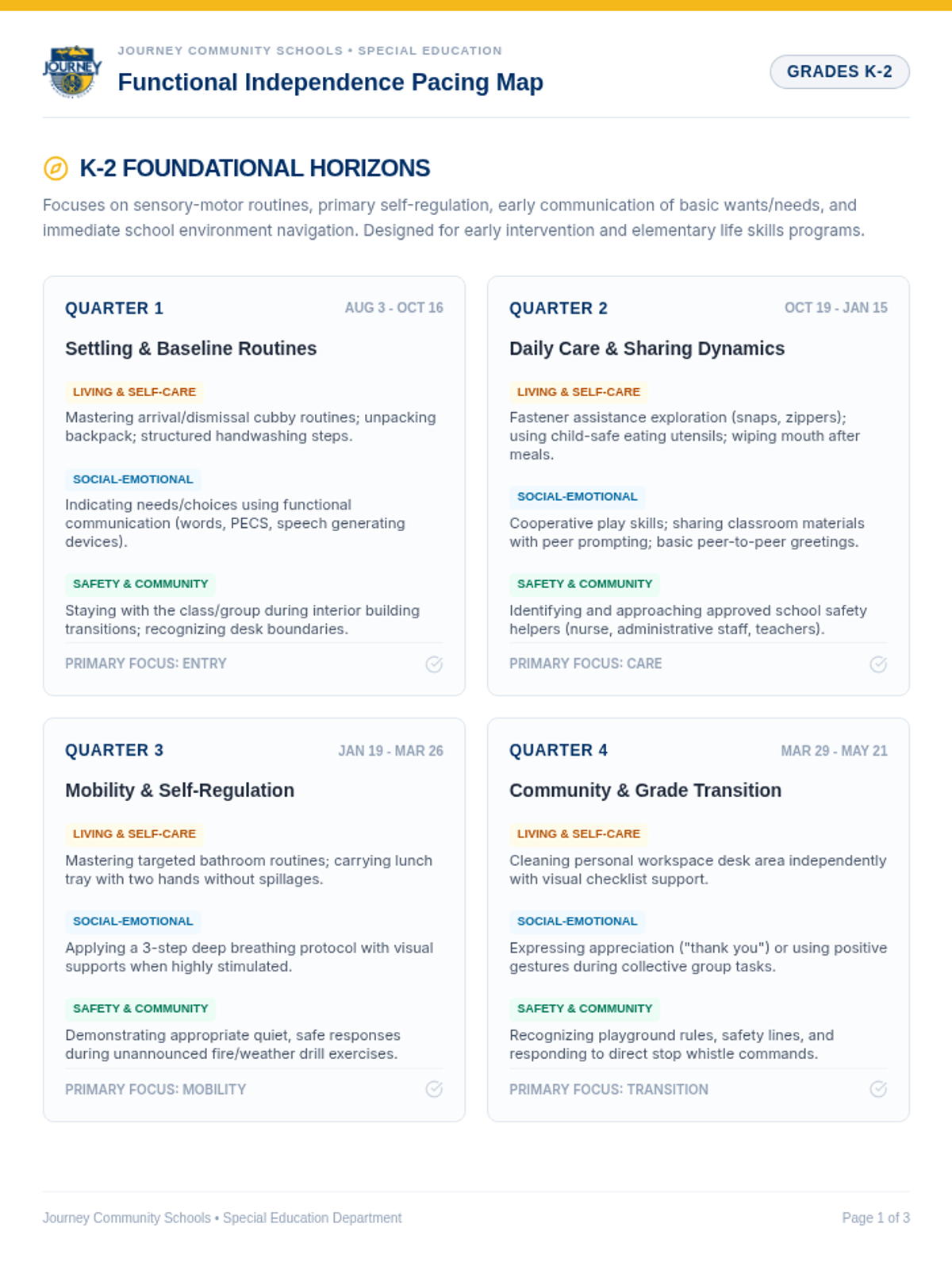
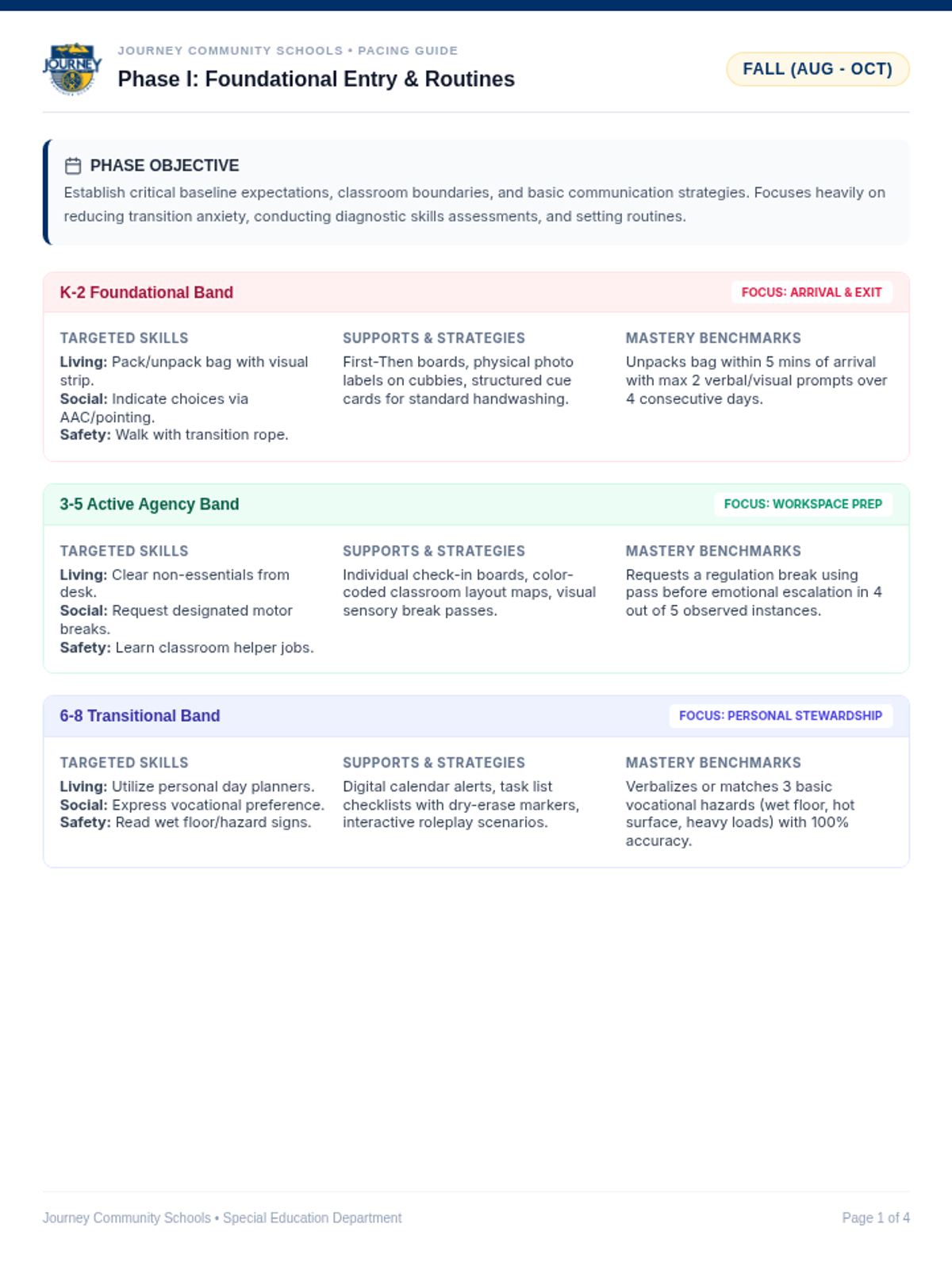
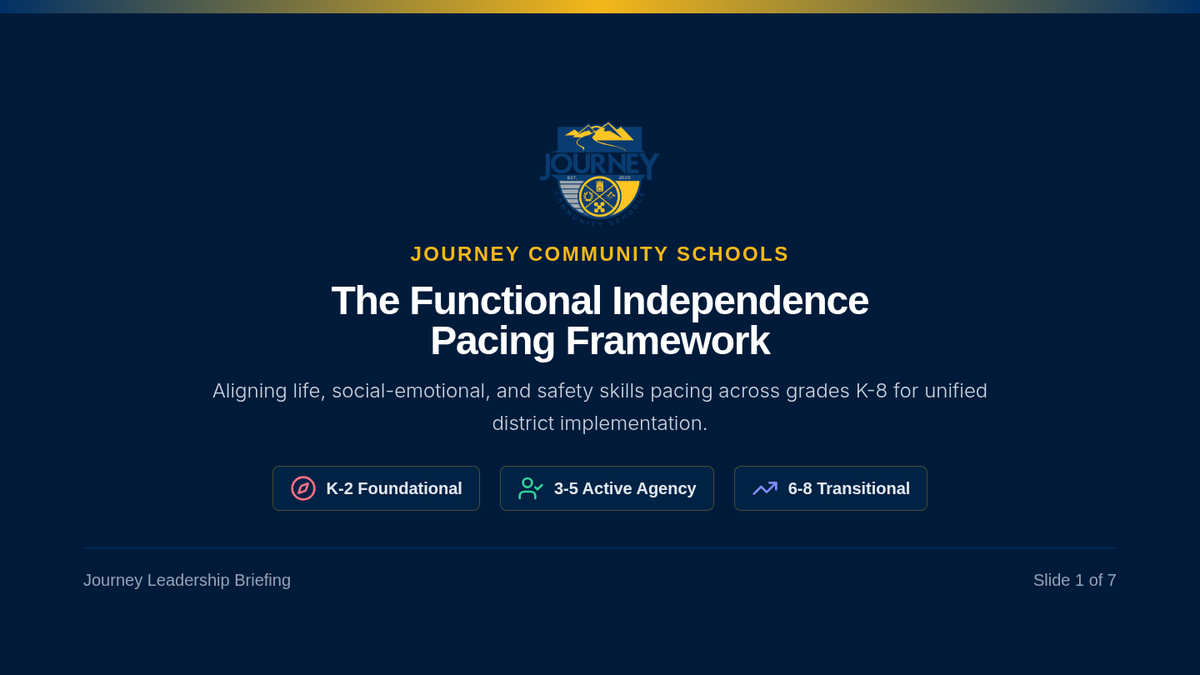
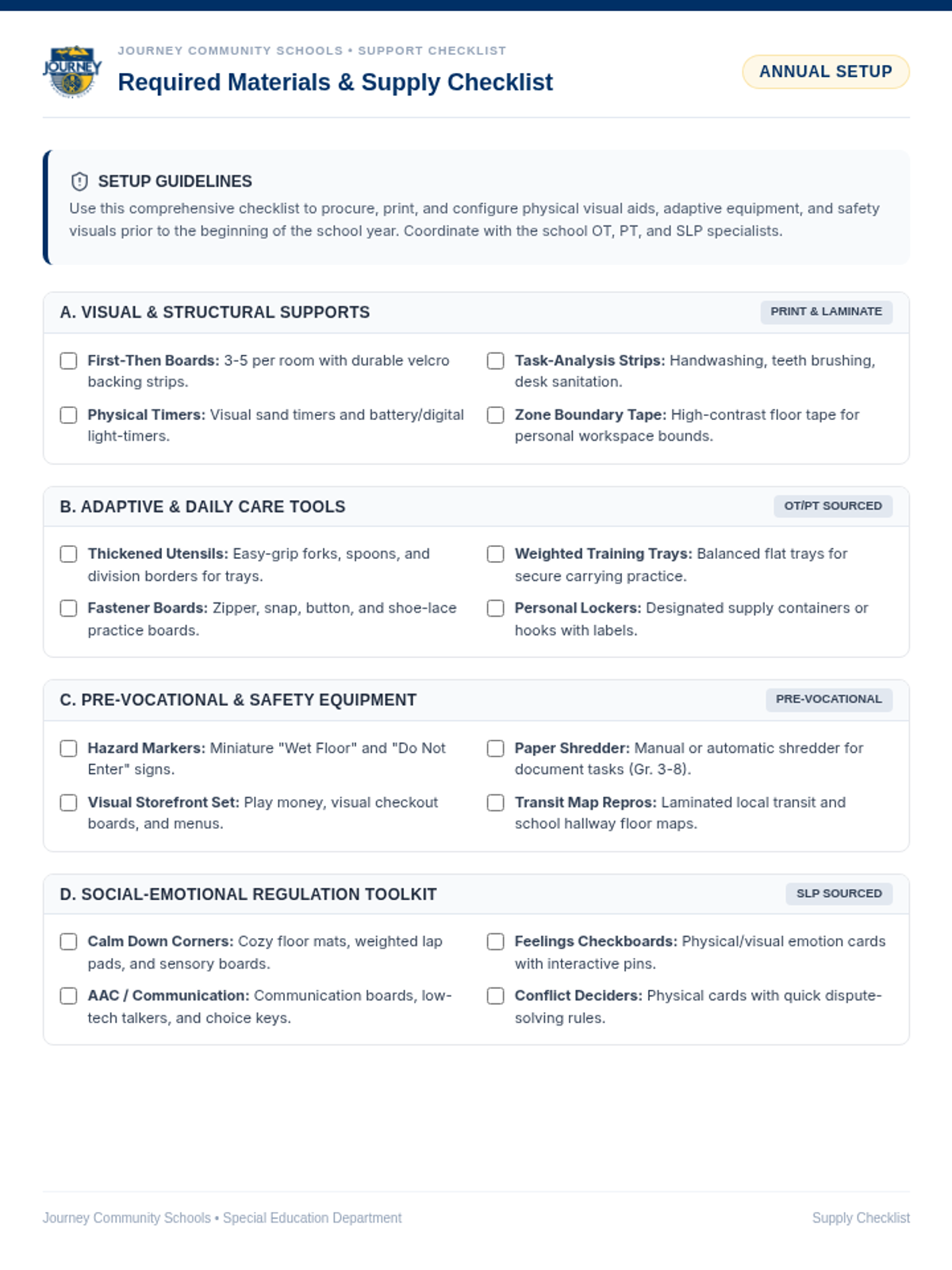
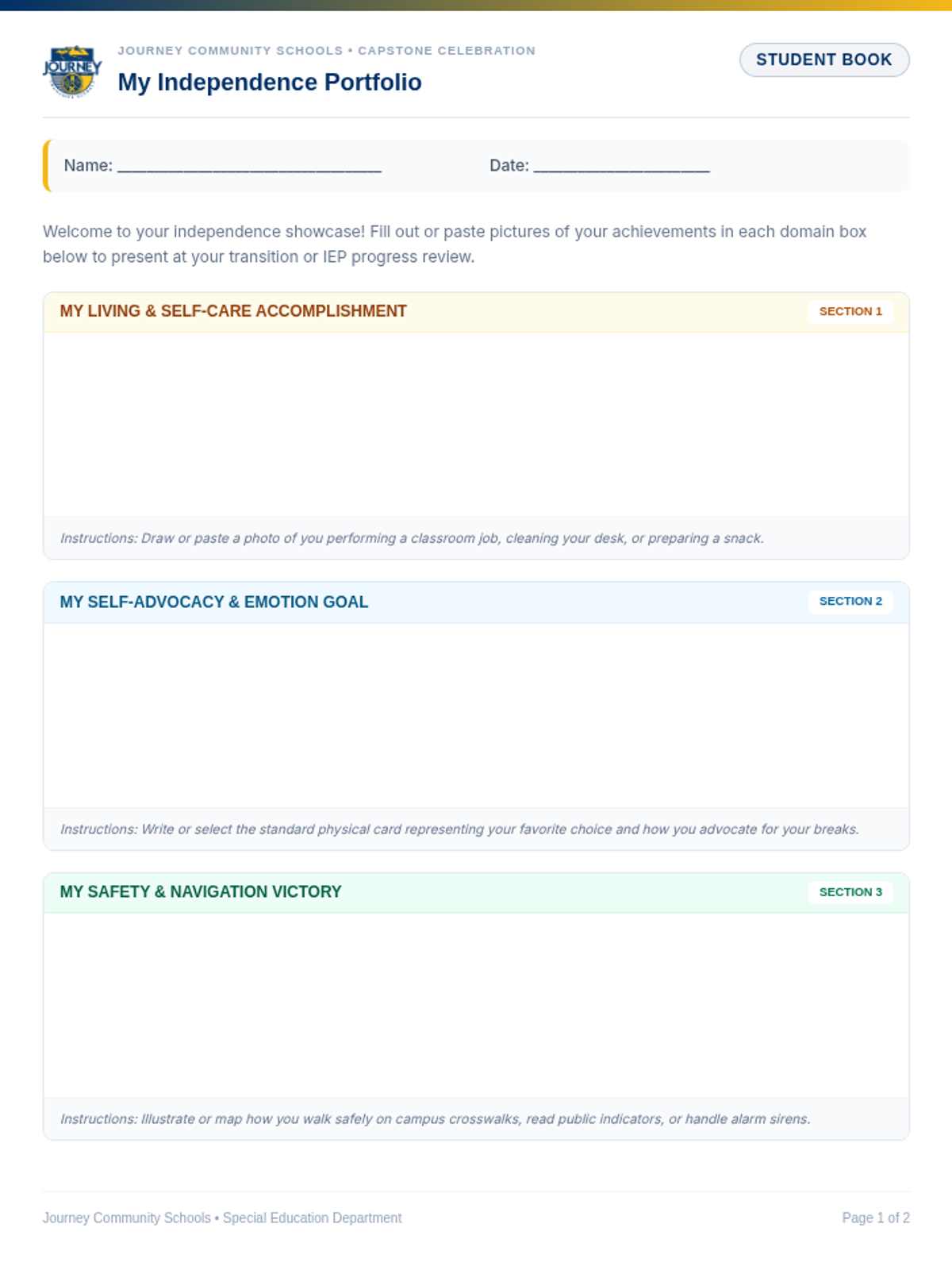
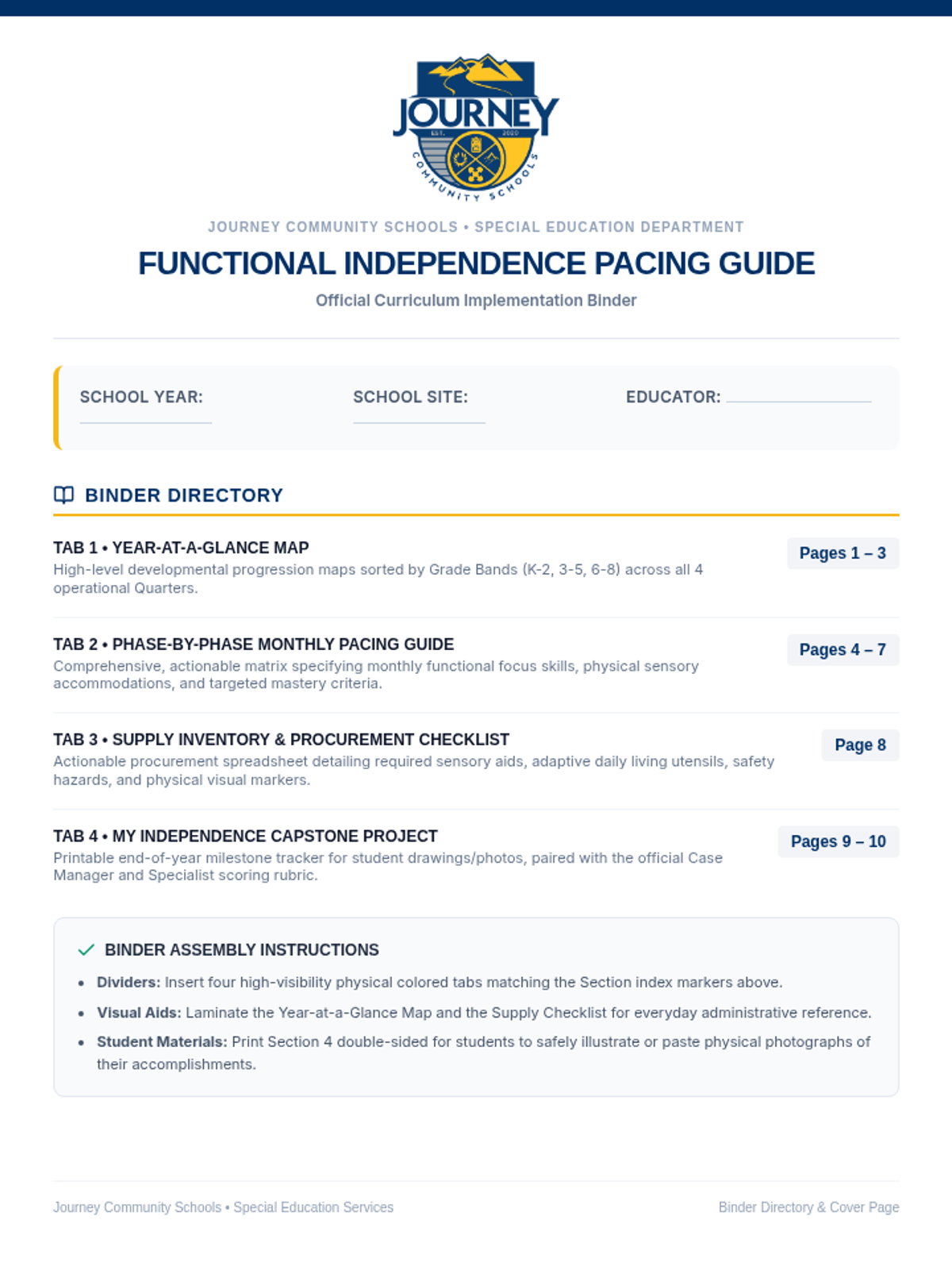
A comprehensive annual functional skills pacing framework for grades K-8. This framework structures a whole-school alignment across living, social-emotional, and community safety domains, optimized for special education administrators, resource teachers, and service providers.
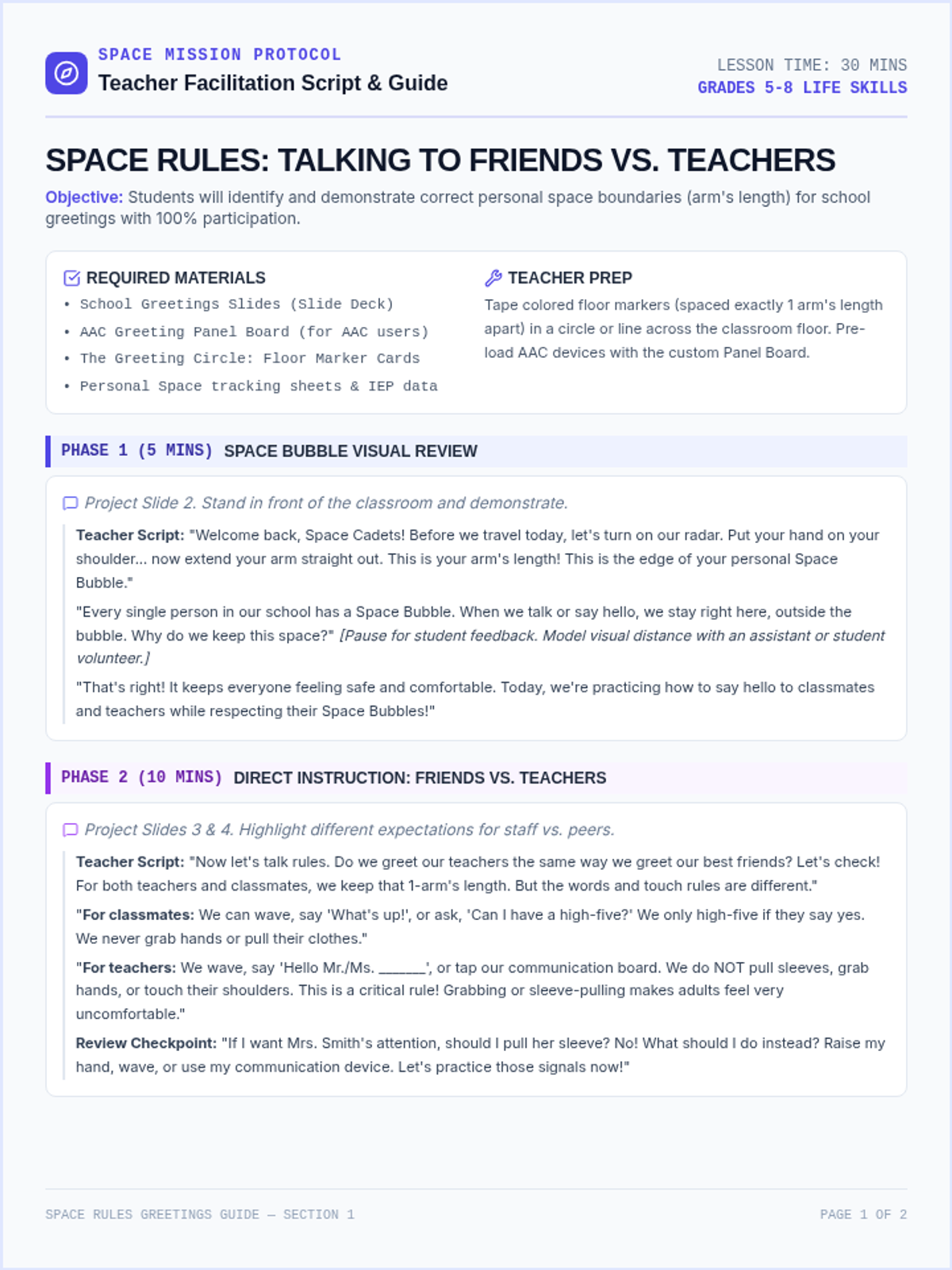
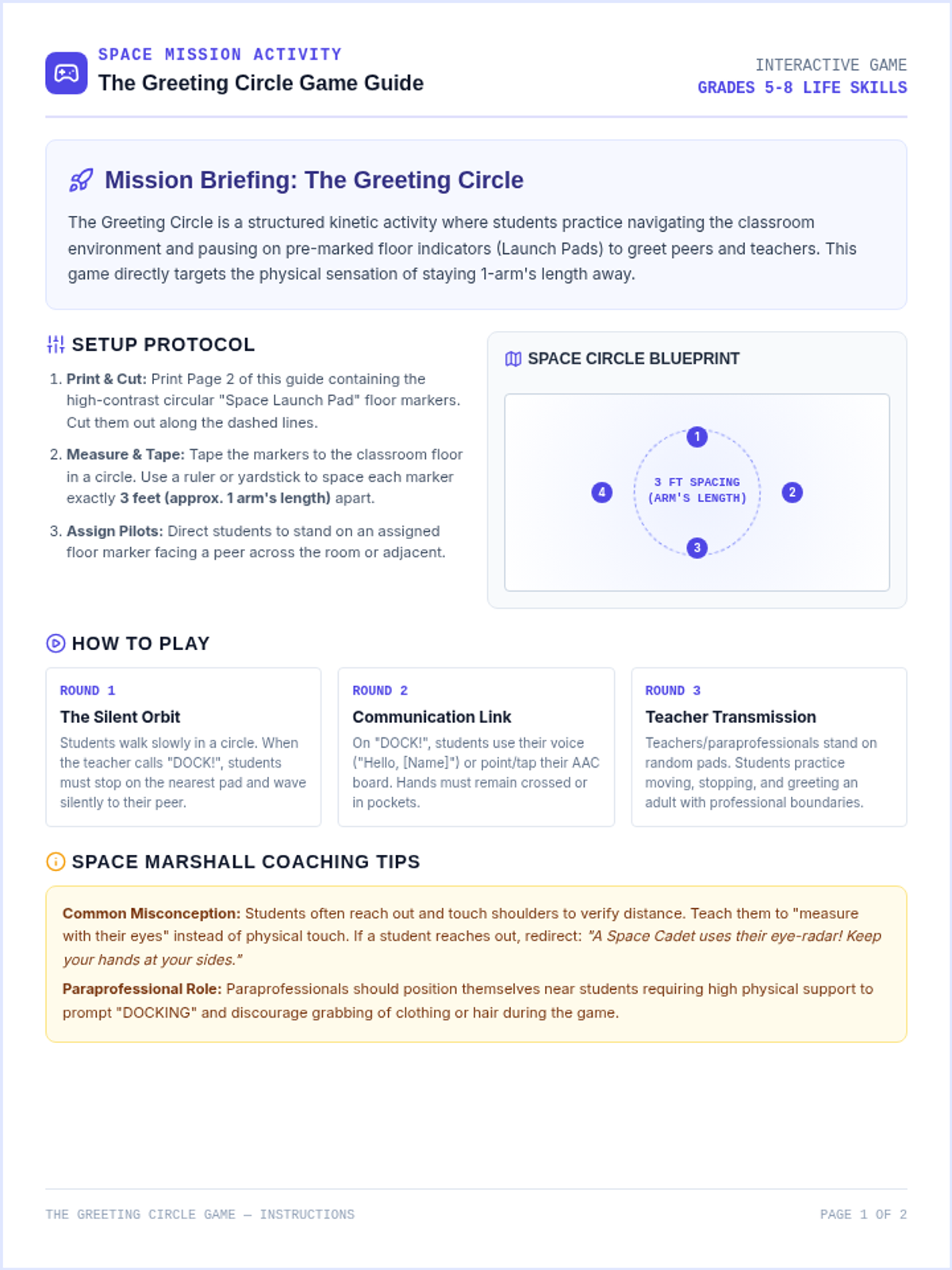
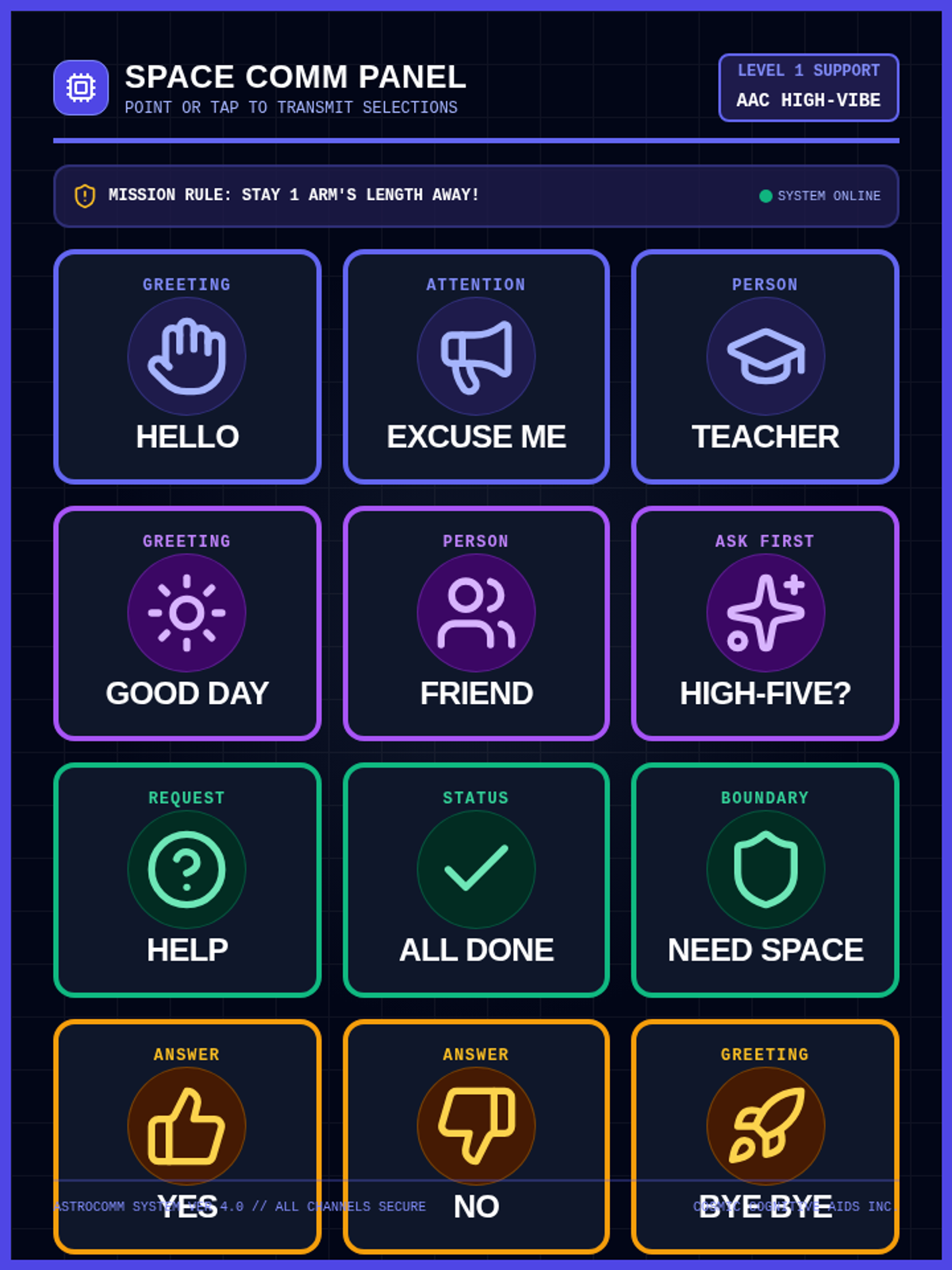
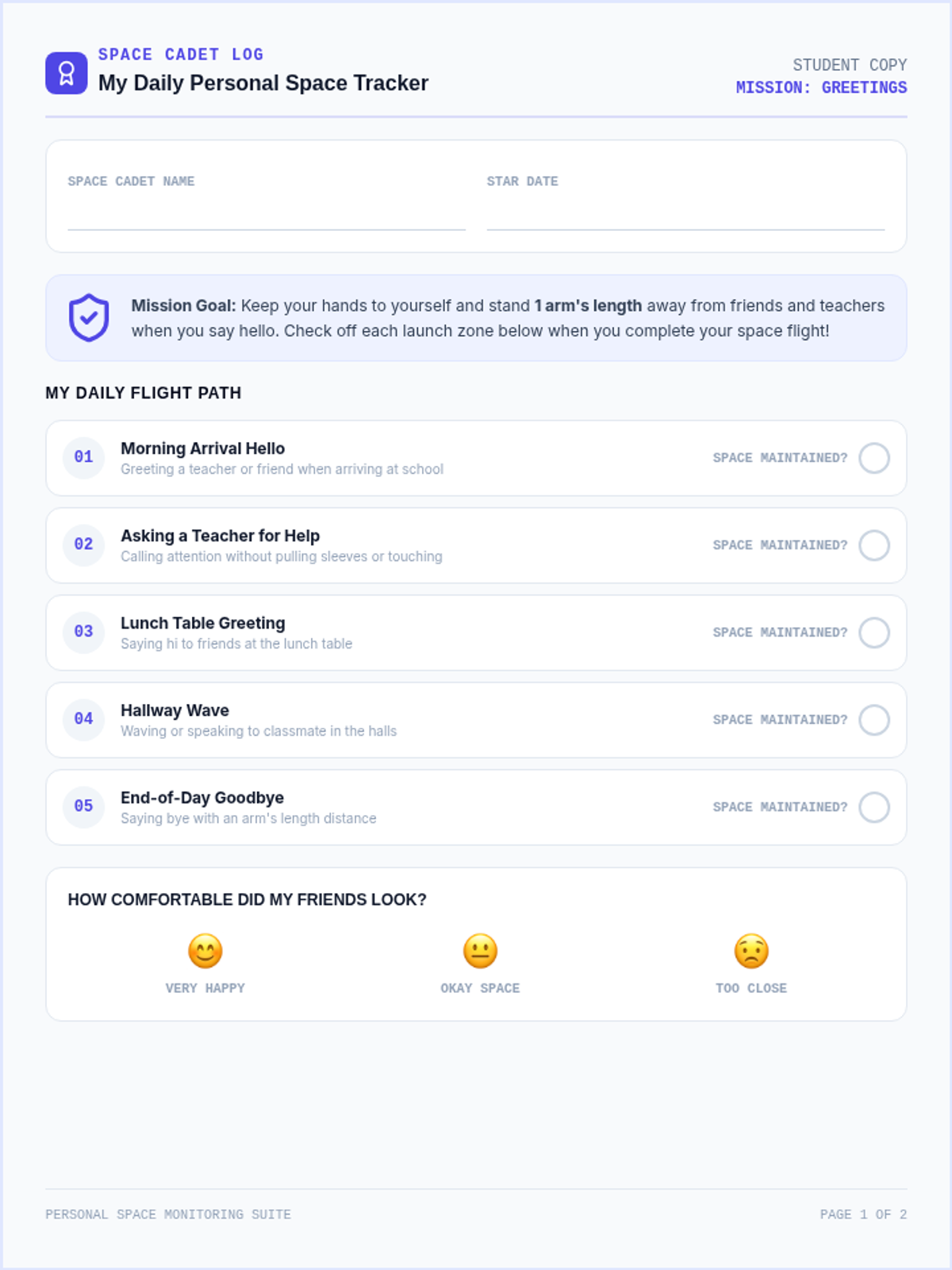
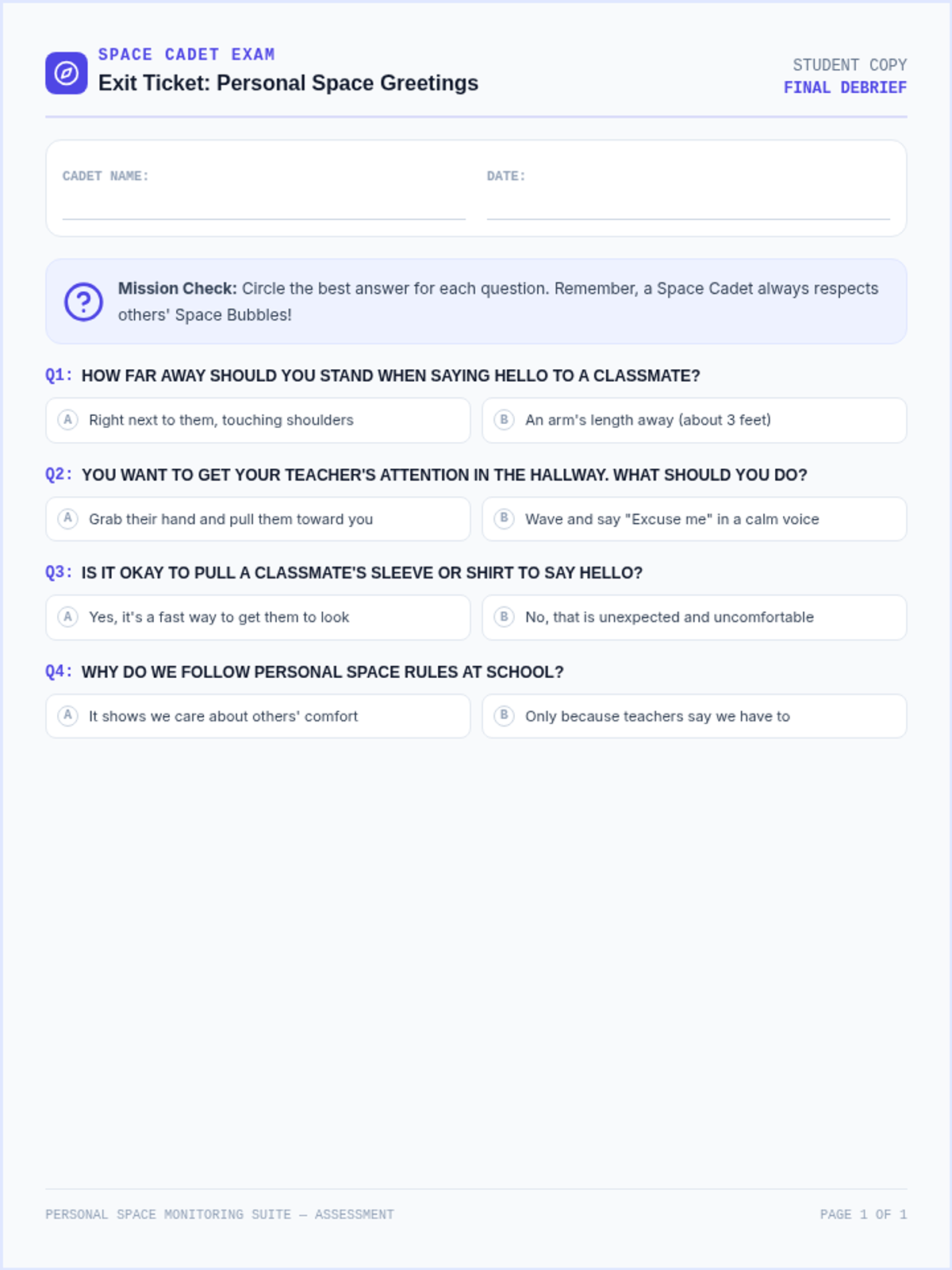
A Life Skills lesson for Grades 5-8 teaching personal space boundaries during school greetings. Students learn to maintain an arm's length distance, avoid unexpected touching, use respectful attention-seeking strategies, and practice greetings using AAC and visual supports.
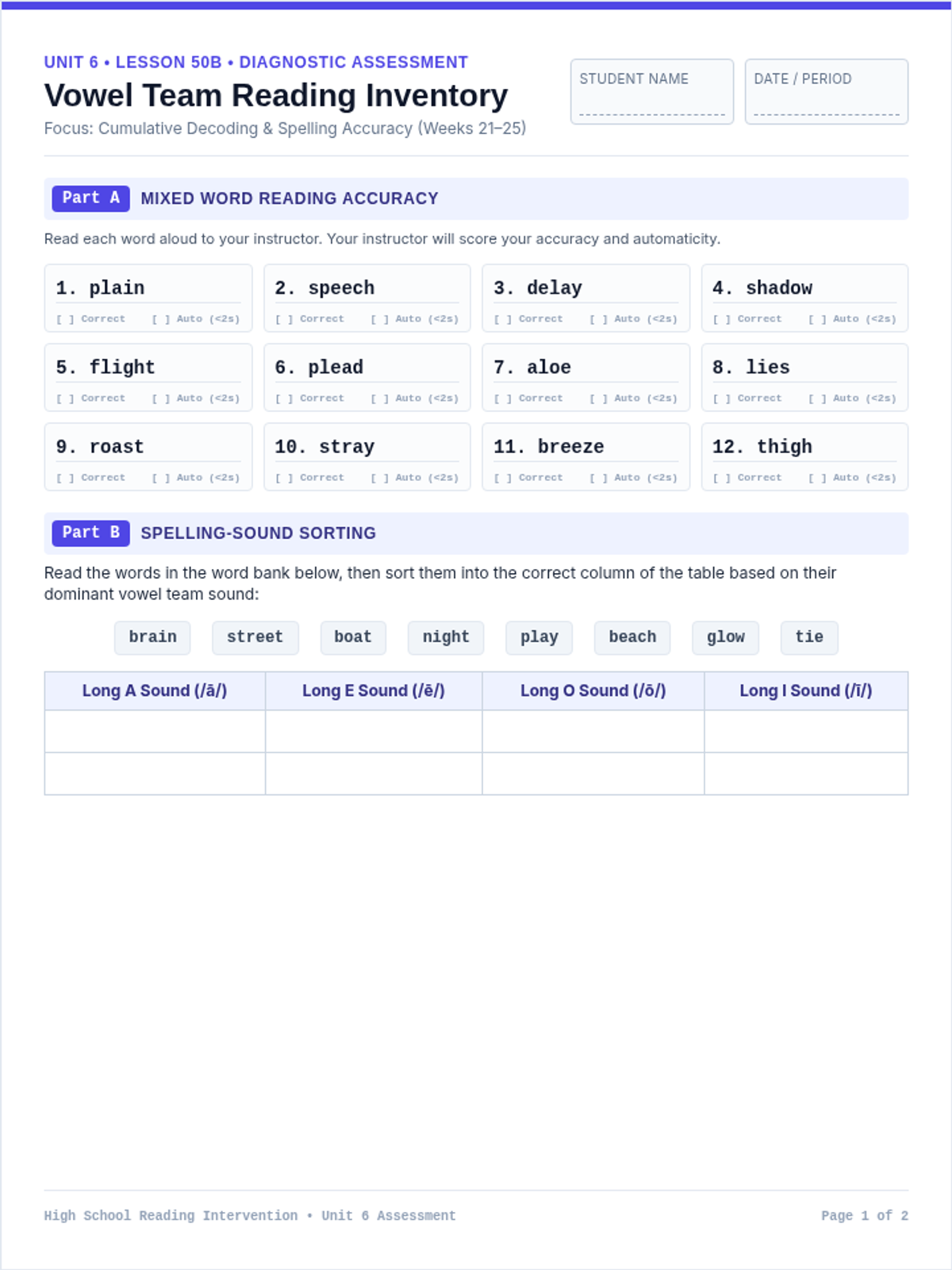
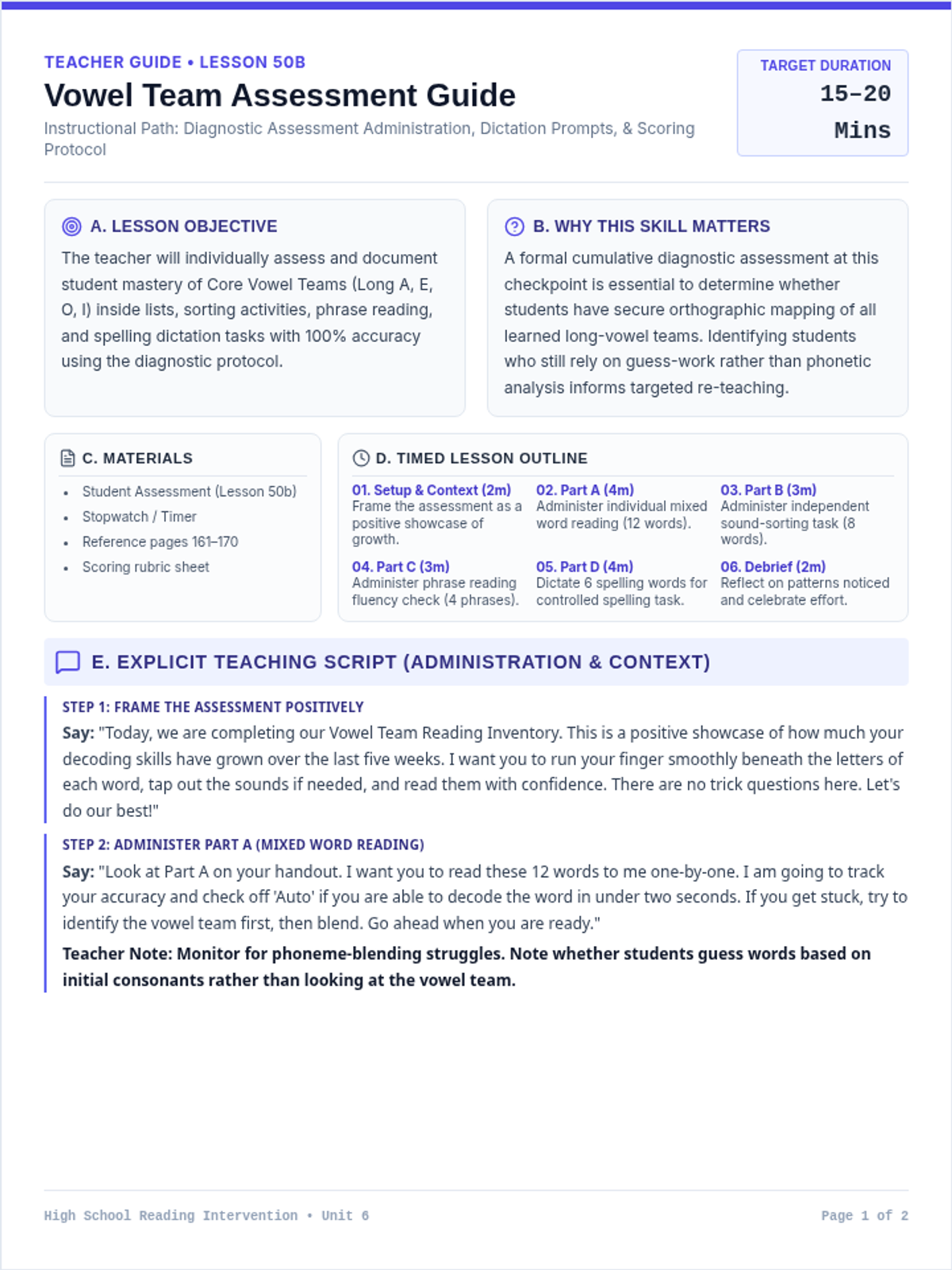
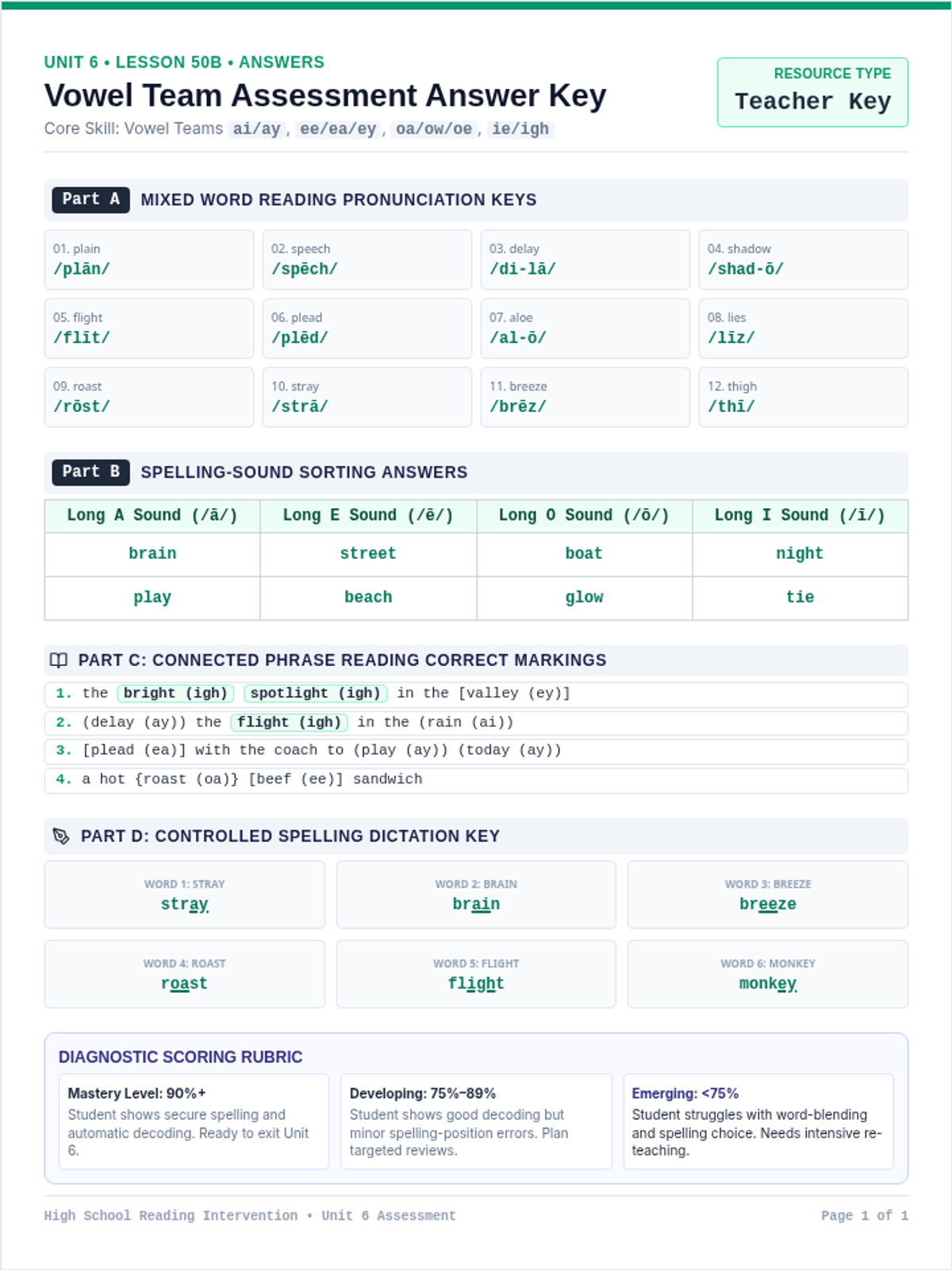
A formal cumulative diagnostic assessment taking place after Lesson 50a. It serves as the Unit 6 Vowel Team Reading Inventory, evaluating individual student spelling, reading accuracy, connected fluency, and positional sorting.
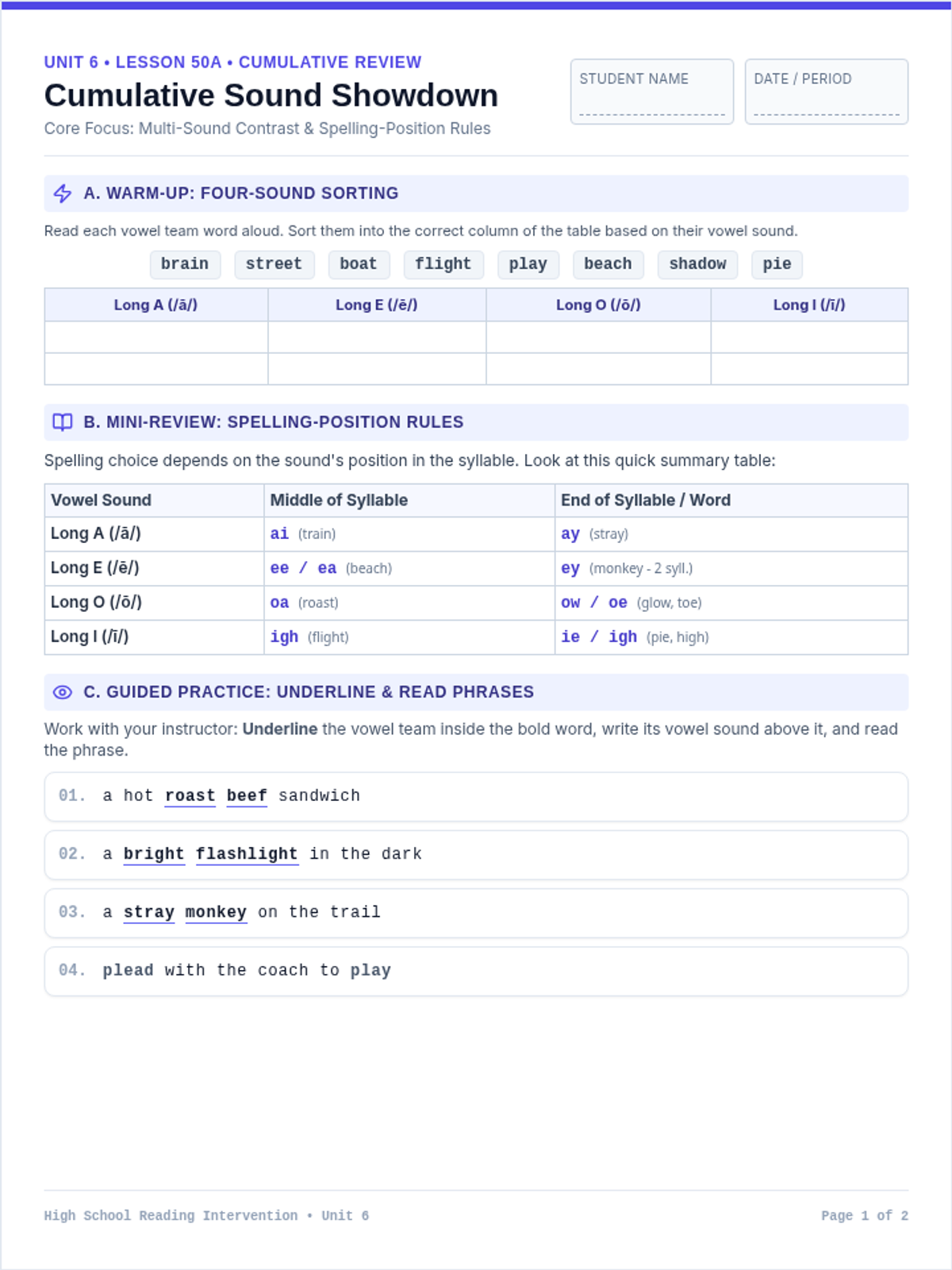
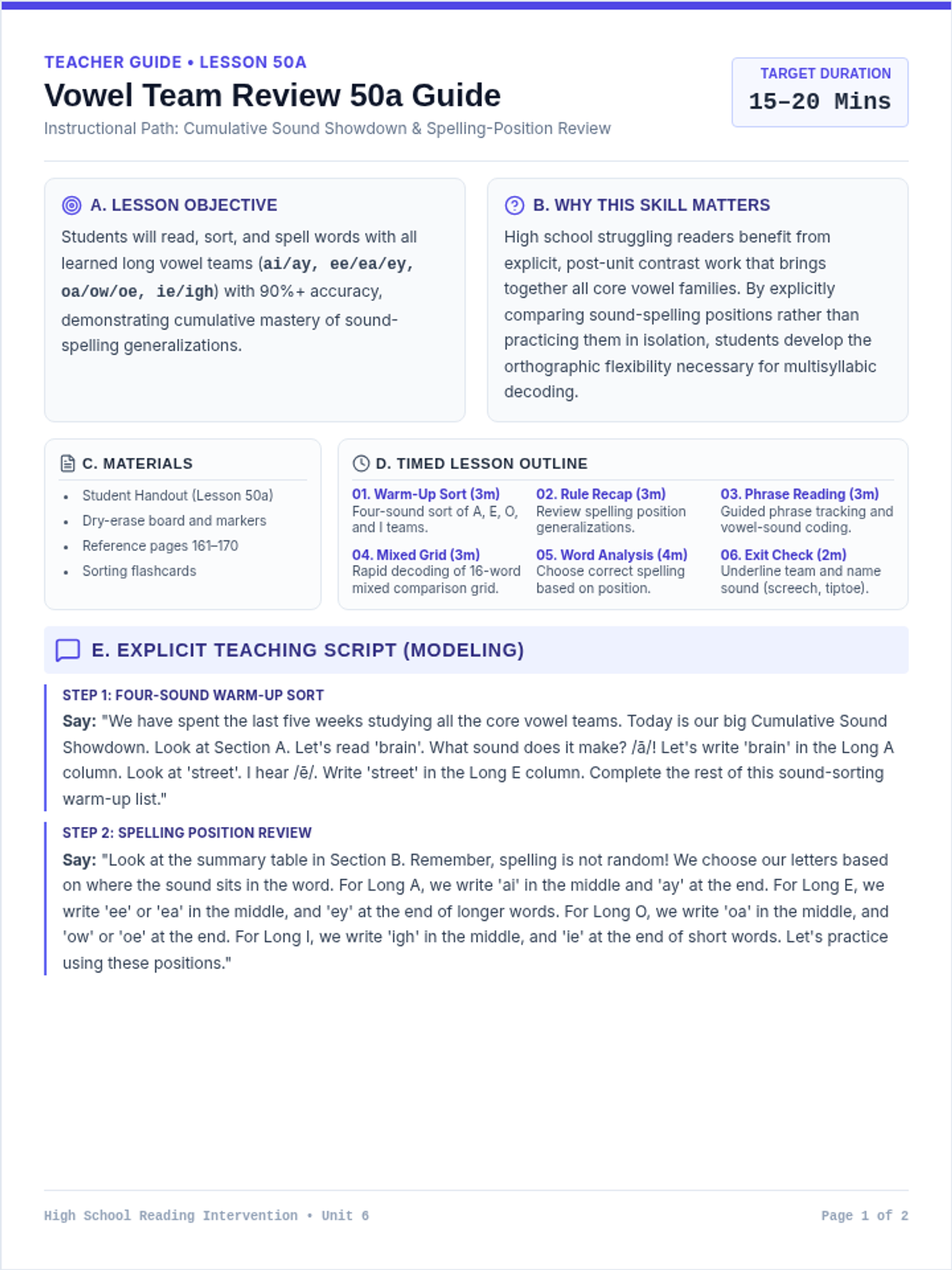
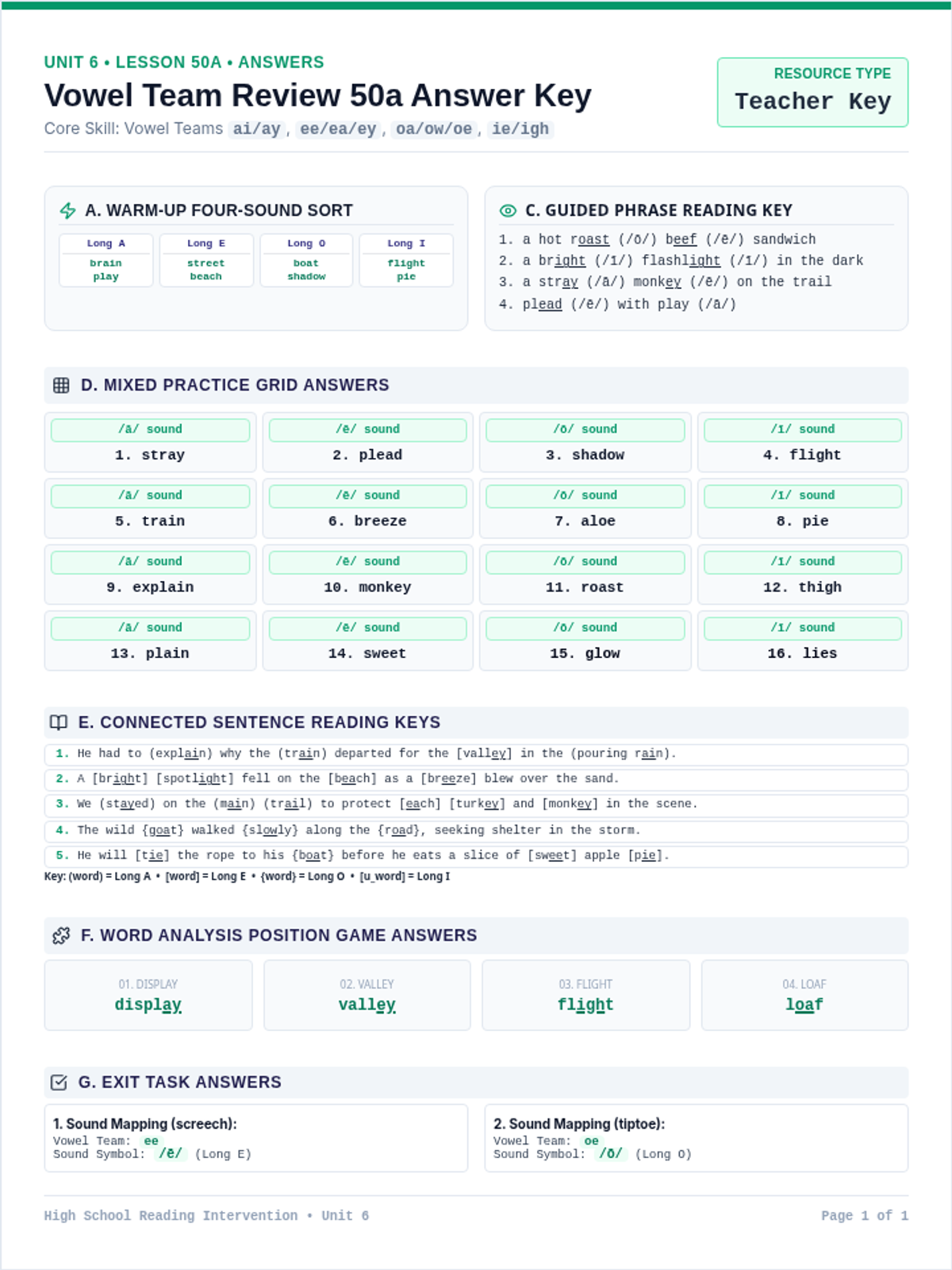
A rigorous, comprehensive cumulative review lesson taking place after Lesson 50. It provides heavy comparison across all learned Unit 6 vowel teams (ai/ay, ee/ea/ey, oa/ow/oe, ie/igh) through spelling-position games, phrase-level decoding, and rapid reading fluency drills.