A focused, 25-minute social skills session designed for high schoolers with autism, focusing on the mechanics of building and maintaining meaningful friendships through structured interaction and reflection.
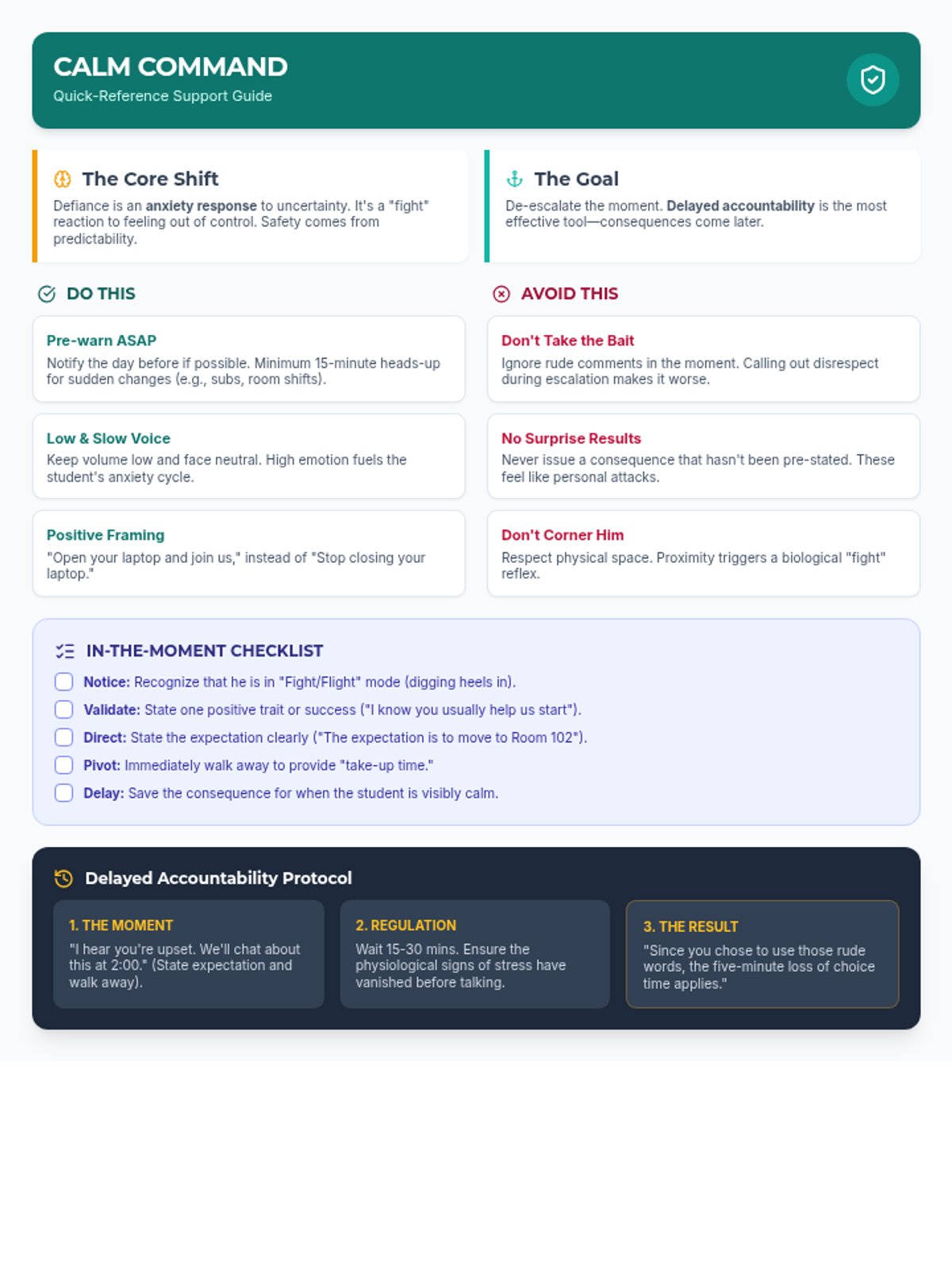
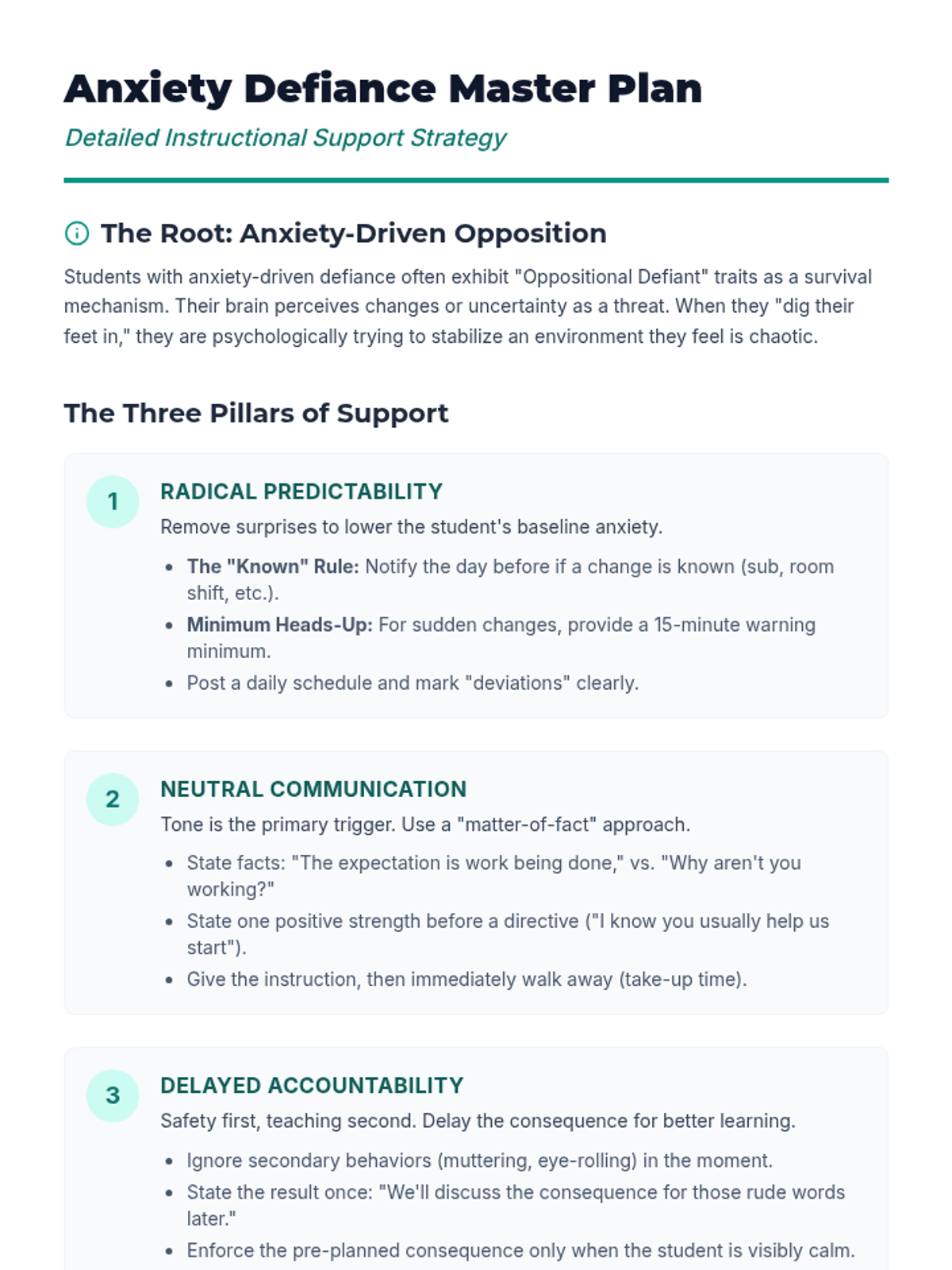
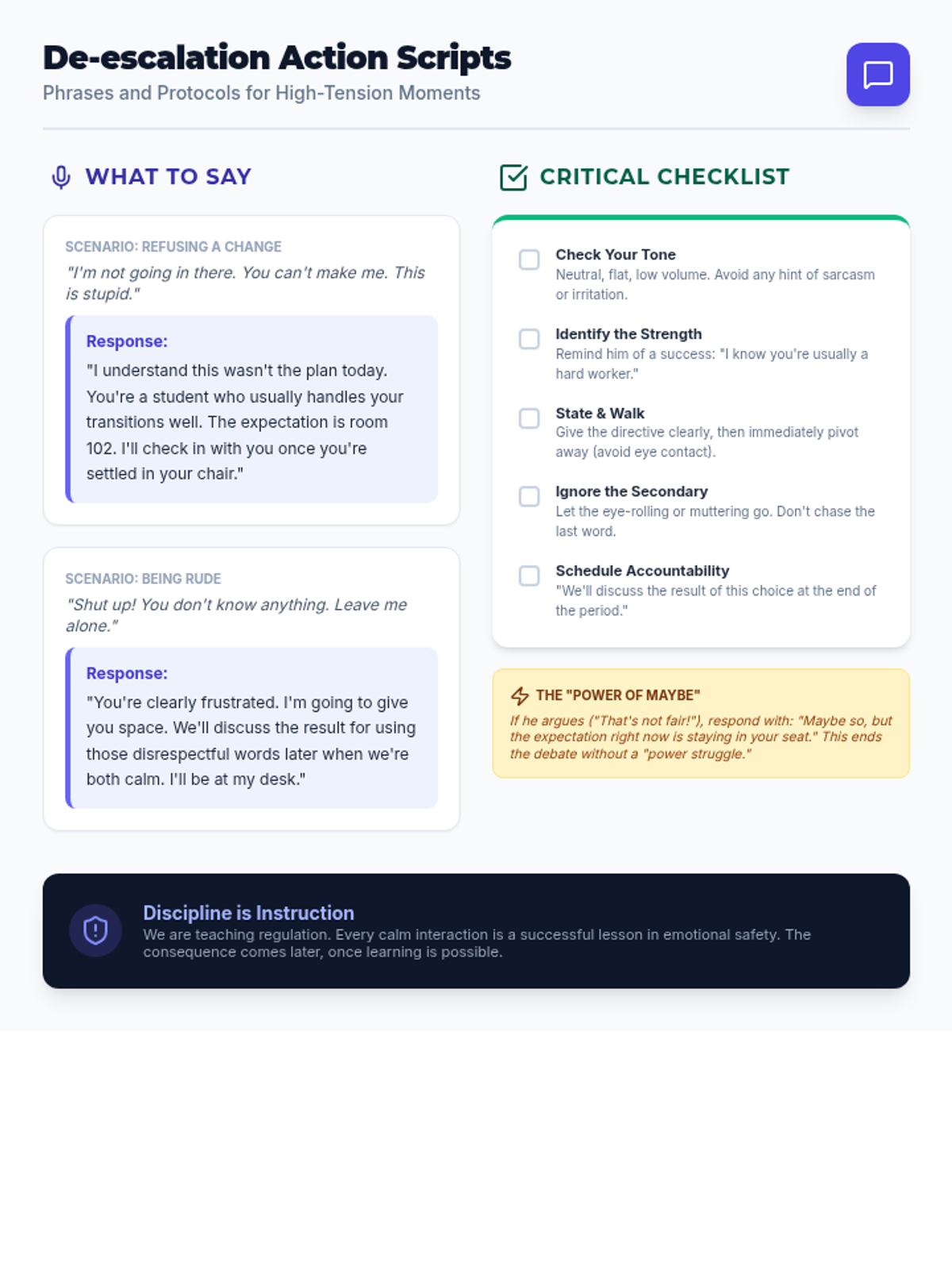
A comprehensive toolkit for educators to support students with anxiety-driven defiance, focusing on pre-emptive strategies, calm communication, and delayed consequence enforcement.
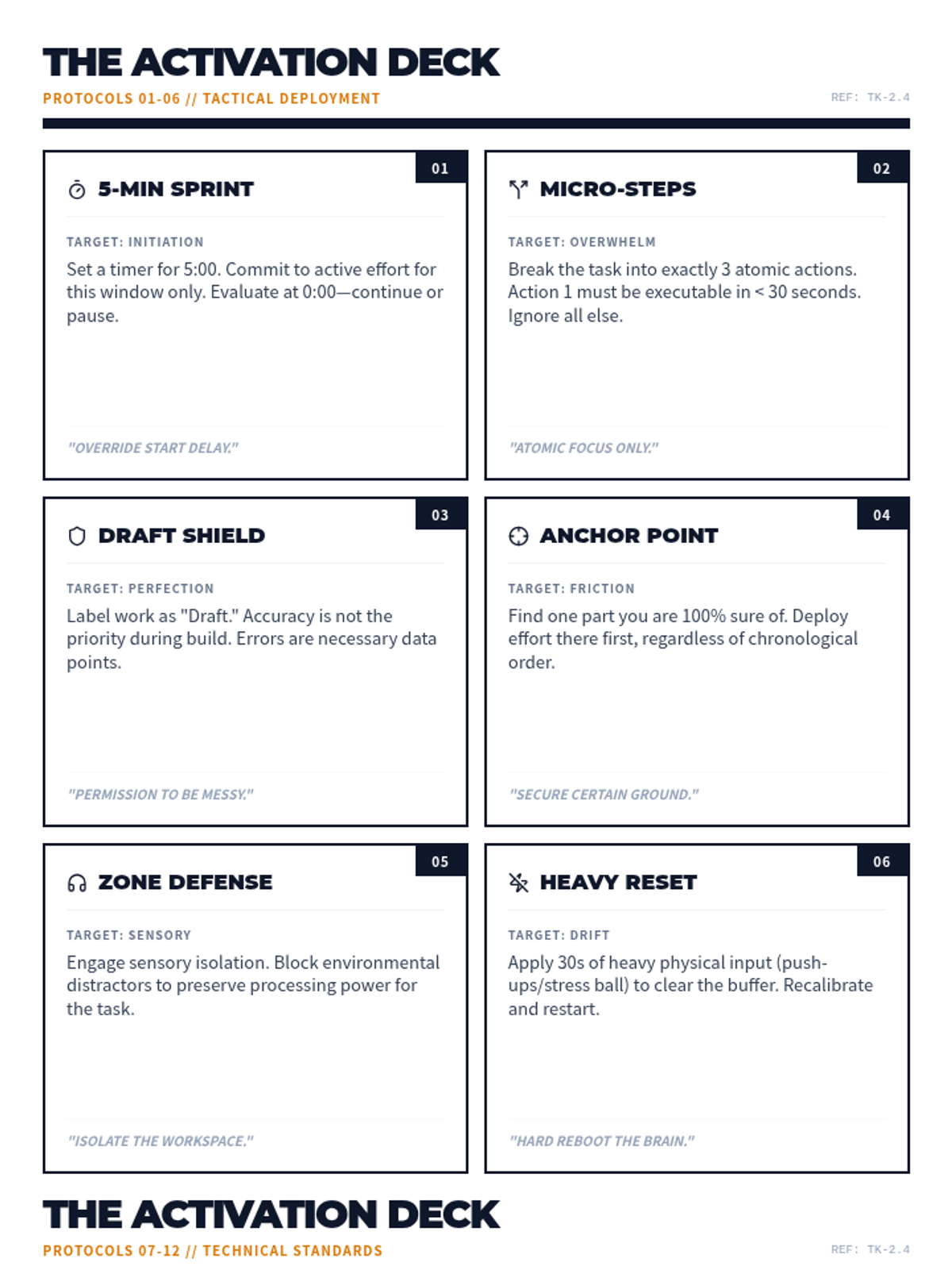
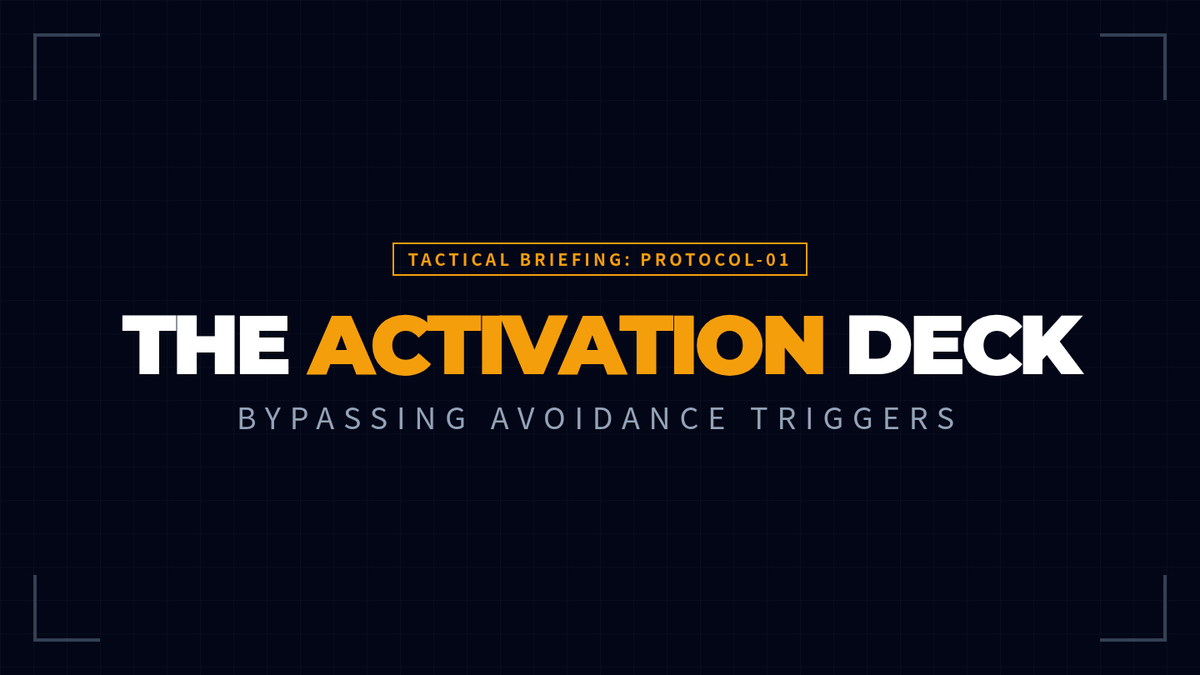
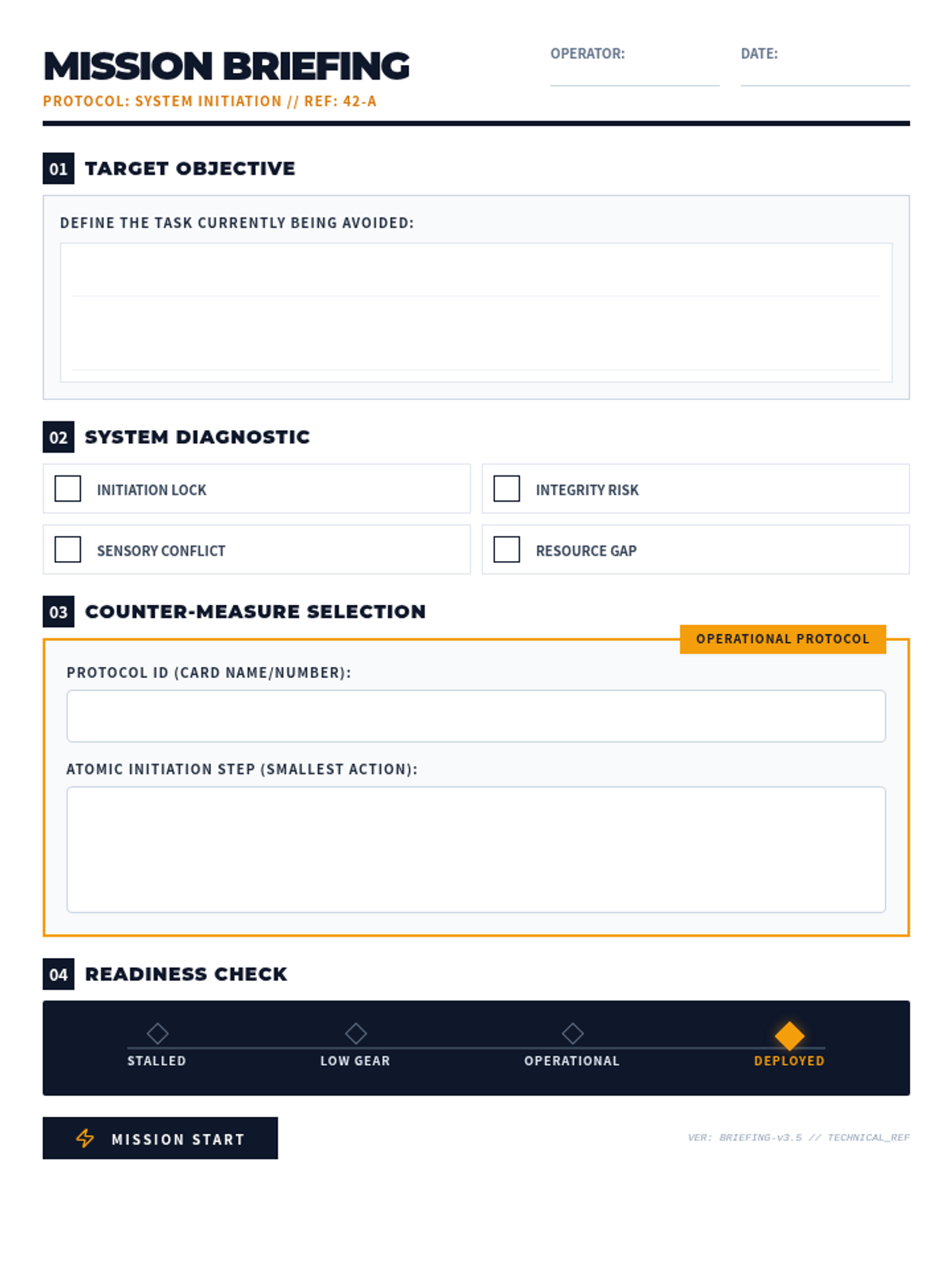
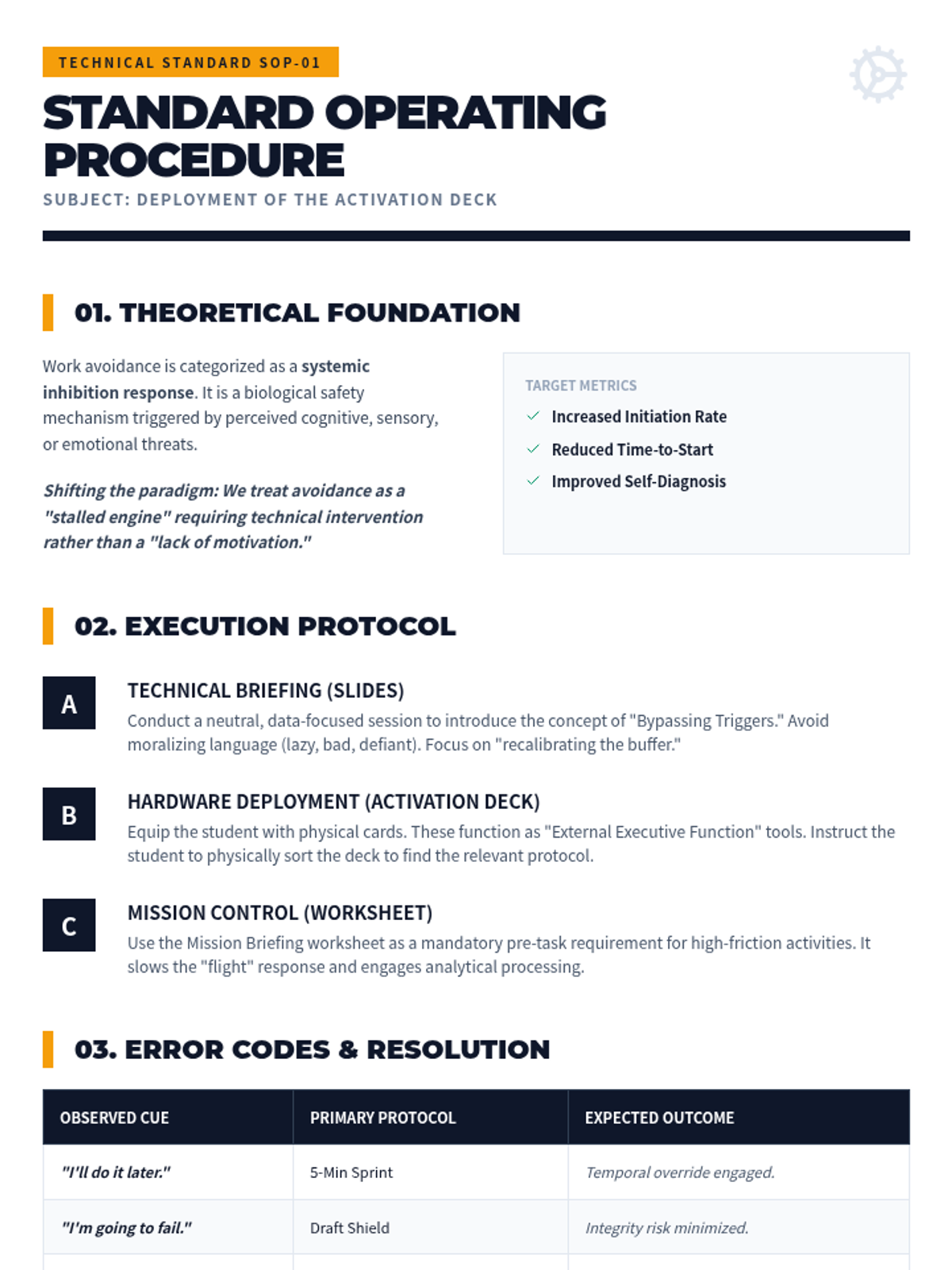
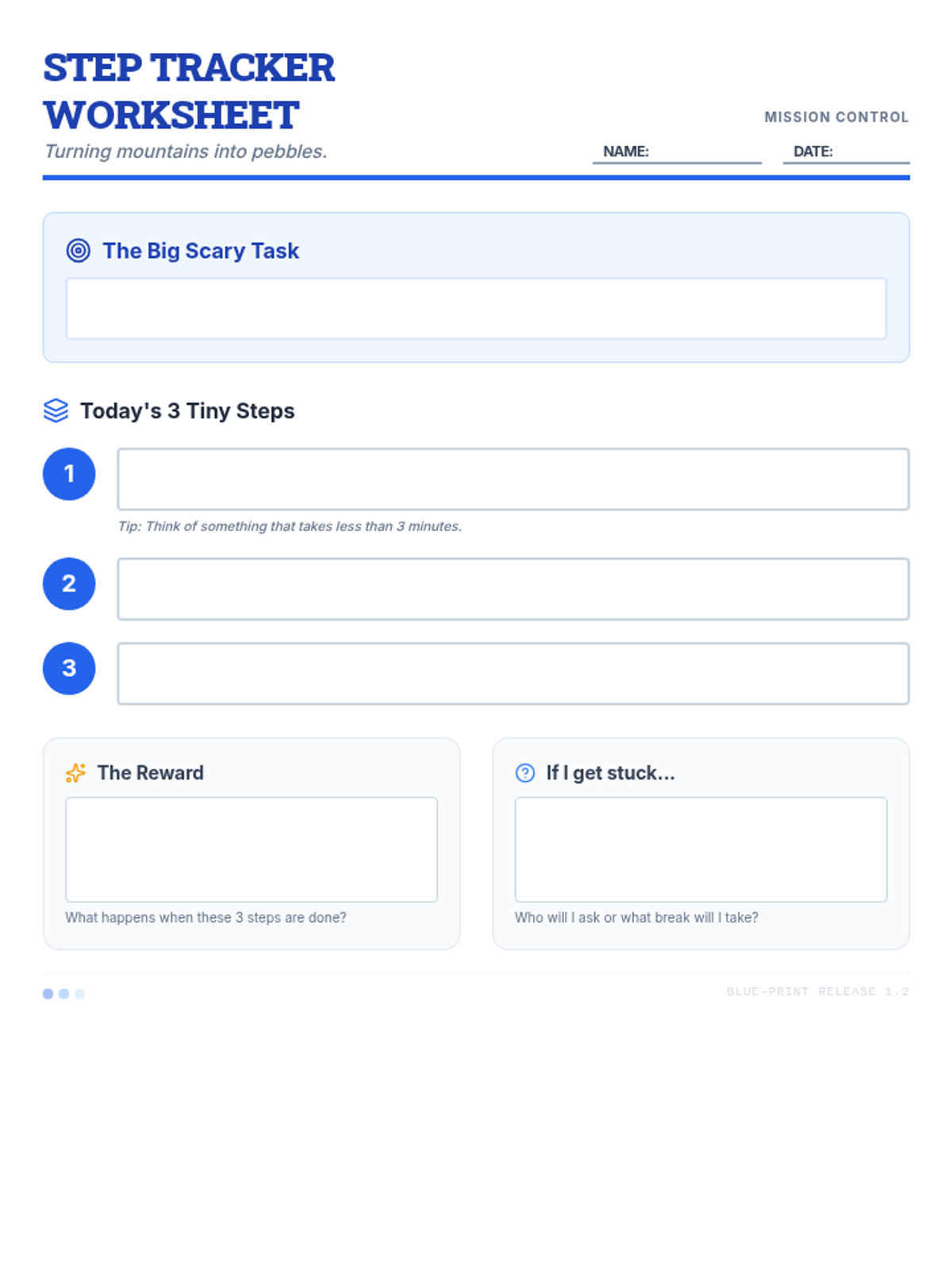
A comprehensive toolkit designed to help students overcome work avoidance by addressing executive functioning, academic confidence, sensory needs, and independent work skills. Includes strategy cards, a presentation for introduction, and a planning worksheet.
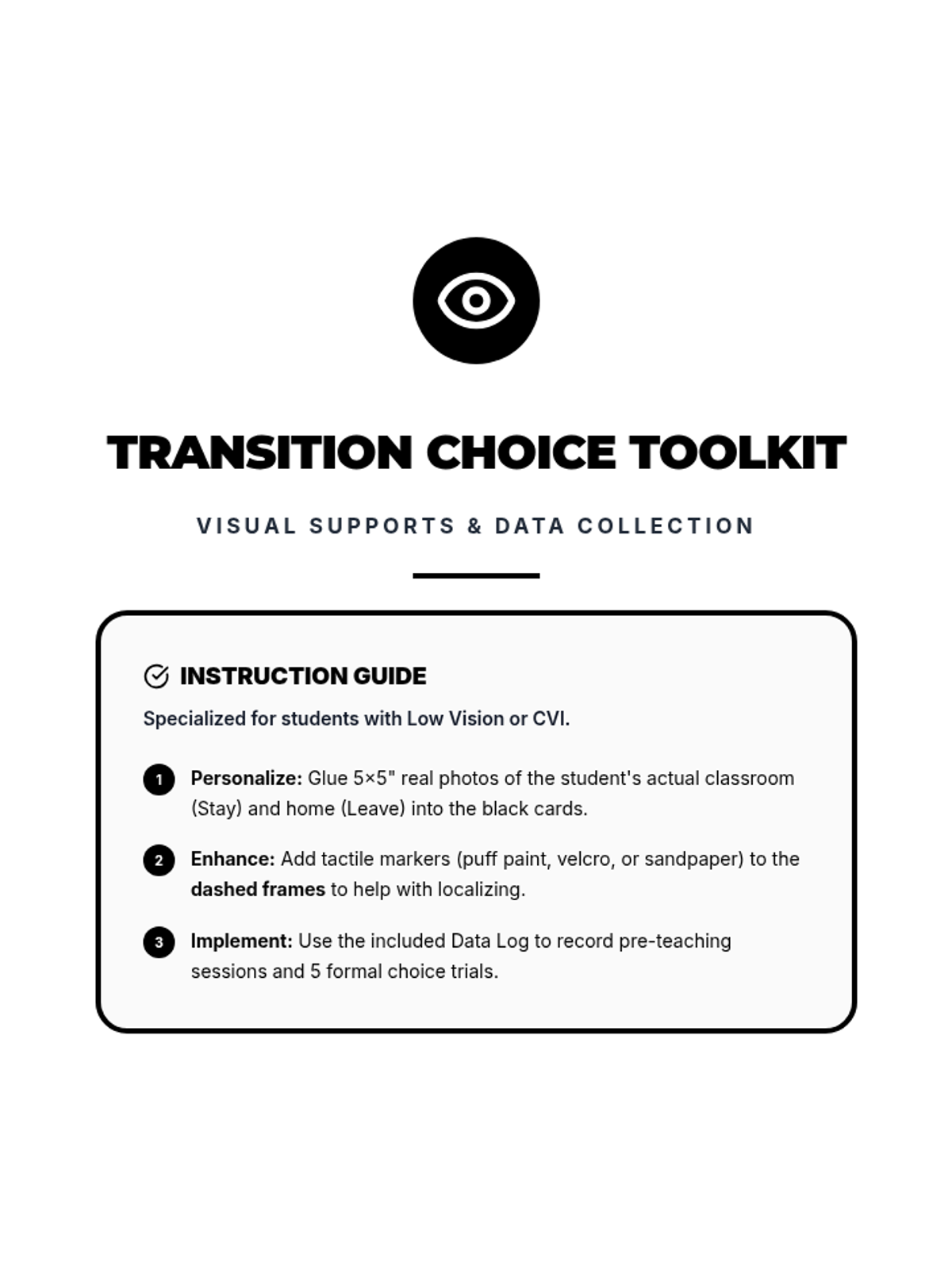
A set of high-contrast visual supports and a structured data log designed to help students with vision needs participate in their 18+ transition decisions.
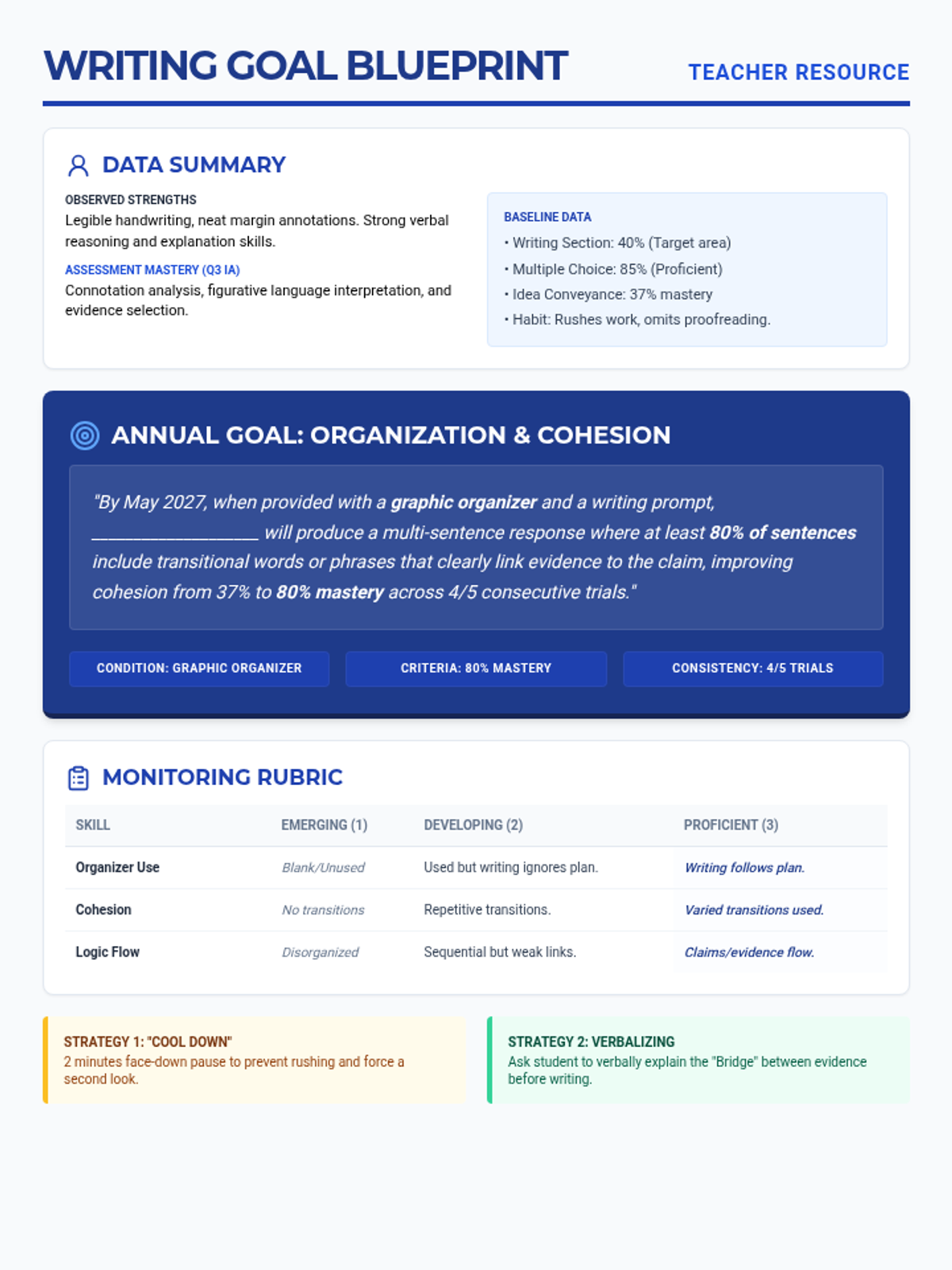
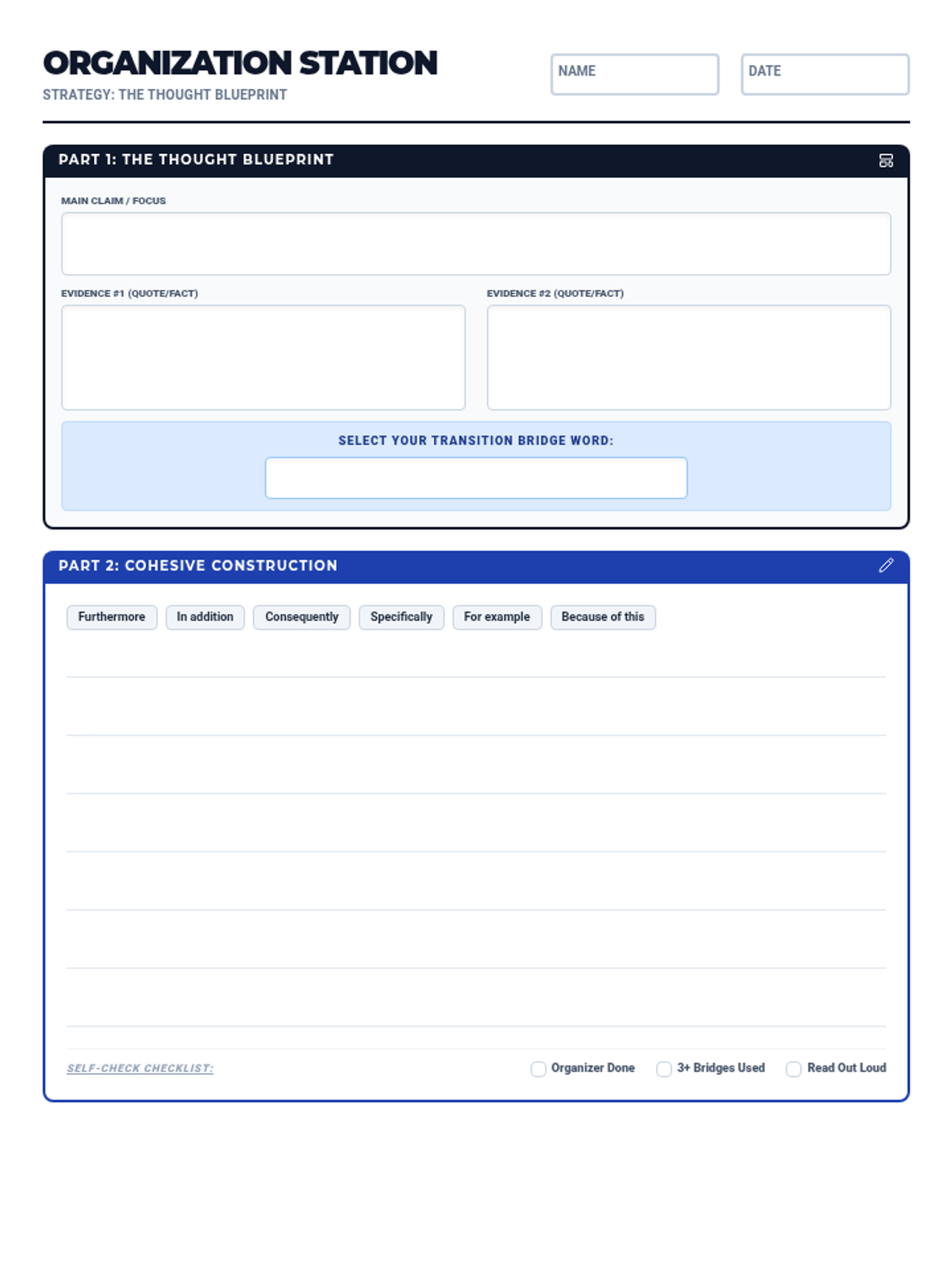
A lesson focused on improving writing organization and cohesion through the use of graphic organizers and transitional phrases to link evidence to claims.
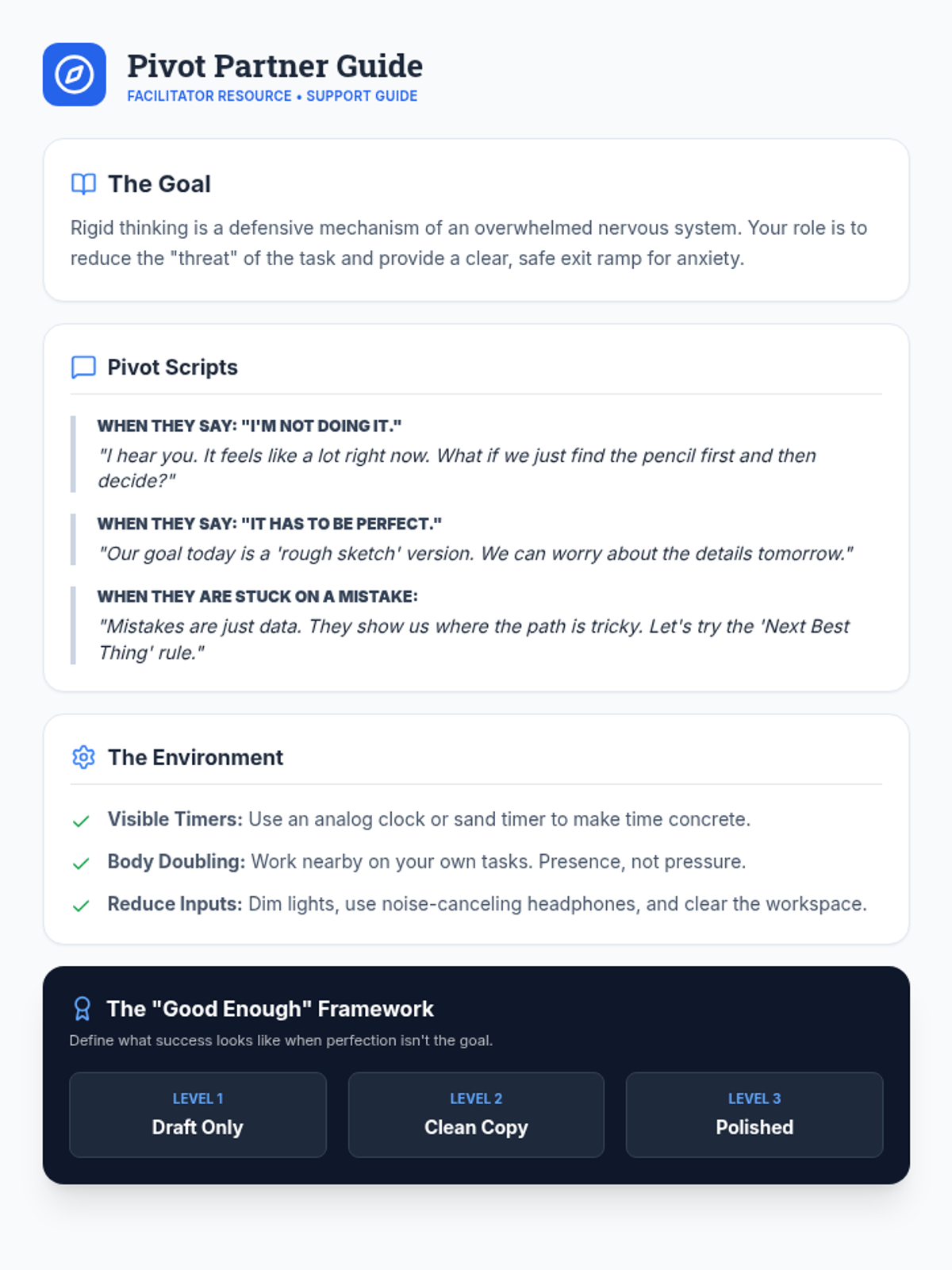
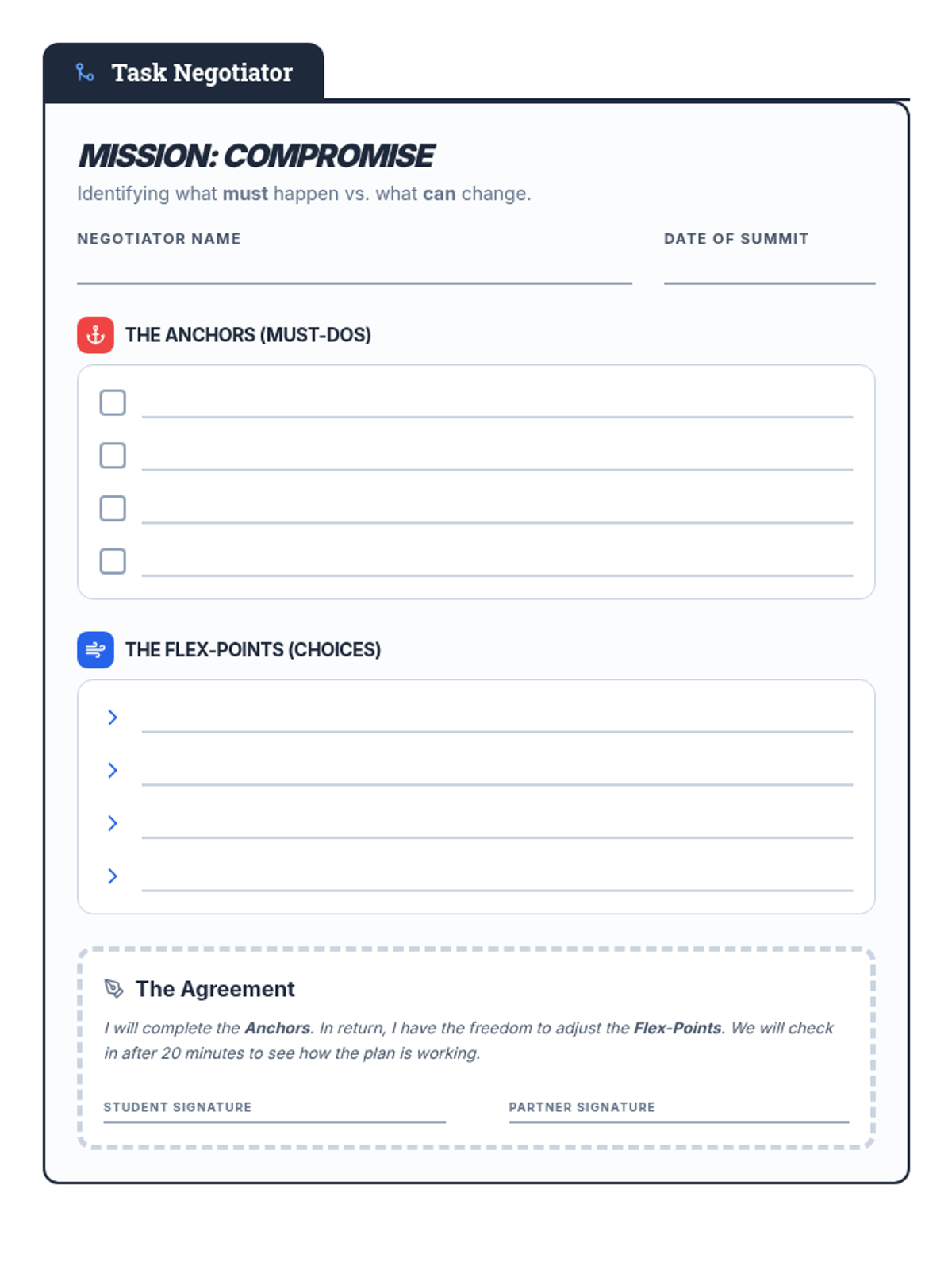
A comprehensive set of strategies and tools to help teens with autism overcome rigid thinking and task refusal during academic assignments.
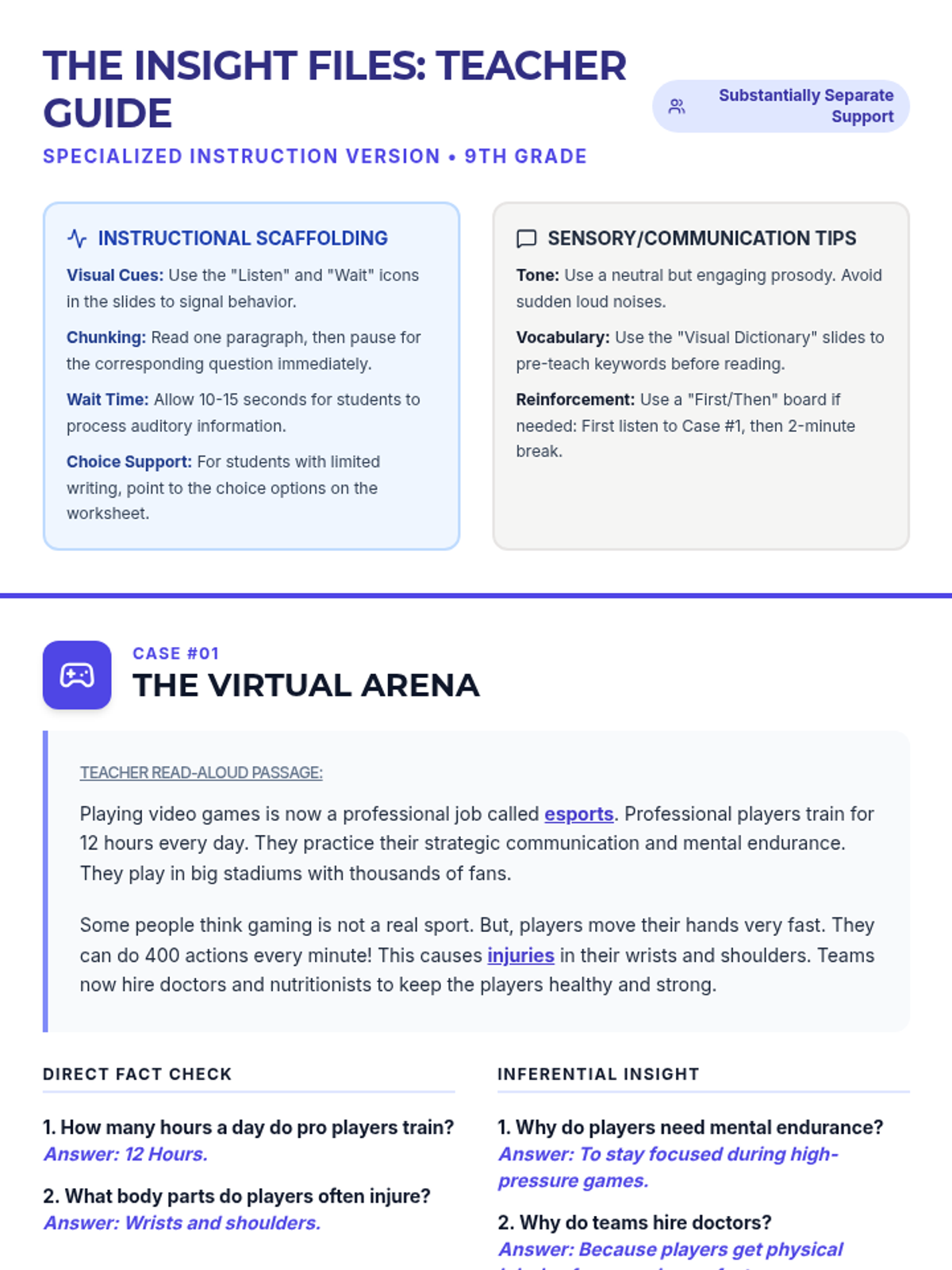
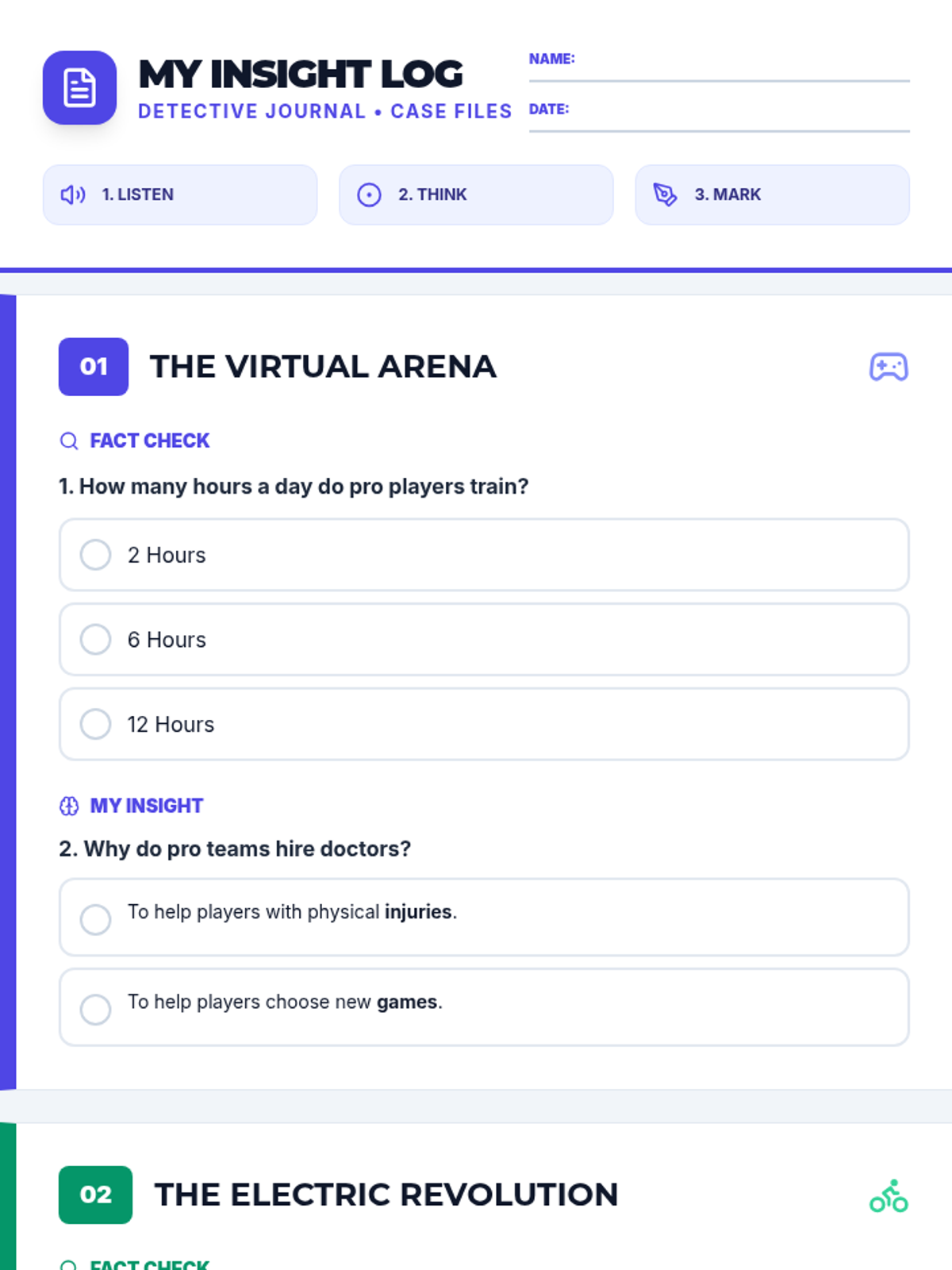
An 8th-grade lesson focused on listening comprehension. Students listen to high-interest passages about video games, ebikes, and sports technology, using a structured graphic organizer with sentence frames to answer factual and inferential questions.
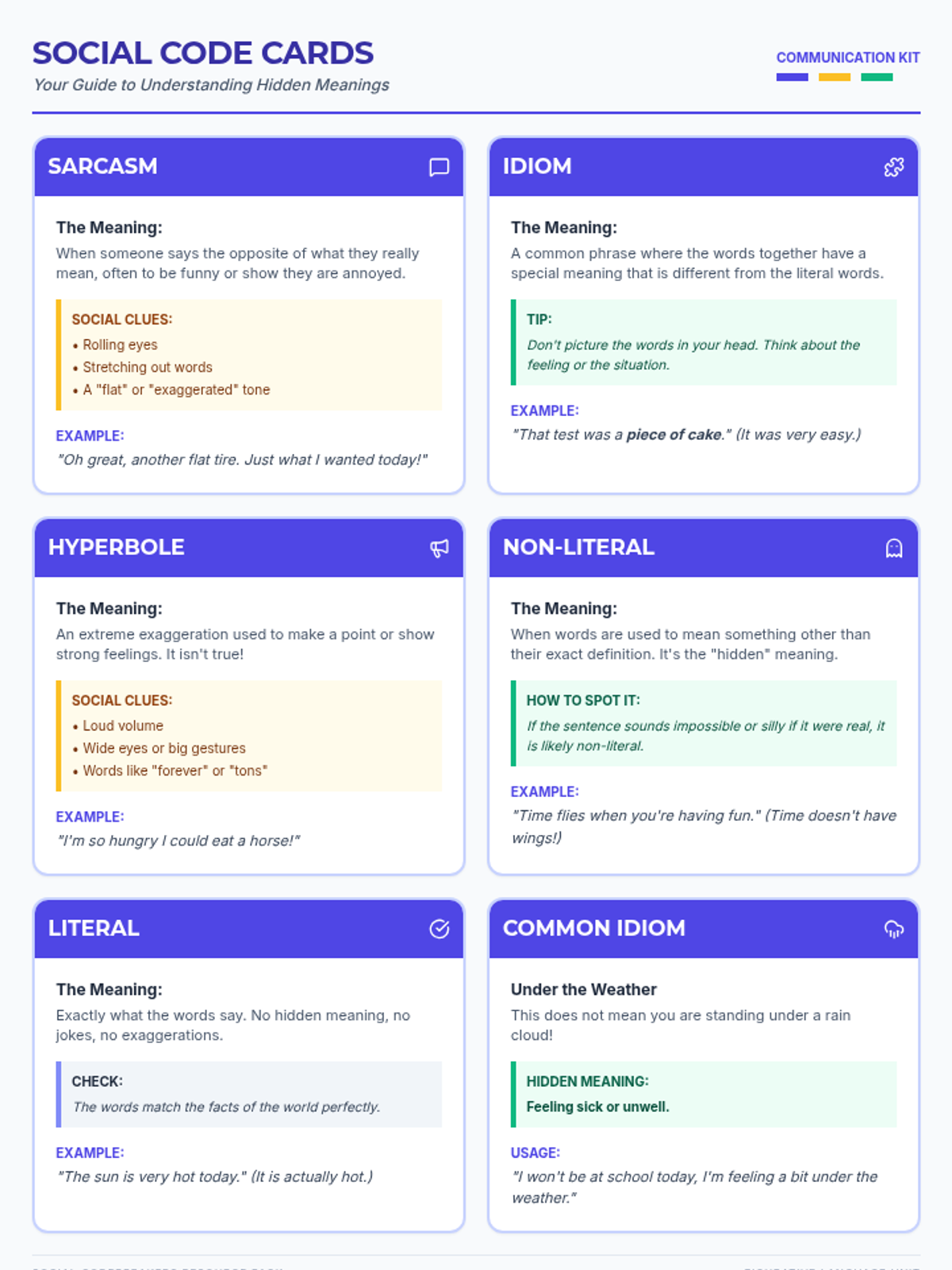
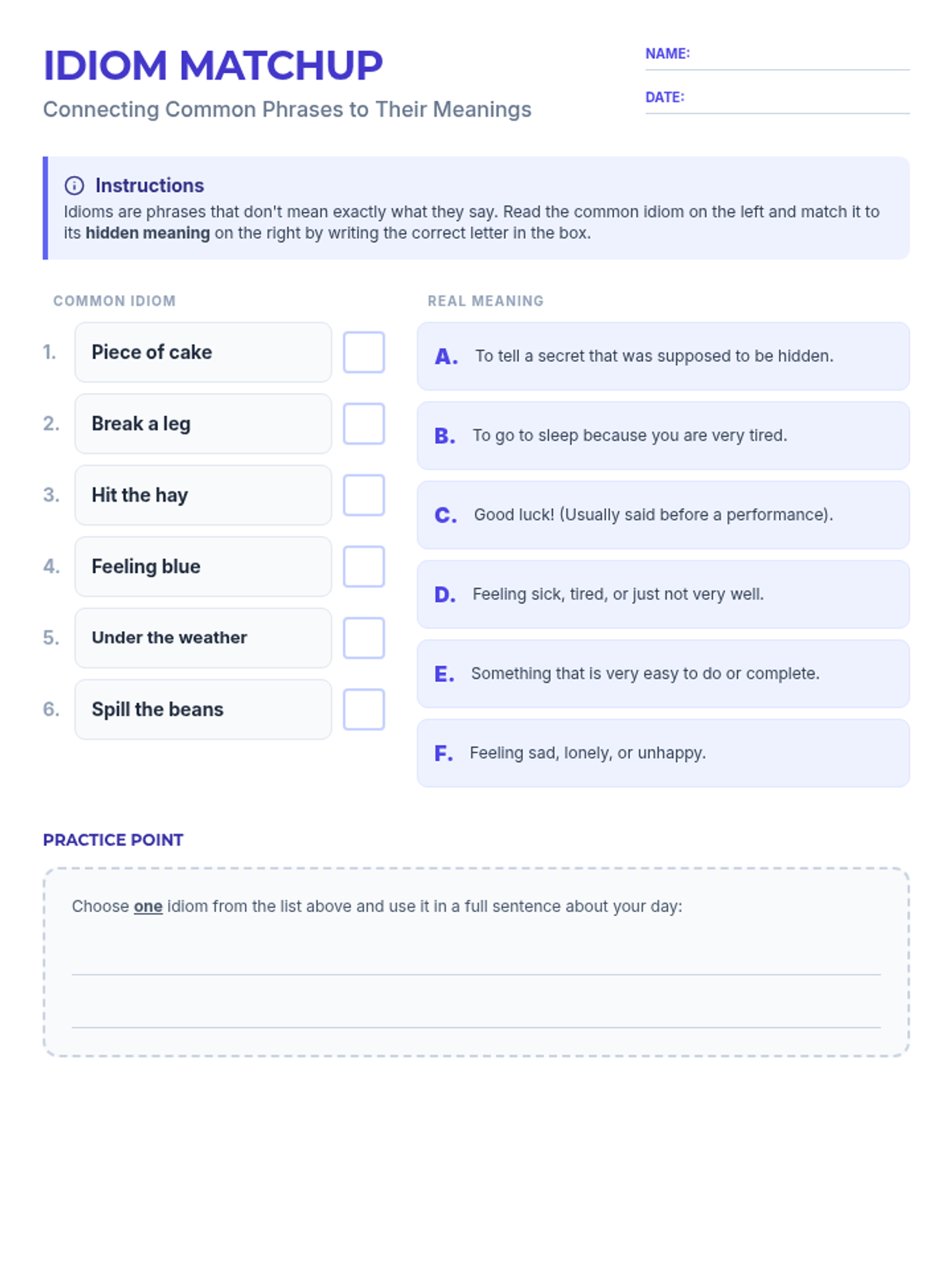
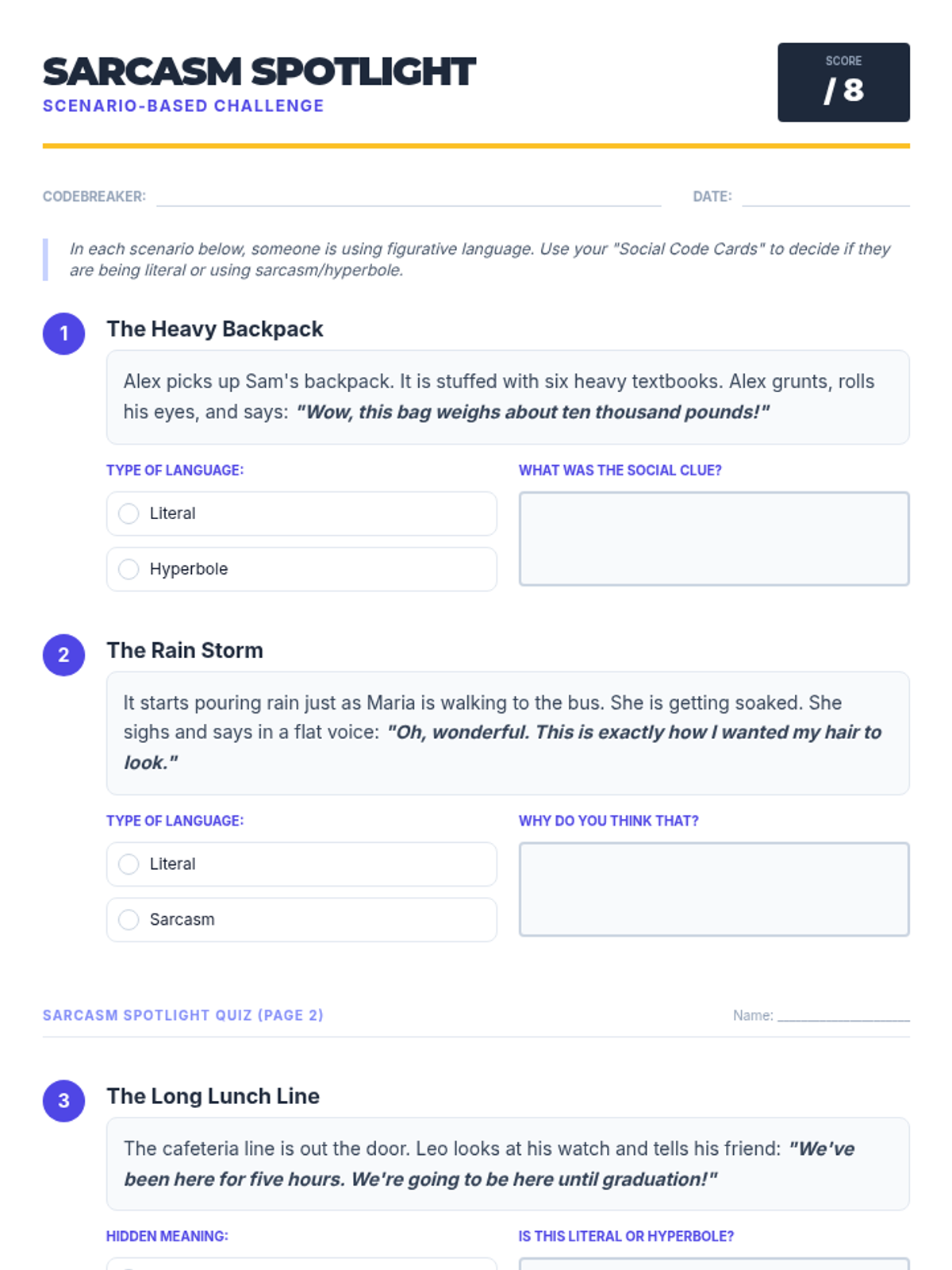
A comprehensive lesson designed for high school students with special needs to master the hidden meanings in social communication, focusing on sarcasm, idioms, and non-literal language.
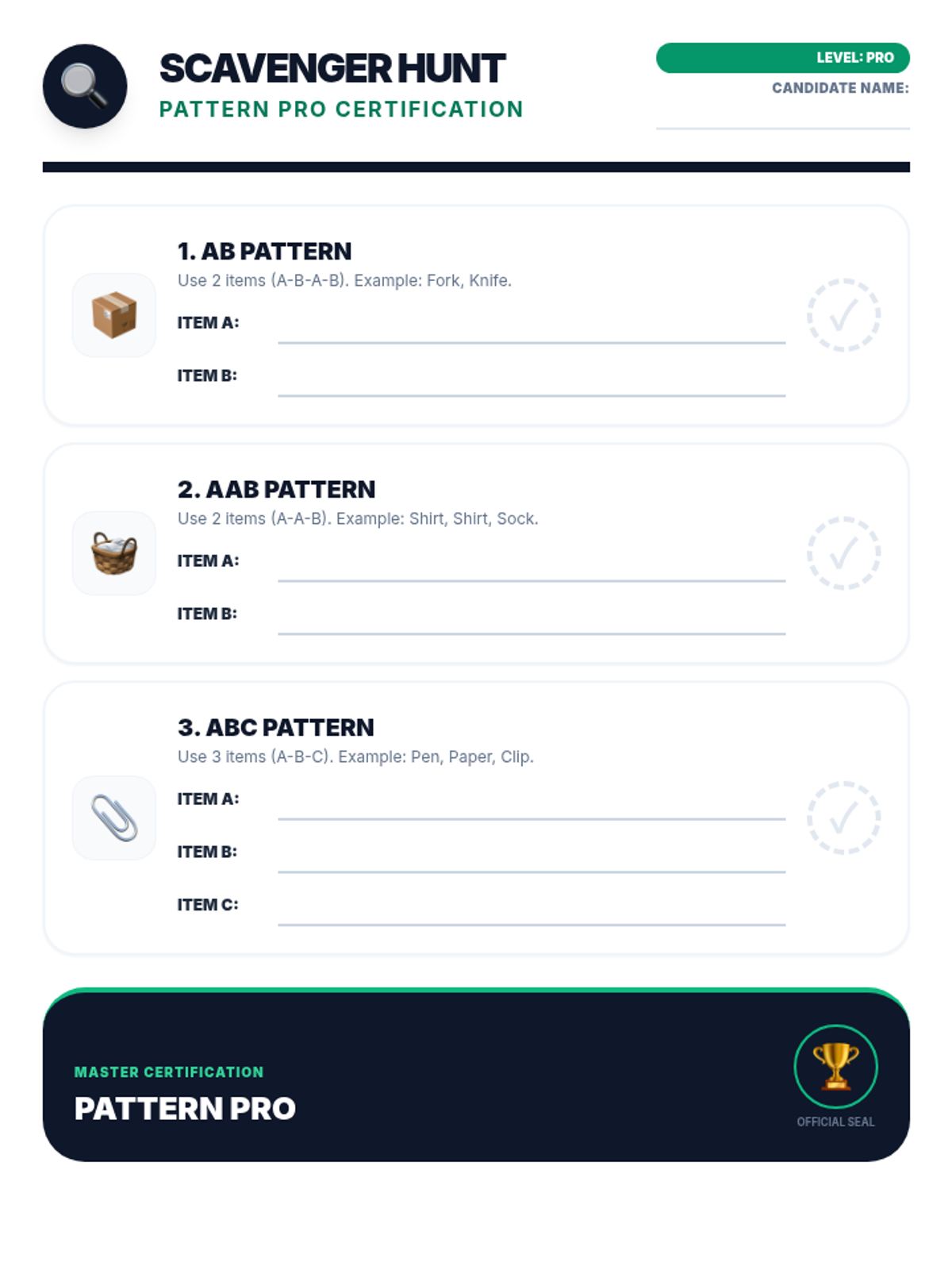
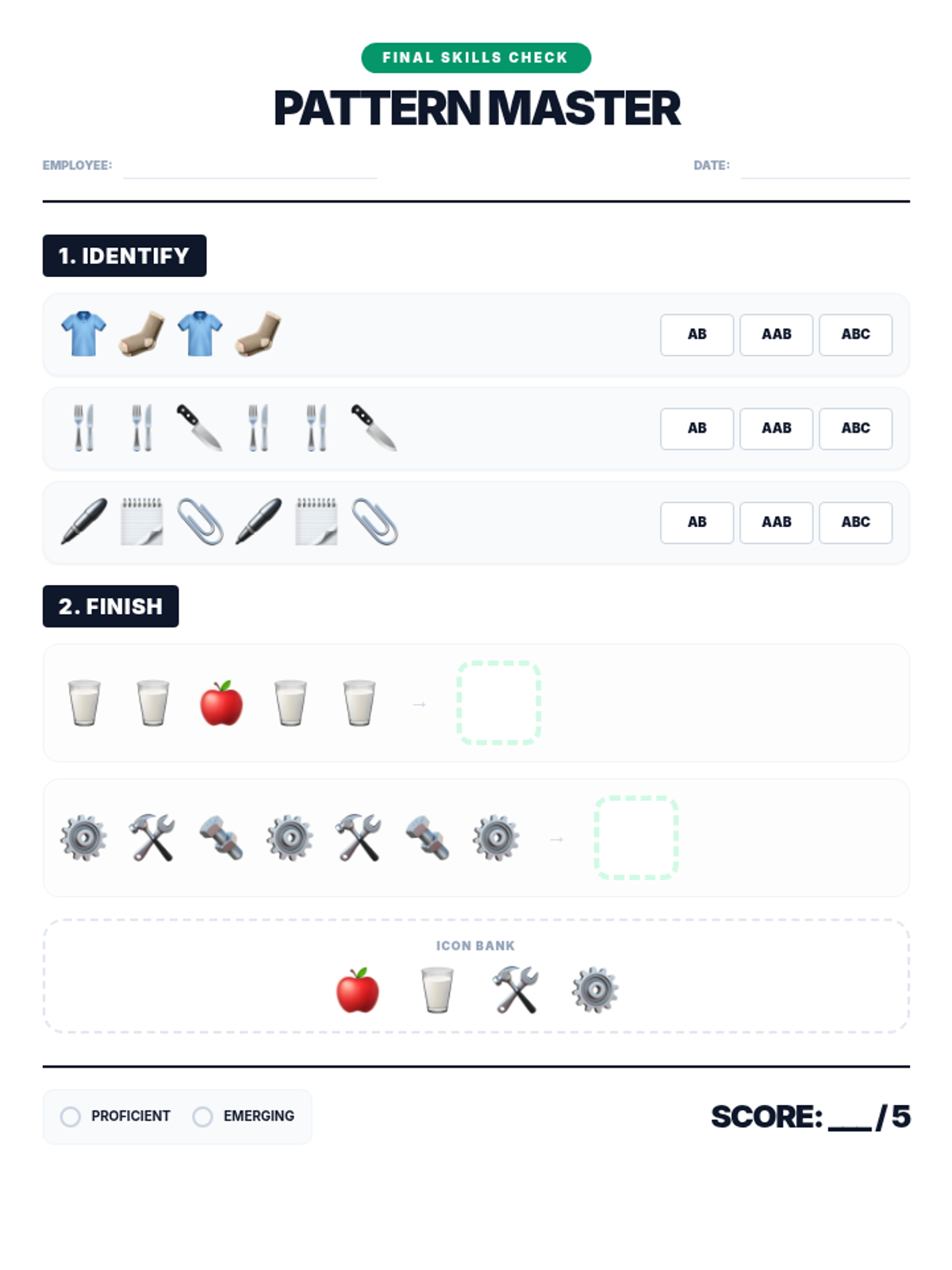
A comprehensive review and assessment of AB, AAB, and ABC patterns in various real-world scenarios, concluding with a "Pattern Master" challenge.
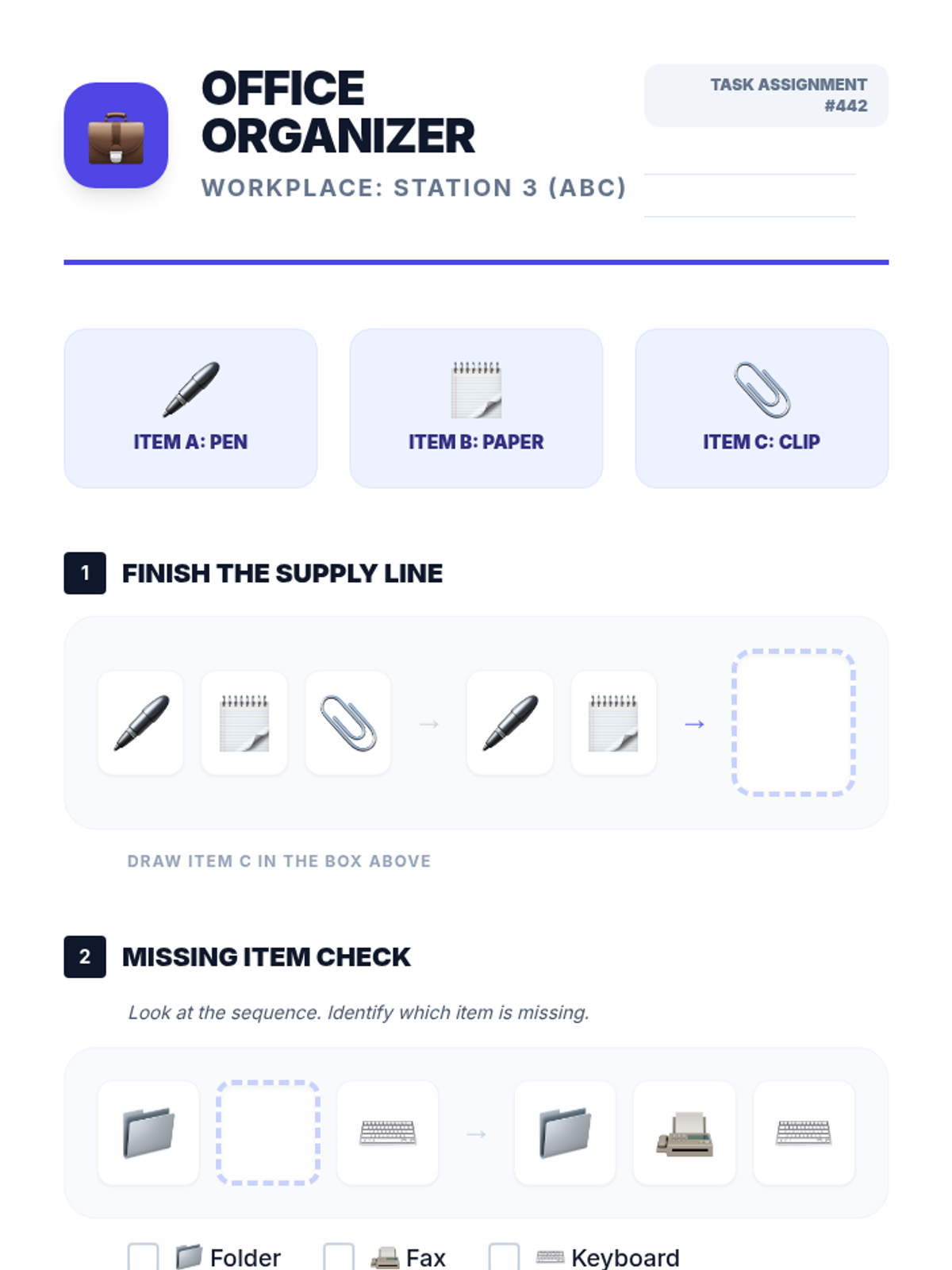
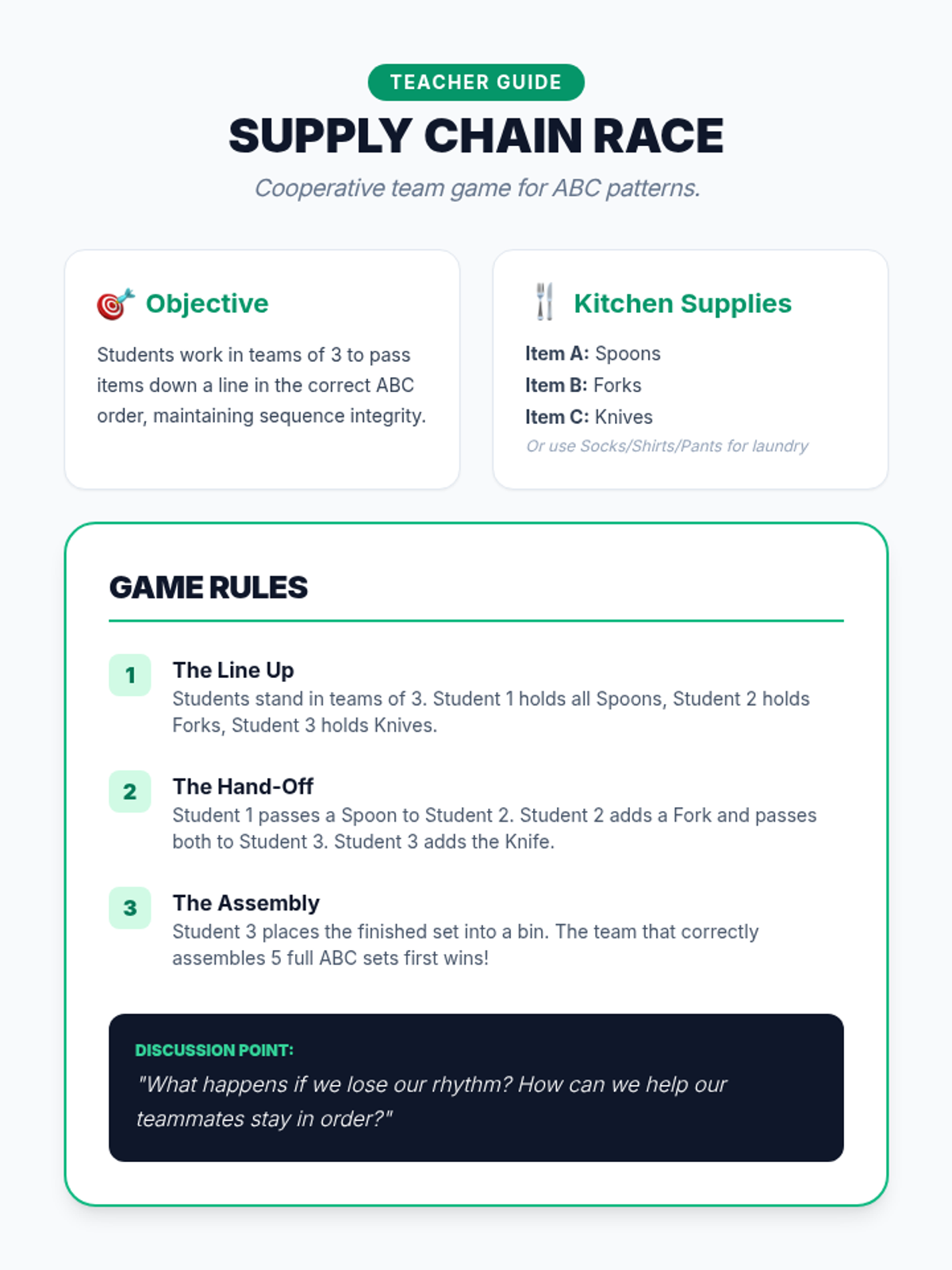
Introduction to ABC patterns using office and workshop supplies. Students learn to manage three-part sequences typical in assembly and organization tasks.
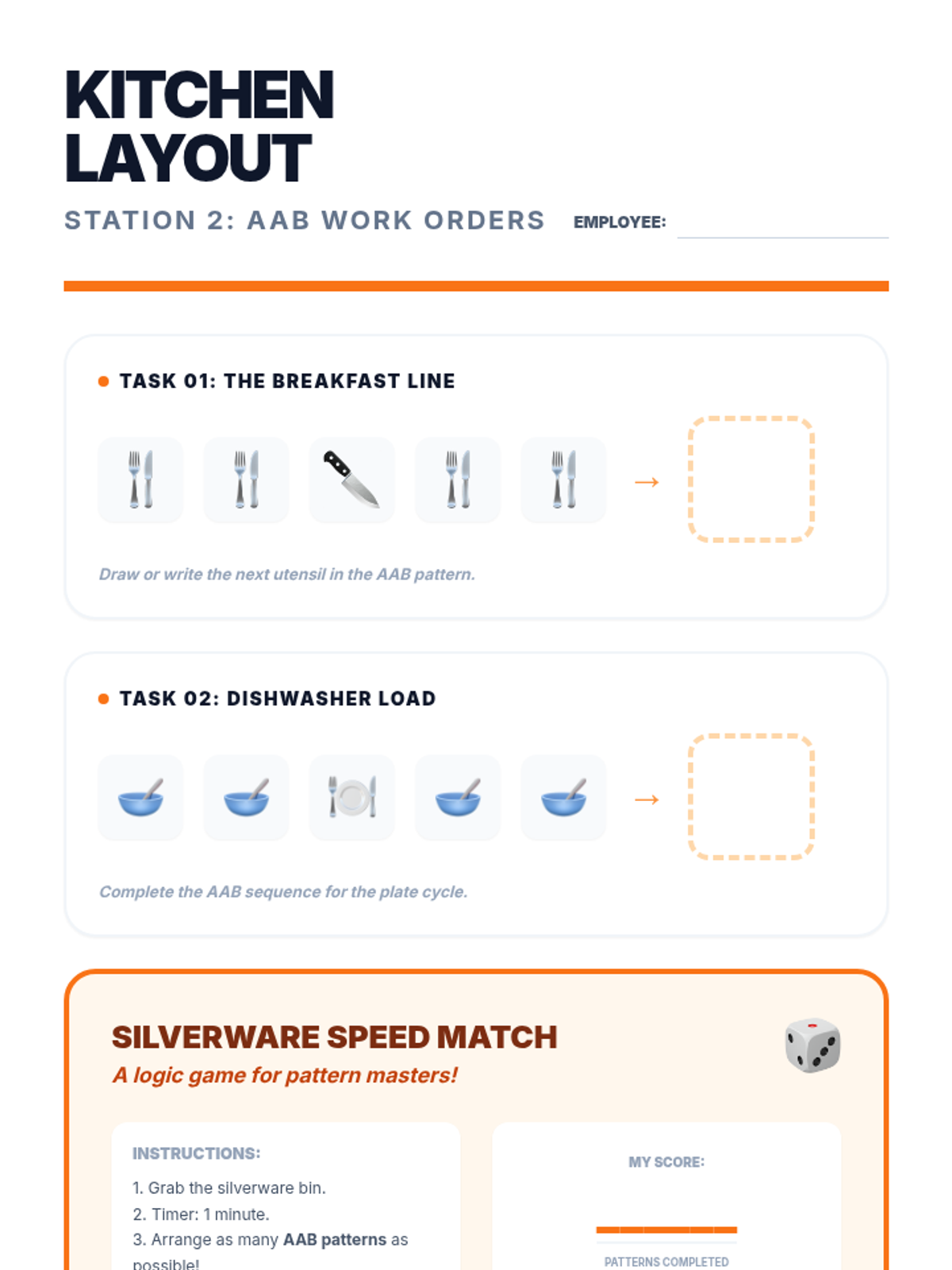
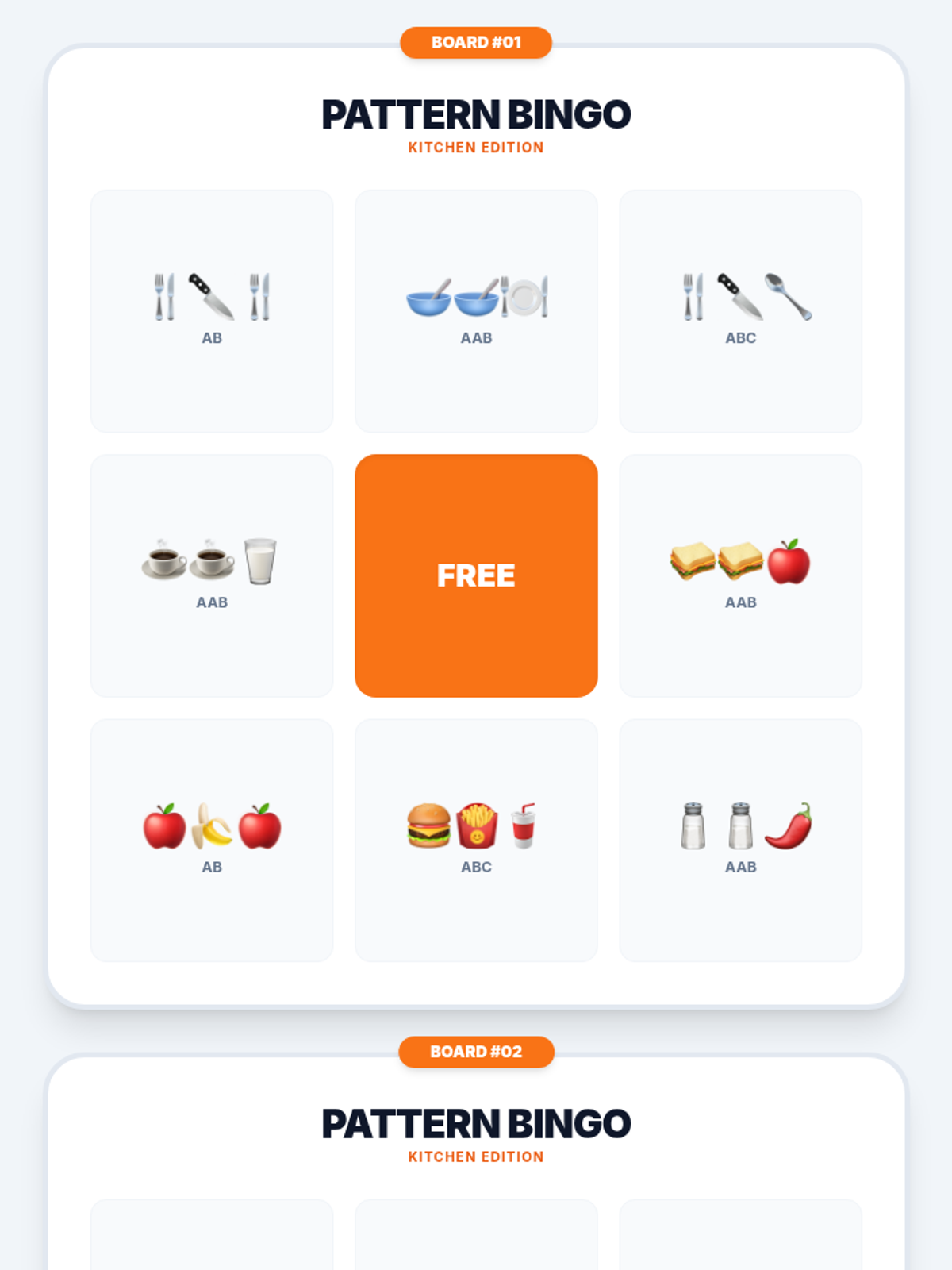
Introduction to AAB patterns using table setting (forks and knives) as a functional life skill context. Students practice identifying the "double-single" rhythm of AAB sequences.
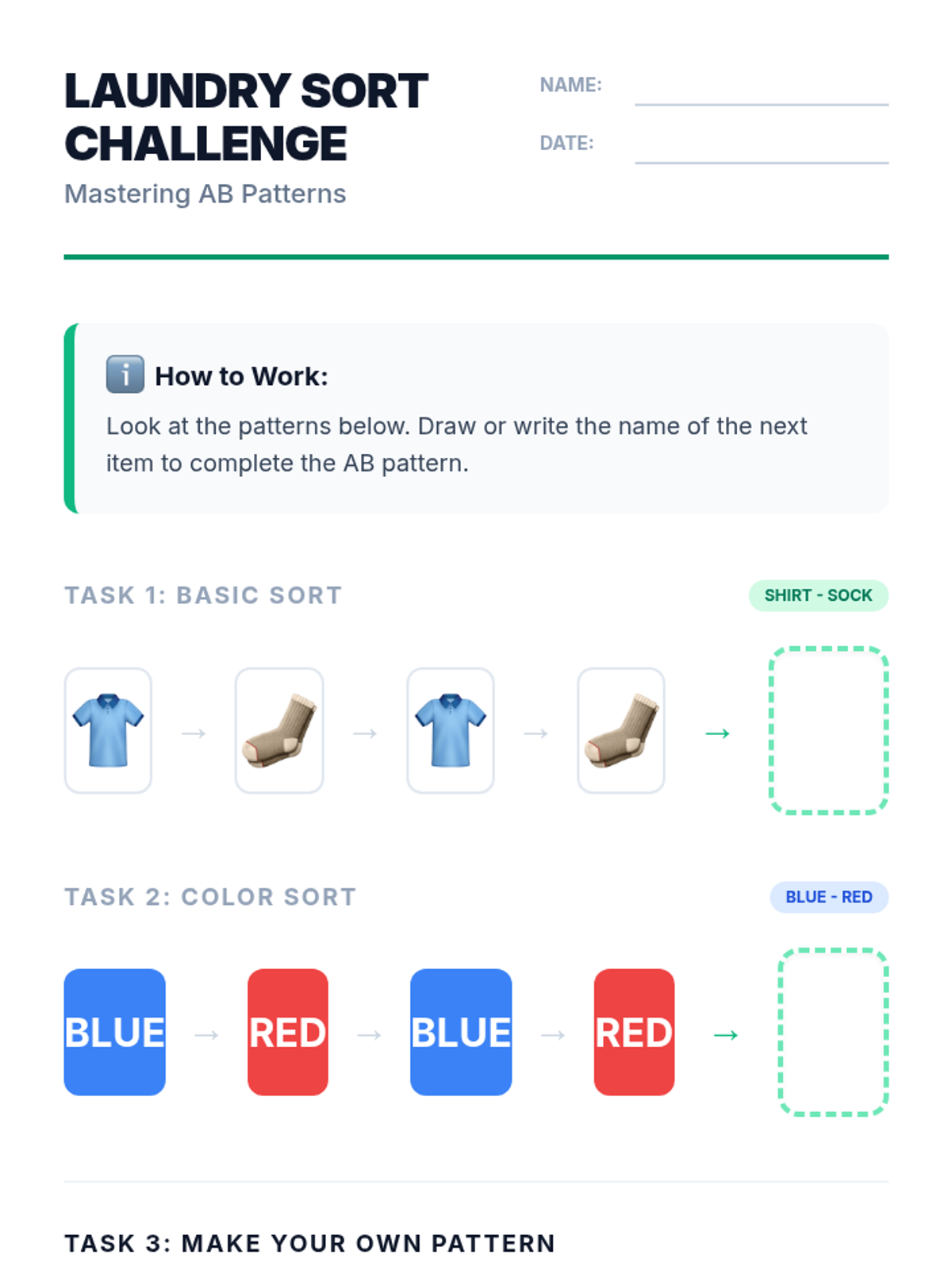
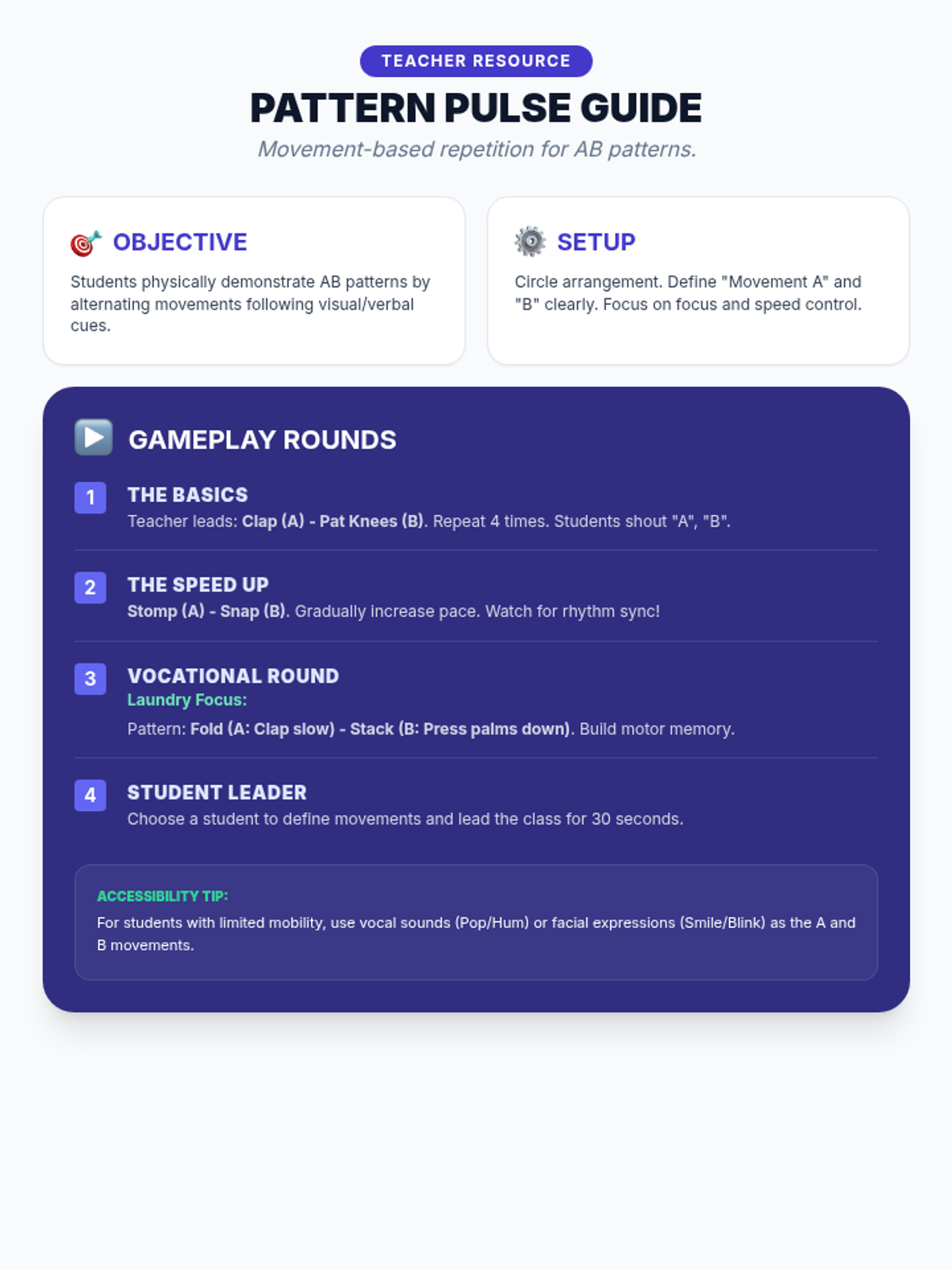
Introduction to simple AB patterns using laundry sorting (shirts and socks) as a vocational context. Students learn to identify, extend, and create two-part alternating sequences.
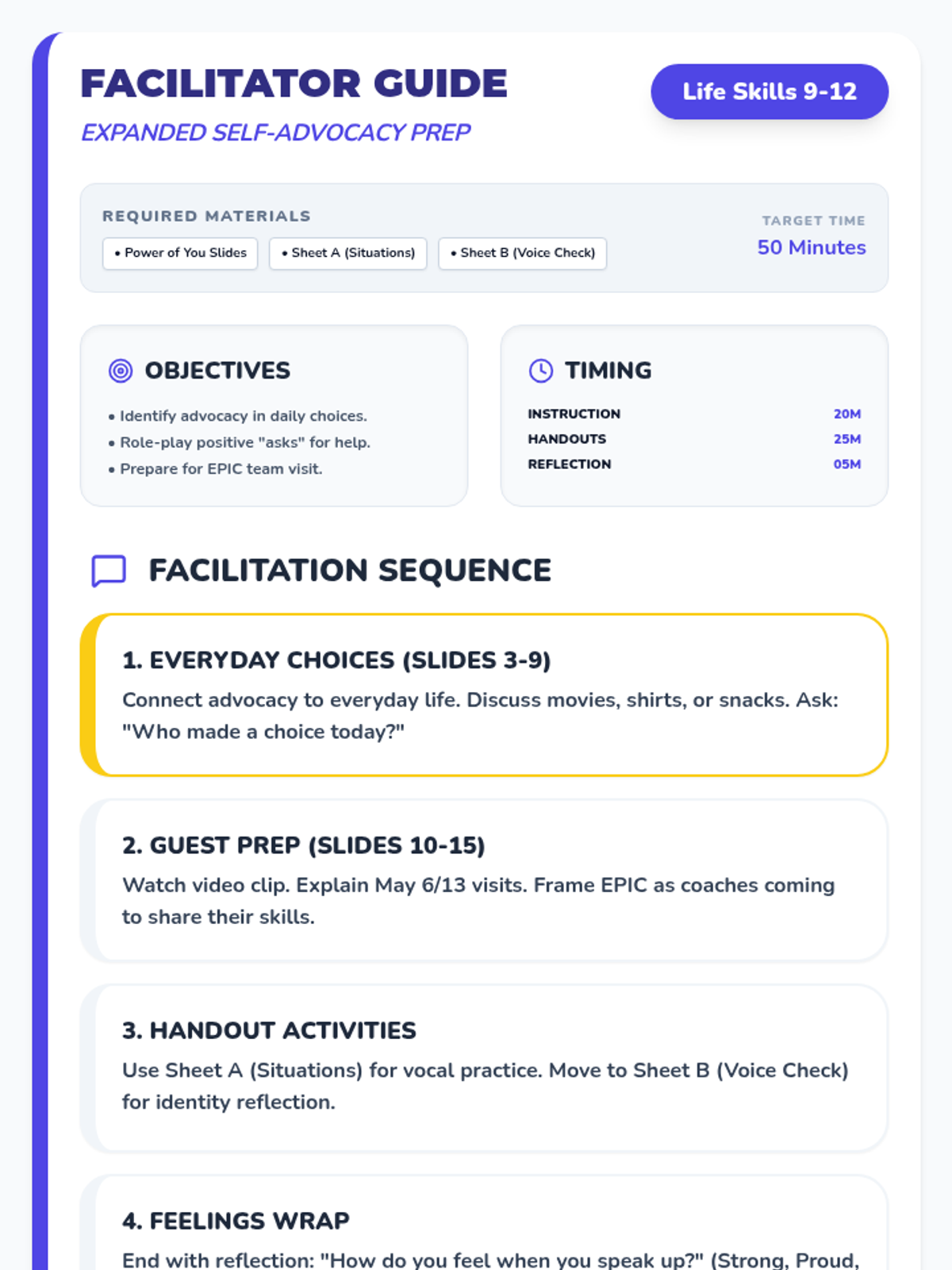
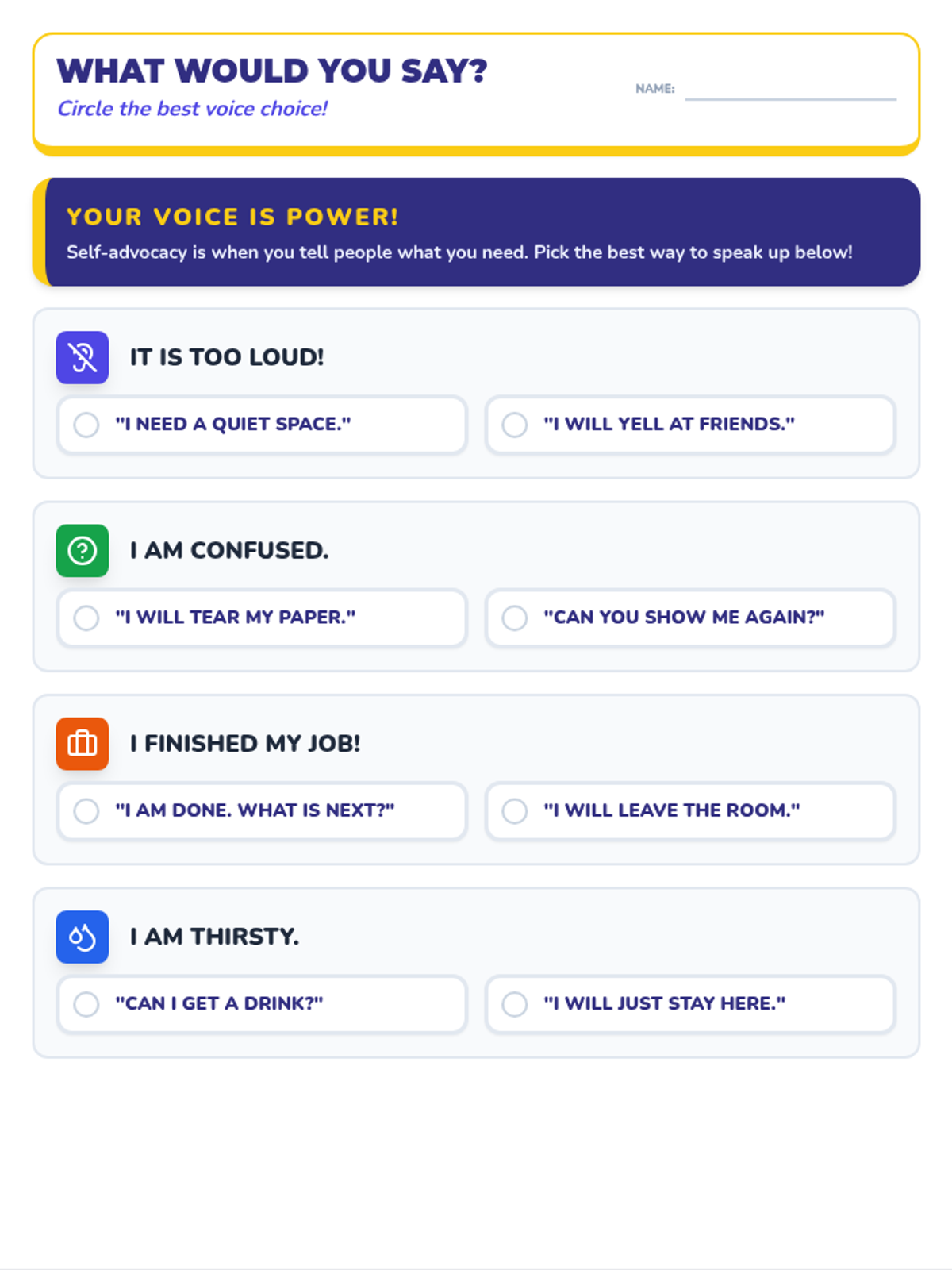
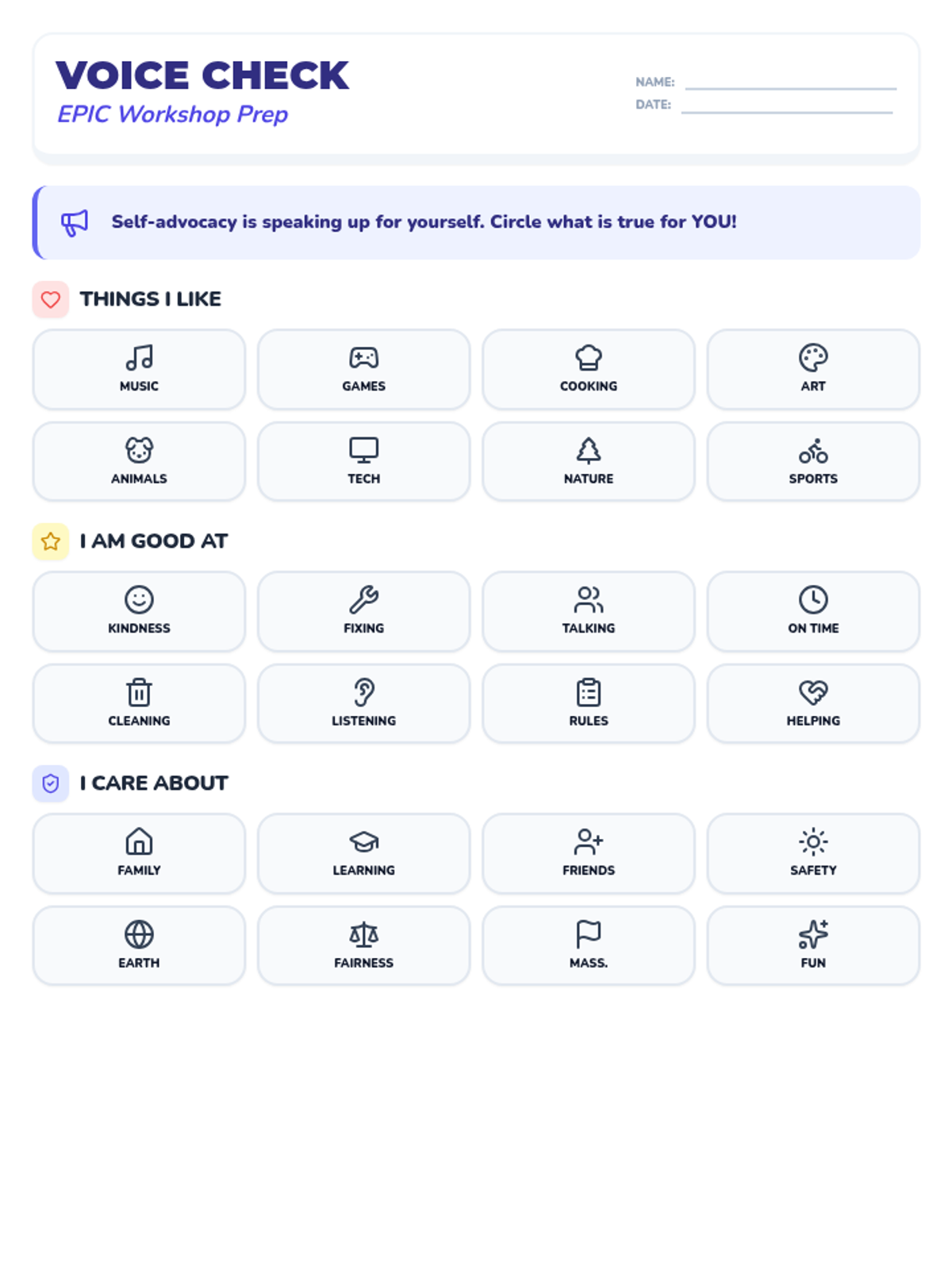
A lesson designed to introduce high school life skills students to the concept of self-advocacy and prepare them for upcoming guest workshops with EPIC. Students will explore their strengths, needs, and how to use their voice to get support.
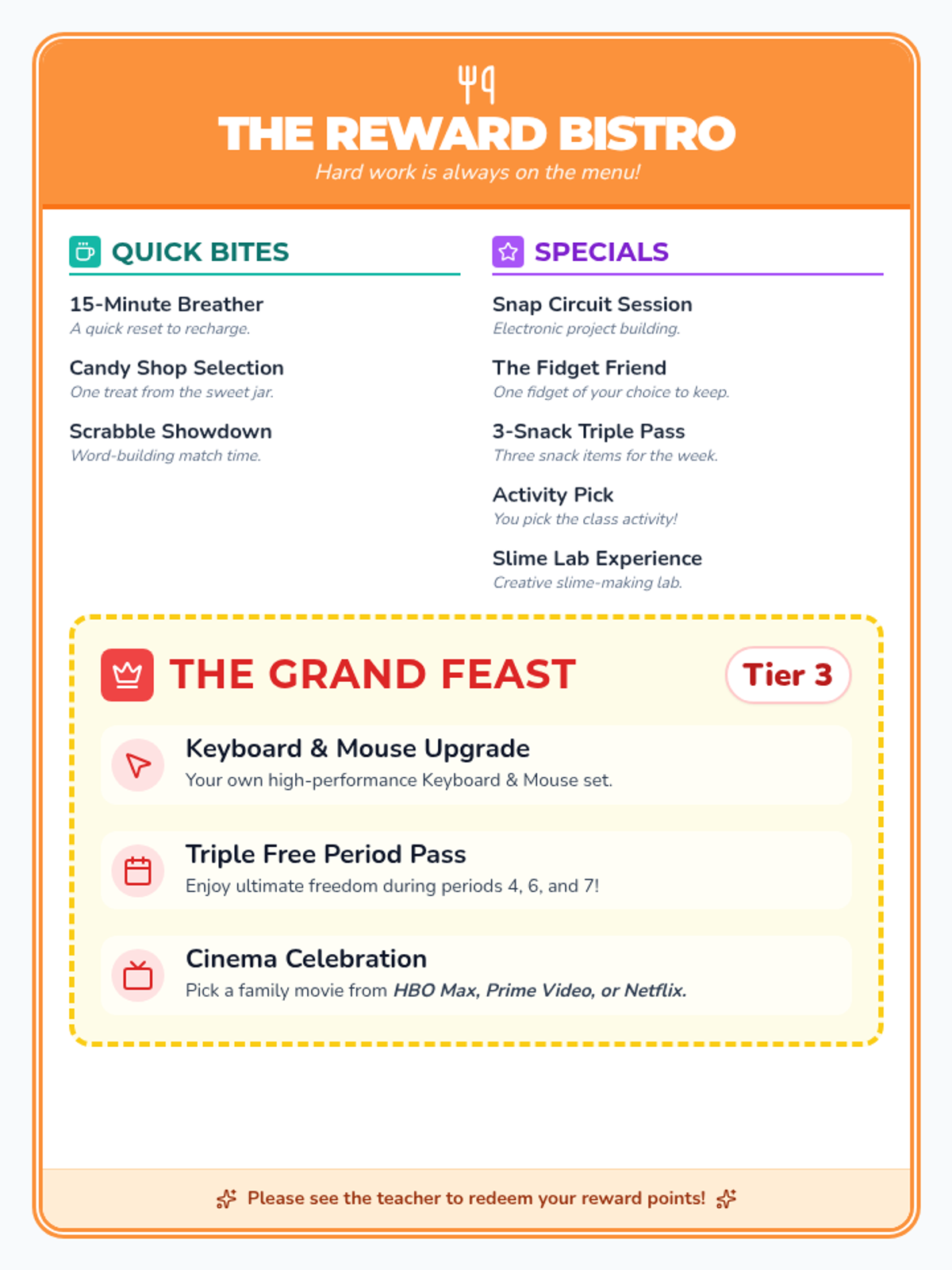
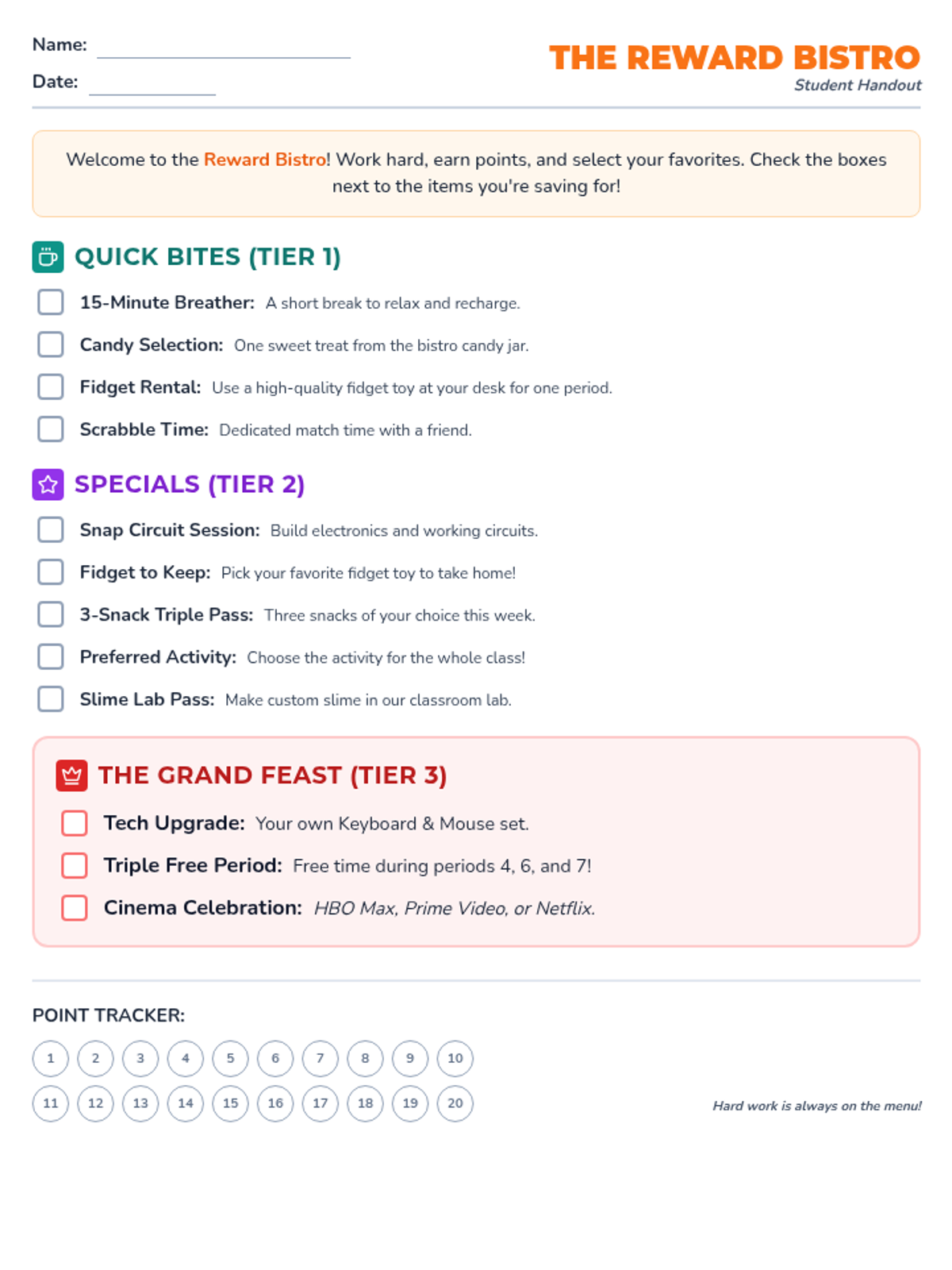
A collection of materials for managing a classroom reward system based on a diner theme, including a large-format poster and student-facing handouts.
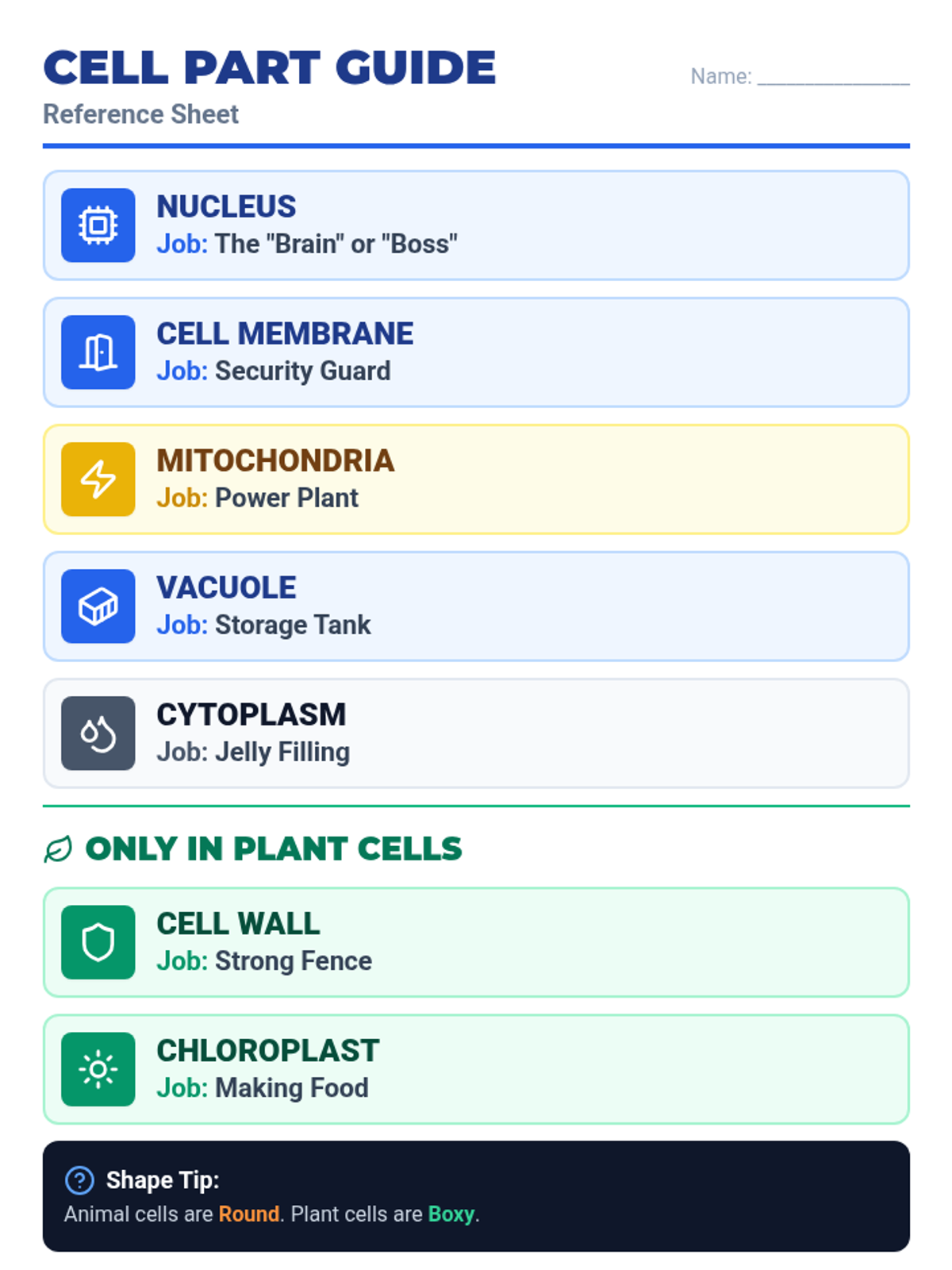
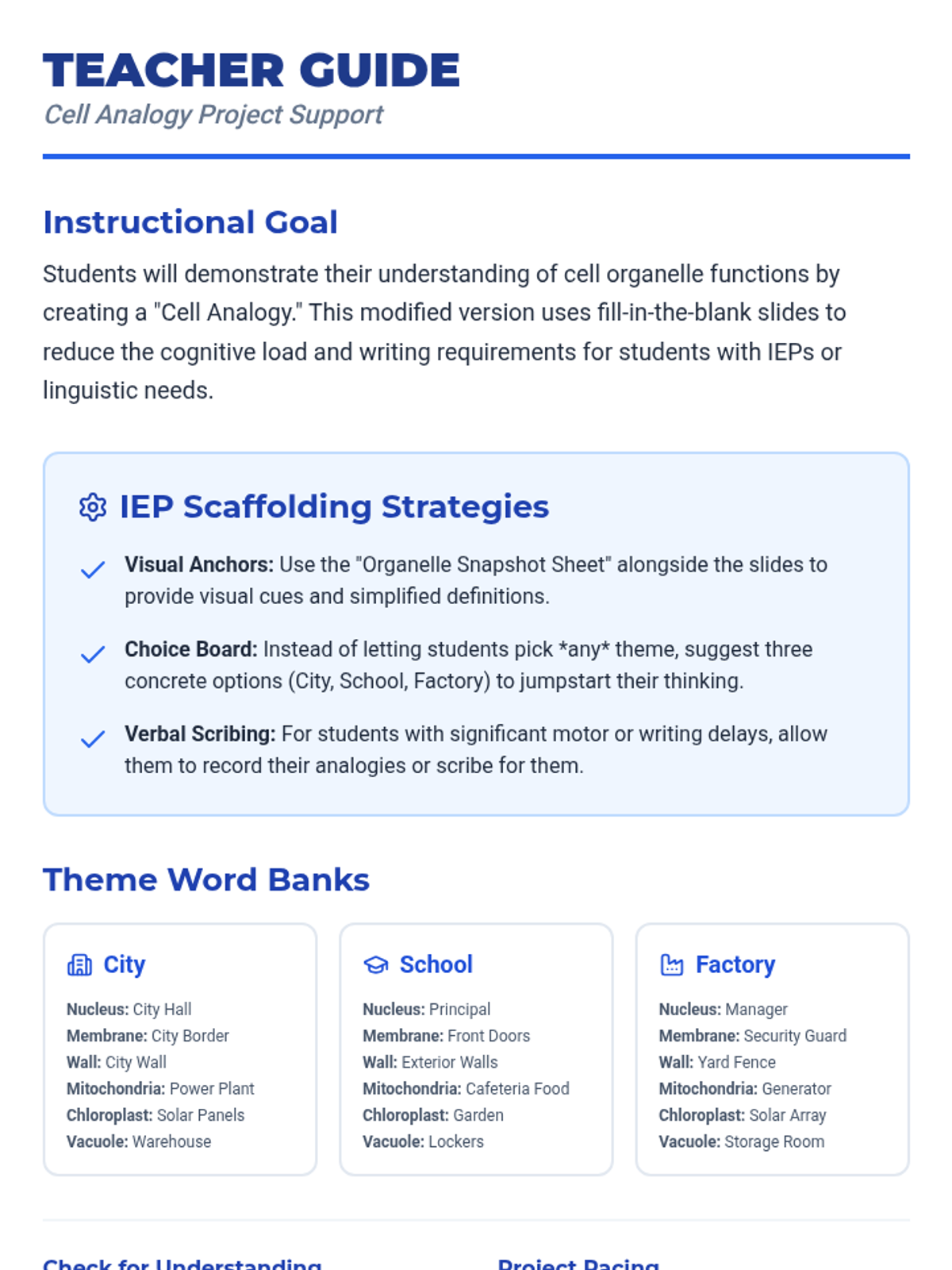
A modified cell analogy project for students with IEPs, focusing on comparing plant and animal cell organelles to real-world structures through structured slides and visual aids.
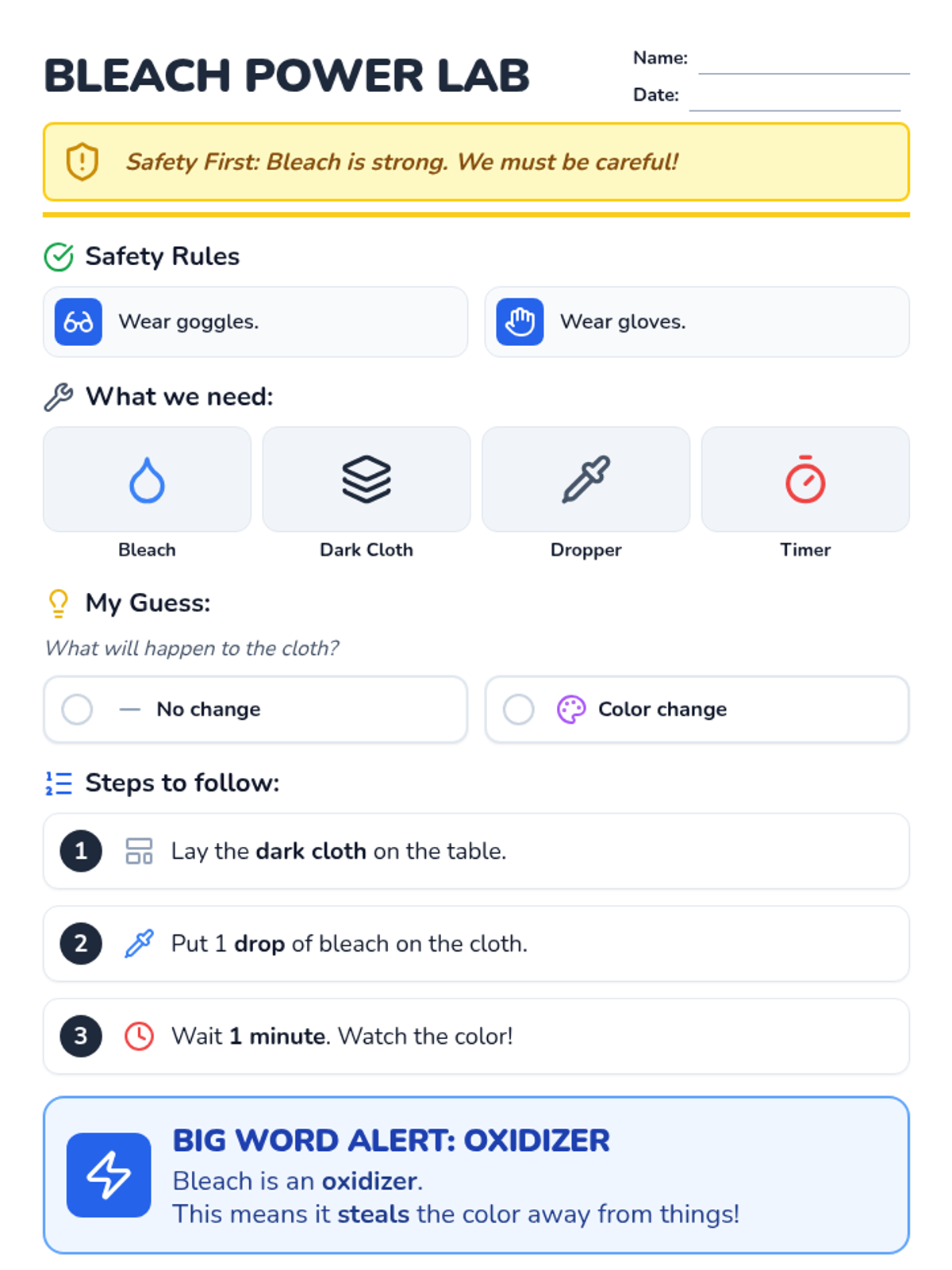
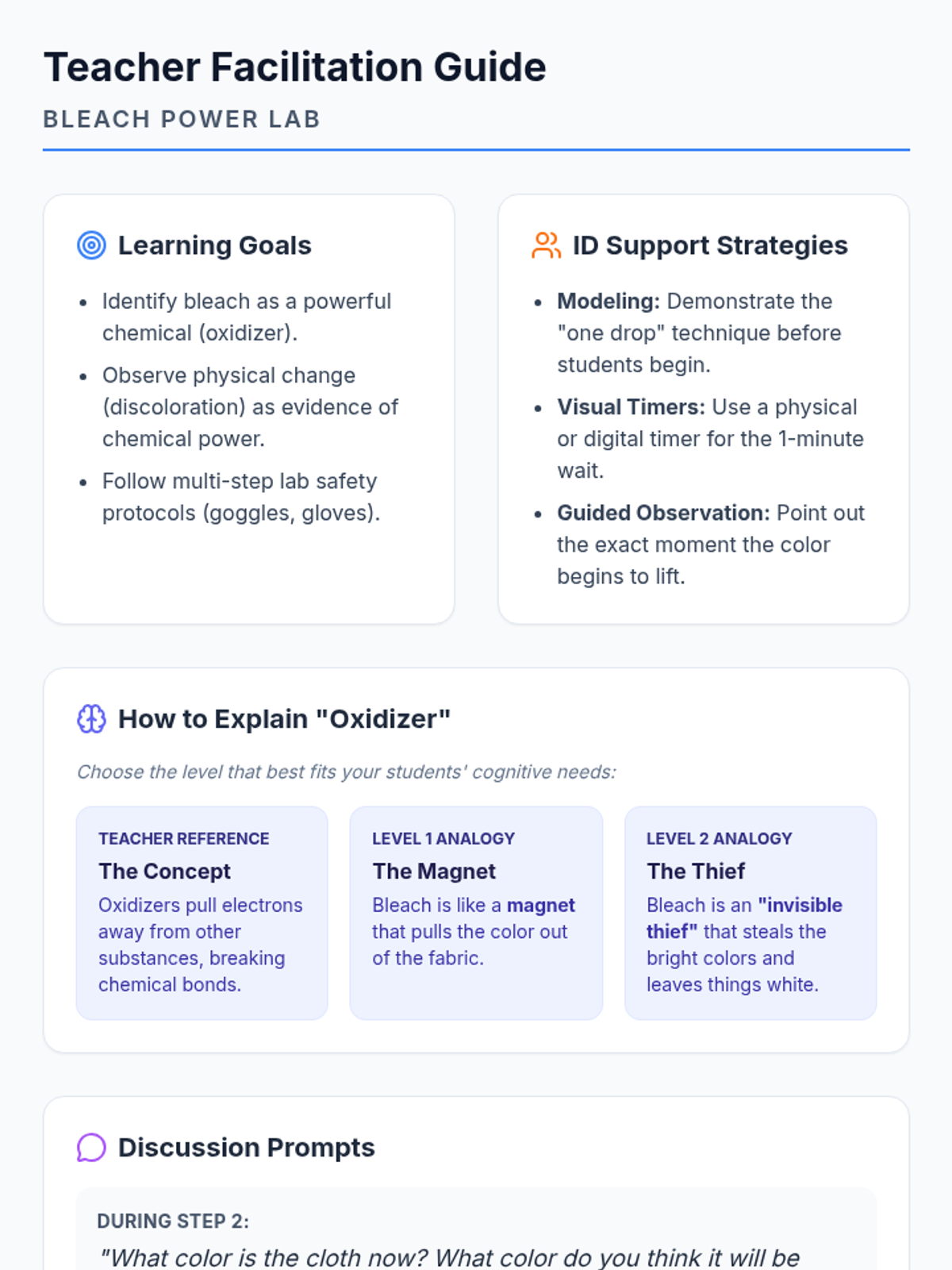
A hands-on chemistry lab designed for students with intellectual disabilities to observe the oxidizing power of bleach through fabric discoloration. The lesson emphasizes lab safety and the chemical strength of household cleaners.
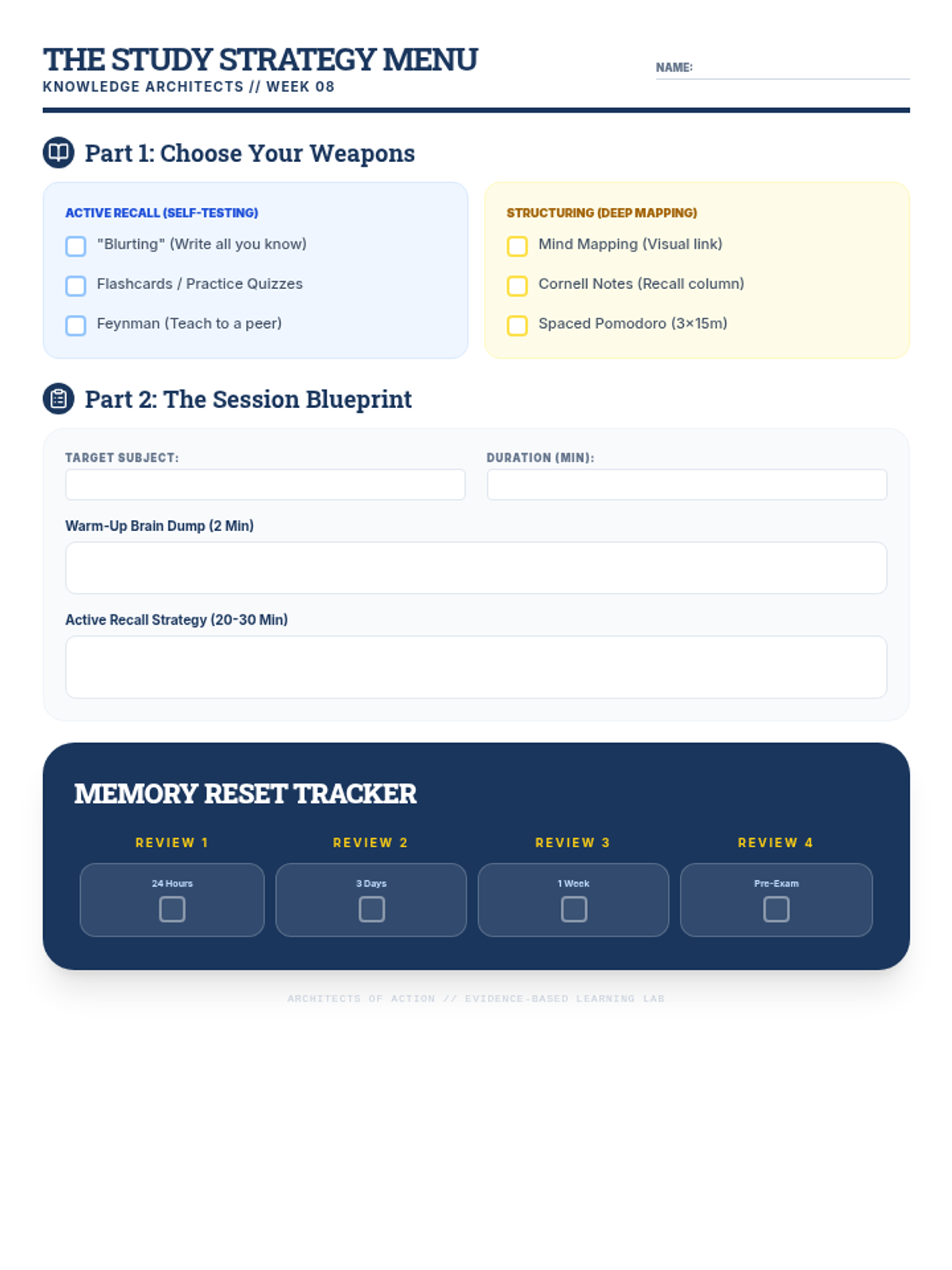
Evidence-based study strategies including active recall, spaced repetition, and personalized note-taking systems.
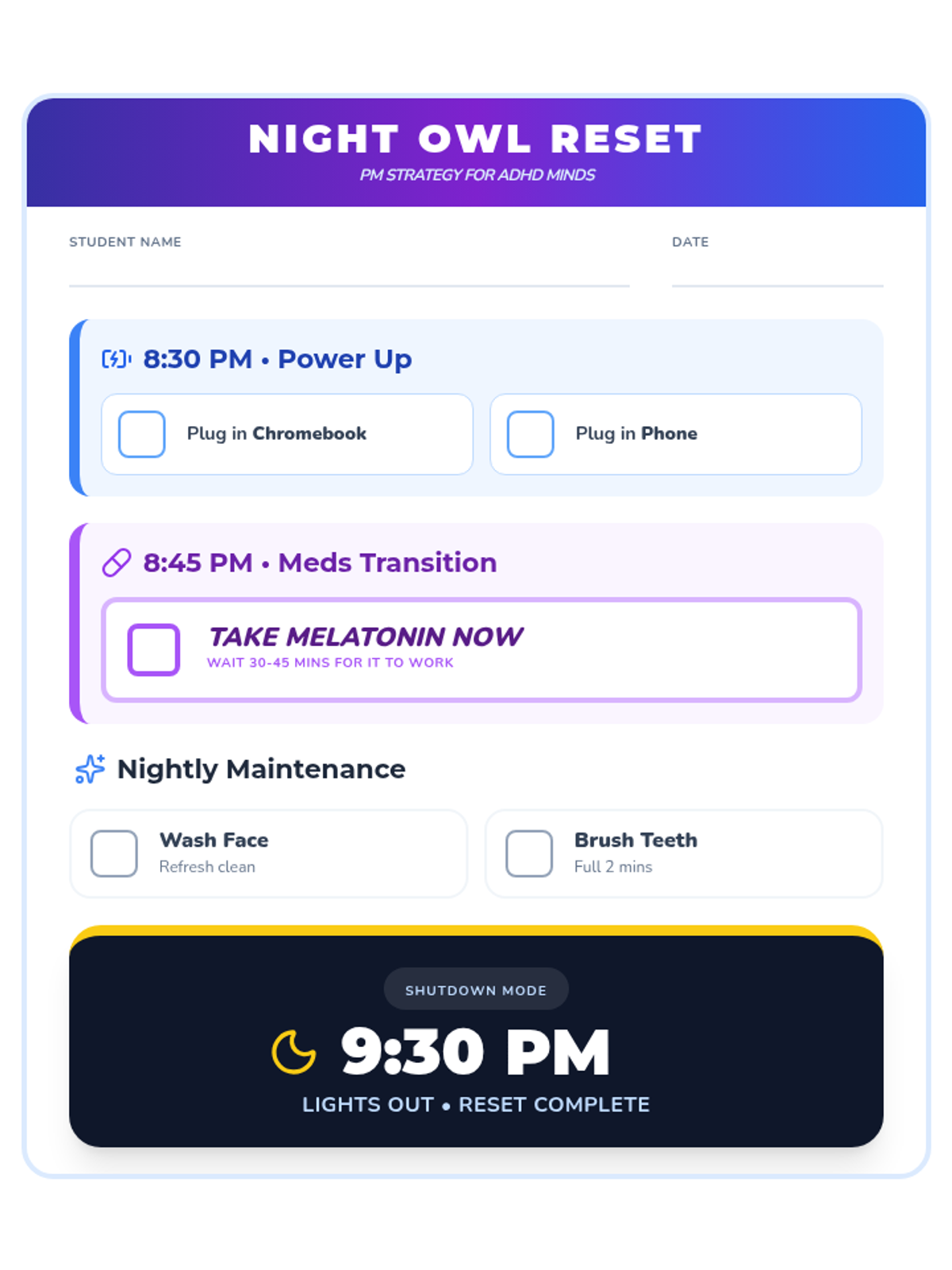
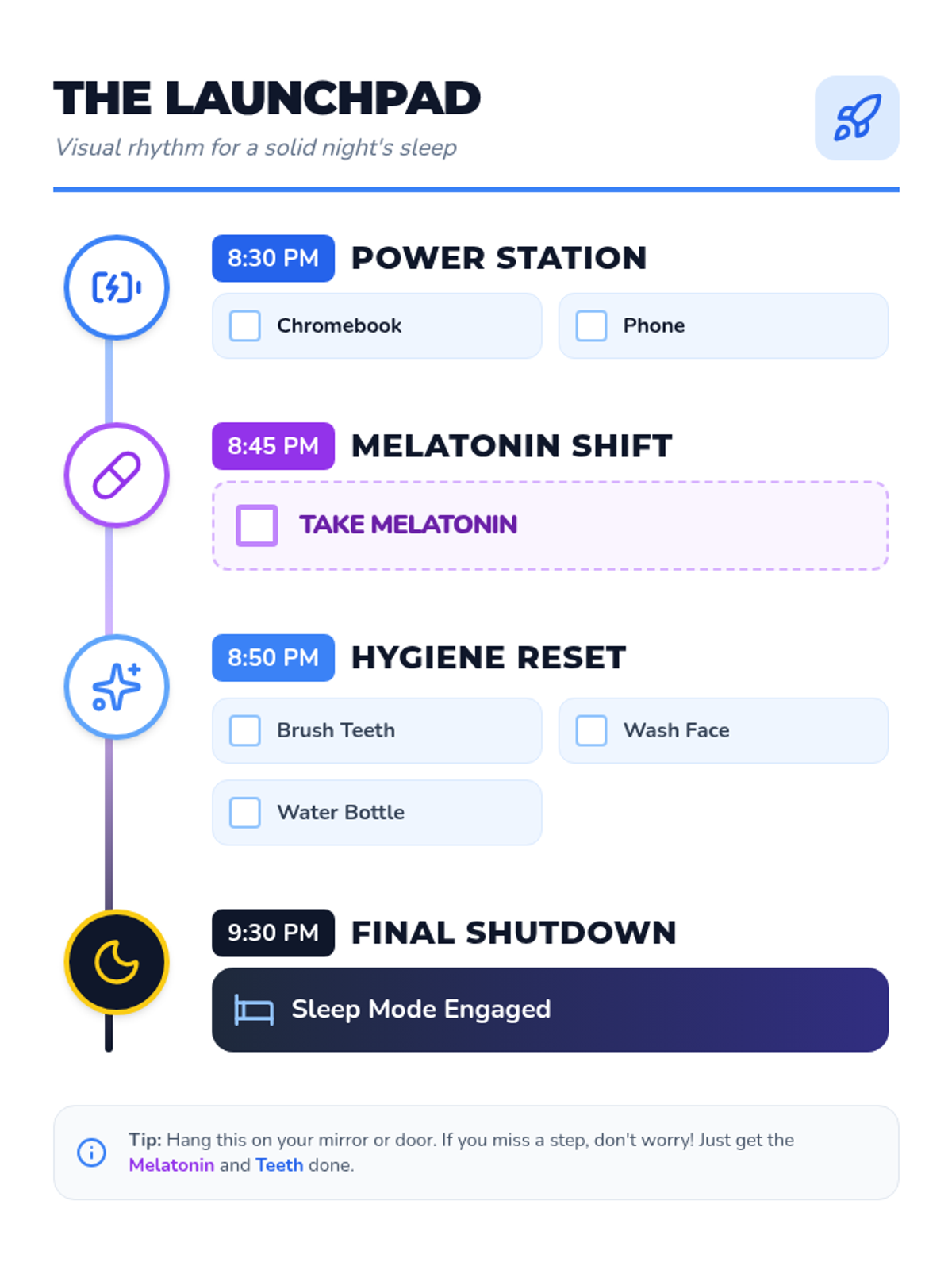
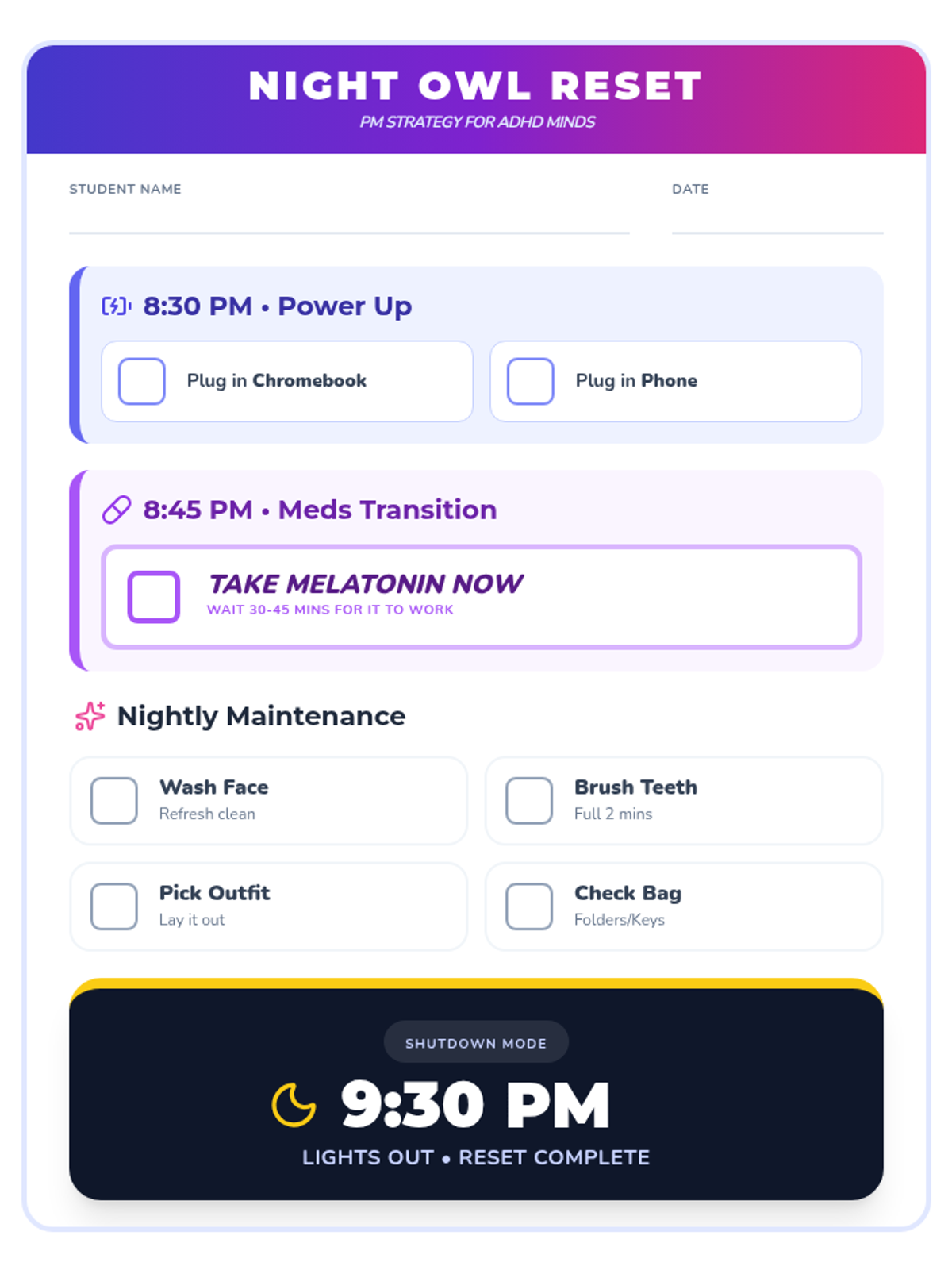
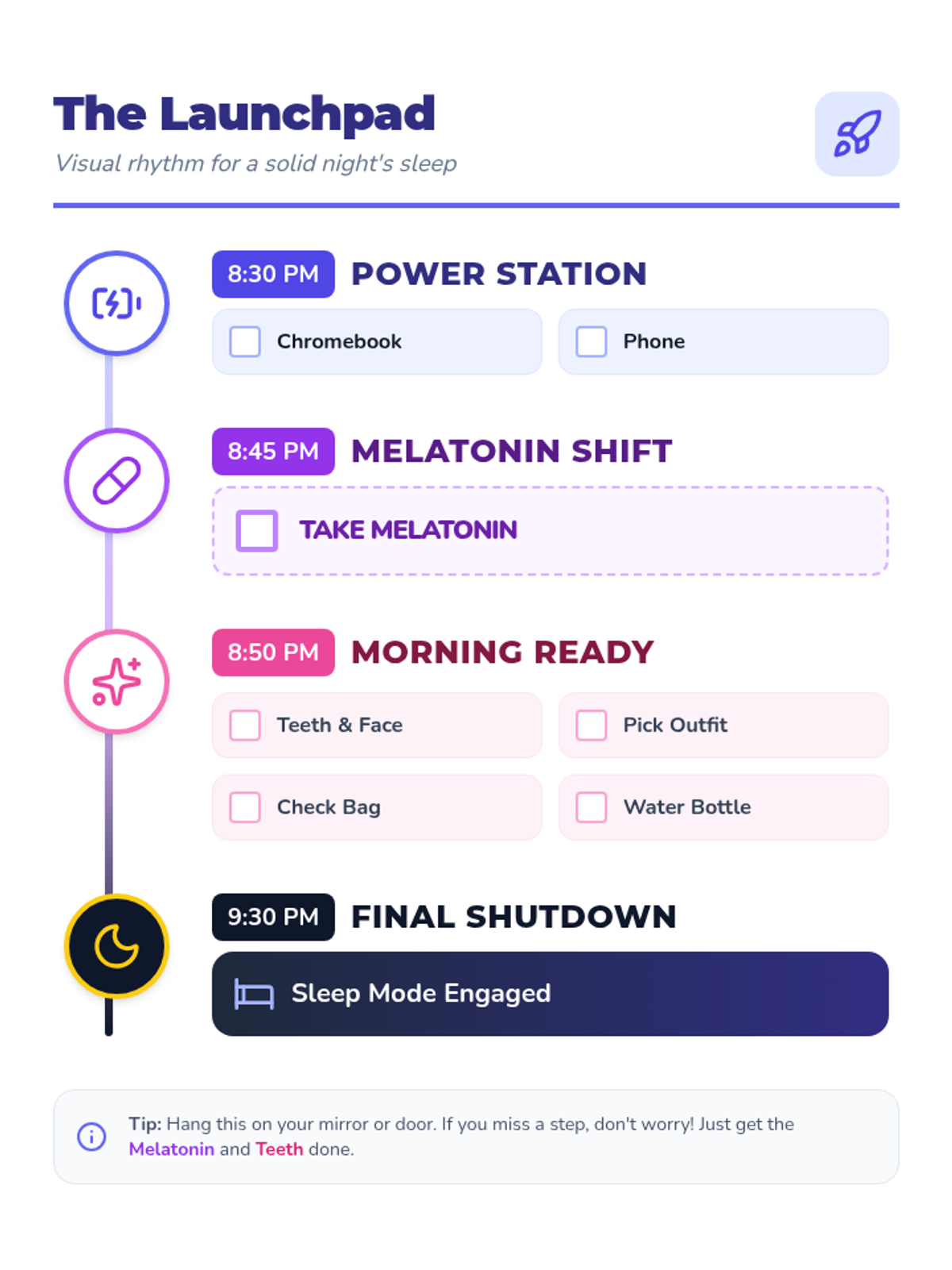
A set of bedtime routine tools designed specifically for teenagers with ADHD to help manage executive function and improve sleep hygiene.
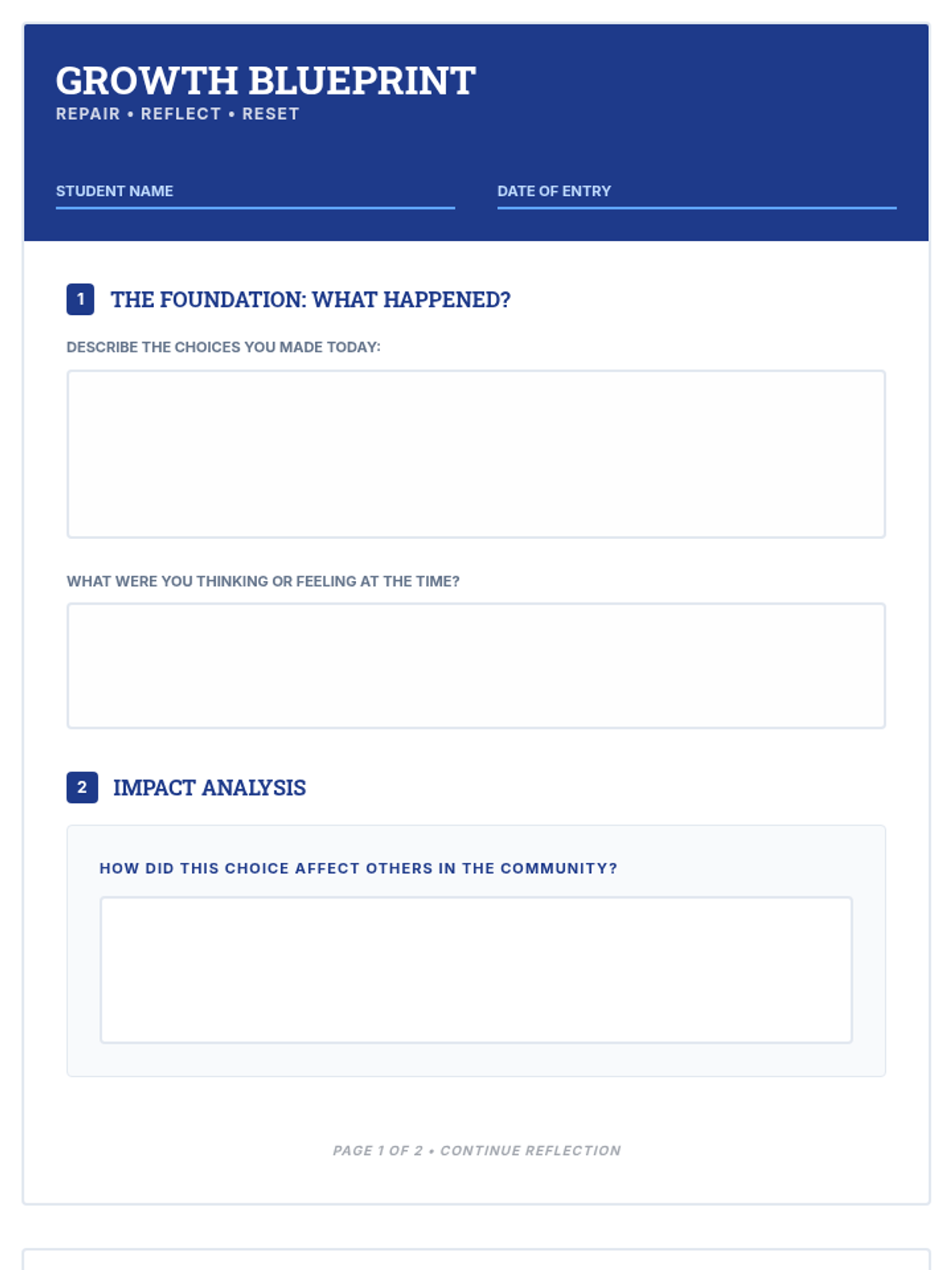
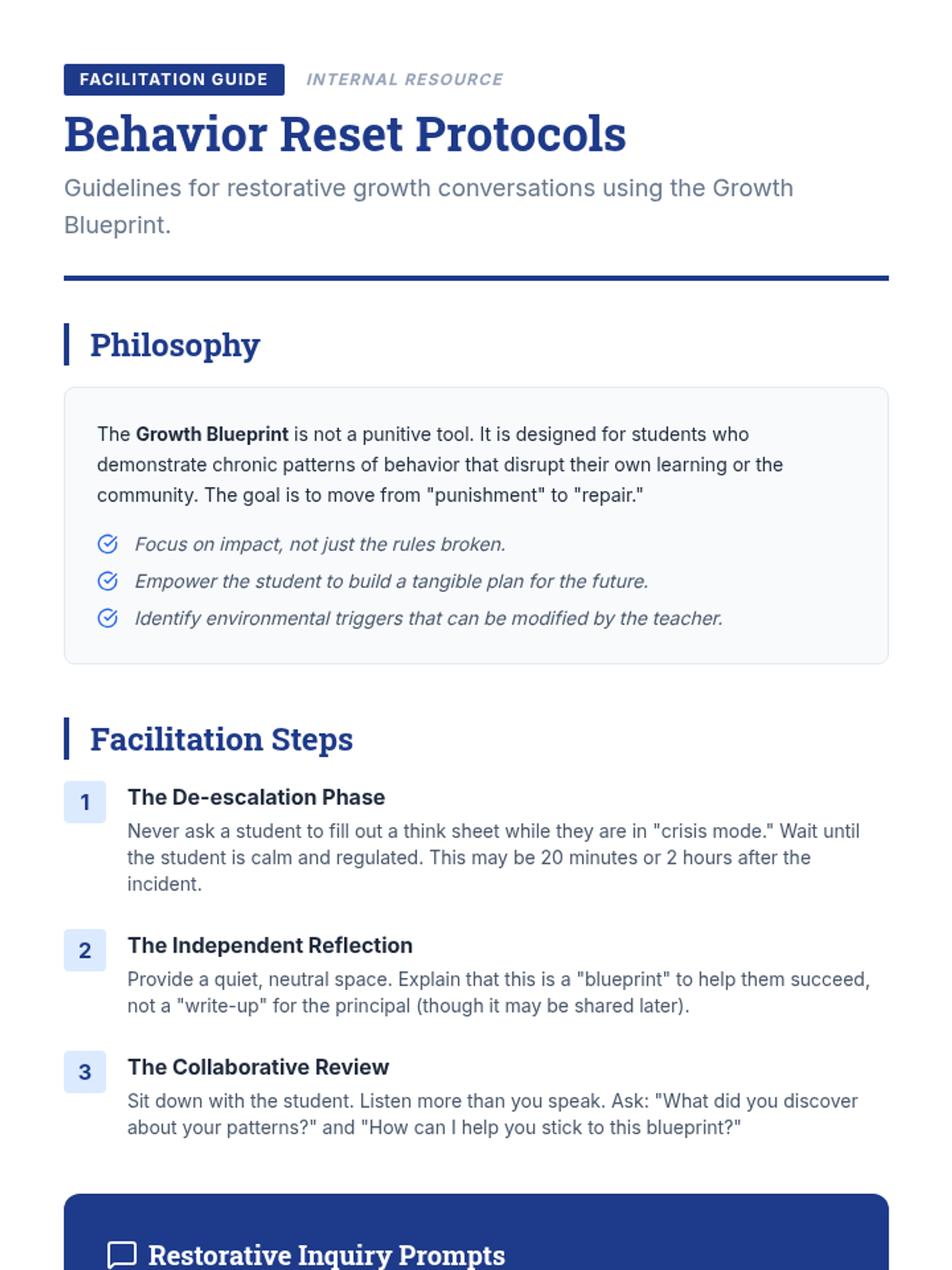
A restorative approach to addressing chronic behavior patterns, focusing on reflection, impact analysis, and collaborative goal setting.
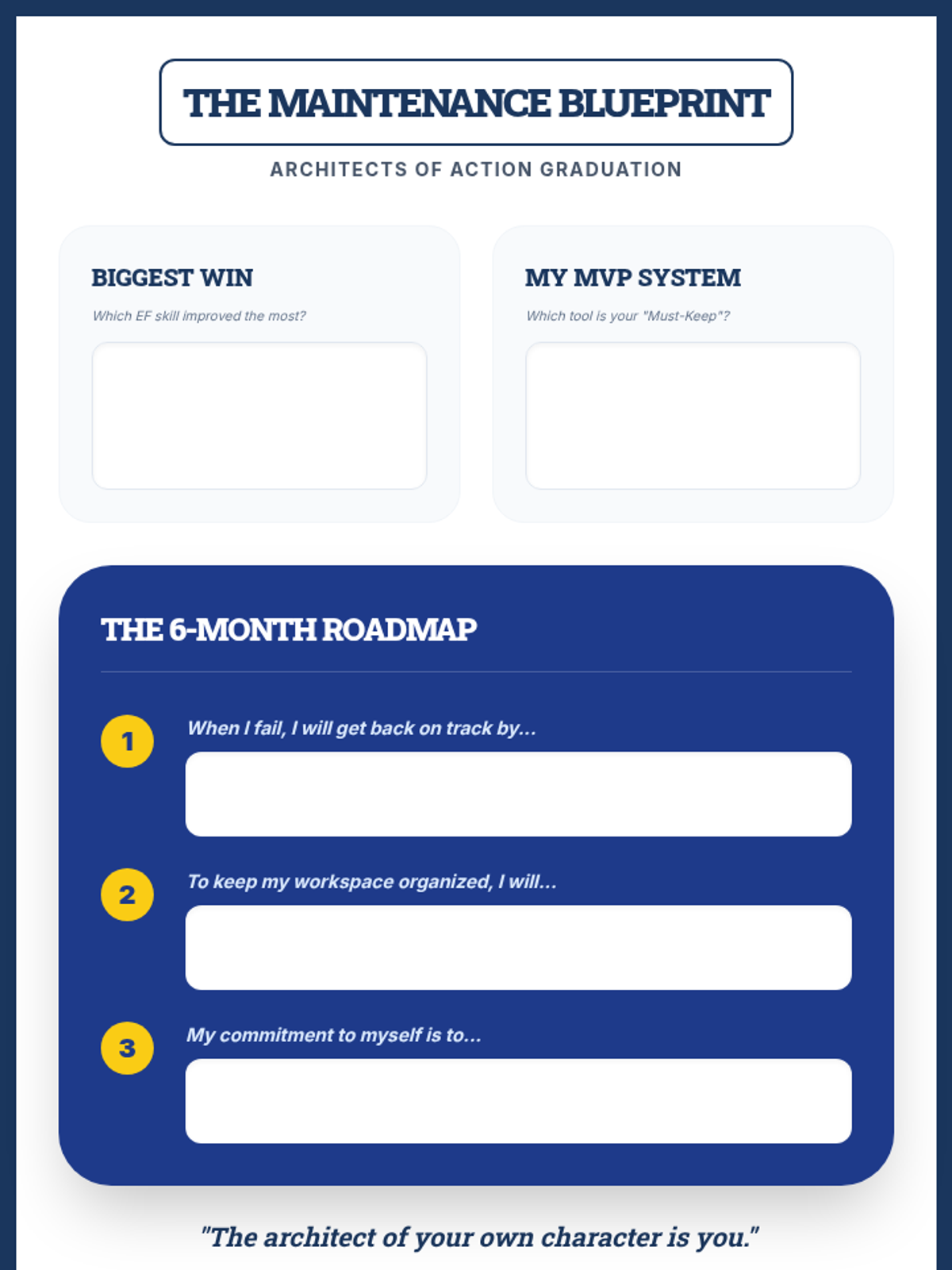
Reflecting on growth, creating a long-term maintenance plan, and celebrating group success.
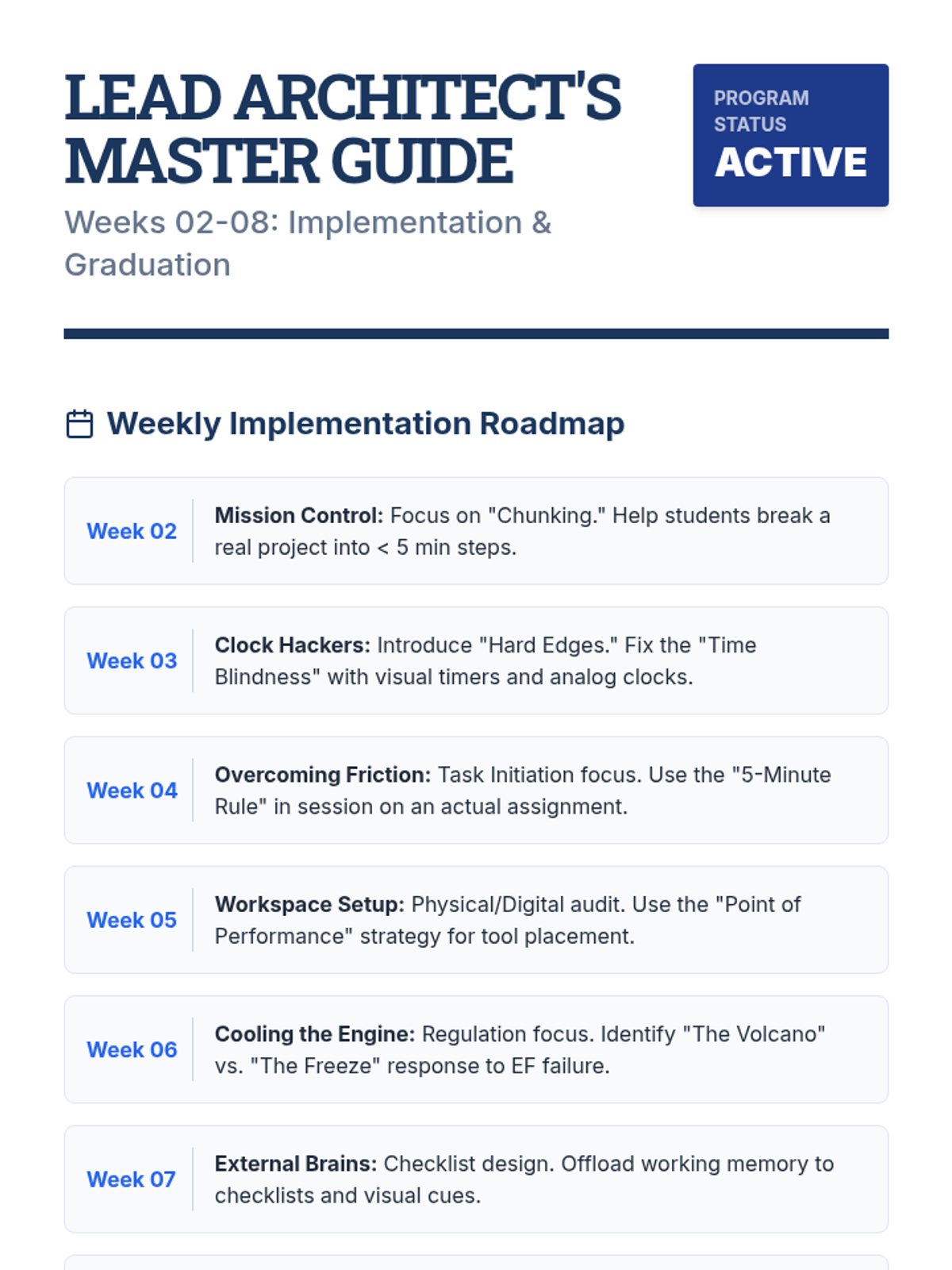
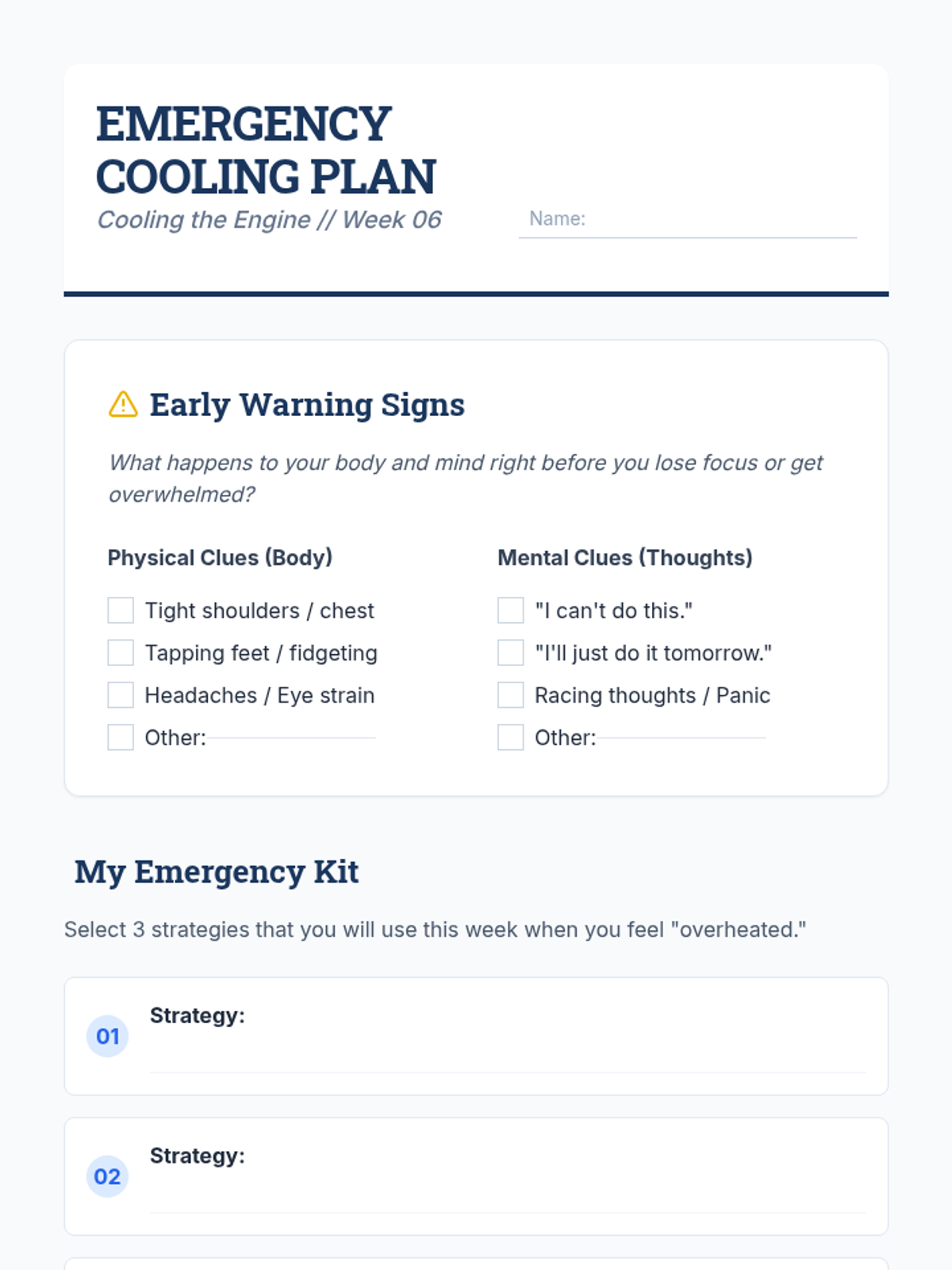
Recognizing how emotions affect EF and learning strategies for self-regulation and stress management.
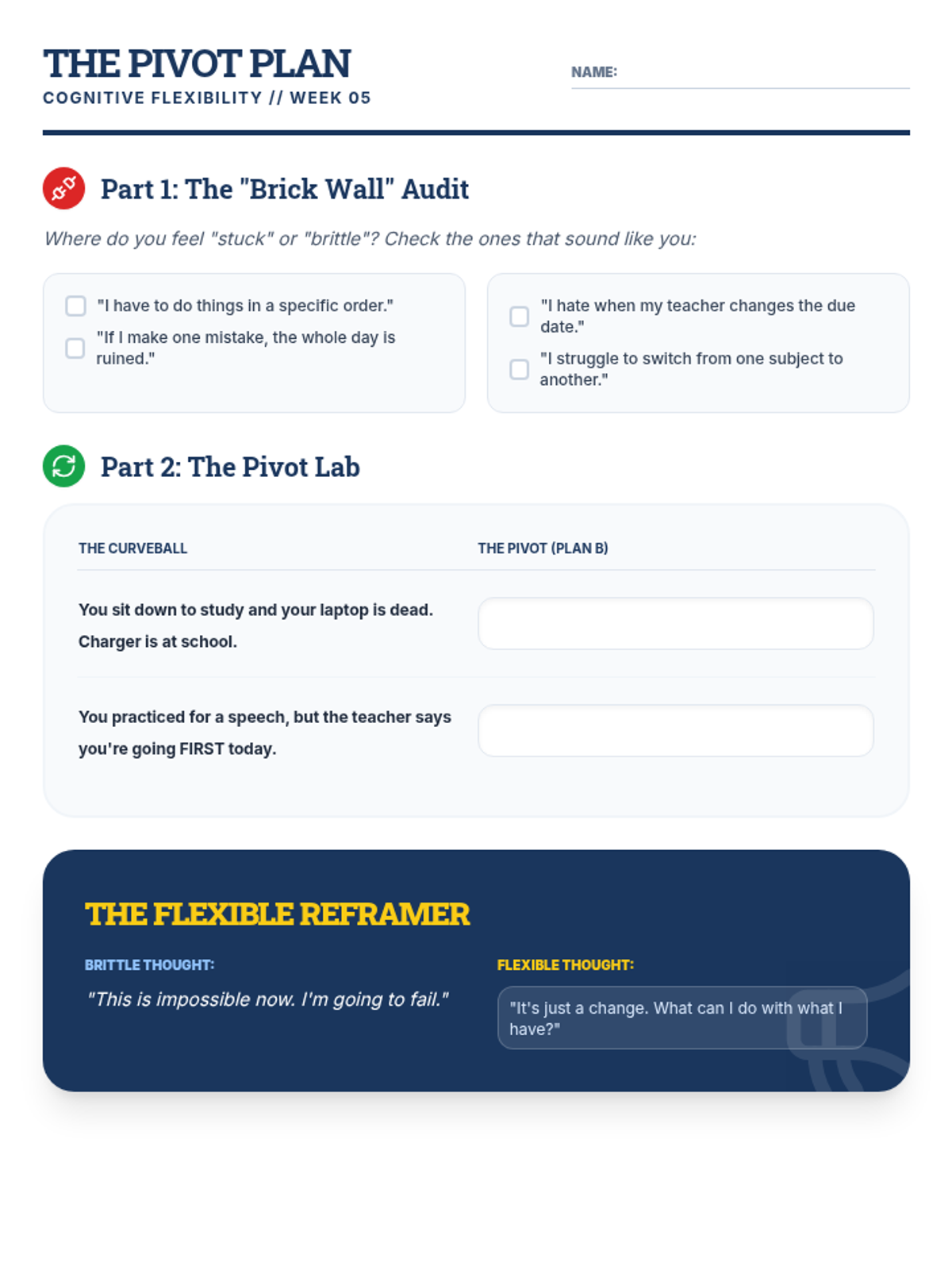
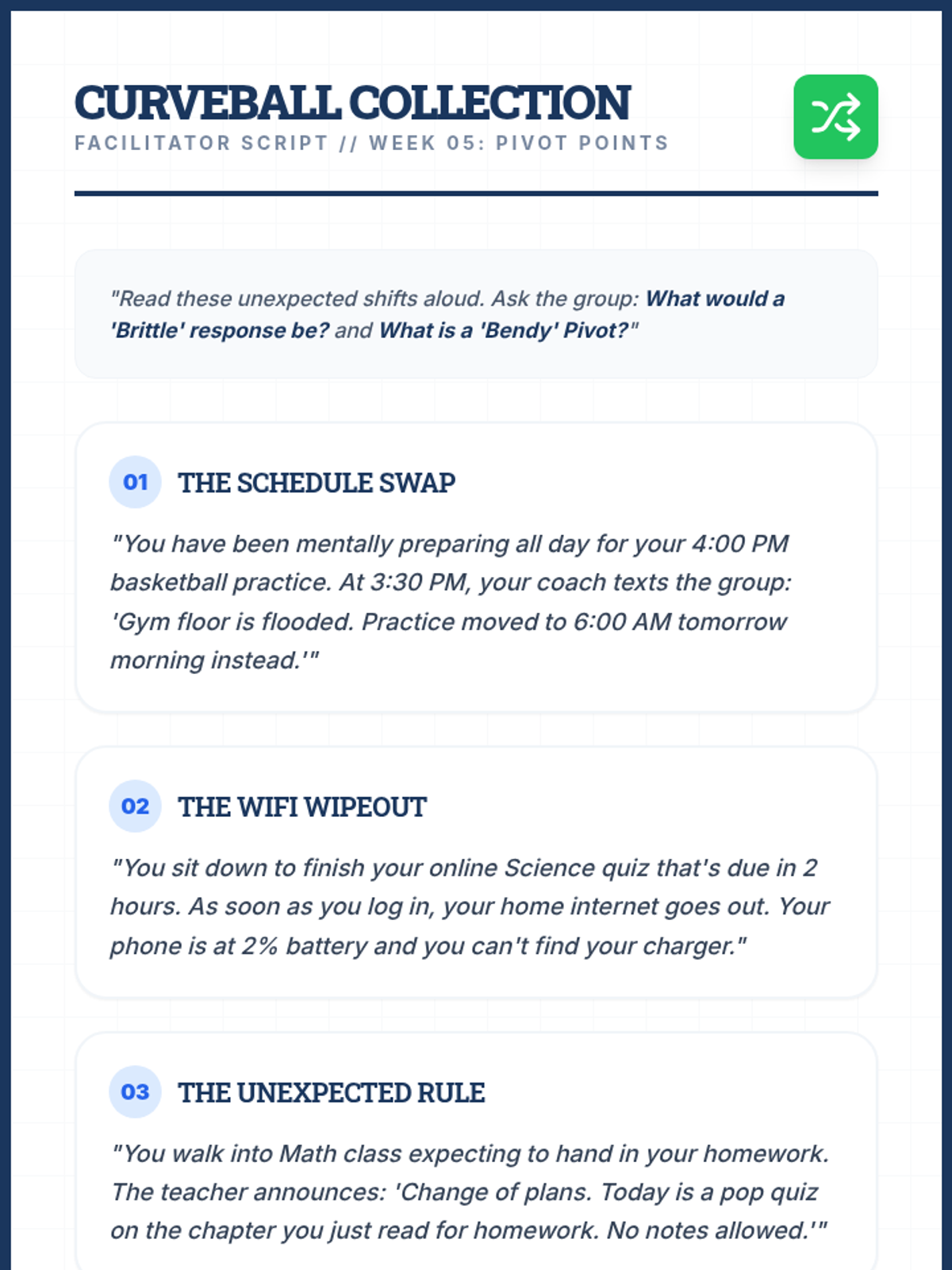
Developing the ability to adapt to changes, switch mindsets, and solve problems from new angles.
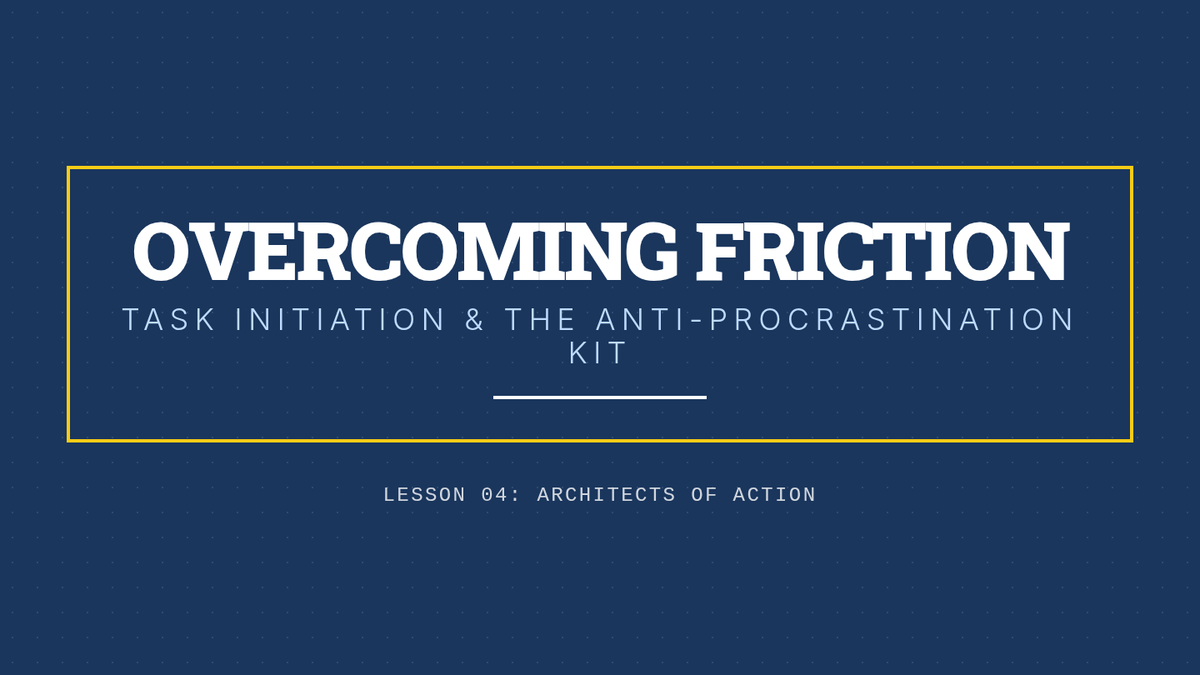
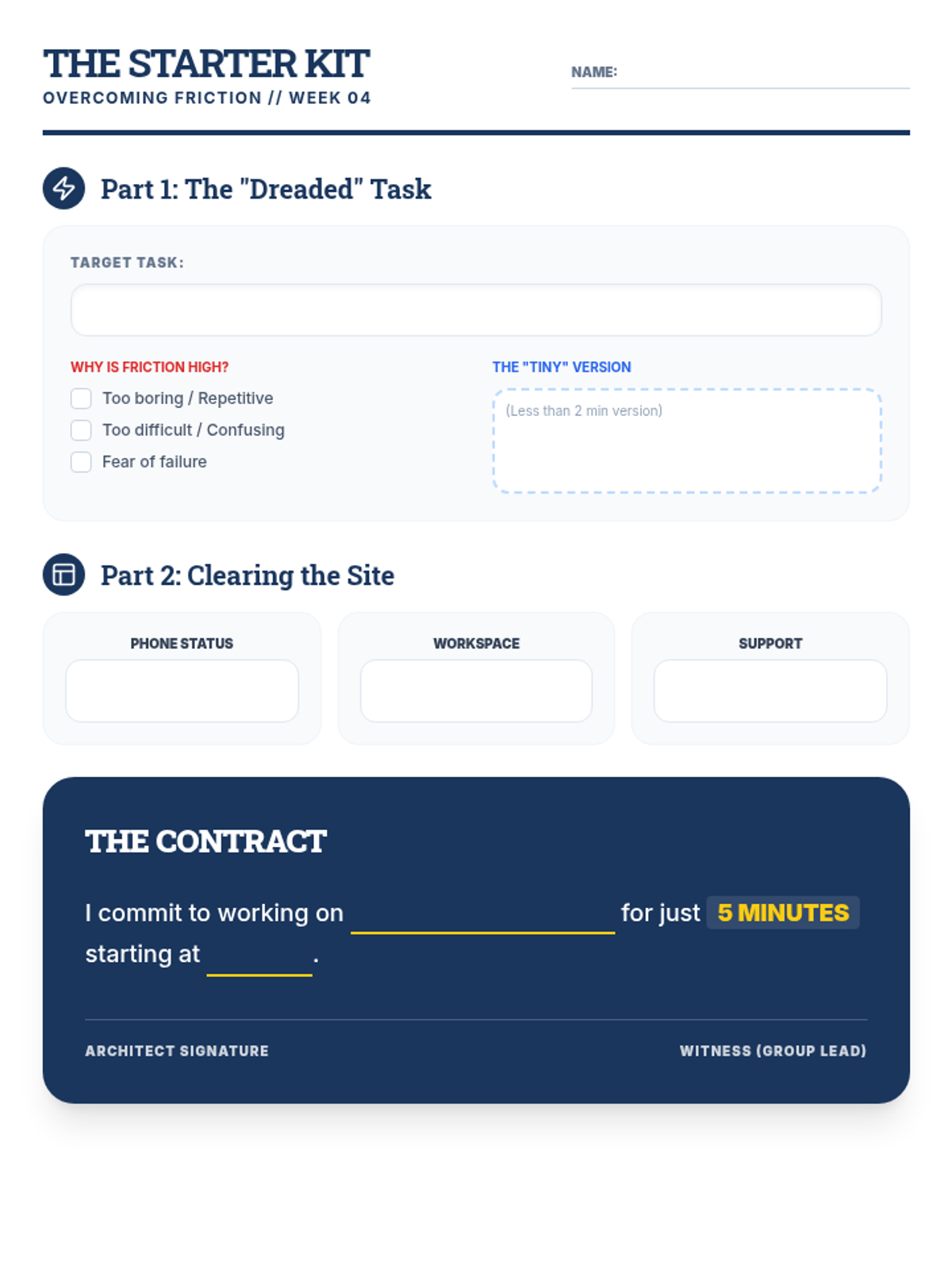
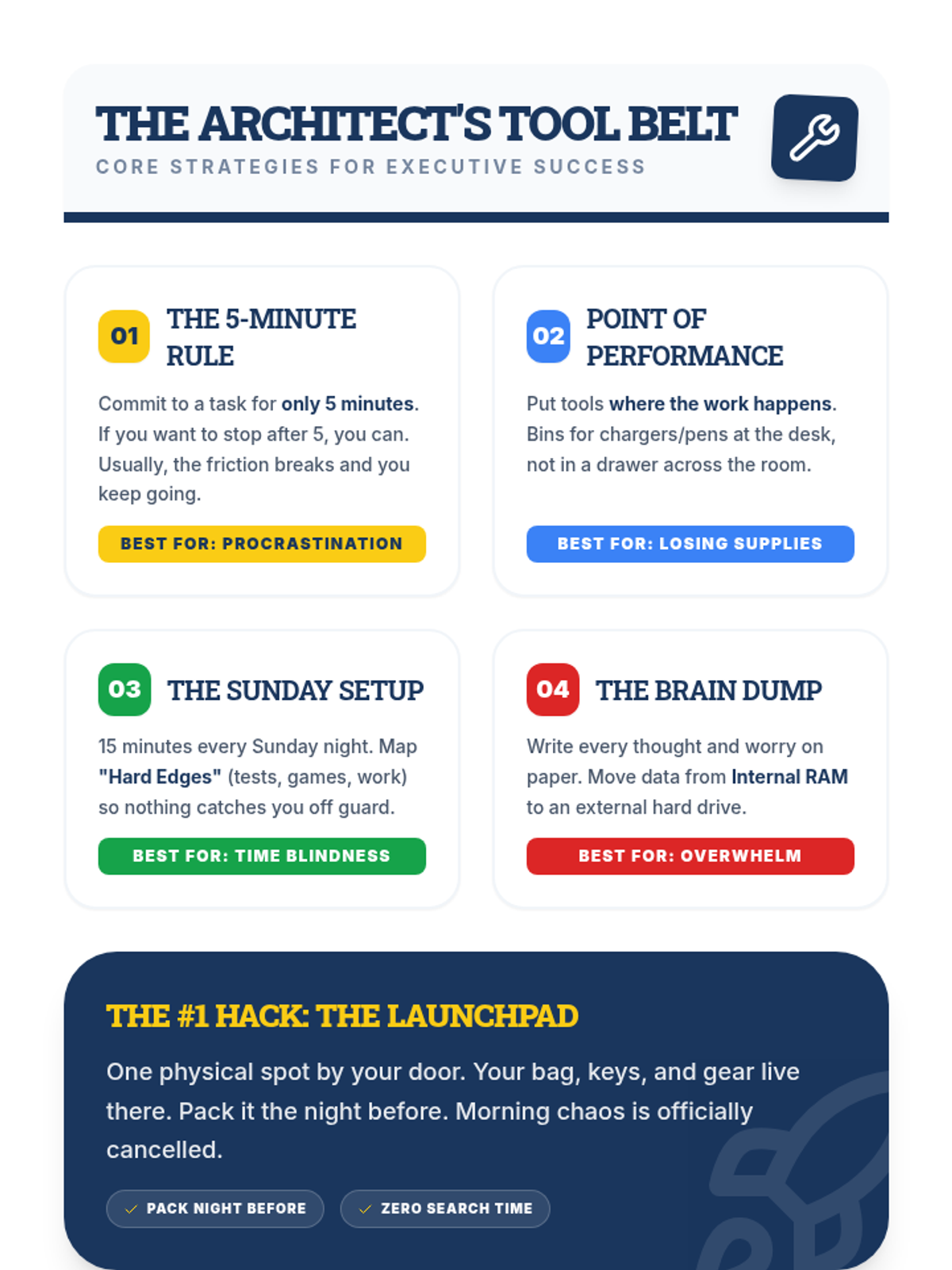
Strategies for task initiation, overcoming procrastination, and maintaining focus in a world of distractions.
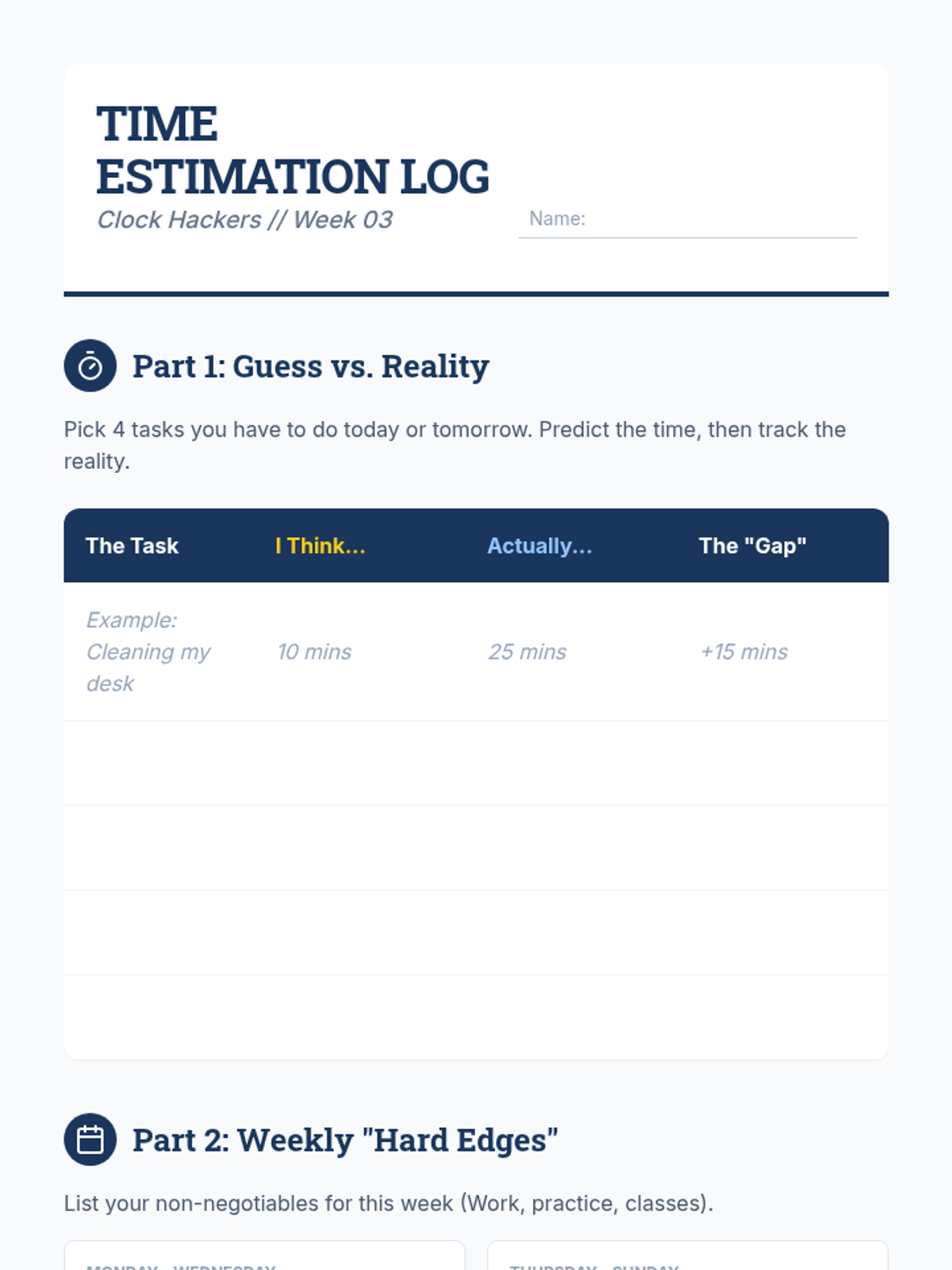
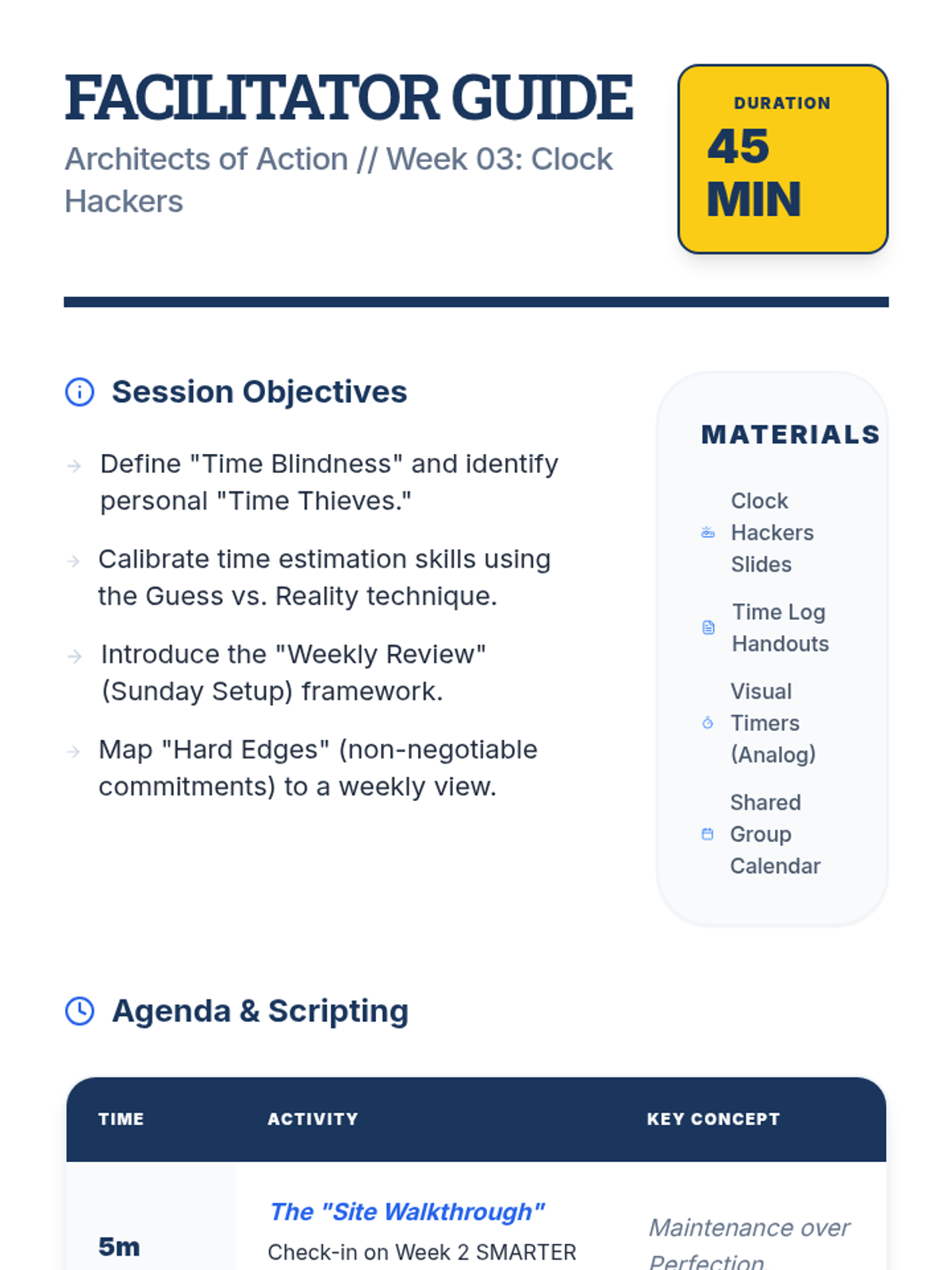
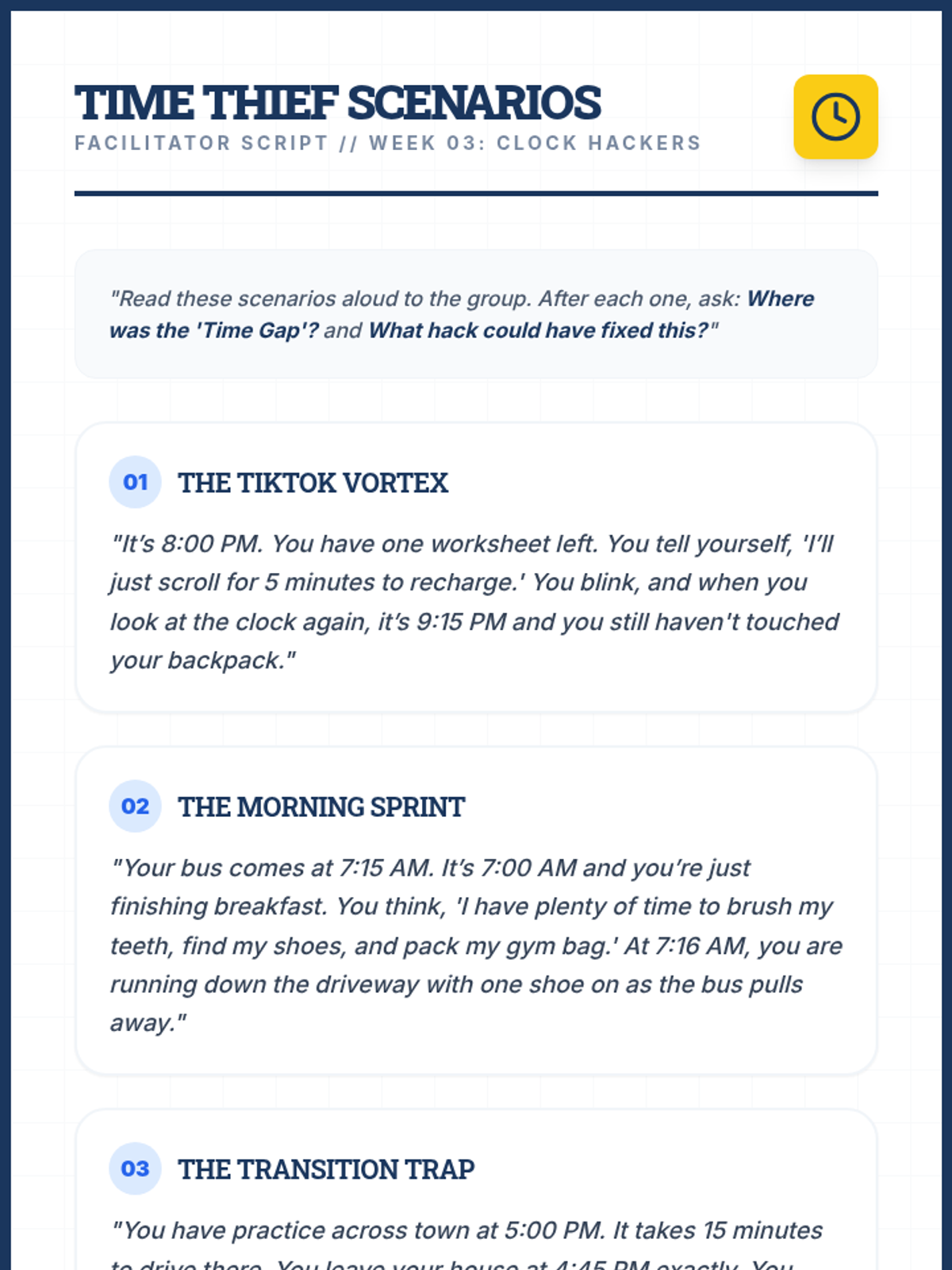
Understanding time blindness, using calendars effectively, and mastering the weekly review.
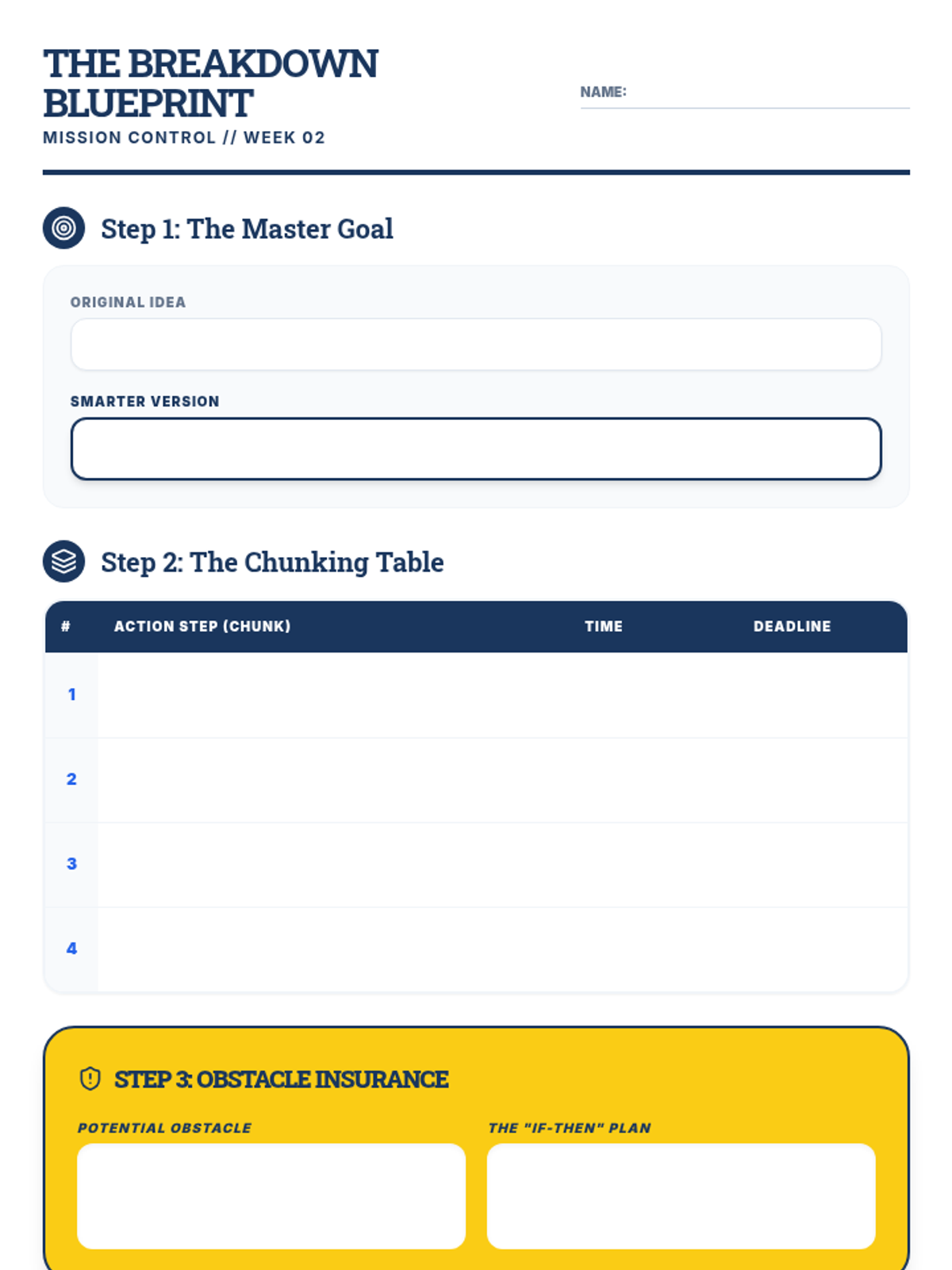
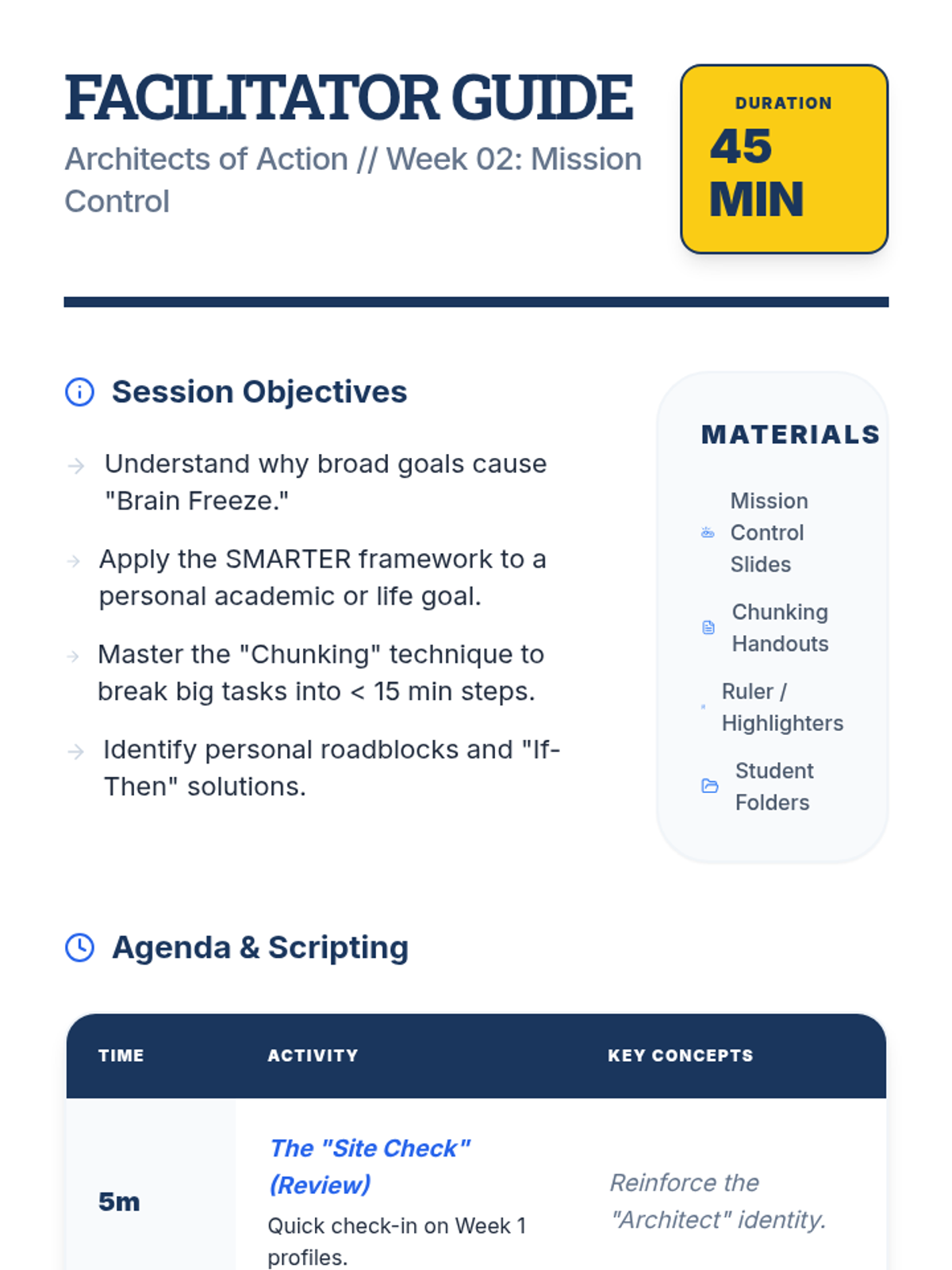
Setting SMARTER goals and learning to break down large projects into manageable chunks.
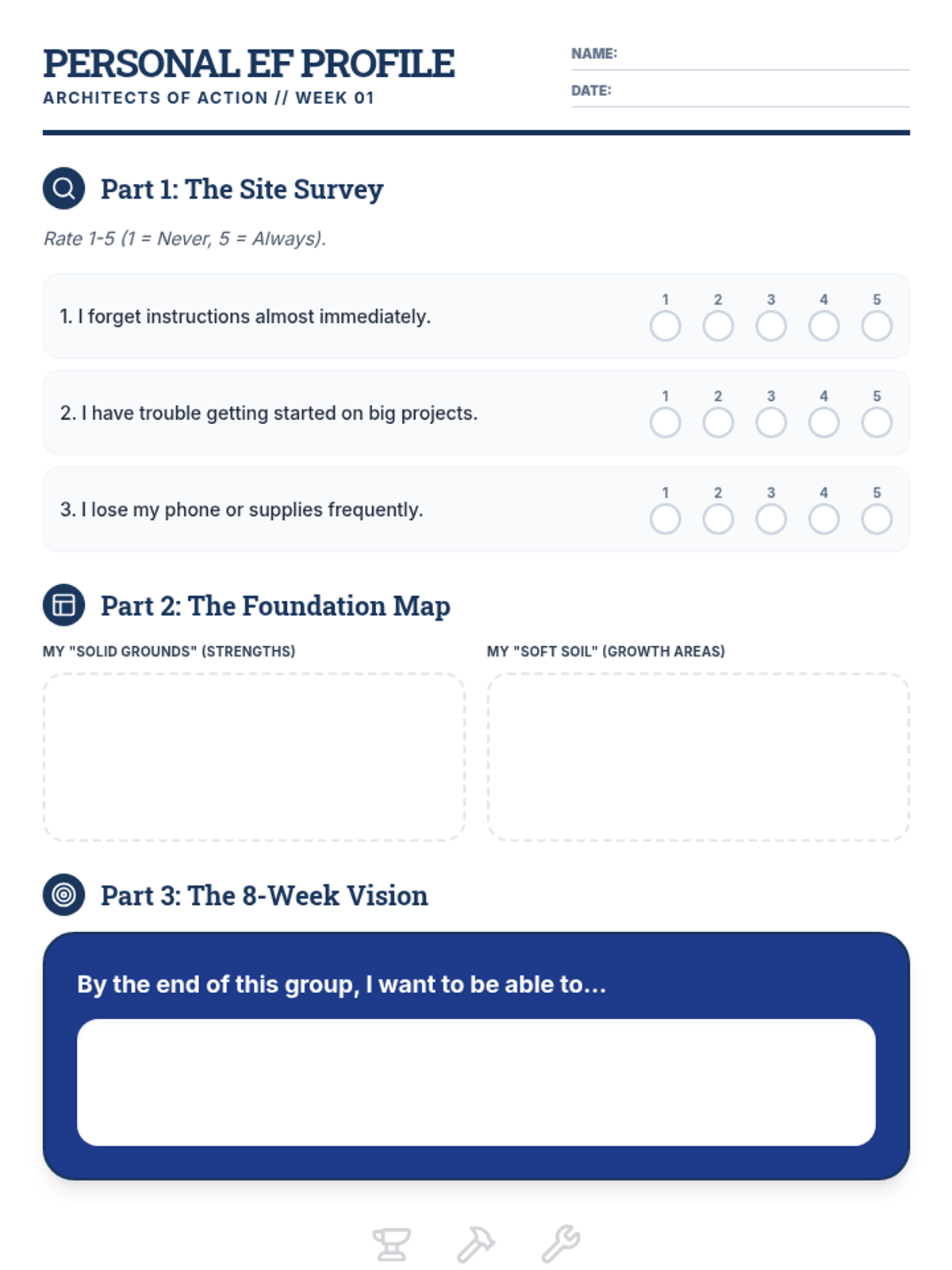
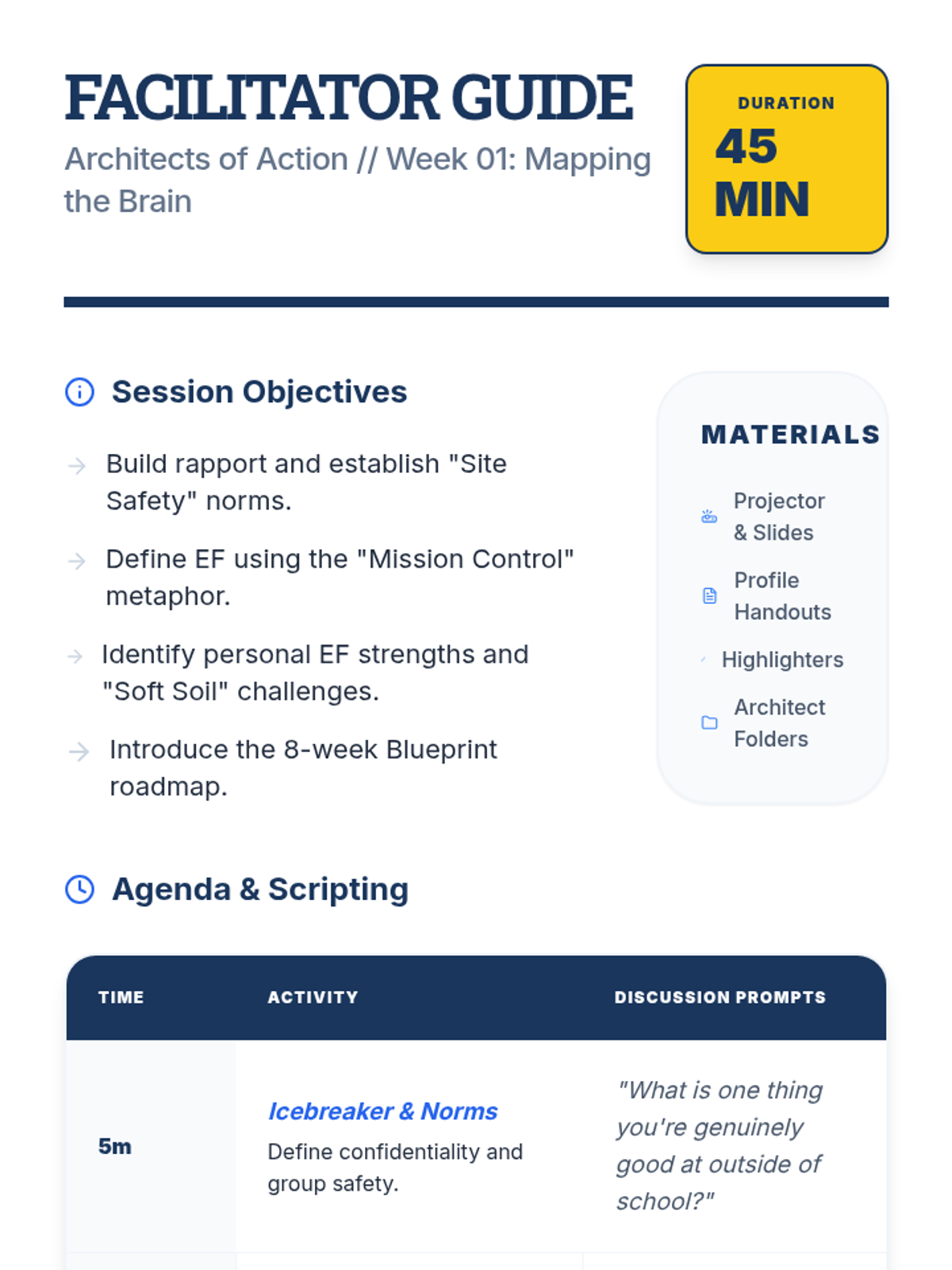
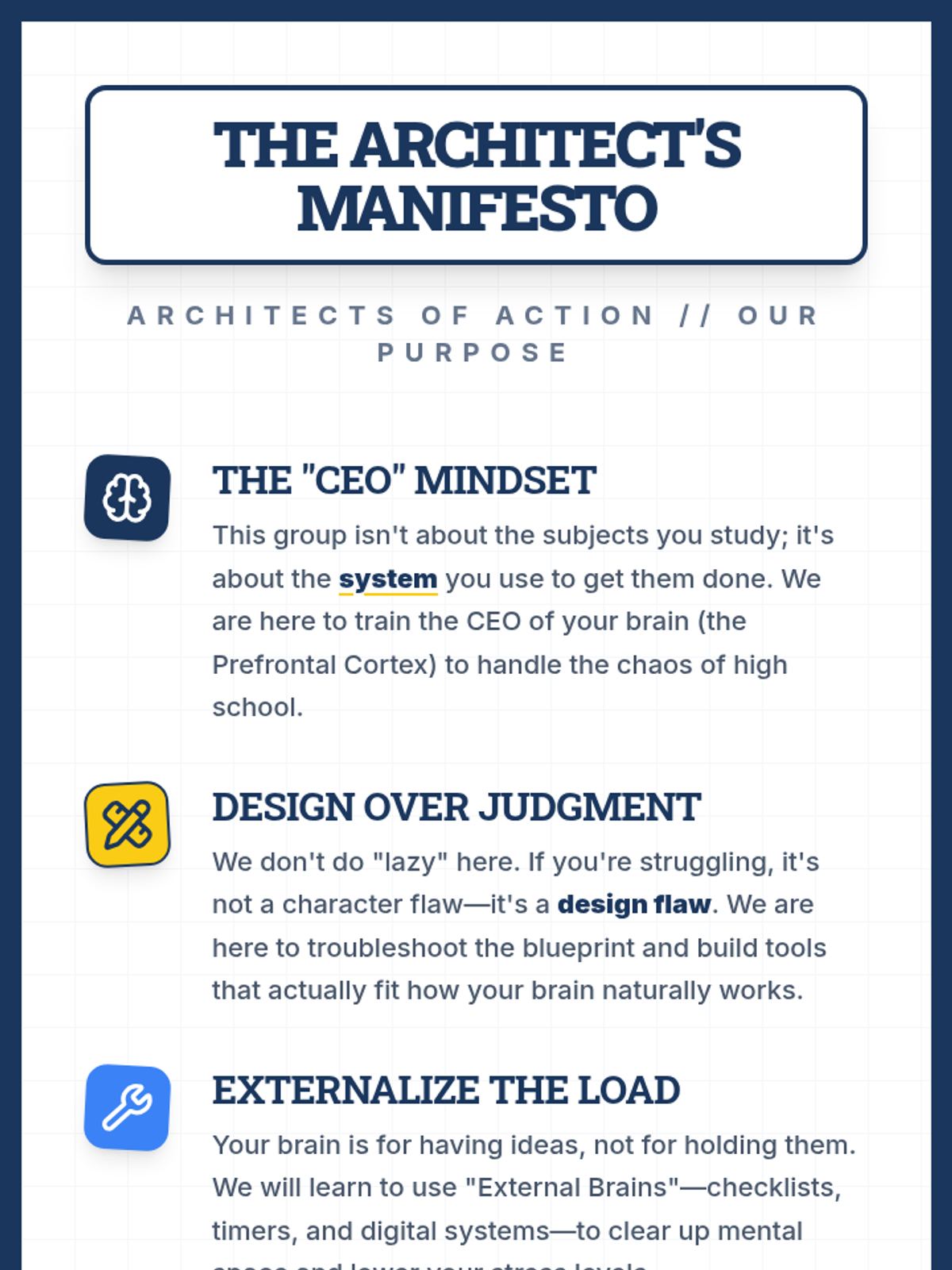
Introduction to executive functioning, self-awareness of strengths and challenges, and building group rapport.
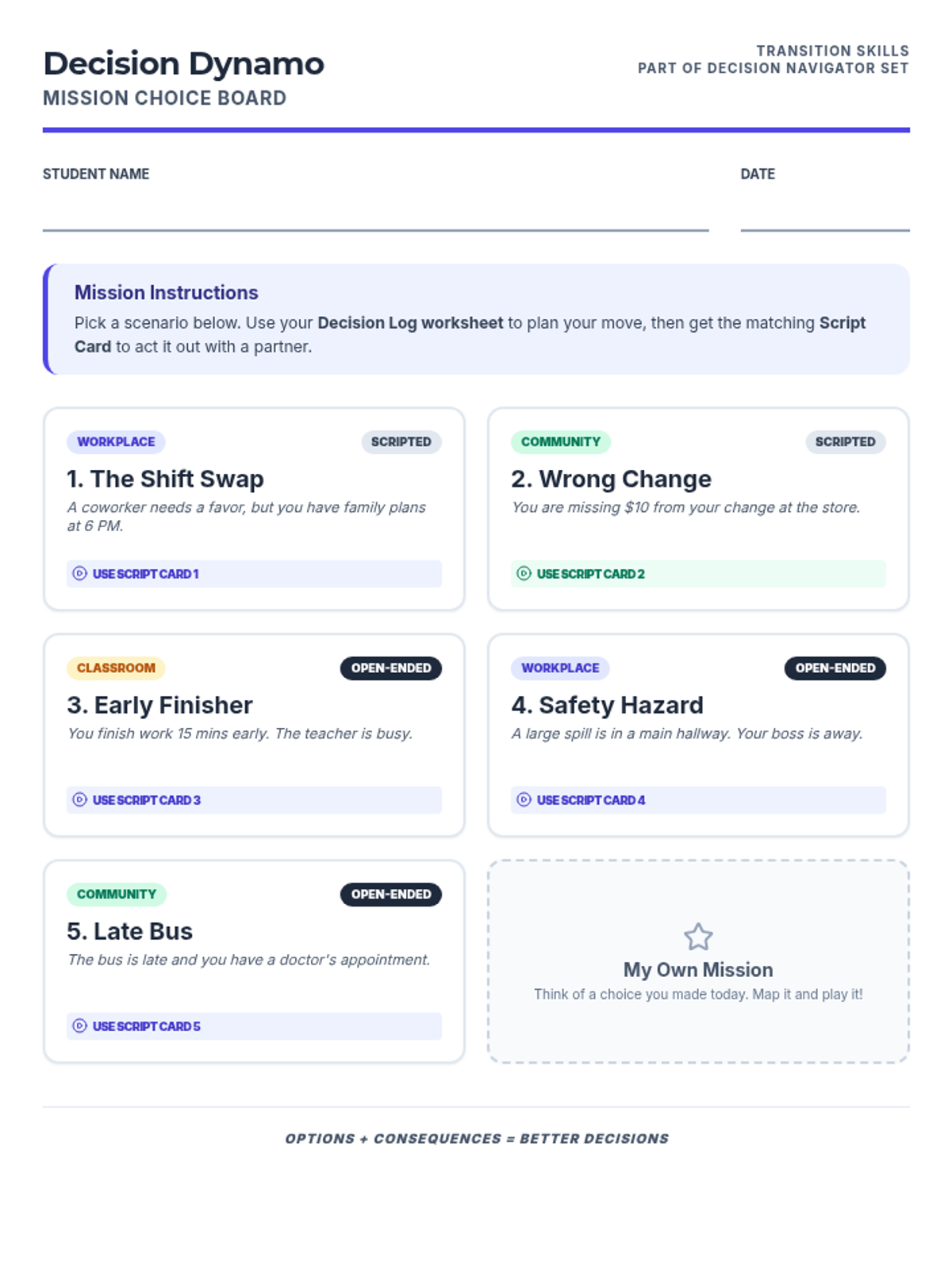
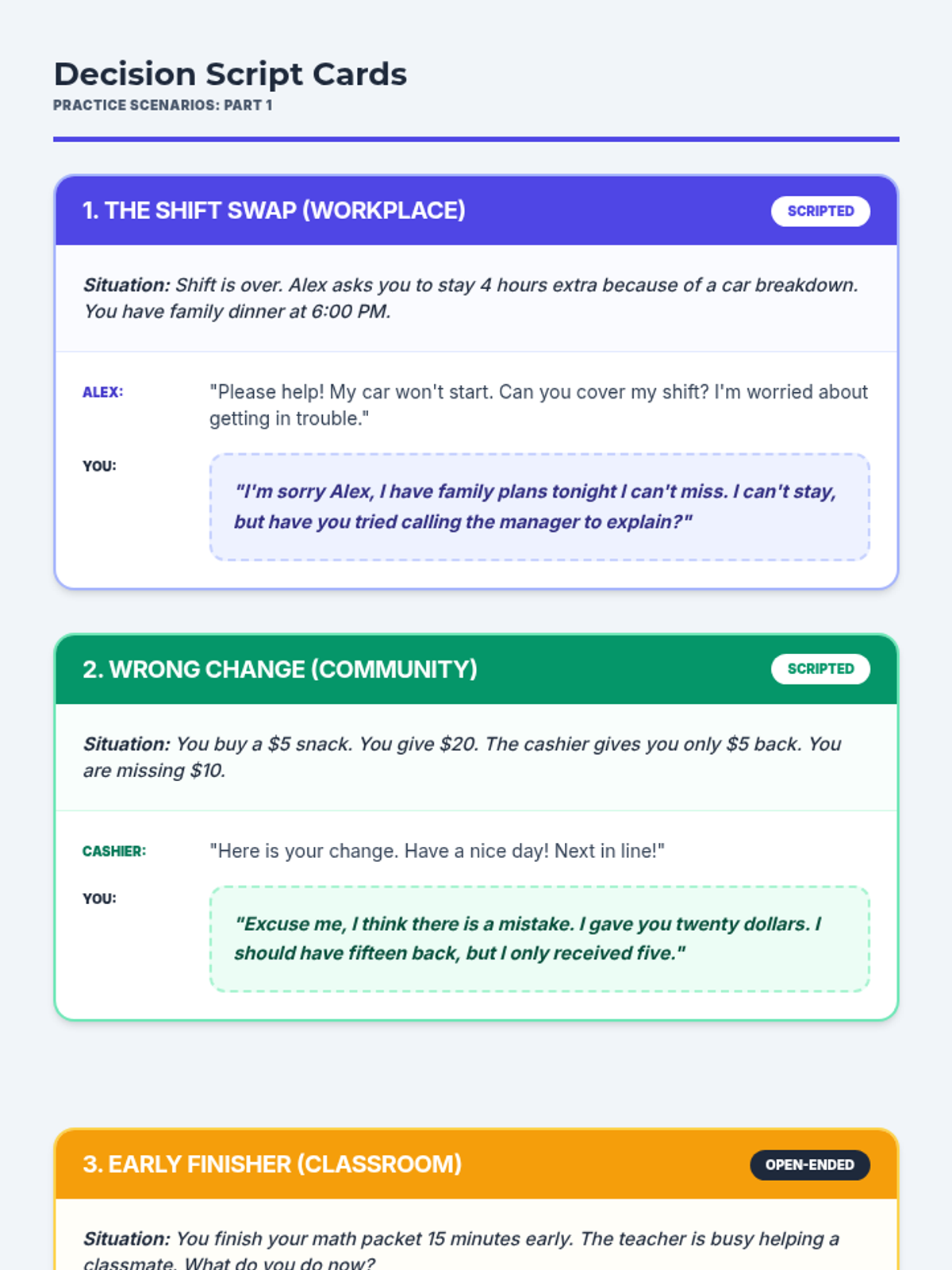
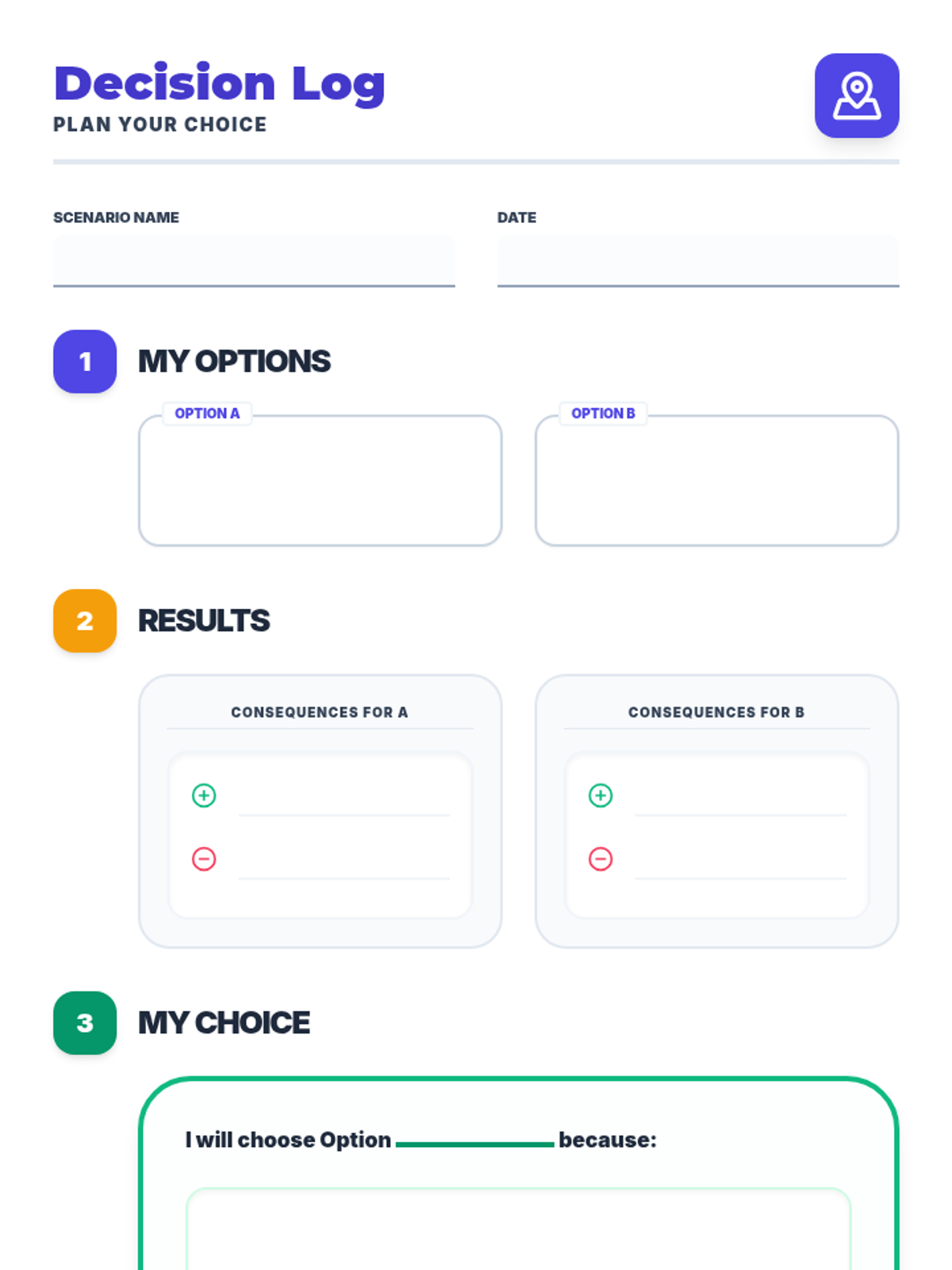
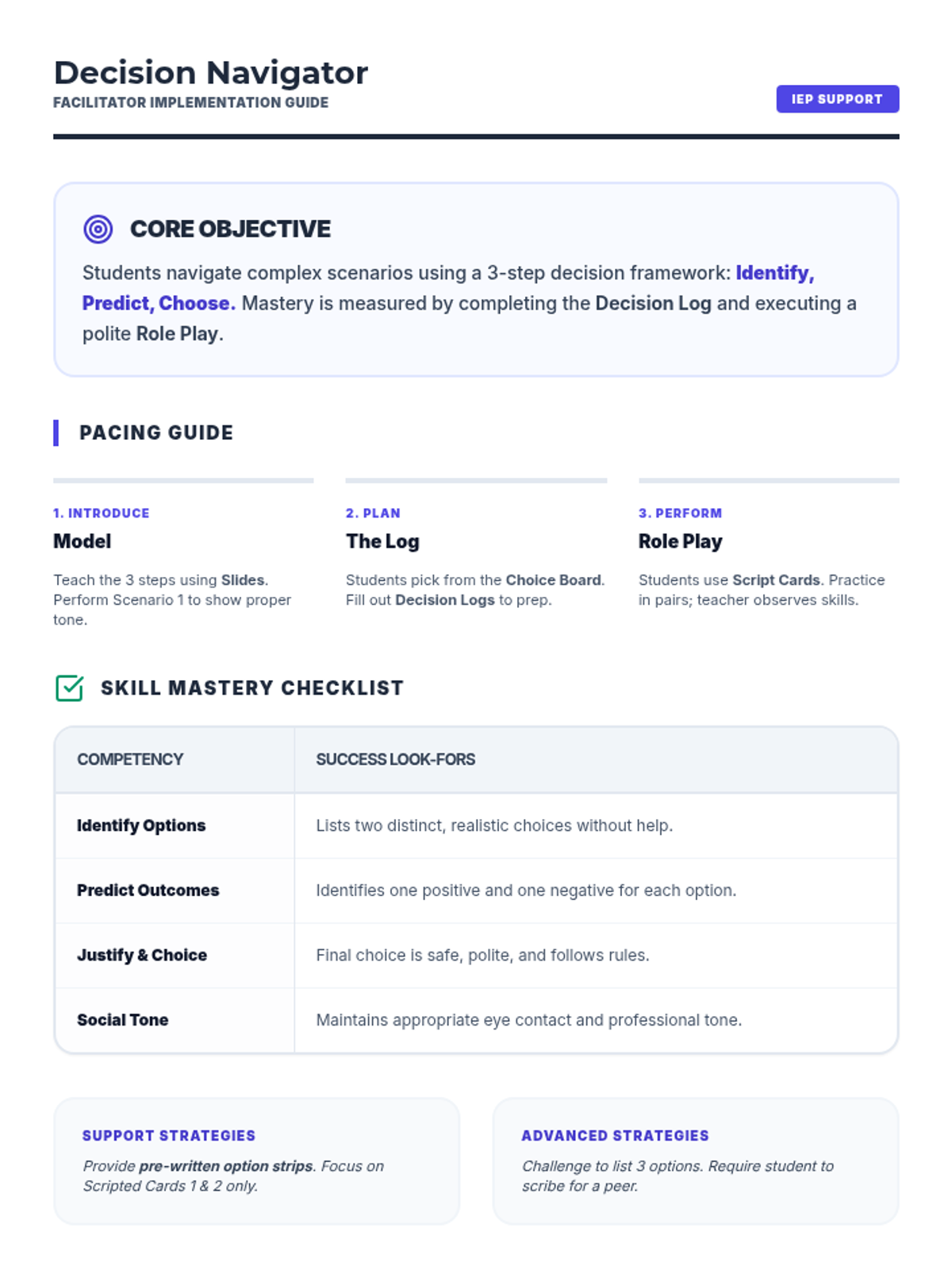
A set of role-playing activities designed to help transition-aged students practice the decision-making process in workplace, community, and academic settings. Students identify options, weigh consequences, and select the best course of action.
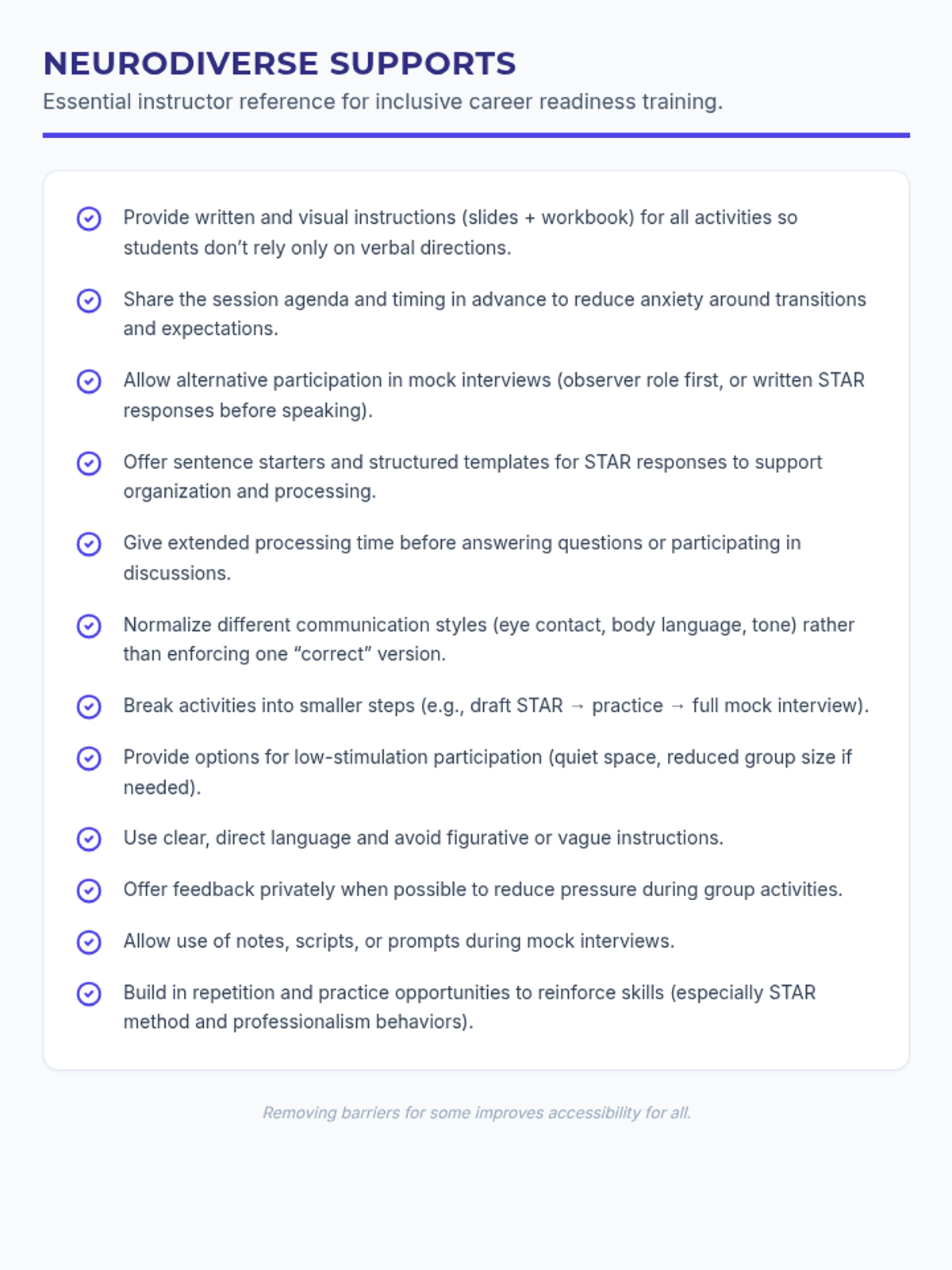
A guide for instructors on implementing neurodiverse supports within the classroom, specifically focusing on interview preparation and communication.
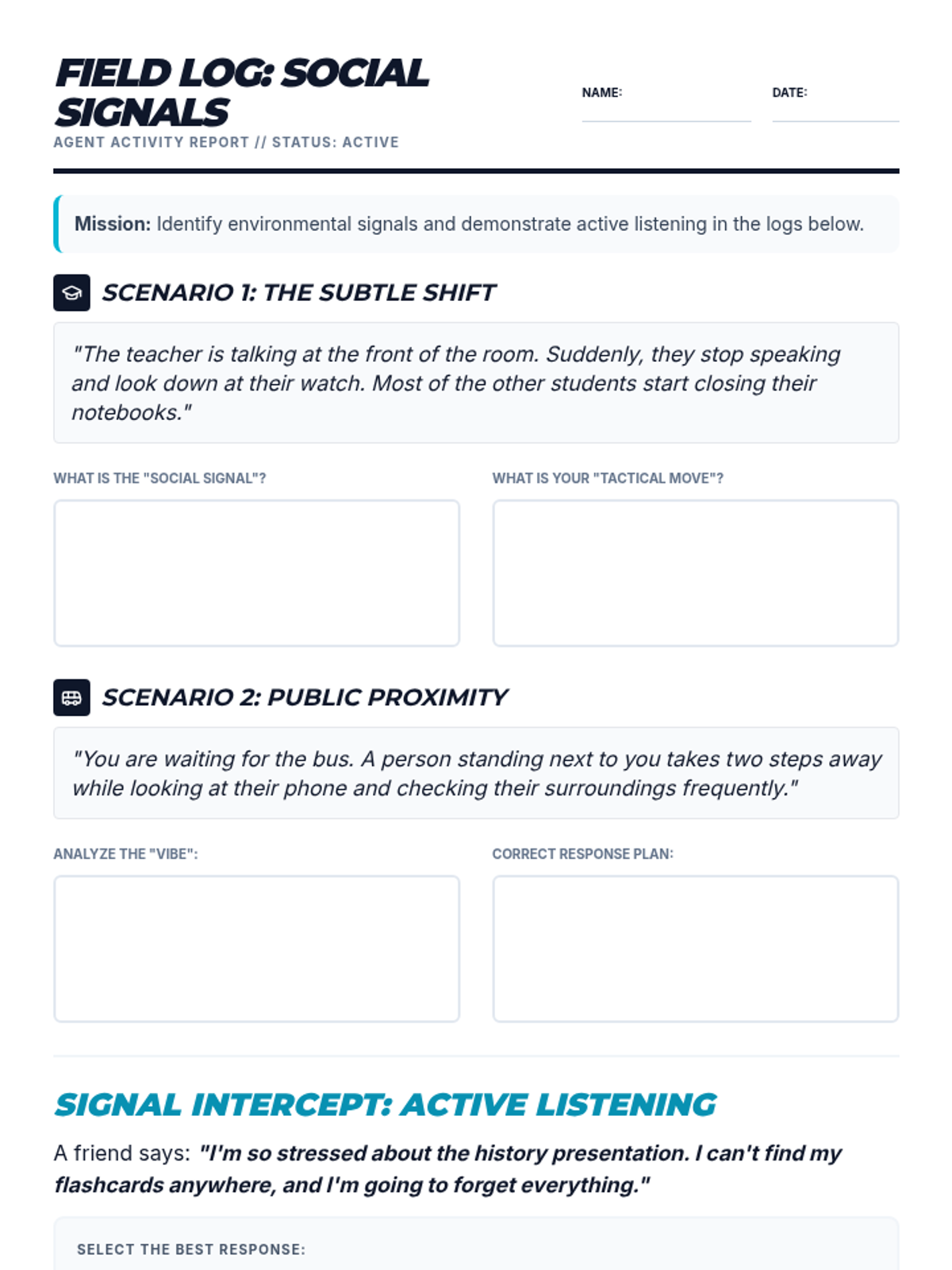
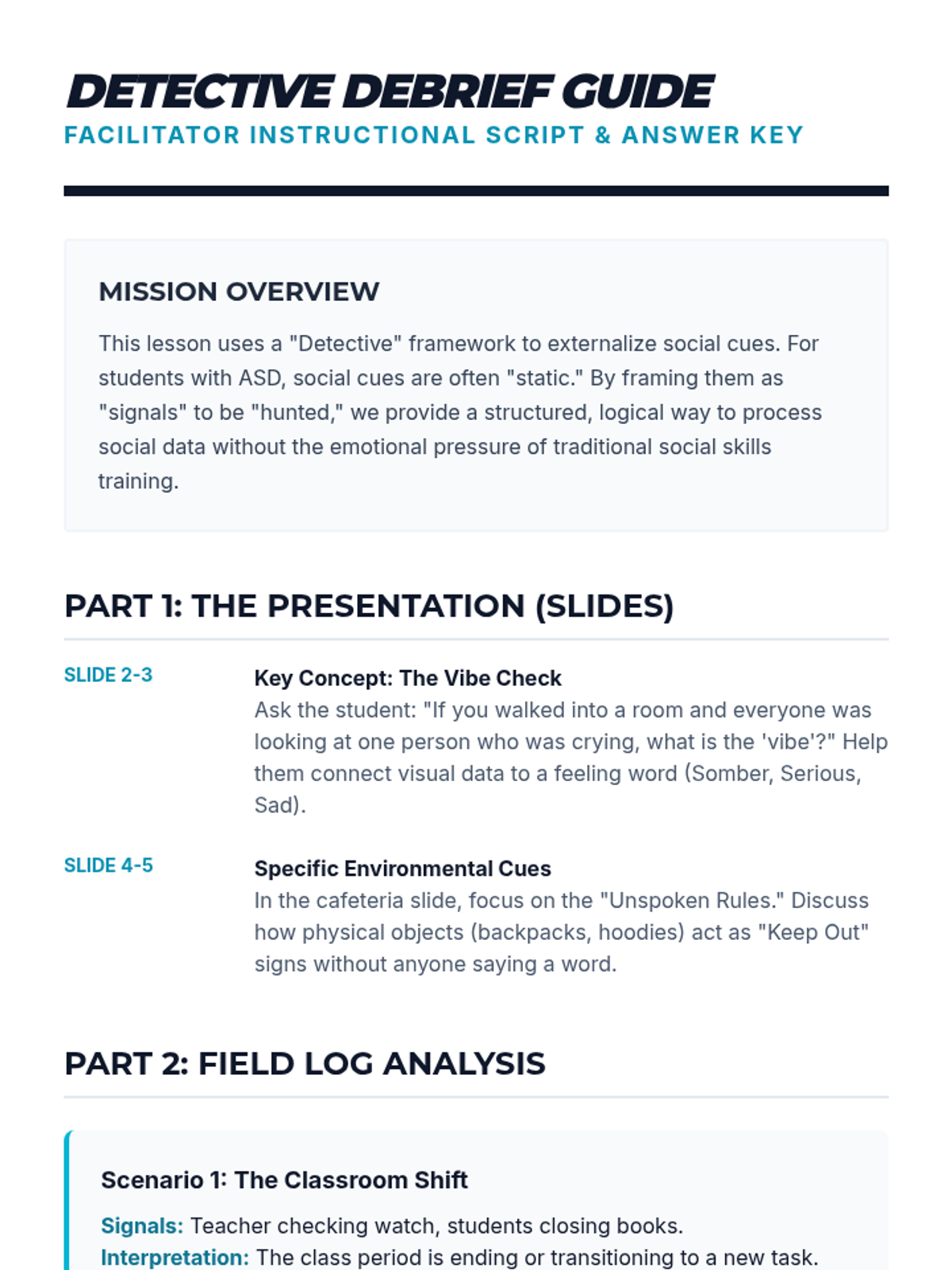
A comprehensive lesson designed for high-functioning teens with ASD to master situational awareness and active listening in school and public settings using a 'social detective' framework.
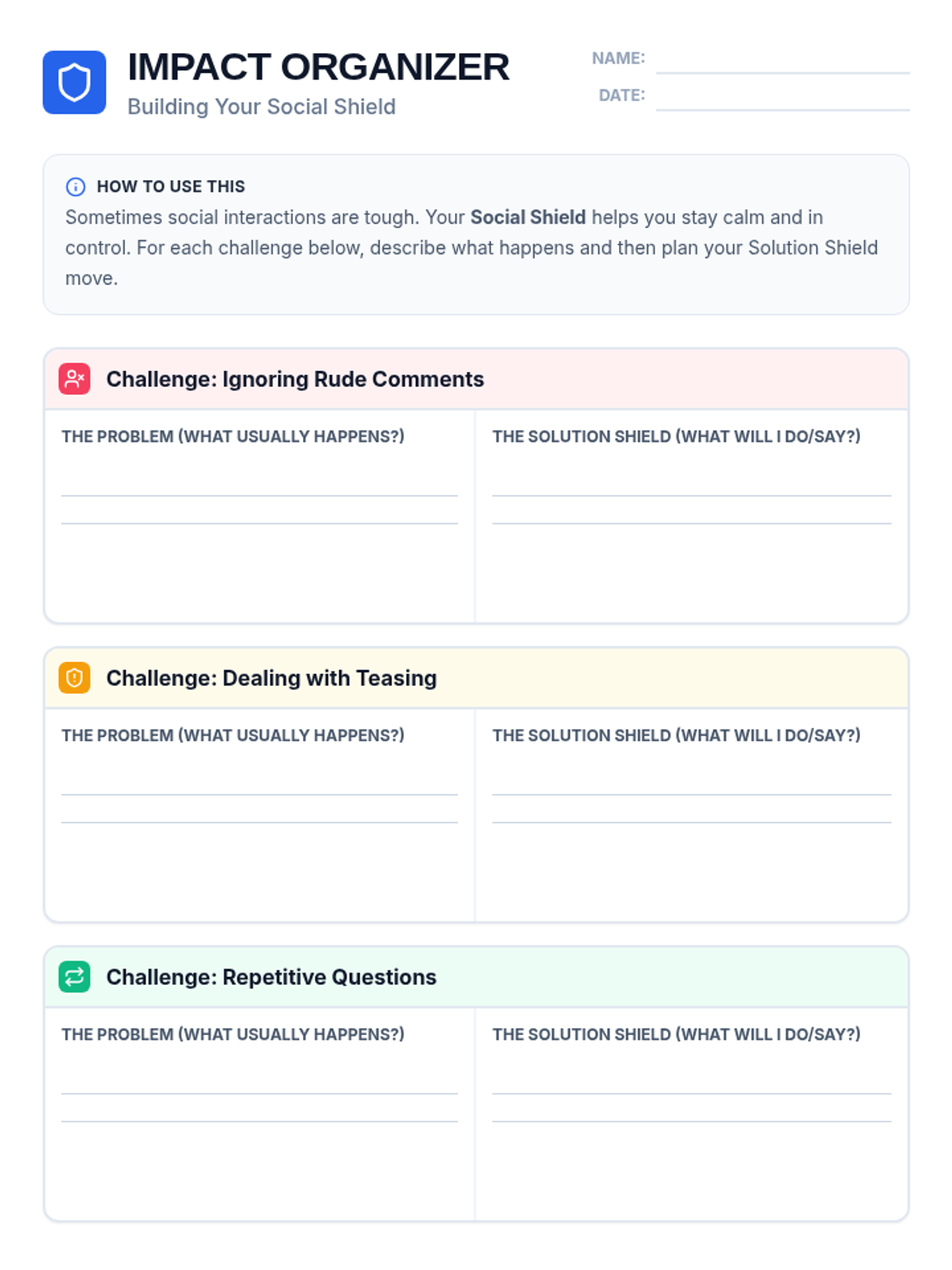
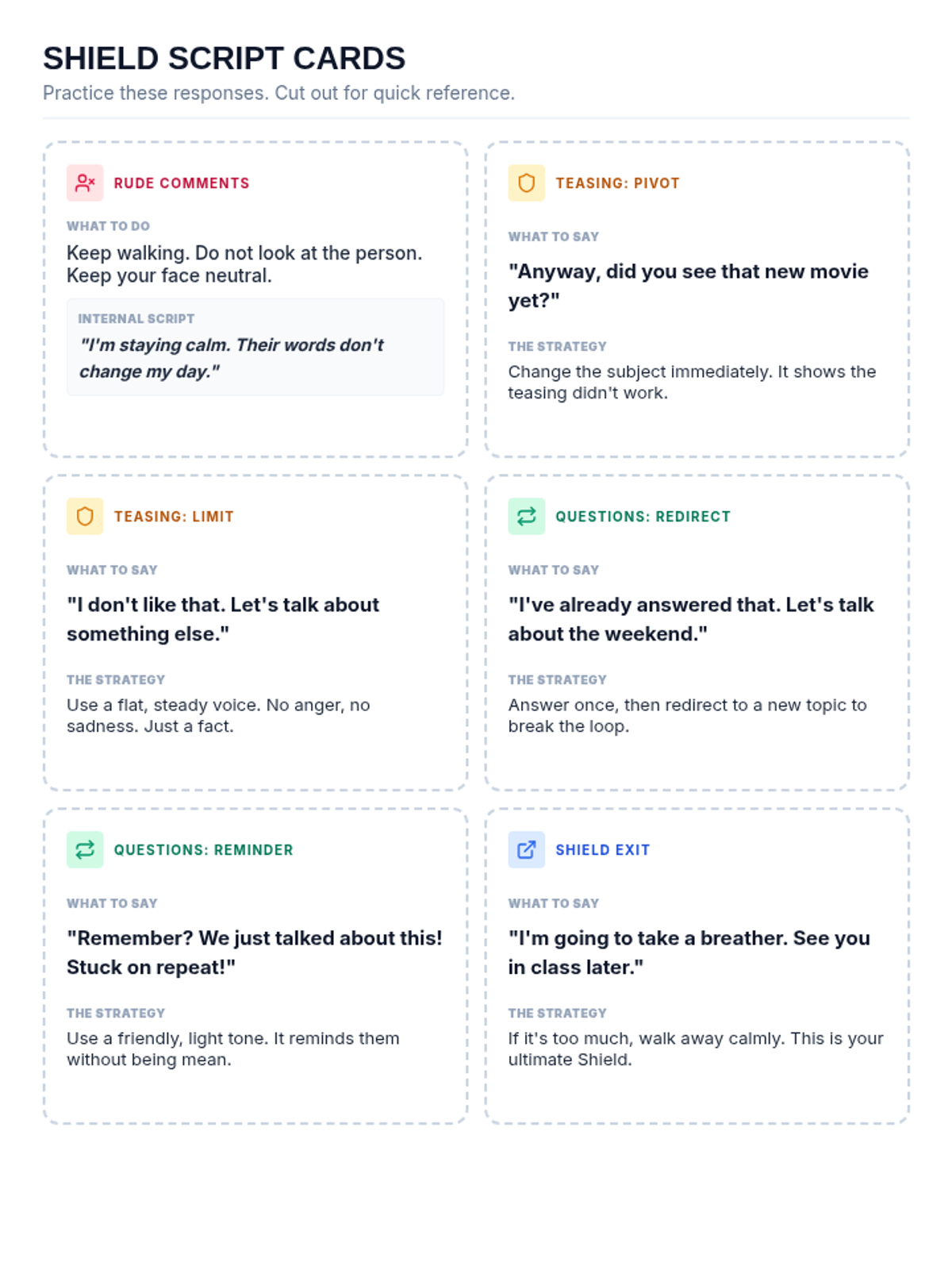
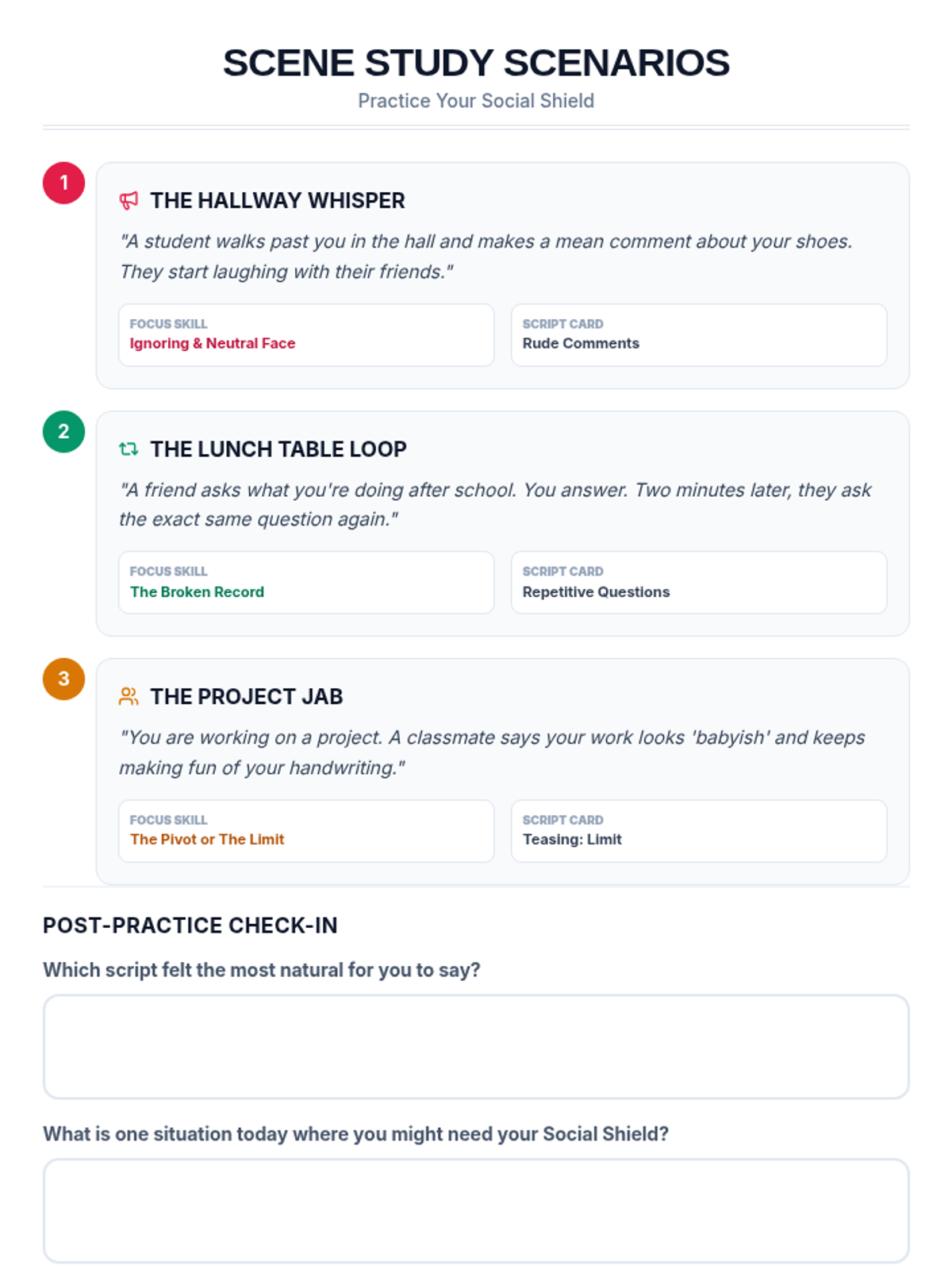
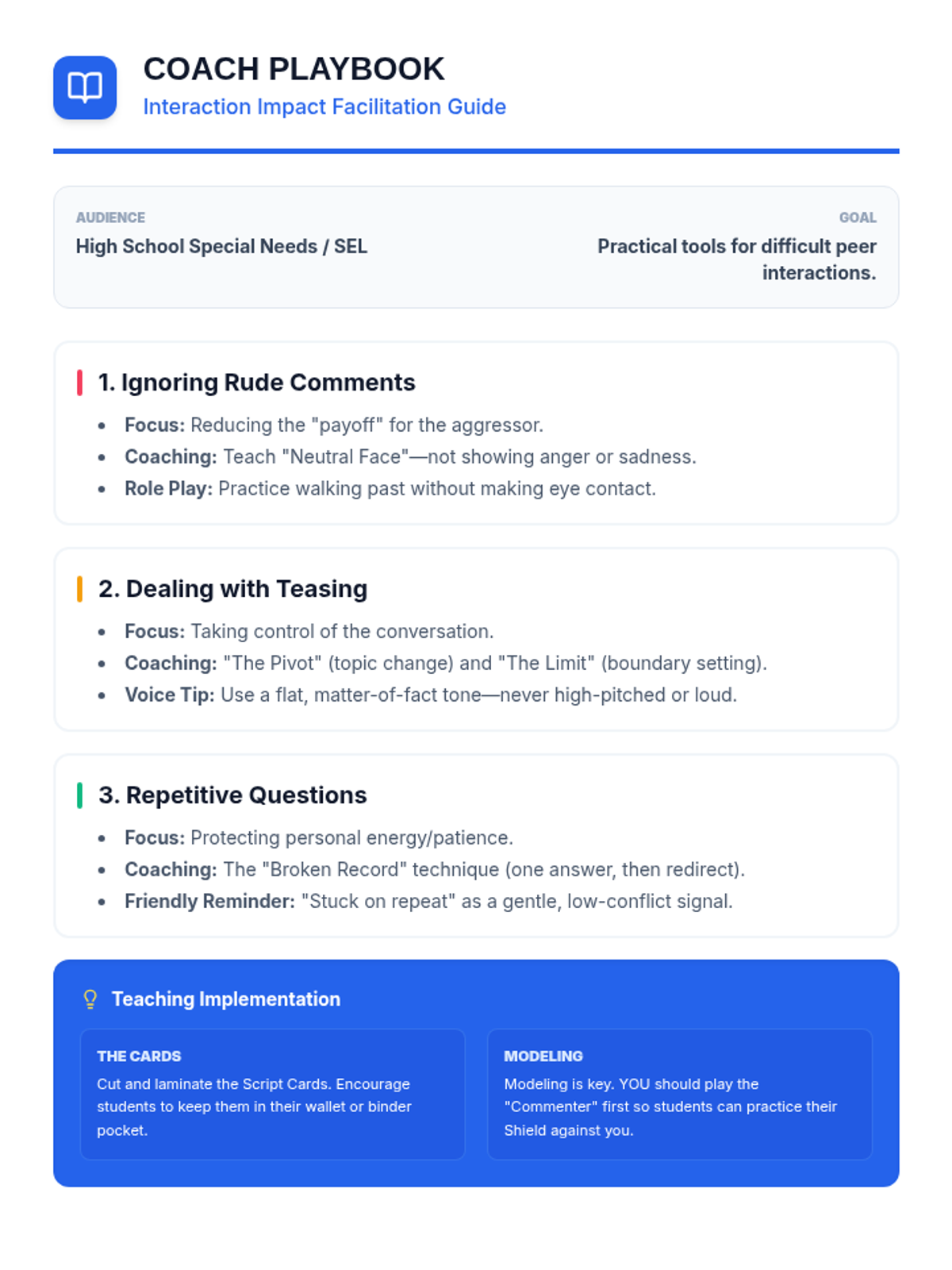
A comprehensive lesson for high school students with special needs to develop practical social skills for handling difficult interactions, including teasing, rude comments, and repetitive questions.
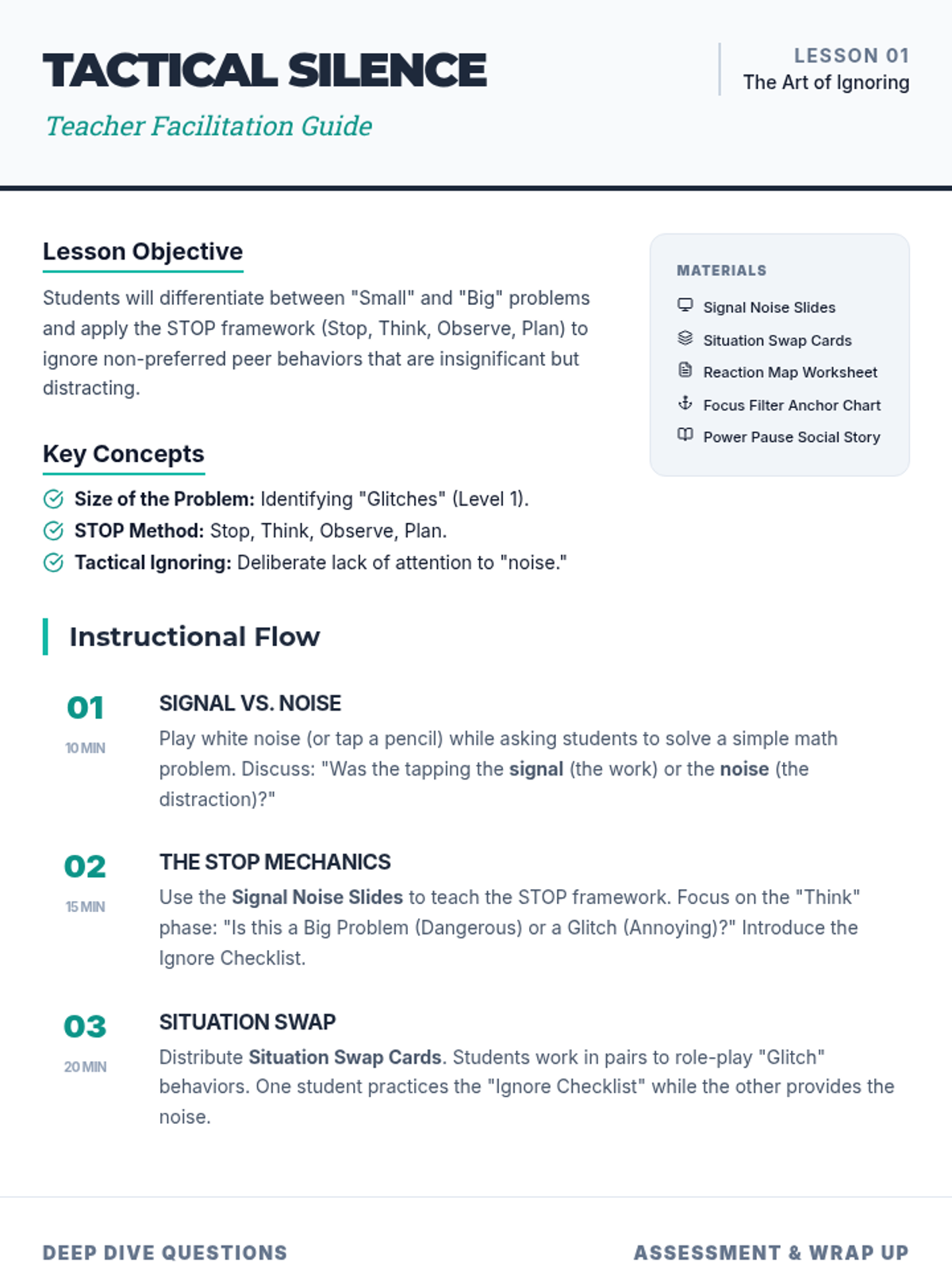
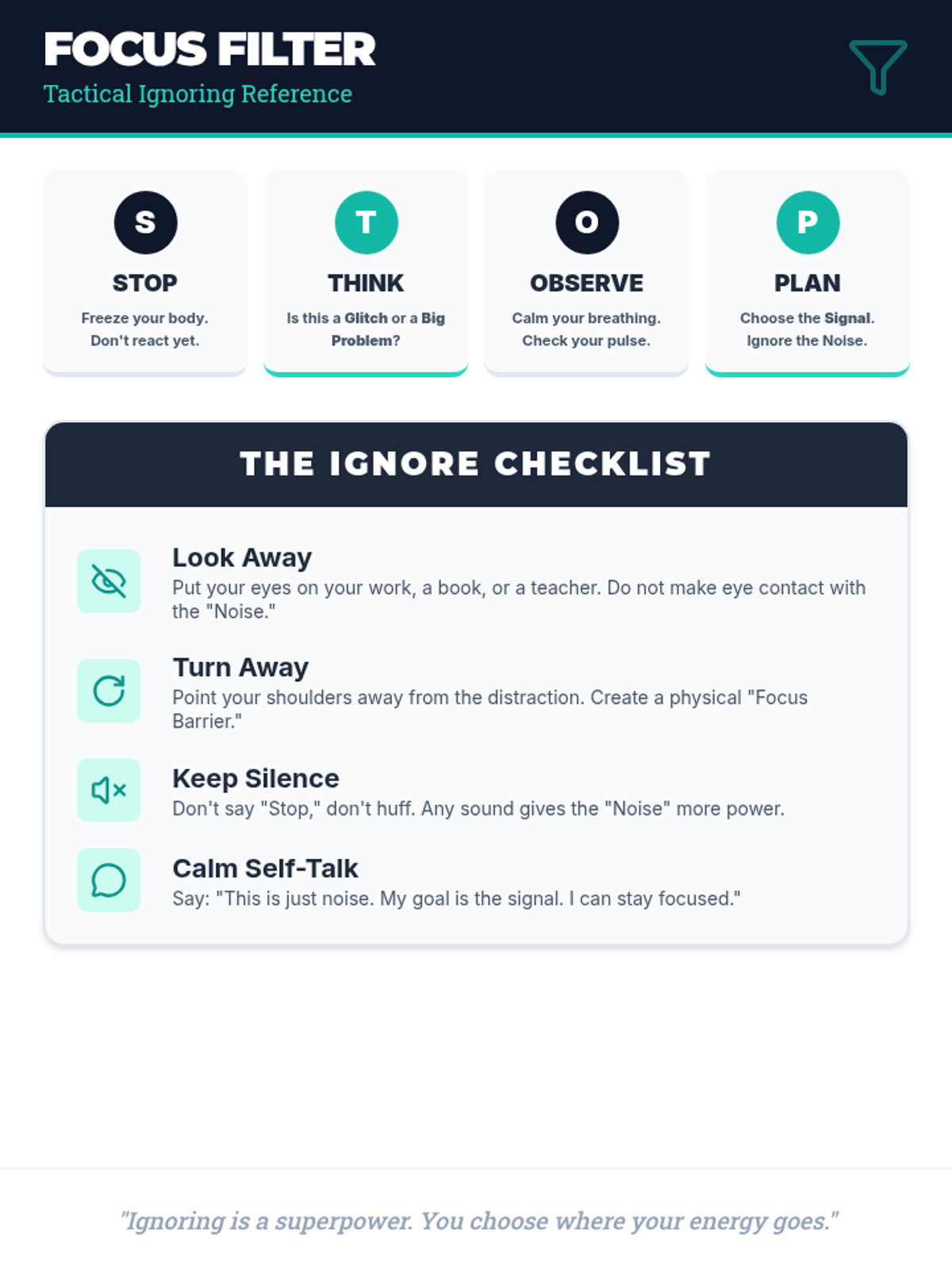
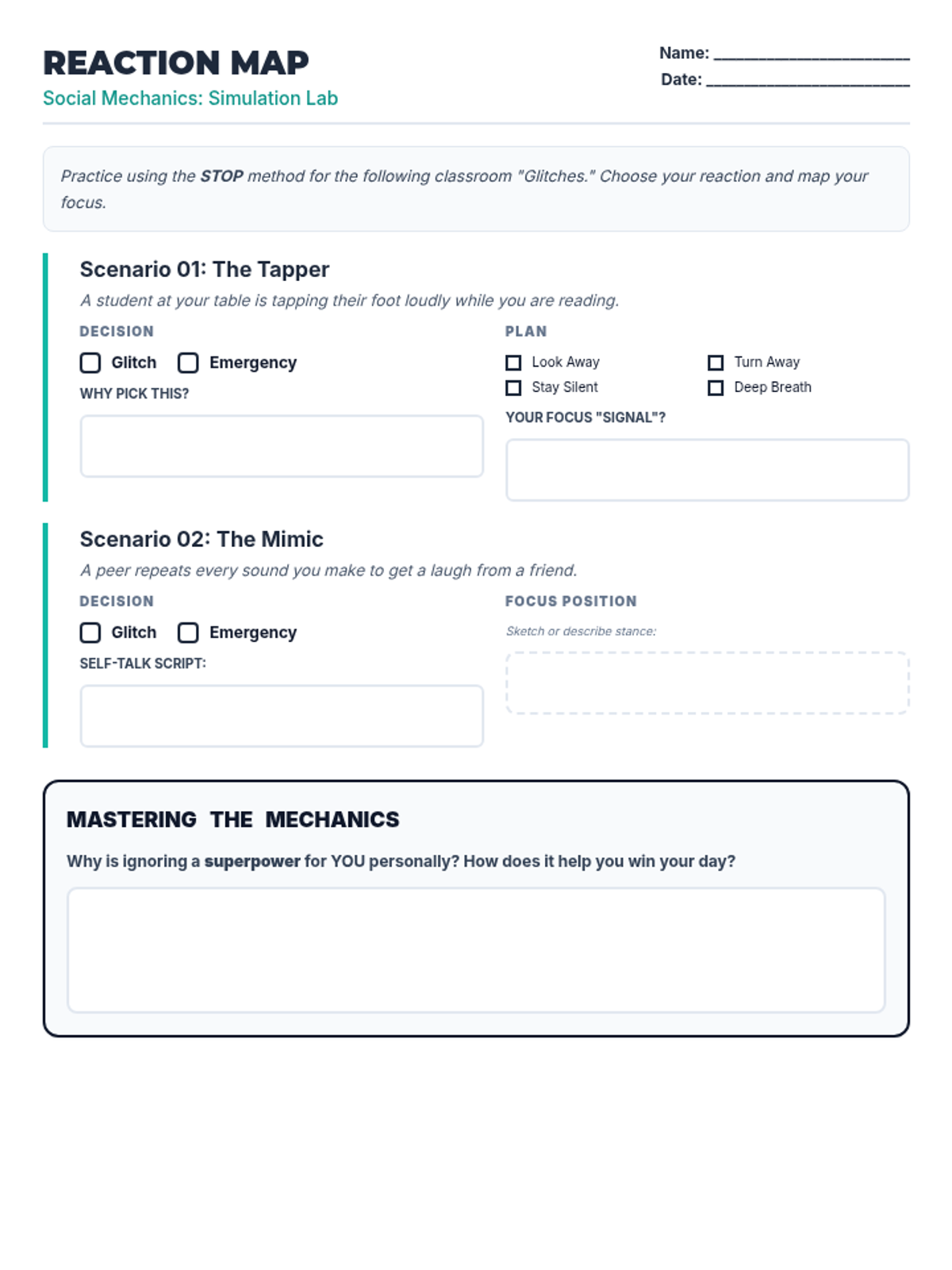
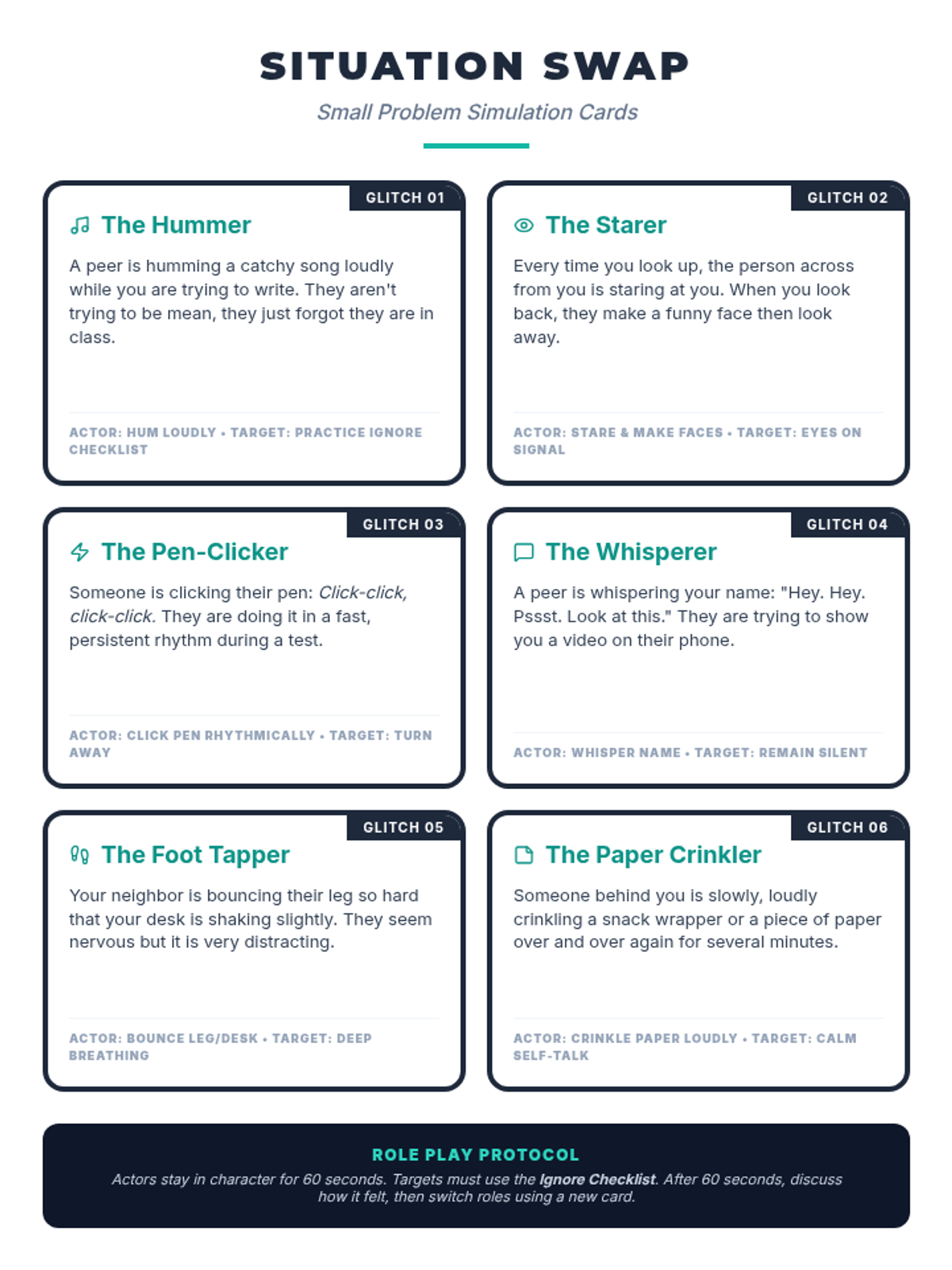
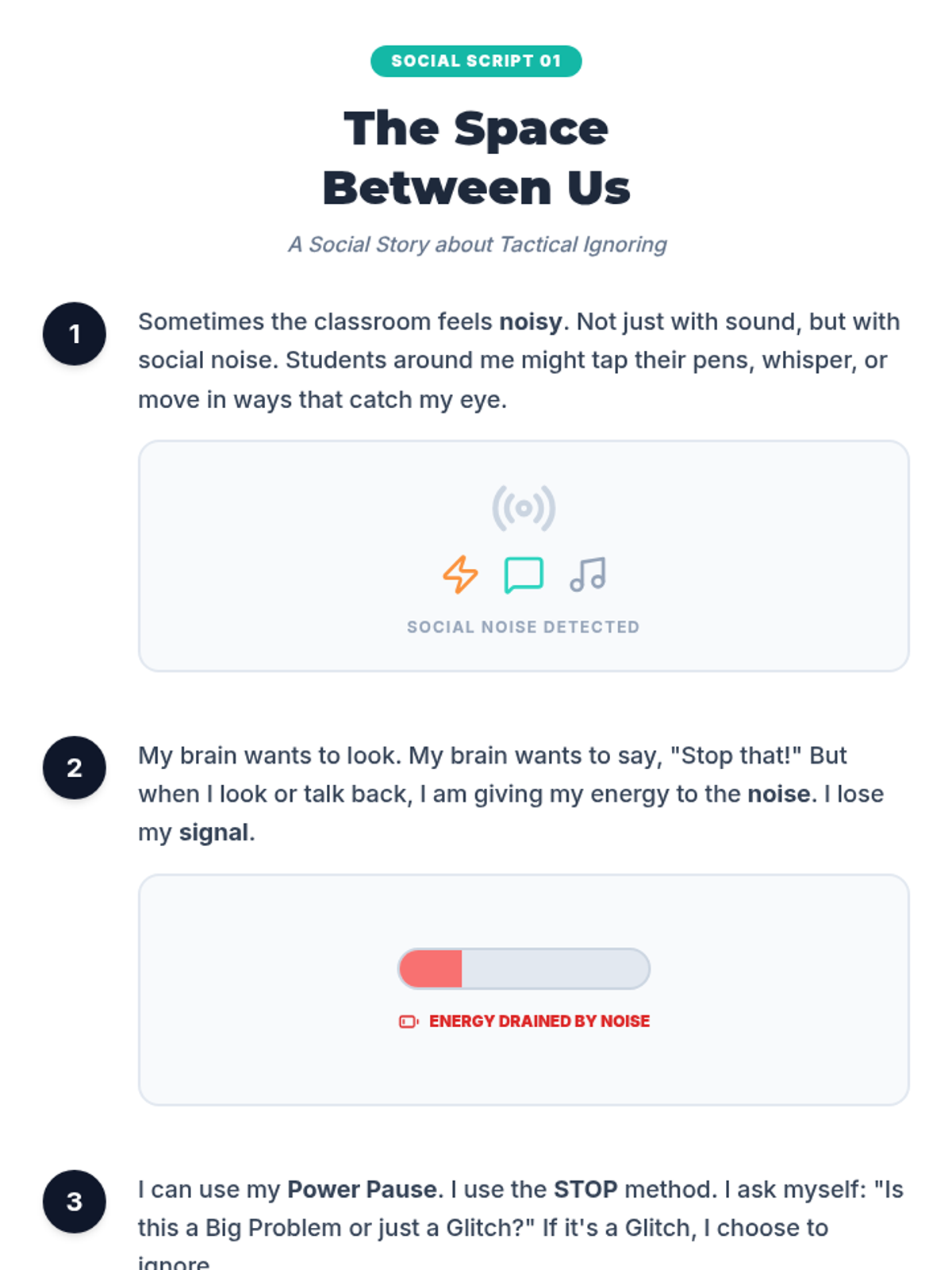
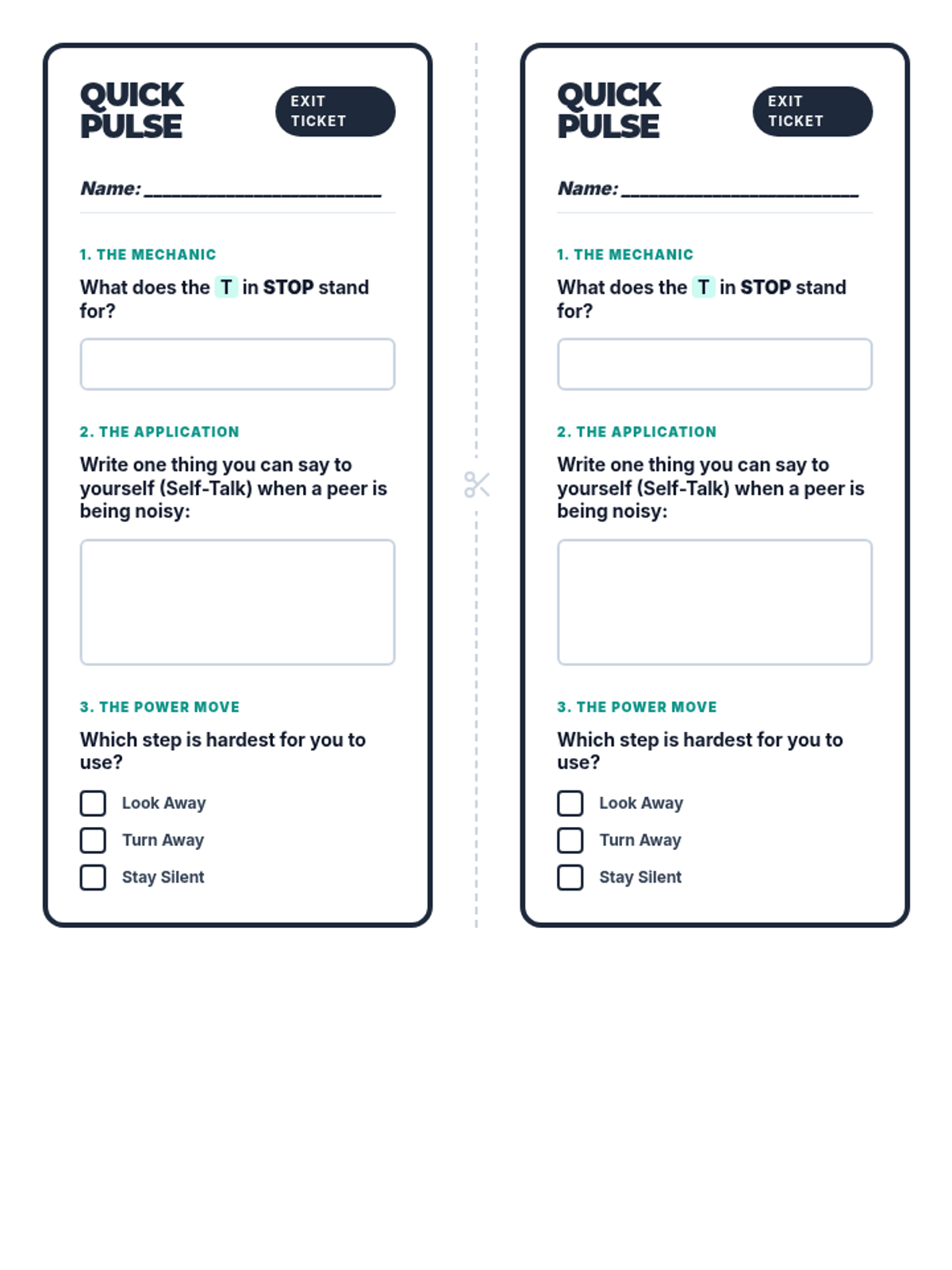
This lesson teaches high school students with special needs how to identify 'small' social problems and use the STOP framework and tactical ignoring to maintain focus.