Students act as detectives to identify double-bookings and impossible overlapping events in a messy calendar. This lesson focuses on visual scanning and the logic of time blocks.
A lesson designed to help students identify their personal motivators, overcome obstacles, and develop a growth mindset toward challenging tasks.
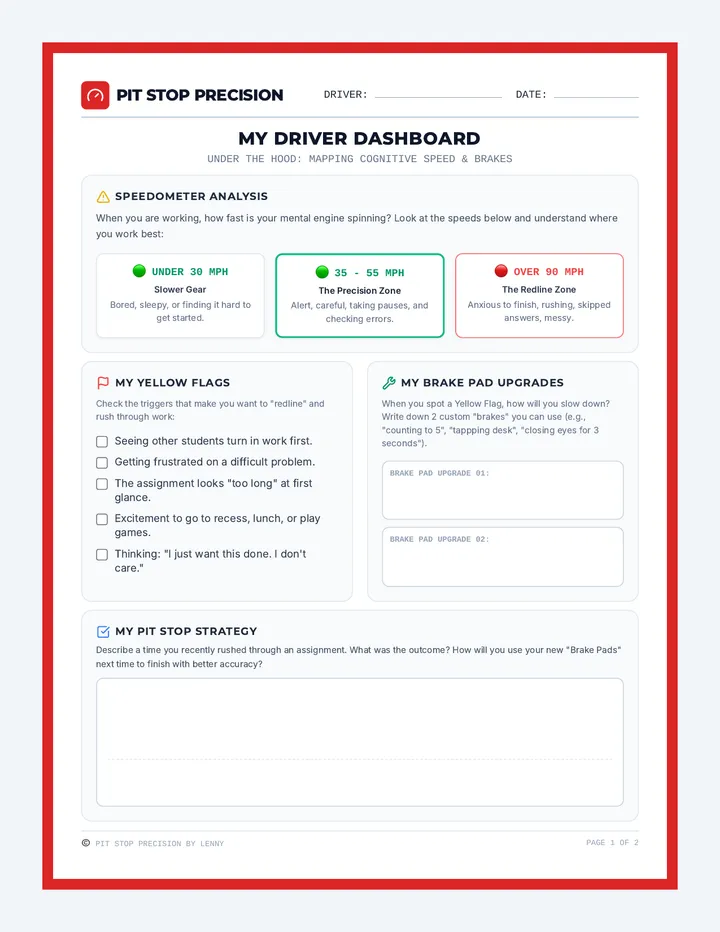
A lesson designed to help students identify their personal intrinsic and extrinsic motivators, set goals, and develop strategies for staying engaged when tasks become challenging.
A social health lesson for 7th graders focused on mastering 'I-Messages' to resolve interpersonal conflicts effectively. Students will analyze the anatomy of communication and practice converting accusatory 'You-Messages' into constructive 'I-Messages' through guided practice and roleplay scenarios.
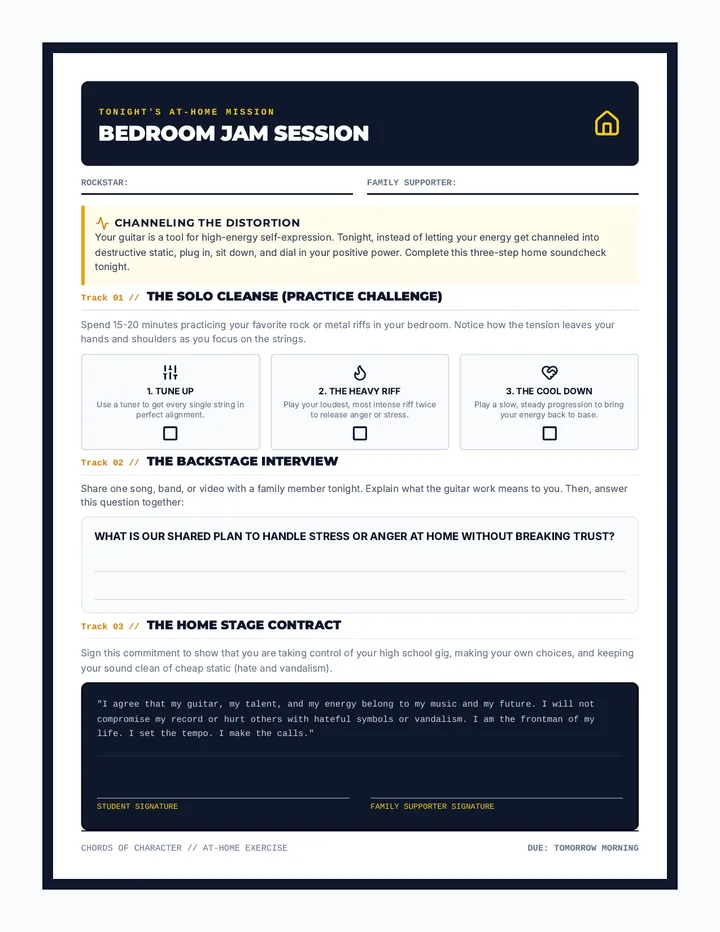
The final session celebrating group growth. Students set long-term social goals and receive recognition for their participation in the Social Skill Squad.
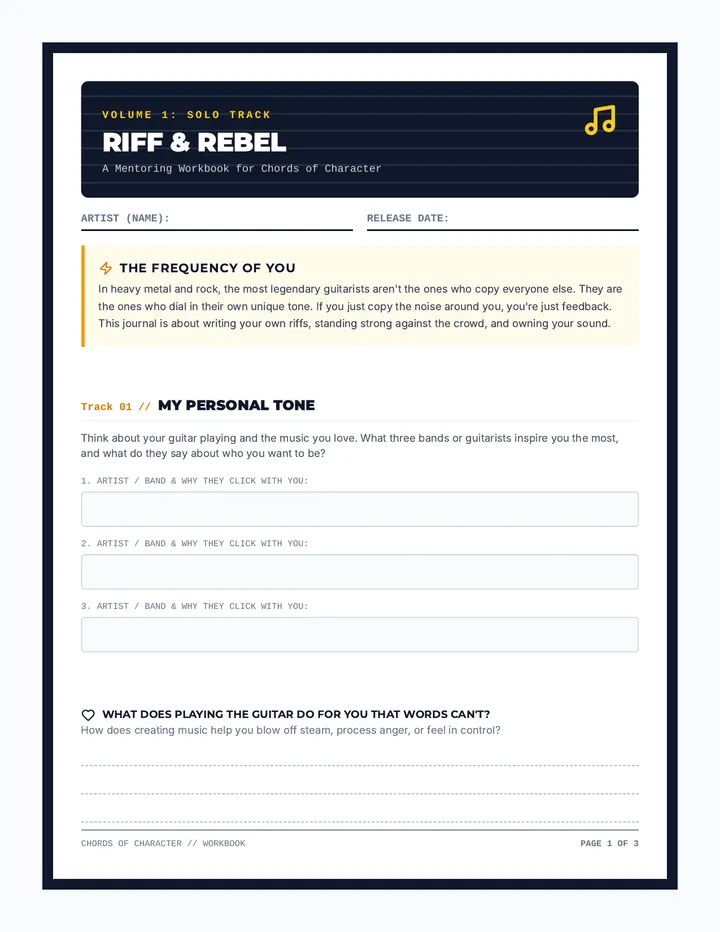
The core of the curriculum: balancing authenticity with social awareness. Students explore what makes someone genuinely likable without losing their own identity.
Exploring the complexities of groups, teams, and social circles. Students learn how to enter groups politely and navigate group dynamics with confidence.
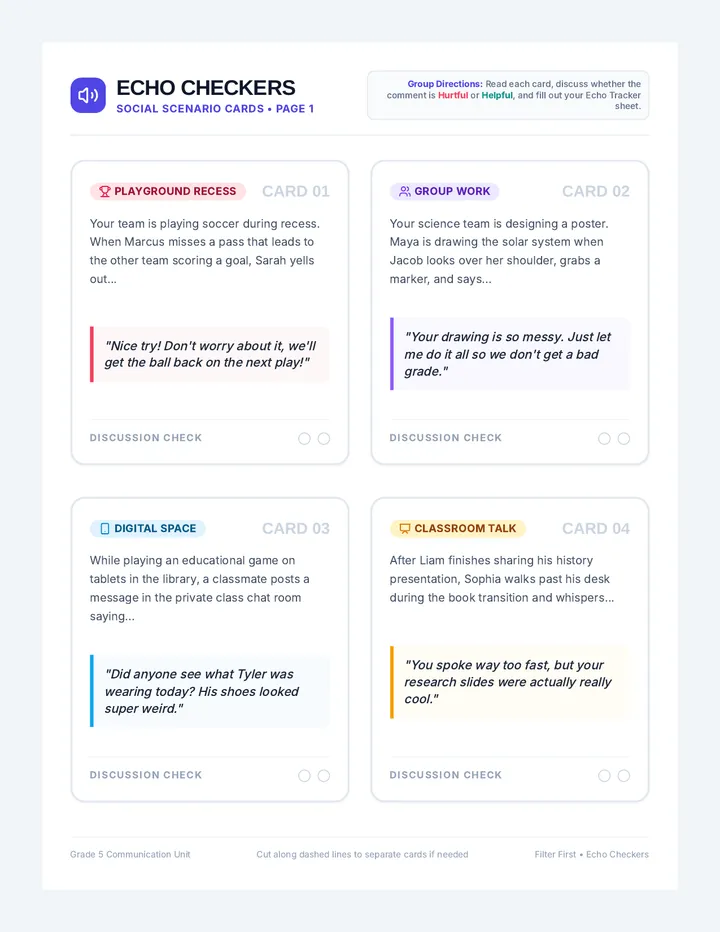
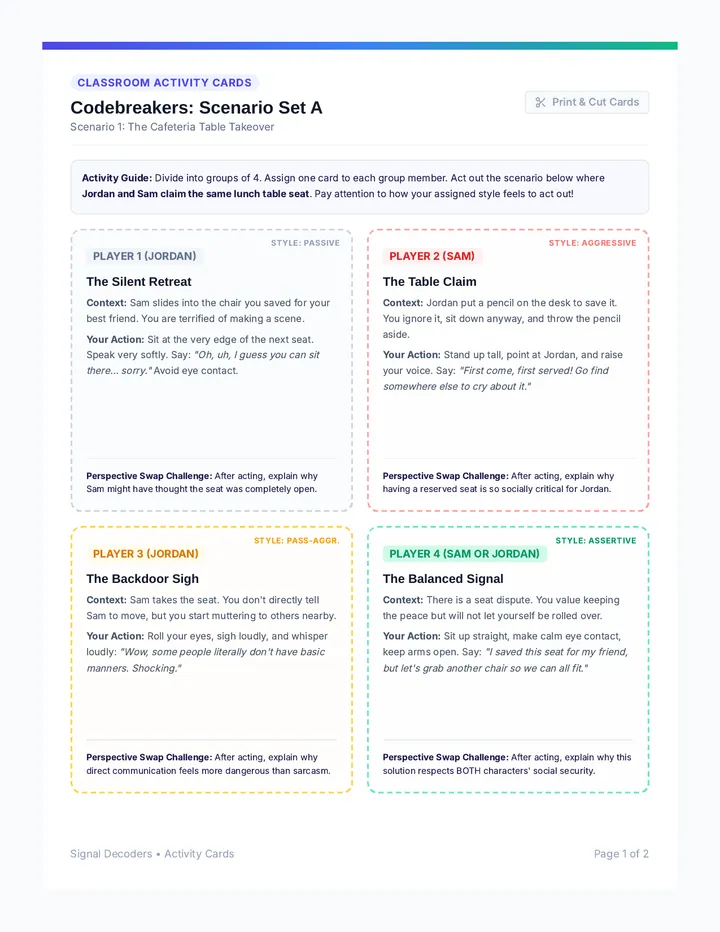
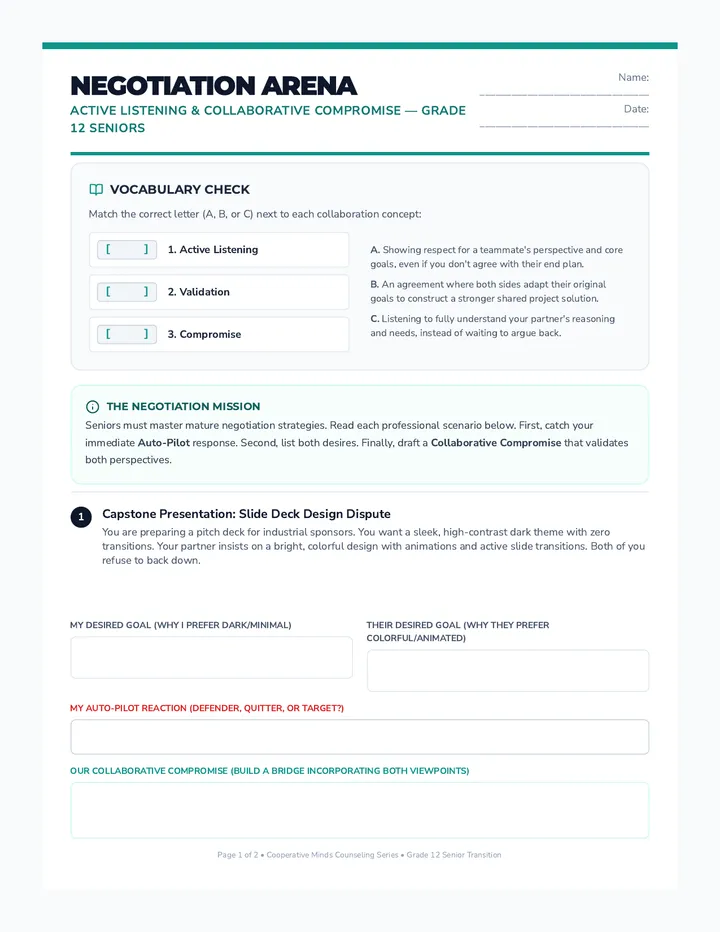
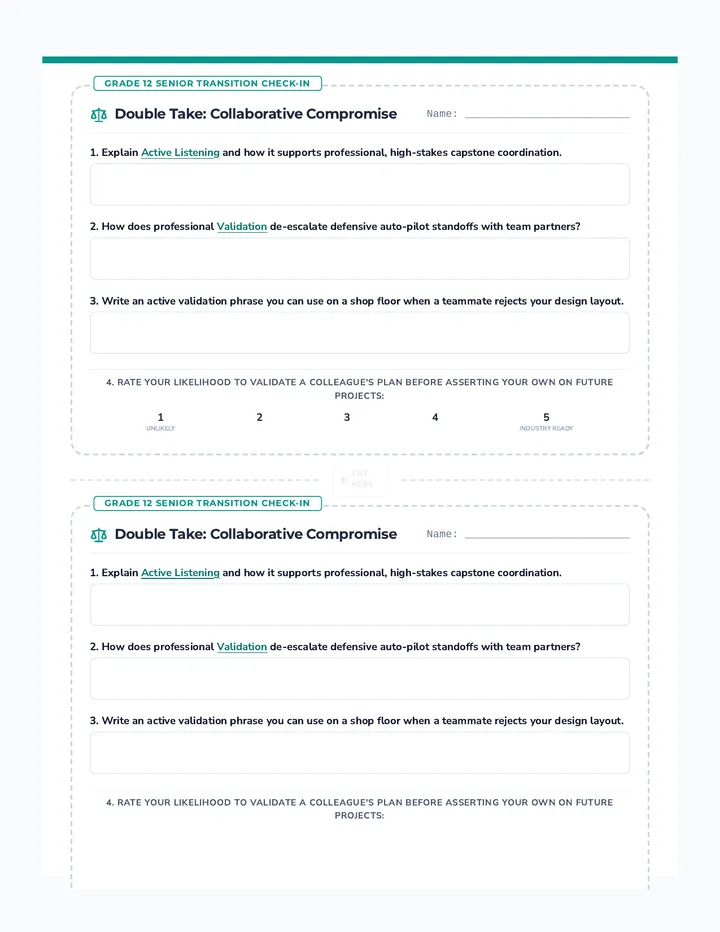
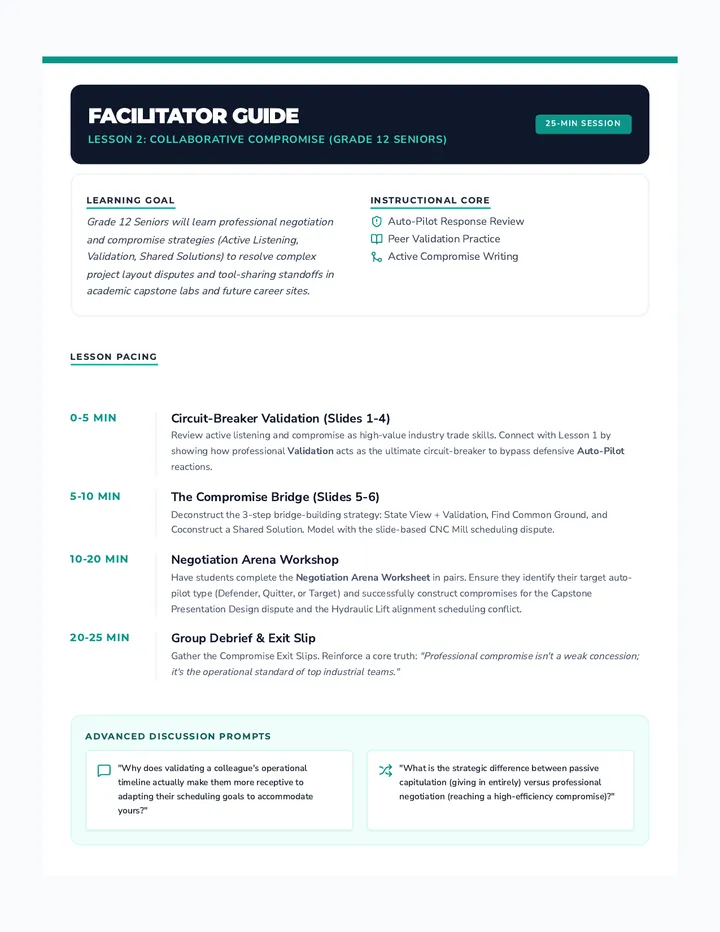
Focuses on healthy conflict resolution. Students learn to use 'I' statements and de-escalation techniques to handle disagreements without damaging friendships.
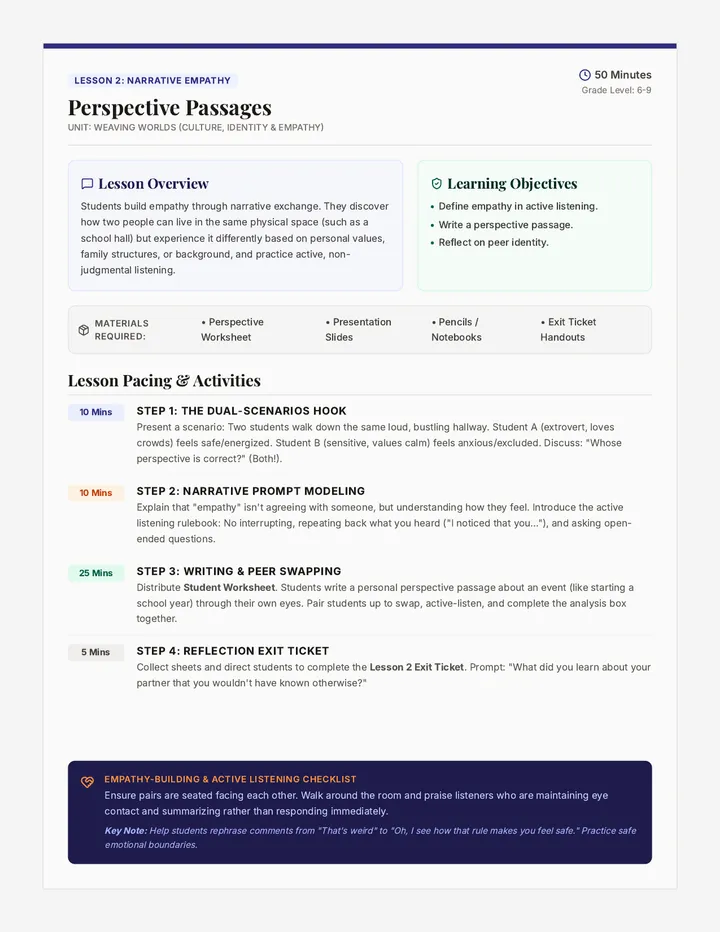
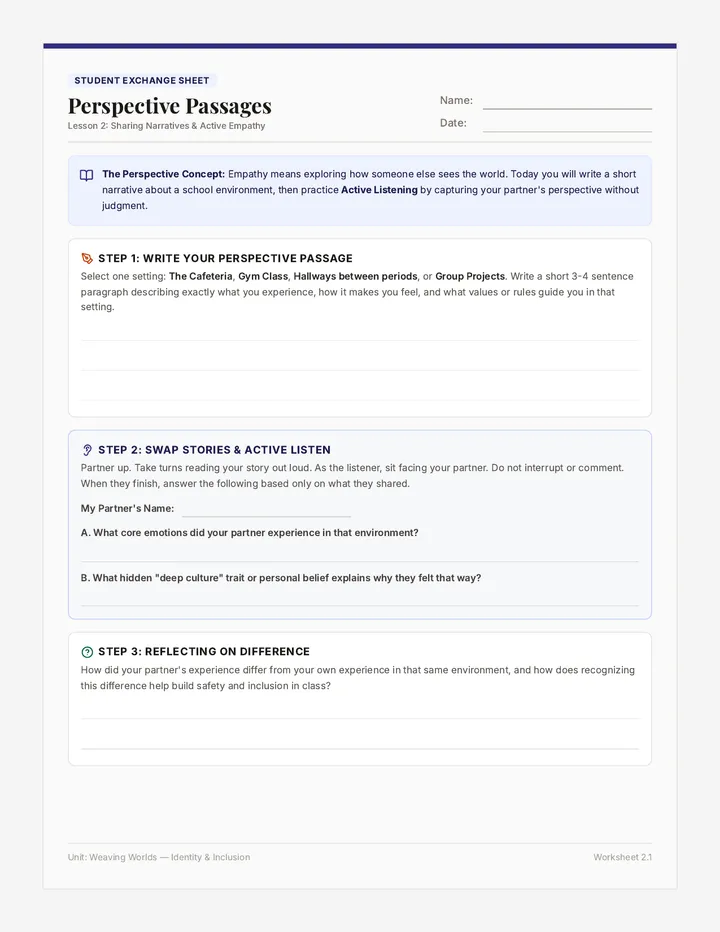
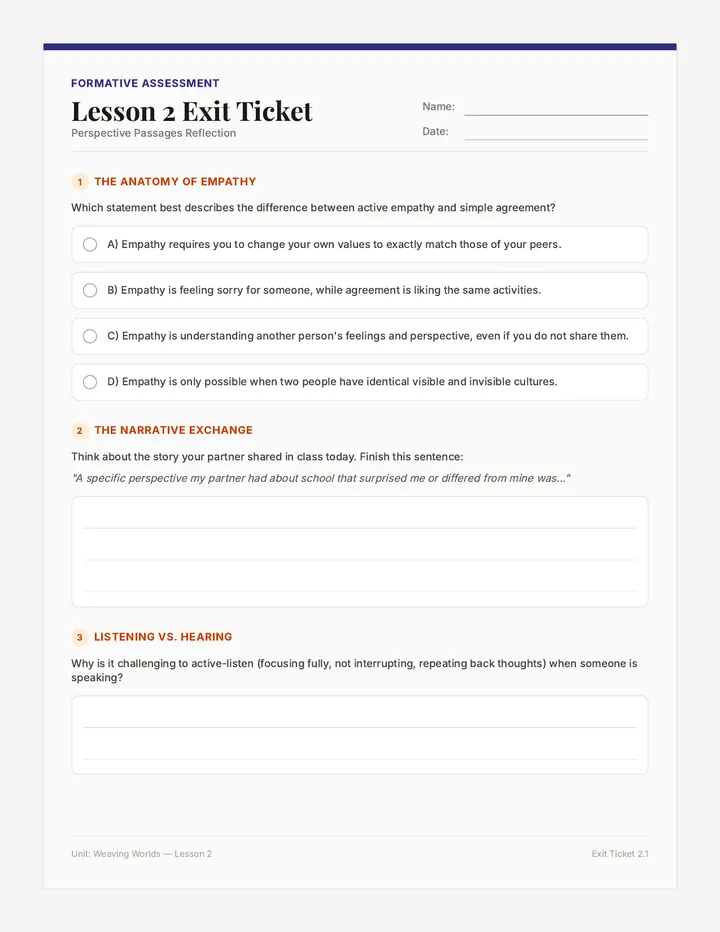
Students practice active listening techniques, moving beyond passive hearing to demonstrate empathy and validation in their social interactions.
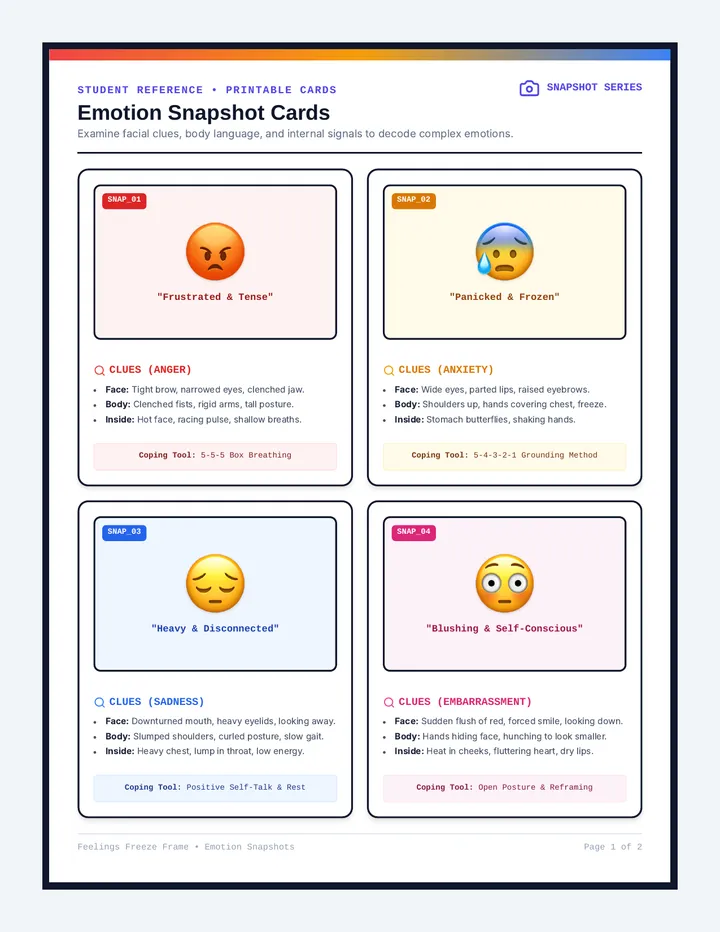
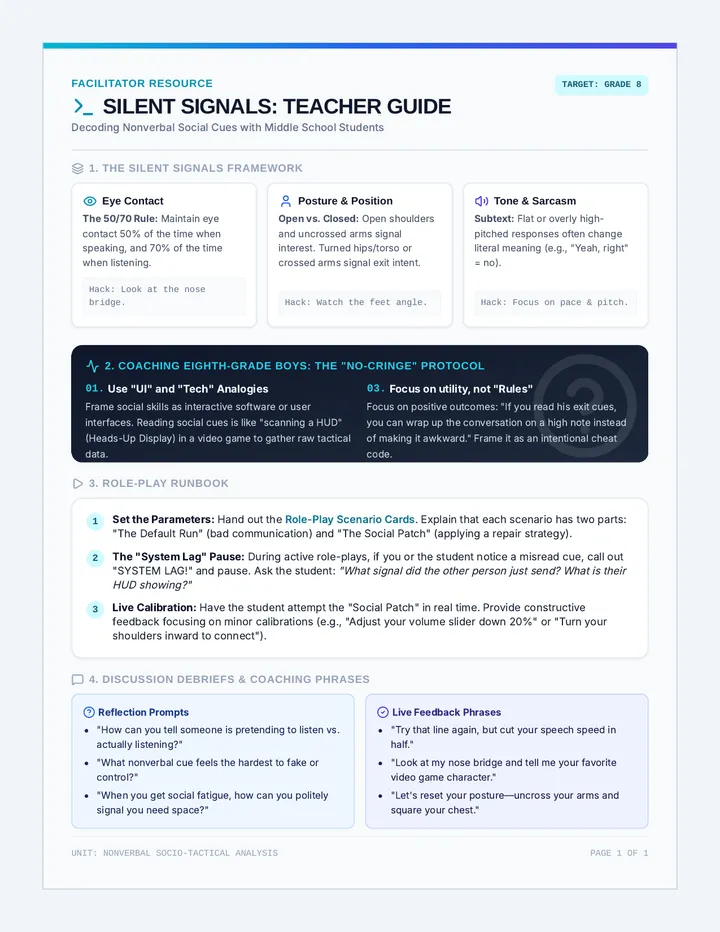
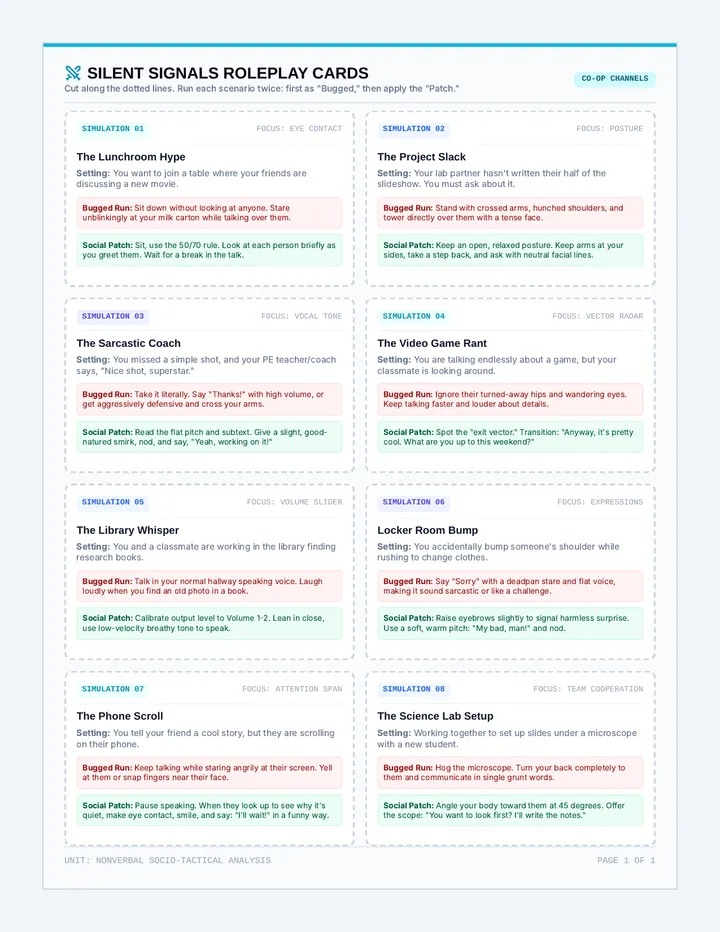
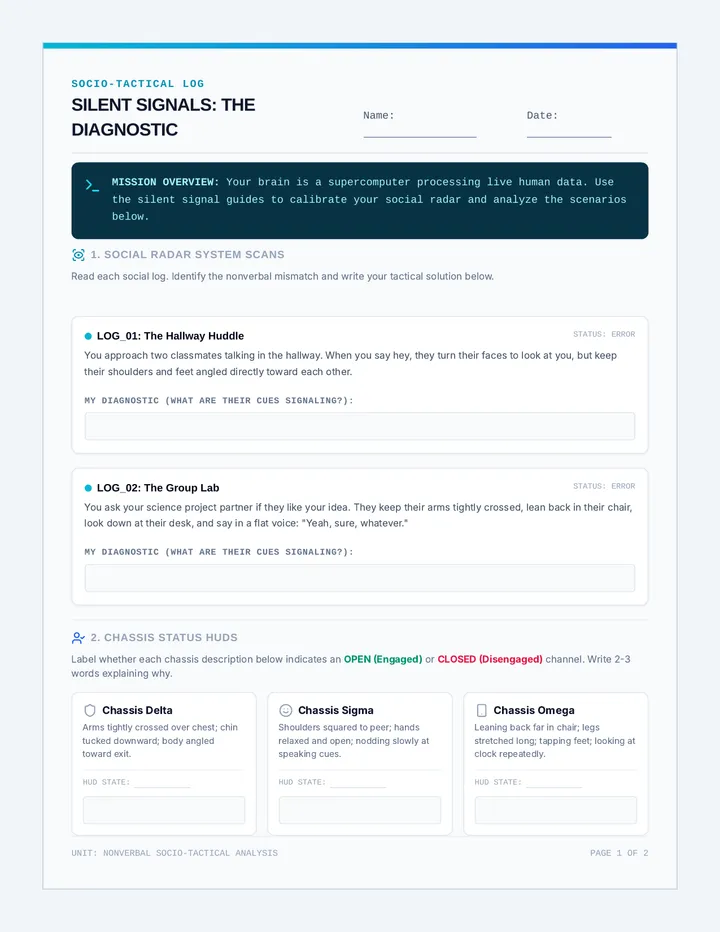
A deep dive into non-verbal communication, where students learn to decode body language, tone of voice, and facial expressions to better 'read the room'.
Students learn the mechanics of starting and sustaining conversations, focusing on the power of follow-up questions to build rapport and demonstrate genuine interest.
The opening session of the Social Skill Squad series. Students get to know each other through interactive games, reflect on their current friendship habits through a self-assessment, and preview the 8-week roadmap to social mastery.
Celebrate group progress, review key skills, and set personal social goals for the future.
Develop strategies for handling disagreements, setting boundaries, and maintaining friendships through friction.
Explore the progression of friendships and the importance of consistency and shared experiences.
Identify shared interests and learn tactical strategies for approaching potential new friends in different environments.
Understand the impact of body language, tone, and personal space on social interactions and friendship building.
Master the 'ping-pong' method of conversation through open-ended questions and verbal follow-ups.
Learn the foundational mechanics of active listening and identifying barriers to effective communication.
Establish group norms, build initial rapport, and define what high-value friendship looks like in high school.
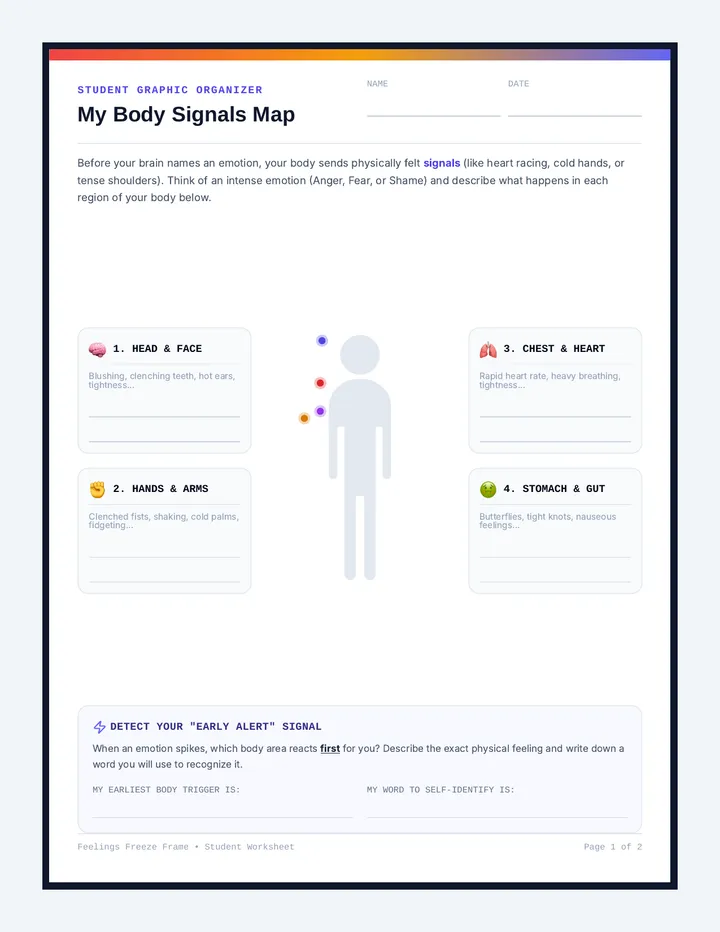
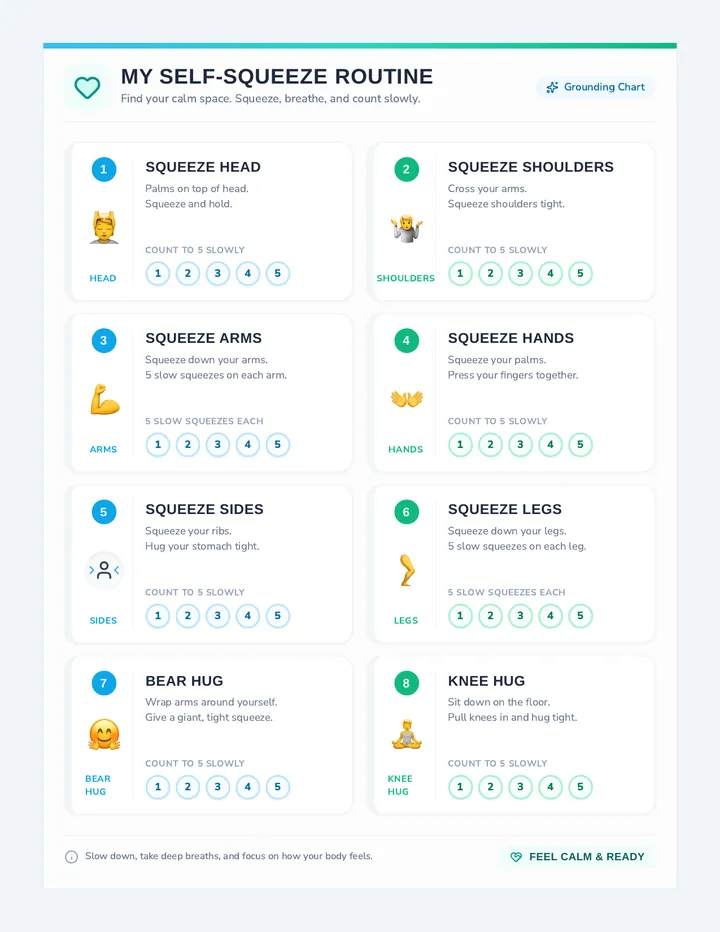
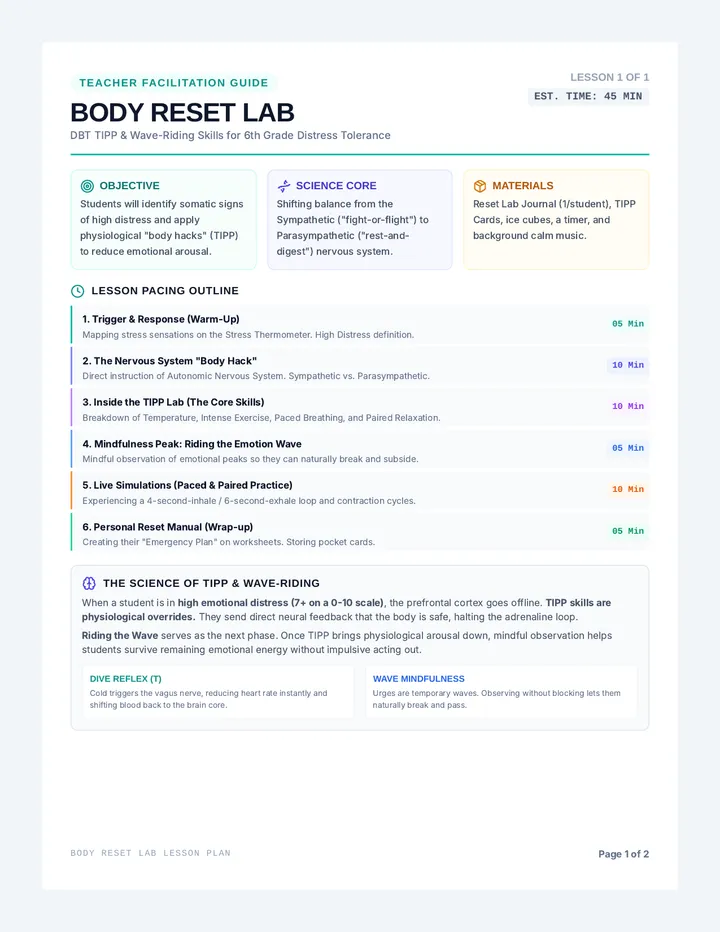
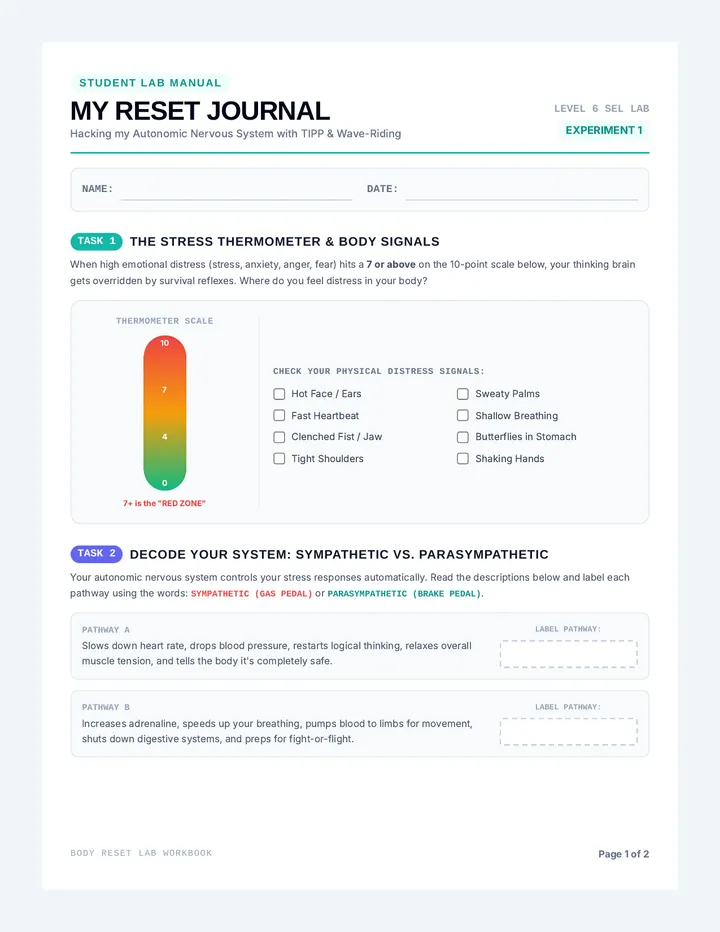
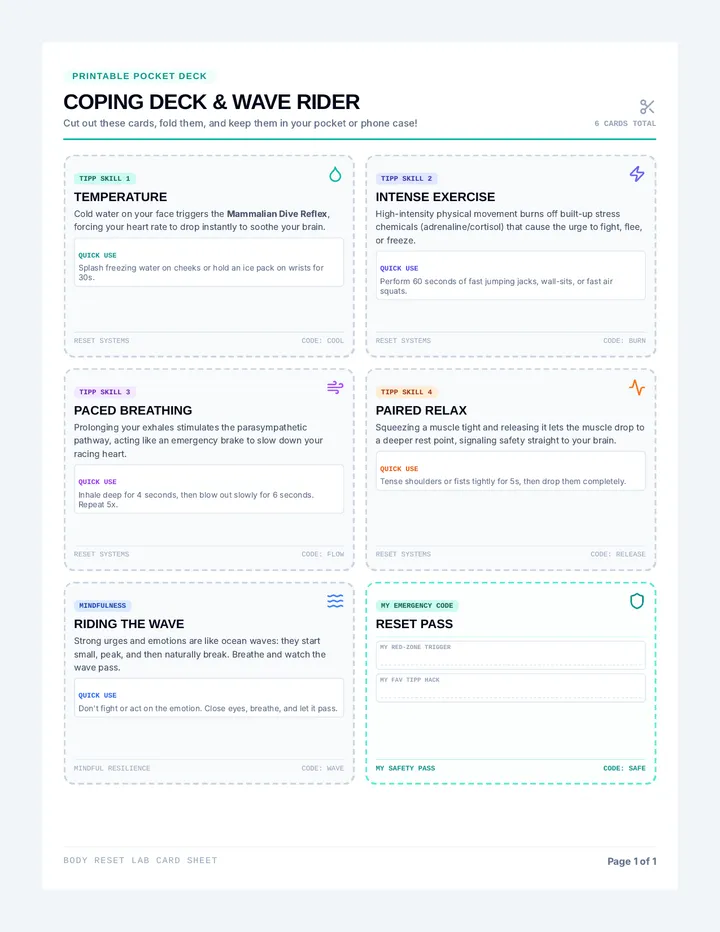
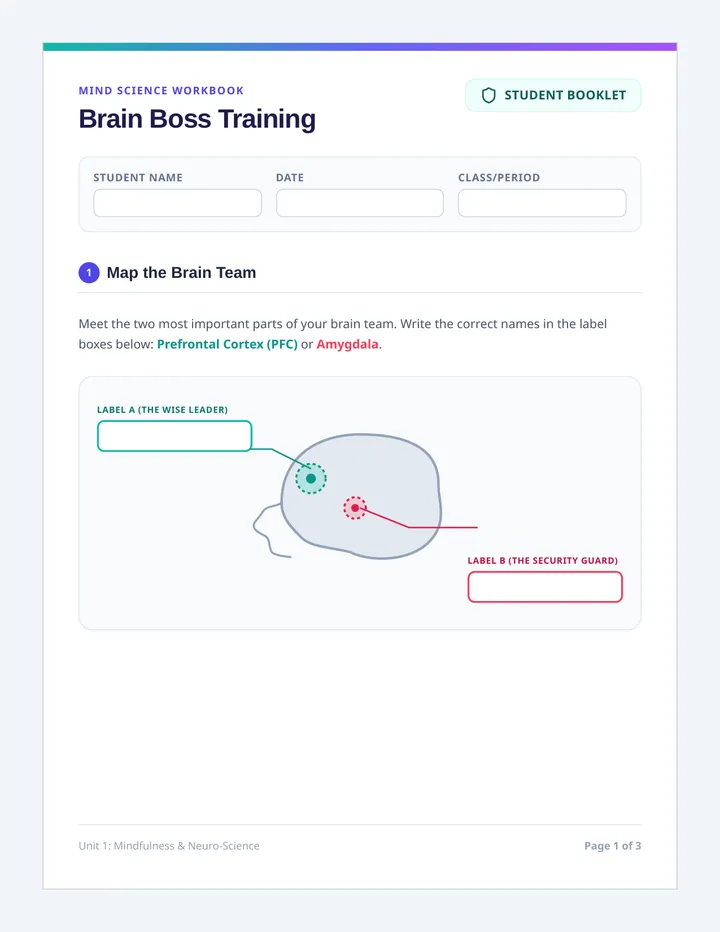
A lesson focused on physical mindfulness techniques, including progressive muscle relaxation and gentle grounding movements to help students regulate their emotions and focus their bodies.
A culminating mission simulation where students apply all self-regulation skills in a team-based game environment.
Developing social self-awareness by learning to read the 'signals' of co-pilots and adjusting behavior accordingly.
Mastering the 'Pause Button' to improve impulse control and decision-making during high-energy moments.
Learning and practicing 'Heat Shield' strategies to cool down when energy levels or emotions get too high.
Identifying 'Asteroids' or triggers that cause impulsive reactions and disrupt focus, focusing on self-awareness of emotional shifts.
Introduction to the 'Internal Engine' concept, helping students identify their current level of arousal and hyperactivity through the lens of rocket energy.
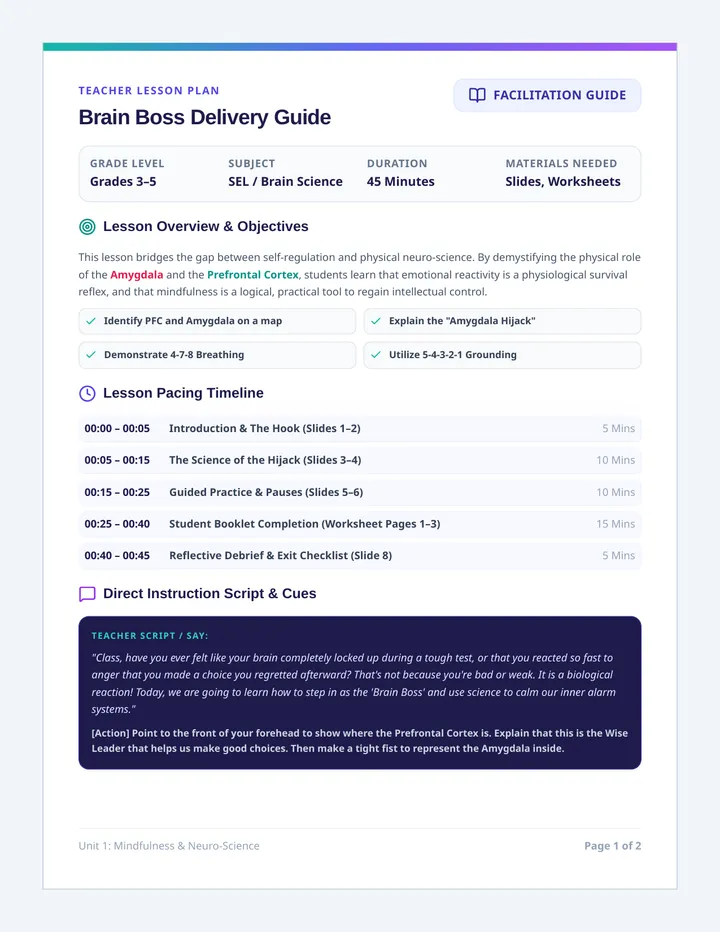
A lesson teaching students how to use the 5-4-3-2-1 grounding technique to manage stress and anxiety, framed through a technical 'system reset' metaphor. Students learn to recognize the 'spinning' state of anxiety and intercept it using sensory inputs.
A grounding and mindfulness lesson using a coding-themed 'System Reset' protocol to help students focus and regulate their attention.
A soothing and interactive virtual lesson designed for 3rd and 4th grade students with IEPs during high-stress testing weeks. The lesson focuses on all five SEL competencies through gentle movement, mindful breathing, and collaborative fun to promote a sense of calm and well-being.
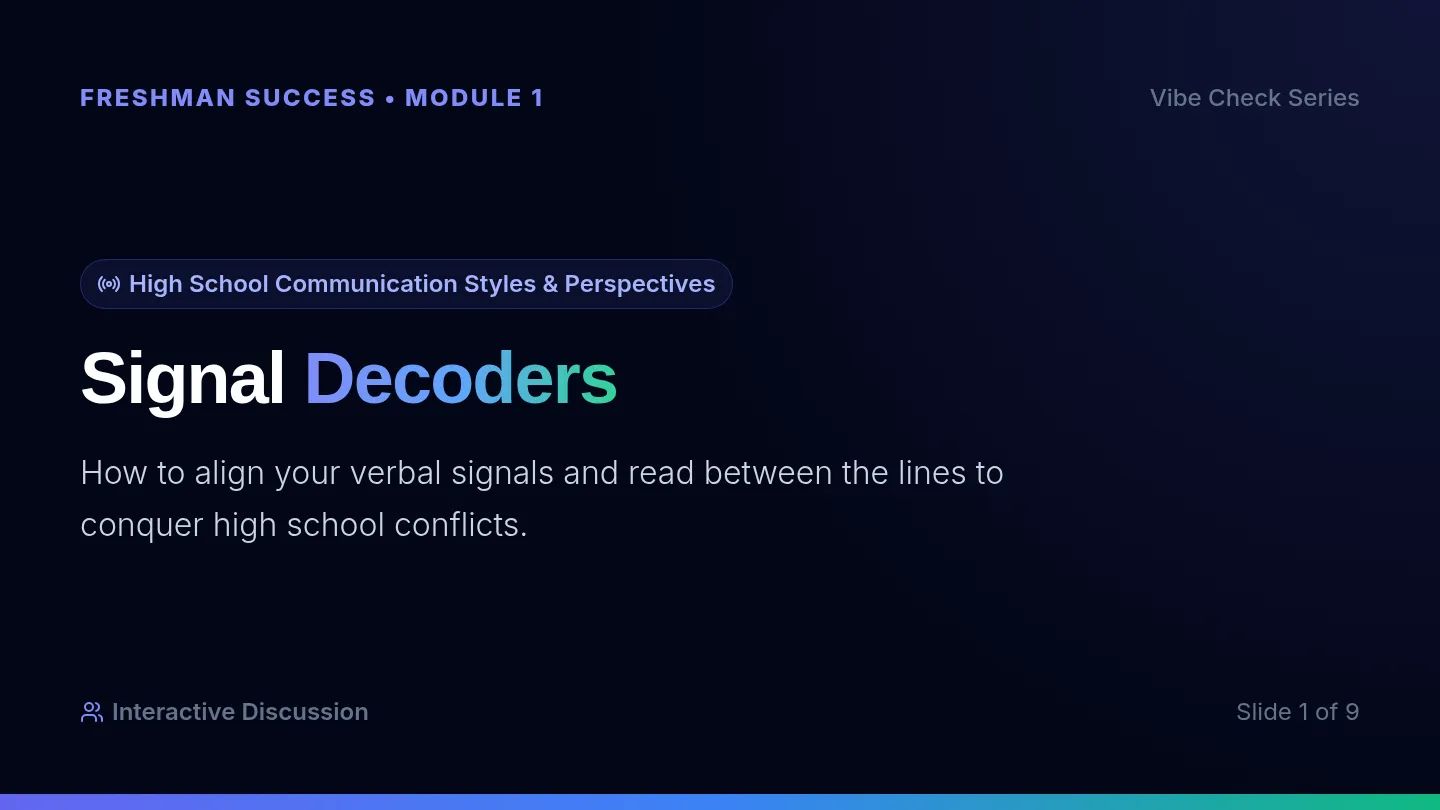
This lesson helps 7th-grade students take ownership of their academic responsibilities through effective tracking systems and time-management strategies. Students will analyze their current habits and build a personalized 'Flight Plan' for completing assignments on time.
A final review and certification ceremony where students reflect on their growth and receive their 'Master Mechanic' status.
Integrating all 'Mind Mechanic' skills into a final creative project, demonstrating mastery of self-awareness and social reasoning.
Evaluating options and consequences using 'The Choice Circuit,' focusing on making deliberate decisions while reading and writing.
Introducing decision thinking through 'The Logic Loom,' helping students weave together 'how' and 'why' clues in complex texts.
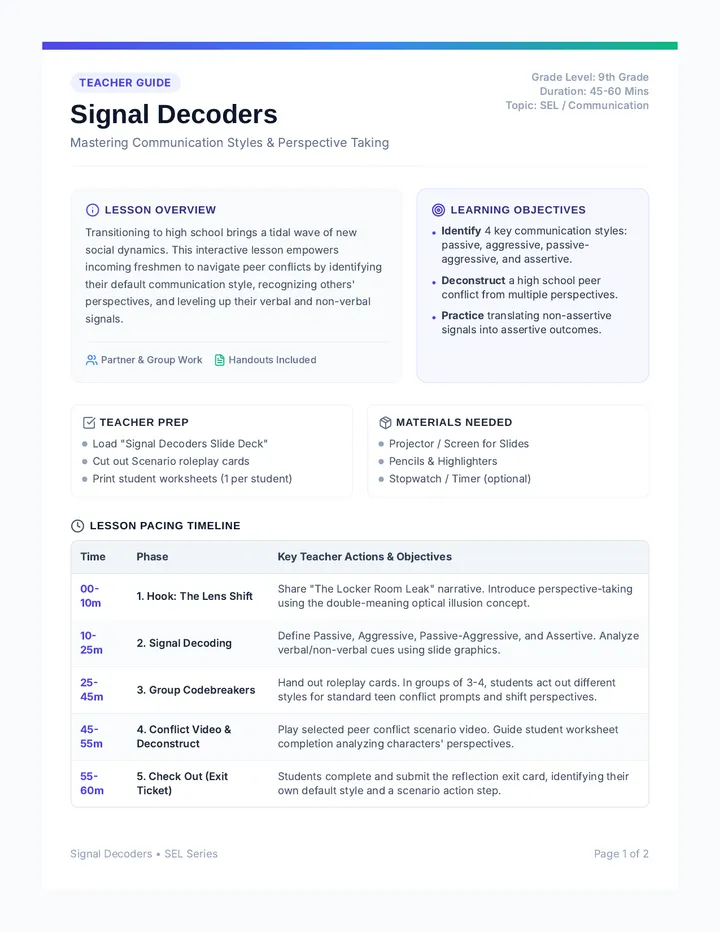
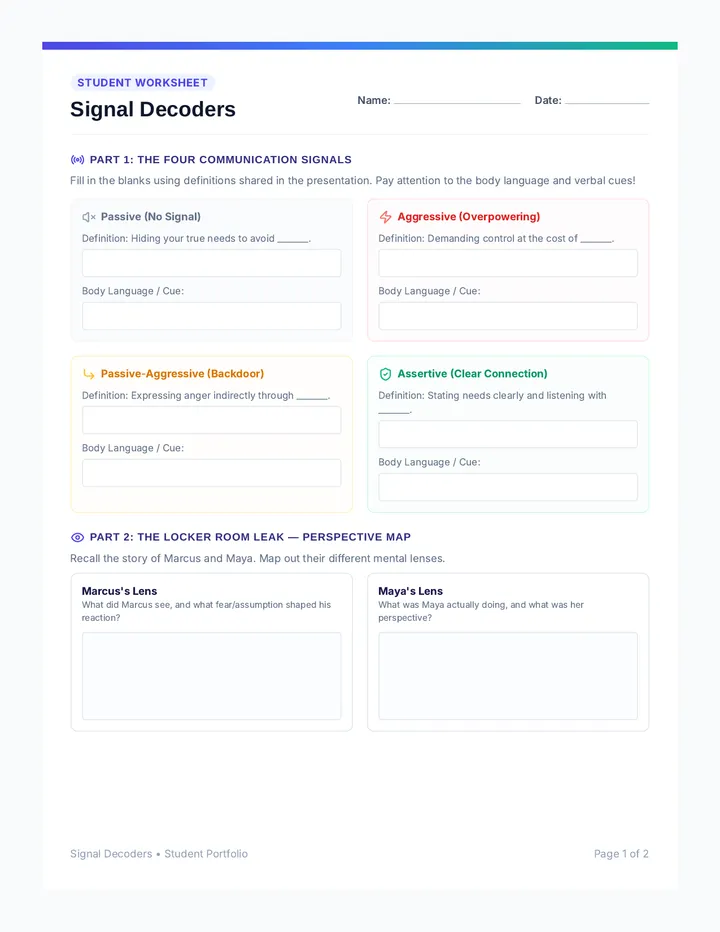
Advanced social reasoning using 'Point of View Goggles' to interpret different perspectives and motivations in stories and real-life situations.
Developing social understanding by using 'Signal Scanners' to detect character emotions and perspectives within texts.
Focuses on using feedback as a 'Toolbox Upgrade,' helping students see mistakes and suggestions as ways to improve their work rather than as failures.
Introduction to growth mindset through 'The Blueprint,' teaching students that skills are built over time with practice and planning.
Building self-esteem by identifying 'Safety Gear'—the positive inner talk and strengths that protect us from fear and frustration.
Focuses on stress handling by introducing 'Coolant Systems'—calming strategies to use when facing difficult tasks or making mistakes.
Exploring the 'Reaction Engine' to understand how the brain responds to stressors during reading and writing, helping students identify their personal triggers.
An introduction to the concept of the mind as a 'workshop' where thoughts and feelings are built, introducing students to their role as Mind Mechanics and establishing basic self-awareness.
A 20-minute introductory lesson on choosing kindness when it's hard, teaching students to look beneath the surface of difficult behaviors using 'empathy goggles'.
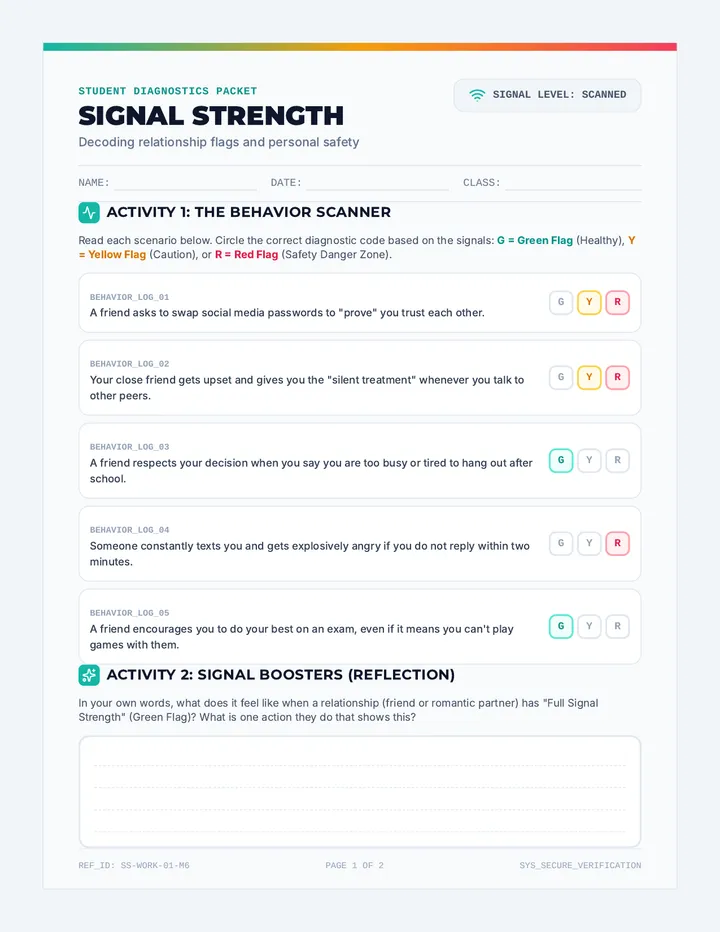
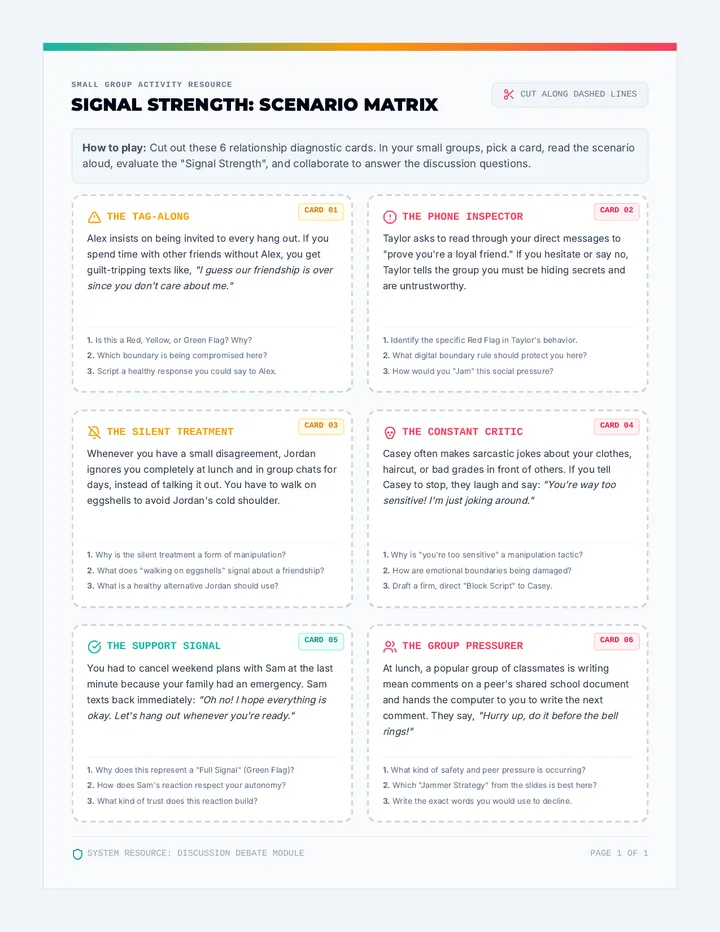
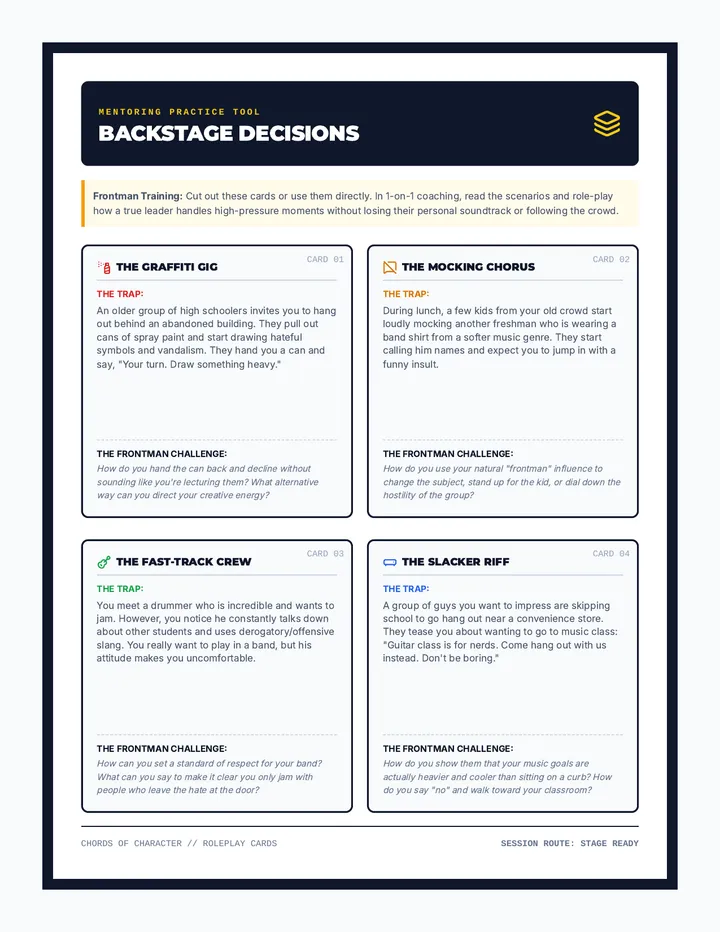
A comprehensive lesson on identifying and managing peer pressure, focusing on direct vs. indirect influence and developing effective refusal strategies.
A short, engaging lesson for 3rd and 4th graders about the importance of maintaining silence during testing periods to show respect for their peers. Using a 'Secret Agent' theme, students learn how to navigate hallways, bathrooms, and classrooms stealthily.
Students define motivation, distinguish between internal and external drivers, and identify their own personal motivators for school tasks.
The capstone session where students consolidate their learning, create a vision board, and write a letter to their future professional self.
Focuses on consistency and the daily grind, providing tools for tracking motivation and building automated positive habits.