Exploring the difference between sadness and depression, and how to identify when 'the blues' become something more serious.
No materials in this lesson yet.
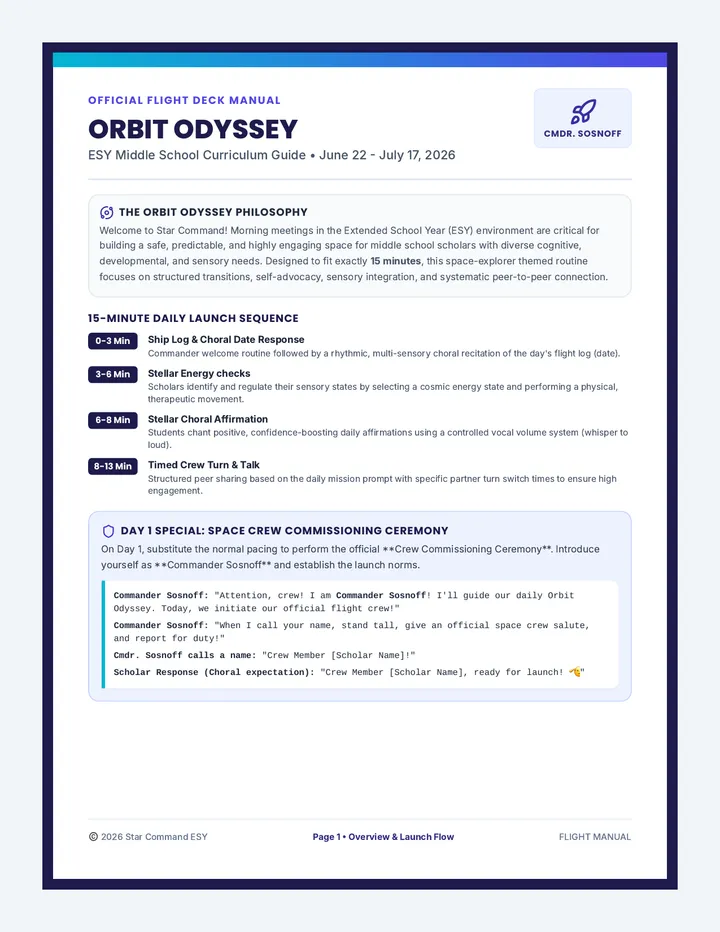
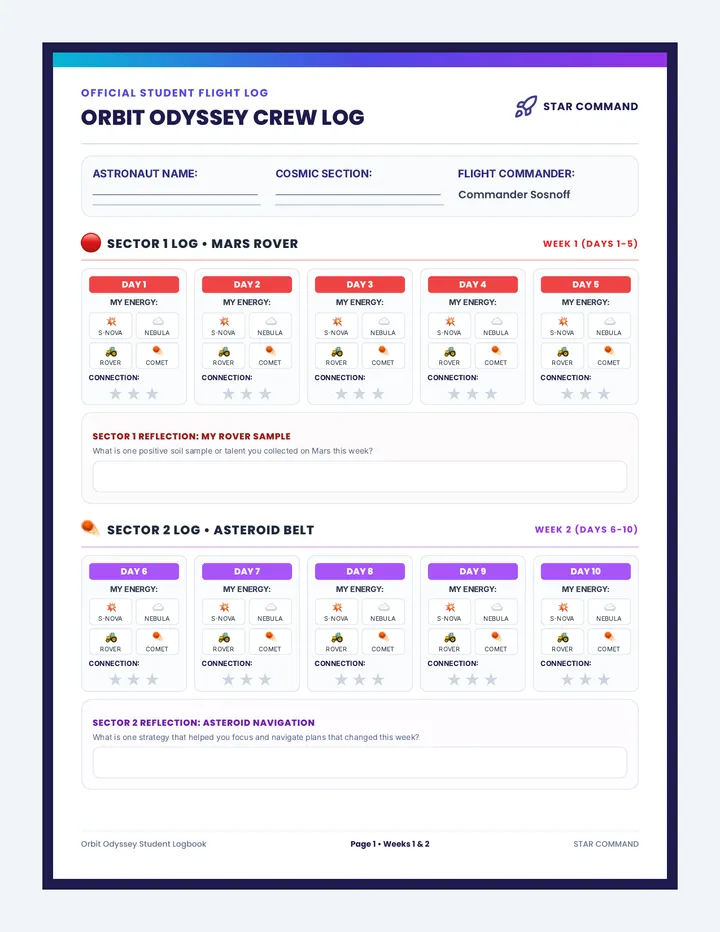
This lesson helps middle school students identify sensory triggers associated with seasonal energy shifts and develop a personalized regulation roadmap of calming and focusing strategies. Students explore the physiology of 'spring fever' and create a practical toolkit for maintaining focus during high-energy periods.
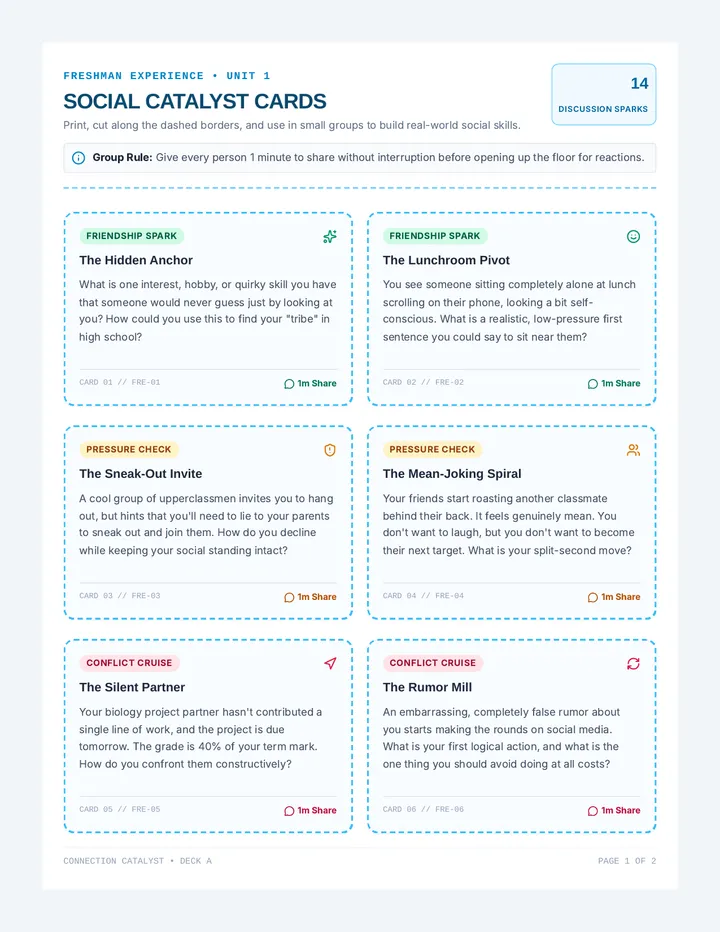
A social-emotional learning lesson focused on finding commonalities with peers through structured conversation. Students use conversation cards to discover shared interests and build connections.
A dynamic conversation game where students practice active listening and non-verbal communication through 'Talker' prompts and 'Listener' challenges. Students learn to recognize and use body language to show they are truly engaged in a conversation.
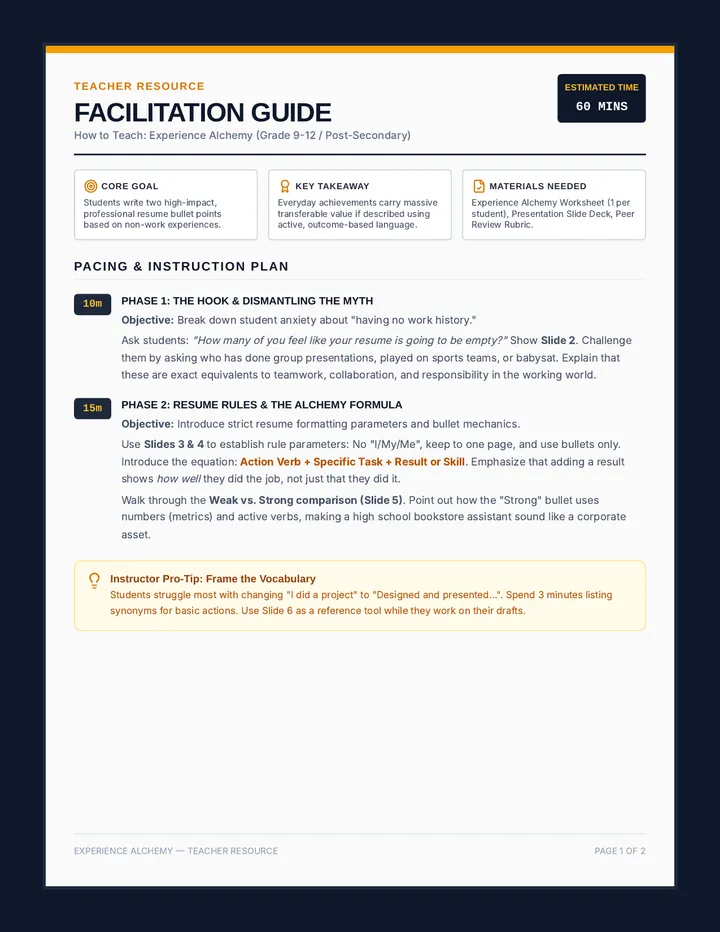
A comprehensive 60-minute advisory lesson designed to help 9th-grade students connect their high school elective pathways (Performing Arts, Design, Culinary, and STEM) to future career requirements, focusing on hard and soft skills, certifications, and research strategies.
A quick, high-impact lesson designed to empower 6th graders with a simple 3-step strategy for asking teachers for help effectively and confidently.
A comprehensive session focused on uncovering internal drivers, setting meaningful academic goals, and building social-emotional resilience through motivation strategies.
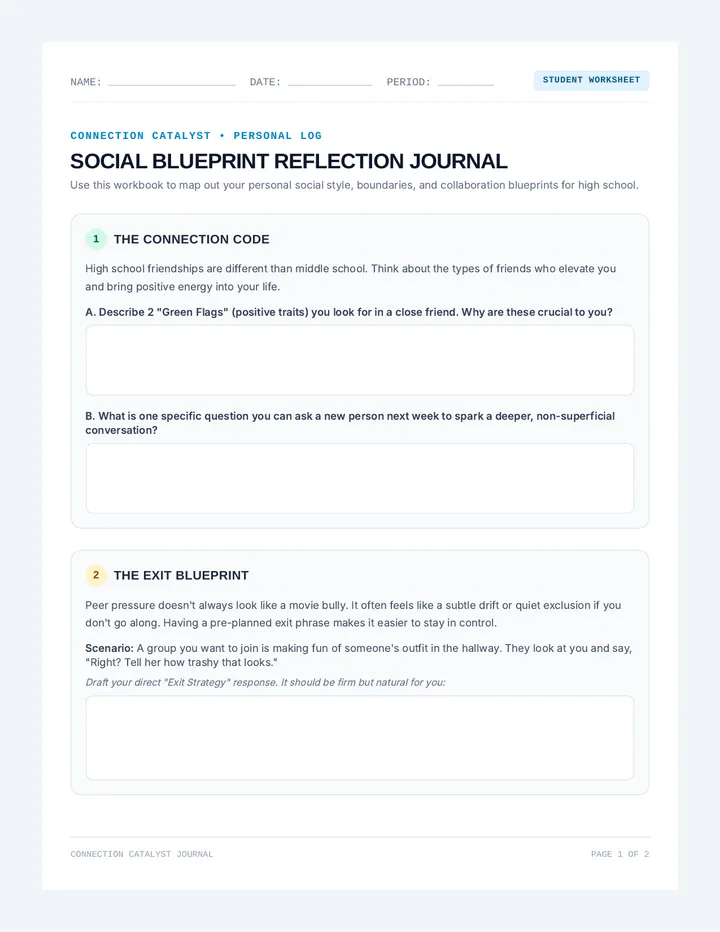
A lesson designed for high school students to differentiate between appropriate apologies and over-apologizing, featuring social scripts and alternative communication strategies.
Finalizing the daily routine by creating a 'construction schedule' to keep the joy architecture maintained over time.
Exploring the importance of social connections and kindness as 'common areas' that make the building of joy stronger for everyone.
Introducing mindfulness techniques as 'ventilation' for the mind, helping students stay present and clear-headed.
Focusing on gratitude as the foundation of emotional resilience, students identify the people and things that support them.
Students learn to identify 'raw materials' of joy—small, positive moments in their daily lives—and begin their joy site inspection.