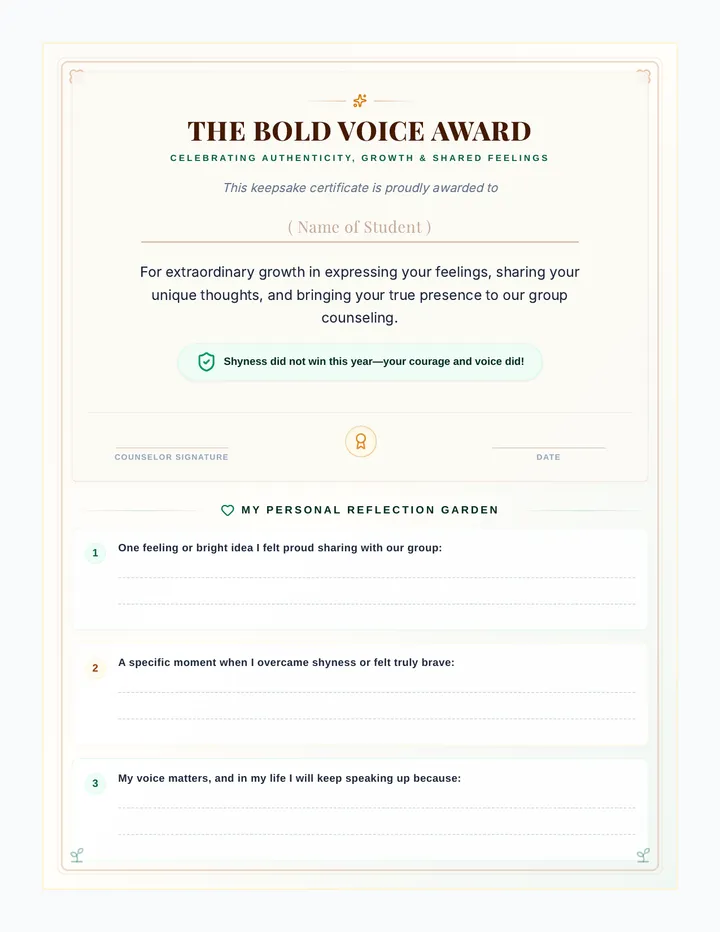
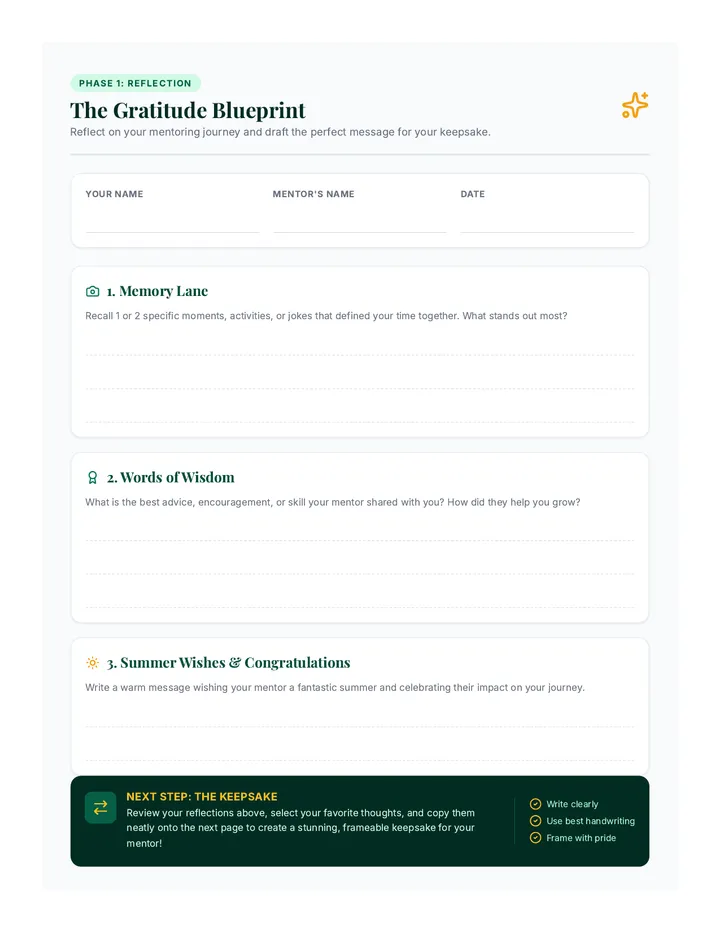
A reflective final session designed for a small group of three students and one staff member to process their time together, celebrate achievements, and transition forward.
The core lesson of the Brain Glitch series, introducing cognitive distortions as 'system glitches' and using a cooperative board game to teach students how to identify and debug them.
The final curriculum review and introduction to Core Beliefs. Students synthesize their learning to create a 'Master Patch'—a set of balanced core beliefs for long-term mental resilience.
Addresses 'Emotional Reasoning' and 'Labeling'. Students learn to identify when their emotions are overwriting logic and how to strip away harmful labels from their self-identity.
Targets 'Catastrophizing' and 'Fortune Telling'. Students learn to stop the 'what if' spiral by assessing actual probabilities and creating contingency plans.
Explores 'Mind Reading' and 'Personalization'. Students act as signal decoders to separate actual social cues from glitched assumptions about what others are thinking.
Focuses on 'All-or-Nothing' thinking and 'Mental Filtering'. Students learn to identify binary thinking patterns and practice finding the 'gray area' between extremes.
The first week of morning mental exercises focusing on foundational critical thinking skills across various domains.
Using the 'Fix-It' button to reboot thoughts and graduating as Master Fixers.
Checking if a thought is a FACT or just a FEELING.
Fixing the glitch where we think everyone is mad at us (Personalization).
Learning how to stop small worries from becoming giant snowballs (Catastrophizing).
Finding the 'Bad-News-Only' glitch (Mental Filtering) and the 'Always/Never' glitch.