A 30-minute 10th-grade session where students learn and practice 4-7-8 breathing and 5-4-3-2-1 grounding techniques through modeling, station rotations, and peer coaching.
A lesson focused on post-pitch reflection and strategic iteration. Students conduct a SWOT analysis of their own performance and draft a 'Pivot' plan to refine their business concept based on audience feedback.
The unit capstone experience where students present their marketing campaigns as founders. Includes a two-day formal pitch event with peer judging, Shark Tank-style Q&A, and 'Class Cash' investment reflections.
A lesson focused on public speaking and professional presentation etiquette. Students learn non-verbal communication techniques, projection, and how to use digital slides as a backdrop rather than a teleprompter.
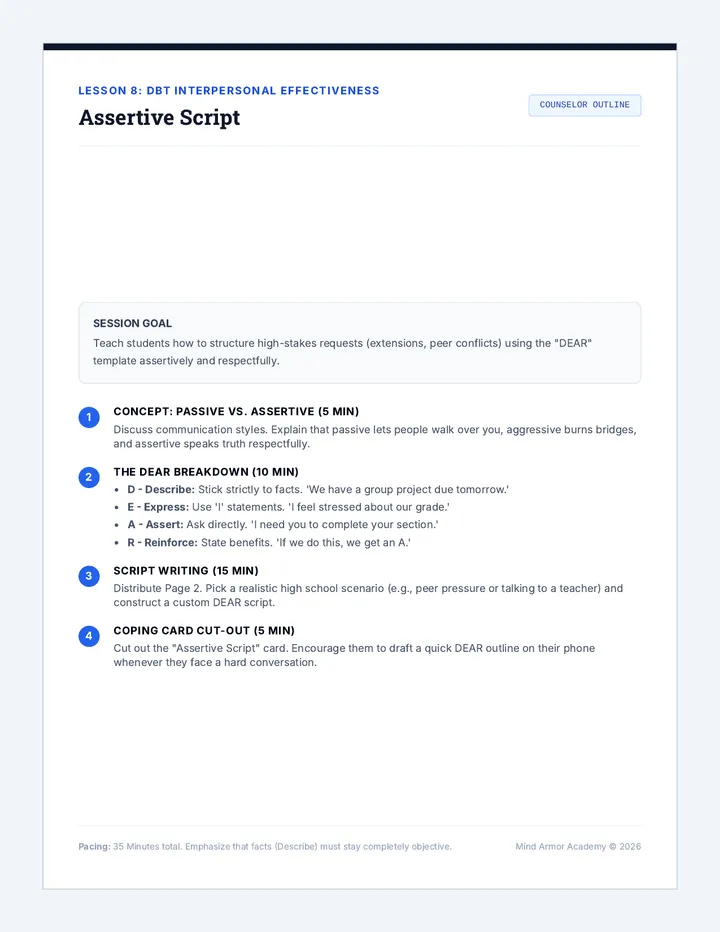
A high-energy, 30-minute coaching session focused on five critical self-advocacy scenarios. Includes role-play, visual aids, and practical toolkits for immediate application in real-world settings.
A lesson focused on data visualization and presentation flow. Students learn to simplify complex spreadsheets into high-impact slides, animate charts for storytelling, and finalize their full pitch deck.
A lesson focused on visual consistency and branding in pitch decks. Students learn to use master slides, image masking, and brand-aligned assets to create the first half of their digital marketing pitch.
A lesson focused on business storytelling and pitch deck structure. Students learn to frame their marketing campaign as a problem-solving narrative using the 10-Slide Rule and 'invisible' design principles.
A lesson focused on designing large-format print advertisements. Students learn the differences between RGB and CMYK color modes, resolution requirements, and how to design for 'glanceability' using the Drive-By Test.
A lesson focused on creating high-impact vertical social media advertisements. Students learn the 'Thumb-Stop' rule, the 60/20/20 anatomy of mobile ads, and design safe-zone techniques in Canva.
High schoolers develop professional agency by aligning device habits with workplace standards.
Eighth graders develop peer accountability norms for collaborative digital environments.
Seventh graders explore digital agency and how self-regulation impacts their learning community.
Sixth graders analyze their digital attention and map out personal accountability strategies.
Fifth graders model digital responsibility for their peers by demonstrating expert navigation.
Fourth graders master the art of switching between digital tasks following teacher guidance.
Third graders identify "navigation hazards" and learn to stay on task independently.
Second graders focus on communicating their focus through physical and digital signals.
First graders practice identifying the correct digital tools for specific learning tasks.
Kindergarten students learn the basic signals for starting and stopping device use to stay on the learning path.
A lesson focused on the core marketing message: the Value Proposition. Students learn the formula for persuasive messaging and how to design high-impact 'Hero Text' for digital landing pages.
High school students develop agency and professional digital habits, demonstrating Accountability by aligning their device use with academic goals and professional communication.
Middle school students focus on the JHawk Way value of Accountability by managing their digital attention and communicating respect through focused device use.
Elementary students explore how to be Responsible JHawks by navigating to the right learning tools at the right time and communicating their readiness to learn.
A 5-page workbook unit focused on strengthening executive functioning and planning skills for teenagers, using a 'Command Center' technical manual theme.
A comprehensive unit preparing students for the financial and logistical realities of post-secondary life, covering education pathways, housing, vehicle maintenance, and budgeting.
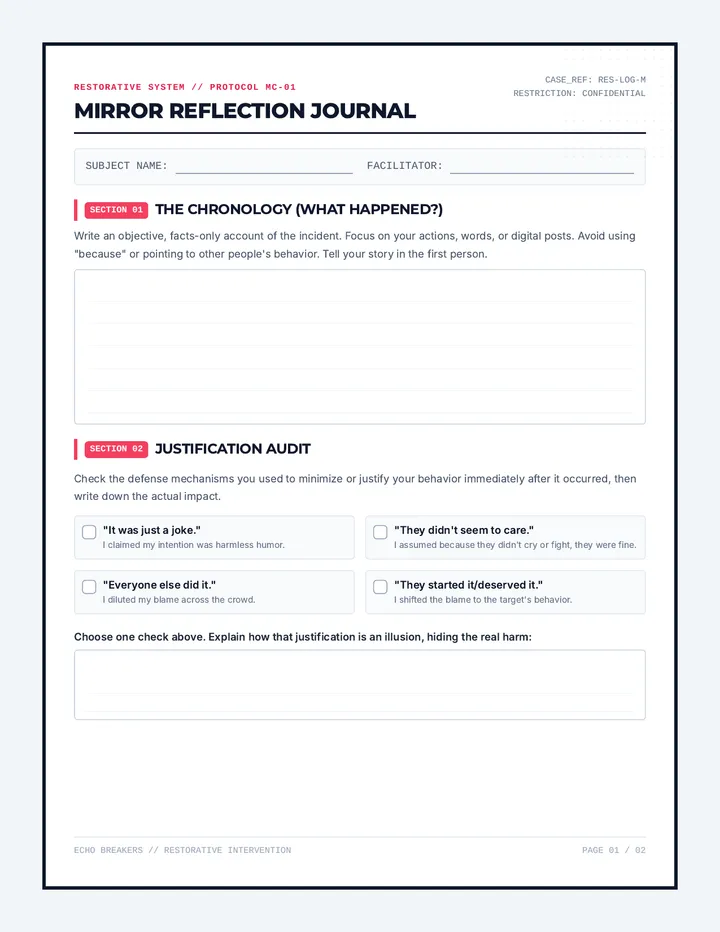
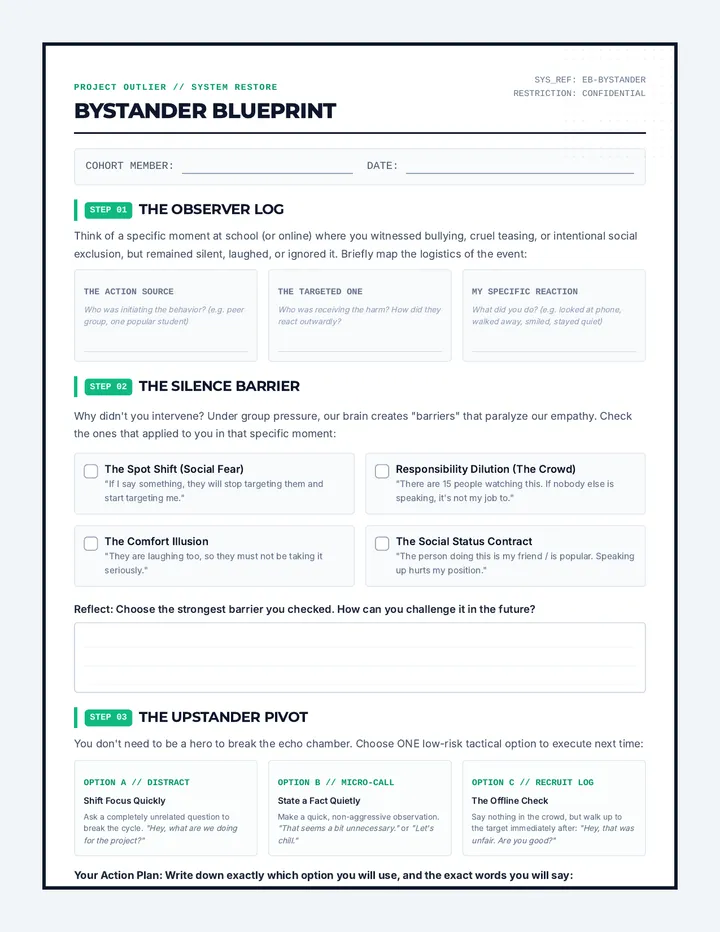
A comprehensive K-12 behavior management system that synthesizes best practices from MTSS, PBIS, and restorative justice frameworks. This lesson provides teachers with a clear decision-making flow and a detailed policy handbook for maintaining a positive school culture.
An analysis of the financial decisions made in the film Goodfellas, focusing on high-risk income, the "bust-out" business model, and the long-term costs of illicit wealth.
Students master the technical side of search, from basic search engine mechanics to advanced database filters and professional inquiry tools.
Focuses on the art of inquiry, teaching students how to transform broad interests into specific research questions and effective search keywords.
Students explore the modern information landscape, learning to distinguish between library resources, databases, and the open web across various academic levels.
Analyze workplace culture, professional communication, and business ethics through the lens of the high-stakes fashion industry in 'The Devil Wears Prada'. Students will explore how technology facilitates modern business and the ethical dilemmas of rapid-fire corporate environments.
Students learn the importance of professional document formatting and hierarchy, setting up a formal business proposal template with structured headings and standardized typography.
Students conduct a market research sprint, interviewing classmates to validate their product ideas and learning to 'pivot' based on real user feedback and data synthesis.
Students learn the difference between leading and open-ended questions, developing a research table and interview script to gather unbiased feedback from potential customers.
Students explore the concepts of target markets and customer empathy, moving from personal preferences to identifying specific user needs and mapping out a "Day in the Life" for their ideal customer.
Students explore the fundamental economic concepts of scarcity and opportunity cost, applying them to product development by making difficult trade-offs between competing features within a limited resource budget.
Students learn to identify consumer "pain points" as opportunities for innovation, moving from recognizing everyday frustrations to conceptualizing business solutions.
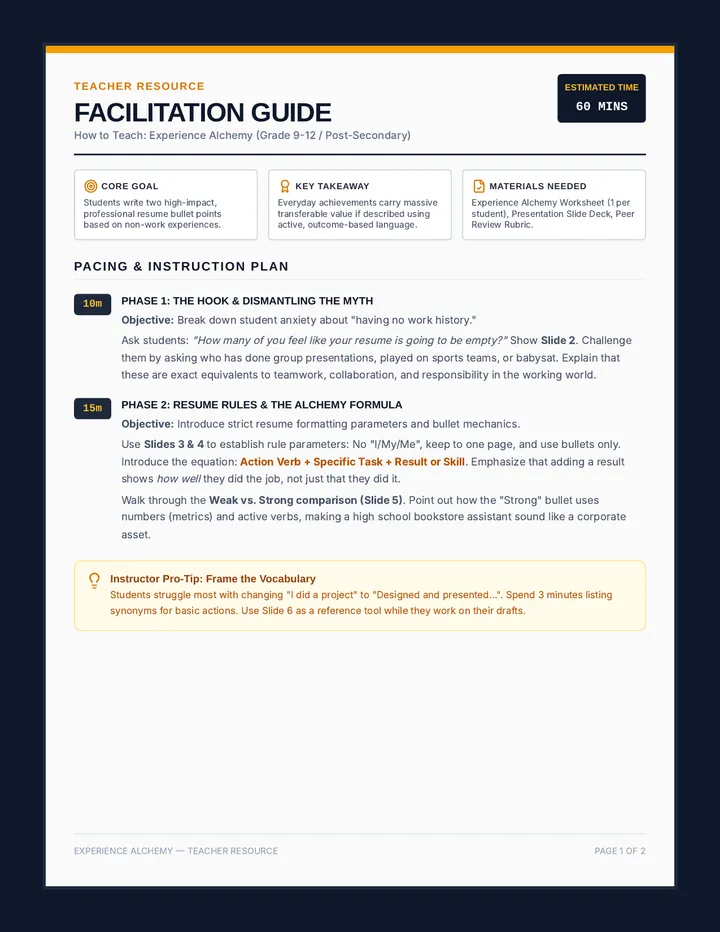
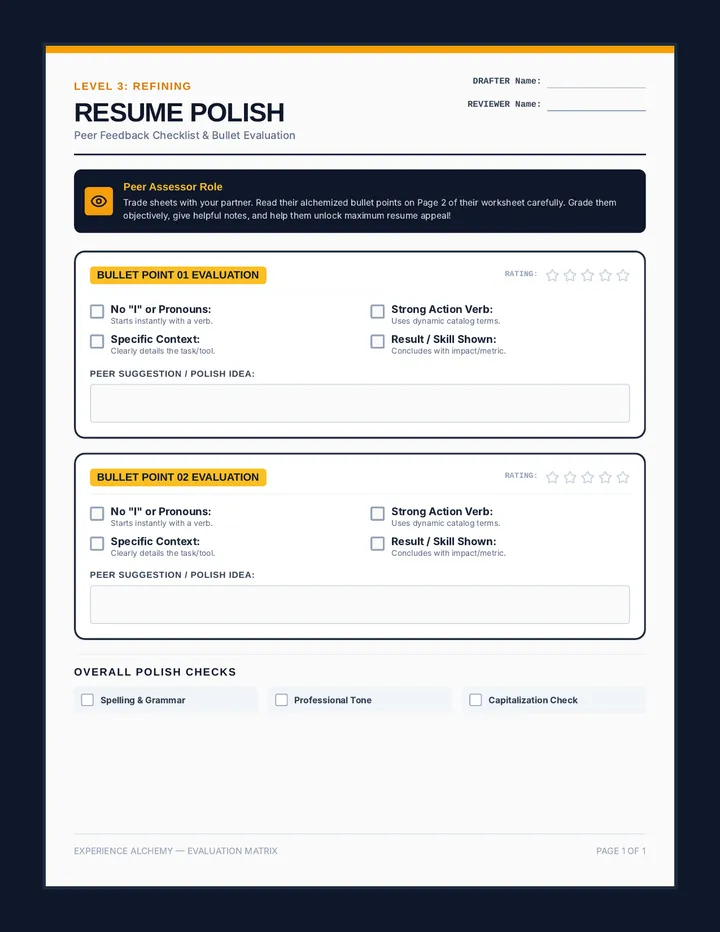
A final assessment covering application preparation, interview techniques, and professional workplace etiquette.
A comprehensive lesson on navigating the termination phase of the student-counselor relationship, focusing on celebrating growth, managing emotions, and planning for the future.