Students explore diverse career pathways and the education or training they require through interactive activities and detailed career profiles. This lesson helps 10th graders connect their interests with realistic educational routes.
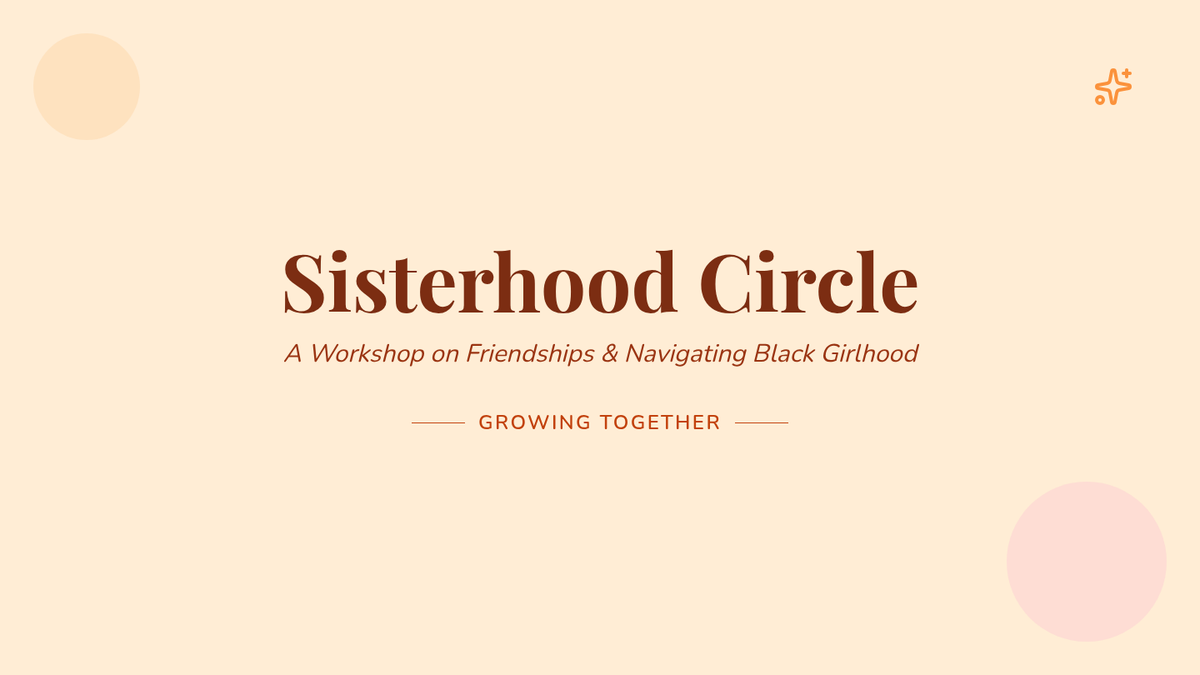
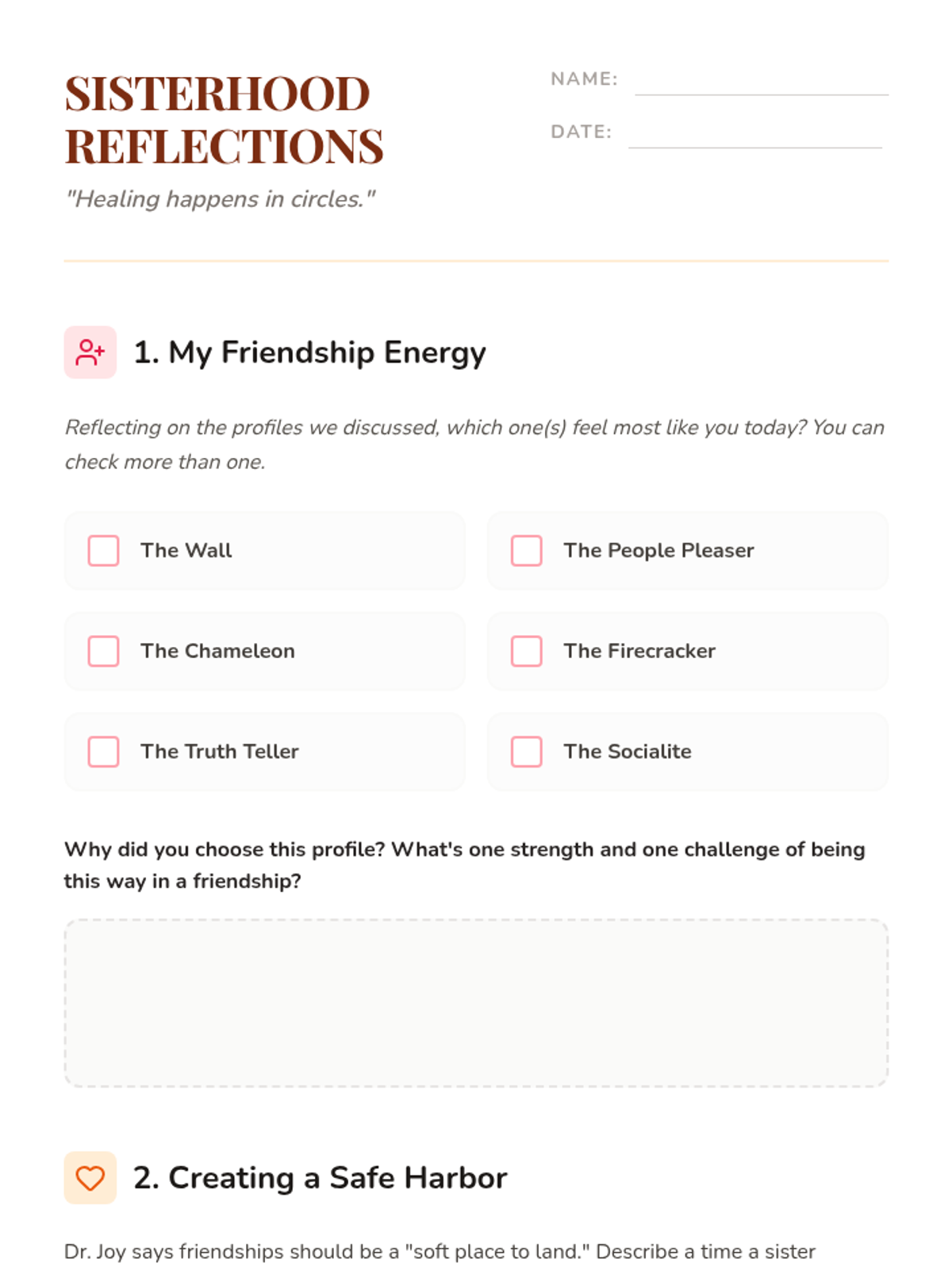
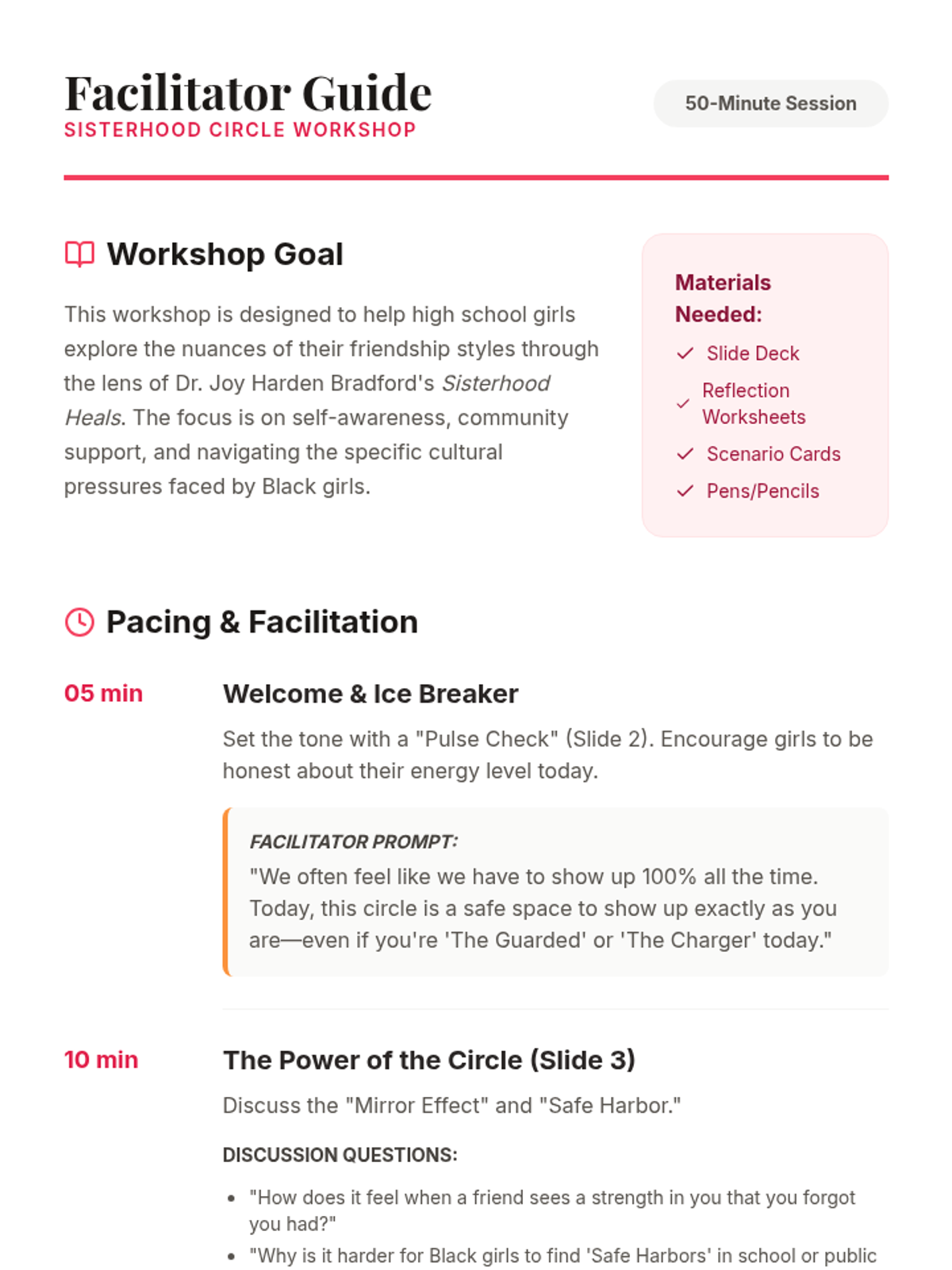
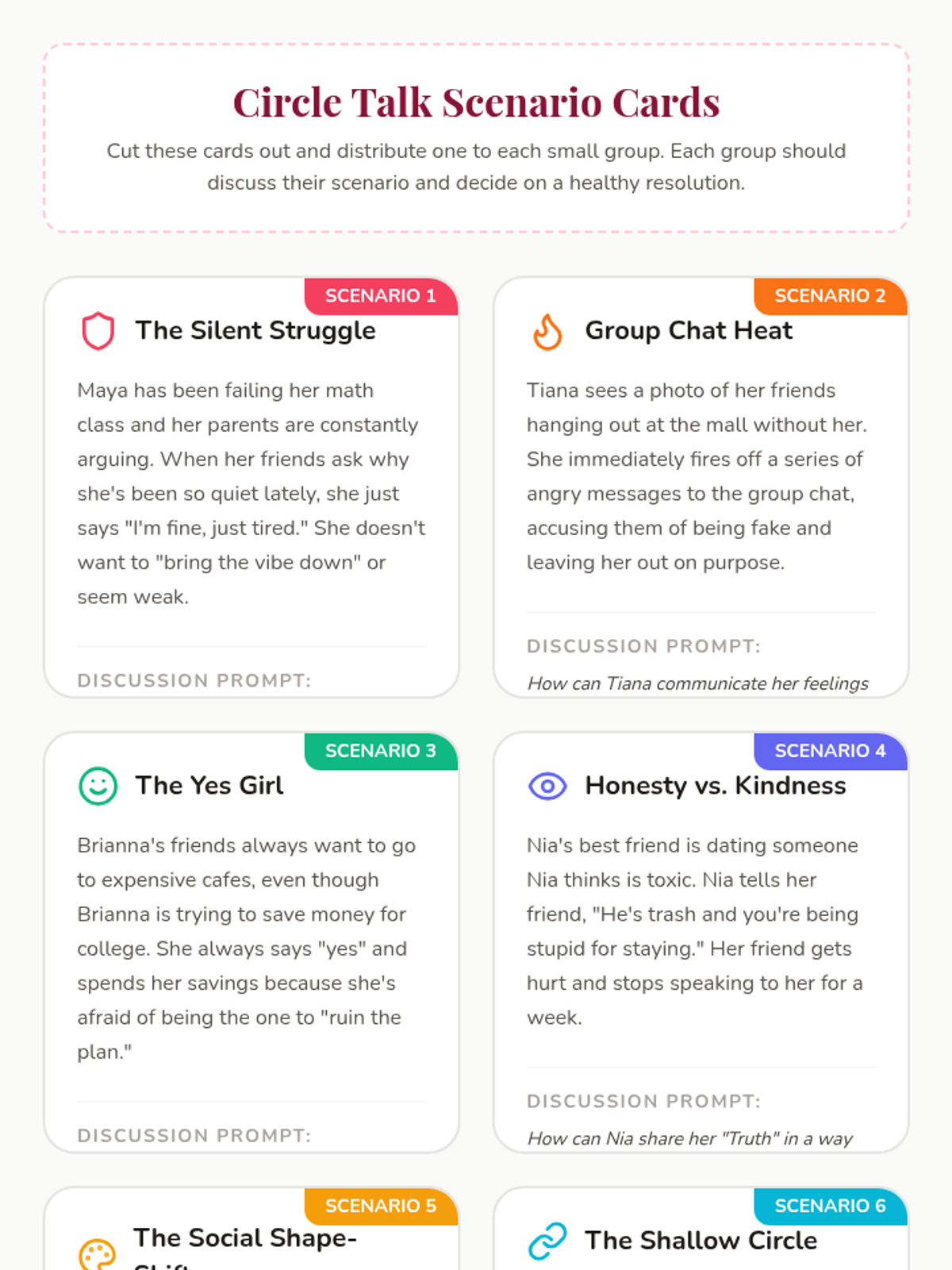
A 50-minute interactive workshop for high school girls focused on the power of sisterhood, navigating the nuances of Black girlhood, and understanding personal friendship styles inspired by Dr. Joy Harden Bradford's 'Sisterhood Heals'.
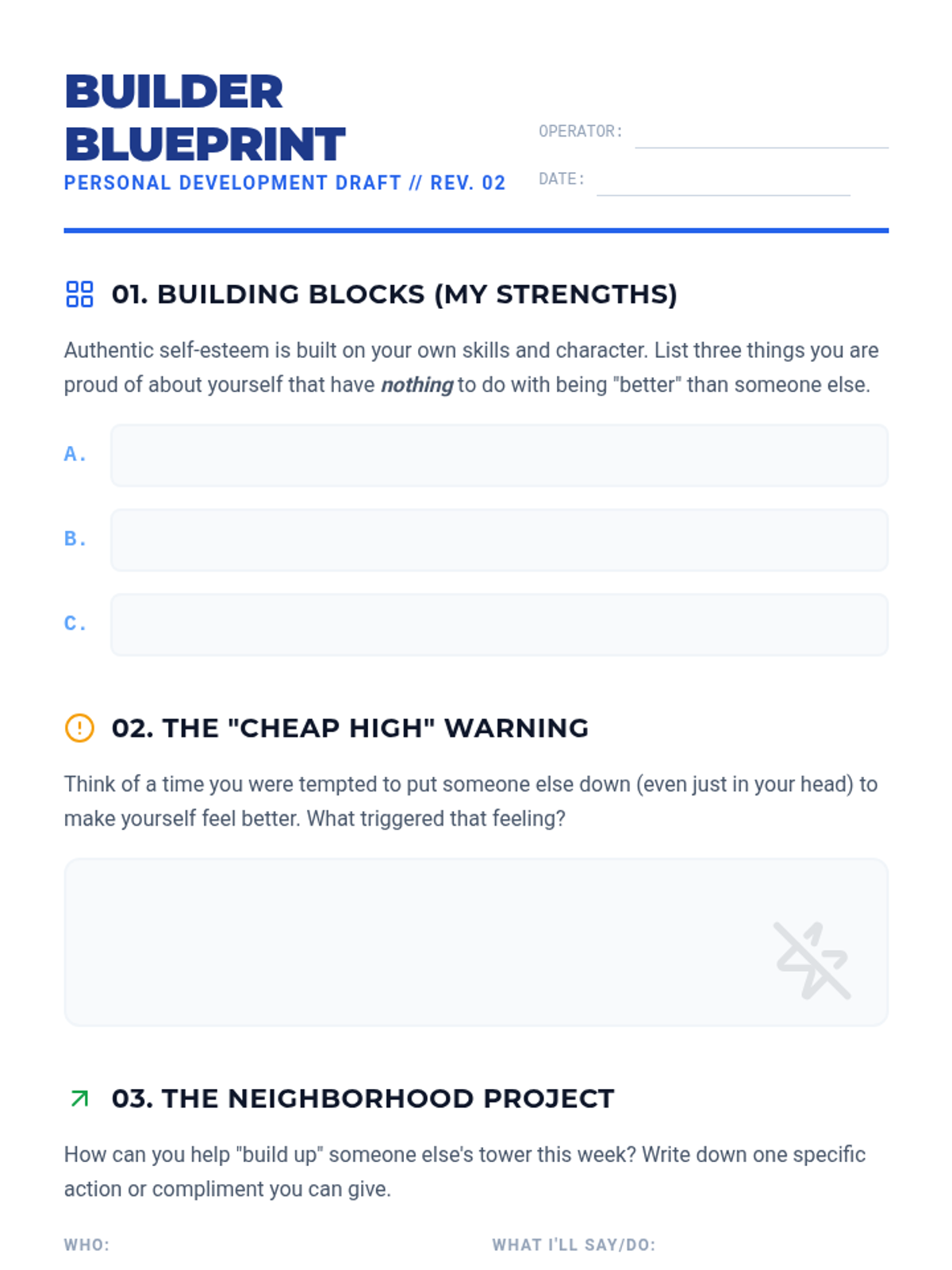
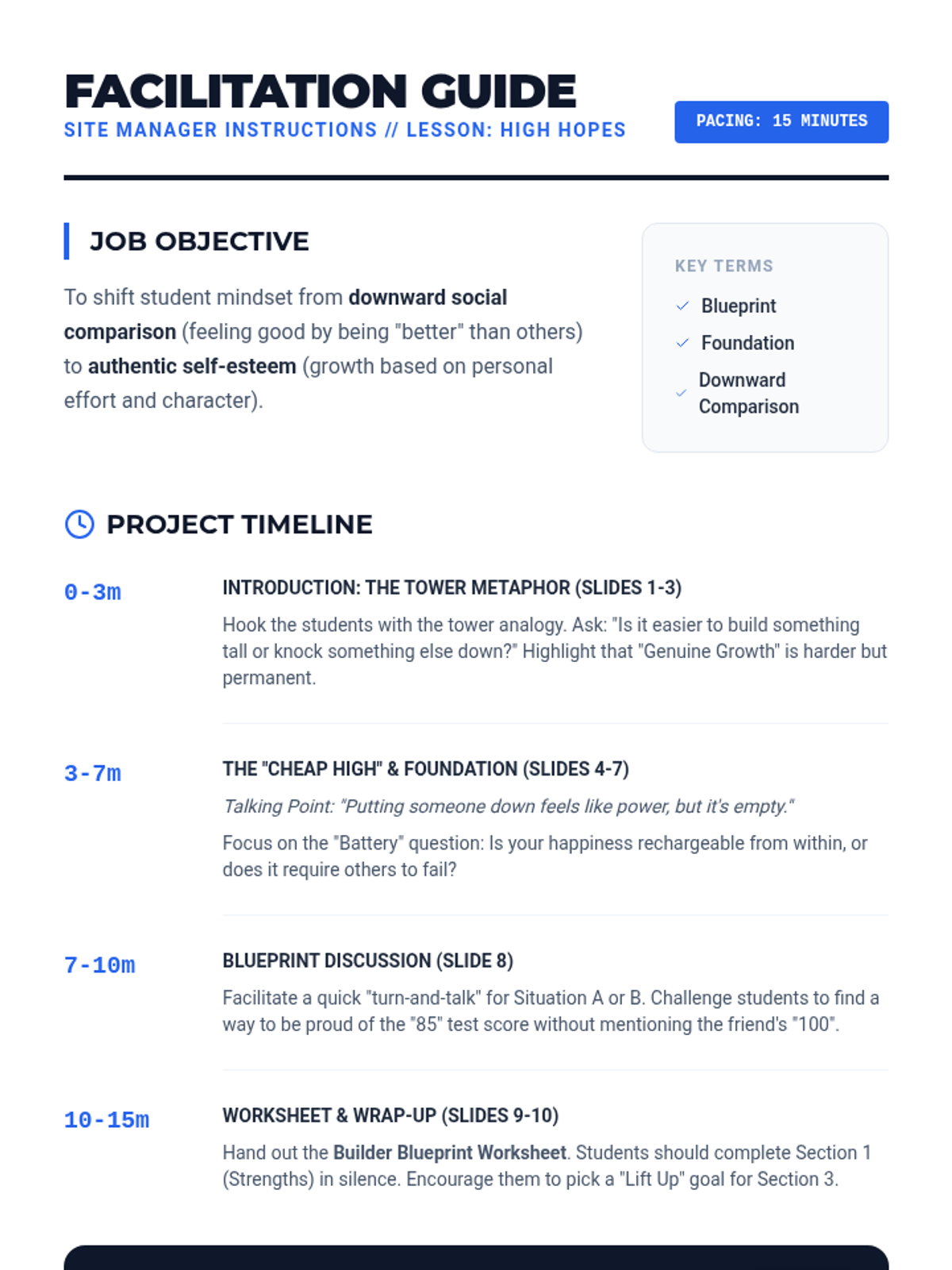
A 15-minute lesson exploring the pitfalls of 'downward social comparison' and how to build authentic self-esteem without diminishing others. Students will learn that true confidence comes from personal growth rather than putting others down.
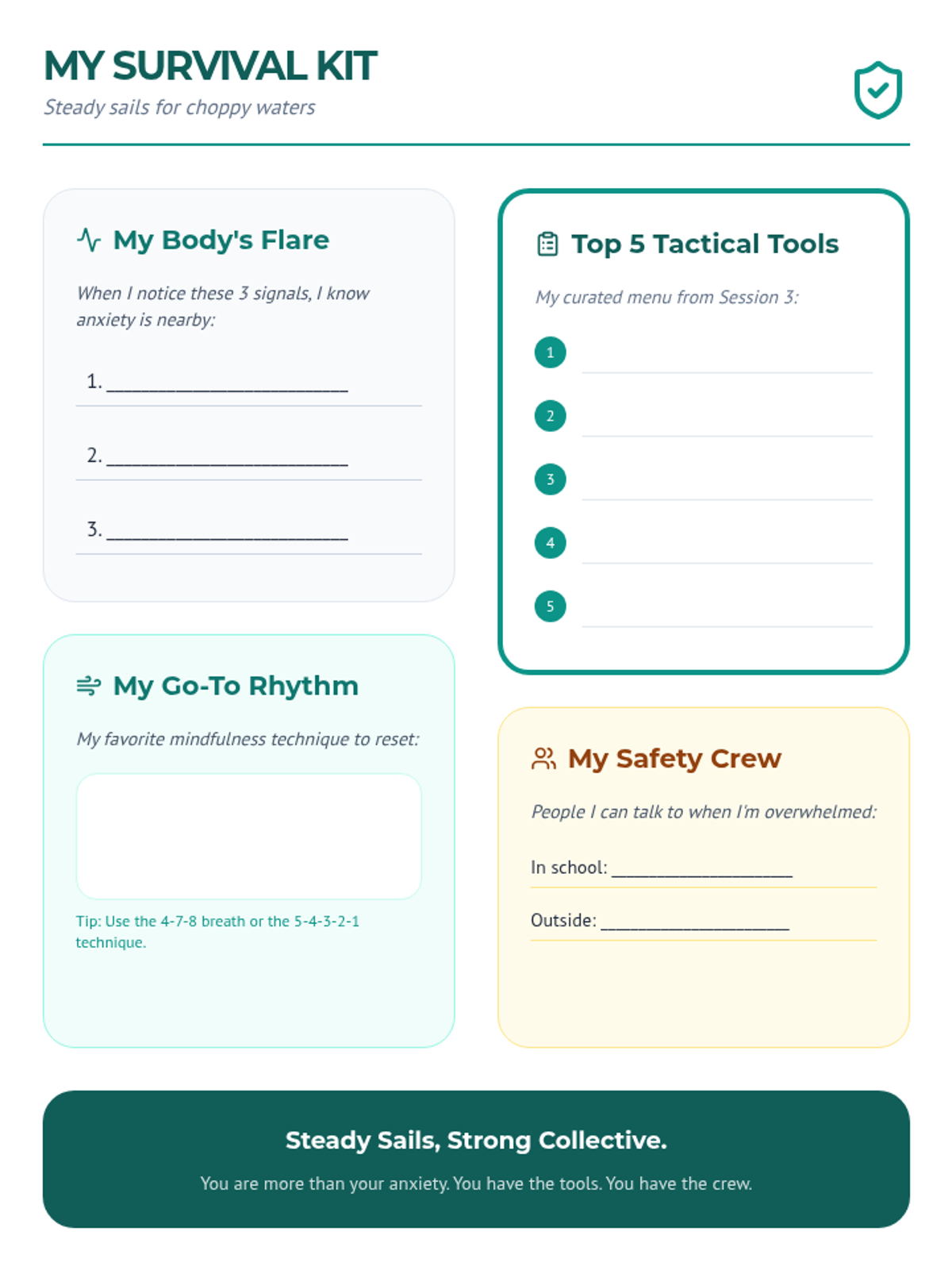
The final session focuses on long-term maintenance and 'relapse prevention.' Students will create a take-home survival kit and celebrate their growth within the collective.
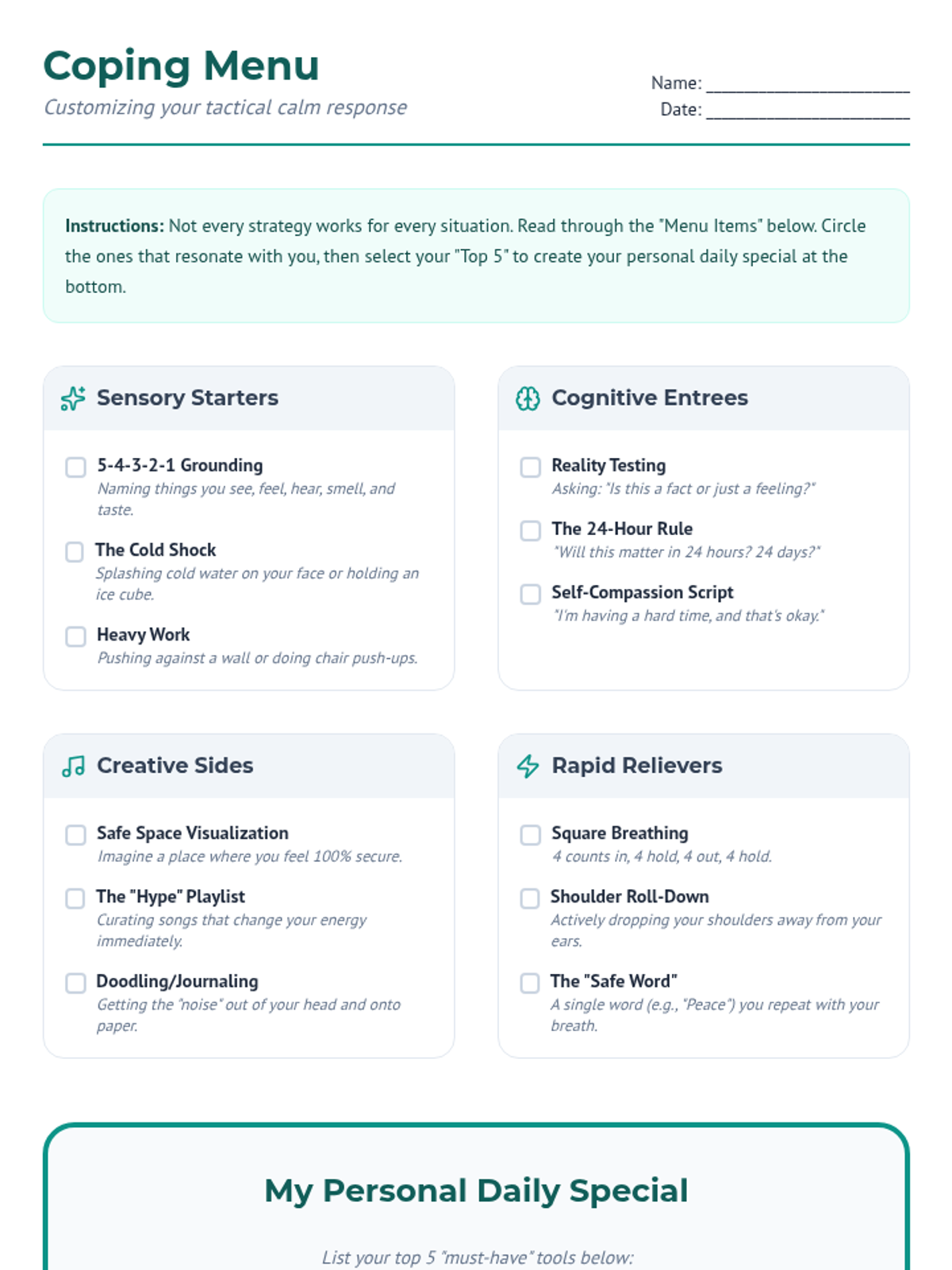
Students will explore a variety of sensory and cognitive coping strategies. They will evaluate which techniques work best for them and begin building their personal 'Coping Menu'.
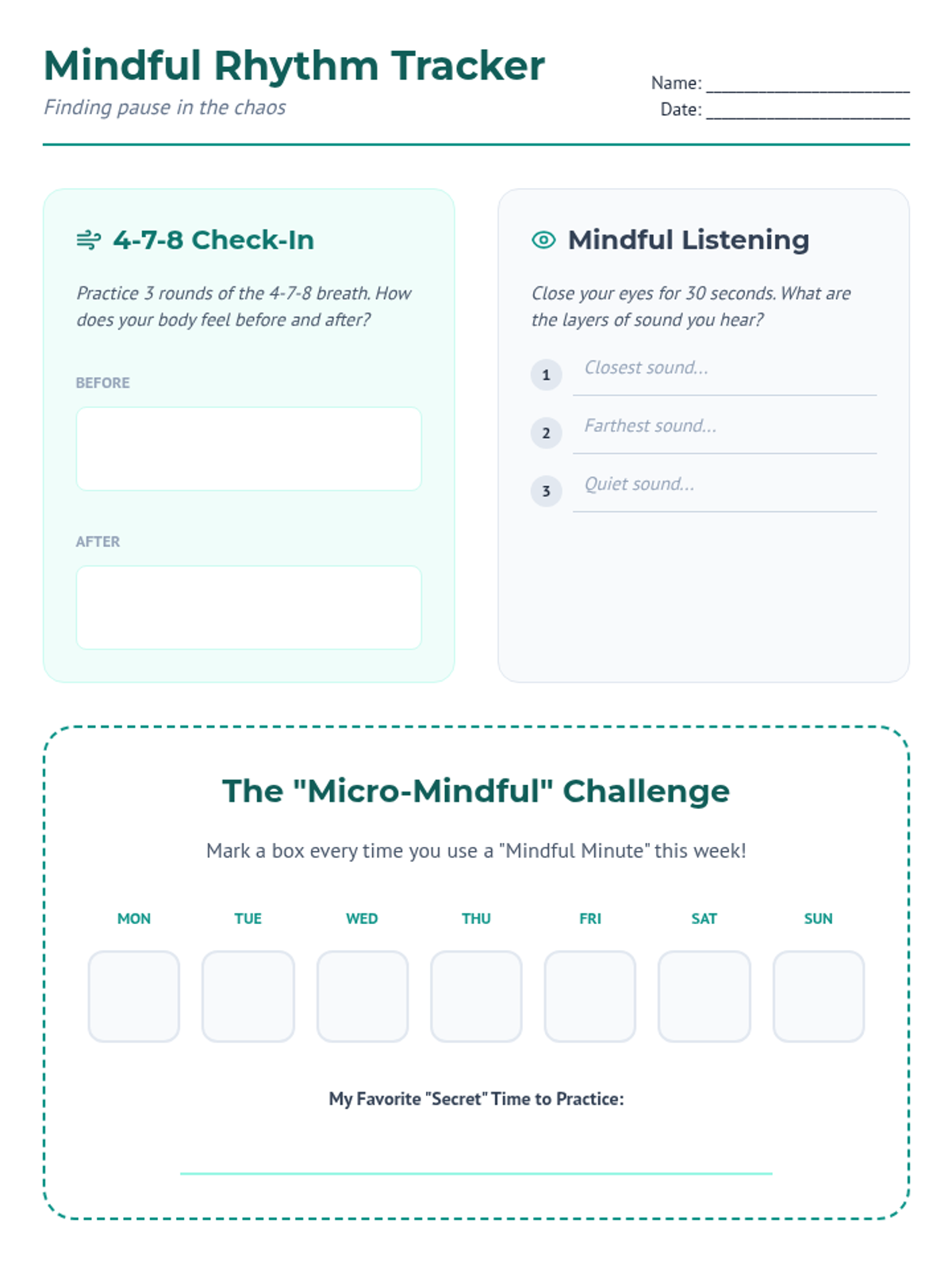
This session introduces mindfulness as a tool for presence. Students will practice breathwork and a body scan, discussing how to integrate these small moments into a busy high school schedule.
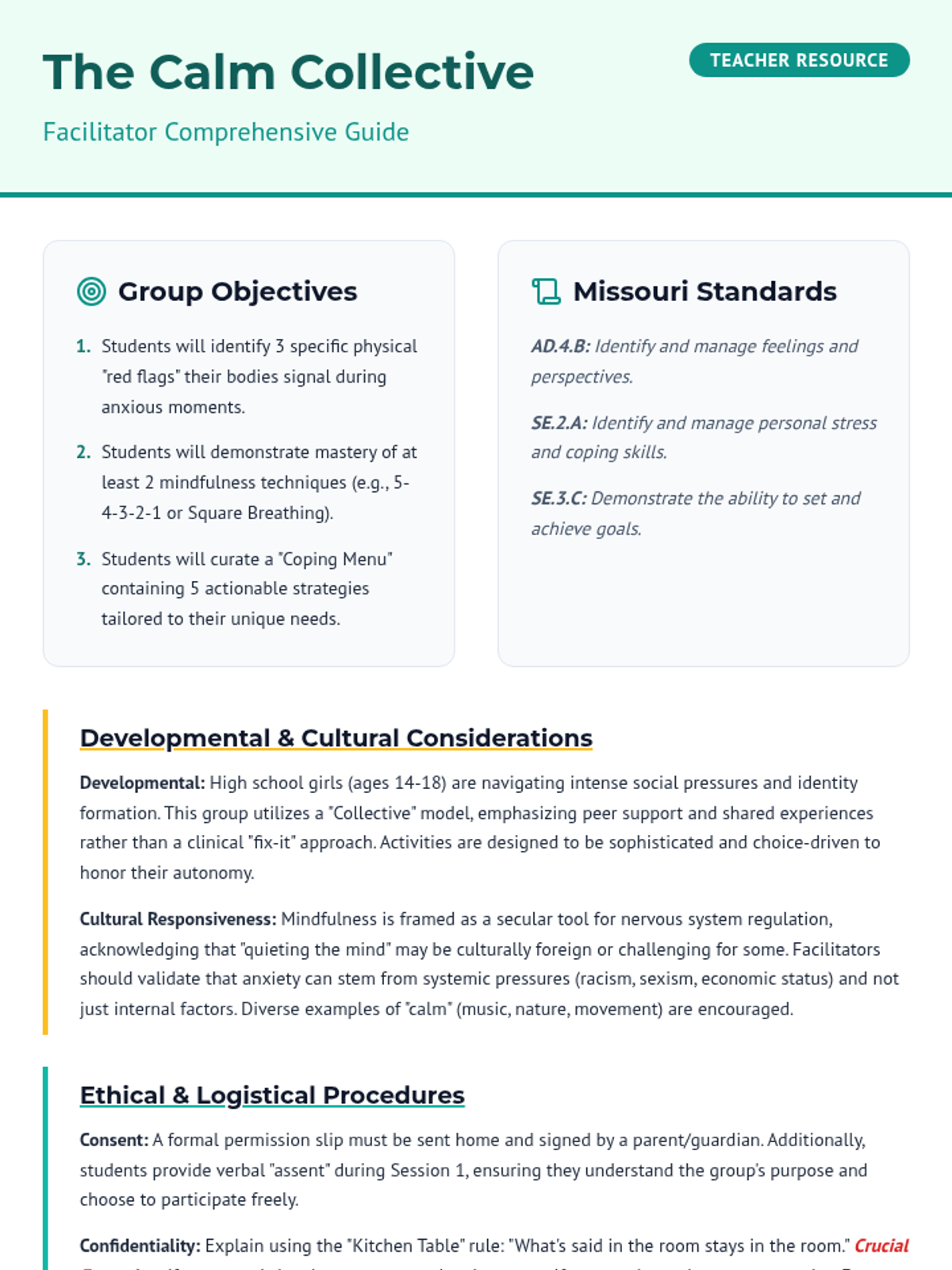
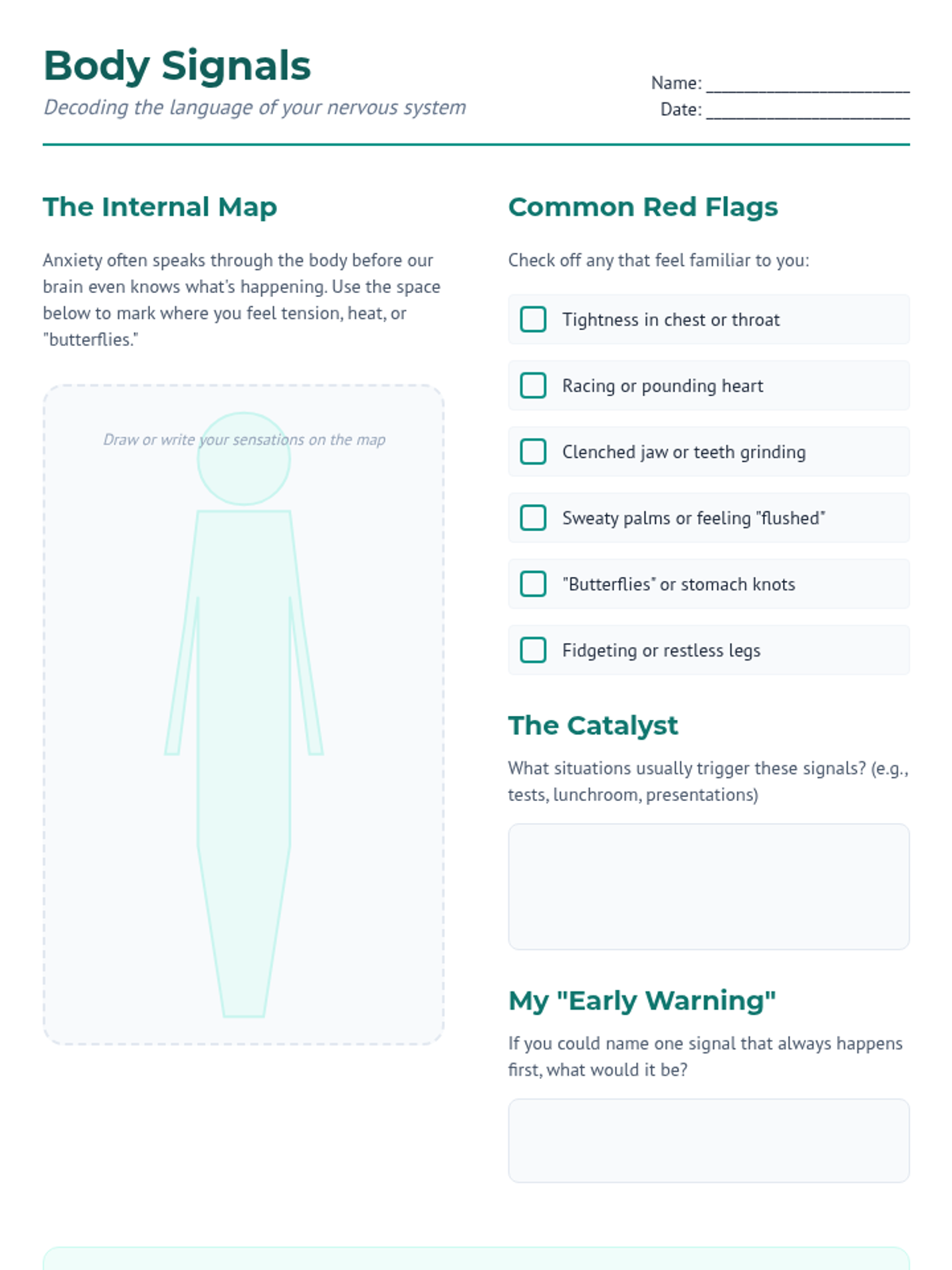
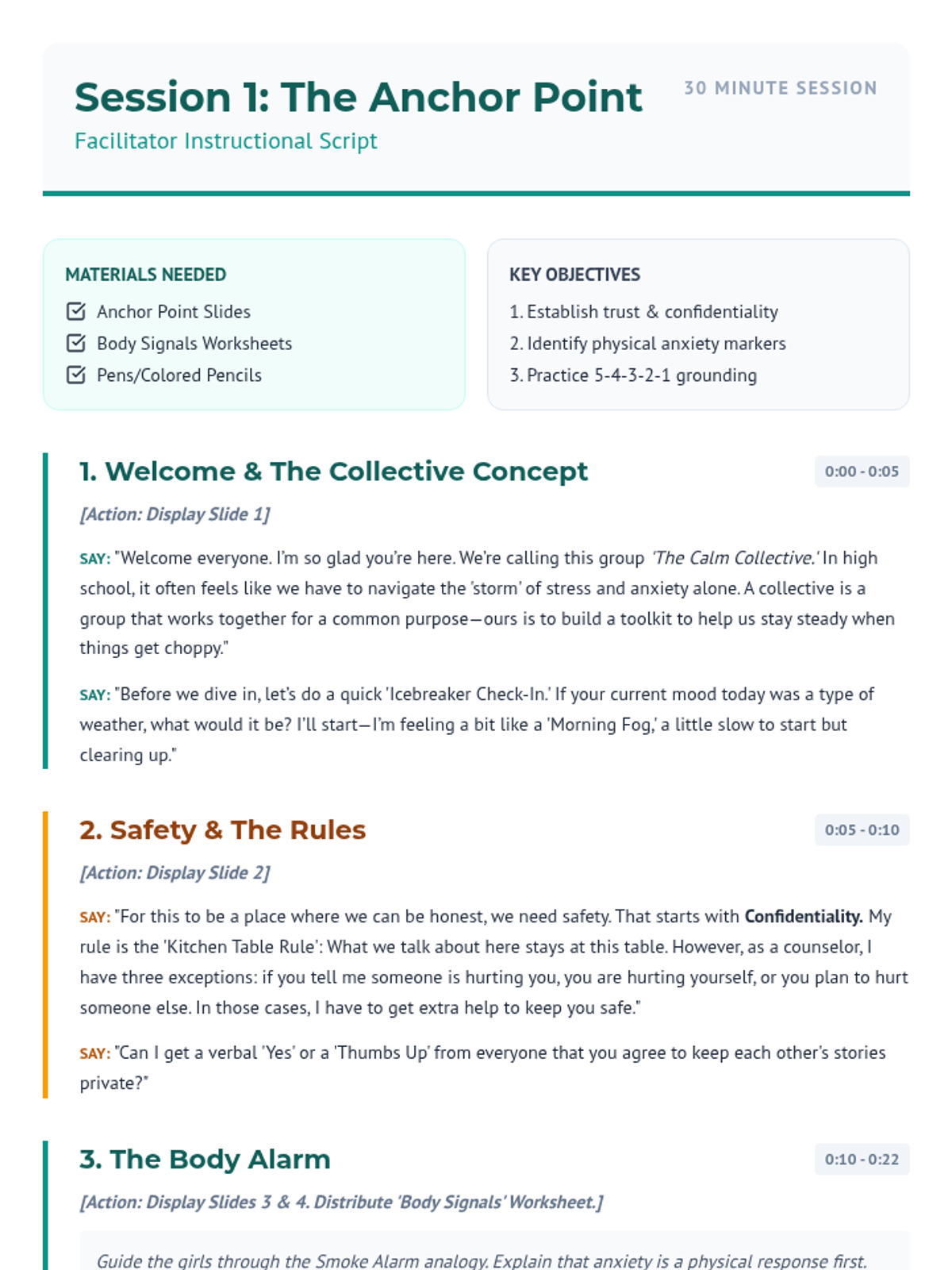
The first session focuses on establishing the group's foundation, including ethical guidelines, confidentiality, and the basic 'Anchor' grounding technique. Students will identify how anxiety physically manifests in their bodies.
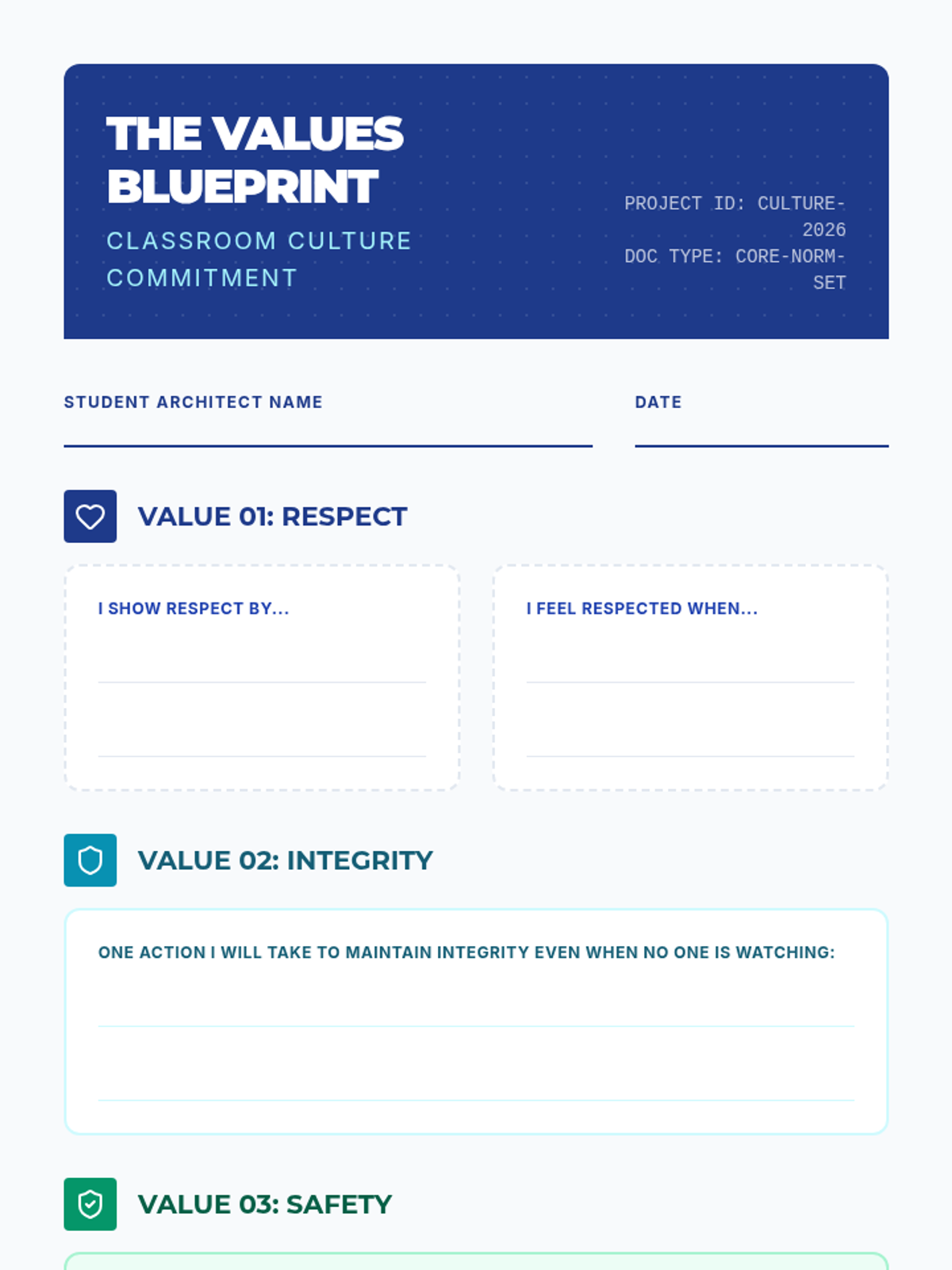
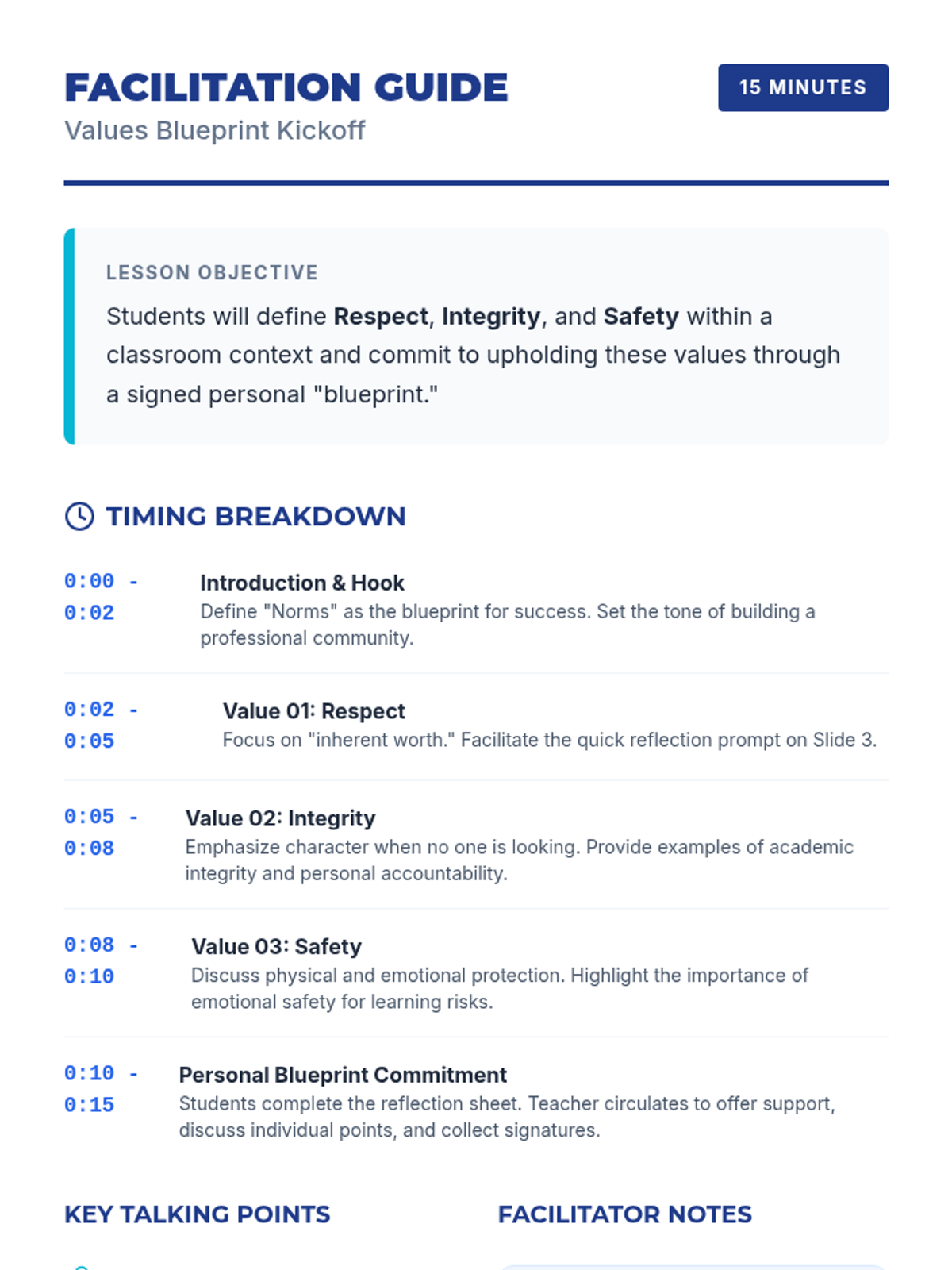
A concise 15-minute introduction to classroom norms centered on the core values of Respect, Integrity, and Safety. Students will define these values and commit to a shared culture of success.
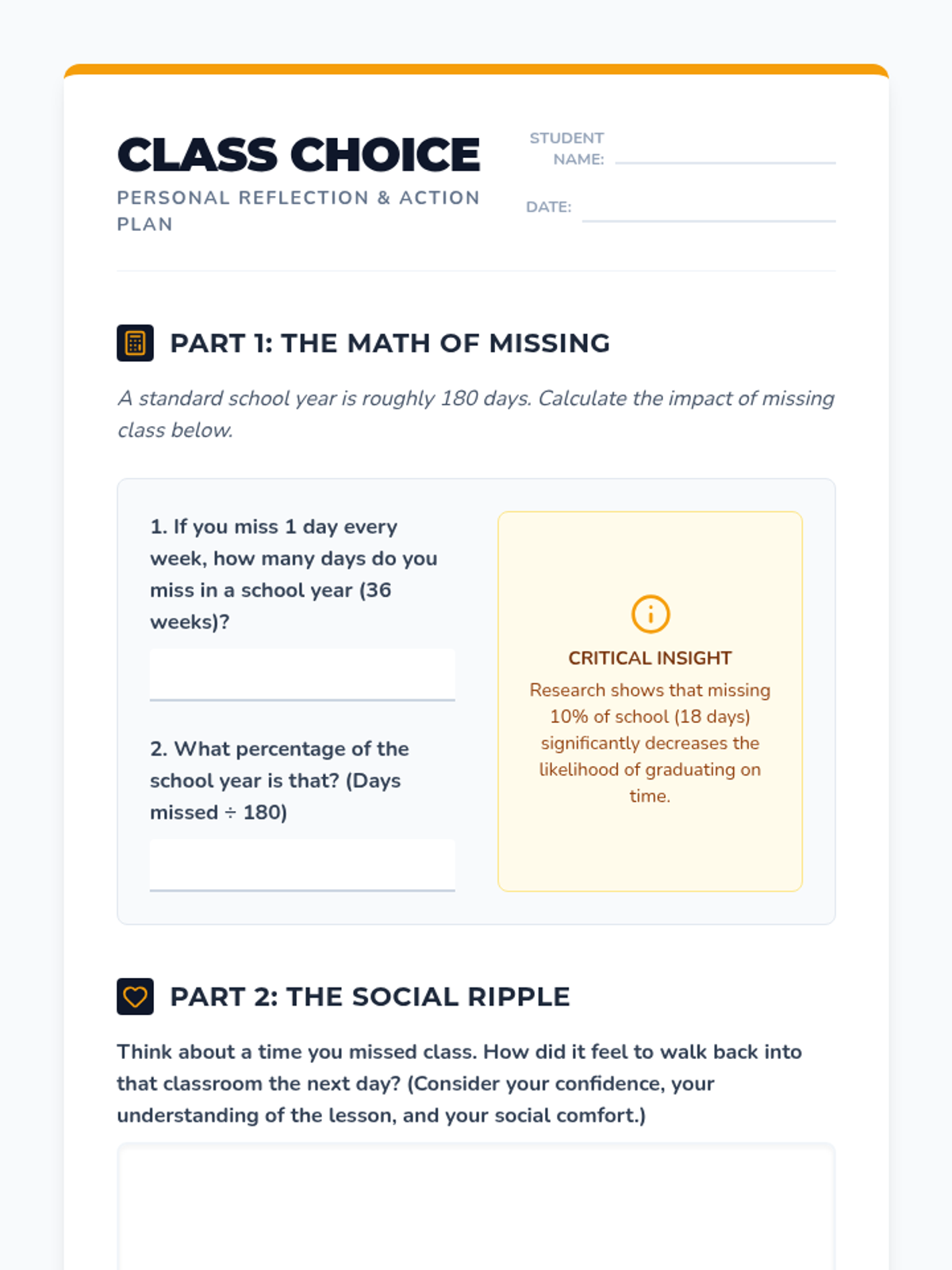
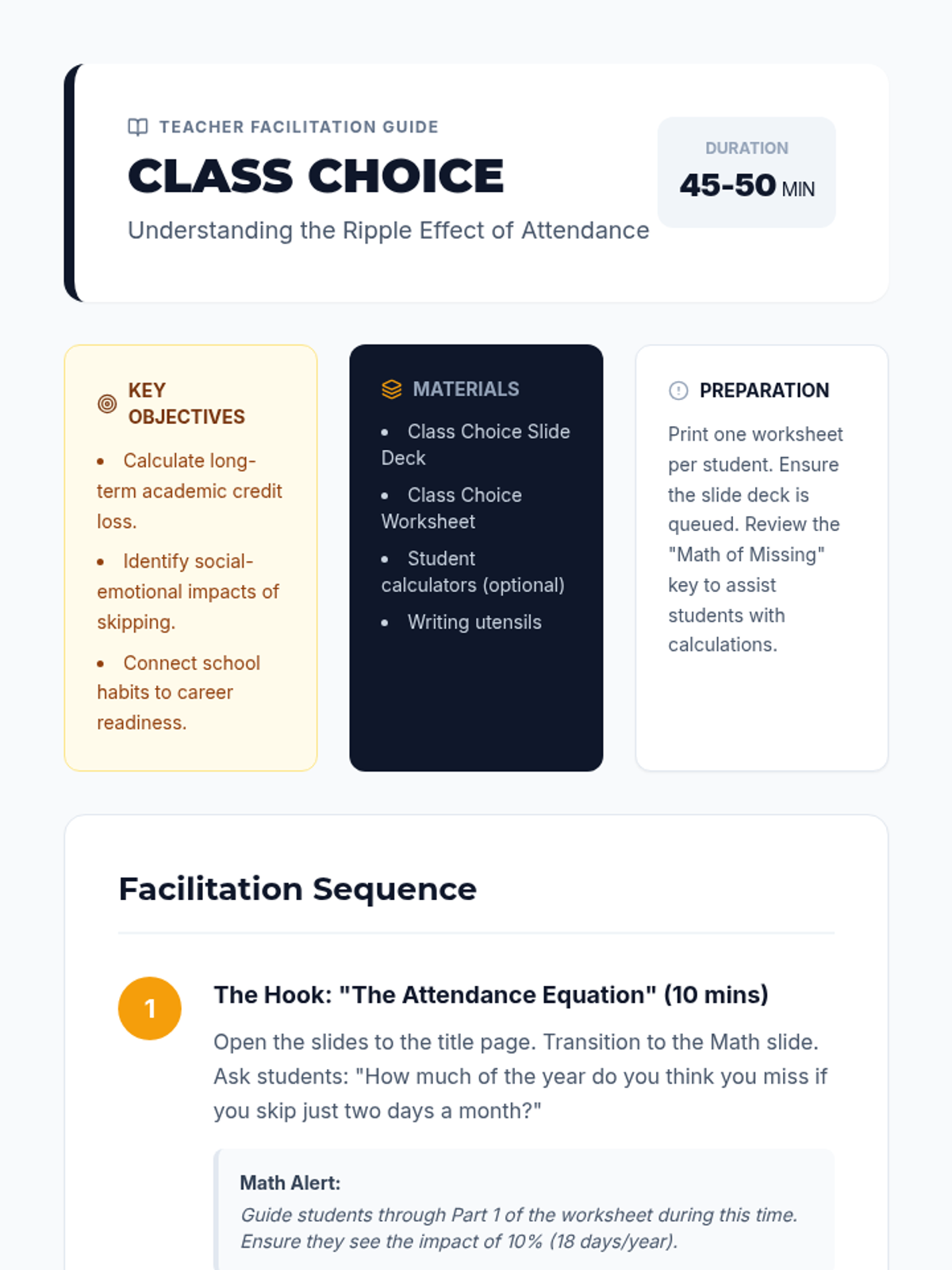
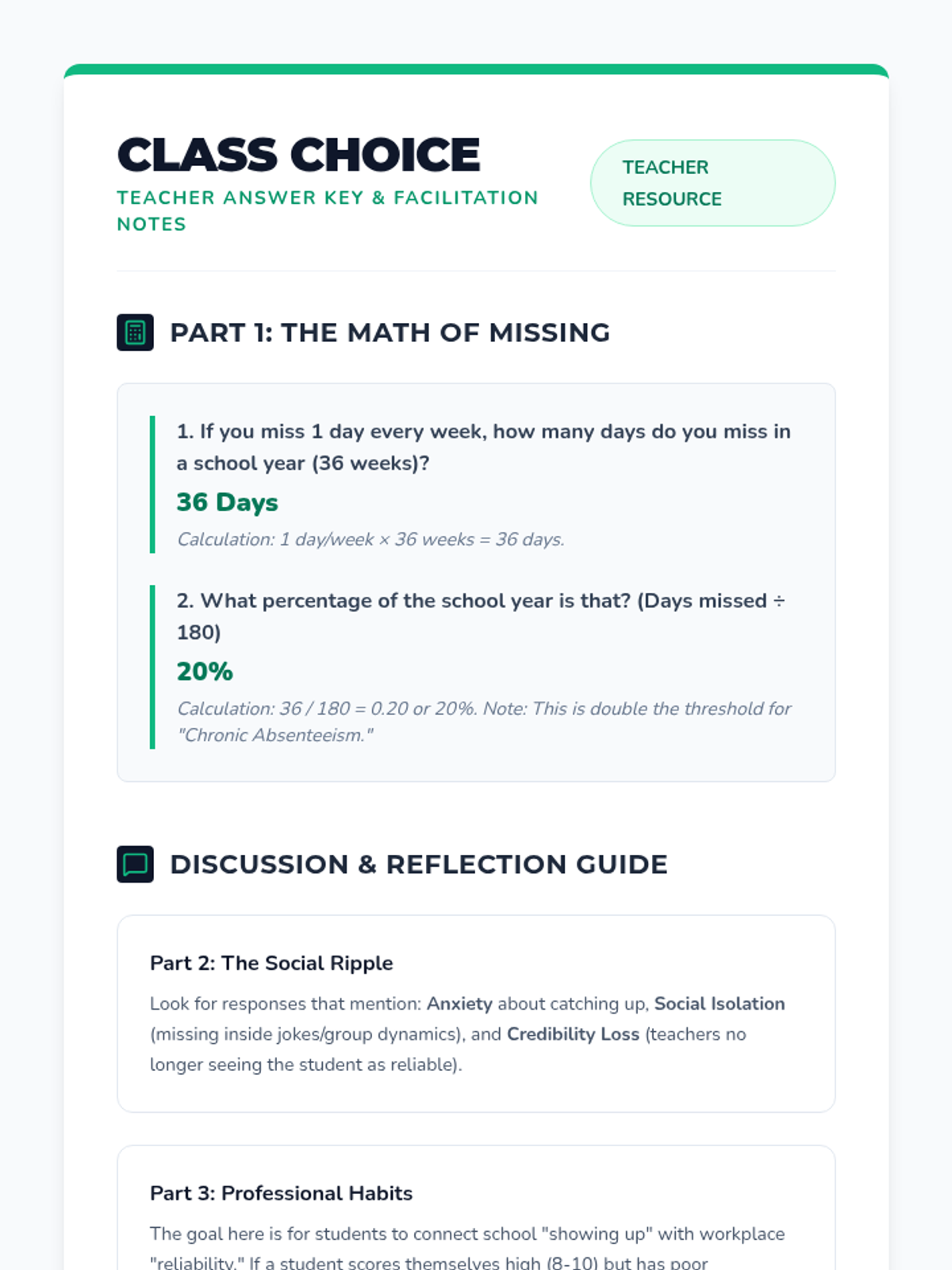
This lesson explores the multi-faceted consequences of skipping class, including academic setbacks, social-emotional impacts, and long-term career implications. Students will reflect on their choices and the weight of their decisions through interactive slides and personal reflection.
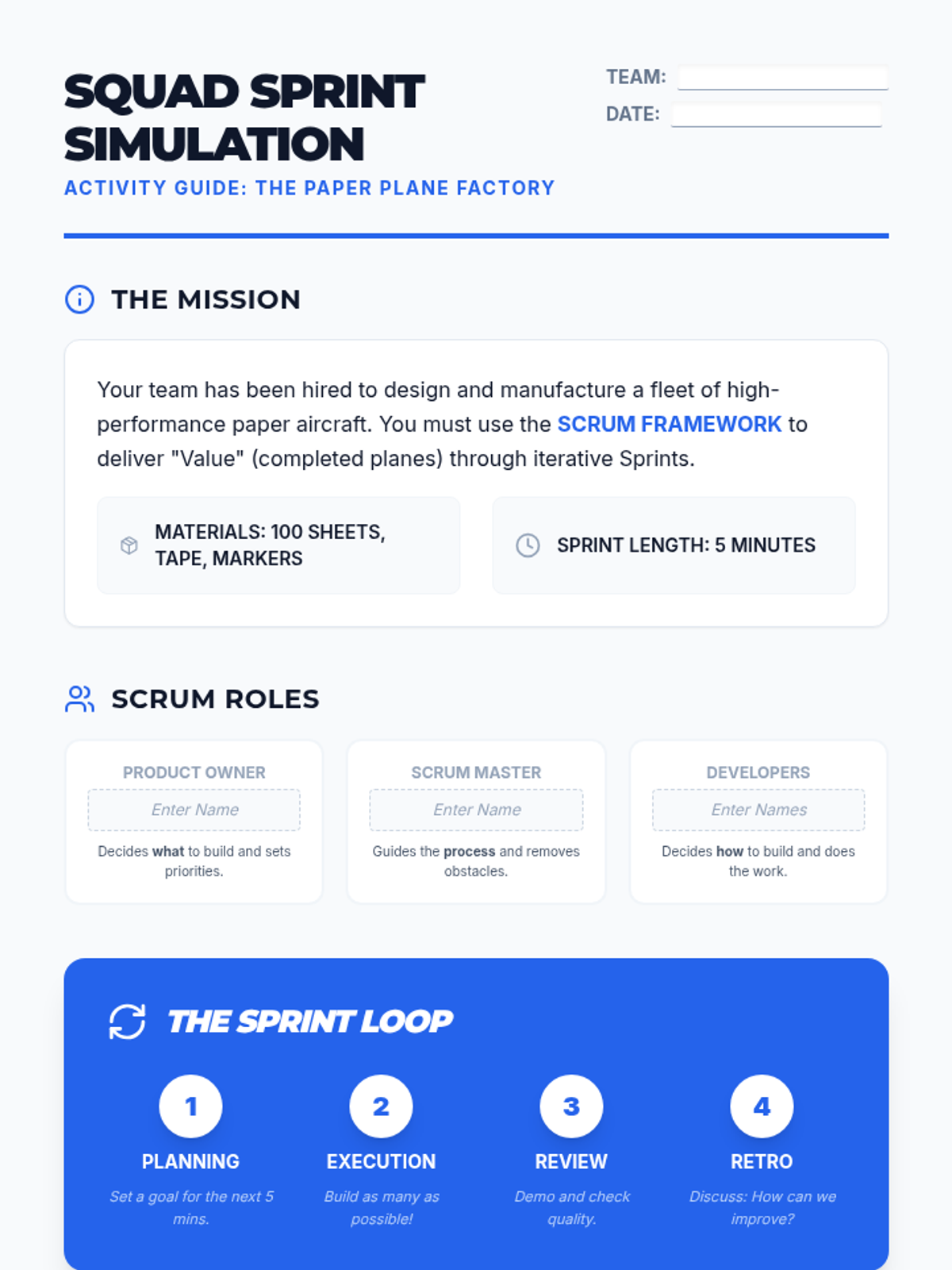
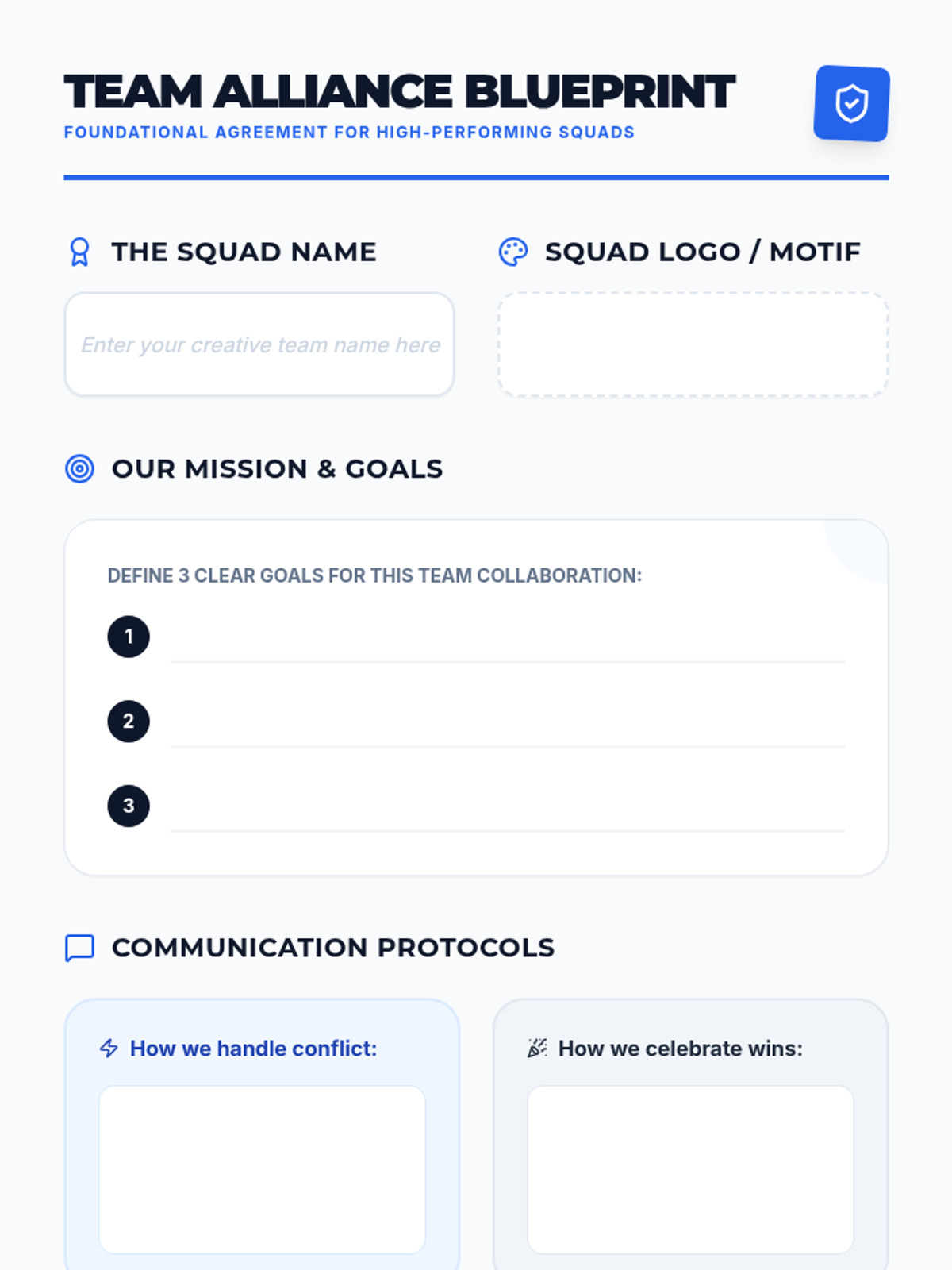
This lesson introduces students to the core concepts of Agile and Scrum through the lens of team dynamics. Students will explore roles, ceremonies, and the critical importance of communication in high-performing teams.
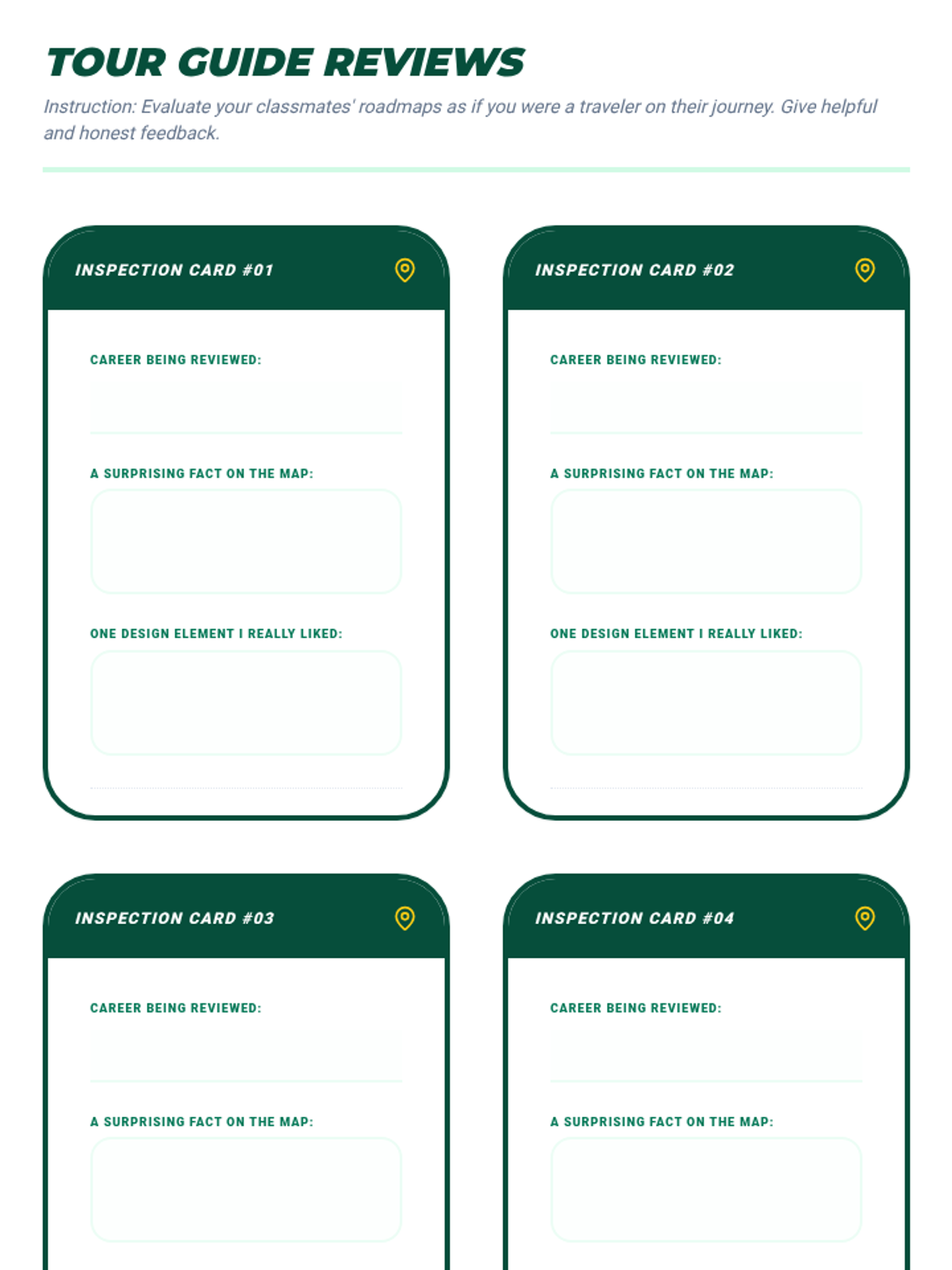
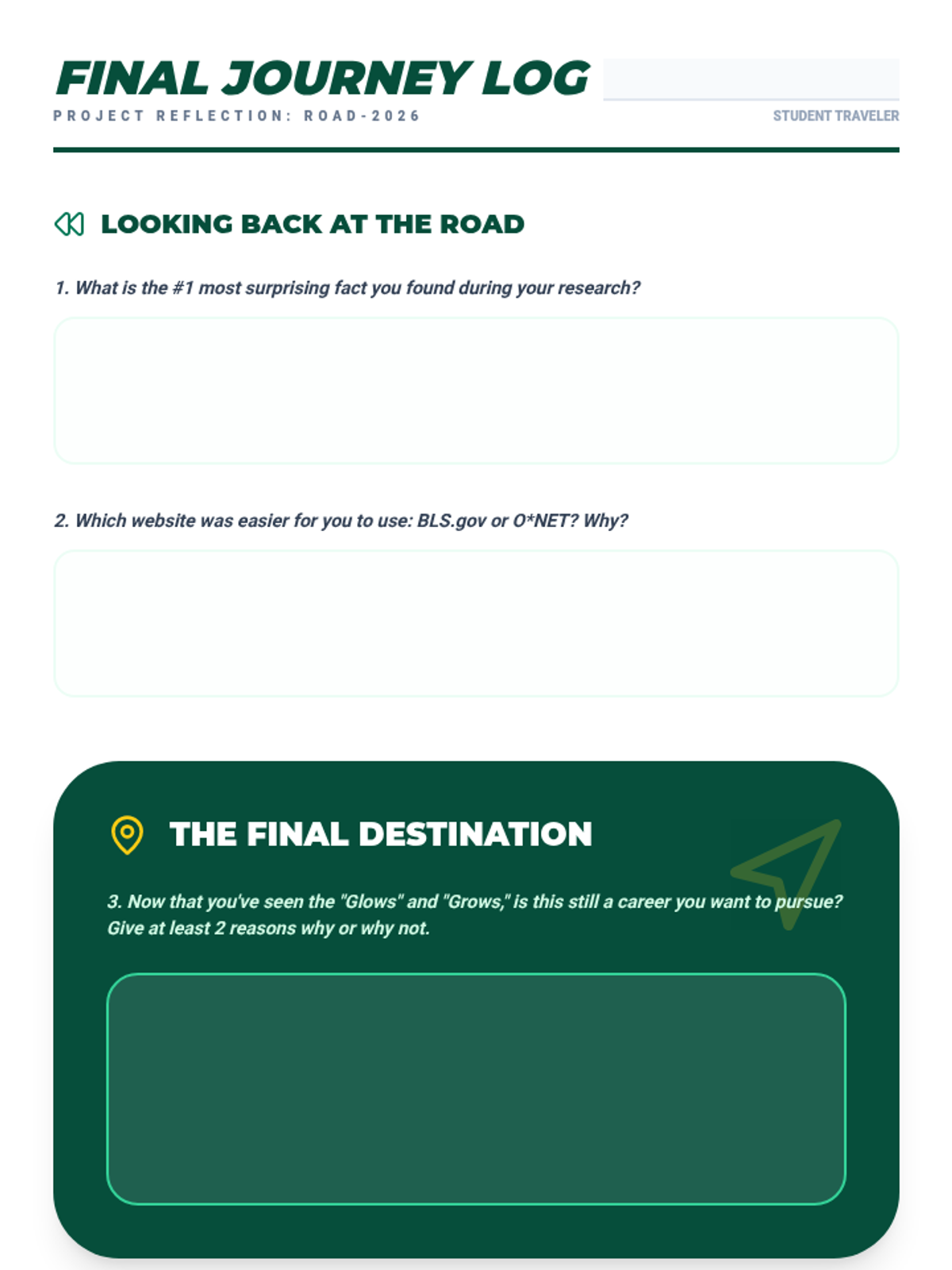
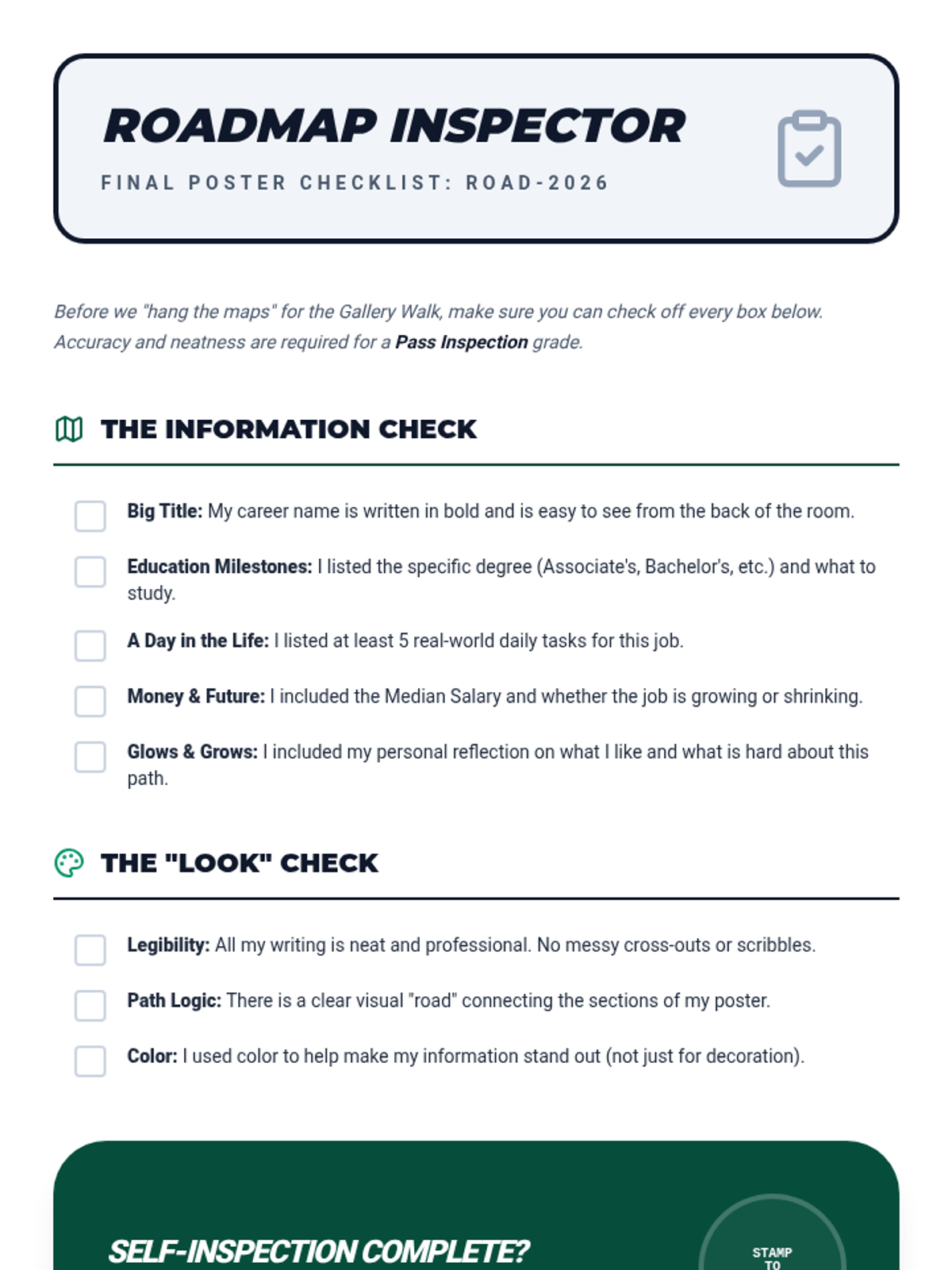
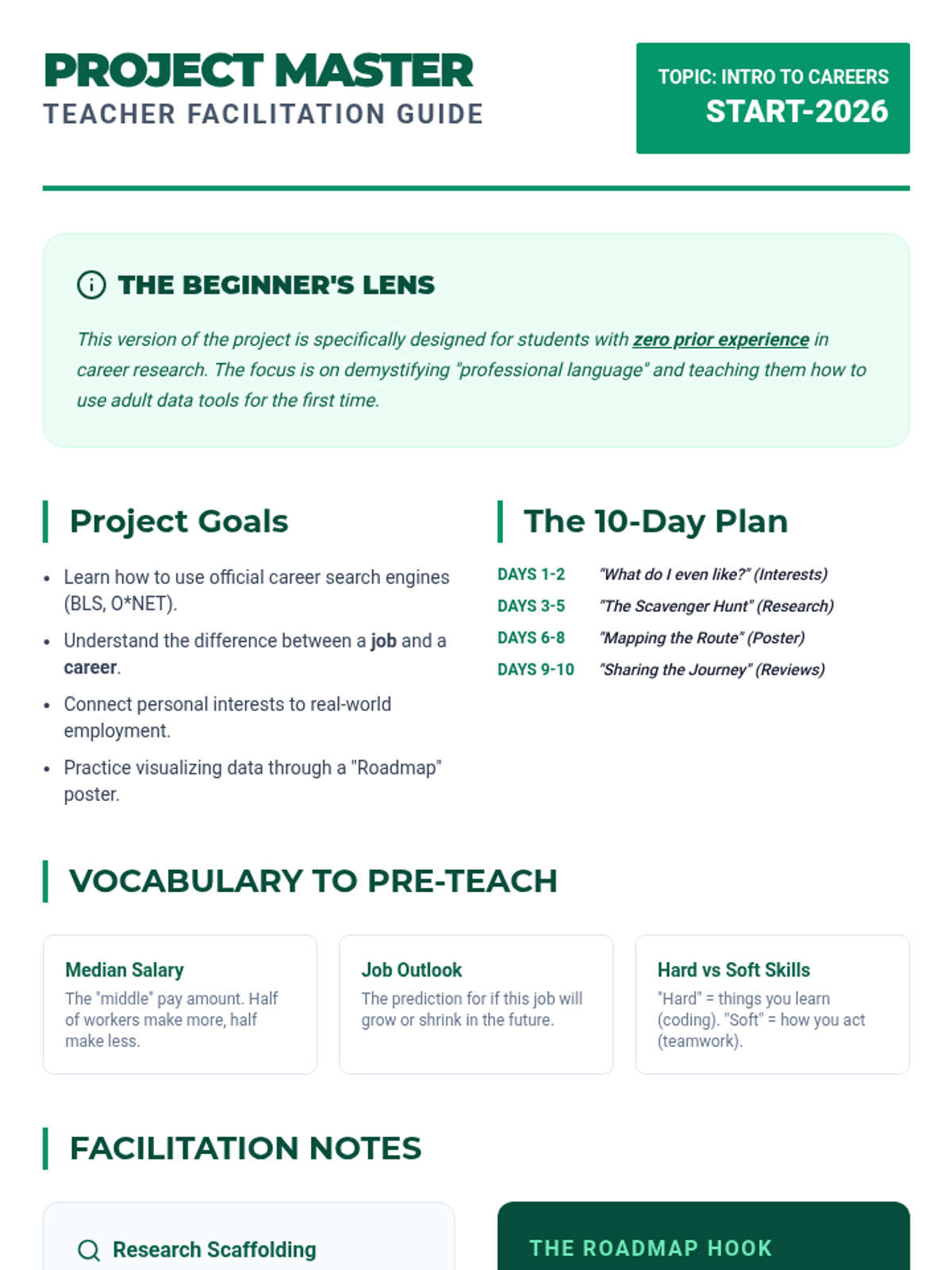
Students present their career roadmaps in a gallery walk and reflect on the journey they've mapped out.
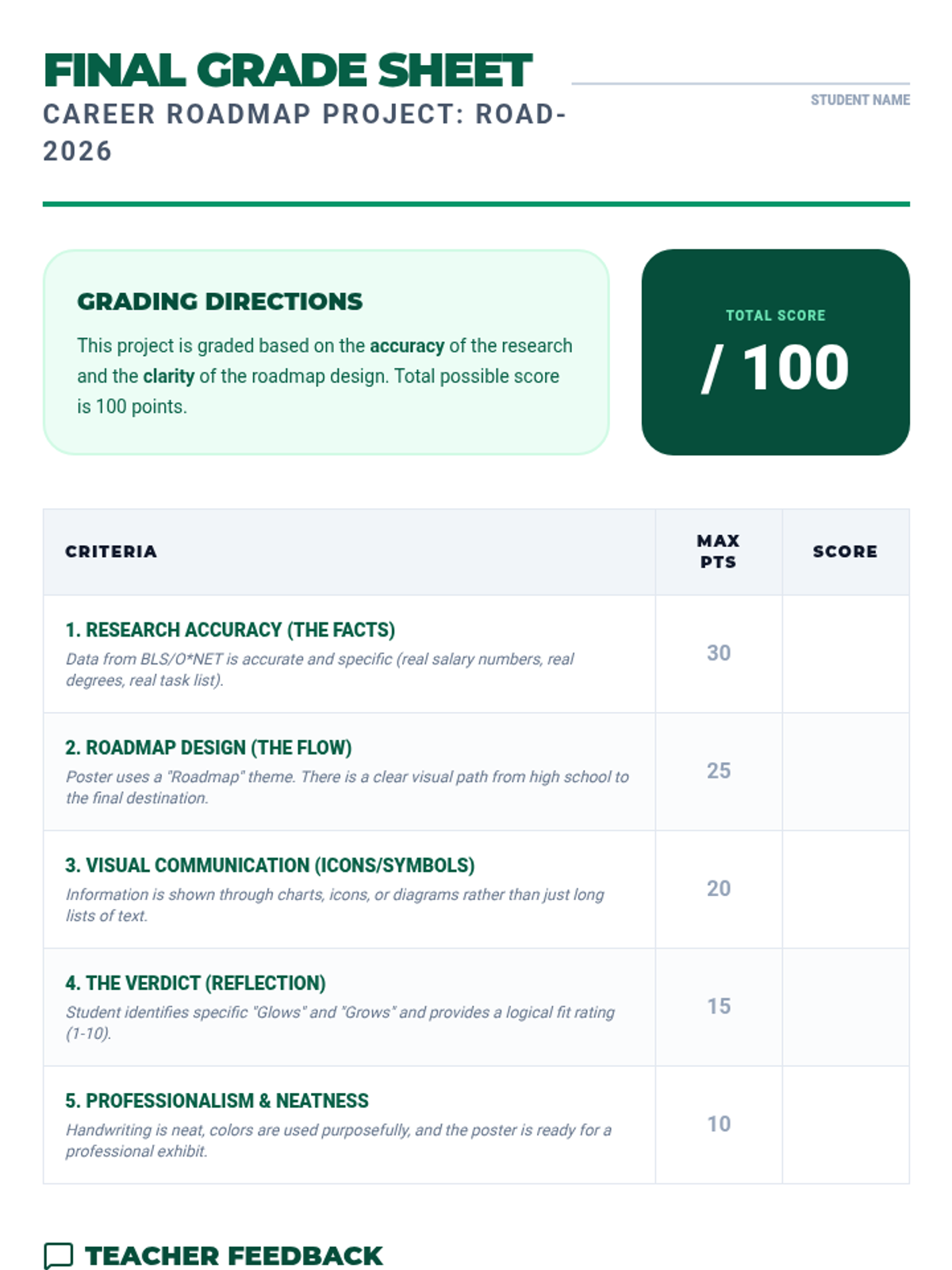
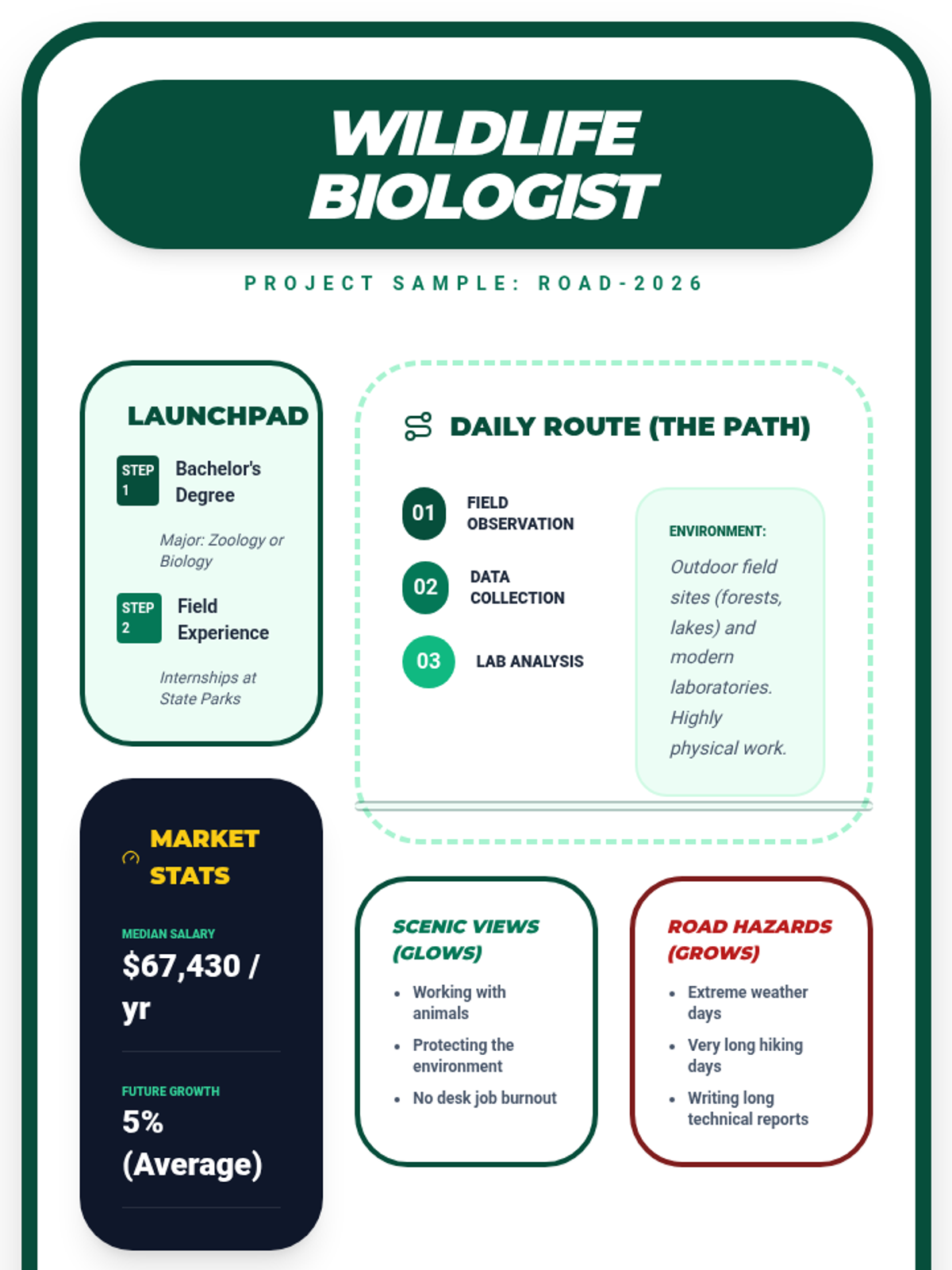
Students synthesize their research into a visual roadmap poster, analyzing the terrain of their career choice.
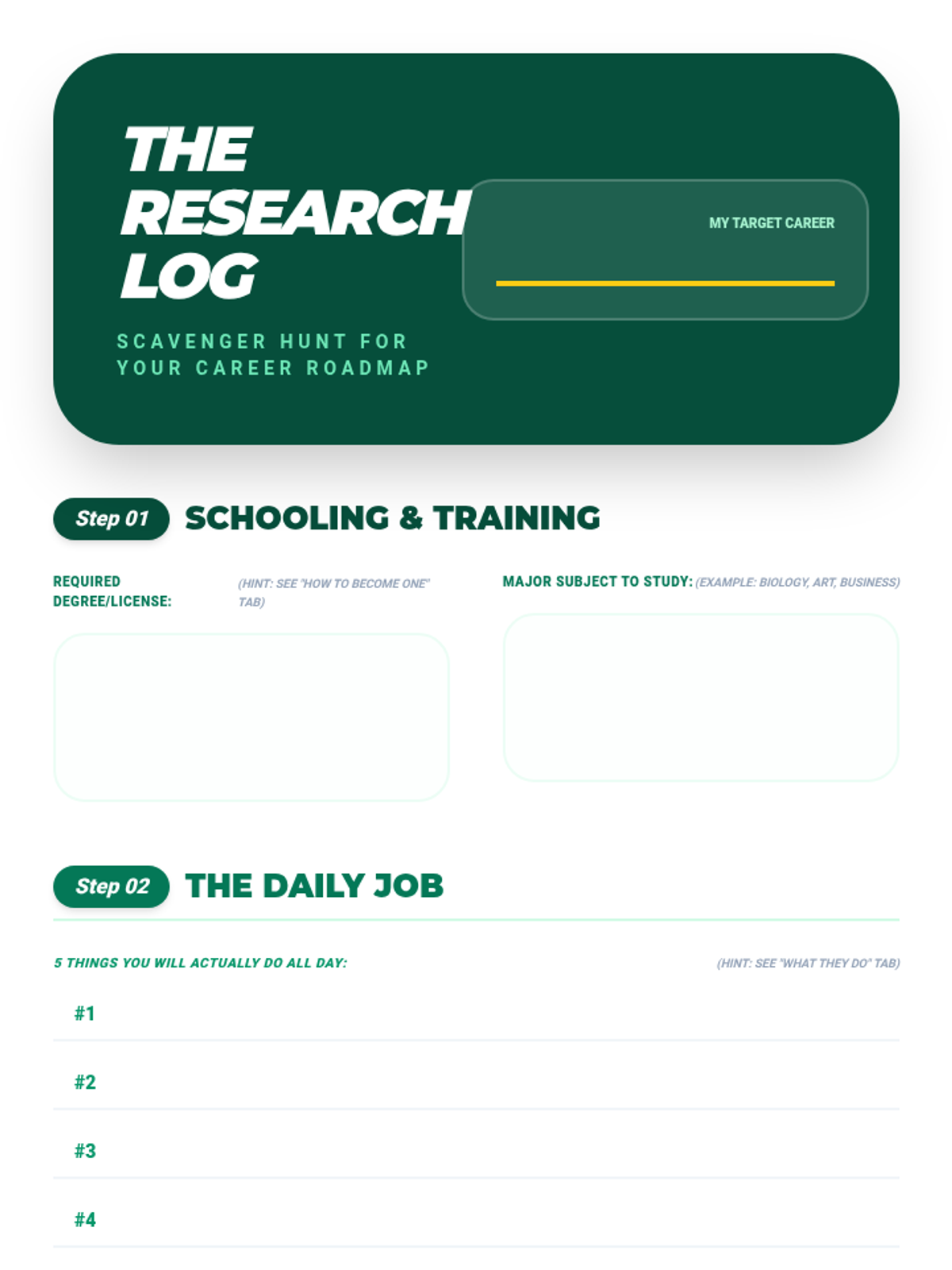
Students map out the technical details of their chosen career, including required skills, education, and daily responsibilities.
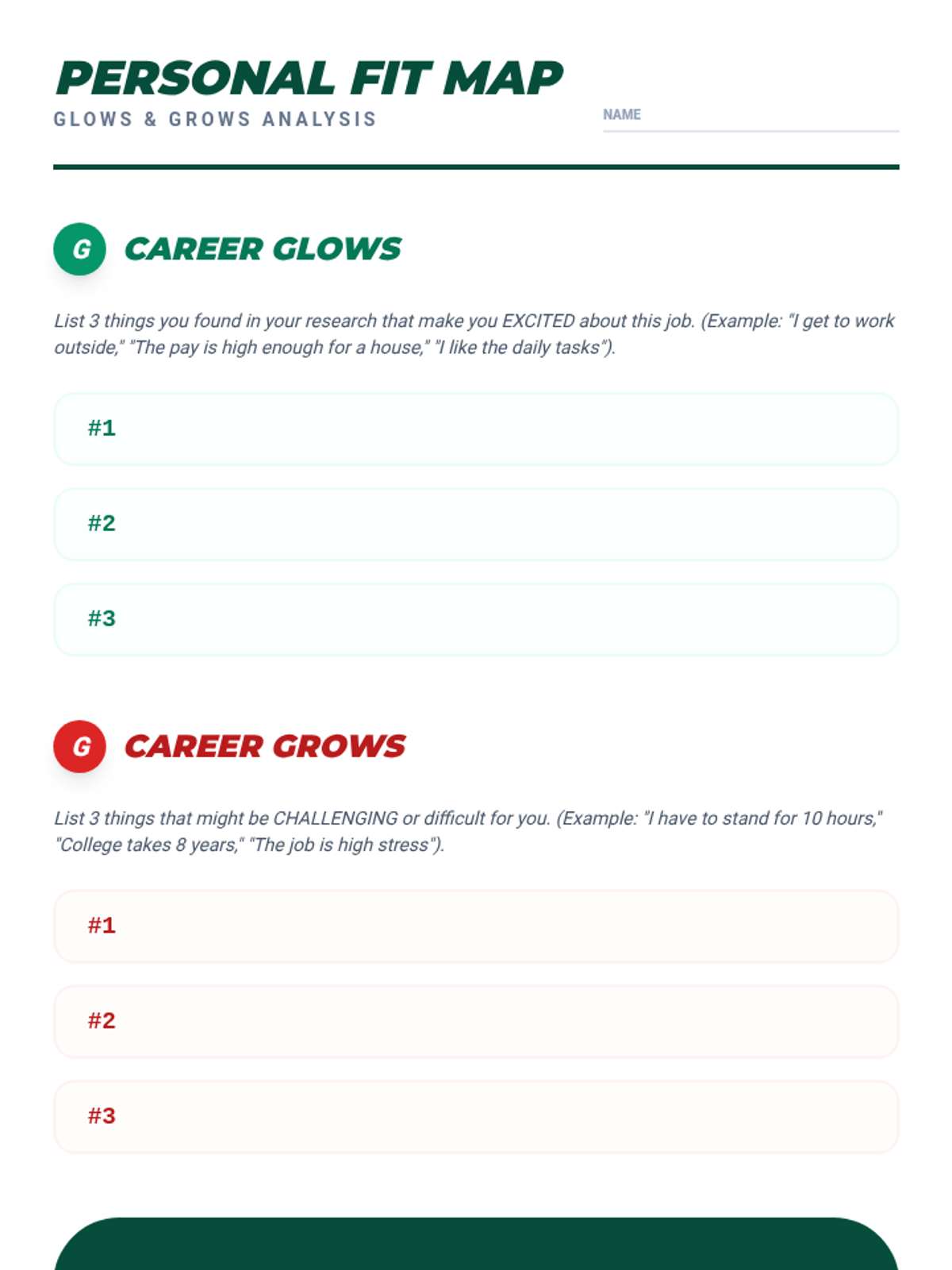
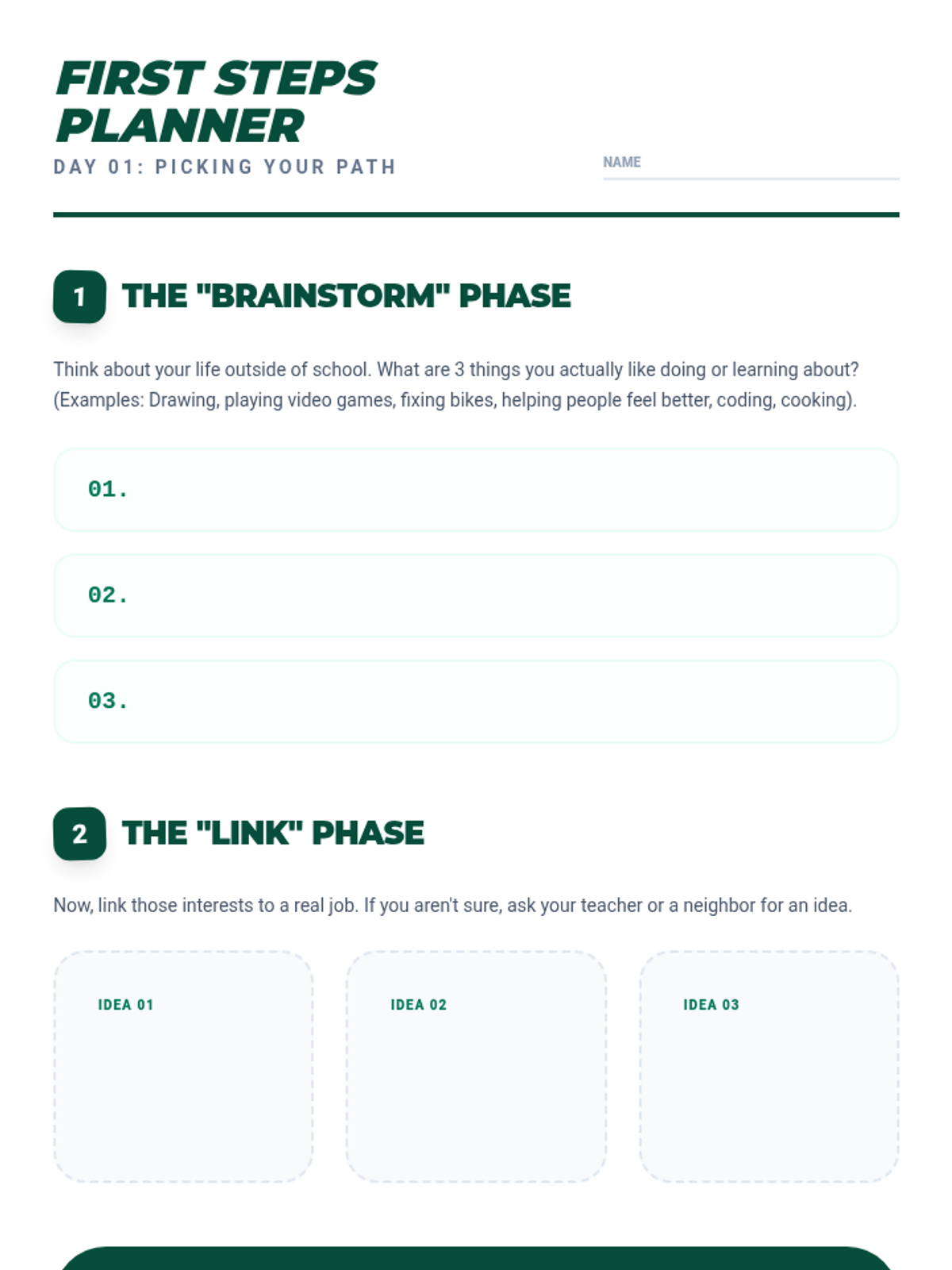
Students explore their interests, select a target career path, and understand the project roadmap and timeline.
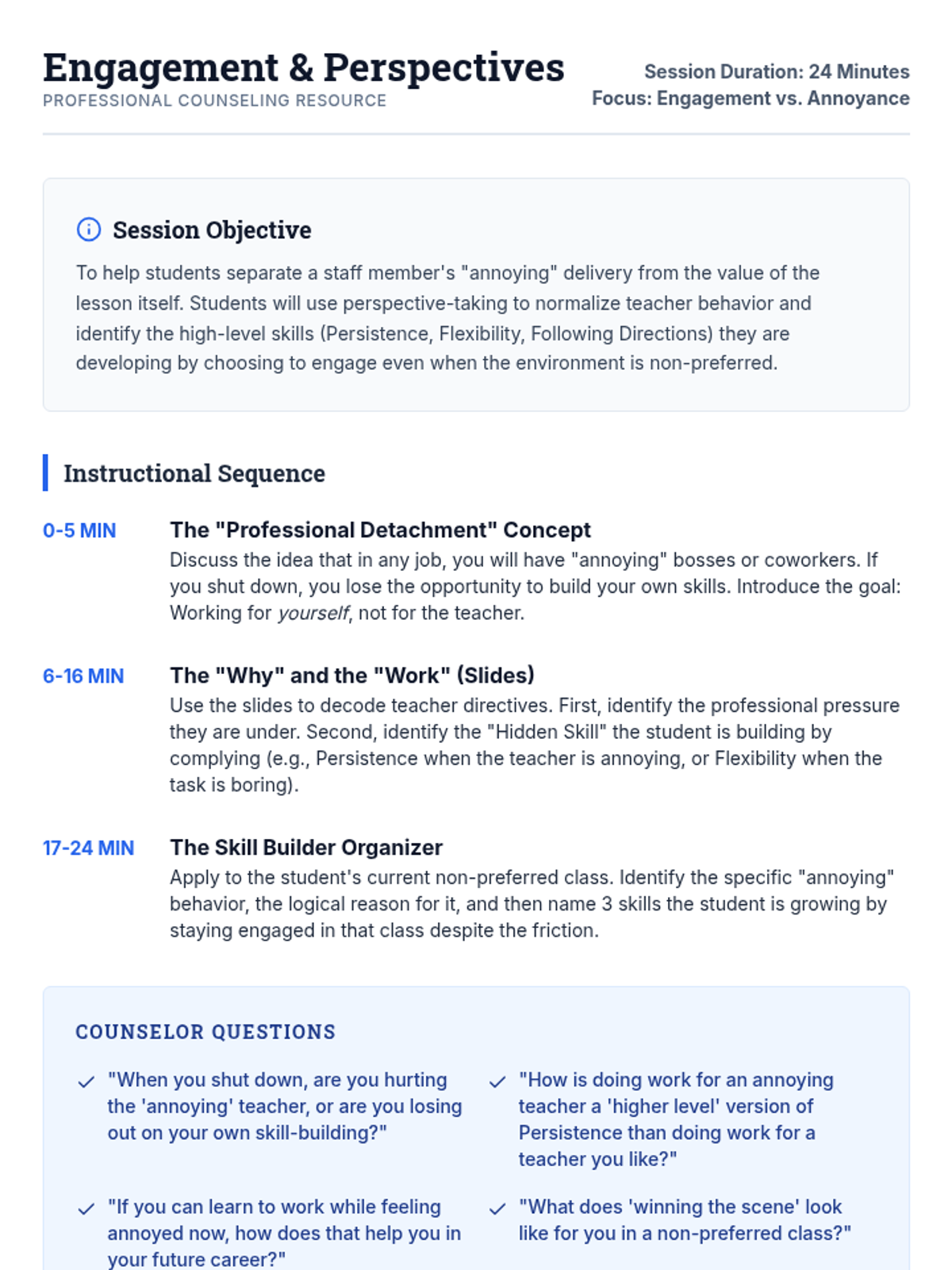
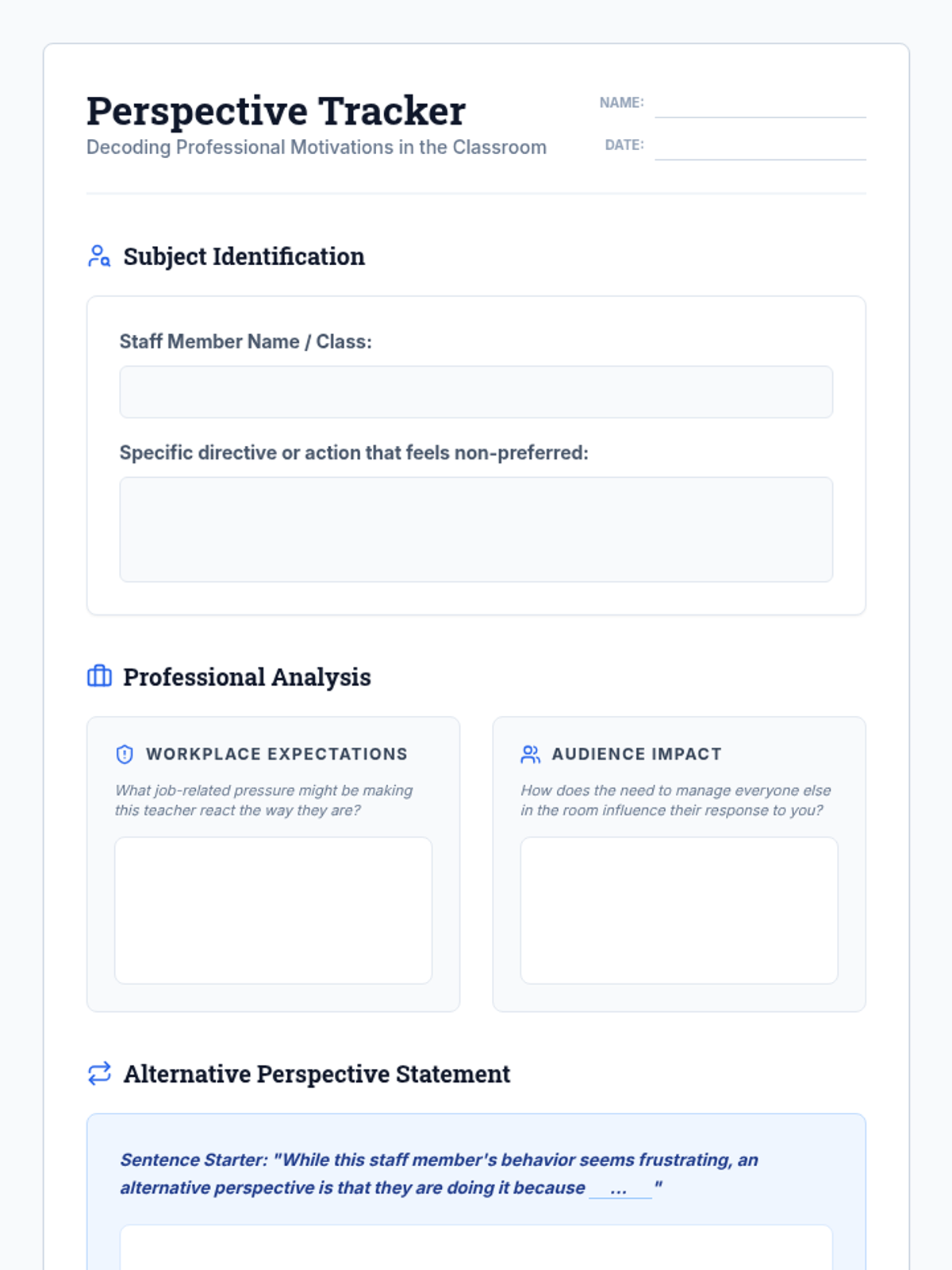
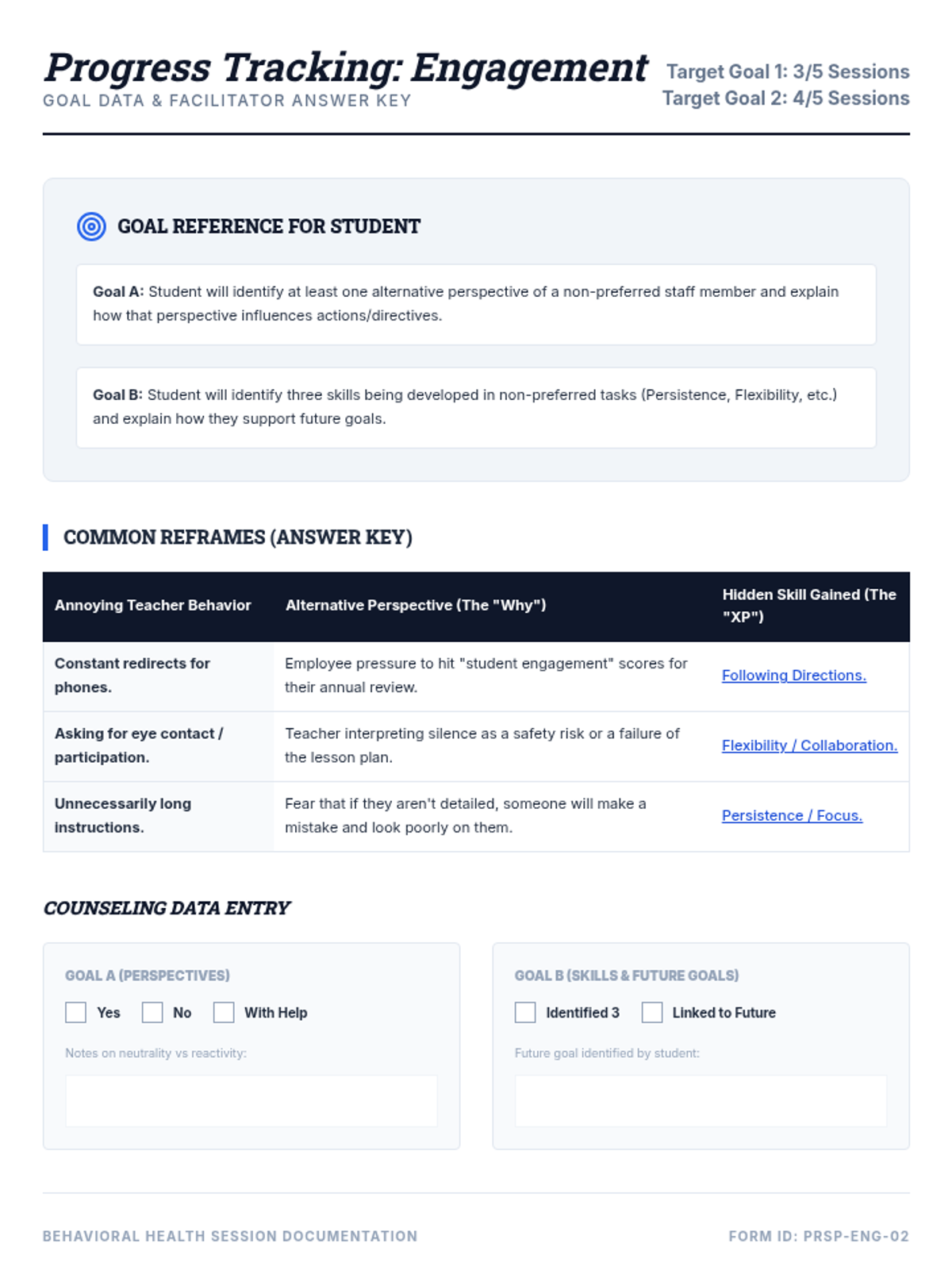
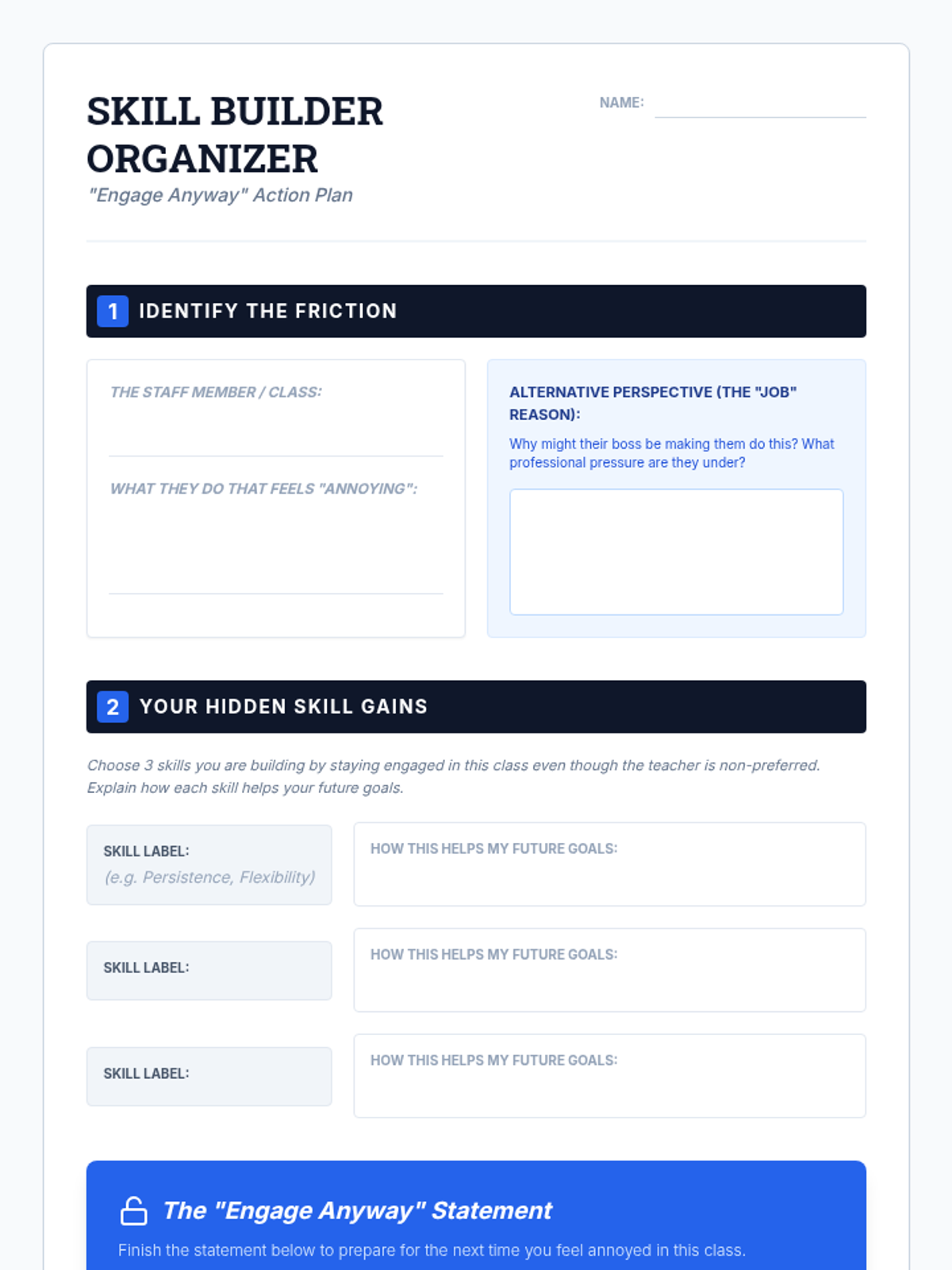
A 24-minute counseling session focused on social perspective-taking, specifically helping students identify the underlying motivations and professional pressures that influence staff member actions and directives.
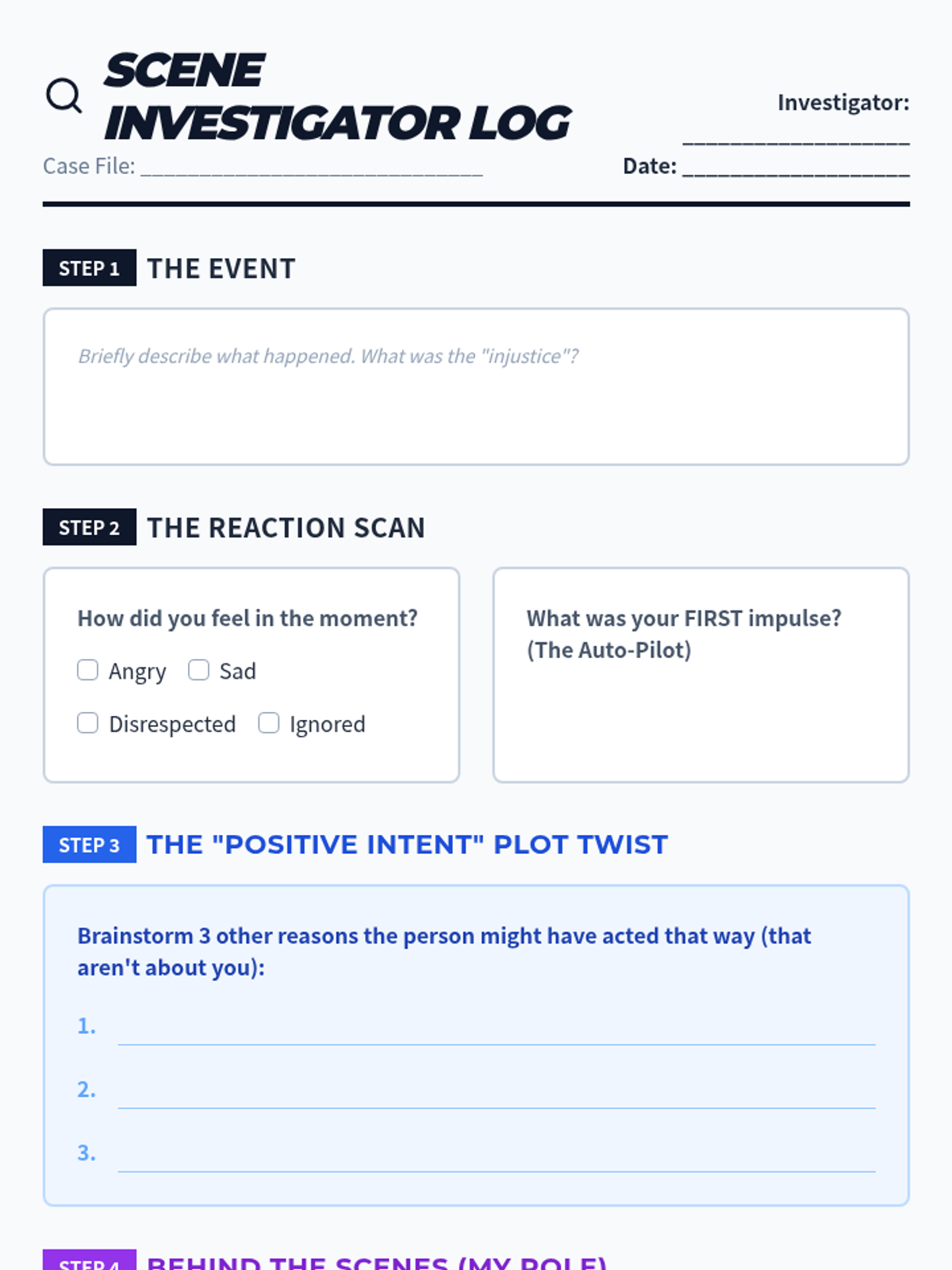
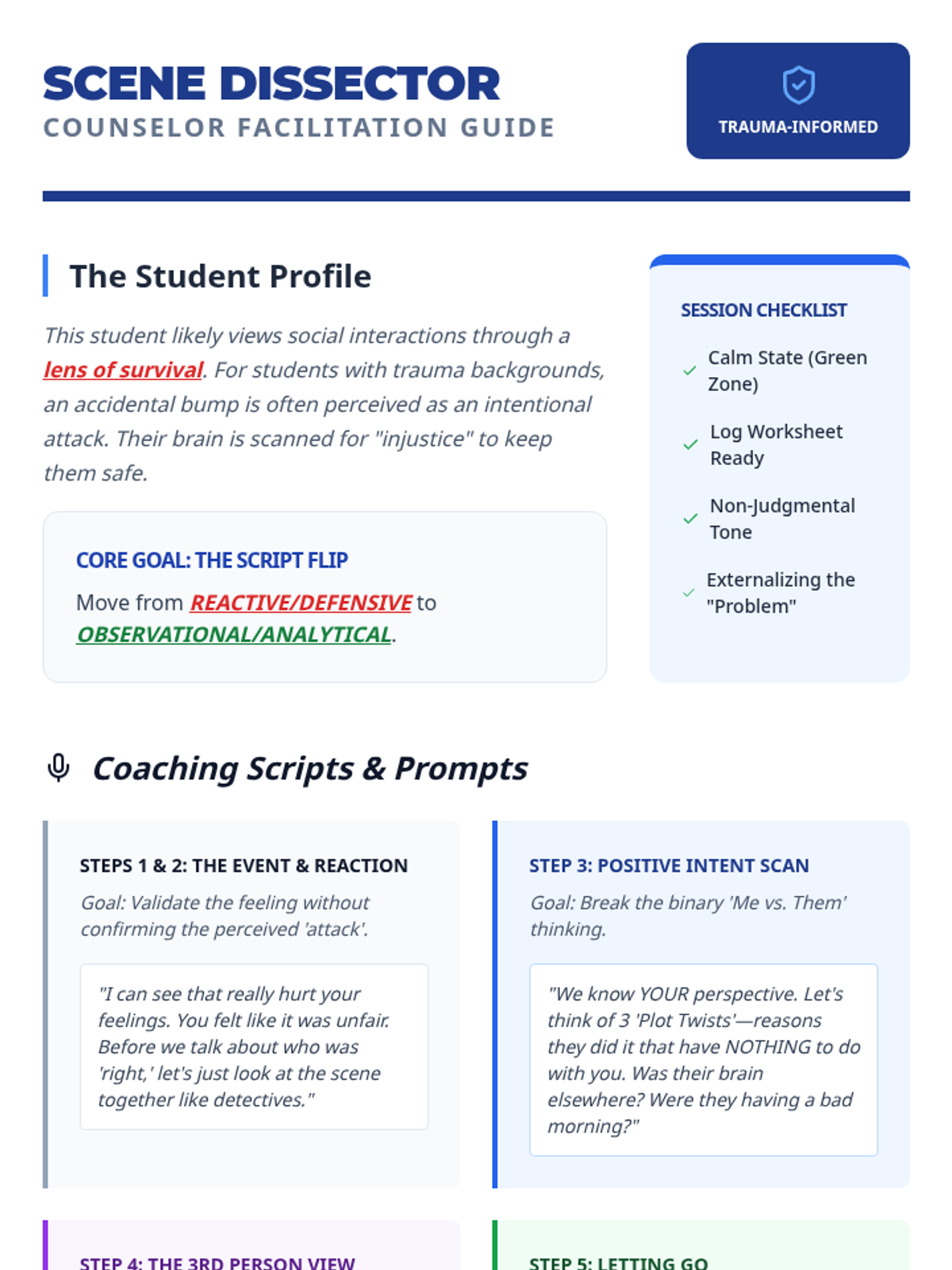
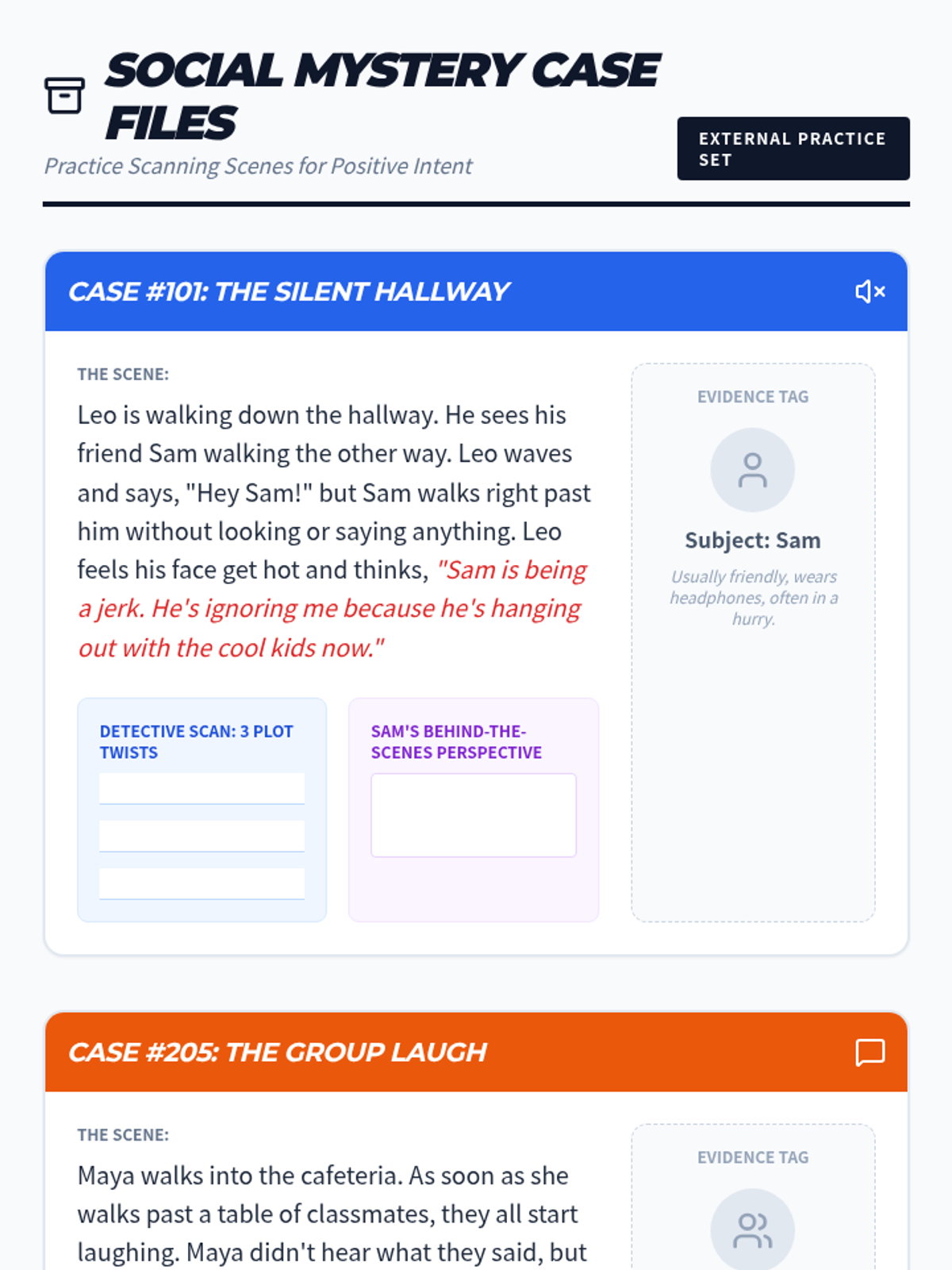
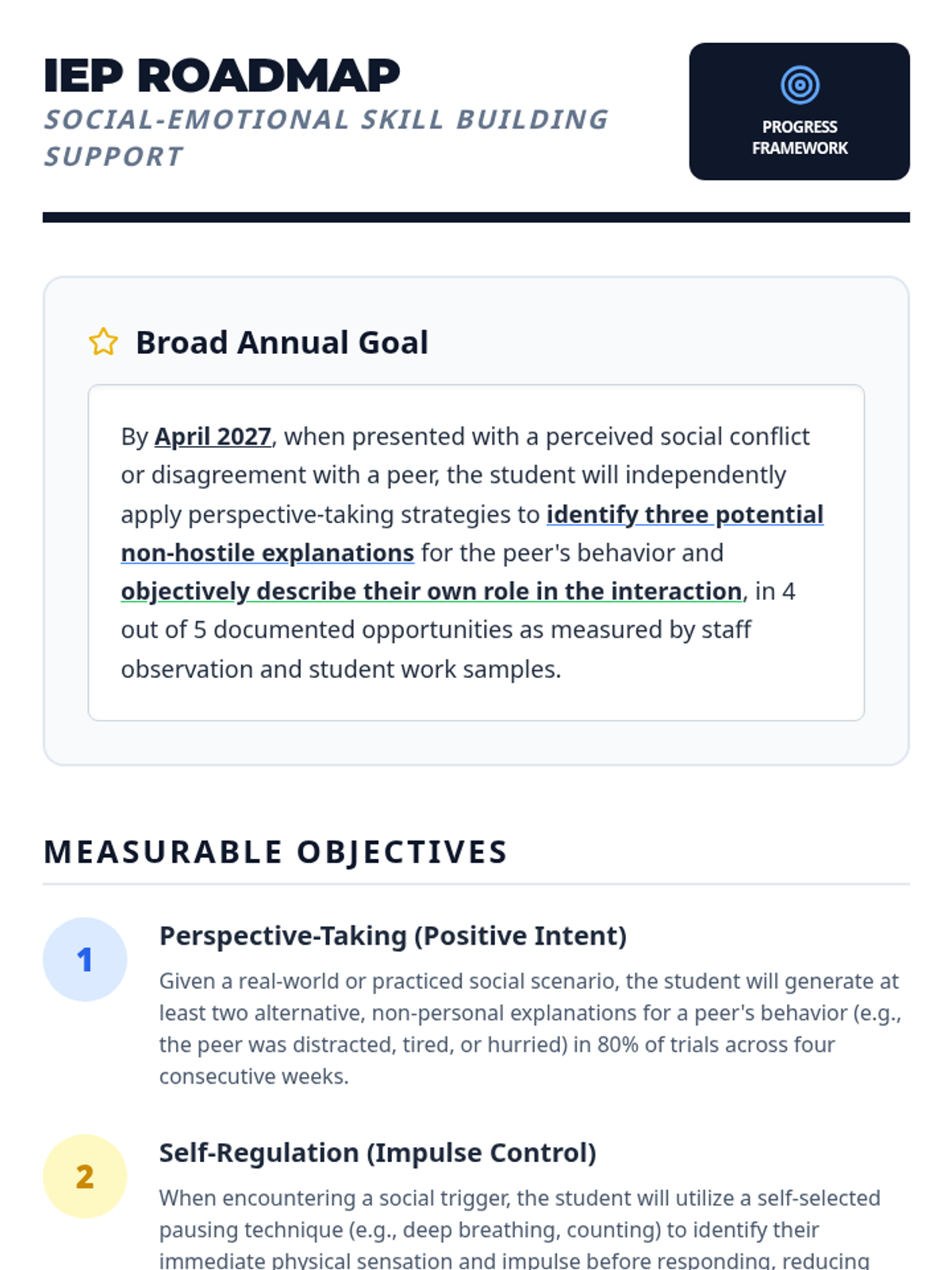
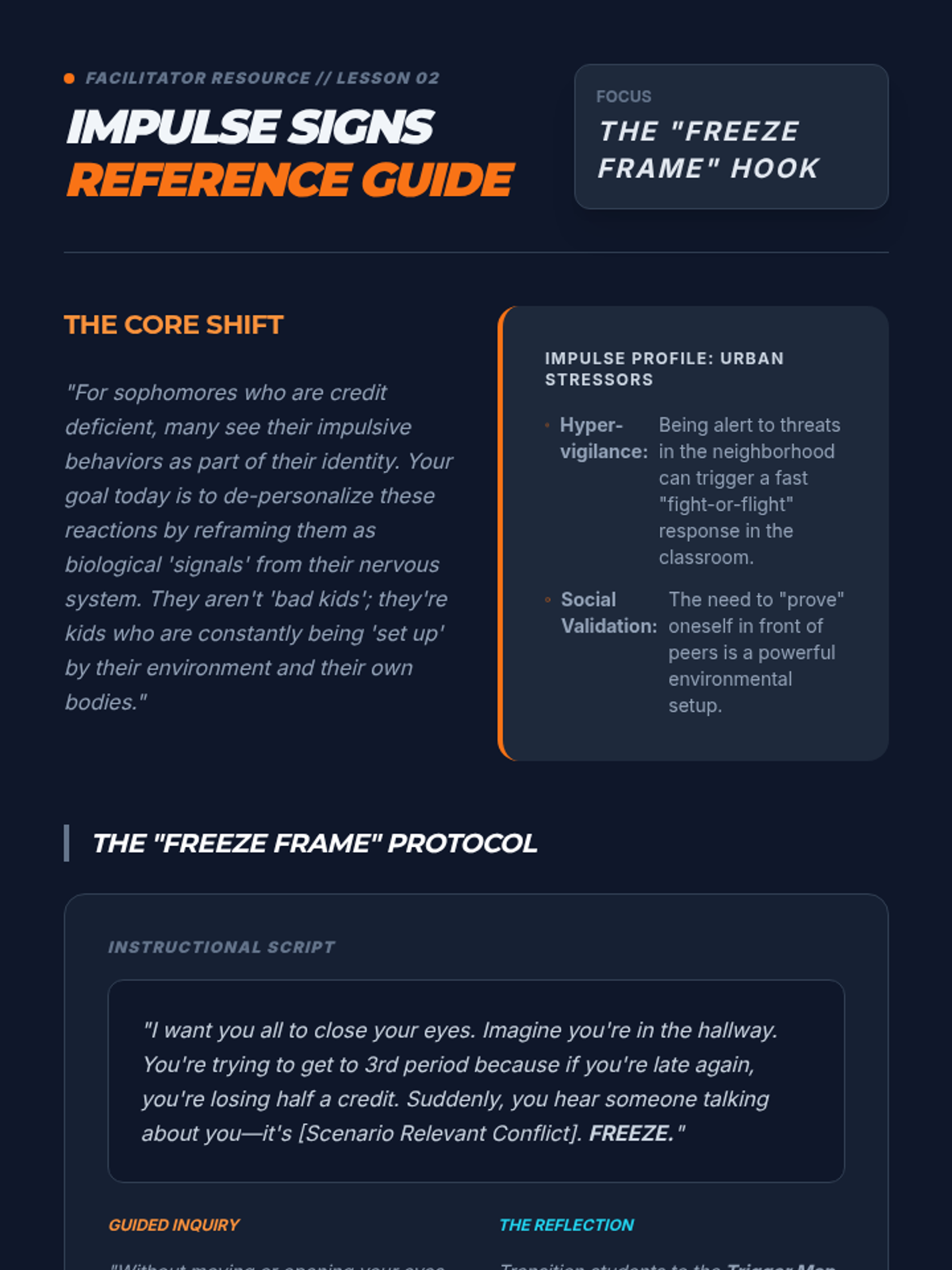
A social-emotional learning lesson designed for students with trauma backgrounds and impulse control challenges. It focuses on 'Scene Scanning'—assuming positive intent and dissecting social interactions through a detective-style lens to improve perspective-taking and reduce reactivity.
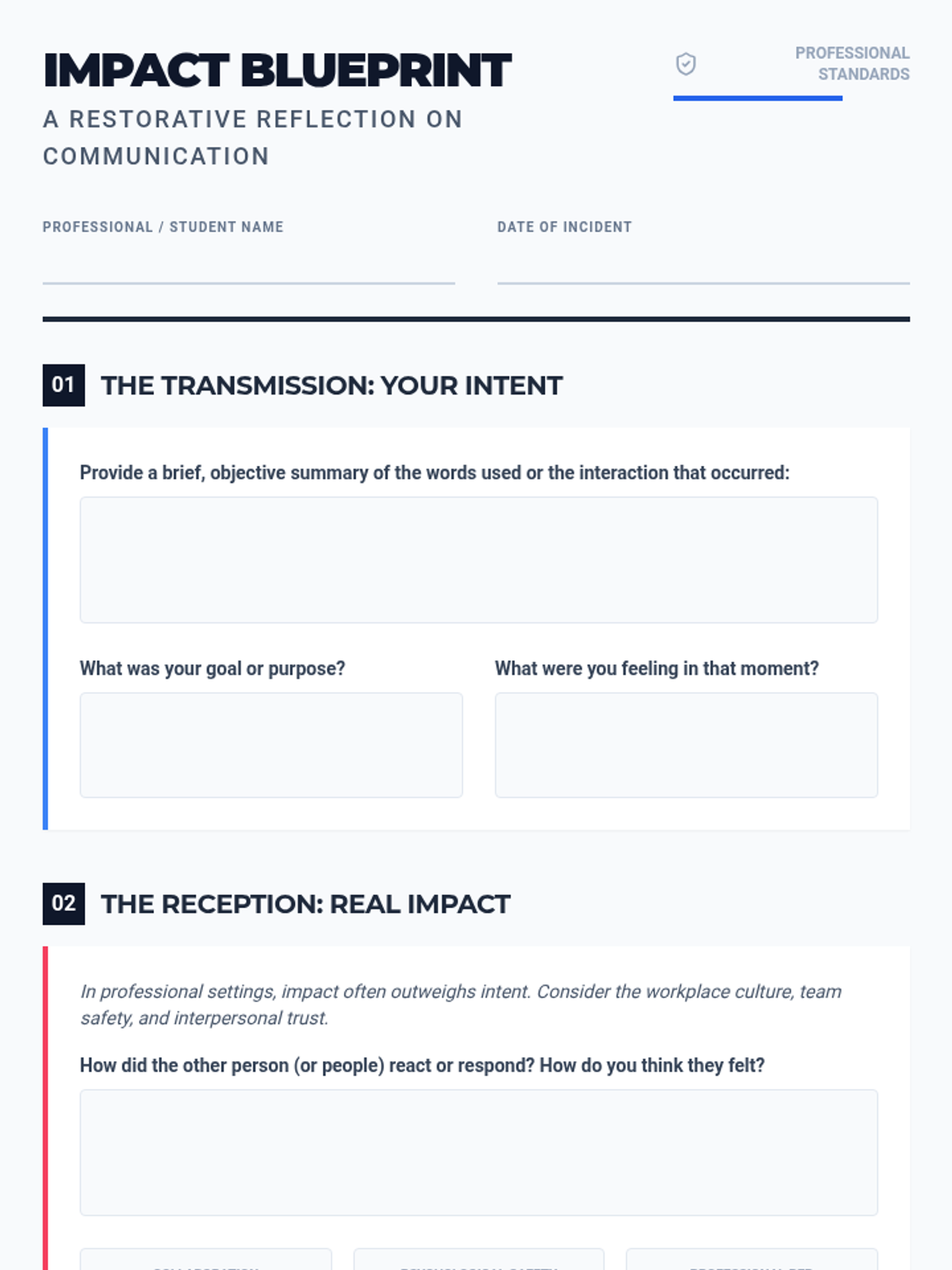
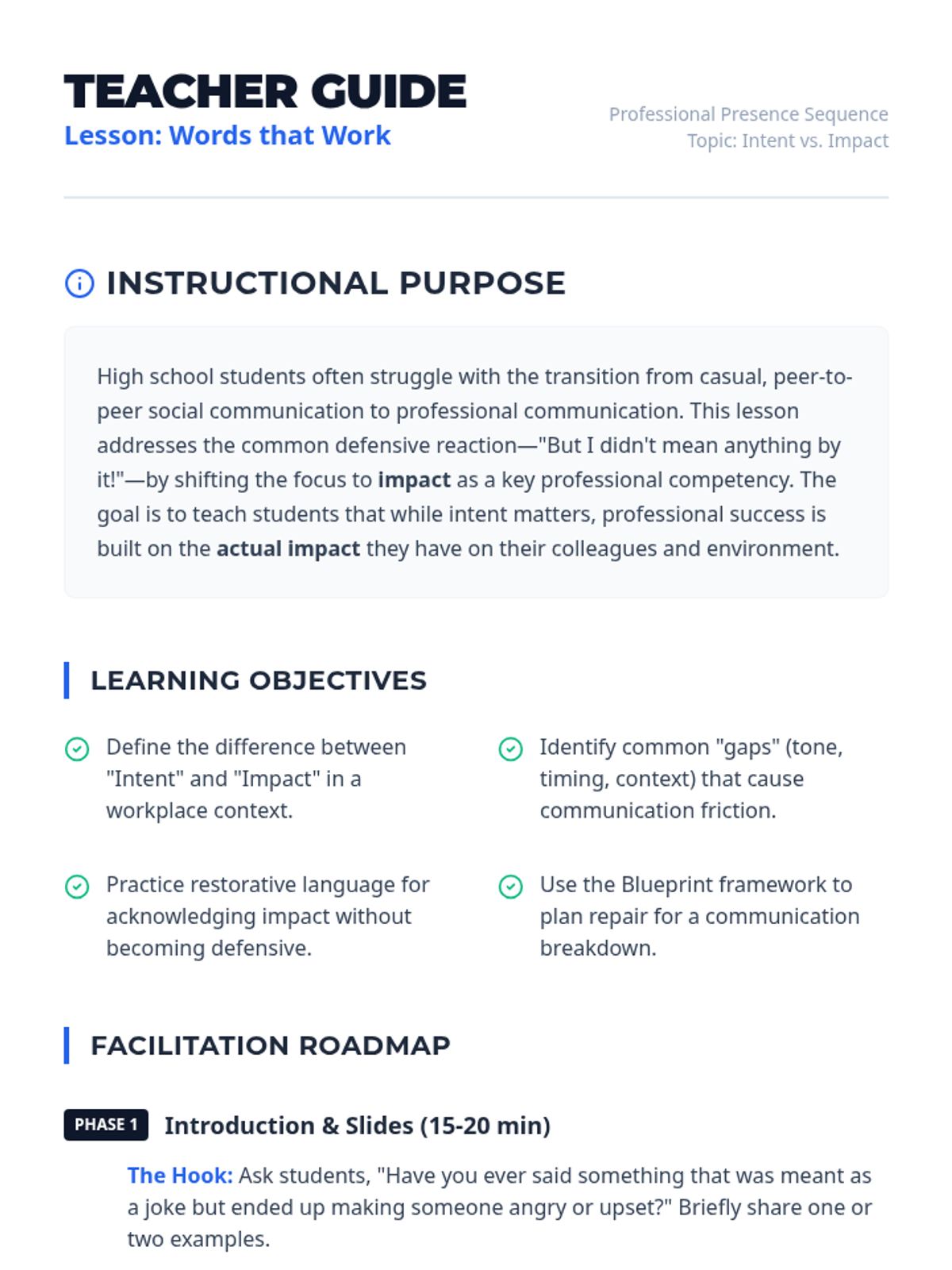
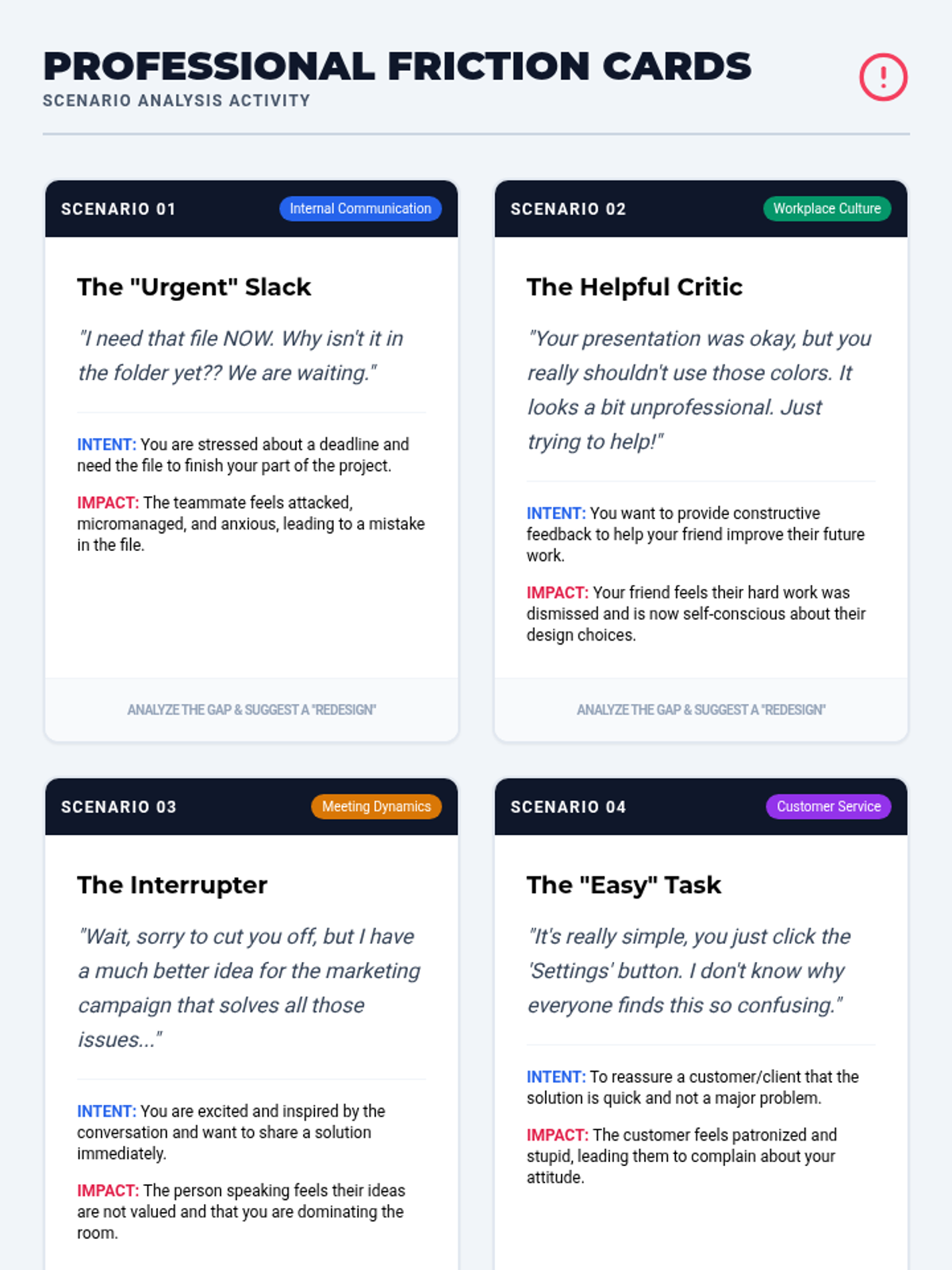
This lesson explores the "intent vs. impact" framework in professional settings, helping students understand how their words affect workplace culture and how to use restorative reflection to repair professional relationships.
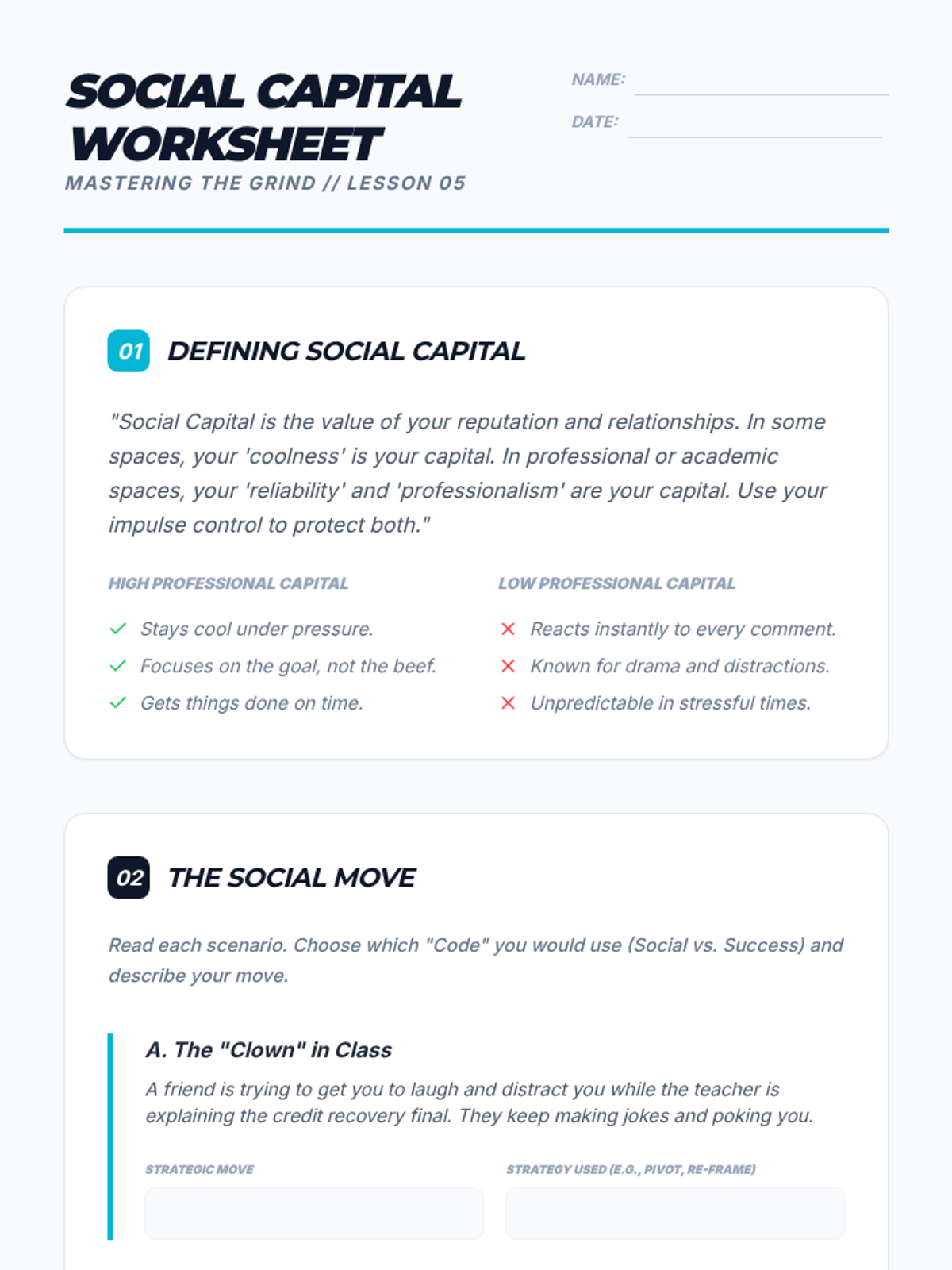
Focuses on social intelligence and 'code-switching' as tools for success. Students practice navigating conflict with peers and authority figures to protect their progress and 'own the room' professionally.
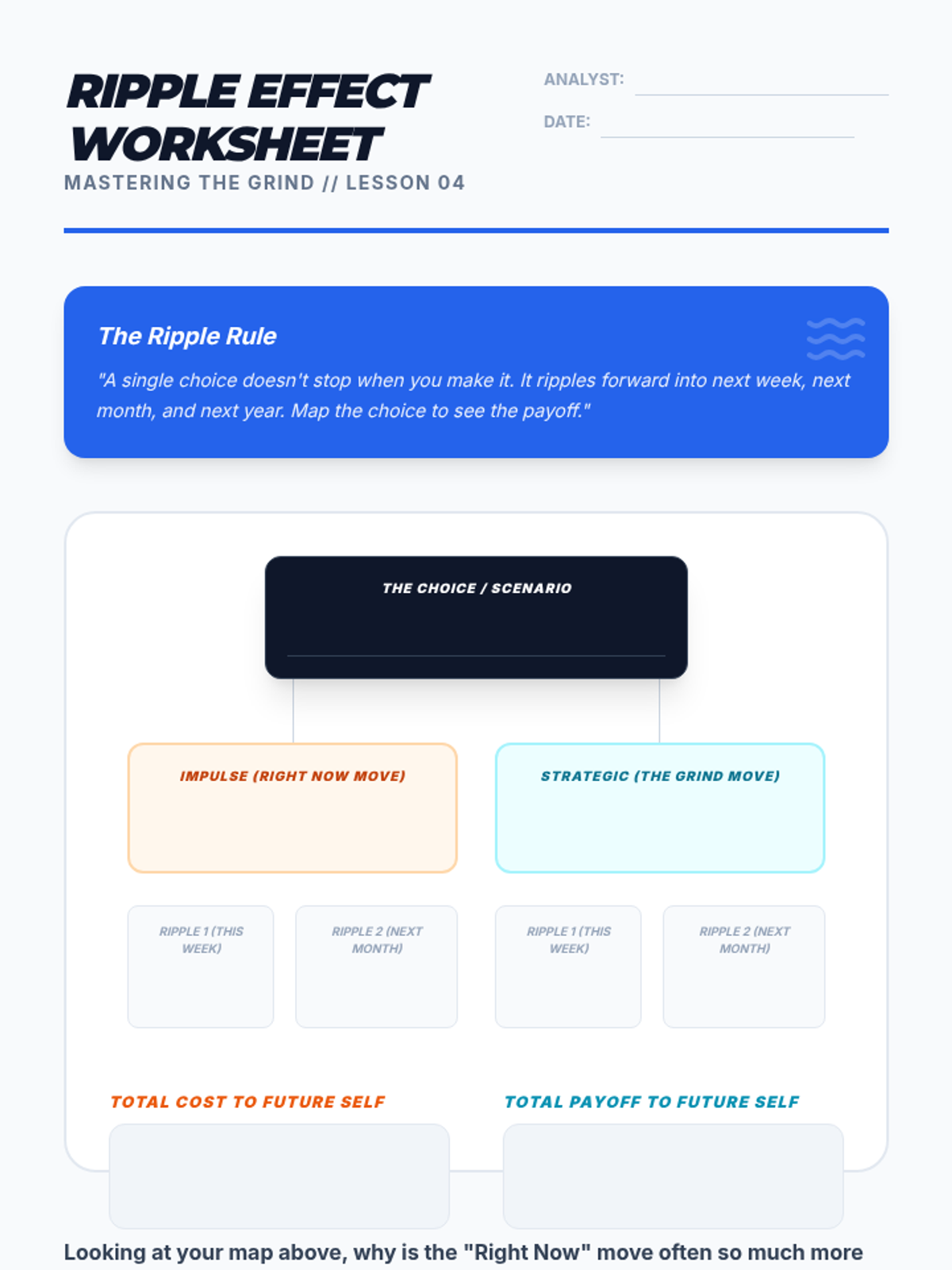
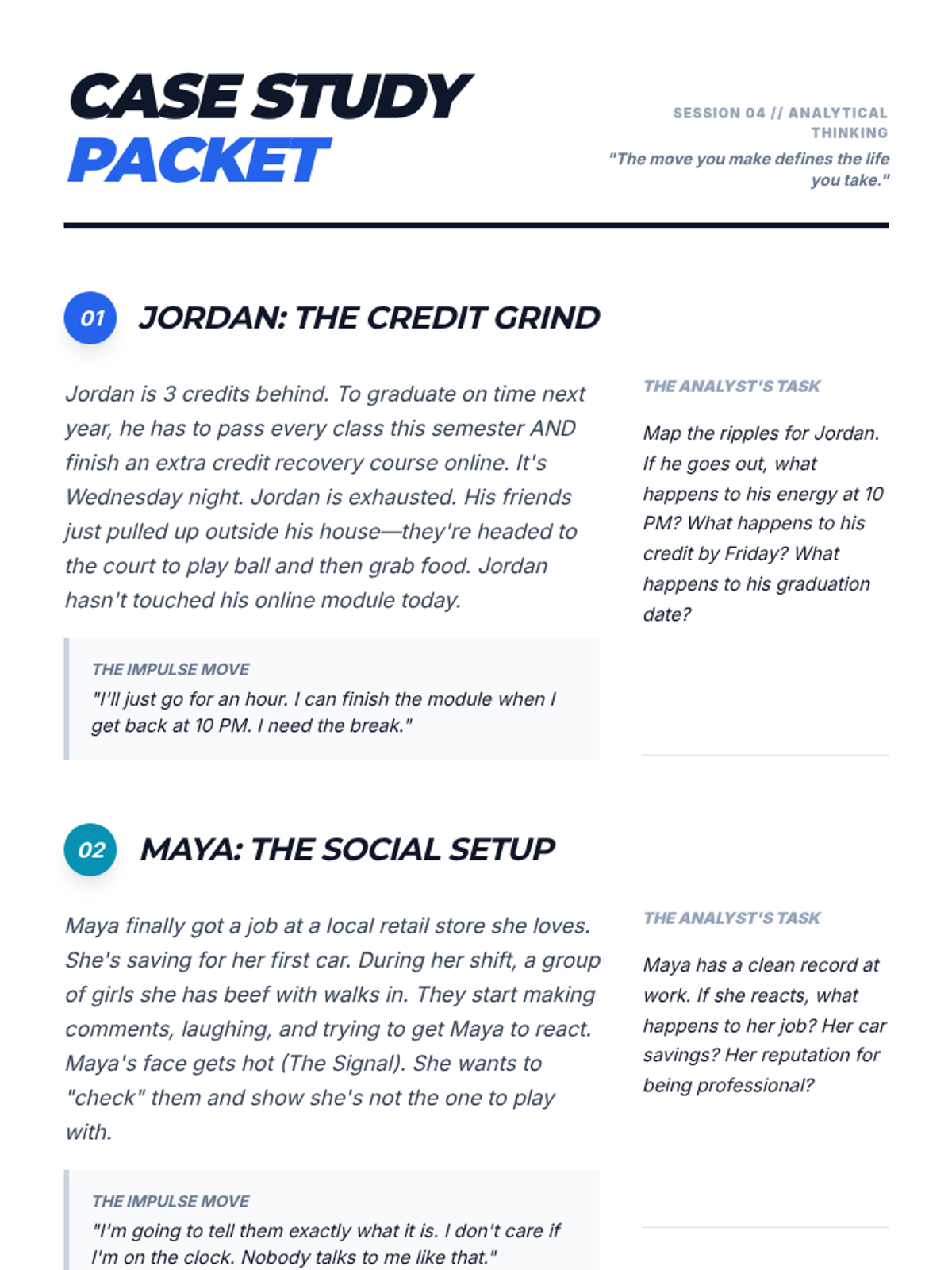
Visualizes the 'Ripple Effect' of choices on graduation timelines and future earnings. Students analyze case studies of peers navigating high-stakes decisions to understand the compounding nature of consistency.
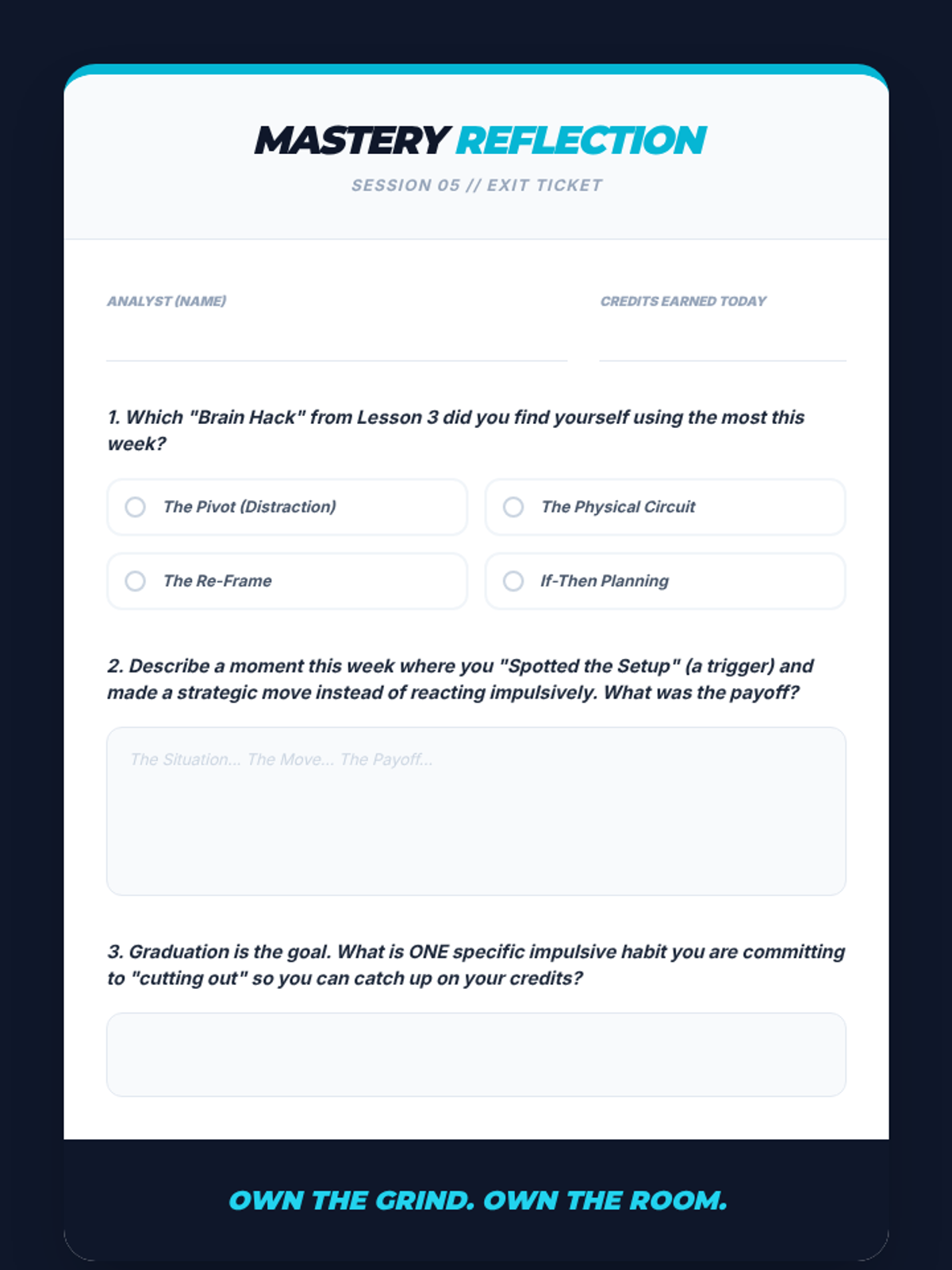
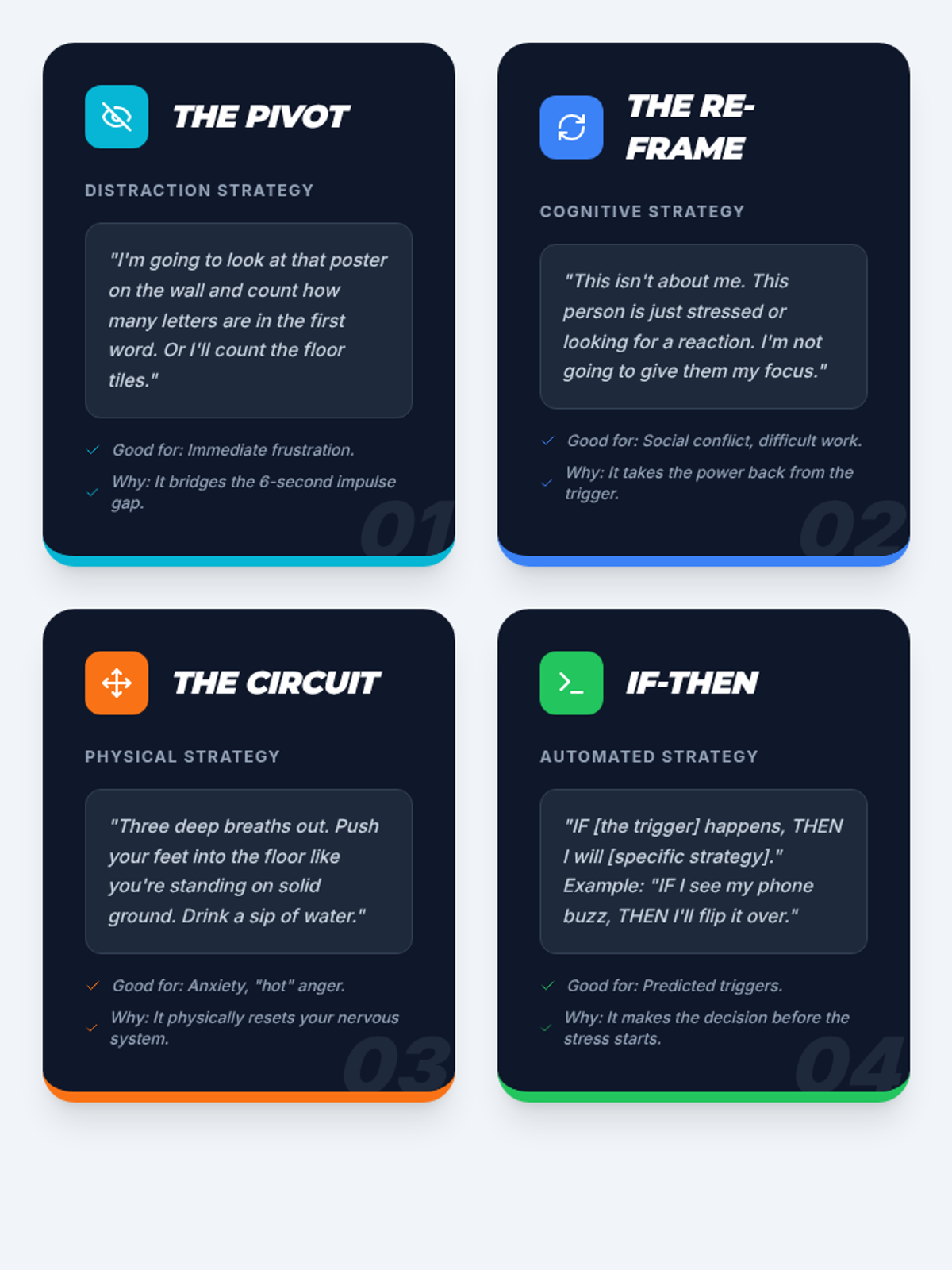
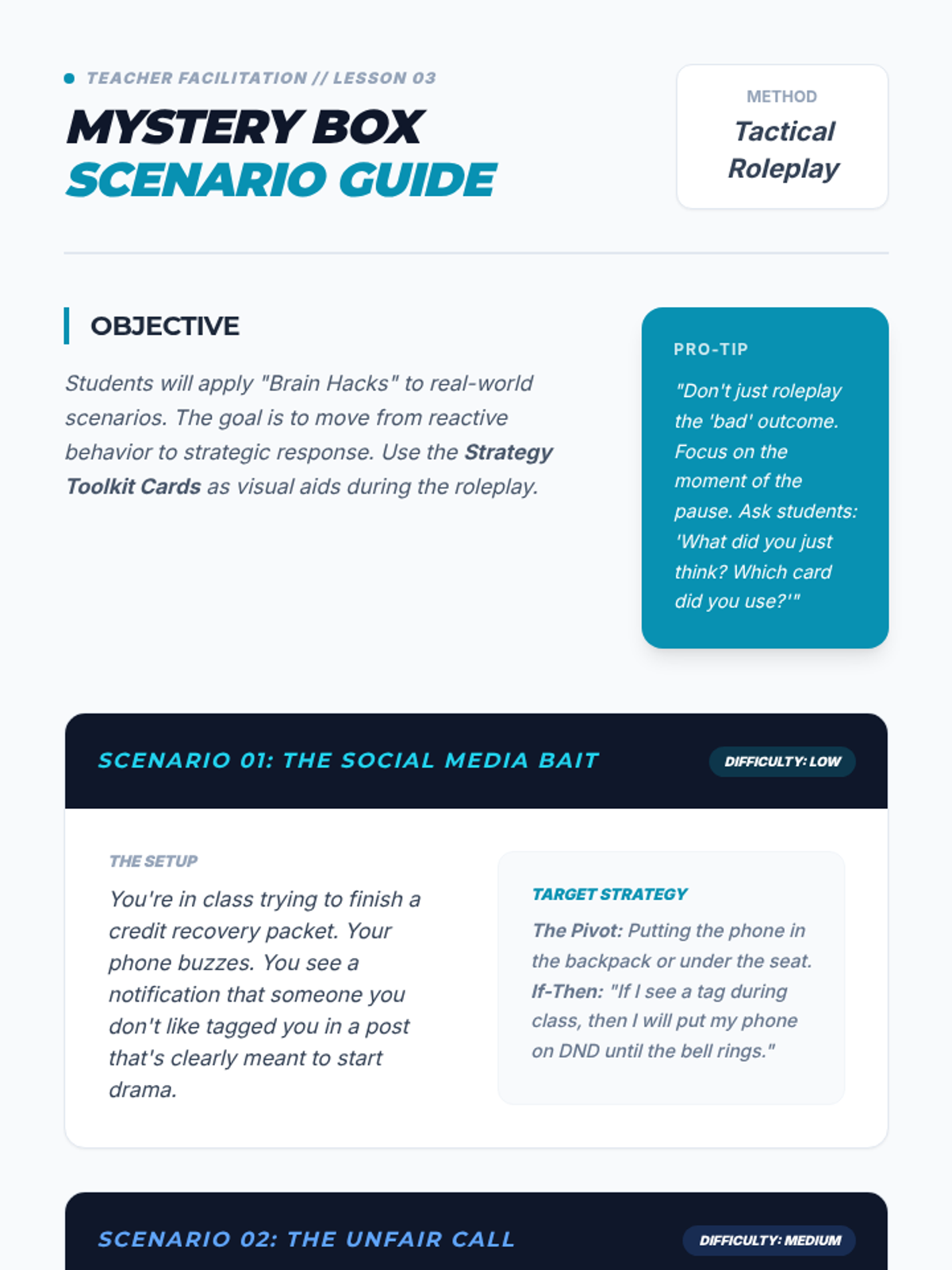
Equips students with high-level cognitive strategies to override impulsive reactions. Focuses on 'reframing' stressful situations and using 'if-then' planning to maintain composure under pressure.
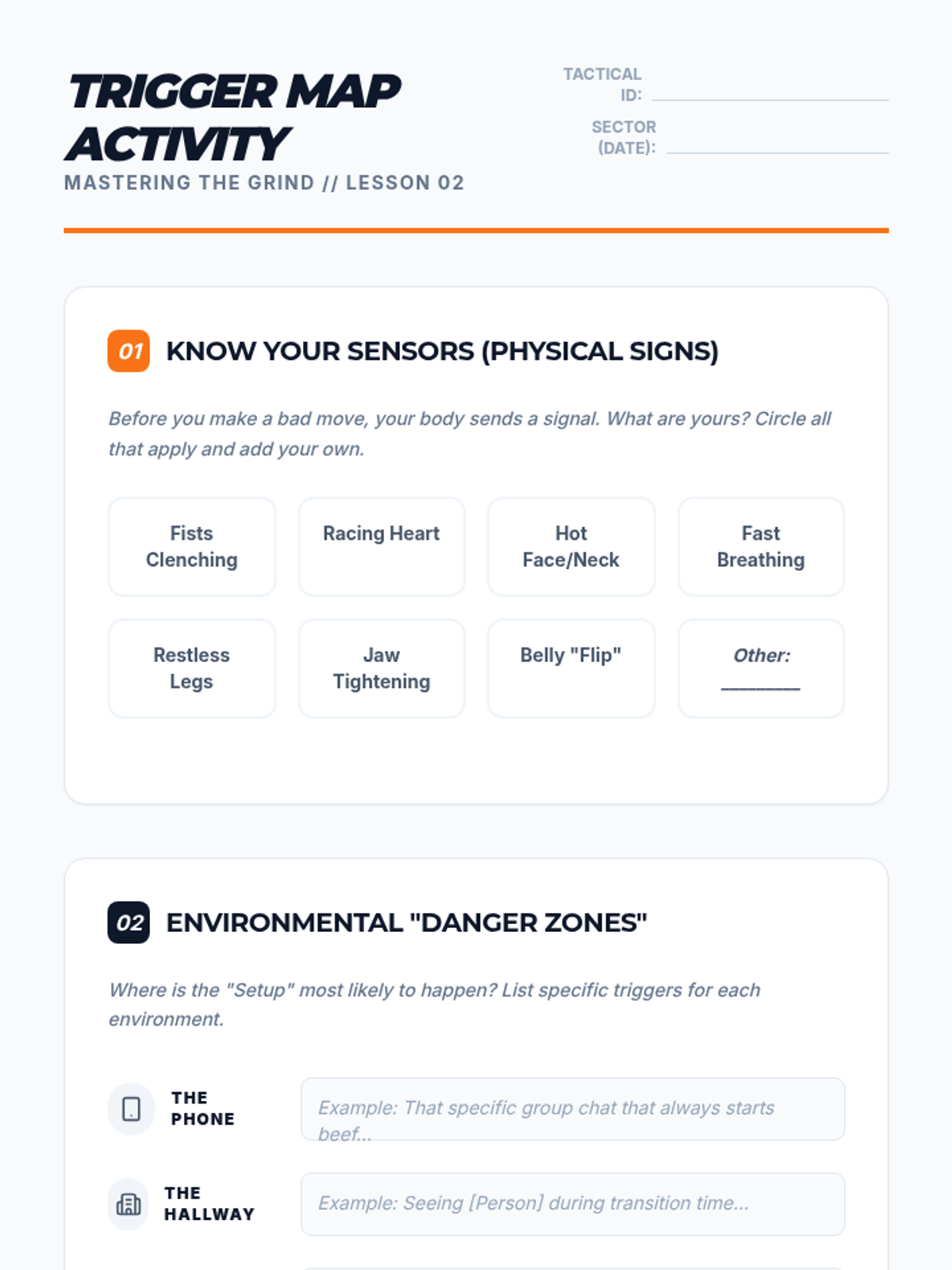
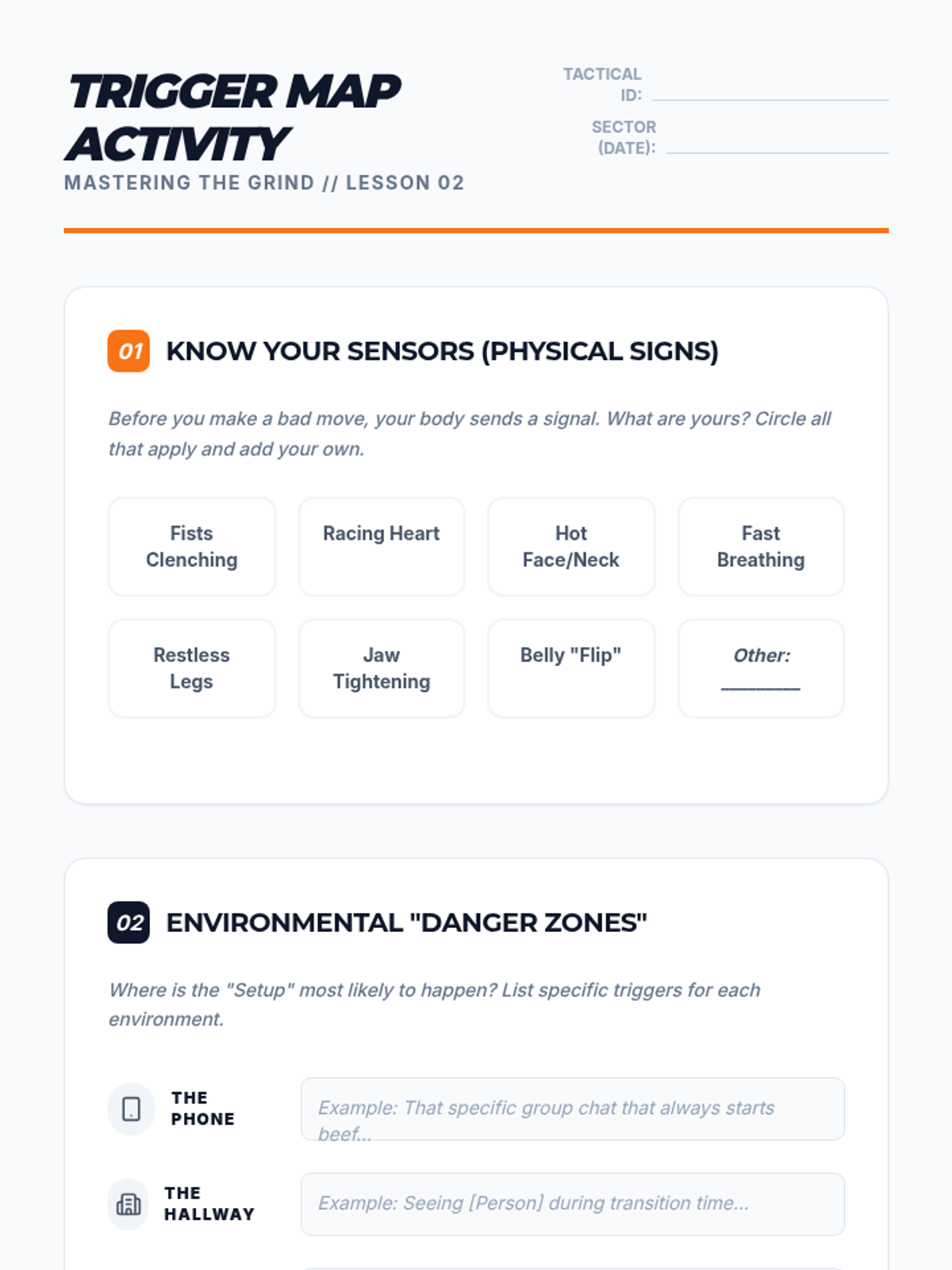
Students identify internal and environmental 'setups'—triggers that lead to self-sabotage. They create tactical maps of their daily routines to anticipate and bypass distractions in an urban school environment.
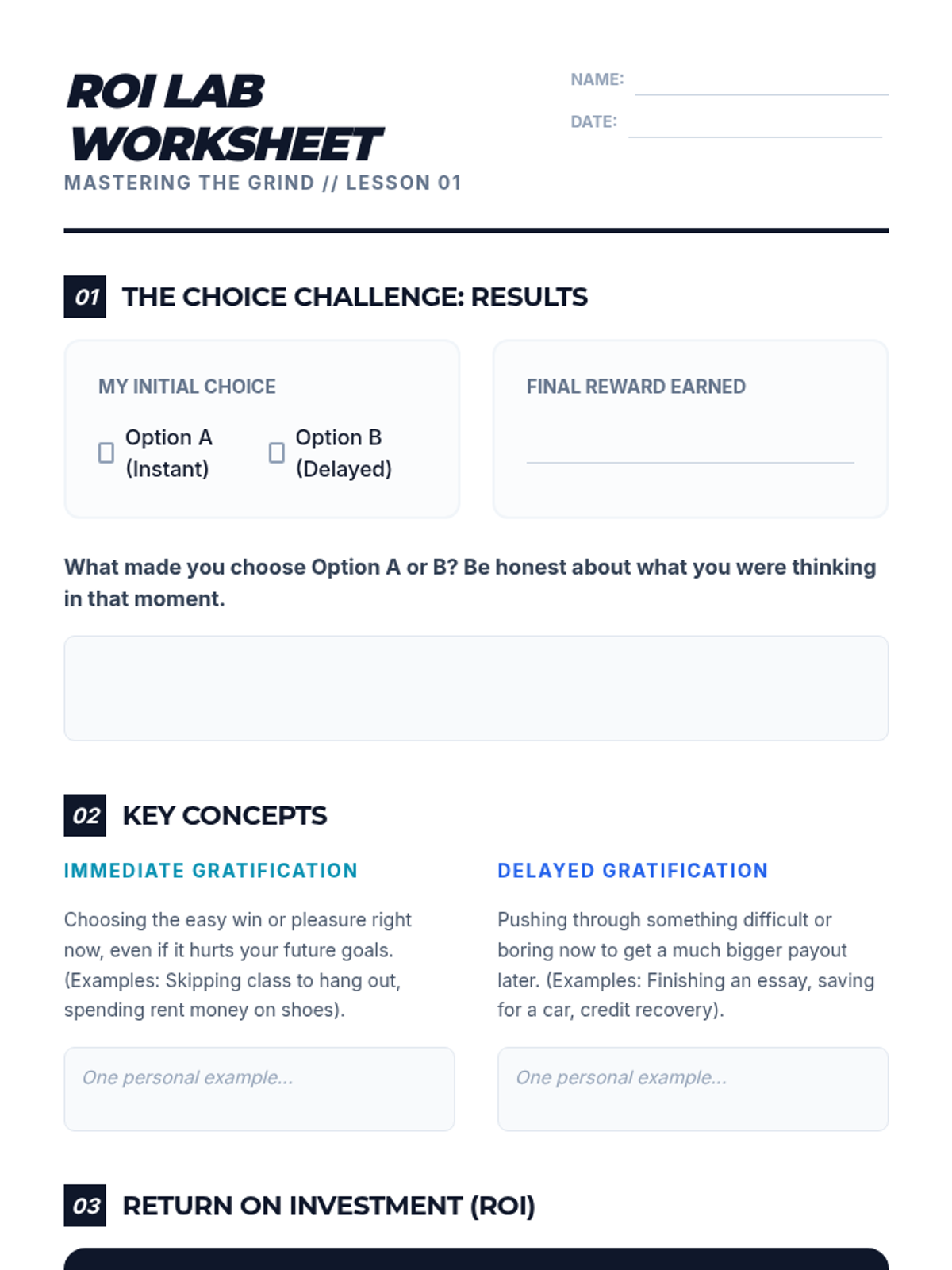
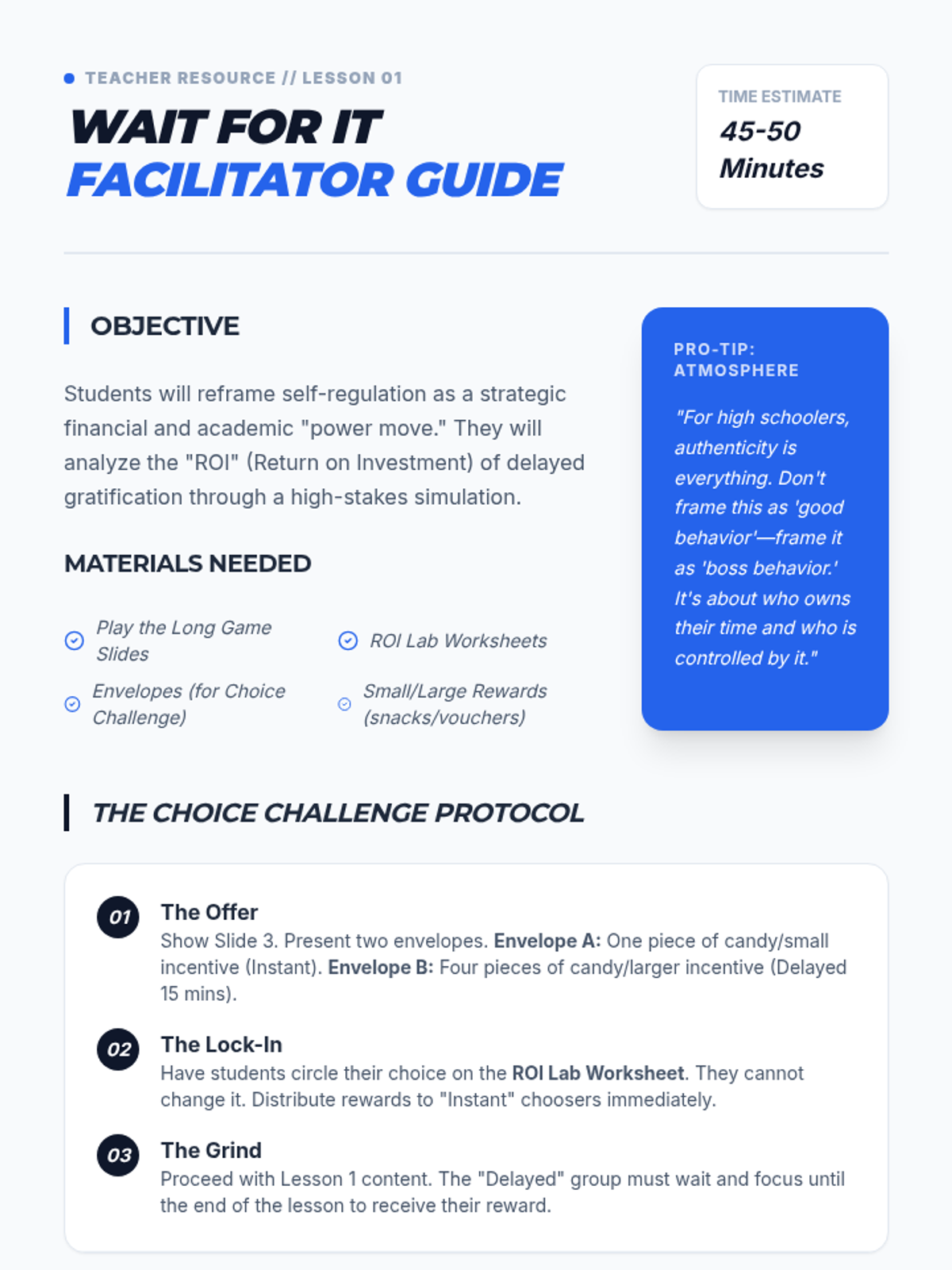
Reframes delayed gratification as a strategic investment. Students analyze the 'ROI' of their time and credits, participating in a simulation that mirrors real-world economic and academic trade-offs.
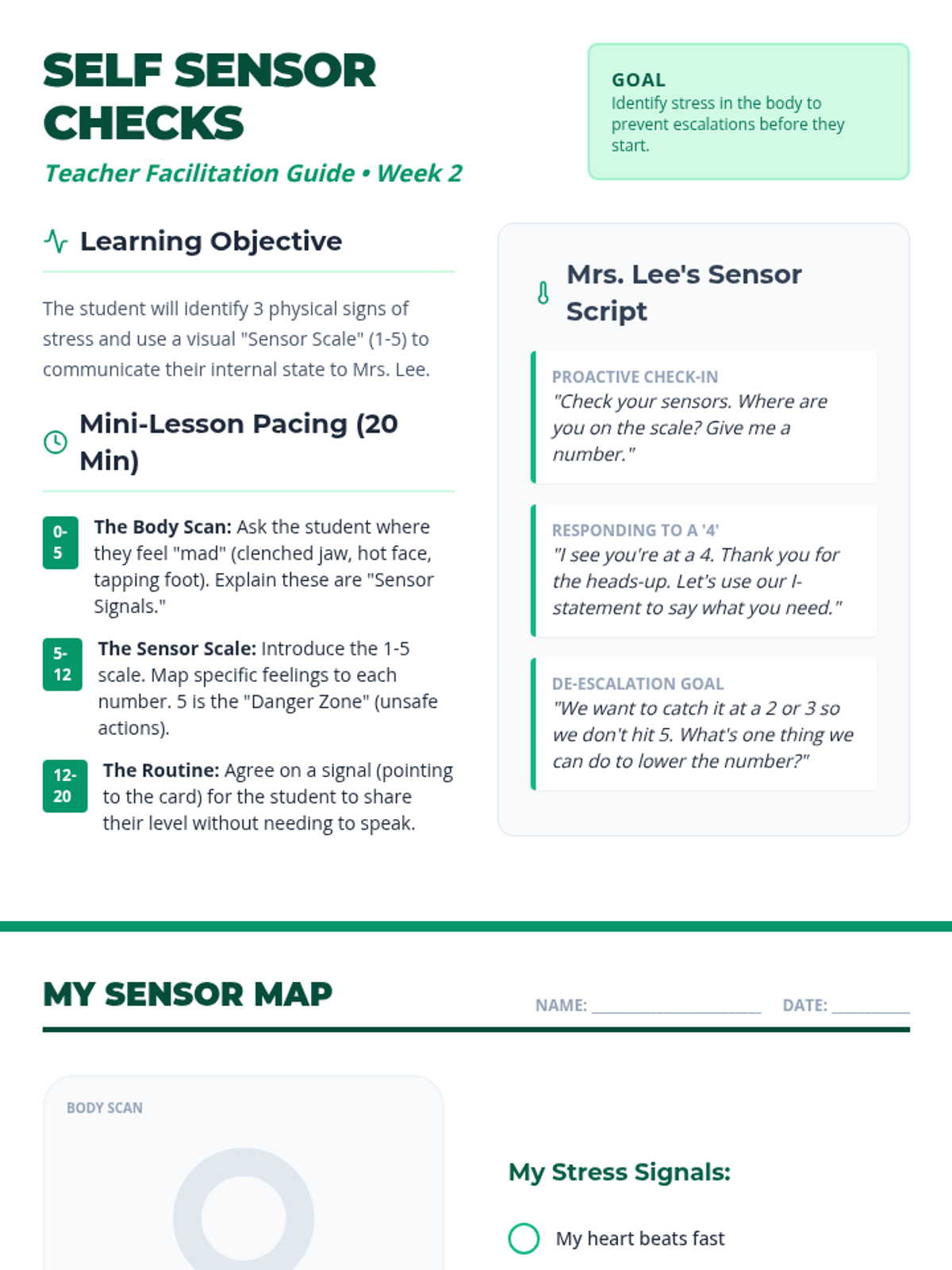
This lesson focuses on identifying internal emotional states and using visual check-ins to monitor stress levels before they lead to disruptions.
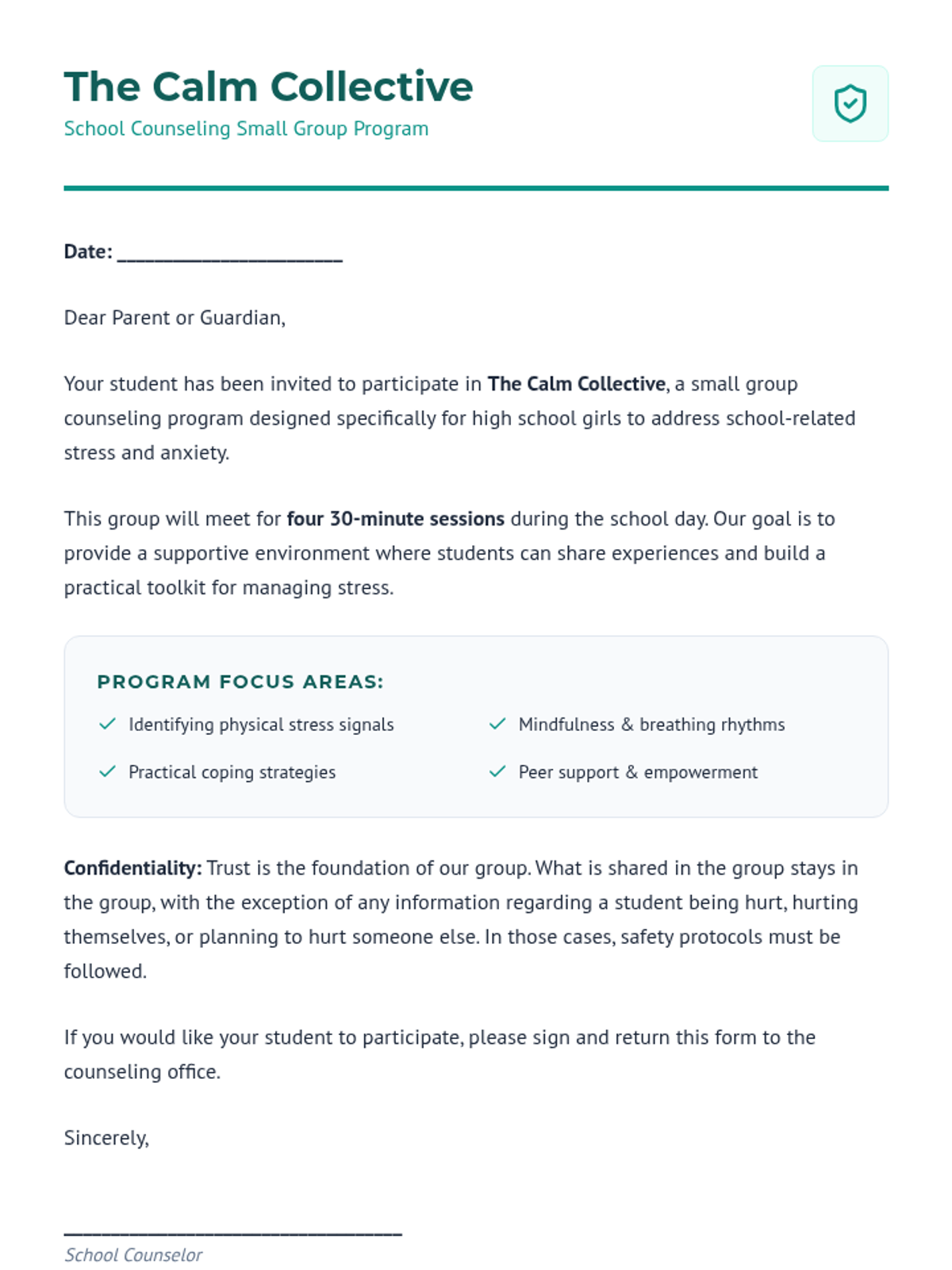
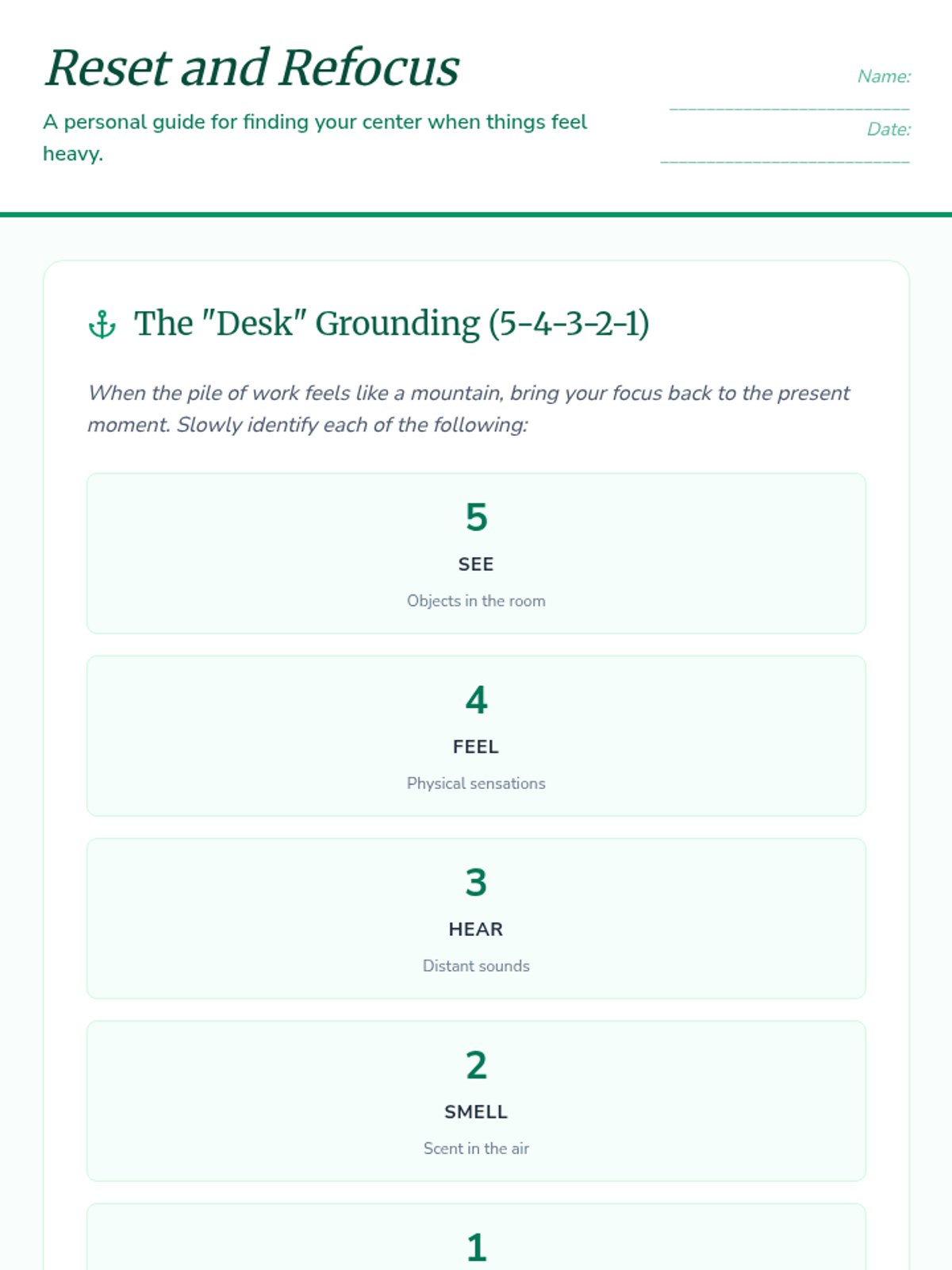
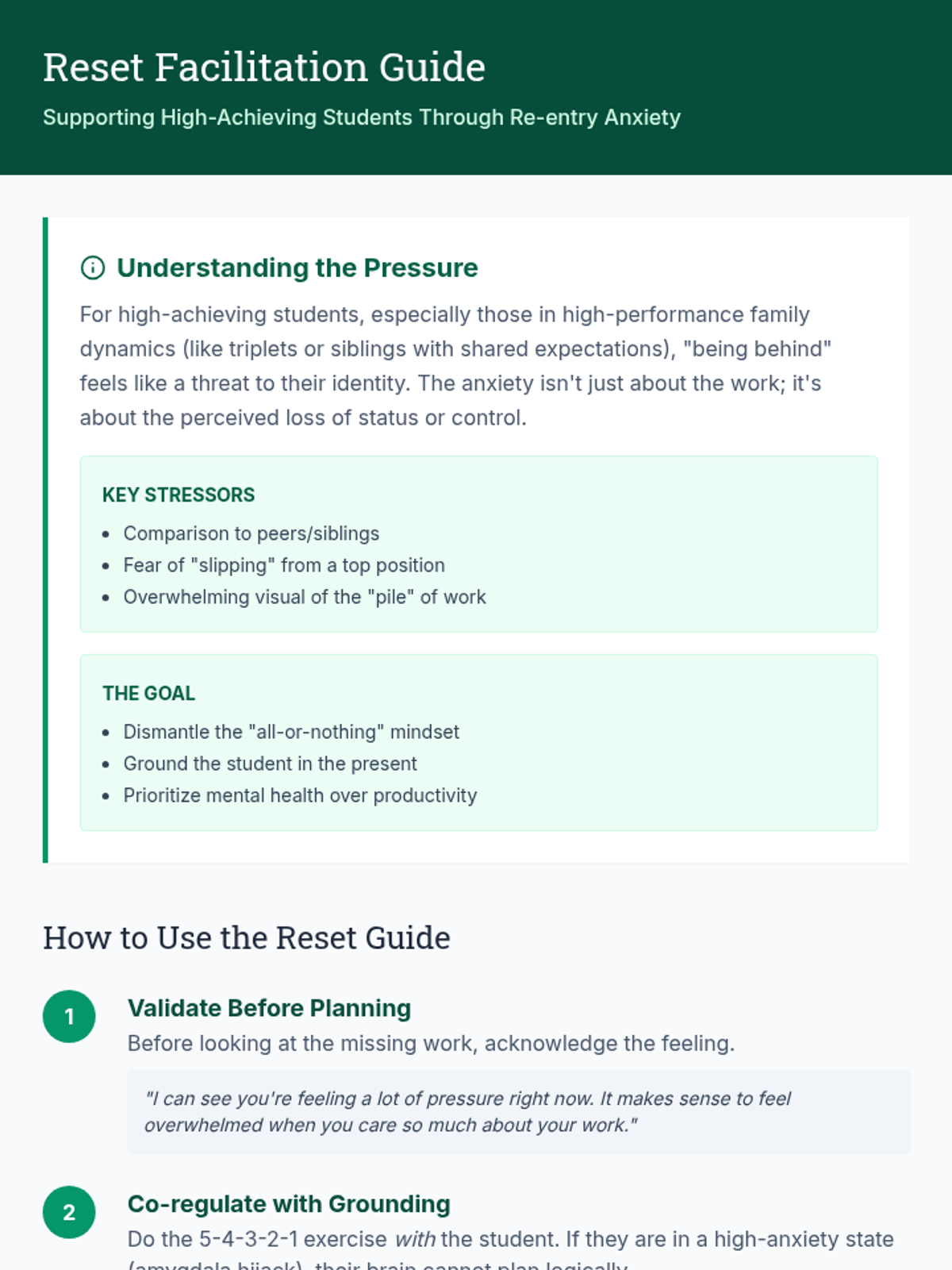
A collection of resources designed to help high-achieving students manage academic anxiety and re-entry stress through mindfulness and grounding.
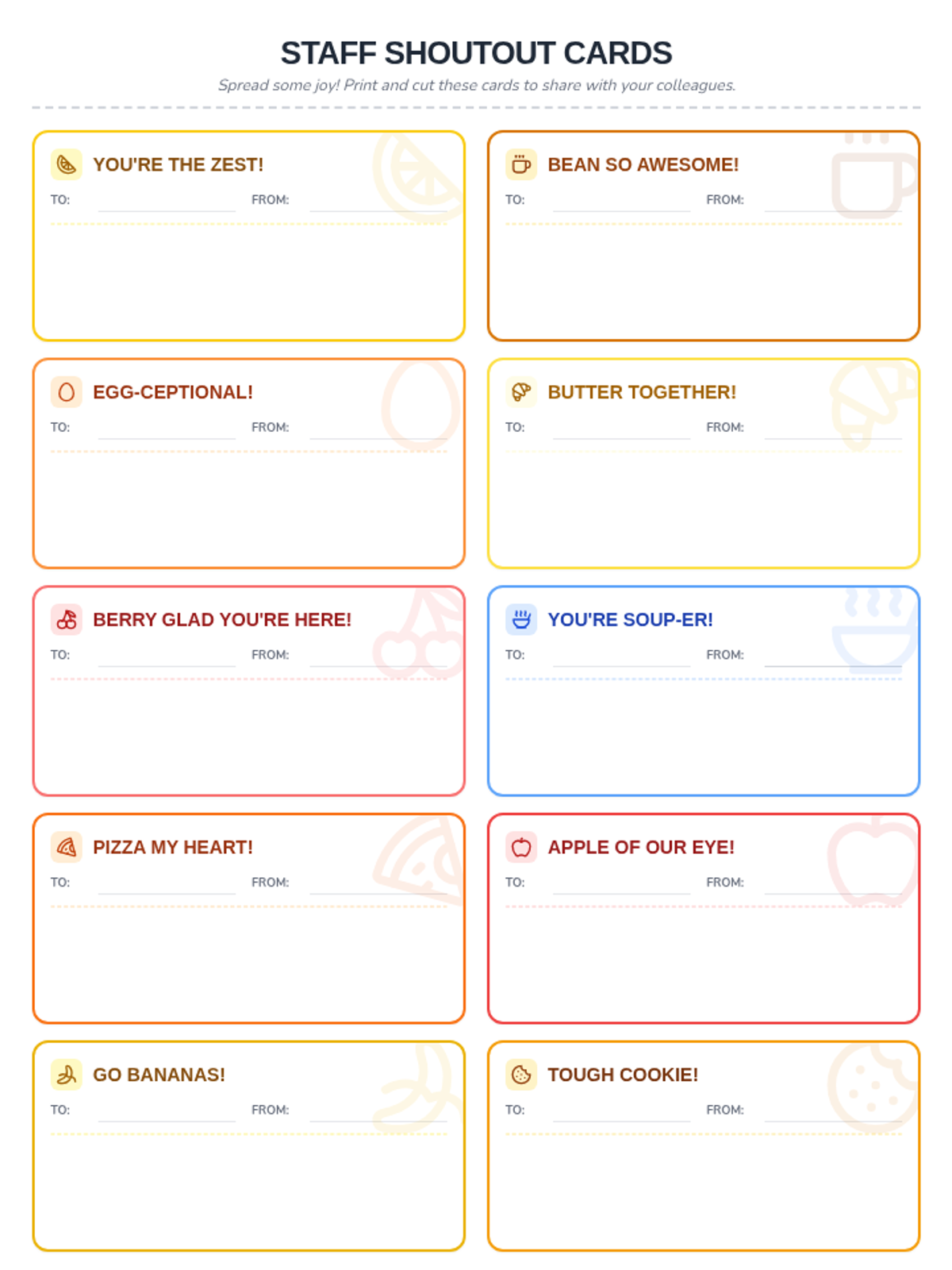
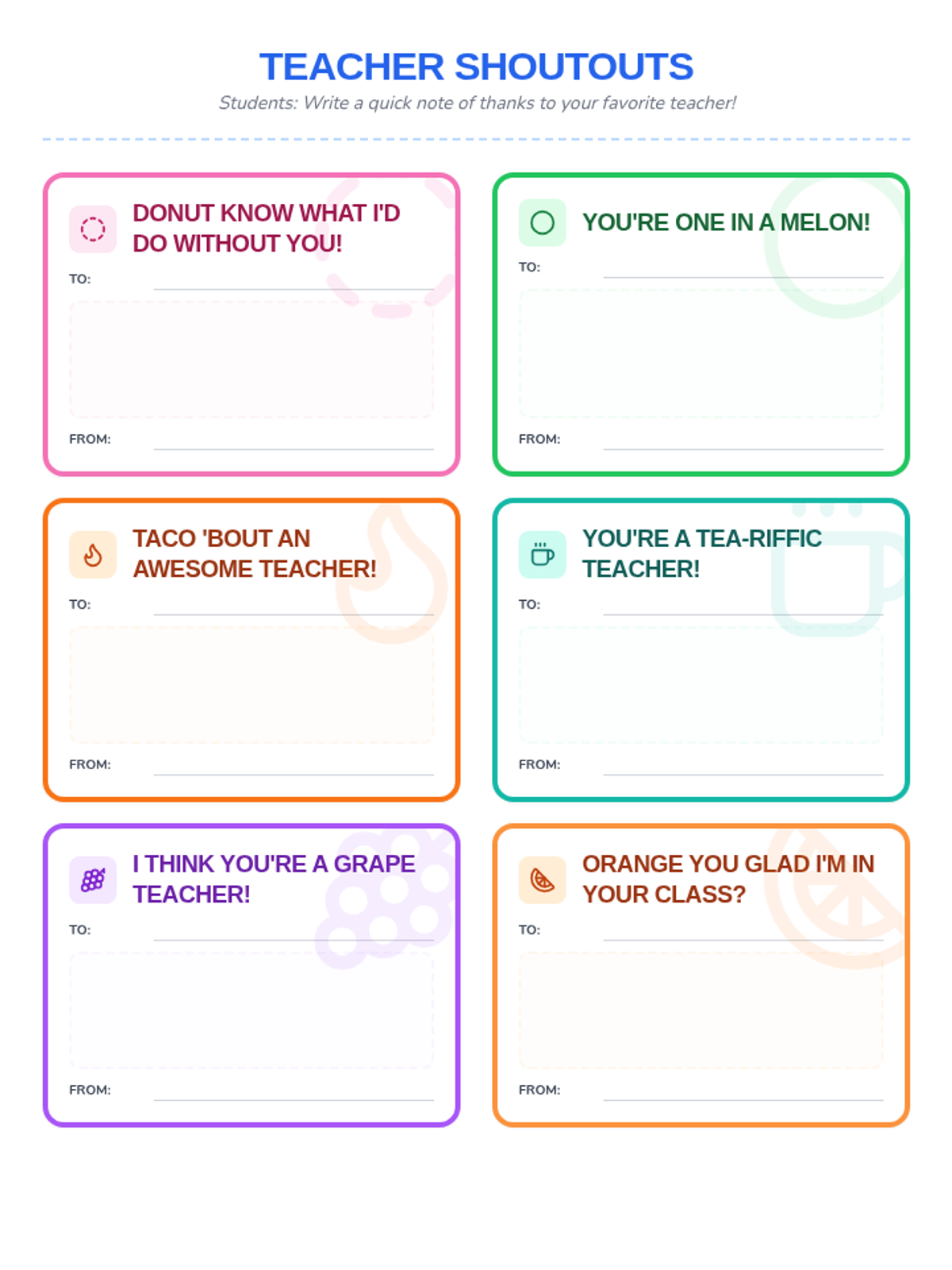
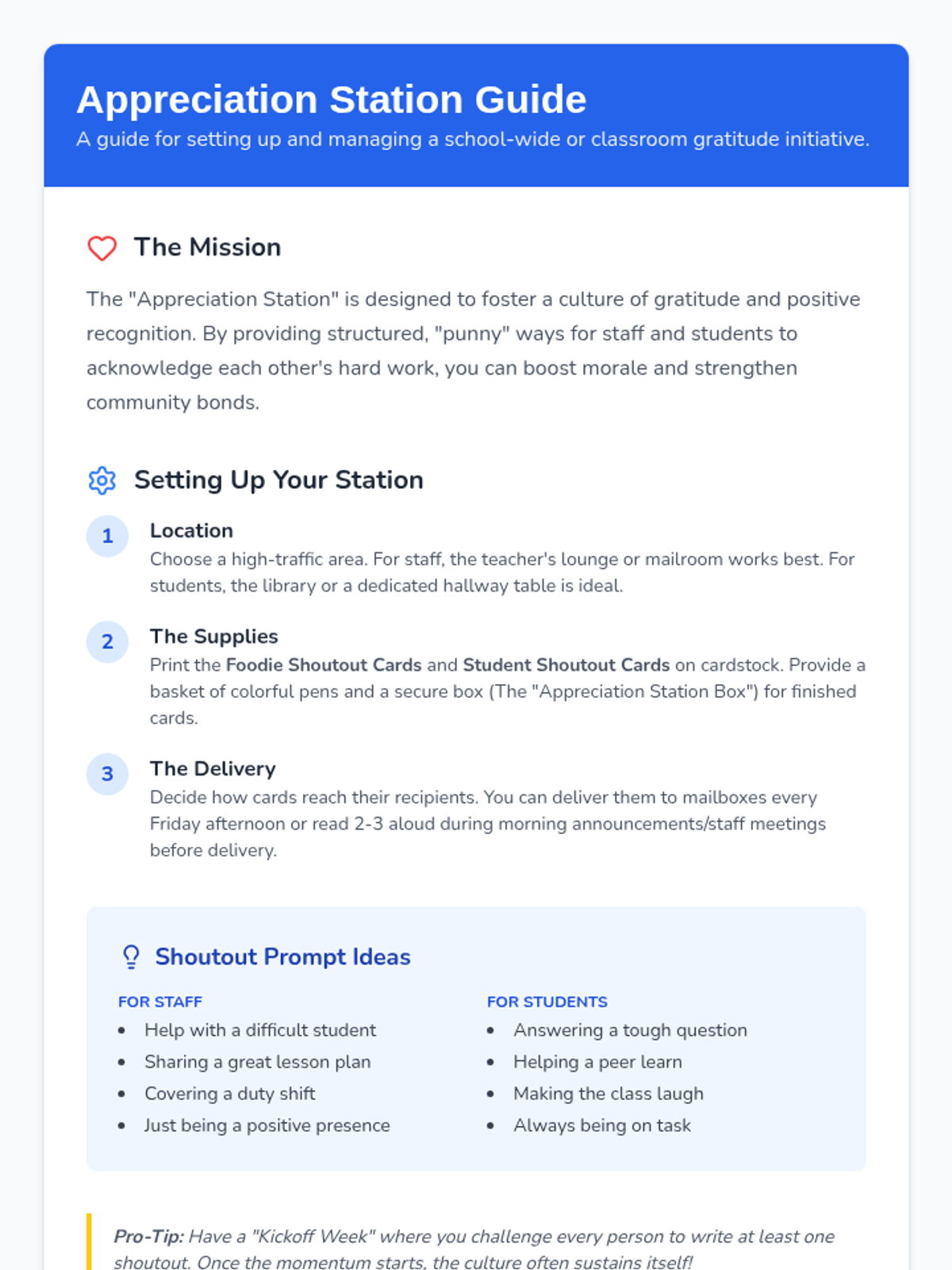
A collection of appreciation-themed resources for school staff and students to express gratitude through creative, pun-based shoutout cards.
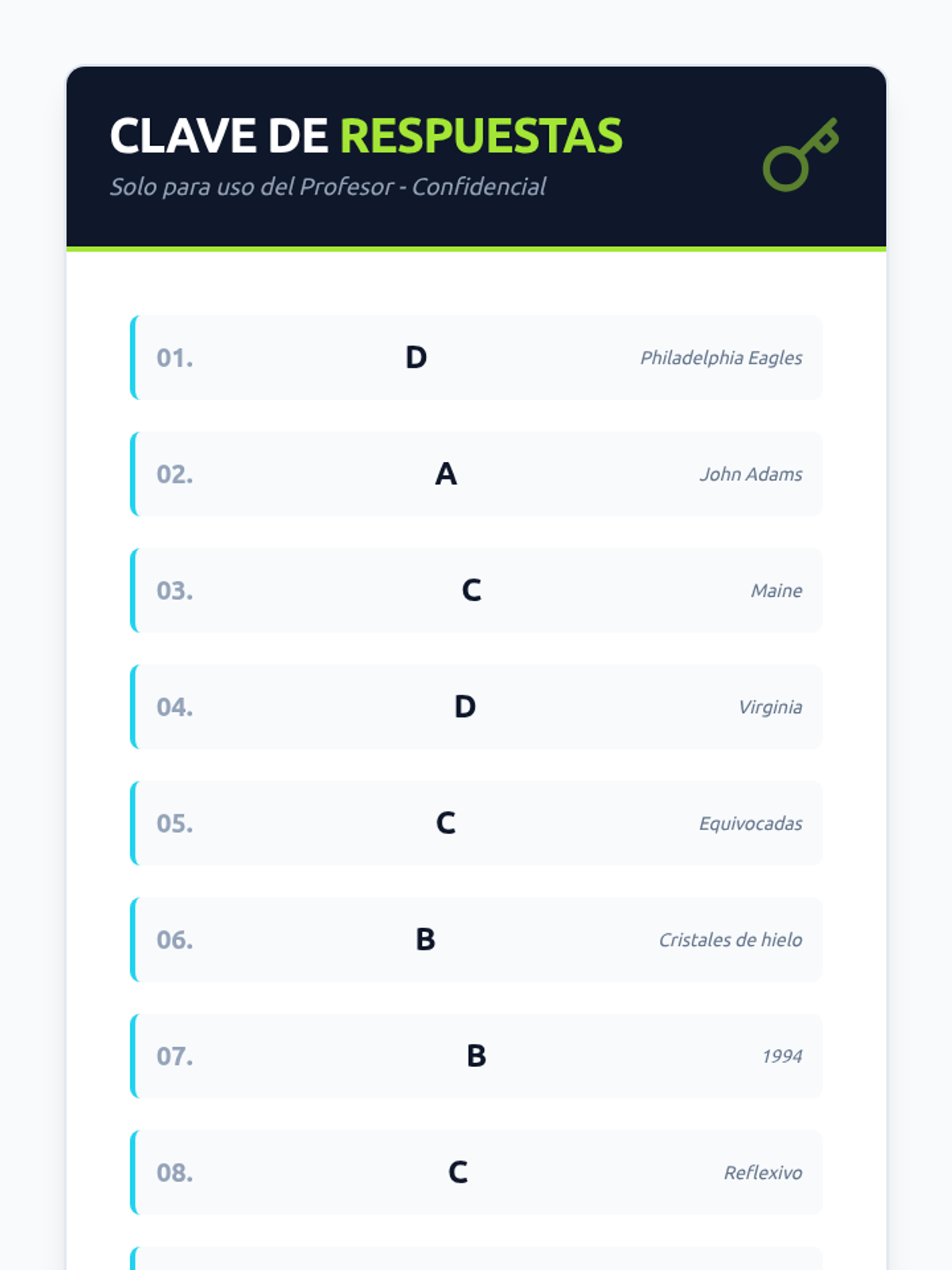
Un juego interactivo de preguntas tipo "hacker" donde los estudiantes deben responder correctamente para "descifrar el código" y completar la misión. Incluye preguntas de cultura general, ciencia, historia y lenguaje.
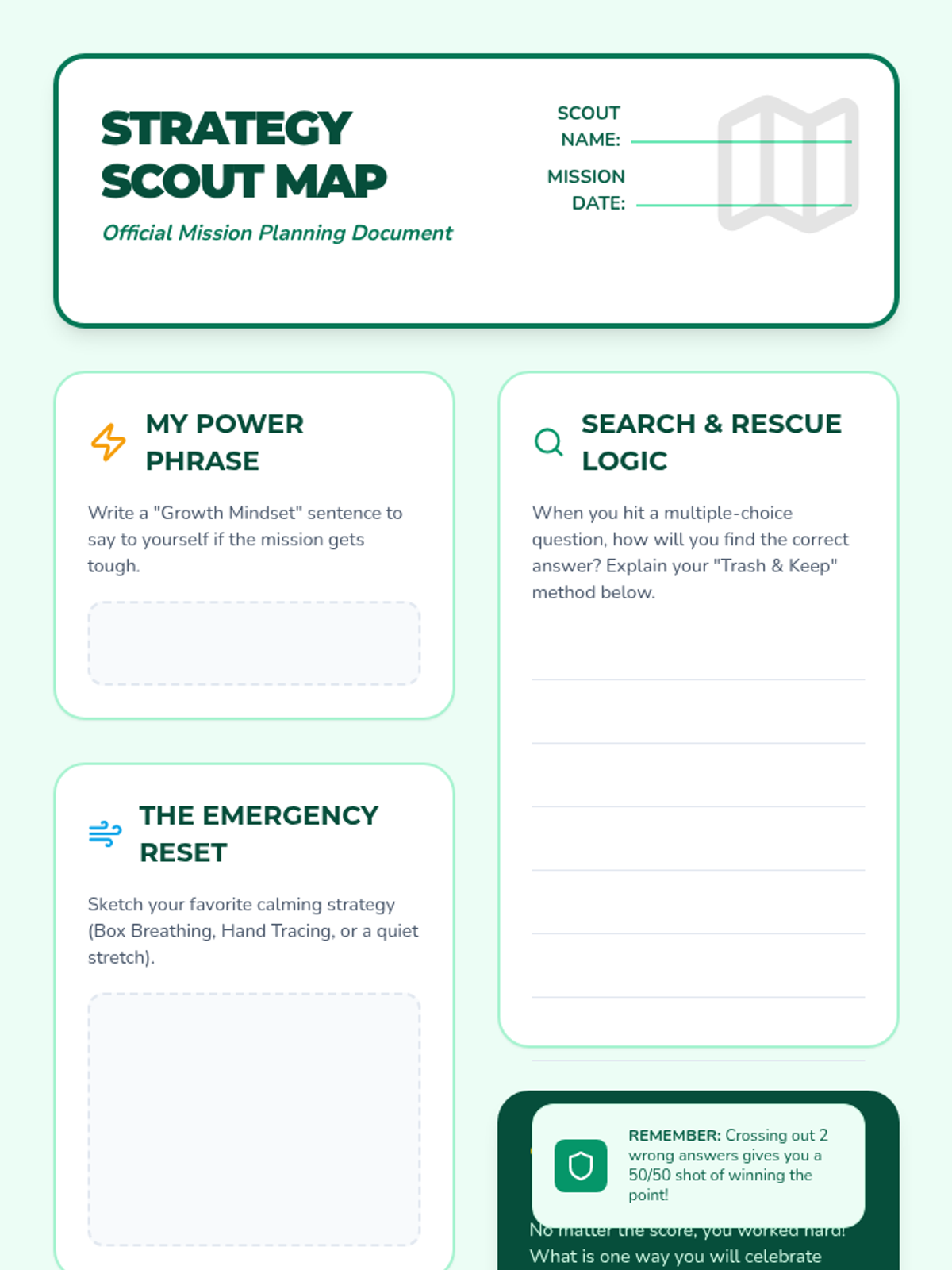
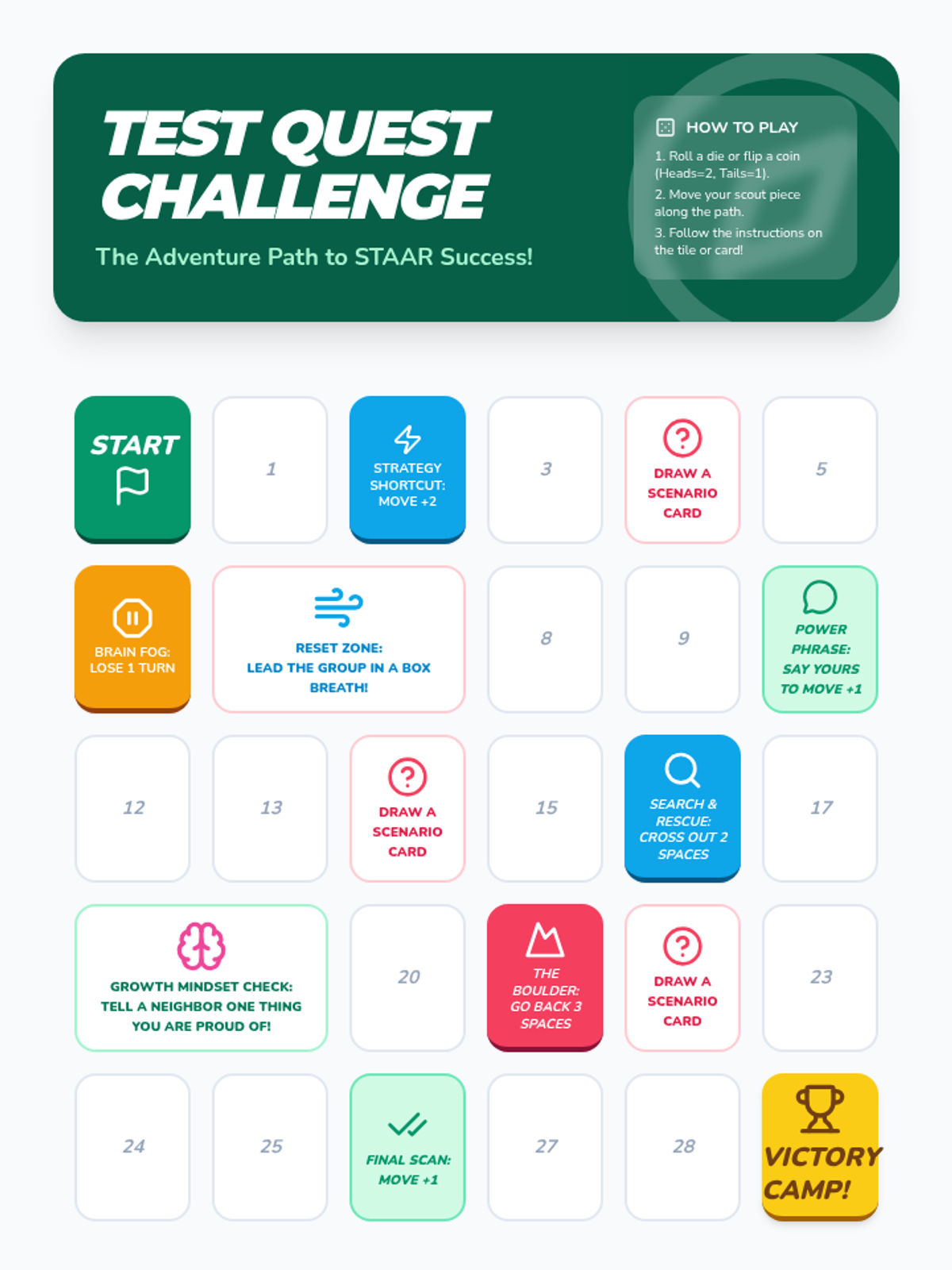
A comprehensive lesson designed to equip students with social-emotional strategies and practical techniques for tackling the STAAR test with confidence and focus.
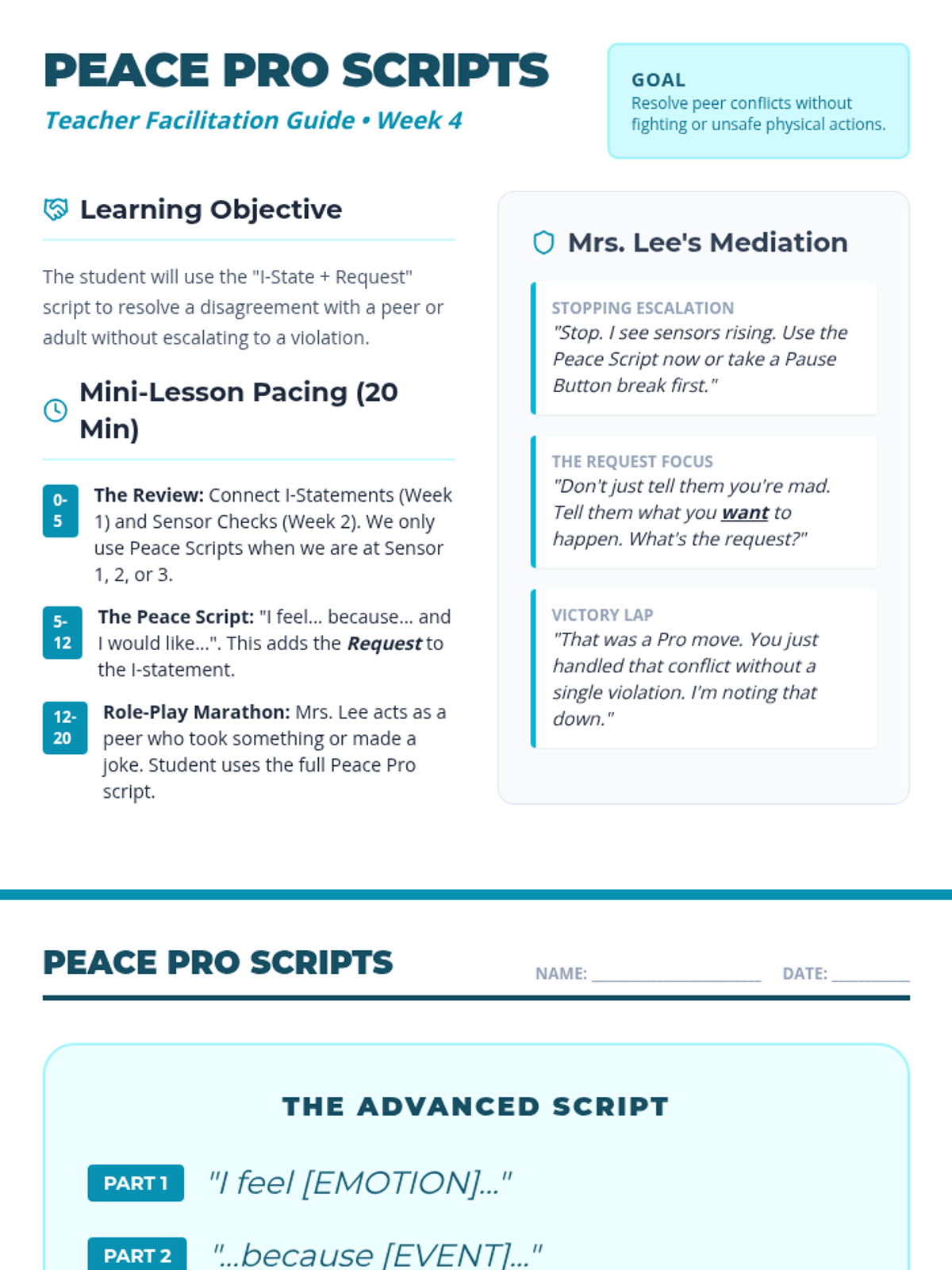
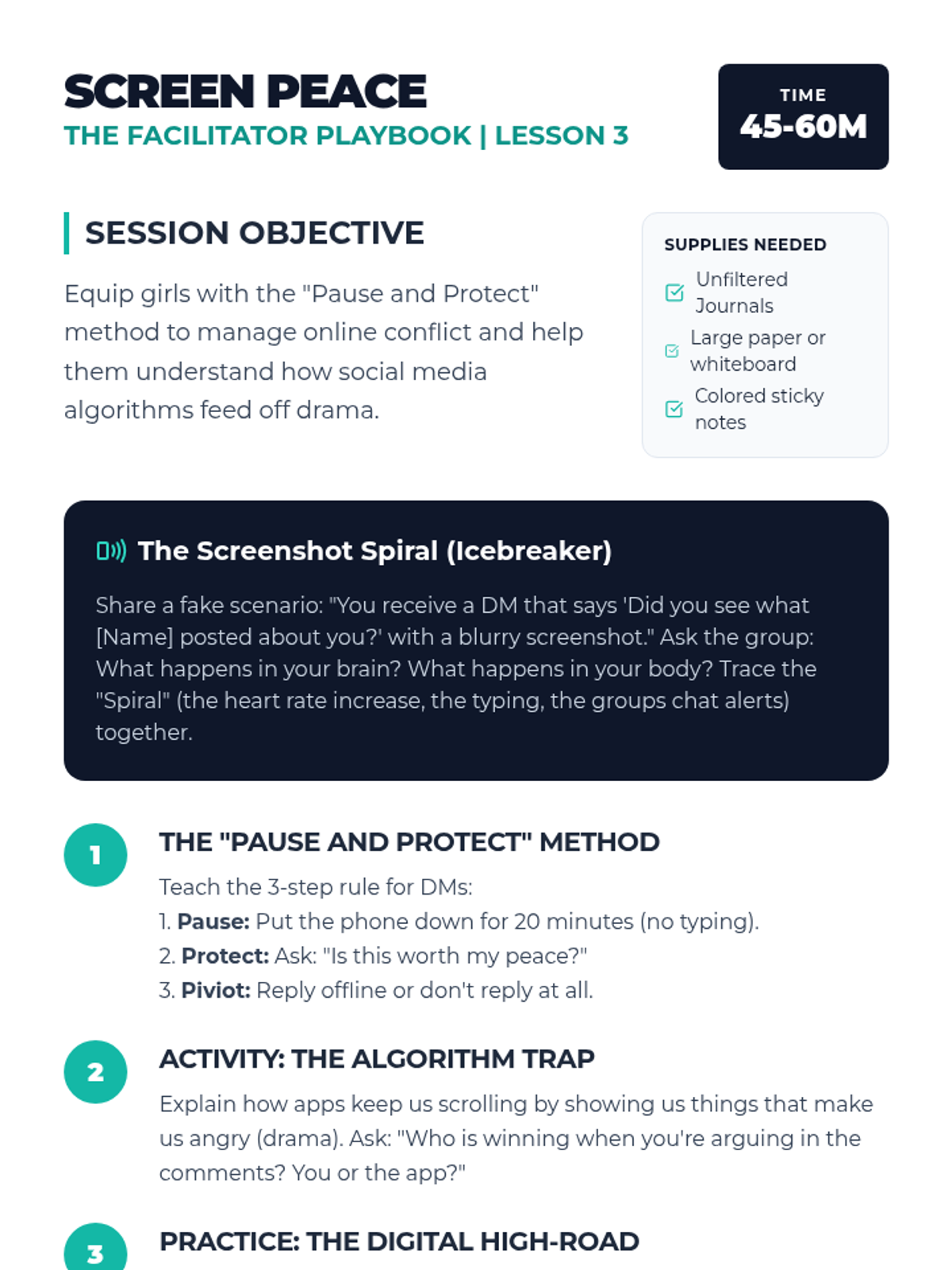
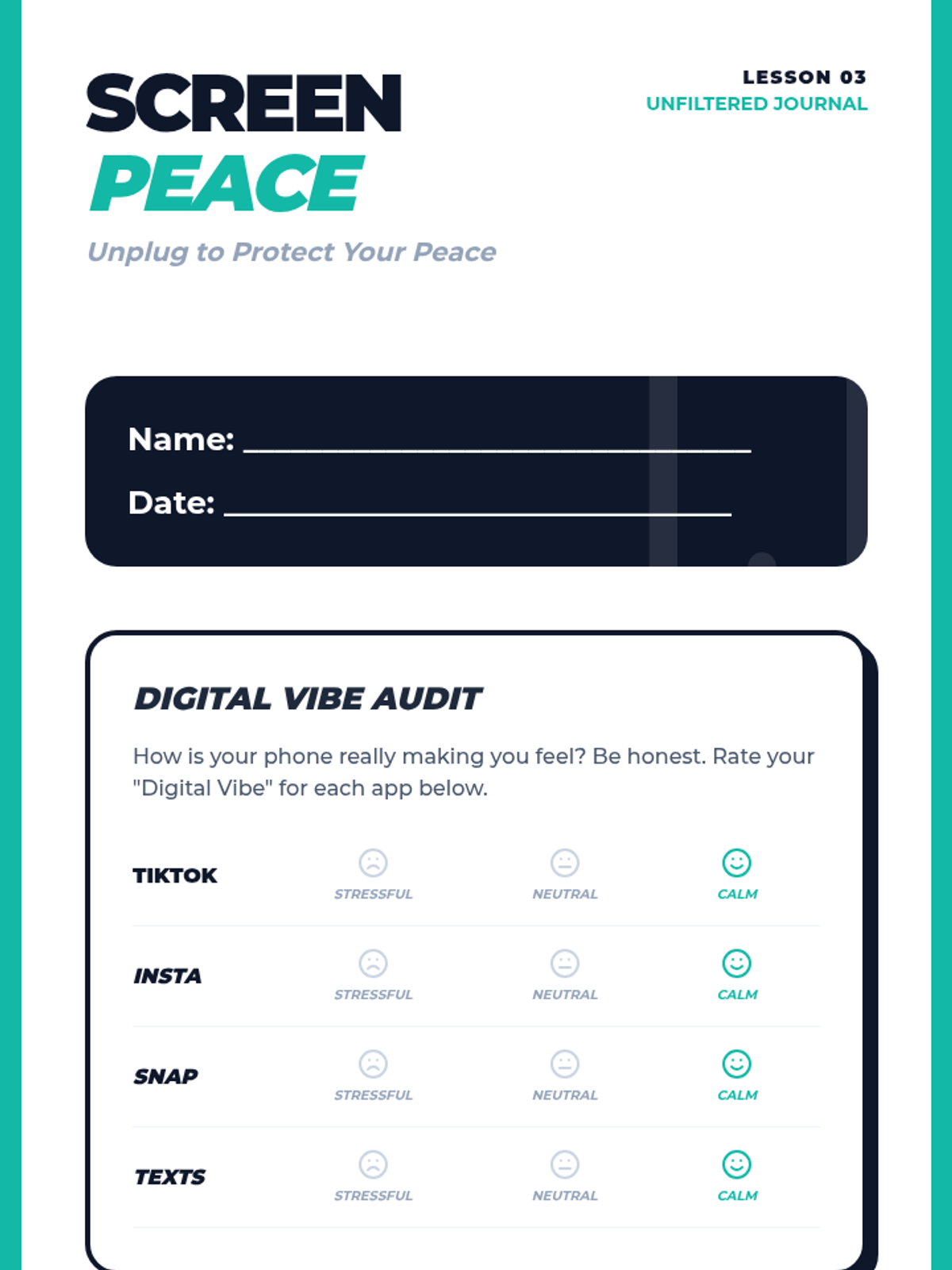
Students will analyze how digital interactions fuel drama and develop a 'Pause and Protect' strategy for managing online conflict and social media stress.
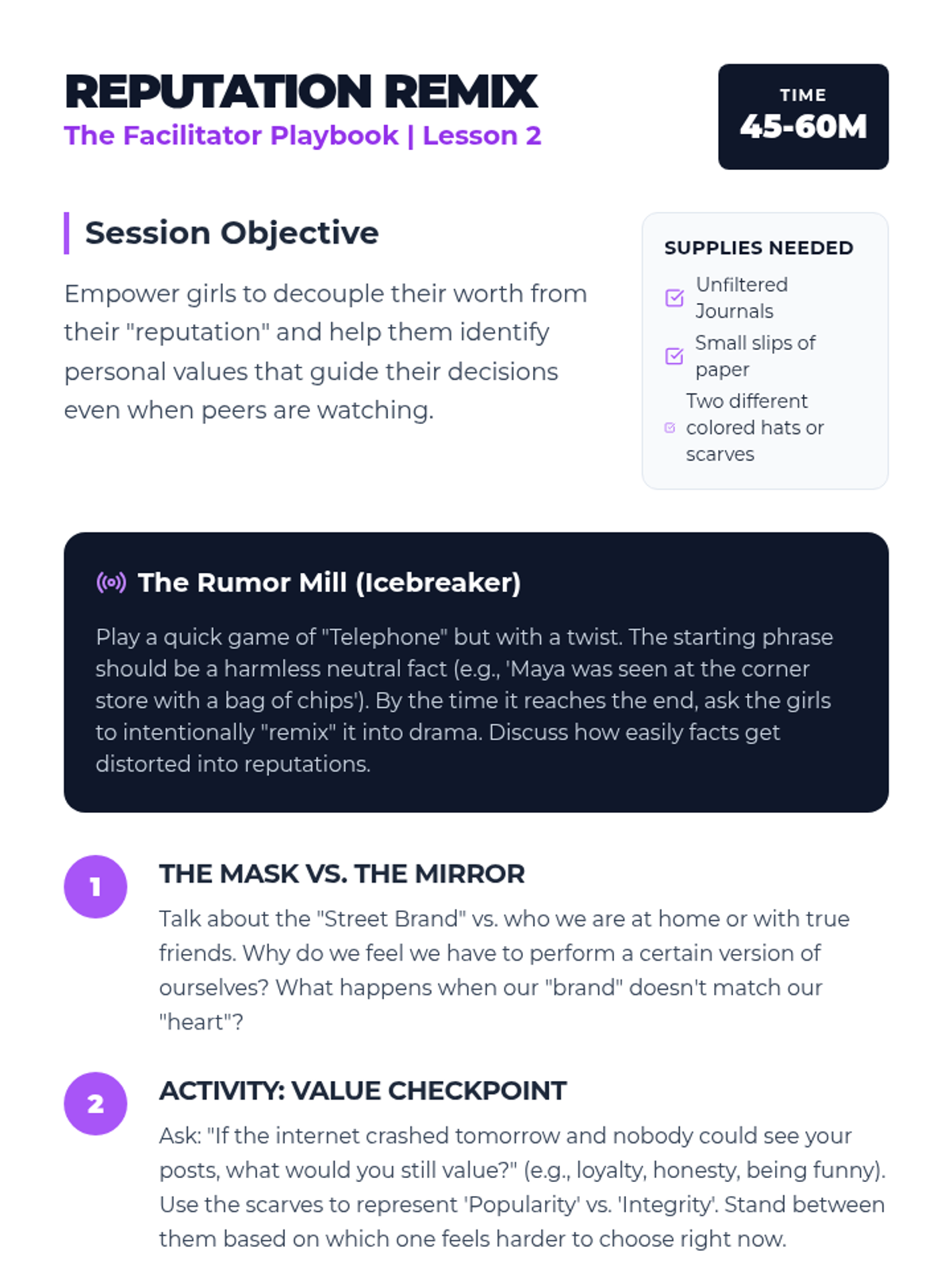
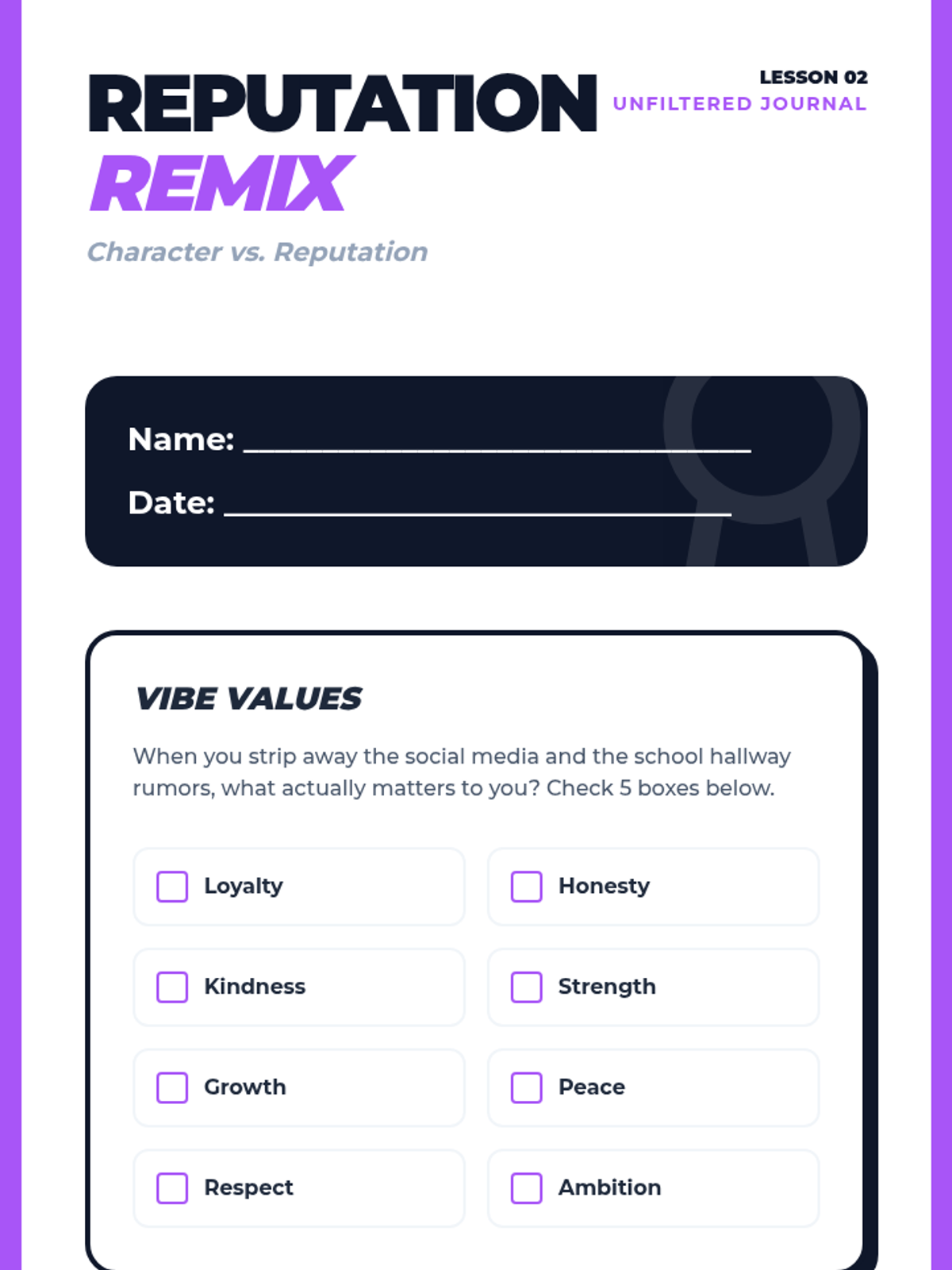
This lesson explores the pressure of maintaining a 'reputation' and provides strategies for staying true to personal values when faced with peer influence.
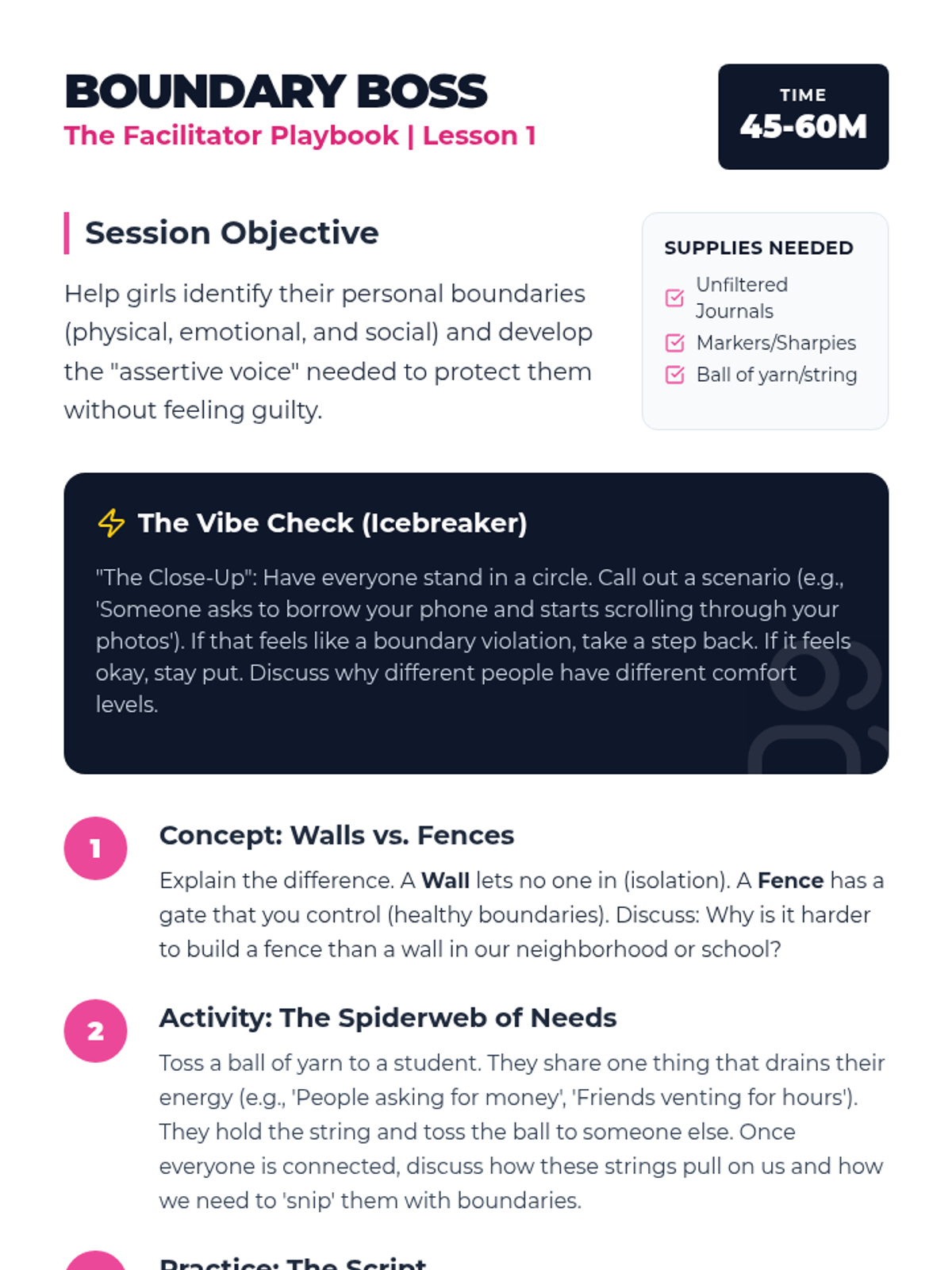
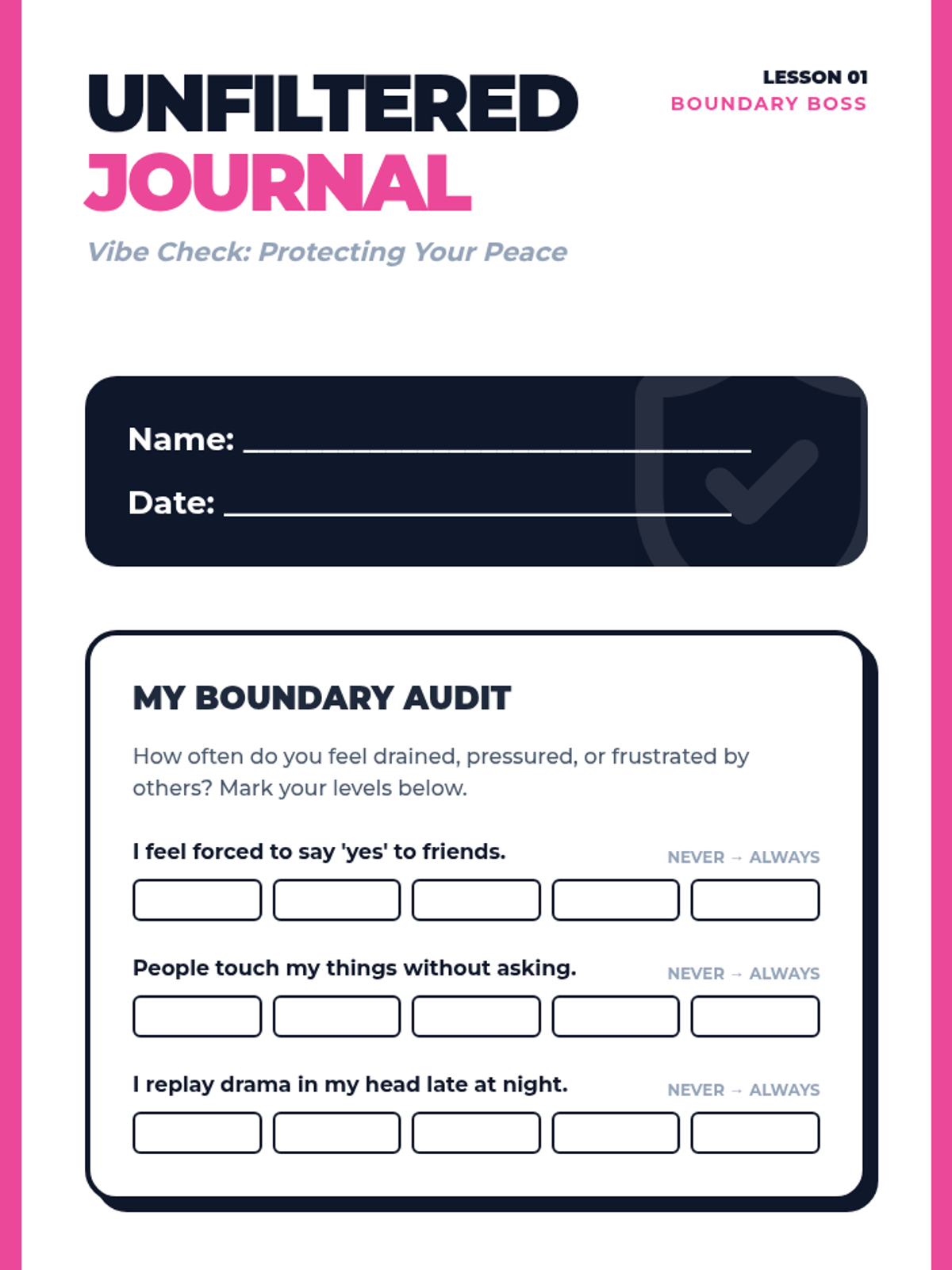
Students will learn to distinguish between healthy and unhealthy boundaries, practice assertive communication, and identify their personal 'safe space' limits.
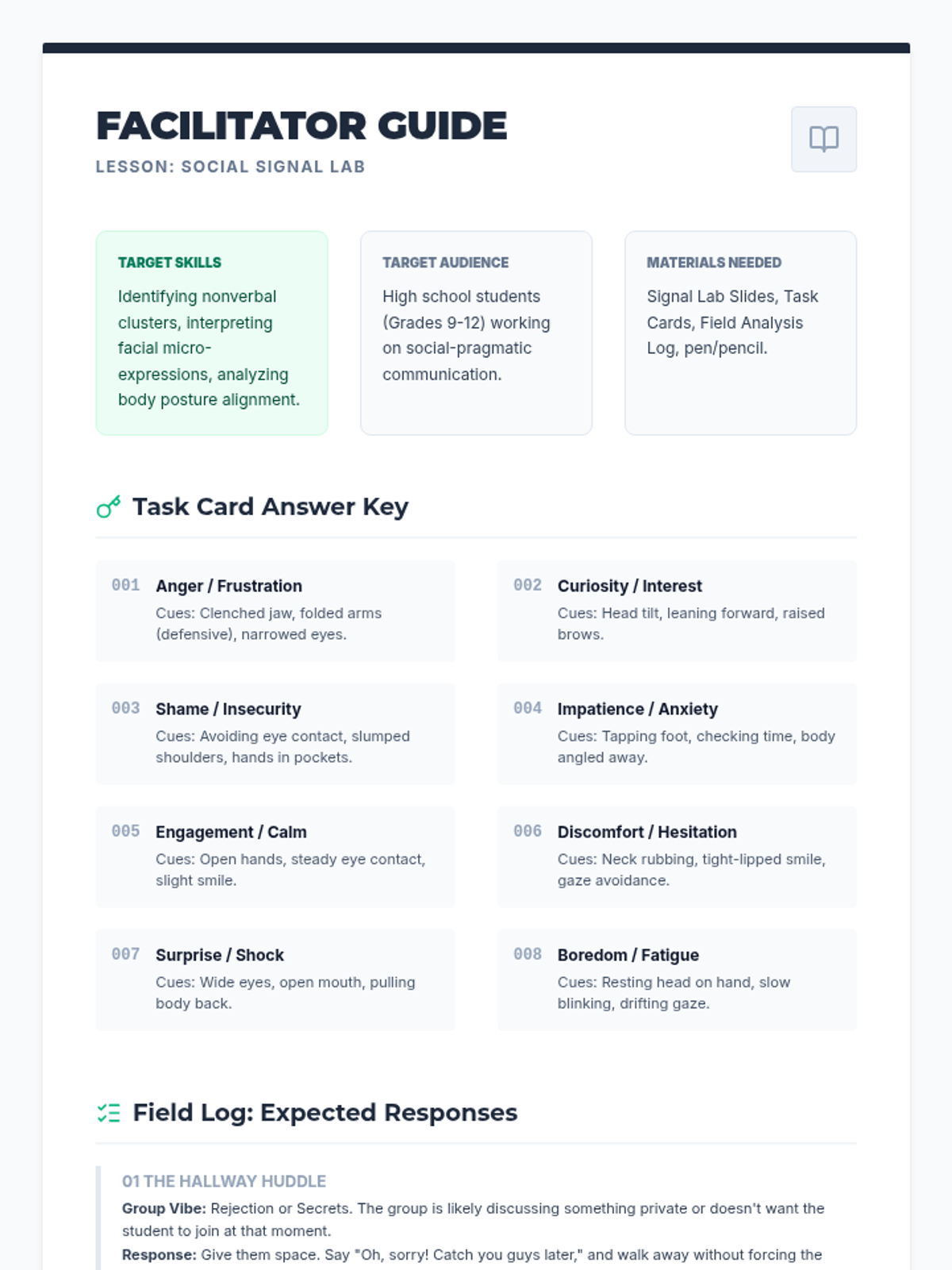
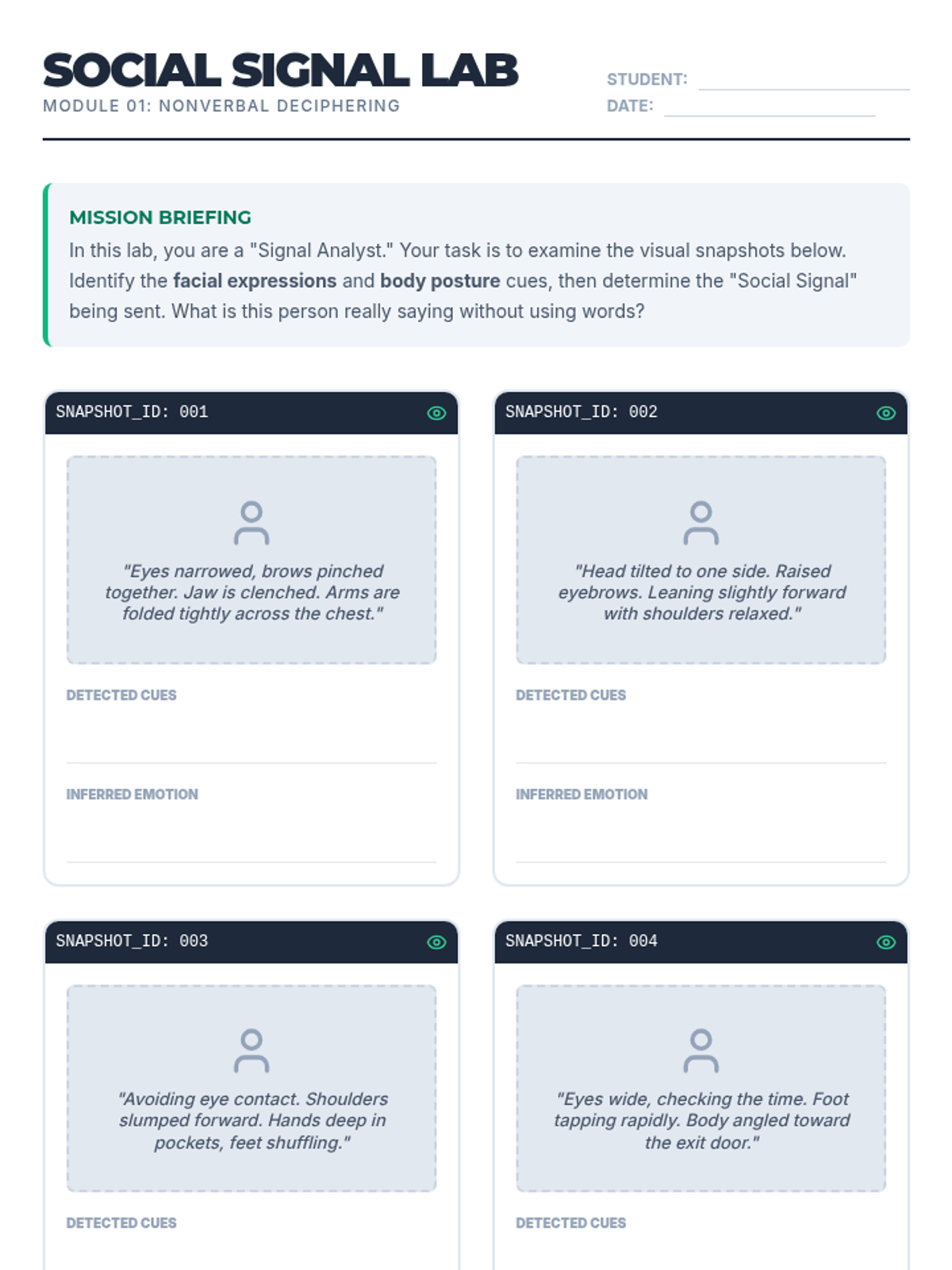
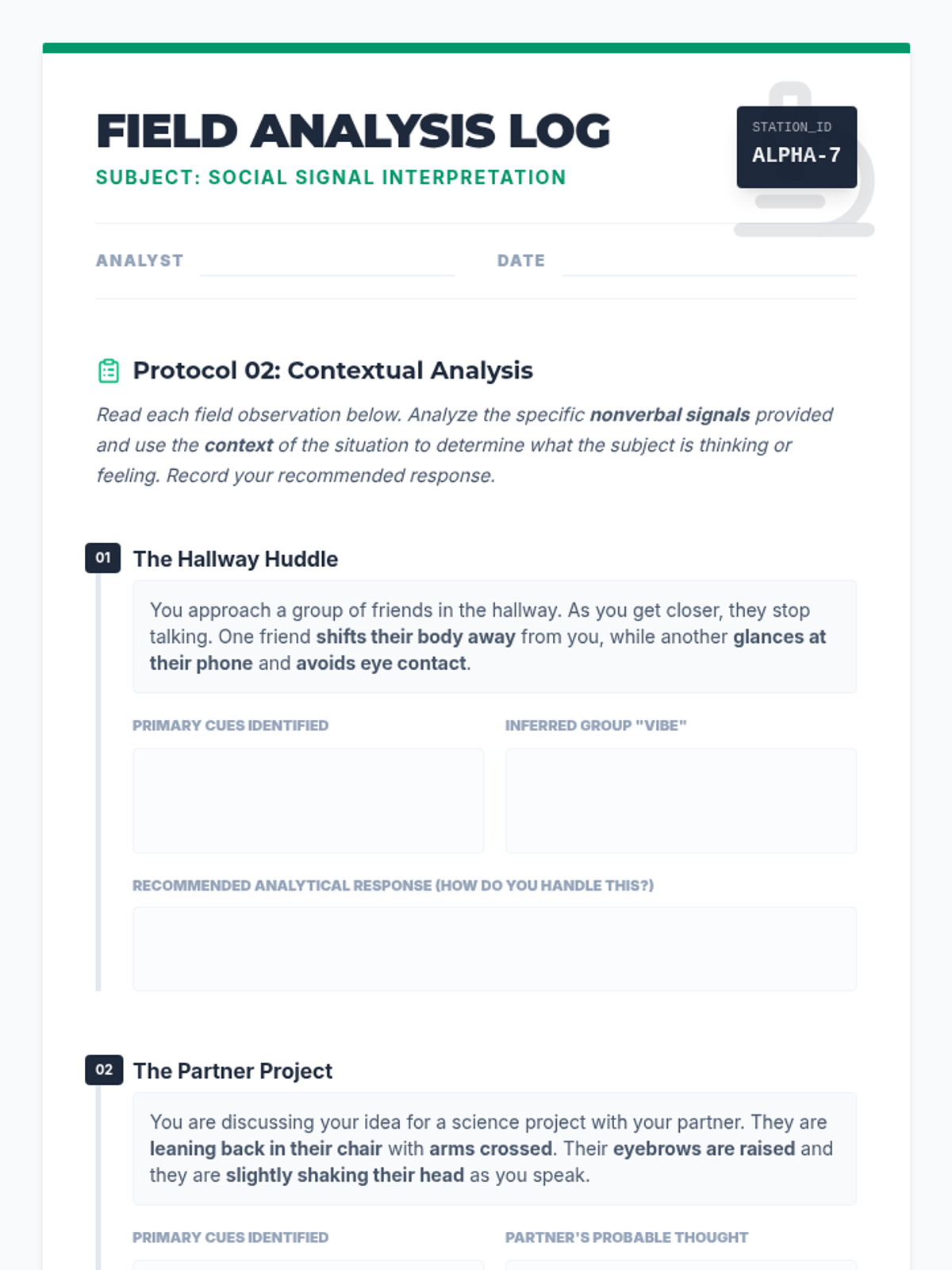
A social communication lesson for high schoolers focused on identifying and interpreting facial expressions and body posture in various social contexts.
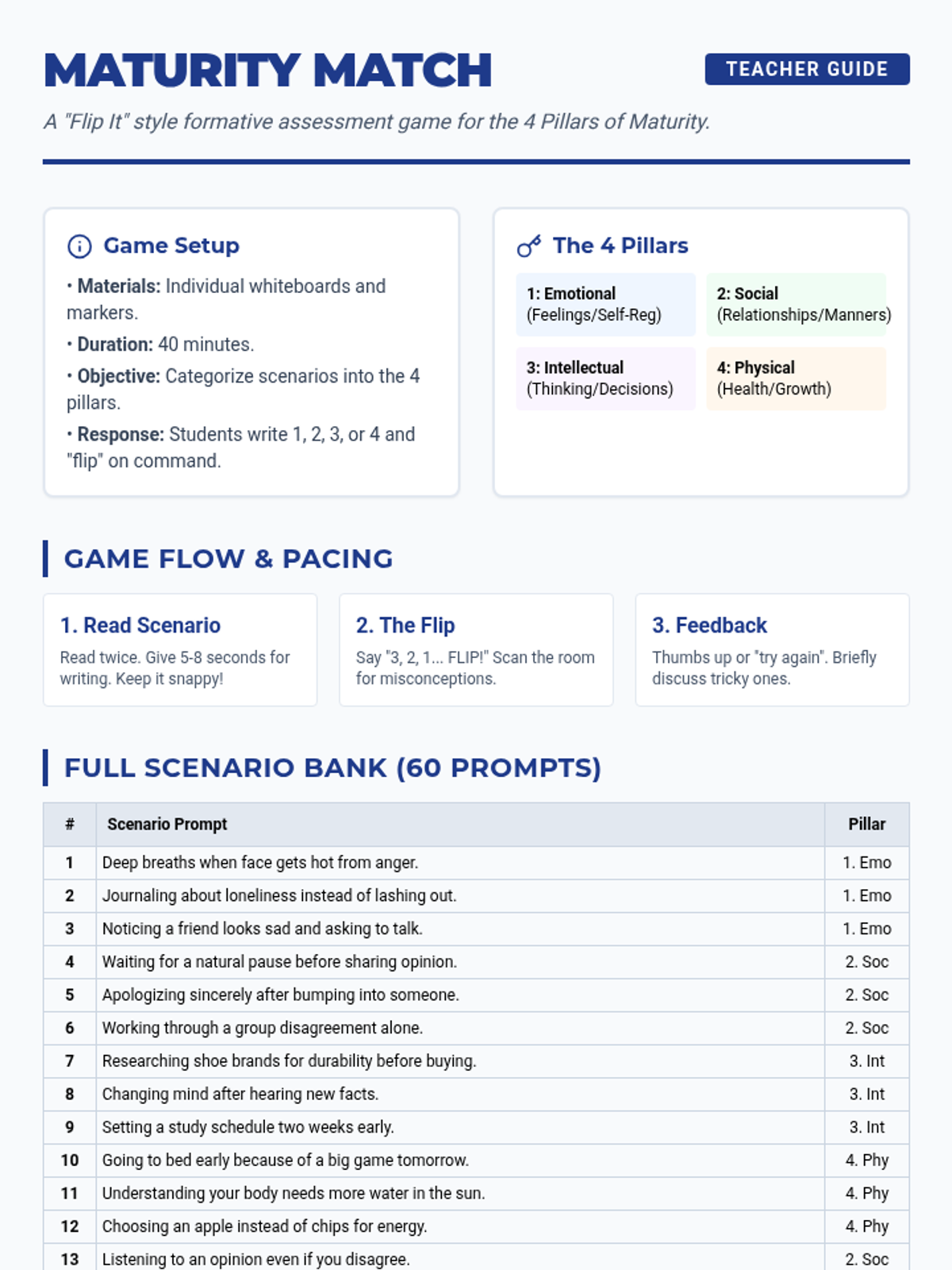
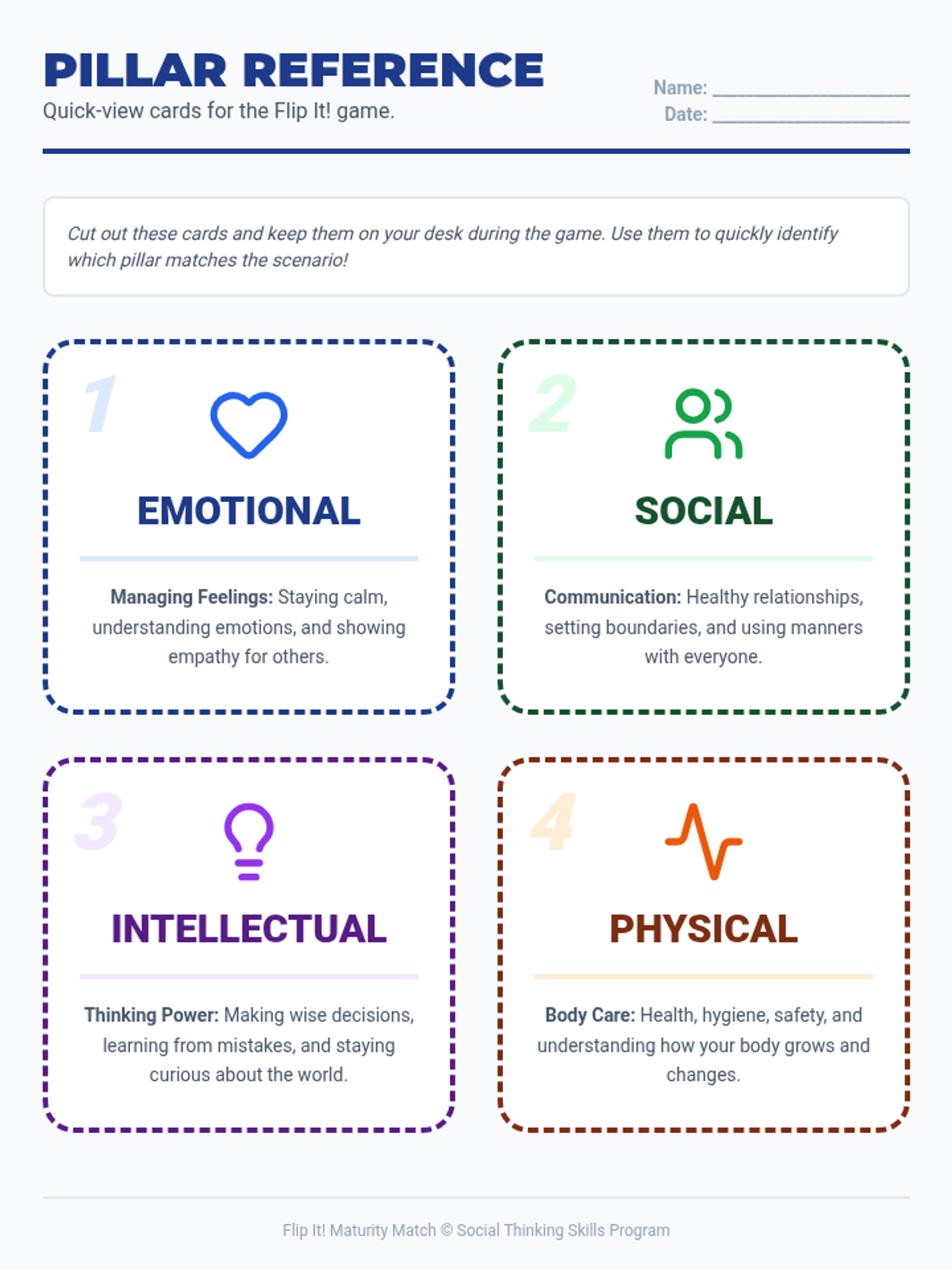
A fast-paced formative assessment game where students identify the four pillars of maturity through real-world scenarios. Includes a visual slide deck, a bank of 60 scenarios for the teacher, and reference cards for students.
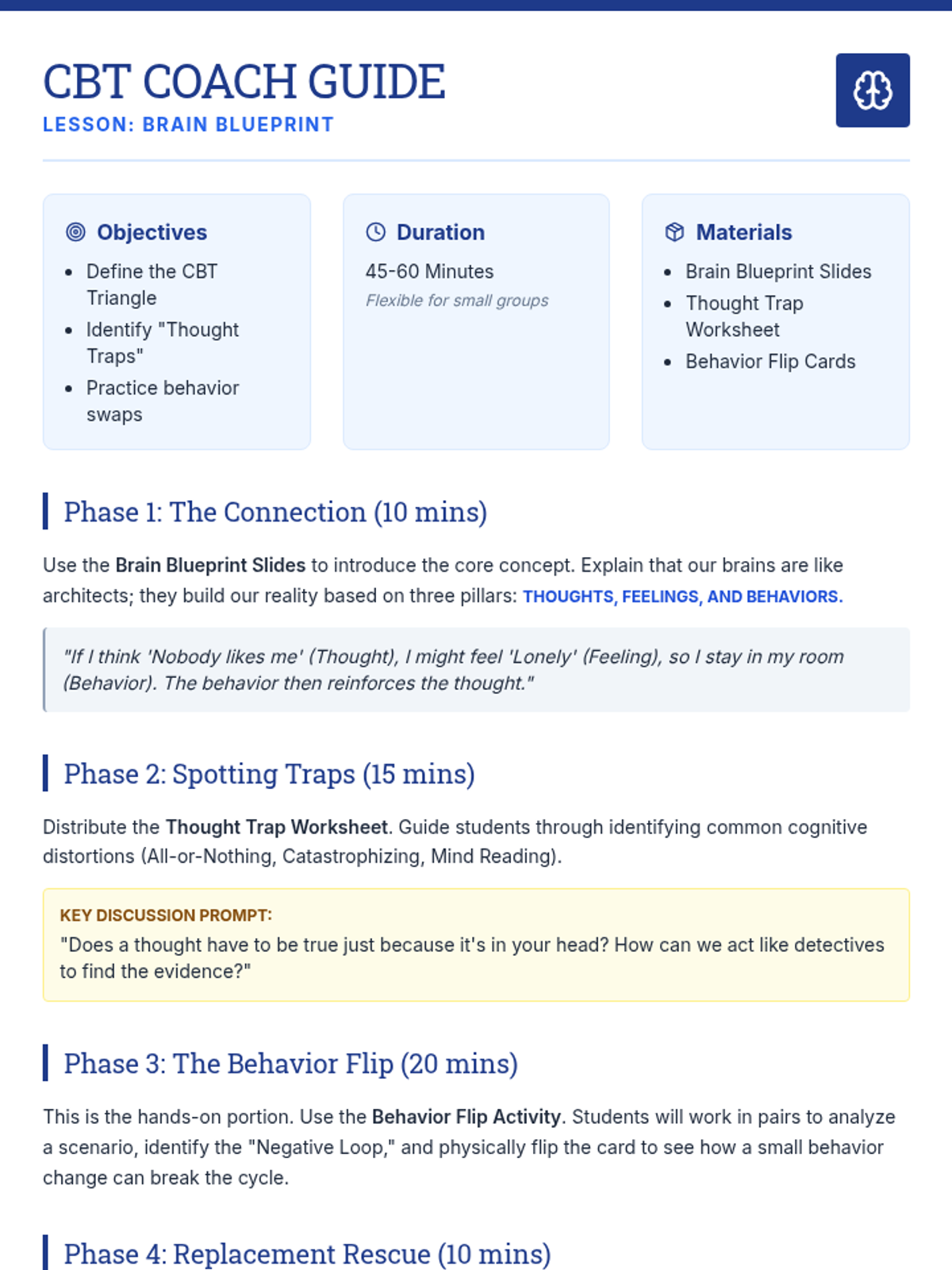
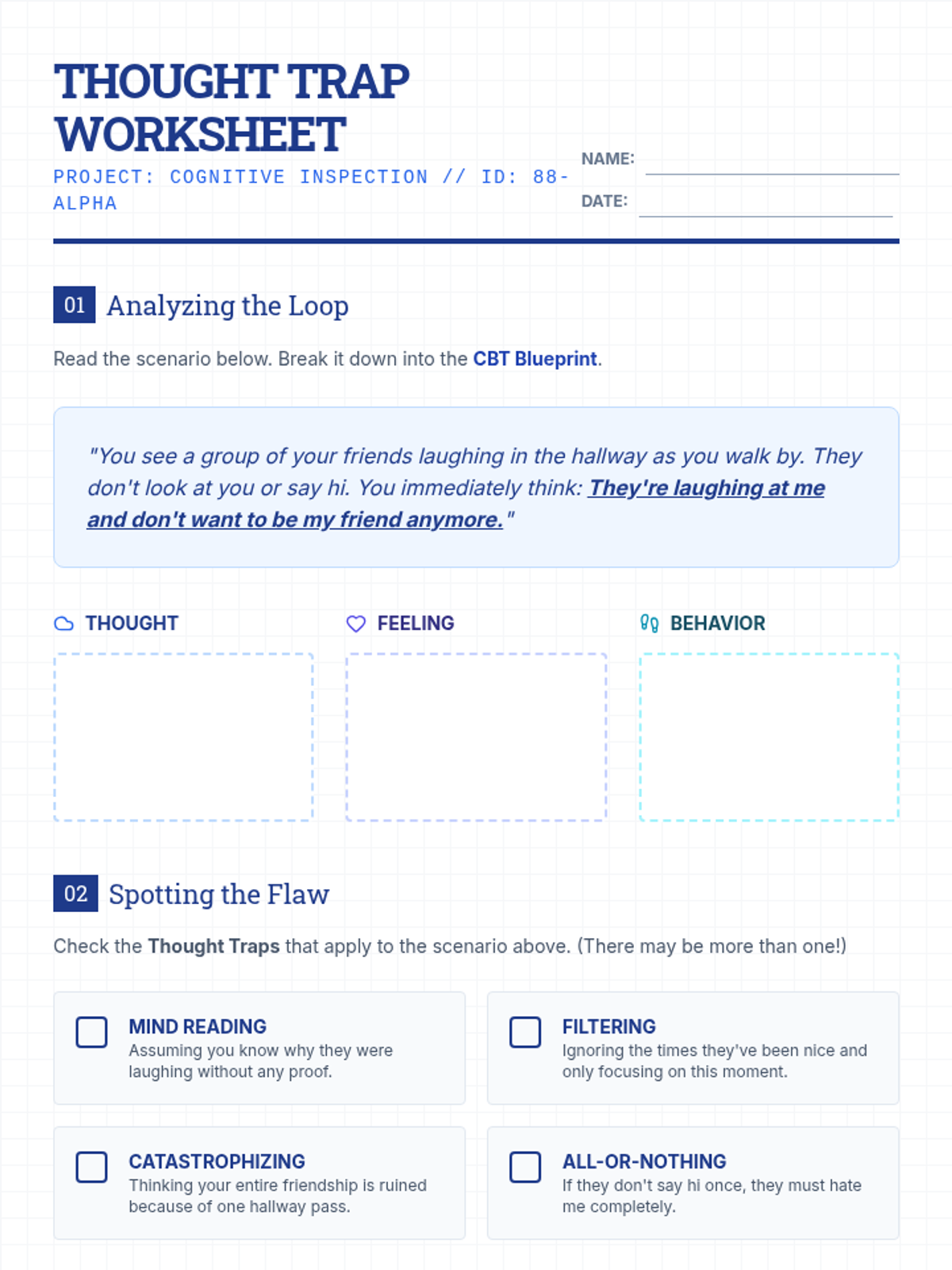
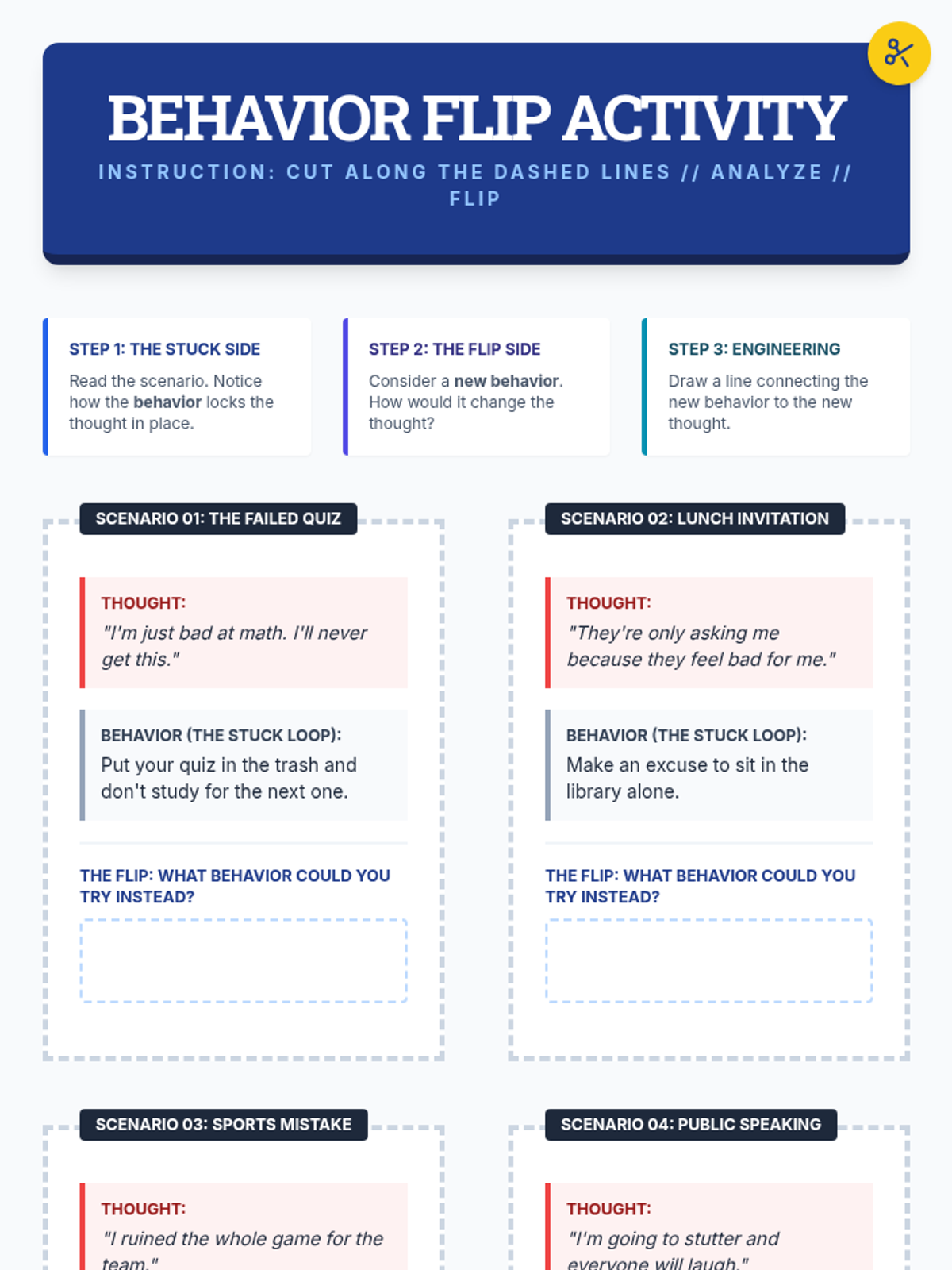
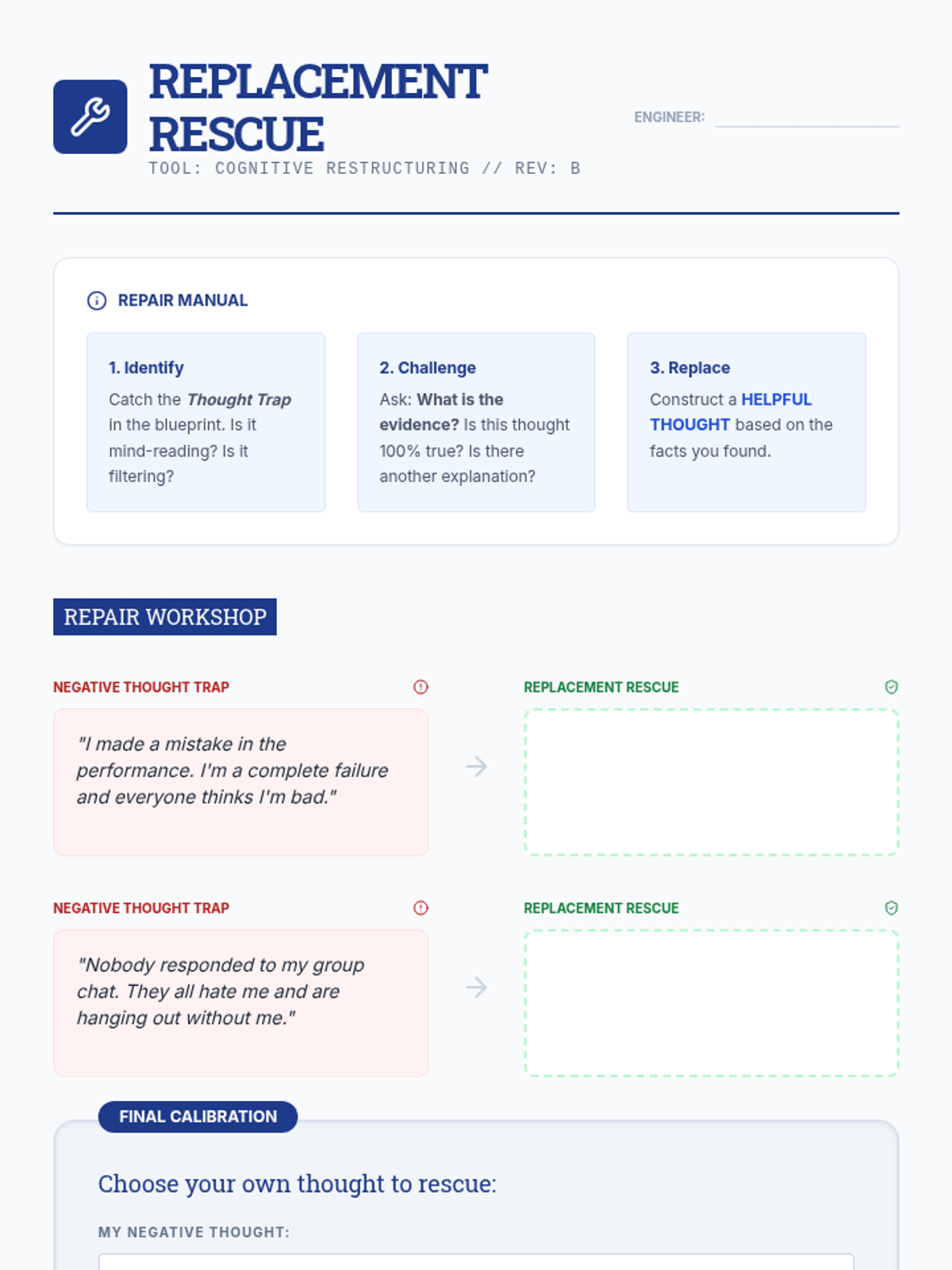
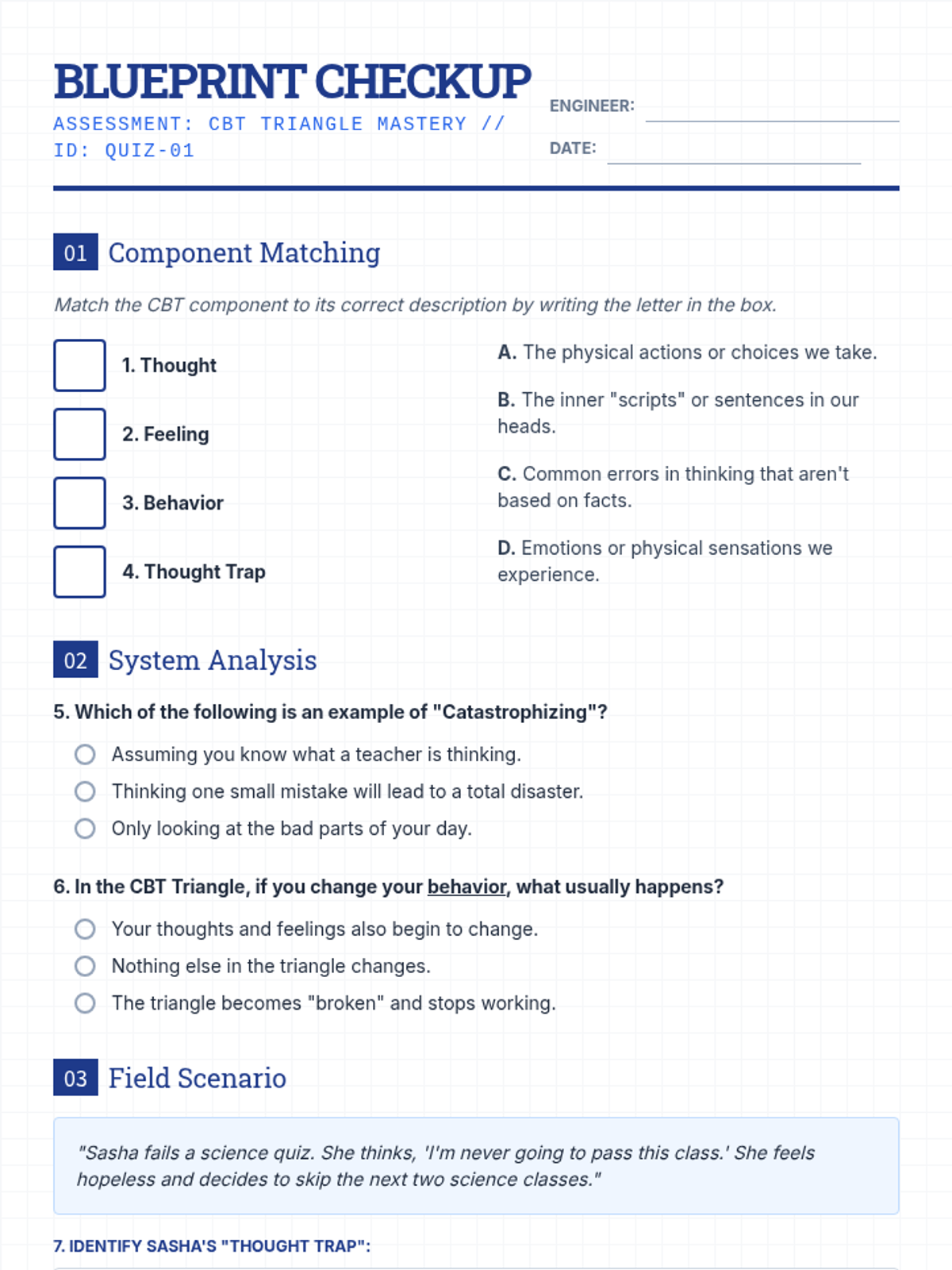
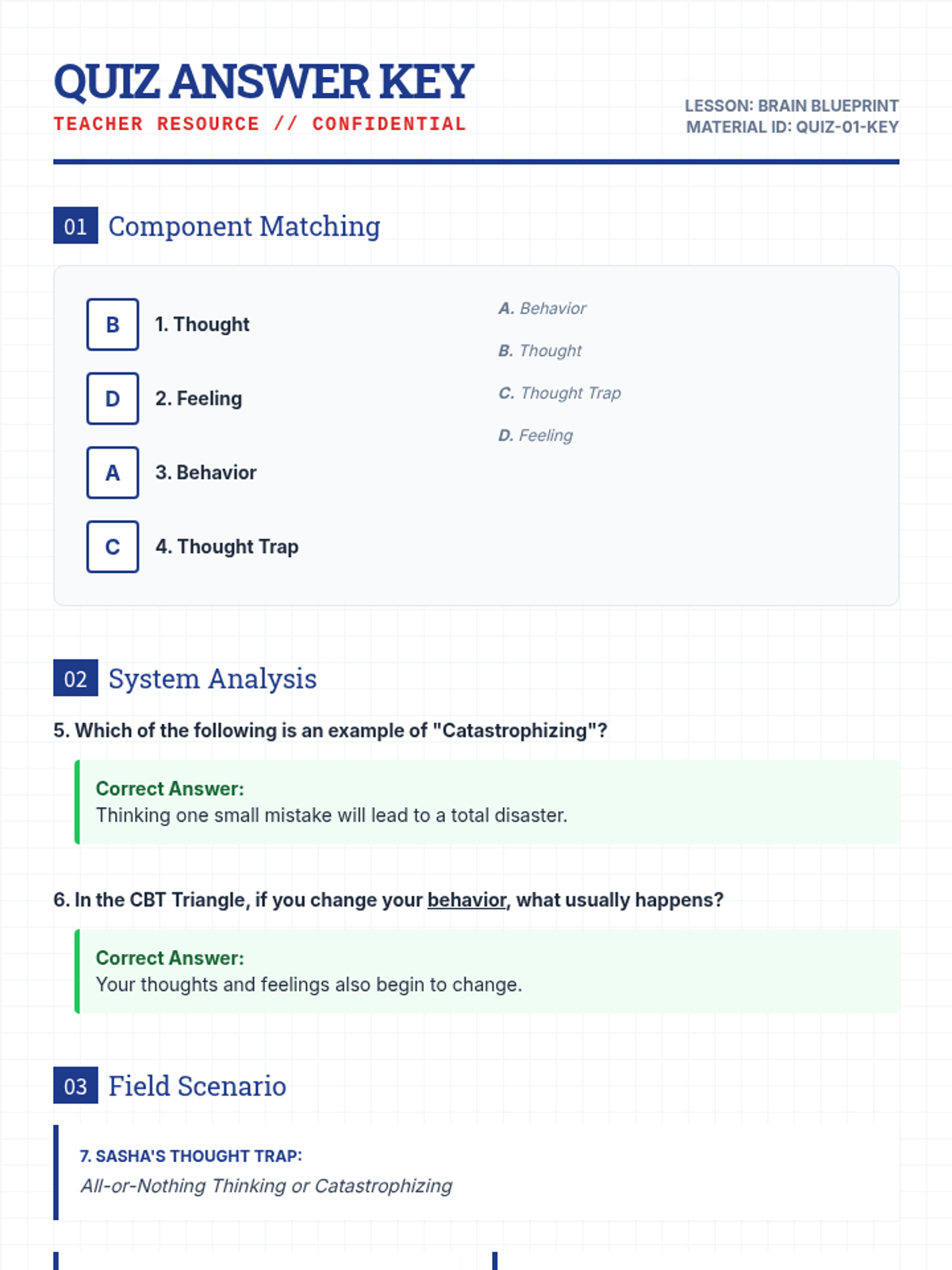
A comprehensive introduction to the CBT Triangle, focusing on identifying negative thought patterns, understanding the connection between thoughts, feelings, and behaviors, and practicing cognitive restructuring.