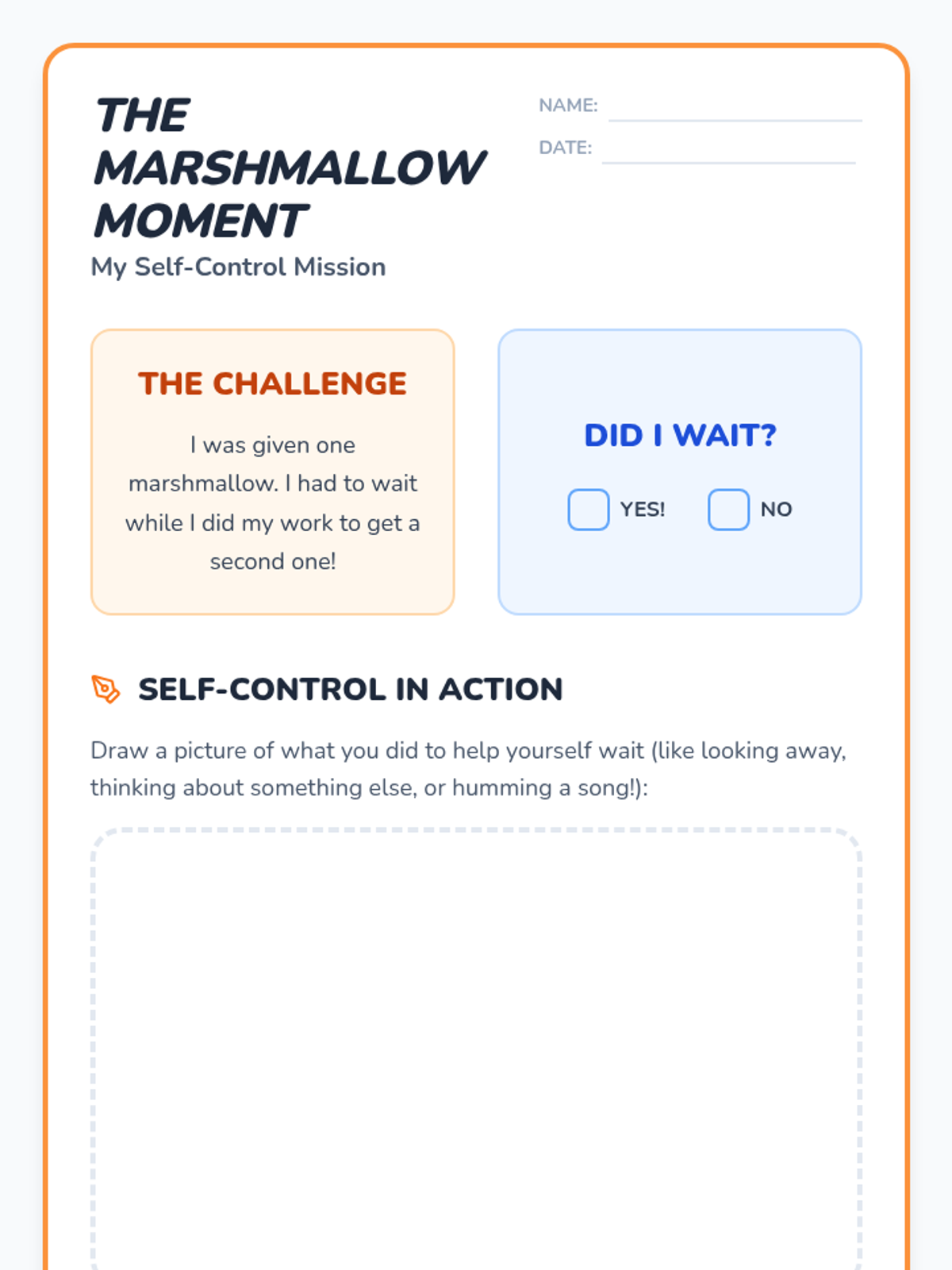
Students learn to identify distractions and use strategies to conquer them like brave dragon-slayers in this interactive 2nd-grade social-emotional learning lesson.
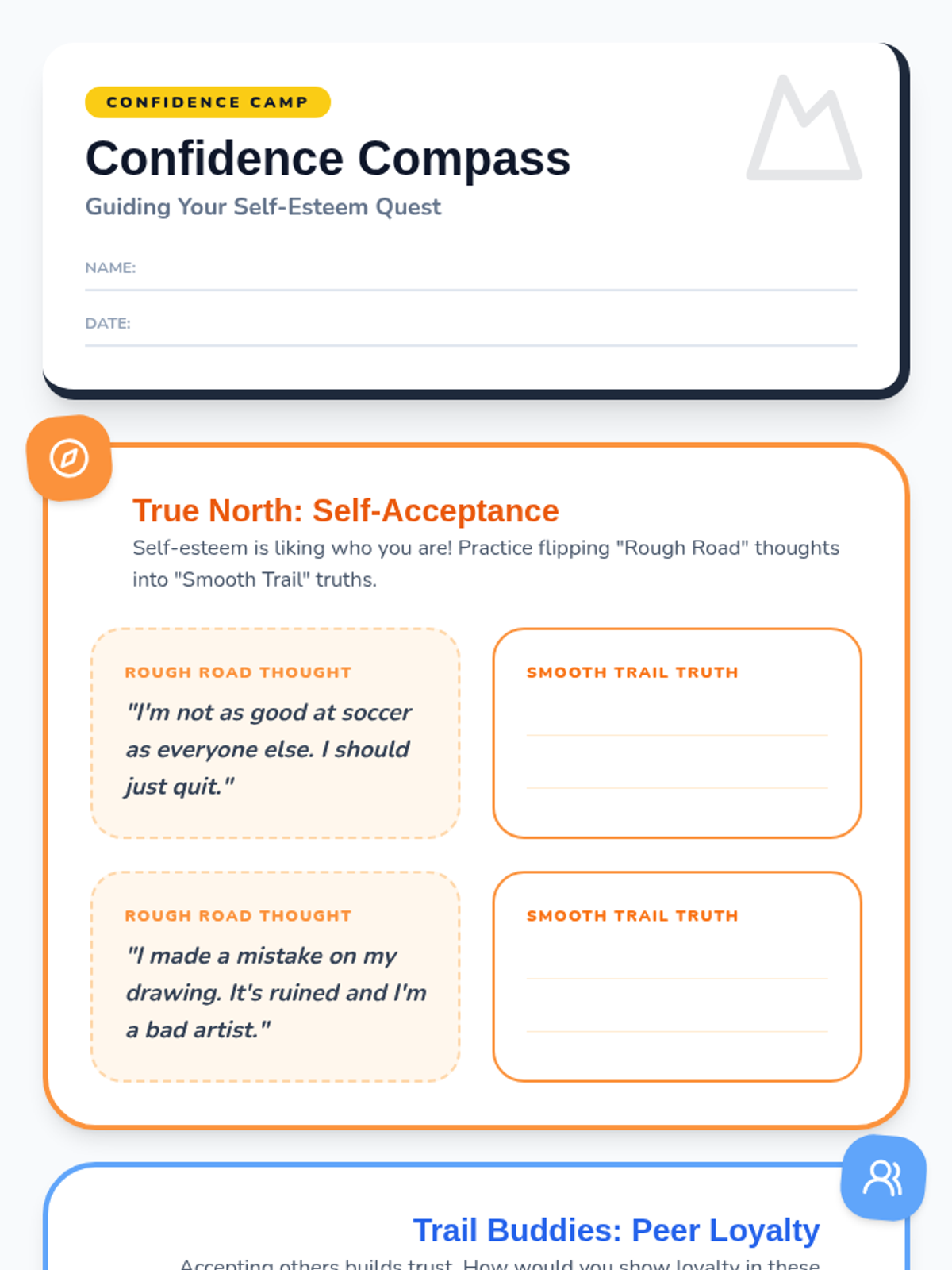
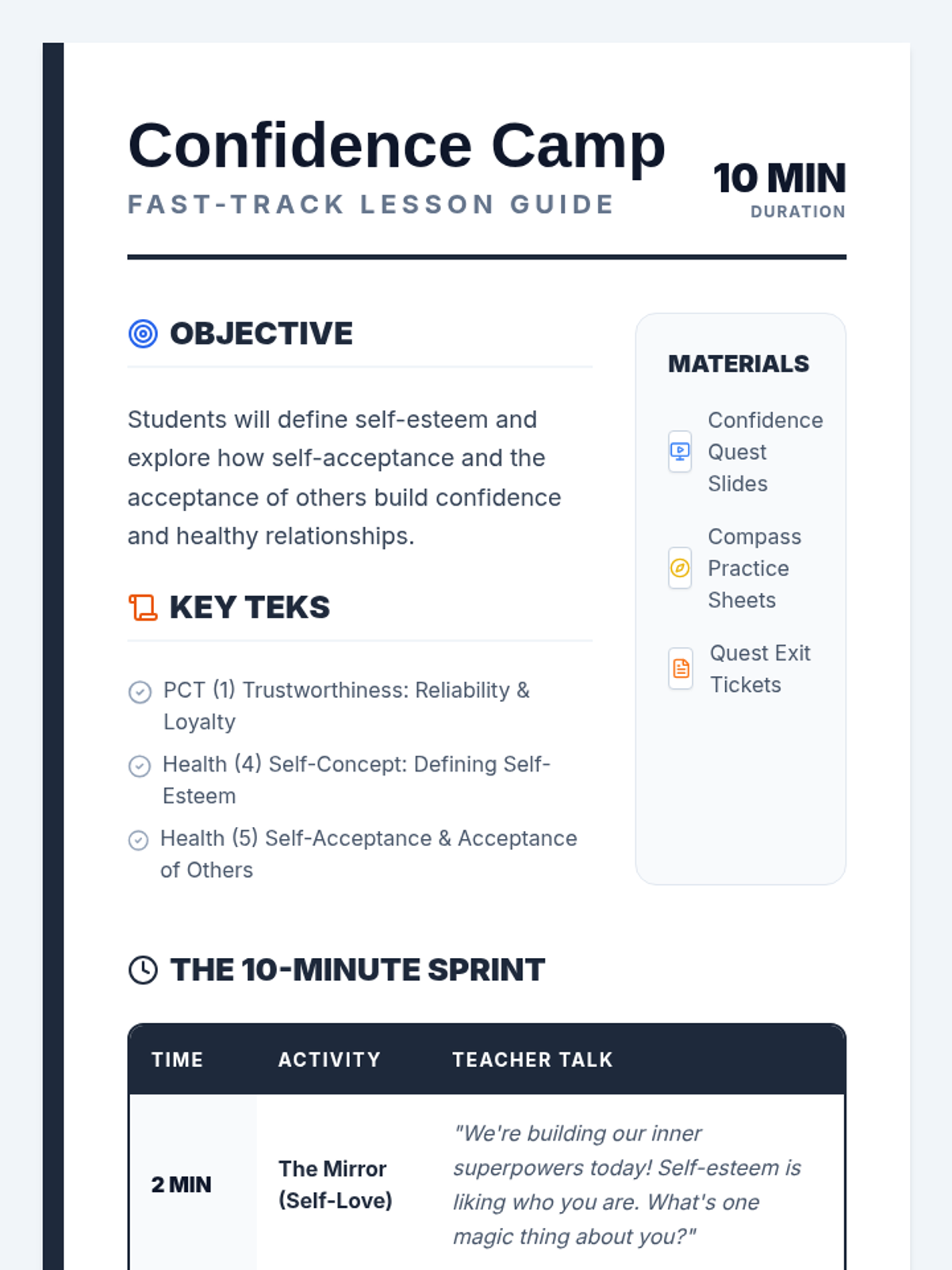
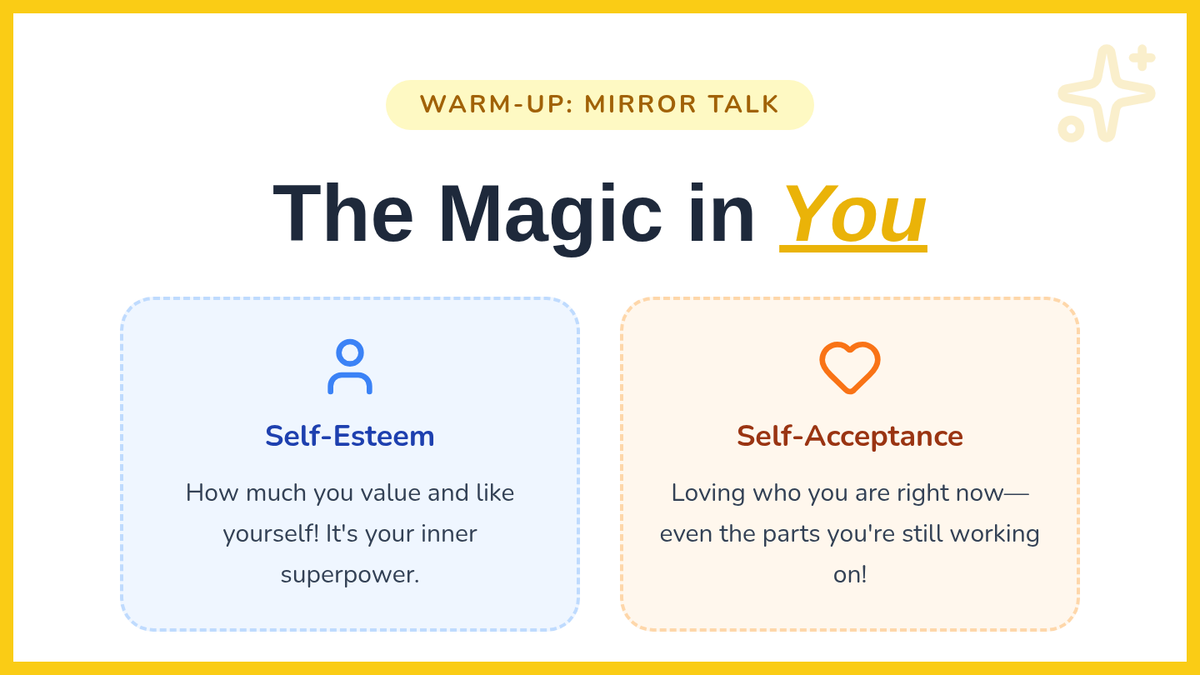
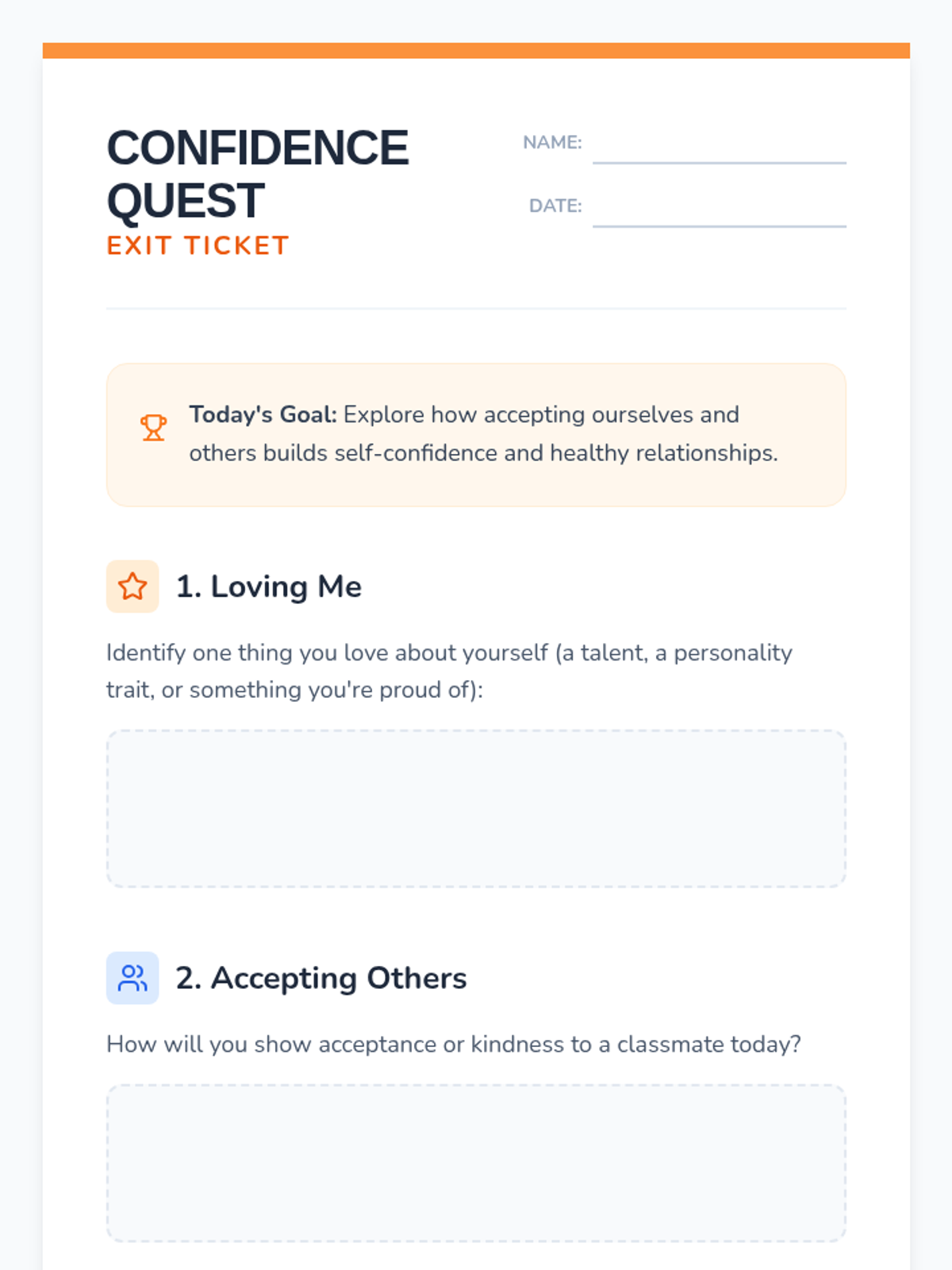
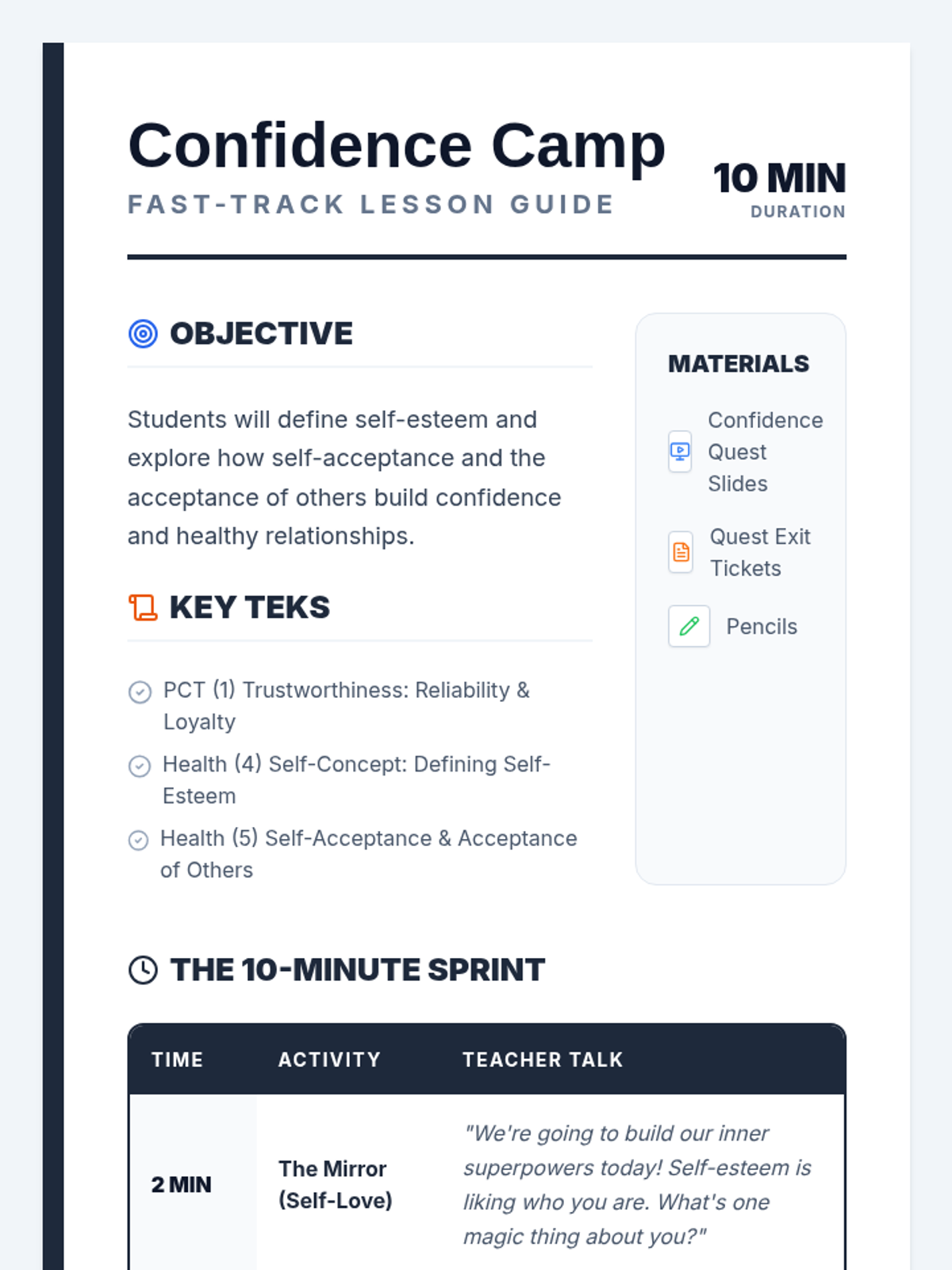
A fast-paced, 10-minute social-emotional learning lesson focused on building self-confidence through self-acceptance and kindness toward others. Students define self-esteem and set immediate goals for personal growth and peer acceptance.
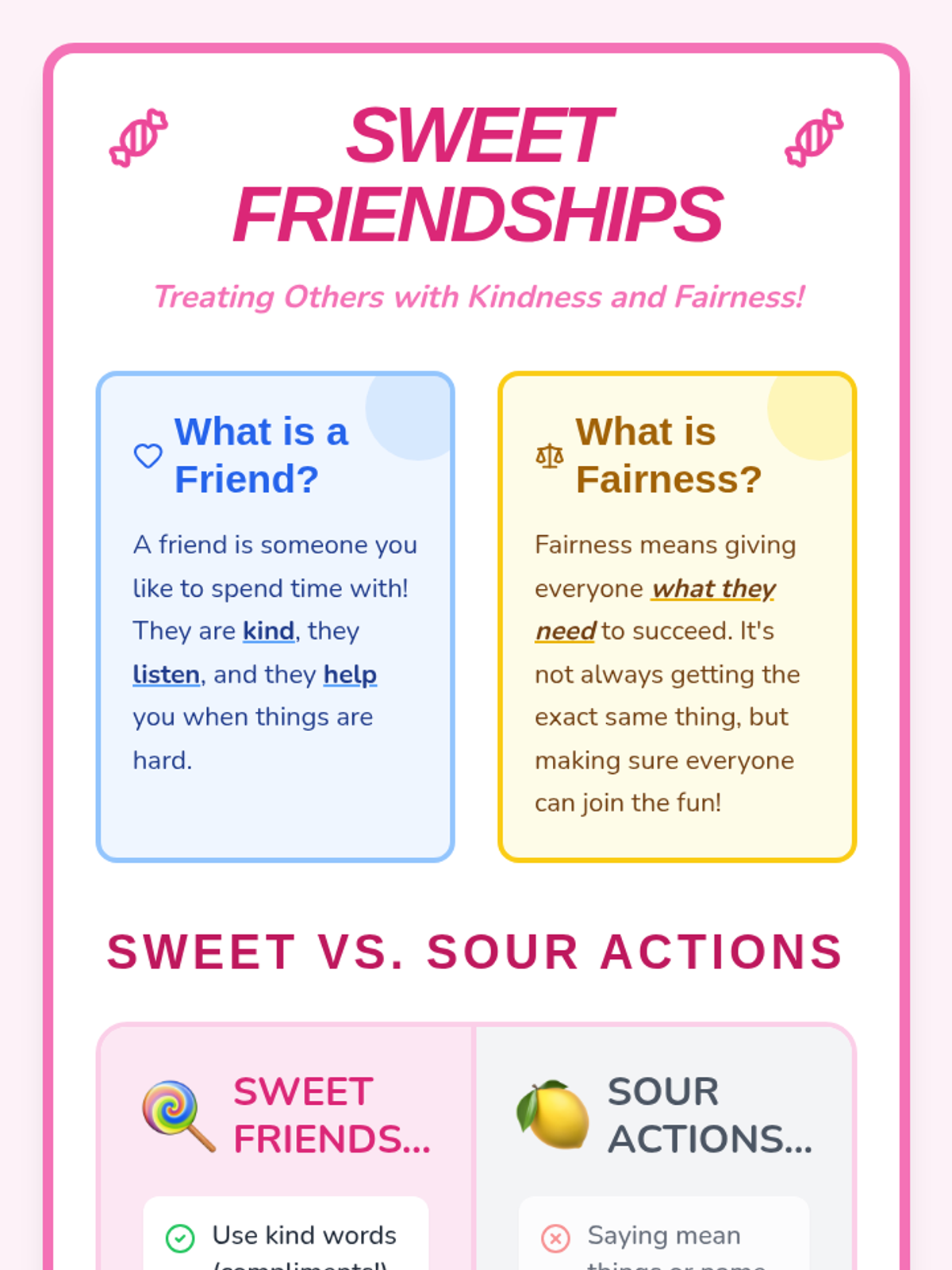
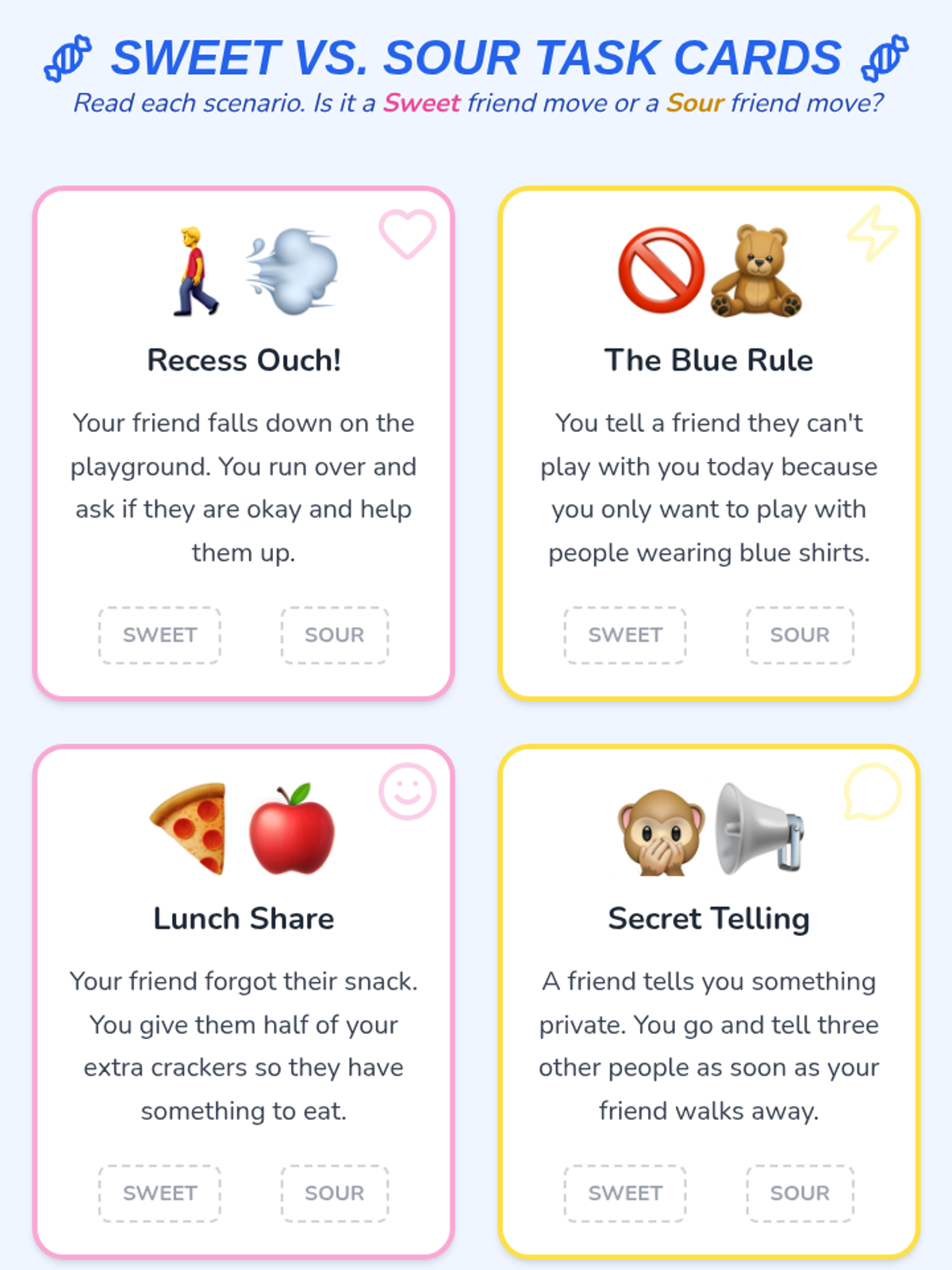
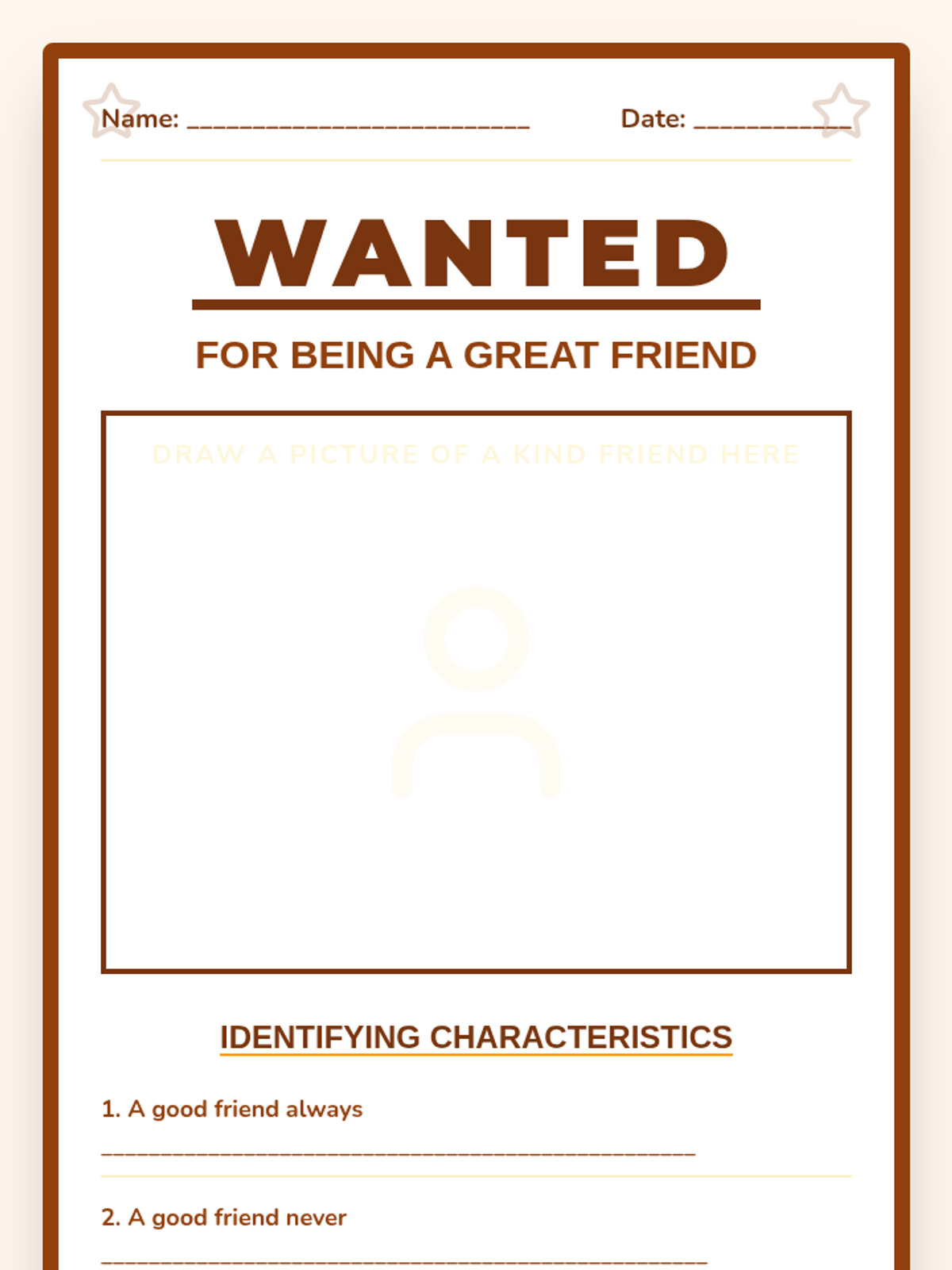
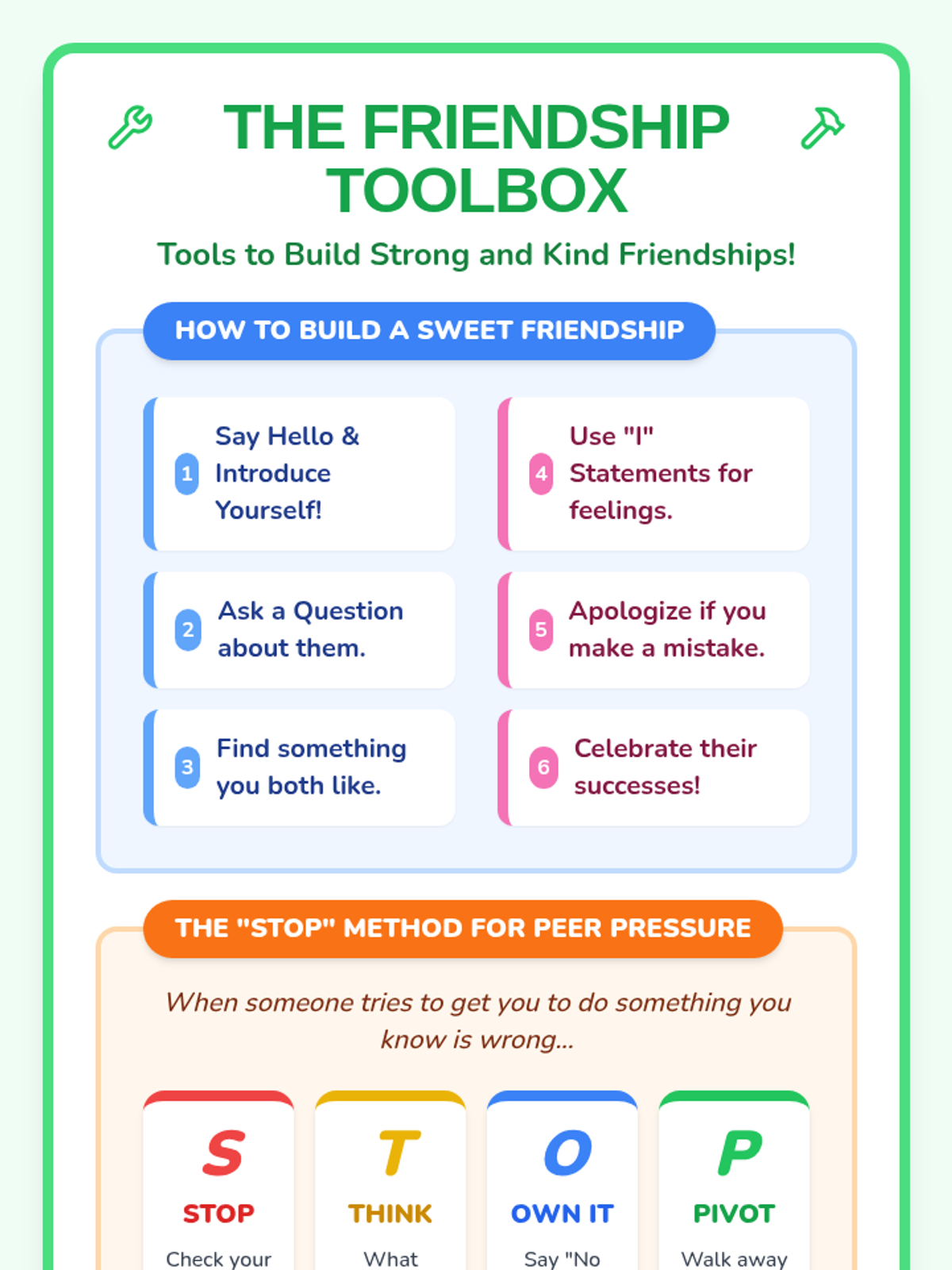
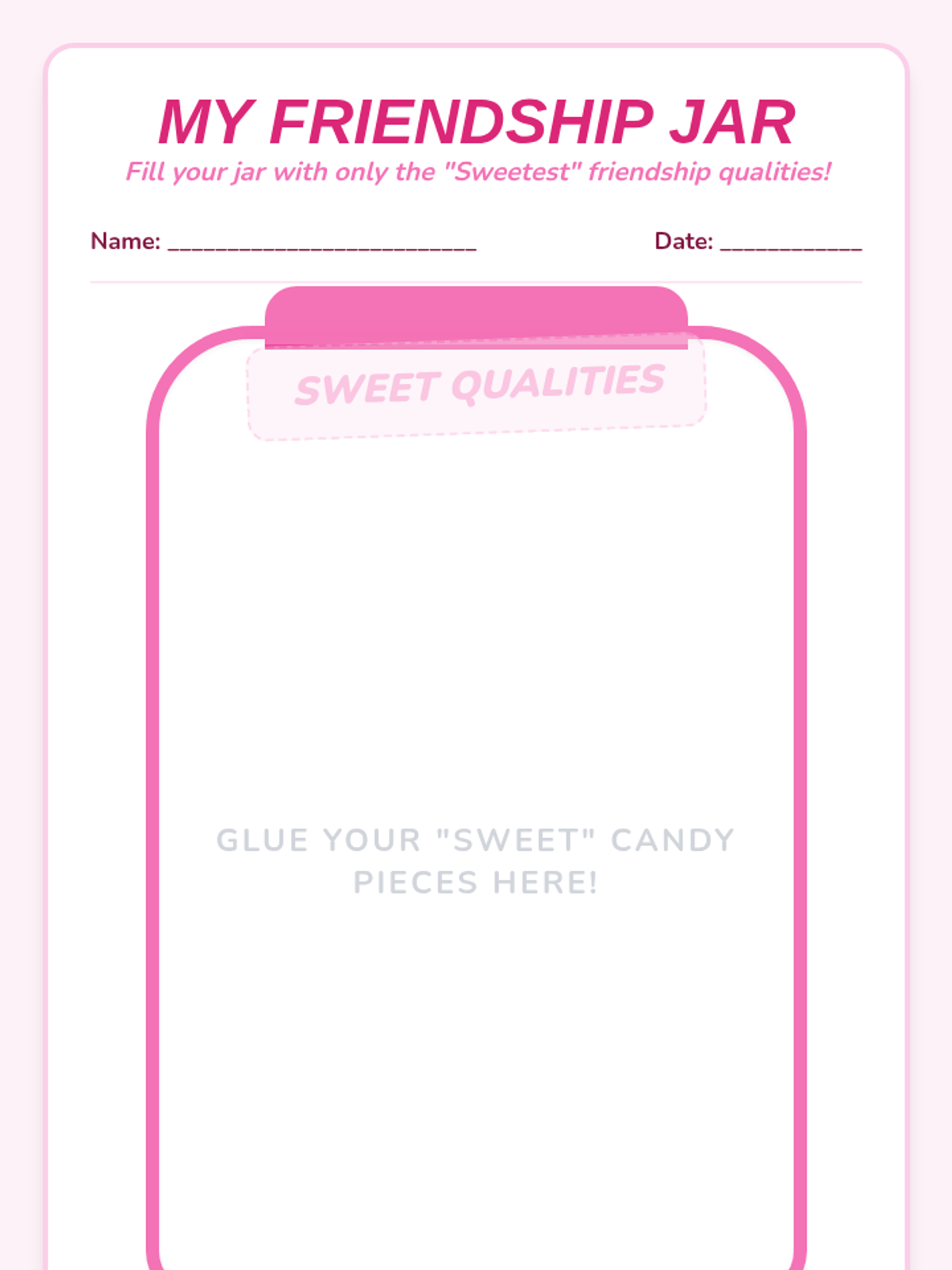
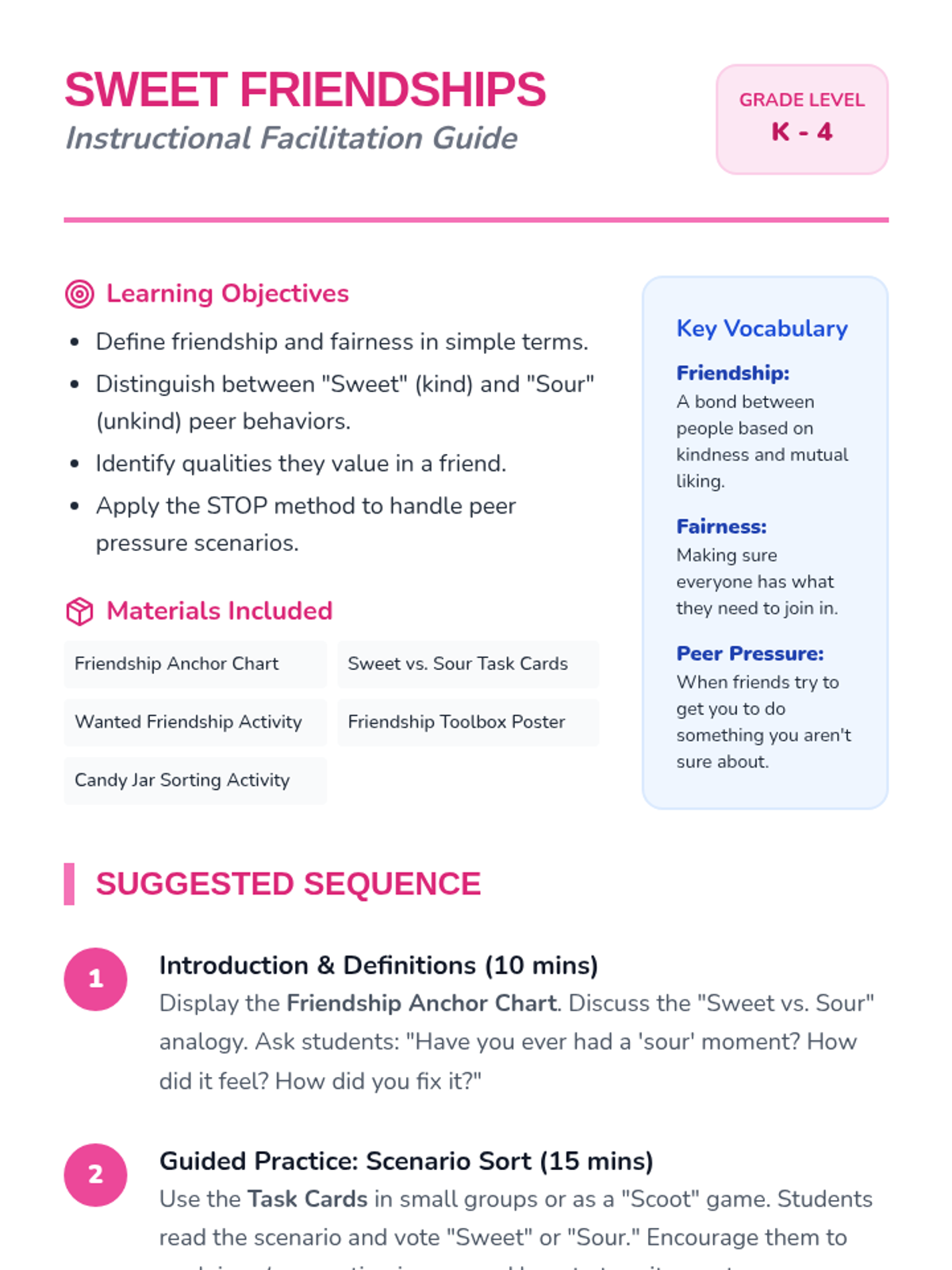
A comprehensive primary lesson focused on building positive relationships, understanding fairness, and developing social skills through interactive candy-themed activities.
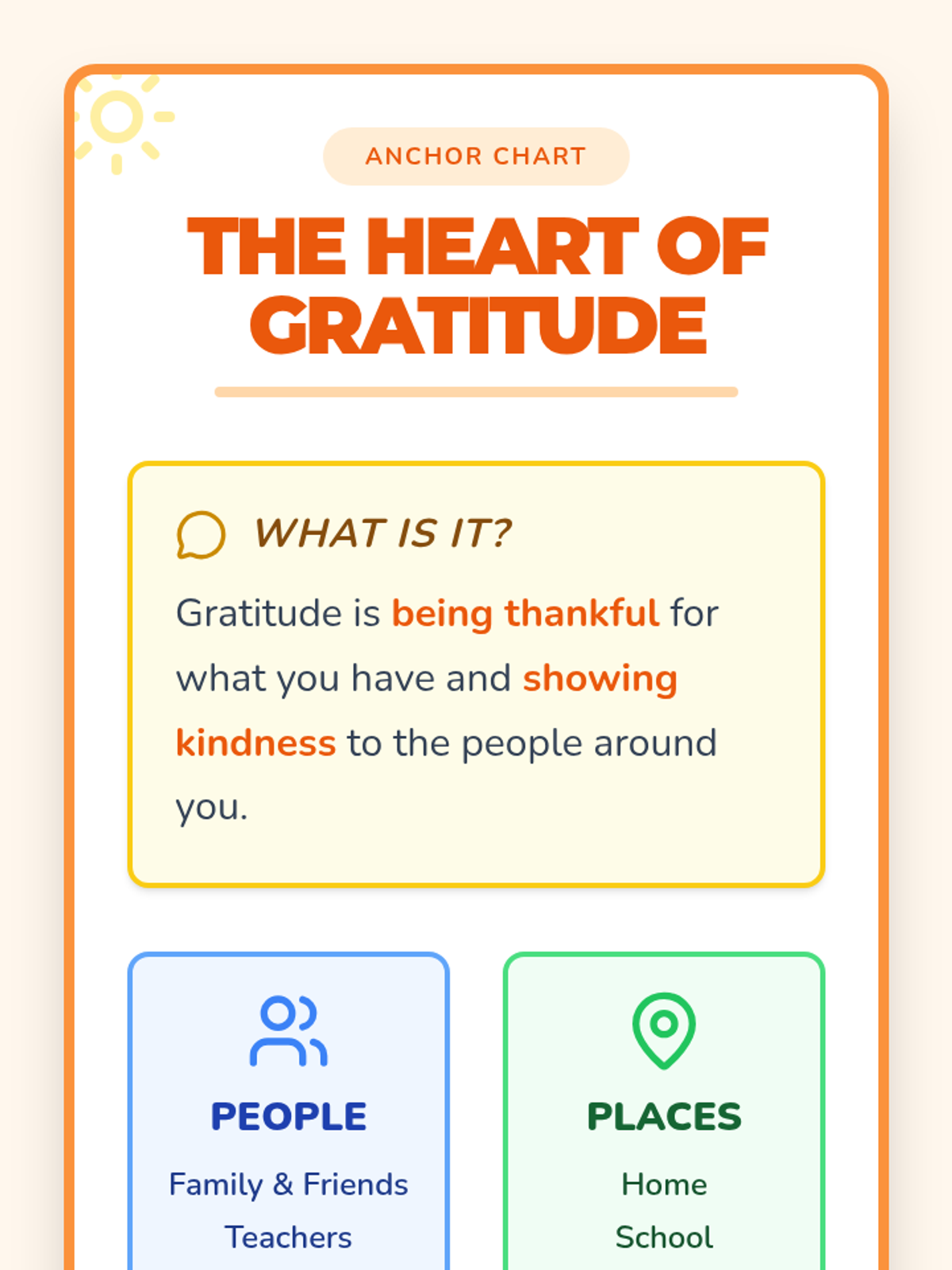
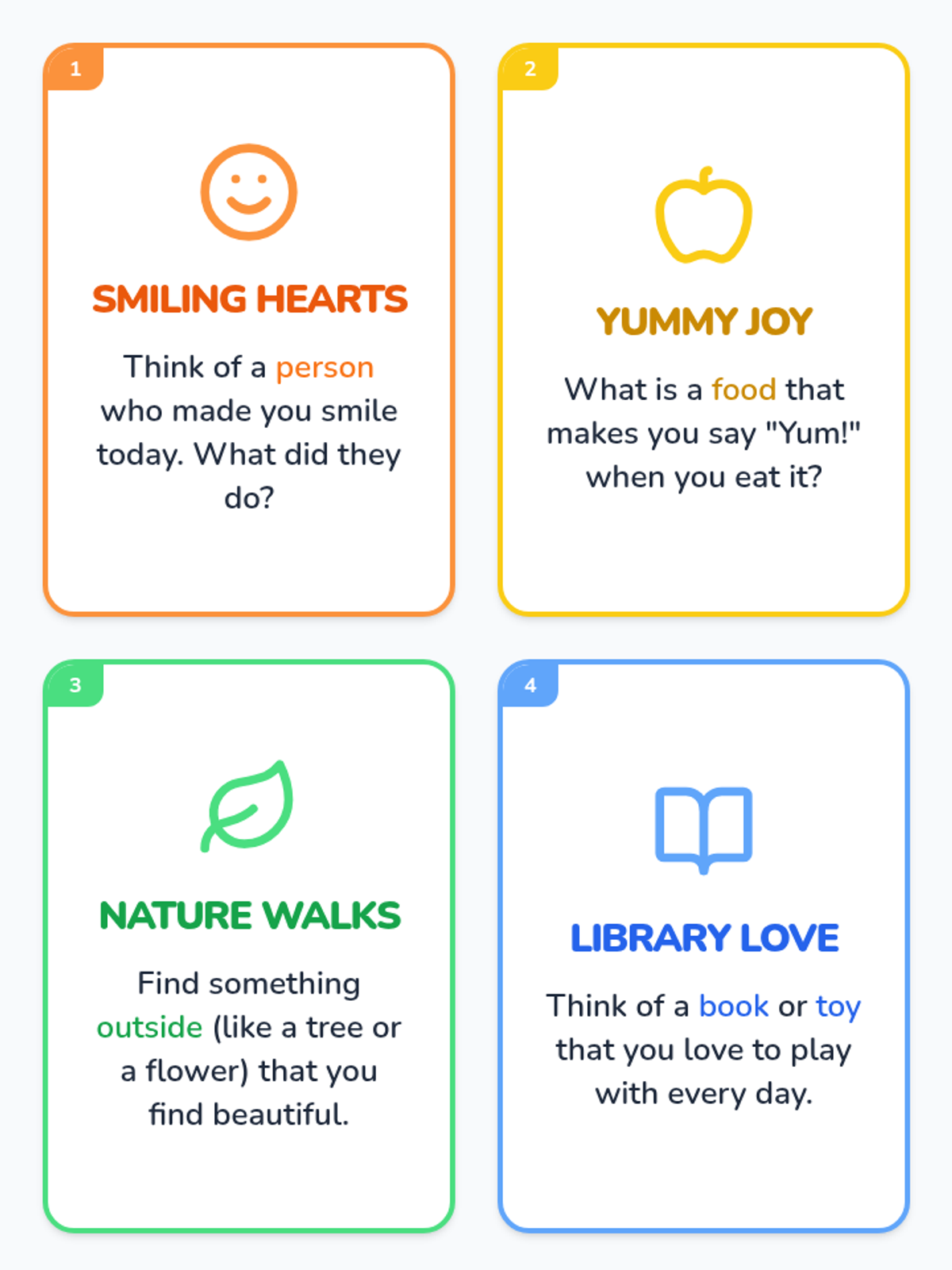
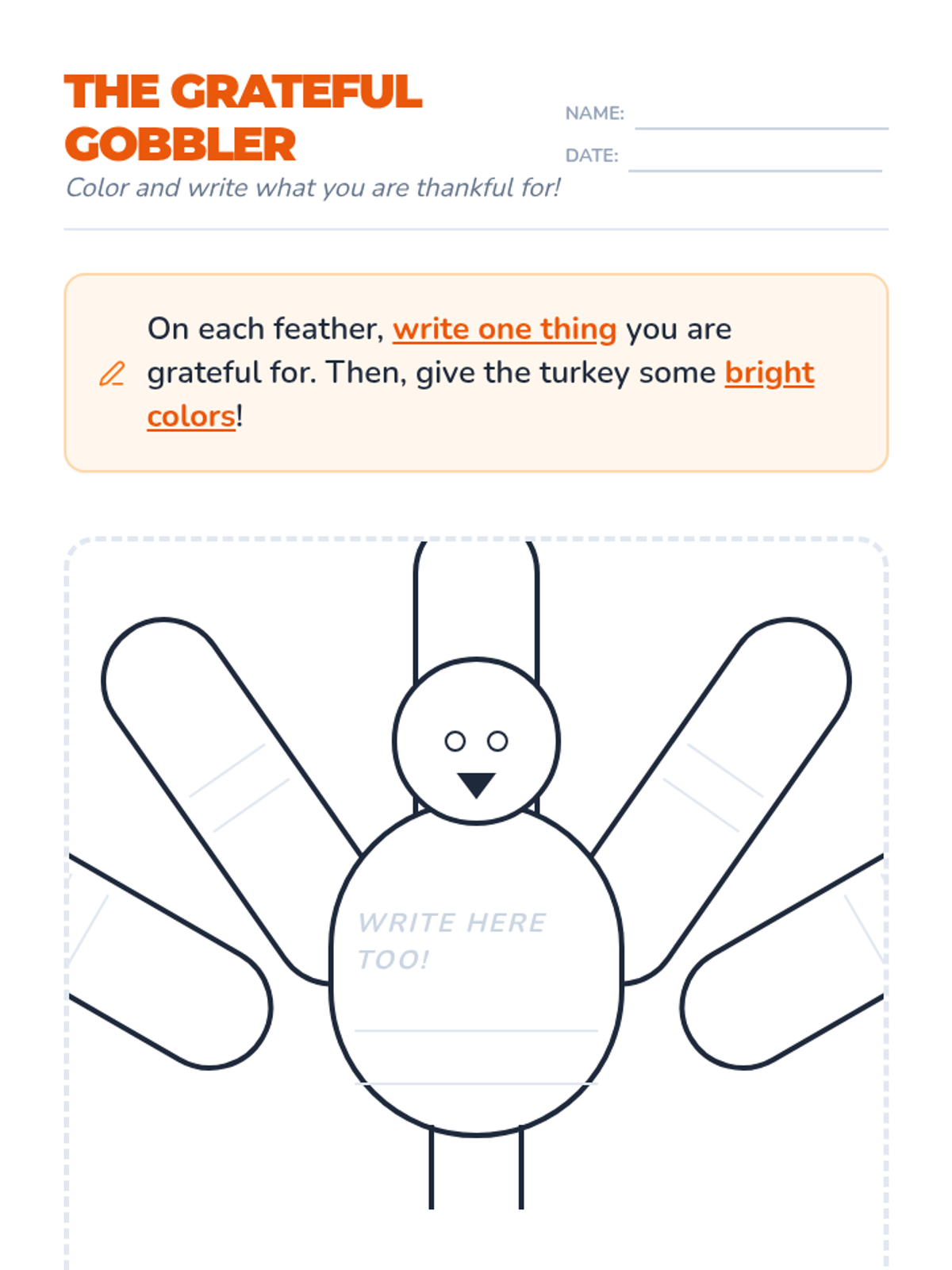
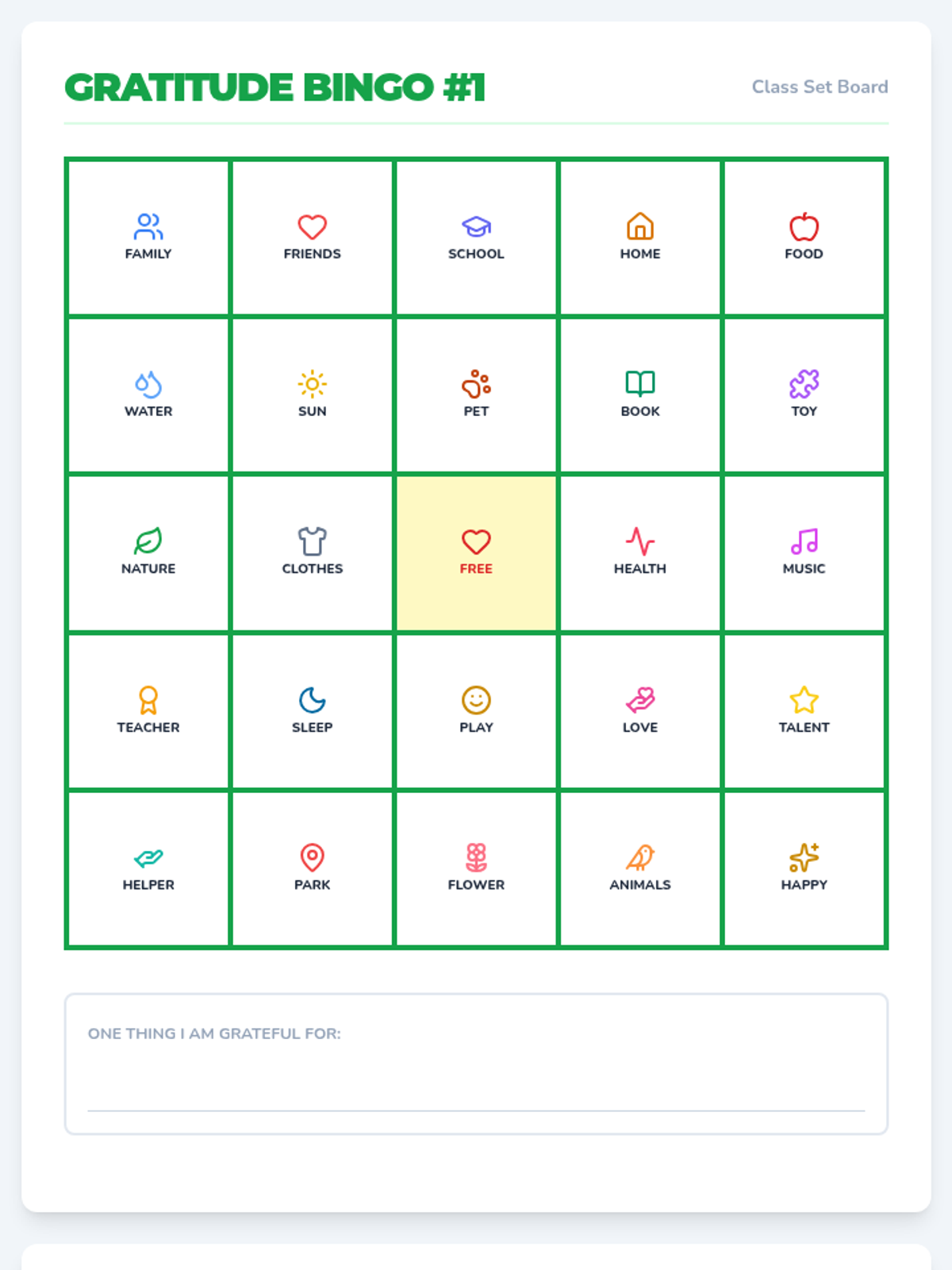
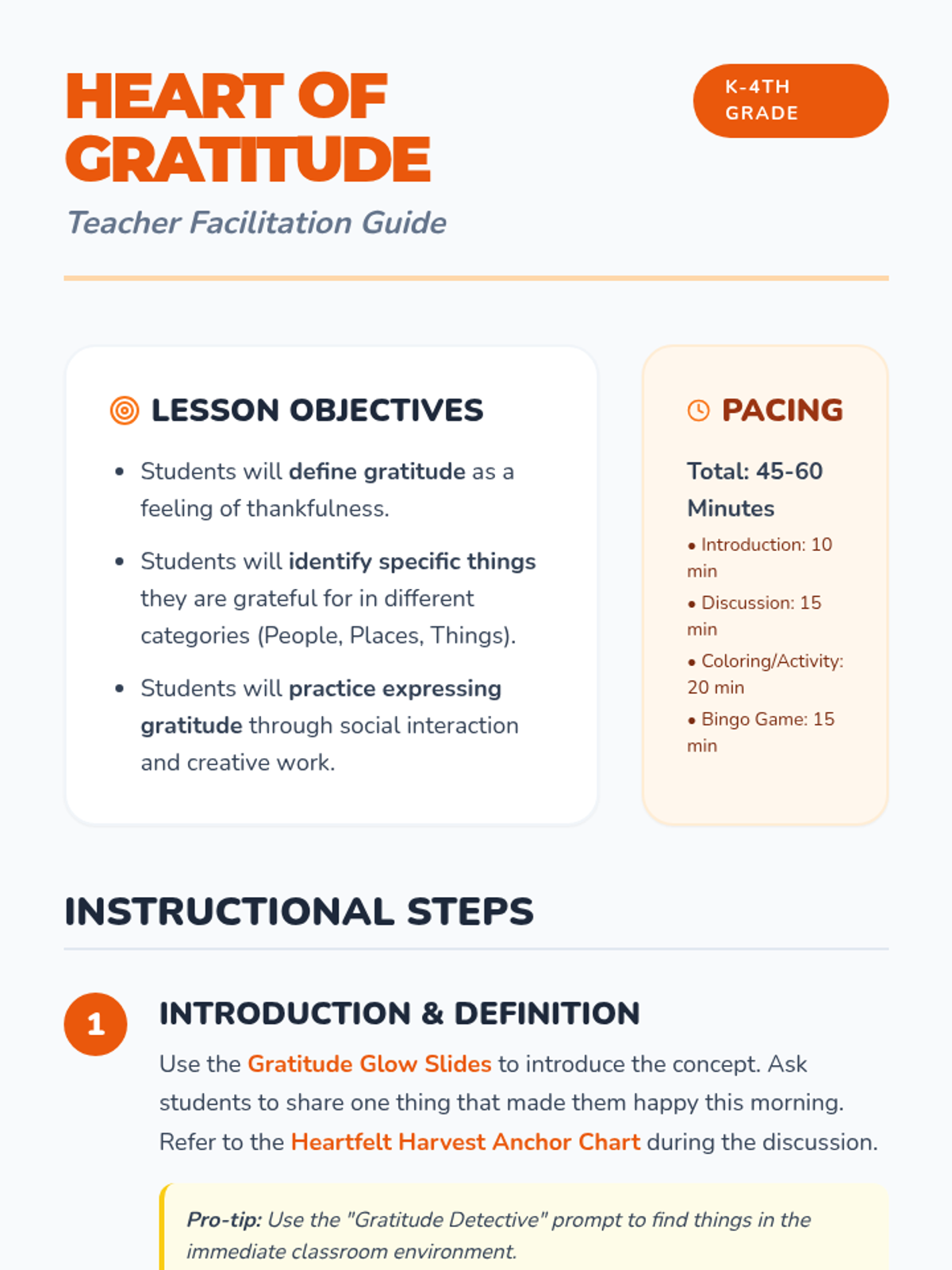
An introductory lesson on gratitude where students define the concept, engage in a visual anchor chart activity, and play a classroom-wide game of Gratitude Bingo.
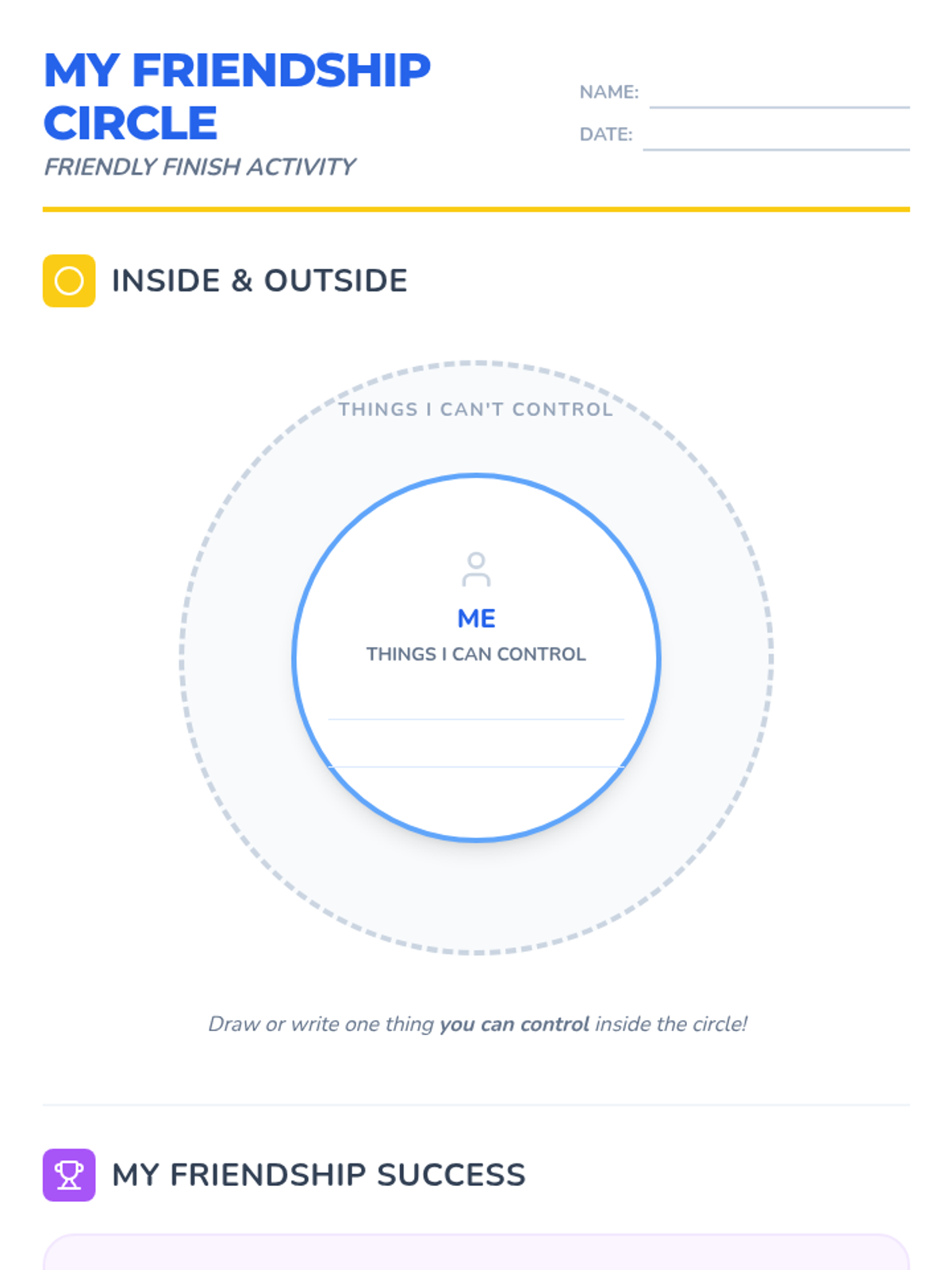
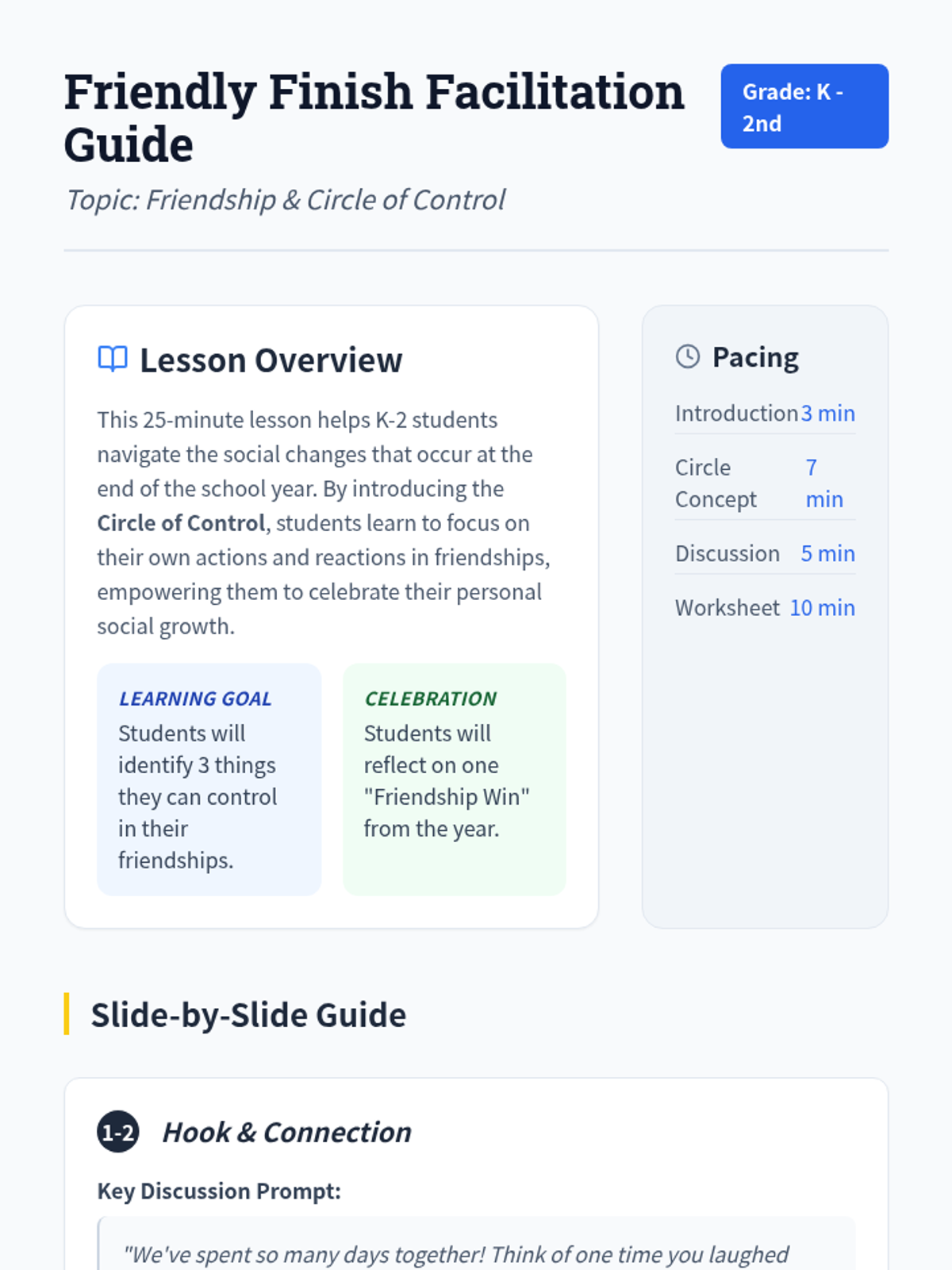
An end-of-year lesson for K-2 students focused on navigating social interactions using the Circle of Control and celebrating friendship growth. Students will learn what they can influence in their friendships and reflect on their social successes throughout the year.
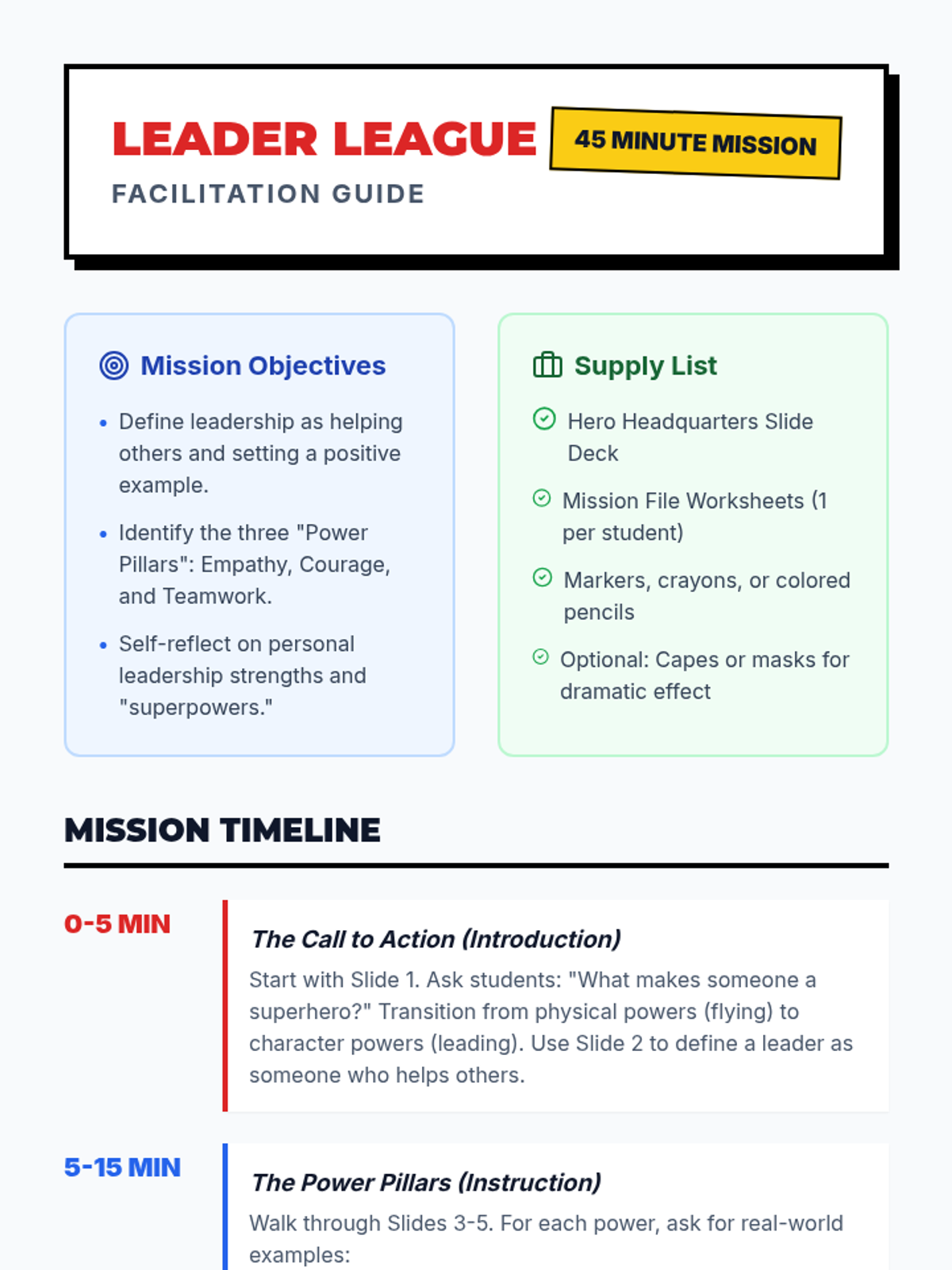
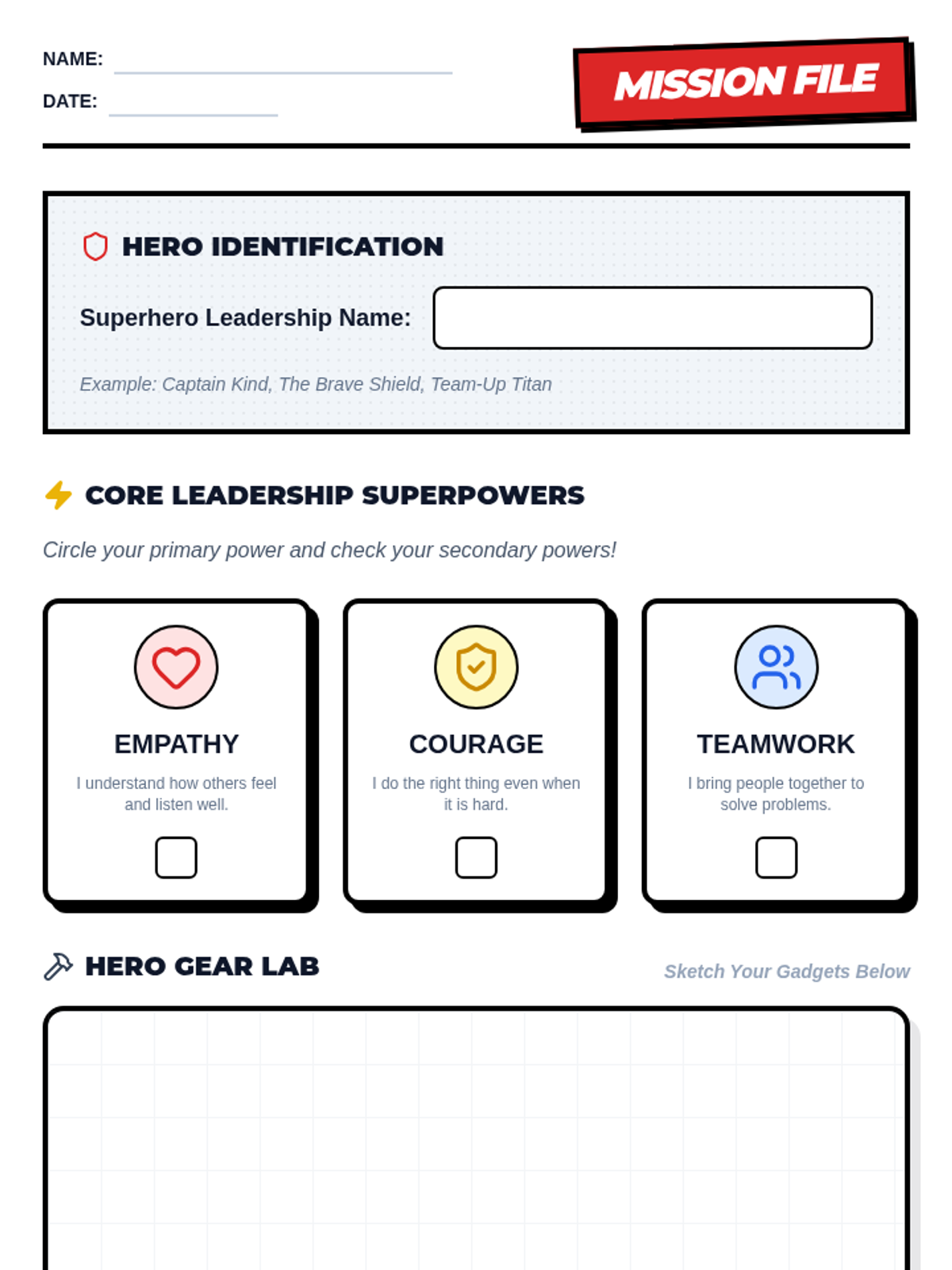
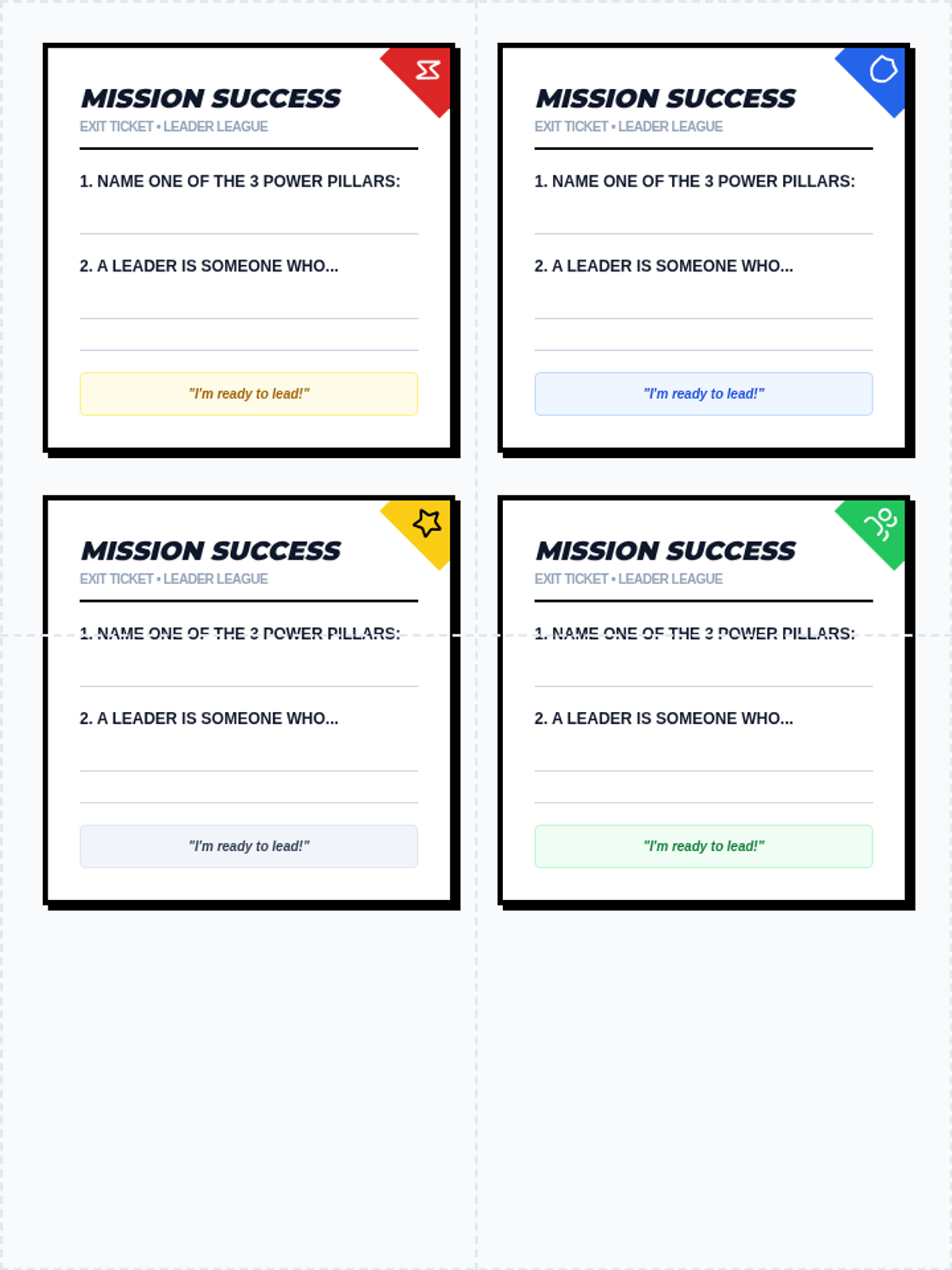
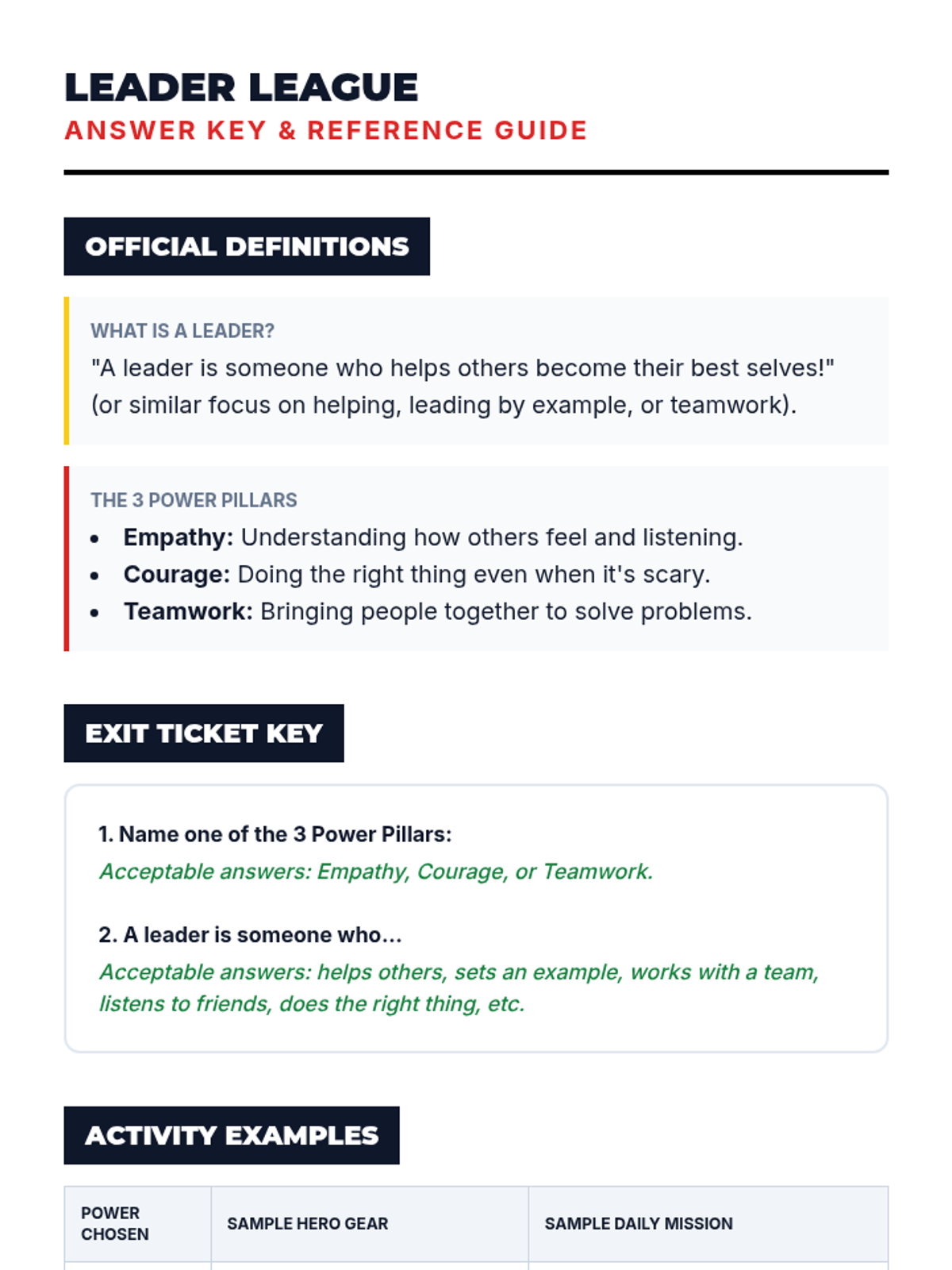
Students explore core leadership qualities through the lens of superheroes, identifying their own unique leadership 'superpowers' and learning how to lead with empathy, courage, and teamwork.
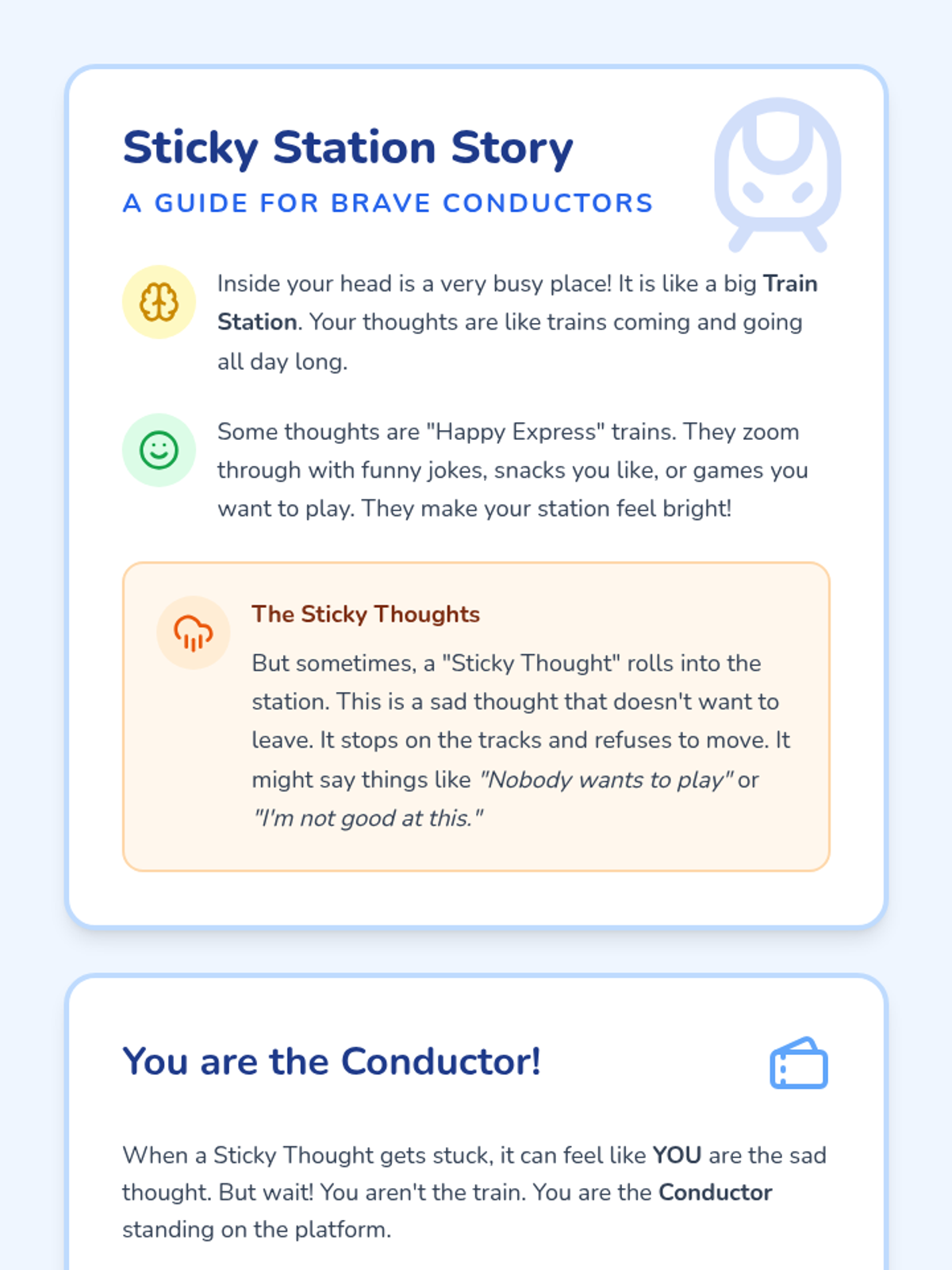
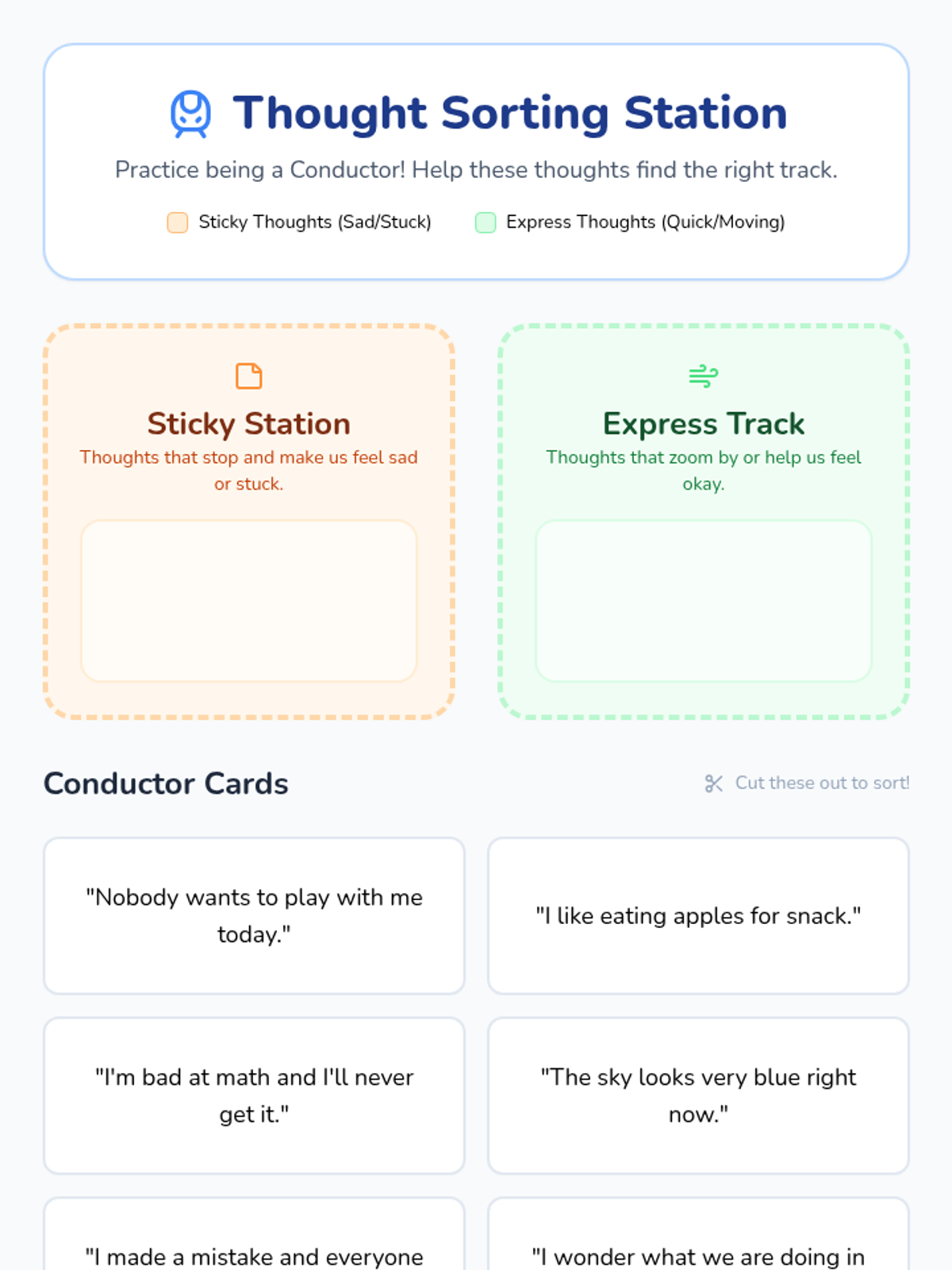
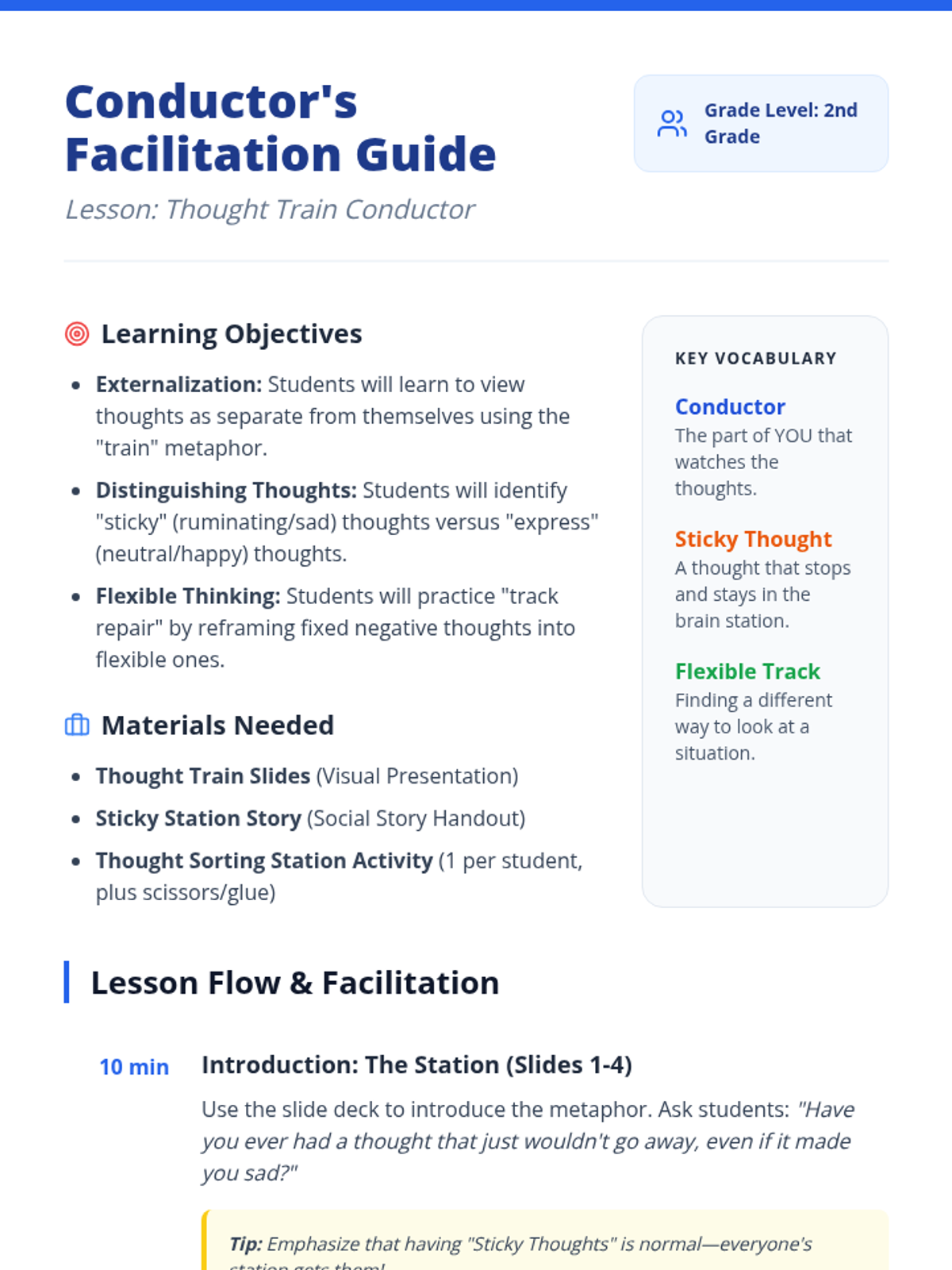
A lesson designed for 2nd graders to manage ruminating sad thoughts using externalization (thought distancing) and flexible thinking through the metaphor of a 'Thought Train'.
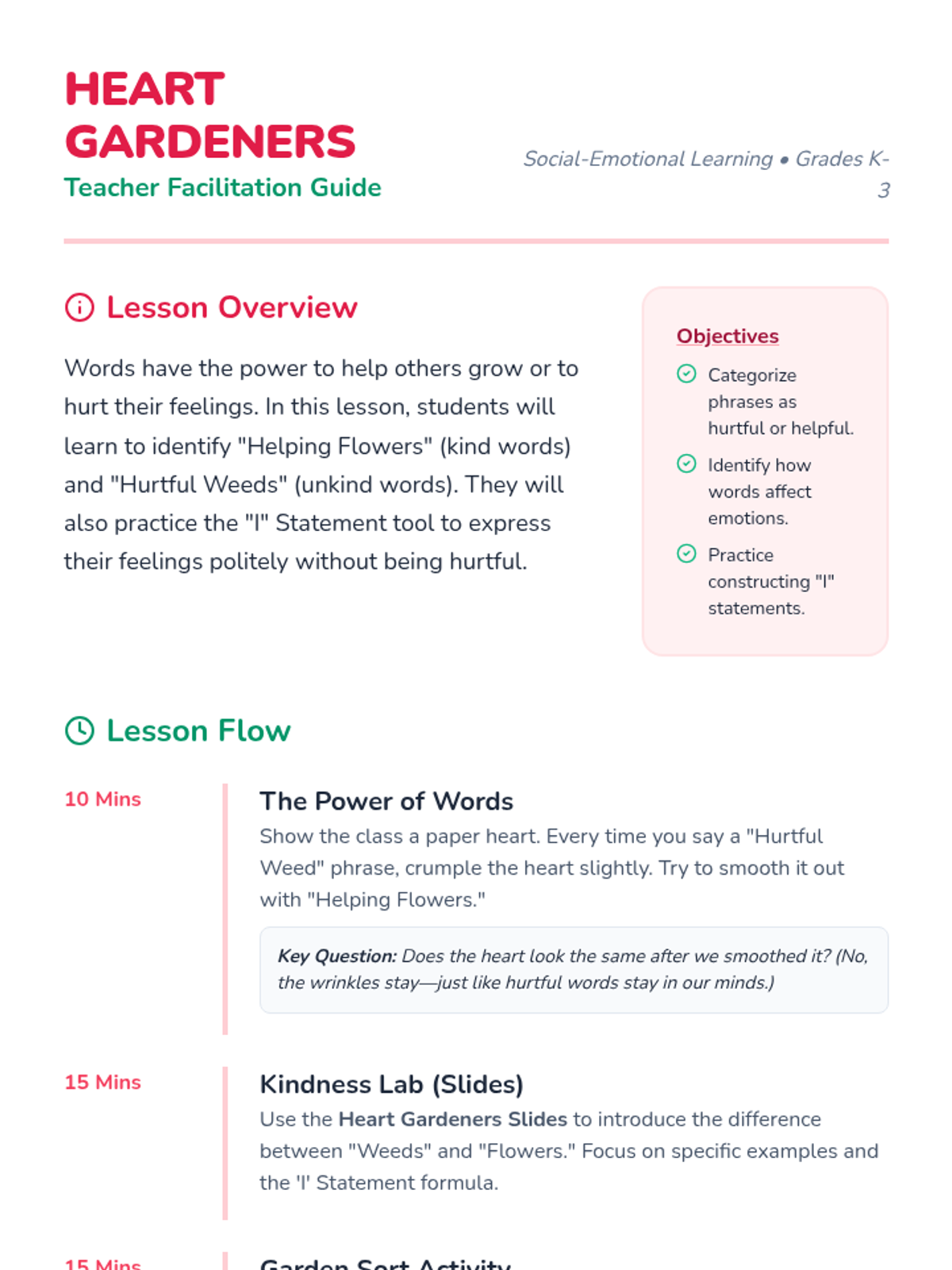
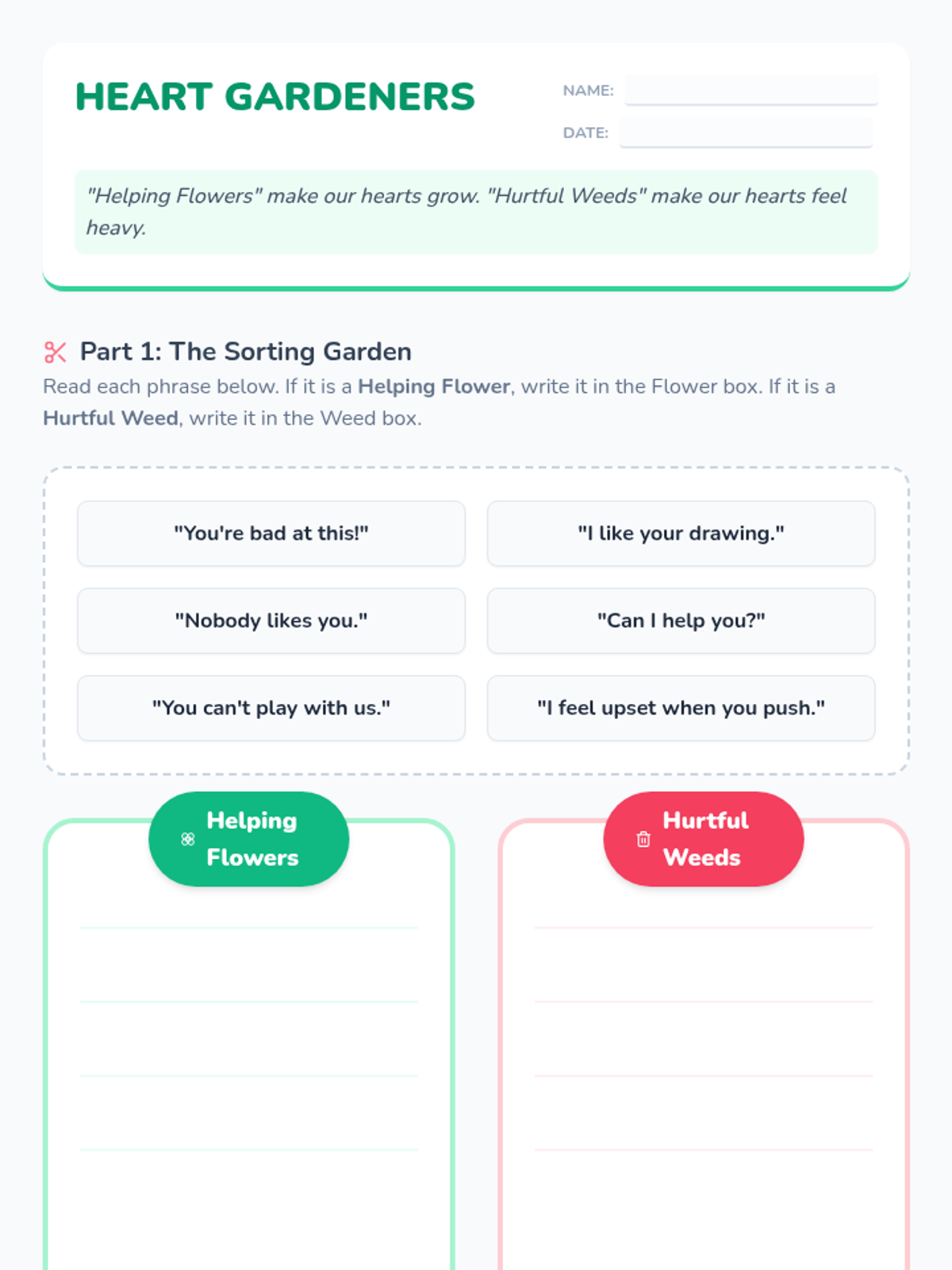
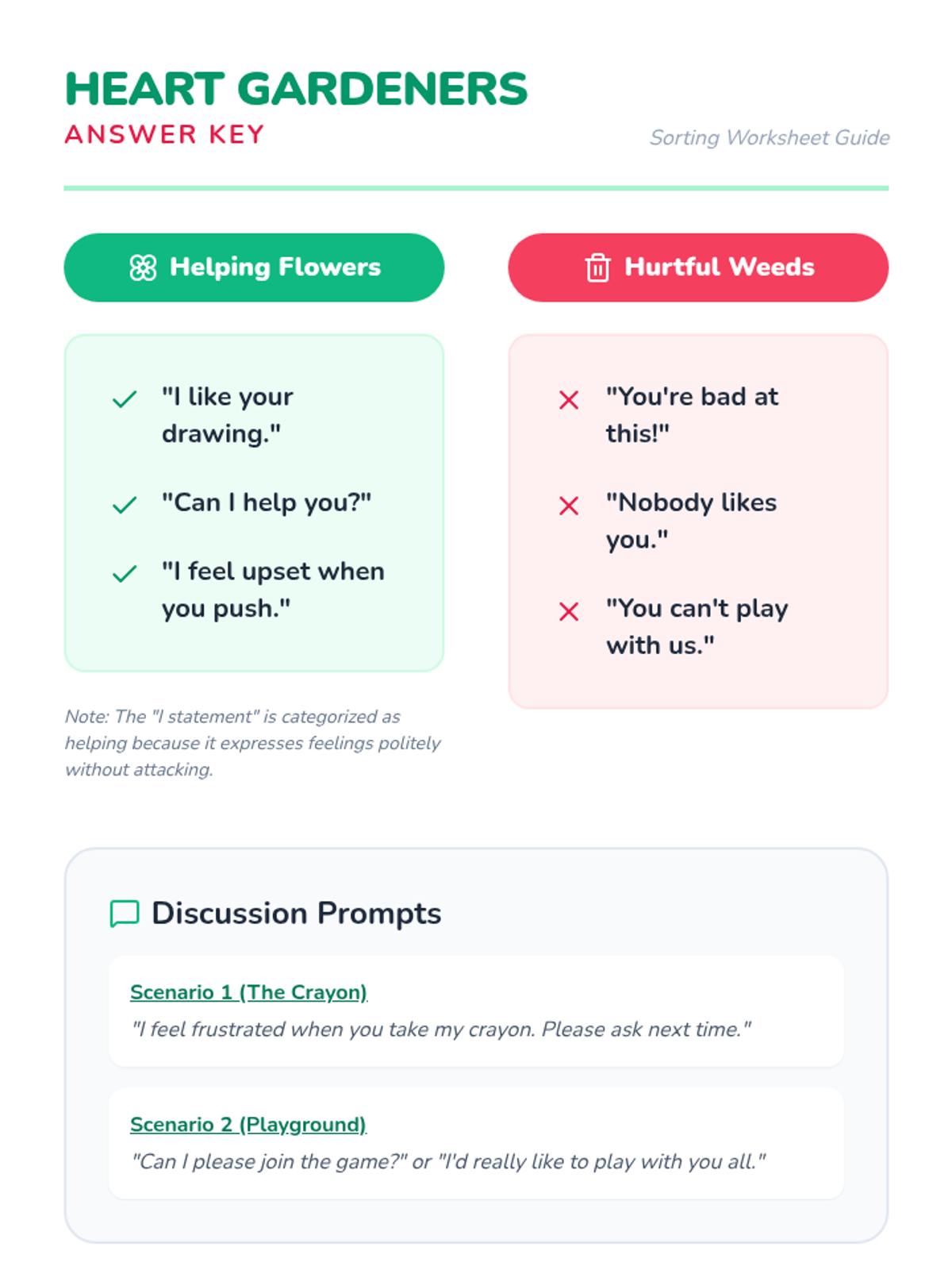
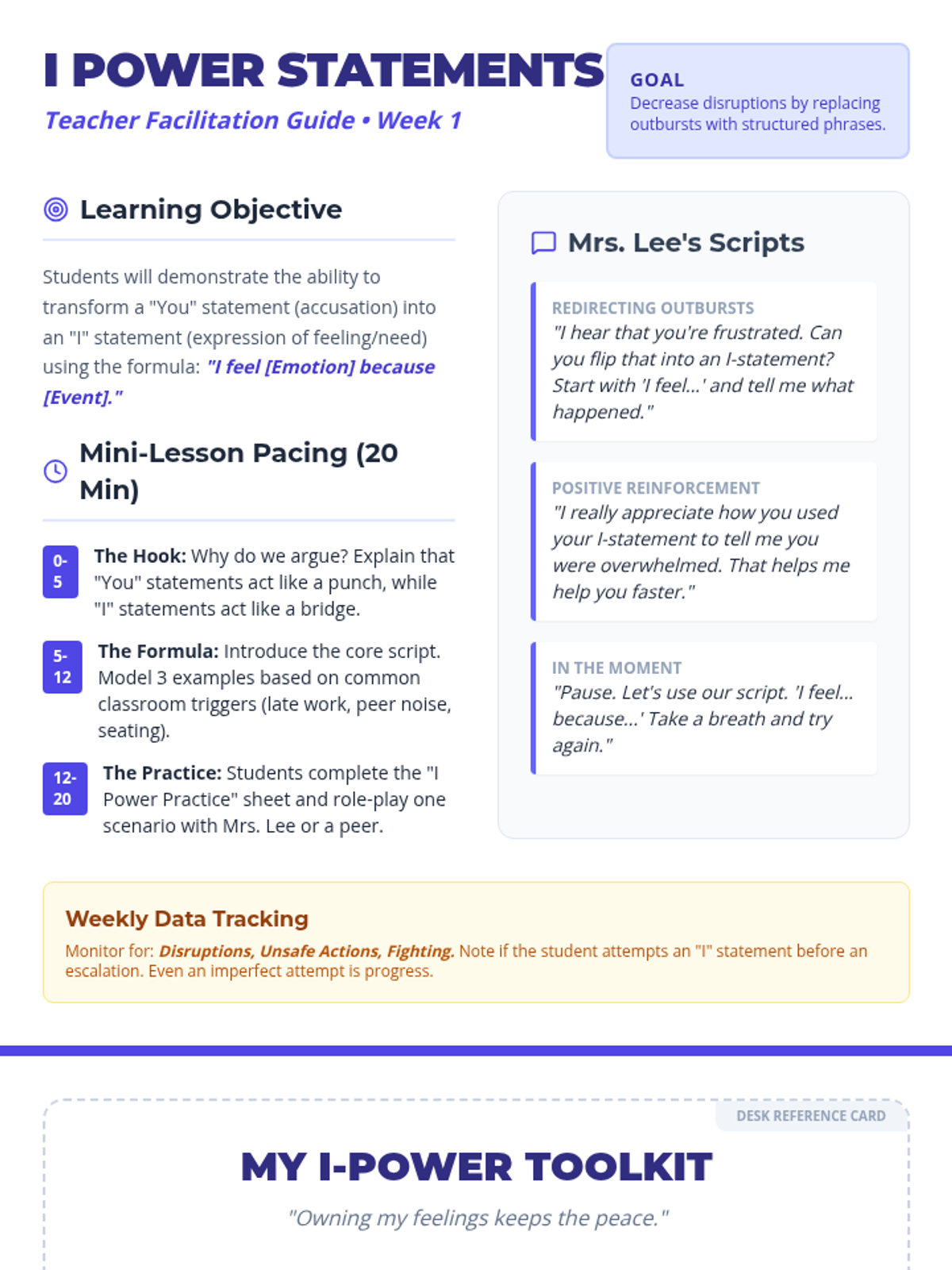
An SEL lesson focused on distinguishing between hurtful and helpful language, introducing 'I' statements to manage emotions and maintain positive relationships.
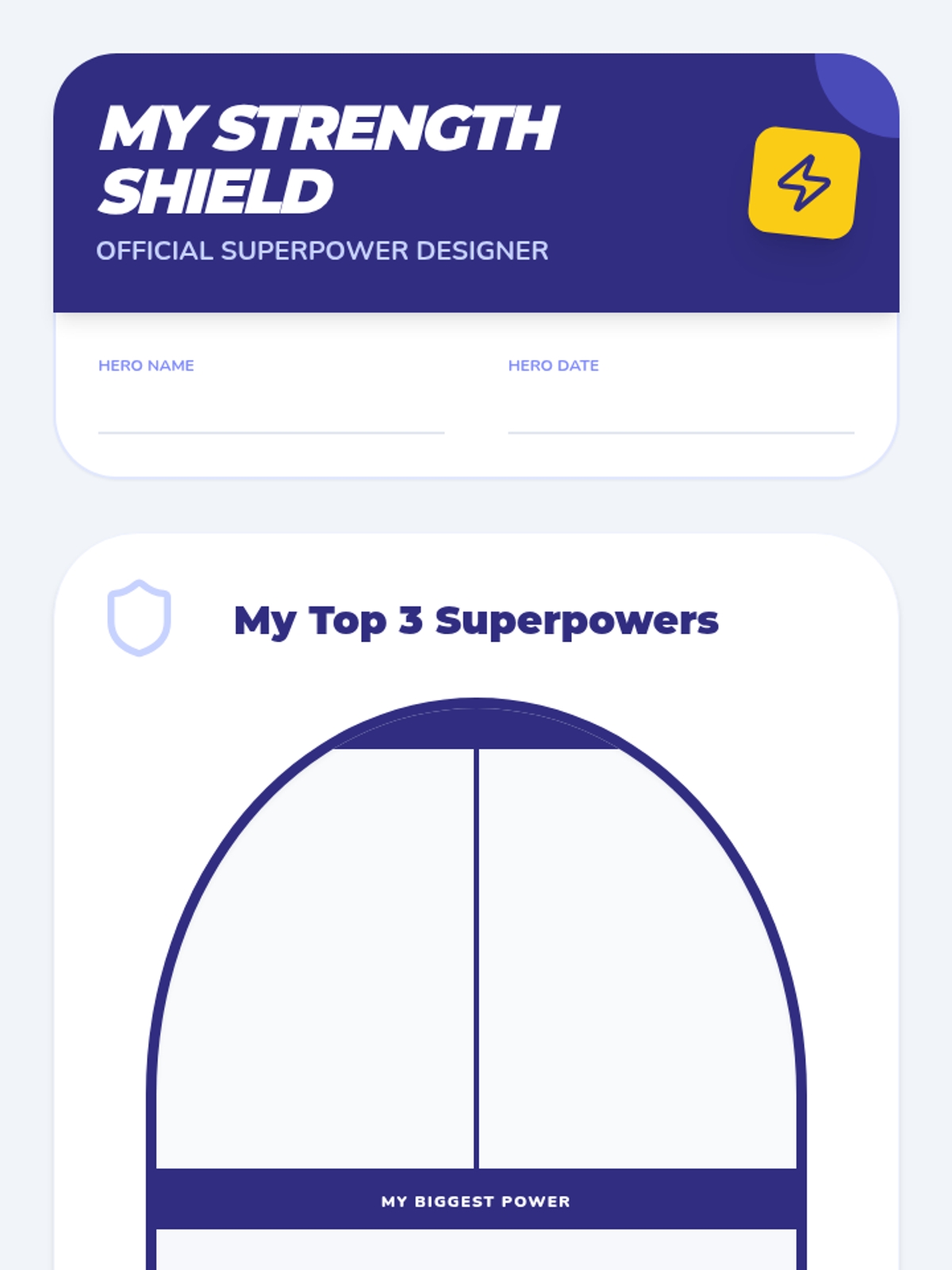
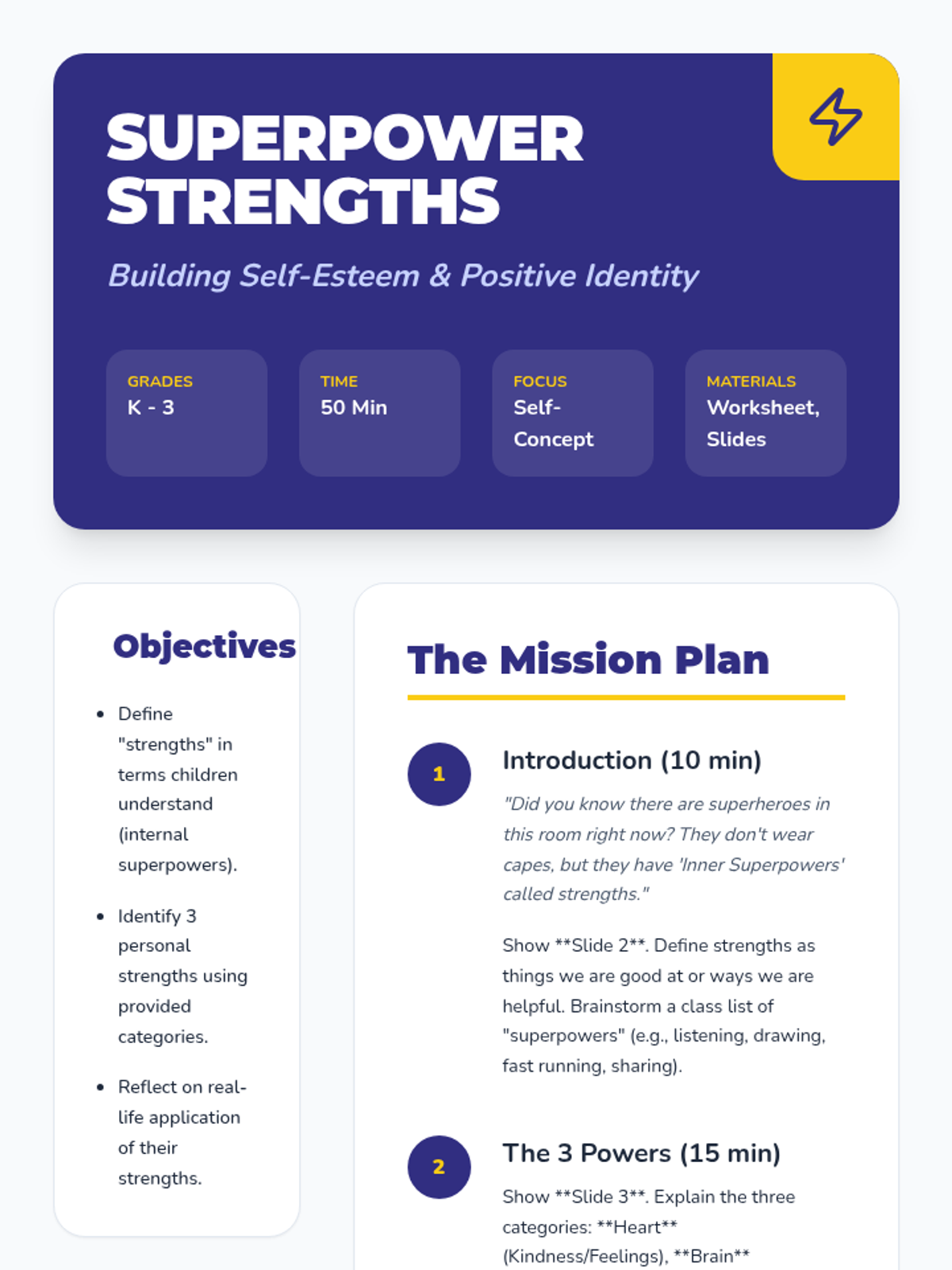
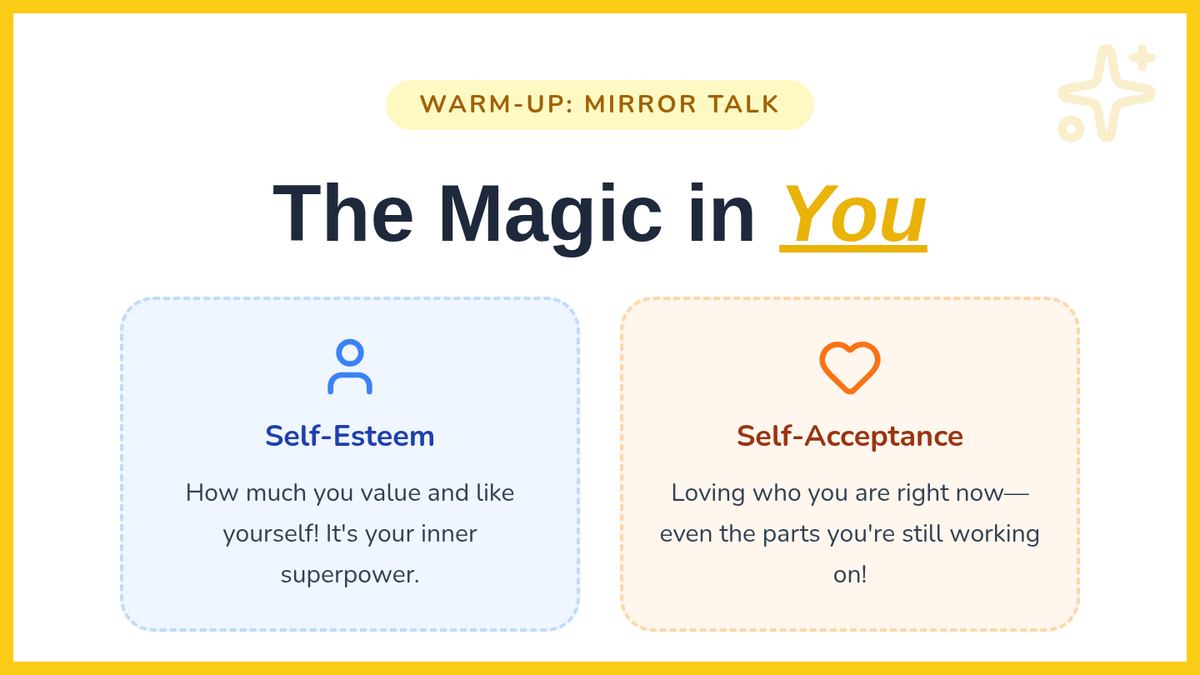
Students identify their personal strengths and positive qualities, reframing them as "inner superpowers". This lesson helps build self-esteem and a positive self-concept.
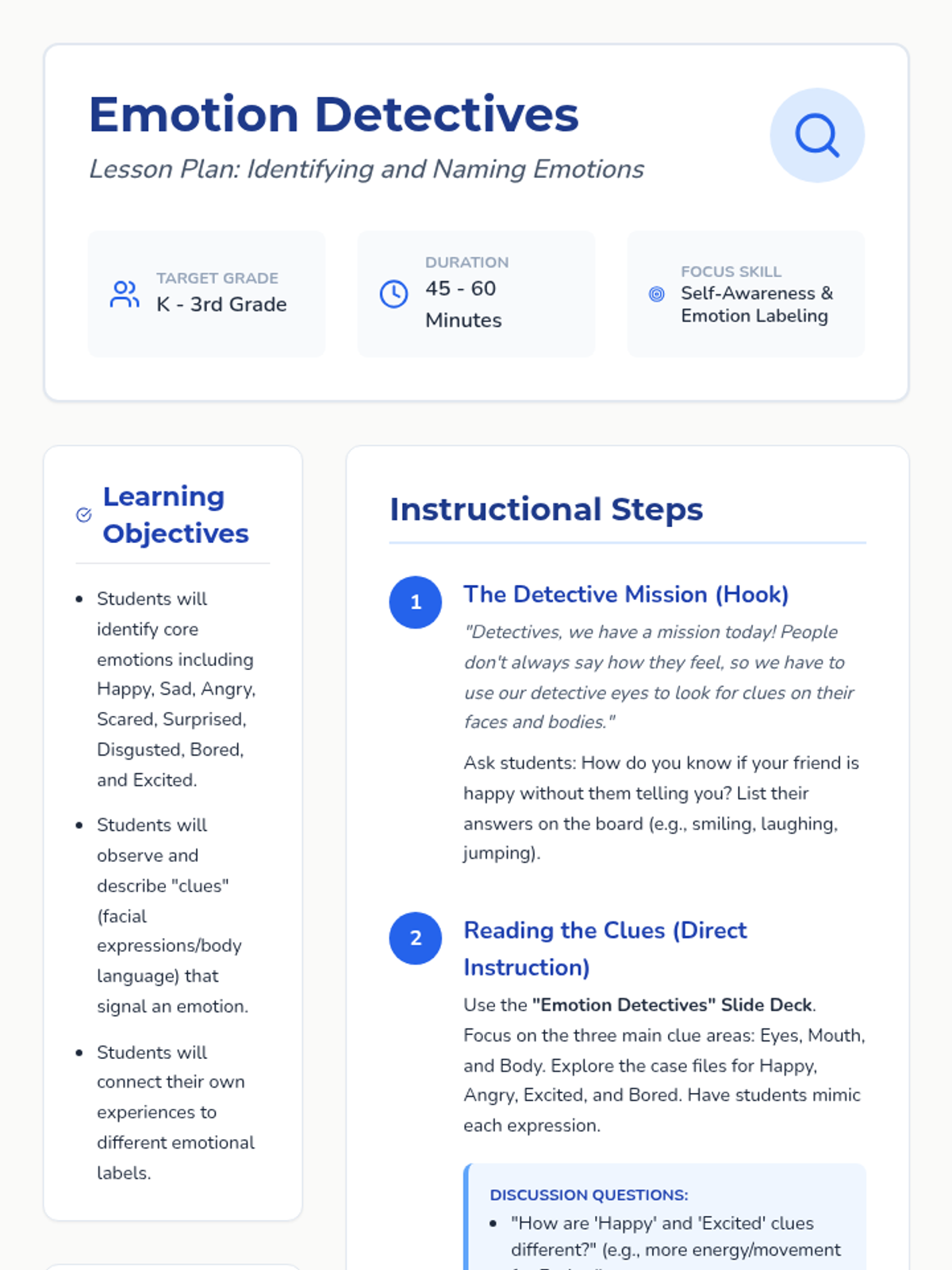
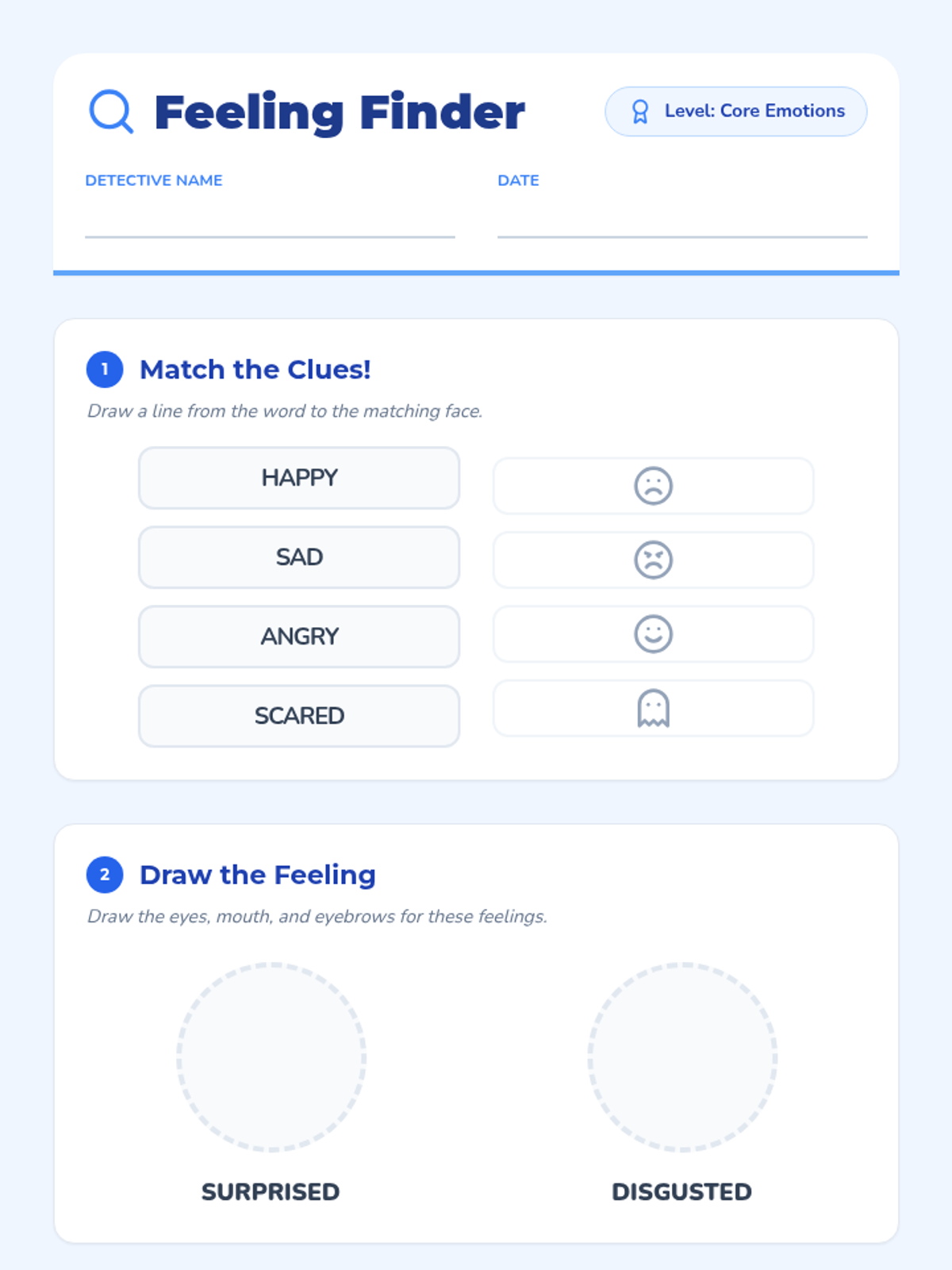
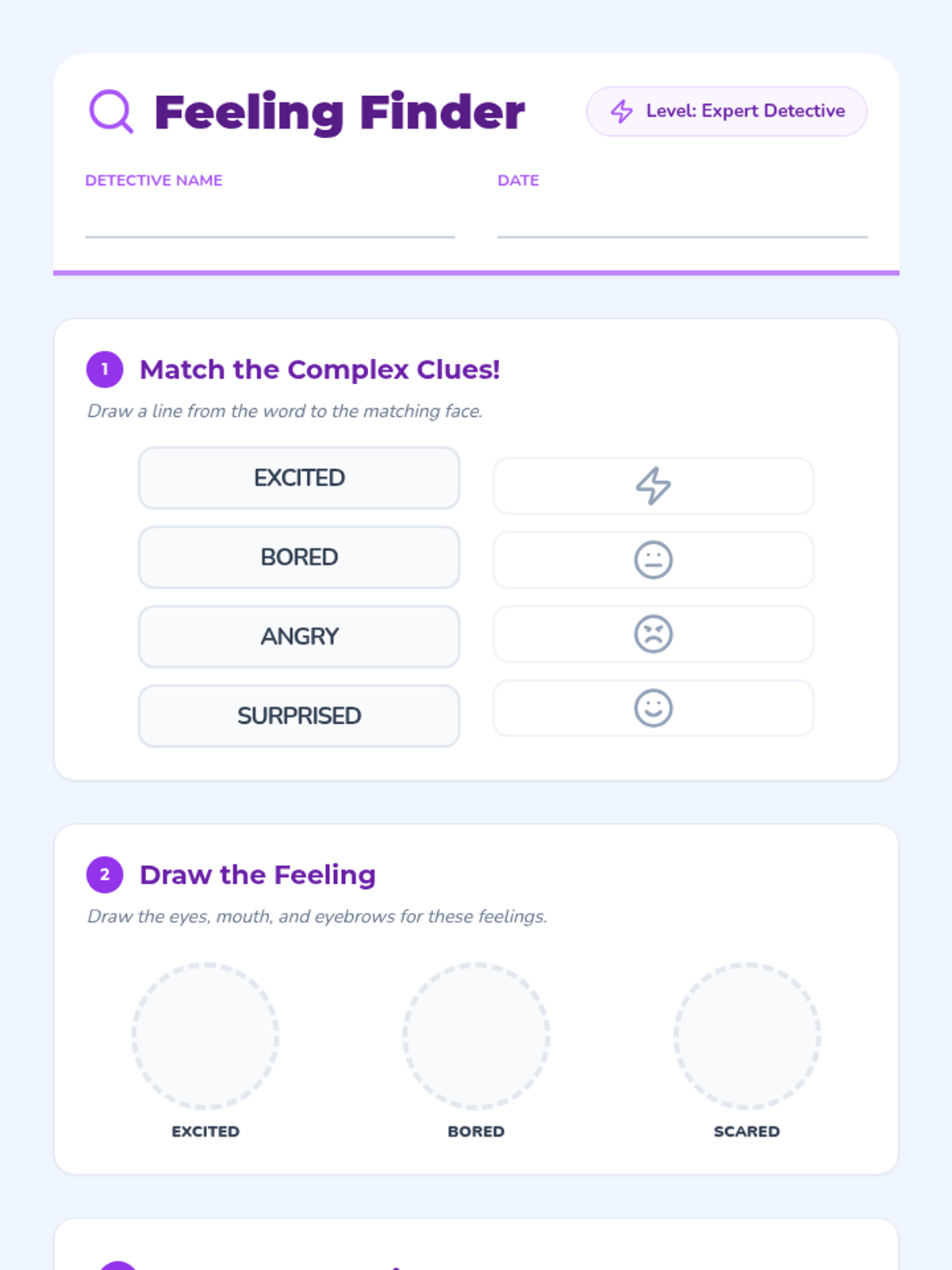
Students become Emotion Detectives to identify and name core emotions by looking for facial and body clues. This K-3 lesson focuses on happy, sad, angry, scared, surprised, and disgusted.
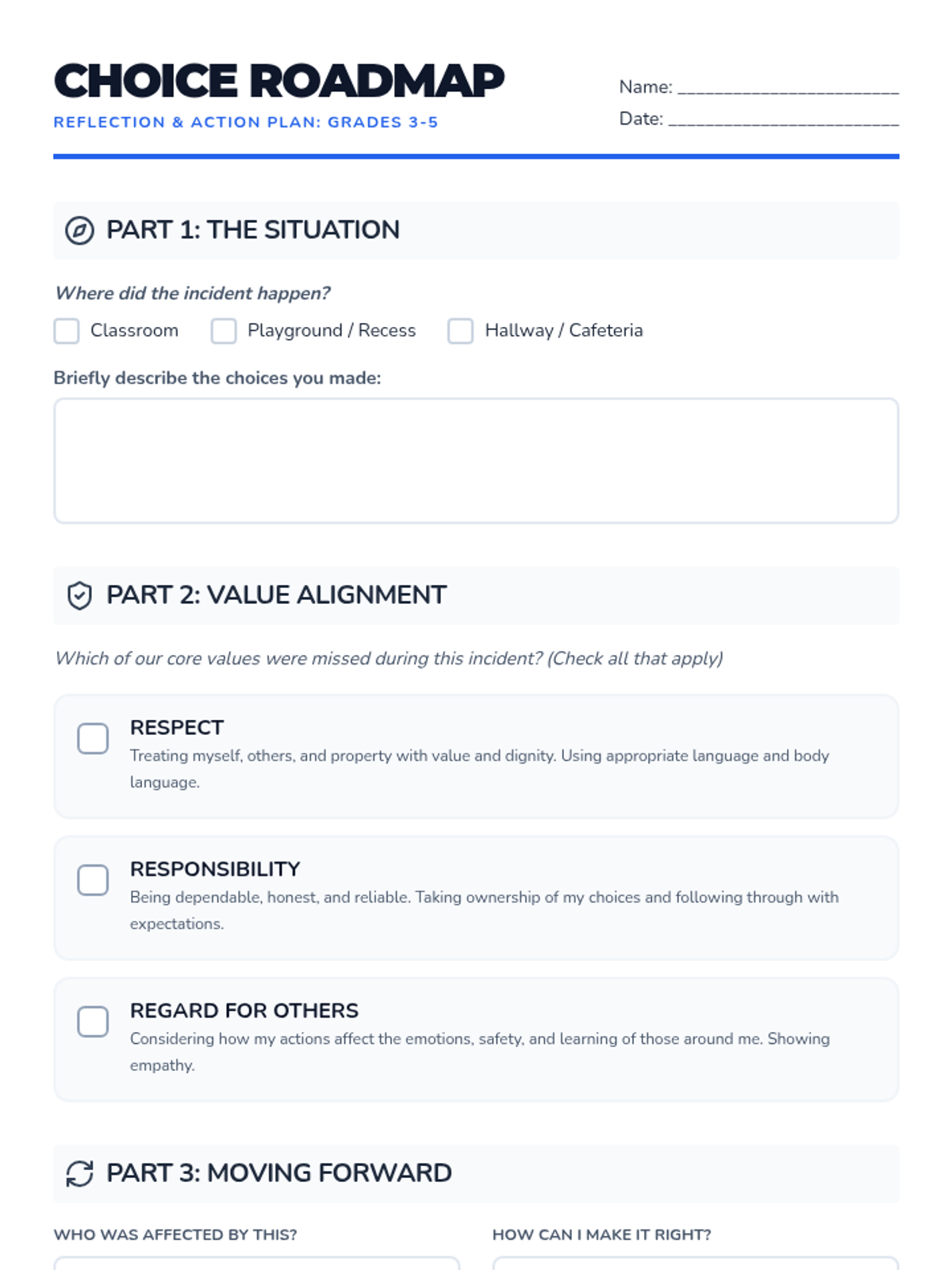
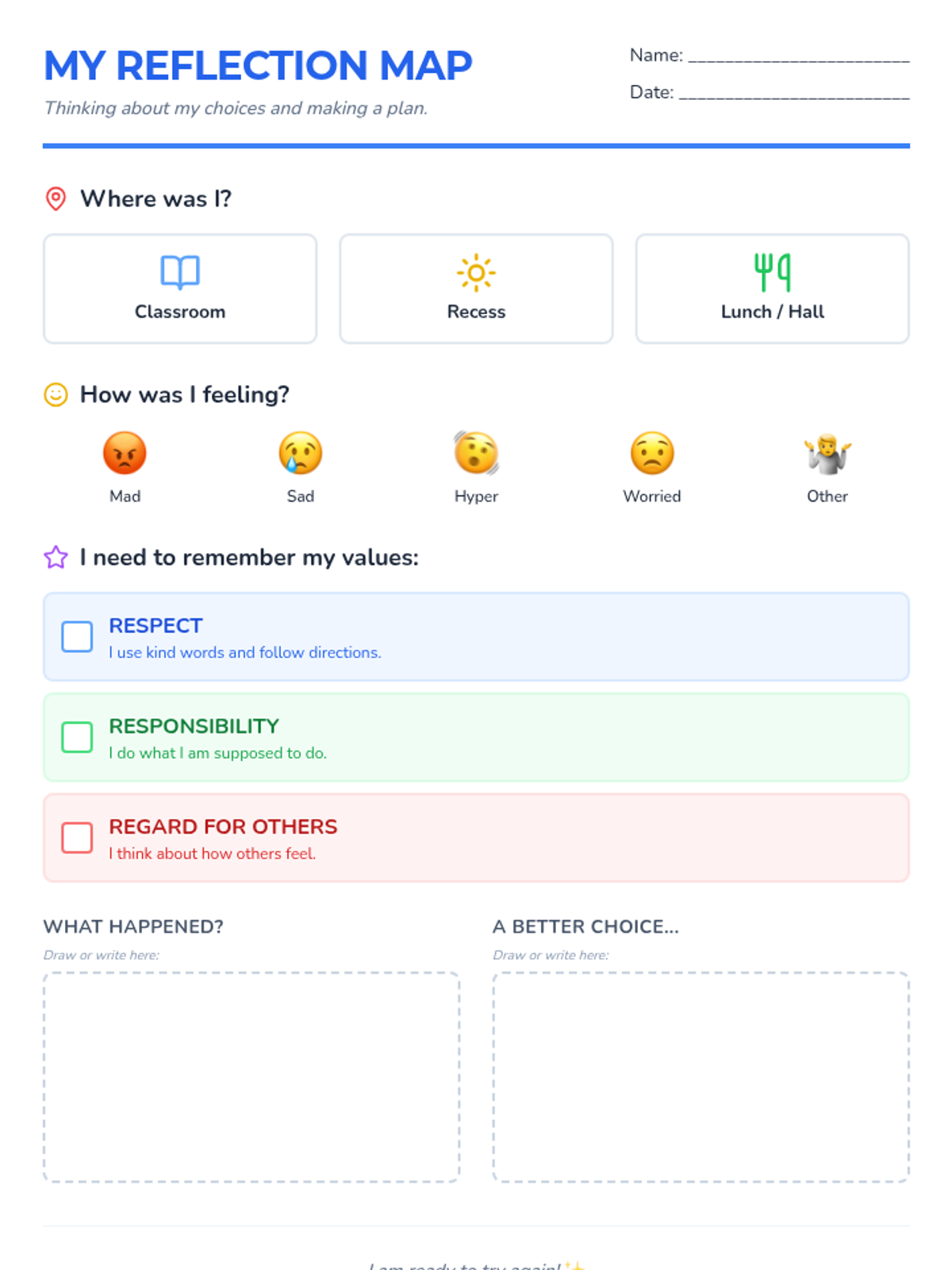
A set of reflection tools for students in grades K-5 to process behavioral incidents through the lens of core values: Respect, Responsibility, and Regard for Others. Includes tiered versions for lower and upper elementary students.
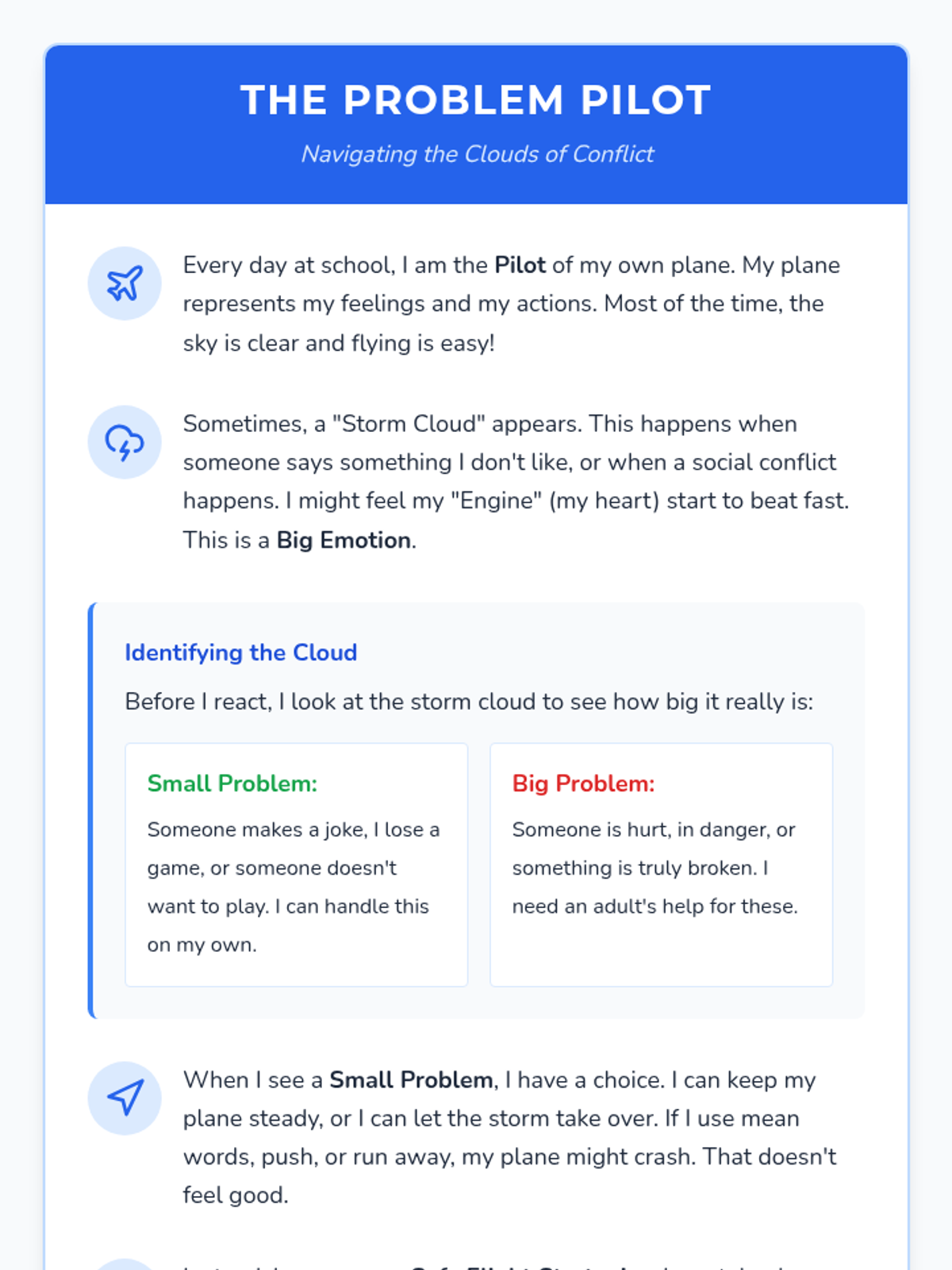
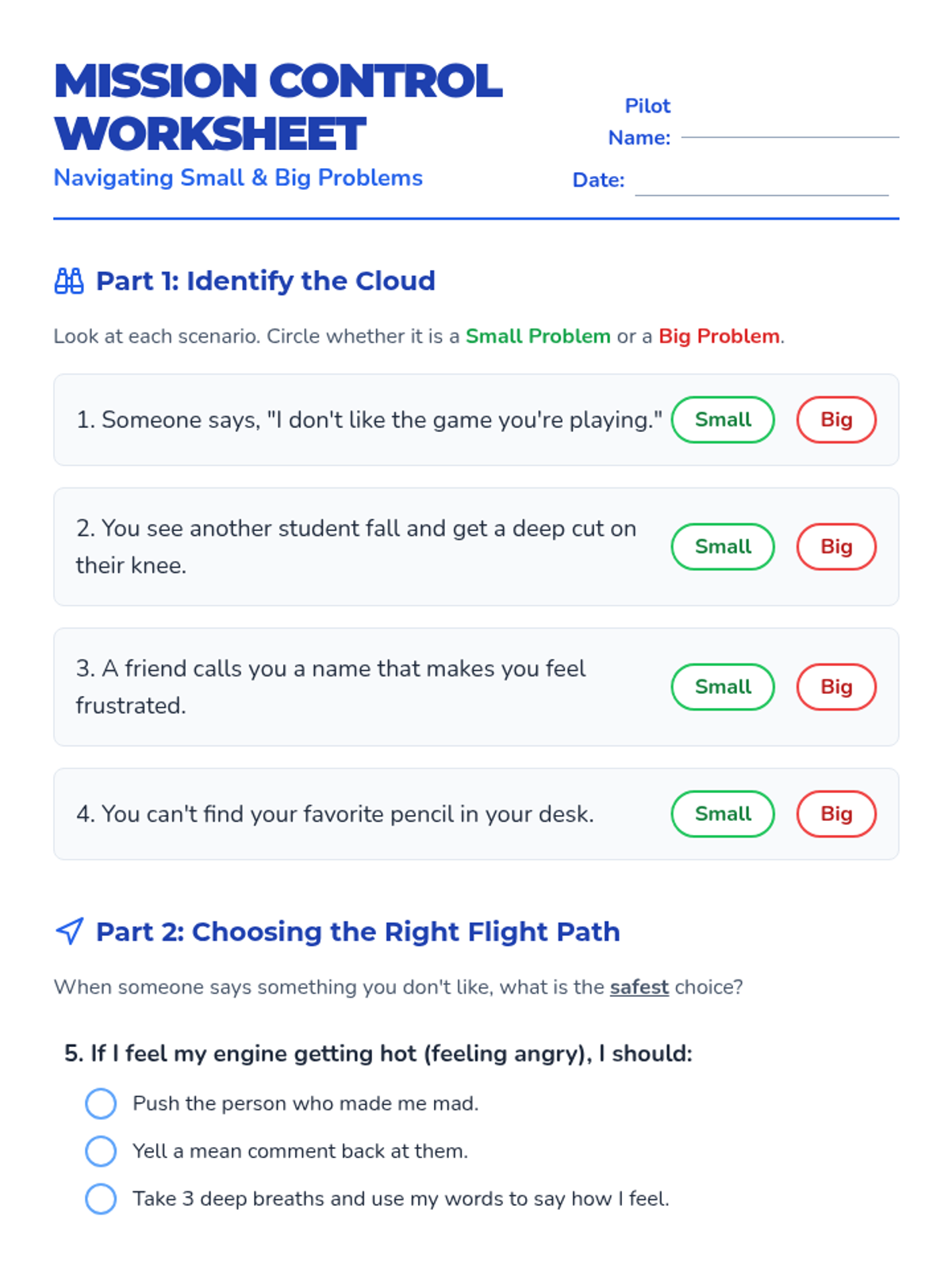
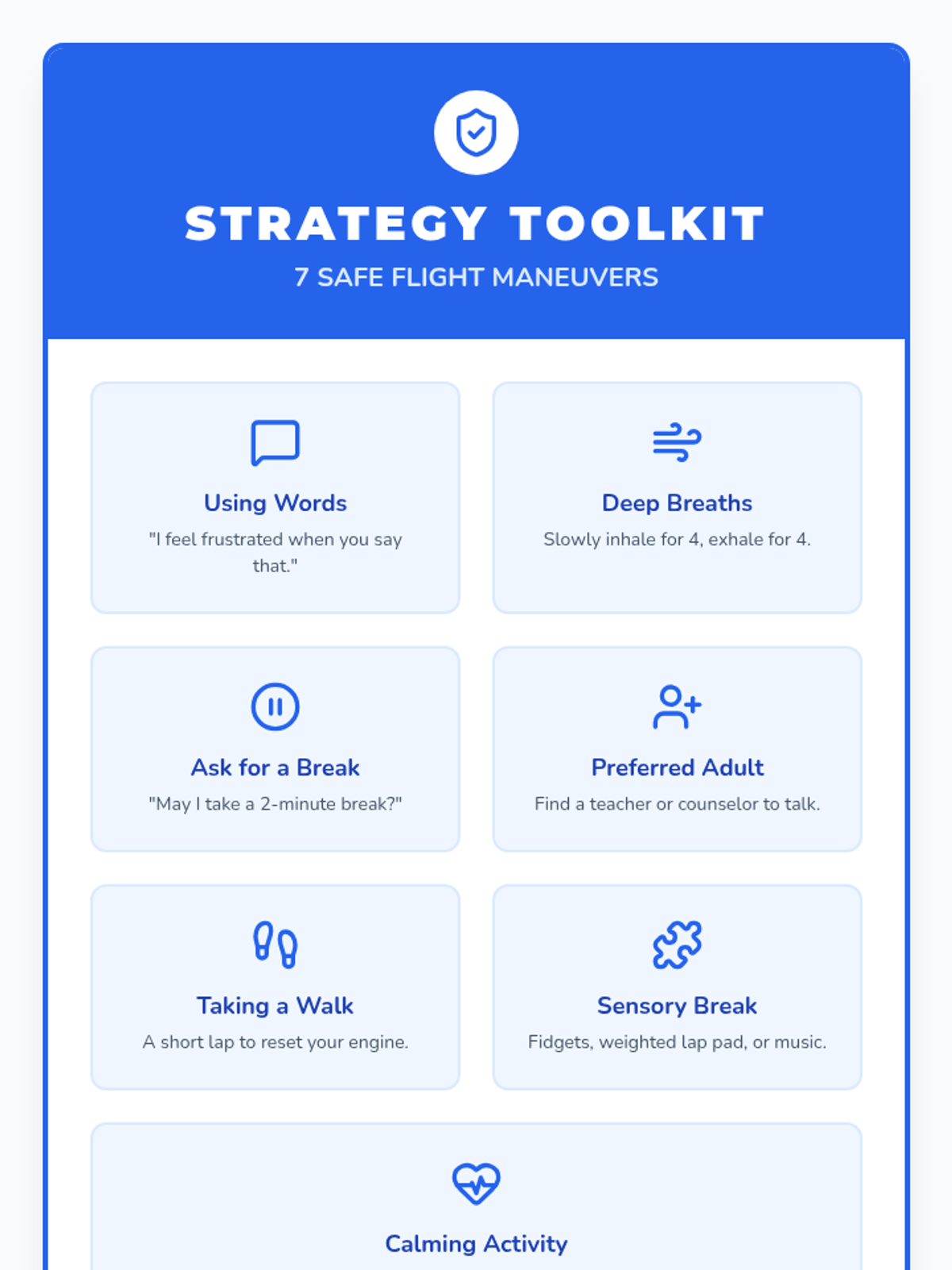
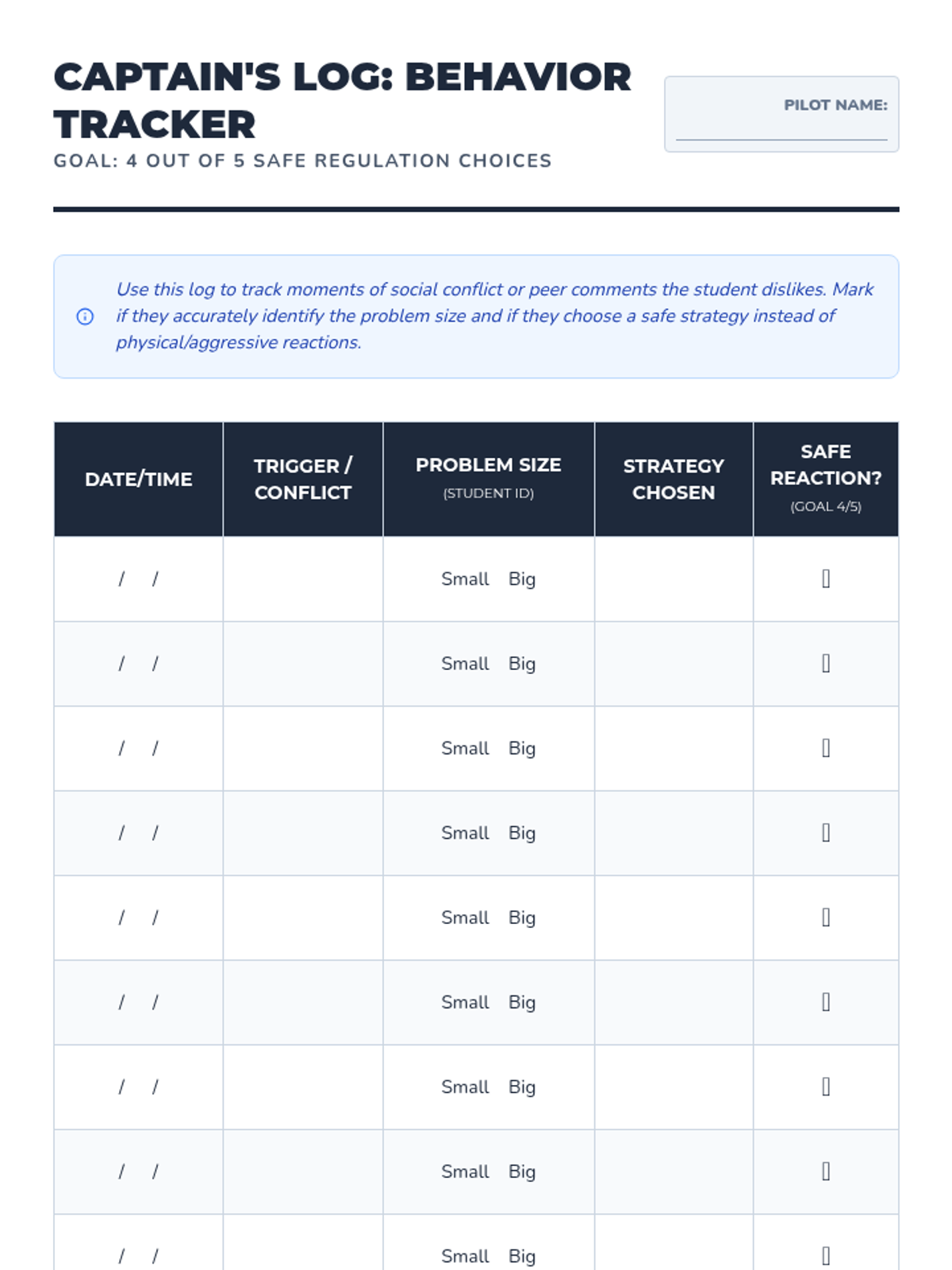
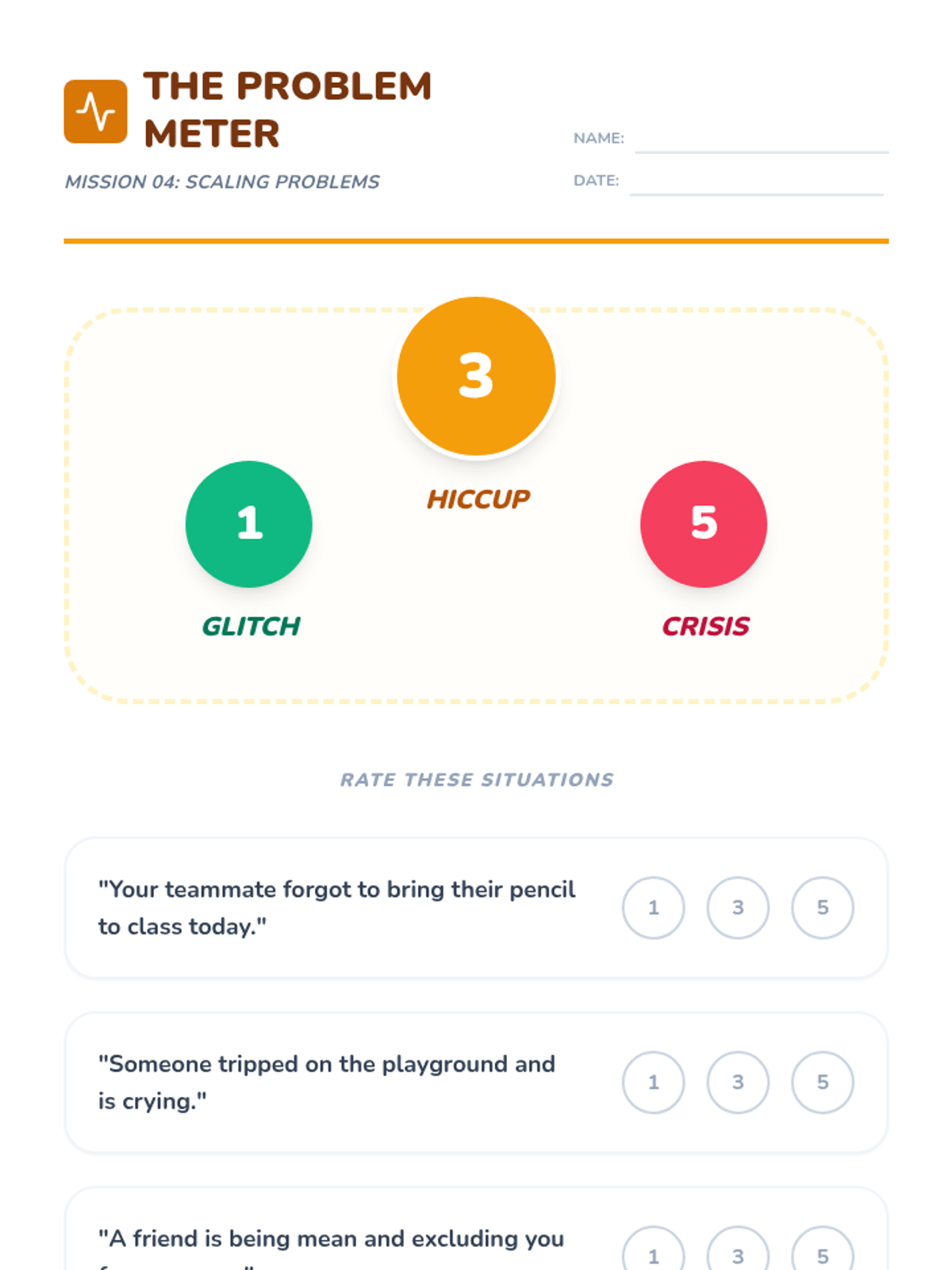
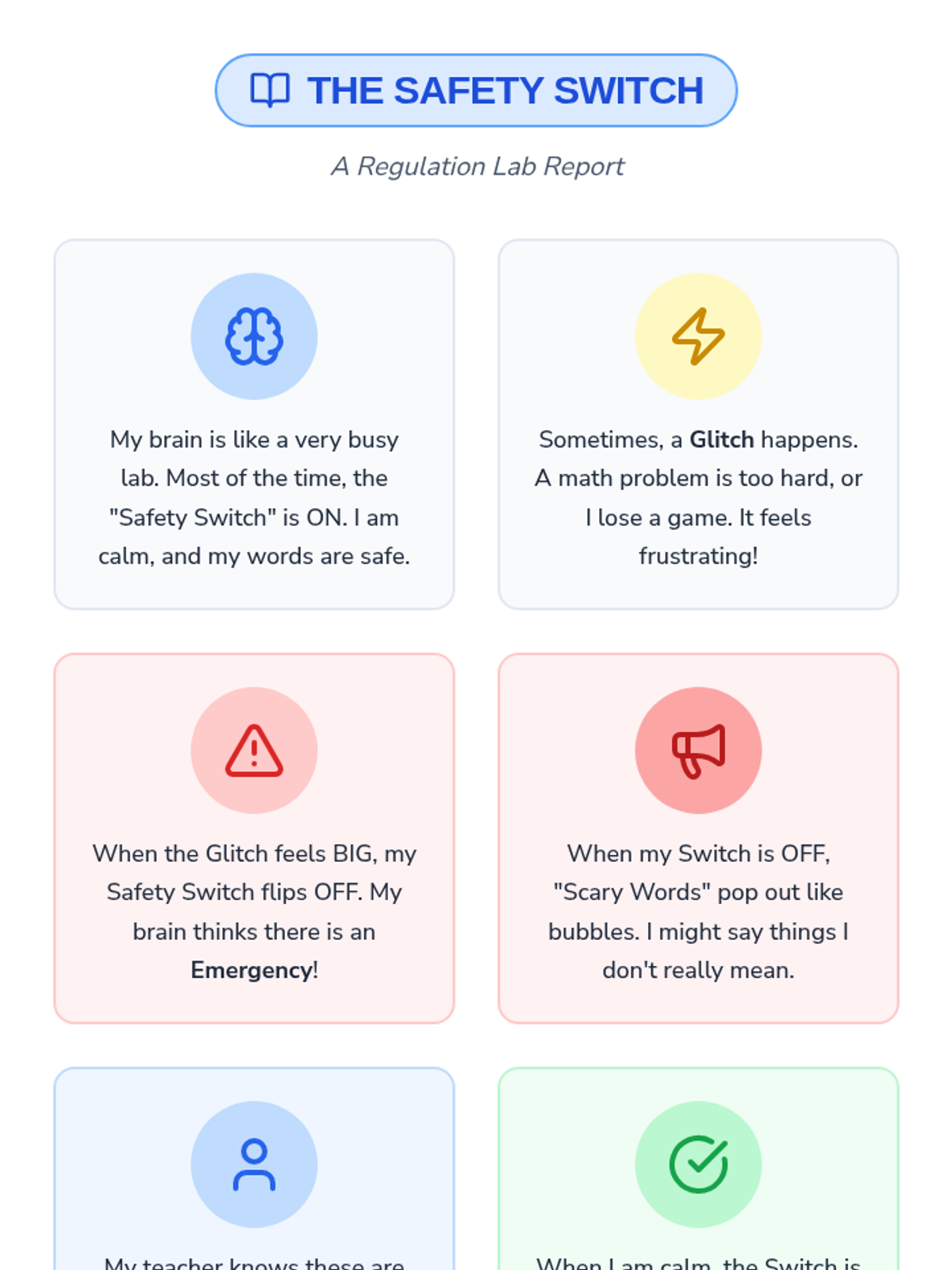
A lesson designed to help students distinguish between Small and Big Problems and choose safe regulation strategies instead of physical reactions. It includes a social story, practice worksheet, and strategy reference guide.
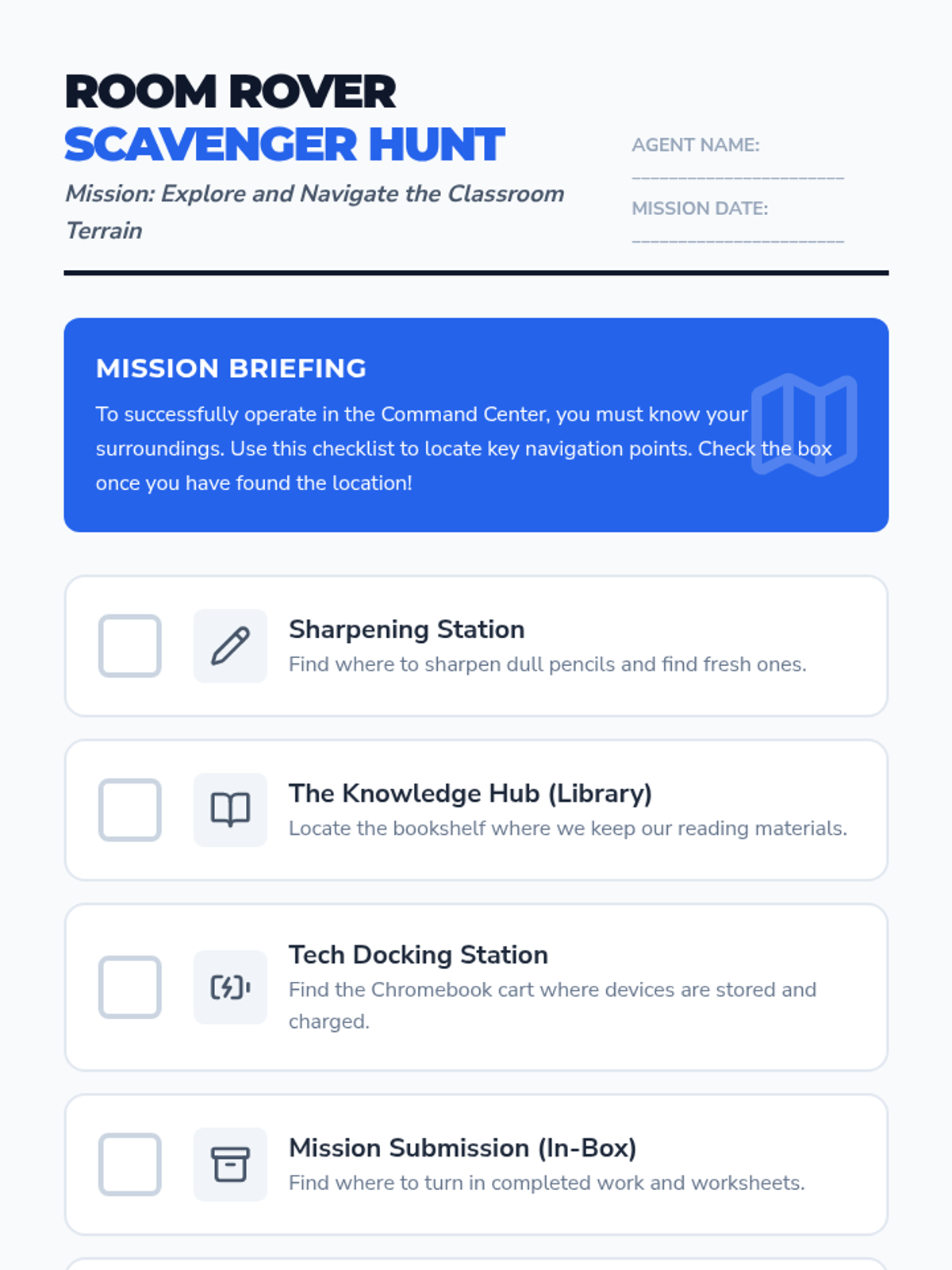
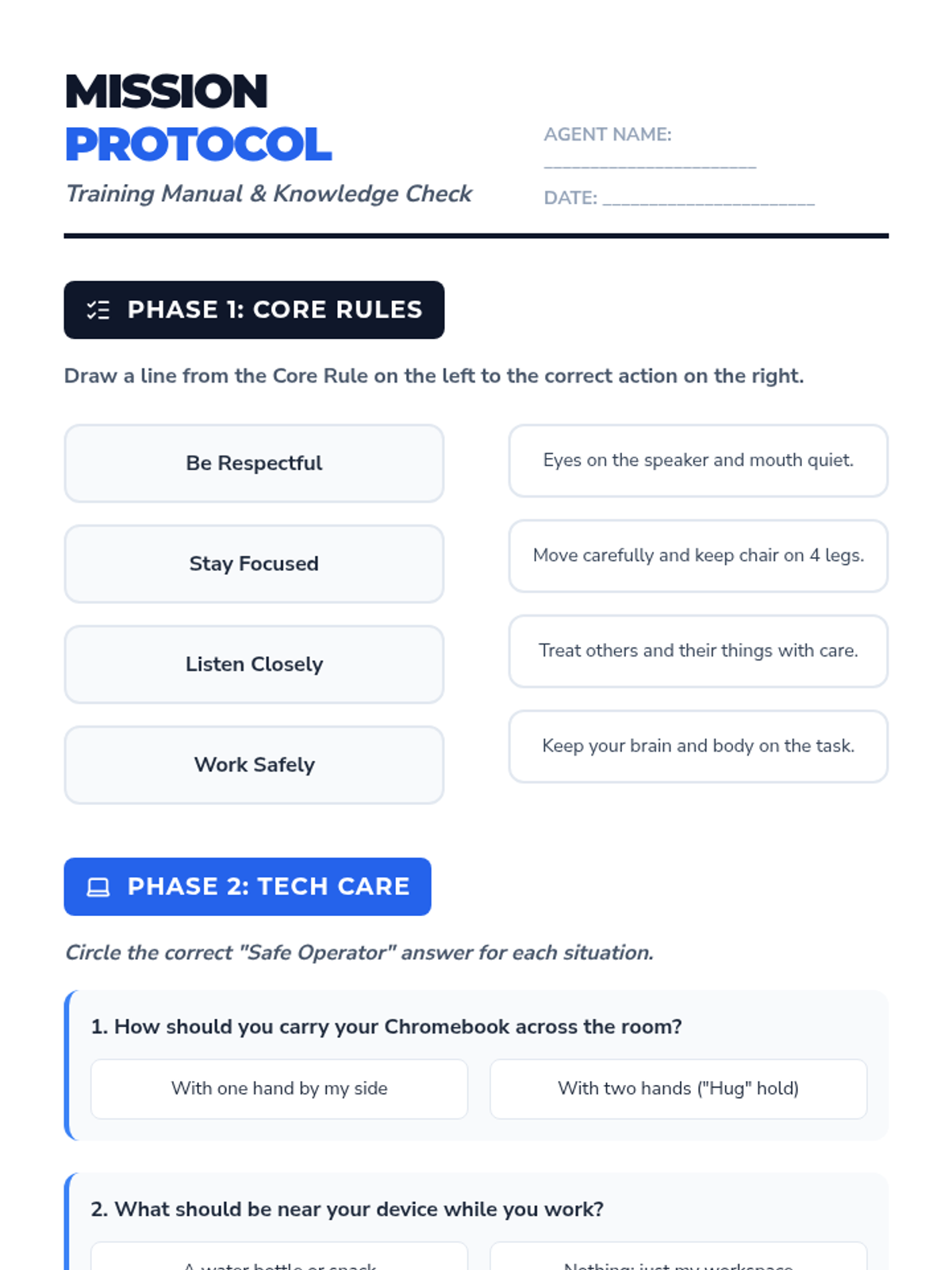
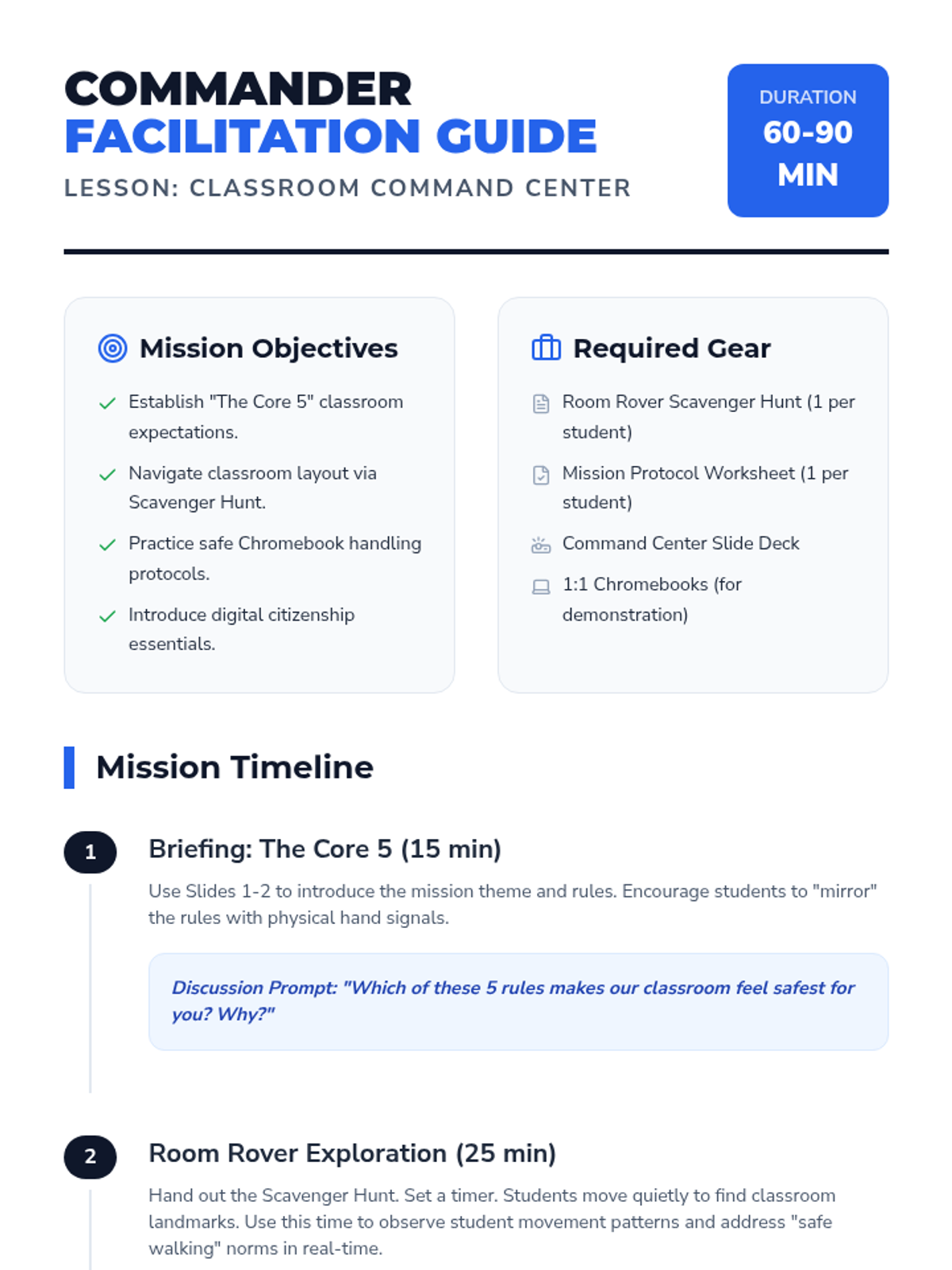
A comprehensive first-day lesson to establish classroom norms, physical space navigation, and digital responsibility. Includes instruction on Chromebook care and digital citizenship.
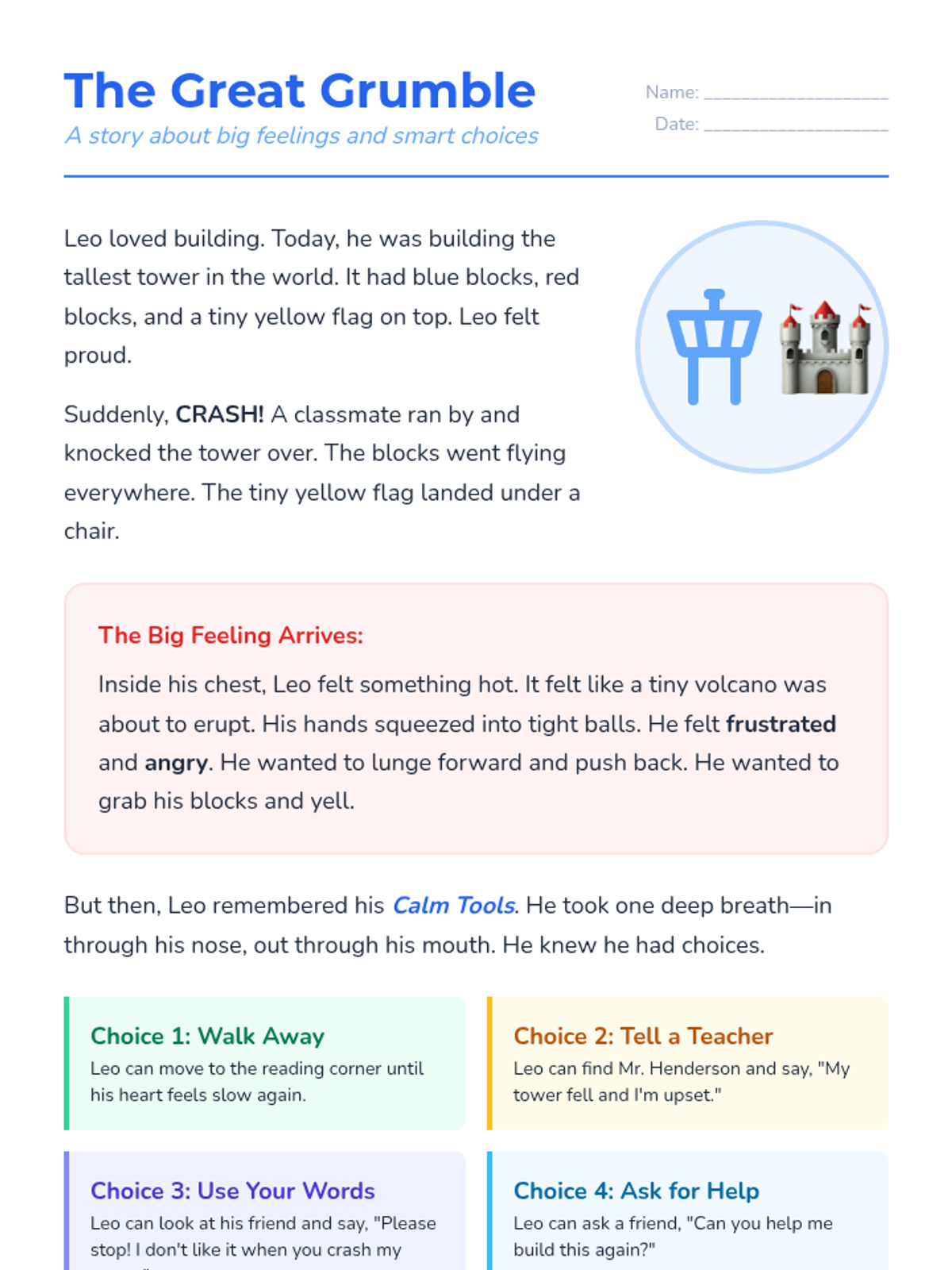
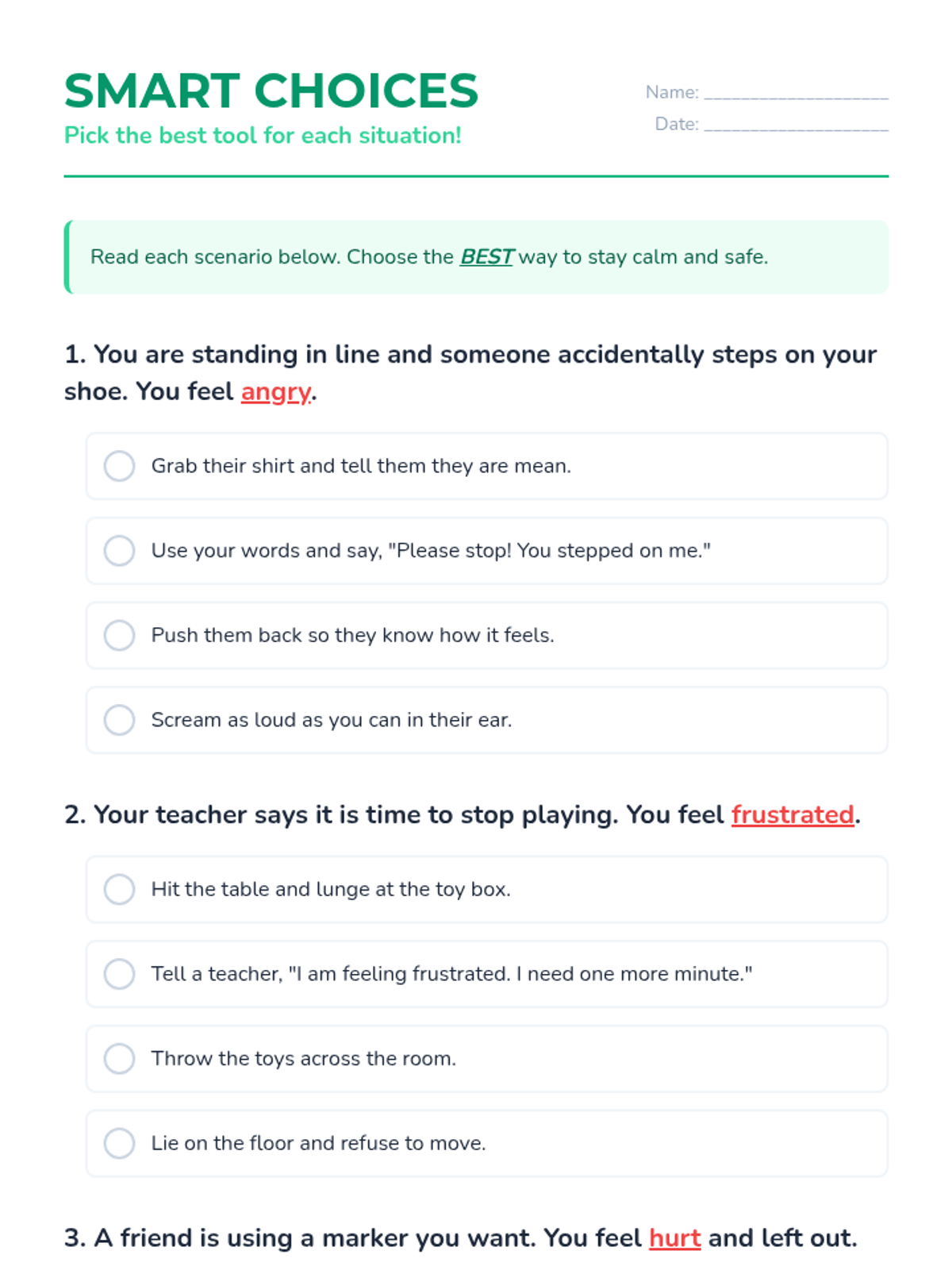
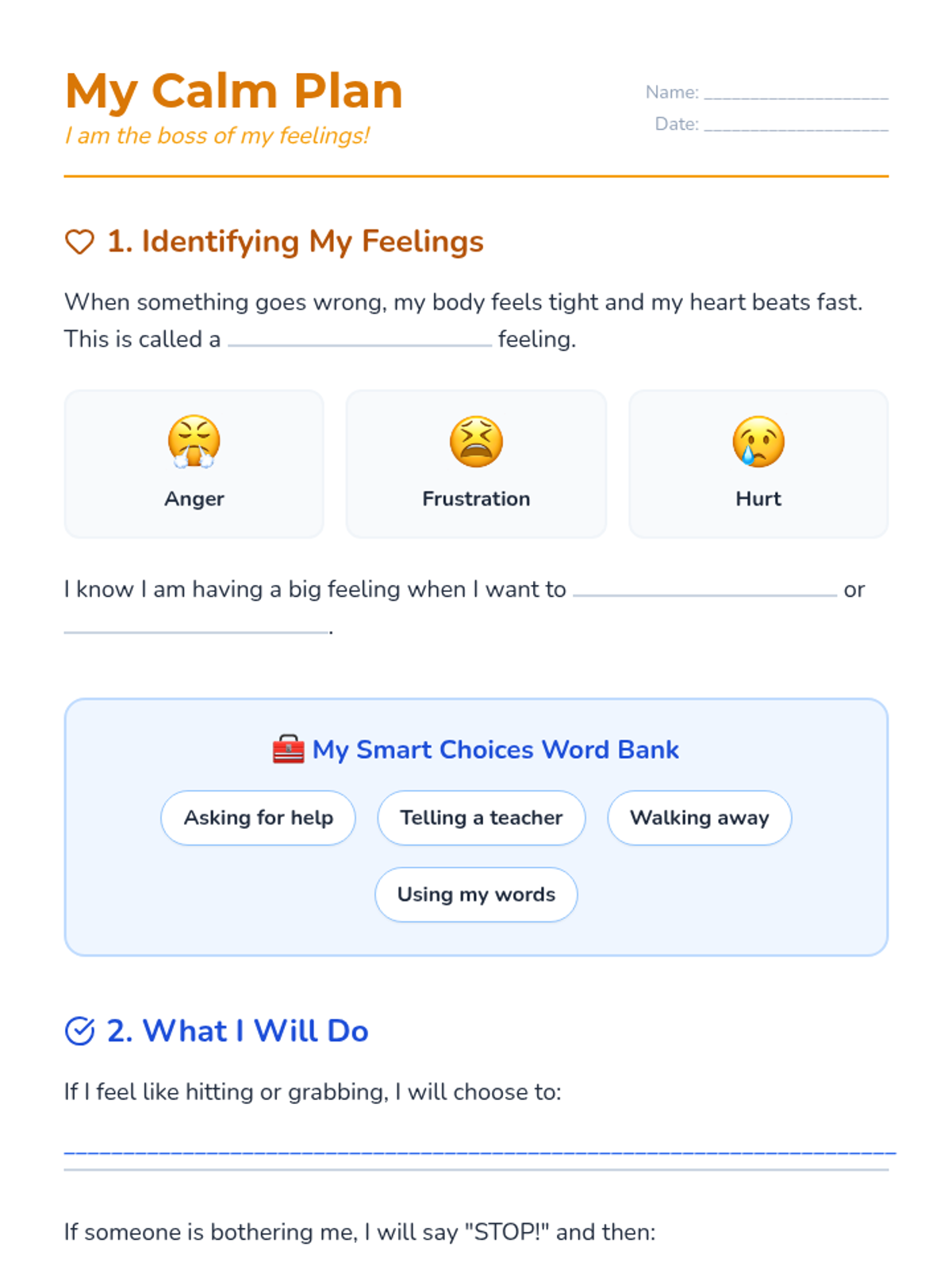
A social-emotional learning lesson designed to help students identify 'big feelings' and practice safe replacement behaviors for physical aggression. Includes a narrative story, situational practice, and a personalized reflection plan.
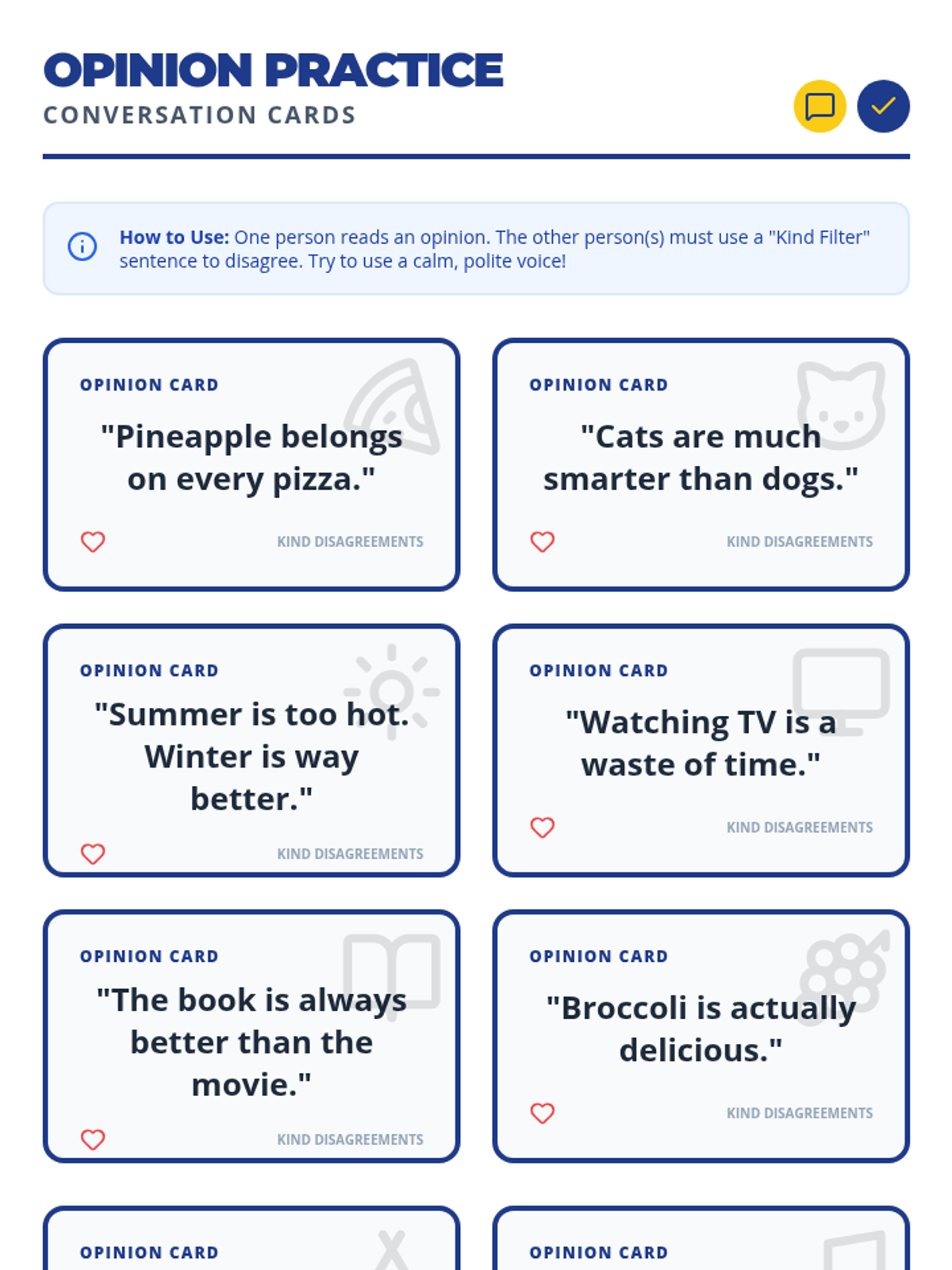
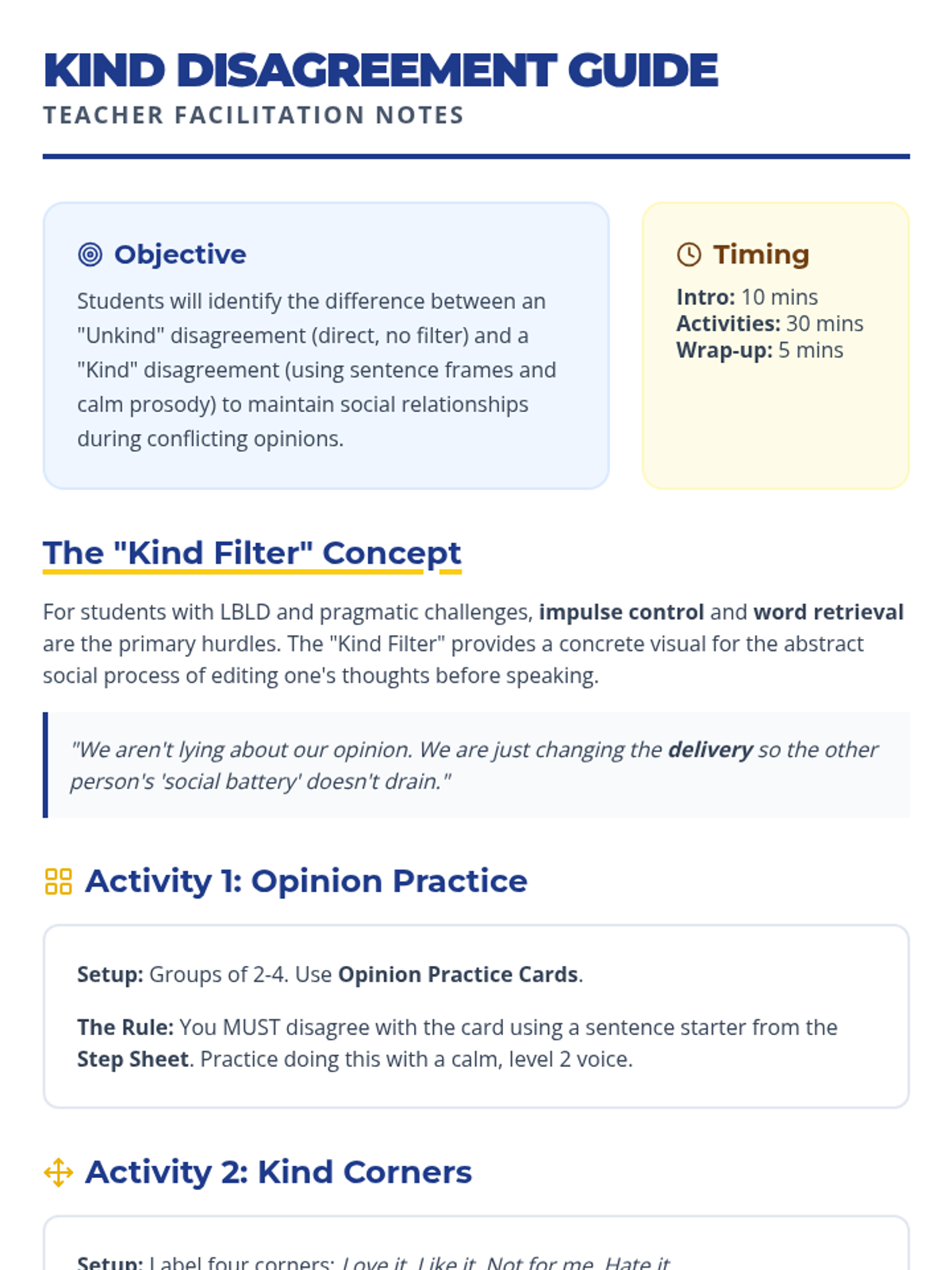
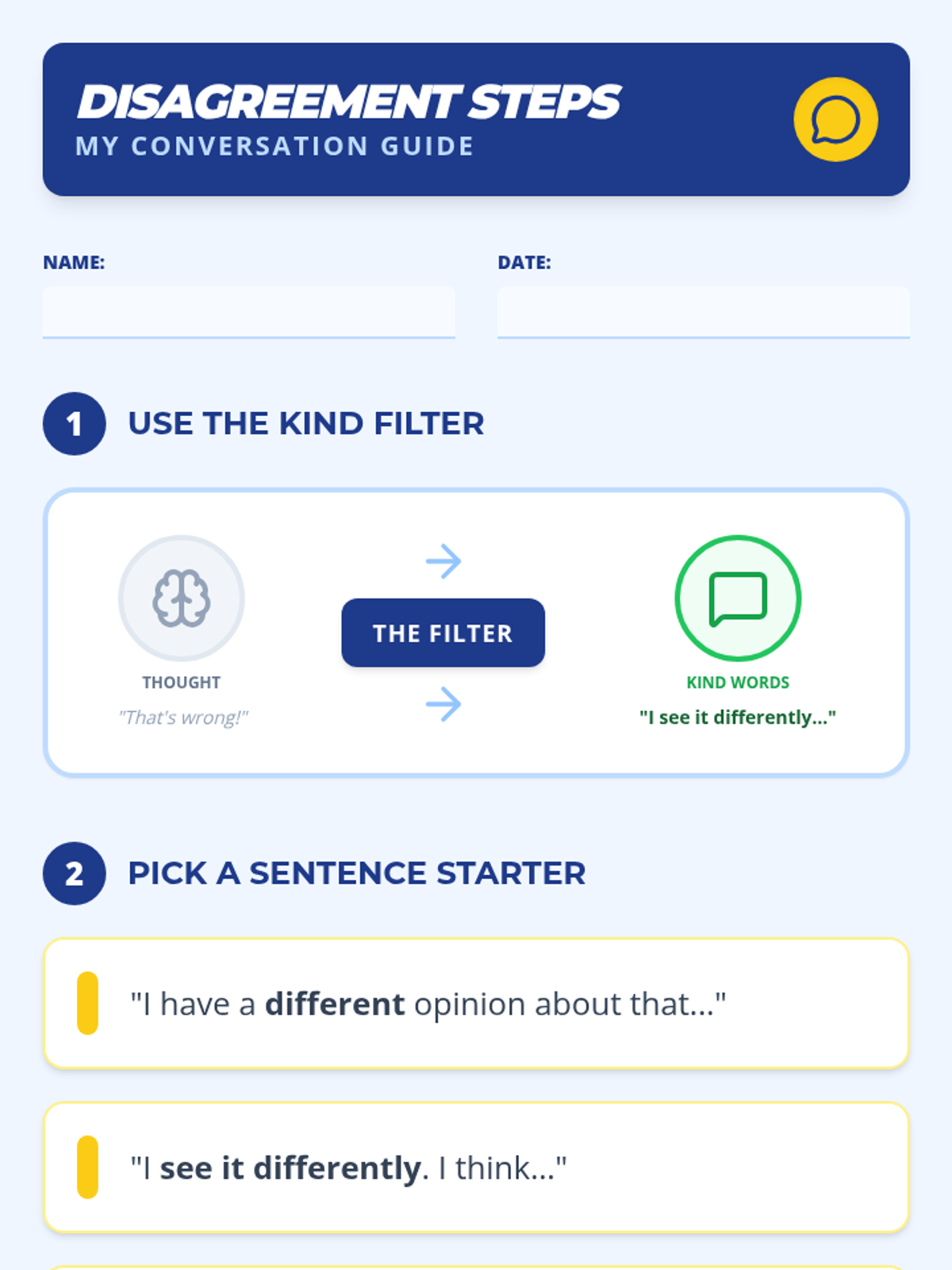
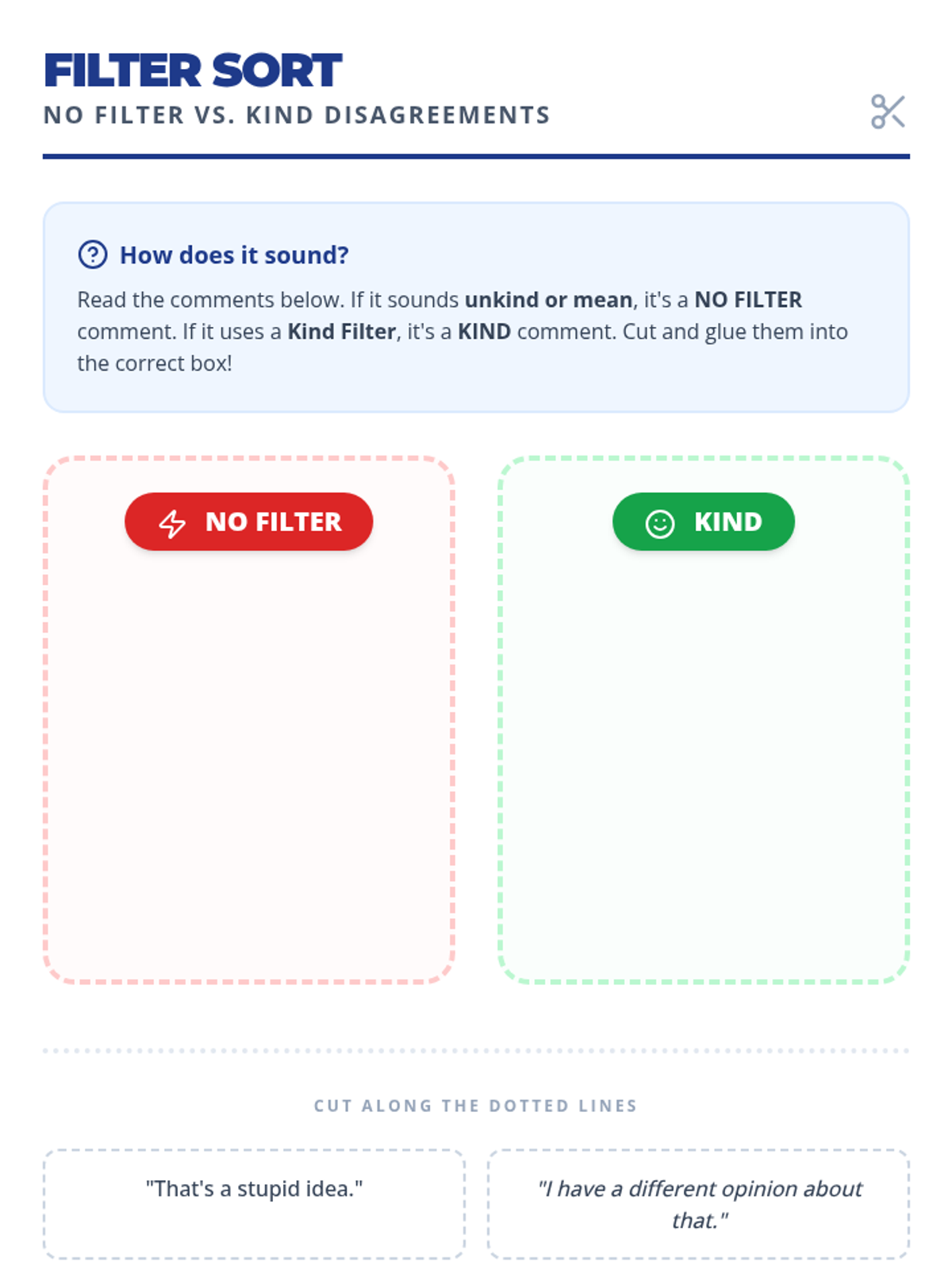
A pragmatic language lesson designed for students with LBLD to practice expressing disagreement respectfully. Through visual-heavy slides, structured role-plays, and hands-on activities like 'Kind Corners' and 'Opinion Practice', students learn to use social filters and sentence frames to navigate conflicting opinions.
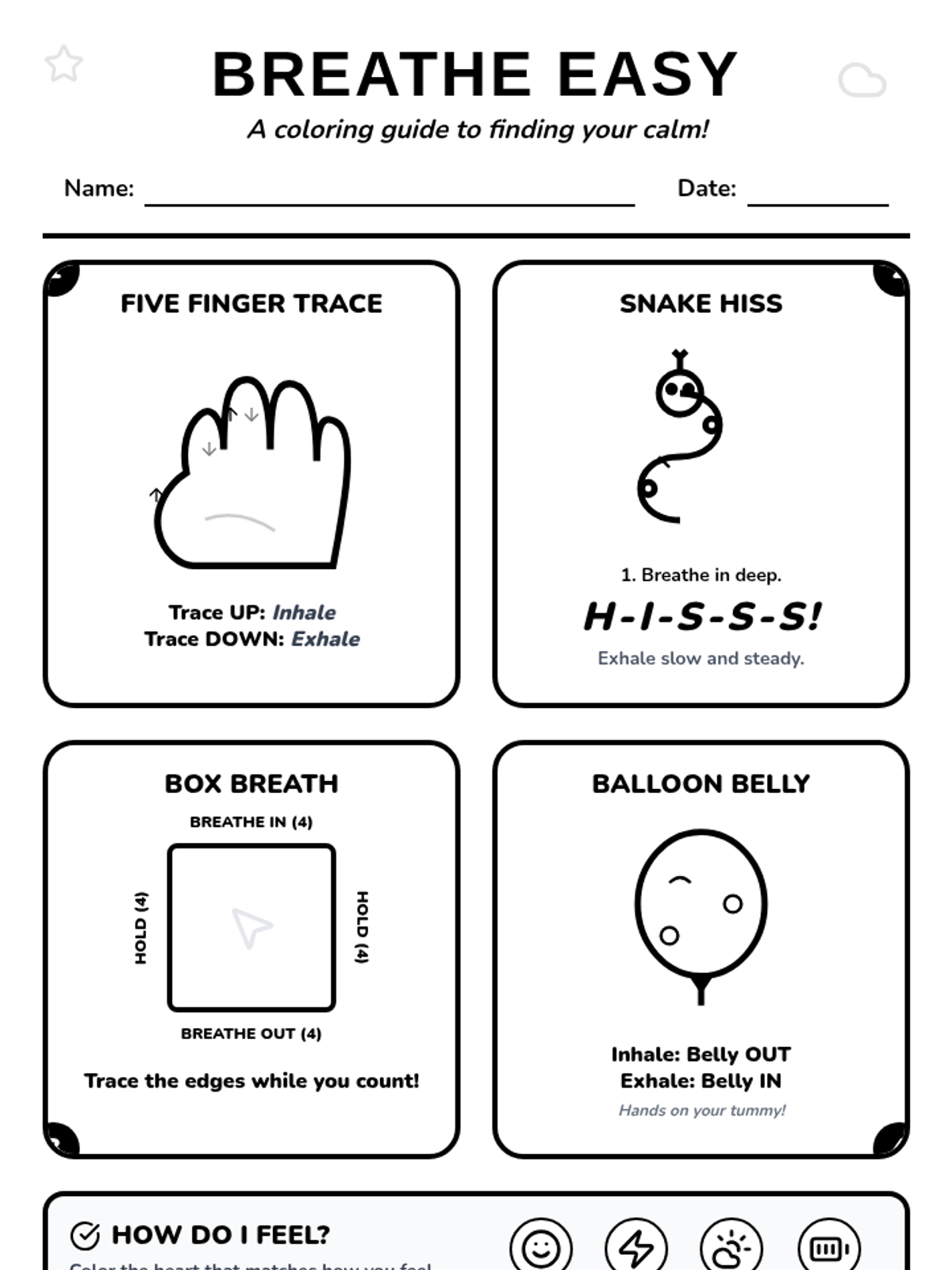
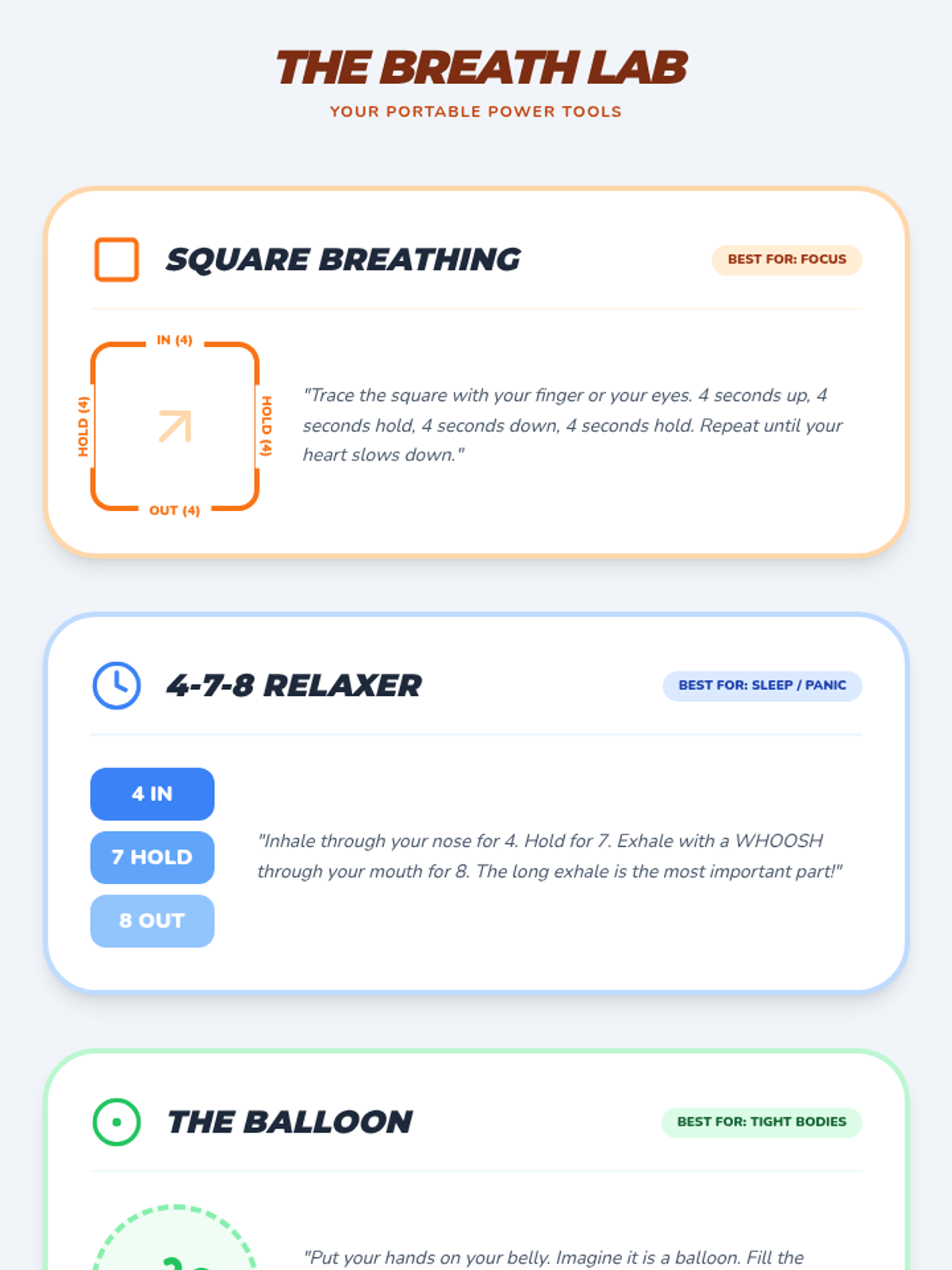
A collection of resources to help students learn and practice mindfulness breathing techniques for self-regulation and focus.
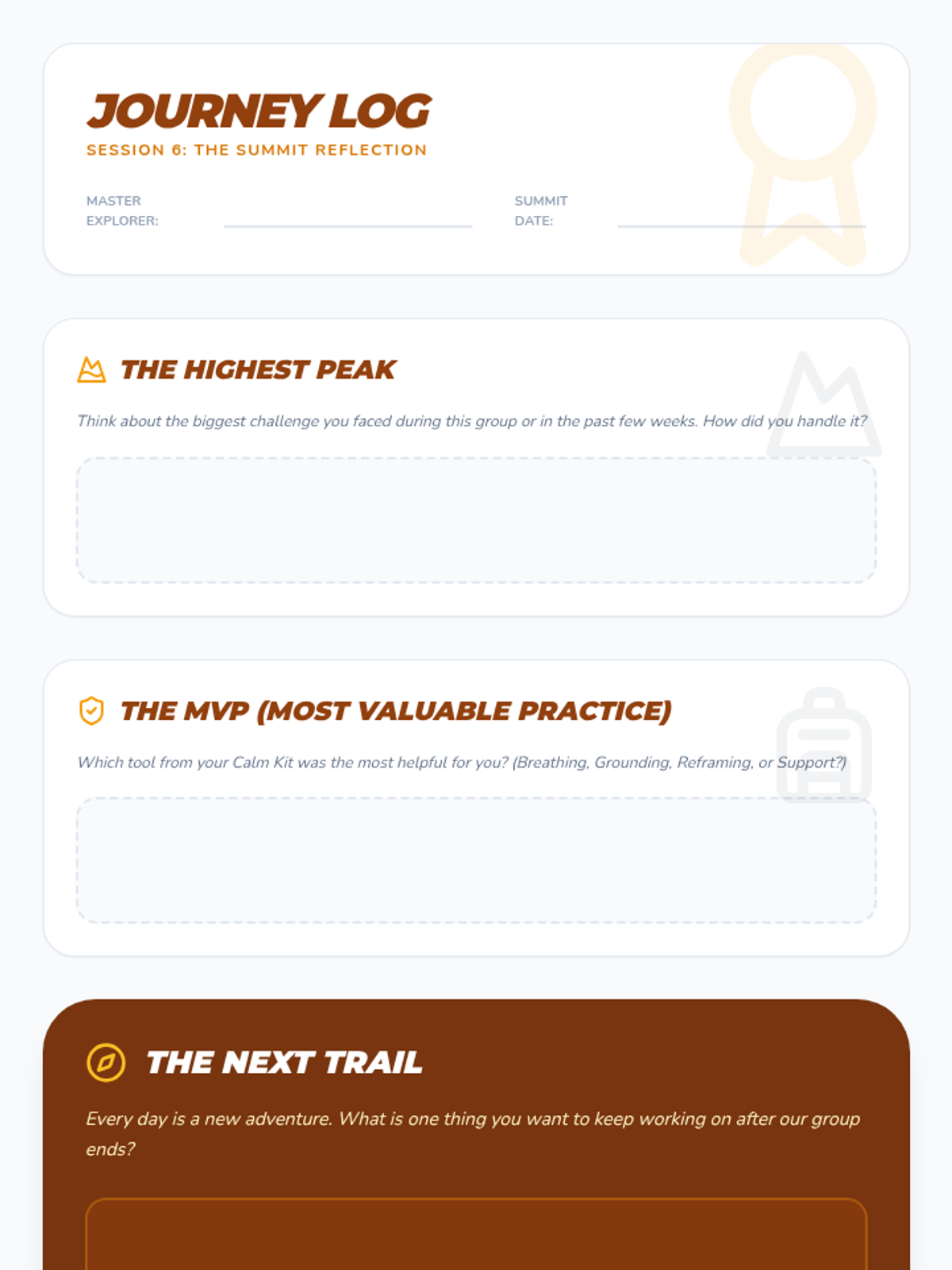
Final reflection, celebration of growth, and planning for the journey ahead.
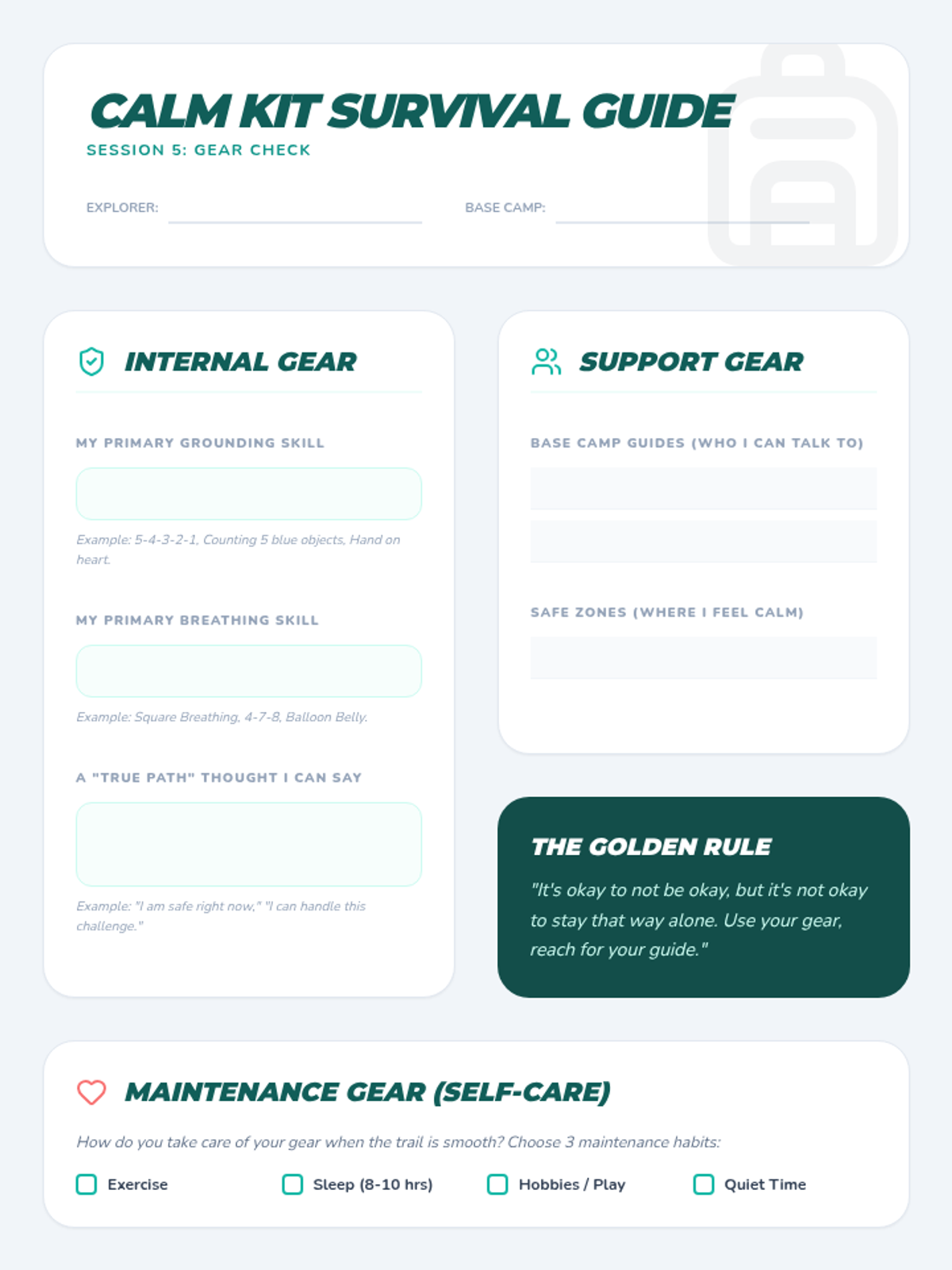
Reviewing various coping skills and creating a personalized 'Survival Kit' for future use.
Focusing on the power of breath and mindfulness as internal tools for regulation.
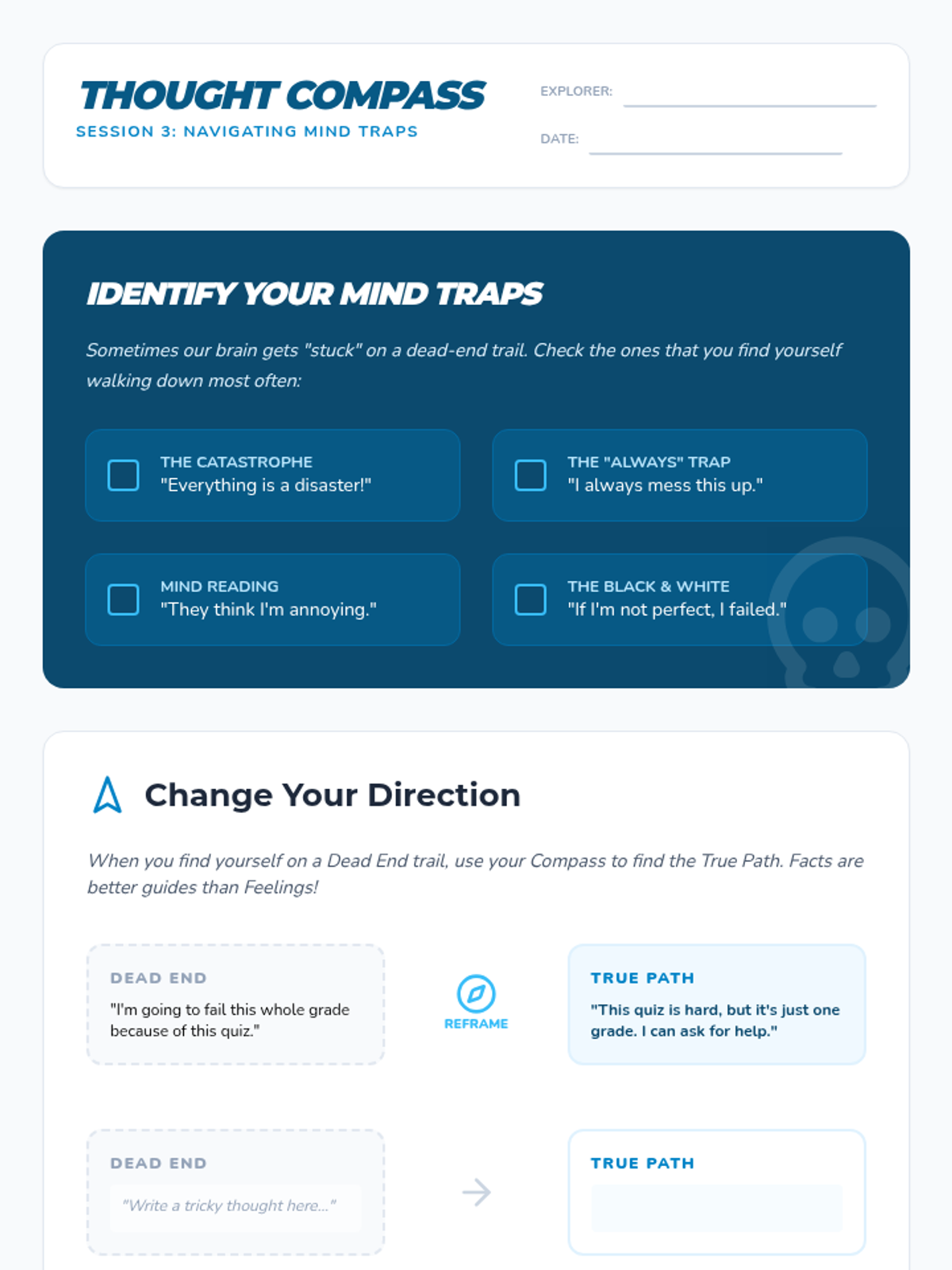
Identifying cognitive distortions or 'tricky trails' and learning to reframe thoughts using a 'Thought Compass'.
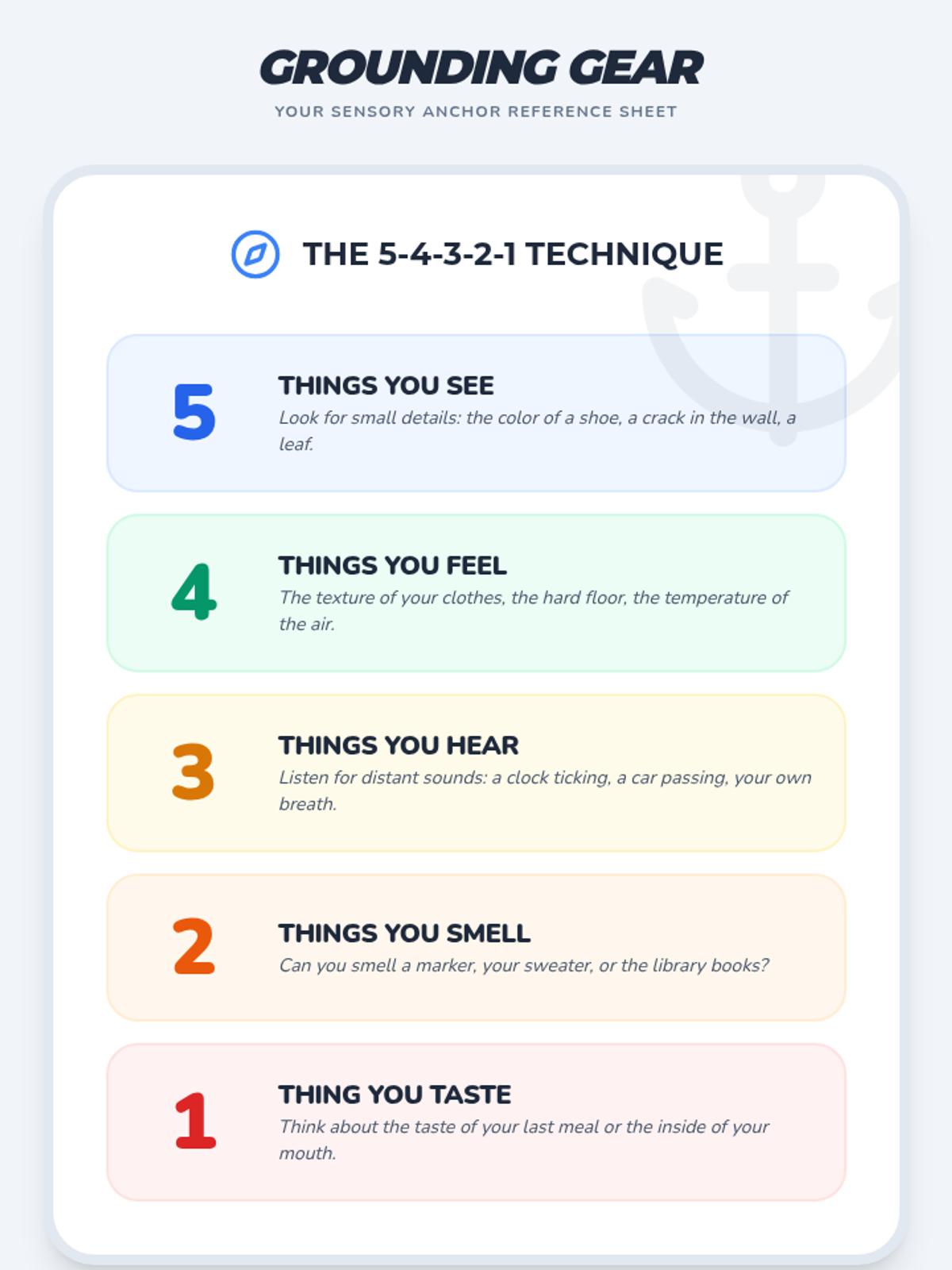
Understanding the physical 'alarm system' of the body and learning grounding techniques to stay present during 'storms'.
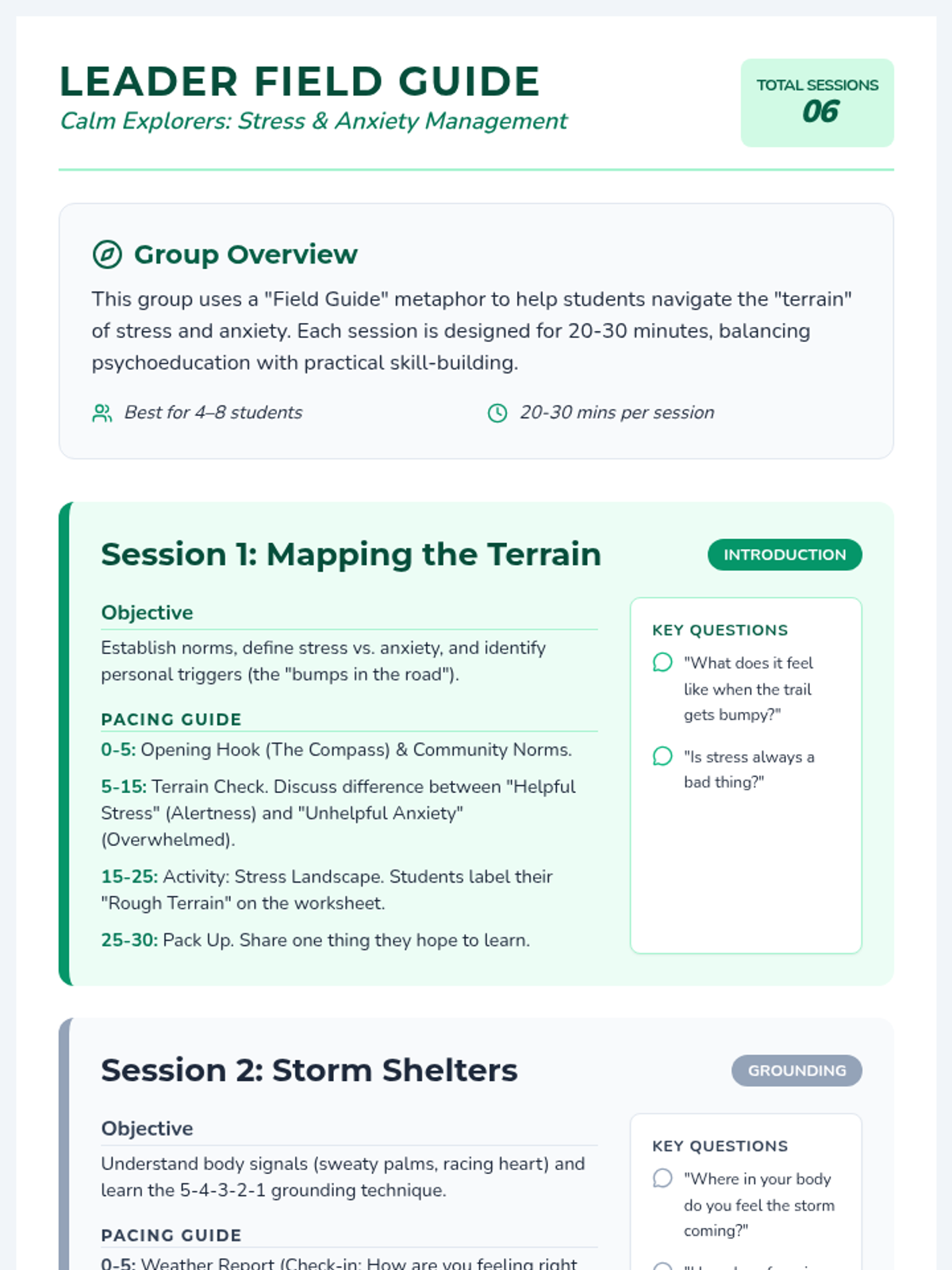
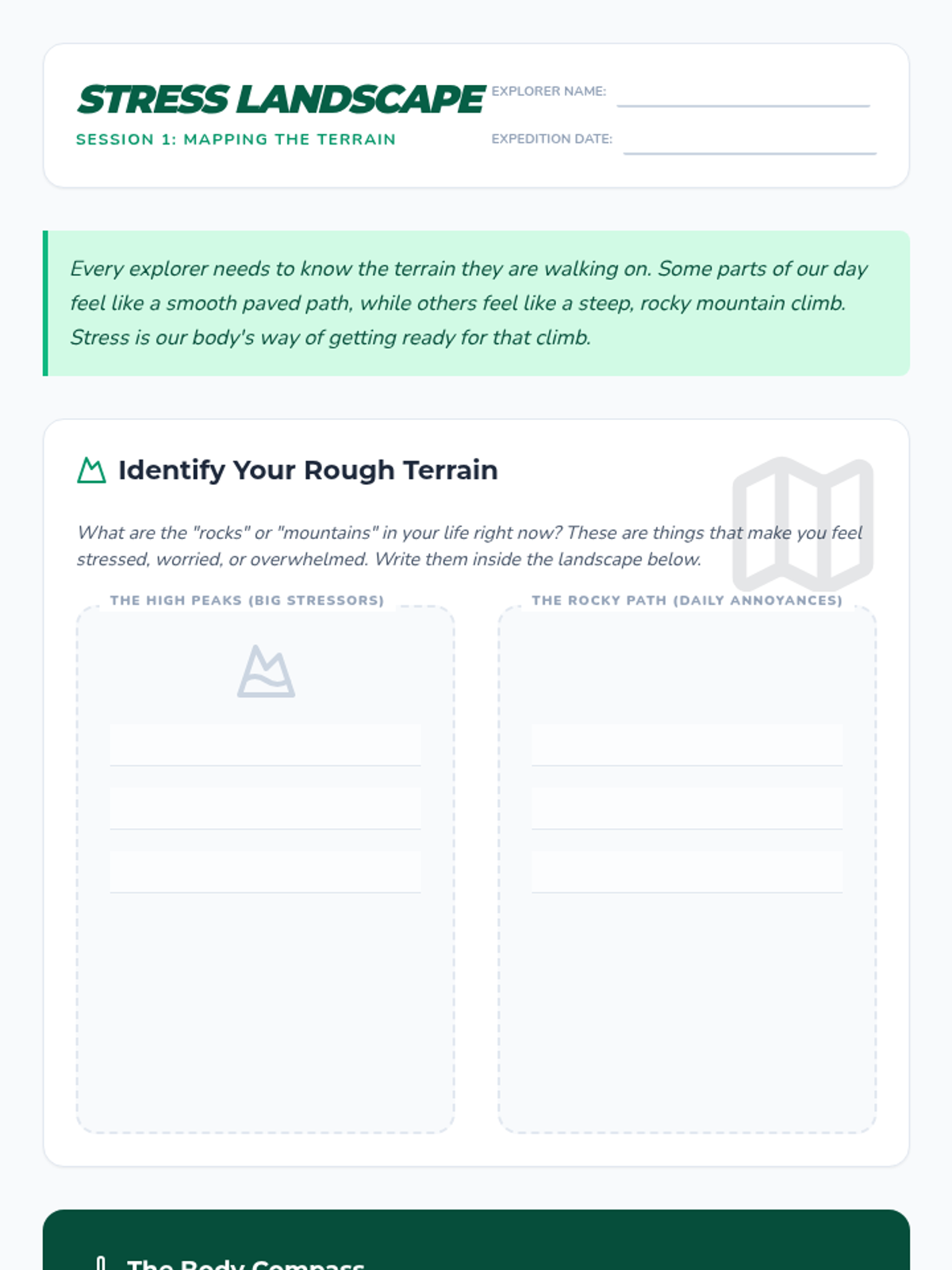
Introduction to the group, establishing norms, and identifying individual stress triggers using the 'Stress Landscape' metaphor.
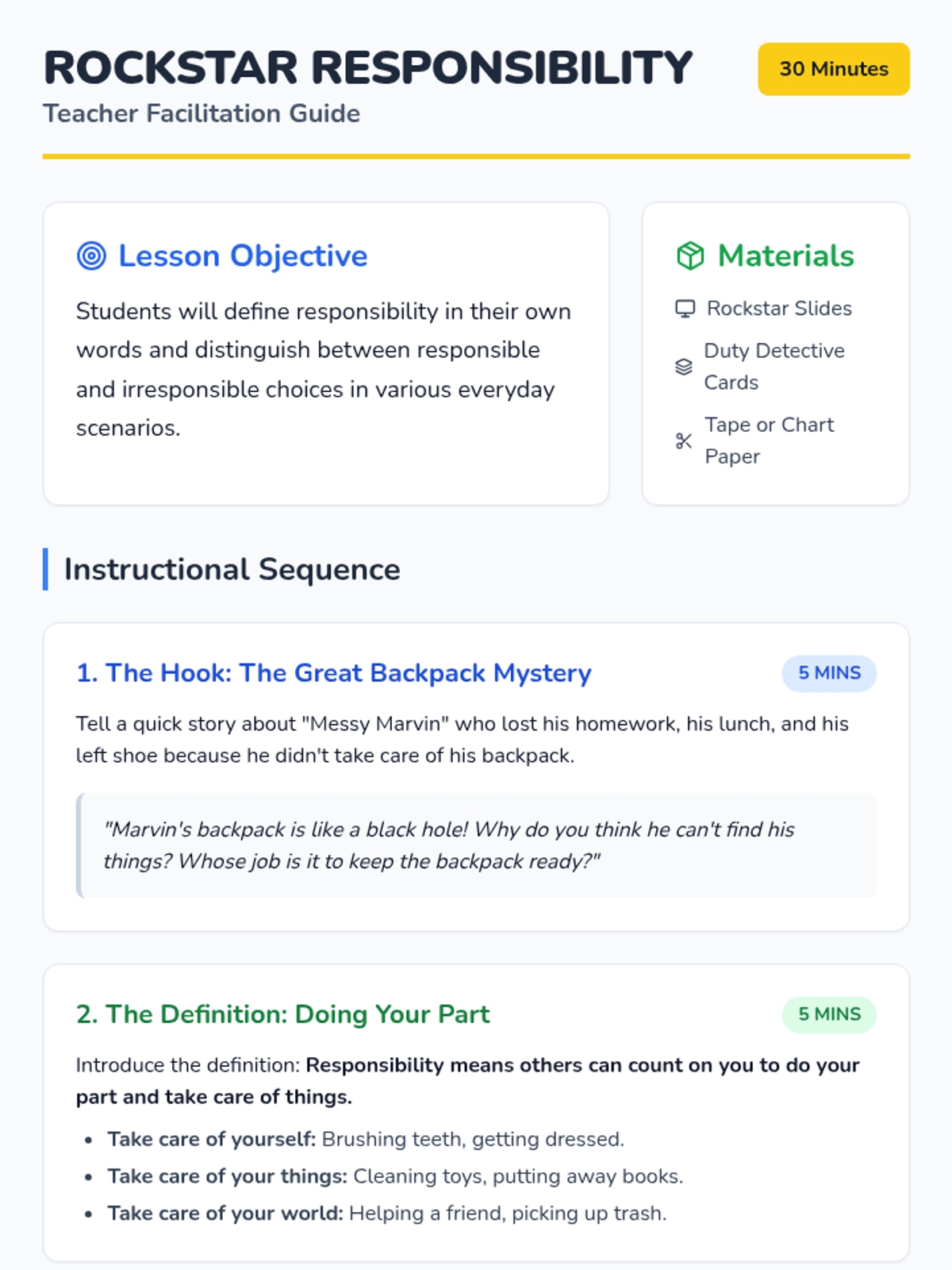
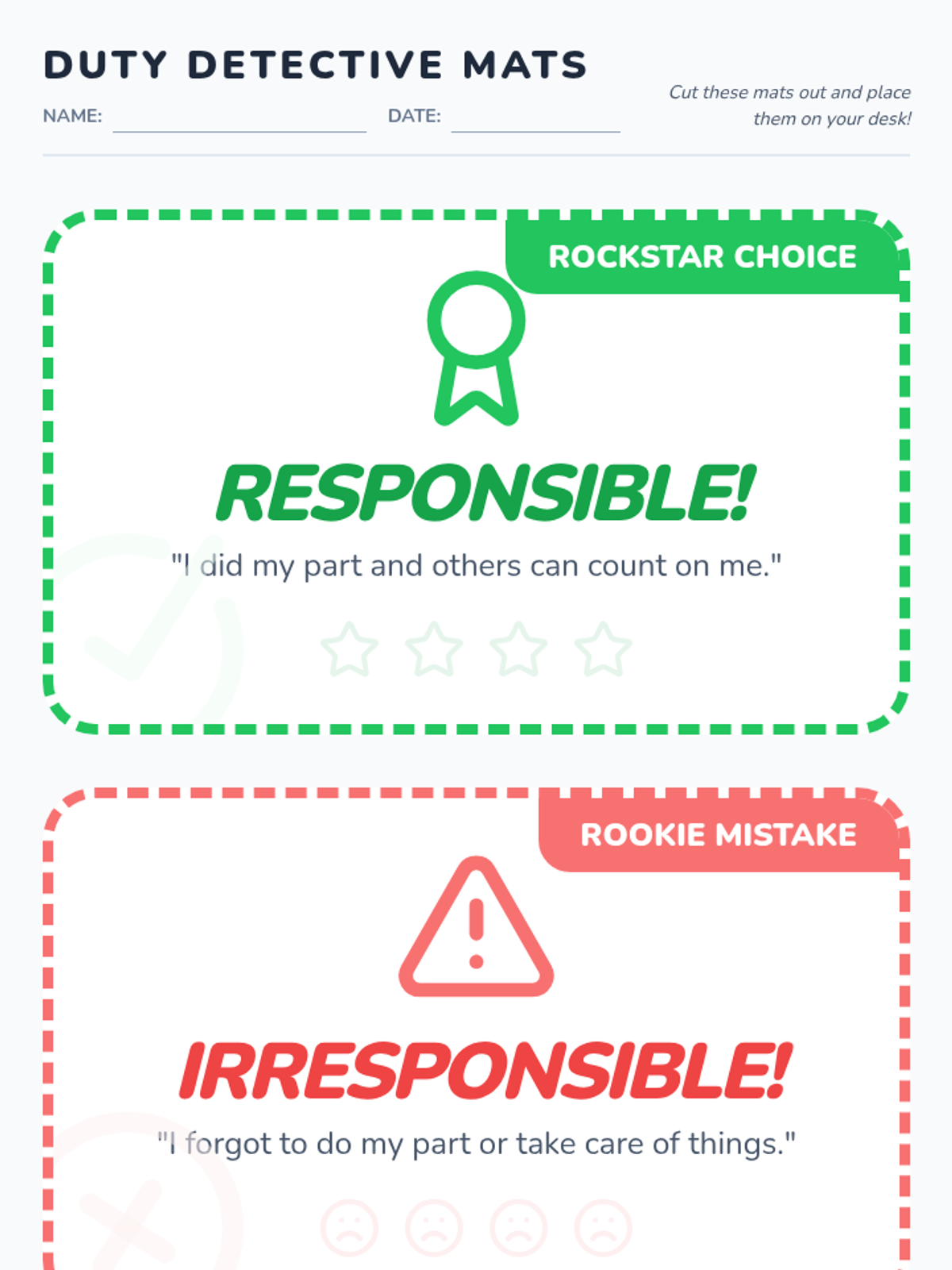
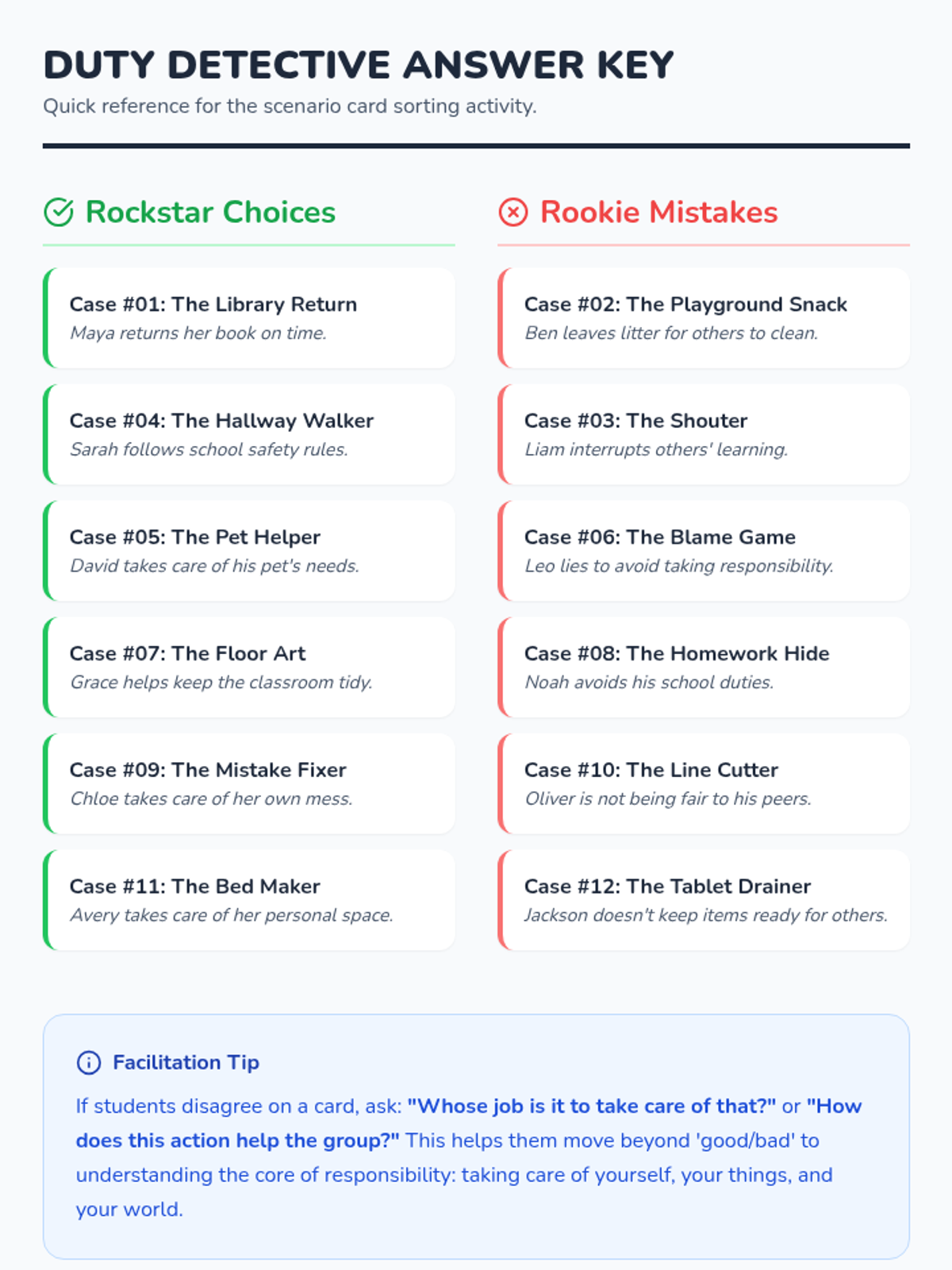
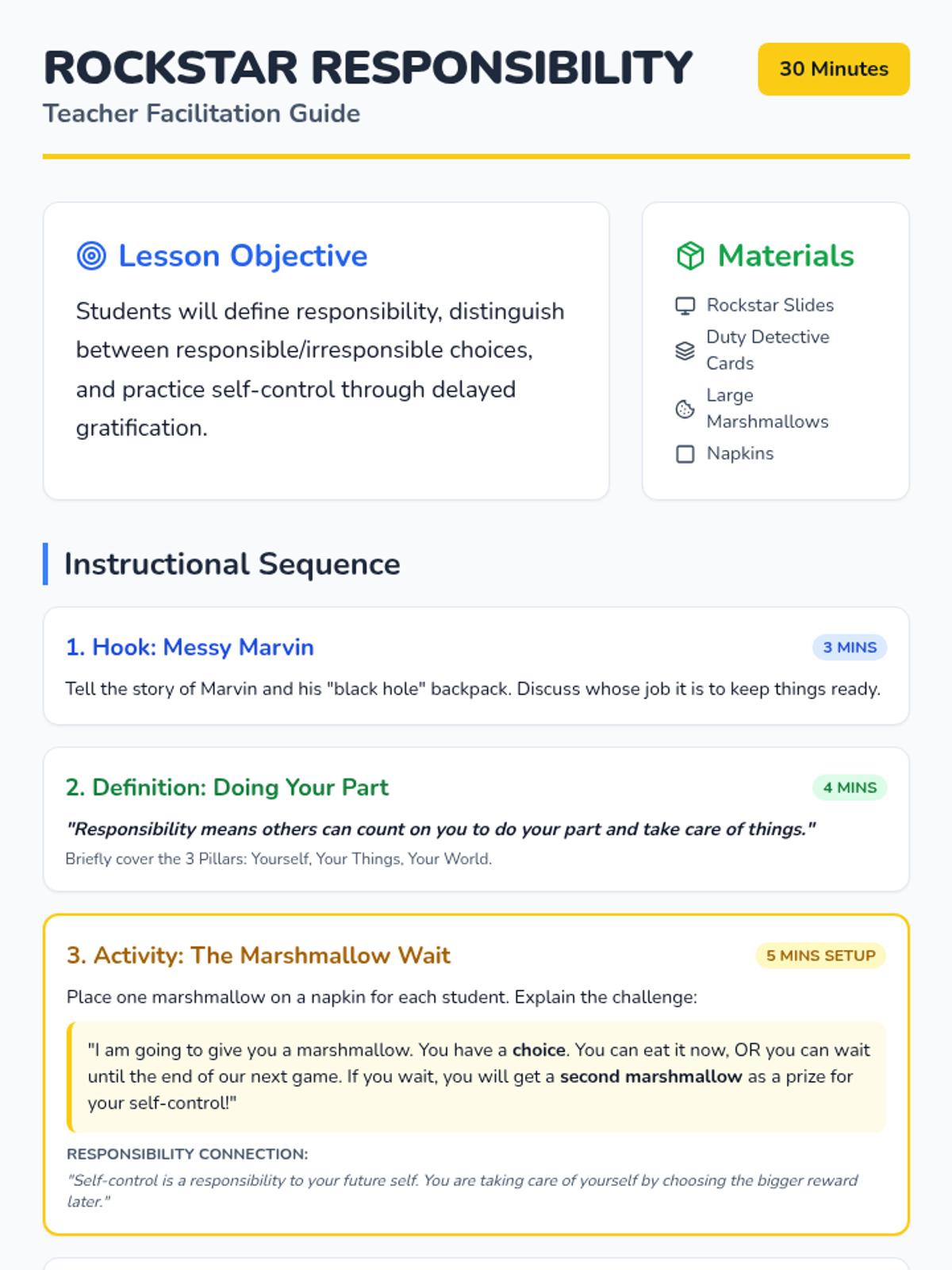
A high-energy, 30-minute introduction to responsibility for K-4 students, featuring a scenario-based hook, clear definitions, and interactive choice-sorting activities.
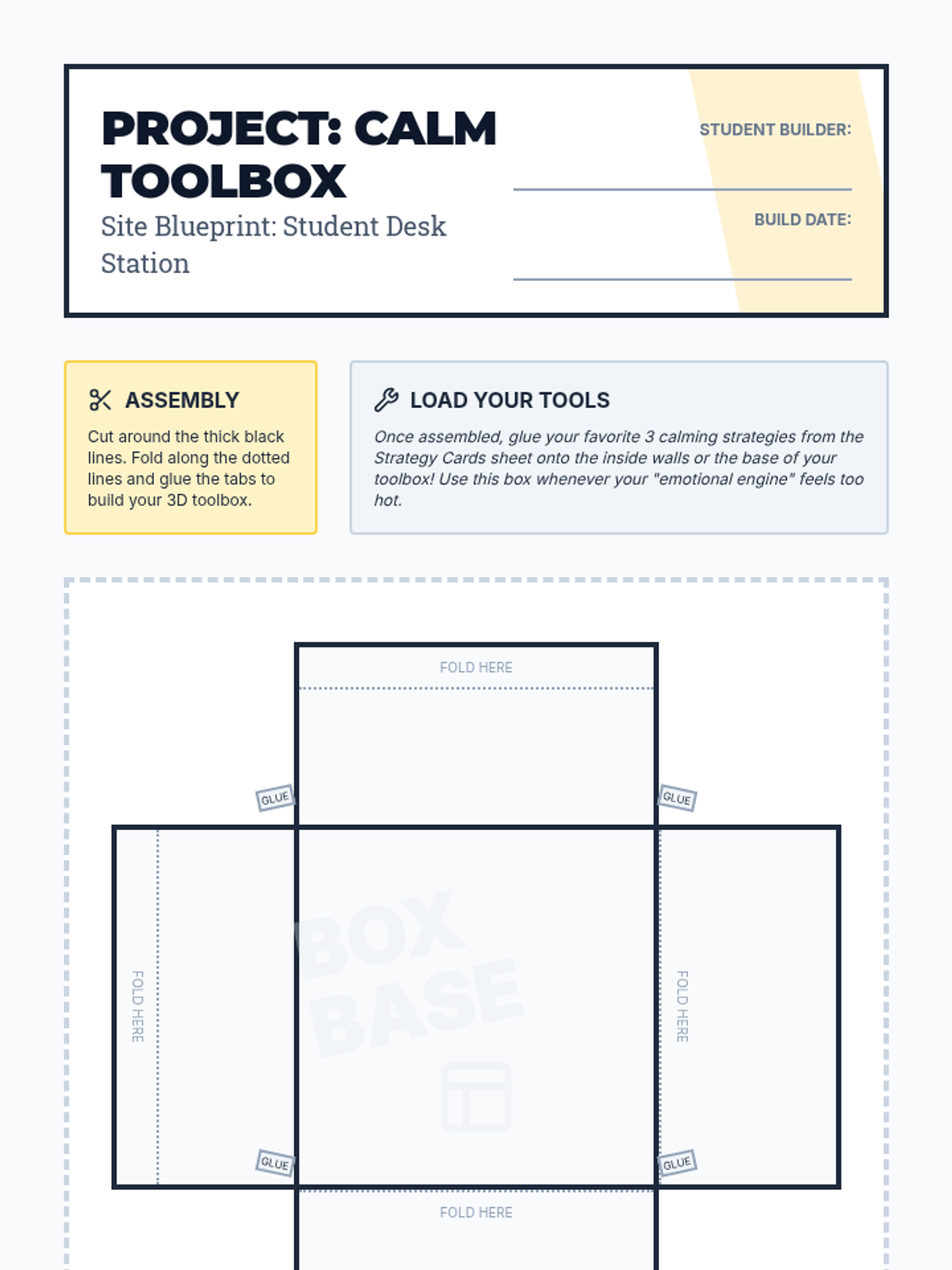
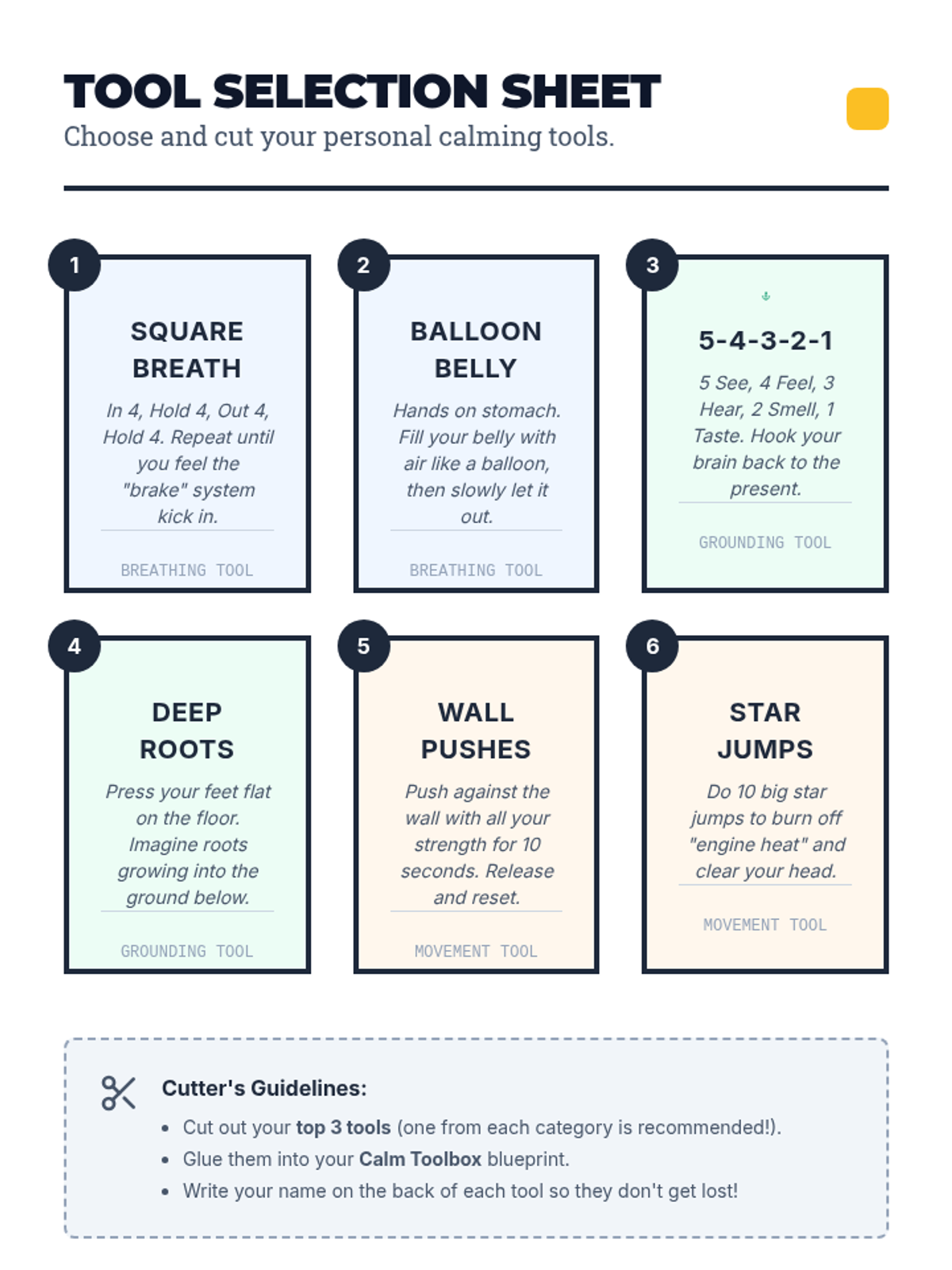
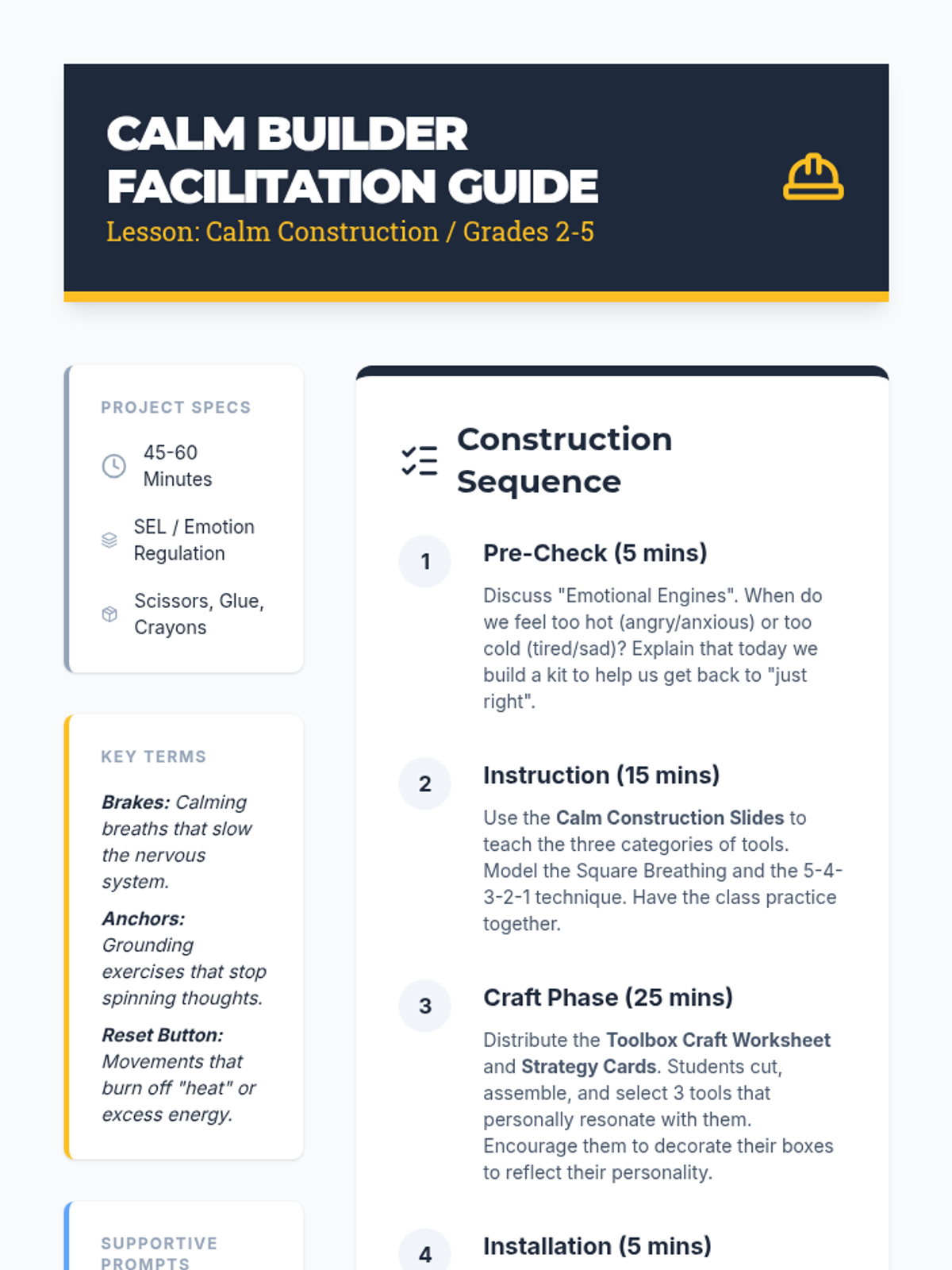
A hands-on lesson where students build a personal 'calming toolbox' filled with evidence-based strategies for breathing, grounding, and movement. Students learn to identify when they need a tool and how to use it effectively to manage their emotions.
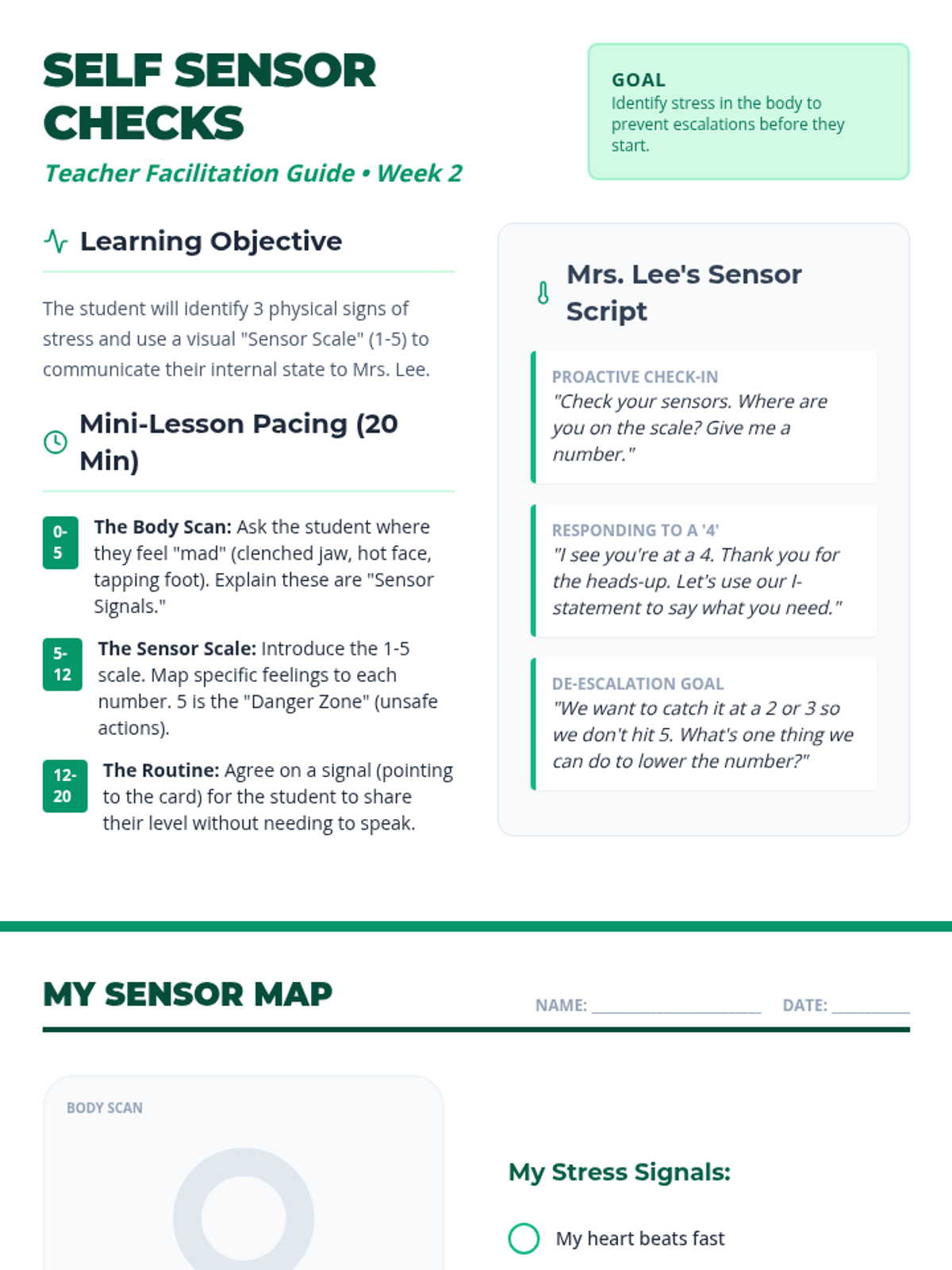
This lesson focuses on identifying internal emotional states and using visual check-ins to monitor stress levels before they lead to disruptions.
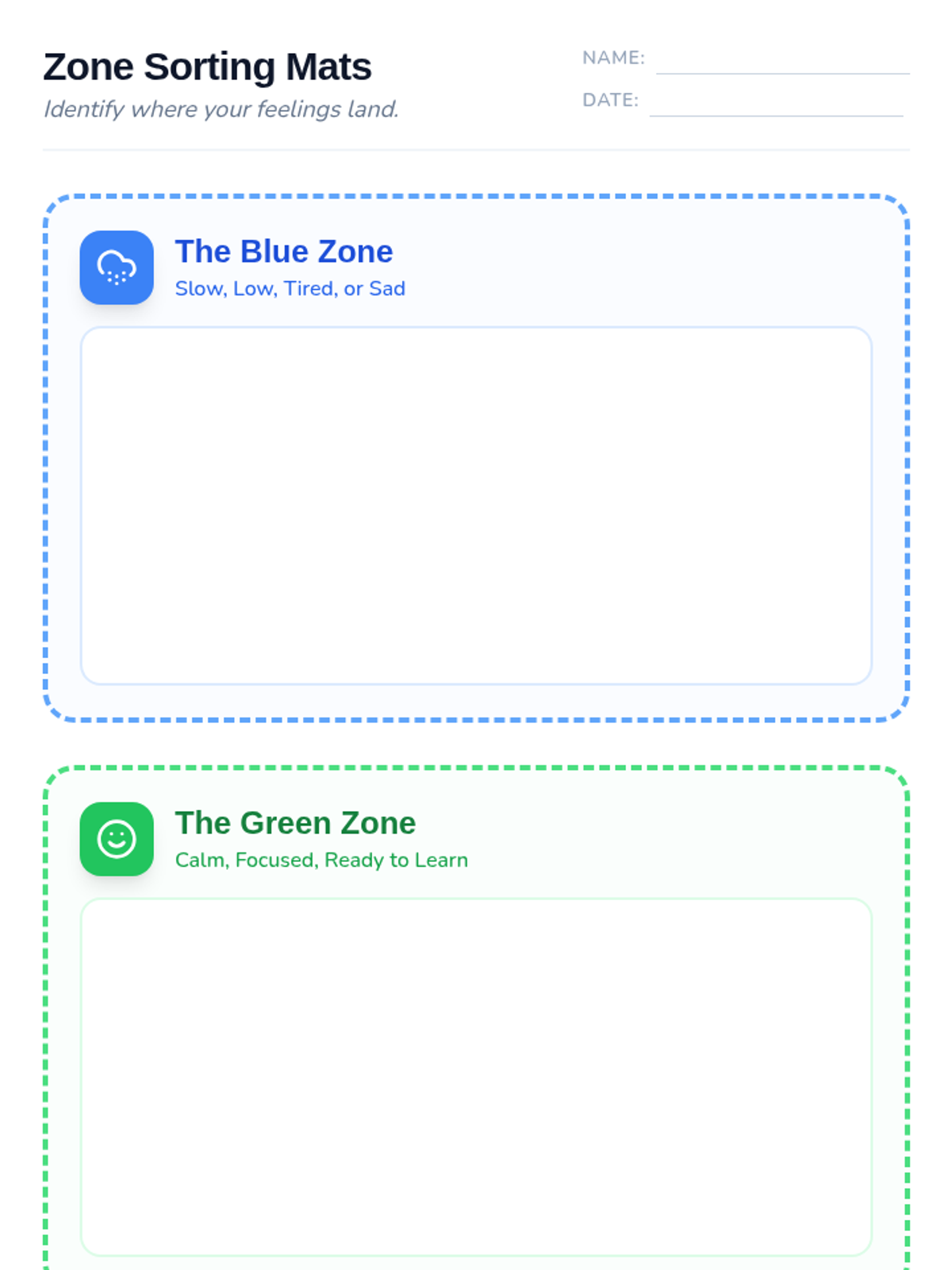
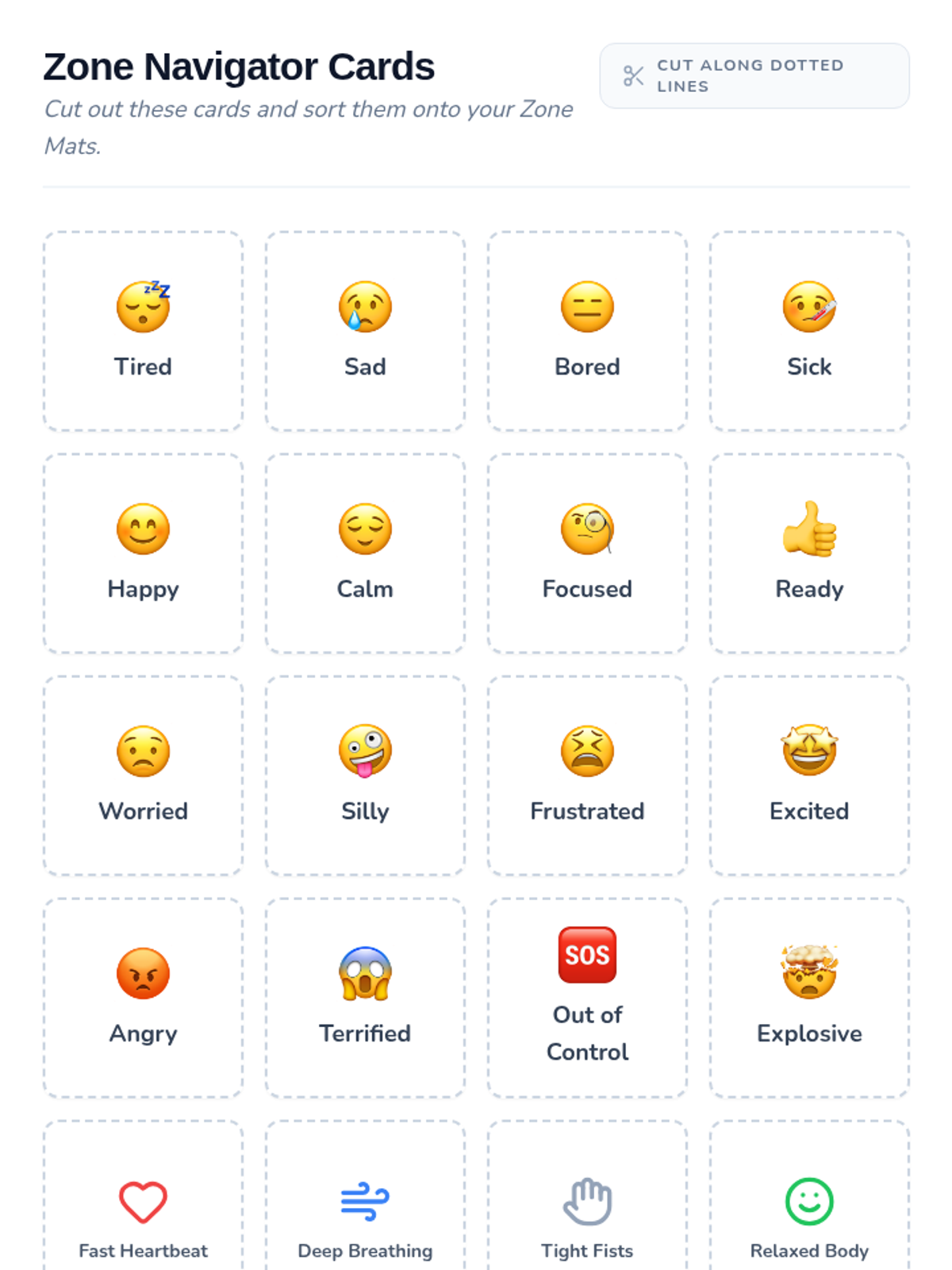
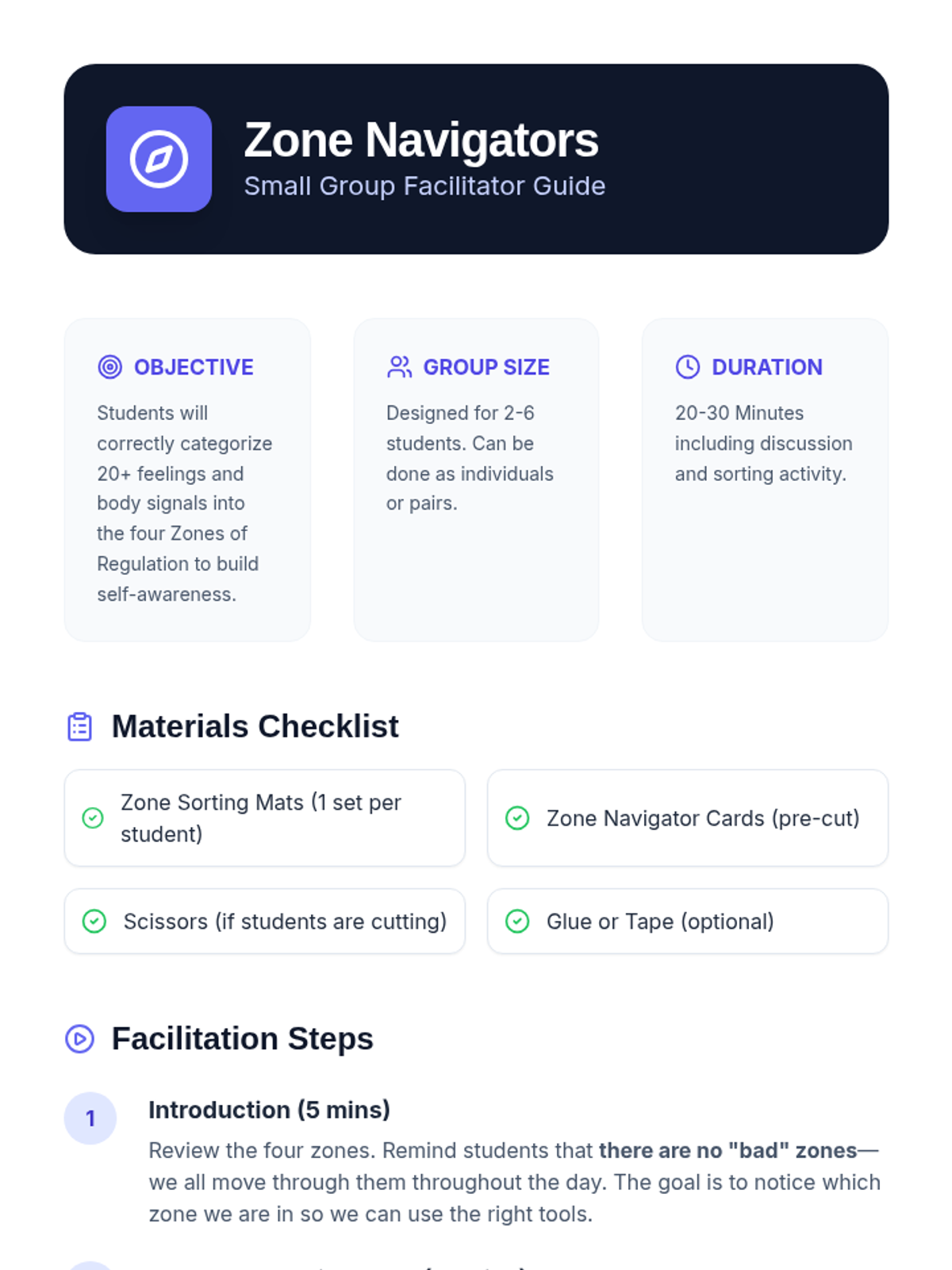
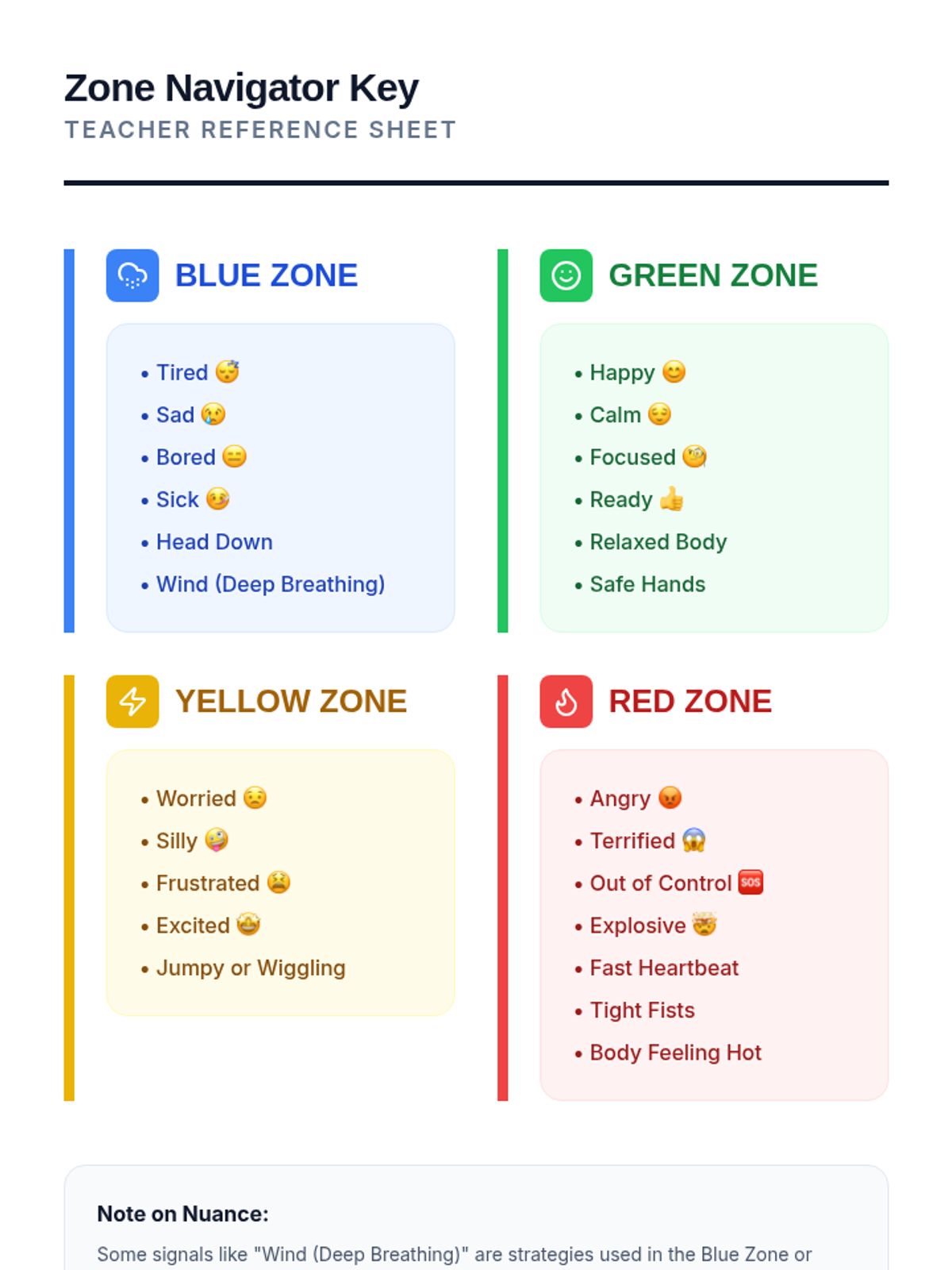
A small group activity focused on identifying and categorizing emotions into the four color zones (Blue, Green, Yellow, and Red). Students will practice recognizing body signals and feelings to improve self-awareness and regulation.
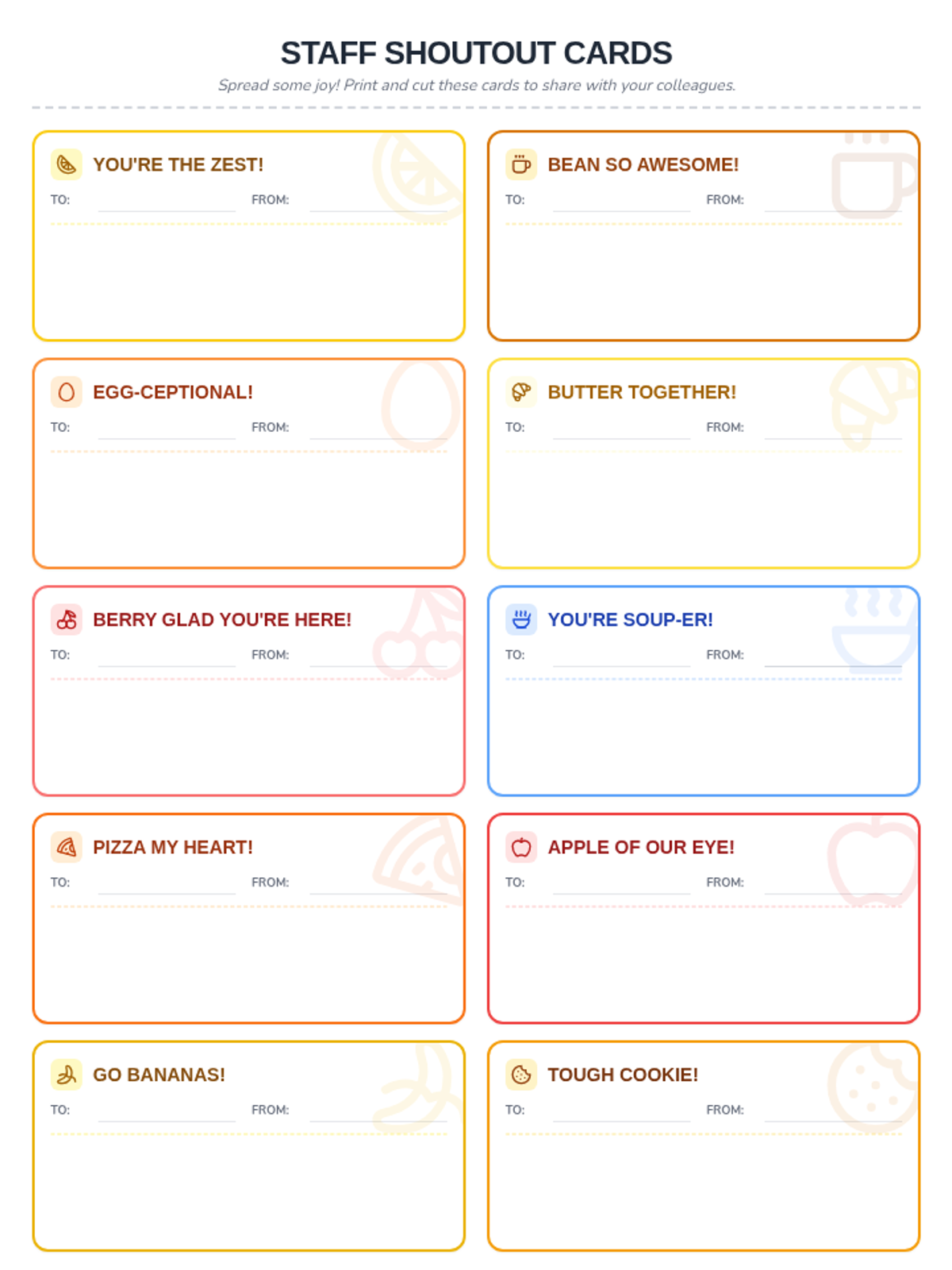
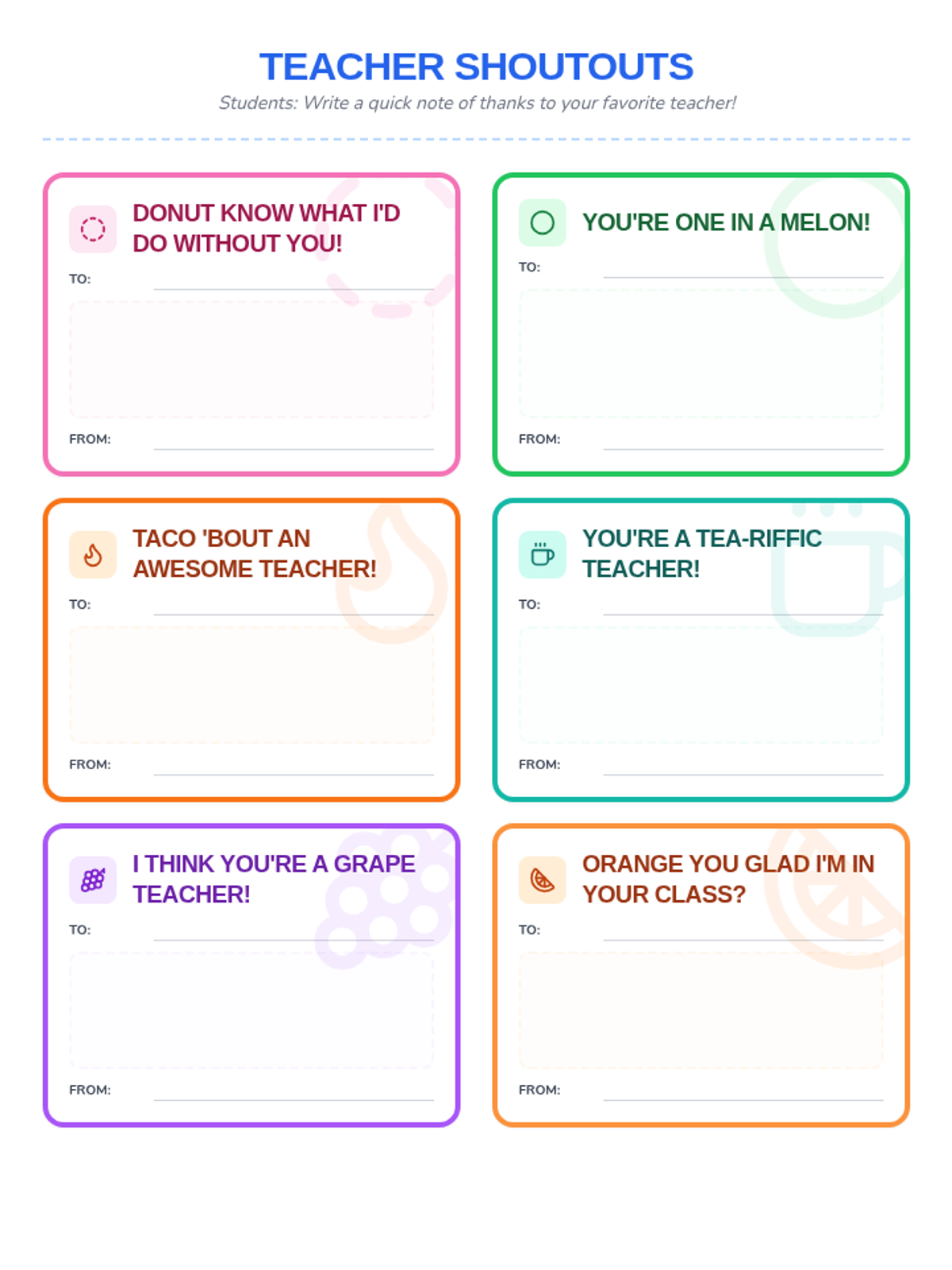
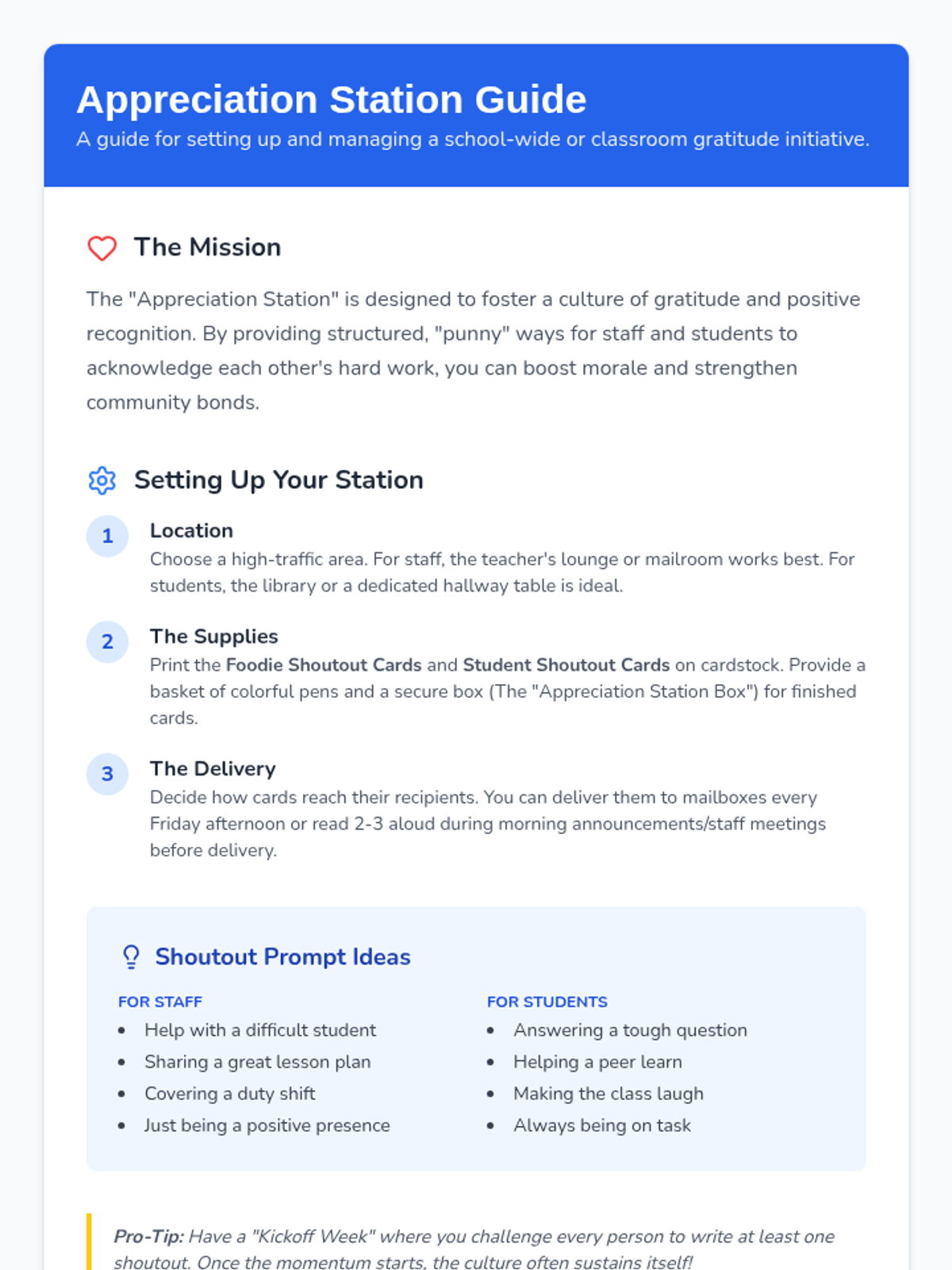
A collection of appreciation-themed resources for school staff and students to express gratitude through creative, pun-based shoutout cards.
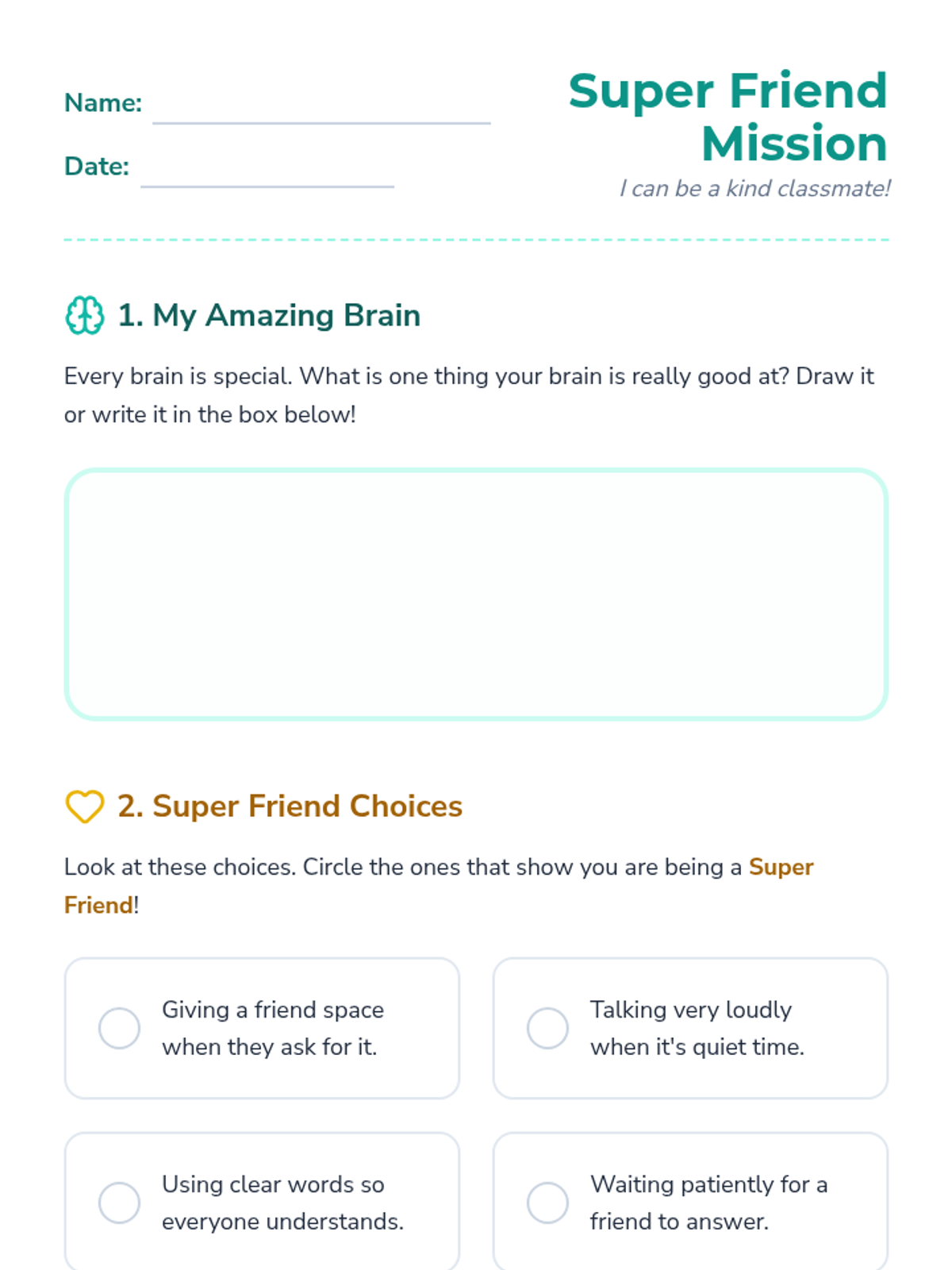
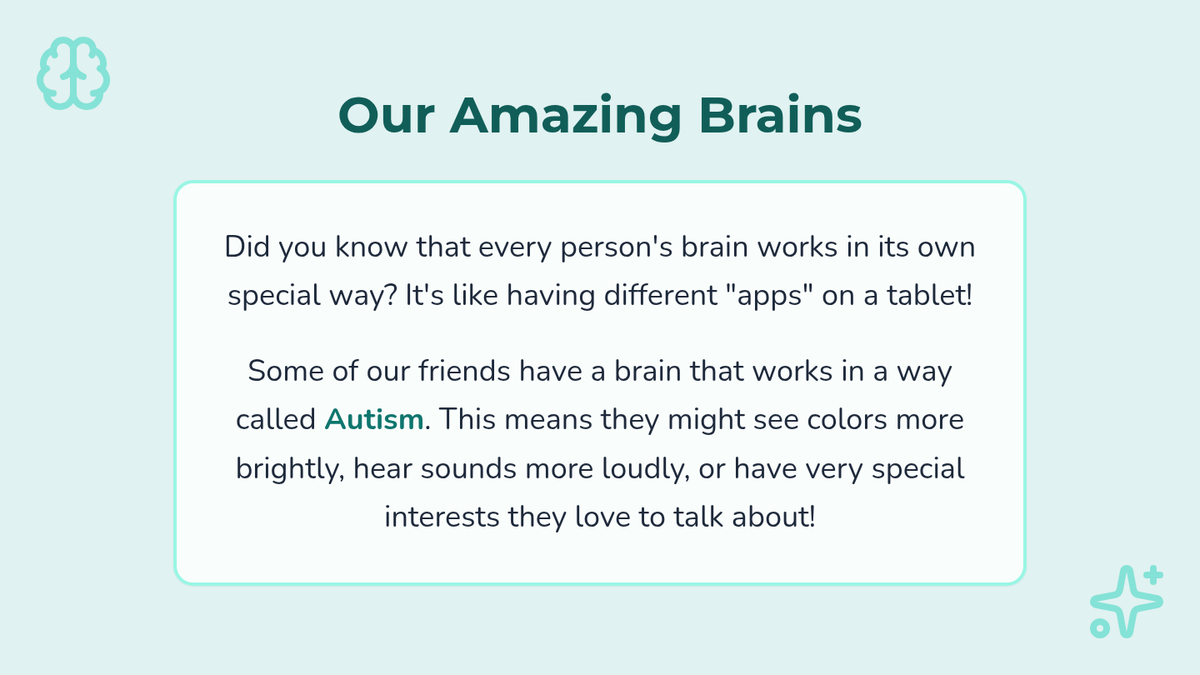
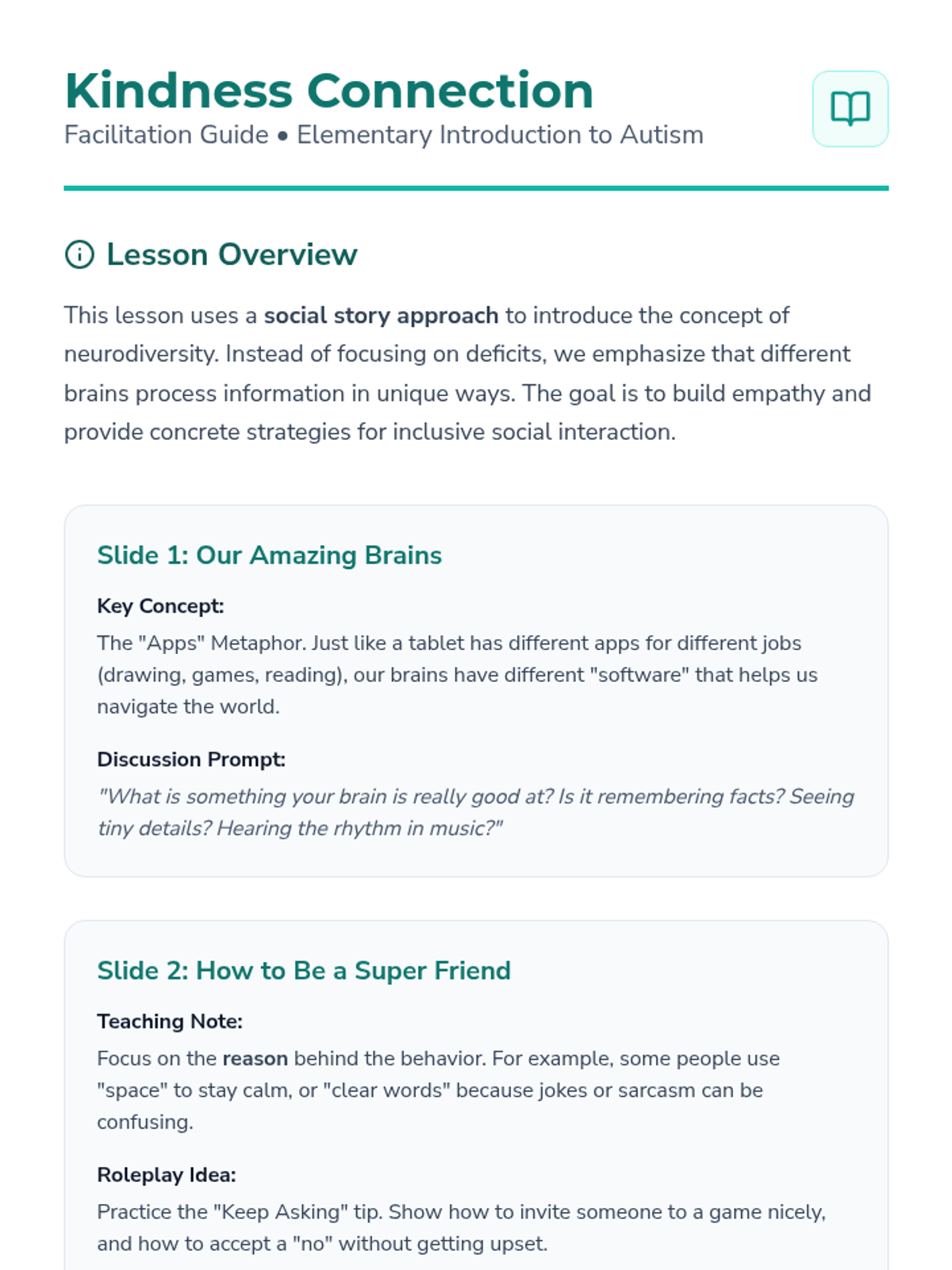
A gentle introduction to Autism for elementary students, focusing on neurodiversity and practical ways to be a supportive classmate using a social story approach.
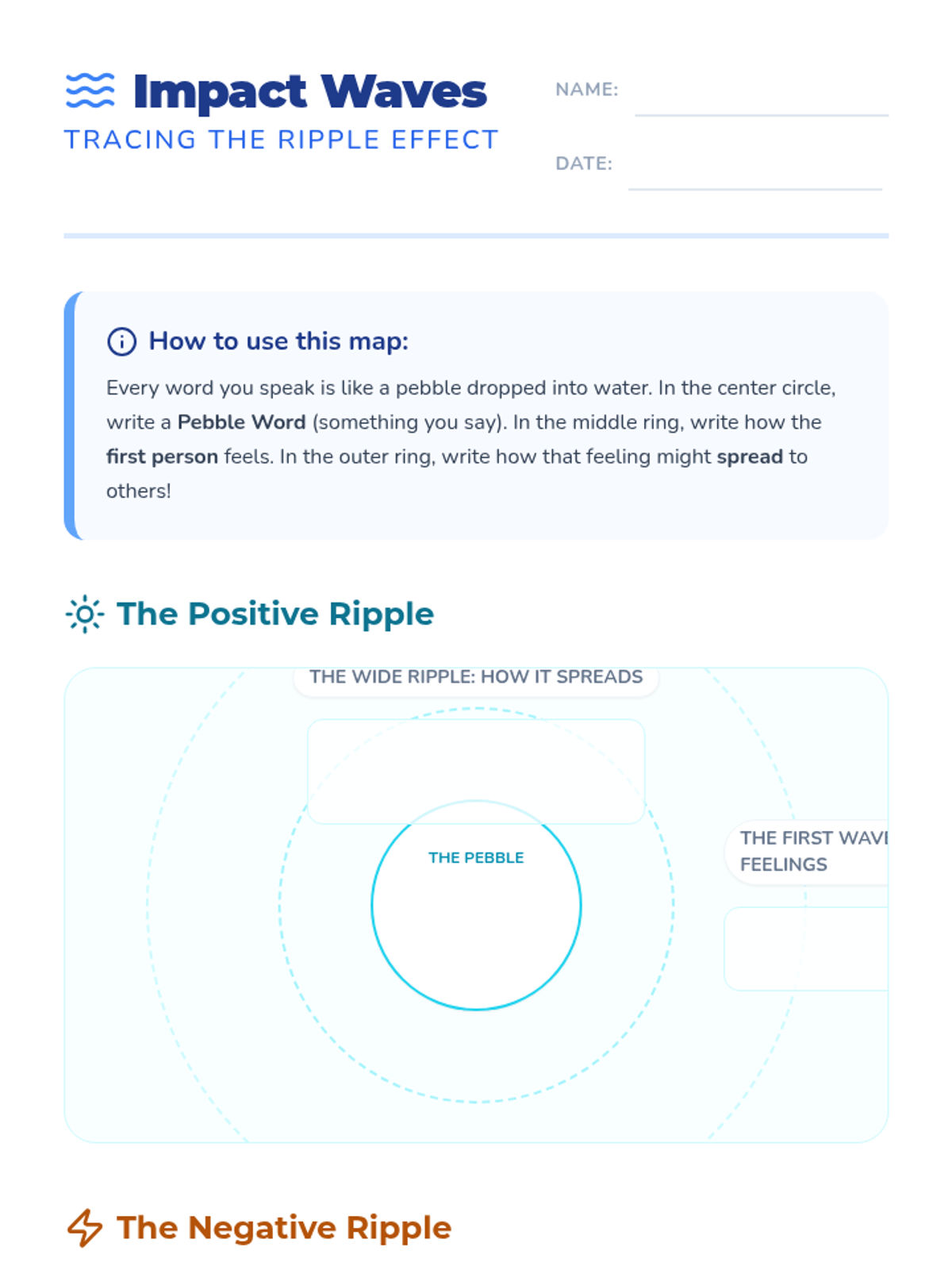
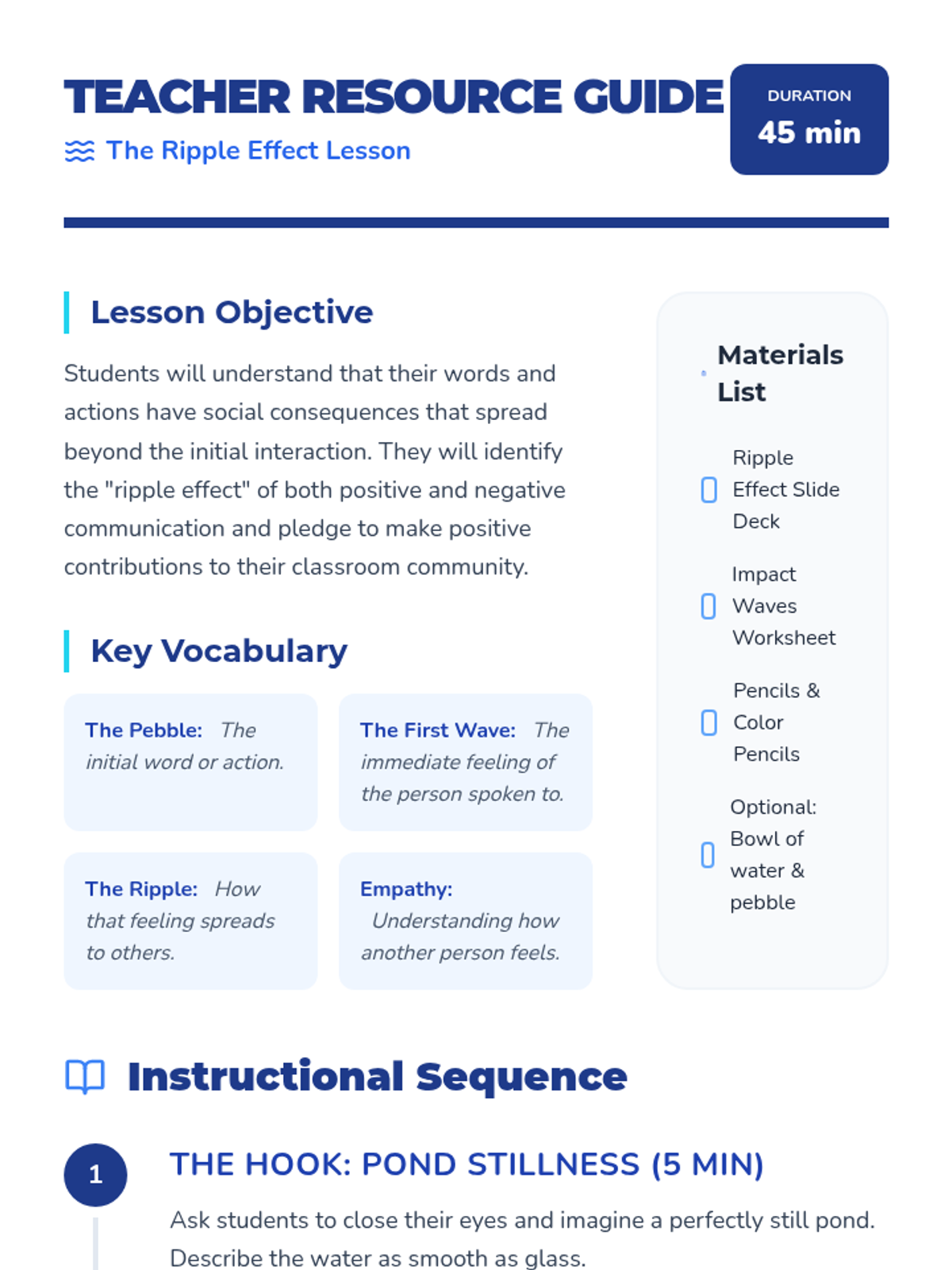
A social-emotional learning lesson that teaches students how their words create a 'ripple effect' of positive or negative emotions and actions in their community.
Focuses on the art of a sincere apology and celebrates the completion of the social skills group.
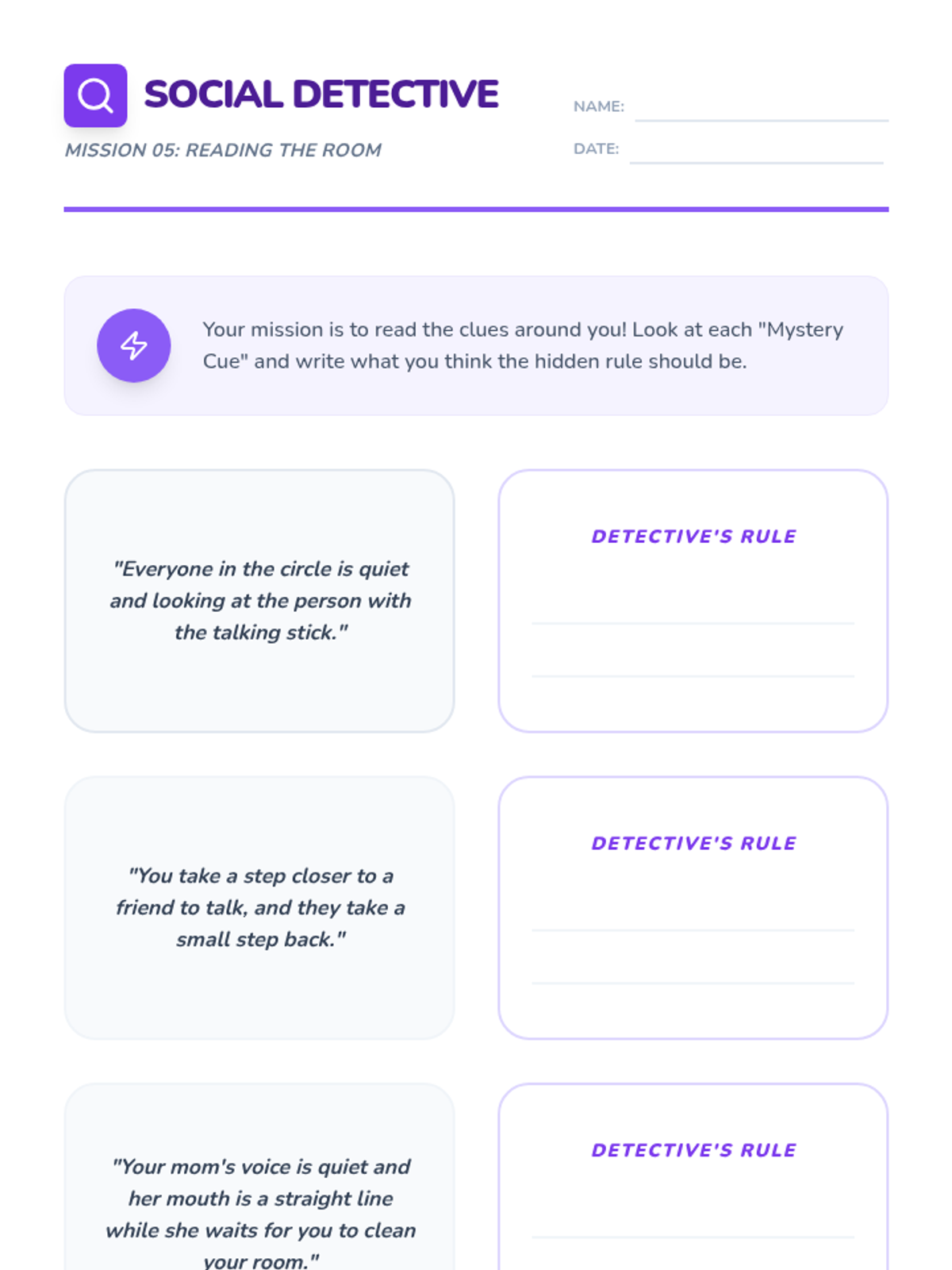
Interpreting body language and social cues while understanding the importance of following group rules.
Categorizing 'Big vs. Small' problems and learning basic conflict resolution steps.
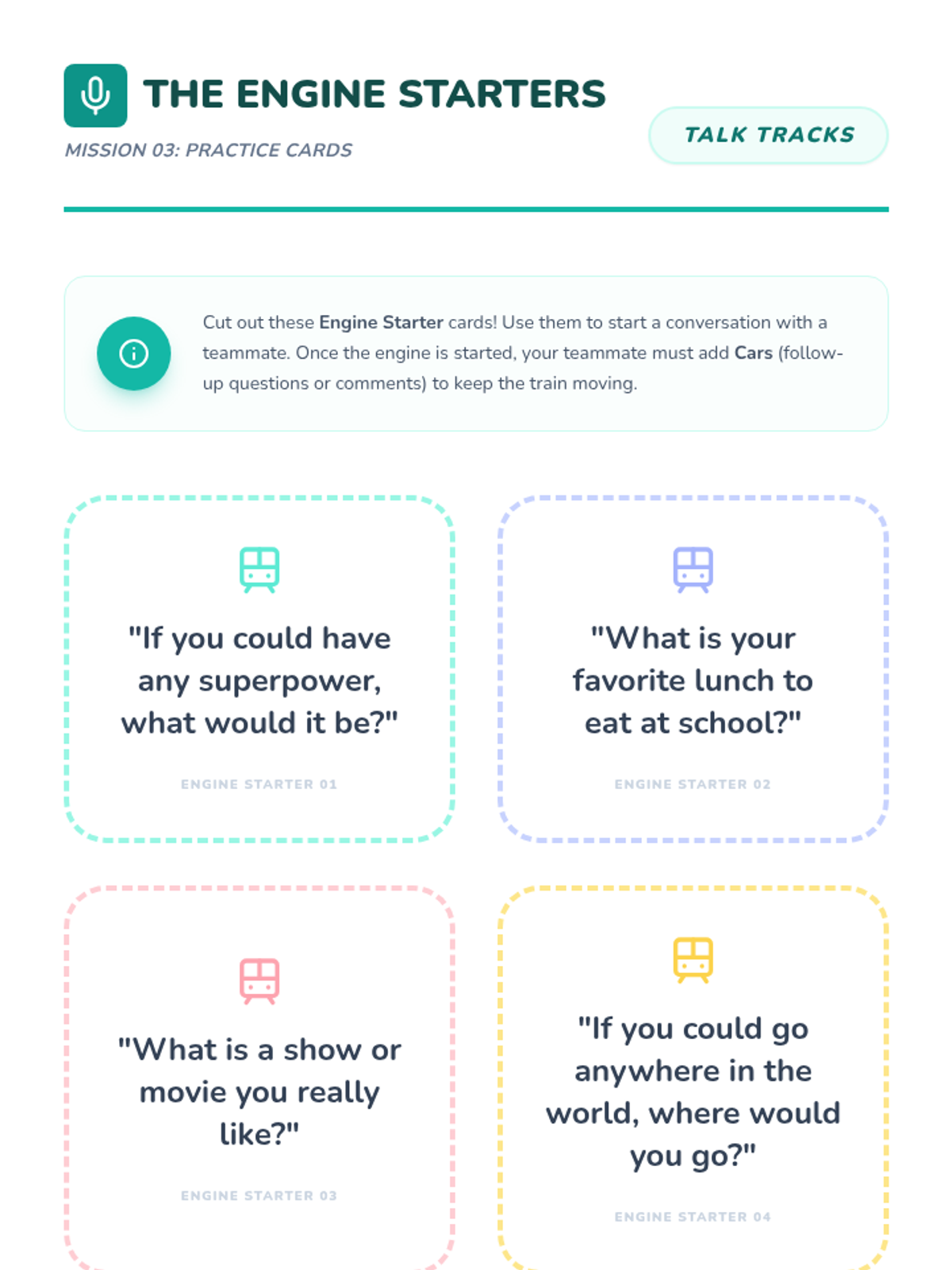
Teaches conversation skills, active listening, and how to maintain the flow of a social interaction.
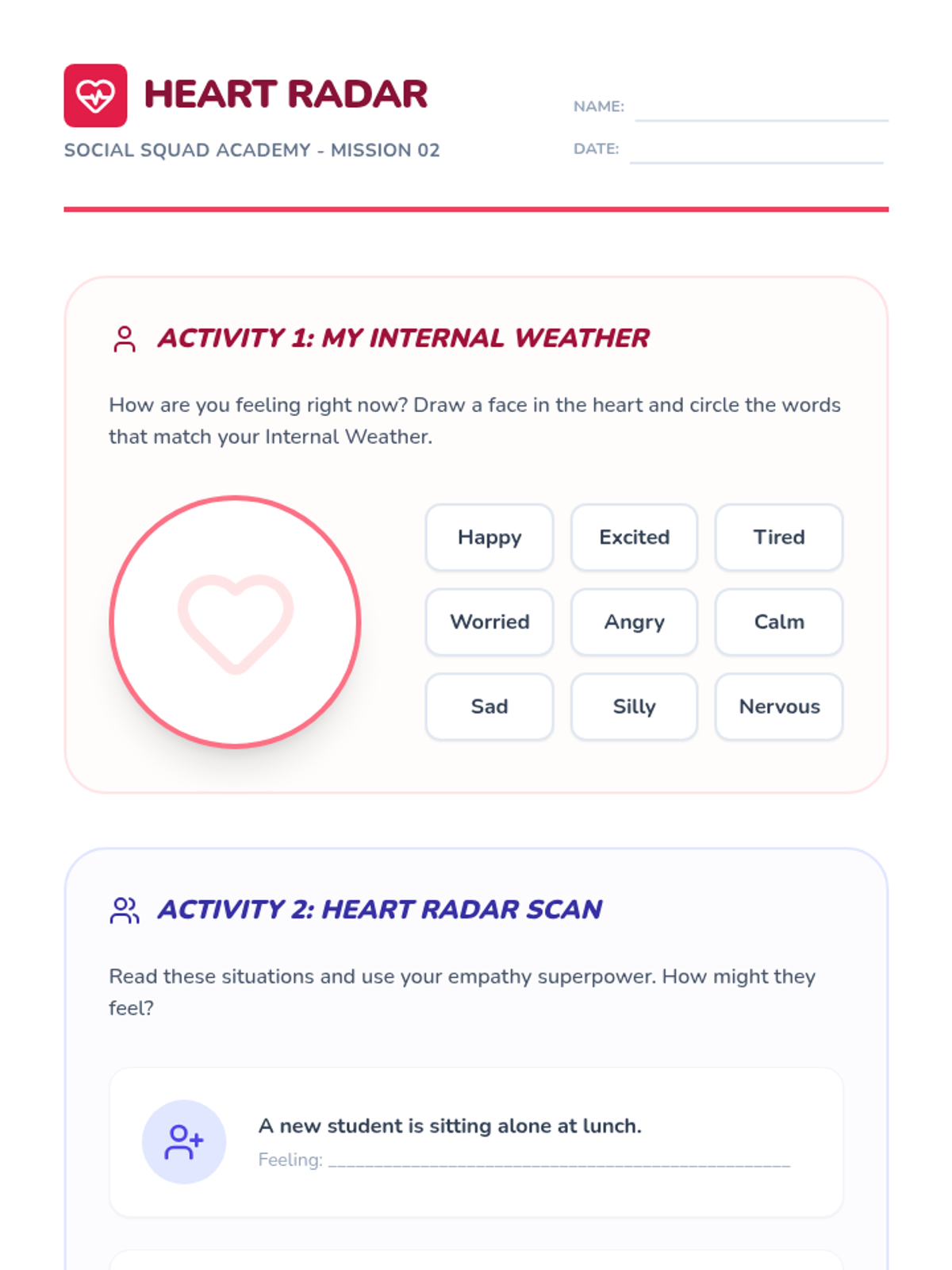
Focuses on identifying emotions in oneself and others (empathy) using the concept of a 'Heart Radar'.
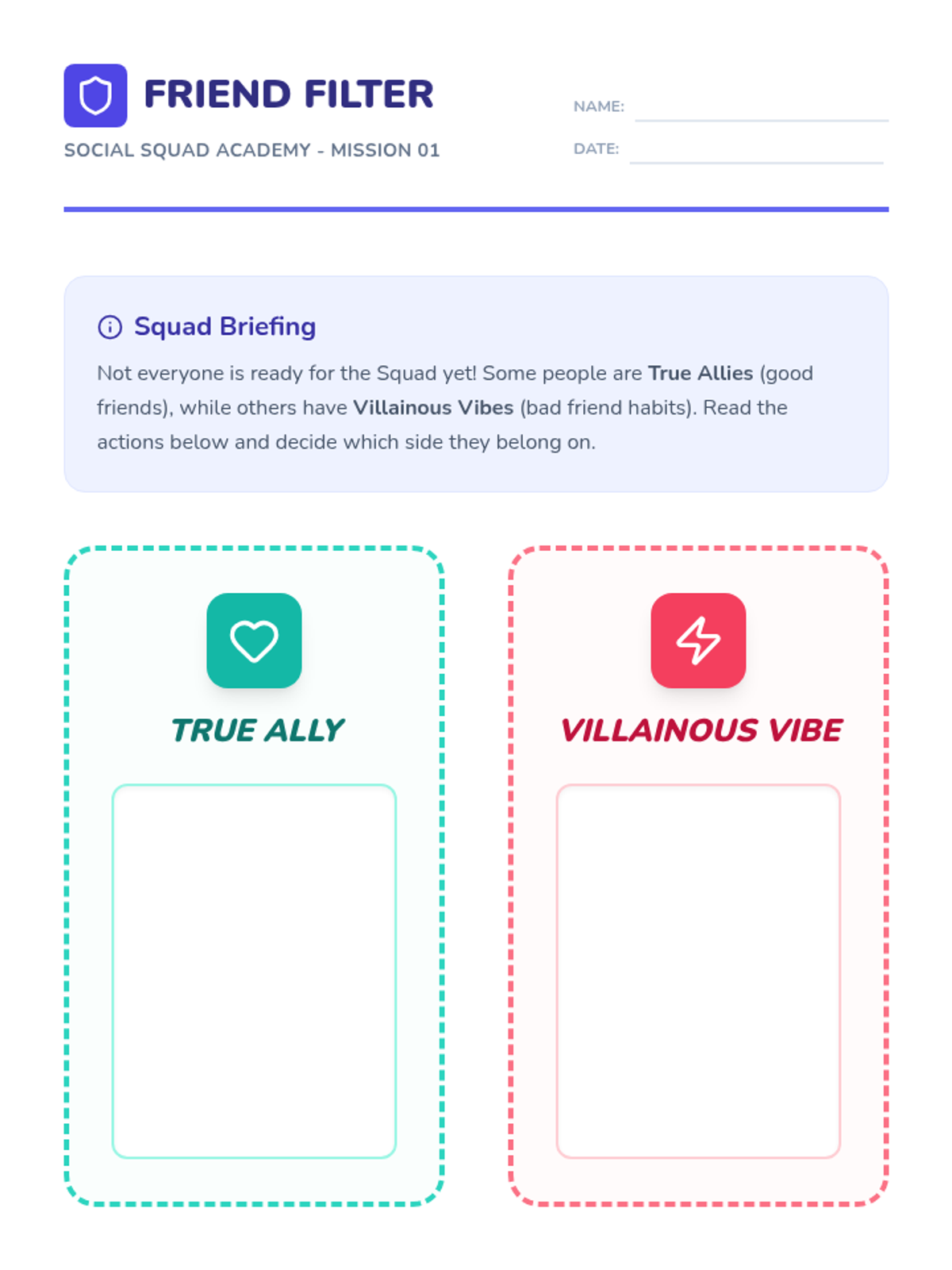
Introduces the group and explores the qualities of a good friend versus a 'friend-in-training' (bad friend traits).
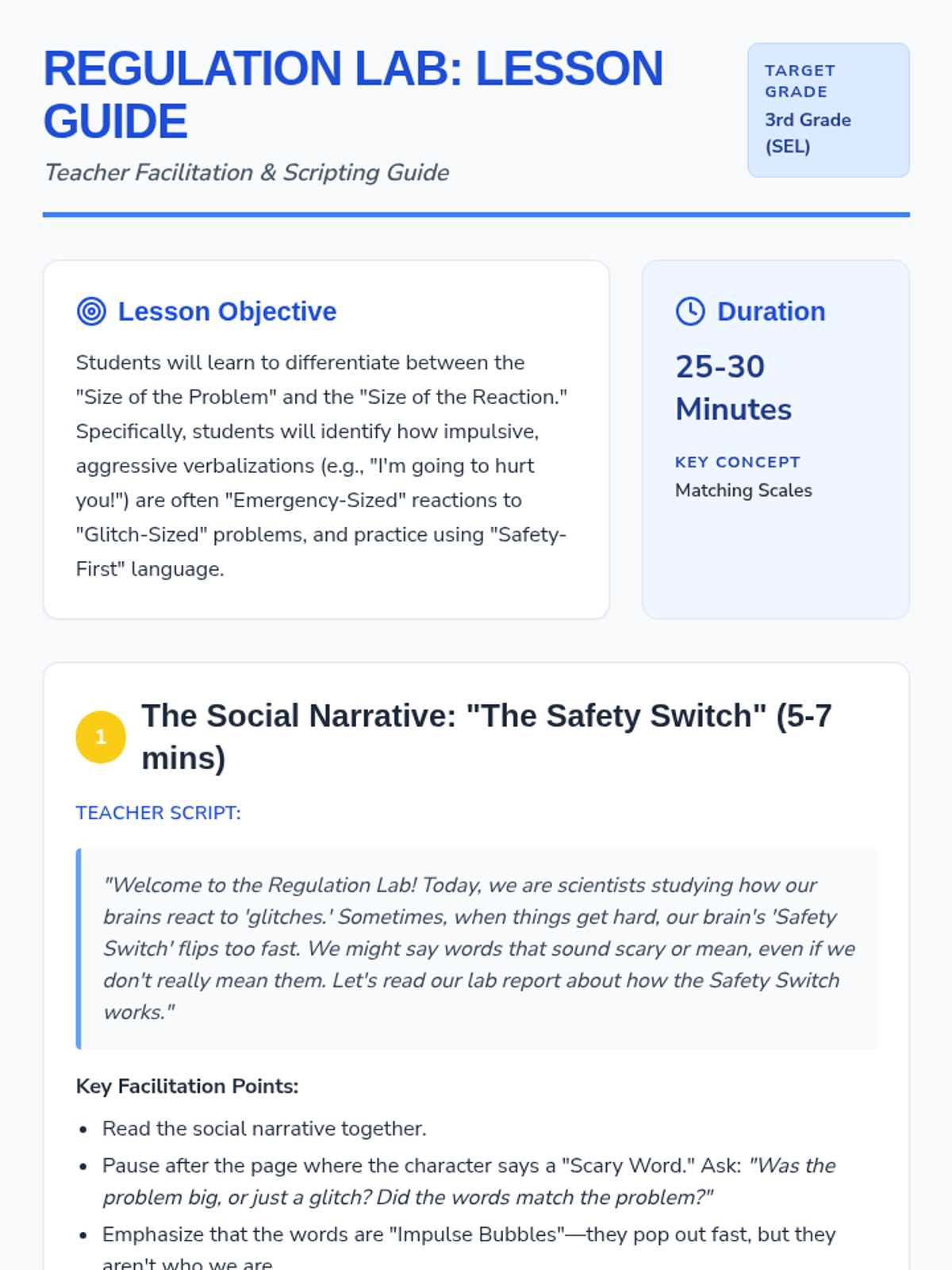
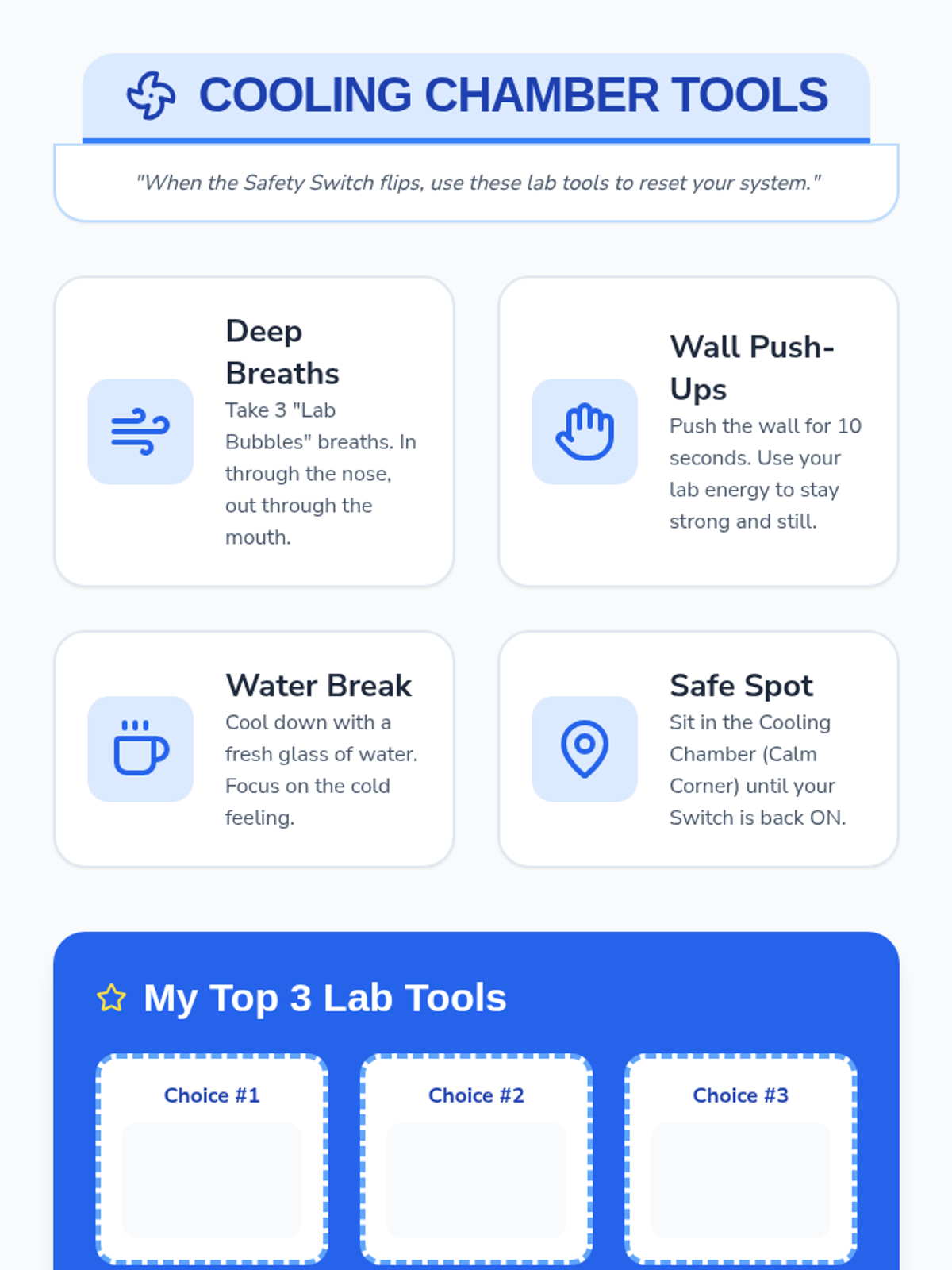
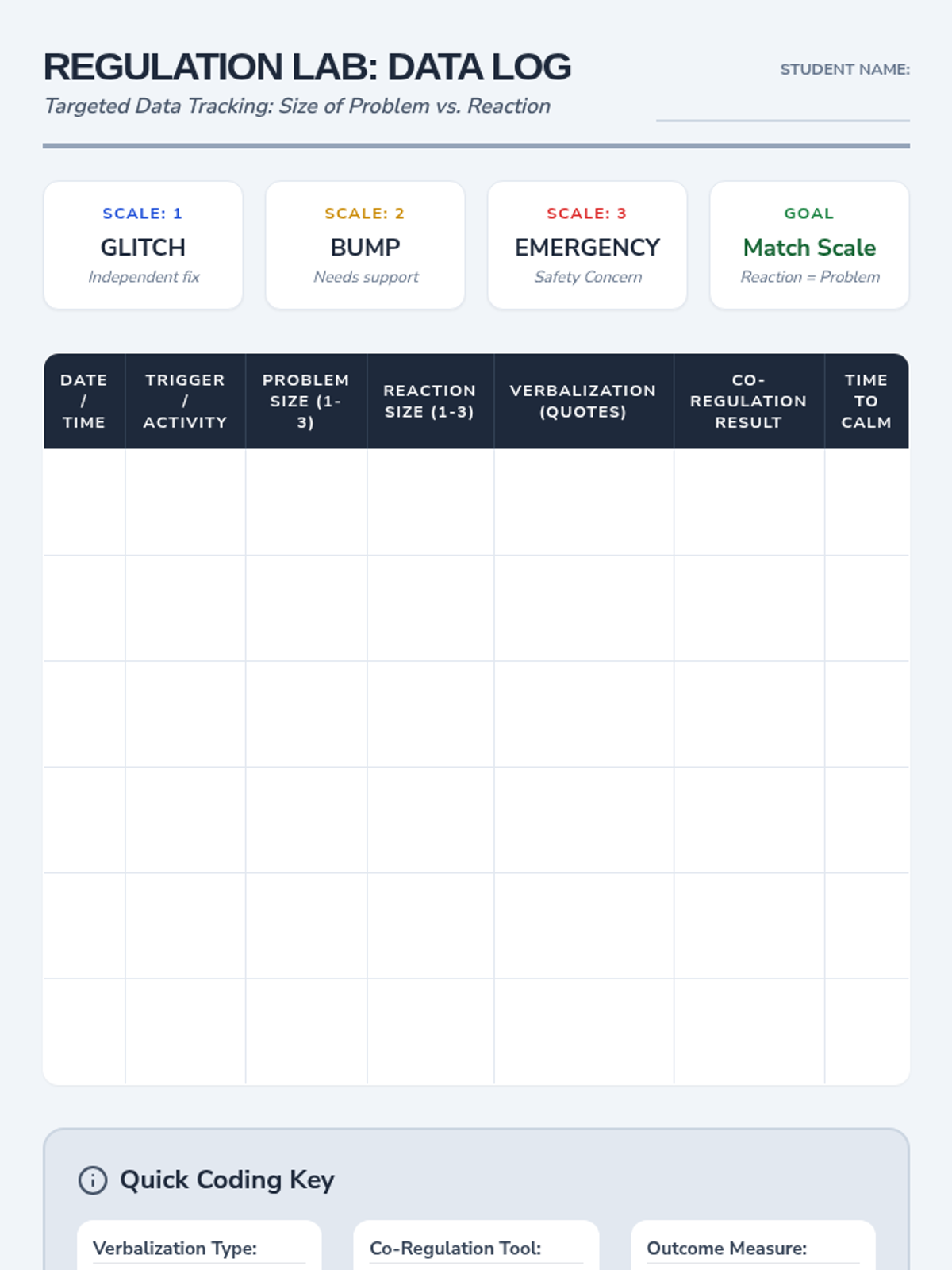
A comprehensive social-emotional learning lesson focused on helping students match the size of their reaction to the size of the problem, specifically addressing impulsive verbal aggression during dysregulation.
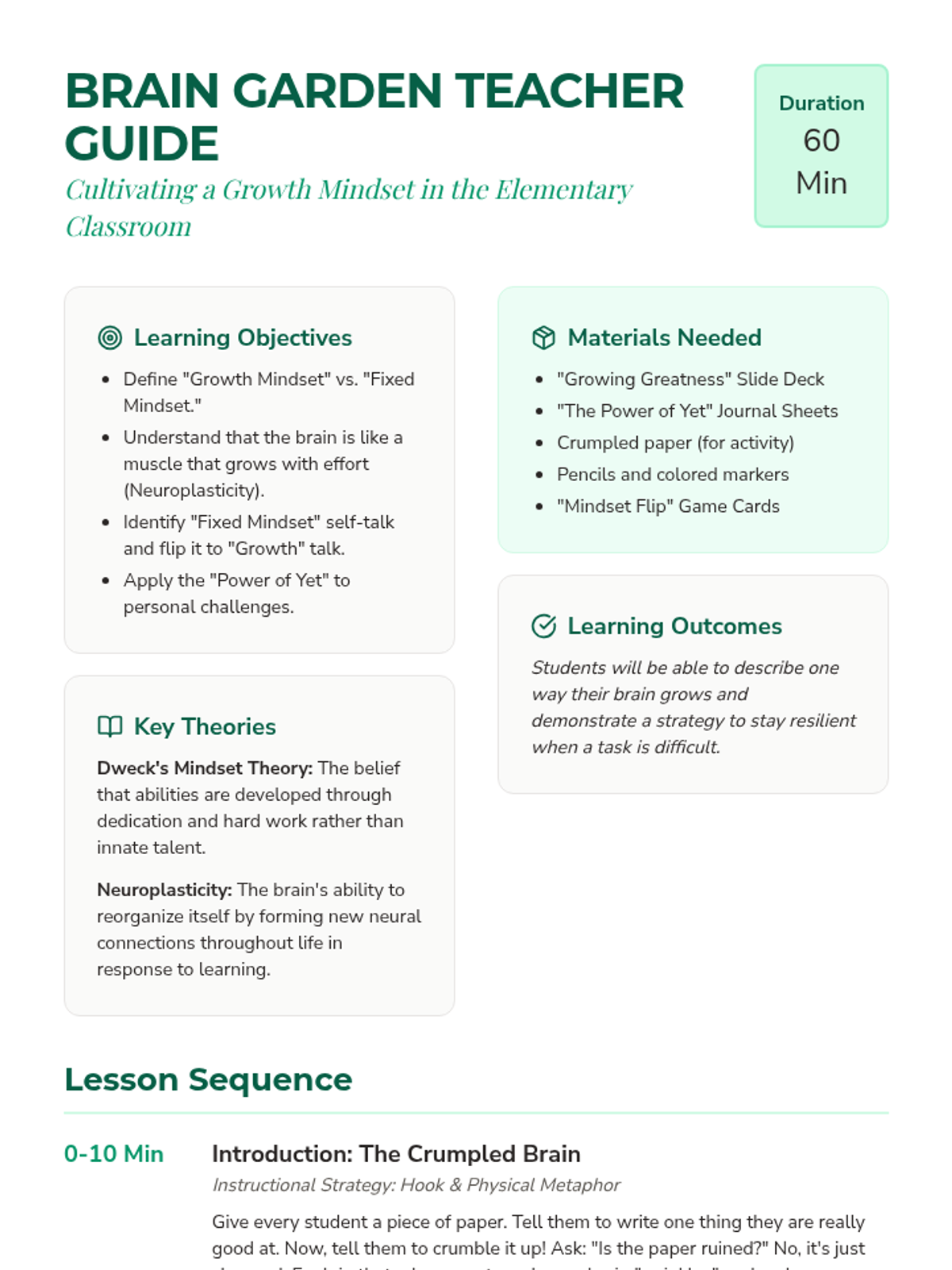
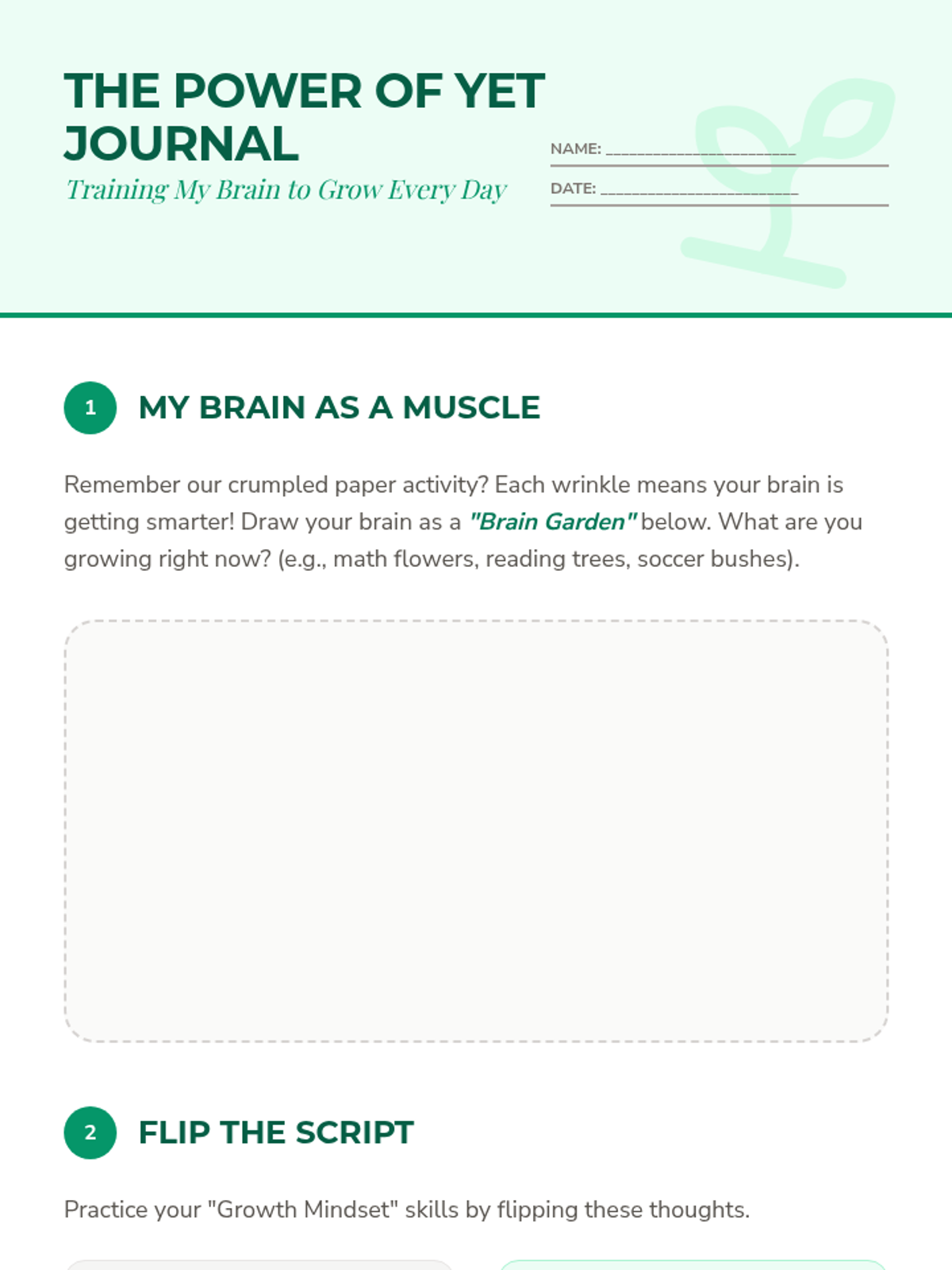
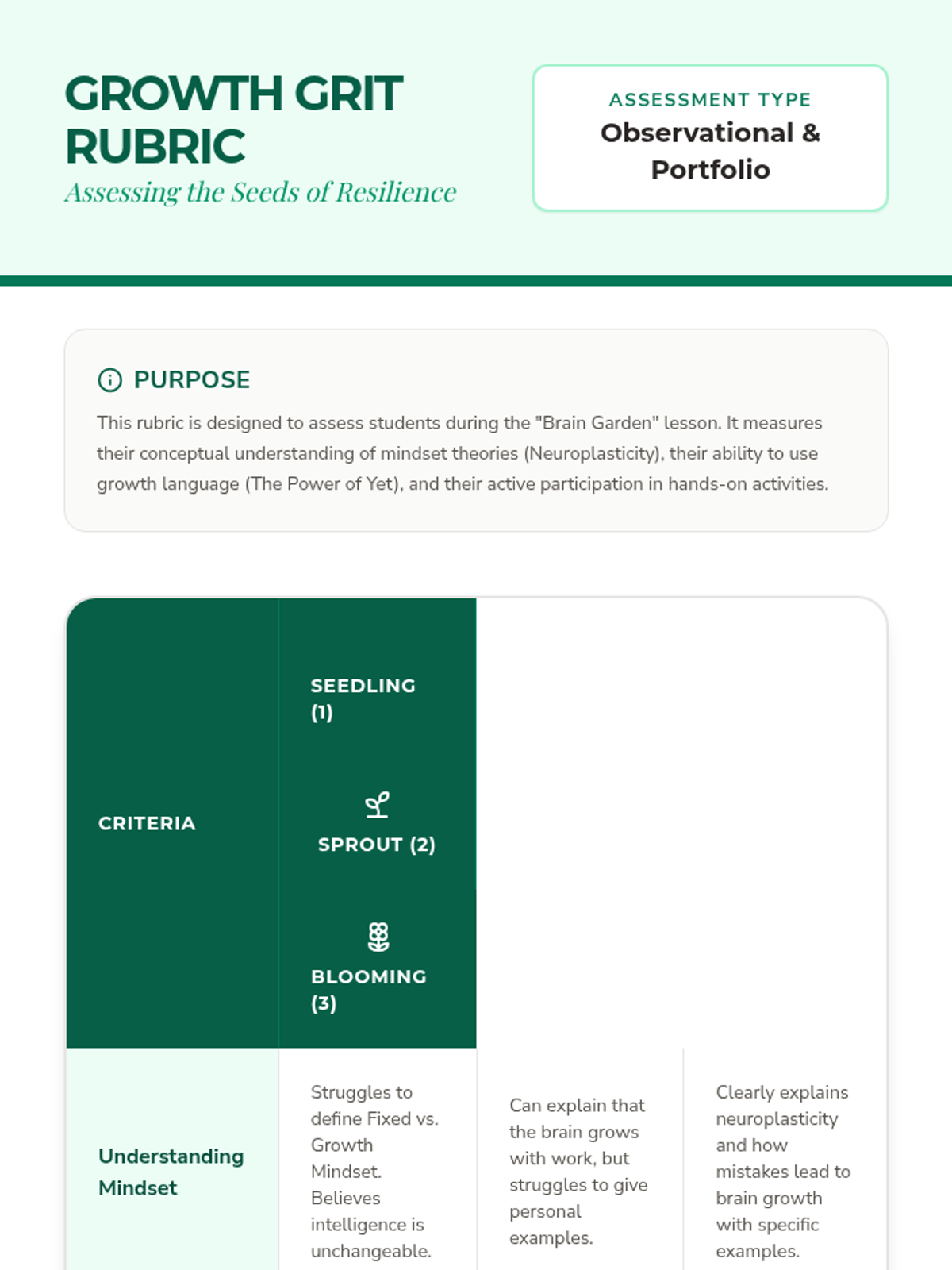
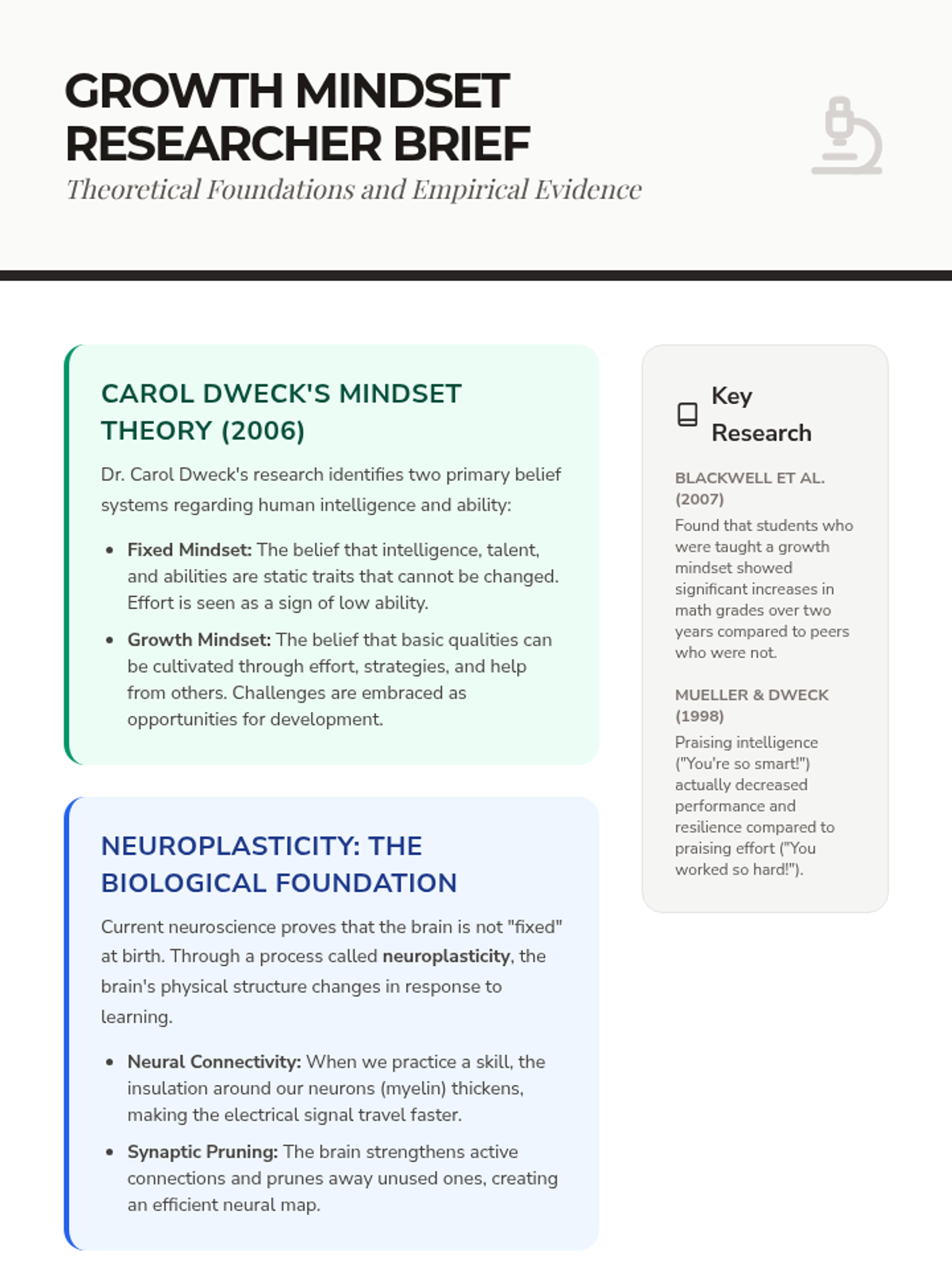
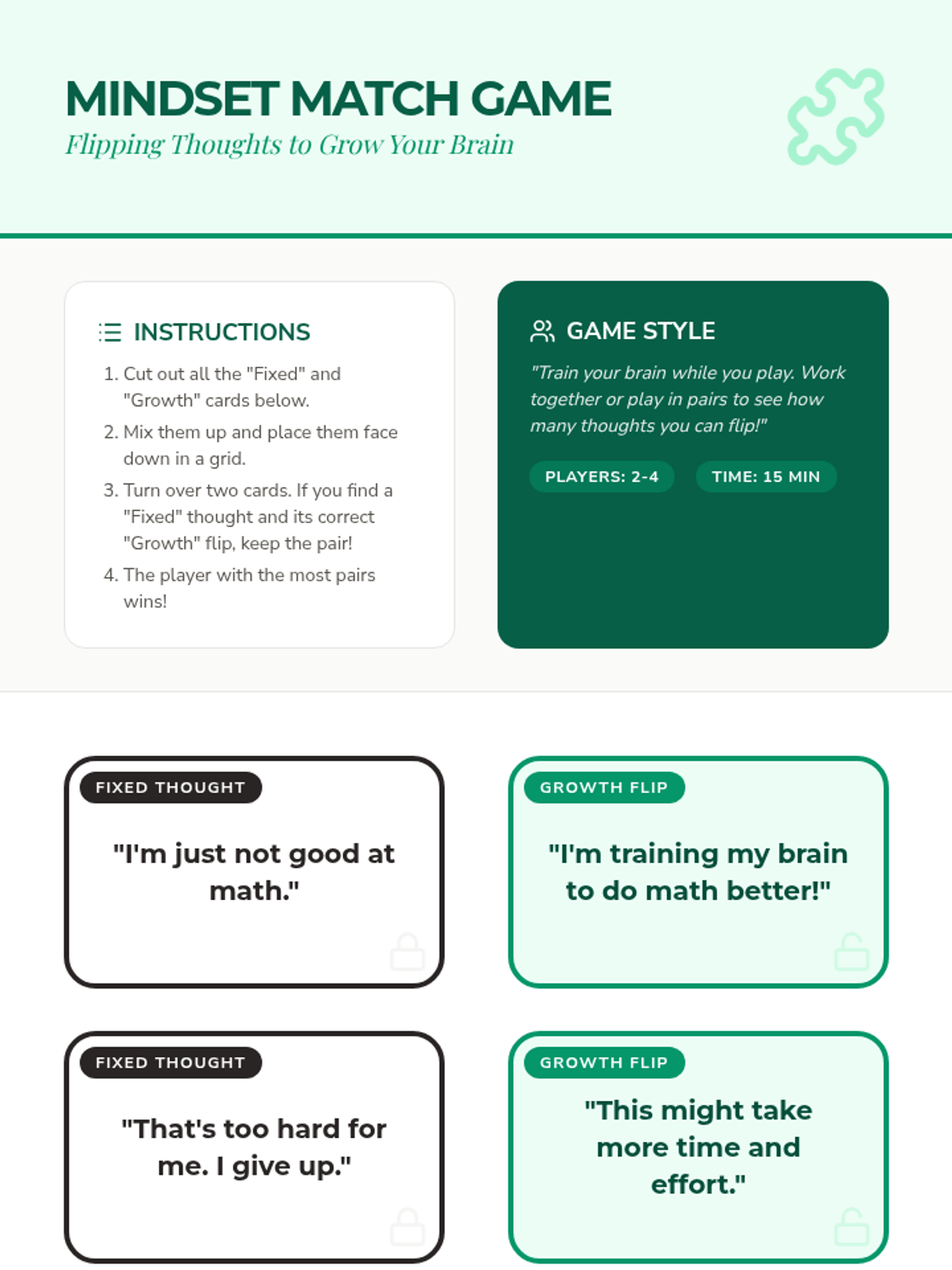
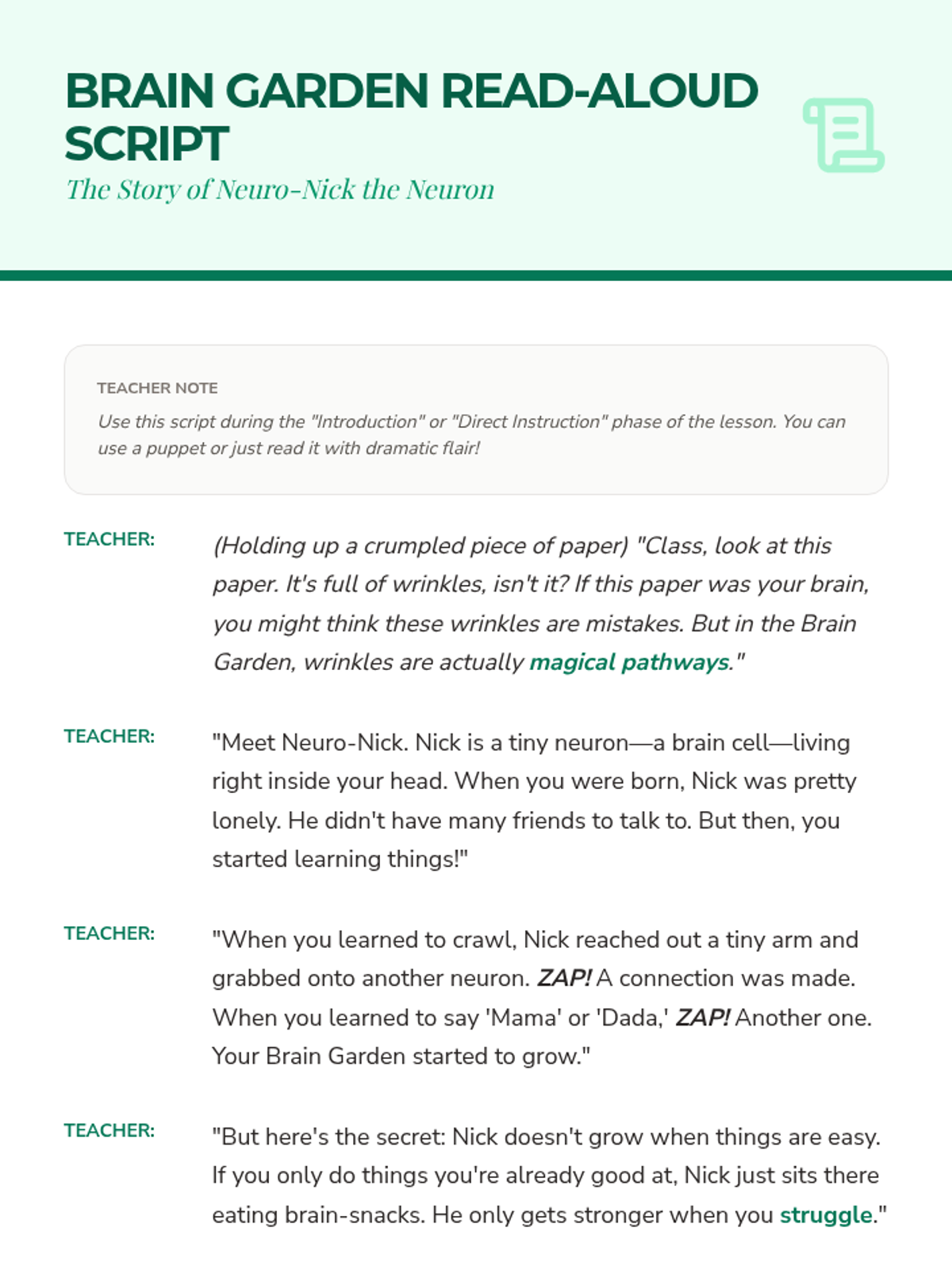
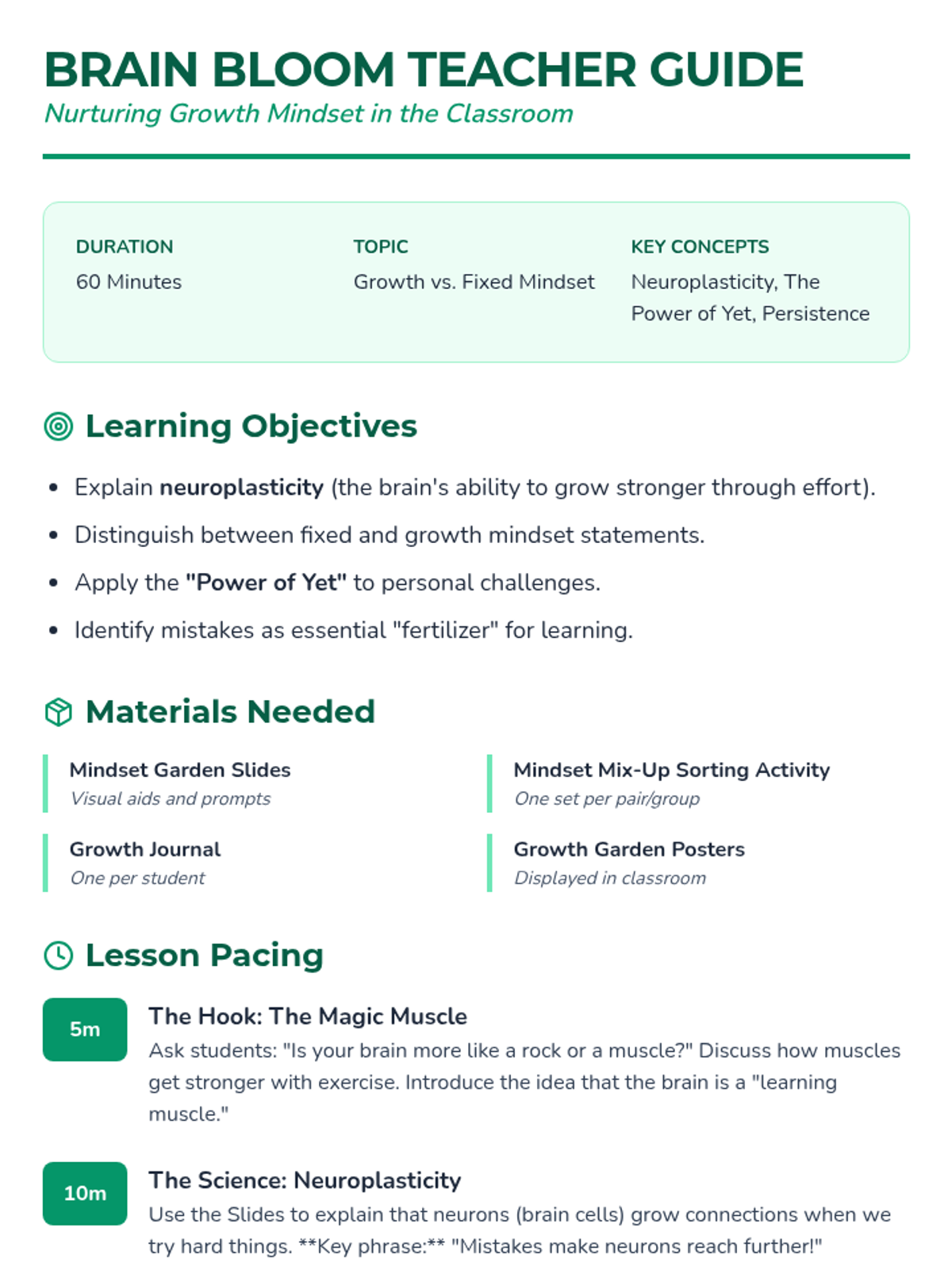
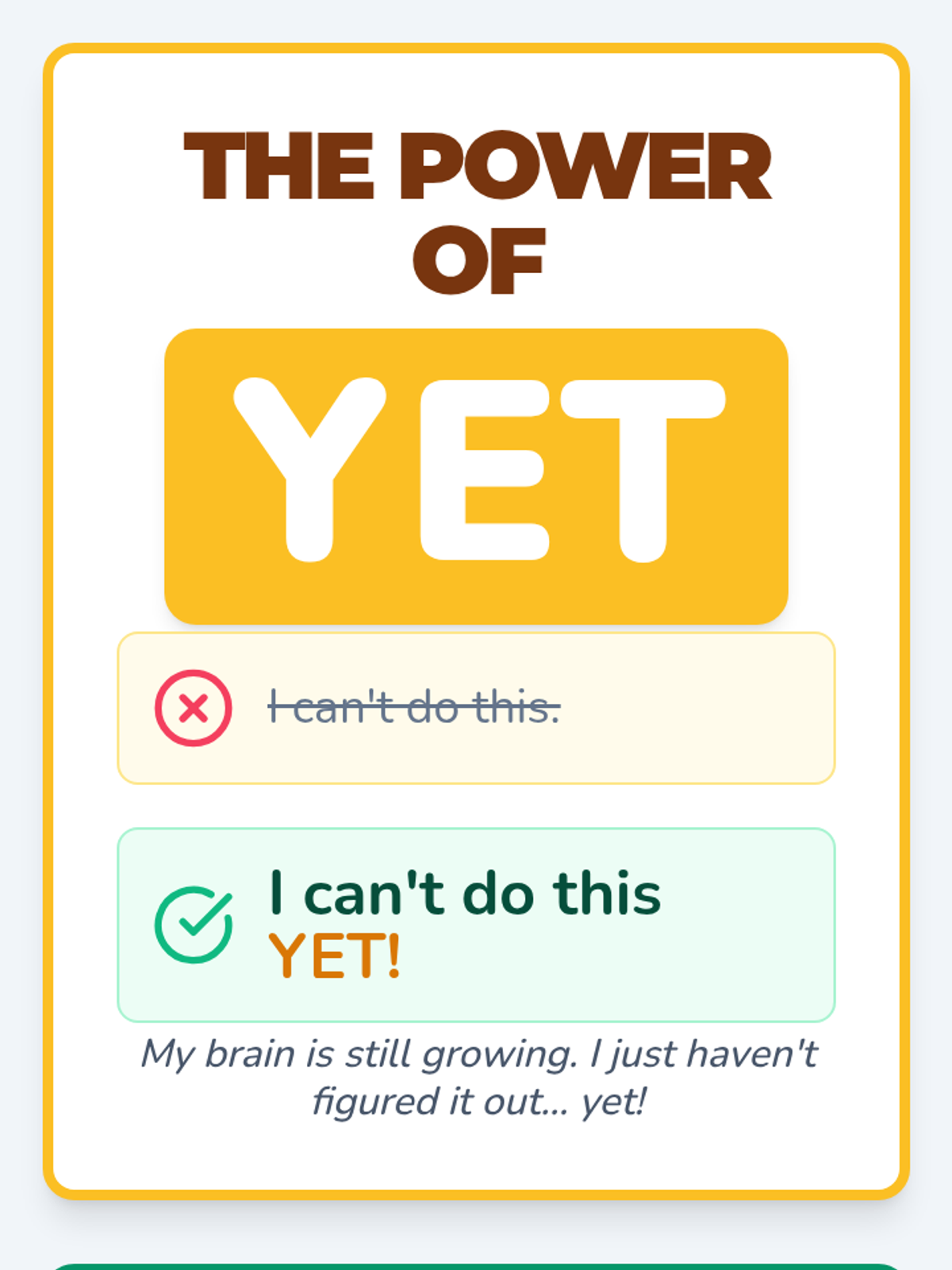
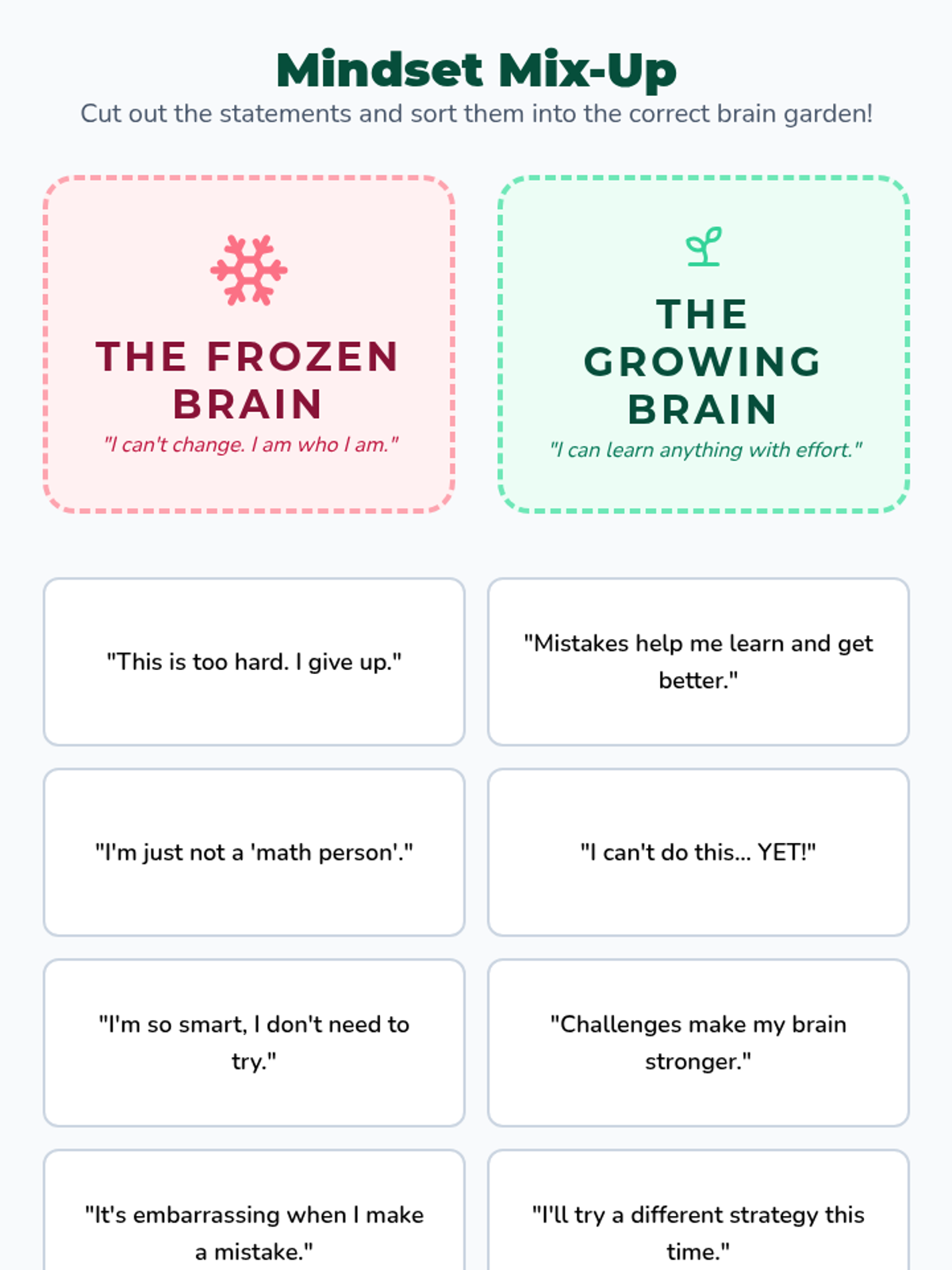
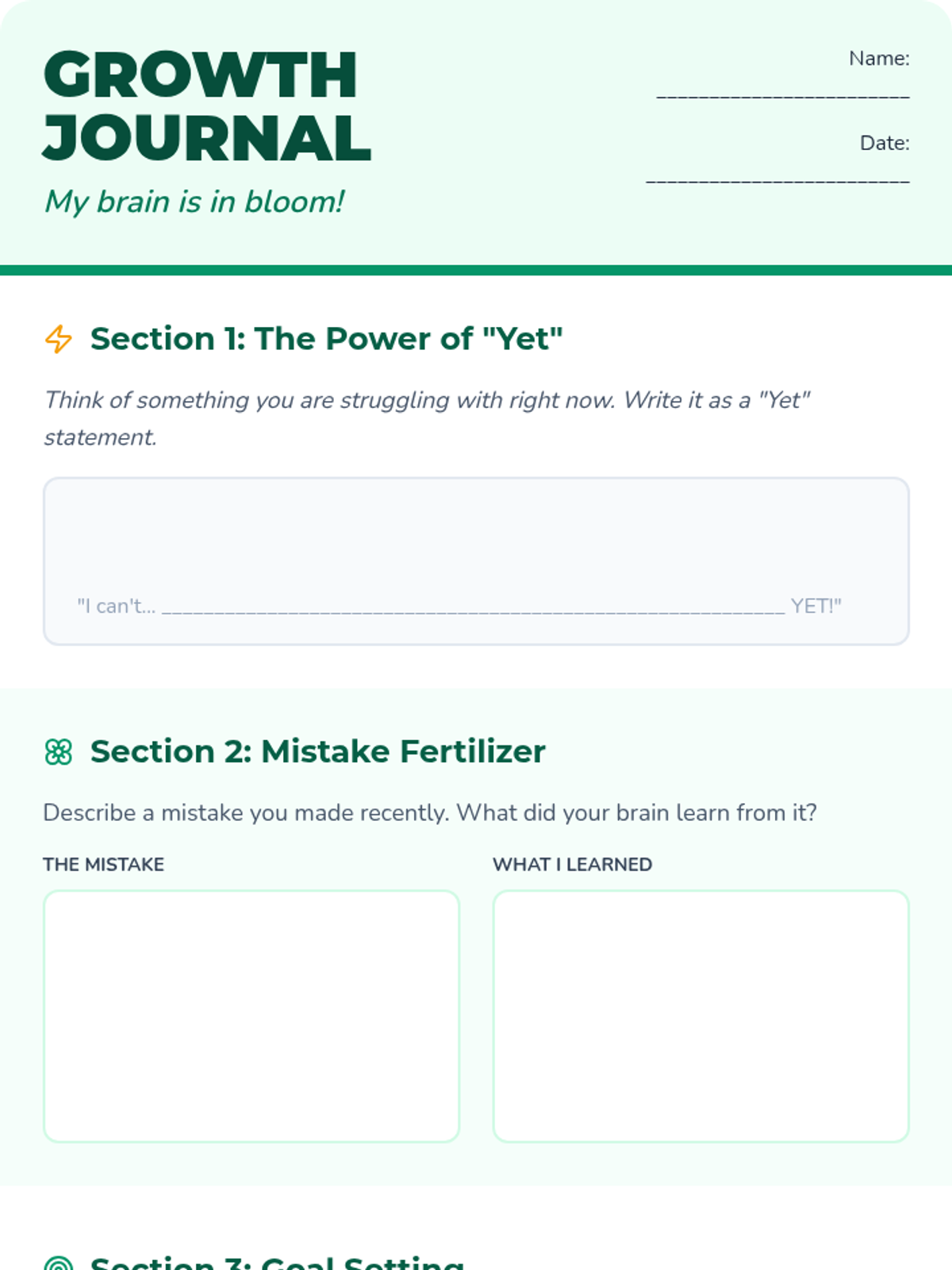
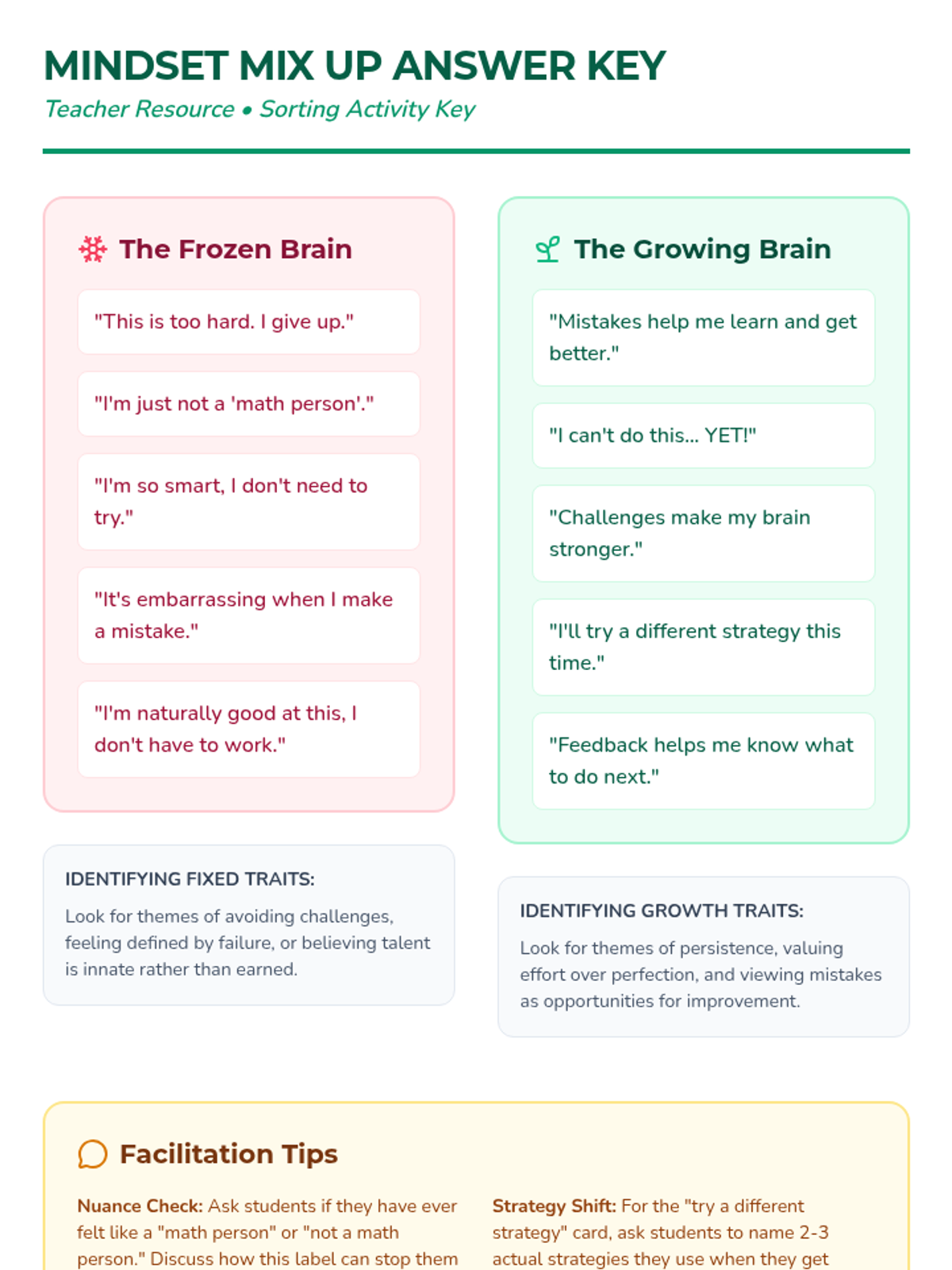
A comprehensive 60-minute introduction to growth mindset for elementary students, focusing on the science of the brain and the "Power of Yet" through hands-on activities, journaling, and group games.
A comprehensive one-hour lesson on growth mindset, covering neuroplasticity, the power of 'yet', and strategies for overcoming challenges.
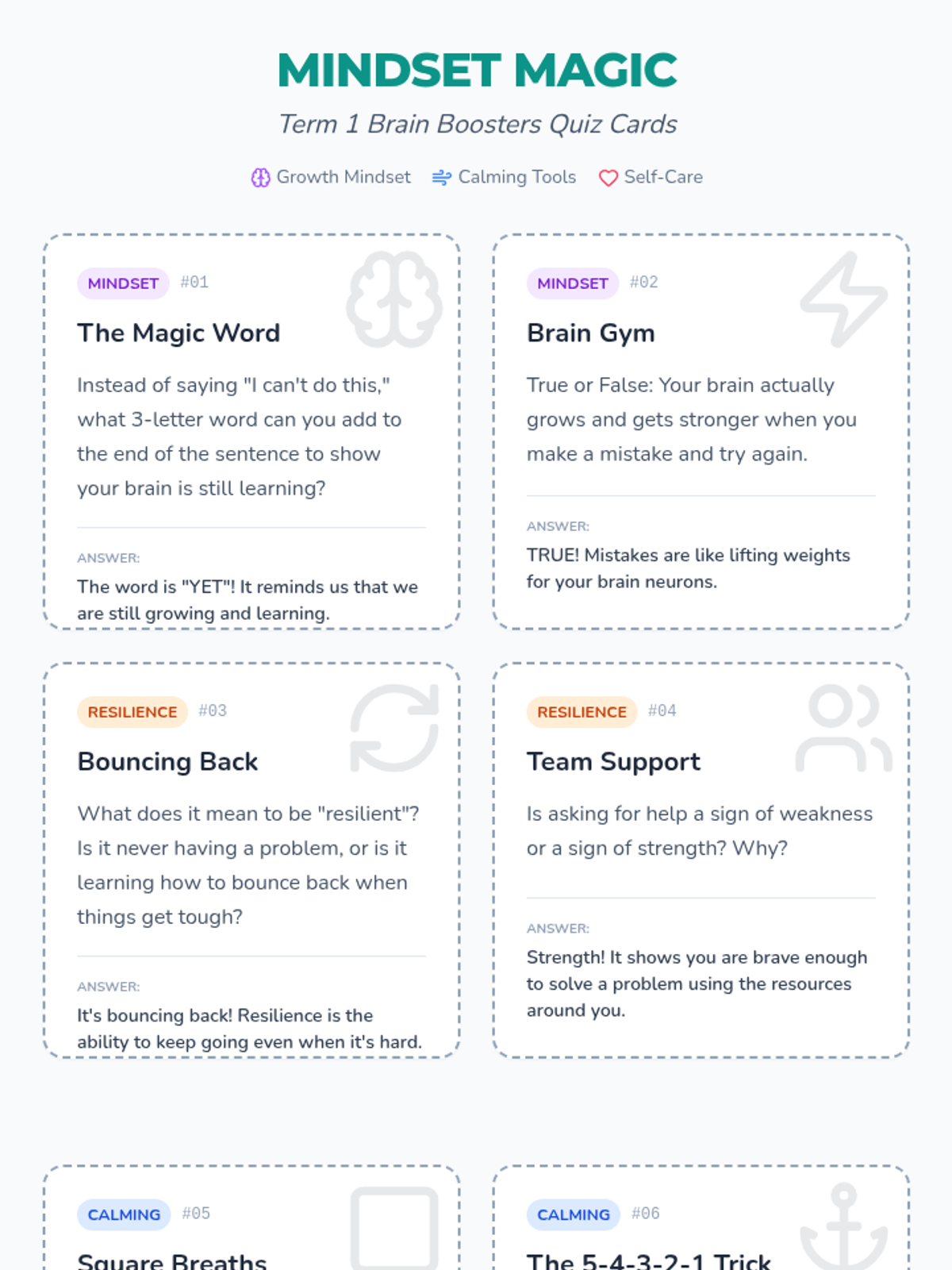
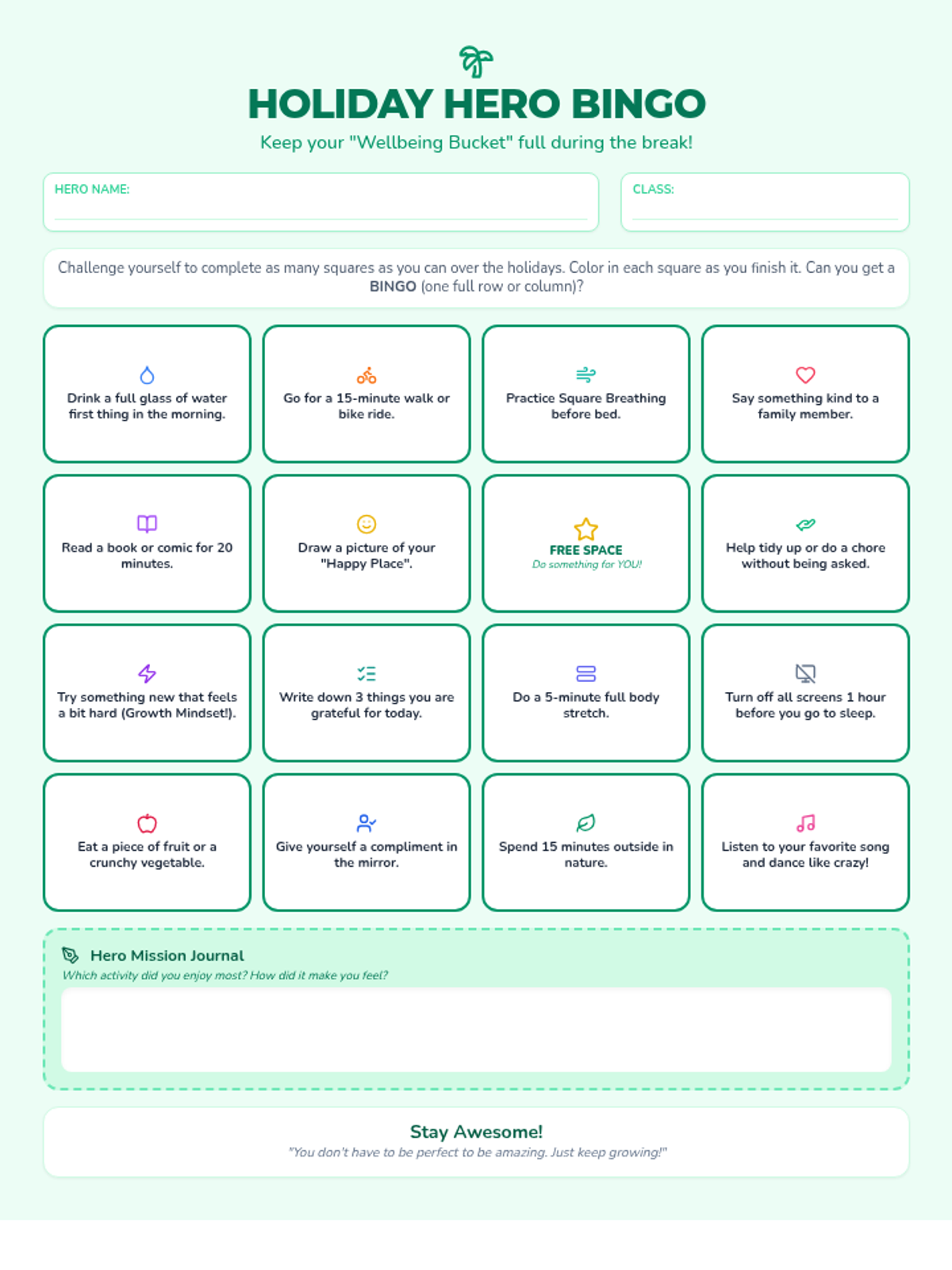
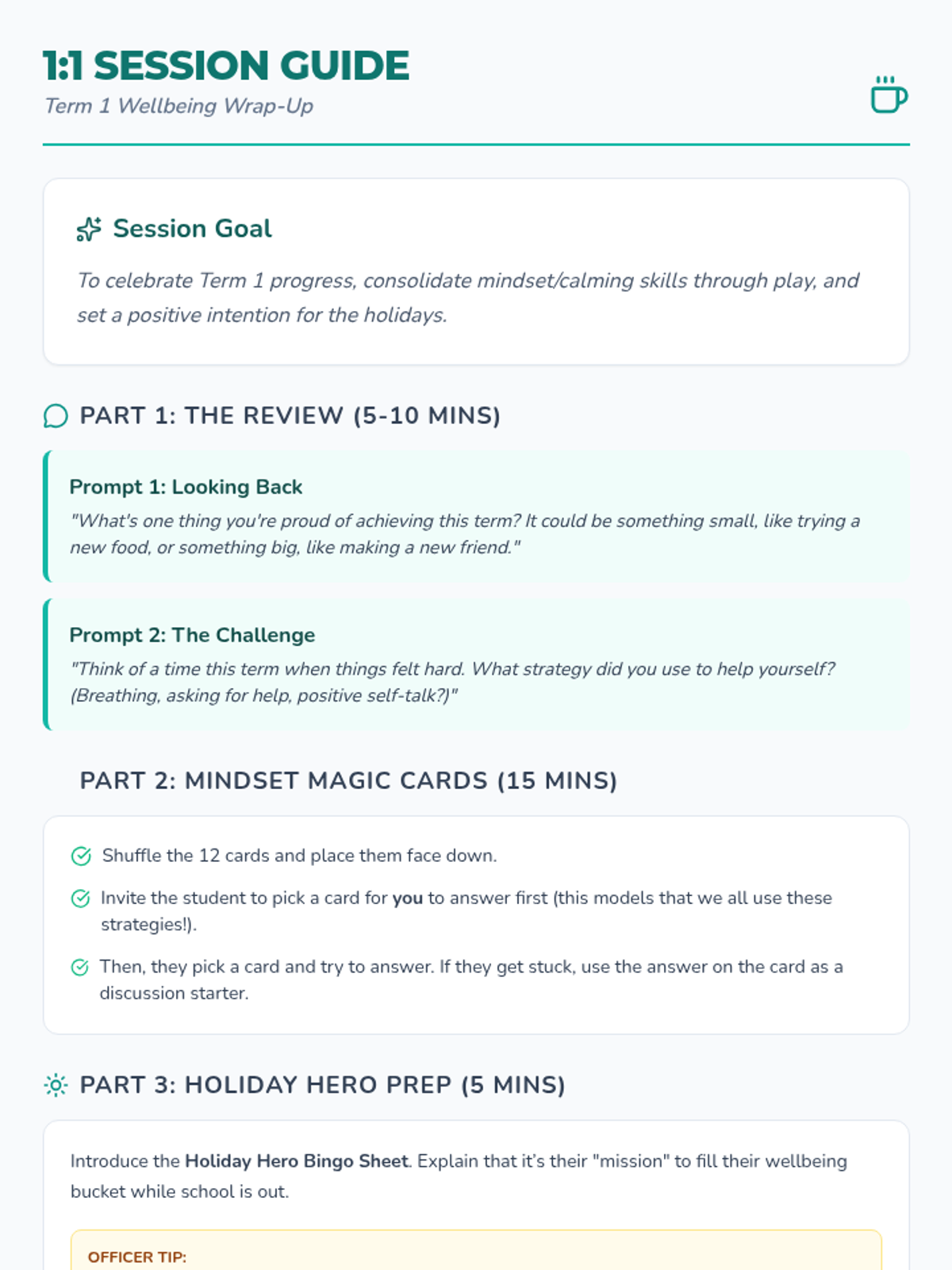
A collection of activities and resources to wrap up Term 1, focusing on positive mindset, resilience, and self-care strategies for primary school students.
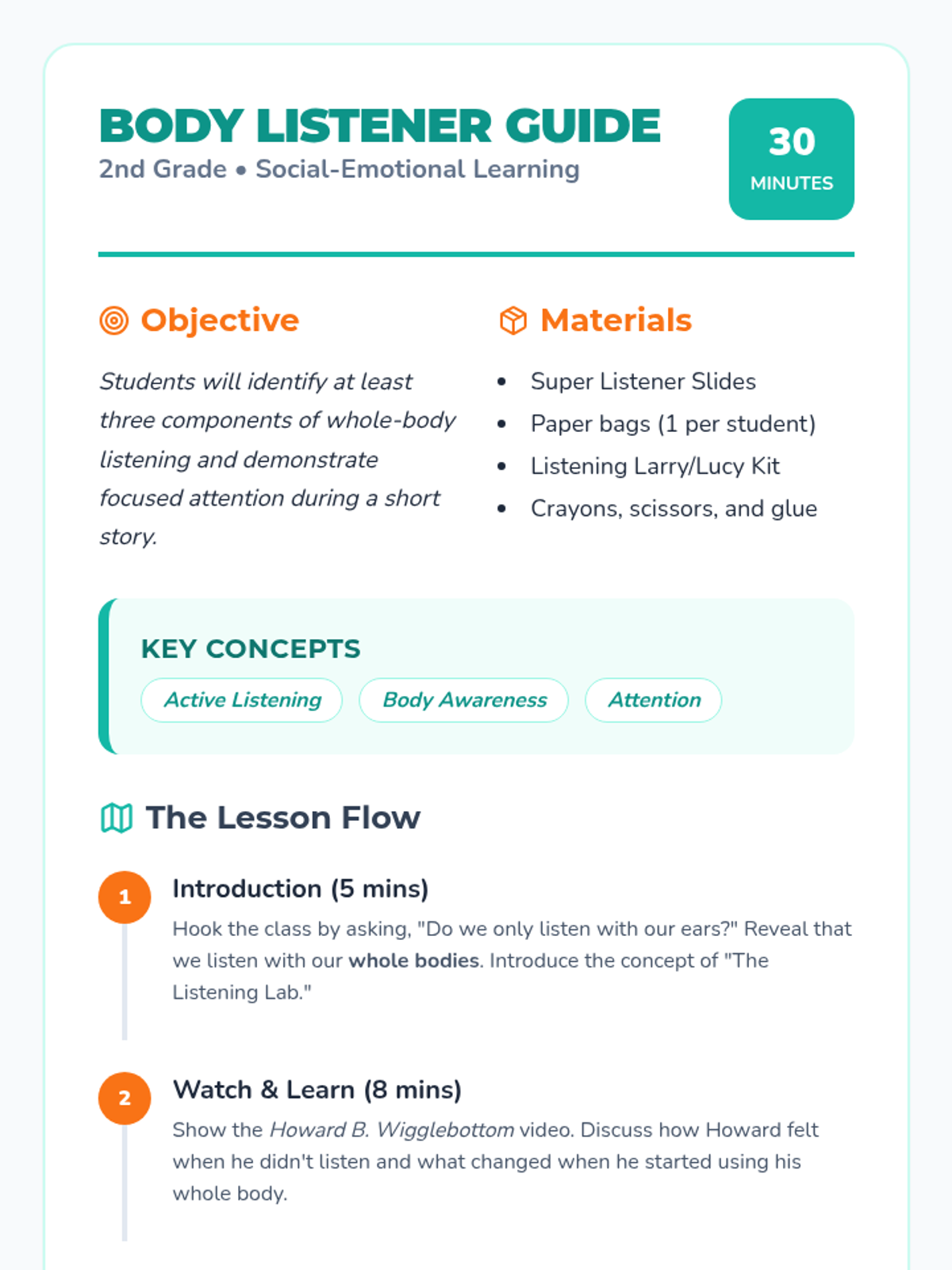
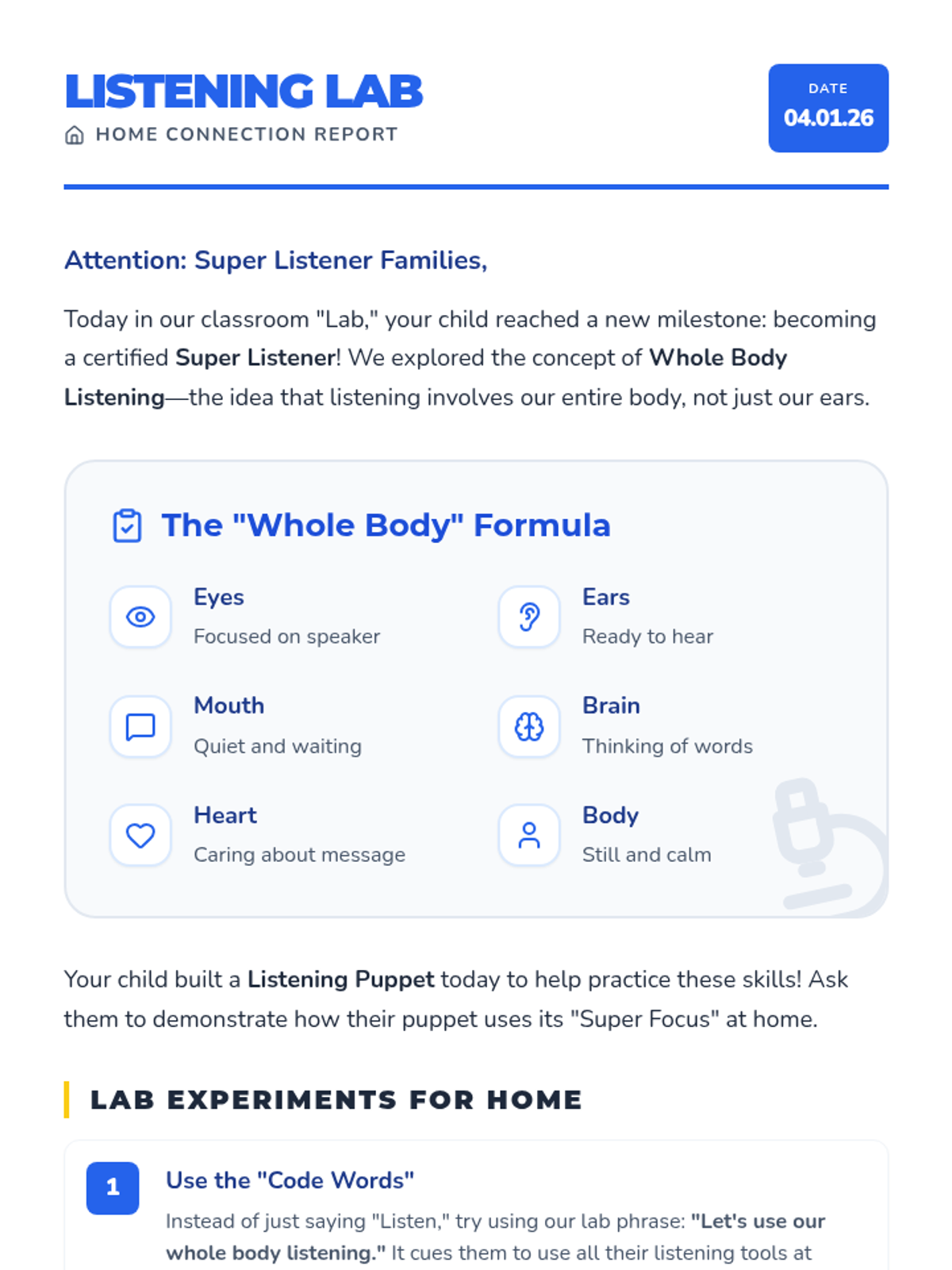
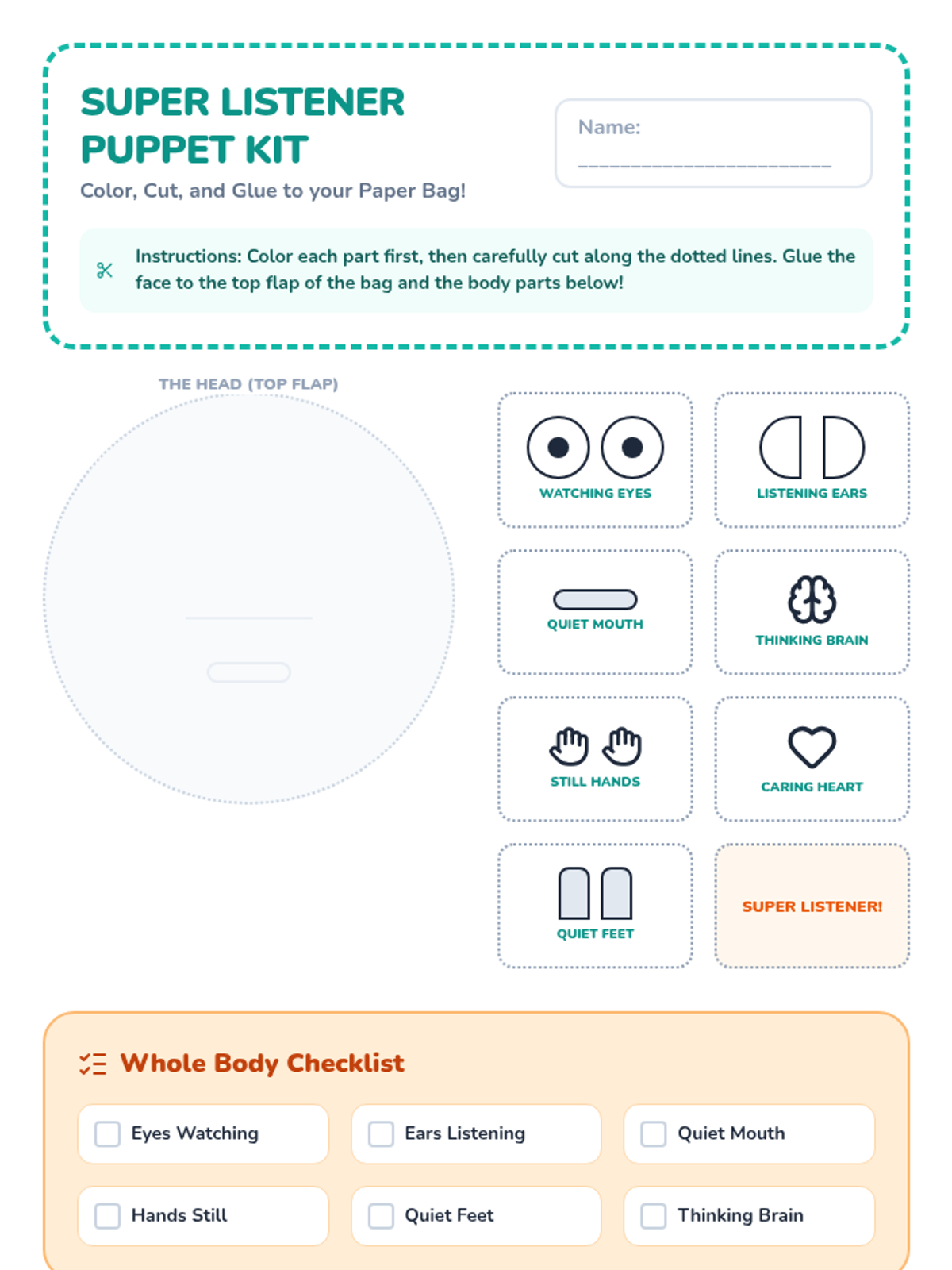
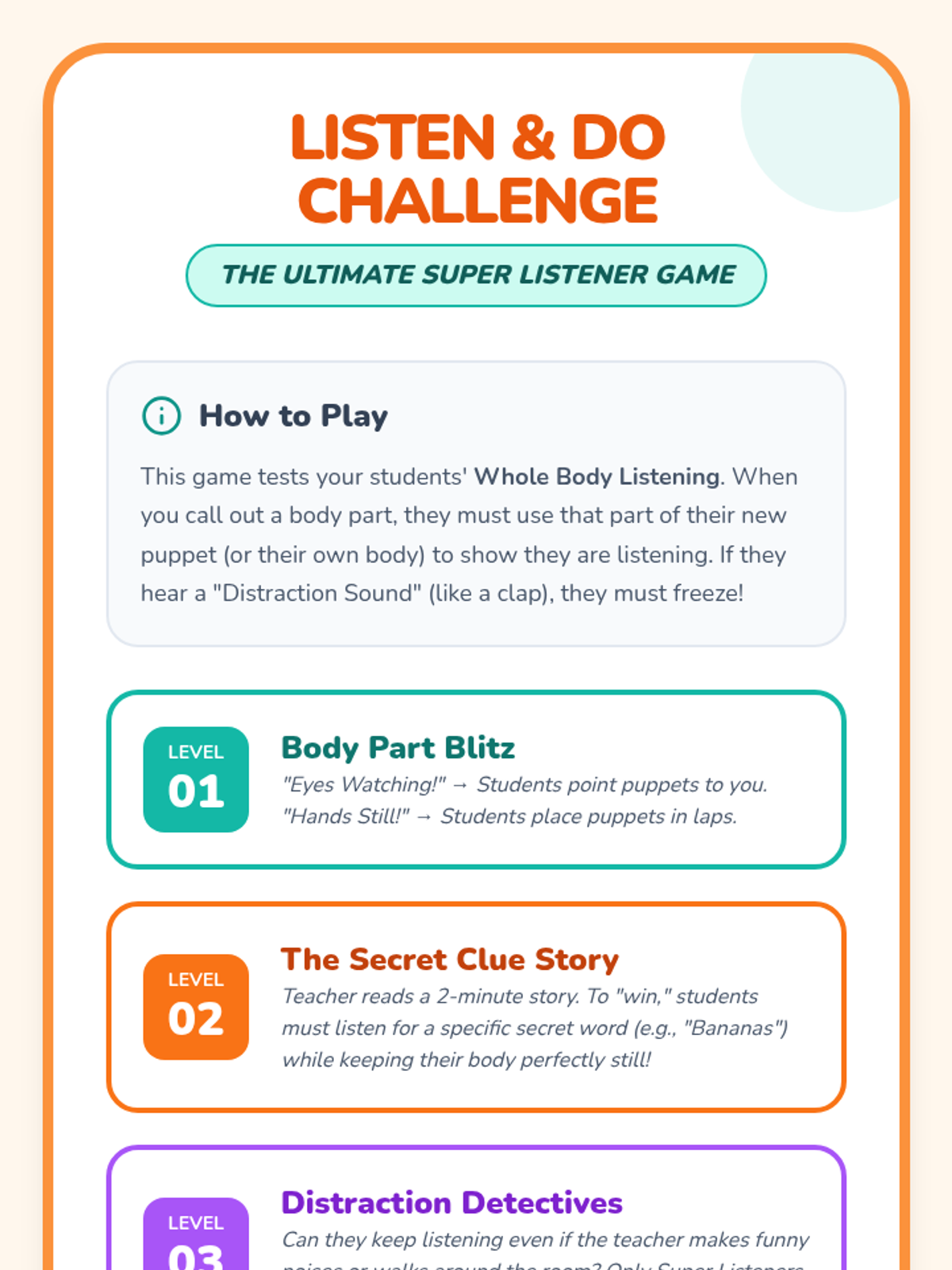
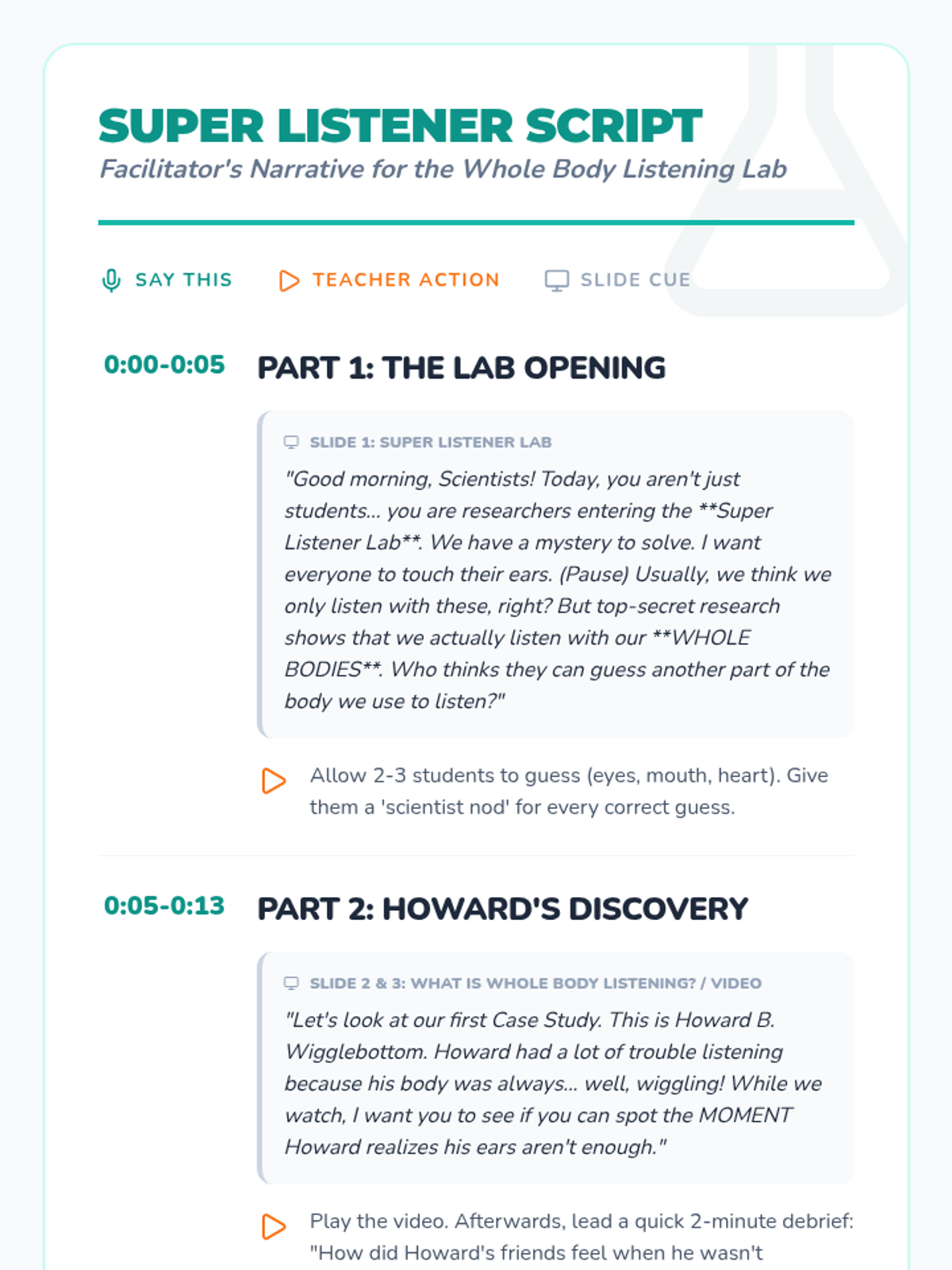
A foundational social-emotional learning lesson for 2nd graders to understand and practice whole-body listening. Students will identify key body parts involved in listening and apply these skills through a craft and interactive game.
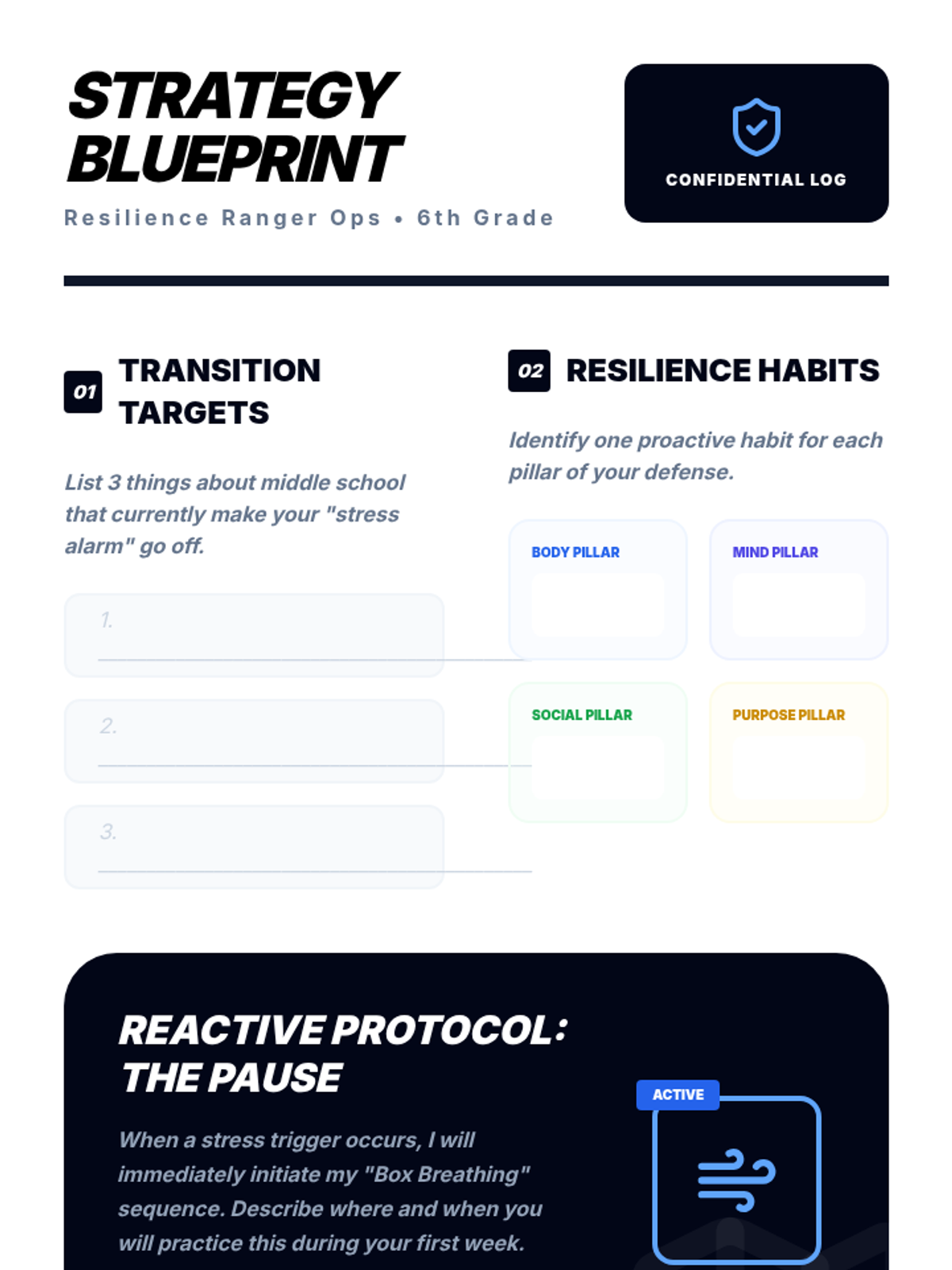
Sixth grade students prepare for the transition to middle school by developing high-level resilience habits and long-term stress management plans.
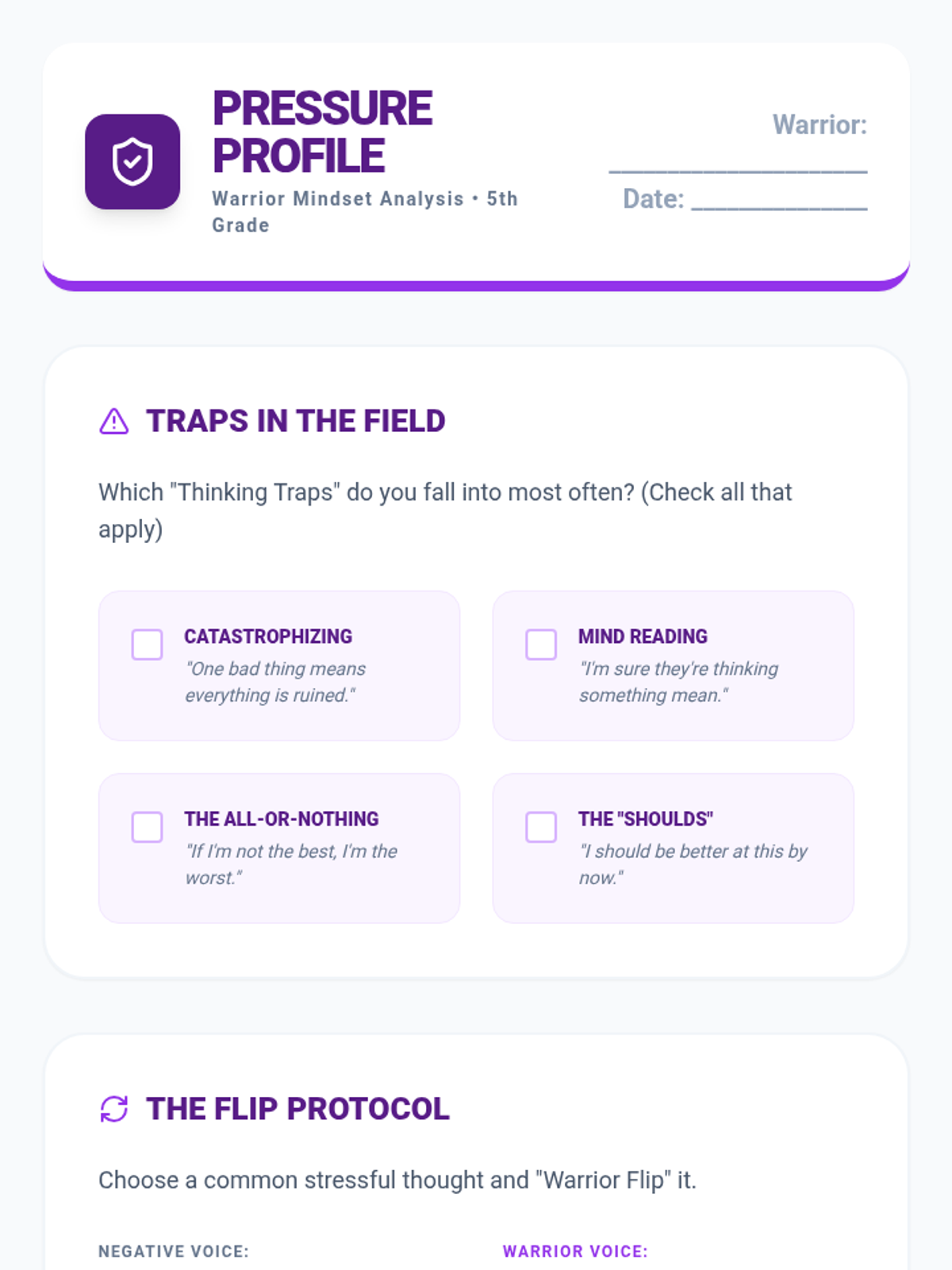
Fifth graders explore academic and social pressure, focusing on the power of positive self-talk and perspective-shifting.
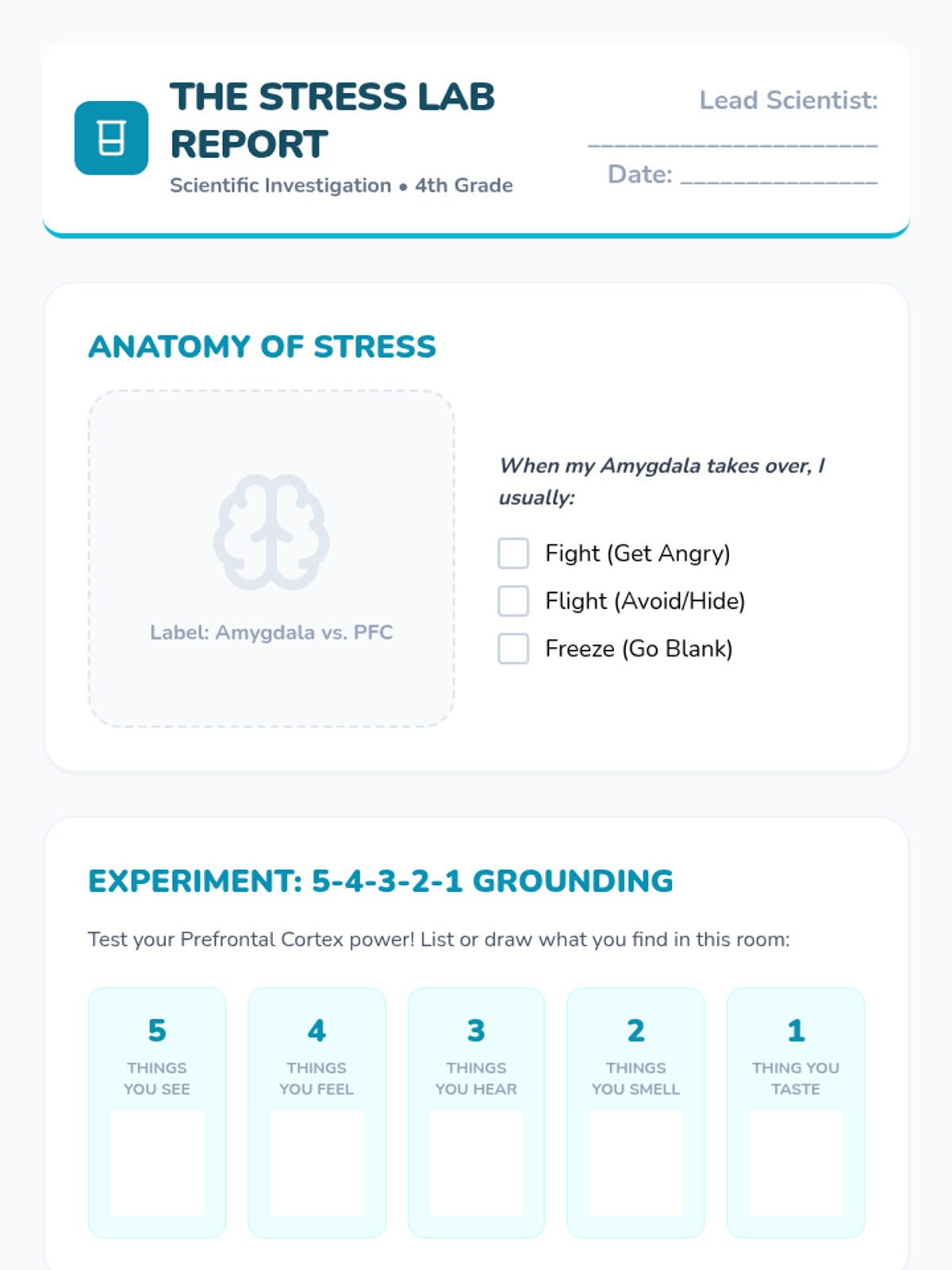
Fourth grade students investigate the science of the 'fight, flight, or freeze' response and develop logic-based strategies to respond.
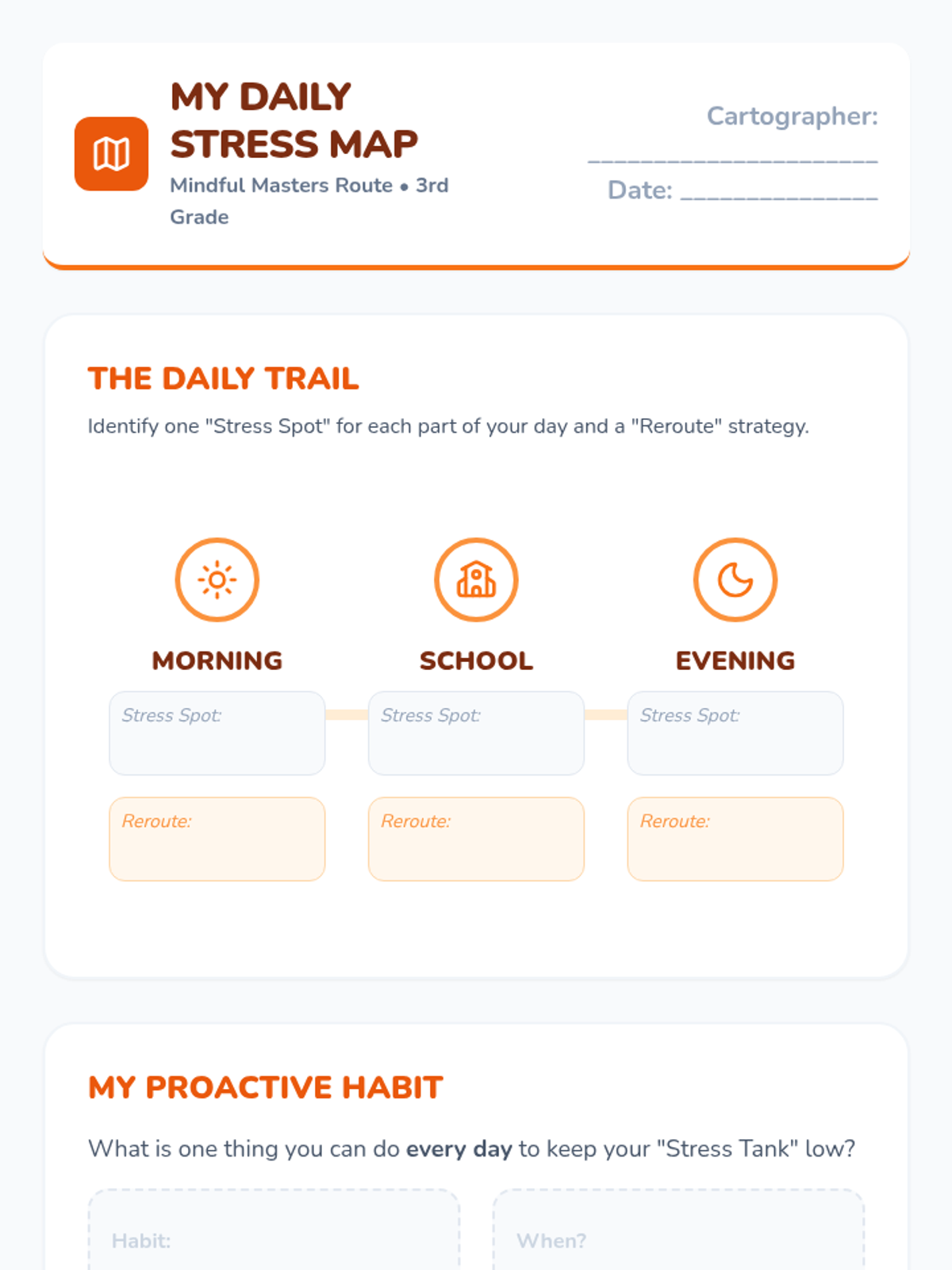
Third graders learn to map out their day to identify 'stress spots' and practice proactive planning to minimize overwhelm.
A specialized lesson for mixed-grade classrooms focusing on identifying shared stressors (schoolwork, friendship) and practicing group regulation.
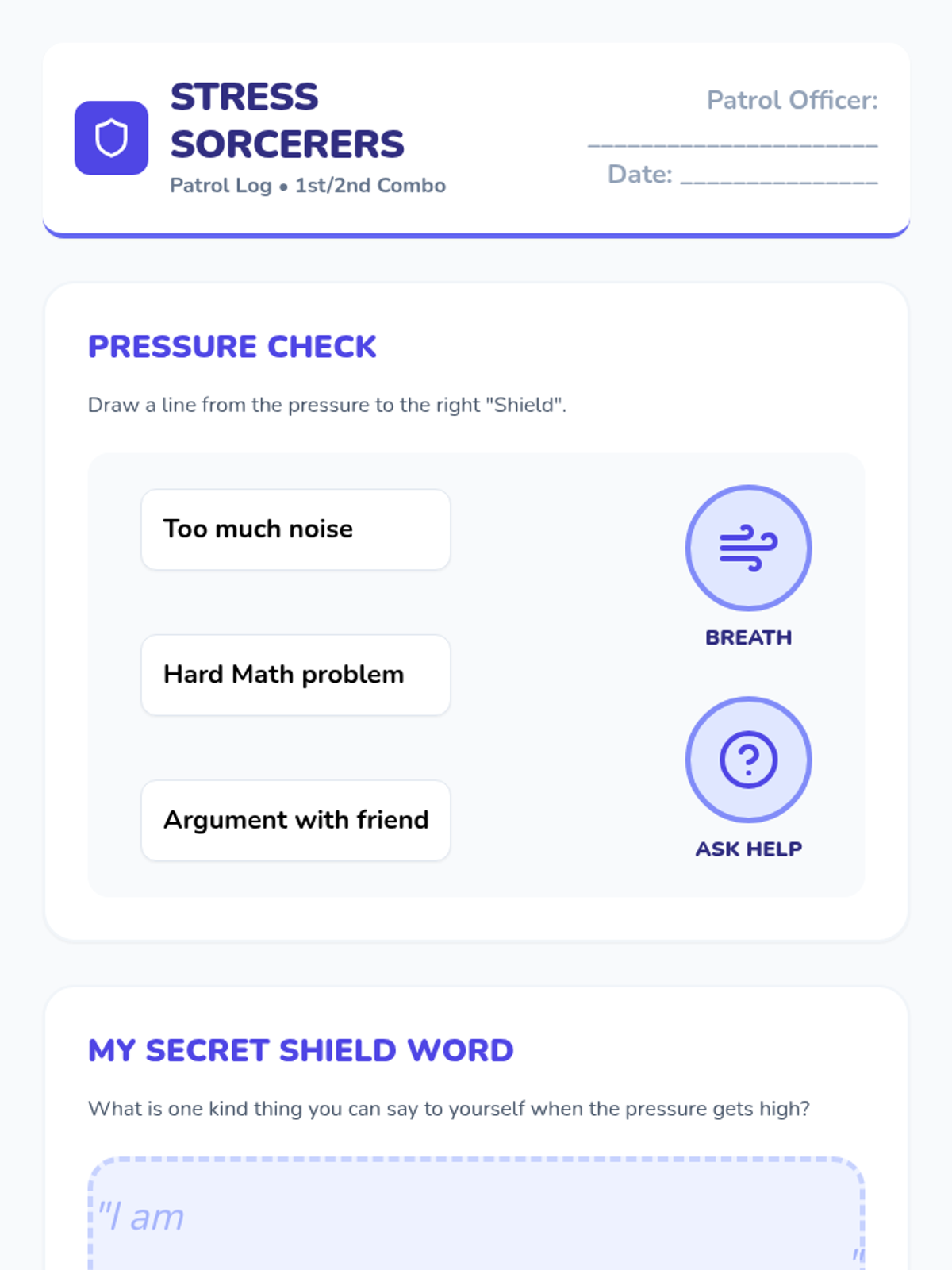
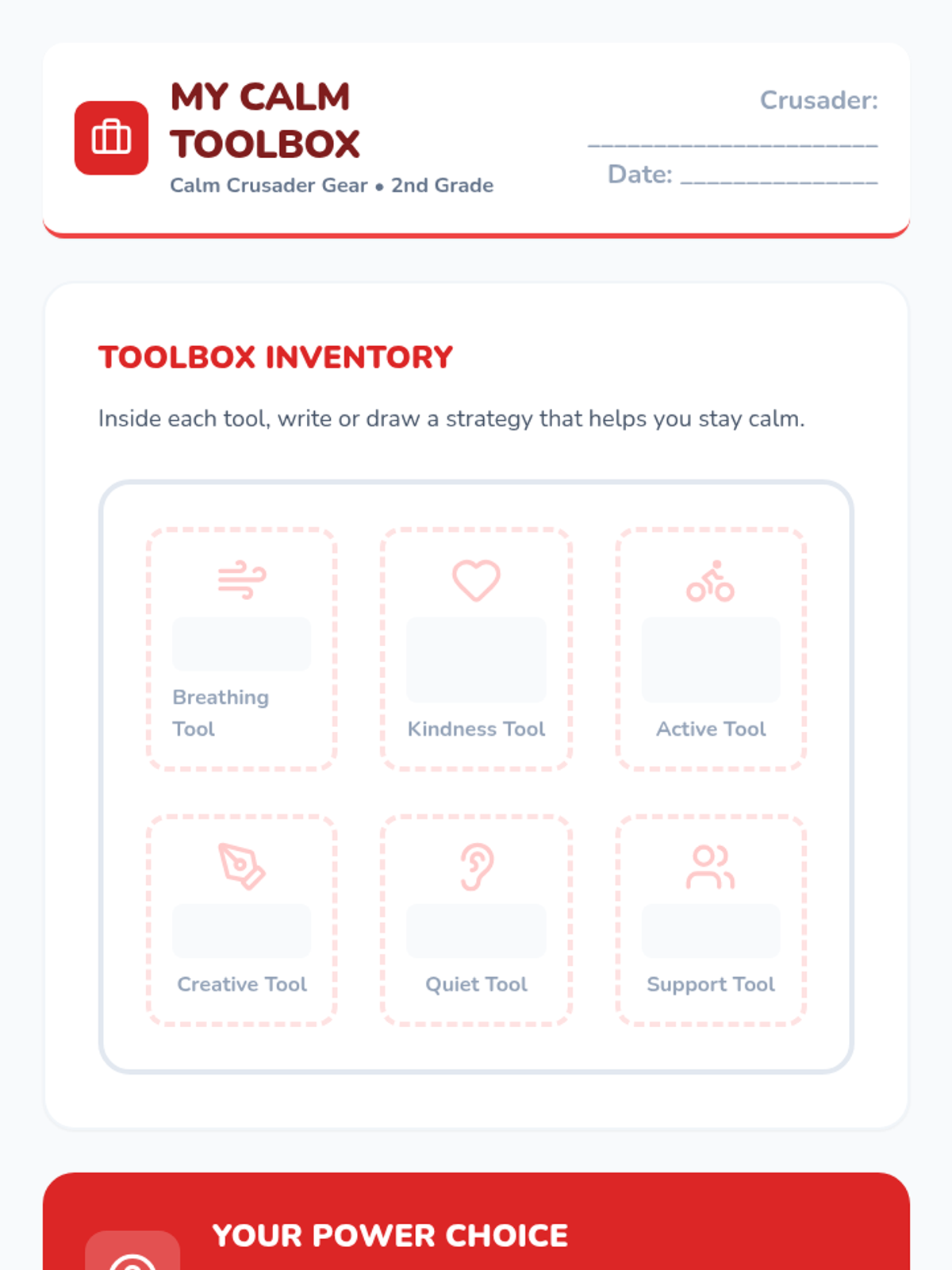
Second grade students explore how to build a personalized 'toolbox' of calm-down strategies to use when they feel overwhelmed.
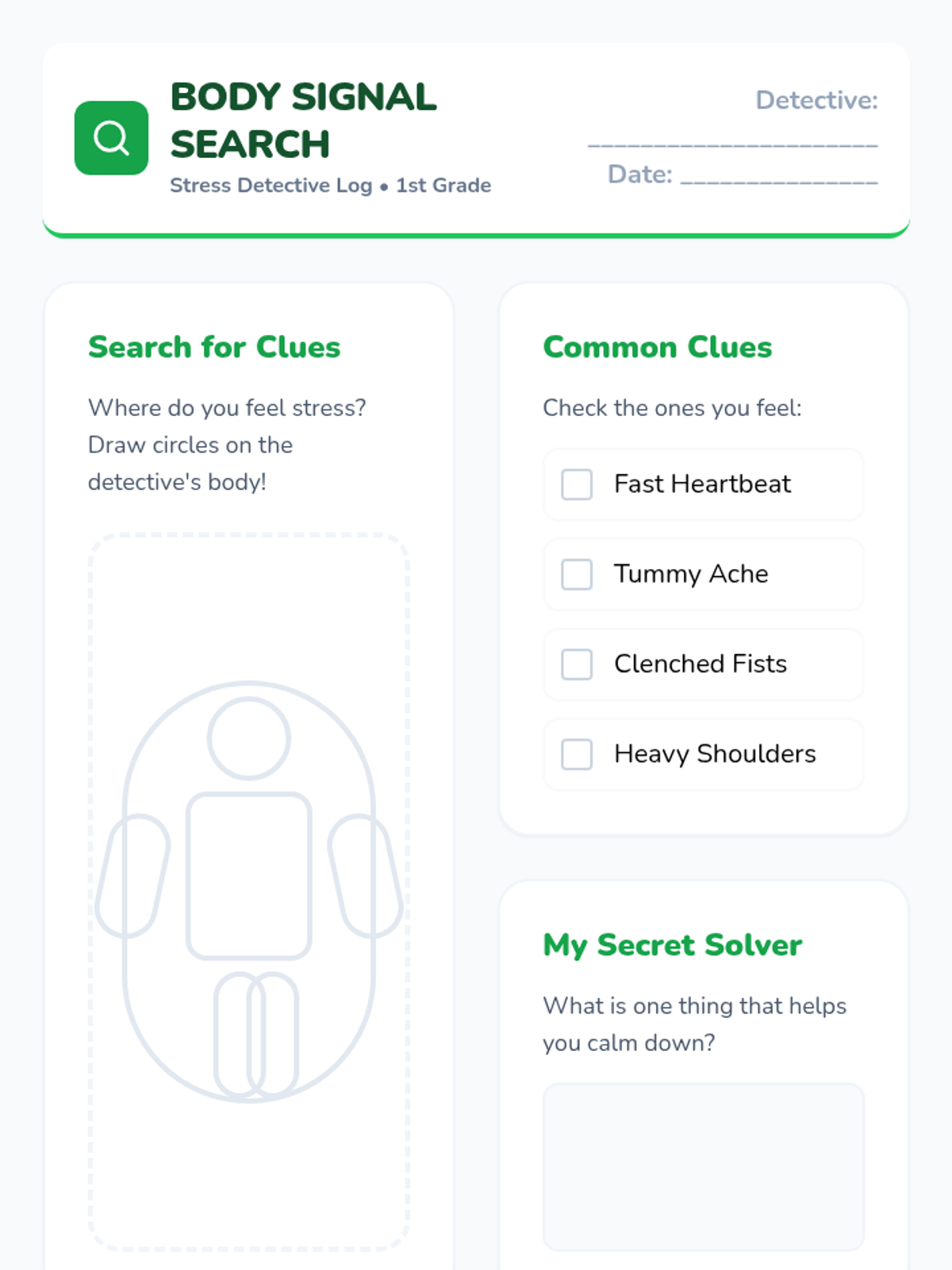
A focused lesson for 1st graders on identifying where stress lives in the body and learning the difference between 'helpful' and 'unhelpful' ways to react.
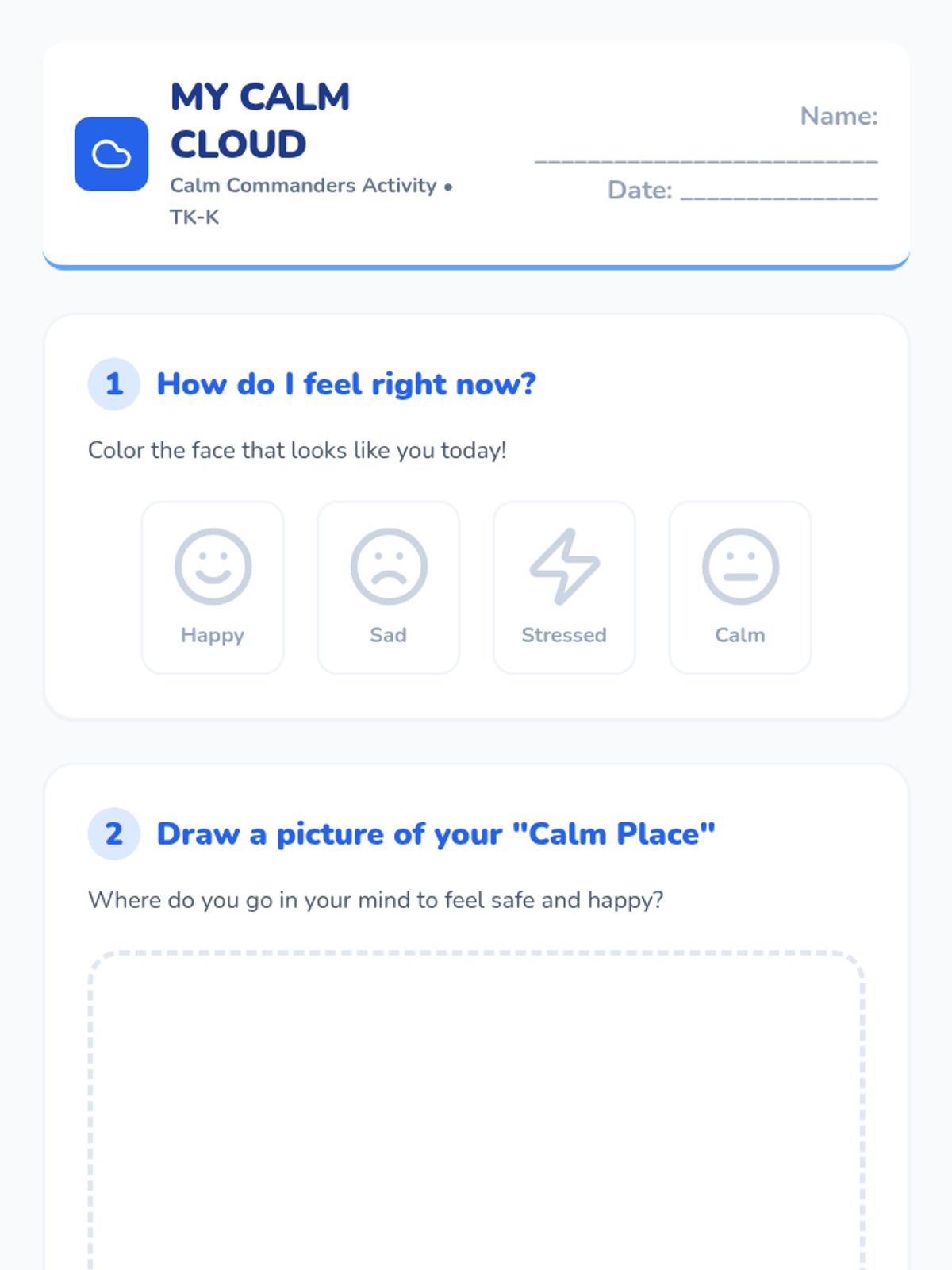
A gentle introduction for TK and Kindergarten students to understand feelings of 'tightness' or 'worry' (stress) and simple breathing techniques to feel calm.
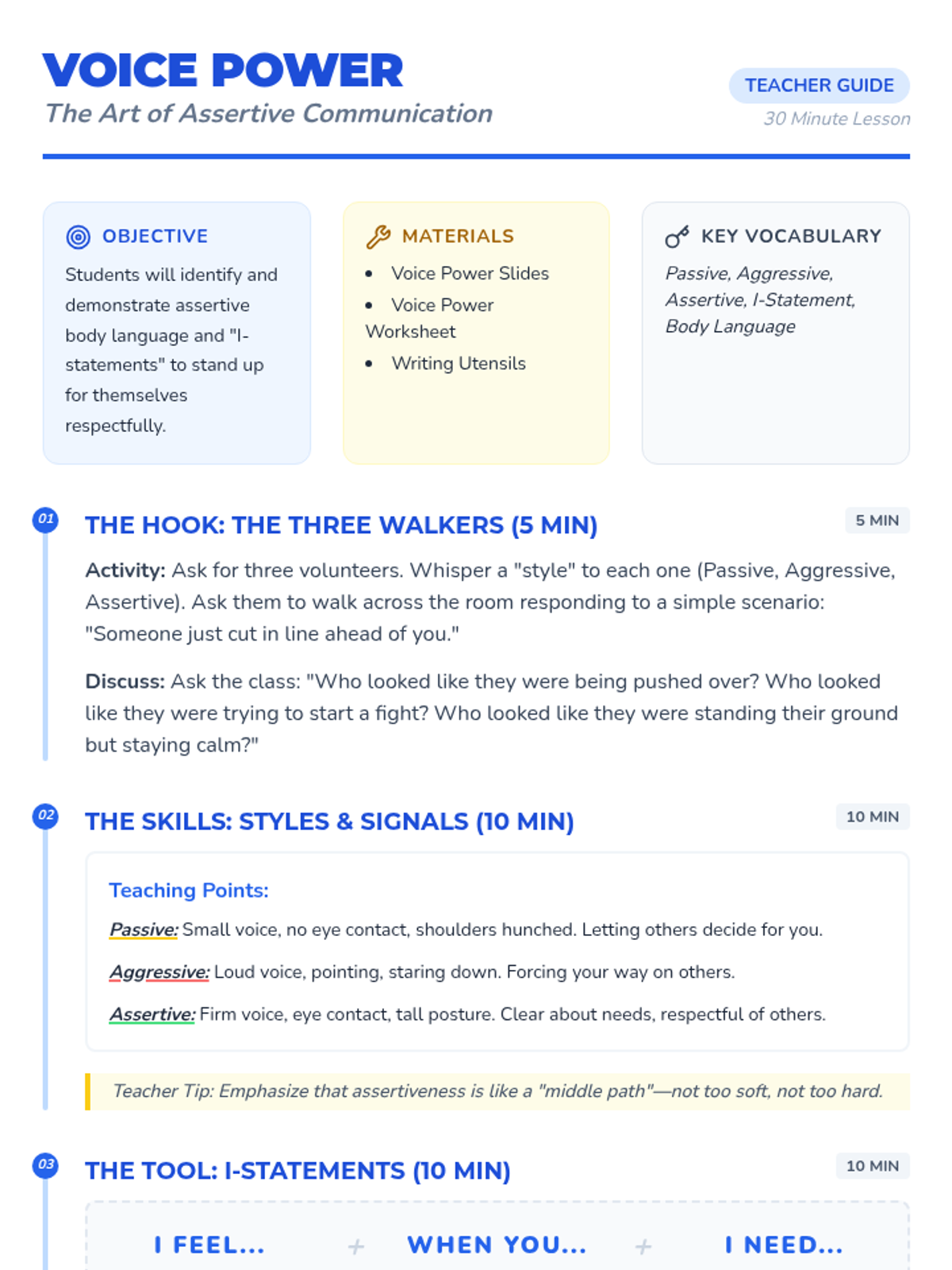
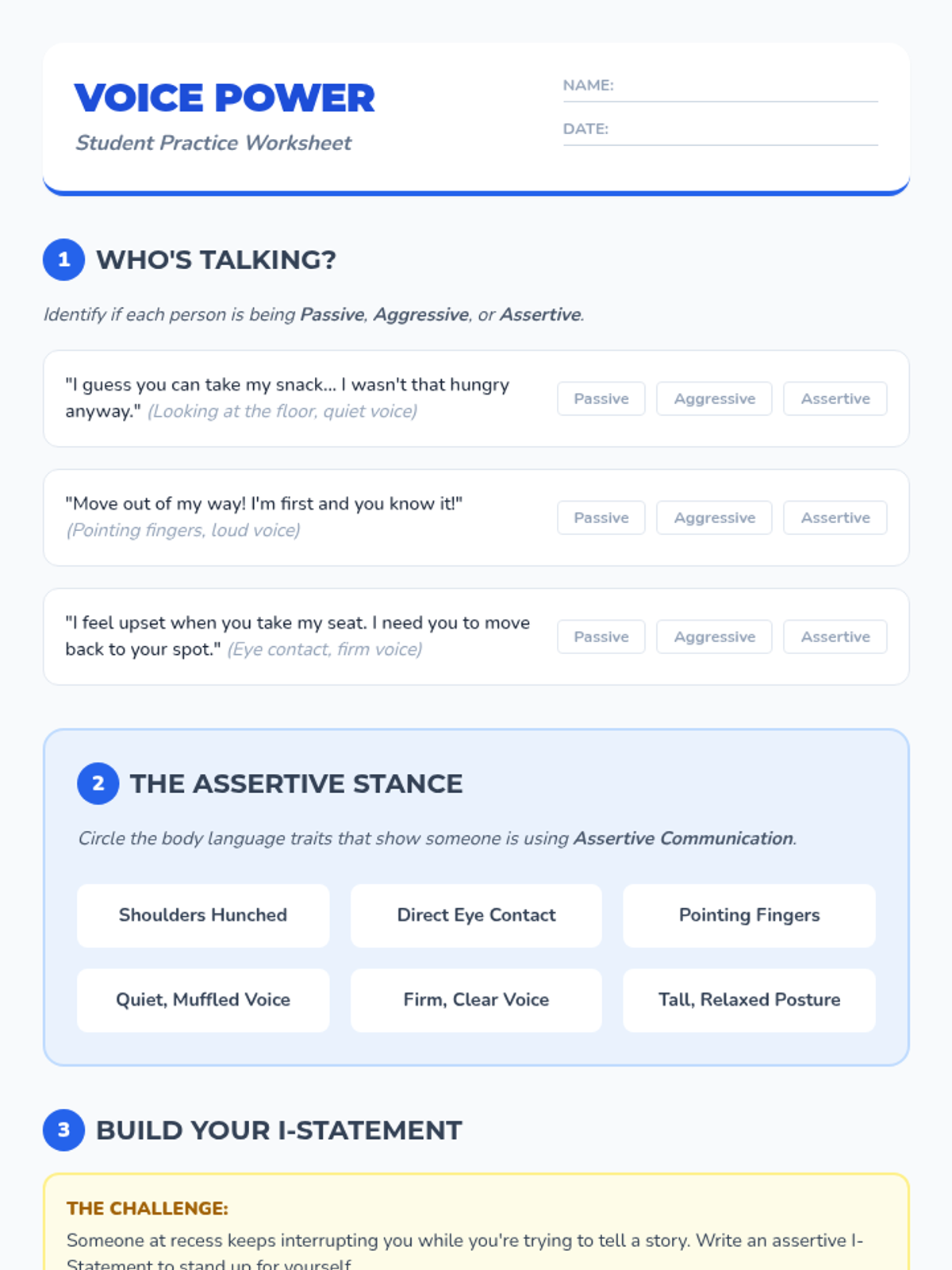
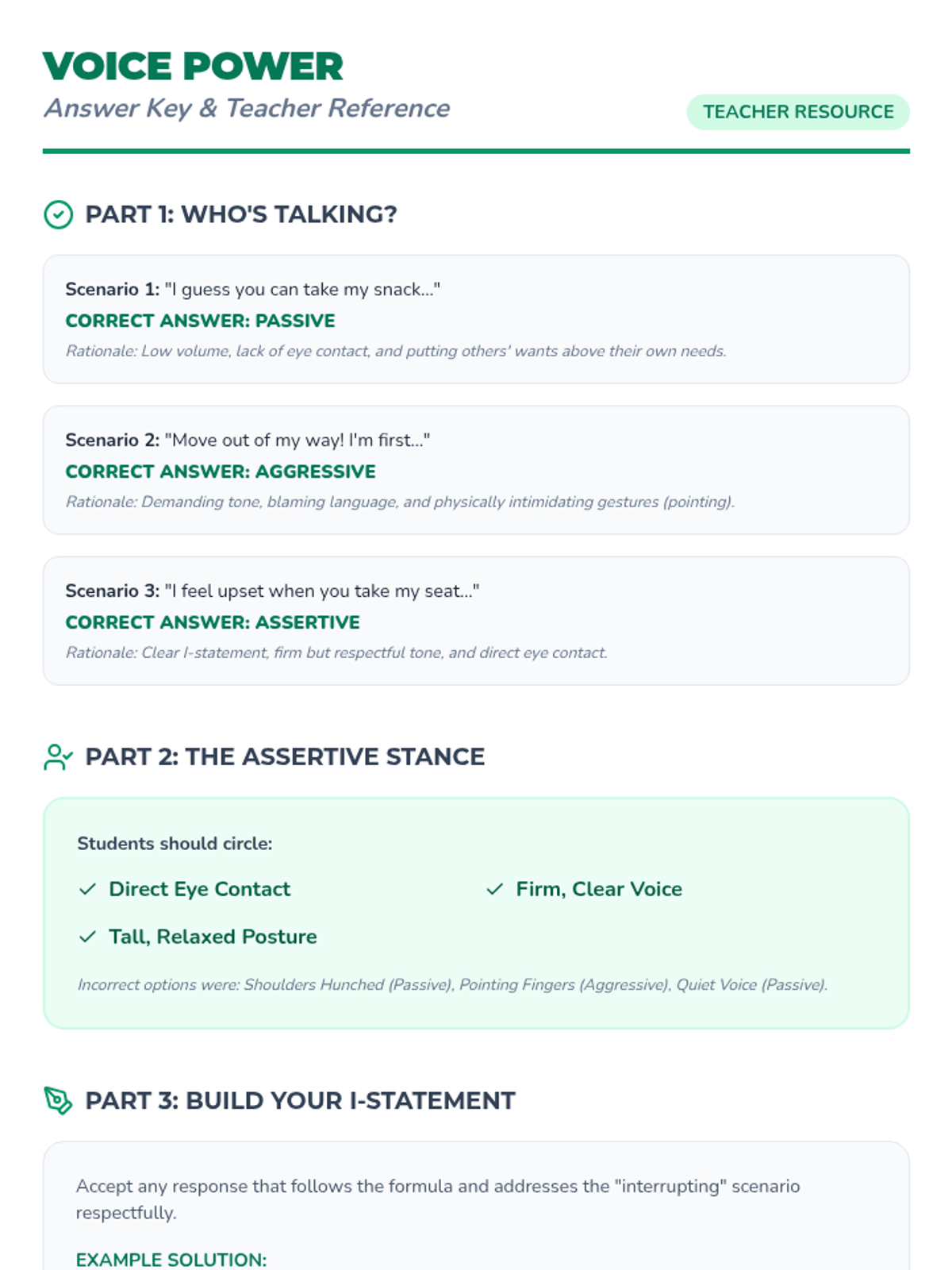
A comprehensive lesson on assertive communication and body language, helping students find their voice to stand up for themselves effectively and respectfully.
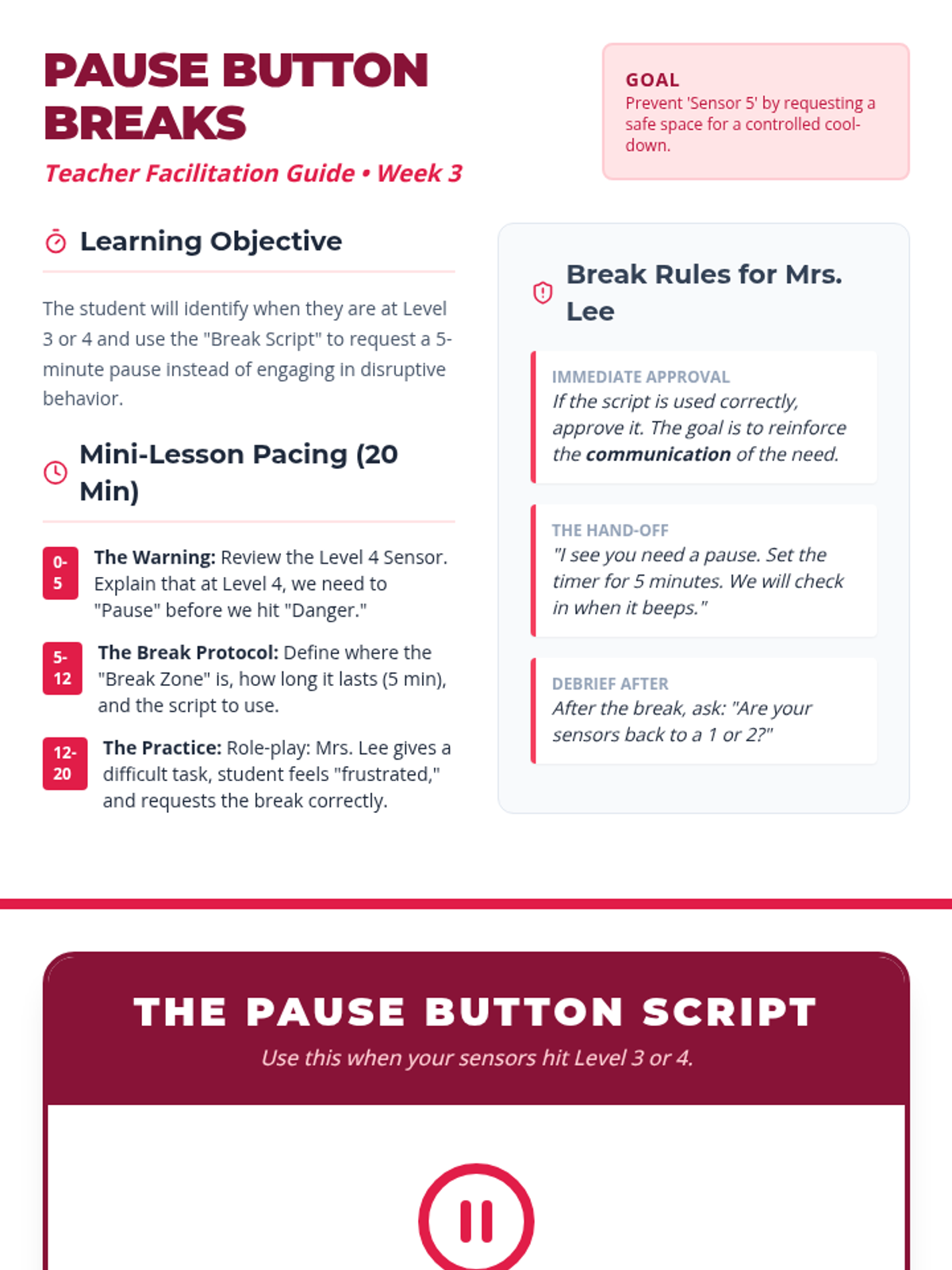
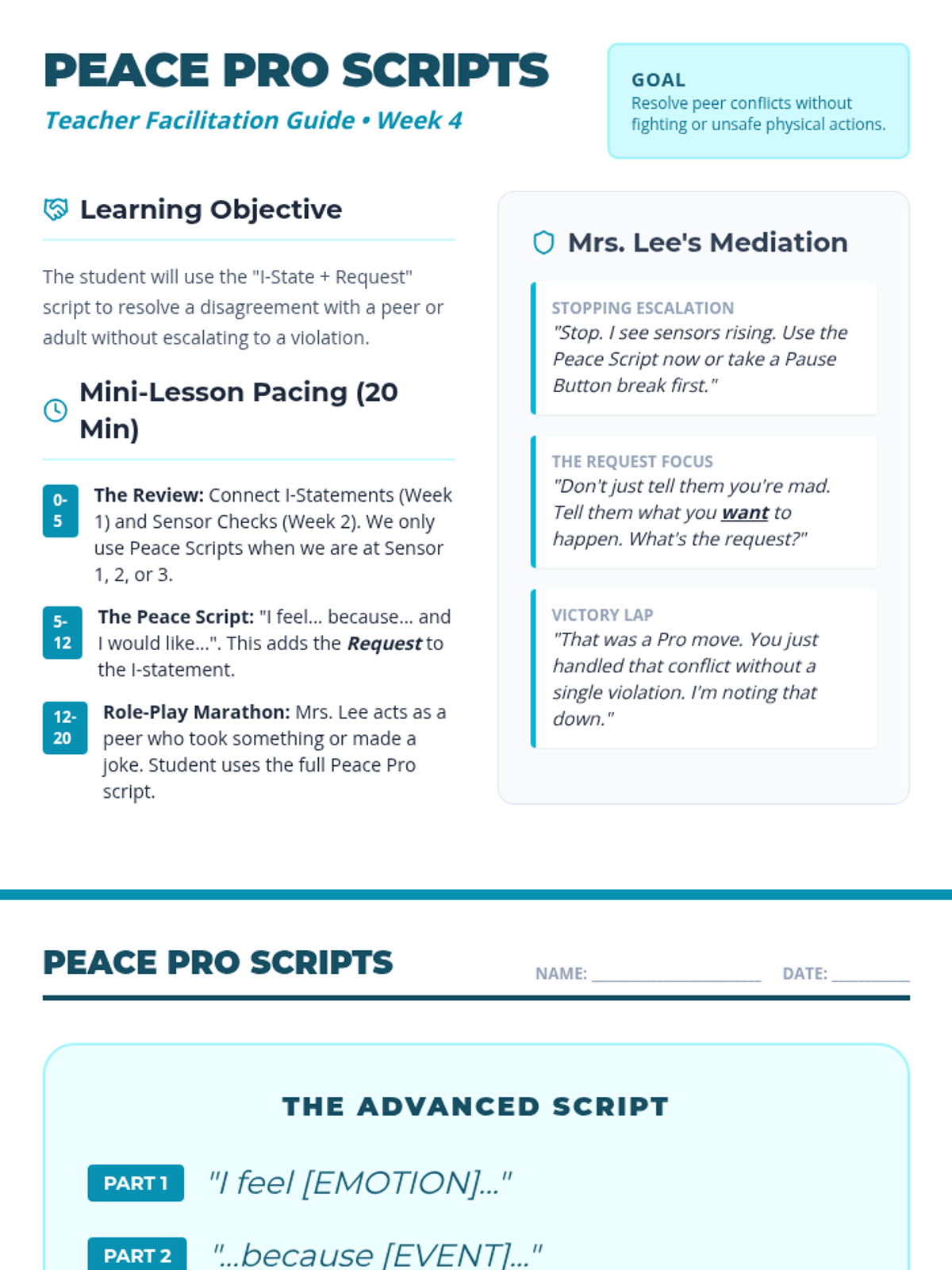
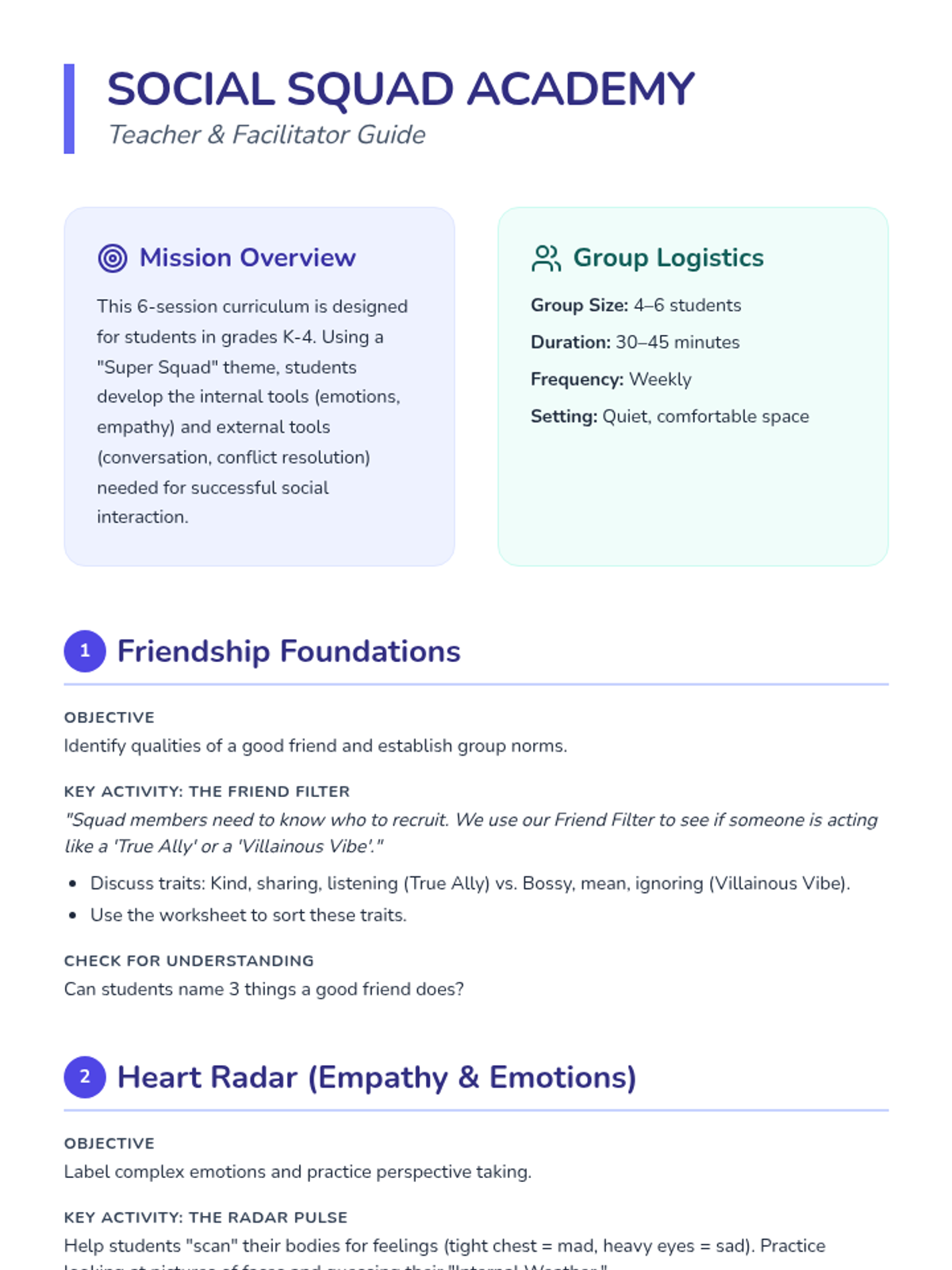
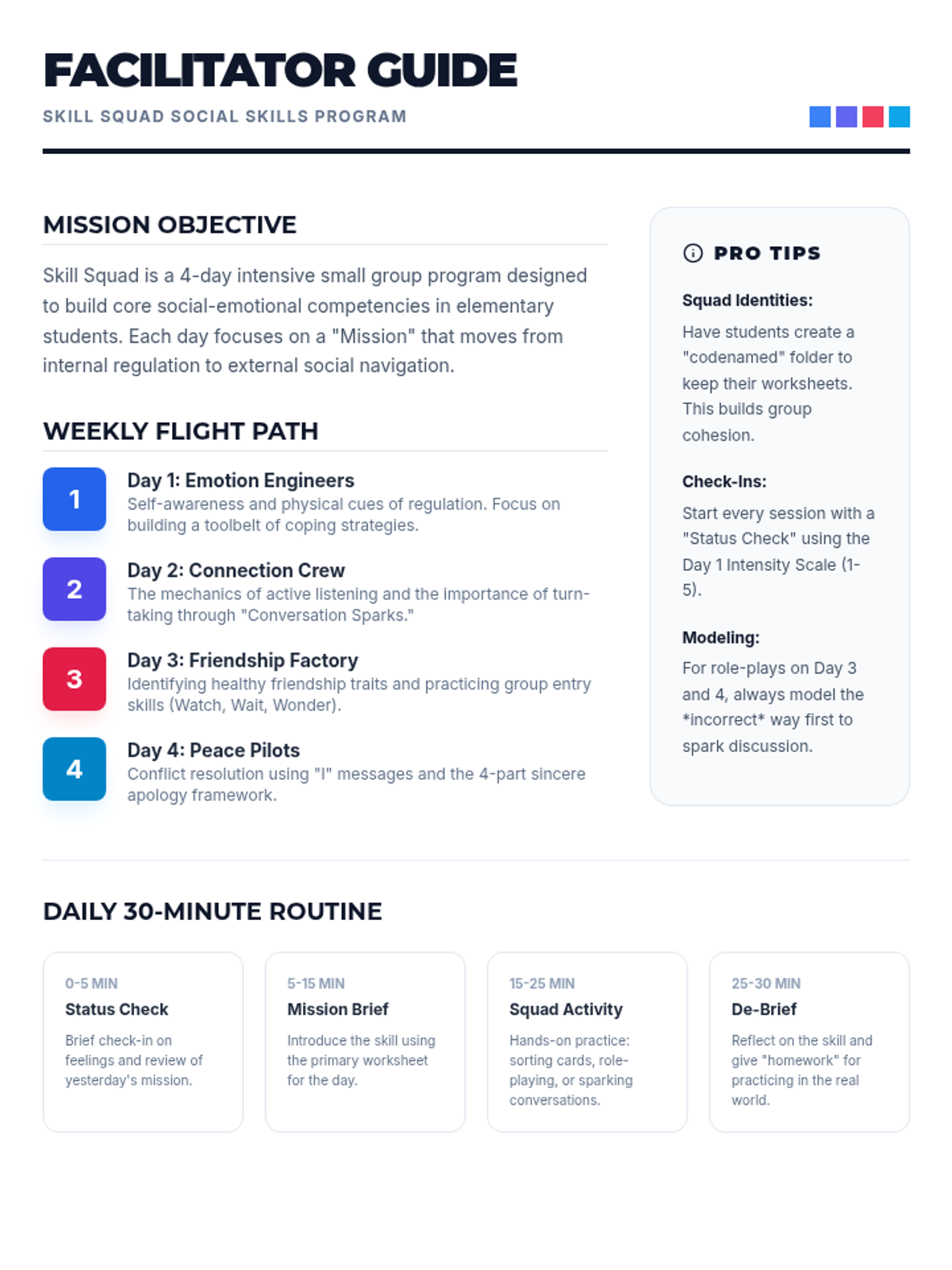
Teacher-facing resources for implementing the Skill Squad program, including facilitation guides and sequence overviews.