A lesson designed to help teenagers understand the mind-body connection and develop practical coping strategies for psychosomatic symptoms of anxiety like nausea, headaches, and rapid heart rate.
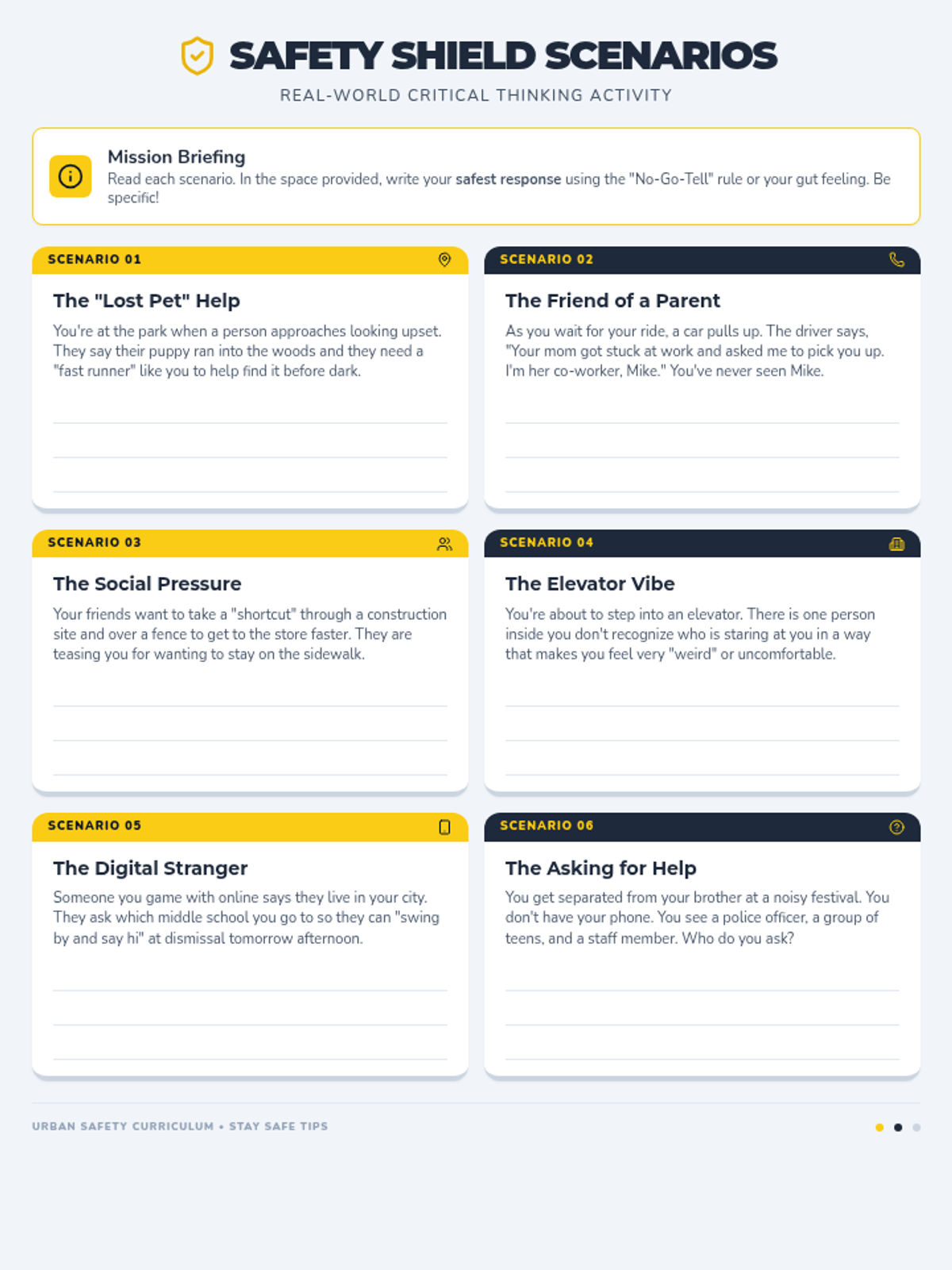
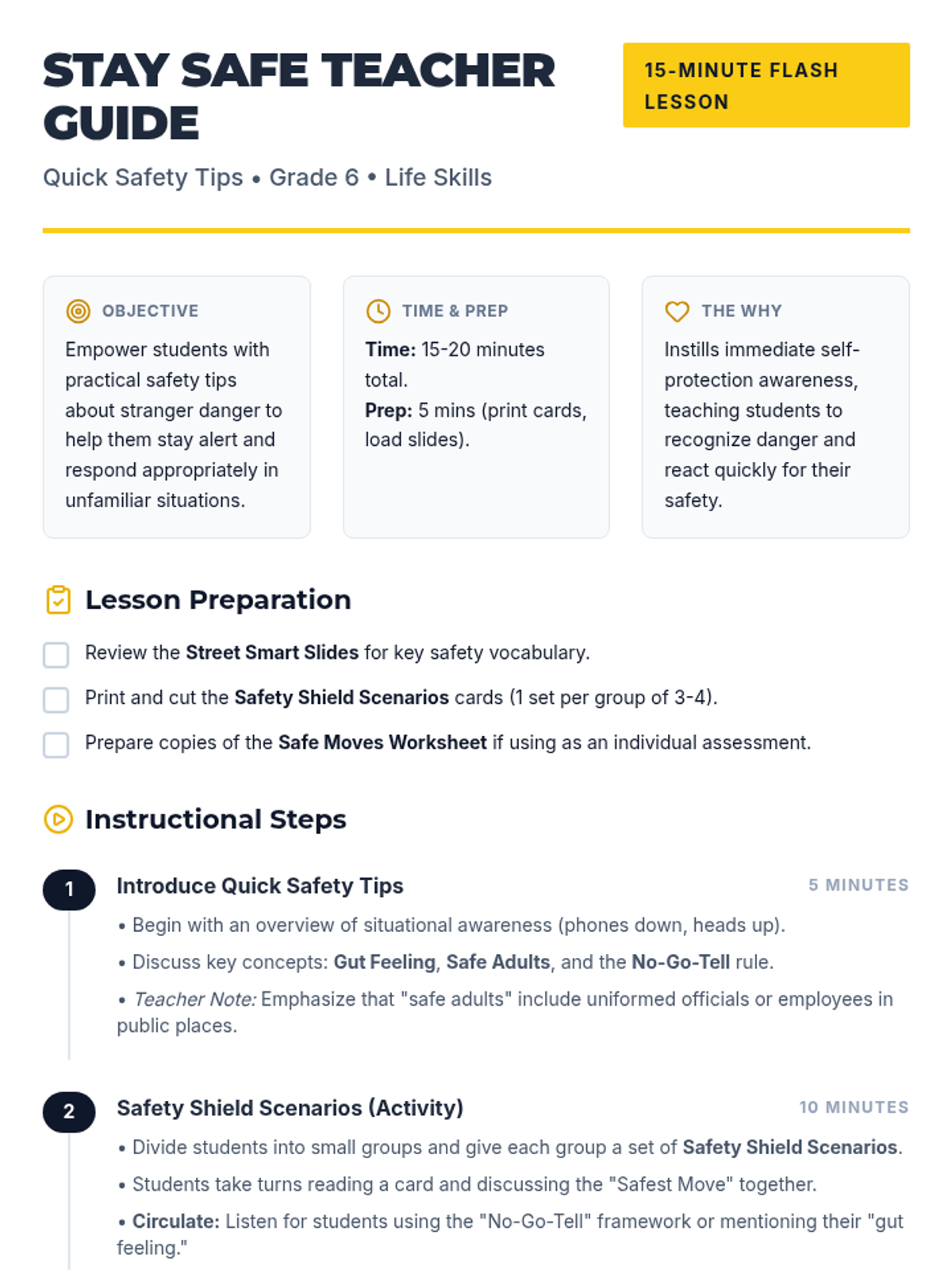
A concise lesson focusing on quick and practical tips for 6th graders to stay safe and alert in unfamiliar situations. Students practice identifying safe responses to common scenarios.
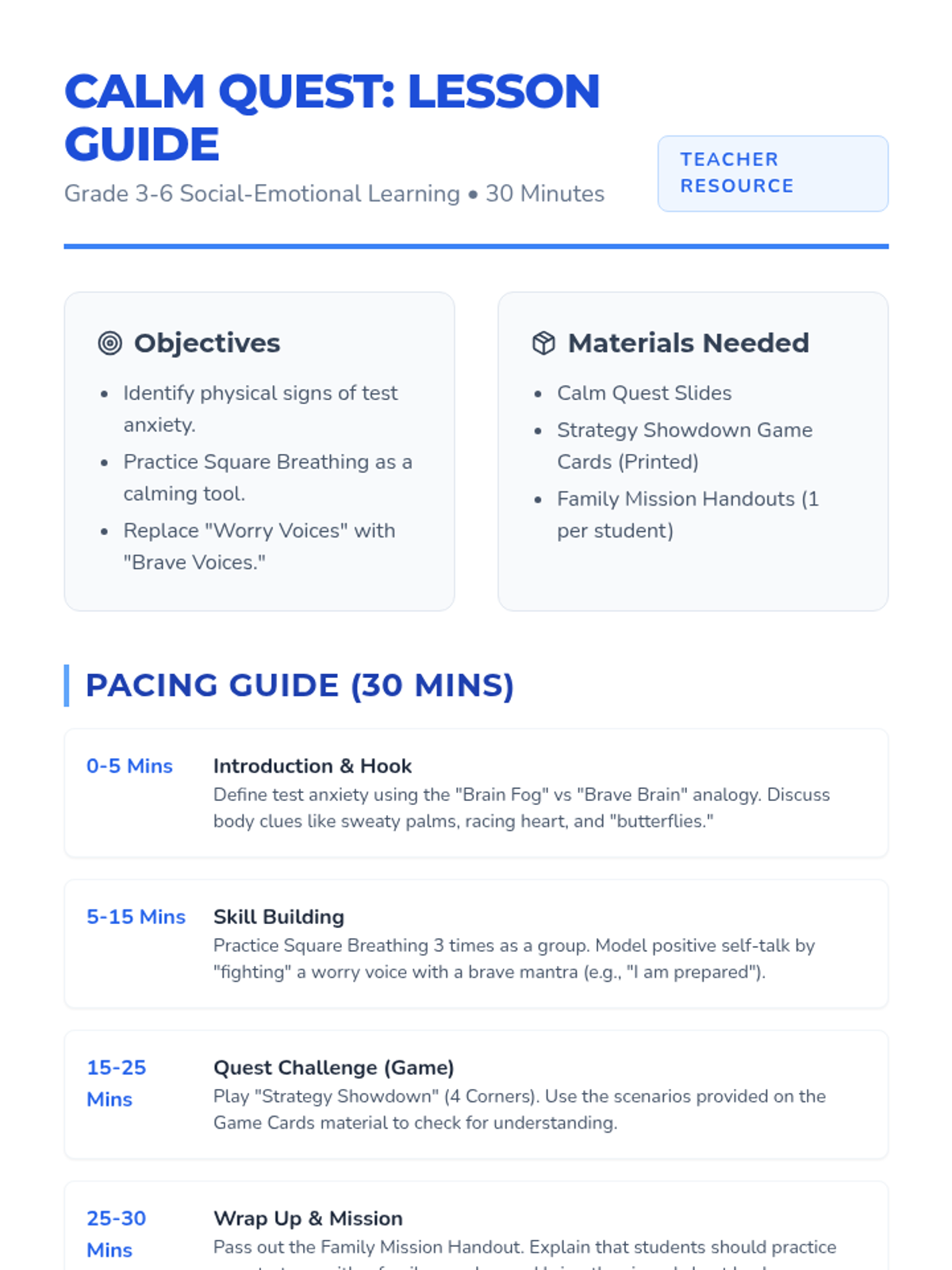
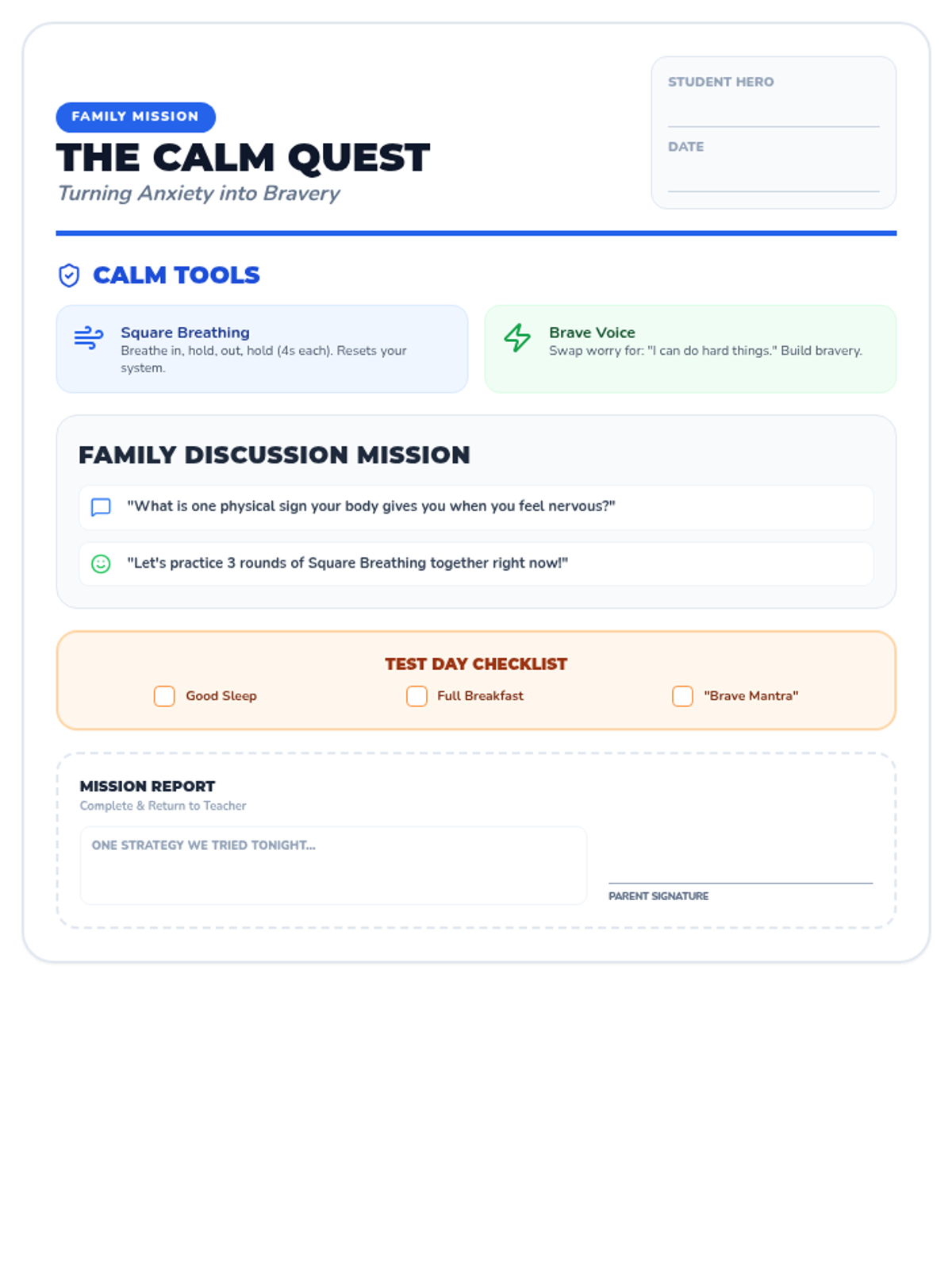
A 30-minute lesson designed for grades 3-6 to help students identify symptoms of test anxiety and master coping strategies like deep breathing and positive self-talk. The lesson includes a presentation, a movement-based review game, and a family engagement resource.
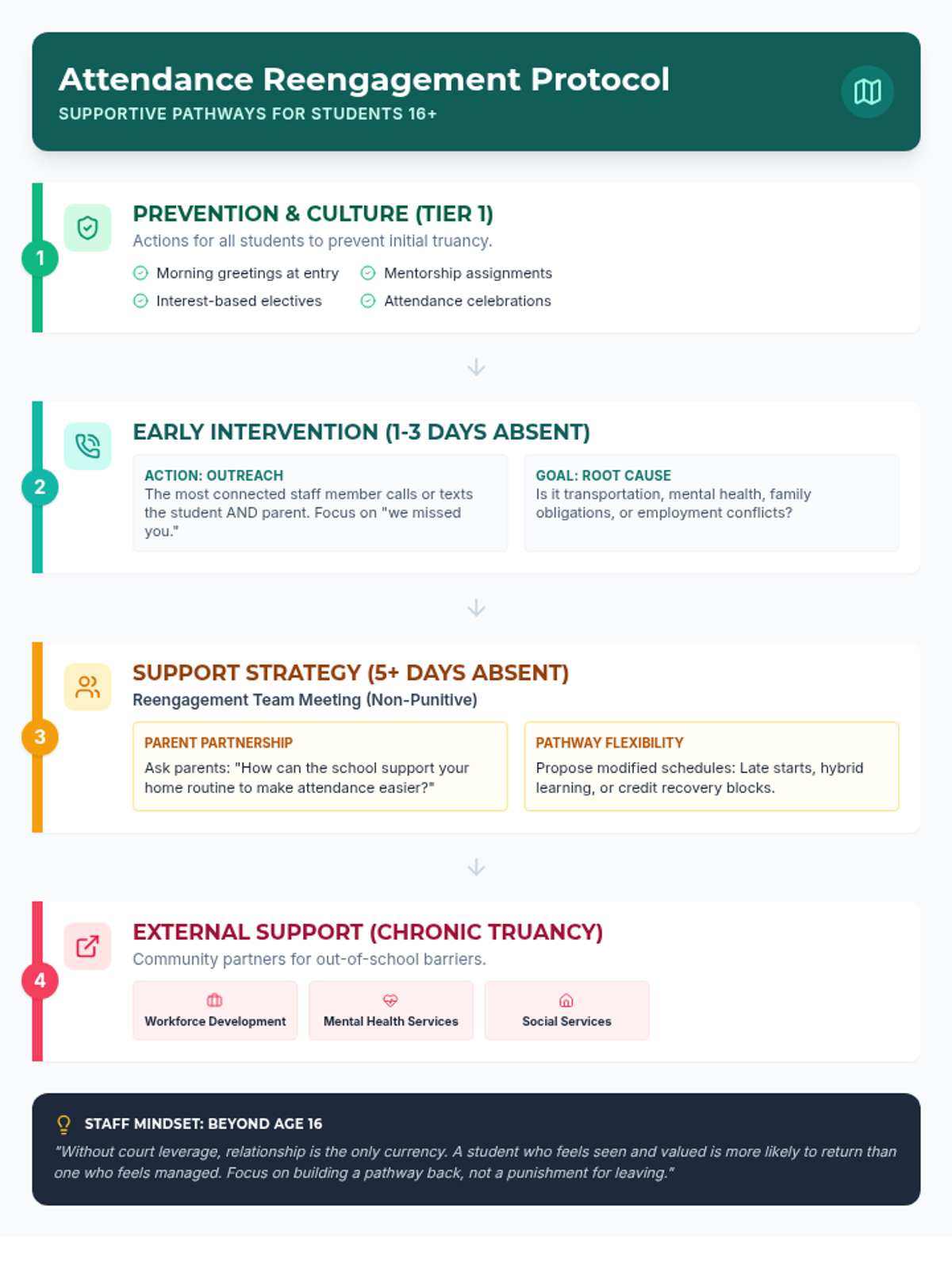
A training module for school staff on re-engaging students aged 16 and older who are experiencing truancy, focusing on supportive interventions rather than legal mandates.
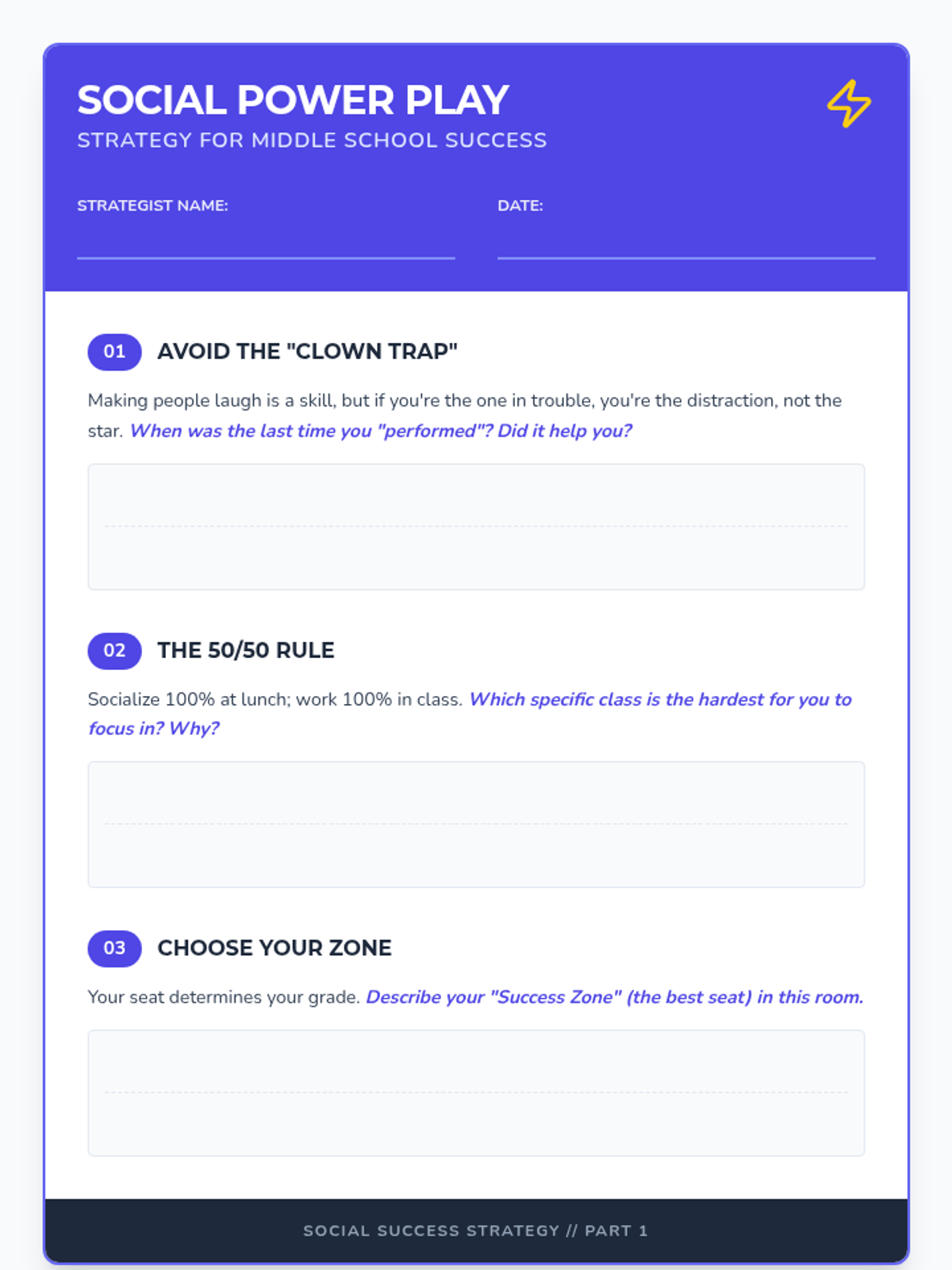
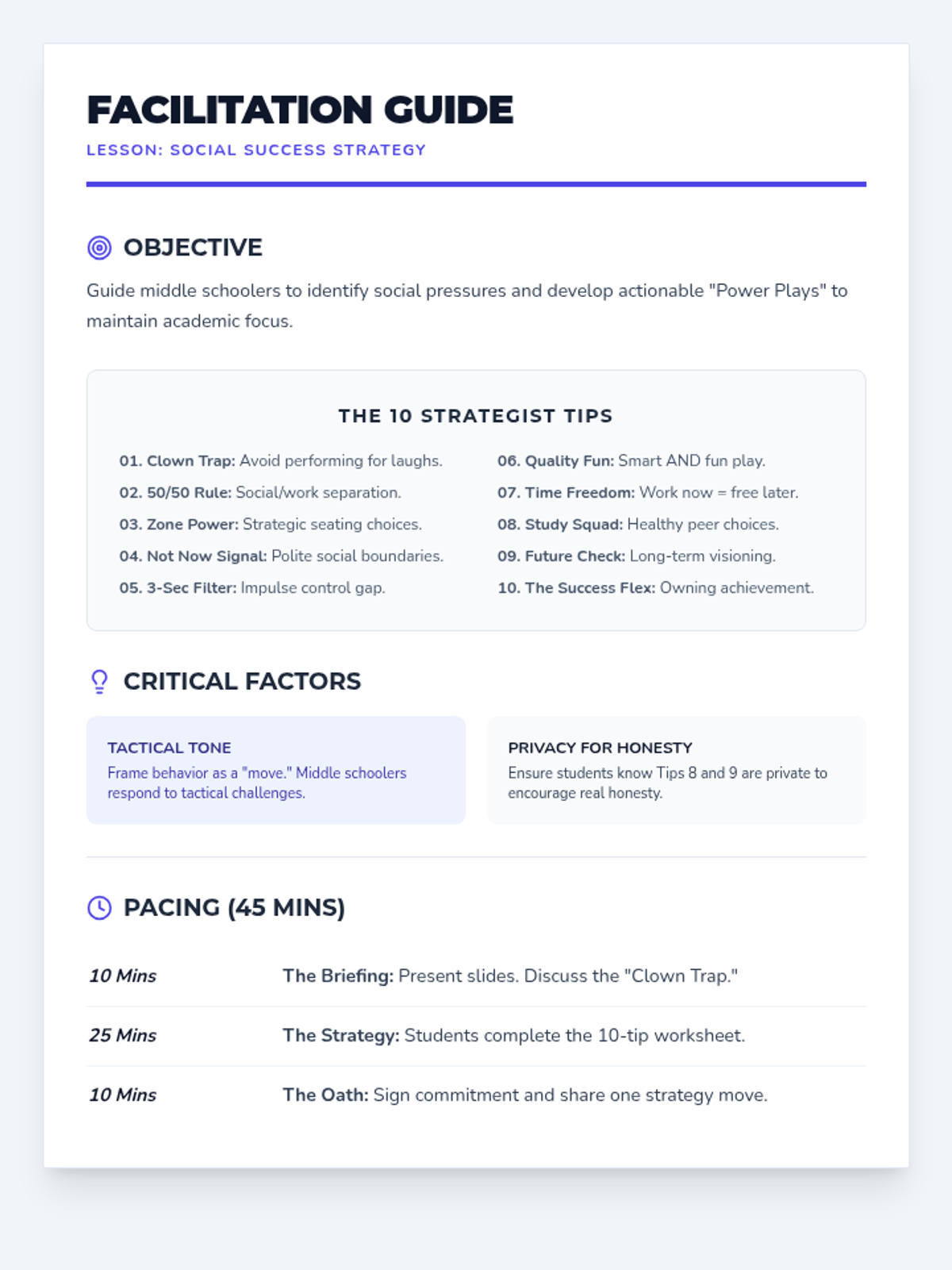
A self-reflection lesson designed to help middle school students balance social desires with academic responsibilities, focusing on overcoming the urge to 'perform' for peers.
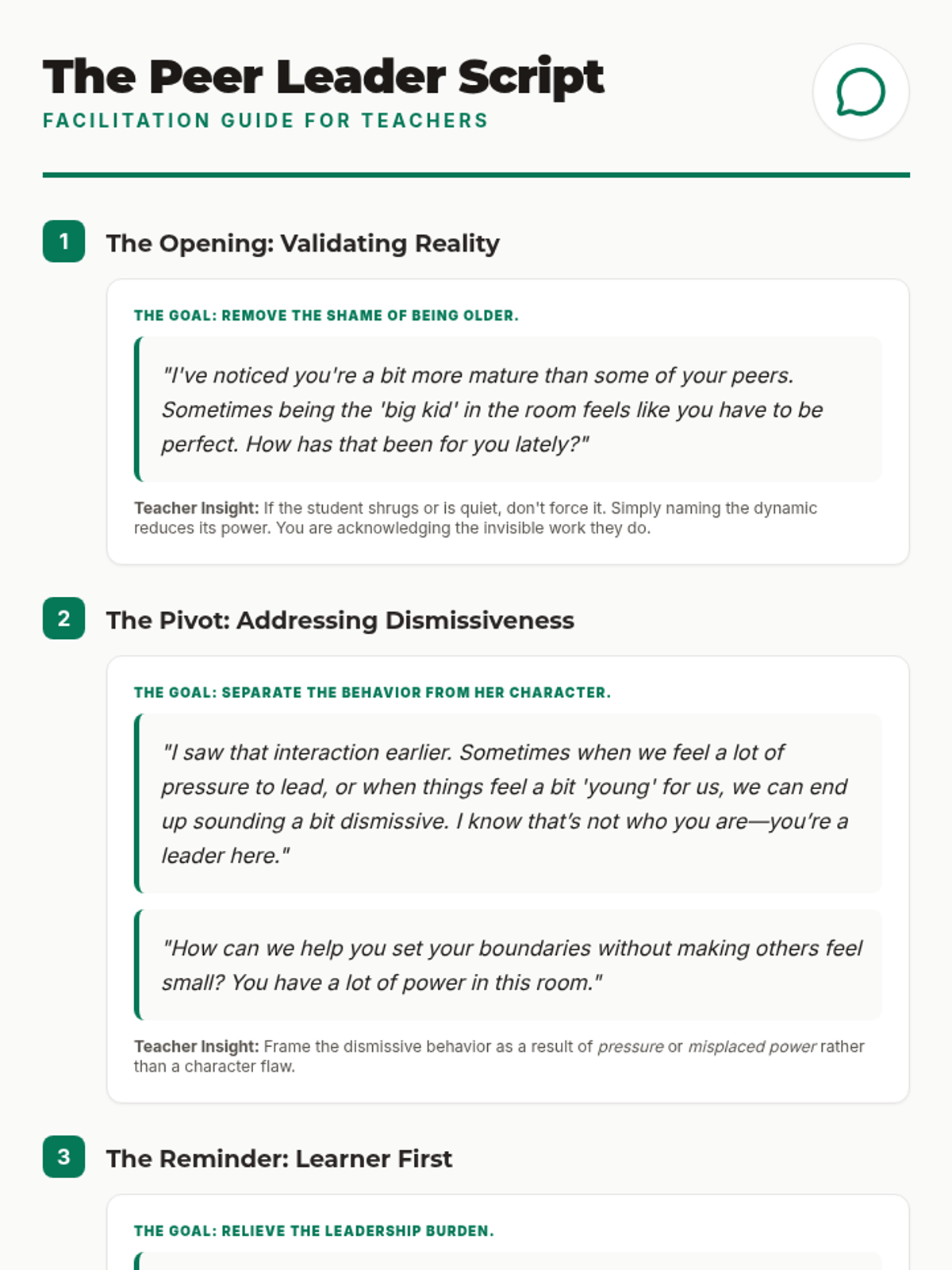
A lesson designed to empower students who are older than their peers, focusing on balancing personal rights with positive social leadership while honoring their own identity as a student first.
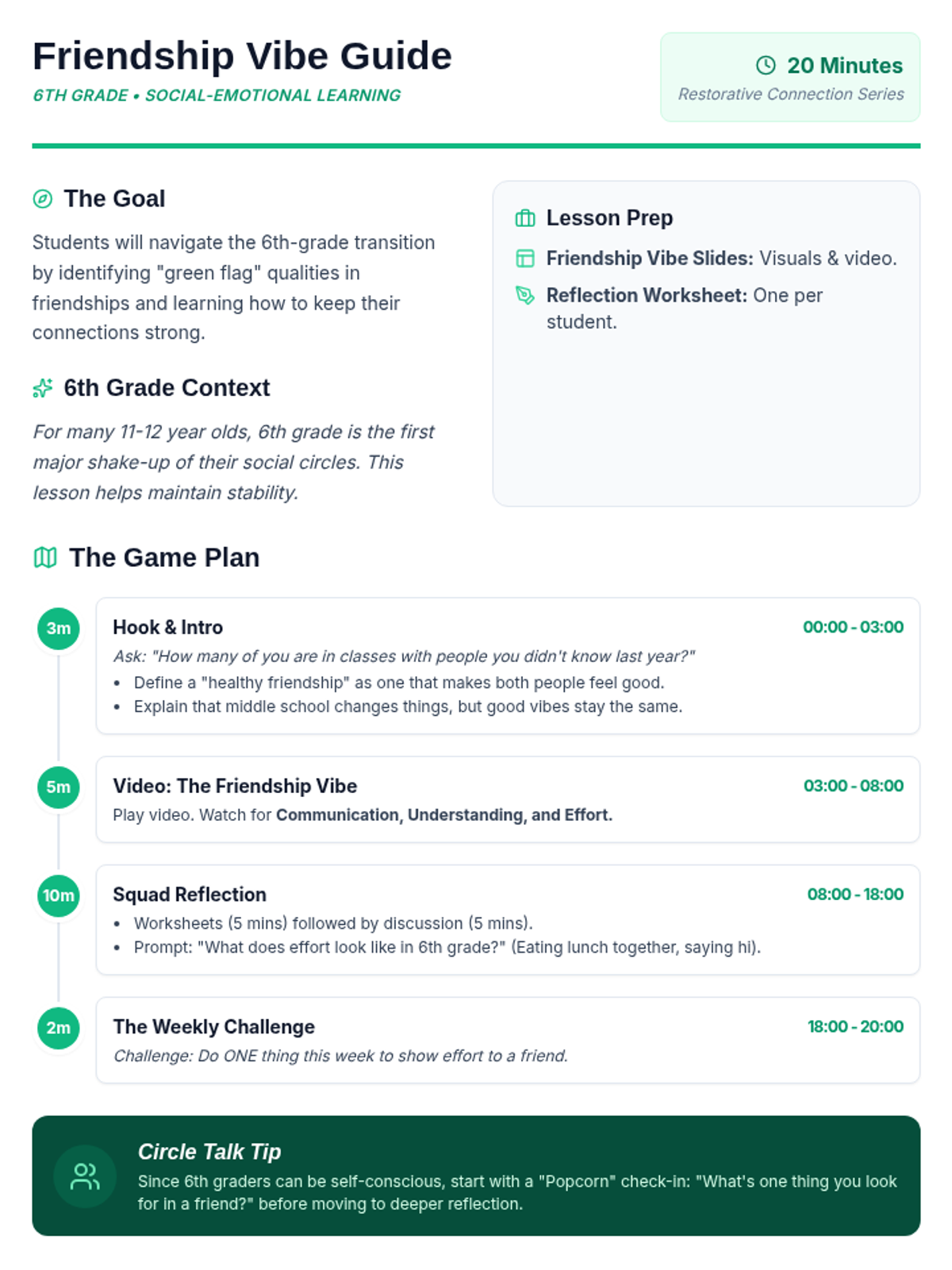
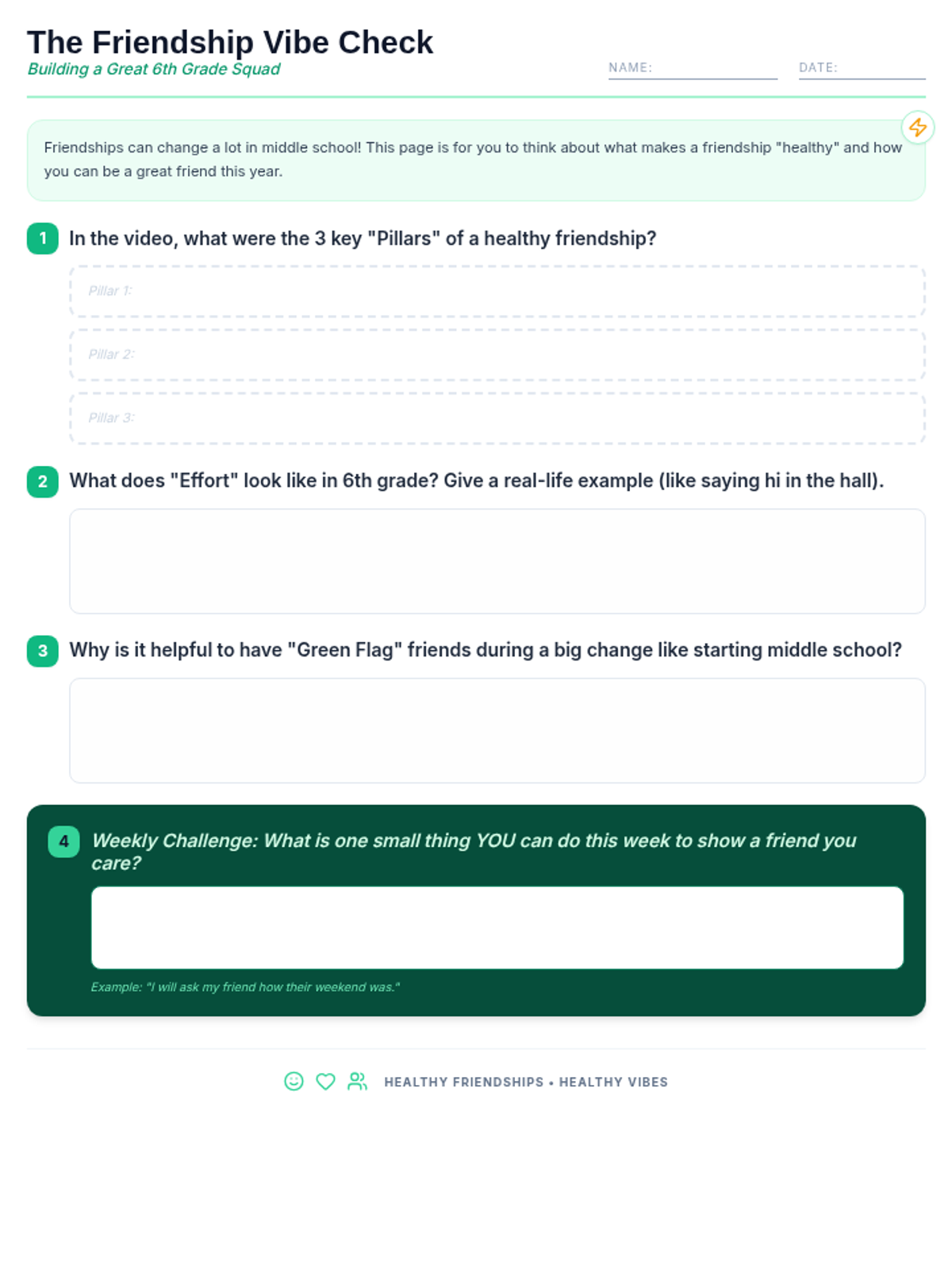
A 20-minute restorative lesson specifically tailored for 6th graders to navigate the social transitions of middle school by identifying and practicing the qualities of healthy friendships.
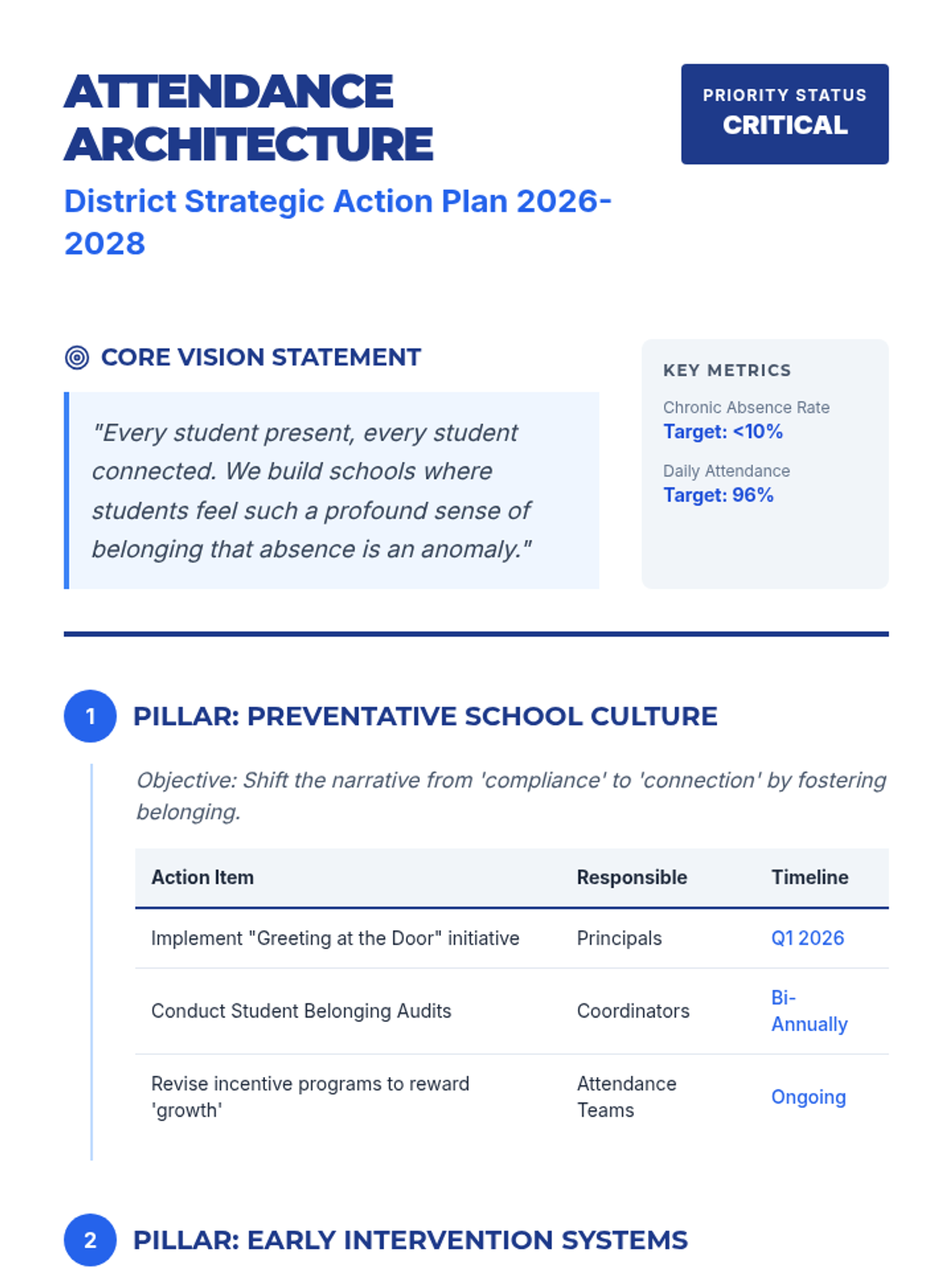
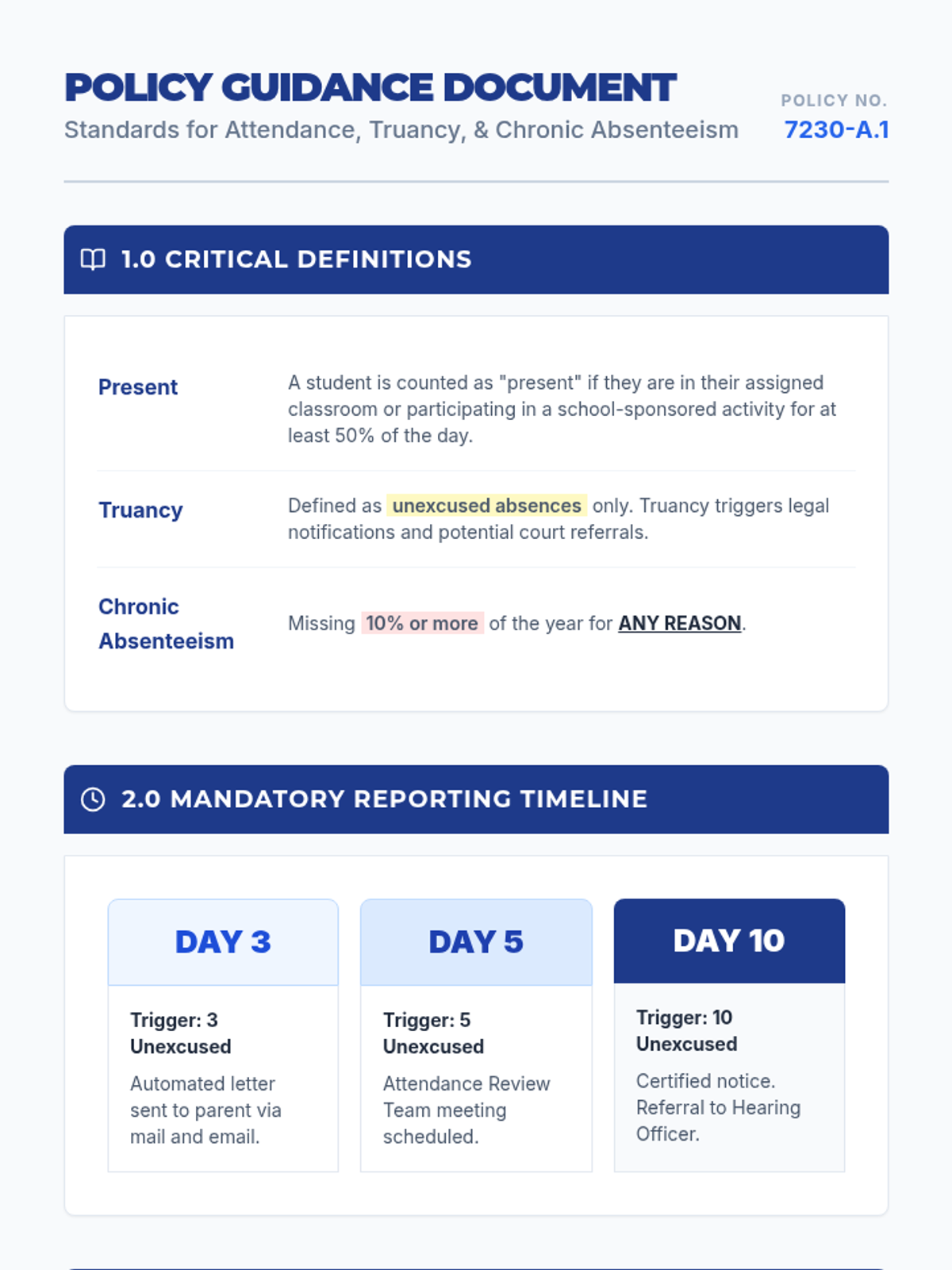
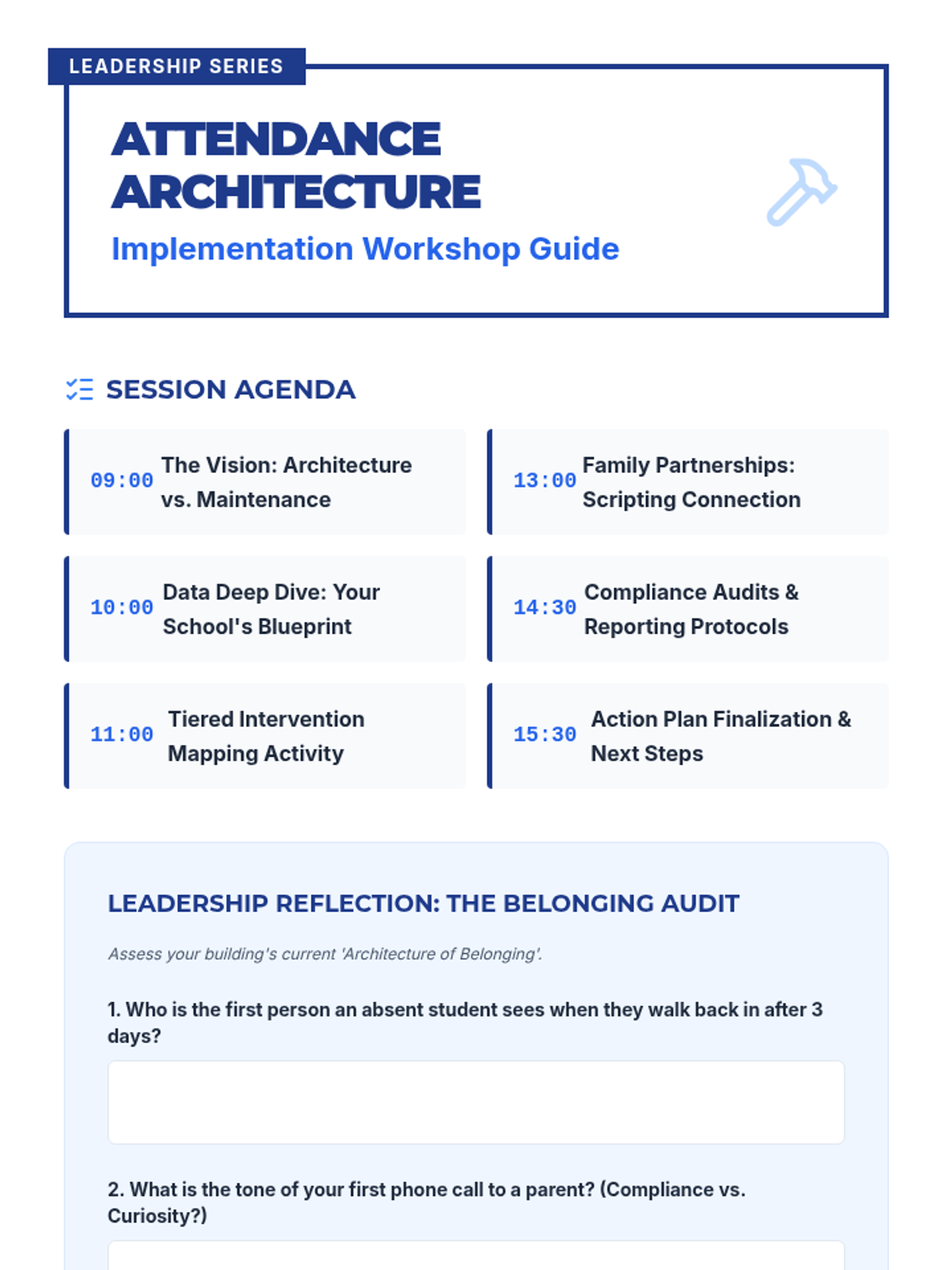
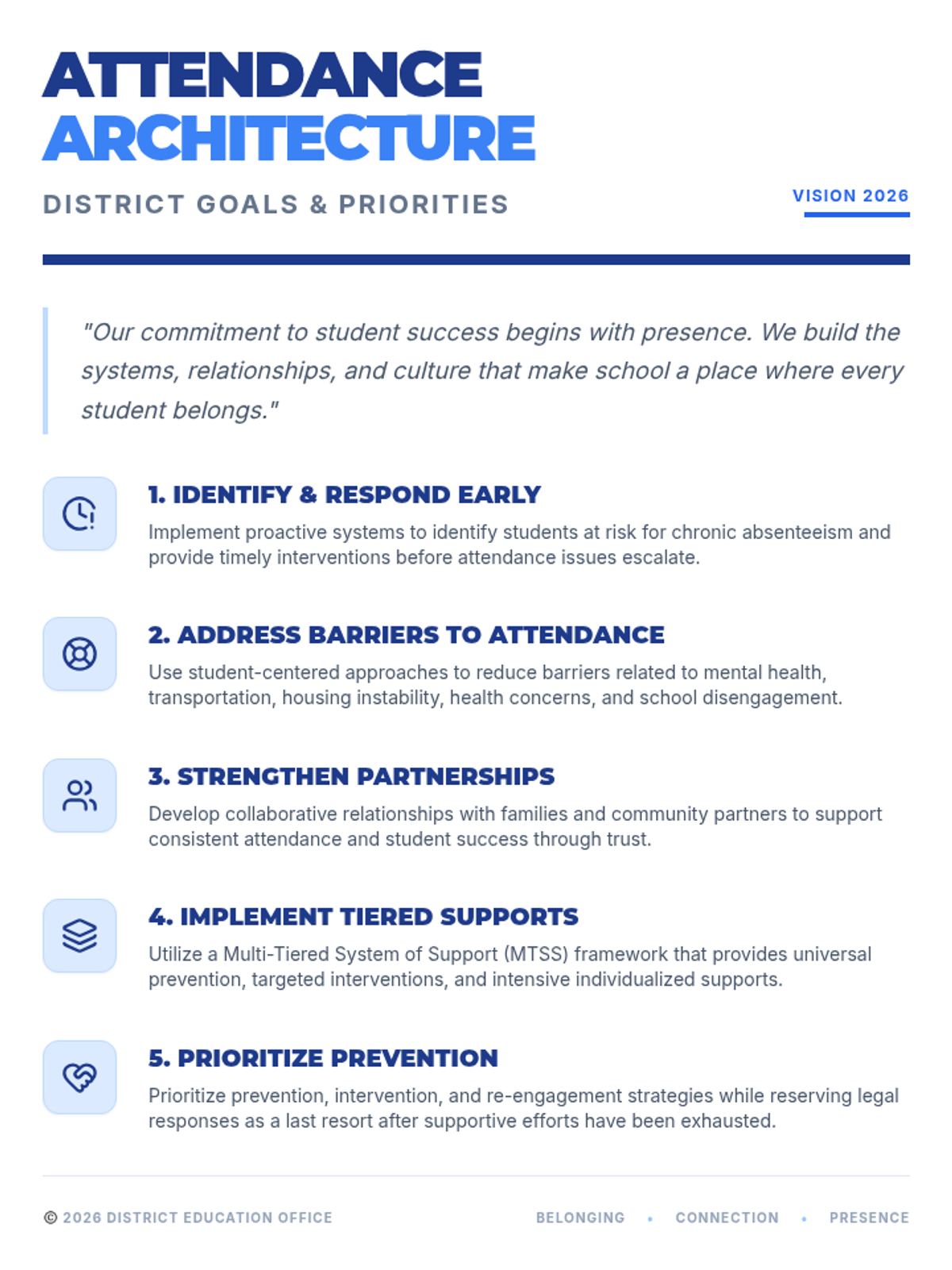
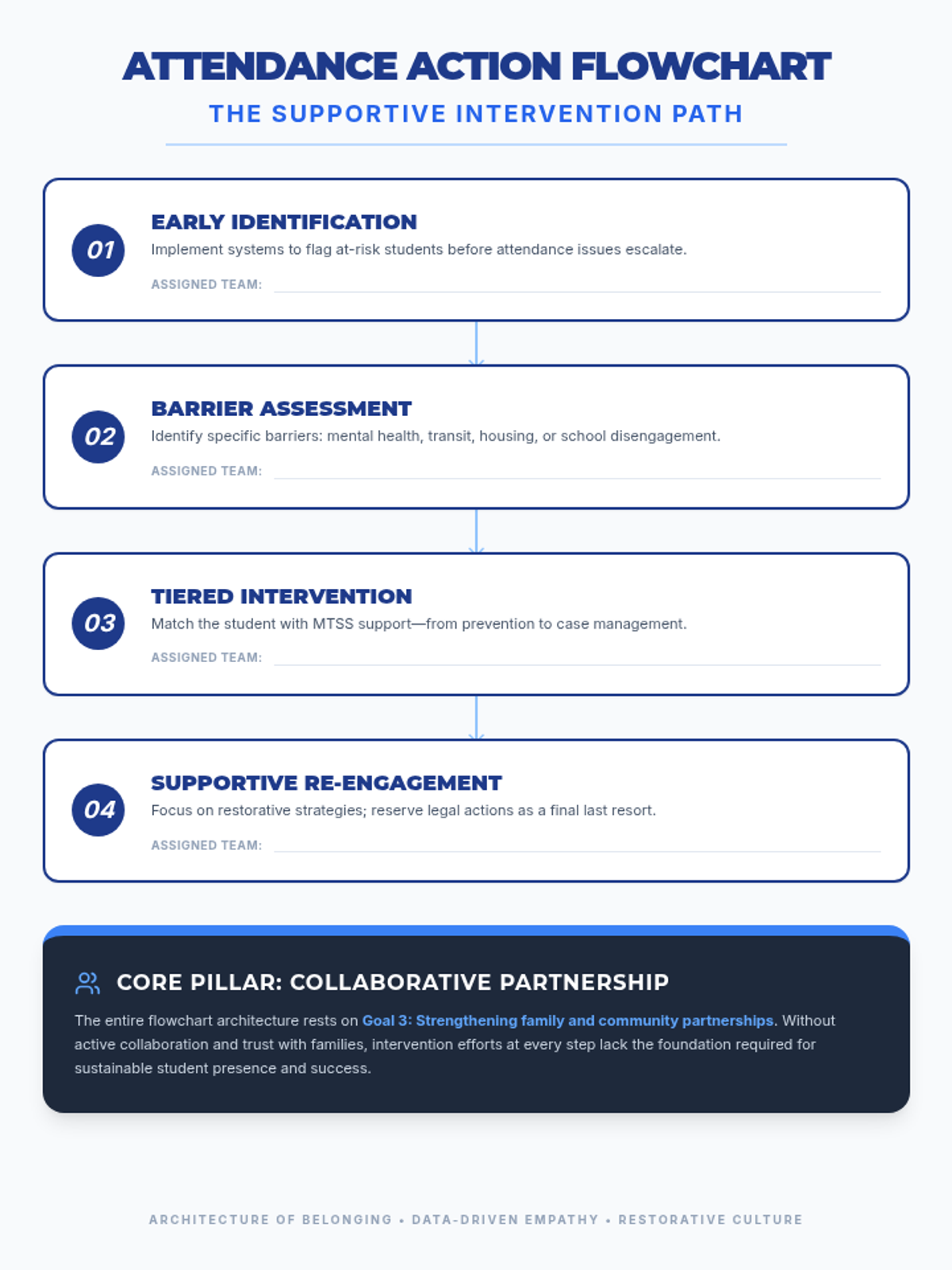
A comprehensive suite of materials designed to help school district leadership address chronic absenteeism and truancy through a multi-tiered system of support, focusing on preventative culture and data-driven intervention.
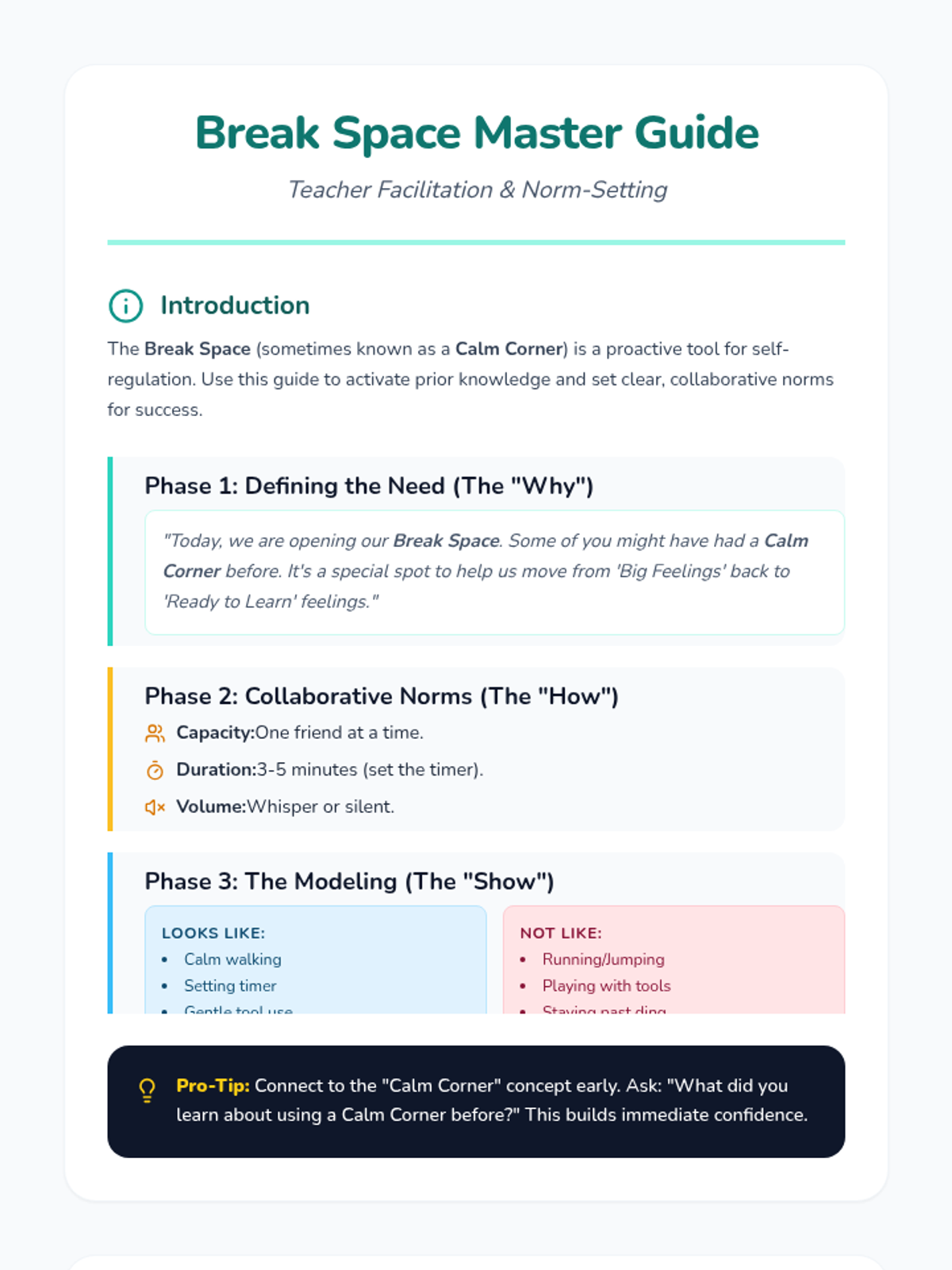
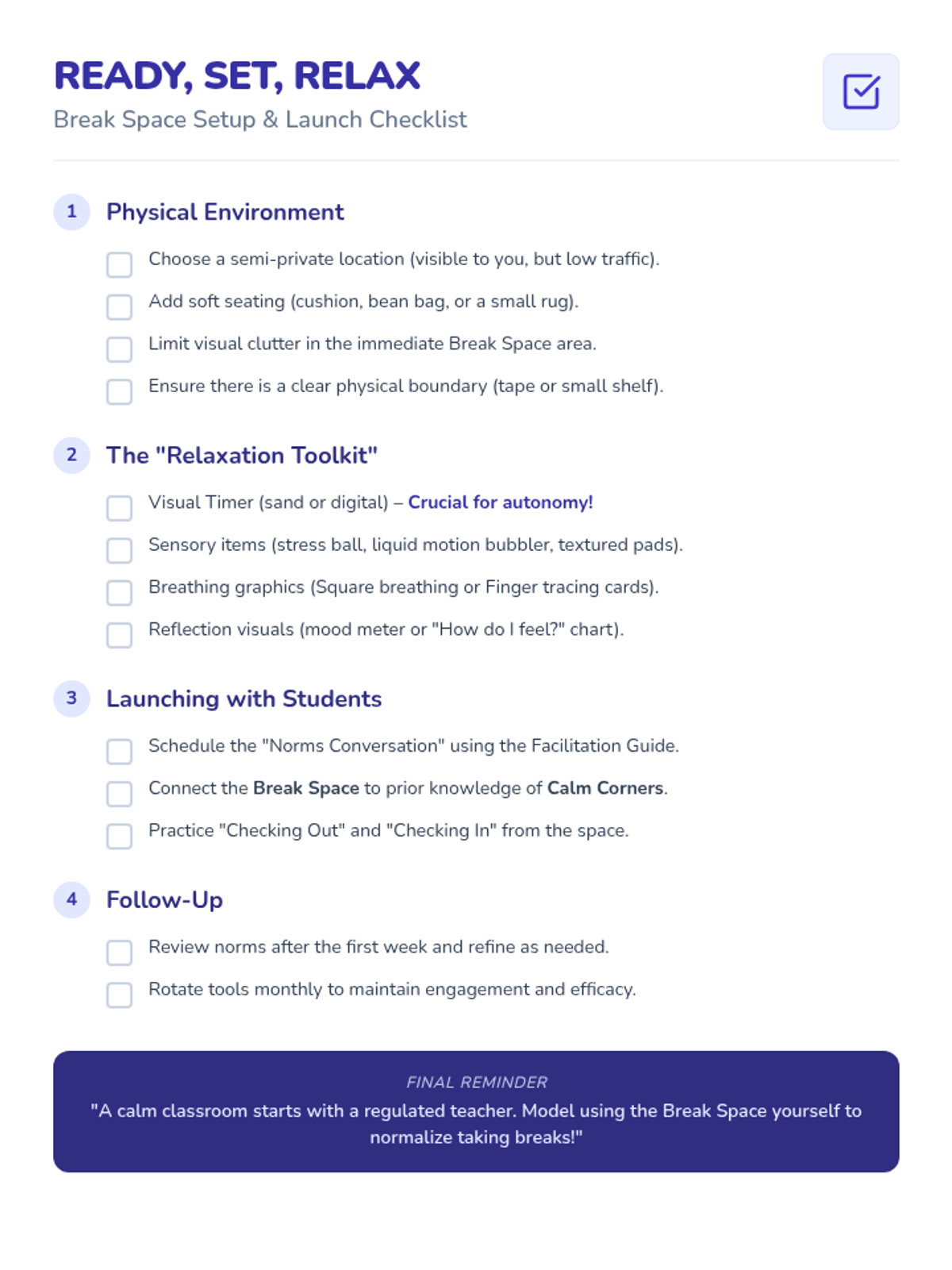
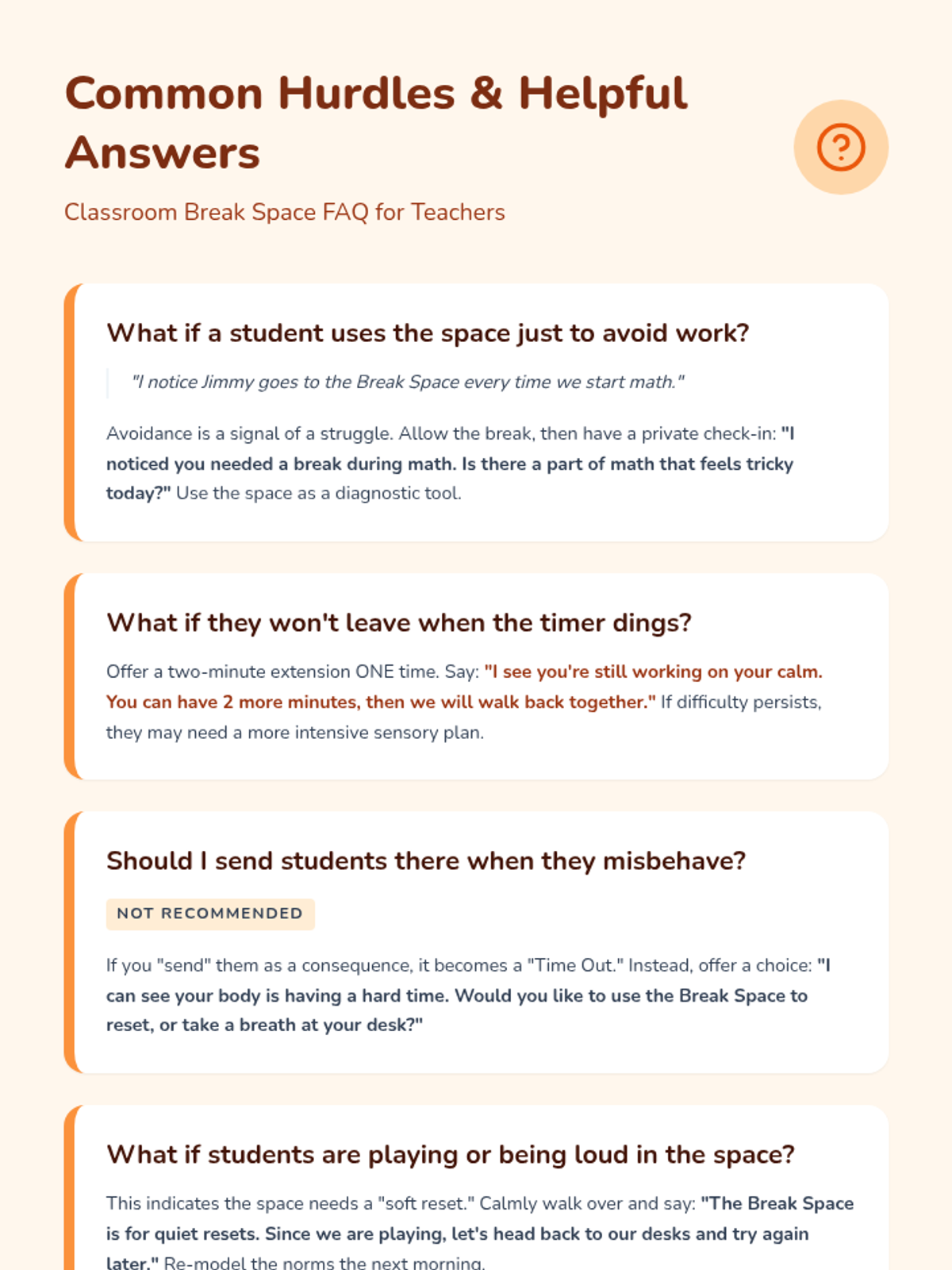
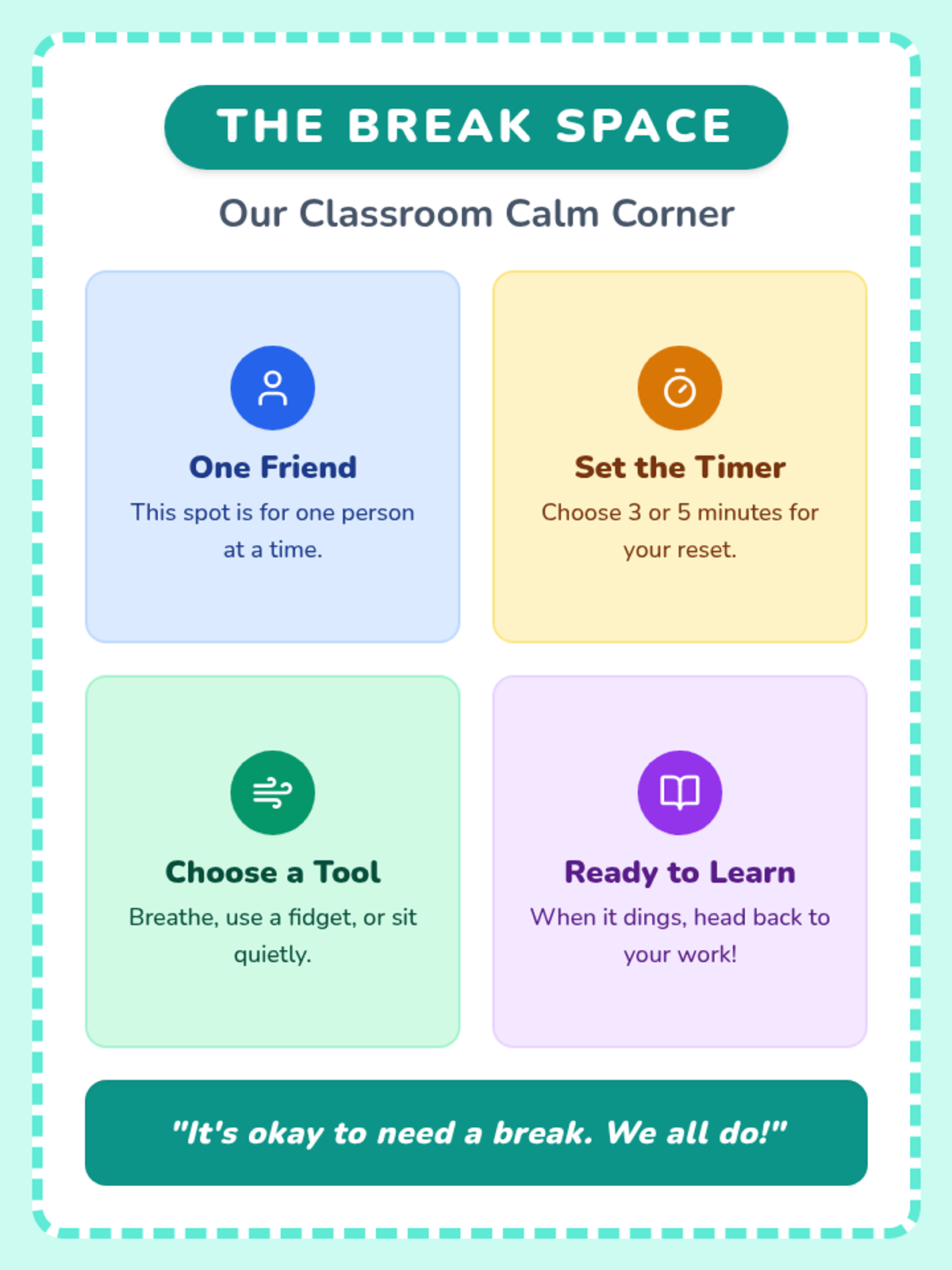
A comprehensive guide for elementary teachers to introduce and establish norms for a classroom break space. Includes facilitation scripts, setup checklists, and student-facing visuals to ensure the space is used effectively and respectfully.
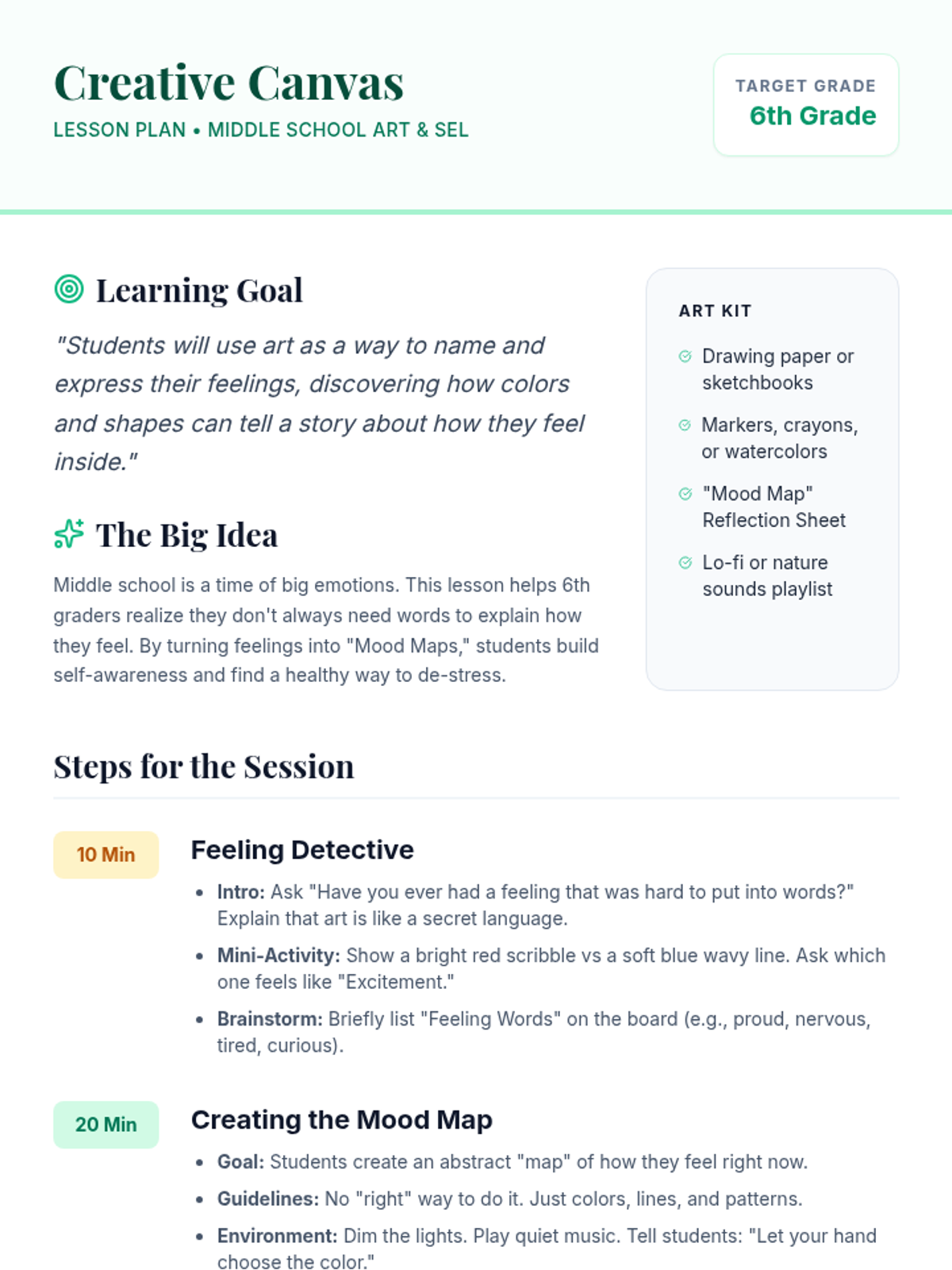
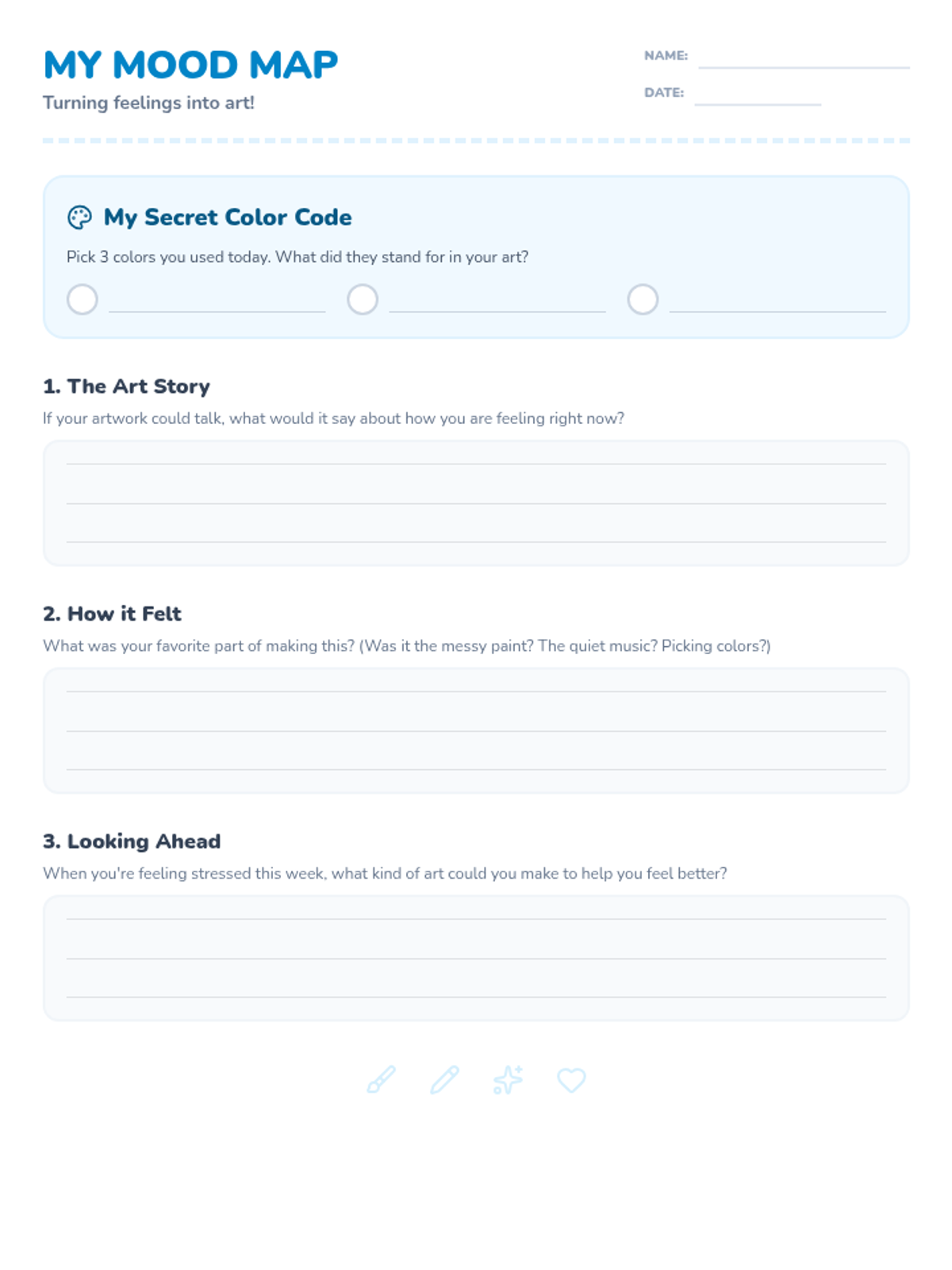
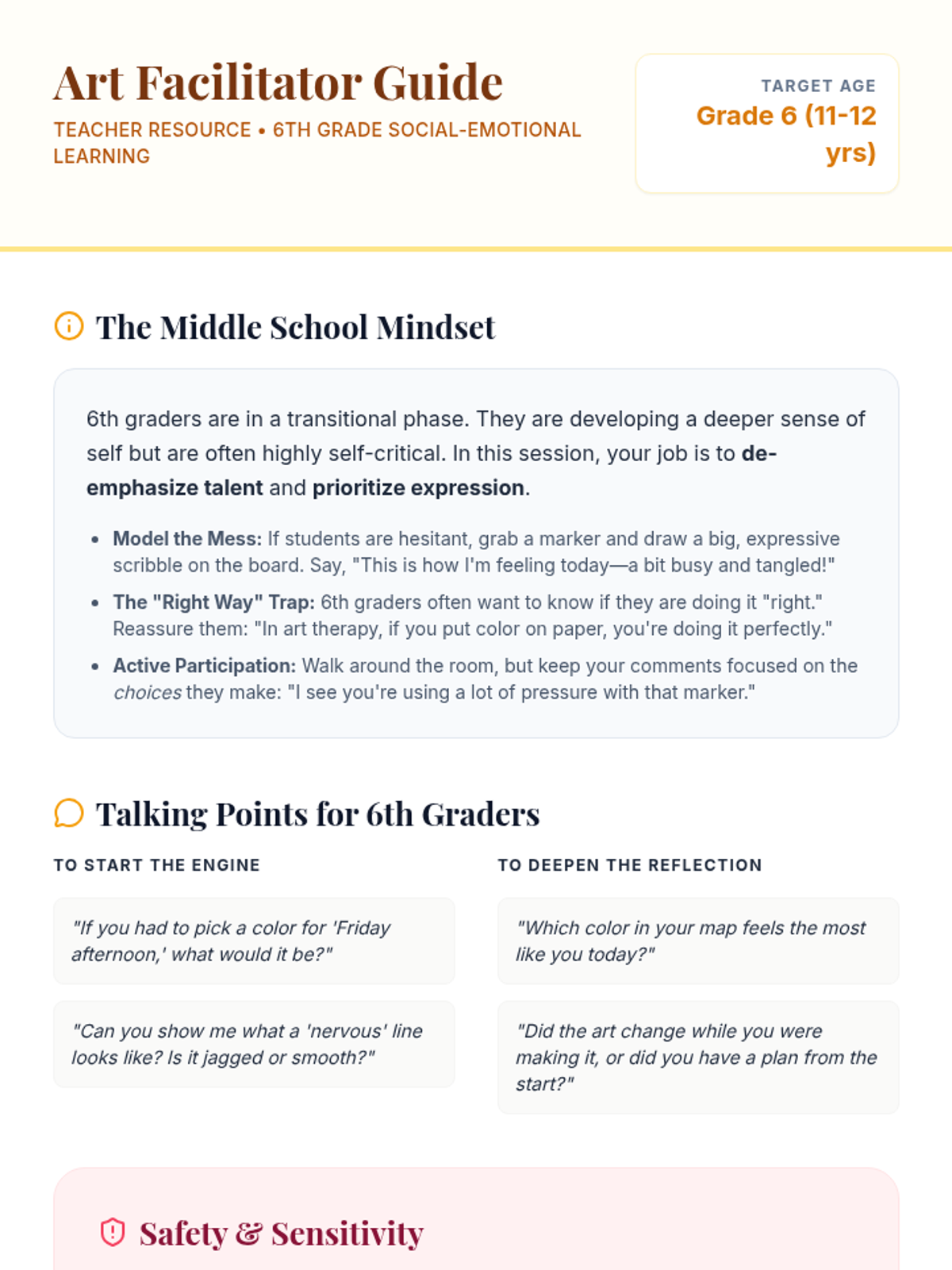
This lesson introduces 6th-grade students to the basics of art therapy through creative expression. Students will learn how colors and shapes can represent their feelings, creating a personal 'Mood Map' to explore their emotions in a safe, non-judgmental environment.
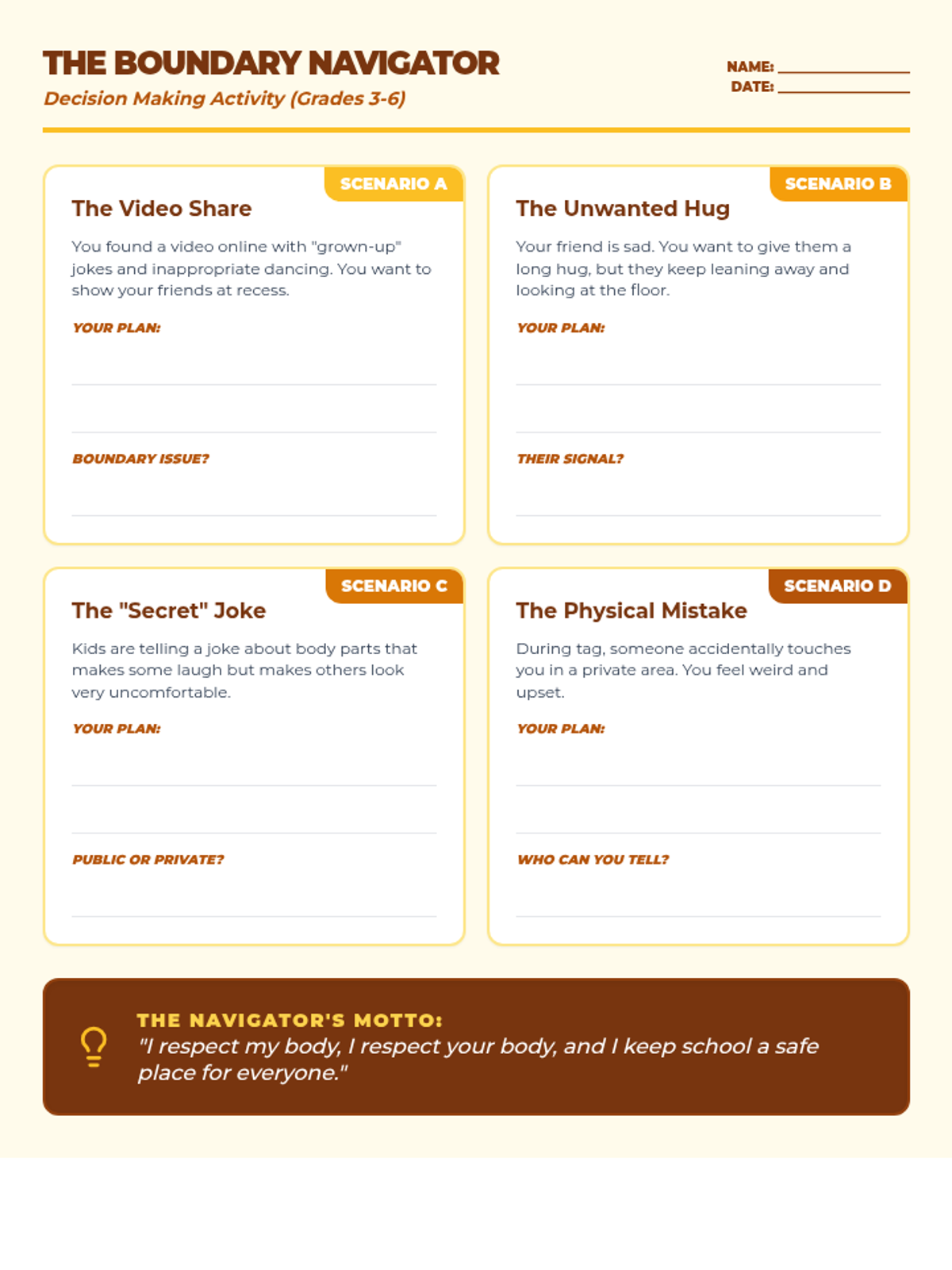
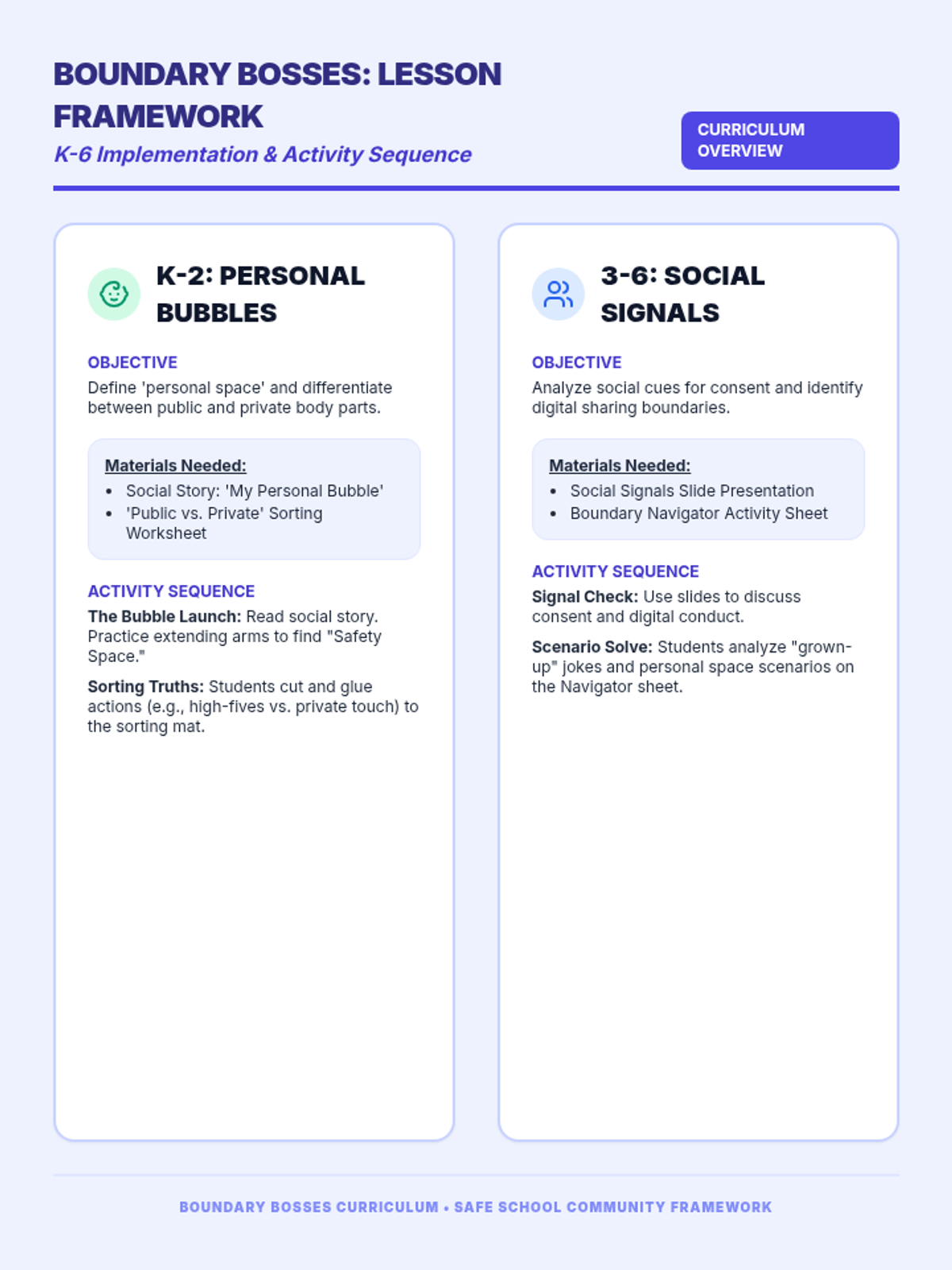
A social-emotional learning lesson for older students (3-6) addressing social cues, consent, and the impact of personal behavior on others within a school community.
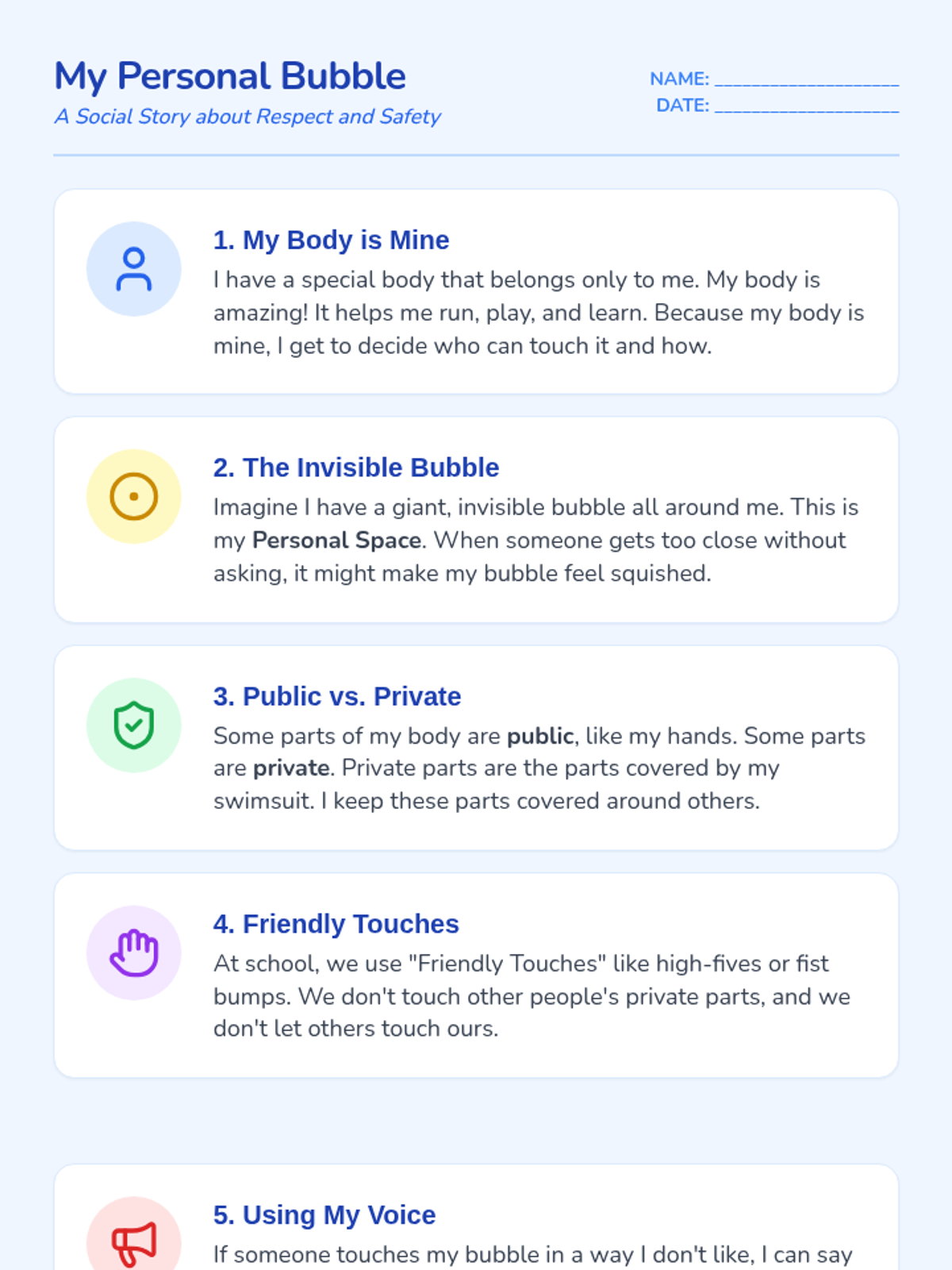
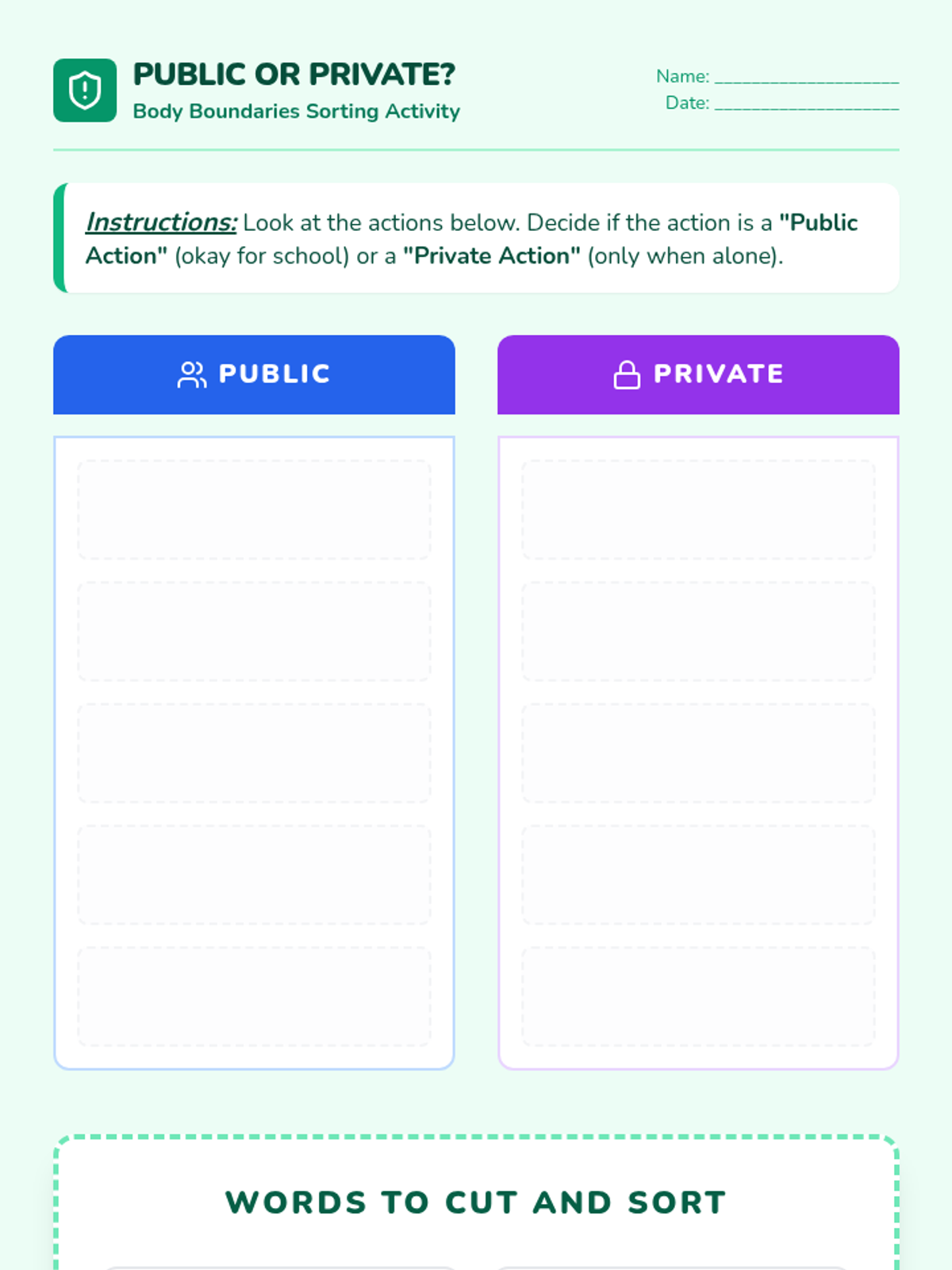
A foundational lesson for younger students (K-2) focusing on the concept of 'personal bubbles' and the difference between public and private body parts and behaviors.