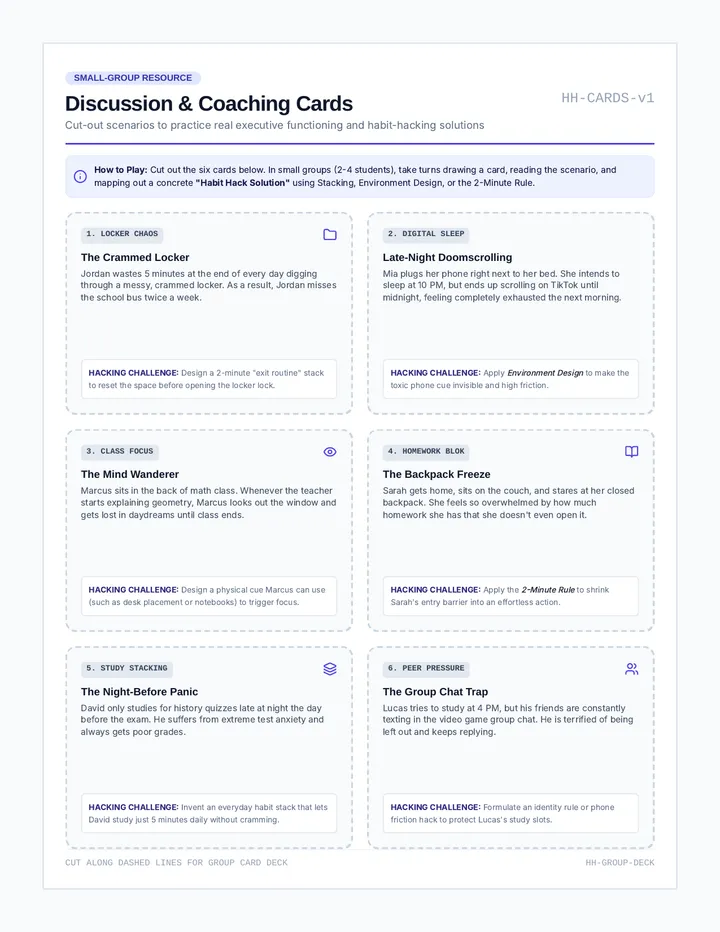
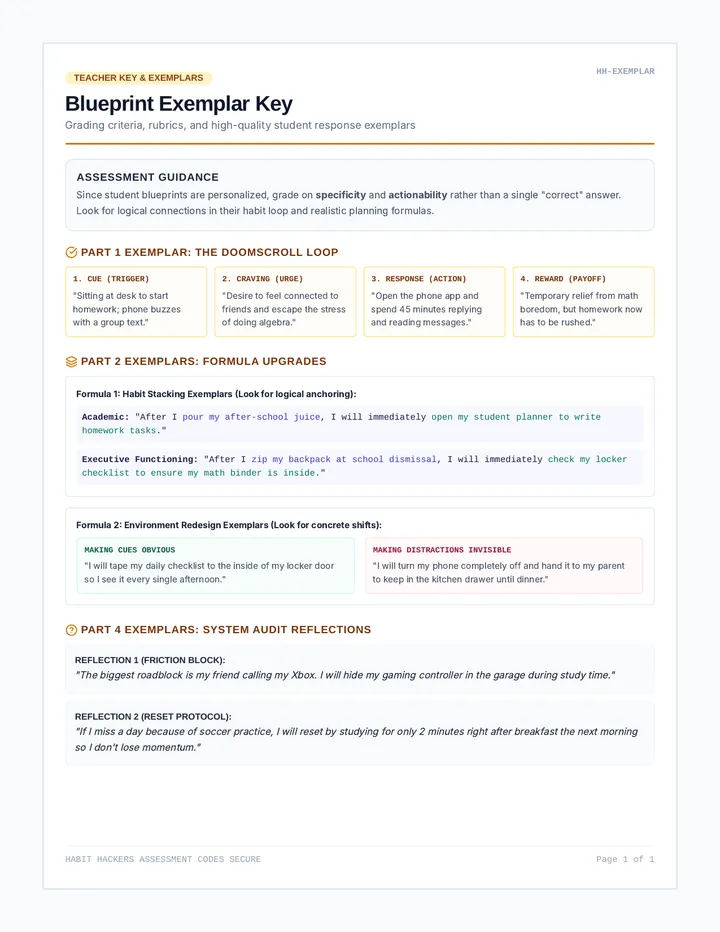
Students explore strategies to reduce test anxiety, including breathing exercises, time management, and role-playing scenarios to build confidence and composure during assessments.
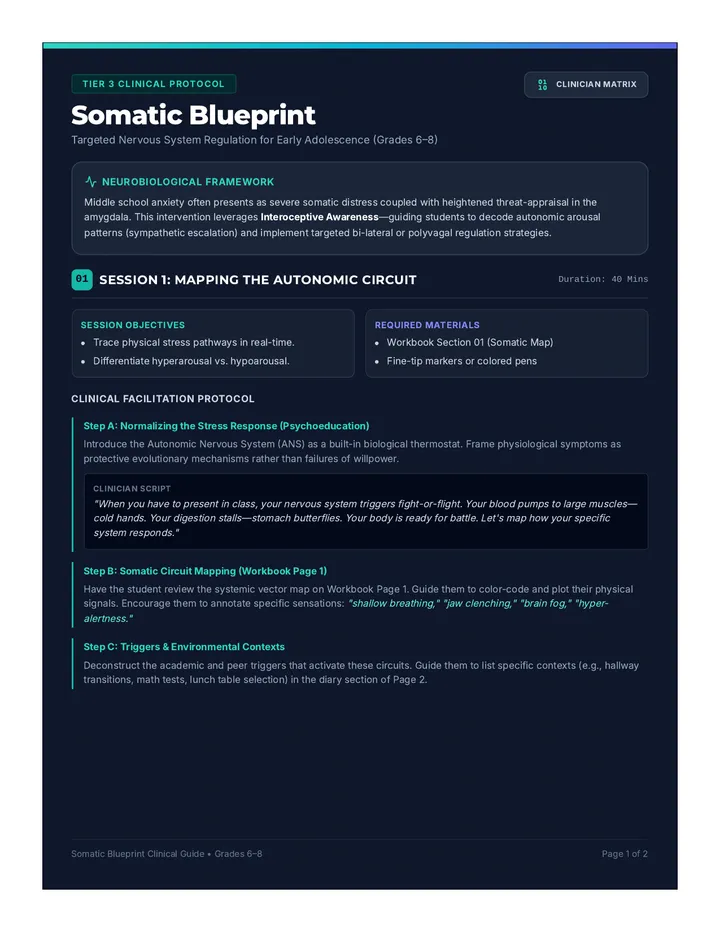
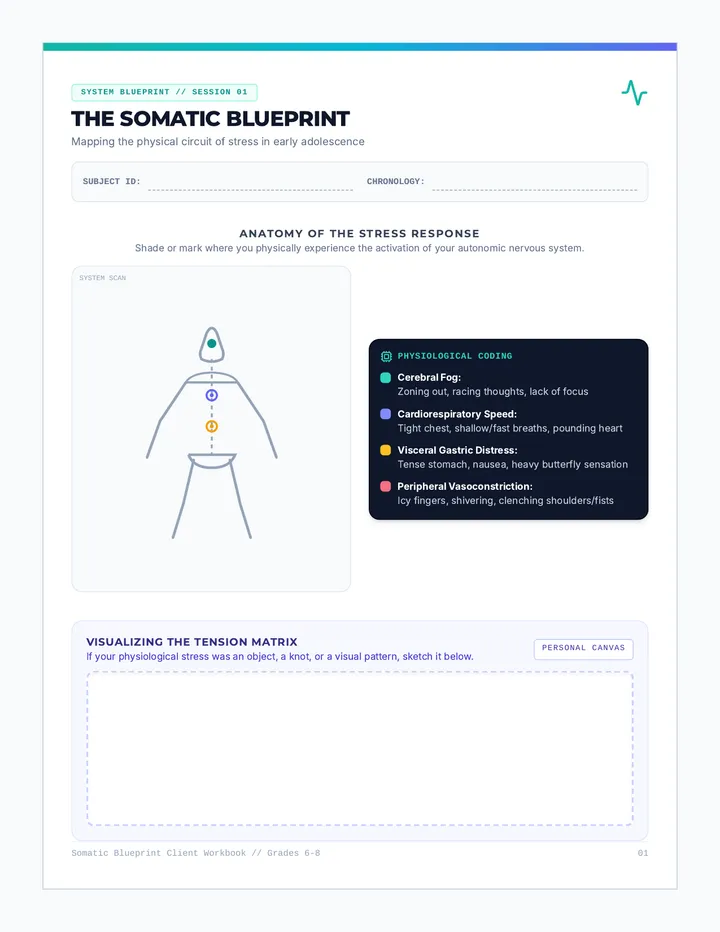
This lesson introduces the fundamentals of somatic tracking, a technique used to re-train the brain's response to physical sensations by observing them through a lens of safety and curiosity. Students will learn the four-step process of anchoring, noticing, describing, and reassuring to build foundational body awareness.
High schoolers align their device habits with professional workplace standards, focusing on agency and self-regulation.
Eighth graders develop peer accountability allies and set community standards for focused digital collaborative work.
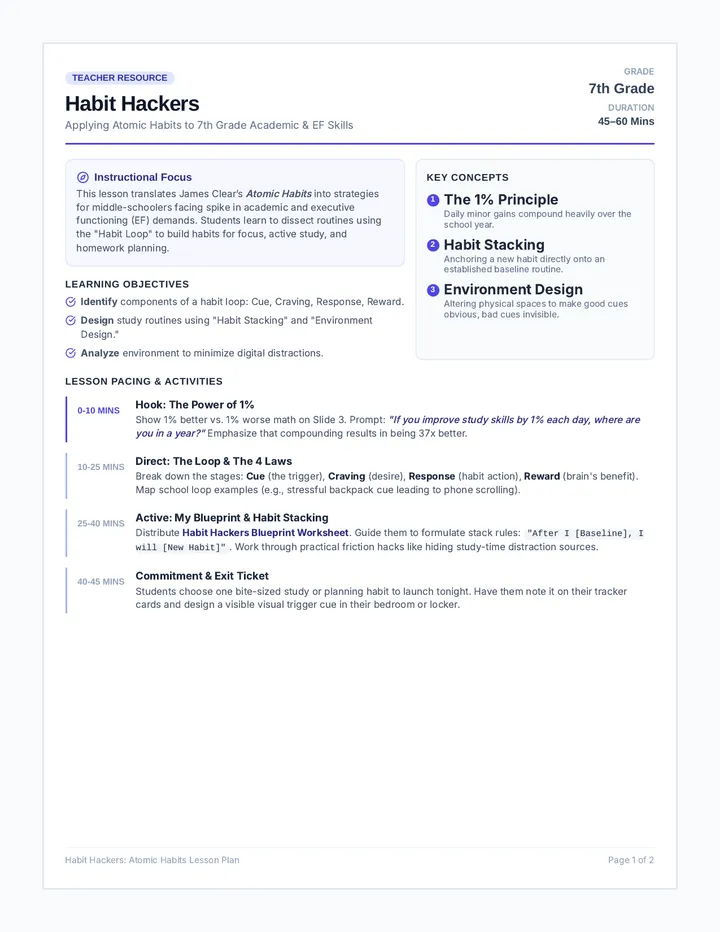
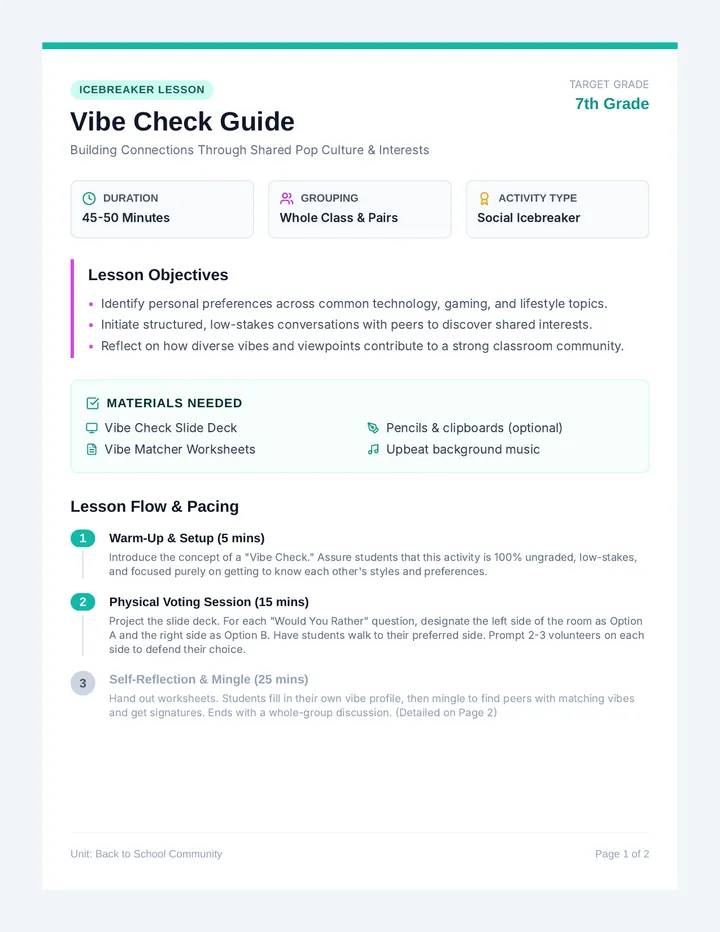
Seventh graders explore the difference between compliance and agency, evaluating how their digital navigation builds their personal brand.
Sixth graders analyze the attention economy and map out personal accountability safe-zones for any classroom environment.
Fifth graders model digital leadership by sharing navigation strategies and mentoring peers in responsible device use.
Fourth graders master the art of switching between digital tasks efficiently using the '3-2-1 Switch' protocol.
Third graders identify 'navigation hazards' and use a collaborative 'Focus Shield' to stay on their learning path.
Second graders practice communicating their focus through physical 'Readiness Signals' to show they are prepared for the digital landscape.
First graders distinguish between 'Learning Tools' and 'Toys' and practice navigating only to the path shown by the teacher.
Kindergarten students learn that their device is a special tool for learning and practice listening for 'Red Light/Green Light' signals to know when to navigate.
A 30-minute professional development session for preschool and K-8 staff focusing on restorative circles, affective statements, and re-entry reflection tools.
High school students develop agency and professional digital habits, demonstrating Accountability by aligning their device use with academic goals and professional communication.
Middle school students focus on the JHawk Way value of Accountability by managing their digital attention and communicating respect through focused device use.
Elementary students explore how to be Responsible JHawks by navigating to the right learning tools at the right time and communicating their readiness to learn.
Students learn the fundamentals of financial forecasting, calculating revenue vs. profit, and using absolute cell referencing ($) to project business growth over time.
Students learn to transform raw spreadsheet data into impactful Pie and Bar charts to visualize market trends and customer intent.
Students learn to use sorting, filtering, and conditional formatting in Google Sheets to identify target audience trends and organize large datasets efficiently.
Students transition from data entry to data analysis by learning essential Google Sheets formulas like =SUM, =AVERAGE, and =COUNT, as well as the efficiency of the Fill Handle.
A 5-page workbook unit focused on strengthening executive functioning and planning skills for teenagers, using a 'Command Center' technical manual theme.
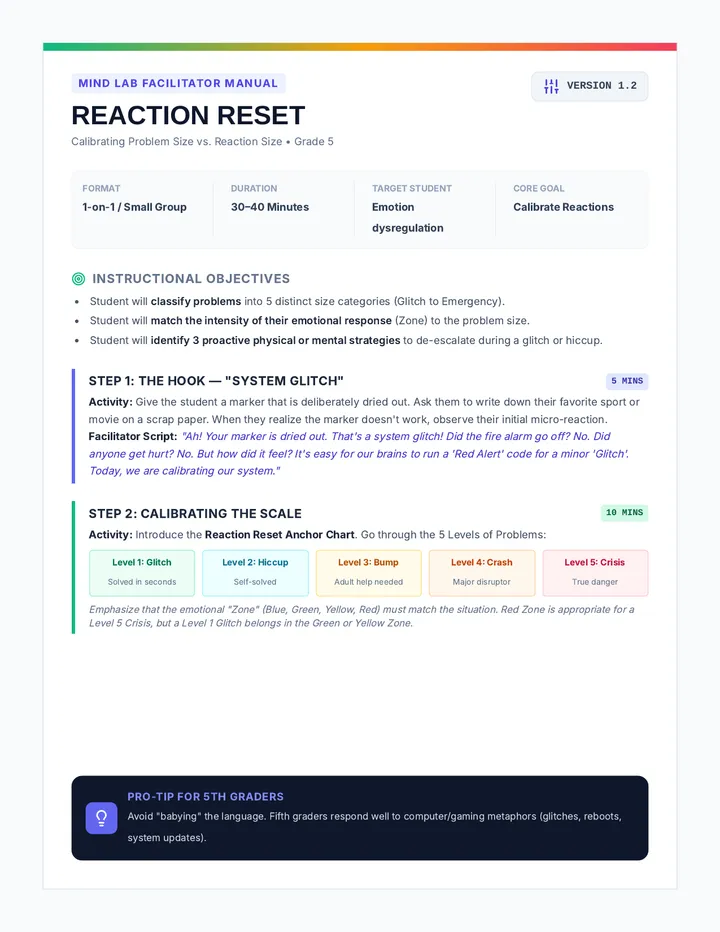
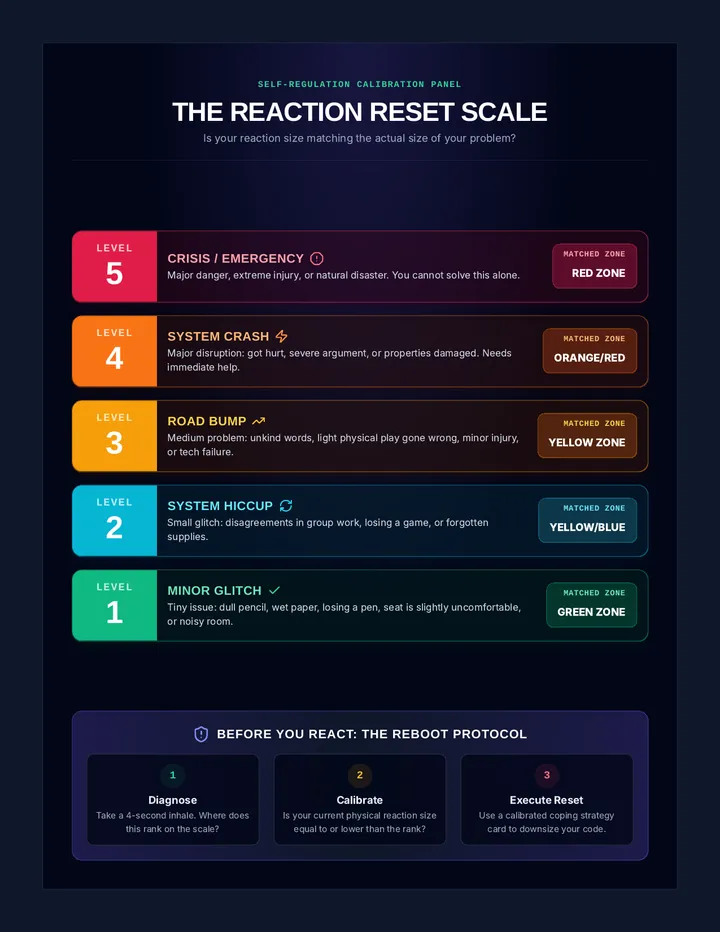
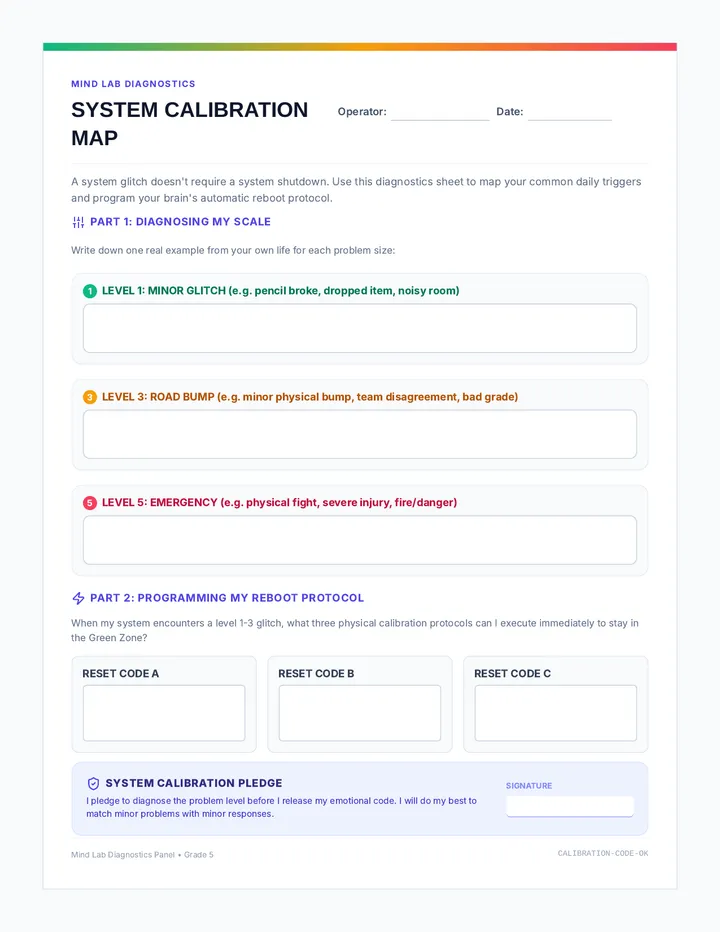
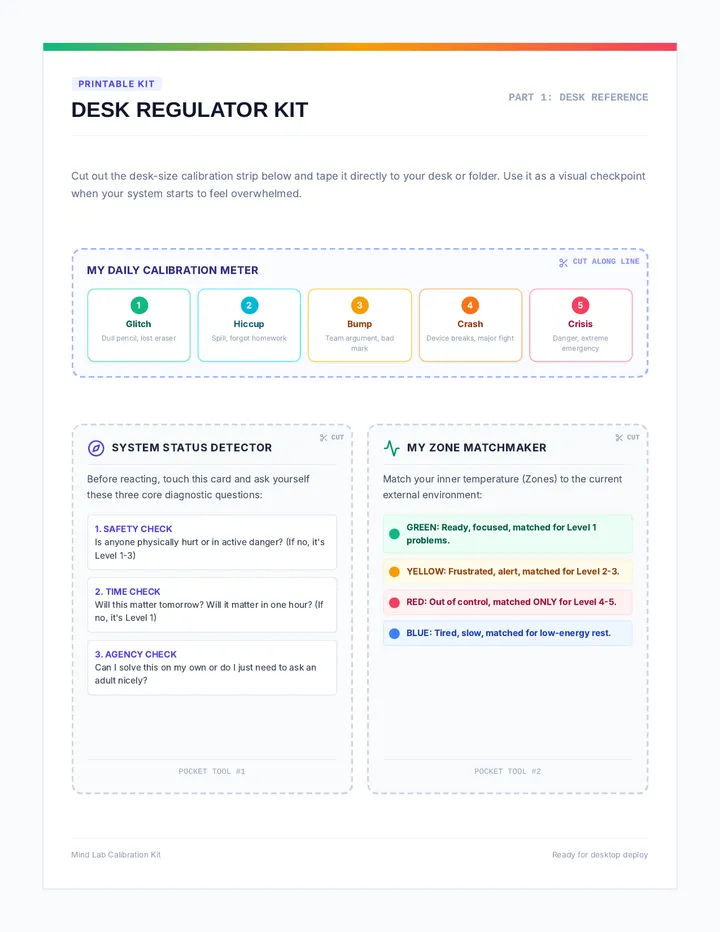
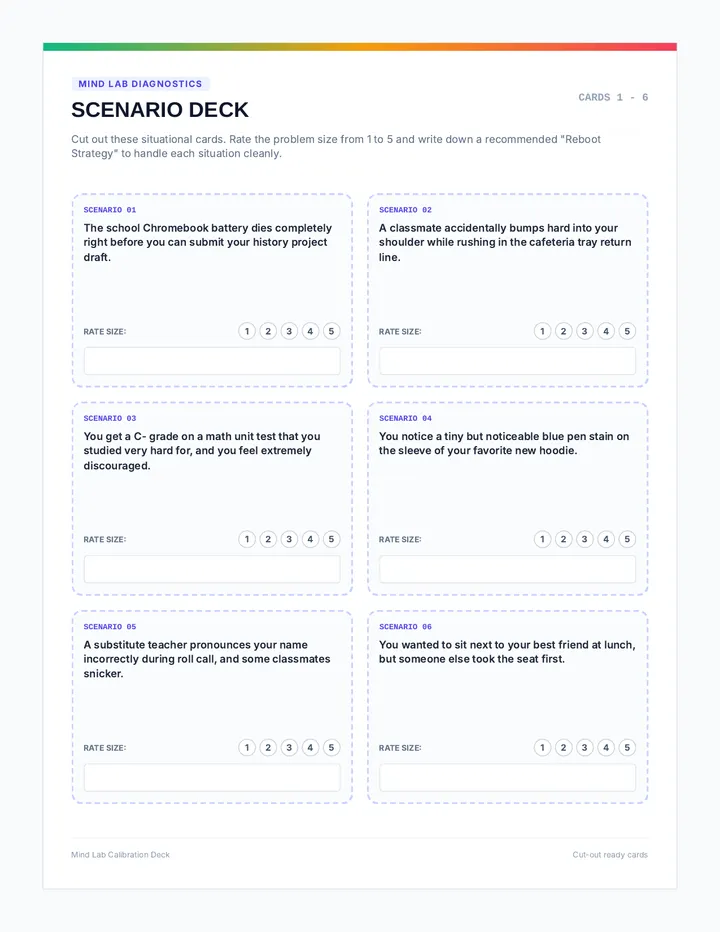
A cognitive coping strategy lesson for 4th graders focusing on sizing up problems using a stress gauge to prevent overreacting to small school-based stressors. Designed for an express 20-minute small group session.
A collection of Stranger Things themed encouragement letters for students facing state testing, each featuring a unique calming breathing technique.
A fast-paced, high-energy lesson where students evaluate their progress on long-term goals and make tactical adjustments to stay on track. Students use a racing pit-stop metaphor to identify barriers and refine their process.
A 30-minute workshop where 7th graders transform vague dreams into actionable blueprints using the SMART framework and peer coaching.
A comprehensive K-12 behavior management system that synthesizes best practices from MTSS, PBIS, and restorative justice frameworks. This lesson provides teachers with a clear decision-making flow and a detailed policy handbook for maintaining a positive school culture.
An interactive 8th-grade lesson focusing on self-management through the lens of processing constructive feedback and setting actionable goals. Students use a 'toolkit' approach to navigate challenges and persevere through academic and personal hurdles.
A high-energy lesson that transforms students into 'Audio Agents' to master active listening and following complex, multi-step instructions through interactive drawing challenges.