A heartwarming lesson designed for young students to identify physical signs of anxiety (represented as fluttery tummy butterflies) and learn calming breathing techniques to 'tame' them as they transition to summer or a new grade.
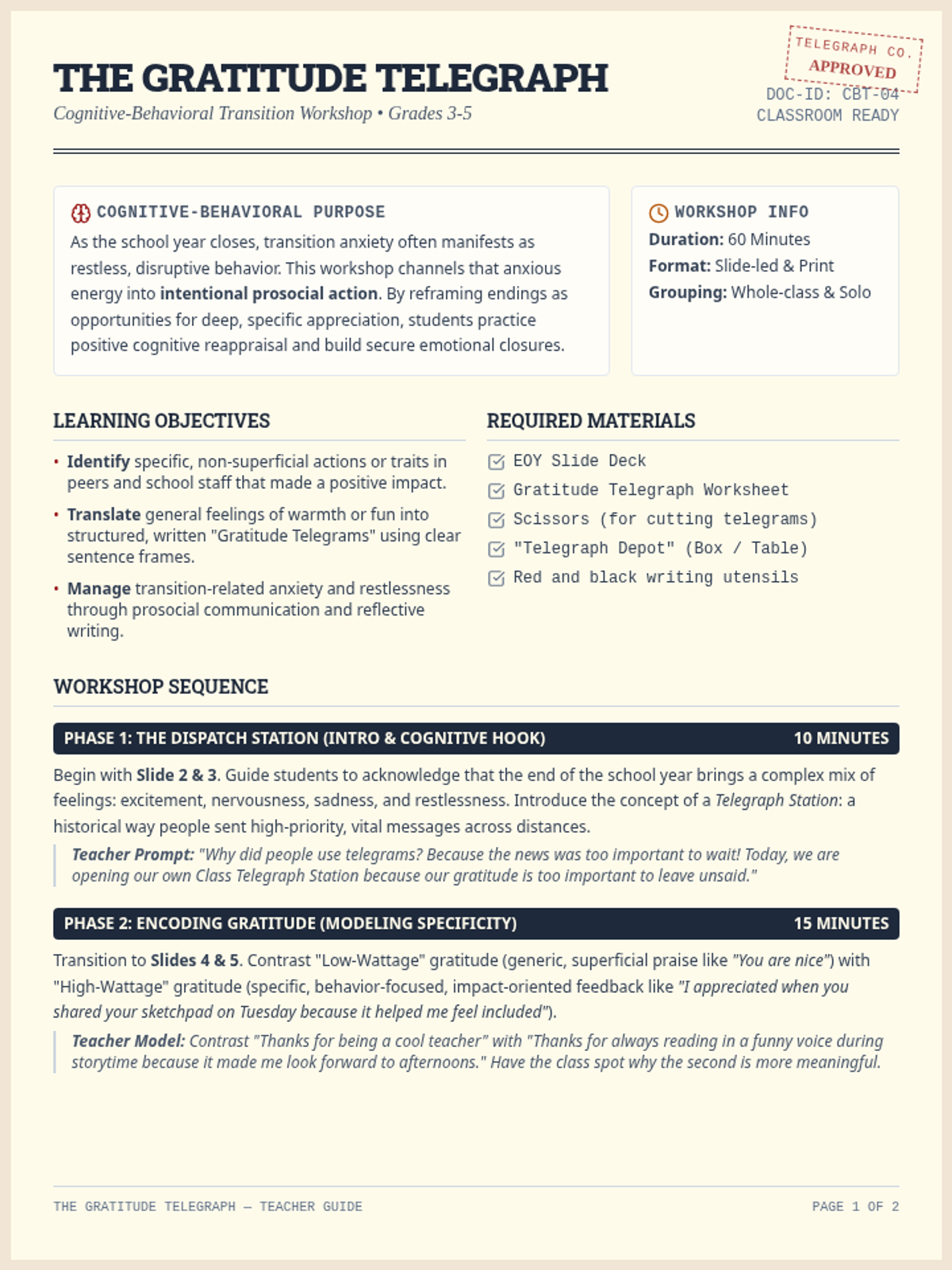
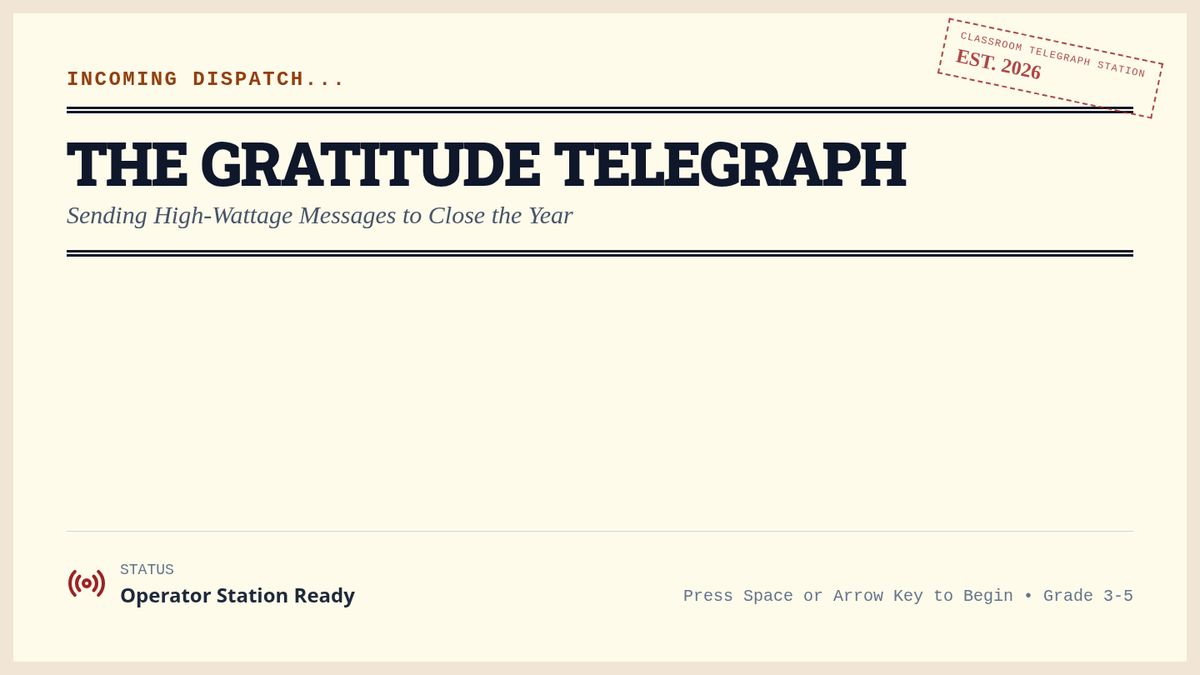
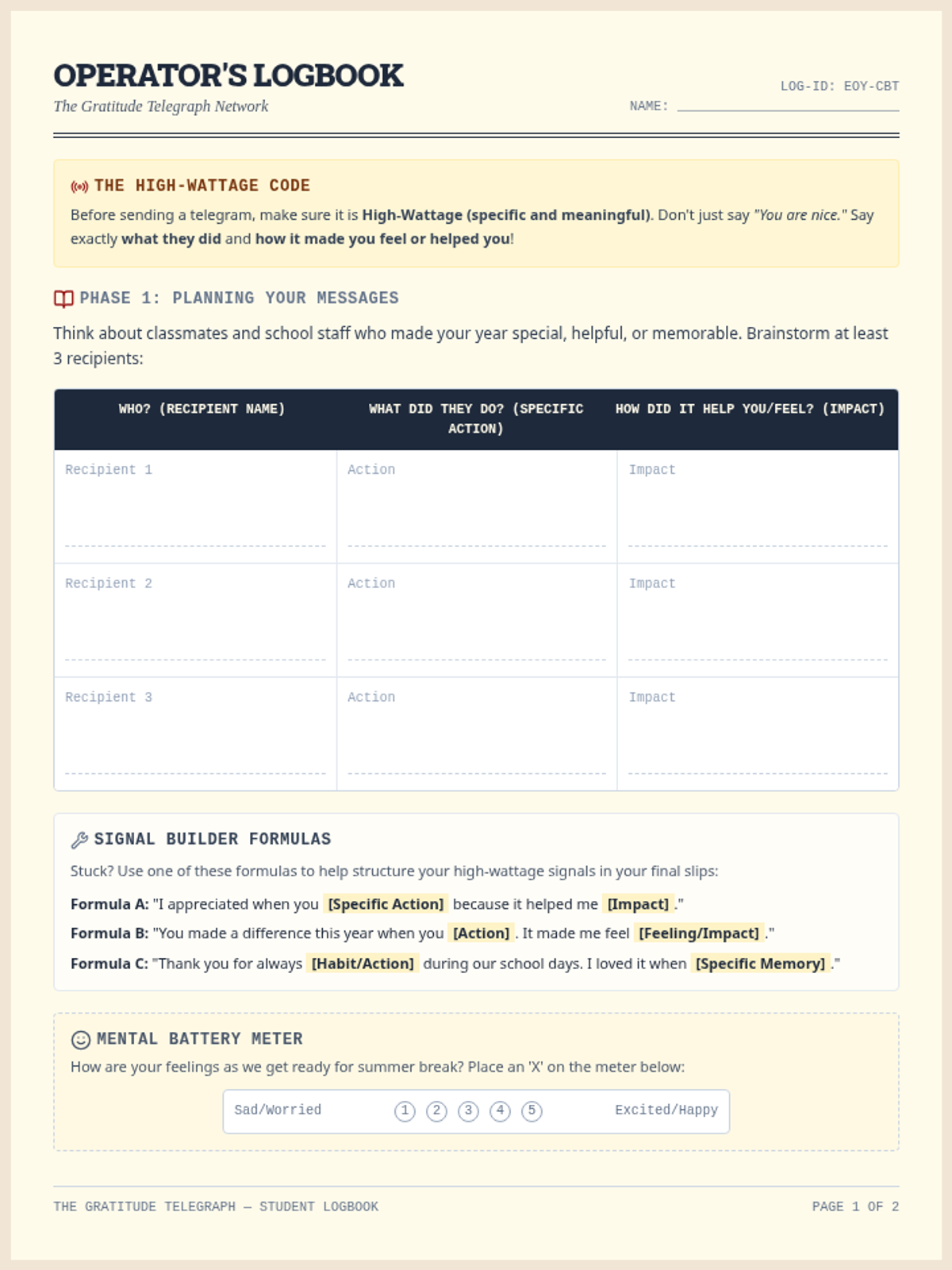
A cognitive-behavioral workshop for 3rd-5th graders to process the school year's end through structured, prosocial gratitude telegrams to peers and staff.
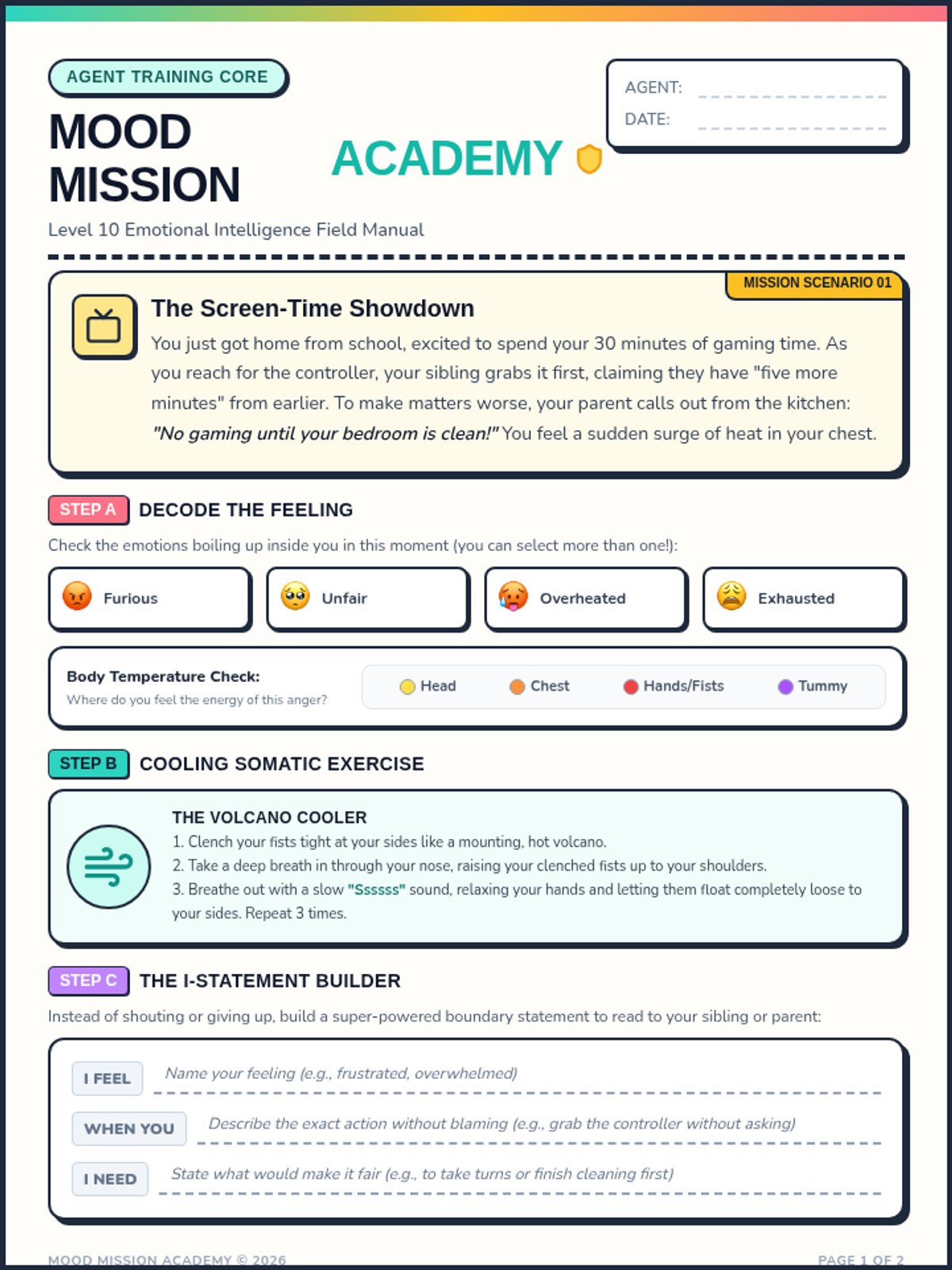
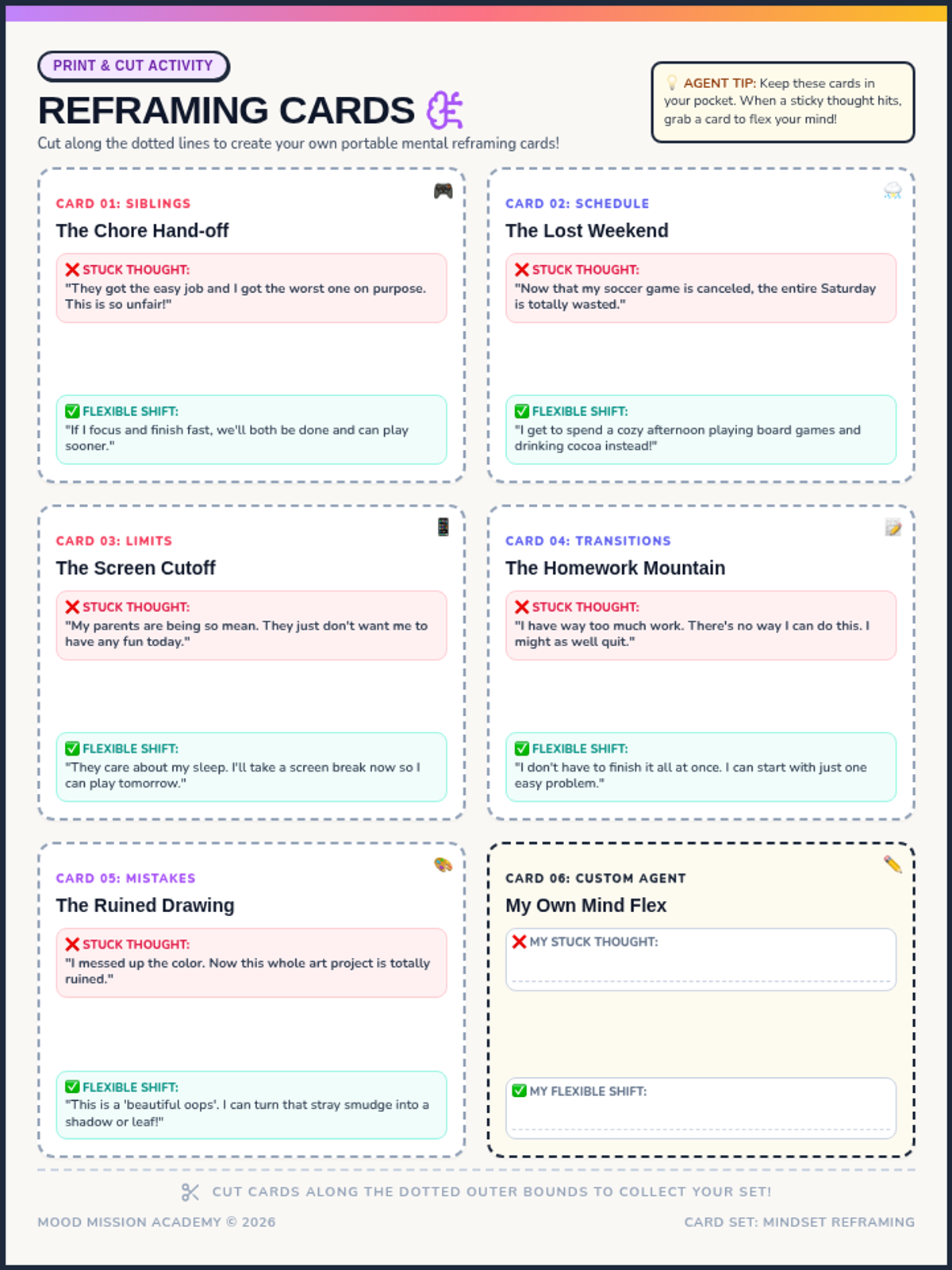
A playful social-emotional learning lesson focusing on identifying emotions, somatic regulation, cognitive reframing, and assertive communication through engaging social stories.
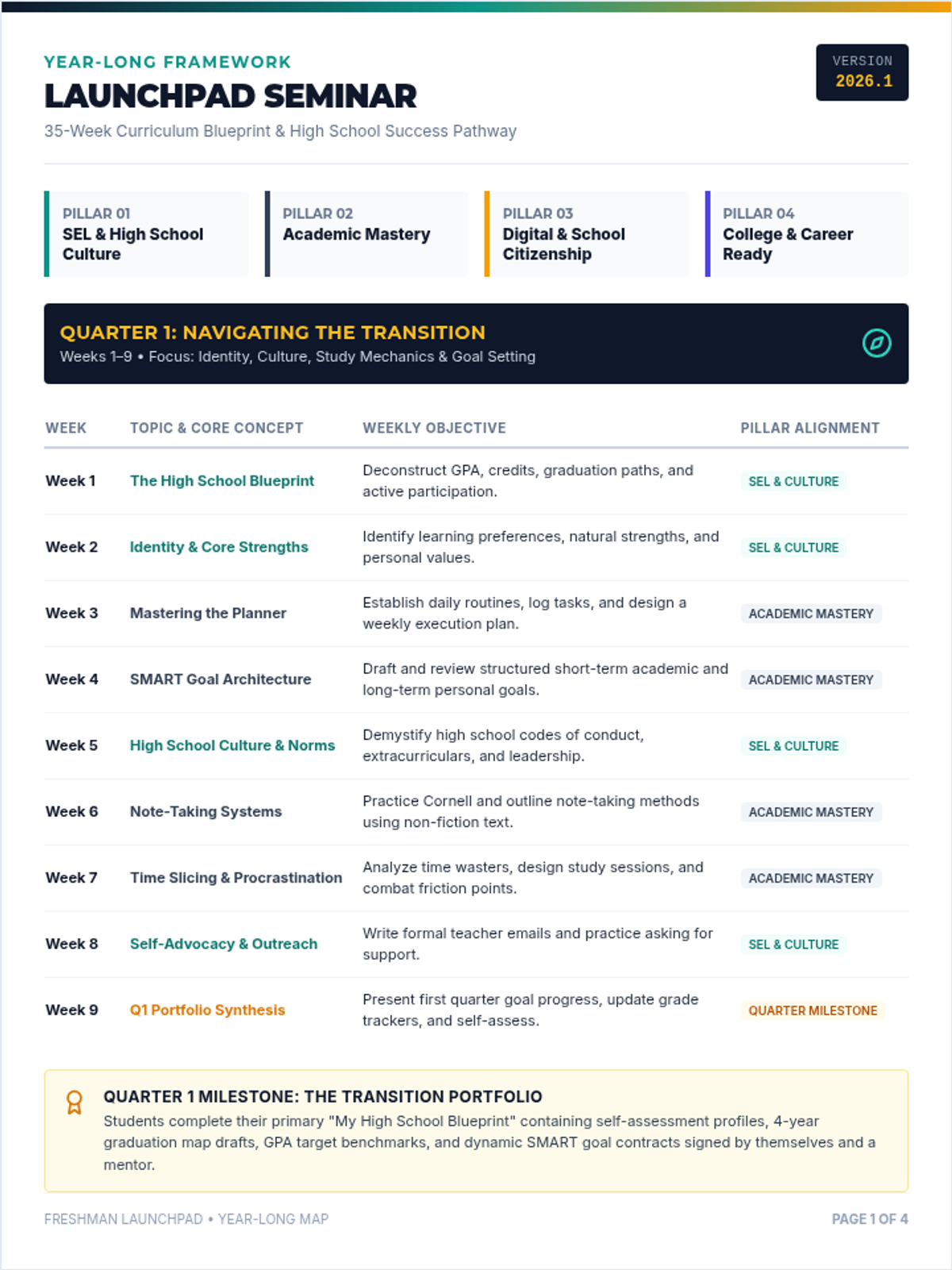
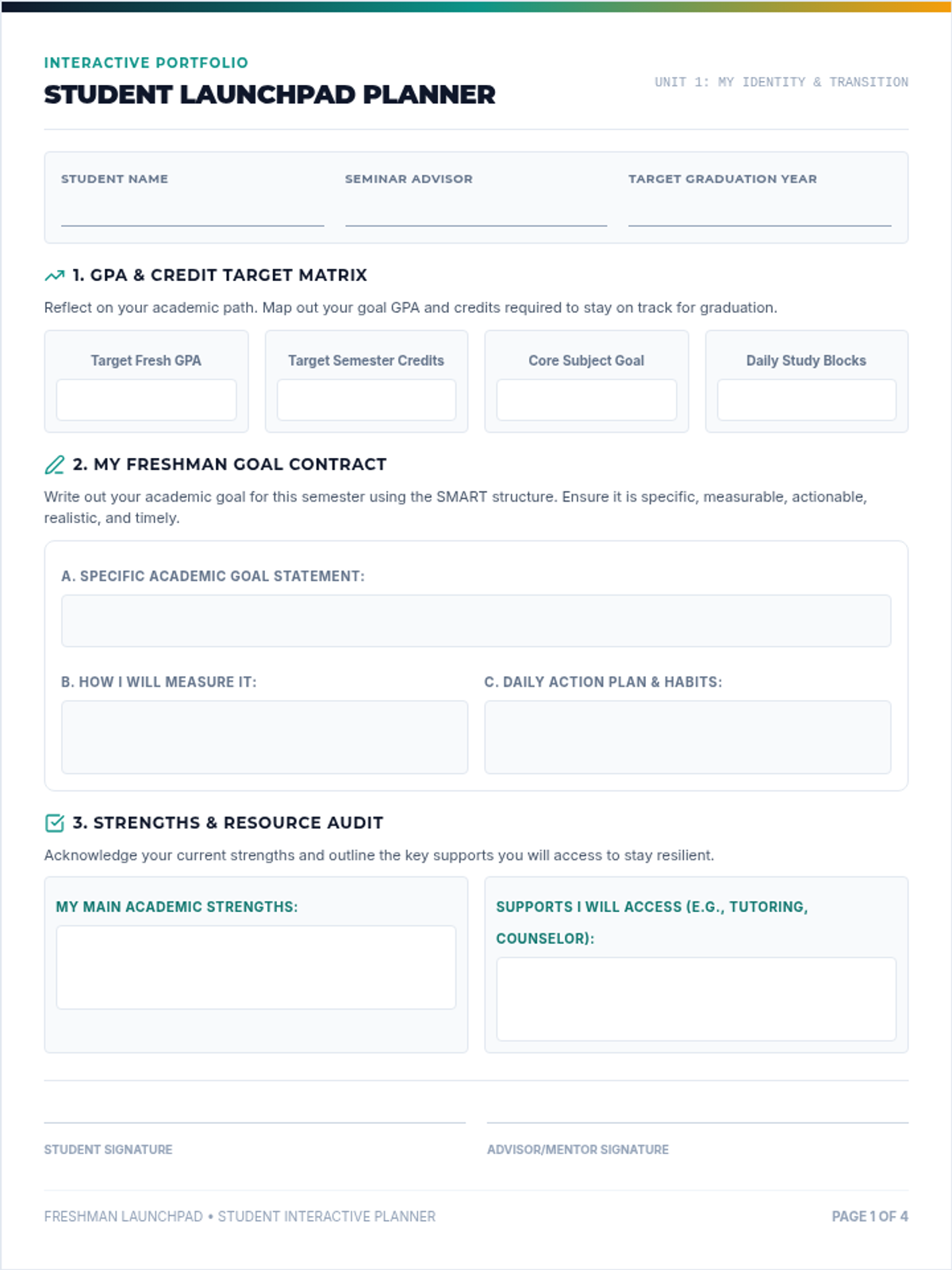
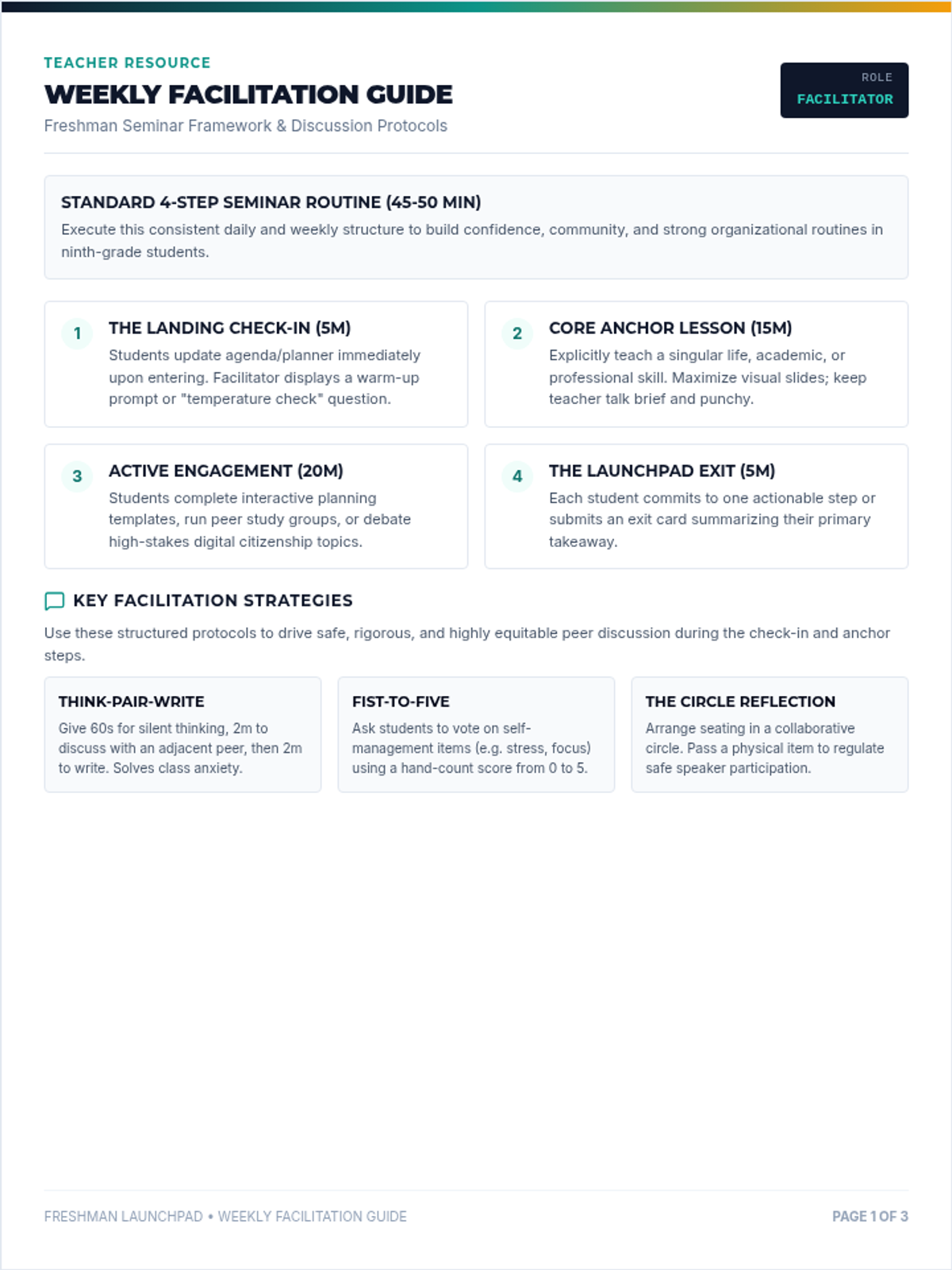
A comprehensive freshman seminar foundation featuring a 35-week curriculum map, student portfolio planner, and weekly teacher facilitation guide to support high school transition, study skills, digital citizenship, and career planning.
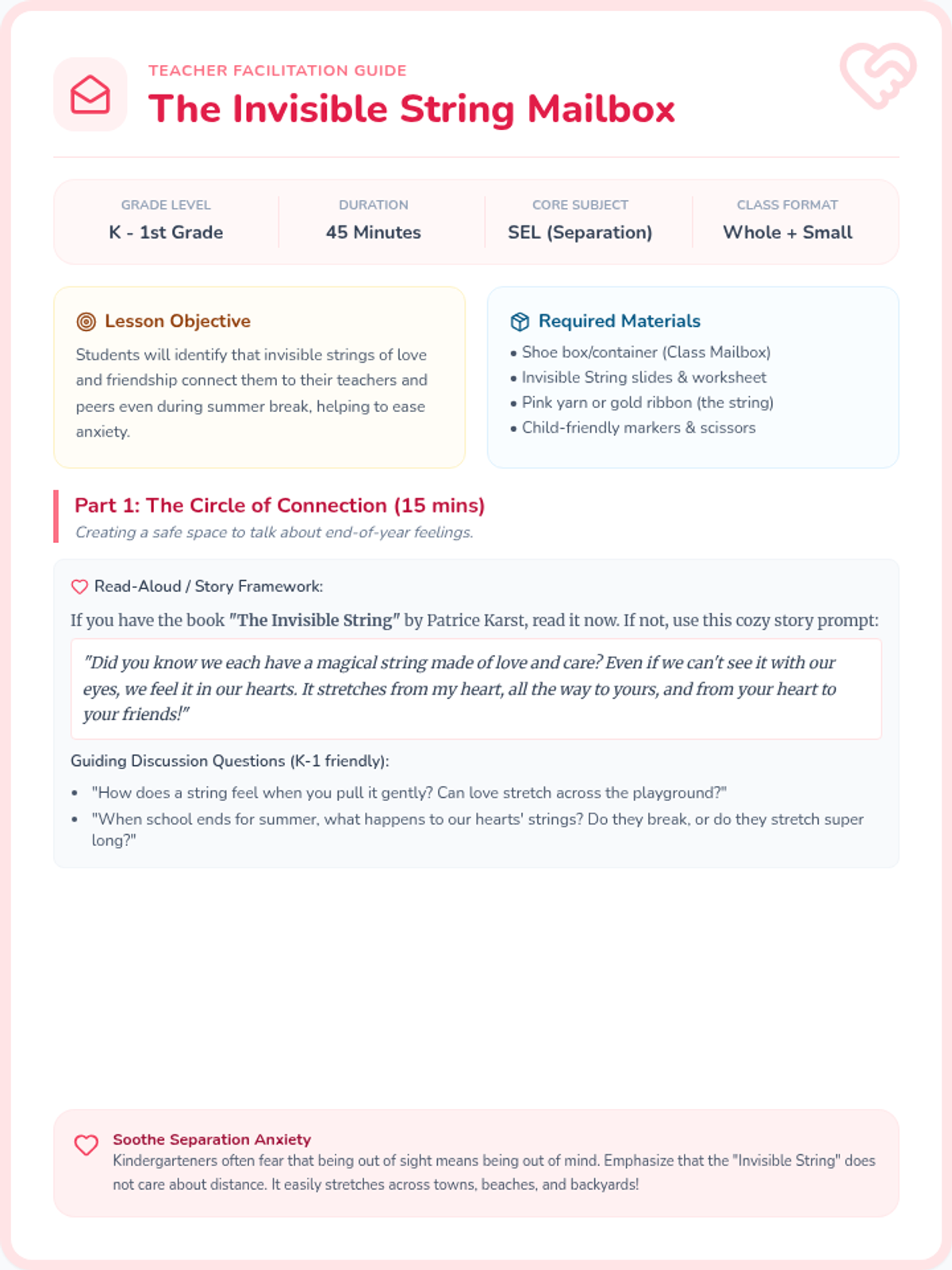
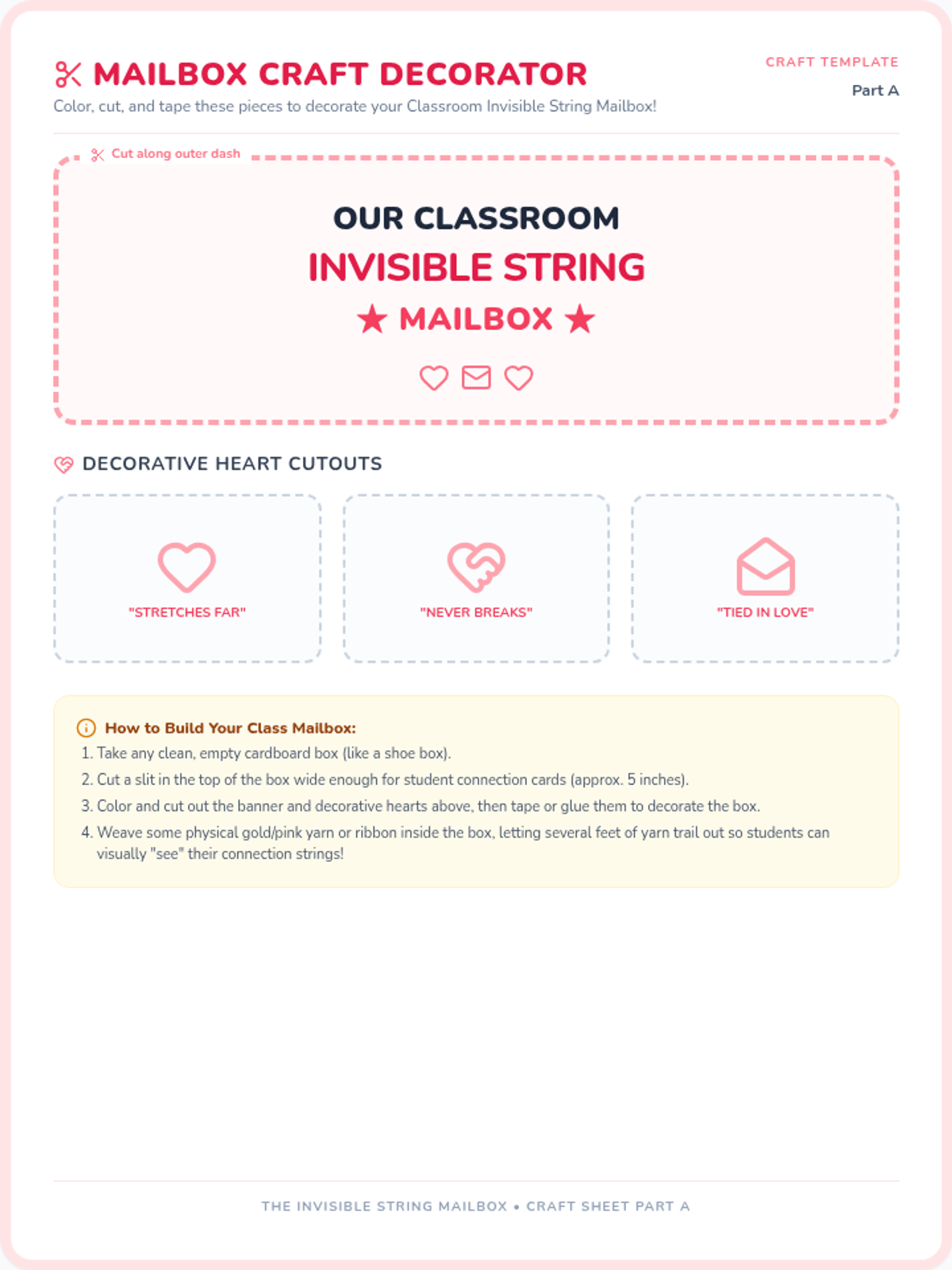
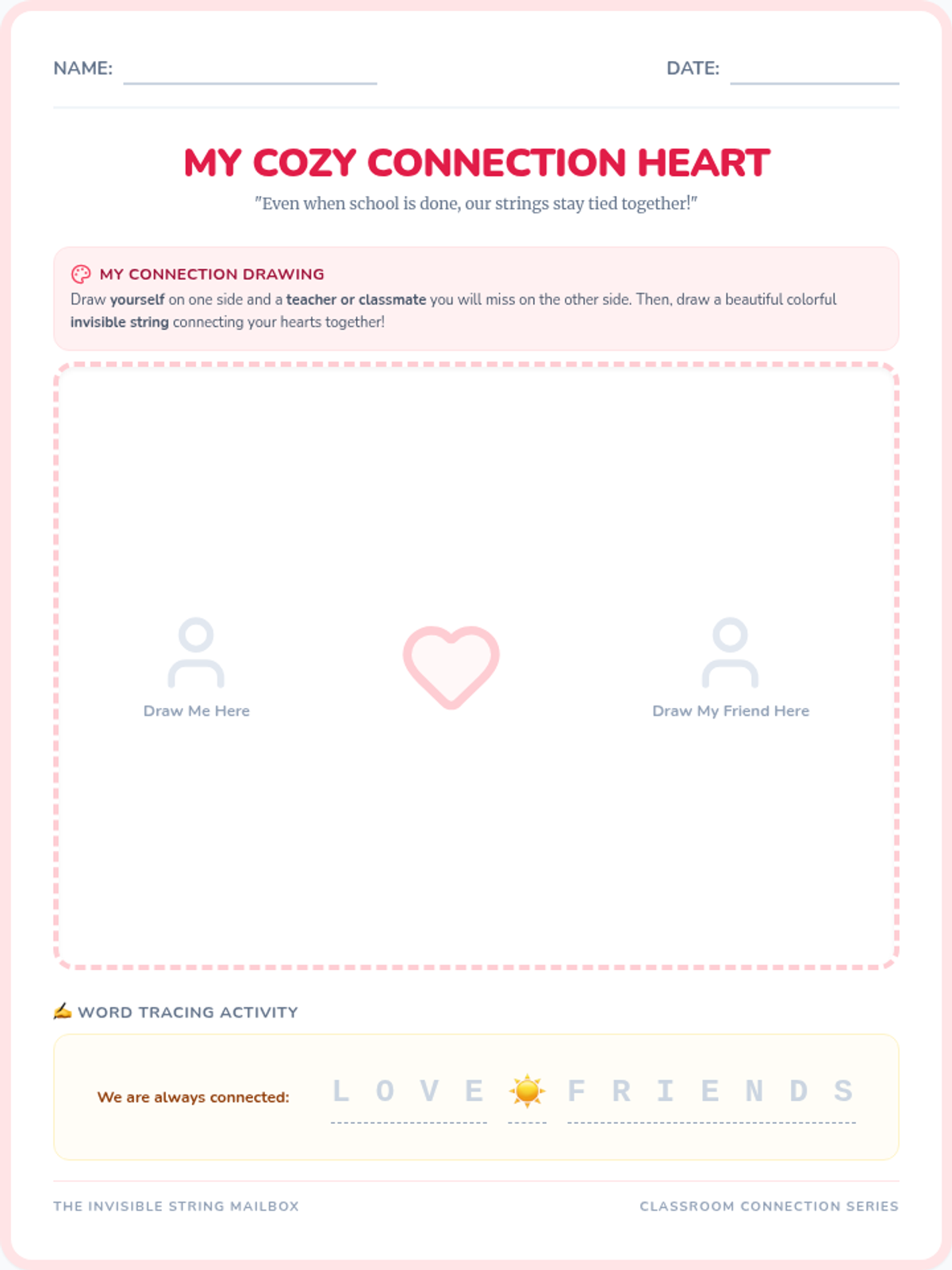
A heartwarming social-emotional learning lesson for Kindergarten and 1st Grade students to cope with end-of-year separation anxiety. Students learn that their invisible strings of love and friendship connect them to teachers and classmates even during summer break, culminating in creating a class Invisible String Mailbox.
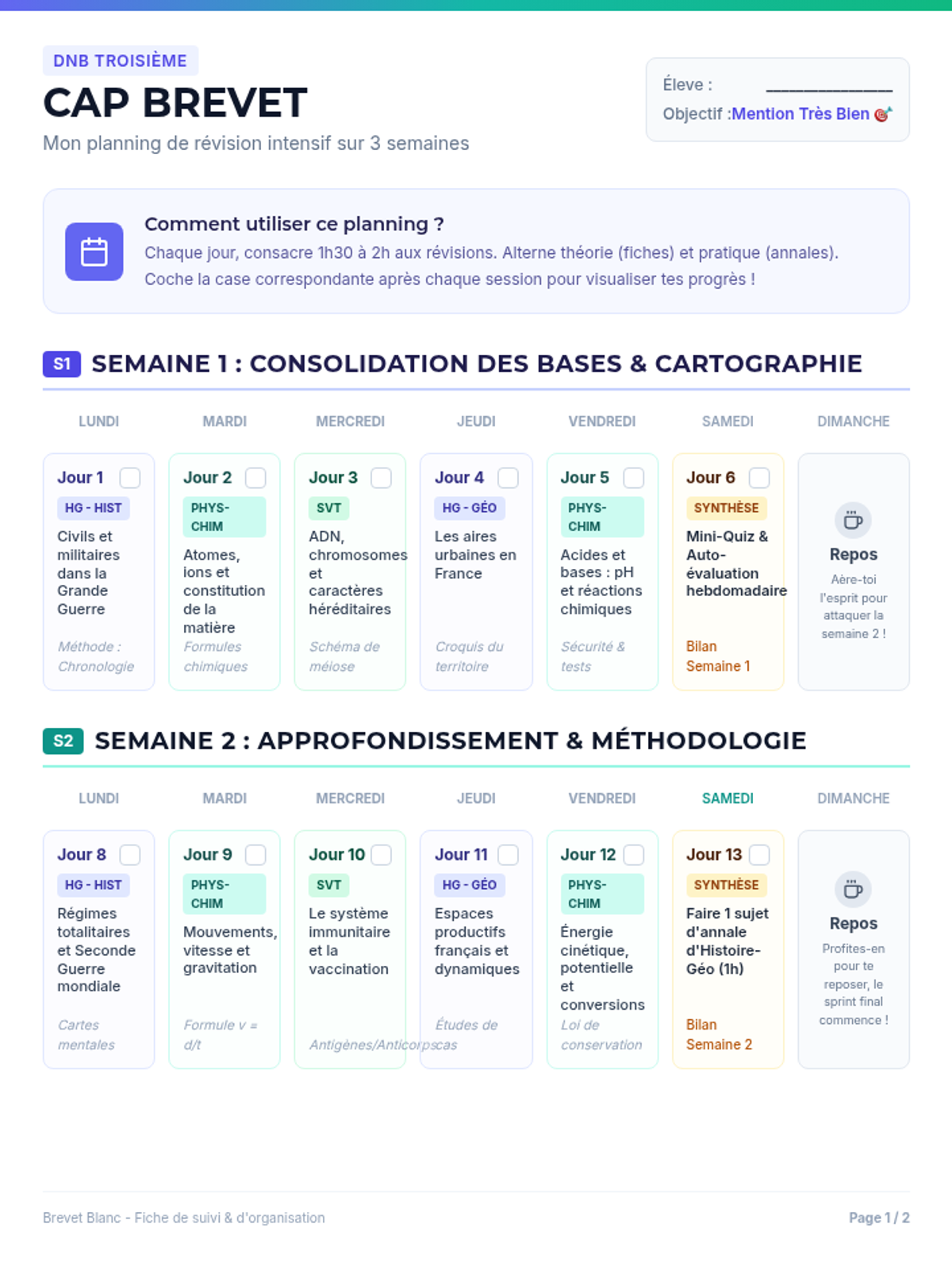
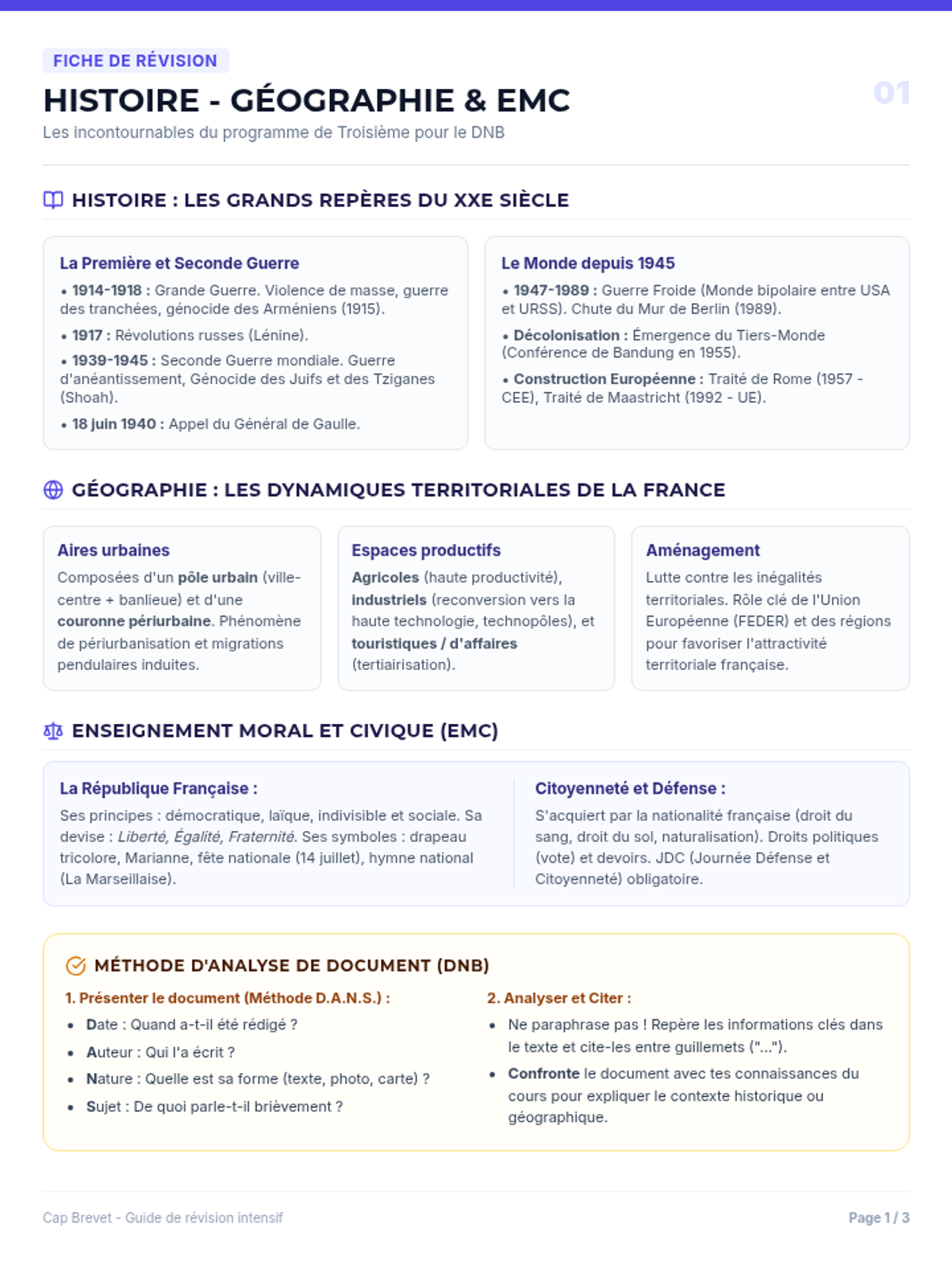
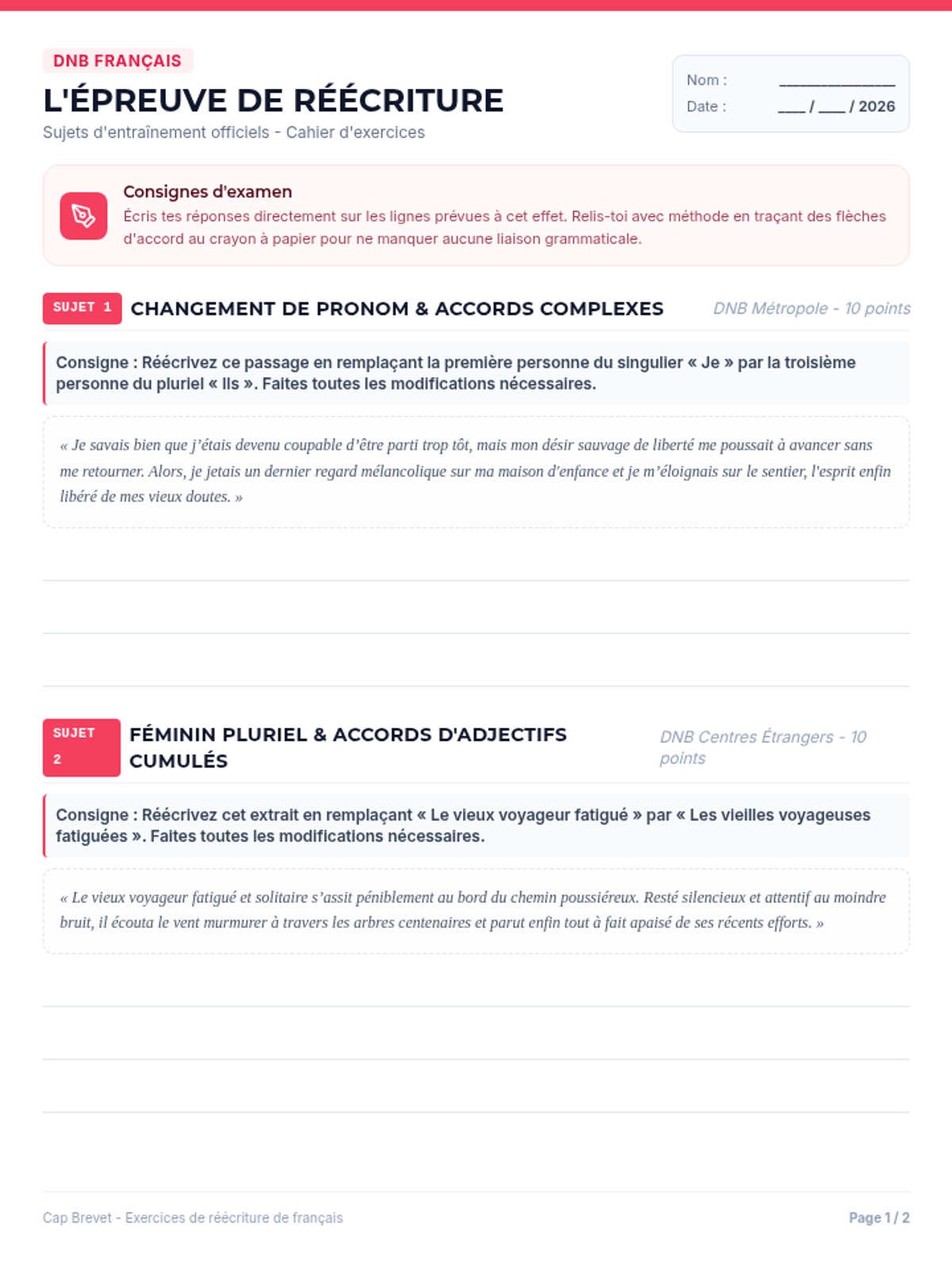
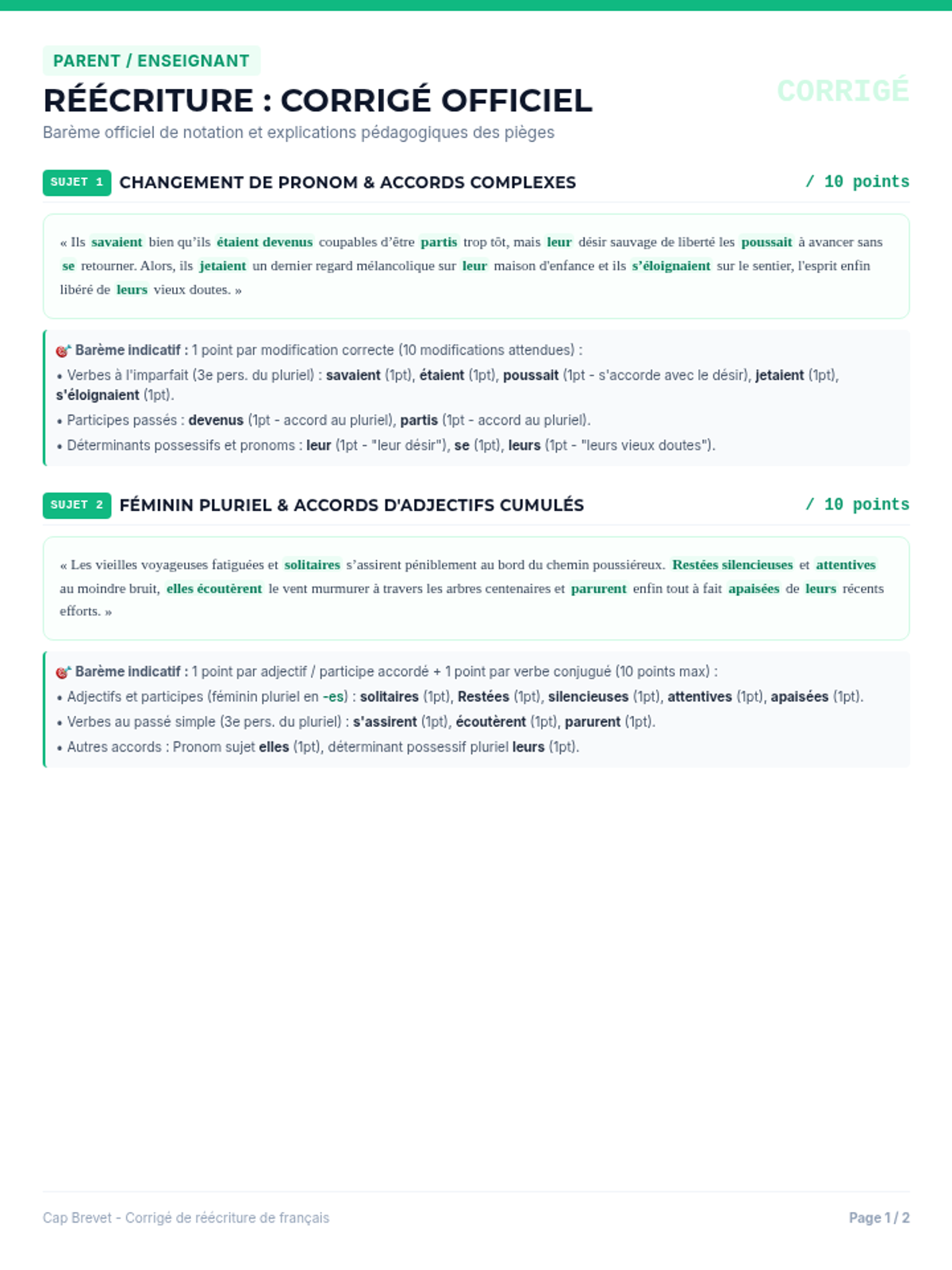
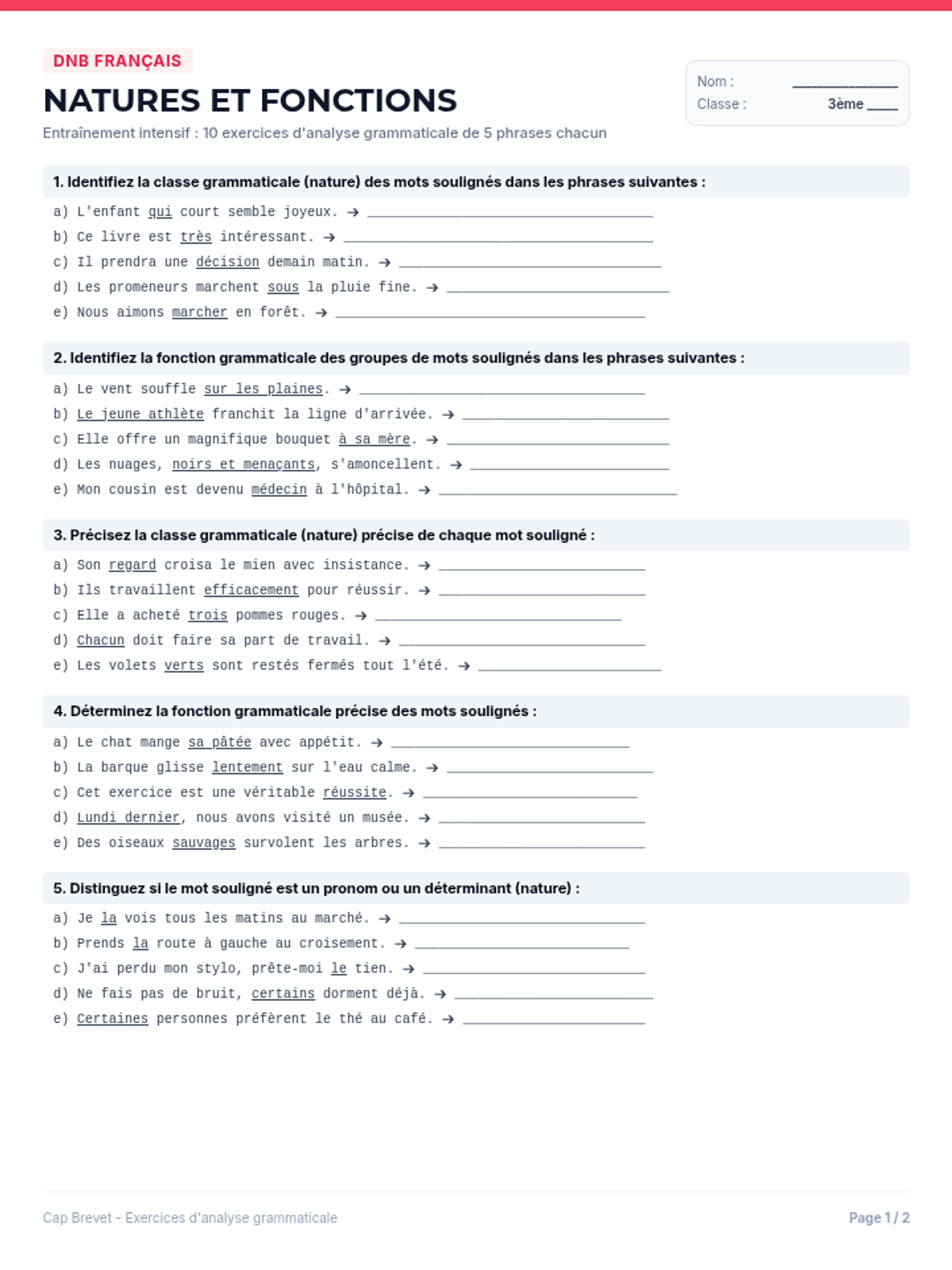
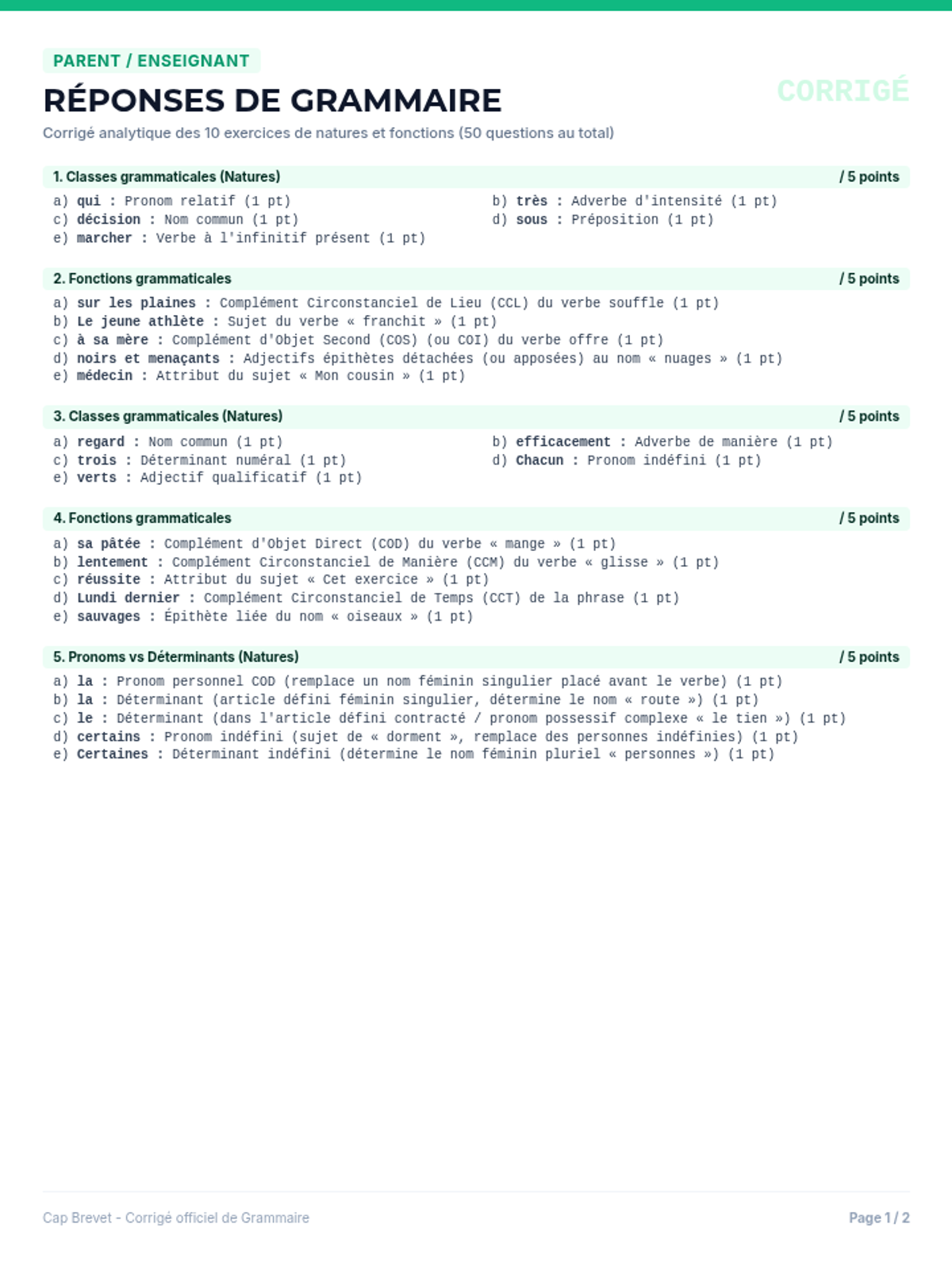
Un programme de révision intensif et structuré sur 3 semaines pour préparer sereinement les épreuves de SVT, Physique-Chimie et Histoire-Géographie du Diplôme National du Brevet.
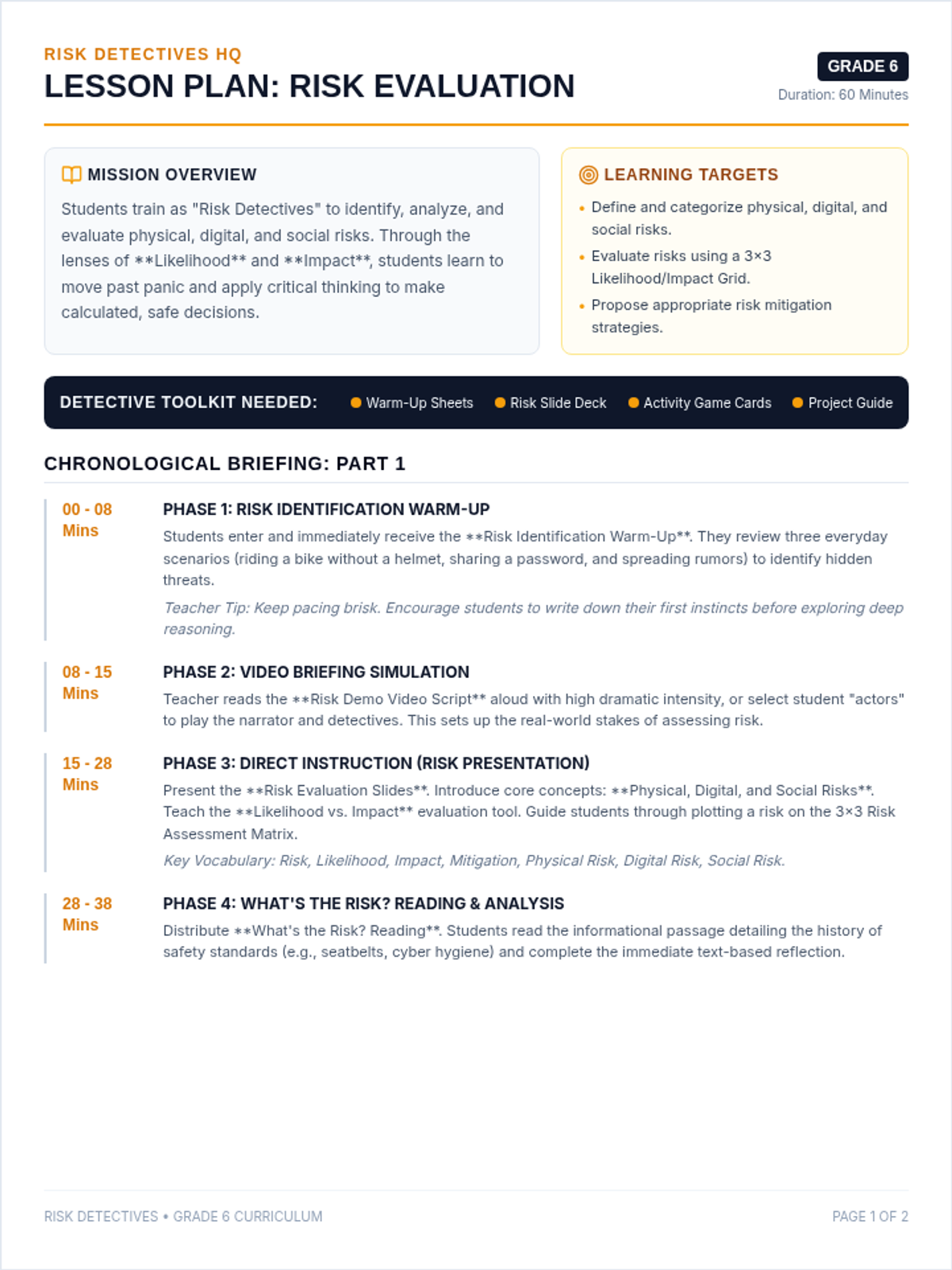
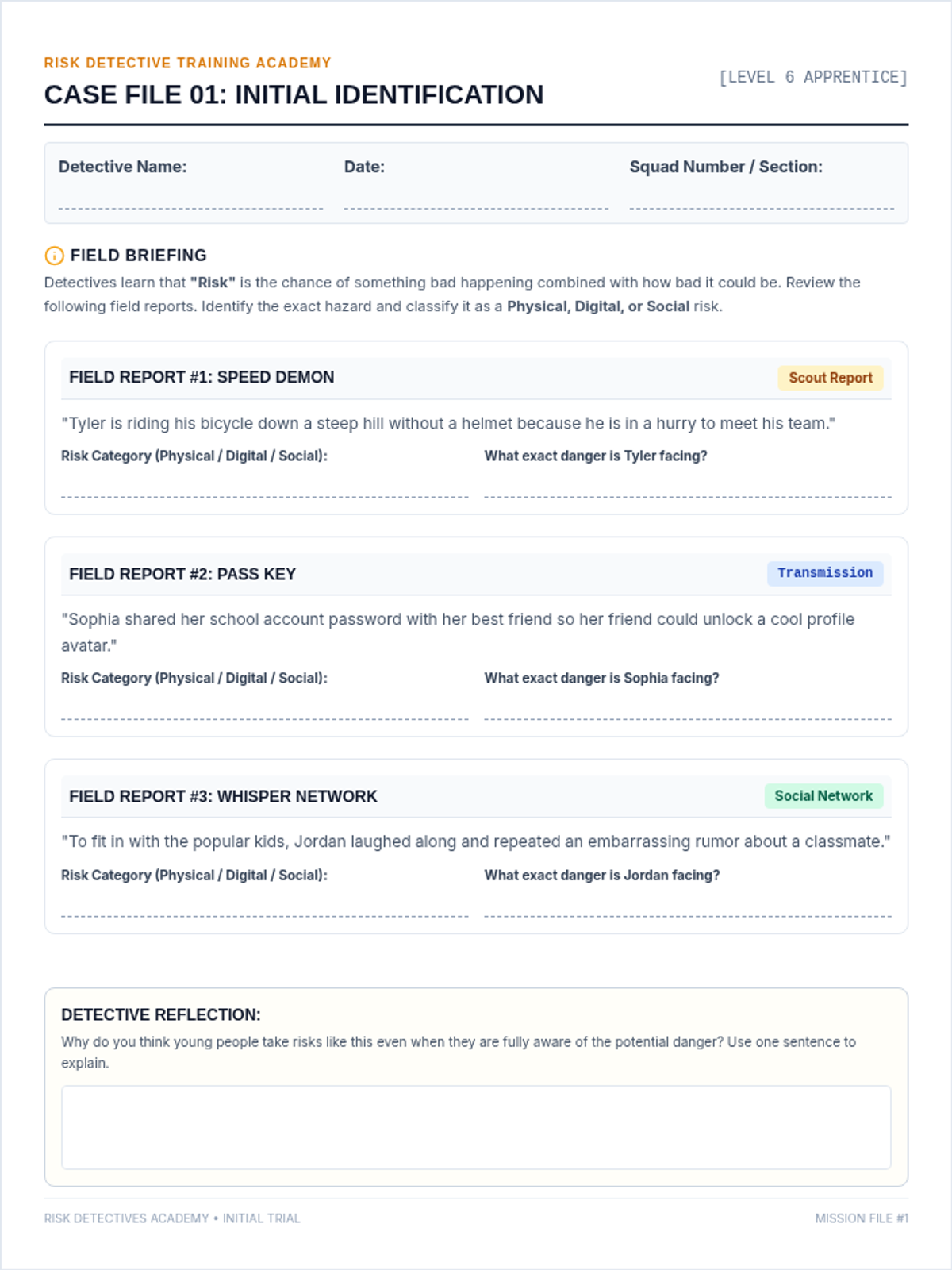
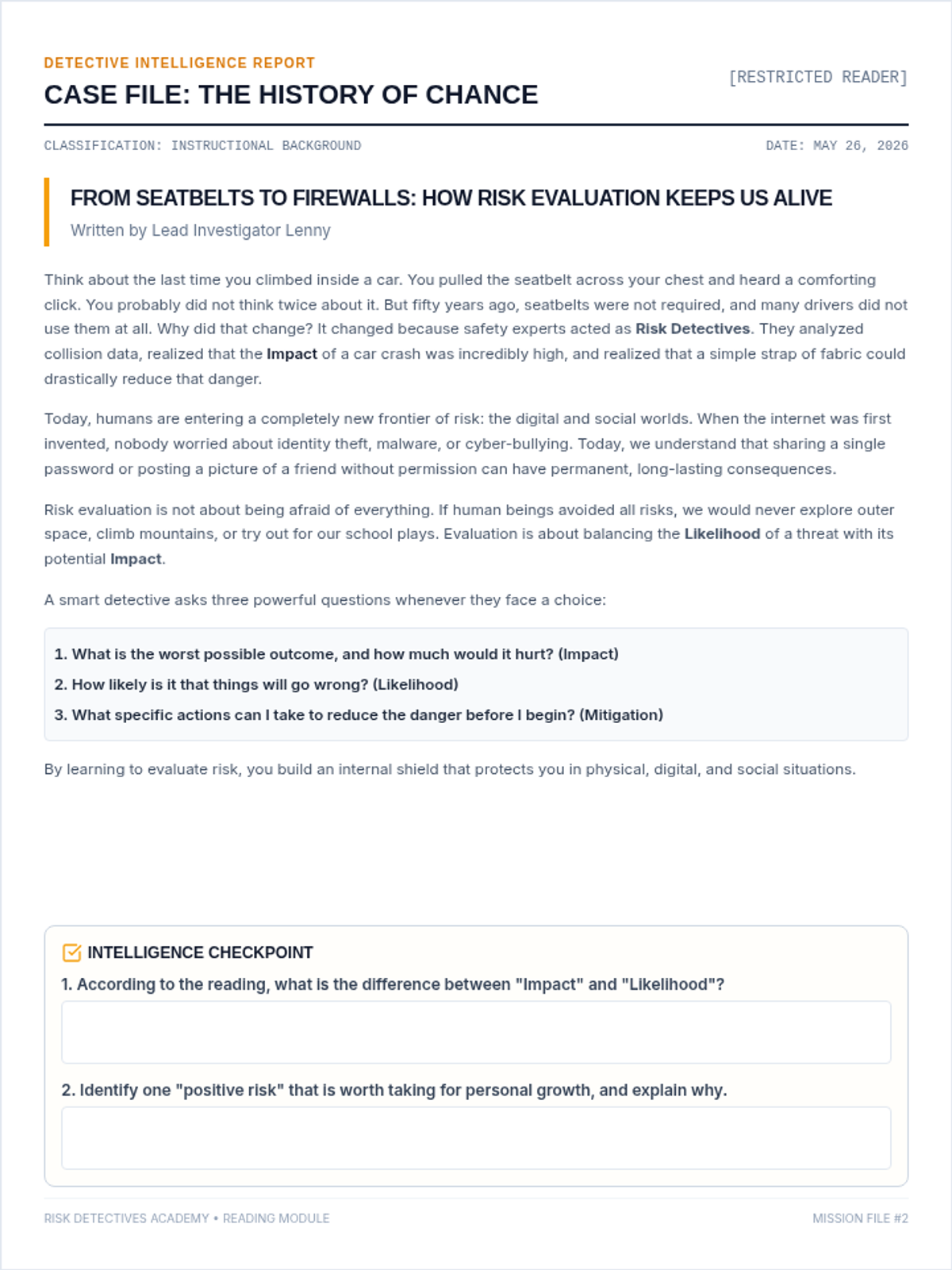
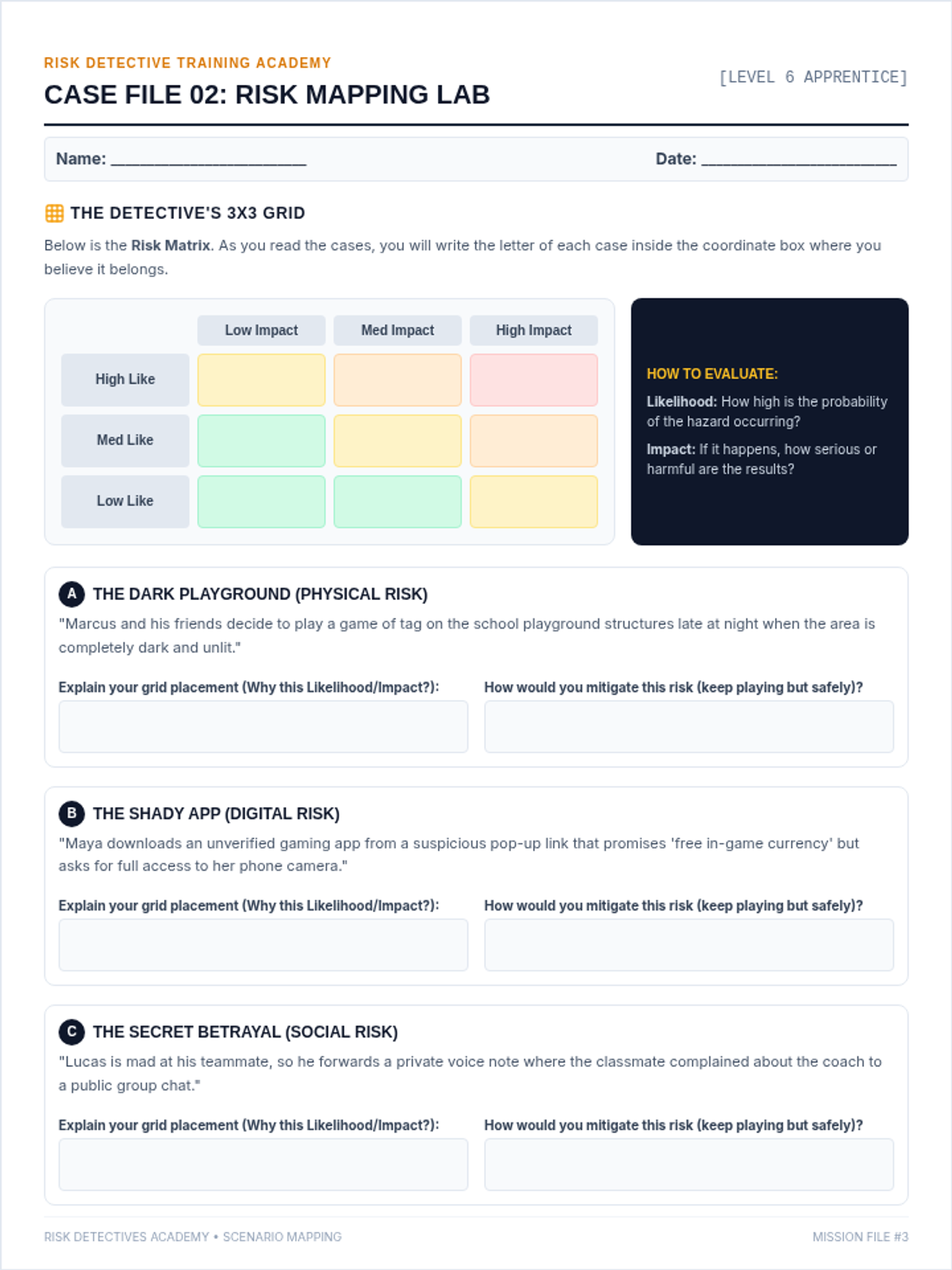
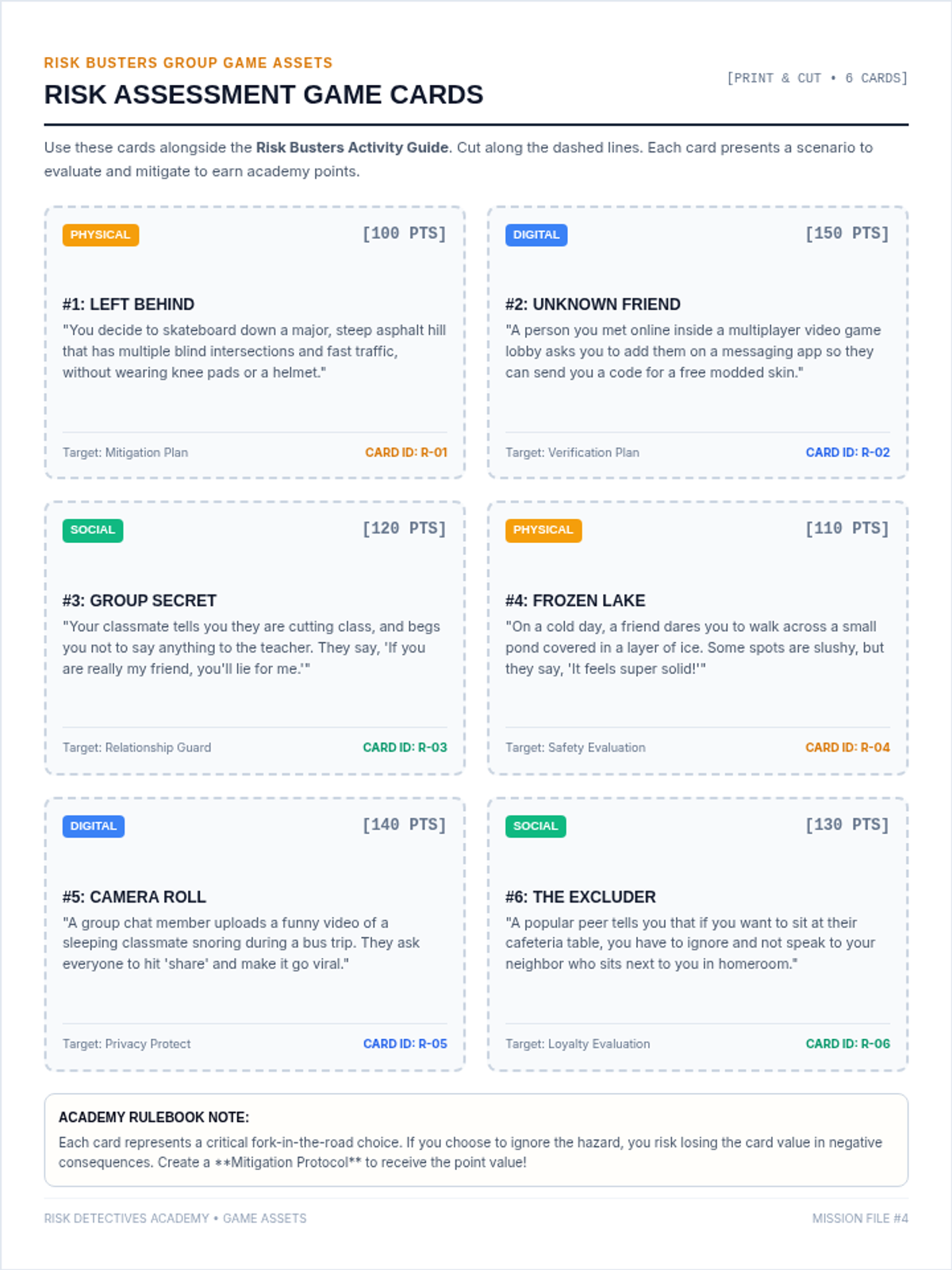
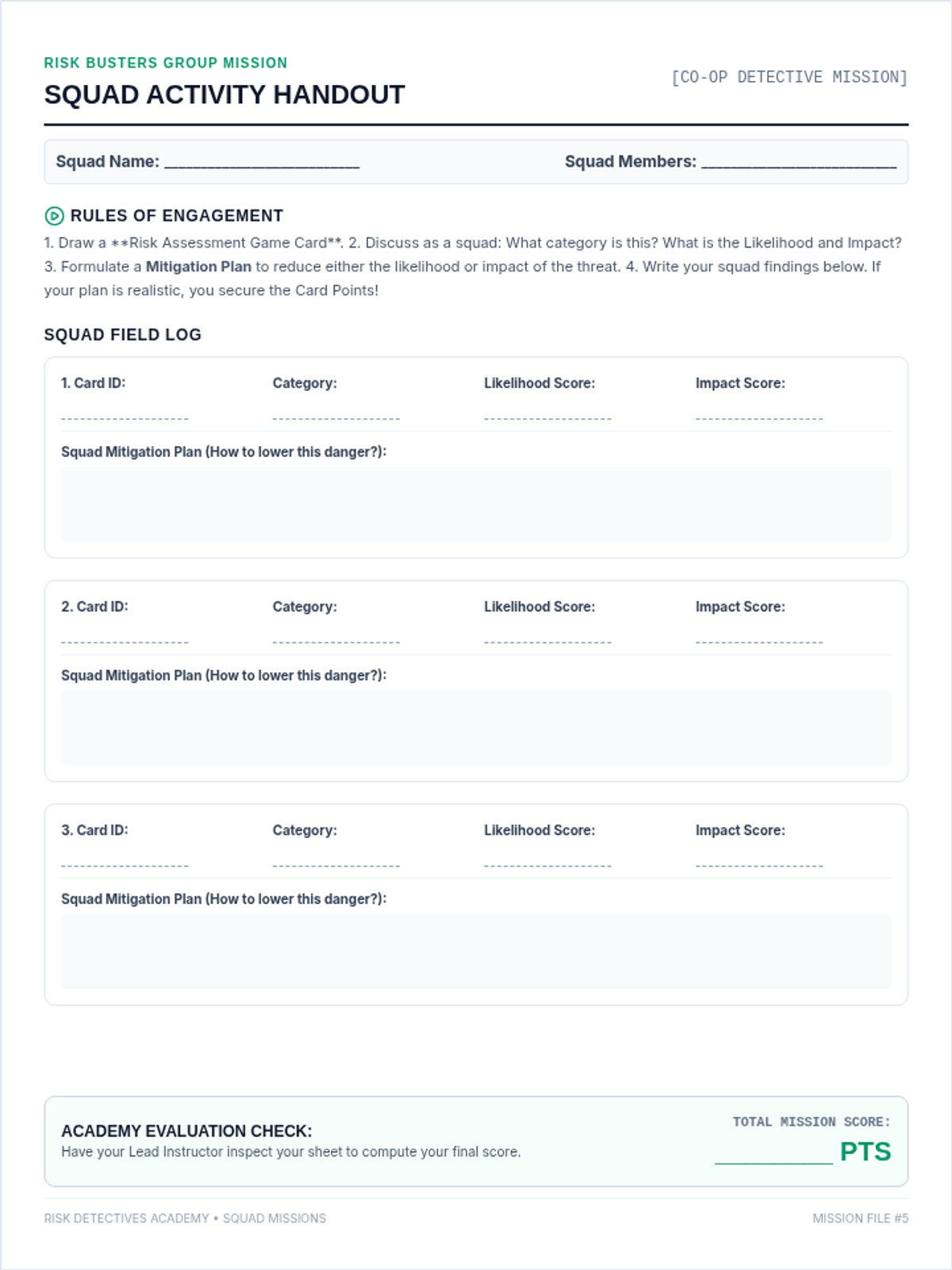
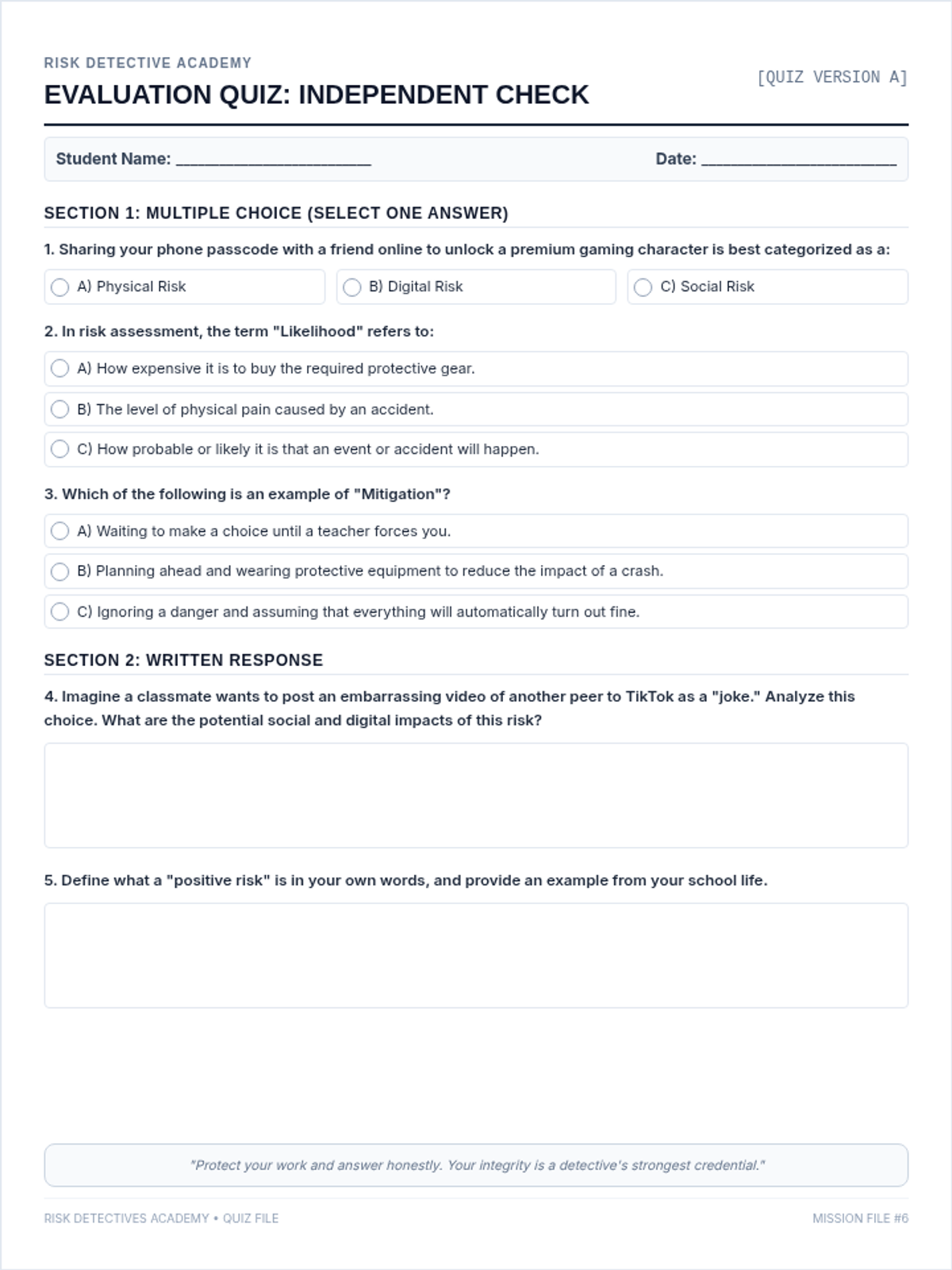
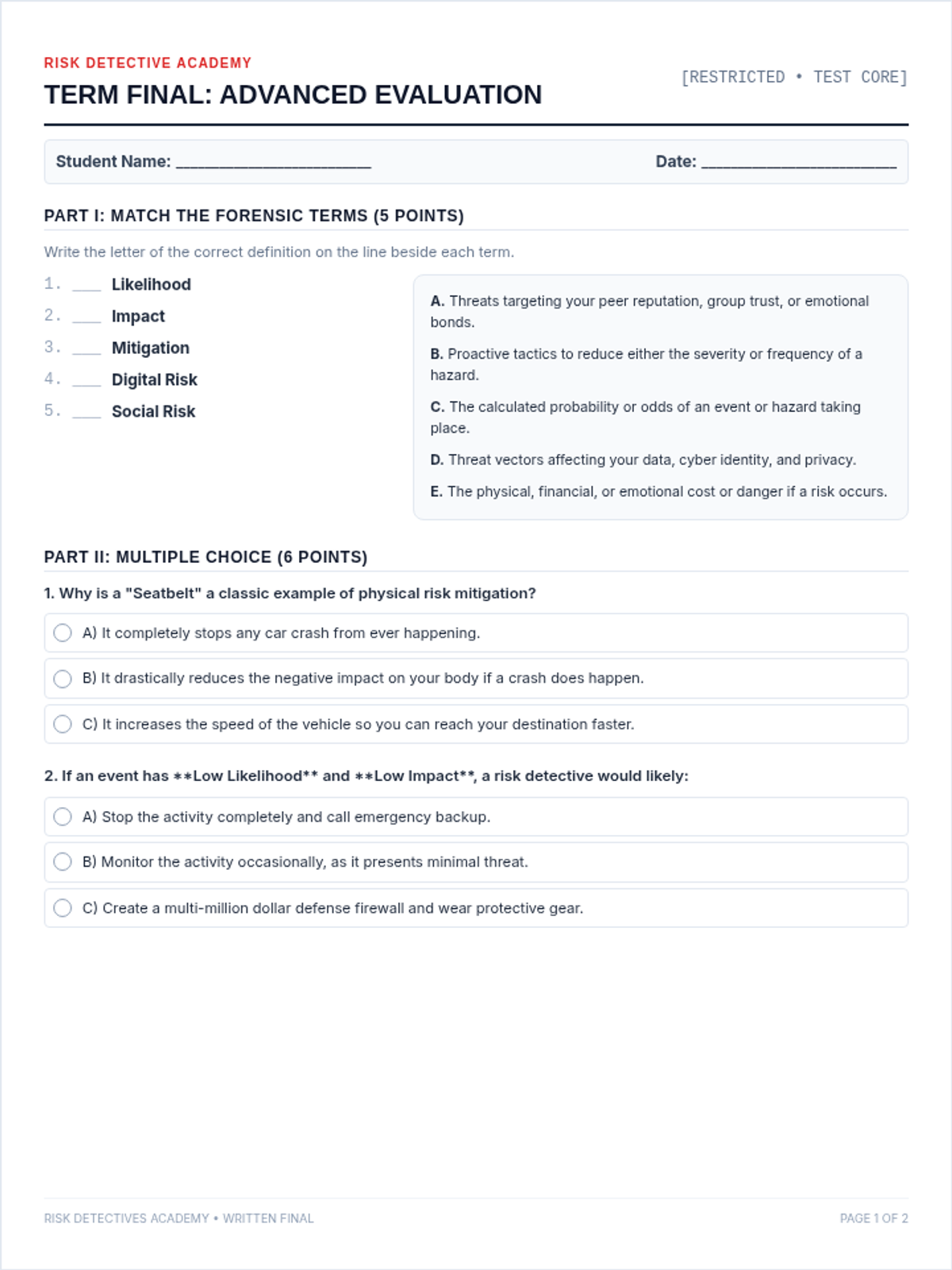
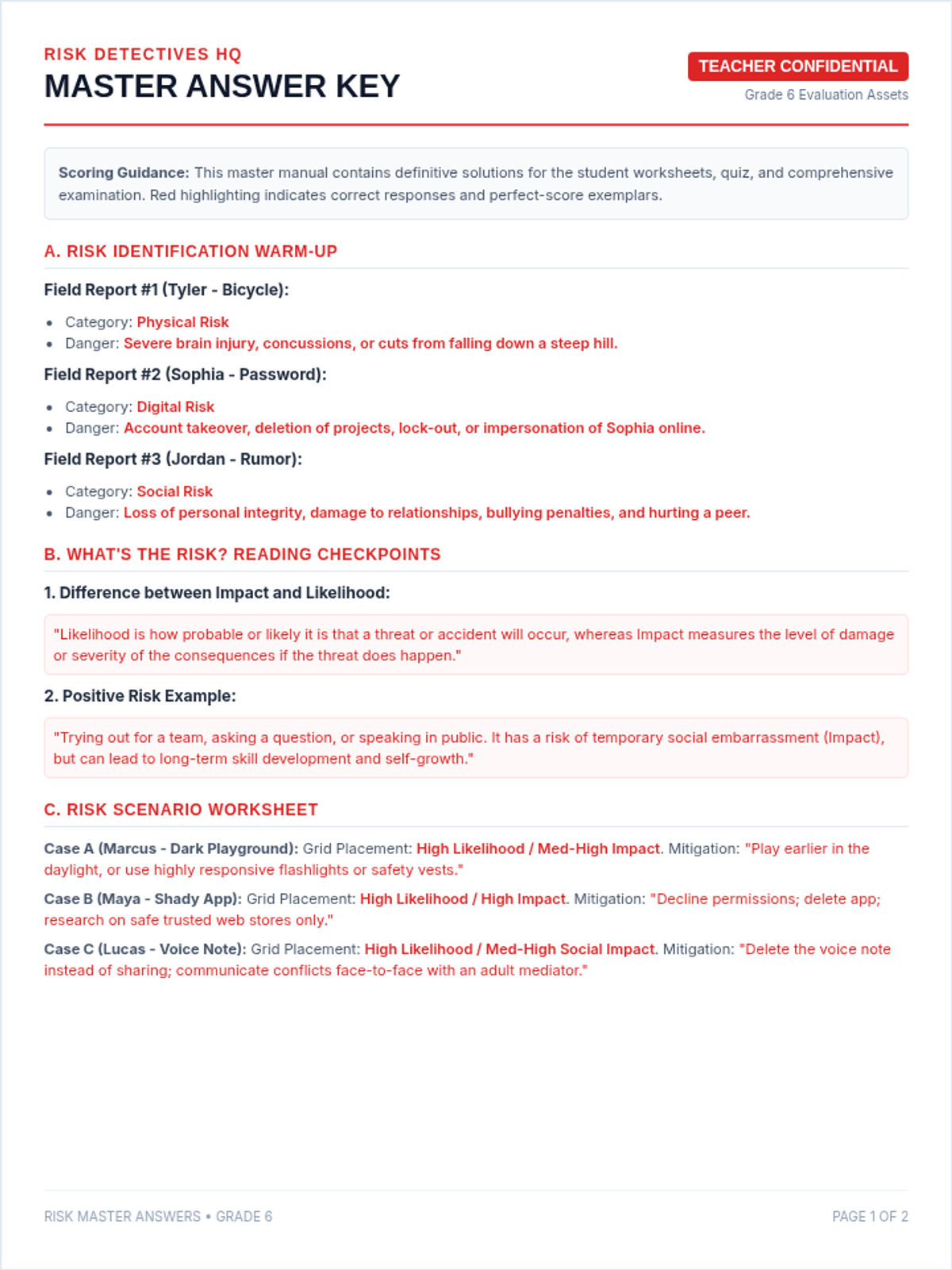
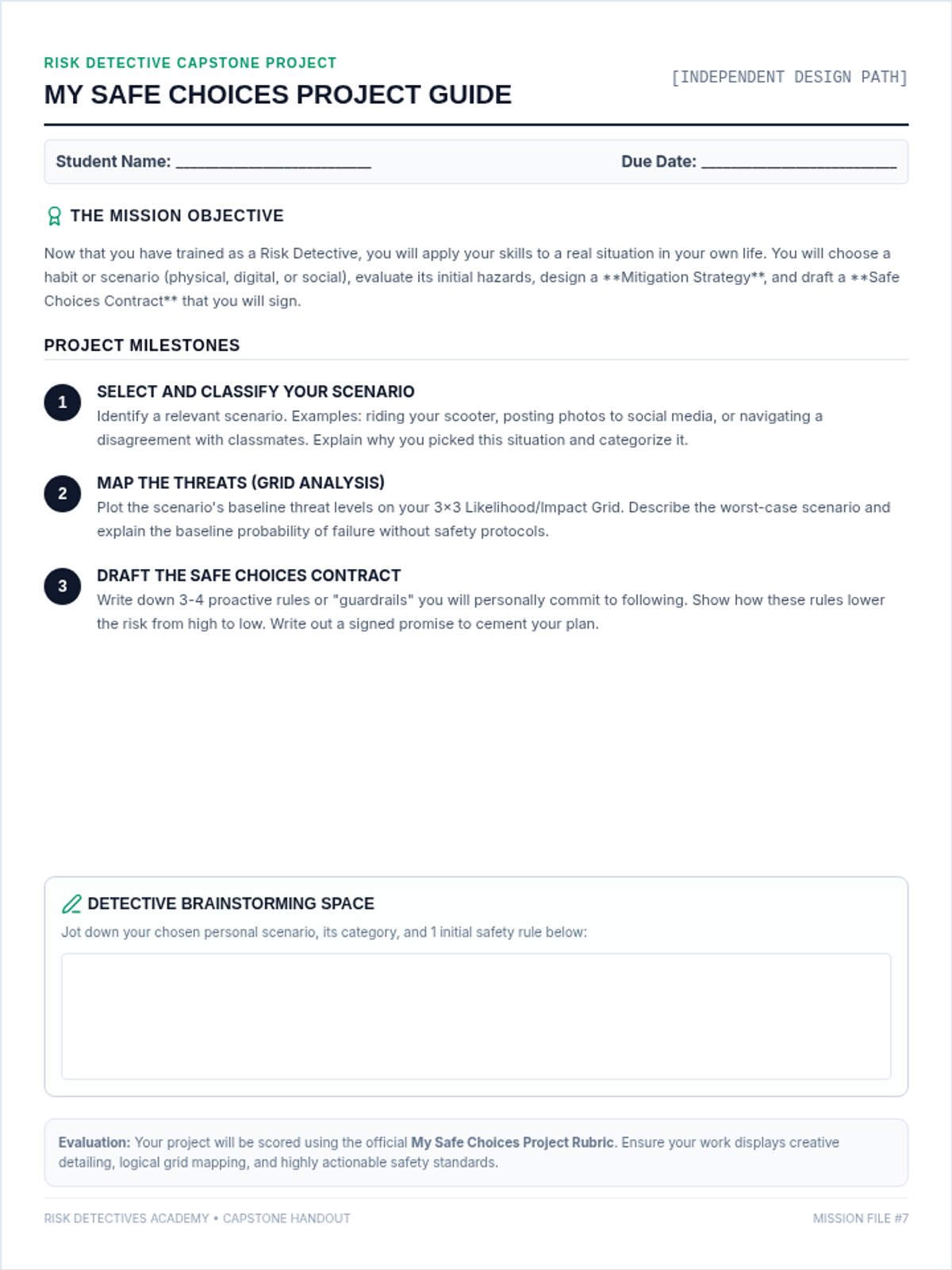
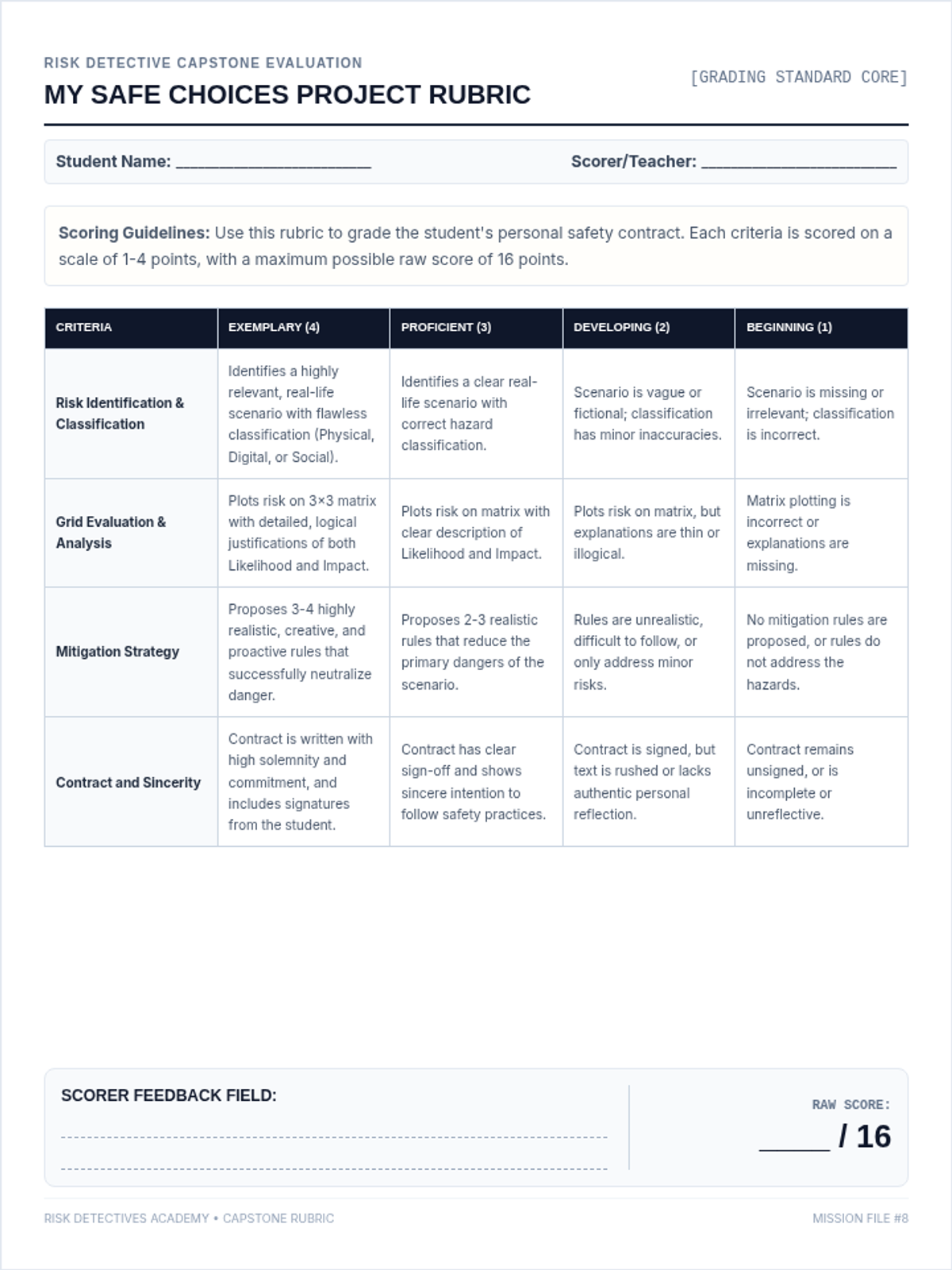
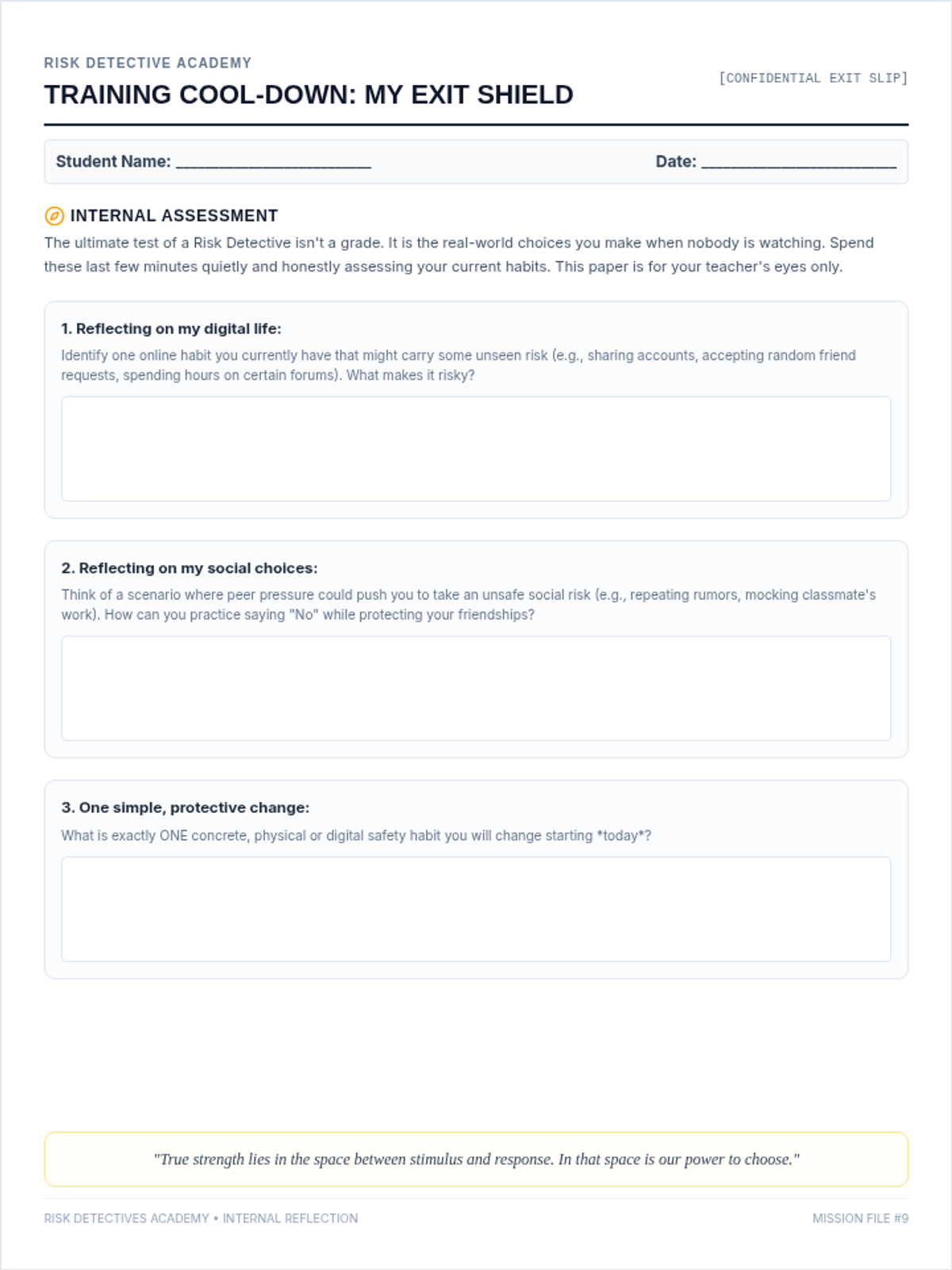
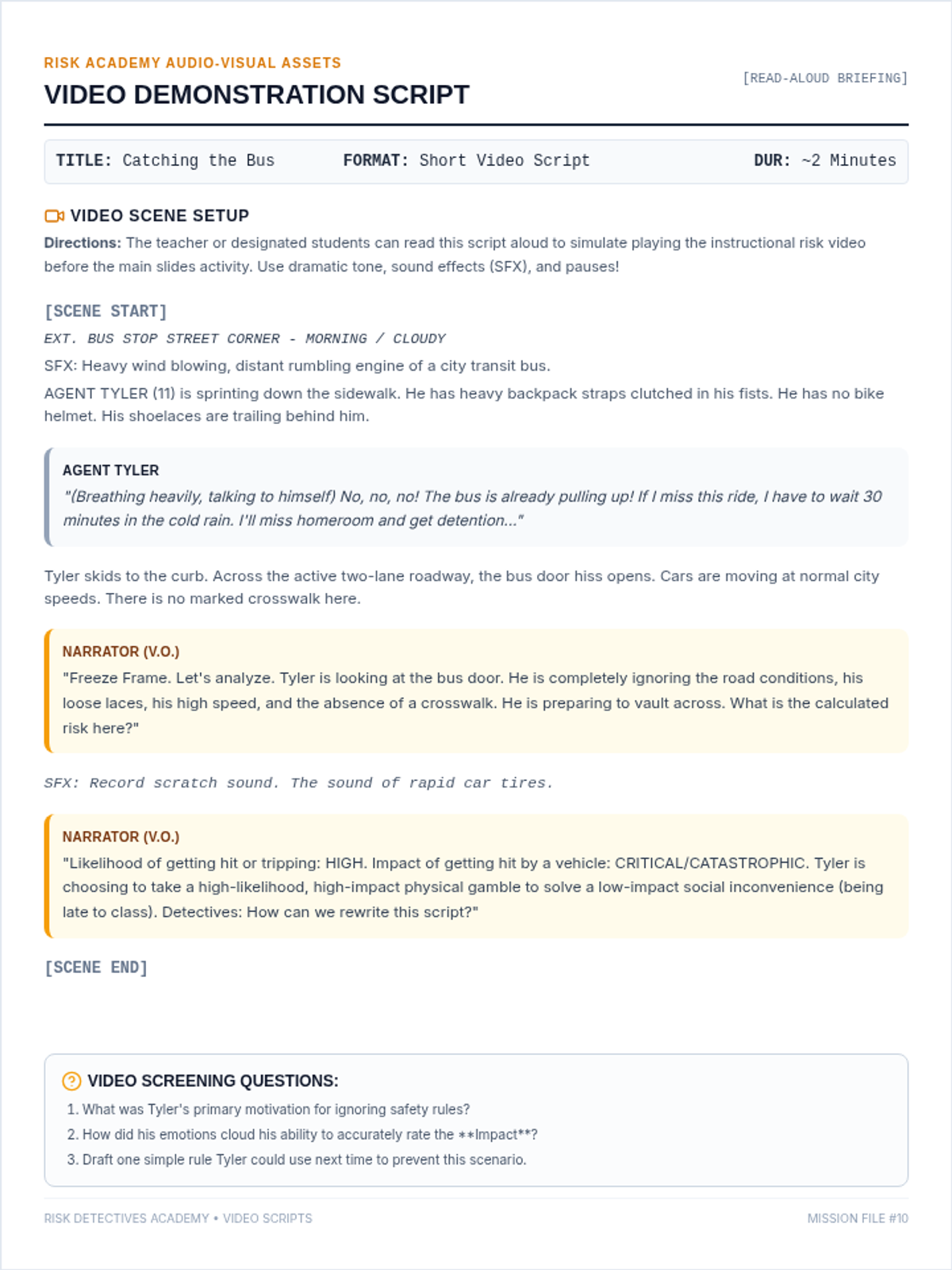
A 60-minute Grade 6 lesson on risk evaluation. Students step into the shoes of 'Risk Detectives' to identify, analyze, and mitigate physical, digital, and social risks through interactive activities, scenario analysis, and a creative project.
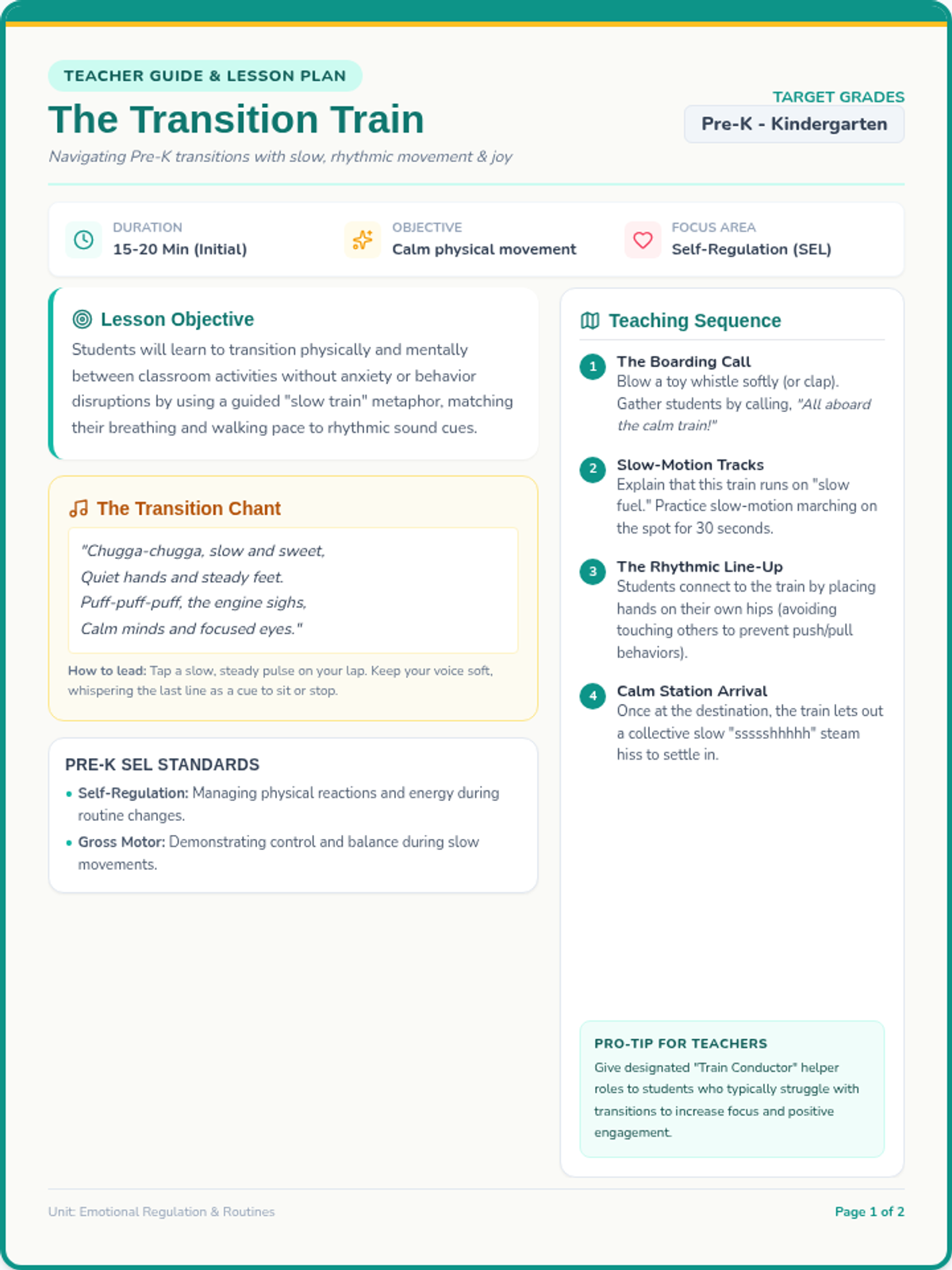
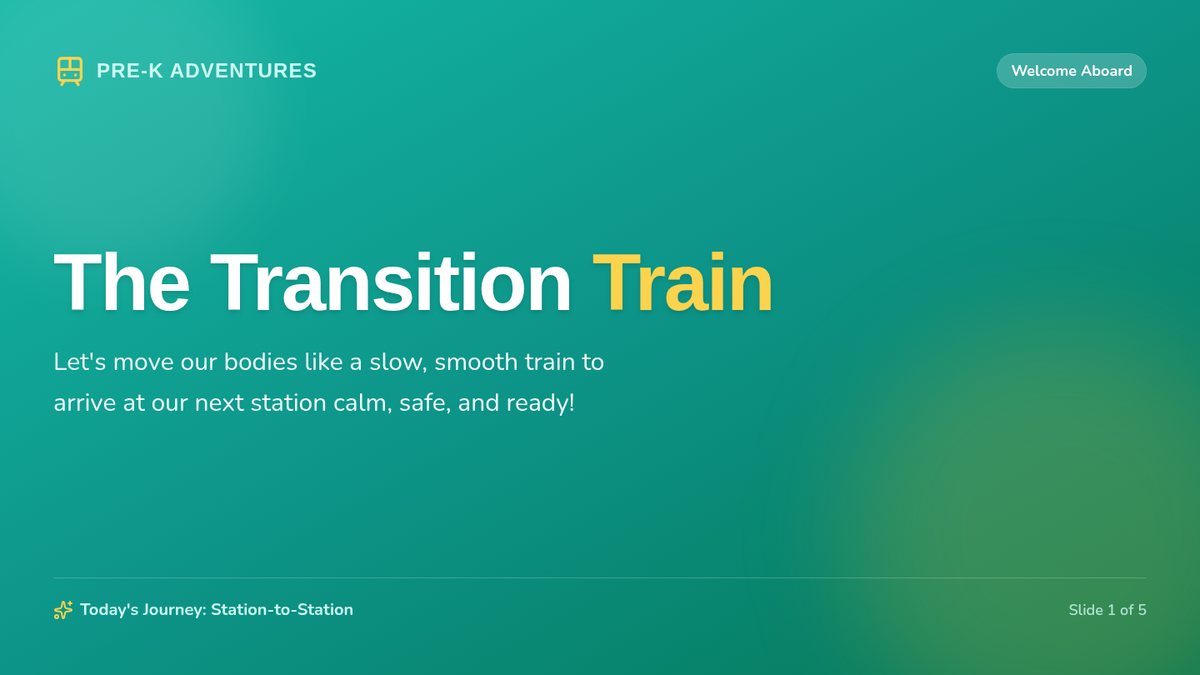
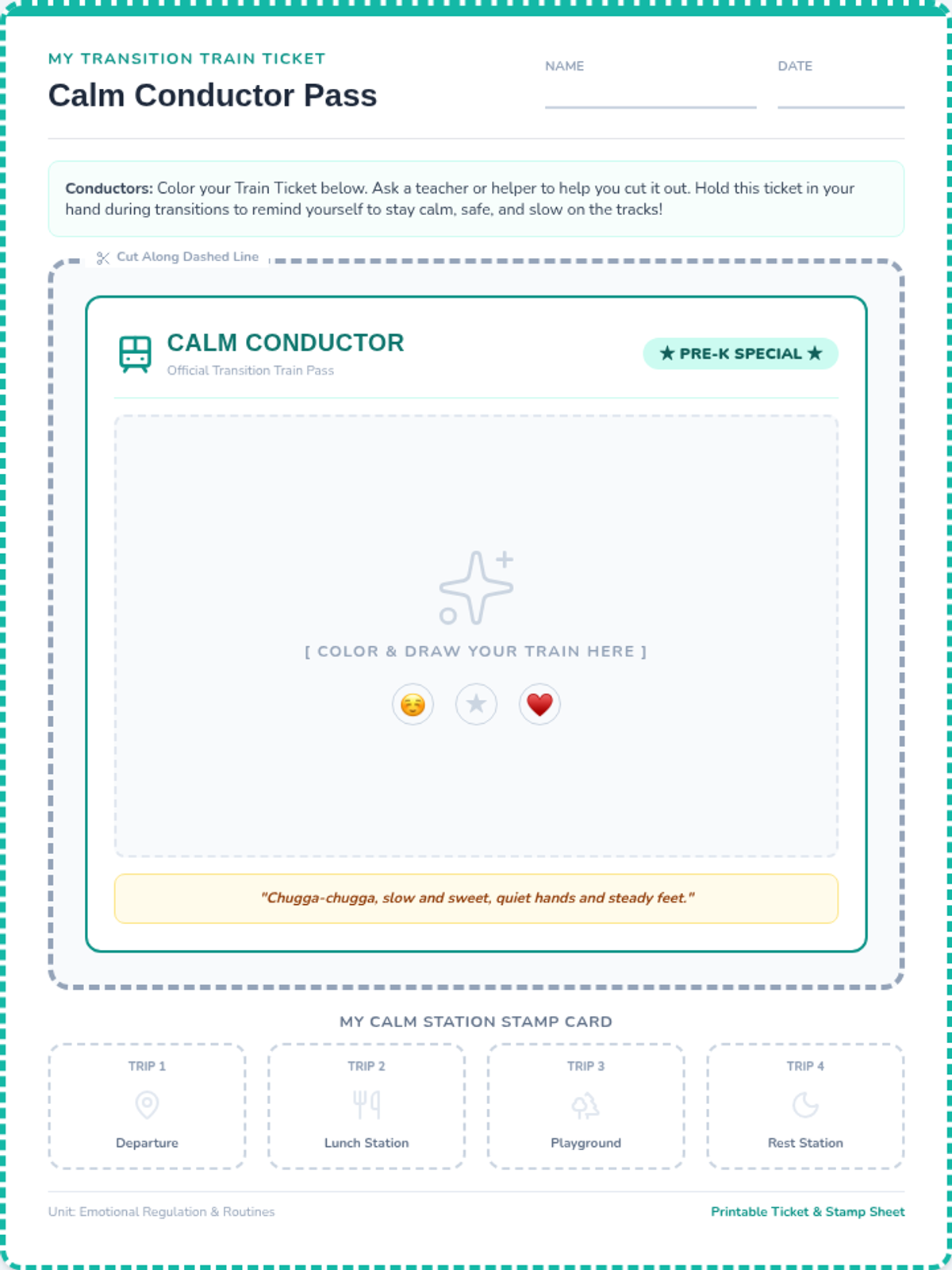
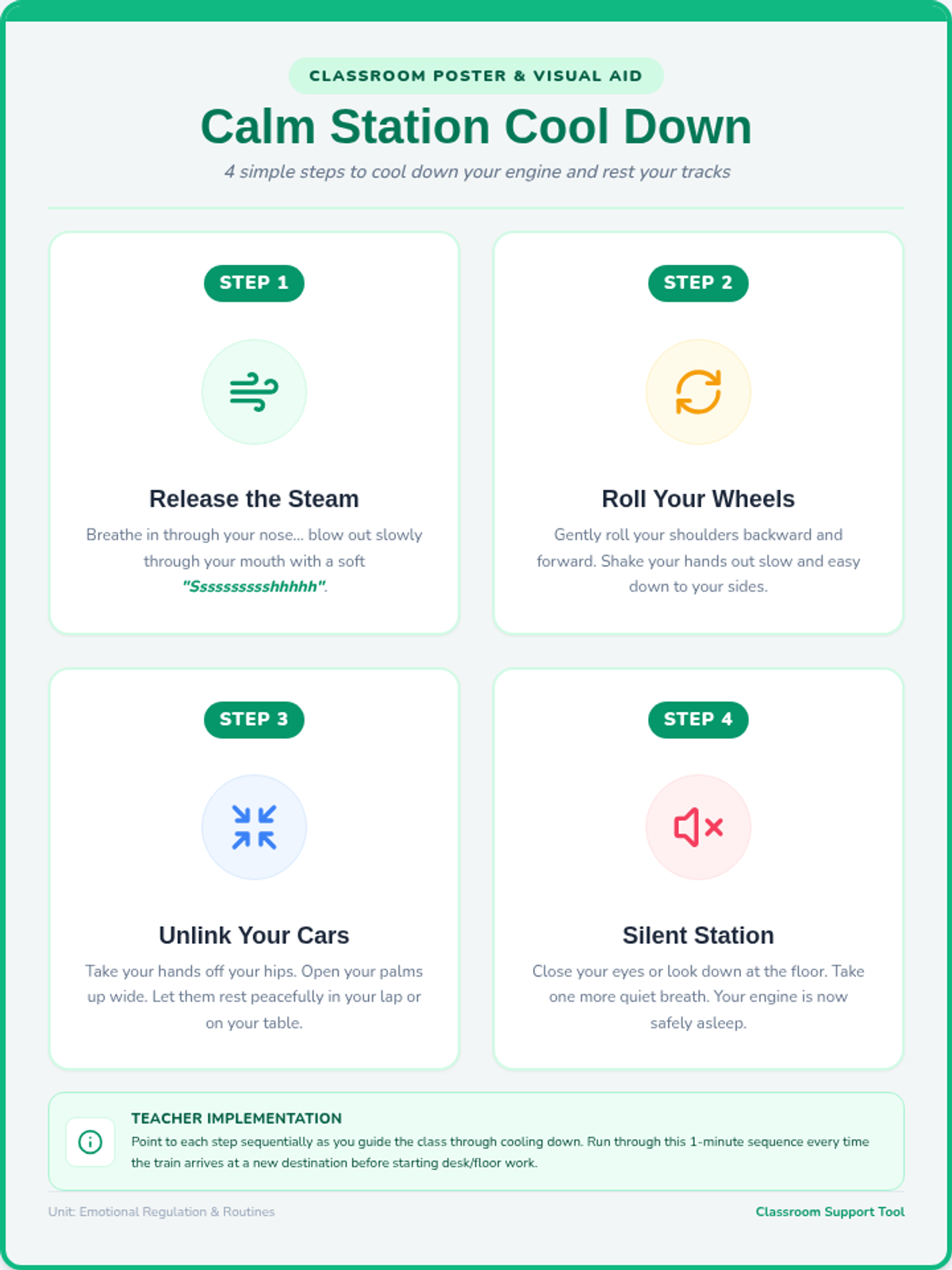
A calming Pre-K lesson that uses a playful train metaphor and rhythmic movement to transform chaotic transitions into structured, anxiety-free learning journeys.
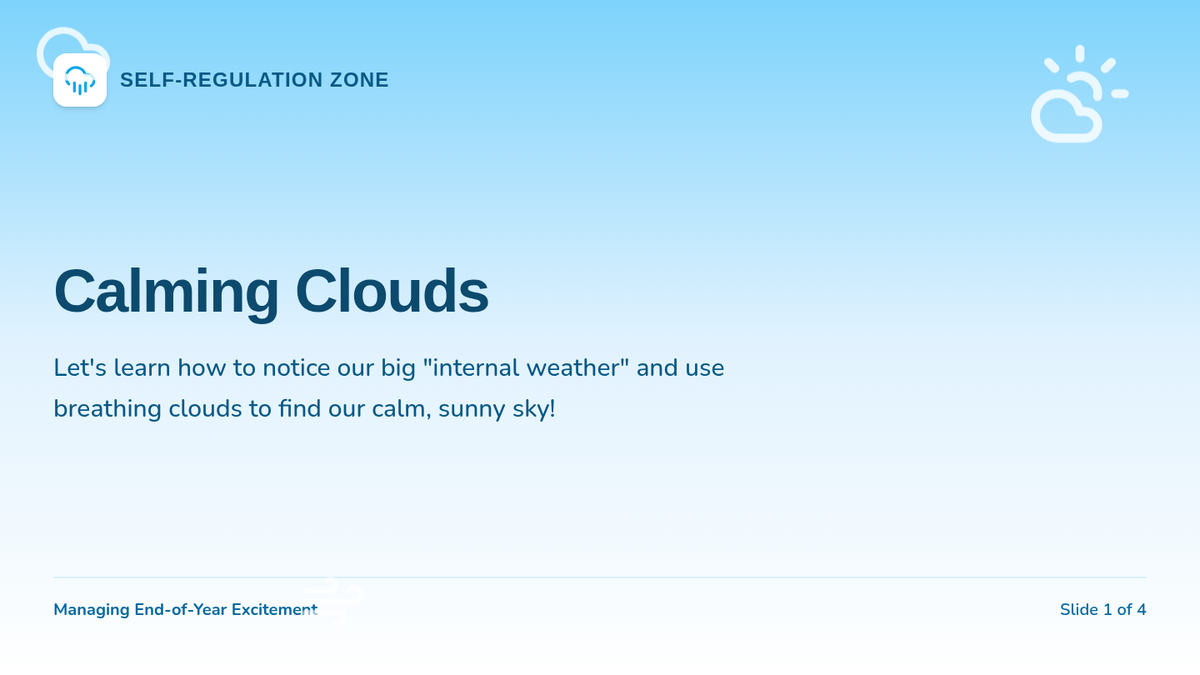
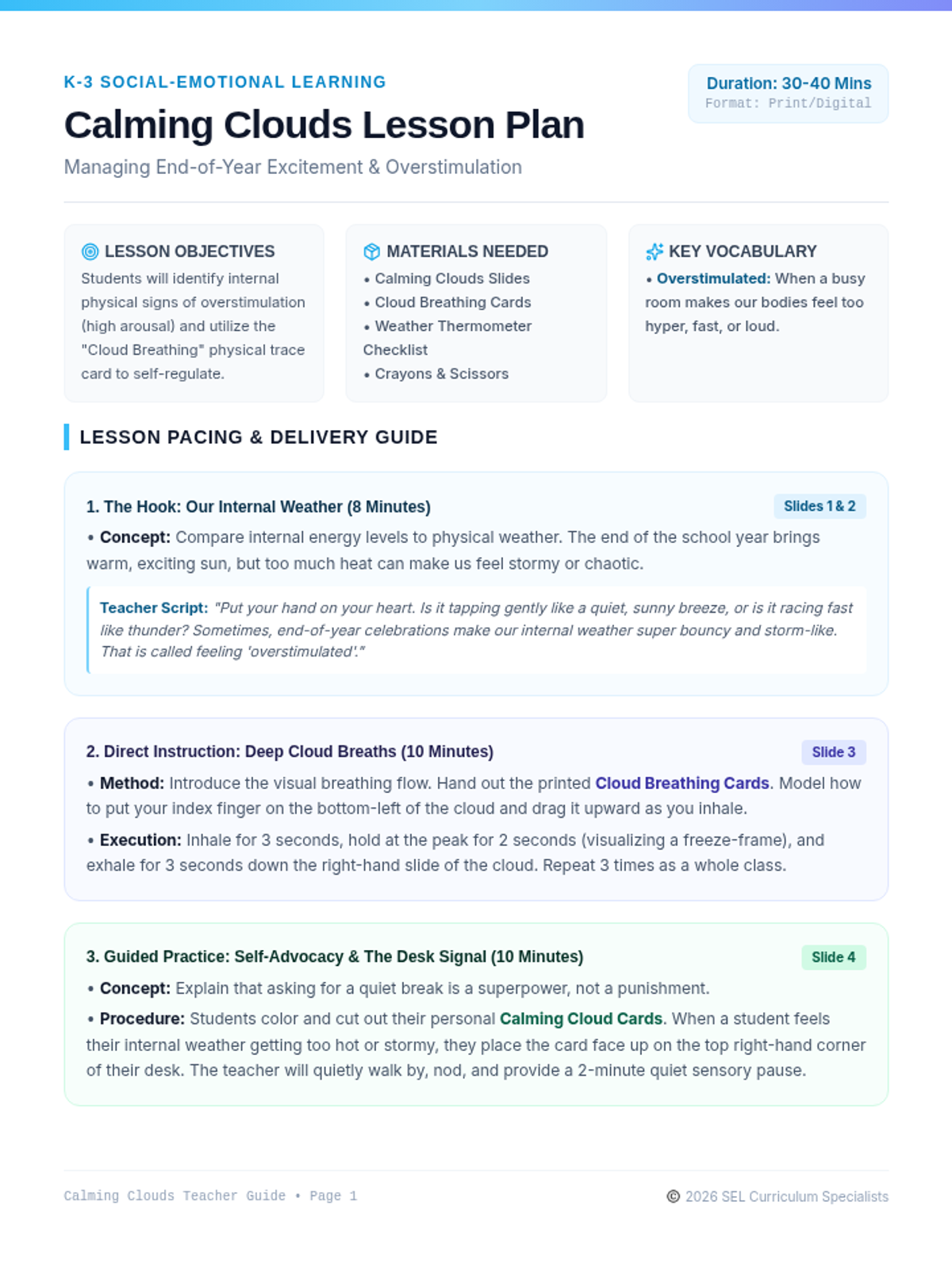
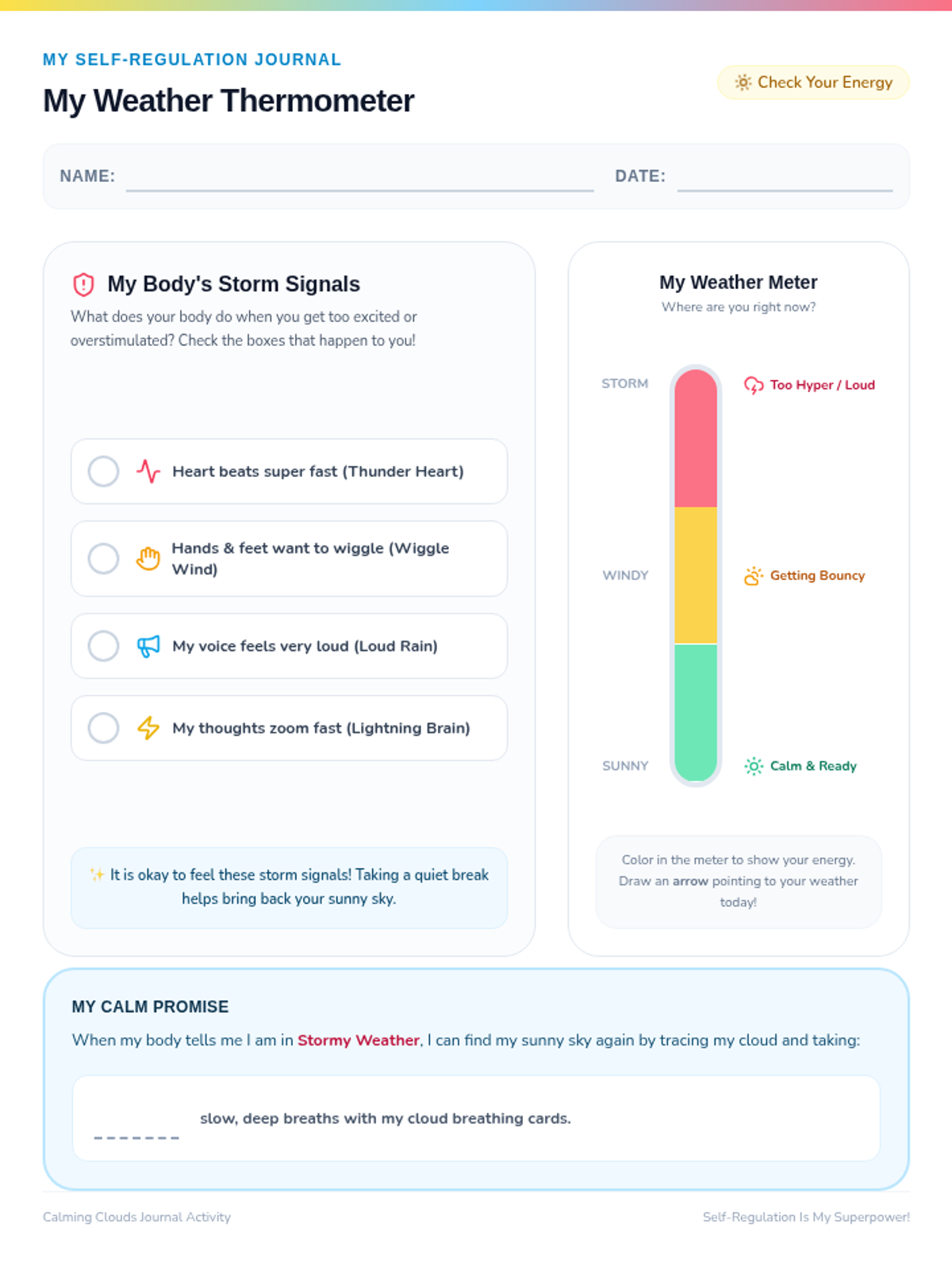
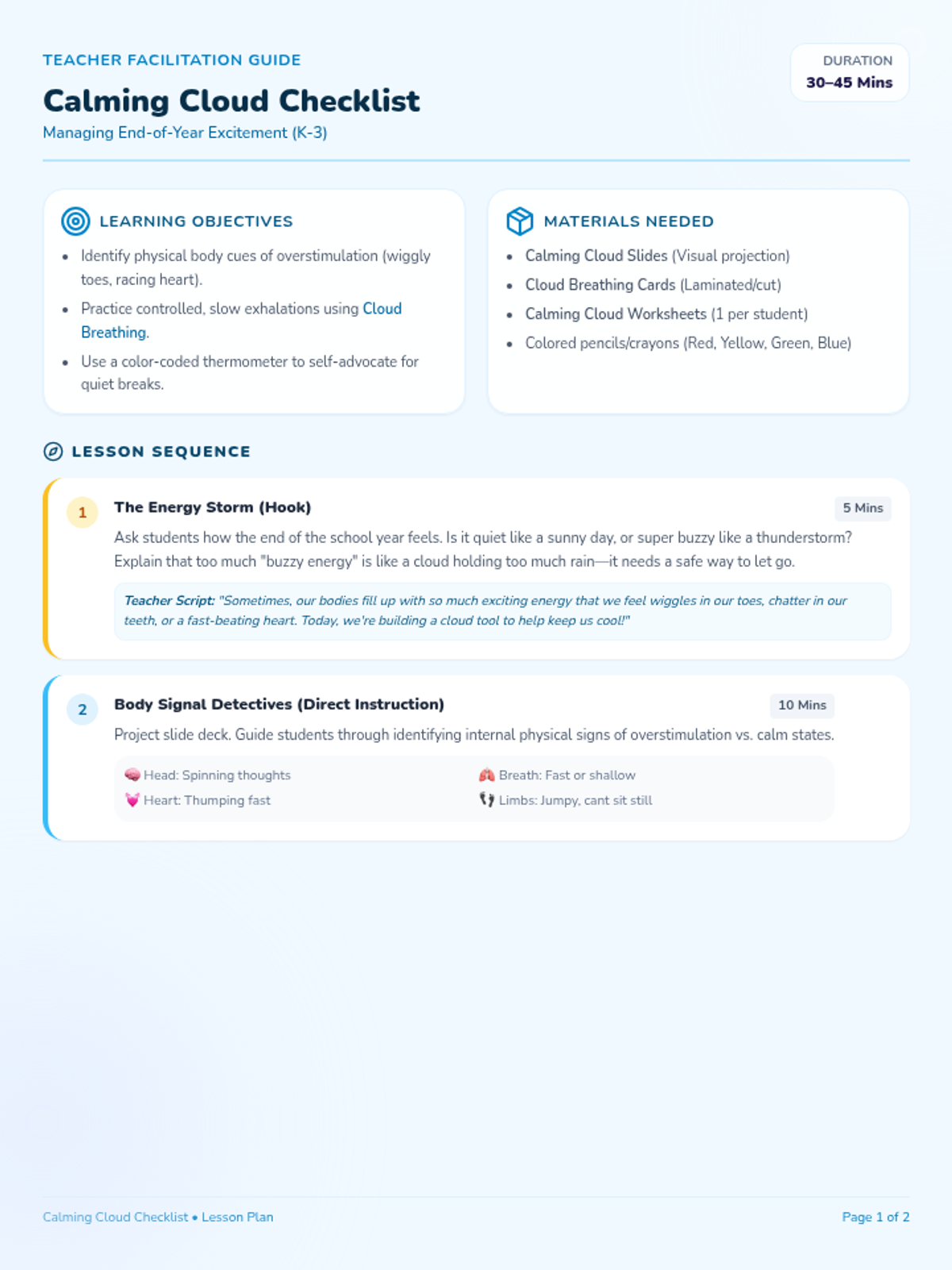
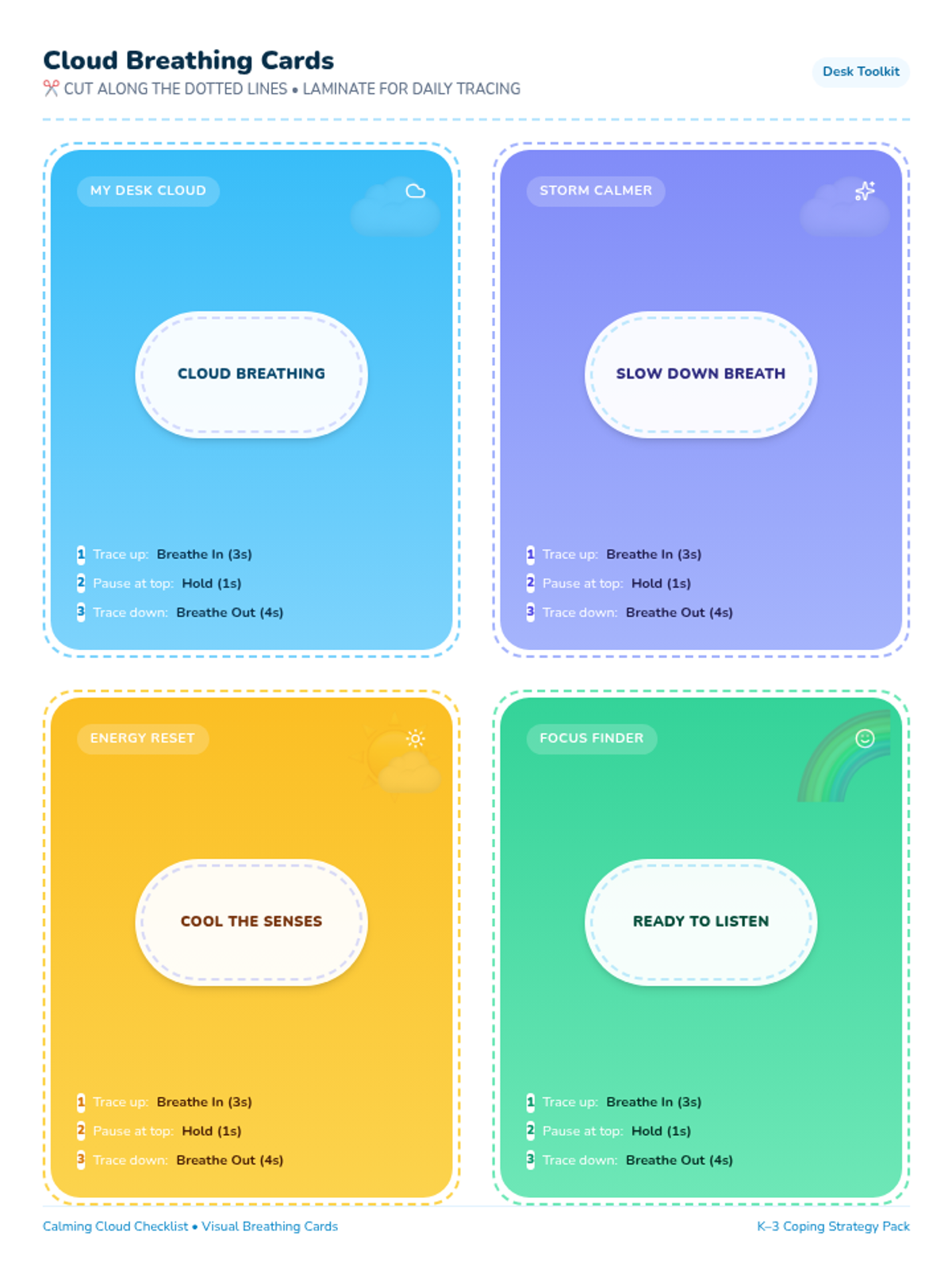
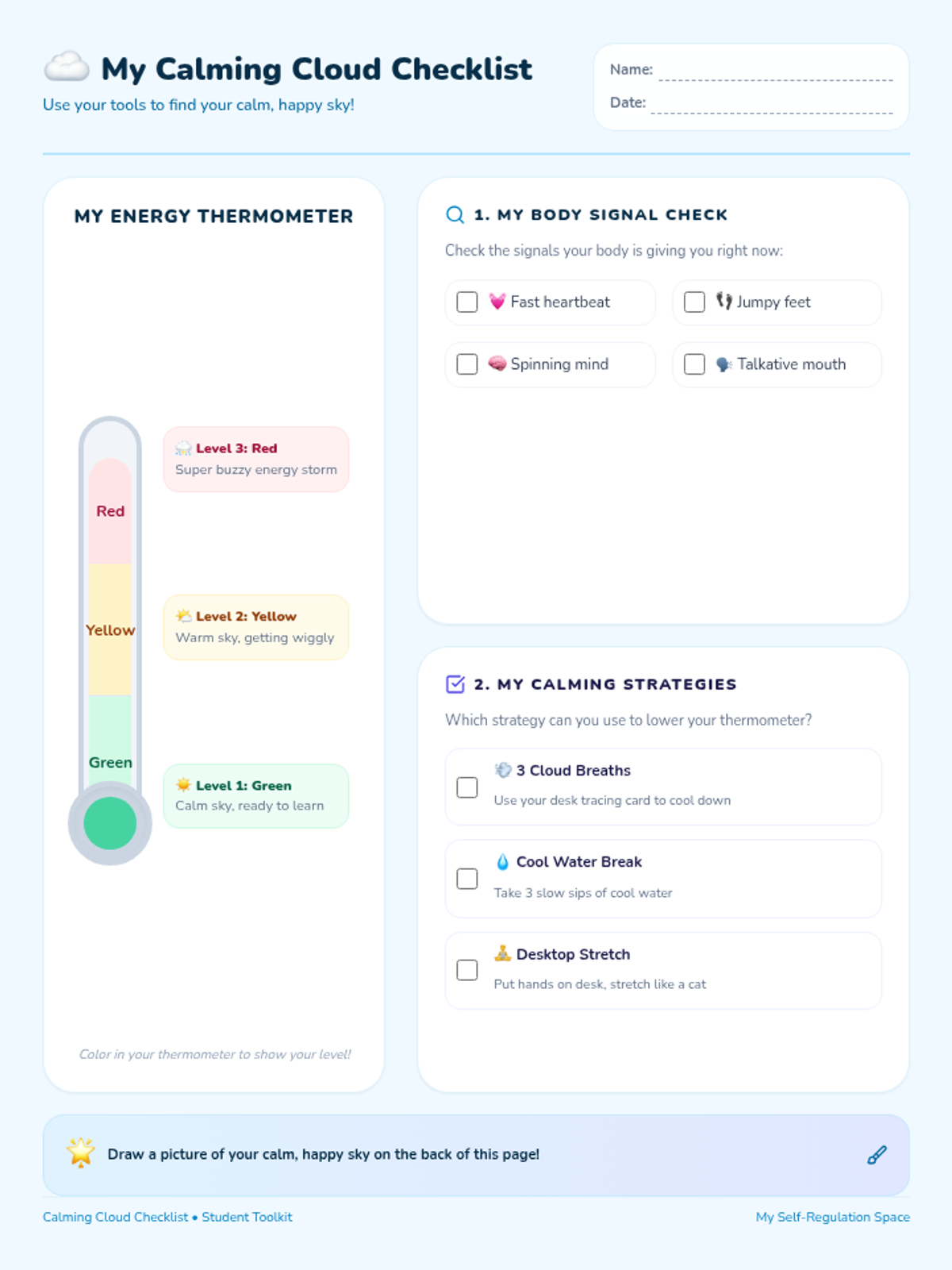
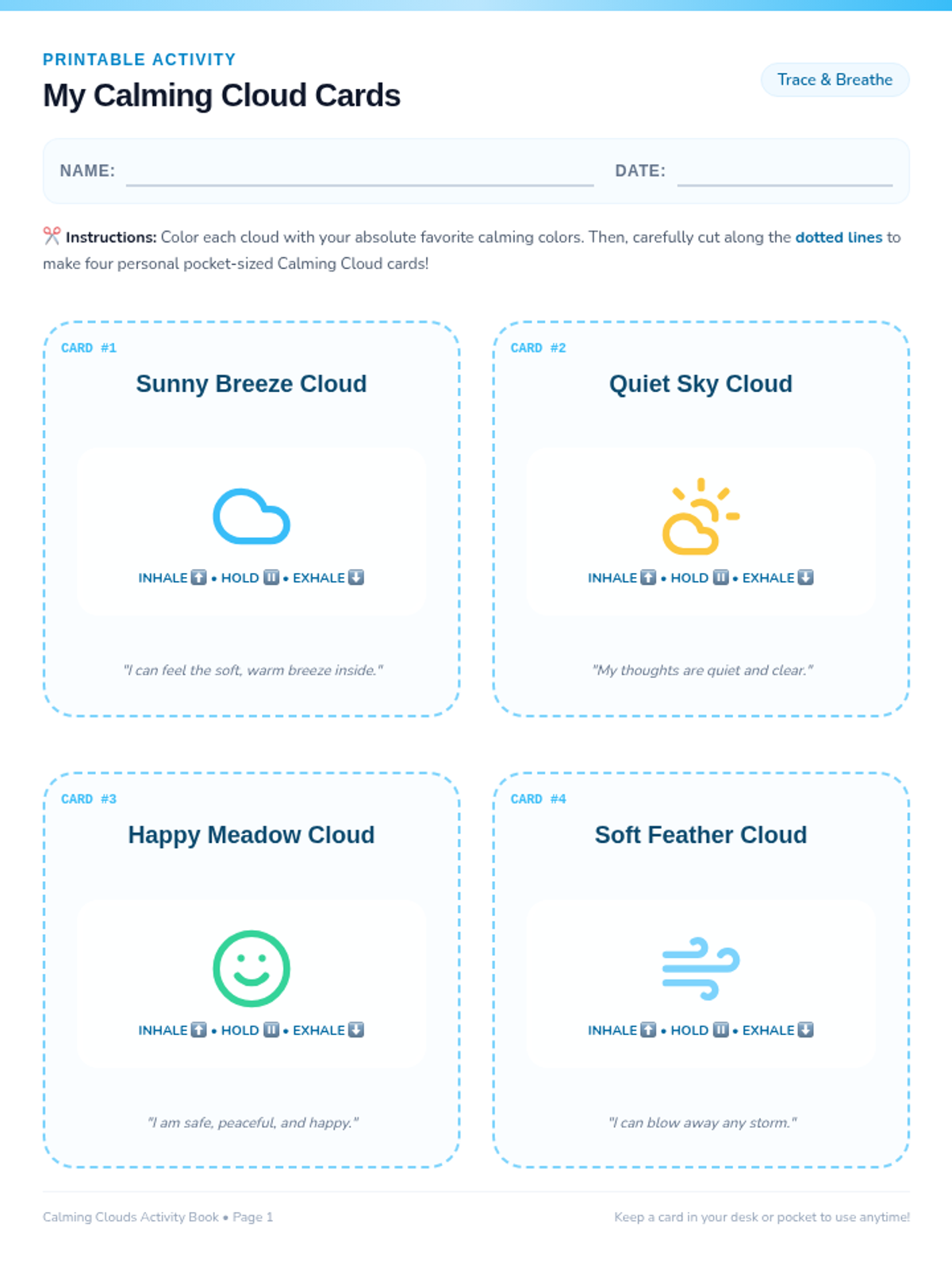
A self-regulation lesson for K-3 students to identify signs of overstimulation and practice deep-breathing techniques during end-of-year excitement.
A self-regulation lesson for K-3 students managing end-of-year excitement. Students learn to spot overstimulation body signals, practice deep cloud-breathing, and use a progress thermometer to advocate for calming breaks.
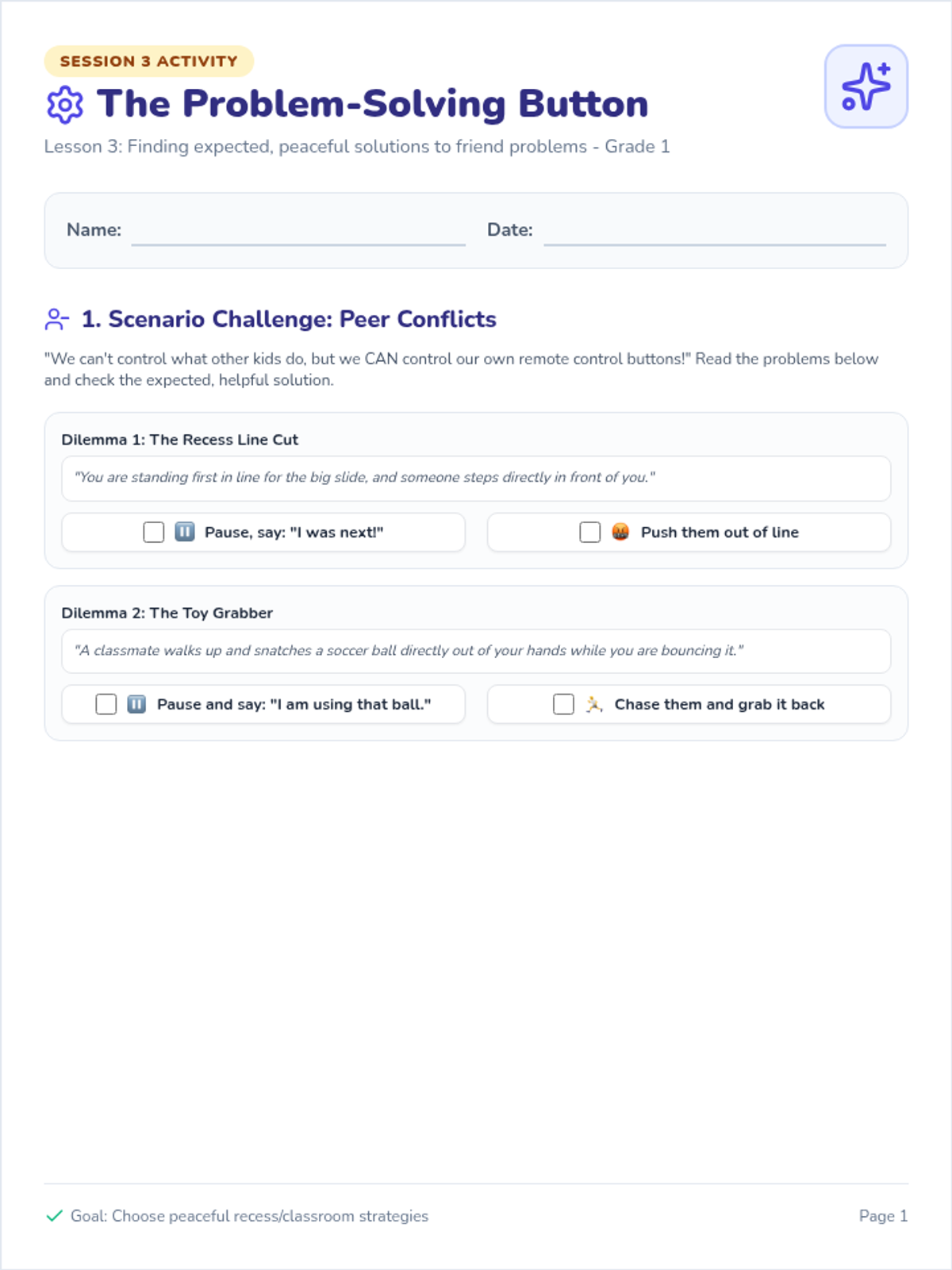
The third session, teaching students to manage peer conflicts and choose constructive, peaceful solutions by pressing their problem-solving button.
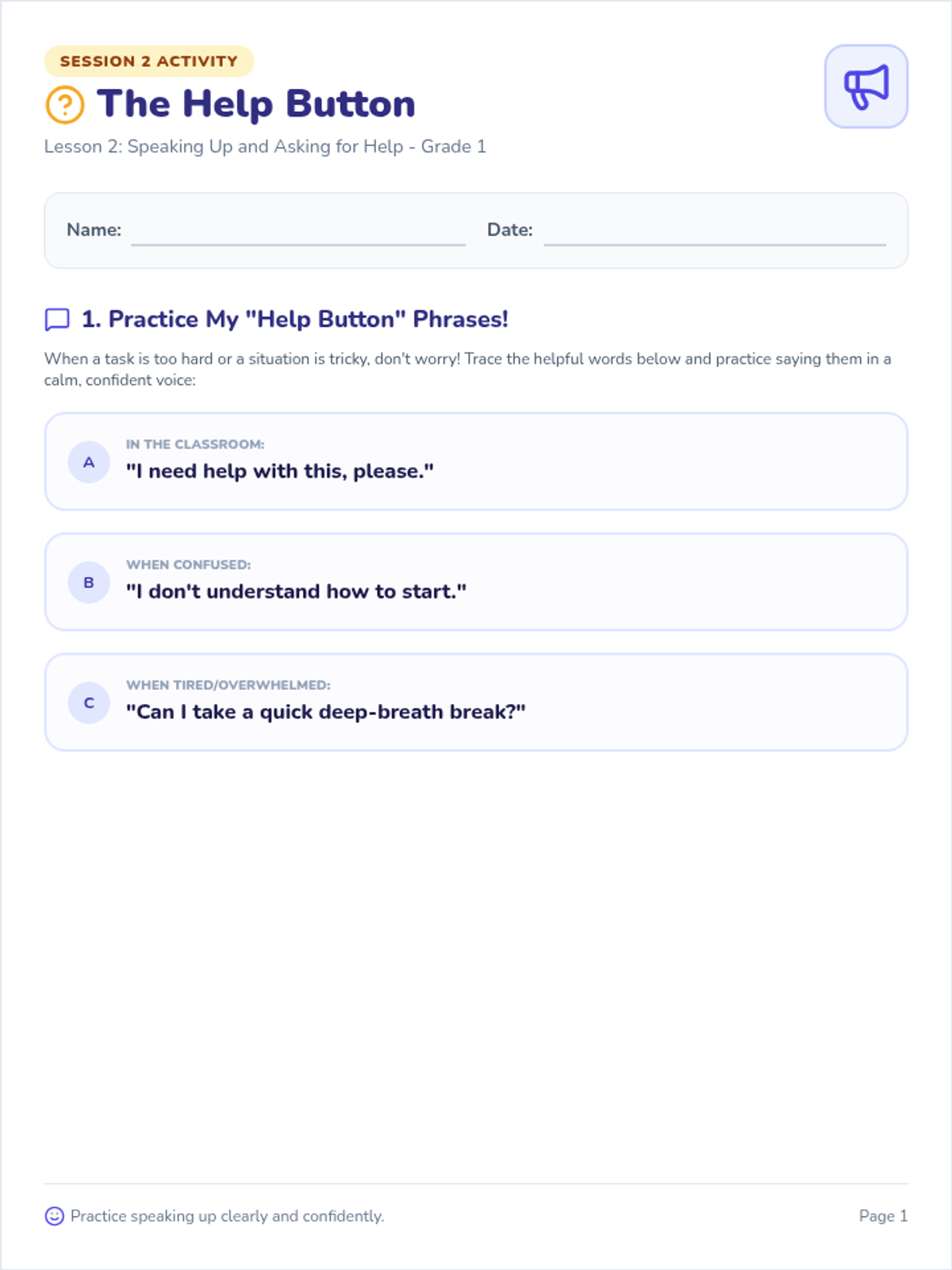
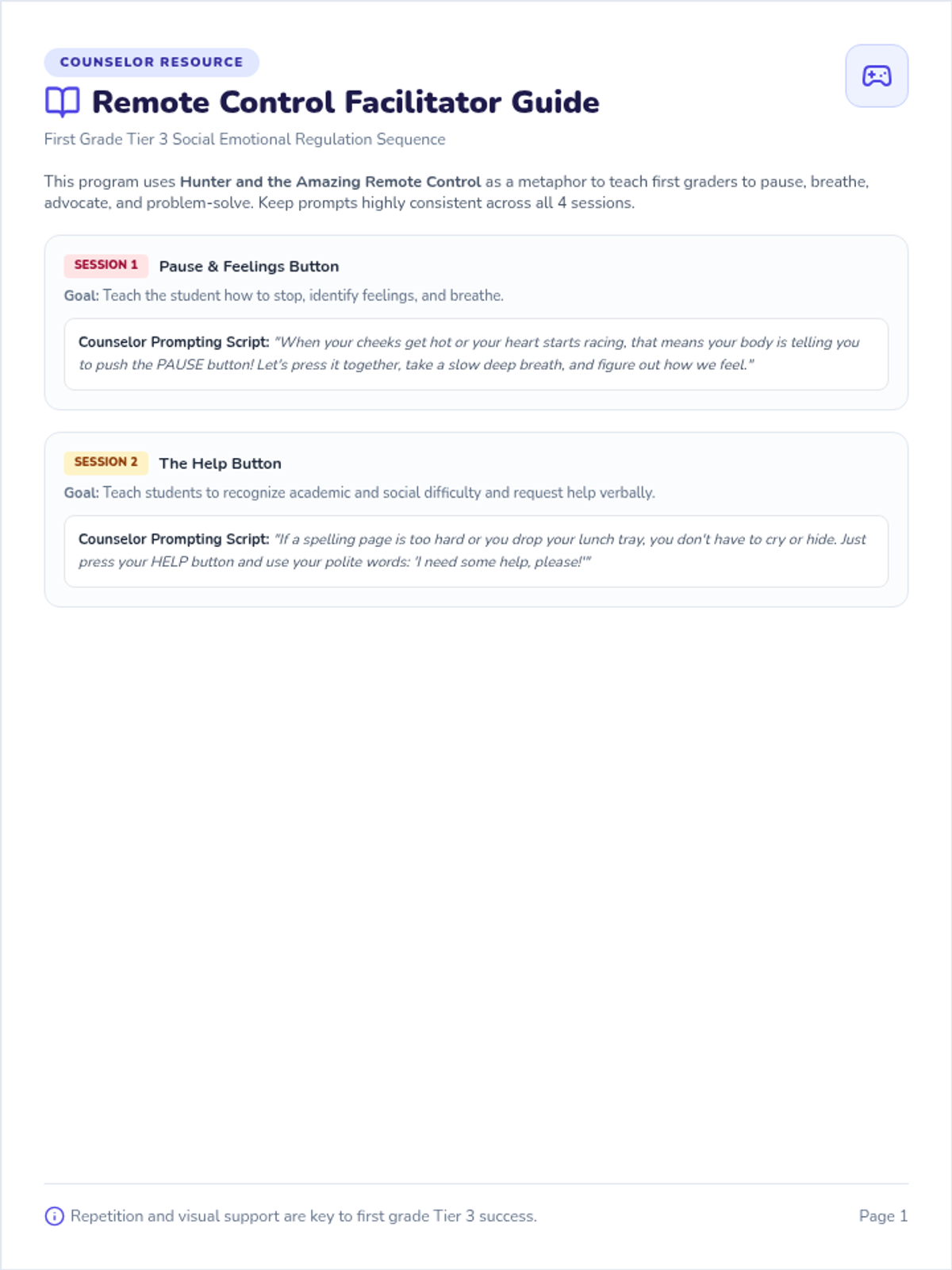
The second session, teaching students to identify hard situations, use self-advocacy formulas, and press the 'Help' button to ask for help appropriately.
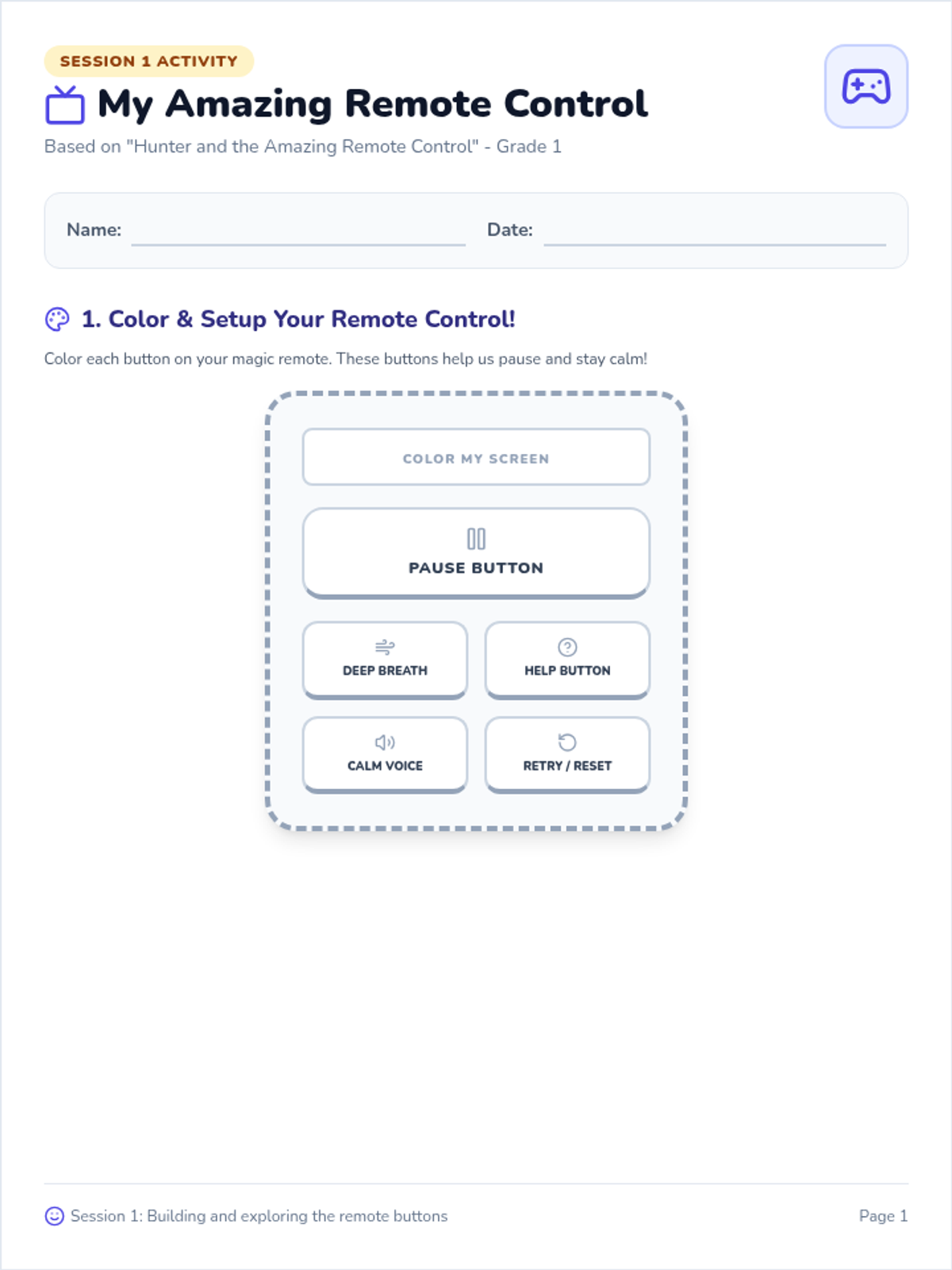
The first session, introducing the amazing remote control, practicing the 'Pause' button, identifying physical body clues, and mapping core emotions.