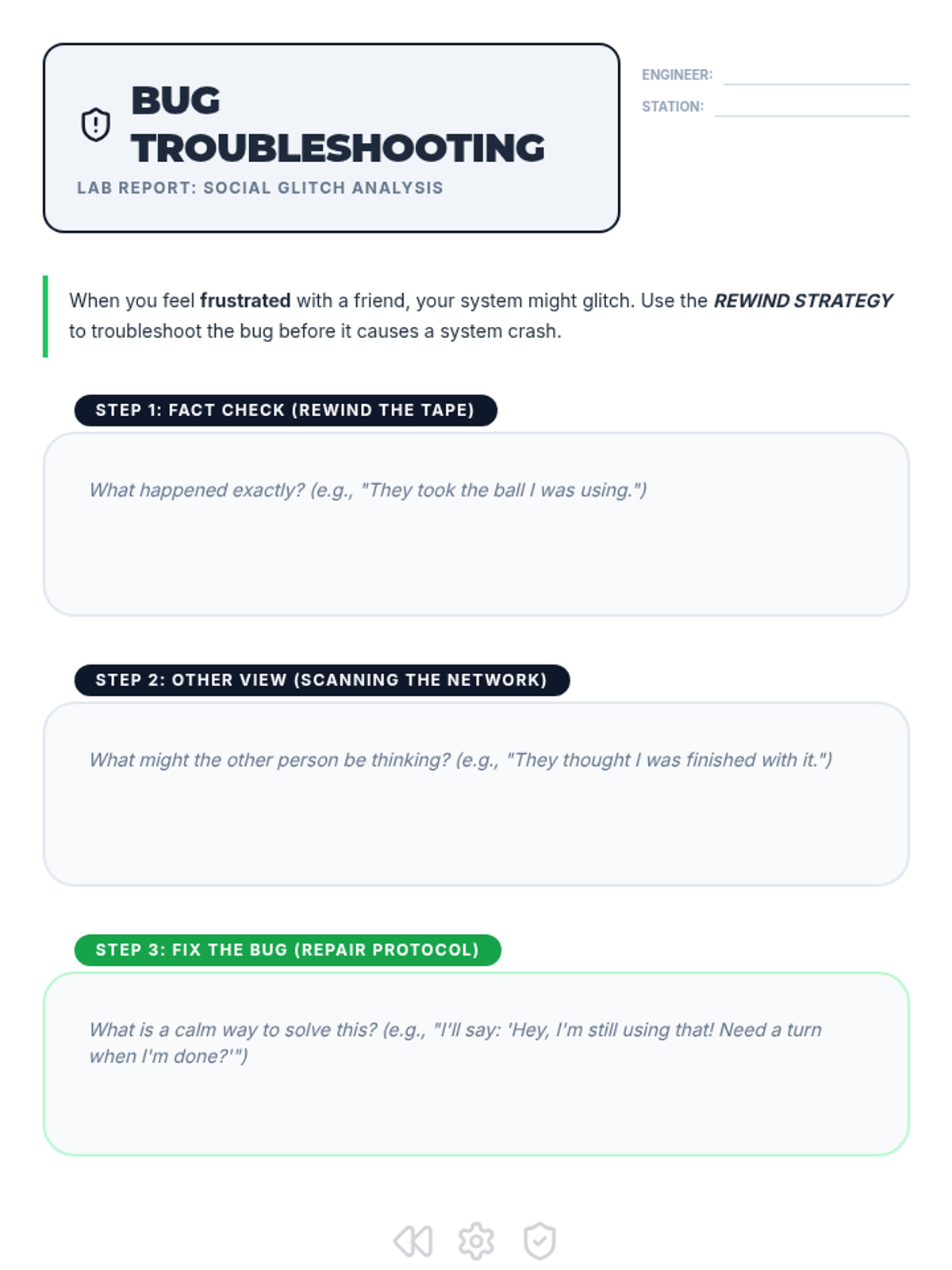
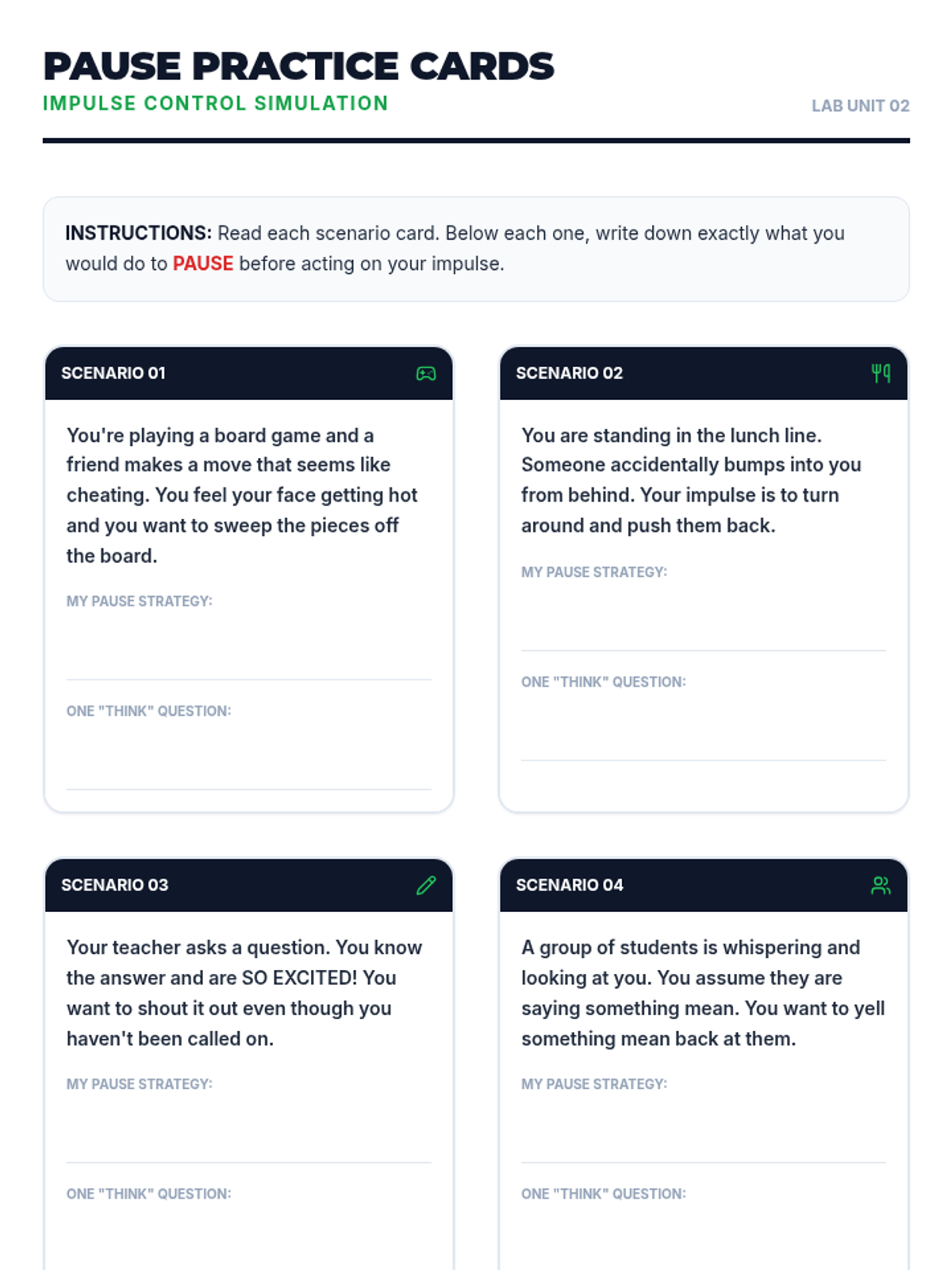
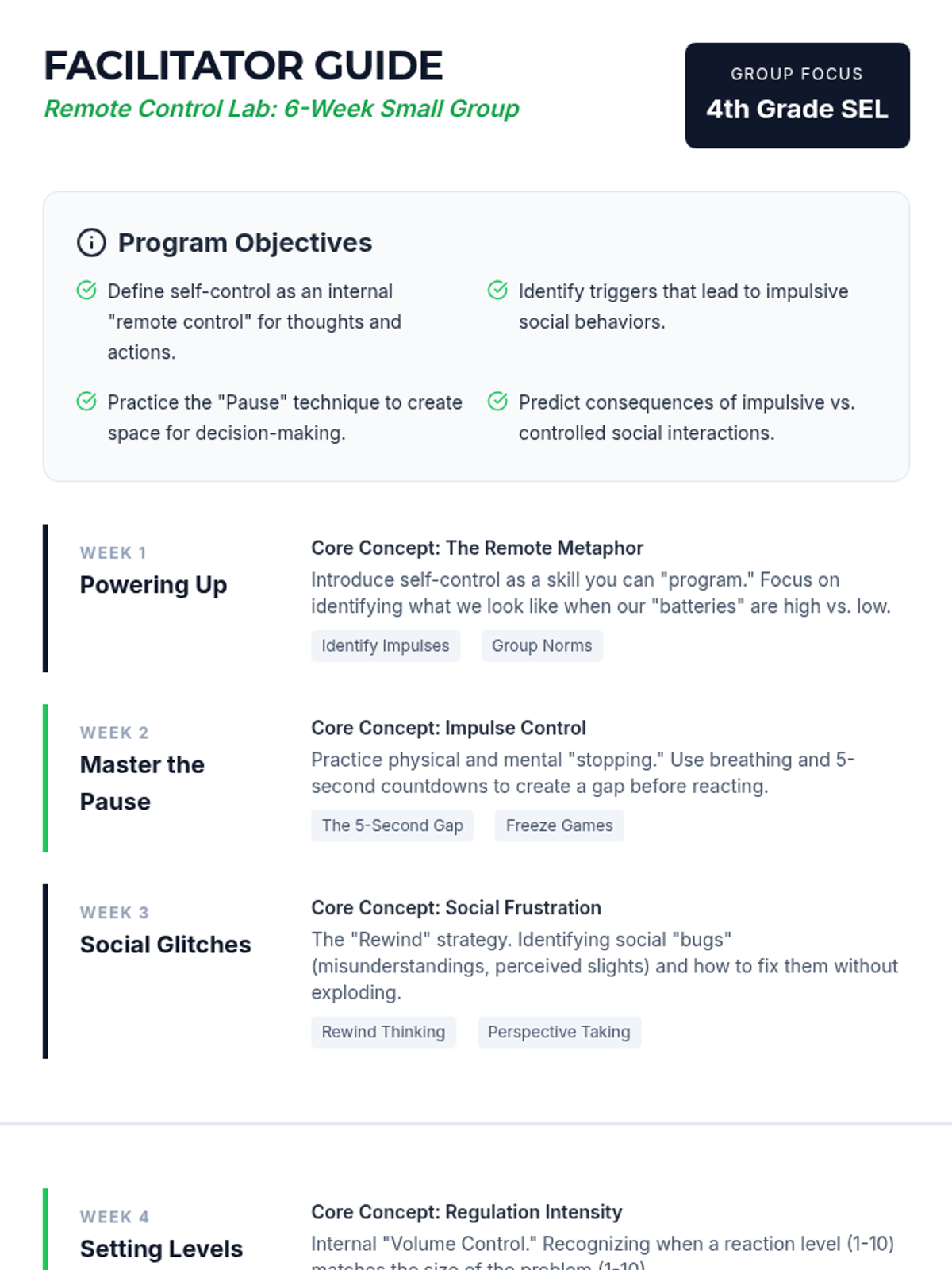
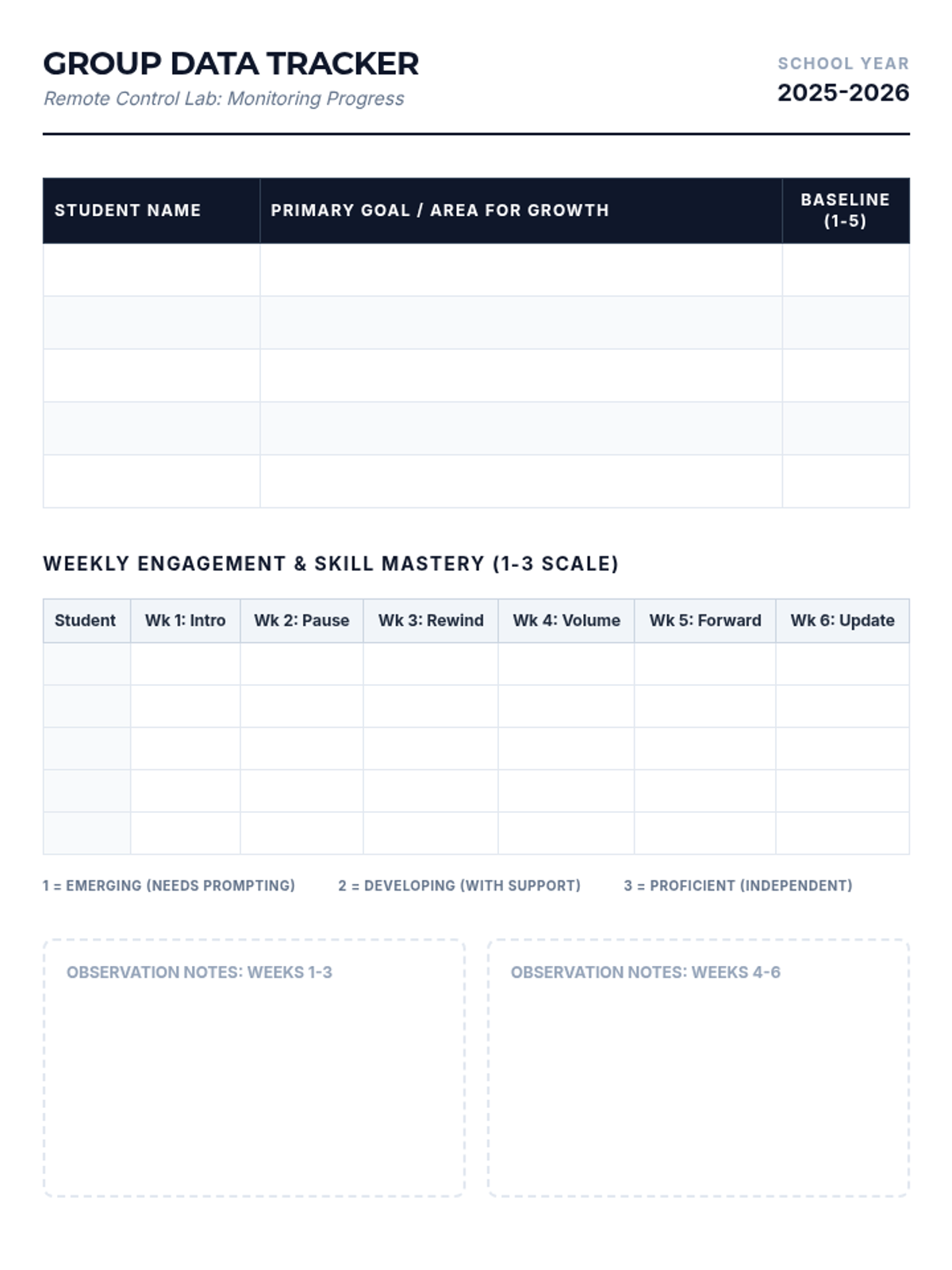
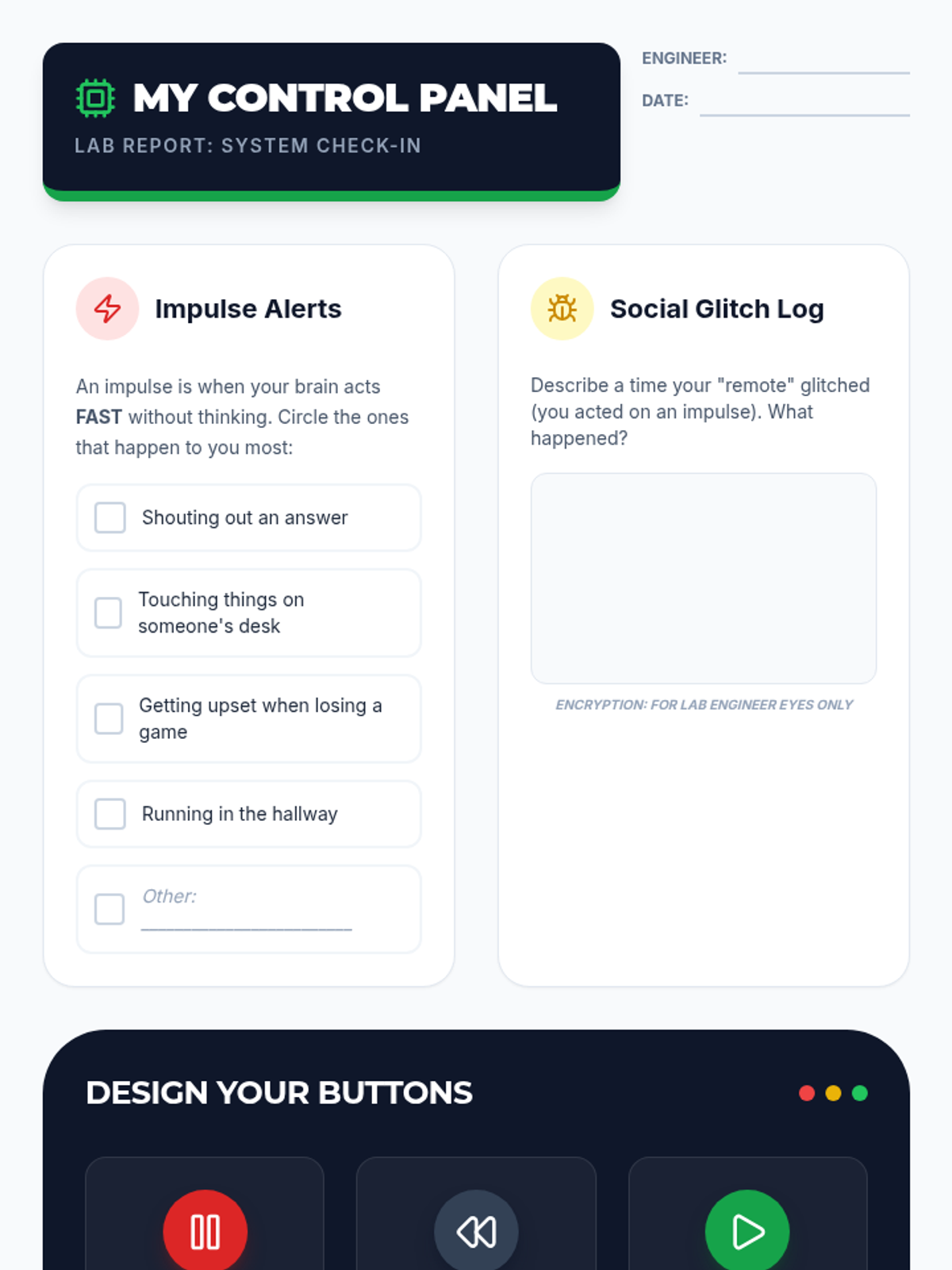
This lesson uses the metaphor of a remote control to teach elementary students about impulse control and self-regulation. Through a slide presentation, a creative craft, and an active game, students learn to 'pause' and choose their reactions.
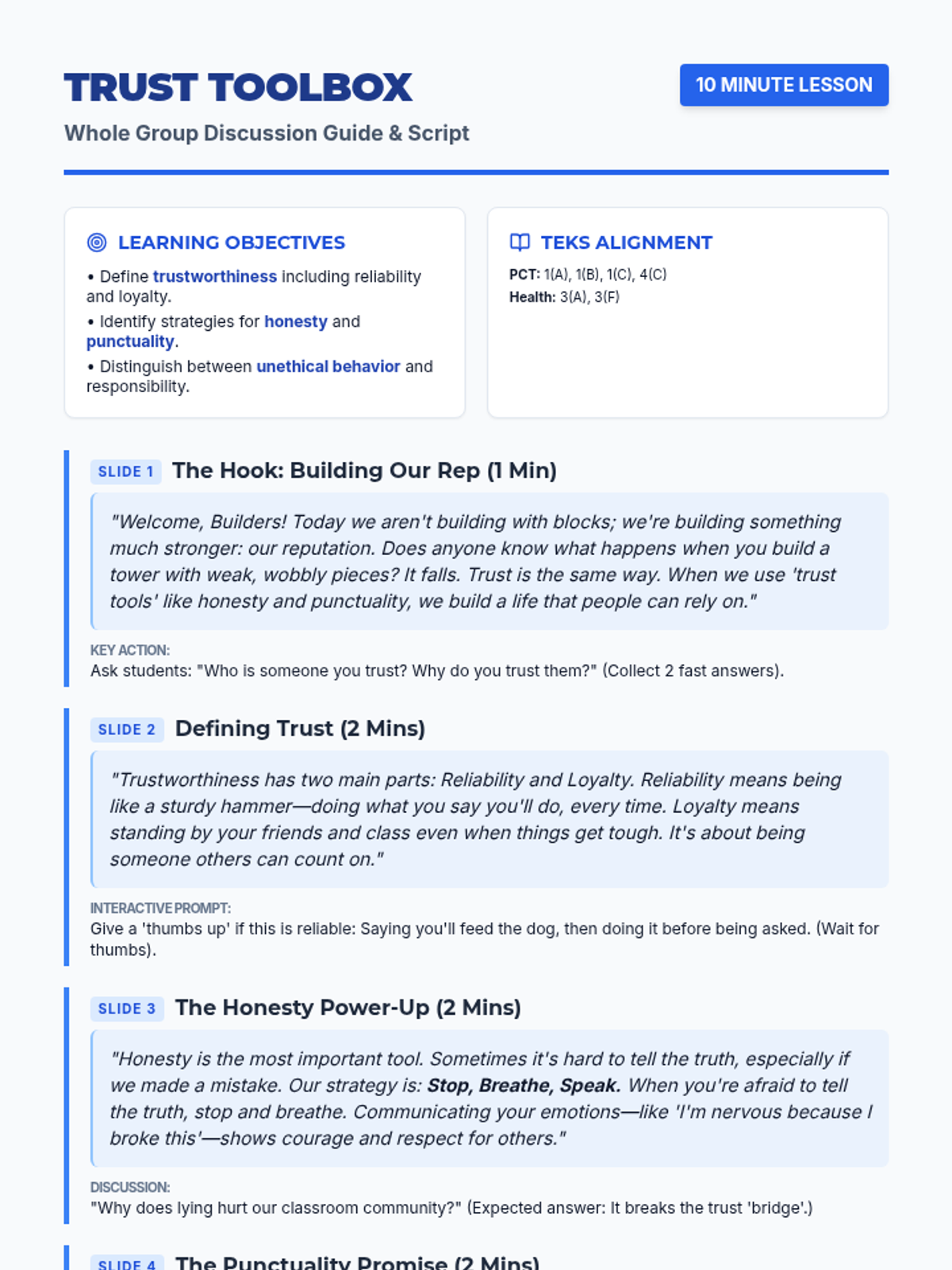
A fast-paced 10-minute lesson teaching 3rd graders the pillars of trustworthiness through honesty, reliability, and punctuality. Students will learn practical strategies to build character and make responsible decisions for their community.
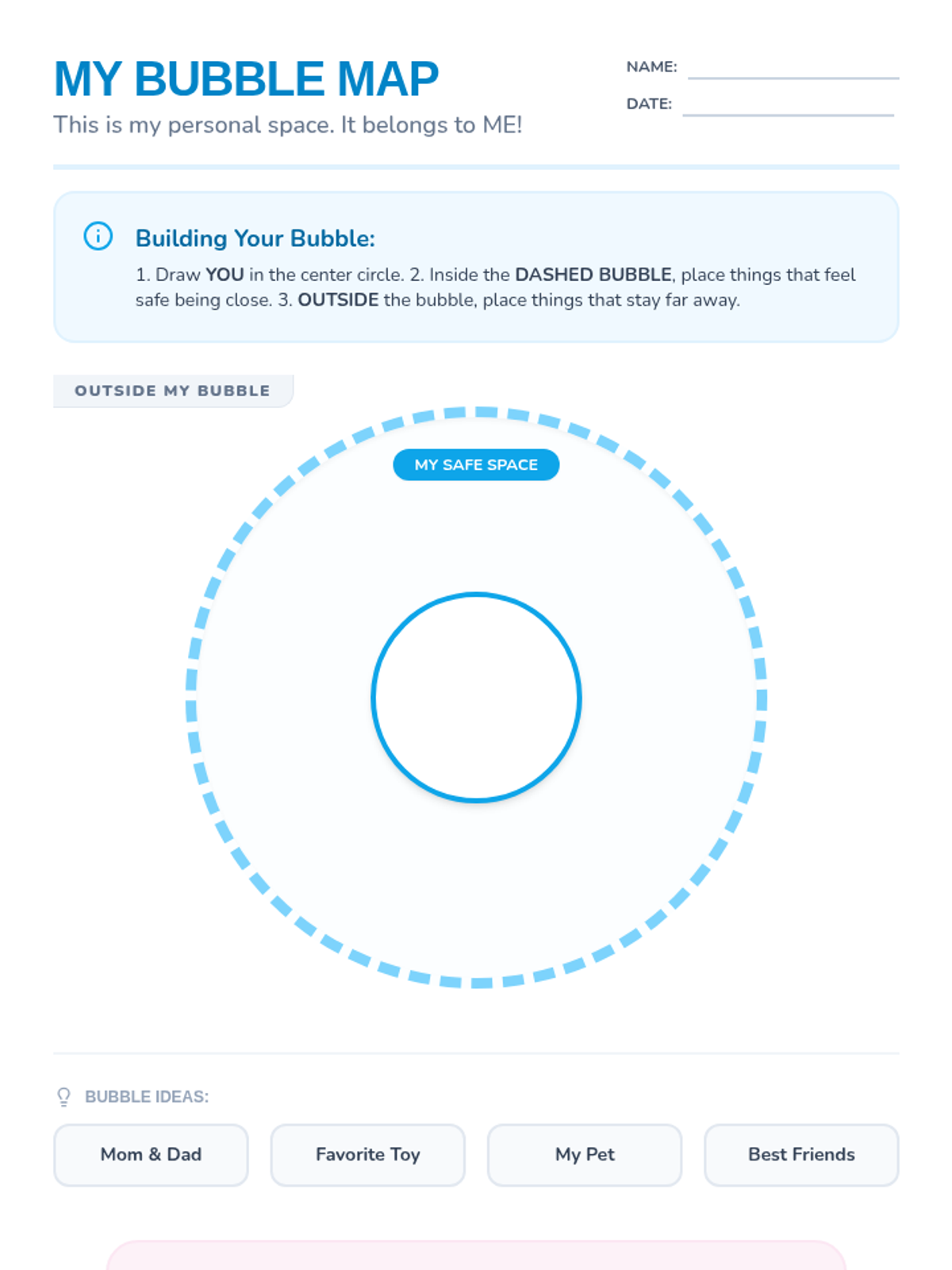
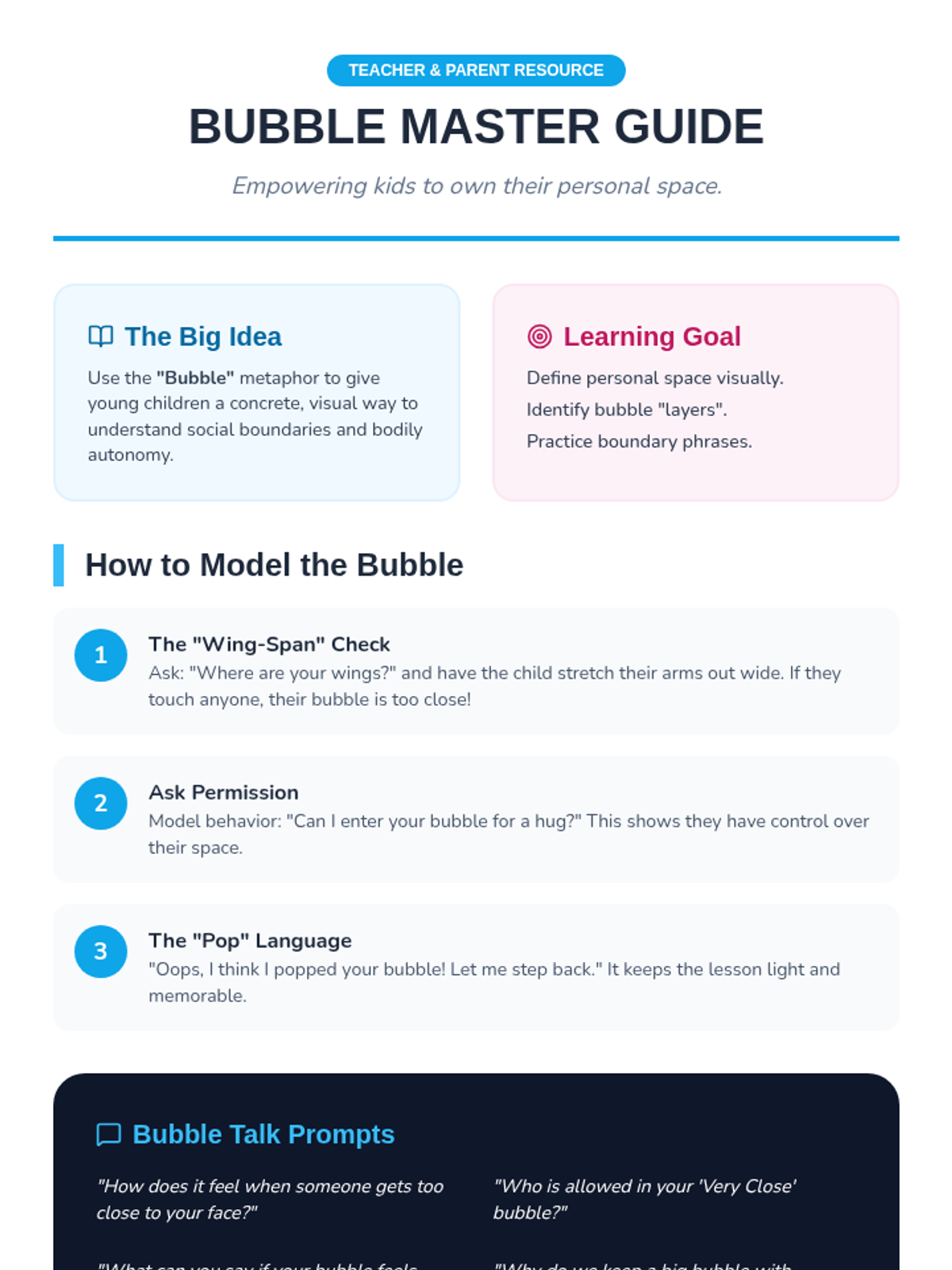
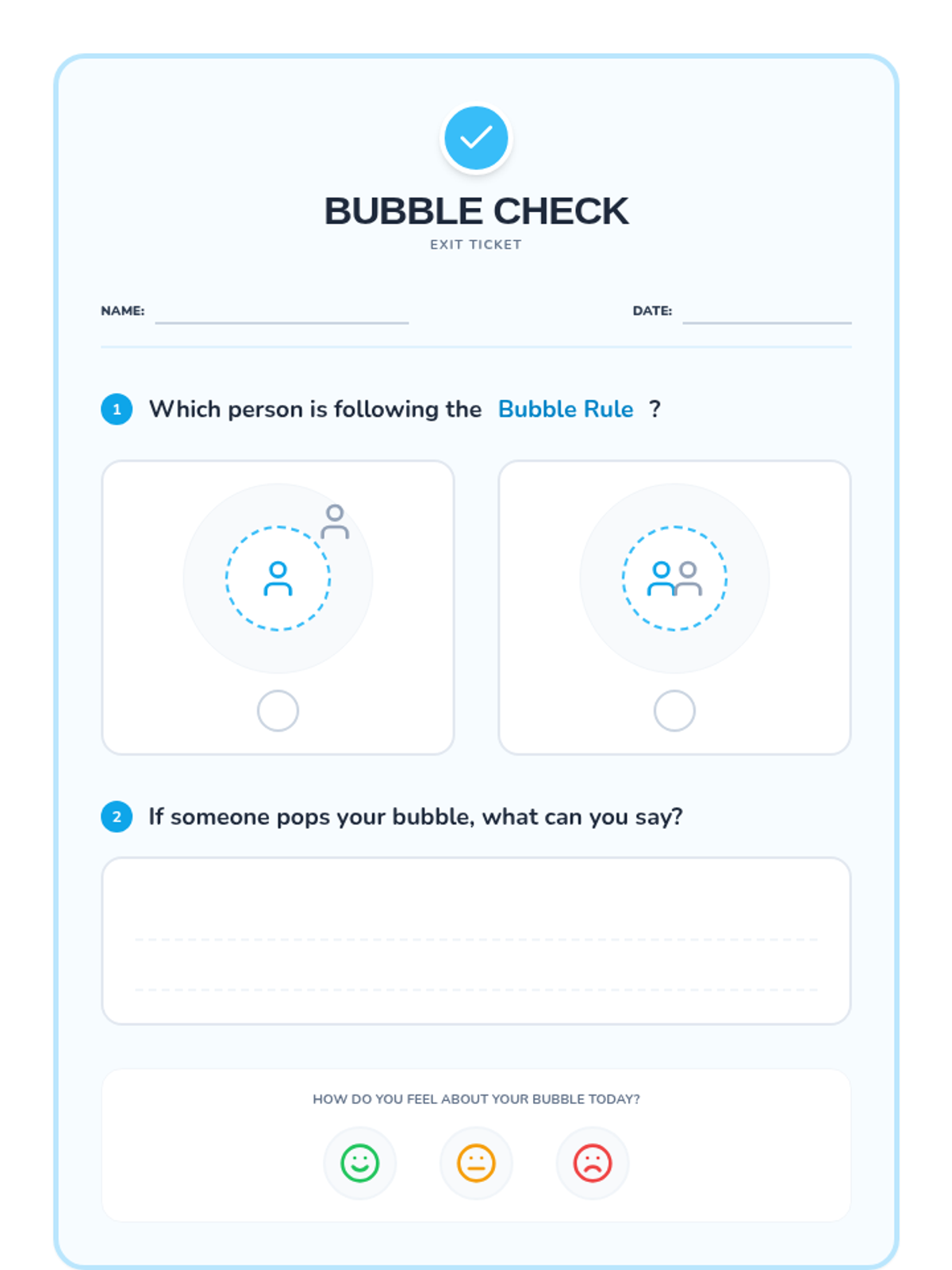
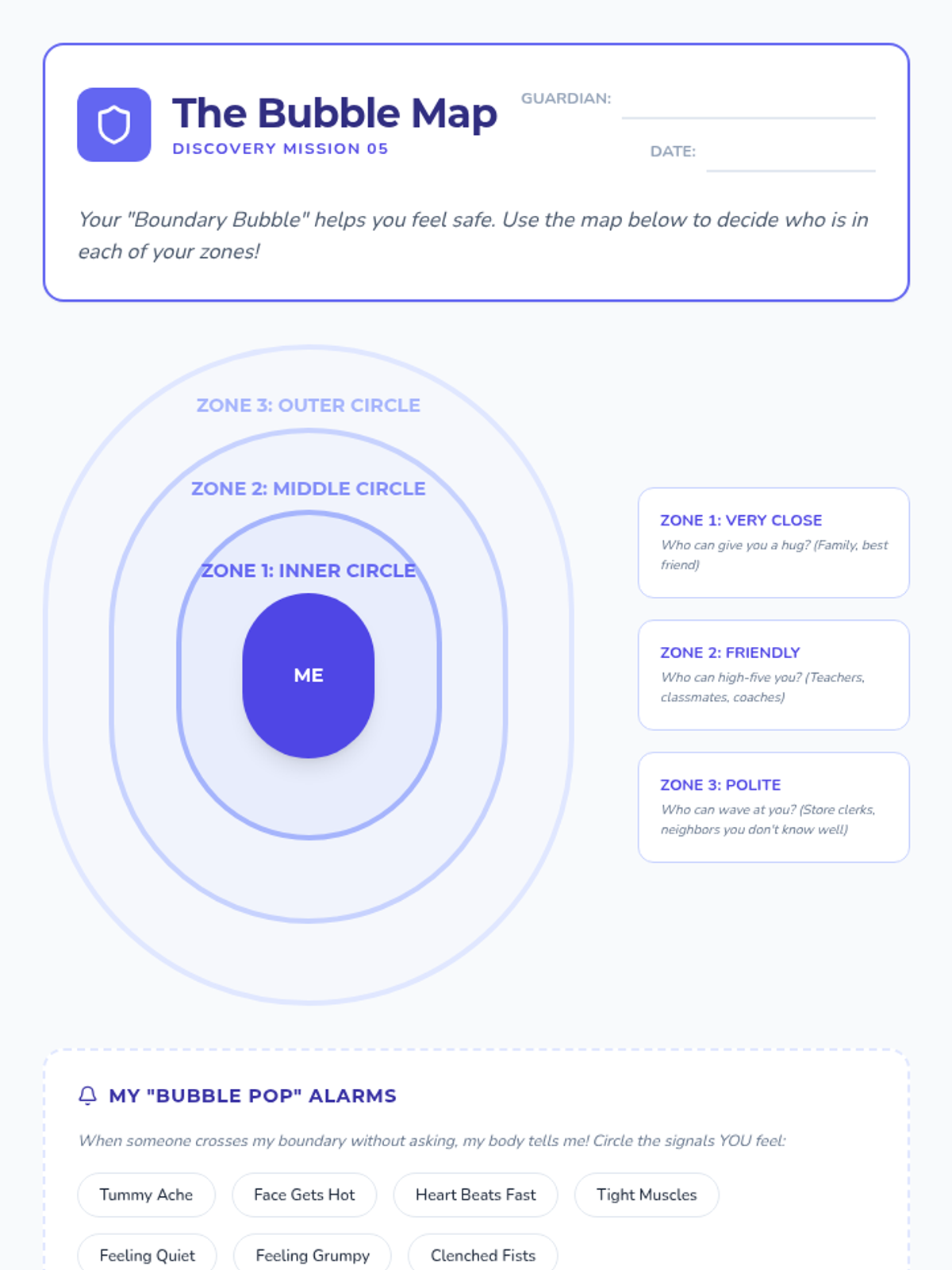
A social-emotional learning lesson introducing the concept of personal space through the 'bubble' metaphor. Parents and children explore who and what belongs in their personal space to build healthy boundaries.
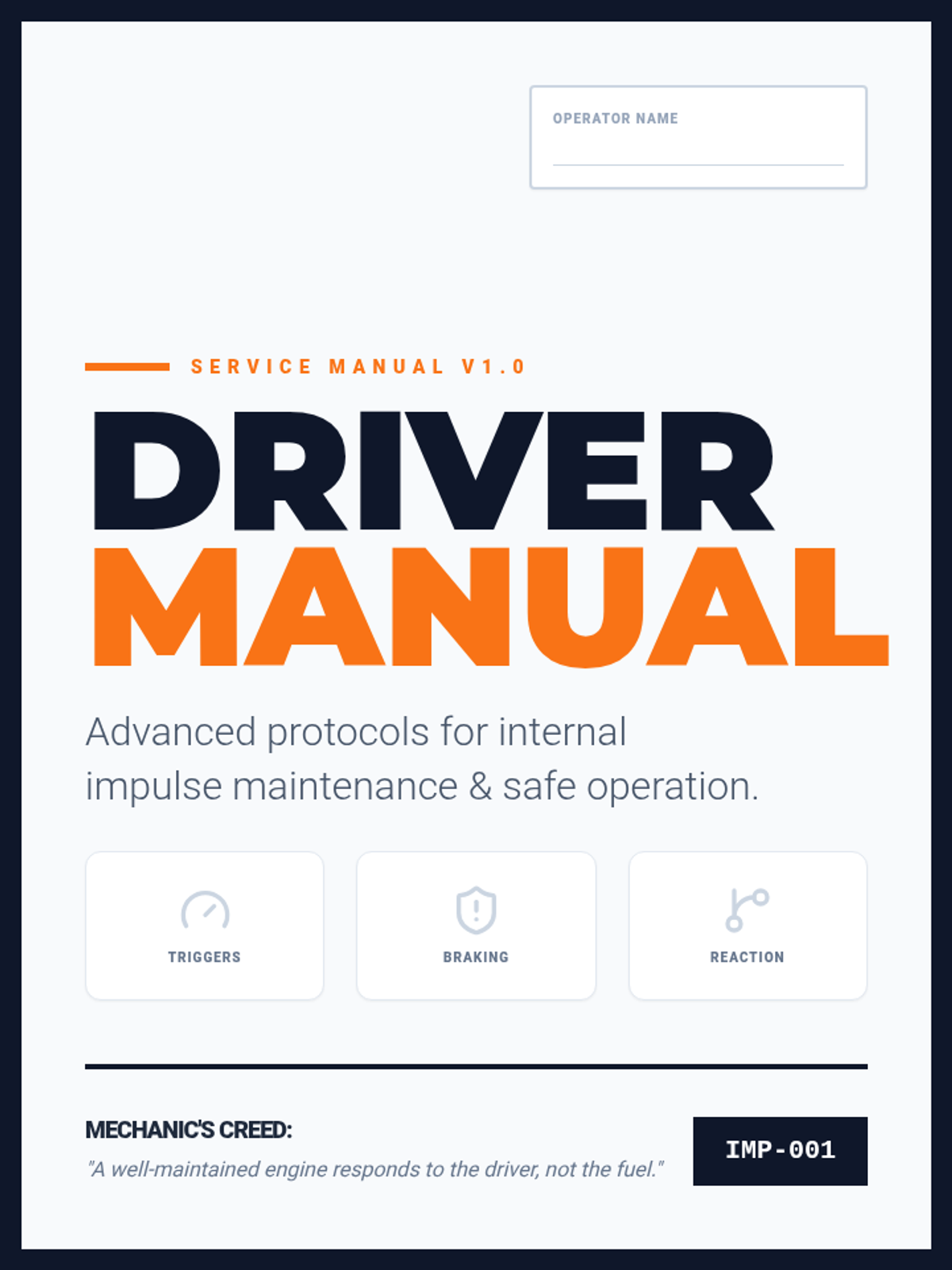
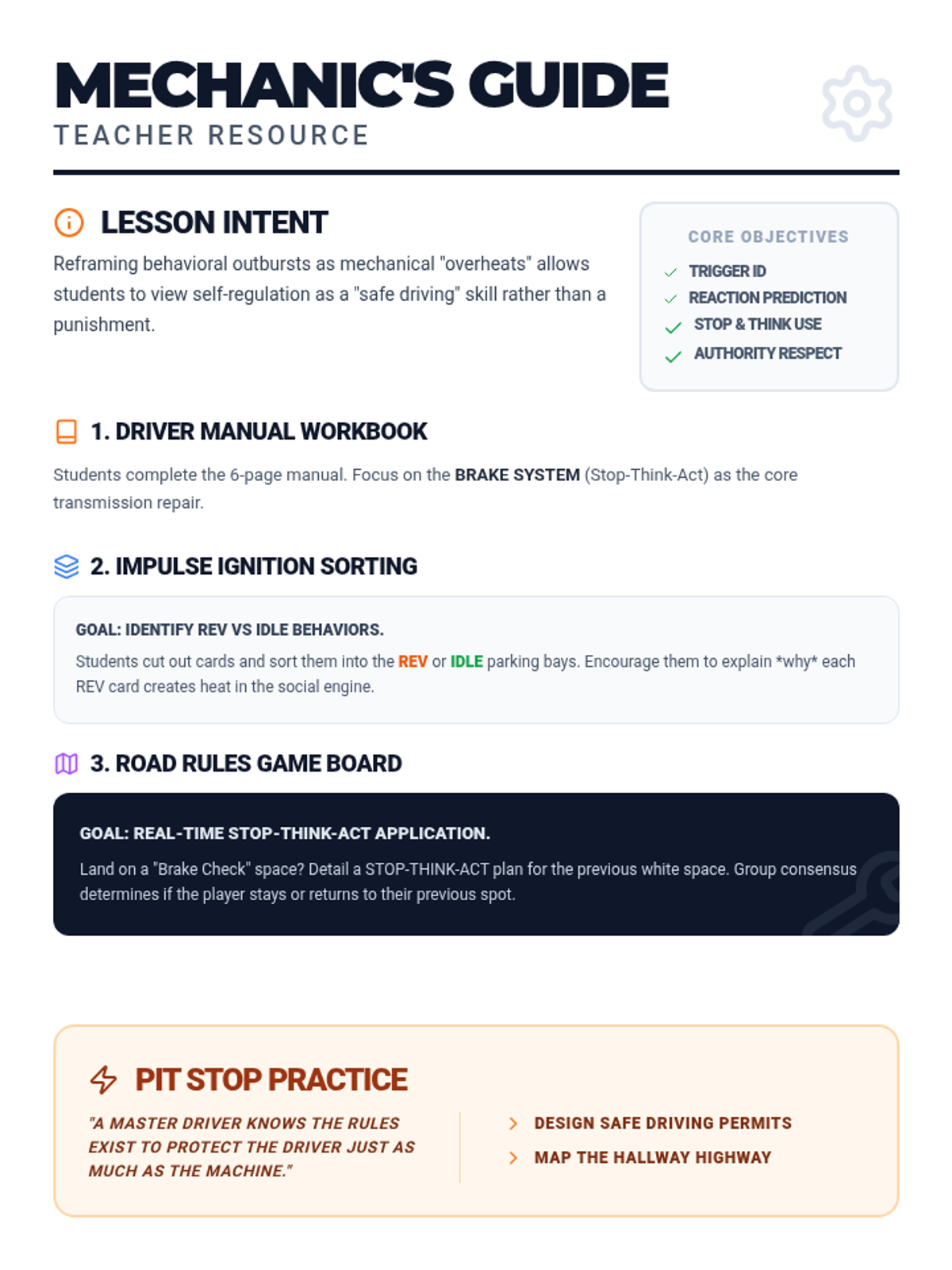
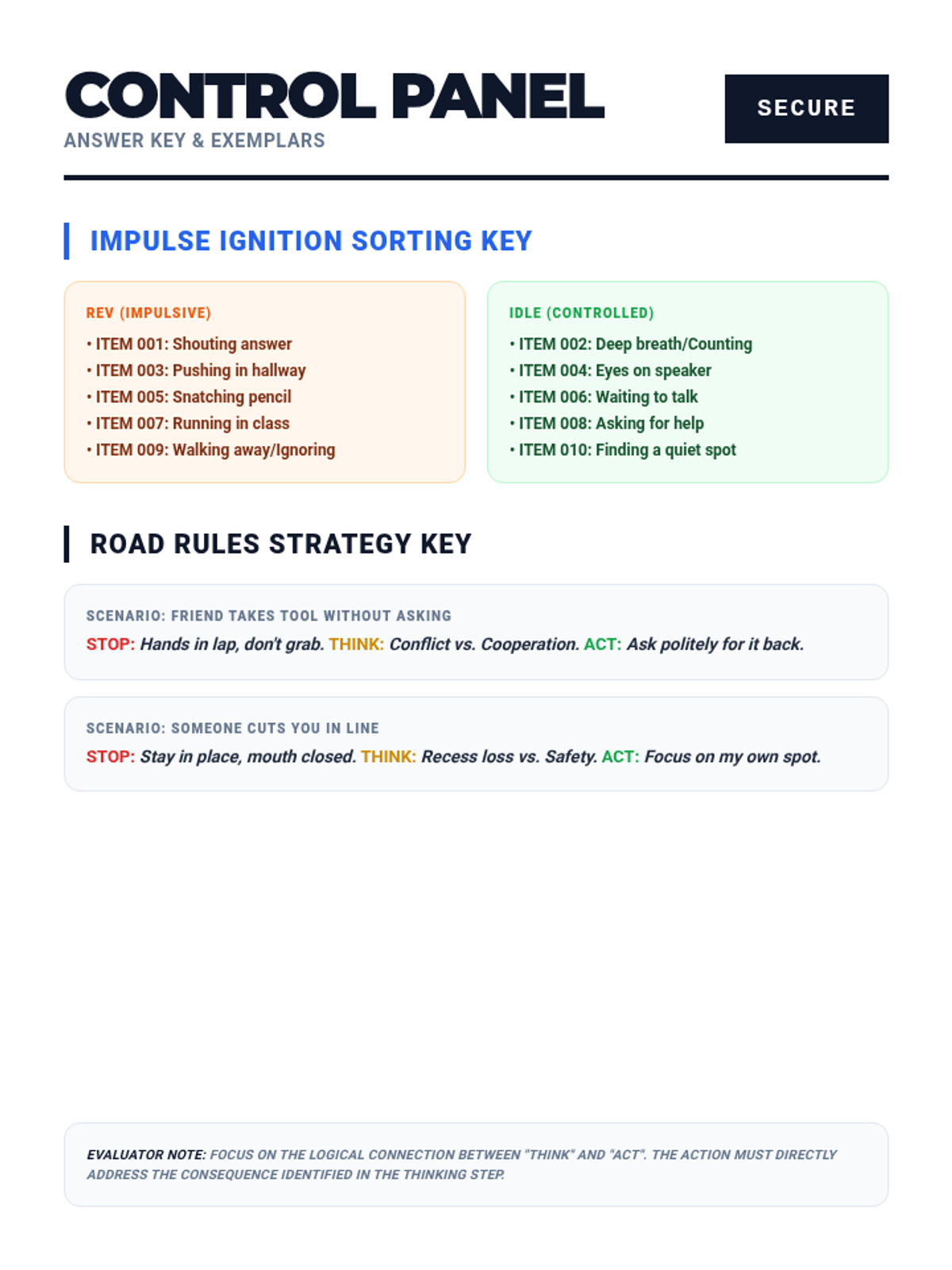
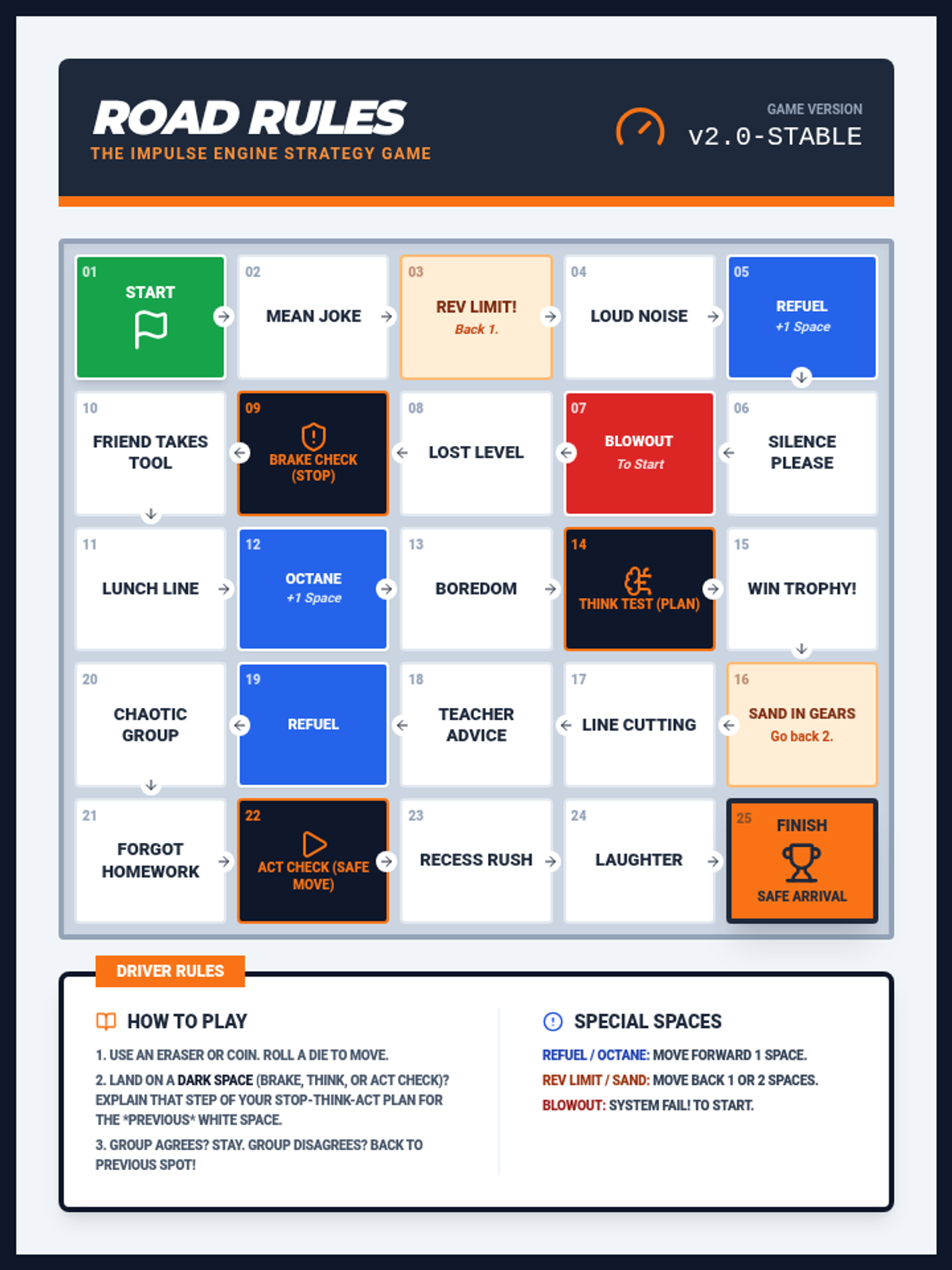
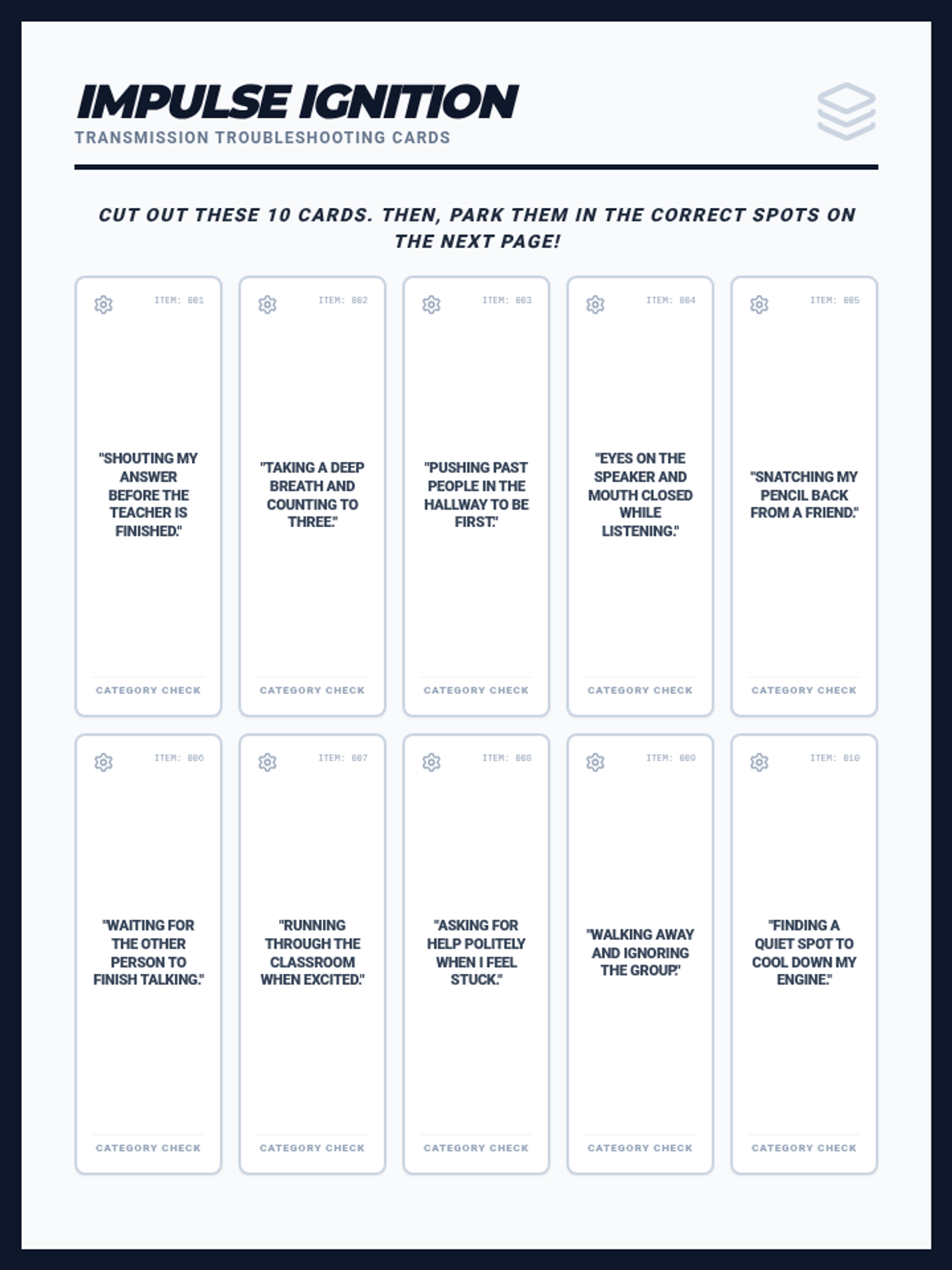
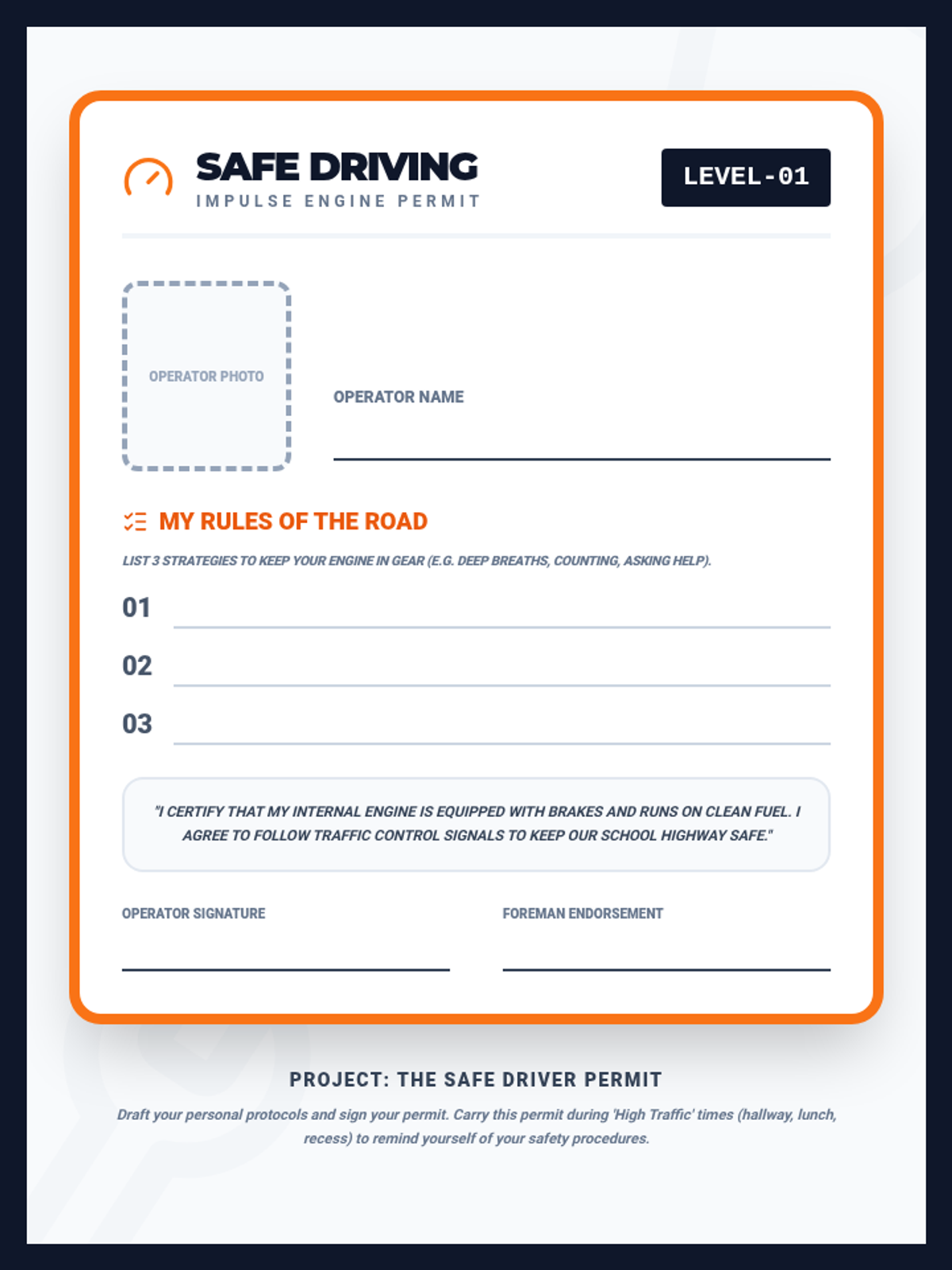
A lesson on impulse control using mechanical and automotive metaphors to teach identifying triggers, consequences, and self-regulation.
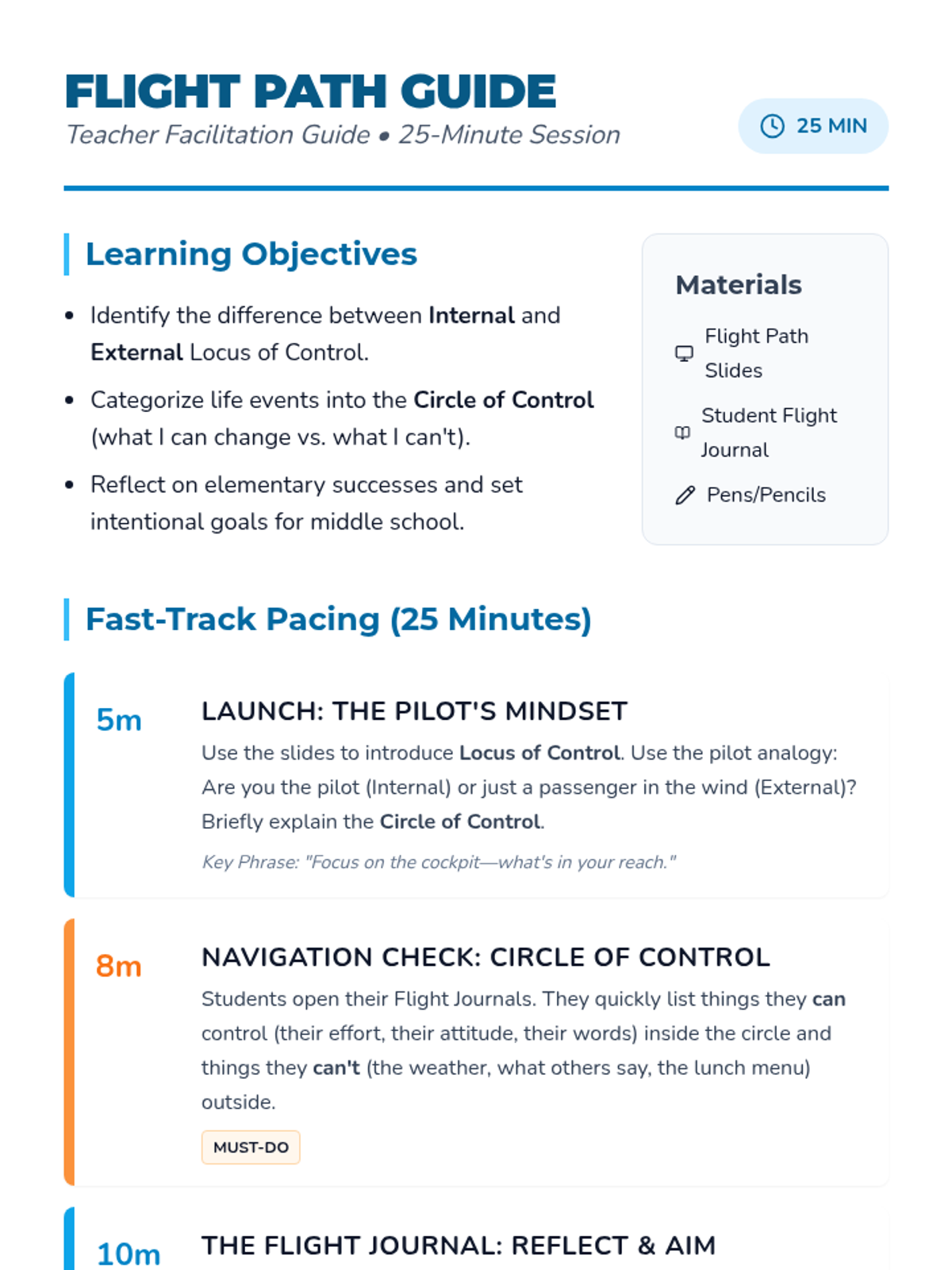
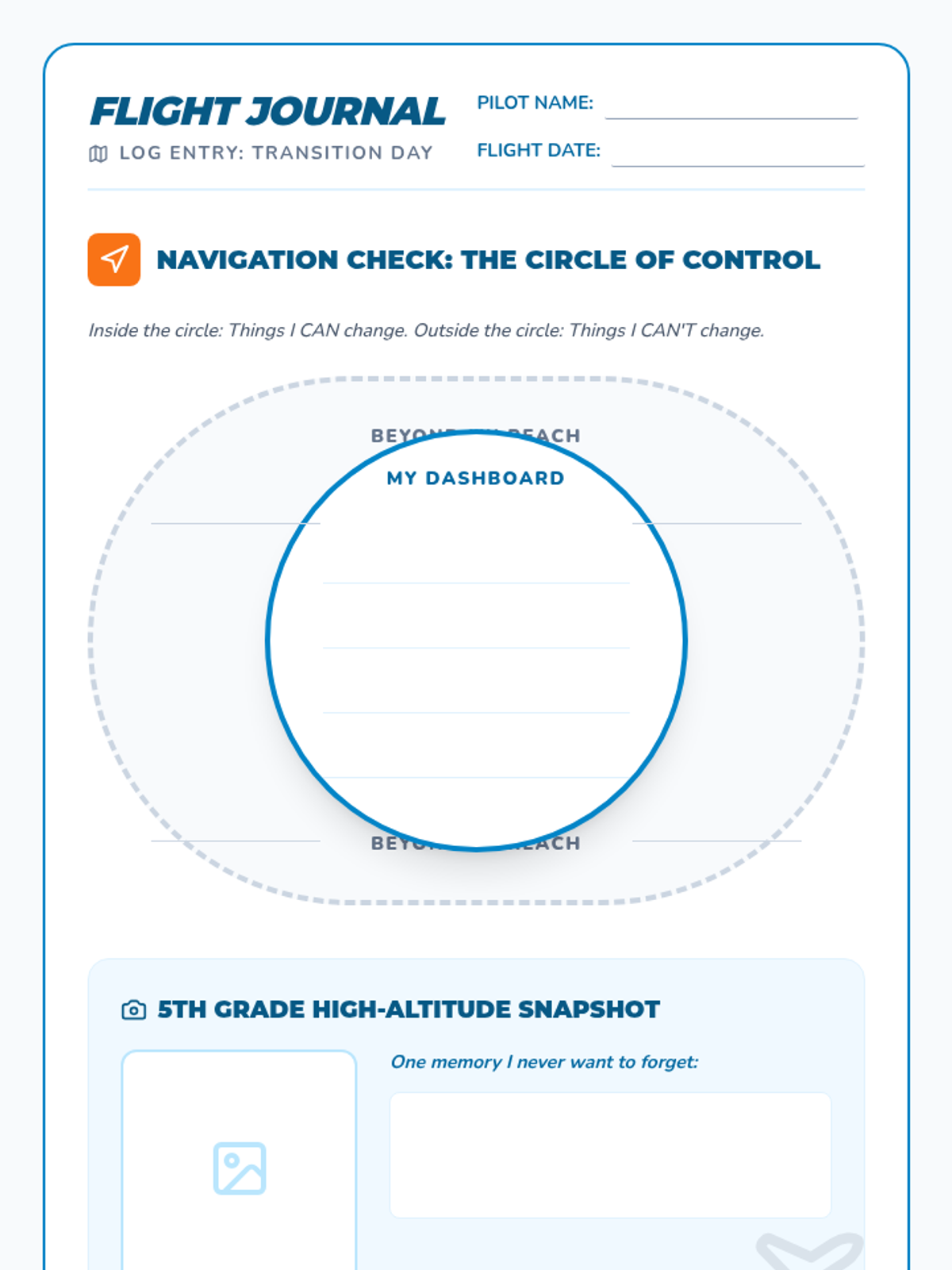
A quick, impactful lesson for 5th graders transitioning to middle school. Students explore their internal locus of control through the 'Circle of Control' concept and celebrate their elementary achievements through goal-setting and reflection.
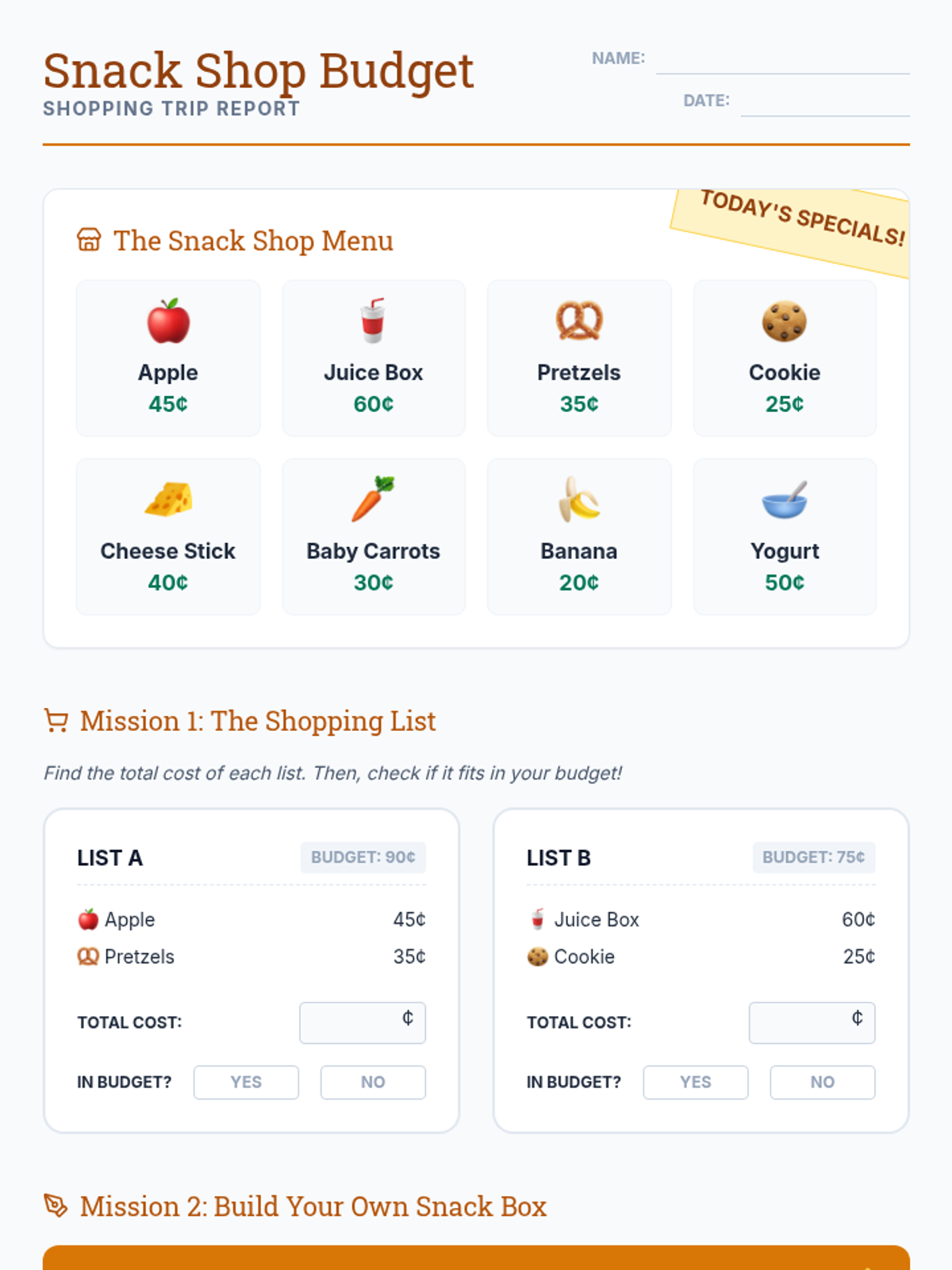
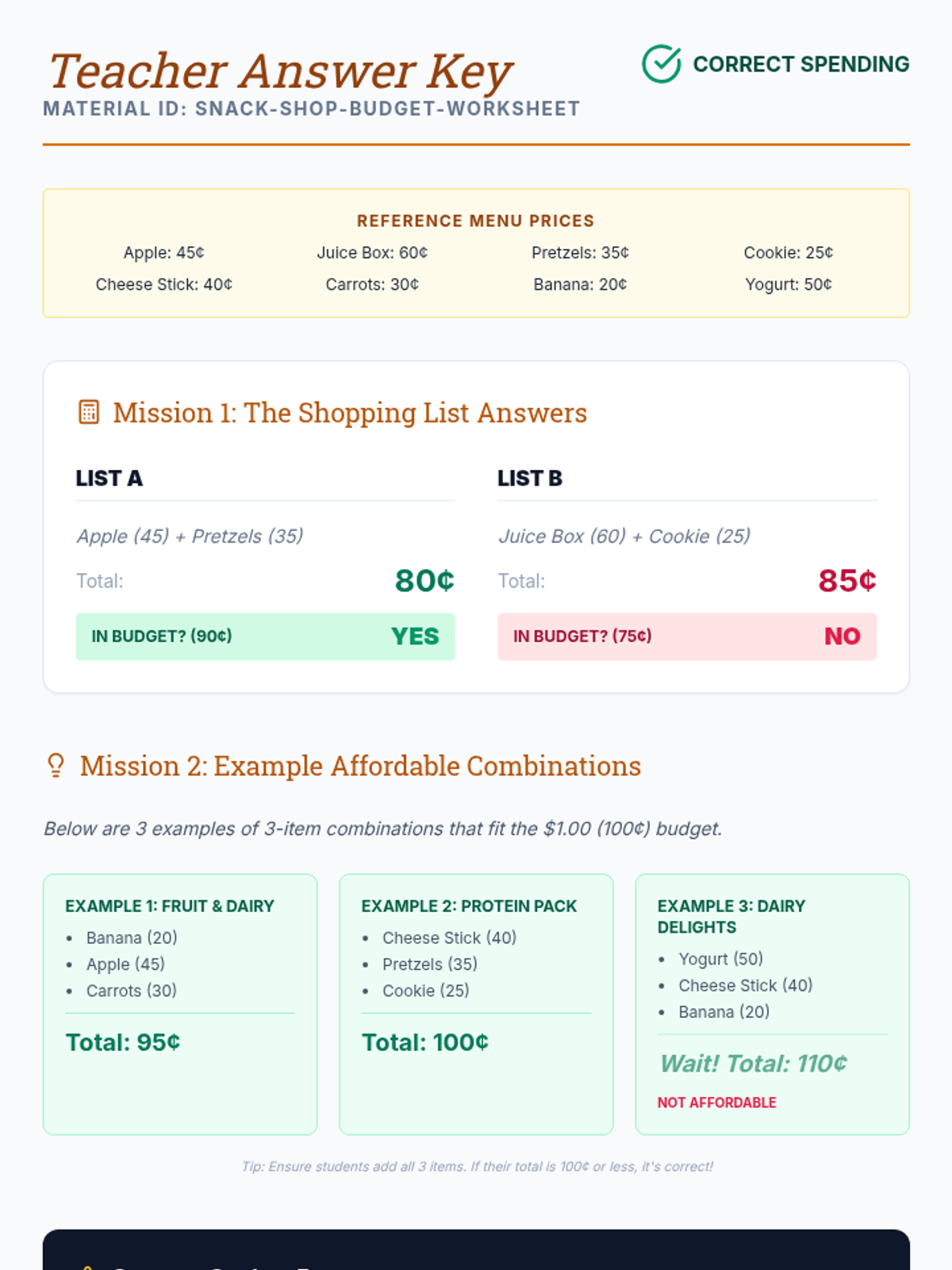
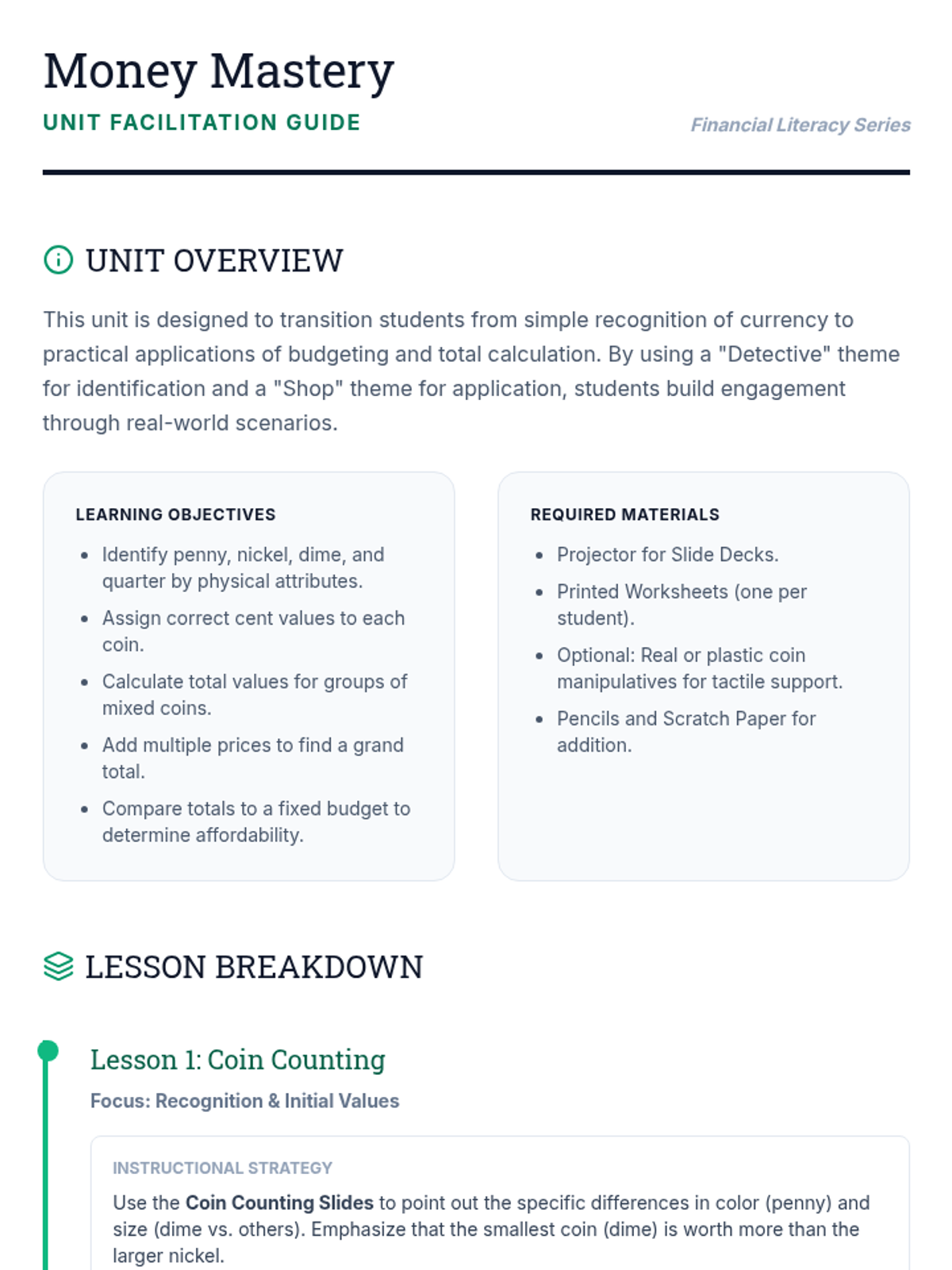
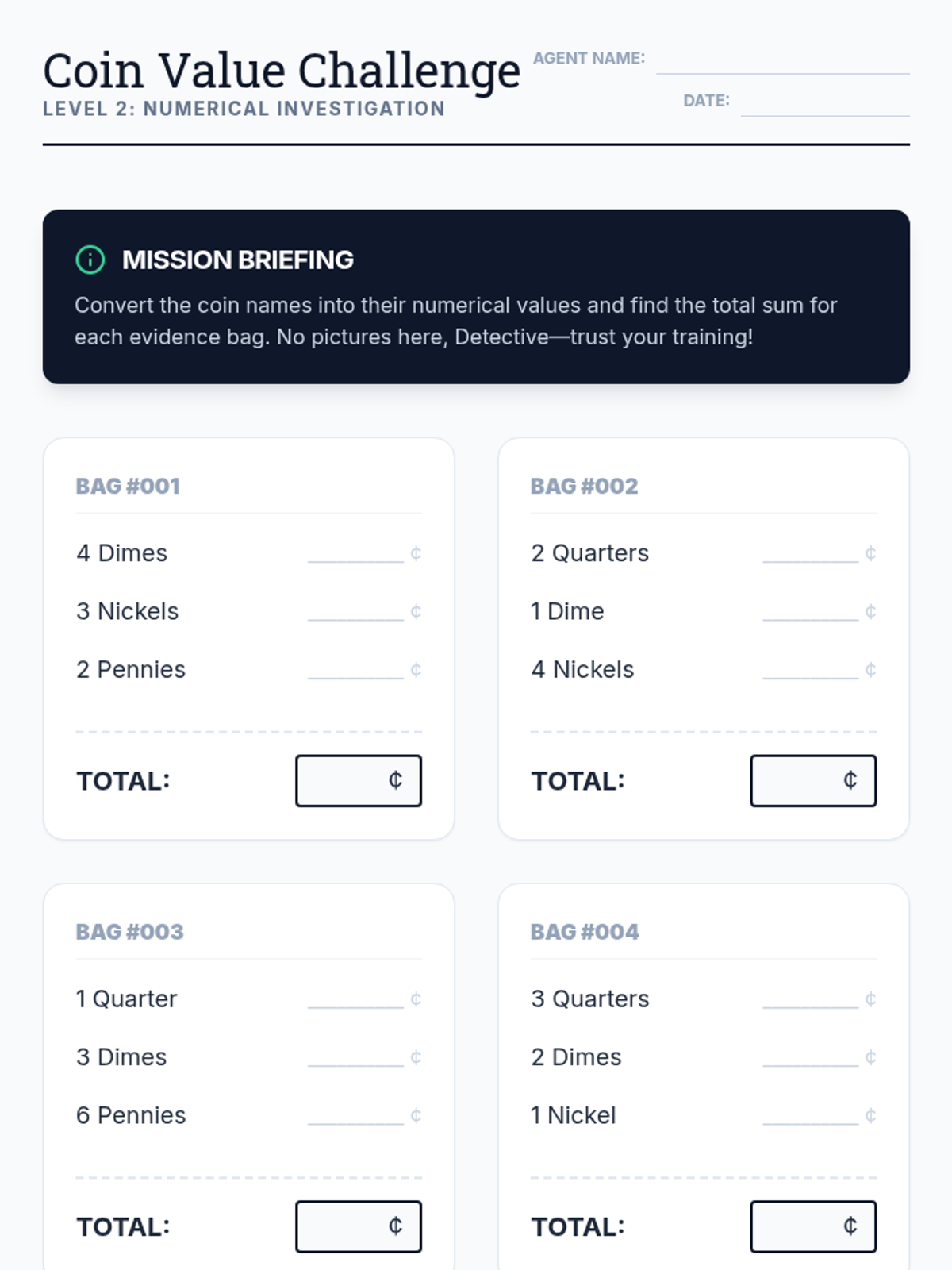
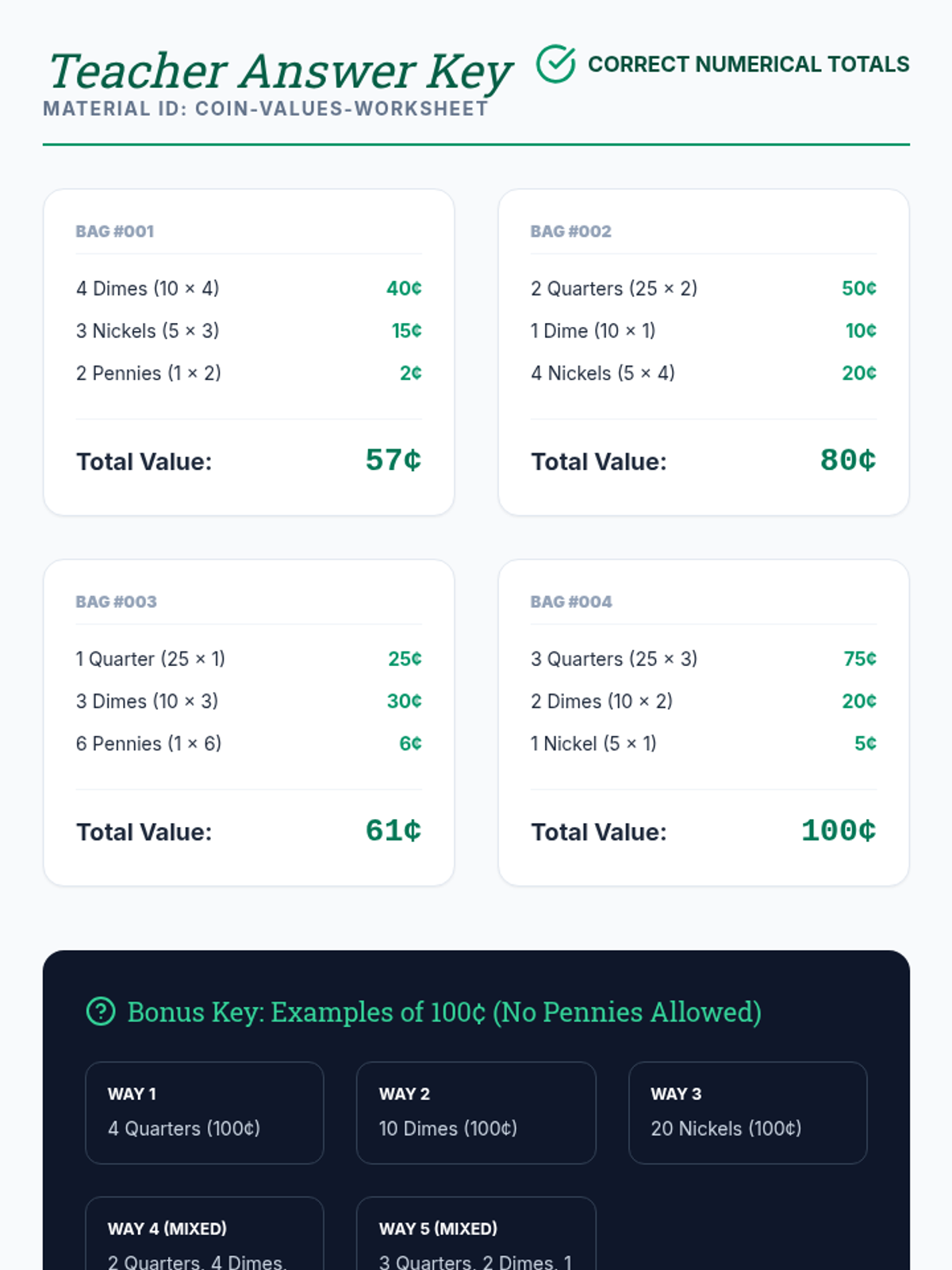
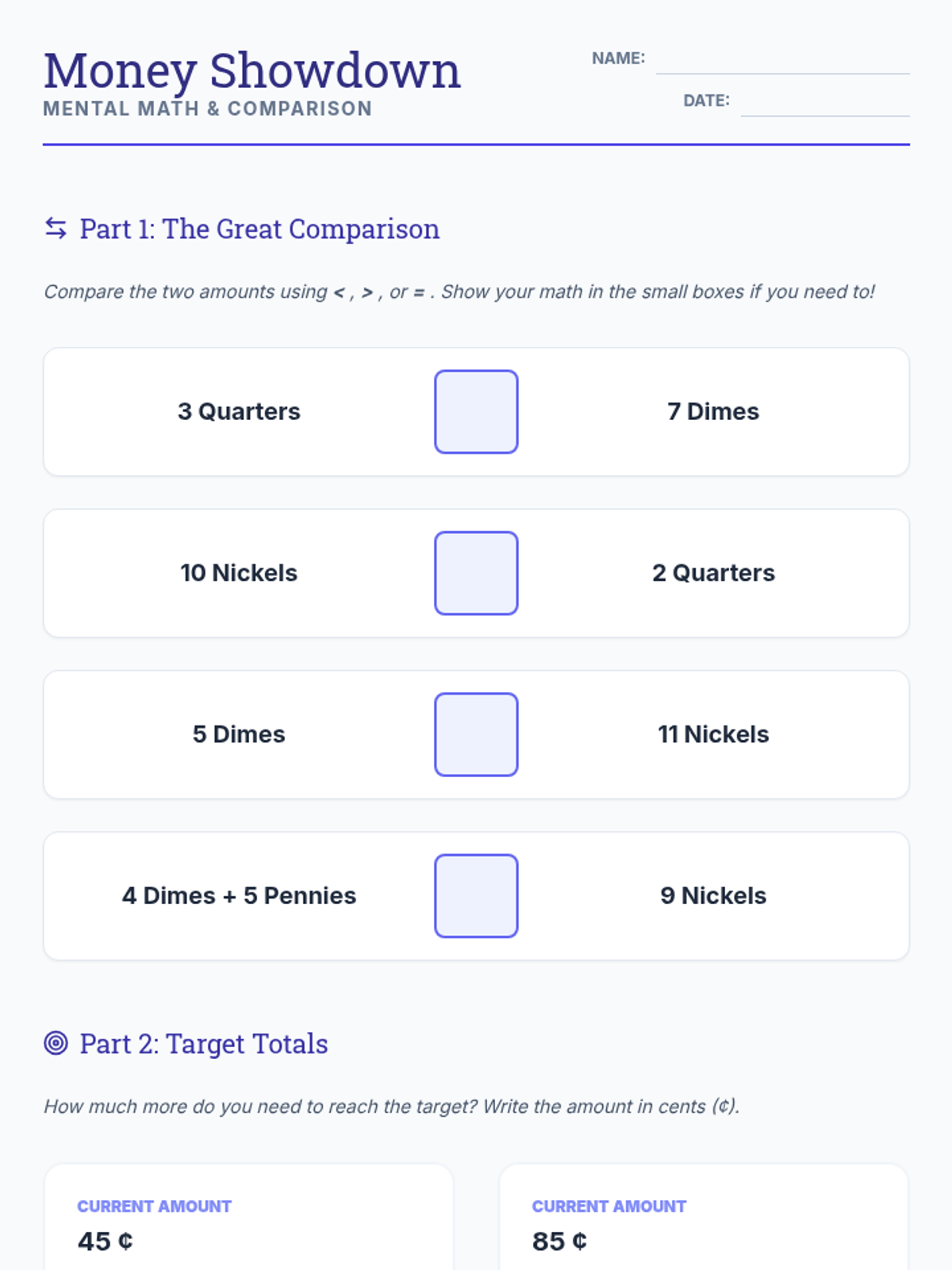
This lesson teaches students how to calculate total costs of multiple items and make spending decisions based on a fixed budget.
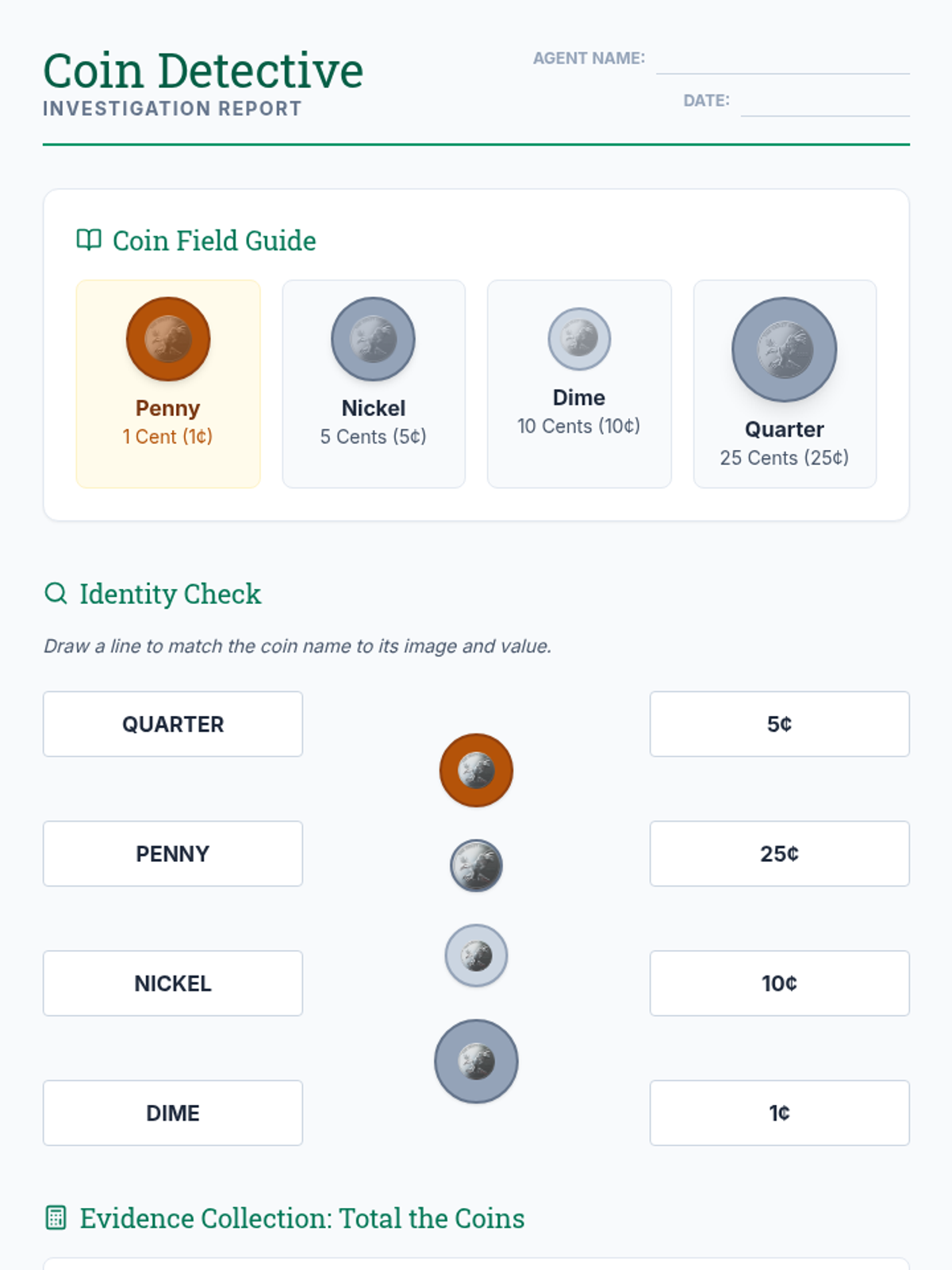
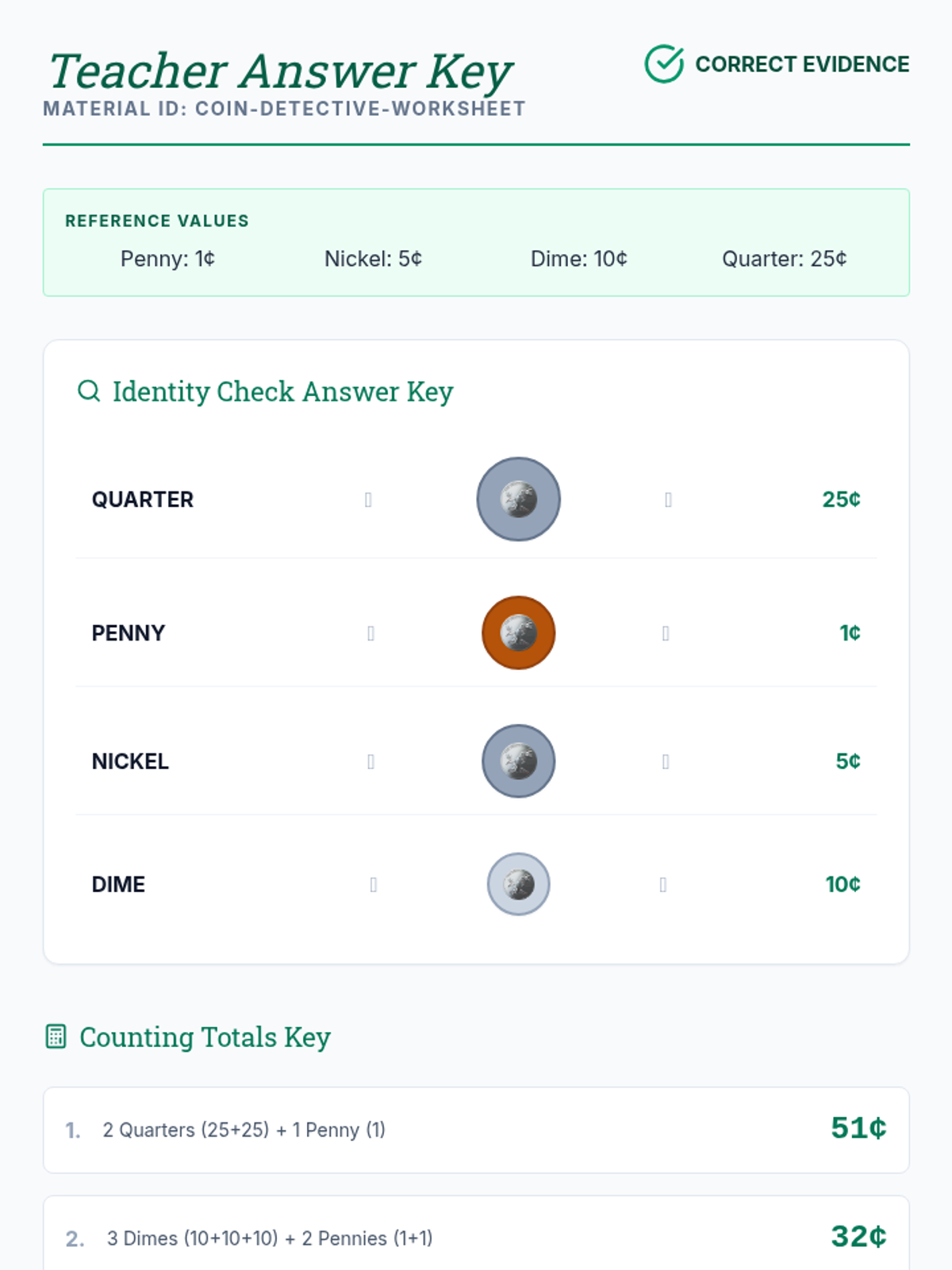
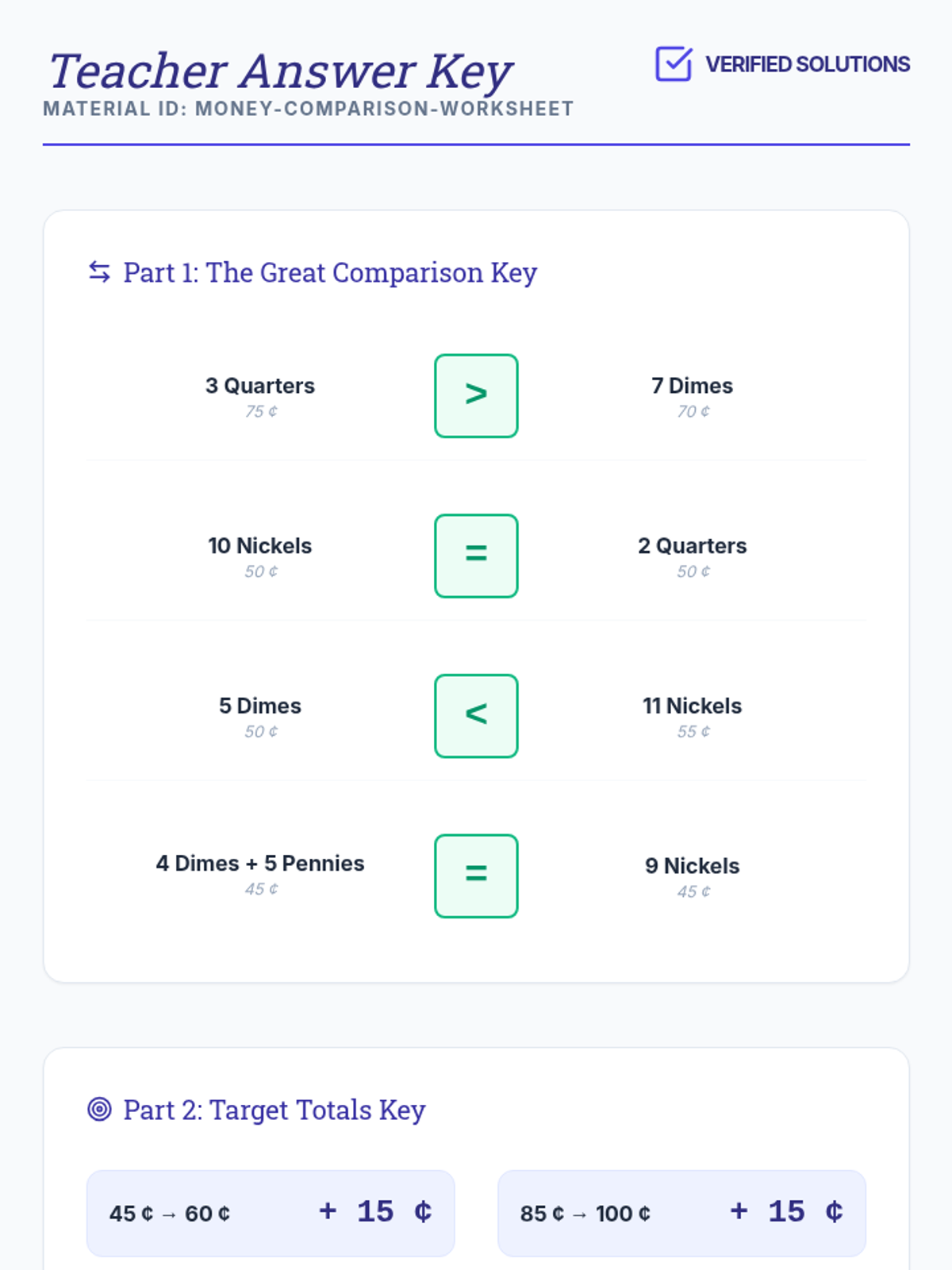
This lesson focuses on identifying US coins (penny, nickel, dime, quarter) and their respective values through visual recognition and matching.
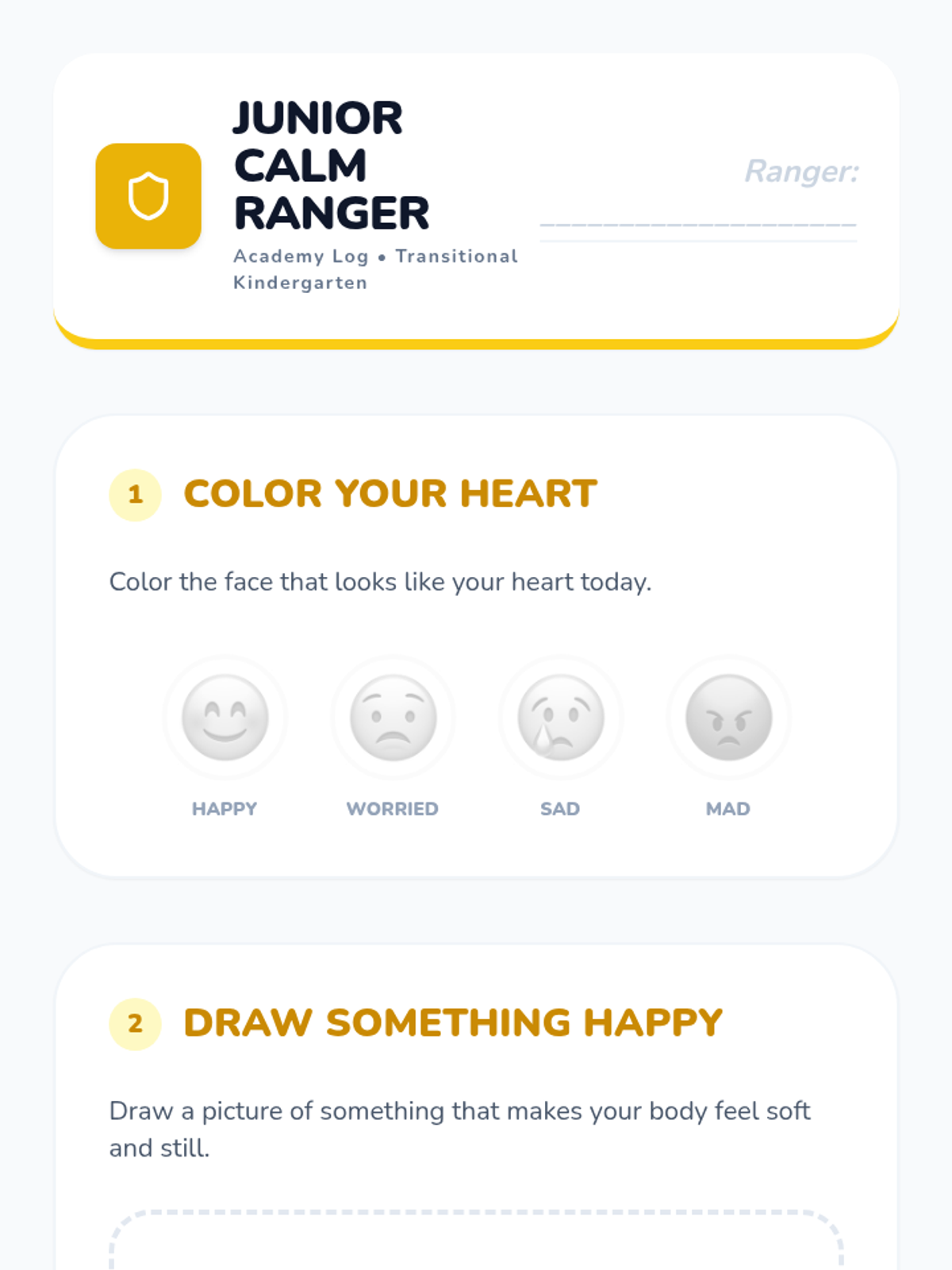
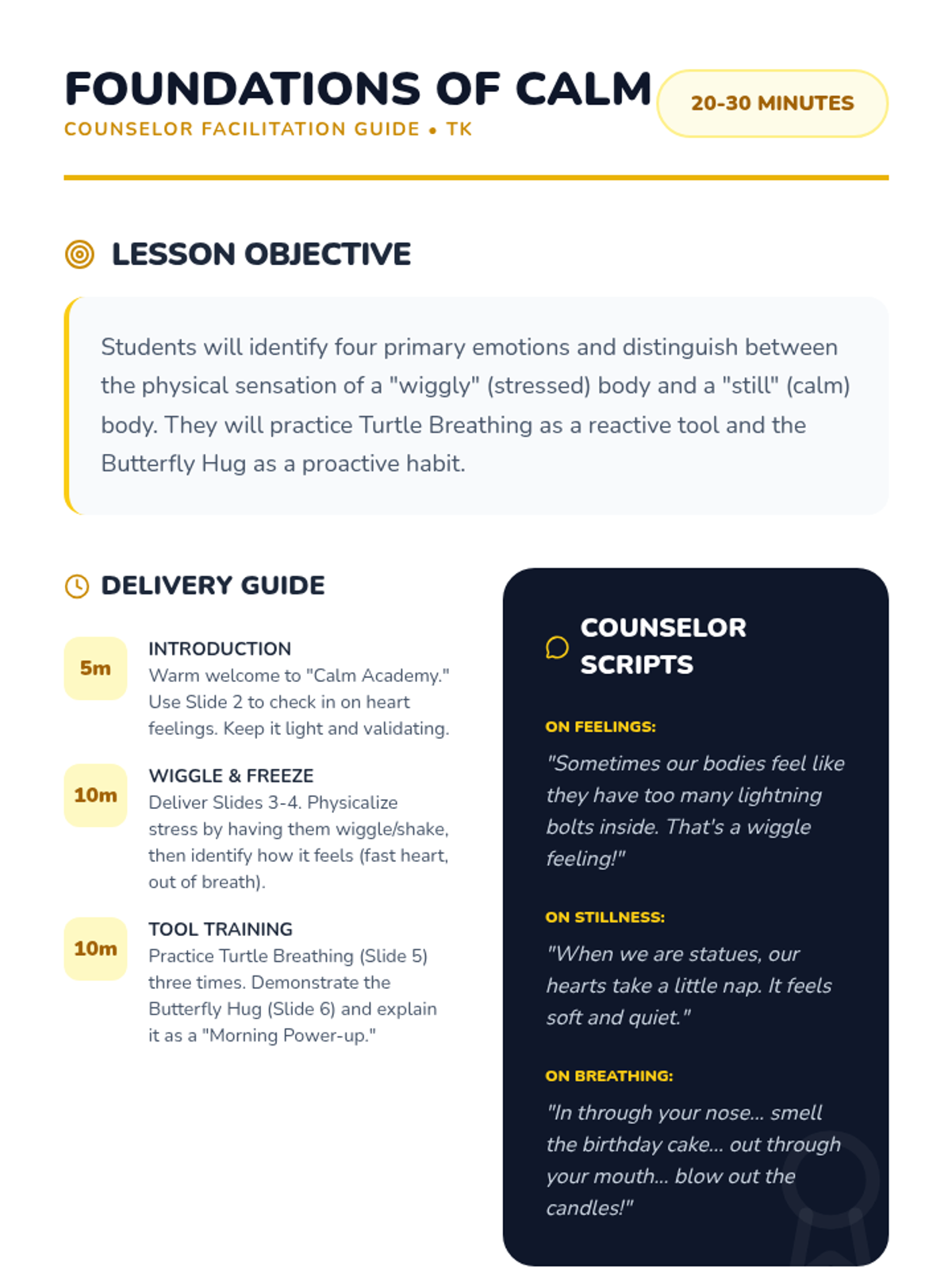
A foundational lesson for Transitional Kindergarten students focused on identifying basic emotions and the physical sensation of being 'wiggly' (stressed) vs. 'still' (calm). Introduces 'Turtle Breathing' as a primary regulation tool.
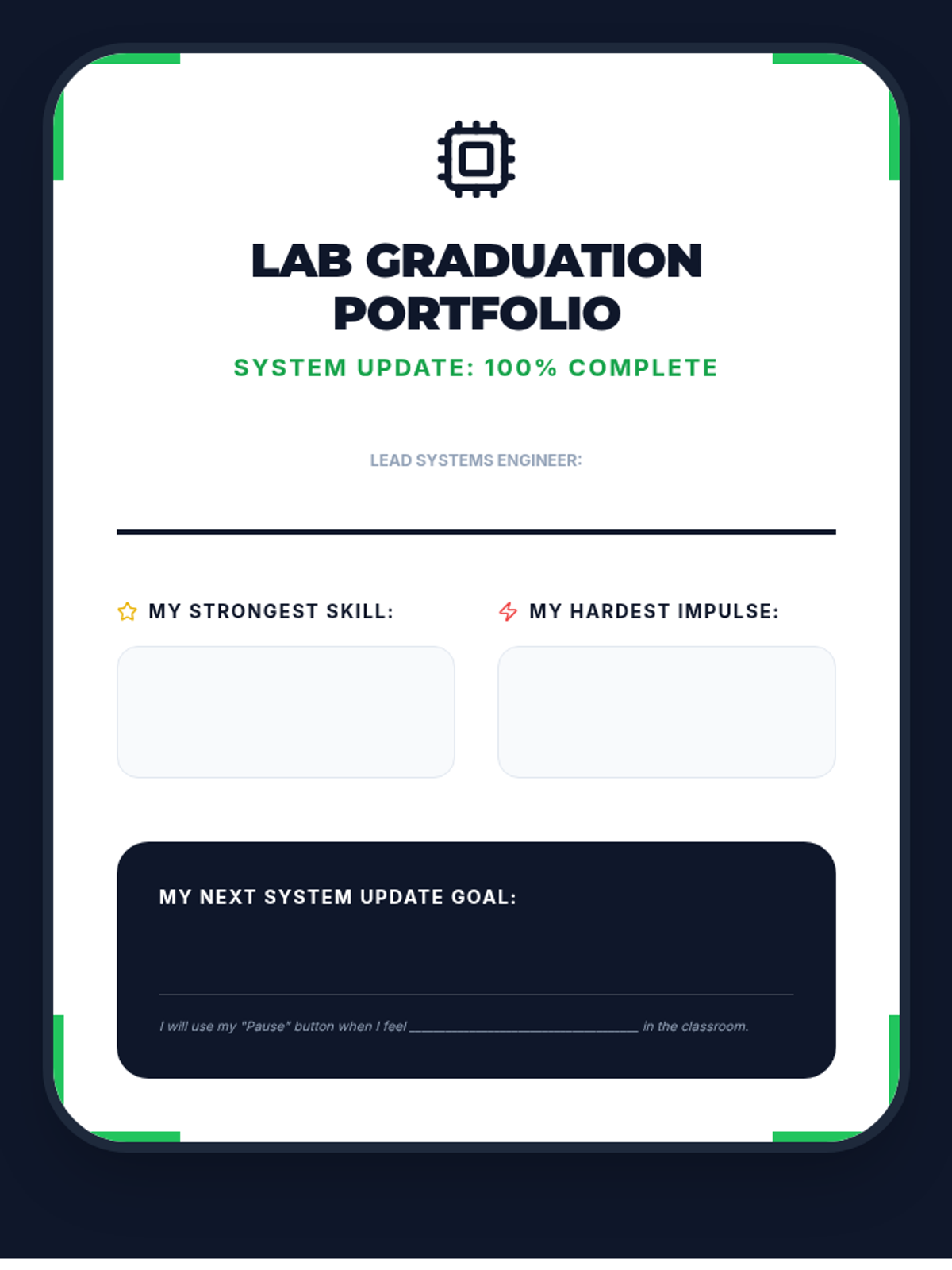
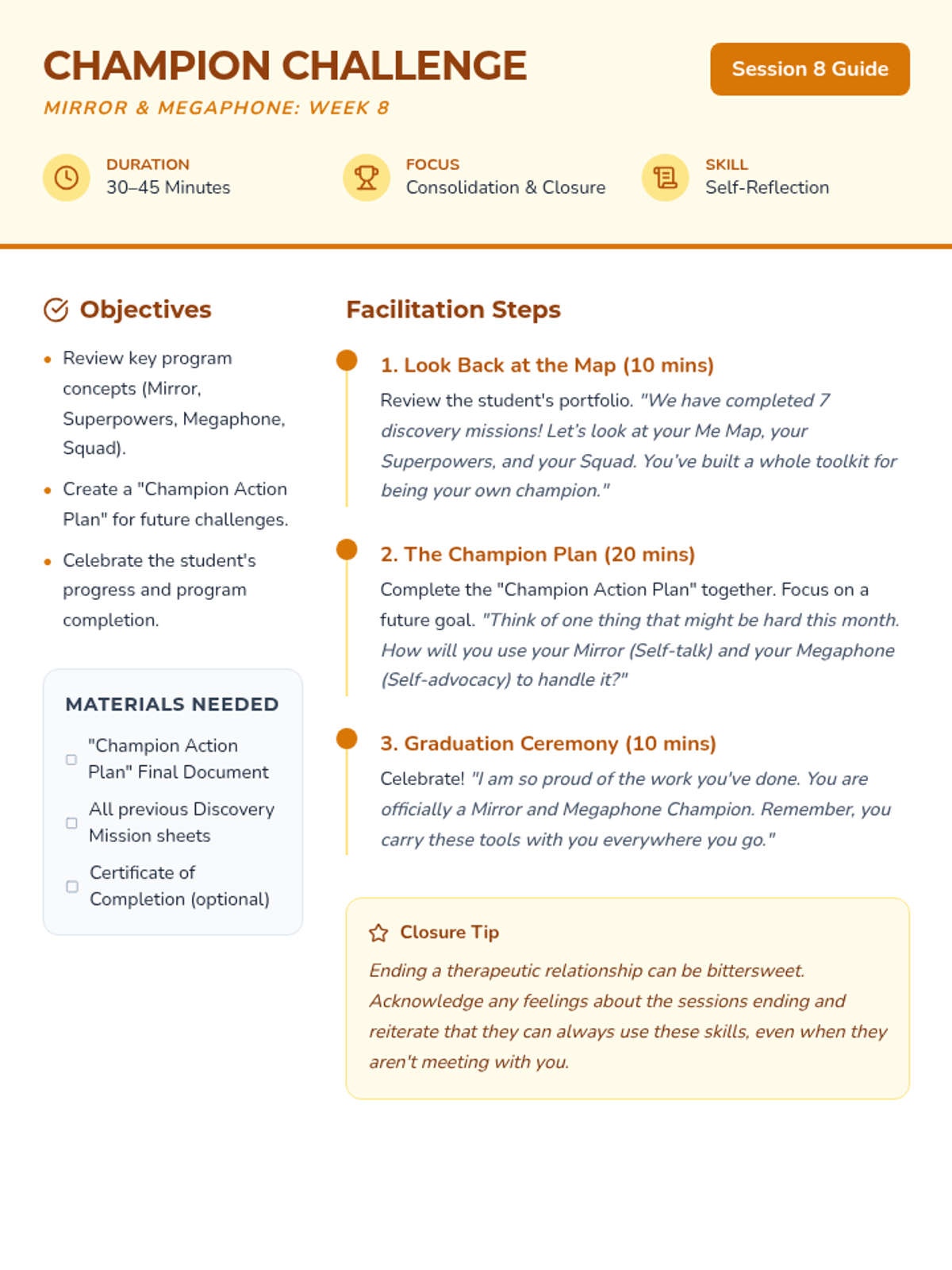
Reviewing all strategies, celebrating progress, and creating a personalized self-control plan for future use.
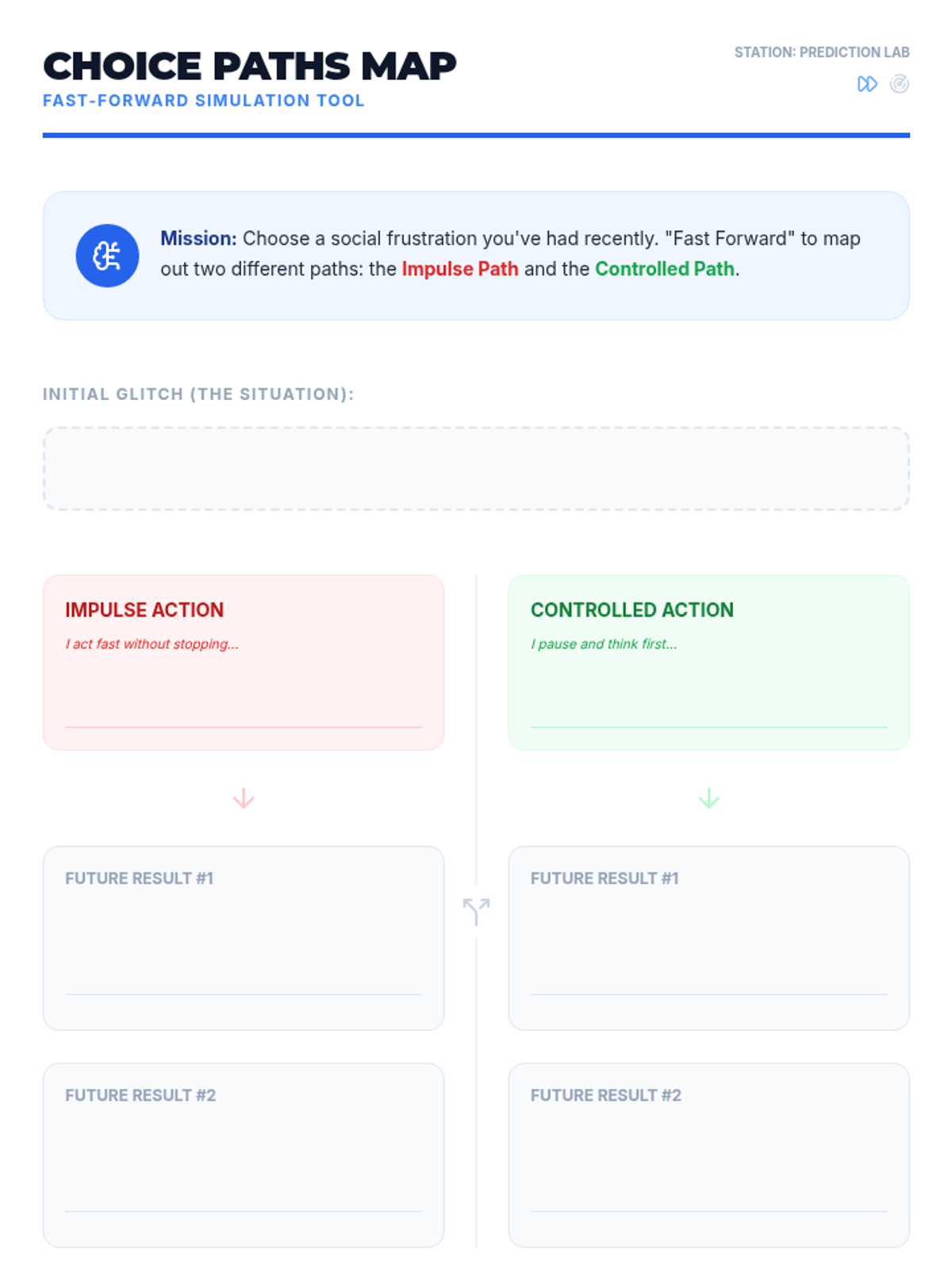
Developing impulse control by 'fast-forwarding' to see the potential consequences of different choices.
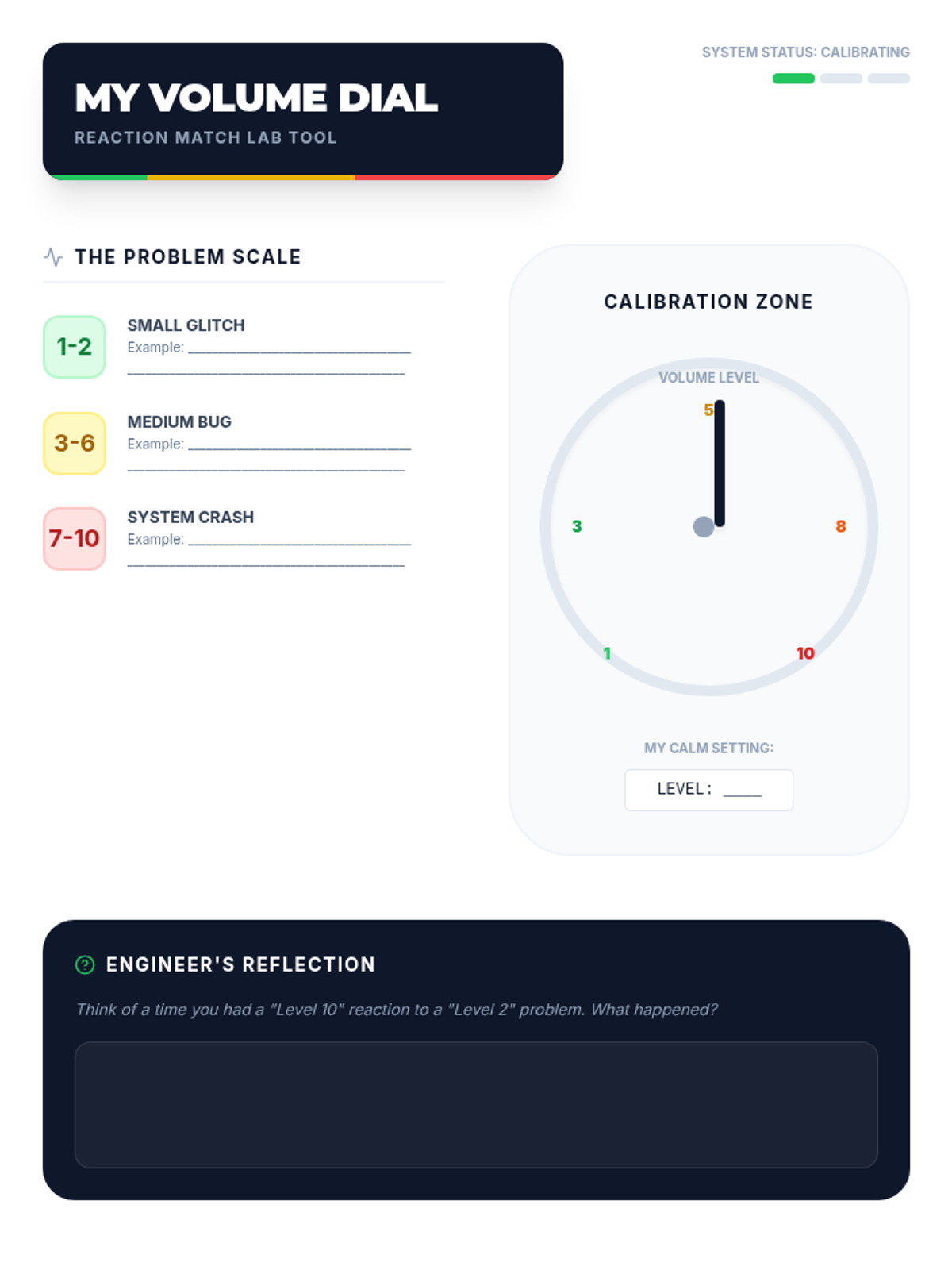
Managing the intensity of emotions and reactions using the 'Volume Control' strategy for self-regulation in social situations.
Addressing social frustrations by 'rewinding' to understand what happened and how to troubleshoot social bugs with peers.
Focusing on the 'Pause' button to build a gap between impulse and action, featuring strategies for stopping in the moment.
Introduction to the concept of self-control using the remote control metaphor and identifying personal 'impulses' that need managing.
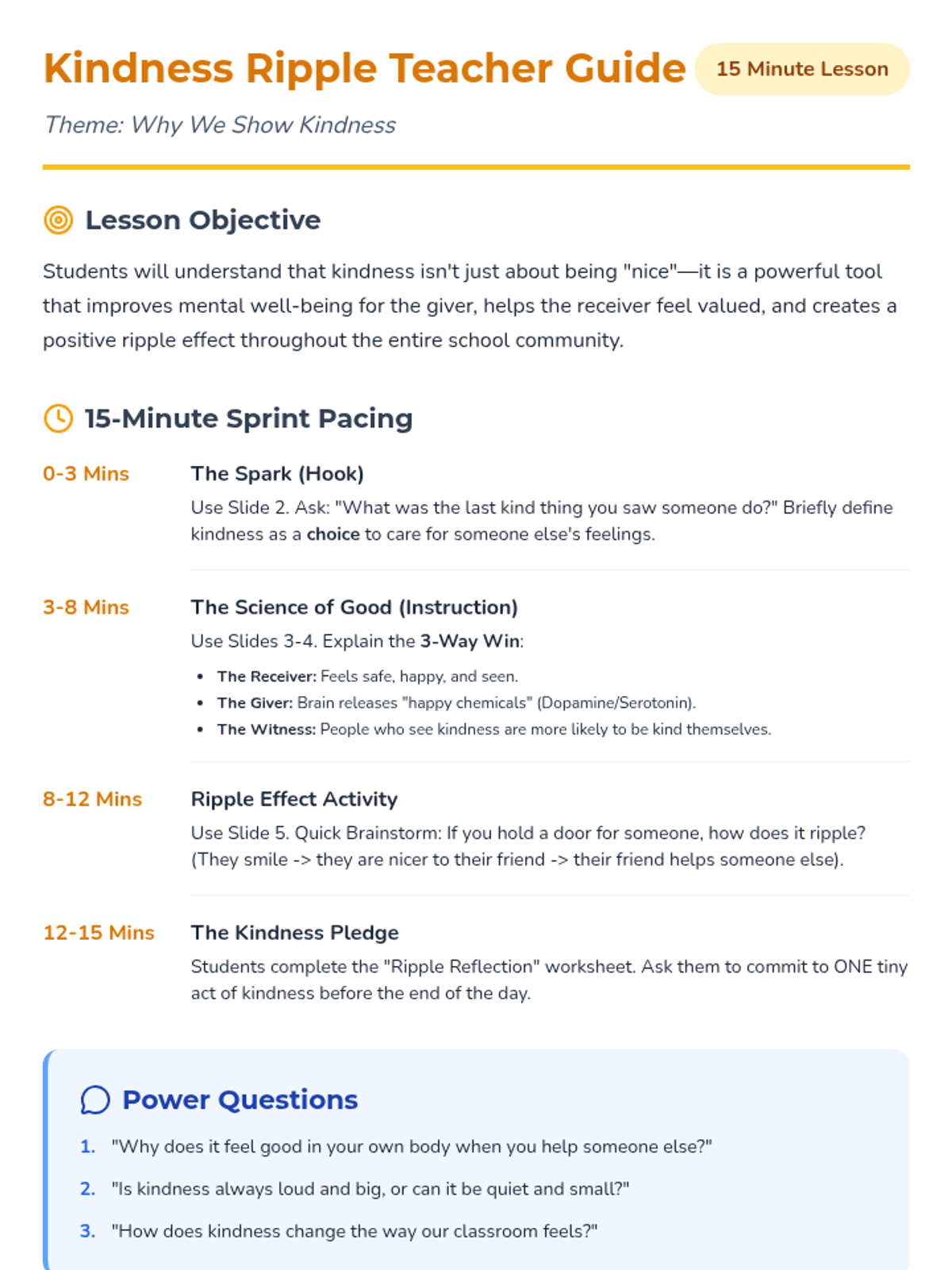
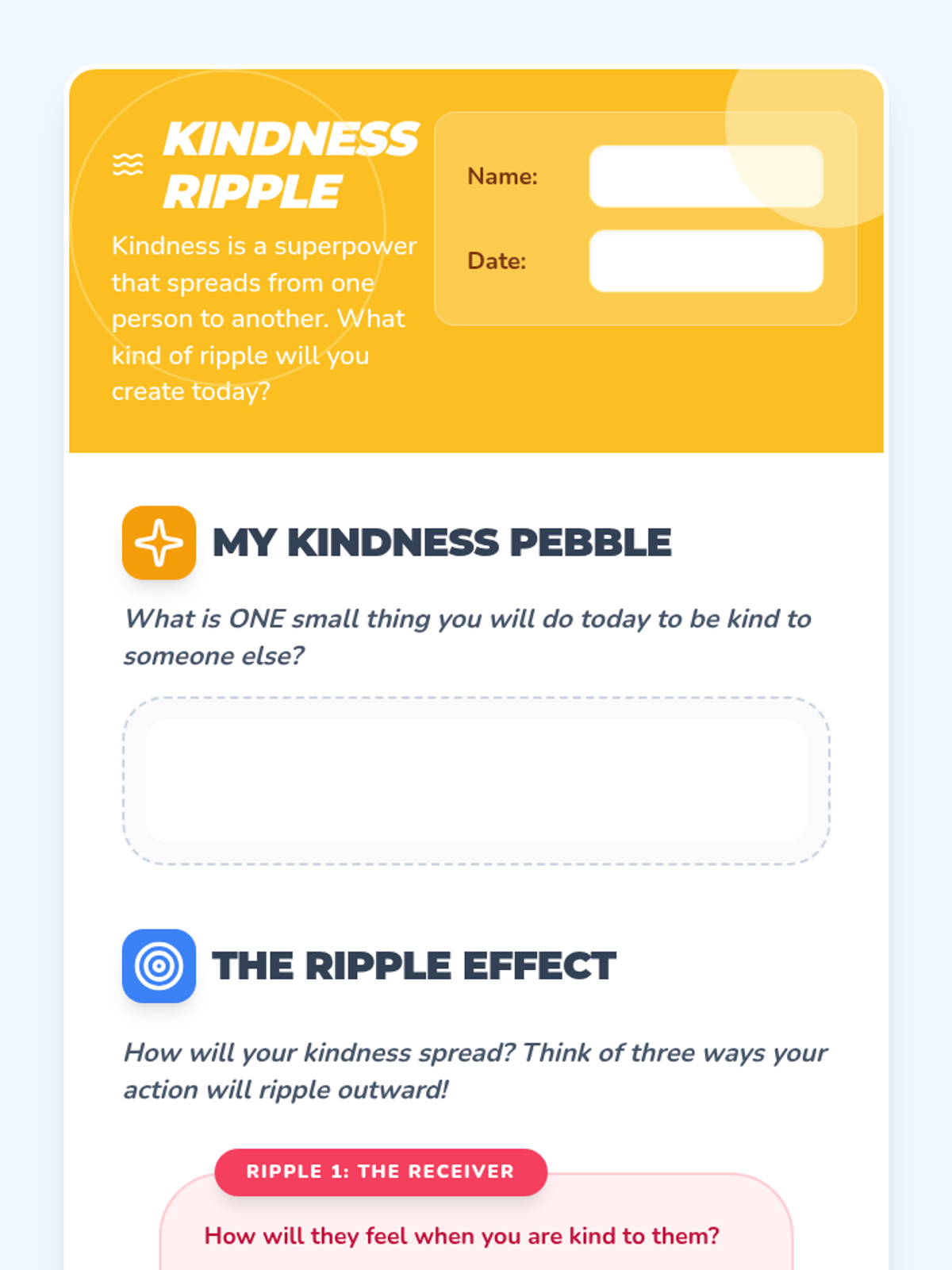
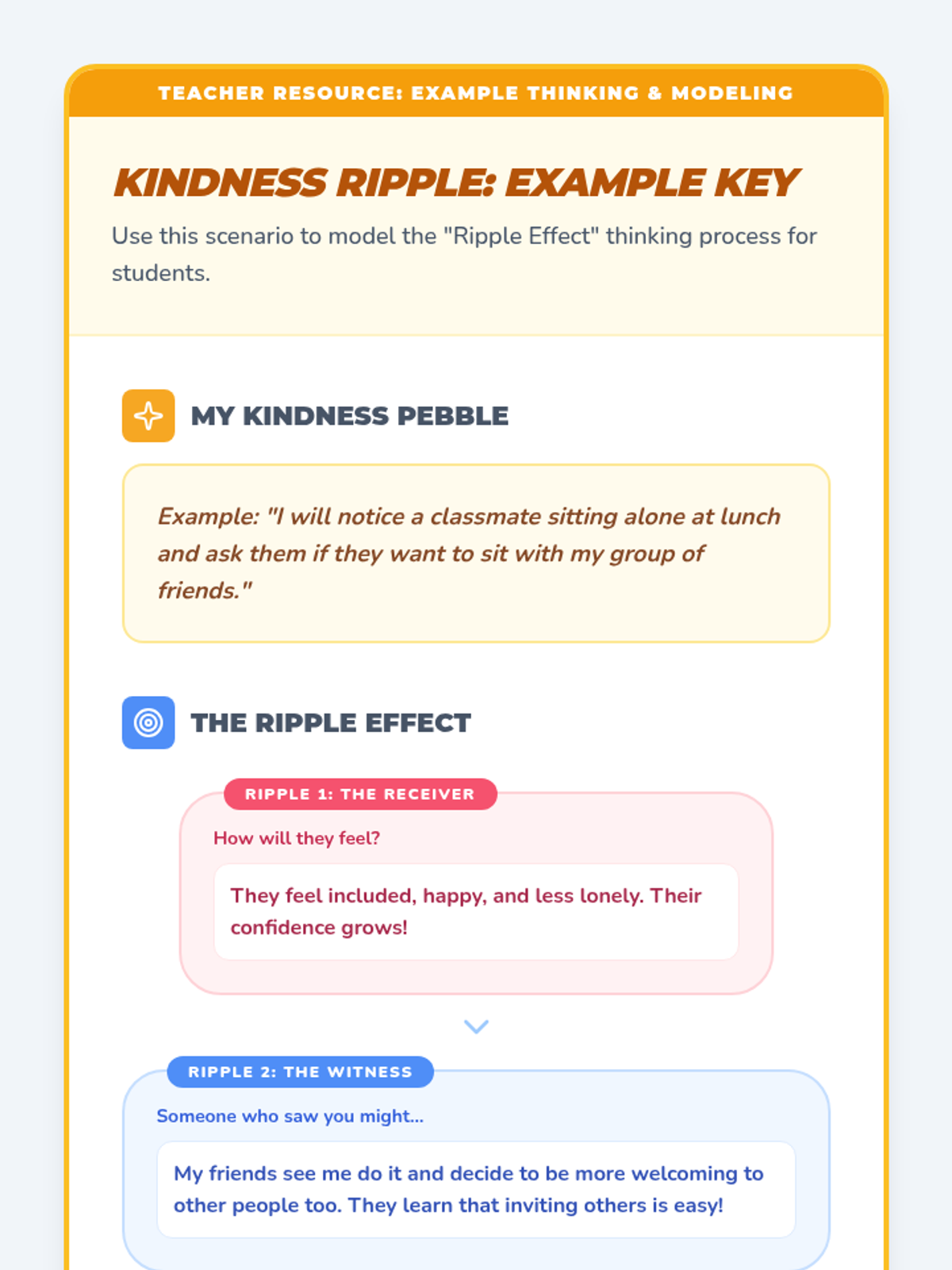
A fast-paced, engaging 15-minute lesson exploring the 'Ripple Effect' of kindness and why it matters for both the giver and the receiver.
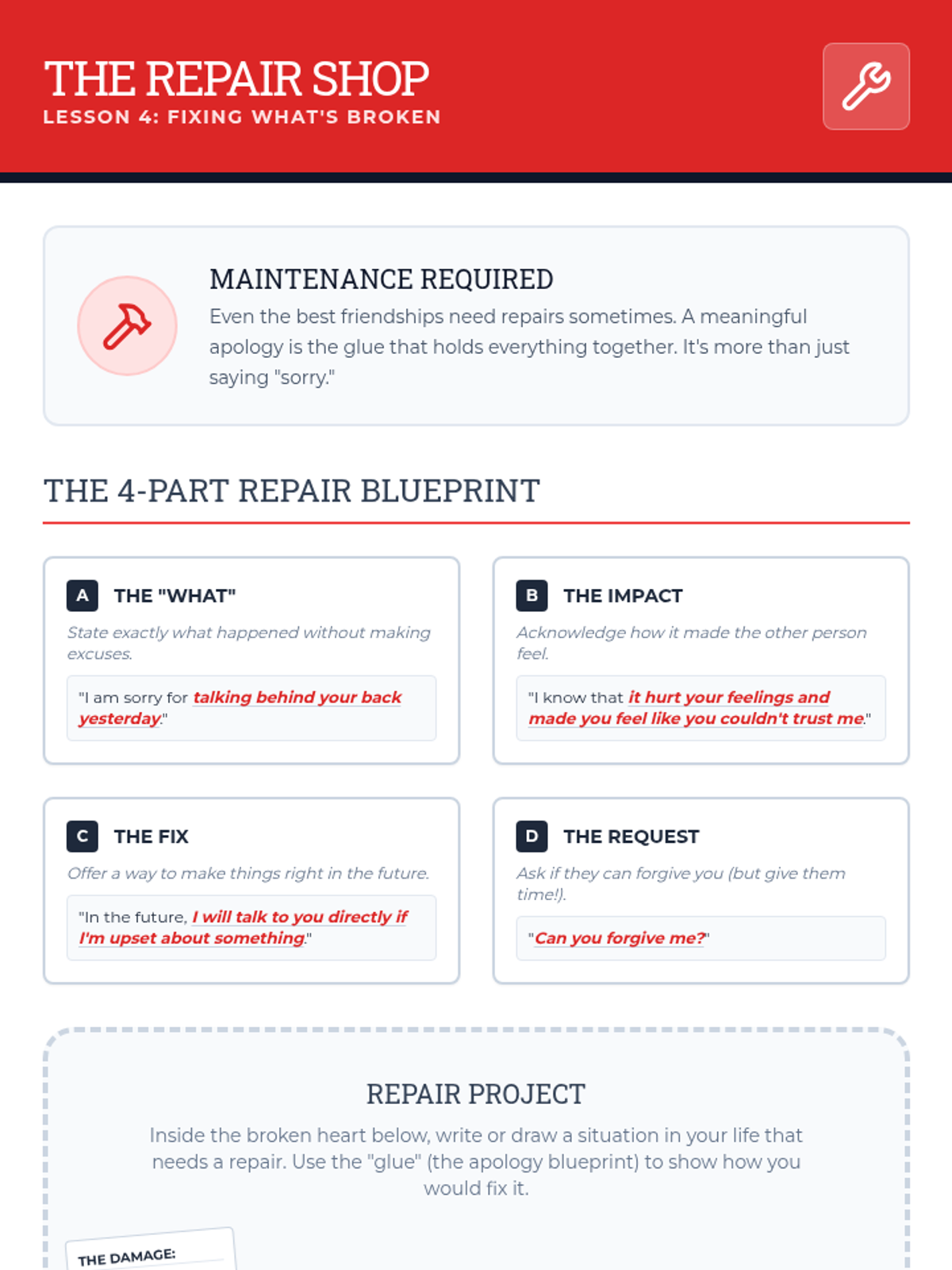
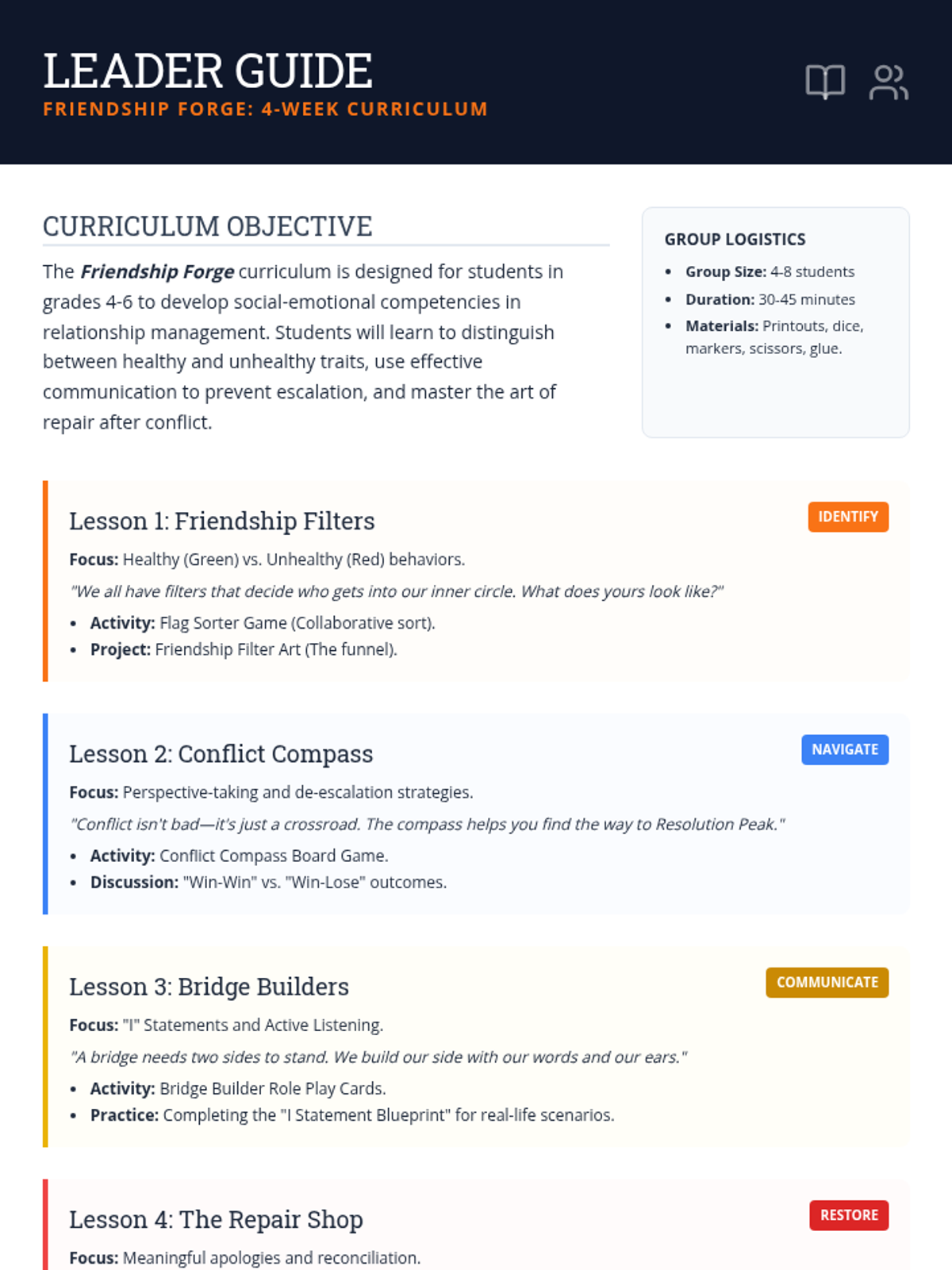
Students will learn how to make meaningful apologies and use art to explore the concept of repairing damaged relationships.
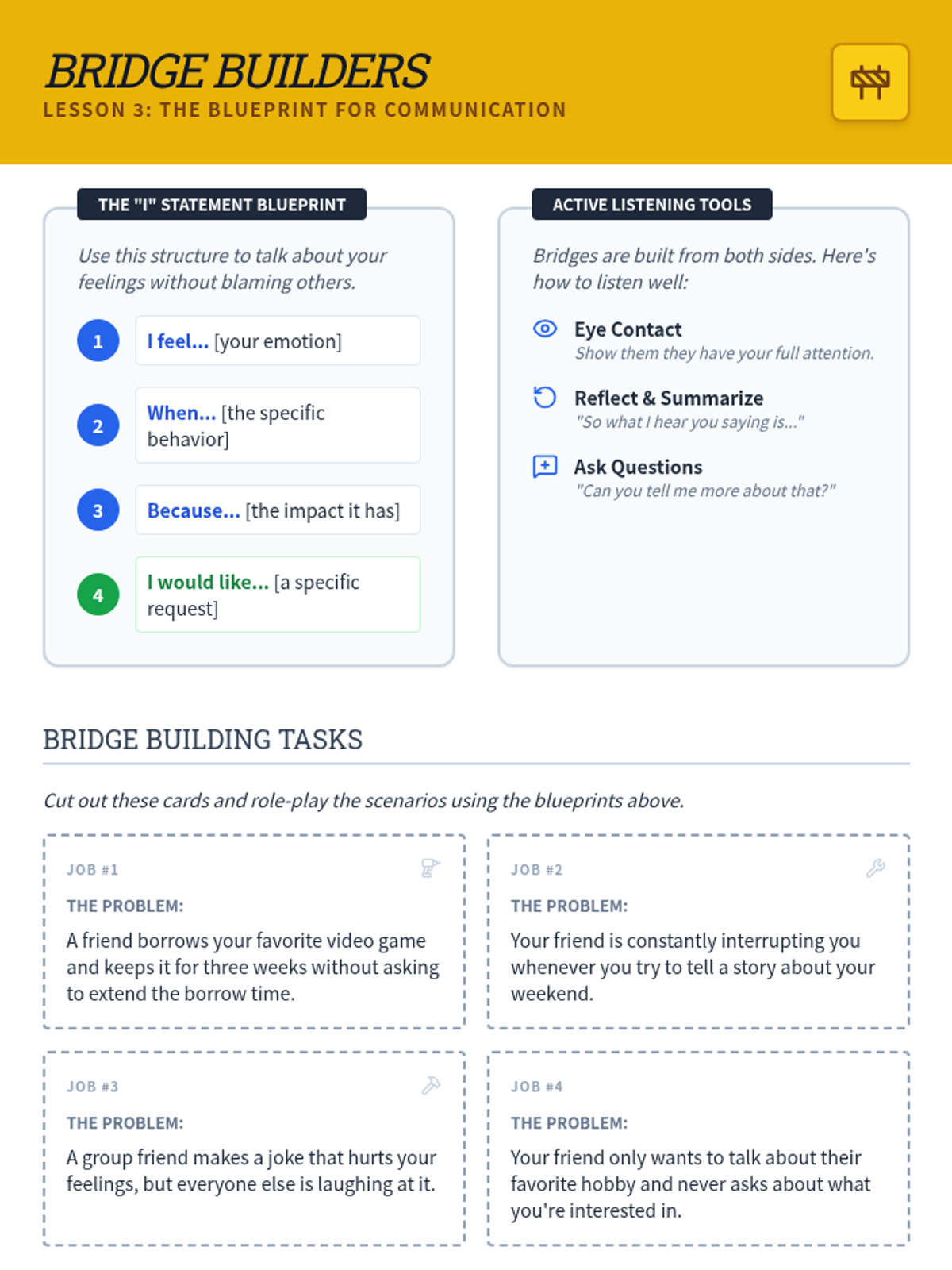
Students will practice effective communication techniques using role-play scenarios focused on active listening and "I" statements.
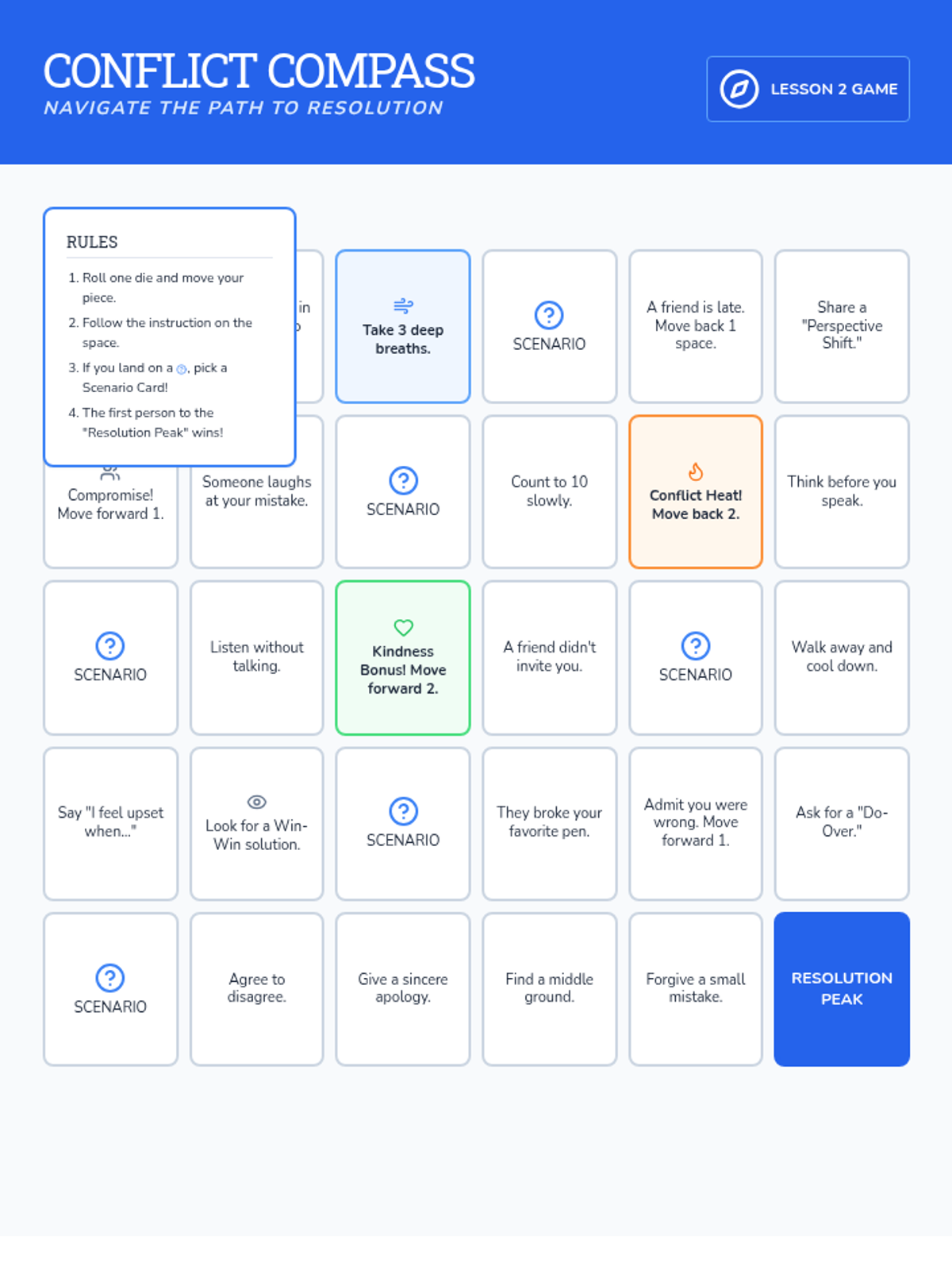
Students will explore different ways to navigate disagreements using a board game format to practice perspective-taking.
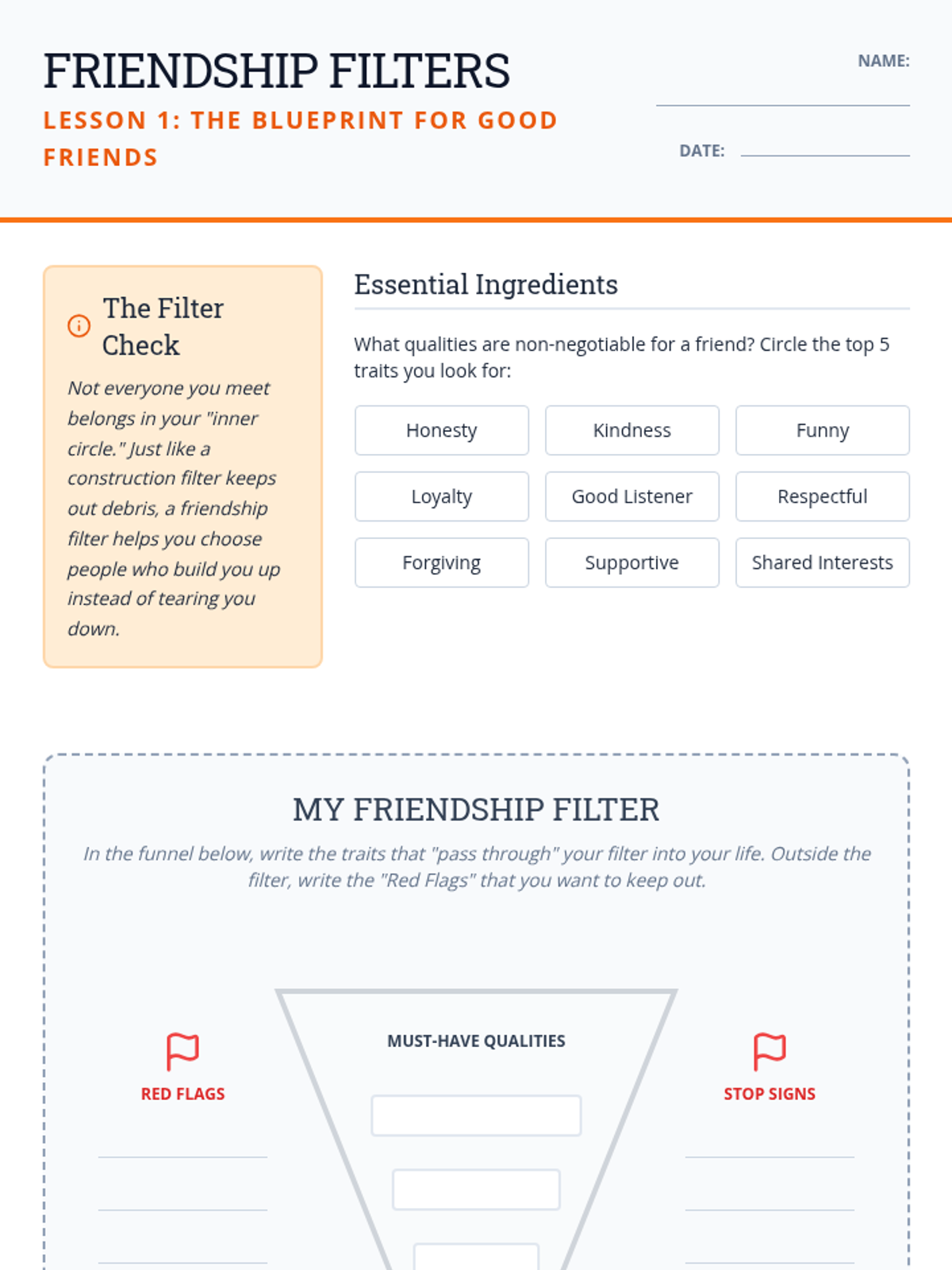
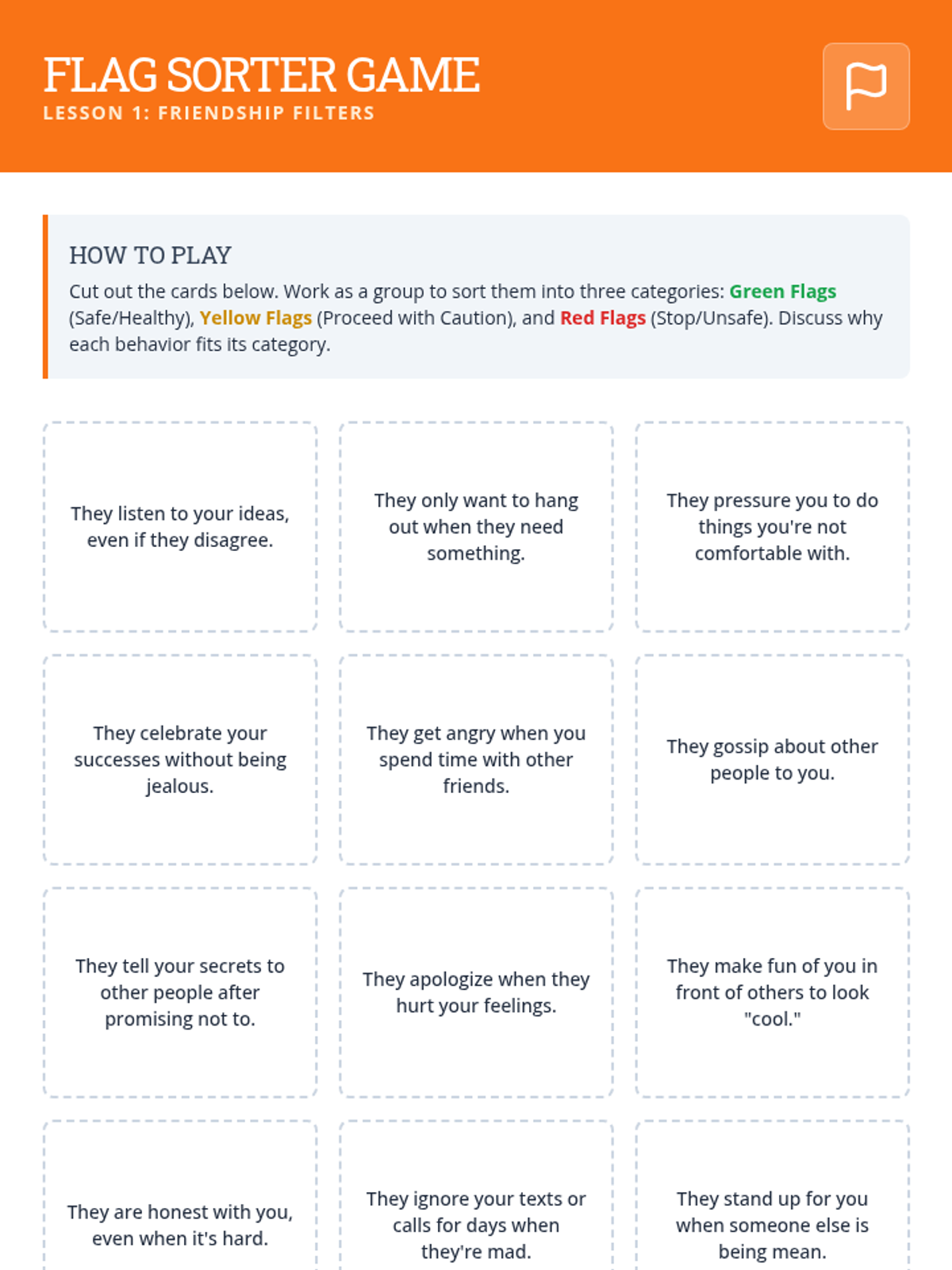
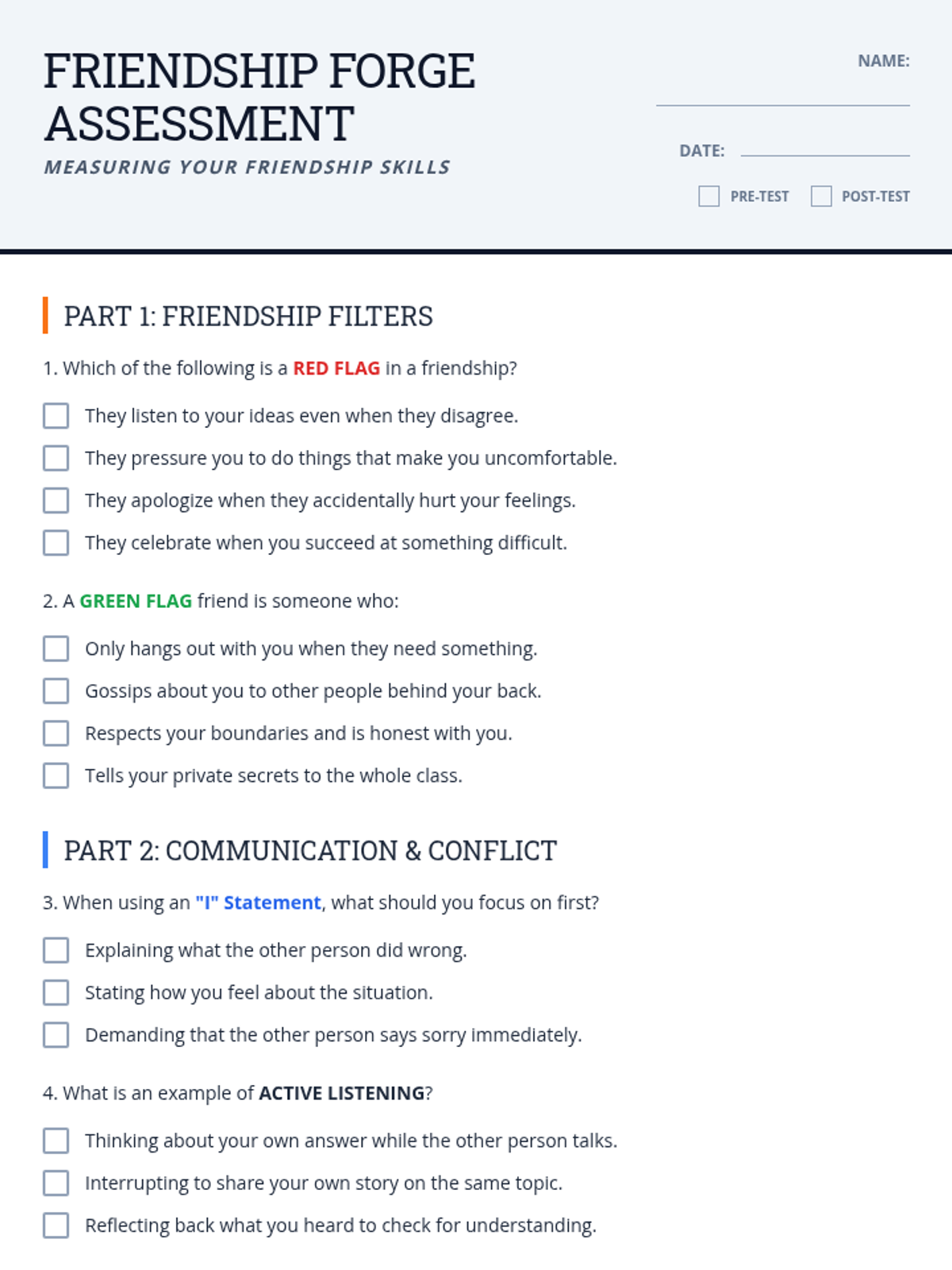
Students will identify the "ingredients" of a good friend and create a visual representation of their friendship standards.
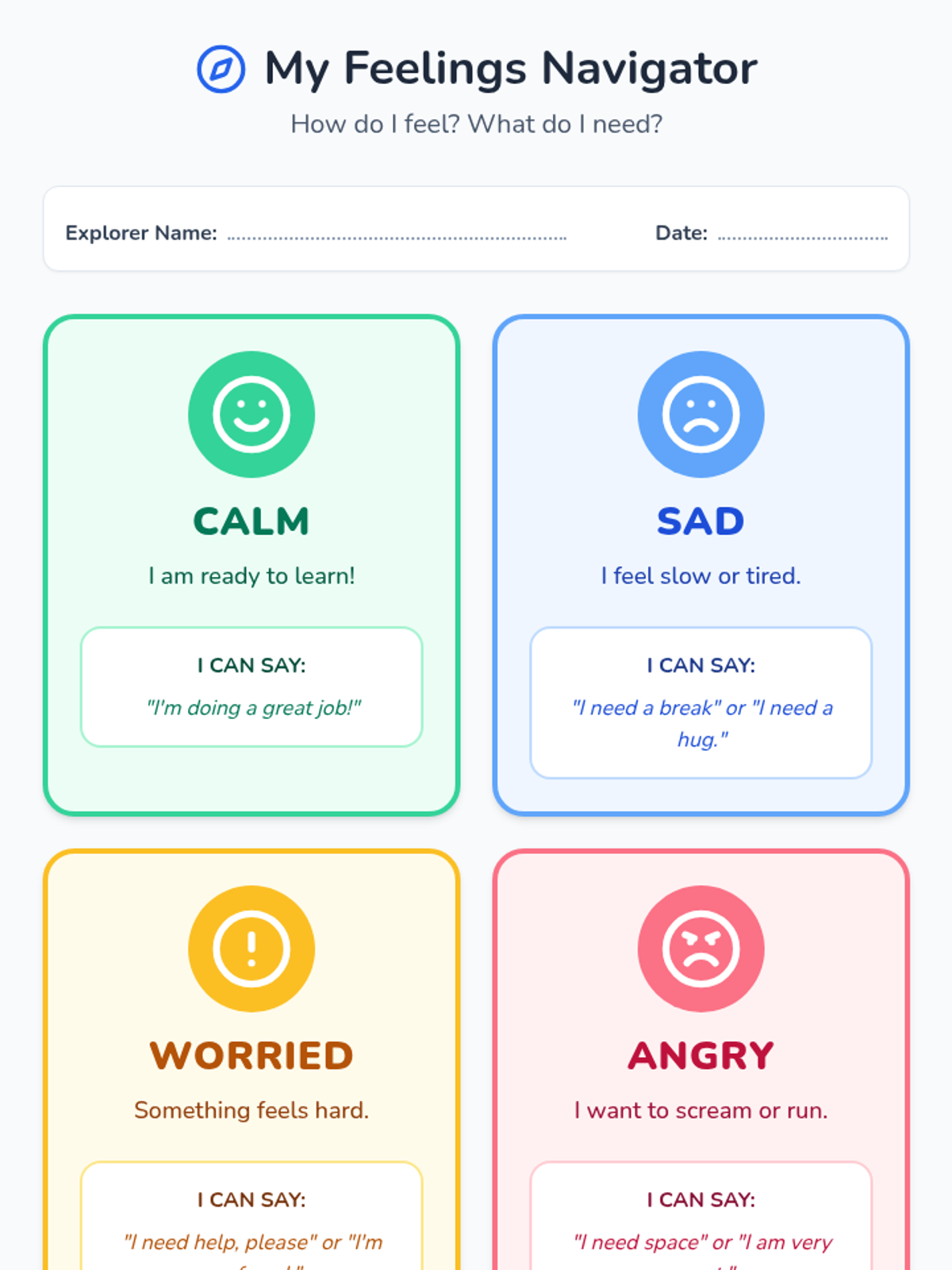
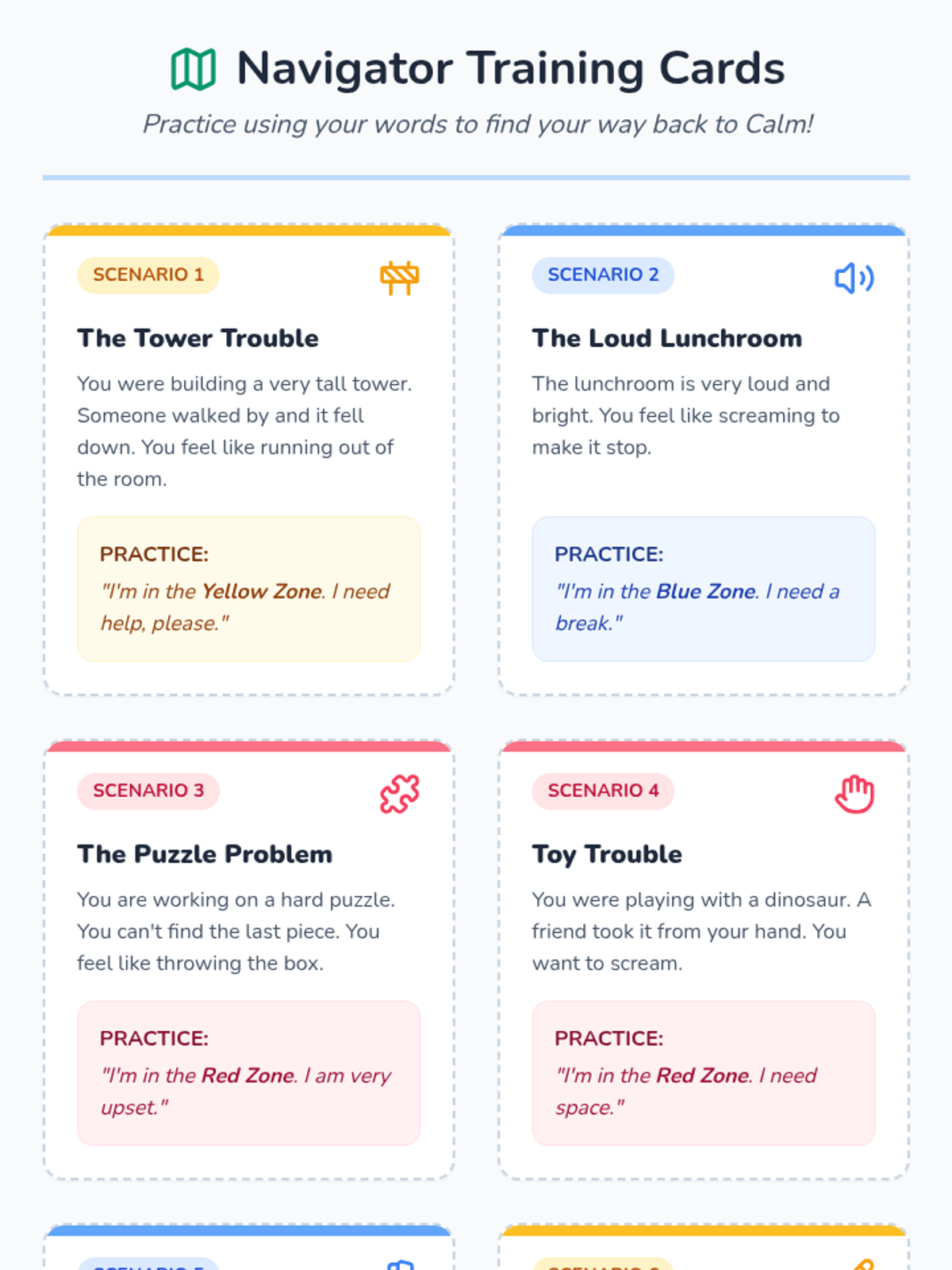
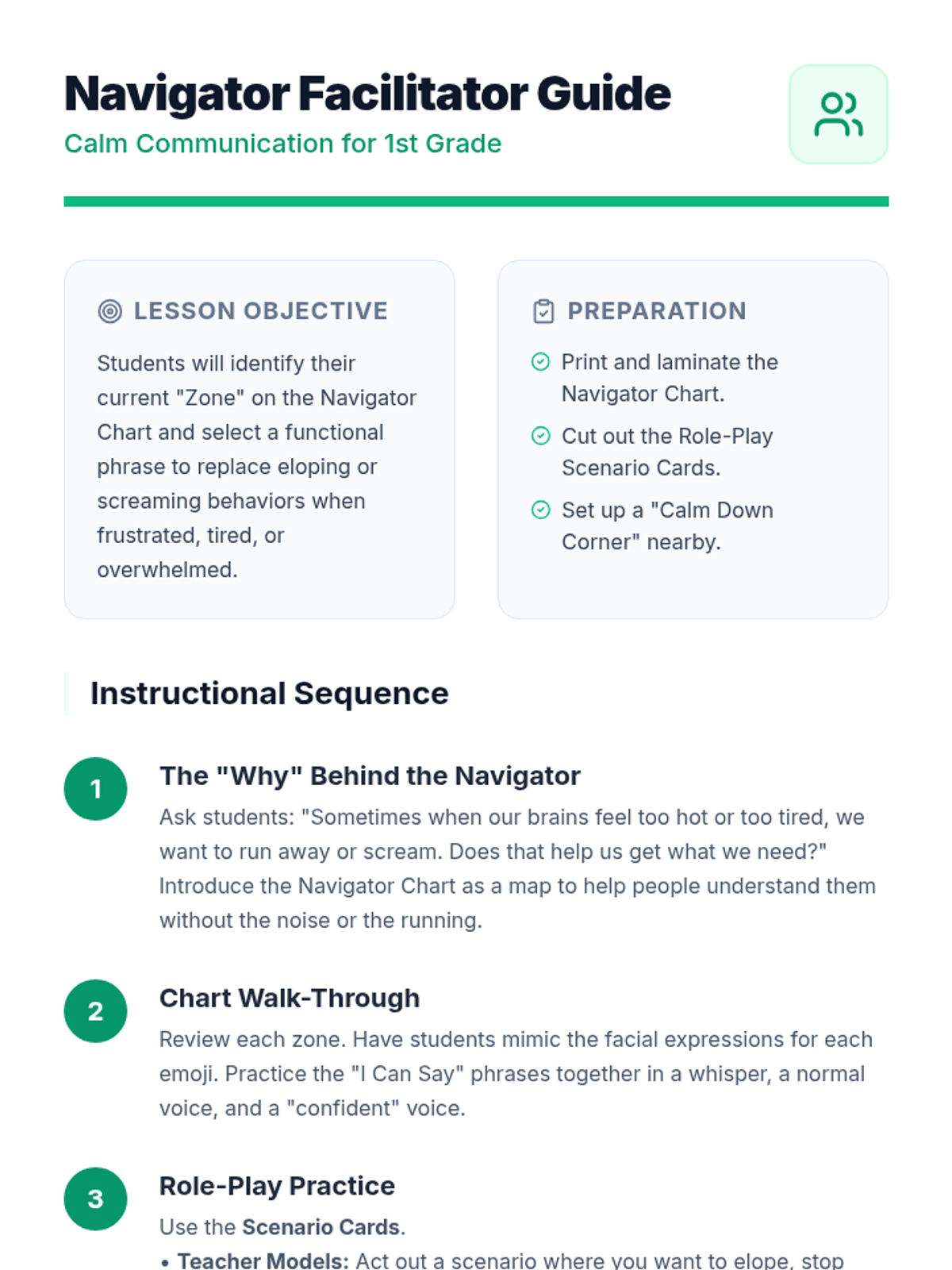
A lesson designed for two first-graders to learn how to replace screaming and eloping with verbal communication using a feelings chart. Through role-play and visual aids, students practice identifying their emotions and stating their needs.
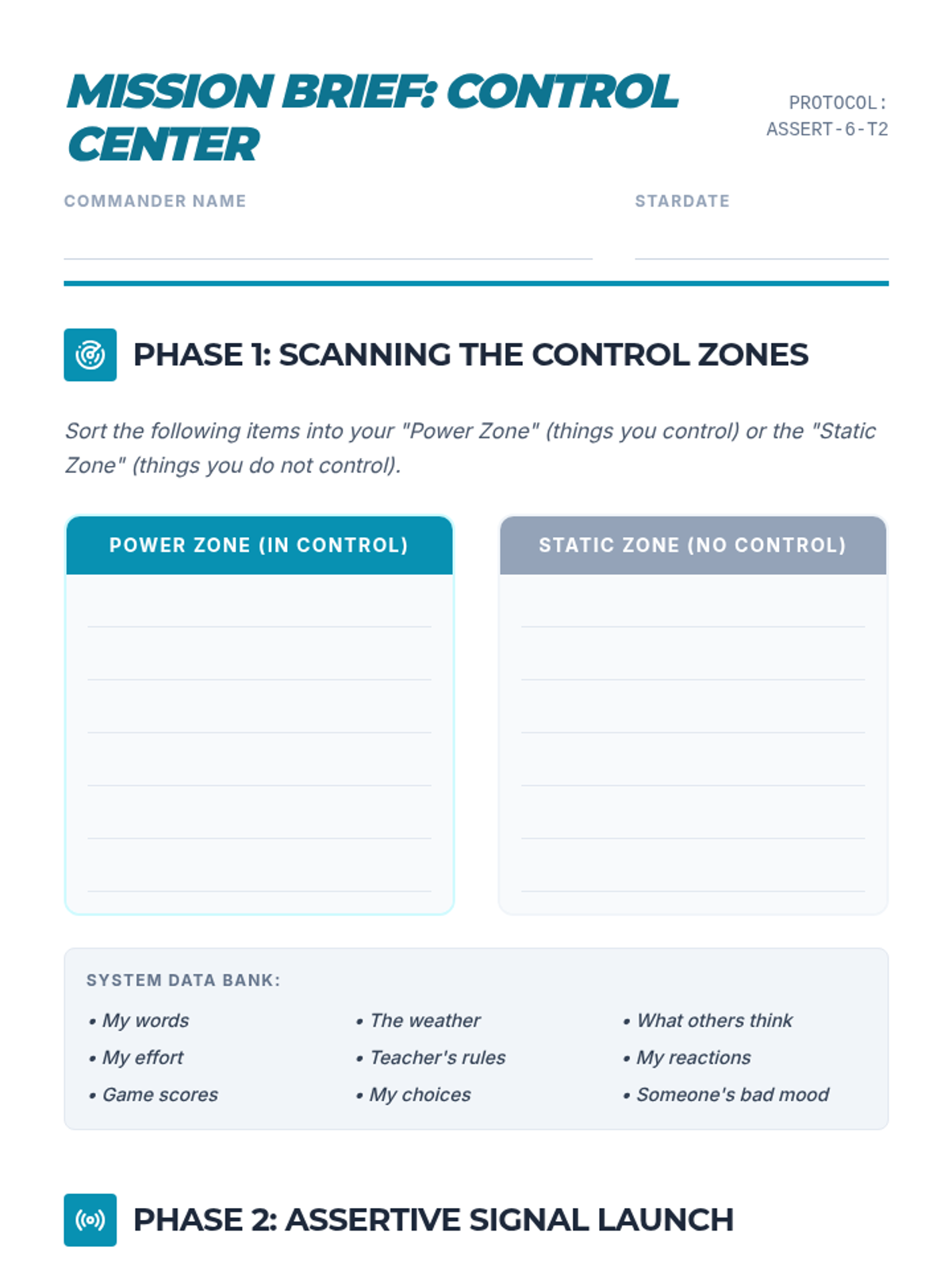
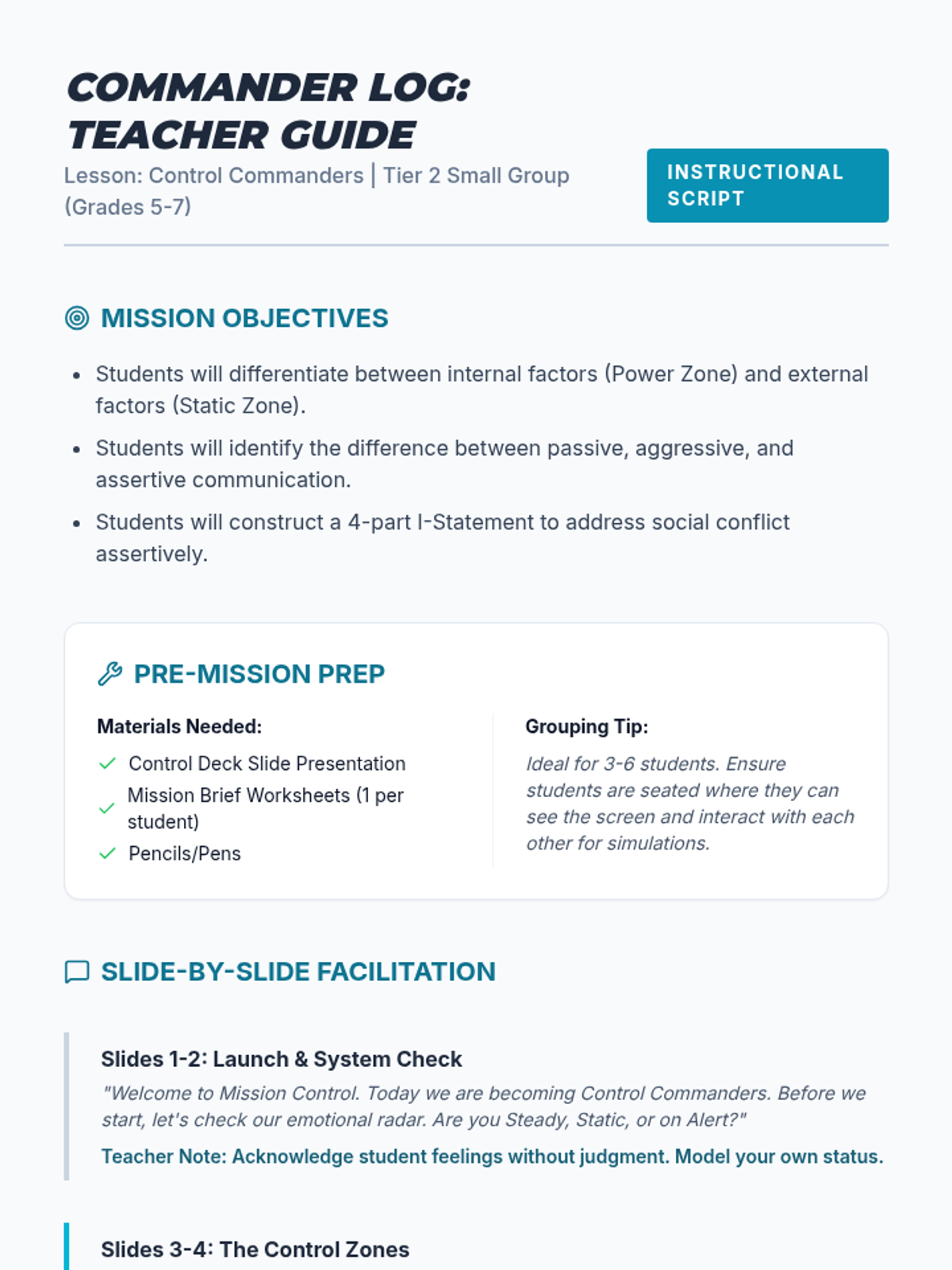
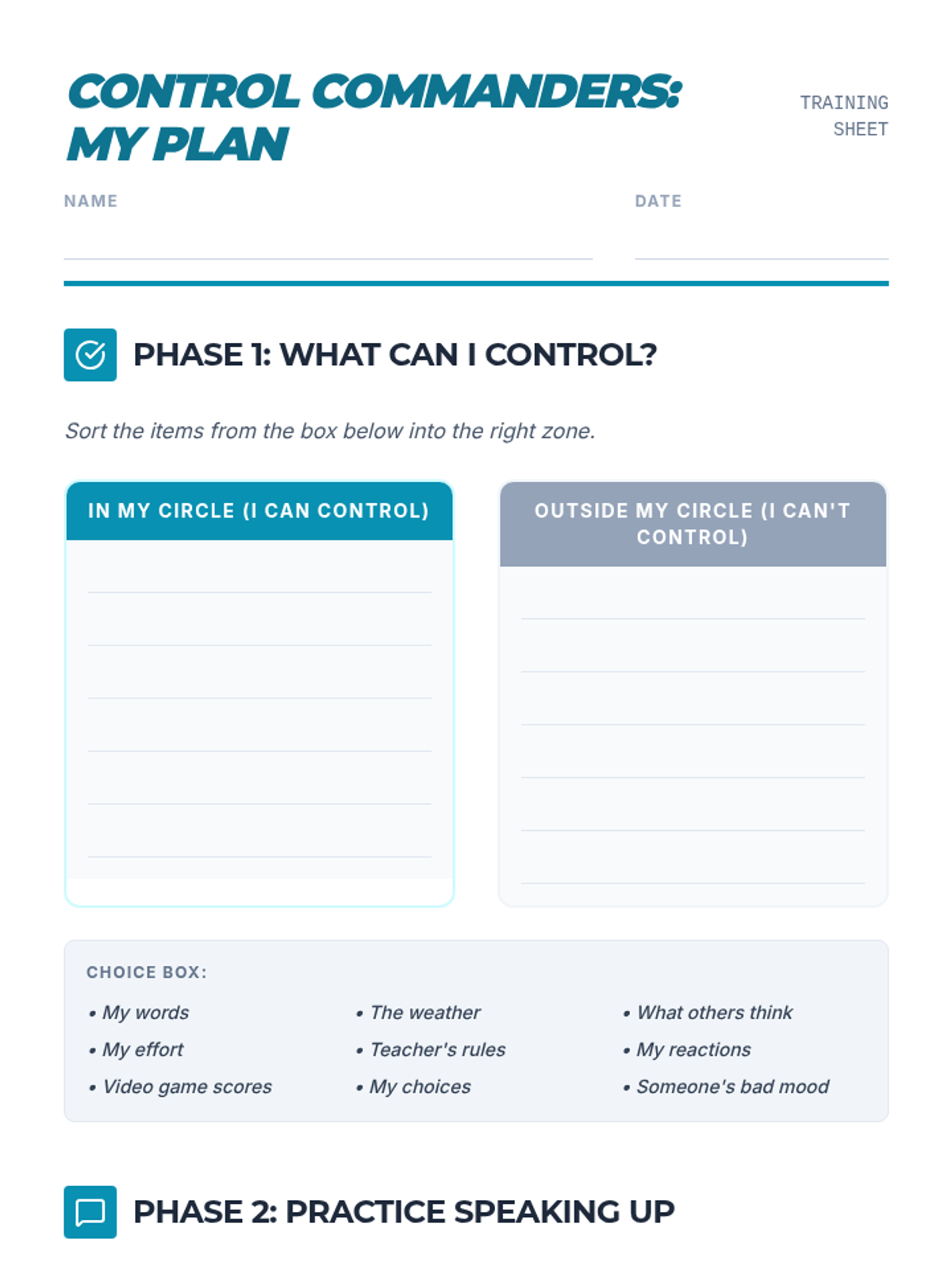
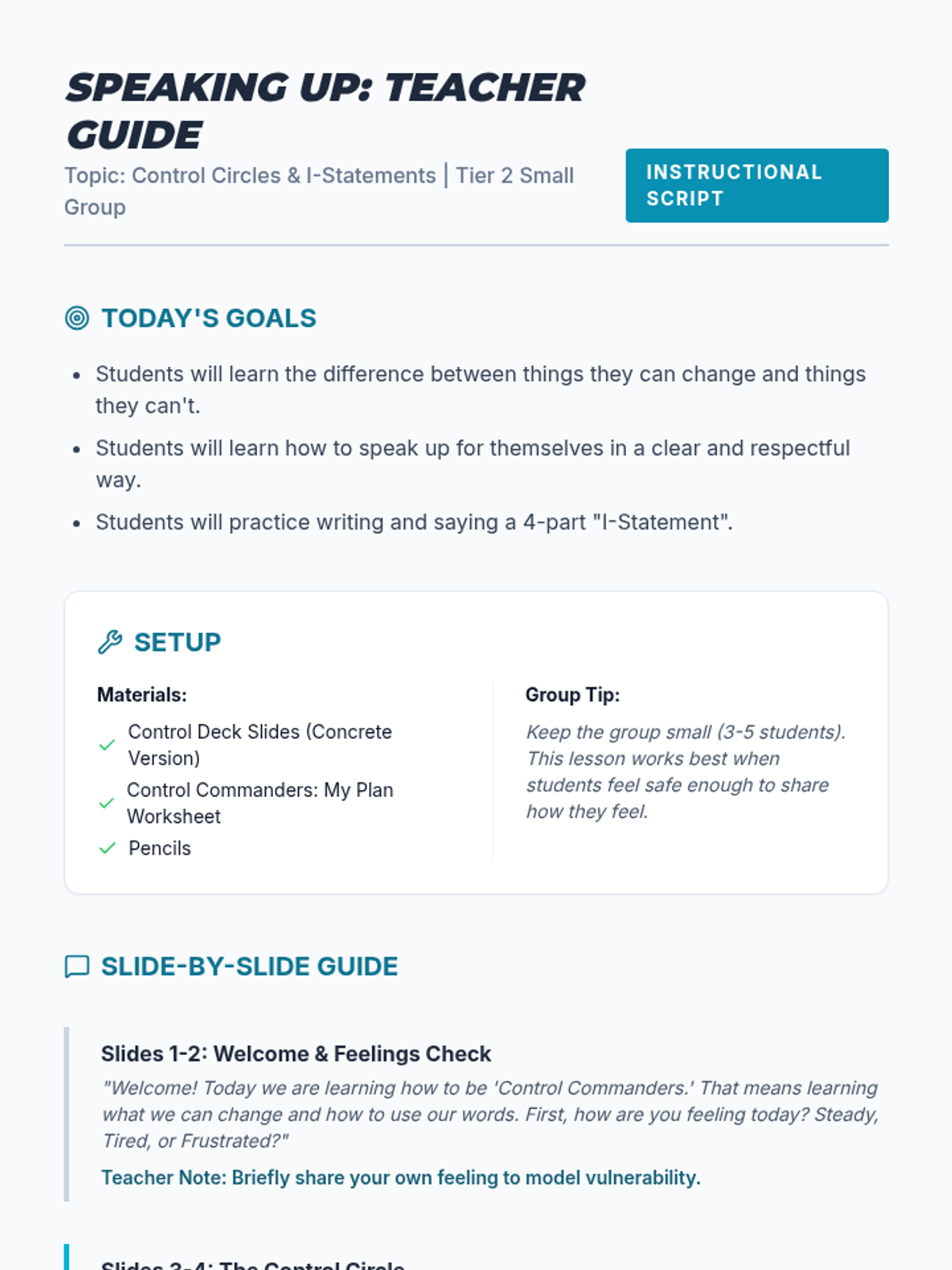
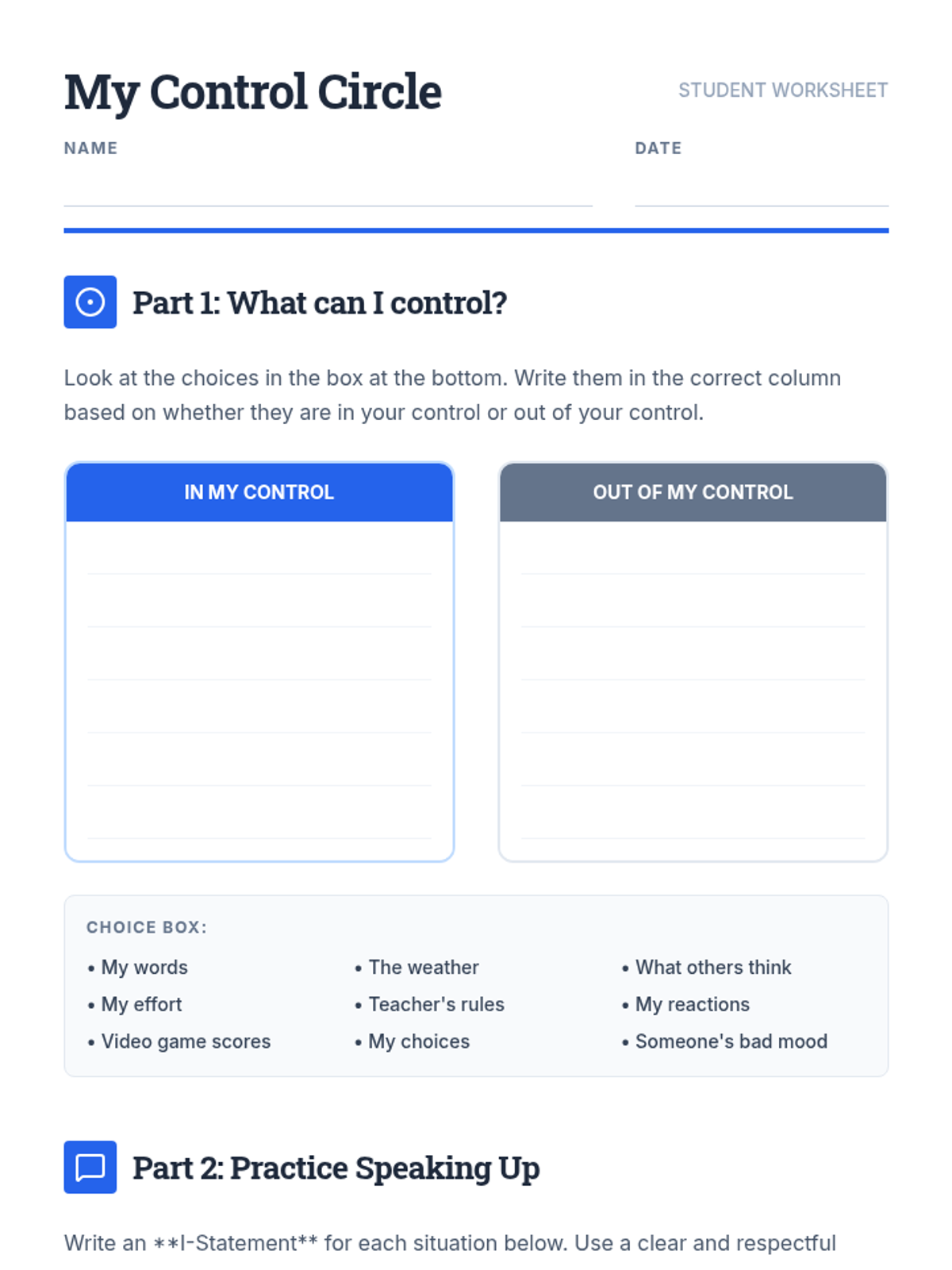
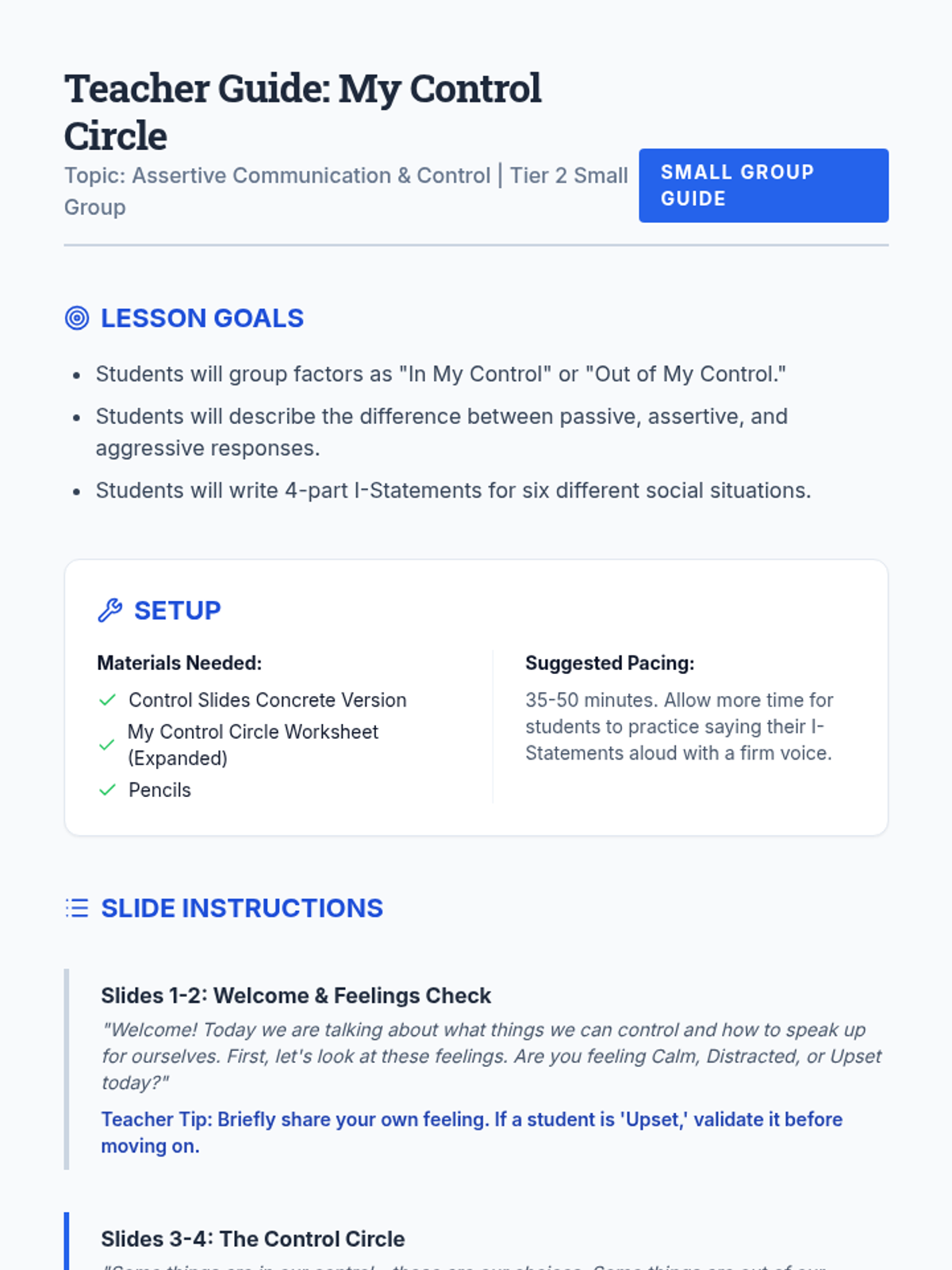
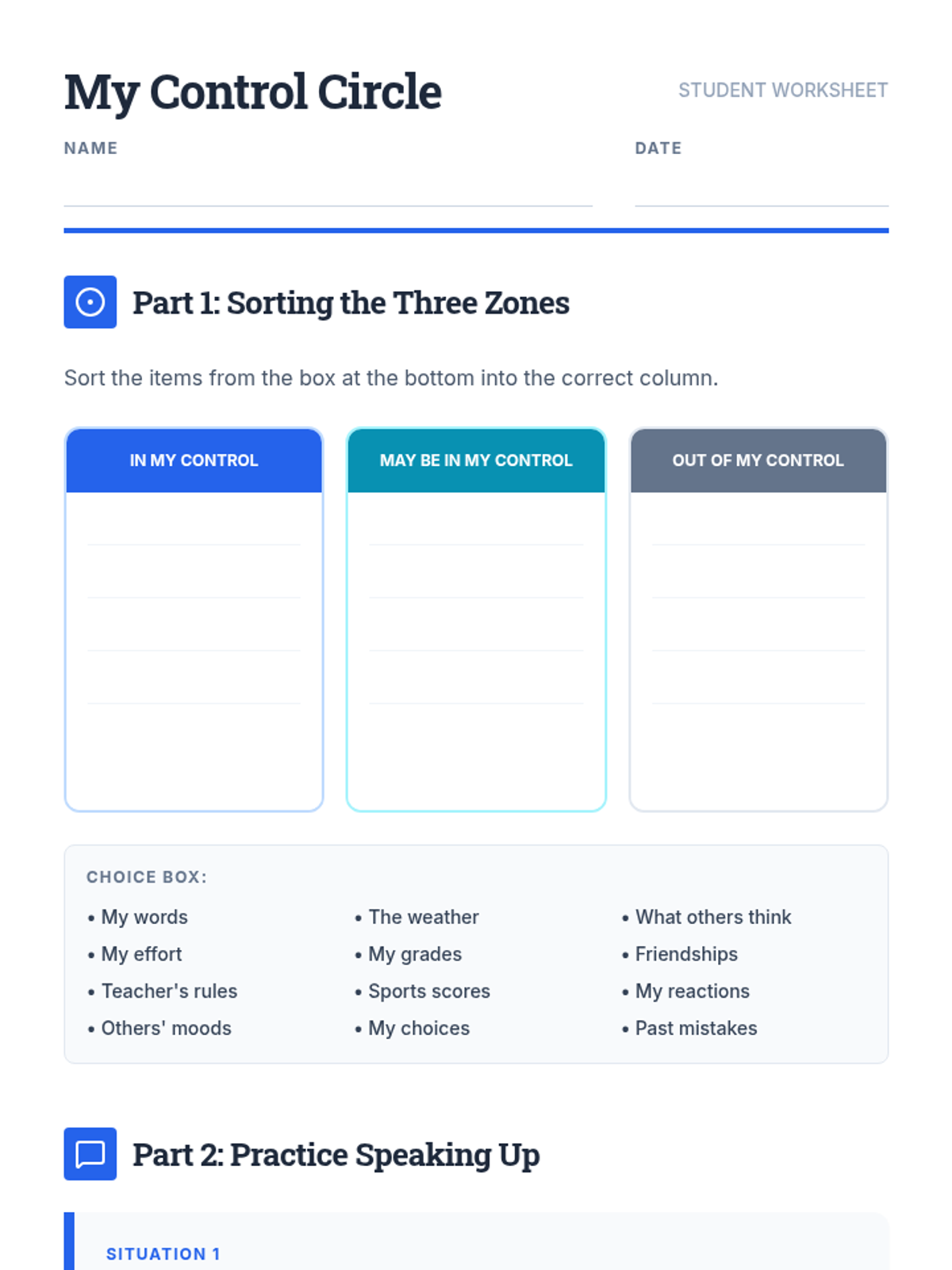
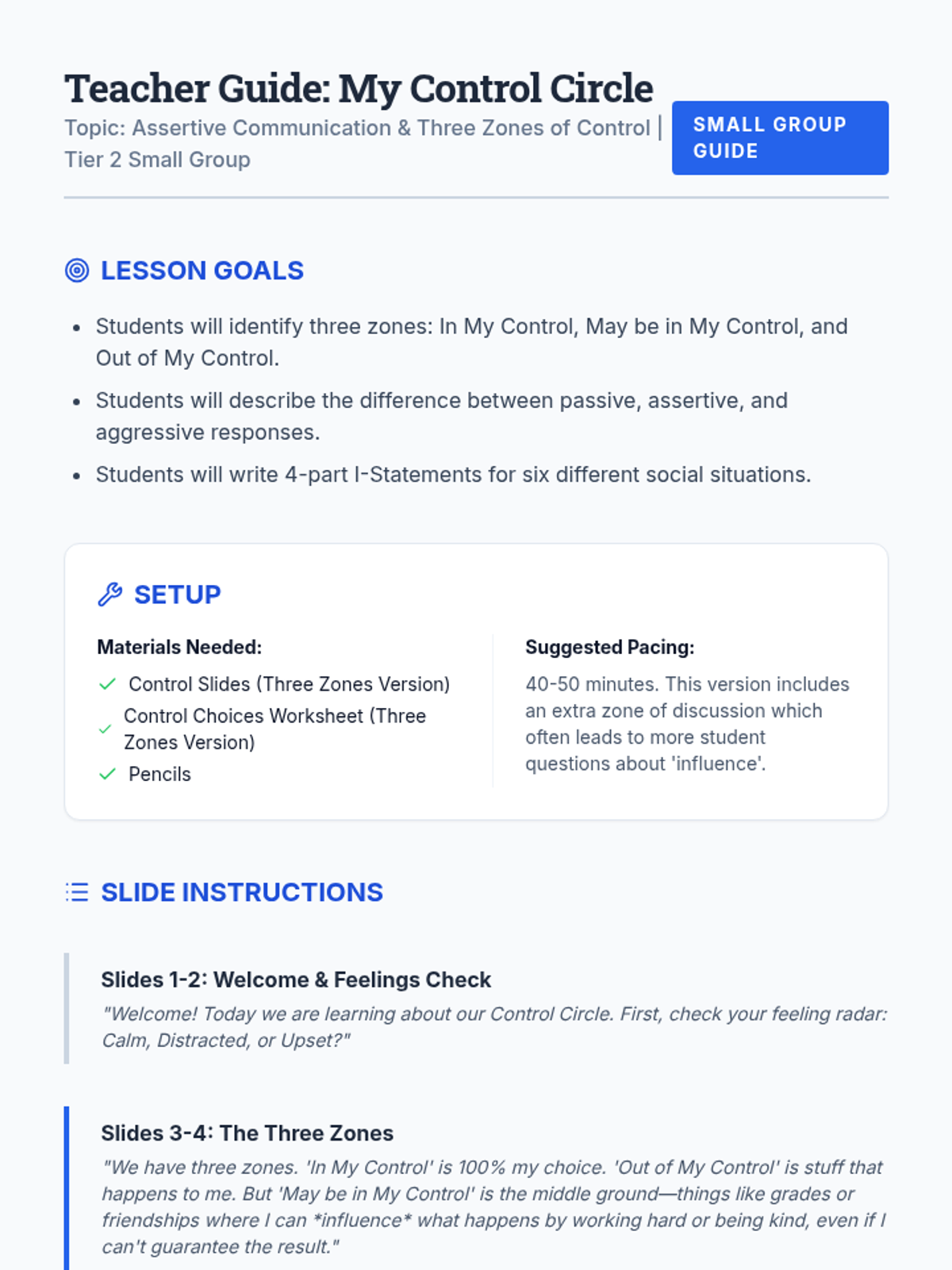
A social-emotional learning lesson for Tier 2 small groups focusing on identifying spheres of control and practicing assertive I-Statements in social scenarios.
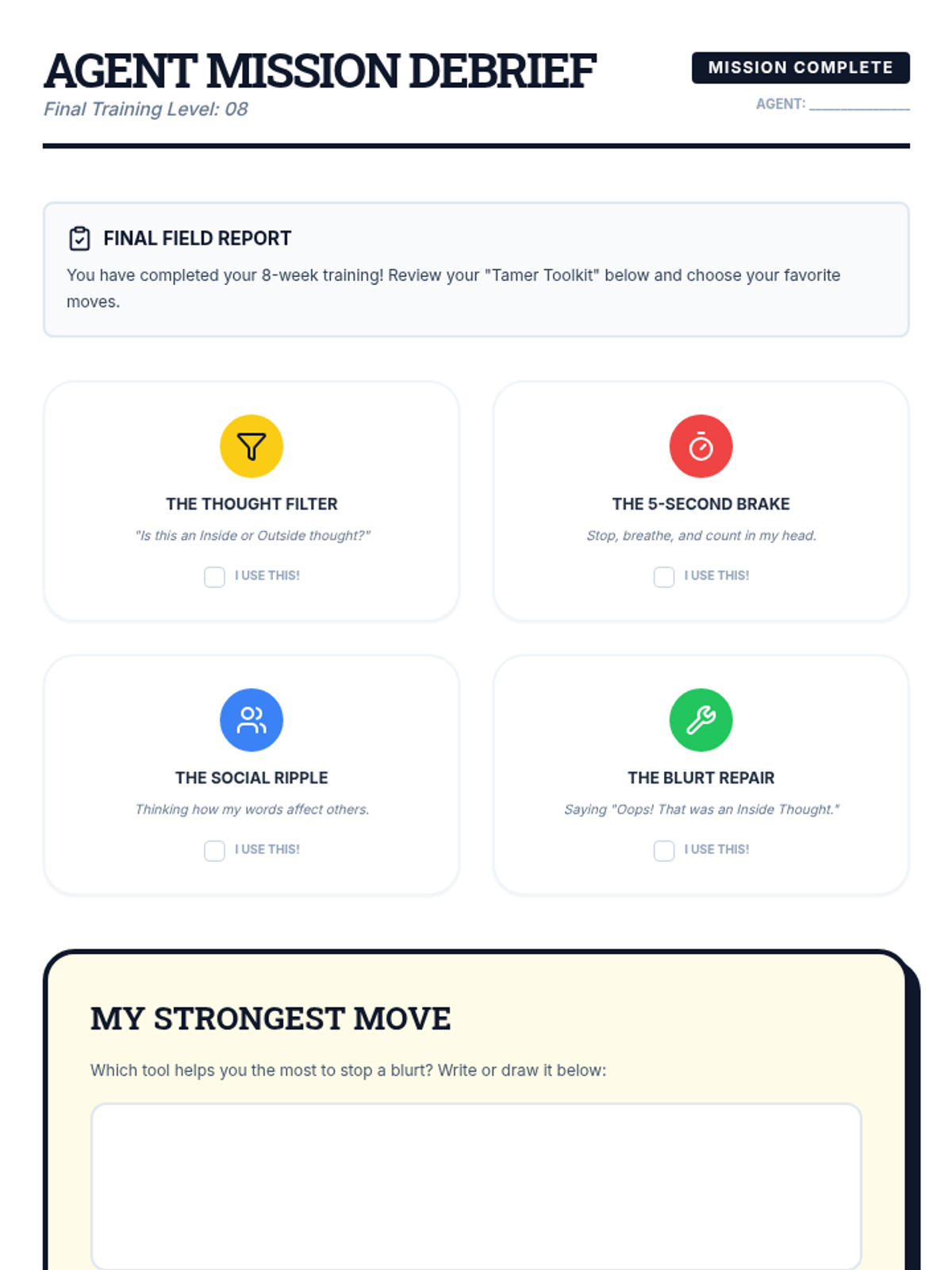
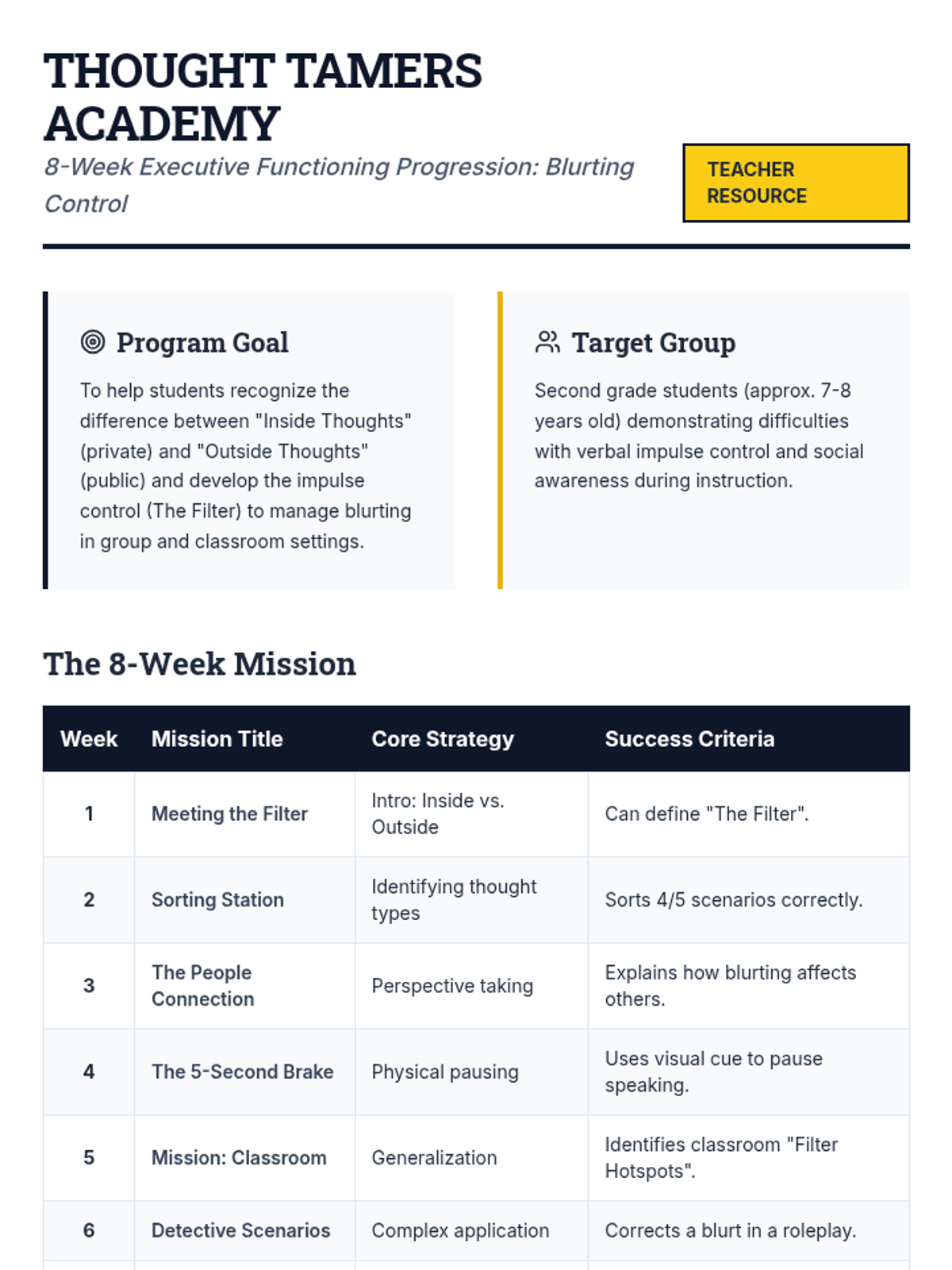
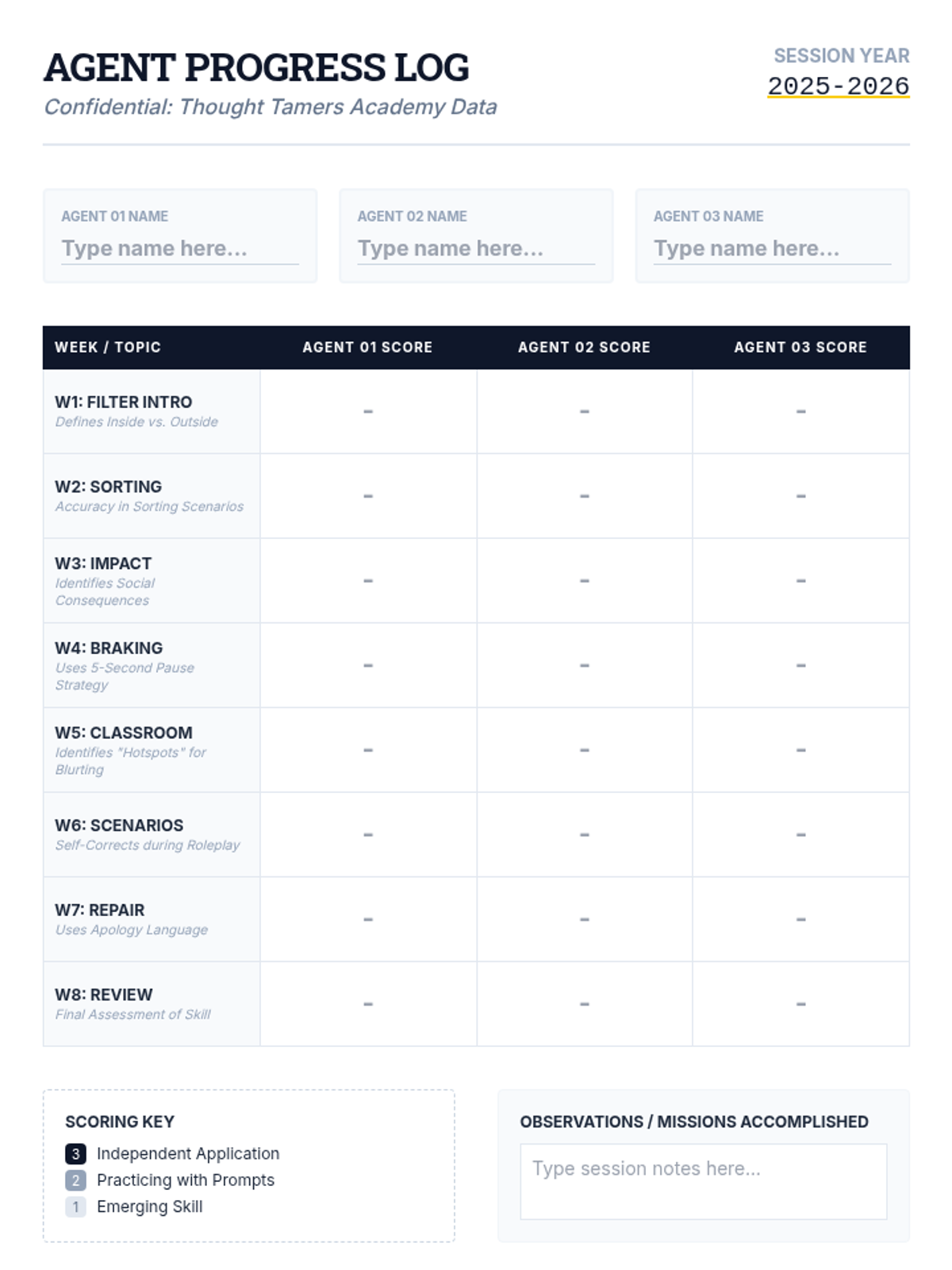
Celebrating progress and reviewing all strategies learned over the 8 weeks.
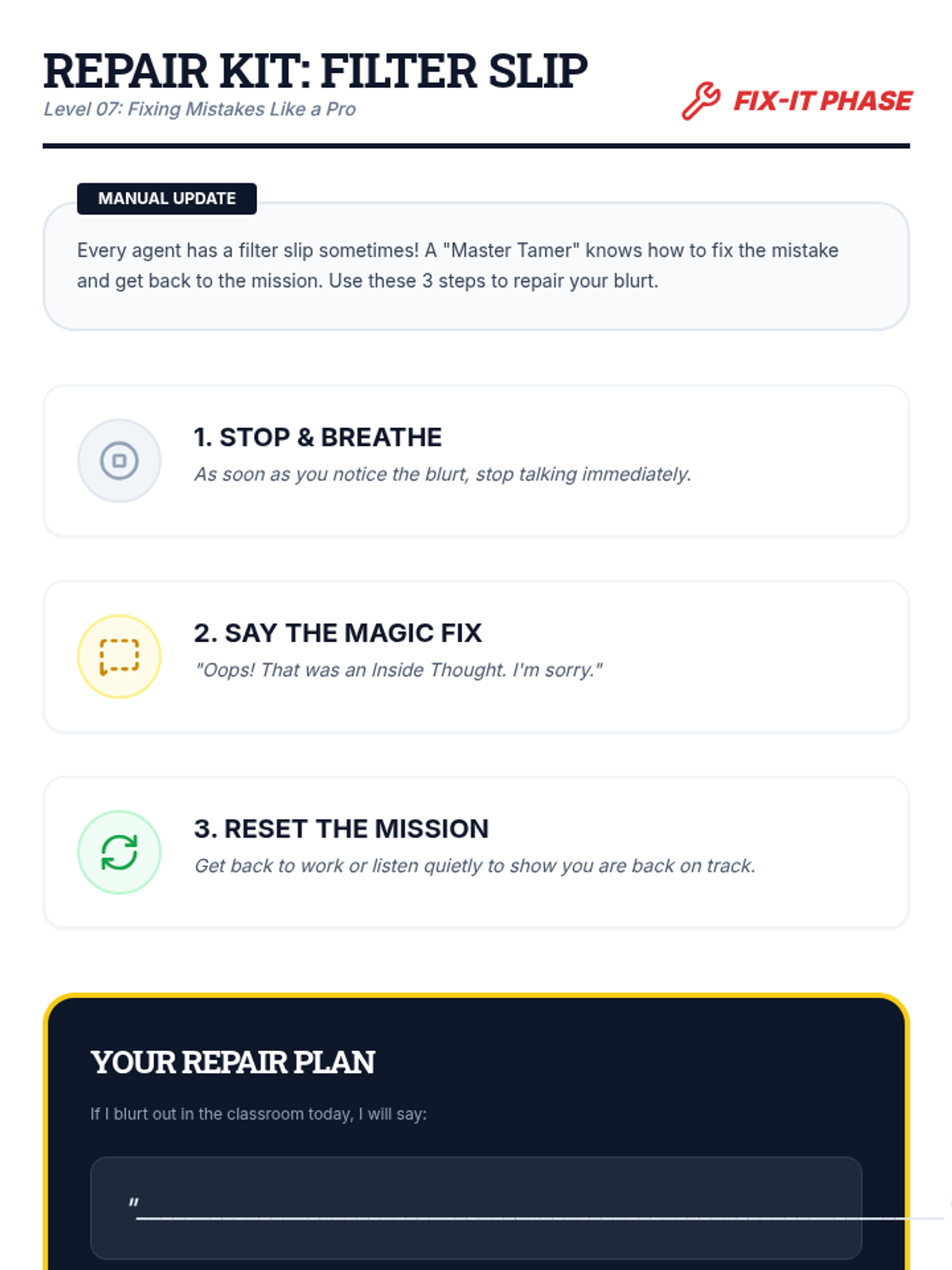
Learning how to apologize and reset after an accidental blurt occurs.
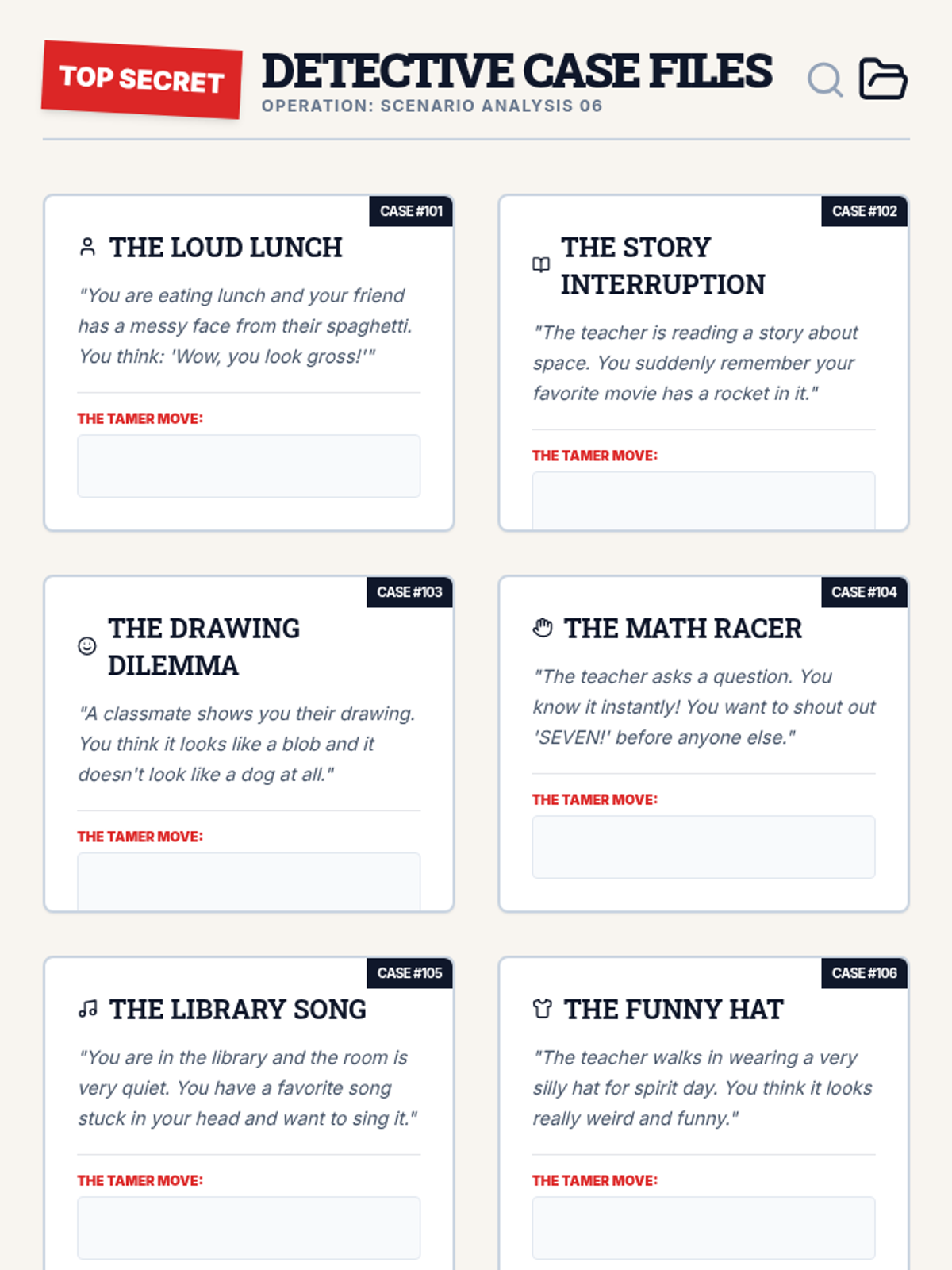
Using detective skills to analyze complex scenarios and determine the best 'Thought Tamer' move.
Applying the filter to specific classroom routines like raising hands and group discussions.
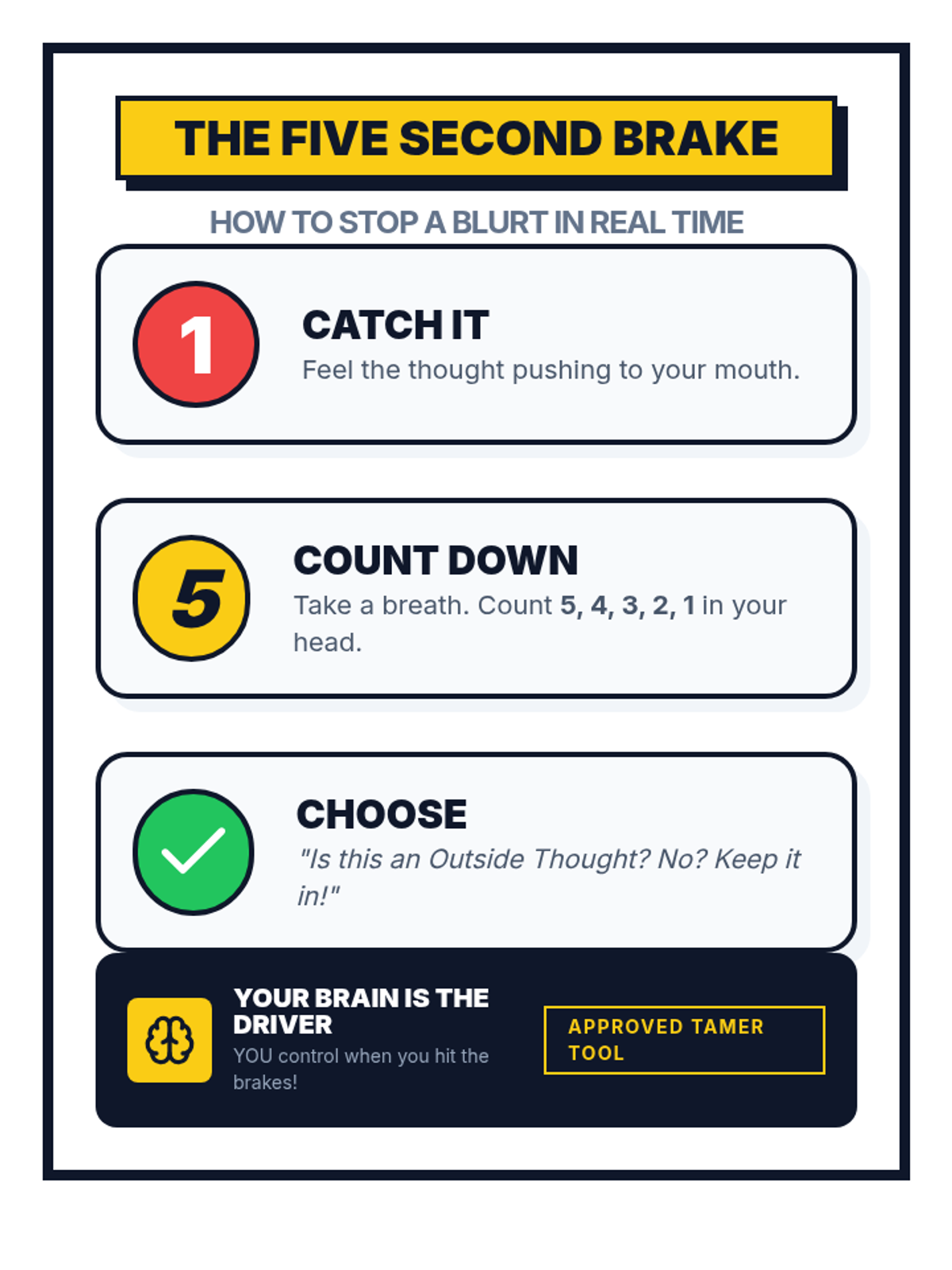
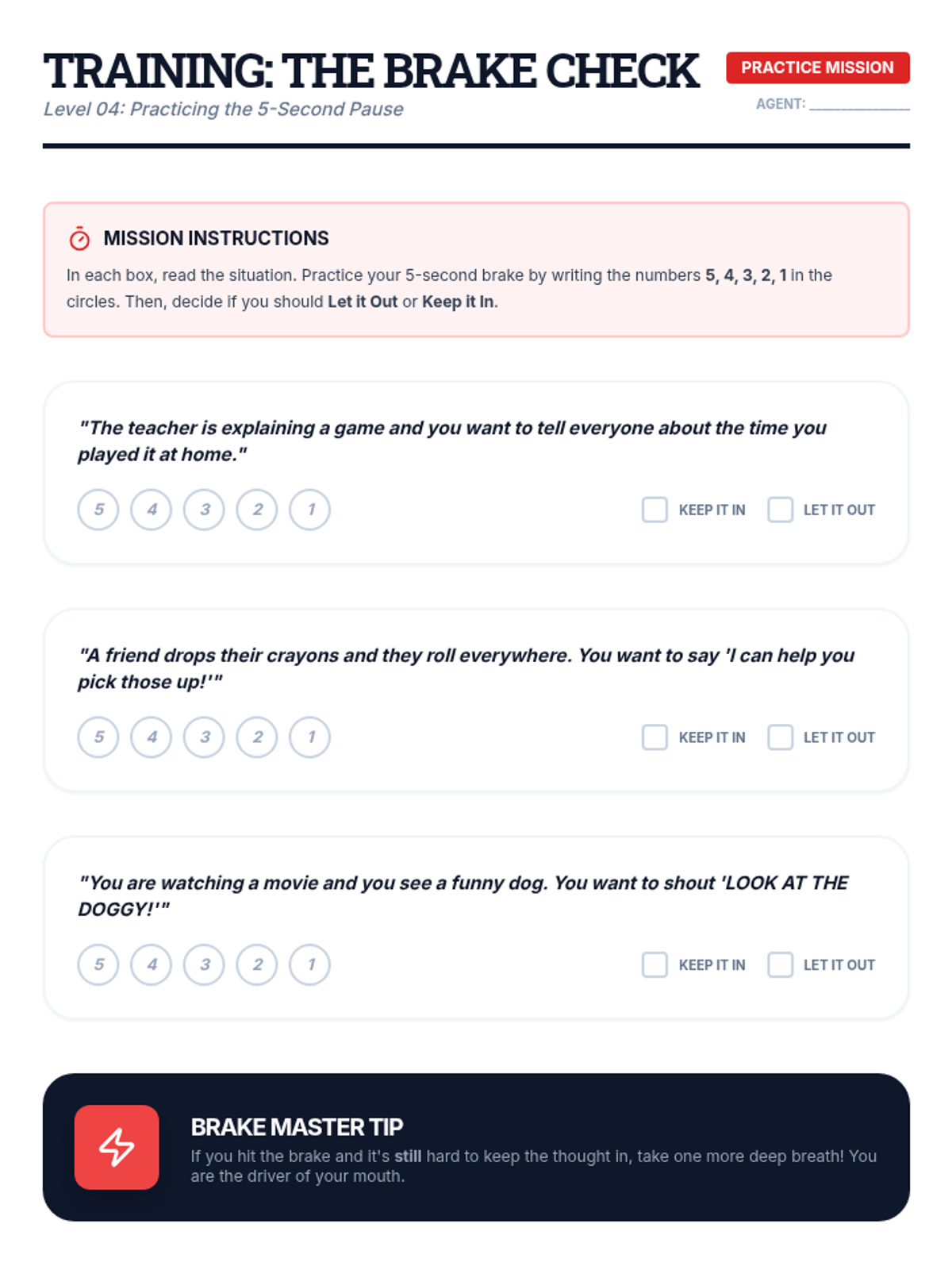
Learning the '5-Second Braking' technique to pause before a thought leaves the mouth.
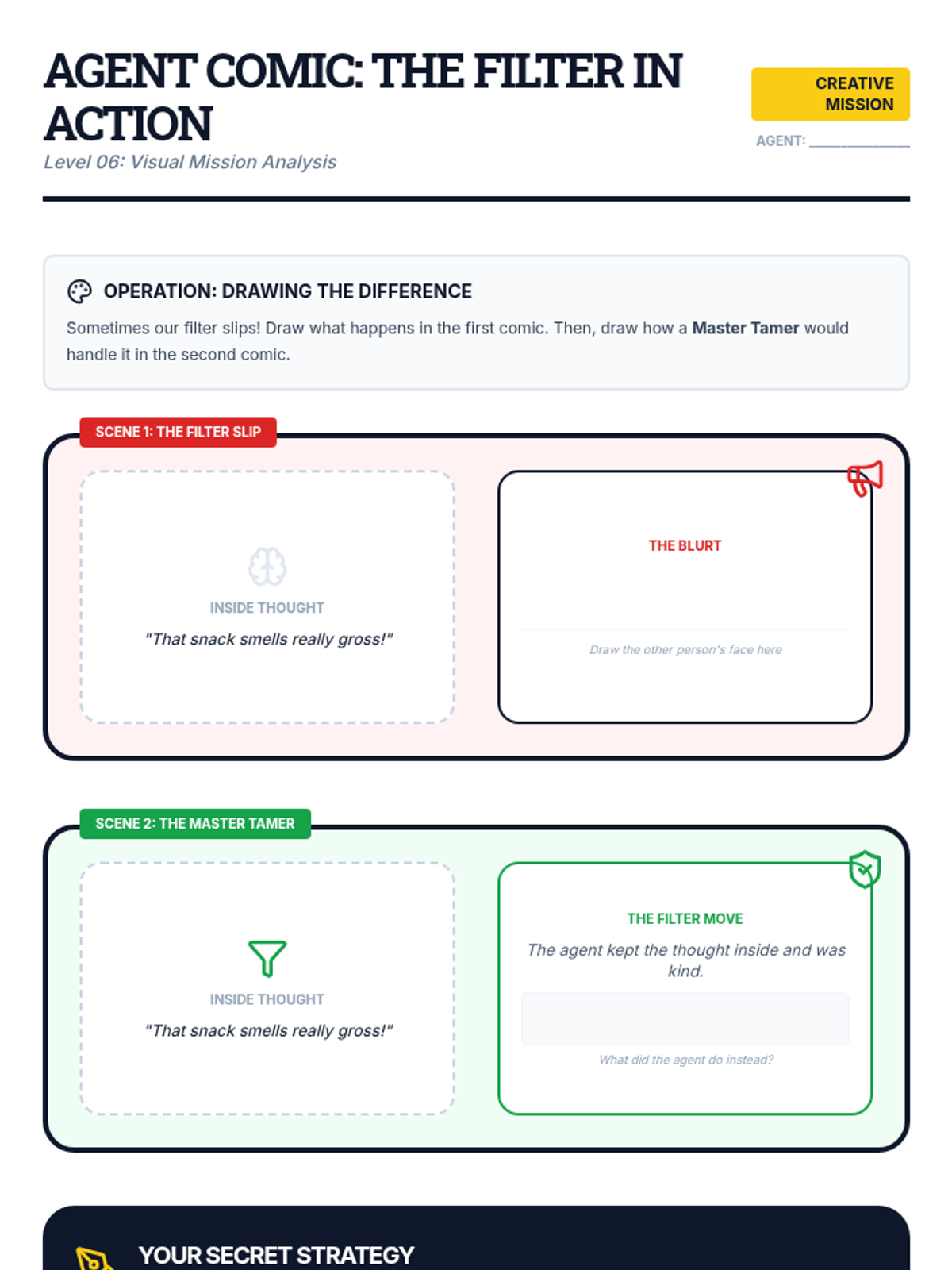
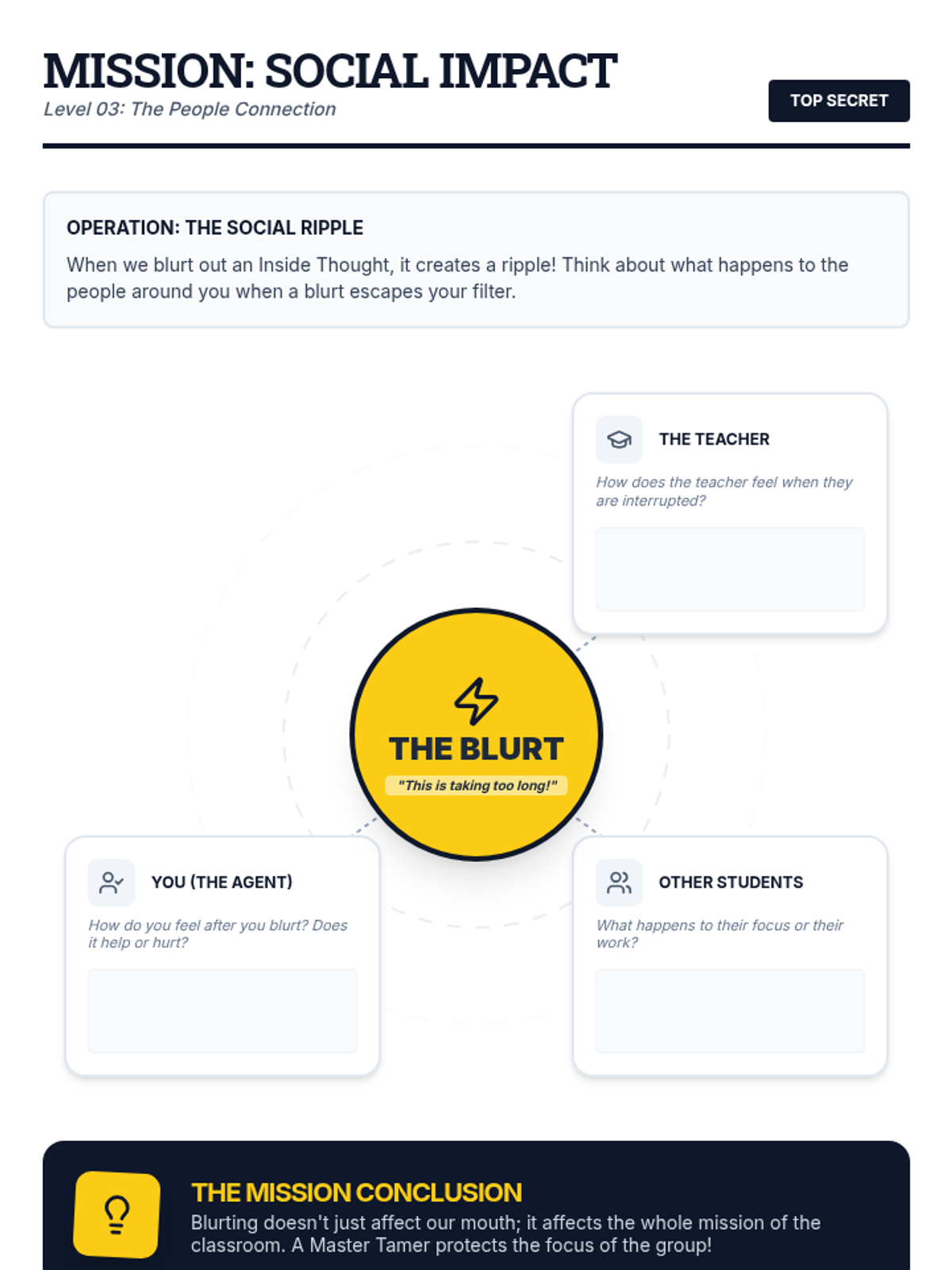
Exploring how blurting affects friends and teachers, focusing on the social consequences of the 'Outside' thought.
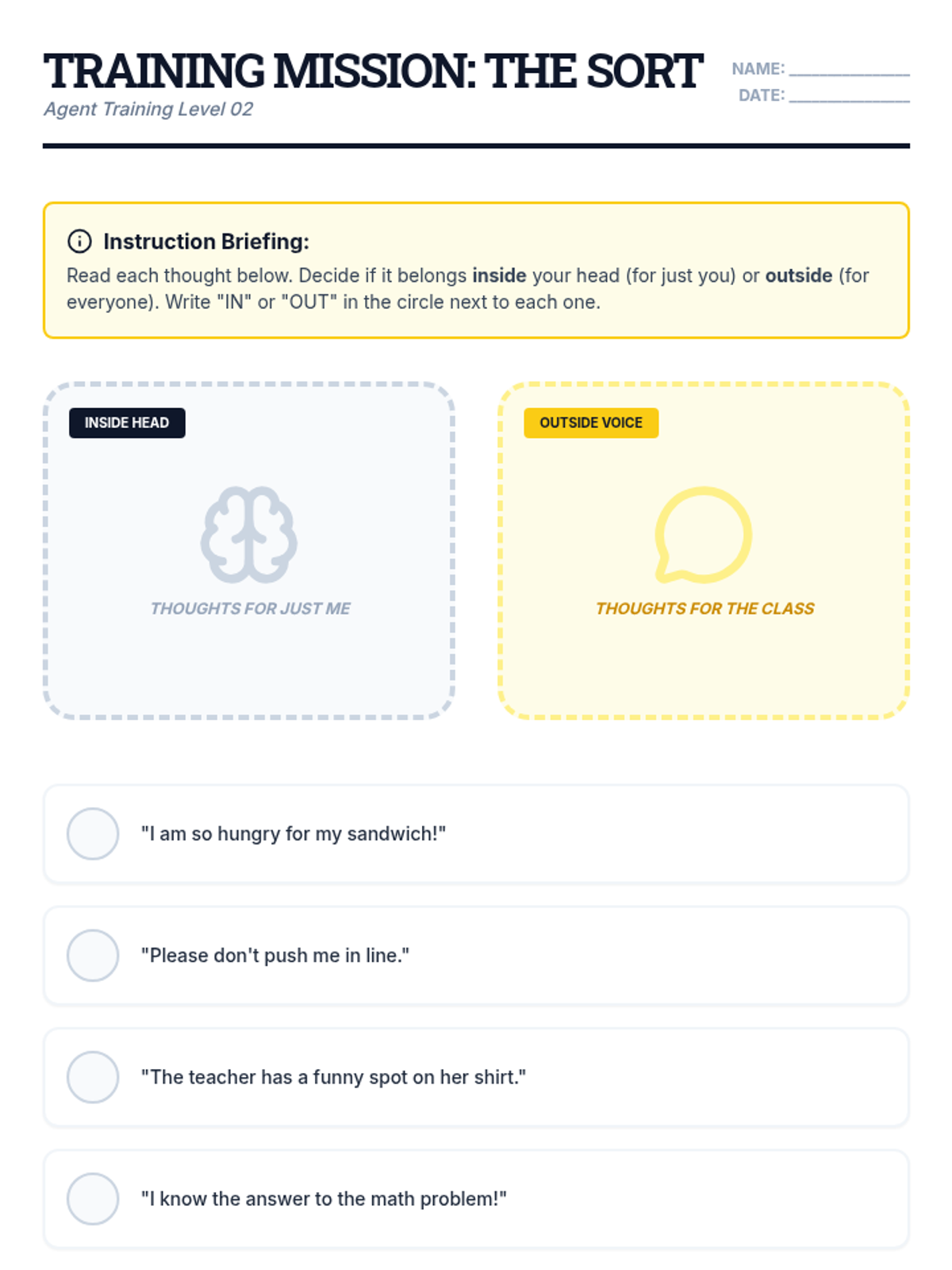
Active practice sorting various thoughts into 'stay inside' and 'can come out' categories through interactive games.
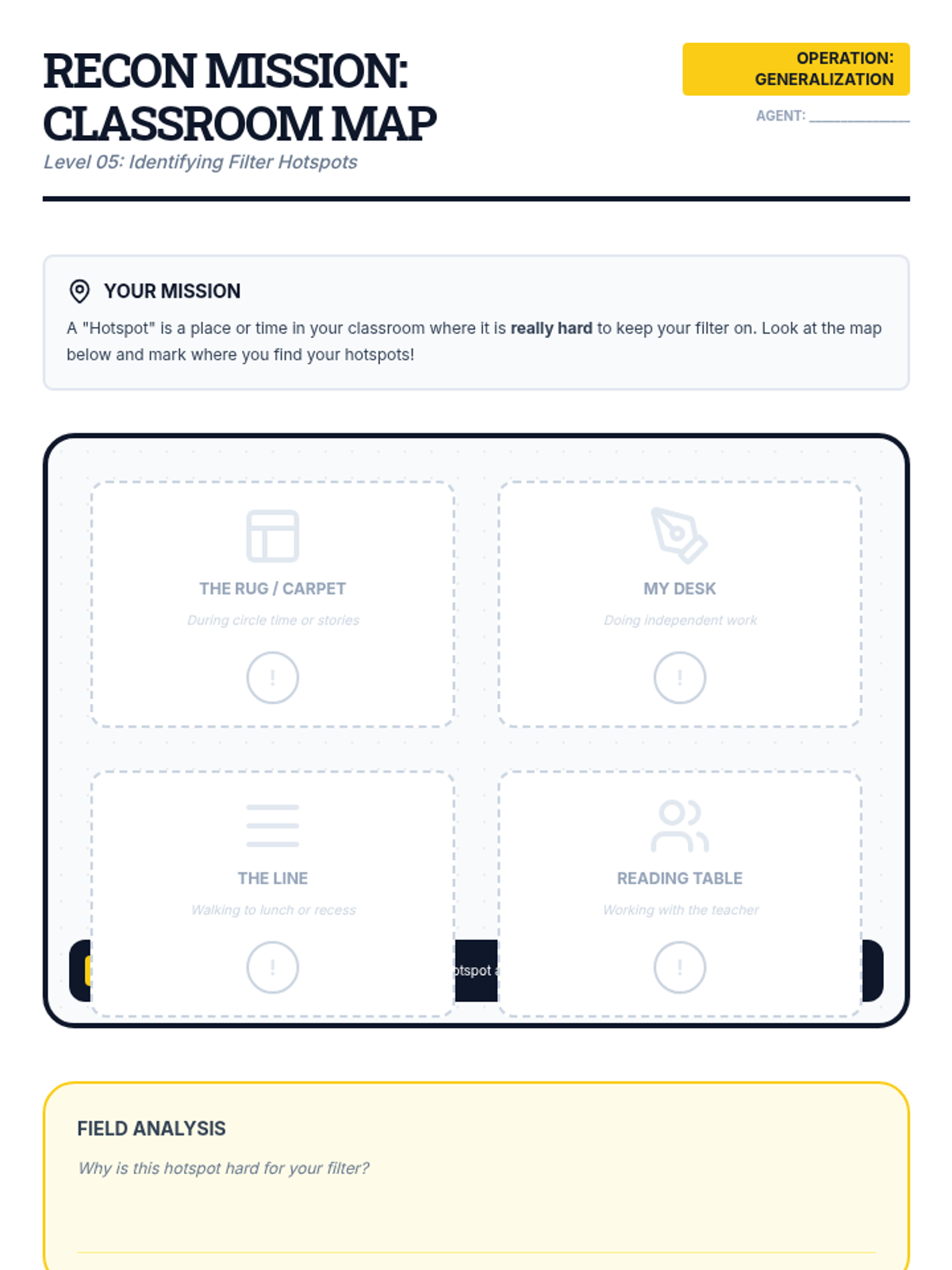
Introduction to the concept of Inside vs. Outside thoughts and the 'Thought Filter' mechanism.
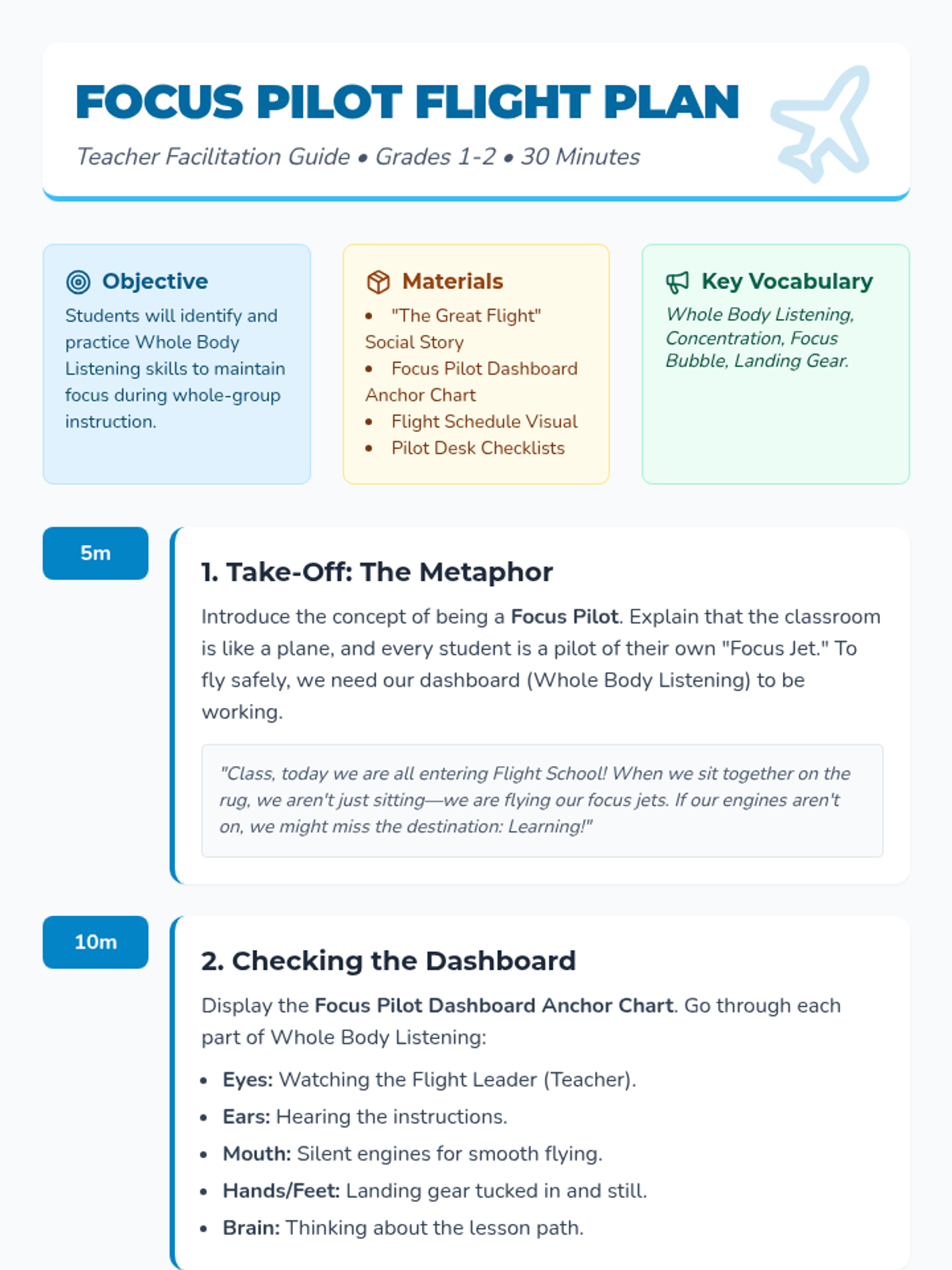
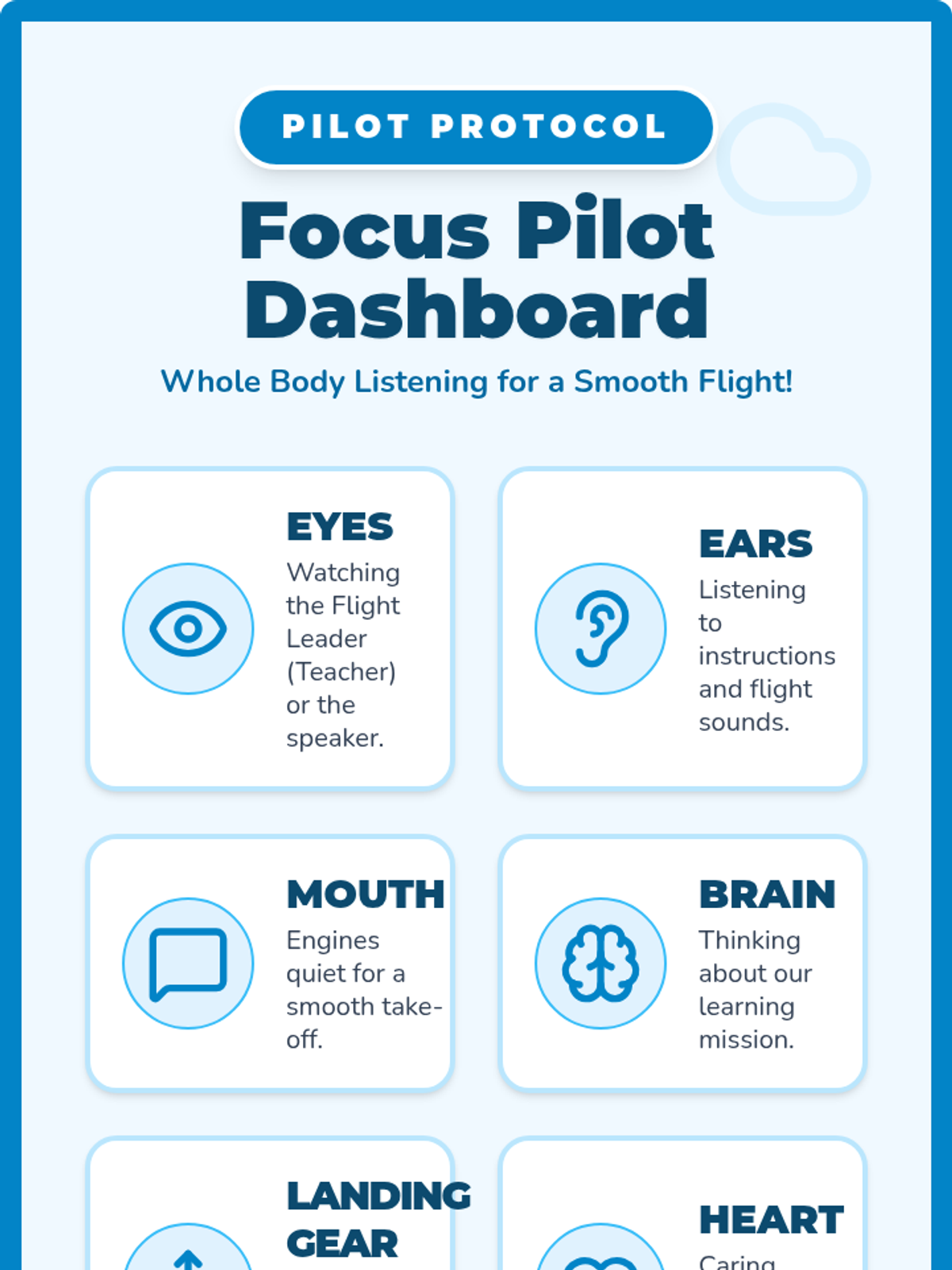
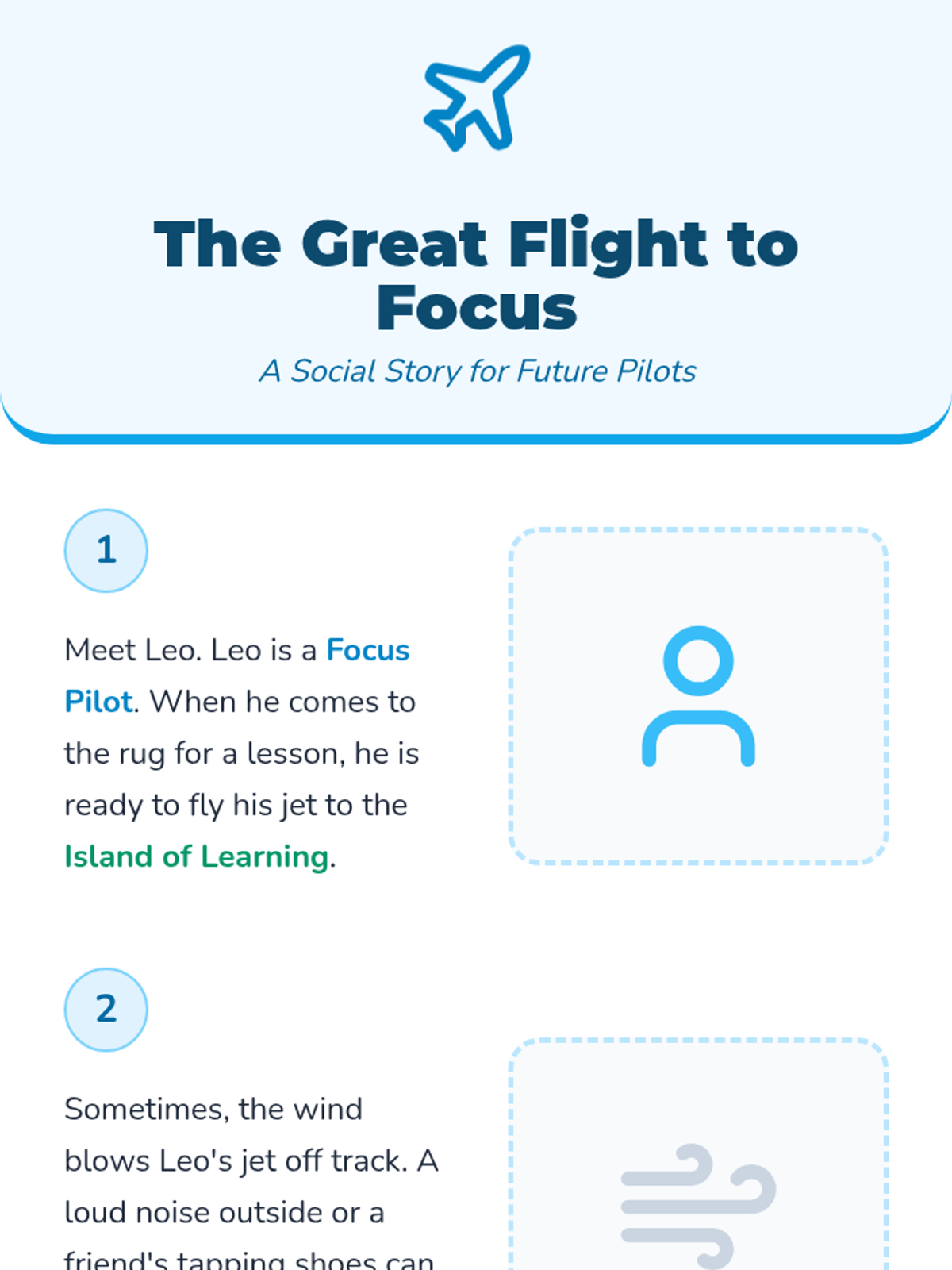
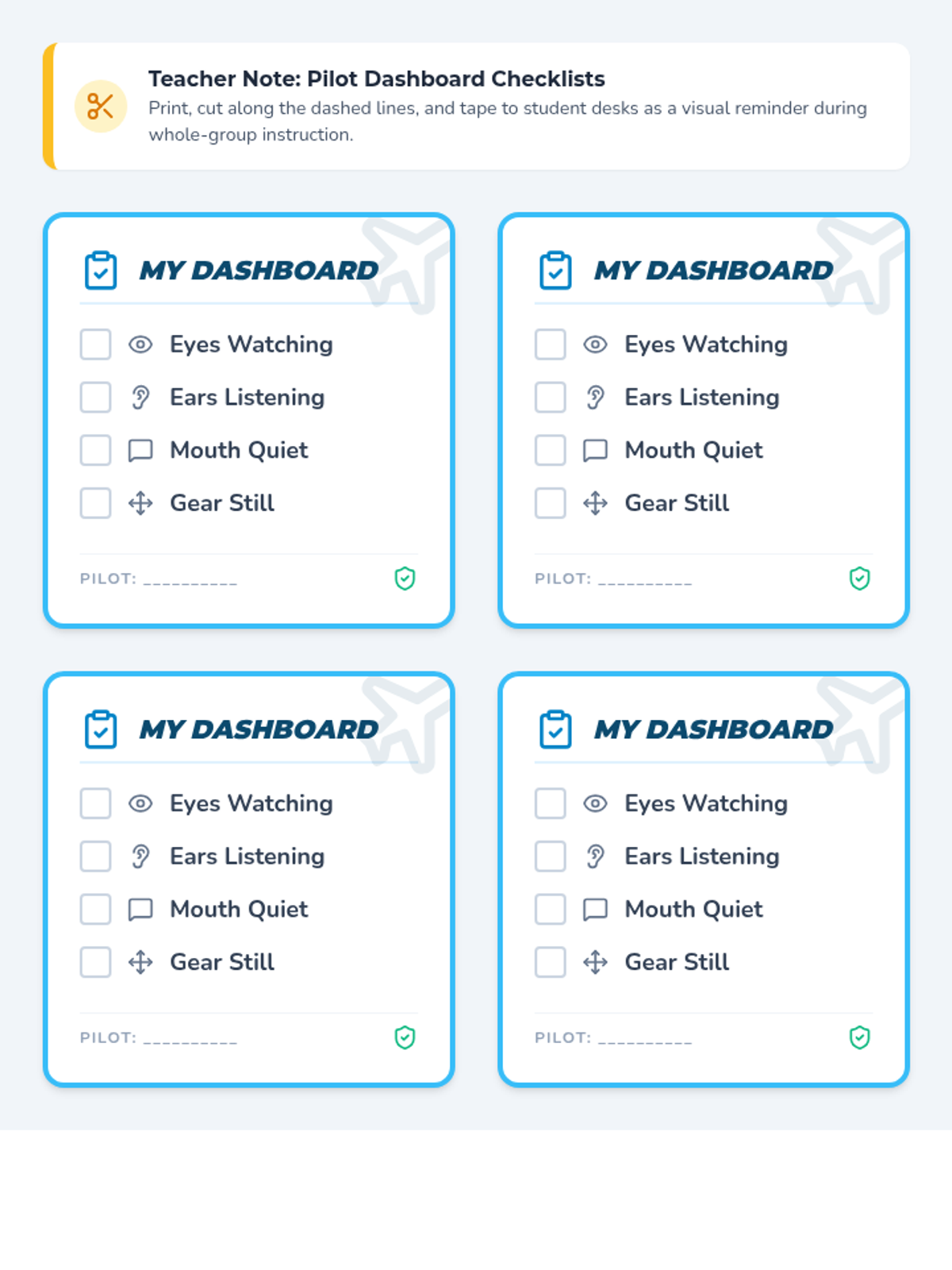
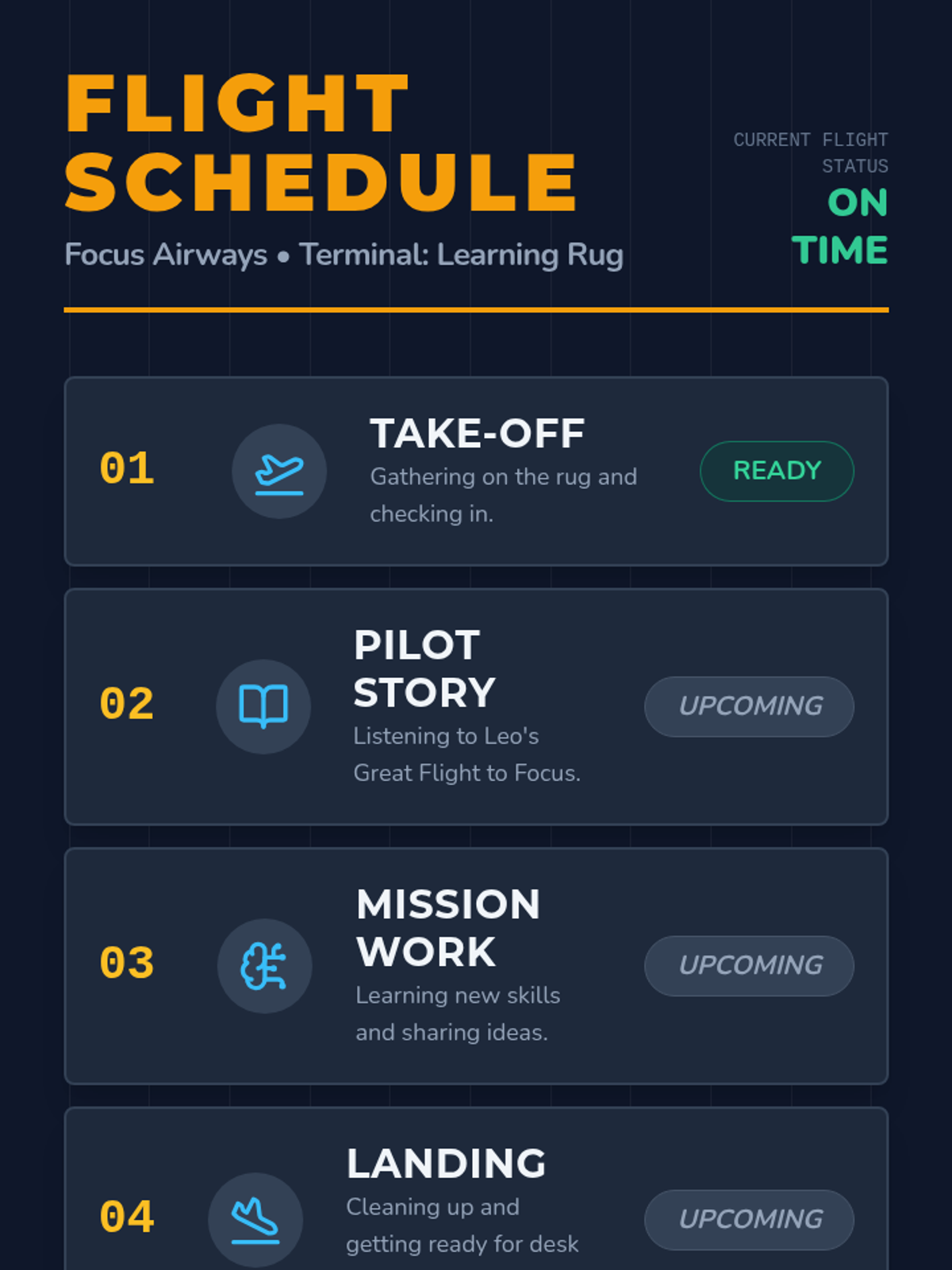
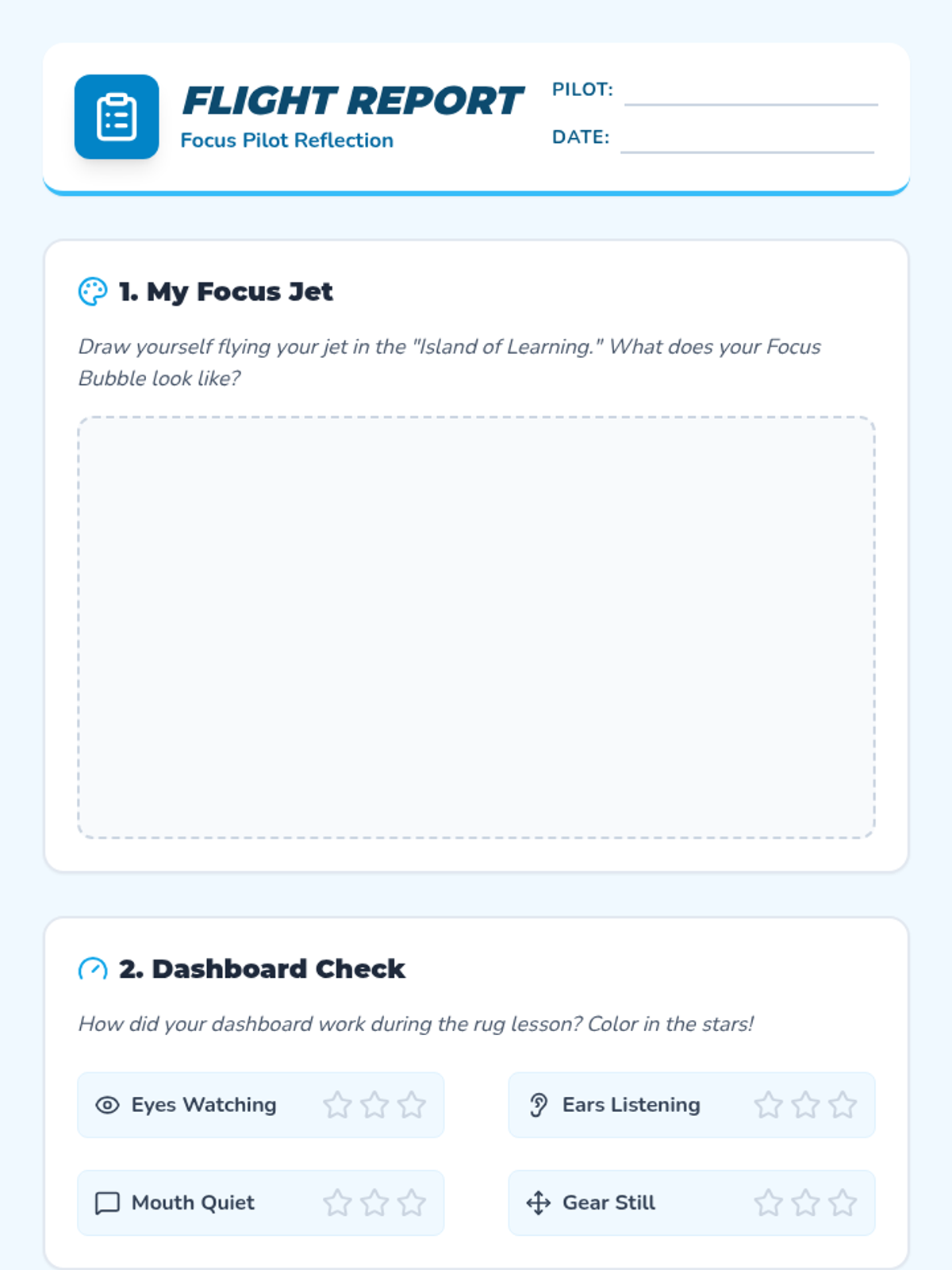
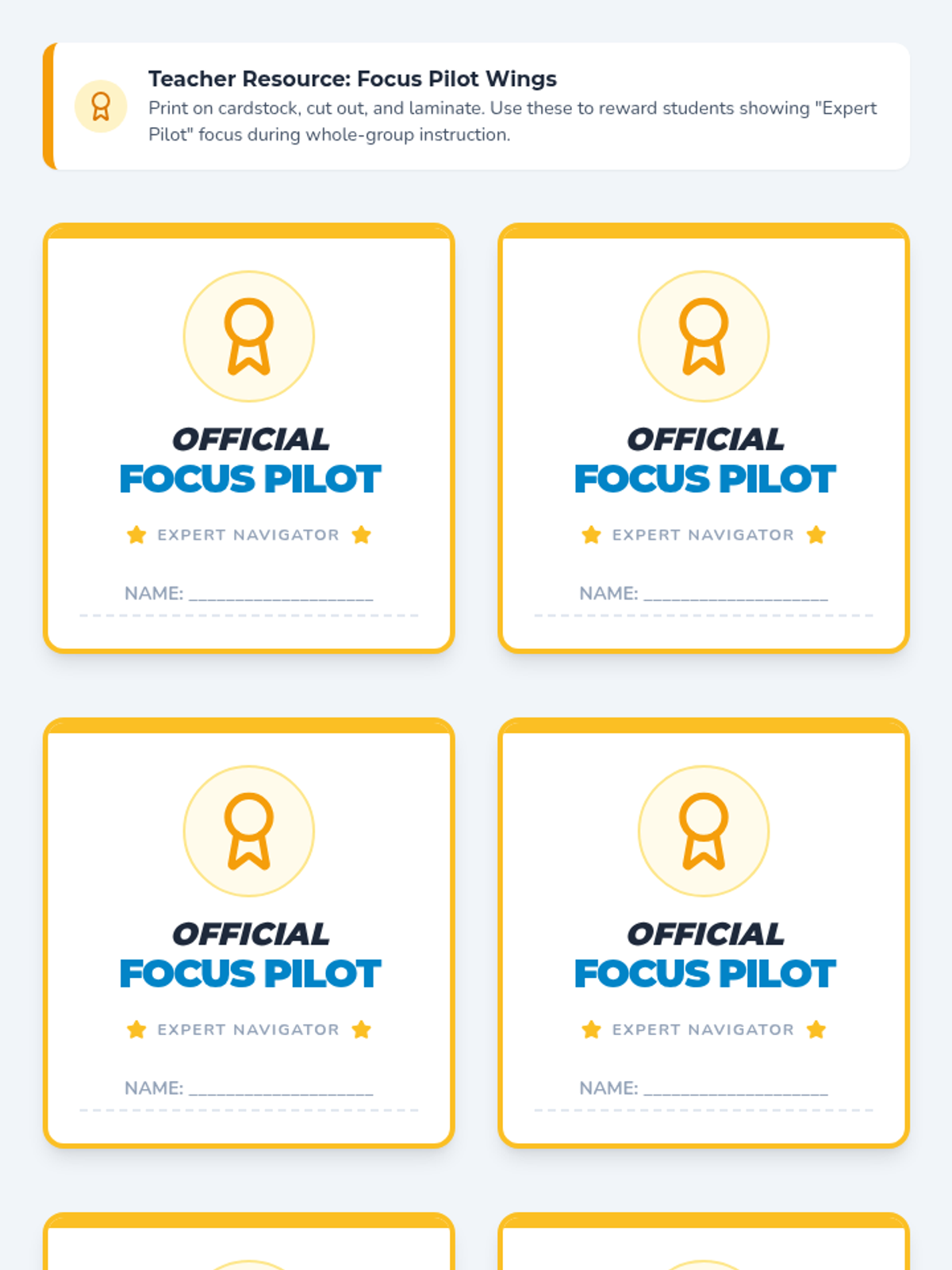
A 30-minute lesson introducing Grade 1 and 2 students to self-regulation during whole-group instruction through the 'Focus Pilot' metaphor, covering whole body listening and concentration skills.
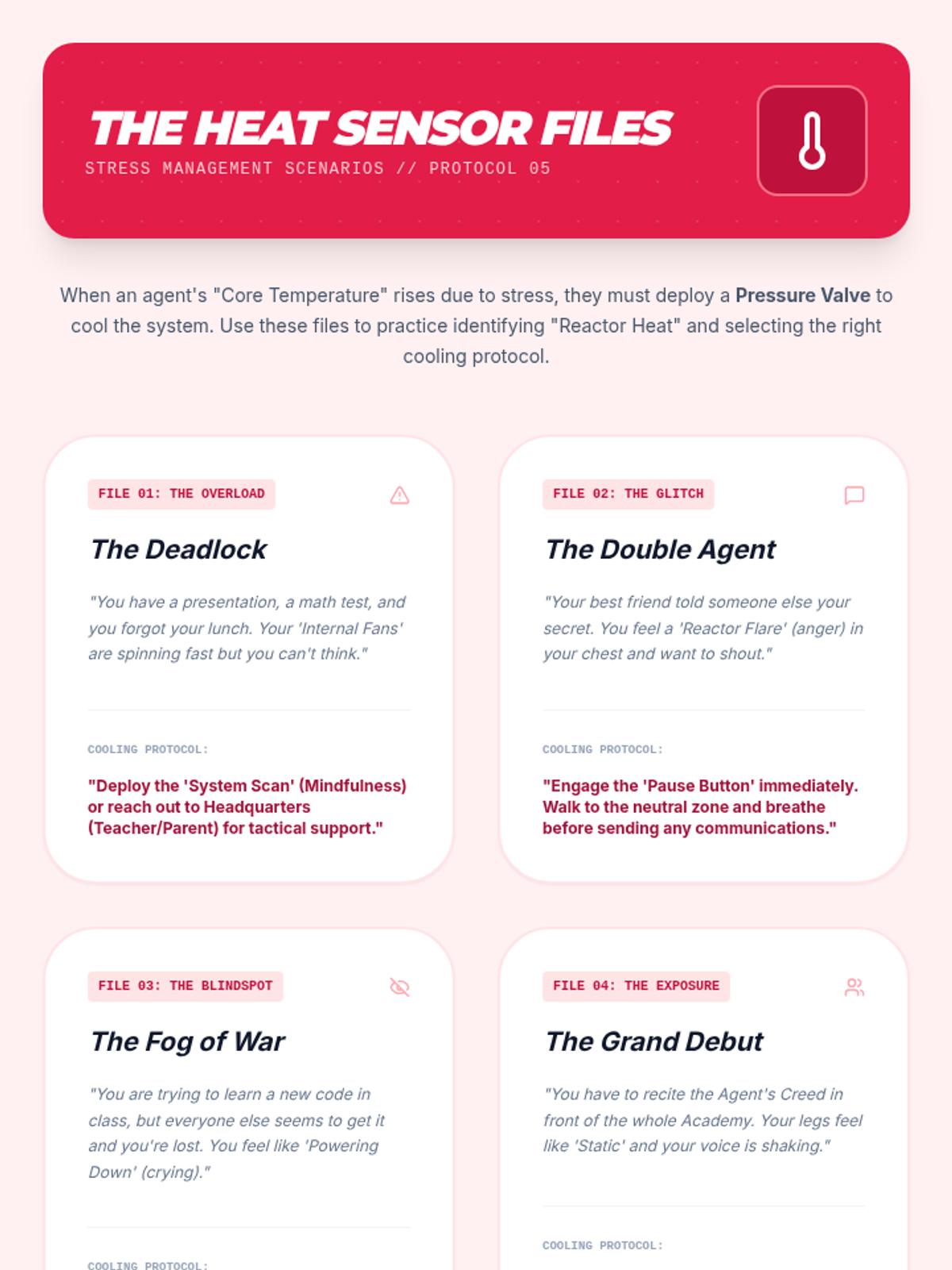
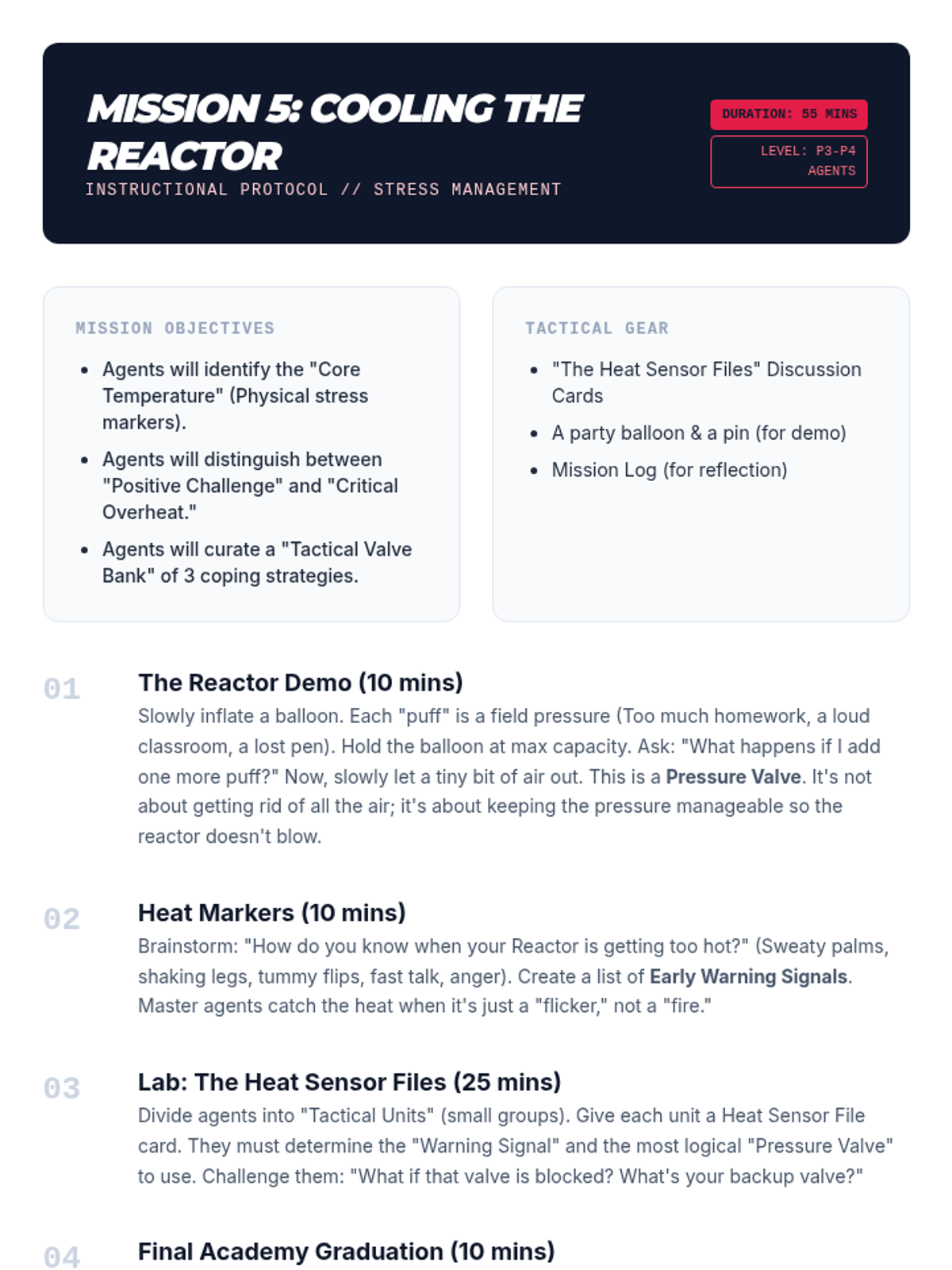
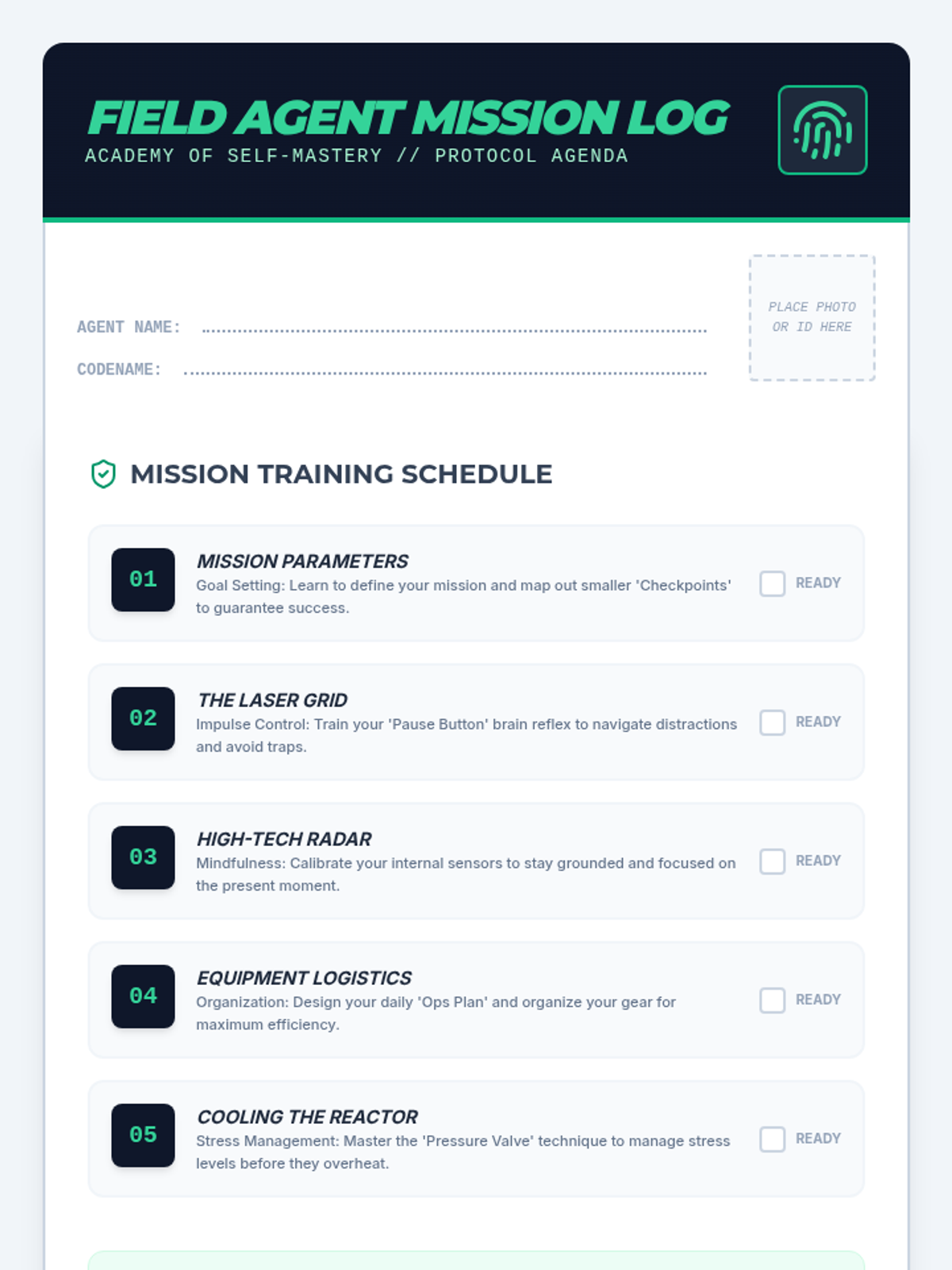
Agents learn to identify 'reactor heat' (stress) and use cooling valves to maintain operational status.
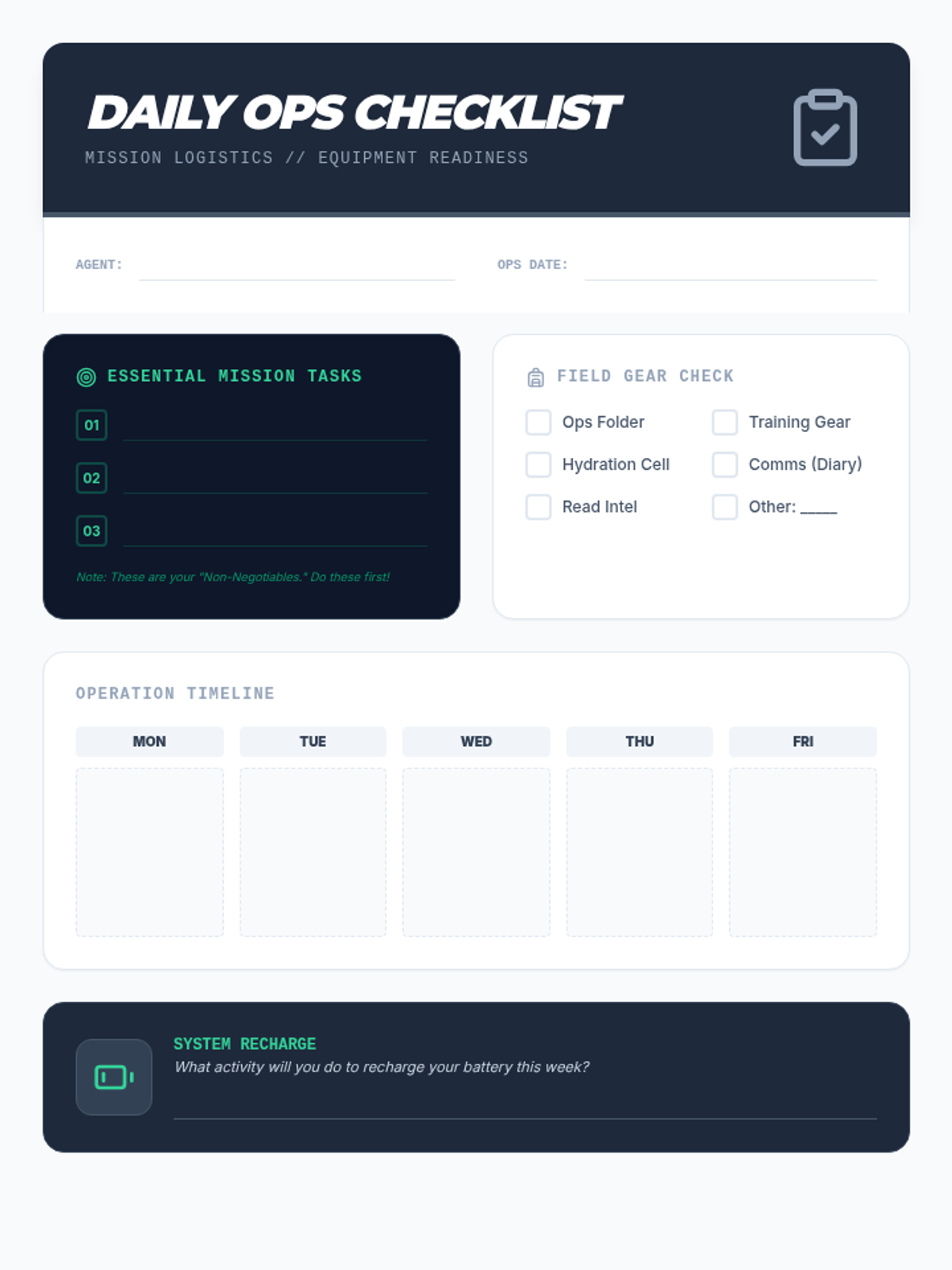
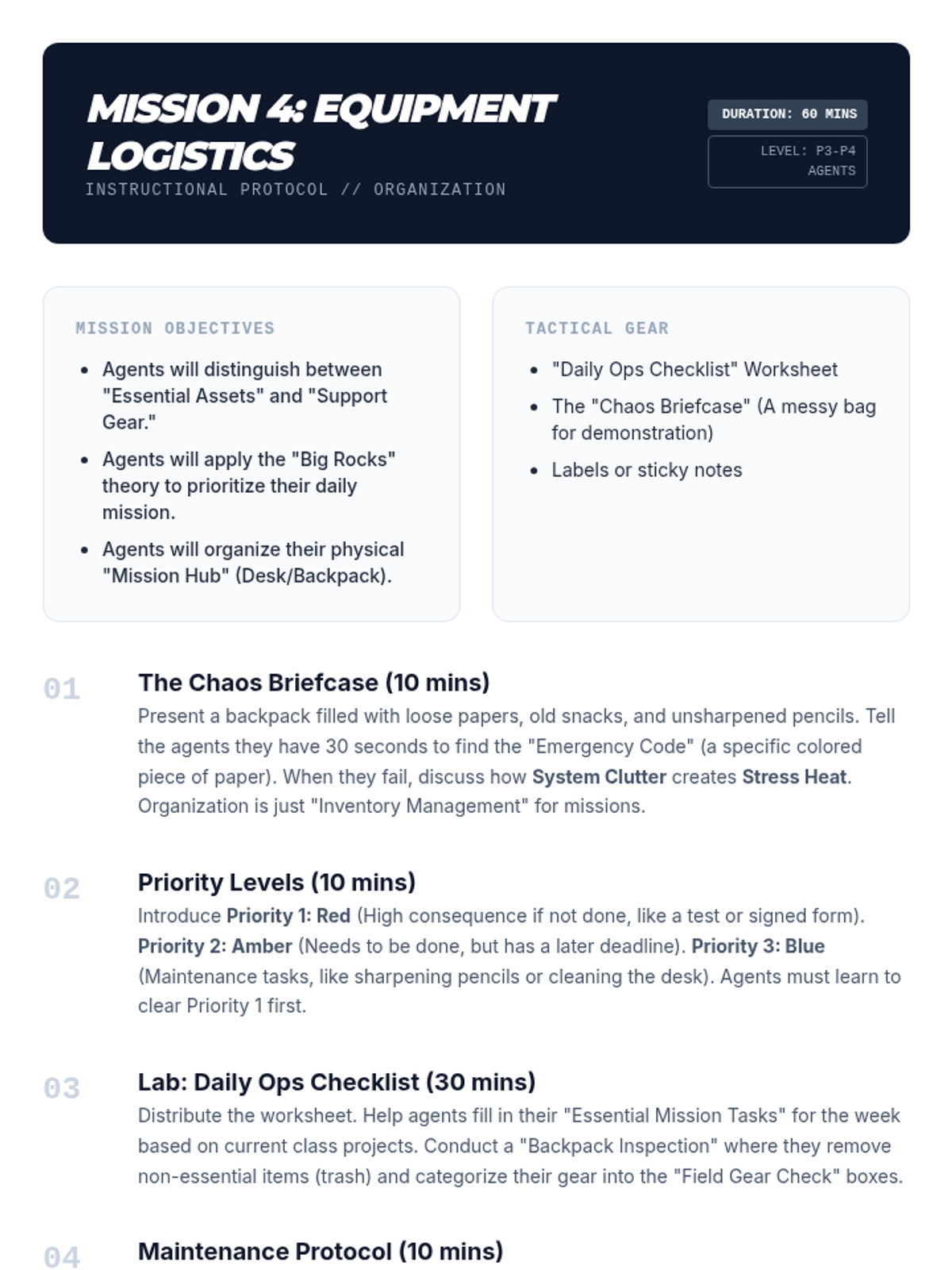
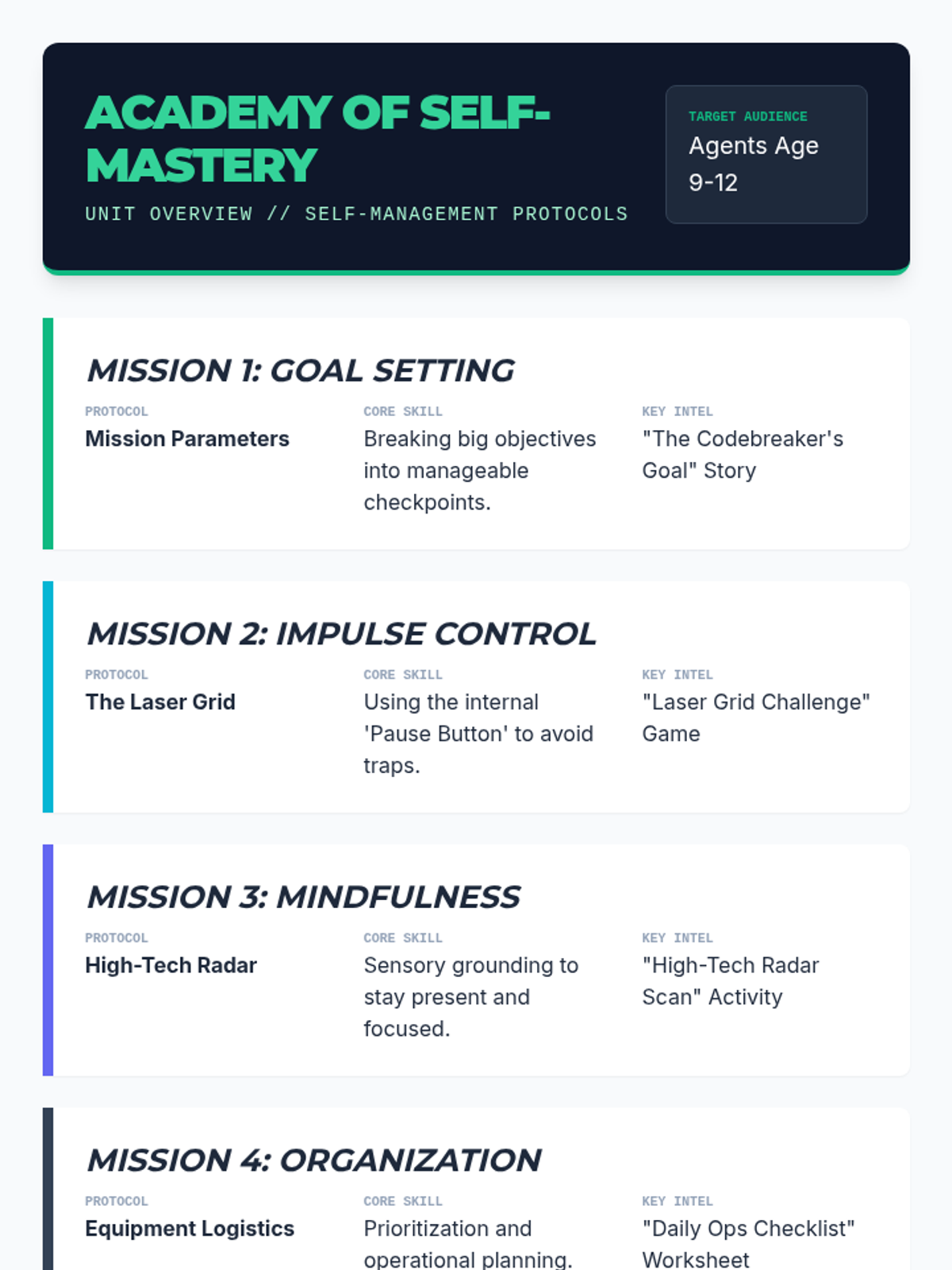
Agents master the logistics of their daily operations through effective planning and organization.
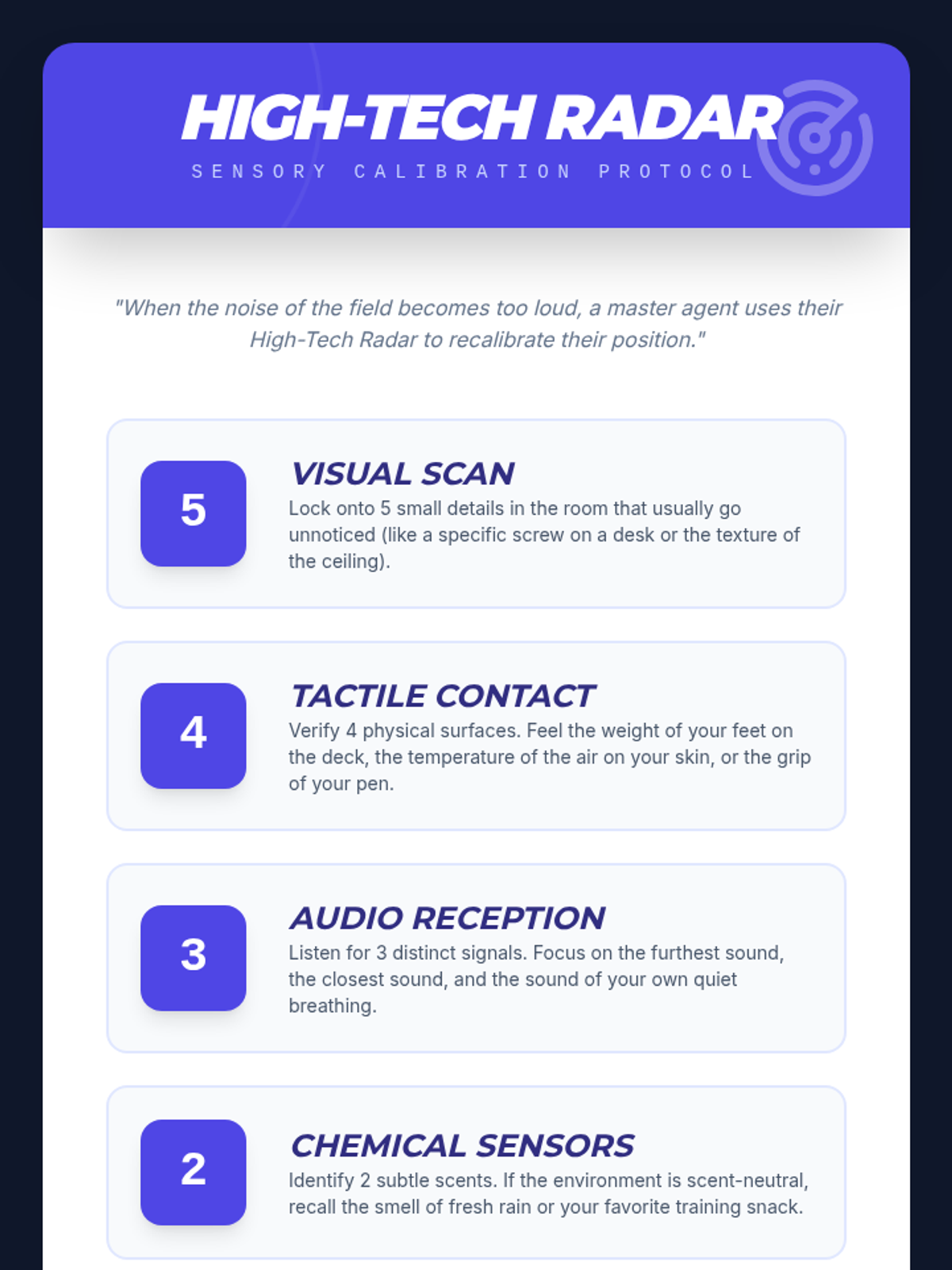
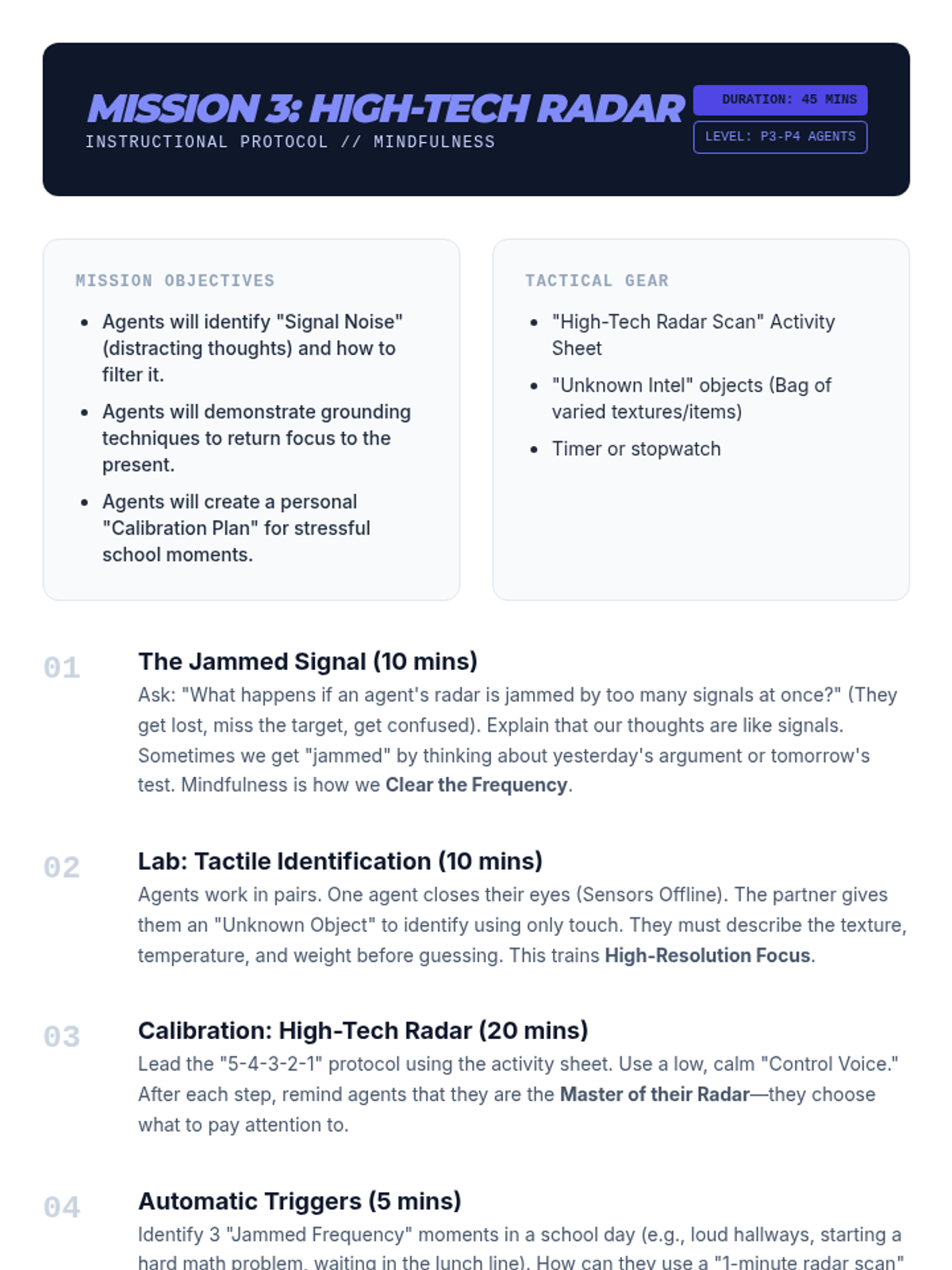
Agents calibrate their internal radar using sensory grounding techniques to stay focused.
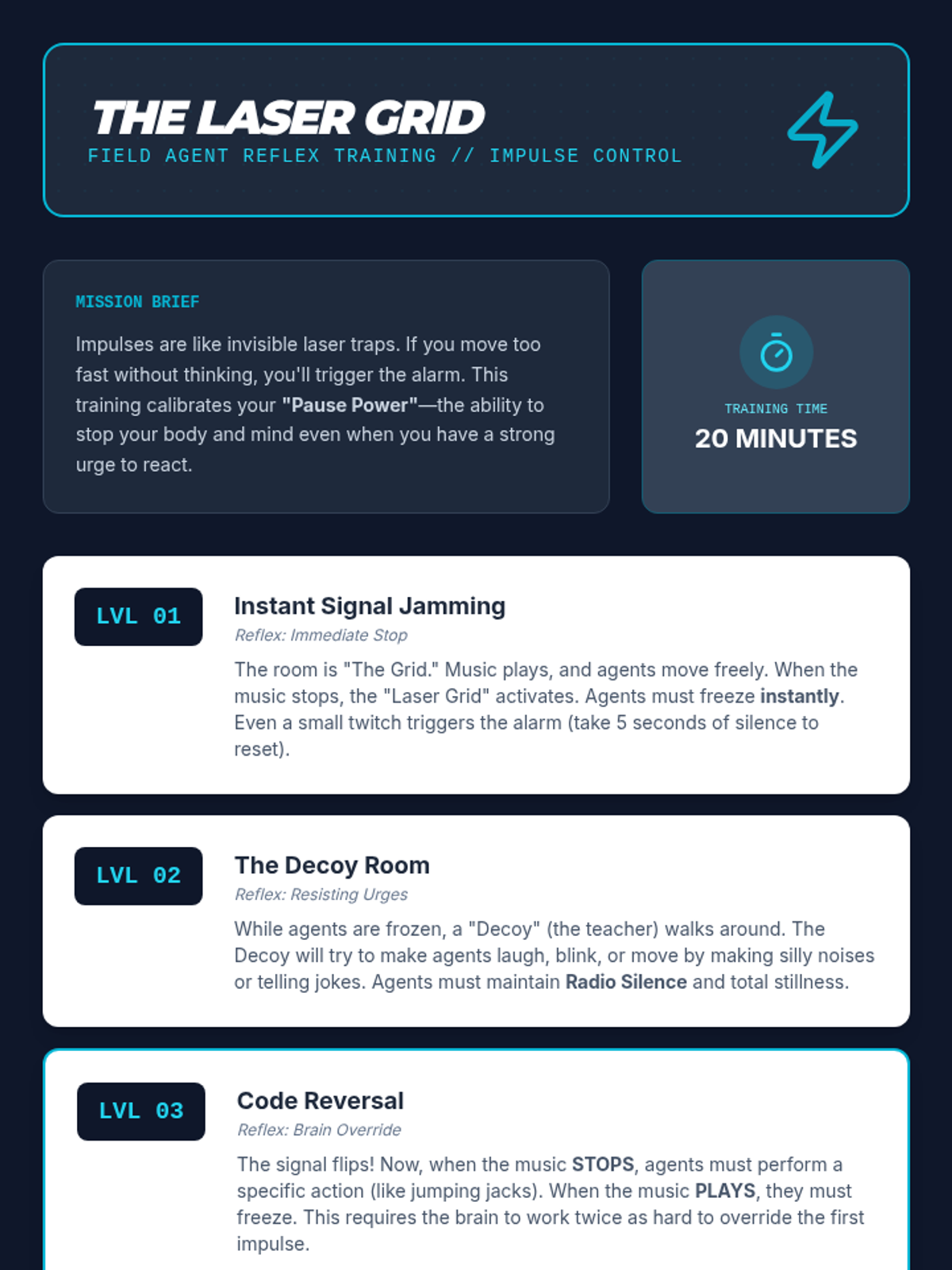
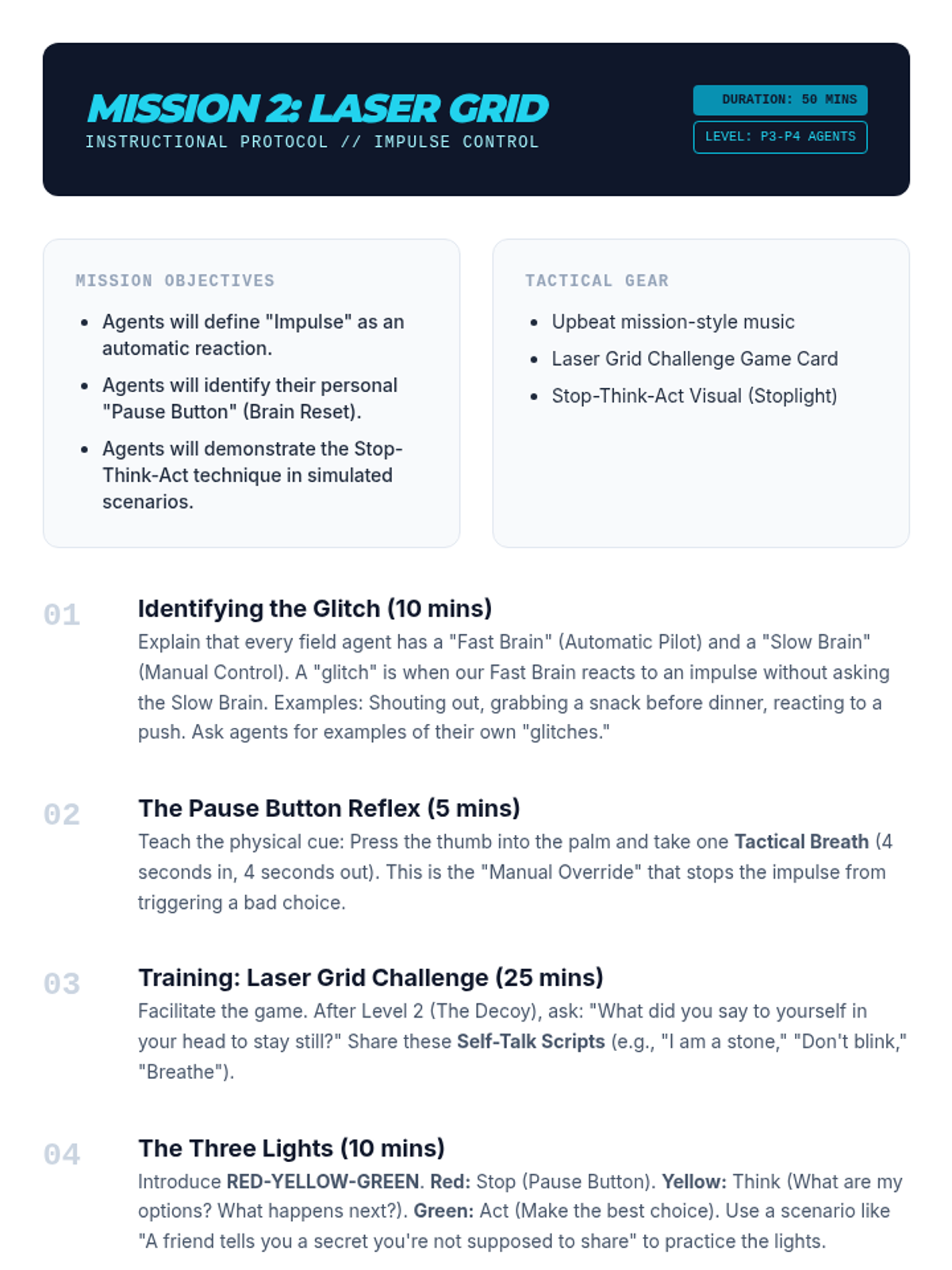
Agents practice navigating the 'Laser Grid' of impulses by using their internal pause button.
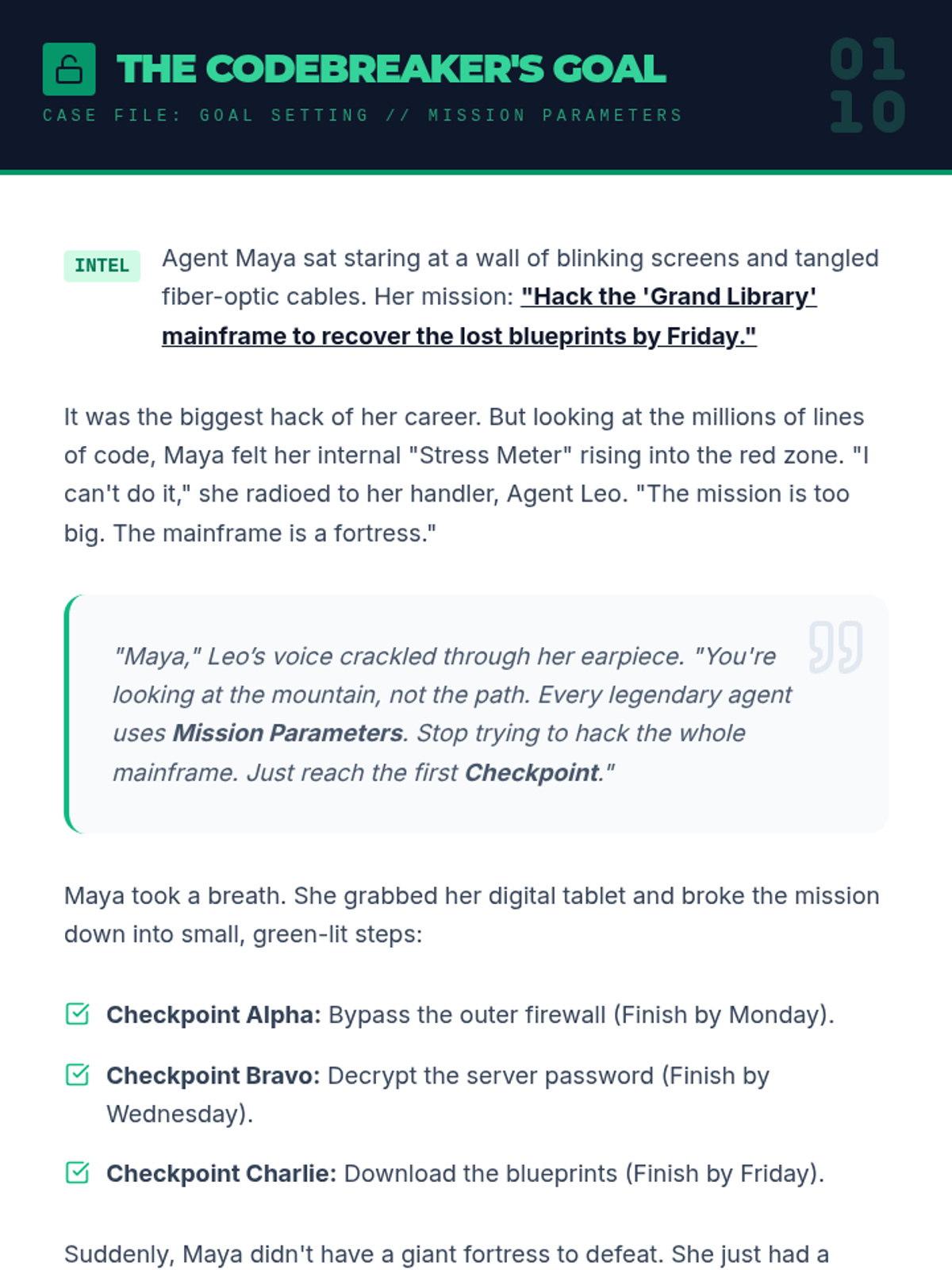
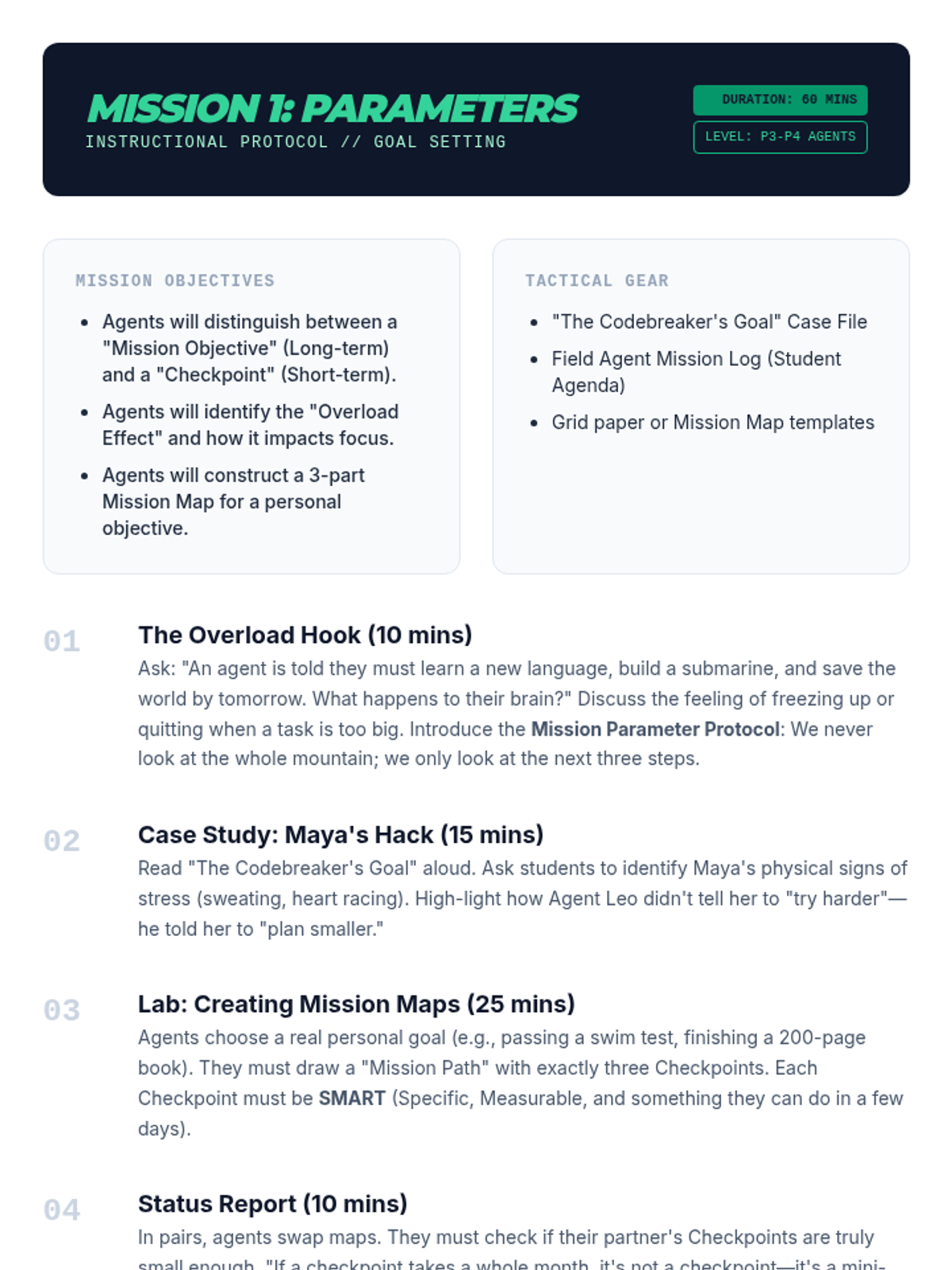
Agents learn to define their mission and break down big objectives into manageable checkpoints.
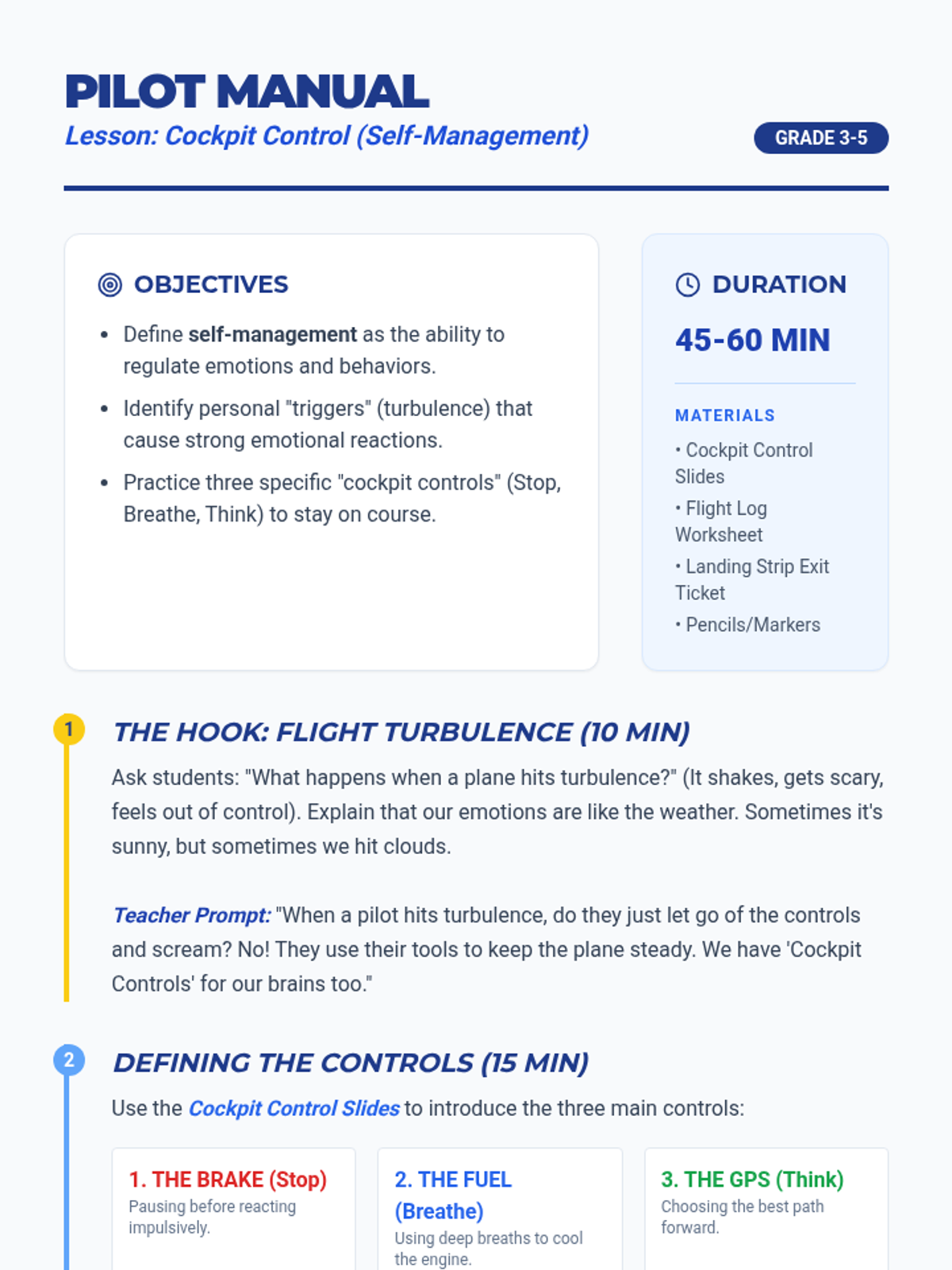
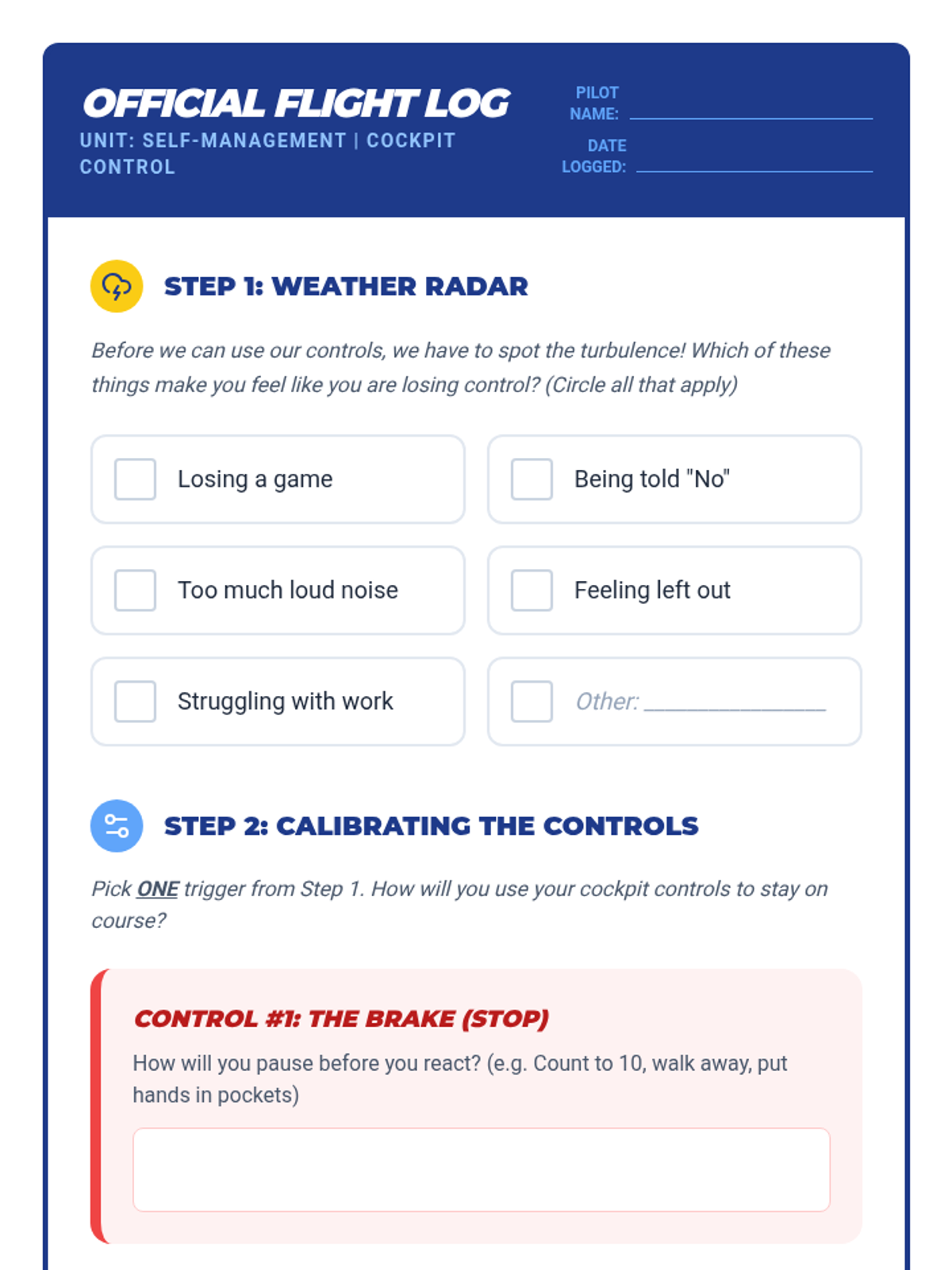
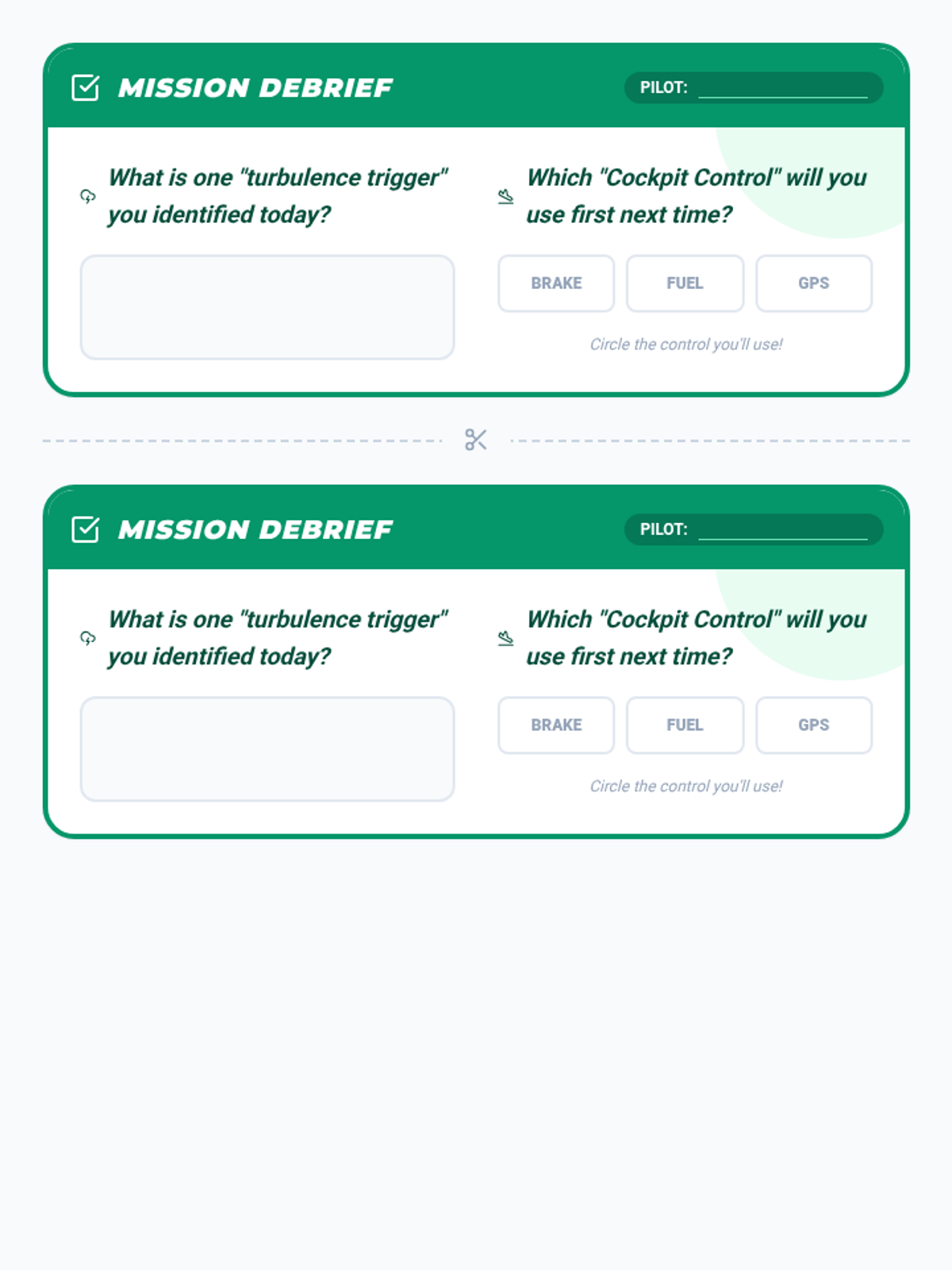
This lesson introduces self-management through an aviation metaphor, teaching students to identify emotional 'turbulence' and use specific 'cockpit controls' to stay on course. Students will learn strategies for impulse control and emotional regulation.
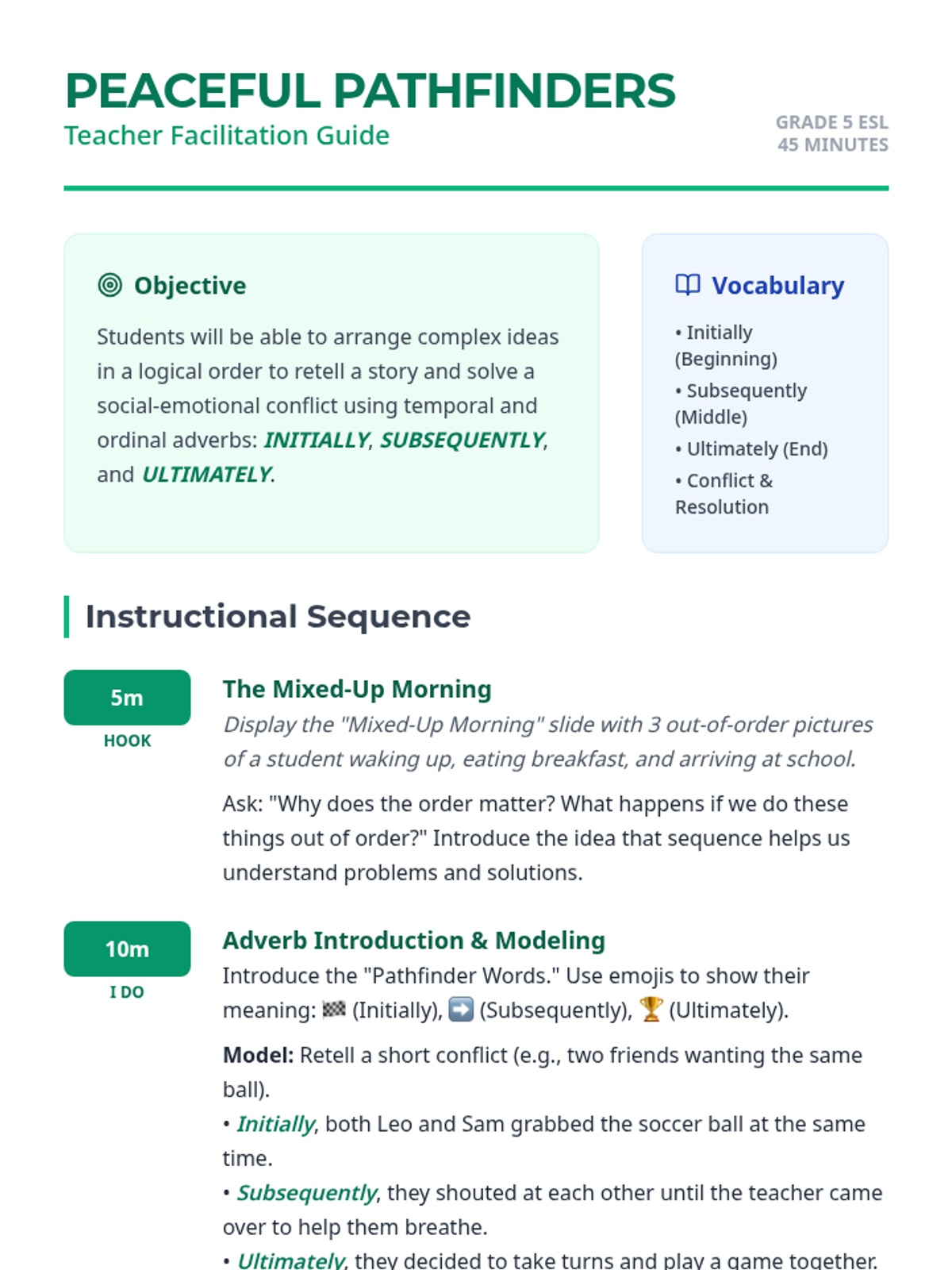
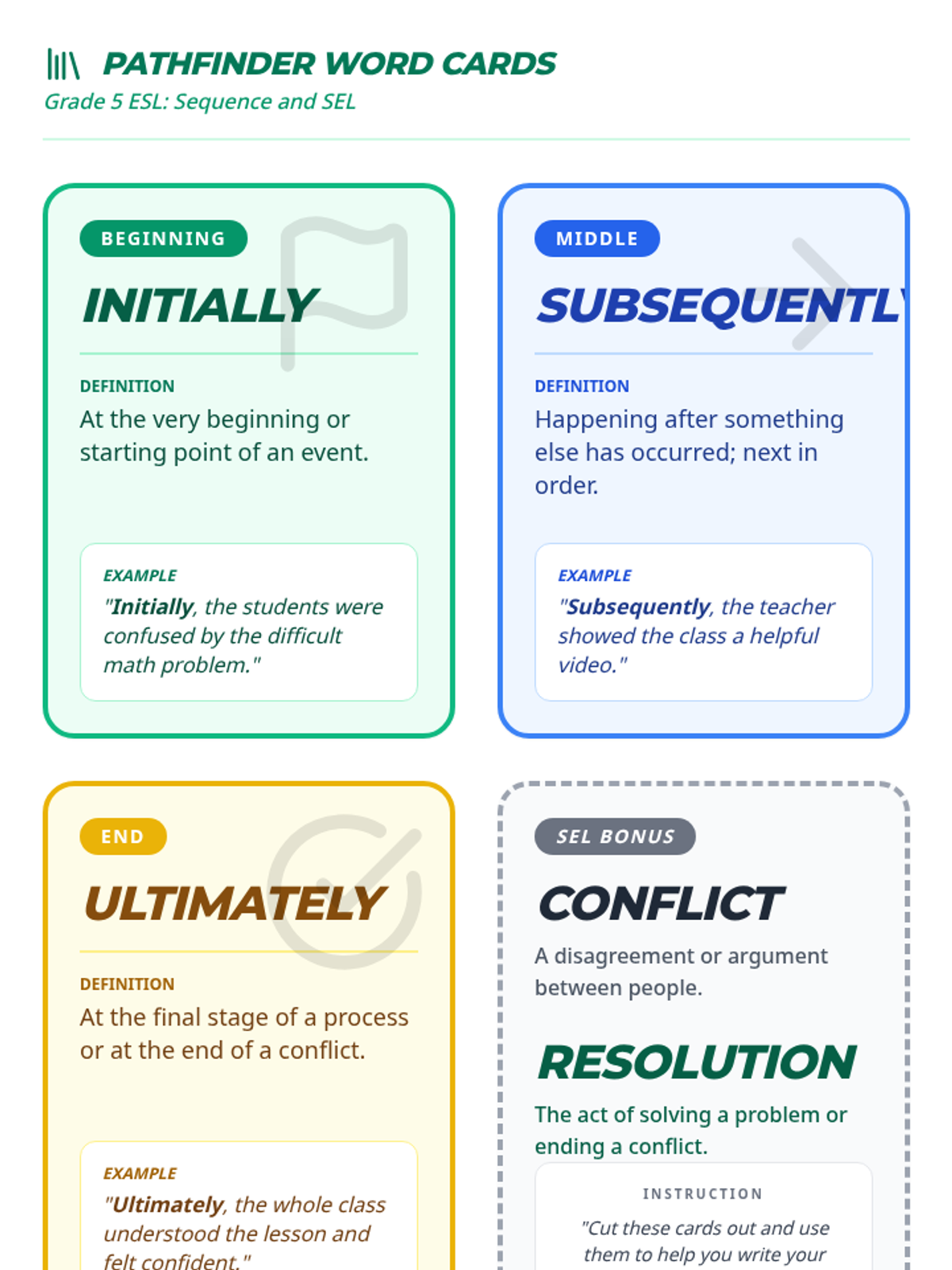
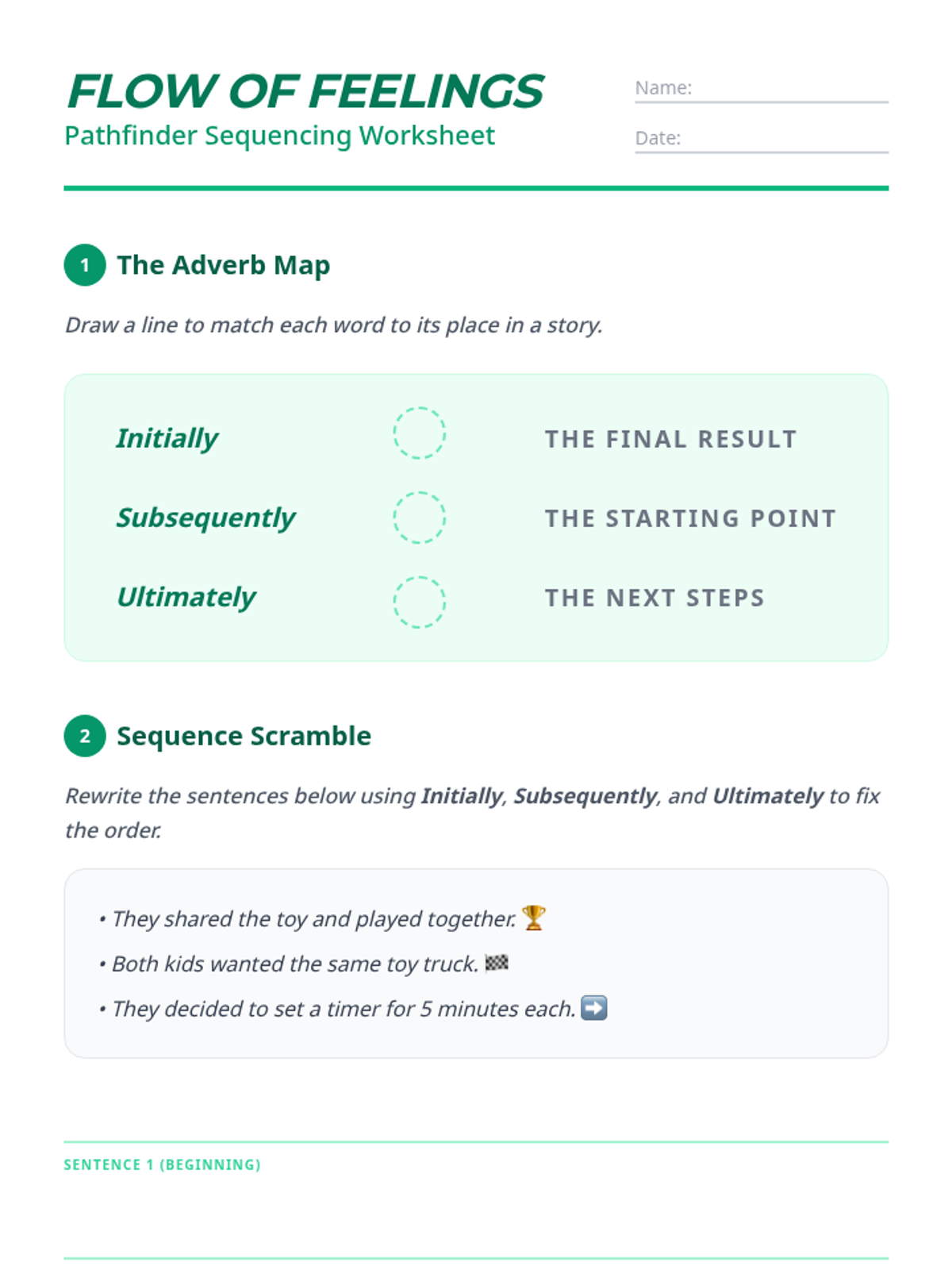
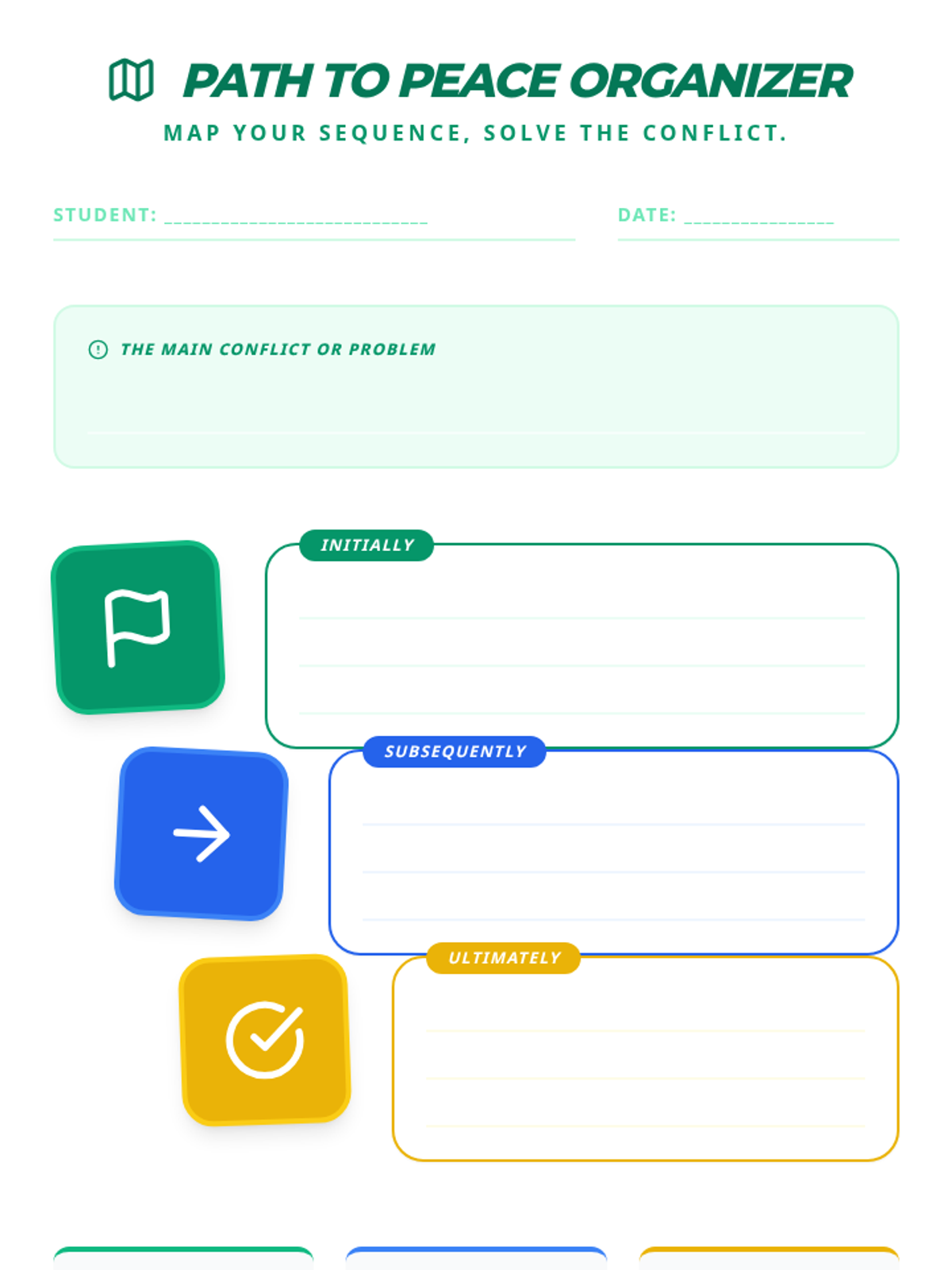
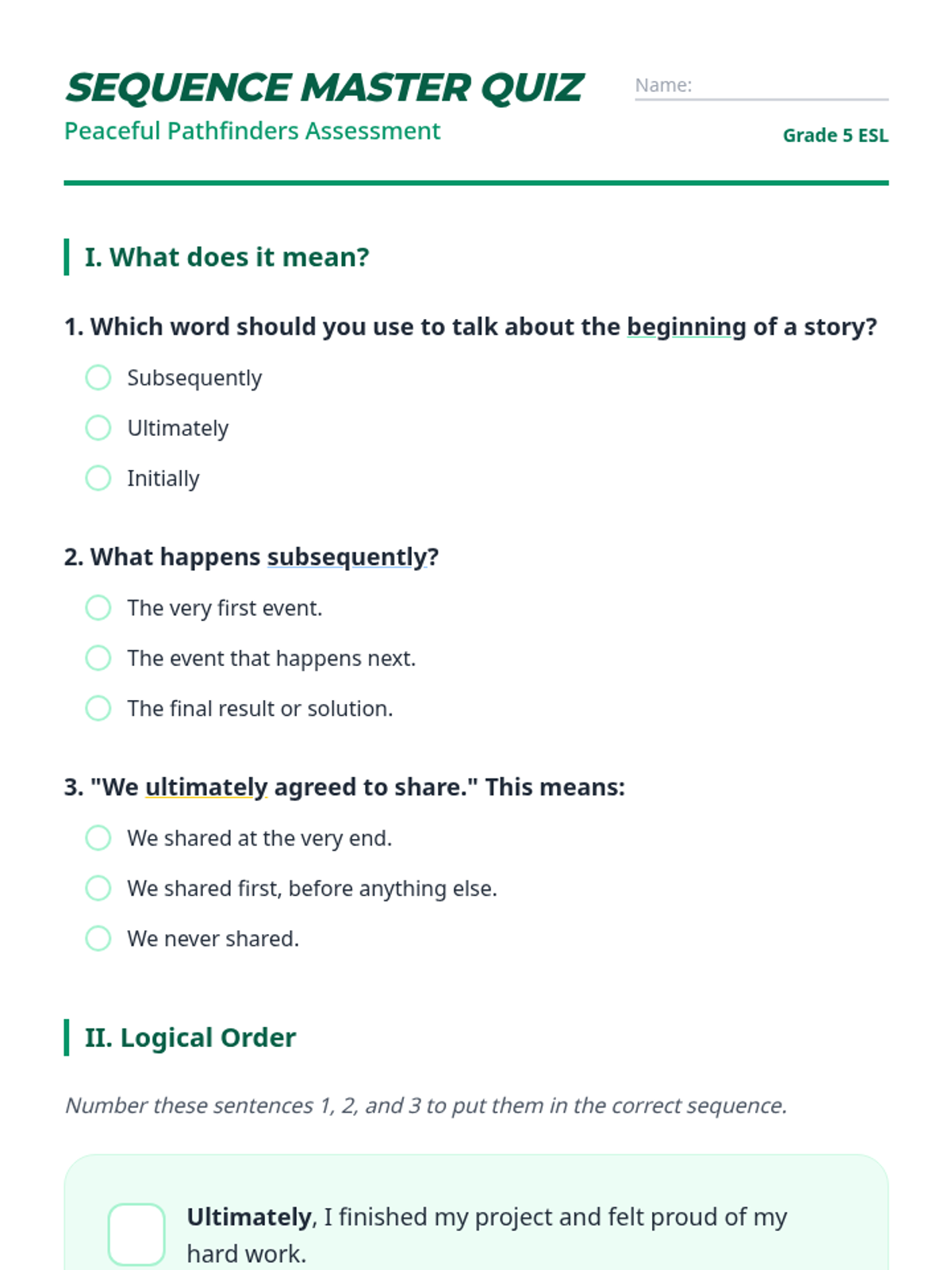
A 45-minute ESL lesson for grade 5 students focusing on using advanced temporal adverbs (initially, subsequently, ultimately) to retell stories and sequence social-emotional problem-solving steps.
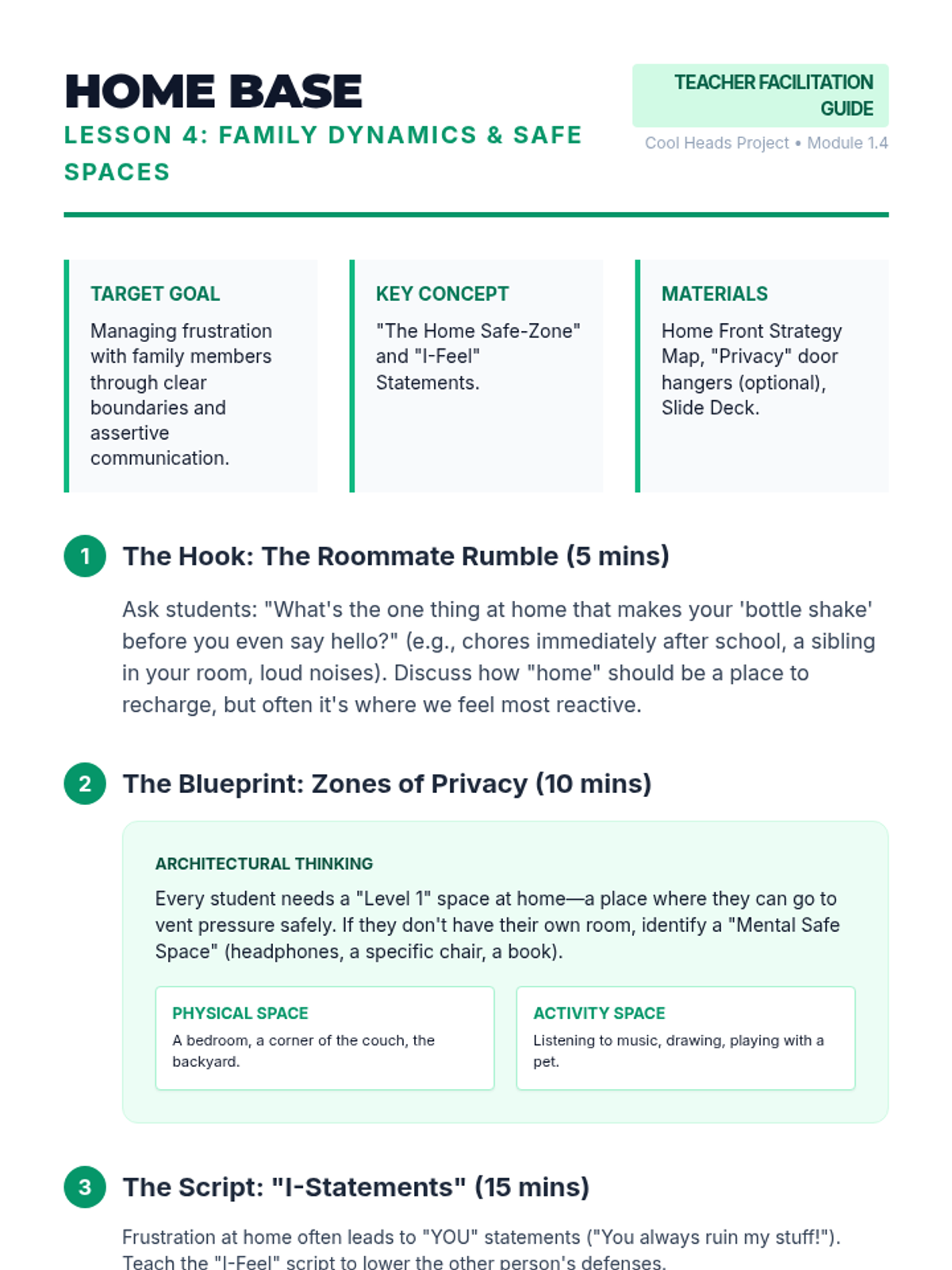
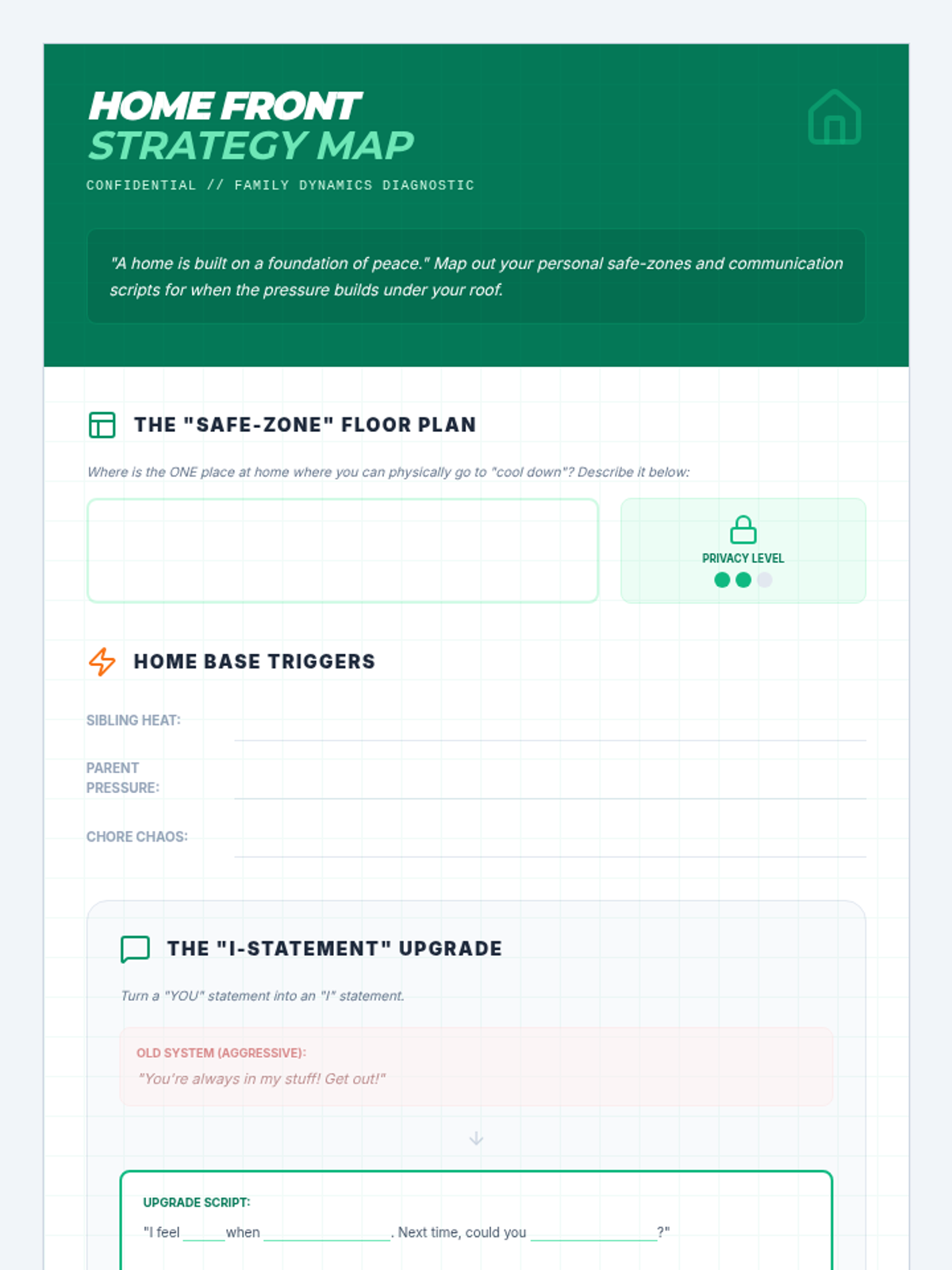
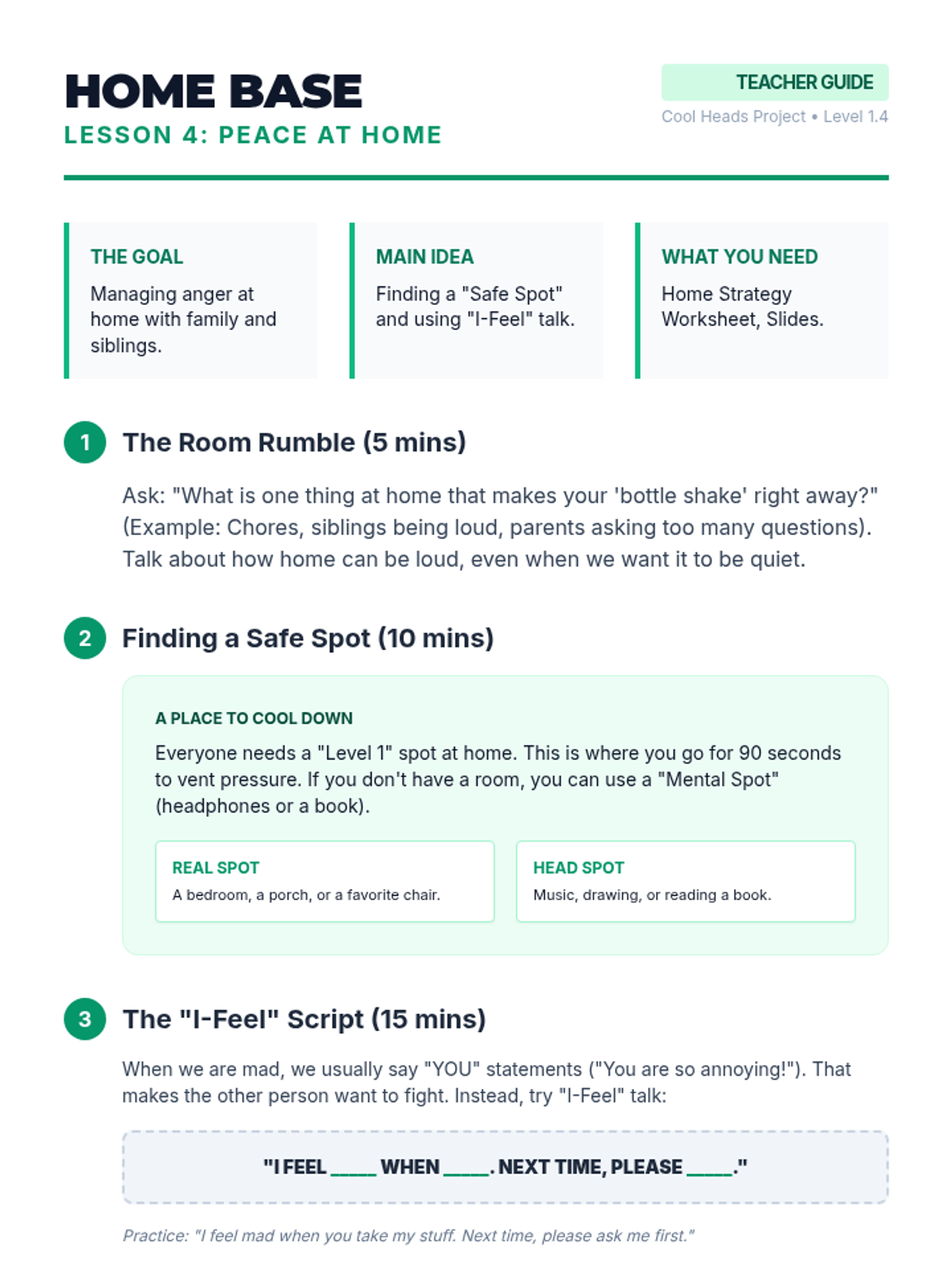
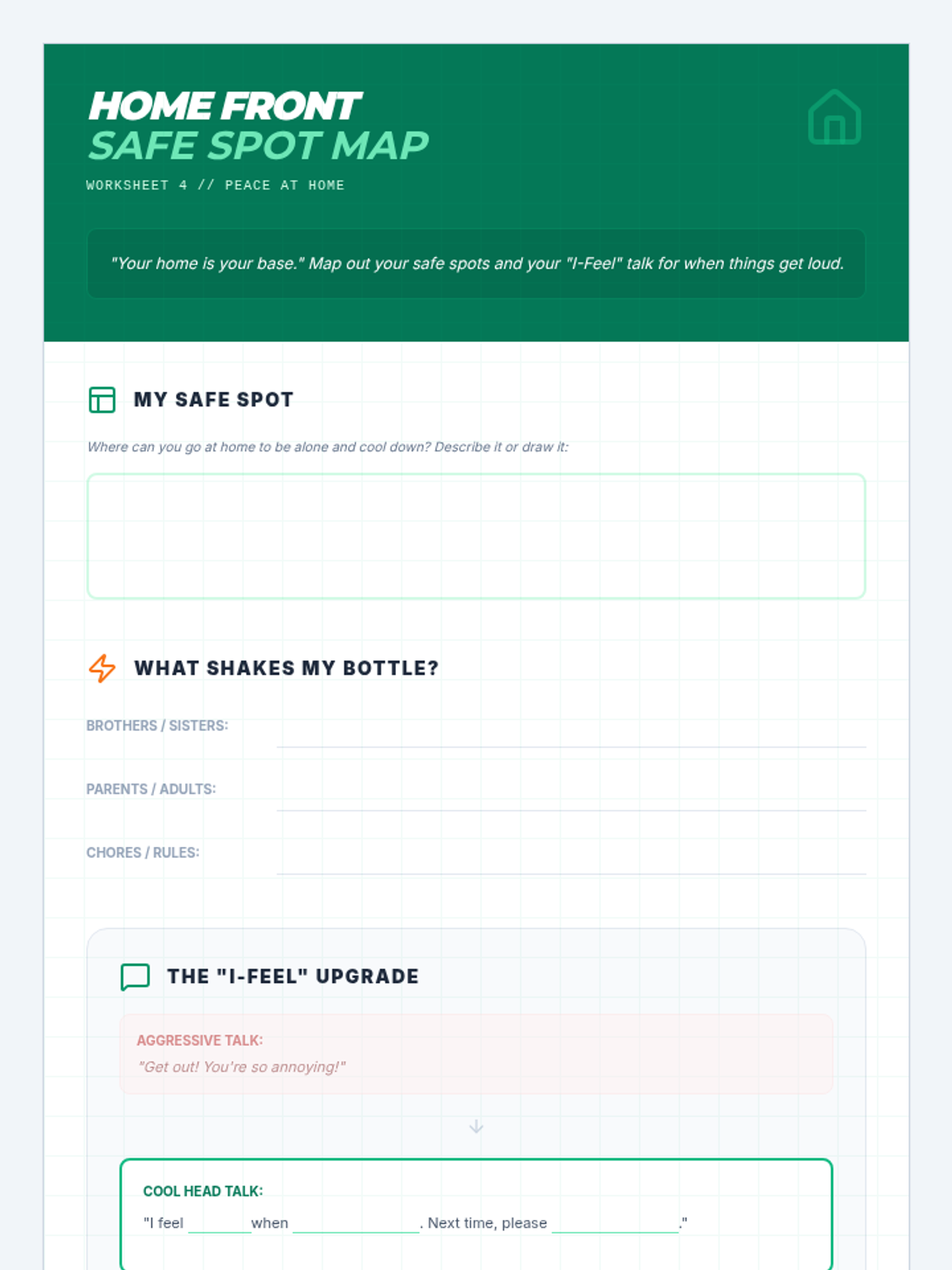
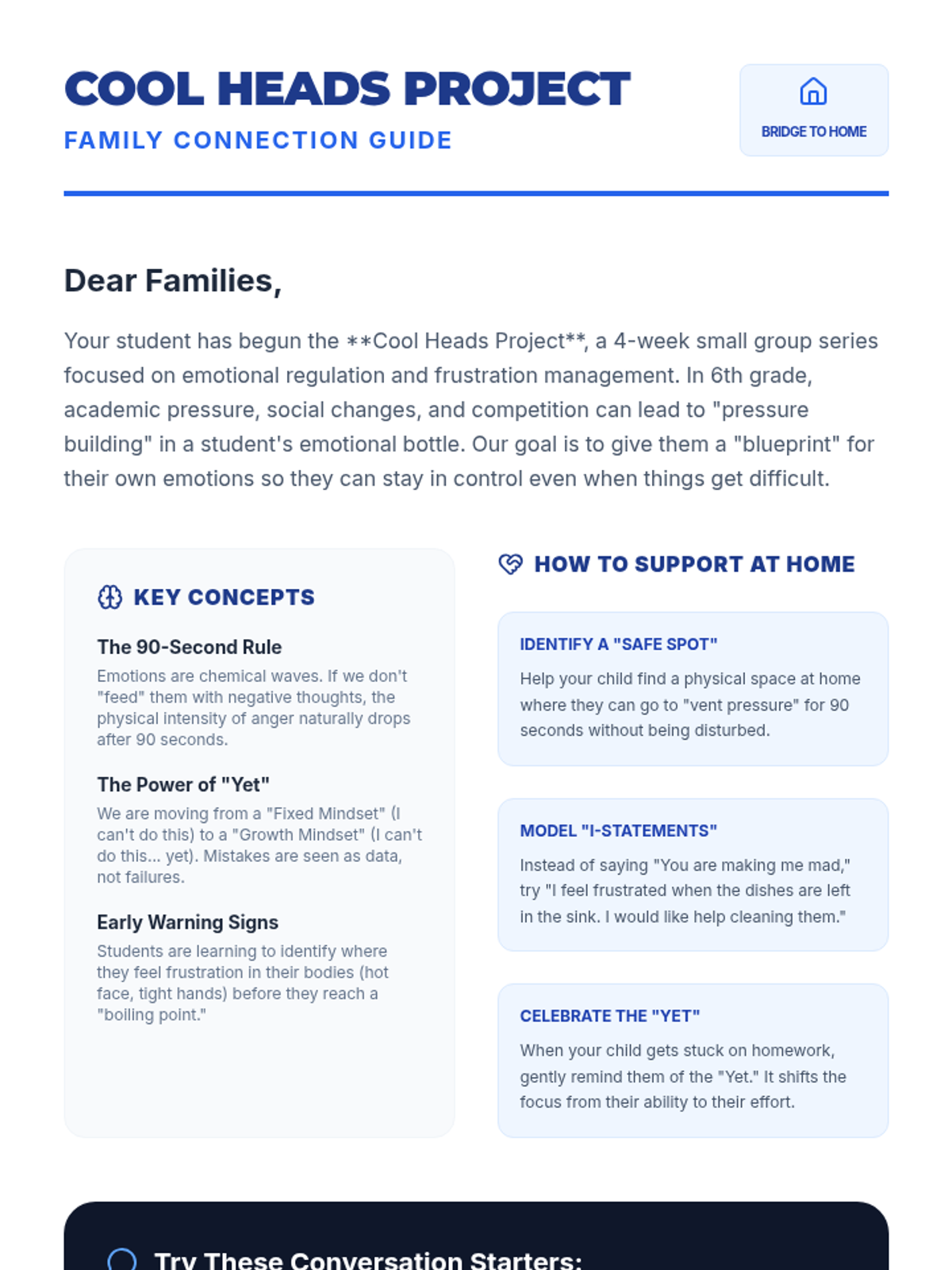
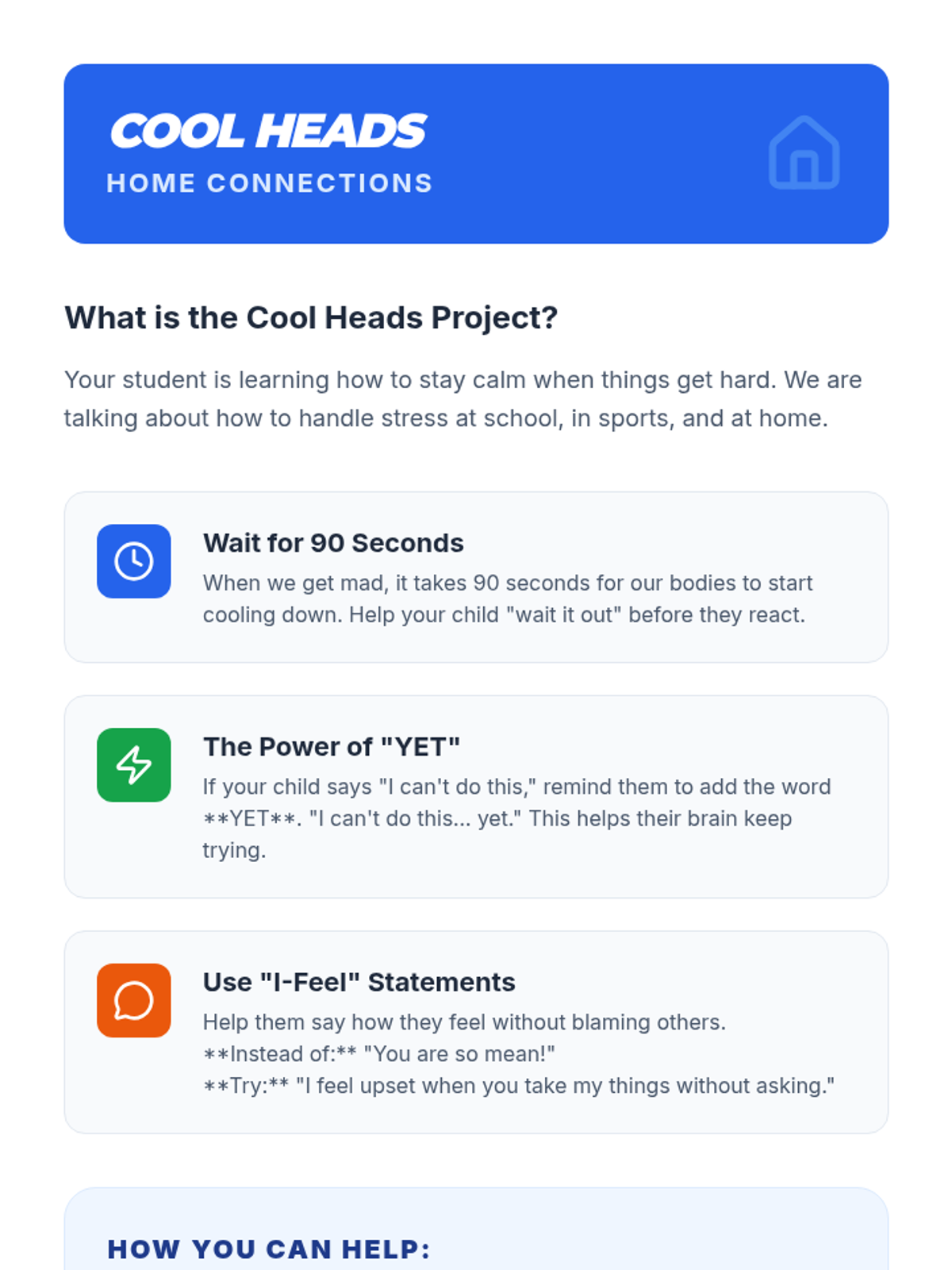
Strategies for navigating family dynamics, sibling conflicts, and home-based stressors through clear communication and personal space.
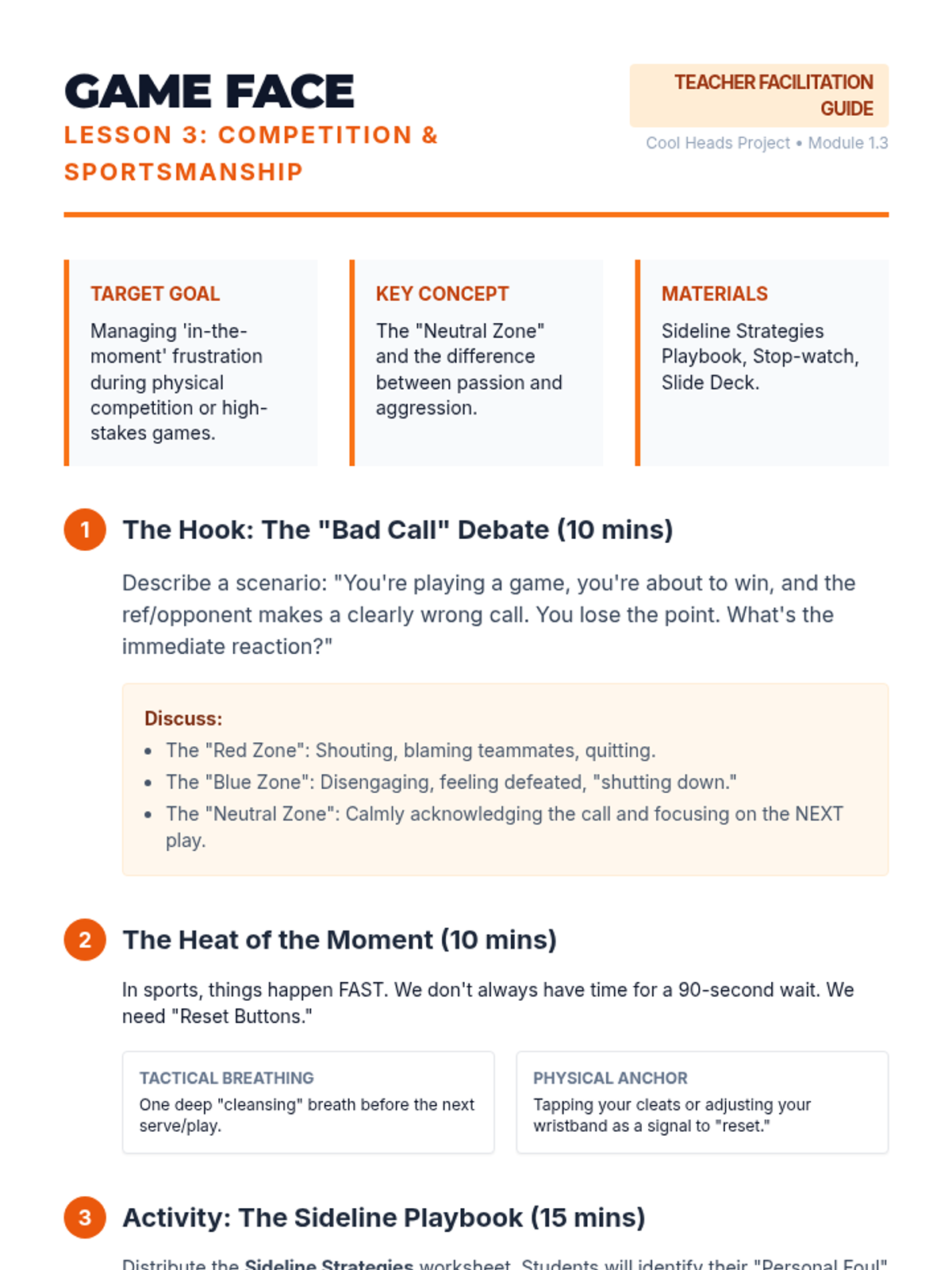
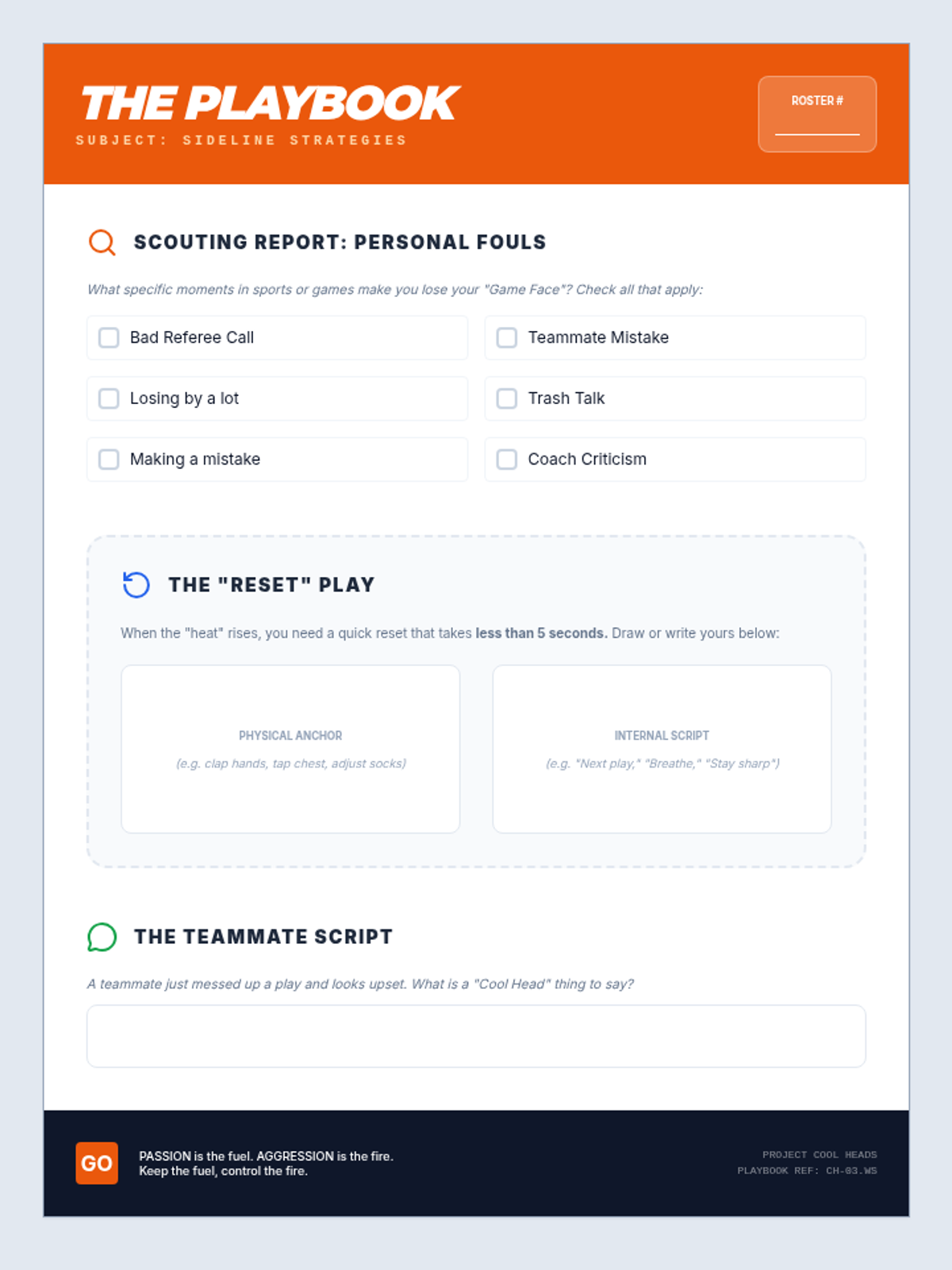
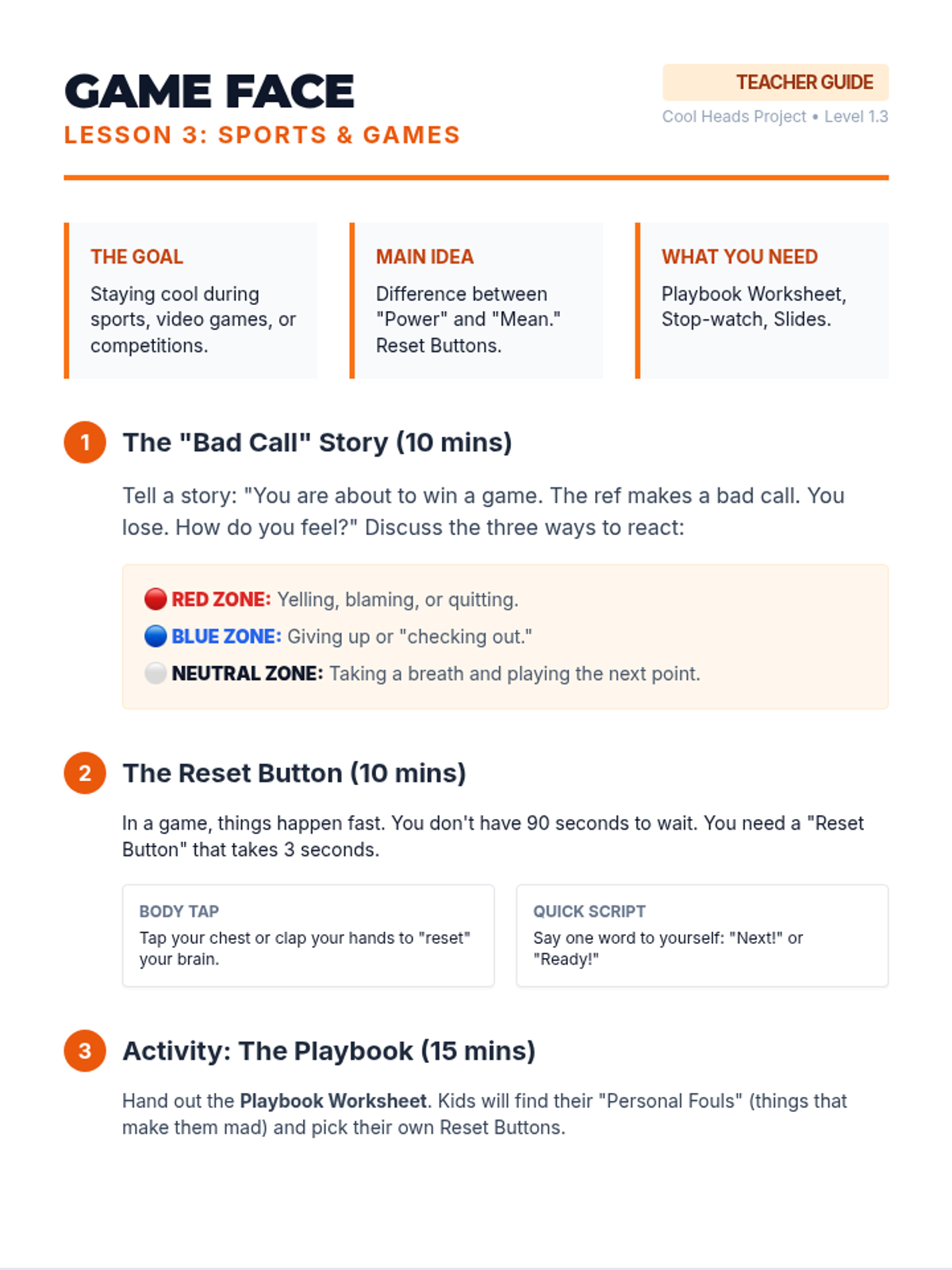
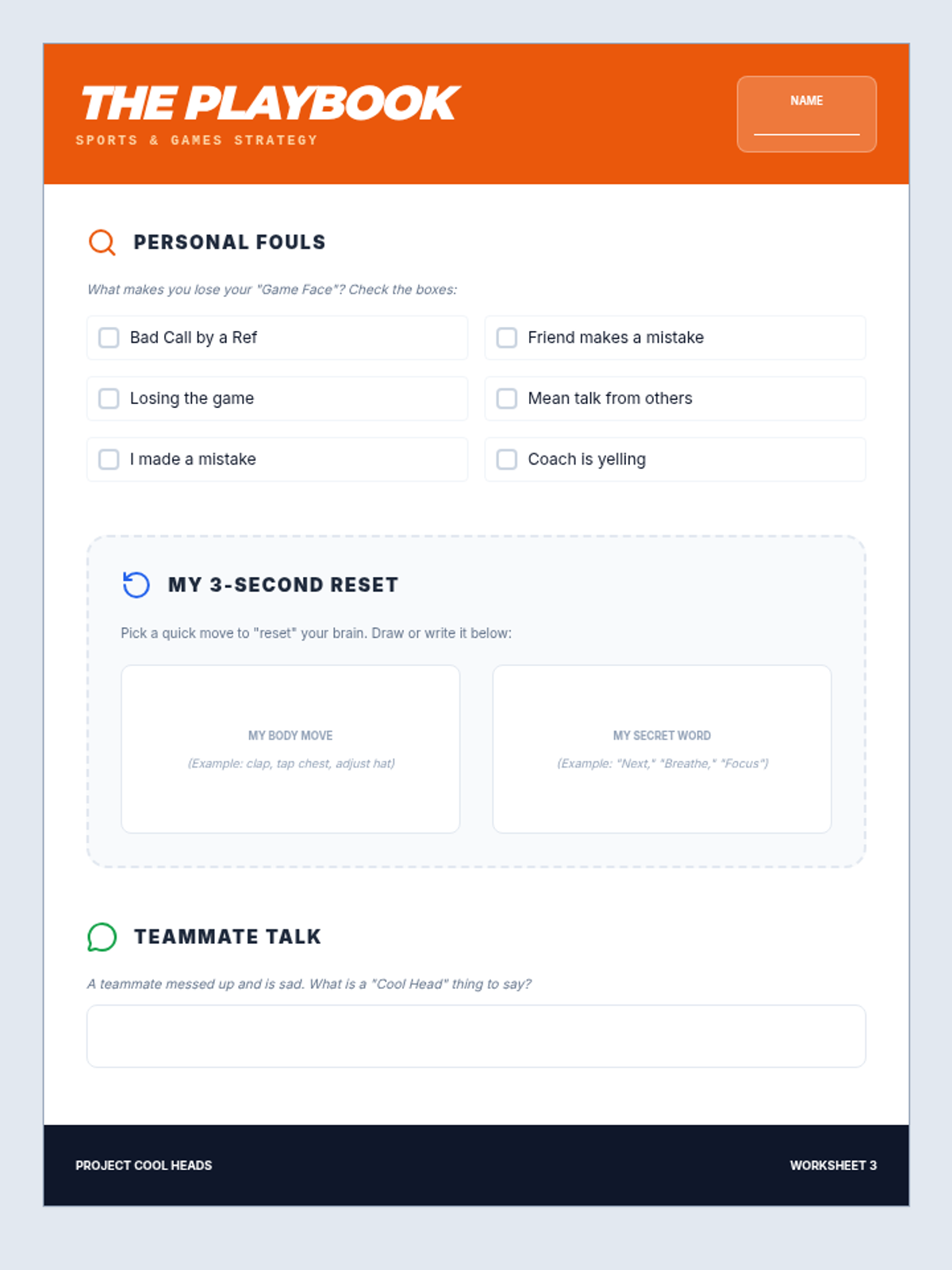
Explores the emotional ups and downs of sports and competition, teaching students how to keep their cool during wins and losses.
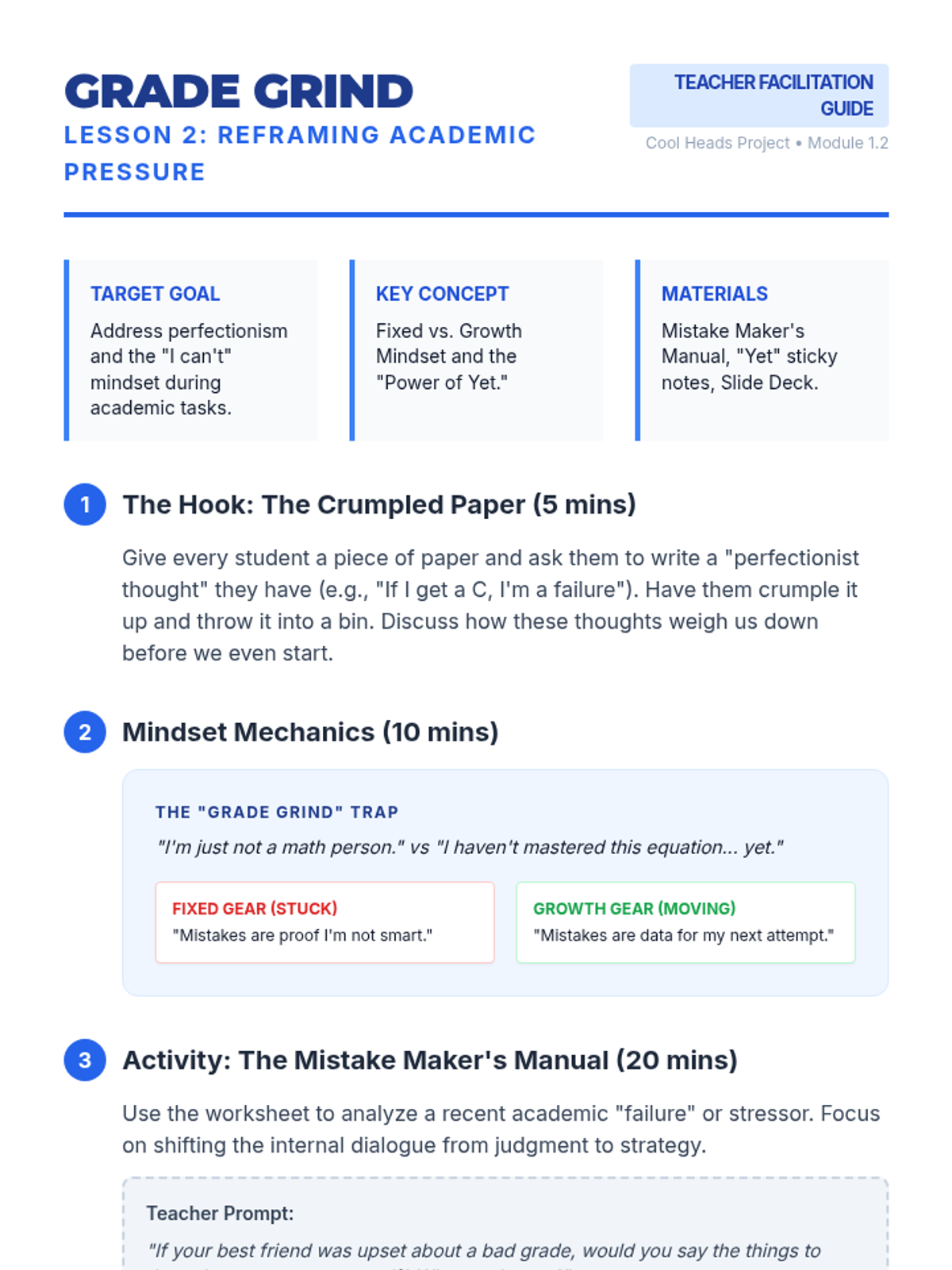
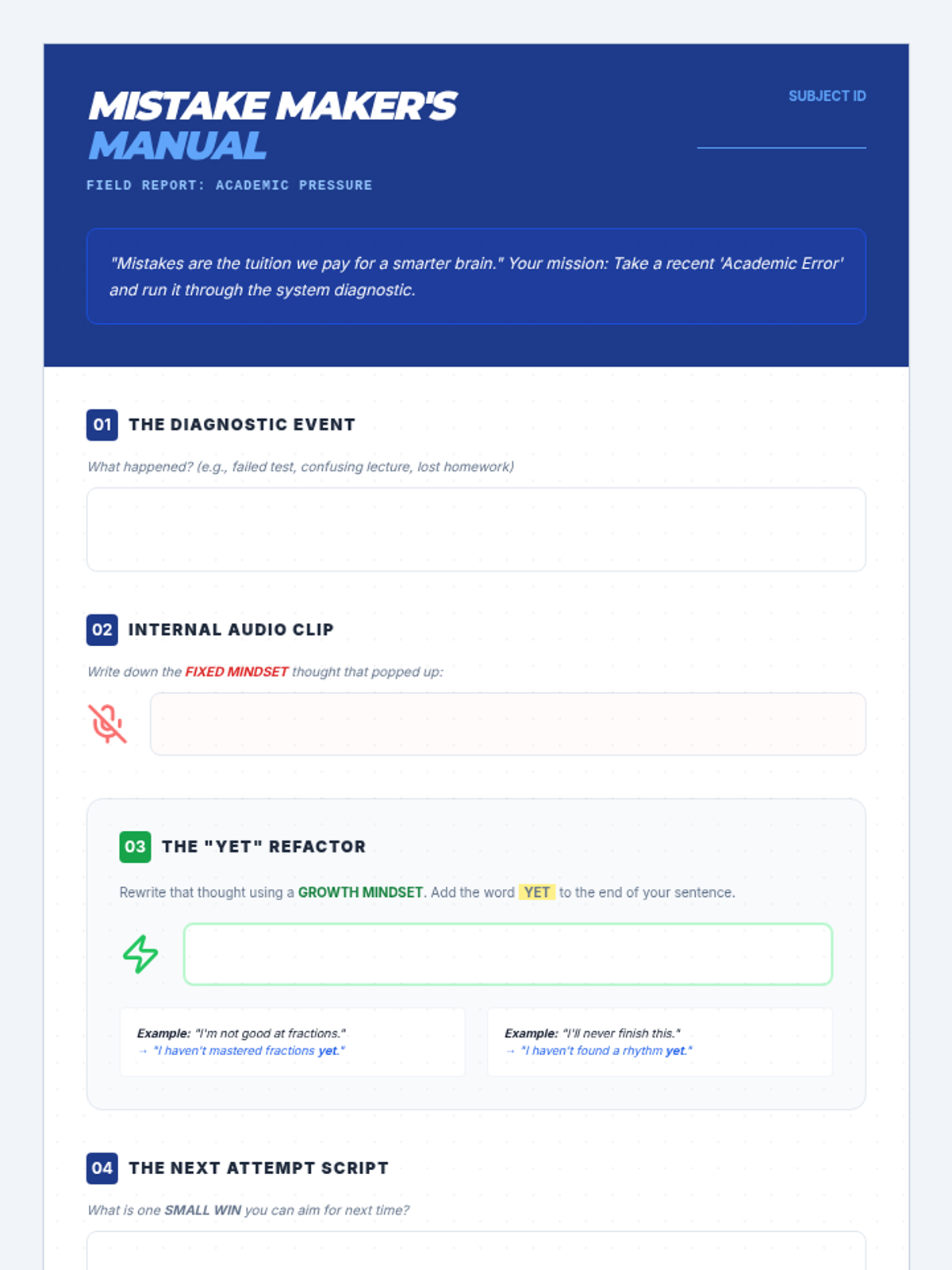
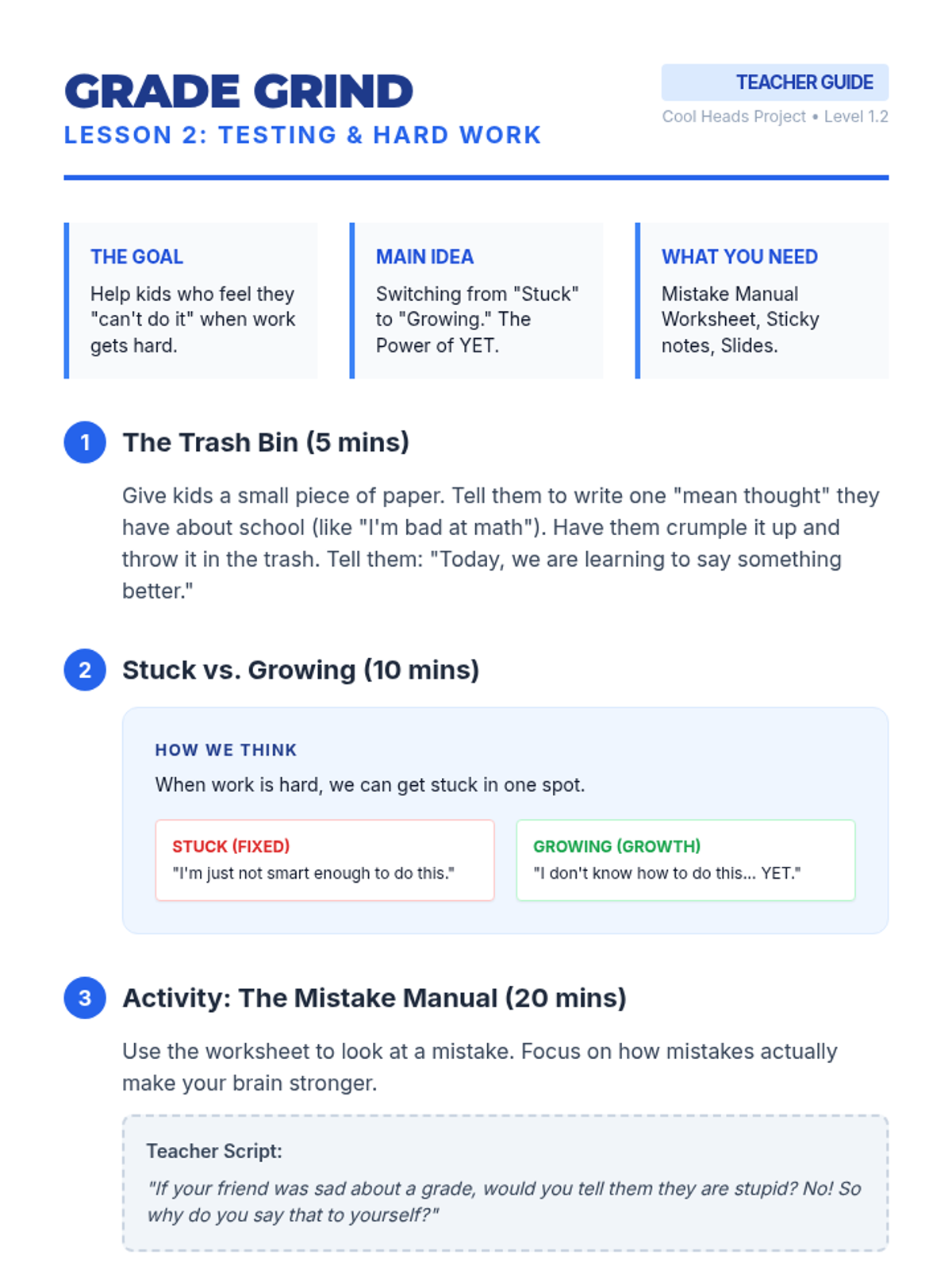
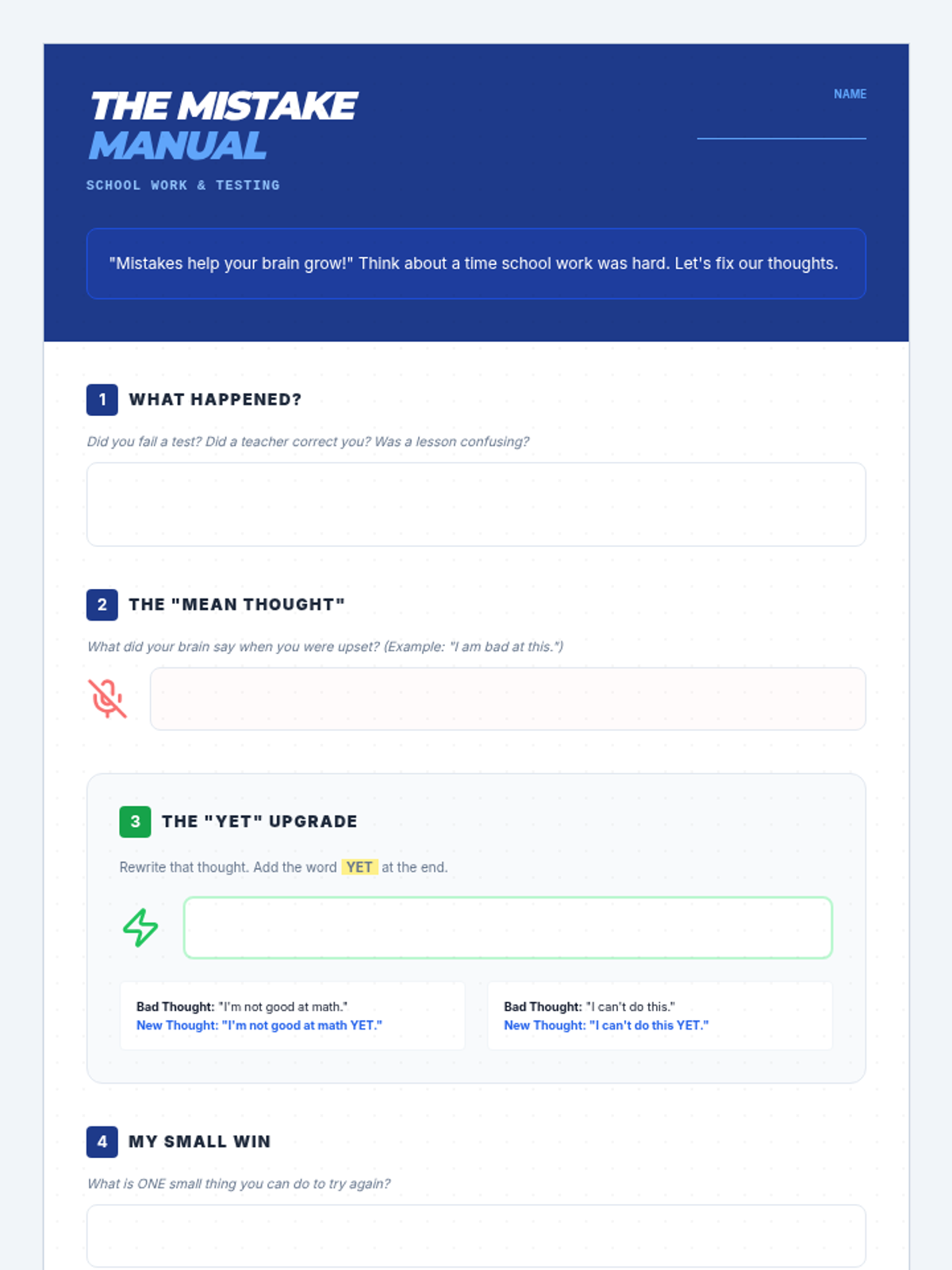
Focuses on managing the pressure of grades, tests, and academic expectations through reframing and realistic goal-setting.
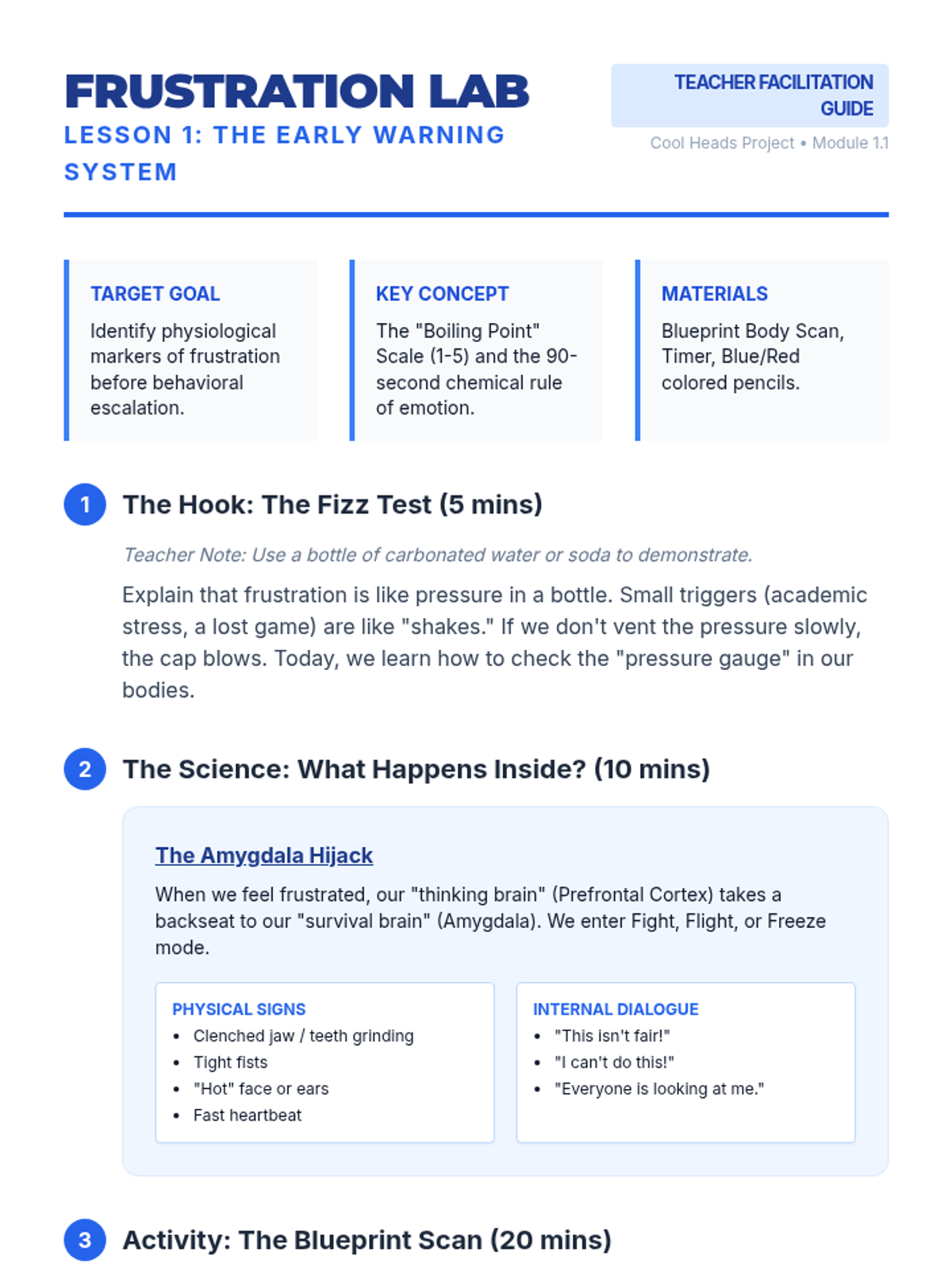
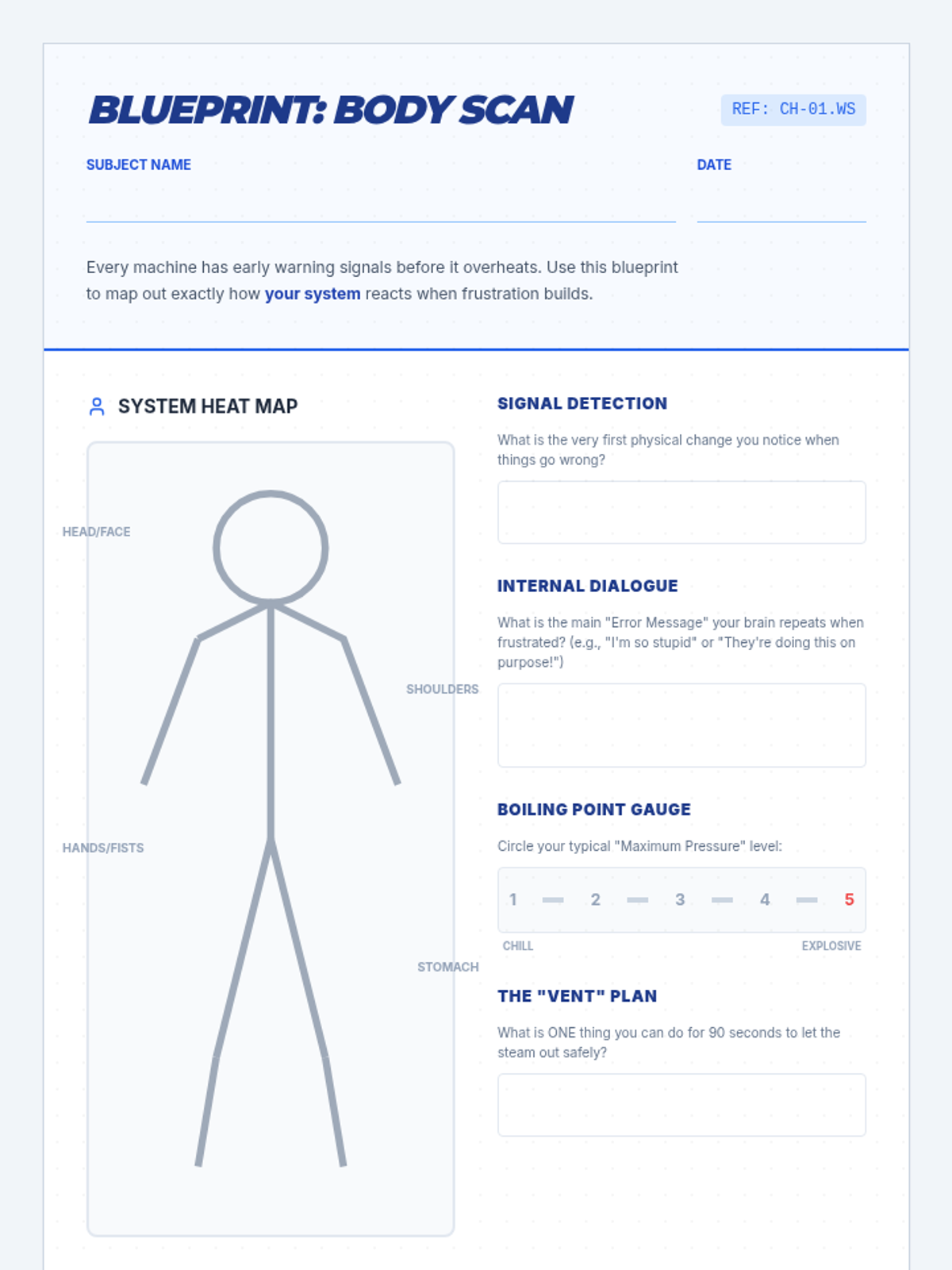
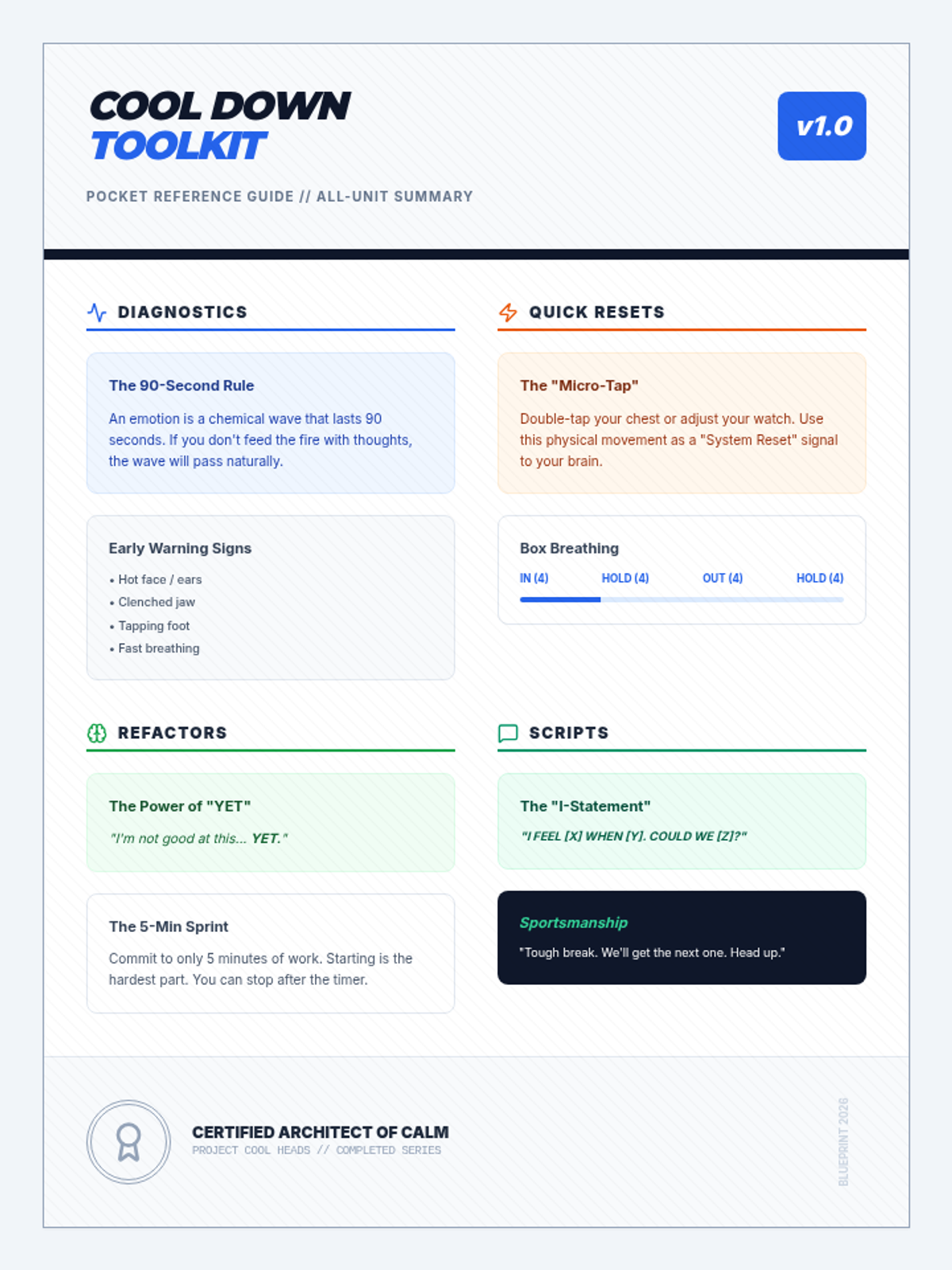
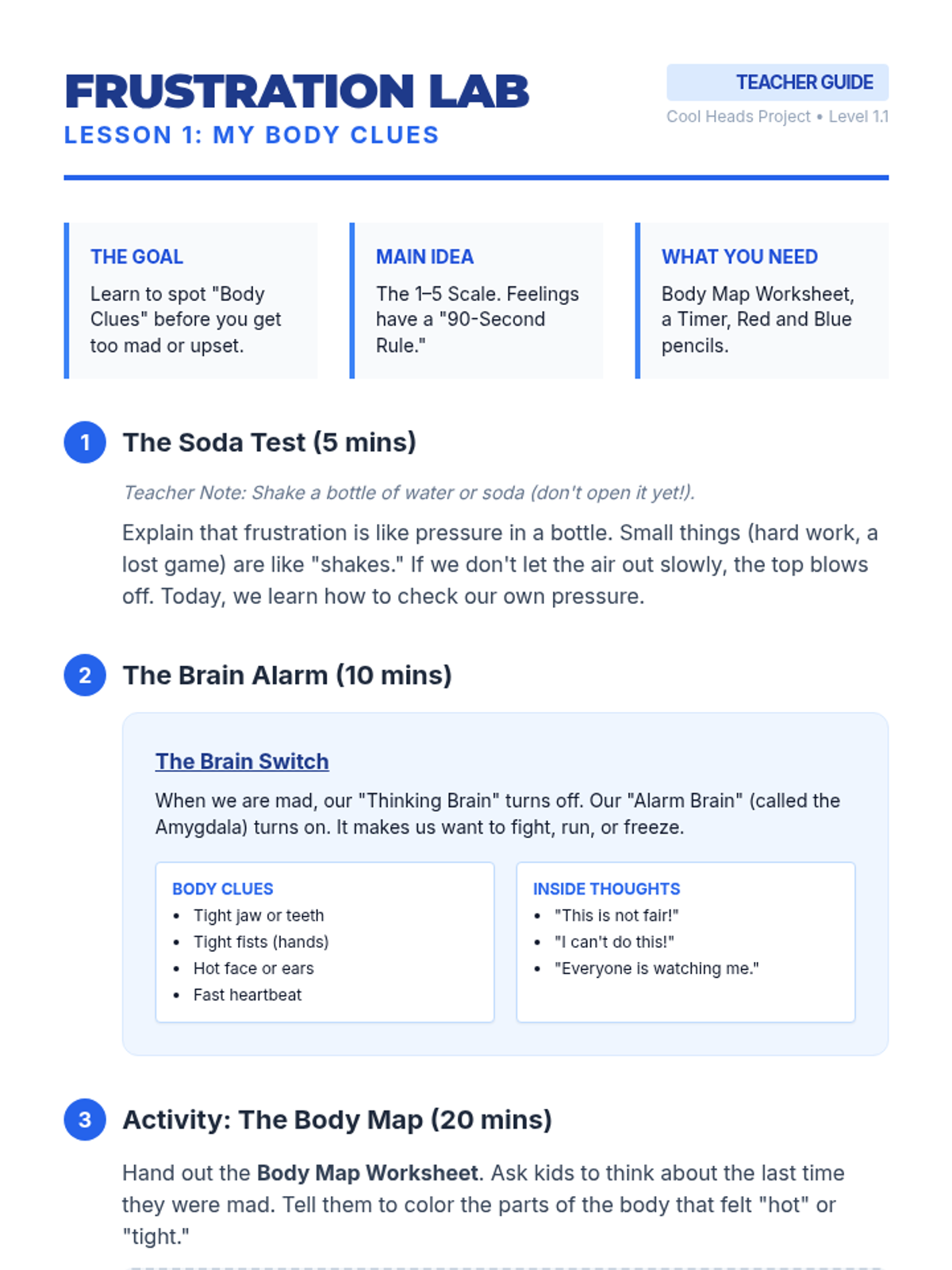
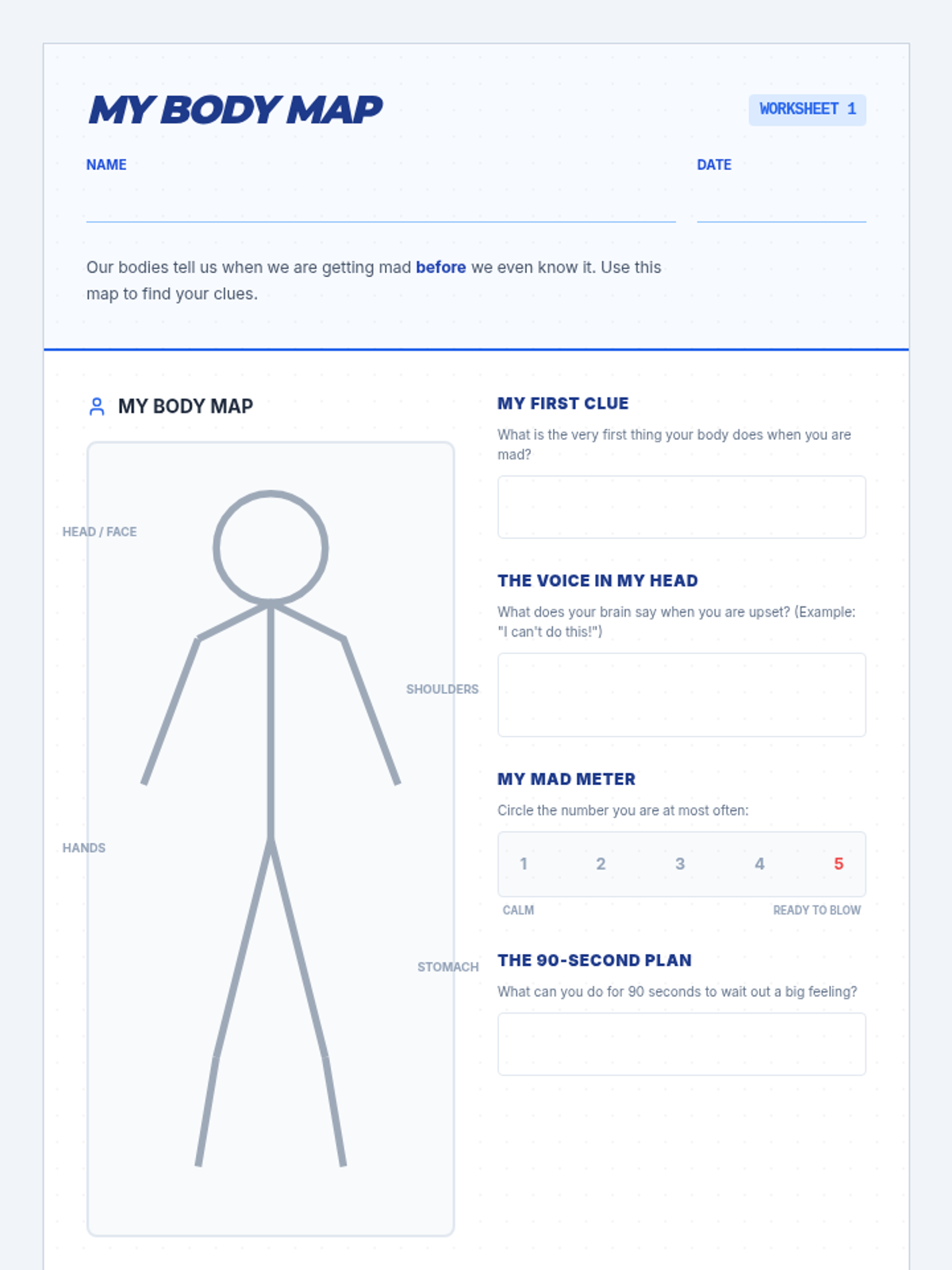
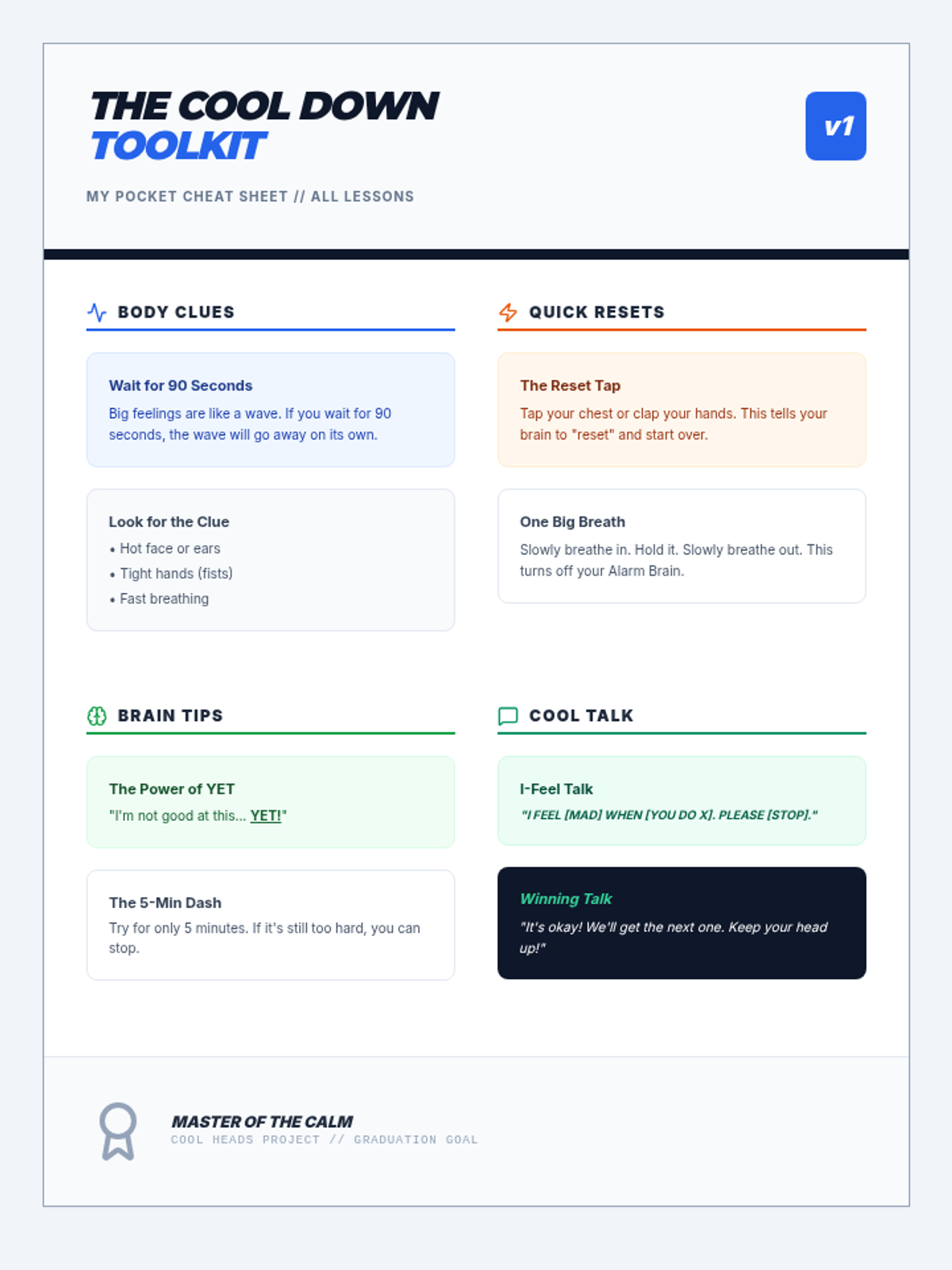
Students identify the physical sensations of frustration and learn to recognize their personal 'early warning signs' before they reach a boiling point.
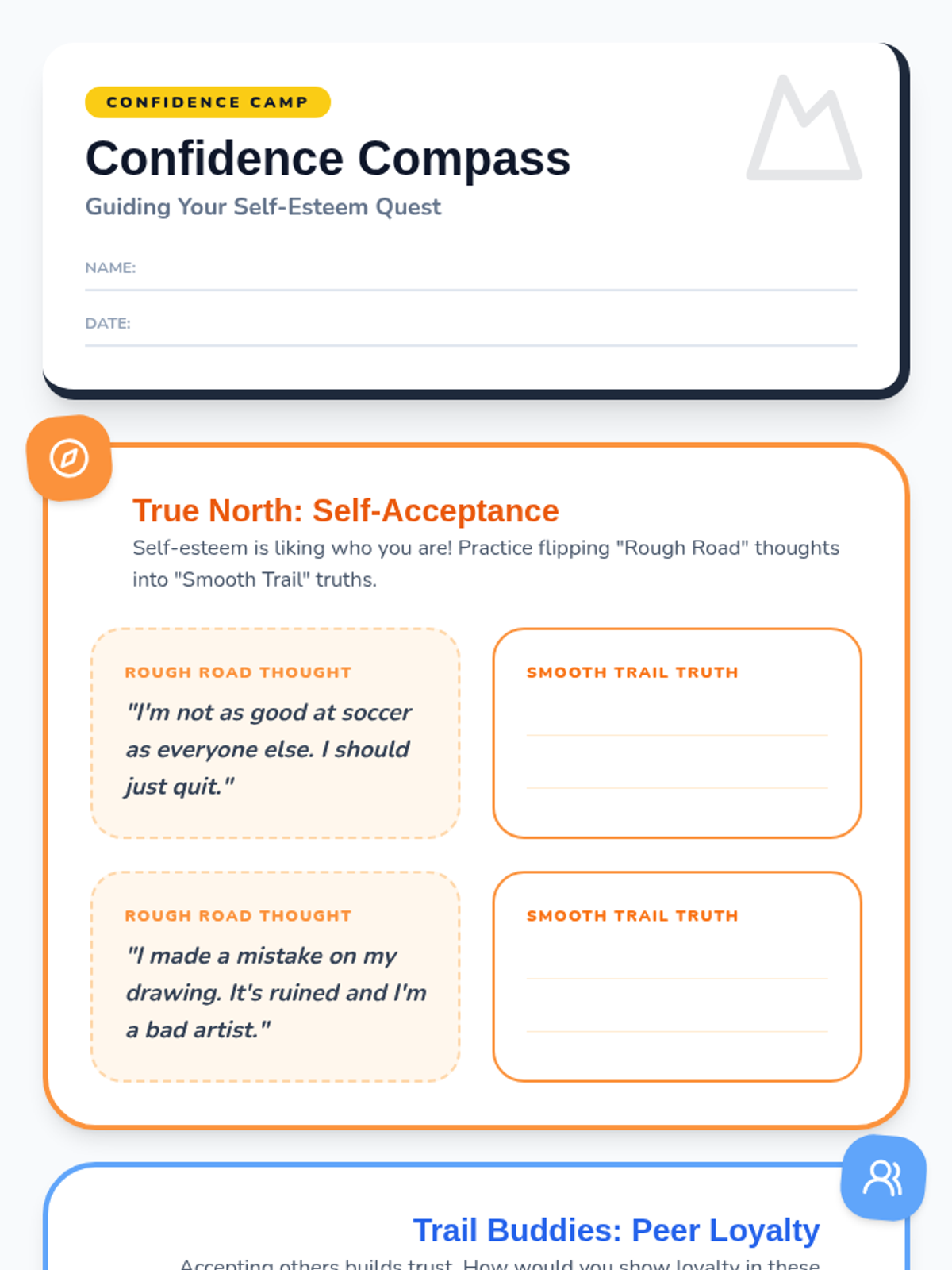
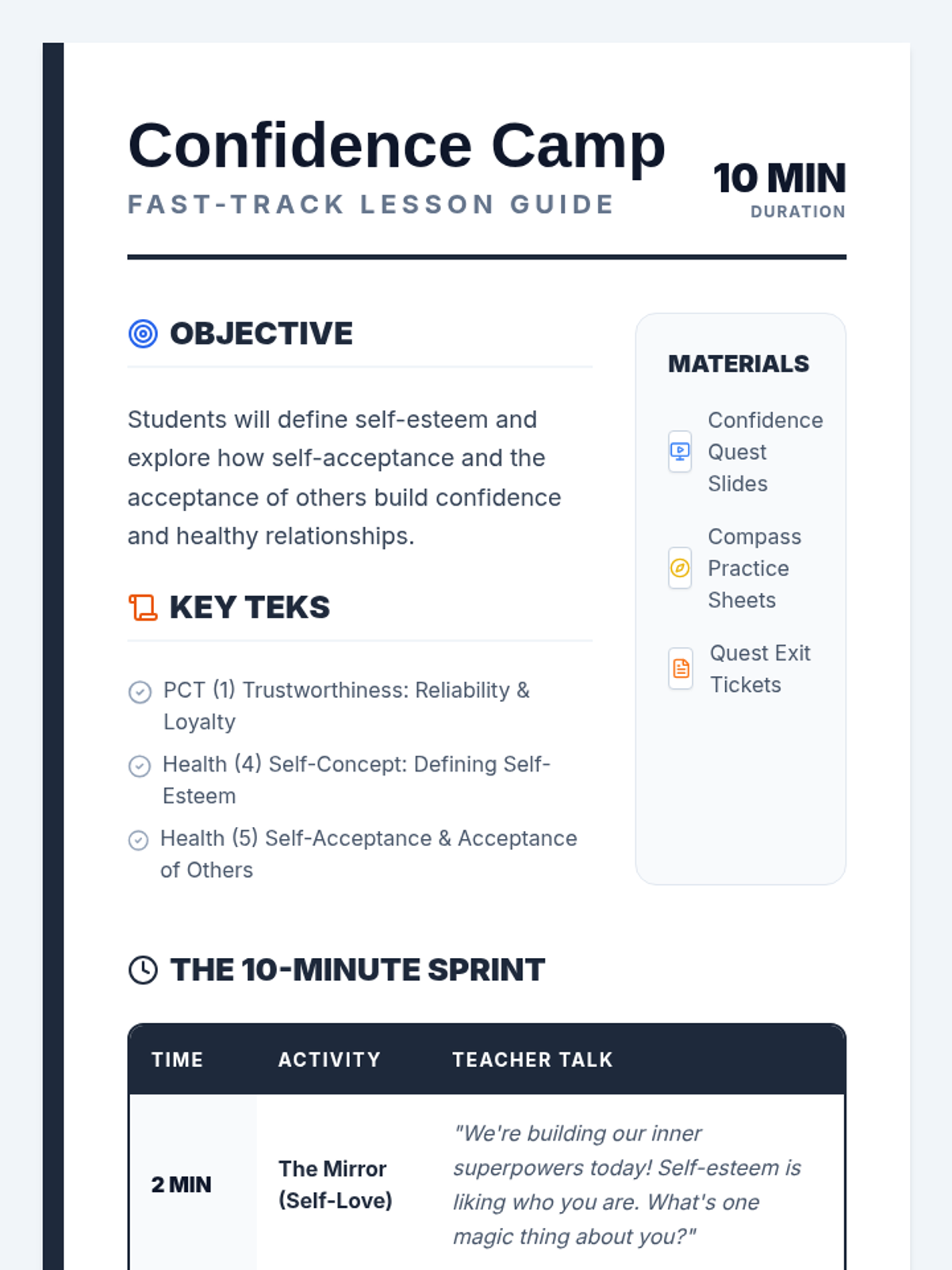
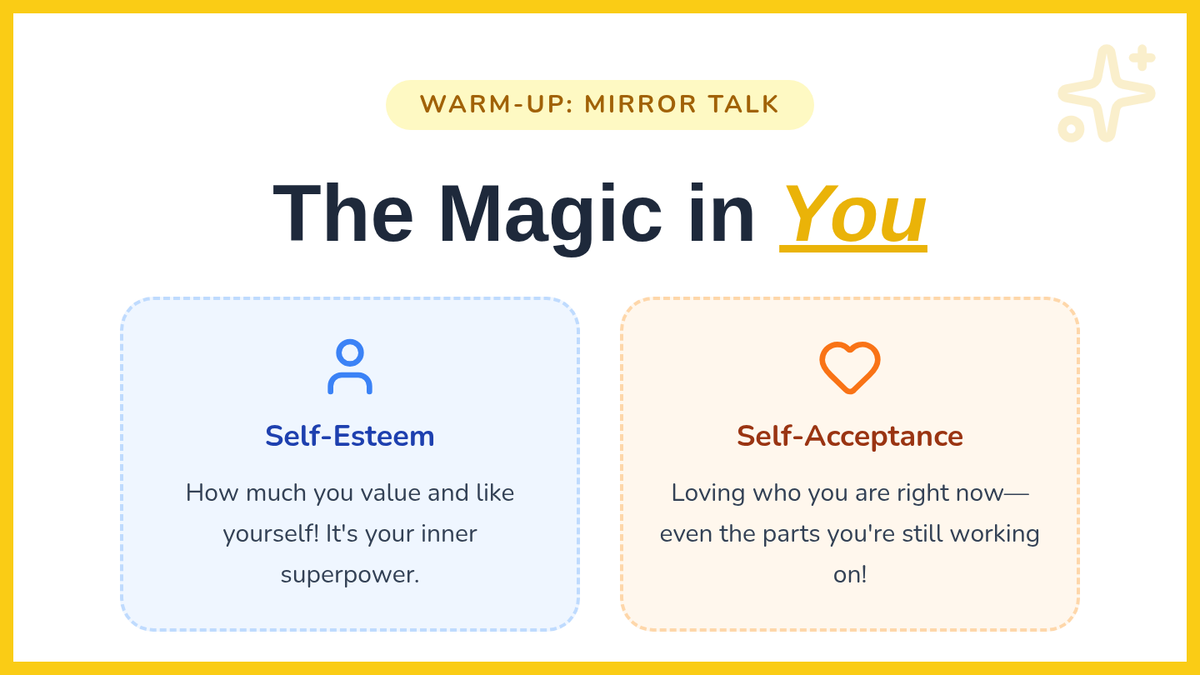
A fast-paced, 10-minute social-emotional learning lesson focused on building self-confidence through self-acceptance and kindness toward others. Students define self-esteem and set immediate goals for personal growth and peer acceptance.
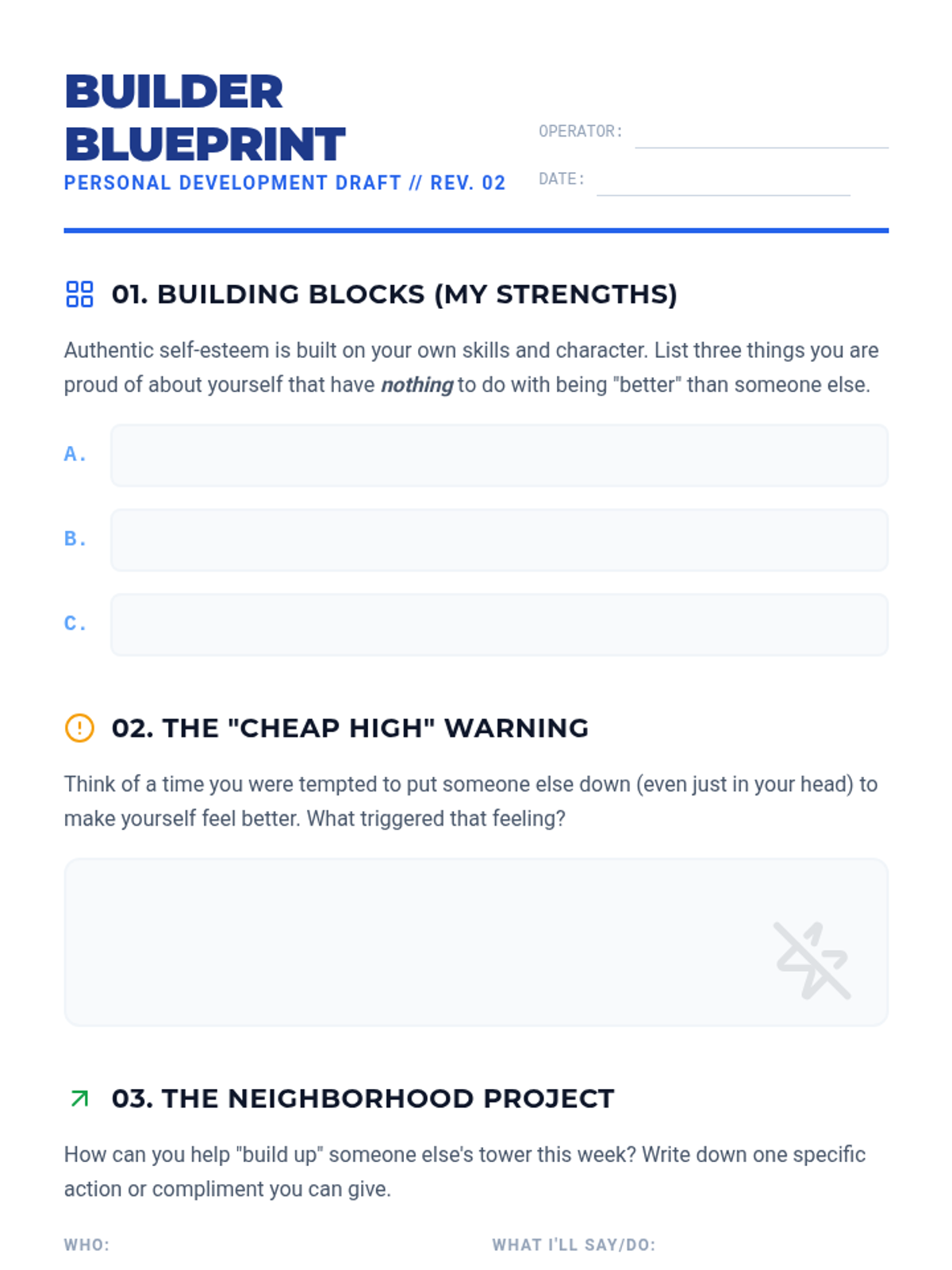
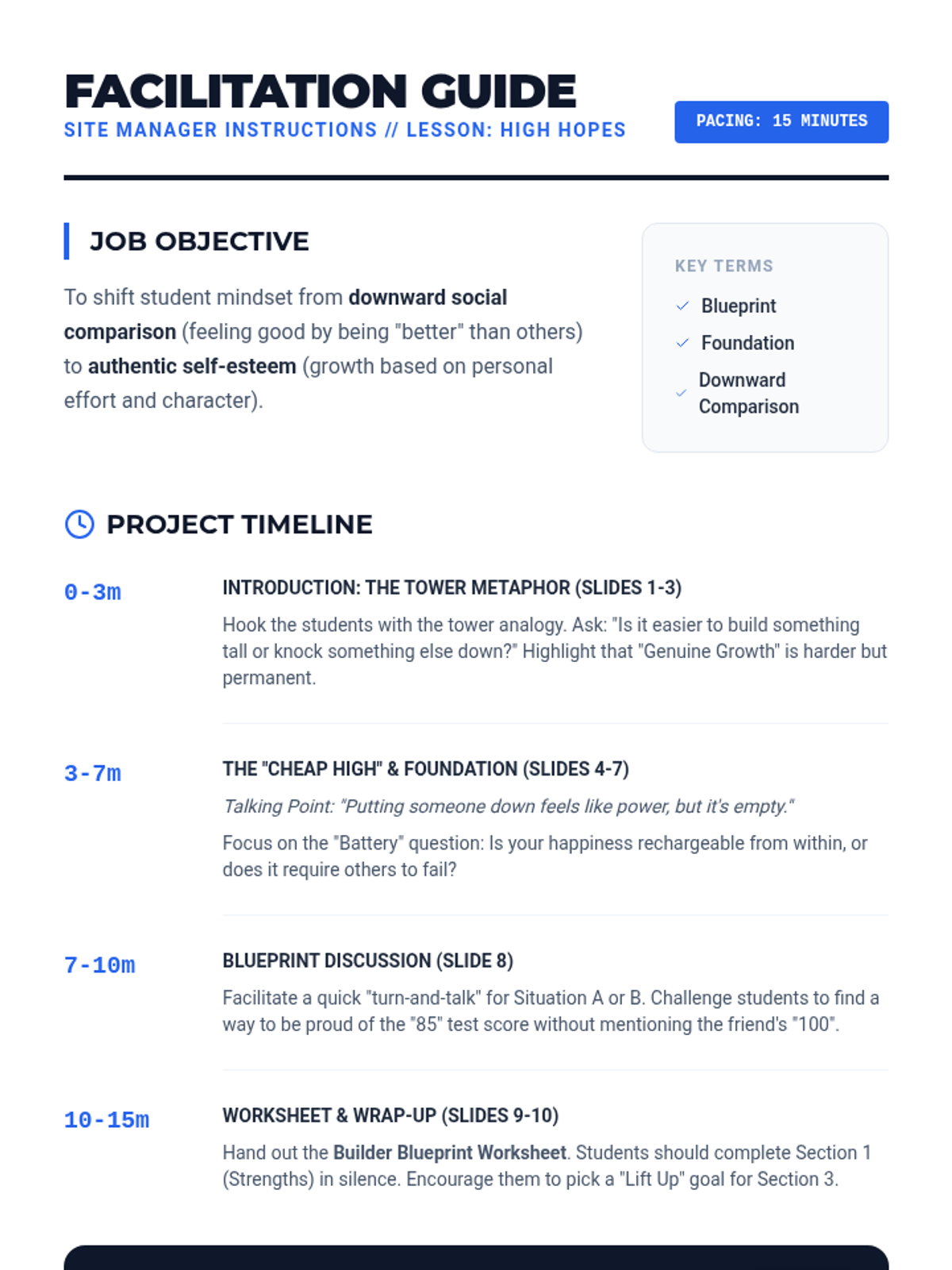
A 15-minute lesson exploring the pitfalls of 'downward social comparison' and how to build authentic self-esteem without diminishing others. Students will learn that true confidence comes from personal growth rather than putting others down.
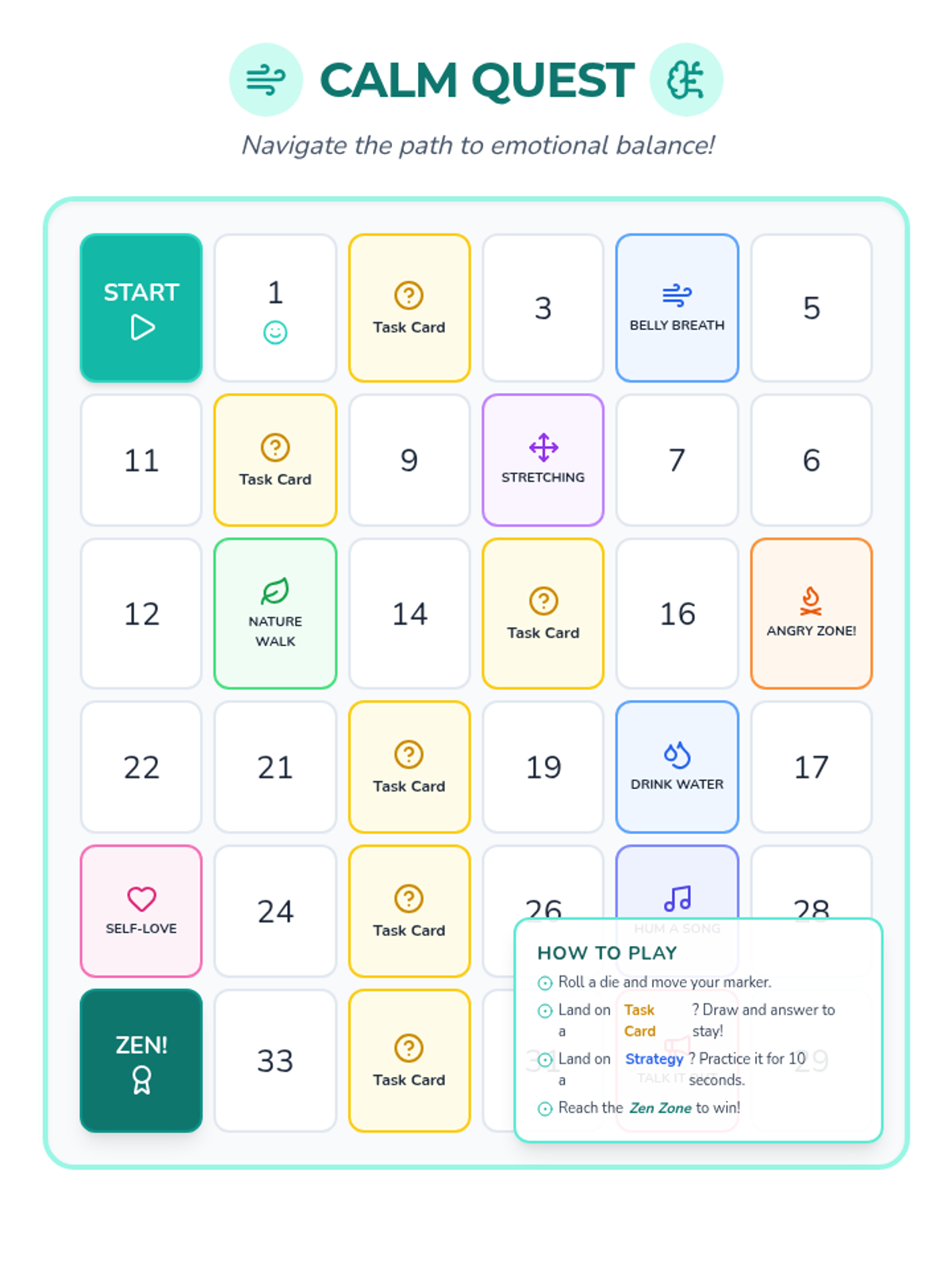
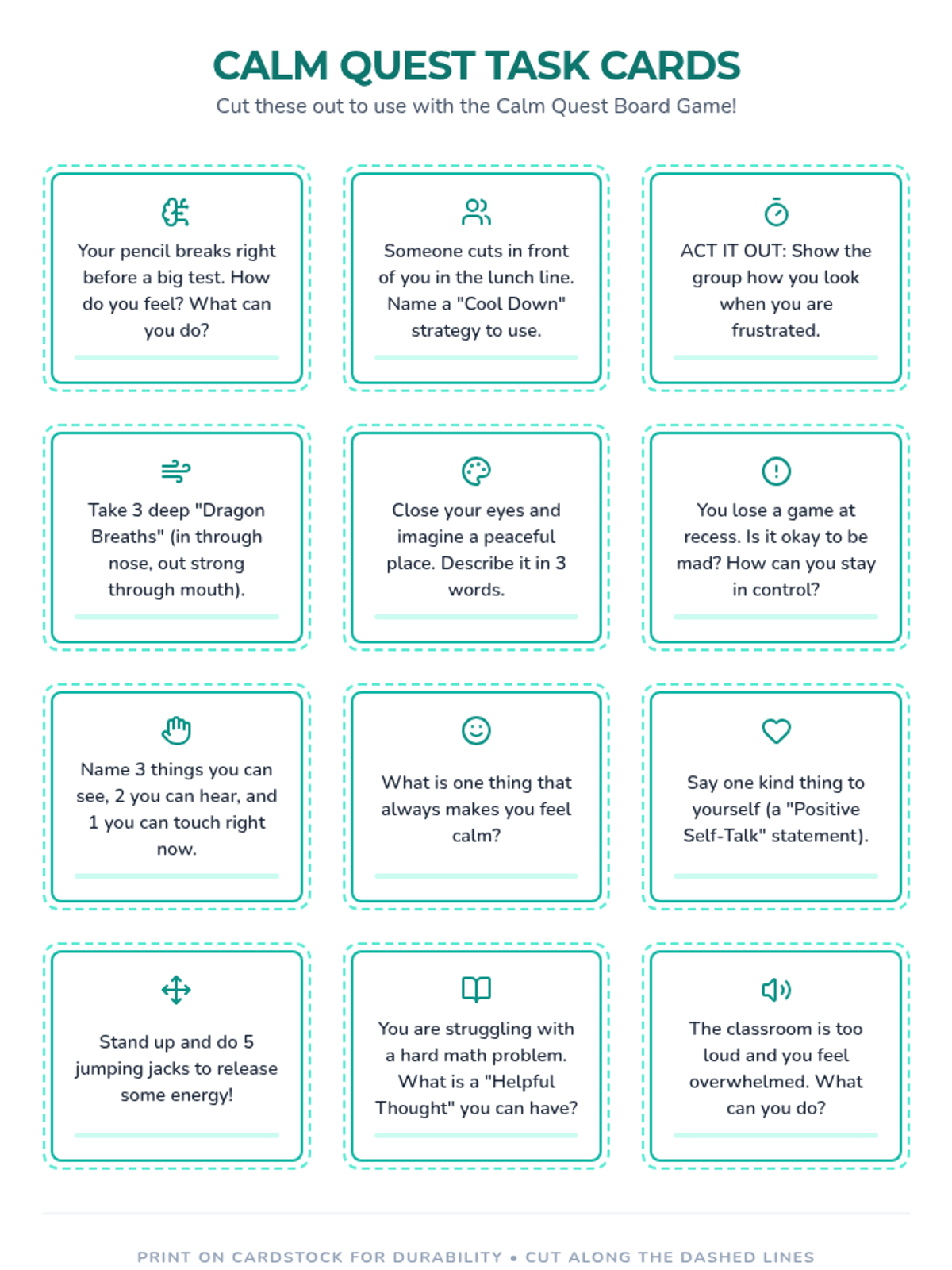
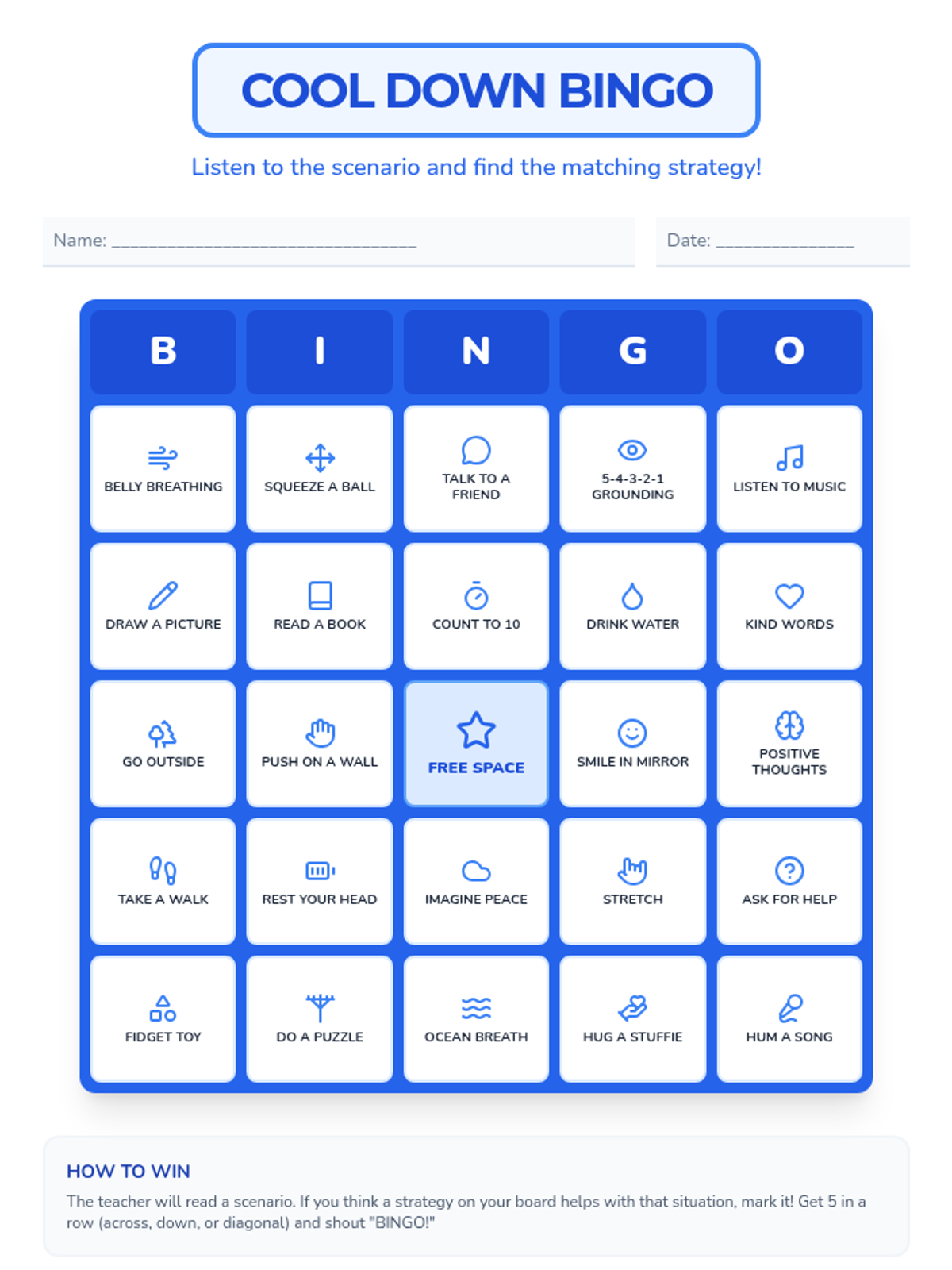
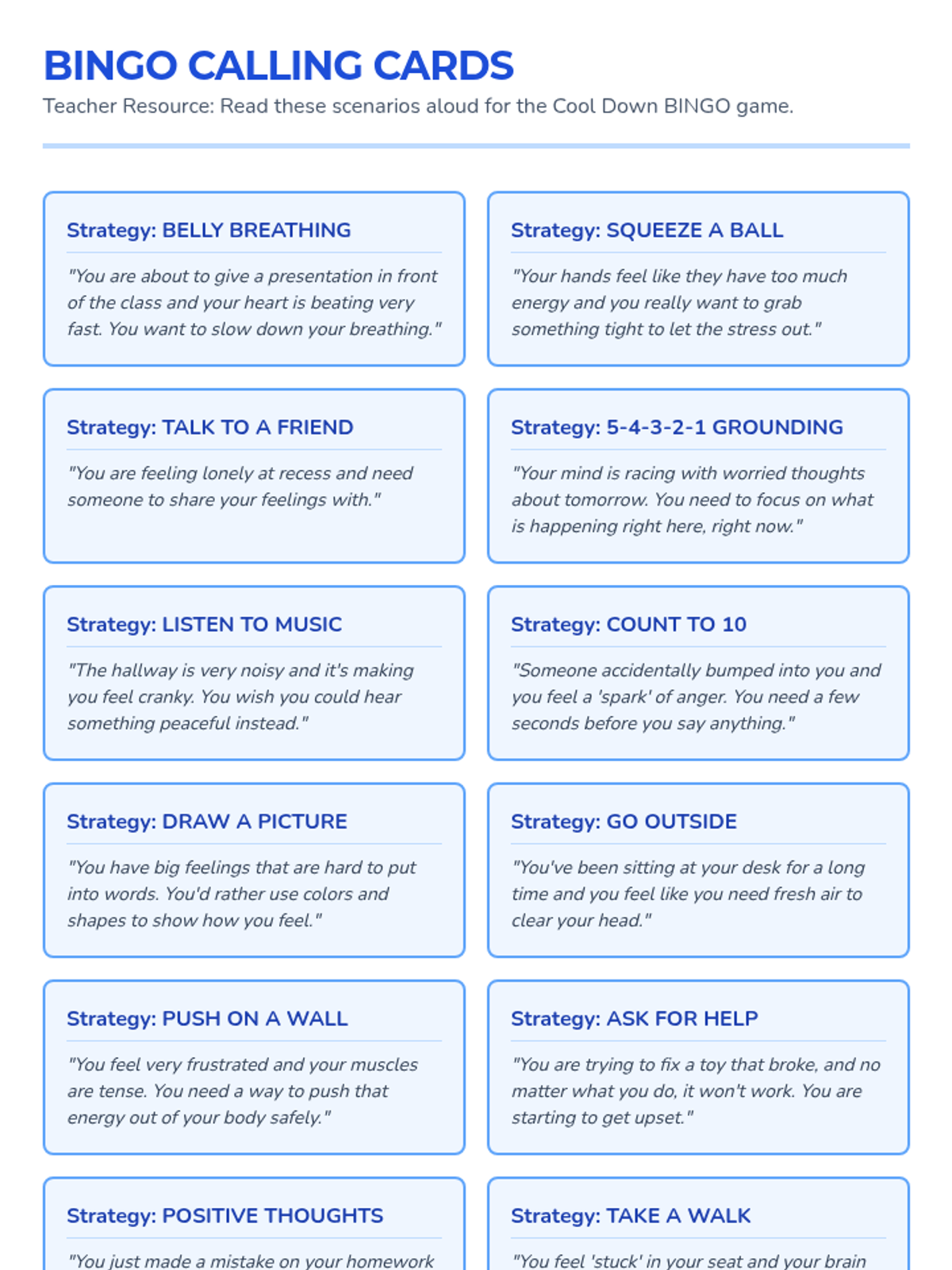
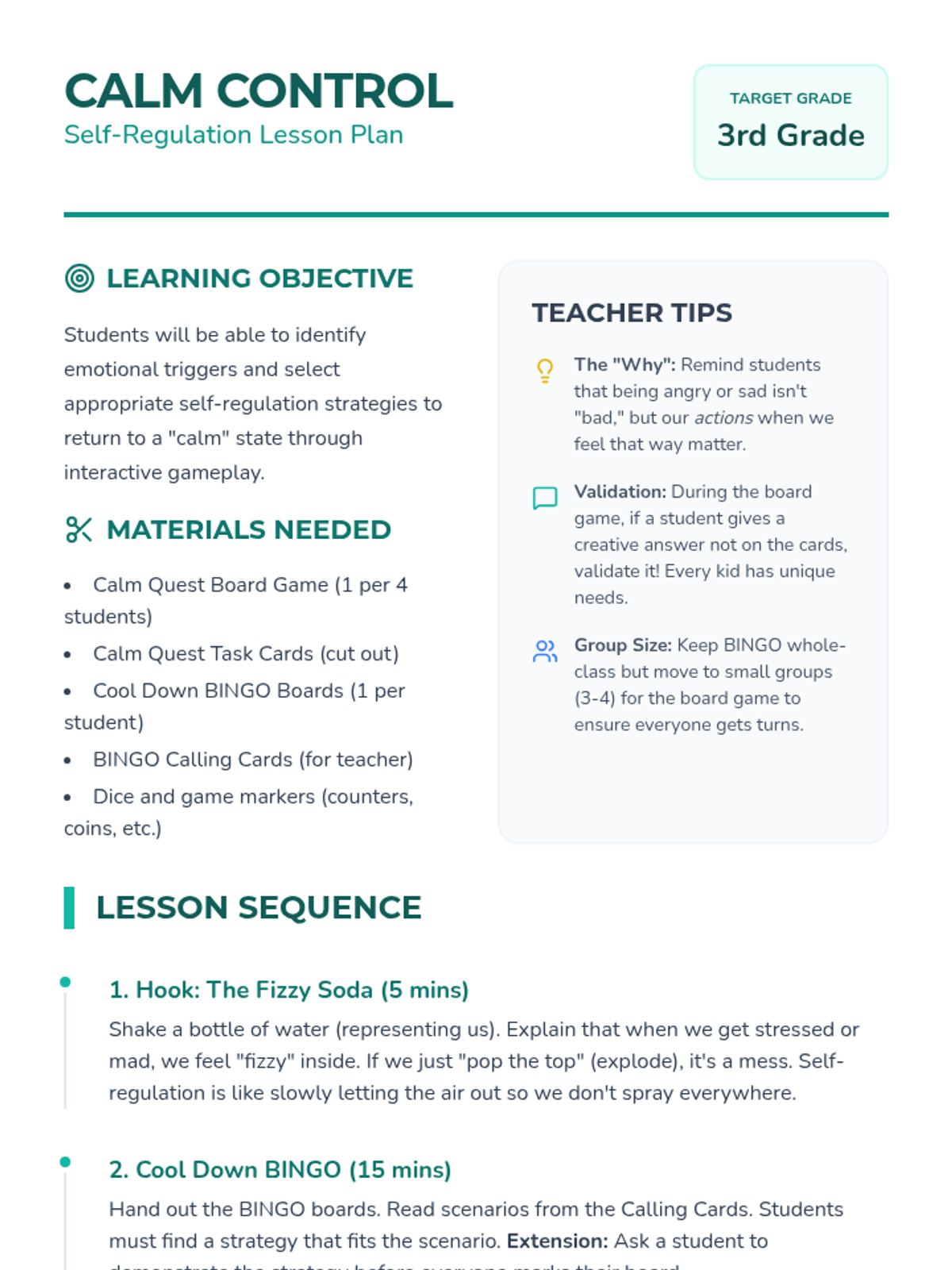
A fun, interactive lesson where 3rd graders practice identifying and applying self-regulation strategies through a board game and BINGO. Students will learn to recognize emotional triggers and choose appropriate 'calm-down' tools.
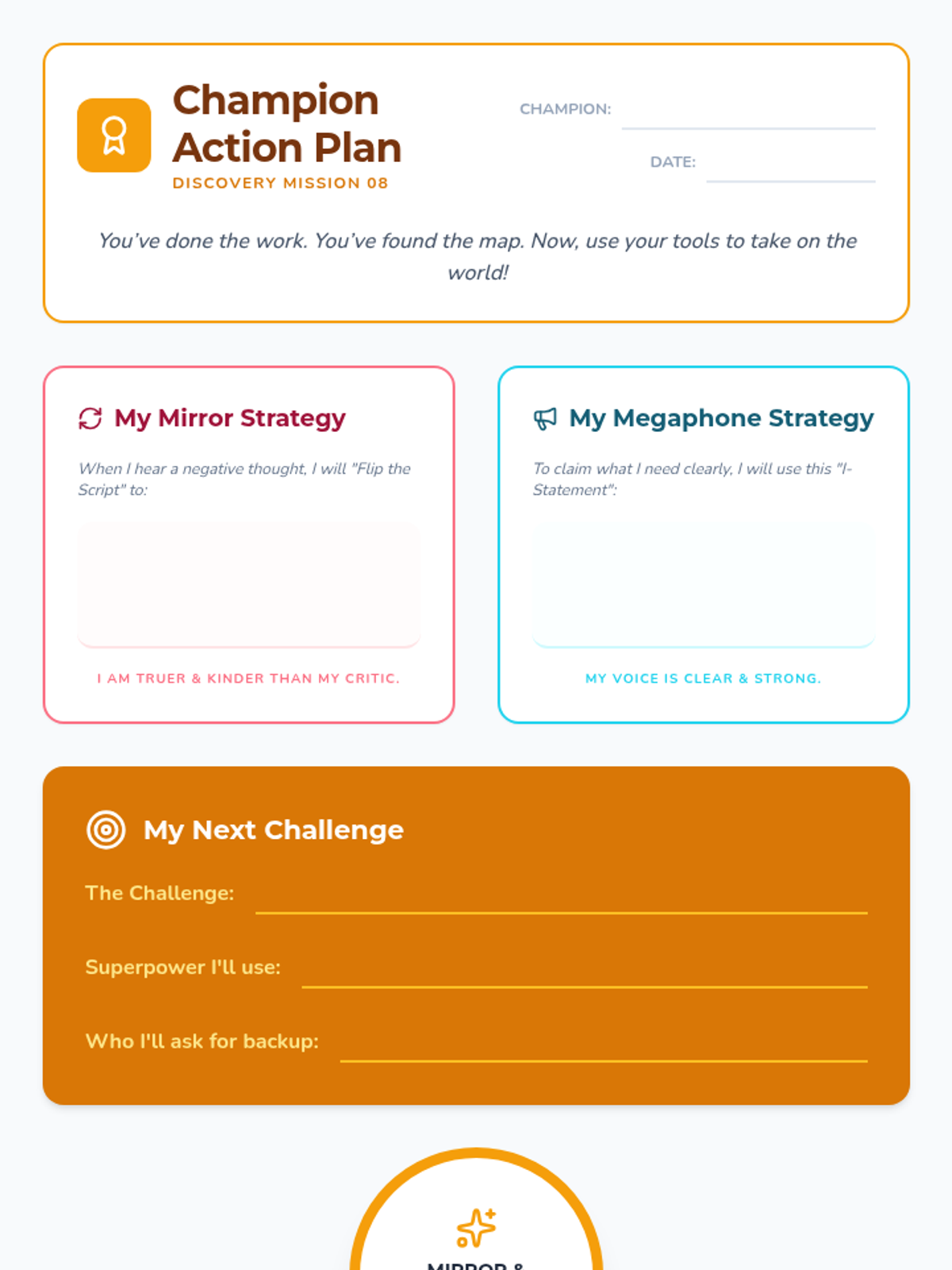
A final reflection session where the student reviews their progress and creates a personal 'Advocacy Action Plan' for the future.
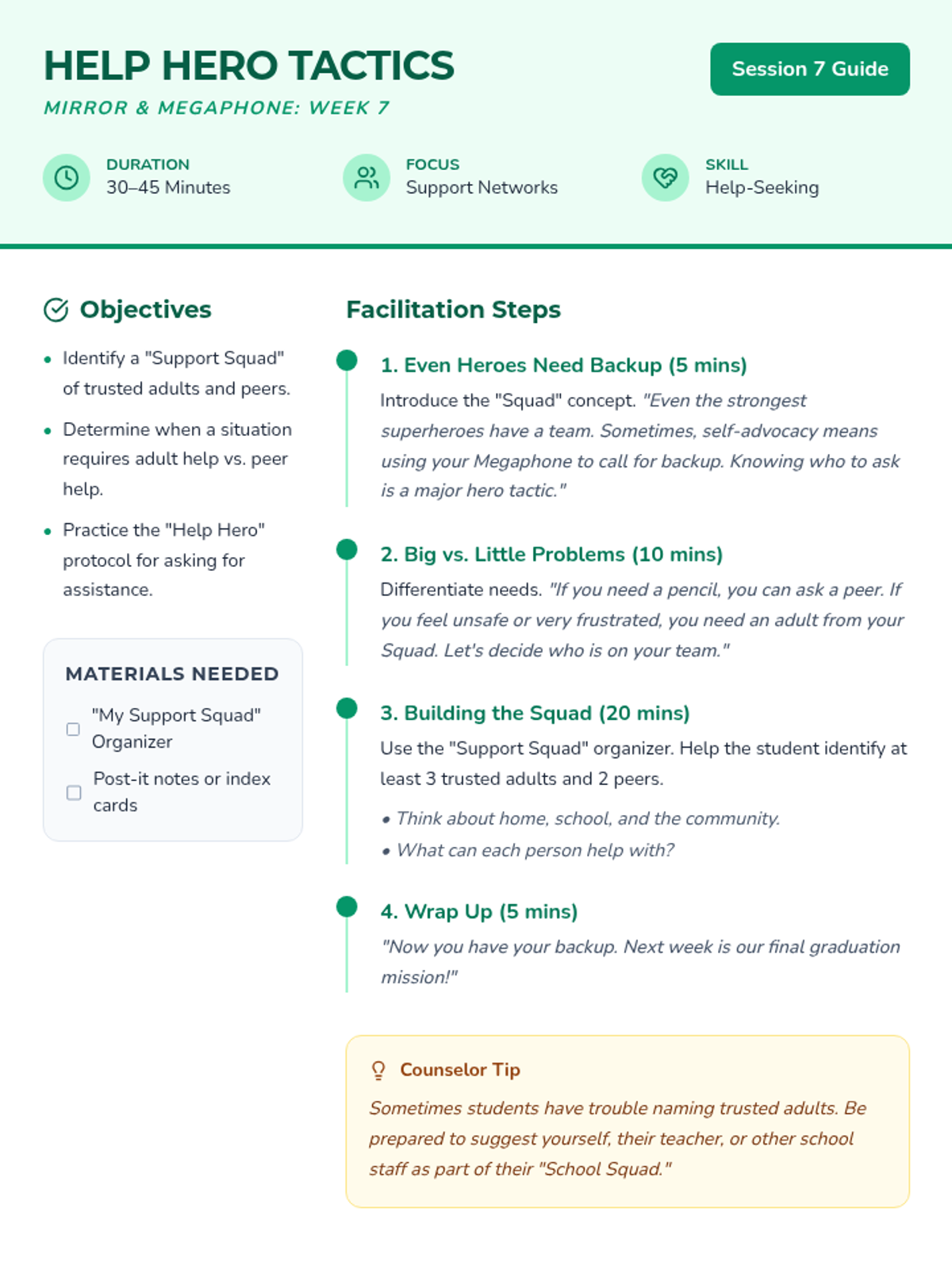
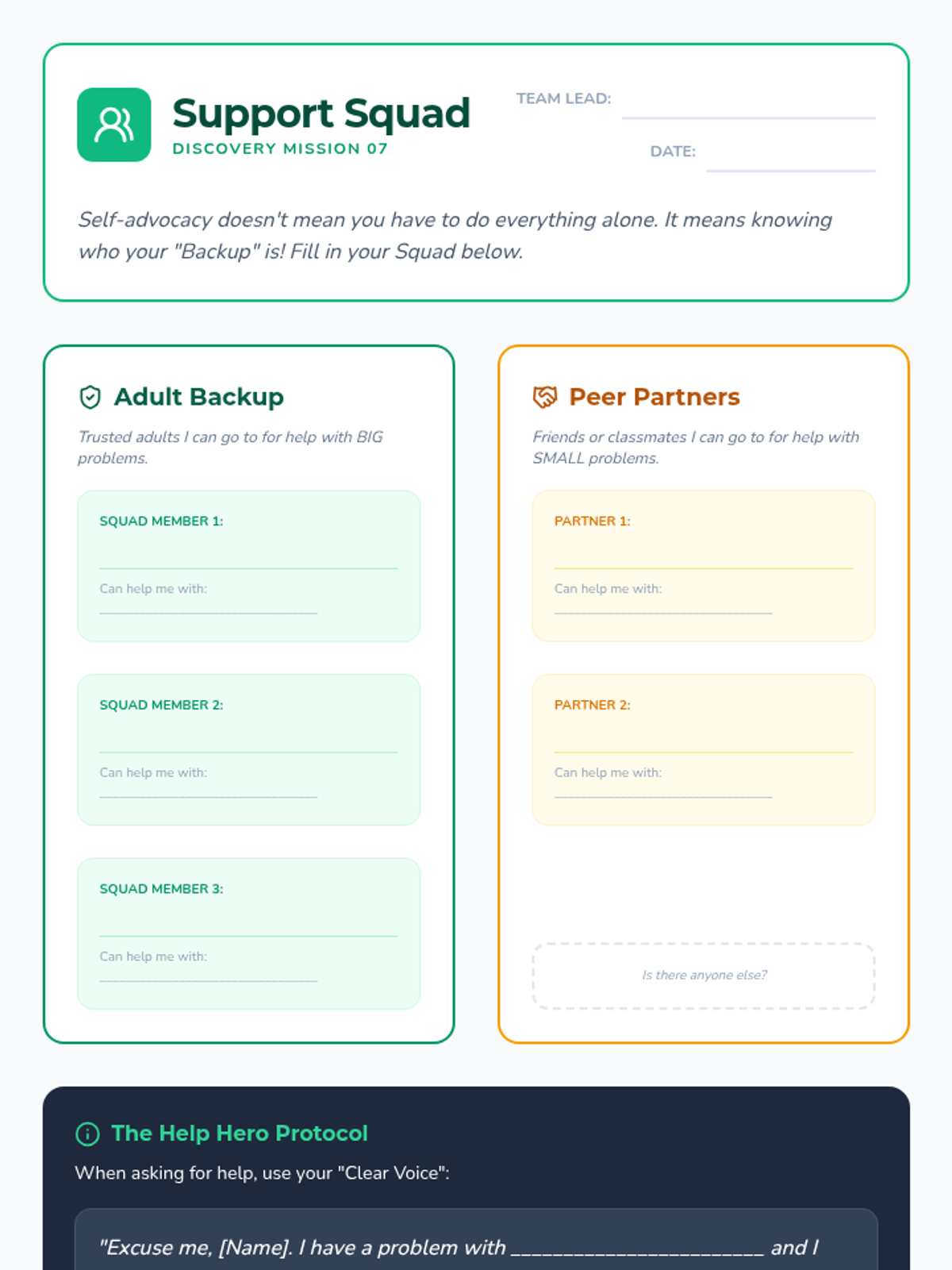
Provides a framework for how and when to ask for help, identifying a "Support Squad" of trusted individuals.
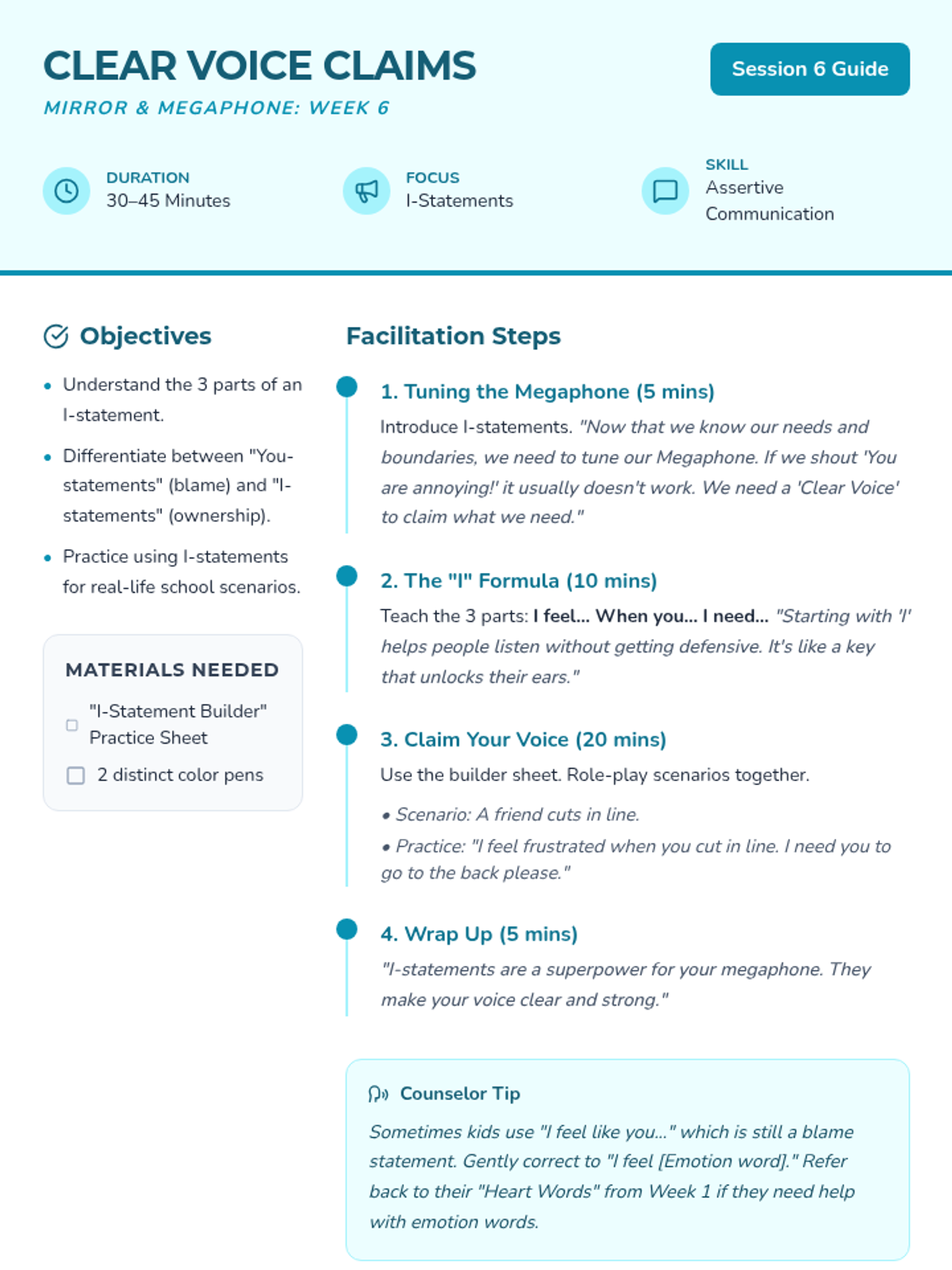
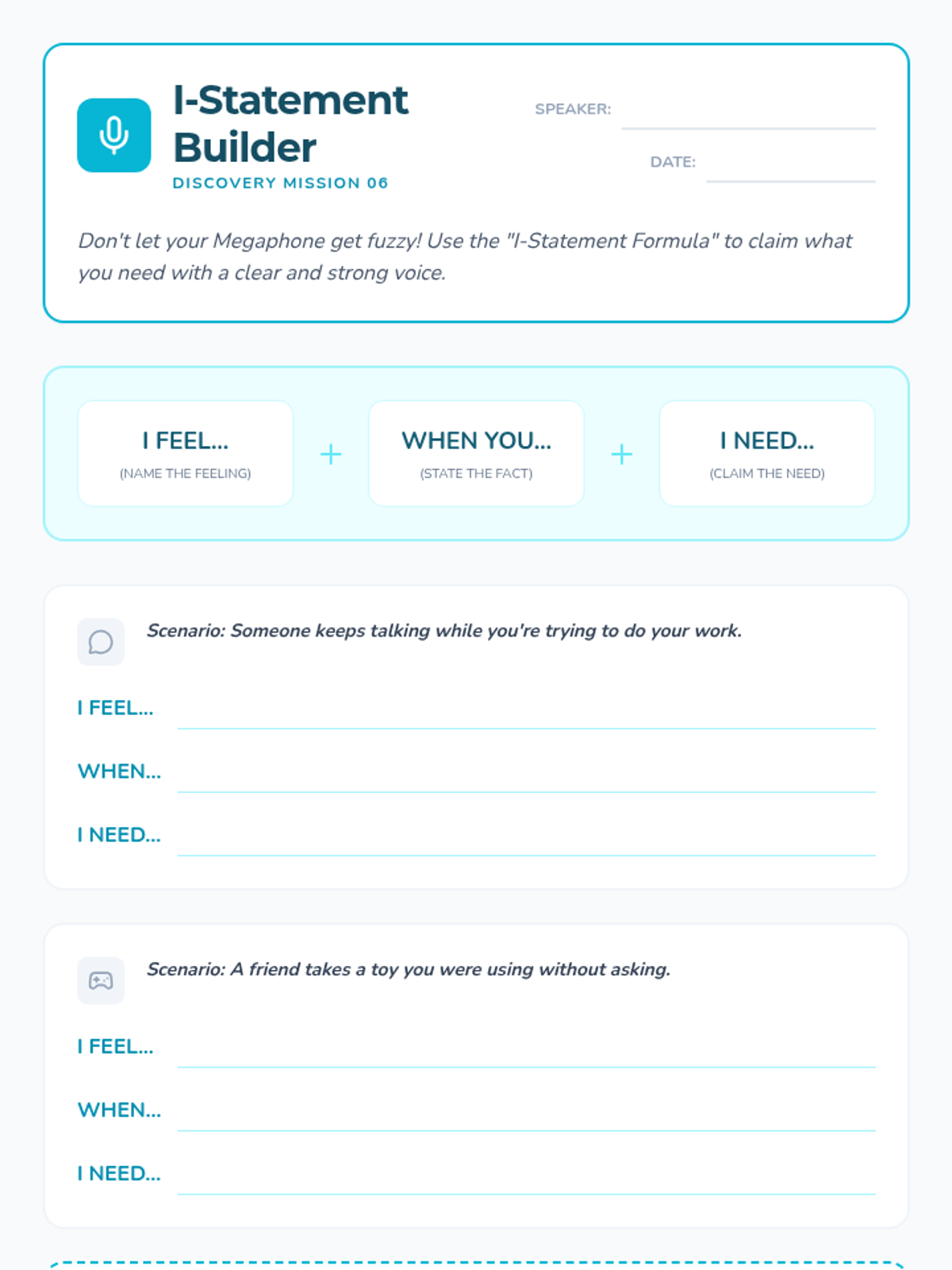
Teaches the practical skill of using "I-statements" to communicate feelings and needs effectively without blame.
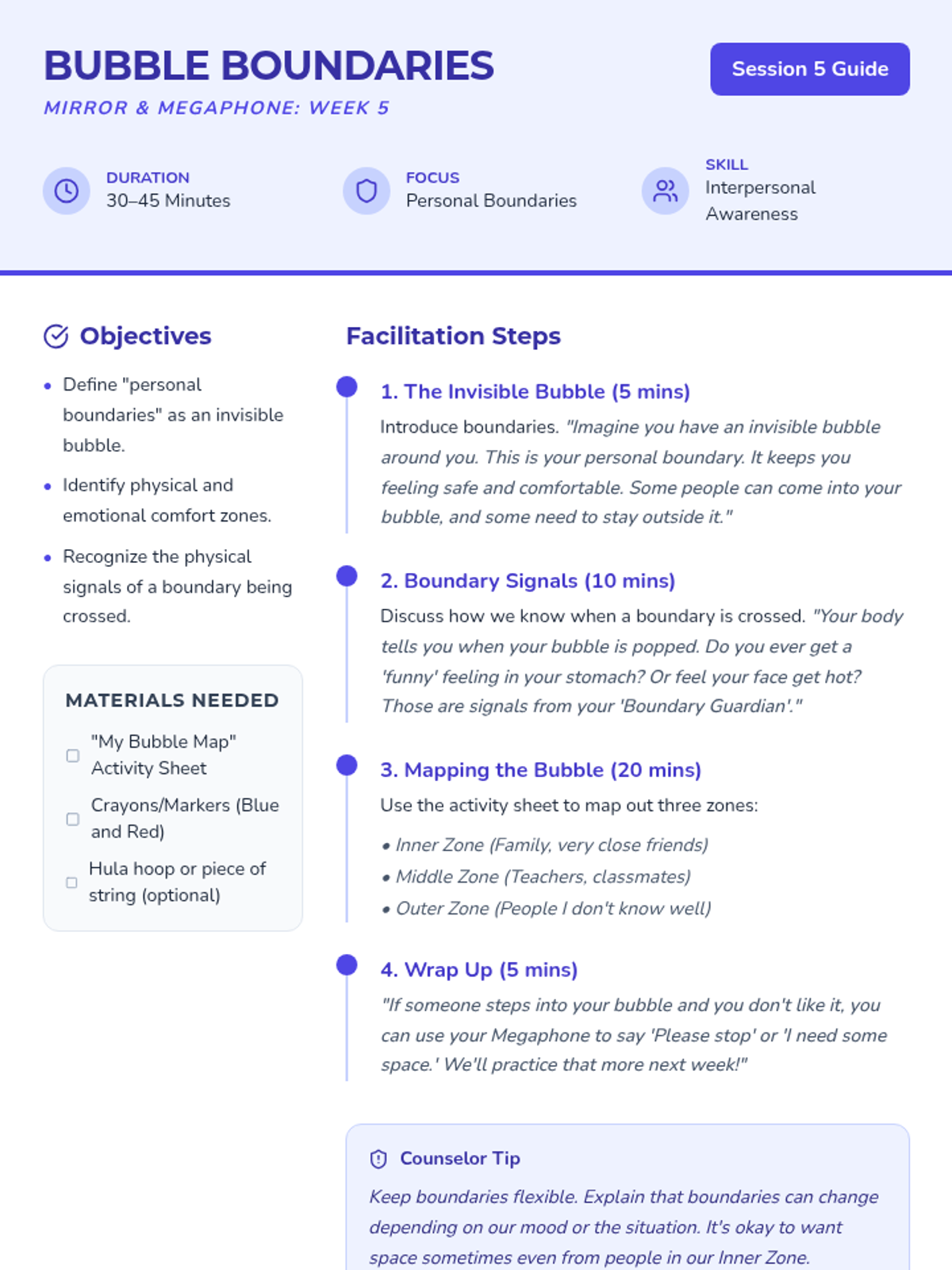
Focuses on identifying personal physical and emotional boundaries, and teaching the student how to recognize when a boundary is being crossed.
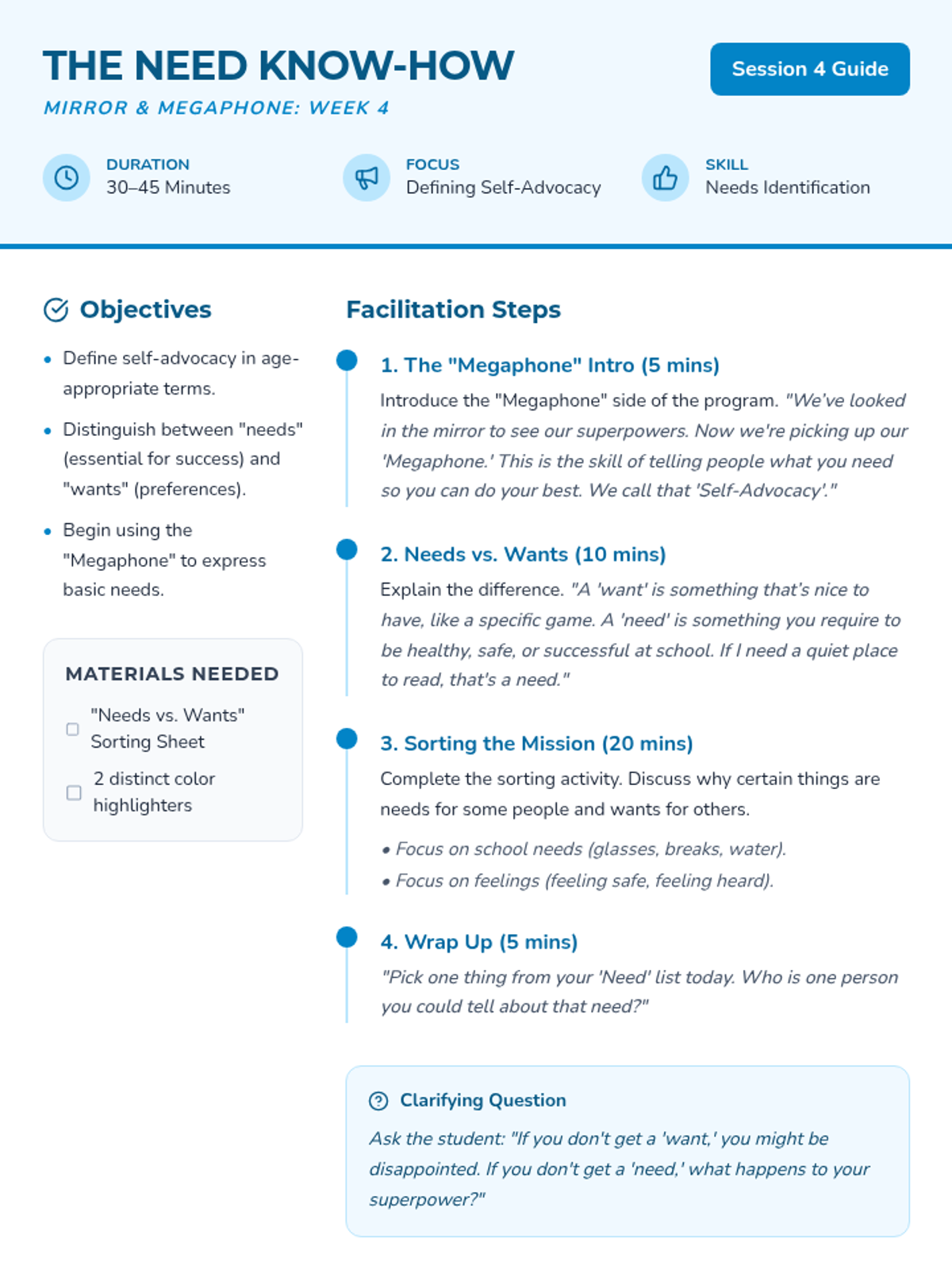
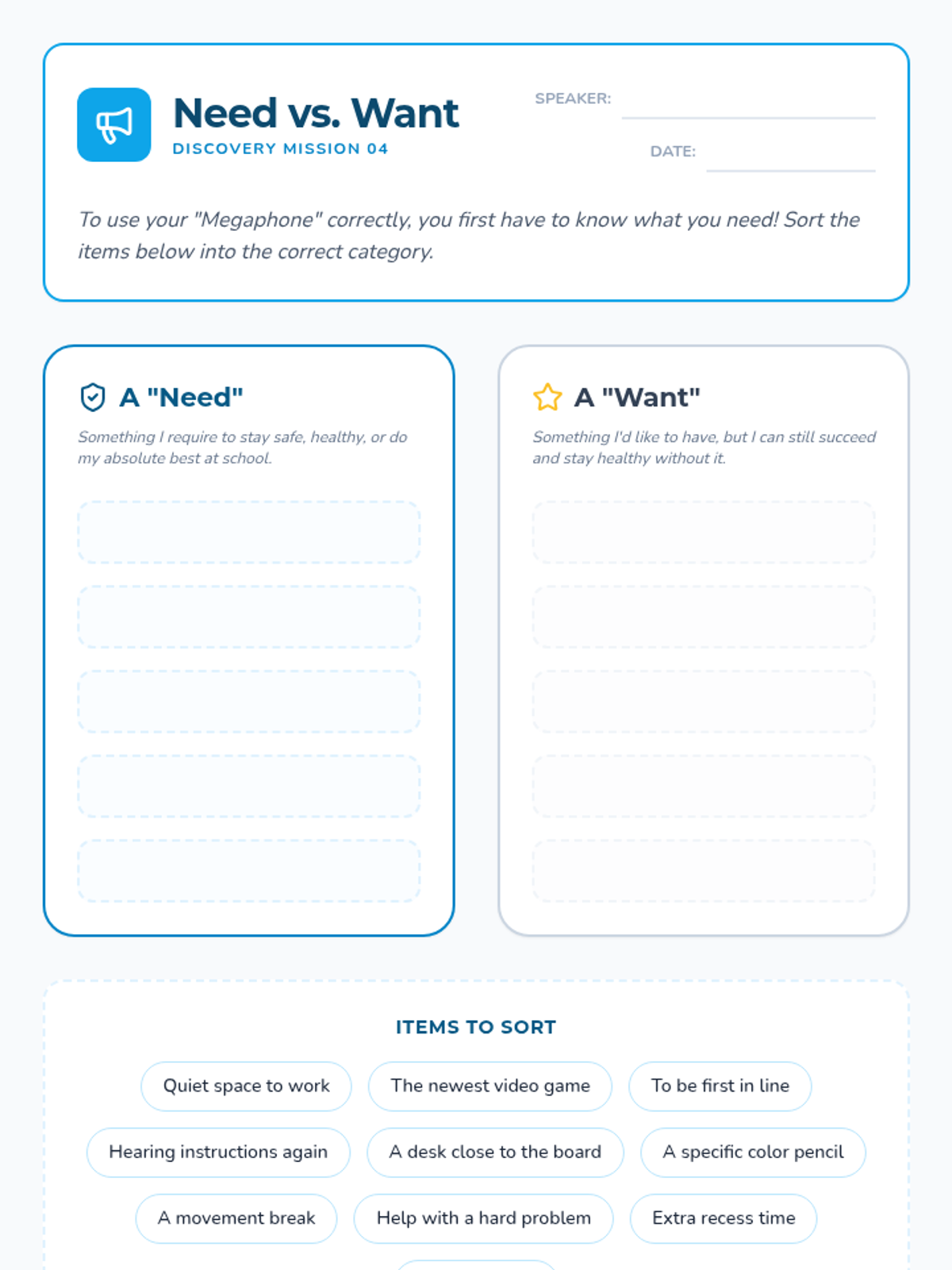
Students learn the definition of self-advocacy and begin to differentiate between personal needs and wants to better express themselves.
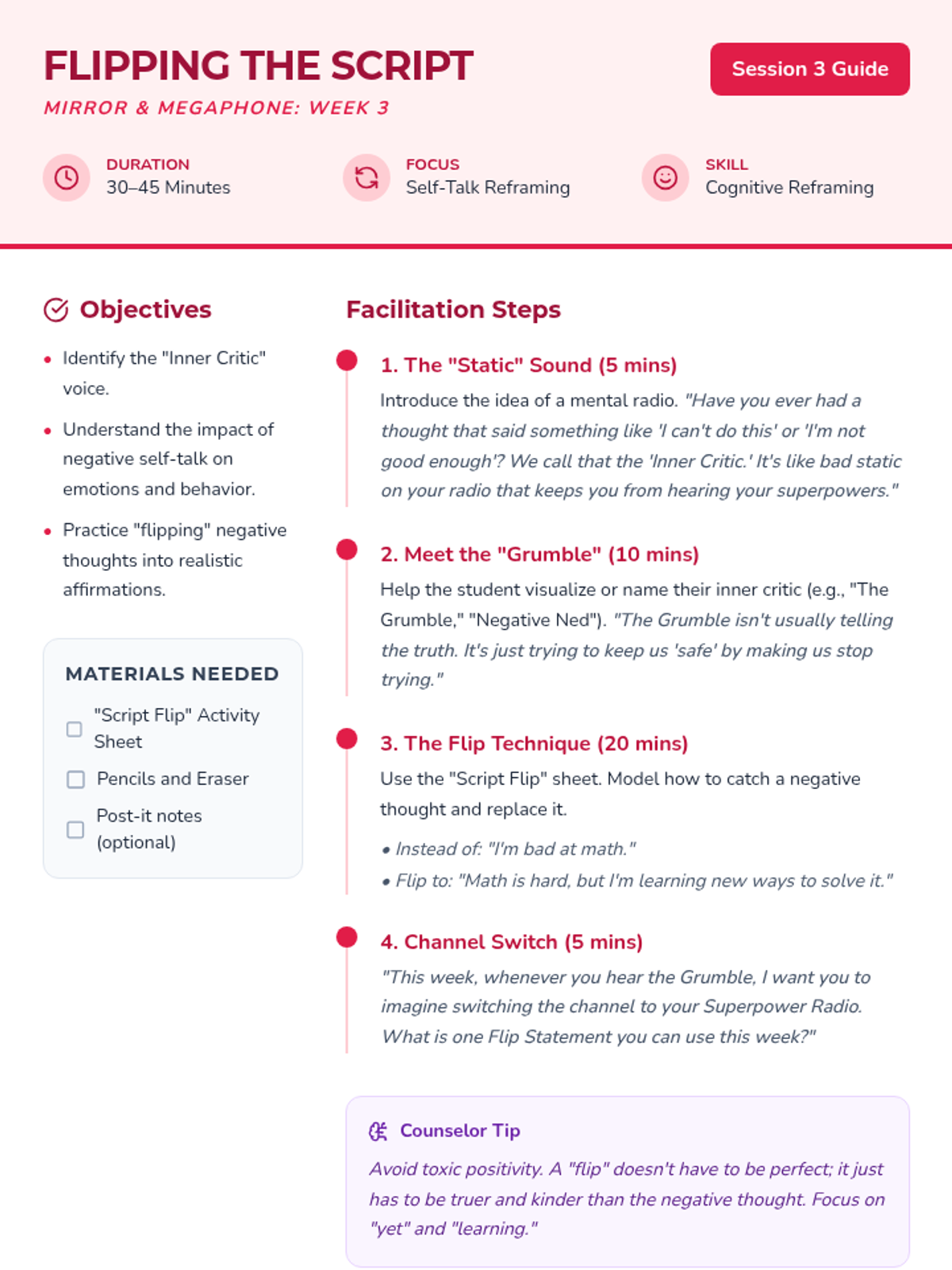
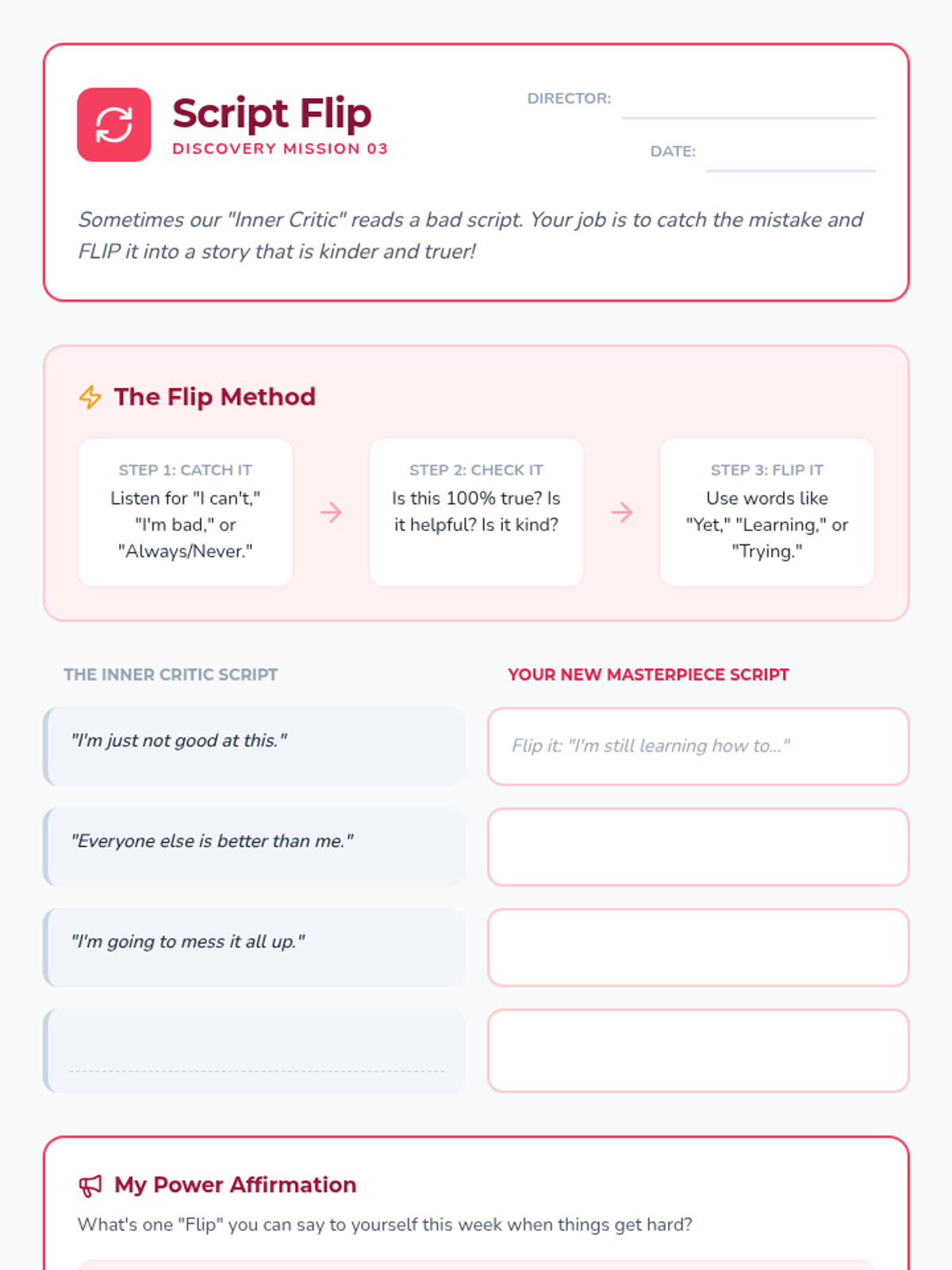
This session introduces the concept of the 'inner critic' and provides tools for students to recognize and reframe negative self-talk into positive affirmations.
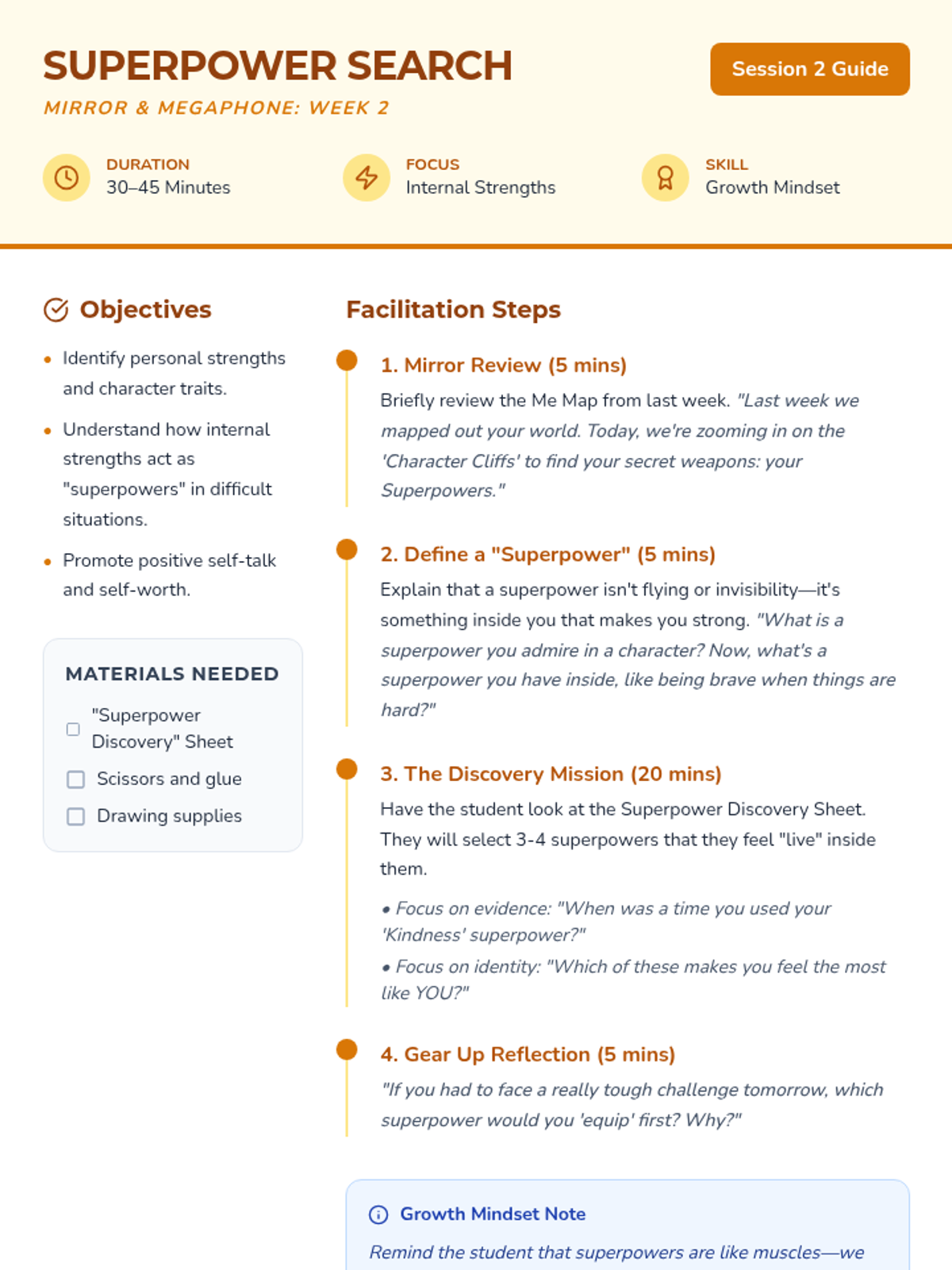
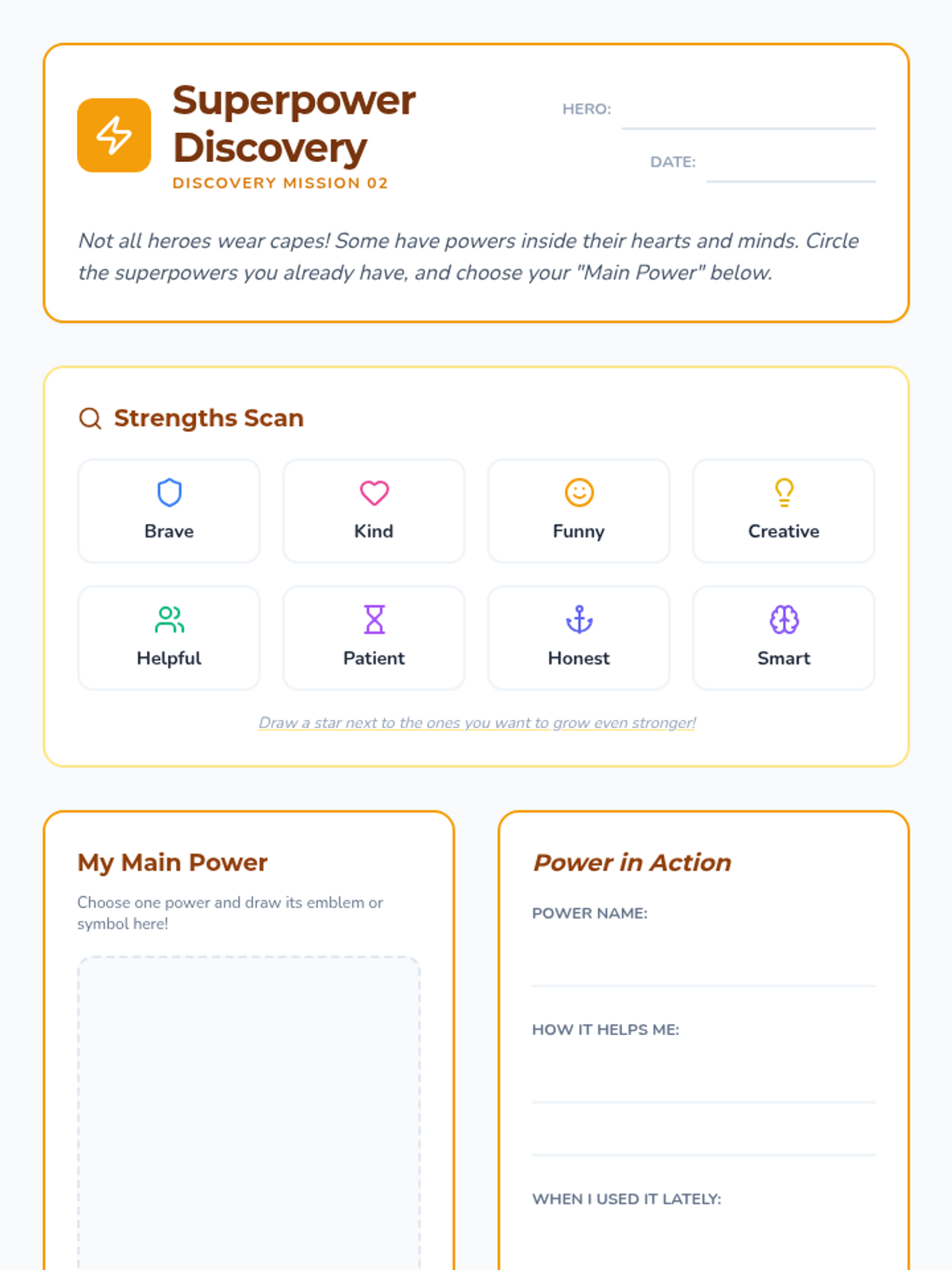
Students identify their internal strengths and character assets, reframing them as "superpowers" that help them navigate challenges.