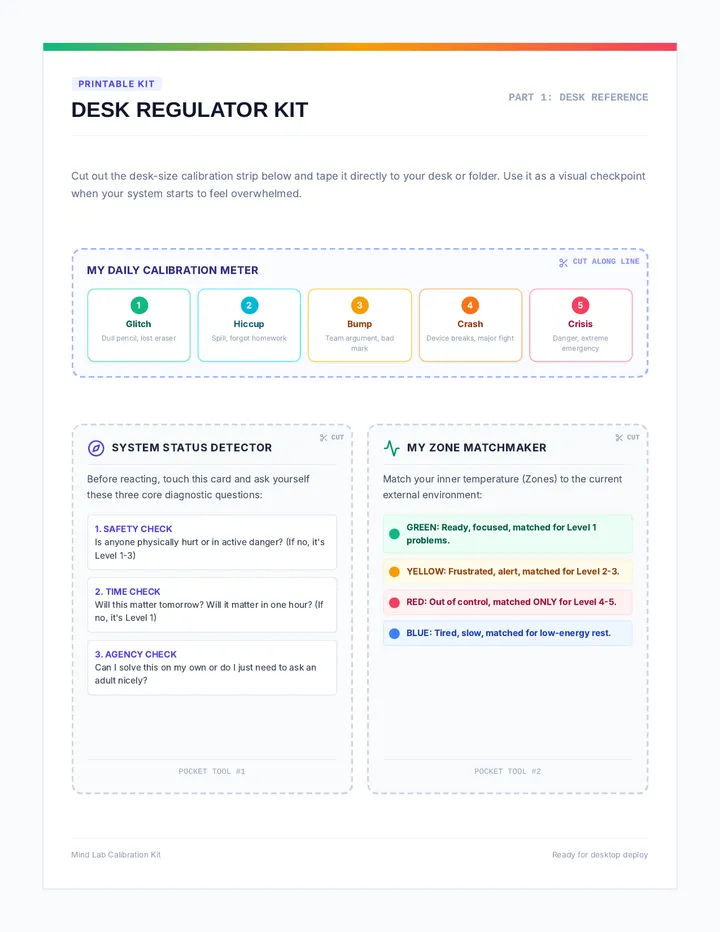
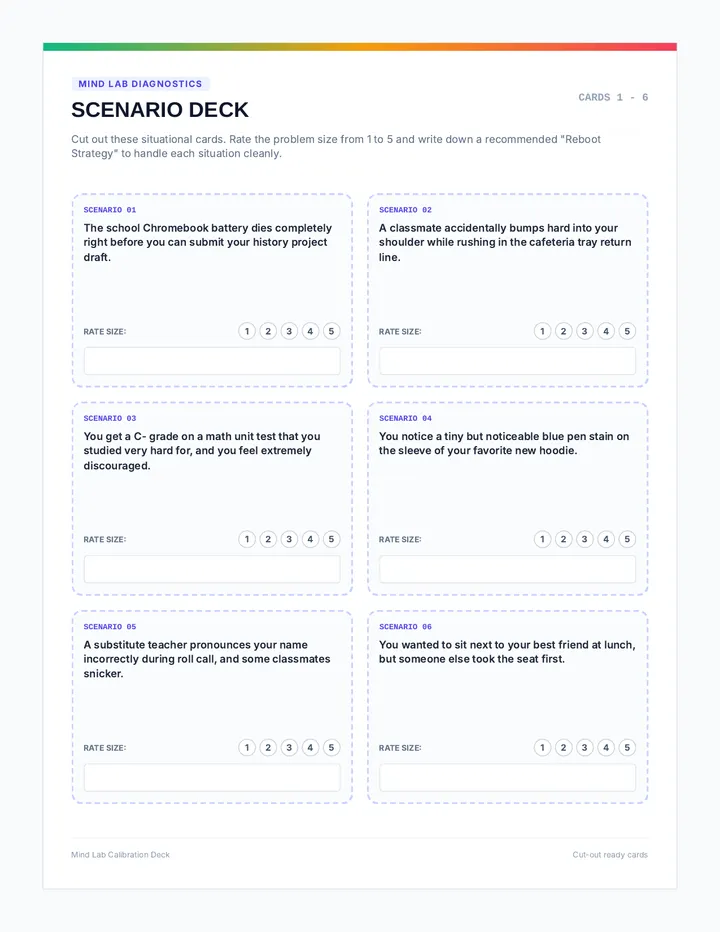
A 45-minute lesson for 5th-7th graders exploring the neuroscience of impulse control through the 'Thinking Brain' and 'Feeling Brain' analogy. Students learn the 'Stop, Think, Choose' strategy to manage impulsive reactions.
Students work in small groups to rehearse and perform mystery plays, analyzing their specific plot structures and reflecting on social-emotional themes.
Students learn the fundamental components of a play script and use a model play to identify setting, characters, and plot structure.
Explores personal history and resilience by identifying personal strengths and role models to navigate future challenges.
Focuses on citizenship and interpersonal skills by using the metaphor of building bridges to resolve conflicts and connect with others in their community.
Students use geographical concepts to map their emotions and identify "safe places," building self-awareness and emotional regulation.
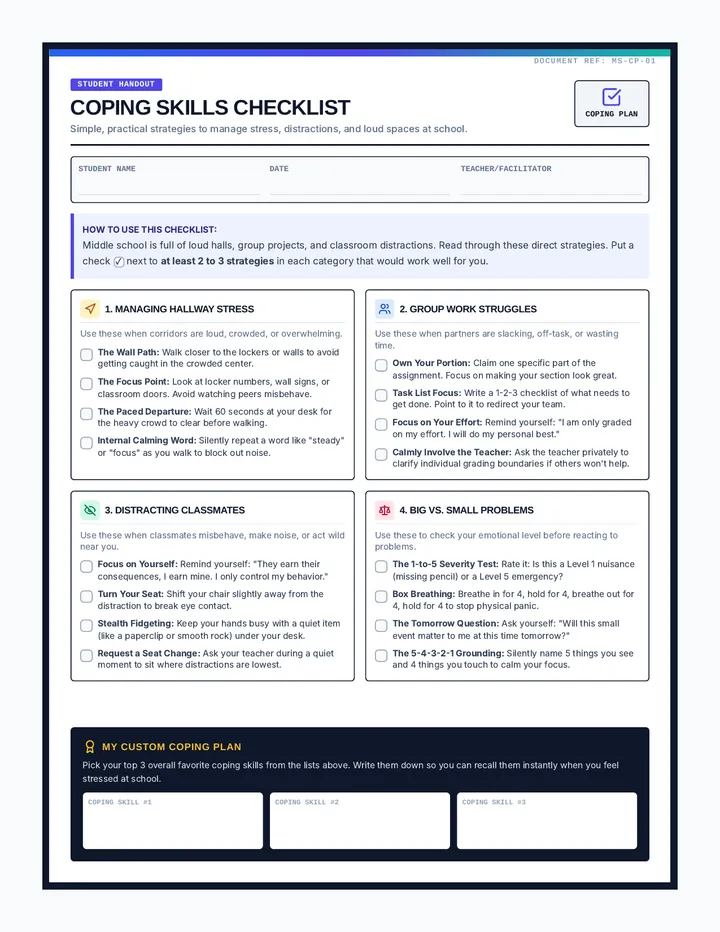
A set of tools designed to help middle school students master the executive function skills of organization and task initiation through structured accountability.
A counseling lesson for 6th graders focused on managing anger and frustration within friendships. It covers identifying physical triggers, slowing down reactions, and using constructive communication.
A 7th-grade lesson focused on evaluating everyday decisions using a structured 5-step decision-making model. Students will analyze scenarios and apply the model to their own lives.
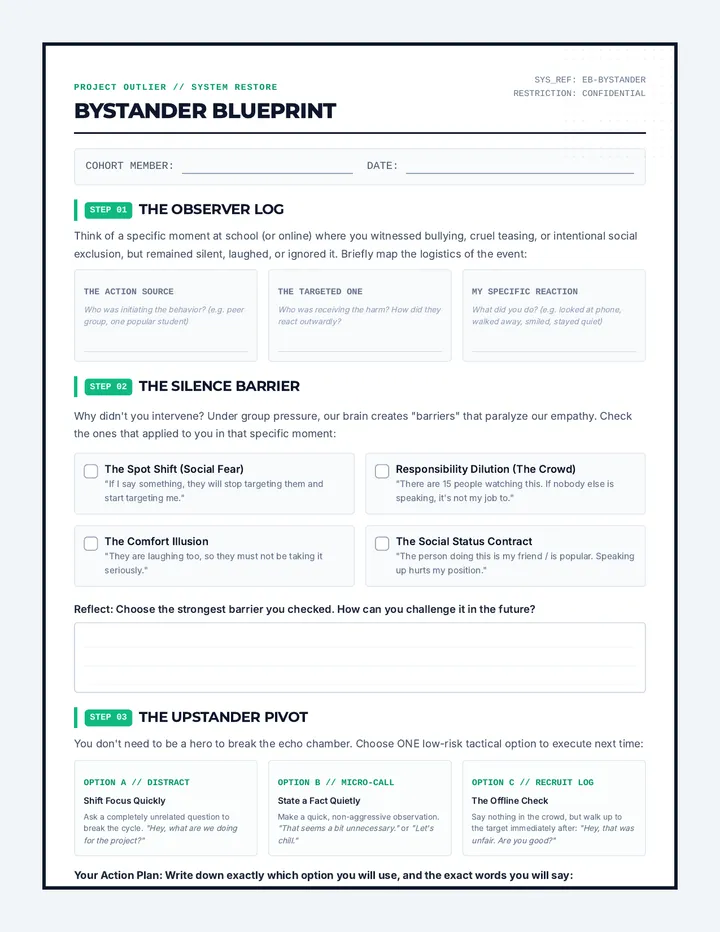
A high-energy, 10-minute interactive lesson focused on identifying bullying behaviors and empowering students to take the 'Upstander' pledge. Includes a visual presentation and a step-by-step facilitation guide for teachers.
A goal-setting workshop where students 'reverse engineer' a long-term aspiration into immediate, manageable steps. Focuses on clarity, motivation, and overcoming potential obstacles.
Students identify personal stress triggers and develop a 'relief valve' system of coping strategies. The lesson focuses on recognizing physical signs of stress and planning proactive responses.
Students explore the layers of their identity, distinguishing between how they see themselves and how they are perceived by others. Includes a guided activity to create a multi-layered identity map.
Reflecting on progress and celebrating the mission's success. Students create a 'Stay-in-Orbit' plan for long-term consistency.
Identifying the ground crew. Students learn how to communicate when they are struggling and who at home and school can help them 'launch' on tough days.
Building practical morning routines. Students create a 'Pre-Flight Checklist' to ensure a successful launch from home to school every morning.
Focuses on the social benefits of school and building a sense of belonging. Students identify their 'Satellite Team'—friends and staff who make school a place they want to be.