A comprehensive lesson for 3rd graders on identifying personal boundaries and practicing self-advocacy through clear communication. Students will learn to recognize their comfort zones and use "I" statements to protect their personal space.

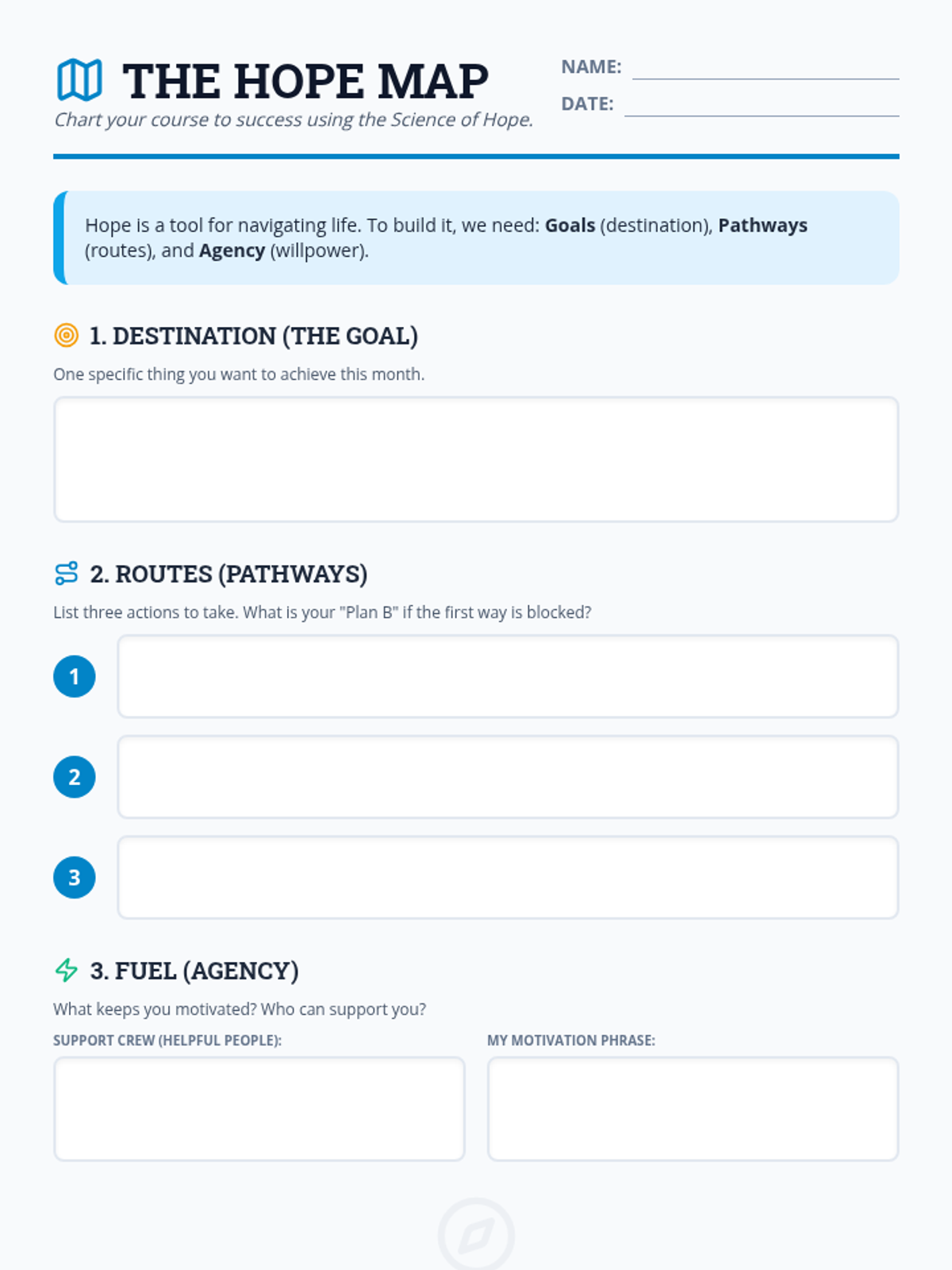
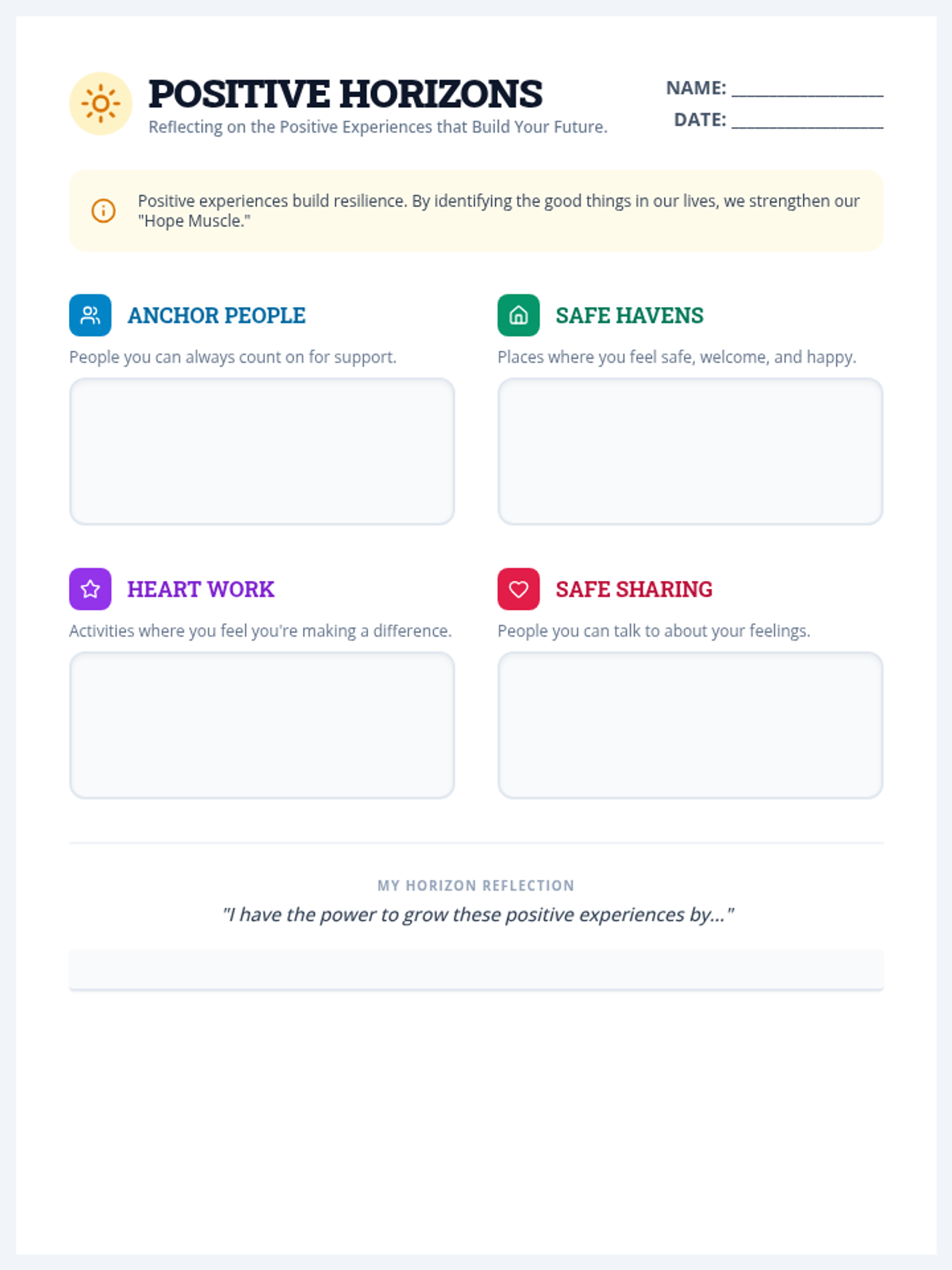
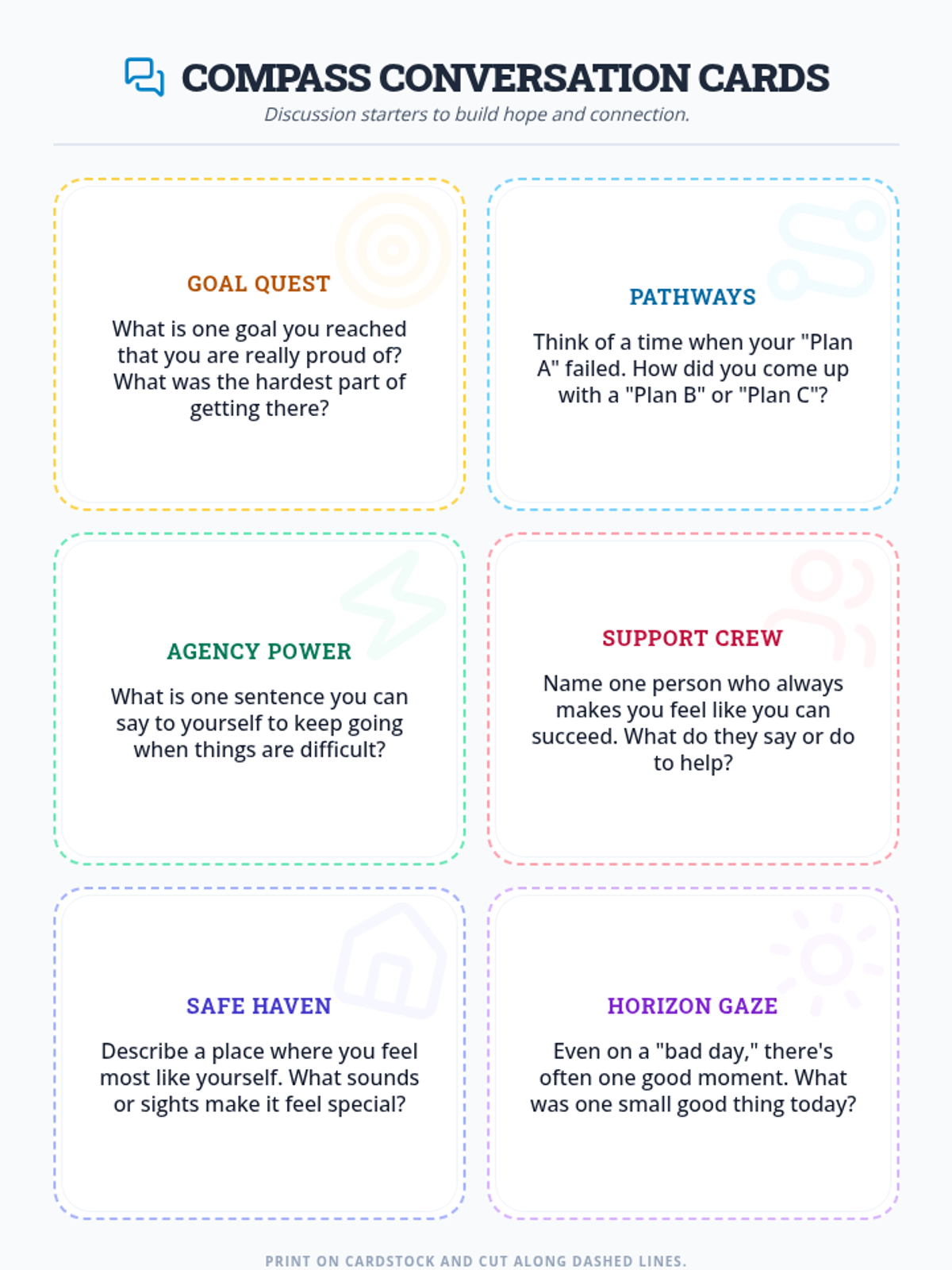
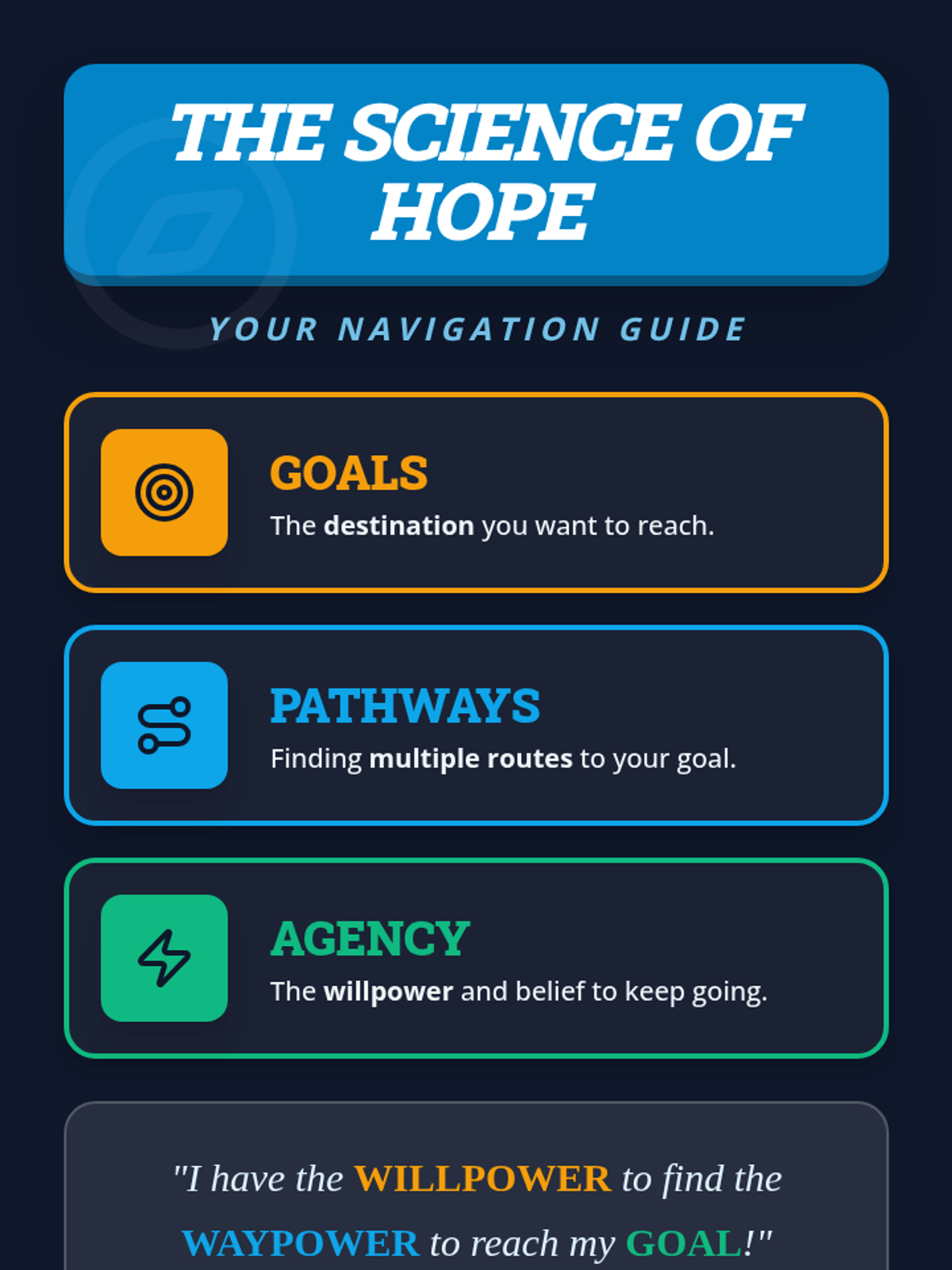
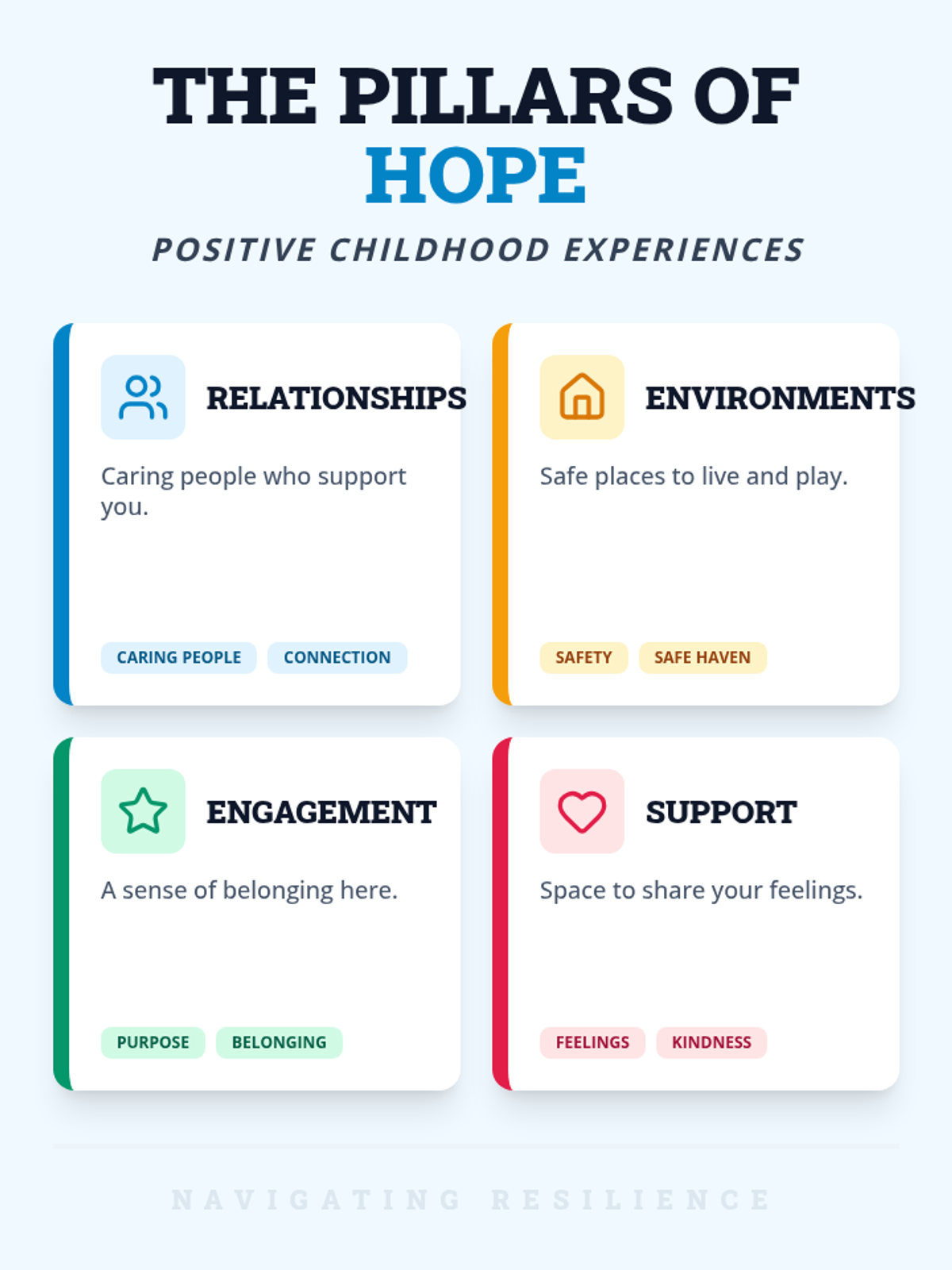
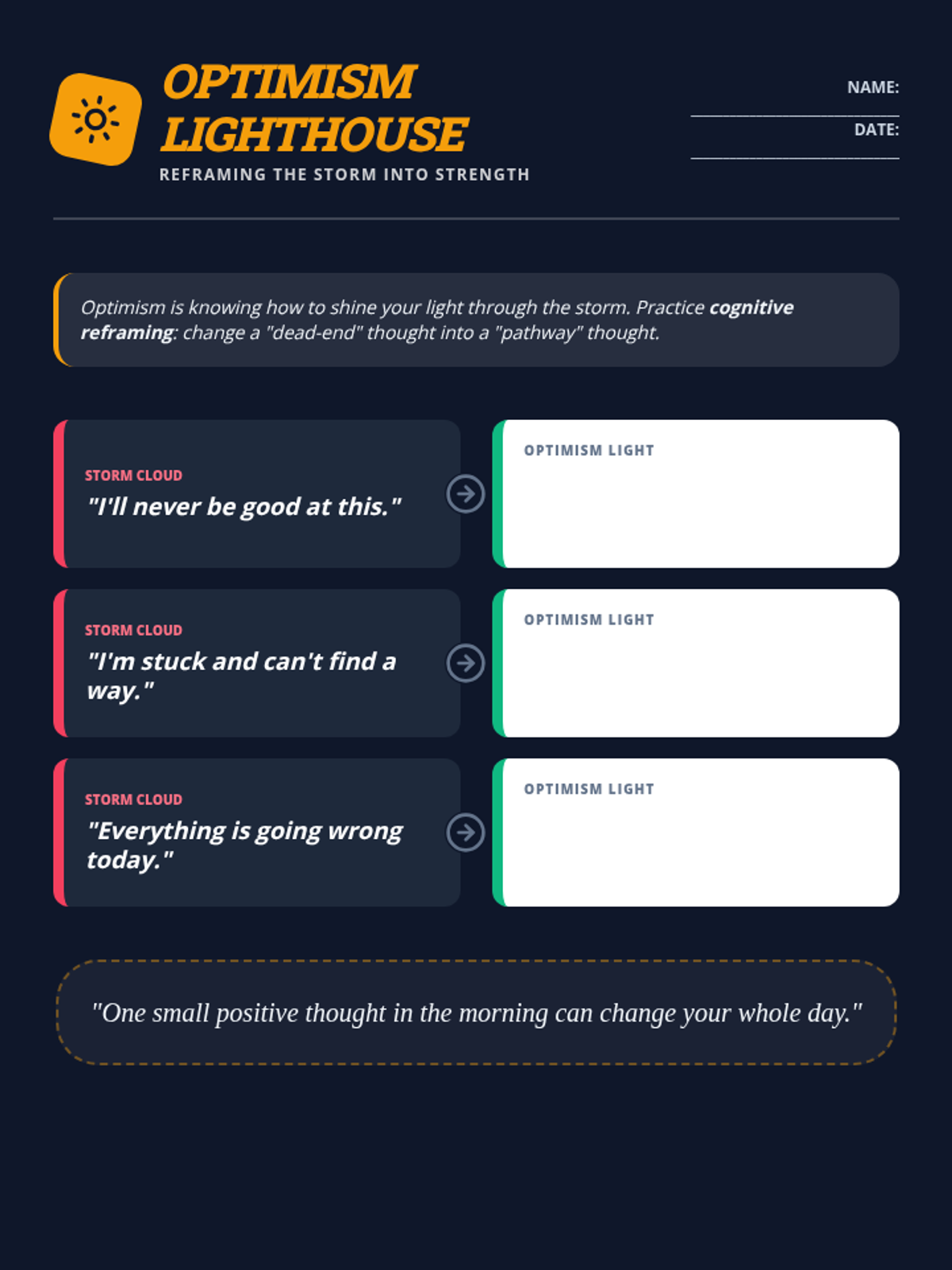
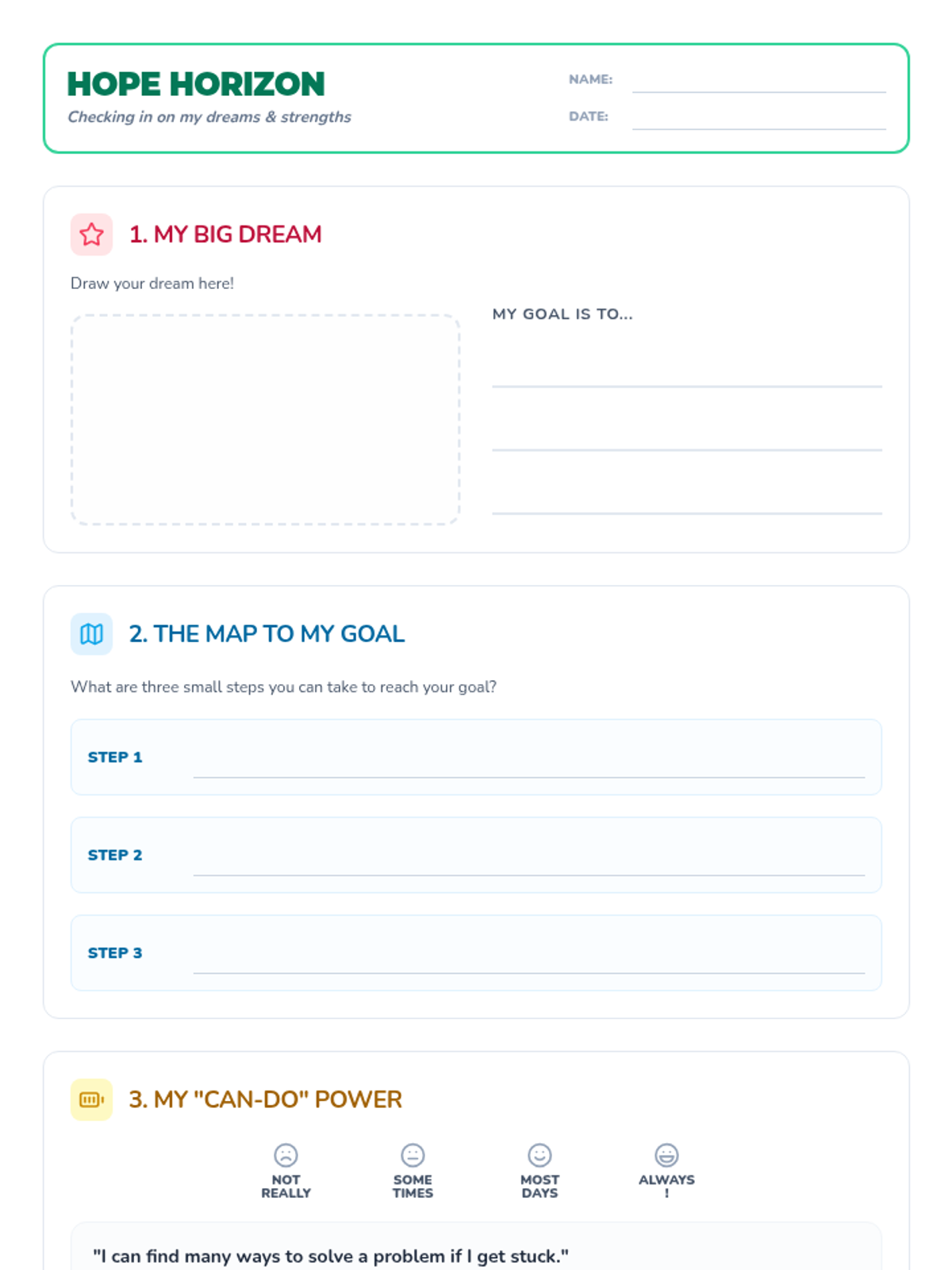
This lesson introduces students to the components of hope (Goals, Agency, Pathways) and the importance of positive childhood experiences. Students will reflect on their strengths, set practical goals, and identify the support systems that help them navigate life.
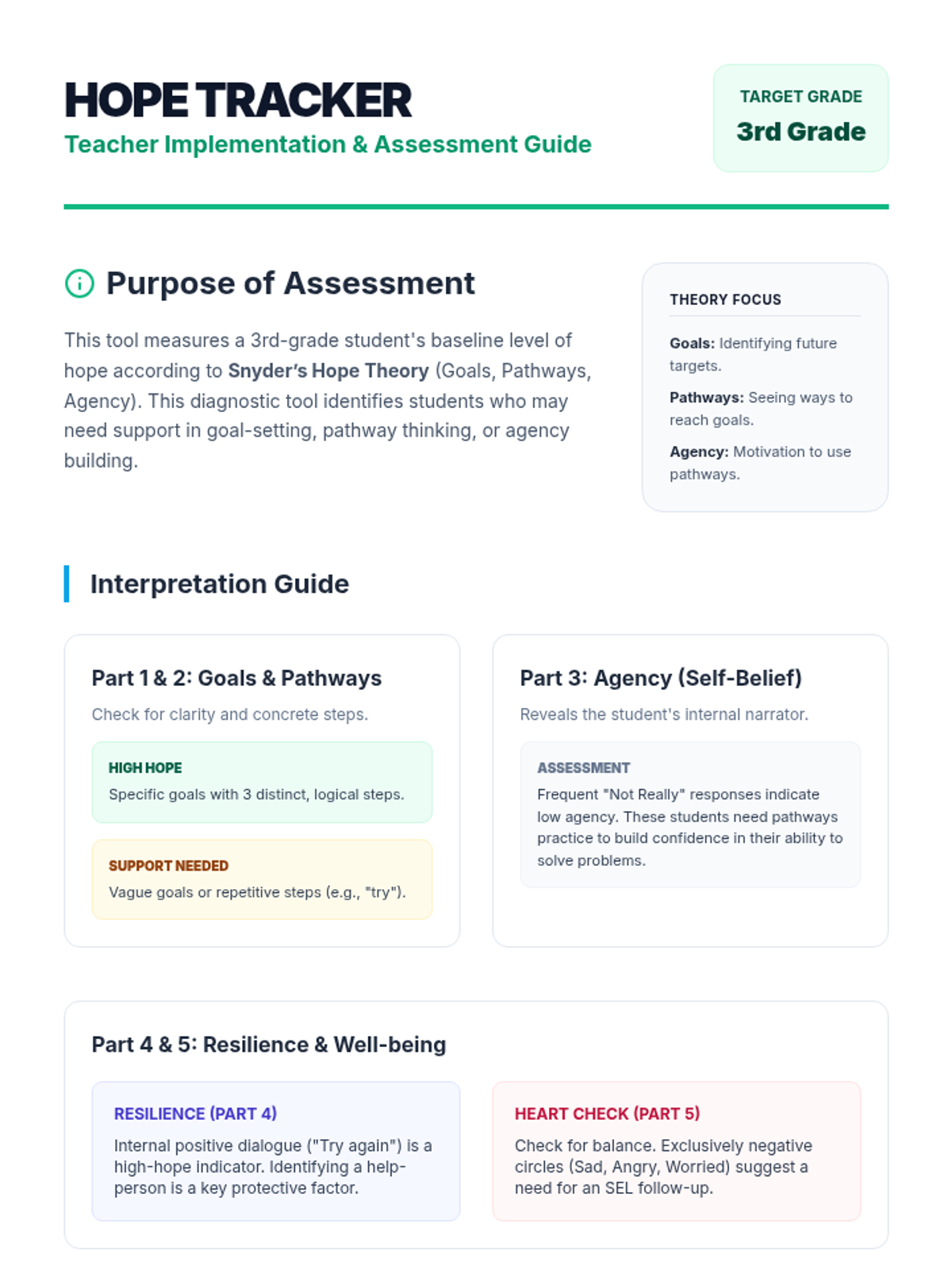
A comprehensive social-emotional learning lesson focused on Snyder's Hope Theory, resilience, and goal-setting for 3rd-grade students. Includes an introductory presentation, a student assessment document, and a teacher facilitation guide.
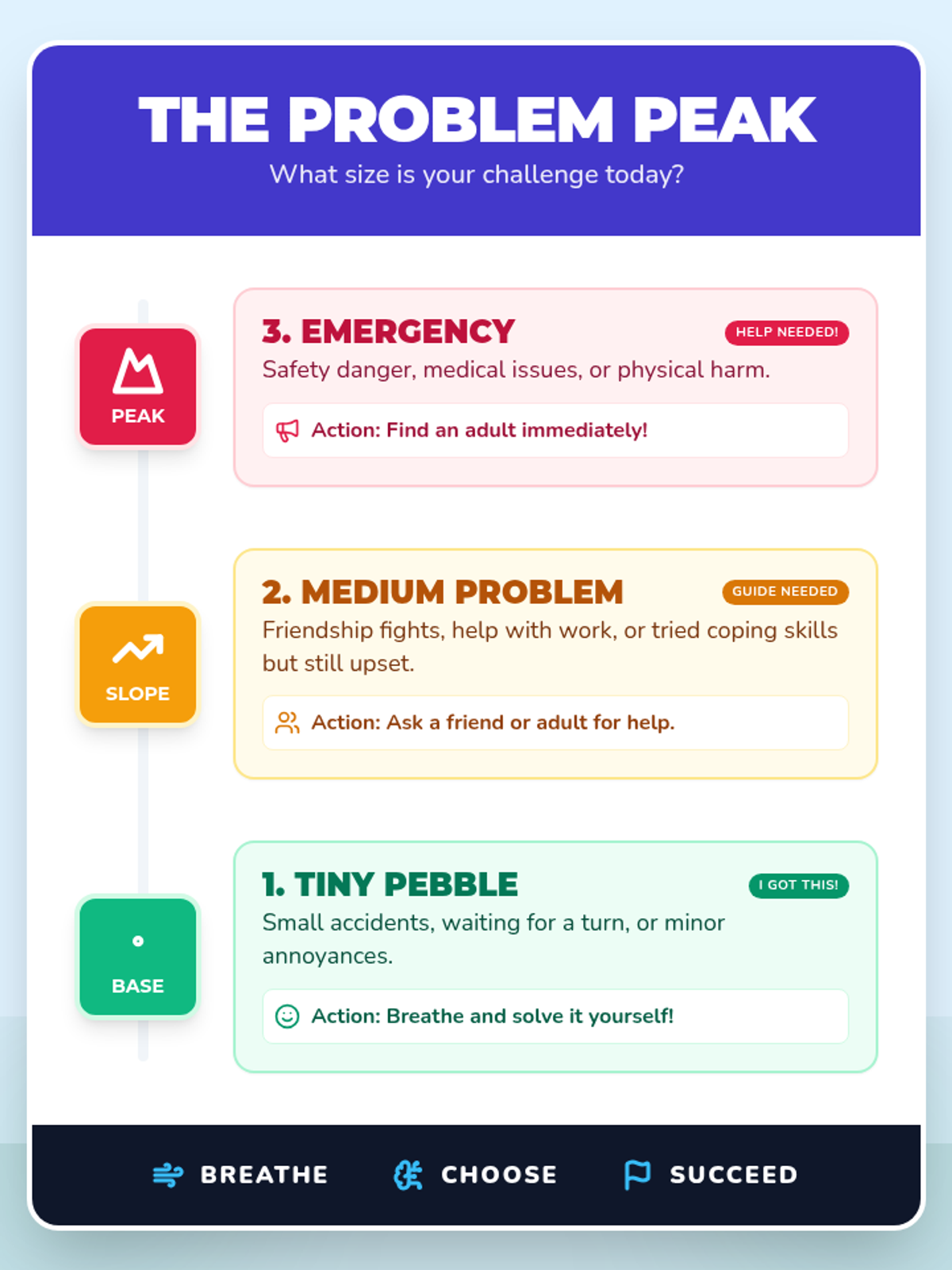
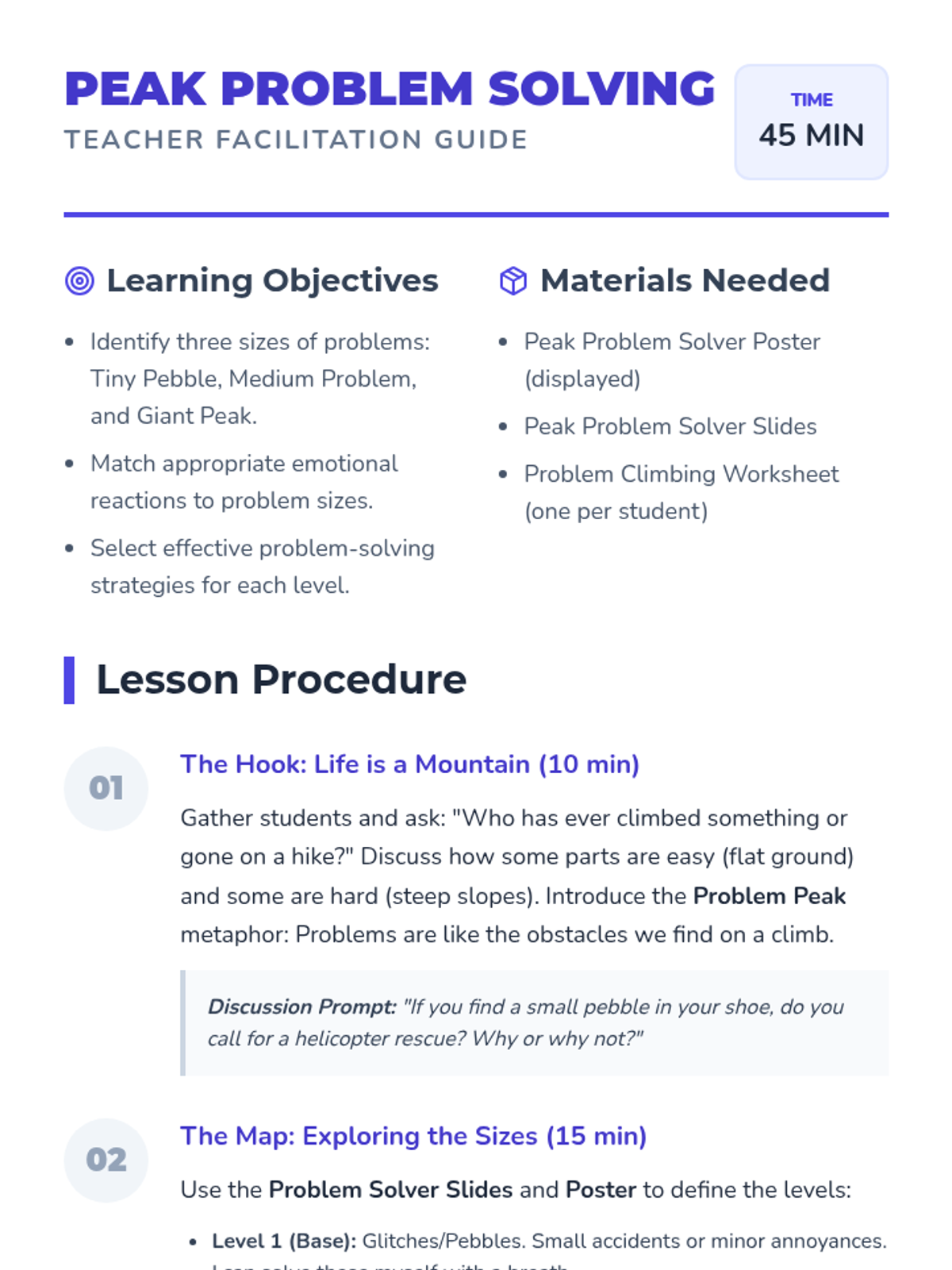
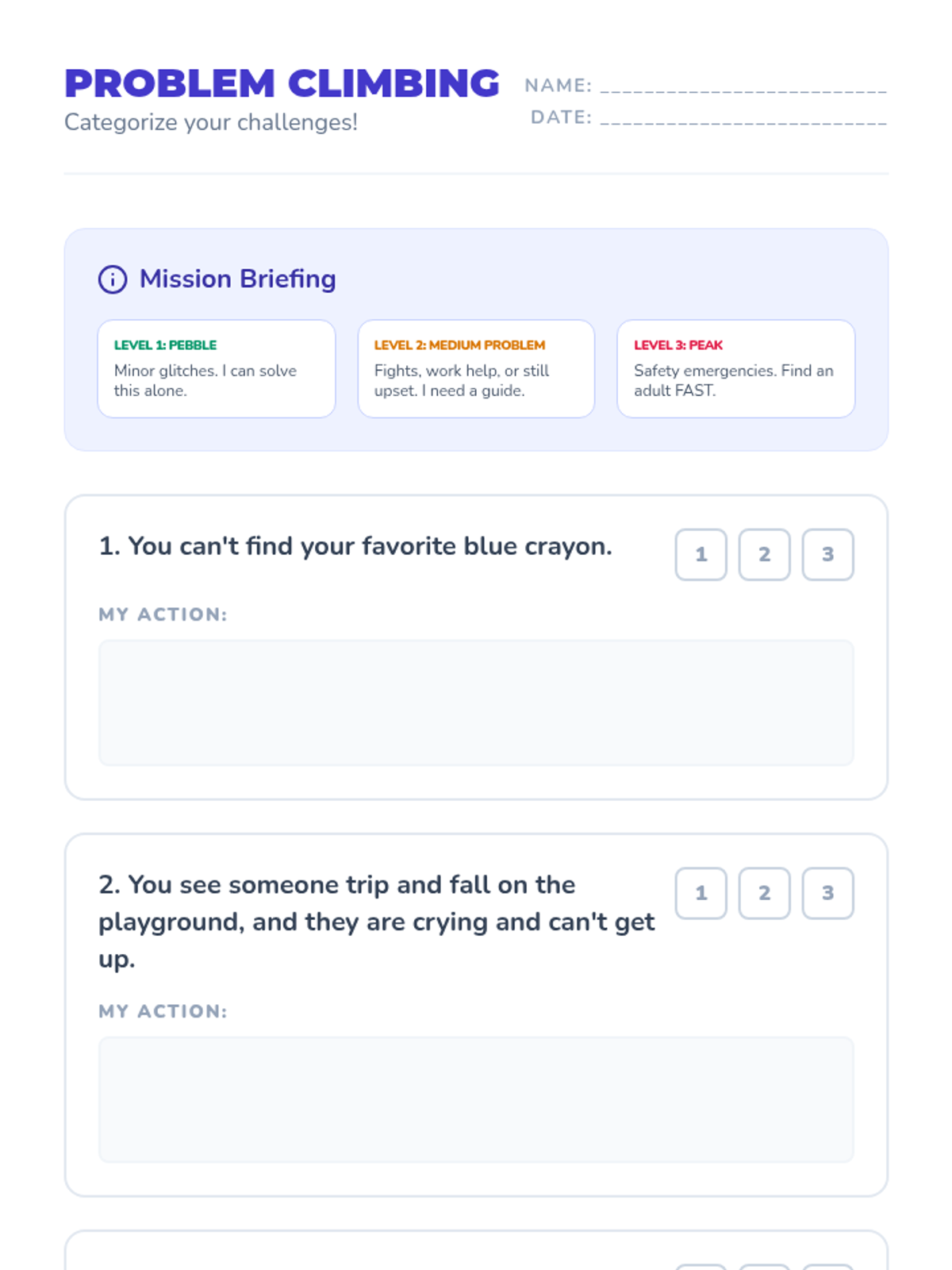
A comprehensive lesson that teaches students how to identify and categorize the size of problems using a mountain climbing metaphor. Students will learn appropriate strategies for Small, Medium, and Large problems.
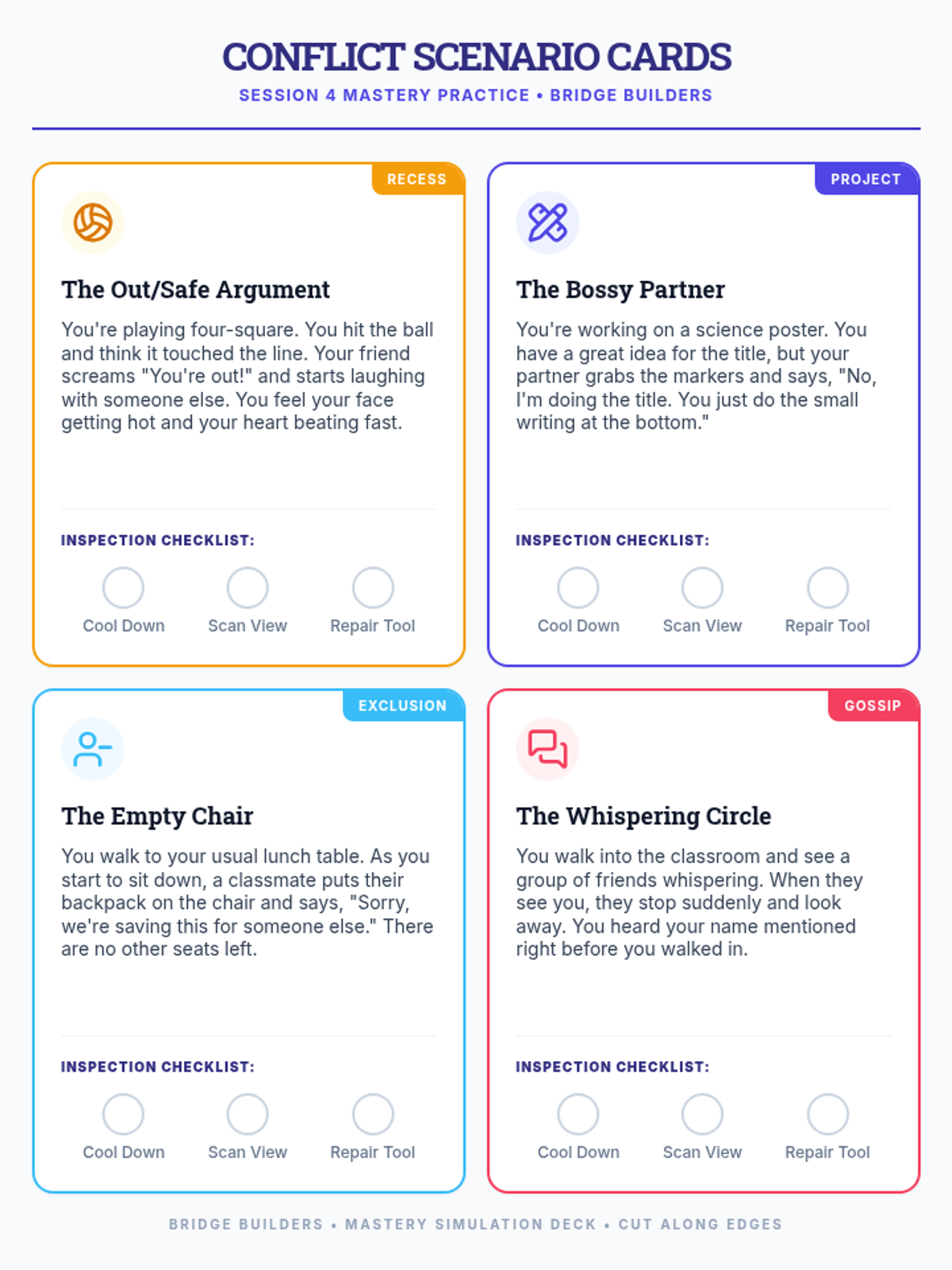
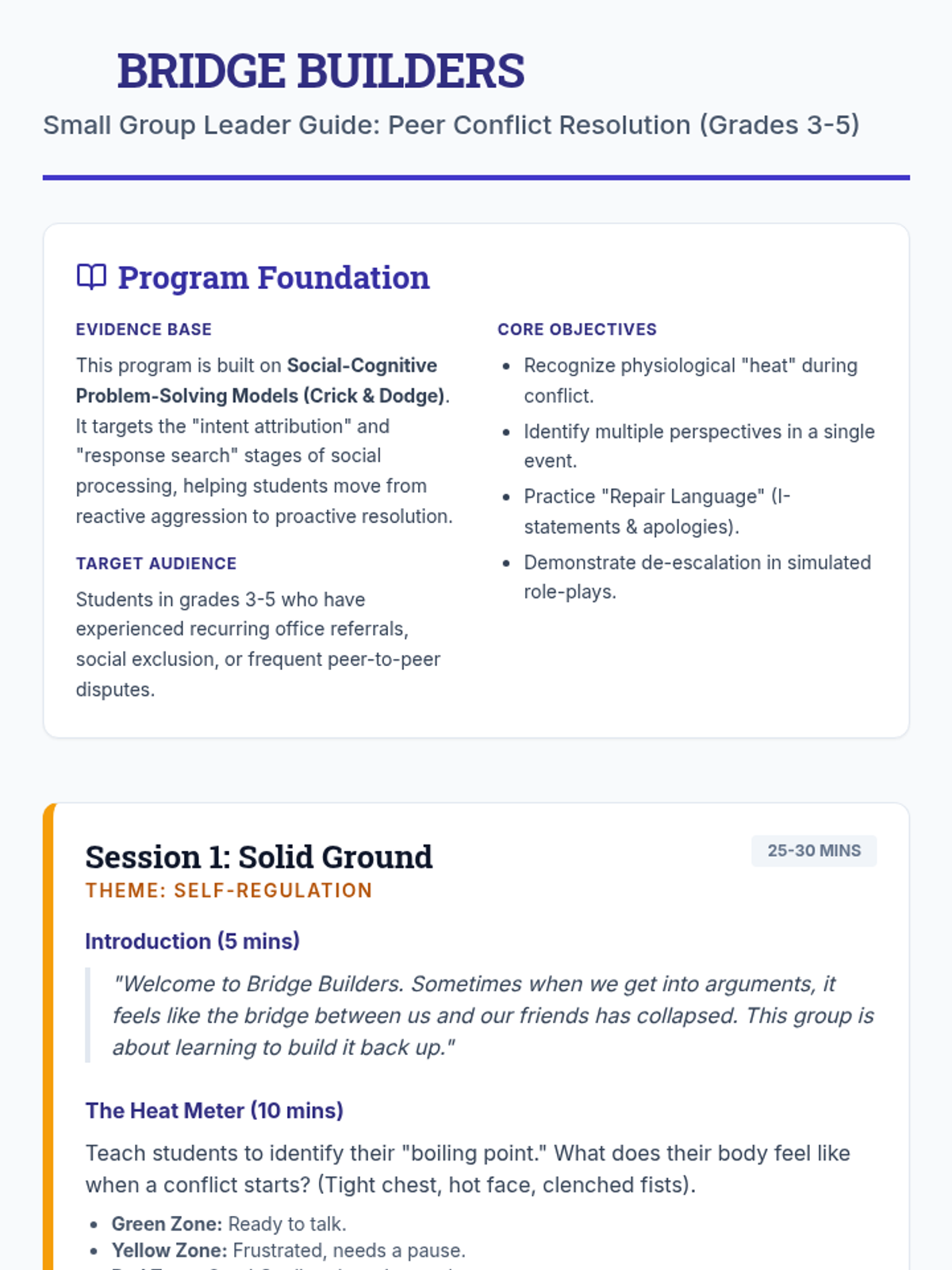
Applies all learned skills through role-play scenarios including recess disputes, group projects, and exclusion.
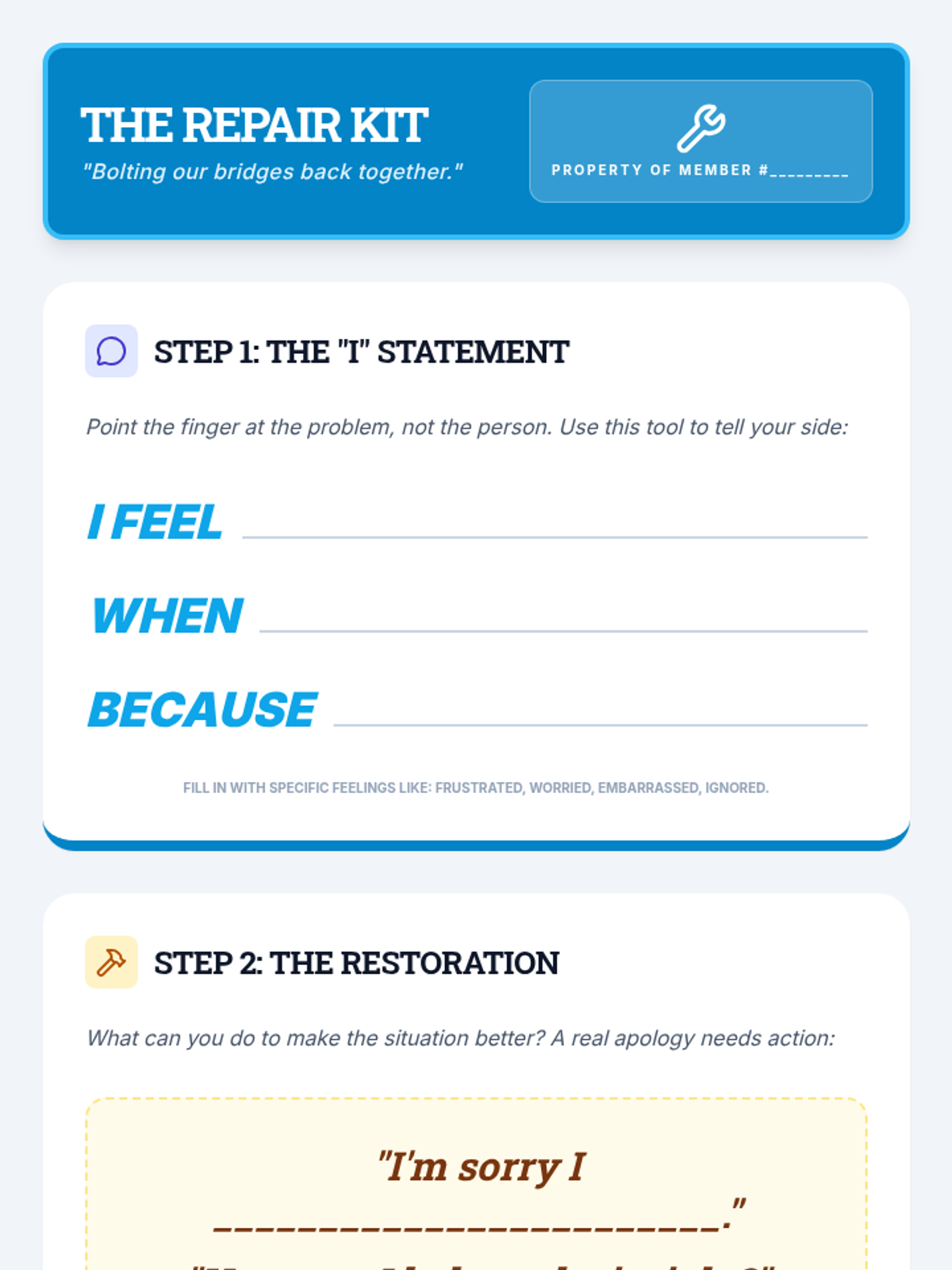
Teaches specific repair language and I-statements to de-escalate tension and apologize effectively.
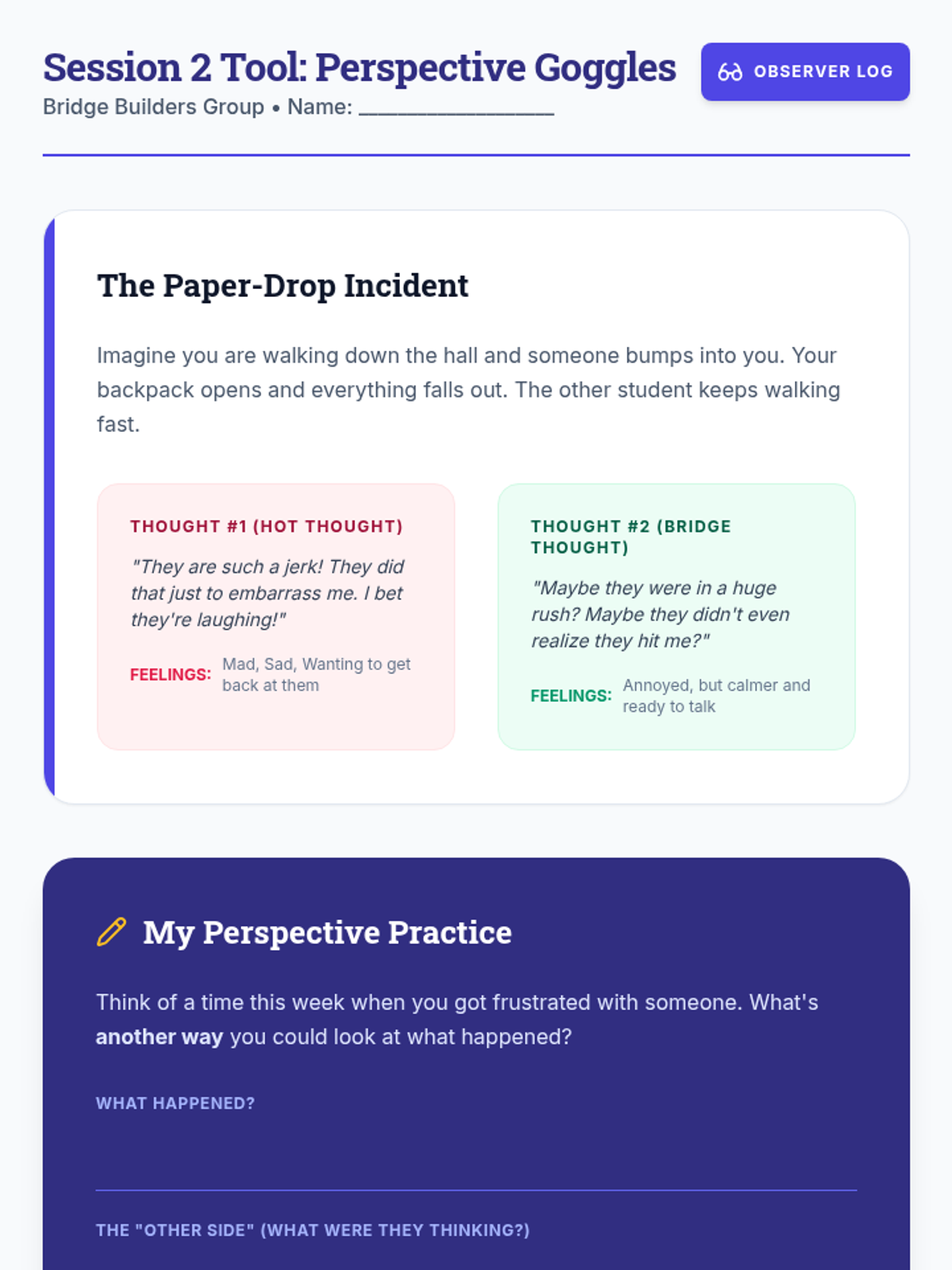
Introduces perspective-taking through the 'Other Side' model, helping students understand different viewpoints in a conflict.
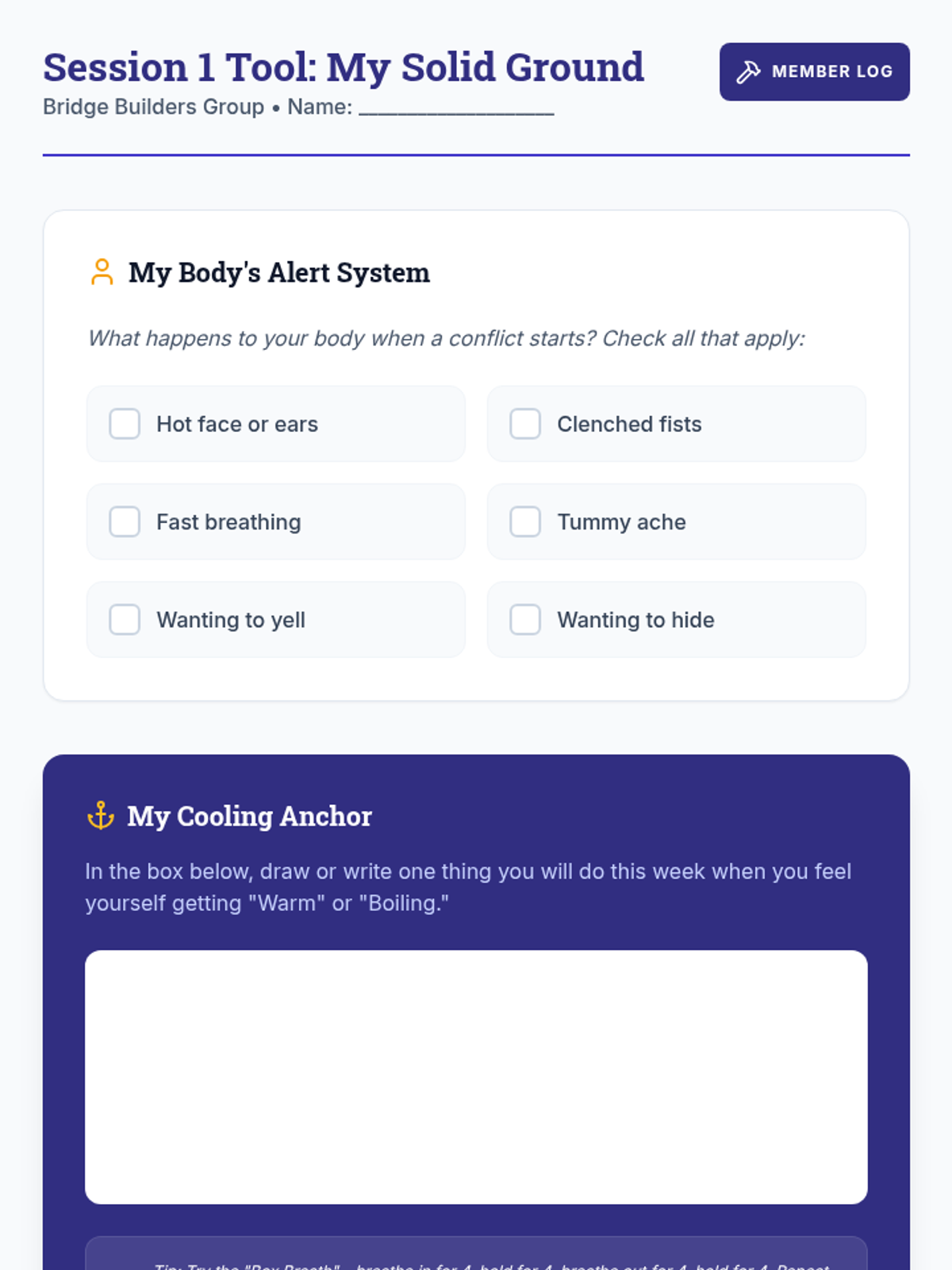
Focuses on identifying internal 'heat' and using grounding techniques to stay calm during peer disagreements.
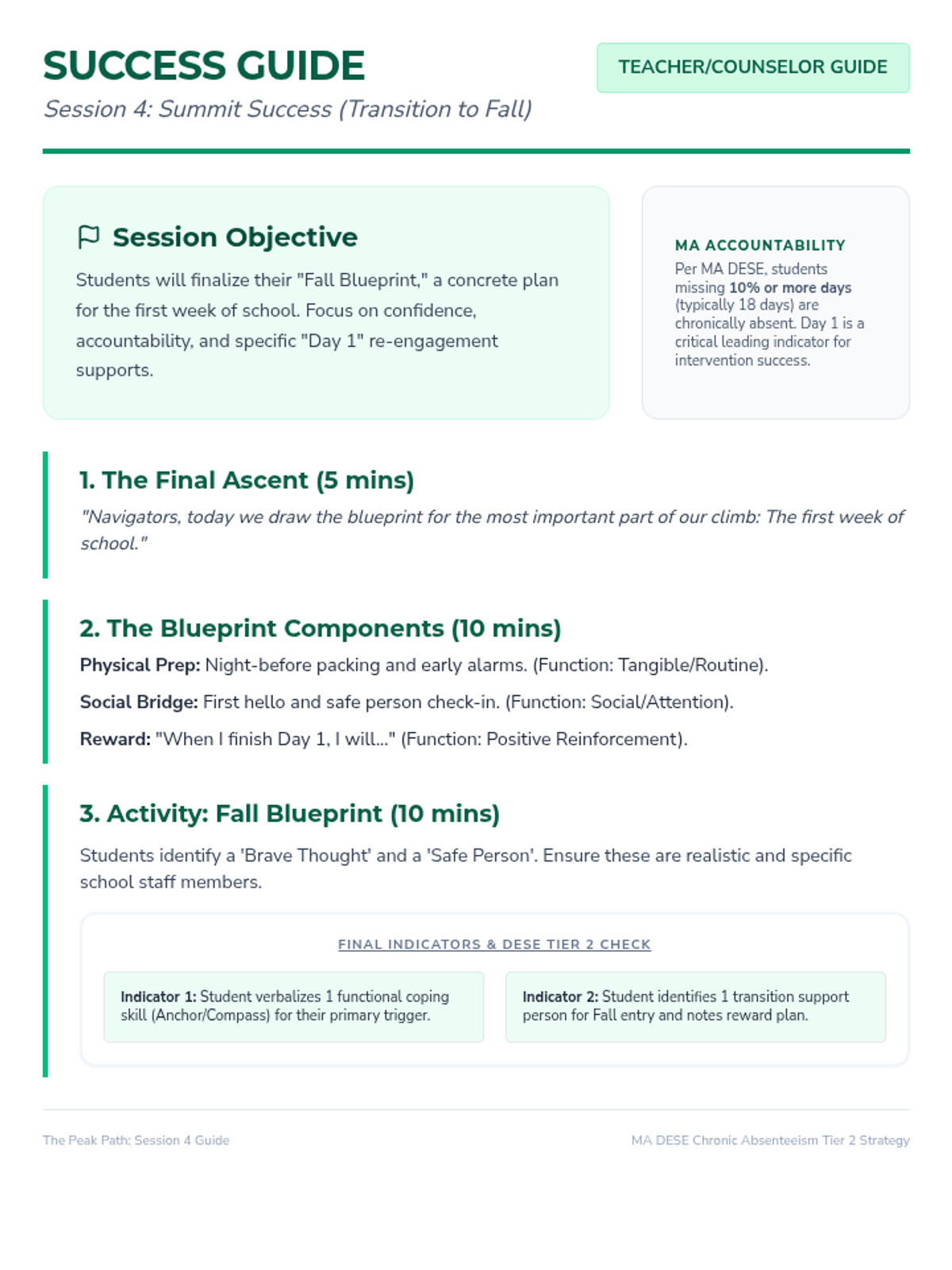
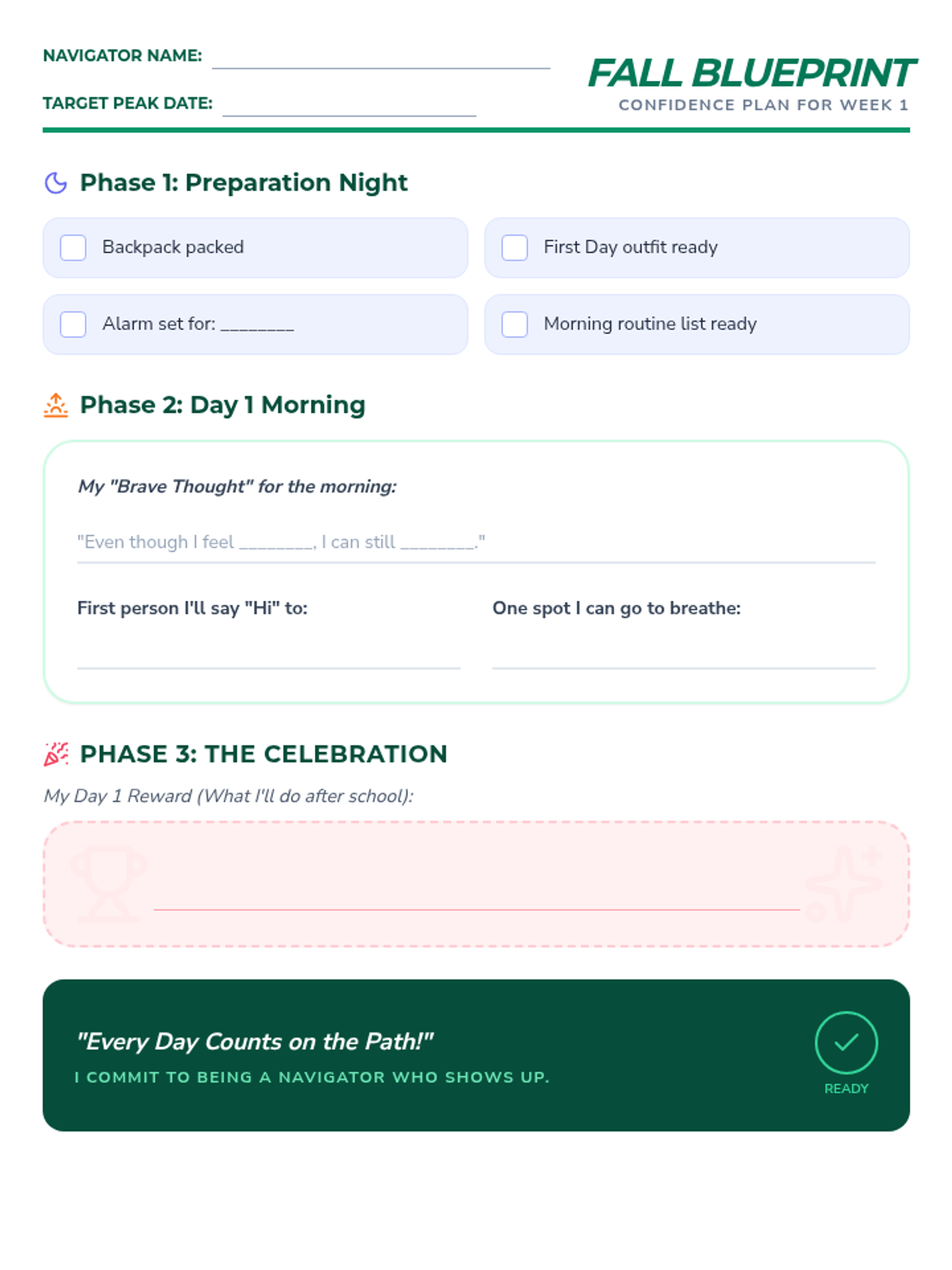
Developing a concrete 'Fall Blueprint' and confidence plan for the first week of school to prevent regression and address absenteeism patterns.
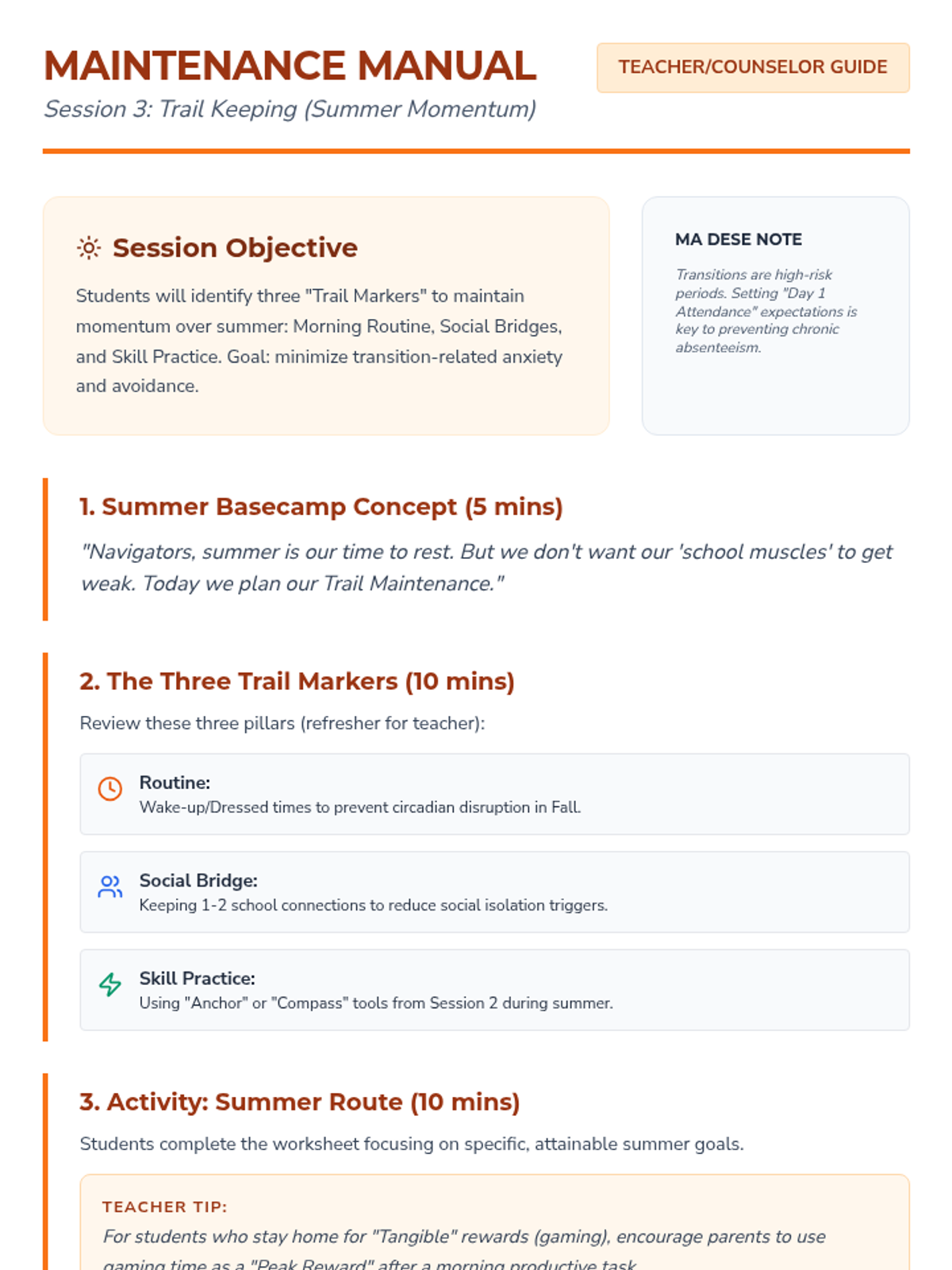
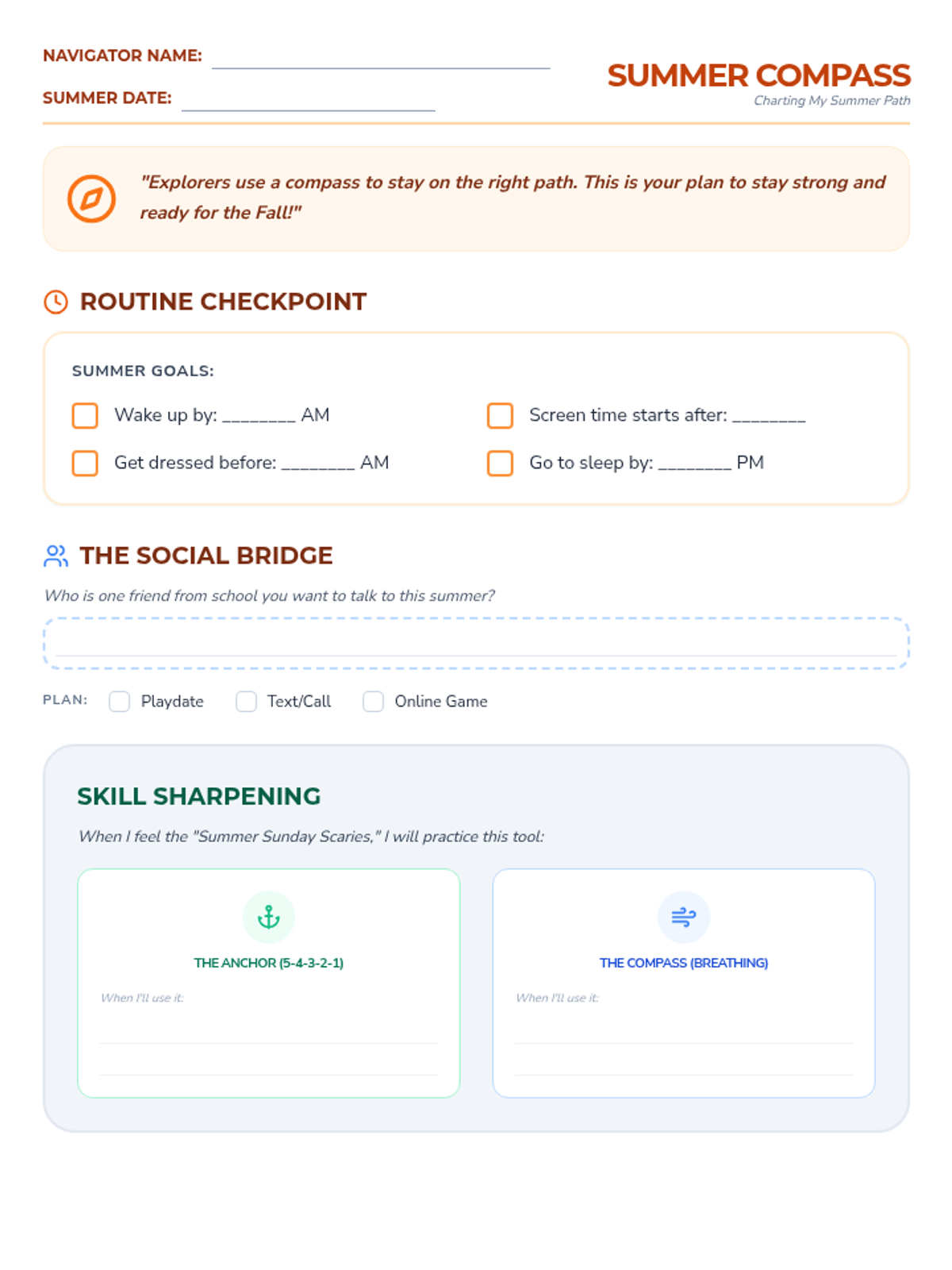
Students create a plan to maintain their momentum over the summer break, identifying 'trail markers' to keep them on track for school readiness.
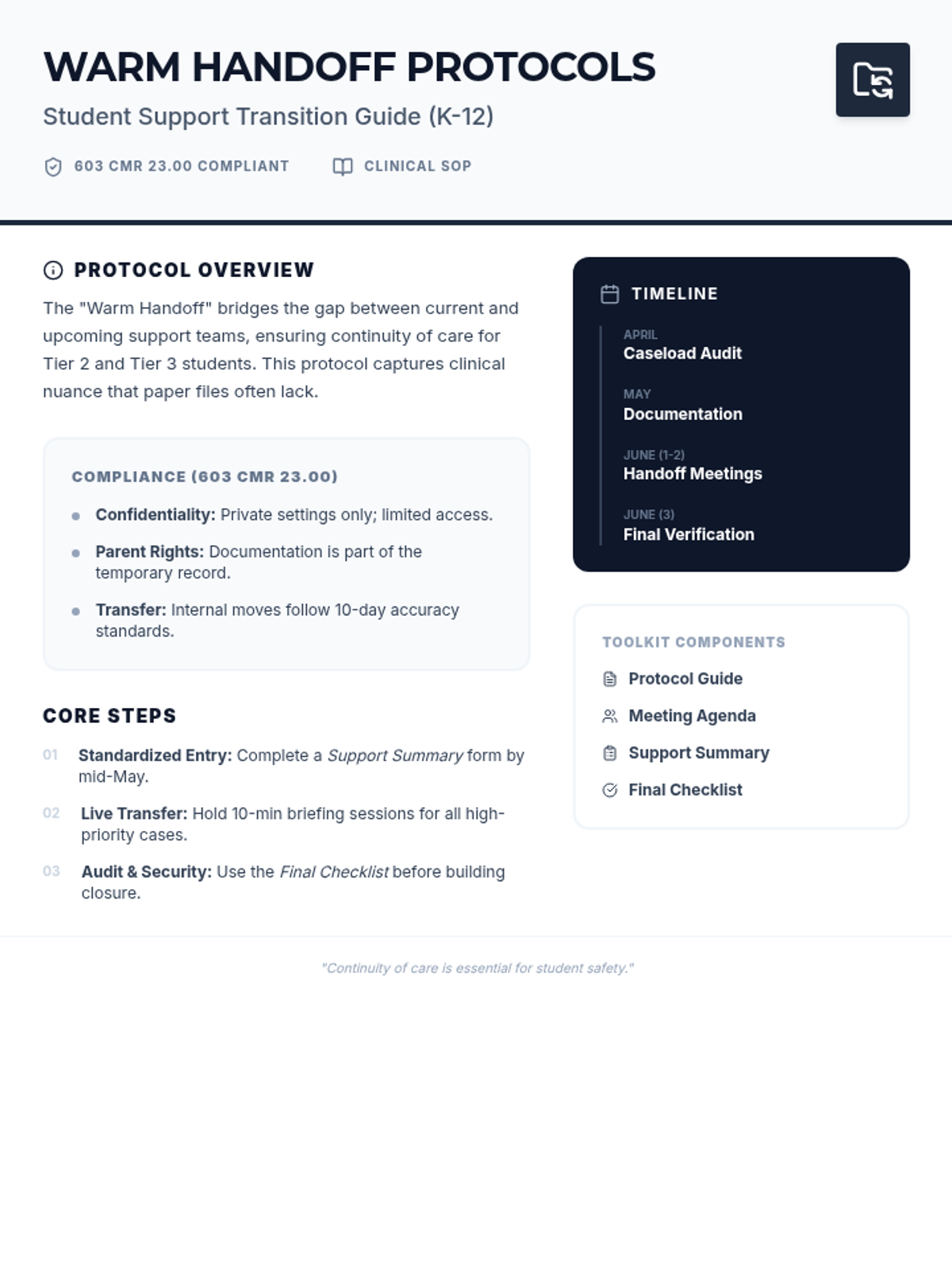
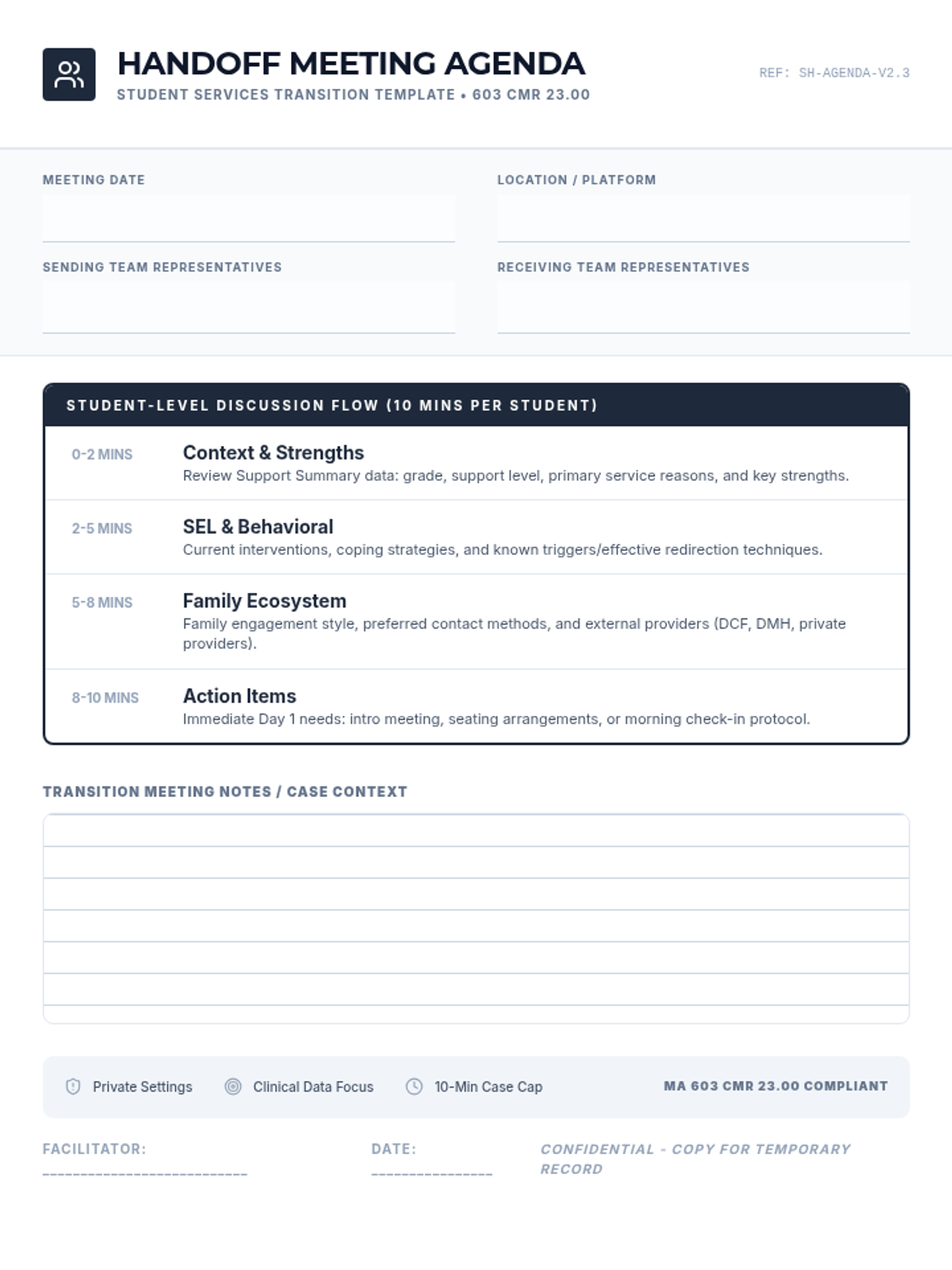
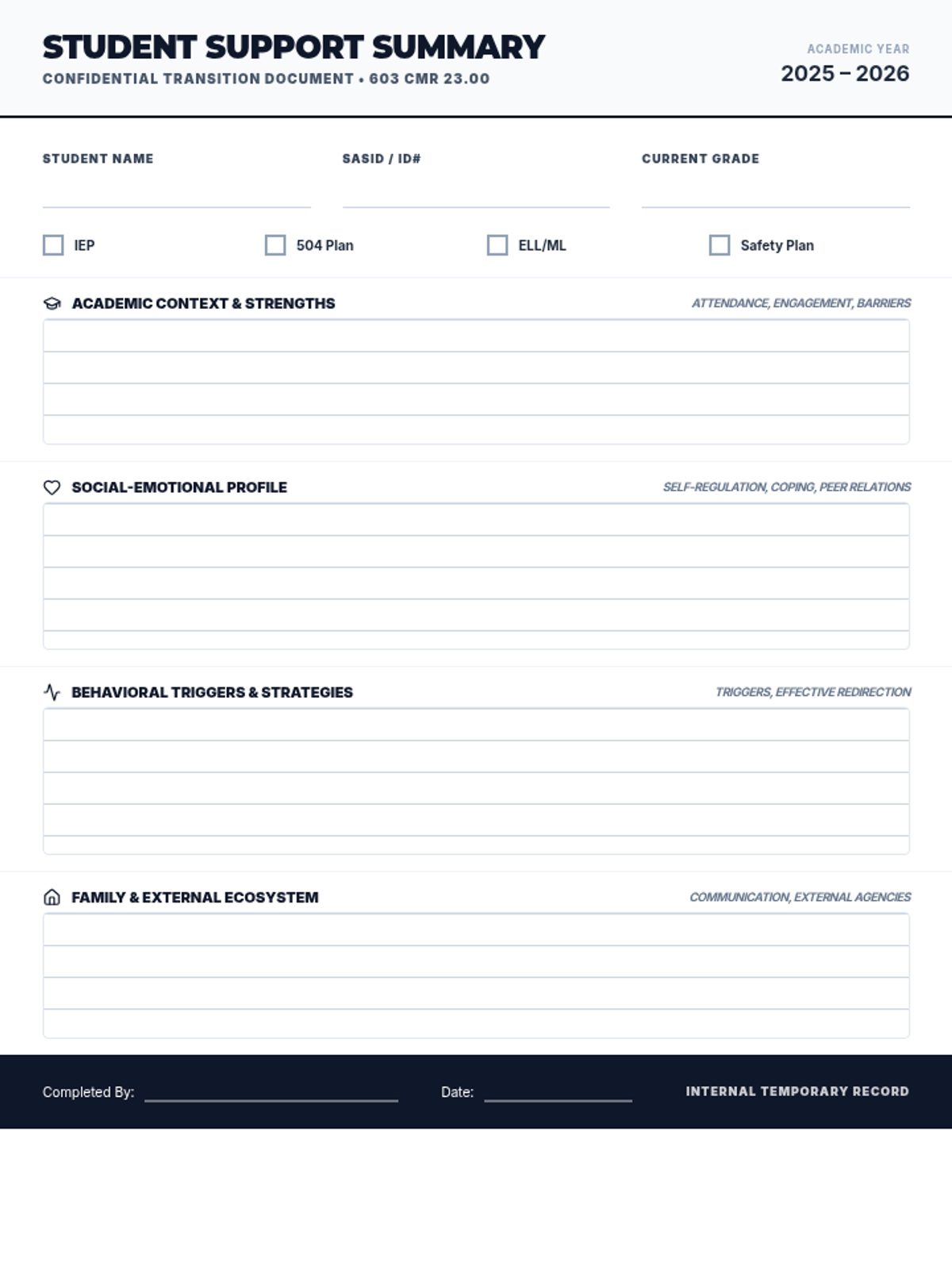
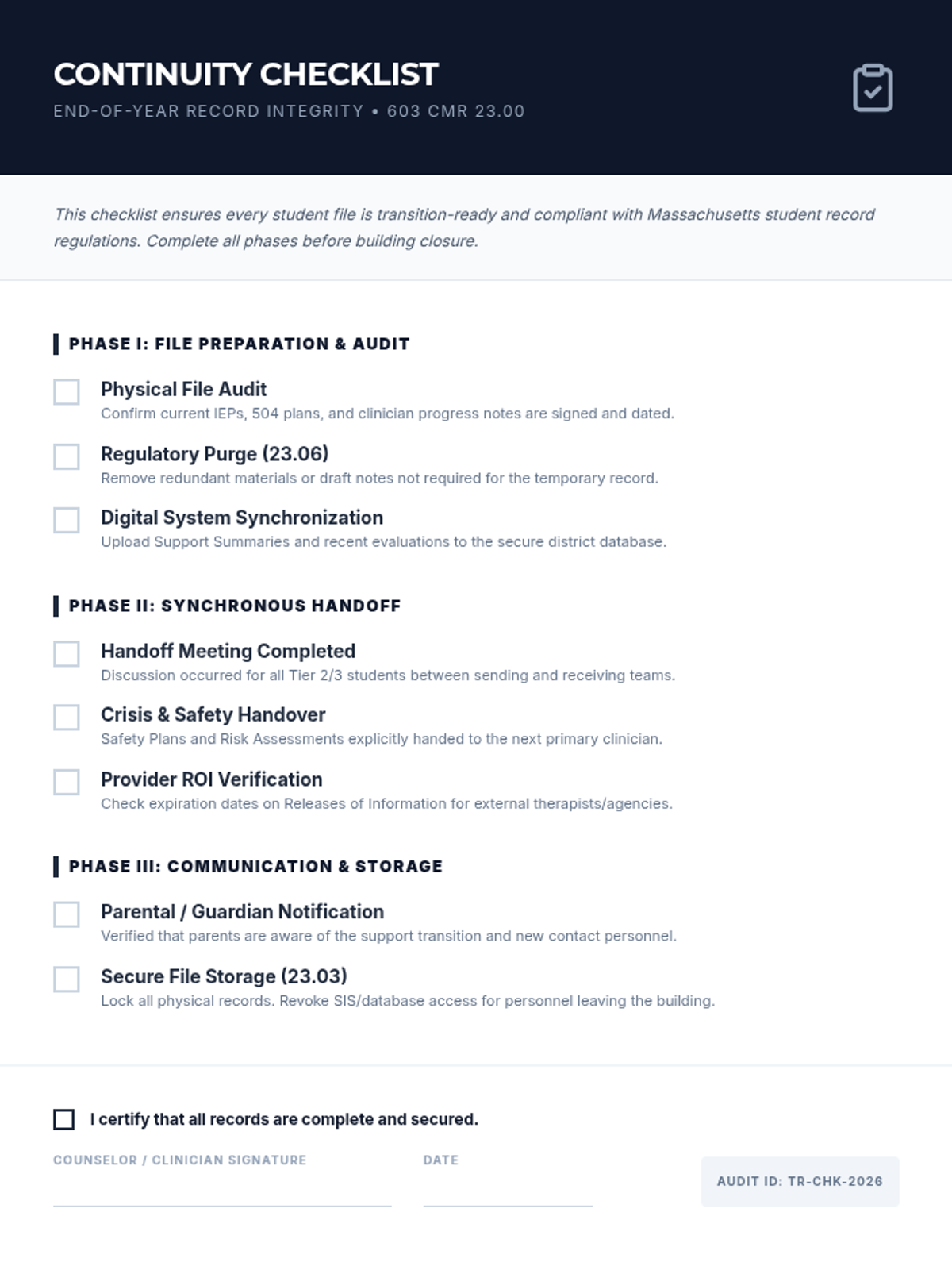
A comprehensive toolkit for K-12 school counselors and student services teams to ensure continuity of care during end-of-year transitions. It includes protocol guides, meeting structures, and documentation templates aligned with Massachusetts student records regulations.
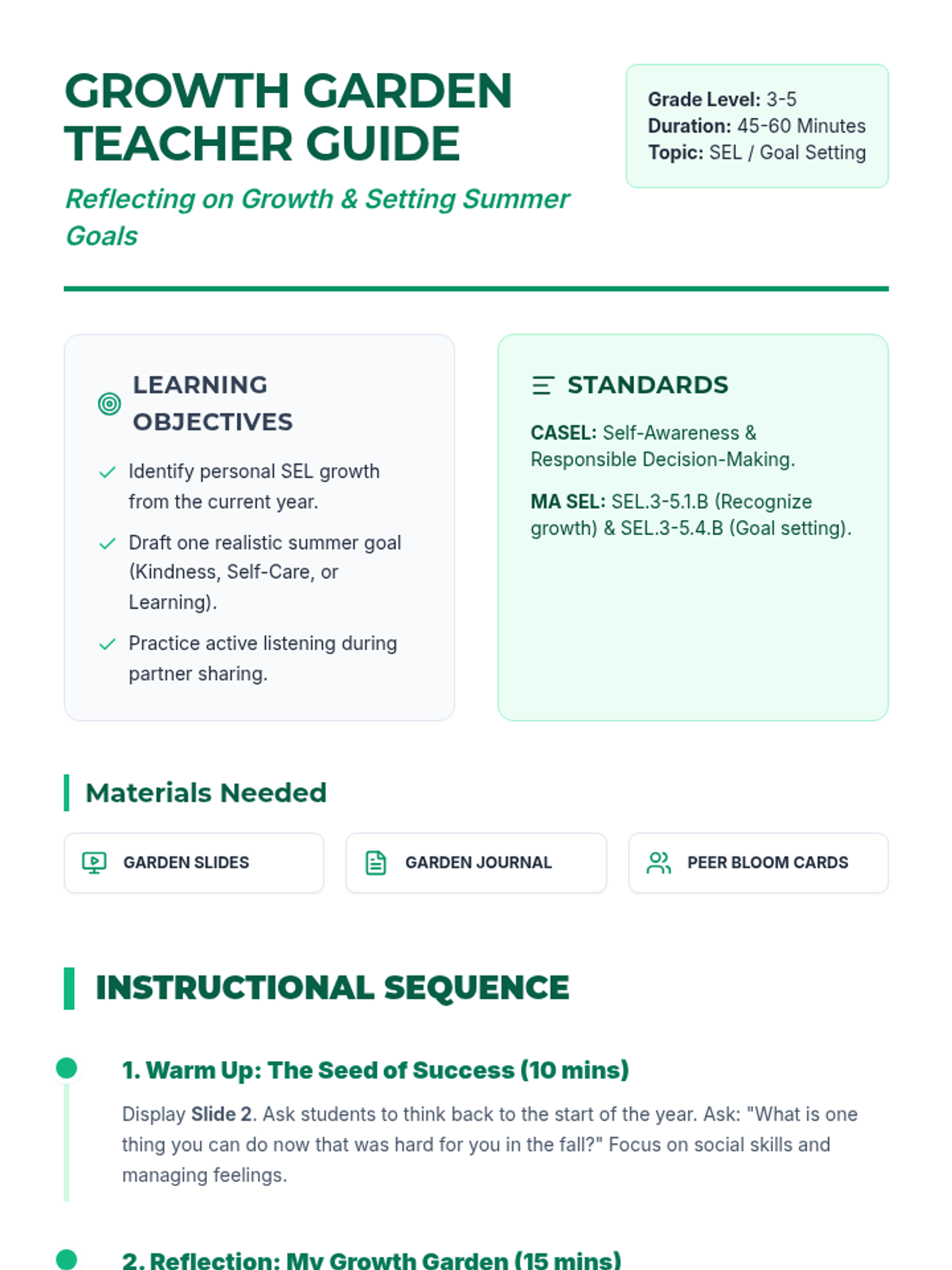
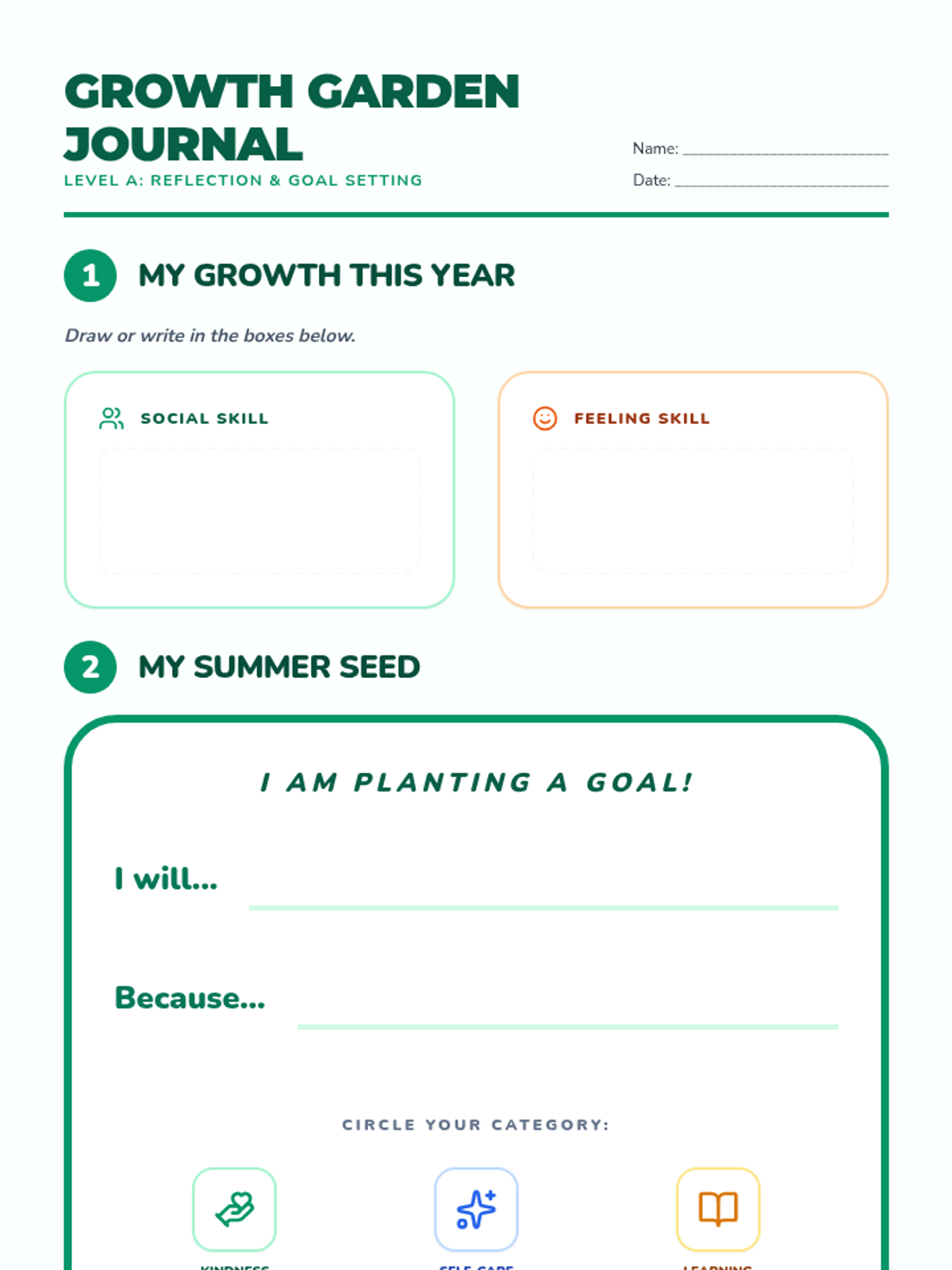
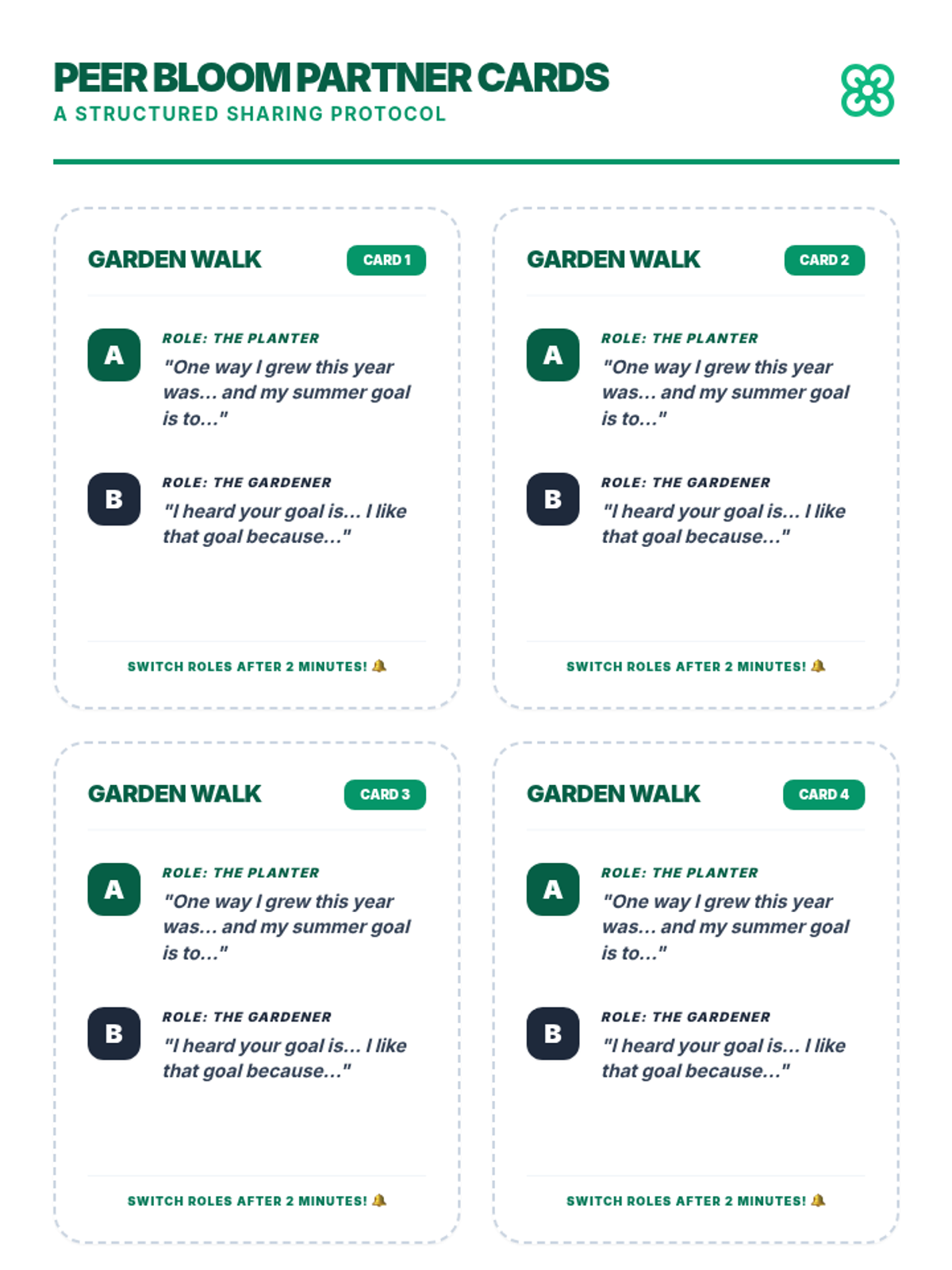
A comprehensive counseling lesson for grades 3-5 focused on reflecting on social-emotional growth over the school year and setting intentional summer goals using a 'Growth Garden' theme. aligned to CASEL competencies and Massachusetts SEL standards.
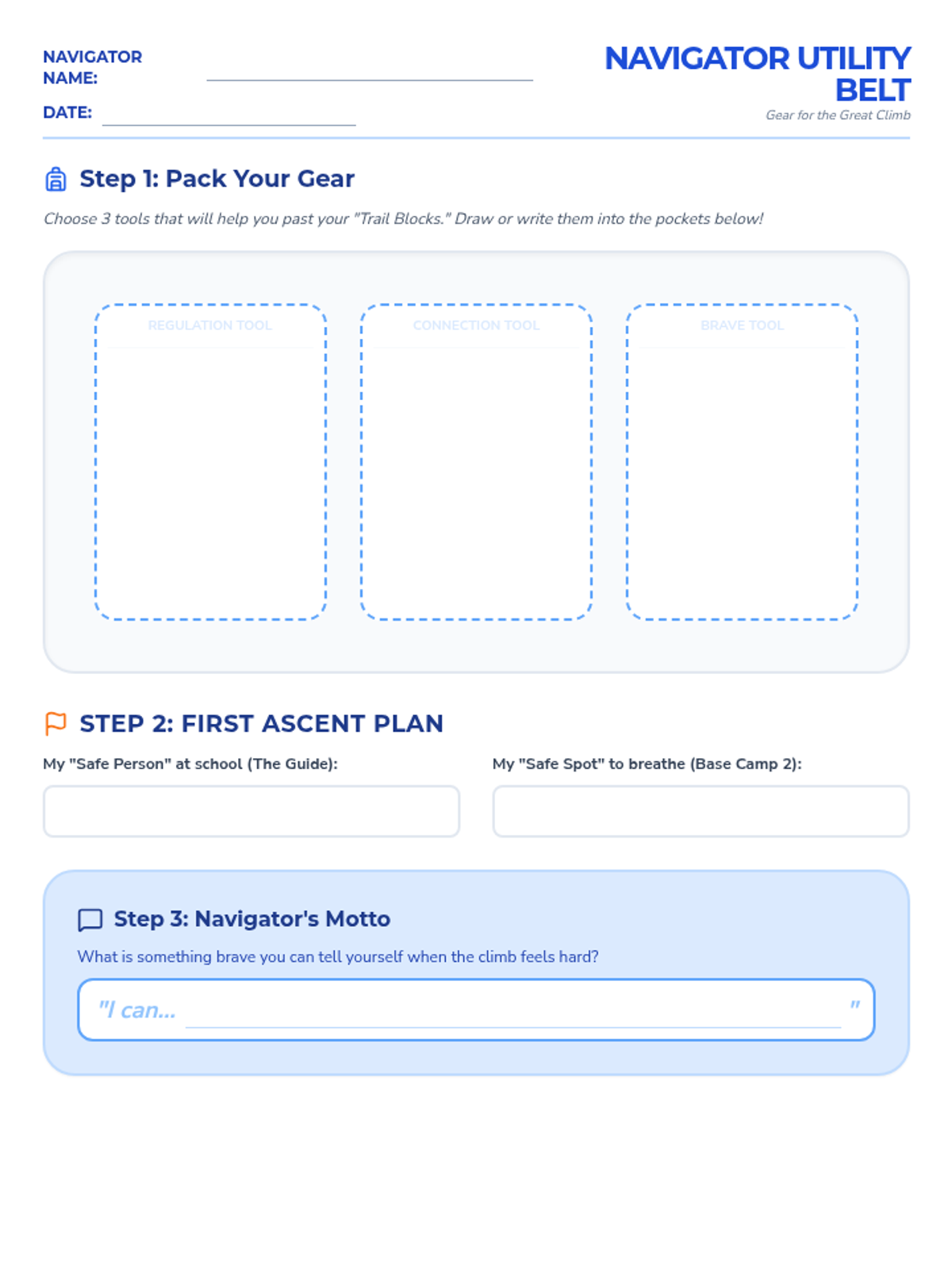
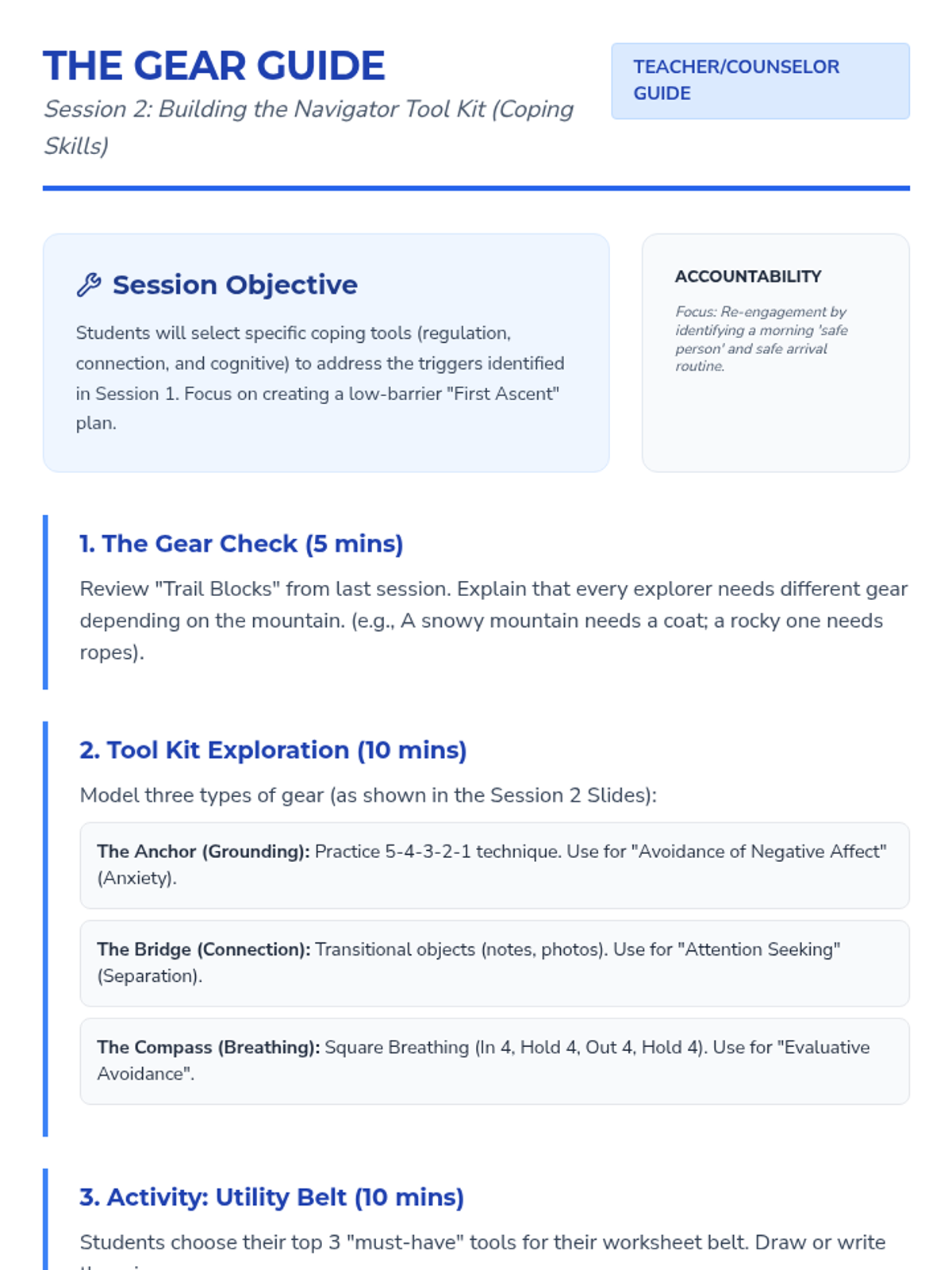
Focuses on building a 'gear kit' of coping strategies and re-engagement tools to handle the emotional and social challenges identified in session 1.
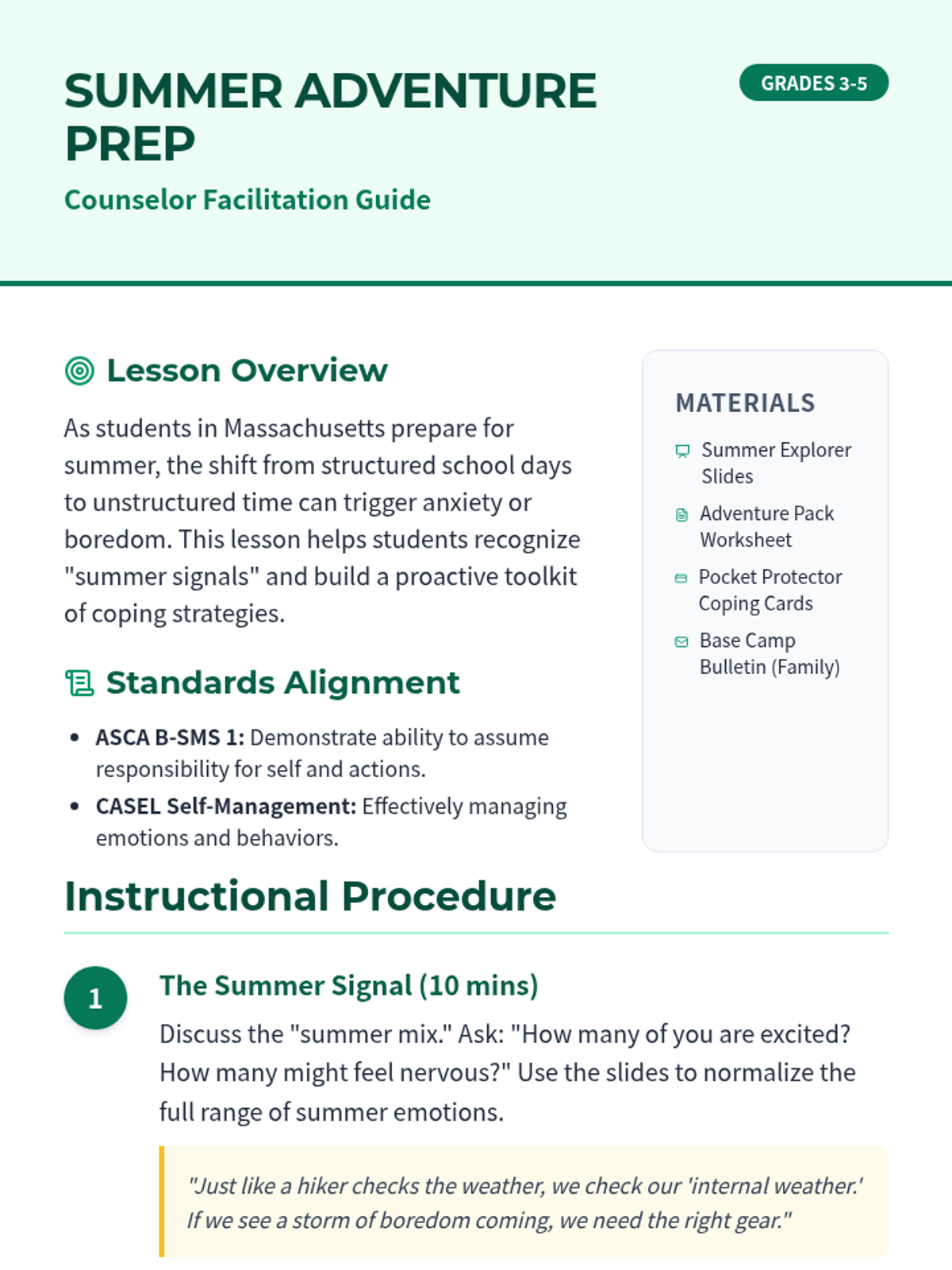
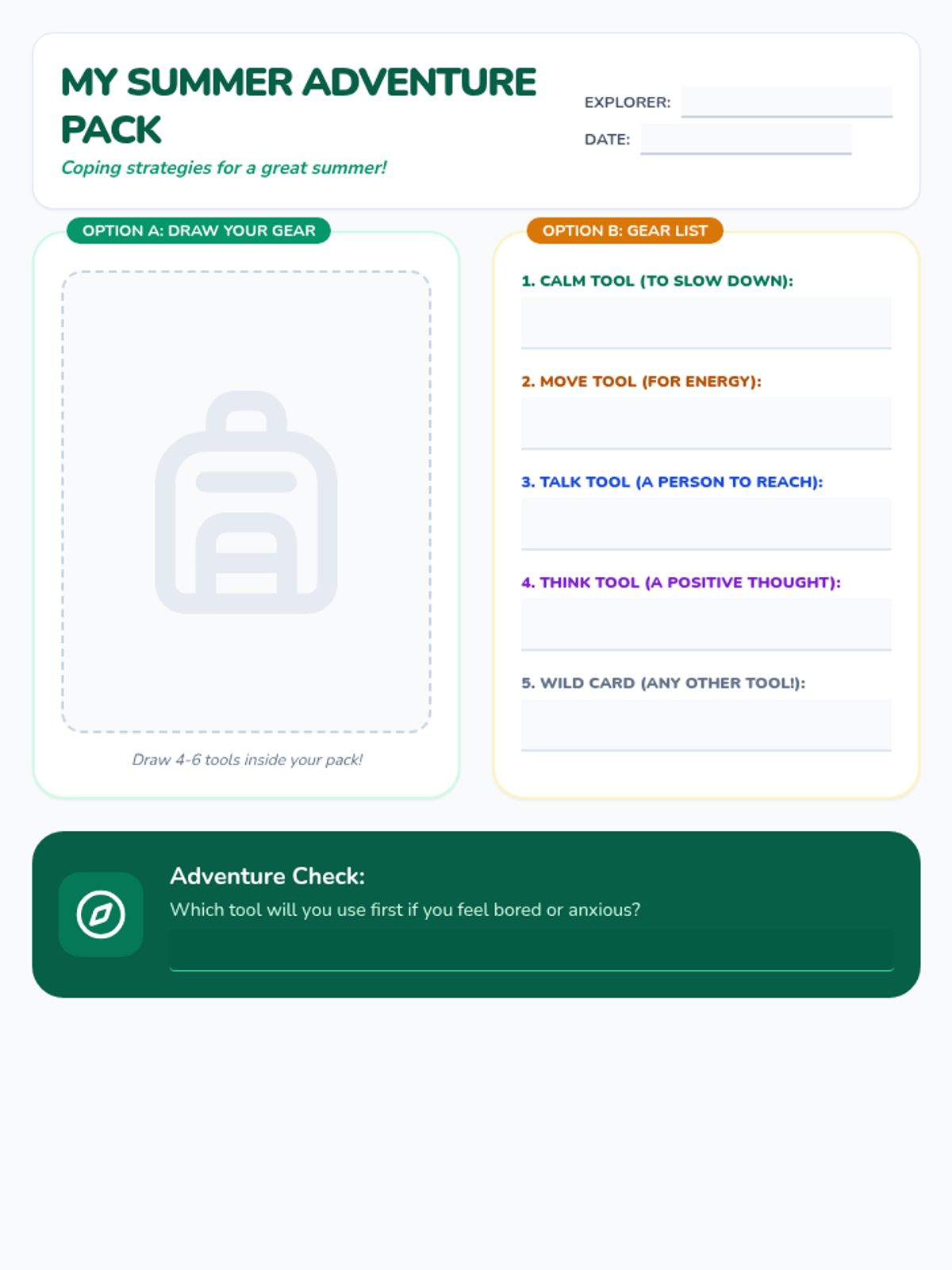
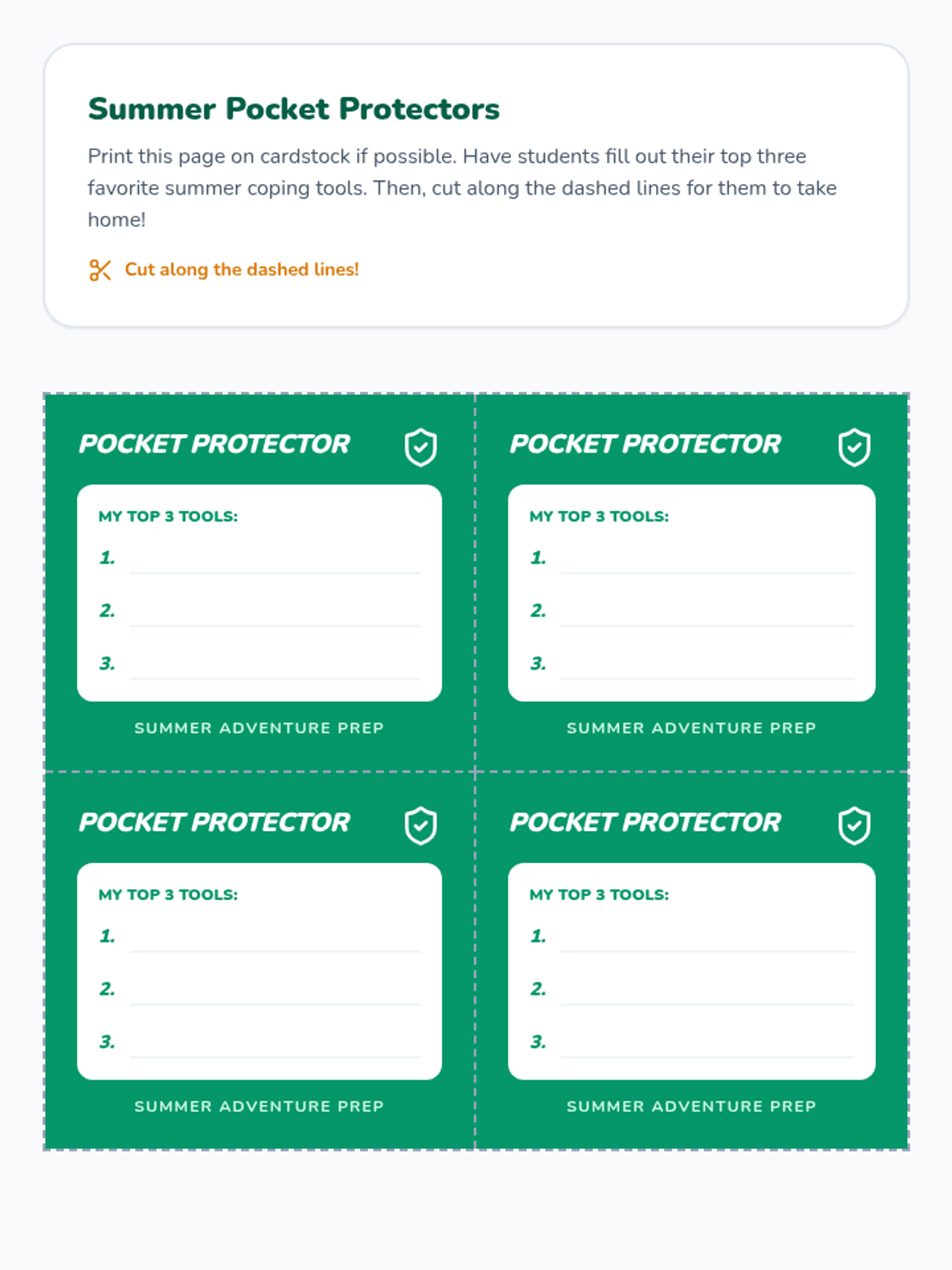
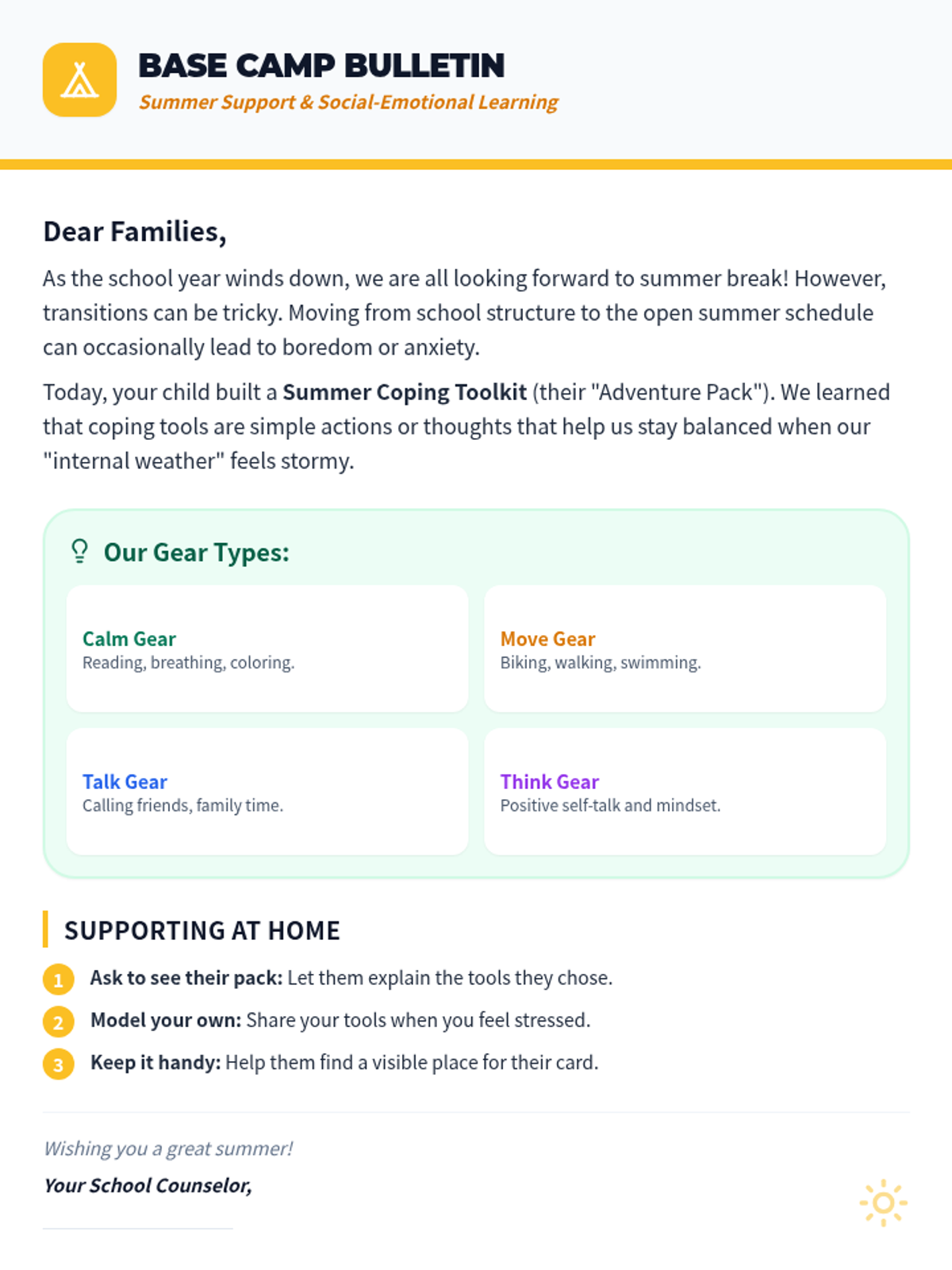
This lesson helps students in grades 3-5 prepare for the transition to summer break by identifying stressors and building a personalized 'Coping Toolkit' of strategies. It aligns with ASCA and CASEL standards to promote self-management and emotional regulation during the unstructured summer months.
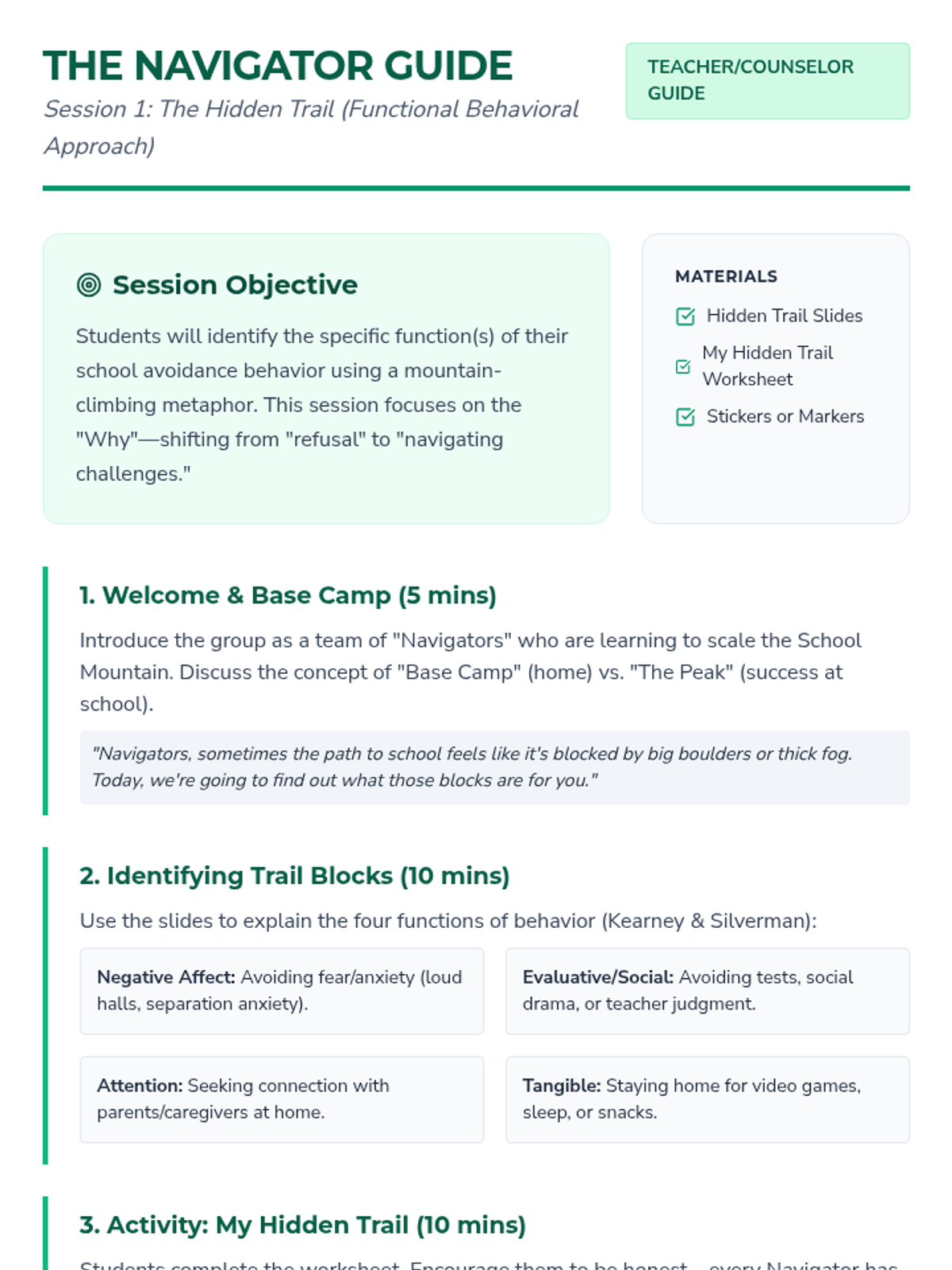
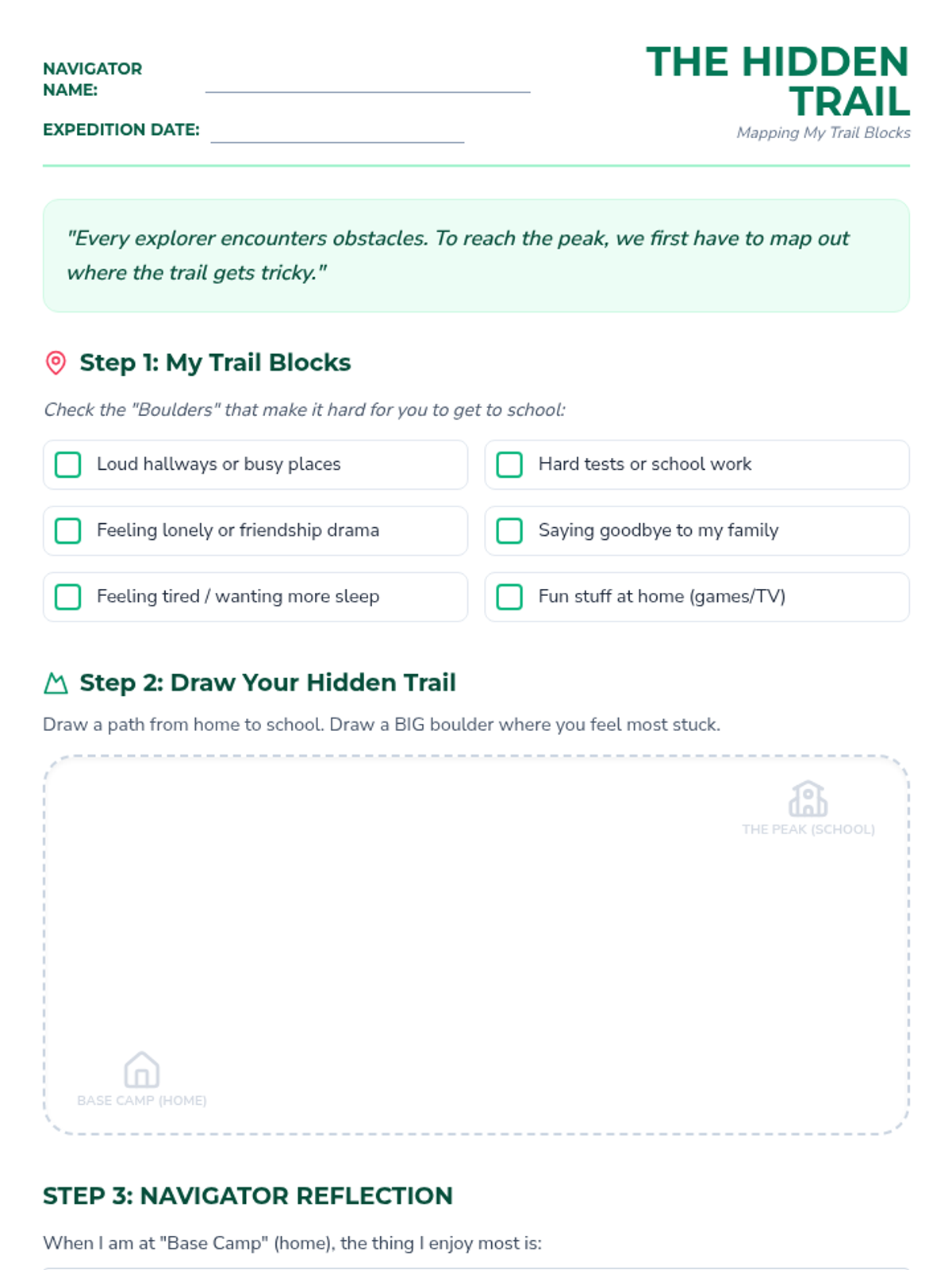
Students identify the specific 'trail blocks' (triggers) that lead to school avoidance using the functional behavioral approach (escape, attention, tangible rewards).
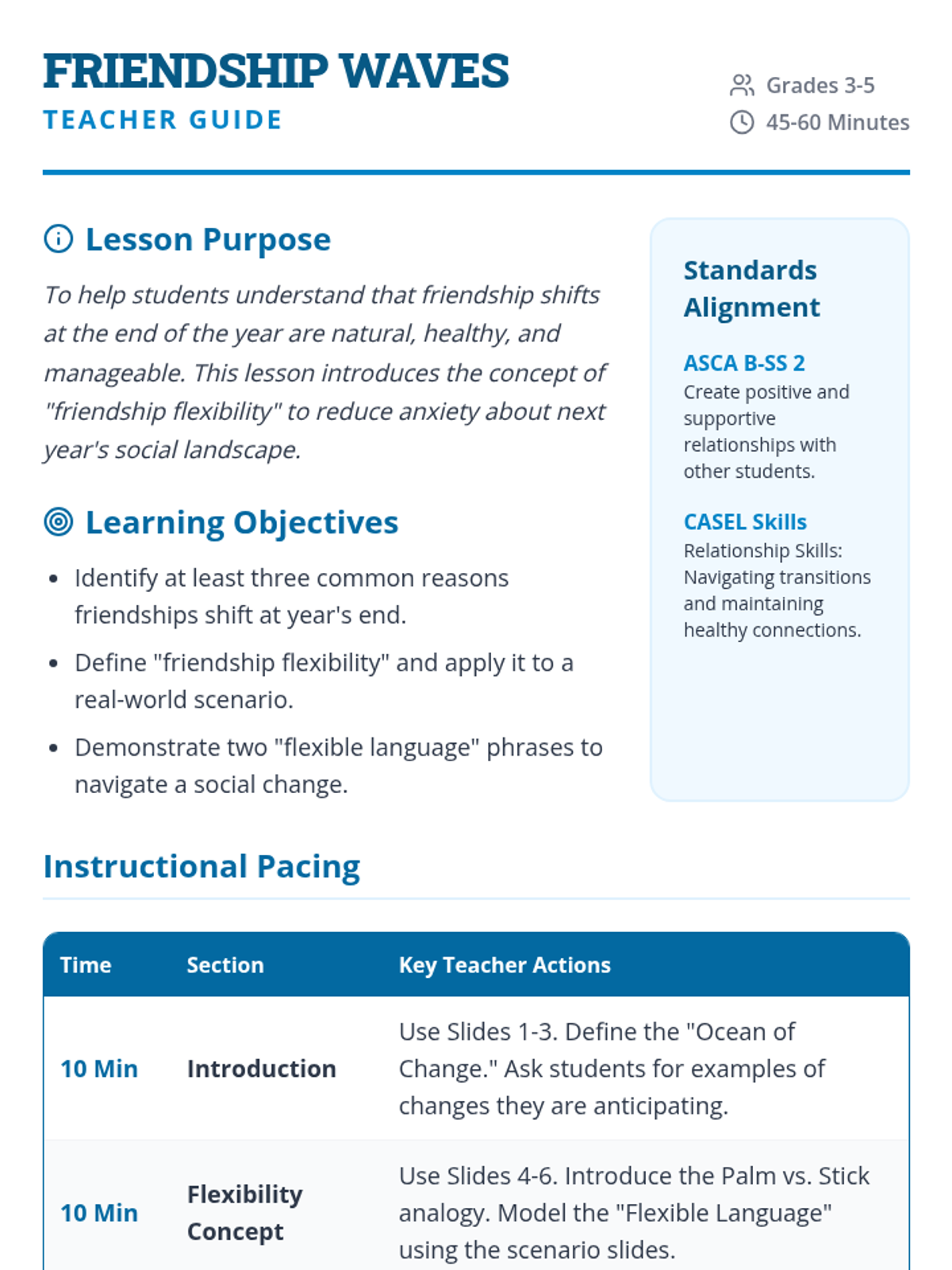
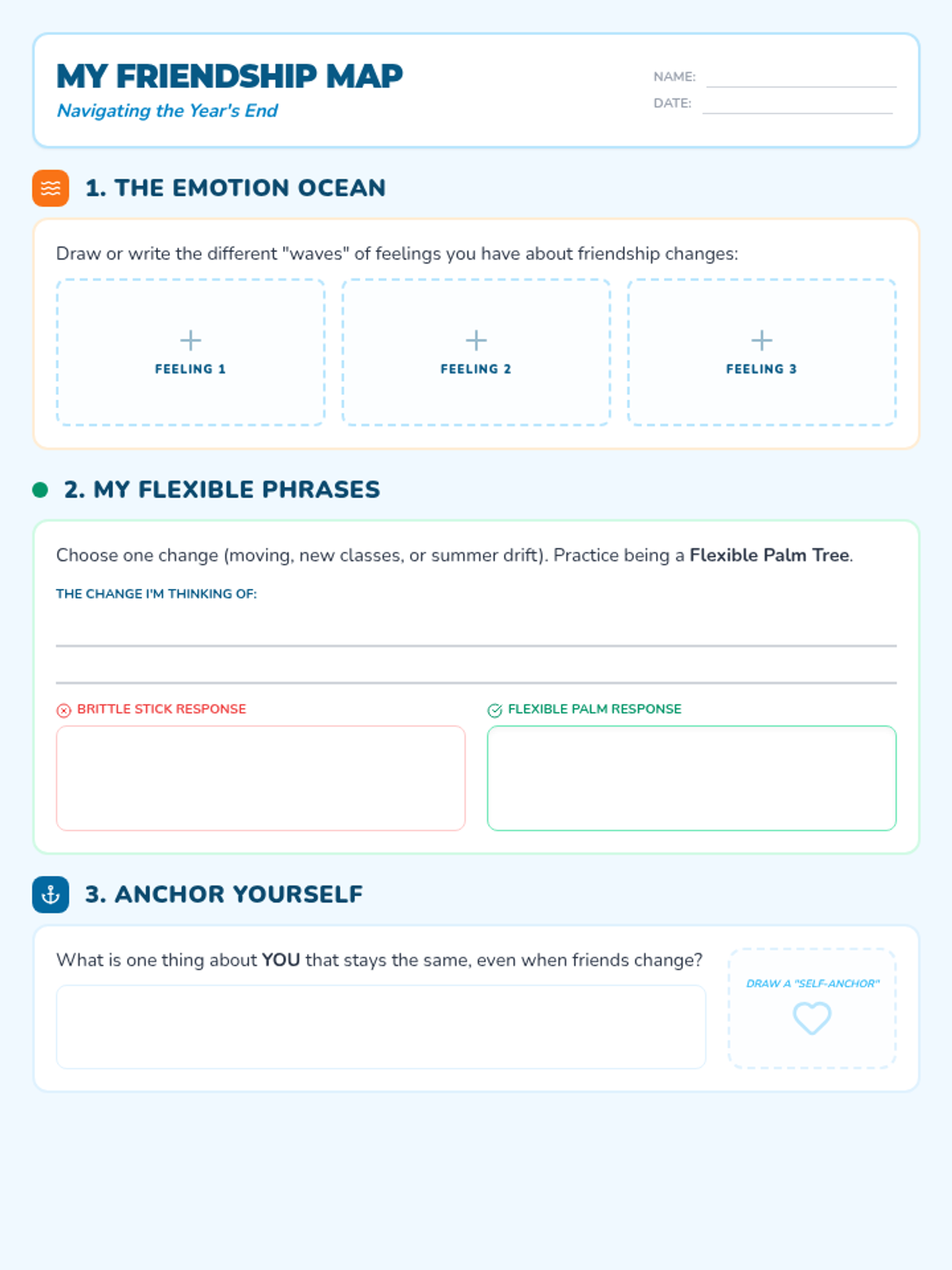
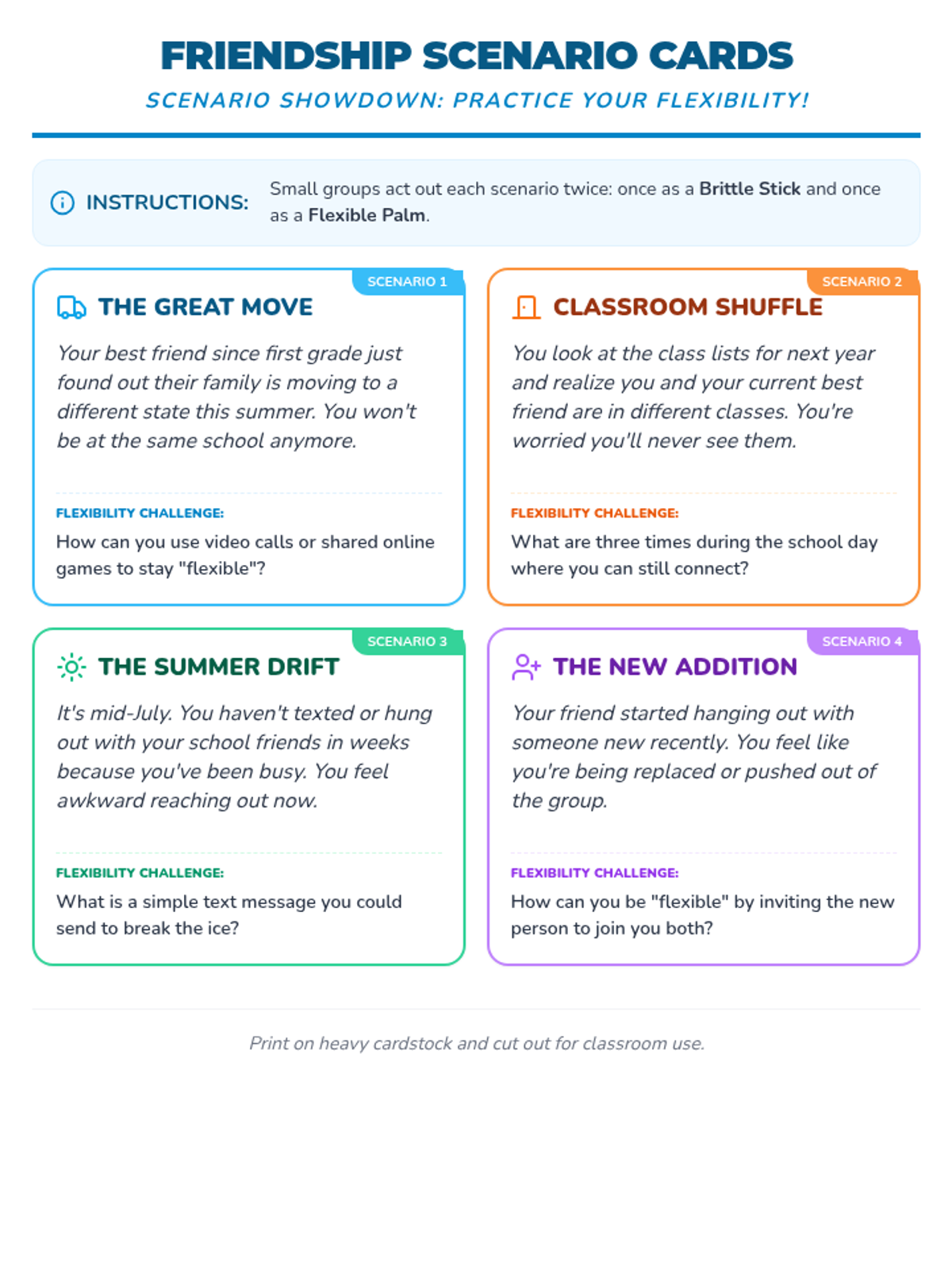
This lesson helps 3rd-5th grade students navigate the shifts in friendships that often occur at the end of a school year. It focuses on normalizing mixed emotions, teaching "friendship flexibility" language, and practicing responses to common transition scenarios through role-play.