Students explore how non-verbal body language reinforces vocal volume and tone to create a cohesive message.
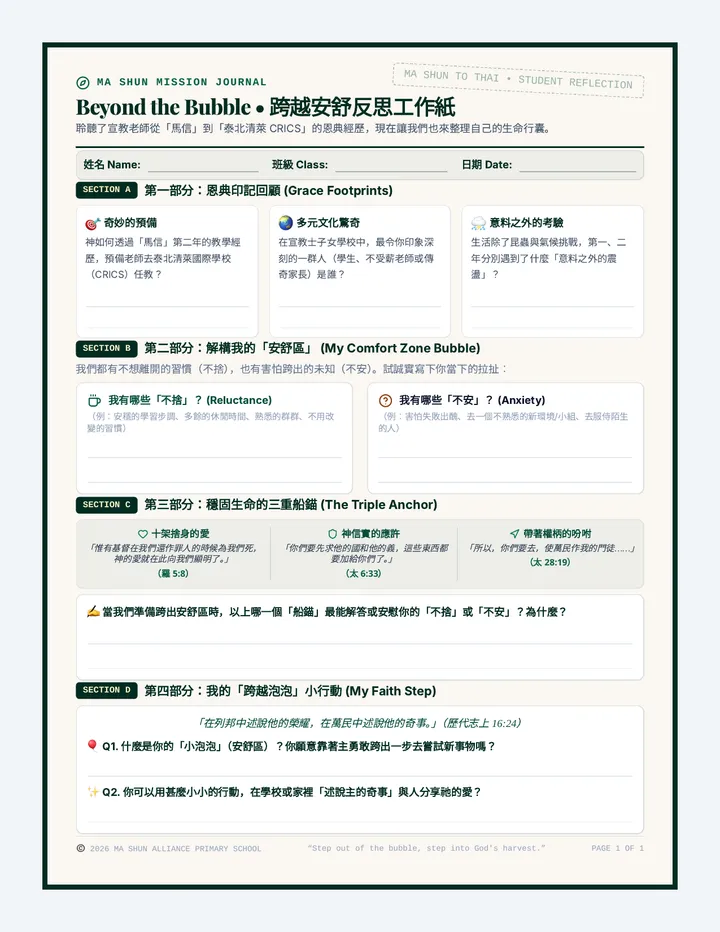
A testimony-based lesson exploring the journey of stepping out of one's comfort zone, overcoming fears through faith, and embracing God's mission in Thailand.
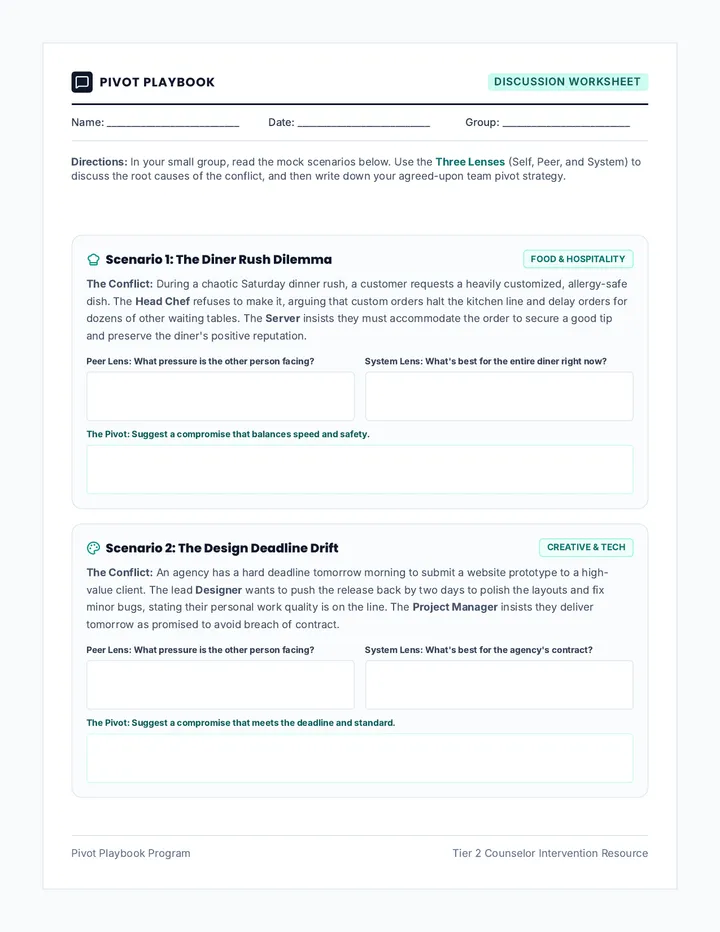
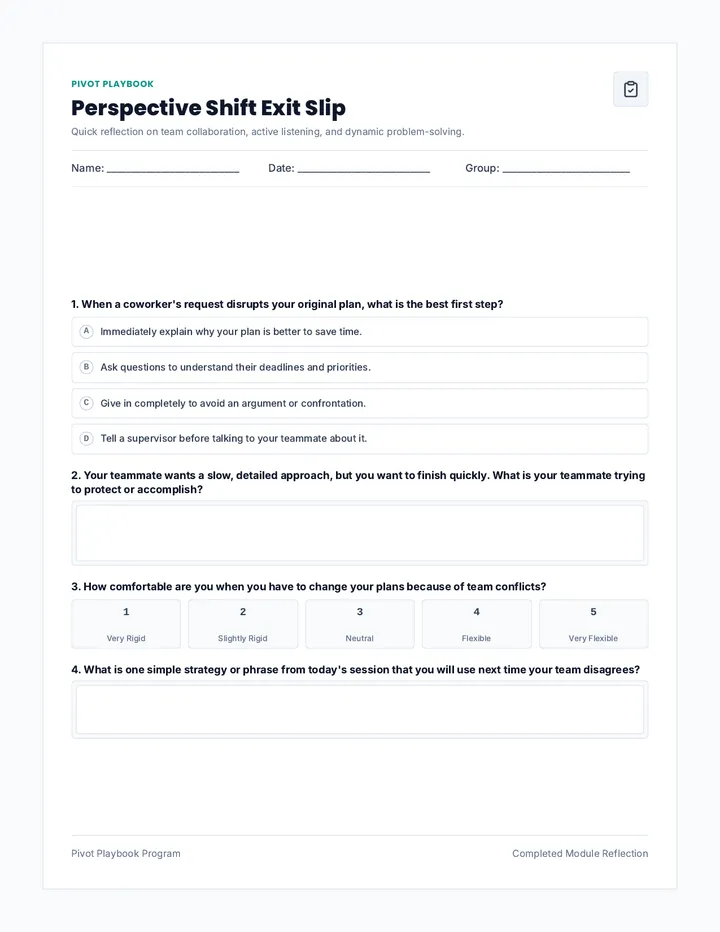
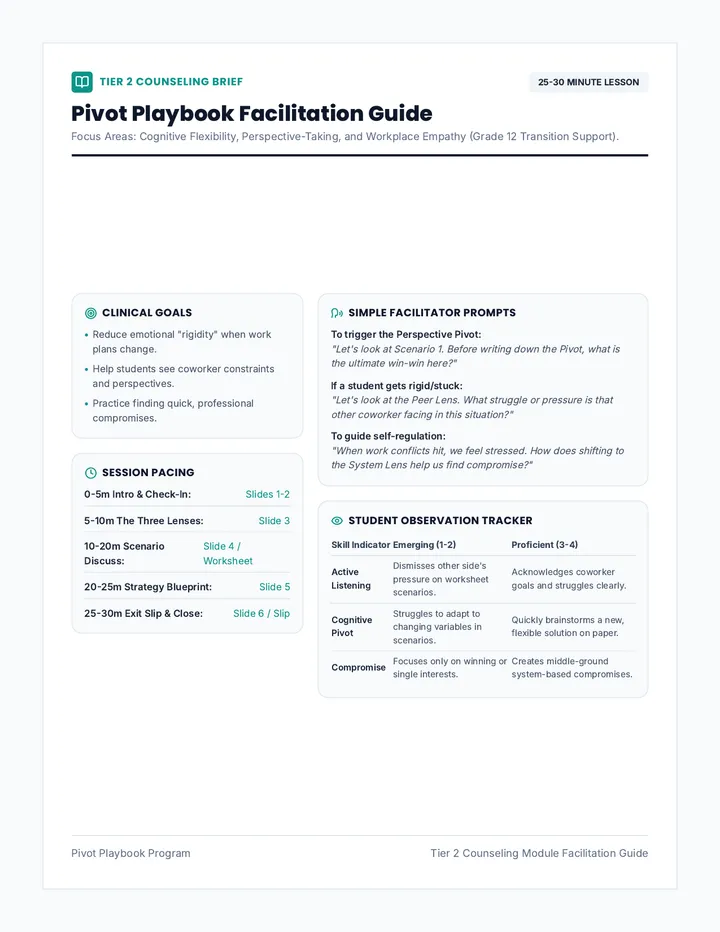
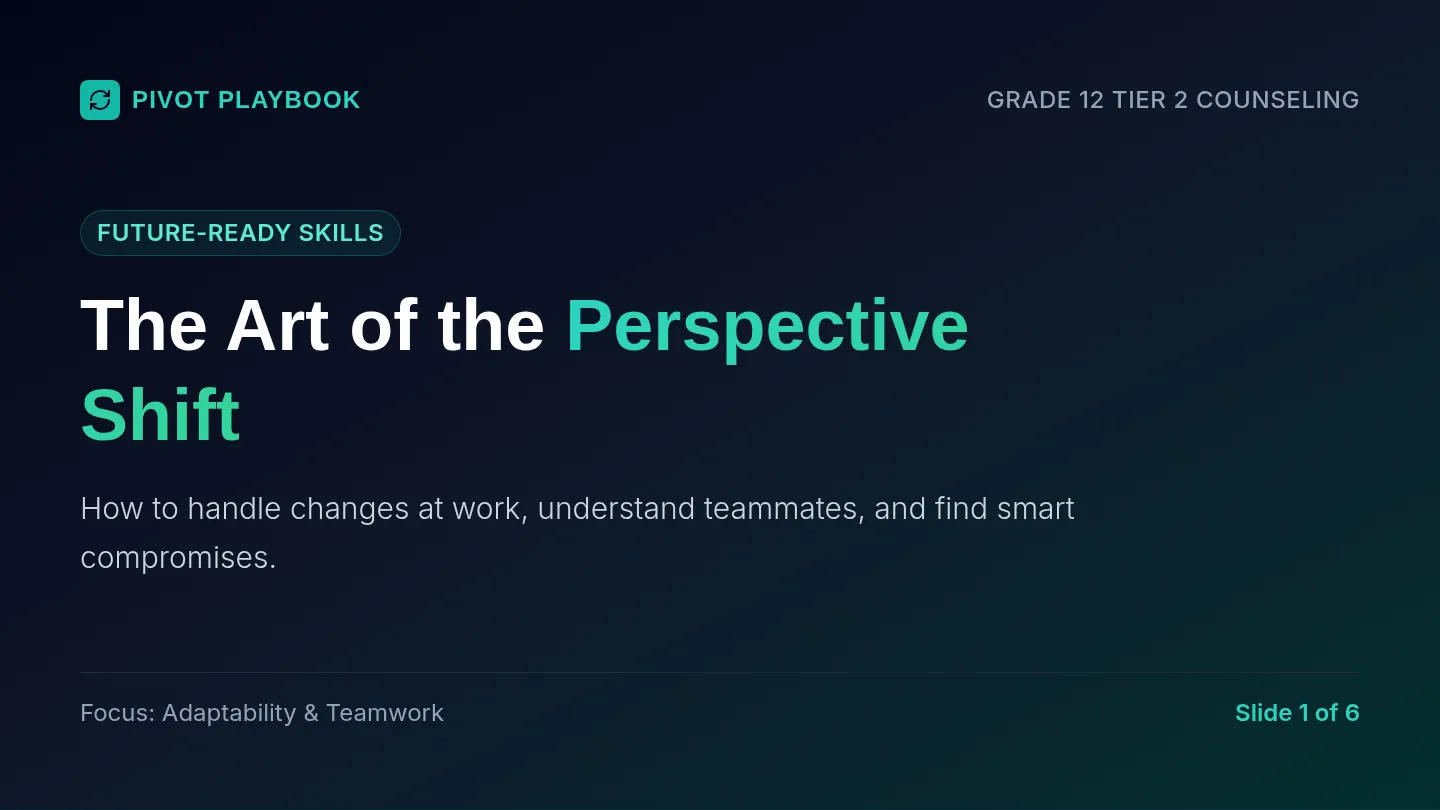
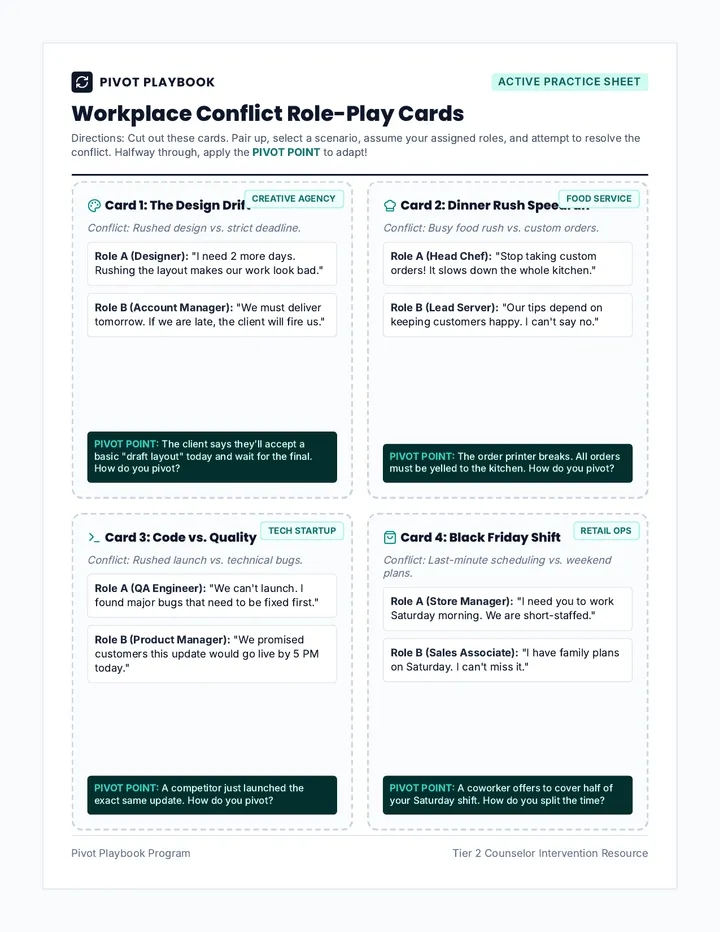
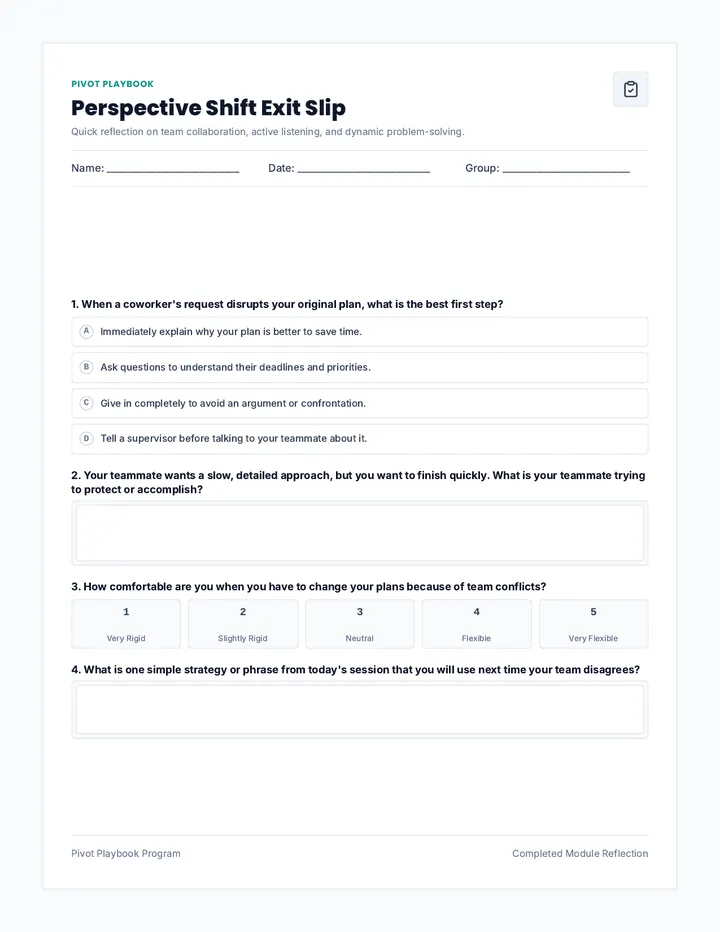
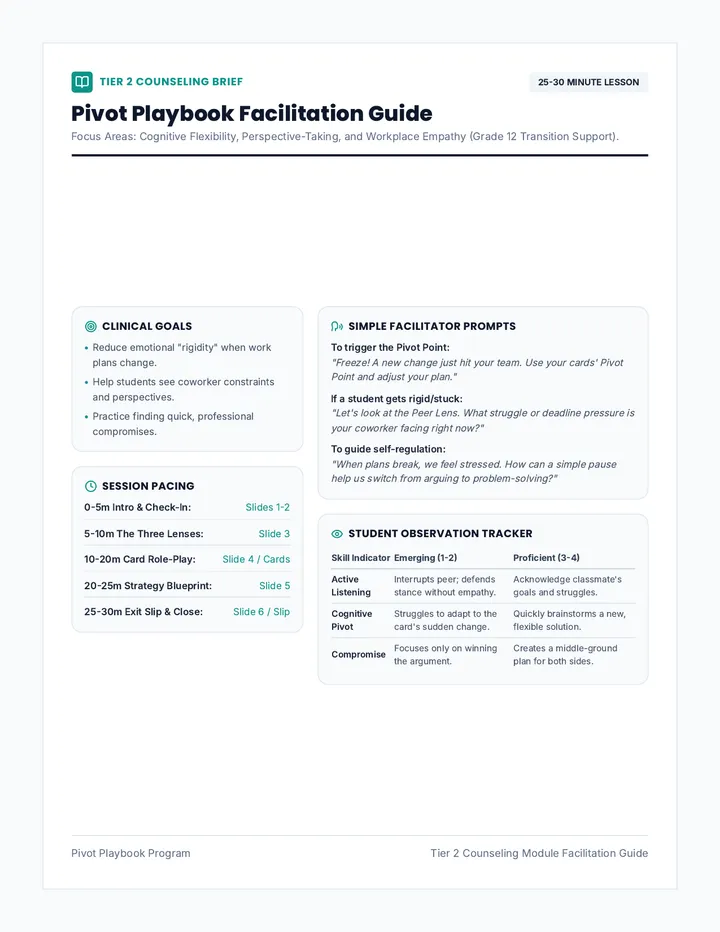
A 25-minute, highly interactive Tier 2 counseling lesson designed to cultivate adaptability, multi-perspective thinking, and constructive workplace communication in high school seniors preparing for professional transitions.
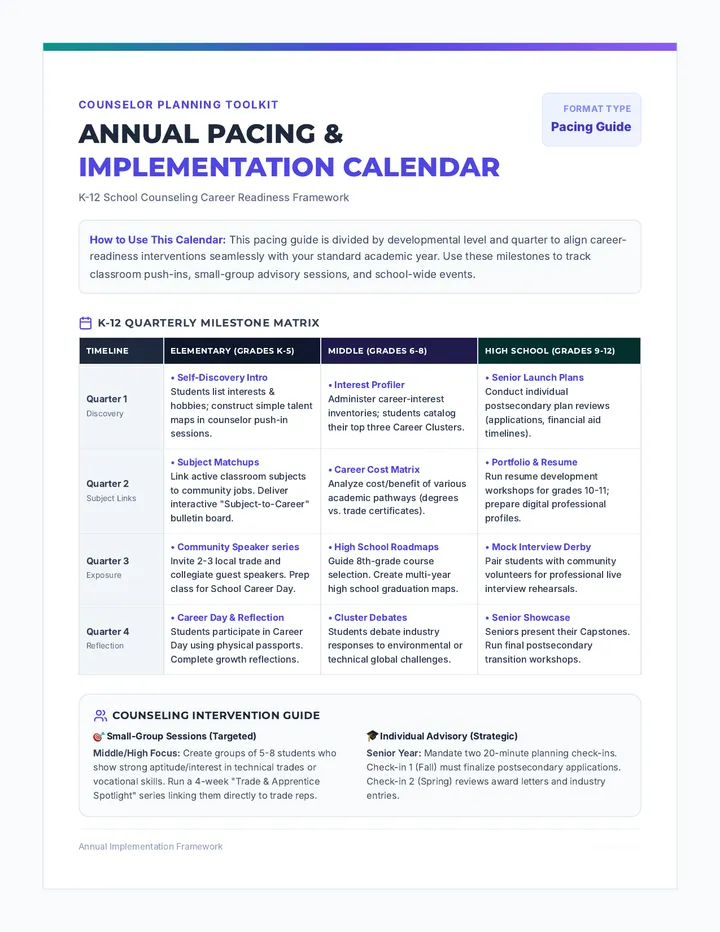
Actionable planning resources, school-wide career day guides, and implementation templates for school counselors to deploy career readiness curricula.
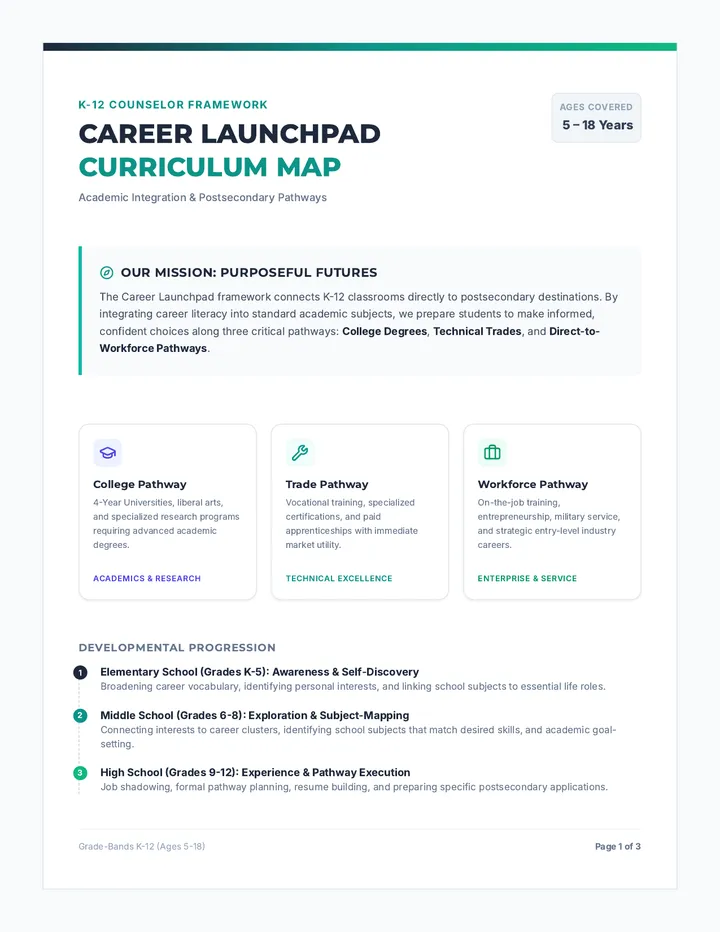
High-level scope, sequence, and developmental milestones for elementary, middle, and high school career exploration. This framework links classroom subjects to real-world college, trade, and workforce pathways.
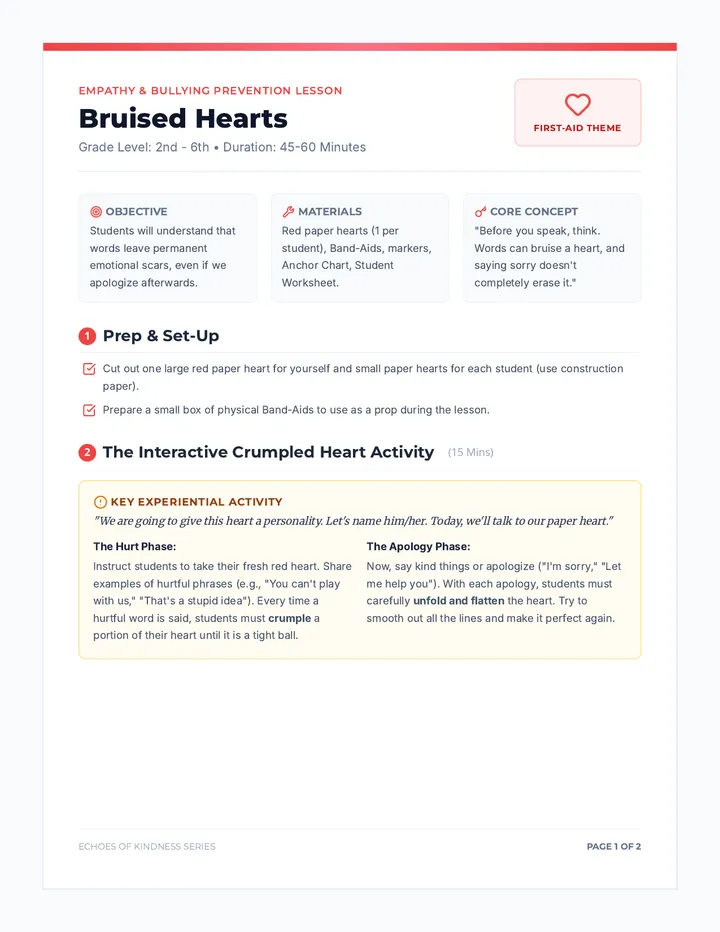
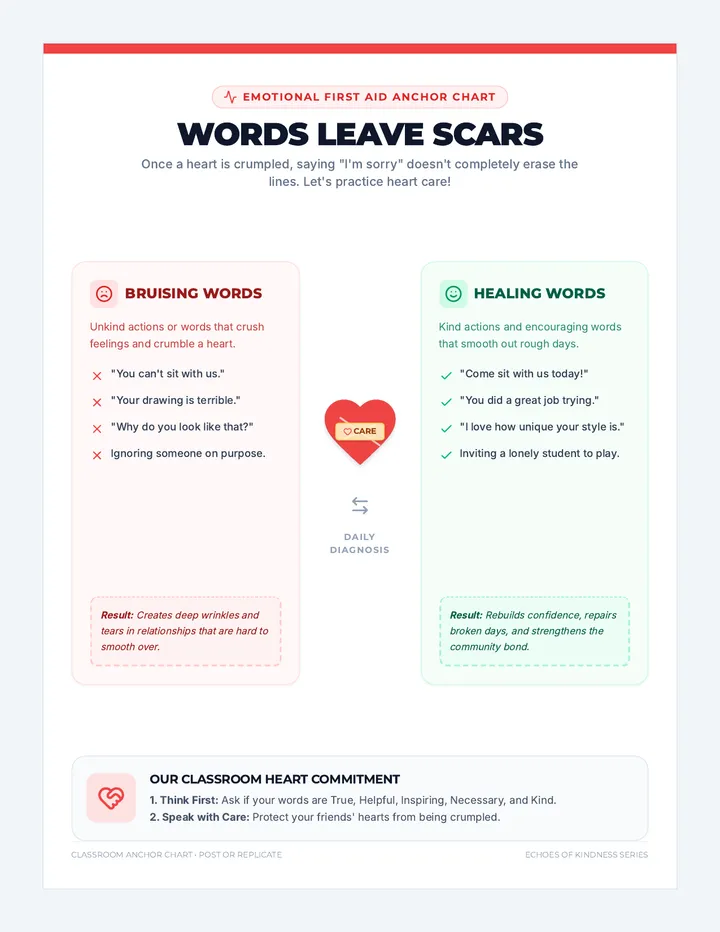
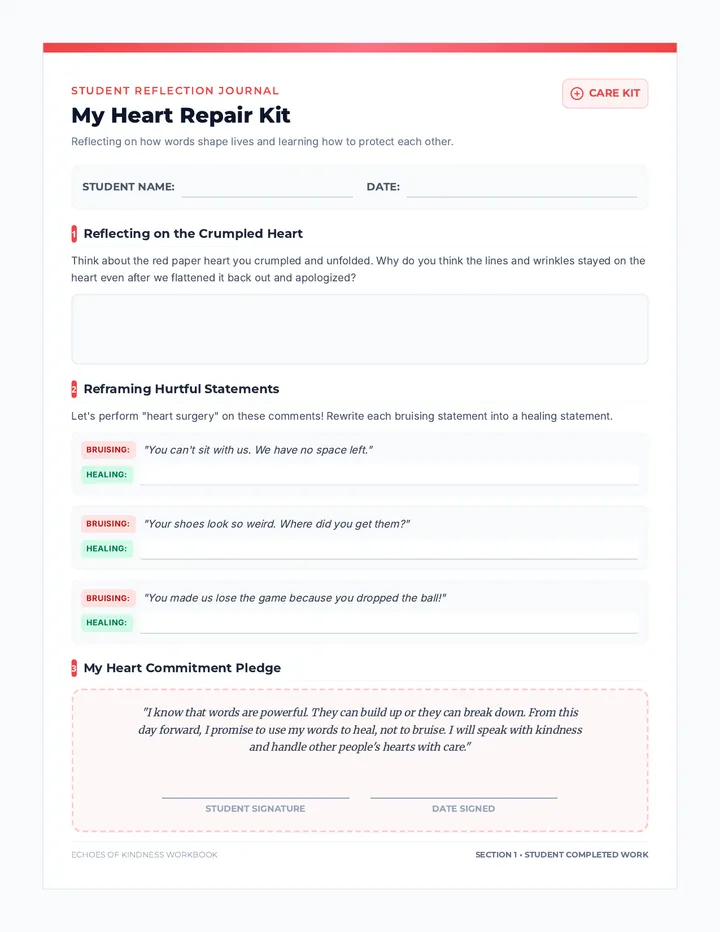
A powerful kindness and bullying prevention lesson exploring how hurtful words affect others and how we can repair hearts. Students engage in a paper-heart crumbling activity to visually understand the lasting impact of unkindness.
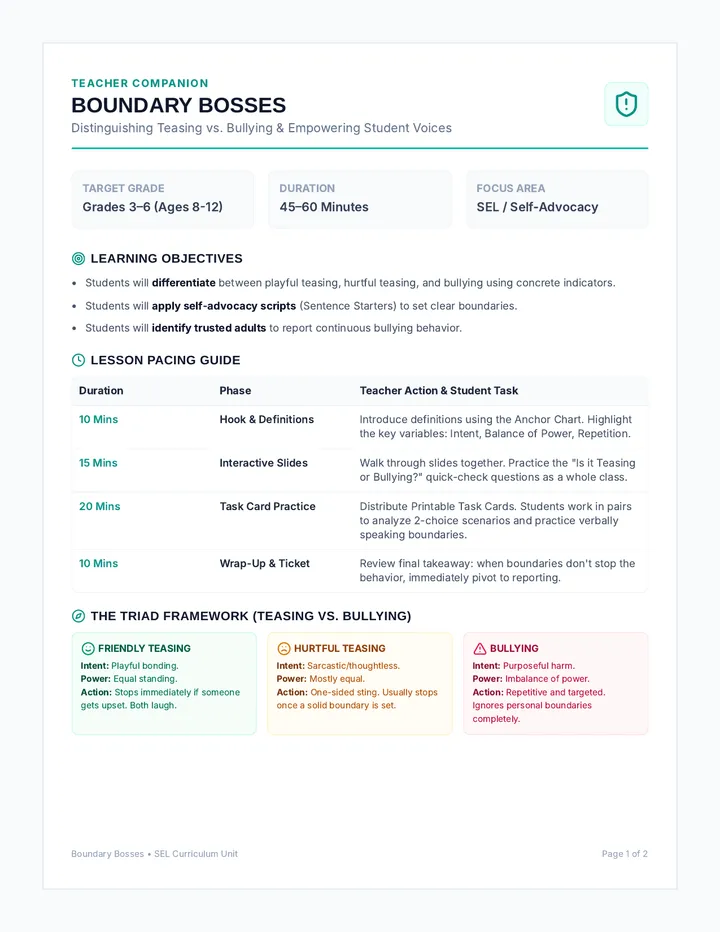
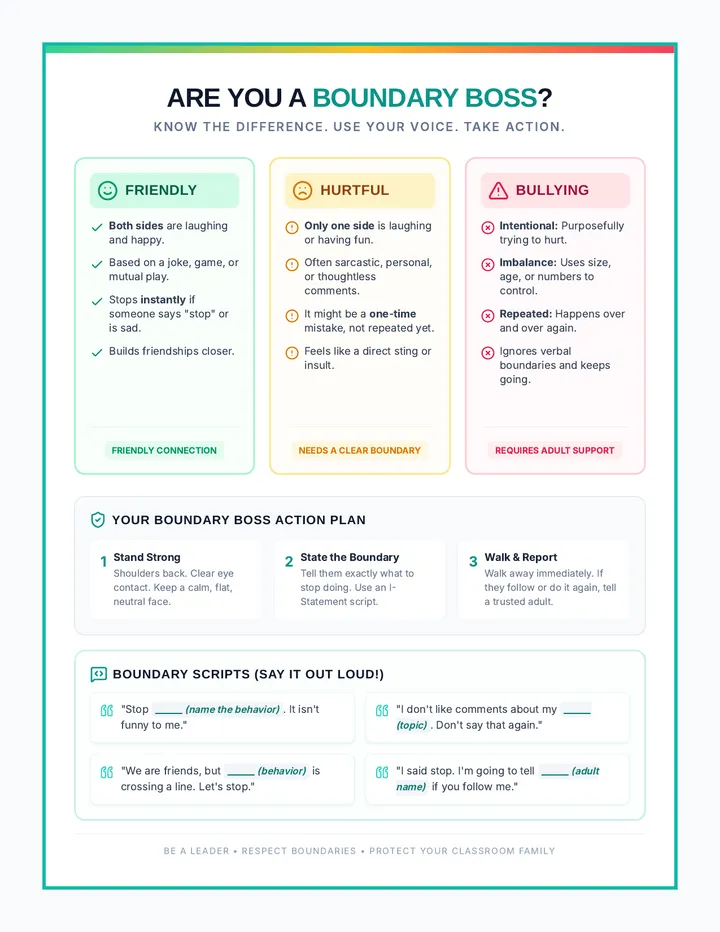
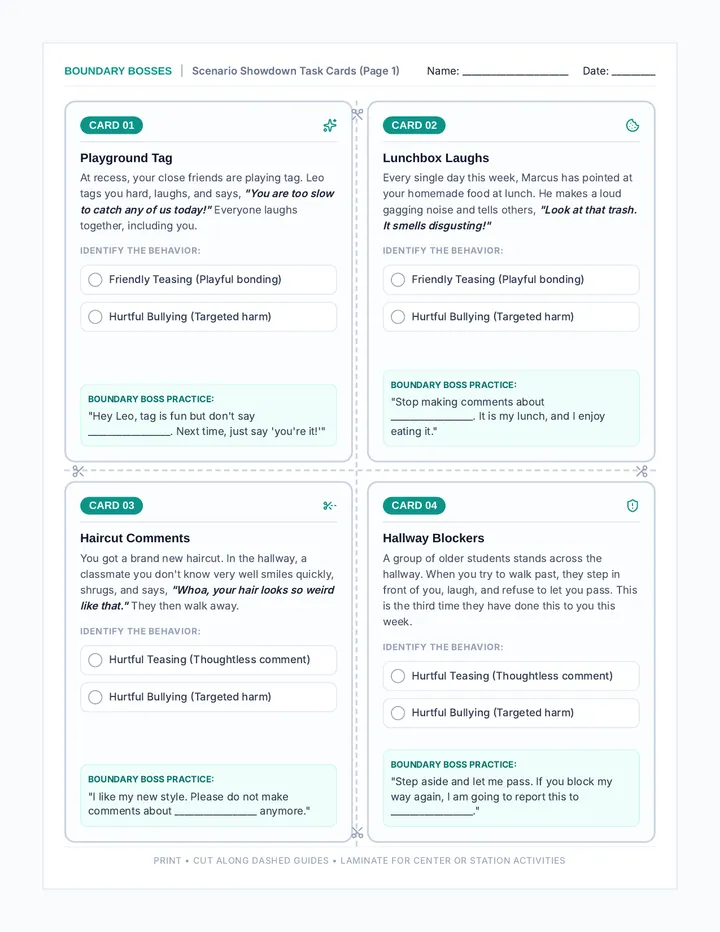
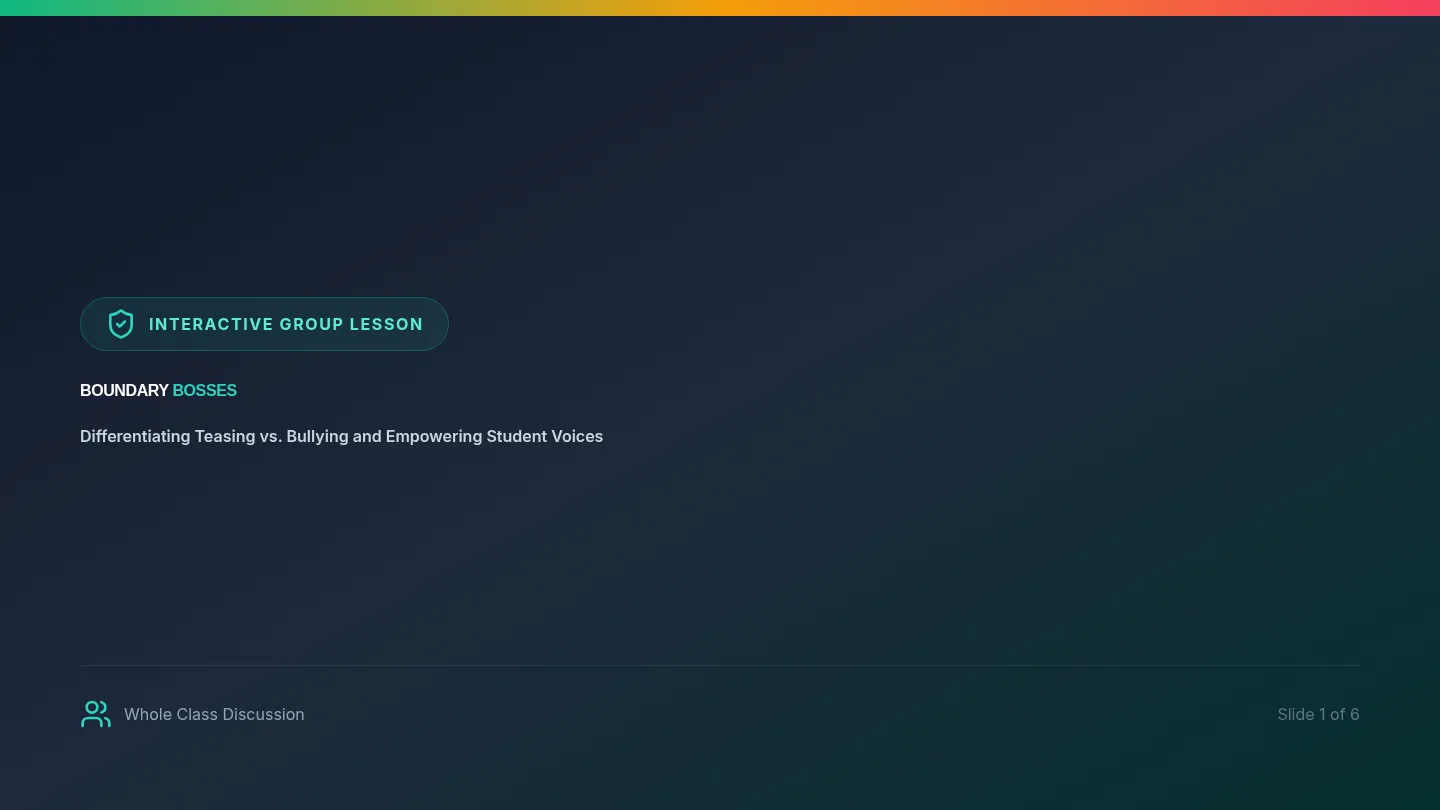
A comprehensive lesson helping students distinguish between friendly teasing, hurtful teasing, and bullying, while teaching concrete self-advocacy strategies and verbal boundary setting.
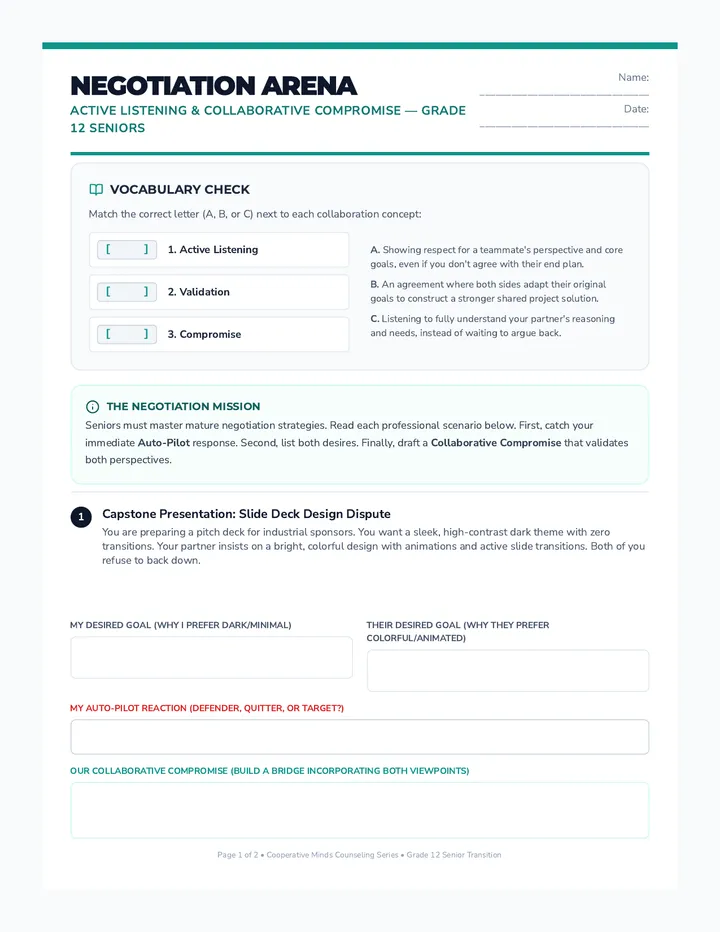
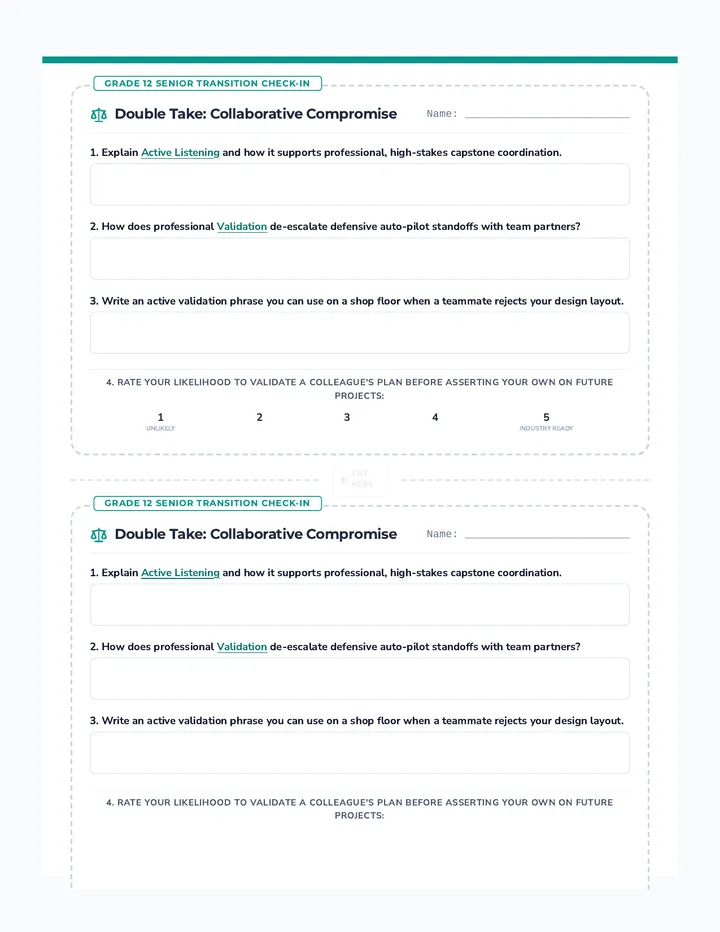
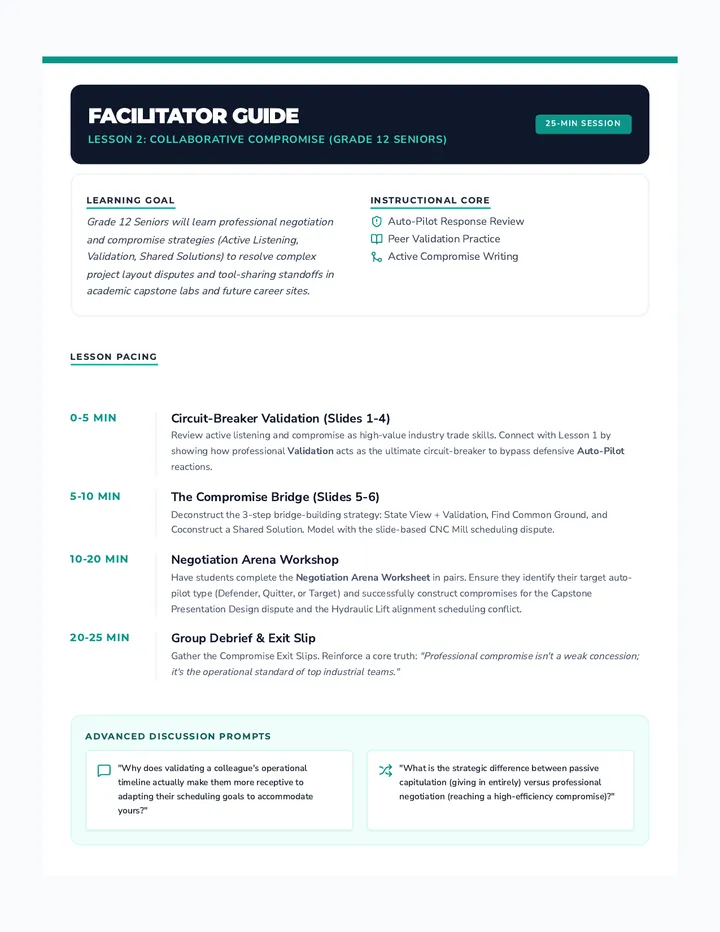
A 25-minute counseling lesson for transitioning Seniors focusing on professional communication, validation, and compromise frameworks to resolve high-stakes project friction on senior shop floors and collaborative teams.
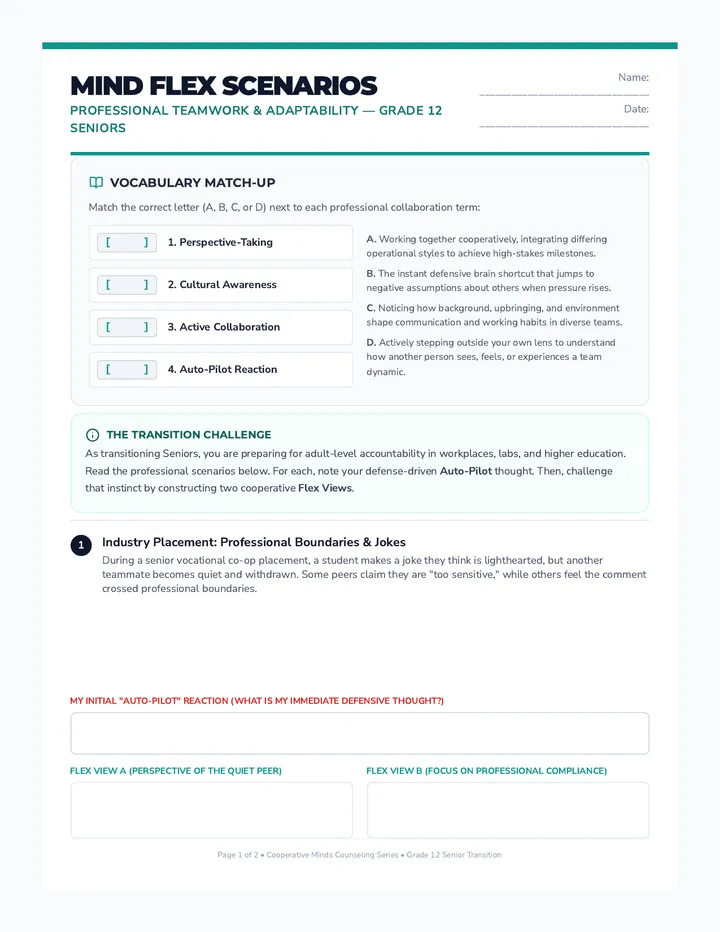
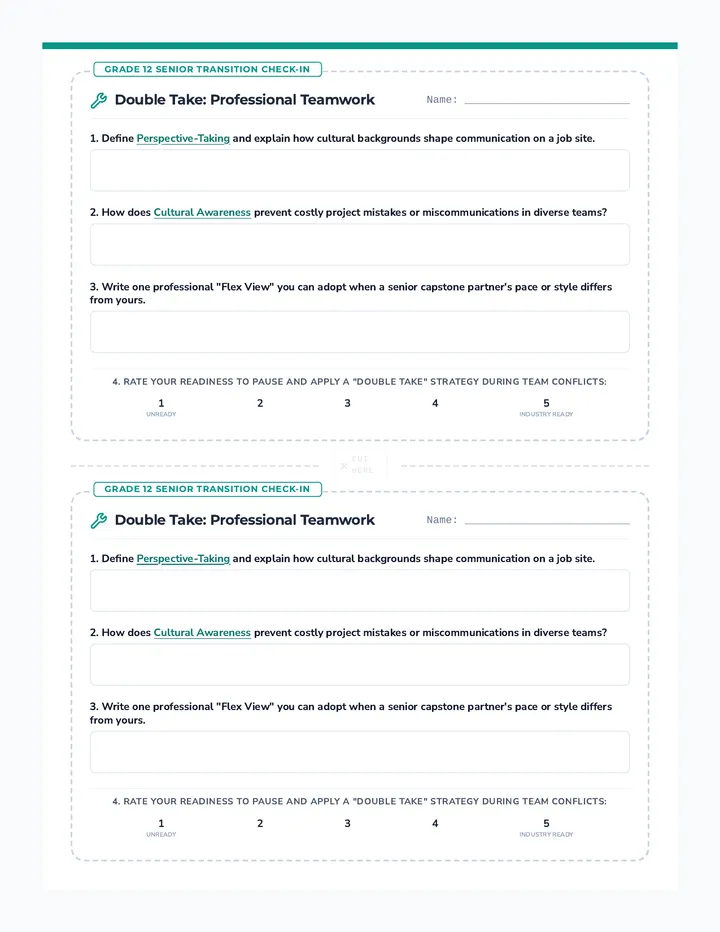
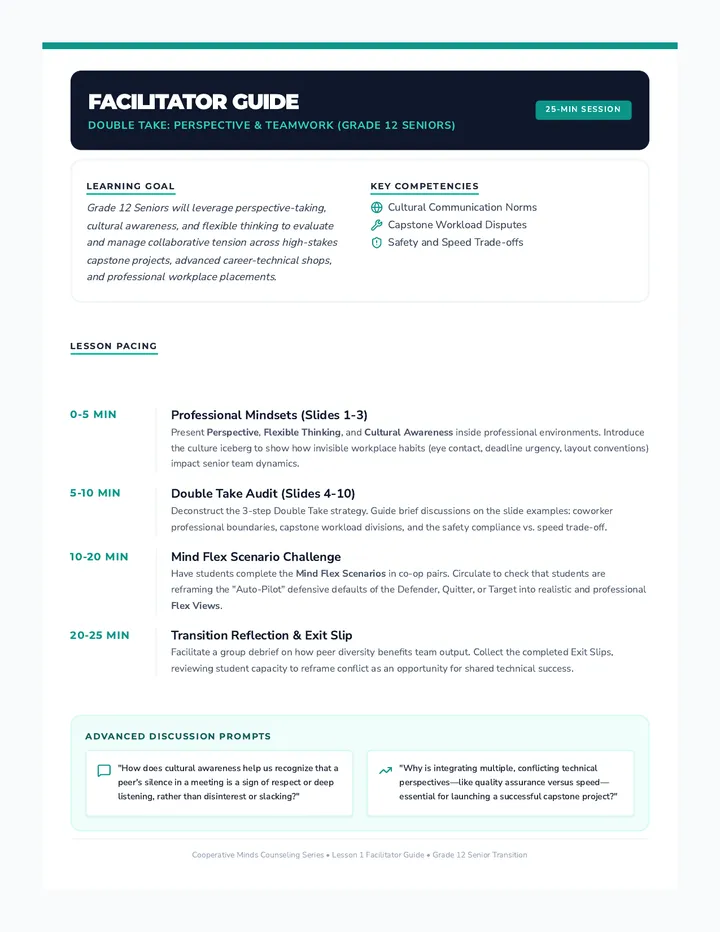
A 25-minute small group counseling lesson focused on perspective-taking and professional teamwork for transitioning Seniors. Students learn how understanding different workplace perspectives and using flexible thinking helps resolve advanced capstone and professional shop floor conflicts.
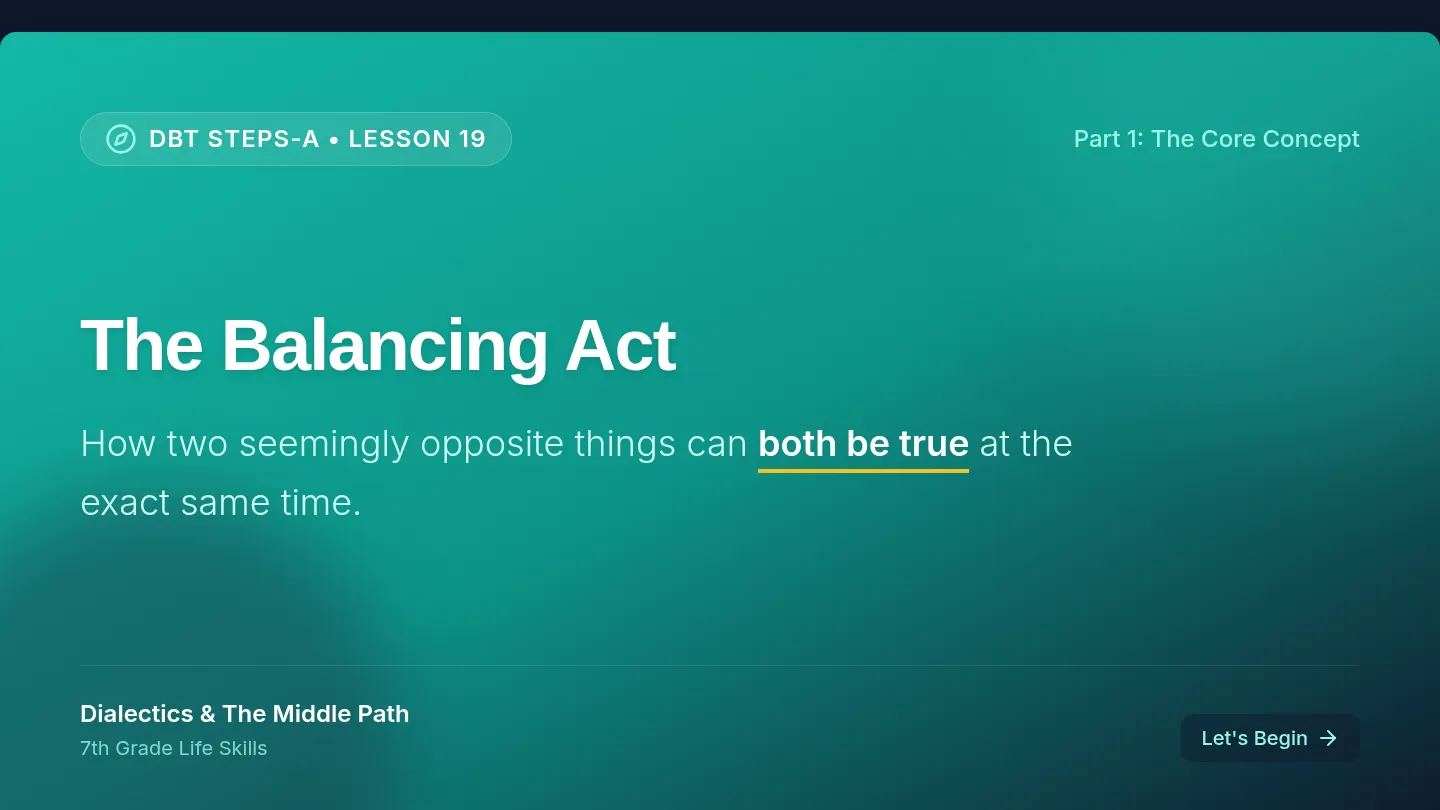
Introduction to DBT STEPS-A Lesson 19, focusing on the core concept of Dialectics. This lesson helps 7th graders understand that two seemingly opposite truths can coexist, guiding them to find a balanced 'middle path' in their emotions, relationships, and daily lives.
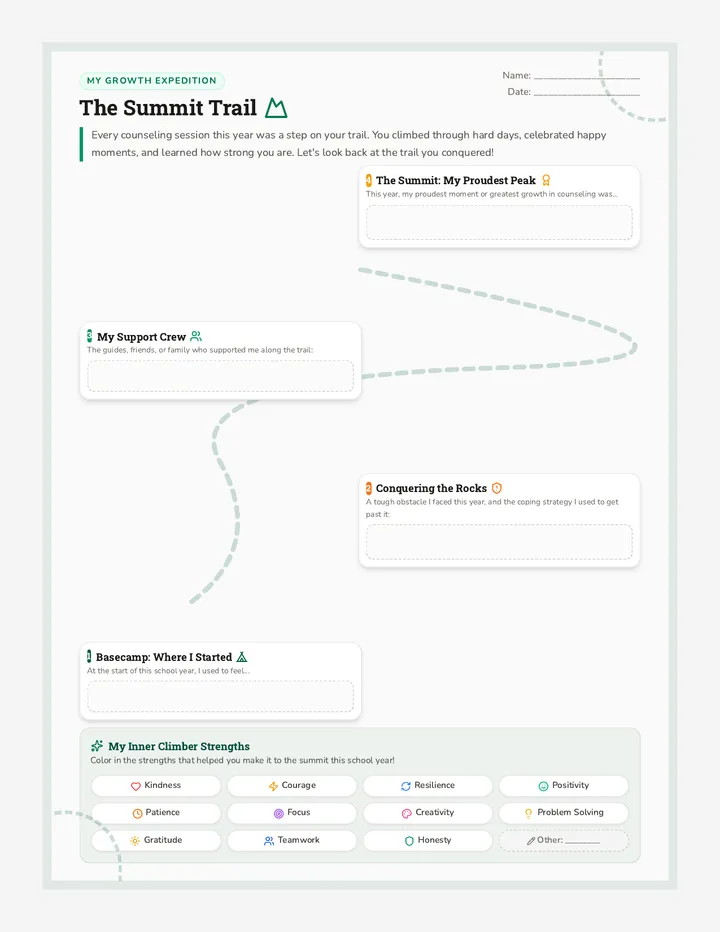
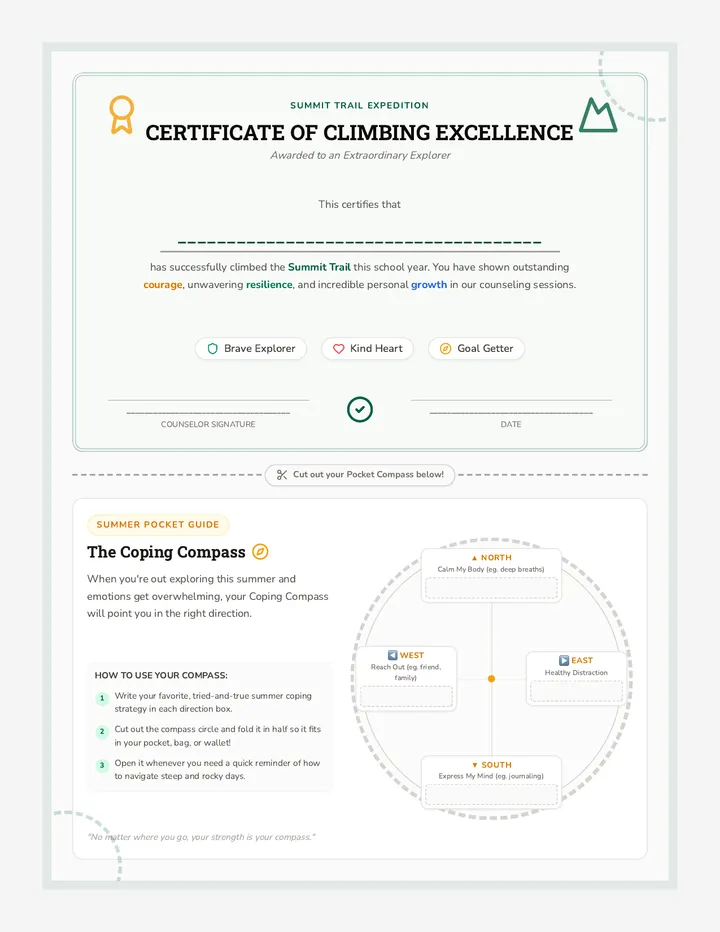
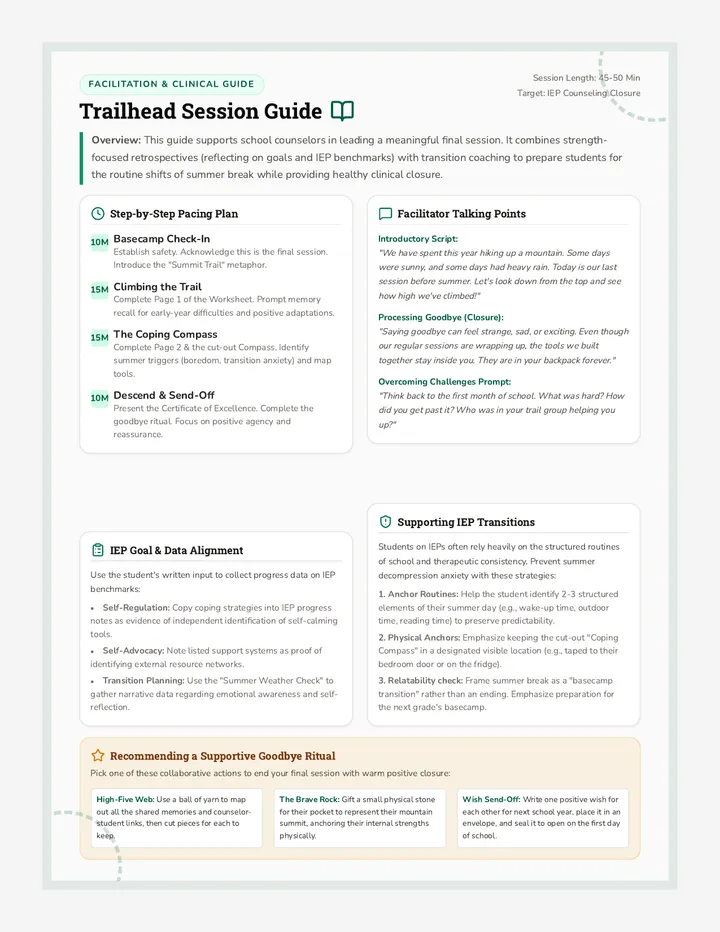
A supportive, mountain-trail-themed final counseling session designed for students on IEPs to celebrate their personal growth, develop summer coping strategies, set future goals, and process closure with their counselor.
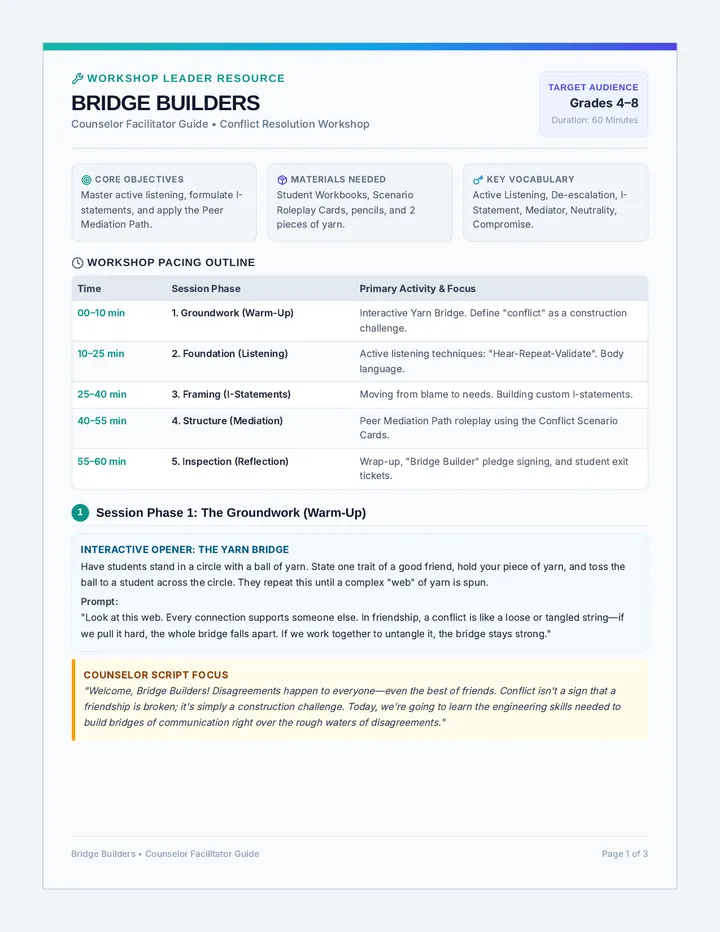
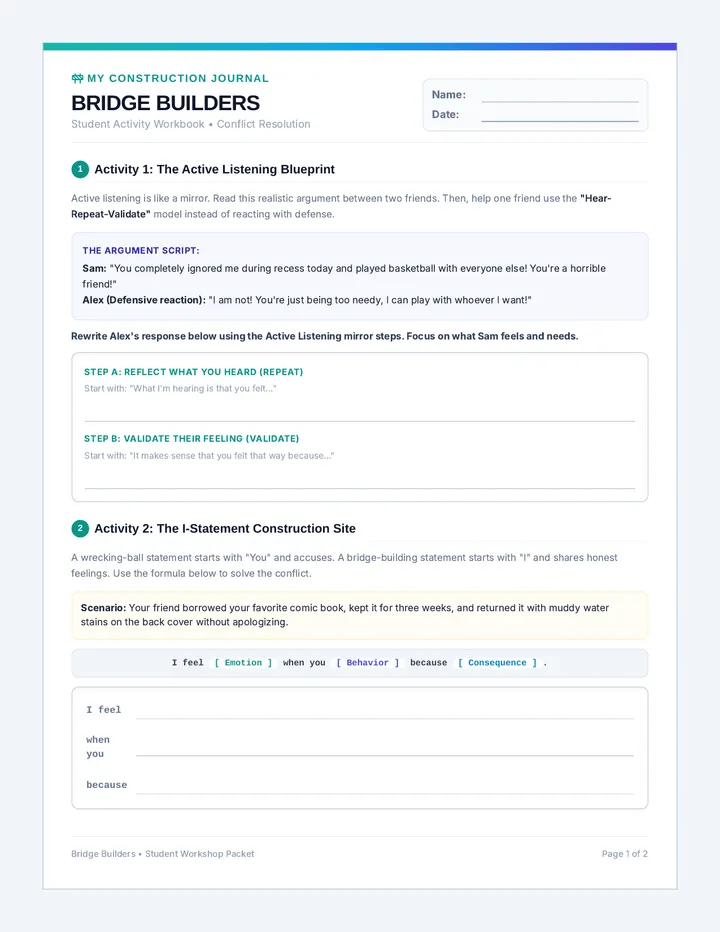
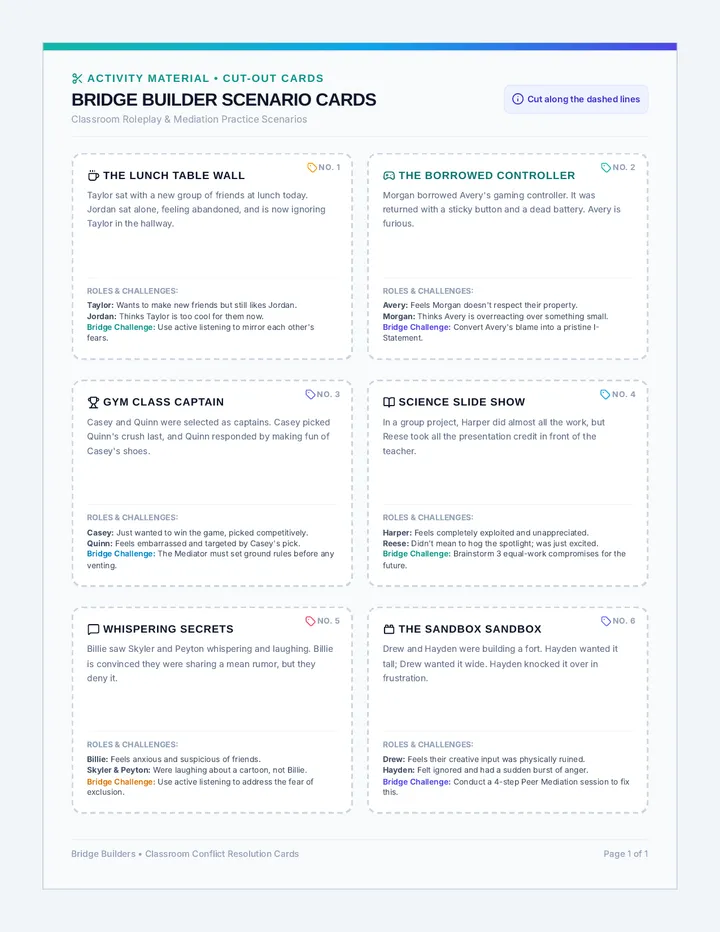
An interactive workshop teaching students essential conflict resolution skills, active listening techniques, and peer mediation frameworks to build stronger, more empathetic friendships.
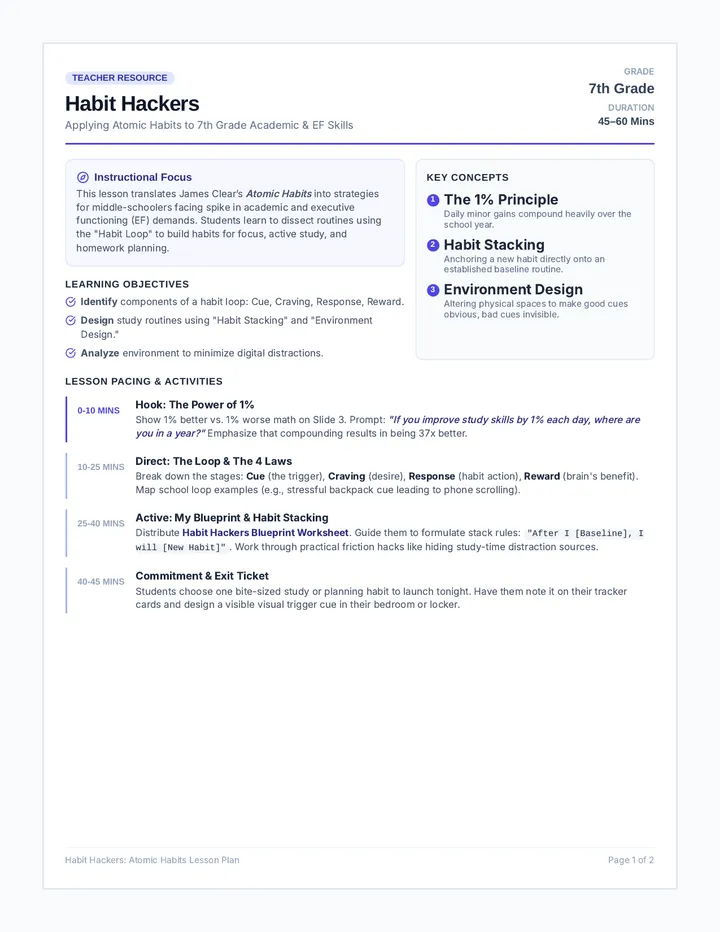
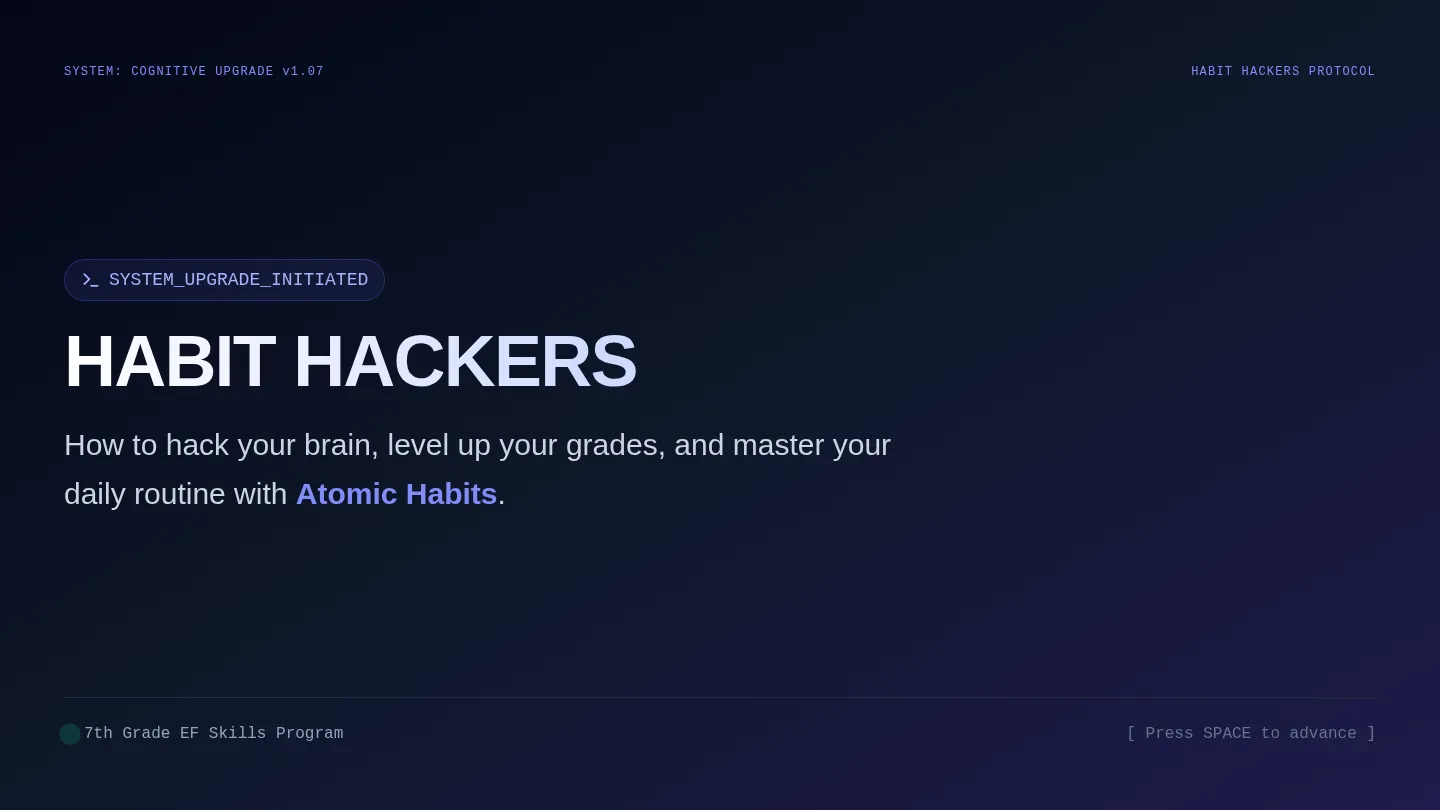
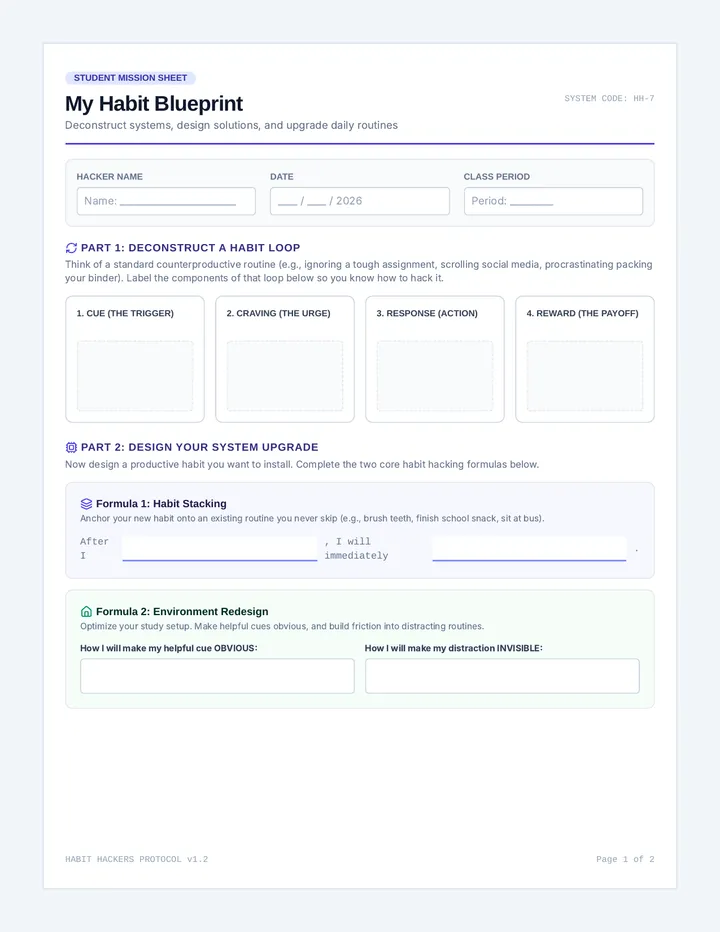
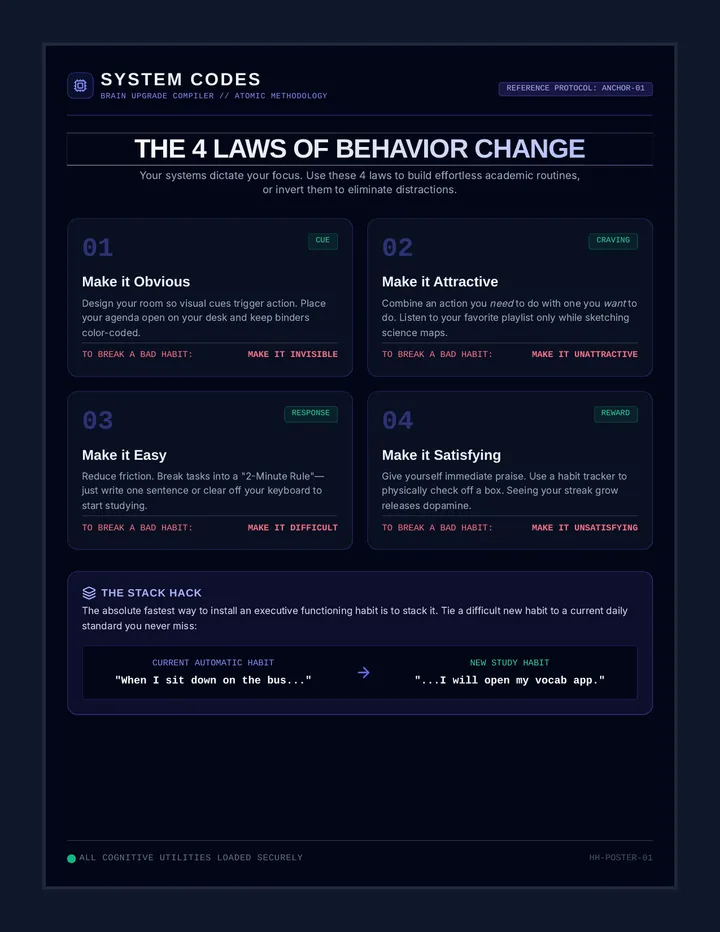
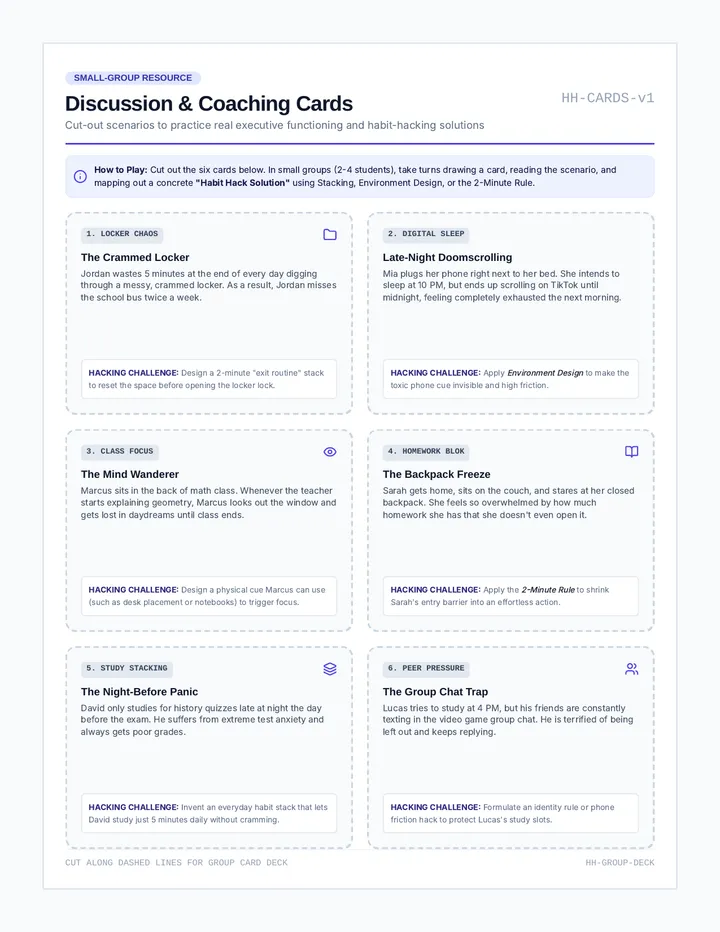
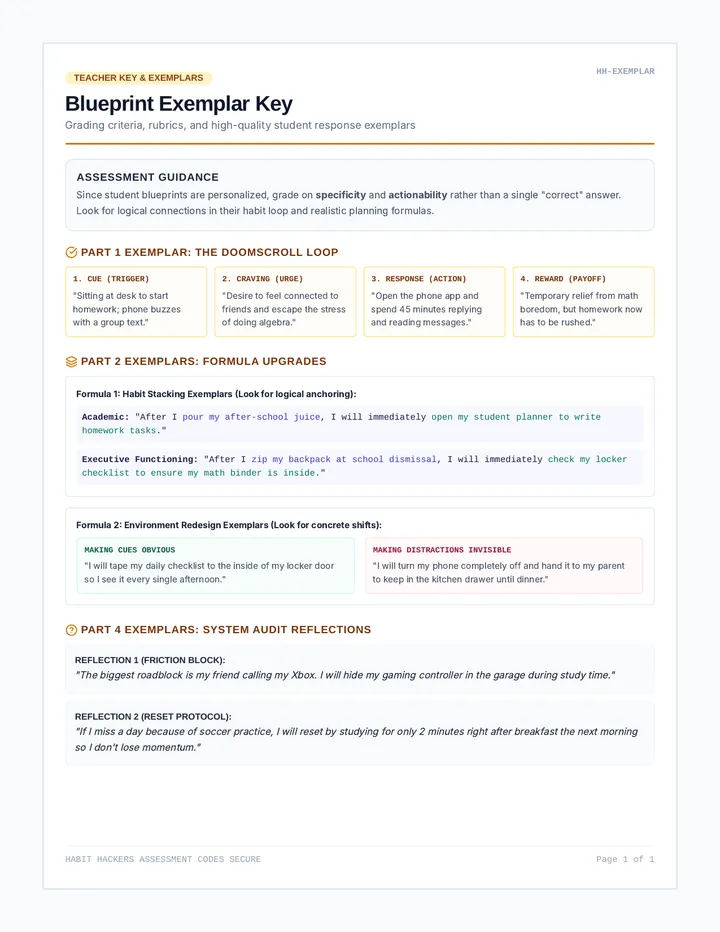
A comprehensive, highly engaging lesson that translates the core principles of Atomic Habits into practical academic, executive functioning, and social strategies for 7th graders. Through interactive slides, concrete worksheets, and structured small-group discussions, students learn to design and track habits that lead to continuous improvement.
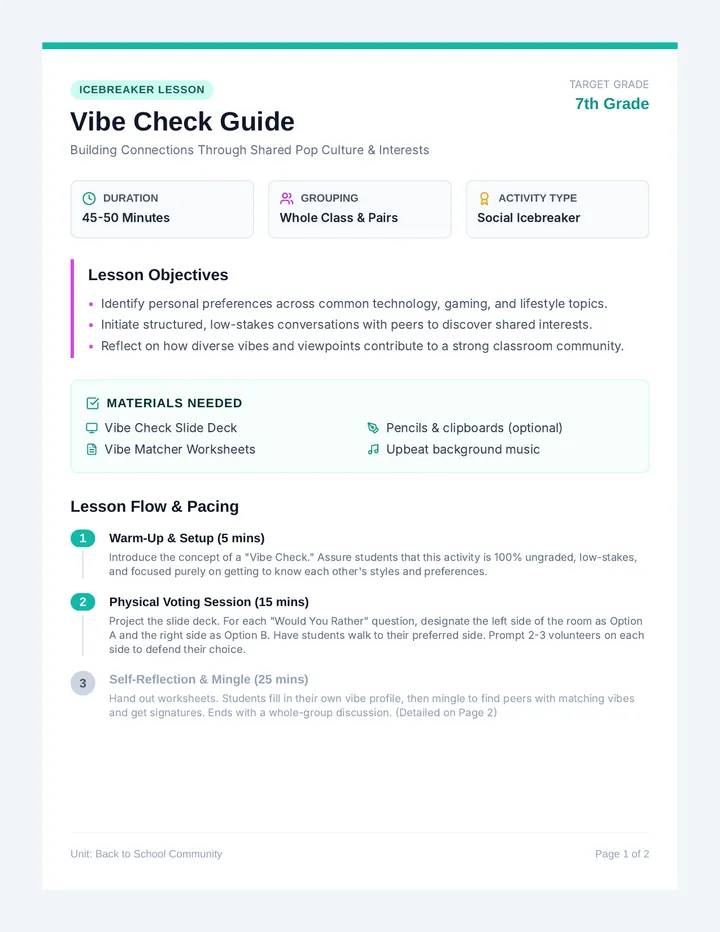
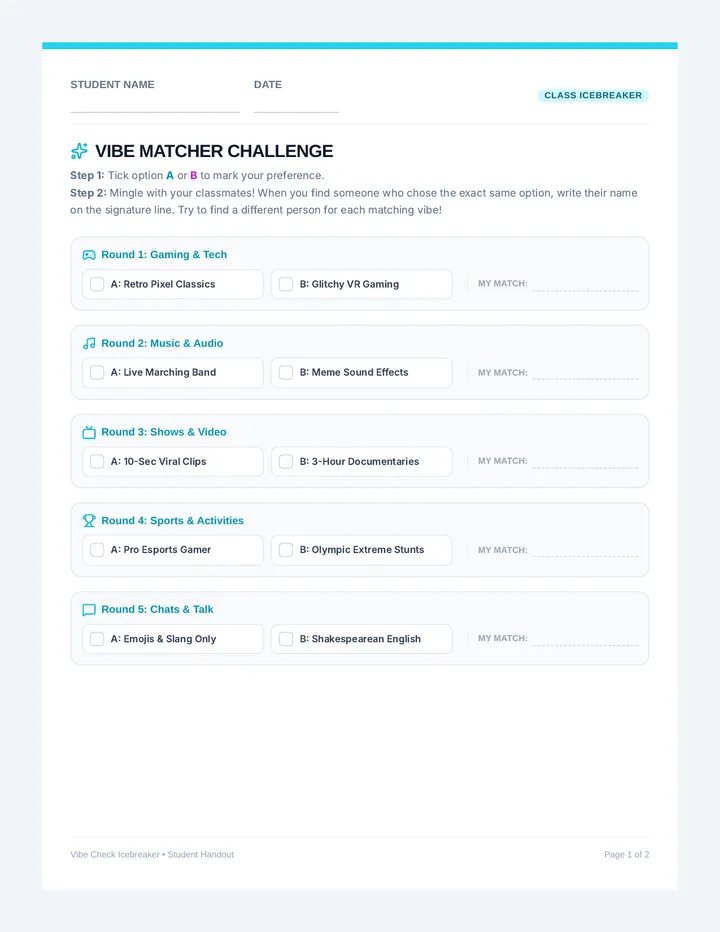
A high-energy, low-stakes icebreaker lesson for 7th graders to ease back-to-school anxiety. Students participate in a visual voting session using a slide deck, complete a self-reflection worksheet, and mingle to find classmates with matching pop culture and interest vibes.
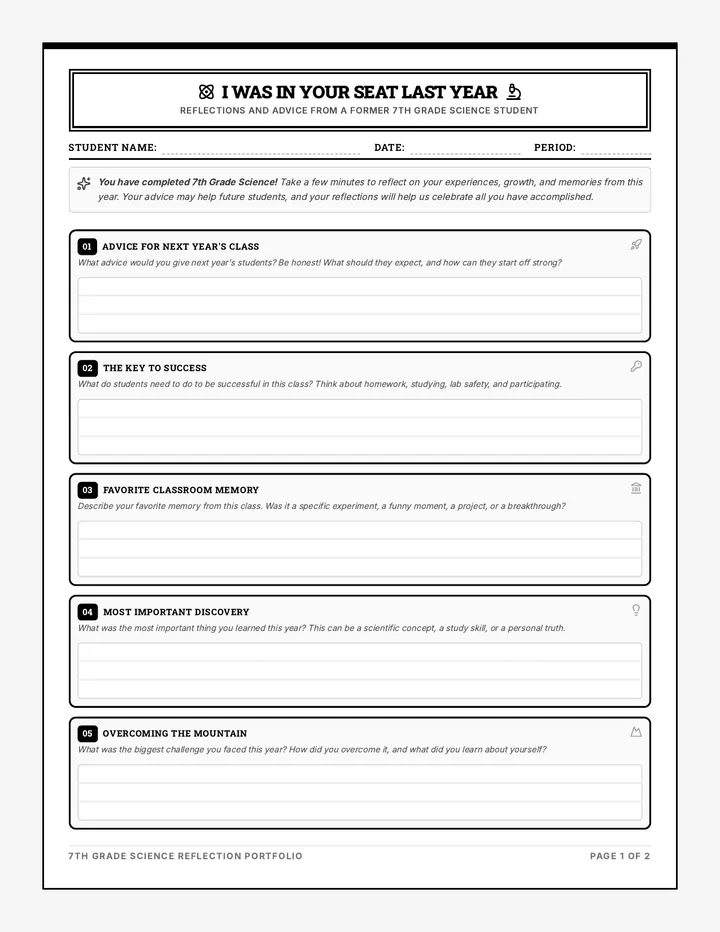
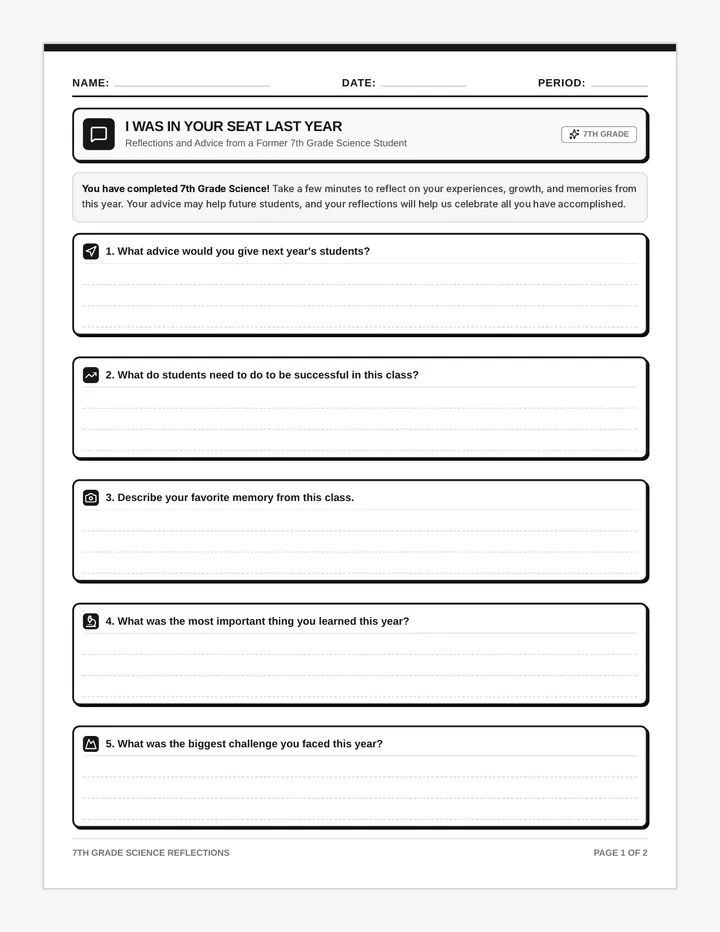
An end-of-year reflection lesson for 7th-grade science students where they reflect on their growth, achievements, and challenges, and leave advice for future students.
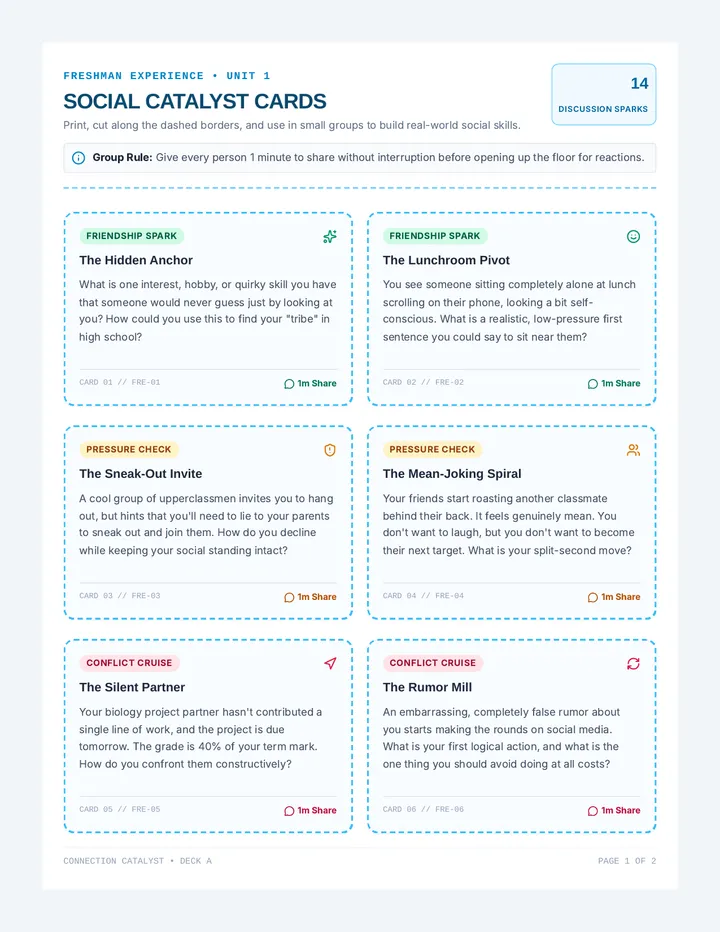
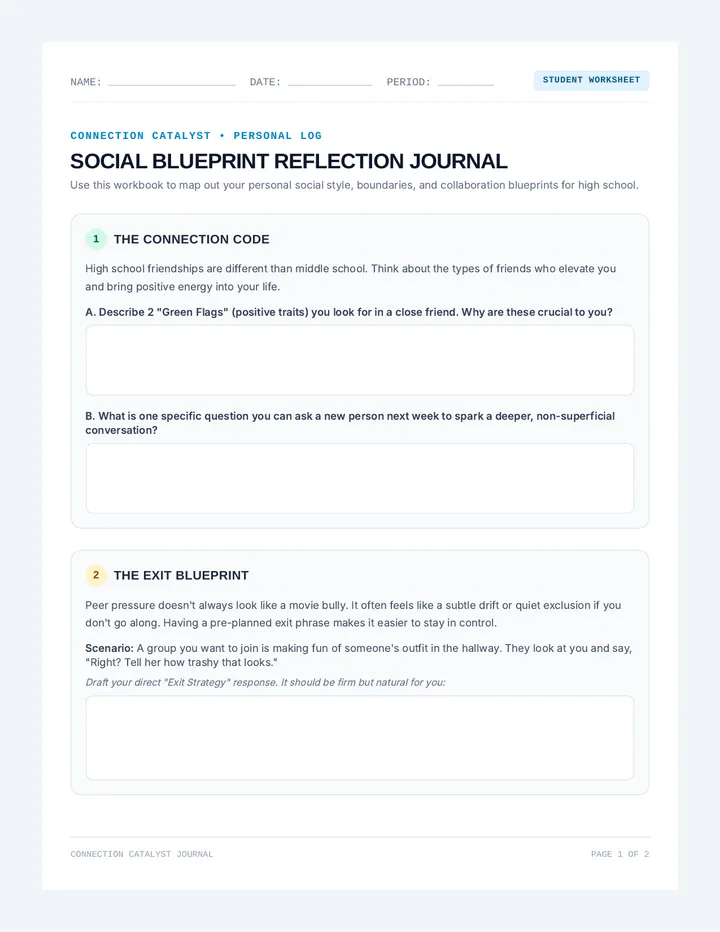
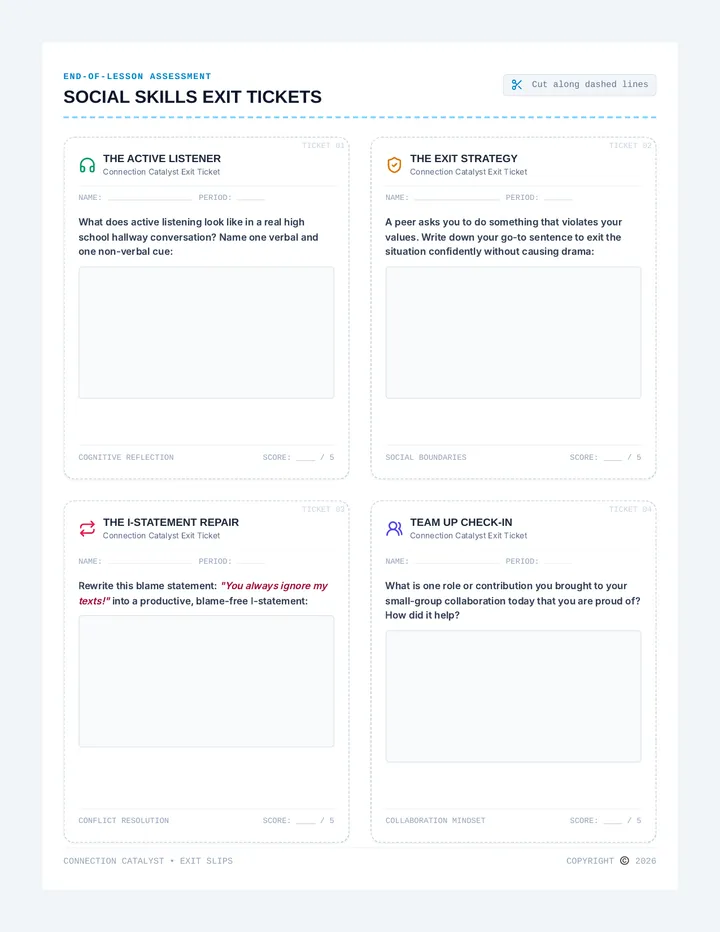
A dynamic social-emotional learning lesson designed for high school freshmen to master relationship and social skills. Students explore techniques for initiating friendships, navigating peer pressure, resolving conflicts constructively, and collaborating effectively in high school environments.
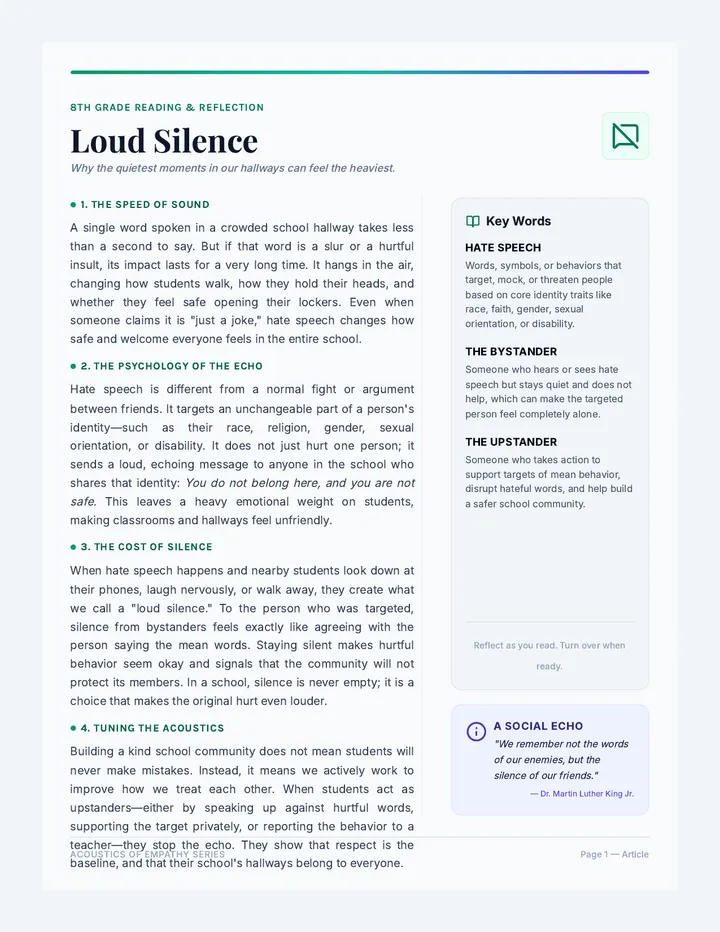
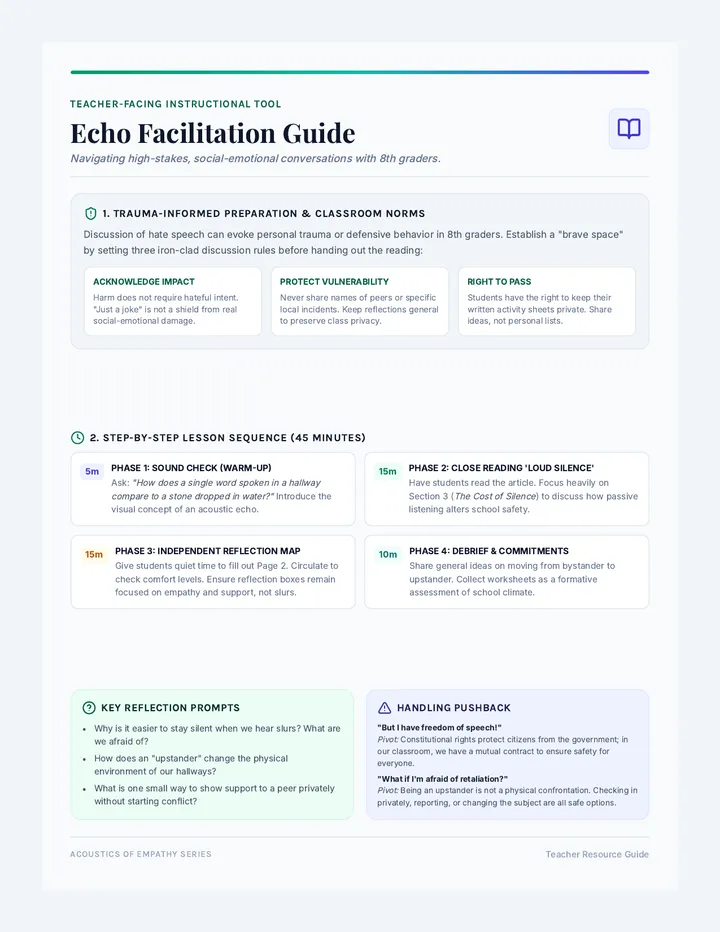
An 8th-grade lesson focusing on the social-emotional impact of hate speech and fostering a supportive school community. Students read an engaging, age-appropriate article and complete a reflective worksheet to map the impact of words and make personal commitments to inclusivity.
An end-of-year reflective science lesson where 7th-grade students look back on their progress, share advice for incoming students, and celebrate achievements.
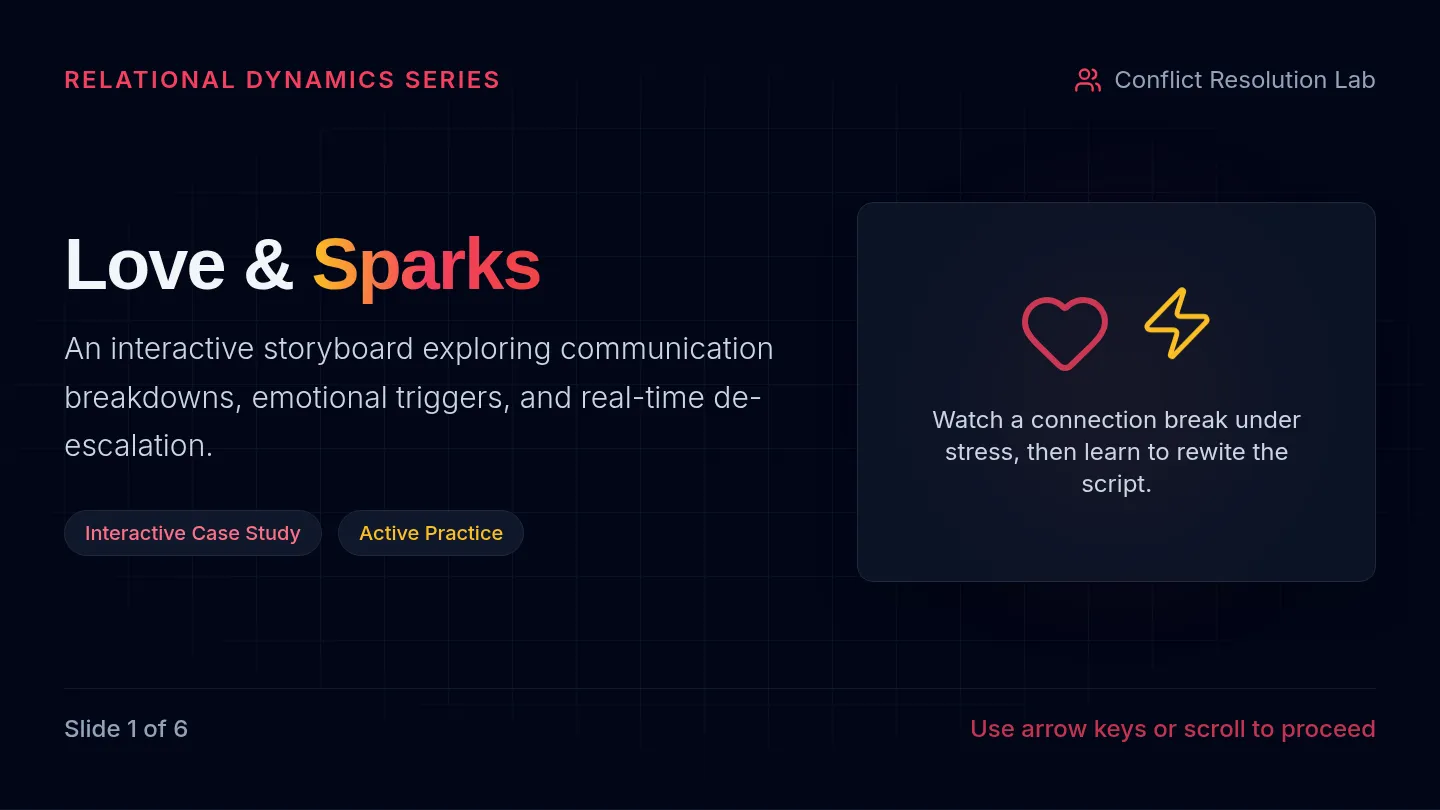
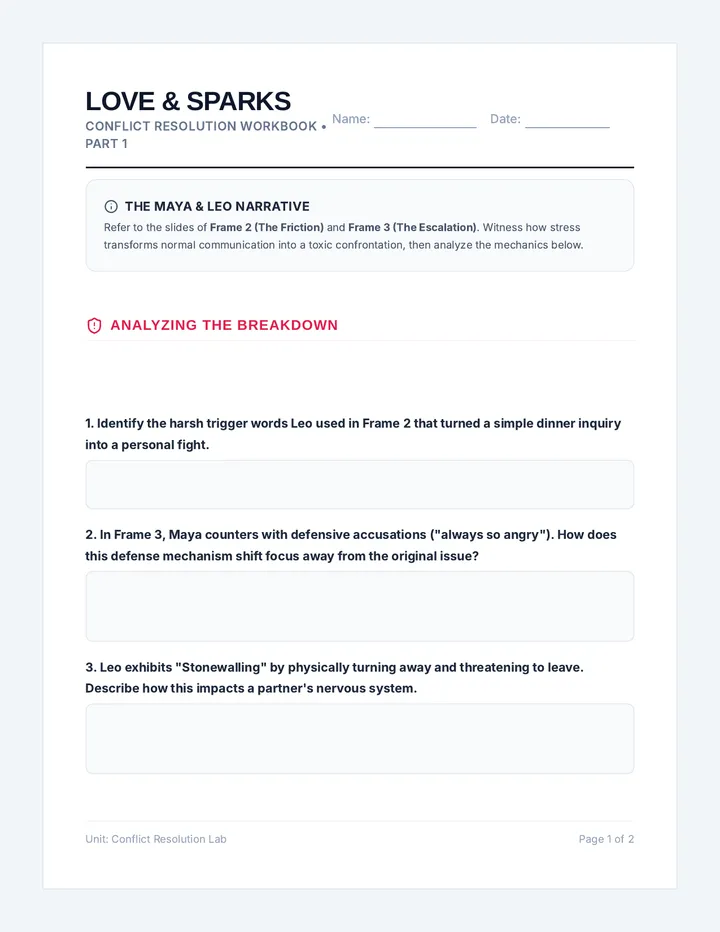
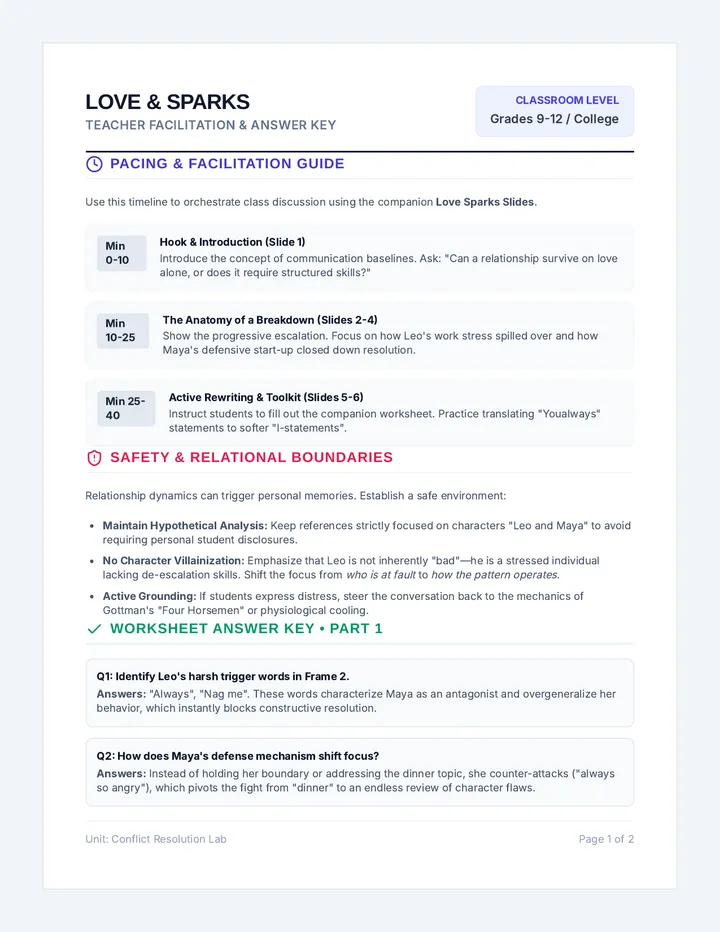
An instructional lesson centered on identifying communication breakdowns, analyzing relational friction, and applying active de-escalation strategies. Features interactive storyboard-driven slides and activities.
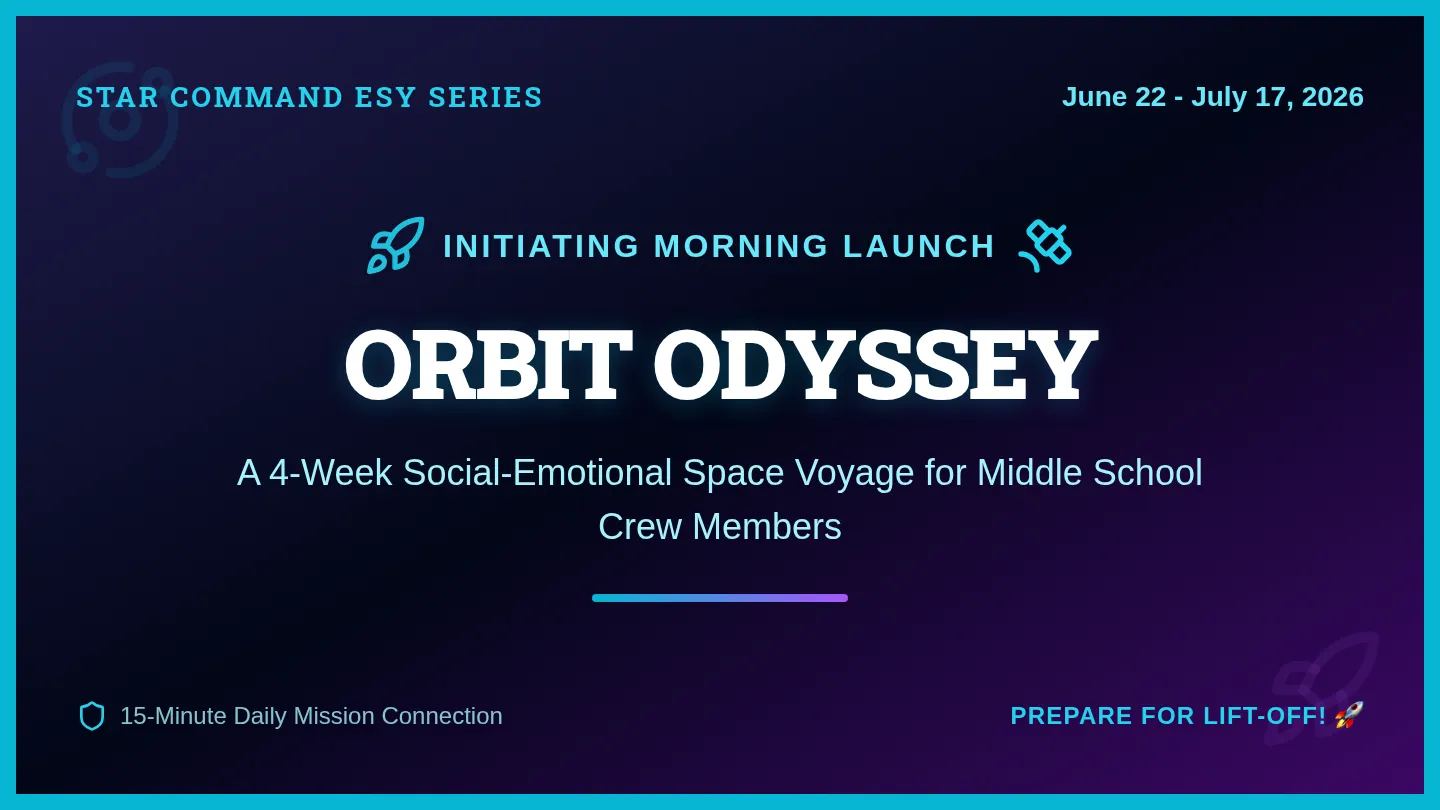
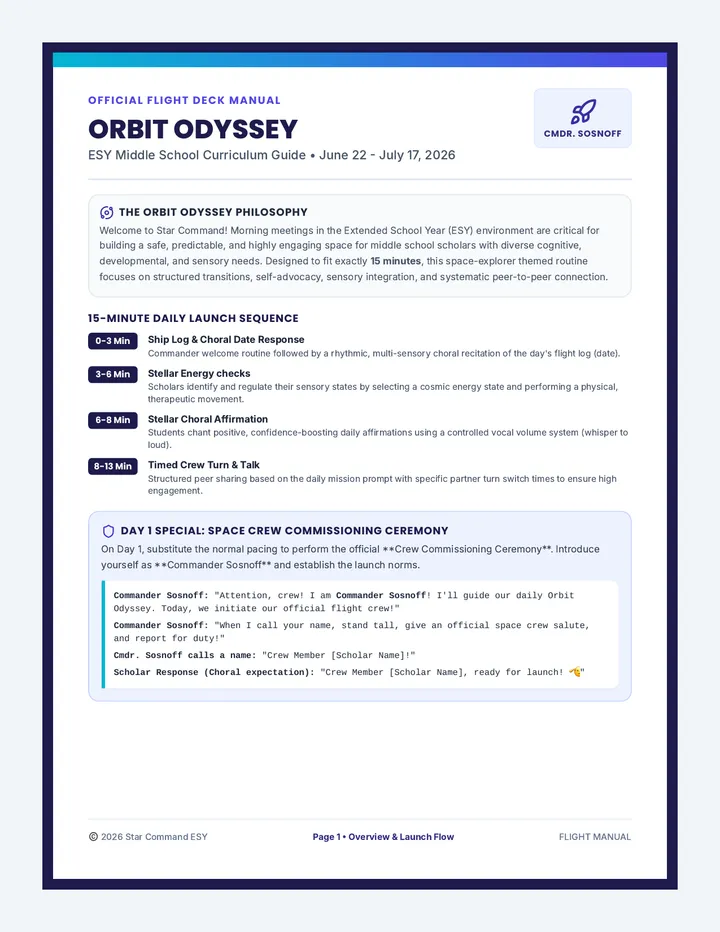
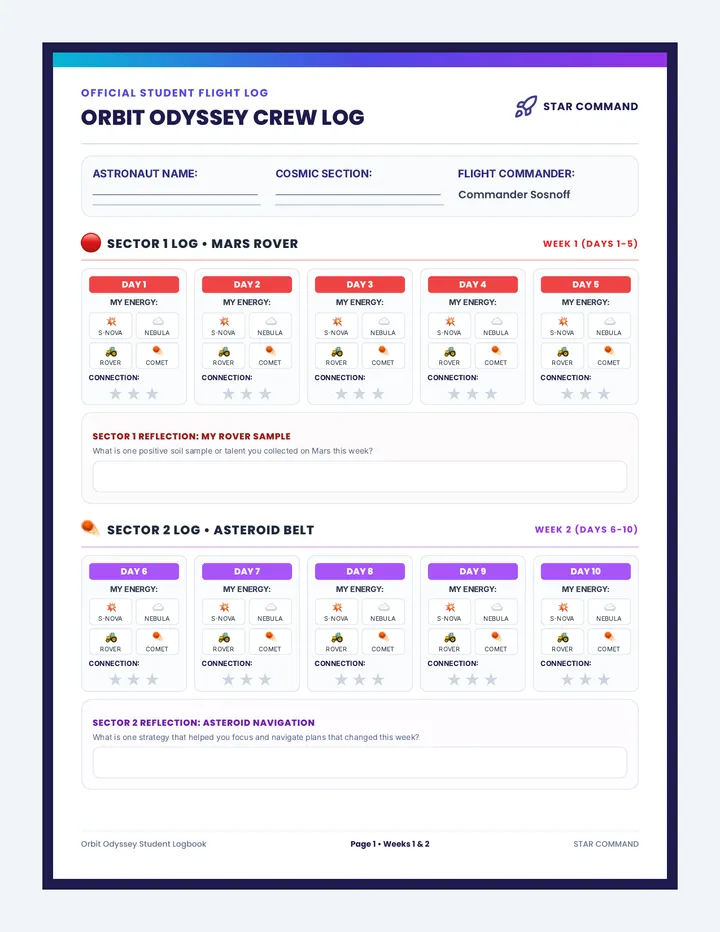
A 4-week space explorer themed morning meeting series for middle school ESY scholars with disabilities. Led by Commander Sosnoff, it covers Mars Rover, Asteroid Navigation, Saturn Rings, and Nebula sectors with calendar ship logs, cosmic energy checks, stellar affirmations, and turn-and-talk communication prompts.
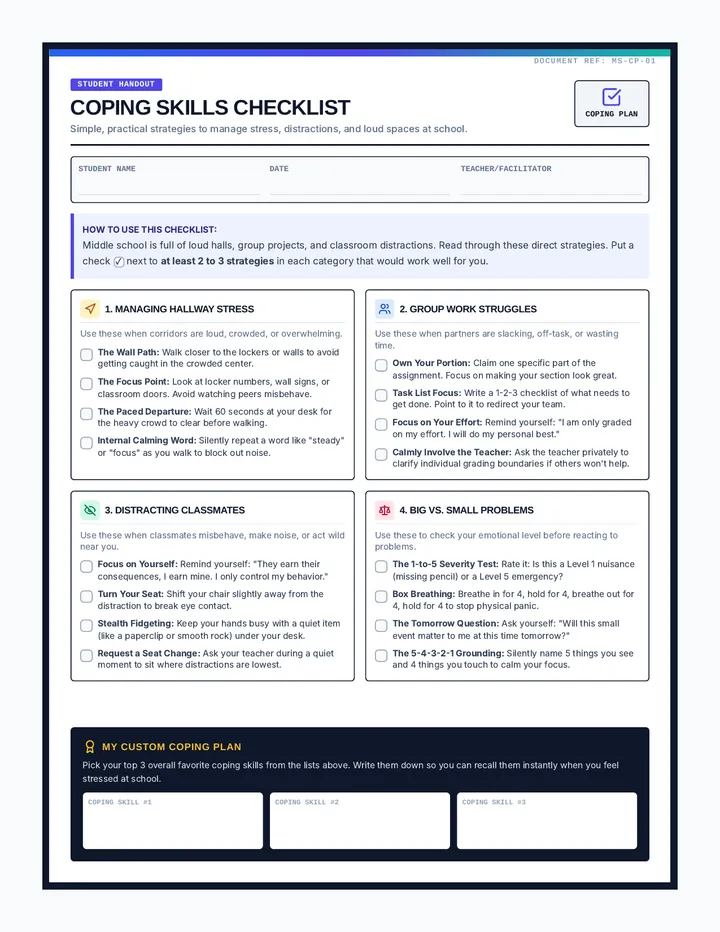
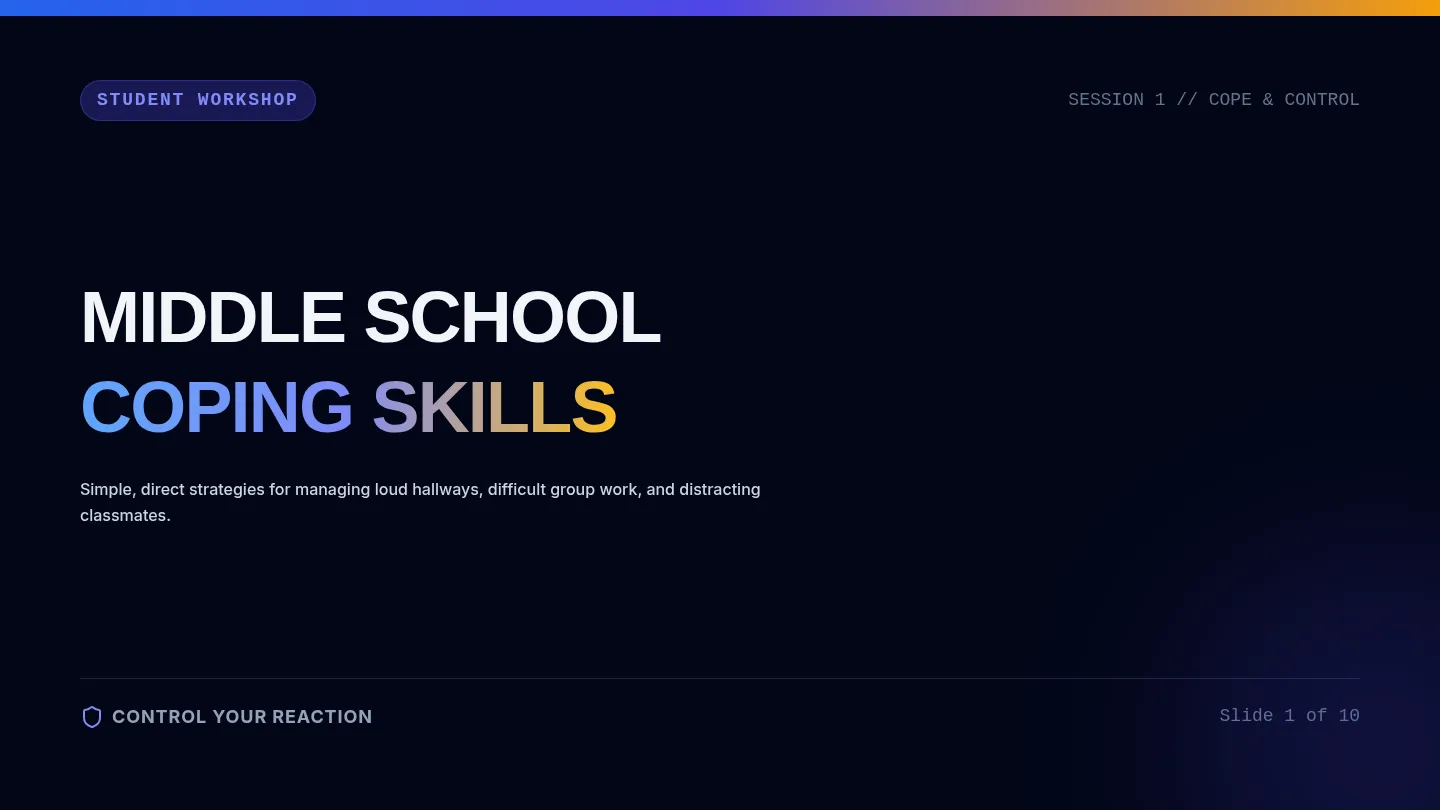
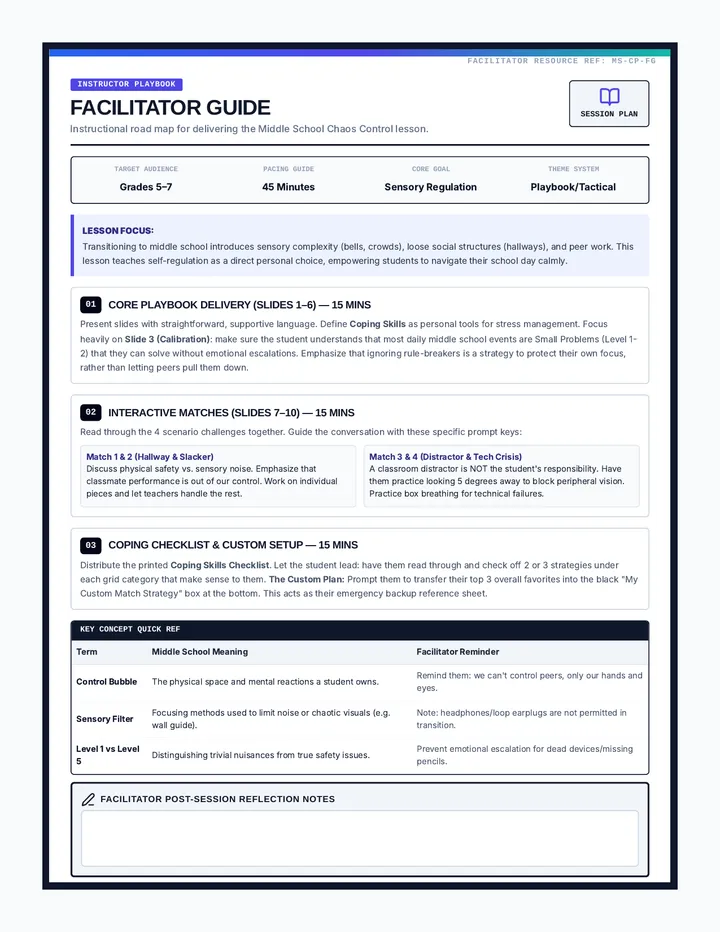
A interactive and engaging lesson designed to equip transitioning middle school students with coping strategies for handling sensory overload, rule-breaking peers, and group work frustrations. Includes an 10-slide presentation, a highly visual coping checklist, and a detailed facilitator guide.
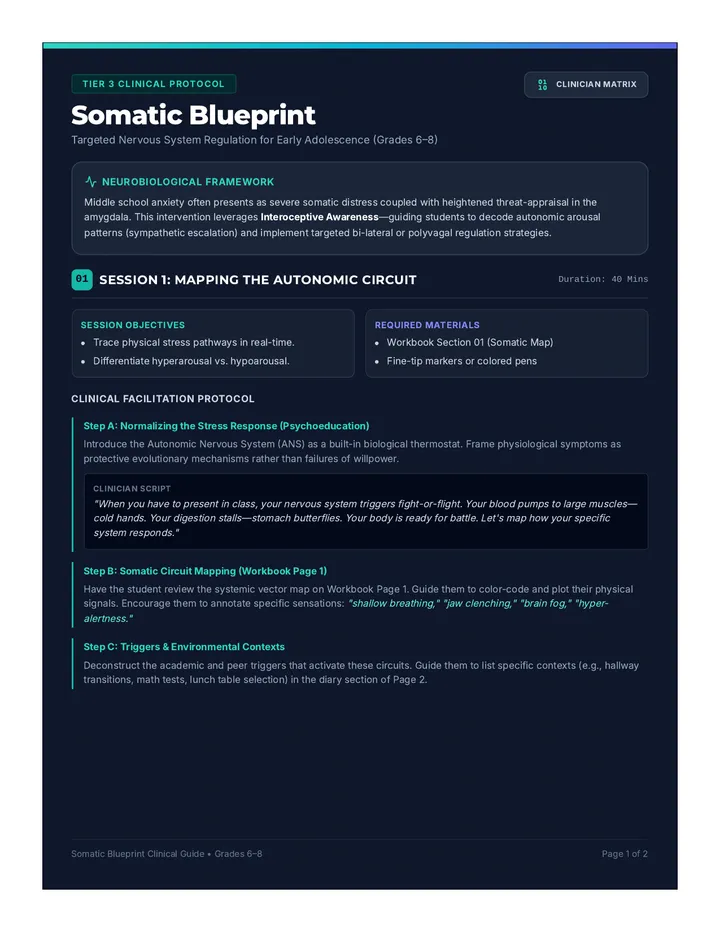
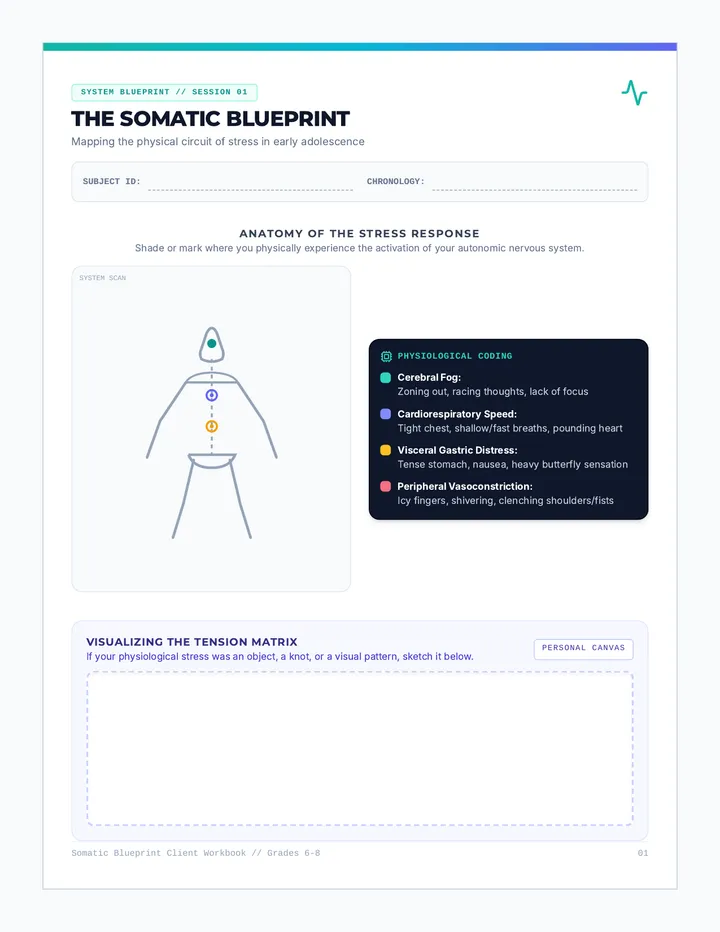
A Tier 3 individual counseling intervention designed for 7th graders (ages 12-13) to map physical stress patterns, analyze neurological escalation, and construct customized coping matrices.
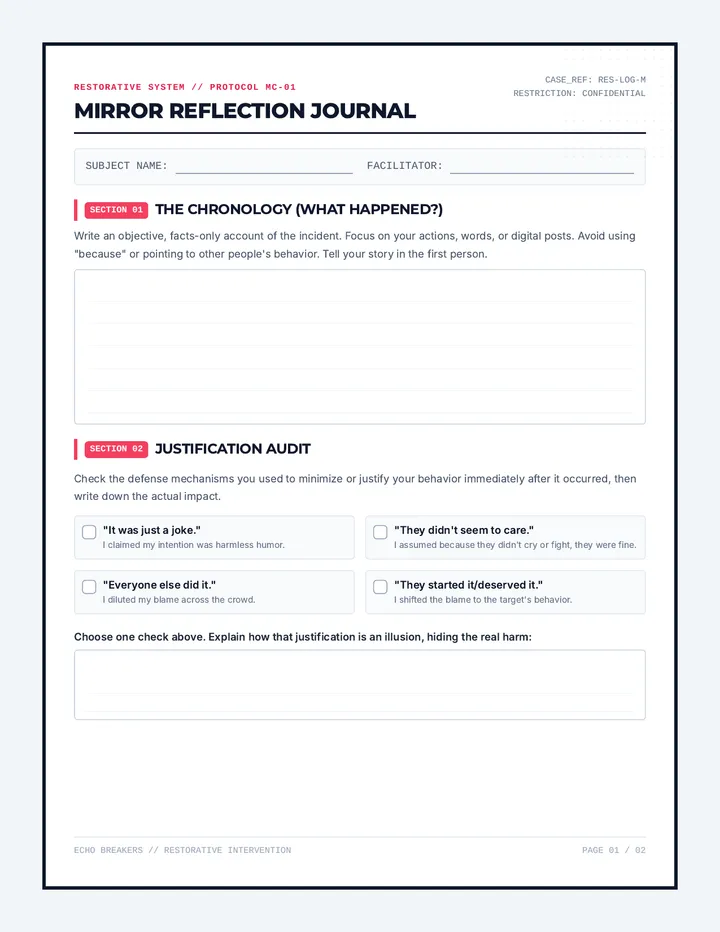
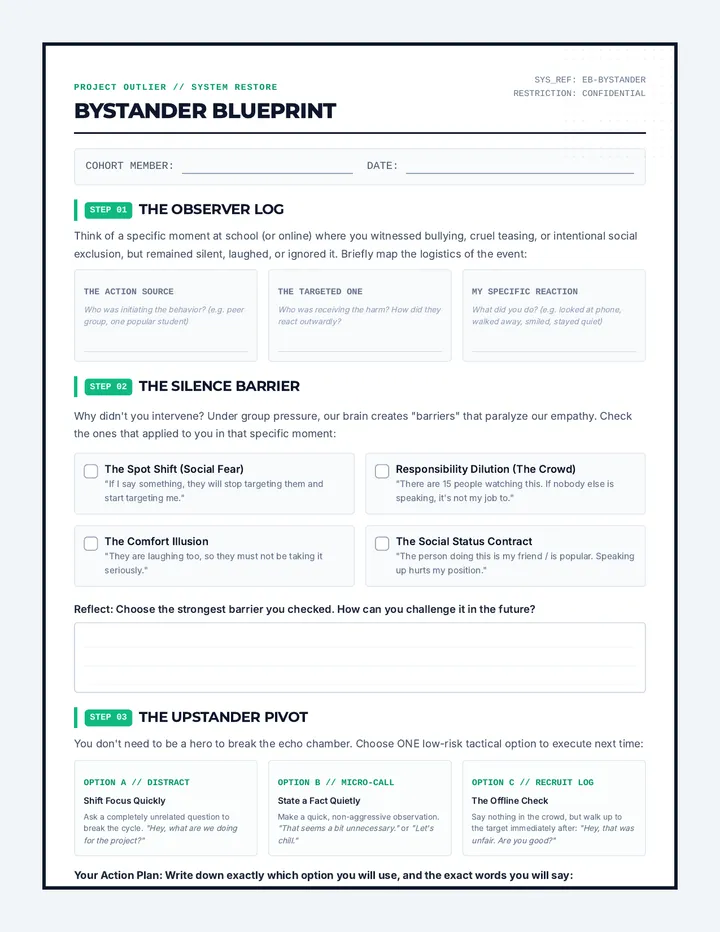
A restorative, intervention-focused lesson designed to address active bullying, social exclusion, or bystander behaviors. Provides a structured, objective, and deeply empathetic framework for restorative justice, self-reflection, and behavior correction.