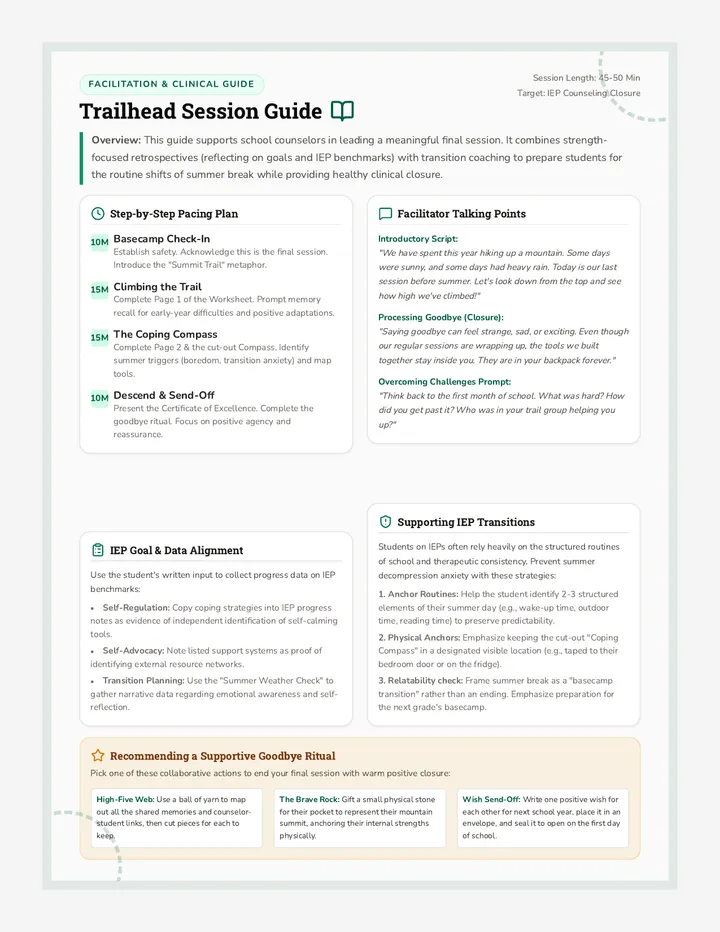
1st-grade students explore the concept of friendship by expressing their understanding through various art forms such as painting, poetry, or dance. This creative approach encourages emotional intelligence and artistic skills.
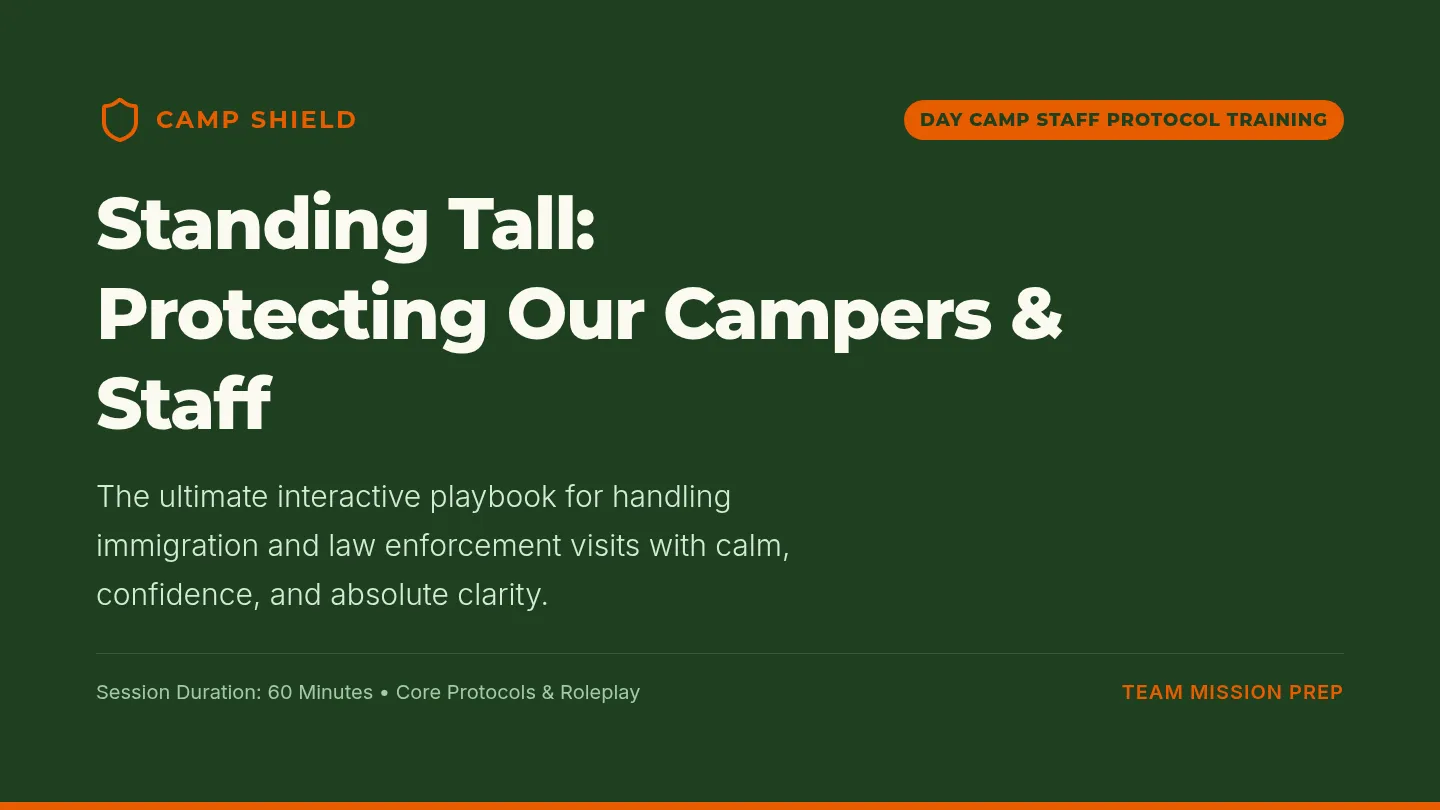
A counseling session designed for a 10-year-old student to address low motivation, lethargy, and frustration with writing through the metaphor of being a 'Pilot' of their own energy and focus.
A supportive 30-minute session designed for a four-year-old to build confidence in new social situations using social stories, coping strategies, and gentle exposure techniques.
A set of cognitive behavioral tools and flowcharts designed to help students with OCD navigate intrusive thoughts about social rejection and moral scrupulosity.
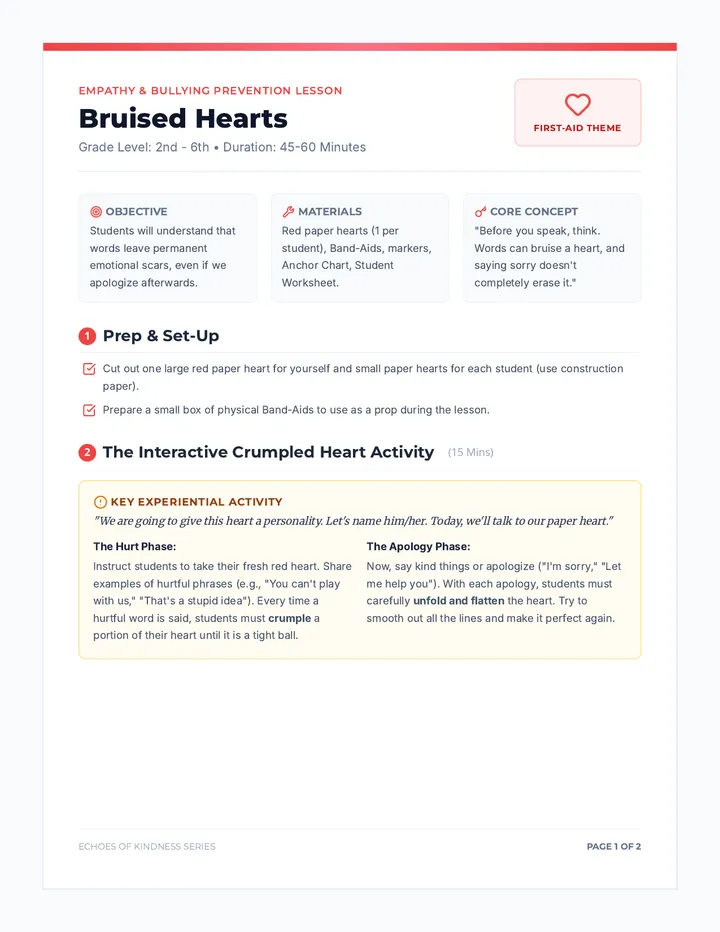
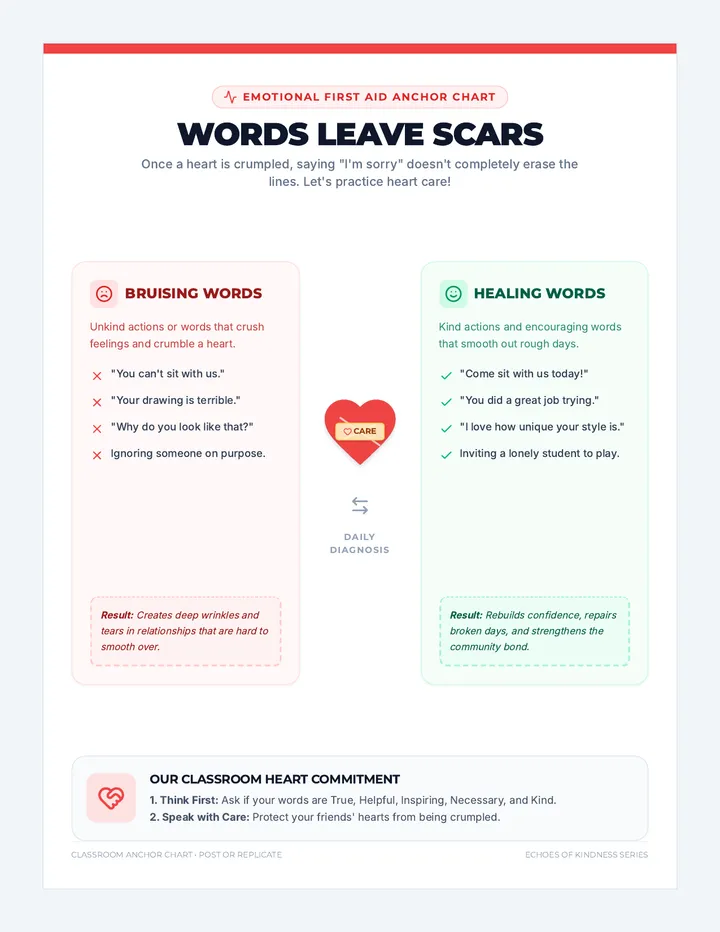
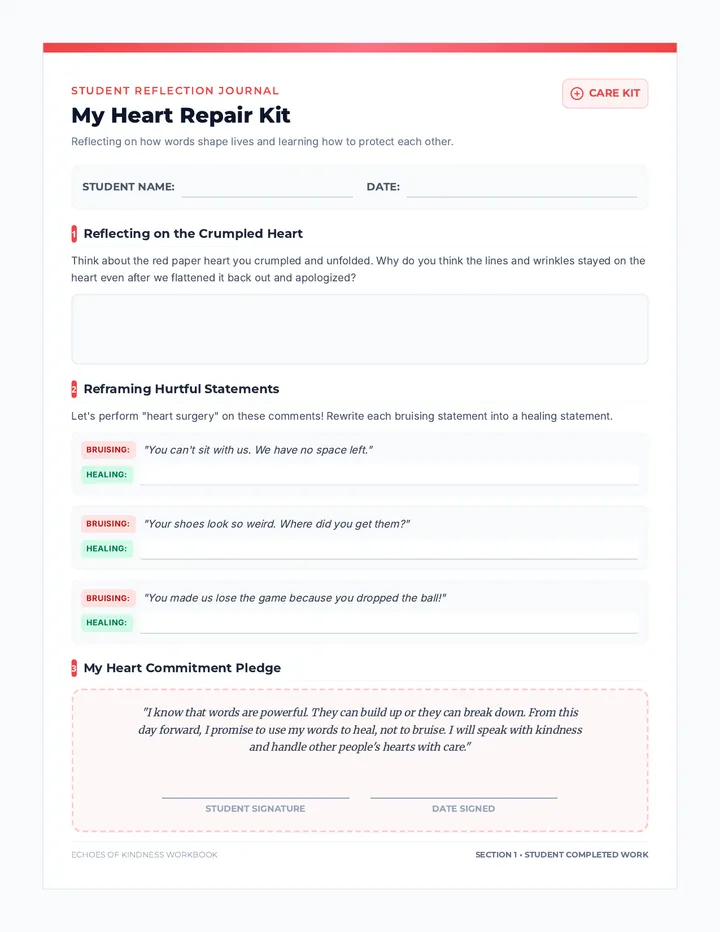
A social-emotional learning lesson designed for fifth-grade girls focusing on empathy, bullying prevention, and building respectful relationships through a 'social architect' lens.
A lesson focused on teaching second graders how to accept consequences for breaking classroom rules using a superhero 'Response Squad' theme. Students practice specific steps: looking at the person, saying 'Okay', and staying calm.
This lesson focuses on teaching students how to accept consequences for their actions without escalating the situation. Through discussion, scenario analysis, and role-playing, students learn the steps to take ownership of their behavior and stay calm when corrected.
This lesson helps 2nd graders learn how to handle teacher reminders and consequences with a positive attitude. Students practice 'The Smooth Switch'—a simple four-step plan to fix mistakes without getting upset.
This lesson teaches students how to handle teacher corrections and consequences without escalation. Through role-play and reflective activities, students practice the 'Four Steps of Accepting Redirection' to maintain a positive classroom environment.
Helps residents look beyond their immediate next job to identify long-term career interests and create a step-by-step roadmap for skill-building and advancement.
Prepares residents for the interview process through common question practice, body language tips, and post-interview follow-up strategies.
Equips residents with strategies for finding job openings, staying organized during the hunt, and presenting themselves professionally to potential employers.
Focuses on creating a professional resume from scratch or improving an existing one. Covers formatting, identifying transferable skills, and writing impactful bullet points.
A 30-minute interactive lesson focused on identifying and practicing respectful behaviors across three key environments: school, home, and the digital world. Students use a 'radar' metaphor to scan their surroundings and choose the best way to show respect.
A lesson designed to empower homeless high school students in Colorado to navigate public benefit systems, understand their rights, and create a concrete action plan for stability.
A sports-themed lesson focused on self-regulation and goal-setting for students who love basketball and soccer. Includes a choice map for navigating work completion and a portable playbook for coping skills.
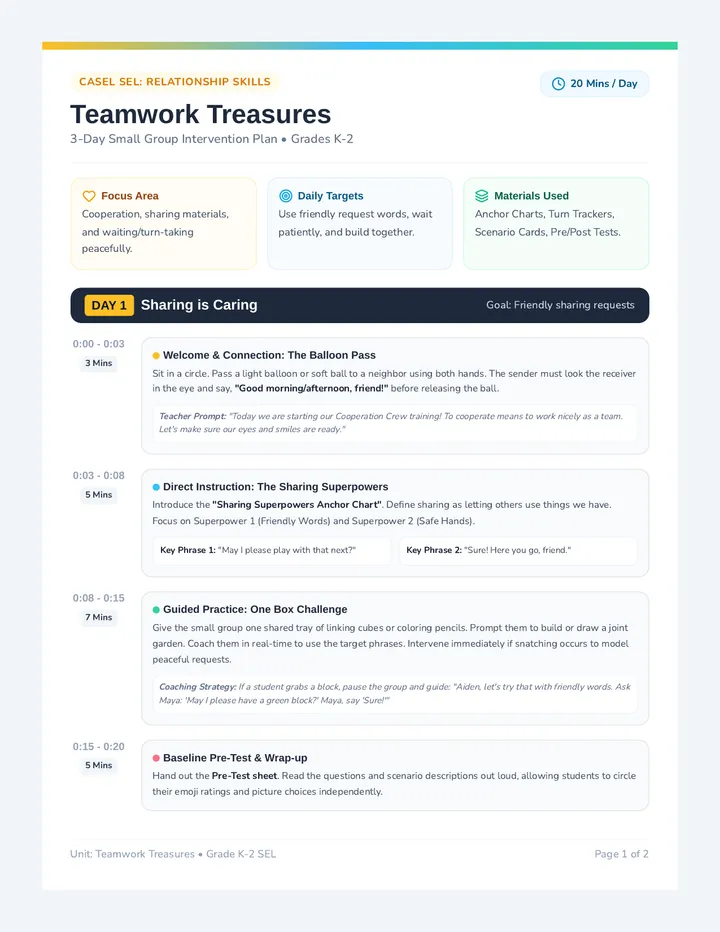
A lesson focused on the practical and emotional benefits of maintaining a clean personal space, featuring sorting techniques and personalized checklist creation.
A mindfulness self-assessment and guide designed for middle schoolers to check in with their self-compassion, body awareness, focus, and emotional regulation.
A practical guide for neurodivergent students to build resilience and flexibility in their job search and employment journey. Focuses on managing unexpected changes, handling rejection, and exploring flexible work options.
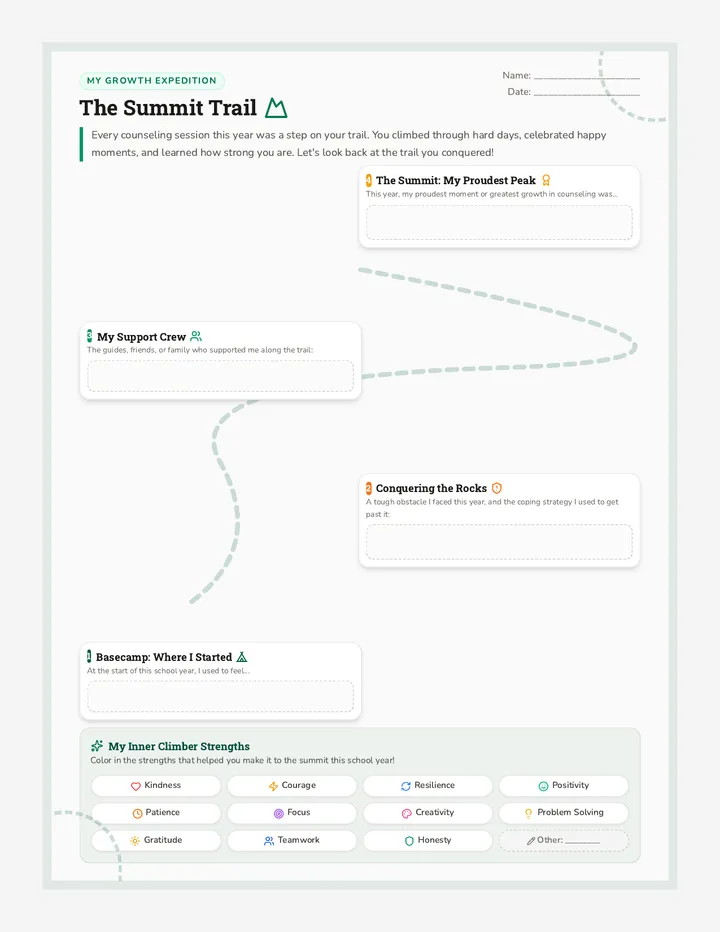
An engaging lesson for kindergarteners to identify, name, and trace the words for 'happy', 'sad', 'angry', 'scared', 'excited', and 'tired' feelings.